Breaking the Barriers
Nanoniosomes Unleash Ginseng's Cancer-Fighting Power Against Prostate Cancer
The Prostate Cancer Challenge
Prostate cancer remains a formidable health threat, ranking as the second most common cancer in men globally. Conventional treatments like chemotherapy and radiation often come with debilitating side effects and limited efficacy in advanced cases.
The search for safer, more targeted therapies has led scientists to explore nature's pharmacy—specifically, ginsenoside Rh2, a bioactive compound from ginseng with proven anticancer properties. Yet its clinical potential has been hampered by poor solubility, low bioavailability, and non-targeted delivery.
Enter nanoniosomes: microscopic lipid bubbles that could revolutionize cancer therapy. A groundbreaking 2020 study published in Drug Design, Development and Therapy has harnessed these nanostructures to transform Rh2 into a precision weapon against prostate cancer cells 1 .
Prostate Cancer Facts
- 2nd most common cancer in men worldwide
- 1 in 8 men diagnosed in their lifetime
- Over 1.4 million new cases annually
- Limited treatment options for advanced stages
Key Concepts: Nature Meets Nanotechnology
Ginsenoside Rh2
Derived from Panax ginseng, Rh2 belongs to the saponin family with multiple anticancer mechanisms:
- Cell cycle arrest: Halting cancer cell proliferation
- Apoptosis induction: Triggering programmed cell death
- Anti-angiogenesis: Blocking tumor blood supply
Nanoniosomes
Self-assembling vesicles (50–200 nm) composed of non-ionic surfactants and cholesterol:
- Enhanced solubility: Encapsulating hydrophobic drugs
- Targeted delivery: Passive accumulation via EPR effect
- Controlled release: Gradual drug release at tumor site
- Biocompatibility: Reduced toxicity
Why Prostate Cancer?
Prostate tumors exhibit unique characteristics:
- Overexpressed receptors: Enhanced binding sites
- Leaky vasculature: Ideal for nanoparticle accumulation
- Chemoresistance: Demands novel strategies
Nanoniosome Development Timeline
Lipid Film Formation
Dissolved Rh2, Span 60 surfactant, and cholesterol in chloroform, then evaporated solvent
Hydration & Size Control
Hydrated film with phosphate buffer and sonicated for uniform size (~150 nm)
Purification
Separated unencapsulated Rh2 via ultracentrifugation
Characterization
Measured particle size, charge, drug loading, and confirmed stability
The Breakthrough Experiment: Engineering Precision Warriors
Researchers developed Rh2-loaded nanoniosomes using thin-film hydration—a technique balancing simplicity with efficacy 1 .
Results That Redefined Possibilities
Table 1: Nanoniosome Characterization
| Parameter | Free Rh2 | Rh2-Nanoniosomes |
|---|---|---|
| Particle Size (nm) | N/A | 152.3 ± 4.1 |
| Zeta Potential (mV) | N/A | -21.5 ± 0.8 |
| Encapsulation (%) | N/A | 82.7 ± 3.2 |
| IC50 (µg/mL)* | 45.2 | 18.6 |
Anticancer Efficacy (72-Hour Treatment)
Table 2
| Group | Apoptosis Rate (%) | Cell Migration Inhibition (%) |
|---|---|---|
| Control | 4.1 ± 0.9 | 0 |
| Free Rh2 | 27.3 ± 3.1 | 38.2 ± 4.7 |
| Rh2-Nanoniosomes | 62.8 ± 5.4 | 79.6 ± 6.1 |
Key Findings
- 3x Lower IC50: Nanoniosomes enhanced Rh2 potency by 2.4-fold 1
- Dual-Action Killing: Activated caspase-3 (apoptosis) while suppressing Bcl-2 (survival protein)
- Migration Blockade: Reduced tumor spread potential by 80%
The Scientist's Toolkit: Building Nanoniosomes
| Reagent | Function | Role in Therapy |
|---|---|---|
| Ginsenoside Rh2 | Core therapeutic agent | Induces cancer cell apoptosis |
| Span 60 | Non-ionic surfactant | Forms vesicle membrane structure |
| Cholesterol | Membrane stabilizer | Enhances rigidity and drug retention |
| Chloroform | Organic solvent | Dissolves lipids for film formation |
| Phosphate Buffer | Hydration medium | Controls pH for physiological stability |
| Sonication Probe | Size reduction tool | Achieves uniform nanoparticle distribution |
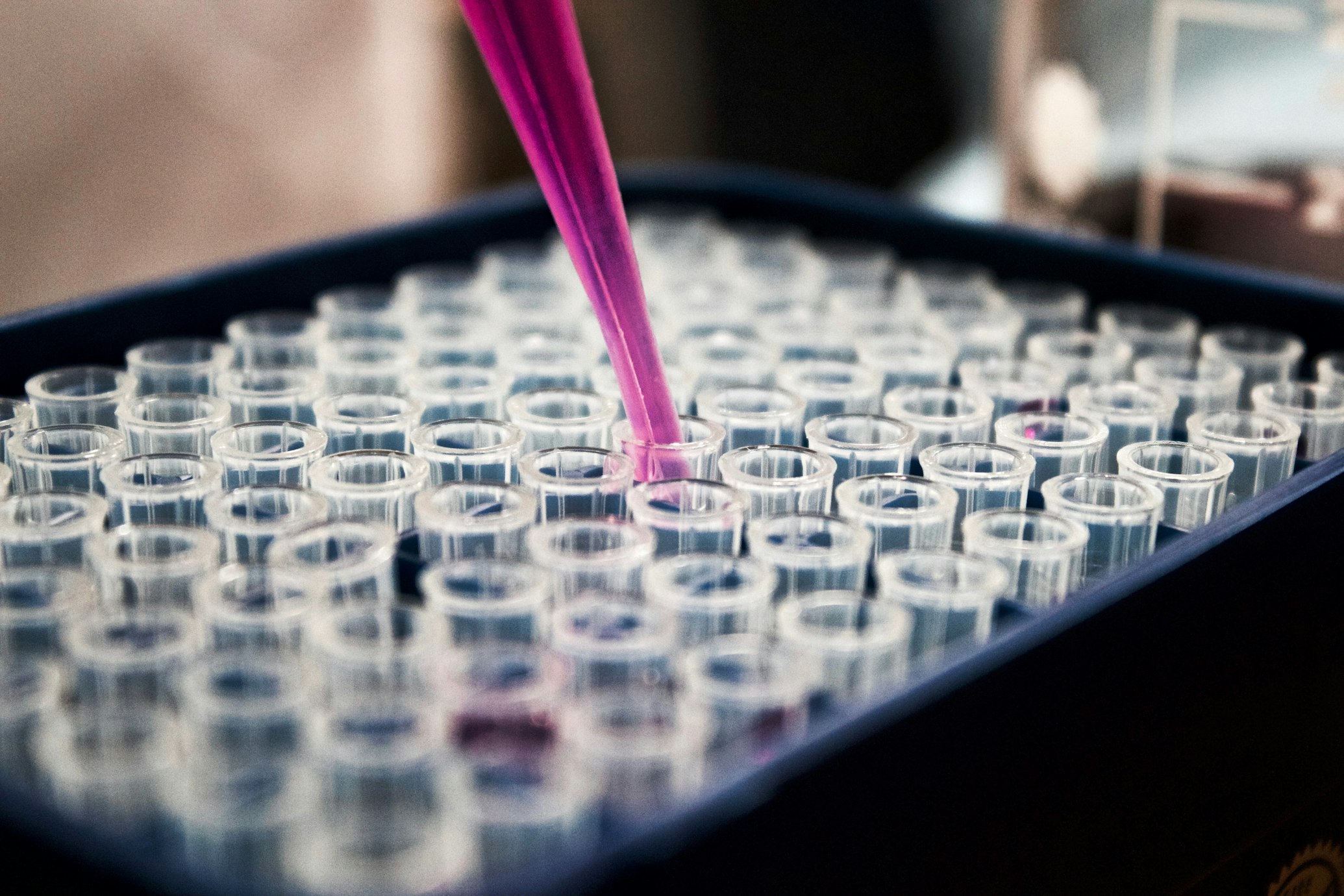
Nanoniosome Preparation
The thin-film hydration method allows precise control over nanoparticle characteristics critical for drug delivery efficiency.
Future Horizons: Beyond the Lab
This nanoniosomal platform extends beyond prostate cancer. Pending in vivo studies, its applications could include:
Combination Therapies
Co-delivering Rh2 with immunotherapies or CRISPR-based treatments (e.g., enhanced CAR-T cells) 2
Multi-Targeting
Surface modification with ligands (e.g., PSMA antibodies) for active tumor targeting
Global Impact
Potential low-cost production aligns with UN Sustainable Development Goals for health equity 7
Conclusion: A New Chapter in Cancer Warfare
The fusion of ancient medicine with nanotechnology marks a paradigm shift in oncology. By packaging ginseng's centuries-old wisdom within cutting-edge nanoniosomes, scientists have overcome biological barriers that once limited plant-derived therapies.
As we stand at the brink of a new era—where AI, CRISPR, and nanomedicine converge—this study exemplifies how reimagining nature's tools through a nanoscale lens can unlock cures for humanity's most persistent foes. The future of cancer treatment isn't just about stronger drugs; it's about smarter delivery.
Key Takeaway
Nanoniosomes transform Rh2 from a promising compound into a targeted warhead, reducing required doses and collateral damage—proving that sometimes, the smallest packages deliver the biggest revolutions.

Nanomedicine Revolution
Precision drug delivery systems are transforming oncology treatment paradigms.