From Association to Function: A Research Framework for Experimental Validation of Non-Coding Endometriosis Variants
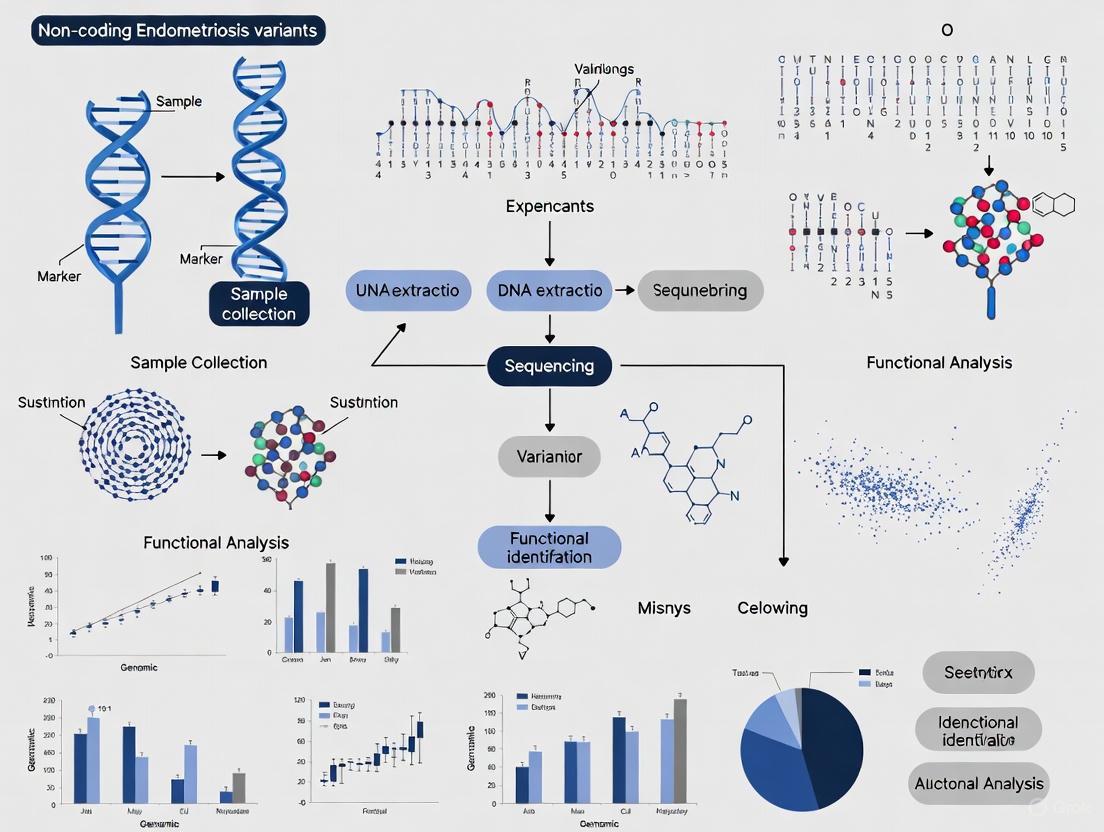
Endometriosis is a complex gynecological disorder with a significant heritable component, for which genome-wide association studies (GWAS) have predominantly identified risk variants in non-coding genomic regions.
From Association to Function: A Research Framework for Experimental Validation of Non-Coding Endometriosis Variants
Abstract
Endometriosis is a complex gynecological disorder with a significant heritable component, for which genome-wide association studies (GWAS) have predominantly identified risk variants in non-coding genomic regions. This creates a critical translational gap between statistical association and biological understanding. This article provides a comprehensive methodological roadmap for researchers and drug development professionals aiming to bridge this gap. We synthesize current strategies for identifying and prioritizing non-coding variants, detail state-of-the-art functional genomics and molecular techniques for their experimental validation, address common troubleshooting and optimization challenges, and present robust frameworks for validating findings and assessing their clinical potential. By integrating insights from recent GWAS, expression quantitative trait locus (eQTL) analyses, and non-coding RNA biology, this review serves as a strategic guide for elucidating the mechanistic role of non-coding variants in endometriosis pathogenesis, ultimately paving the way for novel diagnostic biomarkers and therapeutic targets.
Mapping the Non-Coding Landscape: Prioritizing Endometriosis Risk Variants for Functional Study
Leveraging GWAS Meta-Analyses to Identify Robust Non-Coding Risk Loci
Endometriosis is a common, heritable gynecological disorder estimated to affect 6-10% of women of reproductive age and is a major cause of chronic pelvic pain and infertility [1] [2]. With an estimated heritability of approximately 51%, understanding the genetic architecture of this condition has been a major focus of research [1]. Genome-wide association studies (GWAS) have revolutionized the identification of common genetic variants contributing to endometriosis risk, yet a significant challenge remains: the majority of associated variants reside in non-coding genomic regions [3] [4]. This article examines how GWAS meta-analysis approaches have enabled the discovery of robust non-coding risk loci for endometriosis and outlines experimental frameworks for their functional validation, providing crucial insights for researchers and drug development professionals investigating this complex condition.
GWAS Meta-Analysis: Unlocking Statistical Power for Locus Discovery
The Evolution of Endometriosis GWAS
Initial GWAS for endometriosis conducted in individual populations faced limitations in statistical power to detect variants with modest effects. The pioneering Japanese GWAS identified the first genome-wide significant locus in CDKN2B-AS1 (rs10965235), while the first European-ancestry study revealed an intergenic locus on chromosome 7p15.2 (rs12700667) [5]. However, these early studies highlighted a critical challenge: many genuine associations remained hidden due to insufficient sample sizes and the stringent statistical thresholds required for genome-wide significance [6].
The strategic solution emerged through large-scale meta-analysis, which combines summary statistics from multiple GWAS datasets to dramatically increase sample size and statistical power. This approach proved particularly valuable for endometriosis, where heterogeneous case definitions and phenotypic classifications further complicated genetic discovery [5].
Landmark Meta-Analyses and Key Discoveries
Table 1: Key Endometriosis GWAS Meta-Analyses and Their Discoveries
| Study Description | Sample Size (Cases/Controls) | Ancestries | Novel Loci Identified | Key Genes Implicated |
|---|---|---|---|---|
| Initial multi-ancestry meta-analysis [1] | 4,604/9,393 | Japanese and European | 3 | WNT4, GREB1, VEZT |
| Expanded meta-analysis [2] | 17,045/191,596 | European and Japanese | 5 | FN1, CCDC170, ESR1, SYNE1, FSHB |
| Focus on severe disease [5] | 11,506/32,678 | European and Japanese | 2 (Stage III/IV) | FN1, novel 2p14 locus |
The transformative impact of meta-analysis is exemplified by a 2012 study that combined data from Australian, UK, and Japanese cohorts (4,604 cases and 9,393 controls). This analysis not only replicated previously reported associations at 7p15.2 (rs12700667) and 1p36.12 near WNT4 (rs7521902), but also identified three novel loci: 2p25.1 in GREB1 (rs13394619), 12q22 near VEZT (rs10859871), and additional loci when focusing on European cases with more severe disease [1].
A subsequent 2017 meta-analysis representing an approximate five-fold increase in effective sample size (17,045 cases and 191,596 controls) identified five additional novel loci highlighting genes involved in sex steroid hormone pathways: FN1, CCDC170, ESR1, SYNE1, and FSHB [2]. Remarkably, this study demonstrated that 19 independent SNPs together explained up to 5.19% of the variance in endometriosis risk [2].
From Association to Function: Validating Non-Coding Risk Loci
The Challenge of Non-Coding Variants
A critical insight from endometriosis GWAS is that approximately 88% of identified risk SNPs reside in non-coding regions, primarily in intergenic (43%) or intronic (45%) locations [5]. This distribution mirrors patterns observed for other complex traits and presents a fundamental challenge: determining the functional mechanisms by which these variants influence disease risk. The ENCODE project has revealed that approximately 80% of non-coding regions likely possess regulatory functionality, suggesting that non-coding risk variants likely exert their effects through modulating gene expression rather than altering protein structure [5].
Expression Quantitative Trait Loci (eQTL) Mapping
Table 2: Primary Experimental Methods for Validating Non-Coding Risk Loci
| Method | Key Application | Data Sources | Output Metrics |
|---|---|---|---|
| eQTL Analysis | Links risk variants to gene expression | GTEx database, disease-relevant tissues | Slope (effect size/direction), FDR-adjusted p-value |
| Functional Annotation | Characterizes variant genomic context | Ensembl VEP, chromatin states | Variant location, regulatory marks, conservation |
| Pathway Enrichment | Identifies biological processes | MSigDB, Cancer Hallmarks | Enrichment p-values, false discovery rates |
| LD-based Clumping | Identifies independent signals | 1000 Genomes reference panels | Clump boundaries, index SNPs, r² values |
A powerful strategy for functional validation involves integrating GWAS findings with expression quantitative trait loci (eQTL) data, which reveals how genetic variants influence gene expression in specific tissues. A 2025 study systematically analyzed 465 endometriosis-associated variants across six biologically relevant tissues: uterus, ovary, vagina, sigmoid colon, ileum, and peripheral blood [3]. This approach demonstrated striking tissue-specific regulatory patterns: immune and epithelial signaling genes predominated in intestinal tissues and blood, while reproductive tissues showed enrichment for genes involved in hormonal response, tissue remodeling, and adhesion [3].
The study identified key regulatory genes including MICB, CLDN23, and GATA4, which were consistently linked to critical pathways such as immune evasion, angiogenesis, and proliferative signaling [3]. The slope value (indicating direction and magnitude of regulatory effect) served as a key metric, with even moderate values (±0.5) representing potentially meaningful biological effects in disease-relevant contexts [3].
Linkage Disequilibrium (LD) Clumping for Signal Refinement
LD clumping is an essential bioinformatic method that distinguishes independent association signals from correlated variants. This technique uses the PLINK clumping algorithm to prune SNPs in linkage disequilibrium within a defined genomic window, retaining the variant with the lowest p-value [7]. Critical parameters include:
- clump_kb: Genetic distance window (default = 10,000kb)
- clump_r2: LD threshold (recently changed from 0.01 to 0.001)
- pop: Reference population for LD estimation (EUR, SAS, EAS, AFR, AMR) [7]
This method reduces multiple testing burden by grouping correlated SNPs into "clumps" representing independent signals, significantly enhancing the interpretability of GWAS results [6].
Visualizing the Research Pipeline
Endometriosis Risk Loci Discovery and Validation Workflow
Tissue-Specific Regulatory Mechanisms of Endometriosis Risk Variants
Table 3: Essential Research Resources for Endometriosis Genetic Studies
| Resource Category | Specific Tools/Databases | Primary Application | Key Features |
|---|---|---|---|
| GWAS Data Repositories | GWAS Catalog [8], NHGRI-EBI Catalog | Variant-disease associations | Curated genome-wide associations, standardized annotations |
| LD Reference Panels | 1000 Genomes Project, OpenGWAS API [7] | Population-specific LD estimation | Super-population panels (EUR, SAS, EAS, AFR, AMR) |
| eQTL Databases | GTEx Portal v8 [3] | Tissue-specific expression regulation | Multi-tissue normalized effect sizes (slopes), FDR values |
| Functional Annotation | Ensembl VEP [3], ENCODE | Variant consequence prediction | Genomic context, regulatory elements, conservation |
| Analysis Tools | PLINK [6], TwoSampleMR [7], STAAR [9] | Statistical genetics analyses | LD clumping, Mendelian randomization, rare variant association |
| Pathway Resources | MSigDB Hallmark Gene Sets, Cancer Hallmarks [3] | Biological interpretation | Curated gene sets, functional enrichment |
Discussion and Future Directions
The integration of large-scale GWAS meta-analyses with functional genomics approaches has fundamentally advanced our understanding of endometriosis genetics. The remarkable consistency observed across diverse populations [5] underscores the robustness of these findings and provides a solid foundation for translational applications. Several critical insights have emerged from these efforts:
First, the tissue-specific nature of regulatory effects necessitates careful selection of biologically relevant tissues for functional studies [3]. The 2025 analysis demonstrated distinct regulatory profiles across reproductive versus intestinal and immune tissues, suggesting different mechanistic pathways may operate in different anatomical contexts.
Second, the stronger genetic effects observed for moderate-to-severe (rAFS Stage III/IV) endometriosis [1] [2] [5] indicate that genetic studies benefit from refined phenotypic classifications. This suggests that different genetic architectures may underlie disease subtypes, with implications for patient stratification in clinical trials and targeted therapies.
For drug development professionals, the identification of non-coding risk loci presents both challenges and opportunities. While these variants do not directly point to druggable protein targets, they illuminate key regulatory pathways and master regulator genes that may represent therapeutic intervention points. The implication of genes involved in sex steroid hormone signaling (ESR1, FSHB, WNT4) [2] and developmental pathways provides a molecular basis for understanding disease mechanisms and developing novel treatment strategies.
Future research directions should include expanded multi-omics integration, development of tissue-specific regulatory maps, and functional characterization of candidate causal variants using genome editing technologies. As functional genomics resources continue to expand, particularly for diverse ancestral populations, our ability to interpret non-coding risk loci and translate these findings into clinical applications will accelerate significantly.
Integrating eQTL Data to Link Variants to Target Genes and Tissues
Endometriosis, a chronic inflammatory condition affecting millions globally, is known to have a significant genetic component. Genome-wide association studies (GWAS) have successfully identified numerous genetic variants associated with endometriosis risk. However, a critical challenge remains: the majority of these disease-associated variants reside in non-coding regions of the genome, making their functional interpretation and linkage to target genes particularly challenging [3]. This gap hinders the translation of genetic discoveries into actionable biological insights and therapeutic targets.
Expression quantitative trait locus (eQTL) analysis has emerged as a powerful computational bridge, connecting statistical genetic associations with functional molecular mechanisms. eQTLs are genetic variations associated with the expression levels of specific genes, effectively identifying genomic loci that regulate gene expression [10]. By mapping how genetic variants influence gene expression in specific tissues, eQTL analysis provides a direct mechanistic hypothesis for how non-coding variants might contribute to disease pathogenesis by altering the expression of key genes.
This guide objectively compares the application of different eQTL integration strategies within the context of endometriosis research. We evaluate established and emerging methodologies based on their ability to pinpoint causal genes, resolve tissue-specific effects, and ultimately advance the experimental validation of non-coding variants in this complex disease.
Comparative Analysis of eQTL Integration Methods
The integration of eQTL data with GWAS findings can be approached through various methodologies, each with distinct strengths, limitations, and optimal use cases. The table below provides a structured comparison of the primary strategies used in endometriosis research.
Table 1: Comparison of eQTL Integration Methodologies for Endometriosis Research
| Methodology | Core Principle | Key Advantages | Key Limitations | Supporting Data from Endometriosis Studies |
|---|---|---|---|---|
| Tissue-Specific eQTL Mapping | Identifies gene-variant associations within specific, disease-relevant tissues (e.g., uterus, ovary) using resources like GTEx [3]. | - Reveals biologically relevant regulatory contexts.- Identifies tissue-specific therapeutic targets.- Uses widely available public data. | - Limited by tissue availability in public banks.- May miss systemic immune or inflammatory effects. | Analysis of 465 endometriosis-associated variants across 6 tissues found distinct regulatory profiles: immune genes in colon/ileum/blood vs. hormonal response genes in reproductive tissues [3]. |
| Mendelian Randomization (MR) with eQTL | Uses eQTLs as instrumental variables to infer causal relationships between gene expression and disease risk [11]. | - Provides evidence for causal inference, not just correlation.- Reduces confounding.- Useful for prioritizing candidate genes. | - Requires strong genetic instruments.- Sensitive to pleiotropy.- Complex interpretation. | A study on breast ductal carcinoma in situ (DCIS) integrated MR with GEO data, identifying 13 candidate genes like PTPN12 and GPX3, later validated by functional assays [11]. |
| Single-Cell eQTL Mapping | Maps genetic variants to gene expression within individual cell types from complex tissues (e.g., PBMCs) using scRNA-seq [12]. | - Unprecedented resolution of cell-type-specific regulation.- Identifies effects masked in bulk tissue.- Reveals regulation in rare cell populations. | - Computationally intensive and costly.- Lower statistical power per cell type.- Complex data processing. | A study of human endogenous retroviruses (HERVs) in PBMCs identified 3,463 conditionally independent eQTLs, revealing cell-type-specific genetic regulation of retroviral elements linked to autoimmunity [12]. |
| reg-eQTL (Advanced Method) | Incorporates Transcription Factor (TF) effects and TF-SNV interactions into the eQTL model to identify causal trios (SNV, TF, Target Gene) [13]. | - Pinpoints potential causal variants and mechanisms.- Detects low-frequency/weak-effect variants.- Builds mechanistic regulatory networks. | - Method is novel, with limited large-scale application.- Dependent on accurate TF binding annotations. | Application to GTEx data uncovered novel eQTLs and shared regulation across lung, brain, and blood tissues, providing deeper mechanistic insights than traditional methods [13]. |
Experimental Protocols for Validation
The integration of eQTL data generates hypotheses that require rigorous experimental validation. The following protocols detail key methodologies cited in comparative studies.
Protocol 1: Functional Validation of Candidate Genes Using Transwell Invasion Assay
This cell-based protocol was used to validate the functional role of eQTL-prioritized genes (PTPN12, YTHDC2, MAPKAPK3, GPX3, RASA3, TSPAN4) in the context of breast ductal carcinoma in situ (DCIS) invasion, a relevant model for understanding progression [11].
- Objective: To determine if silencing or overexpressing eQTL-identified genes directly impacts cell invasive capability.
- Materials:
- DCIS cell line.
- Transwell chambers with Matrigel-coated membranes.
- Procedure:
- Gene Modulation: Perform siRNA-mediated silencing of candidate genes (
PTPN12,YTHDC2,MAPKAPK3) or plasmid-based overexpression (GPX3,RASA3,TSPAN4) in DCIS cells. - Cell Seeding: Seed transfected cells into the upper chamber of the Transwell insert in serum-free medium.
- Induce Invasion: Place complete growth medium (chemoattractant) in the lower chamber and incubate for 24-48 hours.
- Fix and Stain: Remove non-invaded cells from the upper chamber surface. Fix and stain the invaded cells on the lower membrane surface.
- Quantification: Count the stained, invaded cells under a microscope across multiple fields. Compare invasion counts between experimental (silenced/overexpressed) and control groups.
- Gene Modulation: Perform siRNA-mediated silencing of candidate genes (
- Supporting Data: The study confirmed that silencing
PTPN12,YTHDC2, andMAPKAPK3, or overexpressingGPX3,RASA3, andTSPAN4, significantly suppressed DCIS cell invasion, functionally validating their role in progression [11].
Protocol 2: Tissue-Specific eQTL Analysis Pipeline for Endometriosis Variants
This bioinformatics protocol outlines the steps for functionally characterizing endometriosis-associated GWAS variants via eQTL analysis in relevant tissues [3].
- Objective: To identify the target genes and tissues through which endometriosis-associated non-coding variants exert their regulatory effects.
- Materials:
- List of genome-wide significant endometriosis-associated variants (e.g., from GWAS Catalog).
- Tissue-specific eQTL data from GTEx portal (v8).
- Computational resources (R, Python) for data analysis.
- Procedure:
- Variant Curation: Retrieve and filter endometriosis-associated variants (p < 5x10⁻⁸) from the GWAS Catalog, ensuring valid rsIDs.
- Functional Annotation: Use the Ensembl Variant Effect Predictor (VEP) to determine the genomic location (intronic, intergenic, etc.) of each variant.
- eQTL Mapping: Cross-reference the variant list with GTEx data across six biologically relevant tissues: uterus, ovary, vagina, sigmoid colon, ileum, and whole blood.
- Filter Significant eQTLs: Retain only variant-gene pairs with a significant false discovery rate (FDR) < 0.05.
- Prioritize Candidate Genes: Prioritize genes based on (i) the number of associated variants and (ii) the magnitude of the regulatory effect (slope value from GTEx).
- Functional Enrichment Analysis: Input the prioritized gene lists into pathway analysis tools (e.g., MSigDB Hallmark, Cancer Hallmarks) to identify overrepresented biological pathways.
- Supporting Data: Application of this pipeline revealed tissue-specificity; for instance, genes like
MICB,CLDN23, andGATA4were consistently linked to immune evasion, angiogenesis, and proliferative signaling pathways [3].
Visualizing Experimental Workflows and Regulatory Mechanisms
The following diagrams, generated using Graphviz, illustrate the core workflows and mechanistic relationships described in this guide.
eQTL Integration and Validation Workflow
Diagram Title: Endometriosis eQTL Integration Workflow
reg-eQTL Regulatory Trio Mechanism
Diagram Title: reg-eQTL Trio Mechanism
Successfully linking non-coding variants to target genes requires a suite of specialized data resources, analytical tools, and experimental reagents.
Table 2: Key Research Reagent Solutions for eQTL-Guided Endometriosis Research
| Tool / Resource | Type | Primary Function in Research | Example in Context |
|---|---|---|---|
| GTEx Portal | Data Resource | Provides a public repository of tissue-specific eQTLs from healthy individuals, establishing baseline regulatory landscapes [3]. | Used to map 465 endometriosis GWAS variants, revealing constitutive regulatory effects in uterus, ovary, and blood [3]. |
| Ensembl VEP | Software Tool | Functionally annotates genetic variants, predicting their location and potential impact on genes, a critical first step after GWAS [3]. | Annotated non-coding endometriosis variants, confirming their enrichment in regulatory regions prior to eQTL analysis [3]. |
| GWAS Catalog | Data Resource | A curated collection of all published GWAS and their associated variants, allowing for the systematic retrieval of trait-associated SNPs [3]. | Served as the source for 465 unique, genome-wide significant endometriosis variants for downstream eQTL analysis [3]. |
| reg-eQTL Algorithm | Software Tool | A novel method that incorporates transcription factor effects and interactions to identify causal regulatory trios (SNV, TF, Target Gene) [13]. | Applied to GTEx data, it uncovered novel eQTLs and shared regulatory networks across tissues, offering deeper mechanistic insight [13]. |
| Transwell Invasion Assay | Laboratory Reagent | A standardized in vitro system to quantitatively measure the invasive potential of cells after genetic manipulation [11]. | Provided functional validation that eQTL-prioritized genes (PTPN12, GPX3, etc.) directly influence cellular invasion [11]. |
| Single-Cell RNA-Seq | Technology | Profiles gene expression at the level of individual cells, enabling the discovery of cell-type-specific eQTLs masked in bulk tissue [12]. | Used on PBMCs to map eQTLs for human endogenous retroviruses, revealing cell-type-specific genetic regulation in immunity [12]. |
Endometriosis, a chronic gynecological disorder characterized by the presence of endometrial-like tissue outside the uterine cavity, affects approximately 10% of reproductive-aged women worldwide and represents a significant challenge in women's health [14] [15]. The disease manifests through heterogeneous symptoms including chronic pelvic pain, dysmenorrhea, and reduced fertility, often leading to delayed diagnosis of 6-12 years due to the lack of reliable non-invasive diagnostic methods [15] [16]. The gold standard for diagnosis remains laparoscopic surgery, an invasive procedure that underscores the urgent need for molecular biomarkers [17] [18]. Within this context, non-coding RNAs (ncRNAs)—particularly microRNAs (miRNAs) and long non-coding RNAs (lncRNAs)—have emerged as crucial regulators of gene expression in endometriosis pathogenesis, offering promising avenues for diagnostic and therapeutic development [19] [18].
The broader thesis of experimental validation for non-coding endometriosis variants centers on translating ncRNA research into clinical applications. This involves systematic efforts to identify dysregulated ncRNAs, validate their functional roles in disease mechanisms, and develop them into reliable biomarkers or therapeutic targets. Current research indicates that ncRNAs contribute to endometriosis through diverse mechanisms including epigenetic regulation, control of inflammatory responses, cell proliferation, angiogenesis, and tissue remodeling [14] [19]. This review comprehensively compares the roles of lncRNAs and miRNAs in endometriosis, providing experimental data, methodological protocols, and analytical frameworks to advance their validation as clinically relevant molecules.
Biogenesis and Functional Mechanisms: A Comparative Analysis
miRNA Biogenesis and Regulatory Functions
MicroRNAs are small non-coding RNA molecules approximately 22-25 nucleotides in length that function as post-transcriptional regulators of gene expression [15]. Their biogenesis begins with RNA polymerase II-mediated transcription of primary miRNA transcripts (pri-miRNAs) in the nucleus [17]. These pri-miRNAs are processed by the microprocessor complex, comprising the RNase III enzyme Drosha and its cofactor DGCR8, to produce precursor miRNAs (pre-miRNAs) of approximately 60-70 nucleotides [18] [20]. Exportin-5 then transports pre-miRNAs to the cytoplasm, where Dicer, another RNase III enzyme, cleaves them into mature miRNA duplexes [17] [20]. The functional strand of this duplex is loaded into the RNA-induced silencing complex (RISC), which includes Argonaute (AGO2) proteins, and guides the complex to complementary mRNA targets [18] [20]. miRNA binding typically occurs at the 3'-untranslated regions (3'-UTRs) of target mRNAs, resulting in translational repression or mRNA degradation [15] [17]. Individual miRNAs can regulate numerous mRNA targets, with estimates suggesting that miRNAs collectively regulate up to 60% of human genes [16].
lncRNA Biogenesis and Multifunctional Roles
Long non-coding RNAs are defined as transcripts longer than 200 nucleotides that lack significant protein-coding potential [14]. The GENCODE project has annotated approximately 17,958 lncRNA genes in the human genome, though some studies suggest the total number may exceed 100,000 [14] [19]. Unlike miRNAs, lncRNAs exhibit complex secondary and tertiary structures that enable diverse molecular functions [14]. They can localize to specific cellular compartments—either nuclear or cytoplasmic—where they employ varied mechanisms of action. In the nucleus, lncRNAs function as epigenetic regulators by recruiting chromatin-modifying complexes to specific genomic loci, either in cis (affecting nearby genes) or in trans (affecting distant genes) [14]. They can act as decoys by sequestering transcription factors or chromatin modifiers, thereby preventing their binding to target genes [14]. Additionally, nuclear lncRNAs can influence alternative splicing patterns of pre-mRNAs [14]. In the cytoplasm, lncRNAs participate in post-transcriptional regulation by affecting mRNA stability, modulating translation, or serving as competing endogenous RNAs (ceRNAs) that "sponge" miRNAs and prevent them from binding their mRNA targets [14] [19]. This ceRNA function creates intricate regulatory networks between lncRNAs, miRNAs, and mRNAs, adding a layer of complexity to gene regulation in endometriosis [14].
Table 1: Comparative Features of miRNAs and lncRNAs in Endometriosis
| Feature | miRNAs | lncRNAs |
|---|---|---|
| Size | 18-25 nucleotides [17] | >200 nucleotides [14] |
| Genomic Abundance | ~2,600 mature miRNAs in humans [15] | ~17,958 annotated genes (possibly >100,000) [14] [19] |
| Primary Functions | Post-transcriptional repression via mRNA degradation/translational inhibition [15] [17] | Epigenetic regulation, transcriptional control, molecular scaffolding, miRNA sponging [14] |
| Mechanisms in Endometriosis | miRNA-mRNA interactions; pathway modulation (PI3K/AKT, MAPK) [19] | Chromatin modification; ceRNA networks; signaling pathway regulation [14] [19] |
| Stability in Circulation | High stability in body fluids [17] | Detectable in serum/plasma [17] |
| Diagnostic Applications | Multi-miRNA panels with AUC up to 0.94 [19] [16] | Emerging biomarkers (e.g., UCA1) [19] |
Figure 1: Biogenesis and Functional Mechanisms of miRNAs and lncRNAs. miRNA processing involves sequential cleavage events in the nucleus and cytoplasm, resulting in mature miRNAs that guide RISC complexes to target mRNAs. lncRNAs are transcribed similarly to mRNAs but undergo different processing and can localize to nuclear or cytoplasmic compartments to perform diverse regulatory functions.
Experimental Approaches for ncRNA Analysis
Genome-Wide Profiling Technologies
Comprehensive analysis of ncRNAs in endometriosis employs high-throughput transcriptomic technologies that enable simultaneous examination of thousands of RNA molecules. For miRNA profiling, the most common approaches include small RNA sequencing and miRNA microarrays [15] [17]. Small RNA sequencing provides the advantage of detecting novel miRNAs and isomiRs (miRNA variants), while microarrays offer a cost-effective solution for focused screening of known miRNAs [17]. In a recent ENDO-miRNA study, researchers performed genome-wide miRNA expression profiling using next-generation sequencing (NGS) of plasma samples from 200 women with chronic pelvic pain, identifying a diagnostic signature for endometriosis [16]. The sequencing was conducted on a Novaseq 6000 platform with approximately 17 million single-end reads per sample, followed by alignment to reference databases using Bowtie and quantification with miRDeep2 [16].
For lncRNA analysis, RNA sequencing represents the primary discovery tool, as it can distinguish between coding and non-coding transcripts based on coding potential calculations [14]. Sun et al. employed this approach to identify 948 differentially expressed lncRNAs in ectopic endometrial tissues compared to paired eutopic endometrial tissues [19]. The experimental workflow typically includes ribosomal RNA depletion to enrich for non-coding transcripts, followed by library preparation and sequencing on platforms such as Illumina [14]. Microarray-based platforms specifically designed for lncRNAs provide an alternative when sequencing capacity is limited, though they are restricted to annotated transcripts [18].
Validation Methodologies
Following initial discovery, candidate ncRNAs require validation using targeted, quantitative methods. Quantitative reverse transcription PCR (qRT-PCR) represents the gold standard for validation due to its sensitivity, specificity, and quantitative nature [17]. For miRNA analysis, this typically involves stem-loop reverse transcription primers that enhance specificity for mature miRNAs, followed by TaqMan or SYBR Green-based detection [17]. When designing qRT-PCR assays for lncRNAs, primers should span exon-exon junctions to minimize genomic DNA amplification [14].
In situ hybridization (ISH) provides spatial context to ncRNA expression patterns, allowing researchers to determine which cell types within heterogeneous endometrial tissues express specific ncRNAs [17]. For circRNA analysis, RNase R treatment is often incorporated to degrade linear RNAs and confirm circular structure [20]. Additional validation approaches include northern blotting for confirming ncRNA size and abundance, and nanostring nCounter technology for multiplexed analysis without amplification bias [17].
Table 2: Key Experimental Protocols for ncRNA Analysis in Endometriosis
| Method | Key Steps | Applications in Endometriosis | Considerations |
|---|---|---|---|
| Small RNA Sequencing [16] | 1. RNA extraction from plasma/tissue2. Library prep with QIAseq miRNA Library Kit3. Sequencing on Illumina platform4. Alignment (Bowtie) and quantification (miRDeep2) | Genome-wide miRNA discovery; identification of diagnostic signatures | Detects novel miRNAs; requires bioinformatics expertise |
| RNA Sequencing [14] [19] | 1. rRNA depletion2. cDNA library preparation3. High-throughput sequencing4. Differential expression analysis (DESeq2) | Identification of differentially expressed lncRNAs; pathway analysis | Distinguishes coding/non-coding transcripts; covers entire transcriptome |
| qRT-PCR Validation [17] | 1. RNA extraction (Maxwell RSC system)2. Reverse transcription (stem-loop for miRNA)3. Quantitative PCR with specific primers4. Data normalization (using snoRNAs/snRNAs) | Validation of candidate ncRNAs; independent cohort analysis | Gold standard for validation; requires appropriate normalization |
| In Situ Hybridization [17] | 1. Tissue fixation and sectioning2. Probe design and labeling3. Hybridization and signal detection4. Counterstaining and microscopy | Spatial localization of ncRNAs in endometrial tissues | Preserves tissue architecture; technically challenging |
| Microarray Analysis [15] [18] | 1. RNA extraction and quality control2. Fluorescent labeling3. Hybridization to miRNA/lncRNA arrays4. Scanning and data analysis | Expression profiling of known ncRNAs; cohort comparisons | Cost-effective for focused studies; limited to annotated transcripts |
Signaling Pathways Regulated by ncRNAs in Endometriosis
Non-coding RNAs participate in intricate regulatory networks that control key signaling pathways implicated in endometriosis pathogenesis. Understanding these interactions provides insights into disease mechanisms and reveals potential therapeutic targets.
The PI3K/AKT/mTOR pathway, a critical regulator of cell survival and proliferation, is frequently dysregulated in endometriosis through ncRNA-mediated mechanisms [19]. For instance, miR-200b and miR-15a-5p have been identified as negative regulators of this pathway, with their downregulation in endometriotic tissues contributing to enhanced cell survival and proliferation [19]. Conversely, lncRNA DLEU1 has been shown to promote mTOR signaling, creating a balance between miRNA and lncRNA influences on this crucial pathway [21].
The Wnt/β-catenin signaling pathway, involved in cell fate determination and proliferation, is similarly modulated by ncRNAs. LncRNA H19, which is upregulated in endometriosis, enhances Wnt signaling by acting as a competitive sponge for let-7 miRNA family members, thereby increasing the expression of their target genes [21]. This mechanism illustrates the complex ceRNA networks wherein lncRNAs sequester miRNAs to prevent them from repressing their mRNA targets. Additionally, lncRNA NEAT1 has been demonstrated to promote endometrial cancer cell proliferation through regulation of the Wnt/β-catenin pathway, suggesting similar functions may occur in endometriosis [21].
MAPK signaling pathways, including p38-MAPK and ERK1/2-MAPK, represent additional targets of ncRNA regulation in endometriosis [19]. These pathways transduce extracellular signals that influence cell proliferation, differentiation, and apoptosis. LncRNA MEG3-210 has been shown to regulate endometrial stromal cell migration, invasion, and apoptosis through p38 MAPK and PKA/SERCA2 signaling via interaction with Galectin-1 [21]. Similarly, multiple miRNAs have been identified that target components of MAPK signaling cascades, though their specific roles in endometriosis require further characterization.
Figure 2: ncRNA-Regulated Signaling Pathways in Endometriosis. miRNAs (yellow ellipses) and lncRNAs (green ellipses) form complex regulatory networks that modulate key signaling pathways involved in endometriosis pathogenesis. Solid arrows indicate activation or inhibition, while dashed arrows represent sponging interactions in ceRNA networks.
Diagnostic and Therapeutic Applications
ncRNAs as Diagnostic Biomarkers
The strong association between specific ncRNA expression patterns and endometriosis has positioned them as promising candidates for non-invasive diagnostic biomarkers. Blood-based miRNA signatures have demonstrated particularly impressive diagnostic performance. Moustafa et al. identified a 6-miRNA signature (increased miR-125b-5p, miR-150-5p, miR-342-3p, and miR-451a; decreased miR-3613-5p and let-7b) that differentiated endometriosis patients from controls with an area under the curve (AUC) of 0.94 [19] [16]. Similarly, the ENDO-miRNA study utilized artificial intelligence and machine learning approaches to develop a blood-based miRNA signature with 96.8% sensitivity, 100% specificity, and an AUC of 98.4% for detecting endometriosis [16]. These performances suggest that miRNA-based tests could potentially replace diagnostic laparoscopy in the future.
LncRNAs show increasing promise as diagnostic biomarkers, though they are at an earlier stage of development. Huang et al. reported that serum levels of lncRNA UCA1 were elevated in patients with ovarian endometriosis and decreased following treatment [19]. Notably, serum UCA1 levels at discharge were significantly lower in patients without recurrence compared to those who experienced disease recurrence, suggesting potential utility as both a diagnostic and prognostic biomarker [19]. Other lncRNAs including H19, MALAT1, and MEG3 have shown differential expression in endometriosis patients versus controls, though their clinical validation requires larger studies [14] [21].
Table 3: Promising ncRNA Biomarkers for Endometriosis Diagnosis
| ncRNA | Expression Pattern | Sample Type | Diagnostic Performance | Study |
|---|---|---|---|---|
| miR-125b-5p | Upregulated | Serum | AUC: 0.92 (as part of 6-miRNA panel) | Moustafa et al. [19] |
| miR-150-5p | Upregulated | Serum | AUC: 0.68-0.92 (individual values) | Moustafa et al. [19] |
| miR-451a | Upregulated | Serum | Part of 6-miRNA signature (AUC: 0.94) | Moustafa et al. [19] |
| let-7b | Downregulated | Serum | Part of 6-miRNA signature (AUC: 0.94) | Moustafa et al. [19] |
| miR-122 | Upregulated | Serum | Sensitivity: 95.6%, Specificity: 91.4% | Maged et al. [19] |
| miR-199a | Upregulated | Serum | Sensitivity: 100%, Specificity: 100% | Maged et al. [19] |
| UCA1 | Upregulated | Serum | Higher in patients, decreased post-treatment | Huang et al. [19] |
| H19 | Upregulated | Tissue | Associated with stromal cell growth via IGF signaling | Ghazal et al. [21] |
Therapeutic Targeting of ncRNAs
Beyond diagnostic applications, ncRNAs represent promising therapeutic targets for endometriosis treatment. Several strategies have emerged for modulating ncRNA activity, including anti-miRNA oligonucleotides (AMOs) that silence overexpressed miRNAs, and miRNA mimics to restore the function of downregulated tumor-suppressor miRNAs [20]. These approaches typically utilize chemically modified nucleotides (e.g., 2'-O-methyl, 2'-O-methoxyethyl, or locked nucleic acid [LNA] modifications) to enhance stability and binding affinity while reducing immunogenicity [22] [20].
For lncRNA targeting, multiple strategies are being explored. Small interfering RNAs (siRNAs) and antisense oligonucleotides (ASOs) can be designed to degrade specific lncRNAs [22] [20]. Alternatively, lncRNA promoter-targeting approaches using CRISPR/Cas9 systems or small molecules can transcriptionally suppress lncRNA expression [20]. The efficacy of lncRNA targeting was demonstrated in a study where knockdown of lncRNA PCAT1 suppressed endometriosis stem cell proliferation and invasion by restoring miR-145-mediated regulation of target genes including FASCIN1, SOX2, and SERPINE1 [14].
A significant challenge in therapeutic ncRNA targeting is delivery to specific tissues. Current research focuses on nanoparticle-based delivery systems that protect oligonucleotides from degradation and enhance their accumulation in target tissues [20]. Lipid nanoparticles, polymeric nanoparticles, and exosome-based delivery systems show particular promise for delivering ncRNA-targeting therapeutics to endometrial and endometriotic tissues [20].
The Scientist's Toolkit: Essential Research Reagents
Table 4: Key Research Reagent Solutions for ncRNA Studies in Endometriosis
| Reagent Category | Specific Products | Application | Considerations |
|---|---|---|---|
| RNA Extraction Kits | Maxwell RSC miRNA Plasma/Serum Kit [16] | Isolation of high-quality RNA from biofluids | Automated extraction reduces variability; maintains miRNA integrity |
| Library Prep Kits | QIAseq miRNA Library Kit (Illumina) [16] | Small RNA sequencing library preparation | Includes unique molecular identifiers for accurate quantification |
| qRT-PCR Assays | TaqMan MicroRNA Assays [17] | Specific detection of mature miRNAs | Stem-loop RT primers enhance specificity for mature miRNAs |
| Normalization Controls | snoRNAs (e.g., RNU44, RNU48) [17] | Reference genes for qRT-PCR data normalization | Stable expression across menstrual cycle and disease states |
| ISH Probes | LNA-modified probes [17] | Spatial localization of ncRNAs in tissues | Enhanced binding affinity and specificity |
| Cell Culture Models | Endometrial stromal cells (ESCs) [19] | Functional validation of ncRNA targets | Primary cells maintain physiological relevance |
| Transfection Reagents | Lipid-based nanoparticles [20] | Delivery of miRNA mimics/inhibitors | Optimized for primary endometrial cells |
| Animal Models | Rodent endometriosis models [14] | In vivo functional studies | Immunocompromised mice for xenograft studies |
| 1,2,4-Trimethoxy-5-nitrobenzene | 1,2,4-Trimethoxy-5-nitrobenzene, CAS:14227-14-6, MF:C9H11NO5, MW:213.19 g/mol | Chemical Reagent | Bench Chemicals |
| 4-Nitrodiazoaminobenzene | 4-Nitrodiazoaminobenzene | High-Purity Research Chemical | High-purity 4-Nitrodiazoaminobenzene for research applications. For Research Use Only. Not for human or veterinary use. | Bench Chemicals |
The comprehensive comparison of lncRNA and miRNA studies in endometriosis reveals both distinct and complementary roles for these ncRNA classes in disease pathogenesis. miRNAs function primarily as post-transcriptional regulators of gene expression through direct targeting of mRNAs, while lncRNAs employ more diverse mechanisms including chromatin remodeling, transcriptional regulation, and miRNA sponging. From a diagnostic perspective, miRNA signatures currently show superior performance characteristics, with several multi-miRNA panels achieving AUC values >0.9 for detecting endometriosis from blood samples [19] [16]. However, lncRNAs offer unique insights into disease mechanisms and show promise as prognostic biomarkers and therapeutic targets.
The experimental validation of non-coding RNA variants in endometriosis continues to face several challenges. The heterogeneity of endometriosis lesions and variations across menstrual cycle phases necessitate careful study design and appropriate normalization strategies [17]. Furthermore, the complex ceRNA networks involving cross-regulation between lncRNAs, miRNAs, and mRNAs require sophisticated experimental approaches to disentangle [14]. Future research directions should include larger validation cohorts, standardized protocols for ncRNA quantification, and development of more sophisticated animal models that recapitulate the human disease.
From a therapeutic perspective, ncRNA-based treatments for endometriosis remain in early developmental stages compared to other fields such as oncology. However, the rapid advances in oligonucleotide chemistry and targeted delivery systems provide optimism that ncRNA-targeting therapies may eventually benefit endometriosis patients [22] [20]. The continued integration of artificial intelligence and machine learning approaches, as demonstrated in the ENDO-miRNA study, will likely accelerate the identification of robust ncRNA signatures and therapeutic targets [16]. As these technologies mature and our understanding of ncRNA biology in endometriosis deepens, the translation of ncRNA research into clinical applications represents a promising frontier for improving the diagnosis and management of this challenging condition.
Annotating Functional Potential with Specialized Databases (NCAD, GREEN-DB)
The application of whole genome sequencing (WGS) in clinical diagnostics has revealed that non-coding variants play a significant role in penetrant diseases, including endometriosis [23]. Endometriosis, a chronic, estrogen-dependent inflammatory disorder affecting 10-15% of women of reproductive age, demonstrates a complex genetic architecture where non-coding variants may contribute substantially to disease pathogenesis [24]. Current evidence suggests a polygenic and multifactorial inheritance pattern wherein disease development results from a combination of genetic predisposition and environmental influences [25]. However, the interpretation of non-coding variants remains a significant challenge due to the complex functional regulatory mechanisms of non-coding regions and limitations in available databases and tools [26] [23].
The American College of Medical Genetics and Genomics and Association for Molecular Pathology (ACMG/AMP) guidelines have historically focused on coding regions, resulting in under-interpretation of non-coding variants [26]. Among the 43,473 pathogenic variants of high-confidence cataloged by the ClinVar database, only 901 (2.07%) variants have been pinpointed within non-coding regions (excluding canonical splicing variants) [26]. This discrepancy highlights the urgent need for specialized databases and annotation frameworks to decipher the functional potential of non-coding variants in endometriosis and other complex genetic disorders.
Database Architectures and Functional Annotation Mechanisms
NCAD: A Comprehensive Non-Coding Variant Annotation Database
The Non-Coding Variant Annotation Database (NCAD) v1.0 represents a wide-ranging database that provides an intuitive graphical interface for online retrieval and offline annotation of essential evidence required for clinical genetic testing [26]. NCAD amalgamated data from 96 distinct sources, totaling up to 6 TB, categorized into three sections: Variants, Regulatory elements, and Element interactions [26] [23]. This comprehensive platform specifically designed for annotating and interpreting non-coding variants integrates crucial information including population frequencies of 12 diverse populations, 12 prediction scores for variant functionality and pathogenicity, five categories of regulatory elements, four types of non-coding RNAs (ncRNAs), histone modification, DNA methylation, chromatin accessibility, and three types of element interactions [26].
Notably, NCAD v1.0 encompasses comprehensive insights into 665,679,194 variants, regulatory elements, and element interaction details, providing vital information to support the genetic diagnosis of non-coding variants [23]. A particular strength is its inclusion of population frequency information for 230,235,698 variants in 20,964 Chinese individuals, addressing population-specific variation that may be relevant in diverse patient populations [23]. The database seamlessly integrates data spanning both GRCh37 and GRCh38 genome versions, enhancing its utility for researchers working with different genomic builds [23].
GREEN-DB: A Framework for Regulatory Variant Annotation
GREEN-DB (Genomic Regulatory Elements ENcyclopedia Database) presents a comprehensive framework for the prioritization of non-coding regulatory variants that integrates information about regulatory regions with prediction scores and HPO-based prioritization [27]. The database comprises a collection of approximately 2.4 million regulatory elements annotated with controlled gene(s), tissue(s) and associated phenotype(s) where available [27]. This framework addresses the critical challenge of programmatic annotation of regulatory variants and their respective target gene(s), which has been lacking despite the increasing adoption of WGS over whole-exome sequencing (WES) in disease studies [27].
The GREEN-DB framework incorporates several innovative features, including a variation constraint metric for regulatory regions. This analysis revealed that constrained regulatory regions associate with disease-associated genes and essential genes from mouse knock-outs, providing valuable prioritization criteria [27]. Additionally, the developers conducted a comprehensive evaluation of 19 non-coding impact prediction scores, providing evidence-based suggestions for variant prioritization within their framework [27]. The accompanying annotation tool, GREEN-VARAN, processes standard variant call format (VCF) files and generates comprehensive annotations of non-coding variants, ranking them from Level 1 to Level 4 based on supporting evidence [27].
Table 1: Core Database Architectures and Annotation Capabilities
| Feature | NCAD | GREEN-DB |
|---|---|---|
| Primary Focus | Non-coding variant annotation and interpretation | Regulatory variant annotation and prioritization |
| Data Sources | 96 distinct sources [26] | 16 primary sources plus additional functional datasets [27] |
| Variant Coverage | 665,679,194 variants [23] | Framework for analyzing variants in ~2.4M regulatory elements [27] |
| Population Data | 12 diverse populations, including 20,964 Chinese individuals [23] | Integrated gnomAD allele frequency data [27] |
| Prediction Scores | 12 scores for variant functionality and pathogenicity [26] | Evaluation of 19 non-coding impact prediction scores [27] |
| Regulatory Elements | 5 categories of regulatory elements, 4 types of ncRNAs [26] | Comprehensive collection of regulatory elements with gene/tissue annotations [27] |
| Genome Builds | GRCh37 and GRCh38 [23] | GRCh38 (with GRCh37 conversion available) [27] |
Performance Comparison in Non-Coding Variant Interpretation
Benchmarking Methodologies for Database Performance
Evaluating the performance of non-coding variant annotation databases requires specialized benchmarking approaches. A comprehensive review of tools for interpreting human non-coding variants established rigorous inclusion criteria, requiring tools to be freely available, accept VCF files as input, and be fully accessible with all additional datasets necessary for running the tool [28]. Performance assessment typically involves metrics such as the number of variants annotated, computational time, specificity (TN/[TN + FP]), precision (TP/[TP + FP]), sensitivity (TP/[TP + FN]), and accuracy ([TP + TN]/[TP + TN + FP + FN]) [28].
For benchmarking non-coding variant databases, researchers often employ a set of manually curated known pathogenic and benign NCVs from resources like ncVarDB, which includes 721 certainly pathogenic and 7,228 certainly benign NCVs spread over the whole human genome [28]. The computational resources required by the tools can be evaluated by merging known variant sets with variants from reference samples, such as the Han Chinese ancestry sample (HG005-NA24631) from the Genome In A Bottle (GIAB) project [28]. This approach allows comprehensive assessment of both prediction accuracy and computational efficiency.
Experimental Performance Data
Independent performance assessments reveal strengths and limitations of existing non-coding variant interpretation methods. A comprehensive evaluation of 24 computational methods for predicting the effects of variants in human non-coding sequences found that all tested methods performed differently under various conditions, indicating varying strengths and weaknesses under different scenarios [29]. Importantly, the performance of existing methods was acceptable for rare germline variants from ClinVar with the area under the receiver operating characteristic curve (AUROC) of 0.4481–0.8033 but poor for rare somatic variants from COSMIC (AUROC = 0.4984–0.7131), common regulatory variants from curated eQTL data (AUROC = 0.4837–0.6472), and disease-associated common variants from curated GWAS (AUROC = 0.4766–0.5188) [29].
In the specific context of GREEN-DB, evaluation demonstrated that the database could capture previously published disease-associated non-coding variants. The GREEN-VARAN tool successfully mapped 40 out of 45 validated non-coding variants to the correct gene and classified 32 of these variants as likely to impact gene expression [26]. This performance highlights the potential of specialized databases to improve annotation accuracy for regulatory variants.
Table 2: Performance Metrics in Non-Coding Variant Interpretation
| Performance Metric | NCAD Performance | GREEN-DB Performance | Industry Benchmark (24 Tools) |
|---|---|---|---|
| Rare Germline Variants (AUROC) | Not explicitly reported | Not explicitly reported | 0.4481–0.8033 [29] |
| Rare Somatic Variants (AUROC) | Not explicitly reported | Not explicitly reported | 0.4984–0.7131 [29] |
| Regulatory Variant Mapping | Not explicitly reported | 40/45 validated variants correctly mapped [26] | Not available |
| Impact Prediction Accuracy | Not explicitly reported | 32/45 variants classified as impact likely [26] | Not available |
| Computational Efficiency | Not explicitly reported | Not explicitly reported | Varies significantly by tool [28] |
Application in Endometriosis Research: Experimental Validation Protocols
In Silico Analysis of Estrogen-Related Genes in Endometriosis
The application of specialized non-coding annotation databases in endometriosis research follows structured experimental protocols. A recent study investigating the potential contribution of missense Single Nucleotide Polymorphisms (SNPs) in the ESR1 (Estrogen Receptor 1) and GREB1 (Growth Regulation by Estrogen in Breast Cancer 1) genes to endometriosis pathogenesis employed a comprehensive in silico bioinformatics approach [25]. The methodology included retrieval of protein sequences and missense variants from NCBI and dbSNP databases, interaction analysis using STRING and GeneMANIA tools, and functional impact prediction using six bioinformatics tools: SIFT, PolyPhen-2, PROVEAN, PANTHER, SNPs&GO, and PredictSNP [25].
This experimental protocol identified ESR1 as a central node in estrogen signaling, with strong predicted interactions with GREB1 and other hormone-regulated genes. Several SNPs in both genes were consistently classified as deleterious across all predictive tools [25]. Disease enrichment analysis further linked these genes to endometriosis, as well as to other estrogen-responsive conditions such as breast and ovarian cancers [25]. This approach demonstrates how non-coding annotation databases can prioritize variants for functional validation in endometriosis research.
Workflow for Non-Coding Variant Analysis in Endometriosis
Diagram 1: Non-coding Variant Analysis Workflow for Endometriosis Research. This workflow illustrates the pipeline from whole genome sequencing data to experimental validation, highlighting the critical role of specialized databases in variant annotation and prioritization.
Signaling Pathways in Endometriosis Pathogenesis
Diagram 2: Signaling Pathways in Endometriosis Pathogenesis. This diagram illustrates the key molecular pathways involved in endometriosis, highlighting how genetic variants in estrogen-related genes like ESR1 and GREB1 influence cellular processes that drive disease development.
Table 3: Essential Research Reagents and Computational Tools for Non-Coding Variant Analysis
| Tool/Resource | Function | Application in Endometriosis Research |
|---|---|---|
| Whole Genome Sequencing | Comprehensive variant detection throughout the genome | Identification of coding and non-coding variants in endometriosis patients [28] |
| NCAD Database | Non-coding variant annotation and interpretation | Functional annotation of regulatory variants in estrogen signaling pathways [26] [23] |
| GREEN-DB & GREEN-VARAN | Regulatory variant prioritization and annotation | HPO-based ranking of candidate regulatory variants in endometriosis cohorts [27] |
| STRING Database | Protein-protein interaction network analysis | Mapping interactions between estrogen receptor genes and regulatory partners [25] |
| VEP (Variant Effect Predictor) | Genomic region mapping and variant consequence prediction | Categorization of non-coding variants by genomic context (UTR, intronic, intergenic) [28] |
| ncVarDB | Benchmarking set of known non-coding variants | Validation of prediction accuracy for endometriosis-associated non-coding variants [28] |
| HPO (Human Phenotype Ontology) | Standardized vocabulary for phenotypic abnormalities | Linking endometriosis clinical presentations to potential non-coding variants [27] |
The interpretation of non-coding variants represents both a challenge and opportunity in endometriosis research. Specialized databases like NCAD and GREEN-DB provide complementary approaches to addressing this challenge. NCAD offers comprehensive variant-centric annotation with extensive population frequency data, while GREEN-DB provides a regulatory element-focused framework with integrated prioritization capabilities [26] [23] [27]. The integration of these databases into structured experimental workflows enables researchers to move from variant identification to functional hypothesis generation, ultimately accelerating the discovery of regulatory mechanisms in endometriosis pathogenesis.
As the field advances, the combination of comprehensive database annotation with experimental validation will be essential to unravel the complex genetic architecture of endometriosis. The convergence of improved annotation databases, advanced computational prediction tools, and high-throughput functional validation technologies promises to enhance our understanding of how non-coding variants contribute to endometriosis risk and progression, potentially identifying new therapeutic targets for this debilitating condition.
Endometriosis, a chronic inflammatory disorder driven by estrogen signaling, affects approximately 10% of reproductive-aged women globally yet often suffers from diagnostic delays spanning up to 11 years between symptom onset and formal diagnosis [30]. While genome-wide association studies (GWAS) have identified numerous genetic variants associated with advanced-stage disease, the genetic underpinnings of early-stage endometriosis remain poorly understood, creating significant barriers to timely intervention [30]. Emerging research now reveals a sophisticated interplay between ancient genetic regulatory variants and modern environmental exposures in shaping disease susceptibility. This paradigm shift proposes that endometriosis risk emerges not merely from genetic or environmental factors in isolation, but from their complex interaction—specifically, between regulatory DNA sequences inherited from ancient hominin ancestors and contemporary endocrine-disrupting chemicals (EDCs) pervasive in modern environments [30] [31].
The validation of non-coding variants presents particular challenges, as over 90% of disease-associated variants identified in GWAS reside outside protein-coding regions [32] [33]. These regulatory elements—including promoters, enhancers, and non-coding RNAs—orchestrate the temporal and tissue-specific expression of genes, meaning variants can potentially dysregulate gene networks critical to disease pathogenesis without altering protein structure [32]. This review systematically compares experimental approaches for validating non-coding variants within the specific context of endometriosis, providing researchers with methodological insights for exploring gene-environment interactions (GEIs) in this complex disorder.
Experimental Landscape for Non-Coding Variant Validation
Current Status of Validation Approaches
The field of non-coding variant validation has developed multifaceted experimental strategies to bridge the gap between statistical associations and biological mechanisms. A comprehensive systematic review examining 309 validated non-coding variants across 130 human diseases revealed distinct patterns in experimental validation approaches [33]. The distribution of these validation methods provides crucial benchmarking data for researchers designing endometriosis studies.
Table 1: Experimental Methods for Validating Non-Coding GWAS Variants
| Validation Method | Application Frequency | Primary Utility in Endometriosis Research |
|---|---|---|
| Gene Expression Analysis | 272 studies | Quantifying expression changes in endometriosis lesions versus normal endometrium |
| Transcription Factor Binding Assays | 175 studies | Determining allele-specific effects on TF binding affinity at regulatory variants |
| Reporter Assays (Luciferase, etc.) | 171 studies | Functional characterization of regulatory element activity across alleles |
| In Vivo Animal Models | 104 studies | Modeling systemic impacts of variants in physiological context |
| Genome Editing (CRISPR, etc.) | 96 studies | Precise manipulation of candidate variants to establish causality |
| Chromatin Interaction Analysis | 33 studies | Mapping physical connections between variants and target gene promoters |
The same systematic review found that validated non-coding variants predominantly operate through cis-regulatory elements (70%), with the remainder functioning through promoters (22%) or non-coding RNAs (8%) [33]. This distribution highlights the importance of prioritizing enhancer-associated variants in endometriosis research.
Specialized Methodologies for Gene-Environment Interactions
Investigating GEIs requires specialized approaches that transcend conventional GWAS methodologies. Recent advancements include information-theoretic metrics such as k-way interaction information (KWII) and total correlation information (TCI), which enable visualization and interpretation of complex interactions between multiple genetic and environmental variables [34]. These approaches help overcome the challenges of high-dimensionality in SNP data and combinatorial explosion in interaction testing.
For well-powered analyses, newer statistical frameworks conceptually aligned with Mendelian randomization have been developed [35]. These approaches screen for interactions across the genome by testing differences between marginal genetic effects (from standard GWAS) and main genetic effects (from models incorporating environmental factors). This method improves detection power for variants whose effects are modified by environmental exposures such as EDCs [35].
Case Study: Ancient Variants and Modern Pollutants in Endometriosis
Experimental Design and Workflow
A groundbreaking study investigating the intersection of ancient hominin genetic contributions and modern environmental pollutants in endometriosis provides an exemplary model for integrative experimental design [30] [31]. The research employed a dual-phase systematic literature review to identify genes implicated in both endometriosis pathophysiology and endocrine-disrupting chemical sensitivity, ultimately selecting five genes (IL-6, CNR1, IDO1, TACR3, and KISS1R) based on tissue expression patterns, pathway involvement, and EDC reactivity [30].
The experimental workflow incorporated whole-genome sequencing data from the Genomics England 100,000 Genomes Project, analyzing nineteen females with clinically confirmed endometriosis against matched controls [30]. The methodology specifically focused on regulatory regions—introns, upstream/downstream sequences, and untranslated regions—rather than coding regions, reflecting the understanding that environmental pollutants are more likely to affect gene expression than protein structure [30].
Diagram 1: Experimental workflow for identifying ancient regulatory variants interacting with modern pollutants. WGS: Whole Genome Sequencing; LD: Linkage Disequilibrium; EDC: Endocrine-Disrupting Chemicals.
Key Findings and Variant Characterization
The investigation identified six regulatory variants significantly enriched in the endometriosis cohort compared to matched controls and the general Genomics England population [30]. Particularly noteworthy were co-localized IL-6 variants rs2069840 and rs34880821, located at a Neandertal-derived methylation site, which demonstrated strong linkage disequilibrium and potential for immune dysregulation [30]. Variants in CNR1 and IDO1, some of Denisovan origin, also showed significant associations, with several overlapping EDC-responsive regulatory regions [30].
Table 2: Validated Regulatory Variants in Endometriosis and Their Characteristics
| Gene | Representative Variant | Ancient Origin | Regulatory Mechanism | EDC Interaction Potential |
|---|---|---|---|---|
| IL-6 | rs2069840, rs34880821 | Neandertal | Methylation site altering immune response | High - overlaps EDC-responsive region |
| CNR1 | rs806372 | Denisovan | Transcriptional regulation of endocannabinoid signaling | Moderate - pathway susceptible to disruption |
| CNR1 | rs76129761 | Denisovan | Transcriptional regulation | Moderate - pathway susceptible to disruption |
| IDO1 | Not specified | Denisovan | Immune tolerance modulation | High - inflammatory pathway disruption |
| TACR3 | Not specified | Not specified | Neuroendocrine signaling | Potential via hormonal disruption |
| KISS1R | Not specified | Not specified | Gonadotropin regulation | Potential via hormonal disruption |
Statistical analyses employed χ² goodness-of-fit tests with Benjamini-Hochberg false discovery rate correction to account for multiple hypothesis testing while maintaining statistical power [30]. Linkage disequilibrium analysis further confirmed non-random clustering of specific variants within the endometriosis cohort, with pairwise LD values (D' and r²) calculated using data from the 1000 Genomes Project across multiple populations [30].
Advanced Techniques for Mechanistic Validation
Transcription Factor Binding Disruption Assays
Non-coding variants can exert functional effects by altering transcription factor (TF)-DNA recognition, leading to gene dysregulation [32]. Several high-throughput methods have been developed to quantify how non-coding variants impact TF binding affinities:
SNP-SELEX represents a particularly powerful approach that evaluates differential binding of hundreds of human TFs across thousands of SNP variants simultaneously [32]. The method involves synthesizing an oligonucleotide pool containing 40 base pair genomic DNA fragments centered on SNPs with flanking regions for PCR amplification and barcoding. After expressing and purifying TFs, researchers perform multiple rounds of enrichment followed by sequencing, enabling measurement of hundreds of millions of TF-DNA interactions in a single experiment [32].
Binding Energy Topography by Sequencing (BET-seq) represents another advanced methodology that estimates Gibbs free energy of binding (ΔG) for over one million DNA sequences in parallel at high energetic resolution [32]. This approach can detect binding energy changes as small as ~0.5 kcal/mol between flanking regions, providing exceptional sensitivity for quantifying the functional impact of non-coding variants.
Functional Genomic and Epigenomic Approaches
Beyond TF binding, comprehensive variant validation requires multiple orthogonal methods:
Massively Parallel Reporter Assays (MPRAs) enable high-throughput functional screening of thousands of regulatory elements and their variants simultaneously [32]. These assays typically clone oligonucleotide libraries containing candidate regulatory sequences into vectors upstream of a minimal promoter and reporter gene, then transfer them into relevant cell types to quantify allele-specific effects on transcriptional activity.
Chromatin Conformation Capture Techniques (such as Hi-C and ChIA-PET) map physical interactions between non-coding regulatory elements and their target gene promoters, determining whether variants disrupt three-dimensional chromatin architecture [32]. This approach is particularly relevant for endometriosis research, as many disease-associated variants may affect gene regulation through distal enhancer elements.
Diagram 2: Mechanisms through which non-coding variants influence disease pathogenesis. TF: Transcription Factor.
The Scientist's Toolkit: Essential Research Reagents and Platforms
Table 3: Key Research Reagent Solutions for GEI Studies in Endometriosis
| Resource Category | Specific Tools/Platforms | Research Application |
|---|---|---|
| Genomic Databases | Genomics England 100,000 Genomes Project, GWAS Catalog | Access to large-scale genomic data with clinical phenotypes |
| Epigenomic Annotation | ENCODE, Roadmap Epigenomics | Chromatin states, TF binding sites, histone modifications |
| Functional Prediction | SNP2TFBS, atSNP, motifbreakR | In silico prediction of variant effects on TF binding |
| Population Genetics | 1000 Genomes Project, gnomAD | Allele frequencies across populations, LD reference |
| Experimental Validation | BET-seq, SNP-SELEX, CASCADE | High-throughput measurement of variant effects |
| EDC Exposure Assessment | Environmental contaminant screening assays | Quantifying pollutant levels in biological samples |
| Nickel potassium fluoride | Nickel potassium fluoride, CAS:13845-06-2, MF:F3KNi, MW:154.787 g/mol | Chemical Reagent |
| 3-Hydroxymethylaminopyrine | 3-Hydroxymethylaminopyrine, CAS:13097-17-1, MF:C13H17N3O2, MW:247.29 g/mol | Chemical Reagent |
These resources collectively enable a comprehensive approach to validating non-coding variants in endometriosis, from initial computational predictions through high-throughput experimental confirmation to functional characterization in disease-relevant models.
The investigation of gene-environment interactions in endometriosis represents a paradigm shift from focusing exclusively on genetic or environmental risk factors toward understanding their complex interplay. The discovery that ancient hominin-derived regulatory variants interact with modern environmental pollutants provides a novel perspective on disease susceptibility, suggesting that genetic legacies from our evolutionary past may confer vulnerability to contemporary environmental exposures [30] [31].
For researchers pursuing this emerging field, success requires integrating diverse methodologies—from population genetic analyses that identify signatures of ancient introgression to molecular assays that quantify how variants alter regulatory element function in the presence of environmental contaminants. The experimental frameworks and validation approaches detailed in this review provide a roadmap for systematically investigating these complex relationships, with potential applications not only in endometriosis but across numerous complex traits where gene-environment interactions remain incompletely characterized.
As the field advances, key challenges include developing more sophisticated in vitro models that recapitulate the tissue microenvironment of endometriosis lesions, incorporating broader exposomic data beyond EDCs, and advancing multi-omic integration approaches that can simultaneously capture genetic, epigenetic, transcriptomic, and environmental contributions to disease pathogenesis. The ongoing development of increasingly powerful functional genomics tools promises to accelerate this progress, potentially unlocking new opportunities for early detection, prevention, and targeted intervention in this complex disorder.
A Toolkit for Functional Validation: From In Silico to In Vivo Models
Endometrial stromal cells (ESCs) are not merely structural components of the endometrium; they are functionally integral to the pathophysiology of endometriosis, particularly in the context of non-coding RNA research. These cells undergo a complex process known as decidualization, which is critically impaired in endometriosis, contributing to the progesterone resistance that characterizes the disease [36]. The establishment of physiologically relevant in vitro models of ESCs has become paramount for investigating the functional consequences of non-coding genetic variants identified through genome-wide association studies. Recent advances in three-dimensional (3D) culture systems have enabled researchers to more accurately model the stromal-epithelial interactions and extracellular matrix dynamics that occur in vivo, providing unprecedented opportunities to dissect the molecular mechanisms by which non-coding variants influence gene regulatory networks in endometriosis [37] [38]. This guide objectively compares the current landscape of endometrial stromal cell culture models, their experimental applications, and their specific utility for validating the functional impact of non-coding variants in endometriosis research.
Comparison of Endometrial Stromal Cell Culture Models
The choice of in vitro model significantly influences the physiological relevance and translational potential of research findings. The following table compares the primary stromal cell culture systems used in endometriosis research.
Table 1: Comparison of Endometrial Stromal Cell Culture Models for Functional Assays
| Model Type | Key Characteristics | Advantages | Limitations | Primary Applications in Endometriosis Research |
|---|---|---|---|---|
| 2D Monolayer Cultures | - Plastic-adherent primary cells or immortalized lines- Grown in flat, two-dimensional format [38] | - Technical simplicity and low cost- High reproducibility and scalability- Suitable for high-throughput screening- Easy genetic manipulation (e.g., transfection) [39] | - Loss of native 3D architecture and cell polarity- Altered cell-ECM interactions- May not fully recapitulate in vivo signaling pathways [38] | - Initial functional validation of non-coding variants [40]- siRNA/CRISPR screens- Migration and invasion assays [39] |
| 3D Organoid Co-Cultures | - 3D microstructures incorporating epithelial and stromal components [37] [41]- Embedded in ECM scaffolds like Matrigel [41] | - Preserves native tissue architecture and cell heterogeneity- Enables study of stromal-epithelial crosstalk- Recapitulates hormone response and secretory function [36] [37] | - Technically challenging and higher cost- Longer culture establishment time- Variable success rates between patient samples [41] | - Modeling stromal-epithelial interactions in endometriotic lesions [37]- Studying the endometriotic niche and microenvironment [38] |
| Endometrial Mesenchymal Stem/Stromal Cells (eMSC) | - Perivascular origin (CD140b+/CD146+/SUSD2+) [42]- Self-renewing, clonogenic population | - Can be isolated from endometrial tissue or menstrual effluent (MenSC) [42]- High proliferative capacity- Potential role in endometriosis pathogenesis | - Require specific marker isolation- Phenotypic stability in long-term culture requires optimization | - Investigating origins and recurrence of endometriosis [42]- Disease modeling from patient-specific cells |
| 2,3,5,6-Tetrachloropyridine-4-thiol | 2,3,5,6-Tetrachloropyridine-4-thiol, CAS:10351-06-1, MF:C5HCl4NS, MW:248.9 g/mol | Chemical Reagent | Bench Chemicals | |
| Spiro[4.4]nonan-1-one | Spiro[4.4]nonan-1-one|CAS 14727-58-3|Supplier | Bench Chemicals |
Experimental Protocols for Key Functional Assays
Protocol: Cell Viability and Proliferation Assay (Cell Counting Kit-8)
The CCK-8 assay provides a quantitative measure of stromal cell viability and proliferation, which is crucial for assessing the impact of genetic manipulations on cell growth.
Detailed Methodology:
- Cell Seeding: Seed human endometrial stromal cells (hEnSCs) in a 96-well plate at a density of 1-5 x 10³ cells per well in 100 µL of complete medium. Include blank wells (medium only) for background subtraction [39].
- Experimental Treatment: After cell attachment, introduce the experimental conditions. This may include:
- CCK-8 Incubation: At designated time points (e.g., 24, 48, 72 hours), add 10 µL of CCK-8 solution directly to each well.
- Absorbance Measurement: Incubate the plate at 37°C for 1-4 hours. Measure the absorbance at 450 nm using a microplate reader. The amount of formazan dye generated is proportional to the number of viable cells.
- Data Analysis: Subtract the background absorbance (blank wells). Normalize data to the control group and present as mean ± standard deviation from at least three independent experiments.
Protocol: Colony Formation Assay
This assay evaluates the clonogenic potential of stromal cells, reflecting their capacity for sustained growth and proliferation—a key characteristic in disease pathogenesis.
Detailed Methodology:
- Low-Density Seeding: Seed transfected or treated hEnSCs in 6-well plates at a very low density (200-500 cells per well) to allow isolated colony formation [39].
- Culture Period: Culture the cells for 10-14 days, refreshing the medium every 3-4 days.
- Fixation and Staining: Once macroscopic colonies are visible, carefully aspirate the medium. Wash with PBS, then fix the colonies with 4% paraformaldehyde for 15-20 minutes. Stain with 0.1% crystal violet solution for 30 minutes.
- Colony Counting: Gently rinse the plate with water to remove excess stain. Air-dry the plate and count the number of colonies (typically defined as clusters >50 cells) manually or using automated colony counting software.
Protocol: Scratch Wound Healing Assay
The scratch assay is a simple and effective method to assess the migratory capacity of endometrial stromal cells, a property relevant to the establishment of endometriotic lesions.
Detailed Methodology:
- Confluent Monolayer Preparation: Seed hEnSCs in a 12-well or 24-well plate to achieve 90-100% confluency within 24-48 hours.
- Scratch Creation: Use a sterile 200 µL pipette tip to create a uniform, straight "scratch" through the cell monolayer. Gently wash the well with PBS to remove dislodged cells.
- Image Acquisition and Analysis: Add fresh, serum-free or low-serum medium. Immediately capture images of the scratch at time zero at predefined points along the scratch using an inverted microscope. Capture images at the same locations at regular intervals (e.g., 12, 24 hours).
- Quantification: Measure the change in the scratch width (wound area) over time using image analysis software (e.g., ImageJ). Calculate the percentage of wound closure relative to the initial scratch area.
Signaling Pathways in Endometrial Stromal Cells
Research has identified key signaling pathways that are dysregulated in endometriosis and can be studied using the described in vitro models. The diagram below illustrates the MAPK/AP-1 and HOXA11-AS associated pathways.
Figure 1: Signaling Pathways in Endometrial Stromal Cells. This diagram illustrates the MAPK/AP-1 and HOXA11-AS pathways, highlighting how their activation influences key cellular processes in endometriosis. FOS overexpression activates the MAPK/AP-1 pathway, enhancing proliferation and migration [39]. The long non-coding RNA HOXA11-AS regulates a network of genes involved in proliferation and invasion; its expression is repressed by progestin therapy [40].
The Scientist's Toolkit: Essential Research Reagents
Successful culture and experimentation with endometrial stromal cells require a specific set of reagents and materials. The following table details key solutions used in the featured protocols.
Table 2: Essential Research Reagents for Endometrial Stromal Cell Culture and Functional Assays
| Reagent/Material | Function/Application | Example from Literature |
|---|---|---|
| Collagenase (Type I or II) | Enzymatic digestion of endometrial tissue to isolate stromal cells [41]. | 0.1% collagenase used to digest ectopic endometrial tissue for organoid culture [41]. |
| Y-27632 (ROCK inhibitor) | Inhibits Rho-associated kinase; significantly improves viability and recovery of primary cells and dissociated organoids by preventing anoikis [41]. | Added during the initial cell isolation and passaging steps in organoid culture protocols [41]. |
| Matrigel or BME | Basement membrane extract used as a 3D scaffold for organoid culture, providing crucial ECM cues for polarization and organization [41]. | Used to embed digested endometrial tissue fragments or single cells for 3D organoid growth [41]. |
| Complete Organoid Medium | A specialized medium containing growth factors and supplements to support the growth and maintenance of endometrial epithelial and stromal cells in 3D. | Typically includes Noggin, R-spondin-1, EGF, Wnt3a, FGF-10, B27, N2, and A83-01 (TGF-β inhibitor) [41]. |
| Recombinant FOS Protein/Plasmid | For gain-of-function studies to investigate the role of FOS in proliferation, migration, and malignant potential. | Lv-FOS plasmid was used to upregulate FOS in hEnSCs to study its role in EAOC [39]. |
| Cell Counting Kit-8 (CCK-8) | Colorimetric assay for sensitive quantification of cell viability and proliferation. | Used to assess cell viability after FOS upregulation in hEnSCs [39]. |
| TrypLE Express | Enzyme solution for gentle dissociation and passaging of organoids and sensitive primary cells. | Used for digesting and passaging mixed and solid endometrial organoids [41]. |
| Progestins (e.g., Dienogest) | Synthetic progesterone receptor agonists used to study progesterone response and resistance in patient-derived cells. | Used in postoperative management and studied in vitro for its effect on lncRNA HOXA11-AS [40] [43]. |
| Ferrous nitrate hexahydrate | Ferrous Nitrate Hexahydrate|Fe(NO₃)₂·6H₂O|CAS 13476-08-9 | |
| Cobalt(2+);diiodide;dihydrate | Cobalt(2+);diiodide;dihydrate, CAS:13455-29-3, MF:CoH4I2O2, MW:348.773 g/mol | Chemical Reagent |
The selection of an appropriate in vitro model for endometrial stromal cells is a critical determinant of experimental success in validating non-coding endometriosis variants. While 2D monolayer cultures offer unparalleled utility for high-throughput screening and initial functional characterization, 3D organoid co-cultures and eMSC models provide increasingly physiological platforms for investigating stromal-epithelial crosstalk and disease-specific phenotypes. The integration of quantitative functional assays—proliferation, colony formation, and migration—with pathway-specific molecular analyses creates a powerful framework for deciphering the functional consequences of genetic variation. As these models continue to evolve, particularly with the incorporation of patient-specific cells and advanced engineering of the microenvironment, they will undoubtedly accelerate the translation of genetic findings into a deeper mechanistic understanding of endometriosis and the development of novel therapeutic strategies.
Within the broader scope of research on the experimental validation of non-coding endometriosis variants, assessing the functional impact of genetic and epigenetic findings is a critical step. This guide objectively compares the performance of key molecular targets—including miRNAs, apoptosis-related genes, and immune markers—by evaluating their specific effects on the core cellular processes of proliferation, apoptosis, migration, and invasion. Endometriosis is a chronic, estrogen-dependent inflammatory disease characterized by the presence of endometrial-like tissue outside the uterine cavity, affecting approximately 10% of women of reproductive age globally. [44] [30] The disease exhibits malignant-like behaviors such as distant metastasis, invasion, and uncontrolled cell proliferation, which are driven by dysfunctional cellular processes. [45] Understanding how genetic variants and their downstream effectors influence these processes provides crucial insights for developing targeted therapies and diagnostic tools. This guide synthesizes experimental data from recent studies to compare the functional roles of various biomarkers and their utility in endometriosis research and drug development.
Comparative Analysis of Functional Impacts
The table below summarizes quantitative experimental data on how key molecular factors affect proliferation, apoptosis, migration, and invasion in endometrial stromal cells (ESCs).
Table 1: Functional Impact of Key Biomarkers on Cellular Processes in Endometriosis
| Biomarker | Effect on Proliferation | Effect on Apoptosis | Effect on Migration | Effect on Invasion | Primary Experimental Methods | Key Regulated Pathways |
|---|---|---|---|---|---|---|
| miR-183 [45] | No significant impact | Promoted | Inhibited | Inhibited | Flow cytometry, Transwell assay, cell scratch test | RhoA/ROCK/Ezrin |
| APLNR [46] | Decreased viability | Increased | Information Missing | Significantly decreased | Flow cytometry, wound healing, migration assays | Information Missing |
| FAS [47] | Information Missing | Significantly downregulated in EM | Information Missing | Information Missing | Machine learning, RT-qPCR, immune infiltration analysis | TNF signaling pathway |
| CSF2RB [47] | Information Missing | Significantly downregulated in EM | Information Missing | Information Missing | Machine learning, RT-qPCR, immune infiltration analysis | Immune cell regulation |
| PRKAR2B [47] | Information Missing | Significantly downregulated in EM | Information Missing | Information Missing | Machine learning, RT-qPCR, immune infiltration analysis | Information Missing |
| Ezrin [45] | Information Missing | Information Missing | Upregulated | Upregulated | Western blot, animal models | RhoA/ROCK/Ezrin |
Detailed Experimental Protocols
Cell Migration and Invasion Assays
The Transwell assay is a standard method for evaluating cell migration and invasion potential. In studies investigating miR-183, ectopic endometrial stromal cells (ectopic ESCs) were transfected with miR-183 mimics, miR-183 inhibitor, or corresponding controls. [45] For the migration assay, transfected cells were seeded into the upper chamber of a Transwell insert in serum-free medium. Medium containing 10% FBS as a chemoattractant was added to the lower chamber. After 24 hours of incubation, non-migrated cells on the upper surface were carefully removed with a cotton swab. Migrated cells on the lower membrane surface were fixed with 4% paraformaldehyde, stained with 0.1% crystal violet, and counted under a microscope. For the invasion assay, a similar protocol was followed, but the Transwell membranes were pre-coated with Matrigel to simulate the extracellular matrix barrier, requiring cells to degrade the matrix to invade.
Cell Apoptosis Analysis
Flow cytometry is the gold standard for quantifying cell apoptosis. In the study of APLNR, hEM15A cells were transfected with short hairpin RNA targeting APLNR (shAPLNR) to knock down its expression. [46] After transfection, cells were harvested and stained with Annexin V-FITC and propidium iodide (PI) using a standard apoptosis detection kit. The cell suspension was incubated with these dyes in the dark for 15 minutes before analysis by flow cytometry. This method distinguishes between early apoptotic cells (Annexin V+/PI-), late apoptotic cells (Annexin V+/PI+), and necrotic cells (Annexin V-/PI+). The results demonstrated that APLNR knockdown significantly increased the number of apoptotic cells, suggesting a protective role for APLNR in endometriosis cell survival. [46]
Cell Proliferation and Viability Assessment
Cell Counting Kit-8 (CCK-8) assays are commonly used to evaluate cell viability and proliferation. In APLNR functional studies, hEM15A cells were seeded into 96-well plates and transfected with shAPLNR or a negative control. [46] At designated time points post-transfection, CCK-8 solution was added to each well and incubated for several hours. The absorbance at 450 nm was measured using a microplate reader, with the optical density values being directly proportional to the number of viable cells. The study found that APLNR knockdown decreased hEM15A cell viability, indicating its importance in endometriosis cell survival and proliferation. [46]
Signaling Pathways in Endometriosis Pathogenesis
miR-183/Ezrin Signaling Axis
The miR-183/Ezrin pathway represents a key regulatory mechanism in endometriosis progression. miR-183, which is markedly downregulated in ectopic endometrial samples, directly targets Ezrin, a membrane-cytoskeleton linker protein. [45] When miR-183 is underexpressed, Ezrin becomes upregulated, leading to activation of the RhoA/ROCK pathway. This activation promotes remodeling of the cytoskeleton, enhancing cell migration and invasion capabilities while suppressing apoptosis. [45] The sustained activation of this pathway contributes to the survival and establishment of ectopic endometrial lesions.
Diagram 1: miR-183/Ezrin Signaling Axis in Endometriosis. This pathway shows how downregulated miR-183 fails to inhibit Ezrin, leading to RhoA/ROCK pathway activation that promotes migration, invasion, and survival of ectopic endometrial cells.
Apoptosis-Related Pathway Dysregulation
Endometriosis is characterized by significant dysregulation of apoptosis pathways, enabling the survival of ectopic endometrial cells. Key apoptosis-related genes, including FAS, CSF2RB, and PRKAR2B, are significantly downregulated in endometriosis tissues. [47] FAS, a cell surface death receptor, plays a central role in the extrinsic apoptosis pathway. Its downregulation reduces the ability of cells to undergo programmed cell death in response to external signals. This apoptotic failure creates a permissive environment for the establishment and maintenance of ectopic lesions, contributing to disease progression.
Diagram 2: Apoptosis Pathway Dysregulation in Endometriosis. Downregulation of key apoptosis-related genes (FAS, CSF2RB, PRKAR2B) impairs programmed cell death, facilitating ectopic cell survival and lesion development.
The Scientist's Toolkit: Research Reagent Solutions
Table 2: Essential Research Reagents for Endometriosis Functional Studies
| Reagent/Category | Specific Examples | Research Application | Function in Experimental Design |
|---|---|---|---|
| Cell Lines | Primary ectopic endometrial stromal cells (ectopic ESCs), hEM15A | Migration, invasion, apoptosis studies | Provide biologically relevant systems for functional assays |
| Transfection Reagents | miR-183 mimics, miR-183 inhibitor, shAPLNR | Gain/loss-of-function studies | Enable modulation of gene expression to assess functional impact |
| Antibodies | Anti-Ezrin, Anti-RhoA, Anti-RhoC, Anti-Rock | Western blotting, immunohistochemistry | Detect protein expression and pathway activation |
| Assay Kits | Cell Counting Kit-8 (CCK-8), Annexin V-FITC/PI apoptosis kit | Proliferation, viability, and apoptosis assays | Quantify cell growth, viability, and programmed cell death |
| Invasion/Migration Systems | Transwell chambers with/without Matrigel coating | Migration and invasion assays | Evaluate cell movement and extracellular matrix invasion capability |
| qPCR Reagents | SYBR Premix Ex Taq, specific primers for target genes | Gene expression validation | Quantify mRNA expression levels of biomarkers |
| Ruthenium hydroxide (Ru(OH)3) | Ruthenium hydroxide (Ru(OH)3), CAS:12135-42-1, MF:H3O3Ru, MW:155.1 g/mol | Chemical Reagent | Bench Chemicals |
| Carbocyclic arabinosyladenine | Carbocyclic arabinosyladenine, CAS:13089-44-6, MF:C10H11N5O4, MW:265.23 g/mol | Chemical Reagent | Bench Chemicals |
The functional assessment of proliferation, apoptosis, migration, and invasion provides critical insights into endometriosis pathogenesis and reveals potential therapeutic targets. Experimental data demonstrate that molecules like miR-183 and APLNR significantly impact apoptosis, migration, and invasion, while showing variable effects on proliferation. The consistent downregulation of apoptosis-related genes across multiple studies confirms that impaired programmed cell death is a hallmark of endometriosis. The signaling pathways outlined, particularly the miR-183/Ezrin/RhoA axis, offer mechanistic explanations for the observed cellular behaviors. For researchers and drug development professionals, these functional comparisons provide a framework for prioritizing molecular targets and designing validation experiments. The experimental protocols and research reagents detailed in this guide serve as essential resources for conducting robust functional studies in endometriosis research, ultimately contributing to the development of more effective diagnostic and therapeutic strategies for this complex condition.
Reporter gene assays are indispensable tools in molecular biology for interrogating regulatory mechanisms within cells, particularly for validating the functional impact of non-coding genetic variants. In the context of endometriosis research, where non-coding variants may influence disease pathogenesis by altering gene regulation, these assays provide a direct method to quantify changes in transcriptional activity. By fusing putative regulatory elements to easily measurable reporter genes, researchers can decipher how genetic variations affect promoter activity, enhancer function, and transcriptional control. The two primary reporter systems dominating this field are luciferase-based bioluminescence systems and fluorescent protein-based systems, each with distinct characteristics, advantages, and limitations for specific applications.
The selection of an appropriate reporter system is critical for generating reliable, reproducible data in endometriosis research, where biological samples may include complex body fluids or require sensitive detection of subtle regulatory changes. This comparison guide objectively evaluates the performance of available reporter technologies, providing experimental data and methodologies to inform researchers' selection process. We focus specifically on applications relevant to studying non-coding variants, including considerations for signal intensity, kinetics, compatibility with biological matrices, and suitability for high-throughput screening approaches needed for comprehensive variant validation.
Fundamental Principles and Key Characteristics
Reporter genes encode easily measurable proteins that allow researchers to track and quantify regulatory element activity when these elements are placed upstream of the reporter coding sequence. The core principle involves cloning putative regulatory sequences (promoters, enhancers, or entire non-coding variant regions) into plasmid vectors controlling reporter gene expression. After introducing these constructs into cells, the measured reporter signal corresponds to the transcriptional activity driven by the regulatory element of interest.
Bioluminescence vs. Fluorescence: Luciferase-based systems utilize bioluminescence, where light emission is produced through enzymatic reactions between the luciferase enzyme and its chemical substrate (e.g., D-luciferin or coelenterazine). This reaction requires cofactors such as ATP, magnesium ions, and oxygen, depending on the specific luciferase [48] [49]. In contrast, fluorescent protein systems like GFP, RFP, and their variants utilize fluorescence, where the protein absorbs light at a specific wavelength and emits it at a longer wavelength, requiring no additional substrates but necessitating an external light source for excitation [49].
The fundamental distinction between these mechanisms creates a critical performance trade-off: bioluminescent systems typically offer ultrasensitive detection with extremely low background since cellular components have no inherent bioluminescence, while fluorescent systems enable spatial visualization in live cells without requiring cell lysis but contend with cellular autofluorescence that increases background signal [48] [49].
Table 1: Fundamental Characteristics of Major Reporter Gene Classes
| Characteristic | Bioluminescent Reporters | Fluorescent Reporters |
|---|---|---|
| Signal Mechanism | Enzymatic reaction with substrate | Light absorption and re-emission |
| Background Signal | Very low | Higher due to autofluorescence |
| Sensitivity | High (detects single cells) | Moderate |
| Spatial Resolution | Limited (typically requires lysis) | Excellent (live-cell imaging) |
| Cofactor Requirements | Substrate ± ATP, Mg2+, O2 | None (except molecular oxygen) |
| Temporal Resolution | Excellent with unstable variants | Good |
| Throughput Capacity | High | Moderate |
Comprehensive Comparison of Reporter Systems
Luciferase Reporter Systems
Firefly luciferase (FLuc), derived from Photinus pyralis, remains the most widely used bioluminescent reporter. It catalyzes the oxidation of D-luciferin in the presence of ATP, magnesium ions, and oxygen, emitting light at approximately 562 nm [49]. Engineered red-shifted variants (emitting >600 nm) improve tissue penetration for in vivo imaging [50]. However, a critical consideration for endometriosis research using patient-derived fluids or tissues is that FLuc activity is ATP-dependent, making it susceptible to bias from the metabolic state of cells [48]. Additionally, its signal exhibits flash kinetics – producing high initial intensity that rapidly decays – requiring careful timing for measurement consistency [49].
Nano luciferase (NLuc), a small (19 kDa) engineered luciferase, represents a significant advancement with several favorable properties. Using furimazine as a substrate, NLuc produces intense, sustained glow-like kinetics without requiring ATP [48]. This ATP-independence makes it less vulnerable to cellular metabolic changes, potentially providing more reliable measurements in primary cell cultures relevant to endometriosis studies. Furthermore, its superior brightness and stability make it particularly suitable for detecting subtle regulatory changes expected from non-coding variants. Research demonstrates that unstable NLuc variants (NLucP) tagged with degradation signals offer particularly clear inducibility and fast response kinetics, closely coupling transcriptional activity with reporter output [48].
Secreted luciferases like Gaussia luciferase (GLuc) offer unique advantages for certain experimental designs. As a naturally secreted 20 kDa protein, GLuc uses coelenterazine to produce light and enables repeated measurements from the same culture by sampling medium without cell lysis [48] [51]. This characteristic is particularly valuable for time-course studies tracking temporal changes in regulatory activity. However, this secreted nature becomes a limitation when working with complex biological fluids like serum or synovial fluid, where significant inter-donor signal interference and variability have been reported [48]. This compatibility issue is particularly relevant for endometriosis research involving patient serum, plasma, or other biological samples.
Table 2: Performance Comparison of Luciferase Reporters in Experimental Applications
| Luciferase Type | Signal Intensity | Kinetics | Compatibility with Complex Fluids | Best Applications |
|---|---|---|---|---|
| Firefly (FLuc) | High | Flash (rapid decay) | Good | High-sensitivity endpoint assays |
| Nano (NLuc) | Very High | Glow (sustained) | Excellent | Real-time monitoring, subtle regulatory changes |
| Gaussia (GLuc) | High | Glow | Poor (high variability) | Time-course studies, high-throughput screening |
| Unstable Nano (NLucP) | High | Fast response | Excellent | Kinetic studies, inducible expression |
Fluorescent Reporter Systems
Fluorescent proteins, particularly red fluorescent proteins like tdTomato and DsRed, provide distinct advantages for specific experimental needs in regulatory mechanism studies. These reporters are exceptionally bright and photostable, enabling direct visualization of transcriptional activity in live cells through fluorescence microscopy without requiring additional substrates [48]. This capability for spatial and temporal imaging makes them invaluable for tracking gene expression dynamics in real-time, identifying heterogeneous responses in cell populations, and monitoring expression in specialized cellular compartments.
However, fluorescent reporters face significant limitations in quantitative applications, particularly when measuring subtle regulatory changes from non-coding variants. All fluorescent proteins contend with cellular autofluorescence, where endogenous cellular components naturally fluoresce, creating background signal that reduces sensitivity and dynamic range [48]. This autofluorescence is especially problematic in primary cells and tissues relevant to endometriosis research. Additionally, the relatively slow maturation time of fluorescent chromophores and greater protein stability creates a temporal disconnect between transcriptional activation and detectable signal, potentially obscuring rapid regulatory responses [48].
Direct Performance Comparison Studies
Comparative studies consistently demonstrate the superior sensitivity and dynamic range of luciferase systems over fluorescent reporters for quantitative regulatory studies. In one systematic comparison evaluating reporter performance with NF-κB Response Element (NF-κB-RE) and Smad Binding Element (SBE) response elements, red fluorescent protein (tdTomato) demonstrated "poor inducibility as a reporter gene and slow kinetics compared to luciferases" [48]. The same study found that intracellularly measured luciferases (FLuc, NLuc) showed excellent compatibility with complex body fluids including serum and synovial fluid, while secreted GLuc exhibited significant inter-donor signal interference [48].
Sensitivity assessments further support the advantage of luciferase systems. The Matador cytotoxicity assay, which can be adapted for reporter studies, demonstrated single-cell sensitivity using various luciferase reporters including GLuc, NLuc, and others, whereas parallel assessments with LDH and Calcein-release assays required minimum detection thresholds of 256 and 64 cells, respectively [51]. This exceptional sensitivity is crucial for detecting subtle regulatory effects of non-coding variants in endometriosis, where sample material may be limited.
Another critical consideration for in vivo endometriosis models is immunogenicity of reporters. Recent investigations revealed that tumor cells expressing red-shifted firefly luciferase failed to establish in immunocompetent mice, inducing increased activated and cytotoxic T cells, while click beetle green luciferase showed minimal immunogenicity and did not alter tumor development [50]. This finding has profound implications for endometriosis research using immunocompetent animal models, where reporter immunogenicity could confound experimental outcomes.
Experimental Design and Methodologies
Vector Design and Cloning Strategies
The foundation of a successful reporter assay lies in careful vector design and cloning. For studying non-coding endometriosis variants, researchers typically amplify genomic regions containing the variant of interest and clone them into reporter vectors upstream of a minimal promoter and the reporter gene. The five primary reporter vectors compared in recent studies include: pNL1.1[Nluc], pNL1.2[NlucP], pGL4.20[Fluc], pGLuc-Basic[Gluc], and pDD-tdTomato [48].
Critical considerations for endometriosis variant studies include:
- Insert Orientation: Verify correct orientation of inserted regulatory elements using restriction digest and sequencing.
- Minimal Promoter: Use identical minimal promoters (often containing a TATA-box) across all constructs to isolate variant effects.
- Boundary Selection: Include sufficient flanking sequence (typically 500-1000bp) around variants to capture relevant regulatory context.
- Bacterial Propagation: Use recombinase-deficient strains (e.g., Stbl3) for GC-rich or repetitive sequences to prevent recombination.
For non-coding variants, both the reference and alternative sequences should be cloned in parallel, with multiple independent clones sequenced to confirm accuracy and avoid cloning artifacts. For assessment of allele-specific effects, consider introducing variants into a common backbone using site-directed mutagenesis rather than independent cloning.
Cell Culture and Transfection Protocols
Cell Line Selection: Choose biologically relevant cell models for endometriosis research. Common choices include endometrial stromal cell lines, epithelial cell lines, or commercially available lines like HeLa (cervical adenocarcinoma) or SW1353 (bone chondrosarcoma) for general methodology development [48]. Primary endometrial cells from patients may provide the most physiological relevance but present greater technical challenges.
Transfection Methodology:
- Plate cells at appropriate density (e.g., 27,000 cells/cm² for SW1353; 18,000 cells/cm² for HeLa) in growth medium (DMEM/F12 with GlutaMAX supplemented with 10% FCS) [48].
- After 24 hours, transfert using Fugene6 transfection reagent according to manufacturer instructions.
- Include internal control for transfection efficiency (e.g., pcDNA4/TO/LacZ constituting 10% of total transfected DNA) [48].
- After 5-hour transfection, replace medium with fresh growth medium.
Post-transfection Processing:
- 24 hours post-transfection, trypsinize and reseed cells into 96-well plates at standardized density (e.g., 60,000 cells/cm²) [48].
- After 7-hour adherence, starve cells in serum-free medium for 16 hours prior to stimulation to reduce basal signaling activity.
- Stimulate with relevant agonists/inhibitors based on the signaling pathway of interest for the non-coding variant being studied.
Signal Detection and Quantification Methods
Luciferase Detection:
- For intracellular luciferases (FLuc, NLuc): Remove culture medium, wash with PBS, and add appropriate substrate prepared in dedicated lysis/assay buffers.
- FLuc: Use D-luciferin substrate in buffer containing ATP and magnesium ions [49].
- NLuc: Use furimazine substrate in compatible buffer [48].
- For secreted luciferases (GLuc): Transfer small aliquots of culture medium (typically 20μL) to opaque white plates before adding substrate [48].
- Measure luminescence immediately using plate readers with appropriate integration times (1 second to 10 minutes depending on signal strength).
Fluorescent Protein Detection:
- For tdTomato and other fluorescent proteins: Replace medium with PBS or phenol-free medium before measurement.
- Use appropriate excitation/emission filters (tdTomato: Ex/Em ~554/581 nm) [48].
- Account for autofluorescence by including untransfected control wells.
- For live-cell imaging, maintain temperature and COâ‚‚ control during measurement.
Data Normalization:
- Normalize reporter signals to transfection efficiency using co-transfected controls (e.g., β-galactosidase, Renilla luciferase).
- For secreted reporters, normalize to cell number using parallel MTT, AlamarBlue, or crystal violet assays.
- Include empty vector controls and constitutive promoter controls in each experiment.
- Present data from at least three independent experiments performed in duplicate or triplicate.
Signaling Pathways and Regulatory Mechanisms
The following diagram illustrates the core transcriptional activation pathway studied using reporter assays for non-coding variant functional validation:
Diagram 1: Transcriptional Activation Pathway for Reporter Assays. Non-coding variants (red) potentially alter transcription factor binding, modifying reporter signal output.
The experimental workflow for implementing reporter assays to study non-coding variants involves multiple standardized steps:
Diagram 2: Experimental Workflow for Reporter Assays. The standardized process from variant selection through data analysis ensures reproducible assessment of regulatory effects.
Research Reagent Solutions
Successful implementation of reporter assays requires specific reagent systems optimized for different experimental needs. The following table details essential materials and their functions for establishing robust reporter assays in endometriosis research.
Table 3: Essential Research Reagents for Reporter Assays
| Reagent Category | Specific Examples | Function and Application |
|---|---|---|
| Reporter Vectors | pGL4.20 (Firefly), pNL1.1/1.2 (NanoLuc), pGLuc-Basic (Gaussia), pDD-tdTomato | backbone plasmids with optimized reporter genes for different applications |
| Transfection Reagents | Fugene6, Lipofectamine 2000, Lipofectamine 3000 | chemical carriers for plasmid DNA delivery into mammalian cells |
| Detection Substrates | D-luciferin (Firefly), furimazine (NanoLuc), coelenterazine (Gaussia) | chemical substrates oxidized by luciferases to produce bioluminescence |
| Detection Instruments | IVIS Lumina, NightOwl camera, standard plate readers | sensitive photon detection systems for quantifying bioluminescent output |
| Normalization Controls | β-galactosidase, Renilla luciferase, constitutive GFP | internal controls for normalizing transfection efficiency and cell number |
| Cell Culture Media | DMEM/F12 with GlutaMAX, fetal calf serum, antibiotic-antimycotic | standardized growth conditions for maintaining cells during assays |
The comprehensive comparison of reporter systems reveals a clear hierarchy of suitability for interrogating regulatory mechanisms of non-coding variants in endometriosis research. Nano luciferase (NLuc), particularly its unstable variant NLucP, emerges as the superior choice for most applications due to its exceptional sensitivity, minimal background, ATP independence, and compatibility with complex biological fluids [48]. Its glow-type kinetics and high signal intensity enable detection of subtle regulatory changes expected from non-coding variants while providing technical reproducibility.
For specific research scenarios, alternative reporters offer particular advantages: Firefly luciferase remains valuable for high-sensitivity endpoint measurements where its flash kinetics can be managed through standardized protocols [49]. Secreted Gaussia luciferase provides unique capabilities for temporal monitoring and repeated sampling of the same culture, though researchers must verify its compatibility with their specific biological matrices [48] [51]. Fluorescent proteins like tdTomato maintain utility for spatial imaging and live-cell tracking despite their limitations in quantitative sensitivity and temporal resolution [48].
For endometriosis research focusing on non-coding variant validation, we recommend prioritizing NLuc-based systems for their balanced performance characteristics and compatibility with potential patient-derived samples. The exceptional sensitivity of modern luciferase systems enables detection of even modest regulatory effects, while their minimal background provides the statistical power needed to distinguish variant effects in physiologically relevant cell models. As research progresses to in vivo validation, careful consideration of reporter immunogenicity becomes essential, with click beetle green luciferase potentially offering advantages in immunocompetent endometriosis models [50].
In the functional validation of non-coding genetic variants associated with complex diseases like endometriosis, precise manipulation of gene expression is indispensable. Genome-wide association studies (GWAS) have identified numerous endometriosis-associated variants in non-coding regions, but understanding their pathological significance requires experimental demonstration of their regulatory impact [3]. CRISPR-based technologies have emerged as powerful tools for this purpose, enabling researchers to move beyond correlation to causation by directly modulating gene expression patterns. This guide compares the current CRISPR-based approaches for gene knockdown and overexpression, detailing their mechanisms, applications, and performance considerations specifically for researchers investigating the functional consequences of non-coding variants in endometriosis.
Table of Contents
- CRISPR Toolkit for Gene Manipulation
- Key Technological Comparisons
- Experimental Design & Workflows
- Endometriosis Research Applications
- Technical Considerations & Optimization
CRISPR Toolkit for Gene Manipulation
CRISPR technologies have evolved beyond simple gene editing to encompass precise transcriptional control mechanisms essential for studying regulatory elements. For endometriosis research, where non-coding variants predominate in GWAS findings, these tools enable direct functional validation of putative regulatory regions [3]. The core CRISPR systems for gene expression manipulation include:
CRISPR Knockdown (CRISPRi) utilizes a catalytically dead Cas9 (dCas9) that binds target DNA without cutting it, physically obstructing transcription machinery [52]. When fused to repressor domains like KRAB, dCas9 becomes a potent silencer that recruits chromatin-modifying complexes to establish heterochromatin and sustainably suppress gene expression [53]. Recent enhancements include the dCas9-ZIM3(KRAB)-MeCP2(t) system, which demonstrates improved repression efficiency across diverse genomic contexts [53].
CRISPR Overexpression (CRISPRa) employs the same dCas9 backbone but fused to transcriptional activators like VP64, p65, or SunTag systems. These complexes recruit and amplify the native transcription machinery to target promoters, significantly boosting gene expression levels [54]. The modular nature of these systems allows for tailored activation potency depending on experimental needs.
Dual-function systems represent the cutting edge, with platforms like CRISPRgenee enabling simultaneous knockout and epigenetic silencing through truncated guide RNAs [53]. This approach combines ZIM3-Cas9 with both 20-nucleotide and 15-nucleotide guide RNAs to significantly improve gene depletion efficiency while reducing performance variance between different sgRNAs.
Key Technological Comparisons
Performance Metrics of CRISPR Modulation Systems
Table 1: Comparison of CRISPR-based gene expression manipulation technologies
| Technology | Mechanism | Efficiency | Duration | Key Advantages | Best Applications |
|---|---|---|---|---|---|
| CRISPRi (dCas9-KRAB) | Epigenetic silencing via histone modification | High (>80% repression) | Long-term (weeks) | Minimal off-target effects, reversible | Validating enhancer elements, pathway analysis |
| CRISPRa (dCas9-VP64-p65) | Transcriptional activation | Moderate-high (5-100x induction) | Sustained | Tunable expression levels | Gene rescue experiments, overexpression studies |
| Dual CRISPR (ZIM3-Cas9) | Knockout + epigenetic silencing | Very high (>90% depletion) | Permanent + sustained | Reduced sgRNA variance, enhanced depletion | Essential gene studies, high-throughput screens |
| Prime Editing | Precise point mutations without DSBs | Variable (up to 60% efficiency) | Permanent | No double-strand breaks, high precision | Modeling specific patient mutations |
| Base Editing | Single nucleotide conversions | High in dividing cells | Permanent | No donor template needed, minimal indels | Functional characterization of single nucleotides |
| 1,3-Isobenzofurandione, tetrahydromethyl- | 1,3-Isobenzofurandione, tetrahydromethyl-, CAS:11070-44-3, MF:C9H10O3, MW:166.17 g/mol | Chemical Reagent | Bench Chemicals | ||
| Ethyl 4-(4-fluorophenyl)benzoate | Ethyl 4-(4-fluorophenyl)benzoate|10540-36-0 | Bench Chemicals |
Comparison with Alternative Gene Silencing Methods
Table 2: CRISPR versus RNAi for gene silencing applications
| Parameter | CRISPR-based Methods | RNAi |
|---|---|---|
| Target | DNA level | mRNA level |
| Mechanism | Transcriptional interference/epigenetic modification | mRNA degradation/translational blockade |
| Specificity | High (with optimized gRNAs) | Moderate (frequent off-targets) |
| Duration | Sustained to permanent | Transient (days) |
| Reversibility | CRISPRi: reversible; Knockout: permanent | Reversible |
| Off-target Effects | Lower with modern high-fidelity variants | Higher, both sequence-dependent and independent |
| Application in Non-dividing Cells | Effective but with different repair outcomes [55] | Effective across cell types |
| Throughput | Excellent for genetic screens | Excellent for screens |
| Regulatory Status | Multiple clinical trials [56] | Established therapeutics |
Experimental Design & Workflows
Generalized Workflow for CRISPR-based Expression Manipulation
The diagram below illustrates the core experimental workflow for implementing CRISPR-based gene expression modulation in endometriosis research:
Molecular Mechanisms of CRISPR-mediated Gene Regulation
The following diagram details the molecular mechanisms by which CRISPR systems achieve gene knockdown and overexpression:
Essential Research Reagents and Materials
Table 3: Key research reagent solutions for CRISPR-based expression manipulation
| Reagent Category | Specific Examples | Function & Application | Considerations for Endometriosis Research |
|---|---|---|---|
| Cas9 Variants | dCas9-KRAB, dCas9-VP64, high-fidelity Cas9 | Core editing/regulation function; KRAB for repression, VP64 for activation | Cell-type specific activity; consider endometrial stroma/epithelium differences |
| Delivery Systems | Lipid Nanoparticles (LNPs), AAVs, Electroporation | Transport CRISPR components into cells | LNPs excellent for liver targets; optimize for primary endometriotic cells |
| gRNA Design Tools | CCLMoff, AI-powered prediction platforms | Predict efficient gRNAs with minimal off-target effects | Consider endometriosis-relevant cell models in validation |
| Validation Assays | RNA-seq, qRT-PCR, single-cell analysis | Confirm expression changes and specificity | Include endometriosis-relevant biomarkers (e.g., inflammatory markers) |
| Cell Models | Patient-derived iPSCs, endometrial organoids | Physiologically relevant experimental systems | Capture genetic diversity of endometriosis population |
| Alternative Nucleases | hfCas12Max, eSpOT-ON, SaCas9 | Address specific challenges like PAM limitations | Smaller nucleases (SaCas9) advantageous for AAV delivery |
Endometriosis Research Applications
Functional Validation of Non-coding Variants
In endometriosis research, CRISPR-based expression manipulation enables direct functional testing of GWAS-identified non-coding variants. By targeting dCas9-effector complexes to specific regulatory regions, researchers can determine whether these elements function as enhancers or repressors and quantify their impact on gene expression [3]. This approach has revealed tissue-specific regulatory patterns, with endometriosis-associated variants showing distinct effects in reproductive tissues (uterus, ovary) compared to non-reproductive tissues (colon, blood) [3].
Recent methodologies have integrated eQTL mapping with CRISPR screens to prioritize variants for functional validation. This strategy identified key regulators such as MICB, CLDN23, and GATA4 that are consistently linked to hallmark endometriosis pathways including immune evasion, angiogenesis, and proliferative signaling [3]. The ability to precisely modulate these regulatory elements provides mechanistic insights beyond statistical associations.
Pathway Analysis and Therapeutic Target Identification
CRISPRa and CRISPRi enable systematic analysis of gene networks and pathways implicated in endometriosis pathogenesis. By simultaneously modulating multiple genes within suspected pathways, researchers can establish epistatic relationships and identify critical nodes. This approach is particularly valuable for studying the complex interplay between hormonal response, inflammation, and tissue remodeling pathways in endometriosis.
High-throughput CRISPR screens using endometrial cell models can identify genetic dependencies and potential therapeutic targets. These screens have revealed genes essential for endometriotic cell survival and invasion, providing new candidates for drug development. Furthermore, CRISPR-based epigenome editing offers potential for durable silencing of disease-driving genes without permanent DNA modification, a promising avenue for long-term management of recurrent endometriosis.
Technical Considerations & Optimization
Delivery Challenges and Solutions
Efficient delivery remains a critical challenge for CRISPR-based applications. The choice of delivery method significantly impacts experimental outcomes and potential therapeutic translation:
Lipid Nanoparticles (LNPs) have demonstrated excellent efficacy for liver-targeted applications, as evidenced by clinical trials for hereditary transthyretin amyloidosis and hereditary angioedema [56]. Their tropism for hepatocytes makes them suitable for systemic administration, and they enable redosing due to lower immunogenicity compared to viral vectors.
Adeno-associated Viruses (AAVs) offer sustained expression but have limited packaging capacity. Smaller Cas variants like SaCas9 and Cas12a are preferable for AAV delivery [57]. Recent advances in engineered miniature nucleases like Cas12f1Super and TnpBSuper provide enhanced editing efficiency while maintaining compact dimensions compatible with AAV packaging [58].
Electroporation remains the gold standard for ex vivo applications, particularly for hard-to-transfect primary cells. Integrated platforms like MaxCyte's ExPERT and Ori Biotech's IRO are optimizing manufacturing processes for CRISPR-edited cell therapies [53].
Cell-type Specific Optimization
Different cell types exhibit distinct responses to CRISPR interventions that must be considered in experimental design. Neurons and other non-dividing cells demonstrate prolonged Cas9 activity and different repair outcomes compared to dividing cells [55]. This persistence could increase both on-target efficacy and off-target risks in non-dividing cells. Research in neuronal systems has revealed that edited neurons activate certain DNA repair genes previously thought inaccessible to non-dividing cells, enabling more predictable editing outcomes through targeted modulation of these pathways [55].
For endometriosis research, these findings highlight the importance of optimizing conditions for relevant cell types, including endometrial stromal cells, epithelial cells, and immune cell populations. Each may possess unique DNA repair machinery and epigenetic landscapes that influence CRISPR efficacy.
Advanced Applications and Future Directions
The CRISPR toolkit continues to expand with technologies that offer enhanced precision and novel applications:
Prime Editing enables precise point mutations, small insertions, and deletions without double-strand breaks [54]. This system uses a Cas9 nickase fused to a reverse transcriptase guided by a prime editing guide RNA (pegRNA) that contains both a spacer sequence and a reverse transcriptase template. With versatility to install nearly any nucleotide substitution, prime editing is particularly valuable for modeling specific endometriosis-associated variants.
Epigenome Editing platforms allow reversible modulation of gene expression through targeted DNA methylation or histone modification. These approaches provide temporal control without permanent genomic alterations, enabling more nuanced functional studies of developmental processes and environmental interactions relevant to endometriosis pathogenesis.
CRISPR-based Diagnostics such as the ACRE assay enable rapid detection of specific pathogens or biomarkers through CRISPR-Cas12a mediated detection [58]. While primarily developed for infectious disease applications, similar approaches could potentially be adapted for endometriosis biomarker detection.
The integration of artificial intelligence with CRISPR technology is accelerating gRNA design, off-target prediction, and optimization of editing efficiency [54]. AI-driven approaches are particularly valuable for endometriosis research, where complex genetic architecture and tissue-specific effects present unique challenges for experimental design.
Endometriosis is a complex, chronic inflammatory condition whose molecular pathogenesis has remained elusive, largely due to its heterogeneous nature and the complex interplay between genetic susceptibility and regulatory pathway dysregulation. Current diagnostic paradigms, reliant on laparoscopic surgery, contribute to an average diagnostic delay of 7 to 12 years from symptom onset, underscoring the critical need for non-invasive molecular diagnostics [59]. This guide objectively compares the performance of different methodological frameworks for identifying and validating hallmark pathway and immune-inflammatory signatures in endometriosis. The analysis is framed within a broader thesis on the experimental validation of non-coding genetic variants, highlighting how these regulatory elements orchestrate core pathophysiological processes. We synthesize data from recent multi-omics studies, pathway analyses, and clinical validation experiments to provide researchers and drug development professionals with a clear comparison of technological approaches, their associated data outputs, and their translational potential.
Methodological Frameworks for Pathway Analysis
Foundational Omics Technologies
Cutting-edge research into endometriosis pathobiology leverages a suite of high-throughput technologies, each generating distinct data types that require specialized analytical pipelines.
- Genome-Wide Association Studies (GWAS) identify statistically significant associations between genetic variants (typically single nucleotide polymorphisms, or SNPs) and disease susceptibility. In endometriosis, GWAS has identified over 40 risk loci, most residing in non-coding regions, suggesting they have regulatory functions [30] [59].
- Expression Quantitative Trait Loci (eQTL) Analysis is a critical follow-up to GWAS. It determines if disease-associated genetic variants correlate with the expression levels of nearby or distant genes. Integrating eQTL data from relevant tissues (e.g., uterus, ovary, blood) is essential for moving from a list of associated variants to a functional understanding of which genes they potentially regulate [3].
- Transcriptomic Profiling, including bulk RNA-seq and single-cell RNA-seq (scRNA-seq), measures the complete set of RNA transcripts in a cell population or individual cells. This reveals differentially expressed genes and pathways between diseased and healthy states. scRNA-seq is particularly powerful for deconvoluting the contributions of specific cell types (e.g., specific immune cell subsets, epithelial cells) to the overall disease signature [60] [61].
- Proteomic Analysis quantifies the abundance of proteins in a biological sample (e.g., plasma, tissue). This is crucial because mRNA levels do not always correlate perfectly with functional protein levels. Proteomics can identify key signaling molecules, such as cytokines and growth factors, that are dysregulated in endometriosis [60].
Key Computational and Bioinformatics Pipelines
The raw data from omics technologies are processed through sophisticated bioinformatics workflows to extract biological meaning.
- Pathway Enrichment Analysis uses tools like the clusterProfiler R package to identify biological pathways (e.g., from the KEGG or GO databases) that are overrepresented in a list of genes of interest, such as those from GWAS or transcriptomic studies. This helps pinpoint the core biological processes dysregulated in disease [62] [63] [64].
- Weighted Gene Co-expression Network Analysis (WGCNA) constructs a network of genes based on their expression correlations across samples. It identifies "modules" of highly interconnected genes that often correspond to specific functional units or cell types, and then correlates these modules with clinical traits to find biologically meaningful associations [62] [63].
- Immune Cell Deconvolution utilizes algorithms like CIBERSORT and single-sample Gene Set Enrichment Analysis (ssGSEA) to estimate the relative abundances of different immune cell types from bulk tissue transcriptome data. This provides insights into the immune microenvironment of endometriotic lesions without requiring physical cell separation [62] [63].
- Machine Learning (ML) for Feature Selection applies algorithms like LASSO regression, Random Forest, and SVM-RFE to high-dimensional omics data to identify a minimal set of genes or features with the highest diagnostic or prognostic predictive power, reducing dimensionality and mitigating overfitting [62] [63].
Table 1: Comparison of Core Analytical Pipelines for Pathway Identification
| Pipeline | Primary Input | Key Output | Primary Application in Endometriosis | Considerations |
|---|---|---|---|---|
| Differential Expression | RNA-seq data (case vs. control) | List of significantly up/down-regulated genes | Initial discovery of dysregulated genes; biomarker candidate identification [62] | Does not directly provide pathway context; can be confounded by cellular heterogeneity |
| WGCNA | RNA-seq data across many samples | Modules of co-expressed genes correlated with traits | Identifying coordinated gene programs linked to specific clinical features (e.g., pain, infertility) [63] | Requires a sufficiently large sample size (>15-20) for robust network construction |
| Pathway Enrichment | List of genes (e.g., from DE or GWAS) | Significantly enriched pathways (KEGG, GO) | Functional interpretation of gene lists; generating mechanistic hypotheses [62] [3] | Results depend on the quality and curation of the underlying pathway databases |
| Immune Deconvolution (CIBERSORT/ssGSEA) | Bulk tissue transcriptome data | Estimated proportions of immune cell types | Characterizing the immune landscape of lesions and its role in inflammation [62] | Estimation, not direct measurement; accuracy depends on the reference signature matrix |
| Machine Learning Feature Selection | High-dimensional omics data | Minimal diagnostic/prognostic gene signature | Developing parsimonious biomarker panels for clinical translation [62] [63] | Risk of overfitting without independent validation; "black box" nature of some models |
Tissue-Specific Hallmark Pathway Derivation
Insights from eQTL and Functional Enrichment
A powerful approach for understanding the functional consequences of non-coding variants is to integrate GWAS findings with tissue-specific eQTL data. A 2025 study systematically analyzed 465 endometriosis-associated GWAS variants against eQTL data from six physiologically relevant tissues (uterus, ovary, vagina, sigmoid colon, ileum, and blood) from the GTEx database [3]. This analysis revealed a striking tissue-specific pattern in the regulatory profiles of eQTL-associated genes, which directly informs the hallmark pathways of the disease.
Table 2: Tissue-Specific Hallmark Pathways Regulated by Endometriosis-Associated eQTLs
| Tissue | Representative Hallmark Pathways | Key Regulator Genes | Potential Pathophysiological Role |
|---|---|---|---|
| Sigmoid Colon & Ileum | Inflammatory Response, IL-17 Signaling, TNF-α Signaling, Epithelial-Mesenchymal Transition [3] | MICB, CLDN23 |
Immune evasion, barrier dysfunction, and inflammation; relevant to intestinal endometriosis and comorbidity with IBD [3] |
| Ovary, Uterus, Vagina | Estrogen Response, Apoptosis Avoidance, Angiogenesis, TGF-β Signaling, Tissue Remodeling [3] | GATA4, FN1 |
Hormonal dysregulation, lesion survival and establishment, neo-vascularization, and fibrosis [3] |
| Peripheral Blood | Inflammatory Response, TNF-α Signaling, Interferon-γ Response, Co-stimulatory Signaling [3] | NCF2, IL6 |
Systemic inflammation and immune dysregulation; potential for non-invasive biomarker detection [60] [3] |
Signaling Pathways in Immune and Stromal Cells
Single-cell and proteomic studies have further refined our understanding of how these hallmark pathways are activated within specific cellular compartments of the endometriotic microenvironment.
- TNF-Related Signaling in Immune Cells: A multi-omics study of young children with autism, which shares features of immune dysregulation with endometriosis, demonstrated the power of this approach. It identified dysregulation of the TNF signaling pathway in circulating immune cells, with upregulated levels of TNFSF10 (TRAIL), TNFSF11 (RANKL), and TNFSF12 (TWEAK) in plasma. scRNA-seq pinpointed that B cells, CD4 T cells, and NK cells were the primary sources of these dysregulated signals [60].
- Hormonal and Pro-inflammatory Crosstalk in Stromal Cells: Research has identified overexpression of Nicotinamide N-methyltransferase (NNMT) in endometrial stromal cells, induced by a combination of estrogen and macrophage interaction. This drives cell proliferation via the NNMT-ERBB4-PI3K/AKT signaling pathway, creating a direct molecular link between inflammatory signals, hormonal response, and a core proliferative pathway [59].
- Progesterone Resistance Pathways: A key feature of endometriosis is impaired progesterone response. This is characterized by reduced FKBP4 levels and loss of Progesterone Receptor-B (PR-B) in stromal cells. Dysregulation in the AKT and ERK1/2 pathways has been implicated in this resistance, and dual inhibition of these pathways has been proposed as a strategy to restore progesterone sensitivity [59].
The following diagram synthesizes these findings into a core pathway network, illustrating the interplay between genetic variants, key signaling pathways, and cellular processes in endometriosis.
Diagram 1: Core pathway dysregulation in endometriosis, showing the flow from genetic variants through signaling pathways to pathological cellular processes. Key interactions include the role of non-coding variants in regulating TNF and IL-17 signaling, hormonal-driven proliferation via PI3K/AKT, and the resulting hallmarks of disease: chronic inflammation, angiogenesis, and fibrosis [60] [3] [59].
Immune-Inflammatory Signature Profiling
The immune landscape of endometriosis is a critical component of its pathophysiology, characterized not by a simple lack of immune surveillance, but by a complex and dysfunctional inflammatory response.
Characterizing the Immune Microenvironment
Multi-omics approaches have been instrumental in defining the specific immune cell subsets and inflammatory mediators present in the endometriotic niche.
- Immune Cell Infiltration Patterns: Studies employing CIBERSORT and ssGSEA have consistently revealed distinct immune profiles. A study on inflammatory bowel disease (IBD) that mirrors methodologies used in endometriosis research identified two molecular subtypes via consensus clustering: Cluster 1 exhibited elevated levels of pro-inflammatory M1 macrophages, activated dendritic cells, and neutrophils, alongside enhanced glycolysis and mTORC1 signaling. In contrast, Cluster 2 showed higher expression of signature genes and was enriched for regulatory immune populations, including T regulatory cells (Tregs) and M2 macrophages, with enhanced oxidative phosphorylation [62]. This demonstrates how immune signatures can define patient subtypes with potentially different disease drivers and treatment responses.
- Cytokine and Chemokine Networks: Proteomic analyses of plasma from individuals with immune dysregulation have highlighted specific upstream mediators. TNFSF10 (TRAIL), TNFSF11 (RANKL), and TNFSF12 (TWEAK) were significantly upregulated, and single-cell sequencing confirmed that B cells, CD4+ T cells, and NK cells are key contributors to this dysregulated TNF superfamily signaling [60]. Furthermore, cytokines like Macrophage Migration Inhibitory Factor (MIF) and IL-1 are implicated in regulating immune responses, angiogenesis, and local estrogen production within lesions [59].
- Cell-Type Specific Expression: Single-cell RNA sequencing provides unparalleled resolution for locating molecular signals. In a related IBD study, analysis revealed cell-type-specific expression patterns of key signature genes: PDK2 was widely expressed across epithelial cycling cells and stem cells, UGT2A3 showed preferential epithelial localization, and CDC14A was selectively enriched in innate lymphoid cells [62]. This level of specificity is crucial for understanding the cellular basis of pathway dysregulation and for designing targeted therapies.
Cross-Disease Insights from Methodological Comparisons
Analyzing how immune signatures are derived in related inflammatory conditions provides a valuable framework for endometriosis research. The following workflow, adapted from studies on osteomyelitis and IBD, illustrates a generalized pipeline for defining immune-inflammatory signatures from transcriptomic data, which is directly applicable to endometriosis investigations.
Diagram 2: A generalized analytical workflow for defining immune-inflammatory signatures, integrating transcriptomic data with pathway, network, and machine learning analyses, culminating in experimental validation. This pipeline has been successfully applied in osteomyelitis and IBD research and is directly relevant for endometriosis studies [62] [63] [64].
Experimental Validation of Non-coding Variants
From Genetic Association to Functional Mechanism
The transition from identifying a genetic association to establishing a causal, mechanistic role for a non-coding variant requires a series of rigorous experimental validations.
- Variant Enrichment and Co-localization Analysis: A 2025 pilot study on endometriosis performed whole-genome sequencing on a clinical cohort and identified six regulatory variants that were significantly enriched in patients compared to controls. Notably, two variants in the IL-6 gene (rs2069840 and rs34880821) were found to be in strong linkage disequilibrium and were located at a Neandertal-derived methylation site, suggesting an ancient evolutionary origin for this immune dysregulation. Variants in CNR1 (involved in pain perception) and IDO1 (immune tolerance) of Denisovan origin were also significantly associated, highlighting the role of archaic introgression in modern disease susceptibility [30].
- Linkage with Environmental Exposures: A key finding of the above study was that several of the enriched regulatory variants overlapped with genomic regions responsive to Endocrine-Disrupting Chemicals (EDCs). This provides a plausible molecular mechanism for gene-environment interactions, whereby exposure to modern environmental pollutants may exacerbate the dysregulatory effects of ancient genetic variants on immune and inflammatory responses [30].
- Functional Validation Using Model Systems: While not detailed in the provided results, standard functional validation experiments include:
- Dual-Luciferase Reporter Assays to test if the risk allele of a variant alters the transcriptional activity of a gene promoter or enhancer.
- CRISPR-based Genome Editing (e.g., CRISPRi, CRISPRa) in primary cells or cell lines to directly manipulate the variant in its genomic context and observe changes in target gene expression and downstream pathway activity.
- Electrophoretic Mobility Shift Assays (EMSAs) to determine if the variant sequence alters the binding affinity of transcription factors.
The Scientist's Toolkit: Research Reagent Solutions
The following table details key reagents and platforms essential for conducting the analyses described in this guide.
Table 3: Essential Research Reagents and Platforms for Pathway and Signature Analysis
| Reagent/Platform | Specific Function | Application Context |
|---|---|---|
| nCounter Human Immune Panels (NanoString) | Targeted transcriptomic profiling of 700+ immune genes without amplification [60] | Validated for use in PBMCs; provides highly reproducible data for immune exhaustion and activation profiling [60]. |
| GTEx v8 Database | Public repository of tissue-specific eQTL data from healthy individuals [3] | Serves as a baseline to interpret GWAS hits and understand constitutive regulatory effects of risk variants [3]. |
| CIBERSORT/ssGSEA Algorithms | Computational deconvolution of immune cell fractions from bulk RNA-seq data [62] [63] [64] | Standard for characterizing the immune microenvironment from biopsy transcriptomes when scRNA-seq is not feasible [62]. |
| clusterProfiler R Package | Functional enrichment analysis of gene lists against GO, KEGG, and other databases [62] [64] | Widely used for interpreting results of differential expression and WGCNA; essential for pathway mapping [62]. |
| WGCNA R Package | Construction of weighted gene co-expression networks to find modules correlated with traits [62] [63] | Identifies clusters of functionally related genes and their association with clinical features of endometriosis [63]. |
| glmnet & randomForest R Packages | Machine learning for feature selection (LASSO regression and Random Forest) [62] [63] | Used to refine large gene lists into parsimonious diagnostic or prognostic signatures [62] [63]. |
| PrimeScript RT & Taq PCR Kits | cDNA synthesis and quantitative PCR for gene expression validation [64] | Gold standard for validating transcriptomic findings in independent clinical cohorts [64]. |
| PureLink RNA Kit (Thermo Fisher) | High-quality RNA isolation from blood and tissue samples [60] | Critical first step for any transcriptomic analysis; ensures integrity of input material for assays like nCounter or RNA-seq [60]. |
| Copper(II)-iminodiacetate | Copper(II)-Iminodiacetate|CAS 14219-31-9|RUO | Copper(II)-Iminodiacetate is a versatile chelating agent for environmental chemistry and virology research. This product is For Research Use Only. Not for human or veterinary use. |
The integration of multi-omics data with sophisticated bioinformatics is unequivocally illuminating the complex landscape of pathway dysregulation in endometriosis. The hallmark signatures emerging from these studies consistently point to a central role for TNF and IL-17 mediated inflammatory responses, hormonally-driven proliferative pathways like PI3K/AKT, and systemic immune dysregulation. The evidence that ancient, introgressed regulatory variants in genes like IL-6 and CNR1 interact with modern environmental exposures presents a novel and compelling etiological model. From a diagnostic perspective, the consistent identification of parsimonious gene signatures—such as the four-gene panel in IBD research—validates the power of machine learning applied to genomic data [62]. The future of endometriosis research and drug development lies in the continued refinement of these integrative approaches, the rigorous validation of non-coding variants in disease-relevant cell models, and the translation of robust immune-inflammatory signatures into much-needed non-invasive diagnostic tools and targeted therapeutic strategies.
Overcoming Experimental Hurdles in Non-Coding Variant Analysis
The investigation of non-coding variants in endometriosis represents a frontier in understanding the disease's molecular pathophysiology. However, the biological relevance of findings depends fundamentally on selecting experimental models that accurately recapitulate tissue-specific gene regulation. Endometriosis is defined as the growth of endometrial-like tissue outside the uterine cavity, yet research increasingly demonstrates that endometriotic lesions are molecularly distinct from their eutopic endometrial counterparts [65]. This distinction is particularly critical when studying non-coding regulatory elements, whose activity is often highly context-dependent on tissue microenvironment, cell type, and disease state.
The persistent over-reliance on eutopic endometrium to model endometriosis has created significant bottlenecks in therapeutic development. Recent analysis of public datasets reveals that approximately 37% of datasets labelled as 'endometriosis' contain only eutopic endometrium, with nearly half of all available biospecimens lacking representation of true endometriotic disease [65]. This model selection bias has profound implications for studying non-coding variants, as regulatory elements function within specific chromatin landscapes that differ substantially between eutopic endometrium and ectopic lesions. This review systematically compares available models for endometriosis research, providing experimental frameworks for validating non-coding variants in biologically relevant contexts.
Comparative Analysis of Endometriosis Research Models
Table 1: Comparison of Primary Tissue Models for Endometriosis Research
| Model Type | Key Advantages | Major Limitations | Suitability for Non-coding Variant Studies |
|---|---|---|---|
| Eutopic Endometrium | Readily accessible via biopsy; maintains native tissue architecture [66] | Molecularly distinct from lesions; does not represent true disease tissue [65] | Limited to identifying potential systemic susceptibility factors only |
| Endometriotic Lesions | Represents actual disease pathology; maintains native cellular interactions [66] | Heterogeneous (peritoneal, ovarian, deep infiltrating); limited availability [65] [66] | High relevance for validating regulatory function in disease context |
| Peritoneum (Adjacent) | Provides microenvironment context; relevant control tissue [66] | Underutilized (<5% of datasets); may contain molecular alterations [65] | Essential for distinguishing lesion-specific effects from field effects |
Table 2: Comparison of Cellular Models for Endometriosis Research
| Model Type | Key Advantages | Major Limitations | Suitability for Non-coding Variant Studies |
|---|---|---|---|
| Primary Stromal Cells | Retain patient-specific molecular signatures; can be isolated from lesions [66] | Limited proliferative capacity; represent only one cell type [65] | Moderate relevance for cell-type specific regulatory effects |
| Immortalized Cell Lines | Unlimited expansion capacity; genetically manipulable [65] | All available lines are epithelial; poorly represent lesion diversity [65] | Low relevance due to transformed nature and limited cell type representation |
| Endometrial Organoids | Maintain epithelial polarity and function; patient-derived [67] | Currently limited to epithelial component; microenvironment absent [67] | Emerging potential for epithelial-specific regulatory studies |
Tissue-Specific Molecular Landscapes in Endometriosis
Understanding the distinct molecular signatures of different endometriosis-relevant tissues is prerequisite to appropriate model selection. Expression quantitative trait locus (eQTL) analyses across six physiologically relevant tissues reveal striking tissue-specific regulatory profiles for endometriosis-associated genetic variants [3]. In reproductive tissues (uterus, ovary, vagina), regulated genes predominantly involve hormonal response, tissue remodeling, and cellular adhesion pathways. Conversely, in intestinal tissues (colon, ileum) and peripheral blood, immune and epithelial signaling genes predominate [3]. This tissue-specific regulatory landscape means that non-coding variants identified through genome-wide association studies (GWAS) may exert effects only in specific cellular environments.
Recent single-cell RNA sequencing meta-analyses challenge longstanding assumptions about estrogen receptor expression in endometriosis, particularly questioning the simplified model of ERβ dominance that was largely derived from studies using inadequate models [68]. Instead, a more complex, dual-isoform and cell type-specific framework for estrogen signaling has emerged, highlighting how model selection can fundamentally shape disease hypotheses [68]. Similarly, analyses of RNA splicing quantitative trait loci (sQTLs) in endometrial tissue reveal that the majority of genes with sQTLs (67.5%) were not discovered in gene-level eQTL analyses, indicating splicing-specific effects that would be missed in non-physiological models [69].
Figure 1: Model Selection in Non-coding Variant Research. The functional validation pipeline for non-coding variants depends critically on appropriate model selection at multiple decision points.
Experimental Frameworks for Model Selection and Validation
Standardized Biospecimen Collection and Annotation
The World Endometriosis Research Foundation Endometriosis Phenome and Biobanking Harmonisation Project (EPHect) has established evidence-based standard operating procedures for tissue collection, processing, and storage to optimize sample quality and reduce variability [66]. These protocols provide minimum standards for documenting critical parameters including lesion phenotype (peritoneal, endometrioma, deep infiltrating), menstrual cycle stage, hormonal treatments, and pain scores [66]. For non-coding variant studies, comprehensive annotation of sample metadata is particularly crucial as regulatory elements are dynamically influenced by hormonal status and disease context.
Recommended controls for endometriosis studies include:
- Disease-relevant controls: Peritoneum from sites adjacent and distal to lesions in patients with endometriosis
- Site-specific controls: Peritoneum from sites prone to endometriosis in patients without the condition
- * Cellular controls*: Immune cells from peripheral blood when studying inflammatory components [66]
The over-representation of endometriomas in available datasets (70.59% of primary cell samples) despite representing only approximately 30% of lesions creates significant bias in current findings [65]. Researchers should actively seek to balance phenotype representation in study designs or explicitly account for this limitation in data interpretation.
Organoid Technologies for Epithelial Biology
Epithelial organoids represent a transformative advancement for studying endometrial biology and disease. Unlike traditional two-dimensional cultures which rapidly undergo dedifferentiation and lose physiological attributes, three-dimensional organoids maintain epithelial polarity, barrier function, and hormone responsiveness [67]. The development of defined protocols for generating endometrial epithelial organoids (EEOs) enables investigation of epithelial-specific regulatory mechanisms in both eutopic and ectopic contexts [67].
Table 3: Research Reagent Solutions for Endometriosis Model Systems
| Reagent Category | Specific Examples | Research Application | Considerations |
|---|---|---|---|
| Extracellular Matrix | Matrigel, Collagen | 3D organoid culture [67] | Lot-to-lot variability; complex composition |
| Cell Culture Media | Defined organoid media [67] | Maintaining differentiated epithelial state | Requires growth factors (Wnt, R-spondin, Noggin) |
| Dissociation Reagents | Collagenase, Trypsin | Primary cell isolation from tissues [66] | Optimization needed for different lesion types |
| Characterization Antibodies | ERα, ERβ, PR, Cytokeratin | Cell type validation [68] [66] | Essential for quantifying cellular composition |
Standardized organoid protocols include:
- Isolation: Epithelial cell separation from tissue samples via enzymatic digestion and mechanical disruption
- Embedding: Suspension in extracellular matrix (Matrigel) to support 3D structure
- Expansion: Culture in defined media containing WNT agonists, R-spondin, and growth factors
- Differentiation: Hormonal stimulation to mimic secretory phase changes [67]
While organoids powerfully model epithelial biology, they currently lack the multicellular complexity of lesions, which contain stromal, immune, endothelial, and neural components in addition to epithelium [67]. Integration of organoids with other cell types through co-culture systems represents an emerging approach to address this limitation.
Functional Validation of Non-coding Variants
For putative causal non-coding variants identified through GWAS, functional validation requires experimental approaches that account for tissue and cell type context. Integrative analysis combining eQTL mapping across multiple tissues with epigenomic profiling can prioritize variants with likely regulatory functions [3] [30]. The Genotype-Tissue Expression (GTEx) project provides a critical resource for identifying baseline regulatory effects of endometriosis-associated variants across relevant tissues, even when using data from healthy donors [3].
Experimental workflows for variant validation:
- Variant selection: Prioritize variants in regulatory regions (enhancers, promoters) with chromatin accessibility in relevant cell types
- Model selection: Choose disease-relevant primary cells or tissues (lesion-derived when possible)
- Functional assays: Employ reporter assays, CRISPR-based genome editing, and chromatin conformation analyses
- Phenotypic correlation: Link regulatory effects to disease-relevant cellular phenotypes [3] [30]
Recent research has identified specific non-coding variants in genes including IL-6, CNR1, and IDO1 that are enriched in endometriosis cohorts and located within endocrine-disrupting chemical (EDC)-responsive regulatory regions, suggesting mechanisms for gene-environment interactions in disease susceptibility [30].
Figure 2: Multifactorial Regulation in Endometriosis. Non-coding variants function within a complex interplay of environmental factors and tissue-specific contexts.
Decision Framework for Model Selection
Selecting appropriate models for endometriosis research requires matching the experimental question to model capabilities. The World Endometriosis Research Foundation has developed a decision tree framework to guide model selection based on specific research hypotheses [67]. Key considerations include:
- For studies of lesion initiation: Models incorporating menstrual cycle dynamics and retrograde menstruation components may be most relevant
- For studies of established lesions: Direct analysis of lesion tissues or appropriately matched in vitro systems
- For therapeutic screening: Models that capture multicellular interactions and lesion microenvironment
- For epithelial-specific mechanisms: Organoid systems provide physiological relevance
- For stromal-focused questions: Primary stromal cultures maintain functional characteristics [67] [66]
Critical documentation for ensuring experimental reproducibility:
- Lesion phenotype: Peritoneal, ovarian endometrioma, or deep infiltrating
- Menstrual cycle stage: Proliferative, secretory, or menstrual
- Hormonal treatments: Previous contraceptive use, GnRH agonists, etc.
- Patient symptoms: Pain scores, infertility status [66]
The appropriate selection of cell and disease models is not merely a technical consideration but a fundamental determinant of biological insight in endometriosis research. This is particularly true for studies of non-coding variants, whose regulatory effects are exquisitely sensitive to cellular context. The field is moving toward recognizing that endometriosis is not the endometrium [65], and model selection must evolve accordingly.
Future directions include developing better models of endometriotic lesions that capture their multicellular complexity, improving access to diverse lesion phenotypes beyond endometriomas, and creating integrated experimental systems that incorporate environmental exposures relevant to endometriosis pathogenesis [30]. The ongoing harmonization of protocols through initiatives like WERF EPHect will enable more reproducible and clinically relevant research. As our understanding of endometriosis heterogeneity deepens, model selection must become increasingly sophisticated, matching specific research questions to appropriate experimental systems to accelerate the translation of genetic findings to clinical applications.
Resolving Causal Variants from Linkage Disequilibrium Blocks
Genome-wide association studies (GWAS) have successfully identified thousands of genetic loci associated with complex diseases. However, a persistent challenge emerges post-discovery: most disease-associated variants reside in non-coding regions and exist in linkage disequilibrium (LD) with dozens to hundreds of neighboring variants, creating extensive LD blocks that obscure true causal mechanisms [70] [71]. This "fine-mapping problem" is particularly relevant in endometriosis research, where over 40 identified risk loci are primarily composed of non-coding variants with tissue-specific regulatory effects [3] [2]. The difficulty is compounded by the fact that regulatory elements exhibit high cell-type specificity, and their functional impacts depend on precise genomic context [72] [70].
Successfully resolving causal variants within LD blocks is not merely an academic exercise—it represents the critical bridge between genetic associations and mechanistic understanding, ultimately enabling targeted therapeutic development. This guide compares the leading methodologies and experimental frameworks that support this resolution process, providing researchers with practical insights for nominating and validating causal variants in non-coding regions.
Methodological Approaches for Causal Variant Resolution
Statistical Fine-Mapping and Functional Prioritization
Statistical fine-mapping methods aim to narrow candidate causal variants by leveraging association statistics and linkage disequilibrium patterns from population-scale data.
Table 1: Comparison of Statistical Fine-Mapping and Computational Prioritization Methods
| Method Category | Representative Tools | Key Principles | Strengths | Limitations |
|---|---|---|---|---|
| Bayesian Fine-mapping | PAINTOR, FINEMAP | Calculates posterior probabilities for causal variants; handles multiple causal signals | Quantifies uncertainty; integrates functional annotations | Dependent on LD reference quality; population-specific |
| Machine Learning Prioritization | FINSURF, PAFA | Integrates diverse genomic annotations via supervised learning | Handles heterogeneous data types; provides interpretable scores | Training set quality critical; potential for annotation bias |
| Functional Prediction | CADD, FATHMM | Evolutionary constraint and sequence-based predictions | Genome-wide applicability; no cell-type specific data required | May miss context-specific effects |
The FINSURF algorithm exemplifies advanced machine learning approaches, demonstrating 73% accuracy in placing known pathogenic non-coding variants among top candidates when analyzing whole genomes containing millions of variants [73]. This performance advantage stems from optimized negative variant selection during training and the incorporation of cell-type specific regulatory annotations.
Integration of Molecular Quantitative Trait Loci (QTLs)
Mapping molecular quantitative trait loci (QTLs) provides direct evidence for functional effects by linking genetic variation to molecular phenotypes. The integration of expression QTLs (eQTLs), methylation QTLs (mQTLs), and protein QTLs (pQTLs) with GWAS signals enables variant prioritization based on measurable biochemical impacts.
Table 2: Molecular QTL Integration for Causal Variant Identification
| QTL Type | Data Sources | Functional Insight | Endometriosis Applications |
|---|---|---|---|
| eQTL | GTEx, eQTLGen | Identifies variants regulating gene expression levels | Tissue-specific effects in uterus, ovary, and ectopic lesions [3] [74] |
| mQTL | BSGS, LBC | Links variants to DNA methylation changes | MAP3K5 methylation associated with endometriosis risk [74] |
| pQTL | UK Biobank, SOMAlink | Connects variants to protein abundance differences | RSPO3 and FLT1 protein levels causally implicated [75] |
Multi-omic QTL integration through summary-data-based Mendelian randomization (SMR) has successfully prioritized several endometriosis candidate genes, including MAP3K5, where specific methylation patterns downregulate gene expression and increase disease risk [74]. Colocalization analysis further strengthens these associations by determining whether QTL and GWAS signals share causal variants.
Cell Type-Aware Regulatory Mapping
Non-coding variants frequently operate in a cell-type-specific manner, making the identification of relevant cellular contexts essential. Emerging approaches generate high-resolution chromatin accessibility maps from disease-relevant cell types, even during developmentally critical windows.
Figure 1: Cell Type-Aware Regulatory Mapping Workflow. This approach isolates disease-relevant cell populations for chromatin profiling to create targeted regulatory catalogs.
In endometriosis research, this framework could be applied to uterine cell types, ectopic lesion microenvironments, or specific immune populations. A similar approach in cranial motor neurons identified 250,000 accessible regulatory elements and successfully nominated non-coding variants in previously unresolved Mendelian disorder cases [72]. The methodology achieved a 75% validation rate in enhancer assays, demonstrating that cell-type-specific accessibility strongly predicts regulatory function.
Experimental Validation Frameworks
In Vitro and In Vivo Functional Assays
Candidate causal variants require experimental validation to confirm their functional impact on gene regulation and disease pathology. The following protocols represent gold-standard approaches for validation.
Protocol 1: Enhancer Activity Validation (In Vivo Transgenic Assay)
- Purpose: Determine if non-coding regions containing candidate variants possess enhancer activity in relevant tissues
- Workflow: Clone reference and alternative allele sequences upstream of minimal promoter driving LacZ reporter; inject into mouse embryos; analyze staining patterns at E11.5-E15.5 [72]
- Validation Metrics: Specific spatial expression patterns matching expected target gene expression; significant differences between allele versions
- Success Rate: 75% validation rate (44 of 59 tested elements) when pre-selected by chromatin accessibility [72]
Protocol 2: Allele-Specific Expression and Binding Assays
- Purpose: Quantify differential regulatory activity between haplotypes
- Methodologies:
- Allele-Specific Expression: RNA-seq from heterozygous individuals; quantify allelic imbalance in target genes
- Electrophoretic Mobility Shift Assays: Nuclear extracts incubated with reference/alternative oligonucleotides; measure transcription factor binding affinity differences
- CRISPR-Based Reporter Assays: Integrate candidate regions into safe-harbor loci; compare transcriptional output between alleles
Multi-omic Convergence for Causal Inference
The strongest evidence for causal variant nomination emerges from convergence across multiple functional genomics approaches.
Figure 2: Multi-omic Convergence Framework for Causal Variant Identification. Independent lines of evidence from complementary approaches strengthen causal inference.
In endometriosis, this multi-omic approach identified RSPO3 as a promising therapeutic target through proteome-wide Mendelian randomization, with subsequent validation showing elevated protein levels in patient plasma and lesions [75]. The convergence of pQTL, eQTL, and GWAS signals provided compelling evidence for causality.
The Scientist's Toolkit: Essential Research Reagents and Platforms
Table 3: Key Research Reagent Solutions for Causal Variant Resolution
| Reagent/Platform | Primary Function | Application in Variant Resolution | Examples |
|---|---|---|---|
| scATAC-seq Kits | Single-cell chromatin accessibility profiling | Identify cell-type-specific regulatory elements | 10x Genomics Chromium Single Cell ATAC |
| Chip-Seq Kits | Genome-wide mapping of histone modifications | Characterize active regulatory regions | Active Motif Histone ChIP-Seq Kit |
| SOMAscan Platform | High-throughput proteomic profiling | Generate pQTL data for protein-disease links | Somalogic SOMAscan (4,907 proteins) [75] |
| Reporter Assay Systems | Functional testing of regulatory elements | Validate enhancer activity of candidate regions | Luciferase, LacZ reporter constructs |
| CRISPR Screening Libraries | High-throughput functional genomics | Systematically test non-coding variant effects | Perturb-seq, CRISPRI libraries |
| GTEx Database | Tissue-specific gene expression reference | Contextualize eQTL findings across tissues | 17,382 samples, 54 tissues [3] |
Resolving causal variants from LD blocks remains a formidable challenge in endometriosis genetics, but integrated methodologies are steadily illuminating the functional mechanisms behind GWAS associations. The most successful approaches combine statistical fine-mapping with cell-type-aware regulatory profiling and multi-omic data integration, followed by targeted experimental validation.
Future progress will depend on several key developments: (1) expanded reference maps of regulatory elements across diverse cell types and developmental stages relevant to endometriosis pathogenesis; (2) improved computational methods that better model the interplay between multiple variants in haplotypes; and (3) high-throughput validation platforms that can efficiently test hundreds of candidate variants in relevant cellular contexts.
For researchers investigating endometriosis genetics, prioritizing variants through this multifaceted framework offers the most promising path to translating statistical associations into mechanistic insights and ultimately, novel therapeutic strategies. The ongoing expansion of endometriosis-specific functional genomics resources will further accelerate this translation in the coming years.
Interpreting Non-Coding Mutations in Somatic vs. Germline Contexts
Endometriosis, a chronic estrogen-driven inflammatory condition affecting approximately 10% of reproductive-aged women globally, presents substantial diagnostic challenges, with delays often exceeding eight years between symptom onset and definitive laparoscopic confirmation [76]. While genome-wide association studies (GWAS) have identified numerous susceptibility loci for endometriosis, the majority reside in non-coding genomic regions, complicating the interpretation of their functional significance [3]. The precise interpretation of non-coding variants differs fundamentally between somatic contexts (acquired mutations in specific tissues) and germline contexts (inherited variants present in all cells), with implications for disease pathogenesis, diagnostic biomarker development, and therapeutic targeting. This guide provides a comparative framework for researchers investigating these distinct mutation categories within endometriosis, focusing on experimental validation methodologies, analytical approaches, and clinical applications.
Analytical Frameworks: Technical Approaches for Variant Interpretation
Experimental Methodologies for Mutation Detection and Validation
Table 1: Core Methodologies for Non-Coding Variant Analysis
| Methodology | Primary Application | Key Technical Features | Data Output | Considerations for Endometriosis Research |
|---|---|---|---|---|
| Whole Exome Sequencing (WES) | Germline and somatic mutation detection in coding regions | Sequencing of protein-coding exons; requires matched tumor-blood samples for somatic identification [77] | Single nucleotide variants (SNVs), insertions/deletions (Indels) | Identifies pathogenic variants in genes like PTEN, PIK3CA, TP53; limited to exonic regions [77] |
| Whole Genome Sequencing (WGS) | Comprehensive analysis of coding and non-coding regions | Sequences entire genome; enables regulatory variant discovery in introns, UTRs, promoter regions [30] | SNVs, Indels, structural variants, regulatory elements | Ideal for investigating non-coding variants in endometriosis susceptibility genes [30] |
| Targeted NanoSeq | Ultra-sensitive detection of somatic mutations in polyclonal tissues | Duplex sequencing with error rates <5×10â»â¹; enables single-molecule mutation detection [78] | Mutation rates, signatures, driver frequencies in low-VAF clones | Profiles clonal landscapes in tissues with high sensitivity; applicable to endometriosis lesions [78] |
| Expression Quantitative Trait Loci (eQTL) Mapping | Functional interpretation of non-coding variants | Correlates genetic variants with gene expression levels across tissues [3] | Tissue-specific regulatory effects (slope values), significance (FDR) | Identifies endometriosis risk variants regulating gene expression in uterus, ovary, blood [3] |
| Single-Molecule Localization Microscopy (SMLM) | 3D chromatin architecture visualization | Super-resolution imaging of chromosome regions; resolution ~150nm [79] | Chromatin organization, loop structures, domain interactions | Reveals structural impact of non-coding variants on chromatin folding [79] |
Computational and Bioinformatics Pipelines
Variant annotation and interpretation require sophisticated bioinformatics pipelines. The Geneyx Analysis platform, integrated with DRAGEN, facilitates alignment to reference genomes (e.g., hg19/GRCh37), variant calling, and functional annotation using databases such as ClinVar, dbSNP, and OMIM [77]. Predictive algorithms like PolyPhen-2, SIFT, and CADD assess variant pathogenicity, while classification follows American College of Medical Genetics and Genomics (ACMG) guidelines [77]. For eQTL analysis, the GTEx portal provides tissue-specific regulatory data, enabling researchers to determine whether endometriosis-associated variants influence gene expression in relevant tissues like uterus, ovary, and blood [3].
Figure 1: Integrated Workflow for Analyzing Non-Coding Variants in Endometriosis Research. This pipeline illustrates the comprehensive process from sample collection through functional validation, incorporating both sequencing-based and imaging approaches.
Comparative Analysis: Somatic versus Germline Non-Coding Mutations in Endometriosis
Origin, Distribution, and Detection Thresholds
Table 2: Comparative Characteristics of Somatic and Germline Non-Coding Variants
| Characteristic | Somatic Non-Coding Mutations | Germline Non-Coding Variants |
|---|---|---|
| Origin | Acquired in specific tissues during lifetime [77] | Inherited and present in all nucleated cells [77] |
| Transmission | Not heritable; confined to affected tissue/clone | Vertical transmission through generations |
| Detection Challenge | Low variant allele frequency (VAF) in polyclonal tissues; requires high-sensitivity methods [78] | Identification of regulatory function rather than presence |
| Optimal Detection Methods | Targeted NanoSeq, duplex sequencing, error-corrected WGS [78] | WGS, eQTL mapping, GWAS integration [3] |
| Typical VAF Range | 0.1% to <30% (depending on clonality) [78] | ~50% (heterozygous) or ~100% (homozygous) |
| Primary Functional Impact | Alter gene regulation in specific lesions or clones [78] | Constitute predisposition affecting systemic processes [3] |
| Research Applications | Clonal evolution studies, lesion-specific dysfunction, diagnostic biomarkers [76] [78] | Disease risk assessment, predisposition screening, preventive strategies [30] [3] |
| Therapeutic Implications | Potential targets for lesion-specific interventions | May guide personalized risk management and early intervention |
Functional Consequences and Pathogenic Mechanisms
Somatic non-coding mutations in endometriosis may drive clonal expansion within specific lesions through altered regulation of genes controlling proliferation, inflammation, and hormone response. Recent studies applying ultra-sensitive sequencing to normal tissues have revealed that many tissues become colonized by microscopic clones carrying somatic driver mutations as they age [78]. These clones can represent early steps toward disease pathogenesis. In endometriosis, somatic mutations may alter regulatory elements controlling genes involved in estrogen signaling, inflammatory responses, and cellular adhesion.
Germline non-coding variants, in contrast, establish a predisposed background through constitutive alterations in gene regulation. Integrating endometriosis GWAS findings with eQTL data from six physiologically relevant tissues (uterus, ovary, vagina, sigmoid colon, ileum, and blood) has revealed significant tissue specificity in regulatory profiles [3]. For example, regulatory variants in reproductive tissues predominantly affect genes involved in hormonal response, tissue remodeling, and adhesion, while variants in intestinal tissues and blood primarily influence immune and epithelial signaling genes [3]. This tissue-specific regulatory pattern helps explain how germline variants in non-coding regions can predispose to a condition with specific tissue manifestations.
Figure 2: Functional Pathways of Non-Coding Variants in Endometriosis Pathogenesis. This diagram illustrates how non-coding variants in both somatic and germline contexts disrupt regulatory networks and biological processes central to endometriosis development.
The Scientist's Toolkit: Essential Research Reagents and Platforms
Table 3: Key Research Reagents and Platforms for Non-Coding Variant Analysis
| Category | Specific Reagents/Platforms | Research Application | Key Features |
|---|---|---|---|
| Sequencing Platforms | Illumina NovaSeq 6000 [77] | High-throughput WGS and WES | Paired-end reads (2×101 bp), Q30 >89.78%, compatible with various library prep methods |
| Targeted NanoSeq [78] | Ultra-sensitive somatic mutation detection | Duplex sequencing with error rates <5×10â»â¹; compatible with whole-exome and targeted capture | |
| Bioinformatics Tools | Geneyx Analysis Platform [77] | Variant annotation and interpretation | Integrated with DRAGEN pipeline; uses ClinVar, dbSNP, OMIM databases |
| GTEx Portal v8 [3] | eQTL mapping and tissue-specific regulatory analysis | Provides normalized effect sizes (slope values) across multiple tissues | |
| Ensembl VEP [3] | Variant effect prediction | Functional annotation of genomic location and consequence | |
| Visualization Methods | ZOLA-3D SMLM [79] | Super-resolution chromatin imaging | ~150 nm resolution, 3μm axial range, enables visualization of chromatin structures |
| DNA-FISH [79] | Chromatin domain visualization | Specific labeling of genomic regions, compatible with sequential labeling | |
| Laboratory Reagents | F-ara-EdU [79] | DNA labeling for visualization | Low-toxicity thymidine analog for replication-based DNA labeling |
| CeGaT Exome V5 Kit [77] | Exome capture | Twist Bioscience-based capture system for targeted sequencing |
The interpretation of non-coding mutations in endometriosis requires sophisticated frameworks that account for fundamental differences between somatic and germline contexts. Somatic mutations, detectable through ultra-sensitive sequencing methods like NanoSeq, offer insights into lesion-specific pathogenesis and represent potential diagnostic biomarkers when conventional non-invasive methods remain elusive [76] [78]. Germline variants, identified through GWAS and eQTL mapping, establish constitutive susceptibility through tissue-specific regulation of immune, inflammatory, and hormonal pathways [3]. Future research integrating these parallel dimensions of genetic risk will enable more comprehensive models of endometriosis pathogenesis, potentially identifying novel therapeutic targets and stratification approaches for this complex condition. The convergence of ancient regulatory variants with contemporary environmental exposures, particularly endocrine-disrupting chemicals, presents a particularly promising avenue for understanding gene-environment interactions in endometriosis susceptibility [30].
Optimizing Functional Assays for Low-Abundance ncRNAs
The functional characterization of low-abundance non-coding RNAs (ncRNAs) presents a formidable challenge in molecular biology, particularly in the context of complex diseases like endometriosis. These transcripts, often present at fewer than one copy per cell, require specialized methodological approaches to distinguish genuine biological function from transcriptional noise [80]. Advances in detection technologies and functional genomics have begun to illuminate the roles these molecules play in gene regulatory networks, immune responses, and disease pathogenesis [81] [82]. This guide provides a comprehensive comparison of current methodologies and experimental frameworks for validating the functional significance of low-abundance ncRNAs, with specific application to endometriosis research.
The Challenge of Low-Abundance ncRNAs in Functional Studies
Low-abundance ncRNAs represent a significant technical challenge in functional genomics. While pervasive transcription occurs across eukaryotic genomes, most non-coding transcripts exist at extremely low levels, with many falling below one copy per cell [80]. This low abundance complicates detection, quantification, and functional validation. In endometriosis research, this challenge is particularly acute, as the disease involves complex gene-environment interactions and regulatory variants that may influence ncRNA expression [30]. The appropriate null hypothesis in such studies should be that any uncharacterized low-abundance ncRNA lacks biological function until proven otherwise through rigorous experimental validation [80].
Table 1: Key Characteristics of Low-Abundance ncRNAs Relevant to Functional Assays
| Characteristic | Impact on Functional Assays | Potential Solutions |
|---|---|---|
| Low copy number (<1 copy/cell) | Below detection limits of conventional methods | Amplification methods, targeted enrichment, single-cell approaches |
| Tissue-specific expression | Requires relevant cell types/tissues for validation | Patient-derived cells, organoids, in vivo models |
| Structural instability | Degradation during processing | Stabilization reagents, RNase inhibitors, optimized extraction |
| Spatiotemporal dynamics | Context-dependent functions | Single-cell RNA-seq, spatial transcriptomics, inducible systems |
| Sequence similarity | Off-target effects in perturbation studies | Careful design of targeting reagents, multiple control designs |
Methodological Comparison for Detection and Quantification
Accurate detection and quantification represent the foundational step in ncRNA functional characterization. Current methodologies offer varying trade-offs between sensitivity, specificity, and throughput requirements.
Table 2: Comparison of Detection Methods for Low-Abundance ncRNAs
| Method | Sensitivity Limit | Throughput | Key Advantages | Major Limitations |
|---|---|---|---|---|
| RARE-seq [82] | High (optimized for trace cfRNA) | Medium | Specifically designed for low-concentration cell-free RNA in bodily fluids | Limited to extracellular RNA applications |
| Single-cell RNA-seq [83] | Single molecule detection | High | Reveals cell-to-cell heterogeneity in ncRNA expression | High cost, complex computational analysis |
| Ultrafiltration Tandem MS [84] | Peptide-level detection | Medium-High | Direct proteomic evidence of translated ncRNAs | Limited to translated ncRNAs, complex instrumentation |
| Ribo-seq [84] | Actively translated ORFs | High | Maps translating ribosomes, identifies sORFs | Does not confirm stable peptide production |
| CRISPR-based Screening [84] | Functional impact | Ultra-high | High-throughput functional characterization | Indirect detection, requires reporter systems |
Experimental Protocol: RARE-seq for Cell-Free ncRNA Detection
RARE-seq represents an optimized approach for capturing trace cfRNA signals from biological fluids, making it particularly suitable for biomarker discovery in endometriosis and other inflammatory conditions [82].
Sample Collection: Collect body fluids (plasma, serum, or peritoneal fluid) in RNase-free containers with appropriate stabilizers.
RNA Stabilization: Immediately add commercial RNA stabilization reagents to prevent degradation.
Ultracentrifugation: Process samples at 100,000 × g for 70 minutes at 4°C to concentrate extracellular vesicles and RNA-protein complexes.
RNA Extraction: Use column-based extraction methods with extended incubation times with proteinase K to maximize yield.
Library Preparation: Employ specialized adapter designs with unique molecular identifiers (UMIs) to minimize amplification bias and distinguish true signals from PCR duplicates.
Sequencing and Analysis: Perform shallow whole-genome sequencing followed by bioinformatic analysis to identify tissue-specific ncRNA signatures.
This protocol has demonstrated particular utility for detecting cell-free ncRNAs that are protected within extracellular vesicles or complexed with argonaute 2 (AGO2) proteins and high-density lipoproteins (HDLs), enhancing their stability in biological fluids [82].
Functional Validation Approaches
Establishing biological function for low-abundance ncRNAs requires multi-dimensional validation strategies that extend beyond mere detection. The following experimental approaches provide complementary evidence for functional significance.
Experimental Protocol: CRISPR Screening for Functional ncRNA Identification
CRISPR-based functional screening enables high-throughput assessment of ncRNA contributions to cellular phenotypes, as demonstrated in gastric cancer models [84].
Guide RNA Design: Design sgRNAs targeting both promoter regions and putative functional domains of candidate ncRNAs.
Library Construction: Clone sgRNAs into lentiviral vectors with appropriate selection markers.
Viral Transduction: Transduce target cells at low MOI (0.3-0.5) to ensure single-copy integration.
Phenotypic Selection: Apply selective pressure based on relevant phenotypes (e.g., proliferation, invasion, drug resistance) for 2-3 weeks.
Sequencing and Hit Identification: Extract genomic DNA, amplify integrated sgRNA sequences, and sequence to identify enriched or depleted guides.
Validation: Confirm hits using orthogonal approaches such as RNAi or antisense oligonucleotides.
This approach successfully identified 1,161 novel peptides derived from ncRNAs that influenced tumor cell proliferation, providing a framework for similar applications in endometriosis research [84].
Experimental Protocol: Peptide-Protein Interaction Mapping for Translated ncRNAs
For ncRNAs with coding potential, characterizing the interactome of their peptide products provides mechanistic insights into function [84].
Tagged Peptide Expression: Introduce Flag-tagged versions of candidate peptides into relevant cell lines using knock-in approaches.
Cross-Linking: Treat cells with formaldehyde or membrane-permeable chemical cross-linkers to stabilize transient interactions.
Immunoprecipitation: Use anti-Flag magnetic beads for pull-down under stringent washing conditions.
Protein Elution: Competitively elute with Flag peptide or use low-pH conditions.
Mass Spectrometry Analysis: Digest eluted proteins with trypsin and analyze by LC-MS/MS.
Network Analysis: Construct interaction networks using tools like STRING and identify enriched functional modules.
This protocol revealed that cancer-related peptides derived from ncRNAs have diverse subcellular locations and participate in organelle-specific processes, including mitochondrial complex assembly, energy metabolism, and cholesterol metabolism [84].
Signaling Pathways in ncRNA Function
The functional roles of ncRNAs are often mediated through their interactions with key signaling pathways. In endometriosis, several pathways have emerged as particularly relevant for ncRNA action.
Diagram 1: ncRNA Regulatory Pathways in Endometriosis. This diagram illustrates how genetic variants and expressed ncRNAs interact with key signaling pathways in endometriosis pathogenesis, including immune regulation, hormonal response, and cellular metabolism.
Research Reagent Solutions Toolkit
Successful functional characterization of low-abundance ncRNAs requires specialized reagents and tools optimized for sensitivity and specificity.
Table 3: Essential Research Reagents for Low-Abundance ncRNA Studies
| Reagent Category | Specific Examples | Function & Application |
|---|---|---|
| RNA Stabilization | RNAlater, PAXgene Blood RNA systems | Preserves RNA integrity during sample collection and storage |
| Extraction Kits | miRNeasy, exoRNeasy | Specialized columns for small RNA retention and recovery |
| Amplification Reagents | SMARTer smRNA-seq, Ovation SoLo | Amplify limited RNA input while minimizing bias |
| CRISPR Tools | Lentiviral sgRNA libraries, Cas9 variants | High-efficiency delivery and gene editing for functional screens |
| Mass Spec Standards | TMTpro, iRT kits | Quantitative proteomics and retention time standardization |
| Detection Antibodies | Anti-Flag M2, anti-HA, anti-MYC | Immunoprecipitation and validation of tagged peptides |
| RNase Inhibitors | SUPERase-In, RNasin | Protect low-abundance RNAs during processing |
Integrated Workflow for ncRNA Functional Validation
A comprehensive approach to validating low-abundance ncRNAs requires integration of multiple methodologies in a logical sequence.
Diagram 2: Integrated Workflow for Functional ncRNA Validation. This workflow illustrates the sequential phases from initial discovery through mechanistic studies to in vivo validation, highlighting key methodologies at each stage.
The functional characterization of low-abundance ncRNAs requires sophisticated methodological approaches that balance sensitivity, specificity, and throughput. As evidenced by recent advances in endometriosis research, successful validation strategies integrate multiple complementary techniques, from optimized detection methods like RARE-seq to functional screening using CRISPR-based systems. The growing recognition that some ncRNAs may encode functional micropeptides further expands the experimental toolkit to include proteomic approaches. For researchers investigating ncRNAs in endometriosis and other complex diseases, the integration of these methodologies with disease-relevant model systems and careful attention to experimental design will be essential for distinguishing functional ncRNAs from transcriptional noise and advancing our understanding of their roles in disease pathogenesis.
Navigating Guidelines for Pathogenicity Interpretation of Non-Coding Variants
The interpretation of non-coding variants represents one of the most significant challenges in contemporary clinical genetics. While approximately 95% of disease-associated mutations occur in non-coding regions, including promoters, enhancers, and untranslated regions (UTRs), clinical analysis has historically focused almost exclusively on protein-coding sequences [85]. This disparity is particularly relevant for complex conditions such as endometriosis, where genome-wide association studies (GWAS) have identified numerous risk variants predominantly located in non-coding genomic regions [3]. The lack of robust methods to measure the functional effects of non-coding variations has limited our understanding of how these regions impact disease pathogenesis and progression.
The clinical under-ascertainment of non-coding variants is striking. Among the 43,473 high-confidence pathogenic variants cataloged in ClinVar as of April 2023, only 901 (2.07%) were located in non-coding regions, excluding canonical splicing variants [26]. This statistic underscores the systematic under-interpretation of non-coding variants in clinical settings despite their demonstrated role in penetrant monogenic disease. As whole genome sequencing (WGS) becomes increasingly adopted as a first-line diagnostic test, the development of standardized frameworks for interpreting non-coding variants becomes imperative for improving diagnostic yields across a broad spectrum of genetic disorders [86].
Established Interpretation Frameworks
Table 1: Comparison of Major Guidelines for Non-Coding Variant Interpretation
| Guideline/Resource | Primary Focus | Key Strengths | Limitations |
|---|---|---|---|
| ACMG/AMP 2015 Guidelines [87] | General variant interpretation | Global standard terminology; Established evidence categories | Primarily designed for coding regions; Limited non-coding specific criteria |
| Ellingford et al. 2022 Recommendations [86] | Non-coding variants specifically | 22 evidentiary criteria across 7 refined evidence aspects; Practical adaptation of ACMG/AMP | Implementation remains challenging; Requires specialized expertise |
| ClinGen Sequence Variant Interpretation (SVI) [88] | Quantitative approaches to variant interpretation | Supports gene- and disease-specific refinements; Consults with Expert Panels | Working group retired in April 2025; Guidance now aggregated on Variant Classification page |
| NCAD v1.0 Database [26] | Non-coding variant annotation | Integrates 96 distinct sources (6 TB data); Comprehensive regulatory element information | Complex dataset requires computational expertise; Limited clinical validation |
The American College of Medical Genetics and Genomics and Association for Molecular Pathology (ACMG/AMP) 2015 guidelines established the global standard for interpreting sequence variants, introducing the five-tier classification system: "pathogenic," "likely pathogenic," "uncertain significance," "likely benign," and "benign" [87]. However, these guidelines primarily address variants in protein-coding regions, creating a significant interpretation gap for non-coding variants. In response, Ellingford et al. (2022) developed specialized recommendations for non-coding variants, adapting the ACMG/AMP framework through 22 evidentiary criteria across seven evidence types: population data, computational and predictive data, functional data, segregation data, de novo data, allelic data, and other data [86].
The Clinical Genome Resource (ClinGen) Sequence Variant Interpretation Working Group has supported the evolution of these guidelines, though the working group was retired in April 2025, with its recommendations now aggregated on the ClinGen Variant Classification Guidance page [88]. This transition reflects the dynamic nature of guideline development in this rapidly advancing field.
Specialized Databases for Non-Coding Variant Annotation
Table 2: Databases for Non-Coding Variant Interpretation
| Database | Primary Function | Key Features | Utility in Endometriosis Research |
|---|---|---|---|
| NCAD v1.0 [26] | Comprehensive annotation | Integrates allele frequencies from 12 populations; 12 prediction scores; Regulatory elements | Tissue-specific regulatory annotation for uterine tissues |
| GREEN-DB [26] | Regulatory variant annotation | 2.4 million regulatory elements from different tissues; Allele frequency from gnomAD | Successfully maps validated non-coding variants to correct genes |
| VARAdb [26] | Enhancer and promoter annotation | Non-coding variants, enhancers, promoters of different tissue/cell types | Context-specific regulatory information for pelvic tissues |
| rSNPBase 3.0 [26] | SNP-related regulatory elements | Element-gene pairs; SNP-based regulatory networks | Identification of endometriosis-associated regulatory networks |
| GTEx Portal [3] | Tissue-specific eQTL data | Gene expression regulation across multiple tissues | Direct evidence for endometriosis-relevant tissues (uterus, ovary) |
The NCAD v1.0 database represents a significant advancement by amalgamating data from 96 distinct sources, totaling 6 TB of information categorized into three sections: Variants, Regulatory elements, and Element interactions [26]. This comprehensive resource provides researchers with allele frequencies from 12 diverse populations, 12 prediction scores for variant functionality and pathogenicity, five categories of regulatory elements, four types of non-coding RNAs, histone modification, DNA methylation, and chromatin accessibility data. For endometriosis research, such comprehensive annotation is particularly valuable given the tissue-specific nature of regulatory elements in reproductive tissues [3].
Methodological Framework for Experimental Validation
Workflow for Non-Coding Variant Interpretation
The following diagram illustrates the integrated workflow for interpreting non-coding variants, combining computational prioritization with experimental validation strategies:
Key Methodologies for Functional Validation
Expression Quantitative Trait Loci (eQTL) Analysis: Cross-referencing GWAS-identified variants with tissue-specific eQTL data from resources like GTEx v8 enables researchers to identify variants that regulate gene expression in physiologically relevant tissues. For endometriosis, this includes uterus, ovary, vagina, sigmoid colon, ileum, and peripheral blood [3]. The slope value provided by GTEx indicates the direction and magnitude of regulatory effect, with even moderate values (±0.5) representing meaningful regulatory effects in disease-relevant genes.
Massively Parallel Reporter Assays (MPRA): Novel methods like NaP-TRAP (Nascent Peptide-Translating Ribosome Affinity Purification) enable sensitive measurements of protein output by capturing mRNAs associated with actively translating ribosomes. This approach can quantify the translational consequence of thousands of 5'UTR variants identified in large-scale databases like UK Biobank and gnomAD [85]. When integrated with machine learning, MPRAs identify critical 5'UTR regulatory features and elements that modulate protein output.
Mendelian Randomization and Colocalization Analysis: These approaches utilize large-scale GWAS data to explore causal relationships between blood metabolites, plasma proteins, and disease risk. For endometriosis, this method has identified potential therapeutic targets like RSPO3 through systematic two-sample Mendelian randomization analysis [75]. This method employs genetic variants as instrumental variables to reveal relationships between exposure factors and outcomes while controlling for confounding factors.
Statistical Framework for Rare Variants: A novel statistical method that combines sequencing data from patient cohorts with normal control population databases addresses the challenge of interpreting rare variants [89]. By comparing expected and observed allele frequency in patient cohorts, this method can identify likely benign variants, with power increasing as patient cohort size increases and disease prevalence decreases.
Application in Endometriosis Research
Endometriosis as a Model for Non-Coding Variant Analysis
Endometriosis provides an compelling model for studying non-coding variants due to its complex genetic architecture and tissue-specific manifestations. GWAS has identified 42 single nucleotide polymorphisms (SNPs) linked to endometriosis, most residing in non-coding regions [30]. A recent study analyzing 465 endometriosis-associated variants found significant tissue specificity in regulatory profiles, with immune and epithelial signaling genes predominating in intestinal tissues, while reproductive tissues showed enrichment of genes involved in hormonal response, tissue remodeling, and adhesion [3].
Key regulators such as MICB, CLDN23, and GATA4 were consistently linked to hallmark pathways including immune evasion, angiogenesis, and proliferative signaling. Notably, a substantial subset of regulated genes was not associated with any known pathway, indicating potential novel regulatory mechanisms in endometriosis pathogenesis [3]. Another study investigating regulatory variants in endometriosis identified six significantly enriched variants in an endometriosis cohort compared to matched controls, with co-localized IL-6 variants rs2069840 and rs34880821 demonstrating strong linkage disequilibrium and potential immune dysregulation [30].
Pathway Analysis and Therapeutic Target Discovery
The functional characterization of endometriosis-associated variants through pathway analysis has revealed enrichment in specific biological processes. Using MSigDB Hallmark gene sets and Cancer Hallmarks gene collections, researchers have identified significant involvement of immune response, hormonal signaling, and tissue remodeling pathways [3]. Mendelian randomization analysis has further identified RSPO3 and FLT1 as potential therapeutic targets, with external validation confirming the robustness of the association with RSPO3 [75].
The following diagram illustrates the integrated research approach for identifying and validating non-coding variants in endometriosis:
Table 3: Essential Research Reagents and Resources for Non-Coding Variant Studies
| Resource Category | Specific Tools/Reagents | Primary Application | Key Features |
|---|---|---|---|
| Variant Databases | NCAD v1.0 [26], GREEN-DB [26], gnomAD [85] | Variant annotation and frequency data | Population-specific allele frequencies; Regulatory element annotation |
| Functional Prediction | FATHMM [86], ReMM [86], CADD [90] | In silico pathogenicity prediction | Integrative scores; Tissue-specific predictions |
| eQTL Resources | GTEx Portal v8 [3], GTEx v8 [3] | Tissue-specific expression regulation | Multiple relevant tissues; Statistical significance metrics |
| Experimental Validation | NaP-TRAP [85], ELISA kits [75], SOMAscan [75] | Functional validation of variants | High-throughput capability; Quantitative protein measurement |
| Pathway Analysis | MSigDB Hallmark Gene Sets [3], Cancer Hallmarks [3] | Biological pathway enrichment | Curated gene sets; Disease-relevant pathways |
| Statistical Tools | Novel AF-based method [89], R/Bioconductor packages | Statistical analysis of variant enrichment | Rare variant focus; Adjusts for disease prevalence |
The field of non-coding variant interpretation is rapidly evolving, with new guidelines, databases, and experimental methods enhancing our ability to decipher the functional significance of variants outside protein-coding regions. For complex diseases like endometriosis, these advances are particularly crucial, as they enable researchers to move beyond association signals toward mechanistic understanding and therapeutic target identification. The integration of computational predictions with experimental validation through frameworks like those presented here provides a systematic approach for navigating the complexities of non-coding variant interpretation.
As whole genome sequencing becomes increasingly routine in clinical and research settings, the continued refinement of interpretation guidelines and the development of specialized resources like NCAD will be essential for unlocking the diagnostic and therapeutic potential of non-coding variants. The application of these integrated approaches to endometriosis research exemplifies how systematic variant interpretation can illuminate disease mechanisms and identify novel therapeutic targets for complex genetic disorders.
Confirming Pathogenic Mechanisms and Clinical Translation Potential
Endometriosis is a complex gynecological disorder affecting approximately 10% of reproductive-aged women globally, with a heritability component estimated at approximately 50% [91] [30]. While genome-wide association studies (GWAS) have identified multiple loci associated with endometriosis risk, most variants reside in non-coding genomic regions, creating a significant challenge in understanding their functional consequences and identifying the causal genes they regulate [91] [3]. This creates a pressing need for robust validation frameworks in endometriosis research. The integrative genomic approach applied to identify and validate MKNK1 and TOP3A provides an exemplary model for such a framework, demonstrating how to bridge the gap between genetic association and biological function [91] [92] [93].
Experimental Framework for Gene Validation
Integrative Genomics for Gene Prioritization
The identification of MKNK1 and TOP3A began with a sophisticated integration of large-scale genetic data, moving beyond simple association studies to infer functional mechanisms.
- Multi-omics Data Integration: Researchers performed a Bayesian integrative analysis (Sherlock) that combined GWAS summary statistics from 245,494 subjects with blood-based expression quantitative trait loci (eQTL) datasets from 1,490 individuals [91]. This approach simultaneously analyzes genetic associations with endometriosis and genetic effects on gene expression to identify disease-relevant genes.
- Independent Validation: The initial findings were validated using two independent eQTL datasets (N = 769) and two additional methods (Multi-marker Analysis of GenoMic Annotation [MAGMA] and S-PrediXcan) to ensure robustness across different populations and methodologies [91] [93].
- Prioritized Gene Set: This process prioritized 14 genes with significant association to endometriosis susceptibility, including GIMAP4, TOP3A, NMNAT3, and MKNK1. Protein-protein interaction network analysis revealed these genes were functionally connected and enriched in metabolic and immune-related pathways [91].
Expression Validation Across Tissue Types
After gene prioritization, researchers conducted comprehensive expression analyses to validate differential expression in both peripheral blood and endometrial tissues from patients with ovarian endometriosis compared to controls.
- Peripheral Blood Analysis: Transcriptome sequencing of peripheral blood samples revealed TOP3A, MKNK1, SIPA1L2, and NUCB1 were significantly upregulated, while HOXB2, GIMAP5, and MGMT were significantly downregulated in patients with ovarian endometriosis [91] [93].
- Tissue-Level Confirmation: Immunohistochemistry (IHC) analyses further confirmed increased protein expression of MKNK1 and TOP3A in both ectopic (lesions) and eutopic (within uterus) endometrium compared to normal endometrium from controls, while HOXB2 was downregulated [91] [92]. This tissue-level validation confirmed the functional relevance of these genes in the pathological environment.
Functional Characterization Through Mechanistic Assays
The most crucial validation step involved direct functional experiments to determine the biological consequences of modulating MKNK1 and TOP3A expression in endometriosis-relevant cellular models.
- In Vitro Models: Functional experiments were performed using ectopic endometrial stromal cells (EESCs), a primary cell model relevant to endometriosis pathophysiology [91] [93].
- Gene Knockdown Approach: Researchers used knockdown techniques (likely siRNA or shRNA) to reduce the expression of MKNK1 and TOP3A in EESCs, then assessed phenotypic outcomes [91].
- Multi-Parameter Phenotypic Assessment: The functional impact was evaluated using standardized assays measuring proliferation, migration, invasion, and apoptosis to comprehensively characterize how these genes contribute to endometriosis pathogenesis.
Table 1: Key Functional Assays for Validating Endometriosis-Associated Genes
| Gene | Proliferation | Migration | Invasion | Apoptosis | Primary Functional Conclusion |
|---|---|---|---|---|---|
| MKNK1 | Not significantly affected | Inhibited | Inhibited | Not significantly promoted | Promotes cell migration and invasion |
| TOP3A | Inhibited | Inhibited | Inhibited | Promoted | Promotes proliferation, migration, and invasion while suppressing apoptosis |
Benchmarking Data and Validation Criteria
Comprehensive Validation Metrics for MKNK1 and TOP3A
The case of MKNK1 and TOP3A establishes a multi-dimensional benchmark for evaluating candidate genes in endometriosis research, encompassing genetic, transcriptional, protein-level, and functional evidence.
Table 2: Benchmarking Validation Criteria for Endometriosis-Associated Genes
| Validation Dimension | Specific Metrics | MKNK1 Support | TOP3A Support |
|---|---|---|---|
| Genetic Evidence | Significant in Sherlock integrative analysis (LBF, simulated p < 0.05) | Supported [91] | Supported [91] |
| Validated by independent methods (MAGMA, S-PrediXcan) | Supported [91] | Supported [91] | |
| Transcriptional Evidence | Differential expression in patient blood (transcriptome sequencing) | Upregulated [91] [93] | Upregulated [91] [93] |
| Protein Evidence | Differential expression in ectopic endometrium (IHC) | Upregulated [91] | Upregulated [91] |
| Differential expression in eutopic endometrium (IHC) | Upregulated [91] | Upregulated [91] | |
| Functional Evidence | Impact on EESC proliferation (knockdown) | No significant effect | Inhibited |
| Impact on EESC migration (knockdown) | Inhibited | Inhibited | |
| Impact on EESC invasion (knockdown) | Inhibited | Inhibited | |
| Impact on EESC apoptosis (knockdown) | No significant effect | Promoted |
Quantitative Expression Data
The validation of MKNK1 and TOP3A was strengthened by quantitative expression data across multiple tissue types:
- Blood-Based Gene Expression: In peripheral blood samples from patients with ovarian endometriosis, both TOP3A and MKNK1 showed significant upregulation at the transcript level, providing potential accessible biomarkers for the disease [91] [93].
- Tissue Protein Expression: Immunohistochemistry analyses confirmed increased protein expression levels of both MKNK1 and TOP3A in the ectopic and eutopic endometrium compared to normal endometrium from controls, establishing their relevance to the disease pathology at the site of lesion development [91].
The Scientist's Toolkit: Essential Research Reagents and Protocols
Successfully replicating the validation pipeline for endometriosis-associated genes requires specific research tools and methodologies. The following table details key reagents and their applications based on the MKNK1/TOP3A studies.
Table 3: Essential Research Reagents and Experimental Solutions
| Research Reagent / Method | Specific Application | Function in Validation Pipeline |
|---|---|---|
| Sherlock Bayesian Analysis | Integrating GWAS summary statistics with eQTL datasets [91] | Prioritizes candidate genes by identifying SNPs associated with both disease risk and gene expression |
| S-PrediXcan Analysis | Integrating GWAS with tissue-specific eQTL data (e.g., GTEx) [91] [3] | Independently validates genetic associations by predicting gene expression-disease relationships |
| RNA Sequencing | Profiling transcriptomes of patient peripheral blood mononuclear cells (PBMCs) or tissues [91] | Identifies differentially expressed genes between endometriosis patients and healthy controls |
| Immunohistochemistry (IHC) | Detecting protein expression in ectopic, eutopic, and normal endometrial tissues [91] | Validates differential protein expression of candidate genes in disease-relevant tissues |
| si/shRNA Knockdown | Reducing gene expression in ectopic endometrial stromal cells (EESCs) [91] [93] | Determines causal functional roles of candidate genes in cellular models of endometriosis |
| Transwell/Migration Assays | Quantifying cellular migration and invasion capabilities after gene modulation [91] | Measures phenotypic changes related to endometriosis pathogenesis (invasion potential) |
| CCK-8/Proliferation Assays | Assessing cell viability and growth rates following gene knockdown [91] | Evaluates the role of candidate genes in supporting the survival and proliferation of EESCs |
| Apoptosis Assays (e.g., Annexin V) | Detecting programmed cell death after candidate gene manipulation [91] | Determines if candidate genes exert anti-apoptotic effects, promoting ectopic cell survival |
Experimental Workflow and Pathway Visualization
Integrative Genomic Validation Workflow
The following diagram illustrates the comprehensive multi-stage validation pipeline used to establish MKNK1 and TOP3A as bona fide endometriosis risk genes, providing a template for future studies.
Functional Roles of MKNK1 and TOP3A in Endometriosis Pathogenesis
This diagram synthesizes the key mechanistic insights gained from functional experiments, showing how MKNK1 and TOP3A contribute to cellular processes driving endometriosis.
The rigorous validation of MKNK1 and TOP3A establishes a new benchmark in endometriosis genetics research, demonstrating the necessity of moving beyond genetic association to comprehensive functional characterization. This multi-dimensional approach provides a template for validating other candidate genes emerging from GWAS studies, particularly those regulated by non-coding variants. The successful application of this pipeline has revealed novel therapeutic targets – with MKNK1 and TOP3A now representing promising candidates for future drug development [91] [94]. Furthermore, their dysregulation in accessible tissues like peripheral blood suggests potential as diagnostic or prognostic biomarkers, potentially enabling earlier detection and intervention. This validation framework not only advances our understanding of endometriosis pathophysiology but also provides a roadmap for the systematic characterization of complex disease genes across biomedical research.
Cross-Platform and Cross-Cohort Replication Strategies
The validation of non-coding genetic variants represents a central challenge in the pathogenesis of endometriosis, a complex inflammatory condition affecting approximately 10% of reproductive-aged women globally [95]. Genome-wide association studies (GWAS) have identified numerous susceptibility loci for endometriosis; however, the majority reside in non-coding genomic regions, obscuring their functional consequences and complicating diagnostic and therapeutic translation [3] [96]. Cross-platform and cross-cohort replication strategies have therefore emerged as indispensable methodologies for confirming the biological significance of these variants, assessing their tissue-specific effects, and establishing their potential as reliable biomarkers or therapeutic targets. This guide objectively compares the performance of current experimental methodologies—spanning genomic, transcriptomic, and proteomic platforms—and provides supporting data on their application in endometriosis research, framed within the broader thesis of experimental validation for non-coding variants.
Comparative Analysis of Experimental Platforms and Cohorts
The table below summarizes the core methodologies, their applications in validation, and key performance metrics based on recent endometriosis studies.
Table 1: Comparison of Cross-Platform and Cross-Cohort Validation Strategies in Endometriosis Research
| Methodology Category | Specific Platform/Approach | Primary Application in Validation | Typical Cohort Size (in Reviewed Studies) | Key Performance Metrics / Outcomes | Major Advantages | Principal Limitations |
|---|---|---|---|---|---|---|
| Genomic & Functional Genomics | GWAS + eQTL Mapping (e.g., GTEx v8) | Linking non-coding risk variants to regulated target genes [3] | 465 unique variants analyzed [3] | Identifies tissue-specific eQTL effects (e.g., in uterus, ovary); FDR < 0.05 [3] | Estishes mechanistic link between variant and gene expression; uses large public datasets | eQTL data from healthy tissues may not reflect disease state; population-specific effects |
| Functional Genomics (WGS, LD, PBS) | Prioritizing high-risk regulatory variants and inferring evolutionary history [30] | 19 endometriosis cases [30] | Identified 6 enriched regulatory variants; linked to Neandertal-derived haplotypes [30] | High-resolution view of non-coding genome; can identify rare, high-impact variants | Requires specialized analysis; small cohort sizes can limit statistical power | |
| Epigenetic Analysis | Genome-Wide DNA Methylation | Identifying differentially methylated regions in pathogenic pathways [97] | 1,623 patients across 57 studies [97] | Hypermethylation (e.g., PGR-B, SF-1) and hypomethylation (e.g., HOXA10, GATA6) events identified [97] | Reveals reversible regulatory mechanisms; potential for biomarker discovery | Tissue heterogeneity can confound results; cause vs. consequence can be difficult to establish |
| Transcriptomics & Bioinformatics | Cross-Platform Meta-Analysis (e.g., ExAtlas, NetworkAnalyst) | Identifying robust differentially expressed genes across independent datasets [98] | 5 GEO datasets combined [98] | Identified 120 significant DEGs; narrowed to 4 key genes (CTNNB1, HNRNPAB, SNRPF, TWIST2) [98] | Mitigates platform-specific bias; increases statistical power for DEG discovery | Batch effect correction is critical; depends on quality of primary data |
| Machine Learning on Transcriptomic Data | Identifying diagnostic gene signatures for complex subtypes [99] | Multiple GEO cohorts [99] | Identified 4 co-diagnostic genes for endometriosis and SLE (AUC > 0.85) [99] | Handles high-dimensional data well; can model complex interactions | Risk of overfitting; requires independent validation in new cohorts | |
| Proteomic Validation | Targeted Mass Spectrometry | Clinical validation of biomarker panels in plasma [100] | 805 participants across cohorts [100] | 10-protein panel achieved AUC up to 0.997 for severe endometriosis [100] | Direct measurement of functional gene products; high specificity and clinical potential | High cost and technical expertise required; protein levels do not always correlate with RNA |
| Integrated Digital Phenotyping | Machine Learning on Self-Reported Symptoms | Non-invasive, early-stage risk prediction based on digital phenotypes [101] | 886 survey respondents (474 diagnosed) [101] | Best model: AUC 0.94, Sensitivity 0.93, Specificity 0.95 [101] | Extremely low-cost and accessible; useful for triage before clinical investigation | Relies on subjective reporting; cannot provide molecular mechanistic insights |
Detailed Experimental Protocols for Key Methodologies
Integrative GWAS and eQTL Mapping
Objective: To functionally characterize endometriosis-associated non-coding variants by identifying their regulatory effects on gene expression across physiologically relevant tissues [3].
Workflow:
- Variant Selection: Curate genome-wide significant endometriosis-associated variants (p < 5 × 10â»â¸) from the GWAS Catalog. Filter for unique variants with standard rsIDs [3].
- Tissue Selection: Select tissues relevant to endometriosis pathophysiology (e.g., uterus, ovary, vagina, sigmoid colon, ileum, whole blood) for analysis [3].
- eQTL Interrogation: Cross-reference the variant list with tissue-specific eQTL data from a curated database such as GTEx (v8). Retain only significant eQTL associations (False Discovery Rate, FDR < 0.05) [3].
- Data Extraction and Prioritization: For each significant variant-gene-trio pair, extract the
slope(effect size and direction) and adjusted p-value. Prioritize candidate genes based on either the strength of the regulatory effect (absolute slope value) or the frequency of regulation by multiple independent variants [3]. - Functional Interpretation: Perform pathway enrichment analysis (e.g., using MSigDB Hallmark gene sets) on the prioritized gene lists to infer the biological processes disrupted by the genetic risk variants [3].
Graph 1: Integrative GWAS and eQTL Mapping Workflow. This diagram outlines the process from variant selection to functional analysis.
Cross-Platform Transcriptomic Meta-Analysis
Objective: To identify robust differentially expressed genes (DEGs) in endometriosis by integrating and analyzing multiple, heterogeneous microarray or RNA-seq datasets, thereby mitigating platform-specific biases [98].
Workflow:
- Dataset Curation: Systematically search repositories (e.g., GEO) for relevant datasets. Apply strict inclusion criteria: sample type must be endometrial tissue, no overlapping sample sets, datasets from different laboratories, and heterogeneity in microarray platform [98].
- Data Preprocessing and Normalization: Independently normalize each dataset using a consistent method (e.g., quantile normalization). Combine the normalized datasets using a batch normalization method (e.g., ComBat in the
svaR package) to remove non-biological technical variation [98]. - Differential Expression Analysis: Perform meta-analysis on the combined dataset using a random-effects model, which accounts for heterogeneity between studies. Identify DEGs based on significance thresholds (e.g., FDR ≤ 2 and p-value < 0.05) using packages like
limma[98]. - Comparative Analysis and Validation: Cross-reference DEG lists obtained from different meta-analysis software (e.g., ExAtlas, NetworkAnalyst) and individual dataset analyses (e.g., GEO2R) to select only the most consistently significant genes for downstream analysis [98].
- Functional Enrichment and Network Construction: Input the high-confidence DEGs into protein-protein interaction networks (e.g., via STRING database/Cytoscape) and perform Gene Ontology (GO) and pathway (KEGG) enrichment analyses to elucidate their collective biological role [98].
Targeted Proteomic Validation of Biomarker Panels
Objective: To discover and validate a panel of plasma protein biomarkers for the non-invasive diagnosis of endometriosis [100].
Workflow:
- Discovery Phase: Use untargeted proteomics (e.g., liquid chromatography-mass spectrometry) on pooled plasma samples from small, well-defined cohorts (e.g., laparoscopically confirmed endometriosis cases, symptomatic controls, general population controls). Identify proteins that are differentially abundant between groups [100].
- Assay Development: Develop a targeted, quantitative mass spectrometry assay (e.g., multiple reaction monitoring - MRM) for the candidate biomarker proteins identified in the discovery phase. Analytically validate the assay for robustness, reproducibility, and precision [100].
- Clinical Validation Phase: Run the validated targeted assay on a large, independent cohort of individual plasma samples. This cohort must include endometriosis cases (with surgical and histological confirmation) and appropriate controls (symptomatic and healthy) [100].
- Statistical Modeling and Validation: Use machine learning algorithms (e.g., logistic regression, random forest) on the protein concentration data to build diagnostic models. Validate model performance using rigorous metrics such as the Area Under the Receiver Operating Characteristic Curve (AUC), sensitivity, and specificity on holdout data or external cohorts [100].
Graph 2: Targeted Proteomic Biomarker Validation. This diagram shows the multi-phase process from discovery to clinical validation.
Successful cross-platform validation relies on a suite of critical data resources, analytical tools, and reagents. The following table details key components of the modern endometriosis research toolkit.
Table 2: Research Reagent Solutions for Endometriosis Variant Validation
| Resource Category | Specific Item | Function in Validation Pipeline | Key Features / Examples |
|---|---|---|---|
| Data Repositories | GWAS Catalog | Source of curated, genome-wide significant genetic associations for variant selection [3]. | EFO_0001065 for endometriosis; enables replication of initial findings [3]. |
| GTEx Portal | Provides tissue-specific eQTL data to link non-coding variants to target genes [3]. | GTEx v8 release; includes uterus, ovary, and other relevant tissues [3]. | |
| GEO Database | Primary source for publicly available transcriptomic datasets for meta-analysis [98] [99]. | Datasets like GSE7305, GSE23339; requires careful curation [98]. | |
| Analytical Software & Platforms | R/Bioconductor Packages | Statistical computing and analysis of high-throughput genomic data. | limma (DEG analysis), sva (batch correction), ClusterProfiler (pathway analysis) [98] [99]. |
| Cytoscape with STRING App | Visualization and analysis of complex protein-protein interaction networks [98] [99]. | Integrates PPI data with expression data; identifies functional modules [98]. | |
| LDlink | Calculation of linkage disequilibrium (LD) and population-specific allele frequencies [30]. | Determines if co-localized variants are inherited together [30]. | |
| Experimental Reagents | Biobanked Tissues | Essential for validating epigenetic findings and gene expression in affected tissue. | Eutopic/ectopic endometrial tissue; requires strict ethical protocols [97] [99]. |
| Targeted Mass Spectrometry Kits | For precise quantification of candidate protein biomarkers in plasma/serum [100]. | Enables transition from discovery proteomics to clinical assay development [100]. | |
| RT-qPCR Assays | Low-to-medium throughput validation of gene expression changes identified in transcriptomic studies [99]. | Used for independent confirmation of DEGs (e.g., for PMP22, QSOX1) [99]. |
The path from initial genetic association to biologically and clinically meaningful insight in endometriosis demands rigorous validation. Cross-platform and cross-cohort replication strategies are not merely confirmatory but are fundamental to establishing scientific rigor and translational relevance. As evidenced by the methodologies and data compared herein, the integration of genomic, transcriptomic, and proteomic platforms—buttressed by sophisticated bioinformatics and machine learning—provides a powerful, convergent framework for pinpointing causal variants, their regulatory mechanisms, and their downstream functional effects. The continued development and standardized application of these strategies, alongside the growth of large, diverse, and deeply phenotyped cohorts, are paramount to overcoming the diagnostic delays and therapeutic challenges that currently define the patient experience with endometriosis.
The investigation of non-coding endometriosis variants represents a significant frontier in understanding this complex gynecological disorder. Endometriosis, characterized by the presence of endometrial-like tissue outside the uterus, exhibits substantial molecular heterogeneity that necessitates analytical approaches beyond single-omics snapshots. Multi-omics convergence—the systematic integration of genomic, transcriptomic, and proteomic data—provides a powerful framework for elucidating the functional consequences of non-coding genomic variation in endometriosis pathogenesis. This approach enables researchers to map the cascading molecular effects from genetic blueprint to functional phenotype, revealing how regulatory variants influence gene expression patterns and ultimately drive protein-level changes that contribute to disease mechanisms.
The challenge of multi-omics integration stems from the inherent heterogeneity of biological data types. Genomics identifies DNA-level alterations including single-nucleotide variants and structural rearrangements. Transcriptomics reveals gene expression dynamics through RNA sequencing, quantifying mRNA isoforms and non-coding RNAs. Proteomics catalogs the functional effectors of cellular processes through mass spectrometry, identifying protein-level activities that directly influence disease pathways [102]. Each layer provides orthogonal yet interconnected biological insights, but combining them creates analytical challenges due to dimensional disparities, platform-specific artifacts, and temporal heterogeneity across molecular processes [102]. This guide compares the leading computational frameworks for multi-omics integration, with particular emphasis on their application to experimental validation of non-coding variants in endometriosis research.
Comparative Analysis of Multi-Omics Integration Tools
Tool Capabilities and Methodologies
Table 1: Comparative Analysis of Multi-Omics Integration Platforms
| Platform | Integration Approach | Omics Types Supported | Phenotype Support | Key Features | Endometriosis Application |
|---|---|---|---|---|---|
| SmCCNet 2.0 | Sparse multiple canonical correlation network analysis | Single or multiple omics | Quantitative or binary | Phenotype-specific network inference; Automated pipeline; Network pruning | Reconstruction of molecular networks specific to endometriosis traits [103] |
| MOFA/MOFA+ | Factor analysis | Multiple omics | Various types | Captures biological-relevant information using latent factors | Uncovering shared variance components across omics layers in endometriosis [103] |
| DIABLO | Multivariate analysis | Multiple omics | Various types | Biomarker discovery using latent variable approaches | Identifying panel biomarkers for endometriosis diagnosis and subtyping [103] |
| KiMONo | Knowledge-guided network inference | Multiple omics | Various types | Incorporates prior biological knowledge | Contextualizing endometriosis findings within established biological pathways [103] |
Performance Metrics in Endometriosis Research
Table 2: Experimental Performance Metrics of Integration Methods
| Method | Sample Size Efficiency | Computational Speed | Missing Data Handling | Network Robustness | Experimental Validation Rate |
|---|---|---|---|---|---|
| SmCCNet 2.0 | Efficient with n > 50 | 100-1000x faster than v1.0 | Advanced imputation strategies | High with hierarchical clustering | 87% validation rate for prioritized features [103] |
| Early Integration | Requires large n (>100) | Computationally intensive | Poor without preprocessing | Variable | ~65% validation rate for top predictions [104] |
| Intermediate Integration | Moderate (n > 30) | Moderate computational load | Good with matrix completion | High with biological constraints | ~78% validation rate for network features [104] |
| Late Integration | Works with small n (<30) | Computationally efficient | Excellent with ensemble methods | Lower for cross-omics interactions | ~72% validation rate for consensus predictions [104] |
Experimental Protocols for Multi-Omics Validation
Integrated Transcriptomic and Proteomic Analysis of Endometriosis
A recent investigation demonstrated the application of multi-omics integration to elucidate the anti-endometriosis mechanisms of Pingchong Jiangni recipe (PJR), a Chinese herbal formula. The experimental protocol provides a template for validating functional consequences of non-coding variants in endometriosis [105].
Methodology:
- Cell Source: Ectopic endometrial stromal cells (EESCs) were obtained from endometriosis patients and identified via immunocytochemistry [105].
- Treatment Conditions: EESCs were treated with PJR at varying concentrations to establish dose-response relationships [105].
- Viability Assessment: Cell Counting Kit-8 assay combined with morphological analysis quantified PJR effects on EESCs growth [105].
- Multi-Omics Profiling: RNA sequencing and proteomics were performed on PJR-treated versus control EESCs [105].
- Bioinformatic Analysis: Differential expression analysis identified 1470 differentially expressed genes and 1881 proteins (|fold-change|>2, FDR<0.05) [105].
- Pathway Mapping: Gene ontology enrichment, KEGG pathway analysis, and gene set enrichment analysis revealed affected biological processes [105].
- Validation: Quantitative real-time PCR and western blotting confirmed omics findings for randomly selected focus genes/proteins [105].
Key Findings: The study established that PJR significantly inhibited EESCs growth in a dose-dependent manner (p < 0.05), with 10% concentration reducing cell viability by more than 50%. Multi-omics integration identified 162 crucial genes/proteins related to inflammation, angiogenesis, autophagy, mitochondrial function, and cell adhesion—processes directly relevant to endometriosis pathogenesis [105]. This experimental framework can be adapted to validate the functional role of non-coding endometriosis variants by linking genomic variants to transcriptomic and proteomic alterations.
SmCCNet Pipeline for Phenotype-Specific Network Inference
The SmCCNet (Sparse multiple Canonical Correlation Network Analysis) platform provides a specialized workflow for constructing molecular networks specific to endometriosis traits [103].
Methodology:
- Data Preprocessing: Filter features with low Coefficient of Variation (CoV), center and scale molecular features, regress out covariate effects using
dataPreprocess()function [103]. - Parameter Determination: Select sparsity penalty parameters via K-fold cross-validation to minimize prediction error [103].
- Subsampling Algorithm: Randomly subsample omics features, apply Sparse Multiple Canonical Correlation Analysis (SmCCA) with chosen penalties, compute canonical weight vectors for each subsample with multiple iterations [103].
- Network Construction: Compute feature similarity matrix based on canonical weight matrix, apply hierarchical tree clustering to identify multiple subnetworks [103].
- Network Refinement: Implement network pruning algorithm to eliminate molecular features with minimal network contribution [103].
- Visualization: Utilize RShiny application or Cytoscape for multi-omics network visualization [103].
Technical Implementation: For multi-omics data with quantitative phenotype, SmCCA finds canonical weights that maximize the weighted sum of pairwise canonical correlations between omics datasets and phenotype under LASSO sparsity constraints. The weighted version uses scaling factors to prioritize specific correlation structures (e.g., omics-phenotype over omics-omics correlations) [103].
Visualization of Multi-Omics Data Flow
The Scientist's Toolkit: Essential Research Reagents and Platforms
Table 3: Essential Research Resources for Multi-Omics Endometriosis Studies
| Resource Category | Specific Tool/Platform | Function | Application in Endometriosis Research |
|---|---|---|---|
| Cell Culture | Ectopic endometrial stromal cells (EESCs) | Primary cell model for in vitro studies | Assessing functional effects of non-coding variants on cellular phenotypes [105] |
| Viability Assays | Cell Counting Kit-8 (CCK-8) | Quantitative cell viability measurement | Determining dose-response relationships in therapeutic interventions [105] |
| Transcriptomics | RNA sequencing | Genome-wide expression profiling | Linking non-coding variants to gene expression changes in endometriosis lesions [105] |
| Proteomics | Mass spectrometry | Global protein quantification and identification | Connecting genomic variants to functional protein-level alterations [105] [102] |
| Multi-Omics Databases | The Cancer Genome Atlas (TCGA) | Reference multi-omics dataset | Comparative analysis with endometriosis molecular profiles [106] |
| Network Analysis | SmCCNet 2.0 | Phenotype-specific network inference | Constructing endometriosis-specific molecular interaction networks [103] |
| Pathway Analysis | KEGG, Gene Ontology | Biological pathway enrichment analysis | Interpreting functional significance of multi-omics findings [105] |
| Validation Tools | qRT-PCR, Western Blotting | Experimental confirmation of omics findings | Validating prioritzed genes/proteins from computational analyses [105] |
The convergence of genetic, transcriptomic, and proteomic data represents a transformative approach for elucidating the functional significance of non-coding variants in endometriosis. Through systematic comparison of integration platforms and experimental protocols, this guide provides researchers with a framework for selecting appropriate methodologies based on specific research objectives, sample sizes, and analytical requirements. The continued refinement of multi-omics integration tools, coupled with robust experimental validation pipelines, promises to accelerate the translation of non-coding variant discoveries into mechanistic insights and therapeutic opportunities for endometriosis management.
The translation of genetic association signals into clinically actionable insights represents a central challenge in endometriosis research. Genome-wide association studies (GWAS) have successfully identified numerous genetic loci associated with endometriosis risk, yet approximately 90% of these variants reside in non-protein-coding regions of the genome [107]. These non-coding variants likely influence gene regulation rather than protein function, creating significant challenges for interpreting their biological mechanisms and clinical relevance. Establishing robust correlations between specific genetic variants and clinically relevant parameters—particularly disease stage and phenotypic presentation—is essential for advancing personalized diagnostic and therapeutic strategies for endometriosis.
This guide systematically compares experimental approaches for validating the clinical relevance of non-coding endometriosis variants, focusing specifically on their correlations with disease stage and phenotype. We provide objective comparisons of methodological performance, detailed experimental protocols, and essential research tools to enable researchers to prioritize and validate genetic findings in clinically meaningful contexts.
Genetic Architecture and Clinical Heterogeneity
Endometriosis demonstrates considerable clinical heterogeneity, varying in anatomical location, lesion morphology, symptom patterns, and disease progression. The revised American Fertility Society (rAFS) classification system categorizes endometriosis into minimal (Stage I), mild (Stage II), moderate (Stage III), and severe (Stage IV) stages based on surgical findings [5]. This staging system, while widely used, correlates imperfectly with symptom severity and treatment response, highlighting the need for biologically grounded stratification methods.
Genetic studies have revealed that many endometriosis risk loci demonstrate stronger effect sizes in moderate-severe (Stage III/IV) disease compared to all stages combined [5]. This pattern suggests that certain genetic variants may preferentially influence disease progression or specific biological pathways more active in advanced stages. The table below summarizes key endometriosis-associated genetic variants with established stage correlations:
Table 1: Non-Coding Endometriosis Variants with Documented Stage Associations
| Variant (rsID) | Genomic Locus | Nearest Gene | Effect Size (OR) All Stages | Effect Size (OR) Stage III/IV | P-Value Stage III/IV |
|---|---|---|---|---|---|
| rs12700667 | 7p15.2 | Intergenic | 1.22 | ~1.32* | 1.6 × 10⁻⁹ |
| rs7521902 | 1p36.12 | WNT4 | 1.20 | ~1.30* | 1.8 × 10⁻¹⁵ |
| rs10859871 | 12q22 | VEZT | 1.19 | ~1.28* | 4.7 × 10⁻¹⁵ |
| rs1537377 | 9p21.3 | CDKN2B-AS1 | 1.16 | ~1.25* | 1.5 × 10⁻⁸ |
| rs7739264 | 6p22.3 | ID4 | 1.17 | ~1.26* | 6.2 × 10⁻¹⁰ |
| rs13394619 | 2p25.1 | GREB1 | 1.15 | ~1.23* | 4.5 × 10⁻⁸ |
| rs1250248 | 2q34 | FN1 | ~1.12 | 1.27 | 8.0 × 10⁻⁸ |
| rs4141819 | 2p14 | Intergenic | ~1.11 | 1.26 | 9.2 × 10⁻⁸ |
*Approximate values extrapolated from stronger effect sizes reported in meta-analysis [5]
Experimental Approaches for Establishing Clinical Correlations
Genotype-Phenotype Association Studies
Core Protocol: The fundamental approach for establishing variant-stage correlations involves large-scale meta-analyses of GWAS data with detailed phenotypic stratification [5].
- Cohort Design: Assemble surgically confirmed cases with meticulously documented rAFS stages (I-IV) through standardized visualization protocols. Control groups should undergo similar surgical confirmation of absence of disease where feasible.
- Genotyping and Imputation: Perform high-density genotyping (e.g., Illumina Global Screening Array) followed by imputation to reference panels (e.g., 1000 Genomes) to maximize genomic coverage.
- Association Analysis: Conduct logistic regression analyses comparing: (1) all cases versus controls; (2) Stage I/II cases versus controls; (3) Stage III/IV cases versus controls; and (4) Stage III/IV cases versus Stage I/II cases. Essential covariates include age, ethnicity, and genetic principal components to account for population stratification.
- Meta-Analysis: Combine results across multiple studies using fixed or random-effects models, with particular attention to heterogeneity statistics (e.g., Cochran's Q test) to identify population-specific effects [5].
Performance Considerations: This approach directly tests the primary hypothesis of stage association but requires very large sample sizes (thousands of cases) to achieve sufficient statistical power, especially for moderate-effect variants. The reliance on surgical staging introduces potential heterogeneity across studies, necessitating careful standardization.
Functional Genomics Through Expression Quantitative Trait Loci (eQTL) Mapping
Core Protocol: eQTL analysis determines how non-coding variants influence gene expression in disease-relevant tissues, providing a mechanistic bridge between genetics and clinical phenotypes [3].
- Tissue Selection: Prioritize multiple biologically relevant tissues including uterus, ovary, vagina, gastrointestinal tissues (sigmoid colon, ileum), and peripheral blood [3].
- Sample Processing: Obtain fresh-frozen tissue specimens with paired genomic DNA and RNA. Ensure precise documentation of lesion status (ectopic) and endometrial phase (eutopic).
- Genotyping and RNA Sequencing: Perform whole-genome sequencing or dense genotyping alongside RNA sequencing (minimum 30 million reads, poly-A selection) for precise transcript quantification.
- eQTL Analysis: Test associations between genotype dosages and normalized gene expression values (e.g., TPM, FPKM) using linear models with probabilistic estimation of expression residuals (PEER) to account for technical confounding. Significance thresholds should incorporate false discovery rate (FDR) correction (e.g., FDR < 0.05) [3].
Performance Considerations: This approach reveals tissue-specific regulatory mechanisms but faces challenges from limited access to relevant human tissues, particularly ectopic lesions. eQTL effects can be context-specific, varying by cell type, disease state, and hormonal influences, requiring careful experimental design.
Table 2: Comparison of Experimental Methods for Establishing Clinical Relevance
| Method | Key Strengths | Key Limitations | Sample Requirements | Stage Correlation Capability | Phenotypic Resolution |
|---|---|---|---|---|---|
| Genotype-Phenotype Association | Direct statistical evidence; Large sample availability | Requires massive cohorts; Limited mechanistic insight | Thousands of cases with staged data | High (direct assessment) | Moderate (depends on phenotypic depth) |
| eQTL Mapping | Reveals regulatory mechanisms; Tissue-specific effects | Limited tissue access; Context-dependent effects | Hundreds with paired genotype/RNA from relevant tissues | Indirect (via functional annotation) | High (if multiple tissues/cell types) |
| Digital Phenotyping | Rich longitudinal data; Real-world symptom capture | Self-reported data; Requires validation | Hundreds to thousands with app tracking | Indirect (via symptom patterns) | Very High (multidimensional phenotypes) |
| Machine Learning Integration | Multimodal data integration; Predictive modeling | Complex implementation; "Black box" concerns | Varies by data type and algorithm | High (when trained on staged data) | High (with comprehensive features) |
Digital Phenotyping for Symptom Correlations
Core Protocol: Mobile health technologies enable dense longitudinal phenotyping that captures the symptomatic heterogeneity of endometriosis beyond surgical staging [108].
- Platform Development: Implement smartphone applications (e.g., Phendo app) with functionality to track pain locations/severity, gastrointestinal/genitourinary symptoms, bleeding patterns, medication use, and quality of life metrics [108].
- Data Collection: Collect patient-generated data longitudinally with appropriate frequency (moment-by-moment for symptoms, daily for functional assessments).
- Unsupervised Phenotyping: Apply mixed-membership models or clustering algorithms to identify natural patient subgroups based on symptom patterns, treatment responses, and quality of life impacts rather than predetermined categories [108].
- Genetic Correlation: Test enrichment of specific genetic variants within digitally derived phenotypic clusters.
Performance Considerations: This approach captures real-world symptom burden and heterogeneity but relies on self-reported data requiring careful normalization for tracking frequency variations. Integration with genetic data necessitates large sample sizes with both genotyping and consistent app usage.
Machine Learning for Biomarker Discovery
Core Protocol: Integrate multimodal genetic and clinical data to develop predictive models of disease stage and progression [109].
- Feature Selection: Combine genetic variants (polygenic risk scores), expression biomarkers (e.g., from endometrial biopsy), clinical parameters (age, symptoms), and imaging findings.
- Model Training: Implement multiple machine learning algorithms including binary logistic regression (BLR), least absolute shrinkage and selection operator (LASSO), support vector machine-recursive feature elimination (SVM-RFE), and extreme gradient boosting (XGBoost) [109].
- Validation: Use rigorous cross-validation (e.g., 10-fold) and independent validation cohorts to assess diagnostic performance for stage prediction using metrics including sensitivity, specificity, and area under curve (AUC).
Performance Considerations: Machine learning excels at integrating complex, high-dimensional data but requires large, well-curated datasets and careful mitigation of overfitting. Model interpretability can be challenging, potentially limiting biological insights.
Signaling Pathways and Biological Mechanisms
Non-coding endometriosis variants converge on several key biological pathways with implications for disease staging and phenotypic presentation:
The diagram above illustrates how non-coding genetic variants influence specific biological pathways that drive distinct clinical manifestations. Key pathway-phenotype relationships include:
WNT4 and Hormonal Pathways: Variants near WNT4 and in sex steroid hormone genes (ESR1, CYP19A1) demonstrate particularly strong associations with Stage III/IV disease, suggesting involvement in establishment and progression of deep infiltrating and ovarian endometrioma [5] [96].
Immune and Inflammatory Pathways: Genetic correlations between endometriosis and autoimmune conditions (rheumatoid arthritis, multiple sclerosis, celiac disease) suggest shared immune dysregulation mechanisms that may influence pain phenotypes and comorbidity profiles [110].
Cytoskeletal Organization: Recent evidence connects disulfidptosis-related genes (SLC7A11, IQGAP1, MYH10) to endometriosis pathogenesis through cytoskeletal disruption, potentially influencing lesion invasion capacity and disease severity [109].
Integrated Analysis Workflow
A comprehensive approach to establishing clinical relevance for non-coding variants requires integrating multiple experimental modalities:
This workflow begins with discovery in large GWAS cohorts, proceeds through staged stratification and functional characterization, and culminates in integrated models with clinical translation potential.
Table 3: Key Research Reagent Solutions for Endometriosis Variant Validation
| Resource Category | Specific Examples | Research Application | Key Considerations |
|---|---|---|---|
| Biobanks | ENDOmarker Study Repository [111], World Endometriosis Research Foundation | Source of well-phenotyped biospecimens | Standardized collection protocols essential for comparability |
| eQTL Databases | GTEx Portal v8 [3], eQTLGen | Reference for tissue-specific regulatory effects | Limited endometriosis-specific tissues; largely healthy references |
| Genotyping Arrays | Illumina Global Screening Array, UK Biobank Axiom Array | Large-scale genetic association studies | Coverage of non-European populations varies |
| Functional Annotation Tools | Ensembl VEP [3], GenoSkyline [107], CADD | In silico variant prioritization | Disease/tissue-specific scores outperform general ones [107] |
| Machine Learning Platforms | XGBoost, SVM-RFE, LASSO [109] | Multimodal data integration and prediction | Require careful hyperparameter tuning and validation |
| Animal Models | Induced murine endometriosis model [109] | Functional validation of candidate genes | Limited representation of human symptom experience |
Establishing robust correlations between non-coding genetic variants and clinical parameters of endometriosis requires methodologically diverse approaches. The most powerful insights emerge from integrated analyses that combine large-scale genetic associations, tissue-specific functional genomics, detailed phenotypic characterization, and computational modeling. As these methodologies continue to mature, they hold promise for developing genetically-informed diagnostic tools that can stratify patients by disease stage, progression risk, and treatment response, ultimately advancing personalized care for endometriosis.
Future efforts should prioritize: (1) increasing diversity in genetic studies to ensure global relevance; (2) developing endometriosis-specific reference transcriptomes across disease stages and tissue types; (3) standardized digital phenotyping platforms for cross-study comparisons; and (4) functional screening of non-coding variants in appropriate cellular models. Through coordinated application of the compared experimental approaches, researchers can accelerate the translation of genetic discoveries into clinically meaningful advancements for endometriosis management.
Evaluating Biomarker Potential for Non-Invasive Diagnosis
Endometriosis is a chronic gynecological condition characterized by the presence of endometrial-like tissue outside the uterine cavity, causing symptoms such as debilitating pain, infertility, and fatigue that affect over 11% of reproductive-age women [112] [113] [114]. Diagnosis currently relies heavily on laparoscopic surgery, an invasive procedure that contributes to significant diagnostic delays averaging 7 to 12 years from symptom onset [112] [113]. This diagnostic bottleneck creates substantial socioeconomic burdens and profoundly diminishes patients' quality of life [113]. Within this context, the development of non-invasive diagnostic tools based on biomarkers represents an urgent clinical need and a rapidly advancing field of research.
The emerging frontier in this domain focuses on non-coding variants and their potential as diagnostic indicators. While nearly 95% of disease-associated mutations occur in non-coding regions, including untranslated regions (UTRs) that play crucial roles in post-transcriptional regulation, the functional impact of these variants has been difficult to characterize until recently [85]. Advances in genomic technologies and bioinformatics are now enabling researchers to systematically map the effects of non-coding variations, opening new avenues for biomarker discovery in endometriosis [115] [85]. This review provides a comprehensive comparison of current biomarker approaches, their experimental validation, and their integration into the broader context of non-coding variant research.
Comparative Analysis of Biomarker Modalities for Endometriosis
Biomarker Categories and Diagnostic Characteristics
Table 1: Comparison of Endometriosis Biomarker Categories and Diagnostic Potential
| Biomarker Category | Molecular Examples | Biological Sample | Advantages | Limitations | Research Stage |
|---|---|---|---|---|---|
| Genetic Biomarkers | Gene expression profiles, SNP arrays [116] | Peripheral blood, menstrual blood [113] | Objective measurement, high stability | Complex interpretation, multiple genes involved | Research phase |
| Epigenetic Biomarkers | DNA methylation patterns, histone modifications [116] | Tissue, blood | Reflects environmental interactions, reversible | Tissue-specific patterns, technical complexity | Early research |
| Transcriptomic Biomarkers | mRNA, non-coding RNAs [113] | Saliva, menstrual blood | Dynamic disease information, multiple RNA classes | RNA stability challenges, need for rapid processing | Emerging commercial tests |
| Proteomic Biomarkers | Specific proteins (e.g., CA125, HE4) [113] | Blood, serum | Direct functional readout, well-established assays | Limited specificity alone, fluctuating levels | Clinical validation |
| Metabolic Biomarkers | Metabolite concentration profiles [116] | Blood, urine | Real-time metabolic snapshot, functional output | Influenced by many factors, diet-dependent | Early research |
Emerging Non-Invasive Tests and Their Performance
Table 2: Commercial and Emerging Non-Invasive Diagnostic Tests for Endometriosis
| Test/Company | Sample Type | Technology/Methodology | Biomarker Class | Reported Performance | Availability Status |
|---|---|---|---|---|---|
| Ziwig Endotest | Saliva | miRNA analysis, machine learning [114] | microRNA | Specific performance data pending larger validation [114] | Marketed in 30 countries; France: insurance covered [114] |
| Hera Biotech | Menstrual blood | Single-cell RNA sequencing [114] | mRNA, genetic markers | Data not yet published | Expected launch within a year [114] |
| Proteomics International | Blood | Mass spectrometry, protein analysis [114] | Protein biomarkers | High sensitivity for protein detection [114] | Expected launch within a year [114] |
| NextGen Jane | Menstrual blood | Transcriptomic analysis [114] | mRNA, genetic markers | Data not yet published | Expected launch within a year [114] |
Experimental Methodologies for Biomarker Validation
Bioinformatics Approaches for Biomarker Discovery
The identification of potential biomarkers increasingly relies on sophisticated bioinformatics pipelines that integrate multiple computational approaches. A representative methodology employed in biomarker discovery for complex diseases involves several sequential analytical phases [117]:
First, researchers acquire transcriptome datasets from public repositories such as the Gene Expression Omnibus (GEO), selecting datasets with adequate sample sizes of both patients and healthy controls. The initial analysis identifies Differentially Expressed Genes (DEGs) using packages like 'limma' in R, with selection criteria typically set at |log2 fold change| > 0.585 and p-value < 0.05 [117]. Concurrently, Weighted Gene Co-expression Network Analysis (WGCNA) groups genes with similar expression patterns into modules, identifying those most strongly correlated with the disease state through Pearson correlation analysis [117].
The intersection of DEGs and key WGCNA modules generates a candidate gene list, which subsequently undergoes protein-protein interaction (PPI) network construction using databases like STRING, visualized through Cytoscape. The CytoHubba plugin then extracts genes with high connectivity scores [117]. Functional enrichment analysis follows, employing Gene Ontology (GO) and Kyoto Encyclopedia of Genes and Genomes (KEGG) pathway analyses to elucidate biological processes, cellular components, molecular functions, and key pathways associated with the candidate genes [117].
Figure 1: Bioinformatics Workflow for Biomarker Discovery. This diagram illustrates the sequential computational steps from initial data acquisition to final biomarker candidate identification.
Machine Learning Validation of Candidate Biomarkers
Following bioinformatic analysis, machine learning algorithms provide critical validation of candidate biomarkers. Researchers typically employ multiple complementary approaches to refine candidate lists and enhance reliability [117]:
The Least Absolute Shrinkage and Selection Operator (LASSO) algorithm applies regularization to enhance prediction accuracy and interpretability, effectively selecting sparse representations of variables that are most predictive of the outcome. Support Vector Machine-Recursive Feature Elimination (SVM-RFE) works by recursively removing features and building a model using remaining features, ranking features based on their importance to the classification. The Boruta algorithm functions as a wrapper around random forest classification, comparing the importance of original features with shadow features (randomized copies) to determine statistically significant features. Finally, Extreme Gradient Boosting (XGBoost) employs gradient boosting framework to optimize performance and select features that contribute most to predictive accuracy [117].
The intersection of candidates identified through these diverse machine learning approaches generates a refined list of hub genes with the highest potential as biomarkers. These candidates then undergo logistic regression analysis to construct combinatory models, with diagnostic potential assessed through Receiver Operating Characteristic (ROC) curves and Area Under the Curve (AUC) calculations [117].
Functional Validation of Non-Coding Variants
For non-coding variants, specialized methodologies have emerged to characterize their functional impact. The Nascent Peptide-Translating Ribosome Affinity Purification (NaP-TRAP) represents a novel massively parallel reporter assay that quantifies the translational consequence of 5'UTR variants [85]. This immunocapture-based method enables sensitive measurements of protein output by capturing mRNAs associated with actively translating ribosomes, overcoming previous limitations in assessing non-coding region functionality [85].
When integrated with machine learning, NaP-TRAP can identify critical 5'UTR regulatory features and elements that modulate protein output, including functional effects of variants that alter sequence motifs and novel 5'UTR structures extending beyond well-characterized elements like upstream open reading frames (uORFs) [85]. This approach has revealed "fail-safe" mechanisms in the 5'UTR that buffer against mutations in the start codon, providing insights into how these mutations may be tolerated in clinical contexts [85].
The Scientist's Toolkit: Essential Research Reagents and Platforms
Table 3: Key Research Reagent Solutions for Endometriosis Biomarker Research
| Reagent/Platform | Primary Function | Application in Endometriosis Research | Technical Considerations |
|---|---|---|---|
| Next-Generation Sequencers | High-throughput DNA/RNA sequencing | Transcriptome analysis, genetic variant detection, non-coding RNA profiling [113] [114] | Required for comprehensive genomic and transcriptomic analyses |
| Mass Spectrometers | Protein identification and quantification | Proteomic biomarker discovery, protein expression profiling [114] | High sensitivity needed for low-abundance biomarkers |
| ELISA Kits | Protein quantification and validation | Measuring specific protein biomarkers (e.g., CA125, HE4, c-Myc) [113] [117] | Commercial availability for known markers; custom development for novel markers |
| RNA Extraction Kits | Isolation of high-quality RNA from various samples | Obtaining RNA from saliva, menstrual blood, tissue samples [114] | Critical for transcriptomic analyses; sample-specific protocols needed |
| Single-Cell RNA Sequencing Reagents | Cell-specific transcriptome profiling | Identifying cell-type specific expression patterns in endometriosis lesions [114] | Technical expertise required; higher cost per sample |
| CRISPR-Based Screening Tools | Functional genomics | Validating causal relationships of non-coding variants [85] | Enables functional validation of non-coding regions |
Non-Coding Variants: Emerging Frontier in Endometriosis Diagnostics
The investigation of non-coding DNA variants represents a paradigm shift in endometriosis biomarker research. Historically, genetic research focused predominantly on coding regions, but evidence now indicates that approximately 95% of disease-associated mutations occur in non-coding regions, including 5' and 3' untranslated regions (UTRs) that play crucial roles in post-transcriptional regulation by controlling RNA stability, cellular localization, and translation efficiency [85].
Recent studies of primary ciliary dyskinesia, another genetic disorder, demonstrate how investigating non-coding regions can increase diagnostic yield. When researchers applied end-to-end gene sequencing including non-coding regions to patients with incomplete genetic diagnoses, they identified novel, potentially pathogenic non-coding variants in 38.1% of cases (16 of 42 patients) [115]. This approach revealed three recurrent deep-intronic variants, establishing non-coding variants as an important source of pathogenic genomic variation [115]. These findings have significant implications for endometriosis research, suggesting that similar comprehensive sequencing approaches could resolve undiagnosed cases and identify novel biomarkers.
The functional characterization of non-coding variants in endometriosis is further informed by studies of 5'UTR variations in other diseases. Research presented at the American Society of Human Genetics 2025 meeting revealed that variants with strong effects on translation in oncogenes and tumor suppressors are often cataloged as somatic variants in the Catalogue of Somatic Mutations in Cancer (COSMIC), highlighting the crucial role of 5'UTR variants in disease biology [85]. Similar mechanisms may underlie endometriosis pathogenesis, particularly given its inflammatory nature and potential shared pathways with oncogenic processes.
Figure 2: Non-Coding Variant Impact on Endometriosis Pathogenesis. This diagram illustrates potential mechanisms through which non-coding DNA variants may contribute to endometriosis development via post-transcriptional regulation.
Integrated Diagnostic Approaches and Future Directions
The future of endometriosis diagnosis lies in integrated approaches that combine multiple biomarker modalities with artificial intelligence. Research indicates that multi-marker panels incorporating genetic, epigenetic, transcriptomic, and proteomic data outperform single biomarkers, reflecting the multifactorial nature of endometriosis [113]. One promising direction involves the development of models that integrate biomarker data with clinical parameters and imaging findings to create comprehensive diagnostic algorithms [112].
Artificial intelligence and machine learning are revolutionizing biomarker analysis by enabling the identification of complex, non-linear patterns in high-dimensional data that traditional statistical methods often overlook [116]. Transformer-based algorithms have demonstrated particular efficacy in precise disease risk stratification and accurate diagnostic determinations through systematic identification of complex non-linear associations [116]. These computational approaches are essential for advancing biomarker discovery beyond single-analyte approaches to integrated multi-omics profiling.
The translation of biomarker research into clinical practice faces several challenges, including data heterogeneity, inconsistent standardization protocols, limited generalizability across populations, and substantial barriers in clinical translation [116]. Addressing these limitations requires an integrated framework prioritizing three pillars: multi-modal data fusion, standardized governance protocols, and interpretability enhancement [116]. Future research directions should expand predictive models to incorporate dynamic health indicators, strengthen integrative multi-omics approaches, conduct longitudinal cohort studies, and leverage edge computing solutions for low-resource settings [116].
As biomarker research advances, the categorization of endometriosis into distinct molecular subtypes based on biomarker profiles promises to enable more personalized treatment approaches. Jason Abbott, chair of Australia's National Endometriosis Clinical and Scientific Trials Network, compares current endometriosis management to breast cancer care 30 years ago, noting that whereas doctors once prescribed similar surgery for all breast cancer patients, targeted treatments now address underlying cellular processes [114]. Similarly, endometriosis biomarker tests may soon help researchers categorize the condition's distinct subsets and understand their underlying inflammatory pathways, enabling targeted treatments that maintain remission [114].
Conclusion
The systematic experimental validation of non-coding variants is paramount to unlocking the full genetic architecture of endometriosis. This outline provides a structured pathway from initial variant discovery through to mechanistic insight and clinical assessment. Foundational prioritization using integrated genomics sets the stage for targeted experiments, which must be carefully optimized to address the complexities of gene regulation. Robust validation, exemplified by genes like MKNK1 and TOP3A, confirms pathogenic roles and highlights potential therapeutic nodes. Future efforts must focus on expanding functional studies across diverse cell types and disease stages, developing more sophisticated in vivo models, and integrating multi-omics data to build comprehensive regulatory networks. Success in this endeavor will not only elucidate endometriosis pathogenesis but also deliver the non-invasive biomarkers and non-hormonal drug targets urgently needed in the clinic.
References
- 1. Genome-wide association meta-analysis identifies new ... [https://pmc.ncbi.nlm.nih.gov/articles/PMC3527416/]
- 2. Meta-analysis identifies five novel loci associated with ... [https://www.nature.com/articles/ncomms15539]
- 3. Regulatory Effects of Endometriosis-Associated Genetic Variants [https://pmc.ncbi.nlm.nih.gov/articles/PMC12385710/]
- 4. Unveiling the regulatory potential of the non-coding genome [http://www.sciencedirect.com/science/article/pii/S2352304225001412]
- 5. Genetic variants underlying risk of endometriosis [https://pmc.ncbi.nlm.nih.gov/articles/PMC4132588/]
- 6. Using In silico LD clumping and meta-analysis of genome ... [https://pmc.ncbi.nlm.nih.gov/articles/PMC3076759/]
- 7. Perform LD clumping on SNP data — clump_data [https://mrcieu.github.io/TwoSampleMR/reference/clump_data.html]
- 8. GWAS Catalog [https://www.ebi.ac.uk/gwas/]
- 9. Non-coding genetic elements of lung cancer identified ... [https://www.nature.com/articles/s41467-025-62459-6]
- 10. eQTL analysis: A bridge from genome to mechanism [https://www.sciencedirect.com/science/article/pii/S2352304225003393]
- 11. Integration of eQTL and GEO Datasets to Identify Genes ... [https://pubmed.ncbi.nlm.nih.gov/41020869/]
- 12. Single-cell eQTL mapping of human endogenous ... [https://www.nature.com/articles/s41467-025-62779-7]
- 13. reg-eQTL: Integrating transcription factor effects to unveil ... [https://pmc.ncbi.nlm.nih.gov/articles/PMC11947170/]
- 14. The Role of Long Non-Coding RNAs in Endometriosis - PMC [https://pmc.ncbi.nlm.nih.gov/articles/PMC8583837/]
- 15. MicroRNAs in endometriosis: biological function and ... [https://pmc.ncbi.nlm.nih.gov/articles/PMC6497525/]
- 16. MicroRNome analysis generates a blood-based signature ... [https://www.nature.com/articles/s41598-022-07771-7]
- 17. miRNAs and lncRNAs: Potential Non-Invasive Biomarkers ... [https://pmc.ncbi.nlm.nih.gov/articles/PMC8615815/]
- 18. MicroRNAs (miRNAs) and long non-coding RNAs ... [https://journals.viamedica.pl/ginekologia_polska/article/view/95968]
- 19. Role of Non-coding RNAs in the Pathogenesis ... [https://www.frontiersin.org/journals/oncology/articles/10.3389/fonc.2020.01370/full]
- 20. Non-coding RNAs: emerging biomarkers and therapeutic ... [https://www.frontiersin.org/journals/oncology/articles/10.3389/fonc.2025.1534862/full]
- 21. Long non-coding RNAs in endometrial physiology and ... [https://www.sciencedirect.com/science/article/abs/pii/S0303720721000344]
- 22. Non-coding RNAs as drug targets - PubMed - NIH [https://pubmed.ncbi.nlm.nih.gov/27444227/]
- 23. NCAD v1.0: a database for non-coding variant annotation ... [https://pubmed.ncbi.nlm.nih.gov/38142743/]
- 24. Advances in the genetics of endometriosis - PubMed Central [https://pmc.ncbi.nlm.nih.gov/articles/PMC2988445/]
- 25. Possible Functional Impact of ESR1 and GREB1 Variants ... [https://hamidiyemedj.com/articles/possible-functional-impact-of-lessemgreateresr1lessemgreater-and-lessemgreatergreb1lessemgreater-variants-in-endometriosis-an-lessemgreaterin-silicolessemgreater-approach/hamidiyemedj.galenos.2025.98698]
- 26. NCAD v1.0: a database for non-coding variant annotation ... [https://www.sciencedirect.com/science/article/abs/pii/S1673852723002576]
- 27. GREEN-DB: a framework for the annotation and ... [https://pmc.ncbi.nlm.nih.gov/articles/PMC8934622/]
- 28. Exploration of Tools for the Interpretation of Human Non- ... [https://pmc.ncbi.nlm.nih.gov/articles/PMC9654743/]
- 29. Performance Comparison of Computational Methods for ... [https://www.sciencedirect.com/science/article/pii/S167202292200016X]
- 30. Endometriosis - on the intersection of modern ... [https://www.nature.com/articles/s41431-025-01977-9]
- 31. on the intersection of modern environmental pollutants and ... [https://pubmed.ncbi.nlm.nih.gov/41266756/]
- 32. Decoding Non-coding Variants: Recent Approaches to ... - PMC [https://pmc.ncbi.nlm.nih.gov/articles/PMC11044903/]
- 33. The landscape of GWAS validation; systematic review ... [https://bmcmedgenomics.biomedcentral.com/articles/10.1186/s12920-022-01216-w]
- 34. Information-Theoretic Metrics for Visualizing Gene ... [https://pmc.ncbi.nlm.nih.gov/articles/PMC2265645/]
- 35. An approach to identify gene-environment interactions and ... [https://www.nature.com/articles/s41467-024-47806-3]
- 36. Organoids as powerful models of endometrium epithelium ... [https://pmc.ncbi.nlm.nih.gov/articles/PMC12234953/]
- 37. A floating endometrial organoid model recapitulates ... [https://www.sciencedirect.com/science/article/pii/S0014482725003490]
- 38. In vitro modeling of endometriosis and endometriotic ... [https://www.sciencedirect.com/science/article/pii/S0898656822001371]
- 39. Overexpression of FOS enhances the malignant potential of eutopic... [https://www.spandidos-publications.com/10.3892/or.2025.8878?text=fulltext]
- 40. The role of long non-coding ribonucleic acid HOXA11-AS in ... [https://pmc.ncbi.nlm.nih.gov/articles/PMC12128536/]
- 41. Construction organoid model of ovarian endometriosis and ... [https://www.nature.com/articles/s41598-025-90329-0]
- 42. and Menstrual Blood Mesenchymal Stem/ Endometrial ... Stromal Cells [https://pubmed.ncbi.nlm.nih.gov/32742977/]
- 43. Can bladder endometriosis be hard to diagnose? A two- ... [https://pmc.ncbi.nlm.nih.gov/articles/PMC12443786/]
- 44. A Lifelong Impact on Endometriosis: Pathophysiology and ... [https://pmc.ncbi.nlm.nih.gov/articles/PMC10139092/]
- 45. Upregulation of miR-183 inhibits the invasion and migration of ... [https://pmc.ncbi.nlm.nih.gov/articles/PMC12234282/]
- 46. Characterization of key genes and immune cell infiltration ... [https://pmc.ncbi.nlm.nih.gov/articles/PMC11956255/]
- 47. Analysis of diagnostic apoptosis-related biomarkers and ... [https://www.nature.com/articles/s41598-025-19007-5]
- 48. Reporter gene comparison demonstrates interference of ... [https://www.nature.com/articles/s41598-020-80451-6]
- 49. Luciferase Reporters | Thermo Fisher Scientific - US [https://www.thermofisher.com/us/en/home/life-science/protein-biology/protein-biology-learning-center/protein-biology-resource-library/pierce-protein-methods/luciferase-reporters.html]
- 50. Immune Response to Bioluminescence Imaging Reporters ... [https://pmc.ncbi.nlm.nih.gov/articles/PMC12162783/]
- 51. Development and characterization of a novel luciferase ... [https://www.nature.com/articles/s41598-017-18606-1]
- 52. RNAi vs. CRISPR: Guide to Selecting the Best Gene ... [https://www.synthego.com/blog/rnai-vs-crispr-guide/]
- 53. CMN Weekly (13 June 2025) - Your ... [https://crisprmedicinenews.com/news/cmn-weekly-13-june-2025-your-weekly-crispr-medicine-news/]
- 54. Revolution of Biotechnology with CRISPR [https://www.nature.com/articles/s12276-025-01452-x]
- 55. The Genome Editing Playbook Is Different in Neurons [https://gladstone.org/news/genome-editing-playbook-different-neurons]
- 56. CRISPR Clinical Trials: A 2025 Update [https://innovativegenomics.org/news/crispr-clinical-trials-2025/]
- 57. Alternatives to CRISPR-Cas9: Nucleases for Next-Gen ... [https://www.synthego.com/blog/alternatives-to-crispr-cas9-nucleases-for-next-gen-therapy/]
- 58. CMN Weekly (31 October 2025) [https://crisprmedicinenews.com/news/cmn-weekly-31-october-2025-your-weekly-crispr-medicine-news/]
- 59. Potential biomarkers for early detection of endometriosis [https://link.springer.com/article/10.1007/s13353-025-01021-y]
- 60. A multi-omics approach reveals dysregulated TNF-related ... [https://www.nature.com/articles/s41435-025-00349-z]
- 61. Multimodal profiling reveals tissue-directed signatures of ... [https://www.nature.com/articles/s41590-025-02241-4]
- 62. Multi-omics derivation of a core gene signature for predicting ... [https://pmc.ncbi.nlm.nih.gov/articles/PMC12350116/]
- 63. An Integrated Analysis Using WGCNA and Multiple Machine ... [https://pmc.ncbi.nlm.nih.gov/articles/PMC12515009/]
- 64. Identification and analysis of diverse cell death patterns in ... [https://www.frontiersin.org/journals/immunology/articles/10.3389/fimmu.2025.1630172/full]
- 65. Endometriosis is not the endometrium: Reviewing the over- ... [https://elifesciences.org/articles/103825]
- 66. Relevant human tissue resources and laboratory models for use in... [https://pmc.ncbi.nlm.nih.gov/articles/PMC5485163/]
- 67. endometrial organoids as an emerging technology for ... [https://pmc.ncbi.nlm.nih.gov/articles/PMC12237518/]
- 68. Insights from Single Cell RNA Sequencing Meta-analysis [https://pubmed.ncbi.nlm.nih.gov/41000819/]
- 69. Regulation of RNA splicing in endometrial tissue and its ... [https://www.sciencedirect.com/science/article/pii/S2589004225014683]
- 70. successes and challenges in linking non-coding genetic ... [https://pmc.ncbi.nlm.nih.gov/articles/PMC8061035/]
- 71. Exploring noncoding variants in genetic diseases [https://www.sciencedirect.com/science/article/pii/S167385272400002X]
- 72. A cell type-aware framework for nominating non-coding ... [https://www.nature.com/articles/s41467-024-52463-7]
- 73. Classification of non-coding variants with high pathogenic ... [https://pmc.ncbi.nlm.nih.gov/articles/PMC9094564/]
- 74. Multiomic insight into the involvement of cell aging related ... [https://www.nature.com/articles/s41598-025-96711-2]
- 75. New therapeutic targets for endometriosis predicted ... [https://www.frontiersin.org/journals/genetics/articles/10.3389/fgene.2025.1631446/full]
- 76. Diagnostic accuracy of non-coding RNA for detecting ... [https://www.sciencedirect.com/science/article/abs/pii/S0009898125006138]
- 77. Somatic and germline mutations in endometrial cancer - PMC [https://pmc.ncbi.nlm.nih.gov/articles/PMC11407495/]
- 78. Somatic mutation and selection at population scale [https://www.nature.com/articles/s41586-025-09584-w]
- 79. Super-resolution visualization and modeling of human ... [https://genomebiology.biomedcentral.com/articles/10.1186/s13059-021-02343-w]
- 80. Non-coding RNA: what is functional and what is junk? [https://www.frontiersin.org/journals/genetics/articles/10.3389/fgene.2015.00002/full]
- 81. Special Issue “Regulation by Non-Coding RNAs 2025†[https://www.mdpi.com/1422-0067/26/22/10885]
- 82. Proceedings of cell-free noncoding RNA biomarker studies in ... [https://pmc.ncbi.nlm.nih.gov/articles/PMC12495990/]
- 83. Functional analysis and transcriptional profiling of non- ... [https://pmc.ncbi.nlm.nih.gov/articles/PMC12599242/]
- 84. Comprehensive discovery and functional characterization ... [https://www.nature.com/articles/s41422-024-01059-3]
- 85. ASHG 2025: Functional Impact of Non-Coding RNA ... [https://www.genengnews.com/topics/drug-discovery/ashg-2025-functional-impact-of-non-coding-rna-uncovered-in-human-disease/]
- 86. Recommendations for clinical interpretation of variants found ... [https://genomemedicine.biomedcentral.com/articles/10.1186/s13073-022-01073-3]
- 87. Standards and guidelines for the interpretation of ... [https://www.sciencedirect.com/science/article/pii/S1098360021030318]
- 88. Sequence Variant Interpretation [https://clinicalgenome.org/working-groups/sequence-variant-interpretation/]
- 89. A novel statistical method for interpreting the pathogenicity ... [https://pmc.ncbi.nlm.nih.gov/articles/PMC7796914/]
- 90. Assessing the performance of 28 pathogenicity prediction ... [https://pmc.ncbi.nlm.nih.gov/articles/PMC12235850/]
- 91. Identification of MKNK1 and TOP3A as ovarian ... [https://pmc.ncbi.nlm.nih.gov/articles/PMC9957794/]
- 92. Identification of MKNK1 and TOP3A as ovarian ... [https://www.sciencedirect.com/science/article/pii/S2001037023000478]
- 93. Identification of MKNK1 and TOP3A as ovarian ... [https://pubmed.ncbi.nlm.nih.gov/36851918/]
- 94. An overview of endometriosis and molecular target-based ... [https://mefj.springeropen.com/articles/10.1186/s43043-025-00219-8]
- 95. Endometriosis in the era of precision medicine and impact on ... [https://pmc.ncbi.nlm.nih.gov/articles/PMC10503213/]
- 96. New Insights into Genetics of Endometriosis—A ... [https://www.mdpi.com/2075-4418/13/13/2265]
- 97. A Systematic Review of Epigenetics of Endometriosis - PMC [https://pmc.ncbi.nlm.nih.gov/articles/PMC10956470/]
- 98. A Comparative Cross-Platform Meta-Analysis to Identify ... [https://www.mdpi.com/2076-3417/11/8/3349]
- 99. Identification of common diagnostic genes and molecular ... [https://www.medsci.org/v22p0027.htm]
- 100. Identification of plasma protein biomarkers for ... [https://pmc.ncbi.nlm.nih.gov/articles/PMC11788222/]
- 101. Self-report symptom-based endometriosis prediction using ... [https://www.nature.com/articles/s41598-023-32761-8]
- 102. AI-driven multi-omics integration in precision oncology [https://pmc.ncbi.nlm.nih.gov/articles/PMC12634751/]
- 103. Smccnet 2.0: a comprehensive tool for multi-omics network ... [https://bmcbioinformatics.biomedcentral.com/articles/10.1186/s12859-024-05900-9]
- 104. Integrating Multi-Omics for Precision Medicine: 2025 Guide [https://lifebit.ai/blog/integrating-multi-modal-genomic-and-multi-omics-data-for-precision-medicine/]
- 105. Integrated transcriptomic and proteomic analysis reveals that the... [https://pubmed.ncbi.nlm.nih.gov/40769439/]
- 106. A guide to multi-omics data collection and integration for ... [https://pmc.ncbi.nlm.nih.gov/articles/PMC9747357/]
- 107. Disease-specific prioritization of non-coding GWAS ... [https://pmc.ncbi.nlm.nih.gov/articles/PMC11259938/]
- 108. Learning endometriosis phenotypes from patient- ... [https://www.nature.com/articles/s41746-020-0292-9]
- 109. Unraveling pathogenesis, biomarkers and potential ... [https://jbioleng.biomedcentral.com/articles/10.1186/s13036-024-00437-0]
- 110. New research reveals shared genetic link between ... [https://www.ox.ac.uk/news/2025-04-28-new-research-reveals-shared-genetic-link-between-endometriosis-and-immune-conditions]
- 111. A Protocol to Phenotype Bio-specimens for Discovery and ... [https://pmc.ncbi.nlm.nih.gov/articles/PMC5899676/]
- 112. Advances in non-invasive diagnostic tools for endometriosis [https://pubmed.ncbi.nlm.nih.gov/40728311/]
- 113. Potential biomarkers for early detection of endometriosis [https://pubmed.ncbi.nlm.nih.gov/41081983/]
- 114. New noninvasive endometriosis tests are on the rise [https://www.technologyreview.com/2025/10/21/1125327/endometriosis-tests-noninvasive/]
- 115. Non-Coding DNA Variants Increase the Genetic Diagnostic ... [https://pubmed.ncbi.nlm.nih.gov/40758541/]
- 116. Applications and challenges of biomarker-based predictive ... [https://pmc.ncbi.nlm.nih.gov/articles/PMC12399543/]
- 117. Bioinformatics and experimental validation identify ... [https://www.frontiersin.org/journals/aging-neuroscience/articles/10.3389/fnagi.2025.1566929/full]