A Standardized Protocol for Multi-Site Microbiome Sampling in Human Fertility Studies: From Sample Collection to Data Integration
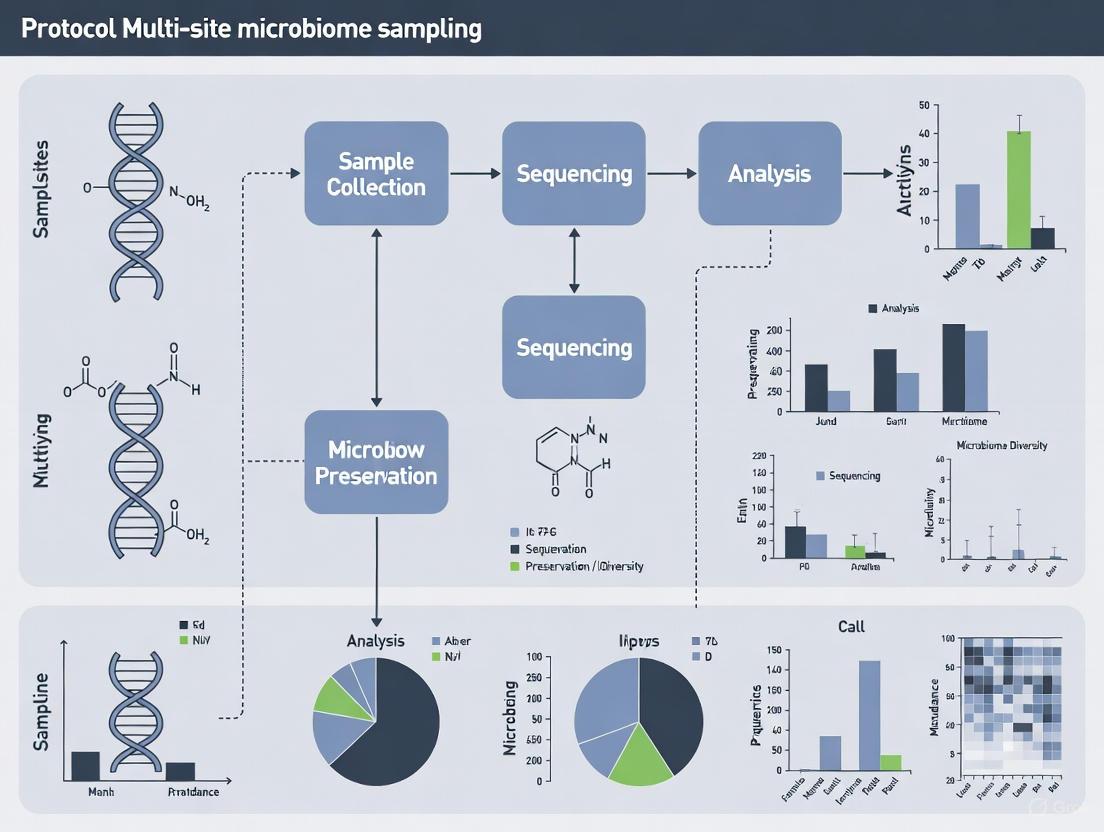
This protocol provides a comprehensive framework for designing and implementing multi-site microbiome sampling in human fertility research.
A Standardized Protocol for Multi-Site Microbiome Sampling in Human Fertility Studies: From Sample Collection to Data Integration
Abstract
This protocol provides a comprehensive framework for designing and implementing multi-site microbiome sampling in human fertility research. It addresses the critical need for standardized methodologies to explore the intricate relationships between gut, reproductive tract, and other body site microbiomes and their collective impact on reproductive outcomes. Covering foundational concepts, detailed methodological steps, troubleshooting guidance, and validation techniques, this resource is tailored for researchers and drug development professionals. The protocol aims to enhance reproducibility, enable cross-study comparisons, and facilitate the translation of microbiome science into clinical applications for infertility and assisted reproductive technologies.
The Rationale for Multi-Site Microbiome Analysis in Reproductive Health
Quantitative Evidence of Microbial Sharing in Couples
Cohabiting partners exhibit significant similarity in their microbial communities across various body sites, a phenomenon driven by sustained close contact and a shared environment. The table below summarizes the key quantitative findings from research on couples' microbiome similarity.
Table 1: Quantitative Evidence of Microbial Similarity in Cohabiting Couples
| Body Site | Metric of Similarity | Key Findings | Reference/Context |
|---|---|---|---|
| Gut | Strain Sharing | Median of ~12% bacterial strain sharing between partners. | [1] |
| Community Similarity | Significantly more similar microbiota composition than unrelated individuals; similarity can exceed that of siblings. | [1] | |
| Diversity | Married individuals show greater microbial diversity and richness compared to those living alone. | [1] | |
| Oral | Strain Sharing | Median of ~32% bacterial strain sharing between partners. | [1] |
| Behavior Link | Saliva microbiome similarity is correlated with frequency of intimate kissing. A 10-second kiss can transfer ~80 million bacteria. | [1] | |
| Skin | Community Similarity | Partners' skin microbiomes are significantly more similar than expected by chance; algorithms can identify couples with ~86% accuracy based on skin microbes. The feet show the strongest resemblance. | [1] |
| Genital | Strain Sharing & Health | Male partners can harbor female genital pathogens; treating both partners for BV reduces recurrence (35% vs. 63% when only the woman is treated). | [1] |
Detailed Experimental Protocols for Social Microbiome Research
This section outlines reproducible methodologies for analyzing couple-level microbiome data, with a focus on applications in fertility research.
Protocol for Multi-Site Microbiome Analysis of Couples
This protocol provides a workflow for exploratory, couple-level, multi-site microbiome analysis using public datasets, with an emphasis on strain-resolved transmission and functional convergence [1].
Workflow Diagram: Multi-Site Microbiome Analysis
Protocol Steps:
Data Acquisition and Harmonization:
- Input: Harmonize public multi-site datasets (shotgun metagenomics or 16S rRNA) containing identifiable partner/household links from gut, oral, skin, and genital sites [1].
- Metadata: Curate rich metadata, including cohabitation duration, intimate behaviors, and health outcomes (e.g., fertility, pregnancy status) [1].
Sequence Data Processing:
- For 16S data: Reprocess raw amplicon reads using a uniform pipeline such as QIIME 2 and DADA2 for denoising and generating amplicon sequence variants (ASVs) [1].
- For shotgun metagenomic data:
Strain-Level Analysis:
- Quantify strain sharing between partners using tools like StrainPhlAn or inStrain [1].
- Apply stringent Average Nucleotide Identity (ANI) and breadth coverage thresholds to minimize false-positive transmissions [1].
- Identify highly transmitted bacterial species and strains (e.g., specific Bifidobacterium and Bacteroides strains) [1].
Dyadic Statistical Analytics:
- Beta-diversity contrasts: Compare microbial community structures (e.g., using Bray-Curtis dissimilarity) within couples versus between unrelated individuals [1].
- Permutation tests and mixed-effects models: Statistically evaluate the significance of partner similarity while accounting for non-independence of data [1].
- Actor-Partner Interdependence Models (APIM): Model the mutual influence partners have on each other's microbiomes and health outcomes [1].
- Network analysis: Reconstruct microbial transmission networks and cross-site co-occurrence patterns [1].
Protocol for Microbiome Analysis in Infertile Couples (IVF Context)
This protocol details a specific methodology for comparing microbiota compositions in the seminal fluid and vaginal niche of couples undergoing In Vitro Fertilization (IVF) [2].
Workflow Diagram: Infertile Couples Microbiome Analysis
Protocol Steps:
Sample Collection:
- Vaginal Sample: Collect two swabs from the vaginal niche using a non-lubricated sterile disposable plastic speculum. Agitate one swab in DNA preservation buffer and use the other for microscopy [2].
- Semen Sample: Collect semen sample by masturbation after 5 days of sexual abstinence. Analyze semen quality using a Semen Quality Analyzer [2].
DNA Extraction and Library Preparation:
Sequencing:
- Pool and purify PCR products, then perform sequencing on an Illumina MiSeq platform in a 2×150 bp paired-end configuration [2].
Bioinformatic and Statistical Analysis:
- Demultiplex sequences and perform quality filtering (Q-score >30) [2].
- Use pipelines like MG-RAST and EzBiocloud for alpha and beta diversity analysis [2].
- Employ Linear Discriminant Analysis (LDA) Effect Size (LEfSe) to identify taxa with statistically significant abundance differences between groups (e.g., positive vs. negative IVF outcomes) [2].
- Use PICRUSt to predict metagenomic functions from the 16S data [2].
Best Practices for Sample Collection and Metadata
Adhering to standardized procedures is critical for generating high-quality, reproducible data in social microbiome studies, particularly in a fertility context.
Table 2: Best Practices for Microbiome Sample Collection in Fertility Research
| Aspect | Best Practice | Rationale & Considerations |
|---|---|---|
| Nomenclature | Use precise terminology (e.g., "urinary bladder" vs. "urogenital" for urine samples). | Mitigates confusion and ensures accurate interpretation of sample origin [3]. |
| Contamination Prevention | Use personal protective equipment, sterile collection materials, and decontaminated environments. | Especially critical for low-biomass samples (e.g., urine, genital swabs) to avoid spurious results [3]. |
| Sample Storage | Immediate freezing at –80°C is the gold standard. When not possible, use preservative buffers (e.g., AssayAssure, OMNIgene·GUT) and maintain cold storage. | Effectively maintains microbial composition integrity; different preservatives can influence specific bacterial taxa [3]. |
| Sample Volume | Larger volumes (e.g., 30–50 ml for catheter-collected urine) are recommended. Homogenize stool samples. | Ensures sufficient DNA yield, which is directly influenced by volume in low-biomass samples [3]. |
| Fertility-Specific Metadata | Critical for Dyadic Analysis: Cohabitation duration, intimate behavior frequency, fertility diagnosis (primary/secondary), hormonal status, IVF cycle details, and pregnancy outcome. | Enables robust testing of hypotheses regarding microbial transmission and its impact on reproductive success [1] [2]. |
Visualization and Analysis Toolkit for Social Microbiome Data
Effective visualization is key to exploring and communicating the complex, high-dimensional data generated in social microbiome studies.
Table 3: Research Reagent Solutions and Analysis Tools
| Category | Tool/Reagent | Function and Application |
|---|---|---|
| Wet Lab Reagents | OMNIgene·GUT / AssayAssure | Chemical preservatives for stabilizing microbial DNA in samples when immediate freezing is not possible [3]. |
| Specific 16S Primers (e.g., V1V2, 515F/806R) | Amplify target regions of the bacterial 16S rRNA gene for taxonomic profiling. Primer choice (e.g., V1V2 for urine) impacts species detection [3] [2]. | |
| Bioinformatic Pipelines | QIIME 2, DADA2 | Process and analyze 16S rRNA amplicon sequence data from raw reads to Amplicon Sequence Variants (ASVs) [1]. |
| MetaPhlAn 4, HUMAnN 3 | Perform species-level profiling and functional pathway analysis from shotgun metagenomic data, respectively [1]. | |
| StrainPhlAn, inStrain | Enable strain-level microbial profiling and quantification of strain sharing between partners [1]. | |
| Visualization & Analysis Platforms | MicrobiomeStatPlots (R) | A comprehensive platform offering over 80 reproducible visualization cases for microbiome data, including diversity analysis and differential abundance [4]. |
| Snowflake (R package) | Visualizes entire microbiome abundance tables as bipartite graphs, showing all OTUs/ASVs and their presence across samples without aggregation [5]. | |
| STAMP | Statistical tool for robust differential analysis between two or more groups, providing various visualizations like extended error bar plots [4]. |
Visualization Workflow Diagram: From Data to Insight
Implications for Fertility and Concluding Remarks
The convergence of microbiomes within couples has direct implications for reproductive health and the success of Assisted Reproductive Technologies (ART).
- Vaginal and Seminal Microbiome in IVF: A vaginal microbiome dominated by Lactobacillus species (particularly L. crispatus and L. gasseri) is associated with more positive IVF outcomes [2] [6]. Conversely, seminal fluids with higher abundances of Lactobacillus jensenii and Faecalibacterium, and lower abundances of Proteobacteria, Prevotella, and Bacteroides, are linked to successful IVF [2]. This suggests a potential for probiotic interventions targeting both partners.
- Dyadic Treatment Approach: The evidence that male partners can harbor pathogens associated with conditions like bacterial vaginosis (BV) and contribute to recurrence underscores the necessity of treating the couple as a single unit to break the cycle of reinfection and improve health outcomes [1].
- The Social Microbiome as a Unit of Intervention: The "social microbiome" concept advances our understanding of health and disease beyond the individual. In fertility research, this paradigm shift highlights the need for couple-level analytical frameworks and interventions, moving towards a more holistic and effective approach to preconception care and microbiome optimization.
The human microbiome, the complex ecosystem of microorganisms inhabiting various body sites, plays a crucial role in physiological processes, including those essential for reproduction. In the context of fertility research, understanding the compositional dynamics of microbiomes at key body sites—gut, vaginal, cervical, endometrial, and oral—provides critical insights into their collective impact on reproductive outcomes [7]. The rising application of assisted reproductive technologies (ART) has intensified the investigation into how microbial communities influence success rates, driving the need for standardized, multi-site sampling and analysis protocols [6].
A healthy vaginal microbiome is typically characterized by dominance of Lactobacillus species, which maintain a low pH and inhibit pathogens [7]. These communities are classified into Community State Types (CSTs), where CSTs I, II, III, and V are Lactobacillus-dominant (L. crispatus, L. gasseri, L. iners, and L. jensenii, respectively), and CST IV is diverse and lacks Lactobacillus dominance [6]. A CST IV profile, often associated with bacterial vaginosis, has been correlated with poorer reproductive outcomes, including reduced implantation and clinical pregnancy rates following in vitro fertilization (IVF) [6] [7]. Beyond the lower reproductive tract, the upper genital tract (cervix and endometrium), once considered sterile, harbors its own microbial community. A Lactobacillus-dominant (LD) endometrial environment, with lactobacilli constituting ≥90% of the microbiota, is considered favorable for implantation, whereas a non-Lactobacillus-dominant (NLD) state is linked to compromised reproductive success [7]. Furthermore, emerging evidence suggests that gut and oral microbiomes, through immune modulation and systemic metabolic interactions, can indirectly influence the reproductive milieu [1]. Cohabiting partners, sharing similar microbiomes across gut, oral, and skin sites, may represent a critical unit of analysis, as microbial transmission between partners can impact conditions like bacterial vaginosis recurrence and overall reproductive health [1]. Therefore, a comprehensive, multi-site profiling approach is indispensable for elucidating the complex role of microbiomes in human fertility.
Key Microbiome Profiles and Clinical Significance
Table 1: Vaginal Community State Types (CSTs) and Fertility Implications
| Community State Type (CST) | Dominant Microbe(s) | Favourability for Healthy Pregnancy Environment | Microbial Diversity |
|---|---|---|---|
| CST I | Lactobacillus crispatus | Extremely favourable | Low |
| CST II | Lactobacillus gasseri | Favourable | Low |
| CST III | Lactobacillus iners | Demonstrates conflicting favourability | Low |
| CST IV | No singular dominant species; majority facultative and anaerobic bacteria (e.g., Gardnerella, Prevotella) | Associated with poorer reproductive outcomes | High |
| CST V | Lactobacillus jensenii | Favourable | Low |
Source: Adapted from [6]
Table 2: Characteristics of Microbiomes Across Key Body Sites in Fertility
| Body Site | Dominant Taxa in Health | Associated Dysbiosis & Pathogens | Impact on Fertility and ART Outcomes |
|---|---|---|---|
| Vaginal | L. crispatus, L. iners, L. gasseri, L. jensenii [7] | Gardnerella vaginalis, Prevotella spp., Atopobium vaginae [6] | Reduced clinical pregnancy rates with CST IV/NLD; Increased implantation failure [6] [7] |
| Cervical | Lactobacillus spp. (e.g., L. crispatus, L. iners) [7] | Gardnerella spp., Veillonella spp., Prevotella spp., Sneathia spp. [7] | Serves as a conduit; dysbiosis may allow ascension of pathogens to the upper genital tract. |
| Endometrial | Lactobacillus-dominant (LD) profile [7] | Non-Lactobacillus-dominant (NLD) profile: Bifidobacterium, Gardnerella, Prevotella, Streptococcus [7] | LD state favours embryo implantation; NLD state associated with implantation failure and early pregnancy loss [7]. |
| Gut | High diversity and richness is generally beneficial [1] | Low diversity; "obese" or pro-inflammatory profile | Modulates systemic inflammation and estrogen metabolism; may indirectly impact ovarian function and endometrial receptivity [1]. |
| Oral | Varies; Streptococcus, etc. | Periodontopathic bacteria | Associated with adverse pregnancy outcomes; potential systemic inflammatory cross-talk [1]. |
Experimental Protocols for Multi-Site Microbiome Sampling
Standardized sample collection and processing are paramount to generating reliable and reproducible microbiome data, especially in low-biomass environments like the endometrium and urine [3].
Sample Collection and Storage
Patient Preparation and Consent: Obtain ethical approval and written informed consent. Participants should be pre-menopausal, not currently pregnant, with no known active STIs, and no current antibiotic treatment [6].
Site-Specific Collection Methods:
- Vaginal: Using a sterile swab (e.g., QIAGEN foam swab), self-collect or clinically collect by inserting the swab ~5 cm into the vaginal opening, rotating against the vaginal wall for 15 seconds [6]. Press swab onto an FTA card for storage or place in a sterile tube with preservative buffer.
- Cervical: During speculum examination, use a sterile swab to collect samples from the endocervix. Avoid contact with the vaginal mucosa.
- Endometrial: Transcervically obtain endometrial fluid or tissue biopsy using a sterile catheter or biopsy device under aseptic conditions. This is critical to avoid contamination during the passage through the cervix [7] [3].
- Oral: Swab the buccal mucosa, tongue, or subgingival sites using a foam swab. Participants should refrain from eating or drinking for 30 minutes prior if collecting fasting samples [6].
- Gut: Collect fecal samples in sterile containers, preferably with immediate freezing or use of a preservative buffer (e.g., OMNIgene•GUT) to maintain microbial integrity [3].
Storage and Preservation:
- Gold Standard: Immediate freezing at -80°C [3].
- Alternatives: Refrigeration at 4°C can be effective for fecal samples for short periods. The use of preservative buffers (e.g., AssayAssure, OMNIgene•GUT) is recommended when immediate freezing is not feasible, particularly for room-temperature storage and transport, as they maintain microbial composition [3].
DNA Extraction and Sequencing
DNA Extraction:
- Use commercially available DNA isolation kits proven effective for the specific sample type (e.g., fecal, vaginal swab, low-biomass endometrial fluid) [3]. For low-biomass samples, larger starting volumes (e.g., 30–50 ml for catheter-collected urine) are recommended to obtain sufficient DNA yield [3]. Homogenize samples like stool to ensure uniform analysis [3]. Although different kits may yield varying total DNA concentrations, they often produce comparable sequencing depths for 16S rRNA genes [3].
Sequencing Approach and Primer Selection:
- 16S rRNA Gene Amplicon Sequencing: A cost-effective method for profiling bacterial community composition. Primer selection is critical, as different variable regions (e.g., V1V2, V4) have varying efficiencies for specific taxa. For instance, the V1V2 region may be better suited for urinary microbiota, while V4 can underestimate species richness [3].
- Shotgun Metagenomic Sequencing: Provides superior taxonomic resolution to the species or strain level and allows for functional profiling of microbial communities but is more expensive [1].
- Nanopore Sequencing: Offers long-read, real-time, high-throughput capabilities but requires optimized bioinformatic pipelines (e.g., Porechop with NanoCLUST) to manage higher error rates [6]. This method allows for high-depth, species-level identification.
The Scientist's Toolkit: Research Reagent Solutions
Table 3: Essential Materials and Reagents for Microbiome Fertility Research
| Item Category | Specific Product/Kit Examples | Function and Application Notes |
|---|---|---|
| Sample Collection & Storage | QIAGEN foam swabs, FTA QIAcard Indicating Mini, OMNIgene•GUT, AssayAssure | Standardized sample collection from various body sites; stabilization and preservation of microbial DNA at room temperature or during transport [6] [3]. |
| DNA Extraction | QIAamp DNA Microbiome Kit, DNeasy PowerSoil Kit | Efficient lysis of Gram-positive and Gram-negative bacteria; isolation of high-quality DNA from complex and low-biomass samples (e.g., endometrial fluid) [3]. |
| PCR Amplification | Tailored 16S rRNA Primers (e.g., 27F-YM, 341F-NW, V1V2, V4 regions) | Amplification of hypervariable regions of the bacterial 16S rRNA gene for subsequent sequencing. Primer choice significantly impacts taxonomic representation [6] [3]. |
| Sequencing Technology | Oxford Nanopore Technologies (ONT), Illumina Sequencing Chemistry | High-throughput sequencing platforms. Nanopore allows for long-read, real-time sequencing, while Illumina provides high-accuracy short reads [6] [3]. |
| Bioinformatic Tools | QIIME 2, DADA2, Porechop, NanoCLUST, MetaPhlAn 4, HUMAnN 3, StrainPhlAn, inStrain | Processing raw sequencing data, denoising, taxonomic assignment, functional pathway profiling, and strain-level transmission analysis [6] [1]. |
Infertility is a pressing global health issue, affecting an estimated one in six people worldwide [8]. Despite advances in Assisted Reproductive Technologies (ART), success rates remain suboptimal, driving research into novel influencing factors. The human microbiome, comprising bacteria, viruses, fungi, and other microbes residing in various body sites, is emerging as a crucial regulator of reproductive health [9] [10]. A balanced microbial state, or eubiosis, supports physiological functions, whereas an imbalance, known as dysbiosis, is increasingly linked to adverse fertility outcomes in both men and women [9] [11] [10]. This application note synthesizes evidence from clinical and animal studies linking microbial dysbiosis to fertility, providing structured data, experimental protocols, and mechanistic insights to guide research and development in reproductive medicine.
Quantitative Evidence: Correlating Microbiome Composition with Fertility Outcomes
Vaginal Microbiome and Clinical Pregnancy in IVF
The vaginal microbiome is a key predictor of success in in vitro fertilization (IVF) cycles. Community State Types (CSTs) classify the vaginal microbiome based on the dominant bacterial species, which correlates strongly with embryo implantation and clinical pregnancy rates [6] [12] [11].
Table 1: Vaginal Community State Types (CSTs) and Associated IVF Outcomes
| Community State Type (CST) | Dominant Microbe(s) | Typical Diversity | Association with Clinical Pregnancy |
|---|---|---|---|
| CST I | Lactobacillus crispatus | Low | Extremely Favorable [6] [12] |
| CST II | Lactobacillus gasseri | Low | Favorable [6] [12] |
| CST III | Lactobacillus iners | Low | Conflicting/Intermediate [6] [12] |
| CST IV | Diverse facultative and anaerobic bacteriaa | High | Unfavorable [6] [12] |
| CST V | Lactobacillus jensenii | Low | Favorable [6] [12] |
Notes: [a] CST IV includes bacteria such as Gardnerella, Prevotella, and Atopobium, associated with bacterial vaginosis (BV) [11]. A prospective clinical study (n=28) found that at the time of embryo transfer, 79% (11/14) of women with CST I and 100% (2/2) with CST II achieved pregnancy, compared to only 25% (1/4) with CST IV and 0% (0/2) with CST V [12]. Furthermore, pregnant participants exhibited significantly lower vaginal microbial diversity (Shannon Diversity Index, p=0.041) than those who did not achieve pregnancy [12].
Gut and Reproductive Microbiome in Animal Fertility Models
Animal studies, particularly in germ-free (GF) mice, provide causal evidence for the microbiome's role in regulating reproductive lifespan and gamete quality.
Table 2: Impact of Microbiome on Fertility Outcomes in Animal Models
| Model / Intervention | Key Fertility-Related Observations | Proposed Mechanism |
|---|---|---|
| Germ-Free (GF) Mouse Model | - Born with 2x the eggs but deplete them at twice the rate [8] [13]- 50% fewer eggs in adulthood, 50% smaller litters [8]- Reproductive lifespan halved, early onset of ovarian fibrosis [8] [13] | Absence of microbial metabolites (e.g., SCFAs) crucial for maintaining ovarian reserve [8] [13] |
| High-Fat Diet (HFD) Mouse Model | Impaired oocyte quality, lipid accumulation, mitochondrial dysfunction, reduced fertilization rates [13] | Diet-induced gut dysbiosis, reduced SCFA production, inflammation [13] |
| HFD with Fiber Supplementation | Embryo development success improved from 30% (HFD alone) to 80% [8] | Fiber nourishes beneficial gut bacteria, increasing production of protective SCFAs [8] |
| SCFA Supplementation in GF Mice | Rescued premature ovarian aging phenotype [13] | Microbial metabolites directly support ovarian health and slow follicle depletion [13] |
Mechanistic Pathways from Dysbiosis to Infertility
The mechanisms by which microbial dysbiosis impairs fertility involve localized inflammation, altered immune responses, hormonal disruption, and systemic metabolic effects. The following diagram synthesizes these pathways from the gut and reproductive tracts to infertility outcomes.
Diagram 1: Pathophysiological Pathways from Microbial Dysbiosis to Infertility. This diagram illustrates how dysbiosis in the gut and reproductive tracts can trigger inflammation, disrupt protective mechanisms, and directly damage gametes, leading to infertility. PAMPs: Pathogen-Associated Molecular Patterns; LPS: Lipopolysaccharide; SCFAs: Short-Chain Fatty Acids; HPO: Hypothalamic-Pituitary-Ovarian.
Experimental Protocols for Multi-Site Microbiome Sampling and Analysis
Standardized protocols are essential for reliable and reproducible microbiome research in fertility studies. The following section details a comprehensive workflow for a multi-site analysis, from sample collection to data integration.
Comprehensive Workflow for Couples' Multi-Site Microbiome Analysis
The protocol below is adapted from a published framework for analyzing couples' microbiomes to explore associations with fertility [1]. It emphasizes a dyadic approach, considering both partners as a single analytical unit.
Diagram 2: High-Level Workflow for Couples' Microbiome Analysis.
Step 1: Study Design & Participant Recruitment
- Cohort Definition: Recruit couples undergoing fertility treatment (e.g., IVF) and, if possible, control couples. Record comprehensive metadata, including age, BMI, infertility diagnosis, diet, lifestyle, and medication use [12] [1].
- Ethical Considerations: Obtain institutional ethics board approval and written informed consent from all participants [6] [1].
Step 2: Multi-Site Sample Collection
- Collection Sites: For a comprehensive view, collect samples from both partners.
- Standardization: Use standardized collection kits (e.g., QIAGEN foam swabs with FTA cards for stability) and detailed, uniform instructions for self-collection to minimize bias [6] [1].
- Timing: In IVF cycles, collect samples at key time points (e.g., ovarian stimulation, egg retrieval, and embryo transfer) to capture dynamic changes [12].
Step 3: DNA Extraction & Library Preparation
- DNA Extraction: Use commercial kits designed for microbial DNA extraction from different sample types (e.g., vaginal swabs, stool). Include negative controls to detect contamination [6].
- 16S rRNA Gene Amplification: For bacterial community profiling, amplify hypervariable regions (e.g., V1-V9) using tailed primers compatible with the sequencing platform.
- Primer Selection: Critically evaluate primers. For example, the 27F-YM (MIX) primer has shown high sensitivity for C. trachomatis, a pathogen relevant to fertility, whereas other common primers may underestimate it [6].
- PCR Conditions: Optimize cycle numbers and conditions to minimize amplification bias [6].
Step 4: Sequencing
- Platform Selection:
- Long-Read Sequencing (e.g., Oxford Nanopore): Allows for full-length 16S sequencing, providing higher taxonomic resolution. Useful for real-time, portable applications despite historically higher error rates [6].
- Short-Read Sequencing (e.g., Illumina): Offers high accuracy for shorter amplicons.
- Depth: Sequence to sufficient depth (e.g., >10,000 reads/sample for 16S) to capture microbial diversity [6] [1].
Step 5: Bioinformatic Analysis
- Quality Control & Denoising: Use tools like Porechop (for Nanopore) or DADA2 (for Illumina) to remove adapters, filter low-quality reads, and correct errors [6].
- Taxonomic Profiling: Cluster sequences into Amplicon Sequence Variants (ASVs) or Operational Taxonomic Units (OTUs) and assign taxonomy using reference databases (e.g., SILVA, Greengenes). For metagenomic data, use tools like MetaPhlAn 4 [1].
- Strain-Level Analysis: For metagenomic data, use tools like StrainPhlAn or inStrain to quantify strain sharing between partners, a key indicator of microbial transmission [1].
Step 6: Statistical & Dyadic Modeling
- Alpha and Beta Diversity: Calculate within-sample diversity (e.g., Shannon Index) and between-sample dissimilarity (e.g., Bray-Curtis) [12]. Compare groups (e.g., pregnant vs. non-pregnant) using permutational multivariate analysis of variance (PERMANOVA).
- Differential Abundance: Identify taxa associated with outcomes using tools like DESeq2 or LEfSe.
- Couple-Level Analytics:
- Similarity Metrics: Compare beta-diversity within couples versus between unrelated individuals [1].
- Strain Sharing: Report the median percentage of shared strains in gut (~12%) and oral (~32%) microbiomes between partners [1].
- Actor-Partner Interdependence Models (APIM): Statistical models that account for the non-independence of data from couples to assess how one partner's microbiome influences the other's health outcome [1].
- Integration with Outcomes: Link microbial features (diversity, specific taxa, strain sharing) to fertility outcomes (e.g., embryo quality, clinical pregnancy, live birth) using regression models and machine learning [12] [1].
Protocol for Vaginal Microbiome Profiling using Nanopore Sequencing
This protocol details the optimization of vaginal microbiome profiling, a critical site for female fertility [6].
Sample Processing:
- DNA Elution: Elute DNA from FTA cards using a buffer and proteinase K incubation, followed by heat inactivation. Quantify DNA and normalize concentrations for downstream steps [6].
- PCR Optimization: Test and optimize different primer sets (e.g., 27F-YM, 341F-NW) for whole 16S amplification. A mixed primer approach (27F-YM MIX) can improve detection of certain pathogens [6].
- Library Preparation: Prepare the sequencing library according to Oxford Nanopore Technologies (ONT) specifications for amplicon sequencing [6].
Bioinformatic Processing & Benchmarking:
- Basecalling & Demultiplexing: Use ONT's Guppy for basecalling and demultiplexing of raw signals.
- Adapter Trimming: Use Porechop for removing sequencing adapters.
- Clustering & Taxonomy Assignment: Benchmark different bioinformatic pipelines. The cited study found that the NanoCLUST algorithm most accurately identified microbial presence compared to other methods [6].
- Community State Type (CST) Assignment: Classify samples into CSTs based on the dominant microbial species as defined in Table 1 [6] [12] [11].
The Scientist's Toolkit: Research Reagent Solutions
Table 3: Essential Reagents and Materials for Fertility Microbiome Research
| Item | Function/Application | Example/Note |
|---|---|---|
| Sterile Swabs with FTA Cards | Stable room-temperature storage of microbial samples from vagina, oral, etc. | QIAGEN foam swabs with QIAcard FTA Indicating minis [6] |
| Stool Collection Kit | Standardized gut microbiome sample collection | Commercially available kits with DNA/RNA stabilizer |
| Microbial DNA Extraction Kit | Isolation of high-quality microbial DNA from diverse sample types | Kits optimized for low biomass samples (e.g., vaginal swabs) are critical [6] |
| 16S rRNA Tailed Primers | Amplification of bacterial gene targets for sequencing | 27F-YM (MIX) primers for improved detection of pathogens like C. trachomatis [6] |
| PCR Enzymes & Master Mixes | Robust amplification of 16S rRNA gene regions | High-fidelity polymerases to reduce amplification bias |
| Oxford Nanopore Ligation Kit | Preparation of sequencing libraries for long-read platforms | SQK-LSK109 Ligation Sequencing Kit |
| Bioinformatic Tools | Data processing, taxonomy assignment, and strain-level analysis | QIIME 2, DADA2, NanoCLUST [6], MetaPhlAn 4, StrainPhlAn [1] |
| Positive Control Mock Community | Assessing sequencing and bioinformatic performance | Defined mix of genomic DNA from known bacteria |
| Probiotic Strains | For interventional studies in animal models or clinical trials | Specific Lactobacillus strains (e.g., L. crispatus) [10] |
The evidence linking microbial dysbiosis to infertility is compelling and spans clinical correlations and causal demonstrations in animal models. The female vaginal microbiome, particularly when dominated by L. crispatus (CST I), is a strong positive predictor of IVF success, while dysbiotic states like CST IV are detrimental. Animal models confirm that the gut microbiome directly influences ovarian reserve and oocyte quality, primarily through microbial metabolites like SCFAs. The provided structured data, mechanistic diagrams, and detailed protocols for a dyadic, multi-site microbiome analysis offer a robust framework for scientists and drug development professionals to advance this field. Integrating microbiome assessment into fertility research and clinical practice holds significant promise for developing novel diagnostics and targeted interventions, such as personalized probiotics and dietary strategies, to improve outcomes for the millions of couples affected by infertility.
Application Notes: Mechanistic Foundations of the Gut-Reproductive Axis
The gut-reproductive axis represents a complex, bidirectional communication network where the gut microbiota significantly influences reproductive physiology through endocrine, immune, and metabolic pathways. Understanding these mechanisms provides a scientific basis for developing microbiome-targeted interventions for reproductive disorders.
Key Mechanistic Pathways of Gut-Reproductive Crosstalk
The gut microbiota regulates reproductive function through several interconnected biological pathways, as detailed in Table 1.
Table 1: Core Mechanisms of the Gut-Reproductive Axis
| Mechanistic Pathway | Microbial Components/Activities | Impact on Reproductive Physiology | Associated Reproductive Disorders |
|---|---|---|---|
| Steroid Hormone Regulation (Estrobolome) | β-glucuronidase enzyme activity deconjugates estrogens [14]. | Modulates systemic estrogen levels; dysbiosis can lead to estrogen deficiency or hyperestrogenism [14]. | Endometriosis, uterine fibroids, hormone-dependent cancers [14]. |
| SCFA-Mediated Signaling | Production of acetate, propionate, butyrate via fiber fermentation [14]. | Binds receptors GPR41/43; exerts anti-inflammatory effects; regulates GnRH release and HPG axis function [14]. | PCOS, menstrual irregularity, ovarian dysfunction [14]. |
| Neuroendocrine Modulation (Gut-Brain Axis) | Regulation of serotonin, GABA, and other neurotransmitters [14]. | Influences hypothalamic GnRH pulsatility and communication [14]. | Fertility disorders linked to HPG axis disruption [14]. |
| Immune and Cytokine Signaling | Control of systemic inflammatory cytokines (e.g., TNF-α, IL-6) [14]. | Affects endometrial receptivity, ovulation, and implantation [14]. | Unexplained infertility, implantation failure [14]. |
| Barrier Integrity & Metabolic Endotoxemia | Increased intestinal permeability from dysbiosis allows LPS translocation [14]. | Induces chronic low-grade inflammation, disrupting folliculogenesis and placental development [14]. | PCOS, pregnancy complications, infertility [14]. |
Implications of Microbial Dysbiosis in Specific Reproductive Conditions
- Polycystic Ovary Syndrome (PCOS): Gut dysbiosis in PCOS is characterized by reduced microbial diversity and a higher Firmicutes-to-Bacteroidetes ratio. This is linked to key clinical features including androgen excess, insulin resistance, and hyperinsulinemia. Specific microbial shifts include an increase in Bacteroides and Escherichia/Shigella, and a decrease in beneficial Lactobacillus and Bifidobacterium [14].
- The Couples' Microbiome: Research indicates that cohabiting partners share similar microbiomes across gut, oral, and skin sites due to microbial transmission. This "social microbiome" has significant health implications. For instance, male partners can harbor bacteria associated with bacterial vaginosis (BV), and treating both partners significantly reduces BV recurrence rates compared to treating the woman alone [1]. This underscores the importance of considering the couple as a unit in clinical management of microbiome-related reproductive conditions.
Experimental Protocols
This section provides a detailed methodology for a multi-site microbiome sampling protocol, designed to investigate the gut-reproductive axis within the context of couples' fertility studies.
Protocol for Multi-Site Microbiome Sampling in Couples' Fertility Research
Background: This protocol outlines a standardized procedure for collecting, processing, and analyzing microbiome samples from multiple body sites of cohabiting partners. It is designed for exploratory, couple-level analysis to investigate microbial transmission, functional convergence, and associations with reproductive outcomes [1].
Objective: To establish a reproducible workflow for the collection of microbiome samples from gut, oral, vaginal, and skin sites from partners, enabling the study of strain sharing, dyadic similarity, and its correlation with fertility status.
Materials and Reagents:
- Sample Collection: Sterile foam-tipped swabs (e.g., QIAGEN foam swabs), FTA cards for sample preservation (e.g., QIAGEN QIAcard) [6].
- DNA Extraction: DNA elution buffer, Proteinase K, microcentrifuge tubes, thermal incubator/heat block [6].
- 16S rRNA Gene Sequencing: Tailed primers for full-length 16S amplification (e.g., 27F-YM, 1492R-Y) [6], PCR reagents, nanopore sequencing platform (e.g., Oxford Nanopore Technologies) [6].
- Shotgun Metagenomic Sequencing: Host depletion reagents, sequencing library preparation kits.
Procedure:
Participant Recruitment and Ethics:
- Obtain ethical approval from the relevant institutional review board.
- Recruit pre-menopausal, cohabiting couples. Exclusion criteria include current antibiotic treatment, known sexually transmitted infections, and current pregnancy [6].
- Acquire written informed consent from all participants.
Multi-Site Sample Collection:
- Vaginal Sample: Participants self-collect by inserting a sterile swab ~5 cm into the vaginal opening, rotating against the vaginal wall for 15 seconds. The swab is then pressed onto an FTA card for preservation [6].
- Gut Sample: Participants collect fecal material using a standardized at-home collection kit, which is then stored at -80°C.
- Oral Sample: Collect saliva or oral swab samples from both partners.
- Skin Sample: Swab designated skin sites (e.g., forearms) of both partners.
- Metadata Collection: Record detailed metadata, including dietary habits, cohabitation duration, intimate behaviors, and fertility history/questionnaires.
DNA Extraction and Storage:
Microbiome Profiling and Bioinformatics Analysis:
- 16S rRNA Sequencing: Amplify the whole 16S gene using optimized PCR strategies with tailed primers suitable for nanopore sequencing [6].
- Shotgun Metagenomic Sequencing: Perform host depletion and conduct species profiling using MetaPhlAn 4 and pathway profiling with HUMAnN 3 [1].
- Strain-Level Analysis: Quantify strain sharing between partners using tools like StrainPhlAn or inStrain with stringent ANI/breadth thresholds [1].
- Dyadic Analytics: Perform partner-vs-non-partner beta-diversity contrasts, permutation tests, and mixed-effects models to assess similarity [1].
Troubleshooting:
- Low DNA Yield: Ensure complete proteinase K digestion and adequate incubation time during elution [6].
- Primer Bias in 16S Sequencing: Benchmark primer sets for accurate microbial population representation, as some may underestimate pathogens like C. trachomatis [6].
The Scientist's Toolkit: Essential Research Reagents and Materials
Table 2: Key Research Reagent Solutions for Microbiome and Reproductive Axis Studies
| Item/Category | Function/Application | Specific Examples/Notes |
|---|---|---|
| Sample Preservation Cards | Enables room-temperature storage and stabilization of microbial DNA from swabs, simplifying logistics for self-collection [6]. | QIAGEN QIAcard FTA Indicating mini cards. |
| Tailed 16S rRNA Primers | Used for amplifying the target gene for sequencing; specific primers are critical for accurate representation and detecting key pathogens [6]. | 27F-YM, 1492R-Y; primer 27F-YM (MIX) shows high sensitivity [6]. |
| Nanopore Sequencing Platform | Allows for long-read, high-throughput, real-time sequencing, enabling species-level identification and direct detection of microbes without PCR [6]. | Oxford Nanopore Technologies (ONT). |
| Bioinformatic Pipelines for Species ID | Analyzes sequencing data to accurately identify and quantify microbial taxa present in a sample [6]. | NanoCLUST pipeline for nanopore data [6]. |
| Strain-Resolving Bioinformatics Tools | Determines if cohabiting individuals share the exact same strain of a bacterial species, confirming transmission [1]. | StrainPhlAn, inStrain [1]. |
| Dyadic Statistical Models | Statistical methods that treat the couple as the unit of analysis, accounting for non-independence of partners' data [1]. | Actor-Partner Interdependence Models (APIM), mixed-effects models [1]. |
Signaling Pathway and Workflow Visualizations
The Gut-Reproductive Axis Signaling Pathway
Multi-Site Microbiome Analysis Workflow for Couples
Fertility, fundamentally, is a couple-dependent outcome. Yet, traditional research paradigms have predominantly relied on individual-level data, often focusing solely on the female partner. This approach ignores the dyadic nature of reproductive decision-making and the biological contributions of both partners, introducing substantial limitations in understanding and interpreting fertility data. The integration of couple-level analysis is particularly critical in the burgeoning field of microbiome research in fertility, where the complex interplay of both partners' microbial ecosystems may hold keys to unexplained infertility and treatment success.
Evidence confirms that men's and women’s fertility intentions are not formed in isolation. When partners disagree on their fertility desires, it creates a significant intermediate state between agreement on having a child and agreement on not having one. Research from Australia demonstrates that for first births, approximately half of disagreeing couples will have a child, indicating that disagreement does not automatically prevent childbearing. However, for subsequent births, disagreement is more strongly shifted towards preventing a birth [15]. Furthermore, the resolution of this conflict is gendered; women tend to prevail in decisions about having a first child, whereas a symmetric "double-veto" system often operates for second or additional children, where both partners must agree to proceed [15]. This complex dyadic decision-making process is invisible in individual-level studies, potentially leading to flawed interpretations of fertility intentions and outcomes.
Quantitative Evidence: Systematic Support for the Couple-Level Approach
TABLE 1: Key Findings from Couple-Level Fertility Research
| Study Focus | Data Source | Key Couple-Level Finding | Implication for Research |
|---|---|---|---|
| Intention-Outcome Link [15] | HILDA Survey, Australia | Disagreement prevents second births more than first births; Gender dynamics influence resolution. | Predictive models of fertility require both partners' intentions. |
| Fertility Desires in Sub-Saharan Africa [16] | Demographic and Health Surveys (DHC) | Husbands' desires to space/limit childbearing increased prior to fertility transition, sometimes faster than wives'. | Understanding macro fertility trends requires data from both sexes. |
| Covert Contraceptive Use [16] | Demographic and Health Surveys (DHC) | Wives who perceived husbands wanted more children had 3-4x higher odds of covert contraceptive use. | Individual-reported contraceptive use may be inaccurate without partner context. |
| Factors Influencing Childbearing [17] | Systematic Review (46 articles) | Identified 101 factors across 8 themes (individual, cultural, social, economic, etc.) operating at the couple/household level. | Fertility behavior is multifactorial and must be studied at the household level. |
A systematic scoping review of factors influencing childbearing decisions further reinforces the complexity of the unit of analysis. The review identified 101 factors clustered into eight main themes that influence household intention for childbearing: individual determinants, demographic and familial influencing factors, cultural elements, social factors, health-related aspects, economic considerations, insurance-related variables, and government support/incentive policies [17]. This holistic framework underscores that fertility decisions emerge from a complex system of factors that operate at the level of the couple or household, not just the individual.
Protocol: Integrating Couple-Level Analysis into Multi-Site Microbiome Fertility Studies
Participant Recruitment and Ethical Considerations
- Unit of Recruitment: Recruit the couple as a single analytical unit. Eligibility criteria must be defined for both partners (e.g., age, infertility diagnosis, no antibiotic use in preceding 4-8 weeks).
- Informed Consent: Obtain separate, informed consent from each partner. Clearly articulate in consent forms how the couple's combined data will be used and the measures taken to protect confidentiality, especially when disclosing sensitive information about individual results (e.g., STI status) to the partner.
- Dyadic Data Management: Assign a unique couple identifier that links to both partners' individual data. All samples and subsequent data must be tagged with both the couple ID and a partner code (e.g., P1, P2).
Standardized Microbiome Sampling Protocol for Couples
The following workflow provides a detailed, standardized protocol for synchronous microbiome sampling from both partners in a fertility context. Adherence to this protocol is essential for minimizing technical variability and enabling robust, comparable couple-level analyses.
Analytical Framework for Couple-Level Microbiome Data
TABLE 2: Essential Alpha Diversity Metrics for Microbiome Analysis in Fertility Studies [18]
| Metric Category | Specific Metrics | Biological Interpretation | Relevance to Fertility |
|---|---|---|---|
| Richness | Chao1, ACE, Observed ASVs | Estimates the number of unique taxa (ASVs) in a sample. | Lower vaginal richness (Lactobacillus dominance) is associated with higher IVF success [19]. |
| Phylogenetic Diversity | Faith's Phylogenetic Diversity (PD) | Incorporates evolutionary relationships between microbes. | May indicate functional redundancy or diversity in a microbial niche. |
| Evenness/Dominance | Simpson, Berger-Parker, ENSPIE | Measures the uniformity of species abundance distribution. | Dysbiotic states often show high dominance of a few non-Lactobacillus taxa. |
| Information Indices | Shannon, Pielou's Evenness | Combines richness and evenness into a single value. | A standard, comprehensive measure for comparing overall diversity. |
- Differential Abundance Testing: When testing for microbial features that differ between groups (e.g., pregnant vs. non-pregnant couples), employ a consensus approach. A 2022 evaluation of 14 differential abundance methods on 38 16S rRNA datasets found that ALDEx2 and ANCOM-II produce the most consistent results because they account for the compositional nature of microbiome data [20]. Using multiple methods and reporting concordant results enhances robustness.
- Integrated Predictive Modeling: Leverage machine learning models that integrate both partners' microbiome data, as demonstrated in a 2025 pilot study [19]. A Support Vector Machine (SVM) model integrating vaginal microbiome and inflammatory marker data successfully predicted IVF pregnancy outcomes. In such models, the unit of analysis for training and prediction is the couple, with features derived from both individuals.
The Scientist's Toolkit: Research Reagent Solutions
TABLE 3: Key Research Reagents and Materials for Couple-Level Microbiome Studies
| Item | Function/Application | Example/Note |
|---|---|---|
| Sterile Swab Kits | Standardized collection of vaginal and seminal samples. | Use kits with synthetic tip and plastic shaft; avoid calcium alginate swabs and wooden shafts, which can inhibit PCR. |
| DNA Extraction Kit | Isolation of high-quality microbial DNA from diverse sample types. | Select a kit validated for both vaginal and semen samples (e.g., QIAamp DNA Microbiome Kit). |
| 16S rRNA PCR Primers | Amplification of the target gene for sequencing. | Use well-established primer sets (e.g., 515F/806R targeting the V4 region). Standardize across all study sites. |
| IVD-Certified Sequencing Test | Provides a standardized, quality-controlled framework for sequencing. | Ensures reliability, validity, and traceability of results, moving towards clinical application [21]. |
| Cytokine/Chemokine Multiplex Panels | Quantification of inflammatory markers in sample supernatants. | Crucial for measuring host immune response (e.g., IL-1β, IL-6, IL-8, TNF-α) correlated with fertility outcomes [19]. |
Moving from an individual-centric to a couple-level analytical framework is not merely a statistical refinement; it is a fundamental paradigm shift essential for advancing fertility science. This approach acknowledges the biological and social reality of reproduction as a collaborative endeavor. By implementing standardized protocols for multi-site couple-level microbiome sampling and analysis—integrating synchronized sampling, robust bioinformatics, and dyadic statistical models—researchers can uncover critical, interactive determinants of fertility. This methodology promises to decode complex conditions like unexplained infertility and paves the way for more effective, personalized therapeutic strategies that consider the unique microbial partnership of each couple trying to conceive.
A Step-by-Step Guide to Multi-Site Sample Collection and Processing
Ethical Considerations, Participant Recruitment, and Cohort Design for Couples
Application Note: Framework for Couples-Based Microbiome Research in Fertility
Background and Rationale
The human body exists as a superorganism, comprising human cells and a vast community of commensal microorganisms, the microbiota, which outnumber human genes by approximately 500:1 [22]. Research increasingly demonstrates that cohabiting partners share more similar microbiomes across gut, oral, skin, and genital sites than unrelated individuals, a phenomenon termed the "social microbiome" [1]. Metagenomic studies demonstrate measurable strain sharing between cohabiting partners, with median rates of ~12% for gut and ~32% for oral microbiomes [1]. This microbial convergence scales with duration of cohabitation and has profound implications for reproductive health, including in vitro fertilization (IVF) outcomes, bacterial vaginosis (BV) recurrence, and pregnancy success [2] [1]. Consequently, studying infertile couples as a single ecological unit rather than as individuals provides a more holistic understanding of the microbial factors influencing reproductive success.
Key Ethical Considerations
Microbiome research involving couples raises unique ethical challenges that must be proactively addressed within study protocols.
- Personal Identity and Privacy: The conception of the self may be reconceptualized as a "superorganism" or "holobiont" [23] [22]. Microbiome data can reveal sensitive information about an individual's lifestyle, cohabitation status, intimate behaviors, and even ancestry [23]. Protocols must ensure robust data anonymization and clarify to participants the potential personal information that may be inferred from their microbiome.
- Informed Consent: Consent processes must be transparent about the breadth of information obtained from microbiome sequencing and the potential for incidental findings. For couples, the voluntariness of participation must be carefully managed to ensure one partner does not feel coerced by the other's desire to participate [23].
- Risk-Benefit Evaluation: While sampling of semen, vaginal swabs, and feces is typically considered minimal risk, the complex and uncertain nature of microbiome-based interventions necessitates careful risk-benefit communication [23]. For instance, the risks of Faecal Microbiota Transplantation (FMT) or vaginal seeding are not yet fully understood and should be clearly detailed [23].
Table 1: Key Ethical Considerations and Proposed Mitigations
| Ethical Consideration | Specific Challenges in Couples Research | Proposed Mitigation Strategies |
|---|---|---|
| Privacy & Confidentiality | Microbiome data can reveal intimate contact and shared health profiles. Potential for group-level data to identify the couple. | Implement tiered consent for data sharing. Use advanced de-identification techniques. Establish clear data ownership and usage policies. |
| Informed Consent | Ensuring both partners provide voluntary, independent consent without coercion. Communicating complex and uncertain risks of microbiome interventions. | Conduct consent sessions individually for each partner. Use simplified visual aids to explain microbiome concepts and potential outcomes. |
| Risk-Benefit Balance | Physical risks are generally low (minimal risk), but psychosocial risks (e.g., relationship stress, stigma) may be higher. | Classify risks as "de minimis" (so low that harms are nominal). Provide access to counseling services for participants experiencing distress. |
Experimental Protocol: Multi-Site Microbiome Sampling from Couples Seeking IVF
Participant Recruitment and Eligibility
- Target Cohort: Recruit couples experiencing primary or secondary infertility after 1-12 years of uninterrupted sexual intercourse and seeking IVF/Embryo Transfer [2].
- Inclusion Criteria: Both partners aged 18-45, ability to provide informed consent, and a diagnosis of infertility.
- Exclusion Criteria: Use of antibiotics or antifungals within the 4 weeks preceding sample collection, and diagnosis of any acute systemic infectious disease.
- Ethical Approval: Secure approval from an Institutional Review Board (IRB) or Ethics Committee prior to study initiation. Informed written consent must be obtained from all participants [2].
Sample Collection and Handling
Samples should be collected from both partners on the same day to allow for paired analysis.
- Male Partner: Semen sample produced by masturbation after 5 days of sexual abstinence [2].
- Female Partner: Two high vaginal swabs collected by a qualified gynecologist using a non-lubricated sterile disposable plastic speculum [2]. Agitate one swab into a tube containing DNA preservation buffer at ambient temperature; use the other for microscopy to detect leukocytes.
DNA Extraction and 16S rRNA Sequencing
This protocol follows established methods from published studies [2].
- Bacterial DNA Extraction: Lysate samples using bead-beating. Purify DNA using a guanidine thiocyanate silica column-based purification method, ideally automated with a liquid-handling robot.
- PCR Amplification: Amplify the V4 region of the 16S rRNA gene using universal primers (515F: GTGCCAGCMGCCGCGGTAA and 806R: GGACTACHVGGGTWTCTAAT). Primers should include Illumina tags and barcodes for multiplexing.
- Library Preparation and Sequencing: Pool, purify, and size-select PCR products. Quantify consolidated libraries by quantitative real-time PCR. Perform sequencing in a pair-end modality on an Illumina NextSeq 500 or MiSeq platform, rendering 2 × 150 bp pair-end sequences.
Bioinformatic and Statistical Analysis
- Sequence Processing: Demultiplex raw sequences and perform quality filtering (average Q-score >30). Use a pipeline like EzBiocloud or QIIME 2/DADA2 for denoising, merging reads, and picking Operational Taxonomic Units (OTUs) at 97% identity.
- Taxonomic Assignment: Classify sequences against a reference database (e.g., Greengenes) to generate microbial taxonomy.
- Microbial Diversity Analysis:
- Alpha Diversity: Calculate species richness (e.g., Chao1, ACE) and diversity indices (e.g., Shannon, Simpson) to compare microbial diversity within samples.
- Beta Diversity: Use Principal Coordinate Analysis (PCoA) with Jensen-Shannon divergence to evaluate microbial community differences between sample types (semen vs. vagina) and clinical outcomes.
- Differential Abundance: Apply Linear Discriminant Analysis (LDA) Effect Size (LEfSe) to identify statistically significant differences in microbial taxa between groups (e.g., positive vs. negative IVF outcome) [2].
- Functional Prediction: Use PICRUSt to predict the metabolic functional potential of the microbial communities from the 16S rRNA data, referencing Kyoto Encyclopedia of Genes and Genomes (KEGG) Orthologs [2].
Diagram 1: Experimental workflow for couples' microbiome study.
Quantitative Data Synthesis and Cohort Design
Summarized Quantitative Findings from Literature
Data from a study of 36 infertile couples reveals key microbial associations with IVF outcome [2].
Table 2: Microbial Composition in Seminal and Vaginal Microbiomes of Infertile Couples [2]
| Sample Type | Most Abundant Taxa (Normospermic) | Relative Abundance | Association with Positive IVF Outcome |
|---|---|---|---|
| Seminal Fluid | Lactobacillus | 43.86% | Significantly colonized by Lactobacillus jensenii (P=0.002) |
| Gardnerella | 25.45% | - | |
| Seminal Fluid (Azoospermic) | Mycoplasma / Ureaplasma | Increased | - |
| Vaginal Fluid | Lactobacillus | 61.74% | Significantly colonized by Lactobacillus gasseri |
| Prevotella | 6.07% | - | |
| Gardnerella | 5.86% | - |
Table 3: Microbial Taxa Significantly Associated with IVF Clinical Outcomes [2]
| Taxon | Semen IVF+ | Semen IVF- | Vagina IVF+ | Vagina IVF- |
|---|---|---|---|---|
| Lactobacillus jensenii | Increased (P=0.002) | - | - | - |
| Lactobacillus gasseri | - | - | Increased | - |
| Lactobacillus iners | - | - | - | Increased |
| Faecalibacterium | Increased (P=0.042) | - | - | - |
| Proteobacteria | - | Increased | - | - |
| Prevotella | - | Increased | - | - |
| Bacteroides | - | Increased | Decreased | Increased |
| Firmicutes/Bacteroidetes Ratio | - | Lower | - | - |
Core Cohort Design Recommendations
Based on existing literature, the following cohort structures are recommended for robust statistical analysis.
Table 4: Recommended Cohort Design for Fertility-Focused Microbiome Studies
| Cohort | Sample Size (Couples) | Key Phenotyping | Control Group |
|---|---|---|---|
| Primary Infertility | ~25 [2] | Detailed semen quality (azoospermic vs. normospermic), duration of infertility | Couples with proven fertility |
| Secondary Infertility | ~11 [2] | History of prior pregnancies, current infertility duration | Couples with proven fertility |
| Recurrent Pregnancy Loss (RPL) | ~200 [22] | ≥3 consecutive pregnancy losses, immunological profiling | 50 couples with prior uncomplicated pregnancy |
The Scientist's Toolkit: Essential Research Reagents & Materials
Table 5: Key Research Reagent Solutions for Couples' Microbiome Studies
| Item | Function / Application | Example / Specification |
|---|---|---|
| DNA Preservation Buffer | Stabilizes microbial genomic DNA in swab and fluid samples at ambient temperature during transport and storage. | Commercially available buffers (e.g., from Norgen Biotek, Zymo Research) or custom guanidine thiocyanate-based solutions. |
| Silica Column DNA Kits | Purifies bacterial DNA from complex biological samples like semen and vaginal swabs. | QIAamp DNA Microbiome Kit (Qiagen), DNeasy PowerSoil Pro Kit (Qiagen). |
| 16S rRNA Primers (V4 Region) | Amplifies the hypervariable V4 region of the 16S rRNA gene for taxonomic profiling. | 515F (GTGCCAGCMGCCGCGGTAA) and 806R (GGACTACHVGGGTWTCTAAT) with Illumina tags [2]. |
| Illumina Sequencing Platform | High-throughput sequencing of amplified 16S rRNA libraries. | Illumina MiSeq or NextSeq 500 systems, configured for 2x150 bp paired-end sequencing [2]. |
| Bioinformatic Pipelines | Processes raw sequence data into analyzed microbial community data. | QIIME 2, DADA2, MG-RAST, or EzBiocloud MTP pipeline for OTU picking and taxonomic assignment [2] [1]. |
| Semen Quality Analyzer | Provides objective, standardized analysis of semen parameters (count, motility, morphology). | SQA-Vision Gold (Medical Electronic Systems) or similar CASA (Computer-Aided Sperm Analysis) systems [2]. |
The standardization of site-specific sampling is a critical foundation for advancing research on the female holobiont—the complex superorganism formed by a woman and her resident microbiota. In fertility studies, characterizing the microbiome of the female reproductive tract (FRT) and gastrointestinal tract (GIT) provides invaluable insights into reproductive health and disease [24]. However, the comparability and reproducibility of findings across studies depend heavily on the rigor of collection methodologies. The vaginal, endometrial, and gut microbiomes exhibit distinct compositional patterns [25] [24], necessitating specialized collection protocols for each site to avoid cross-contamination and ensure sample integrity. This application note provides detailed, standardized protocols for the collection of vaginal swabs, endometrial fluid, and stool specimens, tailored specifically for multi-site microbiome studies in fertility research.
Site-Specific Sampling Protocols
Vaginal Swab Collection
Principle: Vaginal fluid sampling seeks to capture the microbial community of the posterior fornix, which is representative of the vaginal microbiota. A self-collected or clinician-collected swab is used for this purpose.
Materials:
- Sterile viscose or polyester-tipped swab (e.g., Deltalab viscose swab)
- Non-lubricated speculum
- Saline solution (NaCl 0.9%) for cleansing
- Sample collection tube with stabilizing solution (e.g., DNA/RNA Shield)
- Permanent marker for labeling
- Personal protective equipment (gloves)
Procedure:
- Patient Positioning: Instruct the patient to lie in a lithotomy position.
- External Cleansing: Gently cleanse the external genitalia with a saline solution (NaCl 0.9%) to remove contaminating residues. Do not use antiseptics or bactericidal soaps.
- Speculum Insertion: Carefully insert a non-lubricated speculum to visualize the cervix.
- Sample Collection: Introduce a sterile swab into the vagina until it reaches the posterior fornix. Rotate the swab gently for approximately 60 seconds to ensure adequate saturation with vaginal fluid [24].
- Storage: Immediately place the swab into a labeled collection tube containing a nucleic acid stabilizing solution. Ensure the tube is tightly closed.
- Transport and Storage: Store the sample at -80°C within 4 hours of collection until DNA extraction is performed [24].
Endometrial Fluid and Tissue Collection
Principle: Endometrial sampling requires transcervical access to the uterine cavity to obtain fluid or tissue representing the endometrial microbiome, while minimizing contamination from the vaginal and cervical microbiota.
Materials:
- Flexible sterile catheter (e.g., Pipelle de Cornier)
- Ultrasound machine for guided insertion
- Sterile syringe (for fluid aspiration)
- Sample collection tubes (for fluid and tissue)
- Specimen transport medium
Procedure: A. Endometrial Fluid Aspiration:
- Timing: Perform the procedure between days 14 and 21 of the menstrual cycle (or in the mid-luteal phase for IVF patients) to standardize hormonal influence [24].
- Catheter Insertion: Under ultrasound guidance, insert a flexible sterile catheter (e.g., a Pipelle) through the cervix into the uterine cavity. Take care not to touch the vaginal walls during insertion.
- Fluid Aspiration: Attach a sterile syringe and gradually aspirate approximately 80 µL of endometrial fluid [24].
- Sample Handling: Transfer the fluid into a pre-labeled sterile microcentrifuge tube. Flash-freeze in liquid nitrogen or place immediately on dry ice before transfer to -80°C for long-term storage.
B. Endometrial Tissue Biopsy:
- Catheter Placement: Insert a flexible sterile cannula or Pipelle catheter through the cervix under ultrasound guidance until it makes contact with the uterine wall.
- Tissue Suction: Apply suction using the internal plunger to biopsy the endometrial tissue. Crucially, do not perform suction until the catheter is confirmed to be in contact with the endometrial wall to avoid contamination [24].
- Sample Retrieval: Withdraw the catheter gently. Expel the tissue sample into a cryovial containing an appropriate preservative or stabilizing medium.
- Storage: Flash-freeze the sample in liquid nitrogen and store at -80°C.
Stool Collection
Principle: Stool samples provide a representative profile of the distal gut microbiota. Self-collection methods must preserve microbial composition and prevent overgrowth.
Materials:
- Commercially available stool collection kit with stabilizing solution (e.g., OMNIgene•GUT, DNA/RNA Shield Fecal Collection Tubes)
- Disposable cardboard commode or clean container
- Wooden spatula or scoop
- Gloves
Procedure:
- Collection: Defecate directly into a clean, dry container or a disposable commode.
- Sampling: Use the provided spatula to scoop a portion of stool (typically 100-200 mg or a pea-sized amount) into a tube containing a DNA/RNA stabilizing solution. Ensure the sample is fully submerged in the solution.
- Homogenization: Secure the lid and shake the tube vigorously for at least 30 seconds to homogenize the sample with the preservative.
- Storage: The stabilizing solution in commercial kits typically allows for room temperature storage for several days. For long-term storage, keep at -20°C or -80°C [22].
Comparative Analysis of Microbiome Profiles
The application of these site-specific protocols reveals fundamental differences in the microbiomes of the FRT and GIT. The table below summarizes key quantitative and compositional characteristics.
Table 1: Comparative Microbiome Profiles Across Sampling Sites in Fertility Studies
| Parameter | Vaginal Microbiome | Endometrial Microbiome | Gut Microbiome (Stool) |
|---|---|---|---|
| Typical Dominant Taxa | Lactobacillus spp. (e.g., L. crispatus, L. iners) [25] | Lactobacillus spp., but more diverse; may contain Corynebacterium, Staphylococcus, Prevotella, Propionibacterium [25] | High diversity; Bacteroidetes, Firmicutes, Actinobacteria [24] |
| Alpha-Diversity (Shannon Index) | Low (e.g., ~0.75) [25] | Intermediate (e.g., ~1.89) [25] | High (typically >3.0) |
| Clinical Classification | Community State Types (CSTs I-V) [25] | Lactobacillus-Dominated (LD) vs. Non-Lactobacillus-Dominated (NLD) [25] | Enterotypes [22] |
| Dysbiosis Indicator | CST-IV (Lactobacillus abundance <50%) [25] | NLD (Lactobacillus abundance <90%) [25] | Deviation from healthy enterotype; reduced diversity |
| Key Note | Self-collected and clinician-collected swabs are highly comparable [26]. | Distinct from vaginal microbiome despite transcervical sampling [25]. | Represents the luminal microbiota of the lower GIT. |
Experimental Workflow for Multi-Site Microbiome Studies
The following diagram illustrates the integrated workflow for a comprehensive fertility study, from patient recruitment to data analysis.
Diagram 1: Integrated workflow for a multi-site microbiome study in fertility research.
The Scientist's Toolkit: Essential Research Reagent Solutions
The following table details key materials and reagents required for implementing the sampling and analysis protocols described in this document.
Table 2: Essential Research Reagents and Materials for Microbiome Sampling and Analysis
| Item | Function/Application | Example Products/Notes |
|---|---|---|
| Sterile Viscose Swabs | Collection of vaginal fluid and rectal samples. | Deltalab swabs [24]; ensure no antimicrobial coating. |
| Endometrial Sampling Catheter | Transcervical collection of endometrial fluid and tissue. | Pipelle de Cornier; flexible catheters for ultrasound-guided insertion [25] [24]. |
| Stool Collection Kit with Stabilizer | Stabilizes microbial DNA/RNA at room temperature post-collection. | OMNIgene•GUT, DNA/RNA Shield Fecal Collection Tubes; critical for patient self-collection [22]. |
| Nucleic Acid Extraction Kit | Isolation of high-quality microbial DNA from diverse sample matrices. | QIAamp Fast DNA Tissue Kit [24]; kits with bead-beating are recommended for tough gram-positive bacteria. |
| 16S rRNA PCR Primers | Amplification of hypervariable regions for taxonomic profiling. | Primers targeting V1-V2 or V2-V3 regions; choice influences species-level detection (e.g., of Lactobacillus species) [25]. |
| DNA Sequencing Kit | Next-generation sequencing of amplified libraries. | Ion PGM Hi-Q Template OT2 Kit [24]; or equivalent Illumina MiSeq kits. |
| Bioinformatic Databases | Taxonomic classification of sequenced reads. | SILVA, Greengenes; curated databases for accurate assignment of 16S rRNA sequences. |
Methodological Considerations
- Standardization is Critical: Adherence to consistent sampling techniques, menstrual cycle timing, and storage conditions is paramount to reduce technical variability and enable valid cross-study comparisons [27] [22].
- Contamination Control: Endometrial sampling is particularly susceptible to contamination from the lower FRT. The use of ultrasound guidance and careful technique, such as avoiding suction during catheter passage, is essential to obtain a true endometrial sample [25] [24].
- Metadata Collection: Detailed clinical metadata—including menstrual cycle phase, hormonal contraceptive use, recent antibiotic exposure, and specific infertility diagnosis—must be rigorously collected and accounted for in the analysis, as these factors are significant confounders of microbiome composition [27] [22].
Standardized DNA Extraction Protocols Across Different Sample Types
The accuracy and reproducibility of microbiome science, particularly in sensitive clinical areas such as fertility research, are fundamentally dependent on the initial steps of sample processing. Among these, DNA extraction has been identified as the most significant source of technical variation, profoundly influencing downstream microbial community profiles [28]. The establishment of standardized DNA extraction protocols is therefore not merely a procedural detail but a critical prerequisite for generating reliable, comparable data in multi-site studies. This document outlines the challenges and provides evidence-based recommendations for selecting and standardizing DNA extraction methods across the diverse sample types relevant to fertility and reproductive health research.
The Critical Impact of DNA Extraction on Microbiome Data
DNA extraction methodology is a major driver of bias in microbiome studies. This variation stems from multiple factors, including the efficiency of cell lysis (especially for Gram-positive bacteria), the co-purification of PCR inhibitors, and the introduction of contaminants in low-biomass samples [28] [29]. The Microbiome Quality Control (MBQC) project and the International Human Microbiome Standards (IHMS) group have both identified DNA extraction as the largest contributor to experimental variability [28].
This is critically important in a fertility context because different extraction kits can yield different biological conclusions. For instance, one study on vaginal swabs found that the Qiagen DNeasy Blood and Tissue kit yielded the highest DNA quantity and quality, but the MoBio PowerSoil kit (now DNeasy PowerSoil) protocols provided significantly higher estimates of microbial alpha diversity [30]. The choice of kit can thus alter the perceived complexity of the microbial community, a key metric in ecological studies.
Comparative Performance of DNA Extraction Kits Across Sample Types
Selecting an appropriate DNA extraction method requires balancing DNA yield, quality, and the accurate representation of the microbial community. The table below summarizes the performance of various commercially available kits tested across different sample matrices.
Table 1: Comparison of DNA Extraction Kits for Various Sample Types
| Sample Type | Recommended Kits | Performance Summary | Key Considerations |
|---|---|---|---|
| Vaginal Swabs | Qiagen DNeasy Blood & Tissue [30] | Highest DNA yield and quality (Genomic Quality Score: 4.24 ± 0.36) [30]. | Optimal for PCR-based assays but may under-detect microbial diversity compared to other methods [30]. |
| Vaginal Swabs | MoBio PowerSoil (DNeasy PowerSoil) [30] | Lower DNA yield but significantly higher alpha diversity estimates [30]. | More suitable for metataxonomic studies aiming to capture a broader range of taxa. |
| Fecal Samples | MACHEREY–NAGEL NucleoSpin Soil [29] | Associated with the highest alpha diversity estimates in complex ecosystem samples [29]. | Recommended for large-scale microbiota studies of diverse sample types. |
| Fecal Samples | Protocols with Lysozyme [29] | Improved lysis of Gram-positive bacteria (e.g., A. halotolerans) [29]. | Essential for balanced representation; kits without enzymatic lysis can skew community profiles. |
| Low-Biomass Samples | Protocols with minimal contamination [28] | Critical for accuracy. | Requires extensive negative controls (kit blanks, environmental controls) to identify contaminating taxa [28]. |
| Long-Read Sequencing | Zymo Research Quick-DNA HMW MagBead Kit [31] | Best yield of pure, high-molecular-weight (HMW) DNA for Nanopore sequencing [31]. | Gentle lysis and magnetic bead purification are key for long fragments needed for third-generation sequencing. |
Detailed Experimental Protocol for Vaginal Swab Processing
The following protocol is adapted from a published evaluation of vaginal swab DNA extraction methods [30], which is directly relevant to fertility studies.
Sample Collection
- Collection Device: Copan ESwab with Liquid Amies transport medium [30].
- Procedure: Using the non-dominant hand to open the labia, insert the flocked swab into the vagina and twist several times. Place the swab immediately into the transport tube [30].
- Storage: Transport to the lab within 2 hours and store at -80°C until processing [30].
DNA Extraction: Qiagen DNeasy Blood and Tissue Kit
This protocol includes a pre-lysis step to pellet microbial cells.
Materials:
- Kit: Qiagen DNeasy Blood and Tissue Kit
- Equipment: Microcentrifuge, water bath or heat block, vortex.
Method:
- Pre-lysis Centrifugation: Centrifuge the liquid Amies sample at 7,500 rpm for 10 minutes to pellet the cells. Discard the supernatant [30].
- Enzymatic Lysis: Resuspend the pellet in 180 µL of Buffer ATL. Add 20 µL of Proteinase K and mix by vortexing. Incubate at 56°C until the tissue is completely lysed [30].
- Binding: Add 200 µL of Buffer AL, mix thoroughly, then add 200 µL of ethanol (96-100%). Mix again by vortexing.
- Column Purification: Apply the mixture to the DNeasy Mini spin column and centrifuge at ≥6,000 × g for 1 minute. Discard the flow-through.
- Washing: Wash the column by adding 500 µL of Buffer AW1, centrifuge, discard flow-through. Add 500 µL of Buffer AW2, centrifuge, and discard flow-through. Centrifuge again for 1 minute with an empty column to dry the membrane.
- Elution: Place the column in a clean 1.5 mL microcentrifuge tube. Apply 50-100 µL of Buffer AE directly onto the membrane. Incubate at room temperature for 1 minute, then centrifuge at 6,000 × g for 1 minute to elute the DNA.
Downstream Quality Control
- Quantification & Purity: Use spectrophotometry (e.g., Nanodrop). Acceptable A260/A280 ratios are typically between 1.7 and 2.0 [30].
- DNA Integrity: Assess using a fragment analyzer like LabChip GX, which provides a Genomic Quality Score (GQS) where 5 is intact and 0 is highly degraded [30].
- Microbial Abundance: Validate with qPCR using universal 16S rRNA gene primers (e.g., V3 region primers 341F:
5'-CCTACGGGAGGCAGCAG-3'and 534R:5'-ATTACCGCGGCTGCTGG-3') [30].
A Standardized Workflow for Multi-Site Fertility Studies
To ensure consistency across multiple research sites in a fertility study, a strict standardized operating procedure (SOP) must be implemented. The following workflow diagram outlines the key decision points and steps.
Diagram 1: DNA extraction workflow for multi-site studies.
The Scientist's Toolkit: Essential Reagents and Materials
The following table lists key reagents and their critical functions in DNA extraction protocols, based on the kits and methods reviewed.
Table 2: Key Research Reagent Solutions for DNA Extraction
| Reagent / Material | Function in Protocol | Application Note |
|---|---|---|
| Lysozyme [29] | Enzymatic lysis of Gram-positive bacterial cell walls. | Crucial for balanced lysis; omission skews community profiles against Gram-positive taxa [29]. |
| Proteinase K [30] | Broad-spectrum serine protease that digests proteins and inactivates nucleases. | Standard in tissue lysis protocols to degrade contaminants and release DNA [30]. |
| Cetyltrimethylammonium Bromide (CTAB) [32] | Detergent that facilitates the separation of polysaccharides and polyphenols from nucleic acids. | Especially valuable for recalcitrant plant and environmental samples rich in inhibitors [32]. |
| Chelex-100 Resin [33] | Chelating resin that binds metal ions, inhibiting nucleases. | Enables rapid, cost-effective DNA extraction via a boiling method, ideal for large screening studies [33]. |
| Silica Membranes/Columns [30] [34] | Selective binding of DNA in the presence of high-salt buffers, allowing purification from contaminants. | The basis for most commercial spin-column kits; provides a good balance of purity and throughput [30] [34]. |
| Magnetic Beads [31] | Solid-phase reversible immobilization (SPRI) to bind and purify DNA fragments. | Allows for automation and selective isolation of HMW DNA, ideal for long-read sequencing [31]. |
| Polyvinylpyrrolidone (PVP) [32] | Binds phenolic compounds, preventing their oxidation and co-precipitation with DNA. | Essential for extracting DNA from plant and other polyphenol-rich tissues [32]. |
| Internal Mock Community [28] [31] | A defined mix of microbial cells or DNA with known composition. | Serves as a positive control to assess extraction bias, sequencing accuracy, and reproducibility [28] [31]. |
The selection of a DNA extraction protocol is a fundamental decision that directly impacts the validity of findings in fertility microbiome research. For multi-site studies, consistency is paramount. The evidence suggests that adopting a single, well-validated kit across all sites, rather than using sample-specific "optimal" kits, minimizes technical variation and allows for robust data pooling and comparison.
To this end, and in line with community guidelines [28], the following minimum standards should be met and reported in any study:
- Detailed Protocol Reporting: Provide a level of detail that allows another laboratory to exactly reproduce all DNA extraction procedures.
- Comprehensive Control Inclusion: In every extraction batch, include and report results from both positive controls (e.g., mock communities) and negative controls (extraction blanks) to monitor contamination and performance.
- Standardized Protocol Across Sites: For multi-site studies aiming to pool data, utilize the same DNA extraction protocol and kit across all participating centers.
The characterization of microbial communities through sequencing has become a cornerstone of modern microbiome research, particularly in the field of reproductive health. In fertility studies, where sample biomass is often low and the potential impact of microbial communities on outcomes like embryo implantation is significant, selecting the appropriate sequencing strategy is paramount [35] [36]. The choice primarily lies between two established techniques: targeted 16S rRNA gene sequencing and comprehensive shotgun metagenomic sequencing. Each method offers distinct advantages, limitations, and technical considerations, making selection a critical step in the experimental design of multi-site fertility studies [35]. This application note provides a detailed comparison of these methodologies, supported by quantitative data, standardized protocols, and visual workflows, to guide researchers in making an informed decision tailored to their specific research objectives and constraints.
Technical Comparison: 16S rRNA Sequencing vs. Shotgun Metagenomics
The fundamental difference between these methods lies in their scope. 16S rRNA sequencing employs a targeted, amplicon-based approach, using PCR to amplify specific hypervariable regions (V1-V9) of the bacterial and archaeal 16S rRNA gene [37] [38]. In contrast, shotgun metagenomics is an untargeted approach that fragments and sequences all the DNA present in a sample, enabling the reconstruction of entire microbial genomes [37] [38].
Table 1: Core Methodological Comparison of 16S rRNA and Shotgun Metagenomic Sequencing
| Factor | 16S rRNA Sequencing | Shotgun Metagenomic Sequencing |
|---|---|---|
| Core Principle | Targeted amplification of a phylogenetic marker gene [37] | Untargeted sequencing of all genomic DNA in a sample [37] |
| Taxonomic Coverage | Limited to Bacteria and Archaea [37] [38] | All domains of life, including Bacteria, Archaea, Fungi, and Viruses [37] [38] |
| Typical Taxonomic Resolution | Genus-level (sometimes species-level) [38] | Species-level and strain-level (including Single Nucleotide Variants) [38] |
| Functional Profiling | No direct assessment; relies on prediction from taxonomic data [38] | Yes; direct profiling of microbial genes and metabolic pathways [37] [39] |
| Cost per Sample (Relative) | ~$50 USD (Lower cost) [38] | Starting at ~$150 USD (Higher cost) [38] |
| Bioinformatics Complexity | Beginner to Intermediate [38] | Intermediate to Advanced [38] |
| Sensitivity to Host DNA | Low (due to targeted amplification) [38] | High (requires mitigation strategies for low-biomass samples) [40] [38] |
Table 2: Considerations for Application in Fertility and Low-Biomass Studies
| Aspect | 16S rRNA Sequencing | Shotgun Metagenomic Sequencing |
|---|---|---|
| Best Suited For | Community composition surveys, large cohort studies with budget constraints, bacterial-focused research [38] | Multi-kingdom profiling, functional potential analysis, strain-level tracking [39] [38] |
| Challenges in Low-Biomass Sites (e.g., Endometrium) | Risk of contamination, primer bias affecting taxonomic profile [41] [36] | Overwhelming host DNA contamination, requiring deeper sequencing and host depletion methods [40] [36] |
| Sample Type Recommendation | Well-suited for higher biomass sites like vagina; can be used for uterus with rigorous controls [35] [36] | Best for fecal samples; for reproductive tract, requires host DNA depletion for viable results [40] [38] |
| Informed Decision-Making | Choose 16S if: Your question is primarily about bacterial community structure and you need to process a large number of samples cost-effectively. | Choose Shotgun if: You need a multi-kingdom view, insights into functional potential, or species-level resolution for your fertility study. |
Experimental Protocols for Microbiome Profiling in Fertility Research
Protocol A: 16S rRNA Gene Amplicon Sequencing
This protocol is optimized for low-biomass samples, such as endometrial fluid or swabs, typical in fertility research [35] [41].
1. Sample Collection and Storage:
- Vaginal Samples: Collect from the posterior fornix using a sterile swab [36].
- Endometrial Fluid: Utilize a double-lumen embryo transfer catheter under ultrasound guidance to minimize cervical/vaginal contamination. Aspirate endometrial fluid firmly with a 20ml syringe [36].
- Storage: Immediately place samples in cryotubes with appropriate lysis buffer (e.g., RLT Plus with DTT) or sterile saline. Flash-freeze in liquid nitrogen and store at -80°C [41] [36].
2. DNA Extraction:
- Use kits designed for low-biomass microbial DNA extraction and host depletion, such as the QIAamp DNA Microbiome Kit [36]. This kit is efficient in depleting host DNA and enriching for microbial DNA, which is crucial for accurate representation of the microbial community [40] [36].
- Validate DNA concentration and purity using fluorometric methods (e.g., QuantiFluor systems) [41].
3. 16S rRNA Gene Amplification and Library Preparation:
- Hypervariable Region Selection: Target the V3-V4 or V4 regions for a balance between length and discriminatory power [35].
- PCR Amplification: Use primers such as 341F and 805R [41]. Include Peptide Nucleic Acid (PNA) clamps to block the amplification of host mitochondrial 12S rRNA, significantly reducing host-derived background in low-biomass samples [41].
- Library Construction: Clean up amplified DNA, index samples with barcodes, and pool in equimolar ratios for multiplexed sequencing [38].
4. Sequencing and Analysis:
- Sequence on an Illumina MiSeq or similar platform with a minimum of 20,000 reads per sample for low-biomass samples [36].
- Process data using established bioinformatics pipelines (e.g., QIIME 2, MOTHUR) for denoising, chimera removal, and clustering into Amplicon Sequence Variants (ASVs) [35]. Assign taxonomy using curated databases (e.g., SILVA, Greengenes).
Protocol B: Shotgun Metagenomic Sequencing
This protocol is recommended when functional insights or non-bacterial kingdoms are of interest, with special considerations for host DNA contamination in reproductive samples [40] [39].
1. Sample Collection and Storage:
- Follow the same stringent, contamination-aware collection procedure as described in Protocol 3.1 [36].
2. Host DNA Depletion and DNA Extraction:
- This is a critical step for endometrial and vaginal swab samples. Effective methods include:
- Perform DNA extraction using a method validated for a wide range of microbes. The QIAamp DNA Microbiome Kit has been shown to provide extensive functional profiles with deep coverage in vaginal samples when combined with effective host depletion [40].
3. Library Preparation and Sequencing:
- Fragment the extracted DNA via mechanical shearing or tagmentation [38].
- Prepare sequencing libraries using standard kits (e.g., Illumina DNA Prep). Perform size selection and clean-up to remove adapter dimers and other impurities [38].
- The required sequencing depth is significantly higher than for 16S sequencing. For shallow shotgun profiling, 1-5 million reads per sample may suffice, but deeper sequencing (>10 million reads) is recommended for robust functional and strain-level analysis, especially in host-depleted samples [40] [38].
4. Bioinformatic Analysis:
- Process raw reads through quality control (e.g., FastQC, Trimmomatic).
- Perform taxonomic profiling using marker-based (e.g., MetaPhlAn) or assembly-based (e.g., MEGAHIT) approaches [38].
- For functional profiling, map reads to functional databases (e.g., KEGG, eggNOG) using tools like HUMAnN to reveal the metabolic potential of the community [39] [38].
The Scientist's Toolkit: Essential Reagents and Materials
Successful implementation of microbiome sequencing in fertility studies relies on the use of specific, validated reagents and kits.
Table 3: Key Research Reagent Solutions for Microbiome Sequencing
| Product Name | Application | Critical Function |
|---|---|---|
| QIAamp DNA Microbiome Kit (Qiagen) [40] [36] | DNA Extraction (Shotgun & 16S) | Simultaneously depletes host DNA and enriches for microbial DNA, crucial for low-biomass samples. |
| AllPrep DNA/RNA/miRNA Universal Kit (Qiagen) [41] | Co-extraction of DNA and RNA | Allows for parallel 16S DNA-based and RNA-based (active community) analysis from the same sample. |
| NEBNext Microbiome DNA Enrichment Kit (NEB) [40] | Host DNA Depletion (Shotgun) | Enriches microbial DNA by selectively binding and removing methylated host DNA. |
| PNA Clamps (e.g., PNA Bio) [41] | 16S rRNA Gene Amplification | Suppresses co-amplification of host (e.g., equine, human) mitochondrial 12S rRNA, improving microbial signal. |
| ZymoBIOMICS Microbial Community DNA Standard (Zymo Research) [41] | Protocol Validation | Serves as a mock community control to assess the accuracy, sensitivity, and bias of the entire workflow. |
| Double-Lumen Embryo Transfer Catheter (e.g., Cook Medical) [36] | Endometrial Sample Collection | Minimizes contamination during transcervical sampling, ensuring the microbiome profile is endometrial in origin. |
The choice between 16S rRNA and shotgun metagenomic sequencing is fundamental to the design of any microbiome study in reproductive medicine. 16S rRNA sequencing remains a powerful, cost-effective tool for broad-level bacterial community profiling, ideal for large-scale fertility cohort studies where budget and high sample throughput are primary concerns [38]. Shotgun metagenomics, while more resource-intensive, offers an unparalleled, high-resolution view of the entire microbial community, including its functional potential, which may yield deeper insights into the mechanisms linking the microbiome to reproductive outcomes like preterm birth or implantation failure [39]. For researchers investigating low-biomass niches like the endometrium, a rigorous, contamination-controlled sampling protocol is non-negotiable, regardless of the chosen method [36]. By aligning the technical capabilities of each platform with the specific biological questions and experimental constraints, researchers can effectively leverage these powerful technologies to advance our understanding of the reproductive microbiome.
In fertility research, the integration of microbial community analysis with clinical and lifestyle metadata presents a powerful approach to understanding the multifaceted influences on Assisted Reproductive Technology (ART) outcomes. The complex interplay between the genital microbiome, host physiology, and environmental factors necessitates rigorous standardization in data collection protocols to enable meaningful cross-study comparisons and robust statistical analyses. This Application Note provides detailed methodologies for collecting and integrating comprehensive metadata within multi-site microbiome studies, establishing a framework for generating reproducible, high-quality data in fertility research.
Standardized Metadata Framework
A comprehensive metadata framework is essential for contextualizing microbiome data and identifying clinically relevant associations. The following tables outline the core data elements required for fertility microbiome studies.
Table 1: Clinical and Demographic Metadata Specifications
| Category | Data Variable | Format | Measurement Timing | Collection Method |
|---|---|---|---|---|
| Demographics | Age, BMI, Ethnicity | Numerical/Categorical | Pre-treatment | Patient questionnaire |
| Reproductive History | Infertility diagnosis, Previous pregnancies/ART cycles | Categorical/Numerical | Pre-treatment | Medical record abstraction |
| Hormonal Profile | FSH, AMH, Estradiol, Progesterone | Numerical | Specific cycle days (e.g., D3) | Standardized laboratory assays |
| Genital Health | STI history, Bacterial vaginosis, Vaginal pH | Categorical/Numerical | Pre-treatment & sample collection | Clinical exam / PCR / pH strip |
| Medications | Antibiotics, Hormonal treatments, Probiotics | Categorical (Yes/No with details) | Current cycle & previous 3 months | Patient interview & medical record |
Table 2: Lifestyle and Environmental Metadata Specifications
| Category | Data Variable | Format | Collection Frequency | Tool Example |
|---|---|---|---|---|
| Dietary Patterns | Fiber, Sugar, Fat intake; Probiotic consumption | Quantitative/Pattern (e.g., Western, Mediterranean) | Pre-treatment & during cycle | Food Frequency Questionnaire (FFQ) |
| Substance Use | Smoking, Alcohol, Recreational drugs | Categorical (Frequency/Quantity) | Pre-treatment | Structured interview |
| Stress & Sleep | Perceived Stress Scale (PSS), Sleep quality/duration | Numerical (Scale scores) | Pre-treatment & during cycle | Validated psychometric scales (e.g., PSS) |
| Physical Activity | Type, frequency, duration | Categorical/Numerical | Pre-treatment | International Physical Activity Questionnaire (IPAQ) |
Experimental Protocols for Microbiome Analysis
Sample Collection and Storage
Objective: To obtain genital microbiome samples with minimal contamination and maximal nucleic acid integrity.
Materials:
- Sterile synthetic swabs (e.g., FLOQSwabs, Copan)
- DNA/RNA shield preservative tubes (e.g., OMNIgene•GUT, AssayAssure)
- Personal protective equipment (PPE)
- -80°C freezer or liquid nitrogen dry shipper
Procedure:
- Participant Preparation: Instruct participants to avoid sexual intercourse, douching, and vaginal medications for at least 48 hours prior to sampling.
- Sample Acquisition:
- Vaginal Sample: Insert a sterile swab approximately 5 cm (2 inches) into the vaginal canal and rotate against the vaginal wall for 15-30 seconds [6].
- Endometrial Sample: Using a sterile catheter, collect endometrial fluid or perform an endometrial biopsy under sterile conditions. The tip of the embryo transfer catheter can also be used post-transfer [42].
- Sample Preservation:
- Immediately place the swab or biopsy into a tube containing a DNA/RNA stabilizer solution.
- If using a stabilizer is not feasible, flash-freeze the sample in a cryovial and store at -80°C. Refrigeration at 4°C can be used as a short-term alternative for a limited time [3].
- Documentation: Record the sampling time, date, specific body site, and any deviations from the protocol.
DNA Extraction and Library Preparation
Objective: To isolate high-quality microbial DNA and prepare sequencing libraries for taxonomic profiling.
Materials:
- DNA extraction kit for low-biomass samples (e.g., DNeasy PowerSoil Pro Kit, QIAamp DNA Microbiome Kit)
- Tailored 16S rRNA gene primers (e.g., V1V2 or V3V4 region primers)
- PCR purification kit
- Qubit fluorometer and DNA HS assay kit
Procedure:
- DNA Extraction: Extract total genomic DNA from samples using a specialized kit for low-biomass samples, following the manufacturer's protocol. Include negative controls (extraction blanks) to monitor for contamination [3].
- DNA Quantification and Quality Control: Quantify DNA yield using a fluorescence-based method (e.g., Qubit). Assess purity via spectrophotometry (A260/A280 ratio).
- 16S rRNA Gene Amplification: Amplify the target hypervariable region (e.g., V1V2 for urinary/vaginal microbiota, V4 for gut) using primers with overhang adapters for downstream sequencing.
- Primer Example (27F-YM): 5′–TTTCTGTTGGTGCTGATATTGCAGAGTTTGATYMTGGCTCAG–3′ [6]
- Library Purification and Normalization: Purify the PCR amplicons to remove primers and enzymes. Normalize concentrations across libraries to ensure balanced sequencing depth.
- Library Pooling and Sequencing: Pool the normalized libraries and sequence using a platform such as Illumina MiSeq/HiSeq for short-read or Oxford Nanopore Technologies for long-read sequencing.
Bioinformatic Processing and Multi-Omic Integration
Objective: To process raw sequencing data into microbial taxonomic profiles and integrate them with clinical and metabolomic data.
Workflow Diagram:
Procedure:
- Data Preprocessing: Demultiplex sequencing reads and perform quality filtering (e.g., using FastQC, Trimmomatic). Remove chimeric sequences.
- Feature Table Construction: Cluster high-quality sequences into Amplicon Sequence Variants (ASVs) using DADA2 or Deblur, or into Operational Taxonomic Units (OTUs) with a 97% similarity threshold.
- Taxonomic Assignment: Assign taxonomy to ASVs/OTUs using a reference database (e.g., SILVA, Greengenes).
- Multi-Omic Integration: Utilize intermediate integration methods like sparse Generalized Canonical Correlation Analysis (sGCCA) or frameworks like MintTea. These methods identify "disease-associated multi-omic modules"—sets of features from microbes, metabolites, and clinical data that shift in concert and are collectively associated with ART outcomes [43]. The clinical phenotype (e.g., pregnancy success/failure) is encoded as an additional omic layer in this analysis.
The Scientist's Toolkit: Research Reagent Solutions
Table 3: Essential Reagents and Kits for Microbiome Fertility Research
| Item Name | Specific Function | Application Note |
|---|---|---|
| OMNIgene•GUT / AssayAssure | Room-temperature nucleic acid stabilizer | Maintains microbial composition for fecal and low-biomass samples during transport/storage; critical for multi-site studies [3]. |
| DNeasy PowerSoil Pro Kit | DNA isolation from complex samples | Optimized for difficult-to-lyse microbes and efficient inhibitor removal; superior for vaginal and endometrial swabs. |
| V1V2 16S rRNA Primers | Target-specific PCR amplification | Preferred for vaginal/urinary microbiota studies over V4 primers for better species-level resolution [3]. |
| Porechop & NanoCLUST | Bioinformatic tools for long-read data | Effectively demultiplexes and processes nanopore sequencing data for accurate microbial identification [6]. |
| MintTea Framework | Multi-omic data integration | Identifies robust, reproducible modules of co-varying microbial, metabolic, and clinical features linked to ART outcomes [43]. |
Data Analysis and Integration Workflow
The integration of diverse data types is crucial for advancing from correlation to causation in microbiome-fertility research. The following diagram outlines the complete workflow from sample to insight.
Overall Data Integration Workflow:
Procedure:
- Data Harmonization: Standardize all metadata, microbiome abundance tables, and metabolomic data into a unified project file. Correct for batch effects and normalize sequencing depth (e.g., via rarefaction).
- Univariate Analysis: Perform initial screening for associations between individual metadata variables and microbiome features (e.g., alpha diversity, specific taxa) using appropriate statistical tests (e.g., Wilcoxon, PERMANOVA).
- Multi-Omic Integration with sGCCA/MintTea:
- Input the preprocessed microbiome (taxonomic or functional profiles), metabolomic, and clinical data matrices into the integration framework.
- The algorithm will identify latent variables that are linear combinations of features from each omic, maximally correlated with each other and with the ART outcome.
- Apply consensus analysis across multiple random subsamples of the data to identify robust "multi-omic modules" [43].
- Interpretation and Validation: These modules represent cohesive biological axes. For example, a module might link a Lactobacillus-depleted community state type (CST-IV) with specific inflammatory metabolites and a history of PCOS, collectively associated with implantation failure [6] [42] [44]. This systems-level hypothesis should then be tested in independent cohorts or through mechanistic in vitro and animal studies.
Overcoming Technical Challenges and Optimizing Protocol Fidelity
The study of the reproductive tract microbiome represents a critical frontier in understanding human fertility, yet the accurate characterization of microbial communities, particularly in the upper reproductive tract, is substantially challenged by contamination risks. In low microbial biomass environments like the uterus, fallopian tubes, and endometrium, contaminating DNA from reagents, sampling equipment, or personnel can disproportionately influence results and lead to spurious conclusions [45] [46]. The implementation of rigorous contamination control practices throughout the sampling workflow is therefore essential for generating reliable, reproducible data in fertility research. This protocol provides detailed methodologies for minimizing, detecting, and accounting for contamination during multi-site sampling of the female reproductive tract, framed within the context of a comprehensive fertility study. By addressing contamination across the spatial continuum from lower to upper reproductive tract sites, researchers can more accurately elucidate the genuine role of microbiota in reproductive outcomes including embryo implantation, pregnancy maintenance, and success rates in assisted reproductive technologies [7] [19].
Background and Significance
The Reproductive Tract Microbiome in Health and Fertility
The female reproductive tract exhibits a dynamic microbial ecosystem that varies along its anatomical course. The healthy vaginal microbiome is typically characterized by low diversity and dominance of Lactobacillus species, which acidify the environment through lactic acid production and help maintain homeostasis [11] [7]. In contrast to the gut microbiome where diversity is considered beneficial, reduced microbial diversity in the reproductive tract is generally associated with favorable reproductive outcomes [19]. The Community State Type (CST) classification system categorizes vaginal microbiota into five main types, with CSTs I, II, III, and V dominated by different Lactobacillus species (L. crispatus, L. gasseri, L. iners, and L. jensenii, respectively), while CST IV is characterized by a diverse mixture of facultative and obligate anaerobes [11].
The upper reproductive tract (uterus, endometrium, fallopian tubes) presents particular research challenges due to its inherently low microbial biomass [46]. While historically considered sterile, contemporary sequencing approaches have revealed microbial communities in these regions, though their precise composition and functional significance remain active areas of investigation. Research suggests the endometrial microbiome may be characterized as either Lactobacillus-dominant (LD) or non-Lactobacillus-dominant (NLD), with the former associated with improved implantation and pregnancy outcomes in assisted reproductive technology (ART) cycles [7].
Contamination Challenges in Low-Biomass Environments
Low microbial biomass samples present unique methodological challenges for microbiome research. In these environments, the signal from contaminating DNA introduced during sampling or processing can equal or exceed the authentic biological signal, potentially leading to incorrect conclusions [45]. This problem has been notably illustrated in debates surrounding the placental microbiome, where initial findings of diverse microbial communities were subsequently questioned due to inadequate contamination controls [45].
Contamination can originate from multiple sources throughout the research workflow, including sampling equipment, reagents, laboratory environments, and personnel [45]. The proportional nature of sequence-based data analysis means that even minute amounts of contaminant DNA can significantly distort results when the authentic microbial signal is minimal. Therefore, specialized approaches for collection, processing, and data analysis are required for reproductive tract microbiome studies, particularly when investigating upper tract regions [45] [46].
Methodological Approach
Comprehensive Contamination Prevention Strategy
A proactive, comprehensive approach to contamination prevention requires consideration of potential contamination sources at every stage of the research workflow, from study design through sample collection, processing, and data analysis [45].
Table 1: Potential Contamination Sources and Mitigation Strategies
| Contamination Source | Examples | Prevention Strategies |
|---|---|---|
| Sampling Equipment | Swabs, collection tubes, preservatives | Use DNA-free, single-use equipment; sterilize with 80% ethanol followed by DNA degradation solution (e.g., bleach, UV-C) [45] |
| Reagents & Kits | DNA extraction kits, PCR reagents | Use low-DNA-grade reagents; test lots for background contamination [45] |
| Personnel | Skin cells, hair, respiratory droplets | Use appropriate PPE (gloves, masks, clean suits); minimize talking during sampling; train personnel in contamination-aware techniques [45] |
| Laboratory Environment | Airborne particles, work surfaces | Use dedicated clean areas; decontaminate surfaces with bleach or UV light; use HEPA filters where appropriate [45] |
| Cross-Contamination | Between samples during processing | Process samples individually when possible; use physical barriers between samples; include extraction blank controls [45] |
Sampling Protocol for Multi-Site Reproductive Tract Microbiome Collection
This protocol outlines standardized procedures for collecting microbiome samples from multiple sites along the female reproductive tract, with specific contamination controls for low-biomass environments.
Pre-Sampling Preparation
- Equipment Sterilization: Utilize single-use, DNA-free swabs and collection tubes whenever possible. For reusable equipment, implement a two-step decontamination process: (1) 80% ethanol treatment to kill microorganisms, followed by (2) DNA removal using sodium hypochlorite (0.5-1%), DNA removal solutions, or UV-C irradiation [45].
- Personal Protective Equipment (PPE): Researchers should wear gloves, masks, and clean lab coats or suits during sampling. Gloves should be decontaminated with ethanol and DNA removal solutions before sample collection and changed between different sampling sites or patients [45].
- Patient Preparation: For vaginal sampling, visually confirm absence of menses. No douching or antimicrobial treatments for at least 48 hours prior to sampling. For surgical sampling of upper reproductive tract, standard surgical site preparation should be performed.
Site-Specific Sampling Procedures
Vaginal Sampling:
- Use a sterile speculum appropriate for the patient.
- Collect sample from the posterior fornix using a DNA-free swab.
- Rotate swab for 10-15 seconds to ensure adequate sampling.
- Place swab immediately into sterile, DNA-free transport tube.
- Store at 4°C and process within 3 hours, or freeze at -80°C [3].
Endocervical Sampling:
- Gently clear the exocervix of vaginal secretions with a separate sterile swab.
- Insert a new DNA-free swab into the cervical os.
- Rotate swab for 10-15 seconds to collect endocervical cells and secretions.
- Place in sterile transport tube as above.
Endometrial Sampling: Note: This procedure should only be performed by trained clinicians.
- Using aseptic technique, pass a sterile catheter through the cervix into the uterine cavity.
- Utilize a sterile syringe to aspirate endometrial fluid, or employ a specialized endometrial brush to sample the endometrial lining.
- Transfer sample immediately to sterile, DNA-free container.
- Process immediately or flash-freeze in liquid nitrogen for storage at -80°C [7].
Control Sampling
Inclusion of appropriate controls is essential for distinguishing contamination from authentic signal in low-biomass studies [45] [46]:
- Extraction Blanks: Include reagent-only controls that undergo the same DNA extraction process as experimental samples.
- Sampling Controls: Collect sterile swabs exposed to the air in the sampling environment, or swab the exterior of collection containers.
- Negative Controls: Process blank samples containing only preservation buffer through the entire workflow.
- Positive Controls (optional): For quality assessment, include well-characterized mock communities with known composition.
Sample Processing, Storage, and DNA Extraction
Sample Transport and Storage:
- Maintain cold chain during transport (4°C for processing within 3 hours, or -80°C for long-term storage) [3].
- When immediate freezing at -80°C is not feasible, utilize preservative buffers such as AssayAssure or OMNIgene·GUT, though researchers should validate their effects on microbial composition [3].
- For fecal samples used as proxies for gut microbiome in fertility studies, immediate freezing at -80°C is the gold standard. When unavailable, refrigeration at 4°C effectively maintains microbial diversity, or preservatives like 95% ethanol or RNAlater can be used [47].
DNA Extraction:
- Select extraction kits validated for low-biomass samples and with minimal reagent contamination.
- Include extraction blank controls with each batch of samples.
- Process low-biomass samples in small batches with adequate negative controls to monitor for cross-contamination [45].
- Document the specific kit, protocol modifications, and batch information for reproducibility [3].
Computational Contamination Identification
Following sequencing, implement bioinformatic approaches to identify and remove potential contaminants:
- Use prevalence-based methods (e.g., the decontam R package) to identify taxa that are more abundant in negative controls than in experimental samples [46].
- Apply quantitative contamination assessment tools that leverage internal standards or statistical models to estimate contamination burden.
- Report all contaminants identified and the criteria used for their removal in publications to enhance reproducibility [45].
Experimental Workflow and Data Analysis
Integrated Sampling-to-Analysis Workflow
The following diagram illustrates the comprehensive workflow for reproductive tract microbiome sampling, from initial preparation through data interpretation, highlighting key contamination control points:
Data Interpretation Guidelines
When analyzing results from reproductive tract microbiome studies, particularly those involving low-biomass environments:
- Interpret findings conservatively, especially for taxa that are known common contaminants (e.g., Propionibacterium, Burkholderia, Bradyrhizobium) [45].
- Consider the abundance of taxa relative to negative controls - taxa present in samples at similar or lower levels than in controls should be treated with caution.
- Report all control results alongside experimental findings to provide context for interpretation.
- Acknowledge limitations inherent in low-biomass studies even with rigorous controls.
Research Reagent Solutions
Table 2: Essential Research Reagents and Materials for Reproductive Tract Microbiome Sampling
| Item | Function | Specifications |
|---|---|---|
| DNA-Free Swabs | Sample collection from mucosal surfaces | Sterile, synthetic tip (e.g., polyester, nylon); validated DNA-free [45] |
| Sterile Transport Tubes | Sample transport and storage | DNA-free, leak-proof; may contain stabilization buffer for specific storage conditions [3] |
| Preservative Buffers | Sample stabilization when immediate freezing unavailable | AssayAssure, OMNIgene·GUT, RNAlater; validate effect on target microbes [3] |
| DNA Extraction Kits | Microbial DNA isolation | Optimized for low-biomass samples; include inhibitors removal steps [3] |
| PPE | Contamination control from personnel | Gloves, masks, clean suits; decontaminate with ethanol and DNA removal solutions [45] |
| Decontamination Solutions | Equipment and surface sterilization | 80% ethanol for microbial reduction; sodium hypochlorite (0.5-1%) or commercial DNA removal solutions for DNA degradation [45] |
| Negative Control Materials | Contamination assessment | Sterile water, blank swabs, empty collection tubes for process controls [45] |
Accurate characterization of the reproductive tract microbiome from lower to upper regions demands rigorous contamination control throughout the research workflow. The implementation of comprehensive prevention strategies, appropriate controls, and careful data interpretation is essential for generating reliable results, particularly in low-biomass environments like the upper reproductive tract. By adhering to these standardized protocols, researchers can advance our understanding of how microbial communities influence fertility outcomes while minimizing the confounding effects of contamination. Future methodological developments, particularly in low-biomass sample processing and analysis, will further enhance the field's ability to delineate genuine microbial signatures from artifactual contamination.
Primer Selection and PCR Optimization for Accurate Microbial Representation
In fertility studies, the accurate characterization of microbial communities in the reproductive tract, gut, and other body sites is crucial for understanding their impact on host physiology and reproductive outcomes [48] [19]. Molecular techniques, particularly polymerase chain reaction (PCR), have become foundational for microbial community analysis. However, the specificity of primer selection and rigor of PCR optimization are often underappreciated, leading to data that may misrepresent true microbial abundance and diversity [6] [49]. This protocol details a comprehensive framework for primer design and PCR optimization to achieve absolute quantification and accurate microbial representation within multi-site fertility microbiome research.
The Critical Role of Primer Design
Challenges in Primer Specificity
The design of sequence-specific primers is the first critical step toward accurate microbial quantification. A significant challenge in molecular microbial ecology is that computational tool-assisted primer design largely ignores sequence similarities among homologous genes, which can lead to false confidence in primer quality and off-target amplification [50]. This is particularly problematic in complex samples like vaginal swabs or fecal matter, where closely related species and strains coexist.
- Homologous Gene Consideration: In plant genomics, it has been demonstrated that highly similar homologous gene sequences often exist in a genome of interest due to duplication. Single-nucleotide polymorphisms (SNPs) are the only nucleotides that can discern the differences among these homologous gene sequences and should be used to design robust and sequence-specific primers for each gene [50]. This principle directly extends to microbiome work, where strain-level differences can have significant functional implications [51].
- 16S rRNA Gene Primer Limitations: For 16S rRNA sequencing, a common approach in microbiome studies, primers often exhibit significant difficulties in accurate microbial population representation. Specific primers have been shown to underestimate or fail to recognize pathogens like C. trachomatis while overestimating other taxa like L. iners [6]. This inability has direct consequences for fertility research, as C. trachomatis infection is associated with increased risk of implantation failure and pregnancy loss [6].
Primer Design Strategies
Table 1: Primer Design and Validation Strategies for Microbial Quantification
| Strategy | Description | Application in Fertility Studies |
|---|---|---|
| SNP-Based Design [50] | Design primers based on single-nucleotide polymorphisms that differentiate between highly similar homologous sequences. | Strain-level tracking of key reproductive pathogens (e.g., Gardnerella vaginalis strains) or probiotic species. |
| Group-Specific Primers [52] | Use primers targeting specific phylogenetic groups (e.g., Alphaproteobacteria, Bacilli) to enhance sensitivity and phylogenetic detail. | Focused analysis of bacterial classes known to be associated with reproductive health states, improving detection limits. |
| Multi-Primer Cocktails [6] | Combine several primer variants at defined ratios to improve the breadth of detection for a target across diverse sequences. | More comprehensive profiling of vaginal community state types (CSTs) where multiple strain variants may be present. |
| Strain-Specific Marker Genes [51] | Identify and design primers for unique genomic regions specific to a bacterial strain, rather than conserved 16S regions. | Absolute quantification of probiotic strains (e.g., Limosilactobacillus reuteri) in gut or vaginal samples in intervention trials. |
PCR Optimization for Absolute Quantification
The Compositionality Problem in Microbiome Data
Next-generation sequencing (NGS) data is compositional, meaning that the relative abundance of one taxon is intrinsically linked to all others in the sample [53] [49]. An increase in the relative abundance of one taxon will inevitably cause the apparent decrease of others, which can lead to spurious correlations and misinterpretations [53]. This is a critical limitation for fertility studies aiming to understand whether microbial changes are due to a true increase in one organism or the decrease of another.
Quantitative PCR (qPCR) provides a solution to this problem by enabling absolute quantification. When used in parallel with NGS, qPCR allows the translation of relative abundances into absolute cell counts, providing a biologically meaningful understanding of microbial dynamics [53] [51].
Stepwise qPCR Optimization Protocol
The following optimized protocol for qPCR analysis ensures high efficiency, specificity, and sensitivity for each primer pair, which is an essential prerequisite for reliable and robust assays [50].
Step 1: Primer Sequence Optimization
Begin with sequence-specific primer design based on the SNPs present in all homologous sequences for each gene or microbial target. Verify primer specificity using in silico tools like BLAST against relevant genome databases.
Step 2: Annealing Temperature Optimization
Perform a temperature gradient PCR (e.g., from 55°C to 68°C) to determine the optimal annealing temperature for each primer pair. The optimal temperature is the highest temperature that yields a robust, specific PCR product without primer-dimers or non-specific amplification [52].
Step 3: Primer and cDNA Concentration Optimization
Optimize primer concentrations (typical range 0.1–0.5 µM) and cDNA input amounts to achieve maximum amplification efficiency. A standard cDNA dilution series with a logarithmic scale (e.g., 1:10, 1:100, 1:1000 dilutions) should be run for each primer pair to determine the optimal concentration range [50].
Step 4: Efficiency and Sensitivity Assessment
Using the optimized conditions, run a standard curve with at least five points of serial dilutions. The following performance metrics should be achieved for a reliable assay [50] [51]:
- Amplification Efficiency (E): 100% ± 5% (corresponding to a standard curve slope of -3.1 to -3.6)
- Coefficient of Determination (R²): ≥ 0.99
- Limit of Detection (LOD): As low as 10³ cells/gram of sample has been achieved for strain-specific assays in fecal samples [51].
Step 5: Validation with Exogenous Controls
To account for inevitable DNA loss during extraction, particularly critical at lower bacterial concentrations, incorporate an exogenous bacterial control (e.g., a known quantity of E. coli) prior to gDNA extraction. This allows for normalization of target bacterial loss and significantly improves quantification accuracy [54].
Comparison of Quantitative PCR Methods
Table 2: Comparison of qPCR and ddPCR for Absolute Bacterial Quantification [51]
| Parameter | Quantitative PCR (qPCR) | Droplet Digital PCR (ddPCR) |
|---|---|---|
| Principle | Relies on external standard curves for quantification | Partitions sample into thousands of nanoliter-scale reactions for absolute counting without standard curves |
| Reproducibility | High, with good reproducibility | Slightly better reproducibility than qPCR |
| Sensitivity (LOD) | ~10⁴ cells/gram feces (for L. reuteri 17938); can reach ~10³ cells/gram with optimized protocols | Comparable to qPCR |
| Dynamic Range | Wider dynamic range | More limited dynamic range |
| Cost & Speed | Cheaper and faster | More expensive and time-consuming |
| Best Application | Routine, high-throughput absolute quantification of target microbes | When maximum precision is required and cost is less prohibitive |
Workflow for Accurate Microbial Quantification
The following diagram illustrates the integrated workflow from primer design to data analysis for achieving accurate microbial representation in fertility studies.
The Scientist's Toolkit: Research Reagent Solutions
Table 3: Essential Reagents for PCR-Based Microbial Quantification
| Reagent / Kit | Function | Considerations for Fertility Microbiome Studies |
|---|---|---|
| Kit-based DNA Extraction Kits\n(e.g., QIAamp Fast DNA Stool Mini Kit) [51] | Efficiently extracts bacterial DNA from complex samples; more reproducible than phenol-chloroform methods. | Minimizes bias against Gram-positive/negative bacteria. Crucial for samples with mixed communities (e.g., vaginal, gut). |
| HOT FIREPol EvaGreen qPCR Mix Plus [53] | Fluorescent dye for qPCR detection. EvaGreen is a saturating dye that provides a strong signal and enables melt curve analysis. | Confirms amplicon specificity post-qPCR, essential for verifying the target in diverse clinical samples. |
| Strain-Specific Primers [51] | Designed from unique genomic marker genes to target and quantify a specific bacterial strain. | Enables tracking of probiotic interventions or pathogenic strains relevant to reproductive outcomes. |
| Exogenous Bacterial Control\n(e.g., known quantity of E. coli) [54] | Added to sample pre-extraction to normalize for DNA losses during processing, improving quantification accuracy. | Critical for low-biomass samples (e.g., endometrial swabs) where losses represent a larger proportion of total DNA. |
| Full-Length 16S rRNA Amplicons [53] | Used as standard curves for qPCR to convert threshold cycle (Ct) values to absolute cell numbers. | Requires careful selection of reference organism relevant to the target taxon (e.g., Bacteroides fragilis for Bacteroidetes). |
Application in Fertility Research Context
Applying these optimized protocols to fertility research generates highly reliable data. For instance, vaginal microbiome studies have established that a Lactobacillus-dominated community state type (CST), particularly CST-I (L. crispatus), is associated with higher pregnancy rates in IVF [19]. Accurate quantification is essential to distinguish between CSTs and to detect the presence of key pathogens like Gardnerella vaginalis, which machine learning models have identified as a top negative predictor of IVF success [19]. Furthermore, incorporating absolute quantification helps clarify the relationship between the gut microbiome and reproductive conditions like PCOS and endometriosis, moving beyond relative associations to understand true microbial shifts [48].
The integration of absolute microbial quantification via optimized qPCR with high-resolution sequencing and inflammatory marker data (e.g., cytokines IL-1β, IL-8) provides a powerful, multi-faceted analytical framework. This combined approach can ultimately enhance predictive models for fertility outcomes and inform targeted interventions [19].
Managing Sample Heterogeneity and Intra-individual Variability
In the context of multi-site fertility studies, managing sample heterogeneity and intra-individual variability is paramount for generating reliable, reproducible data. The female reproductive tract microbiome, particularly the vaginal microbiome, exhibits complex dynamics that can significantly influence fertility outcomes [6]. Intra-individual variability—the day-to-day fluctuations in microbial composition within a single participant—can obscure true biological signals and complicate the interpretation of how microbiomes impact assisted reproductive technologies (ART). Research demonstrates that a homogeneous diet can reduce day-to-day intra-individual variance in gut microbiota composition, a principle that likely extends to other microbial niches [55]. Similarly, studies of gut health markers have revealed marker-specific intra-individual coefficients of variation, underscoring the need for protocols that minimize this variability to accurately detect intervention-induced effects [56]. This document outlines standardized protocols to manage these sources of variation, ensuring data quality and comparability across different research sites in fertility-focused microbiome studies.
Table 1: Vaginal Community State Types (CSTs) and Fertility Outcomes [6]
| Community State Type (CST) | Dominant Microbe | Favourability for Healthy Pregnancy Environment | Diversity |
|---|---|---|---|
| I | Lactobacillus crispatus | Extremely favourable | Low |
| II | Lactobacillus gasseri | Favourable | Low |
| III | Lactobacillus iners | Demonstrates conflicting favourability | Low |
| IV | No singular dominant species (facultative and anaerobic bacteria) | Associated with poorer reproductive outcomes | High |
| V | Lactobacillus jensenii | Favourable | Low |
Table 2: Intra-Individual Variability (CV% intra) of Gut Health Markers [56] This data illustrates the inherent variability of microbial and metabolic markers, which should be considered when designing fertility microbiome studies.
| Gut Health Marker | CV% intra (Mean ± SD) | Test-Retest Reliability (ICC) |
|---|---|---|
| Stool Consistency (BSS) | 16.5 ± 14.9 | 0.74 [0.43–0.92] |
| pH | 3.9 ± 1.7 | 0.56 [0.16–0.85] |
| Water Content (%) | 5.7 ± 3.2 | 0.37 [-0.01–0.76] |
| Total SCFAs | 17.2 ± 13.8 | 0.65 [0.29–0.89] |
| Total BCFAs | 27.4 ± 15.2 | 0.35 [-0.03–0.74] |
| Total Bacteria Copies | 40.6 | Not Provided |
| Calprotectin | 63.8 | Not Provided |
Experimental Protocols
Standardized Vaginal Sample Collection and Storage Protocol
This protocol is designed to minimize contamination and pre-analytical variability in vaginal microbiome sampling for multi-site fertility research [6] [3].
Materials:
- Sterile swabs (e.g., QIAGEN foam swabs)
- Sample collection cards (e.g., FTA QIAcard) or preservative buffers (e.g., OMNIgene•GUT, AssayAssure)
- Personal protective equipment (PPE)
- Labeled cryovials
- -80°C freezer or dry ice for immediate storage
Methodology:
- Participant Preparation: Provide participants with detailed, standardized instructions for self-collection. Instruct them to refrain from specific activities (e.g., sexual intercourse, douching) for at least 48 hours prior to sampling.
- Sample Collection: Participants should self-collect swab samples by inserting a sterile foam swab approximately 5 cm (2 inches) into the vaginal opening, rotating it against the vaginal wall for 15 seconds [6].
- Sample Preservation:
- Option A (Collection Cards): Press the swab onto an FTA QIAcard for sample collection. Cards can be stored at room temperature prior to DNA elution [6].
- Option B (Stabilization Buffer): Place the swab directly into a tube containing an appropriate preservative buffer. This is critical if immediate freezing is not feasible [3].
- Contamination Control: All collection procedures must utilize personal protective equipment, sterile collection materials, and decontaminated environments to minimize contamination risk, which is especially crucial for low-biomass samples [3].
- Storage: For optimal preservation, immediately freeze samples at –80°C. If this is not possible, refrigeration at 4°C or the use of preservative buffers validated for room-temperature storage (e.g., OMNIgene•GUT) are alternatives, though their influence on specific bacterial taxa should be considered [3].
Protocol for Reducing Intra-Individual Variability via Diet Standardization
Evidence from gut microbiome studies indicates that short-term diet heterogeneity contributes significantly to day-to-day intra-individual microbiota composition variance [55]. Implementing a brief diet standardization period before sample collection can reduce this noise.
Materials:
- Standardized additive-free, processed food-free (AF-PFF) diet
- Dietary compliance logs
Methodology:
- Pre-Collection Phase: Prior to biological sample collection, enroll participants in a controlled feeding period.
- Diet Administration: Provide participants with a standardized AF-PFF diet for a minimum of 3-5 days. This diet should be free from food additives and processed foods to minimize dietary triggers of microbial fluctuation [55].
- Compliance Monitoring: Use daily dietary logs to monitor adherence to the standardized diet.
- Sample Collection: Collect vaginal, endometrial, or other relevant microbiome samples at the end of the diet standardization period. Research shows this approach can reduce day-to-day intra-individual variance in microbiota composition [55].
DNA Extraction and 16S rRNA Sequencing Protocol
Accurate representation of microbial populations is critical, and methodologies must be benchmarked to address technological limitations [6].
Materials:
- DNA extraction kit (e.g., DNeasy PowerSoil Pro Kit)
- Elution buffer
- Proteinase K
- Tailed primers for 16S rRNA gene (e.g., 27F-YM, 341F-NW, 1492R-Y)
- PCR reagents
- Nanopore or Illumina sequencing platforms
Methodology:
- DNA Extraction: Elute DNA from collection cards or swabs using a validated protocol. A sample protocol includes washing sample punches with elution buffer, adding Proteinase K, incubating at 60°C for 25 minutes, inactivating at 95°C for 5 minutes, and storing eluted DNA at -20°C [6]. The choice of DNA isolation kit can impact taxa composition and must be consistent across sites [3].
- PCR Amplification: Amplify the 16S rRNA gene using optimized PCR strategies. For vaginal microbiome studies targeting pathogens like C. trachomatis, the 27F-YM (MIX) primer has been identified as highly sensitive [6]. Primer sets like V1V2 may be better suited for urogenital microbiota studies compared to V4, which can underestimate richness [3] [6].
- Sequencing: Utilize long-read nanopore sequencing or Illumina paired-end sequencing. Nanopore sequencing allows for high-throughput, species-level identification but requires standardized bioinformatic tools for analysis [6].
- Bioinformatic Analysis: Process sequencing data through standardized pipelines. For nanopore data, tools like Porechop with NanoCLUST have been shown to accurately identify microbial presence. Consistent use of bioinformatic tools across multi-site studies is essential for data comparability [6].
Workflow and Pathway Diagrams
Sample Collection Workflow
CST Impact on Fertility
The Scientist's Toolkit: Research Reagent Solutions
Table 3: Essential Materials for Fertility Microbiome Research
| Item | Function | Example Use Case |
|---|---|---|
| Sterile Swabs & FTA Cards | Room-temperature stable collection and preservation of nucleic acids from self-collected vaginal samples. [6] | Participant self-collection of vaginal swabs for DNA analysis. |
| DNA Stabilization Buffers | Maintain microbial composition at room temperature when immediate freezing is not feasible. [3] | Preserving stool or vaginal samples during transportation from home to lab. |
| Validated DNA Extraction Kits | Isolate high-quality microbial DNA from low-biomass samples with minimal bias. [3] | Extracting bacterial DNA from catheter-collected urine or endometrial fluid. |
| 16S rRNA Primers (e.g., 27F-YM) | Amplify variable regions of the 16S gene for accurate taxonomic identification. [6] | PCR amplification targeting a broad range of bacteria, including C. trachomatis. |
| Controlled AF-PFF Diet | Standardize participant nutrition to reduce intra-individual variability from dietary flux. [55] | 3-10 day diet prior to sample collection to stabilize gut and reproductive microbiomes. |
The analysis of the reproductive microbiome represents a critical frontier in fertility research, offering potential insights into idiopathic infertility and avenues for improving assisted reproductive technology (ART) outcomes. A healthy female reproductive tract microbiome, particularly one dominated by Lactobacillus species like L. crispatus, is strongly associated with fertility and positive reproductive outcomes [57] [58]. Conversely, dysbiosis, characterized by a reduction in lactobacilli and an increase in anaerobic bacteria such as Gardnerella, Prevotella, and Atopobium, is linked to adverse conditions like bacterial vaginosis (BV), recurrent implantation failure (RIF), and infertility [57] [59]. The complex, continuum-like nature of these microbial communities is encapsulated in the Community State Type (CST) framework, which classifies vaginal microbiomes into distinct profiles [59].
Moving from raw sequencing data to reliable CST classification requires a robust, standardized bioinformatic pipeline. Technical variability in DNA extraction, sequencing, and data analysis can severely impact the reproducibility and comparability of microbiome studies [60]. This application note details a standardized bioinformatic workflow, from sample collection to CST assignment, specifically tailored for multi-site fertility research, ensuring data quality and cross-study validation.
Methodological Framework
Sample Collection and DNA Extraction
Meticulous sampling is the foundational step for any reliable microbiome analysis. The table below summarizes standardized sampling protocols for different sites of the female reproductive tract.
Table 1: Sampling Methods for the Female Reproductive Tract Microbiome
| Anatomic Site | Sample Type | Collection Method | Key Considerations |
|---|---|---|---|
| Vagina | Vaginal fluid/secretions | Sterile cotton swab or cytobrush [57] | For self-sampling, use specialized swab kits to minimize contamination [26]. |
| Cervix | Endocervical mucus, cervical swabs, or secretions | Sterile swab or cytobrush [57] | Samples from cervix and vagina show extensive overlap in microorganisms [26]. |
| Endometrium | Endometrial biopsy or intrauterine fluid | Embryo transfer catheter, sterile aspiration tube, or double-lumen catheter [57] | Invasive technique; strict protocols are required to avoid contamination from lower tract [57] [26]. |
Following collection, DNA must be extracted using a kit validated for microbiome studies. The performance of different DNA extraction kits should be evaluated using whole cell reference reagents (WC-Gut RR) that include hard-to-lyse, anaerobic strains relevant to the reproductive tract [60]. Quality control of the extracted DNA should assess yield, integrity, and purity [60].
Sequencing and Pre-processing
16S rRNA Gene Amplification and Sequencing: For taxonomic profiling, the hypervariable V3-V4 regions of the 16S rRNA gene are most commonly targeted using primers 341F and 806R [58] [61]. These regions offer a practical balance between cost, throughput, and taxonomic resolution for clinical samples [61]. Library preparation is typically performed using kits such as the Illumina Nextera XT, followed by sequencing on platforms like the Illumina MiSeq with V3 chemistry (2x300 bp) [58].
Pre-processing and Quality Control: Raw sequencing data (in FASTQ format) must undergo rigorous quality control.
- Quality Filtering: Use tools like FastQC and BBDuk to assess data quality, trim low-quality bases (e.g., Q-score < 25), and remove reads shorter than 100 bp [60].
- Denoising and Amplicon Sequence Variant (ASV) Inference: Employ algorithms like DADA2 within the QIIME 2 framework to correct sequencing errors, merge paired-end reads, and infer exact biological sequences, known as ASVs, providing single-nucleotide resolution [62] [61]. This superior approach replaces older, less precise Operational Taxonomic Unit (OTU) clustering methods.
Bioinformatic Analysis for Taxonomic Profiling and CST Classification
The core analysis pipeline involves assigning taxonomy to ASVs and grouping samples into CSTs.
Figure 1: Bioinformatic Pipeline from Raw Data to CST Classification
Taxonomic Classification: ASVs are classified against a curated 16S rRNA reference database (e.g., Greengenes, SILVA) using a classifier like QIIME 2's feature-classifier [58]. For enhanced species-level identification from V3-V4 data, specialized pipelines like asvtax can be employed. asvtax uses a custom database and flexible, species-specific identity thresholds (ranging from 80% to 100%), which significantly improves accuracy over fixed 97% or 98.5% thresholds [61].
CST Assignment: The current gold-standard for CST classification is the VAginaL community state typE Nearest CentroId clAssifier (VALENCIA) [59]. This tool compares the taxonomic profile of a sample (typically at the species or subgenus level) to a predefined set of reference CSTs and assigns membership based on the nearest centroid. VALENCIA recognizes several CSTs:
- CST-I, II, III, V: Dominated by L. crispatus, L. gasseri, L. iners, and L. jensenii, respectively.
- CST-IV: A heterogeneous group characterized by a low abundance of lactobacilli and a high abundance of anaerobic bacteria, including Gardnerella, Prevotella, Atopobium, and others [59]. CST-IV is further subdivided into IVA (rich in Prevotella) and IVB (rich in Atopobium, Corynebacterium, Finegoldia, and Gardnerella) [58].
Downstream Ecological and Statistical Analysis:
- Alpha Diversity: Metrics like Shannon or Simpson Indexes quantify within-sample diversity, which is often higher in CST-IV and associated with dysbiosis [62].
- Beta Diversity: Measures like Bray-Curtis or Jaccard distance quantify between-sample dissimilarity, visualized via PCoA plots to reveal clusters of samples with similar CSTs [59].
- Differential Abundance: Tools like LEfSe or MaAsLin2 can identify bacterial taxa significantly associated with clinical outcomes, such as infertility or successful embryo implantation [62].
Experimental Protocol: Vaginal Microbiome Analysis for a Fertility Cohort
This protocol is adapted from large-scale studies such as the Isala project and clinical fertility research [57] [58] [59].
Objective: To characterize the vaginal microbiome composition and CSTs in a cohort of fertile and infertile women.
Materials:
- Sterile vaginal swab kit (e.g., Copan FLOQSwabs)
- DNA/RNA Shield or similar preservative medium
- ZymoBIOMICS DNA Miniprep Kit (Zymo Research) [58]
- Quick-16STM NGS Library Prep Kit (Zymo Research) or equivalent [58]
- Illumina MiSeq sequencer with V3 reagent kit (600-cycle)
Procedure:
- Sample Collection: After obtaining informed consent, instruct participants or clinicians to collect a vaginal sample from the mid-vagina using a sterile swab. Rotate the swab for 10-15 seconds to ensure adequate collection of secretions. Place the swab in a tube containing DNA/RNA Shield and store at -80°C until processing.
- DNA Extraction: Extract genomic DNA from the swab eluent using the ZymoBIOMICS DNA Miniprep Kit according to the manufacturer's instructions. Include a positive control (e.g., ZymoBIOMICS Microbial Community Standard, D6300) and a negative (no-template) control to monitor extraction efficiency and contamination [63] [60].
- 16S rRNA Gene Library Preparation:
- Amplify the V3-V4 hypervariable regions using the primers 341F (5'-CCTACGGGNGGCWGCAG-3') and 806R (5'-GGACTACHVGGGTWTCTAAT-3') [58] [61].
- Perform PCR amplification with the Quick-16STM NGS Library Prep Kit.
- Clean the amplicons and attach dual indices and Illumina sequencing adapters using a limited-cycle PCR.
- Normalize and pool the final libraries.
- Sequencing: Denature and dilute the pooled library according to Illumina's specifications. Load onto an Illumina MiSeq system for paired-end (2x300) sequencing.
- Bioinformatic Analysis (via QIIME 2):
- Import and Denoise: Import demultiplexed FASTQ files into QIIME 2. Use the DADA2 plugin to quality-filter, denoise, and merge paired-end reads, and to create an ASV table.
- Taxonomy Assignment: Classify ASVs against the Greengenes database (version 13_8) at 99% OTU similarity using a pre-trained classifier. For higher species-level resolution, use the
asvtaxpipeline with its custom V3-V4 database [61]. - CST Assignment: Export the species-level relative abundance table. Use the VALENCIA classifier in R to assign a CST to each sample [59].
- Statistical Analysis: Calculate alpha and beta diversity metrics in QIIME 2. Test for significant differences in CST distribution or taxon abundance between fertile and infertile groups using PERMANOVA and differential abundance tools like Songbird or Qurro.
Standardization and Quality Control
To ensure reproducibility and accuracy, integrate the following standards and reagents into the workflow.
Table 2: Research Reagent Solutions for Pipeline Standardization
| Reagent / Standard | Function | Application in the Pipeline |
|---|---|---|
| ZymoBIOMICS Microbial Community Standard (D6300) [63] | Defined mock microbial community with even abundance. | Positive Control. Added during DNA extraction to evaluate bias in lysis efficiency, DNA extraction yield, and fidelity of taxonomic profiling [63] [60]. |
| NIBSC WC-Gut RR (Whole Cell Reference Reagent) [60] | Complex whole cell reagent of 20 gut-relevant strains, including hard-to-lyse anaerobes. | Process Control. Used to benchmark and compare the performance of different DNA extraction kits, specifically for their ability to lyse tough cells [60]. |
| NIBSC DNA-Gut-Mix RR [60] | Defined DNA extracted from the WC-Gut RR strains. | Sequencing & Bioinformatics Control. Used after DNA extraction to evaluate bias introduced during library preparation, sequencing, and bioinformatic analysis [60]. |
| asvtax Pipeline & Custom Database [61] | A bioinformatic pipeline and database with flexible thresholds for species-level identification from V3-V4 data. | Analysis Standardization. Improves taxonomic classification accuracy, resolving misclassifications between closely related species common in reproductive microbiomes [61]. |
| VALENCIA Classifier [59] | A nearest-centroid-based tool for standardized CST assignment. | Reporting Standardization. Ensures consistent, comparable classification of vaginal microbiomes across different studies and labs [59]. |
A robust QC framework involves using these reagents to establish Minimum Quality Criteria (MQC) for your pipeline. For instance, when processing the ZymoBIOMICS standard, the pipeline should recapture the defined composition with high similarity and low false-positive rates [63] [60].
Standardizing the bioinformatic pipeline from sample collection to CST classification is non-negotiable for generating reliable, actionable data in fertility-focused microbiome research. The integration of validated sampling methods, controlled laboratory processes, high-resolution bioinformatic tools like asvtax, and consistent reporting frameworks like VALENCIA, all benchmarked with physical reference reagents, provides a path toward this standardization. Adopting these detailed protocols will enable fertility researchers and clinicians to generate reproducible evidence, ultimately clarifying the role of the microbiome in reproductive health and paving the way for novel diagnostic and therapeutic applications.
Quality Control Checkpoints for DNA Integrity, Amplification, and Sequencing Depth
In the field of fertility research, the reliability of microbiome data is paramount. This document outlines critical quality control (QC) checkpoints for DNA integrity, amplification, and sequencing depth, specifically tailored for multi-site microbiome sampling in reproductive studies. Ensuring data fidelity from sample collection to sequencing is essential for generating meaningful biological insights, particularly when investigating the potential impact of the urogenital microbiome on reproductive outcomes such as In Vitro Fertilization (IVF) success [26] [64]. The following sections provide detailed protocols and application notes to safeguard the quality and interpretability of your data throughout the experimental workflow.
Critical Quality Control Checkpoints
Pre-Analysis Phase: Sample Collection and DNA Integrity
The initial phase of sample handling is crucial, as irreplaceable samples are often compromised at this stage, leading to substantial research losses [65].
Checkpoint 1: Standardized Sample Collection and Preservation Proper preservation is the first defense against DNA degradation. The method should be selected based on sample type, intended storage duration, and downstream analysis.
- Action: For self-collected or clinician-collected vaginal swabs, immediately place the swab in reduced transport fluid (RTF) buffer and freeze at -80°C [64]. For endometrial fluid aspirates, suspend the minimal content in sterile saline and store at -80°C [36]. Flash-freezing in liquid nitrogen is the gold standard for other tissues when immediate processing is not possible [65] [66].
Checkpoint 2: DNA Extraction and Assessment of Integrity The extraction method must be optimized for your sample type to minimize bias and maximize yield.
- Action: Use bead-beating homogenization (e.g., with a Bead Ruptor Elite) to ensure efficient lysis of both Gram-positive and Gram-negative bacteria, which is critical for a representative microbiome profile [65] [66]. Utilize kits designed to deplete host DNA and enrich microbial DNA for low-biomass samples like endometrial fluid [36].
- QC Assessment: Use fragment analysis systems (e.g., TapeStation, Bioanalyzer) to generate a DNA Integrity Number (DIN) or RNA Integrity Number (RIN). High-quality, high-molecular-weight DNA will show a tight band or peak, while degraded samples will show a smear or smaller fragments [65]. Spectrophotometric analysis (A260/A280 and A260/A230 ratios) confirms purity.
Table 1: Troubleshooting DNA Degradation and Extraction Issues
| Challenge | Root Cause | Solution |
|---|---|---|
| Low DNA Yield | Inefficient cell lysis, especially from Gram-positive bacteria or tough tissues. | Incorporate mechanical homogenization (bead-beating) and optimize lysis buffer composition [65] [66]. |
| DNA Fragmentation | Overly aggressive mechanical disruption, enzymatic activity (nucleases). | Optimize homogenization speed and duration; use cryo-cooling; include nuclease inhibitors and chelating agents like EDTA [65]. |
| PCR Inhibition | Co-purification of inhibitors (e.g., humic acids, EDTA, heparin). | Use column-based purification methods; dilute DNA template; add bovine serum albumin (BSA) to PCR reactions [65]. |
Amplification Phase: Validating PCR and Library Prep
Accurate amplification is critical for downstream sequencing and quantitative analysis.
Checkpoint 3: Real-time PCR (rt-PCR) for Pathogen Detection and QC Rt-PCR provides a highly sensitive method for detecting specific pathogens and assessing amplifiable DNA.
- Protocol Overview: This method is validated for detecting Escherichia coli, Staphylococcus aureus, Pseudomonas aeruginosa, and Candida albicans in complex matrices, making it suitable for cosmetic and clinical samples [67].
- Sample Enrichment: Incubate samples in Eugon broth at 32.5°C for 20-24 hours to increase microbial biomass [67].
- DNA Extraction: Isolate DNA using a standardized kit (e.g., PowerSoil Pro Kit) on an automated system (e.g., QIAcube Connect) [67].
- Rt-PCR Setup: Use commercial kits with integrated internal reaction controls. Analyze each DNA extract in duplicate. Include no-template controls (NTC) and positive controls [67].
- Data Analysis: A sample is considered positive if amplification curves cross the threshold within the defined cycle number for all replicates [67].
Checkpoint 4: Digital PCR (dPCR) for Absolute Quantification and Integrity dPCR offers absolute quantification of DNA targets without a standard curve and is ideal for assessing copy number and integrity in low-abundance samples.
- Protocol Overview: Mitochondrial DNA Integrity and Copy Number Assay [68].
- Probe Preparation: Dilute TaqMan assays to 20x working concentration in 1x TE buffer. A maximum of two MGB-quenched assays should be combined per reaction to ensure optimal fluorescence separation.
- dPCR Master Mix: For each reaction, combine:
- 2 µL Absolute Q DNA Digital PCR Master Mix (5X)
- 0.5 µL of each 20x probe mix (e.g., targeting D-Loop, ND1, ND4, and a nuclear reference gene like B2M)
- Nuclease-free water to a variable volume.
- Sample Loading: Combine master mix with DNA template (e.g., 5 µL CSF DNA + 5 µL master mix). Load 9 µL of this mixture into a MAP16 plate well. Add 15 µL of isolation buffer.
- Thermal Cycling: Run on a QuantStudio Absolute Q system with the following protocol: Pre-heat at 96°C for 10 min; 40 cycles of 96°C for 5 s and 60°C for 30 s.
- Data Analysis: Calculate key ratios from the absolute counts:
- Deletion Load: ND4 / ND1
- mtDNA Integrity: D-Loop / ND1
- Copy Number: ND1 / B2M (nuclear reference) [68]
Table 2: Essential Research Reagent Solutions
| Item | Function | Example Use Case |
|---|---|---|
| Bead Beating Homogenizer | Physically disrupts tough cell walls (e.g., Gram-positive bacteria, spores). | Essential for unbiased DNA extraction from stool and vaginal samples [65] [66]. |
| PowerSoil Pro DNA Kit | Isolates high-quality microbial DNA while removing common PCR inhibitors. | DNA extraction from complex matrices like cosmetic products and fecal samples [67]. |
| SwabSolution | A ready-to-use buffer that lyses cells on swabs, enabling direct PCR. | Improving DNA recovery from touch samples and swabs for direct amplification, bypassing extraction [69]. |
| QIAcube Connect | An automated platform for nucleic acid extraction, ensuring high reproducibility. | Standardizing DNA extraction across multiple samples in a large cohort study [67]. |
| TaqMan dPCR Assays | Hydrolysis probes for specific target detection in digital PCR applications. | Absolutely quantifying mitochondrial DNA integrity and copy number variation [68]. |
Post-Analysis Phase: Ensuring Sequencing Data Quality
The final quality control step ensures that sequencing data is of sufficient depth and quality to support robust biological conclusions.
Checkpoint 5: Determining Adequate Sequencing Depth Sequencing depth directly impacts the ability to detect microbial taxa and genetic variants, particularly those at low abundance.
- Action: For bovine fecal microbiome and resistome characterization, a depth of 59 million reads (D0.5) was found suitable, while shallow sequencing (26 million reads) captured fewer taxa and genes [66]. For complex human gut microbiome strain-level Single-Nucleotide Polymorphism (SNP) analysis, shallow sequencing is incapable of supporting systematic discovery. Ultra-deep sequencing (billions of reads) is required to detect functionally important SNPs and achieve reliable downstream analysis [70].
- Data Analysis: The relationship between sequencing depth and detected features (species, genes, SNPs) should be evaluated via rarefaction curves. A machine learning model (SNPsnp) can help determine the optimal depth for specific projects [70].
Table 3: Impact of Sequencing Depth on Microbiome Analysis
| Sequencing Depth | Impact on Microbiome Characterization | Recommended Use |
|---|---|---|
| Low Depth (e.g., 26M reads) | Fails to capture low-abundance taxa and genes; misses strain-level variation; results in biased community profiles [66] [70]. | Not recommended for strain-level or comprehensive resistome studies. |
| Medium Depth (e.g., 59M reads) | Suitable for describing core microbiome and resistome structure at a higher taxonomic level (e.g., phylum, class) [66]. | Cost-effective for large-scale cohort studies focusing on broad compositional changes. |
| High/Ultra-deep Depth (e.g., 100M - 2B reads) | Enables detection of low-abundance species, strain-level SNPs, and rare genetic variants; leads to reliable and novel discoveries [70]. | Essential for strain tracking, functional genomics, and detailed association studies with host phenotypes. |
Workflow Diagram
The following diagram visualizes the complete quality control workflow, integrating the checkpoints described above.
Diagram 1: Integrated quality control workflow for microbiome studies, showing critical checkpoints and failure actions.
Implementing the detailed quality control checkpoints and protocols outlined in this document is fundamental for generating reliable and reproducible data in fertility-focused microbiome research. From stringent sample preservation to the validation of sequencing depth, each step is designed to mitigate the risks of sample loss, contamination, and data ambiguity. By adhering to this structured QC framework, researchers can ensure that their findings regarding the relationship between the urogenital microbiome and reproductive outcomes are built upon a foundation of robust and high-integrity molecular data.
Ensuring Data Robustness and Reproducibility
The choice of sequencing technology is a critical determinant of success in reproductive microbiome research. Next-generation sequencing (NGS) has revolutionized our ability to decode genetic information, with two principal methodologies emerging: short-read and long-read sequencing [71]. Each approach presents distinct advantages and limitations that significantly impact data quality, experimental outcomes, and biological interpretation in fertility studies.
For researchers investigating the complex relationship between microbial communities and reproductive outcomes, this technological decision carries profound implications. The landscape of DNA sequencing continues to advance rapidly, with new players and techniques constantly emerging to decode genetic information [71]. Within fertility research, where sample biomass is often limited and microbial perturbations can have clinical consequences, selecting the appropriate sequencing platform requires careful consideration of multiple factors including read length, accuracy, cost, and analytical capabilities for resolving genomic complexity.
This application note provides a comprehensive technical benchmark of short-read and long-read sequencing platforms, with specific emphasis on their application in multi-site microbiome sampling within fertility studies. We present structured experimental protocols, comparative analyses, and practical guidance to enable researchers to make informed decisions that align sequencing technology with specific research objectives in reproductive medicine.
Short-Read Sequencing Technologies
Short-read sequencing, characterized by read lengths of 50-300 base pairs, represents the most widely deployed approach in current genomic studies [71] [72]. These technologies function through several distinct biochemical principles:
Sequencing by Synthesis (SBS): This approach utilizes polymerase enzymes to replicate single-stranded DNA fragments. Two primary detection methods exist: (1) fluorescently-labeled nucleotides paired with reversible blockers that prevent additional nucleotide attachments, with identification occurring after each incorporation [71]; and (2) unmodified nucleotides introduced sequentially, with detection of incorporation through released hydrogen ions and pyrophosphate [71].
Sequencing by Binding (SBB): This methodology separates nucleotide binding from incorporation. Fluorescently-labeled nucleotides first bind to the template without incorporation, their signals are detected, and they are washed away before unlabeled nucleotides with reversible blockers are introduced for actual strand extension [71].
Sequencing by Ligation (SBL): This technique employs ligase enzymes rather than polymerases, joining fluorescently-labeled oligonucleotides to the template strand and detecting the resulting signals [71].
Prominent short-read platforms include the Illumina NovaSeq 6000, Thermo Fisher Ion Torrent, and MGI Tech DNBSEQ systems, which offer high throughput and low cost per base [73].
Long-Read Sequencing Technologies
Long-read technologies sequence DNA fragments spanning thousands to hundreds of thousands of base pairs in single continuous reads, overcoming fundamental limitations of fragment assembly inherent to short-read approaches [73]. Two primary platforms dominate this space:
Single-Molecule Real-Time (SMRT) Sequencing: Developed by Pacific Biosciences (PacBio), this technology immobilizes polymerase enzymes within microscopic wells called zero-mode waveguides (ZMWs) [73]. The system detects fluorescent signals in real-time as nucleotides are incorporated into growing DNA strands, enabling the generation of high-fidelity (HiFi) circular consensus sequences with accuracies exceeding 99.9% [73].
Nanopore Sequencing: Pioneered by Oxford Nanopore Technologies (ONT), this method measures changes in electrical current as single DNA molecules pass through protein nanopores embedded in a membrane [73]. The unique current fluctuations corresponding to different nucleotides enable sequencing of extremely long fragments—up to millions of base pairs—with the additional advantage of portable form factors such as the MinION device [73].
Direct Technology Comparison
Table 1: Comprehensive comparison of short-read and long-read sequencing technologies
| Aspect | Short-Read Sequencing | Long-Read Sequencing |
|---|---|---|
| Read Length | 50-300 base pairs [71] [73] | Thousands to millions of base pairs [73] |
| Accuracy | >99.9% (Q30) [72] | PacBio HiFi: >99.9%; Nanopore: 85-95% [73] |
| Cost per Base | Low [73] | Higher [72] |
| Throughput | High [73] | Moderate [73] |
| DNA Input Requirement | Flexible, with solutions for ultra-low inputs [72] | Generally requires higher input, though improving |
| Library Preparation Time | Multi-step, time-consuming [72] | Streamlined workflows |
| De Novo Assembly | Challenging for complex genomes [73] | Excellent for complex regions and repeats [73] |
| Structural Variation Detection | Limited sensitivity [73] | Superior resolution [73] |
| Epigenetic Modification Detection | Requires special protocols | Direct detection (e.g., methylation) possible [71] |
| Haplotype Phasing | Limited, requires statistical methods | Excellent, direct phasing [73] [74] |
| Portability | Requires laboratory infrastructure | Portable options available (e.g., MinION) [73] |
Applications in Reproductive Microbiome Research
Microbial Community Profiling in Fertility Studies
Sequencing technologies have revealed critical relationships between reproductive tract microbiomes and fertility outcomes. In vaginal microbiome studies, a predominance of Lactobacillus species correlates with positive IVF outcomes, while increased abundances of Gardnerella, Prevotella, and other bacterial vaginosis-associated taxa associate with reduced implantation rates and higher miscarriage incidence [75]. Similar microbial patterns extend to the endometrial environment, where dysbiosis may contribute to implantation failure and recurrent pregnancy loss [76].
The selection of sequencing platform directly impacts microbial community characterization. Short-read sequencing of the 16S rRNA gene—particularly targeting hypervariable regions V1-V2 or V3-V4—has demonstrated that semen samples with positive IVF outcomes were significantly colonized by Lactobacillus jensenii and Faecalibacterium, while negative outcomes correlated with increased Proteobacteria and Prevotella [75]. However, the limited resolution of short reads often prevents accurate species-level classification, especially for closely related taxa.
Long-read sequencing addresses this limitation by capturing full-length 16S rRNA gene sequences or entire operons, enabling precise taxonomic assignment [35]. This enhanced resolution is particularly valuable for distinguishing between functionally distinct Lactobacillus species (L. crispatus, L. gasseri, L. iners) that exhibit different relationships with reproductive outcomes [75]. Additionally, long-read technologies can simultaneously detect bacterial composition and epigenetic modifications, providing insights into gene regulation within reproductive microbiomes [71].
Technical Considerations for Multi-Site Sampling
Fertility-focused microbiome research typically involves sampling multiple anatomical sites—vagina, cervix, endometrium—each presenting unique technical challenges [35]. The limited biomass obtained from endometrial biopsies or flushings necessitates optimized protocols for DNA extraction and library preparation to ensure adequate representation while avoiding contamination.
Table 2: Key research reagent solutions for reproductive microbiome sequencing
| Reagent Category | Specific Examples | Function & Application |
|---|---|---|
| DNA Preservation | DNA/RNA Shield, ATL Buffer | Stabilizes microbial communities during transport from clinical settings [35] |
| Cell Lysis Reagents | Lysozyme, Proteinase K, Bead Beating Tubes | Disrupts diverse bacterial cell walls (Gram-positive vs. Gram-negative) [35] |
| DNA Extraction Kits | DNeasy PowerSoil Pro (Qiagen), MoBio Powersoil | Efficient recovery of microbial DNA from low-biomass reproductive samples [35] [75] |
| Whole Genome Amplification | REPLI-g Single Cell Kit (QIAGEN) | Amplifies genomic material from single cells or low-input samples [74] |
| 16S rRNA PCR Primers | 515F/806R (V4), 27F/338R (V1-V2) | Amplifies specific hypervariable regions for taxonomic profiling [35] [75] |
| Library Preparation Kits | Illumina DNA Prep, Oxford Nanopore Ligation Sequencing Kits | Prepares sequencing libraries compatible with respective platforms |
| DNA Quantitation Kits | Qubit dsDNA HS Assay | Accurately measures low concentrations of DNA prior to library preparation |
Experimental Protocols
Standardized Workflow for Multi-Site Reproductive Microbiome Analysis
Short-Read 16S rRNA Gene Amplicon Sequencing Protocol
4.2.1 Sample Collection and DNA Extraction
- Collect reproductive tract samples using standardized methods (e.g., endometrial biopsy, vaginal swabs) and preserve immediately in DNA stabilization buffer [35]. Transport samples at -80°C or in appropriate preservation buffers to maintain DNA integrity.
- Extract genomic DNA using bead-beating mechanical lysis combined with enzymatic treatment (lysozyme incubation for 30 minutes at 37°C) to ensure efficient disruption of diverse bacterial cell walls [75].
- Purify DNA using silica-column based methods (e.g., DNeasy PowerSoil Pro Kit) following manufacturer's protocols with elution in 10mM Tris buffer [35] [75].
- Quantify DNA using fluorometric methods (e.g., Qubit dsDNA HS Assay) and assess quality via spectrophotometric ratios (A260/280 ≈ 1.8-2.0) or fragment analyzer.
4.2.2 Library Preparation and Sequencing
- Amplify the V3-V4 hypervariable region of the 16S rRNA gene using primers 341F (5'-CCTACGGGNGGCWGCAG-3') and 805R (5'-GACTACHVGGGTATCTAATCC-3') [35]. Include sample-specific barcodes and Illumina adapter sequences.
- Perform PCR amplification in 25μL reactions: 12.5μL 2× KAPA HiFi HotStart ReadyMix, 1μL each primer (5μM), 1-10ng template DNA, and nuclease-free water to volume. Use thermal cycling conditions: 95°C for 3 minutes; 25 cycles of 95°C for 30s, 55°C for 30s, 72°C for 30s; final extension at 72°C for 5 minutes.
- Clean amplified products using solid-phase reversible immobilization (SPRI) beads at a 0.8× ratio. Pool barcoded libraries in equimolar ratios after quantification.
- Sequence on Illumina platforms (MiSeq or NovaSeq) using 2×250bp or 2×300bp paired-end chemistry according to manufacturer specifications [75].
Long-Read Full-Length 16S rRNA Gene Sequencing Protocol
4.3.1 DNA Extraction and Quality Control
- Follow identical extraction procedures as in section 4.2.1, with emphasis on maximizing DNA fragment length. Avoid excessive vortexing or pipetting that may sheard DNA.
- Assess DNA quality using fragment analyzers to confirm presence of high-molecular-weight DNA (>10kb). Minimum input: 100ng for nanopore sequencing, 1μg for PacBio preparations.
4.3.2 Library Preparation for Oxford Nanopore Sequencing
- Prepare libraries using the SQK-LSK114 Ligation Sequencing Kit according to manufacturer instructions [74].
- Repair DNA using NEBNext FFPE DNA Repair Mix and NEBNext Ultra II End Repair/dA-Tailing Module (30 minutes at 20°C, 30 minutes at 65°C).
- Ligate sequencing adapters using Blunt/TA Ligase Master Mix (10 minutes at room temperature).
- Purify using SPRI select beads at 0.4× ratio to remove short fragments and adapter dimers.
- Load libraries onto MinION or PromethION flow cells (R10.4.1 chemistry preferred) and sequence for 24-72 hours using MinKNOW software [74].
4.3.3 Library Preparation for PacBio HiFi Sequencing
- Amplify full-length 16S rRNA gene using primers 27F (5'-AGRGTTYGATYMTGGCTCAG-3') and 1492R (5'-RGYTACCTTGTTACGACTT-3').
- Generate SMRTbell libraries using the SMRTbell Prep Kit 3.0 with 1μg input DNA. Include barcode sequences for multiplexing.
- Size-select libraries using the BluePippin System (5-10kb cutoff) to enrich for intact amplicons.
- Sequence on PacBio Sequel IIe system using 30-hour movie times and SMRT Cell 8M binding plates to generate HiFi circular consensus sequences [73].
Bioinformatic Analysis Workflows
Short-Read Data Processing
Process raw Illumina fastq files through the following pipeline:
- Quality Control: Assess read quality using FastQC (v0.11.9). Trim adapters and low-quality bases using cutadapt (v4.0) or Trimmomatic (v0.39) with parameters: minimum length 50bp, quality threshold Q20 [75].
- Denoising and ASV Generation: Process quality-filtered reads through DADA2 (v1.24.0) in R to resolve amplicon sequence variants (ASVs). Parameters: truncLen=c(240,200), maxN=0, maxEE=c(2,2), truncQ=2 [75].
- Taxonomic Assignment: Classify ASVs against the SILVA database (v138) or Greengenes (v13_8) using the naive Bayesian classifier with minimum bootstrap confidence of 80% [75].
- Statistical Analysis: Perform alpha diversity (Shannon, Chao1, Faith's PD) and beta diversity (Bray-Curtis, Weighted Unifrac) analyses in QIIME2 (v2023.2) or R using phyloseq (v1.42.0). Conduct differential abundance testing with DESeq2 (v1.40.0) or ANCOM-BC [35].
Long-Read Data Processing
Process PacBio or Nanopore data through the following specialized pipeline:
- Basecalling and Demultiplexing: For Nanopore data, perform basecalling using Guppy (v6.4.6) or Dorado with super-accuracy model. For PacBio data, generate circular consensus sequences (CCS) using SMRT Link (v11.0) with minimum passes ≥3 and predicted accuracy ≥0.99 [77] [74].
- Read Filtering: Remove low-quality reads and contaminants using NanoFilt (v2.8.0) with parameters: minimum length 1000bp, minimum quality score Q10 [74].
- Taxonomic Classification: Align full-length 16S sequences to reference databases (SILVA, RDP) using minimap2 (v2.24) or classify using alignment-free methods in EMU or SINTAX [74].
- Advanced Analyses: Leverage long-read advantages for strain-level profiling, identification of novel taxa, and detection of intra-genomic 16S rRNA variants that may be missed by short-read approaches.
The selection between short-read and long-read sequencing technologies for reproductive microbiome studies requires careful consideration of research objectives, budget constraints, and analytical requirements. Short-read platforms offer cost-effective, high-throughput solutions for large-scale comparative studies where broad taxonomic profiling suffices [73] [72]. In contrast, long-read technologies provide superior resolution for characterizing complex genomic regions, detecting structural variations, and achieving species- or strain-level classification [73].
For fertility research specifically, we recommend:
- Large-scale cohort studies: Employ short-read 16S rRNA gene sequencing of hypervariable regions when analyzing hundreds to thousands of samples across multiple clinical sites, prioritizing cost-efficiency and standardized protocols [35] [75].
- Deep mechanistic investigations: Utilize long-read full-length 16S or metagenomic sequencing when pursuing novel pathogen discovery, strain-level analysis, or functional characterization of microbial communities [35].
- Hybrid approaches: Combine both technologies by using long-read sequencing for reference genome generation and short-read sequencing for large-scale profiling, leveraging the complementary strengths of each platform [73].
As sequencing technologies continue to evolve, the integration of multi-omics approaches—including metatranscriptomics, metaproteomics, and metabolomics—with advanced sequencing will further illuminate the complex relationships between reproductive tract microbiomes and fertility outcomes. Standardization of sampling protocols, DNA extraction methods, and bioinformatic pipelines across research institutions remains essential for generating comparable data and advancing our understanding of this critical research domain [35].
Validating Microbial Profiles with Complementary Methods (qPCR, Culture)
In fertility research, the female reproductive tract microbiome is a critical determinant of reproductive success. Molecular techniques, particularly 16S rRNA gene sequencing, have revealed that a Lactobacillus-dominated vaginal microbiome (typically classified as Community State Type I, II, III, or V) is associated with improved pregnancy rates following In Vitro Fertilization (IVF) [6] [19]. In contrast, a dysbiotic state (CST-IV), characterized by high microbial diversity and a depletion of Lactobacillus, is frequently linked to poorer reproductive outcomes [6]. However, sequencing data is compositional, meaning that the relative abundance of one taxon is intrinsically linked to all others, which can lead to misinterpretations of microbial community structures [78].
This application note establishes a standardized protocol for validating microbial profiles using complementary methods—quantitative PCR (qPCR) and culture-based techniques—within multi-site fertility studies. Integrating these methods overcomes the limitations of sequencing alone by providing absolute quantification of key taxa and enabling functional studies of isolated strains, thereby offering a more robust and actionable understanding of the microbiome's role in fertility.
The Critical Need for Validation in Microbiome Studies
Limitations of Sequencing and the Compositionality Problem
Relying solely on next-generation sequencing (NGS) data presents significant challenges. The relative abundance data generated by NGS is compositional. An increase in the relative abundance of one taxon (e.g., a pathogen) will inevitably cause the relative decrease of others (e.g., beneficial Lactobacillus), making it difficult to discern if a observed change represents a true biological increase or a decrease in the overall microbial load [78]. This can lead to high false discovery rates and spurious correlations, particularly in longitudinal studies like fertility treatment cycles [78].
Advantages of a Multi-Method Approach
Integrating qPCR and culture with sequencing creates a more powerful, validated dataset:
- qPCR provides absolute quantification of specific, pre-defined bacterial targets (e.g., total bacterial load, Lactobacillus spp., Gardnerella vaginalis), resolving the compositionality issue and allowing for true biological interpretation of changes [78] [79].
- Culture-based methods (Culturomics) allow researchers to isolate viable strains for in-depth functional analysis, investigate strain-level differences, and validate the presence of microbes identified by molecular methods [80]. This is crucial for moving from correlation to causation.
Integrated Experimental Protocols
Sample Collection and DNA Extraction Standardization
Consistent sample collection and processing are the foundation of reproducible multi-site research.
- Sample Collection: For vaginal sampling, self-collected swabs have been shown to be comparable to physician-collected ones and are more patient-friendly [26]. Instructions should be standardized: participants insert a sterile foam swab ~5 cm into the vaginal opening and rotate it against the wall for 15 seconds [6].
- Storage: Immediate freezing at -80°C is the gold standard for preserving microbiome integrity. When this is not feasible, such as in multi-site studies during sample transport, preservative buffers like OMNIgene·GUT or AssayAssure can maintain microbial composition at room temperature for limited periods [3].
- DNA Extraction: Use a standardized, commercially available DNA extraction kit across all study sites (e.g., QIAamp DNA Stool Mini Kit, FastDNA SPIN Kit) [78] [79]. The choice of kit significantly impacts DNA yield and quality, and consistency is key to reducing technical variation [3].
Protocol 1: Quantitative PCR (qPCR) for Absolute Quantification
This protocol details the absolute quantification of key bacterial targets relevant to fertility.
Workflow Overview:
Primer/Probe Design & Selection
- Target Selection: Prioritize taxa with established clinical relevance in fertility, such as Lactobacillus species (L. crispatus, L. iners), Gardnerella vaginalis, and overall bacterial load.
- Design Principles: For genus- or species-specific quantification, design primers that target a single-copy, taxon-specific gene (e.g., the nusG gene) rather than the 16S rRNA gene, which has multiple copies and varying copy numbers between species [79].
- Validation: Test primer specificity in silico (BLAST) and in vitro using DNA from pure cultures. A melt curve analysis should yield a single, sharp peak.
qPCR Reaction Setup & Cycling Conditions
- Reaction Mix: A typical 20 µL reaction contains [79]:
- 10 µL of 2x TaqMan Universal PCR Master Mix
- Forward and Reverse Primers (300-600 nM final concentration each)
- TaqMan Probe (150-200 nM final concentration)
- 2-5 µL of template DNA
- Nuclease-free water to volume.
- Cycling Conditions: Standard conditions on a real-time PCR instrument are [81]:
- Hold Stage: 50°C for 2 minutes, 95°C for 10 minutes.
- Amplification Stage (45 cycles): 95°C for 15 seconds, 60°C for 1 minute.
Standard Curve Generation & Data Analysis
- Standards: Create a standard curve using a serial log-dilution of known copy numbers of the target gene. This can be from a plasmid clone or genomic DNA from a known quantity of bacteria [81].
- Quantification: The cycle threshold (Cq) values of unknown samples are plotted against the standard curve to determine the absolute copy number of the target gene in the original sample [78]. Data can be expressed as gene copies per mL of sample or per ng of total DNA.
Table 1: Key qPCR Targets for Vaginal Microbiome in Fertility Studies
| Target | Relevance in Fertility | Potential Gene Target | Application |
|---|---|---|---|
| Total Bacterial Load | Baseline microbial abundance | 16S rRNA gene | Normalization & total burden [78] |
| Lactobacillus crispatus | Favorable outcome marker | Species-specific single-copy gene | Absolute quantification of beneficial species [19] |
| Gardnerella vaginalis | Dysbiosis & BV association | Species-specific single-copy gene | Quantification of pathobiont [19] |
| Escherichia coli | Associated with male factor subfertility | uidA or gadAB genes [82] | Detection of specific pathogens [26] |
Protocol 2: Culture-Based Validation and Isolation (Culturomics)
Culturomics aims to maximize the diversity of viable bacteria recovered from a sample.
Workflow Overview:
Sample Preparation and Culture Conditions
- Media Diversity: Inoculate samples onto a variety of rich media to support fastidious bacteria. Common media include Columbia blood agar, Schaedler agar, and Brain Heart Infusion agar, supplemented with sheep blood or rumen fluid [80].
- Anaerobic Atmosphere: As most vaginal bacteria are anaerobes, cultivation must occur in an anaerobic chamber or using anaerobic jars with gas-generating packs (e.g., AnaeroPack) at 37°C [80].
- Liquid Enrichment: Parallel enrichment in liquid media (e.g., supplemented brain-heart infusion broth) can help recover low-abundance species that may not grow directly on solid media [80].
Colony Selection, Identification, and Biobanking
- High-Throughput Picking: After 24-48 hours of incubation, visually distinct colonies are picked and subcultured to obtain pure isolates. Automated colony pickers can streamline this process for large studies [80].
- Identification: Identify pure isolates using MALDI-TOF Mass Spectrometry or 16S rRNA gene Sanger sequencing [80]. This links the cultured isolate to taxonomic identities from sequencing data.
- Biobanking: Create a permanent record of the cultivable microbiome by cryopreserving all isolates in glycerol stocks at -80°C for future functional studies.
Table 2: Comparison of Microbial Profiling Methods
| Parameter | 16S rRNA Sequencing | Quantitative PCR (qPCR) | Culture (Culturomics) |
|---|---|---|---|
| Primary Output | Relative microbial composition | Absolute quantity of specific targets | Live, viable isolates |
| Throughput | High | High (for targeted taxa) | Low to medium |
| Cost | Medium | Low (per target) | Medium to high |
| Key Advantage | Unbiased community profiling | Absolute quantification; resolves compositionality | Enables functional studies & strain validation |
| Main Limitation | Compositional data; no viability data | Targeted (requires a priori knowledge) | Captures only a fraction of diversity (<30%) |
Data Integration and Analysis
The power of this multi-method approach is fully realized when data streams are integrated.
- Correlating Absolute and Relative Abundance: Compare the absolute quantity of a key taxon (e.g., L. crispatus from qPCR) with its relative abundance from 16S sequencing. This can reveal if a stable relative abundance masks a true change in absolute numbers.
- Validating Sequencing with Culture: Use culture results to confirm the presence of taxa identified by sequencing, especially for clinically relevant organisms. This is vital for moving from observational data to mechanistic studies.
- Advanced Modeling: Integrate absolute microbial quantities and culture data with patient metadata (e.g., infertility diagnosis, inflammation markers) into machine learning models. Studies have shown that models combining microbiome and inflammation data can predict IVF pregnancy outcomes with high accuracy [19]. For instance, a Support Vector Machine (SVM) model achieved its highest performance using microbiome data, with Gardnerella vaginalis abundance being a key negative predictor and L. crispatus a positive one [19].
The Scientist's Toolkit: Essential Research Reagents & Materials
Table 3: Key Research Reagent Solutions for Microbial Validation
| Item | Function | Example Products & Kits |
|---|---|---|
| Sample Collection & Storage | Preserves microbial integrity at point-of-collection | OMNIgene·GUT kit, AssayAssure, sterile foam swabs [3] |
| DNA Extraction Kits | Isolates high-quality microbial DNA for downstream molecular work | QIAamp DNA Stool Mini Kit, FastDNA SPIN Kit, PowerWater DNA Isolation Kit [82] [79] |
| qPCR Master Mixes | Provides optimized buffers and enzyme for quantitative PCR | TaqMan Universal PCR Master Mix, SsoAdvanced Universal Probes Supermix [81] |
| Culture Media | Supports growth of diverse, fastidious vaginal bacteria | Columbia Blood Agar, Schaedler Agar, Brain Heart Infusion Broth [80] |
| Anaerobic Systems | Creates oxygen-free environment for cultivating anaerobes | AnaeroPack systems, Anaerobic chambers (Coy, Whitley) [80] |
| Bacterial Identification | Rapid identification of cultured isolates | MALDI-TOF MS (Bruker), 16S rRNA Sanger Sequencing [80] |
Adopting a validated, multi-method approach that integrates 16S rRNA sequencing with qPCR and advanced culturomics is no longer optional for robust fertility microbiome research. This protocol provides a clear framework for generating quantitative, actionable microbial data that transcends the limitations of compositional sequencing alone. By implementing these standardized methods across multi-site studies, the field can accelerate the translation of microbiome discoveries into reliable diagnostic tools and targeted therapeutic interventions to improve clinical outcomes in reproductive medicine.
Statistical Frameworks for Dyadic and Longitudinal Data Analysis
The investigation of the microbiome's role in human reproduction has evolved from single-site, cross-sectional analyses to complex studies capturing data from multiple body sites and from both partners over time. This progression necessitates robust statistical frameworks capable of handling the inherent non-independence of dyadic data and the temporal correlations within longitudinal measurements. Proper application of these frameworks is crucial for drawing valid inferences about how couple-level microbial dynamics influence fertility outcomes such as implantation success, pregnancy maintenance, and live birth rates. The analytical approaches outlined in this document provide methodologies for testing hypotheses about microbial transmission, co-adaptation, and their collective impact on reproductive success.
Core Statistical Frameworks and Models
Foundational Concepts for Dyadic and Longitudinal Data
Analyzing data from couples in fertility studies requires specialized methods because observations from partners are not statistically independent. Similarly, repeated measurements from the same individual across time points are correlated. Key conceptual considerations include:
- Non-Independence: The fundamental property that distinguishes dyadic data, requiring models that account for the covariance between partners' responses [83].
- Distinguishability vs. Indistinguishability: Determines whether partners can be meaningfully assigned to different roles (e.g., male/female, treatment/control) for analysis. Fertility studies involving heterosexual couples are typically distinguishable [83].
- Temporal Structure: The pattern of how data is collected over time (e.g., equidistant visits, event-based sampling) influences the choice of longitudinal models [83].
- Cross-Site Interaction: In multi-site microbiome studies, microbial communities from different anatomical niches (e.g., endometrial, vaginal, gut, oral) may interact or exhibit correlated dynamics over time, requiring multivariate modeling approaches.
Key Statistical Models
Table 1: Overview of Primary Statistical Models for Dyadic Longitudinal Data
| Model Name | Data Structure | Key Features | Typical Research Questions |
|---|---|---|---|
| Actor-Partner Interdependence Model (APIM) [83] | Cross-sectional Dyadic | Quantifies both intra-individual (actor effects) and inter-individual (partner effects) influences. | Does the male partner's gut microbiome diversity (partner effect) predict the female partner's endometrial receptivity, beyond her own microbiome (actor effect)? |
| Common Fate Model (CFM) [83] | Cross-sectional Dyadic | Models the dyad as a unit, assessing how dyad-level variables influence a shared outcome. | Does the degree of microbial similarity in a couple predict the shared outcome of successful pregnancy? |
| Growth Curve Models [83] | Longitudinal | Captures within-individual change over time and between-individual differences in these changes. | How does the trajectory of vaginal Lactobacillus dominance change in both partners across fertility treatment cycles? |
| Over-time Actor-Partner Interdependence Model (APIM) [83] | Dyadic Longitudinal | Combines APIM with longitudinal analysis, assessing how one partner's changing state predicts their own and their partner's future states. | Does an increase in the female partner's endometrial inflammatory microbiota at one cycle (actor effect) predict a decrease in the male partner's semen quality (partner effect) at the next cycle? |
| Stability and Influence Model [83] | Dyadic Longitudinal | Examines intra-individual stability (autoregressive effects) and inter-individual influence (cross-lagged effects) between partners over time. | To what extent is a female's vaginal dysbiosis stable over time, and is it influenced by the prior state of her partner's penile microbiome? |
Experimental Protocols for Multi-site Microbiome Studies in Fertility Research
Protocol: Integrated Workflow for Couple-Level Microbiome Analysis
Objective: To provide a reproducible, end-to-end computational workflow for the analysis of couple-level, multi-site microbiome data, with integration of fertility and perinatal outcome phenotypes [1].
Pre-processing and Bioinformatic Steps:
- Data Harmonization: Collate public or in-house datasets containing shotgun metagenomic or 16S rRNA gene sequencing data from multiple body sites (e.g., gut, oral, vagina, endometrium, semen) where partner links are identifiable [1].
- Sequence Processing:
- For 16S data: Use a uniform QIIME 2/DADA2 pipeline for quality filtering, denoising, chimera removal, and amplicon sequence variant (ASV) calling [1].
- For shotgun metagenomic data: Perform host DNA depletion, followed by species-level profiling with MetaPhlAn 4 and functional pathway profiling with HUMAnN 3.0 [1].
- Strain-Level Analysis: Quantify strain sharing between partners using tools like StrainPhlAn or inStrain. Apply stringent thresholds for average nucleotide identity (ANI) and genome breadth to minimize false positives [1].
- Contamination Vigilance: For low-biomass sites like the endometrium, implement rigorous controls. This includes using blank extraction controls and a priori exclusion of known contaminant genera (e.g., Sphingomonas, Arthrobacter) identified in control samples [36].
Dyadic Analytical Steps:
- Similarity and Diversity Analysis:
- Calculate within-couple (beta-diversity) similarity using metrics like Bray-Curtis or UniFrac and compare it to between-couple similarity using permutation-based tests (e.g., PERMANOVA) [1].
- Compare alpha diversity indices (e.g., Shannon, Observed ASVs) between partner groups using mixed-effects models to account for dyadic nesting.
- Strain Sharing Quantification: Compute the proportion of overlapping bacterial strains between partners for each body site and statistically compare against a null distribution of random pairings [1].
- Modeling with Outcomes: Apply the dyadic longitudinal models from Section 2.2 (e.g., over-time APIM) to test associations between microbial predictors (e.g., diversity, specific taxa, strain sharing) and fertility outcomes (e.g., implantation, clinical pregnancy), while adjusting for relevant covariates (e.g., age, BMI, infertility diagnosis) [83] [1].
Troubleshooting:
- Low Effect Sizes: Partner microbiome effects may be modest. Ensure sufficient sample size and power for dyadic analyses [83].
- Confounding: Control for shared environment, diet, and intimate behaviors through study design and statistical covariates [1].
Protocol: Endometrial Fluid Sampling for Microbiome Analysis
Objective: To obtain a minimally contaminated endometrial microbiome sample using a double-lumen catheter system, suitable for low-biomass microbiota analysis in fertility patients [36].
Materials: Vaginal speculum, sterile saline, sterile swabs for vaginal sampling, double-lumen embryo transfer catheter set (e.g., outer guide catheter, inner aspiration catheter), 20ml sterile syringe, sterile scissors, 1ml sterile Eppendorf tube containing 150μl sterile saline, -80°C freezer [36].
Procedure:
- Patient Preparation: Position the patient in a lithotomic position. Insert a vaginal speculum.
- Vaginal Reference Sample: Collect a vaginal secretion sample from the posterior fornix using a sterile swab. Store appropriately [36].
- Decontamination: Thoroughly clean the cervix and vagina with abundant sterile saline [36].
- Catheter Insertion:
- Under ultrasound guidance, insert the outer catheter into the cervix, taking extreme care to avoid contact with the vaginal walls. If contact occurs, replace the catheter.
- Introduce the inner catheter through the outer guide, again avoiding any contact with non-sterile surfaces, until the tip is positioned in the upper endometrial cavity [36].
- Aspiration: Attach a 20ml syringe to the inner catheter. Apply firm, steady negative pressure while slowly retrieving the catheter within the endometrial cavity to aspirate endometrial fluid [36].
- Sample Handling:
- Gently suspend the aspirated content in the 150μl of sterile saline in the Eppendorf tube.
- Using sterile scissors, cut the distal 2-3mm of the catheter and drop it into the Eppendorf tube.
- Close the tube and immediately store it at -80°C [36].
Validation Notes: This method aims to minimize contamination from the high-biomass cervical and vaginal microbiota. Studies show scant concordance between endometrial and vaginal microbiomes when this method is used, supporting its validity [36].
Visualization of Analytical Workflows and Models
Diagram: Dyadic Microbiome Analysis Workflow
Diagram: Over-Time Actor-Partner Interdependence Model (APIM)
The Scientist's Toolkit: Essential Reagents and Computational Tools
Table 2: Key Research Reagent Solutions and Analytical Tools
| Item Name | Type | Function/Application | Example/Reference |
|---|---|---|---|
| Double-Lumen Catheter | Sampling Device | Minimally contaminated sampling of endometrial fluid for low-biomass microbiome analysis. | [36] |
| QIAamp DNA Microbiome Kit | Reagent Kit | Efficient isolation of microbial DNA with simultaneous depletion of host DNA contamination. | [36] |
| IS-pro Technique | Analysis Platform | Rapid, reproducible profiling of microbiota using intergenic spacer region length; less labor-intensive than NGS. | [26] |
| MetaPhlAn 4 | Bioinformatics Tool | Precise species-level profiling of microbial communities from shotgun metagenomic data. | [1] |
| HUMAnN 3 | Bioinformatics Tool | Profiling of abundance of microbial metabolic pathways and other molecular functions from metagenomic data. | [1] |
| StrainPhlAn | Bioinformatics Tool | Strain-level tracking and comparison of specific microorganisms across samples from metagenomic data. | [1] |
| inStrain | Bioinformatics Tool | Analysis of intra-population genetic diversity (microdiversity) and linkage from metagenomic data. | [1] |
| QIIME 2 | Bioinformatics Platform | End-to-end analysis of 16S rRNA gene sequencing data, from raw sequences to diversity analysis. | [1] |
| DADA2 | Bioinformatics Tool | Within QIIME 2 or standalone; infers exact amplicon sequence variants (ASVs) from 16S data. | [1] |
Application Note: Linking Microbial Composition to Reproductive Outcomes
In fertility research, moving beyond correlational observations to establish causality represents the critical frontier for developing effective microbiome-based diagnostics and interventions. While numerous studies have documented associations between specific vaginal microbial community state types (CSTs) and Assisted Reproductive Technology (ART) outcomes [6], true functional insights require integrated methodological approaches that address the unique challenges of low-biomass sample analysis, multi-site standardization, and sophisticated bioinformatic integration.
This application note provides a structured framework for designing fertility-focused microbiome studies that can bridge correlation and causation. We detail specific protocols for contamination-aware sampling across multiple anatomical sites, standardized processing using benchmarked reagents, and analytical pathways that incorporate functional metagenomics and relevant in vitro models.
Established Correlations: Vaginal Community State Types and Fertility
The classification of vaginal microbiomes into Community State Types (CSTs) provides a foundational framework for understanding microbial correlates of reproductive health. The table below summarizes the established relationships between dominant vaginal taxa and fertility outcomes, which form the basis for causal hypothesis generation.
Table 1: Vaginal Community State Types and Their Documented Correlations with Fertility Outcomes
| Community State Type (CST) | Dominant Microbe | Favourability for Healthy Pregnancy | Documented Correlation with ART Outcomes |
|---|---|---|---|
| CST I | Lactobacillus crispatus | Extremely favourable | Increased likelihood of ART success [6] |
| CST II | Lactobacillus gasseri | Favourable | Associated with positive reproductive outcomes [6] |
| CST III | Lactobacillus iners | Demonstrates conflicting favourability | Increased abundance associated with increased embryo implantation success, yet other studies show conflicting results [6] |
| CST IV | No singular dominant species (Facultative/anaerobic bacteria) | Associated with poorer reproductive outcomes | Correlated with reduced clinical pregnancy rates in IVF [6] |
| CST V | Lactobacillus jensenii | Favourable | Associated with positive reproductive outcomes [6] |
A Framework for Establishing Causality
Establishing causality requires a multi-faceted strategy that moves from precise observation to functional validation. The diagram below outlines the integrated workflow from standardized sampling and sequencing to functional analysis.
Protocols for Multi-Site Microbiome Sampling in Fertility Studies
Protocol 1: Contamination-Aware Sample Collection from Multiple Anatomical Sites
Principle: For low-biomass samples (e.g., endometrial fluid, catheter urine), contaminating DNA from reagents or the sampling environment can constitute a significant, confounding portion of the sequenced material, leading to spurious results [45]. This protocol mandates stringent controls to distinguish true signal from noise.
Materials:
- Personal Protective Equipment (PPE): Sterile gloves, mask, and hairnet to reduce operator-derived contamination [45].
- Collection Kits: DNA-free, sterile swabs and collection vessels. For urinary microbiome studies, consensus recommends using "urinary bladder" for catheter-collected samples and "urogenital" for voided samples to ensure nomenclature clarity [3].
- Preservative Buffer: Use stabilizing agents like AssayAssure or OMNIgene·GUT if immediate freezing at -80°C is not feasible [3].
- Sample Collection Tubes: Pre-treated by autoclaving or UV-C light sterilization to ensure sterility [45].
- Decontamination Solution: 80% ethanol followed by a nucleic acid degrading solution (e.g., dilute sodium hypochlorite) for surface decontamination [45].
Procedure:
- Pre-Sampling Decontamination: Wipe all surfaces and equipment with 80% ethanol followed by a DNA-degrading solution. Change gloves between handling different controls and patient samples [45].
- Collection of Negative Controls (CRITICAL): Prepare and process the following controls alongside patient samples to define the contaminant background [45]:
- Equipment Control: Open a sterile swab at the collection site and place it directly into a collection tube.
- Solution Control: Aliquot the preservative buffer used into a collection tube.
- Environmental Control: Place an open collection tube near the sampling area to capture ambient air microbiota.
- Multi-Site Patient Sampling:
- Vaginal Sample: Self-collected or clinician-collected using a sterile swab inserted ~5 cm into the vaginal opening and rotated against the wall for 15 seconds [6].
- Endometrial Sample: Collected by clinician using a dedicated, sterile endometrial biopsy catheter or irrigation device.
- Urine Sample: Collect via catheterization (recommended for bladder microbiome) or mid-stream clean catch (for urogenital microbiome) [3]. A volume of 30–50 mL is recommended for sufficient DNA yield from catheter-collected urine [3].
- Sample Storage: Immediately place samples on dry ice or in a -80°C freezer. If freezing is delayed, refrigerate at 4°C or use a validated preservative buffer [3].
Protocol 2: Standardized DNA Extraction and Library Preparation for Low-Biomass Samples
Principle: The choice of DNA extraction method and subsequent library preparation significantly impacts yield, taxonomic composition, and the ability to detect genuine low-abundance taxa over contaminants [6] [3].
Materials:
- DNA Extraction Kit: Select a kit validated for low-biomass samples (e.g., HiPure Stool DNA Kit, others as benchmarked). The use of a standardized reference material, such as the NIST Human Gut Microbiome RM, is highly recommended for cross-study comparison, even in fertility contexts [84].
- Quantification Equipment: Qubit fluorometer for accurate DNA concentration measurement.
- PCR Primers: For 16S rRNA sequencing, primer selection is critical. Primers like V1V2 may be better suited for certain microbiota studies, whereas the V4 region may underestimate richness [3]. For nanopore sequencing, tailed primers (e.g., 27F-YM, 1492R-Y) are required [6].
- Library Prep Kit: Kit compatible with chosen sequencing platform (e.g., Illumina TrueSeq Nano DNA Library Prep Kit or ONT ligation sequencing kit) [85].
Procedure:
- DNA Extraction: Elute DNA from samples and controls following the manufacturer's protocol for low-biomass samples. Include extraction blank controls (reagents only) [45] [3].
- DNA Quantification and Quality Control: Quantify DNA using a fluorometric method. Assess integrity via agarose gel electrophoresis. Note that low concentrations are expected for true low-biomass samples [85].
- Contamination Assessment (CRITICAL): Bioinformatically identify and remove contaminants by comparing the taxa found in patient samples to those prevalent in the negative controls collected in Protocol 1, using tools like
decontam[45]. - Library Preparation and Sequencing:
- For 16S rRNA amplicon sequencing, amplify the target hypervariable region using benchmarked primers [6]. Optimization of PCR cycle number is essential to minimize reagent DNA amplification.
- For shotgun metagenomic sequencing, follow library preparation protocols suitable for the sequencing platform (e.g., Illumina Novaseq 6000) [85].
- Pool libraries and sequence to an appropriate depth (e.g., 50,000-100,000 reads per sample for 16S).
Protocol 3: Bioinformatic and Statistical Analysis for Causal Inference
Principle: Advanced multivariate analyses can identify complex, multi-taxa microbial signatures associated with clinical outcomes. These signatures are more robust biomarkers than single taxa and provide stronger hypotheses for functional testing.
Materials:
- Computing Infrastructure: High-performance computing cluster.
- Bioinformatic Pipelines: Use standardized pipelines for data processing. For nanopore data, Porechop with NanoCLUST was found to accurately identify microbial presence [6]. For Illumina data, QIIME2, DADA2, or KneadData are standard [85].
- Statistical Software: R or Python with relevant packages (e.g.,
vegan,mixOmics,decontam).
Procedure:
- Quality Control and Preprocessing: Demultiplex sequences, trim adapters, and perform quality filtering. Remove host reads if applicable (e.g., using Bowtie2 against the human genome) [85].
- Taxonomic Assignment: Generate Amplicon Sequence Variants (ASVs) or map reads to reference databases (e.g., SILVA, Greengenes) for taxonomic profiling [6].
- Multivariate Association Analysis: Employ sparse Partial Least Squares (sPLS) or similar dimensionality-reduction techniques to identify linear combinations of microbial taxa (microbial profiles) that maximally covary with clinical outcomes (e.g., positive pregnancy test) or functional brain network connectivity, as demonstrated in developmental microbiome-gut-brain axis research [86].
- Functional Prediction and Pathway Analysis: For metagenomic data, use tools like HUMAnN2 to infer microbial metabolic pathways. Correlate pathway abundance with clinical phenotypes to generate mechanistic hypotheses [85].
- Data Integration: Integrate microbial abundance data with clinical metadata (e.g., age, hormone levels) and metabolomic data to build comprehensive models of fertility outcomes.
The Scientist's Toolkit: Essential Reagents and Materials
This table details key reagents and materials essential for implementing the protocols described, focusing on standardization and contamination mitigation.
Table 2: Essential Research Reagents and Materials for Robust Fertility Microbiome Studies
| Item | Function & Rationale | Example Use Case |
|---|---|---|
| NIST Human Fecal Material RM | Provides a gold-standard reference material for gut microbiome studies to ensure accuracy, consistency, and reproducibility across laboratories and techniques [84]. | Benchmarking DNA extraction kits and sequencing protocols for gut microbiome component of a multi-site fertility study. |
| DNA-Free Swabs & Collection Tubes | Pre-sterilized, DNA-free collection devices minimize the introduction of contaminating DNA at the point of sampling, which is critical for low-biomass sites [45] [3]. | Collecting vaginal and endometrial microbiome samples. |
| Sample Preservation Buffers | Stabilize microbial community composition at ambient temperature when immediate freezing at -80°C is not logistically feasible [3]. | Preserving urine samples collected in a clinical setting without immediate access to a -80°C freezer. |
| Validated DNA Extraction Kits | Kits designed for low-biomass samples improve lysis of tough Gram-positive bacteria (e.g., some Lactobacillus) and reduce biases in taxonomic representation [3]. | Extracting DNA from endometrial fluid samples with very low microbial biomass. |
| Bioinformatic Contamination Removal Tools | Computational packages (e.g., decontam) use prevalence and frequency in negative controls to statistically identify and remove contaminant sequences from biological samples [45]. |
Post-sequencing processing to filter out reagent-derived taxa (e.g., Delftia, Pelomonas) from endometrial microbiome datasets. |
Conclusion
The implementation of a robust, standardized protocol for multi-site microbiome sampling is a foundational step toward unraveling the complex role of microbial communities in human fertility. By integrating sampling from gut, reproductive, and other body sites, researchers can move beyond singular, site-specific profiles to a holistic, couple-centric understanding. This approach is critical for identifying reliable microbial biomarkers, understanding interpersonal microbial transmission, and developing targeted interventions, such as probiotics or dietary strategies, to improve reproductive outcomes. Future directions must focus on longitudinal studies that capture the dynamic nature of the microbiome across the preconception journey, the development of advanced multi-omic integration frameworks, and the translation of these research protocols into clinically actionable diagnostic and therapeutic tools.
References
- 1. Analysis of Couples' Microbiomes and Health Outcomes [https://www.protocols.io/view/analysis-of-couples-microbiomes-and-health-outcome-hce3b2tgp.html]
- 2. Microbiome Compositions From Infertile Couples Seeking ... [https://pmc.ncbi.nlm.nih.gov/articles/PMC8517523/]
- 3. Best Practice Guidelines for Collecting Microbiome ... [https://www.sciencedirect.com/science/article/abs/pii/S2405456924002657]
- 4. Microbiome statistics plotting gallery for meta‐omics and ... [https://pmc.ncbi.nlm.nih.gov/articles/PMC11865346/]
- 5. Snowflake: visualizing microbiome abundance tables as ... [https://www.frontiersin.org/journals/bioinformatics/articles/10.3389/fbinf.2024.1331043/full]
- 6. Toward accurate vaginal microbiome profiling: protocol, ... [https://pmc.ncbi.nlm.nih.gov/articles/PMC12356782/]
- 7. The Role of the Genital Tract Microbiome in Human Fertility [https://pmc.ncbi.nlm.nih.gov/articles/PMC12072807/]
- 8. Could the Microbiome Influence Infertility? Pitt Researchers ... [https://www.medschool.pitt.edu/news/could-microbiome-influence-infertility-pitt-researchers-argue-it-can]
- 9. Microbial Dysbiosis and Male Infertility: Understanding the ... [https://pmc.ncbi.nlm.nih.gov/articles/PMC10608462/]
- 10. Microbiome in Female Reproductive Health: Implications ... [https://pmc.ncbi.nlm.nih.gov/articles/PMC11104452/]
- 11. Microbial regulators of physiological and reproductive ... [https://www.nature.com/articles/s41522-025-00839-y]
- 12. Harnessing vaginal inflammation and microbiome [https://pmc.ncbi.nlm.nih.gov/articles/PMC12141462/]
- 13. From gut to gamete: how the microbiome influences fertility ... [https://microbiomejournal.biomedcentral.com/articles/10.1186/s40168-025-02230-7]
- 14. Gut Microbiome Dysbiosis and Its Impact on Reproductive ... [https://pmc.ncbi.nlm.nih.gov/articles/PMC12195147/]
- 15. When partners' disagreement prevents childbearing: A ... [https://www.demographic-research.org/articles/volume/44/33]
- 16. AND COUPLE-LEVEL FERTILITY PREFERENCES ... [https://jscholarship.library.jhu.edu/items/c634d051-e324-46a6-b245-a1ea6e101280]
- 17. What factors influence couples' decisions to have children? ... [https://pmc.ncbi.nlm.nih.gov/articles/PMC10967062/]
- 18. Key features and guidelines for the application of microbial ... [https://www.nature.com/articles/s41598-024-77864-y]
- 19. a machine learning model for predicting IVF success [https://www.nature.com/articles/s41522-025-00732-8]
- 20. Microbiome differential abundance methods produce ... [https://pmc.ncbi.nlm.nih.gov/articles/PMC8763921/]
- 21. Navigating microbiome variability: implications for research ... [https://pmc.ncbi.nlm.nih.gov/articles/PMC12018463/]
- 22. The microbiome in reproductive health: protocol for a ... [https://pmc.ncbi.nlm.nih.gov/articles/PMC9014536/]
- 23. Help, hope and hype: ethical considerations of human ... [https://pmc.ncbi.nlm.nih.gov/articles/PMC5960465/]
- 24. Distinct Gastrointestinal and Reproductive Microbial ... [https://www.mdpi.com/2076-2607/12/5/989]
- 25. Differential characteristics of vaginal versus endometrial ... [https://www.nature.com/articles/s41598-024-82466-9]
- 26. Clinical Applicability of Microbiota Sampling in a Subfertile ... [https://pmc.ncbi.nlm.nih.gov/articles/PMC11434596/]
- 27. Microbiome dysbiosis and endometriosis: a systematic ... [https://pmc.ncbi.nlm.nih.gov/articles/PMC12596503/]
- 28. DNA extraction for human microbiome studies - Genome Biology [https://genomebiology.biomedcentral.com/articles/10.1186/s13059-019-1843-8]
- 29. Comparison of DNA extraction methods on different ... [https://www.nature.com/articles/s41598-024-59086-4]
- 30. Evaluation of Methods for the Extraction of Microbial DNA ... [https://pmc.ncbi.nlm.nih.gov/articles/PMC6563847/]
- 31. Comparison of 6 DNA extraction methods for isolation of high ... [https://bmcgenomics.biomedcentral.com/articles/10.1186/s12864-023-09537-5]
- 32. A Comprehensive High-Quality DNA and RNA Extraction ... [https://pmc.ncbi.nlm.nih.gov/articles/PMC8838124/]
- 33. Comparison and Optimization of DNA Extraction Methods ... [https://pmc.ncbi.nlm.nih.gov/articles/PMC11932244/]
- 34. A comparison of five DNA extraction methods from ... [https://www.sciencedirect.com/science/article/pii/S0379073823001809]
- 35. Methodological approaches in 16S sequencing of female ... [https://pmc.ncbi.nlm.nih.gov/articles/PMC11805751/]
- 36. Endometrial microbiome: sampling, assessment, and ... [https://www.nature.com/articles/s41598-022-12095-7]
- 37. Unravel Your Metagenomic Sample - Shotgun Sequencing ... [https://cegat.com/unravel-your-metagenomic-sample-shotgun-sequencing-vs-16s-sequencing/]
- 38. 16S rRNA Gene Sequencing vs. Shotgun Metagenomic ... [https://blog.microbiomeinsights.com/16s-rrna-sequencing-vs-shotgun-metagenomic-sequencing]
- 39. Shotgun sequencing of the vaginal microbiome reveals ... [https://www.nature.com/articles/s41522-020-00162-8]
- 40. Evaluation of Host Depletion and Extraction Methods for ... [https://pmc.ncbi.nlm.nih.gov/articles/PMC9045270/]
- 41. Comparison of RNA- and DNA-based 16S amplicon ... [https://www.nature.com/articles/s41598-025-00969-5]
- 42. Genital Microbiota and Outcome of Assisted Reproductive ... [https://pmc.ncbi.nlm.nih.gov/articles/PMC9693990/]
- 43. Multi-omic integration of microbiome data for identifying ... [https://www.nature.com/articles/s41467-024-46888-3]
- 44. The Impact of Lifestyle on Reproductive Health: Microbial ... [https://www.mdpi.com/1422-0067/26/17/8574]
- 45. Guidelines for preventing and reporting contamination in ... [https://www.nature.com/articles/s41564-025-02035-2]
- 46. Low microbial biomass within the reproductive tract of mid- ... [https://www.sciencedirect.com/science/article/pii/S0022030221002538]
- 47. Current Sampling Methods for Gut Microbiota [https://www.frontiersin.org/journals/cellular-and-infection-microbiology/articles/10.3389/fcimb.2020.00151/full]
- 48. From gut to gamete: how the microbiome influences fertility ... [https://pmc.ncbi.nlm.nih.gov/articles/PMC12465865/]
- 49. A critical perspective on interpreting amplicon sequencing ... [https://www.sciencedirect.com/science/article/pii/S0038071721002303]
- 50. An optimized protocol for stepwise optimization of real-time ... [https://www.nature.com/articles/s41438-021-00616-w]
- 51. Highly accurate and sensitive absolute quantification of ... [https://microbiomejournal.biomedcentral.com/articles/10.1186/s40168-024-01881-2]
- 52. Phylum- and Class-Specific PCR Primers for General ... [https://pmc.ncbi.nlm.nih.gov/articles/PMC1265930/]
- 53. Quantitative PCR provides a simple and accessible method ... [https://pmc.ncbi.nlm.nih.gov/articles/PMC6961887/]
- 54. Optimized bacterial absolute quantification method by ... [https://www.sciencedirect.com/science/article/pii/S0167701224000071]
- 55. Diet standardization reduces intra-individual microbiome ... [https://pmc.ncbi.nlm.nih.gov/articles/PMC9704386/]
- 56. Evaluation of inter- and intra-variability in gut health ... [https://www.nature.com/articles/s41598-024-75477-z]
- 57. Behind-the-Scenes Actors in Fertility [https://pmc.ncbi.nlm.nih.gov/articles/PMC12193755/]
- 58. Differences in Vaginal Microbiota Composition Between ... [https://pmc.ncbi.nlm.nih.gov/articles/PMC12523313]
- 59. A citizen-science-enabled catalogue of the vaginal ... [https://www.nature.com/articles/s41564-023-01500-0]
- 60. Developing whole cell standards for the microbiome field [https://pmc.ncbi.nlm.nih.gov/articles/PMC9361656/]
- 61. A species-level identification pipeline for human gut ... [https://www.frontiersin.org/journals/microbiology/articles/10.3389/fmicb.2025.1553124/full]
- 62. Bioinformatics Pipelines in Microbiome Analysis - Cosmos-Hub [https://cosmos-hub.com/hub-blog/bioinformatics-pipelines-in-microbiome-analysis-a-comprehensive-guide]
- 63. Microbiome Standards [https://www.zymoresearch.com/pages/microbiome-standards?srsltid=AfmBOopIOCH6jvsFgyUlDN0iYLk_AAv_ohplpAAt0_DqLCfkji3Bo-5m]
- 64. The ReceptIVFity cohort study protocol to validate the ... [https://reproductive-health-journal.biomedcentral.com/articles/10.1186/s12978-018-0653-x]
- 65. How to Work with Challenging or Limited Genomic ... [https://blog.omni-inc.com/blog/how-to-work-with-challenging-or-limited-genomic-samples-updated-for-2025]
- 66. Impact of sequencing depth on the characterization ... [https://www.nature.com/articles/s41598-018-24280-8]
- 67. Development of real-time PCR methods for quality control ... [https://pmc.ncbi.nlm.nih.gov/articles/PMC12058689/]
- 68. Digital PCR Analysis for Mitochondrial DNA Integrity and ... [https://www.protocols.io/view/digital-pcr-analysis-for-mitochondrial-dna-integri-hdvvb2667.html]
- 69. A simple protocol to improve touch DNA analysis using ... [https://www.sciencedirect.com/science/article/abs/pii/S1355030625000930]
- 70. Towards Strain-Level Complexity: Sequencing Depth ... [https://www.frontiersin.org/journals/microbiology/articles/10.3389/fmicb.2022.828254/full]
- 71. | INTEGRA Short read vs long read sequencing [https://www.integra-biosciences.com/united-states/en/blog/article/short-read-vs-long-read-sequencing]
- 72. - Short . Read - Sequencing ... | ZYMO RESEARCH vs Long Read [https://www.zymoresearch.de/blogs/blog/short-read-vs-long-read-sequencing]
- 73. - Long - Read - CD Genomics vs Short Read Sequencing [https://www.cd-genomics.com/longseq/resource-long-read-vs-short-read-sequencing.html]
- 74. Long-read whole-genome sequencing-based concurrent ... [https://pmc.ncbi.nlm.nih.gov/articles/PMC11959539/]
- 75. Microbiome Compositions From Infertile Couples Seeking ... [https://www.frontiersin.org/journals/cellular-and-infection-microbiology/articles/10.3389/fcimb.2021.709372/full]
- 76. The microbiome in recurrent pregnancy loss – A scoping ... [https://www.sciencedirect.com/science/article/pii/S0165037824000603]
- 77. Long- and short-read RNA sequencing from five ... [https://www.nature.com/articles/s41597-023-02595-0]
- 78. Quantitative PCR provides a simple and accessible method ... [https://journals.plos.org/plosone/article?id=10.1371/journal.pone.0227285]
- 79. A qRT-PCR Method Capable of Quantifying Specific ... [https://pmc.ncbi.nlm.nih.gov/articles/PMC8875016/]
- 80. Advances in the isolation, cultivation, and identification of ... [https://pmc.ncbi.nlm.nih.gov/articles/PMC11145792/]
- 81. Comparison among the Quantification of Bacterial ... [https://www.frontiersin.org/journals/microbiology/articles/10.3389/fmicb.2017.01174/full]
- 82. Comparison of Culture- and Quantitative PCR-Based ... [https://pmc.ncbi.nlm.nih.gov/articles/PMC6862664/]
- 83. Dyadic Longitudinal Data Analysis Information [https://smart-workshops.com/dyadic-info]
- 84. NIST Releases Reference Material to Aid Gut Microbiome ... [https://www.nist.gov/news-events/news/2025/03/nist-releases-reference-material-aid-gut-microbiome-research]
- 85. Gut microbiome dynamics and functional shifts in healthy aging [https://pmc.ncbi.nlm.nih.gov/articles/PMC12490327/]
- 86. Childhood gut microbiome is linked to internalizing ... [https://www.nature.com/articles/s41467-025-64988-6]