Advanced Sperm Morphology Classification Algorithms: From Traditional ML to Deep Learning and Clinical Translation
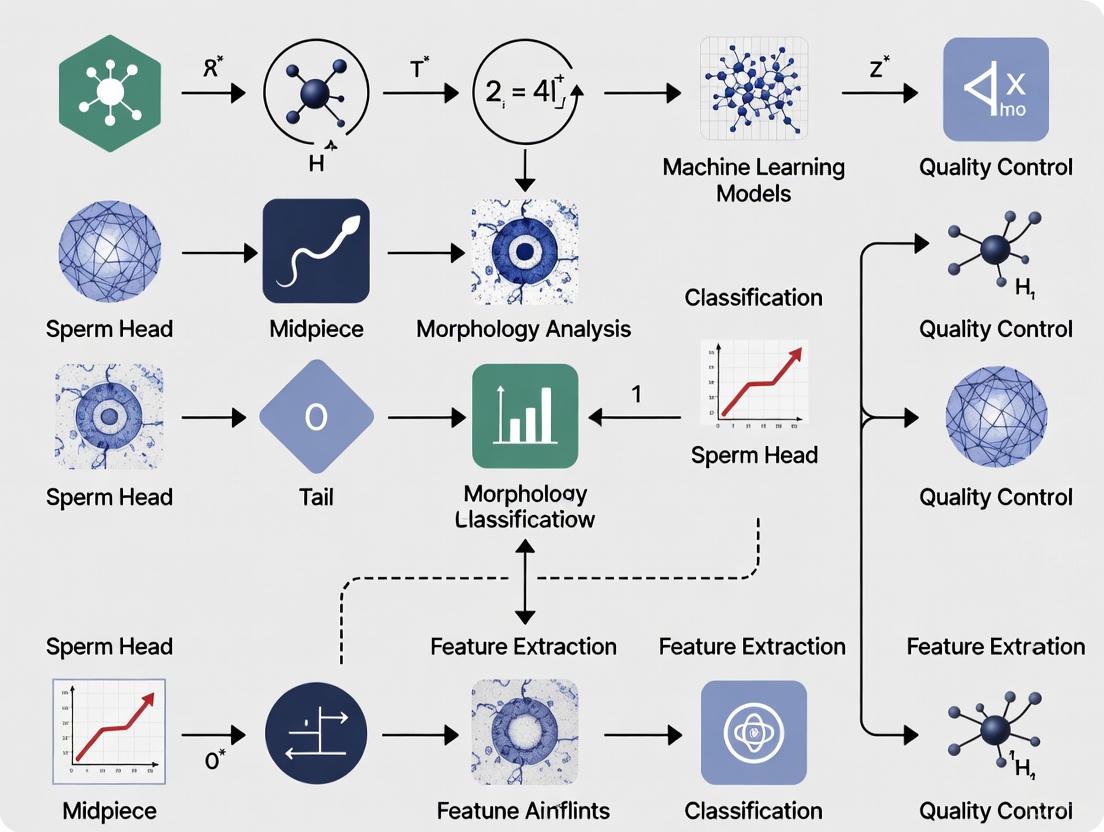
This article provides a comprehensive overview of the evolution, current state, and future directions of sperm morphology classification algorithms for a specialized audience of researchers, scientists, and drug development professionals.
Advanced Sperm Morphology Classification Algorithms: From Traditional ML to Deep Learning and Clinical Translation
Abstract
This article provides a comprehensive overview of the evolution, current state, and future directions of sperm morphology classification algorithms for a specialized audience of researchers, scientists, and drug development professionals. It systematically explores the foundational challenges driving automation, including the high subjectivity and inter-observer variability of manual analysis. The review delves into the methodological shift from conventional machine learning, reliant on handcrafted features, to advanced deep learning architectures like CNNs, ResNet, and VGG, enhanced by attention mechanisms and transfer learning. It further examines critical troubleshooting and optimization strategies addressing dataset limitations and model performance, and concludes with a rigorous validation and comparative analysis of algorithmic performance against expert benchmarks and clinical standards, highlighting pathways for integration into biomedical research and clinical diagnostics.
The Drive for Automation: Overcoming the Limitations of Manual Sperm Morphology Analysis
Sperm morphology assessment, the analysis of sperm size and shape, is a cornerstone of male fertility evaluation. The "gold standard" for this assessment, as defined by the World Health Organization (WHO), is a manual evaluation by trained technicians using strict criteria [1]. This method classifies sperm as normal or abnormal based on the appearance of the head, midpiece, and tail, with the current threshold for a normal sample set at ≥4% typical forms [1].
Despite its established role, this gold standard is compromised by inherent subjectivity and high variability [2] [3]. These limitations pose significant challenges for clinical diagnostics and the development of automated classification systems. For researchers creating algorithms, the manual classification used as a training benchmark is itself unreliable, which can limit the accuracy and generalizability of computational models [2] [4]. This article deconstructs the flaws in the manual assessment protocol and examines their impact on fertility research and treatment decisions.
Deconstructing the Gold Standard: Methodology and Workflow
The manual assessment of sperm morphology is a multi-step process, with precision required at each stage to ensure a valid result. Deviations in protocol introduce major sources of error.
Standardized Staining and Sample Preparation
Proper preparation is critical for accurate visualization. The recommended method is Papanicolaou staining, which provides the best overall visibility of all sperm regions [1]. Alternative methods like Diff-Quick or Shorr can be used but must be rigorously validated against the standard technique [1]. The staining process differentiates cellular components; for instance, in a modified Hematoxylin/Eosin procedure, the nucleus is stained with Hematoxylin and the acrosome with Eosin [2].
Manual Microscopic Assessment Workflow
The core analysis follows a structured workflow, visualized below.
Classification Criteria and Systems
The complexity of classification can vary, impacting both difficulty and consistency. Technicians may use systems of varying complexity [5]:
- 2-category: Normal vs. Abnormal.
- 5-category: Normal, Head defect, Midpiece defect, Tail defect, Cytoplasmic droplet.
- 8-category and 25-category: More granular systems specifying individual defects like pyriform heads or knobbed acrosomes [5].
Table 1: Key Reagents and Materials for Manual Morphology Assessment
| Research Reagent/Material | Primary Function in Protocol | Technical Notes |
|---|---|---|
| Papanicolaou Stain | Cytological staining to differentiate sperm structures (acrosome, nucleus, midpiece) [1] | WHO-recommended for optimal visualization. |
| Hematoxylin | Nuclear stain; colors the sperm head core [2]. | Used in modified H/E protocols; requires precise immersion times. |
| Eosin | Counterstain; colors the acrosome and cytoplasmic components [2]. | Used in modified H/E protocols; helps distinguish acrosomal boundaries. |
| Ethanol (70%) | Slide fixation prior to staining [2]. | Preserves cell structure on the slide. |
| Phase Contrast Microscope | Visualization of unstained sperm for initial assessment. | Not suitable for strict criteria; requires stained smears for detailed morphology. |
| Brightfield Microscope | High-magnification assessment of stained sperm smears [1]. | Must use 100x oil immersion objective for detailed evaluation. |
Quantifying Subjectivity and Variability
The theoretical protocol is sound, but in practice, its execution is plagued by subjectivity. Quantitative studies reveal the extent of this problem, showing that inconsistency is not an anomaly but a fundamental characteristic of manual assessment.
Inter- and Intra-Observer Variability
A primary source of error is the disagreement between different experts (inter-observer) and even by the same expert at different times (intra-observer). Studies report up to 40% disagreement between expert evaluators examining the same sperm sample [4]. This high degree of inter-expert variability is a major hurdle for standardizing diagnostics [2] [3].
The complexity of the classification system directly influences accuracy and agreement. A 2025 training study demonstrated that novice morphologists achieved significantly higher accuracy with simpler systems. When using a basic 2-category system (normal/abnormal), untrained users had an accuracy of 81.0%, which plummeted to 53.0% when using a complex 25-category system [5]. This finding underscores the inherent difficulty of consistent, fine-grained classification.
The Impact of Training on Variability
While training is essential, the lack of a universal, standardized training protocol is a critical flaw. Evidence shows that structured training can significantly improve performance. A study using a "Sperm Morphology Assessment Standardisation Training Tool" based on machine learning principles demonstrated remarkable improvements. Novice morphologists who underwent repeated training over four weeks saw their accuracy in the 25-category system jump from 82% to 90%, while the time taken to classify each image decreased from 7.0 to 4.9 seconds [5]. This confirms that variability can be reduced, but it also highlights that the standard of practice across laboratories is not uniform.
Table 2: Quantitative Evidence of Manual Assessment Limitations
| Study Focus | Key Metric | Performance/Outcome Data | Implication |
|---|---|---|---|
| Inter-Observer Agreement [4] | Disagreement between experts | Up to 40% | The gold standard is highly subjective and non-reproducible. |
| Classification System Complexity [5] | Untrained user accuracy | 2-category: 81.0%5-category: 68.0%25-category: 53.0% | More detailed classification systems are inherently less reliable. |
| Training Impact [5] | Accuracy improvement (25-category) | Pre-training: 82%Post-training: 90% | Standardized training reduces, but does not eliminate, variability. |
| Diagnostic Speed [5] | Time per image classification | Pre-training: 7.0 secondsPost-training: 4.9 seconds | Proficiency improves speed, but manual analysis remains time-consuming. |
Consequences for Clinical and Research Applications
The flaws in the gold standard have direct and serious consequences, affecting both patient care and the development of new technologies.
Compromised Clinical Utility and Guidelines
The high variability challenges the clinical value of sperm morphology as a standalone prognostic tool. The 2025 expert review from the French BLEFCO Group reflects this, stating there is "insufficient evidence to demonstrate the clinical value of indexes of multiple sperm defects" and does not recommend using the percentage of normal sperm as a prognostic criterion for selecting assisted reproductive techniques like IUI, IVF, or ICSI [6].
The clinical impact is nuanced. For polymorphic teratozoospermia (a mix of various abnormalities), the prognostic value for IUI or IVF outcomes is considered limited [1]. The primary clinical utility of morphology assessment may now lie in identifying specific monomorphic abnormalities (e.g., globozoospermia, macrocephalic sperm), which are rare but have clear diagnostic and genetic implications [6] [1].
The "Ground-Truth" Problem for Algorithm Development
For researchers developing computer-assisted sperm analysis (CASA) and deep learning models, the lack of a reliable gold standard is a major bottleneck. Machine learning algorithms require high-quality, accurately labeled datasets for training—a requirement known as "ground-truth" [5]. As one study notes, "it is impossible to count with a ground-truth because of the subjectivity of the task" [2].
To circumvent this, researchers create "gold-standards" or "pseudo ground-truths" by using consensus labels from multiple experts [2] [5]. For instance, the SCIAN-MorphoSpermGS dataset was built from the classifications of three domain experts on 1,854 sperm head images [2]. However, any model trained on this consensus will inherit the biases and inconsistencies of the human experts who labeled the data, fundamentally limiting the model's potential accuracy and objectivity [3]. This creates a significant barrier to developing robust and generalizable AI solutions.
Emerging Solutions and Standardized Protocols
Addressing these flaws is an active area of research, with two parallel paths emerging: the refinement of human training and the adoption of automated technologies.
Standardized Training Tools
The development of structured training tools shows promise for reducing human error. These tools, based on supervised machine learning principles, provide trainees with immediate feedback by comparing their classifications against a dataset validated by expert consensus [5]. This creates a traceable and consistent training standard, allowing morphologists to achieve higher levels of accuracy and lower variability independently [5].
Computer-Assisted and Deep Learning Systems
Automated systems represent the most promising path toward objective assessment. Computer-assisted sperm morphology (CASM) systems and deep learning models are designed to eliminate human subjectivity.
Recent deep learning frameworks have demonstrated performance surpassing conventional methods. One 2025 model combining a ResNet50 architecture with advanced feature engineering achieved test accuracies of 96.77% on a human sperm dataset, a significant improvement over baseline models [4]. These systems can reduce analysis time from 30-45 minutes to under one minute per sample, offering both objectivity and massive gains in efficiency [4].
Expert groups are beginning to endorse this shift. The French BLEFCO Group gives a "positive opinion on the use of automated systems based on cytological analysis after staining", provided that laboratories properly qualify the operators and validate the system's analytical performance internally [6]. The following diagram illustrates the contrasting workflows of manual and AI-assisted analysis, highlighting sources of human error versus computational consistency.
The manual assessment of sperm morphology, the current gold standard, is fundamentally compromised by subjectivity and high variability, which stem from its reliance on human visual perception and the lack of universal standardized training. These flaws undermine its clinical prognostic value and create a significant "ground-truth" problem that hinders the development of robust algorithmic solutions. The path forward lies in the adoption of two complementary strategies: the implementation of standardized, technology-based training tools to enhance human consistency, and the broader validation and integration of deep learning-based automated systems. These approaches are critical for transitioning from a subjective and variable gold standard to a new era of objective, reproducible, and clinically reliable sperm morphology analysis.
The morphological evaluation of sperm is a cornerstone of male fertility assessment, providing critical prognostic information about the functional potential of spermatozoa. Despite its clinical importance, sperm morphology analysis has historically been one of the most challenging and subjective parameters to standardize in routine semen analysis [7]. This challenge has led to the development of various classification systems, each with distinct philosophical approaches to defining "normal" sperm morphology and categorizing abnormalities. The three predominant systems used globally are the World Health Organization (WHO) guidelines, the Kruger (or Tygerberg) strict criteria, and David's modified classification. These systems form the foundational framework upon which clinical diagnoses, research methodologies, and increasingly, artificial intelligence algorithms are built. The evolution of these classifications reflects an ongoing effort to enhance the objectivity, reproducibility, and clinical predictive value of sperm morphology assessment in the diagnosis and treatment of male factor infertility.
Classification System Specifications and Comparison
World Health Organization (WHO) Criteria
The WHO system, as detailed in its laboratory manuals, provides a comprehensive framework for semen analysis. It traditionally employs a more inclusive definition of normality. The primary focus is on identifying defects in the sperm head, midpiece, and tail, and reporting the percentage of normal forms. While specific quantitative thresholds for normality have evolved across editions, the system is characterized by its detailed categorization of anomalies and its use in establishing basic semen parameter reference ranges for fertile populations [7] [8].
Kruger (Tygerberg Strict) Criteria
The Kruger, or strict, criteria represent a more stringent approach to morphological assessment. This system defines normality within very narrow limits, classifying a spermatozoon as normal only if it displays an oval head with a well-defined acrosome covering 40-70% of the head area, no neck/midpiece or tail defects, and no cytoplasmic droplets [8]. The clinical utility of this system lies in its strong correlation with fertilization success in Assisted Reproductive Technologies (ART), particularly In Vitro Fertilization (IVF). Studies have shown that pregnancy rates from Intrauterine Insemination (IUI) were significantly higher for couples where the male partner had strict morphology values >4% compared to those with ≤4% (15.0% vs. 2.7% in one study) [8]. However, a phenomenon known as "classification drift" has been observed over time, where the same strict criteria have been applied more stringently, increasing the diagnosis of teratozoospermia and potentially reducing the predictive value of the test [8].
David’s Modified Classification
David's modified classification offers a highly granular system, detailing a wide spectrum of specific morphological defects. It catalogues anomalies into distinct classes, providing a detailed morphological profile of an ejaculate. According to the SMD/MSS dataset development, this system includes 12 classes of morphological defects [7]:
- 7 head defects: tapered, thin, microcephalous, macrocephalous, multiple, abnormal post-acrosomal region, and abnormal acrosome.
- 2 midpiece defects: cytoplasmic droplet and bent midpiece.
- 3 tail defects: coiled, short, and multiple tails. This system is used by a large number of laboratories worldwide and is particularly valuable for in-depth research into the etiology of sperm defects and their specific impact on function [7].
Table 1: Comparative Analysis of Key Sperm Morphology Classification Systems
| Feature | WHO Criteria | Kruger (Strict) Criteria | David's Modified Criteria |
|---|---|---|---|
| Philosophical Approach | Inclusive, pragmatic | Stringent, prognostic for ART | Descriptive, granular |
| Definition of Normal | Broader, based on population references | Very narrow, perfect oval shape, etc. | Not a single "normal"; focus on defect typing |
| Primary Clinical Use | General diagnosis & reference ranges | Predicting success in IVF | Detailed morphological profiling & research |
| Key Quantitative Thresholds | Varies by WHO edition; lower threshold for normality | <4% normal forms indicates poor prognosis for IVF | N/A - focuses on defect categories |
| Classes of Defects | Broadly categorized (Head, Midpiece, Tail) | Implicit in strict "normal" definition | 12 specific defect classes [7] |
Experimental Protocols for Morphology Assessment
Standardized Smear Preparation and Staining
The foundational step for reliable morphology assessment is a standardized preparation of semen smears. Protocols derived from WHO guidelines are typically followed. As detailed in the development of the SMD/MSS dataset, semen smears are prepared, air-dried for a minimum of two hours, and then fixed with 2% (v/v) glutaraldehyde in phosphate-buffered saline (PBS) for 3 minutes. After fixation, smears are washed thoroughly in distilled water and stained with an appropriate stain, such as RAL Diagnostics kit or a fluorescent stain like Hoechst 33342 for computer-assisted analysis [9] [7].
Microscopy and Image Acquisition for CASA and AI
For traditional manual assessment, oil immersion under 100x magnification is used. For computer-assisted sperm morphometry analysis (CASA-Morph) and AI model training, high-resolution digital images are acquired. The MMC CASA system with a 100x oil immersion objective in bright field mode is one platform used for this purpose [7]. Alternatively, fluorescence-based CASA-Morph systems using dyes like Hoechst 33342 can be employed with an epifluorescence microscope (e.g., Leica DM4500B) equipped with a high-quality digital camera (e.g., Canon Eos 400D) to capture images of sperm nuclei for precise morphometric analysis [9]. For AI training datasets, it is critical to capture images of individual spermatozoa, which can be achieved by cropping field-of-view images using machine learning algorithms [10].
Expert Classification and Ground Truth Establishment
A critical protocol for research and database creation involves establishing a robust "ground truth" through expert consensus. In the SMD/MSS dataset, each spermatozoon was manually classified by three independent experts according to David's modified classification [7]. Similarly, for the ram sperm training tool, images were labelled by multiple experienced assessors, and only those with 100% consensus were integrated into the final "ground truth" dataset used for training and validation [10] [5]. This multi-expert consensus strategy is essential to mitigate the inherent subjectivity of the assessment and to create a reliable standard for both human training and AI algorithm development.
Statistical and Computational Analysis
CASA-Morph Analysis: Fluorescence-based CASA-Morph systems analyze at least 200 sperm cells per sample. Primary morphometric parameters measured include Area (A, μm²), Perimeter (P, μm), Length (L, μm), and Width (W, μm). Derived shape parameters are calculated, such as Ellipticity (L/W), Rugosity (4πA/P²), Elongation ([L - W]/[L + W]), and Regularity (πLW/4A) [9]. To identify sperm morphometric subpopulations, multivariate statistical analyses like two-step cluster procedures (involving Principal Component Analysis followed by cluster analysis) or discriminant analyses are employed [9].
AI Model Training: For deep learning approaches, a dataset (e.g., 1000 images extended to 6035 via data augmentation) is partitioned into training (80%) and testing (20%) sets. The images undergo pre-processing, including normalization and resizing (e.g., to 80x80x1 grayscale). A Convolutional Neural Network (CNN) architecture is then trained and evaluated using platforms like Python 3.8 to classify sperm into morphological categories based on the established ground truth [7].
Workflow Visualization of Morphology Classification Research
The following diagram illustrates the integrated experimental workflow for sperm morphology classification research, encompassing both traditional analysis and modern artificial intelligence approaches.
The Scientist's Toolkit: Research Reagent Solutions
Table 2: Essential Materials and Reagents for Sperm Morphology Research
| Item Name | Function/Application | Specific Example/Note |
|---|---|---|
| Glutaraldehyde (2% in PBS) | Fixation of semen smears; preserves sperm structure for accurate morphometric analysis. | Used in fluorescence-based CASA-Morph protocols [9]. |
| Hoechst 33342 | Fluorescent nuclear stain; used for precise computer-assisted sperm morphometry analysis (CASA-Morph) of the sperm head. | Allows for automatic measurement of nuclear parameters like Area and Perimeter [9]. |
| RAL Diagnostics Staining Kit | A Romanowsky-type stain for manual sperm morphology assessment; provides contrast to differentiate sperm components. | Used for staining smears in studies applying David's classification [7]. |
| Computer-Assisted Semen Analysis (CASA) System | Automated platform for acquiring and analyzing sperm images; increases objectivity of morphometry. | Systems like MMC CASA used for image acquisition for AI models [7]. |
| ImageJ with Custom Plug-in | Open-source image analysis software; used for automated measurement of primary and derived sperm morphometric parameters. | Plug-in modules can be created for specific CASA-Morph analyses [9]. |
| Convolutional Neural Network (CNN) | A class of deep learning algorithm designed for image recognition and classification tasks. | Used to develop predictive models for automated sperm morphology classification [7]. |
The automated analysis of sperm morphology is a critical component in the objective diagnosis of male infertility. While conventional semen analysis provides foundational data, the detailed classification of sperm shapes offers profound insights into male reproductive health and potential etiologies of infertility [3]. The development of robust classification algorithms, however, confronts two persistent and technically complex challenges: the reliable distinction of intact sperm from cellular debris and other artifacts in semen samples, and the precise capture of subtle morphological defects across the sperm's head, midpiece, and tail [11] [12]. These hurdles are compounded by the inherent limitations of manual assessment, including substantial inter-observer variability and the subjective interpretation of complex morphological criteria [5]. This technical guide examines the fundamental obstacles facing sperm morphology classification algorithms and explores advanced computational strategies that are being developed to overcome them, thereby paving the way for more reliable, automated diagnostic systems in clinical andrology.
Core Technical Challenges in Sperm Morphology Analysis
Distinguishing Sperm from Non-Sperm Elements
The accurate segmentation of individual spermatozoa from complex semen backgrounds represents the primary technical bottleneck in automated analysis pipelines. This challenge stems from several intrinsic and methodological factors:
- Low Resolution and Insufficient Semantic Information: Sperm are notably small cells, and their images often suffer from low resolution, which causes detection failures in deep learning models. The low-level features extracted for detecting these small targets typically lack rich semantic information, making it difficult for networks to learn discriminative features that reliably separate sperm from visually similar debris [12].
- Morphological Simplicity and Overfitting: The relatively simple and consistent morphology of sperm, compared to more complex cell types, paradoxically increases the risk of model overfitting. Without sufficient variation in training data, algorithms may fail to generalize, latching onto incidental visual patterns rather than biologically meaningful features [12].
- Image Acquisition Artifacts: Practical issues during sample preparation and imaging introduce significant noise. Sperm may appear intertwined or have only partial structures visible at image edges, while inconsistent staining, insufficient lighting in optical microscopes, and poorly prepared semen smears further degrade image quality and analytical accuracy [7] [3].
Capturing Subtle Morphological Defects
Beyond initial detection, the precise classification of specific morphological abnormalities presents a second layer of complexity characterized by:
- High Structural Complexity and Variability: The World Health Organization recognizes 26 distinct types of abnormal morphology across the head, neck, and tail regions [3]. This classification complexity is compounded by high inter-class similarity (where different defects appear visually similar) and significant intra-class variability (where the same defect manifests differently across samples) [13].
- Subjectivity in Ground Truth Annotation: Establishing reliable "ground truth" for model training is complicated by substantial disagreement even among expert morphologists. Studies reveal that experts may agree on only 73% of normal/abnormal classifications for the same sperm images, creating a fuzzy target for supervised learning algorithms [5].
- Data Scarcity and Imbalance: Large-scale, high-quality annotated datasets remain scarce. Existing public datasets often suffer from limited sample sizes, insufficient representation of rare defect categories, and inconsistent annotation standards, severely limiting model generalizability across different clinical settings and populations [11] [3].
Table 1: Publicly Available Sperm Morphology Datasets and Their Key Characteristics
| Dataset Name | Image Count | Annotation Type | Key Characteristics | Noted Limitations |
|---|---|---|---|---|
| SMD/MSS [7] | 1,000 (extended to 6,035 with augmentation) | Classification (12 classes via David classification) | Sperm from 37 patients; Single sperm per image | Limited original sample size |
| MHSMA [3] | 1,540 | Classification | Focus on sperm head features (acrosome, shape, vacuoles) | Non-stained, noisy, low-resolution images |
| SVIA [3] | 125,000 instances | Detection, Segmentation, Classification | Includes videos and images; Multiple annotation types | Low-resolution, unstained samples |
| VISEM-Tracking [3] | 656,334 annotated objects | Detection, Tracking, Regression | Multi-modal with videos and participant data | Low-resolution, unstained grayscale sperm |
| Hi-LabSpermMorpho [13] | 18 categories across 3 staining protocols | Classification | Expert-labeled; 18 morphological classes | Class imbalance between abnormality types |
Advanced Algorithmic Approaches to Technical Hurdles
Enhanced Detection Architectures
Contemporary research has developed specialized neural network architectures to address the fundamental challenge of sperm detection amidst debris:
- Multi-Scale Feature Pyramid Networks (FPN): Advanced FPN architectures have been engineered to enhance semantic information flow across network layers. By incorporating contextual relationships through multi-scale feature fusion and attention mechanisms, these networks significantly improve detection accuracy for small sperm targets, achieving up to 98.37% Average Precision (AP) on benchmark datasets—surpassing mainstream detectors like YOLOv4, YOLOv7, and YOLOv8 [12].
- Keypoint Dropout Regularization: To counter overfitting caused by sperm's simple morphology, a novel Keypoint Dropout mechanism employs an adaptive threshold to selectively discard less informative features during training. This approach forces the network to learn more robust, generalized representations rather than relying on potentially misleading simple patterns [12].
- Copy-Paste Data Augmentation: This technique artificially increases the representation of small sperm targets in training datasets by strategically oversampling and pasting sperm instances across varied background contexts. This enhances model robustness to the heterogeneous conditions encountered in real clinical samples [12].
Sophisticated Classification Frameworks
For the nuanced task of defect classification, hierarchical and ensemble approaches have demonstrated remarkable efficacy:
- Two-Stage Divide-and-Ensemble Framework: This sophisticated pipeline decomposes the complex classification task into manageable subtasks. In the first stage, a "splitter" model categorizes sperm into major groups (e.g., head/neck abnormalities versus tail abnormalities/normal). In the second stage, specialized ensemble models—incorporating multiple architectures like DeepMind's NFNet and Vision Transformers (ViT)—perform fine-grained classification within each category. This approach has achieved 69-71% accuracy across diverse staining protocols, representing a statistically significant 4.38% improvement over conventional single-model baselines [13].
- Structured Multi-Stage Voting: Moving beyond simple majority voting, this ensemble strategy allows constituent models to cast both primary and secondary votes. This nuanced decision fusion mechanism mitigates the influence of dominant classes and ensures more balanced performance across different sperm abnormality types, particularly valuable for addressing class imbalance [13].
- Contrastive Meta-Learning with Auxiliary Tasks: Emerging approaches leverage meta-learning frameworks that enable models to rapidly adapt to new data distributions with minimal examples. Combined with contrastive learning that maximizes separation between defect classes in feature space, these methods show promise for generalized classification across varied clinical settings and staining protocols [14].
Experimental Protocols for Model Validation
Rigorous experimental validation is essential for assessing algorithm performance under conditions mimicking real-world clinical challenges:
- Dataset Partitioning and Augmentation: Standard practice involves partitioning datasets with approximately 80% for training and 20% for testing. To address data scarcity, comprehensive augmentation techniques are applied, including rotation, scaling, color space adjustments, and copy-paste oversampling of rare abnormality classes [7] [12].
- Inter-Expert Agreement Analysis: Establishing reliable ground truth requires quantifying agreement between multiple expert morphologists. Statistical measures like Fleiss' Kappa or intraclass correlation coefficients are used to identify images with total expert agreement (3/3 experts), partial agreement (2/3), or no agreement. Only images achieving consensus are typically included in high-quality training sets [7] [5].
- Cross-Staining Protocol Validation: To ensure model robustness across different clinical preparation methods, algorithms should be validated across multiple staining techniques (e.g., Diff-Quick variants like BesLab, Histoplus, and GBL). Performance consistency across these protocols indicates better generalizability to diverse laboratory settings [13].
Table 2: Performance Comparison of Sperm Analysis Algorithms Across Technical Challenges
| Algorithm/Approach | Primary Technical Focus | Reported Performance | Key Advantages | Limitations |
|---|---|---|---|---|
| Multi-Scale FPN with Keypoint Dropout [12] | Small sperm detection; Overfitting reduction | 98.37% AP on EVISAN dataset | Superior small object detection; Adaptive regularization | Computational complexity; Training instability |
| Two-Stage Divide-and-Ensemble [13] | Fine-grained defect classification | 71.34% accuracy (4.38% improvement) | Reduces misclassification; Handles class imbalance | Complex training pipeline; High resource requirements |
| Convolutional Neural Network (CNN) [7] | Basic morphology classification | 55% to 92% accuracy range | Automated feature extraction; Standard architecture | Performance varies with image quality |
| Support Vector Machine (SVM) [3] | Head defect classification | 88.59% AUC-ROC; >90% precision | Strong with handcrafted features; Computationally efficient | Limited to pre-defined features; Poor generalization |
| Bayesian Density Estimation [3] | Head morphology classification | 90% accuracy on head types | Probabilistic classification; Handles uncertainty | Limited to head defects only |
Essential Research Reagents and Materials
The experimental workflows discussed require specific laboratory reagents and computational resources to implement effectively:
Table 3: Essential Research Reagents and Materials for Sperm Morphology Analysis
| Reagent/Material | Specification/Example | Primary Function in Research |
|---|---|---|
| Staining Kits | RAL Diagnostics; Diff-Quick variants (BesLab, Histoplus, GBL) [7] [13] | Enhances morphological features for microscopic analysis and algorithm training |
| Microscopy Systems | MMC CASA system; Phase-contrast microscopes [7] [5] | Image acquisition with appropriate magnification and resolution for analysis |
| Annotation Software | Custom Excel templates; specialized image labeling tools [7] | Facilitates ground truth labeling by multiple experts for dataset creation |
| Deep Learning Frameworks | Python 3.8 with TensorFlow/PyTorch [7] [13] | Implementation of CNN, ViT, and ensemble models for classification |
| Public Datasets | SMD/MSS, SVIA, VISEM-Tracking, Hi-LabSpermMorpho [7] [13] [3] | Benchmarking and training data for algorithm development and validation |
The journey toward fully automated, reliable sperm morphology analysis continues to grapple with fundamental technical hurdles in distinguishing sperm from debris and capturing subtle morphological defects. While traditional machine learning approaches remain limited by their dependence on handcrafted features and inability to generalize across diverse clinical samples, emerging deep learning strategies offer promising pathways forward. Through specialized architectures like multi-scale feature pyramids, hierarchical classification frameworks, and sophisticated ensemble methods, researchers are steadily overcoming these challenges. The continued development of standardized, high-quality datasets and rigorous validation protocols will be essential to translate these technological advances into clinically impactful tools that enhance diagnostic accuracy, reduce inter-observer variability, and ultimately improve patient care in the field of male reproductive medicine.
Infertility is a significant global health issue, affecting approximately 15% of couples, with male factors being a contributor in about 50% of cases [7] [15] [3]. Among the standard semen parameters assessed during male fertility investigation—concentration, motility, and morphology—sperm morphology requires special attention as it is considered of greatest clinical interest and most correlated with fertility potential [7]. Sperm morphology refers to the size, shape, and structural characteristics of sperm cells, including head shape, acrosome integrity, neck structure, and tail configuration [16]. According to World Health Organization (WHO) guidelines, normal sperm morphology is characterized by an oval head (length: 4.0–5.5 μm, width: 2.5–3.5 μm), an intact acrosome covering 40–70% of the head, and a single, uniform tail [16].
Despite its clinical importance, sperm morphology assessment represents one of the most challenging aspects of semen analysis due to its subjective nature, often reliant on the operator's expertise [7]. Manual sperm morphology assessment suffers from key limitations, including high inter-observer variability (with reported kappa values as low as 0.05–0.15), lengthy evaluation times (30–45 minutes per sample), inconsistent standards across laboratories, and the need for expert training [16]. This variability has led to ongoing debates about the prognostic value of sperm morphology in both natural and assisted reproduction, making the standardization of assessment methodologies a core clinical imperative [15].
Evolution of Morphological Assessment Criteria and Clinical Correlation
Historical Changes in Classification Standards
Sperm morphology criteria have evolved significantly since the introduction of the first WHO manual in 1980, with progressively stricter definitions of "normal" morphology [15] [17]. The reference value for normal sperm morphology has sharply decreased from ≥80.5% in the 1st edition to ≥4% in the most recent 5th and 6th editions [17]. This evolution reflects an increasing recognition that humans produce a high proportion of defective sperm compared to other animal species, and that stricter criteria may better correlate with fertility outcomes.
Table 1: Evolution of WHO Sperm Morphology Reference Values
| WHO Edition | Publication Year | Reference Value for Normal Forms | Classification Approach |
|---|---|---|---|
| 1st Edition | 1980 | ≥80.5% | Obvious, well-defined abnormalities |
| 2nd Edition | 1987 | ≥80.5% | Obvious, well-defined abnormalities |
| 3rd Edition | 1992 | ≥30% | Introduction of Kruger strict criteria |
| 4th Edition | 1999 | <15% may affect IVF | Strict criteria |
| 5th Edition | 2010 | ≥4% | Strict criteria, detailed defect classification |
| 6th Edition | 2021 | ≥4% | Increased emphasis on specific defect characterization |
The 6th edition handbook contains several notable recommendations that enhance clinical correlation. First, assessments of sperm morphology should be performed by trained personnel familiar with all criteria used to designate spermatozoa as abnormal. Second, frequent internal and external quality assessments should be utilized to minimize variability in results. Importantly, a major change in the 6th edition is an increased emphasis on characterizing specific defects in each region of the sperm—head, neck/midpiece, tail, and cytoplasm—rather than grouping all defects into a single "abnormal" category [15].
Clinical Evidence for Morphology-Fertility Correlation
The relationship between sperm morphology and fertility outcomes presents a complex picture with conflicting evidence across studies. Initial studies, particularly those using the Kruger (Tygerberg) strict criteria, found significantly diminished oocyte fertilization rates when sperm morphology dropped below 14% [15]. However, more recent investigations have questioned the independent predictive value of morphology.
A retrospective study of intrauterine insemination (IUI) outcomes across two eras revealed a dramatic shift in predictive value. In the earlier era (1996-97), pregnancy rates per cycle were 2.7% versus 15.0% for couples with strict morphology ≤4% or >4%, respectively. In the later era (2005-06), this relationship was no longer present, with pregnancy rates of 13.3% versus 14.7% for the same morphology thresholds [8]. The authors concluded that "classification drift increased the percentage of men diagnosed with teratozoospermia and resulted in a loss of predictive value."
The LIFE study of 501 couples attempting natural conception found that percent abnormal morphology by both strict and traditional criteria was associated with a small but statistically significant increase in time to pregnancy [15]. However, after controlling for other semen parameters such as sperm count or concentration, this association was not retained, suggesting that sperm morphology is not an independent predictor of fecundity. Similarly, a retrospective analysis of patients with 0% normal forms found that 29% were able to conceive without assisted reproductive technologies compared with 56% of controls [15]. All men with 0% normal forms who conceived naturally went on to have another child also via natural conception, leading the authors to conclude that morphology alone should not be used to predict fertilization, pregnancy, or live birth potential.
Table 2: Clinical Correlation of Sperm Morphology with Fertility Outcomes
| Fertility Context | Correlation Strength | Key Evidence | Limitations |
|---|---|---|---|
| Natural Conception | Weak to Moderate | LIFE study: small increase in time to pregnancy [15] | Not independent of other parameters |
| Intrauterine Insemination | Inconsistent | Strong correlation in earlier studies lost in recent eras [8] | Classification drift over time |
| In Vitro Fertilization | Moderate | Initial Kruger studies showed <14% morphology affected rates [15] | Laboratory-specific variability |
| Intracytoplasmic Sperm Injection | Weak | Patients with 0% normal forms can achieve success [15] | Morphology bypassed by direct injection |
Technical Methodologies in Morphology Assessment
Conventional Manual Assessment and Limitations
Traditional manual sperm morphology assessment follows specific methodology outlined in the WHO manual for semen analysis [7]. The process involves examining stained semen smears under brightfield microscopy with an oil immersion 100x objective. According to guidelines, at least 200 spermatozoa should be evaluated and classified based on strict criteria into categories of normal or specific abnormal forms affecting the head, midpiece, or tail [3].
The fundamental limitations of manual assessment include substantial inter-observer variability, with studies reporting up to 40% disagreement between expert evaluators [16]. This variability stems from several factors: the subjective interpretation of borderline forms, differences in staining techniques, variable microscope optics, and the inherent challenge of consistently applying complex classification criteria. One study analyzing inter-expert agreement found three distinct scenarios among three experts: no agreement (NA) among experts, partial agreement (PA) where 2/3 experts agreed on the same label, and total agreement (TA) where 3/3 experts agreed on the same label for all categories [7]. Statistical analysis using Fisher's exact test revealed significant differences between experts in each morphology class (p < 0.05), highlighting the inherent subjectivity.
Computer-Assisted Semen Analysis (CASA) Systems
Computer-Assisted Semen Analysis (CASA) systems were developed to address the limitations of manual assessment. These systems allow sequential acquisition of images using a microscope equipped with a camera [7]. However, routine use of CASA for automated sperm morphology analysis remains limited for several reasons: limited ability to accurately distinguish between spermatozoa and cellular debris, difficulty classifying midpiece and tail abnormalities, and unsatisfactory results due to limited quality of captured microscopic images [7].
Deep Learning and Artificial Intelligence Approaches
Recent advances in artificial intelligence have led to the development of sophisticated deep learning models for sperm morphology classification. Convolutional Neural Networks (CNNs) have shown remarkable promise for image-based classification tasks in reproductive medicine [7] [16]. These approaches typically involve multiple stages: image acquisition, pre-processing, data augmentation, model training, and evaluation.
One study developed a predictive model for sperm morphological evaluation utilizing artificial neural networks trained on the Sperm Morphology Dataset/Medical School of Sfax (SMD/MSS) dataset enhanced through data augmentation techniques [7]. The methodology included:
- Sample Preparation: Smears prepared from semen samples obtained from 37 patients with sperm concentration of at least 5 million/mL and varying morphological profiles.
- Data Acquisition: MMC CASA system used for acquiring images from sperm smears with bright field mode using an oil immersion 100x objective.
- Expert Classification: Three experts with extensive experience in semen analysis classified each spermatozoon following modified David classification, which includes 12 classes of morphological defects (7 head defects, 2 midpiece defects, and 3 tail defects).
- Data Augmentation: The initial dataset of 1000 images was extended to 6035 images after applying data augmentation techniques to balance morphological classes.
- Algorithm Development: A CNN-based algorithm was implemented in Python 3.8 with five stages: image pre-processing, database partitioning, data augmentation, program training, and evaluation.
The deep learning model produced satisfactory results, with accuracy ranging from 55% to 92% across different morphological classes [7].
More advanced approaches have integrated attention mechanisms and feature engineering. One study presented a novel deep learning framework combining Convolutional Block Attention Module (CBAM) with ResNet50 architecture and advanced deep feature engineering techniques [16]. The proposed hybrid architecture integrated ResNet50 backbone with CBAM attention mechanisms, enhanced by a comprehensive deep feature engineering pipeline incorporating multiple feature extraction layers combined with 10 distinct feature selection methods including Principal Component Analysis, Chi-square test, Random Forest importance, and variance thresholding.
This framework achieved exceptional performance with test accuracies of 96.08% ± 1.2% on the SMIDS dataset (3000 images, 3-class) and 96.77% ± 0.8% on the HuSHeM dataset (216 images, 4-class) using deep feature engineering, representing significant improvements of 8.08% and 10.41% respectively over baseline CNN performance [16]. McNemar's test confirmed statistical significance (p < 0.05). The best configuration (GAP + PCA + SVM RBF) demonstrated superior performance compared to existing state-of-the-art approaches.
Table 3: Performance Comparison of Sperm Morphology Assessment Methods
| Assessment Method | Accuracy Range | Advantages | Limitations |
|---|---|---|---|
| Manual Assessment | 55-92% [7] | Low equipment cost, direct observation | High inter-observer variability, time-consuming |
| Conventional CASA | 70-85% [3] | Semi-automated, reduced subjectivity | Limited defect classification, image quality issues |
| Basic CNN Models | 88% [16] | Automated, reduced variability | Requires large datasets, computational resources |
| Advanced AI with Feature Engineering | 96-97% [16] | High accuracy, objective, rapid processing | Complex implementation, specialized expertise needed |
Experimental Protocols for Advanced Morphology Analysis
Protocol 1: Deep Learning-Based Morphology Classification
Objective: To develop and validate a deep learning model for automated sperm morphology classification using convolutional neural networks.
Materials and Reagents:
- Semen samples with varying morphological profiles
- RAL Diagnostics staining kit
- MMC CASA system for image acquisition
- Python 3.8 with deep learning libraries (TensorFlow, Keras, PyTorch)
- High-performance computing workstation with GPU acceleration
Methodology:
- Sample Preparation and Staining: Prepare semen smears following WHO guidelines [7]. Fix and stain using RAL Diagnostics staining kit according to manufacturer's instructions.
- Image Acquisition: Capture images of individual spermatozoa using MMC CASA system with bright field mode, oil immersion 100x objective. Ensure each image contains a single spermatozoon with head, midpiece, and tail visible.
- Expert Annotation and Ground Truth Establishment: Have three independent experts classify each spermatozoon according to modified David classification [7]. Establish ground truth through expert consensus for images with disagreement.
- Data Pre-processing: Resize images to 80×80×1 grayscale format with linear interpolation strategy. Apply normalization to bring pixel values to common scale [7].
- Data Augmentation: Apply transformation techniques including rotation, flipping, scaling, and brightness adjustment to extend dataset from 1000 to 6035 images and balance morphological classes [7].
- Dataset Partitioning: Split dataset into training (80%) and testing (20%) subsets randomly. Further extract 20% from training set for validation during model development [7].
- Model Architecture and Training: Implement CNN architecture with multiple convolutional and pooling layers followed by fully connected layers. Train model using augmented dataset with appropriate loss function and optimization algorithm.
- Model Evaluation: Assess model performance on test set using accuracy, precision, recall, F1-score, and confusion matrix analysis.
Protocol 2: Advanced Feature Engineering with CBAM-Enhanced ResNet50
Objective: To implement a sophisticated deep feature engineering pipeline with attention mechanisms for high-accuracy sperm morphology classification.
Materials and Reagents:
- Publicly available sperm image datasets (SMIDS with 3000 images, HuSHeM with 216 images)
- Python with scikit-learn, OpenCV, and deep learning frameworks
- Workstation with significant GPU memory and processing capabilities
Methodology:
- Data Preparation: Obtain and pre-process images from benchmark datasets. Apply standardization to normalize image dimensions and color channels.
- Backbone Feature Extraction: Implement ResNet50 architecture integrated with Convolutional Block Attention Module (CBAM) [16]. CBAM sequentially applies channel-wise and spatial attention to intermediate feature maps, enabling the network to focus on the most relevant sperm features.
- Deep Feature Extraction: Extract features from multiple layers including CBAM, Global Average Pooling (GAP), Global Max Pooling (GMP), and pre-final layers [16].
- Feature Selection: Apply 10 distinct feature selection methods including Principal Component Analysis (PCA), Chi-square test, Random Forest importance, variance thresholding, and their intersections to identify most discriminative features.
- Classifier Training: Train Support Vector Machines with RBF/Linear kernels and k-Nearest Neighbors algorithms on selected feature sets [16].
- Model Validation: Evaluate using 5-fold cross-validation to ensure robustness. Calculate performance metrics including accuracy, sensitivity, specificity, and area under ROC curve.
- Visualization and Interpretation: Apply Grad-CAM attention visualization to generate clinically interpretable results highlighting morphological features contributing to classification decisions [16].
Research Reagent Solutions and Essential Materials
Table 4: Essential Research Reagents and Materials for Sperm Morphology Studies
| Reagent/Material | Specification/Function | Application Context |
|---|---|---|
| RAL Diagnostics Staining Kit | Standardized staining for sperm morphology | Differentiates sperm components for microscopic evaluation [7] |
| MMC CASA System | Microscope with camera for image acquisition | Standardized digital image capture for analysis [7] |
| Python 3.8 with DL Libraries | TensorFlow, Keras, PyTorch for algorithm development | Implementation of CNN and deep learning models [7] [16] |
| SMIDS & HuSHeM Datasets | Publicly available benchmark datasets with 3000+ images | Model training and validation [16] |
| ResNet50 Architecture | Pre-trained CNN model for feature extraction | Backbone network for transfer learning [16] |
| Convolutional Block Attention Module | Attention mechanism for feature emphasis | Enhances focus on morphologically relevant regions [16] |
| Feature Selection Algorithms | PCA, Chi-square, Random Forest importance | Dimensionality reduction and feature optimization [16] |
| GPU Workstation | High-performance computing with graphics processing unit | Accelerates model training and inference [16] |
Discussion and Future Directions
The correlation between sperm morphology and fertility outcomes remains a complex clinical imperative with evolving significance. While traditional assessment methods have shown variable predictive value, emerging artificial intelligence approaches offer promising avenues for standardization and enhanced correlation with clinical outcomes.
The declining predictive value of sperm morphology across different eras, as demonstrated in IUI studies [8], highlights the impact of classification drift and changing laboratory practices. This underscores the need for standardized, objective assessment methods that can provide consistent prognostic information across different clinical settings. Advanced deep learning models, particularly those incorporating attention mechanisms and sophisticated feature engineering, have demonstrated remarkable accuracy exceeding 96% in research settings [16]. These approaches not only offer objective assessment but also significantly reduce analysis time from 30-45 minutes for manual assessment to less than one minute per sample [16].
Future research directions should focus on several key areas: (1) developing large, diverse, and well-annotated datasets that encompass the full spectrum of morphological variations across different patient populations; (2) validating AI models in prospective clinical trials to establish clear correlation with fertility outcomes; (3) integrating morphology assessment with other semen parameters and clinical factors for comprehensive fertility prediction; and (4) exploring the genetic and molecular basis of morphological defects to establish stronger links between phenotype and fertility potential.
The clinical application of automated morphology assessment systems holds significant promise for standardizing fertility evaluation, reducing diagnostic variability, improving reproducibility across laboratories, and potentially enabling real-time analysis during assisted reproductive procedures [16]. As these technologies mature and undergo rigorous clinical validation, they may fundamentally transform the role of sperm morphology assessment in the clinical evaluation and management of male infertility.
Algorithmic Evolution: From Handcrafted Features to Deep Neural Networks
The assessment of sperm morphology is a cornerstone of male fertility evaluation, providing critical diagnostic and prognostic information. According to the World Health Organization (WHO) standards, sperm morphology is categorized into head, neck, and tail compartments, with 26 distinct types of abnormal morphologies identified. The clinical procedure requires the analysis and classification of over 200 individual sperm cells, a process that is inherently labor-intensive, time-consuming, and subject to significant observer subjectivity and variability [11]. This lack of reproducibility poses a substantial challenge for clinical diagnosis. Conventional machine learning (ML) techniques have emerged as a powerful solution to these limitations, offering a pathway to automated, objective, and high-throughput sperm analysis. By leveraging handcrafted feature extraction and robust classification algorithms, these methods substantially reduce inter-observer variability and analytical workload, thereby enhancing the reliability of sperm quality assessment [11] [18].
This technical guide delves into the core components of a conventional ML pipeline for sperm morphology classification. We will explore the operational principles and implementation of two archetypal algorithms: k-Means for image segmentation and Support Vector Machines (SVM) for morphological classification. The efficacy of these models hinges on the quality of the features engineered from sperm images. Consequently, this paper provides an in-depth examination of critical handcrafted feature descriptors, notably Hu Moments and Zernike Moments, which are used to quantify the shape and texture of sperm heads. The content is framed within a broader research overview of sperm morphology classification algorithms, with a specific focus on providing detailed methodologies and protocols for researchers, scientists, and drug development professionals working at the intersection of andrology and artificial intelligence.
The Machine Learning Pipeline: From Images to Classification
A standardized machine learning pipeline for sperm morphology analysis involves a sequence of critical steps, from image acquisition to final classification. The workflow is designed to transform raw pixel data into a meaningful diagnostic output.
The following diagram illustrates the end-to-end experimental workflow for conventional machine learning-based sperm morphology analysis.
The Researcher's Toolkit: Essential Materials and Datasets
Successful implementation of an ML pipeline for sperm morphology analysis requires specific reagents, datasets, and computational tools. The table below catalogues the key resources referenced in this guide.
Table 1: Research Reagent Solutions and Essential Materials for Sperm Morphology Analysis
| Item Name | Type | Function/Description |
|---|---|---|
| SCIAN-MorphoSpermGS [2] | Gold-Standard Dataset | A public dataset of 1,854 stained sperm head images, expertly classified into five categories: normal, tapered, pyriform, small, and amorphous. |
| HuSHeM [11] | Public Dataset | The Human Sperm Head Morphology dataset contains 725 images, though only 216 sperm head images are publicly available. |
| Hematoxylin/Eosin Staining [2] | Staining Protocol | A chemical staining procedure used to distinguish different parts of the sperm cell. Hematoxylin stains the nucleus, while Eosin stains the acrosome, mid-piece, and tail. |
| Support Vector Machine (SVM) [11] [19] | Classification Algorithm | A supervised learning model that finds an optimal hyperplane to separate different classes of sperm morphology based on extracted features. |
| k-Means Clustering [11] [20] | Segmentation Algorithm | An unsupervised learning algorithm used to partition image pixels into clusters, effectively segmenting the sperm head from the background. |
| GridSearchCV [19] [21] | Hyperparameter Tuning Tool | A scikit-learn function that exhaustively searches over a specified parameter grid to find the optimal hyperparameters for an ML model using cross-validation. |
Core Technical Components and Experimental Protocols
Image Segmentation using k-Means Clustering
The first critical step in the pipeline is segmenting the sperm head from the background and other cellular components. k-Means Clustering is a widely used unsupervised algorithm for this task due to its simplicity and effectiveness, particularly with stained images where color and intensity provide clear separation [11].
Experimental Protocol for k-Means Segmentation:
- Input Image Pre-processing: Convert the original RGB image to a suitable color space (e.g., LAB or YCbCr). Experimental studies have shown that combining clustering with histogram statistical methods and exploring various color spaces can enhance segmentation accuracy for structures like the sperm acrosome and nucleus [11].
- Feature Vector Formation: For each pixel in the image, create a feature vector. This vector can include the pixel's color channel values and its spatial (x, y) coordinates.
- Cluster Initialization: Specify the number of clusters,
k(e.g., k=3 for background, sperm head, and acrosome). Initializekcluster centroids randomly. - Iterative Clustering:
- Assignment Step: Assign each pixel in the image to the cluster whose centroid is nearest (using a distance metric like Euclidean distance).
- Update Step: Recalculate the centroids of each cluster as the mean of all pixels assigned to that cluster.
- Convergence Check: Repeat the Assignment and Update steps until the centroid positions no longer change significantly or a maximum number of iterations is reached.
- Output: The algorithm yields a labeled image where each pixel is assigned a cluster ID. The cluster with properties matching the sperm head is selected as the Region of Interest (ROI) for subsequent analysis.
Handcrafted Feature Extraction: Hu and Zernike Moments
After segmentation, shape-based descriptors are critical for quantifying the morphology of the sperm head. These handcrafted features form the input for the classifier.
- Hu Moments (Invariant Moments): Hu Moments are a set of seven values derived from the central moments of an image. Their key advantage is invariance to translation, scale, and rotation, making them ideal for classifying sperm heads regardless of their position or orientation in the image [2]. They capture global shape characteristics.
- Zernike Moments: Zernike Moments are based on a set of complex orthogonal polynomials defined over the interior of a unit circle. They are also rotationally invariant and are highly effective at representing the fine-grained details and internal texture of a shape. This makes them suitable for distinguishing between subtle morphological differences, such as normal versus pyriform (pear-shaped) heads [2].
Table 2: Quantitative Performance of Conventional ML Models on Sperm Morphology Classification
| Study (Reference) | Algorithm | Feature Descriptors | Dataset Used | Reported Accuracy / Performance |
|---|---|---|---|---|
| Bijar et al. [11] | Bayesian Density Model | Shape-based Descriptors | Not Specified | 90% accuracy in classifying sperm heads into four morphological categories. |
| Chang et al. [11] [2] | k-Means & other classifiers | Shape, Texture, Grayscale | SCIAN-MorphoSpermGS | Established a baseline for five-class classification using shape-based descriptors. |
| General Pipeline [11] | Support Vector Machine (SVM) | Hu Moments, Zernike Moments, etc. | Public Datasets (e.g., HuSHeM, SCIAN) | Achieves significant success in differentiating normal and abnormal morphological features. |
Classification using Support Vector Machines (SVM)
The final step is classification, where an SVM model is trained to categorize sperm heads based on the extracted feature vectors [11].
Experimental Protocol for SVM Classification:
- Dataset Preparation: Use a labeled dataset like SCIAN-MorphoSpermGS. Split the data into features (the vectors of Hu and Zernike moments) and labels (e.g., 'normal', 'tapered', 'pyriform').
- Data Splitting: Divide the dataset into a training set (e.g., 70%) and a hold-out test set (e.g., 30%) using
train_test_split[22]. - Hyperparameter Tuning with GridSearchCV: The performance of an SVM is highly dependent on its hyperparameters. Use
GridSearchCVto find the optimal combination [19] [21]. This process systematically tests all combinations of hyperparameters, using 5-fold cross-validation on the training data to evaluate each combination's performance [22] [19]. - Model Training & Evaluation: Train the final SVM model on the entire training set using the best-found hyperparameters. The model's generalization error is then estimated on the held-out test set to provide a realistic performance metric [23].
Strengths, Limitations, and Outlook
Conventional machine learning pipelines, built on SVM, k-Means, and handcrafted features, have demonstrated considerable success in automating sperm morphology analysis. Their primary strength lies in their ability to objectively and consistently analyze sperm cells, thereby alleviating the substantial workload and subjectivity associated with manual observation [11]. Techniques like Hu and Zernike moments provide powerful, mathematically grounded descriptors for shape quantification.
However, these methods are fundamentally limited by their reliance on manual feature engineering. The performance of the entire system is contingent on the expertise of the researcher in selecting and extracting relevant features. This approach may fail to capture more complex, abstract, or subtle patterns in the data that are not predefined by the feature set [11]. Furthermore, the quality of the underlying datasets is a persistent challenge; many public datasets suffer from limitations in sample size, resolution, and diversity of abnormality categories, which can hinder the development of robust, generalizable models [11] [2].
While recent clinical guidelines have questioned the prognostic value of traditional morphology assessment for certain ART procedures, they acknowledge a positive role for automated systems, provided they are properly validated within the laboratory [6]. The field is now witnessing a paradigm shift towards deep learning (DL) algorithms. DL models can automatically learn hierarchical feature representations directly from raw pixel data, overcoming the need for manual feature engineering and often achieving superior performance in segmentation and classification tasks [11] [18]. Despite this shift, the conventional ML pipeline detailed in this guide remains a foundational and well-understood methodology. It provides a critical benchmark against which newer approaches can be measured and continues to be a viable solution for laboratories embarking on the path of automated sperm morphology analysis.
The diagnostic evaluation of male infertility has long relied on semen analysis, with sperm morphology assessment being a cornerstone due to its significant correlation with fertility outcomes. Traditional manual morphology assessment, however, is plagued by substantial subjectivity, inter-observer variability, and time-intensive processes, with studies reporting disagreement rates of up to 40% between expert evaluators [16]. Conventional Computer-Assisted Semen Analysis (CASA) systems have attempted to address these limitations but often demonstrate inadequate performance in distinguishing subtle morphological defects and are frequently limited to analyzing only sperm heads [7] [3].
The advent of deep learning, particularly Convolutional Neural Networks (CNNs), has revolutionized this field by enabling end-to-end feature learning and classification directly from raw pixel data. This paradigm shift moves beyond the limitations of traditional machine learning approaches that relied on manually engineered features, instead allowing models to automatically discover and extract hierarchically complex features relevant to morphological classification [11] [16]. This technical guide explores the transformative impact of CNN-based approaches on sperm morphology classification, detailing architectural innovations, experimental methodologies, and performance benchmarks that are establishing new standards for objectivity, efficiency, and accuracy in male fertility assessment.
Technical Background: From Manual Feature Engineering to Deep Learning
Limitations of Conventional Machine Learning Approaches
Traditional machine learning approaches for sperm morphology analysis followed a multi-stage pipeline requiring significant manual intervention and domain expertise:
- Handcrafted Feature Extraction: Techniques involved shape-based descriptors (Hu moments, Zernike moments, Fourier descriptors), texture analysis, and grayscale intensity measurements [3].
- Classical Algorithms: Support Vector Machines (SVM), k-Nearest Neighbors (k-NN), and decision trees were commonly employed for classification [11] [3].
- Performance Limitations: These methods achieved moderate success, with accuracy ranging from 49% to 90% depending on the specific task and dataset, but struggled with generalization across different imaging conditions and laboratories [3].
A fundamental constraint of these conventional approaches was their inability to automatically adapt to the considerable morphological diversity and subtle defect patterns present in human spermatozoa, ultimately limiting their clinical adoption [3].
The CNN Advantage for Sperm Morphology
CNNs fundamentally transformed this paradigm through several key capabilities:
- Hierarchical Feature Learning: CNN architectures automatically learn relevant features directly from images through multiple layers of abstraction, from simple edges in initial layers to complex morphological patterns in deeper layers [16].
- Spatial Hierarchy Preservation: Convolutional operations maintain spatial relationships within the image, crucial for recognizing structural defects across sperm head, midpiece, and tail regions [7] [24].
- Translation Invariance: Pooling operations provide robustness to positional variations of sperm within images [16].
- End-to-End Training: The entire system—from feature extraction to classification—is optimized jointly for the specific task, typically using backpropagation and gradient-based optimization [7] [16].
Table 1: Comparison of Conventional ML versus Deep Learning Approaches for Sperm Morphology Analysis
| Feature | Conventional Machine Learning | Deep Learning (CNN) |
|---|---|---|
| Feature Extraction | Manual, requires domain expertise | Automatic, learned from data |
| Architecture | Separate feature extraction and classification | End-to-end integrated pipeline |
| Data Dependency | Works with smaller datasets | Requires larger, annotated datasets |
| Performance | Moderate (49%-90% accuracy) | High (up to 96.77% accuracy) |
| Generalization | Often limited to specific imaging conditions | Better generalization with diverse training data |
| Computational Demand | Lower | Higher, requires GPU acceleration |
CNN Architectures for Sperm Morphology Classification
Fundamental Architectural Components
Modern CNN architectures for sperm morphology classification typically incorporate several fundamental components, each serving a distinct purpose in the feature learning pipeline:
- Convolutional Layers: Apply learnable filters to extract spatial hierarchies of features, with initial layers capturing basic edges and textures, and deeper layers identifying complex morphological patterns [16].
- Activation Functions: Introduce non-linearity using ReLU (Rectified Linear Unit) or its variants, enabling the network to learn complex decision boundaries [16].
- Pooling Layers: Perform spatial dimensionality reduction while retaining the most salient features, providing translational invariance and reducing computational complexity [7].
- Fully Connected Layers: Integrate extracted features for final classification decisions, typically preceding the output layer [16].
- Attention Mechanisms: Modules such as Convolutional Block Attention Module (CBAM) enable the network to focus on morphologically relevant regions (e.g., head shape, acrosome integrity) while suppressing background noise [16].
Advanced Architectural Innovations
Recent research has introduced sophisticated architectural enhancements to address the unique challenges of sperm morphology classification:
- ResNet50 with CBAM: Integration of Residual Networks with attention mechanisms has demonstrated exceptional performance, achieving 96.08% accuracy on the SMIDS dataset and 96.77% on the HuSHeM dataset [16].
- Multi-Task Learning Architectures: Joint learning frameworks simultaneously perform sperm head segmentation and morphological category prediction, leveraging shared feature representations for mutually beneficial tasks [25].
- Ensemble Approaches: Combining multiple CNN architectures (VGG16, DenseNet-161, ResNet-34) with meta-classifiers has achieved F1 scores of 98.2% on benchmark datasets [24].
- EfficientNetV2 Hybrids: Leveraging feature-level and decision-level fusion of multiple EfficientNetV2 variants with SVM, Random Forest, and MLP-Attention classifiers has shown strong performance on datasets with multiple morphological classes [24].
The following diagram illustrates a typical end-to-end CNN workflow for sperm morphology classification:
Experimental Protocols and Methodologies
Dataset Preparation and Augmentation
The development of robust CNN models requires carefully curated datasets with comprehensive morphological representations:
- Dataset Composition: The SMD/MSS dataset exemplifies proper composition, containing 1,000 individual sperm images extended to 6,035 through augmentation, classified according to modified David classification encompassing 12 morphological defect categories [7].
- Expert Annotation: Ground truth establishment typically involves multiple experienced embryologists (typically three) performing independent classifications, with statistical analysis of inter-expert agreement (Total Agreement, Partial Agreement, No Agreement) to quantify annotation consistency [7].
- Data Augmentation Protocols: To address class imbalance and limited dataset sizes, standard augmentation techniques include random rotations (±15°), horizontal and vertical flips, brightness and contrast variations (±20%), and Gaussian noise injection [7] [16].
- Pre-processing Pipelines: Standardized processing includes image resizing (typically 80×80 pixels for individual sperm), grayscale conversion, normalization (pixel values scaled to [0,1]), and denoising using Gaussian filters [7].
Model Training Methodologies
Effective training protocols for sperm morphology classification incorporate several specialized techniques:
- Transfer Learning: Pre-training on large-scale natural image datasets (ImageNet) followed by domain-specific fine-tuning on sperm morphology datasets [16] [24].
- Cross-Validation: Rigorous evaluation using 5-fold cross-validation protocols to ensure reliable performance estimation and mitigate overfitting [16].
- Class Imbalance Mitigation: Strategic approaches including weighted loss functions, focal loss, and oversampling of minority classes during training [24].
- Optimization Configuration: Standard use of Adam optimizer with initial learning rates of 1e-4, batch sizes of 32-64, and categorical cross-entropy loss for multi-class problems [16].
Table 2: Performance Benchmarks of Recent CNN Architectures for Sperm Morphology Classification
| Architecture | Dataset | Classes | Accuracy | Key Innovations |
|---|---|---|---|---|
| CBAM-ResNet50 with DFE [16] | SMIDS | 3 | 96.08% ± 1.2% | Attention mechanisms + deep feature engineering |
| CBAM-ResNet50 with DFE [16] | HuSHeM | 4 | 96.77% ± 0.8% | Hybrid deep learning + feature selection |
| Multi-Level Ensemble [24] | Hi-LabSpermMorpho | 18 | 67.70% | Feature-level + decision-level fusion |
| Basic CNN [7] | SMD/MSS | 12 | 55-92% | Data augmentation strategies |
| Stacked Ensemble [24] | HuSHeM | - | 98.2% F1 | Multiple CNN architectures + meta-classifier |
Advanced Techniques and Fusion Strategies
Deep Feature Engineering
Deep Feature Engineering (DFE) represents a sophisticated hybrid approach that combines the representational power of CNNs with classical feature selection methods:
- Feature Extraction Layers: Multiple feature types are extracted from intermediate network layers, including Global Average Pooling (GAP), Global Max Pooling (GMP), and pre-final layer activations [16].
- Feature Selection Methods: DFE employs diverse selection techniques including Principal Component Analysis (PCA), Chi-square tests, Random Forest importance, and variance thresholding to identify the most discriminative features [16].
- Classifier Integration: Processed features are classified using SVM with RBF/linear kernels or k-Nearest Neighbors algorithms, often outperforming end-to-end CNN classifiers [16].
- Performance Impact: The DFE approach has demonstrated significant improvements, boosting baseline CNN performance by 8.08% on SMIDS and 10.41% on HuSHeM datasets [16].
Multi-Level Fusion Frameworks
Ensemble methods leveraging multi-level fusion have shown remarkable success in addressing the complexity of sperm morphology classification:
- Feature-Level Fusion: Combining features extracted from multiple CNN architectures (e.g., EfficientNetV2 variants) to leverage complementary representations [24].
- Decision-Level Fusion: Integrating predictions from multiple classifiers through soft voting or meta-classifier approaches to enhance robustness [24].
- Multi-Task Learning: Joint architectures that simultaneously perform sperm head segmentation and morphological classification, improving feature learning through shared representations [25].
- Contrastive Meta-Learning: Emerging approaches that combine contrastive learning with meta-learning for improved generalization across diverse morphological patterns [14].
The following diagram illustrates a sophisticated multi-task learning architecture for simultaneous segmentation and classification:
Research Reagent Solutions and Computational Tools
Successful implementation of CNN-based sperm morphology classification requires both wet laboratory reagents and computational resources:
Table 3: Essential Research Reagents and Computational Tools for CNN-Based Sperm Morphology Analysis
| Category | Specific Product/Technology | Function/Purpose |
|---|---|---|
| Staining Kits | RAL Diagnostics Staining Kit [7] | Enhances contrast for morphological features in bright-field microscopy |
| Microscopy Systems | MMC CASA System [7] | Standardized image acquisition with 100x oil immersion objectives |
| Data Annotation Tools | Custom Excel Templates [7] | Systematic ground truth labeling by multiple experts |
| Deep Learning Frameworks | Python 3.8 with TensorFlow/PyTorch [7] [16] | CNN model implementation and training |
| Computational Hardware | GPU Acceleration (NVIDIA) [16] | Enables efficient training of deep CNN architectures |
| Attention Mechanisms | CBAM (Convolutional Block Attention Module) [16] | Focuses network on morphologically relevant regions |
| Pre-trained Models | ImageNet Pre-trained ResNet50 [16] | Transfer learning initialization for improved performance |
The integration of CNN-based methodologies has fundamentally transformed sperm morphology analysis, enabling end-to-end feature learning and classification that significantly outperforms both manual assessment and conventional machine learning approaches. Through architectural innovations such as attention mechanisms, deep feature engineering, and multi-level fusion strategies, modern deep learning systems now achieve expert-level classification accuracy while providing unprecedented standardization, objectivity, and efficiency.
The clinical implications are substantial, with potential reductions in analysis time from 30-45 minutes to under one minute per sample, while simultaneously minimizing inter-observer variability that has long plagued traditional morphology assessment [16]. As dataset quality continues to improve and algorithms become increasingly sophisticated, CNN-based sperm morphology classification is poised to become the clinical standard, ultimately enhancing diagnostic accuracy and treatment outcomes in reproductive medicine.
Future research directions include the development of more comprehensive multi-task architectures, integration of temporal dynamics through video analysis, and the creation of larger, more diverse datasets to further enhance model generalizability across diverse patient populations and laboratory protocols.
The automation of sperm morphology analysis represents a critical frontier in reproductive medicine, addressing the significant limitations of manual assessment, which is often plagued by subjectivity, high inter-observer variability, and lengthy processing times [11] [16]. Deep learning architectures, particularly Convolutional Neural Networks (CNNs) and advanced object detection models, are revolutionizing this field by providing standardized, objective, and rapid analysis [16] [26]. This technical guide provides an in-depth examination of three pivotal architectures—ResNet50, VGG16, and YOLO—detailing their implementation, performance, and optimization for the specialized task of sperm morphology classification and detection. By framing this exploration within the context of male infertility diagnosis and veterinary reproduction, this review equips researchers and drug development professionals with the practical knowledge needed to develop robust, automated diagnostic systems.
Architectural Deep Dive and Performance Analysis
VGG16: A Foundation of Deep Convolutional Networks
The VGG16 architecture, developed by the Visual Geometry Group at Oxford, is characterized by its simplicity and depth, utilizing 16 weight layers. Its design employs a series of small 3x3 convolutional filters stacked on top of each other, maximizing depth while managing computational complexity.
Key Features and Sperm Morphology Application:
- Uniform Architecture: The consistent use of 3x3 convolutions throughout the network allows it to learn complex hierarchical features, from basic edges in initial layers to intricate shapes like sperm heads and tails in deeper layers [27].
- Transfer Learning: VGG16, pre-trained on large datasets like ImageNet, provides a powerful foundation for feature extraction. Studies have leveraged VGG16 within ensemble models for sperm head morphology classification, contributing to high-performance systems [16].
- Limitations: The architecture's large number of parameters (over 130 million) makes it computationally expensive and potentially slower for real-time inference compared to more modern networks [28].
ResNet50: Overcoming Vanishing Gradients for Deeper Networks
The ResNet50 model introduced the groundbreaking concept of residual learning to mitigate the vanishing gradient problem in very deep networks. Its core innovation is the skip connection (or residual connection), which allows gradients to flow directly through the network, enabling the training of architectures with 50 or more layers.
Key Features and Sperm Morphology Application:
- Residual Blocks: The fundamental building blocks of ResNet50 use skip connections to perform identity mapping, added to the output of the convolution blocks. This facilitates the training of a much deeper network, leading to more powerful feature representations for discerning subtle morphological defects [16].
- Integration with Attention Mechanisms: Recent state-of-the-art research in sperm morphology classification combines ResNet50 with Convolutional Block Attention Module (CBAM) [16]. This hybrid approach allows the model to focus computational resources on the most informative regions of a sperm cell (e.g., head acrosome, vacuoles, tail connection), significantly boosting classification accuracy.
- Performance: A study employing a CBAM-enhanced ResNet50 combined with deep feature engineering and SVM classification reported a test accuracy of 96.08% on the SMIDS dataset and 96.77% on the HuSHeM dataset, representing a substantial improvement over baseline CNN models [16].
YOLO (You Only Look Once): Real-Time Object Detection
The YOLO family of models represents a paradigm shift in object detection by framing it as a single regression problem, directly predicting bounding boxes and class probabilities from full images in one evaluation. This grants it a significant speed advantage over earlier two-stage detectors.
Key Features and Sperm Morphology Application:
- Unified Detection Pipeline: YOLO divides the input image into a grid, with each grid cell responsible for predicting bounding boxes and class probabilities if the center of an object falls within it. This single-stage approach is ideal for real-time applications, such as analyzing live sperm videos [29] [30].
- Architectural Evolution: Variants like YOLOv5, YOLOv7, and YOLOv8 offer progressive improvements in accuracy and speed. For instance, YOLOv8 demonstrates competitive accuracy with an exceptionally small model size, making it suitable for cost-effective, real-time applications [29] [26].
- Performance in Practice: A implementation of YOLOv7 for bovine sperm morphology analysis achieved a global mean Average Precision (mAP@50) of 0.73, with a precision of 0.75 and recall of 0.71, demonstrating a balanced trade-off for rapid and accurate sperm detection and abnormality classification [26].
Table 1: Quantitative Performance Comparison of Architectures in Medical Imaging
| Architecture | Primary Task | Dataset(s) Used | Key Performance Metrics | Reported Advantages |
|---|---|---|---|---|
| ResNet50 + CBAM + DFE [16] | Sperm Morphology Classification | SMIDS (3-class), HuSHeM (4-class) | Accuracy: 96.08% (SMIDS), 96.77% (HuSHeM) | High accuracy, attention-driven interpretability, handles class imbalance. |
| YOLOv7 [26] | Bovine Sperm Detection & Classification | Custom Dataset (6 classes) | mAP@50: 0.73, Precision: 0.75, Recall: 0.71 | Real-time speed, good balance between accuracy and efficiency. |
| YOLOv8 [29] | General Object Detection (Eye-Gaze) | Combined Eye Datasets | Accuracy: 83%, Model Size: 6.083 KB | Very small model size, competitive accuracy, suitable for edge devices. |
| CNN (Custom) [28] | Skin Cancer Classification | HAM10000 (7 classes) | Accuracy: 98.25%, Inference Time: 0.01 s (Raspberry Pi 5) | Optimized for edge deployment, fast inference on low-power hardware. |
| VGG-19 [28] | Skin Cancer Classification | HAM10000 | Accuracy: 97.29% | High feature extraction capability, robust performance. |
Table 2: Computational and Architectural Characteristics
| Architecture | Core Innovation | Typical Use Case | Computational Cost | Inference Speed |
|---|---|---|---|---|
| VGG16 | Deep stacks of 3x3 convolutions | Feature Extraction, Classification | Very High | Slow |
| ResNet50 | Residual / Skip Connections | High-accuracy Classification & Feature Extraction | High | Medium |
| YOLO (v7/v8) | Unified single-stage detection | Real-time Object Detection & Localization | Medium (varies by variant) | Very Fast |
Experimental Protocols and Methodologies
Implementing deep learning models for sperm morphology analysis requires a structured pipeline, from dataset curation to model evaluation.
Data Acquisition and Preprocessing Protocol
A critical first step is the creation of a high-quality, annotated dataset, as model performance is heavily dependent on data quality and diversity [11].
- Image Acquisition: Sperm images are typically captured using phase-contrast or bright-field microscopes, often equipped with specialized fixation systems like Trumorph to ensure consistency [26]. Standardization of staining protocols (if used) and microscope settings is paramount.
- Data Annotation: For classification tasks (using ResNet50/VGG16), each sperm image is assigned a class label (e.g., Normal, Head Defect, Tail Defect). For detection tasks (using YOLO), annotators draw bounding boxes around each sperm cell and assign a class label. Tools like Roboflow, CVAT, or LabelStudio are commonly used [30] [26].
- Data Preprocessing and Augmentation:
- Resizing: All images are resized to a uniform dimension required by the model (e.g., 224x224 for ResNet50, 640x640 for YOLOv7) [26].
- Augmentation: To increase dataset size and improve model robustness, techniques such as random rotation, flipping, Gaussian blur, and adjustments to brightness and contrast are applied [16] [26]. This is crucial for overcoming class imbalance, a common issue in medical datasets where "normal" samples might outnumber specific defect types.
Model Training and Optimization Protocol
- Transfer Learning: Given the limited size of most medical datasets, transfer learning is the standard approach. Models are initialized with weights pre-trained on large-scale datasets like ImageNet [16] [27].
- Loss Functions and Optimization:
- Advanced Enhancement Strategies:
- Attention Mechanisms: As demonstrated with CBAM, integrating attention modules forces the model to focus on morphologically relevant parts of the sperm, significantly improving performance and providing visual interpretability via Grad-CAM visualizations [16].
- Deep Feature Engineering (DFE): This hybrid approach involves extracting deep features from an intermediate layer of a CNN (like ResNet50), applying feature selection (e.g., PCA, Random Forest importance), and then using a classical classifier (e.g., SVM with RBF kernel). This method has been shown to outperform end-to-end CNN classification in some scenarios [16].
Model Evaluation and Deployment Protocol
- Evaluation Metrics:
- Validation: k-Fold Cross-Validation (e.g., 5-fold) is recommended to ensure the model's performance is consistent and not dependent on a particular data split [16].
- Deployment: For real-time or point-of-care use, models can be deployed on edge computing devices. Studies have successfully run optimized CNNs and lightweight YOLO variants on platforms like the NVIDIA Jetson Nano and Raspberry Pi, enabling portable sperm analysis systems [28] [30].
Visualization of Workflows and Architectures
Sperm Morphology Analysis Workflow
The following diagram illustrates the end-to-end pipeline for automating sperm morphology analysis using deep learning.
Diagram 1: Automated Sperm Analysis Workflow
ResNet50 with CBAM Attention Module
The integration of CBAM with ResNet50 enhances its focus on salient sperm features.
Diagram 2: ResNet50 Enhanced with CBAM
The Scientist's Toolkit: Research Reagent Solutions
Table 3: Essential Materials and Tools for Sperm Morphology AI Research
| Item / Reagent | Function / Purpose | Example in Use |
|---|---|---|
| Optika B-383Phi Microscope [26] | High-resolution image acquisition of sperm cells. | Used for capturing bright-field micrographs of bull sperm for the YOLOv7 dataset. |
| Trumorph System [26] | Dye-free fixation of spermatozoa using pressure and temperature. | Standardizes sperm preparation for morphology evaluation, minimizing artifacts. |
| Roboflow Software [26] | Online tool for dataset preprocessing, augmentation, and annotation. | Used to manage and prepare the annotated dataset for training the YOLOv7 model. |
| SMIDS & HuSHeM Datasets [16] | Publicly available benchmark datasets for sperm head morphology. | Used for training and benchmarking the ResNet50-CBAM model in academic research. |
| NVIDIA Jetson Nano [28] [30] | Low-power edge computing device. | Enables deployment of trained models for real-time inference in clinical or field settings. |
| MMDetection / Detectron2 [30] | Open-source object detection frameworks. | Provides codebase for implementing and training state-of-the-art detection models like YOLO and Faster R-CNN. |
Discussion and Future Directions
The adoption of ResNet50, VGG16, and YOLO has undeniably advanced the field of automated sperm morphology analysis. The choice of architecture is a trade-off dictated by the application's specific requirements: ResNet50-based models, especially when enhanced with attention mechanisms, currently set the benchmark for classification accuracy. In contrast, the YOLO family is unparalleled for tasks requiring real-time detection and localization of multiple sperm cells in a single image [16] [26]. While VGG16 remains a valuable and interpretable architecture for feature extraction, its computational cost often makes it less suitable for deployment compared to more modern networks.
Future research directions are likely to focus on several key areas. Multimodal learning, which combines image data with other parameters like motility and patient metadata, could provide a more holistic fertility assessment [11]. The development of lightweight, explainable AI models that can run on mobile devices without sacrificing accuracy will be crucial for democratizing access to this technology in resource-limited settings [28]. Furthermore, addressing the challenge of generalizability across different imaging protocols, staining methods, and patient populations through advanced domain adaptation techniques remains a significant and necessary endeavor [30]. As these deep learning architectures continue to evolve and be refined for the specific nuances of sperm morphology, they hold the definitive promise of transforming andrology labs, leading to faster, more accurate, and highly reproducible diagnostic outcomes.
Male infertility is a significant global health concern, with sperm morphology analysis serving as a cornerstone diagnostic procedure for evaluation [11]. Traditional manual analysis is notoriously subjective and time-intensive, characterized by high inter-observer variability and lengthy evaluation times of 30-45 minutes per sample [16]. These limitations have accelerated the adoption of artificial intelligence solutions, particularly deep learning approaches, to standardize and automate sperm morphology classification.
Within this technological landscape, three methodologies have demonstrated exceptional promise for improving model performance: transfer learning, which leverages pre-trained neural networks to overcome data scarcity; data augmentation, which artificially expands training datasets to enhance model robustness; and attention mechanisms like the Convolutional Block Attention Module (CBAM), which enable models to focus on morphologically significant regions of sperm cells [16]. When strategically integrated, these approaches address fundamental challenges in medical image analysis, including limited annotated datasets, class imbalance, and the need to identify subtle pathological features within complex cellular structures.
This technical guide examines the theoretical foundations, implementation methodologies, and performance benefits of these techniques within the specific context of sperm morphology classification algorithms, providing researchers with practical frameworks for developing more accurate and clinically viable diagnostic systems.
Technical Foundations
The Sperm Morphology Classification Challenge
Sperm morphology classification represents a particularly challenging computer vision task due to several intrinsic factors. According to World Health Organization standards, classification requires precise evaluation of the head (length: 4.0-5.5 μm, width: 2.5-3.5 μm), acrosome integrity (covering 40-70% of the head), neck structure, and tail configuration [16]. The problem is further complicated by the existence of 26 recognized abnormality types that must be identified and categorized, often requiring analysis of 200 or more sperm per sample for statistical significance [11].
The biological variability of sperm cells presents substantial difficulties for automated systems. As indicated in Table 1, dataset limitations significantly impact model generalizability. Conventional machine learning approaches, which rely on handcrafted feature extraction (e.g., shape descriptors, grayscale intensity, contour analysis), have demonstrated limited performance with accuracy rates typically below 90% due to their inability to capture the subtle morphological variations critical for clinical diagnosis [11].
Table 1: Key Challenges in Sperm Morphology Datasets
| Challenge | Impact on Model Performance | Potential Solutions |
|---|---|---|
| Limited sample size [11] | Increased overfitting risk; reduced generalizability | Data augmentation; transfer learning |
| Class imbalance [31] | Biased predictions toward majority classes | Strategic oversampling; loss function modification |
| Annotation subjectivity [16] | Inconsistent training labels; performance ceiling | Multiple expert consensus; attention visualization |
| Low-resolution images [11] | Loss of critical morphological details | Super-resolution preprocessing; attention mechanisms |
| Inter-class similarity [31] | Misclassification between abnormality types | Hierarchical classification; fine-grained attention |
Attention Mechanisms (CBAM) Fundamentals
Attention mechanisms, particularly the Convolutional Block Attention Module (CBAM), represent a significant advancement in deep learning architecture for medical image analysis. CBAM operates as a lightweight, sequential module that applies channel and spatial attention to intermediate feature maps, enabling the network to adaptively focus on semantically significant regions while suppressing irrelevant background information [16].
The channel attention component generates a channel attention map by exploiting the inter-channel relationship of features, effectively identifying "what" is meaningful in an input image. This is achieved through simultaneous max-pooling and average-pooling operations, followed by a shared multi-layer perceptron and sigmoid activation function. The spatial attention module subsequently produces a spatial attention map by utilizing the inter-spatial relationship of features, identifying "where" informative regions are located. This module applies max-pooling and average-pooling operations along the channel axis, followed by a convolution layer and sigmoid function [16].
When integrated with backbone architectures like ResNet50, CBAM enhances feature refinement by directing computational resources toward morphologically significant sperm components such as head shape anomalies, acrosome defects, or tail abnormalities. This targeted approach is particularly valuable for sperm morphology classification, where discriminative features often occupy small portions of the overall image and can be obscured by noise or staining artifacts.
Methodologies and Experimental Protocols
CBAM-Enhanced Deep Feature Engineering
A hybrid framework combining CBAM-enhanced ResNet50 with deep feature engineering has demonstrated state-of-the-art performance in sperm morphology classification [16]. The experimental protocol for this approach involves a multi-stage pipeline that leverages both deep learning and traditional machine learning advantages.
Table 2: Performance of CBAM-Enhanced ResNet50 with Deep Feature Engineering
| Dataset | Sample Size | Classes | Baseline Accuracy | With CBAM + DFE | Improvement |
|---|---|---|---|---|---|
| SMIDS [16] | 3,000 images | 3 | 88.00% | 96.08 ± 1.2% | +8.08% |
| HuSHeM [16] | 216 images | 4 | 86.36% | 96.77 ± 0.8% | +10.41% |
Experimental Protocol:
- Backbone Architecture: Implement ResNet50 pre-trained on ImageNet as the foundational feature extractor, with CBAM modules integrated after each residual block.
- Feature Extraction: Extract deep features from multiple network layers including CBAM attention outputs, Global Average Pooling (GAP), Global Max Pooling (GMP), and pre-final layers.
- Feature Selection: Apply multiple feature selection methods (Principal Component Analysis, Chi-square test, Random Forest importance, variance thresholding) and utilize their intersections to identify optimal feature subsets.
- Classification: Implement Support Vector Machines with RBF and linear kernels alongside k-Nearest Neighbors classifiers on the refined feature sets.
- Validation: Employ 5-fold cross-validation with strict separation of training and test sets, using McNemar's test for statistical significance evaluation.
The optimal configuration (GAP + PCA + SVM RBF) achieved statistically significant improvements over baseline CNN performance and outperformed recent Vision Transformer and ensemble methods [16]. This hybrid approach demonstrates the synergy between modern attention-augmented deep learning and classical feature engineering for medical image analysis.
Data Augmentation Techniques and Pipelines
Data augmentation represents a critical strategy for addressing dataset limitations in sperm morphology analysis. Effective augmentation techniques can be categorized into geometric transformations, color-space adjustments, and advanced generative methods, each addressing specific challenges in sperm image analysis.
Table 3: Data Augmentation Techniques for Sperm Morphology Analysis
| Technique Category | Specific Methods | Application Context | Impact on Performance |
|---|---|---|---|
| Geometric Transformations | Rotation (±30°), flipping, cropping, shearing, translation [32] | Viewpoint variance; partial occlusion | Forces learning of rotation-invariant features |
| Color & Lighting Adjustments | Brightness/contrast variation, color jittering, grayscale conversion [32] | Different staining intensities; microscope settings | Improves robustness to lighting variations |
| Advanced & Mix-based Methods | MixUp, CutMix, CutOut, Manifold Mixup [33] | Small datasets; class imbalance | Reduces overfitting; improves generalization |
| Generative Approaches | GANs, VAEs, Diffusion models [32] | Rare abnormality synthesis; dataset expansion | Addresses severe class imbalance |
Implementation Protocol:
- Objective Definition: Establish clear augmentation goals based on dataset analysis - addressing class imbalance, improving generalization to low-quality images, or simulating rare abnormalities.
- Technique Selection: Choose appropriate augmentation strategies based on dataset characteristics. For sperm morphology, combination approaches typically yield best results.
- Pipeline Implementation: Implement reproducible augmentation pipelines using frameworks like Albumentations or PyTorch with transformation sequences including rotation (±30°), random horizontal flipping, color jittering (brightness=0.2, contrast=0.2, saturation=0.2), and random cropping [34].
- Integration: Embed the augmentation pipeline directly within the data loader for on-the-fly transformation during model training, ensuring unique variations each epoch.
- Validation: Monitor performance on non-augmented validation sets to ensure improvements generalize to real-world data rather than merely fitting synthetic variations.
Studies demonstrate that systematic augmentation can enhance model accuracy by 5-10% and reduce overfitting by up to 30% in computer vision tasks [34]. For sperm morphology classification specifically, appropriate augmentation strategies have been shown to improve performance on imbalanced datasets and enhance model robustness to staining variations and image quality issues.
Two-Stage Classification Frameworks
Hierarchical classification approaches address the challenge of high inter-class similarity in sperm morphology by decomposing the complex classification task into manageable sub-tasks. The category-aware two-stage divide-and-ensemble framework exemplifies this methodology [31].
Experimental Protocol:
- Dataset Preparation: Utilize expert-annotated datasets with comprehensive abnormality coverage (e.g., Hi-LabSpermMorpho with 18 classes). Apply staining-specific preprocessing to enhance morphological features.
- First-Stage Classification (Splitting): Train a dedicated "splitter" model to categorize sperm images into two macro-categories: (1) head and neck region abnormalities, and (2) normal morphology together with tail-related abnormalities.
- Second-Stage Classification (Specialized Ensembles): Implement category-specific ensemble models for detailed abnormality classification within each macro-category. Integrate diverse architectures including DeepMind's NFNet-F4 and vision transformer (ViT) variants to leverage complementary feature representations.
- Structured Ensemble Voting: Employ a multi-stage voting mechanism where models cast primary and secondary votes, enhancing decision reliability beyond simple majority voting.
- Evaluation: Compare framework performance against single-model baselines across multiple staining protocols, measuring both overall accuracy and reduction in misclassification between visually similar categories.
This approach has demonstrated consistent performance improvements across different staining protocols, achieving accuracies of 69.43%, 71.34%, and 68.41% - representing a statistically significant 4.38% average improvement over conventional single-model approaches [31]. The framework particularly excels at reducing misclassification between visually similar abnormality types, a common challenge in sperm morphology analysis.
The Scientist's Toolkit
Table 4: Essential Research Reagents and Computational Resources
| Resource Category | Specific Tools | Function in Research | Implementation Example |
|---|---|---|---|
| Public Datasets | SMIDS (3,000 images, 3-class) [16]; HuSHeM (216 images, 4-class) [16]; VISEM-Tracking (656k+ annotations) [11] | Model training; benchmarking; transfer learning | Pre-training on larger datasets before fine-tuning |
| Software Libraries | PyTorch, TensorFlow, Albumentations, OpenCV [32] | Pipeline implementation; augmentation; model development | Automated augmentation pipelines during training |
| Attention Mechanisms | CBAM (Convolutional Block Attention Module) [16] | Feature refinement; interpretability; focus on salient regions | Integration into ResNet50 after residual blocks |
| Feature Engineering | PCA, Chi-square, Random Forest importance [16] | Dimensionality reduction; feature selection; performance enhancement | GAP + PCA + SVM RBF configuration |
| Architectures | ResNet50, Vision Transformers, NFNet-F4 [31] | Backbone feature extraction; ensemble diversity | Two-stage ensemble frameworks |
Workflow Visualization
Integrated Workflow for Enhanced Sperm Classification
Comparative Performance Analysis
Table 5: Quantitative Performance Comparison of Advanced Methods
| Methodology | Dataset | Key Metrics | Comparative Advantage | Limitations |
|---|---|---|---|---|
| CBAM + Deep Feature Engineering [16] | SMIDS, HuSHeM | 96.08% accuracy; 8-10% improvement over baseline | Superior performance; feature interpretability | Computational complexity; pipeline intricacy |
| Two-Stage Divide-and-Ensemble [31] | Hi-LabSpermMorpho (18-class) | 71.34% accuracy; 4.38% improvement over prior approaches | Effective for complex multi-class problems | Framework complexity; training coordination |
| Ensemble CNN Methods [31] | HuSHeM | 95.2% accuracy | Robustness through model diversity | High computational requirements |
| MobileNet Approaches [16] | SMIDS | 87% accuracy | Computational efficiency; mobile deployment | Limited capacity for subtle features |
The integration of transfer learning, strategic data augmentation, and attention mechanisms represents a paradigm shift in automated sperm morphology analysis. The experimental evidence demonstrates that CBAM-enhanced architectures combined with deep feature engineering achieve exceptional classification accuracy exceeding 96%, significantly reducing diagnostic variability while processing samples in minutes rather than hours [16].
These technological advances translate to tangible clinical benefits: standardized objective assessment that minimizes inter-observer disagreement, substantial time savings for embryologists, improved reproducibility across laboratories, and potential for real-time analysis during assisted reproductive procedures [16]. Future research directions should focus on developing more sophisticated attention mechanisms capable of capturing finer morphological details, creating specialized augmentation techniques for rare sperm abnormalities, and establishing larger multi-center datasets to enhance model generalizability across diverse patient populations and imaging protocols.
As these methodologies continue to evolve, they hold the potential to transform male infertility diagnostics from a subjective art to an objective science, ultimately improving patient care and treatment outcomes in reproductive medicine worldwide.
Building Robust Systems: Tackling Data Scarcity, Class Imbalance, and Model Generalization
The development of robust sperm morphology classification algorithms is fundamentally constrained by the scarcity of standardized, high-quality annotated image banks. This technical review examines the core challenges in dataset creation—including annotation complexity, inter-expert variability, and data imbalance—and evaluates emerging computational strategies to overcome these limitations. We present quantitative analyses of existing datasets, detailed experimental protocols for dataset enhancement, and visualization of novel methodologies that leverage weakly supervised learning, domain adaptation, and synthetic data generation to mitigate data scarcity. Within the broader context of sperm morphology classification research, these dataset solutions provide the foundational framework necessary for developing accurate, generalizable, and clinically applicable artificial intelligence systems for male infertility assessment.
Sperm morphology analysis represents a significant diagnostic challenge in male fertility assessment, with the World Health Organization recognizing approximately 26 types of abnormal morphology across sperm head, neck, and tail compartments [11] [3]. The clinical evaluation requires analyzing over 200 sperm per sample, a process characterized by substantial workload, inter-observer variability, and subjectivity [11]. While deep learning algorithms have demonstrated potential for automating this process, their performance is critically dependent on large, diverse, and accurately annotated datasets for training [11] [3].
The expansion of microscopy systems and imaging parameters in neuroscience research has led to increased variability in generated datasets, even for similar research questions [35]. This domain shift problem means models trained on one image distribution often fail when applied to new datasets, even when acquired on the same device at different time points [35]. In sperm morphology analysis, this challenge is exacerbated by the inherent complexity of biological structures, with simultaneous evaluation required for head, vacuoles, midpiece, and tail abnormalities substantially increasing annotation difficulty [11] [3].
This technical review addresses the dataset scarcity challenge within the broader context of sperm morphology classification algorithms, providing researchers with methodological frameworks for creating enhanced training datasets through innovative annotation strategies and computational approaches.
Quantitative Analysis of Existing Sperm Image Datasets
The research community has developed several public datasets to advance sperm morphology analysis; however, these resources face consistent limitations in scale, quality, and annotation comprehensiveness. The table below summarizes key available datasets and their characteristics:
Table 1: Publicly Available Sperm Morphology Analysis Datasets
| Dataset Name | Sample Size | Annotation Type | Key Characteristics | Limitations |
|---|---|---|---|---|
| HSMA-DS [11] | 1,457 images from 235 patients | Classification | Non-stained, noisy, low resolution | Limited sample size, quality issues |
| MHSMA [11] [3] | 1,540 grayscale sperm head images | Classification | Non-stained, focuses on head features | Limited to head morphology only |
| VISEM-Tracking [11] | 656,334 annotated objects | Detection, tracking, regression | Multi-modal with videos and participant data | Low-resolution, unstained samples |
| SCIAN-MorphoSpermGS [11] | 1,854 sperm images | Classification | Stained, higher resolution | Focused on head classification only |
| HuSHeM [11] | 725 images (216 publicly available) | Classification | Stained, higher resolution | Very limited publicly available data |
| SVIA [11] [3] | 4,041 images and videos | Detection, segmentation, classification | 125,000 detection instances, 26,000 segmentation masks | Low-resolution, unstained samples |
Critical analysis reveals consistent limitations across existing datasets. The SCIAN-SpermSegGS dataset, used in transfer learning experiments, contains only 210 manually segmented sperm cells with masks for head, acrosome, and nucleus [36]. This limited size necessitates extensive data augmentation to achieve viable deep learning model performance [36]. Furthermore, dataset quality issues persist, with many resources featuring low-resolution images, insufficient sample sizes, and limited categorization of morphological defects across all sperm components [11] [3].
The VISEM dataset exemplifies another challenge—multi-modal inconsistency. While it includes videos from 85 participants alongside clinical and participant data (age, BMI, abstinence period), studies have found that incorporating this supplemental participant data did not significantly improve sperm motility prediction algorithms [37].
Experimental Protocols for Addressing Data Scarcity
Transfer Learning with Limited Annotations
Objective: To evaluate the impact of transfer learning for human sperm segmentation using deep learning when limited annotated data is available [36].
Dataset: SCIAN-SpermSegGS gold-standard dataset with 210 sperm cells including hand-segmented masks for head, acrosome, and nucleus [36].
Methodology:
- Data Preparation: Implement extensive data augmentation including rotations, translations, scaling, and intensity variations to artificially expand the training dataset [36].
- Model Selection: Compare U-Net and Mask R-CNN architectures for segmentation performance [36].
- Transfer Learning Protocol:
- Initialize models with pre-trained weights from natural image datasets (e.g., ImageNet)
- Fine-tune on the limited sperm image dataset
- Compare against models trained from random initialization
- Evaluation Metrics: Dice coefficient, Hausdorff distance, and precision-recall metrics for segmentation accuracy [36].
Key Finding: Transfer learning significantly improves segmentation performance compared to training from scratch, with U-Net achieving Dice coefficient of 0.90 for sperm heads versus 0.85 without transfer learning [36].
Weakly Supervised Learning for Annotation Efficiency
Objective: Reduce annotation complexity and time by using simpler annotation formats that maintain model performance [35].
Methodology:
- Annotation Types: Compare precise contour annotations against simplified bounding boxes and binary annotations [35].
- Model Training: Train instance segmentation models using weak supervision signals.
- Performance Validation: Evaluate on precise segmentation benchmarks to quantify performance trade-offs.
Key Finding: Bounding boxes and binary annotations can replace precise contour annotations while reducing both annotation time and inter-expert variability, making the process more accessible to domain experts [35].
Active Learning for Strategic Annotation
Objective: Maximize model performance improvement while minimizing annotation effort through selective sample annotation [35].
Methodology:
- Uncertainty Sampling: Train initial model on small annotated subset, then prioritize annotation of samples where model prediction uncertainty is highest [35].
- Diversity Sampling: Ensure selected samples represent diverse feature spaces to cover data distribution comprehensively [35].
- Cost-Aware Selection: Consider annotation cost variation across samples to optimize time investment [35].
Key Finding: Active learning enables creation of iterative training datasets by having experts label only the most informative samples, significantly reducing total annotation requirements [35].
Technical Solutions for Dataset Limitations
Synthetic Data Generation and Domain Adaptation
Synthetic data generation addresses data scarcity by creating artificial samples that expand training datasets. Conditional Generative Adversarial Networks (cGANs) enable domain adaptation by translating images from new distributions to match original training data characteristics [35]. When a segmentation model effective for F-actin nanostructures in STED images failed on new images acquired years later on the same device, researchers explored both transfer learning (fine-tuning the original network) and synthetic data generation using cGANs for domain adaptation [35]. Both approaches improved segmentation accuracy on the new dataset compared to the original model [35].
Self-Supervised Learning for Representation Learning
Self-supervised learning (SSL) provides a promising approach for addressing annotated data scarcity when large unlabeled datasets are available [35]. The SSL paradigm involves two stages: (1) learning general domain representations using pretext tasks that don't require labeled data, and (2) learning the downstream task using the fraction of the dataset that is labeled [35]. For microscopy images, applicable pretext tasks include instance discrimination, geometric self-distillation, classification of image parameters, and image prediction for denoising temporal imaging data [35].
Visualization of Methodological Workflows
Integrated Data Scarcity Solution Framework
The comprehensive solution to dataset challenges requires integrating multiple strategies throughout the data lifecycle, from collection to annotation and augmentation.
Table 2: Key Research Reagent Solutions for Sperm Morphology Analysis
| Resource Category | Specific Tool/Resource | Function/Purpose | Application Context |
|---|---|---|---|
| Public Datasets | VISEM-Tracking [11] | Multi-modal dataset with videos and tracking details | Sperm motility analysis and tracking |
| Public Datasets | SVIA Dataset [11] [3] | 125,000 detection instances, 26,000 segmentation masks | Detection, segmentation, classification tasks |
| Public Datasets | SCIAN-SpermSegGS [36] | 210 sperm cells with gold-standard segmentations | Segmentation algorithm development |
| Software Tools | Ilastik [35] | Interactive learning and segmentation toolkit | Image segmentation and analysis |
| Software Tools | Cellpose [35] | Pre-trained cell segmentation algorithm | General cell segmentation tasks |
| Software Tools | U-Net & Mask R-CNN [36] | Deep learning segmentation architectures | Sperm parts segmentation |
| Computational Resources | ZeroCostDL4Mic [35] | Accessible deep learning training platform | Democratizing model training |
| Computational Resources | BioImage Model Zoo [35] | Repository of pre-trained bioimage models | Transfer learning applications |
The scarcity of standardized, high-quality annotated image banks remains a significant bottleneck in advancing sperm morphology classification algorithms. This review has documented the current limitations of existing datasets and presented a comprehensive framework of computational strategies to overcome these challenges. The integration of weakly supervised learning, active learning, transfer learning, and synthetic data generation represents a paradigm shift from data quantity to annotation quality and algorithmic efficiency. As these methodologies mature, they promise to accelerate the development of robust, generalizable, and clinically applicable AI systems for male fertility assessment, ultimately improving diagnostic accuracy and patient outcomes in reproductive medicine. Future research should focus on standardizing annotation protocols across institutions and developing specialized pretext tasks for self-supervised learning tailored to sperm morphology characteristics.
The development of robust sperm morphology classification algorithms is fundamentally constrained by signifcant data limitations. Male infertility is a prevalent global health issue, with sperm morphology analysis (SMA) representing one of the most critical examinations for evaluating male fertility potential [38] [3]. According to clinical standards established by the World Health Organization (WHO), this analysis requires the morphological assessment of at least 200 sperm per sample, categorizing abnormalities across the head, neck, and tail regions, encompassing up to 26 distinct abnormality types [3]. This process is exceptionally labor-intensive and highly subjective when performed manually, with studies reporting up to 40% disagreement between expert evaluators and kappa values as low as 0.05–0.15, indicating substantial diagnostic variability [16].
The transition toward deep learning (DL) solutions for automated sperm analysis has intensified the data scarcity problem. While deep learning relies on multidimensional data extraction from large datasets to ensure model generalizability [3], the available biomedical datasets face significant challenges. Current publicly available datasets, such as HSMA-DS (Human Sperm Morphology Analysis DataSet), MHSMA (Modified Human Sperm Morphology Analysis Dataset), and VISEM-Tracking, contain limitations including low resolution, limited sample size, and insufficient categorical representation of abnormality types [3]. Even more recently established datasets like SVIA (Sperm Videos and Images Analysis), which comprises 125,000 annotated instances for object detection and 26,000 segmentation masks, struggle with the inherent complexity of sperm morphology, particularly structural variations across head, neck, and tail compartments [3]. Data augmentation artifically expands training datasets by applying transformations to existing data, enhancing model accuracy by 5-10% while reducing overfitting by 20-30% [39]. This technical guide explores strategic data augmentation and generative techniques to overcome these data limitations within the context of sperm morphology classification research.
Fundamental Data Augmentation Techniques for Medical Imaging
Data augmentation techniques artificially increase dataset size and diversity by applying various transformations to existing data, crucially enhancing the generalization capabilities of machine learning models [39]. For image-based sperm morphology analysis, these techniques are categorized into geometric and color space transformations.
Geometric transformations alter the spatial orientation of sperm images, making models invariant to positional variations encountered during microscopic imaging. Standard geometric transformations include:
- Rotation: Randomly rotating images by different angles to simulate variations in perspective [39].
- Flipping: Horizontally or vertically flipping images to introduce new orientation variations, though vertical flipping may not be meaningful for all contexts [39] [40].
- Cropping: Randomly selecting and cropping sections of images to different sizes and aspect ratios, then resizing to original dimensions to simulate partial views [39] [40].
- Translation: Shifting images along the x-axis or y-axis, allowing neural networks to learn features regardless of sperm position within the frame [40].
- Scaling: Zooming outward or inward on images to create size variations, helping models recognize sperms at different magnifications [40].
Color space transformations modify pixel values to enhance model robustness to staining variations and imaging conditions commonly encountered in clinical settings:
- Brightness Adjustment: Altering image brightness to simulate different lighting conditions during microscopic examination [40].
- Contrast Modification: Changing the separation between darkest and lightest areas of images to improve feature discrimination [41] [40].
- Color Jittering: Adjusting hue and saturation parameters to account for variations in staining protocols across laboratories [39].
- Color Manipulation: Comprehensive color augmentation through new pixel values, including grayscale conversion [40].
Table 1: Fundamental Data Augmentation Techniques for Sperm Image Analysis
| Technique Category | Specific Methods | Impact on Model Performance | Implementation Considerations |
|---|---|---|---|
| Geometric Transformations | Rotation, Flipping, Cropping, Translation, Scaling | Improves invariance to orientation and position; reduces risk of learning positional bias | Vertical flipping may not be biologically meaningful; cropping must preserve critical morphological features |
| Color Space Transformations | Brightness Adjustment, Contrast Modification, Color Jittering, Saturation Changes | Enhances robustness to staining variations and microscope lighting conditions | Must preserve diagnostic features; avoid extreme alterations that distort critical morphological details |
| Noise Injection | Adding Gaussian noise, Salt-and-pepper noise | Improves model resilience to image acquisition artifacts | Particularly valuable for low-resolution images; noise levels should mimic real-world imaging conditions |
These fundamental augmentation techniques provide essential baseline improvements, typically enhancing model accuracy by 5-10% according to experimental results [39]. For sperm morphology analysis, careful consideration must be given to preserving biologically relevant features during transformation—for instance, ensuring that rotational augmentation doesn't alter the clinical interpretation of sperm head shape, or that color transformations don't obscure critical acrosome details that define normal morphology according to WHO standards [16].
Advanced Generative Approaches for Synthetic Data Creation
Beyond basic transformation techniques, advanced generative artificial intelligence methods enable the creation of high-quality synthetic data that closely mimics real data distributions. These approaches are particularly valuable for sperm morphology analysis, where obtaining labeled clinical data presents ethical, privacy, and practical challenges [41].
Generative Adversarial Networks (GANs) represent a breakthrough framework for synthetic data generation, employing two neural networks that operate in opposition: a generator that produces synthetic samples and a discriminator that distinguishes between real and synthetic data [39] [41]. Through this adversarial process, GANs continually improve output quality until synthetic data becomes virtually indistinguishable from real data. Multiple GAN variants have demonstrated efficacy in medical imaging contexts:
- Conditional GANs (CTGAN): Introduce conditionality into the generation process, enabling targeted creation of specific sperm morphology classes. This approach is particularly valuable for addressing class imbalance in rare abnormality types. A manufacturing industry study demonstrated CTGAN's effectiveness for rare event prediction, with logistic regression models showing nearly 90% improvement in detecting machine breaks after augmentation [42].
- Deep Convolutional GANs (DCGANs): Utilize convolutional layers to capture hierarchical patterns in image data, making them suitable for generating realistic sperm images with morphological features at multiple scales.
- Wasserstein GANs (WGANs): Employ an alternative loss function that improves training stability and generates higher quality samples, addressing common GAN training failures.
Variational Autoencoders (VAEs) provide an alternative generative approach based on probabilistic encoding and decoding of input data. VAEs consist of two connected networks: an encoder that compresses sample images into a latent space representation, and a decoder that reconstructs similar images based on this representation [41]. This architecture enables the generation of data with high similarity to sample data while maintaining the original data distribution, making VAEs particularly useful for expanding limited sperm image datasets while preserving clinically relevant morphological features.
Table 2: Advanced Generative Models for Synthetic Data Augmentation
| Model Type | Mechanism | Advantages | Limitations | Sperm Morphology Applications |
|---|---|---|---|---|
| GANs (Generative Adversarial Networks) | Two-network adversarial training (generator vs. discriminator) | Produces highly realistic samples; continuously improves through competition | Training instability; mode collapse risk; computational intensity | Generating diverse sperm images across abnormality classes; addressing rare morphology types |
| Conditional GANs (CTGAN) | Conditional generation based on class labels | Targeted generation of specific abnormality classes; addresses class imbalance | Requires accurate labeling of training data | Generating rare defect types (e.g., specific tail abnormalities, vacuole patterns) |
| VAEs (Variational Autoencoders) | Probabilistic encoding/decoding to latent space | Stable training; smooth latent space interpolation; explicit probability model | Often produces blurrier images compared to GANs | Expanding datasets while preserving data distribution; generating synthetic training cohorts |
| AutoAugment | Automated search for optimal augmentation policies | Reduces manual experimentation; discovers novel augmentation strategies | Computationally intensive search process | Automating augmentation policy discovery for sperm image analysis |
Industry studies demonstrate the significant impact of these advanced approaches. NVIDIA research showed that using GANs to generate synthetic images improved image classification model accuracy by 5-10% [39]. Similarly, AutoAugment—a technique that automatically discovers optimal data augmentation policies through search algorithms—has improved image classification accuracy by 3-5% compared to manually designed augmentation policies [39]. For sperm morphology analysis, these advanced methods can generate synthetic examples of rare teratozoospermic conditions, creating balanced training datasets that improve model robustness across the full spectrum of morphological abnormalities.
Experimental Protocols and Implementation Frameworks
Research Reagent Solutions and Computational Tools
Successful implementation of data augmentation strategies requires specific computational tools and resources. The table below details essential components for establishing an effective augmentation pipeline for sperm morphology research.
Table 3: Research Reagent Solutions for Data Augmentation in Sperm Morphology Analysis
| Resource Category | Specific Tools/Libraries | Function/Purpose | Implementation Example |
|---|---|---|---|
| Data Augmentation Libraries | Albumentations, Augmentor, Imgaug | Provides pre-built functions for geometric and color transformations | Albumentations offers optimized sperm image rotation, flipping, and color jittering |
| Deep Learning Frameworks | TensorFlow, Keras, PyTorch, MxNet | Enables implementation of custom augmentation layers and generative models | Keras ImageDataGenerator for real-time augmentation during model training |
| Generative Modeling Tools | TensorFlow GAN, PyTorch GAN, CTGAN | Implements GAN architectures for synthetic data generation | CTGAN for generating synthetic samples of rare sperm abnormality classes |
| Public Sperm Image Datasets | SMIDS (3,000 images, 3-class), HuSHeM (216 images, 4-class), SVIA dataset (125,000 annotations) | Provides baseline data for augmentation experiments; enables benchmarking | HuSHeM dataset for evaluating augmentation impact on multi-class classification |
| Automated Augmentation Systems | AutoAugment, Population Based Augmentation | Automatically discovers optimal augmentation policies | AutoAugment for identifying effective transformation sequences for sperm images |
Experimental Protocol for Augmentation Efficacy Assessment
A rigorous experimental protocol is essential for evaluating data augmentation effectiveness in sperm morphology classification. The following methodology, adapted from successful implementations in reproductive medicine [16], provides a structured approach:
Dataset Partitioning: Divide available sperm image data into training (70%), validation (15%), and test (15%) sets, ensuring stratified sampling across morphological classes.
Baseline Model Training: Train a baseline convolutional neural network (e.g., ResNet50, Xception) without augmentation to establish performance benchmarks. The baseline typically achieves approximately 88% accuracy on standard datasets [16].
Augmentation Strategy Implementation: Apply systematic augmentation pipelines:
- Geometric transformations: Random rotation (±15°), horizontal flipping (50% probability), random cropping (85-100% of original area), and translation (±10% shifts).
- Color transformations: Brightness adjustment (±20%), contrast modification (±15%), and hue saturation shifts (±10%).
- Advanced generative augmentation: Incorporate GAN-generated synthetic samples for underrepresented classes.
Augmented Model Training: Retrain models using augmented datasets, applying the same hyperparameters as baseline training for direct comparison.
Performance Evaluation: Assess models using multiple metrics: accuracy, precision, recall, F1-score, and area under ROC curve (AUC-ROC). McNemar's test can determine statistical significance between baseline and augmented models [16].
Generalization Assessment: Evaluate model performance on external validation datasets to measure robustness gained through augmentation.
This protocol has demonstrated significant efficacy in recent research, with augmented models achieving test accuracies of 96.08% ± 1.2% on SMIDS dataset and 96.77% ± 0.8% on HuSHeM dataset, representing improvements of 8.08% and 10.41% respectively over baseline performance [16].
Workflow Visualization
The following diagram illustrates the complete experimental workflow for strategic data augmentation in sperm morphology analysis:
Results and Performance Metrics
Quantitative assessment of data augmentation efficacy reveals substantial improvements across multiple performance dimensions in sperm morphology classification tasks. Implementation of comprehensive augmentation strategies typically generates significant improvements in model accuracy, generalization, and clinical utility.
Quantitative Performance Improvements
Strategic data augmentation consistently enhances model performance across standard evaluation metrics. Recent research demonstrates that a hybrid architecture integrating ResNet50 with Convolutional Block Attention Module (CBAM) and comprehensive augmentation pipelines achieved exceptional performance with test accuracies of 96.08% ± 1.2% on SMIDS dataset and 96.77% ± 0.8% on HuSHeM dataset using deep feature engineering [16]. These results represent significant improvements of 8.08% and 10.41% respectively over baseline CNN performance without augmentation, with McNemar's test confirming statistical significance (p < 0.001) [16].
Beyond accuracy metrics, augmentation delivers substantial efficiency gains in clinical workflows. Automated classification systems with comprehensive augmentation reduce analysis time from 30–45 minutes required for manual assessment to less than 1 minute per sample, while simultaneously reducing inter-observer variability from 40% disagreement among experts to consistent, reproducible results [16]. This efficiency transformation enables standardized, objective fertility assessment that maintains diagnostic accuracy while dramatically increasing throughput.
Impact on Specific Morphological Classes
Data augmentation proves particularly valuable for addressing class imbalance in rare abnormality types. Traditional classification approaches struggle with uncommon sperm defects such as specific tail abnormalities, vacuole patterns, or acrosomal defects. By employing targeted augmentation strategies—including generative approaches like CTGAN for specific minority classes—models achieve more balanced performance across morphological categories [42]. Research confirms that while untrained users achieve only 53% ± 3.69% accuracy in complex 25-category classification systems, comprehensive training with augmented datasets elevates final accuracy to 90% ± 1.38% for the same complex categorization [5].
Ethical Considerations and Bias Mitigation
While data augmentation offers significant technical benefits, its implementation must address critical ethical considerations, particularly in medical diagnostic applications. A primary concern involves the potential perpetuation or amplification of existing biases present in original datasets [39]. If training data underrepresents certain morphological characteristics or patient demographics, augmented data may further entrench these biases, leading to inequitable diagnostic performance across populations.
Several strategies mitigate these ethical risks. First, ensure augmented data does not distort clinical feature prevalence beyond biologically plausible ranges. Second, implement rigorous validation across diverse patient cohorts to identify potential performance disparities. Third, maintain clinical oversight throughout the augmentation process to preserve diagnostic integrity. Studies from MIT have confirmed that biased data augmentation techniques can lead to biased models, reinforcing existing societal prejudices [39]. Additionally, privacy considerations warrant attention when augmenting patient data; synthetic data generation should eliminate the possibility of reconstructing identifiable information from original samples [41].
Strategic data augmentation represents an indispensable methodology for overcoming data limitations in sperm morphology classification algorithms. By systematically applying geometric transformations, color space adjustments, and advanced generative techniques, researchers can significantly expand effective dataset size and diversity, leading to substantially improved model performance. Quantitative results demonstrate enhancements of 8-10% in classification accuracy, with additional benefits including reduced overfitting, decreased dependency on large original datasets, and improved generalization to unseen data [39] [16].
Future research directions should explore adaptive augmentation strategies that dynamically adjust transformation parameters based on model performance and specific morphological challenges. Integration of meta-learning approaches for automated augmentation policy discovery holds particular promise for optimizing sperm morphology analysis [39]. Additionally, continued development of generative models specifically tailored to medical imaging constraints—including preservation of clinically significant features—will further enhance the efficacy of synthetic data approaches. As these methodologies mature, standardized augmentation protocols for sperm morphology assessment will contribute significantly to reproducible, objective male fertility evaluation globally.
The implementation of comprehensive data augmentation strategies transforms the fundamental data scarcity problem in sperm morphology analysis from a limiting constraint to a tractable challenge. Through meticulous application of the techniques outlined in this guide, researchers can develop robust, accurate classification systems that advance both reproductive medicine and automated morphological analysis.
The assessment of sperm morphology remains a cornerstone of male fertility evaluation, providing critical diagnostic and prognostic information for assisted reproductive technology (ART) outcomes. Traditional manual analysis, performed by embryologists according to World Health Organization (WHO) guidelines, is plagued by significant limitations, including substantial inter-observer variability (reported disagreements of up to 40% between expert evaluators), lengthy evaluation times (typically 30-45 minutes per sample), and inherent subjectivity due to biological variations in sperm appearance [4] [3] [16]. This diagnostic inconsistency compromises clinical decision-making and patient care, creating an urgent need for automated, objective, and highly accurate classification systems.
The emergence of artificial intelligence (AI), particularly deep learning, has transformed the landscape of sperm morphology analysis, offering solutions to these long-standing challenges. Early approaches relied heavily on conventional machine learning algorithms such as Support Vector Machines (SVM) and K-means clustering, which required manual feature extraction (e.g., shape descriptors, texture analysis, Fourier descriptors) and were fundamentally limited in their ability to capture the subtle and complex morphological patterns indicative of sperm abnormalities [3]. The paradigm shift toward deep learning enabled automated feature extraction directly from raw pixel data, yet researchers soon discovered that pure end-to-end deep learning architectures often failed to fully optimize the feature space for maximum discriminatory power [4] [16].
This technical guide explores the pivotal architectural evolution from standalone models to sophisticated hybrid pipelines that integrate deep learning with classical feature selection and dimensionality reduction techniques. By framing this discussion within the context of sperm morphology classification—a domain where model precision directly impacts clinical outcomes—we will demonstrate how strategic incorporation of feature selection, Principal Component Analysis (PCA), and ensemble methods is revolutionizing model performance, achieving state-of-the-art accuracy exceeding 96% while providing the robustness and interpretability essential for clinical adoption [4] [43] [13].
Comparative Analysis of Methodological Approaches
The table below summarizes the performance of various machine learning and deep learning approaches applied to sperm morphology classification, highlighting the evolution of methodologies and their corresponding effectiveness.
Table 1: Performance Comparison of Sperm Morphology Classification Approaches
| Methodology | Key Features | Dataset(s) | Reported Accuracy | Strengths | Limitations |
|---|---|---|---|---|---|
| Conventional ML (e.g., SVM, K-means) [3] | Handcrafted features (Hu moments, Zernike moments, Fourier descriptors) | Varied (often small, proprietary) | Up to ~90% (head classification only) | Interpretable, less computationally intensive | Limited to pre-defined features, poor generalization, often focuses only on sperm head |
| Deep Learning (Baseline CNN) [4] [16] | Automated feature extraction (e.g., ResNet50, Xception) | SMIDS, HuSHeM | ~88.00% | High representational capacity, full automation | Can be suboptimal without targeted feature optimization |
| Hybrid CNN + Feature Engineering [4] [16] | CBAM + ResNet50 backbone with Deep Feature Engineering (DFE) and PCA + SVM | SMIDS, HuSHeM | 96.08% (SMIDS), 96.77% (HuSHeM) | State-of-the-art accuracy, leverages strengths of both deep and classical ML | Increased architectural complexity |
| Two-Stage Ensemble [13] | Category-aware splitter + customized ensemble (NFNet, ViT) with multi-stage voting | Hi-LabSpermMorpho (18-class) | 68.41% - 71.34% | Effective for complex, multi-class problems, reduces misclassification | Highly complex pipeline, computationally expensive |
| Bio-Inspired Hybrid [43] | Multilayer Feedforward Neural Network + Ant Colony Optimization (ACO) | UCI Fertility Dataset | 99.00% | High accuracy on clinical tabular data, efficient feature selection | Application to image data not fully explored |
Core Architectural Components for Optimization
Feature Selection and Dimensionality Reduction
In deep learning pipelines, "features" are the high-dimensional representations extracted from intermediate layers of a neural network. Managing these features is critical for model performance. Feature Selection involves identifying and retaining the most informative features while discarding redundant or noisy ones. Common techniques include Chi-square tests, Random Forest feature importance, and variance thresholding [4]. This process reduces overfitting and improves model generalization.
Principal Component Analysis (PCA) is a powerful dimensionality reduction technique used to transform a large set of deep features into a smaller, more compact set of uncorrelated components that retain most of the original variation. The application of PCA to the feature embeddings from a ResNet50 model, followed by an SVM classifier, was shown to boost classification accuracy by approximately 8 percentage points, from 88% to 96.08% [4] [16]. This highlights the profound impact of refining the feature space before the final classification step.
The Power of Hybrid Pipelines
Hybrid pipelines synergistically combine the strengths of deep neural networks and classical machine learning models. The typical workflow involves:
- Deep Feature Extraction: A pre-trained CNN (e.g., ResNet50, Xception) serves as a powerful feature extractor, transforming raw images into a high-dimensional feature vector.
- Feature Refinement: The feature vector is processed using selection and compression techniques like PCA.
- Classification: A classical ML model (e.g., SVM with RBF kernel, k-Nearest Neighbors) is trained on the refined features for the final classification [4] [16].
This hybrid approach, often called Deep Feature Engineering (DFE), leverages the superior feature learning capabilities of CNNs while benefiting from the efficiency and robustness of classical classifiers on optimized feature sets. The best-performing configuration reported in recent research is GAP (Global Average Pooling) + PCA + SVM RBF [4].
Attention Mechanisms and Ensemble Strategies
Attention Mechanisms, such as the Convolutional Block Attention Module (CBAM), enhance base architectures by allowing the network to focus on more morphologically relevant regions of the sperm (e.g., head shape, acrosome integrity) while suppressing less informative background noise [4] [16]. The integration of CBAM into a ResNet50 backbone provides a more discriminative set of features for subsequent engineering.
Ensemble Methods combine predictions from multiple models to improve overall accuracy and robustness. A advanced two-stage ensemble framework uses an initial "splitter" model to categorize sperm into major groups (e.g., head/neck abnormalities vs. tail abnormalities/normal), followed by specialized ensemble models for fine-grained classification within each group. This divide-and-conquer strategy, coupled with a structured multi-stage voting mechanism, has been shown to significantly reduce misclassification between visually similar categories [13].
Experimental Protocols and Workflows
Protocol: Implementing a Hybrid Deep Feature Engineering Pipeline
This protocol details the steps for replicating the state-of-the-art hybrid pipeline for sperm morphology classification [4] [16].
Data Preparation and Preprocessing:
- Dataset Acquisition: Obtain a standardized, high-quality annotated dataset such as SMIDS (3,000 images, 3-class) or HuSHeM (216 images, 4-class). Ensure ethical approval for data use.
- Data Partitioning: Split the data into training, validation, and test sets using a 5-fold cross-validation strategy. Employ patient-based splitting to prevent data leakage.
- Preprocessing: Apply standardization (rescale pixel values) and augmentation techniques (rotation, flipping, zooming) to increase robustness and mitigate overfitting.
Deep Feature Extraction:
- Backbone Model: Employ a pre-trained ResNet50 architecture as the feature extractor.
- Attention Integration: Enhance the backbone by integrating the Convolutional Block Attention Module (CBAM) to refine the feature maps.
- Feature Vector Generation: Extract deep features from multiple layers of the network, including the CBAM attention layer, Global Average Pooling (GAP) layer, and Global Max Pooling (GMP) layer.
Deep Feature Engineering (DFE):
- Feature Selection: Apply multiple feature selection methods (e.g., Chi-square, Random Forest importance, variance thresholding) to the concatenated feature vector.
- Dimensionality Reduction: Perform Principal Component Analysis (PCA) on the selected features to reduce dimensionality and noise. Retain a number of components that explain >95% of the variance.
Model Training and Classification:
- Classifier Training: Train a Support Vector Machine (SVM) classifier with an RBF kernel on the PCA-transformed features.
- Hyperparameter Tuning: Optimize SVM hyperparameters (e.g., regularization parameter
C, kernel coefficientgamma) using the validation set.
Model Validation and Interpretation:
- Performance Evaluation: Evaluate the final model on the held-out test set. Report accuracy, sensitivity, specificity, and confidence intervals.
- Result Interpretation: Use visualization techniques like Grad-CAM to generate attention maps, providing clinicians with interpretable insights into the model's decision-making process [4] [16].
Diagram 1: Hybrid DFE Pipeline Architecture
Protocol: Two-Stage Divide-and-Ensemble Classification
This protocol outlines the methodology for complex, multi-class sperm morphology classification using a hierarchical ensemble approach [13].
Dataset and Preprocessing:
- Utilize a comprehensive, multi-class dataset such as Hi-LabSpermMorpho (18 classes across different staining protocols).
- Preprocess images by resizing and normalizing. Apply staining-specific normalization if necessary.
Stage 1: Category Splitting:
- Splitter Model Training: Train a dedicated "splitter" deep learning model (e.g., based on NFNet or ViT) to perform coarse-level classification. The model learns to route images into one of two principal categories:
- Category 1: Head and neck region abnormalities.
- Category 2: Normal morphology and tail-related abnormalities.
- Splitter Model Training: Train a dedicated "splitter" deep learning model (e.g., based on NFNet or ViT) to perform coarse-level classification. The model learns to route images into one of two principal categories:
Stage 2: Category-Specific Ensemble Classification:
- Ensemble Construction: For each of the two categories, create a customized ensemble of four distinct deep learning models (e.g., NFNet-F4, Vision Transformer variants).
- Structured Voting Mechanism: Implement a multi-stage voting strategy. Each model in the ensemble casts a primary vote (highest probability class) and a secondary vote (second-highest probability class). The final prediction is determined by a weighted aggregation of these votes, which helps mitigate the influence of dominant classes.
Evaluation:
- Evaluate the end-to-end system's accuracy on a separate test set and report results per staining protocol and morphological class.
Diagram 2: Two-Stage Ensemble Workflow
The Scientist's Toolkit: Research Reagent Solutions
Table 2: Essential Research Materials and Computational Tools for Sperm Morphology Analysis
| Item Name | Function/Description | Example in Use |
|---|---|---|
| Public Datasets | Provides standardized benchmarks for training and evaluating models. | SMIDS (3-class), HuSHeM (4-class), Hi-LabSpermMorpho (18-class, multiple staining) [4] [13]. |
| Pre-trained CNN Models | Serves as a powerful backbone for feature extraction, leveraging knowledge transfer. | ResNet50, Xception, Vision Transformer (ViT) [4] [16] [13]. |
| Attention Modules | Enhances feature maps by focusing the network on spatially and channel-wise relevant features. | Convolutional Block Attention Module (CBAM) [4] [16]. |
| Feature Selection Algorithms | Identifies and retains the most discriminative features from the deep feature vector. | Principal Component Analysis (PCA), Chi-square test, Random Forest feature importance [4]. |
| Classical ML Classifiers | Provides a robust final classification layer on the optimized feature set. | Support Vector Machine (SVM) with RBF/Linear kernels, k-Nearest Neighbors (k-NN) [4] [16]. |
| Bio-inspired Optimizers | Optimizes model parameters and feature selection through nature-inspired algorithms. | Ant Colony Optimization (ACO) for tuning neural networks [43]. |
| Model Visualization Tools | Provides interpretability and explains model decisions for clinical trust. | Grad-CAM for generating attention heatmaps [4] [16]. |
The integration of feature selection, PCA, and hybrid pipelines represents a paradigm shift in the optimization of model architectures for sperm morphology classification. The evidence is clear: moving beyond monolithic deep learning models toward sophisticated, multi-stage pipelines yields substantial performance gains. The hybrid deep feature engineering approach, which combines CBAM-enhanced ResNet50 with PCA and SVM, has set a new state-of-the-art, achieving accuracies above 96% and demonstrating significant improvements over baseline CNNs [4] [16]. Similarly, the two-stage ensemble and bio-inspired hybrid methods address the complexities of multi-class imbalance and computational efficiency, respectively [43] [13].
The future of model architecture optimization in this field lies in several promising directions. First, the development of larger, more diverse, and meticulously annotated public datasets will be crucial for training even more robust and generalizable models [3]. Second, the pursuit of explainable AI (XAI) will remain paramount; techniques like Grad-CAM and feature importance analysis are essential for building clinical trust and translating these tools from research laboratories into routine clinical practice [4] [43]. Finally, the exploration of novel hybrid paradigms, potentially combining the strengths of hierarchical ensembles with bio-inspired optimization and advanced attention mechanisms, offers a fertile ground for future research. By continuing to refine these architectural strategies, the scientific community can deliver on the promise of AI to provide standardized, objective, and highly accurate sperm morphology analysis, ultimately improving diagnostic outcomes and success rates in assisted reproduction.
The integration of Artificial Intelligence (AI) into clinical andrology represents a paradigm shift in male infertility assessment, with sperm morphology analysis standing as a critical diagnostic component. Traditional manual morphology assessment suffers from significant subjectivity, technical variability, and operational inefficiency, making it notoriously challenging to standardize across laboratories [3] [7]. These limitations have catalyzed the development of automated classification algorithms, yet achieving truly clinical-grade performance requires surmounting two fundamental challenges: the effective integration of clinical domain knowledge and ensuring robust model interpretability for clinical adoption.
The clinical significance of this endeavor is substantial. Male factors contribute to approximately 50% of infertility cases, and sperm morphology remains one of the most prognostically valuable parameters for predicting fertilization potential [3] [7]. Current AI approaches demonstrate promising technical capabilities, but their translation into clinical practice depends on establishing trustworthy performance, clinical validity, and operational reliability comparable to established diagnostic modalities. This technical guide examines the methodologies and frameworks necessary to bridge this gap between algorithmic performance and clinical implementation within the broader context of sperm morphology classification research.
Integrating Clinical Domain Knowledge into Algorithm Design
Foundational Taxonomic Frameworks
Clinical domain knowledge is formally encoded into AI systems through adherence to established morphological classification systems that standardize the definition and categorization of sperm anomalies. These systems provide the essential ontological structure that enables models to recognize clinically significant phenotypes.
Modified David Classification: This comprehensive system categorizes defects into 12 distinct classes across sperm components: 7 head defects (tapered, thin, microcephalous, macrocephalous, multiple, abnormal post-acrosomal region, abnormal acrosome), 2 midpiece defects (cytoplasmic droplet, bent), and 3 tail defects (coiled, short, multiple) [7]. This taxonomy's granularity provides a detailed framework for multi-class classification models, enabling precise phenotypic characterization beyond binary normal/abnormal distinctions.
WHO Strict Criteria: The World Health Organization guidelines provide standardized parameters for "normal" sperm morphology, including a smooth, oval head with a well-defined acrosome comprising 40-70% of the head area, no neck/midpiece or tail defects, and a length-to-width ratio of 1.5-2 [44]. These quantitative thresholds establish the reference standard for normal morphology classification and inform feature engineering in conventional machine learning approaches.
Tygerberg Strict Criteria: Implemented in computer-assisted semen analysis (CASA) systems, these criteria provide stringent morphological thresholds that emphasize clinical correlation with fertilization outcomes [44]. This framework aligns algorithmic outputs with clinically relevant prognostic indicators.
Data Curation and Annotation Protocols
The integration of domain knowledge begins at the most fundamental level—data curation. High-quality, clinically annotated datasets form the bedrock of clinically valid algorithms.
Expert Consensus Annotation: Implementing multi-expert annotation protocols mitigates individual assessor subjectivity. The SMD/MSS dataset development protocol required three independent experts with extensive experience to classify each spermatozoon, with statistical analysis of inter-expert agreement (including total agreement, partial agreement, and no agreement scenarios) [7]. This approach generates ground truth labels that reflect clinical consensus rather than individual interpretation.
Standardized Sample Preparation: Adherence to WHO laboratory protocols for smear preparation, staining (using standardized kits like RAL Diagnostics), and imaging ensures analytical consistency [7]. Technical variations in these pre-analytical phases can significantly impact morphological appearance and introduce confounding artifacts.
Clinical Feature Engineering: Traditional machine learning approaches explicitly incorporate domain knowledge through handcrafted features. These include morphometric parameters (head area, perimeter, length, width), shape descriptors (ellipticity, rugosity, elongation, regularity), and texture features [9] [3]. Such features directly encode clinical assessment criteria into machine-readable formats.
Data Augmentation for Clinical Scenarios: Techniques such as rotation, scaling, and contrast adjustment expand dataset diversity and size while preserving pathological features. The SMD/MSS dataset employed augmentation to expand from 1,000 to 6,035 images, balancing representation across morphological classes [7].
Table 1: Established Sperm Morphology Classification Systems Integrated into AI Algorithms
| Classification System | Key Morphological Categories | Clinical Implementation | AI Integration Approach |
|---|---|---|---|
| Modified David Classification | 12 defect classes across head, midpiece, and tail components | Detailed phenotypic characterization | Multi-class convolutional neural networks |
| WHO Strict Criteria | Binary normal/abnormal with quantitative parameters | Routine laboratory assessment | Binary classification with morphometric validation |
| Tygerberg Strict Criteria | Stringent normal morphology thresholds | CASA systems with clinical correlation | Regression models predicting fertilization potential |
Technical Approaches for Model Interpretability
Explainable AI (XAI) Methodologies in Clinical Context
Interpretability transforms black-box predictions into clinically actionable insights, establishing trust between AI systems and clinical end-users. Several technical approaches provide this crucial transparency:
Local Explanation Methods: Techniques such as Local Interpretable Model-agnostic Explanations (LIME) and Shapley Additive exPlanations (SHAP) generate feature importance scores for individual predictions, highlighting which morphological components (head shape, vacuole presence, tail structure) most influenced the classification [45]. This granular insight allows embryologists to verify whether models are focusing on clinically relevant features.
Attention Mechanisms: Architectural components that learn to weight different regions of input images, effectively highlighting salient morphological features. Visual attention maps can overlay sperm images, indicating areas of high model attention and creating intuitive visual explanations that correlate with clinical assessment patterns [45].
Explanation-Guided Prompt Engineering: For LLM-based clinical decision support, the HealthAI-Prompt framework demonstrates how local explanations from high-performing models can be embedded into prompts, enabling the LLM to interpret structured features in clinically meaningful ways without fine-tuning [45]. This approach bridges AutoML-driven predictive modeling with interpretable reasoning over tabular inputs.
Quantitative Evaluation of Explanations
The clinical utility of explanations depends on their reliability and stability, necessitating rigorous quantification:
Explanation Fidelity: Measures how accurately explanations reflect the model's actual reasoning process, typically assessed through fidelity metrics that compare prediction changes when masking important features [45].
Explanation Stability: Evaluates consistency of explanations for similar inputs, with high stability indicating robust feature importance attribution [45].
Monotonicity: Ensures that explanation importance scores increase monotonically with feature relevance, validating the clinical plausibility of attribution maps [45].
Table 2: Interpretability Methods for Clinical AI Validation
| Interpretability Method | Technical Approach | Clinical Output | Validation Metrics |
|---|---|---|---|
| Local Explanation (LIME/SHAP) | Feature importance estimation for individual predictions | Quantitative contribution of morphological features to classification | Fidelity, stability, monotonicity |
| Attention Mechanisms | Learnable weighting of image regions | Visual heatmaps highlighting salient morphological regions | Area Under ROC Curve (AUC) for region importance |
| Explanation-Guided Prompting | Embedding model explanations into LLM prompts | Natural language reasoning for structured clinical data | Predictive accuracy, probability calibration |
Performance Monitoring and Validation Frameworks
Clinical Performance Metrics Beyond Technical Accuracy
Sustained clinical-grade performance requires monitoring frameworks that extend beyond traditional technical metrics to encompass clinically relevant indicators:
Traditional Performance Metrics: Area Under the Receiver Operating Characteristics Curve (AUROC), sensitivity, specificity, and predictive values provide foundational performance assessment [46]. However, these alone are insufficient for comprehensive clinical validation.
Statistical Process Control for Model Drift: Monitoring the distribution of input variables (data drift) and output predictions (concept drift) detects environmental changes that may affect model performance [46]. Control charts with statistical thresholds enable early detection of performance degradation before clinical impact occurs.
Domain-Specific Performance Benchmarks: Clinical validation requires establishing performance benchmarks against expert consensus and correlation with clinical outcomes. The in-house AI model for unstained live sperm assessment demonstrated strong correlation with conventional semen analysis (r=0.76) and computer-aided semen analysis (r=0.88) [44].
Fairness and Equity Monitoring: Geographic variations in sperm parameters (e.g., significantly lower semen volume in Asia and Africa, lowest sperm concentration in Africa, and highest in Australia) necessitate monitoring model performance across demographic subgroups to ensure equitable performance [47].
Continuous Performance Validation Protocols
The FDA emphasizes ongoing real-world performance monitoring of medical AI, though specific methodological guidance remains limited [46]. Implementation frameworks should include:
Ground Truth Acquisition Strategies: Addressing challenges in obtaining timely ground truth labels due to ethical concerns, resource scarcity, or delays between AI prediction and clinical outcome [46].
Hybrid Monitoring Approaches: Combining direct performance monitoring (when ground truth is available) with indirect monitoring of input/output distributions and downstream patient outcomes [46].
Interceptor Triggers: Establishing statistically validated performance thresholds that trigger model recalibration, retraining, or decommissioning [46].
Diagram 1: AI Performance Monitoring Framework (Width: 760px)
Experimental Protocols for Clinical Validation
Deep Learning Model Development Protocol
The following protocol details the experimental methodology for developing and validating deep learning models for sperm morphology classification, as demonstrated in recent research [7]:
Sample Collection and Preparation: Collect semen samples from patients (typically 30-37 participants) with varying morphological profiles. Maintain 2-7 days of sexual abstinence before collection. Exclude samples with high concentration (>200 million/mL) to avoid image overlap. Prepare smears according to WHO guidelines and stain with standardized staining kits.
Image Acquisition and Annotation: Capture images using a CASA system with bright field mode and oil immersion 100x objective. Ensure each image contains a single spermatozoon. Engage multiple experts (typically 3) for independent classification according to established taxonomic frameworks (David or WHO classification). Calculate inter-expert agreement statistics (total agreement, partial agreement, no agreement) to establish consensus ground truth.
Data Preprocessing and Augmentation: Resize images to standardized dimensions (e.g., 80×80 pixels) and convert to grayscale. Apply data augmentation techniques including rotation, scaling, and contrast adjustment to expand dataset size and balance morphological class representation.
Model Architecture and Training: Implement a Convolutional Neural Network (CNN) architecture such as ResNet50 using transfer learning. Partition data into training (80%) and testing (20%) sets. Use Adam optimizer with categorical cross-entropy loss function. Train for 150 epochs with batch size optimization.
Performance Validation: Evaluate model performance on held-out test sets using accuracy, precision, recall, and F1-score. Compare model classifications with expert consensus labels. Perform statistical analysis of performance across morphological classes.
Comparative Validation Framework
Establishing clinical validity requires comparative assessment against existing methodologies:
Correlation with Conventional Methods: Evaluate correlation coefficients between AI model outputs, computer-aided semen analysis (CASA), and conventional semen analysis (CSA) [44].
Clinical Outcome Correlation: Conduct prospective studies correlating AI classification results with fertilization rates in ART cycles to establish predictive validity.
Inter-rater Reliability Assessment: Compare AI model consistency with inter-technician variability in manual assessment to demonstrate operational advantages.
The Scientist's Toolkit: Essential Research Reagents and Materials
Table 3: Essential Research Reagents and Materials for Sperm Morphology AI Research
| Item | Specification | Research Function |
|---|---|---|
| CASA System | MMC system with digital camera and oil immersion 100x objective | Standardized image acquisition for model training |
| Staining Kits | RAL Diagnostics or Diff-Quik Romanowsky stain variant | Sample preparation and contrast enhancement for microscopy |
| Annotation Software | LabelImg program or custom web interfaces | Expert image labeling and ground truth establishment |
| Deep Learning Framework | Python 3.8 with TensorFlow/PyTorch and ResNet50 architecture | Model development and transfer learning implementation |
| Statistical Analysis Package | IBM SPSS Statistics 23 or R | Inter-expert agreement analysis and performance validation |
| Public Datasets | SpermTree, HSMA-DS, MHSMA, SVIA dataset [48] [3] | Benchmarking and comparative performance assessment |
Diagram 2: Experimental Workflow Protocol (Width: 760px)
Achieving clinical-grade performance in sperm morphology classification algorithms requires a systematic integration of clinical domain knowledge with robust interpretability frameworks. This technical guide has outlined the essential components: (1) formal encoding of clinical taxonomies into model architectures; (2) implementation of explainable AI methodologies that provide clinically meaningful insights; (3) establishment of continuous performance monitoring protocols that extend beyond technical metrics to encompass clinical validity; and (4) rigorous experimental validation against expert consensus and clinical outcomes.
The trajectory of clinical AI in andrology points toward increasingly sophisticated integration of multimodal data, with emerging approaches combining morphological analysis with clinical covariates and genetic markers. As these systems evolve, maintaining focus on interpretability, clinical utility, and equitable performance across diverse populations will be essential for their successful translation into routine clinical practice. The frameworks presented herein provide a roadmap for developing sperm morphology classification algorithms that not only achieve technical excellence but also earn the trust of clinical practitioners and, ultimately, improve patient care in reproductive medicine.
Benchmarks and Clinical Readiness: Evaluating Algorithmic Performance Against Human Experts
The quantitative assessment of sperm morphology is a critical component in the diagnosis of male infertility. Traditional manual analysis is inherently subjective, leading to significant inter-observer variability [11]. The advent of deep learning and artificial intelligence (AI) offers a pathway to automate this process, enhancing objectivity, consistency, and throughput [18]. For these automated systems to be clinically adopted, a rigorous and standardized evaluation using robust performance metrics is essential. This technical guide delves into the key performance metrics—Accuracy, Precision, Recall, and mean Average Precision (mAP)—reported in recent research on sperm morphology classification. It synthesizes quantitative benchmarks established on public datasets, details the experimental protocols used to generate them, and provides a toolkit for researchers to navigate this evolving field. This overview is situated within a broader thesis on sperm morphology classification algorithms, serving as a reference point for assessing the current state-of-the-art and guiding future development.
Core Performance Metrics in Sperm Morphology Analysis
In the context of sperm morphology analysis, performance metrics evaluate how well a model identifies and classifies sperm cells into defined morphological categories (e.g., normal, head defect, tail defect). The most commonly reported metrics are:
- Accuracy: The proportion of total sperm images (both normal and abnormal) that are correctly classified. While intuitive, it can be misleading for imbalanced datasets where one class is overrepresented [43].
- Precision: The proportion of sperm cells identified as a specific class (e.g., "head defect") that are truly of that class. High precision indicates a low rate of false positives, which is crucial for reliable diagnostic reporting.
- Recall (Sensitivity): The proportion of actual sperm cells of a specific class that are correctly identified by the model. High recall indicates a low rate of false negatives, ensuring that abnormalities are not missed.
- mean Average Precision (mAP): A comprehensive metric prevalent in object detection tasks. It is the average of the Average Precision (AP) values calculated for each class. AP summarizes the shape of the precision-recall curve. mAP@50 indicates that the metric was calculated with an Intersection over Union (IoU) threshold of 0.5 for a detection to be considered correct [26].
Performance Benchmarks on Public Datasets
Recent studies employing deep learning models have established strong baselines for sperm morphology classification and detection. The following table summarizes the reported performance of various models on public and private datasets.
Table 1: Performance Benchmarks of Sperm Morphology Analysis Models
| Study (Model) | Dataset | Key Metric | Reported Performance | Brief Description |
|---|---|---|---|---|
| Bovine Sperm Analysis (YOLOv7) [26] | Custom Bovine Dataset (277 images) | Global mAP@50 | 0.73 | Detection & classification of six morphological categories (e.g., normal, loose head, folded tail). |
| Precision | 0.75 | |||
| Recall | 0.71 | |||
| Bull Sperm Analysis (YOLO-based CNN) [49] | Custom Bull Dataset (8243 images) | Accuracy | 0.82 | Classification of sperm vitality and morphology into normal/major/minor defect categories. |
| Precision | 0.85 | |||
| Human Sperm Head Classification (EdgeSAM-based Framework) [50] | HuSHeM & Chenwy Datasets | Accuracy | 0.975 | Focused on sperm head segmentation, pose correction, and classification into amorphous, pyriform, tapered, and normal. |
| Human Sperm Classification (CNN) [7] | SMD/MSS Dataset (6035 images after augmentation) | Accuracy Range | 0.55 - 0.92 | Classification based on the modified David classification (12 defect classes). Performance varied across morphological classes. |
| Hybrid Diagnostic Framework (MLFFN-ACO) [43] | UCI Fertility Dataset (100 samples) | Accuracy | 0.99 | A non-image-based model using clinical, lifestyle, and environmental factors to predict seminal quality. |
| Sensitivity | 1.00 |
These benchmarks demonstrate that deep learning models, particularly convolutional neural networks (CNNs) and object detection frameworks like YOLO, are achieving high levels of performance. The 73% mAP@50 reported for a multi-class detection task on bovine sperm indicates a robust balance between precision and recall across several abnormality types [26]. For more focused tasks like sperm head classification, models can achieve exceptional accuracy, exceeding 97% [50]. It is critical to note that performance can vary significantly based on the dataset's quality, the complexity of the classification scheme (e.g., 12 defect classes vs. binary classification), and the specific task (e.g., detection vs. classification) [7].
Detailed Experimental Protocols
To ensure the reproducibility of the reported benchmarks, the experimental methodology must be thoroughly documented. This section outlines the standard protocols for dataset preparation, model training, and performance evaluation as utilized in the cited research.
Dataset Preparation and Preprocessing
The foundation of any robust AI model is a high-quality, well-annotated dataset. Common steps include:
- Sample Preparation and Image Acquisition: Semen samples are prepared on slides, often fixed and stained (e.g., RAL Diagnostics stain [7]), though dye-free, pressure-fixed methods are also used [26]. Images are typically captured using microscopes (e.g., Olympus CX31 [51]) with 40x to 100x objectives, connected to digital cameras.
- Data Annotation: This is a critical and labor-intensive step. Experts (e.g., clinical embryologists) manually label images. For object detection, this involves drawing bounding boxes around each sperm cell and assigning a class label (e.g., normal, tail defect) [26] [51]. For classification, individual sperm images are cropped and categorized.
- Data Augmentation: To combat overfitting and address class imbalance, datasets are artificially expanded. Techniques include rotation, translation, flipping, and color jittering [7] [50]. One study increased its training set from 8,450 to 26,280 images using these methods [50].
- Data Splitting: The dataset is randomly partitioned into subsets, typically 80% for training the model and 20% for testing its performance on unseen data [7]. A portion of the training set may be held out as a validation set for hyperparameter tuning.
Model Training and Evaluation
The core of the experimental workflow involves configuring and training the deep learning model.
- Model Selection and Training: Researchers select a model architecture (e.g., YOLOv7, CNN, EdgeSAM). The model is trained on the training set, where it learns to associate image features with the correct morphological labels. This process involves optimizing the model's parameters to minimize the difference between its predictions and the ground truth annotations.
- Performance Evaluation: After training, the model is evaluated on the held-out test set. Predictions are compared against the ground truth labels to calculate the metrics described in Section 2 (Accuracy, Precision, Recall, mAP). This step provides an unbiased estimate of the model's real-world performance.
The workflow below visualizes this end-to-end experimental pipeline.
The Scientist's Toolkit: Research Reagent Solutions
Successful development of a sperm morphology classification system relies on a suite of materials and software tools. The table below details key components used in the featured experiments.
Table 2: Essential Research Reagents and Tools for Sperm Morphology Analysis
| Item Name | Type/Category | Function in the Experiment | Example from Literature |
|---|---|---|---|
| Optical Microscope & Camera | Hardware | High-resolution image acquisition of sperm samples. | Olympus CX31 microscope with UEye camera [51]; Optika B-383Phi microscope [26]. |
| Sperm Staining Kits | Biological Reagent | Enhances contrast for visual and computational analysis of sperm structures. | RAL Diagnostics staining kit [7]. |
| Semen Extender | Biological Reagent | Dilutes and preserves semen samples for analysis. | Optixcell (IMV Technologies) [26]. |
| Annotation Software | Software Tool | Allows experts to label sperm images with bounding boxes and class labels for supervised learning. | LabelBox [51]; Roboflow [26]. |
| Public Datasets | Data Resource | Provides benchmark data for training, testing, and comparative analysis of algorithms. | HuSHeM [50], VISEM-Tracking [51], SMIDS [52], SMD/MSS [7]. |
| Deep Learning Frameworks | Software Library | Provides the programming environment and tools to build, train, and evaluate deep learning models. | YOLOv7 [26], Python with CNN architectures [7] [50]. |
The field of automated sperm morphology analysis is rapidly advancing, with deep learning models demonstrating increasingly strong performance on public and private datasets. Metrics such as mAP, precision, and recall provide a multi-faceted view of model capability, moving beyond simple accuracy to better reflect clinical utility. The benchmarks presented here, including a mAP of 73% for multi-class bovine sperm detection and accuracies exceeding 97% for human sperm head classification, set a compelling baseline for future research. However, challenges remain in standardizing datasets, annotation protocols, and evaluation criteria across studies. Addressing these challenges, alongside the continued development of more efficient and robust models, will be crucial for translating these technological advancements from the research bench to the clinical laboratory, ultimately enhancing the diagnosis and treatment of male infertility.
The evaluation of sperm morphology is a cornerstone of male fertility assessment, providing critical diagnostic and prognostic information. For decades, this analysis has been performed manually by trained technicians, a process that is inherently subjective, time-consuming, and prone to inter-observer variability [11] [3]. The need for standardization and automation led to the development of Computer-Assisted Semen Analysis (CASA) systems, which brought a level of objectivity to the field. Today, the landscape is being reshaped by artificial intelligence (AI), with both traditional machine learning (ML) and deep learning (DL) offering new pathways for automated, high-throughput sperm analysis [18].
This whitepaper provides a technical comparison of three dominant algorithmic approaches for sperm morphology classification: conventional CASA systems, traditional machine learning, and modern deep learning. We delve into their underlying methodologies, performance metrics, experimental protocols, and the practical reagents that facilitate this research. The objective is to equip researchers, scientists, and drug development professionals with a clear understanding of the capabilities and limitations of each technology, framing this evolution within the broader context of algorithmic progress in biomedical image analysis.
Core Technologies at a Glance
The following table summarizes the fundamental characteristics of the three approaches compared in this document.
Table 1: Core Characteristics of Sperm Morphology Analysis Technologies
| Feature | Conventional CASA Systems | Traditional Machine Learning | Deep Learning (DL) |
|---|---|---|---|
| Core Principle | Automated image analysis based on predefined, handcrafted algorithms for segmentation and thresholding [53]. | Relies on manually engineered features (e.g., shape, texture) fed into statistical classifiers [11] [54]. | End-to-end learning; automatically extracts hierarchical features directly from raw images [54] [18]. |
| Key Architectures/Algorithms | Commercial closed-source algorithms; often based on image processing techniques like Otsu's thresholding and connected-component analysis. | Support Vector Machine (SVM), K-means, Decision Trees, Random Forest [11] [55]. | Convolutional Neural Networks (CNNs); transfer learning with models like VGG16 [54] [7] [56]. |
| Feature Extraction | Handcrafted and fixed by system design. | Manual, domain-dependent. Requires expert knowledge to design features (e.g., Hu moments, Zernike moments) [11] [3]. | Automatic, data-driven. Learned directly from data, capturing subtle, complex patterns [54] [18]. |
| Data Dependency | Low; algorithms are fixed and not trained. | Moderate performance with smaller datasets, but performance plateaus [11]. | High; requires large, high-quality, annotated datasets for robust training [11] [18] [7]. |
| Typical Output | Sperm count, motility, and basic morphometric measurements (head length, width, etc.). | Classification of sperm into categories (e.g., normal/abnormal, or specific head shapes) [54] [3]. | Classification, segmentation (head, midpiece, tail), and prediction of internal qualities (e.g., DNA integrity) [7] [56]. |
Performance Metrics and Quantitative Comparison
Empirical evidence highlights the progressive improvement in performance from CASA to traditional ML and to DL. The following table compiles key quantitative findings from recent studies.
Table 2: Performance Comparison Across Technologies
| Technology | Reported Performance | Context / Dataset | Reference |
|---|---|---|---|
| CASA Systems | ICC for Morphology: 0.160 (LensHooke X1 Pro), 0.261 (SQA-V Gold) | Agreement with manual morphology assessment (gold standard) on 326 samples. | [57] |
| Traditional ML | Accuracy: ~90% (Bayesian Density + Hu moments) | Classification of sperm heads into 4 morphological categories. | [3] |
| Traditional ML | Average True Positive Rate: 78.5% (CE-SVM) | Sperm head classification on the HuSHeM dataset. | [54] |
| Deep Learning | Average True Positive Rate: 94.1% (VGG16 Transfer Learning) | Sperm head classification on the HuSHeM dataset. | [54] |
| Deep Learning | Accuracy: 55% to 92% | CNN model on the SMD/MSS dataset (1000 images augmented to 6035). | [7] |
| Deep Learning | Bivariate Correlation: ~0.43 | Prediction of DNA Fragmentation Index (DFI) from brightfield images (n=1064 cells). | [56] |
Detailed Experimental Protocols
Conventional CASA System Operation
Standard operating procedures for CASA morphology analysis are designed to ensure consistency, though performance varies by device [57].
- Sample Preparation: A small volume (e.g., 3-40 µL, depending on the system) of raw or prepared semen is loaded into a specialized counting chamber or cassette, such as a Leja slide [57].
- Image Acquisition: The loaded chamber is placed on a motorized microscope stage. The system automatically captures multiple digital micrograph images or video sequences from different fields of view. Magnifications typically range from 20x for motility to 100x oil immersion for morphology.
- Automated Analysis: The proprietary software processes the acquired images.
- Segmentation: Algorithms separate sperm cells from the background and other debris [53].
- Parameter Measurement: The system calculates standard morphometric parameters for each detected sperm, such as head length, width, area, perimeter, and tail length [57].
- Classification: Based on built-in thresholds (often derived from WHO guidelines), each sperm is classified into categories like "normal" or "abnormal," with some systems providing further defect typing.
- Segmentation: Algorithms separate sperm cells from the background and other debris [53].
- Output and Validation: The system generates a report with concentration, motility, and morphology statistics. Due to inconsistencies with manual methods, results are often treated with caution and may require manual verification [57].
Traditional Machine Learning Pipeline
Traditional ML requires a multi-stage, feature-engineered approach, as exemplified by the Cascade Ensemble SVM (CE-SVM) [54].
- Data Preparation & Pre-processing:
- Manual Feature Engineering (Critical Step): For each cropped sperm head image, extract a suite of handcrafted features.
- Model Training & Classification:
- Feature Vector Formation: Each sperm is represented by a numerical vector of its extracted features.
- Classifier Training: A classifier, such as an SVM, is trained on a labeled subset of the data. The CE-SVM method uses a two-stage ensemble of SVMs to first filter out amorphous sperm and then distinguish between the remaining classes [54].
- Validation: Model performance is evaluated on a held-out test set not used during training.
Deep Learning Model Implementation
Deep learning pipelines simplify the analysis by integrating feature extraction and classification into a single model. A common approach is transfer learning.
- Dataset Curation & Augmentation:
- Data Sourcing: Use a public dataset (e.g., SVIA, VISEM-Tracking) or create a proprietary one like SMD/MSS [11] [7]. The SMD/MSS dataset, for instance, started with 1000 sperm images classified by three experts according to the modified David classification [7].
- Data Augmentation: Artificially expand the dataset to improve model generalizability and address class imbalance. Techniques include random rotations, flipping, zooming, and adjustments to brightness and contrast. The SMD/MSS dataset was expanded from 1,000 to 6,035 images this way [7].
- Model Architecture & Transfer Learning:
- Base Model Selection: Choose a pre-trained CNN (e.g., VGG16) that has been trained on a large general image dataset like ImageNet [54].
- Fine-Tuning:
- Replace the final classification layer of the pre-trained model with a new one matching the number of sperm morphology classes (e.g., Normal, Tapered, Pyriform, etc.).
- Train the network on the sperm image dataset. Initially, freeze the weights of the earlier layers (which act as generic feature extractors) and only train the new final layers. Subsequently, unfreeze deeper layers for fine-tuning to adapt the features to the specific domain of sperm morphology [54].
- Training & Evaluation:
- Partitioning: Split the dataset into training (e.g., 80%), validation (e.g., 10%), and testing (e.g., 10%) sets [7].
- Model Fitting: Train the model using the training set and use the validation set to monitor for overfitting. The training process involves feeding images directly to the network without manual feature extraction.
- Performance Assessment: The final model is evaluated on the completely independent test set to report unbiased accuracy, true positive rate, and other metrics [54] [7].
Diagram 1: A comparative workflow of Traditional ML and Deep Learning approaches for sperm morphology classification. The key difference lies in the manual versus automated feature extraction stages.
Successful implementation of these algorithms, particularly for novel research, relies on key resources. The following table details essential "research reagents" for the field.
Table 3: Essential Research Resources for Algorithm Development
| Resource Type | Specific Examples | Function & Application | Reference |
|---|---|---|---|
| Public Datasets | HuSHeM (Human Sperm Head Morphology): 725 high-resolution, stained sperm head images. | Benchmarking for sperm head classification algorithms. | [11] [54] |
| Public Datasets | SCIAN-MorphoSpermGS: 1,854 sperm images classified into five classes (normal, tapered, etc.). | Provides a gold-standard dataset for training and testing. | [11] |
| Public Datasets | VISEM-Tracking: A large multi-modal dataset with over 656,000 annotated objects and videos. | Suitable for complex tasks like detection, tracking, and regression. | [11] |
| Public Datasets | SVIA (Sperm Videos and Images Analysis): Contains 125,000 annotated instances and 26,000 segmentation masks. | Supports object detection, segmentation, and classification tasks. | [11] |
| Staining Kits | RAL Diagnostics Staining Kit | Used for preparing semen smears for microscopy, providing contrast for head and midpiece analysis. | [7] |
| CASA Hardware | MMC CASA System | An optical microscope with a digital camera used for standardized image acquisition from sperm smears. | [7] |
| Simulation Tools | NJIT Sperm Simulator (MATLAB) | Generates life-like simulated semen images and videos with known ground truth for validating CASA algorithms. | [53] |
The evolution from CASA to traditional ML and now to deep learning represents a paradigm shift in sperm morphology analysis. Conventional CASA systems, while automated, show poor agreement with manual morphology assessment and lack adaptability [57]. Traditional machine learning introduced data-driven classification and improved accuracy but hit a performance ceiling due to its dependence on manual feature engineering [11] [3]. Deep learning, by automatically learning relevant features from large datasets, has demonstrated superior classification performance and the unique ability to predict internal cellular qualities like DNA integrity, a metric beyond the reach of visual assessment alone [54] [56].
The primary challenges for the widespread adoption of DL revolve around data—specifically, the need for large, diverse, and meticulously annotated datasets to train robust models and ensure their generalizability across different populations and clinical settings [11] [18]. Furthermore, the "black-box" nature of some complex DL models requires efforts towards explainability to build clinical trust [18]. Despite these hurdles, the trajectory is clear: AI-driven analysis is poised to deliver a new standard of objectivity, efficiency, and diagnostic depth in male fertility assessment, ultimately enabling more personalized and effective treatment strategies in reproductive medicine.
Sperm morphology analysis represents a critical yet challenging component of male infertility diagnostics. Traditional assessment methods, which rely on manual evaluation by trained embryologists, are plagued by significant inter-observer variability, with reported disagreement rates among experts reaching up to 40% [16]. This high degree of subjectivity, combined with the labor-intensive nature of the process, has driven the development of automated sperm morphology classification algorithms. Within the broader context of sperm morphology classification algorithm research, establishing a robust expert benchmark is paramount for validating these emerging technologies.
This technical guide examines the current landscape of artificial intelligence (AI) approaches for sperm morphology classification, with a specific focus on their level of agreement with embryologist classifications. We analyze performance metrics across multiple studies, detail experimental protocols for benchmark validation, and provide a comprehensive toolkit for researchers developing next-generation diagnostic solutions in reproductive medicine.
The Clinical Imperative for Automated Morphology Analysis
The World Health Organization (WHO) has standardized the criteria for evaluating sperm morphology, characterizing normal sperm as having an oval head (4.0–5.5 μm in length and 2.5–3.5 μm in width), an intact acrosome covering 40–70% of the head, and a single, uniform tail [16]. Despite these guidelines, practical application reveals substantial diagnostic challenges. Manual assessment is not only time-consuming, requiring 30–45 minutes per sample, but also exhibits poor reproducibility, with kappa values for inter-observer agreement reported as low as 0.05–0.15 [16].
Recent expert guidelines have questioned the clinical value of traditional morphology assessment. The French BLEFCO Group's 2025 recommendations advise against using the percentage of normal-form sperm as a prognostic criterion for assisted reproductive technology (ART) procedures, highlighting the need for more objective and clinically relevant assessment methods [6]. This clinical imperative has accelerated the adoption of AI technologies, with surveys indicating that AI usage in IVF grew significantly from 2022 to 2025, with over half of fertility specialists now reporting regular or occasional use of AI tools [58].
Quantitative Analysis of Algorithmic Performance
Performance Metrics Across Classification Approaches
Table 1: Comparative performance of sperm morphology classification algorithms
| Algorithm/Model | Dataset | Reported Accuracy | Agreement Level with Embryologists | Key Strengths |
|---|---|---|---|---|
| CBAM-enhanced ResNet50 with Deep Feature Engineering [16] | SMIDS (3-class) | 96.08% ± 1.2% | Total | State-of-the-art performance; superior feature extraction |
| CBAM-enhanced ResNet50 with Deep Feature Engineering [16] | HuSHeM (4-class) | 96.77% ± 0.8% | Total | Excellent generalization across datasets |
| In-house AI Model (Confocal Microscopy) [44] | Internal (30 volunteers) | Correlation: r=0.88 with CASA | Partial | Analyzes unstained, live sperm; maintains viability |
| Conventional Machine Learning (SVM) [59] | 1,400 sperm cells | AUC: 88.59% | Partial | Effective for specific abnormality detection |
| Stacked CNN Ensemble [16] | HuSHeM | 95.2% | Total | Leverages multiple architectures |
| MobileNet-based Approach [16] | SMIDS | 87% | Partial | Computational efficiency |
Agreement Classification Framework
Based on the comprehensive analysis of current literature, we propose a three-tiered framework for categorizing algorithmic agreement with embryologist classifications:
Total Agreement: Algorithms demonstrating ≥95% accuracy on standardized datasets with statistical equivalence to expert consensus. This level is typically achieved by advanced deep learning models incorporating attention mechanisms and feature engineering [16].
Partial Agreement: Systems showing correlation coefficients of 0.75-0.94 with expert assessments or specialized capabilities for specific morphological features. This category includes many conventional machine learning approaches and AI models with unique capabilities like unstained sperm analysis [44] [59].
None/Minimal Agreement: Traditional computer vision methods or basic classifiers failing to reach clinical utility thresholds (<75% agreement), often due to limitations in handling morphological complexity and dataset variability [3].
Experimental Protocols for Validation
Protocol 1: Stained Sperm Morphology Analysis with Deep Learning
This protocol outlines the methodology for high-accuracy classification of stained sperm images using advanced deep learning architectures, as demonstrated by Kılıç (2025) [16].
Sample Preparation
- Collect semen samples through masturbation after 2-7 days of sexual abstinence
- Allow samples to liquefy at room temperature for 30-60 minutes
- Prepare smears using Papanicolaou staining following WHO laboratory guidelines [60]
- Fix samples in 95% ethanol for at least 15 minutes before staining
Image Acquisition and Dataset Construction
- Capture images using an Olympus CX43 upright microscope with 100x oil immersion objective
- Use a CMOS-based microscope camera with 1920 × 1200 resolution
- Acquire multiple Z-axis images (≥40 fps) to determine optimal focal plane
- Annotate a minimum of 200 sperm per sample using bounding boxes
- Establish annotation consistency with inter-operator correlation coefficients ≥0.95
AI Model Training and Validation
- Implement a hybrid architecture combining ResNet50 backbone with Convolutional Block Attention Module (CBAM)
- Apply comprehensive deep feature engineering pipeline with multiple feature extraction layers
- Utilize 10 distinct feature selection methods including PCA, Chi-square test, and Random Forest importance
- Perform classification using Support Vector Machines with RBF/Linear kernels
- Validate using 5-fold cross-validation on benchmark datasets (SMIDS, HuSHeM)
Protocol 2: Unstained Live Sperm Analysis Using Confocal Microscopy
This protocol details an alternative approach for analyzing unstained, live sperm, preserving viability for subsequent use in ART procedures [44].
Sample Preparation and Imaging
- Aliquot semen samples into three sterile tubes post-liquefaction
- Dispense 6μL droplets onto two-chamber slides with 20μm depth
- Image using confocal laser scanning microscopy (LSM 800) at 40x magnification
- Capture Z-stack images at 0.5μm intervals covering 2μm total range
- Maintain sperm viability by avoiding fixation and staining procedures
AI Model Development and Comparison
- Develop a deep learning model for sperm classification using ResNet50 transfer learning
- Manually annotate well-focused sperm images using LabelImg program
- Categorize sperm images into nine distinct morphological classes
- Train on a dataset of 21,600 images with 12,683 annotated unstained sperm
- Compare performance against Computer-Aided Semen Analysis (CASA) and Conventional Semen Analysis (CSA)
Validation and Statistical Analysis
- Calculate correlation coefficients between AI model and conventional methods
- Assess processing time and prediction accuracy per image
- Perform statistical comparisons using appropriate tests (e.g., McNemar's test)
- Validate with at least 200 sperm assessments per method
The Scientist's Toolkit: Essential Research Reagents and Materials
Table 2: Key research reagents and materials for sperm morphology analysis experiments
| Item | Specification/Function | Application Context |
|---|---|---|
| Olympus CX43 Upright Microscope [60] | 100x oil immersion objective, 10x eyepiece | High-resolution image acquisition for stained samples |
| Confocal Laser Scanning Microscope (LSM 800) [44] | 40x magnification, Z-stack imaging capability | Live, unstained sperm analysis without fixation |
| Papanicolaou Stain [60] | Romanowsky-type stain for cellular detail | Differentiates sperm head, acrosome, and tail structures |
| SSA-II Plus CASA System [60] | Automated sperm analysis with morphological parameters | Benchmark comparison for AI algorithms |
| Hamilton Thorne IVOS II CASA [44] | Commercial CASA with DIMENSIONS II morphology software | Gold-standard reference for traditional analysis |
| LabelImg Annotation Software [44] | Manual bounding box annotation for training data | Dataset preparation for deep learning models |
| ResNet50 Architecture [16] | Deep CNN backbone for feature extraction | Core component of high-accuracy classification models |
| Convolutional Block Attention Module (CBAM) [16] | Attention mechanism for feature refinement | Enhances focus on morphologically relevant regions |
Discussion and Future Directions
The quantitative analysis presented in this review demonstrates that advanced AI algorithms, particularly those incorporating deep learning with attention mechanisms, can achieve total agreement with embryologist classifications, achieving accuracy rates exceeding 96% on standardized datasets [16]. These systems offer substantial advantages over traditional methods, reducing analysis time from 30-45 minutes to less than 1 minute per sample while providing standardized, objective assessments [16].
Despite these advances, challenges remain in achieving widespread clinical adoption. Key limitations include the dependency on large, high-quality annotated datasets for training deep learning models, potential generalizability issues across diverse clinical settings, and the "black-box" nature of some complex algorithms [18]. Furthermore, the field lacks standardized evaluation protocols and benchmark datasets, making direct comparison between different approaches challenging [3].
Future research directions should focus on: (1) developing more explainable AI systems that provide clinically interpretable results, (2) creating large, diverse, and publicly available datasets with expert annotations, (3) validating algorithms across multiple clinical centers and population groups, and (4) integrating morphology assessment with other sperm parameters like DNA fragmentation and motility for a comprehensive diagnostic approach [59] [18]. As these technologies mature, AI-driven sperm morphology classification holds significant promise for revolutionizing male infertility diagnostics and improving outcomes in assisted reproduction.
Artificial intelligence (AI) and deep learning models for sperm morphology classification represent a transformative shift in male infertility diagnostics, offering the potential to overcome the significant limitations of manual assessment. Traditional manual analysis is highly subjective, time-intensive, and prone to substantial inter-observer variability, with studies reporting up to 40% disagreement between expert evaluators [16]. This variability complicates clinical diagnostics and treatment planning within assisted reproductive technology (ART). While computational models have demonstrated exceptional accuracy in research settings, their transition to widespread clinical use remains hampered by critical challenges in computational efficiency, robustness, and performance amidst real-world variability [3] [61]. This technical review examines these specific gaps to clinical deployment, providing a structured analysis of current limitations and potential pathways forward.
Computational Efficiency: Balancing Performance and Practicality
Computational efficiency is a fundamental requirement for clinical deployment, where processing speed must align with workflow demands. Research models vary significantly in their architectural complexity and corresponding resource requirements.
Performance and Efficiency Metrics of Representative Models
Deep learning approaches have achieved impressive accuracy, but their computational footprints differ substantially. The following table summarizes the performance and implicit efficiency of several key models documented in recent literature.
Table 1: Performance and Efficiency of Sperm Morphology Classification Models
| Model Architecture | Reported Accuracy | Dataset | Computational Notes | Citation |
|---|---|---|---|---|
| CBAM-enhanced ResNet50 with Deep Feature Engineering | 96.08% ± 1.2% | SMIDS (3000 images) | Hybrid approach; feature engineering adds steps but improves accuracy | [16] |
| CBAM-enhanced ResNet50 with Deep Feature Engineering | 96.77% ± 0.8% | HuSHeM (216 images) | Significant improvement (10.41%) over baseline CNN | [16] |
| Convolutional Neural Network (CNN) | 55% to 92% | SMD/MSS (6035 images) | Accuracy range highlights dependency on specific classes and data conditions | [7] |
| Support Vector Machine (SVM) | ~90% (Sperm Head) | Various (1400+ cells) | Conventional ML; relies on handcrafted features, potentially less computationally intensive | [3] |
| Stacked CNN Ensemble | 95.2% | HuSHeM | Combines multiple architectures (VGG16, ResNet-34, DenseNet); high accuracy but computationally expensive | [16] |
Analysis of Efficiency Trade-Offs
The data reveals a consistent trade-off between model complexity and operational efficiency. While ensemble methods and hybrid deep feature engineering approaches achieve state-of-the-art accuracy (exceeding 96% in some cases), they involve multi-stage processing pipelines that are computationally demanding [16]. In contrast, conventional machine learning models like Support Vector Machines (SVM), while potentially faster at inference time, are fundamentally limited by their dependence on manually engineered features and have demonstrated lower accuracy in classifying complex morphological defects beyond the sperm head [3]. For clinical deployment, the choice of model must balance the need for high accuracy with the practical constraints of clinical laboratory IT infrastructure and the requirement for timely results, often needing to process hundreds of sperm cells per sample in minutes rather than hours [7] [16].
Robustness: The Challenge of Generalization
A primary barrier to deployment is the lack of model robustness, characterized by a failure to maintain performance when applied to data from different sources than those used for training.
Impact of Dataset Limitations and Variability
Model robustness is severely tested by the inherent limitations and variability of existing sperm image datasets. Key issues include:
- Limited Sample Size and Diversity: Many models are trained on datasets containing only a few thousand images, which is insufficient to capture the full spectrum of biological and pathological variation in human sperm [3]. For instance, one study augmented its initial set of 1000 images to 6035, yet still reported a wide accuracy range (55%-92%), suggesting that certain morphological classes remain underrepresented [7].
- Annotation Inconsistency: The "ground truth" for model training is established by human experts, who often disagree. One analysis of inter-expert agreement found scenarios with no agreement (NA) among experts, partial agreement (PA) where 2/3 experts concurred, and total agreement (TA) where all three experts agreed on a label [7]. This inconsistency in training labels directly impacts a model's ability to learn reliable and generalizable features.
- Technical Variability: Differences in sample preparation, staining methods, microscope optics, and imaging systems across clinics introduce technical artifacts that can degrade the performance of a model trained on data from a single source [3] [5]. This lack of standardization is a critical vulnerability for AI models that can overfit to these technical features rather than learning biologically relevant morphological features.
Experimental Protocols for Robustness Validation
To assess and improve robustness, researchers employ specific experimental methodologies:
- Multi-Dataset Validation: A robust model should be validated on multiple, independent datasets. For example, the framework proposed by Kılıç (2025) was rigorously evaluated on two distinct benchmark datasets, SMIDS and HuSHeM, using 5-fold cross-validation to ensure results were not dataset-specific [16].
- Analysis of Inter-Expert Agreement: The protocol used in developing the SMD/MSS dataset involved having three experts independently classify each sperm image. The level of agreement (NA, PA, TA) was quantitatively assessed using statistical software like IBM SPSS, with Fisher’s exact test used to evaluate differences between experts [7]. This helps identify morphological classes with high ambiguity.
- Data Augmentation and Pre-processing: Techniques such as image rotation, scaling, and normalization are employed to artificially increase dataset size and diversity, making models more invariant to minor variations in input [7] [16]. Pre-processing steps like denoising and normalization are also critical for handling variations in image quality from clinical settings [7].
Real-World Variability: The Clinical Context
Bridging the gap between controlled research environments and the messy reality of clinical practice is perhaps the most significant challenge.
Quantifying Human and System Variability
Real-world variability stems from multiple sources, the most significant being human expertise and classification system complexity.
Table 2: Impact of Training and Classification Complexity on Accuracy
| Condition | 2-Category (Normal/Abnormal) | 5-Category (by defect location) | 25-Category (individual defects) | Citation |
|---|---|---|---|---|
| Novice Morphologists (Untrained) | 81.0% ± 2.5% | 68% ± 3.59% | 53% ± 3.69% | [5] |
| Novice Morphologists (After Targeted Training) | 94.9% ± 0.66% | 92.9% ± 0.81% | 82.7% ± 1.05% | [5] |
| Expert Morphologists (Reported Agreement) | ~73% (Agreement on normal/abnormal) | N/A | N/A | [5] |
The data demonstrates that even for humans, performance is highly variable and dependent on both training and task complexity. Untrained individuals show high variability (CV=0.28) and low accuracy, particularly for fine-grained classification (53% for 25 categories) [5]. This has direct implications for AI systems: if the "ground truth" used for training is generated by humans with such variability, the model's performance ceiling and reliability are inherently limited. Furthermore, the complexity of the classification task itself—such as distinguishing between 26 types of abnormal morphology as per WHO standards—poses a significant challenge for both humans and algorithms [3].
A Rigorous Experimental Workflow for Model Validation
The following diagram maps a comprehensive experimental workflow, integrating protocols from the reviewed literature, to validate models for clinical deployment.
Experimental Validation Workflow for Clinical AI Models
This workflow underscores the necessity of moving beyond simple train-test splits on a single dataset. Robust clinical deployment requires external validation on multi-center datasets and a formal assessment of how the model integrates into existing clinical workflows, including its computational speed and the interpretability of its outputs for clinicians [7] [3] [16].
The Scientist's Toolkit: Essential Research Reagents and Materials
The development and validation of sperm morphology classification algorithms rely on a suite of standardized reagents, datasets, and software tools.
Table 3: Key Research Reagents and Solutions for Algorithm Development
| Reagent / Material | Function / Description | Application in Research |
|---|---|---|
| RAL Diagnostics Staining Kit | Standardized staining of semen smears for morphological clarity. | Used in the SMD/MSS dataset creation to ensure consistent visualization of sperm structures [7]. |
| MMC CASA System | Computer-Assisted Semen Analysis system for automated image acquisition. | Acquires individual sperm images with consistent magnification (x100 oil immersion) for building datasets [7]. |
| Public Datasets (e.g., SMIDS, HuSHeM, SVIA) | Benchmark datasets for training and comparative evaluation of models. | SMIDS/HuSHeM used for accuracy benchmarking; SVIA provides large-scale data for object detection and segmentation [3] [16]. |
| Sperm Morphology Assessment Standardisation Training Tool | Software tool using expert consensus labels to train human morphologists. | Validates "ground truth" and quantifies human performance variability, which is crucial for training reliable AI models [5]. |
| Python with Deep Learning Libraries (e.g., TensorFlow, PyTorch) | Programming environment for implementing and training deep neural networks. | Used to develop CNN architectures, attention mechanisms (CBAM), and feature engineering pipelines [7] [16]. |
The path to clinical deployment for sperm morphology classification algorithms is contingent on overcoming specific, interconnected gaps in efficiency, robustness, and real-world applicability. While current models show high potential, their variability in performance, sensitivity to technical and biological heterogeneity, and computational demands highlight that they are not yet plug-and-play clinical solutions. Future research must prioritize the development of standardized, large-scale, multi-center datasets, the creation of more efficient and explainable model architectures, and the implementation of rigorous validation protocols that mirror the true conditions of clinical practice. Success in this endeavor will not be measured by accuracy on a benchmark dataset alone, but by the demonstrable, reliable, and practical improvement these tools bring to the diagnosis and treatment of male infertility.
Conclusion
The field of automated sperm morphology classification is undergoing a rapid transformation, driven by deep learning which consistently demonstrates superior accuracy and objectivity over conventional methods and manual analysis. The successful transition of these algorithms from research to clinical and drug development settings hinges on solving key challenges: the creation of large, diverse, and well-annotated public datasets; improving model interpretability for clinician trust; and enhancing robustness to handle the variability of real-world samples. Future directions point toward integrated multi-parameter systems that combine morphology with motility and genetic biomarkers, the development of efficient models for point-of-care diagnostics, and the application of explainable AI to provide actionable insights for personalized fertility treatments and the development of novel therapeutics.
References
- 1. Sperm morphology value in assisted reproduction [https://pmc.ncbi.nlm.nih.gov/articles/PMC11624537/]
- 2. Gold-standard for computer-assisted morphological sperm ... [https://www.sciencedirect.com/science/article/abs/pii/S0010482517300525]
- 3. Deep learning-based approach for sperm morphology analysis [https://bmcurol.biomedcentral.com/articles/10.1186/s12894-025-01946-w]
- 4. Deep feature engineering for accurate sperm morphology ... [https://pubmed.ncbi.nlm.nih.gov/40929291/]
- 5. Use of a sperm morphology assessment standardisation ... [https://www.nature.com/articles/s41598-025-07515-3]
- 6. An Expert Review From the French BLEFCO Group [https://pubmed.ncbi.nlm.nih.gov/41185394/]
- 7. Deep-learning based model for sperm morphology ... [https://pmc.ncbi.nlm.nih.gov/articles/PMC12599357/]
- 8. Sperm morphology: classification drift over time and clinical ... [https://www.sciencedirect.com/science/article/pii/S0015028211024873]
- 9. Comparison of different statistical approaches to evaluate ... [https://pmc.ncbi.nlm.nih.gov/articles/PMC5109869/]
- 10. Development of a sperm morphology assessment ... [https://pmc.ncbi.nlm.nih.gov/articles/PMC12036963/]
- 11. Deep learning-based approach for sperm morphology analysis [https://pmc.ncbi.nlm.nih.gov/articles/PMC12538767/]
- 12. A novel approach for one-stage sperm detection using ... [https://www.sciencedirect.com/science/article/abs/pii/S1746809424002106]
- 13. Category-Aware Two-Stage Divide-and-Ensemble ... [https://pmc.ncbi.nlm.nih.gov/articles/PMC12428259/]
- 14. A generalized classification of human sperm head ... [https://www.sciencedirect.com/science/article/pii/S0925231225011269]
- 15. Sperm morphology: Evaluating its clinical relevance in ... [https://pmc.ncbi.nlm.nih.gov/articles/PMC11194684/]
- 16. Deep feature engineering for accurate sperm morphology ... [https://journals.plos.org/plosone/article?id=10.1371/journal.pone.0330914]
- 17. The relevance of sperm morphology in male infertility - PMC [https://pmc.ncbi.nlm.nih.gov/articles/PMC9580829/]
- 18. Revolutionizing Sperm Analysis with AI: A Review of ... [https://www.mdpi.com/2079-3197/13/6/132]
- 19. SVM Hyperparameter Tuning using GridSearchCV - ML [https://www.geeksforgeeks.org/machine-learning/svm-hyperparameter-tuning-using-gridsearchcv-ml/]
- 20. Implementing cross-validation to tune the hyperparameters of ... [https://stats.stackexchange.com/questions/590955/implementing-cross-validation-to-tune-the-hyperparameters-of-an-unsupervised-mod]
- 21. Hyperparameters Tunning And Cross Validation In Depth [https://medium.com/@fraidoonomarzai99/hyperparameters-tunning-and-cross-validation-in-depth-d0918b62d986]
- 22. 3.1. Cross-validation: evaluating estimator performance [https://scikit-learn.org/stable/modules/cross_validation.html]
- 23. A gentle introduction to nested cross-validation [https://ploomber.io/blog/nested-cv/]
- 24. Advanced Multi-Level Ensemble Learning Approaches for ... [https://www.mdpi.com/2075-4418/15/12/1564]
- 25. Deep learning-based morphological analysis of human ... [https://pubmed.ncbi.nlm.nih.gov/40897949/]
- 26. Design and Implementation of a Deep Learning System to ... [https://pmc.ncbi.nlm.nih.gov/articles/PMC12567593/]
- 27. Comprehensive review of recent developments in visual ... [https://link.springer.com/article/10.1007/s10462-025-11284-w]
- 28. Performance Evaluation of Convolutional Neural Network ... [https://www.mdpi.com/2076-3417/15/6/3077]
- 29. A Comparative Study of YOLO, SSD, Faster R-CNN, and ... [https://www.mdpi.com/2413-4155/7/2/47]
- 30. Analyzing the enhancement of CNN-YOLO and transformer ... [https://www.nature.com/articles/s41598-025-26645-2]
- 31. Category-Aware Two-Stage Divide-and-Ensemble ... [https://www.mdpi.com/2075-4418/15/17/2234]
- 32. Data Augmentation: The Ultimate Guide for 2025 [https://www.ultralytics.com/blog/the-ultimate-guide-to-data-augmentation-in-2025]
- 33. Data Augmentation: Techniques That Work in Real-World ... [https://labelyourdata.com/articles/data-augmentation]
- 34. Steps to Build a Data Augmentation Pipeline in 2025 [https://www.unitxlabs.com/resources/data-augmentation-pipeline-2025/]
- 35. Addressing annotation and data scarcity when designing ... [https://pmc.ncbi.nlm.nih.gov/articles/PMC10447257/]
- 36. Impact of transfer learning for human sperm segmentation ... [https://www.sciencedirect.com/science/article/abs/pii/S0010482521004819]
- 37. Machine Learning-Based Analysis of Sperm Videos and ... [https://www.nature.com/articles/s41598-019-53217-y]
- 38. Deep learning-based approach for sperm morphology ... [https://pubmed.ncbi.nlm.nih.gov/41121112/]
- 39. Data Augmentation Strategies for Training Generative AI ... [https://www.xcubelabs.com/blog/data-augmentation-strategies-for-training-robust-generative-ai-models/]
- 40. 12+ Data Augmentation Techniques for Data-Efficient ML [https://research.aimultiple.com/data-augmentation-techniques/]
- 41. What is Data Augmentation? [https://aws.amazon.com/what-is/data-augmentation/]
- 42. Strategic data augmentation with CTGAN for smart ... [https://www.sciencedirect.com/science/article/pii/S2213846324002426]
- 43. Enhancing the precision of male fertility diagnostics ... [https://www.nature.com/articles/s41598-025-25052-x]
- 44. Artificial intelligence model for the assessment of unstained ... [https://pmc.ncbi.nlm.nih.gov/articles/PMC12060770/]
- 45. Leveraging ChatGPT and explainable AI for enhancing ... [https://www.nature.com/articles/s41598-025-22784-8]
- 46. Monitoring performance of clinical artificial intelligence in ... [https://pmc.ncbi.nlm.nih.gov/articles/PMC11630661/]
- 47. Geographic variation in semen parameters from data used ... [https://www.sciencedirect.com/science/article/pii/S0015028222003764]
- 48. SpermTree, a species-level database of sperm morphology ... [https://www.nature.com/articles/s41597-022-01131-w]
- 49. Evaluation of an artificial intelligence system for bull sperm ... [https://www.sciencedirect.com/science/article/pii/S0093691X25002304]
- 50. Automated Deep Learning Model for Sperm Head ... [https://www.mdpi.com/2076-3417/14/23/11303]
- 51. VISEM-Tracking, a human spermatozoa tracking dataset [https://www.nature.com/articles/s41597-023-02173-4]
- 52. Sperm Morphology Image Data Set (SMIDS) [https://data.mendeley.com/datasets/6xvdhc9fyb]
- 53. An assessment tool for computer-assisted semen analysis ... [https://www.nature.com/articles/s41598-022-20943-9]
- 54. Deep learning for the classification of human sperm [https://www.sciencedirect.com/science/article/abs/pii/S0010482519302112]
- 55. Ensemble machine learning models for sperm quality ... [https://www.nature.com/articles/s41598-024-73326-7]
- 56. Deep learning-based selection of human sperm with high ... [https://www.nature.com/articles/s42003-019-0491-6]
- 57. ICSI/IVF treatments allocation using CASAs compared to ... [https://pmc.ncbi.nlm.nih.gov/articles/PMC11813069/]
- 58. Global Trends in the Use of Artificial Intelligence (AI) in ... [https://jivfww.scholasticahq.com/article/140673-global-trends-in-the-use-of-artificial-intelligence-ai-in-reproductive-medicine-insights-from-surveys-of-international-fertility-specialists]
- 59. Artificial intelligence (AI) approaches to male infertility in IVF [https://eurjmedres.biomedcentral.com/articles/10.1186/s40001-025-02479-6]
- 60. Morphological Parameters of 29994 sperm in a fertile male ... [https://www.frontiersin.org/journals/endocrinology/articles/10.3389/fendo.2025.1546290/full]
- 61. Artificial intelligence (AI) approaches to male infertility in IVF [https://pmc.ncbi.nlm.nih.gov/articles/PMC11971770/]