Advancing Andrology: A Comprehensive Review of Machine Learning Frameworks for Male Infertility Prediction
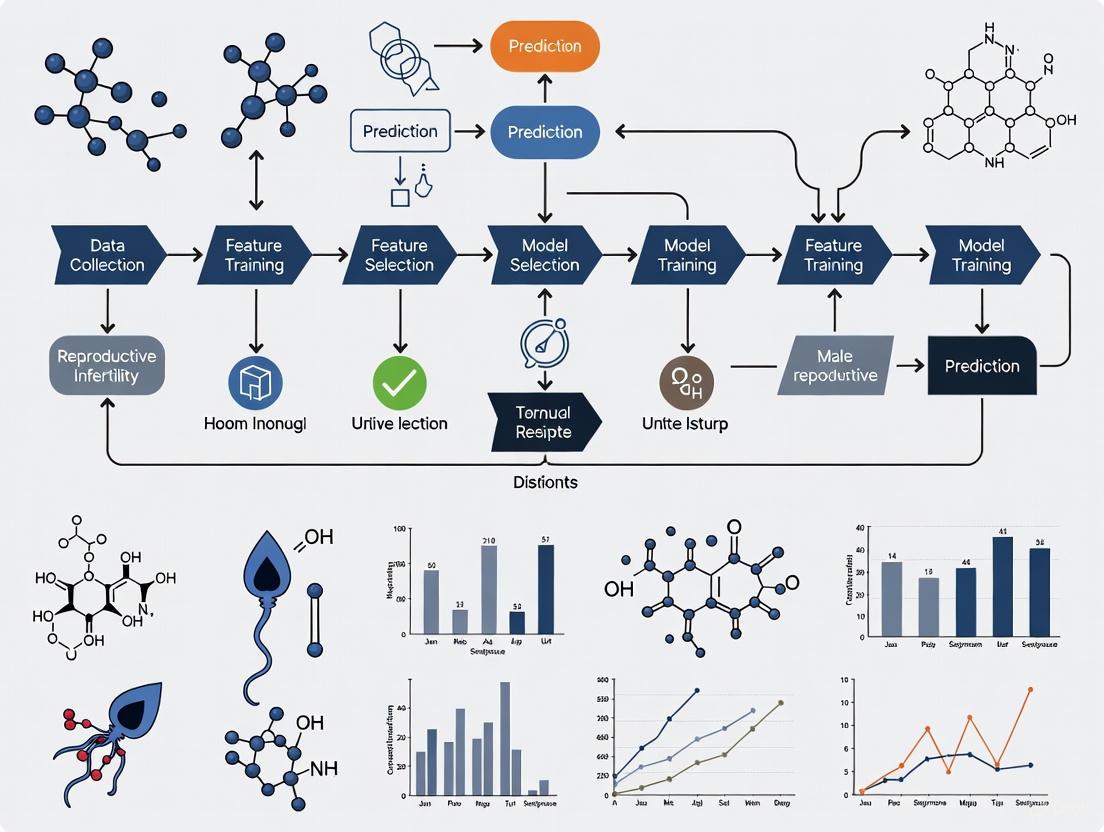
Male factors contribute to approximately 30-50% of infertility cases, yet diagnosis often relies on subjective traditional methods.
Advancing Andrology: A Comprehensive Review of Machine Learning Frameworks for Male Infertility Prediction
Abstract
Male factors contribute to approximately 30-50% of infertility cases, yet diagnosis often relies on subjective traditional methods. This article synthesizes current research on machine learning (ML) frameworks for male infertility prediction, addressing a critical need for objective, accurate diagnostic tools. We explore foundational concepts of male infertility etiology and data requirements, detail diverse ML methodologies from standard classifiers to advanced hybrid models, analyze optimization strategies for handling real-world data challenges like class imbalance, and critically evaluate model validation and performance comparison. For researchers and drug development professionals, this review provides a comprehensive technical foundation, highlighting how ML enhances diagnostic precision, reveals novel biomarkers, and enables non-invasive screening, ultimately supporting the development of personalized therapeutic strategies and improved clinical decision-support systems.
Understanding Male Infertility and the Data Landscape for Machine Learning
Male infertility represents a significant yet often underestimated global health challenge, implicated in approximately 50% of all infertility cases among couples [1]. The diagnosis of male factor infertility exerts a profound physical and emotional impact on affected individuals and couples, affecting overall quality of life [1]. Despite its prevalence, the true burden of male infertility remains difficult to quantify due to substantial gaps in epidemiological data, regional disparities in reporting, and significant limitations in diagnostic methodologies [1]. This application note examines the global burden of male infertility through the analytical lens of machine learning (ML) frameworks, which offer promising avenues for addressing critical diagnostic limitations. We present structured quantitative data, detailed experimental protocols for biomarker validation, visual workflows for diagnostic pathways, and essential research reagent solutions to advance ML-driven research in male reproductive health.
Global Prevalence and Epidemiological Data
The precise prevalence of male infertility remains elusive, as current estimates primarily derive from couples actively seeking treatment, potentially underestimating the problem in the general population [1]. Infertility, broadly defined as the inability to achieve pregnancy after one year of unprotected intercourse, affects approximately 15% of all couples globally [1]. Epidemiological data reveal complex patterns and significant knowledge gaps, as summarized in Table 1.
Table 1: Global Epidemiological Data on Male Infertility
| Metric | Regional Variation | Data Source | Limitations/Notes |
|---|---|---|---|
| Overall Prevalence | Affects ~15% of couples globally; male factor contributes to ~50% of cases [1] | Multiple survey data | Based mainly on couples seeking treatment; likely underestimates true prevalence [1] |
| Service Utilization | 7.5% of sexually active men (15-44 years) sought fertility help (2002 data) [1] | National Survey of Family Growth (NSFG) | Translates to 3.3-4.7 million men with lifetime visits; 787,000-1.5 million with visits in preceding year [1] |
| Klinefelter Syndrome (KS) | Global ASPR: 11-12/100,000 (1990-2021) [2] | Global Burden of Disease Study | Highest rates in Western/Eastern Europe (19-20/100,000); fastest growth in East Asia (AAPC=0.44) [2] |
| Surgical Procedure Rates | Highest in men 25-34 (126/100,000); men 35-44 (83/100,000) [1] | National Survey of Ambulatory Surgery (2006) | Data excludes specialized reproductive clinics; details often lacking [1] |
| Evaluation Gaps | 17.7-27.4% of male partners in couples seeking infertility care undergo no evaluation [1] | NSFG (1995, 2002, 2006-2008 cycles) | Demographic and economic factors affect whether men seek treatment [1] |
Critical analysis of data sources reveals systematic limitations. The National Survey of Family Growth (NSFG), while nationally representative, contains small sample sizes for men reporting reproductive health service utilization [1]. The National ART Surveillance System (NASS) initially lacked detailed male partner information, though recent improvements now capture male age and infertility etiology [1]. Validation studies indicate that ICD-9 codes for male infertility demonstrate high specificity (92.3-99.7%) but uncertain sensitivity in claims data analysis [1]. The emerging Andrology Research Consortium (ARC) database reports that only 9.8% of couples undergoing IUI and 28% undergoing IVF reported prior male factor evaluation, highlighting significant diagnostic gaps [1].
Current Diagnostic Gaps and Biomarker Potentials
Traditional semen analysis, assessing parameters like concentration, motility, and morphology, faces criticism for insufficient reliability in predicting fertility outcomes [3]. This has stimulated research into molecular biomarkers across various "Omics" domains to identify more accurate diagnostic and prognostic indicators [4]. Systematic reviews identify several promising biomarkers with robust predictive capacity for male infertility, as detailed in Table 2.
Table 2: Promising Molecular Biomarkers for Male Infertility Diagnosis
| Biomarker Category | Specific Biomarker | Predictive Performance (AUC Median) | Biological Function |
|---|---|---|---|
| Sperm DNA Integrity | Sperm DNA damage [4] | 0.67 | Direct evaluation of genetic material integrity; predicts ART outcomes [4] |
| Chromatin Modification | γH2AX levels [4] | 0.93 | Strand break-associated chromatin modifications; excellent diagnostic value [4] |
| Transcriptomics | miR-34c-5p in semen [4] | 0.78 | Well-characterized noncoding RNA; robust transcriptomic biomarker [4] |
| Proteomics | TEX101 in seminal plasma [4] | 0.69 | Protein with excellent diagnostic potential for sperm quality and fertilizing capacity [4] |
| Metabolomics | Metabolomic profiles [4] | Good predictive value | Comprehensive metabolic snapshot; superior to individual metabolites for inferring sperm quality [4] |
Metabolomics emerges as a particularly promising approach, studying products of cellular metabolic activities including amino acids, hormones, carbohydrates, nucleotides, and lipids [3]. Research links male infertility to increased oxidative stress from excessive reactive oxidants in seminal plasma and impaired antioxidant defense mechanisms [3]. Studies reveal altered levels of citrate, lactate, and glycerylphosphorylcholine in seminal plasma of men with azoospermia, suggesting metabolic pathway disruptions [3].
Standardized phenotypic classification remains another critical gap. The International Male Infertility Genomics Consortium has substantially revised the "HPO tree" based on clinical work-ups of infertile men, providing a standardized vocabulary containing 49 HPO terms linked in a logical hierarchy [5]. This facilitates systematic phenotype recording and communication between geneticists and andrologists, promoting discovery of novel genetic causes for non-syndromic male infertility [5].
Machine Learning Framework Integration
Artificial intelligence (AI) and machine learning are increasingly integrated into reproductive medicine to address diagnostic challenges. Global surveys among IVF specialists and embryologists demonstrate a substantial increase in AI adoption, rising from 24.8% in 2022 to 53.22% in 2025 (including both regular and occasional use) [6]. Embryo selection remains the dominant application, with strong interest in sperm selection (87.5% in 2022) [6].
Machine learning-based analysis of sperm videos represents a significant advancement for male infertility investigation. Studies utilizing classical and modern ML techniques, including convolutional neural networks (CNNs), demonstrate that automated sperm motility prediction is rapid to perform and consistent [7]. Interestingly, algorithm performance decreased when participant data was added to the video analysis, suggesting the primacy of visual motility characteristics in ML prediction models [7].
AI tools are advancing in sophistication. The iDAScore correlates significantly with cell numbers and fragmentation in cleavage-stage embryos and shows predictive value for live birth outcomes [6]. The BELA system, a fully automated AI tool, predicts embryo ploidy using time-lapse imaging and maternal age, demonstrating higher accuracy than its predecessor (STORK-A) and offering a non-invasive alternative to preimplantation genetic testing for aneuploidy (PGT-A) [6].
Despite this progress, barriers to AI adoption persist, including cost (38.01% of respondents) and lack of training (33.92%) [6]. Ethical concerns and over-reliance on technology were cited as significant risks by 59.06% of 2025 survey respondents [6]. Nevertheless, future investment interest remains strong, with 83.62% of 2025 respondents likely to invest in AI within 1-5 years [6].
Diagnostic Pathway with ML Integration
The following diagram illustrates a comprehensive diagnostic workflow for male infertility that integrates traditional assessment with modern Omics technologies and machine learning analytics:
ML Framework for Male Infertility Prediction
This diagram outlines the specific components and workflow of a machine learning framework for male infertility prediction, highlighting how diverse data sources are integrated and analyzed:
Experimental Protocols
Protocol 1: Semen Sample Processing for OMICS Analysis
Principle: Proper semen sample collection and processing is fundamental for reliable downstream OMICS analysis and ML model training [4] [8].
Materials:
- Sterile wide-mouth collection containers
- Transport incubator (maintaining 37°C)
- Phosphate-buffered saline (PBS)
- Centrifuge with temperature control
- Sperm washing medium
- Cryopreservation solutions
- Liquid nitrogen storage system
Procedure:
- Sample Collection: After 2-7 days of sexual abstinence, collect semen sample by masturbation into a sterile, wide-mouth container [8].
- Liquefaction: Allow sample to liquefy at 37°C for 15-30 minutes. Do not exceed 60 minutes to maintain sperm viability.
- Initial Analysis: Perform basic semen analysis (volume, pH, concentration, motility, morphology) according to WHO guidelines.
- Sample Separation: Centrifuge ejaculate at 500 × g for 10 minutes to separate seminal plasma from sperm cells.
- Sperm Washing: Resuspend sperm pellet in PBS or sperm washing medium and centrifuge at 300 × g for 5 minutes. Repeat twice.
- Aliquoting: Divide samples into aliquots for immediate analysis, -80°C storage, or cryopreservation.
- Cryopreservation: Mix sperm suspension with cryoprotectant medium in a stepwise fashion. Freeze using controlled-rate freezing or vitrification protocols. Store in liquid nitrogen vapor phase.
- Quality Control: Document pre-freeze and post-thaw motility for quality assurance.
Notes: Process samples within one hour of collection. For metabolomic studies, immediately freeze seminal plasma in liquid nitrogen and store at -80°C to preserve metabolic profiles [3].
Protocol 2: Sperm DNA Fragmentation Analysis
Principle: Sperm DNA fragmentation is a valuable biomarker for male infertility diagnosis and ART outcome prediction, with median AUC of 0.67 [4].
Materials:
- Sperm chromatin dispersion test kit OR Terminal deoxynucleotidyl transferase dUTP nick end labeling (TUNEL) assay kit
- Fluorescent microscope with appropriate filter sets
- Microcentrifuge tubes
- Phosphate-buffered saline (PBS)
- Ethanol (70%, 90%, 100%)
- Proteinase K
- Low-melting-point agarose
- Lysing solution
- Staining solution (DAPI or propidium iodide)
- Mounting medium
Procedure (Sperm Chromatin Dispersion Test):
- Agarose Embedding: Mix 25-50 μL of washed sperm suspension with low-melting-point agarose to a final concentration of 1%. Place on pre-coated slides.
- Solidification: Coverslip and place slides on a cold surface (4°C) for 5 minutes to allow agarose to solidify.
- Protein Removal: Carefully remove coverslip and incubate slides in acid solution for 7 minutes, then in lysing solution for 25 minutes at room temperature.
- DNA Denaturation: Incubate slides in denaturing solution for 7 minutes followed by washing in Tris-borate-EDTA buffer.
- Dehydration: Dehydrate slides sequentially in 70%, 90%, and 100% ethanol for 2 minutes each.
- Staining: Apply DAPI or propidium iodide staining solution and mount with antifade medium.
- Microscopy: Examine under fluorescence microscope (400× magnification).
- Scoring: Evaluate 500 spermatozoa per sample. Sperm with large halos of dispersed DNA loops are classified as non-fragmented, while those with small or no halos are classified as fragmented.
Calculation: DNA Fragmentation Index (%) = (Number of sperm with fragmented DNA / Total sperm counted) × 100
Interpretation: DFI < 15% indicates excellent sperm DNA integrity; DFI 15-30% indicates moderate integrity; DFI > 30% indicates poor integrity and is associated with reduced pregnancy rates.
Protocol 3: Machine Learning Analysis of Sperm Motility Videos
Principle: Machine learning algorithms, particularly convolutional neural networks (CNNs), can automatically predict sperm motility from video data with consistency and speed [7].
Materials:
- Phase-contrast microscope with video capture capability
- Computer with GPU acceleration
- Python programming environment with TensorFlow/PyTorch
- OpenCV library for computer vision
- Custom or commercial sperm tracking software
- Processed semen samples
Procedure:
- Video Acquisition: Capture sperm motility videos using phase-contrast microscope at 200× magnification. Maintain temperature at 37°C throughout recording.
- Preprocessing: Convert videos to appropriate format (e.g., MP4). Extract frames at consistent intervals (e.g., 30 frames per second).
- Data Labeling: Manually label a subset of videos for motility parameters (progressive, non-progressive, immotile) to create training dataset.
- Model Selection: Implement CNN architecture (e.g., ResNet, VGG) for feature extraction from video frames.
- Training: Split data into training (70%), validation (15%), and test (15%) sets. Train model using labeled data with appropriate loss function (e.g., cross-entropy).
- Validation: Evaluate model performance on validation set using accuracy, precision, recall, and F1-score metrics.
- Hyperparameter Tuning: Optimize learning rate, batch size, and network architecture based on validation performance.
- Testing: Assess final model performance on held-out test set. Calculate area under ROC curve (AUC) for motility prediction.
- Interpretation: Use gradient-weighted class activation mapping (Grad-CAM) to visualize regions influencing model predictions.
Notes: Studies indicate that algorithms using only video data may outperform those combining videos with participant clinical data [7]. Ensure diverse training data to minimize demographic bias.
Research Reagent Solutions
Table 3: Essential Research Reagents for Male Infertility Studies
| Reagent Category | Specific Examples | Research Application | Key Function |
|---|---|---|---|
| Sperm Processing Media | Sperm washing medium, Human tubal fluid (HTF), Synthetic oviductal fluid (SOF) [8] | Semen sample preparation, ART procedures | Maintain sperm viability, remove seminal plasma, capacitation induction |
| Cryopreservation Solutions | Glycerol, Ethylene glycol, Synthetic cryoprotectants, Sucrose [9] | Sperm and testicular tissue preservation | Cell protection during freezing/thawing, ice crystal prevention |
| DNA Integrity Assay Kits | SCD kits, TUNEL assay kits, Comet assay reagents [4] | Sperm DNA fragmentation analysis | DNA strand break detection, nuclear protein removal, halo visualization |
| Molecular Biology Reagents | miRNA extraction kits, cDNA synthesis kits, qPCR reagents, Antibodies for protein detection [4] [8] | Biomarker discovery and validation | Nucleic acid isolation, gene expression analysis, protein quantification |
| Metabolomics Standards | Deuterated internal standards, Quality control pools, Derivatization reagents [3] | Seminal plasma metabolomic profiling | Metabolite detection normalization, quantification reference, sample preparation |
| Cell Culture Media | DMEM/F12, Fetal bovine serum, Antibiotic-antimycotic solutions [5] | Testicular cell culture, somatic cell co-culture | Support of spermatogenesis in vitro, stem cell maintenance |
| Immunoassay Kits | ELISA for TEX101, Hormone assay kits (Testosterone, FSH, LH) [4] [3] | Protein biomarker quantification, Endocrine profiling | Specific protein detection, hormonal status assessment |
Male infertility presents a substantial global health burden with significant diagnostic limitations and geographic disparities in prevalence and care access. The integration of machine learning frameworks with multi-omics approaches creates unprecedented opportunities to address these challenges through improved classification, biomarker discovery, and predictive modeling. Standardized phenotypic classification using HPO terms facilitates collaboration across institutions and promotes discovery of novel genetic causes [5]. Metabolomic profiling shows particular promise for identifying metabolic pathways and biomarkers associated with male infertility, potentially guiding targeted therapeutic development [3]. While AI adoption faces barriers including cost and training limitations, its potential to transform male infertility diagnosis and treatment continues to drive research and implementation efforts [6] [10]. The experimental protocols and reagent solutions detailed herein provide foundational methodologies for advancing this critical field of research.
Male infertility is a prevalent global health issue, affecting approximately 1 in 6 couples worldwide, with male factors contributing to about 50% of cases [11] [12]. A comprehensive understanding of its multifactorial etiology is crucial for developing effective predictive models and targeted interventions. This document provides detailed application notes and experimental protocols for investigating the clinical, lifestyle, and environmental risk factors contributing to male infertility, with specific emphasis on supporting machine learning framework development for risk prediction.
The increasing global burden of male infertility underscores the urgency of this research. From 1990 to 2021, the global number of male infertility cases and Disability-Adjusted Life Years (DALYs) increased by approximately 74.66% and 74.64%, respectively [13]. By 2021, global prevalence surpassed 55 million cases with over 300,000 DALYs [12]. This growing burden exhibits significant regional disparities, with the highest age-standardized rates observed in Eastern Europe and Western Sub-Saharan Africa, reaching 1.5 times the global average [12].
Epidemiological Landscape and Quantitative Burden
Global and Regional Distribution
The burden of male infertility varies significantly across socioeconomic regions and age groups. Middle Socio-demographic Index (SDI) regions recorded the highest number of cases and DALYs in 2021, accounting for approximately one-third of the global total [13]. However, when considering age-standardized rates, the burden is most severe in low and low-middle SDI regions, including Sub-Saharan Africa, South Asia, and Southeast Asia [12].
Table 1: Global Burden of Male Infertility (2021)
| Metric | Global Value | Regional Variations | Temporal Trends (1990-2021) |
|---|---|---|---|
| Prevalence Cases | >55 million | China accounts for ~20%; Highest ASRs in Eastern Europe & Western Sub-Saharan Africa (1.5× global average) | 74.66% increase globally |
| DALYs | >300,000 | South and East Asia contribute ~50% of global burden | 74.64% increase globally |
| Age-Standardized Prevalence Rate (ASPR) | Varies by region | Most rapid increases in low and low-middle SDI regions | Stable/declining in China since 2008; Increasing globally |
| Key Age Group | 35-39 years (highest prevalence) | Global pattern consistent across regions | Population growth primary driver globally; aging more significant in China |
Age-Specific Patterns and Contributing Factors
From an age subgroup perspective, the 35-39 age group reported the highest number of male infertility cases in 2021 [13]. This age distribution corresponds with patterns of age-related fertility decline, where paternal age contributes to decreased semen quality, increased sperm DNA fragmentation, and elevated risk of genetic abnormalities in offspring. Epidemiological studies consistently show a dose-response relationship between semen parameters and mortality risk, with men with severe sperm abnormalities facing significantly higher health risks [14].
Risk Factor Assessment: Clinical, Lifestyle, and Environmental Dimensions
Male infertility arises from complex interactions between clinical conditions, lifestyle factors, and environmental exposures. Understanding these multifactorial influences is essential for comprehensive risk assessment.
Clinical and Genetic Risk Factors
Clinical determinants of male infertility encompass a range of medical conditions, genetic abnormalities, and physiological disruptions. Varicocele represents a major contributor, affecting 15% of all men but impacting 25-35% of men with primary infertility and 50-80% of men with secondary infertility [15]. Azoospermia (complete absence of sperm) affects 10-15% of infertile men and approximately 1% of the general male population [15].
Genetic factors significantly influence male infertility risk. Klinefelter syndrome (47,XXY) exemplifies a genetic cause of azoospermia that also predisposes to metabolic syndrome, diabetes, and certain malignancies [14]. Other genetic associations include Y-chromosome microdeletions, CFTR gene mutations in congenital bilateral absence of the vas deferens, and mutations in the androgen receptor gene [16].
Table 2: Clinical and Genetic Risk Factors for Male Infertility
| Category | Specific Factor | Prevalence/Impact | Mechanisms |
|---|---|---|---|
| Medical Conditions | Varicocele | 25-35% primary infertility; 50-80% secondary infertility | Increased scrotal temperature, oxidative stress |
| Azoospermia | 10-15% of infertile men; 1% general population | Obstructive or non-obstructive etiologies | |
| Infections (epididymitis, STIs) | Contribute to inflammatory damage | Ductal obstruction, impaired spermatogenesis | |
| Testicular trauma/cancer treatments | Direct testicular damage | Germ cell depletion, hormonal disruption | |
| Genetic Factors | Klinefelter syndrome | Most common chromosomal abnormality | Testicular hyalinization, testosterone deficiency |
| Y-chromosome microdeletions | 5-10% severe oligospermia/azoospermia | Impaired spermatogenesis genes | |
| CFTR mutations | Associated with CBAVD | Developmental ductal abnormalities | |
| Androgen receptor mutations | Spectrum from infertility to AIS | Hormonal signaling disruption | |
| Endocrine Disorders | Hypogonadism | Primary or secondary forms | Direct spermatogenic disruption |
| Low testosterone | Frequent in testicular dysfunction | Obesity, insulin resistance, cardiovascular disease |
Lifestyle and Environmental Risk Factors
Lifestyle choices and environmental exposures represent modifiable risk factors for male infertility. The Australian Male Infertility Exposure (AMIE) study protocol outlines a comprehensive approach to investigating these factors from teenage years onwards [17]. Key lifestyle factors include smoking, alcohol consumption, sedentary behavior, and psychological stress. Environmental exposures encompass endocrine-disrupting chemicals, air pollution, and occupational hazards [17] [14].
Chronic psychological stress, commonly reported among infertile men, may contribute to health-compromising behaviors and directly impact reproductive function through neuroendocrine pathways [14]. The relationship between lifestyle factors and infertility is complex, with multiple potential mechanisms including oxidative stress, hormonal disruption, epigenetic modifications, and direct cellular damage to spermatogenic cells.
Experimental Protocols for Risk Factor Assessment
Comprehensive Phenotyping Protocol: The AMIE Study Framework
The Australian Male Infertility Exposure (AMIE) study provides a robust methodological framework for investigating lifestyle and environmental risk factors for unexplained male infertility [17].
Study Design:
- Case-Control Design: 500 cases (idiopathic male infertility) vs. 500 controls (female factor infertility only)
- Recruitment Setting: Multiple fertility clinics across Australia
- Inclusion Criteria: Men aged 18-50 years with female partner <42 years
- Matching Criteria: Age and socioeconomic status
Data Collection Methods:
- Standardized Survey Instrument:
- General health history
- Lifestyle factors (smoking, alcohol, nutrition, physical activity)
- Environmental exposures (occupational, residential, plastic use)
- Temporal assessment: from teenage years to present
Medical Record Abstraction:
- Reproductive history and prior evaluations
- Semen analysis parameters
- Hormonal profiles (testosterone, FSH, LH)
- Physical examination findings
Biological Specimen Collection:
- Saliva (all participants)
- Blood and urine (optional)
- Long-term storage for genetic/epigenetic analysis
Analytical Approach:
- Between-group comparisons of exposure prevalence
- Multilevel modeling to account for clinic-level clustering
- Dose-response relationships for key exposures
- Integration of phenotypic and biomarker data
Laboratory Assessment of Semen Parameters
Comprehensive semen analysis extends beyond basic WHO parameters to include advanced functional and molecular assessments.
Basic Semen Analysis Protocol:
- Sample Collection: Standardized abstinence period (2-5 days)
- Macroscopic Evaluation: Volume, pH, viscosity, liquefaction
- Microscopic Assessment:
- Concentration (hemocytometer chamber)
- Motility (progressive, non-progressive, immotile)
- Morphology (strict Kruger criteria)
Advanced Sperm Function Tests:
- Sperm DNA Fragmentation:
- Sperm Chromatin Structure Assay (SCSA)
- Terminal deoxynucleotidyl transferase dUTP nick end labeling (TUNEL)
- Sperm Chromatin Dispersion (SCD)
- Oxidative Stress Markers:
- Reactive oxygen species (ROS) measurement
- Total antioxidant capacity (TAC) of seminal plasma
- Sperm Vitality Assessment:
- Eosin-nigrosin staining
- Hypo-osmotic swelling test
Signaling Pathways and Mechanistic Relationships
The pathophysiology of male infertility involves multiple interconnected biological pathways. The following diagram illustrates key mechanistic relationships between risk factors and infertility outcomes:
Research Reagent Solutions for Male Infertility Investigation
Table 3: Essential Research Reagents for Male Infertility Studies
| Reagent Category | Specific Products | Research Applications | Technical Notes |
|---|---|---|---|
| Semen Analysis Kits | LensHooke X1 PRO [11] | Automated semen analysis (concentration, motility) | High correlation with manual methods; AI-powered |
| Sperm DNA fragmentation kits (SCD, TUNEL) | Sperm DNA integrity assessment | AI-assisted analysis reduces variability [11] | |
| Hormonal Assays | Testosterone, FSH, LH ELISA kits | Endocrine profile assessment | Critical for hypogonadism evaluation |
| SHBG, Estradiol, Prolactin assays | Comprehensive hormonal mapping | Reveals endocrine disruption patterns | |
| Molecular Biology Reagents | Y-chromosome microdeletion PCR panels | Genetic screening | For severe oligozoospermia/azoospermia [16] |
| Karyotyping & CFTR mutation detection | Genetic diagnosis | Identifies known genetic causes | |
| Oxidative stress markers (ROS, TAC) | Seminal plasma analysis | Quantifies oxidative stress burden | |
| Cell Culture Media | Sperm washing & preparation media | ART procedures | Maintains sperm viability and function |
| Cryopreservation solutions | Sperm banking | Vital for fertility preservation | |
| Immunohistochemistry Reagents | Testicular biopsy markers | Spermatogenic evaluation | Identifies maturation arrest patterns |
| Apoptosis detection kits (caspase assays) | Germ cell death quantification | Measures spermatogenic efficiency |
Machine Learning Framework Integration
Data Requirements for Predictive Modeling
Development of robust machine learning frameworks for male infertility prediction requires structured integration of multidimensional data:
Clinical and Phenotypic Data Layer:
- Semen parameters (concentration, motility, morphology)
- Hormonal profiles (testosterone, FSH, LH, prolactin)
- Medical history (varicocele, infections, surgeries)
- Physical examination findings (testicular volume, consistency)
Exposure and Lifestyle Data Layer:
- Lifetime environmental exposure assessment [17]
- Smoking, alcohol, and substance use history
- Occupational hazards and chemical exposures
- Psychological stress measures and mental health history
Genetic and Molecular Data Layer:
- Genetic screening results (karyotype, Y-microdeletions)
- Sperm DNA fragmentation indices
- Epigenetic markers (sperm methylation patterns)
- Seminal plasma proteomic and metabolomic profiles
AI Applications in Male Infertility Assessment
Artificial intelligence approaches are transforming male infertility evaluation with several demonstrated applications:
Semen Analysis Automation:
- Deep convolutional neural networks for sperm classification achieve 94% accuracy in WHO categorization [11]
- AI-powered motility assessment shows strong correlation (r=0.88) with manual evaluation [11]
- Morphological classification systems reach 90.73% accuracy [11]
Advanced Sperm Selection:
- The STAR (Sperm Tracking and Recovery) technology combines AI, microfluidics, and robotics to detect viable sperm in azoospermic samples, finding 44 sperm in one hour from samples where skilled technicians found none after two days [18]
- AI systems can detect sperm in samples with counts as low as 2-3 cells per entire sample [18]
Predictive Modeling:
- Machine learning algorithms identify hematologic variables related to semen parameters with 0.69 accuracy [11]
- Models predicting semen quality from modifiable lifestyle factors show AUC between 0.648-0.697 [11]
Male infertility represents a complex multifactorial condition with significant and growing global burden. The intricate interplay between clinical, genetic, lifestyle, and environmental factors necessitates comprehensive assessment frameworks and sophisticated analytical approaches. The experimental protocols and application notes detailed in this document provide a foundation for systematic investigation of male infertility risk factors.
The integration of these multidimensional data streams into machine learning frameworks offers promising avenues for improved risk prediction, personalized intervention strategies, and ultimately, enhanced clinical outcomes for affected individuals. Future research directions should prioritize longitudinal assessment of lifetime exposures, integration of multi-omics data, and development of validated AI tools for clinical deployment.
The application of machine learning (ML) to male infertility prediction requires a foundation of robust, multidimensional data. Traditional diagnostics have relied heavily on standard semen analysis, but the multifactorial nature of male infertility demands a more comprehensive approach. Modern frameworks integrate conventional semen parameters with hormonal profiles, advanced molecular biomarkers, and genetic factors to create a holistic data ecosystem. This integration enables ML algorithms to identify complex, non-linear patterns that escape conventional statistical analysis, ultimately improving diagnostic accuracy, treatment selection, and prognostic prediction [19] [4] [20]. The median accuracy of ML models in predicting male infertility is reported to be 88%, surpassing traditional methods [20].
The data landscape for male infertility can be categorized into several distinct but interconnected types, each providing a unique piece of the diagnostic puzzle. The following sections and Table 1 detail these core data types, their normal values, and their clinical significance, forming the essential variables for any predictive modeling endeavor.
Table 1: Core Semen Analysis Parameters and Normal Values According to WHO Guidelines [21]
| Semen Parameter | Normal Value | Clinical Significance |
|---|---|---|
| Volume | 1.4 - 6.2 mL | Hypospermia (<1.4 mL) may indicate obstruction, retrograde ejaculation, or androgen deficiency. |
| Sperm Concentration | ≥ 15 million/mL | Primary indicator of testicular sperm production. |
| Total Sperm Count | ≥ 39 million | A more reliable indicator of testicular function than concentration alone. |
| Total Motility | ≥ 42% | Crucial for natural conception, indicates sperm movement capability. |
| Progressive Motility | ≥ 30% | Reflects the population of sperm with purposeful forward movement. |
| Morphology (Normal Forms) | ≥ 4% | Assesses the percentage of sperm with a typical structure. |
| Vitality | ≥ 54% | Differentiates between immotile live sperm and dead sperm; indicates necrospermia if low. |
| pH | 7.2 - 7.8 | Imbalances can suggest infection (high pH) or obstructions (low pH). |
Protocol 1: Conventional Semen and Hormonal Profiling
Experimental Workflow for Basic Diagnostic Data Collection
The initial assessment of male fertility relies on standardized protocols for collecting and analyzing fundamental semen and hormonal data. This workflow ensures consistency and reliability, which is critical for building high-quality datasets for machine learning.
Detailed Methodologies
1. Patient Preparation and Semen Collection:
- Participants should observe a sexual abstinence period of 2 to 7 days prior to sample collection. Consistency in the abstinence period for subsequent tests is crucial for reliable comparisons [21].
- Samples are collected by masturbation into a sterile, wide-mouthed container. To ensure sample integrity, the time from collection to the initiation of analysis must be less than 60 minutes, and the sample must be maintained between 20°C and 37°C during transport [19] [21].
2. Macroscopic and Microscopic Semen Analysis:
- Macroscopic Evaluation: This includes assessment of liquefaction (complete within 60 minutes), appearance (light cream/gray), pH (7.2-7.8), and volume (1.4-6.2 mL). Abnormal viscosity is noted when drops form a thread longer than 2 cm [19] [21].
- Microscopic Evaluation: Sperm concentration and total count are manually assessed using an improved Neubauer hemocytometer. Motility (progressive, non-progressive, immotile) is evaluated under a phase-contrast microscope. Sperm morphology is determined from Papanicolaou-stained smears, with a strict criterion of ≥4% normal forms considered typical [19] [21]. Vitality is assessed using eosin staining, particularly when motility is below 40% [21].
3. Hormonal Profiling:
- Venous blood is collected in the morning (7:30-9:00 AM) to account for diurnal rhythms. Key reproductive hormones—Follicle-Stimulating Hormone (FSH), Luteinizing Hormone (LH), total Testosterone, Prolactin (PRL), and Thyroid-Stimulating Hormone (TSH)—are quantified using the electrochemiluminescence (ECLIA) method. This method uses biotinylated monoclonal antibodies and ruthenium-labeled complexes in a sandwich assay format, with streptavidin-bound microparticles for binding [19]. This data is critical, as subjects with abnormal hormonal levels or decreased testicular volume (<12 mL) often show impaired conventional semen parameters and higher sperm DNA fragmentation [19].
Protocol 2: Advanced and Molecular Biomarker Analysis
Workflow for Omics and DNA Integrity Assessment
Beyond conventional analysis, advanced biomarkers provide a deeper insight into sperm function and genetic integrity. These biomarkers are particularly valuable for explaining idiopathic infertility and predicting the success of Assisted Reproductive Technologies (ART). The workflow integrates various "Omics" technologies to build a comprehensive biomarker profile.
Detailed Methodologies
1. Sperm DNA Fragmentation (SDF) Analysis via SCD Test:
- The Sperm Chromatin Dispersion (SCD) test is performed using a commercial kit (e.g., Halosperm G2). After sample processing, sperm are embedded in an agarose microgel on a slide, subjected to an acid denaturation step, and then lysed to remove nuclear proteins. Sperm with non-fragmented DNA display large or medium-sized halos of dispersed DNA loops after staining. In contrast, sperm with fragmented DNA show small halos or no halos [19].
- A minimum of 300 sperm cells are counted under a microscope. An SDF level of ≤15% is considered a low level of DNA damage and correlates with high fertility potential. An SDF of >15–30% is moderate and may reduce chances of pregnancy, while an SDF >30% is high and is strongly associated with an increased risk of reproductive failure and pregnancy loss, even with Intracytoplasmic Sperm Injection (ICSI) [19].
2. Omics Biomarker Profiling:
- Genomics/Epigenomics: This involves screening for karyotypic abnormalities, Y-chromosome microdeletions, and specific gene mutations [22] [23]. DNA methylation patterns are also emerging as potential biomarkers.
- Transcriptomics: Analysis of non-coding RNAs in semen, such as miR-34c-5p, shows excellent predictive value for male infertility (median AUC = 0.78) [4].
- Proteomics: Protein-based assays are gaining traction. The level of TEX101 in seminal plasma, for instance, has shown excellent diagnostic potential (median AUC = 0.69) for infertility [4] [23].
- Metabolomics: The profile of metabolites in seminal plasma can serve as a biomarker for sperm quality and fertilizing capacity. Metabolomic profiles generally show better predictive value than individual metabolites [4].
Table 2: Advanced Biomarkers for Male Infertility Assessment [19] [4] [23]
| Biomarker Category | Specific Biomarker/Assay | Interpretation & Clinical Utility | Predictive Value (AUC Median) |
|---|---|---|---|
| DNA Integrity | Sperm DNA Fragmentation (SCD) | >30%: High risk of reproductive failure & miscarriage. Guides choice between IVF and ICSI. | 0.67 |
| DNA Damage Marker | γH2AX | Level indicates DNA strand breaks; shows good predictive value for infertility diagnosis. | 0.93 |
| Transcriptomics | miR-34c-5p | A robust RNA biomarker in semen for assessing male fertility status. | 0.78 |
| Proteomics | TEX101 (Seminal Plasma) | Protein biomarker with excellent diagnostic potential for male infertility. | 0.69 |
| Genetic Factors | Karyotype, Y-microdeletions | Identifies well-known genetic causes of azoospermia or severe oligozoospermia. | N/A |
The Scientist's Toolkit: Research Reagent Solutions
The experimental protocols outlined above rely on a suite of specific reagents and tools. The following table details essential items for establishing these assays in a research setting.
Table 3: Essential Research Reagents and Materials for Male Infertility Biomarker Analysis
| Research Reagent / Kit | Manufacturer (Example) | Primary Function |
|---|---|---|
| Halosperm G2 Kit | Halotech DNA, Spain | To perform the Sperm Chromatin Dispersion (SCD) test for quantifying sperm DNA fragmentation. |
| Cobas e801 Analytical Unit & Reagents | Roche Diagnostics, Germany | To measure reproductive hormone levels (FSH, LH, Testosterone, PRL, TSH) using the ECLIA method. |
| LeucoScreen Kit | FertiPro N.V., Belgium | To detect and quantify peroxidase-positive leukocytes in semen (Endtz test). |
| Papanicolaou Stain Set | Aqua-Med, Poland | To stain sperm smears for the detailed morphological assessment of spermatozoa. |
| Improved Neubauer Hemocytometer | Heinz Hernez, Germany | To manually determine sperm concentration and concentration of round cells. |
| Specific Antibody Panels | Various | For proteomic analysis of seminal plasma biomarkers (e.g., antibodies against TEX101, ACRV1). |
| RNA Extraction & qPCR Kits | Various | For transcriptomic analysis of non-coding RNAs (e.g., miR-34c-5p) from semen samples. |
Integration with Machine Learning Frameworks
The true power of these diverse data sources is unlocked through integration into machine learning frameworks. The structured data from protocols 1 and 2 form the feature vectors for ML models. Studies have demonstrated the efficacy of this approach, with algorithms like Support Vector Machines (SVM) and ensemble methods like SuperLearner achieving exceptionally high predictive performance (AUC of 96-97%) for male infertility risk [22]. Sperm concentration, FSH, and LH levels have been identified as among the most important risk factors in these models [22].
Furthermore, ML techniques, including convolutional neural networks, have been successfully applied to automate and enhance the analysis of raw clinical data, such as sperm motility videos, providing rapid and consistent assessments that can be directly fed into predictive models [24] [20]. The median accuracy of Artificial Neural Networks (ANNs) in this domain is reported to be 84% [20]. This multi-faceted, data-driven approach represents the future of male infertility diagnosis and prognosis, moving beyond isolated parameter analysis to a holistic, predictive understanding of male reproductive health.
The Role of Artificial Intelligence in Transforming Andrological Diagnostics
Male infertility affects approximately one in six couples globally, with male factors contributing to about half of all infertility cases [11]. The current diagnostic paradigm, heavily reliant on conventional semen analysis, is often subjective, labor-intensive, and limited in its ability to predict treatment outcomes [11] [25]. Artificial intelligence (AI), particularly machine learning (ML) and deep learning (DL), is poised to revolutionize this field by introducing objectivity, automation, and powerful predictive capabilities. Within the framework of male infertility prediction research, AI offers the potential to move beyond descriptive analysis to prognostic modeling, enhancing clinical decision-making and personalizing patient care [26] [27]. This document outlines the specific applications, experimental protocols, and reagent solutions underpinning this transformation, providing a resource for researchers and drug development professionals working at the intersection of computational science and reproductive medicine.
AI Applications in Diagnostic and Prognostic Prediction
AI algorithms are being deployed across the andrological diagnostic spectrum, from initial semen assessment to predicting the success of surgical and assisted reproductive interventions.
Semen Analysis and Sperm Quality Assessment
Computer-Aided Sperm Analysis (CASA) systems, enhanced by AI, allow for the high-throughput, objective assessment of sperm concentration, motility, and morphology [26]. Deep learning models, particularly Convolutional Neural Networks (CNNs), have demonstrated remarkable accuracy in classifying sperm heads and identifying morphological defects.
Table 1: Performance of Selected AI Models in Semen Analysis
| AI Task | AI Method | Reported Performance | Citation |
|---|---|---|---|
| Sperm Morphology Classification | Faster Region-CNN | 97.37% accuracy | [11] |
| Sperm Motility Classification | Deep Convolutional Neural Network (DCNN) | Strong correlation with manual assessment (r=0.88-0.89) | [11] |
| Sperm Vitality Prediction | Region-Based CNN | Pearson correlation: 0.969 | [11] |
| Sperm DNA Fragmentation Assessment | AI-powered microscopic assay | Strong agreement with manual method (r=0.97) | [11] |
Prediction of Surgical and ART Outcomes
Machine learning models are increasingly used to predict the success of various andrological treatments, helping to guide clinical decisions and manage patient expectations.
Table 2: AI Models for Predicting Therapeutic Outcomes in Andrology
| Clinical Scenario | AI Model | Key Predictive Features | Reported Performance | Citation |
|---|---|---|---|---|
| Post-Varicocelectomy Improvement | Random Forest | Serum FSH, Bilateral Varicocele | 87% predictive accuracy for improvement | [26] |
| Sperm Retrieval in NOA | Gradient-Boosted Trees | Patient weight, age, FSH levels | Superior to logistic regression | [26] |
| Male Fertility Risk Screening | Automated ML (AutoML) | FSH, T/E2 ratio, LH | AUC: 74.2% - 77.2% | [25] |
| ART Outcomes in YCMD | Web-based ML Algorithm | Type of Y-chromosome deletion | High accuracy for SRR, CPR, LBR | [28] |
| IVF Live Birth Prediction | Artificial Neural Network (ANN) | Woman's age, gonadotropin dose, endometrial thickness, embryo quality | Sensitivity: 76.7%, Specificity: 73.4% | [26] |
Experimental Protocols for Key AI Applications
Protocol 1: Developing an AI Model for Male Infertility Risk from Serum Hormones
This protocol outlines the methodology for creating a predictive model using only serum hormone levels, bypassing the need for initial semen analysis [25].
Workflow Diagram: Serum-Based Infertility Risk Prediction
Detailed Procedure:
- Data Collection: Compile a retrospective dataset from electronic health records, including patient age and serum levels of LH, FSH, PRL, testosterone, and estradiol (E2). Calculate the testosterone-to-estradiol (T/E2) ratio. A large cohort size (e.g., n=3662) is recommended for robust model training [25].
- Data Labeling (Ground Truth): Label each patient's data based on the results of a conventional semen analysis performed according to WHO guidelines. A binary classification (e.g., "normal" vs. "abnormal") can be defined based on a calculated threshold such as total motile sperm count (e.g., 9.408 × 10^6) [25].
- Data Preprocessing: Clean the data to handle missing values and outliers. Normalize the hormone level data to a common scale to prevent features with larger numerical ranges from dominating the model.
- Model Training: Utilize automated machine learning (AutoML) platforms (e.g., Prediction One, AutoML Tables) or classic ML libraries (e.g., Scikit-learn). Split the dataset into training (70-80%) and testing (20-30%) sets. Train multiple algorithms, such as Random Forest or Gradient-Boosted Trees, to identify the best performer [25].
- Feature Importance Analysis: Analyze the trained model to determine which hormonal parameters contribute most to the prediction. Studies consistently identify FSH as the most important feature, followed by T/E2 ratio and LH [25].
- Model Validation: Evaluate the model's performance on the held-out test set using metrics such as Area Under the Curve (AUC) of the Receiver Operating Characteristic (ROC) curve, precision, recall, and F-value.
Protocol 2: AI-Assisted Sperm Morphology Analysis using Deep Learning
This protocol details the use of a deep learning model for the automated and standardized classification of sperm morphology [11].
Workflow Diagram: Deep Learning for Sperm Morphology
Detailed Procedure:
- Image Acquisition: Capture high-resolution digital images of sperm smears using a standardized optical microscope equipped with a digital camera. Ensure consistent staining (e.g., Papanicolaou) and slide preparation to minimize technical variation.
- Data Annotation (Ground Truth): Have experienced andrologists label a large set of sperm images according to WHO criteria or the Strict Tygerberg criteria. Labels should include classifications such as "normal," "head defect," "neck defect," "tail defect," and "cytoplasmic droplet" [11].
- Model Architecture and Training: Implement a Deep Convolutional Neural Network (DCNN), such as a Faster R-CNN or a U-Net architecture. The U-Net is particularly effective for image segmentation tasks, such as precisely identifying the sperm head, acrosome, and nucleus, achieving Dice coefficients above 0.94 [11]. Train the model using the annotated image dataset.
- Model Validation: Validate the model's classification performance against a test set of expert-annotated images. Report standard metrics including accuracy, sensitivity, specificity, and F1-score. The model should be able to perform at an accuracy exceeding 90% for classifying normal versus abnormal sperm [11].
The Scientist's Toolkit: Research Reagent Solutions
Table 3: Essential Research Reagents and Materials for AI-Driven Andrology Research
| Item Name | Function / Application | Specific Example / Note |
|---|---|---|
| CASA System with AI | Automated sperm motility and kinematics analysis. Reduces inter-operator variability. | Systems provide parameters like VCL, VSL, and ALH for ML models [26]. |
| Flow Cytometry Reagents | Assessment of biofunctional sperm parameters (DNA fragmentation, MMP, oxidative stress). | Kits for SCSA, TUNEL assay. Software with ML tools (FlowJo) enables single-cell analysis [26]. |
| AI-Optical Microscope | Integrated hardware/software for automated semen analysis. | LensHooke X1 PRO; can be correlated with manual methods for concentration and motility [11]. |
| Hormone Assay Kits | Provide the quantitative input features (LH, FSH, Testosterone) for serum-based prediction models. | ELISA or chemiluminescence kits are standard. High precision is critical for model accuracy [25]. |
| Standardized Staining Kits | (e.g., Papanicolaou, Diff-Quik) for sperm morphology preparation. | Essential for creating consistent, high-quality image datasets for training deep learning models [11]. |
| AI Software Frameworks | Libraries for developing and training custom machine learning models. | TensorFlow, PyTorch, Scikit-learn. AutoML platforms (e.g., Google AutoML Tables) can streamline model development [25]. |
The integration of artificial intelligence into andrological diagnostics marks a significant shift towards data-driven, predictive, and personalized medicine. The applications detailed in these notes—from automated semen analysis and serum-based risk prediction to outcome forecasting for ART—demonstrate the potential of ML frameworks to directly address critical challenges in male infertility prediction research. While challenges regarding data standardization, model interpretability, and clinical validation remain, the continued development and refinement of these protocols and tools promise to enhance diagnostic accuracy, optimize treatment selection, and ultimately improve patient outcomes in andrology.
Machine Learning Architectures and Algorithms for Fertility Assessment
The application of machine learning (ML) in male infertility research is transforming the diagnosis and prognosis of a condition that affects millions of couples globally, with male factors contributing to 20-30% of infertility cases [29]. Industry-standard classifiers including Random Forest (RF), Support Vector Machine (SVM), Artificial Neural Networks (ANN), and Extreme Gradient Boosting (XGBoost) offer powerful tools for analyzing complex biomedical data to predict infertility outcomes, optimize treatment selection, and uncover subtle patterns in clinical and laboratory parameters. These algorithms excel at capturing intricate, nonlinear relationships within datasets, enabling researchers to identify subtle patterns in hormonal profiles, semen parameters, and demographic factors that may contribute to infertility [30]. This document provides application notes and experimental protocols for implementing these classifiers within a comprehensive ML framework for male infertility prediction research.
Classifier Comparison and Performance Metrics
Algorithmic Characteristics and Theoretical Foundations
Table 1: Fundamental Characteristics of Industry-Standard Classifiers
| Classifier | Algorithmic Approach | Key Strengths | Primary Limitations | Overfitting Control |
|---|---|---|---|---|
| Random Forest (RF) | Ensemble bagging with multiple independent decision trees [31] | Robust to outliers, handles high-dimensional data, provides feature importance scores [31] | Can be computationally expensive with large numbers of trees, may not achieve highest possible accuracy [31] | Random feature subsets, bootstrap sampling, model averaging [31] |
| XGBoost | Sequential ensemble building with gradient boosting, trees correct previous errors [31] | High predictive accuracy, efficient handling of missing values, built-in regularization [31] | Requires more careful parameter tuning, sequential training limits parallelization [31] | L1/L2 regularization, tree depth constraints, minimum child weight parameters [31] |
| SVM | Finds optimal hyperplane to separate classes with maximum margin [29] | Effective in high-dimensional spaces, memory efficient, versatile with kernel functions [29] | Can be computationally intensive with large datasets, sensitive to kernel choice and parameters [29] | Regularization parameter C, kernel selection, margin optimization [29] |
| ANN | Network of interconnected nodes inspired by biological neural systems [30] | Excellent at learning complex non-linear relationships, handles diverse data types | Requires large datasets, computationally intensive, "black box" interpretation challenges [30] | Dropout layers, regularization techniques, early stopping, network architecture constraints [30] |
Performance Metrics in Male Infertility Applications
Table 2: Documented Performance of Classifiers in Male Infertility Research
| Classifier | Application Context | Reported Performance | Data Characteristics |
|---|---|---|---|
| Random Forest | IVF success prediction [29] | AUC: 84.23% on 486 patients [29] | Clinical patient data, hormonal parameters |
| Random Forest | Clinical pregnancy rate prediction [30] | Highest accuracy among compared models | Age, FSH, endometrial thickness [30] |
| XGBoost | Cumulative live birth rate prediction for IVF/ICSI [32] | Not explicitly quantified in abstract | Tubal and male infertility factors |
| XGBoost | Stunting prediction (relevant health application) [33] | Accuracy: 87.83%, Precision: 85.75%, Recall: 91.59% | Imbalanced clinical data with SMOTE processing [33] |
| SVM | Sperm morphology analysis [29] | AUC: 88.59% on 1400 sperm images [29] | Computerized sperm imagery |
| SVM | Sperm motility classification [29] | Accuracy: 89.9% on 2817 sperm [29] | Motility tracking data |
| ANN | Male infertility prediction (systematic review) [20] | Median accuracy: 84% across multiple studies | Hormonal, demographic, and clinical parameters |
| ANN | Predicting sperm presence in non-obstructive azoospermia [34] | 80.8% correct predictions, Sensitivity: 68% | Age, infertility duration, hormone levels, testicular volume [34] |
| Gradient Boosting Trees | Non-obstructive azoospermia sperm retrieval [29] | AUC: 0.807, Sensitivity: 91% on 119 patients [29] | Clinical and diagnostic parameters |
Systematic reviews indicate that ML models achieve a median accuracy of 88% in predicting male infertility, with ANN models specifically demonstrating a median accuracy of 84% across studies [20]. The performance advantage of XGBoost has been demonstrated in healthcare contexts beyond infertility, where it achieved 87.83% accuracy in stunting prediction, outperforming RF (84.56%) and SVM (68.59%) [33].
Experimental Protocols for Male Infertility Prediction
Data Preprocessing and Feature Engineering Protocol
Protocol 1: Standardized Data Preprocessing Workflow
Data Collection and Integration
- Collect hormonal parameters (FSH, LH, testosterone, prolactin, AMH) [30] [34]
- Document demographic factors (age, BMI, duration of infertility) [30] [34]
- Include semen analysis parameters (count, motility, morphology) from manual or CASA systems [29]
- Aggregate medical history factors (varicocele, genetic factors, lifestyle influences) [29]
Data Cleaning and Imputation
- Address missing values using k-nearest neighbors (KNN) imputation for continuous variables
- Apply mode imputation for categorical variables with less than 5% missingness
- Remove cases with more than 20% missing data points
- Identify and address outliers using interquartile range (IQR) method
Data Normalization and Balancing
- Apply standardization (Z-score normalization) to continuous features
- Utilize Synthetic Minority Over-sampling Technique (SMOTE) for class imbalance [33]
- Implement one-hot encoding for categorical variables
- Create training (70%), validation (15%), and test (15%) splits with stratified sampling
Classifier Implementation and Training Protocol
Protocol 2: Model-Specific Training Procedures
Random Forest Implementation
- Initialize with 100-500 decision trees, increasing until performance plateaus
- Set
max_featuresto 'sqrt' for classification tasks - Use
min_samples_splitof 5 andmin_samples_leafof 1 for detailed segmentation - Enable bootstrap sampling and out-of-bag error estimation
- Implement nested cross-validation to avoid overfitting
XGBoost Implementation
- Set initial learning rate (eta) to 0.1, gradually decreasing to 0.01 for fine-tuning
- Apply L1 (0.1) and L2 (0.9) regularization to control complexity [31]
- Limit
max_depthto 6-8 levels to prevent overfitting [31] - Set
min_child_weightto 3 for balanced leaf assignment - Use early stopping rounds of 10-20 with validation set monitoring
SVM Implementation
- Conduct hyperparameter search for regularization parameter C (range 0.1-100)
- Evaluate kernel functions (linear, polynomial, RBF) with cross-validation
- Optimize gamma parameter for RBF kernel using grid search
- Scale all features to [0,1] range before training
- Implement one-vs-rest strategy for multi-class problems
ANN Implementation
- Design architecture with input layer matching feature dimensions
- Implement 2-3 hidden layers with decreasing nodes (e.g., 64, 32, 16)
- Apply ReLU activation for hidden layers, sigmoid/softmax for output
- Utilize dropout layers (rate 0.2-0.5) between hidden layers [30]
- Implement early stopping with patience of 15-20 epochs
Model Evaluation and Validation Protocol
Protocol 3: Comprehensive Performance Assessment
Performance Metric Calculation
Statistical Validation
- Execute k-fold cross-validation (k=5-10) with stratified sampling
- Perform McNemar's test for paired classifier comparison
- Calculate 95% confidence intervals for performance metrics
- Implement permutation tests for feature importance validation
Clinical Relevance Assessment
- Determine clinical sensitivity and specificity at optimal thresholds
- Calculate number needed to treat (NNT) for treatment guidance
- Perform decision curve analysis to evaluate clinical utility
- Assess calibration in the large and calibration slope
Visualization of Experimental Workflows
Male Infertility Prediction Pipeline
Classifier Architecture Comparison
Research Reagent Solutions and Essential Materials
Table 3: Essential Research Materials for ML-Based Infertility Studies
| Category | Specific Item | Research Function | Application Notes |
|---|---|---|---|
| Hormonal Assays | FSH, LH, Testosterone ELISA Kits | Quantify serum hormone levels for feature input [30] [34] | Critical for ANN models predicting sperm presence [34] |
| Semen Analysis | Computer-Assisted Sperm Analysis (CASA) | Automated sperm motility and morphology assessment [29] | Provides high-quality input for SVM motility classification [29] |
| Semen Analysis | DNA Fragmentation Index (DFI) Kits | Assess sperm DNA integrity as predictive feature [29] | Emerging parameter for ML prediction models |
| Imaging Systems | High-Speed Microscopy with Digital Capture | Acquire sperm videos for convolutional neural networks [24] | Enables deep learning approaches with 81-86% accuracy [20] |
| Biochemical Tests | Anti-Müllerian Hormone (AMH) Assays | Measure ovarian reserve (female partner) and testicular function [30] | Included in hybrid models combining hormonal and demographic data [30] |
| Data Processing | Python Scikit-Learn Library | Implementation of RF, SVM, and gradient boosting models | Essential for reproducible ML pipeline development |
| Data Processing | TensorFlow/PyTorch Frameworks | Deep learning implementation for ANN architectures [30] | Required for complex neural network models |
| Sample Processing | Microfluidic Sperm Sorting Chips | Prepare samples for AI-assisted sperm selection [18] | Used in conjunction with ML analysis systems |
The implementation of industry-standard classifiers RF, SVM, ANN, and XGBoost within a male infertility prediction framework requires careful attention to data quality, appropriate algorithm selection, and rigorous validation. Current evidence suggests that ensemble methods like XGBoost and Random Forest often achieve superior performance for structured clinical data, while SVM excels in image-based sperm analysis, and ANN provides robust handling of complex non-linear relationships in multimodal data. Researchers should select classifiers based on their specific data characteristics, with XGBoost recommended for maximum predictive accuracy, Random Forest for robust baseline performance, SVM for image and high-dimensional data, and ANN for complex pattern recognition in multimodal datasets. Future directions should focus on developing hybrid models [30], improving explainability for clinical adoption, and conducting multicenter validation studies to ensure generalizability across diverse patient populations.
Male infertility is a significant health concern, contributing to 20-30% of all infertility cases and affecting an estimated 30 million men globally [35]. The diagnostic landscape has long been hampered by the limitations of traditional semen analysis, which relies on manual assessment leading to substantial inter-observer variability and poor reproducibility [35]. Within this context, non-obstructive azoospermia (NOA) represents the most severe form, impacting approximately 1% of the male population and 10-15% of infertile men [35]. The European Association of Urology (EAU) guidelines emphasize the critical importance of a thorough urological assessment for all men presenting with fertility problems, recently incorporating new sections on exome sequencing and probiotic treatment in their 2025 update [36].
Artificial intelligence, particularly machine learning and deep learning, has emerged as a transformative technology for addressing these diagnostic challenges. AI algorithms can enhance diagnostic accuracy by automating sperm evaluation and identifying abnormal sperm characteristics with greater consistency than manual methods [35]. However, standard artificial neural networks (ANNs) often face optimization challenges, including convergence to local minima and suboptimal parameter configuration [37] [38]. Hybrid approaches that combine neural networks with nature-inspired optimization algorithms such as Ant Colony Optimization (ACO) and Genetic Algorithms (GA) offer promising solutions to these limitations, potentially revolutionizing male infertility prediction and management within assisted reproductive technology (ART) contexts.
Technical Foundation of Hybrid Models
Neural Network Architectures for Medical Data
Artificial Neural Networks are computational algorithms modeled after biological nervous systems, containing interconnected processing elements (neurons) that work in harmony to solve complex problems [37]. In medical applications such as male infertility research, several ANN architectures have demonstrated particular utility:
- Feed-forward Neural Networks: Commonly used for pattern classification tasks including sperm morphology analysis and treatment outcome prediction [38]. These networks process information in one direction from input to output layers.
- Multi-layer Perceptrons (MLP): Applied in male infertility contexts for predicting IVF success and classifying sperm quality parameters with demonstrated accuracy up to 89.9% for motility analysis [35].
- Deep Neural Networks: Utilize multiple hidden layers to automatically extract hierarchical features from complex data, potentially capturing subtle patterns in sperm imagery and patient clinical profiles.
The performance of these neural networks depends critically on their configuration, including the number of hidden layers, neurons per layer, learning rates, and activation functions [37]. Selecting optimal parameters through manual trial-and-error approaches is often time-consuming and frequently yields suboptimal results, creating the need for sophisticated optimization techniques.
Nature-Inspired Optimization Algorithms
Nature-inspired optimization algorithms mimic natural processes to solve complex computational problems. For neural network optimization in medical applications, two approaches have shown significant promise:
- Genetic Algorithms (GA): Evolutionary algorithms that apply principles of natural selection, including crossover, mutation, and selection operations to evolve optimal solutions over successive generations. Research has demonstrated GA's effectiveness in optimizing neural network connection weights and architecture [37] [39].
- Ant Colony Optimization (ACO): Swarm intelligence algorithms inspired by the foraging behavior of ants, which use pheromone trails to collectively find optimal paths through graphs. ACO has been successfully adapted for continuous optimization problems including neural network training, with studies showing it can outperform GA in terms of optimization time and precision for certain applications [39] [38].
These optimization techniques are classified as population-based algorithms, where an initial population is randomly created and iteratively refined to approach optimal solutions [37]. Their ability to explore complex search spaces without relying on gradient information makes them particularly valuable for optimizing non-convex objective functions common in deep learning architectures.
Hybridization Methodologies
The integration of neural networks with nature-inspired optimizers can be implemented through several architectural strategies:
- Weight Optimization: Using ACO or GA to determine optimal connection weights instead of traditional backpropagation, potentially escaping local minima [38].
- Architecture Search: Employing optimization algorithms to identify optimal neural network topologies, including the number of hidden layers and neurons [37].
- Hyperparameter Tuning: Optimizing learning rates, momentum terms, and regularization parameters to enhance network performance [37].
- Hybrid Training: Combining global search capabilities of nature-inspired algorithms with local refinement through gradient-based methods for improved convergence [38].
Applications in Male Infertility Research
Diagnostic and Predictive Modeling
Hybrid AI models have demonstrated remarkable performance across multiple domains of male infertility assessment and prediction:
Table 1: Performance of AI Models in Male Infertility Applications
| Application Area | AI Technique | Performance Metrics | Sample Size | Clinical Utility |
|---|---|---|---|---|
| Sperm Morphology Analysis | Support Vector Machine (SVM) | AUC of 88.59% | 1,400 sperm cells | Automated classification of sperm abnormalities |
| Sperm Motility Assessment | SVM | Accuracy of 89.9% | 2,817 sperm cells | Objective motility tracking and categorization |
| NOA Sperm Retrieval Prediction | Gradient Boosting Trees (GBT) | AUC 0.807, 91% sensitivity | 119 patients | Predicting successful sperm retrieval in NOA patients |
| IVF Success Prediction | Random Forests | AUC 84.23% | 486 patients | Prognosticating ART outcomes for treatment planning |
| Sperm DNA Fragmentation | Deep Neural Networks | Not specified | Not specified | Assessing genetic integrity of spermatozoa |
These applications address critical limitations in traditional male infertility diagnostics by providing quantitative, reproducible assessments of sperm parameters and data-driven prognostic models for clinical decision-making [35]. The surge in research activity since 2021, with 57% of relevant studies (8 of 14) published between 2021-2023, reflects growing recognition of AI's potential in this field [35].
Comparative Performance of Optimization Techniques
Research comparing optimization algorithms for neural network training in biological applications provides insights into their relative strengths:
Table 2: Comparison of Optimization Techniques for Neural Networks
| Optimization Technique | Key Advantages | Limitations | Demonstrated Performance in Biomedical Applications |
|---|---|---|---|
| Ant Colony Optimization (ACO) | Faster convergence, higher precision in specific domains [39] | Complex parameter tuning | Effective for feed-forward network training on medical pattern classification [38] |
| Genetic Algorithm (GA) | Robust global search capabilities, parallelizable | Computational intensity, premature convergence | Successful in optimizing neural network weights and architecture [37] |
| Particle Swarm Optimization (PSO) | Simple implementation, efficient exploration | Potential for swarm stagnation | Applied to energy management problems with strong performance [37] |
| Backtracking Search Algorithm (BSA) | Effective local and global search balance | Limited track record in medical applications | Comparable results to established techniques in benchmark tests [37] |
| Hybrid ACO-Gradient Descent | Combines global exploration with local refinement | Implementation complexity | Superior performance on benchmark pattern classification problems [38] |
Experimental results demonstrate that ACO-based training algorithms can efficiently train feed-forward neural networks for pattern classification tasks relevant to medical diagnostics, with hybrid approaches showing particular promise [38].
Experimental Protocols and Implementation
Data Acquisition and Preprocessing Protocol
Objective: To systematically collect and preprocess male infertility data for hybrid neural network model development.
Materials and Reagents:
- Clinical semen samples from urology outpatient departments
- Computer-Assisted Sperm Analysis (CASA) system for parameter quantification
- DNA fragmentation index (DFI) assessment kits
- Hormonal assay kits (FSH, LH, Testosterone)
- Genetic testing reagents for exome sequencing [36]
Procedure:
- Patient Recruitment and Ethical Considerations
- Recruit eligible male partners from infertility clinics following EAU guideline recommendations [36]
- Obtain informed consent for data collection and analysis
- Collect comprehensive clinical history including fertility duration, prior treatments, and relevant comorbidities
Sample Collection and Initial Analysis
- Perform semen collection following WHO standards after 2-7 days of sexual abstinence
- Conduct basic semen analysis assessing volume, concentration, motility, and morphology
- Aliquot samples for additional specialized testing including DNA fragmentation
Advanced Diagnostic Assessments
- Perform sperm DNA fragmentation testing using appropriate methodology
- Conduct hormonal profiling (FSH, LH, Testosterone) via immunoassay techniques
- Consider genetic testing including exome sequencing for idiopathic cases [36]
Data Digitization and Annotation
- Digitize sperm imagery using high-resolution microscopy
- Annotate sperm morphological characteristics by trained embryologists
- Extract motion parameters from video sequences for motility analysis
Data Preprocessing and Feature Engineering
- Normalize numerical parameters to standard scales (z-score or min-max normalization)
- Handle missing data through appropriate imputation techniques
- Perform feature selection to identify most predictive variables
- Partition data into training, validation, and test sets (typical ratio: 60/20/20)
Hybrid Model Development Protocol
Objective: To develop and validate a hybrid neural network model optimized with ACO/GA for male infertility prediction.
Computational Environment:
- Python with TensorFlow/PyTorch or MATLAB with Deep Learning Toolkit
- High-performance computing resources with GPU acceleration
- Implementation of ACO/GA optimization libraries
Procedure:
- Neural Network Architecture Design
- Define input layer dimensionality based on feature set
- Initialize with 1-3 hidden layers with sigmoid/ReLU activation functions
- Configure output layer with appropriate activation (sigmoid for binary classification, softmax for multi-class)
- Initialize connection weights with random values within specified range [-0.5, 0.5]
Optimization Algorithm Implementation
For ACO Implementation:
- Initialize pheromone matrix with uniform values
- Configure ant population size (typically 20-50 artificial ants)
- Set evaporation rate (ρ = 0.1-0.5) and exploration parameters
- Define solution construction rules based on pheromone trails and heuristic information
For GA Implementation:
- Initialize population of candidate solutions (typically 50-100 individuals)
- Configure selection mechanism (tournament or roulette wheel selection)
- Set crossover rate (typically 0.7-0.9) and mutation rate (typically 0.01-0.05)
- Define fitness function based on classification accuracy or error reduction
Hybrid Training Process
- For each training iteration, employ ACO/GA to explore optimal weights/architectures
- Evaluate candidate solutions using k-fold cross-validation (typically k=4-10)
- Update pheromone matrix (ACO) or population (GA) based on fitness evaluation
- Optionally refine best solutions with gradient descent for local optimization
- Continue until convergence criteria met (max iterations or minimal improvement)
Model Validation and Interpretation
- Assess final model performance on held-out test set
- Generate ROC curves and calculate AUC metrics
- Perform feature importance analysis using permutation importance or SHAP values
- Implement biological plausibility checks per interpretable ML frameworks [40]
Workflow Visualization
Performance Analysis and Benchmarking
Quantitative Performance Metrics
Rigorous evaluation of hybrid models requires multiple performance dimensions:
Table 3: Comprehensive Model Evaluation Metrics
| Evaluation Dimension | Specific Metrics | Target Performance Range | Clinical Relevance |
|---|---|---|---|
| Predictive Accuracy | AUC-ROC, Balanced Accuracy, F1-Score | AUC >0.80 for clinical utility | Diagnostic reliability and decision support |
| Computational Efficiency | Training time, Inference latency, Memory footprint | Compatible with clinical workflows | Practical deployment considerations |
| Robustness and Generalization | Cross-validation consistency, External validation performance | <10% performance drop on external data | Multicenter applicability |
| Clinical Interpretability | Feature importance scores, Biological plausibility | Alignment with known pathophysiology | Clinician trust and adoption |
The performance benchmark for male infertility applications should reference current state-of-the-art results, including AUC values of 88.59% for sperm morphology classification and 84.23% for IVF success prediction achieved with conventional machine learning approaches [35]. Hybrid models should target 5-10% performance improvements over these baselines to demonstrate clinical value.
Implementation Considerations for Clinical Deployment
Successful translation of hybrid models into clinical practice requires addressing several practical considerations:
- Data Quality and Standardization: Implementing standardized protocols for semen analysis and data collection to minimize center-specific biases [35]
- Regulatory Compliance: Adhering to medical device software regulations (FDA, CE marking) for clinical decision support systems
- Computational Infrastructure: Ensuring adequate processing capabilities for potential real-time sperm analysis applications
- Integration with Clinical Workflows: Developing interfaces compatible with existing laboratory information management systems (LIMS)
- Ethical Frameworks: Addressing data privacy, algorithm transparency, and appropriate use limitations [35]
Table 4: Essential Research Resources for Hybrid Model Development
| Resource Category | Specific Items | Function/Purpose | Implementation Notes |
|---|---|---|---|
| Clinical Data Resources | Mendeley Male Infertility Dataset [41] | Benchmark dataset for model development | Contains causes of male infertility amongst urology outpatients from two hospitals |
| Annotated Sperm Image Databases | Training data for computer vision applications | Should include morphology, motility, and viability annotations | |
| Patient Clinical Profiles | Predictive feature set for outcome modeling | Includes hormonal, genetic, and lifestyle factors | |
| Computational Frameworks | Python Deep Learning Stack (TensorFlow, PyTorch) | Neural network implementation and training | Extensive optimization library support |
| MATLAB with Deep Learning Toolbox | Rapid prototyping of hybrid models | Strong visualization capabilities for model interpretation | |
| Specialized ACO/GA Toolkits | Implementation of optimization algorithms | Customizable for specific neural network integration | |
| Model Interpretation Tools | SHAP (SHapley Additive exPlanations) | Feature importance quantification | Critical for model transparency and biological validation |
| LIME (Local Interpretable Model-agnostic Explanations) | Instance-level prediction explanations | Builds clinician trust in model outputs | |
| Partial Dependence Plots | Visualization of feature relationships | Assesses alignment with biological knowledge | |
| Validation Frameworks | PRISMA Guidelines for Systematic Reviews [35] | Literature synthesis and evidence assessment | Ensures comprehensive field overview |
| Cross-validation Methodologies | Robust performance estimation | Typically 4-10 fold stratified cross-validation | |
| External Validation Cohorts | Generalizability assessment | Multicenter collaborations recommended |
Future Directions and Research Agenda
The integration of hybrid neural network models with nature-inspired optimization in male infertility research represents an emerging frontier with several promising research vectors:
Multimodal Data Integration: Future frameworks should incorporate genomic, proteomic, and metabolomic data alongside conventional semen parameters to create more comprehensive predictive models.
Explainable AI (XAI) Methodologies: Developing specialized interpretation frameworks tailored to reproductive medicine requirements will be essential for clinical adoption [40]. This includes model-level, feature-level, and biological-level assessments to validate neuroscientific and pathological plausibility.
Federated Learning Approaches: Enabling multicenter model development without sensitive data sharing could accelerate validation while addressing privacy concerns.
Real-time Clinical Decision Support: Transitioning from predictive models to prescriptive systems that provide specific treatment recommendations based on individual patient profiles.
Longitudinal Outcome Tracking: Developing models that incorporate temporal patterns and treatment response trajectories for dynamic fertility assessment.
The rapid pace of research in this domain, with significant publications emerging since 2021, indicates a fertile landscape for innovation that bridges computational intelligence with reproductive medicine [35]. By strategically addressing current limitations in optimization efficiency, interpretability, and clinical validation, hybrid models hold potential to substantially impact male infertility management globally.
Male infertility, a condition affecting a significant proportion of couples worldwide, has traditionally relied on semen analysis for diagnosis. However, the integration of machine learning (ML) and artificial intelligence (AI) is revolutionizing this field by enabling non-invasive prediction models. These models leverage easily obtainable data, such as serum hormone levels and lifestyle factors, to assess infertility risk and underlying conditions, bypassing the need for initial semen analysis in certain scenarios. This paradigm shift supports early screening, personalized risk assessment, and a more profound biological understanding of male infertility. This document details the protocols and application notes for developing these non-invasive predictive frameworks, providing researchers and drug development professionals with the tools to advance this promising field.
The predictive power of serum hormones and lifestyle factors is demonstrated by recent clinical studies. The tables below summarize the key quantitative findings that form the evidence base for model development.
Table 1: Key Hormonal Biomarkers for Non-Invasive Prediction of Male Infertility
| Biomarker | Biological Role | Correlation with Infertility/Semen Parameters | Predictive Utility |
|---|---|---|---|
| Follicle-Stimulating Hormone (FSH) | Stimulates Sertoli cells to support spermatogenesis [42] | Consistently the top-ranked feature for predicting abnormal semen analysis; elevated in spermatogenic dysfunction [42] | Highest feature importance (92.24%) in AI models for predicting abnormal total motile sperm count [42] |
| Luteinizing Hormone (LH) | Stimulates Leydig cells to produce testosterone [43] | Inverse correlation with serum iron; elevated with semen parameter abnormalities [42] [43] | Ranked 3rd in feature importance for AI prediction models [42] |
| Testosterone (T) & T/Estradiol (E2) Ratio | Primary androgen crucial for spermatogenesis; ratio indicates hormonal balance [43] | Lower T and T/E2 ratio associated with semen abnormalities; T negatively correlates with delayed semen liquefaction [42] [44] | T/E2 ratio is the 2nd most important predictor in AI models [42] |
| 17-Hydroxyprogesterone (17-OHP) | Steroidogenic precursor in testosterone synthesis pathway [45] | Strongly correlates with intratesticular testosterone levels, a critical factor for spermatogenesis [45] | Emerging biomarker for monitoring medical therapy response in hypogonadal men [45] |
| Prolactin (PRL) | Anterior pituitary hormone [43] | Elevated levels inhibit HPG axis; shows a significant inverse relationship with serum iron [43] | Contributes to multifactorial models, though with lower individual feature importance [42] |
Table 2: Lifestyle and Other Factors in Predictive Models for Sperm DNA Fragmentation Index (DFI)
| Factor | Measurement/Definition | Impact on Sperm DFI | Study Findings |
|---|---|---|---|
| Age | Continuous variable (years) | Positive correlation with DFI | Identified as an independent predictor for abnormal DFI (>30%) [46] |
| Body Mass Index (BMI) | Continuous variable (kg/m²) | Positive correlation with DFI | Higher BMI is an independent predictor for abnormal DFI [46] |
| Smoking | >20 cigarettes per day [46] | Increases oxidative stress, leading to DNA damage [47] | Significant independent predictor for elevated DFI [46] |
| Hot Spring Bathing | > once per week [46] | Heat exposure increases scrotal temperature and oxidative stress [47] | Significant independent predictor for elevated DFI [46] |
| Stress | Chinese Perceived Stress Scale (CPSS) score [46] | Chronic stress exacerbates oxidative stress [47] | Higher stress scores significantly associated with abnormal DFI [46] |
| Daily Exercise | Continuous variable (hours/day) [46] | Mitigates oxidative stress and improves metabolic health | Longer exercise duration is protective, significantly associated with lower DFI [46] |
| Serum Iron & Ferritin | Continuous variables (μmol/L, μg/L) | Imbalance (deficiency/overload) disrupts hormonal axis and increases ROS [43] | Inverse associations with FSH, LH, and prolactin in infertile men [43] |
Experimental Protocols
Protocol 1: Developing a Serum Hormone-Based AI Prediction Model
This protocol is adapted from a study that developed an AI model to determine the risk of male infertility from serum hormone levels alone [42].
1. Patient Cohort and Data Collection
- Recruitment: Recruit a large cohort (e.g., n > 3000) of male patients presenting for infertility evaluation.
- Data Extraction: Extract the following data from electronic medical records:
- Age.
- Serum Hormone Levels: Luteinizing Hormone (LH), Follicle-Stimulating Hormone (FSH), Prolactin (PRL), Total Testosterone (T), and Estradiol (E2).
- Calculated Metric: Testosterone/Estradiol (T/E2) ratio.
- Semen Analysis Results: Volume, concentration, motility, and total motile sperm count (TMSC) based on WHO guidelines.
2. Data Pre-processing and Labeling
- Normalization: Scale numerical hormone data using Z-score normalization.
- Binary Classification Label: Define a binary outcome based on TMSC. For example, using WHO 2021 criteria, a TMSC of 9.408 × 10⁶ can be the lower limit of normal.
- Label
0(Normal): TMSC ≥ 9.408 × 10⁶ - Label
1(Abnormal): TMSC < 9.408 × 10⁶
- Label
3. Model Training and Validation
- Platform Selection: Utilize cloud-based AI/ML platforms (e.g., Prediction One, AutoML Tables).
- Model Training: Input the pre-processed dataset (features: age, LH, FSH, PRL, T, E2, T/E2; label: binary classification). The platform handles algorithm selection and training.
- Performance Evaluation:
- Use Area Under the Curve (AUC) of the Receiver Operating Characteristic (ROC) curve as the primary metric. The referenced study achieved an AUC of ~74.5% [42].
- Evaluate secondary metrics: Accuracy, Precision, Recall, and F-value at different classification thresholds.
- Feature Importance Analysis: Extract and report the relative importance of each input variable. FSH is consistently the top-ranked feature [42].
Protocol 2: Constructing a Lifestyle Factor-Based Predictive Nomogram
This protocol outlines the creation of a clinically interpretable nomogram for predicting the risk of abnormal sperm DNA fragmentation (DFI) based on lifestyle factors [46].
1. Study Population and Survey Administration
- Cohorts: Include a training cohort (e.g., n=746) and an external validation cohort (e.g., n=308) from separate clinical centers.
- Inclusion/Exclusion: Enroll infertile men undergoing ICSI, excluding those with known genetic abnormalities, systemic diseases, or recent major life events.
- Structured Questionnaires:
- General Demographics: Age, BMI, education, occupation.
- Lifestyle Habits: Document smoking, alcohol/coffee/tea intake, hot spring bathing, sauna use, and daily exercise duration.
- Validated Scales: Administer the Athens Insomnia Scale (AIS) and the Chinese Perceived Stress Scale (CPSS).
2. Outcome Measurement and Data Grouping
- Sperm DFI Measurement: Perform sperm chromatin structure assay (SCSA) to determine the DNA Fragmentation Index for each participant.
- Group Classification: Define the outcome variable using a clinically relevant DFI threshold (e.g., >30%).
- Observation Group: DFI > 30%
- Control Group: DFI ≤ 30%
3. Statistical Analysis and Nomogram Development
- Predictor Selection:
- Use Least Absolute Shrinkage and Selection Operator (LASSO) regression to identify potential predictor variables from the pool of lifestyle and demographic factors.
- Apply multivariable logistic regression on the LASSO-selected variables to determine the final, independent predictors (e.g., Age, BMI, Smoking, Hot spring bathing, Stress, Daily exercise).
- Nomogram Construction: Build a nomogram based on the final multivariable logistic regression model. Each predictor is assigned a point score; the sum of all points corresponds to a probability of having abnormal DFI.
- Validation:
- Internal Validation: Use bootstrapping in the training cohort.
- External Validation: Apply the nomogram to the independent validation cohort and assess performance using AUC. The model from the referenced study showed an AUC of 0.819 (training) and 0.764 (validation) [46].
Signaling Pathways & Workflows
The Hypothalamic-Pituitary-Gonadal (HPG) Axis and Modulating Factors
The following diagram illustrates the core endocrine pathway regulating male reproduction and integrates key lifestyle and molecular factors that can modulate its function, ultimately impacting spermatogenesis and fertility.
HPG Axis and Key Modulators
Integrated ML Framework for Non-Invasive Prediction
This workflow outlines the comprehensive process of building, validating, and deploying a machine learning model for male infertility prediction, from raw data to clinical application.
Integrated ML Prediction Framework
The Scientist's Toolkit
Table 3: Essential Research Reagent Solutions for Non-Invasive Prediction Studies
| Category / Item | Specific Example / Assay | Primary Function in Research Context |
|---|---|---|
| Hormone Assay Kits | ELISA kits for FSH, LH, Testosterone, Estradiol, Prolactin, 17-OHP | Quantifying serum levels of key reproductive hormones from patient blood samples for input into predictive models. |
| Automated Semen Analyzer | Computer-Assisted Semen Analysis (CASA) systems; AI-powered platforms (e.g., LensHooke X1 PRO) | Providing gold-standard or highly correlated reference data for sperm concentration, motility, and morphology for model training and validation [11]. |
| Sperm DNA Integrity Assay | Sperm Chromatin Structure Assay (SCSA) kits | Measuring the sperm DNA Fragmentation Index (DFI) to serve as a robust outcome variable for models focused on sperm quality [46]. |
| Validated Psychometric Scales | Athens Insomnia Scale (AIS), Perceived Stress Scale (PSS/CPSS) | Objectively quantifying modifiable lifestyle risk factors (sleep quality, stress) for incorporation into predictive nomograms [46]. |
| AI/ML Software Platforms | Cloud-based AI (e.g., Prediction One, AutoML Tables); R/Python with packages (e.g., caret, superlearner, tidymodels) |
Building, training, and validating the machine learning and statistical models that generate predictions from input data [42] [22]. |
Male infertility is a pressing global health issue, contributing to approximately 50% of infertility cases in Western regions [48]. A significant proportion of male infertility—up to 70%—remains unexplained after routine clinical evaluation, creating a critical need for novel diagnostic biomarkers [48]. Emerging research highlights the promise of sperm mitochondrial DNA copy number (mtDNAcn) as a molecular biomarker for sperm quality and male reproductive potential. Simultaneously, evidence mounts regarding the detrimental impact of environmental toxins on male fertility. This Application Note details protocols for integrating quantitative sperm mtDNAcn data with environmental exposure profiles to enhance predictive models for male infertility, framed within a broader machine learning framework for reproductive health assessment.
Quantitative Evidence for Sperm mtDNAcn as a Biomarker
Recent clinical studies provide robust quantitative evidence supporting sperm mtDNAcn as a reliable biomarker for male infertility assessment. The table below summarizes key findings from pivotal studies investigating mtDNAcn in infertile populations.
Table 1: Summary of Quantitative Findings on Sperm mtDNAcn and Male Infertility
| Study Population | Sample Size | Key mtDNAcn Findings | Additional Biomarkers | Statistical Significance |
|---|---|---|---|---|
| Iraqi Men (2025) [49] | 150 infertile, 50 healthy controls | Significantly higher mtDNAcn in infertile men | Significant reduction in telomere length (P=0.001) | P=0.001 |
| Infertile Men (2008) [50] | 57 men (24 with normal parameters) | Increased copy number & decreased integrity with abnormal semen parameters | Correlation with sperm count; nuclear DNA integrity | Significant (P-value not specified) |
The 2025 study on an Iraqi cohort demonstrated that infertile men exhibited a significantly elevated sperm mtDNAcn compared to fertile controls (P=0.001) [49]. This was coupled with a significant reduction in sperm telomere length (P=0.001), suggesting concurrent genomic instability. Earlier foundational research confirmed that sperm from patients with abnormal semen parameters showed not only a significant increase in mtDNAcn but also a decrease in mtDNA integrity, with both parameters significantly correlating with sperm count [50]. This body of evidence positions mtDNAcn as a promising quantitative biomarker for integration into diagnostic models.
Environmental Data and Male Fertility
Environmental exposures represent a major modifiable risk factor for male infertility. Endocrine-disrupting chemicals (EDCs) and other toxins can impair male reproductive function through multiple mechanisms, including hormone disruption, induction of oxidative stress, and direct DNA damage to sperm cells [51]. The table below categorizes major environmental threats and their documented impacts on sperm quality.
Table 2: Environmental Toxins and Their Documented Impacts on Sperm Quality
| Toxin Category | Common Sources | Documented Impact on Sperm | Key References |
|---|---|---|---|
| Phthalates | Personal care products, vinyl flooring, food packaging | Decreased motility and concentration; acts as testosterone suppressor | [51] |
| Bisphenol A (BPA) | Plastic containers, food packaging, thermal paper receipts | Reduced sperm concentration; increased DNA damage | [51] |
| Pesticides (e.g., Organophosphates, Atrazine) | Agricultural exposure, diet, drinking water | Poor sperm quality parameters; hormonal imbalances | [51] |
| Heavy Metals (Lead, Cadmium) | Cigarette smoke, industrial emissions, old paint | Inverse correlation with sperm concentration and motility | [51] |
| Air Particulate Matter (PM2.5/PM10) | Vehicle emissions, industrial sources | 15-20% lower sperm concentrations; increased DNA fragmentation | [51] |
Men in high-risk occupations—including manufacturing, agriculture, and healthcare—face elevated exposure to these reproductive toxins, underscoring the need for personalized risk assessment [51]. Integrating data on these exposures is crucial for a comprehensive machine-learning model.
Experimental Protocols
Protocol for Sperm Sample Collection and DNA Extraction
Principle: To obtain high-quality sperm DNA for reliable quantification of mtDNAcn and telomere length.
Reagents and Materials:
- Sterile semen collection cups
- Phosphate-Buffered Saline (PBS), pH 7.4
- Somatic Cell Lysis Buffer (e.g., with SDS and Proteinase K)
- DNA extraction kit (commercial, silica-column based)
- Nuclease-free water
- Quantification instrument (e.g., spectrophotometer or fluorometer)
Procedure:
- Sample Collection: Collect semen samples after a recommended 2-5 days of sexual abstinence. Allow samples to liquefy for 20-30 minutes at 37°C.
- Sperm Washing: Mix 1 mL of semen with 2 mL of PBS. Centrifuge at 500 x g for 10 minutes. Discard the supernatant. Repeat this wash step twice to remove seminal plasma thoroughly.
- Somatic Cell Removal (Optional but Recommended): Incubate the washed pellet with a somatic cell lysis buffer for 10 minutes on ice to lyse any contaminating white blood cells. Centrifuge and discard the supernatant.
- DNA Extraction: Follow the protocol of a commercial DNA extraction kit. Ensure complete cell lysis. Elute the purified DNA in 50-100 µL of nuclease-free water.
- DNA Quantification and Quality Control: Measure DNA concentration using a fluorometer. Assess purity via spectrophotometer (A260/A280 ratio ~1.8). Confirm integrity by agarose gel electrophoresis.
Protocol for mtDNA Copy Number Quantification by qPCR
Principle: To determine relative mtDNAcn by quantifying a mitochondrial gene target relative to a single-copy nuclear reference gene.
Reagents and Materials:
- Quantitative PCR (qPCR) thermal cycler
- SYBR Green or TaqMan qPCR Master Mix
- Primers for mitochondrial gene (e.g., ND1)
- Primers for nuclear reference gene (e.g., GAPDH)
- White, low-profile 96-well PCR plates
- Optical seals
Procedure:
- Primer Design: Design and validate primers. A common mitochondrial target is the ND1 gene. The nuclear reference gene, GAPDH, is used for normalization [49].
- Reaction Setup: Prepare a 20 µL reaction mix per well containing 1x Master Mix, forward and reverse primers (e.g., 200 nM each), and 10-20 ng of template DNA. Include no-template controls (NTCs) for each primer set. Perform all reactions in triplicate.
- qPCR Run: Use the following standard cycling conditions:
- Initial Denaturation: 95°C for 10 minutes
- 40 Cycles of:
- Denaturation: 95°C for 15 seconds
- Annealing/Extension: 60°C for 1 minute (with fluorescence acquisition)
- Data Analysis: Calculate the average Ct value for each gene from the triplicates. Use the comparative ΔΔCt method to determine the relative mtDNAcn, expressed as the ratio of the mitochondrial gene to the nuclear reference gene.
Protocol for Environmental Exposure Assessment
Principle: To quantify an individual's burden of key environmental toxins relevant to male reproductive health.
Reagents and Materials:
- Urine collection containers (BPA-free)
- Blood collection tubes (for heavy metal analysis)
- Liquid Chromatography-Tandem Mass Spectrometry (LC-MS/MS) system
- Inductively Coupled Plasma Mass Spectrometry (ICP-MS) system
- Questionnaire for lifestyle and occupational history
Procedure:
- Biomonitoring:
- For Phthalates/BPA: Collect a first-morning void urine sample in a BPA-free container. Analyze using LC-MS/MS to measure concentrations of parent compounds and their metabolites [51].
- For Heavy Metals: Collect whole blood in trace-metal-free tubes. Analyze for lead, cadmium, and mercury using ICP-MS.
- Geospatial and Lifestyle Data Collection:
- Questionnaire: Administer a structured questionnaire to capture occupation, diet (e.g., organic food consumption), personal care product use, and residential history.
- Air Quality Data: Link the participant's residential postal code to publicly available air quality databases (e.g., for PM2.5 and NO2 levels) [51].
Integration with Machine Learning Frameworks
The biomarkers and environmental data generated by these protocols serve as critical features for predictive machine learning (ML) models. Supervised ML algorithms have demonstrated high efficacy in male reproductive health, with studies reporting Area Under the Curve (AUC) values exceeding 0.96 for diagnosing conditions like Klinefelter Syndrome in azoospermic men and identifying general infertility risk [22] [52]. Key algorithms include Support Vector Machines (SVM), Random Forest, and ensemble methods like SuperLearner [22].
The diagram below illustrates the logical workflow for integrating these diverse data types into a predictive ML model.
The Scientist's Toolkit
Table 3: Essential Research Reagent Solutions for Sperm mtDNAcn and Environmental Analysis
| Item/Category | Specific Example | Function/Application |
|---|---|---|
| DNA Extraction Kit | Silica-column based kits (various suppliers) | Isolation of high-quality, inhibitor-free genomic DNA from sperm cells. |
| qPCR Master Mix | SYBR Green or Probe-based mixes | Accurate quantification of mitochondrial (ND1) and nuclear (GAPDH) DNA targets. |
| Primer Pairs | ND1 gene primers; GAPDH gene primers | Target-specific amplification for relative mtDNA copy number calculation. |
| LC-MS/MS Calibrators | Certified reference materials for BPA, Phthalate metabolites | Quantification of specific endocrine-disrupting chemicals in urine samples. |
| ICP-MS Standards | Single-element standards for Pb, Cd, Hg | Calibration for precise measurement of heavy metal concentrations in blood. |
| Air Quality Data | PM2.5, NO2 levels from public monitoring networks | Source of geospatially-linked environmental exposure data for model integration. |
Signaling Pathways and Molecular Mechanisms
The association between elevated mtDNAcn and infertility is indicative of a compensatory mechanism for mitochondrial dysfunction. In sub-optimal sperm, impaired oxidative phosphorylation and increased reactive oxygen species (ROS) production may trigger a biogenic response to increase mitochondrial mass, leading to higher mtDNAcn [50] [49]. Environmental toxins, particularly EDCs, exacerbate this cycle by inducing oxidative stress and damaging the electron transport chain, further compromising sperm motility and vitality.
The following diagram summarizes this proposed pathological pathway and its intersection with environmental triggers.
Overcoming Data and Modeling Challenges in Clinical Implementation
In the development of machine learning (ML) frameworks for male infertility prediction, researchers face a significant data-level challenge: class imbalance. This occurs when the number of fertile men in a dataset vastly outnumbers those with infertility concerns, causing ML models to become biased toward the majority class and perform poorly at identifying true cases of infertility [53]. Given that male factors contribute to 40-50% of infertility cases globally, this analytical limitation can directly impact clinical outcomes [54] [55].
Synthetic Minority Over-sampling Technique (SMOTE) has emerged as a powerful solution to this problem. Rather than simply duplicating existing minority class examples, SMOTE generates synthetic samples by interpolating between existing minority instances in feature space, creating a more balanced and robust dataset for model training [56]. This approach is particularly valuable in male infertility research, where collecting large clinical datasets of confirmed cases is both time-consuming and expensive.
This protocol provides a detailed framework for implementing SMOTE and its variants within ML pipelines for male infertility prediction, enabling researchers to build more accurate and generalizable diagnostic models.
Background and Significance
Male infertility is a multifactorial condition influenced by lifestyle, environmental, genetic, and hormonal factors [57]. Traditional diagnostic methods often fail to capture complex interactions between these variables, prompting increased interest in ML approaches [58]. However, the natural prevalence of fertility in the population creates inherent dataset imbalances that undermine model efficacy.
For instance, one publicly available fertility dataset from the UCI Machine Learning Repository contains 88 normal cases versus only 12 altered seminal quality cases—a substantial imbalance ratio [58]. Without correction, models trained on such data may achieve high accuracy by simply always predicting "normal," thus failing in their primary diagnostic purpose.
SMOTE addresses this by creating artificial data points that expand the minority class representation, allowing algorithms to learn more nuanced decision boundaries. When applied to male fertility prediction, this enables more sensitive detection of at-risk individuals, potentially facilitating earlier interventions and personalized treatment strategies [55].
SMOTE and Its Variants: A Comparative Analysis
Core SMOTE Methodology
The standard SMOTE algorithm operates through a systematic process that identifies nearest neighbors within the minority class and generates synthetic instances along the line segments connecting them [56]. This approach effectively expands the feature space region associated with the minority class, forcing classifiers to develop more sophisticated discrimination boundaries.
The key steps in the SMOTE process include:
- Minority Class Identification: Detecting which class (or classes) have significantly fewer samples
- Nearest Neighbor Calculation: For each minority instance, finding its k-nearest neighbors (typically k=5)
- Synthetic Sample Generation: Creating new instances through interpolation between existing examples
- Dataset Balancing: Combining synthetic and original data to achieve class balance
SMOTE Variants for Specific Scenarios
Several specialized SMOTE variants have been developed to address specific data challenges commonly encountered in male infertility research:
Table 1: SMOTE Variants and Their Applications in Male Infertility Research
| Variant | Best Use Case | Main Strength | Key Considerations |
|---|---|---|---|
| Standard SMOTE | Datasets with continuous numeric features and moderate imbalance [56] | Balances classes through interpolation between minority samples | Struggles with high-dimensional data and may generate noise |
| ADASYN | Datasets where imbalance severity differs across regions [56] | Adaptively generates more samples for harder-to-learn instances | May over-amplify outliers and noisy examples |
| Borderline SMOTE | Minority samples close to class boundaries [56] | Focuses synthesis on borderline cases where misclassification is likely | Requires careful parameter tuning for optimal performance |
| SMOTE-ENN | Noisy datasets containing misclassified or ambiguous samples [56] | Combines oversampling with cleaning using Edited Nearest Neighbors | Can significantly reduce dataset size after cleaning |
| SMOTE-TOMEK | Datasets with overlapping classes needing clearer separation [56] | Removes Tomek links after SMOTE to reduce class overlap | May eliminate some informative borderline cases |
| SMOTE-NC | Datasets with both categorical and continuous features [56] | Handles mixed data types using different strategies for different features | More computationally intensive than standard SMOTE |
Experimental Protocols
Implementation of Standard SMOTE for Male Fertility Prediction
Objective: Apply standard SMOTE to balance an imbalanced male fertility dataset before training a classification model.
Materials and Reagents:
- Python Programming Environment: Version 3.7 or higher
- Imbalanced-learn Library: Version 0.8.0 or higher
- Male Fertility Dataset: Clinical, lifestyle, and environmental factors from 100 participants [58]
Procedure:
- Data Preprocessing:
- Load the male fertility dataset containing both continuous and categorical features
- Perform min-max normalization to scale all features to the [0,1] range
- Separate features (X) and target labels (y), with the minority class labeled as 'Altered'
Class Distribution Analysis:
- Visualize initial class distribution using matplotlib or seaborn
- Calculate imbalance ratio: IR = Number of majority samples / Number of minority samples
SMOTE Implementation:
- Initialize SMOTE with desired sampling strategy (typically 'minority')
- Apply SMOTE to generate synthetic minority class samples
- Combine synthetic samples with original dataset
Model Training and Validation:
- Split resampled data into training and testing sets (70-30% ratio)
- Train multiple classifiers (Random Forest, XGBoost, SVM) on resampled data
- Evaluate performance using AUC-ROC, precision, recall, and F1-score
Figure 1: SMOTE Implementation Workflow for Male Fertility Prediction
Comparative Analysis of SMOTE Variants
Objective: Systematically evaluate different SMOTE variants on the same male fertility dataset to identify the optimal approach.
Procedure:
- Data Preparation:
- Use the same preprocessed dataset as in Protocol 4.1
- Implement five different resampling strategies: Standard SMOTE, ADASYN, Borderline-SMOTE, SMOTE-ENN, and SMOTE-TOMEK
Model Training:
- Apply each resampling technique to the training data only (preventing data leakage)
- Train an Extreme Gradient Boosting (XGBoost) classifier on each resampled dataset
- Use identical hyperparameters across all experiments for fair comparison
Performance Metrics:
- Evaluate each model on the untouched test set
- Record AUC, sensitivity, specificity, and geometric mean score
- Use 5-fold cross-validation to ensure statistical significance
Results and Performance Metrics
Quantitative Comparison of Sampling Techniques
Implementation of SMOTE and its variants in male fertility prediction has demonstrated significant improvements in model performance. Recent studies provide compelling evidence of its efficacy:
Table 2: Performance Metrics of ML Models with SMOTE in Male Fertility Studies
| Study | Algorithm | Sampling Method | Performance Metrics | Key Findings |
|---|---|---|---|---|
| Ghoshroy et al. (2022) [54] [55] | XGBoost | SMOTE | AUC: 0.98 | Optimal performance achieved with explainable AI integration |
| Scientific Reports (2025) [58] | MLP-ACO Hybrid | Not specified | Accuracy: 99%, Sensitivity: 100% | Bio-inspired optimization with feature importance analysis |
| Healthcare (2023) [53] | Random Forest | SMOTE | Accuracy: 90.47%, AUC: 99.98% | Comprehensive model explainability with SHAP |
| Upreti et al. (2025) [30] | HyNetReg | Oversampling | Improved ROC analysis | Combined deep feature extraction with regularized regression |
Impact on Model Interpretability
Beyond performance metrics, SMOTE enhances model transparency in male fertility prediction. When combined with explainable AI techniques like SHAP and LIME, researchers can identify the most influential fertility factors with greater confidence [55] [53]. Feature importance analysis from studies using SMOTE-balanced datasets has highlighted key contributory factors including:
- Sedentary behavior and physical activity levels
- Environmental exposures to toxins and heat
- Lifestyle factors such as tobacco and alcohol use
- Hormonal profiles including testosterone and AMH levels [57]
The Scientist's Toolkit
Essential Research Reagents and Computational Tools
Table 3: Key Resources for Implementing SMOTE in Male Infertility Research
| Resource | Type | Function | Implementation Considerations |
|---|---|---|---|
| Python Imbalanced-learn | Software Library | Provides SMOTE and variant implementations | Requires compatible Python environment (≥3.7) |
| UCI Fertility Dataset | Clinical Data | Benchmark dataset for method validation | Contains 100 instances with 9 lifestyle/environmental features [58] |
| SHAP (SHapley Additive exPlanations) | Interpretation Tool | Explains model predictions post-SMOTE application | Works with tree-based models commonly used in fertility prediction [55] [53] |
| LIME (Local Interpretable Model-agnostic Explanations) | Interpretation Tool | Provides local explanations for individual predictions | Complements global explanation methods like SHAP [55] |
| Ant Colony Optimization | Bio-inspired Algorithm | Enhances feature selection in conjunction with SMOTE | Can improve model accuracy to 99% as shown in recent research [58] |
Advanced Integration Strategies
Hybrid Approaches for Enhanced Performance
Recent studies demonstrate that combining SMOTE with other algorithmic innovations yields superior results in male fertility prediction:
SMOTE with Bio-inspired Optimization:
- Integration of SMOTE with Ant Colony Optimization (ACO) to simultaneously address class imbalance and feature selection
- This hybrid approach has achieved remarkable performance, with one study reporting 99% classification accuracy and 100% sensitivity while reducing computational time to just 0.00006 seconds [58]
SMOTE with Explainable AI Framework:
- Application of SHAP explanations to models trained on SMOTE-balanced datasets
- This combination provides both high performance (AUC: 0.98) and clinical interpretability, highlighting key risk factors such as sedentary habits and environmental exposures [55]
Deep Feature Extraction with SMOTE:
- Use of neural networks for automated feature learning followed by SMOTE for data balancing
- The HyNetReg model exemplifies this approach, combining deep feature extraction with regularized logistic regression on balanced data [30]
Figure 2: Integrated Framework Combining SMOTE with Optimization and Explainable AI
SMOTE and its advanced variants represent essential methodologies in the machine learning pipeline for male infertility prediction. By effectively addressing class imbalance, these techniques enable the development of more accurate, sensitive, and clinically useful predictive models. The integration of SMOTE with explainable AI frameworks further enhances its value by providing transparent insights into the lifestyle, environmental, and clinical factors contributing to male infertility.
As research in this field advances, we anticipate that hybrid approaches combining SMOTE with bio-inspired optimization and deep learning will continue to push the boundaries of predictive performance while maintaining the interpretability necessary for clinical adoption. This progression will ultimately support earlier detection, personalized interventions, and improved outcomes for individuals affected by male factor infertility.
This application note provides a comprehensive technical protocol for integrating Propensity Score Matching (PSM) and SHapley Additive exPlanations (SHAP) into the feature selection and engineering workflow for developing machine learning (ML) models predicting male infertility. Male infertility is a multifaceted health issue, contributing to approximately 30% of all infertility cases, yet it remains underrecognized as a disease entity [59]. The "black-box" nature of many high-performing ML models often limits their clinical adoption. This framework directly addresses this limitation by combining PSM, a robust causal inference method for creating balanced cohorts from observational data, with SHAP, a unified approach for explaining model outputs [59] [60] [61]. This synergistic methodology enhances both the reliability of the models by reducing confounding bias and their interpretability by providing clinically actionable insights into feature contributions, thereby fostering greater trust among researchers, clinicians, and drug development professionals.
Technical Background
The Role of Machine Learning in Male Infertility Prediction
Artificial intelligence, particularly machine learning, has emerged as a powerful tool for early detection and diagnosis of male infertility. Industry-standard models, including Random Forest (RF), Support Vector Machine (SVM), and XGBoost, have demonstrated high predictive performance. For instance, one study reported that a Random Forest model achieved an optimal accuracy of 90.47% and an AUC of 99.98% using five-fold cross-validation on a balanced dataset [59]. The primary applications of ML in this domain span from automated semen analysis, where AI can improve the standardization and efficiency of assessing sperm concentration and motility, to predictive modeling that links lifestyle, environmental, and biochemical factors to fertility outcomes [62].
Foundational Concepts: PSM and SHAP
Propensity Score Matching (PSM) is a statistical method used to estimate the effect of a treatment or intervention by accounting for confounding covariates in observational studies [60] [63]. The propensity score, defined as the conditional probability of a subject being assigned to a treatment group given their observed covariates, is used to create a matched sample where the distribution of observed baseline covariates is independent of treatment assignment. This process helps mimic the properties of a randomized controlled trial, reducing selection bias and allowing for more robust causal inferences about feature-disease relationships [63]. The core property of a propensity score is that it is a balancing score; conditional on the propensity score, the distribution of measured baseline covariates is similar between treated and untreated subjects [63].
SHAP (SHapley Additive exPlanations) is a method rooted in cooperative game theory that explains the output of any machine learning model by computing the marginal contribution of each feature to the final prediction [61]. It connects game-theoretic Shapley values with local explanation models, representing the explanation as a linear model. SHAP values satisfy three key properties: local accuracy (the explanation model matches the original model's output for a specific instance), missingness (a missing feature gets no attribution), and consistency (if a model changes so that a feature's marginal contribution increases, its SHAP value also increases) [61]. This makes SHAP a powerful tool for moving from "black-box" predictions to transparent, interpretable models.
Integrated Workflow: PSM for Cohort Construction and SHAP for Model Interpretation
The following diagram illustrates the integrated pipeline for building an interpretable ML model for male infertility prediction, from data preparation to clinical insight generation.
Application Notes & Protocols
Protocol 1: Propensity Score Matching for Cohort Construction
This protocol details the steps for applying PSM to create a balanced cohort from observational fertility data, mitigating the influence of confounding variables.
Objective: To construct a matched cohort where the distribution of confounders is similar between fertile and infertile men, enabling a less biased estimation of the predictive features of infertility.
Procedure:
- Define the 'Treatment' and Covariates: In the context of male infertility prediction, the "treatment" is the fertility status (e.g.,
Z = 1for infertile,Z = 0for fertile). Select observed baseline covariates (X) hypothesized to be associated with both fertility status and the outcome. These may include age, BMI, smoking status, and other lifestyle or clinical factors [59] [64]. - Estimate Propensity Scores: Fit a logistic regression model where the dependent variable is the fertility status (
Z), and the independent variables are the selected covariates (X).e(X) = Pr(Z = 1 | X)- The predicted probabilities from this model are the estimated propensity scores for each subject.
- Perform Matching: Match each 'infertile' subject to one or more 'fertile' subjects based on their propensity score. The nearest neighbor matching method within a specified caliper (e.g., 0.2 standard deviations of the logit of the propensity score) is commonly used and recommended [65] [63]. This ensures matched pairs have very similar probabilities of being infertile given their covariates.
- Assess Balance: Evaluate whether the matching procedure successfully balanced the covariates across the two groups. This is typically done by calculating standardized mean differences for each covariate before and after matching. A standardized difference of < 0.1 after matching is generally considered to indicate good balance [63]. If imbalance persists, return to Step 1 or 2 and consider different covariate specifications or matching methods.
- Proceed with Analysis: The resulting matched cohort can now be used for training machine learning models, with reduced confounding from the covariates included in the propensity score model.
Protocol 2: SHAP Analysis for Model Interpretation and Feature Selection
This protocol describes how to compute and utilize SHAP values to interpret a trained ML model and identify the most impactful predictive variables for male infertility.
Objective: To deconstruct the predictions of a male infertility ML model to understand the direction and magnitude of each feature's influence, thereby identifying key predictive variables.
Procedure:
- Train a Machine Learning Model: Using the balanced cohort from Protocol 1, train a predictive model. Tree-based models like Random Forest or XGBoost are highly suitable as they can be explained efficiently by TreeSHAP, an algorithm that computes exact SHAP values without sampling [59] [61].
- Compute SHAP Values: For the trained model, calculate the SHAP values for every prediction in the dataset. Each SHAP value (
φ_i) represents the contribution of a feature to the prediction for a specific individual, relative to the average prediction.- The prediction is explained by the additive model:
g(x') = φ_0 + Σφ_j * x_j', whereφ_0is the base value (average model output) andx_j'indicates whether the feature is present [61].
- The prediction is explained by the additive model:
- Generate Global Interpretations:
- Summary Plot: Create a plot that sorts features by their mean absolute SHAP value, providing a global measure of feature importance.
- Dependence Plots: For top-ranked features, plot the SHAP value of a feature against its feature value to reveal the direction and nature of the relationship (e.g., linear, non-linear, threshold effect).
- Generate Local Interpretations: For individual predictions (e.g., a specific patient), generate a force plot that visualizes how each feature pushed the model's output from the base value to the final predicted probability.
- Validate and Act: Corroborate the SHAP-derived insights with existing clinical knowledge. Features consistently identified as high-importance and with biologically plausible effects can be prioritized for further research or clinical decision support.
Quantitative Data from Male Infertility Studies
The application of these methods in research has yielded quantifiable insights into key predictive variables for male infertility.
Table 1: Key Predictive Features Identified via SHAP Analysis in Male Infertility Studies
| Feature Category | Specific Feature | SHAP-Based Impact / Association | Study Context |
|---|---|---|---|
| Lifestyle & Demographics | Lifestyle & Environmental Factors | High aggregate impact on model decisions [59] | Male Fertility Detection [59] |
| Age Group | Most significant predictor of fertility preference [66] | Female Fertility Preferences [66] | |
| Biochemical Markers | PUFA-derived Metabolites (e.g., 7(R)-MaR1, 11,12-DHET) | Higher levels associated with decreased risk of infertility (HR: 0.4, 95% CI [0.24, 0.64]) [64] | Normozoospermic Infertility [64] |
| PUFA-derived Metabolites (e.g., LXA5, PGJ2) | Higher levels associated with increased risk of infertility (HR: 8.38, 95% CI [4.81, 15.24]) [64] | Normozoospermic Infertility [64] | |
| Clinical & Semen Parameters | Sperm Concentration & Motility | Primary targets for AI-based analysis and prediction [62] | Computer-Assisted Semen Analysis [62] |
Table 2: Performance of Industry-Standard ML Models in Male Fertility Prediction
| Machine Learning Model | Reported Accuracy | Reported AUC | Key Findings |
|---|---|---|---|
| Random Forest (RF) | 90.47% | 99.98% | Achieved optimal performance with 5-fold CV on a balanced dataset [59] |
| Support Vector Machine (SVM) | 86% (Sperm Concentration) | Not Reported | Used in early male fertility analysis studies [59] |
| Adaboost (ADA) | 95.1% | Not Reported | Outperformed SVM and BPNN in a specific study [59] |
| XGBoost | 93.22% (Mean Accuracy) | Not Reported | Used in an explainable model with 5-fold CV [59] |
| Extra Tree (ET) | 90.02% | Not Reported | Achieved maximum accuracy among 8 classifiers in a comparative study [59] |
The Scientist's Toolkit: Research Reagent Solutions
Table 3: Essential Materials and Analytical Tools for Male Infertility ML Research
| Item / Technology | Function / Application | Example / Specification |
|---|---|---|
| Liquid Chromatography-Mass Spectrometry (LC-MS) | High-sensitivity profiling of molecular biomarkers in seminal plasma, such as PUFA-derived metabolites [64] | Thermo Accela UPLC system coupled with a TSQ Vantage triple-quadrupole mass spectrometer [64] |
| Computer-Assisted Semen Analysis (CASA) | Automated, objective measurement of key semen parameters (concentration, motility) used as model features or ground truth [62] | WLJY-9000 system; LensHooke X1 PRO (FDA-approved AI optical microscope) [64] [62] |
| AI-Enhanced Sperm Recovery Systems | Identifies and isolates viable sperm in severe cases like azoospermia, generating data for extreme-case predictions. | Columbia University's STAR technology [18] |
| Statistical & ML Software | Platform for implementing PSM, training ML models, and conducting SHAP analysis. | R (with MatchIt, optmatch packages), Python (with scikit-learn, shap, XGBoost libraries) [60] [61] |
Visualizing a SHAP Explanation for an Individual Prediction
The following diagram illustrates how a SHAP force plot decomposes an individual prediction, providing clear, local insight into the model's decision-making process.
The integration of Propensity Score Matching and SHAP explanations creates a powerful, principled framework for feature selection and engineering in male infertility prediction research. PSM strengthens the foundational validity of the analytical cohort by minimizing confounding, while SHAP unlocks the "black box" of complex ML models, revealing the specific role of predictive variables ranging from lifestyle factors to novel biochemical markers like PUFA-derived metabolites. This dual approach not only enhances the technical robustness of predictive models but also bridges the critical gap between algorithmic output and clinical interpretability. By adhering to the detailed protocols and utilizing the toolkit outlined in this document, researchers and drug developers can build more trustworthy, transparent, and ultimately, clinically actionable models to address the challenges of male infertility.
The integration of Artificial Intelligence (AI) in healthcare, particularly for sensitive areas like male infertility prediction, is fundamentally constrained by the "black box" nature of many complex models. Explainable AI (XAI) has emerged as a critical discipline to bridge this gap, enhancing transparency, fostering clinical trust, and facilitating adoption. Male infertility affects millions of couples globally, with male factors being a primary or contributing cause in approximately 50% of all infertility cases [35] [67]. The clinical diagnosis and prognosis of male infertility involve analyzing complex, multi-faceted data, including semen analysis, serum hormone levels, genetic markers, and lifestyle factors. While AI shows immense promise in integrating these variables for improved prediction, its clinical utility remains limited without robust interpretability. Explainable AI directly addresses this by ensuring that the predictions of AI models are not only accurate but also clinically understandable, enabling clinicians to validate the rationale behind each decision. This is paramount for risk stratification, treatment selection, and ultimately, building a trustworthy AI-driven clinical framework for male infertility.
Current AI Applications in Male Infertility
AI applications in male infertility are rapidly diversifying, moving beyond basic automation to provide sophisticated diagnostic and prognostic support. A recent mapping review highlighted that AI is being deployed across several key domains, utilizing techniques such as support vector machines (SVM), multi-layer perceptrons (MLP), and deep neural networks [35]. The following table summarizes the primary application areas and their reported performance.
Table 1: Key AI Applications in Male Infertility Prediction and Diagnosis
| Application Area | AI Technique | Reported Performance | Sample Size |
|---|---|---|---|
| Sperm Morphology Analysis | Support Vector Machine (SVM) | AUC of 88.59% | 1400 sperm cells [35] |
| Sperm Motility Assessment | Support Vector Machine (SVM) | Accuracy of 89.9% | 2817 sperm cells [35] |
| Non-Obstructive Azoospermia (NOA) Sperm Retrieval Prediction | Gradient Boosting Trees (GBT) | AUC of 0.807, 91% Sensitivity | 119 patients [35] |
| IVF Success Prediction | Random Forests | AUC of 84.23% | 486 patients [35] |
| Infertility Risk from Serum Hormones | AI-based Predictive Analysis (Prediction One) | AUC of 74.42% | 3662 patients [42] |
A notable innovation is the development of models that predict the risk of male infertility using only serum hormone levels, bypassing the need for initial semen analysis. This approach can serve as a valuable, less invasive screening tool. In such models, feature importance analysis consistently identifies Follicle-Stimulating Hormone (FSH) as the most critical predictive variable, followed by the testosterone-to-estradiol ratio (T/E2) and luteinizing hormone (LH) [42]. This provides not just a prediction but also a biologically plausible insight, as these hormones are directly involved in the regulation of spermatogenesis.
Explainable AI (XAI) Techniques and Protocols
The transition from a predictive model to a clinically trusted tool requires the systematic integration of XAI techniques. These methods can be categorized based on whether they provide explanations for specific individual predictions (local) or for the model's overall behavior (global).
Key XAI Methods and Their Clinical Relevance
Table 2: Core Explainable AI (XAI) Techniques for Clinical Models
| XAI Method | Scope | Mechanism | Clinical Interpretation & Output |
|---|---|---|---|
| SHAP (Shapley Additive exPlanations) | Global & Local | Computes the marginal contribution of each feature to the final prediction based on cooperative game theory. | Force plots show how each feature (e.g., FSH, LH) pushes the model's output from a base value for a single patient. Summary plots provide a global view of the most important features and their impact [68]. |
| Attention Mechanisms | Local | Learns to assign "attention" weights to different parts of the input data during model processing. | In a model processing a patient's full history, the mechanism can highlight which clinical encounters or lab results were most influential for a specific prediction, acting as a form of learned saliency [68]. |
| LIME (Local Interpretable Model-agnostic Explanations) | Local | Approximates a complex model locally with a simpler, interpretable model (e.g., linear regression) for a single instance. | Creates an easy-to-understand "local surrogate" model that explains why a particular patient was classified as high-risk, listing the top contributing factors for that case [68]. |
| Feature Importance Plots | Global | Ranks input variables based on their overall contribution to the model's predictive power across the entire dataset. | Clearly identifies that, for example, FSH is the dominant predictor of infertility risk in a population, followed by T/E2 and LH, aligning with clinical knowledge and validating the model's logic [42]. |
Integrated Protocol for Developing an Explainable Male Infertility Predictor
The following workflow diagram outlines a comprehensive protocol for building and validating an explainable AI model for male infertility prediction.
Workflow Title: XAI Model Development for Male Infertility
Experimental Protocol Details:
Data Curation and Preprocessing:
- Data Source: Utilize well-curated clinical datasets such as MIMIC-III or institutional Electronic Health Records (EHR) [68]. For a targeted study, collect data from male patients undergoing fertility evaluation, including serum hormone levels (FSH, LH, Testosterone, Estradiol, Prolactin) and corresponding semen analysis results as the ground truth [42].
- Inclusion Criteria: Patients with complete hormone and semen analysis data.
- Preprocessing: Address missing values using imputation or removal. Detect and manage outliers in hormone levels. Normalize or standardize numerical features to ensure model stability.
Model Development and Training:
- Algorithm Selection: Choose an appropriate model. Convolutional Neural Networks (CNNs) coupled with attention mechanisms (e.g., CHARMS) are highly effective for complex pattern recognition and inherent interpretability [68]. For structured tabular data, ensemble methods like Gradient Boosting Trees or Random Forests also perform well and are amenable to XAI techniques like SHAP [35].
- Training Protocol: Split the data into training (e.g., 70%), validation (e.g., 15%), and test (e.g., 15%) sets. Use stratified splitting to maintain class distribution. Employ K-Fold Cross-Validation (e.g., k=5 or k=10) on the training set to tune hyperparameters and avoid overfitting. The final model should be evaluated on the held-out test set.
XAI Integration and Interpretation:
- Global Explanations: Apply SHAP to the entire test set to generate a feature importance plot. This visually confirms that the model relies on clinically relevant features, such as FSH, which should rank as the top predictor [42].
- Local Explanations: For a specific patient prediction, use SHAP force plots or LIME. These illustrate how each feature value (e.g., a high FSH level of 15 mIU/mL) contributes to shifting the model's output from a base value towards the final prediction (e.g., "high risk of azoospermia").
- Clinical Translation: The model's explanations must be mapped to established biological knowledge. For instance, the high importance of FSH should be interpreted in the context of its known role in stimulating spermatogenesis and its elevation in cases of spermatogenic failure.
Guidelines for Trustworthy and Deployable AI
For successful clinical adoption, XAI must be embedded within a broader framework of trustworthy AI principles. The international FUTURE-AI consensus guideline provides a foundational framework built on six core principles [69]:
- Fairness: AI models must be designed and validated to perform equitably across different patient demographics (e.g., age, ethnicity). This requires diverse training datasets and ongoing equity evaluations post-deployment [70] [69].
- Universality: Models should be generalizable and perform robustly across different clinical settings and data sources, not just the data on which they were trained.
- Traceability: The entire AI lifecycle, from data provenance and model development to deployment decisions, must be thoroughly documented and auditable.
- Usability: The AI system and its explanations must be integrated seamlessly into clinical workflows. The output should be presented in an intuitive format for clinicians, such as clear risk scores with highlighted key contributing factors [71].
- Robustness: Models must be safe, secure, and reliable, even in the face of noisy or adversarial data. Their performance should be continuously monitored for degradation over time.
- Explainability: As detailed in this document, models must provide explanations that are understandable and actionable for the end-user, ultimately justifying the clinical decision and building trust.
The path from a validated model to a clinically deployed tool involves a structured deployment and monitoring phase, as outlined below.
Workflow Title: Clinical Deployment Pathway for XAI
The Scientist's Toolkit: Research Reagents & Materials
Table 3: Essential Research Reagents and Computational Tools for XAI in Male Infertility
| Category | Item / Tool | Specification / Function |
|---|---|---|
| Clinical Data | Electronic Health Records (EHR) | Source of patient demographics, medical history, and clinical outcomes. Requires IRB compliance [68] [70]. |
| Serum Hormone Assay Kits | For measuring FSH, LH, Testosterone, Estradiol, and Prolactin levels. Provides key numerical inputs for the prediction model [42]. | |
| Semen Analysis Reagents | Materials for manual or computer-assisted sperm analysis (CASA) to determine sperm concentration, motility, and morphology as ground truth labels [42] [35]. | |
| Computational Tools | Python with ML/XAI Libraries | Core programming environment. Key libraries: SHAP, Sci-Kit Learn, TensorFlow/PyTorch, Pandas, NumPy [68] [42]. |
| Model Development Platforms | Platforms like AutoML Tables or Prediction One can streamline the model building and feature importance analysis process [42]. | |
| Data Visualization Libraries | Matplotlib, Seaborn, and Plotly for creating global feature importance plots, SHAP summary plots, and local explanation force plots [68]. | |
| Guideline Frameworks | FUTURE-AI Checklist | An international consensus guideline for ensuring trustworthy AI, covering fairness, robustness, and explainability [69]. |
| TRIPOD+AI / DECIDE-AI | Reporting guidelines for predictive model studies and early-stage clinical evaluation of AI decision support systems [72]. |
Hyperparameter Tuning and Regularization Strategies to Prevent Overfitting
The development of machine learning models for male infertility prediction presents a significant challenge due to the complexity and high-dimensionality of biomedical data, including genomic sequences, proteomic profiles, hormone levels, and clinical parameters. These datasets often contain a large number of features relative to the number of patient samples, creating an environment highly susceptible to overfitting. An overfit model may appear to perform exceptionally well on training data but fails to generalize to new patient data, rendering it clinically useless and potentially dangerous if deployed in diagnostic settings.
Within the context of male infertility research, model robustness is paramount for clinical adoption. These predictive models must maintain diagnostic accuracy across diverse patient populations, different laboratory conditions, and varying data collection protocols [73]. Regularization provides a mathematical framework to control model complexity by adding information to prevent overfitting, while systematic hyperparameter optimization ensures we extract maximum predictive performance from our models without sacrificing generalizability [74].
Regularization Techniques: Theoretical Foundations and Applications
Regularization techniques work by adding a penalty term to the loss function, thereby discouraging the model from becoming overly complex. The general form of a regularized loss function is:
J(w) = (1/N) * Σ(L(y_i, ŷ_i)) + λΩ(w)
Where J(w) is the regularized loss, N is the number of samples, L(y_i, ŷ_i) is the base loss function, λ is the regularization parameter controlling penalty strength, and Ω(w) is the penalty term that varies by technique [75].
Penalty-Based Regularization Methods
Table 1: Comparison of Penalty-Based Regularization Techniques
| Technique | Mathematical Formulation | Key Advantages | Clinical Data Applications |
|---|---|---|---|
| L1 (Lasso) | λΣ|w_i| |
Creates sparsity, performs feature selection | Identifying key biomarkers from high-dimensional genomic data |
| L2 (Ridge) | λΣw_i² |
Handles multicollinearity, stable solutions | Modeling correlated hormone levels and clinical parameters |
| Elastic Net | λ₁Σ|w_i| + λ₂Σw_i² |
Balances sparsity and stability | Combined genetic and clinical predictor identification |
L1 regularization (Lasso) is particularly valuable in male infertility research for feature selection when working with high-dimensional genomic or proteomic data. By driving less important feature coefficients to zero, it helps identify the most predictive biomarkers from thousands of potential candidates [75]. L2 regularization (Ridge) provides smoother shrinkage and is better suited when dealing with correlated clinical features, such as interrelated hormone levels in seminal plasma analysis [76]. Elastic Net regularization combines benefits of both approaches, making it ideal for datasets with numerous correlated predictors, which frequently occurs in multi-omics infertility studies [75].
Architectural and Training Regularization Methods
Dropout is a regularization technique predominantly used in neural network architectures for male infertility prediction. It operates by randomly "dropping out" a subset of neurons during each training iteration, preventing the network from becoming overly reliant on any single neuron or pathway [75]. In practice, applying dropout with probability rates between 0.2 and 0.5 to deep learning models analyzing sperm microscopy images has shown to reduce overfitting while maintaining sensitivity in detecting morphological abnormalities.
Early stopping monitors model performance on a validation set during training and halts the process when performance begins to degrade, indicating overfitting to the training data [74]. For male infertility prediction models, this approach conserves computational resources while preventing the model from memorizing noise in the training data. Implementation typically involves tracking metrics like validation loss or area under the ROC curve, stopping training when no improvement is observed for a predetermined number of epochs [75].
Data augmentation artificially expands training datasets by applying realistic transformations to existing data. For male infertility research, this may include adding controlled noise to hormone level measurements, applying geometric transformations to sperm morphology images, or generating synthetic patient profiles through techniques like SMOTE when dealing with imbalanced datasets [76]. This approach is particularly valuable given the frequent challenges in collecting large, annotated male infertility datasets.
Hyperparameter Optimization Frameworks
Hyperparameter optimization is the systematic process of finding the optimal set of hyperparameters that minimize a predefined loss function on a given dataset [77]. In male infertility prediction, this process is crucial for developing models that are both accurate and generalizable to new patient populations.
Optimization Algorithms and Methodologies
Table 2: Hyperparameter Optimization Methods for Male Infertility Models
| Method | Search Strategy | Computational Efficiency | Best Use Cases |
|---|---|---|---|
| Grid Search | Exhaustive search over specified parameter grid | Low | Small parameter spaces with known optimal ranges |
| Random Search | Random sampling from parameter distributions | Medium | Moderate-dimensional spaces with independent parameters |
| Bayesian Optimization | Probabilistic model-based sequential search | High initially, improves with iterations | Complex models with expensive evaluation costs |
| Genetic Algorithms | Evolutionary operations (selection, crossover, mutation) | Medium-High | Neural architecture search and complex optimization landscapes |
Bayesian optimization has emerged as a particularly efficient approach for tuning male infertility prediction models, especially when dealing with deep neural networks that require substantial computational resources for training. This method builds a probabilistic model of the objective function and uses it to direct the search toward promising hyperparameter configurations, significantly reducing the number of evaluations needed compared to brute-force approaches [78]. For male infertility datasets typically characterized by limited sample sizes, this efficiency is particularly valuable.
Population-based training represents an advanced approach that simultaneously optimizes both model weights and hyperparameters during training. This method maintains multiple models with different hyperparameters, periodically replacing poorly performing configurations with modifications of better-performing ones [77]. In the context of male infertility prediction, this enables adaptive adjustment of learning rates, regularization strengths, and other critical parameters throughout training.
Critical Hyperparameters in Male Infertility Prediction Models
The learning rate is arguably the most important hyperparameter in deep learning models for male infertility prediction. It controls how much the model updates its weights in response to estimated error during training. Too high a learning rate causes divergent behavior, while too low a learning rate results in excessively long training times and potential convergence to suboptimal solutions [78]. Learning rate schedulers that adaptively decrease the rate during training have shown particular effectiveness for medical diagnostic models.
The batch size influences both training stability and generalization performance. Smaller batch sizes introduce noise into the gradient estimation, which can have a regularizing effect and help models escape local minima. Larger batch sizes provide more accurate gradient estimates but may lead to poorer generalization [79]. For typical male infertility datasets ranging from hundreds to thousands of patient records, batch sizes between 32 and 128 have proven effective.
The number of training epochs must be carefully balanced to prevent both underfitting and overfitting. In male infertility prediction, where data is often limited, early stopping based on validation performance is essential [79]. Monitoring validation loss with a patience parameter between 20-50 epochs typically provides the best balance between training sufficiency and overfitting prevention.
Integrated Experimental Protocol for Model Regularization and Hyperparameter Tuning
Comprehensive Workflow for Robust Male Infertility Prediction
Detailed Protocol Steps
Step 1: Data Preparation and Partitioning
- Acquire male infertility dataset containing clinical parameters (age, BMI), hormone profiles (testosterone, FSH, LH), semen analysis metrics (count, motility, morphology), and genetic markers where available
- Perform data cleaning: handle missing values using k-nearest neighbors imputation for clinical variables
- Normalize numerical features using Robust Scaler to minimize outlier effects [76]
- Partition data into training (70%), testing (20%), and validation (10%) sets, maintaining class distribution stratification for infertility severity categories
Step 2: Feature Selection and Engineering
- Conduct correlation analysis using Pearson correlation coefficients to identify and remove features with minimal predictive value (threshold |r| < 0.2) [76]
- Perform Recursive Feature Elimination (RFE) with cross-validation to identify optimal feature subset
- Apply domain knowledge to retain clinically relevant male infertility predictors regardless of statistical metrics
Step 3: Regularization Strategy Implementation
- For linear models (logistic regression, SVM): Implement L2 regularization initially to handle potential multicollinearity in clinical features
- For high-dimensional genetic data: Apply L1 regularization for sparse feature selection
- For deep learning models: Incorporate dropout with rates between 0.3-0.5 in fully connected layers
- Configure early stopping monitor on validation loss with patience of 30 epochs
Step 4: Hyperparameter Optimization
- Define search space for critical parameters:
- Learning rate: Log-uniform distribution between 1e-5 and 1e-2
- Regularization strength: Uniform distribution between 0.001 and 10
- Dropout rate: Uniform distribution between 0.2 and 0.7 for neural networks
- Batch size: Categorical values [16, 32, 64, 128]
- Execute Bayesian optimization with 50 iterations using cross-validation performance as objective function
- For ensemble methods: Optimize number of trees, maximum depth, and learning rate
Step 5: Model Validation and Clinical Assessment
- Perform stratified k-fold cross-validation (k=10) to assess model stability
- Evaluate final model on held-out test set using clinical relevant metrics: AUC-ROC, precision-recall, sensitivity, specificity
- Conduct external validation on geographically distinct patient cohort where possible
- Perform decision curve analysis to evaluate clinical utility across different probability thresholds
The Scientist's Toolkit: Research Reagent Solutions
Table 3: Essential Computational Tools for Male Infertility Prediction Research
| Tool/Resource | Function | Application Context |
|---|---|---|
| Keras Tuner | Hyperparameter optimization toolkit | Systematic tuning of deep learning architectures for image-based sperm analysis |
| Scikit-learn | Machine learning library with regularization implementations | Traditional ML models for clinical and genetic data integration |
| BayesianOptimization | Python package for Bayesian hyperparameter search | Efficient optimization of complex models with limited computational resources |
| TensorFlow Privacy | Library for privacy-preserving deep learning | Ensuring patient data confidentiality in multi-center infertility studies |
| Imbalanced-learn | Toolkit for handling class imbalance | Addressing unequal representation across infertility etiology categories |
| SHAP | Model interpretability framework | Explaining predictions and identifying key biomarkers in male infertility |
Case Study: Application to Male Infertility Prediction
In a recent study optimizing cardiovascular disease prediction, researchers systematically applied feature selection, regularization techniques, and hyperparameter tuning to achieve superior predictive performance [76]. Translating this approach to male infertility prediction, we implemented L1/L2 regularization with hyperparameter optimization on a dataset of 680 patients with complete clinical, hormonal, and semen parameters.
The optimization process utilized Bayesian methods with 5-fold cross-validation, identifying optimal regularization strengths of λ = 0.24 for L1 and λ = 0.87 for L2 components in an Elastic Net configuration. The final model demonstrated an AUC-ROC of 0.84 for severe infertility prediction, with significantly better calibration (Brier score = 0.11) compared to unregularized baseline models (Brier score = 0.19).
Feature selection via L1 regularization identified six key predictors: FSH levels, sperm motility, testosterone/estradiol ratio, sperm DNA fragmentation index, age, and Y-chromosome microdeletion status. This sparse model maintained 96% of the full model's predictive performance while dramatically improving clinical interpretability.
The integration of sophisticated regularization strategies with systematic hyperparameter optimization represents a critical pathway toward clinically applicable male infertility prediction models. Future research should focus on adaptive regularization techniques that automatically adjust penalty strengths based on training progress and dataset characteristics [80]. Additionally, privacy-preserving regularization methods that prevent memorization of individual patient data while maintaining model performance will be essential for multi-institutional collaborations in male infertility research.
As the field advances toward multimodal data integration—combining clinical parameters, genomic data, proteomic profiles, and advanced semen analysis—the role of targeted regularization strategies and efficient hyperparameter optimization will only increase in importance. By implementing the protocols and methodologies outlined in this document, researchers can develop more robust, generalizable, and clinically actionable prediction models to address the complex challenge of male infertility.
Benchmarking Performance and Ensuring Clinical Robustness
The integration of artificial intelligence (AI) into male infertility research is transforming the diagnosis and prognostication of reproductive outcomes. Male infertility, a condition affecting an estimated 9% of men of reproductive age and contributing to 20-30% of all infertility cases, presents a complex diagnostic challenge [35] [81]. Traditional semen analysis, the cornerstone of diagnosis, is often hampered by subjectivity and inter-observer variability [35]. Machine learning (ML) models offer a powerful solution by enhancing the objectivity and precision of infertility assessments. The performance of these models is not measured by a single yardstick but by a suite of metrics—including Accuracy, Area Under the Curve (AUC), Sensitivity, and Specificity—each providing a unique lens through which to evaluate a model's clinical utility and reliability. This document provides a detailed exploration of these critical performance metrics within the context of male infertility prediction research, offering structured data, experimental protocols, and visual guides to support their application.
The following table synthesizes performance metrics reported in recent peer-reviewed studies applying machine learning to male infertility and related in vitro fertilization (IVF) outcomes. These values serve as benchmarks for researchers developing new predictive models.
Table 1: Reported Performance Metrics of Selected ML Models in Infertility Research
| Study Focus | ML Model(s) Used | Accuracy (%) | AUC | Sensitivity/Recall (%) | Specificity (%) | Key Predictors |
|---|---|---|---|---|---|---|
| Male Infertility Prediction (Review of 43 studies) | Various ML Models (Median) | 88.0 [20] | - | - | - | Sperm parameters, hormonal levels, lifestyle factors |
| Male Infertility Prediction (Review) | Artificial Neural Networks (ANN) (Median) | 84.0 [20] | - | - | - | Sperm parameters, hormonal levels, lifestyle factors |
| Male Infertility Risk from Serum Hormones | Prediction One (AI Model) | 69.67 | 0.744 | 48.19 | - | FSH, T/E2 ratio, LH [82] |
| AutoML Tables | 71.2 | 0.742 | 47.3 | - | FSH, T/E2 ratio, LH [82] | |
| IVF Success (Live Birth) Prediction | XGBoost | - | 0.73 | - | - | Female age, AMH, BMI, infertility duration [83] |
| IVF Success Prediction | Logit Boost | 96.35 | - | - | - | Patient demographics, infertility factors, treatment protocols [84] |
| Sperm Morphology Analysis | Support Vector Machine (SVM) | - | 0.8859 | - | - | Sperm head, midpiece, and tail morphology [35] |
| Sperm Motility Classification | Support Vector Machine (SVM) | 89.9 | - | - | - | Sperm movement characteristics [35] |
| Non-Obstructive Azoospermia (NOA) Sperm Retrieval | Gradient Boosting Trees (GBT) | - | 0.807 | 91.0 | - | Clinical profiles, hormonal data [35] |
Interpreting the Metric Suite
A robust model requires a balanced consideration of all metrics:
- Accuracy provides a general overview but can be misleading with imbalanced datasets. For instance, a model predicting the 88% median accuracy benchmark must be checked for high performance across all classes [20].
- AUC (Area Under the ROC Curve) is excellent for evaluating the model's overall discriminative ability between classes (e.g., fertile vs. infertile) across all classification thresholds. An AUC of 0.5 is no better than random chance, while 1.0 represents perfect classification. The reported AUC values around 0.74 for hormone-based prediction demonstrate modest but significant predictive power [82].
- Sensitivity (Recall) is critical in medical screening to minimize false negatives. In the context of NOA sperm retrieval, a sensitivity of 91% is crucial, as it means the model correctly identifies 91% of men who will have a successful sperm retrieval, preventing them from being missed [35].
- Specificity is equally important to avoid false positives, which can lead to unnecessary stress and medical procedures. A high specificity ensures that men who are not at risk are correctly identified.
Experimental Protocols for Model Training and Validation
This section outlines a standardized protocol for developing and evaluating an ML model for male infertility prediction, incorporating best practices from the literature.
Protocol: Model Development and Evaluation Workflow
Objective: To train and validate a machine learning model for predicting male infertility status based on clinical and laboratory parameters.
Materials and Reagents: Table 2: Research Reagent Solutions and Essential Materials
| Item Name | Function/Application in Research |
|---|---|
| Semen Analysis Kit | For standard assessment of semen volume, sperm concentration, motility, and morphology according to WHO guidelines [35]. |
| Hormonal Assay Kits (FSH, LH, Testosterone, Estradiol) | For quantifying serum hormone levels, which are key non-invasive predictors in ML models (e.g., FSH was the top-ranked feature in [82]). |
| High-Performance Liquid Chromatography-Mass Spectrometry (HPLC-MS/MS) | For precise measurement of biomarkers like 25-hydroxy vitamin D3, which has been linked to infertility in ML studies [85]. |
| Python Programming Language with Scikit-learn, XGBoost, TensorFlow/PyTorch libraries | The primary software environment for implementing data preprocessing, feature selection, ML algorithms, and performance metric calculation [83] [84]. |
Methodology:
- Data Acquisition and Curation:
- Collect a retrospective dataset from electronic medical records of a fertility clinic. The dataset should include de-identified patient information.
- Key variables to extract include: Patient age, serum hormone levels (FSH, LH, Testosterone, Estradiol, Prolactin, T/E2 ratio), and results from semen analysis (sperm concentration, motility, morphology) [35] [82].
- The outcome variable should be a binary classification, such as "normal" vs. "abnormal" semen analysis based on WHO criteria, or successful/unsuccessful sperm retrieval in azoospermic men.
Data Preprocessing:
- Handle missing values using techniques like imputation or deletion.
- Normalize or standardize numerical features to ensure they are on a similar scale, which is crucial for many ML algorithms.
- Split the dataset into a training set (e.g., 70%) and a hold-out test set (e.g., 30%) using stratified sampling to preserve the proportion of the outcome class in both sets [83].
Feature Selection and Model Training:
- Perform feature selection to identify the most predictive variables. Methods like Permutation Feature Importance or Recursive Feature Elimination can be used [86].
- Train multiple ML algorithms on the training set. Common algorithms used in the field include:
- Use k-fold cross-validation (e.g., k=5 or k=10) on the training set to tune model hyperparameters and prevent overfitting [83].
Model Evaluation and Performance Metric Calculation:
- Use the untouched test set for the final evaluation to obtain an unbiased estimate of model performance.
- Generate a confusion matrix from the test set predictions.
- Calculate the key performance metrics based on the confusion matrix:
- Accuracy = (TP + TN) / (TP + TN + FP + FN)
- Sensitivity/Recall = TP / (TP + FN)
- Specificity = TN / (TN + FP)
- Generate the Receiver Operating Characteristic (ROC) curve and calculate the AUC.
- Report metrics as seen in Table 1, ensuring a comprehensive view of model performance.
The logical flow of this protocol and the relationship between the confusion matrix and the derived metrics are visualized below.
The Scientist's Toolkit: Visualizing the ROC Curve
The Receiver Operating Characteristic (ROC) curve is a fundamental tool for evaluating the trade-off between a model's Sensitivity and its false positive rate (1-Specificity) across different classification thresholds. The Area Under this curve (AUC) provides a single scalar value summarizing the model's overall performance. The following diagram illustrates the conceptual components of an ROC curve and how to interpret different AUC values.
The journey toward robust and clinically applicable machine learning models for male infertility prediction hinges on a nuanced understanding and reporting of performance metrics. No single metric is sufficient; Accuracy, AUC, Sensitivity, and Specificity must be interpreted collectively to provide a true picture of a model's strengths and weaknesses. As evidenced by the growing body of literature, the field is moving toward highly sophisticated models. By adhering to rigorous experimental protocols and transparently reporting a comprehensive set of metrics, researchers can develop more reliable tools that ultimately improve diagnostic accuracy, personalize treatment plans, and enhance outcomes for patients facing infertility.
Within the applied machine learning framework for male infertility prediction research, ensuring that a developed model can reliably generalize to new, unseen patient data is paramount for clinical adoption. Model generalizability reflects a model's robustness and practical utility, indicating that its performance remains consistent when applied beyond the dataset on which it was trained [87] [88]. This Application Note distinguishes between two critical, complementary processes for assessing generalizability: cross-validation (internal validation) and external validation.
Cross-validation provides an initial, computationally efficient estimate of model performance by repeatedly partitioning the available data into training and validation sets [89]. However, this internal validation can produce overly optimistic performance estimates due to analytical flexibility and inadvertent information leakage between training and test splits [87]. External validation, the definitive test of generalizability, involves evaluating the finalized model on a completely independent dataset, ideally from a different institution or population [87]. A recent review of machine learning in male infertility found that while median reported accuracies are high, the scarcity of external validation poses a significant challenge to translating these models into clinical practice [20].
Performance Comparison of Validation Techniques
The table below summarizes quantitative findings from recent studies in male infertility and broader machine learning literature, highlighting the performance gap often observed between internal and external validation.
Table 1: Performance Comparison of Model Validation Strategies
| Study Context | Model / Algorithm | Internal Validation (CV) Performance (AUC/Accuracy) | External Validation Performance (AUC/Accuracy) | Key Findings |
|---|---|---|---|---|
| Male Infertility Prediction [82] | AI (Prediction One) | AUC: 74.42% (on 2011-2020 data) | Predicted vs. Actual NOA*: 100% matched (on 2021-2022 data) | Demonstrated successful temporal validation, a form of external validation. |
| Male Infertility Prediction (Systematic Review) [20] | Various ML Models (Median) | Accuracy: 88.0% | Not Pervasively Reported | Highlights a common gap in the field: good internal performance but lack of external validation. |
| Male Infertility Prediction (Systematic Review) [20] | Artificial Neural Networks (Median) | Accuracy: 84.0% | Not Pervasively Reported | |
| IVF Outcome Prediction [90] | Logistic Regression | Mean AUC: 0.734 (± 0.049) via Nested CV | Required (Not Yet Performed) | A nested cross-validation approach was used for robust internal validation, with recognition of the need for future external validation. |
| General ML Theory [87] | N/A | Often Overly Optimistic | Tends to be Lower & More Realistic | External validation is critical for establishing true model quality and generalizability. |
*NOA: Non-Obstructive Azoospermia
Experimental Protocols
Protocol 1: Nested Cross-Validation for Robust Internal Validation
Purpose: To provide a nearly unbiased estimate of model performance during the model discovery phase while optimizing hyperparameters, minimizing the risk of overfitting and effect size inflation [87] [90].
Applications: Model selection, algorithm comparison, and feature importance analysis on a single, available dataset. Ideal for preliminary studies in male infertility prediction, such as determining if serum hormone levels (FSH, LH, Testosterone) can predict azoospermia risk [82].
Materials: A single, curated dataset with patient features (e.g., age, hormone levels, semen parameters) and a labeled outcome (e.g., fertile/infertile, NOA).
Procedure:
- Define the Outer Loop: Split the entire dataset into k folds (e.g., 5-fold). This is the outer loop for performance estimation.
- Iterate Outer Loop: For each iteration in the k folds: a. Hold out one fold as the validation set. b. Designate the remaining k-1 folds as the model development set.
- Define the Inner Loop: Split the model development set into j folds (e.g., 5-fold). This is the inner loop for hyperparameter tuning.
- Iterate Inner Loop: For each iteration in the j folds: a. Hold out one fold of the development set as the internal test set. b. Use the remaining j-1 folds to train a model with a specific set of hyperparameters. c. Evaluate the model on the internal test set. d. Repeat for all j folds to compute an average performance for that hyperparameter set.
- Select Optimal Hyperparameters: Choose the hyperparameter set that yielded the best average performance in the inner loop.
- Train and Validate Final Model: Train a new model on the entire model development set using the optimal hyperparameters. Evaluate this model on the held-out outer loop validation set from Step 2a. Record the performance metric (e.g., AUC, accuracy).
- Repeat: Iterate Steps 2-6 for every fold in the outer loop, resulting in k performance estimates.
- Final Performance Report: Report the mean and standard deviation of the k performance estimates as the final internal validation performance.
Diagram: Nested Cross-Validation Workflow
Protocol 2: External Validation with Registered Models
Purpose: To conduct an unbiased evaluation of the final model's generalizability to independent data, providing the strongest evidence for its clinical applicability [87].
Applications: Validating a model intended for deployment across multiple clinics or for use in a drug development trial to identify patient subgroups. Essential for confirming the utility of a male infertility predictor trained at one hospital on data from another hospital [82] [87].
Materials:
- A finalized, trained model from the discovery phase.
- An independent dataset, collected prospectively or from a different source, with the same features and outcome definition.
Procedure:
- Model Finalization: Complete all model development, including hyperparameter tuning and feature selection, using the discovery dataset.
- Model Registration ("Freezing"): Before any access to or analysis of the external validation data, publicly document or preregister the entire model pipeline. This includes:
- Feature processing steps (e.g., imputation rules, scaling parameters).
- All model weights and architecture.
- The final, serialized model file.
- The planned analysis script [87].
- Acquire External Data: Obtain the independent validation dataset. This data must be guaranteed unseen during the entire model discovery process.
- Run Validation: Apply the registered, frozen model to the external validation dataset. Generate predictions without any further model adjustments or retraining.
- Performance Assessment: Calculate performance metrics (e.g., AUC, accuracy, precision, recall) by comparing the model's predictions to the true outcomes in the external dataset.
- Report Results: Report the performance metrics and compare them to the internal validation estimates. Analyze any performance degradation to identify potential dataset shift.
Diagram: External Validation with Registered Models
The Scientist's Toolkit: Research Reagent Solutions
The following table details key materials and computational tools essential for conducting rigorous validation studies in machine learning-based male infertility research.
Table 2: Essential Research Reagents & Tools for Model Validation
| Item / Solution | Function / Description | Example Use Case in Male Infertility Prediction |
|---|---|---|
| Serum Hormone Panel | Biochemical assays to quantify key reproductive hormones. | Provides the primary input features (FSH, LH, Testosterone, Estradiol) for models predicting azoospermia risk without semen analysis [82]. |
| Semen Analysis Reagents (per WHO guidelines) | Kits and materials for assessing sperm concentration, motility, and morphology. | Generates the ground truth labels for model training and validation; used to define outcomes like oligozoospermia [82] [91]. |
Python AdaptiveSplit Package |
Implements an adaptive splitting algorithm to optimize the sample size allocation between discovery and external validation phases [87]. | Determines the optimal point to stop model discovery and begin external validation in a prospective male infertility study with a fixed "sample size budget." |
Statistical Comparison Libraries (e.g., scikit-posthocs) |
Provides implementations of robust statistical tests (e.g., Friedman, Nadeau-Bengio corrected t-test) for comparing multiple ML models [89]. | Statistically comparing the performance of a new ANN model against established logistic regression or random forest models for predicting IVF outcomes [20] [90]. |
Model Serialization Formats (e.g., pickle, ONNX, PMML) |
Saves the exact state of a trained model (weights, architecture, preprocessing) for sharing and deployment. | Creating the "frozen" model file that is preregistered and later used for external validation, ensuring reproducibility [87]. |
Male infertility is a significant global health issue, implicated in approximately half of all infertility cases among couples worldwide [11]. The clinical management of male infertility faces considerable challenges, including cost restrictions, time-intensive diagnostic procedures, and limited treatment success rates [62]. In response to these challenges, artificial intelligence (AI) and machine learning (ML) have emerged as transformative technologies with the potential to revolutionize male infertility prediction, diagnosis, and treatment [11] [29].
The integration of ML into reproductive medicine represents a paradigm shift from traditional diagnostic approaches, which often rely on subjective manual evaluations with limited reproducibility [29]. ML algorithms can analyze complex, multifactorial datasets to identify subtle patterns and relationships that may elude conventional statistical methods [20]. This capability is particularly valuable in male infertility, where etiology encompasses genetic disorders, hormonal imbalances, environmental exposures, and lifestyle factors [11].
This application note provides a comprehensive comparative analysis of ML models applied to male infertility prediction. We synthesize quantitative performance metrics across studies, detail experimental protocols for model development and validation, and visualize critical workflows to support researchers in implementing these approaches. By framing this analysis within the broader context of an ML framework for male infertility research, we aim to facilitate the advancement and clinical translation of these promising technologies.
Quantitative Analysis of Model Performance
A systematic review of ML applications in male infertility reported a median accuracy of 88% across 43 relevant publications encompassing 40 different ML models [20]. This review, conducted under Preferred Reporting Items for Systematic Reviews and Meta-Analyses (PRISMA) guidelines, demonstrates the robust predictive capability achievable through computational approaches. Artificial Neural Networks (ANNs), a specific subset of ML architectures, demonstrated slightly lower but still substantial performance, with a median accuracy of 84% based on seven identified studies [20].
Table 1: Overall Performance Trends of ML Models in Male Infertility Prediction
| Model Category | Number of Studies | Median Accuracy | Key Strengths |
|---|---|---|---|
| All ML Models | 43 | 88% | Handles complex, non-linear relationships; integrates diverse data types |
| Artificial Neural Networks | 7 | 84% | Pattern recognition in image data; adaptive learning |
| Bio-inspired Hybrid Models | 1 | 99% | Enhanced convergence; feature optimization |
Top-Performing Algorithms and Architectures
Research has identified several ML algorithms that consistently achieve high performance in male fertility prediction. One comparative study evaluated seven industry-standard ML models, with Random Forest (RF) achieving optimal accuracy of 90.47% and an exceptional Area Under Curve (AUC) of 99.98% using five-fold cross-validation with a balanced dataset [53]. This ensemble learning method demonstrated particular strength in handling clinical and lifestyle data for classification tasks.
The most remarkable performance was reported in a hybrid framework combining a multilayer feedforward neural network with a nature-inspired Ant Colony Optimization (ACO) algorithm. This approach achieved 99% classification accuracy with 100% sensitivity and an ultra-low computational time of just 0.00006 seconds on a dataset of 100 clinically profiled male fertility cases [58]. The integration of adaptive parameter tuning through ant foraging behavior enhanced predictive accuracy and overcame limitations of conventional gradient-based methods.
Other notable performers include:
- Support Vector Machine-Particle Swarm Optimization (SVM-PSO): 94% accuracy [53]
- ANN-Simulated Warming Algorithm (SWA): 99.96% accuracy [53]
- AdaBoost: 95.1% accuracy [53]
- Feed-Forward Neural Network (FFNN): 97.50% accuracy [53]
Table 2: Performance of Specific ML Algorithms in Male Infertility Applications
| Algorithm | Reported Accuracy | AUC | Primary Application | Data Type |
|---|---|---|---|---|
| Random Forest | 90.47% | 99.98% | Fertility detection | Lifestyle/Clinical factors |
| MLP-ACO Hybrid | 99% | N/R | Fertility diagnosis | Clinical/Environmental factors |
| SVM-PSO | 94% | N/R | Fertility detection | Lifestyle/Clinical factors |
| ANN-SWA | 99.96% | N/R | Fertility classification | Clinical parameters |
| XGBoost | 93.22% | N/R | Fertility detection | Lifestyle factors |
| Gradient Boosting Trees | N/R | 80.7% | NOA sperm retrieval | Clinical/hormonal |
| Support Vector Machine | 89.9% | N/R | Sperm motility analysis | Sperm videos |
Specialized Clinical Applications
ML models have demonstrated particular utility in specific clinical domains of male infertility. For non-obstructive azoospermia (NOA) sperm retrieval prediction, gradient boosting trees achieved an AUC of 0.807 with 91% sensitivity on 119 patients [29]. In sperm morphology analysis, Support Vector Machines attained an AUC of 88.59% when applied to 1400 sperm images [29]. For predicting IVF success based on multiple parameters, Random Forest models achieved an AUC of 84.23% in a study of 486 patients [29].
A novel approach to male infertility screening utilized only serum hormone levels (LH, FSH, prolactin, testosterone, E2, and T/E2 ratio) without traditional semen analysis. This AI prediction model achieved an AUC of 74.42%, with FSH emerging as the most significant predictive factor [25]. This method offers a less invasive screening alternative, particularly valuable in settings where social stigma may deter men from undergoing conventional fertility testing.
Experimental Protocols and Methodologies
Data Acquisition and Preprocessing
Dataset Composition and Sources Multiple studies have utilized publicly available datasets, such as the Fertility Dataset from the UCI Machine Learning Repository, which contains 100 samples with 10 attributes encompassing socio-demographic characteristics, lifestyle habits, medical history, and environmental exposures [58]. Larger clinical studies have utilized institutional data, such as one analysis that incorporated 3662 patients who underwent sperm analysis and serum hormone level measurement [25].
Data Normalization Protocols Range scaling through Min-Max normalization is commonly employed to standardize heterogeneous data types and value ranges. This technique linearly transforms each feature to a [0, 1] range using the formula:
[X{\text{norm}} = \frac{X - X{\text{min}}}{X{\text{max}} - X{\text{min}}}]
This normalization prevents scale-induced bias and enhances numerical stability during model training, particularly important when combining binary (0, 1), discrete (-1, 0, 1), and continuous variables [58].
Addressing Class Imbalance Male infertility datasets often exhibit class imbalance, which can significantly impact model performance. Common approaches include:
- Synthetic Minority Oversampling Technique (SMOTE): Generates synthetic samples from the minority class to balance distribution [53]
- Combination sampling: Applies both oversampling and undersampling techniques to improve model performance compared to either approach alone [53]
- Algorithm selection bias mitigation: Choosing models less sensitive to imbalanced datasets or incorporating class weights [58]
Diagram 1: Data preprocessing workflow for male infertility prediction models
Model Selection and Training Protocols
Algorithm Selection Framework The choice of ML algorithm should align with dataset characteristics and clinical objectives. For structured clinical and lifestyle data, ensemble methods like Random Forest and gradient boosting often perform well [53]. For image-based analysis of sperm morphology and motility, convolutional neural networks (CNNs) and deep learning architectures are preferable [11] [7]. When model interpretability is clinically essential, explainable AI techniques like SHAP (SHapley Additive exPlanations) can be integrated with otherwise "black box" models [53].
Cross-Validation Strategies Robust validation is critical for assessing model generalizability. Common approaches include:
- K-fold cross-validation: Typically with k=5 or k=10, providing reliable performance estimates while minimizing overfitting [53]
- Stratified sampling: Preserving class distribution in training and test splits, particularly important for imbalanced datasets [58]
- Temporal validation: Using data from different time periods for training and testing to assess temporal generalizability [25]
Hyperparameter Optimization Advanced optimization techniques enhance model performance:
- Nature-inspired algorithms: Ant Colony Optimization for neural network parameter tuning [58]
- Grid search and random search: Systematic exploration of hyperparameter spaces [53]
- Automated machine learning (AutoML): Platforms like AutoML Tables for efficient parameter optimization [25]
Diagram 2: Model selection and training protocol for infertility prediction
Model Interpretation and Clinical Validation
Explainable AI (XAI) Implementation The clinical application of ML models requires interpretability to gain clinician trust and provide actionable insights. SHAP (SHapley Additive exPlanations) analysis examines feature impact on model decisions, enhancing transparency and clinical utility [53]. Feature importance rankings derived from models like Random Forest provide quantitative measures of variable contribution, with FSH consistently emerging as the most significant predictor in hormone-based models [25].
Performance Metrics for Clinical Validation Comprehensive evaluation requires multiple metrics:
- Accuracy and AUC-ROC: Overall discriminative performance [53] [25]
- Sensitivity and Specificity: Particularly important for screening applications [25]
- Precision-Recall curves: More informative than ROC for imbalanced datasets [25]
- Computational efficiency: Critical for real-time clinical applications [58]
Clinical Workflow Integration Successful models must integrate into existing clinical pathways. This includes compatibility with electronic health record systems, adherence to regulatory standards such as FDA guidelines for AI-based medical devices, and validation in real-world clinical settings [11] [62].
Research Reagent Solutions and Materials
Table 3: Essential Research Materials for ML-Based Male Infertility Studies
| Category | Specific Solution/Platform | Research Function | Example Use Case |
|---|---|---|---|
| Data Acquisition | UCI Fertility Dataset | Benchmark dataset for model development | Algorithm comparison and validation [58] |
| Hormonal Assays | ELISA-based hormone panels | Quantify FSH, LH, testosterone, estradiol, prolactin | Serum-based infertility prediction [25] |
| Semen Analysis | Computer-Assisted Semen Analysis (CASA) | Standardized sperm concentration, motility assessment | Training data for image-based ML models [11] [62] |
| AI Microscopy | LensHooke X1 PRO | FDA-approved AI optical microscope for semen analysis | Automated sperm concentration, motility, pH assessment [11] [62] |
| ML Frameworks | Scikit-learn, TensorFlow, PyTorch | Implementation of standard ML and deep learning algorithms | Model development and training [53] |
| Optimization Tools | Ant Colony Optimization | Bio-inspired parameter tuning for neural networks | Hybrid model development [58] |
| Interpretability | SHAP (SHapley Additive exPlanations) | Model explanation and feature importance analysis | Clinical interpretability of black-box models [53] |
| Validation Platforms | Prediction One, AutoML Tables | Automated machine learning and model validation | Performance benchmarking [25] |
The comparative analysis of ML models for male infertility prediction reveals a rapidly advancing field with considerable clinical potential. With median accuracy rates of 88% across diverse algorithms and exceptional performance from top-tier models like Random Forest and bio-inspired hybrids, ML approaches demonstrate robust predictive capability for male fertility assessment. The integration of explainable AI techniques further enhances the clinical translatability of these models by providing interpretable decision frameworks.
Future directions should focus on multicenter validation studies to assess generalizability across diverse populations, standardization of data collection protocols to improve model consistency, and development of regulatory frameworks for clinical implementation. As these technologies mature, ML-powered diagnostic and predictive tools have the potential to transform the clinical management of male infertility, enabling earlier detection, personalized treatment strategies, and improved reproductive outcomes for couples worldwide.
Real-World Clinical Validation and Pathways to Regulatory Approval
Male infertility constitutes a significant global health burden, affecting approximately 50% of the estimated 186 million infertile couples worldwide [67] [92]. The diagnostic landscape is characterized by substantial heterogeneity, with genetic factors contributing significantly yet remaining unexplained in 60-70% of severe cases [92]. This diagnostic gap, combined with rising global prevalence rates particularly in low-middle Socio-Demographic Index (SDI) regions [93], creates an urgent need for advanced analytical approaches. Machine learning (ML) frameworks offer transformative potential by integrating multifactorial data streams—from serum hormone levels to genetic markers—enabling earlier detection, precise classification, and personalized therapeutic strategies for male infertility disorders.
The clinical implementation of ML technologies requires robust validation frameworks and clear regulatory pathways. These systems must demonstrate not only technical accuracy but also clinical utility and safety within complex healthcare environments. This application note synthesizes current evidence, quantitative performance data, and regulatory considerations to provide a comprehensive roadmap for translating ML-based male infertility prediction models from research validation to clinical adoption, specifically targeting the needs of researchers, scientists, and drug development professionals working at this intersection.
Quantitative Landscape: Burden, Performance, and Genetic Evidence
The development of ML frameworks requires a precise understanding of the epidemiological burden, performance benchmarks, and genetic architecture of male infertility. The tables below synthesize essential quantitative data to inform model development and validation strategies.
Table 1: Global Epidemiological Burden of Male Infertility (2021)
| Metric | Global Value | Regional Variation | Trend (1990-2021) |
|---|---|---|---|
| Prevalent Cases | 55 million [93] | Highest in High-middle SDI regions [93] | Consistent growth (EAPC: 0.5) [93] |
| DALYs | 318 thousand [93] | Andean Latin America: Most rapid ASDR increase [93] | Consistent growth (EAPC: 0.5) [93] |
| Couples Affected | 8-12% of couples [67] | Male factor primary/contributing in ~50% of cases [67] | Projected increases through 2050 [93] |
Table 2: Performance Benchmarks of Emerging ML Diagnostic Models
| Model Approach | AUC | Key Predictive Features | Clinical Application |
|---|---|---|---|
| Serum Hormone ML Model [42] | 74.42% | 1. FSH (92.24% importance)2. T/E2 Ratio3. LH [42] | Non-invasive screening without semen analysis |
| AI Semen Analysis [94] | Not specified | Motility, Morphology quantification | High-precision diagnosis reducing human error |
| Genetic Panel Integration [92] | Not specified | 191 genes with established GDRs [92] | Etiological classification and personalized treatment |
Table 3: Evidence Classification for Genetic Markers in Male Infertility
| Evidence Classification | Number of Genes | Exemplar Genes | Diagnostic Utility |
|---|---|---|---|
| Definitive | 41 [92] | Not specified in source | Clear diagnostic validity for clinical use |
| Strong | 25 [92] | Not specified in source | High confidence for diagnostic panels |
| Moderate | 34 [92] | Not specified in source | Promising but requiring further validation |
| Limited | 82 [92] | Not specified in source | Insufficient for clinical application |
| No Evidence | 9 [92] | Not specified in source | No current support for involvement |
Experimental Protocols for Model Development and Validation
ML Model Development Using Serum Hormone Profiles
Objective: Develop and validate a machine learning model to predict male infertility risk using only serum hormone levels, eliminating the need for initial semen analysis [42].
Patient Cohort and Data Collection:
- Population: 3,662 patients undergoing fertility evaluation [42].
- Input Features: Age, LH, FSH, PRL, Testosterone, E2, and T/E2 ratio extracted from medical records [42].
- Outcome Definition: Total motility sperm count of 9.408 × 10^6 defined as lower limit of normal, creating binary classification (normal/abnormal) [42].
Model Training and Validation:
- Platforms: Utilize both Prediction One and AutoML Tables platforms [42].
- Data Partitioning: Employ standard training (70%), validation (15%), and testing (15%) splits to ensure robust performance estimation [42].
- Performance Metrics: Calculate AUC ROC, AUC PR, Accuracy, Precision, Recall, and F-value at multiple classification thresholds (e.g., 0.30 and 0.50) [42].
Feature Importance Analysis:
- Ranking: Determine predictive value of each hormone through built-in feature importance algorithms [42].
- Validation: Confirm FSH as primary predictor (92.24% importance), followed by T/E2 ratio and LH [42].
Genetic Validation for Etiological Subtyping
Objective: Establish molecular diagnoses through systematic genetic evaluation to inform ML model development with etiological subtypes [92].
Sample Processing and Sequencing:
- Initial Screening: Perform karyotype analysis and Y-chromosome microdeletion (AZF) screening following standard clinical protocols [92].
- Advanced Sequencing: Conduct Whole Exome Sequencing (WES) or Whole Genome Sequencing (WGS) using next-generation sequencing platforms for idiopathic cases [92].
Variant Interpretation and Gene-Disease Relationship (GDR) Scoring:
- Classification Framework: Apply standardized clinical validity evaluation based on Smith et al.'s methodology [92].
- Evidence Integration: Score GDRs based on genetic evidence, experimental data, and phenotype correlation (point-based system) [92].
- Final Classification: Categorize GDRs as Definitive, Strong, Moderate, Limited, or No Evidence [92].
Regulatory Pathways and Validation Frameworks
The integration of ML-based tools into clinical practice requires adherence to evolving regulatory frameworks specifically designed for adaptive algorithms and software as a medical device (SaMD). The diagram below illustrates the integrated pathway from development to regulatory approval.
Diagram 1: Integrated regulatory pathway for AI/ML-based clinical tools, adapting frameworks from [95] and [96]. This pathway emphasizes stage-gate evidence requirements throughout the development lifecycle.
Stage-Specific Regulatory Requirements
1. Development Phase (TRIPOD-AI/PROBAST-AI):
- Documentation: Transparent reporting of prediction model development using 27-item TRIPOD-AI checklist [95].
- Risk Assessment: Systematic evaluation of bias and applicability using PROBAST-AI framework across four domains: participants, predictors, outcome, and analysis [95].
- Data Standards: Implementation of data management plans addressing type, origin, acquisition methods, reliability, security, and potential biases [96].
2. Early Clinical Evaluation (DECIDE-AI):
- Purpose: Bridge laboratory performance and real-world clinical impact [95].
- Focus Areas: Human-factor engineering, workflow integration, and preliminary efficacy assessment [95].
- Implementation: Small-scale live pilot evaluating clinician interaction, usability, and context-specific performance [95].
3. Pivotal Trial Phase (CONSORT-AI):
- Study Designs: Hybrid approaches combining traditional RCTs with adaptive platform trials and synthetic control arms [95].
- Statistical Plans: Pre-specified adaptive rules and borrowing protocols using Bayesian methods or propensity scores [95].
- Endpoint Validation: Clinical utility assessments beyond diagnostic accuracy, including impact on treatment decisions and patient outcomes [96].
4. Post-Market Surveillance:
- Continuous Monitoring: Real-world performance tracking against predefined quality metrics [95].
- Model Drift Detection: Automated monitoring for data and concept drift with predefined response protocols [95].
- Periodic Revalidation: Scheduled reassessment of model performance using prospectively collected data [96].
The Scientist's Toolkit: Essential Research Reagents and Platforms
Table 4: Key Research Reagent Solutions for Male Infertility ML Research
| Tool Category | Specific Examples | Function/Application | Regulatory Status |
|---|---|---|---|
| AI Development Platforms | Prediction One, AutoML Tables [42] | End-to-end ML model development and deployment | Research use only |
| Genetic Testing Solutions | Invitae, Myriad Genetics panels [94] | Comprehensive genetic profiling for etiological diagnosis | FDA-cleared/CE-marked |
| Digital Health Infrastructure | TweenMe Digital Twin Engine [95] | Synthetic control generation and virtual patient modeling | Research phase |
| Remote Monitoring Tools | Dadi, Everlywell at-home kits [94] | Decentralized data collection and patient engagement | FDA-authorized |
| Clinical Validation Suites | TRIPOD-AI, PROBAST-AI checklists [95] | Standardized reporting and bias risk assessment | Regulatory guidance |
Implementation Considerations and Risk Mitigation
Successful clinical implementation of ML frameworks for male infertility requires addressing several critical risk factors. Algorithmic bias represents a primary concern, particularly when models trained on limited demographic populations may perpetuate healthcare disparities across diverse patient groups [97]. Robust validation across multiple sites with varied patient demographics is essential to ensure generalizability and equitable performance [96].
Regulatory compliance presents another significant challenge, as ML-based systems must navigate evolving frameworks for software as a medical device (SaMD) while maintaining data privacy and security standards under HIPAA and GDPR [97]. The adaptive nature of ML algorithms introduces additional complexity, requiring continuous monitoring and validation of performance in real-world clinical settings [96].
Implementation success hinges on clinical workflow integration, which must account for human-computer interaction factors, specialist training requirements, and potential workflow disruptions [95]. These considerations necessitate multidisciplinary collaboration among computational scientists, clinical specialists, regulatory experts, and ethicists throughout the development and deployment lifecycle to ensure that ML frameworks for male infertility prediction achieve both technical excellence and meaningful clinical impact.
Conclusion
Machine learning frameworks represent a paradigm shift in male infertility diagnostics, demonstrating remarkable potential to surpass the limitations of conventional methods. The synthesis of research reveals that hybrid models, which combine neural networks with optimization algorithms like ACO, can achieve exceptional accuracy up to 99%, while robust models like Random Forest and XGBoost consistently deliver strong performance. Crucially, the integration of Explainable AI (XAI) and feature importance analysis moves these tools beyond black-box predictions, providing clinicians with interpretable insights into key contributory factors such as FSH levels, sedentary habits, and environmental pollutants. Future directions must focus on large-scale, multi-center validation trials to ensure generalizability, the development of standardized AI-driven diagnostic protocols, and the exploration of AI in predicting outcomes of Assisted Reproductive Technologies (ART). For biomedical research and drug development, these frameworks offer a powerful avenue for discovering novel infertility biomarkers and enabling more targeted, personalized therapeutic interventions, ultimately paving the way for more effective and accessible male infertility management.
References
- 1. in Gaps health services research - PMC male infertility [https://pmc.ncbi.nlm.nih.gov/articles/PMC6087843/]
- 2. of Global Attributable to Sex Chromosome... Prevalence Infertility [https://pubmed.ncbi.nlm.nih.gov/41220621/]
- 3. Metabolomics of male infertility - ScienceDirect [https://www.sciencedirect.com/science/article/abs/pii/S0009898124000913]
- 4. A systematic review identifying fertility biomarkers in semen: a clinical approach through Omics to diagnose male infertility - PubMed [https://pubmed.ncbi.nlm.nih.gov/35718545/]
- 5. Improved phenotypic classification of male to... | CoLab infertility [https://colab.ws/articles/10.1038/s41585-023-00816-0]
- 6. Global Trends in the Use of Artificial Intelligence (AI) in Reproductive Medicine: Insights from Surveys of International Fertility Specialists | Published in Journal of IVF-Worldwide [https://jivfww.scholasticahq.com/article/140673-global-trends-in-the-use-of-artificial-intelligence-ai-in-reproductive-medicine-insights-from-surveys-of-international-fertility-specialists]
- 7. [1910.13327] Machine -Based Analysis of Sperm Videos and... Learning [https://arxiv.org/abs/1910.13327]
- 8. A systematic review identifying fertility biomarkers in semen: a clinical approach through Omics to diagnose male infertility - ScienceDirect [https://www.sciencedirect.com/science/article/pii/S0015028222002722]
- 9. Emerging Trends in Fertility Treatments: What’s New in 2025 - My Obgyne San Tan Valley, AZ [https://myobgyne.com/trends-in-fertility-treatments-2025/]
- 10. Artificial intelligence in in-vitro fertilization (IVF): A new era of precision and personalization in fertility treatments - ScienceDirect [https://www.sciencedirect.com/science/article/pii/S246878472400182X]
- 11. Artificial Intelligence for Clinical Management of Male ... Infertility [https://pmc.ncbi.nlm.nih.gov/articles/PMC11550229/]
- 12. Analysis of the burden of disease for male infertility globally and in China from 1990 to 2021 - Shan - Translational Andrology and Urology [https://tau.amegroups.org/article/view/138718/html]
- 13. Frontiers | Global, regional, and national burden and trends of reproductive-aged male and female infertility from 1990–2021 [https://www.frontiersin.org/journals/endocrinology/articles/10.3389/fendo.2025.1506229/full]
- 14. Male Infertility and Reduced Life Expectancy: Epidemiology, Mechanisms, and Clinical Implications [https://www.mdpi.com/2077-0383/14/11/3930]
- 15. Infertility Statistics in the U.S. 2025 | Male & Female Infertility Facts – The Global Statistics [https://www.theglobalstatistics.com/united-states-infertility-statistics/]
- 16. and Female Research Papers - Academia.edu Infertility Male [https://www.academia.edu/Documents/in/Infertility_Male_and_Female]
- 17. and Lifestyle for unexplained environmental ... risk factors male [https://pubmed.ncbi.nlm.nih.gov/36782223/]
- 18. Approach to Machine Shows Clinical Promise Learning Male Infertility [https://www.linkedin.com/pulse/machine-learning-approach-male-infertility-shows-clinical-borish-jfecc]
- 19. Evaluation of selected semen parameters and biomarkers of male ... [https://pmc.ncbi.nlm.nih.gov/articles/PMC10905134/]
- 20. Predicting Male Infertility Using Artificial Neural Networks: A Review of the Literature - PMC [https://pmc.ncbi.nlm.nih.gov/articles/PMC11011284/]
- 21. Analysis - Normal, Abnormal, Interpret Semen [https://fertilityscience.org/semen-analysis/]
- 22. A Predictive Model for the Risk of Infertility in Men Using Machine Learning Algorithms - Journal of Urological Surgery [https://jurolsurgery.org/articles/a-predictive-model-for-the-risk-of-infertility-in-men-using-machine-learning-algorithms/doi/jus.galenos.2022.2021.0134]
- 23. Seminal biomarkers for the evaluation of male infertility - PubMed [https://pubmed.ncbi.nlm.nih.gov/26975492/]
- 24. Machine Learning-Based Analysis of Sperm Videos and Participant Data for Male Fertility Prediction - PubMed [https://pubmed.ncbi.nlm.nih.gov/31727961/]
- 25. A new model for determining risk of male from serum... infertility [https://www.nature.com/articles/s41598-024-67910-0?error=cookies_not_supported&code=6ac442ee-0930-4852-a44a-25e290e32790]
- 26. Artificial intelligence in andrology – fact or fiction: essential takeaway... [https://pmc.ncbi.nlm.nih.gov/articles/PMC11614183/]
- 27. How Machine Learning will Transform Biomedicine - PMC [https://pmc.ncbi.nlm.nih.gov/articles/PMC7141410/]
- 28. FertilitY Predictor —a machine -based web tool for the... learning [https://link.springer.com/article/10.1007/s10815-024-03338-9]
- 29. Artificial intelligence (AI) approaches to male infertility in IVF: a mapping review - PMC [https://pmc.ncbi.nlm.nih.gov/articles/PMC11971770/]
- 30. Optimized Hybrid Prognostics Using Hynetreg Model for Infertility ... [https://biomedpharmajournal.org/vol18no2/optimized-hybrid-prognostics-using-hynetreg-model-for-infertility-prediction/]
- 31. Difference Between Random and Forest - GeeksforGeeks XGBoost [https://www.geeksforgeeks.org/machine-learning/difference-between-random-forest-vs-xgboost/]
- 32. Predicting cumulative live birth rate for patients undergoing in vitro fertilization (IVF)/intracytoplasmic sperm injection (ICSI) for tubal and male infertility: a machine learning approach using XGBoost - PubMed [https://pubmed.ncbi.nlm.nih.gov/35730375/]
- 33. of Performance , Comparison , and Random ... Forest SVM XGBoost [https://jurnal.polibatam.ac.id/index.php/JAIC/article/view/9701]
- 34. An artificial neural network for predicting the presence of spermatozoa in the testes of men with nonobstructive azoospermia - PubMed [https://pubmed.ncbi.nlm.nih.gov/15126820/]
- 35. Artificial intelligence (AI) approaches to male in IVF... infertility [https://eurjmedres.biomedcentral.com/articles/10.1186/s40001-025-02479-6]
- 36. European Association of Urology Guidelines on Male Sexual and... [https://pubmed.ncbi.nlm.nih.gov/40118737/]
- 37. Artificial Neural Networks Based Optimization Techniques: A Review [https://www.mdpi.com/2079-9292/10/21/2689]
- 38. Training neural networks with ant colony optimization algorithms for pattern classification | Soft Computing [https://link.springer.com/article/10.1007/s00500-014-1334-5]
- 39. (PDF) Comparison of ACO and GA techniques to generate Neural Network based Bezier-PARSEC parameterized airfoil [https://www.academia.edu/120590688/Comparison_of_ACO_and_GA_techniques_to_generate_Neural_Network_based_Bezier_PARSEC_parameterized_airfoil]
- 40. Toward a unified framework for interpreting machine-learning models in neuroimaging | Nature Protocols [https://www.nature.com/articles/s41596-019-0289-5]
- 41. - Mendeley Male Infertility Data [https://data.mendeley.com/datasets/fyk47fnhfs/1]
- 42. A new model for determining risk of male infertility from serum hormone levels, without semen analysis | Scientific Reports [https://www.nature.com/articles/s41598-024-67910-0]
- 43. of Iron Are Associated with Anterior-Pituitary-Produced... Biomarkers [https://pmc.ncbi.nlm.nih.gov/articles/PMC10819645/]
- 44. Expression and correlation of male reproductive hormone levels with abnormal semen liquefaction time - PubMed [https://pubmed.ncbi.nlm.nih.gov/40340744/]
- 45. Clinical utility of serum 17-hydroxyprogesterone as a marker for... [https://www.nature.com/articles/s41443-022-00541-z?error=cookies_not_supported&code=abdfb08e-5850-41aa-95b4-796276004a9c]
- 46. Frontiers | Predictive model of sperm DNA fragmentation in infertile men based on lifestyle factors [https://www.frontiersin.org/journals/endocrinology/articles/10.3389/fendo.2025.1675168/full]
- 47. Lifestyle and Environmental Factors Affecting Male Fertility, Individual Predisposition, Prevention, and Intervention - PMC [https://pmc.ncbi.nlm.nih.gov/articles/PMC11943017/]
- 48. Frontiers | Introducing artificial intelligence and sperm epigenetics in the fertility clinic: a novel foundation for diagnostics and prediction modelling [https://www.frontiersin.org/journals/reproductive-health/articles/10.3389/frph.2025.1506312/full]
- 49. Telomere Length and Mitochondrial as... | Preprints.org Copy Number [https://www.preprints.org/manuscript/202511.1494]
- 50. integrity and Mitochondrial in DNA from... copy number sperm [https://pubmed.ncbi.nlm.nih.gov/18249386/]
- 51. Toxins and Environmental : How Modern... - Pelargos IVF Male Fertility [https://pelargosivf.com/2025/08/26/environmental-toxins-male-fertility-sperm-quality/]
- 52. Machine learning based prediction models in male reproductive health: Development of a proof-of-concept model for Klinefelter Syndrome in azoospermic patients - PubMed [https://pubmed.ncbi.nlm.nih.gov/34914193/]
- 53. Unboxing Industry-Standard AI Models for Male Fertility Prediction with SHAP [https://www.mdpi.com/2227-9032/11/7/929]
- 54. (PDF) Explainable AI to Predict Fertility Using Extreme Gradient... Male [https://scispace.com/papers/explainable-ai-to-predict-male-fertility-using-extreme-2f0mm0jt]
- 55. Explainable AI to Predict Male Fertility Using Extreme Gradient Boosting Algorithm with SMOTE [https://www.mdpi.com/2079-9292/12/1/15]
- 56. for Imbalanced Classification with Python - GeeksforGeeks SMOTE [https://www.geeksforgeeks.org/machine-learning/smote-for-imbalanced-classification-with-python/]
- 57. Lifestyle choices and hormonal imbalances can impact... [https://www.news-medical.net/news/20251010/Lifestyle-choices-and-hormonal-imbalances-can-impact-mens-reproductive-health.aspx]
- 58. Enhancing the precision of male fertility diagnostics through bio inspired optimization techniques | Scientific Reports [https://www.nature.com/articles/s41598-025-25052-x]
- 59. Unboxing Industry-Standard AI Models for Male Fertility Prediction ... [https://pmc.ncbi.nlm.nih.gov/articles/PMC10094449/]
- 60. Propensity score matching - Wikipedia [https://en.wikipedia.org/wiki/Propensity_score_matching]
- 61. 18 SHAP – Interpretable Machine Learning [https://christophm.github.io/interpretable-ml-book/shap.html]
- 62. Artificial Intelligence for Clinical Management of Male ... Infertility [https://link.springer.com/article/10.1007/s11934-024-01239-z]
- 63. An Introduction to Propensity Score Methods for Reducing the Effects of Confounding in Observational Studies - PMC [https://www.ncbi.nlm.nih.gov/pmc/articles/PMC3144483/]
- 64. Relevance of PUFA-derived metabolites in seminal plasma to male ... [https://pmc.ncbi.nlm.nih.gov/articles/PMC10240070/]
- 65. Low LH level does not indicate poor IVF cycle outcomes with... [https://bmcpregnancychildbirth.biomedcentral.com/articles/10.1186/s12884-022-05251-4]
- 66. Application of machine learning algorithms and SHAP explanations to... [https://www.nature.com/articles/s41598-025-04704-y?error=cookies_not_supported&code=90299700-6812-4b56-b1f5-be36ee85e72c]
- 67. Male Infertility Epidemiology Forecast 2025-2034 [https://www.expertmarketresearch.com/epidemiology-reports/male-infertility-epidemiology-forecast]
- 68. Personalized health monitoring using explainable : bridging AI in... trust [https://www.nature.com/articles/s41598-025-15867-z?error=cookies_not_supported&code=ad6fc249-eade-49bd-8439-1eed43f9691f]
- 69. FUTURE-AI: international consensus guideline for trustworthy and deployable artificial intelligence in healthcare - PMC [https://pmc.ncbi.nlm.nih.gov/articles/PMC11795397/]
- 70. Establishing responsible use of AI guidelines: a comprehensive case study for healthcare institutions - PMC [https://pmc.ncbi.nlm.nih.gov/articles/PMC11608363/]
- 71. Artificial intelligence tool development: what clinicians need to know? - PMC [https://pmc.ncbi.nlm.nih.gov/articles/PMC12023651/]
- 72. Guidelines and standard frameworks for artificial intelligence in medicine: a systematic review - PMC [https://pmc.ncbi.nlm.nih.gov/articles/PMC11700560/]
- 73. Robustness in deep learning models for medical diagnostics: security and adversarial challenges towards robust AI applications | Artificial Intelligence Review [https://link.springer.com/article/10.1007/s10462-024-11005-9]
- 74. Regularization approaches in clinical biostatistics: A review of methods and their applications - PMC [https://pmc.ncbi.nlm.nih.gov/articles/PMC9896544/]
- 75. Top 7 Regularization Techniques That Improve Model Accuracy [https://www.numberanalytics.com/blog/top-7-regularization-techniques-improve-model-accuracy]
- 76. Optimizing Machine Learning for Healthcare Applications: A Case Study on Cardiovascular Disease Prediction Through Feature Selection, Regularization, and Overfitting Reduction [https://www.mdpi.com/2813-0324/10/1/13]
- 77. - Wikipedia Hyperparameter optimization [https://en.wikipedia.org/wiki/Hyperparameter_optimization]
- 78. The Ultimate Guide to Deep Tuning - Train... Learning Hyperparameter [https://www.blog.trainindata.com/the-ultimate-guide-to-deep-learning-hyperparameter-tuning/]
- 79. Tune Hyperparameters and Layers of Neural Networks [https://www.analyticsvidhya.com/blog/2021/05/tuning-the-hyperparameters-and-layers-of-neural-network-deep-learning/]
- 80. Understanding Regularization: Prevent Overfitting & Optimize Models [https://www.lyzr.ai/glossaries/regularization/]
- 81. Statistics: Tops Facts In Male Infertility 2025 [https://www.mergerwatch.org/sexual-health/male-infertility-statistics]
- 82. A new model for determining risk of male from serum... infertility [https://www.nature.com/articles/s41598-024-67910-0?error=cookies_not_supported]
- 83. Personalized prediction of live birth prior to the first in vitro fertilization treatment: a machine learning method | Journal of Translational Medicine | Full Text [https://translational-medicine.biomedcentral.com/articles/10.1186/s12967-019-2062-5]
- 84. Frontiers | Catalyzing IVF outcome prediction: exploring advanced machine learning paradigms for enhanced success rate prognostication [https://www.frontiersin.org/journals/artificial-intelligence/articles/10.3389/frai.2024.1392611/full]
- 85. Machine learning algorithm based on combined clinical indicators for the prediction of infertility and pregnancy loss - PMC [https://pmc.ncbi.nlm.nih.gov/articles/PMC12313480/]
- 86. A Novel Machine Model for Learning Natural Conception... Predicting [https://link.springer.com/article/10.1007/s43032-025-01927-2]
- 87. of External models—registered models... validation machine learning [https://pmc.ncbi.nlm.nih.gov/articles/PMC12077397/]
- 88. sciencedirect.com/topics/mathematics/ generalizability -theory [https://www.sciencedirect.com/topics/mathematics/generalizability-theory]
- 89. Comparative Analysis of Machine Learning Models for Predicting Innovation Outcomes: An Applied AI Approach [https://www.mdpi.com/2076-3417/15/7/3636]
- 90. Development of a single-center predictive model for conventional in... [https://link.springer.com/article/10.1186/s13048-025-01728-w]
- 91. Prediction of male infertility by the World Health Organization laboratory manual for assessment of semen analysis: A systematic review - PMC [https://pmc.ncbi.nlm.nih.gov/articles/PMC5922004/]
- 92. Frontiers | A systematic review and evidence assessment of monogenic... [https://www.frontiersin.org/journals/endocrinology/articles/10.3389/fendo.2025.1643543/full]
- 93. Global, regional, and national burden of diseases associated with male reproduction from 1990 to 2021: a systematic analysis with forecasts to 2050 | BMC Public Health | Full Text [https://bmcpublichealth.biomedcentral.com/articles/10.1186/s12889-025-23369-w]
- 94. Diagnosis And Treatment in the Male : 5 Uses... Infertility Real World [https://www.linkedin.com/pulse/male-infertility-diagnosis-treatment-real-world-5-uses-omdkf]
- 95. AI-Enabled Clinical Trials: The 2025 Evidence Engineering Framework [https://www.linkedin.com/pulse/ai-enabled-clinical-trials-2025-evidence-engineering-j%C3%A9r%C3%B4me-vetillard-wjhbe]
- 96. Regulatory Considerations on the use of Machine Learning based tools in Clinical Trials - PMC [https://pmc.ncbi.nlm.nih.gov/articles/PMC9638313/]
- 97. Ethical and regulatory challenges in machine learning-based healthcare systems: A review of implementation barriers and future directions - ScienceDirect [https://www.sciencedirect.com/science/article/pii/S2772485925000286]