Beyond DNA: Sperm-Borne Non-Coding RNAs as Epigenetic Regulators of Embryo Development and Clinical Biomarkers
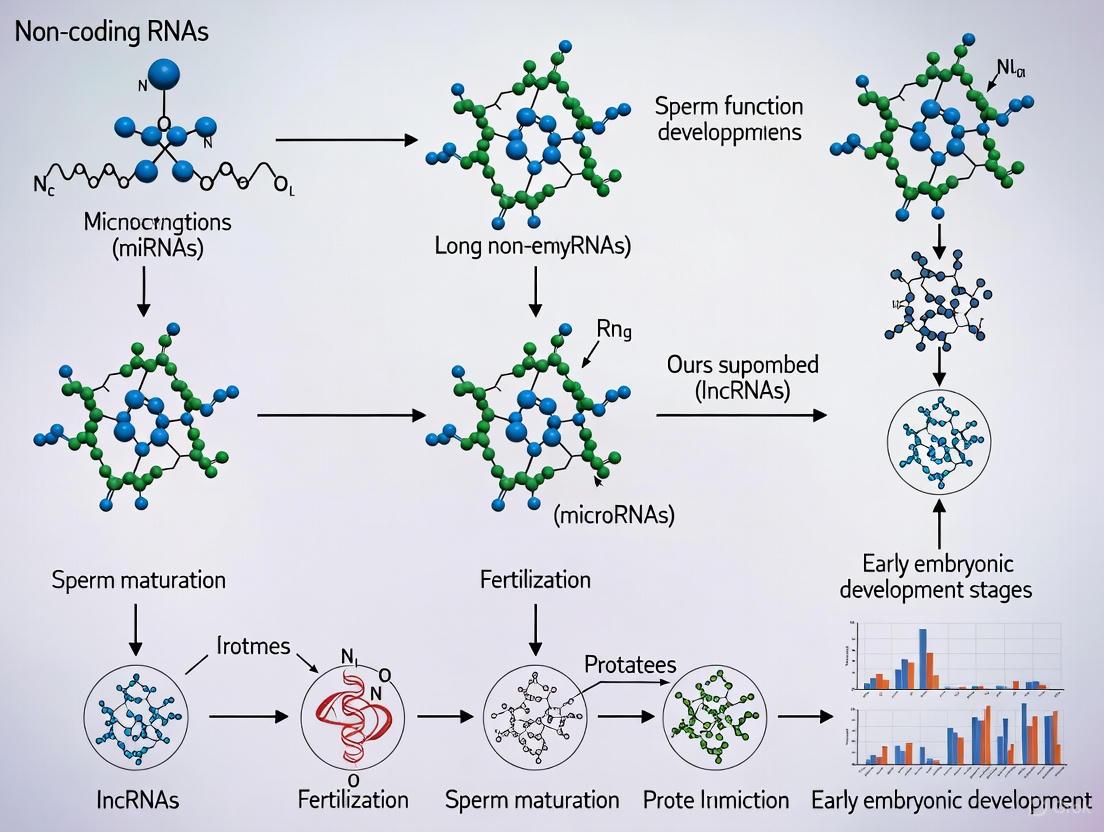
Once considered mere cellular remnants, sperm-borne non-coding RNAs (sncRNAs) are now recognized as crucial epigenetic vectors, transmitting paternal environmental and genetic information to influence embryo development and offspring health.
Beyond DNA: Sperm-Borne Non-Coding RNAs as Epigenetic Regulators of Embryo Development and Clinical Biomarkers
Abstract
Once considered mere cellular remnants, sperm-borne non-coding RNAs (sncRNAs) are now recognized as crucial epigenetic vectors, transmitting paternal environmental and genetic information to influence embryo development and offspring health. This article synthesizes the most recent evidence on the diverse classes of sncRNAs—including miRNAs, tsRNAs, piRNAs, and rsRNAs—detailing their origin, dynamic remodeling during epididymal transit via extracellular vesicles, and functional roles in zygotic gene activation and transgenerational inheritance. We explore the direct correlation between specific sperm sncRNA profiles and clinical IVF outcomes, such as fertilization rate and embryo quality, positioning them as powerful diagnostic biomarkers. Furthermore, we critically assess the methodological frameworks for sncRNA analysis, address challenges in clinical translation, and compare their functional conservation across models, providing a comprehensive resource for researchers and clinicians aiming to leverage this emerging field for diagnostic and therapeutic innovation in reproductive medicine.
The Sperm sncRNA Repertoire: Origins, Dynamics, and Epigenetic Functions
Mammalian sperm are now recognized as complex vectors of paternal information, delivering not only the paternal genome but also a diverse population of small non-coding RNAs (sncRNAs) to the oocyte during fertilization. Once considered mere byproducts of spermatogenesis, these sncRNAs—including microRNAs (miRNAs), tRNA-derived small RNAs (tsRNAs), PIWI-interacting RNAs (piRNAs), and rRNA-derived small RNAs (rsRNAs)—are now understood to be critical regulators of spermatogenesis, early embryonic development, and transgenerational inheritance. This technical review synthesizes current evidence on the identity, origin, and function of these key sncRNAs in mammalian sperm, highlighting their established and potential roles in communicating paternal epigenetic information to the next generation. We provide a detailed analysis of their mechanisms of action, quantitative profiles, and experimental methodologies for their study, framing their significance within the broader context of non-coding RNA biology in reproduction and its implications for clinical diagnostics and therapeutic development.
The traditional view of sperm as a vehicle solely for paternal DNA delivery has been fundamentally revised. It is now established that sperm carry a complex and dynamic repertoire of RNA molecules, including a diverse array of sncRNAs [1]. These sncRNAs are not residual transcriptional noise but are functionally significant molecules implicated in every stage of the male reproductive journey, from the initial differentiation of germ cells to the regulation of gene expression in the early embryo [1] [2].
The study of these molecules bridges molecular biology, reproductive science, and epigenetics. Understanding their roles provides crucial insights into fundamental biological processes like gametogenesis and embryogenesis, with direct implications for human fertility, disease prevention, and the development of novel diagnostic biomarkers [3] [1]. This review focuses on the four principal classes of sncRNAs in mammalian sperm: miRNAs, tsRNAs, piRNAs, and rsRNAs, defining their key characteristics, origins, and functional roles within the context of sperm function and embryo development.
Characterization of Key Small Non-Coding RNAs in Sperm
The population of sncRNAs in sperm is not static; it is dynamically remodeled throughout spermatogenesis and during epididymal transit [1]. The following sections and Table 1 provide a detailed characterization of the four major sncRNA classes.
Table 1: Key Characteristics of Major sncRNA Classes in Mammalian Sperm
| sncRNA Class | Typical Length (nt) | Primary Origin | Key Biogenesis Enzymes | Abundance in Mature Sperm | Core Functional Roles |
|---|---|---|---|---|---|
| miRNAs | 19-23 [4] | Genomic miRNA genes [5] | DROSHA, DICER (DICER1) [4] | ~6% of sncRNAs [6] | Post-transcriptional gene silencing [3]; Regulation of spermatogenesis [5]; Biomarkers for embryo quality [2] |
| tsRNAs | 29-34 [6] | Mature tRNAs [6] | Angiogenin (and other nucleases) [1] | ~56% of sncRNAs (most abundant) [6] | Epigenetic inheritance [1] [6]; Regulation of translation [6] |
| piRNAs | 26-32 [4] | Genomic piRNA clusters [3] | PIWI proteins (Dicer-independent) [3] [4] | ~4% of sncRNAs [6] | Transposon silencing in the germline [4]; Genome defense [4] |
| rsRNAs | 17-40 [6] | Ribosomal RNA precursors (e.g., 28S, 18S) [6] | Unknown nucleases | ~18% of sncRNAs [6] | Sensitive to environmental stressors [6]; Potential biomarkers for sperm quality [6] |
MicroRNAs (miRNAs)
Biogenesis and Mechanism: miRNAs are ~19-23 nucleotide RNAs that associate exclusively with AGO proteins [4]. Their biogenesis involves transcription by RNA polymerase II, followed by sequential processing by the RNase III enzymes DROSHA (in the nucleus) and DICER (in the cytoplasm) to produce the mature miRNA [5] [4]. The mature miRNA is loaded into an AGO protein to form the RNA-induced silencing complex (RISC), which guides post-transcriptional gene silencing via mRNA degradation or translational repression [3] [4].
Roles in Spermatogenesis and as Biomarkers: miRNAs are critical regulators of mammalian spermatogenesis. For instance, the miR-17-92 cluster promotes normal spermatogenesis and spermatogonial stem cell self-renewal, while miR-34b/c and miR-449 are essential for meiotic progression and later stages of spermiogenesis [5]. Beyond development, specific sperm-borne miRNAs have emerged as potent biomarkers for embryo quality in assisted reproductive technology (ART). Higher sperm levels of hsa-let-7g, hsa-miR-30d, and hsa-miR-320b/a are positively correlated with the production of high-quality embryos [2]. Conversely, elevated levels of hsa-miR-15b-5p, hsa-miR-19a-5p, and hsa-miR-20a-5p are associated with negative IVF outcomes and poor sperm quality [7].
tRNA-derived small RNAs (tsRNAs)
Biogenesis and Abundance: tsRNAs, also known as tRFs, are produced from the cleavage of mature tRNAs or tRNA precursors. They are the most abundant class of sncRNAs in human sperm, constituting approximately 56% of the total sncRNA population [6]. They can be categorized into subclasses based on their cleavage site, such as 5´-tRNA halves, 3´-tRNA halves, and shorter 5´-tRFs [6]. In human sperm, 5´-tRNA halves are the predominant form [6].
Function in Epigenetic Inheritance: tsRNAs are recognized as crucial carriers of epigenetic information. Sperm tsRNAs can mediate the transmission of paternal acquired traits, such as diet-induced metabolic disorders, to offspring [6]. They are implicated in influencing embryonic gene expression and are highly sensitive to paternal environmental exposures [1]. Their dysregulation is linked to sperm quality; for example, two 5´-tRFs derived from tRNA-Gly-GCC are downregulated in sperm samples that yield a low rate of good-quality embryos [6].
PIWI-interacting RNAs (piRNAs)
Biogenesis and Association with PIWI Proteins: piRNAs are slightly longer than miRNAs, typically 26-32 nucleotides, and they associate exclusively with PIWI proteins, a germline-specific subclade of Argonaute proteins [3] [4]. Their biogenesis is Dicer-independent and involves a primary processing pathway from long genomic piRNA clusters, often amplified by a secondary "ping-pong" cycle [3].
Primary Role in Genome Defense: The primary and most well-characterized function of piRNAs is to defend the germline genome by silencing transposable elements (TEs). This is achieved by directing the de novo DNA methylation of TEs and through post-transcriptional cleavage of TE transcripts [4]. This role is paramount for maintaining genomic integrity and ensuring fertility. piRNAs are expressed in two major waves during spermatogenesis: pre-pachytene piRNAs in primordial germ cells and pachytene piRNAs during meiosis, with the latter constituting the vast majority [4].
rRNA-derived small RNAs (rsRNAs)
Origin and Characteristics: rsRNAs are fragments derived from various ribosomal RNA (rRNA) precursors, including 5S, 5.8S, 18S, and 28S rRNAs [6]. In human sperm, rsRNAs are the second most abundant sncRNA class after tsRNAs, comprising about 18% of the total sncRNAs, with fragments from the 28S rRNA being the most prevalent [6].
Emerging Roles as Biomarkers: The functional understanding of rsRNAs is less advanced than that of other sncRNAs. However, they have been identified as sensitive to environmental stressors, such as in leukocytospermia patients [6]. Their expression profile is strongly linked to sperm quality and embryo development potential. Specifically, several 28S-derived rsRNAs are downregulated in sperm samples associated with a low rate of good-quality embryos, highlighting their potential use as clinical biomarkers for assessing sperm fertility in IVF [6].
Origin, Dynamics, and Compartmentalization of Sperm sncRNAs
The sncRNA payload of mature sperm is not solely a product of the testis but is dynamically shaped during post-testicular maturation in the epididymis.
- Testicular Origin: During spermatogenesis, meiotic spermatocytes and post-meiotic round spermatids exhibit extraordinarily complex transcriptomes, producing the initial repertoire of sncRNAs [1].
- Post-Testicular Remodeling: A significant reshaping of the sncRNA profile occurs as sperm transit through the epididymis. This remodeling is largely mediated by epididymosomes—extracellular vesicles (EVs) secreted by the epididymal epithelium [1]. Epididymosomes function as "shuttles," delivering new sncRNAs (particularly miRNAs and tsRNAs) to sperm and enriching the copy numbers of existing ones [1]. For example, during transit from the caput to the cauda epididymis, sperm can lose over 100 miRNAs and acquire more than 100 new ones [1]. This process represents a key mechanism of soma-to-sperm communication, whereby the paternal somatic environment can influence the molecular payload of the mature gamete.
- Sperm Compartmentalization: Different classes of sncRNAs are not uniformly distributed within the sperm cell. For instance, miRNAs and tsRNAs are found deeply localized within the sperm nucleus, positioning them to potentially influence paternal chromatin structure or early embryonic transcription [1]. In contrast, the sperm tail is highly enriched in piRNAs [1].
The following diagram illustrates the dynamic journey of sncRNA biogenesis and remodeling from the testis to mature sperm.
Functional Significance in Embryo Development and Epigenetic Inheritance
The transfer of sperm sncRNAs during fertilization represents a direct mechanism for paternal epigenetic influence on the next generation.
- Influence on Embryo Quality: Clinical studies robustly link specific sperm-borne sncRNAs to IVF outcomes. As previously noted, miRNAs like hsa-let-7g are biomarkers for high-quality embryos [2]. The targets of these miRNAs are often genes involved in embryogenesis and cell proliferation, suggesting they actively contribute to shaping the embryonic transcriptional landscape [2]. Furthermore, the dysregulation of specific tsRNAs and rsRNAs is a powerful classifier for predicting the rate of good-quality embryos, even in sperm samples with normal classical parameters [6].
- Mediation of Paternal Environmental Effects: Sperm sncRNAs are a primary vector for the transmission of acquired paternal traits. For example, studies show that injecting sperm sncRNAs from exercise-trained males into normal zygotes is sufficient to recapitulate improved endurance and metabolic traits in the resulting offspring [8]. Mechanistically, these sncRNAs (particularly miRNAs) can directly suppress specific targets in the early embryo, such as Nuclear Receptor Corepressor 1 (NCoR1), thereby reprogramming transcriptional networks to promote mitochondrial biogenesis [8].
Table 2: Specific Sperm sncRNAs as Biomarkers for Reproductive Outcomes
| sncRNA | Type | Association with Reproductive Outcome | Potential Clinical Utility | Citation |
|---|---|---|---|---|
| hsa-let-7g, hsa-miR-30d | miRNA | Positive correlation with high-quality embryo rate | Predictive biomarker for embryo selection in IVF | [2] |
| hsa-miR-15b-5p, hsa-miR-19a-5p | miRNA | Higher expression linked to failed IVF and poor sperm quality | Diagnostic biomarker for male infertility | [7] |
| GlyGCC-30-1, GlyGCC-30-2 | tsRNA (5´-tRF) | Downregulated in sperm with low embryo quality rate | Prognostic biomarker for IVF success | [6] |
| 28S-derived rsRNAs | rsRNA | Downregulated in sperm with low embryo quality rate | Biomarker for functional sperm quality | [6] |
| MT-TS1-Ser1 | mitosRNA | Positive correlation with sperm concentration | Diagnostic biomarker for oligospermia | [2] |
| RNY4-derived sRNA | Y-RNA | Negative correlation with sperm concentration | Diagnostic biomarker for oligospermia | [2] |
Experimental Protocols and Research Toolkit
The reliable study of sperm sncRNAs requires specialized methodologies for sample preparation, sequencing, and data analysis.
Key Experimental Workflow: Small RNA Sequencing from Sperm
The following diagram outlines a standard workflow for sncRNA-Seq from human sperm, as used in recent clinical studies [7] [2] [6].
The Scientist's Toolkit: Essential Research Reagents and Materials
Table 3: Key Research Reagent Solutions for Studying Sperm sncRNAs
| Reagent / Material | Function in Research | Specific Examples / Notes |
|---|---|---|
| Density Gradient Media | Purification of motile sperm from seminal plasma for high-quality RNA extraction. | Products like Percoll or SpermGrad are commonly used [6]. |
| TRIzol Reagent | Simultaneous lysis of sperm cells and denaturation of nucleases for total RNA isolation. | Standard for RNA extraction; followed by column-based cleanup to enrich for small RNAs [6]. |
| Small RNA Library Prep Kits | Preparation of sequencing libraries from the small RNA fraction. | Kits designed for ligating adapters to RNAs in the 15-40 nt range are essential (e.g., from Illumina or NEB) [6]. |
| RT-qPCR Assays | Validation of sequencing results and quantification of specific sncRNAs. | TaqMan MicroRNA Assays for specific miRNAs; custom SYBR Green assays for tsRNAs/rsRNAs [7]. |
| Epididymosome Isolation Kits | Isolation of extracellular vesicles from epididymal fluid to study RNA shuttling. | Typically involve differential centrifugation or commercial EV isolation kits [1]. |
| Microinjection Equipment | Functional validation of sncRNA activity by injecting them into zygotes. | Used to demonstrate causal roles in epigenetic inheritance (e.g., injection of sperm sncRNAs from exercised fathers) [8]. |
The defining players in mammalian sperm—miRNAs, tsRNAs, piRNAs, and rsRNAs—collectively form a sophisticated epigenetic code that extends the functional role of the male gamete far beyond DNA delivery. Their dynamic origins, precise compartmentalization within the sperm cell, and demonstrated capacity to influence embryonic development and offspring phenotype underscore their profound biological significance.
Future research must focus on elucidating the precise mechanistic pathways through which these sperm-borne molecules operate in the oocyte and early embryo. Furthermore, standardizing their profiles as diagnostic biomarkers for clinical infertility and ART outcomes represents a critical translational frontier. As our understanding of these key players deepens, it paves the way for novel therapeutic strategies aimed at correcting epigenetic errors in sperm and ultimately improving reproductive health outcomes across generations.
The mature spermatozoon, once considered a mere vector for paternal DNA, is now recognized as a complex carrier of epigenetic information. Central to this paradigm shift is the discovery of a diverse population of sperm-borne small non-coding RNAs (sncRNAs). These molecules, delivered to the oocyte upon fertilization, have the demonstrated capacity to influence embryonic gene expression, guide early development, and affect offspring health [1]. However, sperm are transcriptionally and translationally silent during their final maturation, raising a critical question: how is their sncRNA payload established and modified? This whitepaper elucidates the sophisticated post-testicular biogenesis and trafficking of sncRNAs, focusing on two key agents: epididymosomes and the cytoplasmic droplet (CD). Framed within the broader context of non-coding RNA research in reproduction, we detail how these systems ensure the precise delivery of sncRNAs to sperm, thereby enabling the transmission of paternal epigenetic information to the next generation [9] [10].
sncRNA Diversity and Significance in Sperm
Spermatozoa carry a complex repertoire of sncRNAs, each class with distinct biogenesis and putative functions. The composition of this profile is not static but is dynamically remodeled as sperm transit through the male reproductive tract.
Table 1: Major Classes of sncRNAs in Mammalian Sperm
| sncRNA Class | Full Name | Key Characteristics & Putative Roles in Sperm/Embryo |
|---|---|---|
| tsRNAs | tRNA-derived small RNAs | Abundant in cauda epididymal sperm; implicated in intergenerational inheritance; can alter embryonic transcriptome and splicing [11] [12]. |
| miRNAs | MicroRNAs | Remodeled during epididymal transit; can regulate post-fertilization embryonic gene expression [1] [9]. |
| piRNAs | Piwi-interacting RNAs | Highly enriched in the sperm tail; primarily associated with transposon silencing in the testis [1]. |
| rsRNAs | rRNA-derived small RNAs | Correlated with sperm quality; abundant but poorly characterized [12]. |
The sncRNA profile is highly sensitive to the paternal environment, and altered profiles have been correlated with male subfertility. Advanced sequencing technologies like PANDORA-seq have revealed that tsRNAs and rsRNAs are particularly abundant and are strongly correlated with key clinical indicators of sperm quality, making them promising biomarkers for conditions like asthenozoospermia and teratozoospermia [12].
The Epididymosome-Mediated sncRNA Delivery Pathway
Biogenesis and Nature of Epididymosomes
Epididymosomes are a class of extracellular vesicles (EVs), typically 50-250 nm in size, that are secreted by the epithelial principal cells of the epididymis in an apocrine manner [1] [9]. Their composition and function exhibit regional heterogeneity, mirroring the segmented functionality of the epididymis itself. These vesicles encapsulate a complex macromolecular cargo, including proteins and a diverse array of sncRNAs, which they shuttle to sperm during epididymal transit [10].
Mechanisms of Cargo Transfer to Sperm
As spermatozoa lack robust endocytic machinery, epididymosomes employ specialized mechanisms for cargo delivery:
- Transient Fusion Pores: Epididymosomes tightly bind to spermatozoa via receptor-ligand interactions involving proteins such as SNAREs and RAB GTPases. This is followed by transient and incomplete membrane fusion, creating a pore for the selective transfer of sncRNA cargo into the sperm cytosol. After delivery, some epididymosomes can detach and re-enter the luminal environment [9].
- Lipid Raft-Mediated Transfer: Both epididymosome and sperm membranes contain specialized microdomains rich in sphingomyelin and cholesterol, known as lipid rafts. Proteins like P25b and SPAM1 are anchored to these rafts via glycosylphosphatidylinositol (GPI), facilitating the targeted delivery of their associated cargo. The MFGE8 protein's RGD motif binding to αV integrin on sperm stimulates signaling pathways that recruit lipid rafts and support fusion mechanisms [9].
Functional Consequences of sncRNA Transfer
Epididymosome-mediated delivery drastically remodels the sperm's sncRNA landscape. Key changes during transit from the caput to cauda epididymis include:
- A dramatic quantitative increase and qualitative reshaping of tsRNA and miRNA profiles. For instance, one study recorded the loss of 113 miRNAs and the acquisition of 115 new miRNAs during this transit [1].
- The functional significance of this remodeling is profound. Experiments demonstrate that embryos sired by caput epididymal sperm, which have not completed their sncRNA maturation, often fail to implant or develop properly. Crucially, these developmental defects can be rescued by microinjecting sncRNAs purified from cauda sperm, directly implicating epididymosome-delivered sncRNAs in supporting preimplantation development [9].
The Cytoplasmic Droplet (CD) Pathway in sncRNA Trafficking
Biogenesis and Molecular Composition of the CD
The cytoplasmic droplet is a conserved, cytoplasm-filled structure located at the sperm flagellum's neck. Contrary to being a passive remnant of spermiogenesis, recent evidence indicates it is an actively formed organelle. Its formation is governed by a specific vesicular pathway originating from the trans-Golgi network (TGN) and orchestrated by the transmembrane protein SYPL1 [13]. SYPL1 defines a class of constitutive cytoplasmic transport vesicles that deliver and sequester saccular elements and key metabolic enzymes, such as Hexokinase 1 (HK1), into the forming CD of step 16 spermatids [13].
The CD as a sncRNA Delivery Vehicle
Beyond its role in sperm metabolism, the CD has been identified as a vehicle for sncRNA exchange. Research has shown that the CD contains specific sncRNAs, particularly tsRNAs and rsRNAs [1]. A 2024 study provided evidence that during epididymal maturation, sperm exchange small RNAs with CDs, which is a primary mechanism for the enrichment of tsRNAs in caput epididymal sperm [1]. This positions the CD as a complementary or alternative sncRNA delivery system to epididymosomes, potentially with a preference for certain sncRNA biotypes.
Key Experimental Models and Methodologies
The insights into sncRNA trafficking are underpinned by sophisticated experimental models and techniques.
Table 2: Key Experimental Reagents and Models for Studying sncRNA Trafficking
| Reagent/Model | Function/Description | Key Application in the Field |
|---|---|---|
| SYPL1 KO Mouse | Genetic model lacking the SYPL1 protein, essential for CD formation. | Revealed the role of Golgi-derived vesicles in forming CD saccules and their critical importance for sperm motility and male fertility [13]. |
| PANDORA-seq | Advanced sncRNA sequencing method that circumvents issues with RNA modifications. | Uncovered the extensive landscape of tsRNAs and rsRNAs in human sperm and their correlation with sperm quality [12]. |
| In vitro EV-Sperm Co-incubation | Protocol to test direct cargo transfer from isolated epididymosomes to sperm. | Demonstrated that epididymosomes can directly deliver miRNAs and tRFs, expanding their copy number in sperm [1]. |
| Intracytoplasmic Sperm Injection (ICSI) | Assisted reproductive technique using sperm from different epididymal regions. | Compared the developmental potential of embryos from testicular, caput, and cauda sperm, establishing the functional importance of epididymal sncRNA remodeling [9]. |
Detailed Protocol: In vitro Analysis of Epididymosome-sncRNA Transfer
This protocol assesses the functional transfer of sncRNAs from epididymosomes to sperm in vitro.
- Epididymosome Isolation: Collect luminal fluid from the caput or cauda epididymis. Centrifuge at 10,000 × g for 30 minutes to remove cell debris, then ultracentrifuge the supernatant at 100,000 × g for 70 minutes to pellet epididymosomes [1] [9].
- Sperm Collection: Recover sperm from the cauda epididymis or vas deferens of adult males.
- Co-incubation: Incubate purified epididymosomes with sperm in a physiological buffer (e.g., PBS) for 45-60 minutes at 37°C under 5% CO₂.
- Post-incubation Processing: Wash sperm thoroughly to remove unbound epididymosomes.
- Downstream Analysis:
- sncRNA Profiling: Extract total RNA from the sperm and perform small RNA-seq (e.g., PANDORA-seq) to identify newly acquired sncRNA species [12].
- Functional Validation: Microinject the isolated sncRNAs into zygotes (e.g., from caput sperm) and monitor embryonic development to assess functional impact [9].
Integrated Trafficking Pathways and Functional Outcomes
The following diagram synthesizes the coordinated roles of epididymosomes and the cytoplasmic droplet in delivering sncRNAs to sperm, and the subsequent impact on the embryo.
Implications for Research and Therapeutics
Understanding these trafficking pathways opens new frontiers in male fertility and reproductive medicine. The sncRNA signature of sperm, shaped by epididymosomes and the CD, serves as a sensor of paternal health and environmental exposure. Specific tsRNA/rsRNA signatures are emerging as highly effective clinical biomarkers (AUC ≥ 0.83) for predicting sperm abnormalities, offering a significant improvement over conventional semen analysis [12]. Furthermore, this research foundation supports the exploration of novel therapeutic strategies, such as modulating EV cargo to correct defective sperm sncRNA profiles or developing targeted interventions to prevent the transmission of deleterious epigenetic information.
The Scientist's Toolkit: Essential Research Reagents
Table 3: Key Research Reagent Solutions for sncRNA Trafficking Studies
| Reagent / Material | Function / Application | Specific Examples / Notes |
|---|---|---|
| SYPL1 KO Mouse Model | In vivo model to study CD biogenesis and function. | Reveals the role of Golgi-derived vesicles; male mice are infertile with disrupted CD structure [13]. |
| PANDORA-seq Kit | Comprehensive sncRNA profiling, especially for modified tsRNAs/rsRNAs. | Superior to traditional smRNA-seq for capturing the full spectrum of sperm sncRNAs [12]. |
| Antibody against hnRNPAB | Investigate protein-sncRNA interactions in the epididymis. | Used to demonstrate binding and regulation of tRFValCAC levels in epididymosomes [11]. |
| Differential Ultracentrifugation Protocol | Standard method for isolating pure populations of epididymosomes. | Critical for downstream co-incubation and cargo analysis experiments [1] [9]. |
| ICSI (Intracytoplasmic Sperm Injection) | Functional assay for embryonic developmental potential. | Compares competence of sperm from testis, caput, and cauda epididymis [9]. |
| Lipid Raft Disrupting Agents | Experimental tools to probe the mechanism of vesicle-sperm fusion. | e.g., Methyl-β-cyclodextrin; used to validate lipid raft-mediated cargo transfer [9]. |
Sperm maturation represents a complex journey during which spermatozoa acquire motility and fertilizing capacity. Emerging evidence positions small non-coding RNAs (sncRNAs) as crucial epigenetic regulators throughout this process, carrying implications that extend to embryonic development and transgenerational inheritance. The sncRNA payload within sperm is not a static remnant of spermatogenesis but undergoes dynamic remodeling during epididymal transit, primarily through interactions with epididymosomes—extracellular vesicles that deliver sncRNA cargo to sperm [14] [15]. This whitepaper synthesizes current research on the spatiotemporal dynamics of sperm sncRNAs, detailing the quantitative shifts in sncRNA classes from the testis to ejaculated sperm, outlining advanced methodological approaches for their profiling, and discussing their potential functional significance in male fertility and early embryonic programming. Understanding these mechanisms provides a critical framework for developing diagnostic biomarkers and therapeutic strategies for male factor infertility.
Quantitative Dynamics of sncRNA Classes During Sperm Maturation
The composition of sncRNAs in sperm undergoes dramatic restructuring as cells transit from the testis through the epididymis to become ejaculated sperm. This remodeling involves both a bulk shift in the abundance of sncRNA classes and region-specific alterations in particular sncRNA types.
Global Reshaping of the sncRNA Landscape
Research in cattle models provides a comprehensive quantitative perspective on these changes. In testicular parenchyma, piRNAs dominate the sncRNA profile, accounting for approximately 78% of all sncRNAs. This proportion decreases significantly during epididymal transit, falling to 57% in the caput region and further declining to just 13% in the cauda region. A slight increase to 18% is observed in ejaculated sperm [14]. Conversely, miRNAs demonstrate an inverse pattern, representing only about 1% of sncRNAs in testicular parenchyma but increasing progressively along the male tract [14]. Transfer RNA-derived small RNAs (tsRNAs) and ribosomal RNA-derived fragments (rsRNAs) also show acquisition patterns during epididymal maturation, with specific regional enrichments noted [14].
Table 1: Dynamics of sncRNA Classes During Sperm Maturation in Cattle Models
| Sampling Region | piRNAs | miRNAs | tsRNAs | rsRNAs |
|---|---|---|---|---|
| Testis Parenchyma | ~78% | ~1% | Information Not Provided | Information Not Provided |
| Epididymis Caput | ~57% | Increasing | Increasing | Increasing |
| Epididymis Corpus | ~13% | Increasing | Increasing | Peak Expression |
| Epididymis Cauda | ~13% | Enriched | Enriched | Decreasing |
| Ejaculated Sperm | ~18% | Enriched | Enriched | Decreasing |
Regional Specificities and Nucleotide Features
Beyond bulk abundance changes, distinct regional specificities emerge. The epididymis corpus displays unique characteristics, containing mainly 20 nt long piRNAs compared to the 30 nt length predominant in other locations [14]. Nucleotide composition analysis further reveals mechanistic insights: piRNAs predominantly bear a uracil (U) residue at their 5′ end (U1 piRNAs) across most regions. However, in the corpus and cauda, the expression of piRNAs becomes dominated by non-U1 piRNAs, and A10 enrichment (adenine at position 10) is observed specifically in the corpus, where A10 piRNAs constitute about 60% of expression [14]. These findings suggest that sperm acquire piRNAs through different biogenetic mechanisms along the male tract.
Methodological Approaches for sncRNA Profiling
Accurate profiling of the sperm sncRNAome presents technical challenges due to the complex modifications these molecules often carry. Traditional small RNA sequencing (smRNA-seq) methods primarily target miRNAs and frequently fail to adequately capture other abundant sncRNAs like tsRNAs and rsRNAs, whose complex RNA modifications and non-canonical terminal structures impede adapter ligation and reverse transcription [12] [16].
Overcoming Technical Limitations with PANDORA-seq
The PANDORA-seq (Panoramic RNA Display by Overcoming RNA modification aborted sequencing) methodology effectively addresses these limitations. This approach employs enzymatic pretreatment of small RNAs (15–50 nucleotide range) using AlkB hydroxylase and its mutants, along with T4 Polynucleotide Kinase (PNK). This treatment eliminates sequencing-affecting modifications, thereby revealing a previously "hidden" sncRNAome and significantly improving annotation efficiency, particularly for tsRNAs and rsRNAs [12] [16].
Table 2: Key Experimental Protocols for sncRNA Analysis in Sperm
| Protocol Step | Methodology Details | Functional Purpose |
|---|---|---|
| Sperm Collection | Isolation from testicular parenchyma, epididymis (caput, corpus, cauda), and ejaculated semen; somatic cell contamination assessment via microscopy and GPX5 ddCts [14]. | Ensures pure sperm population for analysis, critical for accurate sncRNA profiling. |
| RNA Extraction | Use of TRIzol reagent or miRNeasy Micro Kit; quality assessment via agarose gel electrophoresis and Nanodrop spectrophotometer [14] [16]. | High-quality, intact RNA extraction is foundational for reliable sequencing results. |
| RNA Demodification (PANDORA-seq) | Sequential enzymatic treatment: AlkB (37°C, 30 min) in HEPES buffer with co-factors, followed by T4 PNK (37°C, 20 min) in PNK buffer with ATP [16]. | Removes RNA modifications that hinder cDNA library construction, enabling comprehensive sncRNA detection. |
| Library Prep & Sequencing | Illumina small RNA library kits (e.g., QIAseq miRNA Library Kit); size selection (15–45 nt) via PAGE; sequencing on Illumina platforms (e.g., NextSeq) [14] [16]. | Generates sequenceable libraries representing the full sncRNA complement. |
| Bioinformatic Analysis | Annotation with specialized tools (e.g., SPORTS1.1); sequential mapping to miRBase, rRNA/YRNA databases, GtRNAdb, piRBase, Ensembl/Rfam [16]. | Accurate classification and quantification of diverse sncRNA biotypes from raw sequencing data. |
Diagram 1: PANDORA-seq Workflow for Sperm sncRNA Profiling
The Scientist's Toolkit: Essential Research Reagents
Table 3: Essential Research Reagents for Sperm sncRNA Studies
| Reagent / Kit | Specific Function | Research Application |
|---|---|---|
| TRIzol Reagent | Lyses cells and denatures proteins while maintaining RNA integrity. | Standard for total RNA isolation from sperm and testicular tissues [14] [16]. |
| miRNeasy Micro Kit (Qiagen) | Purifies high-quality small RNAs (<200 nt) using silica-membrane technology. | Optimized for enrichment of sncRNAs from limited sperm samples [15]. |
| AlkB Hydroxylase | Oxidatively demethylates various RNA bases (e.g., m¹A, m³C). | Key enzyme in PANDORA-seq to remove modifications blocking reverse transcription [16]. |
| T4 Polynucleotide Kinase (PNK) | Catalyzes the transfer of phosphate groups to 5' ends of RNA/DNA. | Remedies 3'-phosphate termini preventing adapter ligation in modified sncRNAs [16]. |
| QIAseq miRNA Library Kit (QIAGEN) | Constructs sequencing libraries from small RNA input, incorporating UMIs. | Prepares NGS libraries for sncRNA profiling; UMIs enable accurate deduplication [14] [16]. |
| SPORTS1.1 Software | Annotates sncRNAs by mapping to multiple databases (miRBase, GtRNAdb, piRBase, etc.). | Critical bioinformatic tool for classifying sequenced reads into sncRNA biotypes [16]. |
Functional Implications in Embryonic Development and Biomarker Potential
The sncRNA cargo delivered to the oocyte during fertilization is not merely residual but appears functionally significant in early embryonic development. Sperm-borne sncRNAs are increasingly recognized as epigenetic carriers that can modulate zygotic gene expression and influence offspring physiology [15] [17].
Correlations with Embryo Quality and IVF Outcomes
Clinical studies in humans demonstrate that specific sperm-borne miRNAs correlate strongly with embryo quality in IVF treatments. For instance, higher expression of hsa-let-7g, hsa-miR-30d, and hsa-miR-320b/a in sperm is associated with increased rates of high-quality embryos. Gene Ontology analysis of predicted targets for these miRNAs reveals enrichment for biological processes related to embryogenesis, development, and cell proliferation [2]. Conversely, high levels of specific rsRNAs in sperm are negatively correlated with embryo quality [2]. Furthermore, miRNAs such as hsa-miR-15b-5p, hsa-miR-19a-5p, and hsa-miR-20a-5p show significant associations with negative IVF outcomes, including failed live births. Diagnostic models based on these miRNAs yield AUC values between 0.71-0.76, highlighting their potential as clinical biomarkers [7].
Environmental Influences and sncRNA Remodeling
The sperm sncRNA profile demonstrates plasticity in response to paternal environment. Factors including diet, exercise, and environmental exposures directly influence sncRNA levels, potentially reprogramming embryonic development and affecting offspring phenotypes [15]. Advanced paternal age represents another significant factor linked to altered sncRNA expression in sperm, with potential consequences for reproductive outcomes and offspring health [18]. Heat stress studies in mice using PANDORA-seq have revealed dynamic shifts in testicular sncRNAs, providing mechanistic insights into how environmental stressors contribute to male infertility through epigenetic alterations [16].
Diagram 2: sncRNA Lifecycle from Sperm Maturation to Offspring Effects
The journey of sperm sncRNAs from testis to ejaculate represents a critical dimension of male reproductive biology, with far-reaching implications for epigenetic inheritance. The documented dynamics—specifically the decrease in piRNAs and the progressive acquisition of miRNAs, tsRNAs, and rsRNAs during epididymal maturation—underscore that the sperm sncRNAome is not a static legacy of spermatogenesis but is actively remodeled [14]. This remodeling is mediated largely by epididymosomes and potentially involves in situ production or modification of sncRNAs [14] [15].
Advanced profiling techniques like PANDORA-seq are revealing previously unappreciated complexity in the sperm sncRNAome, particularly among modified tsRNAs and rsRNAs, which show strong correlations with sperm quality parameters [12]. The emergence of specific sncRNA signatures as biomarkers for sperm concentration, fertilization rate, and embryo quality in clinical IVF settings highlights the translational potential of this research [2] [7]. Future investigations should focus on elucidating the precise mechanisms by which sperm-delivered sncRNAs influence zygotic genome activation and early embryonic gene expression programs, potentially opening new avenues for diagnosing and treating male factor infertility and improving outcomes in assisted reproductive technologies.
Over the past decade, sperm-borne small non-coding RNAs (sncRNAs) have emerged as crucial epigenetic vectors that transmit paternal information to the oocyte, significantly influencing zygotic genome activation and early embryonic development. Once considered mere cellular byproducts, these RNA molecules—including microRNAs (miRNAs), piwi-interacting RNAs (piRNAs), and tRNA-derived small RNAs (tsRNAs)—are now recognized as key regulators capable of reshaping the embryonic transcriptional landscape independent of DNA sequence changes. This technical review synthesizes current mechanistic understanding of how sperm-delivered sncRNAs bypass maternal degradation systems, interface with the oocyte's RNA machinery, and direct epigenetic reprogramming events during the maternal-to-zygotic transition. We further present standardized experimental frameworks for investigating these phenomena, along with validated reagent solutions and analytical workflows to advance research in this rapidly evolving field. The emerging paradigm confirms that sperm contribute far more than half the genome—they deliver precise regulatory instructions that orchestrate the earliest stages of embryonic programming.
The traditional view of sperm as mere DNA delivery vehicles has been fundamentally overturned by research demonstrating their complex cargo of regulatory molecules, particularly sncRNAs. These sperm-borne sncRNAs serve as critical epigenetic determinants of embryonic competence, carrying information about the paternal environment and physiological status directly to the next generation [1] [17]. The sncRNA payload undergoes dynamic remodeling during spermatogenesis and epididymal transit, with extracellular vesicles (particularly epididymosomes) playing crucial roles in delivering specific RNA subsets to mature sperm [1].
The classification of sncRNAs relevant to zygotic modulation includes several distinct categories: microRNAs (miRNAs) comprising approximately 21-23 nucleotides that regulate gene expression post-transcriptionally; piwi-interacting RNAs (piRNAs) spanning 26-31 nucleotides that primarily silence transposable elements; tRNA-derived small RNAs (tsRNAs) produced through specific cleavage of tRNAs; and other fragments derived from ribosomal RNA (rRNA) and small nucleolar RNA (snoRNA) [1] [3]. Upon fertilization, these paternally-supplied RNAs must navigate the oocyte's robust RNA degradation systems and interface with maternal factors to exert influence on the emerging embryonic transcriptome.
Table 1: Major Classes of Sperm-Delivered sncRNAs with Demonstrated Roles in Embryonic Development
| sncRNA Class | Length (nt) | Primary Biogenesis | Key Functions in Zygotic Development |
|---|---|---|---|
| miRNA | 21-23 | Dicer-dependent processing of hairpin precursors | Post-transcriptional regulation of maternal mRNAs; fine-tuning of first cleavage division |
| piRNA | 26-31 | Dicer-independent processing of long precursors | Transposon silencing; maintenance of genomic integrity |
| tsRNA | 28-36 | Angiogenin-mediated cleavage of mature tRNAs | Epigenetic regulation; potential modulation of translation in early embryos |
| rsRNA | 20-30 | Processing of ribosomal RNA | Biomarkers of embryo quality; regulatory functions under investigation |
The transmission of sncRNAs represents a sophisticated biological channel for paternal epigenetic inheritance, allowing environmentally-acquired traits to be communicated to offspring without altering the DNA sequence itself [1]. This review delineates the precise molecular mechanisms underlying this phenomenon, from sperm-egg fusion through zygotic genome activation, providing technical guidance for researchers investigating this paradigm-shifting mode of inheritance.
Molecular Mechanisms of sncRNA-Mediated Zygotic Regulation
Sperm sncRNA Delivery and Processing in the Oocyte
Upon fertilization, sperm-borne sncRNAs must successfully navigate the oocyte's cytoplasmic environment, which contains abundant RNases and RNA surveillance mechanisms. The current evidence suggests that a subset of paternal sncRNAs avoids degradation through strategic compartmentalization within the sperm nucleus or association with protective RNA-binding proteins [1]. Specific sncRNAs, particularly certain tsRNAs and miRNAs, have been detected deep within the sperm nucleus, potentially facilitating their protected transfer to the oocyte [1].
Once delivered, these paternal RNAs interface with the maternal RNA machinery through several documented mechanisms:
Direct mRNA Targeting: Sperm-derived miRNAs can incorporate directly into the oocyte's RNA-induced silencing complex (RISC) and guide cleavage or translational repression of complementary maternal mRNAs [19]. For example, sperm-borne miR-34c has been demonstrated as required for the first cleavage division in mouse models [17].
Epigenetic Reprogramming: Certain tsRNAs have been implicated in directing DNA methylation and histone modifications during early embryonic development, potentially through interactions with the embryonic epigenetic machinery [1].
Competitive Endogenous RNA (ceRNA) Networks: Some sperm RNAs may function as molecular sponges that sequester maternal miRNAs, thereby de-repressing their target mRNAs and altering the embryonic transcriptome [19].
The diagram below illustrates the journey of sperm sncRNAs from spermatogenesis through their functional roles in the zygote:
Specific Regulatory Pathways and Evidence
Research has elucidated several specific pathways through which sperm sncRNAs modulate embryonic gene expression. A 2025 study examining human IVF outcomes identified distinct sperm miRNAs correlated with embryo quality, including hsa-let-7g, hsa-miR-30d, and hsa-miR-320b/a [2]. Bioinformatic analysis revealed that predicted targets of these miRNAs are enriched for genes involved in embryonic development, suggesting functional roles in regulating key developmental processes.
The regulatory influence of sperm sncRNAs appears particularly critical during the maternal-to-zygotic transition (MZT), when developmental control shifts from maternal to embryonic transcripts. During this window, sperm-derived RNAs may:
- Fine-tune the timing of zygotic genome activation (ZGA) through modulation of maternal transcription factors
- Influence embryonic cell fate decisions by regulating key signaling pathways
- Maintain genomic stability through piRNA-mediated transposon control [19]
Table 2: Clinically Significant Sperm sncRNAs Linked to Embryonic Development Outcomes in Human Studies
| sncRNA | Expression Correlation with Embryo Quality | AUC Value for Prediction | Proposed Functional Role |
|---|---|---|---|
| hsa-let-7g | Positive correlation | 0.812 | Regulation of developmental timing genes |
| hsa-miR-30d | Positive correlation | 0.712 | Modulation of cell differentiation pathways |
| hsa-miR-320b/a | Positive correlation | Not specified | Potential regulation of pluripotency factors |
| hsa-miR-15b-5p | Negative correlation with live birth | 0.76 | Associated with poor IVF outcomes |
| hsa-miR-19a-5p | Negative correlation with live birth | 0.71 | Biomarker for sperm impairments |
| hsa-miR-20a-5p | Negative correlation with live birth | 0.74 | Linked to hormonal markers (FSH, LH) |
Evidence from animal models demonstrates that interference with specific sperm sncRNAs can disrupt early embryogenesis. For instance, experimental depletion of sperm miR-34c results in fertilization failure or developmental arrest at the first cleavage division in mice, underscoring the functional importance of individual sperm RNAs [17]. Similarly, alterations to the sperm tsRNA profile induced by environmental exposures have been shown to affect metabolic gene expression in resulting offspring [1].
Experimental Methodologies for sncRNA Research
sncRNA Isolation and Sequencing Protocols
Standardized methodologies for sperm sncRNA analysis are essential for generating reproducible data. The following workflow represents a validated approach for sncRNA isolation, sequencing, and data analysis:
Critical considerations for experimental design include:
- Sperm Purification: Use of density gradient centrifugation or swim-up protocols to isolate motile sperm populations free of somatic cell contamination [7]
- RNA Quality Assessment: RNA Integrity Number (RIN) evaluation via Bioanalyzer or TapeStation systems, with specific attention to the small RNA fraction
- Library Preparation Strategy: Selection of protocol optimized for small RNA species (<200 nt) with inclusion of appropriate size selection steps
- Sequencing Depth: Minimum of 10 million reads per sample to adequately capture low-abundance sncRNA species
- Batch Effects: Incorporation of interleaved sample processing and statistical batch correction to minimize technical variability
Functional Validation Approaches
Following identification of candidate sncRNAs, functional validation is essential to establish causal relationships with embryonic phenotypes. Key methodologies include:
- Heterologous ICSI Models: Injection of human sperm or purified sncRNAs into mouse oocytes to assess oocyte activation and early embryonic development [20]
- Antagomir-Mediated Knockdown: Introduction of sequence-specific inhibitors to deplete specific sncRNAs in sperm prior to fertilization
- Single-Embryo RNA Sequencing: Transcriptomic analysis of individual embryos following fertilization with sncRNA-manipulated sperm
- Live-Cell Imaging of Calcium Signaling: Evaluation of oocyte activation capacity via confocal microscopy with calcium-sensitive dyes [20]
For the mouse oocyte activation test (MOAT), the protocol involves: (1) collection of metaphase II oocytes from superovulated mice, (2) Piezo-driven ICSI with human spermatozoa, (3) assessment of pronuclear formation 6-8 hours post-injection, and (4) comparison to fertilization rates with control sperm from fertile donors [20].
The Scientist's Toolkit: Essential Research Reagents
Table 3: Essential Research Reagents for Investigating Sperm sncRNA Function
| Reagent Category | Specific Products/Assays | Research Application | Technical Considerations |
|---|---|---|---|
| RNA Isolation Kits | miRNeasy Micro Kit, mirVana miRNA Isolation Kit | Small RNA enrichment from limited sperm samples | Include DNase treatment; assess RNA quality via Bioanalyzer Small RNA assay |
| Library Prep Kits | NEBNext Small RNA Library Prep Set, QIAseq miRNA Library Kit | sncRNA sequencing library construction | Incorporate unique molecular identifiers (UMIs) to reduce PCR bias |
| Sequencing Platforms | Illumina NextSeq 550, NovaSeq 6000 | High-throughput sncRNA profiling | 75-cycle single-read runs sufficient for sncRNA mapping |
| Bioinformatics Tools | Cutadapt, HISAT2, FeatureCounts, DESeq2 | Read processing, alignment, and differential expression | Implement multi-mapping aware quantification for piRNAs |
| Validation Assays | TaqMan Advanced miRNA Assays, SYBR Green RT-qPCR | Candidate sncRNA verification | Use appropriate endogenous controls (e.g., snoRNAs) |
| Functional Tools | Antagomirs, Locked Nucleic Acids (LNAs) | sncRNA inhibition studies | Optimize delivery conditions for sperm pre-incubation |
| Animal Models | CD-1, C57BL/6 mice | Heterologous fertilization assays | Control for mouse strain-specific oocyte competence |
The mechanistic understanding of how sperm-delivered sncRNAs modulate zygotic gene expression has expanded dramatically, revealing a sophisticated epigenetic communication system that transmits paternal information to the next generation. The evidence now convincingly demonstrates that specific sperm sncRNAs, including particular miRNAs and tsRNAs, survive fertilization and actively participate in reshaping the embryonic transcriptome during early development.
Future research directions should focus on: (1) elucidating the precise molecular mechanisms that enable sperm sncRNAs to evade oocyte degradation systems, (2) developing more physiologically relevant in vitro fertilization models for human-specific functional studies, and (3) exploring the therapeutic potential of modulating sperm sncRNA profiles to improve embryonic outcomes in clinical contexts. As technologies for single-cell RNA sequencing and spatial transcriptomics continue to advance, researchers will gain unprecedented resolution into the spatiotemporal dynamics of sperm sncRNA function within the earliest stages of embryonic development.
The investigation of sperm sncRNAs represents a frontier in reproductive biology with far-reaching implications for understanding transgenerational inheritance, embryonic competence, and the paternal contribution to offspring health. The methodologies and frameworks presented herein provide a foundation for rigorous experimental approaches in this rapidly evolving field.
The Developmental Origins of Health and Disease (DOHaD) paradigm establishes that an individual's health can be profoundly shaped by environmental influences experienced during early development [21]. Beyond maternal influences, emerging evidence highlights the paternal preconception period as a critical window during which a father's life experiences can program the health of his offspring. Central to this phenomenon are small non-coding RNAs (sncRNAs) carried by sperm, which serve as key vectors for the transmission of paternal environmental information to the next generation [21] [22].
Spermatozoa deliver not only the paternal genome but also a complex population of sncRNAs to the oocyte during fertilization [2] [23]. This review examines how diverse paternal environmental exposures—including diet, stress, toxins, and aging—reshape the sperm sncRNA cargo, and how these alterations influence embryonic development and offspring metabolic health, neurological function, and disease risk. Understanding these mechanisms provides new insights for therapeutic interventions and diagnostic biomarkers in reproductive medicine.
The sncRNA Landscape in Spermatozoa
Spermatozoa harbor a diverse repertoire of sncRNAs, which are traditionally classified by biotype and function. The distribution of these RNA species changes dynamically in response to environmental cues and can be selectively loaded into sperm during epididymal maturation [23].
Table 1: Major Classes of Small Non-Coding RNAs in Spermatozoa
| sncRNA Class | Average Length | Primary Functions | Role in Embryogenesis |
|---|---|---|---|
| miRNA (microRNA) | ~22 nt | Post-transcriptional gene regulation via mRNA degradation/translational repression | Regulates maternal-to-zygotic transition; controls cell proliferation and differentiation pathways [2] [24] |
| tsRNA (tRNA-derived small RNA) | 28-36 nt | Transgenerational inheritance of metabolic phenotypes; potential regulation of translation | Contributes to intergenerational inheritance of acquired metabolic disorders; may modulate epigenetic state in early embryo [22] [23] |
| rsRNA (rRNA-derived fragment) | Varies | Biomarker for sperm quality and embryo viability | Elevated levels associated with reduced high-quality embryo formation in IVF [2] |
| piRNA (PIWI-interacting RNA) | 24-31 nt | Transposon silencing in germ cells; maintenance of genomic integrity | Essential for safeguarding germline genome; dysregulation linked to infertility [25] [24] |
| mitosRNA (Mitochondrial RNA) | Varies | Mitochondrial function; biomarker for sperm concentration | Fragments from mitochondrial tRNAs upregulated in high-concentration sperm samples [2] |
The sncRNA pool in mature sperm is not static but is continually refined throughout spermatogenesis and epididymal transit. During maturation in the epididymis, sperm sncRNA profiles are modified through interactions with epididymosomes—small extracellular vesicles released from epididymal epithelial cells that can transfer sncRNA cargo into sperm [21]. This post-testicular modification represents a critical window where environmental factors can imprint lasting changes on the sperm sncRNA profile.
Environmental Exposures and Their Impact on Sperm sncRNA
Dietary Influences
Paternal nutrition significantly alters the sncRNA profile of sperm, with profound consequences for offspring metabolic health. Multiple studies demonstrate that high-fat diets (HFD) induce changes in sperm tsRNAs and miRNAs that are associated with metabolic disturbances in offspring [22] [23].
A 2024 Nature study employed a sophisticated paradigm to dissect epididymal versus testicular contributions, revealing that epididymal spermatozoa, but not developing germ cells, are particularly sensitive to dietary influences [23]. After just two weeks of HFD exposure, mouse sperm showed significant upregulation of mitochondrial tRNAs (mt-tRNAs) and their fragments (mt-tsRNAs), with concomitant glucose intolerance and insulin resistance in male offspring. This effect was not observed when the dietary exposure occurred exclusively during spermatogenesis, highlighting the epididymis as a primary environmental sensor [23].
Human cohort data corroborate these findings, showing that sperm mt-tsRNAs correlate with paternal body mass index (BMI), and paternal overweight at conception doubles offspring obesity risk [23]. These diet-induced changes to the sperm sncRNA cargo represent a plausible mechanism for the intergenerational transmission of metabolic disease.
Toxicant Exposures
Environmental toxicants, including flame retardants like BDE-47, profoundly reshape the sperm sncRNA landscape. Research in rats demonstrates that perinatal exposure to BDE-47 modifies age-dependent changes in sncRNA profiles, altering the expression of miRNAs and piRNAs involved in developmental and metabolic processes [25].
These changes have significant functional implications, as sncRNAs altered by toxicant exposure target protein-coding genes enriched for developmental and metabolic functions. Additionally, piRNAs affected by BDE-47 exposure show enrichment for long terminal repeat (LTR) targets, suggesting potential impacts on transposon silencing and genomic stability [25].
Other studies have identified sncRNA alterations in response to paternal exposure to cadmium, acrylamide, and benzo(a)pyrene, with associated effects on offspring metabolism, learning capability, and sexual development [21]. These findings highlight how diverse chemical exposures can hijack epigenetic pathways to influence subsequent generations.
Psychosocial Stress
Paternal stress experiences before conception induce reproducible changes in offspring neurodevelopment and stress responsivity, mediated largely through alterations in sperm sncRNAs. Preclinical models demonstrate that chronic variable stress exposure in male mice results in offspring with blunted hypothalamic-pituitary-adrenal (HPA) axis responses and altered expression of glucocorticoid-responsive genes [21].
Mechanistically, these effects are linked to stress-induced changes in sperm miRNAs, including altered levels of let-7 family miRNAs, which are known regulators of growth and insulin signaling [21] [2]. Injection of sperm RNAs from stressed males into normal zygotes recapitulates the behavioral and neuroendocrine phenotypes observed in their biological offspring, establishing a causal role for these RNA molecules [22].
Human studies of Holocaust survivor descendants have identified differential DNA methylation in stress-regulatory genes such as FKBP5, suggesting that similar mechanisms may operate in humans, though confounding factors complicate interpretation [26].
Advanced Paternal Age
The trend toward delayed parenthood in developed countries has heightened interest in how advancing paternal age affects the sperm epigenome and offspring health. Aging induces profound changes in the sperm sncRNA profile, with clear transitions in RNA subtypes between young pubertal and mature life stages [25].
In rats, aging is associated with decreased representation of rRNA and lncRNA fragments, alongside increased abundance of tRNA and miRNA fragments [25]. These age-related sncRNA changes are enriched for targets involved in neurodevelopmental and psychiatric disorders, potentially explaining the established epidemiological links between advanced paternal age and increased risk for conditions like schizophrenia and autism spectrum disorders [25].
Diagram Title: Paternal Exposure Impact on Sperm sncRNA and Offspring
Molecular Mechanisms of sncRNA-Mediated Inheritance
Sperm sncRNA Delivery and Embryonic Programming
At fertilization, sperm-delivered sncRNAs are introduced into the oocyte, where they can influence embryonic development through multiple mechanisms. Single-embryo transcriptomics of genetically hybrid two-cell embryos has demonstrated the sperm-to-oocyte transfer of mitochondrial tRNAs (mt-tRNAs) at fertilization and suggested their involvement in controlling early embryo transcription [23].
Sperm-borne miRNAs, such as let-7g and miR-30d, can regulate early embryonic gene expression by targeting specific mRNAs critical for development. In human IVF contexts, the presence of these miRNAs in sperm is positively correlated with high-quality embryo formation, and their predicted targets are enriched for genes involved in embryogenesis, development, and cell proliferation [2].
tsRNAs represent another major class of regulatory molecules, with injection of sperm tsRNAs from mice fed a high-fat diet into normal zygotes sufficient to recapitulate metabolic disturbances in the resulting offspring [22]. These tsRNAs may modulate embryonic gene expression through interactions with the nascent transcriptome or by influencing translational efficiency during the maternal-to-zygotic transition.
Intergenerational vs. Transgenerational Inheritance
The transmission of environmentally-induced phenotypes through sncRNAs can be classified as either intergenerational or transgenerational inheritance, with important distinctions:
Intergenerational effects occur when the directly exposed offspring (F1 generation) and their germline (future F2) are exposed to the environmental factor. In paternal lineage studies, this includes F0 fathers and their F1 offspring [26].
Transgenerational effects manifest in generations not directly exposed to the original trigger (F2 or later for paternal exposures) [26]. True transgenerational inheritance requires that epigenetic modifications escape the comprehensive reprogramming that occurs during gametogenesis and early embryogenesis.
Most documented cases of sncRNA-mediated inheritance in mammals represent intergenerational rather than transgenerational effects, though some studies in mice have demonstrated transmission through multiple generations [21].
Experimental Approaches and Methodologies
sncRNA Profiling in Sperm
Comprehensive characterization of sperm sncRNAs requires specialized protocols for RNA isolation, library preparation, and bioinformatic analysis. The standard workflow encompasses several critical stages:
Table 2: Key Methodological Steps for Sperm sncRNA Analysis
| Step | Protocol Details | Considerations |
|---|---|---|
| Sperm Collection & Lysis | Caudal epididymal sperm collection; lysis with proteinase K and detergent buffers | Essential to remove somatic cell contamination; differential centrifugation often used [25] |
| RNA Isolation | TRIzol-based extraction; small RNA enrichment using commercial kits | Maintain RNA integrity; specialized kits optimize small RNA recovery [2] [7] |
| Library Preparation | 3' and 5' adapter ligation; cDNA synthesis; PCR amplification | Size selection critical for enriching sncRNAs; unique molecular identifiers reduce bias [2] [25] |
| Sequencing | High-throughput sequencing (Illumina platforms); 15-50 million reads/sample | Read length should accommodate diverse sncRNA species (16-46 nt) [25] |
| Bioinformatic Analysis | Quality control (FastQC); adapter trimming; alignment to reference genome; differential expression (DESeq2) | Specialized small RNA aligners; RNAcentral for biotype annotation; target prediction algorithms [2] [19] |
Functional Validation: Zygotic Microinjection
To establish causal relationships between sperm sncRNA profiles and offspring phenotypes, researchers employ zygotic microinjection approaches. This powerful methodology involves several key steps:
sncRNA Isolation: Total RNA or size-fractionated sncRNAs (<200 nt) are isolated from sperm of exposed and control males [22].
Microinjection Preparation: Purified sncRNAs are resuspended in injection buffer, with concentrations typically ranging from 10-100 ng/μL [22].
Zygote Collection: Superovulated females are mated with males, and zygotes are collected from oviducts approximately 20 hours post-hCG injection [22].
Microinjection: Using piezoelectric manipulators, 5-10 pL of sncRNA solution is injected into the male pronucleus or cytoplasm of fertilized zygotes [22] [23].
Embryo Transfer: Injected zygotes are cultured to the two-cell stage before transfer into pseudopregnant recipient females [22].
Phenotypic Assessment: Resulting offspring are evaluated for metabolic, behavioral, or molecular phenotypes resembling those observed in the natural offspring of exposed males [22].
This approach has been instrumental in establishing the functional capacity of sperm sncRNAs to transmit paternal environmental information. For example, microinjection of sperm tsRNAs from high-fat diet-fed males recapitulates metabolic disturbances in offspring, while injection of RNAs from stressed males reproduces neuroendocrine and behavioral alterations [22].
Diagram Title: Experimental Workflow for Sperm sncRNA Analysis
Research Reagent Solutions and Tools
Table 3: Essential Research Reagents for Sperm sncRNA Studies
| Reagent/Tool | Specific Examples | Research Application |
|---|---|---|
| sncRNA Isolation Kits | miRNeasy Micro Kit; mirVana miRNA Isolation Kit | Optimized recovery of small RNA species from limited sperm samples [2] [7] |
| Library Prep Kits | NEBNext Small RNA Library Prep Set; SMARTer smRNA Seq Kit | Preparation of sequencing libraries with minimal bias; include unique molecular identifiers [2] [25] |
| Bioinformatic Tools | DESeq2; FastQC; Cutadapt; RNAcentral; TargetScan | Differential expression analysis; quality control; adapter trimming; biotype annotation; target prediction [2] [25] [19] |
| Microinjection Systems | Eppendorf TransferMan; Piezo-driven micromanipulators | Precise delivery of sncRNAs into zygotes for functional validation [22] [23] |
| Animal Models | C57BL/6 mice; Sprague-Dawley rats; specific mutant lines (mitochondrial function) | Controlled environmental exposures; genetic dissection of mechanisms [25] [23] |
Clinical Implications and Therapeutic Potential
Biomarkers for Reproductive Medicine
Sperm sncRNA profiles show promising utility as diagnostic and prognostic biomarkers in clinical reproduction. In human IVF contexts, specific sncRNA signatures correlate with critical treatment parameters:
Sperm concentration: Mitochondrial tRNA fragments (e.g., from MT-TS1-Ser1) and Y-RNA fragments show strong correlation with sperm concentration, with AUC values of 0.89 and 0.85, respectively [2].
Embryo quality: Specific miRNAs, including hsa-let-7g and hsa-miR-30d, positively correlate with high-quality embryo formation, exhibiting AUC values >0.8 in predicting embryo quality [2].
Pregnancy outcomes: miRNAs such as hsa-miR-15b-5p, hsa-miR-19a-5p, and hsa-miR-20a-5p associate with live birth outcomes following IVF, with combined models yielding AUC values of 0.75 [7].
These biomarkers hold potential for improving embryo selection in assisted reproduction, potentially increasing success rates while reducing the need for multiple treatment cycles [2] [27].
Mitigation Strategies and Interventions
Research in model organisms suggests that the negative consequences of adverse paternal exposures can be mitigated through targeted interventions. In mice, paternal exercise prior to conception improved insulin sensitivity and glucose tolerance in offspring sired by males exposed to stress or poor diet [21]. Similarly, dietary interventions such as folate supplementation or enriched diets prevented the transmission of adverse metabolic phenotypes to offspring [21].
These interventions appear to work, at least in part, by normalizing the sperm sncRNA profile, suggesting that epigenetic reprogramming of the paternal germline represents a viable strategy for breaking cycles of intergenerational disease transmission. However, translating these findings to human applications requires additional research to establish optimal timing, duration, and composition of interventional strategies.
The study of environmentally-induced changes to sperm sncRNA cargo has revolutionized our understanding of paternal contributions to offspring health and disease. Rather than being merely a delivery vehicle for the paternal genome, sperm serves as a dynamic interface between paternal environment and embryonic development, with sncRNAs acting as key informational molecules in this process.
Future research directions should focus on elucidating the precise mechanisms by which specific sncRNA species influence embryonic gene expression, understanding how these epigenetic signals escape reprogramming in certain cases to produce transgenerational effects, and developing clinical applications that leverage sncRNA biomarkers to improve reproductive outcomes and offspring health. As these molecular pathways become clearer, we move closer to the possibility of targeted interventions that can optimize paternal preconception health and disrupt the intergenerational transmission of disease.
From Sequencing to Clinical Tools: Profiling sncRNAs for Biomarker Discovery
The mature spermatozoon, once considered a mere vector for paternal DNA, is now recognized as a complex carrier of numerous classes of small non-coding RNAs (sncRNAs). These molecules constitute a critical layer of epigenetic information that can influence fertilization, embryonic development, and even the long-term health of the offspring [1]. The profiling of these RNAs has unveiled a dynamic and complex landscape, far beyond the traditional focus on microRNAs (miRNAs). Advances in high-throughput sequencing technologies have been pivotal in characterizing this diversity, revealing that transfer RNA-derived fragments (tRFs or tsRNAs) and ribosomal RNA-derived fragments (rRFs or rsRNAs) often represent the most abundant sncRNA species in mature sperm, contrary to somatic cells where miRNAs are typically more prevalent [15].
The composition of the sperm sncRNA profile is not static; it undergoes dramatic remodeling during spermatogenesis and epididymal maturation. During epididymal transit, sperm experience a dramatic switch in their RNA payload, with a notable shift from a piRNA-rich profile in the testis to one dominated by tRFs and rRFs in the mature, cauda epididymal sperm [1]. This reprogramming is facilitated largely by extracellular vesicles (epididymosomes) secreted by the epithelial cells of the epididymis, which deliver complex payloads of regulatory sncRNAs to the transiting sperm [1]. Therefore, advanced profiling techniques must be capable of capturing this full spectrum of sncRNAs to provide a holistic understanding of their biological roles in paternal inheritance and reproductive health.
The evolution from microarray-based analysis to next-generation sequencing (NGS) has revolutionized the study of sperm sncRNAs. Unlike earlier methods, NGS offers an unbiased, data-driven approach to discover and quantify the entire sncRNA repertoire within a sample [28]. Several sophisticated sequencing strategies have been developed to address the unique challenges of sperm sncRNA analysis.
Bulk RNA-seq of sncRNAs provides a population-average view of RNA abundance and is instrumental in identifying sncRNA signatures associated with sperm quality, fertility, and embryonic outcomes. For instance, studies using this approach have identified specific miRNAs and tsRNAs that are differentially expressed in sperm from men with poor fertilization rates or who fathered children with neurodevelopmental disorders [28] [2]. However, bulk sequencing masks the heterogeneity that exists within a sample of millions of spermatozoa.
Single-cell RNA sequencing (scRNA-seq) overcomes this limitation by enabling the transcriptomic profiling of individual sperm cells. This technology has revealed that despite their transcriptional silence, individual sperm cells retain a distinct and complex suite of RNAs, with protamine transcripts (PRM1 and PRM2) being the most abundant [29]. scRNA-seq allows researchers to investigate mutational landscapes and expression heterogeneity at an unprecedented resolution, uncovering distinct cellular clusters that may originate from different stem cell pools [29].
A significant technical challenge in sncRNA sequencing is the presence of widespread RNA modifications (e.g., methylation, 3'-end blocking) that can interfere with adapter ligation and reverse transcription, leading to biased representation of certain RNA classes. Pandora-seq (Panoramic RNA Display by Overcoming RNA modification aborted sequencing) was developed to address this. This method employs enzymatic pre-treatment with α-ketoglutarate-dependent hydroxylase (AlkB) and T4 polynucleotide kinase (T4 PNK) to remove these modifications, thereby achieving a more comprehensive and accurate profile of the sncRNA landscape, including previously under-detected tsRNAs and rRFs [16].
Table 1: Comparison of Advanced sncRNA Profiling Technologies
| Technology | Key Principle | Advantages | Key Applications | Example Findings |
|---|---|---|---|---|
| Bulk sncRNA-seq | Population-average sequencing of sncRNAs from a purified sperm sample. | Comprehensive, cost-effective for cohort studies, identifies biomarker signatures. | Correlating sncRNA profiles with clinical parameters (e.g., concentration, embryo quality). | miRNA and rsRNA levels correlate with high-quality embryo rates [2]. |
| Single-Cell RNA-seq (scSperm-RNA-seq) | Transcriptome analysis of individually isolated sperm cells. | Reveals cellular heterogeneity, identifies rare cell populations, enables SNV calling. | Investigating mosaicism, paternal age effects, and mutation clustering in sperm [29]. | Identification of distinct mutation clusters in PRM1 and PRM2 genes within single sperm [29]. |
| Pandora-seq | Enzymatic removal of RNA modifications prior to library prep. | Unbiased detection of modified sncRNAs (tsRNAs, rRFs); provides a deeper, more accurate landscape. | Discovering dynamic sncRNA changes in response to stressors like heat [16]. | Revealed hidden diversity of tsRNAs and rRFs in mouse testis under heat stress [16]. |
Detailed Experimental Protocols
Sample Preparation and RNA Isolation
The initial steps of sample preparation are critical for obtaining high-quality, contaminant-free RNA from sperm. Due to the compact nature of sperm chromatin and minimal cytoplasm, robust protocols are required for complete cell lysis.
- Somatic Cell Removal: A critical first step is the efficient removal of somatic cells (e.g., white blood cells, epithelial cells) from the semen sample. This is typically achieved by lysis with a somatic cell lysis buffer (e.g., containing 0.1% SDS and 0.5% Triton X-100) followed by repeated washing and centrifugation steps. The sperm pellet is then purified through density gradient centrifugation to ensure a pure population [30] [29].
- Sperm Lysis and RNA Extraction: The compacted sperm nucleus presents a challenge for lysis. Effective protocols often involve shredding the sperm pellet by sonication followed by incubation in a pre-warmed denaturing agent like TRIzol at 62°C to completely dissociate the sperm membrane [30]. Total RNA is then isolated using a standard phenol-chloroform (TRIzol) extraction method. Commercially available kits such as miRNeasy kits (Qiagen) are also widely used and effective [28]. It is essential to include a DNase digestion step to remove any contaminating genomic DNA [31].
Library Preparation and Sequencing
The construction of sequencing libraries is a defining step that determines which RNA species will be captured and quantified.
- Standard sncRNA Library Prep: Libraries are typically prepared from size-selected RNA fragments (e.g., ~15-45 nucleotides) using kits like the NEBNext Small RNA Prep Set for Illumina. This protocol involves 3' and 5' adapter ligation, reverse transcription, and PCR amplification [28]. The specific 3'-adapter sequence used (e.g., AGATCGGAAGAGCACACGTCT) is a key parameter for downstream adapter trimming.
- Modification-Defeating Library Prep (Pandora-seq): To overcome the bias introduced by RNA modifications, an enzymatic pre-treatment step is incorporated. The isolated small RNAs are treated with:
- AlkB enzyme: Incubated in a reaction mixture containing HEPES, ferrous ammonium sulfate, α-ketoglutaric acid, and sodium ascorbate at 37°C for 30 minutes to demethylate RNA.
- T4 Polynucleotide Kinase (T4 PNK): Treats the RNA to repair ends and remove 3'-phosphates, facilitating adapter ligation. Following these treatments, the library construction proceeds with standard adapter ligation protocols [16].
- Single-Cell Library Prep: For scRNA-seq of sperm, the 10x Genomics Chromium platform is a widely used system. Single sperm cells are encapsulated in droplets with barcoded beads, enabling reverse transcription and library preparation that preserves the cell-of-origin information for thousands of cells simultaneously [29].
Bioinformatic Analysis and Data Processing
The raw sequencing data must undergo a rigorous bioinformatic pipeline to accurately identify and quantify the diverse sncRNA species.
- Read Pre-processing: Raw sequencing reads are first processed to remove adapters (e.g., using cutadapt) and low-quality bases. Reads shorter than a defined length (e.g., 16 nucleotides) are typically discarded [28].
- Comprehensive sncRNA Annotation: A multi-step mapping approach is required due to the diversity of sncRNA classes:
- isomiRs and miRNAs: Mapped to reference databases (e.g., miRBase) using tools like IsoMiRmap, accounting for non-templated nucleotide additions [28].
- tRFs: Profiled using specialized tools such as MINTmap [28].
- rRFs, yRFs, and other fragments: Identified by direct mapping to reference sequences for rRNAs, Y RNAs, and repetitive elements using an exhaustive search strategy [28].
- Unannotated Reads: Unmapped reads can be compared to annotated sncRNAs using a Levenshtein distance threshold (e.g., LD ≤ 2) to identify close variants. Remaining reads can be aligned to the reference genome (e.g., using bowtie) [28].
- Normalization and Differential Expression: After profiling, raw read counts are normalized (e.g., to Reads-Per-Million (RPM)) and filtered based on abundance thresholds (e.g., ≥10 RPM in at least 25% of samples) [28]. Differential expression analysis is then performed using tools like DESeq2 to identify sncRNAs that are significantly altered between experimental groups [16] [2].
Diagram 1: Workflow for Advanced Sperm sncRNA Profiling. The process involves two main phases: wet-lab processing (yellow) and bioinformatic analysis (blue), with key specialized tools and steps highlighted.
Key Research Findings and Clinical Correlations
The application of these advanced profiling techniques has yielded significant insights into the roles of sperm sncRNAs in male fertility and early development.
sncRNAs as Biomarkers for Sperm Quality and IVF Outcomes
Clinical studies have established strong correlations between specific sperm sncRNA profiles and key parameters of male fertility.
- Sperm Concentration and Motility: Differential expression analysis has identified mitochondrial tsRNAs (mitosRNA) and Y-RNA fragments (yRFs) as key biomarkers. For example, fragments derived from mitochondrial tRNA genes like MT-TS1-Ser1 are significantly upregulated in samples with high sperm concentration, while fragments from RNY4 are downregulated. These molecules can differentiate between high and low concentration samples with an Area Under the Curve (AUC) of 0.891 and 0.845, respectively, in Receiver Operating Characteristic (ROC) analysis [2].
- Fertilization Rate: A specific genomic locus producing sRNAs that can be annotated as both tRNA and piRNA has been linked to low fertilization rates. While the sum of these sequences was not significantly different, their presence suggests a potential role in the sperm's fertilizing capability [2].
- Embryo Quality: The most prominent finding is the association between specific sperm-borne miRNAs and the rate of high-quality embryo development in IVF. Sperm from men who produced a high rate of good-quality embryos showed significant upregulation of miRNAs like hsa-let-7g, hsa-miR-30d, and hsa-miR-320b/a. Gene Ontology analysis of their predicted targets revealed enrichment for terms related to embryogenesis and development. Notably, hsa-let-7g showed an AUC of 0.812, indicating strong predictive power for embryo quality [2]. Conversely, higher expression of miRNAs like hsa-miR-15b-5p, hsa-miR-19a-5p, and hsa-miR-20a-5p has been linked to poor sperm quality, negative pregnancy outcomes (β-hCG), and failed IVF cycles [7].
Table 2: Clinically Significant Sperm sncRNAs Identified by Advanced Profiling
| sncRNA Type | Specific Molecule / Locus | Clinical Correlation | Association Direction | Predictive Power (AUC if available) |
|---|---|---|---|---|
| mitosRNA | MT-TS1-Ser1 | Sperm Concentration | Positive | 0.891 [2] |
| yRF | RNY4 | Sperm Concentration | Negative | 0.845 [2] |
| miRNA | hsa-let-7g | High-Quality Embryo Rate | Positive | 0.812 [2] |
| miRNA | hsa-miR-30d | High-Quality Embryo Rate | Positive | 0.712 [2] |
| miRNA | hsa-miR-15b-5p | Live Birth Outcome / Sperm Quality | Negative | 0.76 [7] |
| piRNA/tRNA | Specific genomic locus | Low Fertilization Rate | Negative | Not Significant [2] |
| rsRNA | 28S, 5S, 5.8S, 12S-derived | Low High-Quality Embryo Rate | Negative | Reported [2] |
sncRNAs in Neurodevelopmental Disorders and Paternal Age
Beyond immediate fertility outcomes, sperm sncRNAs are implicated in the intergenerational transmission of disease risk.
- Schizophrenia and Bipolar Disorder: A comprehensive sncRNA profiling study of the prefrontal cortex identified complex, recurring sncRNA profiles. In schizophrenia, 15% of all sncRNAs showed significant changes in abundance, with specific alterations in miRNA isoforms (isomiRs), tRFs, rRFs, and yRFs. These disease-associated sncRNAs were linked to critical pathways including synaptic signaling, neurogenesis, memory, and behavior [28].
- Autism Spectrum Disorder (ASD): Single-cell sperm RNA-seq from fathers of children with ASD revealed differential expression of 688 genes compared to controls. Enrichment analysis highlighted disruptions in epigenetic regulation pathways, including chromatin remodeling and histone modification, as well as in sperm-related processes like flagellar function and mitochondria [29].
- Advanced Paternal Age (APA): Paternal age is a known risk factor for adverse offspring outcomes. Evidence suggests that APA can alter the epigenetic landscape of sperm, including the expression profiles of sncRNAs. These age-dependent changes in sncRNA expression are a proposed mechanism for the transmission of altered developmental trajectories to the offspring [18].
Successful profiling of sperm sncRNAs relies on a suite of specialized reagents, tools, and databases.
Table 3: Essential Research Reagents and Resources for Sperm sncRNA Analysis
| Category | Item / Tool | Specific Example / Vendor | Function / Application |
|---|---|---|---|
| Wet-Lab Reagents | Somatic Cell Lysis Buffer | 0.1% SDS, 0.5% Triton X-100 [30] | Removes contaminating somatic cells from semen samples. |
| Wet-Lab Reagents | RNA Isolation Kit | TRIzol (Thermo Fisher) / miRNeasy (Qiagen) [28] [30] | Extracts total RNA, including small RNAs, from purified sperm. |
| Wet-Lab Reagents | sncRNA Library Prep Kit | NEBNext Small RNA Prep Set (NEB) [28] | Prepares sequencing libraries from size-selected small RNAs. |
| Wet-Lab Reagents | RNA Demodification Enzymes | AlkB & T4 PNK (NEB, Epibiotek) [16] | Essential for Pandora-seq; removes RNA modifications for unbiased sequencing. |
| Bioinformatic Tools | Adapter Trimming | cutadapt [28] | Removes adapter sequences from raw sequencing reads. |
| Bioinformatic Tools | isomiR Annotation | IsoMiRmap [28] | Profiles miRNAs and their isoforms from sequencing data. |
| Bioinformatic Tools | tRF Annotation | MINTmap [28] | Identifies and quantifies tRNA-derived fragments. |
| Bioinformatic Tools | sncRNA Annotation | SPORTS1.1 [16] | Comprehensive annotation tool optimized for rRNA and tRNA fragments. |
| Bioinformatic Tools | Differential Expression | DESeq2 [16] | Statistical analysis to identify significantly altered sncRNAs between groups. |
| Single-Cell Platform | scRNA-seq System | 10x Genomics Chromium [29] | Enables single-cell transcriptome analysis of thousands of individual sperm. |
The traditional diagnosis of male infertility relies heavily on the analysis of physical semen characteristics, such as sperm concentration, motility, and morphology [32]. However, the etiology of infertility remains unexplained in a significant number of patients, prompting the search for more definitive molecular biomarkers [32]. The spermatozoon is no longer considered a mere vehicle for paternal DNA but is recognized as a well-differentiated cell carrying a diverse signature of organelles and molecules, including a complex population of non-coding RNAs (ncRNAs) [32]. These sperm-borne ncRNAs, which include microRNAs (miRNAs) and transfer RNA-derived small RNAs (tsRNAs), are now understood to be critical regulators of spermatogenesis, sperm maturation, and early embryonic development [32] [33]. Their composition is sensitive to paternal physiology and environmental factors, and a growing body of evidence confirms that specific miRNA and tsRNA profiles are robustly correlated with key semen parameters, including sperm concentration and motility [2] [7] [34]. This technical guide synthesizes current research to provide an in-depth analysis of these biomarker signatures, their functional implications, and the methodologies for their identification.
Sperm Small RNA Biology and Experimental Workflows
The Landscape of Sperm Small Non-Coding RNAs
Spermatozoa carry a diverse repertoire of small RNAs (sRNAs), which are short RNA molecules ranging from tens to a few hundreds of nucleotides [2]. The major classes of sperm sRNAs include:
- MicroRNAs (miRNAs): ~22-nt long RNAs involved in post-transcriptional regulation of gene expression by targeting mRNAs for degradation or translational repression [32] [33].
- tRNA-derived small RNAs (tsRNAs/tRFs): 28-40 nt long fragments generated from precursor or mature tRNAs. They are involved in gene regulation, stress response, and intergenerational transmission of traits [35].
- Ribosomal RNA-derived fragments (rsRNAs): Derived from ribosomal RNAs, whose differential expression has been linked to embryo quality [2].
- Mitochondrial-derived sRNAs (mitosRNA): Originating from the mitochondrial genome, often from mitochondrial tRNA genes, and strongly associated with sperm concentration [2].
- Piwi-interacting RNAs (piRNAs): 26-31 nt RNAs primarily known for their role in silencing transposable elements during spermatogenesis [7].
- Ribonucleoprotein-associated sRNA: Including fragments from Y-RNA, which show a negative correlation with sperm concentration [2].
Key Experimental Protocols for Sperm sRNA Analysis
The isolation and analysis of sperm sRNAs require specialized protocols to ensure the purity and integrity of these fragile molecules. The following workflow outlines the core steps, as detailed across multiple studies.
Figure 1: Experimental workflow for sperm small RNA analysis, from sample collection to validation.
Critical Considerations:
- Sperm Selection: To ensure the RNA profile is specific to spermatozoa, samples can be purified using density gradient centrifugation [7]. For high-resolution studies, thousands of individual sperm can be selected based on motility and morphology (e.g., good, intermediate, poor) using micromanipulation techniques [7].
- RNA Isolation: Specialized kits such as miRCURY RNA Isolation Kit or miRNeasy kits are used to extract small RNA-containing total RNA from purified sperm or seminal plasma [36] [34]. RNA integrity (RIN) is often low for sperm (~2.45) due to the highly condensed nature of the cell, but this is normal [34].
- Sequencing and Validation: Library preparation targets fragments of specific sizes (e.g., 145-400 nt). Sequencing data must be rigorously analyzed, and key findings are typically validated using reverse transcription quantitative PCR (RT-qPCR) with specific LNA-enhanced primers for accuracy [36] [7].
Correlating sRNA Profiles with Sperm Parameters
Biomarkers of Sperm Concentration and Motility
Quantitative data from recent studies reveal specific sRNA signatures that are significantly correlated with sperm concentration and motility. These biomarkers offer high diagnostic potential.
Table 1: sRNA Biomarkers Associated with Sperm Concentration and Motility
| sRNA Biotype | Specific RNA / Gene of Origin | Correlation with Sperm Parameters | Diagnostic Power (AUC) | Citation |
|---|---|---|---|---|
| mitosRNA | MT-TS1-Ser1, MT-TQ-Glu, MT-TH-His | Positive correlation with sperm concentration (R²=0.208, P≤0.0001 for MT-TS1-Ser1) | 0.891 | [2] |
| Ribonucleoprotein-associated sRNA | RNY4 (Y-RNA) | Negative correlation with sperm concentration (R²=0.238, P≤0.0001) | 0.845 | [2] |
| miRNA | hsa-miR-15b-5p, hsa-miR-19a-5p, hsa-miR-20a-5p | Higher expression correlated with poor sperm motility and negative pregnancy outcomes. | 0.71 - 0.76 (individual) | [7] |
| miRNA | hsa-let-7g, hsa-miR-30d | Higher expression correlated with increased rate of high-quality embryos. | 0.812 (hsa-let-7g) | [2] |
| tsRNA | 69 up-regulated tRFs/tiRNAs in aged mice | Associated with anxiety-like behavior in offspring; targets involved in neurotrophin signaling and axon guidance. | N/A | [35] |
Functional Pathways and Clinical Implications
The correlation between specific sRNA profiles and sperm function is not merely associative; these molecules are actively involved in regulating critical biological pathways. The following diagram summarizes the primary functional networks influenced by these sRNAs.
Figure 2: Functional pathways and phenotypic outcomes linked to altered sperm small RNA profiles.
Key mechanistic insights include:
- Metabolic and Developmental Programming: Sperm miRNAs from younger bulls (e.g., bta-mir-19b, bta-mir-133a) target genes in two-cell embryos involved in critical pathways like TGF-β signaling, IGF-1 signaling, and PI3K/AKT signaling [34]. This suggests a direct paternal influence on early embryonic metabolic and developmental competence.
- Intergenerational Neuropsychiatric Effects: Sperm tsRNAs from aged males are significantly altered. When injected into zygotes, these tsRNAs induced anxiety-like behaviors in the resulting F1 offspring. This is mediated through the alteration of gene expression in the cerebral cortex and hippocampus, affecting pathways like neurotrophin signaling and cholinergic synapses [35].
- Cellular Energetics and Function: The strong positive correlation between mitosRNAs and sperm concentration [2], and the negative correlation of miRNAs like hsa-miR-15b-5p with motility [7], underscore the role of these sRNAs in regulating mitochondrial function and cellular energy, which is paramount for sperm motility.
The Scientist's Toolkit: Essential Research Reagents
Successful research in this field relies on a suite of specialized reagents and tools. The following table catalogues the essential solutions as utilized in the cited literature.
Table 2: Key Research Reagent Solutions for Sperm sRNA Analysis
| Reagent / Kit | Specific Example (from searches) | Primary Function in Workflow |
|---|---|---|
| RNA Isolation Kit | miRCURY RNA Isolation Kit - Cell & Plant (Exiqon) [36] | Isolation of high-quality small RNA-containing total RNA from sperm or seminal plasma. |
| RNA Isolation Kit | miRNeasy Kit (Qiagen) [36] [34] | Purification of total RNA (including miRNAs) from cells and tissues. |
| RT-qPCR System | LNA-enhanced miRNA qPCR primers (Exiqon) [36] [37] | Highly specific detection and quantification of mature miRNAs by RT-qPCR. |
| sRNA Library Prep Kit | Commercial kits for constructing sRNA libraries (e.g., NEB Next) | Preparation of sequencing libraries from small RNA fragments, typically sizing for 145-400 nt. |
| Bioinformatic Database | miRBase, tRFdb, TargetScan, Kyoto Encyclopedia of Genes and Genomes (KEGG) [35] [34] | Annotation of sequenced sRNAs, prediction of miRNA targets, and pathway enrichment analysis. |
| Sperm Purification Reagent | Density gradient media (e.g., Percoll) | Isolation of motile, morphologically normal spermatozoa from seminal plasma. |
The profiling of sperm-borne miRNAs and tsRNAs represents a transformative approach to understanding and diagnosing male fertility. The evidence is compelling: specific signatures, such as elevated mitosRNAs from MT-TS1-Ser1, decreased Y-RNA fragments from RNY4, and distinct miRNA sets like hsa-let-7g and hsa-miR-15b-5p, are quantitatively and functionally linked to sperm concentration, motility, and embryo developmental potential [2] [7]. Beyond diagnostics, these sRNAs act as mechanistic links between paternal factors (like age) and offspring health, regulating key embryonic pathways from metabolic signaling (PI3K/AKT) to neurodevelopment (Neurotrophin signaling) [35] [34]. While challenges remain in standardizing protocols and translating these findings into clinical practice, the integration of sRNA biomarkers into a diagnostic framework promises a new era of precision medicine in andrology, enabling better prognostication for assisted reproductive technologies and a deeper understanding of paternal contributions to reproductive success.
Infertility is a significant global health issue, affecting an estimated one in six couples of reproductive age worldwide [2] [3]. Despite advances in assisted reproductive technologies (ART) such as in vitro fertilization (IVF), success rates remain around 30%, with embryo development being a major limiting factor [2] [38]. Traditionally, the paternal contribution to embryo development was largely confined to the delivery of the haploid genome; however, emerging evidence reveals that sperm contribute far more than just DNA. Sperm deliver various classes of regulatory small non-coding RNAs (sncRNAs) to the oocyte, which play crucial roles in fertilization and early embryonic development [2] [39]. Dysregulation of these sperm-borne sncRNAs is increasingly linked to male infertility and poor ART outcomes, positioning them as promising non-invasive biomarkers for predicting embryo quality and IVF success [2] [7] [40]. This technical review synthesizes current evidence on sperm sncRNAs as prognostic markers, detailing the specific RNA classes involved, their clinical correlations, and the experimental workflows for their analysis.
Classes of Sperm sncRNAs and Their Functional Roles
Sperm contain a diverse repertoire of sncRNAs, which are short RNA molecules typically less than 200 nucleotides that do not code for proteins but perform critical regulatory functions [3] [39]. The following table summarizes the major classes implicated in male fertility and embryo development.
Table 1: Major Classes of Sperm Small Non-Coding RNAs (sncRNAs)
| sncRNA Class | Average Length | Key Functions in Reproduction | Association with IVF Outcomes |
|---|---|---|---|
| microRNA (miRNA) | ~22 nt | Post-transcriptional gene regulation; essential for spermatogenesis and embryogenesis [39]. | Positive correlation with high-quality embryo rate [2]. |
| Piwi-interacting RNA (piRNA) | 24-32 nt | Transposon silencing, genomic integrity in germ cells [3] [39]. | Associated with fertilization rate; found in embryonic secretome [2] [38]. |
| tRNA-derived small RNA (tsRNA/tRF) | Variable | Epigenetic inheritance, regulation of translation in the early embryo [39]. | Associated with low fertilization rate [2]. |
| Ribosomal RNA-derived small RNA (rsRNA/rRF) | Variable | Regulatory functions under investigation [39]. | Negative correlation with high-quality embryo rate [2]. |
| Mitochondrial sRNA (mitosRNA) | Variable | Primarily derived from mitochondrial tRNA genes [2]. | Positive correlation with sperm concentration and motility [2]. |
The biogenesis of these sncRNAs involves distinct pathways. For instance, canonical miRNA processing begins with RNA polymerase II transcription, followed by sequential cleavage by the Drosha-DGCR8 complex in the nucleus and DICER in the cytoplasm [39]. Mature miRNAs are then loaded into the miRNA-induced silencing complex (miRISC) to regulate target mRNAs. In contrast, piRNA biogenesis is Dicer-independent and involves processing of single-stranded precursors from specific genomic clusters, often amplified by a "ping-pong" cycle mechanism [3] [39].
Sperm sncRNAs as Biomarkers for Key IVF Parameters
Clinical studies have established strong correlations between specific sperm sncRNA profiles and critical parameters of semen quality and IVF success, offering a new dimension for diagnostic prognostication.
Biomarkers for Sperm Concentration and Motility
Differential expression analysis of sperm sncRNAs has identified specific profiles associated with sperm concentration. A 2025 study found that samples with high sperm concentration (>16 million/mL) showed significant upregulation of 563 sRNAs, 72% of which were mitosRNAs derived from mitochondrial tRNA genes [2]. The most significantly upregulated mitosRNA originated from the MT-TS1-Ser1 gene, which showed a strong positive correlation with sperm concentration (R² = 0.208, P ≤ 0.0001) and an impressive Area Under the ROC Curve (AUC) of 0.891 for differentiating low and high sperm concentration [2]. Conversely, downregulated sRNAs in low-concentration samples were significantly enriched for ribonucleoprotein-associated sRNAs, particularly Y-RNA fragments such as those mapping to RNY4, which showed a negative correlation with concentration (R² = 0.238, P ≤ 0.0001) and an AUC of 0.845 [2].
Biomarkers for Fertilization Rate and Embryo Quality
Perhaps the most clinically significant findings relate to embryo quality. When comparing sperm samples resulting in high (≥20%) versus low (<20%) rates of high-quality embryos, researchers found 60 significantly upregulated and 104 downregulated sRNAs [2]. The upregulated sRNAs were predominantly miRNAs (66%), while the downregulated sRNAs were largely rsRNAs (73%) [2]. Notably, the top significantly upregulated miRNAs included hsa-let-7g, hsa-miR-30d, and hsa-miR-320b/a [2]. These miRNAs demonstrated strong predictive power for embryo quality, with hsa-let-7g showing an AUC of 0.812 in ROC analysis [2]. Gene Ontology analysis of predicted targets for these miRNAs revealed enrichment for biological processes related to embryogenesis, development, and cell proliferation, suggesting a functional role in developmental processes [2].
Additional studies have corroborated these findings, identifying specific miRNAs associated with pregnancy outcomes. For instance, hsa-miR-15b-5p, hsa-miR-19a-5p, and hsa-mir-20a-5p were significantly correlated with sperm quality parameters and clinical pregnancy outcomes [7]. Higher expression of these miRNAs was associated with negative β-hCG outcomes and poor IVF prognosis, while lower expression was linked to successful live births. Diagnostic validation showed AUCs of 0.76, 0.71, and 0.74 for these miRNAs respectively, with a combined model achieving an AUC of 0.75 [7].
Table 2: Key Sperm sncRNA Biomarkers for IVF Outcome Prediction
| Biomarker | sncRNA Class | Associated IVF Parameter | Direction of Change | Predictive Power (AUC) |
|---|---|---|---|---|
| MT-TS1-Ser1 | mitosRNA | Sperm Concentration | Positive Correlation | 0.891 [2] |
| RNY4 | Y-RNA | Sperm Concentration | Negative Correlation | 0.845 [2] |
| hsa-let-7g | miRNA | High-Quality Embryo Rate | Positive Correlation | 0.812 [2] |
| hsa-miR-30d | miRNA | High-Quality Embryo Rate | Positive Correlation | 0.712 [2] |
| hsa-miR-15b-5p | miRNA | Live Birth | Negative Correlation | 0.76 [7] |
| hsa-miR-19a-5p | miRNA | Live Birth | Negative Correlation | 0.71 [7] |
| hsa-miR-20a-5p | miRNA | Live Birth | Negative Correlation | 0.74 [7] |
Experimental Workflow for Sperm sncRNA Analysis
The reliable analysis of sperm sncRNAs requires meticulous experimental design, from sample collection through data interpretation. The following diagram and sections detail this workflow.
Diagram 1: Experimental workflow for sperm sncRNA analysis, covering sample collection to clinical validation.
Sample Collection and Sperm Isolation
The initial and critical step involves obtaining pure sperm populations free from contamination by other cell types present in seminal fluid, such as leukocytes and epithelial cells, which can alter the sncRNA profile [40]. The preferred methods include:
- Swim-Up Protocol: This technique separates motile sperm from other cells based on their ability to swim into an overlying culture medium. It is highly effective for obtaining motile, morphologically normal sperm for analysis [40].
- Density Gradient Centrifugation (e.g., Percoll): This method separates sperm cells based on their density, effectively isolating mature sperm from immotile sperm, leukocytes, and other round cells [40].
- Somatic Cell Lysis Buffer (SCLB): This chemical method selectively lyses somatic cells while leaving spermatozoa intact, allowing for the collection of both motile and immotile sperm populations [40].
For animal studies, sperm are often retrieved directly from the epididymis (caput or cauda) via dissection, followed by a swim-up protocol to isolate motile sperm [40].
Nucleic Acid Extraction and Library Preparation
Following isolation, total RNA—enriched for small RNAs—is extracted. Common methods include:
- Phenol-Chloroform-Based Extraction: A traditional liquid-phase separation method that effectively isolates RNA [40].
- Silica Matrix Kits: Solid-phase extraction methods (e.g., miRNeasy kits) that provide high-purity RNA in a shorter time and are widely used [38] [40].
For sncRNA sequencing, cDNA libraries are prepared using specialized kits (e.g., QiaSeq miRNA Library Kit). The concentrations of the resulting cDNA libraries are quantified by fluorometry, pooled at equimolar concentrations, and sequenced on high-throughput platforms such as the Illumina NextSeq 500/550 system [38].
Bioinformatic Analysis Pipeline
The raw sequencing data undergoes a comprehensive computational analysis:
- Quality Control and Adapter Trimming: Raw reads are quality-checked with tools like FastQC. Adapters are trimmed, and sequences are size-filtered for expected sncRNA lengths (e.g., 19-25 bp for miRNAs, 24-32 bp for piRNAs) using tools like Cutadapt [38].
- Contaminant Removal: Reads are mapped to databases of common structural RNAs (rRNA, tRNA, snoRNA, snRNA, YRNA) using alignment tools like Bowtie to remove contaminants [38].
- Mapping and Annotation: The cleaned reads are mapped to reference databases (e.g., miRBase for miRNAs, piRBase for piRNAs) to identify and annotate the sncRNA species present [38].
- Differential Expression and Biomarker Discovery: Statistical analyses (e.g., in R) identify sncRNAs that are significantly differentially expressed between sample groups (e.g., high vs. low embryo quality). The predictive power of candidate biomarkers is typically evaluated using Receiver Operating Characteristic (ROC) curve analysis to calculate the Area Under the Curve (AUC) [2] [7].
Validation
Potential biomarker sncRNAs identified through sequencing must be validated using independent methods, most commonly reverse transcription quantitative PCR (RT-qPCR), to confirm their expression patterns in a larger cohort of samples [7].
The Scientist's Toolkit: Essential Research Reagents and Materials
Table 3: Essential Research Reagents and Kits for Sperm sncRNA Analysis
| Item | Specific Examples | Function/Brief Description |
|---|---|---|
| Sperm Isolation Reagents | Percoll Gradient Media; Somatic Cell Lysis Buffer (SCLB) | Isolation of pure spermatozoa populations from seminal fluid [40]. |
| RNA Extraction Kits | miRNeasy Serum/Plasma Kit (Qiagen) | Total RNA extraction enriched for small RNAs [38]. |
| sRNA Library Prep Kits | QiaSeq miRNA Library Kit (Qiagen) | Preparation of cDNA libraries optimized for small RNA sequencing [38]. |
| Sequencing Kits/Chips | NextSeq 500/550 High Output v2 Kit (75 cycles) | High-throughput sequencing on the Illumina platform [38]. |
| Bioinformatic Tools | Cutadapt, Bowtie, FastQC, MultiQC | Preprocessing, quality control, and alignment of sRNA sequencing data [38]. |
| Validation Reagents | TaqMan MicroRNA Assays | RT-qPCR validation of specific miRNA candidates [7]. |
The integration of sperm sncRNA profiling into clinical andrology represents a paradigm shift in assessing the paternal contribution to embryo development and IVF success. Specific sperm-borne miRNAs, such as hsa-let-7g and members of the miR-15b/19a/20a family, show significant promise as non-invasive prognostic biomarkers for embryo quality and live birth outcomes. The robust experimental workflows outlined here, from rigorous sperm isolation to high-throughput sequencing and bioinformatic validation, provide a roadmap for implementing this technology in research settings. Future efforts should focus on standardizing protocols, validating sncRNA panels in large, multi-center clinical trials, and exploring the potential of targeting these sncRNAs therapeutically to improve semen quality and ultimately, IVF success rates.
Over the past decade, research has fundamentally transformed our understanding of sperm's biological role. Once considered mere vessels for delivering paternal DNA, sperm are now recognized as carriers of complex populations of small non-coding RNAs (sncRNAs) that deliver crucial regulatory information to the oocyte during fertilization [1]. These sperm-borne sncRNAs include microRNAs (miRNAs), piwi-interacting RNAs (piRNAs), tRNA-derived small RNAs (tsRNAs), and other classes that have emerged as essential mediators of epigenetic inheritance and early embryonic development [1] [2]. Disruptions in sncRNA profiles have been linked to male infertility and poor embryo quality in assisted reproductive technologies [2]. The study of these molecules requires sophisticated bioinformatic approaches to integrate data across multiple molecular layers and biological contexts. This technical guide provides researchers with comprehensive methodologies for navigating sncRNA databases, processing complex datasets, and functionally annotating sncRNAs within the context of sperm function and embryo development research.
Experimental Protocols for sncRNA Investigation
Sperm RNA Isolation and Quality Control
Proper RNA isolation from sperm presents unique challenges due to sperm's highly compact chromatin and minimal cytoplasmic content. The following protocol, adapted from contemporary studies, ensures high-quality sncRNA extraction [30]:
- Sperm Washing and Purification: Thaw frozen semen straws and centrifuge at 800 × g for 10 minutes at 4°C. Remove supernatant and wash pellet twice with 1 mL DPBS. Resuspend sperm pellet in 1 mL somatic cell lysis buffer (0.1% SDS, 0.5% Triton X-100 in DEPC-treated water) to eliminate somatic cell contamination. Incubate on ice for 1 hour with vortexing every 15 minutes, then centrifuge at 5939 × g for 1 hour at 4°C [30].
- RNA Extraction: Suspend purified sperm pellet in 1 mL pre-warmed TRIzol reagent (65°C) and shred sperm via sonication (1 minute 30 seconds total, with 6-second shredding and 5-second breaks). Vortex for 5 minutes and incubate in dry bath (62°C) for 1 hour for complete membrane dissociation. Add 200 μL chloroform, mix vigorously, and centrifuge at 13,362 × g for 20 minutes at 4°C. Transfer aqueous phase to new tube, add 0.5 mL isopropanol, incubate 15 minutes at room temperature, and centrifuge at 13,362 × g for 15 minutes at 4°C. Wash RNA pellet with 70% ethanol, air-dry, and resuspend in RNase-free water [30].
- RNA Quality Assessment: Evaluate RNA integrity using agarose gel electrophoresis and quantify concentration using Nanodrop spectrophotometry. For sperm RNA samples, RNA Integrity Number (RIN) values may be lower than typical tissue samples due to the unique RNA composition in sperm [30].
Overcoming RNA Modification Challenges with Pandora-seq
Traditional RNA-seq methodologies often fail to detect sncRNAs with specific modifications. Pandora-seq (Panoramic RNA Display by Overcoming RNA modification aborted sequencing) employs enzymatic treatment to comprehensively profile sncRNAs [16]:
- Enzymatic Treatment: Incubate RNA in 50 μL reaction mixture containing 50 mM HEPES (pH 8.0), 75 μM ferrous ammonium sulfate, 1 mM α-ketoglutaric acid, 2 mM sodium ascorbate, 50 mg/L bovine serum albumin, 4 μg/mL AlkB enzyme, and 2000 U RNase inhibitor at 37°C for 30 minutes. Extract RNA using TRIzol. Subsequently, incubate RNA in 50 μL reaction mixture containing 5 μL 10× PNK buffer, 10 mM ATP, 10 U T4 Polynucleotide Kinase (T4PNK), and 200 ng RNA at 37°C for 20 minutes [16].
- Library Construction and Sequencing: Separate RNA segments by PAGE and select 15-45 nucleotide fragments for library construction. Ligate adapters using kits such as QIAseq miRNA Library Kit. Amplify and sequence on Illumina platforms using SE75 mode on NextSeq CN500 systems [16].
- Data Processing: Annotate sequences using specialized tools like SPORTS1.1, optimized for sncRNAs derived from rRNA and tRNA. Map reads sequentially to miRBase, rRNA/YRNA databases, genomic tRNA database (GtRNAdb), mitochondrial tRNA database (mitotRNAdb), piRNA databases (piRBase, piRNABank), and other non-coding RNA databases (Ensembl, Rfam) [16].
Table 1: Key Research Reagent Solutions for sncRNA Analysis
| Reagent/Kit | Function | Application Notes |
|---|---|---|
| TRIzol Reagent | Total RNA isolation | Effective for sperm cells after sonication |
| Somatic Cell Lysis Buffer | Remove somatic cell contamination | Critical for pure sperm RNA extraction |
| AlkB Enzyme | Demethylation of RNA | Removes modifications blocking sequencing |
| T4 Polynucleotide Kinase | RNA end repair | Addresses 3' end modifications |
| QIAseq miRNA Library Kit | sncRNA library preparation | Optimized for small RNA fragments |
| SPORTS1.1 Software | sncRNA annotation | Specialized for tRNA/rRNA fragments |
Bioinformatics Approaches for sncRNA Data Integration
Navigating public repositories is essential for contextualizing sncRNA findings. The following databases offer specialized resources for sperm and reproductive sncRNA research [41]:
- Gene Expression Omnibus (GEO): NIH-hosted repository containing microarray, bulk RNA-seq, and scRNA-seq data. Use advanced search functions to filter by organism, experimental variables, and study type. Accession pages provide experimental design details, publication links, and data download options. Associated Sequence Read Archive (SRA) hosts raw FASTQ files [41].
- ARCHS4: Processed RNA-seq data from mouse and human samples with interactive interface for sample selection based on tissue type, gene set enrichment, or custom gene lists. Provides R scripts for downloading customized expression matrices [41].
- EMBL Expression Atlas: Categorized datasets as "baseline" or "differential" experiments. Filter studies by experimental factors including time and disease. Interface provides heatmap visualization, experimental design details, and download links for raw and normalized data [41].
- Single Cell Portal: Broad Institute-hosted database specifically for scRNA-seq data. Search by organ, species, disease, and cell type. Includes embedded visualization tools (t-SNE, UMAP) and cluster-based gene expression plots [41].
- CZ Cell x Gene Discover: Chan Zuckerberg Initiative database hosting 500+ scRNA-seq datasets with exploration tools and download capabilities. Compatible with open-source Cell x Gene explorer [41].
Computational Integration of Multimodal Single-Cell Data
Integrating sncRNA data with other molecular signals requires specialized computational approaches to address data heterogeneity [42]:
- Batch Effect Correction: Methods like mutual nearest neighbors (MNN) identify pairs of cells across batches that are most similar to estimate and correct batch effects. The batchelor R package implements fastMNN for efficient integration of multiple scRNA-seq datasets [42].
- Anchor-Based Integration: Seurat v3 uses Canonical Correlation Analysis (CCA) to identify shared sources of variation between datasets, then finds MNN pairs as "anchors" to guide dataset integration. Harmony employs PCA followed by fuzzy clustering to iteratively remove batch effects while preserving biological variance [42].
- Graph-Based Methods: BBKNN (Batch Balanced K-Nearest Neighbors) constructs a graph representation where edges connect similar cells across batches, followed by community detection for cluster identification. Conos builds a joint graph across multiple datasets using dimensionality reduction techniques (PCA, CCA, JNMF) [42].
The following diagram illustrates the multimodal data integration workflow for sncRNA analysis:
Diagram 1: sncRNA Data Integration Workflow (76 characters)
Functional Annotation of sncRNAs in Reproductive Biology
The ncFN Framework for Comprehensive sncRNA Annotation
The ncFN framework provides a sophisticated approach for annotating sncRNA functions by leveraging a Global Interaction Network (GIN) that integrates multiple interaction types [43]:
- Network Construction: GIN integrates 565,482 edges connecting 17,060 protein-coding genes (PCGs) and 12,616 ncRNAs (including 1,095 miRNAs, 3,563 lncRNAs, and 7,958 circRNAs). The network combines PCG-PCG interactions (pathway-based interactions, protein-protein interactions, TF-target pairs), ncRNA-PCG interactions (lncRNA-PCG, miRNA-PCG, TF-miRNA), and ncRNA-ncRNA interactions (miRNA-lncRNA, miRNA-circRNA) [43].
- Association Strength Calculation: For each ncRNA, Association Strengths (ASs) with PCGs are quantified using Random Walk with Restart (RWR) algorithm on the GIN. The RWR simulation starts at the seed ncRNA node and iteratively computes proximity scores for all network nodes based on connectivity patterns [43].
- Functional Enrichment: Gene Set Enrichment Analysis (GSEA) is performed using PCGs ranked by ASs as input against KEGG pathway databases. This identifies biological pathways significantly associated with each ncRNA, providing functional annotations based on network topology rather than just direct interactions [43].
Clinical Applications: sncRNAs as Biomarkers for Reproductive Outcomes
Recent clinical studies have identified specific sperm-borne sncRNAs as biomarkers for IVF outcomes, demonstrating the translational potential of sncRNA research [2]:
- Sperm Concentration Biomarkers: Mitochondrial-derived sncRNAs (mitosRNA) from tRNA genes (MT-TS1-Ser1, MT-TQ-Glu, MT-TH-His) show significant positive correlation with sperm concentration, while Y-RNA fragments (RNY4) demonstrate negative correlation. These biomarkers achieve Area Under Curve (AUC) values >0.84 in ROC analysis, indicating strong predictive value [2].
- Embryo Quality Indicators: Specific miRNAs (hsa-let-7g, hsa-miR-30d, hsa-miR-320b/a) in sperm correlate with high-quality embryo formation. Let-7g demonstrates an AUC of 0.812 in predicting embryo quality, with target genes enriched in embryogenesis and developmental processes [2].
- Fertilization Capacity: piRNAs and tsRNAs from specific genomic loci associate with fertilization rates, though these findings require further validation in larger cohorts [2].
Table 2: Clinically Significant Sperm sncRNA Biomarkers for IVF Outcomes
| sncRNA Category | Specific Molecules | Biological Correlation | Predictive Value (AUC) |
|---|---|---|---|
| mitosRNA | MT-TS1-Ser1, MT-TQ-Glu, MT-TH-His | Positive correlation with sperm concentration | 0.891 (MT-TS1-Ser1) |
| Y-RNA | RNY4 | Negative correlation with sperm concentration | 0.845 |
| miRNA | hsa-let-7g, hsa-miR-30d | Positive correlation with high-quality embryos | 0.812 (hsa-let-7g) |
| rsRNA | 28S, 5S, 5.8S, 12S rRNA fragments | Negative correlation with embryo quality | Not specified |
The following diagram illustrates the ncFN functional annotation framework:
Diagram 2: ncFN Annotation Framework (71 characters)
The integration of sncRNA data across multiple molecular layers and biological contexts provides unprecedented opportunities for understanding sperm function and embryo development. As single-cell technologies advance and computational methods become more sophisticated, researchers can now explore the complex regulatory networks mediated by sperm-borne sncRNAs with increasing resolution. The methodologies outlined in this guide—from specialized experimental protocols for challenging sperm samples to advanced bioinformatic integration techniques and functional annotation frameworks—provide a comprehensive toolkit for investigators in reproductive biology and beyond. Future directions will likely focus on multi-omics integration at single-cell resolution, spatial mapping of sncRNA expression in reproductive tissues, and the development of clinical applications leveraging sncRNA biomarkers for diagnosing and treating infertility.
Non-coding RNAs (ncRNAs) in sperm have emerged as pivotal regulators of reproductive success, carrying information crucial for fertilization and early embryonic development. Once considered mere transcriptional remnants, these molecules are now recognized as functional carriers of epigenetic information with significant diagnostic potential [44] [1]. Their expression profiles correlate strongly with key clinical parameters, including sperm concentration, fertilization rates, and embryo quality, positioning them as promising biomarkers for male infertility assessment [2]. The translation of this biological understanding into robust clinical assays, however, requires overcoming substantial technical challenges through standardized protocol development.
The transition from research findings to clinical application demands rigorous standardization, as variations in RNA isolation, analysis, and interpretation can significantly impact diagnostic accuracy. This technical guide addresses the critical pathway toward developing clinically viable ncRNA-based assays, focusing on the methodological harmonization necessary for reliable diagnostic implementation within the context of male fertility assessment and reproductive outcomes.
Technical Challenges in Sperm RNA Analysis
The analysis of sperm ncRNAs presents unique technical hurdles that must be addressed for clinical translation. Mature spermatozoa contain highly condensed chromatin due to protamine replacement, limiting RNA accessibility [44]. Additionally, semen represents a heterogeneous cellular mixture where somatic cells (e.g., leukocytes, epithelial cells) contain approximately 200 times more RNA than spermatozoa, creating substantial contamination risk [44]. The intrinsic characteristics of sperm RNAs further complicate analysis, as they exhibit significant fragmentation and predominantly comprise non-coding species—including microRNAs (miRNAs), tRNA-derived fragments (tsRNAs), piwi-interacting RNAs (piRNAs), and ribosomal RNA fragments (rsRNAs)—with minimal intact ribosomal RNA peaks [44] [2].
Biological variability across mammalian species adds another layer of complexity, with differences in sperm size, structure, and chromatin compaction levels necessitating protocol adjustments [44]. Without standardized methods specifically designed for sperm, researchers have developed species-specific protocols, creating inter-study variability that hinders clinical application [44]. These technical challenges underscore the critical need for optimized, reproducible protocols that can deliver consistent results across different laboratory settings—a fundamental requirement for diagnostic implementation.
Optimized RNA Isolation Protocol
Comparative Method Evaluation
An optimized RNA isolation method for spermatozoa must effectively address the challenges of chromatin condensation and somatic cell contamination. Research has demonstrated that a combination approach using the NucleoSpin RNA II kit supplemented with dithiothreitol (DTT) and TRIzol pretreatment significantly outperforms standard isolation methods [44].
Table 1: Comparison of RNA Isolation Methods for Human Sperm
| Method Component | Standard Method | Optimized Method | Functional Advantage |
|---|---|---|---|
| Lysis Buffer | RA1 buffer only | RA1 buffer + DTT | DTT reduces disulfide bonds in protamines, improving RNA accessibility from condensed chromatin |
| Pretreatment | None | TRIzol reagent | Enhances disruption of sperm structures and inhibits RNases |
| Sperm Purification | Density gradient centrifugation | Density gradient centrifugation | Eliminates somatic cell contamination (leukocytes, epithelial cells) |
| RNA Yield | Lower | Significantly higher (p = 2 × 10⁻¹⁴) | Increased quantity enables downstream applications |
| Purity Assessment | Absorbance ratios | Absorbance ratios + BioAnalyzer profiling | Confirms absence of somatic cell contamination (no 18S/28S rRNA peaks) |
Step-by-Step Protocol
The following optimized protocol has been validated for human, canine, equine, and bovine spermatozoa [44]:
Sperm Purification: Process fresh semen samples using density gradient centrifugation to isolate spermatozoa from seminal plasma and somatic cells. This critical step prevents contamination by leukocytes and epithelial cells, which contain substantially more RNA than sperm.
Cell Lysis: Resuspend purified sperm pellet in RA1 lysis buffer (from NucleoSpin RNA II kit) supplemented with 1% β-mercaptoethanol and 40mM DTT. DTT is essential for reducing disulfide bonds in protamine-rich chromatin.
TRIzol Pretreatment: Add 1ml TRIzol reagent per 5-10 million sperm cells. Vortex vigorously and incubate at room temperature for 5 minutes. This organic extraction improves RNA recovery and integrity.
RNA Purification: Transfer the aqueous phase to the NucleoSpin RNA II column and continue with the manufacturer's protocol, including membrane desalting and DNase digestion steps.
Quality Control: Assess RNA concentration and purity using spectrophotometry (A260/A280 ratio >1.8). Verify RNA quality and absence of somatic cell contamination using BioAnalyzer 2100, confirming the characteristic sperm RNA profile without 18S and 28S ribosomal RNA peaks.
Biomarker Validation: Perform RT-PCR for sperm-specific markers (PRM1, PRM2, HMGB4) to confirm sperm origin of RNA and absence of somatic contamination.
Figure 1: Optimized Sperm RNA Isolation Workflow. This standardized protocol ensures high-quality RNA extraction suitable for diagnostic assay development.
Analytical Validation and Quality Control
RNA Quality Assessment Metrics
Robust quality control measures are essential for clinical assay development. The unique characteristics of sperm RNA necessitate specialized assessment criteria beyond conventional RNA quality metrics.
Table 2: Quality Control Parameters for Sperm RNA
| Parameter | Acceptance Criteria | Assessment Method | Clinical Significance |
|---|---|---|---|
| RNA Concentration | >2.5 ng/μL | Spectrophotometry (A260) | Sufficient quantity for downstream analysis |
| Purity | A260/A280 ratio: 1.8-2.1 | Spectrophotometry | Indicates minimal protein contamination |
| Somatic Cell Contamination | Absence of 18S/28S rRNA peaks | BioAnalyzer 2100 | Confirms sperm-specific RNA profile |
| Sperm-specific Markers | Detectable PRM1, PRM2, HMGB4 | RT-PCR | Validates sperm origin of RNA |
| RNA Integrity Number (RIN) | Not applicable | BioAnalyzer | Conventional RIN inappropriate for sperm RNA |
Biomarker Validation Techniques
The analytical validation of ncRNA biomarkers requires demonstration of assay precision, accuracy, and reproducibility:
Reverse Transcription Quantitative PCR (RT-qPCR): For candidate miRNA validation, use stem-loop primers for reverse transcription to improve specificity and sensitivity. Perform triplicate reactions with appropriate negative controls.
Digital PCR: For absolute quantification of low-abundance targets, implement digital PCR platforms to enhance detection sensitivity and precision without requiring standard curves.
Next-Generation Sequencing: For discovery phase and comprehensive profiling, use library preparation protocols optimized for small RNA species (miRNAs, tsRNAs, piRNAs). Include unique molecular identifiers (UMIs) to correct for amplification biases.
Statistical Analysis: Establish appropriate cutoff values using Receiver Operating Characteristic (ROC) curve analysis. For embryo quality prediction, miRNAs such as hsa-let-7g have demonstrated Area Under Curve (AUC) values >0.8, indicating strong diagnostic potential [2].
Clinically Relevant Sperm ncRNA Biomarkers
Recent clinical studies have identified specific sperm ncRNA signatures correlated with key reproductive parameters, highlighting their diagnostic potential.
Table 3: Clinically Validated Sperm ncRNA Biomarkers
| Clinical Parameter | ncRNA Biomarkers | Expression Pattern | Diagnostic Performance |
|---|---|---|---|
| Sperm Concentration | mitosRNA (MT-TS1-Ser1) | Upregulated in high concentration | AUC: 0.891 [2] |
| Sperm Concentration | Y-RNA (RNY4) | Downregulated in high concentration | AUC: 0.845 [2] |
| Embryo Quality | hsa-let-7g | Upregulated in high-quality embryos | AUC: 0.812 [2] |
| Embryo Quality | hsa-miR-30d | Upregulated in high-quality embryos | AUC: 0.712 [2] |
| Embryo Quality | rsRNA (28S, 5S, 5.8S, 12S) | Downregulated in high-quality embryos | Significant negative correlation [2] |
| Fertilization Rate | piRNA/tRNA locus chr6:33405058-33405727 | Downregulated in high fertilization | 34 sequences identified [2] |
The biomarker potential extends beyond individual ncRNAs to signature combinations. For embryo quality assessment, a signature dominated by miRNAs (66% of upregulated RNAs) shows positive correlation with high-quality embryos, while ribosomal RNA fragments (73% of downregulated RNAs) associate with poor embryo outcomes [2]. Similarly, for sperm concentration, mitochondrial tRNA fragments (72% of upregulated RNAs) and Y-RNAs (48% of downregulated RNAs) provide strong discriminatory power [2].
Figure 2: Sperm ncRNA Biomarker Development Pathway. This workflow outlines the process from discovery to clinical implementation of ncRNA biomarkers.
Essential Research Reagents and Platforms
The development of robust clinical assays requires standardized research reagents and platforms to ensure reproducibility across laboratories.
Table 4: Essential Research Reagent Solutions for Sperm ncRNA Analysis
| Reagent/Platform | Specific Product Examples | Application | Technical Considerations |
|---|---|---|---|
| RNA Isolation Kit | NucleoSpin RNA II (Macherey-Nagel) | Total RNA extraction | Requires DTT and TRIzol supplementation for sperm [44] |
| Lysis Reagent | TRIzol | RNA stabilization and initial extraction | Enhances yield from chromatin-condensed sperm [44] |
| Reducing Agent | Dithiothreitol (DTT) | Chromatin decondensation | Critical for accessing nuclear RNAs in sperm [44] |
| Sperm Purification | Density gradient media (e.g., Percoll, PureSperm) | Somatic cell removal | Essential to prevent contamination [44] |
| Library Prep Kit | Small RNA Library Prep Kits | NGS sequencing | Should capture diverse sncRNA types (miRNA, tsRNA, piRNA) [2] |
| qPCR Platform | Stem-loop RT primers + TaqMan assays | miRNA quantification | Gold standard for validation [2] |
| Quality Control | BioAnalyzer 2100 (Agilent) | RNA quality assessment | Confirms absence of ribosomal peaks characteristic of sperm RNA [44] |
Pathway to Clinical Implementation
The translation of sperm ncRNA research into clinically validated assays requires careful attention to regulatory and practical considerations. The development pathway should align with FDA guidelines for laboratory-developed tests (LDTs) or in vitro diagnostic (IVD) devices, progressing from analytical validation to clinical utility studies.
Key steps in this pathway include establishing standardized operating procedures (SOPs) for pre-analytical, analytical, and post-analytical phases. The pre-analytical phase must standardize semen collection, processing, and storage conditions to minimize variability. The analytical phase requires demonstration of precision, accuracy, sensitivity, and specificity across multiple sites. The post-analytical phase must establish clinically relevant cutoff values and interpretative guidelines for clinicians.
Clinical implementation should initially focus on applications with demonstrated diagnostic value, such as predicting embryo quality in IVF settings, where sperm-borne miRNAs like hsa-let-7g and hsa-miR-30d show significant correlation with high-quality embryo formation [2]. This approach provides immediate clinical relevance while accumulating evidence for broader applications in male fertility assessment.
The future clinical pipeline may include multi-analyte panels incorporating various ncRNA classes (miRNAs, tsRNAs, rsRNAs) to improve predictive power, potentially combined with traditional semen analysis parameters to create comprehensive male fertility assessment tools. As evidence accumulates, these assays may expand to predict developmental outcomes and transgenerational epigenetic effects, fulfilling the promise of sperm ncRNAs as comprehensive biomarkers of paternal reproductive health.
Navigating Challenges: Technical Variability and Clinical Translation
Small non-coding RNAs (sncRNAs) in sperm have emerged as pivotal regulators of spermatogenesis and early embryonic development, with significant implications for paternal contributions to offspring health. However, the accurate profiling of these molecules is critically compromised by sample heterogeneity stemming from variations in sperm quality and collection methods. This technical review synthesizes current evidence to delineate how sperm quality parameters—including DNA fragmentation, motility, and morphology—interact with methodological choices in sample processing to introduce variability in sncRNA profiles. We provide a comprehensive framework of standardized experimental protocols designed to minimize technical artifacts, thereby enhancing the reliability and reproducibility of sncRNA research in male reproductive biology. Within the broader context of non-coding RNA regulation in reproduction, addressing these sources of heterogeneity is paramount for advancing our understanding of sperm function and developing clinically relevant biomarkers.
Spermatozoa are no longer considered mere vectors of paternal DNA but are now recognized as carriers of sophisticated molecular information, including diverse classes of sncRNAs that influence fertilization outcomes and embryonic programming [2] [3]. These sncRNAs, which include microRNAs (miRNAs), tRNA-derived small RNAs (tsRNAs), ribosomal RNA-derived small RNAs (rsRNAs), and PIWI-interacting RNAs (piRNAs), constitute complex regulatory networks within sperm and exhibit dynamic changes in response to physiological states and environmental exposures [45] [3].
The profiling of sperm sncRNAs holds immense promise for uncovering novel biomarkers of male fertility and mechanisms of intergenerational inheritance. However, this potential is hampered by significant challenges in achieving consistent and reliable results across studies. A primary source of this inconsistency is sample heterogeneity, a multifactorial problem arising from intrinsic differences in sperm quality and extrinsic variations in sample collection and processing methodologies [46] [47]. Failure to account for these variables introduces substantial confounding noise, obscuring genuine biological signals and compromising data interpretation. This review systematically addresses these challenges by integrating recent findings on sperm sncRNA biology with practical guidance for robust experimental design.
Impact of Sperm Quality Parameters on sncRNA Profiles
Sperm quality is a multidimensional construct traditionally assessed through conventional semen analysis. Emerging research now establishes a clear link between these clinical parameters and specific alterations in the sperm sncRNA landscape.
Sperm Motility and Concentration
Progressive motility and sperm concentration are fundamental indicators of male fertility that correlate with distinct sncRNA signatures. A 2025 study analyzing sperm from couples undergoing IVF treatment revealed that mitochondrial sncRNAs (mitosRNA) are significantly upregulated in samples with high sperm concentration (>16 million/mL), accounting for 72% of all upregulated sncRNAs [2]. Specifically, fragments derived from mitochondrial tRNA genes, such as MT-TS1-Ser1, showed a strong positive correlation with sperm concentration (R² = 0.208, P ≤ 0.0001) and demonstrated high diagnostic accuracy (AUC = 0.891) in distinguishing low from high concentration samples [2].
Conversely, sperm with low concentration exhibited upregulation of Y-RNA fragments, with sRNA mapping to RNY4 showing a significant negative correlation with sperm concentration (R² = 0.238, P ≤ 0.0001) and an AUC of 0.845 [2]. These findings position specific mitosRNAs and Y-RNA fragments as sensitive molecular biomarkers for sperm concentration and motility beyond standard microscopic assessments.
Sperm DNA Integrity
Sperm DNA Fragmentation Index (DFI) is a critical parameter of genomic integrity, with DFI ≥30% representing poor DNA quality. Whole-genome bisulfite sequencing (WGBS) of sperm with high versus low DFI has revealed extensive epigenetic differences, including 4,939 differentially methylated regions (DMRs), with 41.95% located in promoter regions [47]. High-DFI sperm also displayed a lower global DNA methylation level and reduced correlation of methylation across the genome, suggesting compromised chromosomal compaction [47].
Concurrently, the sncRNA landscape is markedly altered in high-DFI sperm. On average, the sncRNA composition consists of 40.5% rsRNAs, 19.3% tsRNAs, 10.4% yRNAs, and 7.1% miRNAs [47]. Differential expression analysis identified 27 miRNAs, 151 tsRNAs, and 70 rsRNAs that were significantly dysregulated in high-DFI sperm compared to normal samples [47]. These alterations highlight the profound impact of DNA integrity on the molecular composition of sperm and underscore the need for DFI assessment in sncRNA studies.
Embryo Quality Potential
The capacity of sperm to support the development of high-quality embryos is closely linked to specific sncRNA profiles. Research has demonstrated that even sperm with normal conventional parameters can be distinguished by their sncRNA signatures based on embryo quality outcomes after IVF [6].
Sperm contributing to high rates of good-quality embryos (≥75%) show distinct expression patterns of specific tsRNAs and rsRNAs [6]. A study utilizing machine learning identified a panel of ten tsRNAs (e.g., GlyGCC-30-1, ProAGG-32) and seven rsRNAs (e.g., 28S-58, 28S-34) that effectively classified sperm samples based on embryo quality potential with high accuracy (AUC = 0.87 and 0.86, respectively) [6]. Furthermore, a 2025 Nature Communications study confirmed that specific miRNAs, including hsa-let-7g and hsa-miR-30d, were upregulated in sperm associated with high-quality embryos and showed strong predictive value (AUC > 0.8) [2]. These miRNA targets are enriched for genes involved in embryogenesis and development, suggesting a functional role in regulating early embryonic processes [2].
Table 1: Sperm Quality Parameters and Their Associated sncRNA Biomarkers
| Quality Parameter | Associated sncRNA Changes | Diagnostic Performance (AUC) | Research Context |
|---|---|---|---|
| Sperm Concentration | ↑ mitosRNA (e.g., MT-TS1-Ser1), ↓ Y-RNA (e.g., RNY4) | 0.891 (MT-TS1-Ser1) [2] | IVF cohorts [2] |
| Embryo Quality | ↑ hsa-let-7g, hsa-miR-30d; Specific tsRNAs (GlyGCC-30-1, etc.) | 0.812 (hsa-let-7g) [2] | Embryo quality post-IVF [2] [6] |
| DNA Fragmentation (High DFI) | Dysregulation of 27 miRNAs, 151 tsRNAs, 70 rsRNAs | N/A | Case-control studies [47] |
| Fertilization Rate | ↓ piRNA/tsRNAs from a specific genomic locus | 0.582 [2] | Fertilization rate in IVF [2] |
Methodological Considerations for sncRNA Profiling
The accuracy of sncRNA characterization is highly dependent on pre-analytical and analytical methodologies. Standardization across laboratories is essential for generating comparable data.
Sperm Collection and Processing
The initial steps of sample handling are crucial for preserving RNA integrity:
Somatic Cell Contamination: Semen contains a mixture of spermatozoa and somatic cells (e.g., leukocytes, epithelial cells), each with distinct RNA profiles that can contaminate sperm sncRNA data. Effective removal requires treatment with Somatic Cell Lysis Buffer (SCLB: 0.1% SDS, 0.5% Triton X-100 in DEPC H2O) followed by microscopic verification of somatic cell removal [47]. The purity of sperm preparation can be confirmed by assessing the methylation status of the DLK1 locus, which is unmethylated in sperm but fully methylated in leukocytes [47].
Sperm Sorting and Assessment: For severe male factor infertility cases, a standardized grading scale is recommended to manage expectations and guide laboratory resource allocation [48]. This includes categorizing samples based on motile sperm count (e.g., Group 1: 0.1-1 million/mL to Group 4: only 1 motile sperm per 20-μL drop) and motility quality (Grade A: forward motility to D: non-motile) [48]. This systematic assessment predicts fertilization rates and live birth outcomes following ICSI.
RNA Extraction and Quality Control
RNA extraction from sperm presents unique challenges due to the highly compacted nature of sperm chromatin and the low cytoplasmic volume.
RNA Integrity: Sperm RNA is naturally fragmented, making standard metrics like RNA Integrity Number (RIN) less applicable. For sperm, an RIN between 2 and 4 indicates good quality RNA, while RIN > 4 suggests somatic cell contamination [47]. Specialized kits such as the miRNeasy Serum/Plasma Kit are optimized for recovering small RNAs from sperm samples [47].
Choice of Sequencing Method: Traditional small RNA sequencing (smRNA-seq) is biased toward miRNAs and often fails to capture the full spectrum of sncRNAs due to their complex RNA modifications and non-canonical terminal structures [12]. PANDORA-seq represents a significant advancement, employing enzymatic treatments to remove RNA modifications that impede adapter ligation and cDNA synthesis, thereby uncovering the previously "hidden" sncRNAome dominated by tsRNAs and rsRNAs [12]. This method has significantly improved annotation efficiency and delivered more detailed characterization of sncRNAs correlated with sperm quality [12].
Table 2: Key Methodological Protocols for Sperm sncRNA Analysis
| Experimental Step | Protocol Recommendation | Purpose | Key Reagents/Instruments |
|---|---|---|---|
| Sperm Purification | Treatment with Somatic Cell Lysis Buffer (SCLB) | Remove contaminating somatic cells | 0.1% SDS, 0.5% Triton X-100 [47] |
| Purity Assessment | DLK1 locus methylation analysis | Confirm absence of leukocyte contamination | Methylation-specific assays [47] |
| RNA Extraction | miRNeasy Serum/Plasma Kit | Optimize recovery of small RNAs | Qiagen kit [47] |
| RNA Quality Control | RNA Integrity Number (RIN) assessment | Verify sample quality; RIN 2-4 is ideal for sperm | Agilent 2100 Bioanalyzer [47] |
| sncRNA Profiling | PANDORA-seq | Comprehensively detect modified sncRNAs (tsRNAs, rsRNAs) | Enzymatic pre-treatment steps [12] |
| Data Analysis | Differential expression + Machine learning | Identify biomarker signatures | Lasso regression, SVM classifiers [12] [6] |
The Scientist's Toolkit: Essential Research Reagents and Solutions
The following table catalogues critical reagents and their applications for studying sncRNAs in sperm, providing a practical resource for experimental planning.
Table 3: Research Reagent Solutions for Sperm sncRNA Studies
| Reagent/Solution | Function | Application Note |
|---|---|---|
| Somatic Cell Lysis Buffer (SCLB) | Lyses somatic cells while leaving sperm intact | Critical for obtaining pure sperm RNA free of somatic contamination [47] |
| miRNeasy Serum/Plasma Kit | Isolation of total RNA, enriched for small RNAs | Superior for recovering miRNA, tsRNA, rsRNA fractions from sperm [47] |
| PANDORA-seq Library Prep Kit | Comprehensive sncRNA sequencing | Reveals the full repertoire of sncRNAs beyond miRNA-biased methods [12] |
| Sperm Freezing Medium | Cryopreservation of spermatozoa | Essential for biobanking; note that freezing can degrade sperm quality and sncRNA content [48] |
| Computer-Assisted Sperm Analyzer (CASA) | Objective assessment of sperm concentration and motility | Provides precise, quantifiable data for correlating motility parameters with sncRNA profiles [46] |
Visualizing Experimental Workflows
The following diagram illustrates a standardized workflow for sperm sncRNA analysis, from sample collection to data interpretation, integrating critical quality control checkpoints to address heterogeneity.
Diagram Title: Workflow for Robust Sperm sncRNA Analysis
The field of sperm sncRNA research stands at a pivotal juncture, where the potential for transformative discoveries in male fertility and epigenetic inheritance is tempered by significant technical challenges. This review has highlighted the profound impact of sperm quality parameters—including DNA integrity, motility, and embryonic potential—on the sncRNA landscape, while also detailing the methodological rigor required to reliably detect these molecular signals. The adoption of standardized protocols for sample processing, purification, and analysis, particularly through advanced methods like PANDORA-seq, is not merely a technical formality but a fundamental prerequisite for generating meaningful biological insights. As research progresses, the integration of robust sncRNA profiling with detailed phenotypic and clinical data will be essential for unraveling the functional significance of these molecules in reproduction and for translating these findings into diagnostic and therapeutic applications that address the global challenge of infertility.
The critical analysis of non-coding RNAs (ncRNAs) in male fertility and early embryogenesis holds immense potential for revolutionizing diagnostics and therapeutic strategies. However, the path to reliable discovery is fraught with technical challenges, primarily stemming from the inconsistent yield and quality of RNA derived from specialized samples like sperm and embryos, and biases introduced during sequencing library construction. This whitepaper provides a comprehensive technical guide for standardizing RNA extraction and library preparation protocols. By synthesizing current methodologies and quality control metrics, we aim to equip researchers with the tools to overcome these analytical hurdles, thereby ensuring the reproducibility and accuracy of data in the study of ncRNAs in reproductive biology.
The fields of sperm function and embryo development research are increasingly focused on the roles of small non-coding RNAs (sncRNAs), including microRNAs (miRNAs), tRNA-derived small RNAs (tsRNAs), and piwi-interacting RNAs (piRNAs). These molecules are pivotal regulators of spermatogenesis, fertilization, and early embryonic patterning [49] [16]. For instance, distinct sncRNA profiles in sperm have been correlated with male fertility, offering potential as diagnostic biomarkers [49]. Similarly, single-cell RNA sequencing (scRNA-seq) has become indispensable for mapping the complex transcriptional landscapes of early human embryos [50] [51].
The accuracy of these advanced assays is fundamentally dependent on the quality of the starting genetic material. Research specifically on Balamuthia mandrillaris highlights a common problem: initial RNA extraction attempts using standard commercial kits often yield poor results, necessitating protocol optimization to achieve the integrity and purity required for robust transcriptomic analysis [52]. Furthermore, the subsequent step of sequencing library preparation can introduce significant sequence-specific biases, particularly in regions with high or low GC content, which can obscure critical variants and compromise data integrity [53]. Standardizing these upstream processes is, therefore, not merely a procedural formality but a foundational requirement for generating biologically meaningful and reproducible data in the study of reproduction.
Standardizing RNA Extraction for Challenging Sample Types
Obtaining high-quality RNA is the first and most critical step in any sequencing workflow. This is particularly challenging for reproductive biology samples, which can be limited in quantity and rich in nucleases or complex structures.
Key Quality Control Metrics for RNA
Before proceeding to library prep, RNA must be rigorously quantified and qualified. The following metrics are essential benchmarks, as detailed in optimization studies [52]:
- Concentration: Measured via spectrophotometry (e.g., Nanodrop). A minimum of 2 µg of total RNA is often recommended for transcriptomic analyses to ensure sufficient library complexity.
- Purity: Assessed by spectrophotometric ratios.
- A260/A280: An optimal ratio of ≥ 2.0 indicates the absence of protein contamination.
- A260/A230: An optimal ratio of ≥ 2.0 - 2.2 indicates the removal of organic solvents and salts.
- Integrity: Evaluated through gel electrophoresis and the RNA Integrity Number (RIN).
- Gel Electrophoresis: High-quality RNA should display sharp ribosomal RNA bands (28S and 18S) with a 2:1 intensity ratio.
- RIN: An algorithmically generated score from 1 (degraded) to 10 (intact). An RIN ≥ 8 is generally considered suitable for sequencing, as it confirms minimal degradation [52].
Table 1: Key Quality Control Metrics for RNA Samples
| Metric | Method of Assessment | Optimal Value/Range | Significance |
|---|---|---|---|
| Concentration | Spectrophotometry (Nanodrop) | > 50 ng/µL, total > 2 µg | Ensures sufficient input material for library prep. |
| Purity (A260/A280) | Spectrophotometry | ~2.0 - 2.1 | Indicates absence of protein contamination. |
| Purity (A260/A230) | Spectrophotometry | ~2.0 - 2.2 | Indicates absence of solvent contamination (e.g., phenol, ethanol). |
| Integrity | Gel Electrophoresis | 28S:18S band ratio = 2:1 | Qualitative assessment of RNA degradation. |
| RIN | Bioanalyzer/TapeStation | ≥ 8.0 | Quantitative, reliable measure of RNA integrity for sequencing. |
Optimized RNA Extraction Protocols
Standardized, kit-based methods are preferred for reproducibility. However, as demonstrated in research on resistant amoeba cysts—analogous to challenging sperm or embryo samples—modifications to manufacturer's protocols are often necessary [52]. The following optimized protocols have proven effective in obtaining high-quality RNA.
Table 2: Optimized RNA Extraction Protocols for Challenging Biological Samples
| Protocol Name | Core Kits & Modifications | Key Outcomes | Recommended For |
|---|---|---|---|
| Q3 Protocol | QIAGEN RNeasy Mini Kit with modified centrifugation at 4°C and increased centrifugation time [52]. | High concentration (1454.77 ± 37.49 ng/µL), excellent purity (A260/280=2.1, A260/230=2.2), and high RIN (9.8) [52]. | Standardized, high-yield extraction from cell pellets or tissues. |
| T2 Protocol | Combination of Invitrogen TRIzol Reagent (for lysis) and column-based cleanup from the QIAGEN RNeasy Mini Kit [52]. | High RIN (9.2) and good purity. Combines the powerful lysis of TRIzol with the clean-up efficiency of silica columns. | Difficult-to-lyse samples or those with high lipid/content. |
| T3 Protocol | Combination of Invitrogen TRIzol Reagent and the PROMEGA SV Total RNA Isolation System [52]. | High RIN (8.9) and good purity. Offers an alternative combination for effective purification. | Situations where the QIAGEN columns are not suitable. |
| Pandora-seq Protocol | TRIzol extraction followed by enzymatic pre-treatment with AlkB (dealkylase) and T4 Polynucleotide Kinase (T4 PNK) prior to library construction [16]. | Comprehensive profiling of sncRNAs (miRNAs, tsRNAs, piRNAs) by removing obstructive RNA modifications that prevent adapter ligation [16]. | Discovery of all sncRNA biotypes, especially those with heavy post-transcriptional modifications. |
Optimizing Sequencing Library Preparation
Once high-quality RNA is obtained, the next hurdle is converting it into a sequencing library without introducing bias, which is crucial for accurate representation of all RNA species.
Overcoming GC-Bias in Fragmentation
A major source of bias in Whole Genome Sequencing (WGS) and RNA-Seq stems from the DNA fragmentation method used in library prep. Enzymatic methods are convenient but can lead to under-representation of high-GC and low-GC regions [53]. Recent studies demonstrate that mechanical fragmentation (e.g., using Adaptive Focused Acoustics, AFA) yields a more uniform coverage profile across different sample types, including FFPE, blood, and saliva [54] [53]. For example, one study showed that mechanical fragmentation maintained lower SNP false-negative and false-positive rates even at reduced sequencing depths, making the sequencing process more resource-efficient and accurate [53]. PCR-free library prep kits, such as the truCOVER WGS PCR-free Library Prep Kit, which utilize mechanical fragmentation, have been shown to eradicate this bias, simplify workflows by eliminating optimization steps, and reduce turnaround time by 30% [54].
Best Practices for Robust Library Prep
Adherence to the following best practices minimizes variability and ensures the production of high-quality sequencing libraries [55]:
- Optimize Adapter Ligation: Use freshly prepared adapters and control ligation temperature and duration. For low-input samples, lower temperatures and longer incubation times can enhance efficiency.
- Handle Enzymes with Care: Maintain cold chain and avoid repeated freeze-thaw cycles to preserve enzyme activity. Accurate pipetting is crucial.
- Accurate Library Normalization: Precisely normalize libraries before pooling to ensure equal representation and prevent biased sequencing depth. Automated bead-based cleanup improves consistency.
- Minimize Human Error with Automation: Implement automated liquid handlers (e.g., DISPENDIX I.DOT) to standardize protocols, reduce pipetting errors, and ensure reproducibility across samples and users.
- Validate Every Step: Incorporate quality control checkpoints (e.g., post-ligation, post-PCR) using fragment analysis, qPCR, or fluorometry to detect issues early and avoid costly repeats.
The Scientist's Toolkit: Essential Reagents and Kits
Table 3: Key Research Reagent Solutions for RNA Analysis
| Item | Function | Example Use Case |
|---|---|---|
| QIAGEN RNeasy Mini Kit | Silica-membrane based spin column for purification of total RNA from cells and tissues. | Core component of the optimized Q3 protocol for high-yield, high-quality RNA [52]. |
| Invitrogen TRIzol Reagent | Monophasic solution of phenol and guanidine isothiocyanate for effective denaturation and lysis of samples. | Powerful lysis for difficult samples; used in T1, T2, T3, and Pandora-seq protocols [52] [16]. |
| AlkB & T4 PNK Enzymes | Enzymatic treatment to remove RNA modifications that block adapter ligation and reverse transcription. | Critical for Pandora-seq to enable comprehensive detection of all sncRNA biotypes [16]. |
| Covaris truCOVER PCR-free Library Prep Kit | PCR-free library preparation kit utilizing mechanical (AFA) fragmentation to minimize GC bias. | Provides uniform coverage in sequencing, ideal for WGS and complex genomic regions [54] [53]. |
| DISPENDIX G.STATION NGS Workstation | Automated system incorporating the I.DOT Liquid Handler and G.PURE Clean-Up Device for end-to-end library prep. | Automates liquid handling and cleanup to minimize human error and maximize reproducibility [55]. |
| Agilent 2100 Bioanalyzer | Microfluidics-based system for electrophoretic analysis of nucleic acid samples. | Provides quantitative RNA integrity data (RIN) and library fragment size distribution [52]. |
Application in Sperm and Embryo Research
The standardized protocols outlined above are directly applicable to key research areas in reproductive biology:
Sperm sncRNA Biomarkers for Fertility: Applying standardized Pandora-seq protocols to ram sperm revealed distinct sncRNA profiles between high-fertility (HF) and low-fertility (LF) males. The study generated over 15 million reads per group and identified 227 differentially expressed miRNAs, including upregulated miRNAs like oar-miR-200b in HF sperm and downregulated ones like oar-miR-26b in LF sperm, which were associated with impaired function [49]. This provides a robust blueprint for discovering sncRNA biomarkers of male fertility in humans.
Benchmarking Embryo Models with scRNA-seq: Integrated scRNA-seq datasets from human embryos, spanning the zygote to gastrula stages (over 3,300 cells), have been used to create a universal reference map. This tool allows researchers to project data from stem cell-derived embryo models onto the in vivo reference to authenticate their fidelity. Without such a standardized, high-quality reference, there is a significant risk of misannotating cell lineages in experimental models [51].
The journey to unlocking the functional secrets of ncRNAs in reproduction is paved with technical challenges. As this whitepaper outlines, overcoming these hurdles is not insurmountable. It requires a disciplined, standardized approach starting from the initial RNA extraction from precious sperm and embryo samples, through the critical library preparation steps that can make or break data quality. By adopting optimized, automated, and bias-aware protocols, the research community can generate data that is both reliable and reproducible. This rigorous foundation is essential for building accurate diagnostic tools and effective therapeutic strategies for infertility and developmental disorders.
Small non-coding RNAs (sncRNAs) have emerged as pivotal epigenetic regulators in the intricate landscape of reproductive biology, orchestrating critical events from spermatogenesis through embryonic lineage specification. This technical review synthesizes recent advances in sncRNA research, focusing on their dynamic abundance, functional complexity, and critical roles in sperm function and preimplantation development. We present comprehensive quantitative profiles of diverse sncRNA biotypes—including miRNAs, tsRNAs, snoRNAs, and piRNAs—across key developmental stages, highlighting their cell-type-specific expression patterns in embryonic compartments. The article details experimental frameworks for sncRNA profiling and functional validation, alongside emerging evidence of sperm-borne sncRNAs as biomarkers of embryo quality and mediators of intergenerational communication. By integrating cutting-edge findings from single-cell sequencing, biomarker discovery, and mechanistic studies, this review provides researchers with both a foundational understanding and practical toolkit for investigating sncRNA-mediated regulatory networks in embryogenesis, offering significant implications for assisted reproductive technologies and developmental biology.
The traditional central dogma of molecular biology has been substantially augmented by the discovery of numerous classes of non-coding RNAs that play essential regulatory roles. Among these, small non-coding RNAs (sncRNAs)—typically shorter than 200 nucleotides—have emerged as crucial players in epigenetic regulation, particularly during the finely orchestrated processes of gametogenesis and embryonic development [56] [24]. Once considered mere transcriptional noise or degradation byproducts, sncRNAs are now recognized as fundamental components of the molecular machinery that governs reproductive success and intergenerational inheritance [1].
The sncRNA landscape extends well beyond the well-characterized microRNAs (miRNAs) to include a diverse repertoire of molecules derived from various structural RNAs, including tRNA-derived small RNAs (tsRNAs/rRFs), piwi-interacting RNAs (piRNAs), small nucleolar RNAs (snoRNAs), and rRNA-derived fragments [56] [57]. Advances in sequencing technologies have revealed that these non-canonical sncRNAs often constitute the majority of the small RNA pool in many biological contexts, challenging the previous predominance assigned to miRNAs [56]. In mammalian cells and tissues, these diverse sncRNAs exhibit remarkable abundance and sequence diversity, suggesting evolutionary ancient functional principles that may predate the RNA interference (RNAi) pathway itself [56].
In the context of reproduction, sncRNAs operate at the interface of genetic and epigenetic inheritance. During spermatogenesis, a highly orchestrated process involving stem cell proliferation, meiotic division, and extreme chromatin condensation, sncRNAs are dynamically expressed and selectively packaged into mature sperm [1]. These sperm-borne sncRNAs are not merely residual byproducts of spermatogenesis but are increasingly recognized as functional molecules delivered to the oocyte upon fertilization, potentially influencing embryonic gene expression and developmental trajectories [2] [1]. Similarly, in the early embryo, precise temporal and spatial expression of specific sncRNA classes accompanies each stage of preimplantation development, from zygotic genome activation through lineage specification into trophectoderm (TE) and inner cell mass (ICM) [58].
This technical review aims to decipher the functional complexity of sncRNAs from mere abundance to biological mechanism in the embryonic context. We will systematically examine the quantitative landscape of sncRNA biotypes throughout preimplantation development, explore their cell-type-specific functions in lineage specification, elucidate the emerging roles of sperm-derived sncRNAs as biomarkers and epigenetic regulators, and provide detailed methodological frameworks for sncRNA profiling and functional analysis. By integrating recent findings from high-throughput sequencing studies, single-cell analyses, and mechanistic investigations, this review provides researchers with a comprehensive resource for understanding and investigating sncRNA-mediated regulation in early embryonic development.
Quantitative Landscape of sncRNA Biotypes in Preimplantation Development
Dynamic sncRNA Profiles During Embryonic Transitions
Comprehensive sncRNA profiling of human preimplantation embryos from embryonic day 3 (E3) to E7 has revealed dynamic shifts in both the abundance and composition of sncRNA biotypes throughout development [58]. Single-cell analysis of 972 cells from 69 embryos demonstrated that the sncRNA landscape is characterized by substantial remodeling during this critical developmental window, with the average number of unique molecular identifiers (UMIs) decreasing from approximately 65.2k at E3 to 29.3k at E6/7, indicating a global reduction in sncRNA diversity as development progresses [58].
The proportional distribution of major sncRNA classes shows distinct temporal patterns suggestive of their functional roles. At the beginning of the examined period (E3), the sncRNAome is composed of miRNAs (9.62%), snoRNAs (23.8%), rRNA fragments (18.6%), piRNAs (17.2%), and tRNAs (29.3%) [58]. Notably, these biotypes exhibit opposing abundance trajectories: piRNAs and tRNAs decrease substantially with developmental progression, suggesting they are primarily parentally inherited and gradually depleted, while miRNAs, snoRNAs, and rRNA fragments gradually increase, indicating active de novo synthesis as embryonic genome activation proceeds [58]. This developmental transition is further supported by corresponding changes in the expression of sncRNA biogenesis machinery, with increased expression of pri-miRNA processing components (DGCR8, DROSHA) and DICER, alongside decreased expression of piRNA-interacting proteins (PIWIL2, PIWIL3, HENMT1) [58].
Table 1: Proportional Distribution of sncRNA Biotypes During Human Preimplantation Development
| sncRNA Biotype | Average Proportion | Developmental Trend | Potential Functional Significance |
|---|---|---|---|
| tRNA fragments | 29.3% | Decreases | Parentally inherited, potential role in maternal-to-zygotic transition |
| snoRNAs | 23.8% | Increases | De novo synthesis, role in rRNA modification and lineage specification |
| rRNA fragments | 18.6% | Increases | Potential regulatory functions beyond ribosomal structure |
| piRNAs | 17.2% | Decreases | Parentally inherited, transposon silencing in early stages |
| miRNAs | 9.62% | Increases | De novo synthesis, regulation of lineage-specific genes |
The length distributions of these sncRNA classes follow characteristic patterns that further validate their identity, with primary peaks at 22 nt for miRNAs, 74 nt for tRNAs, and 30 nt for piRNAs [58]. Beyond these canonical sncRNAs, a substantial portion of sequencing reads map to other genomic features, including protein-coding regions (10.8% on sense strand), lncRNAs (9.8%), and repetitive elements such as LTR retroposons (1.5% sense, 0.8% antisense), though the biological significance versus technical origin of these fragments requires further investigation [58].
Lineage-Specific sncRNA Signatures in Blastocyst Compartments
Following embryonic genome activation and leading up to blastocyst formation, sncRNAs become increasingly compartmentalized within specific lineages, suggesting specialized functions in lineage specification and maintenance. Integration of sncRNA sequencing with transcriptional profiling has enabled the identification of distinct sncRNA signatures associated with the inner cell mass (ICM), trophectoderm (TE), and their derivatives, including epiblast (EPI), primitive endoderm (PE), and polar and mural TE lineages [58].
miRNA profiling reveals particularly striking lineage-specific enrichment patterns. The chromosome 19 miRNA cluster (C19MC) shows pronounced enrichment in TE cells, with members miR-525-5p and miR-518b representing signature miRNAs of this lineage [58]. Conversely, the chromosome 14 miRNA cluster (C14MC) and MEG8-related snoRNAs are preferentially enriched in the ICM [58]. These differentially expressed sncRNAs are hypothesized to function as 'master regulators' of potency and lineage specification, potentially through the coordinated regulation of gene networks that establish and maintain these distinct cellular states.
Table 2: Lineage-Specific sncRNA Signatures in Human Blastocysts
| Lineage | Enriched sncRNAs | Genomic Location | Potential Functional Roles |
|---|---|---|---|
| Trophectoderm (TE) | miR-525-5p, miR-518b | Chromosome 19 (C19MC) | Trophoblast differentiation, placental development |
| Inner Cell Mass (ICM) | miR-376c-3p, miR-376a-3p | Chromosome 14 (C14MC) | Pluripotency maintenance, embryonic lineage specification |
| Inner Cell Mass (ICM) | MEG8-related snoRNAs | Imprinted locus | Ribosomal RNA modification, epigenetic regulation |
The functional importance of these lineage-enriched sncRNAs is supported by studies in stem cell models. For instance, active expression of the primate-specific C19MC cluster in naïve but not primed ESCs, coupled with findings that C19MC knockout abolishes trophoblast stem cell differentiation capacity, underscores its importance in TE lineage development [58]. Similarly, the essential role of miRNAs in pluripotency is demonstrated by the apoptosis and failed self-renewal observed in human ESCs following DICER1 knockout, with specific pro-survival functions identified for the miR-302-367 and miR-371-373 clusters [58]. These findings collectively suggest that lineage-specific sncRNA expression is not merely correlative but functionally significant for the establishment and maintenance of distinct embryonic compartments.
Functional Mechanisms: Beyond Canonical RNA Interference
RNAi-Independent Functions and Aptamer-Like Actions
While RNA interference (RNAi) represents a well-established functional paradigm for sncRNAs—particularly miRNAs that operate through sequence complementarity to target mRNAs for degradation or translational repression—emerging evidence reveals a more complex functional landscape [56]. Many newly identified sncRNAs, including specific tsRNAs and snoRNA-derived fragments, exhibit RNAi-independent functions that operate through distinct mechanistic principles.
A prominent alternative functional mode involves aptamer-like actions dependent on three-dimensional structure rather than linear sequence complementarity [56]. Unlike canonical RNAi mechanisms that require loading into Argonaute family proteins, these sncRNAs function through specific structural motifs that facilitate interactions with proteins, nucleic acids, or other ligands. This functional principle appears widespread and evolutionarily ancient, present even in species that lack core RNAi components such as Dicer and Ago, suggesting it may predate RNAi mechanisms evolutionarily [56]. The functional capabilities of these structural sncRNAs are further modulated by RNA modifications and subcellular environments, adding layers of regulatory complexity to their activities.
Specific examples illustrate this functional diversity. Synthetic 3′tsRNA-Lys molecules of different lengths (18 nt versus 22 nt) exhibit distinct mechanisms for inhibiting retrotransposition of endogenous retroviruses (ERVs): the 22 nt version induces post-transcriptional silencing in an miRNA-like fashion, while the 18 nt version inhibits reverse transcription by binding to the primer-binding sequence without triggering RNAi-like mRNA degradation [56]. Similarly, 5′tsRNA-Ala molecules of 24-31 nt can induce translational inhibition by binding to and replacing translational initiation factors, while a shorter 21 nt version lacks this function, likely due to absence of necessary structural motifs [56]. These findings highlight how length-dependent structural features, rather than just sequence, determine sncRNA functional capabilities.
snoRNA-Mediated Regulatory Networks
Small nucleolar RNAs (snoRNAs), traditionally known for their housekeeping roles in guiding ribosomal RNA modification, are increasingly recognized as contributors to broader regulatory networks in embryonic development [57]. snoRNAs are classified into two major families based on structural motifs and associated functions: C/D box snoRNAs that primarily guide 2'-O-ribose methylation, and H/ACA box snoRNAs that guide pseudouridylation of target RNAs [57].
During preimplantation development, snoRNAs demonstrate dynamic expression patterns and lineage-specific enrichment. In human blastocysts, MEG8-related snoRNAs are particularly enriched in the inner cell mass, suggesting potential roles in pluripotency regulation [58]. Beyond their canonical rRNA modification functions, snoRNAs are increasingly implicated in the post-transcriptional regulation of other RNA species, including mRNA splicing, stability, and translation [57]. For instance, the Snord88 family contains a approximately 20 nucleotide M-box sequence downstream of the D'-box that shows high complementarity to endogenous pre-mRNA sequences, suggesting potential involvement in splicing regulation [57].
The U/A-rich SNORD50A exemplifies the expanding functional repertoire of snoRNAs, as it suppresses mRNA 3' processing by disrupting the interaction between Fip1 and the poly(A) site, thereby altering alternative polyadenylation profiles and affecting transcript levels of specific genes [57]. Additionally, snoRNA-mediated pseudouridylation can occur on mRNA targets, representing another layer of post-transcriptional regulation [57]. These diverse functions position snoRNAs as integral components of the complex regulatory networks that guide embryonic development and lineage specification.
Figure 1: Dual Functional Modes of sncRNAs. sncRNAs operate through both canonical RNAi-dependent mechanisms requiring AGO loading and sequence complementarity, and RNAi-independent aptamer-like mechanisms dependent on 3D structure formation for ligand interaction.
Paternal Contributions: Sperm-Borne sncRNAs in Embryo Quality
Sperm sncRNAs as Biomarkers of Reproductive Outcomes
Emerging evidence positions sperm-borne sncRNAs as clinically significant biomarkers for predicting assisted reproductive technology (IVF) outcomes, with distinct sncRNA profiles correlating with critical parameters of sperm quality and embryonic potential [2]. Differential expression analysis of sperm samples from men undergoing IVF treatment has revealed specific sncRNA signatures associated with sperm concentration, fertilization rate, and embryo quality [2].
Notably, mitochondrial sncRNAs (mitosRNA) derived from mitochondrial tRNA genes show significant positive correlation with sperm concentration, with sRNA mapping to MT-TS1-Ser1 demonstrating particularly strong predictive value (area under ROC curve = 0.891) [2]. Conversely, Y-RNA-derived fragments exhibit a negative correlation with sperm concentration, with sRNA mapping to RNY4 showing an area under ROC curve of 0.845 [2]. For fertilization rate, 34 sncRNA sequences from a single genomic locus—annotatable as both tRNA and piRNA—were significantly downregulated in samples with high fertilization rates, though their predictive power was more modest (AUC = 0.581) [2].
Most notably for embryo development, specific sperm-borne miRNAs show strong associations with embryo quality. Sixteen miRNAs were significantly upregulated in sperm samples producing high rates of top-quality embryos, with hsa-let-7g, hsa-miR-30d, and hsa-miR-320b/a representing the most statistically significant candidates [2]. These miRNAs exhibit impressive predictive power, with hsa-let-7g showing an area under ROC curve of 0.812, supporting its potential as a biomarker for embryo quality assessment [2]. Gene Ontology analysis of predicted targets for these miRNAs reveals enrichment for biological processes related to embryogenesis, development, and cell proliferation, suggesting functional relevance in developmental processes [2].
Table 3: Sperm sncRNA Biomarkers for IVF Outcome Parameters
| IVF Parameter | sncRNA Biomarkers | Expression Pattern | Predictive Power (AUC) | Potential Functional Relevance |
|---|---|---|---|---|
| Sperm Concentration | mitosRNA (MT-TS1-Ser1) | Upregulated in high concentration | 0.891 | Mitochondrial function, energy production |
| Sperm Concentration | Y-RNA (RNY4) | Downregulated in high concentration | 0.845 | Ribonucleoprotein complex function |
| Fertilization Rate | tRNA/piRNA locus sequences | Downregulated in high fertilization | 0.581 | Genomic region with ambiguous annotation |
| Embryo Quality | hsa-let-7g, hsa-miR-30d | Upregulated in high-quality embryos | 0.812, 0.712 | Regulation of embryogenesis and development |
Mechanisms of sncRNA Delivery and Zygotic Programming
The transmission of paternal sncRNAs to the oocyte and their potential influence on early embryonic development involves sophisticated biogenesis, selective packaging, and delivery mechanisms. Sperm sncRNAs originate from both testicular transcription during spermatogenesis and post-testicular modifications during epididymal transit, where epididymosomes—extracellular vesicles secreted by epididymal epithelial cells—play a pivotal role in remodeling the sperm sncRNA payload [1].
During epididymal transit, sperm undergo dramatic changes in their sncRNA profiles, characterized by a switch from piRNA predominance in the testis to enrichment of tRNA fragments in mature sperm [1]. This remodeling involves both the acquisition of new sncRNA species and quantitative changes in existing ones, as demonstrated by the loss of 113 miRNAs and acquisition of 115 miRNAs during sperm transition from proximal to distal epididymal segments [1]. Epididymosomes not only deliver new sncRNAs to sperm but also selectively enrich specific existing sncRNAs, as evidenced by expanded copy numbers of miRNAs including miR-191, miR-375, and miR-467 family members following incubation with epididymosomes [1].
Following fertilization, sperm-derived sncRNAs are positioned to influence early embryonic development through several potential mechanisms. These include direct regulation of maternal mRNA translation or stability, modulation of the zygotic transcriptional program, and potential involvement in epigenetic remodeling during parental genome reprogramming [1]. The functional significance of this paternal sncRNA contribution is supported by studies demonstrating that alterations in paternal environment—including diet, stress, and toxin exposure—can induce changes in the sperm sncRNA profile that correlate with developmental outcomes in offspring [1]. This emerging paradigm positions sperm sncRNAs as mediators of intergenerational epigenetic inheritance, potentially transmitting information about paternal environmental exposures to subsequent generations.
Technical Frameworks: Methodologies for sncRNA Analysis
sncRNA Profiling and Sequencing Technologies
Comprehensive analysis of embryonic and sperm-borne sncRNAs requires specialized methodological approaches tailored to their unique characteristics, including small size, modifications, and sequence diversity. Advanced sequencing technologies have revealed a more complex sncRNA landscape than previously appreciated, with traditional methods often exhibiting biases due to specific RNA modifications and termini that affect library preparation efficiency [56].
The Smallseq technique, employed in single-cell analyses of human preimplantation embryos, enables sensitive detection of diverse sncRNA biotypes from limited input material [58]. When combined with split-cell Co-seq approaches, which parallelly profile both sncRNAs and polyA+ mRNAs from the same individual cell, this methodology enables direct correlation of sncRNA expression with cell type and transcriptional state, providing powerful insights into functional relationships [58]. For sperm sncRNA analysis, specialized protocols address challenges related to the highly compacted nature of sperm chromatin and minimal cytoplasmic content, with careful consideration needed to distinguish functional RNAs from potential degradation byproducts [1].
Recent methodological advances, including PANDORA-seq, have overcome limitations of conventional small RNA sequencing by better detecting modification-prone sncRNAs, thereby revealing a more diverse sncRNA universe in mammalian tissues and cells [56]. These improved methodologies demonstrate that miRNAs often represent only a minority of the total sncRNA population in terms of both expression abundance and sequence diversity, challenging previous assumptions about miRNA predominance and highlighting the importance of comprehensive profiling approaches [56].
Normalization Strategies and Reference sncRNAs
Accurate quantification of sncRNAs in embryonic contexts, particularly from limited samples like embryo conditioned medium, requires careful normalization strategies to control for technical variability. Reverse transcription-quantitative PCR (RT-qPCR), while sensitive and specific for targeted sncRNA analysis, is highly dependent on appropriate reference selection for data normalization [59].
Research on bovine preimplantation embryo conditioned medium has identified stable reference sncRNAs suitable for different developmental stages. Through re-analysis of small RNA sequencing data followed by algorithmic stability assessment, rsRNA-1044 was identified as the most stable reference for the 2-cell stage, while tDR-1:32-Gly-CCC-1 exhibited optimal stability in later stages beyond the 2-cell embryo [59]. These stably expressed sncRNAs provide superior normalization compared to traditional reference genes, as demonstrated by the improved detection of developmental stage-specific sncRNA patterns when using tDR-1:32-Gly-CCC-1 as a normalizer [59].
For sequencing-based approaches, normalization strategies must account for the substantial compositional differences in sncRNA biotypes across samples. In sperm sncRNA analyses, distinct proportions of miRNAs (7.12% in low-fertility vs. 3.78% in high-fertility rams), rRNAs (16.27% vs. 16.63%), and repeat-derived RNAs (17.3% vs. 17.54%) highlight the importance of normalization approaches that consider these global compositional differences [49]. The development of specialized pipelines such as SPORTS1.0 has facilitated comprehensive annotation and profiling of diverse sncRNA classes, including optimized handling of rRNA- and tRNA-derived small RNAs [59].
Figure 2: Experimental Workflow for sncRNA Analysis. Comprehensive sncRNA profiling involves sample-specific RNA isolation, quality control, specialized library preparation to overcome modification biases, sequencing, and integrated bioinformatic analysis followed by experimental validation.
Table 4: Essential Research Reagents and Resources for sncRNA Studies in Reproduction
| Reagent/Resource | Specific Examples | Application Notes | References |
|---|---|---|---|
| sncRNA Sequencing Technologies | Smallseq, PANDORA-seq, SPORTS1.0 pipeline | PANDORA-seq overcomes modification biases; SPORTS1.0 optimizes rRNA/tRNA-derived RNA annotation | [58] [56] [59] |
| Single-Cell Integration Methods | Co-seq (split-cell sncRNA + mRNA sequencing) | Enables direct correlation of sncRNA expression with cell type and transcriptional state | [58] |
| Reference sncRNAs for Normalization | rsRNA-1044 (early embryo), tDR-1:32-Gly-CCC-1 (later stages) | Stage-specific reference sncRNAs for RT-qPCR normalization in embryo conditioned medium | [59] |
| Functional Validation Tools | miRNA mimics/inhibitors, Locked Nucleic Acids (LNA) | bta-miR-24 mimics impair embryonic development; specific inhibitors test functional necessity | [59] |
| Bioinformatics Databases | miRBase, NONCODE, sncRNA-specific annotations | Essential for annotation of known and novel sncRNA species across diverse biotypes | [24] |
The comprehensive profiling of sncRNA abundance and function during embryonic development has revealed an astonishing complexity that extends far beyond initial expectations. From the dynamic reorganization of sncRNA biotypes during preimplantation development to the lineage-specific enrichment of particular miRNA clusters and the emerging roles of sperm-derived sncRNAs as biomarkers and epigenetic regulators, these molecules represent fundamental components of the regulatory architecture governing embryogenesis [58] [2] [1].
Several key principles have emerged from recent research: (1) sncRNA functionality extends beyond canonical RNAi mechanisms to include aptamer-like functions dependent on three-dimensional structure [56]; (2) specific sncRNA signatures are associated with distinct lineage commitments in the developing embryo [58]; (3) sperm deliver a complex payload of sncRNAs to the oocyte that can influence embryonic development and potentially mediate intergenerational inheritance [2] [1]; and (4) methodological advances are continuously expanding our understanding of the sncRNA landscape, revealing previously overlooked classes and functions [56] [59].
Future research directions will need to address several challenging frontiers. The functional characterization of the numerous newly identified sncRNA species remains largely incomplete, particularly for tsRNAs, rsRNAs, and snoRNA-derived fragments. The mechanistic details of how sperm sncRNAs influence embryonic development following fertilization require further elucidation, including potential interactions with maternal factors in the oocyte. From a translational perspective, the biomarker potential of sncRNA signatures in clinical reproductive medicine warrants expanded validation studies across diverse patient populations. Finally, the exploration of sncRNA-based therapeutic approaches for managing infertility or improving assisted reproductive technology outcomes represents an exciting though challenging frontier.
As sequencing technologies continue to advance and functional screening methods become increasingly sophisticated, our understanding of the functional complexity embedded within the sncRNA landscape of the embryo will undoubtedly deepen. The integration of single-cell multi-omics approaches with sophisticated computational models and targeted functional experiments promises to further decipher the intricate regulatory networks coordinated by these remarkable molecules, ultimately enhancing both our fundamental understanding of embryogenesis and our capacity to intervene therapeutically in reproductive disorders.
The investigation of small non-coding RNAs (sncRNAs) has revolutionized our understanding of gene regulation in human reproduction, particularly in sperm function and early embryo development. While animal models have been indispensable for foundational discoveries in sncRNA biology, significant molecular divergences between species create substantial translational challenges. This technical analysis identifies the specific limitations of animal models in mirroring human sncRNA systems, focusing on sequence conservation, expression dynamics, regulatory networks, and functional mechanisms. Understanding these constraints is crucial for designing more predictive experiments and developing effective sncRNA-based diagnostics and therapies for human reproductive medicine.
Small non-coding RNAs (sncRNAs), including microRNAs (miRNAs), PIWI-interacting RNAs (piRNAs), tRNA-derived small RNAs (tsRNAs), and others, have emerged as pivotal epigenetic regulators in male and female fertility. They are crucial for proper spermatogenesis, oocyte maturation, embryonic genome activation, and lineage specification during preimplantation development [1] [3]. The potential for sperm-borne sncRNAs to act as carriers of paternal experience and to influence embryonic development and offspring health further underscores their biological significance [2] [1].
The default use of animal models to study these processes rests on the assumption of functional conservation. However, sncRNAs exhibit notable species-specific characteristics in their expression profiles, genomic organization, and regulatory networks. This whitepaper delineates the quantitative and qualitative gaps between animal models and human sncRNA biology, providing a framework for researchers to critically evaluate model selection and interpret translational data within the context of human reproductive biology.
Quantitative and Qualitative Divergences in sncRNA Biology Across Species
Sequence Conservation and Genomic Architecture
The primary sequences of many sncRNAs, particularly long non-coding RNAs (lncRNAs), show remarkably low conservation between distantly related species, even when their higher-order functions are preserved.
Table 1: Sequence Conservation of Non-Coding RNA Classes Across Species
| ncRNA Class | Level of Primary Sequence Conservation | Key Evidence of Functional Conservation Despite Sequence Divergence |
|---|---|---|
| Long Non-Coding RNAs (lncRNAs) | Very low (e.g., only 29 conserved between zebrafish and humans) [60] | Zebrafish lncRNA phenotypes can be rescued by human/mouse orthologs, suggesting conserved secondary structure or function [60]. |
| MicroRNAs (miRNAs) | Moderate to high for many canonical miRNAs | Species-specific miRNA clusters exist (e.g., C19MC in primates) with unique functions in placental development [58]. |
| piRNAs | Low, with significant species-specific expansions | piRNA clusters and targets against transposable elements can be highly lineage-specific [58]. |
A striking example of primate-specific sncRNA biology is the Chromosome 19 miRNA Cluster (C19MC), which is actively expressed in human trophoblast stem cells and is critical for differentiation capacity [58]. This entire cluster is absent in common rodent models, creating a fundamental gap in our ability to model its role in human placental development and pregnancy disorders.
Expression Dynamics and Regulatory Networks
The expression patterns of sncRNAs and their integrated regulatory networks during gametogenesis and embryogenesis often differ substantially between humans and model organisms.
Table 2: Comparative Expression and Functional Dynamics of sncRNAs in Development
| Biological Process | Human-Specific sncRNA Signature | Limitation in Animal Models |
|---|---|---|
| Preimplantation Embryo Development | Increase in miRNAs and snoRNAs from E3 to E7; C19MC enriched in TE, C14MC and MEG8-related snoRNAs enriched in ICM [58]. | Rodent models lack the C19MC cluster entirely, and the timing and specificity of sncRNA activation differ. |
| Sperm sncRNA Payload | Specific miRNA signatures (e.g., hsa-let-7g, hsa-miR-30d) in sperm correlate with high-quality embryo development in IVF [2]. | The composition and timing of sncRNA acquisition during epididymal transit may not be fully recapitulated in animal models. |
| Neurodevelopment | Differential expression of specific miRNAs and lncRNAs in ASD and ADHD [61]. | Mouse models may not capture the complex, multi-gene regulatory networks perturbed in human neurodevelopmental disorders. |
In human preimplantation embryos, a detailed atlas of sncRNAs has revealed a dynamic landscape where piRNAs and tRNAs decrease after embryonic day 3 (E3), while miRNAs and snoRNAs gradually increase, suggesting a transition from maternally-inherited to zygotically-active sncRNAs [58]. The accurate modeling of this precise temporal and cell lineage-specific expression (e.g., C19MC in trophectoderm vs. C14MC in inner cell mass) in animals is challenging.
Diagram 1: Species-specific presence of the C19MC miRNA cluster. This primate-specific genomic element is absent in rodent models, limiting their utility for studying its critical role in human placental biology.
Molecular and Functional Mechanisms Underlying the Species Gap
Divergent Regulatory Circuits: The ceRNA Network
The competing endogenous RNA (ceRNA) hypothesis posits that RNAs can communicate by competing for shared miRNAs. These networks are highly context-dependent and can vary significantly between species. For instance, a study mapping the lncRNA-mediated ceRNA network during bovine preimplantation development revealed a complex and dynamic interactome [62]. While this demonstrates the principle, the specific nodes and connections within bovine networks are not identical to human embryonic ceRNA networks. A study on hepatocellular carcinoma (HCC) illustrated that efficacy often derives from coordinated modulation of a pathway ensemble rather than a single target [63]. This network-level effect is difficult to translate directly from animal models to humans if the underlying RNA-RNA interaction networks are not conserved.
sncRNA Biogenesis and Compartmentalization
The pathways responsible for generating and localizing sncRNAs can also differ. In humans, the biogenesis of sperm sncRNAs involves a complex interplay between the testis and the male reproductive tract. Epididymosomes – extracellular vesicles secreted by the epididymal epithelium – are key mediators of soma-to-sperm shuttling of sncRNA repertoires, delivering specific tRFs and miRNAs to mature sperm during their transit [1]. This post-testicular remodeling creates a sperm sncRNA profile that is not solely a product of the germ cell but is significantly shaped by the somatic environment, an environment that may have human-specific characteristics.
Diagram 2: Soma-to-sperm sncRNA shuttling via epididymosomes. The final sncRNA payload in mature sperm is not solely determined by testicular transcription but is dynamically remodeled during epididymal transit via extracellular vesicles, a process that may have species-specific variations.
Technical and Experimental Considerations for Bridging the Gap
The Scientist's Toolkit: Key Research Reagent Solutions
Navigating the limitations of animal models requires a sophisticated toolkit that leverages both human-specific resources and refined animal studies.
Table 3: Essential Research Reagents and Models for Human sncRNA Studies
| Tool/Reagent | Function/Application | Considerations for Human sncRNA Biology |
|---|---|---|
| Human Stem Cell Models (naïve/primed hESCs, TSCs, iPSCs) | Model human-specific sncRNA expression (e.g., C19MC) and lineage specification in vitro [58]. | Requires careful maintenance of pluripotency states and differentiation protocols that mirror the in vivo embryo. |
| Single-Cell Multi-omics (Small-seq, Co-seq, scRNA-seq) | High-resolution profiling of sncRNA and mRNA from the same cell in limited samples like human embryos [58]. | Technically challenging and costly; requires specialized bioinformatics expertise for data integration. |
| Organoids (Blastoid, Trophoblast, Testicular) | 3D structures that recapitulate some aspects of human tissue architecture and cell-cell crosstalk. | May not fully replicate the in vivo microenvironment or systemic signals. |
| Cross-Species RNAi Rescue | Testing functional conservation by introducing human sncRNA into animal models (e.g., zebrafish) [60]. | Can demonstrate functional conservation of non-conserved sequences but does not model human-specific regulatory networks. |
| Chemically Modified sncRNA Oligos (2'-O-methyl, LNA, PS backbone) | Enhance stability and specificity for functional studies in human cells and potential therapeutics [64]. | Optimization of modification patterns is needed to balance efficacy with off-target effects and immunogenicity. |
Detailed Experimental Workflow: Profiling sncRNAs in Human Sperm and Correlating with IVF Outcomes
The following protocol, derived from a recent Nature Communications study, details a robust methodology for investigating the clinical relevance of sperm-borne sncRNAs in a human context [2].
- Patient Recruitment and Sample Collection: Recruit couples undergoing IVF treatment. Collect semen samples on the day of oocyte retrieval. Record key clinical parameters including sperm concentration, motility, fertilization rate, and embryo quality (e.g., blastocyst development and grading).
- Sperm Processing and RNA Isolation: Purify sperm cells using density gradient centrifugation to remove somatic cells and seminal plasma. Lyse cells and extract total RNA, including small RNAs, using phenol-chloroform-based methods (e.g., TRIzol) combined with silica membrane-based purification columns.
- sRNA Library Preparation and Sequencing: Prepare sRNA sequencing libraries using kits designed for low-input RNA. Size-select fragments to enrich for sncRNAs (e.g., ~15-40 nt). Sequence on a high-throughput platform (e.g., Illumina) to obtain single-end reads.
- Bioinformatic Analysis:
- Quality Control and Adapter Trimming: Use tools like FastQC and CutAdapt to assess read quality and remove adapter sequences.
- Alignment and Annotation: Map cleaned reads to the human genome. Classify and quantify sncRNA biotypes (miRNA, tsRNA, rsRNA, piRNA, etc.) by aligning to reference databases (e.g., miRBase for miRNAs).
- Differential Expression: Using statistical packages (e.g., DESeq2 in R), identify sncRNAs that are significantly differentially expressed between clinical groups (e.g., high vs. low sperm concentration; high vs. low rates of high-quality embryos).
- Biomarker Potential: Perform Receiver Operating Characteristic (ROC) analysis to calculate the Area Under the Curve (AUC) for top candidate sncRNAs to evaluate their diagnostic power.
- Target Prediction and Functional Enrichment: For significant miRNAs, use algorithms (e.g., TargetScan, miRDB) to predict target mRNAs. Perform Gene Ontology (GO) and pathway enrichment analysis (e.g., with KEGG) on predicted targets to identify biological processes involved.
The journey to fully understand human sncRNA biology in reproduction cannot be navigated by relying exclusively on animal models. The evidence for significant species gaps—in genomic architecture, expression dynamics, and functional integration—is compelling. The future of this field lies in a multi-faceted approach that strategically integrates human-based model systems like stem cells and organoids, leverages cutting-edge single-cell and spatial transcriptomics technologies, and conducts rigorous correlation studies in well-phenotyped human cohorts.
Acknowledging and systematically addressing these limitations is not a rejection of animal research but a call for its refinement. The goal is to create a more accurate and predictive framework for applying sncRNA research to diagnose and treat human infertility and improve the outcomes of assisted reproductive technologies. By bridging the species gap, we can unlock the full potential of sncRNAs as biomarkers, therapeutic targets, and fundamental regulators of human life's earliest stages.
Ethical and Practical Considerations for Developing sncRNA-Based Therapies
Small non-coding RNAs (sncRNAs) have emerged as pivotal regulators of gene expression, with profound implications for both basic biology and therapeutic development. In the context of reproduction, research has revealed that sperm deliver not only paternal DNA but also a complex population of sncRNAs to the oocyte, where they significantly influence fertilization and embryonic development [2]. Specific sncRNA profiles in sperm, including microRNAs (miRNAs) and ribosomal RNA-derived fragments (rsRNAs), have been identified as biomarkers for sperm concentration and embryo quality in in vitro fertilization (IVF) treatments [2]. For instance, expression of miRNA and ribosomal sRNA correlates positively and negatively, respectively, with high-quality embryo formation [2]. These findings establish a foundational role for sncRNAs in paternal epigenetic inheritance and offer promising therapeutic targets for addressing infertility and improving reproductive outcomes.
The broader therapeutic potential of sncRNAs extends well beyond reproduction to cancer, neurodegenerative disorders, and cardiovascular diseases [65] [66] [67]. sncRNAs encompass several major subtypes—miRNA, siRNA, piRNA, snoRNA, and tsRNA—each with distinct functional mechanisms ranging from mRNA silencing and degradation to the regulation of chromatin organization and ribosomal function [65]. The development of sncRNA-based therapies, however, presents a complex interplay of technical challenges and ethical considerations that must be carefully navigated. This review examines these considerations, with particular emphasis on applications within male reproduction and embryo development, providing a framework for researchers and drug development professionals working in this rapidly advancing field.
Ethical Framework for sncRNA Therapy Development
Risk-Benefit Analysis
A rigorous risk-benefit analysis constitutes the cornerstone of ethical therapeutic development. For sncRNA-based therapies, this analysis must account for several unique factors.
- Long-Term Uncertainties: While RNA-based therapies are generally considered to pose a lower mutagenic risk than DNA-based treatments due to their transient nature, long-term risks remain incompletely characterized, especially for novel modalities [68]. This is particularly relevant for reproductive applications, where interventions could affect gametogenesis or early embryonic development with potential consequences for subsequent generations.
- Tissue-Specific Targeting and Off-Target Effects: A significant practical challenge is the precise delivery of therapeutics to target tissues. Although conjugation strategies (e.g., GalNAc for hepatocyte targeting) improve specificity, unintended exposure of reproductive organs or other tissues could lead to toxicities [68]. For example, the siRNA drug Mipomersen was associated with hepatotoxicity in 21% of subjects in one study, highlighting the potential for organ-specific adverse effects [68].
- Disease Context and Risk Tolerance: The risk-benefit ratio is highly context-dependent. In life-threatening conditions with no available treatments, a higher degree of risk is ethically justifiable. In contrast, for non-life-threatening conditions like some forms of infertility, the threshold for acceptable risk is considerably lower [68].
- Management of Hype and Public Perception: The "hype" surrounding novel RNA technologies can lead to overestimation of benefits and underestimation of potential harms [68]. This is fueled by factors including selective publication of positive results and media campaigns. For reproductive therapies, managing expectations is crucial, as patients experiencing infertility may be particularly vulnerable to over-optimism. Transparent communication about the experimental nature of emerging therapies, their potential side effects, and realistic success rates is an ethical imperative.
Justice and Equity Considerations
The development of sophisticated sncRNA therapies raises significant concerns regarding justice and equitable access.
- Resource Allocation and Financial Barriers: The high cost of research, development, and manufacturing for RNA-based therapies often results in prohibitively expensive treatments [68]. This could exacerbate existing health disparities, limiting access to cutting-edge reproductive treatments to only the wealthiest individuals or nations, thereby creating a "reproductive privilege" [68].
- Research Equity: Initial clinical trials for new therapies are often conducted in high-income countries, potentially leading to a knowledge base that does not reflect genetic diversity or the health priorities of global populations [68]. Ensuring that sncRNA research for reproductive health includes diverse populations is essential to avoid perpetuating health inequities.
- Compassionate Use: The use of unapproved therapies on a compassionate basis for individuals with serious, untreatable conditions presents an ethical dilemma. While it offers hope, it also operates outside the rigorous data collection framework of clinical trials, potentially slowing the development of generally available treatments [68].
Table 1: Key Ethical Principles and Their Application to sncRNA Therapy Development
| Ethical Principle | Key Considerations | Application to sncRNA Therapies in Reproduction |
|---|---|---|
| Risk-Benefit Analysis | Long-term safety, off-target effects, tissue-specific toxicity, disease severity | Justifying risk level based on infertility severity; monitoring intergenerational effects |
| Justice and Equity | Cost, access, allocation of healthcare resources, research inclusivity | Preventing socioeconomic stratification in access to advanced reproductive technologies |
| Transparency | Management of hype, realistic communication of outcomes, conflicts of interest | Clear patient communication on experimental success rates for infertility treatments |
| Respect for Autonomy | Informed consent, understanding of uncertainties, right to choose | Ensuring patients understand novel nature and unknown long-term risks of sncRNA interventions |
Practical and Technical Challenges in Therapeutic Development
Delivery and Specificity
The effective and specific delivery of sncRNA therapeutics to target cells remains a primary technical hurdle.
- Delivery Vehicles: "Naked" sncRNAs are unstable and poorly internalized by cells, necessitating advanced delivery systems. Lipid nanoparticles (LNPs) have proven successful for systemic delivery, as demonstrated by mRNA vaccines, but they often accumulate primarily in the liver [69] [70]. For reproductive applications, targeted delivery to specific testicular cell types or early embryos presents an even greater challenge. Emerging strategies include the incorporation of cell-specific ligands; for instance, peptides targeting PD-L1 have been used to deliver mRNA to tumors, and similar approaches could be explored for reproductive targets [70].
- Chemical Modifications: Chemical modifications to the RNA backbone (e.g., 2'-O-methyl, phosphorothioate) are routinely employed to enhance stability, reduce immunogenicity, and improve binding affinity [69] [67]. These modifications are crucial for mitigating degradation by serum nucleases and extending the therapeutic half-life.
- Off-Target Effects: A significant concern is the potential for sncRNAs, particularly siRNAs and miRNAs, to engage in unintended interactions with non-target mRNAs, leading to aberrant gene silencing and toxicity [65]. Careful bioinformatic design and tools like AI-assisted sequence prediction (e.g., Cm-siRPred for siRNA efficacy) are essential to minimize this risk [70].
Diagram 1: sncRNA Therapeutic Development Workflow. This diagram outlines the primary technical challenges in sncRNA therapy development (yellow) and the corresponding strategic solutions (green) being employed to overcome them.
Immunogenicity and Safety
The intrinsic immunogenicity of RNA molecules presents another major hurdle. Exogenous RNA can be recognized by pattern recognition receptors (e.g., Toll-like receptors), triggering potent immune responses and inflammation [69]. Strategies to overcome this include:
- Nucleoside Modification: Incorporating modified nucleosides such as pseudouridine has been shown to significantly reduce immune activation while enhancing stability and translational efficiency [69].
- Purification and Formulation: Optimized manufacturing processes to remove double-stranded RNA contaminants and the development of novel LNP formulations with reduced reactogenicity are active areas of research to improve safety profiles [69].
Manufacturing and Scalability
Producing sncRNA therapies at scale, especially personalized therapies for specific genetic mutations, presents significant challenges in manufacturing and regulatory oversight. The recent FDA draft guidelines for individualized antisense oligonucleotide drug products represent an initial step toward establishing pathways for these bespoke therapies [70]. International collaboratives like the N-Lorem foundation and the Dutch Center for RNA Therapeutics are also emerging to address the logistical and financial complexities of personalized RNA medicine [70].
Table 2: Major sncRNA Classes and Their Therapeutic Development Status
| sncRNA Class | Primary Mechanism of Action | Key Challenges for Therapeutic Use | Example Clinical/Preclinical Applications |
|---|---|---|---|
| miRNA | Binds to 3'UTR of target mRNAs, leading to translational repression or mRNA degradation [65]. | Achieving specific targeting of a single mRNA; miRNAs often regulate entire networks [67]. | miR-142-3p restoration to overcome drug resistance in hepatocellular carcinoma [63]. |
| siRNA | Guides sequence-specific cleavage and degradation of complementary mRNA via RISC [65]. | Efficient intracellular delivery requires complex carrier systems (e.g., LNPs, GalNAc) [65]. | Inclisiran (Leqvio) for hypercholesterolemia; BMS-986263 for advanced fibrosis [69] [65]. |
| piRNA | Binds PIWI proteins, silences transposable elements to maintain genomic stability [65]. | Limited understanding of mechanistic roles in somatic cells and disease [65]. | piR-1245 as a biomarker for colorectal cancer staging and metastasis [65]. |
| snoRNA | Primarily guides modification (methylation, pseudouridylation) of rRNAs and snRNAs [65]. | Linking specific modifications to clear phenotypic outcomes is complex [65]. | SNORD11B promotes colorectal cancer progression by fine-regulating T cell differentiation [65]. |
Experimental Protocols for Key Investigations
Protocol: sncRNA Profiling from Human Sperm
This protocol is adapted from methodologies used to correlate sperm sncRNA profiles with IVF outcomes [2].
- Sample Collection and Preparation: Collect human sperm samples from consenting donors undergoing fertility treatment. Purify sperm cells via density gradient centrifugation to eliminate seminal plasma and other cell types.
- RNA Isolation: Extract total RNA using a commercial kit optimized for recovering small RNA species. Quantity RNA using a fluorometric assay, and assess quality with an Agilent Bioanalyzer to ensure RNA Integrity Number (RIN) is suitable for sequencing.
- sRNA Library Construction and Sequencing: Use a platform-specific library preparation kit (e.g., Illumina) that selectively ligates adapters to small RNA molecules. Size-select libraries to enrich for fragments in the 15-40 nt range. Perform high-throughput sequencing on an Illumina NextSeq or HiSeq platform to obtain single-end 75 bp reads.
- Bioinformatic Analysis:
- Quality Control and Adapter Trimming: Process raw sequencing data with FastQC for quality assessment. Use tools like Cutadapt or Trimmomatic to remove adapter sequences.
- Alignment and Annotation: Align cleaned reads to the human reference genome using a splice-aware aligner like STAR. Annotate sncRNAs by aligning to specialized databases (e.g., miRBase for miRNAs, piRBase for piRNAs, GENCODE for rRNAs/tRNAs).
- Differential Expression: Quantify reads mapped to each sncRNA biotype. Perform differential expression analysis between sample groups (e.g., high vs. low embryo quality) using statistical packages like DESeq2 or edgeR. Correct for multiple hypothesis testing.
- Functional Enrichment: For significantly differentially expressed miRNAs, perform Gene Ontology (GO) and KEGG pathway enrichment analysis on predicted target genes to identify potential biological roles in embryo development [2].
Protocol: Validating sncRNA-MRNA Interactions
This protocol is crucial for confirming the functional targets of candidate therapeutic sncRNAs.
- Luciferase Reporter Assay:
- Vector Construction: Clone the wild-type 3' untranslated region (3'UTR) of the predicted target mRNA downstream of a luciferase reporter gene (e.g., psiCHECK-2 vector). Generate a control vector with a mutated 3'UTR in the seed binding region for the sncRNA.
- Cell Transfection: Co-transfect cultured cells (e.g., HEK293T) with the luciferase reporter construct and a synthetic mimic of the sncRNA of interest (or a scrambled control). Use a lipofection-based transfection reagent.
- Measurement and Analysis: After 24-48 hours, lyse cells and measure luminescence using a dual-luciferase assay system. Normalize firefly luciferase activity to a control Renilla luciferase. A significant reduction in luminescence in the wild-type group compared to the mutant and control groups confirms direct interaction [63].
- Functional Rescue Experiments:
- Transfert cells with sncRNA inhibitors (e.g., antagomirs) or mimics.
- Assess the resulting phenotypic effects (e.g., on cell proliferation, apoptosis, or gene expression) via assays like MTT, flow cytometry, or qRT-PCR.
- Attempt to "rescue" the phenotype by concurrently overexpressing the target mRNA (using a construct without the 3'UTR), providing functional evidence for the specific sncRNA-mRNA pathway [63].
Table 3: Key Research Reagent Solutions for sncRNA Studies
| Reagent / Resource | Function and Application | Example Use Case |
|---|---|---|
| High-Fidelity sRNA-Seq Kits | Library preparation for next-generation sequencing of sncRNAs; enables biomarker discovery. | Profiling sperm sncRNA populations correlated with embryo quality [2]. |
| sncRNA Mimics and Inhibitors | Synthetic molecules to functionally increase (mimic) or decrease (inhibitor) endogenous sncRNA activity. | Validating the role of hsa-let-7g in promoting high-quality embryo development [2]. |
| Lipid Nanoparticles (LNPs) | Formulations for efficient in vitro and in vivo delivery of sncRNA therapeutics. | Targeted delivery of siRNA to modulate immune checkpoints like PD-1 in the tumor microenvironment [65]. |
| Bioinformatic Tools (e.g., eSkip-Finder, Cm-siRPred) | AI and machine learning-powered software for optimal oligonucleotide sequence design and efficacy prediction. | Designing antisense oligonucleotides for exon skipping or predicting chemically modified siRNA efficiency [70]. |
| Luciferase Reporter Vectors | Plasmids for cloning 3'UTRs to experimentally validate direct sncRNA-mRNA interactions. | Confirming miR-142-3p binding to the YES1 and TWF1 mRNAs in hepatocellular carcinoma [63]. |
Diagram 2: Core Pillars for Responsible sncRNA Therapy Development. This diagram visualizes the dual foundations of ethical imperatives (red) and technical prerequisites (blue) that must converge to enable the successful and responsible development of sncRNA-based therapies (green).
The development of sncRNA-based therapies represents a frontier in precision medicine, with particularly transformative potential in the field of reproduction, where sncRNAs in sperm have been established as critical regulators of embryo quality and development [2]. However, the path from mechanistic understanding to viable therapy is complex. Success depends on simultaneously addressing significant ethical considerations—including rigorous risk-benefit analysis, equitable access, and transparency—and overcoming formidable technical hurdles such as targeted delivery, specificity, and immunogenicity.
The future of the field lies in interdisciplinary collaboration, integrating insights from basic RNA biology, clinical reproductive medicine, bioinformatics, and ethics. Emerging technologies, especially AI-assisted design and novel delivery platforms, are poised to accelerate progress [70] [71]. By adhering to a framework that balances innovation with responsibility, researchers and drug developers can harness the power of sncRNAs to create groundbreaking therapies that are not only effective but also safe and accessible for patients facing reproductive challenges and other diseases.
Functional Validation and Comparative Biology of Sperm sncRNAs
Over the past two decades, sperm-borne small non-coding RNAs (sncRNAs) have emerged as crucial carriers of epigenetic information, playing a significant role in transmitting acquired traits from fathers to their offspring [1]. Once considered mere byproducts of germ cell maturation, these molecules are now recognized as functional mediators that can influence gene expression, embryonic development, and phenotypic outcomes across generations, particularly under environmental influences [1]. This transgenerational inheritance represents a non-Mendelian form of genetic transmission where environmental exposures experienced by parents can reprogram the developmental trajectories of their offspring without altering the primary DNA sequence [72].
The study of sncRNA-mediated inheritance in animal models has revealed a complex biological process wherein paternal life experiences—including diet, stress, and exposure to environmental toxicants—can modify the sncRNA profile in sperm. These modified sncRNA cargoes are subsequently delivered to the oocyte during fertilization, where they can help orchestrate early embryonic development and establish phenotypes in the resulting offspring [15] [1]. This review synthesizes current evidence from functional studies in animal models that demonstrate the role of sperm-borne sncRNAs as mediators of transgenerational inheritance, examining their biogenesis, environmental responsiveness, and mechanistic actions in the embryo.
The Composition and Origin of Sperm sncRNAs
Diversity of sncRNA Populations in Mature Sperm
The small RNAome of mammalian spermatozoa comprises several classes of sncRNAs, with their relative abundances shifting dramatically during spermatogenesis and epididymal maturation [15]. In early spermatogenesis, the predominant intracellular small RNAs are miRNAs and piRNAs, but in mature spermatozoa, tRNA- and rRNA-derived fragments (tRFs and rRFs) become the predominant forms [15]. This compositional shift is conserved across species, though the exact proportions vary between organisms and studies due to technical and biological factors.
Table 1: sncRNA Composition in Mature Sperm Across Species
| Study | Organism | Strain/Population | Top sncRNA Categories | Key Findings |
|---|---|---|---|---|
| Sharma et al. [15] | Mouse | FVB/NJ | tRFs (~80%); miRNAs (~10%); piRNAs (~10%) | tRFs constitute the vast majority, primarily 5′-tRFs and 5′-tRNA halves |
| Shaffer et al. [15] | Mouse | FVB/NJ | rRFs (80%); tRFs (10%); miRNAs (10%) | Demonstrates significant variability in sncRNA profiling results |
| Short et al. [15] | Mouse | C57BL/6 | miRNAs (50%); tRFs (~15%); rRFs(~10%) | Unusual profile with miRNAs as the predominant sncRNA |
| Suvorov et al. [15] | Rat | Wistar | rRFs (40%); tRFs (~15%); miRNAs (5-10%) | Mixed profile with substantial rRFs and tRFs |
| Hua et al. [15] | Human | Han Chinese | tRFs (56%); rRFs (18%); miRNAs (6%) | tRFs are predominantly from Gly, Glu, and Lys tRNAs |
| Natt et al. [15] | Human | Swedish | rRFs (73%); tRFs (10%); miRNAs (6%) | Geographical variation in sncRNA profiles |
Biogenesis and Compartmentalization During Spermatogenesis
Spermatogenesis involves highly orchestrated biological processes during which spermatogonia stem cells differentiate through meiosis to form mature, highly specialized spermatozoa [15]. This process involves extreme chromatin condensation and the packaging of DNA around protamines, coupled with depletion of most cytoplasmic contents, including ribosomal RNAs and organelles [15]. Despite this cytoplasmic removal, mature sperm retain a diverse and dynamic population of sncRNAs that are strategically localized within different sperm compartments.
The sncRNAs found in mature sperm originate from two primary sources: (1) testicular production during active spermatogenesis, and (2) post-testicular modification during epididymal transit [1]. During the late spermatid stage, transcription ceases and most cytoplasmic contents are expelled, yet specific RNA populations are retained and further modified [1]. The sperm sncRNA profile undergoes dramatic remodeling as sperm transit through the epididymis, where extracellular vesicles called epididymosomes deliver additional sncRNA cargo [15] [1].
Table 2: Origins and Localization of sncRNAs in Mammalian Sperm
| sncRNA Type | Primary Origin | Sperm Localization | Key Functions |
|---|---|---|---|
| tRFs | Testicular production + epididymal delivery | Nucleus [1] | Epigenetic regulation; embryonic gene expression |
| rRFs | Testicular production + epididymal delivery | Cytoplasmic droplet [1] | Potential regulatory roles; response to environment |
| miRNAs | Primarily testicular, with epididymal supplementation | Nucleus [1] | Post-transcriptional regulation; embryo development |
| piRNAs | Testicular production | Sperm tail [1] | Transposon silencing; genome integrity |
| mitosRNA | Mitochondrial genome | Mitochondria | Biomarker for sperm concentration [2] |
Figure 1: Biogenesis and Maturation of Sperm sncRNAs During Spermatogenesis and Epididymal Transit
Mechanisms of sncRNA-Mediated Transgenerational Inheritance
Environmental Reprogramming of Sperm sncRNAs
Animal studies have demonstrated that diverse environmental exposures can reprogram the sncRNA profile of sperm, creating epigenetic signatures that are transmitted to offspring. The most well-characterized environmental influences include dietary modifications, exercise regimens, and exposure to reprotoxicants such as endocrine disruptors (EDs) [72]. These exposures can induce specific changes in the abundance of tRFs, rRFs, and miRNAs in sperm, which correlate with phenotypic changes in the resulting offspring.
In mouse models, paternal high-fat diet exposure has been shown to alter the expression of specific tRFs in sperm, leading to metabolic disturbances in offspring, including impaired glucose tolerance and insulin resistance [15]. Similarly, exposure to chronic stress or specific toxins can reprogram the sperm sncRNA profile, with corresponding effects on offspring behavior and stress responsivity [72]. The timing of exposure is critical, with specific developmental windows (e.g., peri-pubertal period) showing heightened susceptibility to environmental reprogramming of the sperm sncRNA landscape.
Molecular Pathways from Sperm to Embryo
Upon fertilization, sperm-derived sncRNAs are introduced into the oocyte, where they can influence early embryonic development through several potential mechanisms. The current evidence supports multiple complementary pathways:
Direct regulation of zygotic transcription: Sperm-derived tRFs and miRNAs may interact with the maternal transcriptome or modulate the activation of the zygotic genome [1].
Epigenetic remodeling: Sperm sncRNAs may help establish chromatin modifications in the early embryo, potentially through interactions with DNA methylation machinery or histone modifiers [72].
Translation regulation: Specific sncRNAs, particularly tRFs, may influence protein translation in the early embryo by modulating ribosomal function or mRNA stability [15].
The functional significance of these mechanisms is supported by injection studies, where direct introduction of specific sncRNA populations (e.g., tRFs from stressed males) into normal zygotes is sufficient to recapitulate aspects of the paternal phenotype in resulting offspring [1].
Figure 2: Pathway of sncRNA-Mediated Transgenerational Inheritance from Sperm to Offspring
Key Experimental Models and Methodologies
Animal Models in sncRNA Research
Functional studies of sncRNA-mediated inheritance have utilized various animal models, each offering specific advantages for addressing particular research questions. Mouse models, particularly FVB/NJ and C57BL/6 strains, have been extensively employed due to their well-characterized genetics, relatively short generation time, and the availability of genetic tools [15]. Rat models (particularly Wistar rats) have also contributed valuable insights, especially in studies of metabolic and behavioral transmission [15]. Larger animal models are increasingly being used to validate findings from rodent studies in species with closer physiological similarities to humans.
The selection of appropriate animal models is guided by several considerations, including: (1) the sensitivity of the species to specific environmental exposures; (2) the similarity of its spermatogenesis and embryo development to humans; and (3) practical considerations such as generation time, litter size, and the availability of genomic resources. The choice of strain within species is also important, as different strains may show varying susceptibility to environmental reprogramming of sperm sncRNAs.
Critical Experimental Protocols
Sperm sncRNA Isolation and Sequencing
Standardized protocols for sperm sncRNA isolation and sequencing are critical for generating comparable data across studies. The following represents a consolidated methodology derived from multiple studies [15] [1] [7]:
Sperm Collection and Purification: Sperm are typically collected from cauda epididymis or vas deferens in rodents, or from ejaculates in larger species. Somatic cell contamination must be rigorously removed using density gradient centrifugation or somatic cell lysis buffers.
RNA Extraction: Total RNA is extracted using commercial kits (e.g., miRNeasy Micro Kit, Qiagen) or TRIzol-based methods. Protocols must be optimized for the low RNA content and highly compacted nature of sperm chromatin.
Library Preparation and Sequencing: sncRNA libraries are prepared using specialized kits (e.g., NEBNext Small RNA Library Prep Set) that enrich for small RNA species. Sequencing is typically performed on Illumina platforms with sufficient depth (usually 10-20 million reads per sample) to detect low-abundance sncRNAs.
Bioinformatic Analysis: Sequencing reads are processed through a standardized pipeline including: quality control (FastQC), adapter trimming, alignment to the reference genome, and annotation of sncRNAs using specialized databases (e.g., miRBase for miRNAs, gtRNAdb for tRFs).
Functional Validation Experiments
Several key experimental approaches have been developed to functionally validate the role of specific sncRNAs in transgenerational inheritance:
sncRNA Microinjection Studies: Purified or synthetic sncRNA populations from exposed males are microinjected into control zygotes to assess their sufficiency to induce phenotypic changes in resulting offspring [1].
Epididymosome Transfer Experiments: Epididymosomes from exposed males are isolated and co-incubated with sperm from unexposed males to test the transfer of sncRNAs and their functional consequences [1].
Targeted sncRNA Knockdown: Antisense oligonucleotides or CRISPR-based approaches are used to specifically deplete individual sncRNA species in sperm, followed by assessment of developmental outcomes in offspring [7].
Table 3: Key Experimental Approaches in sncRNA Functional Studies
| Method | Key Applications | Strengths | Limitations |
|---|---|---|---|
| sncRNA Microinjection | Establish causal role of specific sncRNAs | Direct test of sufficiency; precise control of dose | Non-physiological delivery; may bypass normal processing |
| Epididymosome Transfer | Test role of epididymal signaling in sncRNA reprogramming | Maintains physiological delivery mechanism | Technical challenges in isolation and purification |
| Targeted Knockdown | Determine necessity of specific sncRNAs | High specificity; establishes requirement | Potential off-target effects; delivery challenges |
| Cross-Fostering Studies | Distinguish in utero vs. germline effects | Controls for maternal effects | Does not identify specific molecular mechanisms |
Table 4: Essential Research Reagents for sncRNA Functional Studies
| Reagent Category | Specific Examples | Key Applications | Considerations |
|---|---|---|---|
| RNA Extraction Kits | miRNeasy Micro Kit (Qiagen), TRIzol | Isolation of high-quality sncRNAs from sperm | Optimize for low-input samples; remove genomic DNA contamination |
| sncRNA Library Prep Kits | NEBNext Small RNA Library Prep, NEXTFLEX Small RNA-Seq | Preparation of sequencing libraries | Select kits with minimal bias in sncRNA representation |
| Sequencing Platforms | Illumina NextSeq, HiSeq | High-throughput sncRNA profiling | Sufficient sequencing depth critical for low-abundance species |
| sncRNA Inhibition Tools | Locked Nucleic Acid (LNA) gapmers, CRISPR-Cas13 | Functional knockdown of specific sncRNAs | Optimize delivery to germ cells; control for off-target effects |
| Epididymosome Isolation Reagents | Differential centrifugation kits, Polymer-based precipitation | Isolation of extracellular vesicles | Maintain vesicle integrity and RNA content during isolation |
| Bioinformatics Tools | sRNAtoolbox, miRDeep2, tDRmapper | sncRNA quantification and annotation | Use standardized pipelines for cross-study comparisons |
Implications and Future Directions
The evidence from animal models demonstrates that sperm-borne sncRNAs serve as critical mediators of transgenerational inheritance, providing a mechanistic link between paternal environmental exposures and offspring health outcomes. This paradigm has profound implications for our understanding of heredity, disease etiology, and evolutionary processes. It suggests that paternal life experiences can directly influence the developmental programming of subsequent generations through epigenetic mechanisms.
Future research in this field faces several important challenges and opportunities. First, there is a need to establish more standardized methodologies for sncRNA profiling and functional validation to improve reproducibility across studies [15]. Second, the precise molecular mechanisms by which sperm sncRNAs influence embryonic development require further elucidation, including how they interact with the maternal RNA regulatory machinery in the oocyte. Third, the potential for reversing or preventing adverse epigenetic inheritance through interventions targeting sncRNA pathways warrants exploration.
The translation of these findings to human health remains a long-term goal, with potential applications in clinical infertility management and preventative medicine. Recent human studies have already identified specific sperm miRNAs (e.g., hsa-let-7g, hsa-miR-30d) as biomarkers for embryo quality in IVF treatments [2] [7], suggesting that sncRNA profiling may eventually inform reproductive decisions and interventions. As the field advances, a deeper understanding of sncRNA-mediated inheritance may open new avenues for promoting health across generations.
Small non-coding RNAs (sncRNAs) represent a critical class of regulatory molecules that govern gene expression without encoding proteins. These molecules, including microRNAs (miRNAs), piwi-interacting RNAs (piRNAs), and tRNA-derived small RNAs (tsRNAs), play pivotal roles in diverse biological processes from embryonic development to epigenetic inheritance. Understanding the conservation and species-specificity of sncRNAs between humans and mice is fundamental for biomedical research, particularly in interpreting preclinical data from mouse models and translating findings to human biology.
The comparative analysis of sncRNAs reveals a complex landscape of evolutionary conservation and lineage-specific innovations. While mice have served as indispensable models for human physiology and disease, significant molecular differences exist, particularly in non-coding regions of the genome. This technical guide provides an in-depth analysis of sncRNA conservation patterns between humans and mice, with particular emphasis on the primate-specific chromosome 19 miRNA cluster (C19MC) and its implications for reproductive biology, embryo development, and disease modeling.
Genomic Context and Evolutionary Landscape
Table 1: Comparative Genomics of Human and Mouse
| Feature | Human (GRCh38) | Mouse (GRCm38) |
|---|---|---|
| Genome size (nt) | 3,088,269,832 | 2,725,521,370 |
| Number of chromosomes | 22 + X + Y | 19 + X + Y |
| Alignable nucleotides | 40% | 40% |
| Protein-coding genes | 19,950 | 22,018 |
| 1-to-1 orthologs | 15,893 | 15,893 |
| Long non-coding RNA genes | 15,767 | 9,989 |
| lncRNA orthologs | 1,731 (427 high-confidence) | 1,731 (427 high-confidence) |
The human and mouse genomes share approximately 90% syntenic conservation, yet only 40% of nucleotides can be directly aligned [73]. This divergence is particularly pronounced in non-coding regions, including those transcribing sncRNAs. Conserved long non-coding RNAs (lncRNAs) between human and mouse exhibit distinct characteristics: they generally have longer gene bodies, more exons and transcripts, stronger connections with human diseases, and are more abundant and widespread across different tissues compared to non-conserved lncRNAs [74].
Multi-dimensional conservation analysis evaluating sequence similarity, promoter conservation, global synteny, and local synteny has identified 1,731 conserved lncRNAs between human and mouse, with 427 classified as high-confidence based on meeting multiple conservation criteria [74]. These conserved lncRNAs show significant enrichment of specific transcription factor types and numbers in their promoters, suggesting sophisticated regulatory mechanisms governing their expression.
Conservation Patterns of sncRNA Classes
Table 2: sncRNA Conservation and Function in Human and Mouse
| sncRNA Class | Conservation Level | Key Functions | Species-Specific Features |
|---|---|---|---|
| miRNAs | Mixed (subset highly conserved) | Gene regulation, development | C19MC primate-specific; C14MC placental mammal-specific |
| piRNAs | Moderate | Transposon silencing, germline integrity | Sequence divergence with functional conservation |
| tsRNAs | Moderate | Epigenetic inheritance, stress response | Dynamic changes during sperm maturation |
| rsRNAs | Poorly characterized | Potential regulatory roles | Limited conservation data |
| mitosRNA | Low | Mitochondrial function | Differential expression in sperm concentration |
MicroRNAs (miRNAs)
miRNAs demonstrate a mosaic evolutionary pattern with both deeply conserved and lineage-specific members. The let-7 and miR-30 families are highly conserved and play essential roles in embryonic development across species [2]. However, several miRNA clusters exhibit remarkable species-specificity, with C19MC representing the most prominent primate-specific example.
Analysis of sperm-borne miRNAs has revealed their significance in embryo quality during in vitro fertilization (IVF). Specific sperm-borne miRNAs, including hsa-let-7g, hsa-miR-30d, and hsa-miR-320b/a, show significant correlation with high-quality embryo formation, with area under ROC curve values >0.8, indicating strong predictive value [2]. Gene Ontology analysis of predicted targets for these miRNAs identified numerous biological processes related to embryogenesis, development, and cell proliferation [2].
Piwi-Interacting RNAs (piRNAs)
piRNAs show moderate conservation between humans and mice, with conserved functions in transposon silencing and germline integrity but significant sequence divergence. In sperm, piRNAs are predominantly localized to the tail region and have been associated with fertilization rates [2]. Differential expression analysis of sperm sRNA in relation to fertilization rates identified 34 sequences significantly downregulated in samples with high fertilization rates, 39% of which were piRNAs [2].
tRNA-Derived Small RNAs (tsRNAs)
tsRNAs demonstrate moderate conservation with dynamic regulation during gametogenesis. These molecules are profoundly remodeled during sperm maturation, with a dramatic switch from piRNAs to tsRNAs as sperm transit from the testis to the epididymis [1]. tsRNAs are preferentially localized within the sperm nucleus and have been implicated in intergenerational epigenetic inheritance [1].
Species-Specific sncRNA Clusters: The C19MC Case Study
Genomic Organization and Regulation
The Chromosome 19 miRNA Cluster (C19MC) is the largest human miRNA gene cluster, comprising 46 miRNA genes that yield 58 mature miRNAs spanning approximately 100 kb at human chromosome 19q13.41 [75] [76]. This primate-specific cluster is exclusively expressed from the paternally inherited allele and is predominantly expressed in placental trophoblasts, with additional expression in undifferentiated cells and specific tumors [75] [76] [77].
Table 3: C19MC Characteristics and Regulatory Mechanisms
| Feature | Description |
|---|---|
| Genomic location | chr19q13.41 |
| Cluster size | ~100 kb |
| Number of miRNA genes | 46 |
| Mature miRNAs | 58 |
| Expression pattern | Placenta-specific (primarily trophoblasts) |
| Imprinting status | Paternally expressed |
| Transcriptional regulator | SETDB1 (repressor) |
| Key enhancer domains | ATAC-3/4, ATAC-11, ATAC-12, ATAC-17 |
| Epigenetic modifications | H3K9me3 (repressive), DNA methylation |
C19MC regulation involves complex epigenetic mechanisms. SET domain bifurcated 1 (SETDB1), a histone H3-lysine 9-specific methyltransferase, transcriptionally represses C19MC miRNA genes in non-placental tissues by depositing H3K9me3 marks at the promoter and body regions [77]. This repression operates independently of DNA methylation mechanisms, as SETDB1 knockout does not alter cytosine methylation levels in C19MC regions [77].
Chromatin accessibility profiling using ATAC-seq has identified four trophoblast-specific enhancer domains within C19MC (ATAC-3/4, ATAC-11, ATAC-12, and ATAC-17) that exhibit autonomous enhancer activity both in vitro and in vivo [76]. CRISPR-Cas9-mediated deletion of the ATAC-11 enhancer resulted in complete silencing of C19MC ncRNA output, demonstrating its essential role in cluster regulation [76].
Functional Roles of C19MC
C19MC miRNAs play critical roles in placental development, viral defense, and immune regulation. These miRNAs constitute approximately 40% of the total miRNA pool in placental trophoblasts and are released into maternal circulation within extracellular vesicles, facilitating placental-maternal communication [75] [76].
Figure 1: C19MC Regulatory Network and Functional Outcomes
A primary function of C19MC is guarding trophoblasts against excessive innate immune activation. Deletion of the ATAC-11 enhancer, which silences C19MC expression, unexpectedly resulted in marked activation of cellular innate immune response and significantly increased Toll-like receptor 3 (TLR3)-mediated sensitivity to poly(I:C), a viral RNA mimic [76]. This suggests that C19MC non-coding RNAs normally interfere with endosomal TLR3 activation in trophoblasts, providing a mechanism for hindering excessive innate immune activation that could lead to fetal and neonatal autoimmune disorders [76].
C19MC also promotes viral resistance in trophoblasts. Expression of C19MC in non-trophoblastic cells or exposure of these cells to C19MC-containing trophoblastic small extracellular vesicles augments resistance to viral infections through enhanced autophagy [76]. Additionally, C19MC Alu-RNAs can trigger innate immunity in non-trophoblastic cells by stimulating the RIG-I pathway, leading to interferon production [76].
During early embryonic development, C19MC is exclusively expressed in cells fated to become the placenta, while the related C14MC cluster is found in cells that form the embryo proper [78]. This specific spatiotemporal expression pattern suggests crucial roles in cell fate determination during preimplantation development.
Transgenic expression of human C19MC in mouse placentas results in morphological alterations, including placental enlargement and invaginations of spongiotrophoblasts in the labyrinth layer [79]. These structural changes are accompanied by altered expression of genes regulating placental development, demonstrating the impact of C19MC on placental morphogenesis [79].
Experimental Approaches for sncRNA Analysis
Chromatin Profiling and Enhancer Mapping
Protocol: Identification of Regulatory Elements by ATAC-seq
- Cell Preparation: Harvest primary human trophoblasts (PHT cells) or relevant cell models (BeWo, JEG3) using standard protocols [76].
- Cell Permeabilization: Incubate 50,000 cells with Tn5 transposase (Illumina Nextera Kit) for 30 minutes at 37°C to fragment accessible chromatin regions.
- DNA Purification: Purify transposed DNA using MinElute PCR Purification Kit (Qiagen).
- Library Amplification: Amplify purified DNA with 12-15 PCR cycles using Nextera barcoded primers.
- Sequencing: Perform paired-end sequencing (2×75 bp) on Illumina platforms.
- Data Analysis: Align sequences to reference genome (GRCh38) using Bowtie2, call accessible peaks with MACS2, and identify tissue-specific accessible regions by comparing with non-expressing cells (e.g., HUVEC).
Functional Validation Using CRISPR-Cas9
Protocol: Enhancer Deletion by CRISPR-Cas9
- Guide RNA Design: Design two guide RNAs flanking each targeted enhancer region (e.g., ATAC-11) using tools like CRISPick or CHOPCHOP.
- Cloning: Clone guide RNA sequences into lentiviral CRISPR vector (e.g., lentiCRISPRv2).
- Virus Production: Package lentiviral particles in HEK293T cells using psPAX2 and pMD2.G packaging plasmids.
- Cell Transduction: Transduce BeWo cells with lentivirus and select with puromycin (2 μg/mL) for 72 hours.
- Single-Cell Cloning: Isolate single cells by FACS or limiting dilution into 96-well plates.
- Genotype Validation: Confirm homozygous deletion by PCR across the targeted region and Sanger sequencing.
- Phenotypic Assessment: Measure C19MC expression by RT-qPCR and small RNA-seq; evaluate innate immune response by TLR3 activation assays with poly(I:C) stimulation.
Sperm sncRNA Analysis
Protocol: Sperm sncRNA Sequencing and Analysis
- Sperm Collection: Collect human sperm samples from IVF clinics with appropriate consent and ethical approval [2].
- RNA Isolation: Extract total RNA using miRNeasy Mini Kit (Qiagen), including DNase treatment step.
- sncRNA Library Preparation: Use 3' and 5' adaptor ligation with T4 RNA ligase followed by reverse transcription and PCR amplification (14-16 cycles).
- Sequencing: Perform single-end 50 bp sequencing on Illumina platforms.
- Bioinformatic Analysis:
- Quality control with FastQC
- Adapter trimming with Cutadapt
- Alignment to reference genome (GRCh38) with STAR
- sncRNA quantification and annotation using miRDeep2 and tDRmapper
- Differential expression analysis with DESeq2
- Functional Correlation: Correlate sncRNA expression patterns with clinical parameters (sperm concentration, fertilization rate, embryo quality).
Figure 2: Sperm sncRNA Analysis Workflow
The Scientist's Toolkit: Essential Research Reagents
Table 4: Key Research Reagents for sncRNA Studies
| Reagent/Catalog Number | Function | Application Examples |
|---|---|---|
| miRNeasy Mini Kit (Qiagen) | Total RNA isolation including small RNAs | Extraction of sncRNAs from sperm, trophoblasts [75] [2] |
| miScript PCR System (Qiagen) | RT-qPCR for miRNA quantification | C19MC miRNA expression profiling [75] |
| Nextera DNA Library Prep Kit (Illumina) | ATAC-seq library preparation | Chromatin accessibility profiling [76] |
| lentiCRISPRv2 (Addgene #52961) | CRISPR-Cas9 genome editing | C19MC enhancer deletion [76] |
| BAC RP11-1055O17 | Contains entire C19MC locus (160 kb) | Generation of C19MC transgenic mice [79] |
| Poly(I:C) HMW (InvivoGen) | TLR3 agonist synthetic dsRNA | Innate immune activation assays [76] |
| SETDB1 antibodies | Histone methyltransferase detection | ChIP assays for H3K9me3 [77] |
| Exosome Isolation Kit (System Biosciences) | Extracellular vesicle purification | Trophoblast-derived exosome studies [75] |
Discussion and Future Perspectives
The comparative analysis of sncRNAs between humans and mice reveals both conserved regulatory principles and species-specific innovations with profound functional implications. The emergence of primate-specific clusters like C19MC highlights the evolutionary dynamism of non-coding genomic regions and their contribution to species-specific biology, particularly in reproduction and development.
From a translational perspective, sperm-borne sncRNAs show promise as biomarkers for male fertility and IVF outcomes. The significant correlation between specific sperm miRNAs (e.g., hsa-let-7g, hsa-miR-30d) and embryo quality highlights the potential clinical utility of sncRNA profiling in reproductive medicine [2]. Similarly, the role of C19MC in regulating placental immune responses provides insights into pregnancy complications such as preeclampsia and fetal growth restriction.
Future research directions should include comprehensive characterization of sncRNA function using advanced genome editing technologies, exploration of sncRNA-mediated transgenerational inheritance mechanisms, and development of sophisticated humanized mouse models that better recapitulate human-specific sncRNA expression and function. The integration of multi-omics approaches will be essential for deciphering the complex regulatory networks governed by sncRNAs and their contribution to human health and disease.
Understanding the conservation and species-specificity of sncRNAs is not merely an academic exercise but a fundamental prerequisite for valid interpretation of preclinical data and successful translation of findings from mouse models to human biology.
Small non-coding RNAs (sncRNAs) in sperm are no longer considered mere cellular debris but are now recognized as crucial epigenetic regulators transmitted to the oocyte upon fertilization. This whitepaper synthesizes evidence from recent independent cohort studies that clinically validate sperm-borne sncRNAs as biomarkers for male fertility and embryonic development. The data confirm that specific sncRNA signatures exhibit remarkable diagnostic and prognostic performance for predicting sperm concentration, fertilization rates, and embryo quality in assisted reproductive technology (ART) settings. These validated biomarkers offer transformative potential for developing objective clinical diagnostics and guiding personalized treatment strategies in reproductive medicine.
Spermatozoa function not only as vehicles for paternal DNA but also as carriers of epigenetic information in the form of various sncRNA classes, including microRNAs (miRNAs), tRNA-derived small RNAs (tsRNAs), ribosomal RNA-derived small RNAs (rsRNAs), and mitochondrial-derived small RNAs (mitosRNAs) [1]. Over the past decade, compelling evidence has demonstrated that these sperm-borne sncRNAs play instrumental roles in fertilization and early embryonic development, challenging traditional paradigms of paternal contribution [2] [1].
The clinical validation of sncRNA biomarkers through independent cohort studies represents a critical step toward their implementation in reproductive medicine. Such validation confirms that specific sncRNA signatures can reliably predict clinical outcomes including sperm quality, fertilization success, and embryo viability. This technical review comprehensively examines the experimental approaches, validation cohorts, and performance metrics that establish sperm sncRNAs as clinically actionable biomarkers, providing researchers and drug development professionals with rigorous evidence of their efficacy.
Clinically Validated sncRNA Biomarkers in Independent Cohorts
Biomarkers for Sperm Concentration and Motility
Mitochondrial tsRNAs and Y-RNAs as Concentration Biomarkers A 2025 study published in Nature Communications analyzed sperm sncRNAs from 70 IVF treatments across 69 couples, identifying specific mitosRNA and Y-RNA fragments as clinically validated biomarkers for sperm concentration [2]. The study employed differential expression analysis comparing samples with high (>16 million sperm/mL) and low (≤16 million sperm/mL) sperm concentration, revealing 563 significantly upregulated and 640 significantly downregulated sncRNAs.
Table 1: Performance of Validated sncRNA Biomarkers for Sperm Concentration
| sncRNA Biomarker | Genomic Origin | Expression in Low Concentration | AUC | P-value | Clinical Association |
|---|---|---|---|---|---|
| MT-TS1-Ser1 | Mitochondrial tRNA | Downregulated | 0.891 | ≤0.0001 | Positive correlation with concentration |
| sRNA mapping to RNY4 | Y-RNA | Upregulated | 0.845 | ≤0.0001 | Negative correlation with concentration |
| MT-TQ-Glu | Mitochondrial tRNA | Downregulated | N/R | Significant | Positive correlation with concentration |
| MT-TH-His | Mitochondrial tRNA | Downregulated | N/R | Significant | Positive correlation with concentration |
The validation cohort demonstrated that mitosRNAs originating from mitochondrial tRNA genes (MT-TS1-Ser1, MT-TQ-Glu, and MT-TH-His) showed significant positive correlation with sperm concentration, with MT-TS1-Ser1 exhibiting exceptional discriminatory power (AUC=0.891) [2]. Conversely, Y-RNA-derived fragments (particularly from RNY4) displayed significant negative correlation with sperm concentration (AUC=0.845), establishing these molecules as robust biomarkers for objective sperm quality assessment.
Biomarkers for Fertilization Rate and Embryo Quality
Fertilization Rate Associations The same independent cohort study identified 34 sncRNA sequences significantly associated with low fertilization rates (<70%), with the majority originating from a single genomic locus annotatable as both tRNA and piRNA [2]. Although the absolute expression differences did not reach statistical significance in the validation cohort, the consistent genomic origin suggests potential functional relevance in fertilization processes requiring further investigation in larger cohorts.
Embryo Quality Biomarkers The most clinically significant findings emerged from the analysis of high-quality embryo formation, where specific miRNA and rsRNA signatures demonstrated robust predictive performance [2].
Table 2: Validated sncRNA Biomarkers for High-Quality Embryo Formation
| sncRNA Biomarker | Biotype | Expression Pattern | AUC | P-value | Proposed Functional Role |
|---|---|---|---|---|---|
| hsa-let-7g | miRNA | Upregulated in high-quality | 0.812 | 0.0000000054 | Embryogenesis regulation |
| hsa-miR-30d | miRNA | Upregulated in high-quality | 0.712 | 0.04 | Developmental processes |
| hsa-miR-320b/a | miRNA | Upregulated in high-quality | N/R | Significant | Cell proliferation |
| 28S rsRNA | rsRNA | Downregulated in high-quality | N/R | Significant | Unclear regulatory function |
The validated embryo quality biomarkers showed particularly promising clinical utility, with hsa-let-7g achieving an AUC of 0.812 and hsa-miR-30d achieving an AUC of 0.712 in predicting high-quality embryo formation [2]. Gene Ontology analysis of predicted targets for these top miRNAs revealed significant enrichment in biological processes relevant to embryogenesis, development, and cell proliferation, suggesting functional roles in early embryonic development beyond their utility as biomarkers.
Experimental Protocols and Methodologies
Cohort Design and Sample Collection
The validated studies implemented rigorous cohort designs with appropriate sample sizes and well-defined clinical endpoints [2]. The 2025 study recruited couples undergoing IVF between November 2022 and June 2023, with prospective collection of sperm samples during ongoing IVF treatment. Key methodological considerations included:
- Standardized Sample Processing: Sperm samples were collected and processed using standardized protocols to minimize pre-analytical variability, with immediate stabilization of RNA content following collection.
- Clinical Endpoint Definition: Clear, clinically relevant endpoints were defined a priori, including sperm concentration thresholds (≤16 million/mL vs. >16 million/mL), fertilization rate (<70% vs. ≥70%), and high-quality embryo rate (<20% vs. ≥20%).
- Independent Validation Cohorts: The studies employed split-sample validation approaches, with discovery cohorts used for initial biomarker identification and independent validation cohorts confirming biomarker performance.
sncRNA Sequencing and Profiling
The technical protocols for sncRNA analysis followed established best practices for reproductive biology research [2] [1]:
RNA Isolation and Quality Control
- Input Material: Total RNA extracted from purified sperm cells, incorporating measures to eliminate somatic cell contamination.
- Quality Assessment: RNA integrity number (RIN) assessment and quantification using appropriate methodologies.
- Spike-in Controls: Implementation of exogenous spike-in controls (e.g., cel-miR-39) for normalization and quality monitoring.
Library Preparation and Sequencing
- Size Selection: Optimization for sncRNA species (typically ~18-45 nucleotides) through gel extraction or specialized library preparation kits.
- Adapter Ligation: Employment of T4 RNA ligase for 3' and 5' adapter ligation specifically designed for small RNA molecules.
- Sequencing Depth: Typically 20-50 million reads per sample to ensure adequate coverage for low-abundance transcripts.
Bioinformatic Analysis Pipeline
The validated studies employed comprehensive bioinformatic pipelines for sncRNA quantification and differential expression analysis [80] [2]:
- Read Processing: Quality trimming, adapter removal, and size filtering of raw sequencing reads.
- Alignment and Annotation: Mapping to reference genomes and comprehensive sncRNA databases including miRBase, tRNAdb, and rRNA databases.
- Normalization: Implementation of appropriate normalization methods accounting for sequencing depth and composition bias.
- Differential Expression: Statistical analysis using specialized packages (e.g., edgeR, DESeq2) with multiple testing correction.
- Machine Learning: Application of random forest, support vector machines, and other algorithms for biomarker signature identification and performance validation.
Independent Validation Methods
Technical Validation
- qRT-PCR Confirmation: Independent quantification of candidate sncRNA biomarkers using quantitative reverse transcription PCR with appropriate normalization strategies.
- Cross-platform Reproducibility: Assessment of biomarker performance across different measurement technologies.
Clinical Validation
- Blinded Analysis: Confirmation of biomarker performance in independent, blinded patient cohorts.
- ROC Analysis: Quantification of diagnostic performance through area under the curve (AUC) calculations.
- Multivariate Adjustment: Demonstration of independent predictive value after adjustment for clinical covariates.
The Scientist's Toolkit: Essential Research Reagents
Table 3: Essential Research Reagents for Sperm sncRNA Biomarker Studies
| Reagent/Category | Specific Examples | Function/Application | Technical Considerations |
|---|---|---|---|
| RNA Stabilization | PAXgene Blood RNA Tubes, RNAlater | Preserves RNA integrity during sample storage/transport | Critical for clinical cohorts with delayed processing |
| RNA Extraction | miRNeasy Mini Kit, TRIzol LS Reagent | Isolation of total RNA including small RNAs | Modified protocols required for sperm due to compaction |
| Quality Assessment | Bioanalyzer Small RNA Kit, RIN values | RNA quality and quantity assessment | Sperm RNA typically shows low RIN; focus on small RNA integrity |
| Library Preparation | NEBNext Small RNA Library Prep | cDNA library construction for sequencing | Size selection critical for sncRNA enrichment |
| Spike-in Controls | cel-miR-39, miR-54, Syn-cel-miR-239b | Normalization and process monitoring | Added before RNA extraction to control for efficiency |
| qRT-PCR Assays | TaqMan MicroRNA Assays, SYBR Green | Targeted sncRNA quantification | Requires stem-loop RT for miRNAs; specific designs for other sncRNAs |
| Sequencing Platforms | Illumina NextSeq, NovaSeq | High-throughput sncRNA profiling | 50-75bp single-end reads typically sufficient |
Biological Mechanisms and Functional Pathways
The clinically validated sncRNA biomarkers are not merely correlative but have demonstrated connections to fundamental biological processes in reproduction and early development [2] [1].
Epigenetic Inheritance Pathways Sperm sncRNAs are delivered to the oocyte during fertilization and participate in reshaping the embryonic transcriptome during zygotic genome activation [1]. The validated biomarkers, particularly miRNAs like hsa-let-7g and hsa-miR-30d, are implicated in regulating genes critical for embryogenesis, potentially modulating maternal mRNA degradation and facilitating the maternal-to-zygotic transition.
Intergenerational Communication The transport of sncRNAs to sperm occurs through sophisticated mechanisms involving epididymosomes and cytoplasmic droplets, allowing for dynamic composition changes during epididymal transit [1]. This system potentially enables paternal adaptation to environmental factors and transmission of acquired traits to offspring, with the validated biomarkers representing measurable indicators of this epigenetic programming.
The independent clinical validation of sperm-borne sncRNA biomarkers represents a paradigm shift in male fertility assessment and reproductive outcome prediction. The studies reviewed herein demonstrate that specific sncRNA signatures exhibit robust performance in predicting sperm concentration (AUC up to 0.891) and embryo quality (AUC up to 0.812), establishing their clinical utility in ART settings.
For researchers and drug development professionals, these validated biomarkers offer exciting opportunities:
- Clinical Diagnostics: Development of standardized sncRNA-based tests for male fertility assessment.
- Personalized Medicine: Tailoring ART protocols based on individual sncRNA profiles to optimize outcomes.
- Drug Development: Targeting sncRNA pathways to ameliorate male fertility issues.
- Toxicological Screening: Using sperm sncRNA signatures as sensitive indicators of environmental reprotoxicity.
Future research should focus on standardizing analytical protocols, establishing universal reference ranges, and validating sncRNA biomarkers in more diverse populations and ART settings. As our understanding of sperm sncRNA biology deepens, these epigenetic factors will undoubtedly play an increasingly prominent role in both diagnostic and therapeutic innovation in reproductive medicine.
Within the broader investigation of non-coding RNAs in sperm function and embryo development, the small non-coding RNA (sncRNA) profiles of male reproductive tissues represent a critical layer of epigenetic regulation. Once considered mere remnants of spermatogenesis, sperm-borne sncRNAs are now recognized as functional molecules with the capacity to influence fertilization, embryonic development, and even transgenerational inheritance [1]. This technical guide provides a comprehensive comparison of sncRNA landscapes across key male reproductive compartments: testicular tissue, mature spermatozoa, and seminal plasma extracellular vesicles (spEVs). Understanding the distinct compositional and functional differences between these compartments is essential for researchers and drug development professionals aiming to identify diagnostic biomarkers or develop therapeutic interventions for male factor infertility. The dynamic changes in sncRNA profiles during sperm maturation and ejaculation reflect complex selective processes and intercellular communication mechanisms that potentially carry implications for embryonic programming and developmental outcomes.
sncRNA Composition Across Male Reproductive Compartments
The sncRNA profile undergoes significant remodeling as sperm transitions from the testis through the epididymis and into the ejaculate. These changes reflect different functional specializations of sncRNAs at each stage.
Table 1: Comparative Overview of sncRNA Compositions Across Male Reproductive Compartments
| Reproductive Compartment | Predominant sncRNA Types | Key Characteristics and Changes | Proposed Primary Function |
|---|---|---|---|
| Testis | piRNAs, miRNAs [1] [81] | High piRNA abundance for transposon silencing; diverse miRNA populations [1]. | Genomic integrity during meiosis, regulation of spermatogenesis [1]. |
| Mature Spermatozoa | tRNA-derived fragments (tRFs), rRNA-derived fragments (rRFs) [49] [81] | Drastic shift from piRNAs to tRFs/rRFs during epididymal transit [1] [81]. | Epigenetic transmission to the embryo, regulation of early embryonic gene expression [1] [2]. |
| Seminal Plasma EVs | circRNAs, piRNAs, miRNAs [82] | Distinct from sperm interior; rich in circRNAs and specific piRNAs [82]. | Intercellular communication, modulation of maternal reproductive tract environment, embryo development [82]. |
Table 2: Quantitative sncRNA Distribution in Human Spermatozoa from Recent Studies
| Study Population | tRFs | rRFs | miRNAs | Other | Citation |
|---|---|---|---|---|---|
| Han Chinese (24-50 years) | ~56% | ~18% | ~6% | ~20% (includes piRNAs, snRNAs, etc.) | [81] |
| Swedish (20-30 years) | ~10% | ~73% | ~6% | ~11% | [81] |
| Canadian (22-64 years) | ~18% | ~55% | ~7% | ~20% | [81] |
Mechanisms of sncRNA Dynamics and Compartmentalization
Origin and Transport of Sperm sncRNAs
The sncRNA payload in mature sperm is not static but is dynamically shaped through active processes during post-testicular maturation.
Epididymal Soma-to-Sperm Shuttling: The epididymis plays a crucial role in modifying the sncRNA profile of transiting sperm. Epididymosomes—extracellular vesicles (EVs) secreted by the epithelial cells of the epididymis—are key mediators of this process. These vesicles, typically 50–250 nm in size, deliver complex payloads of regulatory elements, including tRFs and miRNAs, to spermatozoa [1]. Studies show that during the transit from the caput to the cauda epididymis, sperm lose a specific set of miRNAs (e.g., 113 miRNAs) while acquiring a new complement (e.g., 115 miRNAs) [1]. Furthermore, epididymosomes can selectively enrich the copy numbers of existing sncRNAs in sperm, as demonstrated for miRNAs like miR-191, miR-375, and members of the miR-200 family [1].
Alternative Transport Mechanisms: Some research indicates that cytoplasmic droplets (CDs), a transient structure in testicular and epididymal sperm, may also contribute to dynamic changes in small RNAs, particularly tsRNAs and rsRNAs, during sperm maturation, potentially acting as an alternative or complementary mechanism to epididymosomes [1].
Subcellular Compartmentalization in Sperm
Beyond the compositional profile, different classes of sncRNAs are localized to specific subcellular compartments within the mature sperm, suggesting specialized functional roles:
- Sperm Nucleus: Enriched with miRNAs and tsRNAs, positioning them for potential roles in epigenetic signaling to the oocyte [1].
- Sperm Tail: Highly enriched in piRNAs, though their specific function in this compartment requires further investigation [1].
- Cytoplasmic Droplets: Contain some sncRNAs, particularly tsRNAs and rsRNAs [1].
Functional Implications for Embryo Development and Clinical Applications
Sperm sncRNAs as Predictors of Embryo Quality
Specific sncRNA signatures in sperm have demonstrated a strong correlation with embryo quality in IVF treatments, highlighting their paternal contribution to early development.
Predictive miRNA Signatures: A 2025 study analyzing sperm sRNA from couples undergoing IVF found that miRNA expression positively correlated with high-quality embryo rates [2]. Specifically, 16 miRNAs were significantly upregulated in sperm that produced high rates of quality embryos. The top candidates—hsa-let-7g, hsa-miR-30d, and hsa-miR-320b/a—showed high predictive value for embryo quality, with hsa-let-7g achieving an Area Under the Curve (AUC) of 0.812 in Receiver Operating Characteristic (ROC) analysis [2]. Gene Ontology analysis of the predicted targets for these miRNAs revealed a strong association with biological processes crucial for embryogenesis, development, and cell proliferation [2].
rRNA-derived Fragments: The same study identified ribosomal sRNA (rsRNA) as being negatively correlated with high-quality embryos. Fragments originating from ribosomal genes (28S, 5S, 5.8S, and 12S) were significantly downregulated in sperm associated with high-quality embryo outcomes [2].
sncRNA Biomarkers for Sperm Quality and Live Birth
Concentration and Motility Biomarkers: Differential expression analysis of sperm sRNA has identified specific biomarkers for conventional semen parameters. Mitochondrial sRNA (mitosRNA), particularly those derived from mitochondrial tRNA genes (e.g., MT-TS1-Ser1), are significantly upregulated in samples with high sperm concentration and show a strong positive correlation (R² = 0.208, p ≤ 0.0001) [2]. Conversely, Y-RNA fragments (e.g., from RNY4) are downregulated in high-concentration samples and exhibit a negative correlation (R² = 0.238, p ≤ 0.0001) [2]. These biomarkers show exceptional diagnostic potential, with AUC values of 0.891 and 0.845, respectively [2].
Seminal Plasma EV ncRNAs and Live Birth: The sncRNA profile of spEVs, distinct from the sperm's internal content, also holds prognostic value. A 2023 study identified 12 differentially expressed spEV ncRNAs—including 10 circRNAs and 2 piRNAs—between men from couples who achieved live birth and those who did not after ART [82]. Most of these circRNAs (8 out of 10) were downregulated in the "no live birth" group, and their target genes were associated with ontology terms like reproductive system development, tissue morphogenesis, and embryo development [82]. This emphasizes the role of the male partner's contribution to ART success beyond the sperm cell itself.
Experimental Protocols for sncRNA Profiling
Sperm sncRNA Sequencing Workflow
The following detailed methodology is compiled from key protocols used in recent studies to investigate sperm sncRNAs in fertility contexts [49] [2] [82].
1. Sample Collection and Sperm Processing:
- Sperm Isolation: Fresh ejaculates are processed using density gradient centrifugation (e.g., two-step 40% and 80% gradient) to isolate motile sperm fractions and separate sperm from seminal plasma [7] [82].
- Sperm Washing: Pelleted sperm are thoroughly washed with phosphate-buffered saline (PBS) to remove contaminating cells and residual seminal plasma. For studies requiring high purity, samples can be inspected for contamination, and only those with minimal contamination used [7].
- Specialized Selection: For specific research questions, individually selected sperm can be picked using a micromanipulator to ensure homogeneity based on motility and morphology [7].
2. RNA Extraction:
- Total RNA Isolation: Use commercial kits such as the miRNeasy Micro Kit (Qiagen) or TRIzol-based reagents for total RNA extraction, which efficiently recover small RNA species [49] [2] [82].
- RNA Quantification and Quality Control: Assess RNA concentration and integrity using instruments like a Fragment Analyzer or Bioanalyzer. RNA purity is confirmed via Nanodrop spectrophotometry [82].
3. Library Preparation and Sequencing:
- Library Construction: Utilize specialized small RNA library prep kits (e.g., NEBNext Small RNA Library Prep Set for Illumina, SMARTer smRNA-Seq kit) designed to capture the full spectrum of sncRNAs [49] [81] [82].
- Sequencing: Perform high-throughput sequencing on platforms such as Illumina HiSeq 4000 or similar, typically generating 50-bp single-end reads to adequately cover small RNA fragments [49] [82].
4. Bioinformatic Analysis:
- Quality Control and Adapter Trimming: Process raw sequencing reads with tools like FastQC for quality assessment and Cutadapt to trim adapter sequences and remove low-quality reads [82].
- Contaminant Removal: Align reads to contamination databases (e.g., UniVec) using Bowtie2 to eliminate sequencing contaminants [82].
- Sequential Alignment and Annotation: Map cleaned reads sequentially to the relevant reference genome and transcriptome databases (e.g., miRBase for miRNAs, piRBase for piRNAs, etc.) using aligners like STAR. This allows for the classification of different sncRNA biotypes (miRNA > tRNA > piRNA > rRNA > "other" RNA > circRNA > lncRNA) [82].
- Differential Expression and Functional Analysis: Use statistical packages (e.g., EdgeR) to identify sncRNAs that are significantly differentially expressed between experimental groups. Perform functional enrichment analysis (e.g., Gene Ontology, KEGG pathways) on predicted target genes to infer biological roles [49] [2] [82].
Figure 1: Experimental workflow for sperm sncRNA sequencing and analysis, covering sample processing, library preparation, sequencing, and bioinformatic steps.
Protocol for Seminal Plasma Extracellular Vesicle (spEV) sncRNA Isolation
For studies focusing on spEVs, the initial steps diverge from sperm-specific protocols [82]:
- Seminal Plasma Preparation: Centrifuge fresh ejaculate to pellet sperm and cellular debris (e.g., 12,000 × g for 45 min at 4°C). Collect the supernatant, which is the cell-free seminal plasma.
- EV Isolation and RNA Extraction: Use commercial EV RNA isolation kits (e.g., exoRNAeasy Midi Kit, Qiagen). Mix seminal plasma with PBS and pass it through a 0.45 μm syringe filter to remove remaining particles. The filtrate is processed through the kit's spin columns to bind EVs. The column-bound EVs are subsequently lysed, and total RNA is extracted using a QIAzol-chloroform phase separation method.
- Downstream Applications: The isolated RNA from spEVs is then used for library preparation and sequencing, following steps similar to those outlined in the general workflow above.
Table 3: Key Research Reagent Solutions for sncRNA Profiling Studies
| Reagent/Resource | Specific Examples | Function in Protocol | Key Considerations |
|---|---|---|---|
| RNA Extraction Kits | miRNeasy Micro Kit (Qiagen), TRIzol Reagent | Efficient isolation of total RNA, including small RNA species. | miRNeasy offers convenience and consistency; TRIzol provides broad RNA recovery. |
| sncRNA Library Prep Kits | NEBNext Small RNA Library Prep Set (Illumina), SMARTer smRNA-Seq Kit (Clontech) | Construction of sequencing libraries optimized for small RNAs. | Different kits may affect sncRNA bias and yield; selection should be protocol-specific. |
| Bioinformatic Tools for QC & Trimming | FastQC, Cutadapt | Assess raw read quality and remove adapter sequences. | Essential first steps to ensure data quality before alignment. |
| Alignment & Annotation Tools | STAR, Bowtie2 | Map sequencing reads to reference genomes and transcriptomes. | Sequential alignment is crucial for accurate biotype classification [82]. |
| Differential Expression Software | EdgeR, DESeq2 | Identify statistically significant changes in sncRNA abundance. | Choice depends on experimental design and statistical preferences. |
| Functional Analysis Resources | Gene Ontology (GO), KEGG Pathways | Biological interpretation of sncRNA targets and pathways. | Provides mechanistic insights into sncRNA function. |
| Annotation Databases | miRBase, piRBase, NONCODE, GENCODE | Reference databases for annotating diverse sncRNA biotypes. | Using multiple, updated databases improves annotation completeness. |
Figure 2: The mechanism of epididymosome-mediated sncRNA transfer during sperm maturation, which reprograms the sperm's sncRNA payload.
This cross-tissue comparison elucidates a complex, dynamic, and highly compartmentalized landscape of sncRNAs within the male reproductive system. The testis, mature spermatozoa, and seminal plasma EVs each harbor distinct sncRNA profiles—from piRNA-dominated testis to tRF/rRF-enriched sperm and circRNA/piRNA-containing spEVs—reflecting their specialized biological functions. The active remodeling of the sperm sncRNA payload via epididymal vesicles underscores its regulated nature and functional importance. Crucially, specific sncRNA signatures from both sperm and spEVs have emerged as potent biomarkers for predicting critical clinical outcomes, including sperm quality, embryo grade, and live birth success after ART. These findings solidify the role of the paternal sncRNA landscape as a key contributor to the broader thesis of non-coding RNA influence on sperm function and embryo development. For researchers and drug developers, this guide provides the foundational protocols and analytical frameworks necessary to explore this epigenetic layer further, paving the way for novel diagnostic applications and therapeutic strategies in reproductive medicine.
Conventional semen analysis—assessing concentration, motility, and morphology—has long been the cornerstone of male fertility evaluation. However, its predictive value for clinical outcomes such as fertilization success and embryo quality in assisted reproductive technologies (ART) remains limited. Recent advances in molecular profiling have illuminated the rich repertoire of small non-coding RNAs (sncRNAs) in sperm, including tRNA-derived small RNAs (tsRNAs), ribosomal RNA-derived small RNAs (rsRNAs), microRNAs (miRNAs), and others. This whitepaper synthesizes emerging evidence that specific sperm-borne sncRNA signatures not only reflect semen quality parameters but also demonstrate superior, independent prognostic power for predicting embryo development and ART success, thereby advocating for their integration into next-generation diagnostic frameworks for male infertility.
The World Health Organization (WHO) laboratory manual for the examination of human semen establishes standardized protocols for assessing seminal parameters, including sperm concentration, motility, and morphology [83]. These traditional parameters are used globally to diagnose conditions like azoospermia (absence of sperm) and oligoasthenoteratozoospermia (OAT; reduced sperm count and motility) [83]. Despite their widespread use, these metrics offer limited insight into the functional competence of sperm and its ultimate potential to support the development of a viable pregnancy. A significant clinical challenge is that men with normal semen analysis results can still experience subfertility, while others with abnormal parameters may be fertile [6].
This diagnostic gap has spurred the search for molecular biomarkers that can provide a more nuanced assessment of sperm quality. Over the past two decades, sperm have been recognized not merely as vehicles for paternal DNA but as carriers of a complex population of epigenetic factors, including diverse sncRNAs [1] [84]. These molecules are now understood to play critical roles in spermatogenesis, sperm maturation, and early embryogenesis, making them prime candidates for a new generation of diagnostic and prognostic tools in reproductive medicine.
The sncRNA Universe in Sperm
Sperm cells harbor a diverse and abundant population of sncRNAs. The primary classes include:
- tsRNAs (tRNA-derived small RNAs): Fragments derived from transfer RNAs, further categorized into 5’-tRNA halves, 3’-tRNA halves, and other tRFs. They are highly abundant in sperm and sensitive to environmental influences [1] [6].
- rsRNAs (rRNA-derived small RNAs): Derived from various ribosomal RNA precursors (5S, 5.8S, 18S, 28S) [6].
- miRNAs (microRNAs): Well-known post-transcriptional regulators of gene expression [2] [49].
- piRNAs (PIWI-interacting RNAs): Primarily involved in transposon silencing during spermatogenesis [1] [2].
- mitosRNA (mitochondrial-derived small RNAs): Originating from the mitochondrial genome, particularly mitochondrial tRNA genes [2].
The composition of this sncRNA payload is dynamic. During epididymal transit, sncRNA profiles are remodeled through interactions with epididymosomes (extracellular vesicles secreted by the epididymis) and cytoplasmic droplets, which shuttle specific sncRNAs like tsRNAs and miRNAs to maturing sperm [1].
Table 1: Major Classes of Small Non-Coding RNAs in Human Sperm
| sncRNA Class | Primary Origin | Postulated Key Functions in Reproduction |
|---|---|---|
| tsRNAs (tRNA-derived small RNAs) | Mature tRNAs | Epigenetic inheritance, regulation of embryonic gene translation, response to paternal environment [1] [84] [6]. |
| rsRNAs (rRNA-derived small RNAs) | Ribosomal RNA precursors | Sensitive to environmental stress; biomarkers for sperm quality and embryo development [12] [6]. |
| miRNAs (MicroRNAs) | Endogenous transcripts forming hairpins | Post-transcriptional gene regulation; implicated in spermatogenesis and modulation of early embryonic pathways [2] [49] [6]. |
| piRNAs (PIWI-interacting RNAs) | Discrete genomic clusters | Transposon silencing and genome integrity during spermatogenesis [1] [2]. |
| mitosRNA | Mitochondrial genome | Correlated with sperm concentration and motility [2]. |
sncRNA Profiling vs. Traditional Semen Parameters: Direct Comparative Evidence
A growing body of clinical research directly compares the predictive power of sncRNA profiling against standard semen parameters.
Predicting Embryo Quality
A landmark study profiling 87 human sperm samples from couples undergoing IVF found that while standard semen parameters were largely normal and could not distinguish samples resulting in high versus low rates of good-quality embryos, sncRNA signatures could [6].
- tsRNA Signature: Ten differentially expressed tsRNAs (e.g., GlyGCC-30-1, ProAGG-32) served as a highly effective classifier, with an AUC (Area Under the Curve) of 0.87.
- rsRNA Signature: Seven differentially expressed rsRNAs (e.g., 28S-58, 28S-34) also showed high predictive power, with an AUC of 0.86.
- miRNA Signature: Five differentially expressed miRNAs (e.g., miR-132-3p, miR-101-3p) provided a less robust but still significant classification (AUC of 0.70).
This demonstrates that sncRNA profiles can reveal molecular deficiencies related to embryo developmental potential that are entirely invisible to conventional analysis.
A 2025 study in Nature Communications further reinforced this, identifying specific sperm-borne miRNAs, including hsa-let-7g and hsa-miR-30d, whose levels positively correlated with the production of high-quality embryos. A model based on hsa-let-7g expression achieved an AUC of 0.81, underscoring its potential as a robust biomarker for embryo quality prediction [2].
Correlating with Semen Quality Parameters
sncRNA profiles also show strong associations with basic semen parameters like concentration and motility, often outperforming them in diagnostic value.
- Sperm Concentration: A 2025 analysis found mitochondrial tsRNAs (mitosRNA), particularly those mapping to MT-TS1-Ser1, were significantly upregulated in samples with high sperm concentration (>16 million/mL), showing a strong positive correlation (R²=0.208) and an exceptional AUC of 0.89. Conversely, Y-RNA fragments (e.g., from RNY4) were downregulated with high concentration (AUC=0.85) [2].
- Sperm Abnormalities: The PANDORA-seq method, which better captures sncRNAs with complex modifications, identified specific tsRNA/rsRNA signatures that served as "highly effective clinical biomarkers" for predicting sperm abnormalities like asthenozoospermia and teratozoospermia, with reported AUC values ≥ 0.83. This performance was a significant improvement over WHO-based semen assessments [12].
Table 2: Performance of sncRNA Biomarkers in Predicting Clinical Outcomes
| Clinical Outcome | Key sncRNA Biomarkers Identified | Reported AUC | Comparative Performance vs. Traditional Parameters |
|---|---|---|---|
| Embryo Quality | 10-tsRNA signature (e.g., GlyGCC-30, ProAGG-32) [6] | 0.87 | Superior; traditional parameters were normal in both high and low-quality groups. |
| Embryo Quality | 7-rsRNA signature (e.g., 28S-58, 28S-34) [6] | 0.86 | Superior; traditional parameters were normal in both high and low-quality groups. |
| Embryo Quality | miRNA hsa-let-7g [2] | 0.81 | Superior; provides independent predictive value. |
| Sperm Concentration | mitosRNA (MT-TS1-Ser1) [2] | 0.89 | Outperforms concentration value alone for biomarker reliability. |
| Sperm Abnormalities | Specific tsRNA/rsRNA signatures [12] | ≥ 0.83 | "Significant improvements over WHO-based semen quality assessments." |
| Fertilization Rate | piRNA/tsRNA from a single genomic locus [2] | 0.58 | Not predictive in this case, highlighting the outcome-specific nature of biomarkers. |
The following diagram illustrates the workflow for establishing an sncRNA biomarker, from sample processing to clinical validation, and contrasts its performance with traditional methods.
Advanced sncRNA Profiling Methodologies
Experimental Workflow for sncRNA Biomarker Discovery
The journey from a raw sperm sample to a validated sncRNA biomarker involves a multi-step process:
- Sperm Collection and RNA Extraction: Sperm samples are collected and purified to minimize somatic cell contamination. Total RNA, including the small RNA fraction, is extracted using commercial kits.
- Library Preparation and Sequencing: sncRNA libraries are constructed, often employing novel methods like PANDORA-seq. Traditional small RNA-seq (smRNA-seq) is biased toward miRNAs due to the complex modifications (e.g., methylation) found on other sncRNAs like tsRNAs and rsRNAs. PANDORA-seq uses a combinatorial enzymatic treatment to remove these modifications, allowing for a more comprehensive and unbiased profile of the entire sncRNA landscape [12].
- Bioinformatic Analysis: Sequencing reads are quality-controlled, aligned to reference genomes, and annotated to specific sncRNA biotypes (miRNA, tsRNA, rsRNA, etc.) using specialized databases like RNAcentral [85]. Differential expression analysis identifies sncRNAs significantly associated with clinical phenotypes (e.g., high vs. low embryo quality).
- Biomarker Validation and Modeling: Machine learning algorithms (e.g., Lasso regression, support vector machines) are applied to build predictive models using the identified sncRNA signatures. The diagnostic performance of these models is rigorously evaluated using Receiver Operating Characteristic (ROC) curves and the Area Under the Curve (AUC) metric [12] [2] [6].
Table 3: Key Research Reagent Solutions for sncRNA Profiling
| Item / Reagent | Critical Function | Example / Note |
|---|---|---|
| PANDORA-seq Kit | Unbiased sncRNA library prep | Enzymatic treatment to demethylate and deacylate sncRNAs, enabling discovery beyond miRNAs [12]. |
| smRNA-seq Kit | Standard small RNA library prep | Targets canonical miRNAs but may miss modified tsRNAs/rsRNAs. |
| Sperm Purification Kit | Isolate pure sperm population | Removes somatic cells and leukocytes to ensure sncRNA profile is sperm-specific. |
| RNA Extraction Kit | Isolate total RNA including sncRNAs | Must efficiently recover small RNA fragments (<40 nt). |
| RNAcentral Database | sncRNA annotation | Centralized database for non-coding RNA sequences and annotation [85]. |
| Bioinformatic Pipelines | sncRNA quantification & analysis | e.g., for alignment, differential expression, and machine learning modeling. |
The evidence is compelling: profiling of sperm-borne sncRNAs moves male fertility diagnosis beyond the microscopic assessment of form and toward a functional, molecular evaluation of competence. While traditional semen analysis remains a useful first-line tool, it is clear that sncRNA profiling significantly outperforms it in predicting crucial clinical outcomes like embryo quality in ART settings.
The translational pathway is now evident. Future work must focus on standardizing protocols—potentially adopting more comprehensive methods like PANDORA-seq—and validating specific sncRNA panels across larger, diverse patient populations. The ultimate goal is the development of clinically deployable, cost-effective diagnostic tests that integrate these molecular biomarkers with existing parameters. This will enable truly personalized treatment plans for infertility, improve IVF success rates, reduce the financial and emotional burden of multiple treatment cycles, and usher in a new era of precision reproductive medicine.
Conclusion
The exploration of sperm-borne non-coding RNAs has fundamentally reshaped our understanding of paternal inheritance, revealing a sophisticated epigenetic communication system that extends far beyond the delivery of DNA. The synthesis of evidence confirms that specific sncRNA signatures are not only robust biomarkers for sperm function and embryo quality but also critical mechanistic players in early development. The future of this field lies in overcoming the existing technical and translational challenges to standardize sncRNA profiling for clinical diagnostics. Furthermore, the potential to manipulate these epigenetic carriers—using synthetic mimics or inhibitors—opens revolutionary avenues for therapeutic intervention in male infertility and the prevention of transgenerational disease. Future research must focus on large-scale human validation studies, the development of non-invasive clinical assays, and a deeper mechanistic understanding of how these tiny RNA molecules exert such a profound influence on the next generation, ultimately paving the way for a new era in personalized reproductive medicine.
References
- 1. Sperm-borne small non-coding RNAs - PubMed Central - NIH [https://pmc.ncbi.nlm.nih.gov/articles/PMC11740426/]
- 2. Small RNA in sperm–Paternal contributions to human ... [https://www.nature.com/articles/s41467-025-62015-2]
- 3. Gene regulation by non-Coding RNAs in infertility [https://pmc.ncbi.nlm.nih.gov/articles/PMC12625041/]
- 4. The roles of microRNAs and siRNAs in mammalian ... [https://pmc.ncbi.nlm.nih.gov/articles/PMC5047671/]
- 5. In vivo functions of miRNAs in mammalian spermatogenesis [https://pmc.ncbi.nlm.nih.gov/articles/PMC10196063/]
- 6. Identification of small non-coding RNAs as sperm quality ... [https://www.nature.com/articles/s41421-019-0087-9]
- 7. Small RNA Sequencing in Individually Selected Sperm [https://www.sciencedirect.com/science/article/pii/S2468054025001118]
- 8. Paternal exercise confers endurance capacity to offspring ... [https://www.sciencedirect.com/science/article/pii/S1550413125003882]
- 9. sncRNAs in Epididymosomes: The Contribution to ... [https://pmc.ncbi.nlm.nih.gov/articles/PMC9501405/]
- 10. The contribution of epididymosomes to the sperm small ... [https://pubmed.ncbi.nlm.nih.gov/30780129/]
- 11. Epididymal dynamics and preimplantation roles of a sperm ... [https://www.sciencedirect.com/science/article/pii/S2211124725011374]
- 12. PANDORA-seq reveals human sperm sncRNA signature ... [https://www.sciencedirect.com/science/article/pii/S235230422500296X]
- 13. SYPL1 defines a vesicular pathway essential for sperm ... [https://www.nature.com/articles/s41467-023-40862-1]
- 14. Dynamics of cattle sperm sncRNAs during maturation, from ... [https://epigeneticsandchromatin.biomedcentral.com/articles/10.1186/s13072-021-00397-5]
- 15. The Small Non-Coding RNA Profile of Human and Mouse ... [https://pmc.ncbi.nlm.nih.gov/articles/PMC11858474/]
- 16. A dataset of hidden small non-coding RNA in the testis ... [https://www.nature.com/articles/s41597-024-03612-6]
- 17. Sperm-borne small non-coding RNAs: potential functions ... [https://pubmed.ncbi.nlm.nih.gov/39825433/]
- 18. Epigenetic links between paternal age, reproduction and ... [https://pubmed.ncbi.nlm.nih.gov/41283787/?utm_source=FeedFetcher&utm_medium=rss&utm_campaign=None&utm_content=1-SjSZJSoHBGsnEXcLDjZZ8F-vz5YagNLIUYugSQFZXvZle9Rx&fc=None&ff=20251124130749&v=2.18.0.post22+67771e2]
- 19. Parental noncoding RNA expression dynamics across ... [https://pmc.ncbi.nlm.nih.gov/articles/PMC12526036/]
- 20. Sperm-Derived Dysfunction of Human Embryos [https://www.mdpi.com/1422-0067/26/13/6217]
- 21. The paternal contribution to shaping the health of future ... [https://www.sciencedirect.com/science/article/abs/pii/S1043276024002753]
- 22. Paternal environmental exposure-induced spermatozoal ... [https://link.springer.com/article/10.1007/s11684-021-0885-y]
- 23. Epigenetic inheritance of diet-induced and sperm-borne ... [https://www.nature.com/articles/s41586-024-07472-3]
- 24. Gene regulation by non-Coding RNAs in infertility [https://ovarianresearch.biomedcentral.com/articles/10.1186/s13048-025-01862-5]
- 25. Aging Induces Profound Changes in sncRNA in Rat Sperm ... [https://pmc.ncbi.nlm.nih.gov/articles/PMC7672616/]
- 26. Epigenetic Echoes: Bridging Nature, Nurture, and Healing ... [https://pmc.ncbi.nlm.nih.gov/articles/PMC11989090/]
- 27. Sperm RNA profiles could identify the best embryos for IVF [https://www.news-medical.net/news/20250721/Sperm-RNA-profiles-could-identify-the-best-embryos-for-IVF.aspx]
- 28. Comprehensive profiling of small RNAs and their changes ... [https://pmc.ncbi.nlm.nih.gov/articles/PMC11703252/]
- 29. Single-cell sperm transcriptomes and variants from fathers ... [https://www.nature.com/articles/s41525-020-0117-4]
- 30. RNA-Seq analysis reveals functionally relevant coding and ... [https://pmc.ncbi.nlm.nih.gov/articles/PMC7607363/]
- 31. Profiling the cell-specific small non-coding RNA ... [https://www.nature.com/articles/s41598-025-98939-4]
- 32. From Sperm Motility to Sperm-Borne microRNA Signatures [https://pmc.ncbi.nlm.nih.gov/articles/PMC7471662/]
- 33. Non-coding RNAs, a real Next-Gen Class of Biomarkers? - PMC [https://pmc.ncbi.nlm.nih.gov/articles/PMC6926202/]
- 34. Sperm miRNAs— potential mediators of bull age and early ... [https://pmc.ncbi.nlm.nih.gov/articles/PMC7667858/]
- 35. Altered sperm tsRNAs in aged male contribute to anxiety‐like ... [https://pmc.ncbi.nlm.nih.gov/articles/PMC8441364/]
- 36. Seminal plasma microRNAs improve diagnosis/prognosis ... [https://pmc.ncbi.nlm.nih.gov/articles/PMC7269990/]
- 37. Semen miRNAs Contained in Exosomes as Non-Invasive ... [https://www.nature.com/articles/s41598-019-50172-6]
- 38. Small Non-Coding RNAs as New Biomarkers to Evaluate the ... [https://pmc.ncbi.nlm.nih.gov/articles/PMC9687427/]
- 39. Small Noncoding RNAs in Reproduction and Infertility - PMC [https://pmc.ncbi.nlm.nih.gov/articles/PMC8698561/]
- 40. Sperm epigenetics and sperm RNAs as drivers of male infertility: truth or myth? - PMC [https://pmc.ncbi.nlm.nih.gov/articles/PMC11835981/]
- 41. Public RNA-Seq and scRNA-Seq Databases [https://bigomics.ch/blog/ultimate-guide-to-public-rnaseq-and-sc-rna-seq-databases/]
- 42. Computational methods for the integrative analysis of ... [https://pmc.ncbi.nlm.nih.gov/articles/PMC7820847/]
- 43. ncFN: a comprehensive non-coding RNA function ... [https://pmc.ncbi.nlm.nih.gov/articles/PMC12550578/]
- 44. Development and Optimization of an RNA-Isolating ... [https://www.mdpi.com/1422-0067/26/22/11171]
- 45. Non-coding RNA regulation in reproduction - PubMed Central [https://pmc.ncbi.nlm.nih.gov/articles/PMC6531869/]
- 46. Semen evaluation: methodological advancements in ... [https://pmc.ncbi.nlm.nih.gov/articles/PMC8255896/]
- 47. Genome-wide DNA methylation profiles and small ... [https://pmc.ncbi.nlm.nih.gov/articles/PMC9596664/]
- 48. Sperm Assessment Process Helps Predict Outcomes in Male ... [https://consultqd.clevelandclinic.org/sperm-assessment-process-helps-predict-outcomes-in-male-factor-fertility-challenges]
- 49. Exploration of Small Non-Coding RNAs as Molecular Markers ... [https://pmc.ncbi.nlm.nih.gov/articles/PMC11942391/]
- 50. Single Cell RNA Sequencing and Its Impact on ... [https://pubmed.ncbi.nlm.nih.gov/40869062/]
- 51. A comprehensive human embryo reference tool using ... [https://www.nature.com/articles/s41592-024-02493-2]
- 52. Evaluation and Standardization of RNA Extractions with ... [https://www.mdpi.com/2673-6772/4/2/17]
- 53. Optimization of DNA Fragmentation Techniques to ... [https://pubmed.ncbi.nlm.nih.gov/41008666/]
- 54. Optimizing Whole Genome Sequencing Library Preparation [https://www.the-scientist.com/optimizing-whole-genome-sequencing-library-preparation-72818]
- 55. 5 Best Practices for NGS Library Prep Success [https://dispendix.com/blog/5-best-practices-for-ngs-library-prep-success]
- 56. Emerging functional principles of tRNA-derived small RNAs ... [https://pmc.ncbi.nlm.nih.gov/articles/PMC10562873/]
- 57. Unlocking the life code: a review of SnoRNA functional ... [https://biosignaling.biomedcentral.com/articles/10.1186/s12964-025-02274-0]
- 58. An atlas of small non-coding RNAs in human ... [https://www.nature.com/articles/s41467-024-52943-w]
- 59. Selection and application of small non-coding RNAs for ... [https://www.sciencedirect.com/science/article/abs/pii/S0093691X24002371]
- 60. Investigating long noncoding RNAs using animal models [https://pmc.ncbi.nlm.nih.gov/articles/PMC4966299/]
- 61. Non-Coding RNAs in Neurodevelopmental Disorders—From ... [https://pmc.ncbi.nlm.nih.gov/articles/PMC12384018/]
- 62. Tracing the dynamic changes in the lncRNA-mediated ... [https://www.sciencedirect.com/science/article/pii/S0022030225001523]
- 63. Special Issue “Regulation by Non-Coding RNAs 2025” [https://www.mdpi.com/1422-0067/26/22/10885]
- 64. Unveiling the challenges of short non-coding RNAs and ... [https://www.sciencedirect.com/science/article/abs/pii/S1773224724010803]
- 65. Small non-coding RNAs: key regulatory factors and potential ... [https://pmc.ncbi.nlm.nih.gov/articles/PMC12460445/]
- 66. Small noncoding RNAs: Pioneering a new therapeutic era ... [https://www.sciencedirect.com/science/article/abs/pii/S037811192500616X]
- 67. Non-coding RNAs: emerging biomarkers and therapeutic ... [https://www.frontiersin.org/journals/oncology/articles/10.3389/fonc.2025.1534862/full]
- 68. Ethical implications of developing RNA-based therapies for ... [https://www.frontiersin.org/journals/bioengineering-and-biotechnology/articles/10.3389/fbioe.2024.1370403/full]
- 69. Advances in RNA-based therapeutics: current breakthroughs ... [https://pmc.ncbi.nlm.nih.gov/articles/PMC12592931/]
- 70. The current and future landscape of RNA-based therapies ... [https://www.nature.com/articles/s43856-025-01166-1]
- 71. Discovery of RNA‐Targeting Small Molecules - PubMed Central [https://pmc.ncbi.nlm.nih.gov/articles/PMC12375692/]
- 72. Role of Non-Coding RNAs in the Transgenerational ... [https://pmc.ncbi.nlm.nih.gov/articles/PMC4848908/]
- 73. Comparative transcriptomics in human and mouse - PMC [https://pmc.ncbi.nlm.nih.gov/articles/PMC6413734/]
- 74. Multidimensional conservation analysis decodes the ... [https://pmc.ncbi.nlm.nih.gov/articles/PMC10078953/]
- 75. The expression profile of C19MC microRNAs in primary ... [https://pmc.ncbi.nlm.nih.gov/articles/PMC3389496/]
- 76. The Chromosome 19 miRNA cluster guards trophoblasts ... [https://www.nature.com/articles/s42003-025-08923-x]
- 77. Coordinated regulation of microRNA genes in C19MC by ... [https://www.sciencedirect.com/science/article/pii/S0006291X22015327]
- 78. New study on microRNAs could lead to better fertility ... [https://news.ki.se/new-study-on-micrornas-could-lead-to-better-fertility-treatment]
- 79. Transgenic expression of human C19MC miRNAs impacts ... [https://www.sciencedirect.com/science/article/abs/pii/S0143400420303751]
- 80. Human circulating small non-coding RNA signature as a non ... [https://pmc.ncbi.nlm.nih.gov/articles/PMC10008735/]
- 81. The Small Non-Coding RNA Profile of Human and Mouse ... [https://www.mdpi.com/2311-553X/11/1/15]
- 82. Non-coding RNAs from seminal plasma extracellular ... [https://www.frontiersin.org/journals/cell-and-developmental-biology/articles/10.3389/fcell.2023.1174211/full]
- 83. The selection of Y chromosome microdeletion detection ... [https://pmc.ncbi.nlm.nih.gov/articles/PMC11986546/]
- 84. Role of small RNAs harbored by sperm in embryonic ... [https://pubmed.ncbi.nlm.nih.gov/36417503/]
- 85. RNAcentral: The non-coding RNA sequence database [https://rnacentral.org/]