Beyond Monogenic Inheritance: Decoding the Polygenic Architecture of Premature Ovarian Insufficiency
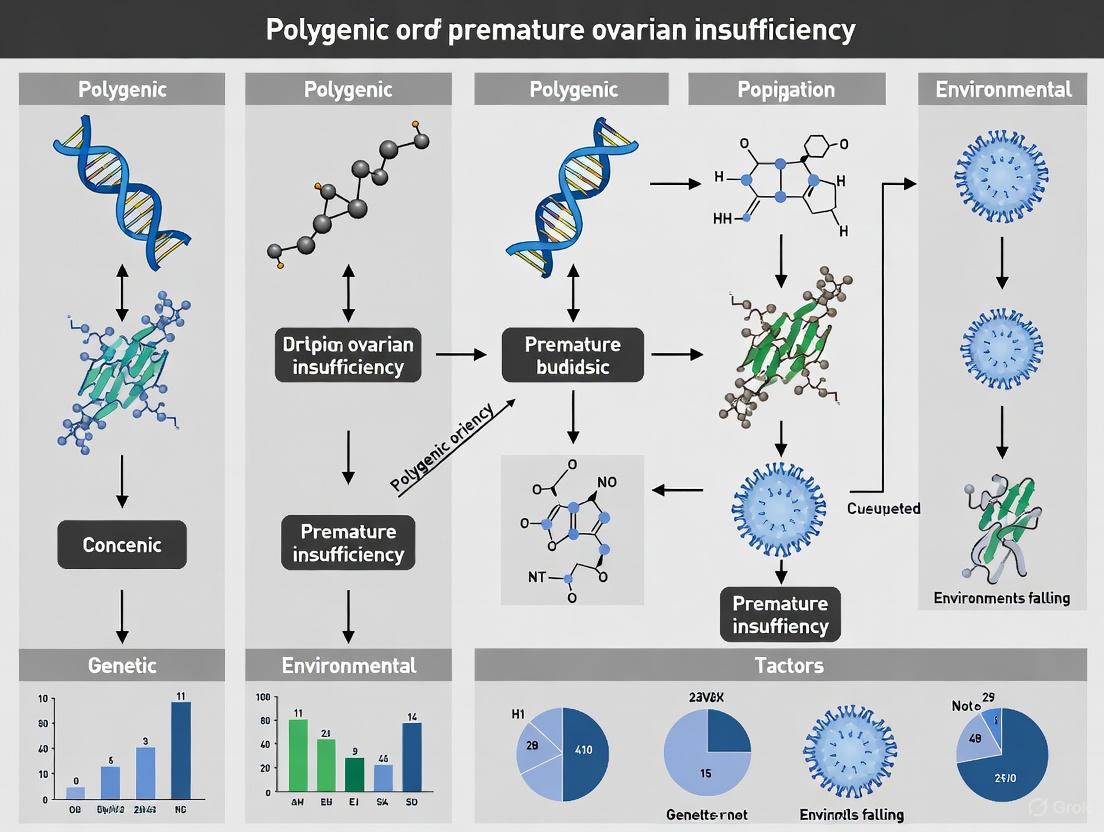
Premature Ovarian Insufficiency (POI), a major cause of female infertility, is now recognized as a condition with a highly complex genetic basis.
Beyond Monogenic Inheritance: Decoding the Polygenic Architecture of Premature Ovarian Insufficiency
Abstract
Premature Ovarian Insufficiency (POI), a major cause of female infertility, is now recognized as a condition with a highly complex genetic basis. While historically focused on monogenic causes and chromosomal abnormalities, recent large-scale genomic studies reveal that the majority of cases are likely oligogenic or polygenic. This article synthesizes current evidence from whole-exome sequencing and association studies, exploring the landscape of pathogenic mutations across numerous genes involved in gonadogenesis, meiosis, DNA repair, and folliculogenesis. We examine the methodological evolution in gene discovery, discuss the challenges in interpreting polygenic risk, and evaluate the implications for genetic diagnostics, counseling, and the development of novel therapeutic strategies for researchers and drug development professionals.
The Genetic Landscape of POI: From Monogenic to Polygenic Paradigms
Premature ovarian insufficiency (POI) is a significant clinical disorder characterized by the loss of ovarian function before the age of 40, presenting a complex challenge in reproductive medicine. This condition demonstrates remarkable heterogeneity in its etiology, clinical presentation, and underlying molecular mechanisms. Once considered a rare condition, recent epidemiological studies have revealed a higher prevalence than previously recognized, affecting a substantial proportion of women worldwide. The diagnostic criteria for POI have evolved to facilitate earlier identification and intervention, though considerable delays in diagnosis still occur, particularly in younger populations. The clinical heterogeneity of POI manifests across multiple dimensions, including variations in age of onset, symptomatic presentation, endocrine profiles, and long-term health consequences. This in-depth technical guide examines the core defining characteristics of POI, with particular emphasis on the growing evidence supporting a polygenic origin for many cases previously classified as idiopathic. For researchers and drug development professionals, understanding this complexity is paramount for developing targeted interventions and personalized management approaches.
Epidemiology and Prevalence
Recent meta-analyses and large-scale studies have significantly revised the understanding of POI prevalence, indicating the condition affects a larger population than historically recognized. The global prevalence of POI is now estimated at approximately 3.5-3.7% among women under 40 [1] [2] [3]. This represents a substantial increase over previous estimates of 1%, reflecting both improved diagnostic sensitivity and possibly changing environmental factors.
The incidence of POI demonstrates an exponential inverse relationship with age. Approximately 1 in 100 women experience POI between ages 35-40, while the incidence decreases to 1 in 1,000 for women aged 25-30, and further to 1 in 10,000 for women aged 18-25 [4] [2]. This age-dependent distribution underscores the progressive nature of ovarian aging and its pathological acceleration in POI.
Epidemiological studies have identified notable ethnic and geographic variations in POI prevalence. Research from the Study of Women's Health Across the Nation (SWAN) found significantly higher incidence rates in Hispanic and African American women compared to Japanese and Chinese women [2]. Population-specific studies report prevalence rates of 1.9% in Swedish women and 3.5% in Iranian populations [2], suggesting the potential influence of genetic predispositions, environmental factors, or diagnostic disparities.
Table 1: Global Prevalence and Incidence of POI
| Population | Prevalence | Incidence by Age | Data Source |
|---|---|---|---|
| Global | 3.7% | Overall | Meta-analysis 2023 [2] |
| Women <40 | 3.5% | - | ESHRE/ASRM Guideline 2024 [5] |
| Ages 35-40 | - | 1:100 | Clinical Review [4] |
| Ages 30-39 | - | 1:1,000 | Clinical Review [1] |
| Ages 20-29 | - | 1:10,000 | Clinical Review [4] |
| Swedish | 1.9% | - | Population Cohort [2] |
| Iranian | 3.5% | - | Population Cohort [2] |
Emerging data suggests a possible increasing incidence in younger populations. A nationwide Israeli study documented a doubling of POI diagnoses in women under 21 between 2009-2016 compared to 2000-2008 [2]. Similarly, a Finnish study noted rising incidence rates among adolescent girls (15-19) from 2007 to 2017 [2]. These trends may reflect improved diagnostic awareness or changing environmental influences on ovarian function.
Familial clustering provides compelling evidence for genetic predisposition to POI. First-degree relatives of affected women demonstrate an 18-fold increased risk of POI compared to controls, with second-degree and third-degree relatives showing 4-fold and 2.7-fold increased risks, respectively [2]. Twin studies further support this heritability, with monozygotic twins showing nearly 7 times higher concordance for POI before age 40 compared to dizygotic twins [4].
Diagnostic Criteria and Clinical Presentation
Evolution of Diagnostic Standards
The diagnostic criteria for POI have been refined over time to enable earlier detection and intervention. According to the 2024 evidence-based guidelines from the European Society of Human Reproduction and Embryology (ESHRE) and the American Society for Reproductive Medicine (ASRM), POI diagnosis requires only one elevated follicle-stimulating hormone (FSH) level >25 IU/L in the context of menstrual disturbances, a significant change from previous requirements for repeated measurements [5] [6]. This modification aims to reduce diagnostic delays while maintaining specificity.
The core diagnostic elements include:
- Menstrual disturbance: Amenorrhea or oligomenorrhea for at least four months
- Biochemical confirmation: Elevated FSH levels (>25 IU/L) on at least one occasion
- Age parameter: Presentation before 40 years of age [5] [6]
The 2024 guidelines additionally acknowledge that anti-Müllerian hormone (AMH) testing, repeat FSH measurement, and/or AMH assessment may be required in cases of diagnostic uncertainty [5] [6]. This reflects the growing recognition of AMH as a valuable marker of ovarian reserve, particularly in borderline cases or women with intermittent ovarian function.
Clinical Heterogeneity and Symptomatology
POI presents across a spectrum of clinical severity, ranging from diminished ovarian reserve to complete ovarian failure. The heterogeneous nature of POI manifests in several dimensions:
Age of Onset and Presentation Patterns:
- Primary amenorrhea: Complete absence of menarche, representing approximately 11.6% of POI cases [4]
- Secondary amenorrhea: Cessation of menses after previously established menstruation, affecting 88.4% of cases [4]
- The distinction between these presentations has genetic implications, with primary amenorrhea cases showing higher genetic contribution (25.8% with pathogenic variants) compared to secondary amenorrhea (17.8%) [7]
Symptom Variability:
- Vasomotor symptoms (hot flashes, night sweats)
- Menstrual irregularities or absence
- Urogenital symptoms (vaginal dryness, dyspareunia)
- Psychological manifestations (mood changes, decreased quality of life) [5] [8]
- Notably, approximately 50% of women with 45,X monosomy (Turner syndrome) experience spontaneous menarche, though most develop POI later [4]
Endocrine Profiles:
- The pattern of ovarian dysfunction can be intermittent, with fluctuating FSH levels and occasional resumption of ovulatory cycles
- This intermittency contributes to diagnostic delays, particularly in younger women where menstrual irregularity may be overlooked [3]
Table 2: Diagnostic Criteria Evolution for POI
| Parameter | Traditional Criteria | 2024 Updated Guidelines | Clinical Utility |
|---|---|---|---|
| FSH Threshold | >40 IU/L on two occasions >4 weeks apart | >25 IU/L on one occasion | Earlier detection |
| AMH Role | Not standardized | Recommended in diagnostic uncertainty | Reserve assessment |
| Menstrual Criteria | 4+ months amenorrhea | Maintained at 4+ months | Consistency |
| Age Consideration | Rigid <40 years | Maintained <40 years with developmental context | Pediatric applications |
Diagnostic Challenges and Timelines
Diagnostic delays remain a significant concern in POI management, particularly among adolescents and young women. A recent retrospective study of 96 patients found one-third experienced diagnostic delays exceeding 18 months [8]. These delays can have profound implications for both psychological well-being and implementation of timely interventions to preserve bone health, cardiovascular function, and fertility.
The complex interplay between diagnostic criteria and clinical heterogeneity underscores the need for personalized assessment approaches. Researchers should consider these variabilities when designing studies, particularly regarding participant selection, stratification methods, and outcome measures.
Etiological Landscape and Polygenic Architecture
Evolving Etiological Distribution
The understanding of POI causation has evolved significantly, with a notable shift from predominantly idiopathic classifications toward identifiable etiologies. Comparative analyses between historical (1978-2003) and contemporary (2017-2024) cohorts reveal substantial changes in etiological distribution:
- Idiopathic causes: Decreased from 72.1% to 36.9%
- Iatrogenic causes: Increased from 7.6% to 34.2% (reflecting improved cancer survival and surgical outcomes)
- Autoimmune causes: Increased from 8.7% to 18.9%
- Genetic causes: Remained stable at approximately 10-12% [1]
This redistribution highlights both improved diagnostic capabilities and changing patient populations, with important implications for research focus and resource allocation.
Table 3: Contemporary Etiological Distribution of POI
| Etiology Category | Prevalence in Contemporary Cohorts | Key Contributors | Research Implications |
|---|---|---|---|
| Idiopathic | 36.9% | Likely polygenic/oligogenic | Focus on genetic architecture |
| Iatrogenic | 34.2% | Chemotherapy, radiotherapy, ovarian surgery | Fertility preservation strategies |
| Autoimmune | 18.9% | Thyroiditis, Addison's, SLE | Immunomodulatory interventions |
| Genetic | 9.9% | Chromosomal, single gene, polygenic | Genetic screening platforms |
Genetic Architecture and Polygenic Origins
Strong evidence supports a substantial genetic component in POI pathogenesis, with heritability estimates of approximately 0.52 for age at natural menopause [4]. The genetic architecture of POI encompasses chromosomal abnormalities, monogenic disorders, and increasingly recognized polygenic mechanisms.
Chromosomal Abnormalities:
- Present in 10-13% of POI cases [4]
- More frequent in primary amenorrhea (21.4%) than secondary amenorrhea (10.6%) [1]
- Turner syndrome (45,X and mosaic variants) represents the most common cytogenetic cause [4]
- X-chromosome critical regions for POI phenotype located at Xq13-Xq21 to Xq23-Xq27 [4]
Monogenic Forms:
- FMR1 premutation (55-200 CGG repeats) represents the most common single-gene cause, affecting 20% of carriers [4]
- Pathogenic variants in genes governing key ovarian processes: meiosis (MCM8, HFM1), folliculogenesis (NOBOX, GDF9), and granulosa cell function [4]
- Accounting for approximately 20-25% of POI cases [4] [9]
Polygenic and Oligogenic Mechanisms: Emerging evidence from large-scale genetic studies supports polygenic and oligogenic models for POI pathogenesis:
- Whole-exome sequencing of 1,030 POI patients identified pathogenic variants in 59 known POI genes in 18.7% of cases [7]
- Association analyses revealed 20 additional novel POI-associated genes with significant burden of loss-of-function variants [7]
- The identification of multiple pathogenic variants in distinct genes in individual patients argues strongly for polygenic inheritance [4]
- Copy-number variation (CNV) analysis shows 2.5-fold enrichment for rare CNVs encompassing ovary-expressed genes in POI patients [4]
The polygenic model is further supported by the observation that genetic contributions are higher in primary amenorrhea (25.8%) compared to secondary amenorrhea (17.8%), with considerably higher frequencies of biallelic and multi-het pathogenic variants in primary amenorrhea cases [7]. This gene-dosage effect suggests cumulative impacts of genetic defects on phenotypic severity.
Diagram 1: Genetic Architecture of POI. The diagram illustrates the complex interplay between chromosomal, monogenic, and polygenic mechanisms in POI pathogenesis, highlighting the multi-layered genetic contributions to this heterogeneous condition.
Functional Annotation of POI-Associated Genes
The expanding list of POI-associated genes reflects the biological complexity of ovarian function. Functional annotation of these genes reveals enrichment in several critical pathways:
- Meiosis and DNA Repair: HFM1, MCM8, MCM9, MSH4, SPIDR
- Folliculogenesis and Ovulation: NOBOX, GDF9, BMP15, FSHR
- Mitochondrial Function: AARS2, HARS2, POLG, TWNK
- Metabolic Regulation: GALT (galactosemia)
- Immune Regulation: AIRE (autoimmune polyglandular syndrome) [7]
This functional diversity underscores the multitude of biological processes required for normal ovarian function and the potential vulnerability points where genetic variation can predispose to POI.
Research Methodologies and Experimental Approaches
Genetic Screening Platforms
Comprehensive genetic analysis requires integrated approaches combining multiple technologies:
First-Tier Diagnostic Testing:
- High-resolution karyotyping: Detection of chromosomal abnormalities and mosaicism [4]
- FMR1 gene molecular study: CGG repeat expansion analysis for premutation identification [4]
- Array Comparative Genomic Hybridization (array CGH): Identification of submicroscopic deletions/duplications under karyotype resolution [4]
Advanced Genetic Analyses:
- Whole-exome sequencing (WES): Unbiased detection of coding variants across the genome [7]
- Next-generation sequencing (NGS) panels: Targeted analysis of known POI-associated genes [4]
- Genome-wide association studies (GWAS): Identification of common variants associated with POI risk [10]
The implementation of these technologies in large POI cohorts (n=1,030) has demonstrated a cumulative diagnostic yield of 23.5% when combining known POI-causative and novel POI-associated genes [7].
Functional Validation Strategies
Determining pathogenicity of genetic variants requires robust functional validation:
In Vitro Models:
- Plasmid constructs for site-directed mutagenesis and protein expression analysis
- Reporter assays for transcriptional activity assessment
- Cell culture systems for meiotic and DNA damage repair functional assays [7]
In Vivo Models:
- Genetically modified mouse models recapitulating human POI variants
- Natural models of ovarian aging and function
- Xenograft systems for human ovarian tissue studies [2]
Multi-Omics Integration:
- Transcriptomic profiling of ovarian cells and tissues
- Proteomic analysis of follicular fluid and ovarian microenvironment
- Epigenetic mapping of DNA methylation and histone modifications in ovarian aging [10]
Diagram 2: Comprehensive Research Workflow for POI Investigation. This diagram outlines an integrated approach from patient recruitment through therapeutic development, highlighting key methodological platforms for genetic analysis and functional validation.
The Scientist's Toolkit: Essential Research Reagents
Table 4: Key Research Reagent Solutions for POI Investigation
| Reagent/Category | Specific Examples | Research Application | Technical Considerations |
|---|---|---|---|
| Genetic Analysis Platforms | WES kits, NGS panels, Array CGH | Variant detection, CNV analysis | Coverage of known POI genes, sensitivity for mosaic detection |
| Functional Assay Systems | Site-directed mutagenesis kits, reporter constructs | Pathogenicity determination, protein function | Biological relevance to ovarian processes |
| Cell Culture Models | Granulosa cell lines, oocyte maturation systems | Folliculogenesis studies, drug screening | Preservation of physiological characteristics |
| Animal Models | Genetic mouse models, xenograft systems | In vivo validation, therapeutic testing | Faithful recapitulation of human POI features |
| Antibody Panels | Meiotic markers (γH2AX, SYCP3), follicular proteins | Immunohistochemistry, protein localization | Tissue-specific expression validation |
| Hormonal Assays | FSH, LH, AMH, estradiol ELISA/Kits | Endocrine profiling, treatment monitoring | Assay sensitivity, dynamic range |
| Omics Technologies | RNA-seq kits, methylation arrays, mass spectrometry | Molecular profiling, biomarker discovery | Sample quality, computational resources |
The definition of premature ovarian insufficiency encompasses a complex interplay of epidemiological patterns, diagnostic parameters, and profound clinical heterogeneity. With a revised global prevalence of 3.5-3.7%, POI represents a significant women's health concern with far-reaching implications for fertility, metabolic health, bone density, and cardiovascular function. The evolving diagnostic criteria facilitate earlier identification, though challenges remain in timely diagnosis, particularly in younger populations.
The etiological landscape of POI has shifted substantially, with a decreasing proportion of idiopathic cases and increasing recognition of iatrogenic, autoimmune, and genetic causes. Most significantly, evidence for a polygenic architecture in POI pathogenesis continues to accumulate, with multiple heterozygous variants across distinct genes contributing to disease risk and phenotypic expression. This genetic complexity mirrors the clinical heterogeneity observed in POI presentations, treatment responses, and long-term outcomes.
For researchers and drug development professionals, these insights highlight the necessity of integrated approaches combining comprehensive genetic screening, functional validation, and personalized assessment frameworks. The ongoing refinement of POI classification systems, informed by both clinical parameters and molecular characteristics, will enable more targeted therapeutic development and improved patient stratification in clinical trials. Understanding POI through this multidimensional lens is essential for advancing both fundamental knowledge and translational applications in ovarian biology and reproductive medicine.
Premature ovarian insufficiency (POI) is a clinically heterogeneous condition characterized by the loss of ovarian function before the age of 40, presenting with menstrual disturbances, elevated gonadotropins, and estrogen deficiency [5]. The etiological landscape of POI is complex, with a significant proportion of cases historically classified as idiopathic. However, advances in genetic and genomic technologies have elucidated the substantial contribution of specific chromosomal abnormalities and monogenic forms to its pathogenesis.
This technical guide focuses on two of the most established genetic causes of POI—Turner syndrome and FMR1 premutations—situating them within the broader context of research into the polygenic origins of the condition. Understanding these well-characterized, high-effect-size genetic lesions provides a critical foundation for deciphering the more complex interactions of multiple lower-penetrance genes that likely explain the majority of POI cases.
Table 1: Epidemiological and Key Clinical Features of Major Genetic Causes of POI
| Genetic Cause | Prevalence in General Population | Prevalence in POI Cohorts | Key Associated POI Phenotype | Inheritance Pattern |
|---|---|---|---|---|
| Turner Syndrome | 1 in 2,000 - 1 in 2,500 female newborns [11] [12] [13] | ~9.9% of POI cases [1] | Streak gonads, primary amenorrhea, delayed puberty [11] [13] | Sporadic (X-chromosomal aneuploidy) |
| FMR1 Premutation | ~1 in 150-200 females [1] | 1.5-3.2% of sporadic POI; ~11.5-13% of familial POI [1] | Secondary amenorrhea, FXPOI [1] | X-linked dominant (CGG repeat expansion) |
Table 2: Fundamental Genetic Characteristics
| Genetic Cause | Genetic Locus/Defect | Molecular Mechanism | Key Functional Genes |
|---|---|---|---|
| Turner Syndrome | 45,X (50%); mosaicism (45,X/46,XX; 45,X/47,XXX); X-structural abnormalities [11] [13] | Haploinsufficiency due to complete or partial absence of one X chromosome [12] [13] | SHOX (short stature, skeletal anomalies), genes in pseudoautosomal region (ovarian development) [12] [13] |
| FMR1 Premutation | FMR1 gene (Xq27.3); 55-200 CGG repeats [1] | RNA toxic gain-of-function; non-linear relationship with repeat size (70-100 repeats highest risk) [1] | FMR1 (Fragile X Mental Retardation 1) |
Turner Syndrome: The Paradigm of Chromosomal POI
Pathophysiology and Genotype-Phenotype Correlations
Turner syndrome, resulting from the complete or partial absence of one X chromosome, represents the most common chromosomal cause of POI. The pathogenesis involves accelerated follicular atresia, leading to the development of "streak gonads" composed primarily of connective tissue with absent or atretic follicles [13]. The loss of genetic material from the X chromosome leads to haploinsufficiency of multiple genes critical for normal ovarian development and maintenance of the follicular pool.
Genotype-phenotype correlations have been established, with the severity of the ovarian phenotype often reflecting the extent of X-chromosome loss [13]:
- 45,X Monosomy: Associated with the most severe phenotype, typically presenting with primary amenorrhea and complete ovarian failure [13].
- Mosaicism (e.g., 45,X/46,XX): Correlates with a milder phenotype. Individuals may experience spontaneous menarche and even achieve spontaneous pregnancies, though POI often develops later [11] [13].
- Xq Isochromosomes & Critical Regions: Deletions on the long arm (Xq) are strongly associated with POI, suggesting the presence of key ovarian maintenance genes in this region [13].
Diagnostic and Research Methodologies
Karyotyping: The definitive diagnostic test is a lymphocyte karyotype analysis from a peripheral blood sample. A minimum of 30 cells should be analyzed to detect low-level mosaicism [13].
Fluorescence In Situ Hybridization (FISH): Used to characterize structural abnormalities of the X chromosome, such as isochromosomes or ring chromosomes, and to screen for Y-chromosome material, which carries a risk for gonadoblastoma [13].
Chromosomal Microarray (CMA): Can identify smaller, clinically relevant copy-number variations (deletions/duplications) on the X chromosome that may be missed by standard karyotyping.
FMR1 Premutations: A Monogenic Model for Fragile X-Associated POI (FXPOI)
Molecular Pathogenesis
The premutation allele of the FMR1 gene (55-200 CGG repeats) causes FXPOI through a toxic RNA gain-of-function mechanism. The expanded CGG repeat in the 5' untranslated region of the FMR1 mRNA is thought to lead to its sequestration of critical RNA-binding proteins, disrupting normal nuclear RNA processing and causing mitochondrial dysfunction and increased cellular stress in oocytes [1]. This mechanism explains the non-linear Sherman paradox, where the risk of FXPOI is highest in the mid-premutation range (70-100 repeats) rather than the full mutation range (>200 repeats) [1].
Diagnostic and Research Methodologies
PCR and Southern Blot Analysis: The primary method for diagnosis is DNA fragment analysis via PCR, which can accurately size the CGG repeat region in the FMR1 gene. Southern blotting is used as a complementary technique to confirm the allele size and to detect large expansions or methylation status, especially for alleles at the upper end of the premutation range.
Family History and Cascade Testing: Given the X-linked inheritance and its implications for other fragile X-associated disorders (e.g., Fragile X syndrome in offspring, FXTAS in older carriers), obtaining a detailed three-generation family history is a crucial component of the clinical and research workflow.
Experimental Visualization and Workflows
Diagram 1: FMR1 Testing Workflow for POI. This flowchart outlines the key procedural steps for identifying FMR1 premutations in patients with POI, from initial identification through genetic counseling.
Diagram 2: Turner Syndrome POI Pathogenesis. This diagram illustrates the logical progression from the initial chromosomal abnormality to the final clinical presentation of POI in Turner syndrome.
The Scientist's Toolkit: Essential Research Reagents
Table 3: Key Research Reagents for Investigating Genetic Forms of POI
| Reagent / Material | Function / Application | Example Use Case |
|---|---|---|
| KaryoMAX Colcemid | Inhibits microtubule polymerization, arresting cells in metaphase for chromosome spreading. | Standard karyotype analysis for Turner syndrome diagnosis [13]. |
| Spectra/Aqua Vysion Probes | Fluorescently labeled DNA probes for specific chromosomal regions (e.g., X, Y centromere, SHOX). | FISH analysis to confirm X-chromosome rearrangements or detect low-level mosaicism [13]. |
| FMR1 PCR & Southern Blot Kits | Amplify and size the CGG repeat region in the FMR1 gene; confirm large expansions and methylation status. | Molecular diagnosis of Fragile X premutation carriers in POI cohorts [1]. |
| Anti-AMH (Anti-Müllerian Hormone) Antibodies | Immunohistochemical staining of ovarian tissue sections to assess follicular reserve and health. | Quantifying the impact of genetic lesions on follicular density and activation in research models. |
| Primordial Follicle Culture Systems | In vitro 3D ovarian culture platforms to maintain follicular architecture. | Modeling early ovarian development and testing interventions for follicle preservation. |
Premature ovarian insufficiency (POI) is a clinically heterogeneous disorder characterized by the loss of ovarian function before age 40, affecting approximately 3.7% of the female population [14] [7]. The condition presents a significant challenge in reproductive medicine, with profound implications for fertility, metabolic health, bone density, and cardiovascular function [14] [15]. While POI can result from chromosomal abnormalities, autoimmune disorders, iatrogenic causes, or environmental factors, a substantial proportion of cases have an unidentified etiology, suggesting a complex genetic basis [1]. Recent large-scale genomic studies have revealed that POI follows a polygenic inheritance pattern in many cases, with contributions from numerous genes across multiple biological pathways [7] [10]. This technical review examines the key biological pathways implicated in POI pathogenesis, focusing on meiosis, DNA repair, folliculogenesis, and mitochondrial function, and their intersections within the polygenic framework of this complex condition.
Genetic Architecture and Polygenic Contribution to POI
Quantitative Genetic Contributions to POI
Table 1: Genetic Contribution to POI Based on Large-Scale Sequencing Studies
| Genetic Category | Percentage of Cases | Key Genes/Examples | Genetic Characteristics |
|---|---|---|---|
| Monogenic Causes | 18.7-23.5% | NR5A1, MCM9, EIF2B2 | Pathogenic/likely pathogenic variants in known POI genes |
| Polygenic/Oligogenic | Not quantified | LGR4, PRDM1, CPEB1, KASH5 | Multiple variants in novel POI-associated genes with cumulative effects |
| Primary Amenorrhea | 25.8% | FSHR (4.2% in PA vs. 0.2% in SA) | Higher frequency of biallelic and multi-heterozygous variants |
| Secondary Amenorrhea | 17.8% | AIRE, BLM, SPIDR | Predominantly monoallelic variants |
| Chromosomal Abnormalities | 12-13% | Turner syndrome (45,X), Fragile X premutation | More frequent in primary amenorrhea (21.4%) than secondary (10.6%) |
Whole-exome sequencing of 1,030 POI patients identified pathogenic or likely pathogenic variants in 59 known POI-causative genes, accounting for 193 (18.7%) cases [7]. Association analyses revealed 20 additional novel POI-associated genes, with cumulative contributions from known and novel genes explaining up to 23.5% of cases [7]. The genetic architecture differs significantly between clinical presentations, with primary amenorrhea cases showing a higher contribution from biallelic and multi-heterozygous variants (25.8%) compared to secondary amenorrhea cases (17.8%) [7]. This supports a polygenic threshold model where the cumulative burden of variants across multiple genes contributes to disease manifestation.
Functional Classification of POI-Associated Genes
Table 2: Functional Classification of POI-Associated Genes and Pathways
| Biological Pathway | Percentage of Genetically Explained Cases | Representative Genes | Primary Ovarian Function |
|---|---|---|---|
| Meiosis & DNA Repair | 48.7% | HFM1, SPIDR, BRCA2, MCM8, MCM9, MSH4/5 | Chromosome synapsis, crossover formation, DSB repair |
| Mitochondrial Function | 12.4% | AARS2, CLPP, POLG, TWNK | Oxidative phosphorylation, mtDNA maintenance |
| Metabolic Regulation | 5.2% | GALT | Galactose metabolism, glycosylation |
| Folliculogenesis | 33.7% | NOBOX, GDF9, BMP15, FOXL2, FIGLA | Follicle activation, growth, maturation |
| Gonadogenesis | Not quantified | LGR4, PRDM1 | Ovarian development, germ cell formation |
Genes involved in meiosis and DNA repair constitute the largest functional category, accounting for nearly half (48.7%) of genetically explained POI cases [7]. Mitochondrial genes and metabolic regulators collectively explain 17.6% of cases, highlighting the importance of energy metabolism in ovarian maintenance [7]. Folliculogenesis genes represent approximately one-third of cases, affecting various stages of follicle development from primordial follicle activation to ovulation [15].
Meiotic Pathways in Oocyte Development and POI Pathogenesis
Meiotic Regulation and Key Molecular Players
Meiosis is a specialized form of cell division that generates haploid gametes from diploid germ cells, requiring precise execution to prevent aneuploidy and maintain ovarian reserve. Multiple genes encoding meiotic regulators are implicated in POI pathogenesis:
Meiotic Initiation: MEIOSIN and STRA8 form a complex that activates transcription of critical meiotic genes, regulating the switch from mitosis to meiosis [14] [7]. MEIOSIN serves as a transcription factor that coordinates meiotic entry with cell cycle progression [14].
Chromosome Synapsis and Recombination: HFM1 (Helicase for Meiosis 1) is required for crossover formation and complete synapsis of homologous chromosomes [14]. MSH4 and MSH5 form a complex that stabilizes Holliday junctions and promotes crossover formation during meiotic prophase I [14]. DMC1 encodes a DNA meiotic recombinase essential for homologous recombination and proper chromosome segregation [14].
Cohesion Complex: The cohesin complex, composed of SMC1, SMC3, RAD21, and STAG1/2, maintains sister chromatid cohesion from DNA replication until anaphase [16]. Cohesin rings topologically encircle sister chromatids, preventing premature separation. Age-related decline in cohesin function contributes to increased aneuploidy in older women [16].
Diagram 1: Key Meiotic Processes and POI Risk Genes. This diagram illustrates the major stages of meiotic prophase I in oogenesis and the key genes whose dysfunction contributes to POI pathogenesis. The process begins with meiotic entry regulated by STRA8/MEIOSIN and CPEB1, progresses through chromosome synapsis mediated by synaptonemal complex proteins (SYCP1, SYCP3), involves recombination facilitated by MSH4/MSH5 and DMC1/RAD51, and requires maintained sister chromatid cohesion by cohesin complexes (SMC1, SMC3, STAG). Mutations in these genes can disrupt meiotic progression, leading to follicle depletion and POI.
Experimental Protocols for Meiotic Analysis
Chromosome Spread and Immunofluorescence Analysis of Meiotic Prophase
- Ovary Collection: Isolate ovaries from juvenile mice (12-14 days postpartum) when oocytes are in meiotic prophase I.
- Oocyte Isolation: Mechanically dissociate ovaries and incubate in hypotonic buffer to release oocyte nuclei.
- Slide Preparation: Transfer cell suspension to slides pre-coated with 1% paraformaldehyde with 0.15% Triton X-100.
- Antibody Staining: Incubate with primary antibodies against meiotic proteins (SYCP3, γH2AX, MLH1) followed by fluorochrome-conjugated secondary antibodies.
- Microscopy and Analysis: Image using super-resolution microscopy and quantify crossover sites, synapsis defects, and structural abnormalities.
Electron Microscopy for Synaptonemal Complex Visualization
- Sample Fixation: Fix ovarian tissue in 2.5% glutaraldehyde in 0.1M sodium cacodylate buffer.
- Post-fixation and Staining: Treat with 1% osmium tetroxide, then 1% uranyl acetate.
- Dehydration and Embedding: Dehydrate through ethanol series and embed in EPON resin.
- Sectioning and Imaging: Cut ultrathin sections (70nm) and examine with transmission electron microscope.
DNA Damage Response and Repair Mechanisms
DNA Damage Types and Repair Pathways in Oocytes
The integrity of the female germline genome is maintained by sophisticated DNA damage response (DDR) mechanisms that detect and repair various DNA lesions. Oocytes are particularly vulnerable to DNA damage due to their prolonged arrest in meiotic prophase I, which can last for decades in humans [16] [17].
Table 3: DNA Damage Repair Pathways in Oocyte Biology
| Damage Type | Repair Pathway | Key Genes | Role in Oocyte Biology | POI Association |
|---|---|---|---|---|
| Double-Strand Breaks (DSBs) | Homologous Recombination (HR) | BRCA1, BRCA2, RAD51, MRE11, ATM | Meiotic recombination, repair of replication-associated breaks | High (48.7% of genetic cases) |
| Double-Strand Breaks (DSBs) | Non-Homologous End Joining (NHEJ) | KU70, KU80, DNA-PKcs, XRCC4, LIG4 | Repair of radiation-induced damage in dormant follicles | Moderate |
| Single-Strand Breaks (SSBs) | Base Excision Repair (BER) | OGG1, XRCC1, PARP1 | Repair of oxidative damage in arrested oocytes | Not well characterized |
| Bulky Lesions | Nucleotide Excision Repair (NER) | XPA, XPC, ERCC1 | Repair of UV-induced and chemical adducts | Limited evidence |
| Interstrand Crosslinks | Fanconi Anemia Pathway | FANCA, FANCL, FANCD2 | Repair of crosslinks from chemotherapeutic agents | Moderate |
The accumulation of DNA double-strand breaks (DSBs) in primordial follicles is a hallmark of ovarian aging, with expression of key DSB repair genes (BRCA1, MRE11, Rad51, ATM) decreasing in oocytes with advanced age [16]. This repair deficiency explains why advanced maternal age is associated with higher rates of infertility, miscarriages, and chromosomal disorders [16].
DNA Damage Response Experimental Workflow
Assessment of DNA Damage in Oocytes and Ovarian Cells
- γH2AX Immunostaining:
- Fix oocytes or ovarian sections in 4% paraformaldehyde
- Permeabilize with 0.5% Triton X-100
- Incubate with anti-γH2AX antibody (phosphorylated histone H2AX, marker of DSBs)
- Counterstain with DAPI and analyze foci formation by confocal microscopy
Comet Assay for DNA Strand Breaks:
- Embed oocytes in low-melting-point agarose on microscope slides
- Lyse cells in neutral or alkaline buffer (depending on detecting SSBs or DSBs)
- Perform electrophoresis under specific conditions (25V, 300mA, 20min)
- Stain with DNA-binding dye (SYBR Green) and quantify tail moment
Transcriptional Analysis of DDR Genes:
- Extract RNA from pooled oocytes or ovarian tissue
- Perform reverse transcription and quantitative PCR
- Analyze expression of ATM, ATR, BRCA1, RAD51, p53
- Normalize to housekeeping genes (Gapdh, Actb)
Diagram 2: DNA Damage Response Pathways in Oocytes. This diagram illustrates the major DNA damage response mechanisms that protect oocyte genomic integrity. Double-strand breaks (DSBs) are recognized by the MRN complex, leading to ATM activation and repair via Homologous Recombination (HR) or Non-Homologous End Joining (NHEJ). Single-strand breaks (SSBs) and oxidative damage are primarily repaired via Base Excision Repair (BER). Successful repair maintains ovarian reserve, while persistent damage triggers apoptosis and follicle depletion, contributing to POI. Key POI-associated genes are involved in each repair pathway.
Folliculogenesis and Ovarian Reserve Maintenance
Molecular Regulation of Follicle Development
Folliculogenesis encompasses the development of primordial follicles to mature, ovulatory follicles, requiring precise coordination of multiple signaling pathways and transcriptional networks:
Primordial Follicle Formation and Dormancy: FIGLA (Folliculogenesis Specific BHLH Transcription Factor) regulates the expression of multiple oocyte-specific genes, including those encoding the zona pellucida during early follicular development [14]. NOBOX (Newborn Ovary Homeobox) regulates oogenesis and oocyte-specific genes including BMP15 and GDF9 [14]. FOXL2 regulates the transcription of essential genes involved in steroidogenesis, including CYP17A1 and CYP19A1 [14].
Follicle Activation and Growth: The phosphoinositide 3-kinase (PI3K)/AKT/FOXO3 pathway is a critical regulator of primordial follicle activation [15]. BMP15 and GDF9, members of the transforming growth factor-β (TGF-β) superfamily, are oocyte-secreted factors that regulate granulosa cell proliferation and differentiation [14] [15]. Anti-Müllerian Hormone (AMH) negatively regulates the transition of primordial follicles to primary follicles and decreases FSH sensitivity of follicles [14].
Ovulation and Luteinization: The follicle-stimulating hormone receptor (FSHR) and luteinizing hormone receptor (LHR) mediate gonadotropin signaling essential for dominant follicle selection and ovulation [1]. ESR1 (estrogen receptor 1) regulates follicle growth and maturation and oocyte release [14].
Experimental Models for Folliculogenesis Research
In Vitro Follicle Culture System
- Follicle Isolation: Mechanically isolate secondary follicles (100-130μm diameter) from juvenile mouse ovaries.
- 3D Culture Setup: Embed follicles in alginate hydrogel matrices (1.5% w/v) in individual wells.
- Culture Conditions: Maintain in α-MEM supplemented with 1% ITS, 5% FBS, 100mIU/mL recombinant FSH, and 3mg/mL BSA at 37°C with 5% CO₂.
- Assessment Endpoints: Measure follicle diameter daily, analyze hormone production (estradiol, progesterone) in media, and assess oocyte meiotic competence after maturation.
Lineage Tracing and Fate Mapping
- Genetic Labeling: Cross Foxl2-CreER or Amhr2-Cre mice with appropriate reporter strains (e.g., Rosa26-lacZ or Rosa26-tdTomato).
- Induction of Recombination: Administer tamoxifen at specific developmental timepoints to label granulosa or theca cell lineages.
- Tissue Analysis: Process ovaries for histology and fluorescence imaging to track lineage contributions during follicle development.
Mitochondrial Function and Metabolic Regulation
Mitochondrial Dynamics in Oocyte Quality
Mitochondria are essential organelles for oocyte maturation, fertilization, and early embryonic development through their roles in energy production, calcium homeostasis, and regulation of apoptosis [16] [18]. Mitochondrial dysfunction is a hallmark of oocyte aging and contributes to POI pathogenesis through several mechanisms:
Energy Production: Mitochondria generate ATP through oxidative phosphorylation, which is required for meiotic spindle assembly, chromosome segregation, and cytoplasmic maturation [18]. Oocytes from advanced-age women exhibit reduced ATP production and increased oxidative stress [16].
Reactive Oxygen Species (ROS) Management: Mitochondria are the primary source of reactive oxygen species (ROS) in oocytes [17]. Accumulation of ROS damages proteins, lipids, and DNA, leading to apoptosis and follicle atresia [17]. Antioxidant defense systems, including superoxide dismutase (SOD), glutathione peroxidase (GPX), and catalase, protect oocytes from oxidative damage [18].
Calcium Signaling: Mitochondria regulate intracellular Ca²⁺ homeostasis, which is critical for meiotic resumption, cortical granule exocytosis, and activation of developmental programs [16].
Apoptosis Regulation: Mitochondria control intrinsic apoptosis pathways through release of cytochrome c and other pro-apoptotic factors [18]. Increased apoptosis contributes to accelerated follicle depletion in POI.
Assessment of Mitochondrial Function in Oocytes
Mitochondrial Membrane Potential (ΔΨm) Measurement
- Staining Protocol: Incubate live oocytes with JC-1 dye (5μM) for 30 minutes at 37°C.
- Imaging and Analysis: Image using confocal microscopy with appropriate filter sets (excitation 490nm, emission 530nm for monomeric form; excitation 490nm, emission 590nm for J-aggregates).
- Quantification: Calculate ratio of red (J-aggregates) to green (monomers) fluorescence intensity as indicator of ΔΨm.
ATP Content Measurement
- Sample Preparation: Collect groups of 5-10 oocytes in minimal volume and lyse by freeze-thaw.
- Luciferase Assay: Use commercial ATP assay kit based on luciferase reaction.
- Standard Curve: Generate ATP standard curve for quantification.
- Normalization: Express results as pmol ATP per oocyte.
Mitochondrial DNA Copy Number Quantification
- DNA Extraction: Isolate total DNA from pools of oocytes.
- Quantitative PCR: Amplify mitochondrial genes (mt-Co1, mt-Nd1) and nuclear reference gene (18S rRNA).
- Calculation: Determine relative mtDNA copy number using ΔΔCt method.
The Scientist's Toolkit: Research Reagent Solutions
Table 4: Essential Research Reagents for POI Pathway Investigation
| Reagent/Category | Specific Examples | Research Application | Key Function in POI Research |
|---|---|---|---|
| Antibodies for Meiotic Proteins | Anti-SYCP3, Anti-γH2AX, Anti-MLH1, Anti-RAD51 | Immunofluorescence, Western blot | Visualization of chromosome synapsis, recombination, DNA damage |
| DNA Damage Detection Kits Comet Assay kits, γH2AX ELISA, 8-OHdG ELISA | Quantitative DNA damage assessment | Measurement of single/double-strand breaks, oxidative damage | |
| Mitochondrial Probes | JC-1, MitoTracker Red, MitoSOX Red, TMRM | Live-cell imaging, flow cytometry | Assessment of membrane potential, mitochondrial mass, ROS production |
| Oocyte Secreted Factors | Recombinant GDF9, BMP15, FSH, AMH | In vitro follicle culture | Study of follicle development, granulosa cell function |
| Gene Expression Analysis | TaqMan assays for FIGLA, NOBOX, BMP15, GDF9 | qRT-PCR | Quantification of oocyte-specific gene expression |
| Animal Models | Bmp15 knockout, Figla GFP reporter, Foxl2-Cre | In vivo functional studies | Investigation of gene function in folliculogenesis |
| Metabolic Assays | ATP luminescence assay, Seahorse XFp analyzer | Metabolic profiling | Analysis of oocyte energy metabolism, oxidative phosphorylation |
The pathogenesis of premature ovarian insufficiency involves complex interactions between multiple biological pathways, with a significant polygenic component. Large-scale genetic studies have revealed that nearly half of genetically explained POI cases involve defects in meiosis and DNA repair pathways, highlighting the critical importance of genomic maintenance for long-term ovarian function [7]. Mitochondrial dysfunction contributes to oxidative damage accumulation and energy deficits that compromise oocyte quality and accelerate follicle depletion [16] [18]. Disrupted folliculogenesis pathways prevent normal follicle development and maturation, leading to premature exhaustion of the ovarian reserve [14] [15].
The polygenic nature of POI suggests that the cumulative burden of variants across these biological pathways, rather than single gene defects, often determines disease manifestation [7] [10]. This complexity presents challenges for genetic diagnosis but also opportunities for developing targeted interventions that address specific pathway deficiencies. Future research should focus on understanding the interactions between these pathways, developing functional assays to assess variant pathogenicity, and translating these insights into personalized approaches for POI prediction, prevention, and treatment.
Emerging Evidence for an Oligogenic/Polygenic Model from Large Cohort Studies
Premature ovarian insufficiency (POI) is a clinically heterogeneous disorder characterized by the loss of ovarian function before age 40, affecting approximately 1–3.7% of women worldwide [19] [20]. While monogenic causes have been identified in a minority of cases, a substantial proportion of POI etiology remains unexplained. Recent advances in next-generation sequencing technologies applied to large patient cohorts have begun to unravel the remarkable genetic complexity underlying this condition. Evidence is now accumulating that challenges the traditional monogenic inheritance model, pointing instead to oligogenic and polygenic architectures in a significant subset of patients [19] [21]. This paradigm shift has profound implications for understanding POI pathophysiology, improving genetic diagnosis, and developing targeted therapeutic interventions.
Quantitative Evidence from Recent Large-Scale Studies
Key Findings from Major Cohort Studies
Recent investigations utilizing whole-exome sequencing (WES) and whole-genome sequencing in substantial patient cohorts have provided compelling statistical evidence for an oligogenic model of POI.
Table 1: Oligogenic Burden Evidence in POI Cohorts
| Study Cohort | Patient Population | Control Group | Key Finding on Multiple Variants | Statistical Significance |
|---|---|---|---|---|
| Chinese POI Cohort [19] | 93 patients | 465 controls | 35.5% of patients vs. 8.2% of controls carried >1 variant in POI-related genes | Odds Ratio: 6.20 [95% CI: 3.60-10.60]; P = 1.50 × 10⁻¹⁰ |
| International Cohort [20] | 375 patients from multiple ancestries | Not specified | 29.3% overall diagnostic yield; oligogenic contributions suggested | High yield supports complex genetic basis |
In the Chinese cohort study, the distribution of patients with multiple variants was striking: 16.1% carried two variants, 10.8% carried three variants, 7.5% carried four variants, and 1.1% carried five variants [19]. This demonstrated a clear gene dosage effect, where patients carrying more variants tended to present with earlier disease onset, highlighting the potential cumulative impact of multiple genetic hits on phenotypic severity [19].
Significant Gene Combinations and Pathways
Gene-burden analyses have identified specific gene pairs and biological pathways particularly implicated in oligogenic POI.
Table 2: Significant Gene Combinations and Functional Pathways in Oligogenic POI
| Gene Combinations | Function | Evidence | Pathway Association |
|---|---|---|---|
| RAD52 + MSH6 [19] | DNA damage repair and homologous recombination | Validated via ORVAL platform; classified as "true digenic" or "monogenic + modifier" | DNA damage repair/meiosis |
| MSH4 + MSH5 [20] [21] | Meiotic homologous recombination | Identified in large cohort studies | Meiosis/DNA repair |
| MCM8 + MCM9 [20] [21] | Meiotic homologous recombination | Confirmed in previously reported genes | Meiosis/DNA repair |
| BRCA2 + FANCM [20] | DNA repair and cancer susceptibility | Confirmation in isolated patients/families | DNA repair/tumor susceptibility |
The RAD52 and MSH6 combination exemplifies the mechanistic complexity of oligogenic interactions. Protein-protein interaction (PPI) network analysis revealed that both proteins participate in DNA damage-repair processes, including DNA recombination, nucleotide-excision repair, double-strand break repair, and homologous recombination pathways [19]. Functional studies using the ORVAL platform predicted this specific combination as pathogenic, with VarCoPP scores of 1.0 across multiple prediction metrics including CADD raw score generation, gene haploinsufficiency prediction, and biological process similarity [19].
Methodological Approaches for Oligogenic Detection
Cohort Recruitment and Diagnostic Criteria
Recent studies have implemented rigorous patient selection criteria to ensure cohort homogeneity. The diagnostic framework typically includes:
- Amenorrhea criteria: Primary amenorrhea (complete absence of menstruation) or secondary amenorrhea (cessation of periods for ≥4 months) before age 40 [20] [21]
- Hormonal confirmation: Elevated follicle-stimulating hormone (FSH) levels >25-40 IU/L on at least two occasions spaced 4+ weeks apart [20] [21]
- Exclusion criteria: Absence of iatrogenic causes (chemotherapy, radiotherapy, ovarian surgery), normal karyotype, and exclusion of FMR1 premutations [20]
Genomic Sequencing and Analytical Frameworks
The detection of oligogenic inheritance requires sophisticated genomic and bioinformatic approaches:
- Sequencing methodologies: Whole-exome sequencing (WES) provides comprehensive coverage of protein-coding regions, while targeted NGS panels (e.g., 88 known POI genes) enable cost-effective screening [19] [20]
- Variant annotation and filtering: Implementation of standardized annotation pipelines (e.g., CADD scores) and strict classification according to American College of Medical Genetics and Genomics (ACMG) guidelines for pathogenic/likely-pathogenic variants [20]
- Gene-burden analysis: Statistical comparison of variant frequencies in cases versus controls to identify genes enriched in POI patients [19]
- Oligogenic validation platforms: Tools like ORVAL (Oligogenic Resource for Variant AnaLysis) assess potential digenic or oligogenic effects by evaluating variant combinations through multiple predictive algorithms [19]
- Copy number variation (CNV) analysis: Detection of structural variants using read-depth based approaches or circular binary segmentation (CBS) algorithms [20]
Functional Validation Approaches
To confirm the biological relevance of identified oligogenic combinations, researchers employ multiple validation strategies:
- Chromosomal fragility testing: Mitomycin-induced chromosome breakage analysis in patient lymphocytes to assess DNA repair deficiencies [20]
- Protein-protein interaction networks: Mapping molecular relationships between gene products identified in oligogenic combinations [19]
- Pathway enrichment analysis: Identifying biological processes significantly enriched in patients with oligogenic variants, particularly focusing on DNA repair and meiotic pathways [19]
Biological Mechanisms and Pathway Integration
The emerging oligogenic model reveals how variant combinations in functionally related genes can disrupt ovarian function through several key biological mechanisms.
DNA Repair and Meiotic Pathways
The most prominent pathway emerging from oligogenic studies involves DNA damage repair and meiotic processes. The significant enrichment of variants in these pathways (P = 4.04 × 10^(-9) in case-control analysis) underscores their critical role in ovarian maintenance [19]. The combination of RAD52 and MSH6 variants exemplifies this mechanism, as both proteins interact physically and functionally in homologous recombination repair—a process essential for meiotic progression and prevention of oocyte apoptosis [19].
Emerging Pathway Connections
Beyond DNA repair, oligogenic studies have revealed novel biological connections in POI pathogenesis:
- NF-κB signaling: Newly identified pathway potentially linking inflammatory processes to ovarian follicle depletion [20]
- Post-translational regulation: Mechanisms controlling protein turnover and modification that may influence oocyte quality and survival [20]
- Mitophagy (mitochondrial autophagy): Quality control process for eliminating damaged mitochondria, crucial for maintaining oocyte viability across the reproductive lifespan [20]
Research Reagent Solutions
Table 3: Essential Research Reagents for Oligogenic POI Investigation
| Reagent/Category | Specific Examples | Research Application |
|---|---|---|
| Sequencing Platforms | Whole-exome sequencing kits; Targeted NGS panels (88 POI genes) [20] | Comprehensive variant detection across coding regions or focused analysis of known candidates |
| Bioinformatic Tools | ORVAL platform [19]; VarCoPP [19]; ACMG variant classification [20] | Prediction and validation of oligogenic variant combinations; Pathogenicity assessment |
| Functional Assays | Mitomycin-induced chromosome breakage test [20]; Protein-protein interaction mapping | Assessment of DNA repair deficiency; Validation of molecular interactions |
| Pathway Analysis | Gene-burden analysis [19]; PPI network analysis [19] | Statistical evaluation of variant enrichment; Mapping biological relationships between gene products |
The collective evidence from large cohort studies firmly establishes oligogenic inheritance as a clinically relevant model in premature ovarian insufficiency. The statistically significant overrepresentation of multiple variants in POI patients, combined with functional validation of specific gene combinations, provides a compelling argument for this genetic architecture. The convergence of variants in biologically related pathways, particularly DNA repair and meiotic processes, offers mechanistic insights into how oligogenic interactions drive phenotypic expression. This paradigm shift from monogenic to oligogenic/polygenic models has transformative potential for improving POI diagnosis, risk prediction, and personalized therapeutic strategies. Future research should focus on expanding diverse cohort studies, developing standardized analytical frameworks for oligogenic detection, and elucidating the functional consequences of specific variant combinations to facilitate translation into clinical practice.
Unraveling Complexity: Genomic Technologies and Analytical Frameworks for Polygenic POI
Premature Ovarian Insufficiency (POI) is a clinically heterogeneous disorder characterized by the loss of ovarian function before age 40, affecting approximately 1-3.7% of the female population [5] [7]. The condition presents with menstrual disturbances (amenorrhea or oligomenorrhea) and elevated follicle-stimulating hormone (FSH) levels, carrying significant implications for fertility, cardiovascular health, bone density, and overall quality of life [5]. Within the context of a broader thesis on the polygenic origin of POI, this review focuses on how high-throughput sequencing technologies—particularly whole-exome sequencing (WES) and whole-genome sequencing (WGS)—are revolutionizing our understanding of the complex genetic architecture underlying this condition.
POI represents a classic example of a polygenic disorder where multiple genetic variants, each with modest effect, collectively contribute to disease susceptibility and presentation. While traditional approaches identified monogenic forms and chromosomal abnormalities, recent evidence strongly supports an oligogenic or polygenic inheritance pattern in which combinations of variants across multiple genes determine phenotypic expression [19]. The emerging paradigm suggests that POI manifests through the cumulative effect of variants in genes regulating key biological processes including meiosis, DNA repair, folliculogenesis, and ovarian development [7] [19].
High-Throughput Sequencing Approaches and Diagnostic Yields
The application of high-throughput sequencing technologies has dramatically improved the identification of genetic determinants in POI. The table below summarizes the diagnostic yields from recent large-scale sequencing studies:
Table 1: Diagnostic Yields of Genetic Studies in POI
| Study Type | Cohort Size | Genetic Diagnostic Yield | Key Findings | Citation |
|---|---|---|---|---|
| Large-scale WES | 1,030 patients | 23.5% (242/1030) | 195 P/LP variants in 59 known genes; 20 novel candidate genes identified | [7] |
| Combined Array-CGH & Targeted NGS | 28 patients | 57.1% (16/28) | 1 causal CNV, 8 causal SNVs/indels, 7 VUS detected | [22] |
| Oligogenic Burden Analysis | 93 patients, 465 controls | 35.5% (33/93) with multiple variants | Significant oligogenic inheritance pattern (OR: 6.20) | [19] |
| Etiological Shift Analysis | Contemporary: 111 patientsHistorical: 172 patients | Idiopathic cases reduced from 72.1% to 36.9% | Iatrogenic causes increased from 7.6% to 34.2% | [1] |
These findings demonstrate that comprehensive genetic testing significantly reduces the proportion of cases classified as idiopathic. The increasing identification of oligogenic cases suggests that POI risk often arises from the cumulative effect of multiple variants rather than single-gene defects [19].
Functional Categorization of POI-Associated Genes
High-throughput sequencing has revealed that POI-associated genes cluster in specific biological pathways essential for ovarian function:
Table 2: Primary Biological Pathways Implicated in POI Pathogenesis
| Biological Pathway | Representative Genes | Proportion of Genetically Explained Cases | Primary Function |
|---|---|---|---|
| Meiosis & DNA Repair | HFM1, MSH4, MCM8, MCM9, SPIDR, RAD52, MSH6 |
48.7% (94/193) [7] | Homologous recombination, DNA double-strand break repair, meiotic progression |
| Mitochondrial Function | TWNK, POLG, AARS2, HARS2, CLPP |
22.3% (43/193) [7] | Oxidative phosphorylation, mitochondrial DNA replication, energy metabolism |
| Ovarian Development & Folliculogenesis | NOBOX, BMP15, GDF9, FOXL2, FSHR |
20.2% (39/193) [7] | Follicle formation, activation, growth, and ovulation |
| Metabolic & Autoimmune Regulation | GALT, AIRE, EIF2B2 |
8.8% (17/193) [7] | Glycosylation, immune tolerance, cellular stress response |
The predominance of meiotic and DNA repair genes highlights the particular vulnerability of the ovarian reserve to defects in genome maintenance mechanisms [7] [19]. The association between mitochondrial genes and POI underscores the high energy demands of ovarian function and oocyte development.
Experimental Design and Methodological Workflows
Sample Preparation and Sequencing
The standard workflow for WES in POI research begins with quality-controlled DNA extraction from peripheral blood leukocytes using standardized kits (e.g., QIAsymphony DNA kits) [22]. Following quantification and quality assessment, libraries are prepared using exome capture technologies (e.g., Agilent SureSelect XT-HS) targeting all protein-coding regions [23] [22]. High-throughput sequencing is typically performed on platforms such as Illumina NovaSeq 6000 with paired-end sequencing to ensure adequate coverage (typically >50-100x) [23].
Figure 1: Standard WES/WGS Workflow for POI Research. Key analytical steps are highlighted in yellow.
Bioinformatic Analysis Pipeline
The bioinformatic analysis of sequencing data involves multiple rigorous steps:
Quality Control and Read Processing: Raw sequence reads are evaluated using FastQC, with low-quality reads removed by Trimmomatic to obtain high-quality sequences [23].
Alignment and Variant Calling: High-quality sequences are aligned to the reference genome (hg19/GRCh38) using Burrows-Wheeler Aligner (BWA). Duplicates are marked using samblaster, and variant calling is performed using GATK HaplotypeCaller [23].
Variant Annotation and Filtering: Identified variants are annotated using population databases (gnomAD, 1000 Genomes), pathogenicity predictors (CADD, SIFT, PolyPhen), and clinical databases (ClinVar, HGMD) [23] [22]. Variants are filtered based on population frequency (typically MAF < 0.01), predicted functional impact, and compatibility with inheritance patterns.
Variant Classification: Following ACMG guidelines, variants are classified as pathogenic (P), likely pathogenic (LP), variant of uncertain significance (VUS), likely benign, or benign [22] [7]. Functional studies (e.g., in vitro validation) may upgrade VUS to LP classifications, as demonstrated for 38 variants in a recent study [7].
Oligogenic Analysis Approaches
For investigating the polygenic basis of POI, specialized analytical approaches are employed:
- Gene-burden analysis: Tests for an excess of rare variants in specific genes or pathways among cases compared to controls [19].
- Oligogenic combination prediction: Tools like ORVAL (Oligogenic Resource for Variant AnaLysis) assess potential pathogenicity of variant combinations using features like CADD scores, gene haploinsufficiency predictions, and biological process similarity [19].
- Protein-protein interaction (PPI) networks: Identify biological modules enriched for mutations in POI cases, revealing shared pathogenic mechanisms [19].
Essential Research Reagents and Tools
Table 3: Essential Research Reagents and Computational Tools for POI Sequencing Studies
| Category | Specific Product/Tool | Application in POI Research |
|---|---|---|
| DNA Extraction | OMEGA SE Blood DNA Kit, QIAsymphony DNA kits | High-quality genomic DNA isolation from peripheral blood [23] [22] |
| Exome Capture | Agilent SureSelect XT-HS | Target enrichment for protein-coding regions [22] |
| Sequencing Platforms | Illumina NovaSeq 6000, NextSeq 550 | High-throughput sequencing with paired-end reads [23] [22] |
| Alignment Tools | Burrows-Wheeler Aligner (BWA) | Mapping sequencing reads to reference genome [23] |
| Variant Callers | GATK HaplotypeCaller | Identifying genetic variants from aligned reads [23] |
| Variant Annotation | ANNOVAR, VEP, Alissa Interpret | Functional consequence prediction of variants [22] |
| Variant Databases | gnomAD, dbSNP, ClinVar, HGMD | Population frequency and clinical interpretation [23] [22] |
| Oligogenic Analysis | ORVAL platform | Predicting pathogenicity of variant combinations [19] |
| Pathogenicity Prediction | CADD, SIFT, PolyPhen-2 | In silico assessment of variant deleteriousness [7] |
Key Insights from Genomic Studies
Distinct Genetic Architecture by Phenotype
WES studies of 1,030 POI patients revealed significant differences in genetic architecture between clinical presentations. Cases with primary amenorrhea (PA) show a higher contribution of biallelic and multi-het variants (8.3%) compared to secondary amenorrhea (SA) cases (3.1%), suggesting that more severe genetic defects lead to earlier manifestation [7]. The overall diagnostic yield was substantially higher in PA (25.8%) than SA (17.8%) [7]. This genotype-phenotype correlation provides evidence for a severity spectrum in the polygenic model of POI.
Oligogenic Inheritance Patterns
A pivotal study performing gene-burden analysis in 93 POI patients and 465 controls found that 35.5% of patients carried multiple heterozygous variants in POI-related genes compared to only 8.2% of controls (OR: 6.20) [19]. This provides compelling evidence for oligogenic inheritance. The study specifically identified and validated the pathogenic combination of RAD52 and MSH6 variants, both involved in DNA damage repair, with the ORVAL platform predicting this combination as pathogenic [19].
Figure 2: Polygenic Convergence in POI Pathogenesis. Variants in multiple biological pathways collectively contribute to ovarian failure.
Novel Gene Discoveries
Large-scale WES analyses have identified 20 novel POI-associated genes with a significant burden of loss-of-function variants [7]. These genes expand the known biological spectrum of POI pathogenesis, including:
- Gonadogenesis (
LGR4,PRDM1) - Meiosis (
CPEB1,KASH5,MCMDC2,MEIOSIN,NUP43,RFWD3,SHOC1,SLX4,STRA8) - Folliculogenesis and ovulation (
ALOX12,BMP6,H1-8,HMMR,HSD17B1,MST1R,PPM1B,ZAR1,ZP3)
This expanding genetic landscape demonstrates the complex polygenic nature of POI and offers new targets for functional characterization and potential therapeutic intervention.
Implications for Drug Development and Clinical Translation
The findings from high-throughput sequencing studies present several promising avenues for therapeutic development:
Pathway-Targeted Interventions: The identification of enriched biological pathways (DNA repair, meiosis, mitochondrial function) enables targeting of shared pathological mechanisms rather than individual gene defects [7] [19].
Precision Medicine Approaches: Genetic profiling may identify patient subgroups most likely to benefit from specific interventions, such as in vitro activation (IVA) techniques or mitochondrial-targeted therapies.
Polygenic Risk Scoring: Development of polygenic risk scores could enable early identification of at-risk women for fertility preservation interventions [19].
Functional Validation Platforms: High-throughput functional genomics approaches, including CRISPR screens and massively parallel reporter assays (MPRAs), can systematically validate novel variants and identify potential therapeutic targets [24].
In conclusion, high-throughput sequencing approaches have fundamentally advanced our understanding of POI as a polygenic disorder. The integration of WES and WGS in large cohorts has revealed a complex genetic architecture involving monogenic, oligogenic, and polygenic contributions across multiple biological pathways. These insights not only reduce the proportion of idiopathic cases but also provide a foundation for novel classification systems and targeted therapeutic strategies. As sequencing technologies evolve and analytical methods improve, the field moves closer to comprehensive genetic profiling that can guide personalized management for women with this complex condition.
Case-control association analyses are a cornerstone of observational research in genetics, specifically designed to identify factors associated with diseases or outcomes by comparing groups with and without the condition of interest [25]. In the context of genetic research, this study design compares the genetic variants present in individuals who have a specific disease (cases) to those who do not (controls) to identify genes and variants that may contribute to disease susceptibility [25] [26]. This approach has proven particularly valuable in investigating the genetic architecture of premature ovarian insufficiency (POI), a condition characterized by the loss of ovarian function before age 40 that affects approximately 3.7% of women globally [2].
The application of case-control methodologies to POI research has fundamentally shifted our understanding of the condition's etiology. While POI was historically considered primarily a monogenic disorder, evidence from case-control association studies increasingly supports a polygenic or oligogenic origin in many cases [27] [19]. This paradigm shift has crucial implications for both research strategies and clinical practice, suggesting that the phenotypic expression of POI likely results from the cumulative effect of multiple genetic variants rather than single-gene defects [28] [19].
Core Concepts and Methodological Framework
Fundamental Principles of Case-Control Design
Case-control studies are inherently retrospective; researchers look back to identify exposures or factors that may contribute to the outcome [26]. In genetic applications, the "exposure" is the presence of specific genetic variants, and the "outcome" is the disease status. These studies begin with case identification based on the presence of the disease, followed by selection of controls who are as similar as possible to cases but lack the disease [25]. This design is particularly advantageous for studying rare diseases like POI because it is more efficient and cost-effective than prospective designs, requiring fewer subjects than other research methods [25] [26].
The statistical measure most commonly used in case-control studies is the odds ratio (OR), which estimates the strength of association between an exposure and outcome [25]. The OR represents the odds that a case was exposed to a risk factor (e.g., a genetic variant) divided by the odds that a control was exposed. An OR greater than 1 suggests a positive association between the genetic variant and the disease, while an OR less than 1 may indicate a protective effect [25].
Advantages and Limitations in Genetic Research
Table 1: Advantages and Disadvantages of Case-Control Studies for Gene Discovery
| Advantages | Disadvantages |
|---|---|
| Efficient for studying rare diseases [25] | Susceptible to recall and selection biases [25] [26] |
| Time- and cost-effective relative to cohort studies [26] | Cannot establish causality due to retrospective nature [25] [26] |
| Allows examination of multiple genetic risk factors simultaneously [25] | Requires careful selection of control group to avoid confounding [25] |
| Ethical for studying conditions with genetic components [26] | Limited to studying one primary outcome [26] |
Despite their value in identifying associations, case-control studies cannot independently establish causality between genetic variants and disease [26]. The observed associations require validation through functional studies and replication in independent cohorts. Additionally, careful matching of cases and controls is critical to minimize confounding from population stratification, where differences in allele frequencies between cases and controls reflect ancestral differences rather than disease associations [25].
Methodological Approaches for Novel Gene Identification
Study Design and Participant Selection
The "extreme phenotype" sampling strategy is particularly powerful in case-control gene discovery studies. This approach involves selecting cases with severe or early-onset manifestations of the disease and controls who remain unaffected at an advanced age [28]. In POI research, this might involve comparing women who experienced menopause at age ≤35 years (cases) with women who experienced natural menopause at age ≥50 years (controls) [28]. This design enhances the probability of detecting genetic factors with significant effects by maximizing phenotypic differences between groups.
Robust participant recruitment requires precise phenotypic characterization and careful exclusion criteria. For POI studies, this typically includes confirming elevated follicle-stimulating hormone levels, excluding secondary causes like chemotherapy or ovarian surgery, and conducting standardized reproductive history assessments [28]. Appropriate control selection is equally critical; controls should come from the same genetic background as cases and be screened to ensure they do not have subclinical forms of the condition [25].
Genotyping, Sequencing, and Variant Filtering Strategies
Modern case-control gene discovery studies typically utilize whole exome sequencing (WES) or whole genome sequencing (WGS) to comprehensively assess genetic variation [28] [19] [29]. The subsequent variant filtering pipeline is crucial for prioritizing candidate genes from the millions of variants identified:
- Quality Control: Remove low-quality variants and ensure adequate sequencing coverage (e.g., >30x for WGS) [28]
- Frequency Filtering: Exclude common variants (typically with minor allele frequency >0.001-0.01) in population databases [28] [30]
- Functional Prediction: Prioritize protein-truncating variants and conserved missense substitutions using tools like CADD [31]
- Gene-based Burden Testing: Identify genes with significant enrichment of rare, potentially damaging variants in cases versus controls [19] [31]
Statistical Analysis Methods for Gene-Based Association
Table 2: Statistical Methods for Case-Control Association Analysis
| Method | Underlying Approach | Applications | Example Tools |
|---|---|---|---|
| Burden Tests | Collapses multiple variants within a gene into a single score [31] | Identifying genes with increased burden of rare variants in cases [31] | CMC, CAST [31] |
| Variance Component Tests | Models different effect directions/magnitudes of variants [31] | Detecting association when variants have heterogeneous effects [31] | SKAT, KBAC [31] |
| Composite Methods | Combines burden and variance approaches [31] | Balancing power across different genetic architectures [31] | SKAT-O [31] |
| Machine Learning Methods | Ranks genes based on deleterious mutation load [31] | Mendelian disease gene discovery in heterogeneous cohorts [31] | GRIPT [31] |
The Gene Ranking, Identification and Prediction Tool (GRIPT) represents a specialized approach for Mendelian disease gene discovery that calculates a gene score for each individual based on their variant burden, then compares score distributions between cases and controls using a composite Fisher's test combining binomial and Wilcoxon rank sum tests [31]. This method has demonstrated excellent sensitivity and specificity, particularly for diseases with high locus heterogeneity [31].
Application to Premature Ovarian Insufficiency Research
Evolving Understanding of POI Genetic Architecture
Case-control association studies have fundamentally transformed our understanding of POI genetics. While initial research focused on identifying monogenic causes, recent large-scale case-control analyses have revealed that monogenic forms account for a much smaller proportion of cases than previously thought [27]. One landmark study of 104,733 women from the UK Biobank found that 99.9% of protein-truncating variants in previously reported POI genes were present in reproductively healthy women, challenging the penetrance of many purported POI genes [27].
This evidence has supported a shift toward oligogenic and polygenic models of POI inheritance [27] [19]. An observational study comparing 93 POI patients with 465 controls found that 35.5% of patients versus 8.2% of controls were heterozygous for multiple variants in POI-related genes, with an odds ratio of 6.20 (P = 1.50 × 10⁻¹⁰) [19]. This oligogenic architecture may explain the variable expressivity, differences in age of onset, and clinical heterogeneity observed in POI patients [19].
Specific Gene Discoveries Through Case-Control Analyses
Case-control studies have successfully identified both specific candidate genes and biological pathways important in POI pathogenesis:
- SUMO1 and KRR1: Identified as potential modifiers of FXPOI risk through a case-control study of women with FMR1 premutations [28]
- RAD52 and MSH6: Found to have a digenic association with POI, with protein-protein interaction networks linking them to DNA damage-repair processes [19]
- TWNK and SOHLH2: Haploinsufficiency effects identified through large-scale association studies, associated with 1.54 and 3.48 years earlier menopause, respectively [27]
- DNA Repair Pathway Genes: Gene-burden analyses revealed significant enrichment of variants in meiotic and DNA repair pathways in POI cases versus controls (P = 4.04 × 10⁻⁹) [19]
The following diagram illustrates the typical workflow for a case-control association study in POI research:
Experimental Protocols and Workflows
Whole Genome Sequencing and Variant Calling Protocol
Comprehensive sequencing forms the foundation of modern case-control gene discovery studies. The following protocol outlines key steps:
- DNA Sample Preparation: Extract high-quality DNA from blood or saliva samples; quantify and assess quality using spectrophotometry [28]
- Library Preparation and Sequencing: Fragment DNA and prepare sequencing libraries using validated kits; perform paired-end sequencing on platforms such as Illumina to achieve minimum 30x coverage [28]
- Variant Calling and Annotation: Map sequencing reads to reference genome using tools like PEMapper; call variants with PECaller; annotate variants using annotation tools such as Bystro [28]
- Quality Control Metrics: Ensure mean transition/transversion ratio ~2.0; verify coverage uniformity across exonic regions [28]
Gene-Based Burden Analysis Workflow
Gene-based burden tests aggregate rare variants within genes to increase statistical power for detecting associations:
- Variant Filtering: Retain rare (MAF <0.001), potentially functional variants (protein-truncating and damaging missense) [19] [30]
- Gene Aggregation: Collapse qualifying variants within each gene for each participant [31]
- Case-Control Comparison: Test for significant differences in variant burden between cases and controls using statistical methods like Fisher's exact test or optimized burden tests [19] [31]
- Multiple Testing Correction: Apply genome-wide significance thresholds (e.g., 2.7×10⁻⁶ for 18,500 genes) to control false discovery rate [31]
The GRIPT methodology provides a specialized approach for this analysis, as illustrated below:
Functional Validation Strategies
Candidate genes identified through case-control analyses require functional validation to establish biological relevance:
- Drosophila Models: Knocking down candidate genes in Drosophila premutation models to assess impact on fecundity; this approach validated SUMO1 and KRR1 as potential FXPOI modifiers [28]
- In Vitro Functional Assays: For genes with hypothesized molecular mechanisms, conduct assays such as WNT signaling measurements for LRP6 variants [30]
- Protein-Protein Interaction Studies: Map networks of candidate genes to identify enriched biological pathways (e.g., DNA damage-repair processes for RAD52 and MSH6) [19]
- Additional Cohort Validation: Replicate findings in independent case-control cohorts to confirm associations [30]
The Scientist's Toolkit: Essential Research Reagents
Table 3: Key Research Reagents for Case-Control Gene Discovery Studies
| Reagent/Resource | Specifications | Application in Research |
|---|---|---|
| Whole Genome Sequencing | Minimum 30x coverage, paired-end reads [28] | Comprehensive variant detection across genome [28] |
| Variant Annotation Tools | Bystro, ANNOVAR, VEP [28] | Functional annotation of sequence variants [28] |
| Population Databases | gnomAD, ExAC, EVS [30] | Filtering common polymorphisms [30] |
| Functional Prediction Algorithms | CADD, SIFT, PolyPhen-2 [31] | Prioritizing potentially damaging variants [31] |
| Statistical Analysis Packages | PLINK, RVTESTS, GRIPT [31] | Gene-based burden testing [31] |
| Drosophila TRiP Lines | Transgenic RNAi Project lines [28] | Functional screening of candidate genes [28] |
| Protein-Protein Interaction Databases | STRING, BioGRID [19] | Mapping biological networks of candidate genes [19] |
Case-control association analyses have proven indispensable for advancing our understanding of the genetic architecture underlying premature ovarian insufficiency. The methodological framework outlined in this guide—from extreme phenotype selection through sophisticated gene-based burden tests to functional validation—provides a robust approach for identifying novel candidate genes. The evolution from monogenic to oligogenic and polygenic models of POI inheritance, supported by accumulating evidence from case-control studies, highlights the complexity of this condition and the importance of comprehensive genetic analyses. As these methodologies continue to evolve and integrate with functional genomics, they will further illuminate the biological pathways governing ovarian function and dysfunction, ultimately enabling improved diagnostics and targeted interventions for women affected by POI.
The transition from a simple list of differentially expressed genes to a coherent biological narrative is a central challenge in modern genomics, particularly in the study of complex polygenic disorders. Premature Ovarian Insufficiency (POI), characterized by the loss of ovarian function before age 40, exemplifies this challenge with its highly heterogeneous genetic etiology and complex molecular mechanisms [32]. Researchers investigating POI through high-throughput technologies consistently generate massive gene lists that require sophisticated computational interpretation to extract pathological insights.
Functional annotation and pathway enrichment analysis provide the critical computational framework that bridges this gap between raw genomic data and biological understanding. These methodologies enable the systematic identification of overrepresented biological themes, molecular functions, and signaling pathways within gene expression datasets. Within POI research, these approaches have revealed crucial pathways involved in disease pathogenesis, including glutathione metabolism, the PI3K-AKT signaling pathway, oxidative phosphorylation, and inflammatory responses [33] [32]. This technical guide examines core concepts, methodologies, and practical applications of functional annotation and pathway enrichment analysis, with specific emphasis on their utility in elucidating the polygenic origins of POI.
Core Concepts and Terminology
Foundational Principles
Functional annotation and pathway enrichment analysis operate on the fundamental principle that functionally related genes often demonstrate coordinated expression changes in response to biological perturbations. Rather than examining genes in isolation, these methods assess whether genes with similar functions appear in a dataset more frequently than expected by chance.
The gene set concept is central to these analyses, representing a group of genes sharing a common biological function, chromosomal location, or regulatory signature. The analytical process involves statistically testing numerous predefined gene sets to identify those significantly overrepresented in an experimental gene list compared to a background expectation [34].
Key Statistical Measures
Understanding the statistical outputs of enrichment analysis is crucial for proper interpretation:
- P-value: The probability of observing the same or greater overlap between the input gene list and a gene set by random chance, assuming the null hypothesis is true. Lower values indicate decreased likelihood of random occurrence [35].
- False Discovery Rate (FDR): The expected proportion of false positives among all significant results, calculated using the Benjamini-Hochberg method to correct for multiple hypothesis testing. An FDR < 0.05 is typically considered statistically significant [32] [35].
- Fold Enrichment: Effect size measurement representing the magnitude of overrepresentation, calculated as the percentage of genes in the input list belonging to a pathway divided by the corresponding percentage in the background genes. Higher values indicate stronger enrichment [35].
- Normalized Enrichment Score (NES): Used in Gene Set Enrichment Analysis (GSEA) to quantify whether a gene set is overrepresented at the top or bottom of a ranked gene list, normalized for gene set size. |NES| > 1 is typically considered significant [32].
Methodological Approaches
Overrepresentation Analysis (ORA)
ORA employs the hypergeometric test or Fisher's exact test to determine whether a higher proportion of genes in an experimental list belong to a specific pathway than expected by chance, using a background gene list for comparison [35]. This approach requires dichotomizing genes into significant and non-significant groups based on expression thresholds.
Table 1: Key ORA Parameters and Typical Settings
| Parameter | Description | Typical Setting |
|---|---|---|
| Background genes | Reference set for statistical comparison | All protein-coding genes or experiment-specific detection list |
| Significance threshold | P-value or FDR cutoff for enriched terms | FDR < 0.05 |
| Minimum gene set size | Smallest pathway considered | 5-15 genes |
| Maximum gene set size | Largest pathway considered | 500-2000 genes |
Functional Annotation Workflow
The functional annotation pipeline follows a structured workflow from raw genomic data to biological interpretation, incorporating multiple analytical steps and validation approaches.
Gene Set Enrichment Analysis (GSEA)
GSEA represents a paradigm shift from simple overlap-based methods by considering the distribution of all genes across a biological state comparison. This method does not require arbitrary significance thresholds, instead leveraging the entire expression dataset ranked by magnitude of differential expression [34]. The GSEA algorithm evaluates whether members of a gene set tend to appear toward the top or bottom of this ranked list, indicating concordant differential expression with the phenotypic difference.
Key advantages of GSEA include:
- No arbitrary cutoffs: Uses complete expression data without requiring significance thresholds
- Sensitivity: Can detect subtle but coordinated expression changes across gene sets
- Directionality: Identifies both positively and negatively correlated pathways
In POI research, GSEA has revealed significant enrichment of inflammatory and apoptotic pathways alongside inhibition of oxidative phosphorylation and PI3K-AKT signaling [32].
Experimental Design and Protocols
Sample Preparation and Sequencing
Proper experimental design begins with meticulous sample collection and processing. In recent POI investigations, researchers collected peripheral blood from POI patients and matched controls after a 12-hour fast during days 2-4 of the menstrual cycle using PAXgene Blood RNA tubes [32]. Total RNA extraction followed quality assessment through concentration measurement, OD260/280 ratio evaluation, and RNA Integrity Number (RIN) determination, with only samples exhibiting RIN ≥ 7 proceeding to library construction.
For third-generation sequencing approaches like Oxford Nanopore Technology (ONT), cDNA libraries undergo preparation for sequencing on platforms such as PromethION, generating full-length transcripts that overcome limitations of short-read technologies [32]. The resulting sequences undergo alignment to reference genomes using tools like Minimap2, with filtering based on identity (< 0.9) and coverage (< 0.85) thresholds before downstream analysis.
Differential Expression Analysis
Expression quantification typically employs normalized metrics like Counts Per Million (CPM) or Fragments Per Kilobase Million (FPKM). For differential expression analysis, tools like DESeq2 apply statistical models to identify significant expression changes, typically using thresholds of fold change > 1.5 and FDR < 0.05 after Benjamini-Hochberg adjustment [32] [36].
In POI transcriptomic studies, this approach identified 272 differentially expressed genes between patient and control groups, providing the input for subsequent functional analysis [32]. Similar approaches in studies of X-autosome translocations revealed 85 differentially expressed coding genes associated with protein regulation, integrin signaling, and immune response pathways [36].
Multi-Omics Integration Strategies
Advanced POI research increasingly employs multi-omics integration to overcome limitations of single-platform analyses. Mendelian Randomization (MR) has emerged as a powerful approach for integrating GWAS summary statistics with metabolome, proteome, microbiome, and transcriptome data to identify causal biomarkers [33].
Table 2: Multi-Omics Data Sources for POI Research
| Data Type | Source | Sample Size | Application in POI |
|---|---|---|---|
| GWAS summary statistics | FinnGen R11 release | 542 cases, 241,998 controls | POI genetic associations [33] |
| Blood metabolites | GWAS catalog | ~50,000 Europeans | Causal metabolite identification [33] |
| Gut microbiota | German Microbiome Project | 8,956 individuals | Microbiome-POI relationships [33] |
| Plasma proteins | Sun et al. study | 14,824 Europeans | Inflammatory protein biomarkers [33] |
| eQTL data | eQTLGen Consortium | 31,684 individuals | Gene expression regulation [33] |
The MR framework employs instrumental variables (typically SNPs with P < 1×10⁻⁵) that satisfy three key assumptions: association with exposure, independence from confounders, and influence on outcome only through exposure [33]. Analysis methods include inverse variance weighted (IVW) as the primary approach, supplemented by MR-Egger, weighted median, and weighted modes for sensitivity analysis.
Database Ecosystem
A robust collection of biological databases provides the foundational gene sets required for functional annotation. These resources span multiple organisms and pathway annotation systems.
Table 3: Essential Databases for Functional Annotation
| Database | Primary Focus | Key Features | POI Application Example |
|---|---|---|---|
| MSigDB [34] [37] | Curated gene sets | Hallmark pathways, chemical/ genetic perturbations | HALLMARK_APOPTOSIS in POI transcriptome |
| KEGG [32] [35] | Molecular pathways | Protein-protein interactions, metabolic pathways | PI3K-AKT pathway inhibition in POI |
| Gene Ontology (GO) [32] [35] | Gene function | Biological Process, Molecular Function, Cellular Component | Oxidative phosphorylation terms |
| Reactome [38] | Biological pathways | Hierarchical pathway structure, expert curation | Immune response pathways in POI |
| WikiPathways [38] | Community-curated | Collaborative pathway modeling, multiple species | Integrin signaling alterations |
Software Platforms
Several web-based and standalone tools facilitate functional annotation analysis, each with distinctive strengths and applications:
Enrichr provides a comprehensive web-based platform with intuitive visualization capabilities including bar charts of enriched terms and network representations of relationships between pathways [38]. The platform supports metadata searching and background customization, with recently added libraries from Common Fund programs including MoTrPAC, LINCS, and GTEx.
ShinyGO offers a graphical interface that incorporates both enrichment analysis and visualization features, including hierarchical clustering trees of related GO terms and interaction networks [35]. The platform automatically converts gene identifiers to Ensembl IDs and provides extensive background customization options.
GSEA software implements the foundational Gene Set Enrichment Analysis algorithm, particularly powerful for pre-ranked gene lists and identification of subtly coordinated expression changes [34]. The desktop application integrates with the Molecular Signatures Database (MSigDB), which is regularly updated with new gene set collections.
The Scientist's Toolkit: Essential Research Reagents
Table 4: Essential Research Reagents for Functional Annotation Studies
| Reagent/Resource | Function | Application in POI Research |
|---|---|---|
| PAXgene Blood RNA Tube [32] | RNA stabilization during blood collection | Preserve transcriptomic integrity in patient samples |
| STRING database [33] [32] | Protein-protein interaction network construction | Identify hub genes (ESR1, ERBB2, GART) in POI |
| Cytoscape with CytoHubba [33] [32] | Network visualization and analysis | Identify top hub genes from PPI networks |
| Ensembl VEP [39] | Variant effect prediction | Annotate functional consequences of POI-associated SNPs |
| Minimap2 [32] | Long-read sequence alignment | Map ONT reads to reference genome in POI studies |
| DESeq2 [32] | Differential expression analysis | Identify DEGs from RNA-seq data |
POI-Specific Analytical Framework
Integrated Workflow for POI Research
The polygenic nature of POI demands specialized analytical approaches that combine multiple computational methodologies. The following workflow integrates the key components of a comprehensive POI investigation.
Machine Learning Integration
Contemporary POI research increasingly incorporates machine learning algorithms to enhance biomarker discovery from functional annotation results. Random Forest (RF) algorithms detect correlations and interactions between variables through ensemble decision trees, while the Boruta algorithm provides robust feature selection through a wrapper approach around Random Forest [32].
In practice, these methods have identified seven candidate POI biomarker genes (COX5A, UQCRFS1, LCK, RPS2, EIF5A, and others) from transcriptomic data, with expression validation via qRT-PCR confirming consistent directional changes [32]. This integration of classical enrichment analysis with machine learning represents a powerful approach for prioritizing candidate genes from multi-omics datasets.
POI Pathway Discoveries
Functional annotation studies have revealed several consistently dysregulated pathways in POI pathogenesis, providing insights into the molecular mechanisms underlying ovarian function decline.
Key Signaling Pathways in POI
PI3K-AKT Signaling Pathway Multiple independent studies have identified significant inhibition of the PI3K-AKT pathway in POI patients [33] [32]. This pathway plays crucial roles in follicular development, activation, and survival, with its disruption potentially contributing to accelerated follicle depletion. GSEA analysis demonstrates negative enrichment scores for PI3K-AKT signaling in POI transcriptomes, indicating coordinated downregulation of pathway components.
Oxidative Phosphorylation and Metabolic Pathways Downregulation of respiratory chain enzyme complex subunits and inhibition of oxidative phosphorylation pathways emerge as crucial components of POI pathophysiology [32]. Genes encoding mitochondrial complex proteins, including COX5A and UQCRFS1, show significantly reduced expression, suggesting metabolic dysregulation contributing to ovarian dysfunction.
Inflammatory and Immune Response Pathways Enrichment analyses consistently identify activated inflammatory and immune response pathways in POI, including integrin signaling and various immune activation signatures [32] [36]. These findings align with the known autoimmune component in approximately 10-30% of POI cases and suggest chronic inflammation as a potential contributor to ovarian decline.
Chromatin and Epigenetic Alterations
Studies of X-autosome translocations in POI patients reveal global alterations in the regulatory landscape, with differential histone marks (H3K4me3, H3K4me1, and H3K27ac) at 120 genomic loci and disrupted chromatin accessibility [36]. These findings support the position effect hypothesis for POI pathogenesis, whereby chromosomal rearrangements cause widespread changes in gene regulation without direct gene disruption.
Validation and Interpretation
Experimental Validation
Computational predictions from functional annotation require experimental validation through both molecular and clinical approaches:
Quantitative PCR validates expression changes of candidate biomarkers in independent patient cohorts, as demonstrated in POI studies confirming differential expression of COX5A, UQCRFS1, LCK, RPS2, and EIF5A [32].
Chromatin Immunoprecipitation Sequencing (ChIP-seq) examines histone modification landscapes and transcription factor binding, identifying 103 differential peaks associated with transcriptional activity in POI patients with chromosomal rearrangements [36].
Protein-Protein Interaction Validation through databases like STRING and subsequent experimental confirmation establishes the biological relevance of computationally identified hub genes, such as ESR1, ERBB2, and GART in POI networks [33].
Interpretation Guidelines
Proper interpretation of functional annotation results requires consideration of several key principles:
Statistical versus Biological Significance: While FDR < 0.05 provides statistical evidence of enrichment, the biological relevance depends on effect size (fold enrichment) and consistency with existing literature [35].
Pathway Redundancy: Many significant GO terms are closely related (e.g., "Cell Cycle" and "Regulation of Cell Cycle"), potentially dominating top results and obscuring other relevant pathways. Visualizations like hierarchical trees and network plots help identify overarching themes [35].
Technical Artifacts: Large pathways often show smaller FDRs due to increased statistical power, while smaller but biologically relevant pathways might have higher FDRs. Considering both statistical significance and effect size provides more balanced interpretation [35].
Multi-Omics Corroboration: Findings from transcriptomic analyses gain credibility when supported by complementary data from proteomic, metabolomic, or epigenomic studies, as exemplified by integrated MR approaches in POI [33].
Functional annotation and pathway enrichment analysis provide indispensable frameworks for translating genomic data into biological insights, particularly for complex polygenic disorders like Premature Ovarian Insufficiency. The integration of these computational approaches with multi-omics data and machine learning has identified key pathological pathways in POI, including PI3K-AKT signaling, oxidative phosphorylation, and immune response pathways.
As POI research advances, continued refinement of these methodologies will further elucidate the intricate molecular networks underlying ovarian function and their disruption in insufficiency states. The ongoing development of more comprehensive biological databases, enhanced integration algorithms, and sophisticated visualization tools will empower researchers to extract increasingly meaningful insights from complex genomic datasets, ultimately accelerating the development of diagnostic biomarkers and targeted therapeutic interventions for this clinically heterogeneous condition.
The integration of large-scale genomic data from population biobanks is revolutionizing our understanding of variant pathogenicity, particularly for conditions with complex genetic architecture. Premature ovarian insufficiency (POI), a condition characterized by the loss of ovarian function before age 40, serves as a compelling model for examining how biobank data reveals the complex interplay between monogenic and polygenic factors in disease expression. This whitepaper examines how biobank-facilitated research has elucidated the roles of incomplete penetrance and variable expressivity in POI, demonstrating that ostensibly monogenic variants often operate within a polygenic context. We present quantitative findings from recent large-scale sequencing studies, detailed methodological frameworks for variant assessment, and visualizations of key biological pathways. These insights are critical for refining diagnostic approaches, improving risk prediction, and guiding therapeutic development for this genetically heterogeneous disorder.
Premature ovarian insufficiency (POI) affects approximately 1-3.7% of women before the age of 40 and represents a major cause of female infertility [4] [7]. The condition is diagnosed based on oligomenorrhea or amenorrhea for at least 4 months before age 40 with elevated follicle-stimulating hormone (FSH) levels (>25 IU/L) on two occasions more than 4 weeks apart [7]. POI exemplifies the challenges of interpreting genetic findings in clinical practice, as it demonstrates highly heterogeneous etiology with both environmental and genetic contributors.
The genetic architecture of POI encompasses chromosomal abnormalities, single-gene mutations, and polygenic factors. Chromosomal abnormalities account for 10-13% of cases, with X-chromosome anomalies being most prevalent [4]. Established single-gene causes explain approximately 20-25% of cases, while the majority remain idiopathic despite a strong heritable component [4]. Heritability estimates for age at natural menopause are approximately 0.52, suggesting genetic factors explain at least half of the interindividual variation [4]. This complex genetic landscape makes POI an ideal model for studying penetrance and expressivity through population biobanks.
Incomplete penetrance (when individuals with a pathogenic variant do not express the expected clinical phenotype) and variable expressivity (when the same genotype causes different severity across individuals) complicate genotype-phenotype correlations in POI [40] [41]. These phenomena are increasingly recognized as fundamental to understanding POI pathogenesis rather than exceptions to Mendelian expectations. Population biobanks provide the large-scale data necessary to quantify these effects, revealing that polygenic modifiers significantly impact whether and how single-gene mutations manifest as clinical POI [42] [41].
Genetic Architecture of POI: From Monogenic to Polygenic Models
Established Genetic Causes and Their Limitations
Traditional genetic counseling for POI has focused on chromosomal abnormalities and single-gene disorders. The most common cytogenetic cause is Turner syndrome (45,X and related mosaisms), while the most frequent single-gene cause is the FMR1 premutation, which presents in approximately 20% of female carriers [4]. Hundreds of other genes have been implicated in POI pathogenesis, primarily involved in biological processes critical to ovarian function, including:
- Meiosis and DNA repair (HFM1, MCM8, MCM9, MSH4, SPIDR)
- Follicular development and granulosa cell function (NOBOX, GDF9)
- Ovulation and steroidogenesis (FSHR, NR5A1)
- Mitochondrial function (POLG, AARS2, HARS2)
- Immune regulation (AIRE) [4] [7]
Despite this expanding genetic catalog, clinical genetic testing identifies pathogenic variants in only a minority of cases. A landmark study of 1,030 POI patients found that pathogenic/likely pathogenic (P/LP) variants in 59 known POI genes explained just 18.7% of cases [7]. This diagnostic yield varies significantly by clinical presentation, with higher rates in primary amenorrhea (25.8%) compared to secondary amenorrhea (17.8%) [7].
The Emerging Polygenic Paradigm
The limited explanatory power of monogenic models has driven investigation into polygenic mechanisms in POI. Several lines of evidence support this paradigm shift:
Familial Aggregation: Approximately 30% of nonsyndromic POI cases have an affected first-degree relative, suggesting inherited susceptibility factors beyond single genes [4].
Twin Studies: Monozygotic twins show significantly higher concordance for POI than dizygotic twins, with heritability estimates of approximately 0.52 for age at natural menopause [4].
Variant Accumulation: Patients often carry multiple P/LP variants across different genes ("multi-het" presentations), observed in 7.3% of genetically explained cases [7].
Novel Gene Discovery: Case-control association studies using biobank data have identified 20 additional POI-associated genes with significant burden of loss-of-function variants [7].
The identification of at least two pathogenic variants in distinct genes in many patients argues strongly for a polygenic origin in a substantial proportion of POI cases [4]. This model helps explain the observed incomplete penetrance and variable expressivity that complicate genetic counseling and clinical management.
Table 1: Genetic Architecture of POI from Large-Scale Sequencing Studies
| Genetic Category | Representative Genes | Contribution to POI | Key Biological Processes |
|---|---|---|---|
| Chromosomal Abnormalities | X-chromosome (Xq13-Xq27 critical region) | 10-13% | Ovarian development, follicular maturation |
| Single-Gene Causes | FMR1, NR5A1, MCM9, EIF2B2, HFM1 | 18.7% (59 genes) | Meiosis, DNA repair, folliculogenesis, metabolism |
| Novel Candidate Genes | LGR4, CPEB1, KASH5, ALOX12, ZP3 | 4.8% (20 genes) | Gonadogenesis, meiosis, folliculogenesis, ovulation |
| Mitochondrial/Metabolic | POLG, AARS2, GALT | 22.3% of genetically explained cases | Energy metabolism, oxidative phosphorylation |
Population Biobanks as Tools for Elucidating Penetrance and Expressivity
Biobank Infrastructure and Applications
Population-based biobanks are large repositories that link biological samples (typically DNA) with comprehensive medical, lifestyle, and environmental data from thousands of participants [43]. These resources enable researchers to move beyond small, clinically ascertained cohorts to population-level analyses that more accurately represent the full spectrum of disease expression. Major biobank initiatives include:
- UK Biobank: 500,000 participants with whole-genome sequencing data [44]
- deCODE Genetics: Extensive genealogical and genetic data from the Icelandic population [43]
- Generation Scotland: 30,000 participants with DNA and phenotypic data [44]
- HuaBiao Project: Chinese population cohort serving as controls in recent POI studies [7]
These biobanks address critical limitations of traditional clinical studies, which typically overestimate penetrance by focusing on affected individuals and their families [40] [41]. Population-based datasets reveal that "pathogenic variants" are often more prevalent in the general population than the diseases they purportedly cause, highlighting widespread incomplete penetrance [40].
Analytical Approaches for Assessing Penetrance and Expressivity
Biobanks enable several powerful analytical frameworks for quantifying penetrance and expressivity:
Case-Control Association Studies: Comparing variant frequencies between POI cases and matched controls from the same population (e.g., 1,030 POI cases vs. 5,000 controls) [7]
Variant Burden Testing: Assessing whether specific genes carry significantly more loss-of-function variants in cases versus controls [7]
Phenotype Correlation Analyses: Examining how specific variants or variant combinations manifest across the phenotypic spectrum (primary vs. secondary amenorrhea, associated features) [7]
Polygenic Risk Scoring: Developing and validating aggregate measures of genetic susceptibility that incorporate common and rare variants across multiple loci [42]
These approaches have demonstrated that the same pathogenic variant can manifest as primary amenorrhea, secondary amenorrhea, or even subclinical ovarian aging in different individuals, illustrating both incomplete penetrance and variable expressivity [7].
Table 2: Factors Contributing to Incomplete Penetrance and Variable Expressivity in POI
| Modifier Category | Specific Mechanisms | Impact on POI Phenotype |
|---|---|---|
| Genetic Modifiers | Common variants in regulatory regions; Polygenic background; Sex-specific genetic effects | Alters severity and age of onset; Explains familial clustering |
| Epigenetic Factors | DNA methylation patterns; Histone modifications; X-chromosome inactivation | Affects gene expression in ovarian tissue; Contributes to discordance in identical twins |
| Environmental Influences | Cigarette smoking; Chemotherapy/radiotherapy; Ovarian surgery | Accelerates follicular depletion; Modifies disease progression |
| Physiological Context | Body mass index; Parity; Age at menarche | Influences ovarian reserve and reproductive lifespan |
Experimental Approaches and Research Protocols
Whole Exome Sequencing in POI Cohorts
Comprehensive genetic characterization of POI requires systematic sequencing approaches. The following protocol outlines the methodology used in recent large-scale POI studies [7]:
Patient Ascertainment: Recruit unrelated patients meeting standardized diagnostic criteria: (1) oligomenorrhea/amenorrhea for ≥4 months before age 40, and (2) elevated FSH >25 IU/L on two occasions >4 weeks apart. Exclude cases with known non-genetic causes (chromosomal abnormalities, autoimmune diseases, iatrogenic causes).
DNA Extraction and Quality Control: Extract genomic DNA from peripheral blood using standardized protocols. Assess DNA quality and quantity through spectrophotometry and gel electrophoresis.
Library Preparation and Exome Capture: Fragment DNA and prepare sequencing libraries using platform-specific kits (e.g., Illumina). Perform exome capture using commercial target enrichment systems (e.g., IDT xGen Exome Research Panel).
Next-Generation Sequencing: Sequence on high-throughput platforms (Illumina NovaSeq) with minimum 100x mean coverage and >95% of target bases covered at 20x.
Variant Calling and Annotation: Process raw sequencing data through standardized pipelines (BWA-GATK). Annotate variants using population databases (gnomAD, 1000 Genomes) and functional prediction tools (CADD, SIFT, PolyPhen).
Variant Filtering and Prioritization:
- Remove common variants (MAF >0.01 in population databases)
- Focus on protein-truncating and predicted damaging missense variants
- Prioritize genes with known POI associations and plausible biological relevance
- Confirm compound heterozygous variants in trans via T-clone or 10x Genomics approaches
Validation and Functional Assessment: Confirm putative pathogenic variants by Sanger sequencing. Perform functional studies for variants of uncertain significance (e.g., GDP/GTP exchange assays for EIF2B2 variants).
Case-Control Association Analysis
Robust gene discovery requires appropriate control populations and statistical approaches [7]:
Control Cohort Selection: Utilize ethnically matched controls from the same sequencing platform (e.g., 5,000 individuals from the HuaBiao project).
Quality Control and Filtering: Apply identical variant calling and quality filters to cases and controls. Remove related individuals and population outliers.
Variant Burden Testing: Compare the frequency of loss-of-function and predicted damaging missense variants in each gene between cases and controls using Fisher's exact test with Bonferroni correction for multiple testing.
Gene-Based Association: Aggregate rare variants within each gene and test for enrichment in cases using statistical methods like SKAT-O or burden tests.
Replication: Validate significant associations in independent cohorts when available.
This approach identified 20 novel POI-associated genes with significantly higher burden of loss-of-function variants, expanding the genetic landscape of the disorder [7].
Visualizing Complex Genetic Relationships
The following diagrams illustrate key concepts and relationships in POI penetrance and expressivity using standardized Graphviz DOT notation.
Diagram 1: Genetic and Biological Pathways in POI. This diagram illustrates how different variant classes disrupt specific biological processes, contributing to the POI phenotype spectrum through complex interactions.
Diagram 2: Biobank Analytics Workflow. This diagram outlines the process from raw biobank data to clinical applications, highlighting key analytical steps for assessing penetrance and expressivity.
Table 3: Essential Research Reagents and Resources for POI Genetic Studies
| Resource Category | Specific Examples | Applications in POI Research |
|---|---|---|
| Sequencing Technologies | Illumina NovaSeq; IDT xGen Exome Research Panel; 10x Genomics Linked Reads | Whole exome/genome sequencing; Phasing of compound heterozygous variants |
| Bioinformatic Tools | BWA/GATK pipeline; CADD scores; gnomAD database; REVEL | Variant calling, annotation, and pathogenicity prediction |
| Functional Assays | GDP/GTP exchange assays (EIF2B2); Homologous recombination repair assays (MCM8/9) | Experimental validation of variant deleteriousness |
| Cell and Animal Models | Primary granulosa cells; Mouse oocyte-specific gene knockout models | Mechanistic studies of gene function in ovarian development and function |
| Biobank Resources | UK Biobank; deCODE Genetics; HuaBiao Project; Generation Scotland | Population-level data for variant frequency and association studies |
Clinical Implications and Future Directions
The integration of biobank data into POI research has profound implications for clinical practice and therapeutic development. Understanding the complex architecture of penetrance and expressivity enables:
Refined Genetic Counseling: Recognition that a positive genetic test does not equate to certain disease development allows for more nuanced risk assessment and family planning guidance.
Improved Diagnostic Yield: Combining monogenic and polygenic risk assessment increases the proportion of cases with identifiable genetic contributors.
Personalized Management: Identification of specific genetic subtypes may guide targeted interventions, such as fertility preservation timing or hormone replacement regimens.
Therapeutic Development: Elucidation of biological pathways through genetic findings identifies potential targets for pharmacological intervention.
Future research directions should include:
- Expanding diverse population representation in biobanks to improve generalizability
- Developing integrated risk models that incorporate rare variants, common polygenic background, and environmental factors
- Implementing functional genomics approaches to characterize variants of uncertain significance
- Establishing international collaborations to pool data on rare variants and their phenotypic expressions
Population biobanks have fundamentally transformed our understanding of penetrance and expressivity in premature ovarian insufficiency, revealing a complex genetic architecture where monogenic variants interact with polygenic modifiers and environmental factors. The clinical application of these insights requires a paradigm shift from deterministic single-gene models to probabilistic, multifactorial frameworks for risk assessment and genetic counseling. As biobank resources continue to expand and diversify, they will increasingly enable personalized approaches to POI prediction, prevention, and management based on comprehensive genetic profiling.
Premature ovarian insufficiency (POI) is a complex reproductive disorder characterized by the loss of ovarian function before age 40, affecting approximately 1% of the female population [45]. This condition represents a significant challenge in reproductive medicine, causing infertility and serious long-term health consequences including reduced life expectancy, increased cardiovascular risk, and decreased bone mineral density [45]. While POI has recognized monogenic causes, the majority of cases are idiopathic, with growing evidence supporting a polygenic origin involving complex interactions between multiple genetic loci and epigenetic mechanisms [45] [46]. The emerging paradigm in POI research recognizes that its pathogenesis cannot be fully explained by single-gene mutations but rather involves intricate networks of genetic susceptibility factors modulated by epigenetic regulation.
The completion of large-scale genome-wide association studies (GWAS) has enabled the development of polygenic risk scores (PRS) that aggregate the effects of numerous genetic variants across the genome to estimate an individual's susceptibility to complex diseases [47] [48]. This approach has transformed our understanding of POI pathogenesis, revealing that the condition arises from the cumulative effect of many genetic variants, each with modest individual impact, operating within a framework of epigenetic regulation. The integration of genomic data with epigenetic markers, particularly non-coding RNAs (ncRNAs) and DNA methylation patterns, provides unprecedented insights into the molecular mechanisms underlying ovarian aging and dysfunction, opening new avenues for diagnostics and therapeutic interventions [45] [46] [49].
Non-Coding RNAs: Master Regulators in POI Pathophysiology
Classification and Functions of ncRNAs
Non-coding RNAs represent a diverse class of RNA molecules that do not translate into proteins but exert crucial regulatory functions in numerous biological processes. It is estimated that protein-coding sequences account for only 1.5% of the entire human genome, highlighting the potential regulatory capacity of ncRNAs [45]. These molecules can be systematically categorized based on their structural characteristics and functional properties:
Table 1: Classification of Non-Coding RNAs Involved in POI Pathogenesis
| Category | Subtypes | Length | Key Functions | Role in Ovarian Function |
|---|---|---|---|---|
| Small ncRNAs | miRNA, piRNA, siRNA, tRNA | <200 nucleotides | mRNA silencing, transcriptional regulation | Folliculogenesis, steroidogenesis, GC apoptosis |
| Long ncRNAs | lincRNA, intronic ncRNA | >200 nucleotides | Chromatin remodeling, miRNA sponges | Oocyte maturation, follicle activation |
| Circular RNAs | circRNA | Variable | miRNA sponges, protein scaffolds | Follicular development, oxidative stress response |
| PIWI-interacting RNAs | piRNA | 26-31 nucleotides | Transposon silencing, genome stability | Germ cell development, meiotic progression |
MicroRNAs (miRNAs), the most extensively studied class of small ncRNAs, typically consist of 21-22 nucleotides and function as post-transcriptional regulators of gene expression [45]. They achieve this through complementary binding to the 3' untranslated region (3' UTR) of target messenger RNAs (mRNAs), leading to translational repression or mRNA degradation [45] [50]. The seed region of an miRNA provides specificity for target recognition, making miRNAs potent regulators of gene networks. In the context of POI, miRNAs demonstrate remarkable tissue specificity and are conserved evolutionarily, positioning them as critical mediators of ovarian function and potential biomarkers for ovarian reserve [45] [51].
Mechanistic Insights into ncRNA-Mediated Ovarian Dysfunction
Non-coding RNAs regulate ovarian function through multiple interconnected mechanisms, with granulosa cell (GC) dysfunction representing a central pathway in POI pathogenesis. Granulosa cells provide critical structural and metabolic support for developing oocytes, and their dysfunction directly impacts folliculogenesis and steroidogenesis [51] [49]. Recent research has identified several specific ncRNA-mediated pathways contributing to POI:
Apoptosis Regulation: Multiple miRNAs have been identified as key regulators of granulosa cell apoptosis, a fundamental process in follicular atresia. For instance, miR-23a promotes GC apoptosis by directly targeting the X-linked inhibitor of apoptosis protein (XIAP), while miR-181a enhances cell survival by suppressing the pro-apoptotic protein BCL-2 [51] [50]. The balance between pro-apoptotic and anti-apoptotic miRNAs determines the fate of granulosa cells and consequently influences the ovarian reserve.
Hormonal Signaling Modulation: ncRNAs intricately regulate steroid hormone production and signaling pathways essential for ovarian function. miR-224 targets the aromatase enzyme CYP19A1, modulating estradiol biosynthesis in granulosa cells [51]. Similarly, miR-132 and miR-212 regulate luteinizing hormone (LH) receptor expression, influencing ovulation and corpus luteum formation [50]. Disruption of these regulatory networks can lead to hormonal imbalances characteristic of POI.
Oxidative Stress Response: The ovarian microenvironment is particularly susceptible to oxidative stress, which accelerates follicular depletion. circRNAs such as circBRCA1 have been shown to mitigate oxidative stress-induced damage in granulosa cells through the miR-642a-5p/FOXO1 axis [49]. This protective mechanism is crucial for maintaining ovarian reserve under conditions of metabolic or environmental stress.
Angiogenesis Regulation: Appropriate vascularization is essential for follicular development and ovulation. VEGF-targeting miRNAs, including miR-17-5p and miR-20b, fine-tune angiogenic processes within the ovarian stroma [51] [50]. Aberrant expression of these miRNAs may compromise follicular blood supply, contributing to dysfunctional folliculogenesis in POI.
Epigenetic Modifications: Dynamic Regulators of Ovarian Function
DNA Methylation Patterns in Ovarian Aging
DNA methylation represents the most extensively characterized epigenetic modification in POI research. This process involves the addition of a methyl group to the fifth carbon of cytosine residues, primarily within cytosine-phosphate-guanine (CpG) dinucleotides, catalyzed by DNA methyltransferases (DNMTs) [46] [49]. The methylation status of specific genomic regions can dynamically influence gene expression by altering chromatin accessibility and recruiting regulatory proteins.
In the context of POI, DNA methylation patterns undergo significant alterations that correlate with diminished ovarian reserve. Genome-wide methylation studies of human ovarian granulosa cells have revealed that women with age-related decline in ovarian function exhibit distinct methylation profiles compared to young healthy donors [46]. Specifically, older women or those with DOR show higher gene body methylation coupled with increased 3'-end GC density, which correlates with decreased gene expression of critical ovarian factors [46]. Key findings include:
- The anti-Müllerian hormone (AMH) gene, a crucial biomarker for ovarian reserve, shows striking downregulation in poor responders, associated with a partially methylated CpG island near its transcriptional end site [46].
- Neuronatin (NNAT), a maternal imprinted gene, exhibits increased DNA methylation under conditions of excess sodium fluoride exposure, disrupting glucose metabolism in oocytes and impairing follicular development [46].
- TAp73, a member of the p53 protein family, shows promoter hypomethylation in aging mouse oocytes, associated with decreased expression that contributes to oocyte senescence [46].
The dynamic nature of DNA methylation during folliculogenesis is evidenced by stage-specific changes. Liu et al. demonstrated that methylation levels of GATCG sites in oocytes decrease from primary to secondary follicles, while methylation patterns in granulosa cells follow a more complex trajectory, with significant demethylation of CCGG sites observed in apoptotic granulosa cells [46]. These findings suggest that failure of appropriate stage-dependent methylation changes may trigger granulosa cell apoptosis and accelerated follicular atresia.
Histone Modifications and Chromatin Remodeling
Histone modifications represent another layer of epigenetic regulation that plays a crucial role in POI pathogenesis. Post-translational modifications of histone tails—including acetylation, methylation, phosphorylation, and ubiquitination—alter chromatin structure and accessibility, thereby influencing gene expression patterns [46] [49]. In the context of POI, several histone marks have been specifically implicated:
H3K27ac: This activation mark associated with enhancers and promoters shows significant alterations in POI patients. Research on balanced X-autosome translocations in POI patients revealed 102 differential peaks for H3K27ac, with 88% showing decreased acetylation in patients compared to controls [36]. These changes were enriched in genomic regions with high chromatin activity states, suggesting widespread disruption of the regulatory landscape.
H3K4me3: This mark, associated with active promoters, demonstrates changes in POI that correlate with altered gene expression. Integrated analysis of chromatin immunoprecipitation sequencing (ChIP-seq) and RNA sequencing data from POI patients identified differential H3K4me3 peaks in promoter regions of genes such as GRIA3, KCTD19, and LRRC36, with corresponding changes in their expression levels [36].
H3K4me1: Typically associated with enhancer regions, this mark also shows alterations in POI. Studies have identified 11 differential peaks for H3K4me1 in POI patients, with 10 showing decreased methylation [36].
The integrative analysis of multiple histone modifications in POI patients has revealed that chromosomal rearrangements, particularly balanced X-autosome translocations with breakpoints in the Xq critical region (Xq13-Xq21), cause broad disruptions in the chromatin regulatory landscape [36]. This "position effect" leads to global alterations in gene expression patterns, affecting biological pathways crucial for ovarian function, including protein regulation, integrin signaling, and immune response pathways [36].
RNA Methylation (m6A Modification)
N6-methyladenosine (m6A) represents the most abundant internal modification in eukaryotic mRNA, playing crucial roles in RNA metabolism, including splicing, stability, transport, and translation [49]. This dynamic modification is regulated by writers (methyltransferases), erasers (demethylases), and readers (binding proteins). In the context of POI, m6A modification has emerged as a significant factor in age-related oocyte senescence.
The fat mass and obesity-associated protein (FTO), an m6A demethylase, has been specifically implicated in ovarian aging. Studies have shown that FTO mediates inflammatory responses and oxidative stress in granulosa cells, with its expression and activity altered in age-related oocyte senescence [49]. Furthermore, FTO-stabilized exosomal circBRCA1 has been demonstrated to mitigate oxidative stress-induced damage in granulosa cells through the miR-642a-5p/FOXO1 axis, highlighting the intricate connection between RNA methylation and ncRNA regulatory networks in maintaining ovarian function [49].
Experimental Approaches for Epigenomic and Transcriptomic Analysis
Methodologies for ncRNA Profiling and Functional Validation
Comprehensive analysis of ncRNAs in POI research employs a multi-faceted approach combining high-throughput sequencing technologies with functional validation assays. The standard workflow encompasses the following key methodologies:
RNA Sequencing: Total RNA is extracted from ovarian tissues, granulosa cells, or oocytes, followed by library preparation specifically designed to capture small RNAs, long ncRNAs, or circular RNAs. For miRNA sequencing, size selection is crucial to enrich the 18-30 nucleotide fraction. For circRNA identification, treatment with RNase R is employed to degrade linear RNAs while enriching circular forms [51] [50].
Bioinformatic Analysis: Sequencing data undergoes rigorous computational analysis, including quality control, adapter trimming, alignment to reference genomes, and quantification of ncRNA expression. Differential expression analysis identifies ncRNAs with altered abundance in POI samples compared to controls. Target prediction algorithms (TargetScan, miRanda) are employed to identify potential mRNA targets of miRNAs, while circRNA-miRNA interaction networks are predicted using tools such as Circlnteractome [51] [50].
Functional Validation: The biological significance of candidate ncRNAs is validated through gain-of-function and loss-of-function experiments. miRNA mimics and inhibitors are transfected into granulosa cell lines (e.g., KGN, COV434) or primary granulosa cells to assess effects on apoptosis, proliferation, and steroidogenesis. Luciferase reporter assays confirm direct binding between ncRNAs and their putative target sequences [51] [50].
In Vivo Models: Animal models, particularly mice, are utilized to investigate the therapeutic potential of ncRNAs. Administration of miRNA mimics or inhibitors via intravenous injection or local ovarian delivery allows assessment of their effects on ovarian reserve, folliculogenesis, and fertility outcomes [50].
Techniques for Epigenomic Mapping
Epigenetic profiling in POI research employs specialized methodologies to map DNA methylation patterns and histone modifications:
Whole Genome Bisulfite Sequencing (WGBS): This gold-standard approach provides single-base resolution mapping of DNA methylation patterns. DNA treatment with bisulfite converts unmethylated cytosines to uracils while methylated cytosines remain protected, allowing comprehensive assessment of methylation status across the entire genome [46] [49].
Chromatin Immunoprecipitation Sequencing (ChIP-seq): This technique enables genome-wide mapping of histone modifications and transcription factor binding sites. Chromatin is cross-linked, fragmented, and immunoprecipitated using antibodies specific to histone modifications (e.g., H3K4me3, H3K27ac). The immunoprecipitated DNA is then sequenced and mapped to the reference genome to identify enriched regions [36].
Assay for Transposase-Accessible Chromatin with Sequencing (ATAC-seq): This method identifies open chromatin regions, providing insights into chromatin accessibility and regulatory elements. The hyperactive Tn5 transposase inserts adapters into accessible chromatin regions, which are subsequently amplified and sequenced [36].
Multi-Omics Integration: Advanced computational methods integrate epigenomic data with transcriptomic profiles to identify functional relationships between epigenetic modifications and gene expression changes. Tools such as DESeq2 and edgeR are employed for differential expression analysis, while HOMER and ChIPseeker facilitate annotation and visualization of epigenomic data [36].
Table 2: Essential Research Reagents for Epigenetic and ncRNA Studies in POI
| Category | Reagent/Assay | Specific Application | Key Utility in POI Research |
|---|---|---|---|
| Sequencing Kits | Small RNA Library Prep Kit | miRNA sequencing | Profile miRNA expression in GCs and oocytes |
| Antibodies | H3K27ac, H3K4me3, H3K4me1 | ChIP-seq | Map active enhancers and promoters |
| Enzymes | RNase R | circRNA enrichment | Distinguish circular from linear RNAs |
| Methylation Analysis | EZ DNA Methylation Kit | Bisulfite conversion | Assess DNA methylation patterns |
| Cell Culture | Primary granulosa cell media | GC functional assays | Maintain primary GCs for in vitro studies |
| Delivery Systems | Lipid nanoparticles (LNPs) | miRNA mimic/inhibitor delivery | Therapeutic testing in vivo |
| qPCR Assays | TaqMan miRNA assays | miRNA quantification | Validate sequencing results |
Integrative Analysis: Connecting Polygenic Risk with Epigenetic Regulation
Polygenic Risk Scores and Epigenetic Clocks in POI
The polygenic nature of POI necessitates integrated approaches that combine genetic susceptibility with epigenetic regulation. Polygenic risk scores (PRS) aggregate the effects of numerous genetic variants to estimate an individual's genetic predisposition to complex diseases [47] [48]. In cardiovascular disease, the integration of PRS with clinical risk factors has been shown to improve risk prediction significantly, with studies demonstrating that adding polygenic risk to the PREVENT risk score improved the detection of those likely to develop atherosclerotic cardiovascular disease by 6% [47]. This approach is now being applied to POI research, with large-scale GWAS meta-analyses identifying hundreds of genetic loci associated with ovarian aging.
Parallel to PRS, epigenetic clocks based on DNA methylation patterns have emerged as powerful biomarkers for biological aging, including ovarian aging. These clocks utilize specific CpG sites whose methylation status correlates with chronological age or physiological decline [46] [49]. Research in bovine models has demonstrated that the rate of epigenetic aging is slower in oocytes than in blood, though oocytes appear to begin aging at an older epigenetic age [46]. This suggests that oocyte-specific epigenetic clocks may provide more accurate assessment of ovarian reserve than systemic biomarkers.
The integration of PRS with epigenetic clocks offers unprecedented opportunities for personalized assessment of POI risk. Women with high genetic susceptibility (elevated PRS) who also exhibit accelerated epigenetic aging in ovarian cells or surrogate tissues may represent a subgroup at particularly high risk for early ovarian function decline, warranting closer monitoring and early intervention.
Environmental-Epigenetic Interactions in POI Pathogenesis
The relationship between environmental exposures and epigenetic modifications represents a critical interface in POI pathogenesis. Multiple environmental factors have been implicated in epigenetic dysregulation contributing to diminished ovarian reserve:
Endocrine Disrupting Chemicals: Compounds such as bisphenol A (BPA) have been shown to alter DNA methylation patterns in ovarian cells, potentially accelerating follicular depletion [49]. Studies demonstrate that BPA exposure leads to hypermethylation of estrogen receptor promoters in granulosa cells, disrupting normal hormonal signaling.
Metabolic Factors: Obesity and related metabolic disturbances influence the ovarian epigenome through various mechanisms, including altered DNA methyltransferase expression and changes in histone modification patterns [49]. The fat mass and obesity-associated protein (FTO), an m6A demethylase, provides a direct molecular link between metabolic status and RNA epigenetic regulation in the ovary.
Oxidative Stress: Reactive oxygen species generated through environmental exposures or metabolic processes can directly impact epigenetic regulators, including ten-eleven translocation (TET) enzymes that catalyze DNA demethylation [46] [49]. Qian et al. demonstrated that levels of demethylation-modified cytosine intermediates (5mC, 5hmC, 5fC, and 5caC) increase in aged oocytes, accompanied by elevated TET expression and decreased thymine DNA glycosylase (Tdg) expression [46].
These environmental-epigenetic interactions highlight the complex gene-environment interplay in POI pathogenesis and suggest potential intervention strategies targeting modifiable risk factors to preserve ovarian function in genetically susceptible individuals.
Therapeutic Implications and Future Directions
ncRNA-Based Therapeutic Strategies
The dynamic nature of epigenetic regulation and ncRNA activity presents promising therapeutic opportunities for POI management. Several innovative approaches are currently under investigation:
Mesenchymal Stem Cell (MSC)-Derived Exosomes: Exosomes from MSCs contain various therapeutic ncRNAs that can ameliorate ovarian dysfunction. These natural nanovesicles protect encapsulated ncRNAs from degradation and facilitate targeted delivery to ovarian cells [45] [50]. Studies have demonstrated that exosomes from human umbilical cord MSCs transfer miR-17-5p to granulosa cells, inhibiting apoptosis and promoting proliferation through targeting of PTEN and activation of the AKT/mTOR pathway [50].
Artificial miRNA Mimics and Inhibitors: Synthetic miRNA mimics can restore beneficial miRNA functions, while inhibitors (antagomirs) can suppress detrimental miRNA activities. Chemical modifications (2'-O-methyl, phosphorothioate) enhance stability and cellular uptake of these synthetic molecules [50]. For instance, administration of miR-23a antagomirs has been shown to reduce granulosa cell apoptosis and improve ovarian function in animal models of POI [51] [50].
Ovarian-Targeted Delivery Systems: Innovative delivery strategies enhance the specificity and efficacy of ncRNA-based therapies. Ligand-receptor targeting approaches utilize follicle-stimulating hormone receptor (FSHR), which is highly expressed in granulosa cells, for targeted delivery [50]. Studies have demonstrated that conjugation of FSHβ81-95 peptides to nanocarriers facilitates ovarian-specific delivery of therapeutic miRNAs [50].
CRISPR-Based Epigenome Editing: The development of CRISPR-Cas9 systems fused to epigenetic modifiers (CRISPRa, CRISPRi) enables precise manipulation of epigenetic marks at specific genomic loci [52]. This approach holds promise for correcting aberrant epigenetic patterns associated with POI, though in vivo delivery challenges remain to be addressed.
Integrated Diagnostic and Prognostic Approaches
The integration of genomic, epigenomic, and transcriptomic data is advancing precision medicine in POI management:
Multi-Modal Biomarker Panels: Combining traditional ovarian reserve markers (AMH, FSH) with ncRNA signatures (miR-23a, miR-27a) and epigenetic clocks enhances the accuracy of ovarian age assessment and prediction of POI risk [46] [49] [50]. Longitudinal studies are underway to validate such integrated panels for clinical use.
Pharmacoepigenomics: Individual variations in epigenetic patterns may predict response to ovarian stimulation protocols in assisted reproduction. Analysis of DNA methylation patterns in granulosa cells has been correlated with ovarian response to gonadotropin stimulation, potentially guiding personalized protocol selection [49].
Fertility Preservation Stratification: Integrated polygenic-epigenetic risk assessment may identify women who would benefit from early fertility preservation interventions. Those with high PRS for POI and accelerated epigenetic aging could be counseled regarding oocyte or embryo cryopreservation at a younger age [47] [49].
The integration of genomic data with non-coding RNA biology and epigenetic modifications represents a paradigm shift in our understanding of the polygenic origins of premature ovarian insufficiency. This integrated perspective reveals POI as a complex network disorder involving dynamic interactions between genetic susceptibility factors, epigenetic regulatory mechanisms, and environmental influences. The ongoing development of sophisticated multi-omics approaches, coupled with advances in bioinformatic integration and experimental models, continues to unravel the intricate molecular circuitry underlying ovarian aging and dysfunction.
Looking forward, the clinical translation of these research advances holds promise for transforming POI management from reactive treatment to proactive prediction and prevention. The development of integrated polygenic-epigenetic risk scores, coupled with ncRNA-based therapeutic strategies, may eventually enable personalized interventions to preserve ovarian function in at-risk women. However, significant challenges remain, including the need for larger diverse cohorts to improve the generalizability of PRS across populations, refinement of delivery systems for targeted ovarian therapy, and validation of integrated biomarkers in prospective clinical trials. As these scientific and technical hurdles are addressed, the integration of genomic and epigenomic approaches will undoubtedly continue to illuminate the pathophysiological complexity of POI and open new frontiers in reproductive medicine.
Challenges and Solutions in Interpreting Polygenic Risk and Variant Pathogenicity
Premature Ovarian Insufficiency (POI), affecting approximately 1-3.7% of women, represents a significant cause of female infertility characterized by the loss of ovarian function before age 40 [22] [7]. While its etiology is heterogeneous, genetic factors contribute substantially to pathogenesis, with approximately 20-25% of cases having an identifiable molecular cause [53] [7]. The condition exemplifies the core challenges in modern genomic medicine: the accurate interpretation of rare genetic variants and understanding how they manifest in clinical phenotypes. The integration of high-throughput sequencing technologies, particularly whole-exome sequencing (WES), has revealed the complex genetic architecture of POI, involving both monogenic and polygenic mechanisms [53] [7]. Within this landscape, two interconnected phenomena pose significant challenges for researchers and clinicians: Variants of Uncertain Significance (VUS) and incomplete penetrance.
A Variant of Uncertain Significance represents a genetic change where there is insufficient evidence to classify it as either pathogenic or benign [54] [55]. These variants inhabit a diagnostic gray zone with pathogenicity probabilities ranging from 10% to 90% [55]. Incomplete penetrance, meanwhile, describes the phenomenon where not all individuals carrying a pathogenic variant express the associated clinical phenotype [40]. This biological reality complicates genotype-phenotype correlations and challenges traditional Mendelian inheritance models. Both concepts are particularly relevant in POI research, where the same genetic variant can lead to diverse phenotypic outcomes, from primary amenorrhea to secondary amenorrhea with varying ages of onset [40] [7].
Defining the Landscape: VUS and Incomplete Penetrance
The Spectrum of Variants of Uncertain Significance
The classification of genomic variants follows standardized guidelines established by the American College of Medical Genetics and Genomics (ACMG), which places variants into five categories: pathogenic, likely pathogenic, variant of uncertain significance, likely benign, and benign [55] [56]. The VUS category encompasses a wide spectrum of variants with differing likelihoods of being disease-causing. Clinical laboratories often subclassify VUS as "hot," "warm," or "cold" based on their proximity to the threshold for likely pathogenic classification [55]. This stratification helps prioritize variants for further investigation, with "hot" VUS having narrowly missed the likely pathogenic classification due to insufficient evidence.
The fundamental challenge of VUS stems from the vast number of rare variants in the human genome. Each individual genome differs from the reference at approximately 4.1-5 million sites, with the average person carrying around 85 heterozygous and 35 homozygous protein-truncating variants [40]. Most VUS are so rare in the population that little information exists about them, requiring additional evidence from population data, functional studies, and family segregation analyses to resolve their clinical significance [54].
Mechanisms of Incomplete Penetrance and Variable Expressivity
Incomplete penetrance and variable expressivity represent related but distinct concepts in genetic expression. Penetrance refers to the proportion of individuals with a specific genotype who exhibit the expected clinical phenotype, while expressivity describes the variation in severity or manifestation of that phenotype among genetically susceptible individuals [40]. Both phenomena are thought to be influenced by multiple factors:
- Genetic modifiers: Common and rare variants in other genomic regions that modify the effect of the primary variant [40]
- Epigenetic factors: DNA methylation, histone modifications, and other regulatory mechanisms that influence gene expression without altering DNA sequence [57]
- Environmental influences: Lifestyle, nutritional, and exposure factors that interact with genetic predisposition [40]
- Allelic variations: Differences in gene expression levels based on regulatory variants [57]
- Oligogenic and digenic inheritance: The cumulative effect of variants in multiple genes [57]
- Age and sex effects: Temporal and gender-specific factors influencing phenotypic expression [57]
The presence of these modifying elements means that deleterious genotypes can exist at higher frequencies in populations than the diseases they cause, creating challenges for accurate genetic risk prediction [40].
Table 1: Examples of Variable Expressivity in Genetic Disorders
| Causal Gene | Severe Phenotype | Milder Phenotype |
|---|---|---|
| FBN1 | Severe Marfan syndrome | Mild Marfan phenotypes (tall, thin, slender fingers) |
| KCNQ4 | Deafness | Mild hearing loss |
| FLG | Ichthyosis vulgaris | Eczema |
| HOXD13 | Synpolydactyly (extra fused digits) | Short digits |
| KRT16 | Pachyonychia congenita | Blistered feet |
The Statistical Burden: Quantitative Evidence in POI Research
Prevalence of VUS in Genetic Studies
The scale of the VUS challenge becomes apparent when examining large-scale genetic studies. In POI research, the prevalence of VUS often exceeds that of definitive pathogenic findings. A 2025 study investigating idiopathic POI in 28 patients found that 57.1% had identifiable genetic anomalies, with 7 of the 16 positive cases (25% of the total cohort) harboring variants of uncertain significance [22]. This pattern is consistent across genetic testing platforms, where VUS substantially outnumber pathogenic findings across various conditions [56].
The frequency of VUS detection increases in proportion to the amount of DNA sequenced, creating a particular challenge for comprehensive genetic testing approaches like whole-exome and whole-genome sequencing [56]. Furthermore, significant disparities exist in VUS rates across different ancestral groups, with individuals of non-European ancestry experiencing higher rates of VUS due to limited representation in genomic databases [54] [56]. This disparity highlights the critical need for more diverse population sampling in genomic research to improve variant interpretation for all populations.
Genetic Architecture of POI: Recent Findings
Large-scale genomic studies have dramatically advanced our understanding of POI genetics. A 2023 study published in Nature Medicine performing whole-exome sequencing on 1,030 POI patients identified pathogenic or likely pathogenic variants in known POI-causative genes in 18.7% of cases [7]. The study further identified 20 novel POI-associated genes through case-control association analyses, expanding the genetic landscape of the condition.
Table 2: Genetic Findings in a Large-Scale POI Cohort (N=1,030) [7]
| Genetic Category | Cases with Findings | Percentage of Total Cohort | Key Genes Identified |
|---|---|---|---|
| Known POI genes (P/LP variants) | 193 | 18.7% | NR5A1, MCM9, HFM1, EIF2B2 |
| Novel POI-associated genes | 49 | 4.8% | LGR4, PRDM1, CPEB1, ZP3 |
| Total with genetic findings | 242 | 23.5% | 79 genes total |
| Primary Amenorrhea (PA) cases | 31/120 | 25.8% | Higher biallelic/multi-het variants |
| Secondary Amenorrhea (SA) cases | 162/910 | 17.8% | Predominantly monoallelic variants |
The genetic contribution was notably higher in cases with primary amenorrhea (25.8%) compared to secondary amenorrhea (17.8%), with a considerably higher frequency of biallelic and multiple heterozygous variants in the primary amenorrhea group [7]. This suggests that the cumulative effects of genetic defects may influence clinical severity, demonstrating the complex relationship between genotype and phenotype in POI.
Methodological Approaches: Resolving VUS and Penetrance
Variant Interpretation Frameworks
Variant interpretation follows structured frameworks that integrate multiple lines of evidence. The ACMG/AMP guidelines provide a standardized approach for classifying variants, weighing evidence from population data, computational predictions, functional studies, segregation data, and de novo occurrence [55] [56]. The evaluation process typically includes:
- Population frequency analysis: Assessing variant prevalence in general population databases (e.g., gnomAD)
- Computational prediction: Using in silico tools (SIFT, PolyPhen-2, CADD) to predict functional impact
- Segregation analysis: Tracing variant inheritance in families to assess co-segregation with disease
- Functional studies: Conducting experimental analyses to determine biological consequences
- Phenotypic match: Evaluating consistency between patient features and known gene-disease associations
For VUS resolution, additional evidence gathering often occurs through multi-disciplinary team discussions that may include review of phenotypic details, parental testing to determine de novo status, functional mRNA studies, and additional clinical investigations [55].
Advanced Gene Prioritization Methods
Similarity-based gene prioritization methods have emerged as powerful tools for identifying causal genes from GWAS data. The Polygenic Priority Score (PoPS) method leverages the full polygenic signal and incorporates data from single-cell RNA-seq datasets, biological pathways, and protein-protein interactions to prioritize candidate genes [58]. This approach outperforms traditional methods by learning trait-relevant gene features and applying them across the genome.
The PoPS methodology involves:
- Computing gene-level association statistics using MAGMA with LD information from ancestry-matched reference panels
- Performing marginal feature selection through enrichment analysis for each gene feature
- Fitting a joint model with selected features using generalized least squares with L2 regularization
- Computing priority scores for each gene by multiplying feature vectors by estimated coefficients [58]
When combined with locus-based methods, PoPS has demonstrated high precision in prioritizing gene-trait relationships, enabling identification of novel associations in complex conditions [58].
Diagram 1: PoPS Gene Prioritization Workflow. This similarity-based method leverages polygenic signals and diverse gene features to identify causal genes from GWAS data [58].
Functional Validation Protocols
Functional studies provide critical evidence for VUS resolution, particularly for variants that narrowly miss pathogenic classification. For POI research, key experimental approaches include:
- Functional mRNA studies: Assessing variant impact on splicing, expression levels, and transcript integrity
- In vitro activation assays: Evaluating follicular development and activation potential
- Meiosis and homologous recombination assays: Testing DNA repair efficiency in candidate genes
- Protein function assays: Measuring enzymatic activity, protein-protein interactions, and stability
A recent study systematically validated 75 VUS from seven POI-associated genes involved in homologous recombination repair and folliculogenesis, confirming 55 as deleterious through functional assays [7]. This enabled reclassification of 38 variants from VUS to likely pathogenic, significantly increasing the diagnostic yield.
Research Toolkit: Essential Reagents and Solutions
Table 3: Essential Research Reagents for POI Genetic Studies
| Reagent/Resource | Primary Function | Application in POI Research |
|---|---|---|
| Whole Exome Sequencing | Captures protein-coding variants across genome | Identifying novel candidate genes and variants [53] [7] |
| Array-CGH | Detects copy number variations (CNVs) | Identifying chromosomal structural variants [22] |
| Custom Gene Panels | Targeted sequencing of known POI genes | Efficient screening of established candidates [22] |
| Functional Assay Kits | Validates variant impact on protein function | Resolving VUS through experimental evidence [7] |
| Population Databases (gnomAD, DGV) | Provides variant frequency in controls | Filtering common polymorphisms [22] [53] |
| Variant Databases (ClinVar, DECIPHER) | Curates variant classifications | Interpreting clinical significance [22] |
| Bioinformatics Tools (SIFT, PolyPhen-2, CADD) | Predicts variant functional impact | Prioritizing variants for validation [53] |
| Single-Cell RNA-seq | Profiles cell-type specific expression | Identifying trait-relevant gene features [58] |
Future Directions: Mitigating VUS Challenges in Genomic Medicine
The research community has initiated multiple strategies to address the ongoing challenge of VUS and incomplete penetrance. The National Human Genome Research Institute (NHGRI) has set a "bold prediction" that the clinical relevance of all encountered genomic variants will be readily predictable by 2030, rendering the VUS designation obsolete [59]. Achieving this goal requires a confluence of approaches:
- Enhanced population diversity: Deliberate inclusion of underrepresented populations in genomic databases to reduce disparities in VUS interpretation [54] [56]
- Functional genomics maps: Systematic saturation mutagenesis and functional characterization of variant effects across the genome [59]
- Data sharing initiatives: Collaborative efforts to maximize information gained from each newly sequenced individual [59]
- Advanced computational methods: Machine learning and artificial intelligence approaches to predict pathogenicity of novel variants [56]
- Standardized variant interpretation: Consistent application of ACMG/AMP guidelines across testing laboratories [56]
Diagram 2: VUS Resolution Framework. Multiple evidence sources contribute to variant classification following ACMG/AMP guidelines [55] [56].
For POI research specifically, future directions include developing improved polygenic risk scores that account for incomplete penetrance, creating functional readouts for ovarian development and function, and establishing international consortia for data sharing and variant interpretation. The integration of multi-omics approaches—combining genomic, transcriptomic, proteomic, and epigenomic data—holds particular promise for unraveling the complex mechanisms underlying variable expressivity and incomplete penetrance in this condition.
As these efforts advance, the research community moves closer to the goal of precision medicine in POI, where genetic information can reliably guide clinical management, reproductive counseling, and potentially targeted interventions for this complex condition.
Premature ovarian insufficiency (POI) represents a significant challenge in female reproductive health, affecting approximately 1-3.7% of women before age 40. While traditionally investigated through a monogenic lens, emerging evidence strongly supports a polygenic origin for most POI cases. This paradigm shift necessitates reevaluation of methodological approaches in genetic studies. The detection of rare variants with modest effects—central to the polygenic model—requires substantial cohort sizes and sophisticated statistical power considerations that have often been overlooked in historical study designs. This technical guide examines the critical relationship between statistical power and cohort size in the context of POI research, providing frameworks for optimizing variant detection in studies of polygenic inheritance. We detail methodologies from landmark POI studies, experimental protocols for gene burden analysis, and practical tools for designing adequately powered genetic association studies that can overcome current limitations in rare variant detection.
Premature ovarian insufficiency is clinically defined by loss of ovarian function before age 40, characterized by menstrual disturbances and elevated follicle-stimulating hormone levels. The condition carries significant health implications including infertility, osteoporosis, cardiovascular disease, and reduced quality of life. POI exhibits remarkable genetic heterogeneity, with etiologies spanning chromosomal abnormalities, monogenic forms, and complex polygenic inheritance patterns.
Recent large-scale genetic studies have fundamentally challenged the traditional monocentric view of POI. Whole-exome sequencing in substantial cohorts has revealed that established monogenic causes account for only 18.7-23.5% of cases, with the majority likely exhibiting oligogenic or polygenic inheritance [7] [60]. This polygenic architecture presents particular challenges for detection, as individual variants may contribute only modest effects while collectively predisposing to disease. The "missing heritability" in POI—the discrepancy between observed familial clustering and identified genetic factors—strongly suggests that numerous susceptibility variants with small effect sizes remain undetected in underpowered studies.
The statistical power to detect these rare variants becomes the fundamental constraint in elucidating the complete genetic architecture of POI. Underpowered studies not only fail to identify true associations but risk generating false positives and non-replicable findings, ultimately impeding both scientific understanding and clinical translation.
Fundamental Principles of Statistical Power in Genetic Studies
Key Parameters Affecting Power in Genetic Association Studies
Statistical power represents the probability that a study will correctly reject the null hypothesis when an actual effect exists. In genetic association studies, power depends on multiple interacting parameters that must be carefully considered during study design [61] [62].
Table 1: Key Parameters for Statistical Power Calculation in Genetic Studies
| Parameter | Definition | Impact on Sample Size | Typical Values |
|---|---|---|---|
| Alpha (α) | Type I error rate; probability of false positive | Lower α requires larger sample size | 0.05 or 0.01 |
| Beta (β) | Type II error rate; probability of false negative | Lower β (higher power) requires larger sample size | 0.2 (80% power) |
| Effect Size | Strength of association between variant and phenotype | Smaller effect sizes require larger sample sizes | Odds ratio: 1.2-3.0 |
| Minor Allele Frequency (MAF) | Frequency of less common allele in population | Lower MAF requires larger sample size | <0.01 (rare), 0.01-0.05 (low), >0.05 (common) |
| Genetic Model | Assumed mode of inheritance (dominant, recessive, additive) | Model misspecification reduces power | Dominant, recessive, additive |
| Disease Prevalence | Proportion of population affected | Lower prevalence requires larger sample size | 1-3.7% for POI |
| Linkage Disequilibrium | Non-random association of alleles at different loci | Stronger LD increases power for tag SNP approaches | Varies by population |
The relationship between these parameters dictates the sample size required for robust detection. For rare variants (MAF < 0.01) with modest effect sizes (odds ratio < 2.0), sample size requirements increase exponentially [62]. This presents particular challenges in POI research, where pathogenic variants in individual genes often occur at frequencies below 1% in cases [63].
Power Calculations for Different Genetic Models
The genetic model assumed significantly impacts power calculations. For POI, which demonstrates both monogenic and polygenic contributions, different models may apply to different genetic factors:
- Monogenic models (appropriate for genes like MGA, EIF2B2): Require large cohorts to detect rare variants
- Oligogenic models (multiple genes with moderate effects): Need intermediate cohort sizes
- Polygenic models (many genes with small effects): Require very large sample sizes for individual variant detection
For binary outcomes like POI case-control status, sample size (N) can be estimated using the formula:
N = (Zα/2 + Zβ)² × [p1(1-p1) + p2(1-p2)] / (p1 - p2)²
Where Zα/2 and Zβ are critical values from the normal distribution, p1 is the allele frequency in cases, and p2 is the allele frequency in controls [61].
Cohort Size Requirements in POI Genetics Research
Empirical Evidence from Landmark POI Studies
Recent large-scale sequencing studies have demonstrated the critical importance of sample size for gene discovery in POI. The progressive increase in cohort sizes has directly correlated with improved detection of genetic contributors.
Table 2: Cohort Sizes and Diagnostic Yields in Recent POI Genetic Studies
| Study | Cohort Size | Genetic Findings | Diagnostic Yield | Key Genes Identified |
|---|---|---|---|---|
| Nature Medicine 2023 [7] | 1,030 POI cases, 5,000 controls | 195 P/LP variants in 59 known genes + 20 novel genes | 23.5% (242/1030) | NR5A1, MCM9, HFM1, SPIDR, LGR4, PRDM1, CPEB1, ZP3 |
| MGA Study 2024 [63] | 1,910 POI cases across multiple cohorts | 37 MGA LoF variants | ~2.0% (38/1910) | MGA (TOP 1 gene by prevalence) |
| UK Biobank 2022 [60] | 104,733 women (2,231 with ANM<40) | Limited support for autosomal dominant effects | - | TWNK, SOHLH2 |
| French Diagnostic Study [64] | 28 idiopathic POI patients | CNVs and SNVs/indels in 16 patients | 57.1% (16/28) | CPEB1, FIGLA, TWNK, POLG, MCM9 |
The largest study to date [7], comprising 1,030 well-phenotyped POI cases, demonstrated a clear advantage in gene discovery, identifying 20 novel POI-associated genes through case-control association analysis. This study highlighted that previous estimates of genetic contributions were limited by sample size constraints, with the true genetic architecture being substantially more complex than previously appreciated.
Sample Size and Rare Variant Detection
The relationship between sample size and rare variant detection follows predictable statistical patterns. For very rare variants (MAF < 0.001) with moderate effect sizes (OR = 2-5), sample sizes exceeding 1,000 cases are typically required for 80% power at α = 0.05 [62]. The MGA study [63] exemplifies this principle, where a cohort of 1,910 POI cases was necessary to identify MGA LoF variants present in approximately 2% of cases but virtually absent from control populations.
For polygenic risk score analyses, which aggregate effects across many variants, even larger sample sizes are required. Genome-wide association studies of menopause timing have identified hundreds of common variants, but these studies required sample sizes exceeding 100,000 individuals to achieve sufficient power [60].
Methodological Approaches for Powerful POI Genetic Studies
Whole Exome Sequencing and Gene Burden Analysis
Comprehensive genetic analysis of POI requires methodological approaches optimized for rare variant detection. The most successful recent studies have employed whole-exome sequencing (WES) coupled with gene-based burden tests [7] [63].
Experimental Protocol: Gene Burden Analysis for POI
Sample Quality Control
- DNA quality assessment (concentration, purity, degradation)
- Removal of related individuals (identity-by-descent analysis)
- Population stratification assessment (principal component analysis)
Whole Exome Sequencing
- Library preparation using capture-based methods (e.g., Agilent SureSelect)
- Sequencing to mean coverage >50x with >80% of target bases >20x
- Platform: Illumina sequencing systems (NextSeq, NovaSeq)
Variant Calling and Annotation
- Alignment to reference genome (GRCh38)
- Variant calling using GATK best practices
- Functional annotation using ANNOVAR, VEP, or similar tools
- Frequency filtering against population databases (gnomAD, Bravo)
Variant Filtering Strategy
- Quality filters: Read depth >10, genotype quality >20
- Impact filters: Loss-of-function variants (stop-gain, frameshift, splice-site)
- Frequency filters: MAF < 0.001 in control populations
- Pathogenicity prediction: CADD >20, REVEL for missense variants
Gene-Based Burden Testing
- Aggregation of rare variants within genes
- Case-control comparison using Fisher's exact test or regression models
- Multiple testing correction (Bonferroni, FDR)
- Validation in replication cohorts
This approach proved highly successful in the landmark Nature Medicine study [7], which identified 20 novel POI-associated genes through systematic burden testing of 1,030 cases against 5,000 controls.
Case-Control Association Analysis
For robust association analysis, careful matching of cases and controls is essential. The use of in-house control populations sequenced using the same platform and pipelines minimizes technical artifacts [7]. Key considerations include:
- Population matching: Controls should be ethnically matched to cases
- Sequencing batch effects: Randomizing cases and controls across sequencing batches
- Phenotype definitions: Using consistent, stringent diagnostic criteria for POI cases
- Control phenotype: Ensuring controls have normal reproductive histories
Statistical analysis typically involves:
- Single variant association tests (for common variants)
- Gene-based burden tests (for rare variants)
- Pathway enrichment analysis (for biological interpretation)
- Polygenic risk score analysis (for aggregate common variant effects)
Table 3: Research Reagent Solutions for POI Genetic Studies
| Reagent/Resource | Function | Example Products | Application in POI Research |
|---|---|---|---|
| Exome Capture Kits | Target enrichment for sequencing | Agilent SureSelect, Illumina Nextera | Uniform coverage of coding regions across large cohorts [7] |
| Whole Genome Amplification | DNA amplification from limited samples | REPLI-g, Genomiphi | Critical for biobank samples with limited DNA [64] |
| NGS Library Prep | Library construction for sequencing | Illumina DNA Prep, KAPA HyperPrep | High-quality library preparation from blood or tissue DNA [63] |
| Variant Annotation | Functional prediction of variants | ANNOVAR, VEP, SnpEff | Prioritization of deleterious variants in known POI genes [7] |
| Population Databases | Filtering of common polymorphisms | gnomAD, Bravo, ChinaMAP | Essential for identifying rare, potentially pathogenic variants [63] |
| Pathogenicity Prediction | In silico assessment of variant impact | CADD, REVEL, SIFT | Classification of variants according to ACMG guidelines [7] |
| Sanger Sequencing | Variant validation | BigDye Terminator, capillary electrophoresis | Confirmation of putative pathogenic variants [63] |
The field of POI genetics stands at a pivotal juncture, where the convergence of large-scale sequencing, sophisticated statistical approaches, and international collaborations is finally enabling meaningful progress in understanding the condition's complex genetic architecture. The evidence overwhelmingly supports a predominantly polygenic origin for POI, with monogenic forms representing only a minority of cases.
Future research must prioritize even larger, diverse cohorts to fully capture the genetic heterogeneity of POI. Multi-ancestry studies are particularly needed, as current findings predominantly reflect European and East Asian populations. Integration of functional genomics, single-cell technologies, and advanced statistical methods like machine learning will further enhance our ability to detect subtle genetic effects and gene-gene interactions.
For researchers and drug development professionals, these advances offer new opportunities for therapeutic development. The identification of novel biological pathways through genetic discovery provides promising targets for interventions aimed at preserving ovarian function or developing novel fertility treatments. However, realizing this potential will require continued commitment to adequately powered studies that can overcome the persistent challenges of rare variant detection in complex polygenic disorders.
- Nature Medicine (2023). Landscape of pathogenic mutations in premature ovarian insufficiency. 29, 483–492.
- JCI (2024). MGA loss-of-function variants cause premature ovarian insufficiency. 134(22):e183758.
- PMC (2012). Sample size estimation and power analysis for clinical research studies.
- Life (2023). Sample Size Calculation in Genetic Association Studies. 13(1):235.
- JCI (2024). MGA loss-of-function variants cause premature ovarian insufficiency.
- Diagnostics (2025). Changing Etiological Spectrum of Premature Ovarian Insufficiency.
- Nature Reviews Methods Primers (2021). Genome-wide association studies.
- medRxiv (2022). Monogenic causes of Premature Ovarian Insufficiency are rare and mostly recessive.
- Genes (2025). Contribution of Array-CGH and Next-Generation Sequencing.
Distinguishing Driver from Passenger Mutations in a Polygenic Context
Premature ovarian insufficiency (POI) is a clinically heterogeneous condition characterized by the loss of ovarian function before age 40, affecting approximately 3.7% of women [1] [9]. While traditionally studied through a monogenic lens, emerging evidence reveals that POI predominantly arises through polygenic mechanisms, where multiple genetic variants collectively contribute to disease pathogenesis [65] [9]. This polygenic architecture presents a significant challenge: distinguishing critical driver mutations from functionally neutral passenger variants amidst extensive genetic heterogeneity.
The polygenic origin of POI is evidenced by the involvement of numerous biological pathways, including gonadogenesis, meiosis, follicular development, and DNA repair mechanisms [9]. Current research indicates that genetic factors contribute to approximately 20-25% of POI cases, with more than 75 genes implicated in its pathogenesis [1] [9]. This complex genetic landscape necessitates sophisticated computational and experimental approaches to identify genuine driver mutations that disrupt biological networks and drive disease progression, separating them from passenger mutations that accumulate without functional consequences.
Fundamental Concepts: Driver and Passenger Mutations in Polygenic Disease
Defining Driver and Passenger Mutations
In the context of polygenic diseases like POI, driver mutations are those that confer selective advantage to disease progression through their impact on protein function, pathway integrity, or network stability [66] [67]. Conversely, passenger mutations represent functionally neutral variants that accumulate without contributing to disease pathogenesis [66]. The distinction is particularly challenging in POI, where multiple modest-effect variants across dozens of genes collectively influence disease risk, with no single variant typically sufficient to cause the condition [9].
The polygenic nature of POI is reflected in the observation that women with this condition often carry multiple risk alleles across different genes, each contributing incrementally to ovarian dysfunction [65]. This contrasts with monogenic disorders where single high-penetrance mutations typically determine disease status. The recent success of polygenic risk scores in various therapeutic areas highlights the growing recognition of polygenic mechanisms in complex diseases [65], underscoring the need for advanced methods to identify functionally relevant variants within these complex genetic architectures.
Technical Challenges in Polygenic Contexts
Several technical challenges complicate the identification of driver mutations in polygenic diseases like POI. These include:
- Variant Frequency: Individual driver mutations may occur at low population frequencies (e.g., <3% of cases) [66], making frequency-based detection methods ineffective
- Ethnic and Genetic Heterogeneity: Prevalence and genetic contributors to POI vary across populations [68], complicating the generalizability of findings
- Pleiotropy: Genes implicated in POI often participate in multiple biological processes [9], making it difficult to distinguish primary from secondary effects
- Idiopathic Cases: Approximately 70-90% of spontaneous POI cases are classified as idiopathic [69], suggesting undiscovered genetic or environmental contributors
Computational Framework for Driver Mutation Identification
Mutation Effect Prediction Algorithms
Computational prediction of mutation impact represents the first-line approach for prioritizing candidate driver mutations. Multiple algorithms have been developed, each employing distinct methodologies and training datasets [70].
Table 1: Performance Comparison of Mutation Effect Prediction Algorithms
| Algorithm | Methodology | Training Data | Strengths | Limitations |
|---|---|---|---|---|
| PolyPhen-2 | Sequence-based, structural features | HumDiv, HumVar | Good positive predictive value | Variable negative predictive value |
| SIFT | Sequence homology-based | Multiple species | Conservation-sensitive | Limited structural context |
| CHASM | Machine learning | COSMIC, cancer data | Cancer-specific features | Tissue-specific biases |
| FATHMM | Hidden Markov Models | Pathogenicity weights | Species-independent | Limited for rare variants |
| MutationAssessor | Evolutionary conservation | Multiple sequence alignment | Functional site identification | Conservation-dependent |
| VEST | Random forest classifier | Cancer mutations | Gene-specific features | Black-box predictions |
| Condel | Meta-predictor | Combined algorithms | Aggregate scoring | Dependent on component algorithms |
Benchmarking studies using functionally validated mutations have demonstrated that prediction algorithms show considerable variability in performance, with no single method achieving perfect accuracy [70]. While most algorithms perform reasonably well in terms of positive predictive value, their negative predictive value varies substantially. Combining multiple predictors can modestly improve accuracy and significantly enhance negative predictive values by aggregating orthogonal information [70].
Network-Based Analysis Approaches
Network-based methods address the limitations of frequency-based approaches by evaluating mutations within their functional biological contexts [66]. These methods leverage the observation that driver mutations tend to cluster in specific network neighborhoods or pathways, even when they occur in different genes across individuals [66].
The core principle involves probabilistically evaluating: (1) functional network links between different mutations in the same genome, and (2) links between individual mutations and known disease pathways [66]. This approach can identify driver mutations in individual genomes without requiring pooling of multiple samples, making it particularly valuable for rare variants [66].
Network-Based Analysis Workflow: This diagram illustrates the integration of genetic variants with functional networks to identify driver mutation modules.
Network-based approaches have demonstrated particular utility in cancer genomics, where they've identified functional networks of cooperating genes that would be missed by frequency-based methods alone [66]. In one study of glioblastoma and ovarian carcinoma, network analysis estimated that 57.8% and 16.8% of reported de novo point mutations were drivers, respectively [66], highlighting both the prevalence of driver mutations and their tissue-specific distribution.
Integration of Synonymous Variant Analysis
Historically overlooked, synonymous single nucleotide variants (sSNVs) are now recognized as potential driver mutations in various diseases, accounting for an estimated 6-8% of all SNV driver mutations in some contexts [67]. Advanced computational methods have been developed specifically for sSNV effect prediction.
The synVep algorithm employs machine learning to predict the functional impact of sSNVs based on features including recurrence among patients, conservation of the affected genomic position, and potential impacts on RNA splicing, RNA structure, and RNA-binding protein motifs [67]. Application of this method to 2.9 million somatic sSNVs in the COSMIC database identified 2,111 proposed cancer driver sSNVs [67], highlighting the importance of considering non-coding and synonymous variants in driver mutation identification.
Experimental Validation of Driver Mutations
Functional Assays for Mutation Impact
Computational predictions require experimental validation to confirm driver status. Several functional assays provide mechanistic insights into mutation impact:
In Vitro Functional Assays:
- Protein expression and localization studies
- Enzyme activity assays for metabolic proteins
- Protein-protein interaction assays (yeast two-hybrid, co-immunoprecipitation)
- Cell proliferation and apoptosis assays
Ex Vivo Models:
- Primary cell cultures from patients with specific mutations
- Organoid systems recapitulating tissue architecture
- Meiosis and folliculogenesis assays for POI-specific pathways
High-Throughput Screening:
- CRISPR-based functional screens
- Gene expression profiling
- Epigenetic modification assays
For POI research, specific functional assessments include follicle development assays, steroid hormone production measurements, and oocyte quality evaluations [9]. These assays help determine whether identified mutations genuinely impact ovarian function through mechanisms such as disrupted meiosis, impaired folliculogenesis, or accelerated follicle atresia [9].
Model Systems for POI Validation
Table 2: Model Systems for Validating POI-Associated Mutations
| Model System | Applications | Advantages | Limitations |
|---|---|---|---|
| Human granulosa cell cultures | Hormone response, apoptosis assays | Human-relevant, patient-derived | Limited proliferation capacity |
| Ovarian organoids | Follicular development, cell interactions | 3D architecture, multiple cell types | Technically challenging |
| Genetically modified mice | In vivo folliculogenesis, fertility assessment | Whole-organism physiology | Species differences |
| Zebrafish oogenesis models | High-throughput screening, genetic manipulation | Rapid generation time, optical clarity | Evolutionary distance from mammals |
| Induced pluripotent stem cells (iPSCs) | Differentiation into ovarian cells, patient-specific | Human genetic background, renewable | Incomplete differentiation protocols |
POI-Specific Research Toolkit
Essential Research Reagents
Table 3: Essential Research Reagents for POI Mutation Studies
| Reagent/Category | Specific Examples | Research Application | Key Functions |
|---|---|---|---|
| Antibodies | Anti-FSH receptor, Anti-AMH, Anti-FOXL2 | Protein expression analysis | Detection of ovarian cell markers |
| Gene Expression Assays | BMP15, GDF9, NOBOX, FSHR qPCR panels | Transcriptional profiling | Quantifying ovarian gene expression |
| Cell Culture Models | Human granulosa cell lines, Ovarian cortex cultures | Functional validation | Maintaining ovarian cellular environment |
| Animal Models | Transgenic mice with POI gene mutations | In vivo functional studies | Modeling human ovarian insufficiency |
| CRISPR Tools | Gene editing constructs for POI candidate genes | Functional knockout studies | Validating gene necessity |
| Hormone Assays | FSH, LH, Estradiol, AMH ELISA kits | Endocrine profiling | Assessing ovarian endocrine function |
| Bioinformatics Tools | synVep, FATHMM, Network analysis scripts | Computational prediction | Prioritizing candidate mutations |
Integrated Workflow for POI Driver Mutation Identification
A comprehensive approach combining computational and experimental methods provides the most robust framework for identifying driver mutations in polygenic POI.
POI Driver Identification Pipeline: This workflow illustrates the sequential integration of computational and experimental approaches for robust driver mutation identification.
Applications in Drug Development and Personalized Medicine
Polygenic Risk Scores in Clinical Trials
The identification of driver mutations in polygenic diseases enables the development of polygenic risk scores (PRSs) that aggregate the effects of multiple variants across the genome [65]. These scores are increasingly utilized in drug development to enrich clinical trials or predict treatment response [65].
Recent analyses of FDA submissions reveal growing adoption of PRSs across therapeutic areas, with most applications in early drug development (Phase 1, Phase 1/2, or Phase 2) [65]. Approximately half of clinical trial protocols develop novel PRSs, while the other half utilize preexisting PRSs [65]. This approach is particularly relevant for POI, where early intervention could potentially preserve ovarian function in high-risk individuals.
Therapeutic Targeting of Driver Pathways
Driver mutation identification enables targeted therapeutic approaches aimed at specific pathological mechanisms. In POI, potential therapeutic strategies include:
- Hormone replacement therapy to mitigate consequences of estrogen deficiency [69]
- Senescence-targeting therapies for DNA damage-related POI subtypes [9]
- Stem cell and exosome therapies to regenerate ovarian function [9]
- In vitro activation of residual follicles for fertility preservation [9]
Clinical management guidelines for POI increasingly emphasize personalized approaches based on underlying etiology [5], highlighting the importance of driver mutation identification for tailoring interventions to specific molecular subtypes.
The field of driver mutation identification in polygenic diseases continues to evolve rapidly. Future directions include:
- Single-cell multi-omics to resolve cellular heterogeneity in ovarian tissues
- Advanced machine learning integrating diverse data types for improved prediction
- Longitudinal studies tracking mutation impact across reproductive lifespan
- Cross-disciplinary integration of cancer genomics methods with reproductive genetics
In conclusion, distinguishing driver from passenger mutations in polygenic contexts requires sophisticated integration of computational prediction, network analysis, and experimental validation. For complex conditions like premature ovarian insufficiency, this approach enables elucidation of disease mechanisms, identification of therapeutic targets, and development of personalized management strategies. As methods continue to advance, the comprehensive characterization of driver mutations promises to transform our understanding and treatment of polygenic diseases.
Premature ovarian insufficiency (POI) represents a significant challenge in reproductive medicine, characterized by the loss of ovarian function before age 40, affecting approximately 3.5-3.7% of women [5] [1]. Within the context of a broader thesis on the polygenic origins of POI, this technical guide addresses the critical need to optimize genetic diagnostic panels beyond static gene lists. POI is a genetically heterogeneous disorder with strong heritable components, demonstrated by familial clustering showing first-degree relatives have an 18-fold increased risk [2]. While technological advances have enabled the analysis of hundreds of genes, the optimization of gene panels for equitable, comprehensive diagnosis remains challenging [71]. Recent large-scale genomic studies have identified pathogenic variants in known POI-causative genes in approximately 23.5% of cases, with another 20 novel candidate genes emerging from association analyses [7]. This expanding genetic landscape underscores the necessity for dynamically updated diagnostic approaches that reflect the complex, often polygenic nature of POI, moving beyond outdated gene lists to panels that capture the true heterogeneity of this condition.
Current Limitations in POI Genetic Diagnostic Panels
Disparities in Diagnostic Yield and Coverage
Existing genetic diagnostic panels for POI demonstrate significant limitations in both design and performance. Traditional panels show substantial variability in gene content, with some focusing on as few as 16 genes while others incorporate up to 95 known POI-associated genes [7] [72]. This variability directly impacts clinical utility, as demonstrated by the fact that even comprehensive panels only explain approximately 23.5% of POI cases [7]. The diagnostic yield further varies significantly between clinical presentations, with primary amenorrhea cases showing higher genetic contribution (25.8%) compared to secondary amenorrhea (17.8%) [7]. Additionally, current panels often fail to adequately represent diverse ancestral populations, leading to inequitable diagnostic performance across ethnic groups [71] [73].
Table 1: Limitations of Current Genetic Testing Approaches for POI
| Testing Approach | Genetic Coverage | Diagnostic Yield | Primary Limitations |
|---|---|---|---|
| Small Targeted Panels (16-21 genes) [74] [75] [72] | Limited to established POI genes | 5-10% | Inadequate for heterogeneous conditions; misses novel associations |
| Comprehensive Panels (95+ genes) [7] | 59 known POI genes + 20 novel candidates | 23.5% | Still misses >75% of cases in some cohorts |
| Whole Exome Sequencing [7] | Genome-wide coding regions | 18.7-23.5% | Interpretation challenges for VUS; higher cost |
| FMR1 Premutation Testing Alone [1] [2] | Single gene | 1.6-3.2% (sporadic cases); 11.5% (familial cases) | Misses numerous other genetic causes |
Evolving Etiological Spectrum and Diagnostic Challenges
The etiological spectrum of POI has undergone substantial shifts over recent decades, further complicating genetic diagnosis. Contemporary studies reveal a dramatic increase in identifiable iatrogenic causes (34.2% in contemporary cohorts versus 7.6% in historical cohorts) and autoimmune cases (18.9% versus 8.7%), while idiopathic cases have decreased from 72.1% to 36.9% [1]. This changing landscape underscores how outdated gene panels fail to capture the full complexity of POI pathogenesis. The diagnostic challenge is compounded by the variable expressivity and incomplete penetrance of many POI-associated genes, suggesting modulatory effects from other genetic, epigenetic, and environmental factors [2]. Furthermore, the extensive genetic heterogeneity means that even comprehensive panels may miss rare variants in newly discovered genes, particularly those involved in meiosis, DNA repair, and folliculogenesis [7].
Quantitative Framework for Panel Optimization
Evidence-Based Gene Selection Methodology
Optimizing POI genetic diagnostic panels requires a systematic, evidence-based approach to gene selection and validation. Research demonstrates that statistical modeling of population genomic data can determine the optimal number of genes needed for comprehensive screening. Analysis of 1,310 genes associated with serious conditions revealed that panels containing 152, 248, 531, and 725 genes achieve 90%, 95%, 99%, and 99.7% positive yields, respectively, in couples [71]. This graded approach provides a quantitative framework for designing POI-specific panels based on desired diagnostic sensitivity. The methodology involves analyzing ClinVar and gnomAD databases for genes associated with autosomal recessive and X-linked conditions, modeling screening performance across diverse genetic ancestries, and validating findings with real-world data from large patient cohorts [71] [73].
Table 2: Genetic Architecture of POI Based on Large-Scale Sequencing Studies
| Genetic Category | Representative Genes | Contribution to POI | Biological Processes |
|---|---|---|---|
| Meiosis & DNA Repair | HFM1, SPIDR, BRCA2, MCM8, MCM9, MSH4 | 48.7% of genetically explained cases [7] | Homologous recombination, meiotic prophase I, DNA damage repair |
| Mitochondrial Function | AARS2, ACAD9, CLPP, COX10, HARS2, MRPS22, POLG | 22.3% of genetically explained cases [7] | Oxidative phosphorylation, mitochondrial DNA maintenance |
| Transcription Regulation | NOBOX, FIGLA, FOXL2, NR5A1 | 2.4% of cases in large cohort [7] | Ovarian development, folliculogenesis regulation |
| Metabolic Disorders | GALT | 0.8% of cases in large cohort [7] | Galactose metabolism, follicular atresia |
| X-Linked Disorders | FMR1 premutation, BMP15 | 1-5% of cases [1] [2] | RNA processing, follicular development |
Functional Validation Framework
A critical component of panel optimization involves establishing robust functional validation protocols for candidate genes. The workflow begins with variant calling and annotation from whole-exome sequencing data of large POI cohorts (1,030 patients) compared to control populations (5,000 individuals) [7]. Variant pathogenicity is then assessed according to American College of Medical Genetics and Genomics (ACMG) guidelines, with special attention to variants of uncertain significance (VUS) that require functional validation [7]. Experimental validation of VUS includes in vitro functional assays to demonstrate deleterious effects, with 55 of 75 tested VUS (73.3%) confirmed as damaging in one large study [7]. Trans configuration of biallelic variants must be confirmed through T-clone or 10x Genomics approaches [7]. This systematic functional validation framework enables continuous refinement of gene panels based on accumulating evidence.
Methodologies for Panel Validation and Implementation
Comprehensive Experimental Protocols
Whole Exome Sequencing and Variant Analysis Protocol
For optimal panel design, researchers should employ comprehensive whole exome sequencing (WES) methodologies as described in recent large-scale POI studies [7]. The protocol begins with DNA extraction from peripheral blood samples of well-phenotyped POI patients meeting ESHRE diagnostic criteria (oligomenorrhea/amenorrhea for ≥4 months before age 40 plus elevated FSH >25 IU/L on two occasions >4 weeks apart) [7]. Libraries are prepared using commercial exome capture kits, followed by sequencing on Illumina platforms to achieve minimum 100x coverage. Bioinformatic processing includes: (1) alignment to reference genome (GRCh37/hg19) using BWA-MEM; (2) variant calling with GATK HaplotypeCaller; (3) variant annotation with ANNOVAR; and (4) filtration against population databases (gnomAD) to remove common variants (MAF >0.01) [7]. Pathogenic and likely pathogenic variants in known POI genes are identified through manual curation following ACMG guidelines, with special attention to loss-of-function variants in genes involved in meiosis, DNA repair, and ovarian development [7].
Case-Control Association Analysis Protocol
To identify novel POI-associated genes beyond known candidates, implement rigorous case-control association analyses [7]. This involves comparing allele frequencies of rare (MAF <0.0001), predicted deleterious variants in 1,030 POI cases versus 5,000 controls from the same ethnic background. Statistical analysis includes: (1) burden testing using Fisher's exact test with Bonferroni correction for multiple testing; (2) gene-based aggregation of rare variants; (3) replication in independent cohorts when available; and (4) functional annotation of significant genes using GO enrichment analysis [7]. Genes showing significant enrichment in POI cases (p <3.8×10^-6 after Bonferroni correction) with plausible biological roles in ovarian function should be prioritized for inclusion in optimized panels [7].
The Scientist's Toolkit: Research Reagent Solutions
Table 3: Essential Research Reagents for POI Genetic Studies
| Reagent/Category | Specific Examples | Function/Application | Evidence/Validation |
|---|---|---|---|
| Exome Capture Kits | Illumina Nextera, IDT xGen | Target enrichment for WES | Used in large-scale studies [7] |
| Variant Annotation Tools | ANNOVAR, SnpEff, VEP | Functional prediction of sequence variants | Standard in NGS pipelines [7] |
| Population Databases | gnomAD v4.1.0, 1000 Genomes | Filtering common polymorphisms | Essential for case-control analyses [71] [7] |
| Pathogenicity Databases | ClinVar, HGMD | Variant classification | ACMG guideline implementation [7] |
| Functional Assay Systems | GDP/GTP exchange assays for EIF2B2 | Experimental validation of VUS | Confirmed deleterious effects of variants [7] |
| Cell Line Models | Granulosa cell lines, Oocyte models | In vitro functional studies | Mechanism investigation [76] |
Implementation Roadmap for Optimized Panels
Dynamic Panel Update Strategy
Implementing optimized genetic diagnostic panels for POI requires a dynamic, evidence-based update strategy rather than static gene lists. This approach involves regular re-evaluation of gene-disease associations using updated genomic population data (e.g., gnomAD v4.1.0) [71]. The update protocol should include: (1) quarterly review of newly published POI gene discoveries; (2) semi-annual reanalysis of existing WES data with expanded gene lists; (3) annual reassessment of panel performance metrics across diverse ancestry groups; and (4) continuous functional validation of candidate genes through coordinated research efforts [71] [7]. This strategy ensures panels remain current with the rapidly evolving understanding of POI genetics while maintaining equity across diverse populations.
Validation and Performance Metrics
Optimized panels must undergo rigorous validation establishing performance metrics across clinically relevant parameters. This includes determining: (1) analytical sensitivity and specificity for different variant types (SNVs, indels, CNVs); (2) clinical sensitivity across POI subtypes (primary vs. secondary amenorrhea); (3) positive predictive value in various ancestral groups; and (4) technical performance metrics (coverages, quality scores) [7] [72]. Validation should utilize well-characterized cohorts with known pathogenic variants and include prospective studies measuring clinical utility. Performance thresholds should be established for minimum coverage (≥20x for >90% of target bases), variant recall (>99% for SNVs), and precision (>99% for known variants) [72]. Additionally, continuous monitoring of real-world performance through laboratory information systems enables ongoing quality improvement and identification of potential gaps in panel content.
The optimization of genetic diagnostic panels for premature ovarian insufficiency requires a paradigm shift from static gene lists to dynamic, evidence-based systems that reflect the complex polygenic architecture of this condition. By implementing the methodologies and frameworks outlined in this technical guide—including comprehensive variant detection, rigorous functional validation, equitable design principles, and continuous panel refinement—researchers and clinicians can significantly improve diagnostic yield and clinical utility. The integration of large-scale genomic data with robust experimental validation and consideration of the changing etiological landscape will enable development of next-generation panels that provide equitable, comprehensive genetic diagnosis for women with POI, ultimately facilitating personalized management strategies and targeted therapeutic development.
The Impact of Genetic Background and Gene-Gene Interactions (Epistasis) on Phenotypic Expression
Premature Ovarian Insufficiency (POI) represents a significant cause of female infertility, affecting approximately 1-3.7% of women before age 40. While historically considered a monogenic disorder, emerging evidence reveals POI as a complex trait with strong polygenic determinants where gene-gene interactions substantially modulate phenotypic expression. This technical review comprehensively examines the role of epistasis in POI pathogenesis, synthesizing current genetic models, molecular mechanisms, and experimental approaches. We analyze specific epistatic partnerships identified through candidate gene studies and genome-wide approaches, provide detailed methodological frameworks for epistasis detection, and contextualize these findings within drug development pipelines. The accumulating data strongly suggests that the genetic architecture of POI is predominantly oligogenic or polygenic, with epistatic effects accounting for a substantial portion of the heritability not explained by single-gene models.
Premature Ovarian Insufficiency (POI) is clinically defined as the cessation of ovarian function before age 40, characterized by amenorrhea, elevated follicle-stimulating hormone (FSH >25 IU/L), and decreased estrogen levels [77] [2]. Beyond its profound impact on fertility, POI confers significant long-term health risks including osteoporosis, cardiovascular disease, and cognitive decline [5] [2]. The epidemiological footprint of POI is substantial, with recent meta-analyses indicating a global prevalence of 3.5-3.7%, surpassing earlier estimates of 1-2% [5] [2] [1].
The genetic basis of POI has undergone substantial reconceptualization. While chromosomal abnormalities (particularly X-chromosome anomalies) account for 10-13% of cases and single-gene mutations explain another 20-25%, approximately 50-90% of cases were historically classified as idiopathic [78] [79]. This diagnostic gap, coupled with the observed familial clustering of POI (first-degree relatives show an 18-fold increased risk [2]), strongly suggests additional genetic mechanisms. Heritability estimates for menopausal age range from 44% to 65% in mother-daughter pairs, further supporting a complex genetic architecture [60].
Mounting evidence indicates that POI represents a polygenic threshold trait wherein phenotypic expression requires the cumulative burden of risk alleles across multiple loci, with epistatic interactions substantially modulating penetrance and expressivity [79] [60]. This paradigm shift from monogenic to oligogenic/polygenic models has profound implications for both research methodologies and clinical diagnostics in POI.
Genetic Architecture of POI: From Monogenic to Polygenic Models
Established Genetic Determinants
The genetic landscape of POI encompasses several well-characterized categories:
Chromosomal abnormalities represent the most significant monogenic contributors, with Turner syndrome (45,X) alone accounting for 4-5% of POI cases [78] [79]. Structural X-chromosome abnormalities and X-autosome translocations predominantly cluster in two critical regions: POI1 (Xq24-Xq27) and POI2 (Xq13.1-Xq21.33) [78] [79]. These regions harbor genes critical for ovarian development and function, with disruption leading to accelerated follicular atresia through mechanisms that may involve meiotic errors, position effects, or direct gene disruption [79].
Single-gene mutations have been identified in over 100 genes spanning diverse biological processes including folliculogenesis, meiosis, DNA repair, and mitochondrial function [78] [79]. Key candidates include:
- NOBOX and FIGLA: Transcription factors regulating oocyte-specific gene expression
- FSHR: Follicle-stimulating hormone receptor critical for follicular development
- BMP15: Oocyte-derived growth factor influencing granulosa cell function
- FOXL2: Transcription factor essential for ovarian maintenance
However, recent population-scale sequencing data challenges the penetrance of supposedly monogenic autosomal dominant forms. Analysis of 104,733 women in the UK Biobank revealed that 99.9% (13,699/13,708) of protein-truncating variants in previously reported POI genes were found in reproductively healthy women, suggesting limited penetrance for most proposed autosomal dominant causes [60].
The Emerging Polygenic Paradigm
The oligogenic/polygenic model proposes that POI manifests through the cumulative effect of variants in multiple genes, with epistasis critically determining phenotypic expression. Several lines of evidence support this model:
- Familial clustering without Mendelian inheritance patterns [2]
- Variable expressivity among carriers of pathogenic variants [79]
- GWAS findings identifying hundreds of common variants associated with natural menopausal timing [60]
- Epistatic partnerships observed in candidate gene studies [80] [81]
This model explains the limited penetrance of monogenic variants through buffering by genetic background and modifier effects, with epistatic interactions potentially accounting for substantial heritability missing from single-variant analyses.
Table 1: Genetic Architecture of Premature Ovarian Insufficiency
| Genetic Category | Prevalence in POI | Key Examples | Mechanistic Insights |
|---|---|---|---|
| Chromosomal Abnormalities | 10-13% [78] | Turner syndrome (45,X), X-autosome translocations [79] | Disruption of POI critical regions (Xq24-Xq27, Xq13.1-Xq21.33); accelerated follicular atresia [78] |
| Single-Gene Mutations | 20-25% [78] | NOBOX, FIGLA, FSHR, BMP15, FOXL2 [78] [79] | Impaired folliculogenesis, meiotic defects, disrupted DNA repair mechanisms [79] |
| Oligogenic/Polygenic | Emerging as major component [60] | Epistatic pairs: CYP19A1-ESR1, FSHR-CYP19A1 [80] [81] | Cumulative variant burden with non-linear interactive effects; modifier genes influencing expressivity [60] |
| Mitochondrial Dysfunction | Rare but significant [79] | TWNK, MRPS22, LRPPRC [79] | Bioenergetic failure in oocytes; increased apoptosis; oxidative stress damage [79] |
Epistatic Interactions in POI: Molecular Mechanisms and Documented Partnerships
Epistasis represents a fundamental component of POI pathogenesis, wherein the effect of a genetic variant at one locus depends on the genotype at another locus. These non-additive interactions can occur within the same biological pathway (functional epistasis) or between distinct pathways (compensatory epistasis).
Experimentally Validated Epistatic Partnerships
Candidate gene studies have identified several specific epistatic interactions in POI:
CYP19A1 and ESR1 Partnership A case-control study demonstrated significant epistasis between polymorphisms in CYP19A1 (aromatase cytochrome P450) and ESR1 (estrogen receptor alpha) [80]. The aromatase enzyme, encoded by CYP19A1, catalyzes the conversion of androgens to estrogens, while ESR1 mediates estrogen signaling. The interaction between specific variants in these genes was associated with POI risk, suggesting that impaired estrogen synthesis coupled with compromised receptor signaling creates a synergistic deleterious effect on follicular development and maintenance [80].
FSHR and CYP19A1 Partnership Another investigation revealed epistasis between FSHR (follicle-stimulating hormone receptor) and CYP19A1 [81]. The FSHR mediates FSH signaling essential for follicular growth and development, while CYP19A1 provides the estrogenic environment necessary for normal ovarian function. This partnership illustrates cross-talk between gonadotropin signaling and steroidogenic pathways, where compromised function in both systems dramatically increases POI risk compared to single-locus effects [81].
These documented partnerships share a common theme: epistasis occurs between genes operating in functionally interrelated pathways, where cumulative disruption across multiple pathway components exceeds the threshold for normal ovarian maintenance.
Biological Pathways Enriched for Epistatic Interactions
Several biological processes critical for ovarian function demonstrate particular susceptibility to epistatic effects:
Folliculogenesis and Oocyte Development Genes including NOBOX, FIGLA, BMP15, and GDF9 function in coordinated networks to regulate primordial follicle formation, activation, and growth. Variants in these genes frequently show incomplete penetrance, suggesting buffering by compensatory mechanisms or modifier genes within the same developmental pathway [78] [79].
DNA Repair and Meiotic Recombination The ovarian reserve depends heavily on precise DNA repair mechanisms during meiotic prophase I. Genes such as MCM8, MCM9, HFM1, and SYCE1 operate in protein complexes where interactions between partially impaired components can synergistically disrupt meiotic fidelity, leading to accelerated oocyte depletion [79].
Metabolic and Mitochondrial Function Mitochondrial genes (TWNK, MRPS22, LRPPRC) essential for cellular energy production demonstrate epistasis with nuclear genes regulating oxidative stress response. Recent evidence identifies TWNK haploinsufficiency as associated with earlier menopause (1.54 years, P=1.59×10⁻⁶), suggesting particular vulnerability to gene dosage effects in mitochondrial-nuclear partnerships [60].
Methodological Approaches for Epistasis Detection in POI Research
Study Designs for Epistasis Detection
Family-Based Studies Family-based designs leveraging multiplex POI pedigrees provide optimal power for detecting rare variant epistasis. These approaches include:
- Parametric linkage analysis with modeling of interaction effects
- Whole-exome sequencing in affected relative pairs
- Segregation analysis accounting for bilineal inheritance patterns
The observation that 11.5% of familial POI cases harbor FMR1 premutations compared to 3.2% of sporadic cases highlights the value of familial cases for identifying genetic interactions [1].
Population-Based Case-Control Studies Case-control designs employing large sample sizes enable detection of epistasis between common variants:
- Two-locus interaction tests in genome-wide association studies
- Pathway-based enrichment analyses combining statistical evidence across gene sets
- Machine learning approaches (random forests, neural networks) to detect non-linear interactions
Extreme Phenotype Sampling Sequencing individuals with very early-onset POI (<25 years) enhances power to detect oligogenic inheritance by enriching for multiple risk alleles.
Statistical Frameworks and Analytical Tools
Regression-Based Approaches The primary workhorse for epistasis detection remains multivariate regression with interaction terms:
[ \text{POI Risk} = \beta0 + \beta1G1 + \beta2G2 + \beta3(G1 \times G2) + \beta_cC ]
Where (G1) and (G2) represent genotypes at two loci, and (C) represents covariates. Significance of the interaction term ((\beta_3)) indicates epistasis.
Multifactor Dimensionality Reduction (MDR) MDR is a non-parametric method that reduces dimensionality to detect combinations of genotypes associated with POI status. This approach is particularly valuable for detecting higher-order interactions beyond two loci.
Bayesian Epistasis Detection Bayesian methods provide probabilistic frameworks for evaluating evidence for epistasis while incorporating prior biological knowledge about pathway membership or protein-protein interactions.
Table 2: Methodological Approaches for Epistasis Detection in POI Research
| Method Category | Specific Techniques | Applications in POI | Considerations and Limitations |
|---|---|---|---|
| Study Designs | Family-based studies; Case-control studies; Extreme phenotype sampling [22] [60] | Identification of rare variant epistasis in multiplex families; Common variant interactions in large cohorts [60] | Familial cases rare; Population stratification; Multiple testing burden in GWAS |
| Statistical Methods | Regression with interaction terms; Multifactor Dimensionality Reduction (MDR); Bayesian epistasis detection [80] [81] | Testing specific gene partnerships (e.g., CYP19A1-ESR1); Genome-wide interaction scans; Incorporating biological priors [80] | Computational intensity; Sample size requirements; Model specification challenges |
| Sequencing Approaches | Whole-exome sequencing; Targeted gene panels; Whole-genome sequencing [22] [60] | Oligogenic burden testing; Identification of novel POI genes; Non-coding variant discovery [22] | Variant interpretation challenges; Incomplete coverage of regulatory regions; Cost for large samples |
| Functional Validation | In vitro protein-protein interaction; Animal models; Transcriptomic profiling [79] | Confirming biological plausibility of statistical interactions; Mechanistic insights [79] | Limited availability of ovarian tissue; Species differences in reproductive biology |
Experimental Workflow for Epistasis Detection
A comprehensive epistasis detection pipeline integrates multiple methodological approaches:
Research Reagent Solutions for POI Epistasis Studies
Advancing epistasis research in POI requires specialized reagents and tools spanning genomic, computational, and functional domains.
Table 3: Essential Research Reagents and Platforms for POI Epistasis Studies
| Reagent Category | Specific Examples | Research Applications | Technical Considerations |
|---|---|---|---|
| Genotyping Platforms | Illumina Infinium Global Screening Array; Affymetrix Axiom Biobank Array [22] | Genome-wide association studies; Replication of candidate interactions | Coverage of rare variants limited; Prioritize arrays with menopause-relevant content |
| Sequencing Technologies | Illumina NovaSeq; Oxford Nanopore; PacBio HiFi [22] [60] | Whole-exome sequencing for rare variants; Whole-genome for regulatory regions | Long-read technologies valuable for structural variants; Sufficient depth (>30x) critical |
| Targeted Capture Panels | Custom POI panels (e.g., 163 genes [22]); Commercial hereditary cancer panels with ovarian genes | Deep sequencing of candidate epistasis genes; Clinical translation | Regular updates needed as new POI genes discovered; Include non-coding regulatory elements |
| Functional Validation Tools | CRISPR/Cas9 for gene editing; Organoid culture systems; Animal models (mouse, zebrafish) [79] | Manipulating candidate epistatic pairs; Modeling polygenic risk | Species differences in reproductive biology; Limited access to human ovarian tissue |
| Bioinformatics Pipelines | GATK for variant calling; PLINK/SEQ for association; INTERSNP for epistasis testing [60] | Quality control; Association analysis; Interaction testing | Computational resources for interaction testing substantial; Cloud-based solutions beneficial |
Implications for Therapeutic Development and Clinical Translation
The recognition of POI as a polygenic trait with significant epistatic components fundamentally alters the therapeutic landscape.
Drug Target Identification and Validation
In polygenic POI, therapeutic strategies must shift from single-target approaches to pathway-based interventions:
- Network pharmacology targeting multiple nodes in epistatically interacting pathways
- Gene-specific therapies for individuals with monogenic subtypes identifiable through genetic screening
- Compensation strategies for haploinsufficiency effects, particularly relevant for genes like TWNK and SOHLH2 where heterozygous effects demonstrate modest but significant impacts on menopausal timing [60]
Personalized Risk Prediction and Genetic Counseling
Polygenic risk scores (PRS) incorporating epistatic effects offer promising avenues for risk prediction:
- PRS construction using GWAS data from large biobanks (e.g., UK Biobank)
- Integration of rare variants through oligogenic burden scores
- Family-based risk assessment accounting for bilineal inheritance patterns
Genetic counseling must evolve to communicate complex probabilistic information, emphasizing that most POI cases do not follow simple Mendelian inheritance patterns [60].
Diagnostic Gene Panels and Clinical Interpretation
Current clinical genetic testing approaches require refinement to address polygenic and oligogenic architectures:
- Expanded gene panels encompassing both established monogenic causes and emerging epistatic partners
- Automated oligogenic filtering pipelines to identify individuals with multiple heterozygous variants in interacting genes
- Cautious interpretation of variants of uncertain significance (VUS), recognizing that pathogenicity may be contingent on genetic background
Recent studies implementing combined array-CGH and NGS approaches achieved molecular diagnoses in 57.1% (16/28) of idiopathic POI cases, demonstrating the power of integrated genetic analyses [22].
The investigation of epistasis in POI represents a paradigm shift from monogenic to network-based understanding of ovarian insufficiency. The cumulative evidence strongly supports that POI resides on an etiological spectrum, with rare fully-penetrant monogenic forms at one extreme and common polygenic forms shaped by epistatic interactions at the other.
Future research priorities include:
- Larger-scale sequencing studies specifically powered for epistasis detection
- Improved functional models for validating putative epistatic interactions
- Integration of multi-omics data (transcriptomics, proteomics) to inform interaction networks
- Development of specialized statistical methods for detecting higher-order interactions in sequencing data
- Diversification of study populations to ensure global applicability of findings
The reconceptualization of POI as a polygenic trait with significant epistatic components fundamentally transforms both research approaches and clinical care paradigms. Rather than searching for solitary genetic causes, the field must now embrace the complexity of interacting genetic networks that collectively determine ovarian reserve and longevity.
Validating Genetic Findings and Translating Polygenic Insights into Clinical Utility
Understanding the genetic underpinnings of complex diseases represents one of the most significant challenges in modern biology. For the vast majority of quantitative traits and diseases, including premature ovarian insufficiency (POI), phenotypic variation is caused by the joint effects of multiple segregating genetic variants, their interactions, environmental effects, and genotype-environment interactions and correlations [82]. Technological advancements in molecular biology, particularly high-throughput sequencing platforms, have enabled large-scale genome-wide scans for statistical associations between genetic variants and disease states. However, these genomic studies primarily identify candidate genes or loci, leaving a critical gap between statistical association and biological causation.
Functional validation of candidate genes through in vitro and in vivo models serves as an essential bridge between genetic association studies and biological understanding, particularly for complex conditions like POI that have a significant polygenic component [22] [1]. POI exemplifies the challenges of complex disease genetics, with recent studies indicating a prevalence of approximately 3.5%—higher than previously thought—and a substantial proportion of cases remaining idiopathic despite improved diagnostic capabilities [5] [1]. The etiological landscape of POI includes genetic factors (9.9%), autoimmune causes (18.9%), iatrogenic factors (34.2%), and idiopathic cases (36.9%) where the underlying cause remains unknown [1]. This heterogeneity underscores the necessity of robust functional validation platforms to confirm the pathological contribution of candidate genes identified through genomic studies and to elucidate their mechanisms in disease pathogenesis.
The Candidate Gene Validation Pipeline: From Genomic Association to Functional Confirmation
Integrated Workflow for Functional Gene Validation
The functional validation of candidate genes follows a systematic, multi-stage pipeline that progresses from initial genomic discoveries to mechanistic investigations. The integrated approach combines computational prioritization with experimental confirmation across model systems of increasing biological complexity, as visualized below:
This workflow represents a logical progression where each stage informs the next. Genomic studies in human populations identify potential candidate genes, which are then prioritized using computational tools based on factors such as mutation severity, evolutionary conservation, and predicted functional impact [22] [83]. The most promising candidates advance to experimental validation, beginning with tractable in vitro systems that allow for controlled manipulation of gene function, followed by more complex in vivo models that preserve tissue and systemic contexts. Successful validation enables deeper mechanistic studies to delineate pathogenic pathways, ultimately informing therapeutic development.
Genomic Technologies for Candidate Gene Discovery
Modern genomic technologies have dramatically expanded the catalog of candidate genes for complex diseases like POI. Key approaches include:
Next-generation sequencing (NGS): Enables comprehensive analysis of gene panels, exomes, or entire genomes. In one POI study, NGS analysis of 163 genes known or suspected to be involved in ovarian function identified causal single nucleotide variations (SNVs) or indel variations in 28.6% of patients [22].
Array comparative genomic hybridization (array-CGH): Detects copy number variations (CNVs) that may contribute to disease pathogenesis. In POI research, array-CGH identified pathogenic CNVs in additional cases [22].
Genomic feature models (GFM): Statistical approaches that test for association of sets of genomic markers and predict genomic values utilizing prior biological knowledge. These models can identify gene ontology categories predictive of phenotypic variability and help prioritize candidate genes within these categories [82].
When applied to POI, these technologies have revealed that the condition involves mutations in more than 75 genes, primarily linked to meiosis and DNA repair, though most cases still lack a clear genetic diagnosis [1]. The convergence of evidence from multiple genomic approaches strengthens the rationale for functional validation of specific candidate genes.
In Vitro Validation Systems
In vitro models provide a controlled, reductionist system for initial functional assessment of candidate genes. These platforms offer advantages of scalability, manipulability, and molecular accessibility, making them ideal for high-throughput screening and mechanistic investigations.
Cell-Based Assays for POI Candidate Genes
For POI research, granulosa cell (GC) models have emerged as particularly relevant in vitro systems since GC dysfunction represents a major contributor to POI pathology [84]. These somatic cells surround the follicle surface, support follicular development, and secrete hormones essential for ovarian function. Key cellular processes that can be modeled in vitro include:
Granulosa cell proliferation, apoptosis, and cell cycle dynamics: LncRNA studies have demonstrated that genes like GCAT1, PVT1, and ZNF674-AS1 regulate GC proliferation and apoptosis, with their dysregulation contributing to POI pathogenesis [84].
Hormone signaling and response pathways: Genes such as lncRNA-Amhr2 can activate the Amhr2 gene in GCs by increasing promoter activity, thereby regulating anti-Müllerian hormone (AMH) levels and ovarian function [84].
Mitochondrial function and oxidative stress response: Studies have shown that lncRNAs including MEG3 and MALAT1 can affect mitochondrial function and reactive oxygen species production, activating stress pathways that lead to apoptosis [84].
Molecular Tools for Gene Manipulation in Vitro
The following table summarizes core experimental approaches for functional gene validation in cellular models:
Table 1: Molecular Tools for In Vitro Functional Validation
| Technique | Mechanism | Application in POI Research | Key Considerations |
|---|---|---|---|
| RNA interference (RNAi) | Sequence-specific mRNA degradation via small interfering RNAs | Knockdown of candidate gene expression to assess impact on GC viability and function | Potential off-target effects; requires validation with multiple constructs |
| CRISPR-Cas9 knockout | Permanent gene disruption via targeted DNA double-strand breaks | Generation of isogenic cell lines with candidate gene deletions | Complete loss-of-function may not mimic pathogenic partial loss |
| CRISPR activation/inhibition | Epigenetic modulation of endogenous gene expression | Controlled manipulation of gene expression levels | More physiologically relevant than overexpression from foreign promoters |
| Small molecule inhibitors | Pharmacological inhibition of specific protein functions | Acute perturbation of candidate gene pathways | Specificity concerns; useful for potentially druggable targets |
| Plasmid-based overexpression | Ectopic expression of wild-type or mutant gene variants | Functional rescue experiments; testing of patient-specific alleles | Non-physiological expression levels and potential mislocalization |
Protocol: Functional Assessment of Candidate Genes in Granulosa Cell Cultures
Primary Human Granulosa Cell Isolation and Culture
- Obtain human granulosa cells from consenting patients undergoing IVF procedures or from surgical specimens
- Isplicate GCs using density gradient centrifugation or enzymatic digestion protocols
- Culture cells in DMEM/F12 medium supplemented with 10% FBS, 2 mM L-glutamine, 100 U/mL penicillin, and 100 μg/mL streptomycin at 37°C in 5% CO₂
- Plate cells at appropriate densities for specific experiments (e.g., 5×10⁴ cells/cm² for proliferation assays)
Gene Manipulation and Phenotypic Assessment
- Transfert cells with candidate gene-specific siRNAs (25-50 nM) using lipid-based transfection reagents according to manufacturer protocols
- Include non-targeting siRNA controls to account for off-target effects
- Harvest cells 48-96 hours post-transfection for downstream analyses
- Assess phenotypic outcomes:
- Proliferation: MTT assay, BrdU incorporation, or cell counting
- Apoptosis: Annexin V/propidium iodide staining with flow cytometry
- Gene expression: qRT-PCR analysis of folliculogenesis-related genes (AMH, FSHR, CYP19A1)
- Hormone production: ELISA for estradiol, progesterone, AMH
- Mitochondrial function: JC-1 staining for membrane potential, MitoSOX for ROS production
In Vivo Validation Systems
While in vitro systems provide valuable initial insights, in vivo models offer irreplaceable physiological context, preserving tissue architecture, systemic hormonal regulation, and developmental trajectories that are essential for validating candidate genes in complex conditions like POI.
Animal Models for POI Research
Several animal model systems have been employed for functional validation of POI candidate genes, each offering distinct advantages and limitations:
Table 2: In Vivo Model Systems for POI Candidate Gene Validation
| Model System | Key Features | Functional Validation Approaches | Applications in POI Research |
|---|---|---|---|
| Drosophila melanogaster | Conserved developmental pathways; 75% of human disease genes have fly homologs; rapid generation time; sophisticated genetic tools [82] [85] | Tissue-specific RNAi; GAL4-UAS system; CRISPR-Cas9 gene editing; physiological and morphological phenotyping [82] [85] | Validation of genes involved in fundamental cellular processes conserved in oogenesis; high-throughput initial screening [82] |
| Mus musculus | Closer physiological similarity to humans; estrous cycle modeling; genetically engineered models; in vivo imaging capability [86] | Conditional knockout models; human transgene expression; physiological monitoring; tissue-specific rescue experiments | Modeling complex hormonal interactions; reproductive lifespan studies; therapeutic testing in physiologically relevant context |
| Rat Models | Larger size facilitates surgical manipulation and repeated sampling; similar reproductive physiology to humans | Transgenic approaches; pharmacological interventions; serial blood sampling for hormonal profiling | Follicular dynamics studies; hormone measurement across estrous cycle |
| Non-human Primates | Greatest physiological similarity to humans; nearly identical reproductive system | Limited genetic manipulation; primarily used for preclinical therapeutic validation | Final preclinical validation of therapeutic interventions |
Drosophila as a Powerful Validation Platform
The fruit fly Drosophila melanogaster has emerged as a particularly valuable model for high-throughput in vivo validation of candidate disease genes. Several features make it ideal for initial functional screening:
High evolutionary conservation: Approximately 75% of human disease-associated genes have functional homologs in the fly genome [85].
Sophisticated genetic tools: The GAL4-UAS system enables tissue-specific gene manipulation, with enhanced drivers like 4XHand-Gal4 showing significantly higher heart cell expression and improved gene silencing efficiency compared to single-copy drivers [85].
Quantitative phenotypic screening: Comprehensive assessment of multiple cardiac parameters demonstrated essential structural, functional, and developmental roles for more than 70 genes associated with congenital heart disease in one study [85].
Gene replacement strategy: This approach involves simultaneous tissue-specific silencing of an endogenous fly gene homolog and expression of either wild-type or patient-derived mutant alleles of the candidate human disease gene, allowing direct functional comparison [85].
The successful application of Drosophila for validating candidate genes in other complex diseases suggests similar potential for POI research, particularly for genes involved in fundamental cellular processes conserved in oogenesis.
Protocol: In Vivo Validation of POI Candidate Genes in Drosophila
Generation of Tissue-Specific Gene Knockdown Flies
- Cross virgin female flies carrying tissue-specific GAL4 drivers (e.g., ovarian-specific drivers like traffic jam-GAL4) with male flies carrying UAS-RNAi constructs targeting Drosophila homologs of human candidate genes
- Culture progeny at standard conditions (25°C, 70% humidity, 12-h light-dark cycle) on appropriate medium
- Validate knockdown efficiency via qRT-PCR or Western blotting on dissected ovarian tissue
Phenotypic Assessment of Ovarian Function
- Ovary dissection and morphological analysis:
- Dissect ovaries from 3-5 day old adult females in PBS
- Fix in 4% paraformaldehyde for 20 minutes
- Stain with DAPI for nuclear visualization and Phalloidin for actin cytoskeleton
- Image using confocal microscopy to assess ovariole structure, germarium organization, and egg chamber development
Fecundity assays:
- House individual mating pairs (one male + one female) in fresh vials
- Transfer to new vials every 24 hours for 10 days
- Count offspring eclosing from each vial to determine daily and total fecundity
Germline stem cell analysis:
- Immunostain ovaries with antibodies against Vasa (germ cells) and Hts (spectrosomes/fusomes)
- Quantify germline stem cell number per germarium in at least 20 germaria per genotype
Ovulation rate assessment:
- Collect and count laid eggs over 24-hour periods
- Examine egg morphology for abnormalities
Successful functional validation requires carefully selected reagents and resources. The following table compiles key solutions for candidate gene validation experiments:
Table 3: Essential Research Reagent Solutions for Functional Validation
| Reagent Category | Specific Examples | Function in Validation Pipeline | Technical Considerations |
|---|---|---|---|
| Gene Manipulation Tools | siRNA/shRNA libraries; CRISPR-Cas9 reagents (sgRNAs, Cas9 expression vectors); cDNA overexpression constructs; recombinant AAV or lentiviral vectors | Targeted gene perturbation in cellular and animal models | Validation of specificity and efficiency; optimization of delivery methods; use of multiple approaches to confirm phenotype |
| Cell Culture Systems | Primary granulosa cells; human granulosa cell lines (e.g., KGN, HGrO1); ovarian organoid cultures; induced pluripotent stem cells (iPSCs) | In vitro modeling of ovarian cell function | Primary cells maintain physiological relevance but have limited lifespan; immortalized lines offer reproducibility but may have altered characteristics |
| Animal Models | Drosophila melanogaster (fruit flies); Mus musculus (mice); Rattus norvegicus (rats); specialized strains with tissue-specific Cre drivers | In vivo validation in physiological context | Species selection balances physiological relevance with practical considerations; genetic background effects must be controlled |
| Detection Reagents | Antibodies for ovarian markers (FOXL2, AMH, FSHR); hormone ELISA kits; RNA in situ hybridization probes; fluorescent dyes for viability/apoptosis | Phenotypic characterization and molecular analysis | Antibody validation in specific model systems; optimization of detection conditions |
| Imaging & Analysis | Confocal microscopy; live-cell imaging systems; high-content screening platforms; image analysis software (e.g., ImageJ, Imaris) | Quantitative assessment of morphological and functional phenotypes | Standardization of imaging parameters; implementation of blinded analysis to reduce bias |
Integrating Validation Strategies for Polygenic POI
The polygenic nature of POI necessitates integrated validation approaches that can address genetic complexity. Single-gene validation, while essential, may be insufficient to capture the genetic interactions and cumulative effects that characterize polygenic conditions. Several strategies can enhance validation efforts for POI:
Pathway-Centric Validation
Rather than focusing exclusively on individual genes, pathway-centric validation addresses the biological networks in which candidate genes operate:
- Gene ontology enrichment analysis: Identify overrepresented biological processes among candidate genes
- Protein-protein interaction mapping: Determine physical interactions among candidate gene products
- Sequential gene perturbation: Assess the effects of combinatorial gene manipulation on ovarian phenotypes
- Cross-species conservation analysis: Evaluate pathway conservation across model organisms
This approach aligns with genomic feature models that test for association of sets of genomic markers and utilize prior biological knowledge to predict genomic values [82].
Advanced Model Systems for Complex Disease Modeling
Emerging technologies are creating new opportunities for validating POI candidate genes in increasingly physiological contexts:
- Organoid cultures: Three-dimensional ovarian organoids that recapitulate tissue architecture and cell-cell interactions
- Microfluidic platforms: Ovarian-on-a-chip systems that enable controlled hormonal stimulation and paracrine signaling
- Humanized models: Animal models incorporating human genetic variants or tissue grafts
- New Approach Methodologies (NAMs): Innovative technologies including advanced in vitro assays, organoid systems, organ-on-chip models, and AI-driven computational approaches that can evaluate gene function without relying solely on traditional animal testing [87]
These advanced systems help bridge the gap between simple cell cultures and complex whole organisms, potentially improving the translational relevance of validation studies.
Data Analysis and Interpretation
Robust data analysis and appropriate interpretation are essential for meaningful functional validation. Key considerations include:
Statistical Considerations for Validation Studies
- Power analysis: Ensure adequate sample sizes to detect phenotypic effects, particularly for subtle phenotypes expected in polygenic diseases
- Multiple testing correction: Adjust significance thresholds when validating multiple candidate genes or assessing multiple parameters
- Effect size estimation: Quantify the magnitude of phenotypic effects rather than relying solely on statistical significance
- Reprodubility assessment: Include biological and technical replicates to ensure consistent results
Criteria for Successful Validation
Establishing clear, predefined criteria for successful validation minimizes subjective interpretation. For POI candidate genes, these may include:
- Consistency across models: Reproduction of relevant phenotypes in at least two independent model systems
- Dose-response relationship: Correlation between gene perturbation magnitude and phenotypic severity
- Specificity: Demonstration that phenotypic effects are specifically attributable to the candidate gene
- Rescue experiments: Reversion of phenotypes through gene replacement or pharmacological intervention
- Clinical correlation: Alignment of model system phenotypes with human disease characteristics
The following diagram illustrates the decision-making pathway for candidate gene validation and its integration with POI research:
Functional validation of candidate genes through integrated in vitro and in vivo models represents a critical component of the research pipeline for complex polygenic disorders like premature ovarian insufficiency. As genomic technologies continue to identify an expanding catalog of candidate genes and variants, robust functional validation becomes increasingly important for distinguishing causative factors from incidental findings. The strategic combination of scalable invertebrate models for initial screening and mammalian systems for physiological validation provides a powerful approach for addressing the genetic complexity of POI.
Looking forward, several emerging trends promise to enhance functional validation capabilities. New Approach Methodologies (NAMs), including advanced organoid systems, microfluidic platforms, and computational modeling, offer opportunities to increase throughput while maintaining physiological relevance [87]. Improved genomic technologies, such as single-cell sequencing and spatial transcriptomics, will provide higher-resolution insights into the specific cell types and developmental stages affected by POI candidate genes. Additionally, the growing recognition of non-coding RNA contributions to POI pathogenesis [84] necessitates adapted validation approaches that address regulatory networks beyond protein-coding genes.
For the field of POI research, systematic functional validation of candidate genes within the context of polygenic risk will be essential for translating genomic discoveries into improved diagnostics, personalized risk assessment, and targeted therapeutic interventions. By implementing the comprehensive validation strategies outlined in this guide, researchers can contribute to dismantling the complexity of this heterogeneous condition and addressing the significant unmet needs of affected individuals.
The investigation into the genetic architecture underlying amenorrhea, a condition characterized by the absence of menstrual periods, reveals a complex landscape of genotype-phenotype correlations that differ substantially between primary (PA) and secondary (SA) amenorrhea. Within the broader context of research on the polygenic origin of premature ovarian insufficiency (POI), understanding these correlations is paramount for developing targeted diagnostic and therapeutic strategies. Amenorrhea, affecting approximately 2-5% of women of reproductive age, represents not merely a symptom but a manifestation of potentially diverse etiologies with distinct genetic foundations [88]. Primary amenorrhea, defined as the failure to reach menarche by age 15 or the absence of periods despite normal pubertal development, and secondary amenorrhea, characterized by the cessation of previously established menses for ≥3 months in women with regular cycles or ≥6 months in those with irregular cycles, represent distinct clinical entities with potentially overlapping yet divergent genetic architectures [89] [90] [91].
The recognition that POI, a leading cause of amenorrhea, follows a polygenic model of inheritance in many cases has reframed the approach to genetic investigation [10]. Rather than seeking single-gene determinants, researchers now explore complex interactions between multiple genetic variants, environmental factors, and epigenetic modifications that collectively contribute to the phenotype. This whitepaper synthesizes current evidence on genotype-phenotype correlations in PA and SA, with particular emphasis on their placement within the spectrum of polygenic POI research, providing researchers and drug development professionals with a comprehensive technical framework for advancing this field.
Methodological Approaches for Genetic Investigation
Cytogenetic and Molecular Diagnostic Techniques
A systematic, multi-platform approach is essential for comprehensive genetic characterization of amenorrhea. The standard diagnostic workflow begins with conventional cytogenetic analysis, progressing through increasingly sophisticated molecular techniques based on initial findings and clinical presentation.
Conventional Cytogenetics: Karyotyping remains the foundational investigation, especially in PA. The standard protocol involves G-banding of metaphase chromosomes from peripheral blood lymphocytes, with analysis of at least 20 metaphases to exclude chromosomal abnormalities and 30 cells to rule out mosaicism [88]. The band resolution for optimal analysis should be 400-500 bands per haploid set (BPHS), with results interpreted according to the International System for Human Cytogenetic Nomenclature (ISCN) 2020 guidelines [88]. This technique effectively identifies numerical abnormalities (e.g., 45,X in Turner syndrome) and large structural rearrangements but lacks resolution for smaller microdeletions or single-gene disorders.
Chromosomal Microarray (CMA): For patients with normal karyotypes but persistent clinical symptoms, CMA provides higher resolution detection of copy number variations (CNVs) and microdeletions/duplications. The Affymetrix 750K microarray platform enables high-throughput single nucleotide polymorphism (SNP) and CNV analysis, capable of identifying imbalances in the kilobase range—significantly below the detection threshold of conventional karyotyping (7-10 megabases) [88]. The standard protocol involves digesting 50ng of genomic DNA with NspI restriction enzyme, followed by adapter ligation, PCR amplification, fragmentation, biotin labeling, and hybridization to array probes. Data extraction and normalization reveal genome-wide patterns for association studies, analyzed using specialized software such as Chromosome Analysis Suite (ChAS) [88].
Clinical Exome Sequencing (CES): For cases with normal CMA results, CES interrogates the coding regions of approximately 150 target genes associated with ovarian development and function at 80-100X coverage [88]. The technical workflow includes library preparation, exome capture, sequencing, and bioinformatic analysis using tools like GATK and Sentieon for alignment, deduplication, and variant calling. Non-synonymous and splice site variants are annotated against databases such as OMIM and GNOMAD for clinical interpretation [88]. This approach is particularly valuable for identifying pathogenic single-nucleotide variants (SNVs) and small insertions/deletions (indels) in known POI-associated genes.
Next-Generation Sequencing (NGS) Panels: Targeted NGS panels focusing on genes implicated in gonadal development, meiosis, folliculogenesis, and ovulation offer a cost-effective alternative to whole exome sequencing. These panels typically include genes such as BMP15, FMRI premutation analysis, GDF9, NOBOX, FSHR, FOXL2, and numerous others involved in DNA repair and meiosis [1] [9]. The large quantities of data generated by NGS facilitate precise analysis of numerous genes and various mutation types with exceptional efficiency, making it particularly suitable for the highly heterogeneous genetic landscape of amenorrhea [88].
Table 1: Technical Specifications of Genetic Analysis Platforms for Amenorrhea
| Platform | Resolution | Key Detectable Variants | Sample Requirements | Throughput |
|---|---|---|---|---|
| Conventional Karyotyping | 5-10 Mb | Aneuploidies, large structural rearrangements, mosaicism | Heparinized blood, viable cells | 20-30 metaphases per case |
| Chromosomal Microarray | >1 kb | CNVs, microdeletions/duplications, UPD, regions of homozygosity | 50 ng genomic DNA | High-throughput (batch processing) |
| Clinical Exome Sequencing | Single nucleotide | SNVs, indels, small CNVs | 100-200 ng genomic DNA | 80-100X coverage |
| FMR1 CGG Repeat Analysis | Triplet repeats | Premutation (55-200 repeats), full mutation (>200 repeats) | DNA or blood spot | Targeted analysis |
Statistical and Bioinformatic Analysis
Robust statistical analysis is essential for establishing genuine genotype-phenotype correlations. The complex, polygenic nature of many amenorrhea cases necessitates specialized approaches:
Variant Prioritization: Pipeline implementation for filtering sequence variants based on population frequency (e.g., GNOMAD allele frequency <0.1%), predicted pathogenicity (combined annotation dependent depletion [CADD] score, sorting intolerant from tolerant [SIFT], polymorphism phenotyping v2 [PolyPhen-2]), mode of inheritance, and previous association with amenorrhea/POI phenotypes [88] [10].
Oligogenic Filtering: Algorithms designed to identify potential oligogenic inheritance by detecting multiple rare variants in biologically related genes (e.g., pathways involved in folliculogenesis, meiosis, or hormone synthesis) within individual patients [10].
Association Studies: Case-control designs comparing variant frequencies in amenorrhea cohorts versus ethnically matched controls, with appropriate correction for multiple testing. Genome-wide association studies (GWAS) require large sample sizes but can identify novel susceptibility loci with modest effect sizes [10].
Gene-Based Burden Tests: Aggregation of rare variants within individual genes or pathways to increase power for detecting associations with polygenic traits.
The following diagram illustrates the standard experimental workflow for genetic evaluation of amenorrhea cases:
Genetic Architecture Across Amenorrhea Phenotypes
Chromosomal and Structural Variants
Substantial differences exist in the prevalence and type of chromosomal abnormalities between PA and SA, representing a fundamental genotypic distinction. In PA, cytogenetic aberrations are detected in 15.9-63.3% of cases, with the broad range reflecting population differences and diagnostic criteria [88]. In contrast, SA demonstrates a significantly lower prevalence of gross chromosomal abnormalities, with studies reporting normal karyotypes in 88.9% of cases compared to 66.9% in PA [88].
X-Chromosome Abnormalities: Turner syndrome (45,X and mosaic variants) represents the most common chromosomal cause of PA, affecting approximately 1 in 2000-2500 live-born females [1]. The phenotype typically includes absent spontaneous menstruation in over 80% of cases, with even those achieving menarche facing high rates (approximately one-third) of POI [9]. Structural X chromosome abnormalities, including deletions (particularly in Xq13-q21 and Xq26-27 critical regions), inversions, and X-autosome translocations, collectively account for 5-10% of POI cases [88] [1]. The more severe phenotypic manifestation in PA reflects complete or near-complete disruption of ovarian development, while SA-associated variants may permit temporary ovarian function before premature exhaustion.
Autosomal Abnormalities: While less frequent than X-linked defects, autosomal chromosomal rearrangements can disrupt genes essential for ovarian development and function. Balanced translocations may break within genes critical for folliculogenesis or create fusion genes with deleterious effects on ovarian function [10].
Table 2: Chromosomal Abnormalities in Primary vs. Secondary Amenorrhea
| Abnormality Type | Prevalence in PA | Prevalence in SA | Key Candidate Genes/Regions | Characteristic Phenotypic Features |
|---|---|---|---|---|
| Turner Syndrome (45,X) | 21.4% of chromosomal cases [1] | 10.6% of chromosomal cases [1] | SHOX, various haploinsufficient genes | Short stature, webbed neck, low hairline, cubitus valgus, cardiac anomalies |
| Xq deletions | ~5-10% of POI cases [1] | Less common | Xq13-q21, Xq26-27 critical regions | Isolated ovarian dysgenesis without extra-gonadal features |
| FMR1 premutation | 3.2% of sporadic cases [1] | 11.5% of familial cases [1] | FMR1 (55-200 CGG repeats) | Non-linear relationship with repeat length; highest risk at 70-100 repeats |
| X-autosome translocations | Rare | Rare | Breakpoint analysis required | Dependent on disrupted genes at breakpoints |
Single-Gene and Oligogenic Disorders
Beyond chromosomal abnormalities, an expanding list of single genes demonstrates distinct associations with PA versus SA phenotypes, reflecting their roles in ovarian development versus function.
Genes Associated with Primary Amenorrhea: Mutations in genes critical for ovarian development typically present as PA with hypergonadotropic hypogonadism. These include:
- NR5A1/SF-1: Involved in adrenal and gonadal development; mutations cause adrenal failure and gonadal dysgenesis
- BMP15: Oocyte-derived factor crucial for follicular development; the c.661T>C (p.W221R) variant has been identified in PA patients [88]
- FOXL2: Essential for ovarian development and maintenance; mutations cause blepharophimosis-ptosis-epicanthus inversus syndrome (BPES) with POI
- CYP17A1 and CYP19A1: Critical for steroidogenesis; mutations disrupt estrogen production and pubertal development [1] [9]
Genes Associated with Secondary Amenorrhea: Genes functioning in later stages of folliculogenesis, meiosis, or DNA repair more commonly present as SA, reflecting initially normal pubertal development followed by premature follicular depletion:
- FMNR1: Premutations (55-200 CGG repeats) present almost exclusively as SA rather than PA, with 20-30% of carriers developing Fragile X-associated POI (FXPOI) [1]
- GDF9: Oocyte-derived growth factor mutations associated with moderate to severe ovarian dysfunction typically manifesting as SA
- NOBOX: Critical for primordial follicle activation; mutations cause progressive follicular depletion
- DNA repair genes (e.g., MCM8, MCM9, BRCA2, ATM): Defects in DNA damage response mechanisms accelerate follicular atresia, leading to SA phenotype [9] [10]
The following diagram illustrates the key signaling pathways and biological processes disrupted in genetic forms of amenorrhea:
Polygenic Risk and Gene-Environment Interactions
The polygenic model of POI posits that cumulative effects of multiple genetic variants, each with modest individual effect, interact with environmental factors to determine ovarian lifespan. This model explains the observation that most women with POI do not carry highly penetrant monogenic mutations but may harbor combinations of susceptibility alleles [10].
Oligogenic Inheritance: Emerging evidence suggests that oligogenic inheritance (mutations in 2 or more genes) accounts for a substantial proportion of both PA and SA cases. A recent cohort study identified twenty POI-associated genes involved in gonadogenesis, meiosis, follicular development, and ovulation, with different combinations potentially explaining phenotypic variability [9]. For example, concomitant heterozygous variants in BMP15 and GDF9 may have synergistic deleterious effects exceeding either variant alone.
Gene-Environment Interactions: Environmental toxicants (ETs) may interact with genetic susceptibilities to precipitate amenorrhea. Key mechanisms include:
- Atmospheric particulate matter (PM): Induces oxidative stress and DNA damage in oocytes, potentially exacerbating defects in DNA repair genes
- Endocrine-disrupting chemicals (EDCs): Phthalates, bisphenol A, and pesticides disrupt hormonal signaling, potentially compounding defects in steroidogenesis or gonadotropin signaling pathways
- Heavy metals and microplastics: Accumulate in ovarian tissue, promoting inflammation and oxidative stress that may accelerate follicular atresia in genetically susceptible individuals [9]
Table 3: Polygenic Risk Modifiers and Environmental Interactions in Amenorrhea
| Genetic Risk Category | Representative Genes | Potential Environmental Modifiers | Proposed Mechanism of Interaction |
|---|---|---|---|
| DNA Repair Mechanisms | MCM8, MCM9, BRCA2, ATM | Chemotherapy, radiation, cigarette smoke | Added DNA damage overwhelms compromised repair capacity |
| Oxidative Stress Response | SOD1, CAT, GPX4 | Atmospheric PM, heavy metals, pesticides | Exogenous ROS generation depletes antioxidant defenses |
| Hormone Signaling & Synthesis | FSHR, CYP19A1, ESR1 | Endocrine disruptors (BPA, phthalates) | Competitive receptor binding or altered hormone metabolism |
| Immune Regulation | AIRE, FOXP3, HLA alleles | Viral infections, systemic inflammation | Breakdown of immune tolerance to ovarian antigens |
The Scientist's Toolkit: Essential Research Reagents and Methodologies
Advancing research on genotype-phenotype correlations in amenorrhea requires specialized reagents and methodologies tailored to dissect the complex genetic architecture of these conditions.
Table 4: Essential Research Reagents and Platforms for Amenorrhea Genetics
| Reagent/Platform | Specific Application | Key Features | Representative Examples |
|---|---|---|---|
| Cytogenetic Media | Lymphocyte culture for karyotyping | Optimized for metaphase arrest | RPMI-1640 with PHA, antibiotics, human platelet lysate |
| CMA Platforms | Genome-wide CNV detection | High-density SNP coverage | Affymetrix 750K microarray, CytoScanTM assays |
| NGS Panels | Targeted sequencing of POI genes | Customizable gene content | Illumina TruSight POI Panel (150+ genes) |
| Whole Exome/Genome Sequencing | Discovery of novel variants | Unbiased genome/interrogation | Illumina NovaSeq, PacBio HiFi for difficult regions |
| FMR1 CGG Repeat Analysis | Fragile X premutation detection | Precise triplet repeat sizing | Southern blot, PCR-based fragment analysis |
| CRISPR/Cas9 Systems | Functional validation of variants | Gene editing in cellular models | Knock-in of patient-specific variants in ovarian cell lines |
| Single-Cell RNA Sequencing | Ovarian cell transcriptomics | Cell-type specific expression profiling | 10X Genomics Chromium, Smart-seq2 protocols |
| Organoid Culture Systems | Modeling human ovarian development | 3D culture of ovarian cells | Matrigel-based culture with growth factor supplementation |
The genetic architecture of amenorrhea demonstrates distinct patterns correlating with primary versus secondary presentation, yet both exist within the broader spectrum of polygenic POI. Primary amenorrhea shows stronger association with chromosomal abnormalities and severe mutations in ovarian development genes, while secondary amenorrhea more frequently involves oligogenic inheritance, DNA repair defects, and complex gene-environment interactions. Future research must prioritize multi-omics integration, functional validation of genetic variants in model systems, and development of polygenic risk scores that can predict susceptibility and guide personalized management strategies. For drug development professionals, these genotype-phenotype correlations offer promising targets for therapeutic intervention aimed at preserving ovarian function in genetically susceptible individuals.
The paradigm for diagnosing complex endocrine disorders is undergoing a fundamental transformation with the integration of expanded genetic testing methodologies. This shift is particularly evident in premature ovarian insufficiency (POI), a condition affecting approximately 3.5-3.7% of the female population and representing a significant cause of infertility [5] [33]. The etiological landscape of POI is remarkably heterogeneous, encompassing genetic, autoimmune, iatrogenic, and environmental factors, with >50% of cases historically classified as idiopathic [79]. Advances in genomic technologies have revealed that a substantial proportion of these idiopathic cases have underlying genetic causes, with current estimates suggesting 20-25% of POI cases have a identifiable genetic basis [4] [79] [19].
The emerging understanding of POI pathogenesis increasingly points toward oligogenic and polygenic mechanisms rather than simple monogenic inheritance patterns. This complexity necessitates a departure from traditional single-gene testing approaches toward more comprehensive genetic assessment strategies [19]. Expanded genetic testing, including whole-exome sequencing (WES), chromosomal microarray analysis, and targeted gene panels, offers unprecedented opportunities to unravel this heterogeneity, providing critical insights for diagnosis, prognosis, and therapeutic interventions.
This technical review examines the clinical utility of expanded genetic testing in POI, with a specific focus on diagnostic yields, methodological considerations, and implications for genetic counseling practices. Framed within the context of polygenic disease research, we synthesize current evidence regarding the genetic architecture of POI and provide practical guidance for implementing expanded testing protocols in research and clinical settings.
The Evolving Genetic Landscape of POI
Chromosomal and Monogenic Contributions
Traditional genetic assessment for POI has focused on chromosomal abnormalities and specific monogenic causes. Chromosomal abnormalities account for 10-13% of POI cases, with X-chromosome anomalies being the most prevalent [4] [79]. Turner syndrome (45,X) represents the most common cytogenetic cause, while other X-chromosome aberrations including deletions, duplications, and X-autosome translocations primarily affect critical regions at Xq13-Xq21 to Xq23-Xq27 [4]. Beyond chromosomal disorders, monogenic forms involve hundreds of genes with essential roles in ovarian development and function, including those governing meiosis, DNA repair, folliculogenesis, and granulosa cell differentiation [4] [79].
Table 1: Major Genetic Etiologies in POI
| Genetic Category | Prevalence | Key Examples | Clinical Implications |
|---|---|---|---|
| Chromosomal Abnormalities | 10-13% | Turner syndrome (45,X), X-chromosome deletions/translocations | Often associated with syndromic features; require comprehensive health surveillance |
| Monogenic Disorders | 10-15% | FMR1 premutation (1-3% in sporadic, 14% in familial), NOBOX, FOXL2 | Specific inheritance patterns; varying associated extra-ovarian manifestations |
| Oligogenic/Polygenic | Emerging significance | Combinations in DNA repair genes (RAD52, MSH6) | May explain variable expressivity and incomplete penetrance; impacts recurrence risk counseling |
The Emerging Evidence for Oligogenic and Polygenic Inheritance
Recent evidence suggests that oligogenic inheritance represents an important mechanism in POI pathogenesis. A 2024 study performing whole-exome sequencing on 93 POI patients and 465 controls found that 35.5% of patients were heterozygous for multiple variants across POI-related genes, compared to only 8.2% of controls (OR: 6.20; P = 1.50 × 10⁻¹⁰) [19]. This oligogenic model helps explain several previously perplexing aspects of POI inheritance, including sporadic cases in families with autosomal dominant patterns and the considerable variability in age of onset and clinical severity.
The polygenic nature of POI is further supported by genome-wide association studies (GWAS) that have identified numerous susceptibility loci, though these studies have been limited by cohort sizes and population-specific effects [19]. The recent application of Mendelian randomization approaches has integrated multi-omics data to identify potential non-invasive biomarkers, including 23 miRNAs, three metabolites, and two circulating plasma proteins with causal relationships to POI [33]. These findings not only provide insights into POI pathophysiology but also suggest future directions for risk assessment and early detection strategies.
Diagnostic Yields of Expanded Genetic Testing Approaches
Methodological Comparisons
The diagnostic yield of genetic testing in POI varies considerably based on the methodology employed. Standard approaches typically include karyotyping and FMR1 premutation testing, which together identify genetic causes in approximately 10-15% of cases [4] [29]. The incorporation of expanded genetic testing methodologies significantly increases this diagnostic yield.
Table 2: Diagnostic Yields of Genetic Testing Modalities in POI
| Testing Method | Targeted Abnormalities | Diagnostic Yield | Key Limitations |
|---|---|---|---|
| Karyotyping | Chromosomal numerical and structural abnormalities | 10-13% | Limited resolution; cannot detect small CNVs or SNVs |
| FMR1 Testing | CGG trinucleotide repeat expansions (premutation) | 1-3% (sporadic cases); up to 14% (familial cases) | Ethnic variation in prevalence; does not detect other gene mutations |
| Chromosomal Microarray | Copy number variants (CNVs) beyond karyotype resolution | Increases yield by ~3-5% over karyotyping alone | Cannot detect balanced rearrangements or low-level mosaicism |
| Whole Exome Sequencing (WES) | Pathogenic variants in coding regions | 23.8-38% (including CNV analysis) | Variable coverage; may miss non-coding and regulatory variants |
| Targeted Gene Panels | Curated sets of POI-associated genes | 20-25% | Limited to known genes; requires periodic updates |
A 2025 study of Russian adolescents with 46,XX POI demonstrated the superior diagnostic capability of comprehensive testing. The researchers implemented a sequential protocol involving FMR1 premutation testing followed by whole-exome sequencing with CNV analysis. This approach achieved a 23.8% diagnostic rate for monogenic POI, which increased to 38% when including variants in both established causative genes and candidate genes [29]. The WES-based CNV analysis alone provided a 3.2% incremental diagnostic yield, identifying microdeletions in 15q25.2 (BNC1, CPEB1) and FSHR exon 2 that would have been missed by standard karyotyping [29].
Population-Specific Considerations
Diagnostic yields exhibit significant variation across different ethnic populations, reflecting distinct genetic architectures and founder effects. For instance, while the FMR1 premutation accounts for approximately 1-3% of sporadic POI cases overall, its prevalence rises to 14% in women with familial POI [4]. This variability underscores the importance of considering population-specific genetic backgrounds when implementing expanded testing protocols and interpreting results.
Experimental Protocols and Methodological Frameworks
Whole Exome Sequencing and Analysis Pipeline
For researchers implementing WES in POI investigations, the following protocol adapted from recent studies provides a robust methodological framework [29] [19]:
Step 1: DNA Extraction and Quality Control
- Extract genomic DNA from peripheral blood using standardized protocols
- Assess DNA quality and quantity using spectrophotometry (e.g., Nanodrop) and fluorometry (e.g., Qubit)
- Ensure DNA integrity through gel electrophoresis
Step 2: Library Preparation and Exome Capture
- Fragment DNA to 150-200bp using acoustic shearing
- Perform end repair, A-tailing, and adapter ligation
- Enrich exonic regions using commercial capture kits (e.g., Illumina Nextera Rapid Capture Exome)
- Amplify libraries with limited-cycle PCR
Step 3: Sequencing
- Perform paired-end sequencing (2×100bp or 2×150bp) on high-throughput platforms (e.g., Illumina NovaSeq)
- Maintain minimum coverage of 50-100x with >85% of target regions covered at 20x
Step 4: Bioinformatic Analysis
- Align sequences to reference genome (GRCh38) using BWA-MEM or similar aligners
- Perform variant calling (SNVs and indels) using GATK Best Practices pipeline
- Annotate variants using ANNOVAR, VEP, or similar tools with population frequency (gnomAD, 1000 Genomes), in silico prediction scores (CADD, SIFT, PolyPhen-2), and disease databases (ClinVar, HGMD)
Step 5: Variant Filtering and Prioritization
- Filter against population frequency databases (retain variants with MAF<0.01)
- Prioritize loss-of-function variants (nonsense, frameshift, splice-site)
- Assess missense variants using ACMG/AMP guidelines for pathogenicity classification
- Focus on genes with established or potential biological relevance to ovarian function
Step 6: CNV Analysis from WES Data
- Implement read-depth based algorithms (e.g., ExomeDepth, CODEX) for CNV detection
- Validate predicted CNVs using orthogonal methods (qPCR, MLPA)
Step 7: Segregation Analysis
- Perform Sanger sequencing of candidate variants in available family members
- Assess co-segregation with phenotype where possible
Oligogenic Analysis Framework
For investigating oligogenic inheritance in POI, the following specialized approaches are recommended [19]:
Gene-Burden Analysis:
- Compile a comprehensive list of POI-associated genes (approximately 191 genes)
- Compare variant burden between cases and controls using optimized statistical methods
- Apply multiple testing corrections (e.g., Bonferroni, FDR) to account for the number of genes tested
Variant Combination Analysis:
- Identify participants heterozygous for multiple variants across different POI-associated genes
- Calculate odds ratios for carrying multiple variants in cases versus controls
- Use platforms like ORVAL (Oligogenic Resource for Variant AnaLysis) to predict pathogenicity of variant combinations
- Apply prediction tools including VarCoPP (Variant Combination Pathogenicity Predictor) and Digenic Effect predictors
Protein-Protein Interaction (PPI) Network Analysis:
- Construct PPI networks using databases such as STRING
- Identify interconnected modules and biological pathways enriched for POI-associated genes
- Focus on pathways relevant to ovarian function (DNA repair, meiosis, folliculogenesis)
Genetic Analysis Workflow for POI: This diagram illustrates the comprehensive pipeline for identifying both monogenic and oligogenic contributions to premature ovarian insufficiency, integrating whole exome sequencing with specialized analytical approaches.
Essential Research Reagents and Computational Tools
Implementation of expanded genetic testing for POI requires specific research reagents and computational resources. The following table details essential components of the research toolkit:
Table 3: Research Reagent Solutions for POI Genetic Studies
| Category | Specific Tools/Reagents | Application in POI Research | Key Considerations |
|---|---|---|---|
| DNA Sequencing Kits | Illumina Nextera DNA Exome, Twist Human Core Exome | Target enrichment for exome sequencing | Coverage uniformity in POI-associated genes; inclusion of relevant non-coding regions |
| Variant Annotation | ANNOVAR, Ensembl VEP, SnpEff | Functional consequence prediction | Customization for ovarian-specific gene regulation; incorporation of ovary-specific expression data |
| Pathogenicity Prediction | CADD, REVEL, PolyPhen-2, SIFT | Variant prioritization | Population-specific calibration; validation for ovarian function genes |
| CNV Detection | ExomeDepth, CODEX, CONIFER | Copy number variant identification from WES | Resolution limitations; requirement for orthogonal validation |
| Oligogenic Analysis | ORVAL platform, VarCoPP | Pathogenicity prediction of variant combinations | Emerging methodology with evolving validation standards |
| Pathway Analysis | STRING, Cytoscape, Metascape | Biological network construction | Focus on DNA repair, meiosis, follicular development pathways |
| Population Databases | gnomAD, 1000 Genomes, UK Biobank | Frequency filtering | Underrepresentation of certain ethnic groups; population-specific variant interpretation |
Implications for Genetic Counseling Practice
Pre-Test and Post-Test Counseling Considerations
The implementation of expanded genetic testing significantly impacts genetic counseling practices for POI. Pretest counseling must address the potential for identifying variants of uncertain significance (VUS), secondary findings, and the complexities of interpreting oligogenic risk profiles [92]. The 2024 ASRM/ESHRE guideline emphasizes the importance of discussing the potential limitations of testing, including the fact that >50% of POI cases may still lack a definitive genetic diagnosis even after comprehensive testing [5].
Post-test counseling for oligogenic or polygenic risk requires careful communication of complex, probabilistic information. The detection of multiple variants in genes such as RAD52 and MSH6—both involved in DNA damage repair—carries different implications than traditional monogenic findings [19]. Counselors must explain that these combinations modify risk rather than determine destiny, and that the clinical expressivity may be influenced by additional genetic, environmental, or stochastic factors.
Special Considerations for Adolescent and Young Adult Populations
Genetic counseling for adolescents with POI presents unique challenges, including considerations around autonomy, timing of disclosure, and implications for future reproductive planning. A 2025 study of Russian adolescents with POI demonstrated the particular value of comprehensive genetic testing in this population, with 38% receiving a molecular diagnosis that informed management and prognostic counseling [29]. For these young patients, discussions should address the potential psychosocial impact of results and implications for family members, while respecting developing autonomy and decision-making capacity.
Future Directions and Clinical Translation
Polygenic Risk Scores and Clinical Applicability
The development of polygenic risk scores (PRS) for POI represents a promising frontier for risk prediction and early intervention. Current research has identified 23 miRNAs and several plasma proteins with potential as predictive biomarkers [33]. However, significant challenges remain in translating these findings to clinical practice, including the need for validation across diverse populations and the development of standardized reporting frameworks.
The ethical implications of PRS implementation warrant careful consideration, particularly regarding their potential use in preimplantation genetic testing (PGT-P). A 2025 survey of reproductive genetic counselors and REI physicians revealed that only 18% would currently recommend PGT-P for polygenic conditions, highlighting the need for further refinement and professional guideline development [93].
Integrating Multi-Omics Approaches
Future advancements in POI genetic diagnosis will likely involve the integration of multiple omics technologies. Mendelian randomization studies combining genomic data with metabolomic, proteomic, and transcriptomic profiles have identified novel biomarkers including sphinganine-1-phosphate, fibroblast growth factor 23, and neurotrophin-3 as potentially causal in POI pathogenesis [33]. These multi-omics approaches promise to illuminate the complex interplay between genetic predisposition and downstream biological effects, potentially enabling earlier detection and intervention before irreversible ovarian damage occurs.
POI Pathophysiological Pathways: This diagram illustrates the key biological pathways connecting genetic risk variants to the clinical manifestation of premature ovarian insufficiency, highlighting potential intervention points for therapeutic development.
Expanded genetic testing methodologies have fundamentally transformed our understanding of POI pathogenesis, revealing a complex genetic architecture encompassing chromosomal, monogenic, oligogenic, and polygenic mechanisms. The clinical utility of these approaches is demonstrated by their significantly higher diagnostic yields compared to traditional testing strategies, with comprehensive WES and CNV analysis achieving molecular diagnoses in 23.8-38% of cases [29] [19].
The implementation of these advanced genetic approaches necessitates parallel evolution in genetic counseling practices, particularly regarding the interpretation and communication of oligogenic risk profiles and variants of uncertain significance. As research continues to elucidate the polygenic basis of POI, the integration of multi-omics data and development of validated polygenic risk scores hold promise for enhanced risk prediction and personalized management strategies.
For researchers and clinicians working in this rapidly evolving field, maintaining awareness of emerging genetic associations, standardized variant interpretation frameworks, and ethical implications of expanded genetic testing will be essential for optimizing patient care and advancing our collective understanding of this complex disorder.
Premature ovarian insufficiency (POI) is a clinically heterogeneous disorder characterized by the loss of ovarian function before age 40, affecting approximately 3.7% of the female population [94] [95] [9]. While historically researched through a monogenic or oligogenic lens, emerging evidence from genome-wide association studies (GWAS) reveals POI possesses a significant polygenic architecture, sharing characteristics with other complex reproductive disorders. This whitepaper provides a comparative analysis of POI's polygenic architecture against other complex reproductive traits, detailing methodological frameworks for their investigation, and presenting emerging data on their interrelated genetic pathways.
The polygenic nature of POI manifests through several key characteristics: (1) high locus heterogeneity, with implicated genes spanning meiotic pathways, DNA repair mechanisms, folliculogenesis, and hormonal signaling; (2) modest effect sizes for individual variants, with few achieving genome-wide significance in single-variant association tests; and (3) ancestry-specific genetic architectures that parallel patterns observed in other complex traits [96] [78]. Understanding these polygenic components is essential for improving risk prediction, understanding biological mechanisms, and developing targeted interventions.
Comparative Polygenic Architecture Across Reproductive Disorders
Genetic Architecture of POI
POI demonstrates a complex genetic architecture encompassing chromosomal abnormalities, single-gene mutations, and polygenic contributions. Approximately 20-25% of POI cases have identifiable genetic causes, with the remaining cases potentially explained by polygenic risk, environmental factors, and gene-environment interactions [78] [1]. The proportion of susceptibility SNPs (πc) for endocrine-related traits, including POI, shows ancestry-specific patterns, with European populations demonstrating lower median πc (0.01%) compared to other health domains [96].
Table 1: Genetic Architecture of Premature Ovarian Insufficiency
| Genetic Category | Prevalence in POI | Key Examples | Polygenic Contribution |
|---|---|---|---|
| Chromosomal Abnormalities | 10-13% | Turner syndrome (45,X), Fragile X premutation (FMR1) | Modifier genes influence phenotypic expression |
| Single-Gene Mutations | 10-15% | NOBOX, FIGLA, BMP15, FSHR | Oligogenic inheritance patterns observed |
| Idiopathic POI | 60-70% | Unknown | Significant polygenic risk component suspected |
| Autoimmune POI | 4-30% | Associated with thyroiditis, Addison's disease | Immune-related polygenic background likely |
| Iatrogenic POI | ~25% | Chemotherapy, radiotherapy | Underlying genetic susceptibility varies |
Recent Mendelian randomization studies have identified multiple non-invasive biomarkers associated with POI risk, including specific metabolites (sphinganine-1-phosphate), circulating proteins (fibroblast growth factor 23), and microRNAs (miR-146a-3p, miR-221-3p), suggesting these pathways contribute to its polygenic architecture [97] [95]. Pathway enrichment analyses further implicate glutathione metabolism and PI3 kinase signaling in POI pathogenesis, highlighting key biological processes through which polygenic risk may manifest [95].
Comparative Analysis with Other Complex Reproductive Traits
When compared to other reproductive disorders, POI demonstrates both shared and distinct polygenic characteristics. Endometriosis and polycystic ovarian syndrome (PCOS), like POI, display high genetic heterogeneity and moderate polygenicity. However, POI shows a lower proportion of susceptibility SNPs compared to psychiatric reproductive disorders such as postpartum depression [96].
Table 2: Polygenicity Comparison Across Reproductive Disorders
| Disorder | Heritability Estimate | Proportion of Susceptibility SNPs (πc) | Key Biological Pathways |
|---|---|---|---|
| Premature Ovarian Insufficiency | Moderate (familial clustering ~4-31%) | Endocrine category median: 0.01% (EUR) | Meiosis, DNA repair, folliculogenesis, mitochondrial function |
| Polycystic Ovarian Syndrome | 0.72 (twin studies) | Not specifically reported | Steroidogenesis, insulin signaling, inflammation |
| Endometriosis | 0.51 (twin studies) | Not specifically reported | Inflammation, hormone signaling, cell adhesion |
| Uterine Fibroids | 0.69 (twin studies) | Not specifically reported | Growth factor signaling, extracellular matrix remodeling |
| Recurrent Pregnancy Loss | Variable | Not specifically reported | Coagulation, immune regulation, placental development |
The projection of genetic variance explained by susceptibility SNPs at increasing sample sizes (N=1,000,000-5,000,000) suggests that polygenic architectures differ across health domains between East Asian and European populations [96]. This has important implications for the transferability of polygenic risk scores across ancestral groups and may partially explain differences in POI prevalence and presentation across populations.
Methodological Frameworks for Polygenic Trait Analysis
Genome-Wide Association Studies and Polygenic Risk Scoring
GWAS form the foundation for identifying polygenic components of complex traits. For POI, recent studies utilizing data from biobanks like FinnGen have begun to uncover the polygenic architecture, though sample sizes remain limited compared to more common diseases [97] [95]. The standard workflow includes:
Case-Control Ascertainment: POI is typically defined as cessation of menstruation before age 40 with elevated FSH (>25 IU/L) and low estradiol [5]. Recent guidelines note that only one elevated FSH measurement may be sufficient for diagnosis [5].
Genotyping and Quality Control: Genome-wide genotyping arrays followed by imputation using reference panels (e.g., HRC, TOPMed) to increase variant coverage [98].
Association Testing: Single-variant association tests with appropriate covariates (age, genetic principal components). For POI, the FinnGen R11 release comprised 542 cases and 241,998 controls [95].
Polygenic Risk Score (PRS) Calculation: Aggregation of genome-wide significant and sub-threshold variants into a single score weighted by effect sizes. PRS for POI is still in development but shows promise for risk prediction.
Mendelian Randomization for Causal Inference
Mendelian randomization (MR) has emerged as a powerful method to identify causal biomarkers and risk factors for POI. Recent studies have applied two-sample MR to integrate POI GWAS data with metabolomic, proteomic, and transcriptomic datasets [95]. The key steps include:
Instrumental Variable Selection: SNPs associated with exposure (e.g., metabolite levels) at genome-wide significance (P < 5×10⁻⁸) or suggestive threshold (P < 1×10⁻⁵), with F-statistic >10 to avoid weak instrument bias [95].
MR Analysis Methods: Primary analysis using inverse variance weighted (IVW) method, supplemented by MR-Egger, weighted median, and weighted mode methods to assess robustness.
Sensitivity Analyses: Assessment of horizontal pleiotropy via MR-Egger intercept test, heterogeneity via Cochran's Q statistic, and leave-one-out analyses.
Summary-data-based MR (SMR): Integration with expression quantitative trait loci (eQTL) data to identify genes whose expression is causally associated with POI risk.
This approach recently identified three metabolites, two circulating proteins, one gut microbiota genus, and 23 microRNAs as potential causal biomarkers for POI [95].
Rare Variant Association Testing
While common variants contribute significantly to polygenic risk, rare variants with larger effect sizes also play a role in POI. Whole genome sequencing (WGS) approaches enable detection of rare coding and non-coding variants that may be missed by GWAS [98]. Key considerations include:
Variant Quality Control: More stringent filtering for rare variants due to higher false positive rates.
Burden Tests and SKAT: Gene-based aggregation of rare variants to increase power.
Functional Annotation: Prioritization of variants based on predicted deleteriousness and functional genomic annotations.
WGS studies have shown that rare variants contribute modestly to the heritability of most complex traits (explaining ~1.3% of phenotypic variance on average), though their contribution to POI specifically requires further investigation [98].
Experimental Protocols for Polygenic Analysis
Protocol 1: Polygenic Risk Score Development for POI
Objective: To develop and validate a polygenic risk score for POI using GWAS summary statistics.
Materials:
- GWAS summary statistics for POI (available from FinnGen, BBJ)
- Genotype data for target sample (for validation)
- PLINK, PRSice-2, or LDpred2 software
Procedure:
- Clumping: Prune SNPs in GWAS summary statistics to remove those in linkage disequilibrium (LD) (r² < 0.1 within 250kb window).
- P-value Thresholding: Calculate PRS at multiple p-value thresholds (e.g., 5×10⁻⁸, 1×10⁻⁵, 1×10⁻³, 0.01, 0.1, 0.5, 1) or using continuous shrinkage methods like LDpred2.
- Validation: Assess PRS performance in independent target dataset using logistic regression with POI case-control status as outcome, adjusting for principal components.
- Stratification: Categorize individuals into percentiles based on PRS distribution and calculate odds ratios for POI across percentiles.
Analysis: Evaluate predictive performance using area under the receiver operating characteristic curve (AUC-ROC) and pseudo-R² measures.
Protocol 2: Two-Sample Mendelian Randomization
Objective: To assess causal effects of potential risk factors on POI using two-sample MR.
Materials:
- GWAS summary statistics for exposure (e.g., metabolites, proteins)
- GWAS summary statistics for POI (outcome)
- TwoSampleMR or MRBase R packages
Procedure:
- Harmonization: Align effect alleles for exposure and outcome datasets, ensuring correct strand orientation and removing palindromic SNPs with intermediate allele frequencies.
- Primary MR Analysis: Perform IVW MR as primary analysis.
- Sensitivity Analyses:
- MR-Egger regression to assess and adjust for directional pleiotropy
- Weighted median estimator robust to invalid instruments
- Cochran's Q test for heterogeneity
- MR-PRESSO for outlier detection and correction
- Leave-one-out analysis to assess influence of individual variants
- Reverse MR: Perform reverse-direction MR to assess potential reverse causation.
Interpretation: A significant IVW estimate (FDR < 0.05) with consistent direction across sensitivity analyses suggests evidence for a causal relationship.
Integrated Pathways and Biological Mechanisms
Shared Pathways Across Reproductive Disorders
Comparative analysis reveals several biological pathways shared across polygenic reproductive disorders:
Table 3: Shared Pathways in Polygenic Reproductive Disorders
| Pathway | Role in POI | Role in Other Reproductive Disorders | Therapeutic Implications |
|---|---|---|---|
| PI3K/AKT/mTOR signaling | Regulates primordial follicle activation | Implicated in PCOS (insulin resistance) and endometriosis | mTOR inhibitors potentially relevant for POI prevention |
| Oxidative stress response | DNA damage in oocytes, follicular atresia | Associated with endometriosis, PCOS, and male infertility | Antioxidant therapies (melatonin under investigation) |
| Hormone signaling | Disrupted FSHR signaling, estrogen synthesis | Central to PCOS, endometriosis, uterine fibroids | Hormone replacement therapy standard for POI |
| Immune and inflammatory pathways | Autoimmune oophoritis, cytokine signaling | Endometriosis (inflammatory condition), recurrent pregnancy loss | Immunomodulatory approaches |
| Extracellular matrix organization | Follicle development and ovulation | Adenomyosis, uterine fibroids | Limited therapeutic targeting |
The Scientist's Toolkit: Essential Research Reagents
Table 4: Essential Research Reagents for Polygenic POI Research
| Reagent/Category | Specific Examples | Research Application | Key Considerations |
|---|---|---|---|
| GWAS Datasets | FinnGen R11 (542 cases/241,998 controls), Biobank Japan | Discovery of susceptibility loci | Sample size limitations for POI cases |
| Genotyping Arrays | Global Screening Array, UK Biobank Axiom Array | Population-scale genotyping | Coverage of rare variants limited |
| Whole Genome Sequencing | Illumina NovaSeq, PacBio HiFi | Rare variant detection, structural variants | Cost considerations for large sample sizes |
| Molecular Assays | ELISA for AMH, FSH, estradiol | Phenotype characterization | Standardization across diagnostic criteria |
| Functional Validation | CRISPR/Cas9 for gene editing, organoid models | Mechanistic studies of candidate genes | Limited availability of human ovarian models |
| Bioinformatics Tools | PLINK, GCTA, FUMA, LD score regression | Polygenic analysis, heritability estimation | Computational resources required |
The recognition of POI as a polygenic trait represents a paradigm shift from exclusively monogenic models to a more complex framework incorporating both rare large-effect variants and common small-effect variants. This comparative analysis reveals that POI shares fundamental polygenic characteristics with other complex reproductive disorders, including genetic heterogeneity, pleiotropy, and ancestry-specific architectures.
Future research directions should include: (1) larger GWAS meta-analyses to improve power for variant discovery; (2) ancestry-diverse studies to address currently limited representation in genetic studies; (3) integration of multi-omics data (transcriptomics, epigenomics, proteomics) to elucidate functional mechanisms; and (4) development of clinically useful polygenic risk scores for risk prediction and personalized management.
Understanding the polygenic architecture of POI not only advances fundamental knowledge of ovarian biology but also creates opportunities for improved risk assessment, early intervention, and targeted therapies for this clinically challenging disorder. The methodological frameworks and comparative approaches outlined in this whitepaper provide a roadmap for advancing this emerging research frontier.
Premature Ovarian Insufficiency (POI), characterized by the loss of ovarian function before age 40, represents a significant challenge in reproductive medicine. While monogenic forms exist, the majority of POI cases have a complex, polygenic origin where cumulative effects of many genetic variants, each with small effect size, contribute to disease susceptibility. Polygenic Risk Scores (PRS) have emerged as powerful statistical tools to quantify this inherited liability by aggregating the effects of numerous genetic variants identified through genome-wide association studies (GWAS) [99]. Within the specific context of POI research, PRS offers the potential to stratify risk, elucidate biological pathways, and ultimately enable proactive clinical management for women at high genetic risk.
Current Applications of PRS in Ovarian Function and Related Disorders
The utility of PRS is being actively explored across a spectrum of conditions related to ovarian function, from natural menopause timing to pathological early menopause and POI.
PRS for Early Menopause and POI Risk Prediction
Recent multi-center studies demonstrate the growing validation of PRS for predicting early menopause (EM), a condition closely related to POI. One study developed an EM PRS model using 290 single nucleotide polymorphisms (SNPs) and corresponding weights from existing GWAS summary statistics [100]. The model was established using data from the UK Biobank and validated in a Chinese cohort, where it showed significant predictive power [100]. The calculated PRS allows for the stratification of women into different risk categories, providing a quantitative measure of genetic susceptibility.
Table 1: Key Findings from Recent PRS Studies in Ovarian Insufficiency
| Study Focus | Sample Size (Cases/Controls) | Key Genetic Findings | Clinical Utility |
|---|---|---|---|
| Early Menopause Risk Prediction [100] | 99 EM cases, 1,027 controls (Chinese cohort) | PRS based on 290 SNPs; High-PRS group had significantly elevated EM risk (OR = 3.78 to 5.11) | Successful risk stratification; Identification of distinct high-risk patient characteristics |
| Fragile X-associated POI (FXPOI) Modifiers [28] | 63 FXPOI cases (≤35 yrs), 51 controls (≥50 yrs) | PRS for natural menopause explained ~8% of FXPOI risk variance; SUMO1 and KRR1 identified as potential modifying genes | Elucidation of polygenic modifiers in a monogenic context; Demonstration of additive genetic effects |
PRS in the Context of Monogenic Disorders: FXPOI
Research into Fragile X-associated Primary Ovarian Insufficiency (FXPOI) provides a compelling model of how polygenic background can modify risk even in conditions with a known monogenic cause. Women with a premutation (55-200 CGG repeats) in the FMR1 gene have a 20% lifetime risk of FXPOI, indicating incomplete penetrance that is likely influenced by other genetic factors [28]. A pivotal study used whole genome sequencing and a polygenic risk score based on common variants associated with natural age at menopause. This PRS was found to explain approximately 8% of the variance in FXPOI risk [28]. Furthermore, through an untargeted gene-based association analysis of rare variants, the study identified SUMO1 and KRR1 as potential modifying genes, offering new insights into the biological mechanisms underlying ovarian insufficiency [28].
Methodological Foundations: PRS Calculation and Quality Control
The accurate calculation of a PRS is a multi-step process requiring rigorous quality control and method selection. The fundamental formula for calculating a PRS for an individual is:
PRS = Σ (βi * dosageij)
where for each SNP i, βi is the effect size estimate (e.g., log(odds ratio)) from the base GWAS, and dosageij is the number of effect alleles (0, 1, or 2) carried by individual j [101]. The sum is taken across all N SNPs included in the score.
Standard Quality Control Procedures
Robust PRS analysis mandates stringent quality control (QC) of both the base GWAS summary statistics and the target genotype dataset [102].
- Base Data QC: The base GWAS should have a sufficiently large sample size and a chip-heritability estimate (h²_snp) > 0.05 to ensure adequate power. The identity of the effect allele for each SNP must be unambiguous to prevent direction errors. Standard GWAS QC checks for genotyping rate, Hardy-Weinberg equilibrium, and imputation quality should be verified [102].
- Target Data QC: The target dataset requires standard GWAS QC, including checks for sample and variant call rates, heterozygosity, relatedness, and population stratification. Special attention must be paid to ensuring that the genomic build and allele encoding are consistent between the base and target data to avoid strand mismatches [102].
Key Methods for PRS Calculation
Several computational methods have been developed to optimize SNP selection and effect size weighting, balancing predictive accuracy with computational efficiency.
Table 2: Common Methods for Polygenic Risk Score Calculation
| Method | Core Principle | Key Features and Considerations |
|---|---|---|
| Clumping and Thresholding (C+T) [101] | Selects independent (clumped) SNPs based on linkage disequilibrium (LD) and includes those below a p-value threshold. | Simple and widely used; Performance depends on p-value threshold choice; Requires a reference panel for LD calculation. |
| Penalized Regression | Uses statistical techniques like LASSO or Ridge regression to shrink effect sizes, handling correlated SNPs. | Can include more SNPs without pruning; Computationally intensive. |
| Bayesian Approaches | Employs Bayesian statistical models to assign posterior probabilities and shrink SNP effects. | Methods like PRS-CS and LDpred are popular; Can improve predictive accuracy by modeling the underlying genetic architecture. |
Figure 1: A generalized workflow for performing a polygenic risk score (PRS) analysis, highlighting the key steps from data preparation to validation [102].
Conducting PRS research for POI requires a suite of data, software, and methodological resources.
Table 3: Research Reagent Solutions for PRS Studies in POI
| Resource Category | Specific Item / Software | Function and Application in PRS Research |
|---|---|---|
| Genotyping & Sequencing | Whole Genome Sequencing (WGS) | Provides comprehensive variant data for base GWAS and target samples. Used in FXPOI modifier discovery [28]. |
| Illumina Infinium Asian Screening Array (ASA) | Genotyping microarray used for cost-effective SNP profiling in target cohorts, such as in the Chinese EM study [100]. | |
| Data Resources | UK Biobank | Large-scale biorepository providing genotyping data and phenotype information for base GWAS and model training (e.g., for EM models) [100]. |
| Global Biobank Meta-analysis Initiative (GBMI) | Consortium for meta-analyzing biobank GWAS to enhance power, as used in recent heart failure PRS development [103]. | |
| 1000 Genomes Project | Serves as a key reference panel for genotype imputation and LD estimation [100]. | |
| Software & Algorithms | PLINK | Core tool for genotype data management, quality control, and basic association testing [102]. |
| BEAGLE | Software for genotype imputation, essential for harmonizing data across different genotyping platforms [100]. | |
| LDpred / PRS-CS | Software implementing Bayesian methods for calculating PRS with improved accuracy by modeling LD and effect size distributions [101]. | |
| R / Python | Statistical programming environments for data analysis, model validation, and visualization. |
Future Directions and Implementation Challenges
The translation of PRS from a research tool to a component of clinical care, including for POI risk prediction, faces several key challenges and opportunities.
Enhancing Diversity and Generalizability
A critical limitation of current PRS is their reduced predictive accuracy in non-European populations, a direct consequence of the historical under-representation of diverse ancestries in GWAS [104] [99]. Future efforts must prioritize the inclusion of diverse participants in genetic studies and the development of novel statistical methods (e.g., ancestry deconvolution approaches) to improve the portability and equity of PRS applications [99].
Integration with Clinical and EHR Data
For complex diseases, PRS alone often provides limited standalone predictive utility compared to detailed clinical information [105]. The future lies in multimodal integration. For instance, studies on cardiovascular disease demonstrate that combining PRS with rich feature sets derived from Electronic Health Records (EHR) using deep representation learning can yield the best predictive performance [105] [103]. This approach is highly relevant to POI, where integrating PRS with clinical biomarkers (e.g., FSH, AMH), imaging, and lifestyle factors could create powerful, personalized risk prediction tools.
Clinical Readiness and Implementation Science
The eventual implementation of PRS for conditions like POI in clinical practice requires more than technical validation. Studies assessing organizational readiness among healthcare providers highlight that barriers such as knowledge gaps, insufficient resourcing, and the need for proactive leadership must be addressed alongside technical development [106]. Creating clinical guidelines, building provider competency, and developing patient educational resources are essential steps on the path to prophylactic care based on polygenic risk.
Polygenic Risk Scores represent a transformative approach to understanding and predicting the risk of Premature Ovarian Insufficiency. By quantifying the cumulative effect of many genetic variants, PRS moves the field beyond a monogenic perspective to a more comprehensive model of inherited susceptibility. While methodological challenges regarding calculation and portability remain, and clinical implementation requires further evidence and infrastructure building, the future directions are clear. Through increased diversity in genetic studies, sophisticated multimodal integration with clinical data, and a dedicated focus on implementation science, PRS holds the promise of enabling true personalized risk prediction and proactive care for women at risk of ovarian insufficiency.
Conclusion
The paradigm for understanding Premature Ovarian Insufficiency has fundamentally shifted from a primarily monogenic to a predominantly oligogenic and polygenic model. Current evidence indicates that the cumulative effect of variants in many genes—each with small individual effect sizes—across critical biological pathways like meiosis, DNA repair, and folliculogenesis, underlies most POI cases. This complexity explains the high heterogeneity and variable penetrance observed clinically. For researchers and drug developers, this new understanding necessitates a move away from single-gene diagnostic panels towards more comprehensive genomic assessments. Future efforts must focus on functional validation of candidate genes, elucidation of gene-gene and gene-environment interactions, and the development of polygenic risk scores to enable early identification, improve genetic counseling, and pave the way for novel, mechanism-based therapeutic interventions.
References
- 1. Changing Etiological Spectrum of Premature Ovarian ... [https://pmc.ncbi.nlm.nih.gov/articles/PMC12248835/]
- 2. Primary ovarian insufficiency: update on clinical and ... [https://www.frontiersin.org/journals/endocrinology/articles/10.3389/fendo.2024.1464803/full]
- 3. The overlooked and undertreated perils of premature ... [https://www.ccjm.org/content/92/8/475]
- 4. Premature ovarian insufficiency: clinical orientations for ... [https://pmc.ncbi.nlm.nih.gov/articles/PMC7722400/]
- 5. Evidence-based guideline: Premature Ovarian Insufficiency [https://www.asrm.org/practice-guidance/practice-committee-documents/evidence-based-guideline-premature-ovarian-insufficiency--2024/]
- 6. Evidence-based guideline: premature ovarian insufficiency†‡ [https://pubmed.ncbi.nlm.nih.gov/39647506/]
- 7. Landscape of pathogenic mutations in premature ovarian ... [https://www.nature.com/articles/s41591-022-02194-3]
- 8. An Evidence-Based Approach to the Management of Primary ... [https://pmc.ncbi.nlm.nih.gov/articles/PMC12471269/]
- 9. The risk factors, pathogenesis and treatment of premature ... [https://ovarianresearch.biomedcentral.com/articles/10.1186/s13048-025-01714-2]
- 10. Epidemiology, Genetic Etiology, and Intervention of ... [https://www.endocrine.org/journals/endocrine-reviews/epidemiology-genetic-etiology-and-intervention-of-poi]
- 11. Turner syndrome - Symptoms & causes [https://www.mayoclinic.org/diseases-conditions/turner-syndrome/symptoms-causes/syc-20360782]
- 12. Turner syndrome: MedlinePlus Genetics [https://medlineplus.gov/genetics/condition/turner-syndrome/]
- 13. Turner Syndrome - StatPearls - NCBI Bookshelf - NIH [https://www.ncbi.nlm.nih.gov/books/NBK554621/]
- 14. The risk factors, pathogenesis and treatment of premature ... [https://pmc.ncbi.nlm.nih.gov/articles/PMC12175422/]
- 15. Premature Ovarian Insufficiency: Past, Present, and Future [https://www.frontiersin.org/journals/cell-and-developmental-biology/articles/10.3389/fcell.2021.672890/full]
- 16. Follicular metabolic dysfunction, oocyte aneuploidy and ... [https://pmc.ncbi.nlm.nih.gov/articles/PMC11900476/]
- 17. Molecular regulation of DNA damage and repair in female ... [https://rbej.biomedcentral.com/articles/10.1186/s12958-024-01273-z]
- 18. Age related changes in mitochondrial function and new ... [https://www.sciencedirect.com/science/article/abs/pii/S1567724910001558]
- 19. basis of Oligogenic : an... premature ovarian insufficiency [https://ovarianresearch.biomedcentral.com/articles/10.1186/s13048-024-01351-1]
- 20. Genetic landscape of a large cohort of Primary Ovarian ... [https://pmc.ncbi.nlm.nih.gov/articles/PMC9475279/]
- 21. — Knowledge Hub Premature ovarian insufficiency [https://www.genomicseducation.hee.nhs.uk/genotes/knowledge-hub/premature-ovarian-insufficiency/]
- 22. Genetics Investigation of Idiopathic Premature Ovarian ... [https://pmc.ncbi.nlm.nih.gov/articles/PMC11942377/]
- 23. Molecular variants of multiple genes were revealed by ... [https://pmc.ncbi.nlm.nih.gov/articles/PMC12141311/]
- 24. Functional studies of GWAS variants are gaining momentum [https://www.nature.com/articles/s41467-020-20188-y]
- 25. Case Control Studies - StatPearls - NCBI Bookshelf - NIH [https://www.ncbi.nlm.nih.gov/books/NBK448143/]
- 26. What Is a Case-Control Study? | Definition & Examples [https://www.scribbr.com/methodology/case-control-study/]
- 27. Penetrance of pathogenic genetic variants associated with premature ... [https://pubmed.ncbi.nlm.nih.gov/37349538/]
- 28. Identifying susceptibility genes for primary ovarian ... [https://pmc.ncbi.nlm.nih.gov/articles/PMC8494118/]
- 29. Frontiers | Novel variants associated with premature ... ovarian [https://www.frontiersin.org/journals/endocrinology/articles/10.3389/fendo.2025.1687148/abstract]
- 30. Identification of Novel Candidate Genes for Early-Onset ... [https://journals.plos.org/plosgenetics/article?id=10.1371/journal.pgen.1005880]
- 31. GRIPT: a novel case-control analysis method for Mendelian ... [https://genomebiology.biomedcentral.com/articles/10.1186/s13059-018-1579-x]
- 32. Exploring biomarkers of premature ovarian insufficiency ... [https://www.nature.com/articles/s41598-023-38754-x]
- 33. Noninvasive markers for warning premature ovarian ... [https://pmc.ncbi.nlm.nih.gov/articles/PMC12150474/]
- 34. GSEA [https://www.gsea-msigdb.org/]
- 35. ShinyGO 0.85 [https://bioinformatics.sdstate.edu/go/]
- 36. Premature ovarian insufficiency is associated with global ... [https://epigeneticsandchromatin.biomedcentral.com/articles/10.1186/s13072-023-00493-8]
- 37. GSEA | MSigDB [https://www.gsea-msigdb.org/gsea/msigdb]
- 38. Enrichr - Ma'ayan Lab – Computational Systems Biology [https://maayanlab.cloud/enrichr/]
- 39. Genome-wide functional annotation of variants [https://www.frontiersin.org/journals/pharmacology/articles/10.3389/fphar.2025.1474026/full]
- 40. Incomplete Penetrance and Variable Expressivity [https://pmc.ncbi.nlm.nih.gov/articles/PMC9380816/]
- 41. Incomplete Penetrance and Variable Expressivity [https://www.frontiersin.org/journals/genetics/articles/10.3389/fgene.2022.920390/full]
- 42. Polygenic modifiers impact penetrance and expressivity in ... [https://www.jci.org/articles/view/191107]
- 43. National population-based biobanks for genetic research [https://www.nature.com/articles/gim200726]
- 44. Population genetic considerations for using biobanks as ... [https://pmc.ncbi.nlm.nih.gov/articles/PMC8127217/]
- 45. The Role of Noncoding RNA in the Pathophysiology ... [https://pmc.ncbi.nlm.nih.gov/articles/PMC8430788/]
- 46. Epigenetic regulation in premature ovarian failure [https://pmc.ncbi.nlm.nih.gov/articles/PMC9846267/]
- 47. AHA 2025: New study from Genomics shows polygenic risk ... [https://www.genomics.com/newsroom/aha-2025-new-study-from-genomics-shows-polygenic-risk-scores-improve-the-accuracy-of-cardiovascular-disease-risk-prediction]
- 48. Genome-wide association study and polygenic risk ... [https://www.nature.com/articles/s41588-025-02410-z]
- 49. Role of epigenetic regulation in diminished ovarian reserve [https://link.springer.com/article/10.1007/s10815-024-03301-8]
- 50. Potential MiRNA therapies for premature ovarian failure [https://stemcellres.biomedcentral.com/articles/10.1186/s13287-025-04514-z]
- 51. Non-coding RNA-mediated granulosa cell dysfunction ... [https://www.sciencedirect.com/science/article/pii/S2468054025000307]
- 52. 2025 and Beyond: The Future of Genomic Data Analysis ... [https://blog.crownbio.com/2025-and-beyond-the-future-of-genomic-data-analysis-and-innovations-in-genomics-services]
- 53. Exome Sequencing to Identify Novel Variants Associated ... [https://pmc.ncbi.nlm.nih.gov/articles/PMC11048260/]
- 54. Variant of Uncertain Significance (VUS) [https://www.genome.gov/genetics-glossary/Variant-of-Uncertain-Significance-VUS]
- 55. Variant of uncertain significance (VUS) — Knowledge Hub [https://www.genomicseducation.hee.nhs.uk/genotes/knowledge-hub/variant-of-uncertain-significance-vus/]
- 56. The challenge of genetic variants of uncertain clinical ... [https://pmc.ncbi.nlm.nih.gov/articles/PMC10555957/]
- 57. Review Reduced penetrance in human inherited disease [https://www.sciencedirect.com/science/article/pii/S1110863014000184]
- 58. Leveraging polygenic enrichments of gene features to ... [https://pmc.ncbi.nlm.nih.gov/articles/PMC10836580/]
- 59. Will variants of uncertain significance still exist in 2030? [https://www.sciencedirect.com/science/article/pii/S0002929723004007]
- 60. Monogenic causes of Premature Ovarian Insufficiency are ... [https://www.medrxiv.org/content/10.1101/2022.11.21.22282589v1.full-text]
- 61. Sample size estimation and power analysis for clinical ... [https://pmc.ncbi.nlm.nih.gov/articles/PMC3409926/]
- 62. Sample Size Calculation in Genetic Association Studies [https://pmc.ncbi.nlm.nih.gov/articles/PMC9863799/]
- 63. MGA loss-of-function variants cause premature ovarian ... [https://pmc.ncbi.nlm.nih.gov/articles/PMC11563689/]
- 64. Contribution of Array-CGH and Next-Generation Sequencing [https://www.mdpi.com/2073-4425/16/3/251]
- 65. Utilization of polygenic risk scores in drug development ... [https://pubmed.ncbi.nlm.nih.gov/40200755/]
- 66. Distinguishing between driver and passenger mutations in ... [https://pmc.ncbi.nlm.nih.gov/articles/PMC4262241/]
- 67. Inferring Potential Cancer Driving Synonymous Variants [https://www.mdpi.com/2073-4425/13/5/778]
- 68. Sexual and reproductive health assessment scale in ... [https://pmc.ncbi.nlm.nih.gov/articles/PMC12228241/]
- 69. Premature Ovarian Insufficiency - PMC [https://pmc.ncbi.nlm.nih.gov/articles/PMC10022589/]
- 70. Benchmarking mutation prediction algorithms using functionally... effect [https://genomebiology.biomedcentral.com/articles/10.1186/s13059-014-0484-1]
- 71. Optimizing gene panels for equitable reproductive carrier ... [https://pubmed.ncbi.nlm.nih.gov/40084622/]
- 72. Premature Ovarian Failure Panel [https://www.blueprintgenetics.com/tests/panels/endocrinology/premature-ovarian-failure-panel/]
- 73. Optimizing gene panels for equitable reproductive carrier ... [https://www.sciencedirect.com/science/article/pii/S1098360025000346]
- 74. Premature Ovarian Failure Panel - UChicago Genetic Testing [https://dnatesting.uchicago.edu/tests/premature-ovarian-failure-panel]
- 75. Premature Ovarian Failure (POF) Panel [https://www.preventiongenetics.com/testInfo?val=Premature-Ovarian-Failure-%28POF%29-Panel]
- 76. Research Progress on the Etiology and Treatment of ... [https://pmc.ncbi.nlm.nih.gov/articles/PMC10718577/]
- 77. Primary Ovarian Insufficiency - StatPearls - NCBI Bookshelf [https://www.ncbi.nlm.nih.gov/books/NBK589674/]
- 78. Selected Genetic Factors Associated with Primary Ovarian ... [https://pmc.ncbi.nlm.nih.gov/articles/PMC10002966/]
- 79. Genetic insights into the complexity of premature ovarian ... [https://rbej.biomedcentral.com/articles/10.1186/s12958-024-01254-2]
- 80. Epistasis between CYP19A1 and ESR1 polymorphisms is ... [https://www.sciencedirect.com/science/article/pii/S0015028210021801]
- 81. Epistasis between FSHR and CYP19A1 polymorphisms is ... [https://www.sciencedirect.com/science/article/pii/S0015028210029857]
- 82. Functional Validation of Candidate Genes Detected by Genomic Feature Models - PMC [https://pmc.ncbi.nlm.nih.gov/articles/PMC5940157/]
- 83. Candidate Gene Approach in Medical Genetics: A Step-by-Step Guide [https://www.numberanalytics.com/blog/candidate-gene-approach-medical-genetics-step-by-step]
- 84. The implications of LncRNAs and premature ovarian ... [https://ovarianresearch.biomedcentral.com/articles/10.1186/s13048-025-01878-x]
- 85. High throughput in vivo functional validation of candidate congenital heart disease genes in Drosophila | eLife [https://elifesciences.org/articles/22617]
- 86. Tracking brain maturation in vivo: functional connectivity, ... [https://www.sciencedirect.com/science/article/pii/S2352396425001641]
- 87. Top Trends in In Vivo Animal Studies for 2026 [https://modernvivo.com/post/in-vivo-animal-studies-trends]
- 88. Identification of genetic variants in patients with primary ... [https://pmc.ncbi.nlm.nih.gov/articles/PMC12199654/]
- 89. Amenorrhea: An Approach to Diagnosis and Management [https://www.aafp.org/pubs/afp/issues/2013/0601/p781.html]
- 90. Amenorrhea: A Systematic Approach to Diagnosis and ... [https://www.aafp.org/pubs/afp/issues/2019/0701/p39.html]
- 91. Amenorrhea - StatPearls - NCBI Bookshelf - NIH [https://www.ncbi.nlm.nih.gov/books/NBK482168/]
- 92. Expanding Applications of Clinical Genetic Testing [https://pmc.ncbi.nlm.nih.gov/articles/PMC12045108/]
- 93. Preimplantation genetic testing for polygenic disorders [https://pmc.ncbi.nlm.nih.gov/articles/PMC12186111/]
- 94. Premature ovarian insufficiency: An update. A literature ... [https://www.sciencedirect.com/science/article/abs/pii/S0210573X25000413]
- 95. Noninvasive markers for warning premature ovarian ... [https://ovarianresearch.biomedcentral.com/articles/10.1186/s13048-025-01696-1]
- 96. Characterizing the polygenic architecture of complex traits ... [https://pmc.ncbi.nlm.nih.gov/articles/PMC10360343/]
- 97. Noninvasive markers for warning premature ovarian ... [https://pubmed.ncbi.nlm.nih.gov/40495196/]
- 98. Unravelling the genetic architecture of human complex ... [https://www.nature.com/articles/s41467-023-39259-x]
- 99. Statistical genetics and polygenic risk score for precision ... [https://pmc.ncbi.nlm.nih.gov/articles/PMC8212479/]
- 100. a multi-center study utilizing polygenic risk scores [https://www.frontiersin.org/journals/endocrinology/articles/10.3389/fendo.2024.1518288/full]
- 101. A review of methods and software for polygenic risk score ... [https://pmc.ncbi.nlm.nih.gov/articles/PMC12453730/]
- 102. A guide to performing Polygenic Risk Score analyses - PMC [https://pmc.ncbi.nlm.nih.gov/articles/PMC7612115/]
- 103. Integrating large scale genetic and clinical information to ... [https://www.nature.com/articles/s43856-025-01198-7]
- 104. Polygenic Risk Scores [https://www.genome.gov/Health/Genomics-and-Medicine/Polygenic-risk-scores]
- 105. Greater value add from electronic health records than ... [https://www.nature.com/articles/s43856-025-01138-5]
- 106. Readiness and leadership for the implementation of polygenic ... [https://pmc.ncbi.nlm.nih.gov/articles/PMC12280534/]