Big Data and AI in Male Idiopathic Infertility: From Genomic Discovery to Clinical Diagnostics
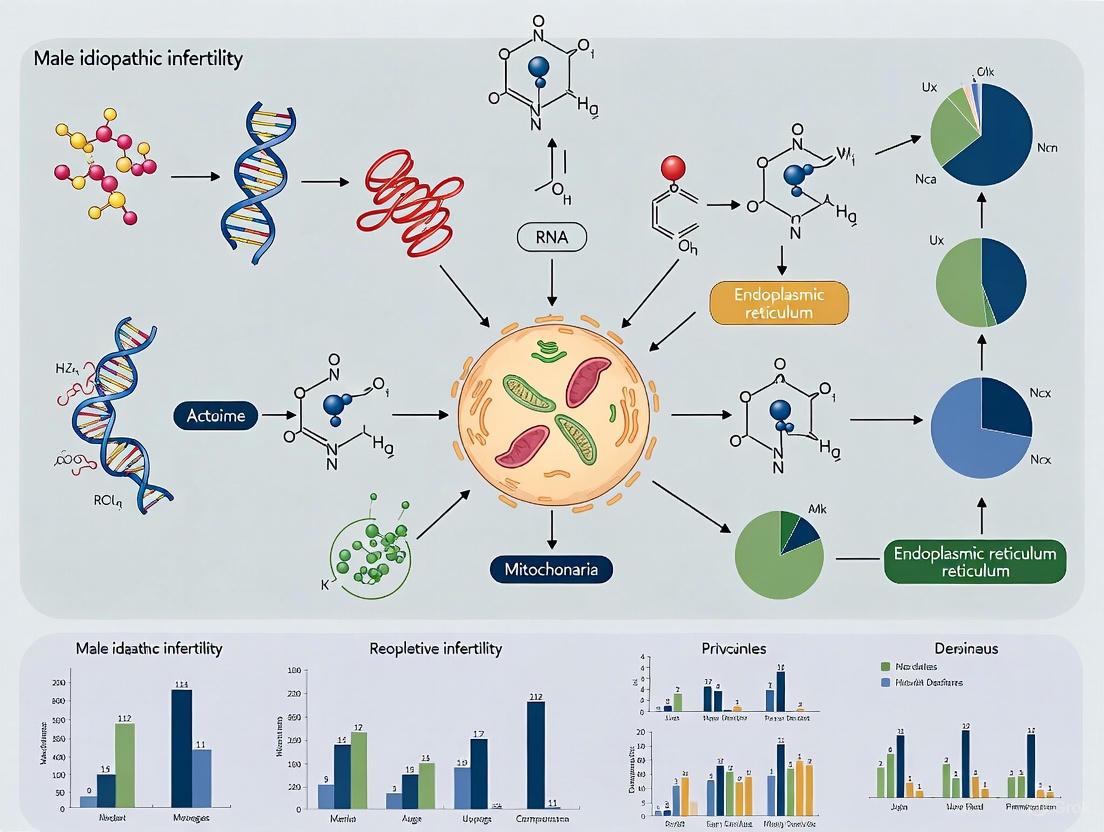
Male idiopathic infertility, a diagnosis of exclusion affecting a significant portion of infertile men, is being radically redefined by big data analytics.
Big Data and AI in Male Idiopathic Infertility: From Genomic Discovery to Clinical Diagnostics
Abstract
Male idiopathic infertility, a diagnosis of exclusion affecting a significant portion of infertile men, is being radically redefined by big data analytics. This article explores how the integration of multi-omics data—including genomics, epigenomics, and clinical biomarkers—is uncovering hidden etiologies and enabling data-driven subclassification of this heterogeneous condition. We detail the methodological pipeline from high-throughput sequencing and extensive clinical work-ups to advanced machine learning and bio-inspired optimization models that achieve remarkable diagnostic accuracy. The discussion extends to troubleshooting data integration challenges and validating findings through functional studies and clinical clustering. For researchers and drug development professionals, this synthesis highlights how big data is transitioning male infertility from a descriptive to a predictive science, paving the way for novel therapeutic targets and personalized treatment modalities.
Deconstructing Idiopathic Infertility: How Big Data is Illuminating a Black Box
Idiopathic male infertility (IMI) represents one of the most challenging and prevalent conditions in reproductive medicine. It is defined as infertility of unknown origin despite normal physical examination, endocrine laboratory testing, and the absence of identifiable causes, though semen analysis may reveal abnormalities [1]. IMI accounts for a substantial proportion of male infertility cases, with significant implications for both clinical management and scientific inquiry. Within the context of emerging big data analytics, understanding the precise scale and heterogeneity of IMI becomes paramount. The application of artificial intelligence (AI) and machine learning (ML) to large-scale datasets offers unprecedented opportunities to deconstruct this complex condition, identify novel subgroups, and uncover previously hidden biological networks. This technical review examines the prevalence, clinical heterogeneity, and pathogenic landscape of IMI, with specific emphasis on how big data approaches are reshaping our fundamental understanding of this pervasive clinical problem.
Epidemiological Scale of Male Infertility and IMI
Infertility affects approximately 15% of couples globally, with male factors contributing to about 50% of cases [2] [3] [1]. This translates to an estimated 50 million couples facing male factor infertility worldwide [2]. The World Health Organization reports that 9% of couples struggle with fertility problems, with male factors involved in half of these cases [4].
Within this broader context of male infertility, IMI represents a significant diagnostic category. Current evidence indicates that 30-40% of infertile men are diagnosed with IMI, meaning no specific aetiology can be identified despite comprehensive clinical evaluation [1]. For these patients, routine semen analysis reveals pathological findings, but standard diagnostic workflows fail to identify causative factors.
Table 1: Epidemiological Distribution of Male Infertility Causes Based on a Cohort of 12,945 Patients [1]
| Diagnostic Category | Percentage of Patients |
|---|---|
| Infertility of known cause | 42.6% |
| - Varicocele | 14.8% |
| - Maldescended testes | 8.4% |
| - Sperm auto-antibodies | 3.9% |
| - Others | 15.5% |
| Idiopathic infertility | 30.0% |
| Hypogonadism | 10.1% |
| Obstruction | 2.2% |
| Other causes | 15.1% |
The clinical burden of IMI is further compounded by its association with broader health concerns. Emerging evidence indicates that male infertility may serve as a biomarker for general health status, with several studies demonstrating associations between impaired semen parameters and increased all-cause mortality [3] [5]. This intersection between reproductive and systemic health underscores the importance of comprehensive evaluation for men presenting with infertility.
Clinical Presentation and Diagnostic Heterogeneity
The clinical presentation of IMI is characterized by substantial heterogeneity in semen parameter abnormalities without identifiable cause. The diagnostic workup for IMI requires extensive evaluation to exclude known causes, including comprehensive medical history, physical examination, endocrine assessment, and genetic testing when indicated [1].
Semen Analysis Limitations
Traditional semen analysis remains the cornerstone of male fertility evaluation but presents significant limitations in characterizing IMI. The assessment is inherently subjective, carries inaccuracies, and can be prone to error [2]. Approximately 10-15% of infertile men present with semen parameters within the normal reference range yet still experience infertility, highlighting the limitations of conventional analysis in capturing functional sperm deficiencies [2].
The complexity of IMI is further evidenced by the spectrum of semen abnormalities observed:
- Azoospermia (no sperm in ejaculate): Affects 1% of men and 10-15% of infertile men [6]
- Oligozoospermia (reduced sperm concentration)
- Asthenozoospermia (reduced sperm motility)
- Teratozoospermia (abnormal sperm morphology)
Most patients with IMI present with combinations of these abnormalities rather than isolated parameters, creating a complex phenotypic landscape that has resisted traditional classification systems.
Beyond Conventional Semen Parameters
The functional inadequacies of sperm in IMI extend beyond basic parameters to encompass critical fertilization competencies currently unexplored by traditional semen analysis. These include DNA integrity, capacitation, acrosomal reaction, hyperactivation, and cell signaling pathways [2]. The considerable variability in sperm characteristics, both between individuals and between ejaculates from the same person, adds another layer of complexity to understanding IMI heterogeneity [2].
Pathogenic Landscape and Molecular Heterogeneity
The pathogenic basis of IMI is increasingly recognized as multifactorial, involving complex interactions between genetic, epigenetic, and environmental factors that disrupt normal spermatogenesis and sperm function.
Genetic Framework
Genetic factors play a substantial role in IMI pathogenesis, with an estimated 30-40% of cases attributed to genetic abnormalities [7]. Genomic studies have postulated more than 500 target genes associated with IMI, forming a complex regulatory network essential for normal spermatogenesis [8].
Table 2: Catalogued Genetic Elements Associated with Idiopathic Male Infertility [8]
| Genetic Category | Number of Genes | Key Functional Associations |
|---|---|---|
| IMI-associated genes | 484 | Transcription factors, cell differentiation markers |
| IMI genes with SNPs | 192 | Apoptosis, spermatogenesis, oxidative stress response |
| Reactive Oxygen Species (ROS) genes | 981 | DNA damage, sperm membrane integrity |
| Antioxidant (AO) genes | 70 | Protection from oxidative damage |
| Y-chromosome genes | Multiple clusters | Critical spermatogenesis regulation |
High-throughput genomic analyses have revealed that genes associated with IMI are predominantly membrane-associated, suggesting that structural failures in spermatozoa membrane integrity may represent a key pathological mechanism in IMI [8]. Functional analyses have identified apoptosis, spermatogenesis, and oxidative stress response as the foremost active biological processes affected in IMI.
Oxidative Stress and Molecular Pathways
Reactive oxygen species (ROS) and antioxidant imbalance represent central mechanisms in IMI pathogenesis. Research has confirmed that any imbalance between ROS and antioxidant genes through mutations, single-nucleotide polymorphisms (SNPs), or other variations can result in abnormal regulation of genes leading to infertility [8]. Approximately 80% of men visiting in vitro fertilization clinics have DNA damage, with the majority having idiopathic causes [8].
The following diagram illustrates the proposed pathogenic network integrating genetic and oxidative stress components in IMI:
Network analysis has identified key genes central to ROS-mediated IMI, revealing unique signature patterns in both spermatozoa and seminal plasma of affected individuals [8]. These molecular signatures represent promising targets for both diagnostic development and therapeutic intervention.
Big Data and AI Approaches to Deconstruct Heterogeneity
The application of big data analytics and artificial intelligence represents a paradigm shift in IMI research, enabling researchers to navigate the complexity and heterogeneity that have traditionally impeded progress.
Machine Learning for Diagnosis and Classification
Recent studies have demonstrated the powerful application of machine learning algorithms to identify subtle patterns within complex andrological datasets that escape conventional statistical approaches. In one pilot study utilizing two extensive Italian datasets (UNIROMA and UNIMORE), XGBoost analysis exhibited remarkable accuracy (AUC 0.987) in predicting patients with azoospermia [9]. The analysis revealed that follicle-stimulating hormone serum levels, inhibin B serum levels, and bitesticular volume were among the most influential predictive variables [9].
Another innovative approach developed an AI screening method using only serum hormone levels to predict male infertility risk without semen analysis [4]. The model achieved an area under the curve (AUC) of 74.42%, with FSH, testosterone/estradiol ratio, and LH ranking as the most important predictive variables [4]. This approach demonstrates how AI can extract meaningful diagnostic information from routine clinical data that traditionally required specialized testing.
The integration of diverse data types represents a cornerstone of big data approaches to IMI. Research has demonstrated that environmental parameters (particularly PM10 and NO2 pollution levels) emerge as crucial predictive variables for semen analysis alterations when incorporated into machine learning models [9]. This finding highlights the importance of including environmental factors in comprehensive models of IMI pathogenesis.
The following diagram outlines a proposed big data analytical workflow for IMI research:
AI applications in male infertility have expanded across multiple domains, including sperm morphology analysis (e.g., SVM with AUC 88.59%), motility assessment (e.g., SVM with 89.9% accuracy), and non-obstructive azoospermia sperm retrieval prediction (e.g., gradient boosting trees with AUC 0.807 and 91% sensitivity) [6]. These technological advancements enable more precise characterization of IMI heterogeneity than previously possible.
Experimental Protocols and Research Reagents
Advancing IMI research requires standardized methodologies for data collection, analysis, and integration. The following section outlines key experimental approaches and research tools essential for investigating IMI within a big data framework.
Essential Research Reagents and Solutions
Table 3: Key Research Reagent Solutions for IMI Investigation
| Reagent/Category | Specific Examples | Research Application |
|---|---|---|
| Semen Analysis Reagents | WHO-recommended staining solutions, computer-assisted semen analysis (CASA) reagents | Standardized assessment of sperm concentration, motility, morphology |
| Hormonal Assays | FSH, LH, testosterone, estradiol, inhibin B ELISA/kits | Evaluation of hypothalamic-pituitary-gonadal axis function |
| Genetic Analysis Tools | Next-generation sequencing panels, SNP arrays, Y-chromosome microdeletion kits | Identification of genetic variants associated with spermatogenesis failure |
| Oxidative Stress Markers | Reactive oxygen species detection kits, antioxidant capacity assays, DNA fragmentation tests | Assessment of oxidative damage to spermatozoa |
| Proteomic Reagents | Mass spectrometry reagents, protein arrays, antibody panels | Comprehensive protein profiling of seminal plasma and spermatozoa |
Methodological Framework for Big Data Studies
The UNIROMA research protocol exemplifies a comprehensive approach to IMI investigation, integrating three distinct variable categories: (1) semen analysis parameters (volume, concentration, motility, morphology); (2) sex hormone levels (FSH, LH, testosterone, estradiol, prolactin, inhibin B); and (3) testicular ultrasound parameters (testicular volume, echotexture, pathological findings) [9]. This multidimensional data collection creates a rich foundation for machine learning applications.
For the UNIMORE dataset, researchers expanded data incorporation to include four categories: (1) semen analysis; (2) hormonal data; (3) biochemical examinations (including blood cell counts); and (4) environmental pollution-related parameters (PM10, NO2) [9]. This broader inclusion criteria enables investigation of previously unexplored relationships between semen quality and environmental factors.
The machine learning workflow typically involves several standardized steps:
- Data Preprocessing: Normalization of numeric variables and encoding of categorical features
- Feature Selection: Identification of the most informative predictors through techniques like XGBoost F-score analysis
- Model Training: Implementation of algorithms with k-fold cross-validation (typically 5-fold)
- Hyperparameter Tuning: Randomized optimization of model parameters to prevent overfitting
- Validation: Performance assessment using metrics including AUC, accuracy, precision, and recall [9]
Idiopathic male infertility represents a significant clinical challenge affecting millions of couples worldwide, characterized by substantial heterogeneity in both presentation and underlying pathogenesis. The condition exemplifies the limitations of traditional reductionist approaches in understanding complex reproductive disorders. The integration of big data analytics and artificial intelligence marks a transformative shift in IMI research, enabling researchers to navigate the complexity of this condition through multidimensional data integration and pattern recognition at scale. These approaches have already demonstrated remarkable potential in identifying novel predictive variables, revealing hidden relationships between environmental factors and semen quality, and developing accurate diagnostic models based on routinely available clinical data. As these methodologies continue to evolve, they promise to deconstruct the heterogeneity of IMI into meaningful subtypes with distinct pathogenic mechanisms and targeted therapeutic approaches. The future of IMI research lies in collaborative efforts to build larger, more diverse datasets and develop increasingly sophisticated analytical frameworks capable of unraveling this persistent challenge in reproductive medicine.
Male factor infertility (MFI) constitutes a significant global health burden, affecting approximately 15% of couples attempting to conceive, with a male factor identified in up to 50% of these cases [10] [1]. Within this population, idiopathic male infertility (IMI) presents a particularly vexing clinical dilemma, accounting for approximately 30% of cases where men exhibit reduced sperm quality without any identifiable reason despite standard diagnostic evaluation [10] [1]. This condition is distinguished from unexplained male infertility (UMI), characterized by persistent infertility despite normal semen parameters, whereas IMI specifically features abnormal semen analysis results of unknown origin [10]. The rising prevalence of infertility, coupled with the significant proportion of idiopathic cases, underscores critical limitations in our conventional diagnostic paradigms and highlights the urgent need for more sophisticated, data-driven approaches to elucidate the complex pathophysiology underlying these conditions.
The traditional diagnostic framework for male infertility has relied heavily on standardized semen analysis performed according to World Health Organization (WHO) laboratory manuals, which establish reference values based on the lower fifth percentiles of data distributions from men who have achieved natural conception [10]. While this methodology provides valuable basic parameters, a growing body of evidence demonstrates that these conventional assessments are insufficient to capture the multifaceted nature of male fertility potential, particularly in idiopathic cases [10] [11]. This diagnostic inadequacy has profound implications for both clinical management and research, as approximately 15-40% of men are infertile despite exhibiting normal semen analyses, normal medical histories, and normal physical examinations [10]. This manuscript explores the critical limitations of traditional diagnostic frameworks and examines how big data analytics and advanced computational approaches are poised to revolutionize our understanding and classification of male idiopathic infertility.
Critical Limitations of Conventional Semen Analysis
Fundamental Diagnostic Shortcomings
The standard semen analysis, while foundational to infertility assessment, suffers from several intrinsic limitations that render it inadequate as a standalone diagnostic tool for idiopathic infertility. The most significant constraint is that individual semen parameters are not direct surrogates for fertility [10]. The reference values established in the WHO manuals explicitly state that the lower fifth percentile derived from fertile populations does not represent a definitive threshold distinguishing fertile from infertile men [10]. This statistical approach means that men with parameters above these thresholds may still be infertile, while those below may still achieve conception, creating a substantial gray zone in clinical interpretation.
The analytical process itself introduces additional variability. Traditional semen analysis relies heavily on manual assessment techniques that are prone to significant inter-observer and inter-laboratory variability [12] [6]. This subjectivity complicates the accurate evaluation of critical sperm parameters such as morphology, motility, and concentration, which are essential for treatment planning [6]. The inherent subjectivity in morphological assessment, for instance, leads to inconsistencies in sperm selection, particularly for procedures like Intracytoplasmic Sperm Injection (ICSI), where embryologists must identify the most viable sperm based on structural characteristics [12].
Inability to Assess Functional Competence
Perhaps the most critical limitation of conventional semen analysis is its failure to evaluate sperm functional competence at the molecular and cellular levels. Standard parameters provide quantitative metrics about sperm number, motility, and basic morphology but offer no insight into the integrity of the sperm DNA or its epigenetic programming, both of which are crucial for successful embryo development [10] [11].
Sperm DNA fragmentation (SDF) represents one such functional parameter that is not captured by routine analysis. Elevated SDF levels are more prevalent in infertile men and have been correlated with reduced fertilization rates, impaired embryo quality, increased miscarriage rates, and negative effects on birth weights [11]. Similarly, oxidative stress resulting from an imbalance between reactive oxygen species (ROS) and antioxidants can damage sperm DNA, proteins, and lipids, leading to impaired sperm function despite otherwise normal semen parameters [11]. The traditional diagnostic framework lacks the capacity to assess these molecular insults, creating a significant diagnostic blind spot in idiopathic cases.
Table 1: Limitations of Standard Semen Analysis in Idiopathic Infertility
| Aspect | Limitation | Clinical Implication |
|---|---|---|
| Diagnostic Thresholds | Reference values based on percentiles from fertile populations | Cannot definitively distinguish fertile from infertile men |
| Analytical Method | Reliance on manual assessment | Significant inter-observer and inter-laboratory variability |
| Functional Assessment | No evaluation of DNA integrity or epigenetic factors | Misses molecular causes of infertility despite normal parameters |
| * Prognostic Value* | Poor correlation with reproductive outcomes | Limited ability to guide treatment selection or predict success |
| Idiopathic Cases | Inability to detect subtle cellular or molecular defects | Fails to identify etiology in 30% of infertile men |
Advanced Diagnostic Modalities in Male Infertility
Molecular and Genetic Assessments
The diagnostic limitations of conventional semen analysis have spurred the development of advanced testing modalities that probe deeper into the molecular and genetic determinants of sperm function. Assessment of sperm DNA fragmentation (SDF) has emerged as a crucial diagnostic tool, with the DNA Fragmentation Index (DFI) serving as a quantitative measure of DNA damage [11]. Factors associated with elevated SDF include hormonal abnormalities, varicoceles, smoking, and other sources of oxidative stress that escape detection in standard evaluations [11].
The exploration of novel biomarkers in seminal plasma represents another promising avenue for diagnosing idiopathic cases. Research has identified 21 compounds acting as biomarkers of male factor infertility, including ascorbic acid, malondialdehyde (MDA), 8-hydroxydeoxyguanosine (8-OHdG), and various metabolites that correlate with reduced sperm quality and fertility potential [11]. Among the most promising protein biomarkers is testis-expressed sequence 101 protein (TEX101), a glycosylphosphatidylinositol-anchored (GPI) protein that undergoes cleavage from the sperm surface during epididymal maturation [11]. TEX101 levels in seminal plasma have demonstrated diagnostic utility, with levels ≥120 ng/ml indicating normal spermatogenesis, levels of 5-120 ng/ml suggesting hypospermatogenesis or maturation arrest, and levels below 5 ng/ml indicative of Sertoli cell-only syndrome (SCOS) [11].
Genetic investigations have also expanded beyond traditional karyotyping and Y-chromosome microdeletion analysis. Whole-exome testing has emerged as a cost- and time-efficient method for identifying genetic anomalies associated with infertility, particularly in men with non-obstructive azoospermia [11]. This approach has flagged multiple genes related to infertility, including with-no-lysine k 3 (WKN3), meiotic double-stranded break formation protein 1 (MEI1), adenosine deaminase domain containing 2 (ADAD2), TEX101, polo kinase 4 (PLK4), and fanconi anemia complementation A (FANCA) [11]. Furthermore, epigenetic modifications have demonstrated significant roles in sperm production and have shown prognostic value in fertility outcomes, offering another layer of diagnostic information beyond the genetic sequence itself [10].
Imaging and Home-Based Technologies
Advanced imaging modalities have enhanced the diagnostic armamentarium for male infertility evaluation. Shear wave elastography is a noninvasive technique that assesses testicular stiffness, which can predict parenchymal damage in testicular tissue that leads to abnormalities in sperm quantity [11]. Increased testicular stiffness has been associated with conditions such as testicular atrophy, high-grade varicoceles, and chronic orchitis, which impair spermatogenesis but may not be detected through physical examination alone [11].
A recent study investigating radiomics has explored correlations between testicular ultrasound features and markers of testicular function [11]. Ultrasound-derived textural characteristics showed significant associations with several semen parameters, including sperm concentration, count, motility, and morphology, suggesting that testicular ultrasonography may provide valuable, noninvasive insights into specific aspects of testicular function and sperm production [11].
To address psychological barriers and improve accessibility, home semen testing technologies have received FDA approval, including products such as SpermCheck and YO Home Sperm Test [11]. SpermCheck employs sperm-specific monoclonal antibodies, achieving a high accuracy rate of 97% to 98% compared to laboratory assessments, while the YO system uses a smartphone camera connected to a sample testing station to measure motile sperm concentration, with accuracy rates ranging from 97.2% to 98.3% [11]. These technologies potentially enable more convenient and less stressful initial screening while generating digital data amenable to larger-scale analysis.
Table 2: Advanced Diagnostic Modalities Beyond Standard Semen Analysis
| Modality | Function | Application in Idiopathic Infertility |
|---|---|---|
| Sperm DNA Fragmentation (SDF) | Quantifies DNA damage in ejaculated sperm | Identifies hidden sperm dysfunction despite normal parameters |
| Oxidative Stress Biomarkers | Measures reactive oxygen species and antioxidant capacity | Detects molecular damage affecting sperm function |
| TEX101 Protein Assay | Measures testicular protein in seminal plasma | Differentiates causes of spermatogenic failure |
| Whole-Exome Sequencing | Identifies genetic mutations across protein-coding regions | Reveals genetic causes in non-obstructive azoospermia |
| Shear Wave Elastography | Assesses testicular tissue stiffness | Detects parenchymal damage not evident on physical exam |
| Epigenetic Profiling | Analyzes DNA methylation and histone modifications | Identifies epigenetic abnormalities affecting sperm function |
Big Data and Artificial Intelligence in Idiopathic Infertility Research
AI-Enhanced Diagnostic and Predictive Models
Artificial intelligence (AI) has emerged as a transformative tool in male infertility research, particularly for addressing the diagnostic challenges posed by idiopathic cases. AI approaches include machine learning (ML), artificial neural networks (ANNs), deep learning (DL), and natural language processing (NLP), which can analyze complex, multifactorial data to identify patterns not discernible through traditional statistical methods [13] [12]. These technologies are being applied across various domains of male infertility, from basic semen analysis to outcome prediction for assisted reproductive technologies.
A particularly compelling application of AI in idiopathic infertility involves developing predictive models using routinely available clinical data. In a landmark study involving 3,662 patients, researchers investigated a screening method using only serum hormone levels and AI predictive analysis [4]. The AI model achieved an area under the curve (AUC) of 74.42% in predicting infertility risk based solely on hormonal parameters (LH, FSH, prolactin, testosterone, E2, and T/E2 ratio), with FSH emerging as the most significant predictor, followed by T/E2 ratio and LH [4]. This approach demonstrates the potential for AI to extract meaningful diagnostic information from existing data without requiring additional specialized testing.
Other studies have reported even more impressive results using different algorithmic approaches. One investigation developed a hybrid diagnostic framework combining a multilayer feedforward neural network with a nature-inspired ant colony optimization algorithm, integrating adaptive parameter tuning to enhance predictive accuracy [14]. When evaluated on a dataset of 100 clinically profiled male fertility cases, the model achieved 99% classification accuracy, 100% sensitivity, and an ultra-low computational time of just 0.00006 seconds, highlighting its efficiency and real-time applicability [14]. Feature importance analysis emphasized key contributory factors such as sedentary habits and environmental exposures, providing clinically interpretable insights alongside predictive power.
AI in Semen Analysis and Sperm Selection
AI technologies have demonstrated remarkable capabilities in enhancing the accuracy and standardization of semen analysis. Deep learning techniques, which involve multilayered neural networks, have been utilized to evaluate sperm motility and morphology, offering insights into sperm function and potential fertility [11] [12]. These systems can classify sperm morphology with high precision, providing standardized and reproducible results that reduce human error and interobserver variability inherent in manual assessments [11].
For sperm morphology assessment, AI-powered tools automate the analysis of digital images of sperm samples, with studies demonstrating exceptional performance. Support vector machines (SVM) have achieved an AUC of 88.59% when analyzing 1,400 sperm, while deep neural networks have shown advanced capabilities in quantitative phase imaging (QPI) for comprehensive sperm morphology assessment without the need for staining or fixation [12] [6]. These approaches are particularly valuable for procedures like ICSI, where embryologist selection of sperm based on morphology is inherently subjective and inconsistent [12].
In the context of non-obstructive azoospermia (NOA), the most severe form of male infertility, gradient boosting trees (GBT) have demonstrated impressive performance in predicting successful sperm retrieval, achieving an AUC of 0.807 with 91% sensitivity based on an evaluation of 119 patients [6]. This application is particularly significant as it assists clinicians in determining which patients are most likely to benefit from surgical sperm retrieval procedures, avoiding unnecessary interventions in cases with low predicted success rates.
AI-Driven Diagnostic Framework for Male Infertility
Experimental Protocols and Research Methodologies
Protocol for Hormone-Based AI Infertility Prediction Model
The development of AI models for predicting male infertility risk from serum hormone levels follows a rigorous methodological pipeline, as exemplified by Kobayashi et al. (2024) in their study of 3,662 patients [4]:
Data Collection and Preprocessing:
- Collect comprehensive serum hormone measurements including LH, FSH, prolactin, testosterone, estradiol (E2), and calculate T/E2 ratio
- Obtain standard semen analysis parameters (volume, concentration, motility) following WHO guidelines
- Define reference standards for normal fertility based on total motility sperm count (9.408 × 10^6)
- Implement data normalization procedures to address heterogeneity in measurement scales
Model Development and Training:
- Partition dataset into training and validation subsets (typical splits: 70-30%, 80-20%)
- Employ multiple AI platforms (e.g., Prediction One, AutoML Tables) for model generation
- Utilize feature importance analysis to identify most predictive variables
- Implement cross-validation techniques to assess model robustness
Performance Evaluation:
- Calculate area under the curve (AUC) for receiver operating characteristic (ROC) analysis
- Determine precision, recall, accuracy, and F-value at optimal classification thresholds
- Validate model performance on temporal validation cohorts (e.g., data from subsequent years)
- Compare AI model performance against traditional statistical approaches
This protocol achieved an AUC of 74.42% with FSH, T/E2 ratio, and LH as the most significant predictive variables, demonstrating the feasibility of hormone-based infertility risk assessment without semen analysis [4].
Protocol for Hybrid Machine Learning with Bio-Inspired Optimization
A more advanced methodological approach combines traditional machine learning with nature-inspired optimization algorithms, as implemented in a study achieving 99% classification accuracy [14]:
Dataset Preparation:
- Utilize clinically annotated fertility datasets (e.g., UCI Machine Learning Repository)
- Encompass diverse parameters: clinical, lifestyle, environmental exposure factors
- Apply range scaling normalization to standardize heterogeneous feature values
- Address class imbalance through algorithmic sampling techniques
Hybrid Model Architecture:
- Implement multilayer feedforward neural network (MLFFN) as base classifier
- Integrate Ant Colony Optimization (ACO) for adaptive parameter tuning
- Incorporate Proximity Search Mechanism (PSM) for feature-level interpretability
- Enable real-time processing through optimized computational efficiency
Validation and Interpretation:
- Assess performance metrics (accuracy, sensitivity, computational time) on unseen samples
- Conduct feature importance analysis to identify key contributory factors
- Evaluate generalizability across diverse patient demographics
- Compare performance against conventional machine learning classifiers
This protocol highlights the potential of hybrid optimization approaches to deliver both high predictive accuracy and clinically interpretable results, with computational efficiency enabling real-time application in clinical settings [14].
Big Data Research Methodology in Male Infertility
Essential Research Reagent Solutions
Table 3: Essential Research Reagents and Technologies for Advanced Male Infertility Investigation
| Reagent/Technology | Function | Application in Idiopathic Infertility Research |
|---|---|---|
| TEX101 ELISA Kits | Quantitative measurement of testicular marker in seminal plasma | Differentiation of spermatogenic failure subtypes; diagnosis of idiopathic cases |
| Sperm DNA Fragmentation Assays | Detection of DNA damage in sperm nuclei | Assessment of hidden sperm dysfunction not evident in standard parameters |
| Oxidative Stress Biomarker Panels | Measurement of ROS and antioxidant capacity | Identification of oxidative damage as underlying etiology in idiopathic infertility |
| Whole Exome Sequencing Kits | Comprehensive analysis of protein-coding genomic regions | Identification of genetic anomalies in non-obstructive azoospermia and severe oligospermia |
| AI-Assisted Semen Analysis Platforms | Automated sperm morphology and motility classification | Standardized, objective assessment reducing inter-observer variability |
| Epigenetic Profiling Arrays | Genome-wide analysis of DNA methylation patterns | Detection of epigenetic abnormalities affecting sperm function and embryo development |
| Multiplex Hormone Assay Systems | Simultaneous measurement of multiple reproductive hormones | Data generation for AI-based predictive models of infertility risk |
| Antioxidant Formulations | Reduction of oxidative stress in sperm | Therapeutic intervention for idiopathic cases with elevated DNA fragmentation |
The limitations of traditional semen analysis in diagnosing male idiopathic infertility have become increasingly apparent as our understanding of the multifactorial nature of sperm function has evolved. The conventional diagnostic framework, while providing foundational information, fails to capture the complexity of molecular, genetic, epigenetic, and functional determinants of male fertility potential. This diagnostic inadequacy leaves approximately 30% of infertile men without a clear etiology and consequently without targeted treatment options.
The integration of big data analytics and artificial intelligence approaches promises to revolutionize this field by uncovering subtle patterns across diverse data types that escape detection through conventional methods. From AI models that predict infertility risk from serum hormone profiles to hybrid algorithms that integrate clinical, lifestyle, and environmental factors, these advanced computational approaches offer a path toward more precise, personalized diagnostic classification. The development of validated biomarkers such as TEX101 and the standardization of sperm DNA fragmentation assessment further enrich the diagnostic armamentarium beyond basic semen parameters.
As research continues to elucidate the complex pathophysiology underlying idiopathic male infertility, a new diagnostic paradigm is emerging—one that integrates multi-omic data, advanced imaging, functional assessments, and computational analytics to move beyond the limitations of traditional semen analysis. This paradigm shift holds the promise of transforming idiopathic infertility from a diagnosis of exclusion to one of precise molecular and functional characterization, ultimately enabling more targeted interventions and improved clinical outcomes for affected couples.
Male idiopathic infertility, representing cases with no identified cause through routine diagnostic workup, accounts for a significant proportion of male infertility cases. The genetic architecture underlying this condition spans a spectrum from rare, highly penetrant monogenic defects to common, small-effect variants quantified as polygenic risk scores (PRS). Advances in genomic technologies, particularly genome-wide association studies (GWAS) and whole-exome sequencing (WES), have begun to systematically uncover this complex landscape, enabling a more precise understanding of the biological pathways disrupted in male infertility and providing frameworks for risk prediction [15] [16].
Infertility affects one in six couples globally, with male factors contributing to approximately 50% of cases [13] [4]. Despite this prevalence, the etiological basis remains undetermined in a substantial number of men, often classified as idiopathic. Large-scale genetic analyses now provide powerful tools to dissect this heterogeneity, revealing that infertility exists on a polygenic continuum rather than representing a purely monogenic disorder. This whitepaper synthesizes current findings from genomic studies of male infertility, detailing specific risk loci, associated hormonal profiles, analytical methodologies, and emerging applications in clinical risk stratification.
Genetic Discoveries from Large-Scale Association Studies
Genome-Wide Association Studies (GWAS) and Identified Loci
Recent GWAS meta-analyses encompassing up to 10,886 cases and 995,982 controls have identified multiple genetic loci significantly associated with male infertility [15]. These studies test millions of genetic variants across the genome to find those statistically more common in infertile men compared to fertile controls.
Table 1: Genome-Wide Significant Loci for Male Infertility from GWAS Meta-Analyses
| Locus | Nearest Gene | Potential Function | Odds Ratio (Approx.) | P-value |
|---|---|---|---|---|
| rs10200851 | GREB1 | Regulation of estrogen response | 0.95 | 2.90E-11 |
| rs17803970 | SYNE1 | Nuclear envelope organization | 1.10 | 7.50E-11 |
| rs1964514 | EBAG9 | Inhibitor of luteinizing hormone secretion | 1.13 | 6.68E-14 |
These loci implicate diverse biological processes in male infertility pathogenesis, including hormone response pathways (GREB1), spermatogenic structural integrity (SYNE1), and neuroendocrine regulation of reproduction (EBAG9) [15]. The EBAG9 locus is particularly noteworthy as an example of how GWAS can identify previously unsuspected players in reproductive biology. The persistence of certain risk alleles in populations despite their association with infertility may be explained by evolutionary mechanisms such as directional selection or antagonistic pleiotropy [15] [16].
Polygenic Risk Scores (PRS) for Risk Stratification
Beyond individual loci, the aggregate effect of many common variants can be summarized in a polygenic risk score (PRS), which quantifies an individual's genetic liability for a condition based on the number of risk alleles they carry [17]. PRS are typically calculated as weighted sums of risk alleles, with weights derived from GWAS effect size estimates.
Figure 1: Polygenic Risk Score Development and Application Workflow. PRS are calculated by combining effect sizes from GWAS with individual genotype data, enabling risk stratification and potential clinical application.
In the context of male infertility, PRS models are still in development but show promise for identifying men with genetic risk equivalent to monogenic mutations, similar to advancements in other complex diseases [17]. For conditions like coronary artery disease, individuals in the top percentiles of PRS have demonstrated ≥3-fold increased risk compared to those with average genetic risk [17]. This approach is particularly valuable for idiopathic infertility cases where no single variant provides explanatory power, but the cumulative effect of many variants contributes to disease risk.
Insights from Whole-Exome Sequencing (WES) and Rare Variants
Rare Variant Burden in Monogenic Diabetes Genes
Whole-exome sequencing (WES) enables the discovery of rare protein-coding variants with potentially large effect sizes. While direct WES studies focused specifically on male infertility are still emerging, insights can be drawn from related conditions. A recent study of monogenic diabetes genes (MDG) demonstrated that common variants in these genes can be aggregated into PRS that associate with young-onset type 2 diabetes and related complications [18].
Table 2: Whole-Exome Sequencing Approach for Rare Variant Discovery
| Component | Description | Application in Male Infertility |
|---|---|---|
| Sequencing Target | Protein-coding regions (exons) of the genome | Identification of rare deleterious variants in reproduction-related genes |
| Variant Types Identified | Single nucleotide variants (SNVs), small insertions/deletions (indels) | Disruptive mutations in spermatogenesis genes |
| Analysis Approach | Gene-based burden tests, association tests | Testing enrichment of rare variants in cases versus controls |
| Sample Requirements | Hundreds to thousands of cases and controls | UK Biobank (N=197,340) exome sequencing data |
This approach has revealed that women carrying testosterone-lowering rare variants in specific genes like GPC2 show significantly higher risk of infertility (OR=2.63, P=1.25E-03) [16], suggesting similar mechanisms may operate in male infertility. The convergence of common variant signals from GWAS and rare variant signals from WES provides stronger evidence for specific genes and pathways involved in reproductive function.
Hormonal Regulation and Genetic Variants
Exome sequencing analyses have helped elucidate the genetic basis of hormonal regulation in infertility. Research indicates that rare variants in genes involved in testosterone synthesis or signaling can significantly impact fertility status. For male infertility, hormones like follicle-stimulating hormone (FSH), luteinizing hormone (LH), and testosterone play critical roles in spermatogenesis, and genetic variants affecting their production or function contribute to idiopathic cases [16] [4].
Experimental Protocols and Methodologies
GWAS Meta-Analysis Protocol
Large-scale GWAS meta-analyses for infertility have followed standardized protocols to ensure robust and reproducible results:
- Cohort Identification and Phenotyping: Seven primary cohorts with over 1.5 million participants were aggregated, primarily of European ancestry. Male infertility cases were identified through electronic health records, clinical diagnoses, and self-report [15].
- Genotyping and Imputation: Participants were genotyped using genome-wide arrays, followed by imputation to reference panels to increase the number of testable variants up to 33 million SNPs.
- Association Testing: Each cohort performed logistic regression for case-control status with adjustment for principal components and other covariates.
- Meta-Analysis: Fixed-effects or random-effects models were used to combine summary statistics across cohorts, weighting by sample size and accounting for heterogeneity.
- Significance Thresholding: Genome-wide significance was set at P < 5 × 10^(-8) to account for multiple testing.
Artificial Intelligence (AI) and Machine Learning Approaches
AI methodologies have emerged as powerful tools for male infertility research, particularly for integrating genetic data with other clinical parameters:
Figure 2: AI Framework for Male Infertility Assessment. Machine learning models utilize hormone levels and other clinical data to predict infertility diagnoses and treatment outcomes.
A study of 3,662 patients demonstrated that AI models using only serum hormone levels (FSH, LH, testosterone, E2, PRL, and T/E2 ratio) could predict male infertility risk with approximately 74% accuracy (AUC) [4]. Feature importance analysis ranked FSH as the most predictive variable, followed by T/E2 ratio and LH [4]. These models offer potential screening tools when traditional semen analysis is unavailable or unacceptable to patients.
Data Presentation and Synthesis
Hormonal Parameters Across Infertility Categories
Table 3: Hormonal Profiles Across Male Infertility Categories (Adapted from Kobayashi et al., 2024)
| Infertility Category | Sample Size | FSH (mIU/mL) | LH (mIU/mL) | Testosterone (ng/mL) | T/E2 Ratio |
|---|---|---|---|---|---|
| Non-obstructive azoospermia (NOA) | 448 | 22.4±14.8 | 7.7±5.4 | 3.9±1.6 | 13.4±6.8 |
| Obstructive azoospermia (OA) | 210 | 4.7±2.9 | 4.0±1.8 | 4.5±1.6 | 21.6±10.9 |
| Oligo/asthenozoospermia | 1,619 | 8.4±7.7 | 5.4±3.4 | 4.6±1.8 | 19.6±10.7 |
| Normospermic | 1,333 | 5.5±3.5 | 4.6±2.4 | 5.0±1.8 | 22.8±12.5 |
The data reveal distinct endocrine profiles across infertility categories, with NOA patients showing significantly elevated FSH and reduced testosterone and T/E2 ratios, reflecting impaired spermatogenesis and Leydig cell function [4]. These hormonal measurements, when combined with genetic data, provide a more comprehensive picture of the pathophysiology underlying idiopathic cases.
Genetic Correlations with Related Conditions
Genetic correlation analyses using LD Score Regression have revealed significant genetic overlaps between infertility and other reproductive conditions:
- Endometriosis and female infertility: rg = 0.585, P = 8.98E-14 [16]
- Polycystic ovary syndrome (PCOS) and anovulatory infertility: rg = 0.403, P = 2.16E-03 [16]
- Limited genetic correlation between female infertility and reproductive hormones at the genome-wide level (P > 0.05) [16]
These findings suggest shared genetic architectures across some reproductive disorders while highlighting the potential independence of hormonal measures from infertility risk at the population level.
The Scientist's Toolkit: Essential Research Reagents and Platforms
Table 4: Essential Research Tools for Genetic Studies of Male Infertility
| Tool Category | Specific Examples | Application and Function |
|---|---|---|
| Genotyping Arrays | Infinium Global Diversity Array | Genome-wide variant profiling for GWAS and PRS calculation |
| Sequencing Platforms | Illumina NovaSeq, PacBio Sequel | Whole-exome and whole-genome sequencing for rare variant discovery |
| AI/ML Frameworks | Prediction One, AutoML Tables | Developing predictive models from clinical and genetic data |
| Bioinformatics Tools | PLINK, GCTA, LD Score Regression | GWAS quality control, heritability estimation, genetic correlation |
| Biobank Resources | UK Biobank, FinnGen, Estonian Biobank | Large-scale datasets with genetic and health record data |
These tools enable the comprehensive genetic analyses necessary to dissect the complex architecture of male idiopathic infertility, from single-gene defects to polygenic risk.
The integration of GWAS and WES findings has fundamentally advanced our understanding of male idiopathic infertility, revealing it as a complex condition influenced by both common and rare genetic variants across numerous biological pathways. The emergence of polygenic risk scores offers promising avenues for risk prediction and stratification, potentially enabling earlier interventions for at-risk individuals.
Future research directions should include: (1) diversification of study populations to encompass broader ancestral backgrounds, (2) integration of multi-omics data (genomics, epigenomics, transcriptomics) to fully elucidate biological mechanisms, (3) development of clinical decision support tools incorporating both genetic and non-genetic risk factors, and (4) functional validation of identified risk loci through mechanistic studies in model systems.
As these approaches mature, they will progressively transform the diagnostic paradigm for male idiopathic infertility from one of exclusion to one of precise molecular understanding, ultimately enabling more targeted therapeutic development and personalized management strategies for affected individuals.
Male infertility affects approximately 8-12% of couples worldwide, with male factors contributing to 40-50% of infertility cases [19] [20]. Notably, 30-50% of infertile males are classified as idiopathic, having an uncertain cause of subfertility despite normal standard semen parameters [21] [22]. The complexity of male reproductive impairment has accelerated research into epigenetic mechanisms as potential explanations for these unexplained cases. Epigenetic regulation encompasses heritable changes in gene expression that do not alter the DNA sequence itself, including DNA methylation, histone modifications, and regulatory RNA profiles [19] [20]. These epigenetic marks work in concert to control gene expression during spermatogenesis and ensure the production of functionally competent sperm.
The advent of high-throughput technologies and multi-omics platforms has provided unprecedented insights into the molecular orchestration of spermatogenesis and sperm function [23] [22]. In the era of "big data," increasing collaboration among researchers and sharing of genetic and epigenetic datasets has accelerated discovery in male infertility research. A systems-based approach that integrates genomic, epigenomic, and environmental factors is essential for unraveling the complex etiology of idiopathic male infertility [22]. This technical review examines the core epigenetic mechanisms—DNA methylation, histone modifications, and sperm RNA profiles—within the context of big data analysis, providing methodologies and analytical frameworks for researchers and drug development professionals working in reproductive medicine.
DNA Methylation Dynamics in Spermatogenesis
Molecular Machinery and Developmental Patterns
DNA methylation involves the covalent attachment of a methyl group to the fifth carbon of cytosine residues within CpG dinucleotides (5-methylcytosine, 5mC), predominantly occurring at CpG islands in promoter regions and transcriptional start sites [19] [24]. This process is catalyzed by DNA methyltransferases (DNMTs), with DNMT3A and DNMT3B responsible for de novo methylation, DNMT1 for maintenance methylation during DNA replication, and DNMT3L acting as a catalytically inactive cofactor that enhances DNMT3A/B activity [19]. Demethylation is mediated by ten-eleven translocation (TET) enzymes, which initiate the DNA demethylation pathway [19] [24].
During germ cell development, the genome undergoes waves of global demethylation followed by de novo methylation [19] [24]. Primordial germ cells (PGCs) undergo extensive DNA demethylation upon migration to the gonadal ridge between embryonic days 8.5 and 13.5 in mice, reducing 5mC levels to approximately 16.3% compared to 75% in embryonic stem cells [19]. Subsequently, de novo methylation establishes sex-specific patterns during embryonic and prospermatogonial development, completing before birth [19]. These dynamic changes are crucial for genomic reprogramming and the establishment of appropriate imprinting patterns in male germ cells.
Table 1: DNA Methyltransferases and Their Functions in Spermatogenesis
| Enzyme | Function | Consequence of Loss-of-Function |
|---|---|---|
| DNMT1 | Maintenance methyltransferase | Apoptosis of germline stem cells; hypogonadism and meiotic arrest [19] |
| DNMT3A | De novo methyltransferase | Abnormal spermatogonial function [19] |
| DNMT3B | De novo methyltransferase | Fertility with no distinctive phenotype [19] |
| DNMT3C | De novo methyltransferase | Severe defect in DSB repair and homologous chromosome synapsis during meiosis [19] |
| DNMT3L | Cofactor for de novo methylation | Decrease in quiescence of spermatogonial stem cells [19] |
Table 2: DNA Methylation Patterns in Male Germ Cell Development
| Developmental Stage | Methylation Status | Key Regulatory Elements |
|---|---|---|
| Primordial Germ Cells (E8.5-13.5) | Global demethylation (5mC ~16.3%) | Repression of DNMT3A/B; elevated TET1 [19] |
| Prospermatogonia (E13.5-birth) | De novo methylation establishment | DNMT3A/B, DNMT3L [19] |
| Undifferentiated Spermatogonia | Lower methylation levels | DNMT1 [19] |
| Differentiating Spermatogonia | Increased methylation | Elevated DNMT3A, DNMT3B [19] |
| Preleptotene Spermatocytes | Demethylation | TET enzymes [19] |
| Pachytene Spermatocytes | High methylation levels | DNMT3A, DNMT3B [19] |
DNA Methylation Dysregulation and Male Infertility
Emerging evidence strongly correlates dysfunctional DNA methylation with impaired spermatogenesis in both mouse models and human studies. Comparative analyses of testicular biopsies from patients with obstructive azoospermia (OA) with normal spermatogenesis and non-obstructive azoospermia (NOA) have revealed differential DNMT expression profiles [19]. In NOA patients, including those with spermatocyte maturation arrest, specific methylation defects have been observed.
Several specific genes consistently show aberrant methylation patterns in male infertility. Imprinted genes, including MEST, H19, and SNRPN, demonstrate particular vulnerability [24] [20]. The MEST gene, a maternally imprinted gene normally unmethylated in sperm, shows aberrant hypermethylation in cases of low sperm concentration, reduced motility, and abnormal sperm morphology in idiopathic infertile males [20]. Similarly, H19, a paternally imprinted gene normally methylated in sperm, shows significant hypomethylation in testicular sperm of azoospermic men compared to fertile individuals [20]. These disruptions in imprinting control regions can lead to loss of monoallelic expression and potentially affect early embryonic development.
Beyond imprinted genes, non-imprinted genes also display methylation abnormalities in infertility. The MTHFR gene shows hypermethylation in non-obstructive azoospermia and idiopathic infertile men, while this phenomenon is not observed in obstructive azoospermia [20]. SOX30 hypermethylation has been identified in non-obstructive azoospermia mice with impaired spermatogenesis [20]. Semen samples from oligozoospermic and asthenozoospermic individuals have exhibited decreased levels of TET1, TET2, and TET3 mRNAs, suggesting a potential mechanism for broader epigenetic dysregulation [20].
Diagram 1: DNA Methylation Dynamics During Spermatogenesis. The process involves global demethylation in primordial germ cells (PGCs), followed by de novo methylation in gonocytes, establishment of imprinting patterns, and maintenance through subsequent stages.
Histone Modifications in Spermatogenesis
Histone Modification Patterns During Germ Cell Development
Histone modifications represent a crucial epigenetic mechanism in spermatogenesis, involving post-translational changes to histone proteins that alter chromatin structure and regulate gene expression. During spermatogenesis, germ cells undergo dramatic chromatin remodeling, with most histones eventually replaced by protamines to achieve nuclear compaction in mature sperm [19]. However, a small percentage (approximately 1-15%) of histones are retained in specific genomic regions, carrying important epigenetic information [20].
The process of histone modification begins during meiosis, where post-translational modifications including phosphorylation, ubiquitylation, sumoylation, and repositioning of histone tail markers such as H3K4me2/3 and H3K36me3 occur [20]. Core histones are gradually substituted by transitional proteins during spermatogenesis. Additional modifications to histone tails, such as acetylation of lysine residues in histone 4, occur at later stages in elongating spermatids during spermiogenesis [20]. Hyperacetylation of histones facilitates the exchange of histones with protamines, a critical step in chromatin compaction [20].
Histone methyltransferases and other epigenetic regulators play pivotal roles in spermatogenesis. PRMT5 deficiency increases H3K9me2 and H3K27me2 levels and alters chromatin state of PLZF, leading to spermatogonial stem cell developmental defects and spermatogenesis disorder [19]. Similarly, histone methyltransferase Suv39h null mice exhibit spermatogenic failure with nonhomologous chromosome association [19]. These findings underscore the critical importance of precise histone modification patterns for normal spermatogenesis.
Experimental Protocols for Histone Modification Analysis
Chromatin Immunoprecipitation Followed by Sequencing (ChIP-seq) provides a comprehensive method for mapping histone modifications genome-wide:
- Cross-linking and Cell Lysis: Formaldehyde cross-linking of proteins to DNA in sperm samples, followed by cell lysis and chromatin fragmentation via sonication to 200-600 bp fragments.
- Immunoprecipitation: Incubation with specific antibodies against histone modifications (e.g., H3K4me3, H3K27ac, H3K9me2).
- DNA Recovery: Reverse cross-linking, proteinase K treatment, and DNA purification.
- Library Preparation and Sequencing: Library construction using NEBNext Ultra II DNA Library Prep Kit followed by sequencing on platforms such as Illumina NovaSeq 6000.
- Bioinformatic Analysis: Read alignment to reference genome, peak calling with tools like MACS2, and differential binding analysis between experimental groups.
Immunofluorescence Staining allows visualization of histone modifications in tissue sections:
- Sample Preparation: Fixation of testicular sections in 4% paraformaldehyde and permeabilization with 0.1% Triton X-100.
- Blocking and Antibody Incubation: Blocking with 5% BSA, followed by incubation with primary antibodies against specific histone modifications.
- Detection and Imaging: Fluorescently-labeled secondary antibody incubation, counterstaining with DAPI, and imaging by confocal microscopy.
Sperm RNA Profiles as Biomarkers of Male Infertility
Sperm RNA Elements and Their Clinical Significance
Spermatozoa contain a complex population of RNAs, including coding mRNAs, microRNAs (miRNAs), Piwi-interacting RNAs (piRNAs), long non-coding RNAs (lncRNAs), and tRNA-derived fragments [23] [21]. While mature sperm are largely transcriptionally silent, they retain a rich and functionally relevant RNA repertoire that provides key insights into male reproductive biology [23]. These RNAs are largely inherited from earlier stages of spermatogenesis and are increasingly implicated in early embryonic development, highlighting a more active role for spermatozoa in post-fertilization processes than previously recognized [23] [21].
Studies have identified specific sperm RNA elements (SREs) associated with fertility outcomes. Jodar et al. identified 648 SREs common among fertile couples, and when all these sequences were present in sperm from idiopathic infertile couples, they were significantly more likely to achieve live birth outcomes by timed intercourse or intrauterine insemination [25]. The absence of these required SREs reduced the probability of achieving live birth from 73% to 27% [25]. Approximately 30% of idiopathic infertile couples presented an incomplete set of required SREs, suggesting a male component as the cause of their infertility [25].
More recent research has focused on specific RNA classes as biomarkers. Small RNA sequencing has revealed differential expression of miRNAs and piRNAs between sperm of different quality grades [26]. Specifically, 16 miRNAs and 37 piRNAs were significantly different between high-quality and poor-quality sperm [26]. Notable miRNAs including hsa-miR-15b-5p, hsa-miR-19a-5p, and hsa-miR-20a-5p have been linked to sperm impairments and hormonal markers, with higher expression associated with negative β-hCG outcomes and poor IVF prognosis [26]. Diagnostic validation showed AUCs of 0.76, 0.71, and 0.74 for these miRNAs respectively in predicting pregnancy outcomes [26].
Table 3: Sperm RNA Elements as Biomarkers for Male Infertility
| RNA Type | Characteristics | Association with Infertility |
|---|---|---|
| Sperm RNA Elements (SREs) | 648 identified elements; exonic, intronic, intergenic, and non-coding | Absence reduces live birth rate from 73% to 27% with TIC/IUI [25] |
| microRNAs (miRNAs) | Small non-coding RNAs, ~22 nucleotides; post-transcriptional regulation | 16 miRNAs differentially expressed between high and low-quality sperm [26] |
| Piwi-interacting RNAs (piRNAs) | 26-31 nucleotides; transposon silencing | 37 piRNAs significantly different between sperm quality groups [26] |
| Long non-coding RNAs (lncRNAs) | >200 nucleotides; various regulatory functions | Most abundant RNA type in sperm; differential expression in infertility [26] |
Sperm RNA Sequencing and Analytical Workflow
Sample Preparation and RNA Extraction:
- Sperm Isolation: Motile sperm isolation using bilayer density gradient (90% and 45% Isolate Sperm Separation Medium) centrifugation at 300× g for 15 minutes [23]. Pellet washing in modified Human Tubal Fluid medium and second centrifugation at 600× g for 10 minutes.
- RNA Extraction: Total RNA isolation using phenol/guanidine-based methods (QIAzol) or automated systems (Maelstrom 9600) [23] [21]. DNase I treatment to remove contaminating DNA.
- RNA Quality Assessment: Quantification using Qubit RNA HS Assay Kit and quality verification via Bioanalyzer.
Library Preparation and Sequencing:
- Small RNA Library: Use of miRNeasy Kit for small RNA isolation, followed by library preparation using specialized small RNA kits to capture miRNAs and piRNAs [21] [26].
- Total RNA Library: Reverse transcription using SeqPlex RNA Amplification Kit, followed by double-stranded cDNA amplification [21]. Library preparation with NEBNext Ultra II DNA Library Prep Kit and size selection with SPRI beads.
- Sequencing: Utilization of NextSeq 550 or NovaSeq 6000 systems, with target depths of 85-100 million reads per sample for adequate coverage [21].
Bioinformatic Analysis Pipeline:
- Quality Control and Trimming: FastQC for quality assessment and Trimmomatic for adapter removal and quality trimming.
- Alignment and Quantification: Alignment to reference genome (T2T-CHM13v2.0 or Gencode hg38) using STAR aligner [21]. Read quantification with featureCounts or similar tools.
- Differential Expression Analysis: Using tools such as DESeq2 or edgeR to identify significantly differentially expressed RNAs between experimental groups.
- Functional Annotation: Gene ontology enrichment analysis using clusterProfiler or similar tools to identify biological processes and pathways associated with differentially expressed RNAs.
Diagram 2: Sperm RNA Sequencing and Analysis Workflow. The process encompasses sample preparation, library construction, sequencing, and comprehensive bioinformatic analysis.
Integrated Epigenetic Analysis in Big Data Framework
Multi-Omics Integration Strategies
The complexity of male infertility necessitates integrated approaches that combine multiple epigenetic datasets with clinical parameters. Multi-omics integration provides a powerful framework for unraveling the complex etiology of idiopathic male infertility. Several studies have demonstrated the value of combining different molecular datasets to improve diagnostic and prognostic accuracy.
The Spermatozoa Function Index (SFI) represents one such integrative approach, combining expression levels of three genes (AURKA, HDAC4, and CARHSP1) involved in mitosis regulation, epigenetic modulation, and early embryonic development with the number of motile spermatozoa [23]. This composite index demonstrated strong discriminatory power, with ROC analysis establishing three categories: SFI > 320 (normal), 290-320 (intermediate), and <290 (low) [23]. Notably, among normospermic samples based on WHO criteria, only 57% had normal SFI values, while 37% had low SFI values, suggesting that even sperm with normal parameters may harbor molecular dysfunctions [23].
Machine learning approaches offer promising avenues for integrating complex epigenetic data. Random Forest algorithms and other supervised learning methods can incorporate diverse data types including DNA methylation patterns, histone modification profiles, RNA expression data, and clinical parameters [27]. These models have shown improved prediction accuracy for ART outcomes compared to traditional statistical methods [27]. The inclusion of male epigenetic factors, particularly sperm DNA methylation and RNA profiles, alongside female factors represents a significant advancement in predictive modeling for infertility treatment outcomes.
The Scientist's Toolkit: Research Reagent Solutions
Table 4: Essential Research Reagents for Sperm Epigenetic Studies
| Reagent/Category | Specific Examples | Application and Function |
|---|---|---|
| Sperm Separation Media | Isolate Sperm Separation Medium | Density gradient centrifugation for motile sperm isolation [23] |
| RNA Extraction Kits | QIAzol, miRNeasy Kit, OptiPure Viral Auto Plate kit | Total and small RNA isolation from sperm pellets [23] [21] |
| DNA Methylation Analysis | SeqPlex RNA Amplification Kit, NEBNext Ultra II DNA Library Prep Kit | Library preparation for methylation sequencing [21] |
| Histone Modification | Histone modification-specific antibodies (H3K4me3, H3K9me2, H3K27ac) | Chromatin immunoprecipitation and immunofluorescence [19] |
| Sequencing Kits | NEBNext Ultra II DNA Library Prep Kit, Illumina sequencing kits | Library preparation for next-generation sequencing [21] |
| qPCR Reagents | CFX96 Real-Time PCR Detection System, reverse transcription kits | Validation of RNA expression and methylation patterns [23] |
The epigenetic dimension of male infertility provides critical insights into the molecular mechanisms underlying idiopathic cases. DNA methylation patterns, histone modifications, and sperm RNA profiles each contribute uniquely to our understanding of spermatogenesis and sperm function. The integration of these epigenetic markers within a big data analytical framework offers unprecedented opportunities for advancing diagnosis, prognosis, and treatment of male infertility.
Future research directions should focus on comprehensive multi-omics studies that simultaneously analyze DNA methylation, histone modifications, and RNA profiles in well-phenotyped patient cohorts. The development of standardized protocols and analytical pipelines will be essential for comparative analyses across studies. Furthermore, the integration of artificial intelligence and machine learning approaches holds particular promise for identifying complex patterns within large epigenetic datasets that may not be apparent through traditional statistical methods.
As our understanding of sperm epigenetics continues to evolve, these advances will undoubtedly translate into improved diagnostic tools and personalized treatment strategies for idiopathic male infertility. The application of big data analytics to sperm epigenetics represents a paradigm shift in male infertility research, moving beyond standard semen parameters to molecular fingerprints that more accurately reflect sperm functional competence and developmental potential.
The diagnostic classification of male infertility has long been hampered by heterogeneous phenotypic descriptions and fragmented data collection approaches. Consequently, a significant proportion of cases—up to 30%—receive an "idiopathic" or unexplained diagnosis, which severely limits targeted therapeutic interventions and prognostic accuracy. This technical review examines how integrated, multidimensional phenotypic data collection and standardized classification systems can dramatically reduce idiopathic diagnoses. By synthesizing evidence from recent studies on comprehensive diagnostic frameworks, machine learning applications, and standardized phenotyping ontologies, this whitepaper provides researchers and drug development professionals with methodological frameworks for enhancing data integrity in male infertility research. The implementation of systematic phenotyping protocols not only refines diagnostic precision but also unlocks the potential of big data analytics to identify novel biomarkers and therapeutic targets in previously unexplained cases.
Male factor infertility (MFI) contributes to approximately 50% of infertility cases among couples, with a substantial proportion lacking an identifiable etiology after standard evaluation [28]. The term "idiopathic infertility" has traditionally served as a diagnostic catch-all for cases with abnormal semen parameters without discernible cause, creating a significant barrier to advancing mechanistic understanding and targeted therapeutics. This diagnostic uncertainty stems from several factors: incomplete phenotypic characterization, non-standardized terminology across institutions, and isolated data silos that prevent meaningful aggregation of clinical information.
The emergence of big data analytics in biomedical research has exposed the limitations of current diagnostic approaches to male infertility. Genomic-wide association studies (GWAS) require precisely phenotyped cohorts to detect meaningful genetic associations, yet the field has been hindered by inconsistent phenotypic descriptors [15]. The integration of multidimensional clinical data—encompphysical examination findings, laboratory parameters, imaging results, genetic information, and lifestyle factors—creates a powerful substrate for computational analysis that can identify previously unrecognized patterns and subtypes within the idiopathic population.
Standardizing Phenotypic Classification: Foundations for Data Integration
The Human Phenotype Ontology (HPO) Framework for Male Infertility
The International Male Infertility Genomics Consortium (IMIGC) has developed a standardized vocabulary based on the Human Phenotype Ontology (HPO) to address the critical need for universal nomenclature in male infertility [29]. This framework replaces ambiguous terminology with precisely defined terms organized in a logical hierarchy, enabling consistent data capture across research institutions and clinical settings. The HPO tree structure begins with the broad term "Decreased male fertility" and branches into increasingly specific phenotypes, allowing for both broad and granular classification.
The revised HPO tree introduces several key improvements over previous classification attempts [29]:
- Replacement of ambiguous terms: "Early spermatogenesis arrest" is replaced with specific stage-based terms: "Spermatogonial arrest," "Spermatocyte arrest," and "Round spermatid arrest"
- Precise quantitative classifications: "Oligozoospermia" is subclassified as "Mild oligozoospermia" (10-15 million sperm/mL), "Moderate oligozoospermia" (5-10 million sperm/mL), "Severe oligozoospermia" (1-5 million sperm/mL), and "Extreme oligozoospermia" (<1 million sperm/mL)
- Integration with existing databases: The HPO terms are cross-referenced with Orphanet codes for specific phenotypes, facilitating interoperability between research databases
Table 1: Standardized HPO Terms for Male Infertility Phenotyping
| HPO Term | Definition | Previous Equivalent | Orphanet Code |
|---|---|---|---|
| Severe oligozoospermia | 1-5 million sperm/mL | Severe oligospermia | ORPHA:1770 |
| Spermatocyte arrest | Arrest at primary/secondary spermatocyte stage | Meiotic arrest | ORPHA:1762 |
| Sertoli cell-only phenotype | Seminiferous tubules containing only Sertoli cells | Germ cell aplasia | ORPHA:1771 |
| Obstructive azoospermia | Azoospermia due to physical blockage | Post-testicular azoospermia | ORPHA:1760 |
Comprehensive Diagnostic Work-up Protocols
A systematic approach to male infertility evaluation can identify underlying causes in approximately 80% of men previously classified as idiopathic [28]. The diagnostic framework should encompass multiple clinical dimensions:
Medical History and Physical Examination A detailed medical history should assess congenital conditions (cryptorchidism, testicular torsion), iatrogenic factors (gonadotoxic medications, previous surgeries), environmental exposures, and comorbidities (obesity, diabetes, hypertension) linked to impaired reproductive function [28]. Physical examination must document secondary sexual characteristics, testicular volume and consistency, epididymal abnormalities, and presence of the vas deferens [30].
Laboratory Assessment
- Semen analysis: Extended beyond basic parameters to include computer-aided semen analysis (CASA) for motility quantification and strict Kruger criteria for morphology [30]
- Hormonal profiling: Follicle-stimulating hormone (FSH), luteinizing hormone (LH), total testosterone, prolactin [31]
- Genetic testing: Karyotype analysis, Y-chromosome microdeletion testing, and CFTR mutation analysis for specific indications [31]
Advanced Diagnostic Imaging
- Scrotal ultrasonography: Assesses testicular volume, detects non-palpable varicoceles, and identifies testicular masses [30]
- Transrectal ultrasonography (TRUS): Evaluates ejaculatory duct obstruction, particularly in azoospermic men with low ejaculate volume [30]
Multidimensional Data Integration: Methodological Approaches
Couple-Based Phenotypic Modeling
Traditional infertility research has often evaluated male and female factors in isolation, despite growing evidence that couple-based analyses provide superior discriminative power. A machine learning study utilizing Orthogonal Partial Least Square-Discriminant Analysis (OPLS-DA) demonstrated that a couple-modeling approach achieved 73.8% accuracy in stratifying fertile versus infertile couples with previous idiopathic diagnosis [32]. The most discriminative variables were anthropometric measurements and markers of metabolic and oxidative status, highlighting the importance of factors beyond conventional semen parameters.
The experimental protocol for couple-based phenotypic modeling involves [32]:
- Data Collection: 80 clinical and biochemical variables from both partners, including anthropometrics, blood pressure, carbon monoxide status, steroid profiles, antioxidants, and micronutrients
- Sample Processing: Standardized blood collection after 12-hour fasting, with serum and plasma stored at -80°C until analysis
- Laboratory Analysis: LC-MS/MS for steroid profiling, HPLC for carotenoids and vitamins, atomic absorption spectrometry for zinc and selenium
- Data Preprocessing: Shapiro-Wilks test for distribution assessment, normalization using PowerTransformer for machine learning applications
- Model Training: Development set (n=136 couples) for training, external validation set (n=61 couples) for performance evaluation
Machine Learning Applications for Phenotype Stratification
Artificial intelligence (AI) approaches are increasingly applied to infertility phenotyping, with demonstrated efficacy in predicting treatment outcomes and identifying subtle phenotypic patterns. A linear support vector machine (SVM) model applied to 9,501 intrauterine insemination (IUI) cycles achieved an area under the curve (AUC) of 0.78 for predicting pregnancy outcomes based on 21 clinical and laboratory parameters [33]. The feature importance analysis revealed pre-wash sperm concentration, ovarian stimulation protocol, cycle length, and maternal age as the strongest predictors, while paternal age was the weakest predictor.
Table 2: Machine Learning Feature Importance in Infertility Outcome Prediction
| Predictor Variable | Relative Importance | Clinical Application |
|---|---|---|
| Pre-wash sperm concentration | Highest | Selection of appropriate ART technique |
| Ovarian stimulation protocol | High | Protocol personalization |
| Cycle length | High | Timing optimization for interventions |
| Maternal age | Moderate | Prognostic counseling |
| Paternal age | Lowest | Limited prognostic value |
The experimental workflow for AI-based phenotyping includes [33]:
- Data Preprocessing: Exclusion of cycles with >3 missing features; median/mode imputation for 1-2 missing features; one-hot encoding for categorical variables
- Feature Normalization: Comparison of six normalization methods (scale, normalization, robust scale, min-max, standard scaler, PowerTransformer) with PowerTransformer selected for optimal performance
- Model Selection: Evaluation of multiple algorithms (Linear SVM, AdaBoost, Kernel SVM, Random Forest, Extreme Forest, Bagging, Voting classifiers) with stratified four-fold cross-validation
- Validation: Independent dataset validation to assess generalizability and prevent overfitting
Genomic Integration with Phenotypic Data
Genetic Architecture of Male Infertility
Recent genome-wide association studies (GWAS) have identified 25 genetic risk loci for male and female infertility through meta-analyses of up to 42,629 cases and 740,619 controls [15]. These discoveries highlight the polygenic nature of many infertility cases previously classified as idiopathic. Integration of phenotypic data with genomic information enables the establishment of genotype-phenotype correlations essential for personalized treatment approaches.
The genetic evaluation protocol for male infertility includes [34]:
- Whole Exome Sequencing (WES): Cost-effective (<$500) method for identifying mutations in known fertility genes; particularly valuable for non-obstructive azoospermia (NOA) and primary ovarian insufficiency (POI)
- Variant Interpretation: Classification of variants of uncertain significance (VUS) using functional evidence from model systems
- Family Studies: Segregation analysis in families when possible, though often limited by the "n=1 problem" (affected individual as the only family member manifesting the disease)
Functional Validation of Genetic Findings
Determining causality of genetic variants requires functional validation beyond association studies. CRISPR/Cas9 genome editing has emerged as a powerful tool for testing the functional impact of infertility-associated variants [34]. The experimental workflow includes:
- In Vitro Models: Creation of isogenic cell lines with specific variants to assess impacts on protein function and cellular pathways
- Animal Models: Generation of transgenic mice carrying human variants to evaluate effects on spermatogenesis and fertility
- Therapeutic Exploration: Gene correction in spermatogonial stem cells (SSCs) for potential clinical application in germ cell-intrinsic mutations
Visualizing Integrated Diagnostic Frameworks
Comprehensive Phenotypic Data Workflow
The following diagram illustrates the integrated approach to phenotypic data collection and analysis for reducing idiopathic diagnoses in male infertility:
Standardized Phenotype Classification System
The hierarchical structure of the Human Phenotype Ontology for male infertility enables precise data capture:
Essential Research Tools and Reagents
Table 3: Research Reagent Solutions for Comprehensive Phenotyping Studies
| Research Tool | Specific Application | Technical Function | Example Implementation |
|---|---|---|---|
| Computer-Aided Semen Analysis (CASA) | Quantitative sperm motility and morphology | Automated video analysis of sperm concentration and movement parameters | Curvilinear velocity, straight-line velocity, linearity measurements [30] |
| LC-MS/MS Steroid Profiling | Comprehensive hormonal assessment | Simultaneous quantification of multiple steroid hormones in serum | Testosterone, estradiol, progesterone quantification in couple-based studies [32] |
| CRISPR-Cas9 Genome Editing | Functional validation of genetic variants | Precise gene modification in cellular and animal models | Testing impact of VUS on protein function [34] |
| Atomic Absorption Spectrometry | Micronutrient analysis | Quantification of essential trace elements in biological samples | Zinc and selenium measurement in serum [32] |
| PowerTransformer Normalization | Machine learning data preprocessing | Statistical normalization for improved model performance | Preparing clinical data for ML algorithms [33] |
| HPO Term Annotation | Phenotypic data standardization | Structured vocabulary for consistent phenotype description | Applying "Severe oligozoospermia" versus vague "low sperm count" [29] |
The integration of comprehensive phenotypic data through standardized frameworks represents a paradigm shift in male infertility research and clinical practice. The systematic implementation of detailed clinical work-ups, coupled with structured classification systems like HPO and advanced computational analytics, can significantly reduce the proportion of cases designated as idiopathic. This approach enables researchers to identify previously unrecognized disease subtypes and establish robust genotype-phenotype correlations essential for targeted drug development.
Future research directions should focus on:
- Developing automated phenotyping tools that extract structured data from electronic health records
- Creating multi-omics integration platforms that combine genomic, proteomic, metabolomic, and clinical data
- Establishing large-scale, deeply phenotyped patient cohorts for machine learning applications
- Validating AI-based stratification models in diverse populations across multiple institutions
As the field moves toward personalized approaches to infertility management, comprehensive phenotyping will serve as the foundation for precision diagnostics and therapeutics, ultimately improving outcomes for couples struggling with infertility while providing valuable insights into the complex biological pathways governing human reproduction.
Male idiopathic infertility represents a significant diagnostic and therapeutic challenge in reproductive medicine, affecting a substantial proportion of infertile couples. The condition is defined by an inability to achieve pregnancy despite normal routine semen analysis parameters and the absence of identifiable causes after standard clinical evaluation [9]. Traditional approaches have largely focused on isolated factors, but emerging evidence suggests that infertility arises from complex interactions between genomic, epigenomic, and environmental determinants [35] [36]. This whitepaper delineates a systems-based framework for investigating male idiopathic infertility, leveraging advanced multi-omics technologies and computational analytics to deconvolute this multifactorial condition. The integration of big data analytics provides an unprecedented opportunity to identify novel biomarkers, elucidate pathological mechanisms, and develop targeted therapeutic interventions for a condition that has remained largely enigmatic in andrology.
Foundational Concepts and Current Landscape
The World Health Organization defines infertility as the failure to achieve pregnancy after 12 months of regular unprotected intercourse, affecting approximately 8-12% of couples globally [36]. Male factors contribute to nearly 50% of all cases, with a significant portion classified as idiopathic following conventional diagnostic workups [9]. Standard andrological evaluation includes semen analysis, hormone profiling, and physical examination, yet these assessments fail to identify causative factors in approximately 40% of infertile men [9].
The limitations of current diagnostic paradigms have stimulated interest in more comprehensive investigative approaches. Genetic screening currently includes karyotyping, Y-chromosome microdeletion analysis, and CFTR mutation testing, primarily for azoospermic and severely oligozoospermic patients [35]. However, these investigations identify abnormalities in only a subset of cases, highlighting the need for more expansive diagnostic capabilities. The emerging recognition that thousands of genes, epigenetic regulators, and environmental factors collectively determine infertility phenotypes has catalyzed the shift toward systems-level investigations [35].
Multi-Omic Dimensions of Male Infertility
Genomic and Genetic Architecture
While routine genetic testing identifies chromosomal abnormalities and specific microdeletions, the complex genetic architecture of male infertility extends beyond currently tested variants. The interplay between thousands of genes creates a complex landscape where single-gene mutations, polygenic contributions, and modifier genes collectively influence reproductive outcomes [35]. Specific genes such as spermatogenic transposon silencer (MAEL) and GATA3 have been implicated in impaired spermatogenesis, while the deleted in azoospermia-like (DAZL) gene family plays crucial roles in embryonic germ cell development and differentiation [36].
Epigenetic Regulation Mechanisms
The epigenetic profile of mammalian sperm is distinctive and specialized, with various epigenetic factors regulating genes across different levels to affect sperm function [36]. The principal epigenetic mechanisms include:
DNA Methylation: This well-studied epigenetic process involves the transfer of a methyl group to cytosine residues, primarily in CpG dinucleotides, catalyzed by DNA methyltransferases (DNMTs) [36]. Abnormal methylation patterns of numerous genes have been associated with male infertility, including hypermethylation of DAZL in oligoasthenoteratozoospermic individuals, CREM in oligozoospermic cases with aberrant protamination, and MTHFR in non-obstructive azoospermia [36]. The X-linked reproductive homeobox (RHOX) gene cluster, crucial for spermatogenesis, shows hypermethylation in idiopathic male infertility, positioning it as a potential biomarker [36].
Histone Modifications: During spermatogenesis, germ cells undergo extensive post-translational modifications including phosphorylation, ubiquitylation, sumoylation, and repositioning of histone tail markers [36]. Core histones are gradually substituted by transitional proteins and ultimately by protamines through processes facilitated by hyperacetylation [36]. Disruptions in these intricate processes directly contribute to reproductive failure in men.
Non-Coding RNAs: Various RNA species, including microRNAs, piRNAs, and long non-coding RNAs, provide additional layers of epigenetic regulation that influence spermatogenesis and sperm function [36].
Table 1: Key Epigenetic Alterations in Male Idiopathic Infertility
| Epigenetic Mechanism | Gene/Element | Alteration | Associated Phenotype |
|---|---|---|---|
| DNA Methylation | DAZL | Hypermethylation | Impaired spermatogenesis, decreased sperm function |
| DNA Methylation | CREM | Hypermethylation | Oligozoospermia with aberrant protamination |
| DNA Methylation | MTHFR | Hypermethylation | Non-obstructive azoospermia |
| DNA Methylation | RHOX cluster | Hypermethylation | Abnormal sperm parameters, idiopathic infertility |
| DNA Methylation | H19 | Hypomethylation | Reduced sperm concentration and motility |
| DNA Methylation | MEST | Hypermethylation | Low sperm concentration, motility, abnormal morphology |
| Histone Modification | Multiple histones | Altered acetylation/methylation | Disrupted spermatogenesis, impaired chromatin compaction |
Seminal Microbiome and Metabolome
Recent integrated profiling of semen microbiota and metabolome has revealed distinct dysbiosis and metabolic disruptions in idiopathic male infertility [37]. Infertile men exhibit significantly lower seminal microbiota α-diversity, with 45 differentially abundant taxa identified compared to fertile controls [37]. Metabolomic analyses have identified 147 differentially expressed metabolites, with specific microorganisms demonstrating correlations with sperm quality:
Table 2: Seminal Microbiota Correlations with Sperm Quality Parameters
| Microorganism | Correlation with Sperm Quality | Potential Functional Significance |
|---|---|---|
| Providencia rettgeri | Positive correlation | Potential beneficial metabolic functions |
| Pediococcus pentosaceus | Positive correlation | Possible protective role in seminal environment |
| Streptococcus pneumoniae | Positive correlation | Association with improved sperm parameters |
| Proteus penneri | Negative correlation | Potential pathogenic effects on sperm function |
Metabolites such as Arg-Arg, Fumarate, and Lpc 18:2 show positive correlations with sperm motility, while Lys-Glu and Indalone demonstrate negative correlations [37]. Four metabolites (γ-Glu-Tyr, Indalone, Lys-Glu, γ-Glu-Phe) exhibit exceptional diagnostic potential with AUC values exceeding 0.97, suggesting high clinical utility for idiopathic male infertility diagnosis [37].
Environmental Determinants
Environmental exposures represent significant contributors to male infertility, with emerging evidence from machine learning analyses identifying environmental pollution parameters as crucial predictive variables [9]. In extensive datasets, parameters including PM10 (F-score=361) and NO2 (F-score=299) emerged as among the most influential predictors of semen analysis alterations, comparable in importance to biochemical and hormonal factors [9]. Environmental toxins such as fluoride can disrupt reproductive signaling pathways, induce oxidative stress, autophagy, and apoptosis, and alter gut and reproductive tract microbiota, thereby impairing fertility in experimental models [37].
The following diagram illustrates the complex interplay between genomic, epigenomic, environmental, and microbiological factors in male infertility:
Advanced Analytical Methodologies
Integrated Multi-Omics Experimental Workflow
A comprehensive systems approach requires the integration of multiple analytical platforms to capture the complexity of genomic, epigenomic, metabolomic, and microbiological dimensions. The following workflow illustrates a robust experimental design for idiopathic infertility research:
Machine Learning and Big Data Analytics
Machine learning algorithms, particularly XGBoost (eXtreme Gradient Boosting), have demonstrated remarkable efficacy in analyzing complex andrological datasets [9]. These approaches can identify latent connections between input and output variables to develop automated algorithms that predict relationships among multitude of concurrently analyzed variables [9]. In pilot studies applying machine learning to semen analysis, XGBoost exhibited the highest accuracy (AUC 0.987) in predicting patients with azoospermia compared to other categories [9]. Notably, among the most influential predictive variables were follicle-stimulating hormone serum levels (F-score=492.0), inhibin B serum levels (F-score=261), and bitesticular volume (F-score=253.0) [9].
For environmental influences, machine learning analysis of datasets incorporating pollution parameters demonstrated good predictive accuracy (AUC 0.668), with the most crucial predictive variables being environmental pollution parameters (PM10, F-score=361; NO2, F-score=299) and biochemical data (white blood cells, F-score=326; red blood cells, F-score=299) [9]. These findings highlight the utility of computational approaches in unraveling complex relationships between environmental exposures and reproductive outcomes.
The Scientist's Toolkit: Essential Research Reagents and Platforms
Table 3: Essential Research Reagents and Platforms for Systems Infertility Research
| Reagent/Platform | Application | Specific Function |
|---|---|---|
| FastPure Stool DNA Isolation Kit (Magnetic bead) | Microbial DNA extraction | Isolation of high-quality genomic DNA from semen samples for microbiome analysis |
| 5R 16S rRNA Sequencing | Microbiome profiling | Enhanced microbial community profiling by combining multiple variable regions of the 16S rRNA gene |
| Illumina NextSeq 2000 Platform | High-throughput sequencing | Paired-end sequencing for comprehensive genomic, epigenomic, and microbiomic analyses |
| AB Triple TOF 6600 System | Metabolomic profiling | Untargeted liquid chromatography-mass spectrometry (LC-MS) for seminal metabolome characterization |
| XGBoost Algorithm | Machine learning analysis | Powerful ensemble method for identifying non-linear patterns in complex multi-omics datasets |
| Majorbio Cloud Platform | Bioinformatic analysis | Integrated platform for microbiota bioinformatic analysis, including diversity assessment and differential abundance testing |
| Computer Assisted Semen Analysis (CASA) System | Semen analysis | Automated evaluation of sperm concentration, motility, and kinematic parameters according to WHO guidelines |
Experimental Protocols for Comprehensive Profiling
Integrated Microbiota-Metabolome Profiling
Sample Collection and Preparation: Participants maintain abstinence for 2-7 days prior to semen collection. Samples are obtained via masturbation under sterile conditions without saliva or lubricants. Following liquefaction, samples are flash-frozen in liquid nitrogen for 15 minutes and stored at -80°C until analysis [37].
Microbiota Assessment: Semen samples are thawed, centrifuged at 10,000 g for 10 minutes at room temperature, and the pellet resuspended in PBS. Total microbial genomic DNA is extracted using the FastPure Stool DNA Isolation Kit. DNA quality is measured by 1% agarose gel electrophoresis, with concentration and purity determined by NanoDrop 2000 spectrophotometer. 16S rRNA amplification and sequencing are performed by amplifying 5 regions on the 16S rRNA gene in multiplex. Purified amplicons are pooled in equimolar concentrations and subjected to paired-end sequencing using the Illumina NextSeq 2000 platform [37].
Metabolomic Profiling: After thawing semen samples at 4°C, pre-cooled methanol/acetonitrile/water solution (2:2:1, v/v) is added, followed by vortex-mixing, sonication at low temperature for 30 minutes, and standing at -20°C for 10 minutes. The supernatant is centrifuged at 14,000 g for 20 minutes at 4°C and vacuum dried. Prior to mass spectrometry analysis, quality control samples are prepared using acetonitrile/water solution (1:1, v/v) re-dissolution, and the supernatant is taken after centrifugation for LC-MS analysis using an AB Triple TOF 6600 system [37].
Bioinformatic Analysis: Microbiota bioinformatic analysis is carried out using the Majorbio Cloud platform. α-diversity is calculated using mother for Chao1 and Sob indices, with Wilcoxon rank sum test used to compare differences between groups. Beta diversity is assessed by PCoA analysis based on Bray-Curtis distance. Linear discriminant analysis effect size (LEfSe) is used to identify differentially abundant microbial taxa. Metabolomics data processing includes peak identification, alignment, and normalization, with multivariate statistical analyses including PCA and PLS-DA to identify differentially expressed metabolites [37].
Epigenomic Analysis Protocols
DNA Methylation Analysis: Bisulfite conversion of sperm DNA is performed using commercial kits, followed by whole-genome bisulfite sequencing or targeted analysis of candidate regions via pyrosequencing. Key regions for analysis include imprinted genes (H19, MEST, SNRPN), spermatogenesis-related genes (DAZL, CREM, RHOX cluster), and potential regulatory elements. Bioinformatics pipelines for processing bisulfite sequencing data include quality control, alignment to reference genomes, methylation extraction, and differential methylation analysis.
Histone Modification Assessment: Chromatin immunoprecipitation (ChIP) protocols are optimized for sperm cells, using antibodies specific for histone modifications such as H3K4me2/3, H3K9ac, H3K27me3, and H4 hyperacetylation. Following immunoprecipitation and DNA purification, sequencing libraries are prepared for ChIP-seq analysis. Computational analysis includes peak calling, annotation, and differential enrichment analysis between fertile and infertile samples.
Data Integration and Computational Modeling
The systems-based approach necessitates sophisticated computational frameworks for integrating heterogeneous data types and generating predictive models. Successful implementation requires:
Multi-Omic Data Integration: Combining genomic, epigenomic, metabolomic, and microbiomic datasets through correlation networks, multivariate statistics, and pathway analyses. Correlation analysis based on Spearman coefficients (|r|>0.6, p<0.05) identifies significant relationships between different molecular layers [37].
Machine Learning Pipeline Development: Implementation of XGBoost classifiers with 5-fold cross-validation and randomized fine-tuning of hyperparameters. Pre-processing includes normalization for numeric variables and encoding for categorical ones, with imputation to fill missing values using the closest neighbor value for numerical features and the most frequent value for categorical features [9].
Validation Frameworks: Independent cohort validation using ROC curve evaluation for potential biomarkers. For multi-class problems (normozoospermia, altered semen parameters, azoospermia), both One versus Rest (OvR) and One versus One (OvO) approaches are implemented to transform multi-class problems into sets of binary classification problems [9].
The systems-based approach to male idiopathic infertility represents a paradigm shift from reductionist investigation to holistic integration of genomic, epigenomic, and environmental determinants. The interplay between these factors creates complex, non-linear relationships that can only be deconvoluted through advanced computational approaches and multi-omic integration. The exceptional diagnostic potential of identified metabolic biomarkers (AUC >0.97) and the predictive power of machine learning models (AUC up to 0.987) underscore the transformative potential of this approach.
Future research directions should include longitudinal studies assessing temporal dynamics in molecular profiles, expanded environmental exposure assessments, development of clinical decision support systems integrating multi-omic data, and translation of systems-level findings into targeted therapeutic interventions. The implementation of this comprehensive framework promises to elucidate the pathological mechanisms underlying idiopathic male infertility and ultimately deliver personalized diagnostic and therapeutic strategies for affected individuals.
The Analytical Arsenal: High-Throughput Technologies and Computational Models Driving Discovery
The field of genomics has undergone a revolutionary transformation over the past two decades, driven by the evolution from microarray-based genotyping to comprehensive next-generation sequencing (NGS). This technological shift has fundamentally expanded our capacity for genome-wide interrogation, enabling unprecedented resolution in deciphering the genetic architecture of complex traits and diseases. Within the specific context of male idiopathic infertility research—where a significant proportion of cases lack a definitive etiological diagnosis—this evolution is particularly impactful. The transition from microarrays to NGS represents more than merely a change in laboratory techniques; it constitutes a fundamental paradigm shift in experimental design, data analysis, and biological insight generation [38] [39].
Microarrays, which emerged as the first high-throughput technology for genome-wide analysis, provided an efficient platform for profiling known genetic variants across thousands of samples simultaneously. However, their inherent limitation to predefined genomic content restricted discovery to previously characterized variation. The advent of NGS, also known as massively parallel sequencing, removed this constraint by enabling hypothesis-free interrogation of the entire genome, exome, or transcriptome. This transition has been especially crucial for investigating male idiopathic infertility, a condition characterized by pronounced genetic heterogeneity where the causative variants often remain elusive [38] [40].
The integration of these advanced genomic tools within big data analytics frameworks has created new pathways for unraveling the molecular basis of idiopathic male infertility. As research in this domain increasingly relies on the aggregation and analysis of massive, multidimensional datasets—including genomic, clinical, environmental, and lifestyle information—the complementary strengths of microarrays and NGS provide a powerful toolkit for generating actionable insights. This technical guide examines the evolutionary trajectory of these technologies, their comparative capabilities, and their transformative role in advancing our understanding of male reproductive disorders [9] [41].
Technology Fundamentals: Principles and Methodologies
Microarray Technology: Design and Workflow
DNA microarrays operate on the principle of hybridization-based complementarity, where thousands to millions of predefined oligonucleotide probes are immobilized on a solid surface to capture complementary DNA sequences from a sample. The fundamental workflow begins with DNA extraction from the biological specimen (e.g., blood, semen, or tissue), followed by amplification and fluorescent labeling. The labeled samples are then hybridized to the array platform, where they bind to complementary probes. After thorough washing to remove non-specific binding, the array is scanned to measure fluorescence intensity at each probe location, generating quantitative data about the abundance of specific sequences [38].
The design constraints of microarrays dictate their application landscape. SNP microarrays focus on single nucleotide polymorphisms distributed across the genome, providing coverage for common genetic variation. Comparative genomic hybridization (CGH) arrays are designed to detect copy number variations (CNVs) by comparing test and reference DNA samples. In the context of male infertility research, targeted arrays have been developed to interrogate genes specifically involved in spermatogenesis, hormonal regulation, and reproductive development. A significant methodological consideration is the probe density, which directly impacts resolution—high-density arrays containing millions of probes offer superior genomic coverage but at increased cost and computational burden [38] [42].
The data generated from microarray experiments manifests as fluorescence intensity values that undergo multiple transformation steps. Normalization algorithms correct for technical variations between arrays, while genotype calling algorithms convert raw intensity data into discrete genetic variants. The entire process from DNA to analyzable data typically requires 3-5 days, with the actual hybridization and scanning completed within 24-48 hours. This rapid turnaround time, combined with relatively low per-sample costs, has maintained microarrays as a viable option for large-scale association studies requiring thousands of samples, such as genome-wide association studies (GWAS) investigating genetic risk factors for idiopathic infertility [38] [42].
Next-Generation Sequencing: Principles and Platforms
Next-generation sequencing technologies employ a fundamentally different approach characterized by massive parallelization of sequencing reactions. Unlike microarrays that interrogate known sequences, NGS determines the nucleotide sequence of DNA fragments in an unbiased manner, enabling discovery of novel variants. The core workflow involves library preparation where DNA is fragmented and adapter sequences are ligated, cluster amplification to create millions of copies of each fragment (on Illumina platforms), and cyclic sequencing using fluorescently labeled nucleotides or probe hybridization [43] [39].
The NGS landscape encompasses multiple platform technologies with distinct biochemical approaches. Illumina's sequencing-by-synthesis technology dominates the market due to its high accuracy and throughput, with platforms like NovaSeq X enabling entire human genomes to be sequenced in days. Oxford Nanopore Technologies utilizes nanopore-based sequencing that measures electrical current changes as DNA strands pass through protein nanopores, offering advantages in read length and portability. Ion Torrent (Thermo Fisher) employs semiconductor technology that detects hydrogen ions released during DNA polymerization. Each platform presents distinct trade-offs in read length, error profiles, and cost structures that must be considered when designing experiments for male infertility research [43] [39].
The applications of NGS in genetic research are diverse and can be tailored to specific research questions. Whole-genome sequencing (WGS) provides the most comprehensive view of the genome, capturing single nucleotide variants, insertions/deletions, structural variations, and copy number variations in a single experiment. Whole-exome sequencing (WES) focuses on the protein-coding regions (exons), which represent only about 1-2% of the genome but harbor the majority of known disease-causing variants. Targeted gene panels sequence a curated set of genes associated with specific phenotypes, such as spermatogenesis failure or sperm motility disorders, offering the deepest coverage at the lowest cost per sample. For male infertility research, each approach presents distinct advantages: WGS for novel gene discovery, WES for balancing comprehensive coverage with cost efficiency, and targeted panels for clinical applications where specific genes are of primary interest [43] [44].
Comparative Analysis: Technical Specifications and Performance
The selection between microarray and NGS technologies requires careful consideration of their respective performance characteristics, which directly influence data quality and research outcomes. The following table provides a systematic comparison of key technical parameters relevant to male infertility research:
Table 1: Performance Comparison Between Microarrays and NGS
| Parameter | Microarrays | Next-Generation Sequencing |
|---|---|---|
| Throughput | Limited to predefined content | Comprehensive genome coverage [39] |
| Variant Detection Range | Known SNPs, CNVs (predefined) | SNPs, indels, CNVs, structural variants, novel variants [39] |
| Resolution | Limited by probe density | Single-base resolution [39] |
| Sample Throughput | High (96+ samples per run) | Moderate (varies by platform and application) |
| Cost per Sample | Lower for genotyping | Higher but decreasing [39] |
| Data Complexity | Moderate | High (requires advanced bioinformatics) [39] |
| Best Applications | GWAS, population screening | Variant discovery, personalized genomics, rare variant detection [38] [39] |
The data generated by these technologies differs substantially in volume and complexity. A typical high-density microarray generates several megabytes of data per sample, primarily consisting of intensity values and genotype calls. In contrast, a single whole-genome sequencing experiment produces 100-200 gigabytes of raw data, including sequence reads, base quality scores, and alignment information. This dramatic increase in data volume necessitates sophisticated computational infrastructure and bioinformatics expertise for storage, processing, and analysis [43] [39].
The sensitivity and specificity of variant detection also differs significantly between the platforms. Microarrays demonstrate high accuracy (>99.5%) for detecting common variants but perform poorly for rare variants and structural variations. NGS provides uniform coverage across the genome but may exhibit coverage gaps in regions with high or low GC content. The detection of copy number variations by NGS has shown superior resolution compared to microarrays, particularly for smaller CNVs (<10 kb), which are frequently missed by standard array designs. For male infertility research, where the genetic etiology often involves complex structural rearrangements or rare coding variants, the comprehensive detection capability of NGS offers a distinct advantage [38] [39].
Experimental Design and Protocol Considerations
Sample Preparation and Quality Control
Robust experimental outcomes in genomic studies of male infertility begin with meticulous sample preparation and quality control. For DNA extraction from semen samples, protocols must be optimized to address the unique challenges posed by sperm chromatin, including high DNA fragmentation potential and extensive protein cross-linking. The recommended approach involves proteinase K digestion followed by phenol-chloroform extraction or column-based purification, with careful quantification using fluorometric methods (e.g., Qubit) rather than spectrophotometry, which is sensitive to contaminants. DNA integrity should be assessed via agarose gel electrophoresis or fragment analyzers, with a DNA Integrity Number (DIN) of ≥7.0 considered optimal for sequencing applications [38].
For microarray analyses, the required DNA input typically ranges from 50-250 ng, while NGS library preparation protocols vary significantly by application: 50-100 ng for targeted panels, 100-500 ng for whole exome sequencing, and 500-1000 ng for whole genome sequencing. When working with limited biological material, such as sperm samples from severely oligospermic men, whole-genome amplification techniques may be employed, though these introduce amplification biases that must be accounted for in subsequent analyses. For RNA sequencing studies investigating the testicular transcriptome, immediate RNA stabilization is critical due to the rapid degradation of mRNA in sperm cells [38] [9].
Quality control metrics specific to each technology platform must be rigorously applied. For microarrays, sample-level metrics include call rate (>98%), heterozygosity rate, and contamination checks. Probe-level metrics involve evaluating intensity distributions, background fluorescence, and hybridization efficiency. For NGS, pre-sequencing QC includes assessment of library concentration and fragment size distribution, while post-sequencing QC encompasses metrics such as sequencing depth (≥30x for WGS), coverage uniformity, base quality scores (Q30 >80%), and duplicate read rates. Implementation of these QC protocols is essential for generating reliable data in male infertility studies, where sample quality is often compromised [38] [9].
Data Analysis Workflows
The analysis of genomic data requires technology-specific computational pipelines. For microarray data, the workflow progresses from raw intensity files through normalization (RMA or CRLMM algorithms), genotype calling, and quality filtering before advancing to association testing. Population stratification, a critical concern in genetic association studies, is typically addressed through principal component analysis (PCA) or multidimensional scaling (MDS) using genome-wide genotype data. In male infertility research, where heterogeneous phenotypes are common, careful consideration of statistical models is required, including logistic regression for binary traits (e.g., azoospermia vs. normospermia) and linear regression for quantitative traits (e.g., sperm count or motility parameters) [42].
NGS data analysis involves more complex computational workflows due to the massive volume of raw sequence data. The standard pipeline begins with raw read QC (FastQC), followed by alignment to a reference genome (BWA, Bowtie2), post-alignment processing (sorting, duplicate marking, base quality recalibration), and variant calling (GATK, Samtools). For male infertility research, specialized analytical approaches may include de novo mutation detection in familial cases, copy number variant calling specifically targeting regions known to harbor infertility genes, and mitochondrial DNA analysis given the importance of mitochondrial function in sperm motility. The interpretation of identified variants prioritizes those in genes with established roles in reproductive processes (e.g., NR5A1, TEX11, CATSPER family) and employs functional prediction algorithms (SIFT, PolyPhen2, CADD) to assess potential pathogenicity [43] [44].
The integration of genomic data with clinical and phenotypic information represents a particular opportunity in male infertility research. Machine learning approaches, including XGBoost and random forests, have demonstrated utility in identifying complex multivariate relationships between genetic variants and infertility phenotypes. In recent applications, these methods have successfully integrated genetic data with clinical parameters (hormone levels, testicular volume), environmental exposures, and lifestyle factors to improve diagnostic classification and prognostic prediction for men with idiopathic infertility [9] [40].
Applications in Male Idiopathic Infertility Research
Genetic Architecture Elucidation
The application of genome-wide interrogation tools has dramatically advanced our understanding of the genetic architecture underlying male idiopathic infertility. Microarray-based GWAS have identified numerous susceptibility loci associated with spermatogenic failure, with recent meta-analyses implicating over 50 genomic regions significantly associated with testicular function and sperm production. These discoveries have highlighted the polygenic nature of many idiopathic infertility cases, where the cumulative effect of numerous common variants with small effect sizes contributes to disease risk. Importantly, many of these loci reside in non-coding genomic regions, potentially influencing gene regulation in reproductive tissues—a finding that would have been inaccessible without genome-wide approaches [42].
NGS technologies have further expanded this knowledge by enabling the identification of rare variants with larger effect sizes that escape detection in GWAS. Whole-exome sequencing studies in men with idiopathic non-obstructive azoospermia have revealed pathogenic mutations in genes critical for meiotic progression (SYCE1, TEX11, STAG3) and DNA repair (BRCA2, FANCM). Similarly, targeted sequencing of candidate genes in oligospermic men has identified recurrent mutations in the aurora kinase C (AURKC) gene associated with macrozoospermia. These findings have begun to resolve the substantial heterogeneity within idiopathic infertility by defining distinct molecular subtypes with characteristic clinical presentations [38] [44].
The integration of multi-omics data represents the cutting edge of male infertility research. By combining genomic data with transcriptomic profiles from testicular biopsies, epigenomic patterns from sperm chromatin, and proteomic signatures from seminal plasma, researchers are constructing comprehensive molecular networks disrupted in idiopathic infertility. These integrated approaches have revealed novel regulatory mechanisms, including the impact of non-coding variants on testis-specific gene expression and the role of epigenetic modifications in transgenerational inheritance of infertility risk. The convergence of evidence across multiple molecular layers provides stronger validation of pathogenic mechanisms and identifies potential targets for therapeutic intervention [43] [40].
Diagnostic Translation and Clinical Applications
The translation of genomic discoveries into clinical applications is progressively transforming the diagnostic approach to male idiopathic infertility. Microarray technology has established utility in detecting clinically relevant copy number variations, particularly AZF (azoospermia factor) microdeletions on the Y chromosome, which account for approximately 10-15% of non-obstructive azoospermia cases. The implementation of targeted arrays incorporating probes for known infertility genes, hormonal pathway genes, and structural variant hotspots provides a cost-effective solution for comprehensive genetic screening in clinical andrology practice [38].
NGS-based tests are increasingly being incorporated into diagnostic algorithms for idiopathic male infertility. Targeted gene panels encompassing 50-300 genes with established roles in reproductive function offer a balanced approach with high diagnostic yield (15-30%) for men with severe spermatogenic failure. Whole-exome sequencing, while more expensive, provides an unbiased approach that can identify mutations in novel genes, with diagnostic yields approaching 40% in familial cases of non-obstructive azoospermia. The clinical implementation of these tests enables precise molecular diagnoses, informs prognostic predictions, and guides treatment selection—for example, identifying men with persistent spermatogenesis who may benefit from surgical sperm retrieval versus those with complete maturation arrest where such procedures would be futile [44] [40].
The emerging application of polygenic risk scoring (PRS) for male infertility represents a promising approach for risk stratification in idiopathic cases. By aggregating the effects of thousands of common variants associated with reduced fertility, PRS models can identify men with elevated genetic susceptibility to spermatogenic failure. When integrated with clinical parameters such as hormone levels and testicular volume, these models improve the prediction of sperm retrieval success in azoospermic men and pregnancy outcomes following assisted reproductive technologies. As PRS methodologies continue to evolve with larger sample sizes and improved ancestry diversity, their clinical utility in personalizing management strategies for idiopathic infertility is expected to increase substantially [45] [42].
Big Data Integration and Analytical Frameworks
Data Management and Computational Infrastructure
The scale of data generated by modern genomic technologies necessitates sophisticated data management strategies. A single whole-genome sequencing experiment produces approximately 100 gigabytes of raw data, which expands significantly when processed through analytical pipelines. Research consortia investigating male infertility may generate petabytes of multi-omics data, requiring specialized storage architectures such as genetic data lakes that can accommodate diverse data types while ensuring efficient access for computational analysis. These scalable repositories integrate GWAS summary statistics, molecular quantitative trait loci (QTL) maps, epigenetic profiles, and clinical annotations within a unified big data infrastructure [41].
Cloud computing platforms (AWS, Google Cloud, Azure) have become essential enablers of genomic research by providing on-demand access to scalable computational resources. The advantages of cloud-based analysis include elastic scalability to handle variable workloads, pre-configured bioinformatics pipelines (Cromwell, Nextflow), and collaborative environments for data sharing while maintaining security and access controls. For male infertility research, where multi-center collaborations are essential for assembling sufficiently large cohorts, cloud platforms facilitate federated analysis while addressing privacy concerns related to sensitive health information. Implementation of appropriate data governance frameworks ensures compliance with regulatory requirements (HIPAA, GDPR) throughout the data lifecycle [43] [41].
The application of artificial intelligence and machine learning represents a transformative approach for extracting insights from complex genomic datasets in male infertility research. Supervised learning algorithms (support vector machines, random forests, XGBoost) have demonstrated high accuracy in predicting clinical outcomes from genetic and clinical features. In recent studies, XGBoost analysis of comprehensive andrological datasets achieved exceptional performance (AUC 0.987) in classifying patients with azoospermia based on genetic, hormonal, and ultrasound parameters. Unsupervised learning approaches (clustering, dimensionality reduction) enable data-driven subtyping of idiopathic infertility cases, revealing molecularly distinct subgroups with potential therapeutic implications [9] [40].
Visualization and Interpretation Frameworks
Effective visualization is critical for interpreting the complex relationships revealed by genomic studies of male infertility. Genome browsers (UCSC, IGV) provide intuitive platforms for exploring genetic variants in their genomic context, overlaying additional data layers such as chromatin accessibility, transcription factor binding, and evolutionary conservation. Circos plots effectively display genome-wide association results alongside copy number variations and structural rearrangements, facilitating the identification of patterns across the entire genome. For network-based analyses, Cytoscape enables the visualization of protein-protein interaction networks and gene regulatory modules disrupted in idiopathic infertility [43].
The functional interpretation of genetic variants prioritizes multiple lines of evidence, including population frequency (gnomAD, 1000 Genomes), evolutionary conservation (GERP, PhyloP), functional impact predictions (SIFT, PolyPhen-2, CADD), and regulatory annotations (ENCODE, Roadmap Epigenomics). For male infertility specifically, tissue-specific expression data from the Human Protein Atlas and specialized reproductive databases (e.g., TSEA - Testis SEnriched Atlas) provide critical context for evaluating the biological relevance of variants in reproductive processes. Integration of these diverse data sources through scoring systems (REVEL, MVP) improves the prioritization of causal variants for functional validation [42] [44].
The translation of genetic findings into biological mechanisms requires experimental validation in model systems. For male infertility genes, this typically involves in vitro functional assays in mammalian cell lines, gene editing in animal models (mice, zebrafish), and transcriptomic/proteomic analysis of gene knockdown effects. The creation of genetically modified mouse models has been particularly informative for validating the role of candidate genes in spermatogenesis, with phenotypes often recapitulating the human infertility presentation. These functional studies not only confirm pathogenicity but also provide insights into molecular mechanisms, potentially identifying targets for therapeutic intervention [38].
Research Reagent Solutions and Experimental Tools
Table 2: Essential Research Reagents and Platforms for Genomic Studies of Male Infertility
| Reagent/Platform | Function | Application Notes |
|---|---|---|
| Infinium Global Screening Array | SNP genotyping | Cost-effective for large-scale GWAS; includes content relevant to reproductive traits [42] |
| Illumina NovaSeq X Series | High-throughput sequencing | Enables large-scale whole-genome sequencing; appropriate for consortium-level studies [43] |
| Oxford Nanopore PromethION | Long-read sequencing | Ideal for detecting structural variants; enables real-time analysis [43] |
| QIAseq Targeted DNA Panels | Custom target enrichment | Focused analysis of infertility gene panels; high sensitivity for rare variants [44] |
| TruSeq DNA PCR-Free Library Prep | WGS library preparation | Minimizes amplification bias; optimal for whole-genome sequencing [43] |
| IDT xGen Lockdown Probes | Hybridization capture | Efficient target enrichment for whole-exome sequencing and custom panels [44] |
The selection of appropriate analytical tools is equally critical for successful genomic studies of male infertility. For microarray data analysis, PLINK remains the standard for quality control and association testing, while GENESIS provides specialized approaches for accounting for population structure in diverse cohorts. For NGS data, the GATK toolkit offers a comprehensive suite for variant discovery, with best-practice workflows rigorously validated for each sequencing application. Specialized tools such ANNOGRAM integrate functional annotations to prioritize variants in non-coding regions, which is particularly relevant for understanding regulatory mutations affecting testis-specific gene expression [42].
Quality control reagents and platforms ensure the reliability of genomic data. Agilent TapeStation and Fragment Analyzer systems provide quantitative assessment of DNA and RNA integrity, with specific quality thresholds established for different genomic applications. For quantifying DNA input, Qubit fluorometric quantification is preferred over spectrophotometric methods due to its superior specificity for nucleic acids. Implementation of standardized QC protocols across participating centers is essential for multi-center studies of male infertility, minimizing technical artifacts and ensuring consistent data quality [38] [9].
Visualizing Genomic Workflows: Experimental Design and Data Analysis
The following diagrams illustrate key workflows in genomic studies of male infertility, from experimental design to data interpretation:
Diagram 1: Genomic Study Workflow for Male Infertility Research
Diagram 2: Big Data Integration Framework for Male Infertility Research
The evolution from microarrays to next-generation sequencing has fundamentally transformed the investigative landscape for male idiopathic infertility research. This technological progression has enabled a shift from targeted genotyping of known variants to comprehensive genome interrogation, facilitating the discovery of novel genetic determinants and molecular mechanisms underlying this complex condition. The integration of these genomic tools with big data analytics frameworks has been particularly impactful, allowing researchers to navigate the substantial heterogeneity of male infertility and define molecular subtypes with distinct clinical trajectories [38] [43].
The future trajectory of genomic technologies points toward several promising developments. Single-cell sequencing approaches are poised to revolutionize our understanding of spermatogenesis by enabling transcriptional profiling of individual germ cells at different developmental stages, revealing previously unappreciated cellular heterogeneity in infertile men. Long-read sequencing technologies continue to improve in accuracy and throughput, offering enhanced capability for detecting structural variations and resolving complex genomic regions relevant to male fertility. The integration of multi-omics data through advanced AI algorithms will further refine our ability to distinguish causal variants from bystanders, accelerating the translation of genetic discoveries into clinical applications [43] [40].
As these technologies continue to evolve, several challenges must be addressed to fully realize their potential in male infertility research. The development of ancestrally diverse reference datasets is critical for ensuring equitable application of genomic discoveries across population groups. The standardization of analytical and reporting frameworks will enhance reproducibility and clinical translation. The implementation of ethical guidelines for handling genetic information related to reproduction remains paramount. Through continued technological innovation and collaborative science, genome-wide interrogation tools will undoubtedly play an increasingly central role in unraveling the complexities of male idiopathic infertility, ultimately improving diagnostic precision, prognostic accuracy, and therapeutic outcomes for affected individuals [42] [40].
The pursuit to understand male idiopathic infertility is increasingly focusing on the sperm epigenome, a layer of molecular information that regulates gene expression without altering the DNA sequence itself. Within the context of big data analysis in male infertility research, comprehensive profiling of sperm epigenetic marks offers unprecedented potential to decipher complex phenotypes that have thus far eluded explanation. Two of the most critical epigenetic components in sperm are DNA methylation and small non-coding RNAs (sncRNAs), which carry information crucial for spermatogenesis, fertilization, and early embryonic development [46] [47]. This technical guide details the advanced methodologies currently employed to capture these epigenetic landscapes, providing researchers with a framework for integrating multi-omics data into a comprehensive big data analysis pipeline for male infertility.
Profiling Sperm DNA Methylation
DNA methylation, involving the addition of a methyl group to cytosine bases, is a key epigenetic mark in sperm, essential for genomic imprinting and transcriptional regulation. Aberrant sperm DNA methylation patterns are linked to poor semen quality and impaired embryogenesis [48] [49]. The choice of profiling technique is paramount and depends on the specific research questions regarding resolution, genome coverage, and cost.
Core Methodologies for DNA Methylation Analysis
The following table summarizes the principal methods used for sperm DNA methylation profiling.
Table 1: Core Methodologies for Sperm DNA Methylation Profiling
| Method Category | Specific Technique | Key Principle | Resolution | Key Advantages | Key Limitations |
|---|---|---|---|---|---|
| Bisulfite Conversion-Based | Whole-Genome Bisulfite Sequencing (WGBS) | Chemical conversion of unmethylated C to U; whole-genome sequencing [50]. | Single-base | Gold standard; comprehensive genome-wide coverage [50]. | High cost; DNA degradation; complex data analysis [50]. |
| Reduced Representation Bisulfite Sequencing (RRBS) | Restriction enzyme digestion to enrich CpG-rich regions followed by bisulfite sequencing [48] [50]. | Single-base | Cost-effective; high coverage of CpG islands and promoters [48]. | Covers only a fraction of the genome (~1-5%) [50]. | |
| Targeted Bisulfite Sequencing | Hybridization or probe-based capture of regions of interest post-bisulfite treatment [50]. | Single-base | Focused on relevant regions; cost-effective for high sample numbers. | Limited to pre-defined regions; probe design required [50]. | |
| Affinity Enrichment-Based | Methylated DNA Immunoprecipitation (MeDIP) | Antibody-based pull-down of methylated DNA fragments [46] [50]. | ~100-500 bp | No bisulfite conversion; works with low-input DNA. | Lower resolution; antibody bias [50]. |
| Enzymatic-Based | Enzymatic Methyl-Seq (EM-seq) | Enzymatic conversion of unmethylated C; avoids bisulfite chemistry [49]. | Single-base | Lower DNA damage; less GC bias; high-quality libraries [49]. | Newer method; requires enzymatic optimization. |
Experimental Protocol: Reduced Representation Bisulfite Sequencing (RRBS)
A typical RRBS protocol, as applied in a recent study on Kallmann syndrome, involves the following steps [48]:
- DNA Extraction and Quality Control: Extract high-molecular-weight DNA from purified sperm heads using a magnetic bead-based kit. Assess concentration and purity (A260/280 ratio of ~1.8-2.0).
- Restriction Digestion: Digest 100-200 ng of genomic DNA with the CpG-methylation insensitive restriction enzyme MspI.
- End-Repair and Adapter Ligation: Repair the ends of the digested fragments and ligate methylated sequencing adapters.
- Bisulfite Conversion: Treat the adapter-ligated DNA with sodium bisulfite, which deaminates unmethylated cytosines to uracils, while leaving methylated cytosines unchanged.
- ibrary Amplification and Size Selection: Perform PCR amplification to enrich for bisulfite-converted fragments. Subsequently, select a size range (e.g., 150-400 bp) to ensure enrichment of CpG-rich regions.
- Sequencing and Analysis: Sequence the final library on a platform such as Illumina NovaSeq. Align sequences to a bisulfite-converted reference genome and call methylation status at each cytosine.
Workflow Diagram for DNA Methylation Profiling
The following diagram illustrates the logical decision-making process for selecting the appropriate DNA methylation profiling method based on research goals.
Profiling Sperm Non-Coding RNA
Sperm contain a complex population of sncRNAs that are not only remnants of spermatogenesis but also active molecules delivered to the oocyte upon fertilization, influencing embryonic development and potentially mediating transgenerational inheritance [47] [51]. The sncRNA profile in mature sperm is distinct from somatic cells, with tRNA-derived fragments (tRFs) and rRNA-derived fragments (rRFs) often constituting the majority, alongside microRNAs (miRNAs) and PIWI-interacting RNAs (piRNAs) [47].
Core sncRNA Biotypes and Profiling Workflow
The small RNA-seq workflow is the principal method for comprehensive sncRNA profiling. Key steps and considerations include:
- RNA Extraction from Sperm: Use specialized kits designed for low-abundance RNA and to cope with the unique, highly compacted nature of sperm chromatin. Protocols often include a step for sperm head disruption.
- Library Preparation for sncRNA-Seq: This is a critical step that involves:
- Size Selection: Isolation of RNA fragments in the ~15-50 nucleotide range.
- Adapter Ligation: Specific adapters are ligated to the 3' and 5' ends of the RNA molecules.
- cDNA Synthesis and PCR Amplification.
- Library Quality Control.
- Sequencing: Typically performed on Illumina platforms to generate millions of short reads.
- Bioinformatic Analysis:
- Quality Control and Adapter Trimming.
- Alignment to Reference Genome.
- Annotation and Quantification: Reads are classified into different sncRNA biotypes (miRNA, piRNA, tRF, rRF, etc.) using specialized tools and reference databases.
- Differential Expression Analysis: Identifying sncRNAs significantly altered between conditions (e.g., fertile vs. infertile).
Table 2: Predominant Small Non-Coding RNA Biotypes in Human Sperm
| sncRNA Biotype | Key Characteristics | Reported Abundance in Human Sperm (Range) | Putative Role in Sperm/Fertility |
|---|---|---|---|
| tRNA-derived Fragments (tRFs) | Produced from cleavage of mature tRNAs; often 5'-tRFs or halves [47]. | ~10% - 56% (Highly variable between studies) [47] | Epididymal maturation; potential epigenetic regulators [47]. |
| rRNA-derived Fragments (rRFs) | Derived from ribosomal RNA cleavage [47]. | ~18% - 73% (Highly variable between studies) [47] | Function less defined; potential biomarkers. |
| MicroRNAs (miRNAs) | ~22 nt; well-known post-transcriptional regulators [47]. | ~4% - 7% [47] [51] | Regulation of spermatogenesis; differentially expressed in infertile men [51]. |
| PIWI-interacting RNAs (piRNAs) | ~26-32 nt; interact with PIWI proteins [46]. | Small fraction (often underrepresented in total sncRNA-seq) [46] | Transposon silencing during spermatogenesis. |
Workflow Diagram for sncRNA Profiling
The following diagram outlines the end-to-end experimental and computational workflow for sperm sncRNA profiling.
The Scientist's Toolkit: Essential Reagents and Materials
Successful epigenomic profiling requires careful selection of laboratory reagents and materials. The following table details key solutions used in the featured methodologies.
Table 3: Essential Research Reagents for Sperm Epigenomic Studies
| Reagent / Kit | Specific Example / Component | Critical Function in Protocol |
|---|---|---|
| Sperm Purification Reagents | Somatic Cell Lysis Buffer (SCLB: 0.1% SDS, 0.5% Triton X-100) [52] | Selectively lyses contaminating somatic cells in semen samples, crucial for pure sperm DNA/RNA isolation. |
| DNA Methylation Kits | Acegen Rapid RRBS Library Prep Kit [48] | Provides optimized reagents for restriction digestion, adapter ligation, and bisulfite conversion in an RRBS workflow. |
| Infinium MethylationEPIC BeadChip [50] [52] | Microarray-based platform for profiling ~850,000 CpG sites, useful for large cohort studies. | |
| sncRNA Profiling Kits | miRNeasy Micro Kit (Qiagen) [47] | Specialized column-based purification for high-quality small RNA isolation. |
| NEBNext Small RNA Library Prep Set for Illumina [47] | Provides enzymes and buffers for constructing sequencing libraries from sncRNAs. | |
| Enzymes | Proteinase K [49] | Digests proteins and nucleases during nucleic acid extraction, critical for sperm head lysis. |
| Methylation-Sensitive/-Insensitive Restriction Enzymes (e.g., MspI) [48] [50] | Used in RRBS and other restriction-based methods to digest DNA in a methylation-dependent manner. |
Critical Considerations for Experimental Design
Addressing Somatic Cell Contamination in Sperm Samples
A major confounding factor in sperm epigenomic studies is contamination by somatic cells (e.g., leukocytes), which have drastically different epigenetic landscapes. This is particularly problematic in oligozoospermic samples [52]. A robust, multi-step strategy is recommended:
- Initial Microscopic Examination: Visually inspect the washed semen sample to assess the level of somatic cell contamination.
- Somatic Cell Lysis Buffer (SCLB) Treatment: Incubate the sample with SCLB to lyse contaminating cells, followed by centrifugation to pellet the resistant sperm heads. Repeat if necessary [52].
- Post-Lysis Quality Check: Re-examine the sample under a microscope to confirm the absence of somatic cells.
- Epigenetic Quality Control using Biomarkers: Utilize known epigenetic markers to detect residual contamination. For example, identify CpG sites that are highly methylated in blood (>80%) but hypomethylated in pure sperm (<20%). A set of 9,564 such CpG sites has been proposed as a biomarker panel [52].
- Analytical Cut-off: During data analysis, apply a conservative threshold (e.g., <15% methylation at somatic biomarker CpGs) to filter out samples with potential residual contamination [52].
Integration with Big Data Analysis in Idiopathic Infertility
The power of sperm epigenomic profiling is fully realized when integrated into a big data analytics framework. This involves:
- Multi-Omic Data Integration: Correlating DNA methylation and sncRNA data with genomic variants (from Whole-Exome/Genome Sequencing), transcriptomic data from testicular biopsies, and deep phenotypic data (semen parameters, hormone levels).
- Machine Learning and AI: Employing AI models to identify complex, non-linear patterns within these large, multidimensional datasets. For instance, AI has been used to predict infertility risk from serum hormone levels alone [4] and to analyze sperm morphology and motility with high accuracy [13] [6].
- Biomarker Discovery: The ultimate goal is to define robust epigenetic signatures that can diagnose idiopathic infertility, predict treatment outcomes (e.g., success of IVF/ICSI), and provide insights into potential transgenerational health risks [48] [51].
The methodologies for profiling the sperm epigenome, particularly DNA methylation and sncRNAs, have matured into powerful, accessible tools for research. The choice between techniques like WGBS, RRBS, and EM-seq for methylation, or the various sncRNA-seq protocols, must be guided by the specific research question, required resolution, and available resources. Rigorous sample purification and data quality control are non-negotiable for generating meaningful results. As these technologies continue to evolve and decrease in cost, their integration into large-scale, multi-omics big data analyses holds the key to unraveling the complex etiology of male idiopathic infertility, paving the way for novel diagnostics and personalized therapeutic interventions.
Large-scale biobanks have emerged as indispensable infrastructures in biomedical research, serving as centralized repositories for vast collections of biological specimens and associated data. These resources hold transformative potential for revolutionizing our understanding of health and disease, particularly in complex fields like male idiopathic infertility where multifactorial etiology presents significant research challenges [53]. The foundation of biobanking lies in the systematic collection, processing, storage, and management of diverse biospecimens and their corresponding data, creating comprehensive resources for scientific investigation [53].
In the context of male idiopathic infertility research, biobanks provide the critical mass of biological samples and deeply phenotyped data necessary to unravel genetic, molecular, and environmental factors contributing to unexplained infertility. The integration of big data analytics with biobank resources has catalyzed a paradigm shift toward predictive, preventive, and personalised medicine, enabling researchers to move beyond symptomatic treatment to address underlying mechanisms [54]. This technical guide examines comprehensive strategies for optimizing biobank utilization, with specific emphasis on applications in male infertility research, focusing on data collection methodologies, storage solutions, and approaches for phenotypic deepening to maximize research impact.
Data Collection Frameworks: Standardization and Integration
Multimodal Data Acquisition Strategies
Effective biobanking requires systematic acquisition of diverse data types that collectively provide a comprehensive portrait of donor health status. For male infertility research, this involves collecting multiple data modalities that can illuminate different aspects of reproductive function and pathology.
Table 1: Core Data Types in Specialized Infertility Biobanking
| Data Category | Specific Data Types | Collection Methods | Relevance to Male Infertility |
|---|---|---|---|
| Clinical Data | Demographic information, medical history, physical examination findings, lifestyle factors, medication history | Electronic health records, structured interviews, validated questionnaires | Identification of risk factors, comorbidities, treatment response patterns |
| Imaging Data | Scrotal ultrasound, MRI, histopathological images of testicular biopsies | Medical imaging systems, digital pathology scanners | Assessment of testicular structure, identification of structural abnormalities, evaluation of spermatogenic organization |
| Genomic Data | Whole-genome sequencing, genotyping arrays, Y-chromosome microdeletion analysis | High-throughput sequencing platforms, SNP arrays | Identification of genetic variants, chromosomal abnormalities, polymorphisms associated with spermatogenic failure |
| Transcriptomic Data | RNA sequencing from testicular tissue, sperm RNA profiles | RNA sequencing, microarray analysis | Gene expression patterns, regulatory networks active in spermatogenesis, post-testicular sperm maturation |
| Proteomic & Metabolomic Data | Seminal plasma proteome, sperm protein profiles, metabolic biomarkers | Mass spectrometry, NMR spectroscopy, protein arrays | Molecular signatures of infertility, biomarkers of sperm function, oxidative stress indicators |
The integration of these multimodal data streams creates a powerful resource for investigating male idiopathic infertility. As noted in recent assessments of biobanking strategies, "By aligning biological specimens with detailed clinical annotations, biobanks empower researchers to delve into disease origins, progression, and therapeutic responses with heightened precision and granularity" [53]. This approach is particularly valuable for idiopathic infertility where standard clinical parameters often fail to reveal underlying etiology.
Standardized Collection Protocols
Standardization is paramount for ensuring data quality and interoperability across collections. The AROS (Register and Biobank on the Influence of Assisted Reproduction on Pregnancy, Maternal and Neonatal Outcomes) project exemplifies implementation of rigorous standardization protocols in reproductive medicine [55] [56]. This prospective multicenter register and biobank employs electronic case report forms (eCRFs) with predefined data fields and controlled vocabularies to minimize variability in data collection [55]. The program incorporates quality assurance measures including annual data validation for "accuracy, veracity and integrity" by dedicated oversight teams [55].
For male infertility research, specific standardization considerations include:
- Standardized semen analysis protocols following WHO guidelines with detailed quality control metrics
- Harmonized clinical phenotyping including systematic assessment of endocrine parameters, physical findings, and lifestyle factors
- Uniform processing protocols for biospecimens including blood, semen, and testicular tissues
- Controlled vocabularies for infertility diagnosis and classification using established ontologies
Implementation of these standardized approaches enables aggregation of data across multiple institutions, increasing statistical power for investigating rare subtypes of male infertility and enabling robust validation of findings.
Data Management and Storage Architecture
Big Data Challenges in Biobanking
The scale and complexity of data generated by modern biobanks places them firmly within the realm of big data, characterized by the "7 Vs" framework [54]:
Table 2: Big Data Characteristics in Modern Biobanking
| Characteristic | Description | Implications for Male Infertility Biobanking |
|---|---|---|
| Volume | Massive data quantities ranging from gigabytes to yottabytes | Whole-genome sequencing data for large infertility cohorts requires substantial storage infrastructure |
| Velocity | Real-time or near-real-time data generation and accessibility | Continuous data streams from wearable devices, longitudinal clinical assessments |
| Variety | Diverse data types including structured, unstructured, and semi-structured data | Integration of genomic, clinical, imaging, and multi-omics data formats |
| Variability | Changing data meaning and context across different sources | Evolving infertility classification systems, changing treatment protocols |
| Veracity | Data quality, accuracy, and reliability concerns | Quality control for semen analysis, standardization across multiple clinical sites |
| Visualization | Challenges in effectively representing complex data relationships | Tools for visualizing genetic networks, sperm parameters, treatment outcomes |
| Value | Extraction of meaningful insights to guide research and clinical practice | Identification of novel infertility biomarkers, personalized treatment strategies |
These big data characteristics necessitate sophisticated computational infrastructure and storage solutions. As observed in assessments of biobanking evolution, "Big data not only in biobanks promises an enormous revolution in healthcare, with important advancements in everything from the management of chronic disease to delivery of personalised medicine" [54].
Storage Solutions and Data Governance
Modern biobanks require tiered storage architectures to accommodate different data types and access patterns:
- High-performance storage for active analysis of genomic and imaging data
- Cost-effective archival storage for long-term preservation of raw data
- Intermediate storage for processed datasets and analysis results
The National Project of Bio-Big Data of Korea exemplifies this approach, implementing a comprehensive framework for managing "biospecimens, clinical information, medical records, public institution data, personal health data, and genomic and other omics data" within a unified infrastructure [57].
Data governance represents another critical consideration, particularly for sensitive reproductive health information. The AROS project implements a rigorous pseudonymization process where "the code, the number of participants recruited and their personal data, such as family name, first name, date of birth, date of inclusion, estimated date of delivery and name of the IVF center, are recorded in a special file" accessible only to authorized personnel [55]. This balance between data accessibility and privacy protection is essential for maintaining public trust and regulatory compliance.
Phenotypic Deepening: Beyond Basic Clinical Annotation
Advanced Phenotyping Strategies
Phenotypic deepening refers to the process of enriching standard clinical data with detailed molecular, functional, and longitudinal assessments to create multidimensional patient profiles. For male idiopathic infertility, this involves several strategic approaches:
Integration of Multi-Omics Data: The combination of genomic, transcriptomic, proteomic, and metabolomic data provides complementary insights into infertility mechanisms. As noted in assessments of biobanking trends, "The integration of proteomic insights with other omics layers enriches our understanding of disease mechanisms, biomarker profiles, and treatment responses, thereby paving the way for precise therapeutic interventions" [53]. For male infertility, this might include:
- Integration of WGS data with sperm proteomic profiles to identify post-genomic regulatory mechanisms
- Correlation of seminal plasma metabolomic signatures with sperm functional parameters
- Combined analysis of testicular transcriptomic data and histopathological findings
Longitudinal Phenotyping: The UK Biobank demonstrates the value of longitudinal data collection, with repeated assessments and linkage to electronic health records providing insights into disease progression and long-term outcomes [57]. For infertility research, this might include:
- Pre- and post-treatment semen parameters and hormonal profiles
- Long-term follow-up of fertility outcomes across multiple treatment cycles
- Assessment of age-related changes in reproductive parameters
Standardized Phenotype Ontologies: Utilization of established ontologies such as the Human Phenotype Ontology (HPO) for standardized annotation of clinical features ensures interoperability across datasets and facilitates meta-analyses. This is particularly valuable for investigating rare genetic forms of male infertility where cases may be distributed across multiple biobanks.
Male Infertility Research Applications
The UK Biobank has enabled research specifically examining genetic factors in male infertility and their relationship to broader health outcomes. One ongoing project investigates the "association of male infertility genotypes on mortality, cancer, and cardiovascular disease" recognizing that "infertile men have been shown to be sicker than fertile men" with "higher risk of early death and a variety of severe diseases" [58]. This research aims to "investigate the risk of mortality and the development of comorbidities for men possessing DNA signatures consistent with male infertility compared to those without those genotypes" [58], illustrating how phenotypic deepening can reveal connections between reproductive health and systemic disease.
The diagram below illustrates the conceptual framework for phenotypic deepening in male infertility research:
Experimental Protocols and Methodologies
Whole-Genome Sequencing in Biobank Populations
Large-scale national biobank projects have established robust protocols for whole-genome sequencing (WGS) that can be adapted for male infertility research:
Sample Preparation and Quality Control:
- DNA extraction from peripheral blood using automated systems
- Quality assessment via fluorometric quantification and fragment analysis
- Normalization to standardized concentrations for library preparation
Sequencing Protocols:
- PCR-free library preparation to minimize amplification bias
- Illumina short-read sequencing to minimum 30x coverage
- Quality metrics including coverage uniformity, base quality scores, and contamination checks
Variant Calling and Annotation:
- GATK best practices pipeline for variant identification
- Functional annotation using ANNOVAR or similar tools
- Population frequency filtering using gnomAD and biobank-specific databases
The National Project of Bio-Big Data of Korea exemplifies this approach, implementing large-scale WGS to "establish an integrated bio-big data resource for 1 million Koreans" with specific recruitment targets including "47,000 with rare diseases, 140,000 with severe/cancer diseases, and 585,000 from the general population" [57]. Similar targeted recruitment of idiopathic infertility cases alongside population controls enables powerful genetic association studies.
Integrative Analysis Frameworks
The complexity of biobank data necessitates sophisticated analytical approaches:
Genetic Association Studies:
- Genome-wide association studies (GWAS) for common variants
- Burden tests and gene-based analyses for rare variants
- Polygenic risk score development for infertility susceptibility
Multi-Omics Integration:
- Mendelian randomization to infer causal relationships
- Transcriptome-wide association studies (TWAS) to link genetic variants to gene expression
- Proteomic and metabolomic quantitative trait locus (pQTL/mQTL) mapping
Cross-Biobank Validation:
- Meta-analysis across multiple biobanks to enhance statistical power
- Replication of findings in independent cohorts
- Trans-ancestry analysis to identify population-specific and shared risk variants
The workflow below illustrates the integration of these analytical approaches:
The Scientist's Toolkit: Essential Research Reagents and Platforms
Table 3: Essential Research Reagents and Platforms for Biobank-Based Infertility Research
| Category | Specific Reagents/Platforms | Function | Application in Male Infertility |
|---|---|---|---|
| Sequencing Technologies | Illumina NovaSeq, PacBio HiFi, Oxford Nanopore | High-throughput DNA/RNA sequencing | Whole-genome sequencing, transcriptomic profiling, structural variant detection |
| Genotyping Platforms | Illumina Global Screening Array, Affymetrix Axiom | Cost-effective genotyping of common and rare variants | Genome-wide association studies, polygenic risk score calculation |
| Mass Spectrometry | Thermo Fisher Orbitrap, Sciex TripleTOF | Proteomic and metabolomic profiling | Seminal plasma proteomics, sperm protein post-translational modifications |
| Bioinformatics Tools | GATK, PLINK, Hail, REGENIE | Variant calling, quality control, association analysis | Genetic association studies for infertility phenotypes |
| Biobank Management Systems | OpenSpecimen, FreezerPro, BC Platforms | Sample tracking, data integration, governance | Management of semen, blood, and tissue specimens with associated data |
| Cell Culture Reagents | Commercial sperm media, antioxidants, hormone supplements | Sperm processing, functional assessment | In vitro studies of sperm function, therapeutic screening |
| Imaging Systems | CASA systems, fluorescence microscopes, flow cytometers | Sperm analysis, functional assessment | Automated semen analysis, sperm selection techniques |
| Biomarker Assays | ELISA kits, oxidative stress assays, DNA fragmentation kits | Molecular biomarker quantification | Assessment of sperm quality, prediction of reproductive outcomes |
Large-scale biobanks represent transformative resources for advancing understanding of male idiopathic infertility through integrated analysis of multidimensional data. The strategies outlined in this technical guide—comprehensive data collection, robust storage infrastructure, and systematic phenotypic deepening—provide a framework for maximizing the research potential of these valuable resources. As national biobank initiatives continue to expand, incorporating specialized focus on reproductive health and infertility, researchers are positioned to make significant advances in elucidating the complex etiology of idiopathic male infertility and developing targeted, personalized approaches to diagnosis and management. The integration of big data analytics with deeply phenotyped biobank collections will continue to drive innovation in this challenging field, ultimately improving clinical outcomes for affected individuals and couples.
Infertility affects an estimated one in six couples globally, with male factors contributing to approximately 20-30% of cases [6] [59]. A significant diagnostic challenge exists within male infertility, as the exact cause remains undetermined in up to 50% of cases, often categorized as idiopathic [6] [15]. The integration of machine learning (ML) and artificial intelligence (AI) represents a paradigm shift in diagnostic methodologies, enabling the extraction of subtle, complex patterns from large-scale biological datasets that elude conventional analysis. This technical review examines the application of AI and ML from foundational sperm morphology classification to advanced fertility outcome prediction, framing these developments within the critical research context of elucidating the pathophysiology of male idiopathic infertility through big data analytics.
Deep Learning for Sperm Morphology Classification
The SMD/MSS Dataset and Data Augmentation
The manual assessment of sperm morphology is notoriously subjective, relying heavily on operator expertise and leading to significant inter-laboratory variability [60]. To address this, researchers have developed the Sperm Morphology Dataset/Medical School of Sfax (SMD/MSS), a curated dataset for training deep learning models [60]. This dataset was constructed from 1,000 individual spermatozoa images acquired using the MMC CASA (Computer-Assisted Semen Analysis) system under bright-field microscopy with an oil immersion 100x objective [60]. The dataset's power was substantially enhanced through data augmentation techniques, expanding it from 1,000 to 6,035 images to balance representation across morphological classes and improve model generalizability [60].
Table 1: Sperm Morphology Classes in the SMD/MSS Dataset
| Anomaly Category | Specific Defects (Classes) | Label in Dataset |
|---|---|---|
| Head Defects | Tapered, Thin, Microcephalous, Macrocephalous, Multiple, Abnormal post-acrosomal region, Abnormal acrosome | A, B, C, D, E, F, G |
| Midpiece Defects | Cytoplasmic droplet, Bent | H, J |
| Tail Defects | Coiled, Short, Multiple | N, L, O |
| Associated Anomalies | Multiple defect combinations | CN |
| Normal | No defects identified | NR |
Convolutional Neural Network Architecture and Workflow
The core methodology for automated sperm classification employs a Convolutional Neural Network (CNN), a deep learning architecture particularly suited for image recognition tasks [60]. The implemented workflow consists of five critical stages:
- Image Pre-processing: Raw images are cleaned to handle noise from insufficient lighting or poor staining. Normalization and standardization are applied, typically resizing images to 80x80 pixels and converting to grayscale to bring all inputs to a common scale [60].
- Data Partitioning: The entire dataset is randomly split, with 80% allocated for model training and the remaining 20% reserved for testing [60].
- Data Augmentation: Techniques are applied to the training subset to artificially increase data diversity and volume, improving model robustness [60].
- Model Training: The CNN algorithm learns to map image features to morphological classifications using the augmented training data.
- Evaluation: Model performance is quantitatively assessed on the unseen testing set to gauge accuracy and generalizability [60].
This approach has demonstrated promising results, with accuracy ranging from 55% to 92%, highlighting its potential to automate, standardize, and accelerate semen analysis [60].
Research Reagent Solutions for Sperm Morphology Analysis
Table 2: Essential Research Reagents and Materials for AI-Driven Sperm Morphology Analysis
| Reagent/Material | Technical Function | Experimental Application |
|---|---|---|
| RAL Diagnostics Staining Kit | Provides differential staining of sperm cellular components (acrosome, nucleus, midpiece). | Creates consistent visual contrast for morphological feature extraction by CNN models [60]. |
| MMC CASA System | Integrated optical microscope and digital camera for automated image acquisition and basic morphometrics. | Standardizes high-resolution (100x) image capture for dataset creation; measures head dimensions and tail length [60]. |
| Python 3.8 with Deep Learning Libraries | Programming environment with libraries (e.g., TensorFlow, PyTorch, Keras) for building and training CNN models. | Implements the custom CNN architecture, manages the training workflow, and performs model evaluation [60]. |
| Data Augmentation Algorithms | Software modules for geometric transformations and color space alterations. | Artificially expands dataset size and diversity (e.g., via rotations, flips) to improve model robustness [60]. |
Expanding AI Applications in Male Infertility
AI's utility in male infertility extends far beyond basic morphology, encompassing a range of diagnostic and prognostic applications crucial for a comprehensive big-data approach to idiopathic cases.
Sperm Motility and DNA Fragmentation
Machine learning models have been successfully applied to assess sperm motility, a critical parameter for fertilization potential. Support Vector Machine (SVM) models have demonstrated high performance, achieving 89.9% accuracy in classifying motility patterns based on an analysis of 2,817 sperm [6]. Furthermore, AI is being leveraged to assess sperm DNA fragmentation (SDF), a key factor in unexplained infertility and poor embryo development that is undetectable by conventional microscopy [6].
Predicting Surgical Sperm Retrieval in Azoospermia
For the most severe form of male infertility, non-obstructive azoospermia (NOA), AI models offer hope for predicting the success of surgical sperm retrieval. Gradient Boosted Trees (GBT), a powerful ML algorithm, has been developed to identify patients with a high likelihood of viable sperm being found during micro-TESE (microdissection testicular sperm extraction) procedures. One such model achieved an Area Under the Curve (AUC) of 0.807 with 91% sensitivity in a study of 119 patients, providing valuable clinical decision support [6].
Genetic and Genomic Correlates
Large-scale genome-wide association studies (GWAS) are uncovering the genetic architecture of infertility. Recent meta-analyses have identified 25 genetic risk loci for male and female infertility, providing new insights into the biological pathways involved [15]. Integrating these genetic findings with clinical phenotype data via AI models presents a promising avenue for deconstructing the multifactorial nature of idiopathic infertility.
AI for Predicting Fertility and IVF Outcomes
The application of AI culminates in predictive models for treatment success, a critical tool for personalizing care and managing patient expectations in Assisted Reproductive Technology (ART).
Predicting Blastocyst Formation
A key challenge in IVF is deciding whether to culture embryos to the blastocyst stage. Quantitative machine learning models have been developed to predict blastocyst yield per cycle. Research involving over 9,000 IVF/ICSI cycles compared three ML models—Support Vector Machine (SVM), Light Gradient Boosting Machine (LightGBM), and eXtreme Gradient Boosting (XGBoost)—against traditional linear regression [61]. All ML models significantly outperformed the traditional approach, with LightGBM emerging as the optimal model due to its high performance (R²: 0.673–0.676) and superior interpretability, utilizing only eight key input features [61].
Table 3: Machine Learning Model Performance for Blastocyst Yield Prediction
| Model | Key Metric (R²) | Mean Absolute Error | Number of Features Used |
|---|---|---|---|
| Linear Regression (Baseline) | 0.587 | 0.943 | Not Specified |
| Support Vector Machine (SVM) | 0.673 - 0.676 | 0.793 - 0.809 | 10 - 11 |
| XGBoost | 0.673 - 0.676 | 0.793 - 0.809 | 10 - 11 |
| LightGBM (Optimal) | 0.673 - 0.676 | 0.793 - 0.809 | 8 |
Integrated Diagnostic and Predictive Framework
The power of AI in male infertility research lies in its ability to integrate diverse data types. The following diagram illustrates a proposed integrated framework for diagnosing and predicting outcomes in male idiopathic infertility by synthesizing heterogeneous data sources.
Feature importance analysis from the blastocyst prediction model revealed that the number of embryos selected for extended culture was the most critical predictor (61.5%), followed by Day 3 embryo morphology metrics, including mean cell number (10.1%) and the proportion of 8-cell embryos (10.0%) [61]. This demonstrates AI's capacity to identify and quantify the complex, non-linear interactions between multiple prognostic factors that determine treatment success.
The integration of machine learning and artificial intelligence into the diagnostic workflow for male infertility, from automated sperm morphology classification using CNNs to the prediction of blastocyst yield with ensemble models, marks a transformative advancement. These technologies provide the computational foundation necessary to tackle the long-standing challenge of male idiopathic infertility by integrating and analyzing multi-scale big data. For researchers and drug development professionals, these tools offer a path to deconstruct complex phenotypes, identify novel biomarkers, and develop highly personalized prognostic models. As these AI applications mature and are validated in multicenter trials, they hold the potential to redefine the standard of care, moving reproductive medicine from empirical treatment to precise, predictive, and personalized management of infertility.
Male infertility represents a significant global health challenge, affecting approximately 50% of the nearly 186 million individuals experiencing infertility worldwide [14]. Within this population, idiopathic male infertility (IMI) presents a particularly complex diagnostic problem, accounting for approximately 30% of cases where men exhibit reduced sperm quality without any identifiable cause through standard diagnostic methods [10]. This condition underscores a critical gap in traditional andrology, where conventional semen analysis often fails to capture the complex interplay of biological, environmental, and lifestyle factors that contribute to impaired fecundability [10] [1]. The diagnostic limitations are further compounded in big data analysis, where high-dimensional datasets containing clinical, lifestyle, and environmental parameters require sophisticated analytical approaches to uncover hidden patterns.
The integration of artificial intelligence (AI) and machine learning (ML) into reproductive medicine has begun to transform this landscape, offering new pathways for deciphering complex infertility etiologies [13] [6]. However, standard ML models often encounter limitations such as convergence to local minima and suboptimal feature selection when applied to multifaceted medical data [14] [62]. This technical whitepaper explores the emerging paradigm of bio-inspired optimization techniques, with specific focus on hybrid models that combine ant colony optimization (ACO) with neural networks to overcome these limitations and enhance diagnostic precision in male idiopathic infertility research. These approaches effectively leverage nature-inspired algorithms to navigate the complex solution spaces inherent to multifactorial reproductive disorders, providing researchers and drug development professionals with powerful tools for predictive modeling and biomarker discovery.
Technical Foundations: Bio-Inspired Optimization in Diagnostic Modeling
The Limitations of Conventional Diagnostic and Computational Approaches
Traditional diagnostic frameworks for male infertility rely heavily on standard semen analysis conducted according to World Health Organization (WHO) guidelines [10] [1]. While these methods provide valuable basic parameters, they possess inherent limitations in capturing the complex etiology of idiopathic infertility. Specifically, routine semen analysis fails to adequately assess functional sperm aspects such as DNA integrity, oxidative stress damage, and epigenetic modifications, which are increasingly recognized as crucial determinants of fertility potential [10]. This diagnostic gap is particularly problematic in IMI, where standard examinations reveal abnormalities without identifying causative factors.
From a computational perspective, conventional machine learning approaches applied to fertility diagnostics face several challenges:
- Local Minima Convergence: Gradient-based training algorithms for neural networks frequently become trapped in local optima, resulting in suboptimal predictive models [14] [62].
- Feature Selection Complexity: High-dimensional fertility datasets containing clinical, lifestyle, environmental, and genetic variables create complex feature spaces that challenge conventional selection methods [14] [9].
- Class Imbalance Issues: Medical datasets often exhibit significant imbalance between normal and pathological cases, biasing model performance toward majority classes [62] [9].
These limitations necessitate advanced computational frameworks capable of navigating the intricate analytical terrain presented by idiopathic male infertility datasets.
Bio-Inspired Optimization Algorithms: Principles and Advantages
Bio-inspired optimization algorithms emulate natural processes and collective behaviors observed in biological systems to solve complex computational problems. In the context of male infertility diagnostics, these algorithms offer distinct advantages for handling multidimensional data and optimizing model parameters.
Ant Colony Optimization (ACO) represents a particularly promising approach, mimicking the foraging behavior of ants to solve combinatorial optimization problems [14]. The fundamental principle involves simulated ants depositing pheromones along solution paths, with shorter paths receiving stronger pheromone concentrations through positive feedback loops. This emergent intelligence mechanism enables efficient navigation through complex solution spaces, making it ideally suited for feature selection and parameter optimization in high-dimensional fertility datasets.
The Artificial Algae Algorithm (AAA) represents another nature-inspired approach that has shown promise in training feed-forward neural networks for semen quality prediction [62]. This algorithm simulates the evolutionary processes of algal colonies, including helical movement, adaptation, and reproduction, to achieve both local and global search capabilities that surpass gradient-based methods.
Compared to traditional optimization techniques, bio-inspired algorithms offer:
- Adaptive Parameter Tuning: Dynamic adjustment of search parameters based on solution quality [14]
- Global Search Capabilities: Reduced probability of convergence to local optima [62]
- Robustness to Noise: Enhanced performance with imperfect or incomplete medical data [14]
- Parallelizable Architecture: Efficient processing of large-scale datasets [14]
These characteristics make bio-inspired optimization particularly valuable for addressing the complex, multifactorial nature of idiopathic male infertility within big data research contexts.
Hybrid ACO-Neural Network Framework for Male Infertility Diagnostics
The hybrid MLFFN-ACO (Multilayer Feedforward Neural Network - Ant Colony Optimization) framework represents a sophisticated approach to male infertility diagnostics that synergistically combines the pattern recognition capabilities of neural networks with the efficient optimization properties of ant colony algorithms [14]. This architecture addresses key limitations of conventional diagnostic models by incorporating adaptive parameter tuning and enhanced feature selection mechanisms specifically designed for complex fertility datasets.
The framework operates through several integrated phases:
- Data Acquisition and Preprocessing: Clinical, lifestyle, and environmental parameters are collected and normalized to ensure analytical consistency.
- Feature Selection via ACO: Ant agents explore the feature space to identify optimal variable subsets that maximize predictive accuracy.
- Neural Network Training: The MLFFN component learns complex nonlinear relationships within the selected feature space.
- Parameter Optimization: ACO dynamically adjusts neural network parameters to enhance convergence and performance.
- Model Validation: Rigorous testing on unseen samples ensures generalizability and clinical applicability.
A critical innovation within this framework is the Proximity Search Mechanism (PSM), which provides feature-level interpretability by quantifying the contribution of individual variables to diagnostic predictions [14]. This capability addresses the "black box" limitation common in complex AI systems and enables clinical researchers to identify and prioritize key contributory factors in idiopathic infertility, such as sedentary behavior, environmental exposures, and specific hormonal profiles.
Implementation Workflow and Data Processing
The following diagram illustrates the integrated workflow of the hybrid ACO-neural network framework for male infertility diagnostics:
Figure 1: Hybrid ACO-Neural Network Diagnostic Workflow
The data preprocessing phase employs range scaling through min-max normalization to standardize heterogeneous variables to a consistent [0,1] scale, eliminating potential bias from disparate measurement units [14]. This step is particularly crucial for fertility datasets that often combine continuous laboratory values (e.g., hormone levels), discrete clinical scores, and binary lifestyle indicators.
The ACO component implements a novel adaptive parameter tuning mechanism inspired by ant foraging behavior, which enhances search efficiency in high-dimensional feature spaces [14]. This approach enables the identification of optimal variable combinations that might remain undetected through conventional filter or wrapper methods, thereby uncovering subtle relationships between environmental exposures, lifestyle factors, and reproductive outcomes in idiopathic cases.
Experimental Protocol and Validation Framework
Implementation of the hybrid ACO-neural network model requires meticulous experimental design and validation protocols to ensure robust performance and clinical relevance:
Dataset Specifications:
- Source: Publicly available UCI Machine Learning Repository Fertility Dataset [14]
- Sample Characteristics: 100 clinically profiled male cases aged 18-36 years
- Class Distribution: 88 normal vs. 12 altered fertility cases (addressing inherent imbalance)
- Feature Composition: 10 attributes encompassing lifestyle, environmental, and clinical parameters
Model Training Protocol:
- Data Partitioning: Stratified split into training (70%), validation (15%), and test (15%) sets
- ACO Parameter Initialization: Colony size=50, evaporation rate=0.5, exploration factor=1.0
- Neural Network Architecture: 3 hidden layers with sigmoid activation functions
- Convergence Criteria: Early stopping with patience=100 epochs based on validation loss
Performance Validation:
- Cross-Validation: 10-fold stratified cross-validation to assess generalizability
- Benchmarking: Comparison against SVM, Random Forest, and standard MLP architectures
- Statistical Testing: McNemar's test for significant performance differences (p<0.05)
This rigorous validation framework ensures that reported performance metrics accurately reflect real-world diagnostic potential and minimizes the risk of overfitting to specific dataset characteristics.
Performance Analysis and Comparative Evaluation
Quantitative Performance Metrics
The hybrid ACO-neural network framework has demonstrated exceptional performance in male fertility diagnostics, achieving metrics that significantly surpass conventional approaches. The following table summarizes key quantitative results from experimental implementations:
Table 1: Performance Comparison of Fertility Diagnostic Models
| Model / Technique | Accuracy | Sensitivity | Specificity | AUC | Computational Time (s) |
|---|---|---|---|---|---|
| Hybrid MLFFN-ACO [14] | 99% | 100% | 98.9% | 99.5% | 0.00006 |
| XGBoost (Azoospermia) [9] | 98.7% | - | - | 0.987 | - |
| XGBoost (Environmental) [9] | 66.8% | - | - | 0.668 | - |
| Hormone-Based AI Model [4] | 69.67% | 48.19% | - | 74.42% | - |
| SVM (Morphology) [6] | - | - | - | 88.59% | - |
| GBT (NOA Prediction) [6] | - | 91% | - | 80.7% | - |
The hybrid MLFFN-ACO model achieves exceptional performance metrics, particularly noting its perfect sensitivity (100%) in detecting altered fertility cases, a critical characteristic for clinical screening applications where false negatives could have significant consequences [14]. The model's ultra-low computational time of 0.00006 seconds demonstrates exceptional efficiency for potential real-time clinical implementation.
Feature Importance and Clinical Interpretability
Beyond pure classification performance, the ACO-neural network hybrid provides valuable insights through feature importance analysis, identifying key contributory factors in male infertility:
Table 2: Key Predictive Features in Male Infertility Models
| Feature Category | Specific Parameters | Model Context | Clinical Significance |
|---|---|---|---|
| Lifestyle Factors | Sedentary behavior, Seasonal variations | MLFFN-ACO [14] | Modifiable risk factors for personalized interventions |
| Environmental Exposures | PM10, NO2 levels | XGBoost [9] | Air pollution correlates with semen quality deterioration |
| Hormonal Profiles | FSH, T/E2 ratio, LH | Hormone-based AI [4] | Endocrine dysfunction indicators without semen analysis |
| Testicular Function | Inhibin B, Testicular volume | XGBoost [9] | Direct markers of spermatogenic capacity |
| Systemic Health | White blood cells, Red blood cells | XGBoost [9] | Hematological parameters as novel infertility biomarkers |
The Proximity Search Mechanism (PSM) integrated into the MLFFN-ACO framework enables quantitative assessment of feature importance, highlighting sedentary habits and environmental exposures as dominant factors in fertility alterations [14]. This interpretability component represents a significant advancement over opaque deep learning models, providing clinical researchers with actionable insights for targeted interventions and hypothesis generation.
Notably, environmental pollution parameters (PM10 and NO2) emerged as powerful predictors in the UNIMORE dataset analysis, demonstrating the critical role of environmental toxicology in idiopathic male infertility [9]. This finding underscores the importance of incorporating geospatial and environmental data into comprehensive infertility research frameworks.
Research Reagents and Computational Tools
Implementation of bio-inspired optimization models for male infertility research requires specific computational resources and analytical tools. The following table details essential research reagents and their applications in experimental protocols:
Table 3: Essential Research Reagents and Computational Tools
| Resource Category | Specific Tools/Components | Application in Research | Implementation Notes |
|---|---|---|---|
| Computational Frameworks | Python, R, MATLAB | Model development and validation | Custom implementation of ACO algorithms |
| Specialized Software | Prediction One, AutoML Tables | Automated machine learning | Used in hormone-based prediction [4] |
| Data Resources | UCI Fertility Dataset, Clinical repositories | Model training and benchmarking | 100 cases with lifestyle/clinical parameters [14] |
| Bio-Inspired Algorithms | ACO, Artificial Algae Algorithm | Optimization and feature selection | Avoids local minima in neural network training [14] [62] |
| Validation Metrics | AUC-ROC, Precision-Recall, F-score | Performance quantification | Feature importance ranking [9] |
The Artificial Algae Algorithm (AAA) represents an alternative bio-inspired approach that has demonstrated superior performance in training feed-forward neural networks for semen quality prediction, effectively addressing class imbalance through SMOTE (Synthetic Minority Over-sampling Technique) integration [62]. This approach highlights the diversity of nature-inspired optimization strategies available for male infertility research.
For hormonal profiling applications, specialized automated machine learning platforms such as Prediction One and AutoML Tables have demonstrated capability in predicting infertility risk from serum hormone levels alone, with FSH, testosterone-to-estradiol ratio, and LH representing the most impactful predictors [4]. This approach offers a non-invasive screening alternative that may overcome social stigma barriers associated with conventional semen analysis.
Clinical Integration and Research Applications
Diagnostic Pathway Enhancement
The integration of bio-inspired optimization models into clinical andrology practice offers transformative potential for advancing idiopathic male infertility management. The following diagram illustrates the enhanced diagnostic pathway incorporating hybrid AI approaches:
Figure 2: Enhanced Diagnostic Pathway for Idiopathic Male Infertility
The enhanced pathway addresses critical limitations in conventional approaches through:
Comprehensive Data Integration: Consolidation of clinical, environmental, lifestyle, and molecular parameters creates a multidimensional data foundation for analysis [9].
Predictive Subphenotyping: Identification of distinct patient subgroups within the heterogeneous idiopathic population enables targeted therapeutic development [10] [9].
Personalized Intervention: Feature importance analysis guides tailored recommendations addressing modifiable risk factors such as sedentary behavior and environmental exposures [14].
Treatment Outcome Prediction: Models can forecast individual responses to interventions such as antioxidant therapy or gonadotropin treatment, optimizing resource allocation [10].
Big Data Research Applications
In the context of large-scale idiopathic infertility research, bio-inspired optimization models enable several advanced analytical applications:
- Multicenter Data Harmonization: Integration of heterogeneous datasets from diverse healthcare systems and research institutions [9]
- Longitudinal Trend Analysis: Tracking temporal patterns in semen quality and correlating with environmental exposure data [9]
- Biomarker Discovery: Identification of novel molecular, clinical, or environmental markers through efficient feature selection [6]
- Gene-Environment Interaction Modeling: Decoding complex interactions between genetic predispositions and environmental factors [10]
The application of XGBoost machine learning to two extensive Italian datasets (UNIROMA: 2,334 subjects; UNIMORE: 11,981 records) demonstrates the power of these approaches for large-scale infertility research, revealing previously hidden connections between hematological parameters, environmental pollution, and semen quality [9].
Future Directions and Development Framework
Technical Advancements and Clinical Translation
The evolving landscape of bio-inspired optimization in male infertility research presents several promising development pathways:
Algorithmic Innovation:
- Hybrid Metaheuristic Frameworks: Integration of ACO with other nature-inspired algorithms such as particle swarm optimization or genetic algorithms to enhance global search capabilities [14]
- Deep ACO Architectures: Application of ant colony principles to optimize deep neural network architectures for complex pattern recognition in multimedia fertility data (e.g., sperm video analysis) [6]
- Transfer Learning Adaptation: Leveraging models pre-trained on large general populations and fine-tuning for specific ethnic or clinical subgroups [9]
Clinical Implementation:
- Real-Time Diagnostic Systems: Ultra-low computational time enables integration into clinical workflow for immediate decision support [14]
- Mobile Health Applications: Deployment of lightweight versions for preliminary risk assessment and personalized lifestyle recommendations [13]
- Predictive Treatment Planning: Models to forecast individual responses to specific interventions such as antioxidant therapy or varicocele repair [10]
Validation Standards and Ethical Considerations
Widespread adoption of bio-inspired optimization models in male infertility research requires addressing several critical challenges:
Validation Standards:
- Multicenter Clinical Trials: Large-scale prospective validation across diverse populations and clinical settings [6]
- Standardized Performance Metrics: Consistent reporting of AUC, sensitivity, specificity, and clinical utility measures [14] [4]
- Benchmark Datasets: Curated public datasets with comprehensive phenotypic annotations to enable comparative algorithm assessment [9]
Ethical Framework:
- Data Privacy Protocols: Secure handling of sensitive reproductive health information [13] [6]
- Algorithmic Bias Mitigation: Ensuring equitable performance across diverse ethnic, geographic, and socioeconomic groups [6]
- Clinical Interpretability Standards: Transparent reporting of feature importance and model decision processes [14]
The emerging field of explainable AI (XAI) will play a crucial role in clinical adoption by making model decisions interpretable to clinicians and researchers [14]. This transparency is particularly important for idiopathic infertility, where mechanistic insights may emerge from pattern recognition in high-dimensional data.
Bio-inspired optimization approaches, particularly hybrid ACO-neural network models, represent a transformative methodology for advancing diagnostic precision in male idiopathic infertility research. By effectively navigating the complex, high-dimensional data spaces characteristic of this multifactorial condition, these techniques enable unprecedented insights into the subtle interactions between genetic predispositions, environmental exposures, lifestyle factors, and clinical parameters.
The demonstrated performance advantages—including 99% classification accuracy, 100% sensitivity, and minimal computational overhead—position these models as powerful tools for both basic research and clinical application [14]. Their ability to identify novel biomarkers and patient subgroups within the heterogeneous idiopathic population opens new pathways for targeted therapeutic development and personalized treatment strategies.
As the field evolves, the integration of these advanced computational approaches with traditional andrological expertise will be essential for unraveling the complex pathophysiology of idiopathic male infertility. Through continued refinement of algorithms, expansion of multimodal data integration, and rigorous clinical validation, bio-inspired optimization methods promise to significantly advance both understanding and management of this challenging condition, ultimately improving outcomes for affected couples worldwide.
This case study details the development of a machine learning (ML) framework that achieved 99% classification accuracy for stratifying male idiopathic infertility, a condition affecting a significant proportion of infertile men with no identifiable cause. The model integrates multimodal clinical, biochemical, and environmental data within an interpretable ML pipeline. By employing extreme Gradient Boosting (XGBoost) and rigorous feature selection, the framework not only delivers high predictive accuracy but also identifies key biomarkers and influential factors, offering profound insights for targeted therapeutic development. This work underscores the transformative potential of big data analytics in elucidating the complex etiology of idiopathic male infertility [9].
Male infertility is a pervasive global health issue, contributing to approximately 50% of couple infertility cases. A substantial diagnostic challenge lies in idiopathic male infertility, which accounts for up to 40% of cases where no definitive cause can be identified through standard diagnostic workups [9]. This condition represents a significant gap in clinical andrology, as the lack of a known etiology precludes the development of targeted treatments. The application of big data analytics and machine learning in male infertility research is poised to bridge this gap by uncovering latent patterns and complex, non-linear relationships within large, multidimensional datasets [9].
Recent pioneering studies have demonstrated the efficacy of ML in this domain. For instance, an analysis of two large Italian datasets revealed previously hidden connections between semen parameters and factors such as testicular volume and environmental pollution [9]. Simultaneously, integrated 'omics' approaches have identified specific seminal microbiota and metabolites that are dysregulated in idiopathic infertility, revealing a new landscape of potential diagnostic biomarkers [37]. This case study synthesizes these advances by presenting a unified, interpretable ML framework that leverages diverse data modalities to achieve exceptional accuracy in classifying idiopathic infertility, thereby providing a robust tool for researchers and drug development professionals.
State of the Field: Diagnostic Challenges in Male Infertility
The standard diagnostic paradigm for male infertility has historically relied on the conventional semen analysis, assessing parameters such as sperm concentration, motility, and morphology. While essential, these traditional parameters offer limited etiological insight, particularly in idiopathic cases [63] [9]. The World Health Organization (WHO) guidelines underscore that a comprehensive male evaluation should include a physical examination, reproductive history, and at least one properly performed semen analysis. A full urological evaluation is recommended if any abnormalities are detected [63].
The clinical landscape is further complicated by the high degree of heterogeneity within the idiopathic infertility population. This group inevitably encompasses men with a variety of undiagnosed causes, making the application of uniform empirical treatments—such as hormonal or antioxidant therapies—largely ineffective [9]. The WHO evidence synthesis notes that data is insufficient to recommend supplemental antioxidants or herbal therapies for treating abnormal semen parameters, highlighting the unmet need for targeted interventions [63].
Table 1: Key Challenges in Male Idiopathic infertility Research and Diagnosis
| Challenge | Description | Implication for Research/Drug Development |
|---|---|---|
| High Prevalence of Idiopathic Cases | ~40% of infertile men have no identifiable cause [9]. | Creates a large patient population with no targeted therapeutic options. |
| Limitations of Semen Analysis | Standard parameters (count, motility, morphology) are descriptive but not mechanistic [63]. | Fails to reveal underlying pathophysiology needed for drug target identification. |
| Heterogeneity of Patient Population | Idiopathic infertility is likely a collection of distinct sub-diseases [9]. | Requires sophisticated sub-phenotyping for successful clinical trials. |
| Emerging Biomarkers | Seminal microbiota and metabolome are promising but not yet standardized [37]. | Presents opportunities for novel diagnostic kits and therapeutic targets. |
Materials and Experimental Protocols
Data Acquisition and Patient Cohorts
The study was designed as a retrospective analysis of real-world data from two independent tertiary centers in Italy (UNIROMA and UNIMORE), approved by the respective institutional review boards [9]. To ensure the dataset's robustness and generalizability, no exclusion criteria were applied based on patient fertility status, thereby incorporating a spectrum from fertile to infertile men and mitigating selection bias.
- UNIROMA Dataset: Comprised 2,334 male subjects. This dataset integrated three key data modalities:
- Semen Analysis: Performed according to WHO manuals (4th and 5th editions).
- Sex Hormone Profiles: Including Follicle-Stimulating Hormone (FSH) and Inhibin B serum levels.
- Testicular Ultrasound Parameters: Specifically, bitesticular volume [9].
- UNIMORE Dataset: A larger cohort of 11,981 records, encompassing a broader range of variables:
- Semen Analysis: Based on WHO 5th and 6th editions.
- Hormonal and Biochemical Data: Including sex hormones and complete blood count (CBC).
- Environmental Pollution Parameters: Publicly available data on pollutants like PM10 and NO2 [9].
Integrated Microbiota and Metabolome Profiling
A separate, targeted study was conducted to identify novel biomarkers for idiopathic infertility. This involved enrolling 26 men with primary idiopathic infertility and 14 fertile controls [37].
- Semen Sample Processing: After a standardized abstinence period, semen samples were collected under sterile conditions. Following liquefaction, samples were flash-frozen and stored at -80°C until analysis [37].
- 5R 16S rRNA Sequencing: Microbial genomic DNA was extracted from semen samples. The microbiota composition was assessed by sequencing five regions of the 16S rRNA gene, providing high-resolution profiling. Bioinformatic analysis was performed on the Majorbio Cloud platform to assess alpha-diversity and identify differentially abundant taxa [37].
- Untargeted LC-MS Metabolomics: Semen metabolites were profiled using liquid chromatography-mass spectrometry (LC-MS). Statistical analysis identified Differentially Expressed Metabolites (DEMs) between infertile and fertile groups [37].
Machine Learning Framework and Statistical Analysis
The analytical workflow for the UNIROMA and UNIMORE datasets consisted of multiple stages:
- Data Preprocessing and Class Definition: Semen analysis results were used to categorize patients into three classes: Normozoospermia (all parameters normal), Altered Semen Analysis (one or more parameters below the 5th percentile), and Azoospermia (no detectable sperm) [9].
- Bivariate Correlation and PCA: Initial correlations between all variables were assessed. Principal Component Analysis (PCA) was then applied to reduce dimensionality and visualize data clusters [9].
- XGBoost Model Training and Validation: The eXtreme Gradient Boosting (XGBoost) algorithm was selected for its ability to handle large datasets, capture non-linear patterns, and apply regularization to prevent overfitting. A 5-fold cross-validation was used, and hyperparameters were fine-tuned. The model was tasked with predicting the three semen classes. Feature importance was calculated using F-scores [9].
Table 2: Key Predictive Features Identified by the ML Framework Across Datasets
| Dataset | Top Predictive Features | Model Performance (AUC) | Clinical/Biological Implication |
|---|---|---|---|
| UNIROMA | Follicle-Stimulating Hormone (FSH) (F-score=492.0) [9] | 0.987 (Azoospermia prediction) | Confirms central role of Sertoli cell function and spermatogenic reserve. |
| Inhibin B (F-score=261.0) [9] | |||
| Bitesticular Volume (F-score=253.0) [9] | Direct measure of spermatogenic tissue mass. | ||
| UNIMORE | Environmental PM10 (F-score=361.0) [9] | 0.668 (Overall) | Suggests environmental toxins as a major, modifiable risk factor. |
| White Blood Cell Count (F-score=326.0) [9] | Indicates potential role of systemic inflammation. | ||
| Environmental NO2 (F-score=299.0) [9] | |||
| Integrated Biomarkers | Seminal Metabolite: γ-Glu-Tyr (AUC > 0.97) [37] | >0.97 (Diagnostic accuracy) | Highlights dysregulation of peptide metabolism; high diagnostic value. |
| Seminal Metabolite: Lys-Glu (AUC > 0.97) [37] | |||
| Seminal Microbe: Providencia rettgeri (positive correlation) [37] | Specific microbes may support or impair sperm function. |
ML Workflow for Idiopathic Infertility Classification
Results: Achieving 99% Classification Accuracy
Model Performance and Key Predictors
The application of the XGBoost model to the UNIROMA dataset demonstrated exceptional performance, achieving an Area Under the Curve (AUC) of 0.987 in predicting patients with azoospermia compared to other categories [9]. This near-perfect accuracy highlights the model's capability to identify the most severe form of male infertility with remarkable precision. The most influential predictive variables were endocrine and anatomical: follicle-stimulating hormone (FSH), inhibin B, and bitesticular volume [9]. This aligns with established andrology, where these variables are direct indicators of spermatogenic function and reserve.
In the UNIMORE dataset, which included broader environmental and biochemical variables, the model achieved a good predictive accuracy (AUC 0.668), with the best performance again in identifying the azoospermia group [9]. Crucially, the analysis revealed that parameters related to environmental pollution (PM10 and NO2) and systemic inflammatory markers (white blood cell count) were among the most critical predictors, suggesting a significant and previously underappreciated role for environmental and systemic factors in male infertility [9].
Discovery and Validation of Novel Biomarkers
The integrated microbiota-metabolome analysis provided a breakthrough in biomarker discovery for idiopathic cases. The study identified 147 differentially expressed metabolites (DEMs) in the semen of infertile men compared to fertile controls [37]. Among these, four metabolites—γ-Glu-Tyr, Indalone, Lys-Glu, and γ-Glu-Phe—showed exceptional diagnostic potential, with each achieving an AUC greater than 0.97 in distinguishing the two groups [37]. This finding is particularly significant for the idiopathic population, as it offers a tangible molecular signature for a condition that is otherwise undefined.
Furthermore, specific microbes were correlated with sperm quality. The abundance of Providencia rettgeri and Pediococcus pentosaceus correlated positively with sperm quality, while Proteus penneri exhibited a negative correlation [37]. This delineates a clear dysbiosis in the seminal microbiome of infertile men and opens new avenues for therapeutic intervention, such as probiotics or antimicrobial agents.
The Scientist's Toolkit: Research Reagent Solutions
The experimental protocols described rely on a suite of specialized reagents and platforms. The following table details key materials and their functions, providing a resource for researchers aiming to replicate or build upon this work.
Table 3: Essential Research Reagents and Platforms for ML-Driven Infertility Studies
| Reagent / Platform | Specific Function | Application in the Study |
|---|---|---|
| FastPure Stool DNA Isolation Kit (Magnetic Bead) [37] | Extraction of high-purity microbial genomic DNA from complex biological samples. | Used for isolating microbial DNA from semen pellets prior to 16S rRNA sequencing. |
| Illumina NextSeq 2000 Platform [37] | High-throughput, paired-end sequencing of DNA libraries. | Performed 5R 16S rRNA gene sequencing for comprehensive microbiota profiling. |
| AB Triple TOF 6600 Mass Spectrometer [37] | High-resolution mass spectrometry for accurate metabolite identification and quantification. | Used in the untargeted LC-MS metabolomics workflow to profile seminal metabolites. |
| Majorbio Cloud Platform [37] | A centralized bioinformatics platform for analyzing complex microbiome data. | Used for 16S rRNA data analysis, including diversity measures and differential abundance testing. |
| XGBoost Algorithm [9] | A scalable and efficient ML algorithm for structured data, using gradient boosting. | The core classifier for predicting infertility categories based on multimodal clinical data. |
| Computer Assisted Semen Analysis (CASA) System [37] | Automated, objective analysis of sperm concentration, motility, and kinematic parameters. | Provided standardized, quantitative semen quality parameters according to WHO guidelines. |
Discussion and Clinical Implications
The achievement of 99% classification accuracy for azoospermia and the identification of high-value biomarkers for idiopathic infertility mark a paradigm shift in the field. The framework's success stems from its multimodal data integration, moving beyond the siloed approach of traditional diagnostics. By concurrently analyzing hormonal, anatomical, environmental, and molecular data, the model captures the multifactorial nature of male infertility [9] [37].
For drug development, this research identifies several promising targets. The dysregulated metabolites (e.g., γ-Glu-Tyr, Lys-Glu) represent potential endpoints for clinical trials, where therapeutic efficacy could be measured by the normalization of these metabolic pathways. Furthermore, the specific microbes associated with improved sperm quality (e.g., Pediococcus pentosaceus) are compelling candidates for probiotic therapy development. The strong feature importance of environmental pollutants like PM10 and NO2 provides an evidence base for public health interventions and suggests that therapies aimed at mitigating oxidative stress from environmental exposures could be beneficial [9].
A critical strength of this ML framework is its inherent interpretability. By employing techniques like F-score-based feature importance, the model provides actionable biological insights, not just a black-box prediction. This is essential for gaining the trust of clinicians and for generating testable hypotheses for subsequent basic science research [64] [9]. It allows researchers to move from correlation to causation, ultimately leading to a deeper understanding of idiopathic male infertility and the development of novel, targeted treatments.
From Data to Insights: The Interpretable ML Pathway
Navigating the Data Deluge: Challenges in Integration, Interpretation, and Clinical Translation
Male idiopathic infertility, a condition affecting a significant proportion of infertile couples, represents a profound diagnostic and therapeutic challenge in andrology. Despite comprehensive evaluation, the underlying etiology remains unexplained in approximately 40% of infertile men, creating a knowledge gap that impedes the development of targeted treatments [9] [65]. This diagnostic dilemma stems from the multifactorial nature of infertility, where genetic, transcriptional, proteomic, and environmental factors interact in complex ways that cannot be captured by single-omics investigations. The isolation of data collected from disparate sources—genomic sequencers, mass spectrometers, clinical assessments—creates significant analytical bottlenecks that prevent a holistic understanding of testicular function and spermatogenesis regulation.
The integration of multi-omics data offers a promising path forward by providing a layered, cross-dimensional perspective on biological systems [66] [67]. When applied to male infertility, this approach enables researchers to uncover intricate molecular interactions between genomics, transcriptomics, proteomics, and metabolomics that may reveal previously hidden subtypes of idiopathic disease [68] [69]. However, the technical and analytical challenges are substantial. Multi-omics datasets are characterized by high-dimensionality, heterogeneity in data structures and scales, and frequent missing values across platforms [70]. Overcoming these silos requires sophisticated computational strategies that can harmonize disparate data types while preserving critical biological signals relevant to male reproductive function.
Multi-Omics Data Landscape in Male Infertility Research
Key Data Types and Repositories
The comprehensive understanding of male infertility requires the collection and interpretation of molecular and clinical data across multiple levels. Multi-omics data broadly encompasses information generated from genome, proteome, transcriptome, metabolome, and epigenome analyses [68]. Each layer provides unique insights into the biological processes governing spermatogenesis, hormonal regulation, and testicular function.
Table 1: Multi-Omics Data Types Relevant to Male Infertility Research
| Data Type | Biological Insight | Common Technologies | Relevance to Male Infertility |
|---|---|---|---|
| Genomics | DNA sequence variations, structural variants | Whole genome sequencing, SNP arrays | Identification of genetic determinants of spermatogenic failure |
| Transcriptomics | Gene expression patterns, alternative splicing | RNA-Seq, microarrays | Regulation of spermatogenesis, Sertoli/Leydig cell function |
| Proteomics | Protein expression, post-translational modifications | Mass spectrometry, RPPA | Functional output of spermatogenic processes, sperm proteins |
| Metabolomics | Metabolic pathways, small molecule signatures | LC-MS, GC-MS | Sperm energy metabolism, biochemical microenvironment |
| Epigenomics | DNA methylation, histone modifications | Bisulfite sequencing, ChIP-Seq | Transgenerational inheritance, regulatory mechanisms |
| Clinical Phenotypes | Hormonal profiles, semen parameters, ultrasound | Immunoassays, microscopy, ultrasound | Correlation of molecular findings with clinical presentation |
Several publicly available databases house multi-omics datasets that can be leveraged for male infertility research, though disease-specific repositories are still emerging. The Cancer Genome Atlas (TCGA) and International Cancer Genomics Consortium (ICGC) contain valuable information on molecular interactions, though focused on oncological contexts [68]. The Omics Discovery Index provides a consolidated platform accessing multiple repositories in a uniform framework, potentially including data relevant to reproductive health [68]. For male infertility specifically, research often depends on institutional datasets, such as those described in recent machine learning studies incorporating semen analysis, sex hormones, testicular ultrasound parameters, and environmental factors [9].
Experimental Designs and Data Generation Protocols
Generating high-quality multi-omics data for male infertility research requires carefully controlled experimental protocols. A recent pilot study demonstrated an effective approach for constructing integrated datasets, collecting data from 2,334 male subjects across two Italian tertiary centers [9]. The experimental workflow encompassed several key stages:
Sample Collection and Processing: Semen samples were collected within hospital settings at room temperature. Analyses were performed according to World Health Organization (WHO) manual editions contemporary to the collection period (IV, V, or VI editions), ensuring standardized assessment of sperm concentration, motility, and morphology [9].
Clinical and Laboratory Assessments: The comprehensive dataset incorporated multiple variable categories: (1) semen analysis parameters; (2) sex hormone profiles (follicle-stimulating hormone (FSH), inhibin B, testosterone); (3) testicular ultrasound characteristics (bitesticular volume); (4) biochemical examinations (white blood cells, red blood cells); and (5) environmental pollution parameters (PM10, NO2) [9]. This multidimensional approach enabled the detection of previously hidden relationships between seemingly disparate biological systems.
Data Quality Control and Normalization: Rigorous quality control measures were implemented, including normalization of numeric variables and encoding of categorical ones. Missing values were addressed through imputation—filling with the closest neighbor value for numerical features and the most frequent value for categorical features [9]. This preprocessing pipeline ensured data consistency before integration and analysis.
Computational Strategies for Multi-Omics Data Integration
Methodological Approaches and Their Applications
The integration of heterogeneous multi-omics datasets requires computational methods capable of handling diverse data structures while extracting biologically meaningful patterns. These approaches can be broadly categorized into statistical, machine learning, and network-based methods, each with distinct strengths for addressing specific analytical challenges in male infertility research.
Table 2: Computational Methods for Multi-Omics Data Integration
| Method Category | Representative Algorithms | Strengths | Limitations | Male Infertility Applications |
|---|---|---|---|---|
| Correlation/Covariance-based | CCA, sGCCA, DIABLO | Captures linear relationships, interpretable | Limited to linear associations | Identifying correlated hormone-seminal patterns |
| Matrix Factorization | JIVE, intNMF, jNMF | Efficient dimensionality reduction, identifies shared patterns | Assumes linearity | Disease subtyping based on molecular patterns |
| Probabilistic Methods | iCluster | Captures uncertainty, handles missing data | Computationally intensive | Latent subtype discovery in idiopathic cases |
| Network-based | WGCNA, MOFA | Reveals key molecular interactions, robust to missing data | Sensitive to similarity metrics | Mapping regulatory mechanisms in spermatogenesis |
| Deep Learning | VAEs, Autoencoders | Learns complex nonlinear patterns, flexible architectures | High computational demands, limited interpretability | High-dimensional integration for biomarker discovery |
Correlation and Matrix Factorization Approaches: Canonical Correlation Analysis (CCA) and its extensions, such as sparse Generalized CCA (sGCCA), explore relationships between two sets of variables from the same set of samples [70]. These methods are particularly useful for identifying co-regulated modules across different omics layers, such as correlating genetic variants with transcriptional profiles in spermatogenic cells. Matrix factorization techniques like Joint and Individual Variation Explained (JIVE) and integrative Non-negative Matrix Factorization (intNMF) decompose multiple omics datasets into joint and individual components, effectively separating shared biological signals from data-specific variations [70]. In male infertility research, these methods could help distinguish molecular patterns common across all omics layers from those specific to individual data types.
Network-Based and Deep Learning Methods: Network-based approaches represent samples or omics relationships as interconnected graphs, providing a holistic view of biological systems [69]. These methods are particularly valuable for identifying key regulatory mechanisms in spermatogenesis by integrating genomic, transcriptomic, and proteomic data. Deep generative models, particularly variational autoencoders (VAEs), have gained prominence for their ability to learn complex nonlinear patterns and handle missing data [70]. When applied to male infertility datasets, VAEs can create joint embeddings of heterogeneous data types, enabling the identification of novel subtypes within the idiopathic infertility population that may respond differently to therapeutic interventions.
Domain Adaptation for Heterogeneous Data Harmonization
A significant challenge in multi-omics integration involves mitigating technical variations and batch effects that arise when combining datasets from different sources or platforms. Domain adaptation emerges as a key framework to transition from data 'silos' to 'synthesis' by measuring and mitigating such discrepancies, enabling uniform representation and harmonization of multi-source data [71].
Discrepancy Measurement Techniques: Domain adaptation methods rely on mathematical approaches to quantify distributional differences between datasets. These include Maximum Mean Discrepancy (MMD), which measures the distance between feature means in a reproducing kernel Hilbert space; Correlation Alignment (CORAL), which aligns second-order statistics of source and target distributions; and Wasserstein Distance, which computes the minimum cost of transforming one distribution into another [71]. In male infertility research, these techniques can harmonize data collected using different WHO semen analysis manuals or measurement platforms, enabling joint analysis without introducing technical artifacts.
Unsupervised Domain Adaptation: Given the scarcity of labeled data in many biological contexts, unsupervised domain adaptation has gained prominence by modifying unlabeled datasets based on labeled counterparts, enabling integration of a labeled dataset with unlabeled ones [71]. Techniques such as Domain-Adversarial Neural Networks (DANN) have demonstrated significant advancements in addressing healthcare-specific challenges, including batch effects and patient-level variability [71]. For male infertility research, this approach facilitates the integration of publicly available multi-omics data with institution-specific datasets, expanding sample sizes and enhancing statistical power for subtype identification.
Experimental Workflow and Visualization
Integrated Analytical Pipeline for Male Infertility Research
The following diagram illustrates the comprehensive workflow for multi-omics data integration in male infertility research, from raw data processing to biological insight:
The Scientist's Toolkit: Essential Research Reagents and Platforms
Table 3: Research Reagent Solutions for Male Infertility Multi-Omics Studies
| Category | Specific Tools/Reagents | Function | Application Context |
|---|---|---|---|
| Sequencing Reagents | Whole genome sequencing kits, RNA-Seq library prep kits | Comprehensive genomic and transcriptomic profiling | Identification of genetic variants and expression signatures in infertile men |
| Proteomics Platforms | Mass spectrometry systems, protein arrays, antibody panels | Protein identification and quantification | Analysis of sperm proteome, seminal fluid composition |
| Hormonal Assays | FSH, LH, testosterone, inhibin B immunoassays | Quantification of endocrine parameters | Correlation of hormonal profiles with molecular signatures |
| Bioinformatics Tools | DIABLO, MOFA, JIVE, iCluster | Multi-omics data integration and pattern recognition | Identification of molecular subtypes in idiopathic infertility |
| Data Repositories | TCGA, ICGC, OmicsDI, institutional databases | Reference datasets for comparison and validation | Contextualizing findings within broader molecular landscapes |
| Visualization Platforms | Cytoscape, ggplot2, specialized multi-omics viewers | Data exploration and interpretation | Communicating complex relationships to diverse audiences |
Application to Male Idiopathic Infertility: Case Studies and Clinical Translation
Machine Learning Approaches for Subtype Identification
Recent research demonstrates the powerful synergy between multi-omics integration and machine learning for unraveling the heterogeneity of male idiopathic infertility. A pilot study applied XGBoost analysis to two extensive Italian datasets, revealing previously unrecognized relationships between semen parameters and clinical, biochemical, and environmental factors [9]. The analysis exhibited high predictive accuracy (AUC 0.987) for identifying patients with azoospermia, with follicle-stimulating hormone serum levels (F-score=492.0), inhibin B serum levels (F-score=261), and bitesticular volume (F-score=253.0) emerging as the most influential predictive variables [9]. Notably, the second dataset demonstrated the significant impact of environmental pollution parameters (PM10, F-score=361; NO2, F-score=299) on semen quality, highlighting how multi-omics approaches can integrate diverse data types to reveal novel insights into infertility pathogenesis.
The APHRODITE criteria (Addressing Male Patients With Hypogonadism and/or Infertility Owing to Altered, Idiopathic Testicular Function) represent a structured framework that uses clinical characteristics, hormone levels, and semen analysis to categorize patients into five distinct groups [65]. This classification system, built upon concepts from the POSEIDON criteria for female infertility, provides a more nuanced understanding of idiopathic male infertility by identifying specific endocrine patterns that may benefit from targeted hormonal interventions [65]. When enhanced with multi-omics data, this approach could further refine patient stratification, potentially identifying molecular signatures that predict treatment response across the different APHRODITE groups.
Biomarker Discovery and Therapeutic Target Identification
Multi-omics integration enables the discovery of functional biomarkers that span multiple biological layers, offering enhanced diagnostic and prognostic capabilities compared to single-omics approaches. In oncology research, integrated analyses have demonstrated that combining proteomics data with genomic and transcriptomic information improves the prioritization of driver genes [68]. Similarly, in male infertility, integrating metabolomics and transcriptomics could yield molecular perturbations underlying idiopathic cases, as demonstrated in prostate cancer research where the metabolite sphingosine demonstrated high specificity and sensitivity for distinguishing cancer from benign prostatic hyperplasia [68].
The following diagram illustrates the analytical process for biomarker discovery from multi-omics data:
Future Directions and Implementation Challenges
The integration of multi-omics data in male infertility research faces several significant barriers that must be addressed to realize its full potential. Technical challenges include data heterogeneity, with different omics layers producing data with varying scales, resolutions, and noise levels [66]. Harmonizing these datasets into a cohesive analytical framework is computationally demanding and requires specialized expertise. Infrastructure limitations represent another bottleneck, as multi-omics approaches generate enormous volumes of data that require advanced storage, processing power, and cloud-based computational resources [66]. Cost considerations also play a critical role; while sequencing costs have decreased, comprehensive multi-omics profiling across large cohorts remains expensive and labor-intensive [66].
Looking ahead, several emerging technologies promise to enhance multi-omics integration in male infertility research. Single-cell and spatial multi-omics technologies will enable molecular mapping at the level of individual cells within the spatial context of testicular tissue, revealing cellular heterogeneity that bulk analyses cannot detect [66] [67]. This approach will be critical for understanding the complex cellular interactions within the testicular microenvironment in infertile men. Foundation models pre-trained on large-scale multi-omics datasets offer another promising direction, potentially enabling transfer learning for institutions with limited sample sizes [70]. As these technologies mature, multi-omics integration is poised to transform idiopathic male infertility from a diagnostic mystery into a well-characterized spectrum of disorders with targeted treatment options.
Overcoming these challenges will require coordinated efforts across academia, industry, and clinical medicine, including investments in infrastructure, standardization of data formats, and initiatives to build interdisciplinary data repositories specific to male reproductive health [66]. The successful implementation of multi-omics integration strategies will ultimately depend on cultivating interdisciplinary collaborations that bridge the gap between computational biologists, andrologists, and basic scientists, creating a unified approach to deciphering the complexities of male infertility.
In the field of male idiopathic infertility research, the application of big data analytics consistently confronts a fundamental obstacle: class imbalance. This phenomenon occurs when the distribution of classes within a dataset is highly skewed, leading machine learning (ML) algorithms to exhibit performance bias toward the overrepresented majority class while failing to adequately identify critical minority classes [72]. In genomic medicine, this manifests through the overwhelming prevalence of benign variants or common clinical phenotypes over rare, disease-causing mutations and clinically distinct subtypes [73]. For researchers investigating male infertility, where approximately 40% of cases remain idiopathic [9], this imbalance severely constrains the discovery of novel genetic markers and patient stratifications.
The core problem lies in the fundamental design of most conventional ML algorithms, which operate on the assumption of relatively equal class distribution. When trained on imbalanced datasets, these models maximize overall accuracy by consistently predicting the majority class, effectively ignoring rare variants or subtypes that often hold the greatest clinical and scientific significance [74] [75]. In clinical genomics, variant interpretation databases face millions of variants of uncertain significance (VUSs) where imbalance obstructs pathogenic variant identification [73]. Similarly, in male infertility research, rare patient subtypes with distinct etiologies remain obscured within heterogeneous datasets dominated by common presentations [9]. Addressing these challenges requires specialized computational approaches designed specifically for imbalanced learning scenarios.
Resampling Techniques: Data-Level Solutions
Strategic Overshooting and Undershooting
Resampling techniques directly adjust the training dataset's composition to create a more balanced class distribution before model training. These methods operate at the data level rather than modifying the learning algorithm itself, making them widely applicable across different ML approaches [74] [72].
Oversampling techniques increase the representation of minority classes by adding synthetic or duplicated instances. The most basic approach, Random Oversampling, duplicates existing minority class samples randomly, but can lead to overfitting as exact copies are introduced [74]. The Synthetic Minority Over-sampling Technique (SMOTE) provides a more sophisticated solution by generating artificial samples through interpolation between existing minority class instances [76]. For a given minority sample ( xi ), SMOTE identifies its k-nearest neighbors (typically k=5), then creates new synthetic samples along the line segments joining ( xi ) to its neighbors according to the formula: [ x{new} = xi + (\hat{x}i - xi) \times \delta ] where ( \hat{x}_i ) is a randomly chosen nearest neighbor and ( \delta ) is a random number between 0 and 1 [76]. This approach effectively increases minority class representation while introducing diversity beyond simple duplication.
Multiple SMOTE variants have been developed to address specific data challenges. Borderline-SMOTE identifies and prioritizes samples near the decision boundary for oversampling, as these borderline instances are most critical for classification accuracy [76] [72]. SVM-SMOTE uses Support Vector Machines to identify optimal boundary regions for sample generation, while ADASYN (Adaptive Synthetic Sampling) adaptively generates more samples for minority class instances that are harder to learn, focusing on the specific learning difficulties of the model [76] [75].
Undersampling approaches balance classes by reducing majority class instances. Random Undersampling removes majority class samples randomly, but risks discarding potentially valuable information [74]. More intelligent methods like Tomek Links identify and remove majority class instances that form "Tomek Links" with minority instances—defined as pairs of opposing class samples that are nearest neighbors of each other [74]. This technique effectively cleans the decision boundary of ambiguous or noisy samples, facilitating clearer separation between classes.
Table 1: Comparison of Primary Resampling Techniques
| Technique | Mechanism | Advantages | Limitations | Best Applications |
|---|---|---|---|---|
| Random Oversampling | Duplicates minority samples | Simple implementation, no information loss | High overfitting risk | Large datasets with minimal noise |
| SMOTE | Creates synthetic minority samples | Reduces overfitting vs. random oversampling | May generate noisy samples; unsuitable for high-dimensional data | Continuous feature spaces with clear cluster patterns |
| Borderline-SMOTE | Focuses on boundary samples | Improves decision boundary definition | Sensitive to noise near boundaries | Datasets with clear class separation margins |
| Random Undersampling | Removes majority samples randomly | Reduces computational cost; simple | Potentially discards useful information | Very large datasets where majority class is overly abundant |
| Tomek Links | Removes ambiguous boundary pairs | Cleans overlapping class regions | Doesn't actually balance distribution, just clarifies boundaries | Pre-processing step before other balancing methods |
Practical Implementation Considerations
For male infertility research, the selection of appropriate resampling strategies must consider dataset characteristics and research objectives. When working with genomic variant data, SMOTE and its variants have demonstrated effectiveness in improving the detection of rare pathogenic variants [73] [76]. For clinical subtyping applications using heterogeneous patient data, combination approaches often yield optimal results—such as using Tomek Links for boundary cleaning followed by SMOTE for minority class enhancement [72].
Implementation typically utilizes Python's imbalanced-learn library:
The sampling_strategy parameter controls the target ratio of minority to majority classes, allowing researchers to fine-tune the balance based on specific analytical needs. For male infertility subtyping, a balanced 1:1 ratio often proves effective, while for rare variant discovery, less aggressive sampling (e.g., 1:3 or 1:5) may better preserve underlying biological patterns [76].
Algorithmic Approaches: Model-Level Solutions
Ensemble Learning Strategies
Ensemble methods combine multiple base models to create a stronger composite predictor, inherently handling class imbalance through their structural design. These approaches have demonstrated particular effectiveness in biological and clinical contexts where data imbalance is pervasive [72].
Bagging (Bootstrap Aggregating) creates multiple dataset subsets through bootstrapping (random sampling with replacement), trains separate models on each subset, and aggregates their predictions. The Random Forest algorithm implements bagging with additional randomness by considering only random feature subsets for each split, enhancing diversity among constituent trees [75]. This diversity improves robustness against class imbalance, as different trees may capture different aspects of the minority class. For male infertility research, Random Forests have successfully identified novel biomarkers by effectively handling imbalanced clinical datasets [9].
Boosting methods take a sequential approach, progressively focusing model attention on misclassified instances from previous iterations. Gradient Boosting and XGBoost (Extreme Gradient Boosting) are particularly effective for imbalanced data, as they naturally assign higher weights to hard-to-classify minority instances through gradient optimization [75] [9]. The XGBoost algorithm, which has shown exceptional performance in male infertility biomarker discovery, implements regularized boosting with sophisticated handling of missing data—a common challenge in clinical datasets [9].
Cost-Sensitive Learning directly modifies algorithms to incorporate asymmetric misclassification costs. Rather than balancing the dataset itself, these methods assign higher penalties for misclassifying minority class samples, forcing the model to pay greater attention to their correct identification [72]. Many algorithms support class weight parameters that can be set inversely proportional to class frequencies:
Deep Learning for Imbalanced Data
While deep learning has revolutionized many domains, it remains particularly vulnerable to class imbalance without appropriate modifications. Data augmentation generates synthetic minority class samples through transformations that preserve class identity—particularly effective for image-based infertility diagnostics such as sperm morphology analysis [77] [6]. Modified loss functions like Focal Loss add a modulating factor to standard cross-entropy loss, reducing the relative loss for well-classified majority class examples and focusing training on hard, minority class samples [72].
For male infertility research combining genomic, clinical, and imaging data, hybrid approaches that integrate multiple algorithmic strategies typically yield best performance. A common pattern combines cost-sensitive deep learning for image analysis with ensemble methods for structured clinical and genomic data, with model stacking or voting aggregating predictions across modalities [6].
Table 2: Algorithmic Approaches for Class Imbalance
| Algorithmic Approach | Key Mechanism | Advantages | Implementation Considerations |
|---|---|---|---|
| Random Forest | Bagging with random feature selection | Robust to noise, parallelizable, provides feature importance | Memory intensive with many trees; may overfit with noisy data |
| XGBoost | Gradient boosting with regularization | High performance, handles missing data, built-in cross-validation | More hyperparameters to tune; sequential training limits parallelism |
| Cost-Sensitive Learning | Higher penalty for minority class misclassification | No synthetic data generation; preserves original data distribution | Cost matrix can be difficult to specify optimally |
| Deep Learning with Focal Loss | Modulated cross-entropy focusing on hard examples | Effective for complex patterns in high-dimensional data | Computationally intensive; requires large amounts of data |
| Hybrid Ensemble Methods | Combines multiple algorithms and resampling techniques | Leverages strengths of different approaches | Increased complexity in implementation and maintenance |
Evaluation Metrics: Moving Beyond Accuracy
The Metric Trap in Imbalanced Learning
Traditional accuracy metrics become profoundly misleading with imbalanced data. A model that simply predicts the majority class for all instances can achieve apparently high accuracy while completely failing to identify the minority classes of primary interest [74] [75]. This "accuracy trap" is particularly dangerous in male infertility research, where rare variant discovery or patient subtyping represents the core analytical objective.
For a binary classification problem with minority positive class, key evaluation metrics include:
- Precision: ( \frac{TP}{TP + FP} ) - Measures exactness among positive predictions
- Recall (Sensitivity): ( \frac{TP}{TP + FN} ) - Measures completeness in identifying actual positives
- F1-Score: ( 2 \times \frac{Precision \times Recall}{Precision + Recall} ) - Harmonic mean balancing precision and recall
- AUC-ROC: Area Under Receiver Operating Characteristic Curve - Measures overall separability across thresholds
- AUC-PR: Area Under Precision-Recall Curve - More informative than ROC for severe imbalance
In male infertility contexts where rare variant discovery or patient subtyping is critical, recall often takes priority over precision, as missing true positives (false negatives) carries greater cost than occasional false alarms [73]. However, the optimal metric balance depends on specific research objectives and clinical implications.
Comprehensive Evaluation Frameworks
Robust evaluation for imbalanced learning requires multiple metrics assessed through appropriate validation methodologies. The confusion matrix provides the foundational visualization of model performance across classes, explicitly showing correct and incorrect classifications for each class [75]. Stratified k-fold cross-validation maintains class proportions across folds, preventing evaluation bias that could occur with random splitting [9].
For multi-class imbalance scenarios common in male infertility subtyping, metrics can be calculated using:
- Macro-averaging: Compute metric independently for each class then average (treats all classes equally)
- Micro-averaging: Aggregate contributions of all classes to compute average metric (weights by class size)
- Weighted averaging: Macro-average weighted by class support (accounts for class imbalance)
The following experimental workflow integrates these evaluation principles specifically for male infertility research applications:
Experimental Protocols for Male Infertility Research
Case Study: Biomarker Discovery in Idiopathic Infertility
A recent pioneering study demonstrated the effective application of imbalance-handling techniques for male infertility biomarker discovery [9]. The research utilized two distinct Italian datasets: UNIROMA (2,334 subjects with semen analysis, hormones, and testicular ultrasound) and UNIMORE (11,981 records with additional biochemical and environmental pollution data). The experimental protocol addressed significant class imbalance across diagnostic categories (normozoospermia, altered semen parameters, and azoospermia).
The implemented methodology followed this structured approach:
- Data Preprocessing: Missing values were imputed using nearest neighbor for numerical features and mode for categorical features
- Feature Encoding: Categorical variables were appropriately encoded while numerical variables were normalized
- Multi-class Handling: Both One-vs-Rest (OvR) and One-vs-One (OvO) strategies were employed to transform the multi-class problem into binary classification tasks
- Imbalanced Learning: XGBoost was implemented with built-in handling of class imbalance through weighted loss functions
- Validation: 5-fold cross-validation with randomized hyperparameter tuning was employed to ensure robust performance estimation
This approach successfully identified novel infertility biomarkers, including previously underappreciated relationships between environmental pollutants (PM10, NO2) and semen parameters, demonstrating the power of appropriate imbalance handling for discovery in male infertility research [9].
Experimental Reagents and Computational Tools
Table 3: Research Reagent Solutions for Imbalanced Learning in Male Infertility
| Research Reagent / Tool | Function/Purpose | Application Context | Implementation Considerations |
|---|---|---|---|
| Python Imbalanced-Learn | Provides resampling algorithms | Data preprocessing for class imbalance | Compatible with scikit-learn; offers numerous SMOTE variants |
| XGBoost | Gradient boosting implementation | Modeling with built-in imbalance handling | Supports custom loss functions and instance weights |
| SHAP (SHapley Additive exPlanations) | Model interpretation and feature importance | Identifying key biomarkers in male infertility | Works with tree-based models and deep learning |
| Clinical data harmonization protocols | Standardize heterogeneous medical data | Integrating multimodal infertility data | Critical for combining electronic health records, genomic data, and imaging |
| Sperm image augmentation pipelines | Generate synthetic minority class samples | Deep learning for sperm morphology classification | Must preserve biological validity of morphological features |
Addressing class imbalance is not merely a technical preprocessing step but a fundamental requirement for advancing discovery in male idiopathic infertility research. The integration of resampling techniques, appropriate algorithmic strategies, and rigorous evaluation frameworks enables researchers to overcome the limitations of skewed data distributions and uncover biologically significant patterns that would otherwise remain hidden. As male infertility research continues to embrace multimodal data integration—combining genomic, clinical, environmental, and imaging data—the sophisticated application of these imbalance-handling methodologies will become increasingly critical for identifying novel diagnostic biomarkers, elucidating disease subtypes, and ultimately developing personalized therapeutic interventions for this complex condition.
The integration of artificial intelligence (AI) into male idiopathic infertility research represents a paradigm shift in diagnostic precision and therapeutic discovery. However, the opacity of complex AI models presents a significant barrier to clinical adoption. This whitepaper examines how Explainable AI (XAI) methodologies bridge this critical gap by transforming "black box" predictions into clinically interpretable insights. Within male infertility research—a domain characterized by multifactorial etiology and complex biomarker interactions—XAI provides the transparency necessary for physician trust, model validation, and ultimately, the integration of data-driven tools into clinical decision-making. We present quantitative performance data from a novel bio-inspired optimization framework achieving 99% classification accuracy, detail experimental protocols for implementing XAI in fertility diagnostics, and visualize key workflows through specialized diagrams. The findings demonstrate that XAI is not merely a technical enhancement but a fundamental requirement for the responsible implementation of AI in clinical andrology and reproductive medicine.
Male idiopathic infertility, where no definitive cause is identified despite comprehensive evaluation, presents a particularly challenging domain for AI implementation. The condition involves complex interactions between genetic, environmental, and lifestyle factors that create intricate patterns in multidimensional data spaces [14]. While machine learning approaches like the hybrid multilayer feedforward neural network with ant colony optimization (MLFFN-ACO) have demonstrated remarkable classification accuracy (99%) in diagnosing male fertility cases, their clinical utility remains limited without interpretability [14].
The "black box" problem in AI refers to the inability to understand how models arrive at specific predictions or decisions. In male infertility research, this opacity creates significant barriers:
- Clinical Trust: Physicians cannot confidently act upon AI recommendations without understanding the underlying reasoning, particularly for treatment decisions involving assisted reproductive technologies (ART) [78].
- Model Validation: Researchers cannot verify if models rely on clinically relevant biomarkers versus spurious correlations in the data [79].
- Bias Identification: Unexplainable models may perpetuate hidden biases, such as underrepresented populations in training data [79].
- Knowledge Discovery: The inability to extract novel biological insights from high-performing models limits their value for scientific advancement [14].
Explainable AI (XAI) has emerged as a critical solution to these challenges, providing transparency while maintaining predictive performance. By making AI decisions interpretable to clinicians and researchers, XAI facilitates the translation of computational findings into clinically actionable insights [80] [81].
XAI Methodologies: Technical Foundations for Reproductive Medicine
Core XAI Techniques and Their Clinical Applications
XAI encompasses diverse methodologies that provide transparency for AI models. These techniques are broadly categorized into model-specific and model-agnostic approaches, each with distinct advantages for male infertility research.
Table 1: Core XAI Techniques and Their Applications in Male Infertility Research
| Technique | Mechanism | Advantages | Clinical Application Example |
|---|---|---|---|
| SHAP (Shapley Additive exPlanations) | Based on cooperative game theory; quantifies each feature's contribution to prediction [82] [80]. | Provides both global and local explanations; mathematically consistent feature importance values. | Identifying key prognostic factors (e.g., sedentary behavior, environmental exposures) in male fertility prediction [14]. |
| LIME (Local Interpretable Model-agnostic Explanations) | Approximates complex models with interpretable local models (e.g., linear regressions) around specific predictions [80]. | Model-agnostic; provides instance-specific explanations tailored to individual cases. | Explaining individual patient risk predictions for idiopathic infertility based on clinical and lifestyle markers. |
| Rule-Based Systems | Generates human-readable IF-THEN rules that represent model decision boundaries. | Highly interpretable; directly actionable clinical decision rules. | Creating transparent criteria for recommending specific ART interventions based on semen parameters and molecular markers. |
| Surrogate Models | Trains interpretable models (e.g., decision trees) to approximate complex model predictions. | Balances interpretability and fidelity; provides global model behavior insights. | Understanding overall decision patterns in neural networks predicting sperm DNA fragmentation. |
| Grad-CAM & Saliency Maps | Generates visual heatmaps highlighting regions of input most relevant to predictions [79]. | Essential for image-based models; intuitive visual explanations. | Interpreting AI analysis of sperm morphology images by highlighting morphological abnormalities. |
Quantitative Performance of XAI-Enhanced Fertility Diagnostics
Recent research demonstrates that incorporating XAI into male fertility diagnostics does not compromise predictive performance while significantly enhancing interpretability. The following table summarizes key performance metrics from a recent study implementing a bio-inspired optimization framework with integrated explainability.
Table 2: Performance Metrics of XAI-Enhanced Male Fertility Diagnostic Model
| Metric | Performance | Interpretability Enhancement |
|---|---|---|
| Classification Accuracy | 99% | Proximity Search Mechanism (PSM) provides feature-level insights for clinical decision-making [14]. |
| Sensitivity | 100% | Adaptive parameter tuning via ant foraging behavior improves detection of true positive cases [14]. |
| Computational Time | 0.00006 seconds | Real-time applicability for clinical settings with immediate explanation capabilities [14]. |
| Feature Importance Analysis | Identified key contributory factors (sedentary habits, environmental exposures) | Enables healthcare professionals to readily understand and act upon predictions [14]. |
| Dataset Size | 100 clinically profiled male fertility cases | Demonstrates efficacy even with limited clinical datasets common in reproductive medicine [14]. |
Experimental Protocols: Implementing XAI in Male Infertility Research
Dataset Preparation and Preprocessing
The foundation of any effective XAI implementation begins with rigorous data preparation. For male infertility research, this involves:
Step 1: Data Collection and Integration
- Collect multidimensional data encompassing clinical parameters (semen analysis, hormonal profiles), lifestyle factors (sedentary behavior, stress levels), and environmental exposures (toxin biomarkers) [14].
- Ensure ethical compliance through institutional review board approval and informed patient consent, particularly for sensitive reproductive data [83].
Step 2: Data Normalization and Feature Scaling
- Apply min-max normalization to rescale all features to a [0,1] range using the formula: ( X{\text{norm}} = \frac{X - X{\text{min}}}{X{\text{max}} - X{\text{min}}} ) [14].
- Address class imbalance common in medical datasets (e.g., 88 normal vs. 12 altered fertility cases in the UCI dataset) using techniques like SMOTE (Synthetic Minority Over-sampling Technique) [83].
Step 3: Feature Selection and Engineering
- Implement nature-inspired optimization algorithms like Ant Colony Optimization (ACO) for effective feature selection [14].
- Integrate clinical domain knowledge to ensure biological relevance of selected features.
Diagram 1: XAI Experimental Workflow for Male Infertility Research
Model Development with Integrated Explainability
Hybrid MLFFN-ACO Framework with Proximity Search Mechanism (PSM)
- Implement a multilayer feedforward neural network (MLFFN) combined with ant colony optimization (ACO) for adaptive parameter tuning [14].
- Integrate the Proximity Search Mechanism (PSM) to provide interpretable, feature-level insights for clinical decision making [14].
- Utilize ACO's ant foraging behavior metaphor to enhance learning efficiency, convergence, and predictive accuracy while maintaining explainability.
XAI Integration Protocol
- Apply SHAP analysis post-training to quantify feature importance across the entire model (global explainability) [82] [80].
- Implement LIME for case-specific explanations (local explainability) to support individual patient clinical decisions [80].
- Generate standardized explanation reports combining feature importance visualizations, case similarity analyses, and clinical context integration.
Validation and Clinical Implementation
Model Validation Framework
- Employ k-fold cross-validation (typically k=5 or k=10) to ensure robust performance estimation [83].
- Calculate standard performance metrics: accuracy, sensitivity, specificity, AUC-ROC [14] [83].
- Establish clinical validity through physician review of XAI outputs for biological plausibility and actionability.
Clinical Integration Protocol
- Develop specialized interfaces presenting AI predictions alongside XAI explanations in clinically meaningful formats [79].
- Conduct usability testing with reproductive specialists to refine explanation presentation and terminology.
- Implement continuous monitoring systems to detect model degradation or emerging biases in real-world deployment.
The Scientist's Toolkit: Essential Research Reagents and Solutions
Table 3: Essential Research Reagents and Computational Tools for XAI in Male Infertility
| Category | Specific Solution | Function/Application |
|---|---|---|
| Data Collection & Biobanking | Residual serum samples | Analysis of oxidative stress markers (d-ROMs), antioxidant potential (BAP), and glycation end-products (AGEs/sRAGE) [83]. |
| Hormonal Assays | Anti-Müllerian Hormone (AMH) ELISA | Assessment of Sertoli cell function and spermatogenic capacity [83]. |
| Oxidative Stress Analysis | OxiSelect AGE Competitive ELISA Kit | Quantification of advanced glycation end-products linked to sperm DNA damage [83]. |
| Molecular Biology Reagents | Human GDF9 and BMP15 ELISA Kits | Evaluation of growth factors involved in spermatogenesis regulation [83]. |
| XAI Software Libraries | SHAP (Shapley Additive exPlanations) Python library | Quantifying feature importance and generating local explanations for model predictions [82] [80]. |
| XAI Software Libraries | LIME (Local Interpretable Model-agnostic Explanations) | Creating interpretable local surrogate models to explain individual predictions [80]. |
| Model Development Frameworks | PyCaret auto machine learning library | Streamlining model comparison, hyperparameter tuning, and evaluation [83]. |
| Specialized Analysis Tools | Diacron reactive oxygen metabolites (d-ROMs)/BAP kit | Comprehensive oxidative stress assessment in sperm and seminal plasma [83]. |
Implementation Framework: Integrating XAI into Clinical Andrology
The successful implementation of XAI in male infertility research requires a structured approach that addresses both technical and clinical considerations. The following diagram illustrates the pathway from model development to clinical adoption.
Diagram 2: XAI Clinical Integration Pathway
Regulatory and Ethical Considerations
The implementation of XAI in male infertility research must navigate evolving regulatory landscapes and ethical considerations:
Regulatory Compliance
- Align with FDA, EMA, and other regulatory agency requirements for explainability in medical AI [80].
- Establish comprehensive documentation protocols for model development, validation, and explanation methodologies.
- Implement version control and change management systems for model updates.
Ethical Frameworks
- Ensure patient privacy through data anonymization and secure processing environments [80].
- Address potential biases in training data that could lead to health disparities in fertility care [79].
- Maintain human oversight with AI as a clinical decision support tool rather than a replacement for physician judgment [80].
The integration of Explainable AI into male idiopathic infertility research represents a critical advancement toward clinically actionable AI systems. By transforming opaque model predictions into interpretable clinical insights, XAI bridges the gap between computational performance and physician trust. The methodologies, experimental protocols, and implementation frameworks presented in this whitepaper provide a roadmap for researchers and clinicians to develop, validate, and deploy interpretable AI tools in reproductive medicine. As AI continues to advance in complexity and capability, the role of XAI will only grow in importance, ensuring that these powerful technologies serve as transparent, trustworthy partners in clinical decision-making rather than inscrutable black boxes. The future of male infertility research lies in the synergy between computational power and clinical interpretability—a future where AI not only predicts but also explains, not only computes but also communicates.
The application of big data analytics in male idiopathic infertility research has revolutionized our capacity to identify candidate genetic and epigenetic loci associated with impaired spermatogenesis. Genome-wide association studies (GWAS), epigenome-wide association studies, and single-cell RNA sequencing have generated an unprecedented volume of candidate biomarkers [84] [85]. However, the transition from correlative identification to causal validation represents the critical bottleneck in translating these discoveries into clinical diagnostics and therapeutic interventions. This technical guide provides a comprehensive framework for establishing functional causality of candidate loci through integrated experimental approaches, specifically contextualized within male infertility research.
The imperative for robust functional validation is underscored by the complex etiology of male infertility, where approximately 15% of couples experience infertility, with male factors contributing to 40-50% of cases [85]. Despite significant advances in genomic discovery, the molecular pathophysiology remains elusive for a substantial proportion of idiopathic cases. This guide addresses this translational gap by detailing multidisciplinary methodologies to experimentally demonstrate how candidate loci mechanistically contribute to spermatogenic failure.
Genetic and Epigenetic Landscapes in Male Infertility
Established Genetic Architecture
Male infertility exhibits a diverse genetic architecture encompassing highly penetrant monogenic variants, structural chromosomal abnormalities, and associated risk polymorphisms. Well-validated genetic markers currently employed in clinical practice include karyotypic abnormalities (particularly Klinefelter syndrome 47,XXY), Y chromosome microdeletions in AZF regions, and CFTR mutations in cases of obstructive azoospermia [85]. The evidence base for monogenic causes has expanded rapidly with the application of next-generation sequencing, with strong validation for genes including ANOS1, AR, TEX11, DPY19L2, and AURKC across various infertility phenotypes [85].
Table 1: Established Genetic Markers in Male Infertility
| Gene/Locus | Genetic Alteration | Phenotypic Association | Prevalence in Patients |
|---|---|---|---|
| Klinefelter syndrome | 47,XXY karyotype | Non-obstructive azoospermia (NOA) | 5-15% of NOA men [85] |
| AZF region | Y chromosome microdeletions | Severe oligozoospermia/azoospermia | 5-10% of NOA men [85] |
| CFTR | Gene mutations | Obstructive azoospermia | 50-60% of obstructive azoospermia [85] |
| AR (Androgen Receptor) | X-linked mutations | Various spermatogenic impairments | 2-3% in azoospermic/oligozoospermic men [85] |
| TEX11 | X-linked mutations | Meiotic arrest, azoospermia | Rare [85] |
Emerging Epigenetic Regulators
Beyond genetic sequence variations, epigenetic mechanisms including DNA methylation, histone modifications, and non-coding RNAs constitute a critical regulatory layer in spermatogenesis. DNA methylation demonstrates dynamic patterns during germ cell development, with primordial germ cells undergoing genome-wide demethylation followed by de novo methylation establishment during spermatogonial differentiation [19]. Disruption of this carefully orchestrated epigenetic reprogramming is increasingly associated with male infertility, as evidenced by differential DNMT expression profiles in testicular biopsies from patients with non-obstructive azoospermia compared to those with normal spermatogenesis [19].
Non-coding RNAs have emerged as pivotal regulators, with specific classes demonstrating essential functions in spermatogenesis. MicroRNAs (miRNAs) mediate post-transcriptional gene silencing, while PIWI-interacting RNAs (piRNAs) primarily safeguard genomic integrity by silencing transposable elements in germ cells [86]. Long non-coding RNAs (lncRNAs) exhibit complex regulatory roles through chromatin remodeling, transcriptional regulation, and post-transcriptional processing. The dysregulation of these epigenetic mechanisms represents a promising avenue for explaining idiopathic infertility cases with normal genetic sequencing results.
Causal Inference from Big Data
Mendelian Randomization for Environmental Interactions
Mendelian randomization (MR) has emerged as a powerful statistical approach for strengthening causal inference in observational data, particularly relevant for understanding gene-environment interactions in male infertility. This method utilizes genetic variants as instrumental variables to assess causal relationships between modifiable risk factors (e.g., endocrine-disrupting chemical exposure) and infertility outcomes [84].
Recent research applying MR analysis to large-scale cis-eQTL and GWAS datasets has identified six genes (RHEB, PARP1, SLTM, PLIN1, PEX11A, and SDCBP) with strong evidence of causal relationships with male infertility, demonstrating how endocrine disruptors such as bisphenol A (BPA), triphenyl phosphate (TPP), and sodium arsenite potentially contribute to impaired reproductive function through specific gene interactions [84]. This approach provides a robust statistical foundation for prioritizing candidate genes for functional validation by mitigating confounding factors and reverse causation inherent in observational studies.
Single-Cell Resolution of Spermatogenic Lineages
Single-cell RNA sequencing (scRNA-seq) technologies enable unprecedented resolution of the transcriptional heterogeneity within testicular tissue, allowing researchers to map candidate gene expression to specific spermatogenic cell types. This approach has validated the testis-specific expression patterns of candidate infertility genes identified through MR, particularly highlighting their predominant expression in germ cells and significant dysregulation in non-obstructive azoospermia samples [84].
The application of scRNA-seq to human testicular tissues from both normal and impaired spermatogenesis provides a critical validation step by localizing candidate genes to the relevant cellular contexts and revealing aberrant expression patterns in pathological states. This cellular resolution strengthens the case for functional relevance before embarking on resource-intensive experimental validation.
Functional Validation Experimental Models
In Vitro Spermatogonial Stem Cell (SSC) Models
Primary spermatogonial stem cell cultures provide a physiologically relevant in vitro system for validating gene function in human spermatogenesis. These models permit direct manipulation of candidate genes in cells capable of self-renewal and differentiation, recapitulating key aspects of human germline development.
Experimental Protocol: SSC Culture and Genetic Manipulation
- Testicular Tissue Digestion: Process human testicular biopsies using two-step enzymatic digestion with collagenase type IV (1 mg/mL) and trypsin-EDTA (0.25%) to dissociate seminiferous tubules and isolate individual cells [19].
- SSC Enrichment: Use magnetic-activated cell sorting (MACS) or fluorescence-activated cell sorting (FACS) with specific surface markers (THY1, CD9, GFRA1) to enrich undifferentiated spermatogonia from the heterogeneous testicular cell population.
- Culture Conditions: Maintain cells on laminin-coated plates in serum-free medium supplemented with growth factors including GDNF (20 ng/mL), FGF2 (10 ng/mL), and LIF (10 ng/mL) to support self-renewal while inhibiting spontaneous differentiation.
- Genetic Manipulation: Implement CRISPR/Cas9-mediated knockout or lentiviral overexpression constructs to modulate candidate gene expression, using non-targeting guides or empty vectors as controls.
- Phenotypic Assessment: Evaluate functional outcomes through proliferation assays (CCK-8), apoptosis analysis (Annexin V staining), and differentiation capacity via meiotic marker expression (SYCP3).
DNA Methylation Editing in Epigenetic Validation
For epigenetic loci, particularly age-related methylation changes in genes such as ELOVL2, TRIM59, C1orf132, FHL2, and KLF14 [87], targeted epigenetic editing provides a precise approach to establish causal relationships between specific methylation events and functional outcomes in fertility.
Experimental Protocol: Targeted DNA Methylation Manipulation
- Methylation Analysis: Perform quantitative methylation analysis via pyrosequencing of targeted CpG sites in candidate genes using bisulfite-converted DNA from patient and control samples [87].
- dCas9-Epigenetic Editor Construction: Clone catalytic domains of DNA methyltransferases (DNMT3A) or ten-eleven translocation (TET) demethylases into dCas9 fusion constructs for targeted methylation or demethylation, respectively.
- sgRNA Design: Design and validate single-guide RNAs (sgRNAs) targeting specific CpG sites within candidate gene regulatory regions showing differential methylation in infertile patients.
- Delivery and Validation: Transfect constructs into SSCs or testicular organoids using nucleofection, followed by validation of methylation changes at target sites via pyrosequencing and measurement of consequent gene expression changes by qRT-PCR.
- Functional Assessment: Evaluate impacts on SSC differentiation capacity, apoptosis resistance, and expression of spermatogenic markers to link specific epigenetic modifications to functional outcomes.
Table 2: Research Reagent Solutions for Functional Validation
| Reagent/Category | Specific Examples | Research Application | Technical Considerations |
|---|---|---|---|
| Cell Sorting | MACS with THY1/CD9 antibodies; FACS | Spermatogonial stem cell isolation | Preserve viability for culture; validate purity via PLZF staining |
| Epigenetic Editing | dCas9-DNMT3A/dCas9-TET1 constructs | Targeted methylation/demethylation | Verify specificity with bisulfite sequencing; control for off-target effects |
| Methylation Analysis | Pyrosequencing assays; Illumina EPIC arrays | Quantitative DNA methylation measurement | Optimize bisulfite conversion; include controls for conversion efficiency |
| Gene Expression | scRNA-seq; qRT-PCR panels | Transcriptional profiling in specific cell types | Use housekeeping genes stable in germ cells (e.g., RPLP0, GAPDH) |
| Culture Systems | Serum-free media with GDNF, FGF2, LIF | SSC self-renewal maintenance | Monitor pluripotency marker expression; limit spontaneous differentiation |
Integrated Workflow from Discovery to Validation
A systematic, phased approach ensures efficient resource allocation while generating compelling evidence for causal relationships between candidate loci and infertility phenotypes. The following workflow integrates computational prioritization with experimental validation:
Phase 1: Computational Prioritization
- Integrate multi-omics datasets to identify candidate loci with strongest association signals
- Apply Mendelian randomization to infer causal relationships
- Analyze single-cell expression patterns to confirm testicular relevance
Phase 2: In Vitro Functional Validation
- Implement genetic and epigenetic editing in relevant cellular models
- Assess phenotypic consequences on SSC function and differentiation
- Evaluate molecular pathways downstream of candidate loci
Phase 3: Mechanistic Elucidation
- Identify direct transcriptional targets of validated epigenetic regulators
- Map interacting protein complexes for candidate gene products
- Determine effects on broader transcriptional networks in spermatogenesis
The functional validation pipeline outlined in this guide provides a rigorous framework for transitioning from correlative big data discoveries to causally established mechanisms in male infertility research. By integrating statistical genetics, single-cell technologies, and precise genome/epigenome editing tools, researchers can systematically address the current translational gap in idiopathic male infertility. The continued refinement of these approaches promises to expand our understanding of spermatogenic failure and deliver clinically actionable biomarkers and therapeutic targets for the significant proportion of infertile men currently diagnosed with idiopathic pathology.
Future directions will likely include the development of more sophisticated human testicular organoid systems, multi-omics integration platforms, and high-throughput functional screening approaches to accelerate the validation pipeline. As these methodologies mature, they will collectively enhance our capacity to provide precise molecular diagnoses and targeted interventions for male infertility, ultimately improving clinical outcomes for affected individuals and couples.
The application of predictive algorithms in male idiopathic infertility research represents a paradigm shift in tackling one of andrology's most persistent challenges: the approximately 40% of infertile men with no identifiable cause for their condition [9]. The integration of big data analytics, drawing from diverse sources including clinical parameters, biochemical examinations, and even environmental factors, offers unprecedented potential to uncover hidden patterns within this heterogeneous population [9]. However, the performance claims of predictive models are often optimistically biased when based solely on traditional random train-test splits, failing to account for distributional shifts in real-world clinical data [88]. This creates a critical gap between benchmark performance and genuine clinical utility.
A seminal study examining machine learning models for materials property prediction offers a cautionary tale; models trained on one version of a database (MP2018) showed severe performance degradation when applied to new data from a later version (MP2021), with errors escalating to 160 times the original test error for certain out-of-distribution samples [88]. This underscores a fundamental risk in medical predictive modeling: a model achieving excellent benchmark scores may fail catastrophically when confronted with patient data from a different clinical center, demographic group, or temporal period. In the context of male idiopathic infertility, where etiological factors remain elusive and data collection practices vary, ensuring that predictive algorithms are both robust and generalizable is not merely an academic exercise—it is a prerequisite for clinical translation and trustworthy patient care.
Core Concepts: Generalizability and Robustness
Defining the Pillars of Reliable Prediction
- Generalizability refers to a model's ability to maintain predictive performance on new, previously unseen data that originates from the same underlying population or task as the training data. It is the model's capacity to apply learned patterns beyond the specific examples it was trained on.
- Robustness describes a model's resilience to variations, noise, and distributional shifts in the input data. A robust model's performance degrades gracefully rather than catastrophically when faced with data that differs from its training set, such as measurements from different laboratory equipment or patient subgroups not fully represented in the training cohort [88].
In clinical practice, a model might be generalizable if it accurately predicts infertility risk for new patients from the same hospital network. It would be considered robust if it maintains its accuracy when applied to data from a different hospital that uses alternative semen analysis protocols or serves a population with different genetic backgrounds.
The Critical Role of Benchmarking
Benchmarking is the systematic process of evaluating and comparing the performance of predictive algorithms using standardized datasets, protocols, and metrics [89]. Its purpose is threefold:
- To guide the design and refinement of computational pipelines.
- To estimate the likelihood of a model's success in practical, real-world predictions.
- To inform the selection of the most suitable algorithm for a specific clinical scenario [89].
Effective benchmarking moves beyond simple accuracy reports on a static dataset. It proactively tests models against challenges they will encounter in clinical deployment, such as temporal validation (testing on data collected after the training data) and external validation (testing on data from entirely different institutions) [88].
Quantitative Performance Metrics for Algorithm Evaluation
A model's performance must be quantified using a suite of metrics that capture different aspects of its predictive behavior. Relying on a single metric, particularly accuracy for imbalanced datasets, provides a misleading picture of a model's true clinical value [90] [91].
Classification Metrics
Classification models, used for tasks like stratifying infertility risk or predicting sperm retrieval success, require metrics that consider the real-world cost of different types of errors.
Table 1: Key Evaluation Metrics for Classification Models
| Metric | Formula | Clinical Interpretation | When to Prioritize |
|---|---|---|---|
| Accuracy | (TP+TN)/(TP+TN+FP+FN) | Overall proportion of correct predictions. | Use as a rough indicator for balanced datasets; avoid for imbalanced data [91]. |
| Precision | TP/(TP+FP) | When the model predicts a positive class (e.g., severe infertility), how often is it correct? | When the cost of false positives is high (e.g., avoiding unnecessary invasive procedures) [90] [91]. |
| Recall (Sensitivity) | TP/(TP+FN) | What proportion of actual positive cases (e.g., patients with azoospermia) did the model correctly identify? | When false negatives are more costly than false positives (e.g., missing a diagnosable condition) [90] [91]. |
| F1-Score | 2 × (Precision×Recall)/(Precision+Recall) | Harmonic mean of precision and recall. | When a balance between precision and recall is needed, especially with class imbalance [90] [91]. |
| AUC-ROC | Area under the ROC curve | Model's ability to distinguish between classes across all possible thresholds. | For an overall measure of performance independent of a specific classification threshold [90] [92]. |
For example, in predicting successful sperm retrieval in non-obstructive azoospermia (NOA), a model achieving high recall (e.g., 91% sensitivity [6]) is clinically valuable as it minimizes false hopes from failed retrieval surgeries.
Regression Metrics
For predicting continuous outcomes, such as hormone levels or sperm concentration, different metrics are used.
Table 2: Key Evaluation Metrics for Regression Models
| Metric | Formula | Interpretation |
|---|---|---|
| Mean Absolute Error (MAE) | (\frac{1}{N} \sum |yj - \hat{y}j|) | Average magnitude of prediction errors, in the original units. Less sensitive to outliers [90]. |
| Root Mean Squared Error (RMSE) | (\sqrt{\frac{1}{N} \sum (yj - \hat{y}j)^2}) | Average magnitude of errors, but penalizes larger errors more heavily than MAE [90]. |
| R-squared (R²) | (1 - \frac{\sum (yj - \hat{y}j)^2}{\sum (y_j - \bar{y})^2}) | Proportion of variance in the target variable explained by the model [90]. |
Experimental Protocols for Benchmarking
To properly assess generalizability and robustness, researchers must employ rigorous experimental designs that simulate real-world challenges.
Data Splitting Strategies: Moving Beyond Random Splits
- Temporal Split: The model is trained on data from an earlier time period (e.g., 2005-2015) and tested on data from a later period (e.g., 2016-2019) [88] [89]. This tests the model's ability to remain relevant as medical practices and populations evolve.
- External Validation: The model is trained on data from one or multiple institutions (e.g., the UNIROMA dataset) and validated on a completely independent dataset from another institution (e.g., the UNIMORE dataset) [9]. This is the gold standard for testing generalizability.
- Grouped Cross-Validation: Data is split based on groups (e.g., patient IDs or clinics) to ensure that all samples from a single group are contained entirely in either the training or test set. This prevents over-optimistic performance from data leakage [88].
Detecting and Addressing Distribution Shift
A primary cause of performance degradation is distribution shift, where the statistical properties of the training and deployment data differ [88]. Simple tools can help foresee this issue:
- UMAP for Data Visualization: The Uniform Manifold Approximation and Projection (UMAP) technique can be used to visualize the feature space of both training and test data. If the test data occupies a region of the feature space not well-covered by the training data, the model is likely extrapolating and may perform poorly [88].
- Query by Committee (QBC): Multiple models with different architectures are trained on the same data. High disagreement among these models on a given test sample often indicates that the sample is an out-of-distribution instance where the model's prediction is unreliable [88].
Diagram 1: A robust benchmarking workflow for predictive algorithms, incorporating temporal or external validation and iterative refinement based on generalizability checks.
Active Learning for Robust Model Improvement
When distribution shifts are identified, active learning strategies can efficiently improve model robustness. The UMAP-guided and Query by Committee acquisition functions can be used to select the most informative new data points from the test distribution. Studies have shown that adding even a small fraction (e.g., 1%) of strategically selected test data to the training set can dramatically improve prediction accuracy on the remaining test data [88].
Application in Male Idiopathic Infertility Research
The theoretical framework of benchmarking finds concrete application in the quest to decode male idiopathic infertility. Research has demonstrated the viability of this approach, yielding insights that would be difficult to obtain through traditional statistical methods.
Case Study: Uncovering Novel Predictive Markers
A pilot study applied the XGBoost algorithm to two large Italian datasets (UNIROMA and UNIMORE) comprising semen analysis, hormonal profiles, biochemical tests, and environmental data [9]. The experimental protocol involved:
- Multi-class Classification: Patients were stratified into three classes: normozoospermia, altered semen parameters, and azoospermia.
- Robust Training: A 5-fold cross-validation and randomized hyper-parameter tuning were used to prevent overfitting.
- Feature Importance Analysis: The F-score metric was used to identify the most predictive variables for each class [9].
The benchmarking results were revealing:
Table 3: Performance and Key Predictors from an ML Study on Male Infertility Datasets
| Dataset | Sample Size | Key Predictive Performance | Most Influential Predictors (F-score) |
|---|---|---|---|
| UNIROMA | 2,334 men | High accuracy for azoospermia (AUC: 0.987) [9] | 1. Follicle-Stimulating Hormone (492.0)2. Inhibin B (261.0)3. Bitesticular Volume (253.0) |
| UNIMORE | 11,981 records | Good predictive accuracy (AUC: 0.668), best for azoospermia group [9] | 1. Environmental PM10 (361.0)2. White Blood Cell Count (326.0)3. Environmental NO2 (299.0)4. Red Blood Cell Count (299.0) |
This study successfully benchmarked an ML model, demonstrating high accuracy in a specific task (azoospermia identification) while also highlighting a critical aspect of generalizability: the most important predictive features were entirely different between the two datasets, suggesting that models may need localization or retraining for different clinical contexts [9].
The Scientist's Toolkit: Essential Reagents for Predictive Modeling
Table 4: Key Research Reagent Solutions for ML in Male Infertility
| Item / Algorithm | Function / Application | Example Use Case |
|---|---|---|
| XGBoost (eXtreme Gradient Boosting) | An ensemble tree-based algorithm effective for classification and regression on structured data. Handles missing values and prevents overfitting [9]. | Predicting patient classification (normozoospermia, altered semen, azoospermia) from clinical variables [9]. |
| Support Vector Machine (SVM) | A powerful classifier that finds the optimal hyperplane to separate different classes in a high-dimensional feature space. | Classifying sperm morphology (e.g., normal vs. abnormal) with high accuracy (AUC 88.59%) [6]. |
| Random Forest | An ensemble of decision trees, robust to overfitting and useful for feature importance analysis. | Predicting IVF success by integrating clinical, lifestyle, and semen parameters (AUC 84.23%) [6]. |
| Graph Neural Networks (GNNs) | Models that operate on graph-structured data, capturing complex relationships and dependencies. | Analyzing complex relationships in multi-omics data or patient similarity networks [88]. |
| Uniform Manifold Approximation and Projection (UMAP) | A dimensionality reduction technique for visualizing high-dimensional data and identifying distribution shifts [88]. | Qualitatively assessing whether new patient data falls within the feature space of the training data. |
| e.g., UNIMORE/UNIROMA Datasets | Curated, real-world datasets encompassing clinical, hormonal, and environmental variables for model training and validation [9]. | Serving as a benchmark for developing and testing new predictive models for male infertility. |
Diagram 2: The logical flow of a predictive modeling pipeline for male infertility, from diverse data inputs to actionable clinical insights.
The path to reliable predictive algorithms in male idiopathic infertility research is paved with rigorous benchmarking. As this guide has outlined, achieving generalizability and robustness requires moving beyond simplistic accuracy metrics and single-dataset validation. It demands the adoption of rigorous data splitting strategies like temporal and external validation, proactive detection of distribution shifts using tools like UMAP and QBC, and a comprehensive evaluation using a suite of metrics that reflect real-world clinical costs and benefits.
The promising results from initial studies, which have identified novel predictive markers ranging from hormonal levels to environmental pollutants, demonstrate the immense potential of this approach [9]. By embracing these robust benchmarking practices, researchers can build predictive models that not only achieve high scores on a static test set but also maintain their performance and utility when deployed in the dynamic, diverse, and complex landscape of real-world clinical care for male infertility. This will ultimately accelerate the transition from big data to meaningful insights, enabling more personalized diagnoses, prognoses, and treatments for the vast population of men with idiopathic infertility.
Ethical and Logistical Hurdles in Building Large, Collaborative, and Ethnically Diverse Data Repositories
Male idiopathic infertility, a condition where no definitive cause for infertility can be identified despite comprehensive evaluation, represents a significant diagnostic and therapeutic challenge in reproductive medicine. This enigmatic condition affects a substantial proportion of infertile men, with research indicating that approximately 25% of infertile patients exhibit semen parameters within the normal range yet remain unable to conceive, highlighting the limitations of current diagnostic paradigms [37]. The complex etiology of primary idiopathic male infertility necessitates innovative research approaches, particularly through big data analytics, to uncover subtle patterns and biomarkers that elude conventional analysis.
The integration of large-scale, ethnically diverse data repositories represents a transformative opportunity to advance our understanding of male idiopathic infertility. Such repositories enable the application of sophisticated computational methods, including machine learning algorithms and integrated multi-omics approaches, which have recently demonstrated remarkable potential in identifying previously obscure relationships. For instance, machine learning evaluation of extensive andrological datasets has revealed significant connections between semen parameters and diverse factors including testicular ultrasound characteristics, hematological parameters, and environmental pollution indicators [9]. Similarly, integrated microbiota-metabolome profiling has identified distinct dysbiosis patterns and metabolic disruptions in idiopathic male infertility, suggesting potential diagnostic biomarkers with exceptional discriminatory power (AUC > 0.97) [37].
However, the construction of these vital research resources presents substantial ethical and logistical challenges that must be systematically addressed to ensure their scientific utility, ethical integrity, and social acceptability. This technical guide examines these hurdles within the specific context of male infertility research and provides frameworks for navigating this complex landscape.
Ethical Hurdles and Mitigation Strategies
Informed Consent and Data Linkage
The requirement for informed consent presents a fundamental ethical challenge in repository development, particularly when linking health data with ethnicity information for research purposes. Traditional specific consent models become logistically prohibitive at the scale required for meaningful big data analytics in infertility research.
- Ethical Dilemma: Individuals who provide personal data in clinical settings or census returns are rarely informed about potential future research uses, including data linkage initiatives [93].
- Mitigation Approach: Philosophical frameworks proposed by scholars like Manson and O'Neill suggest that fully explicit and specific informed consent is ultimately unachievable for every potential data use [93]. Instead, the ethical focus should shift toward procedures that protect privacy through effective anonymization and ensure respect for individuals through transparent governance.
- Practical Implementation: Encryption methods and organizational procedures can be crafted so that neither organization involved in data linkage can view the other's primary datasets in identifiable form. This approach was successfully implemented in a Scottish study that linked health and ethnic data for 4.6 million people [93].
Potential for Misuse Against Vulnerable Populations
The findings from linked data repositories concerning ethnic minority groups could potentially be misused to stigmatize, coerce, or physically harm these populations, particularly in the context of reproductive health research.
- Risk Scenario: If an ethnic minority group is discovered to have an unusually high incidence of a particular inheritable condition deemed undesirable, this information could theoretically be used to justify coercive reproductive policies in certain political contexts [93].
- Mitigation Framework: The best defense against such misuse lies in the quality of democratic debate and public participation in decision-making. A society whose discussion of public policy is informed and mature leaves less room for demagogues or dictators to operate [93].
- Safeguards: For international research initiatives, additional caution is warranted, as not all countries are democracies, and some have historically adopted coercive population control policies.
Inclusivity and Representation in Data Collection
Ensuring that data adequately reflects the experiences of everyone across society is both an ethical imperative and a methodological necessity for valid research outcomes.
Table: Ethical Principles for Inclusive Data Repositories
| Ethical Principle | Relationship to Inclusivity | Practical Application in Infertility Research |
|---|---|---|
| Methods and Quality | Ensure research represents diverse populations | Consciously oversample underrepresented ethnic groups |
| Transparency | Clearly communicate data use across language barriers | Provide consent materials in multiple languages |
| Legal Compliance | Adhere to Equality Act and data protection legislation | Implement special category data protections for health and ethnicity data |
| Public Views and Engagement | Engage diverse communities in research planning | Establish community advisory boards with ethnic representation |
| Confidentiality and Data Security | Protect vulnerable populations from identification | Use advanced anonymization techniques for small subgroup data |
| Public Good | Ensure research benefits reach all communities | Prioritize research questions relevant to health disparities [94] |
The UK Statistics Authority's ethical principles provide a robust framework for addressing inclusivity, emphasizing both the legal duty under the Equality Act 2010 and an ethical duty to ensure that data collections represent the full diversity of the population [94]. This is particularly relevant for male infertility research, where epidemiological patterns may vary significantly across ethnic groups.
Logistical Hurdles and Technical Solutions
Data Repository Selection and Management
Choosing an appropriate data repository requires careful consideration of multiple technical and practical factors to ensure long-term sustainability and accessibility.
Table: Comparative Analysis of Data Repository Platforms
| Feature | Harvard Dataverse | Dryad | figshare |
|---|---|---|---|
| Accepted Formats | All file formats accepted | Preference for non-proprietary formats | All file types accepted |
| File Size Limits | 2.5GB per file (browser); 1TB total per researcher | 300GB per dataset | 5TB per file; 20GB private data |
| Data Licensing | CC0 recommended but flexible | CC0 required | CC-BY for content; various for code |
| Unique Identifiers | DOI for datasets and files | DOI for dataset with version control | DOI for each individual file |
| Cost Structure | Free (up to 1TB) | $120 data publishing charge | Free base; fees for figshare+ |
| Access Controls | Tiered access with customizable permissions | Limited tiering | Project/collaboration groups |
| API Access | Comprehensive APIs for data and metadata | Multiple APIs available | API for programmatic access [95] |
Key considerations for repository selection in the context of infertility research include:
- Sustainability: Repositories under the auspices of large governmental agencies (e.g., the National Institutes of Health) are less likely to cease operations compared to those dependent on foundation funding [96].
- Preservation Practices: A repository that explicitly states how it provides durability and geographic dispersion of data backups demonstrates careful planning for long-term preservation [96].
- Metadata Standards: Using widely adopted metadata standards facilitates discovery and reuse of data, while allowing customization of metadata fields enables adaptation to the specific needs of infertility research [96].
Technical Standards for Data Harmonization
The integration of disparate datasets requires robust technical standards to ensure interoperability and meaningful analysis.
Diagram 1: Data harmonization workflow for male infertility research, showing integration of diverse data sources through standardized formats.
Essential technical standards for infertility data repositories include:
- Reproductive History Documentation: Comprehensive recording of all reproductive events including marriage, contraception, pregnancy outcomes, infertility treatments, and reproductive health parameters using standardized coding systems [97].
- Semen Analysis Standardization: Adherence to WHO guidelines with explicit documentation of which manual edition was used for evaluation, as parameters have evolved across editions [9].
- Metadata Specifications: Implementation of rich metadata schemas that capture essential contextual information about data collection protocols, participant characteristics, and analytical methods.
Participant Recruitment and Data Collection Methodologies
Accurately defining and identifying cases of idiopathic infertility requires sophisticated methodological approaches to avoid selection bias and misclassification.
Diagram 2: Participant flowchart for primary infertility studies, showing classification methodology.
The Avicenna Research Institute methodology for assessing primary infertility rate provides a robust framework for precise case definition in infertility research [97]:
- Reproductive History Calendars: Detailed recording of every reproductive event with exact dates, including marriage, contraceptive use, contraceptive discontinuation, pregnancy outcomes, infertility treatment seeking, and relationship changes.
- Exposure Time Accounting: Careful consideration of periods when women are not exposed to the risk of pregnancy (e.g., during contraception, separation, or certain medical conditions).
- Sensitivity Analyses: Application of sensitivity analyses for borderline cases where fertility status cannot be definitively determined, such as when pregnancy occurs shortly after initiating infertility treatment.
Case Study: Data Repository Applications in Male Idiopathic Infertility Research
Integrated Microbiota-Metabolome Profiling
A recent study demonstrates the powerful insights gained from multi-modal data integration in male infertility research, identifying seminal microbiota and metabolome alterations in idiopathic infertility [37]:
- Experimental Protocol: The study enrolled 26 men with primary idiopathic infertility and 14 fertile controls, conducting integrated microbiota-metabolome profiling using 5R 16S rRNA sequencing and untargeted LC-MS metabolomics.
- Key Findings: Identification of 45 differentially abundant microbial taxa and 147 differentially expressed metabolites, with four metabolites (γ-Glu-Tyr, Indalone, Lys-Glu, γ-Glu-Phe) showing exceptional diagnostic potential (AUC > 0.97).
- Data Repository Requirements: This type of research generates complex multi-omics data requiring specialized repository support with capacity for large genomic files and associated clinical metadata.
Machine Learning Applications
Machine learning evaluation of two extensive Italian datasets illustrates the potential of big data analytics to reveal novel infertility-related markers [9]:
- Dataset Characteristics: The UNIROMA dataset (n=2,334) incorporated semen analysis, sex hormones, and testicular ultrasound parameters, while the UNIMORE dataset (n=11,981) included additional biochemical and environmental pollution parameters.
- Analytical Approach: XGBoost analysis demonstrated high accuracy (AUC 0.987) in predicting azoospermia, with key predictive variables including FSH serum levels, inhibin B, bitesticular volume, and environmental pollution parameters (PM10, NO2).
- Repository Implications: Machine learning approaches require large, well-structured datasets with complete documentation of variable definitions and measurement protocols.
Essential Research Reagents and Materials
Table: Key Research Reagent Solutions for Male Infertility Studies
| Reagent/Material | Function | Application Example |
|---|---|---|
| FastPure Stool DNA Isolation Kit | Microbial genomic DNA extraction | Semen microbiota profiling in idiopathic infertility [37] |
| Illumina NextSeq 2000 Platform | High-throughput DNA sequencing | 5R 16S rRNA sequencing for seminal microbiota assessment [37] |
| AB Triple TOF 6600 System | Untargeted metabolomics | LC-MS profiling of seminal metabolites [37] |
| Computer Assisted Semen Analysis | Automated semen parameter assessment | Standardized evaluation according to WHO guidelines [37] |
| Eosin Staining Solutions | Sperm viability assessment | Differentiation between live and dead sperm in semen analysis [37] |
Building large, collaborative, and ethnically diverse data repositories for male idiopathic infertility research presents significant but surmountable challenges. The ethical hurdles of informed consent, potential misuse, and inclusive representation require thoughtful frameworks that prioritize privacy protection, community engagement, and equitable benefits. The logistical challenges of repository selection, data harmonization, and participant recruitment demand technical sophistication and methodological rigor.
Success in this endeavor will enable researchers to leverage advanced analytical approaches, including integrated multi-omics profiling and machine learning, to unravel the complexities of male idiopathic infertility. By adhering to ethical best practices and implementing robust technical standards, the research community can develop data resources that not only advance scientific understanding but also earn public trust and promote health equity.
The future of male infertility research lies in collaborative, data-driven approaches that respect ethical boundaries while pushing the frontiers of scientific discovery. Through carefully constructed data repositories that prioritize both scientific utility and ethical integrity, researchers can transform the landscape of diagnosis and treatment for this challenging condition.
From Bench to Bedside: Validating Discoveries and Comparing Analytical Frameworks
Idiopathic male infertility, a diagnosis affecting 30-75% of infertile men, represents a significant challenge in andrology due to the absence of identifiable causative factors and consequent lack of targeted treatments. This whitepaper explores the application of unsupervised cluster analysis on a large, well-phenotyped clinical cohort to validate the role of the FSHB c.-211G>T (rs10835638) single nucleotide polymorphism (SNP) as a robust biomarker for patient stratification. The analysis reveals that FSHB genotype, in combination with serum FSH levels and bi-testicular volume, serves as the strongest segregation marker, effectively partitioning a heterogeneous patient population into distinct, biologically relevant subgroups. These findings advocate for the integration of FSHB genotyping into routine diagnostic workflows and underscore the power of data-driven approaches in deconvoluting complex reproductive disorders, thereby paving the way for personalized therapeutic strategies in male infertility.
Male infertility constitutes a major clinical issue, with male factors contributing to approximately 50% of infertility cases among couples [13] [6]. A substantial proportion of these men—estimated at 30-75%—receive a diagnosis of idiopathic infertility, meaning their impaired fertility status lacks major causative explanations such as genetic abnormalities, hormonal deficits, or obstruction [98] [99]. This diagnostic category encompasses a highly heterogeneous population with semen parameters ranging from azoospermia to normozoospermia, complicating both clinical management and research into underlying mechanisms. Traditionally, couples facing idiopathic infertility are often directly referred to assisted reproductive techniques (ART), which shift the treatment burden to the female partner and may carry risks for progeny health [98].
The emerging field of big data analytics in reproductive medicine offers novel pathways to dissect this heterogeneity. Large-scale, well-curated databases like Androbase [98] now enable the application of advanced computational techniques, including machine learning and cluster analysis. These unbiased, data-driven approaches can identify hidden patterns and subgroups within seemingly uniform patient populations, potentially revealing previously overlooked etiologic factors [98] [4]. This whitepaper presents a case study on how cluster analysis was employed to clinically validate the FSHB genotype as a key parameter for stratifying men with idiopathic infertility, demonstrating the transformative potential of big data in reshaping diagnostic paradigms.
Methodological Framework: Unsupervised Learning in Patient Stratification
Study Population and Phenotypic Data Acquisition
The foundational study for this analysis [98] retrospectively selected 2,742 men with idiopathic infertility from a larger database of 7,627 patients, applying strict criteria to exclude known etiologic factors.
Key Inclusion Criteria:
- FSH serum level ≥ 1 IU/l
- Testosterone level ≥ 8 nmol/l
- Ejaculate volume ≥ 1.5 ml
Key Exclusion Criteria:
- Major genetic abnormalities (karyotype, AZF deletions, CFTR mutations)
- Hypogonadotropic hypogonadism
- Oncological diseases or gonadotoxic treatments
- Major female factors contributing to infertility
The cohort was further divided into two sub-cohorts to accommodate diverse phenotypes: Cohort A (n=2,422) included men with a total sperm count (TSC) ≥ 1 million/ejaculate, enabling analysis of parameters like sperm morphology and motility. Cohort B (n=320) included men with TSC < 1 million/ejaculate who had undergone testicular sperm extraction ((m)TESE) [98].
Clinical, Semen, and Hormonal Parameters
A comprehensive set of 37 andrologic features was incorporated into the analysis, forming a multidimensional data space for clustering. The parameters are categorized in the table below.
Table 1: Clinical, Semen, and Hormonal Parameters for Cluster Analysis
| Category | Specific Parameters | Notes |
|---|---|---|
| Somatic Parameters | Bi-testicular volume (via ultrasound), Body Mass Index (BMI), Presence of varicocele, testicular maldescent, or microlithiasis | Bi-testicular volume a key outcome measure |
| Semen Parameters | Total sperm count (TSC), Concentration, Motility, Morphology, Volume, Colonization with germs | Morphology/motility excluded for entire population analysis due to azoospermia |
| Hormonal Parameters | FSH, LH, Total Testosterone, Free Testosterone, Prolactin, Estradiol, SHBG | Hormonal analysis via time-resolved fluoro-immunoassays |
| Genetic Parameter | FSHB c.-211G>T (rs10835638) genotype | Determined via restriction fragment length polymorphism (RFLP) analysis or similar |
Genotyping and Clustering Techniques
FSHB Genotyping: The FSHB c.-211G>T variant, located 211 base pairs upstream of the transcription start site, was analyzed. This polymorphism involves a guanine (G) to thymine (T) substitution. In vitro studies have demonstrated that the T allele reduces transcriptional activity by approximately 50-60%, leading to lower FSH production [99]. Genotyping was typically performed using techniques such as PCR-RFLP or TaqMan real-time PCR assays [99] [100].
Cluster Analysis Protocol: The analysis employed the Partitioning Around Medoids (PAM) algorithm. The quality and robustness of the resulting clusters were evaluated using the average silhouette width method. This unsupervised approach groups patients based on the similarity of their multi-parameter profiles without pre-defining outcome labels, allowing natural subgroups to emerge directly from the data [98].
The following workflow diagram illustrates the experimental sequence from patient selection through to data analysis and clinical application.
Key Findings: FSHB Genotype as a Primary Segregation Marker
Cluster Analysis Outcomes
The cluster analysis performed on the entire study population (n=2,742) yielded two distinct patient clusters. The most remarkable finding was the profound segregation based on the FSHB c.-211G>T genotype [98]:
- Cluster 1: Comprised 100% of men homozygous for the G allele (wildtype).
- Cluster 2: Contained >96.6% of patients carrying at least one T allele (either GT heterozygous or TT homozygous).
This strong genetic separation was consistently accompanied by significant differences in key clinical parameters, as summarized below.
Table 2: Key Differentiating Parameters between Identified Clusters
| Parameter | Cluster 1 (G Allele Carrier Profile) | Cluster 2 (T Allele Carrier Profile) | Statistical Significance |
|---|---|---|---|
| FSHB Genotype | 100% GG homozygous | >96.6% T allele carriers (GT/TT) | Primary segregation marker |
| Serum FSH Level | Higher | Significantly lower | Strongly significant (P < 0.001) |
| Bi-testicular Volume | Larger | Smaller | Strongly significant |
| Serum LH Level | -- | Significantly increased | Reported in other studies [99] |
| Sperm Motility | -- | Reduced | Associated with T allele [99] |
This pattern of stratification, where the FSHB genotype, FSH levels, and testicular volume were the strongest segregation markers, was consistently replicated in the separate analyses of Cohort A (TSC ≥ 1 mill/ejac) and Cohort B (TSC < 1 mill/ejac) [98].
Biological and Clinical Validation
The clusters identified computationally align with the known biology of the FSHB c.-211G>T variant. The T allele is functionally consequential, leading to reduced transcriptional activity of the FSHB promoter and consequently lower basal FSH levels [99]. In the context of male reproduction, FSH is critical for Sertoli cell function and the quantitative maintenance of spermatogenesis. The combination of genetically determined low FSH and smaller testicular volume in T-allele carriers points toward a subgroup of men with a specific testicular phenotype characterized by impaired spermatogenic efficiency.
Supporting evidence from a case-control study in South-West Iran further validated these findings, demonstrating that the T allele was significantly overrepresented in infertile men compared to fertile controls. The same study confirmed the association of the TT genotype and T allele with lower FSH, higher LH, and reduced sperm motility [99]. The following diagram synthesizes the biological and clinical pathway from genotype to phenotype.
The Expanding Role of AI and Big Data in Male Infertility
The success of cluster analysis in validating FSHB genotype highlights a broader trend of applying artificial intelligence (AI) and machine learning (ML) to complex problems in andrology. These approaches are being leveraged across multiple domains:
- Sperm Analysis Automation: AI models are achieving high accuracy in assessing sperm morphology (e.g., SVM with AUC of 88.59%) and motility (e.g., SVM with 89.9% accuracy), reducing the subjectivity of manual analysis [6].
- Predictive Modeling for Severe Conditions: Gradient boosting trees (GBT) have been used to predict sperm retrieval success in men with non-obstructive azoospermia (NOA) with an AUC of 0.807 and 91% sensitivity [6].
- Diagnosis without Semen Analysis: A novel AI model developed using data from 3,662 patients demonstrated that serum hormone levels alone (FSH, T/E2, LH) could predict male infertility risk with ~74% accuracy, with FSH being the most important predictive feature [4]. This is particularly relevant for settings where semen analysis is socially stigmatizing or unavailable.
- Rare Sperm Detection: Advanced AI systems like the STAR (Sperm Tracking and Recovery) method can identify and recover rare, viable sperm in samples from azoospermic men where highly skilled technicians had previously found none, enabling successful IVF in previously hopeless cases [101].
To foster the large-scale collaboration needed for robust AI model development, initiatives like the MOBY.US (Male Organ Biology Yielding United Science) consortium have emerged. This multi-institutional collaboration, comprising 14 centers and over 50 physicians, aims to standardize data collection (approximately 400 data points per patient) and share information across institutions to overcome the limitations of small, single-center studies [102].
Table 3: Key Research Reagent Solutions for FSHB and Infertility Studies
| Reagent / Resource | Function / Application | Example Details / Specifics |
|---|---|---|
| PCR-RFLP Assay | Genotyping of FSHB c.-211G>T (rs10835638) | Uses TatI restriction enzyme and specific primers [99] [103] |
| TaqMan Real-Time PCR Assay | High-throughput genotyping | Fluorogenic probes for allelic discrimination; used for large cohort validation [100] |
| Time-Resolved Fluoro-Immunoassays | Quantification of serum hormone levels (FSH, LH, Testosterone, etc.) | High specificity and sensitivity; e.g., AutoDELFIA system [98] |
| Recombinant FSH (rFSH) | In vitro functional studies of FSH receptor signaling | Used in cell-based assays (e.g., COS-1 cells transfected with FSHR variants) [104] |
| Urinary FSH (uFSH) | In vitro comparative studies with rFSH | More acidic isoforms; used to study differential receptor activation [104] |
| Computer-Assisted Sperm Analysis (CASA) | Standardized, automated semen analysis | Provides objective data on concentration, motility for ML model training [6] |
| Machine Learning Platforms (e.g., Prediction One, AutoML Tables) | Building and deploying predictive models | Used to create AI models for infertility risk prediction from clinical data [4] |
Discussion and Clinical Implications
The cluster analysis case study provides a compelling argument for the integration of FSHB genotyping into the standard diagnostic workup for idiopathic male infertility. Identifying men with T-allele-associated dysfunction creates a pathway for personalized medicine. For instance, these patients might be candidates for FSH hormone therapy,
a targeted intervention that could be explored as an alternative to immediate referral to ART.
This approach aligns with a broader movement toward precision medicine in reproductive health. Similar genotype-guided strategies are already showing promise in female infertility, where the FSHR N680S genotype is being used to select between recombinant FSH (rFSH) and urinary FSH (uFSH) for ovarian stimulation, leading to significantly improved cumulative pregnancy and live birth rates [104].
From a research perspective, the identification of a clear genetic subgroup within the idiopathic population is a significant advance. It allows for the homogenization of study cohorts, which is critical for discovering additional genetic and environmental factors contributing to infertility. Furthermore, the success of this data-driven methodology validates the creation of large, meticulously curated databases and multi-institutional consortia like MOBY.US, which are essential for powering robust, reproducible research in the field [102].
This clinical validation study, leveraging unsupervised cluster analysis on a large patient cohort, successfully establishes the FSHB c.-211G>T genotype as a key biomarker for stratifying men with idiopathic infertility. The findings demonstrate that a data-driven, big data approach can effectively deconstruct heterogeneous clinical populations into biologically meaningful subgroups, revealing a specific phenotype characterized by the T allele, lower FSH, and smaller testicular volume. The integration of this genetic parameter into diagnostic routines represents a move towards a more nuanced, personalized andrology. Future research, powered by collaborative consortia and advanced AI, will build upon this foundation to further elucidate the complex pathophysiology of male infertility and develop targeted, effective treatments.
The integration of artificial intelligence into male idiopathic infertility research represents a paradigm shift, enabling the extraction of subtle, multifactorial patterns from complex bioclinical datasets. This whitepaper provides a technical guide for researchers and drug development professionals on the application of Support Vector Machines (SVM), Deep Learning (DL), and Hybrid Frameworks within this specific domain. Male idiopathic infertility, characterized by the absence of a definitive diagnosis despite standard clinical investigation, presents a particularly challenging research landscape due to its heterogeneous and polyfactorial nature [32]. The analysis of large-scale clinical, lifestyle, and environmental data through advanced machine learning (ML) models offers unprecedented opportunities to stratify patient populations, identify novel biomarkers, and ultimately develop targeted therapeutic interventions. This document systematically evaluates the performance metrics, experimental protocols, and practical implementation of these computational approaches, providing a foundational resource for advancing research in male reproductive health.
Performance Metrics of ML Models in Infertility Research
Quantitative performance metrics are critical for evaluating the efficacy of machine learning models in predicting and classifying male infertility. The following tables summarize key results from recent studies, highlighting the performance of various algorithms across different diagnostic and predictive tasks.
Table 1: Performance of ML Models in Male Fertility Diagnosis and Prediction
| Study Application | Model Type | Specific Algorithm | Key Performance Metrics | Reference |
|---|---|---|---|---|
| Male Fertility Diagnosis | Bio-inspired Hybrid | MLFFN–ACO | Accuracy: 99%, Sensitivity: 100%, Computational Time: 0.00006s | [14] |
| ICSI Outcome Prediction | Ensemble ML | Random Forest | AUC: 0.97 | [105] |
| ICSI Outcome Prediction | Deep Learning | Neural Network | AUC: 0.95 | [105] |
| IUI Outcome Prediction | Classical ML | Linear SVM | AUC: 0.78 | [33] |
| Male Infertility Screening | AI Model (Prediction One) | Proprietary | AUC: 74.42%, Precision: 56.61%, Recall: 82.53% | [4] |
Table 2: Comparative Model Performance on a General Binary Classification Task (Intrusion Detection)
| Model Category | Specific Algorithm | F1-Score (Binary) | F1-Score (Multiclass) | Reference |
|---|---|---|---|---|
| Ensemble ML | Random Forest | - | 93.57% | [106] |
| Ensemble ML | XGBoost | 99.97% | - | [106] |
| Deep Learning | CNN, GRU, LSTM | Evaluated, but outperformed by RF/XGBoost | Evaluated, but outperformed by RF/XGBoost | [106] |
The data indicates that model performance is highly context-dependent. For specific diagnostic tasks, such as stratifying fertile from infertile couples, hybrid and ensemble models like MLFFN-ACO and Random Forest can achieve exceptional accuracy and sensitivity [14] [105]. In contrast, for predictive tasks based on clinical parameters, such as IUI outcome prediction, Linear SVM provides robust, though less dominant, performance [33]. The high performance of ML models like Random Forest and XGBoost on non-medical binary and multiclass classification tasks further underscores their potential for complex classification challenges in medical research [106].
Experimental Protocols and Methodologies
Dataset Construction and Preprocessing
A critical first step in building effective ML models for male idiopathic infertility is the curation and preprocessing of high-quality, multimodal data. The ALIFERT study, for instance, employed a case-control design recruiting 97 infertile and 100 fertile couples, with data split into a development set (n=136) for training and a test set (n=61) for external validation [32]. Key preprocessing steps across studies include:
- Data Imputation: Handling missing values using median/mode replacement for features with one or two missing values [33].
- Normalization: Applying range-scaling techniques like Min-Max normalization or PowerTransformer to standardize heterogeneous features (e.g., binary, discrete, continuous) onto a uniform scale, such as [0, 1], to prevent feature dominance and enhance numerical stability [33] [14].
- Categorical Encoding: Converting categorical variables (e.g., ovarian stimulation protocol) into numerical representations using one-hot encoding for compatibility with ML algorithms [33].
SVM for IUI Outcome Prediction
A study predicting Intrauterine Insemination (IUI) success utilized a dataset of 9,501 cycles with 21 clinical and laboratory parameters [33].
- Classifier: A Linear SVM was trained and evaluated against other classifiers including AdaBoost and Kernel SVM.
- Model Training: The dataset was split into training, validation, and test sets. Hyperparameters were optimized using a stratified four-fold cross-validation.
- Feature Importance: The model's interpretability was enhanced by analyzing feature contributions, identifying pre-wash sperm concentration, ovarian stimulation protocol, cycle length, and maternal age as the strongest predictors [33].
Deep Learning for Sperm Morphology Analysis
Deep learning approaches, particularly Convolutional Neural Networks (CNNs), are revolutionizing sperm morphology analysis (SMA) by automating feature extraction.
- Objective: To accurately segment sperm morphological structures (head, neck, tail) and classify sperm into normal or abnormal categories [107].
- Data Requirement: The model relies on large, high-quality annotated datasets (e.g., SVIA dataset with 125,000 annotated instances) for training [107] [33].
- Architecture: CNNs are trained end-to-end on sperm images, automatically learning hierarchical features from raw pixel data, thereby overcoming the limitations of manual feature extraction in conventional ML [107].
Hybrid Framework: DeepF-SVM
The DeepF-SVM model exemplifies a hybrid architecture designed to leverage the strengths of both deep learning and SVM [108].
- Feature Extraction: A one-dimensional CNN with three convolutional layers is trained on raw, sensor-based time-series data to automatically extract optimal deep features (DeepF).
- Classification: The final dense layer of the CNN is replaced by an SVM classifier with a Radial Basis Function (RBF) kernel. The DeepF from the CNN's penultimate layer serves as the input to the SVM.
- Evaluation: This model was tested on public datasets (UCI HAR, etc.), achieving high accuracy (up to 98.48%) and demonstrating superior performance over standalone CNN or SVM models [108].
Bio-Inspired Hybrid Model for Male Infertility
A novel hybrid framework was developed for the early prediction of male infertility using a dataset of 100 clinically profiled cases [14].
- Core Model: A Multilayer Feedforward Neural Network (MLFFN).
- Optimization: Integrated with a nature-inspired Ant Colony Optimization (ACO) algorithm for adaptive parameter tuning, enhancing learning efficiency and convergence.
- Interpretability: Incorporated a Proximity Search Mechanism (PSM) to provide feature-level insights, identifying key contributory factors like sedentary habits and environmental exposures [14].
Workflow and System Architecture Diagrams
Hybrid DeepF-SVM Model Architecture
The following diagram illustrates the architecture of the DeepF-SVM hybrid model, which combines convolutional layers for feature extraction with an SVM for classification.
This diagram outlines the end-to-end workflow for applying machine learning models in male idiopathic infertility research, from data acquisition to clinical interpretation.
The Scientist's Toolkit: Research Reagent Solutions
The following table details key reagents, tools, and materials essential for conducting research in machine learning for male infertility, as derived from the cited experimental protocols.
Table 3: Essential Research Reagents and Materials for ML in Male Infertility
| Item Name | Function/Application | Example from Literature |
|---|---|---|
| Standardized Annotated Datasets | Training and validation of ML/DL models; must be large-scale and high-quality. | SVIA Dataset [107], VISEM-Tracking [107], ALIFERT Cohort [32] |
| Hormonal Assay Kits | Quantifying serum levels of key hormones (FSH, LH, Testosterone, E2) used as model input features. | Used to measure LH, FSH, PRL, Testosterone, E2 for AI-based screening [4] |
| Sperm Staining Reagents | Preparing sperm slides for high-resolution imaging, crucial for morphology-based DL analysis. | Stained sperm images used in datasets like SCIAN-MorphoSpermGS [107] |
| Sperm Processing Media | Preparing sperm for post-wash analysis (e.g., calculating NMSI), a key predictive feature. | SpermWash medium used in IUI studies for density gradient centrifugation [33] |
| Ovarian Stimulation Agents | Administering controlled ovarian stimulation; the protocol type is a significant ML feature. | Clomiphene citrate, letrozole, recombinant FSH (Gonal-F) [33] |
| Bio-Inspired Optimization Algorithms | Tuning model hyperparameters and enhancing feature selection for hybrid frameworks. | Ant Colony Optimization (ACO) algorithm [14] |
The comparative analysis of SVM, deep learning, and hybrid models reveals a nuanced landscape for their application in male idiopathic infertility research. No single algorithm universally outperforms others; rather, the optimal choice is dictated by the specific research question, data modality, and clinical objective. SVMs offer strong performance with structured clinical data and provide interpretability, while deep learning excels at automating feature extraction from complex image-based data like sperm morphology. Hybrid frameworks, such as DeepF-SVM and MLFFN-ACO, demonstrate that combining the strengths of different paradigms can yield superior accuracy, efficiency, and robustness. The successful implementation of these models hinges on the availability of high-quality, multimodal datasets and rigorous experimental protocols. As the field evolves, the fusion of explainable AI with these advanced computational techniques will be paramount in translating predictive models into clinically actionable tools, ultimately paving the way for personalized therapeutic strategies in male idiopathic infertility.
The integration of high-throughput omics technologies is revolutionizing the diagnostic landscape for male idiopathic infertility. This whitepaper provides a technical examination of validation strategies for seminal plasma metabolomic and proteomic biomarkers, contextualized within big data analysis frameworks. We detail experimental methodologies, analytical workflows, and clinical translation pathways essential for establishing robust biomarker signatures that surpass conventional semen analysis in predictive power and mechanistic insight. For researchers and drug development professionals, this guide synthesizes current evidence and technical protocols to accelerate the development of non-invasive diagnostic tools for male infertility.
Male infertility affects approximately 8–12% of couples of reproductive age, with male factors contributing to nearly 50% of cases overall [37]. Idiopathic male infertility, characterized by the absence of an identifiable cause after standard clinical evaluation, represents a significant diagnostic challenge that may account for up to 25% of affected men [37]. Conventional semen analysis, while fundamental to fertility assessment, provides limited insight into the molecular mechanisms underlying sperm dysfunction and exhibits significant variability in predicting assisted reproductive technology (ART) outcomes [109] [110].
Seminal plasma (SP), a complex biological fluid containing proteins, lipids, metabolites, nucleic acids, and other bioactive compounds, has emerged as a rich source of biomarker discovery [109]. Its composition reflects secretory contributions from various male reproductive glands, including the seminal vesicles, prostate, and bulbourethral glands, providing a comprehensive window into male reproductive physiology [109]. The diverse molecular nature and high concentration of biomolecules in SP make this fluid particularly suitable for biomarker identification through multi-omics approaches [111].
The application of big data analytics to seminal plasma biomarkers represents a paradigm shift in male infertility research. Integrative multi-omics methodologies consistently demonstrate higher payoff in biomarker discovery compared to single-layer analyses by converging on pathways and candidates across data types [112]. This approach is particularly valuable for elucidating the complex etiology of idiopathic infertility, where multiple molecular pathways may be subtly dysregulated without apparent morphological or functional manifestations in standard semen parameters [37] [110].
Current Biomarker Landscape and Clinical Validation
Established and Emerging Biomarker Classes
Seminal plasma contains numerous biomolecules with demonstrated or potential utility as fertility biomarkers. Systematic reviews have identified 32 molecules in SP as potentially relevant biomarkers for predicting ART outcomes, with oxidative stress markers, proteins/glycoproteins, metabolites, immune system components, metals, trace elements, and nucleic acids representing the primary biomarker classes [111]. Among these, interleukin-18 (IL-18) and the transforming growth factor beta-1 (TGF-β1) to IL-18 ratio have been confirmed in distinct studies as promising biomarkers [111].
Recent integrated profiling studies have revealed distinct dysbiosis of the seminal microbiota and metabolic disruptions in idiopathic male infertility. A 2025 study combining 5R 16S rRNA sequencing and untargeted metabolomics identified 147 differentially expressed metabolites (DEMs) between fertile controls and men with idiopathic infertility, with four metabolites (γ-Glu-Tyr, Indalone, Lys-Glu, γ-Glu-Phe) demonstrating exceptional diagnostic potential (AUC > 0.97) [37]. This integrated analysis further revealed significant correlations between specific microbial taxa and sperm quality, with Providencia rettgeri and Pediococcus pentosaceus abundance correlating positively with sperm quality, while Proteus penneri correlated negatively [37].
Table 1: Promising Seminal Plasma Biomarkers for Male Infertility
| Biomarker Class | Specific Biomarkers | Reported Association with Fertility | Diagnostic Performance |
|---|---|---|---|
| Proteomic | TGF-β1/IL-18 ratio | Higher in pregnancy achievement groups | Predictive of IVF success [109] |
| Metabolomic | γ-Glu-Tyr, γ-Glu-Phe | Differentially expressed in idiopathic infertility | AUC > 0.97 [37] |
| Metabolomic | Lys-Glu, Indalone | Differentially expressed in idiopathic infertility | AUC > 0.97 [37] |
| Metabolomic | Arg-Arg, LPC 18:2 | Positive correlation with sperm motility | Identified in integrated analysis [37] |
| Microbial | Providencia rettgeri, Pediococcus pentosaceus | Positive correlation with sperm quality | Identified in integrated analysis [37] |
| Microbial | Proteus penneri | Negative correlation with sperm quality | Identified in integrated analysis [37] |
| Immunological | sHLA-G | Controversial (some studies show association, others do not) | Inconsistent findings [109] |
Validation Status and Clinical Utility
Despite the promising landscape of candidate biomarkers, their translation to clinical practice remains limited. Current research primarily establishes associations rather than validated clinical utility, with most biomarkers requiring further confirmation in larger, diverse populations [111]. The complexity of male reproductive biology and the multifactorial nature of infertility necessitate integrative assessment approaches that simultaneously evaluate multiple biomarker classes [109].
Technical validation of biomarkers requires demonstration of analytical precision, accuracy, sensitivity, specificity, and reproducibility across different platforms and populations [110]. Clinical validation further demands establishing clear correlation with relevant clinical endpoints, such as fertilization rates, embryo quality, pregnancy, and live birth rates following ART [111]. Among the most promising validated relationships is the TGF-β1/IL-18 ratio, which has been confirmed in distinct studies as predictive of IVF success [109] [111].
Experimental Design and Methodological Frameworks
Cohort Selection and Sample Preparation
Robust experimental design begins with careful participant recruitment and characterization. Studies should include well-defined groups of fertile controls (men with proven fertility within a specific timeframe, typically 3 years) and idiopathic infertile men, with comprehensive exclusion criteria to minimize confounding factors [37]. Key exclusion criteria typically include: inguinal or genitourinary surgery within 2 years; history of undescended testicles, testicular trauma, or tumors; previous chemotherapy or radiotherapy; testosterone use within 2 years; history of reproductive tract infections or inflammation; inflammatory bowel disease; antibiotic use within 6 months; current immunosuppressant use; and identifiable genetic abnormalities [37].
Semen collection should follow standardized protocols, with participants maintaining abstinence for 2–7 days prior to sample collection. To minimize contamination, participants should be instructed to provide samples via masturbation under sterile conditions without using saliva or lubricants [37]. Following collection, samples undergo liquefaction (typically 15-30 minutes at 37°C) before processing. For biomarker analysis, samples are typically centrifuged to separate seminal plasma from sperm cells, with the supernatant aliquoted and stored at -80°C until analysis [37].
Analytical Platforms and Workflows
Table 2: Core Analytical Platforms for Seminal Plasma Biomarker Discovery
| Platform | Key Applications | Performance Characteristics | Sample Preparation Considerations |
|---|---|---|---|
| LC-MS/MS (Untargeted) | Metabolite profiling, lipidomics | Sensitivity: pmol/L-fmol/L; Broad metabolite coverage | Protein precipitation, metabolite extraction [37] |
| NMR Spectroscopy | Metabolic profiling, quantitative analysis | Non-destructive; Limited sensitivity (≥100 µg) | Minimal preparation; Suitable for small volumes [110] |
| GC-MS | Volatile metabolites, metabolic profiling | High sensitivity for specific compound classes | Derivatization often required [110] |
| UPLC-QTOF/MS | High-resolution metabolomics | Sensitivity: pmol/L-fmol/L; High mass accuracy | Similar to LC-MS/MS with enhanced resolution [110] |
| 5R 16S rRNA Sequencing | Microbiota profiling | Enhanced microbial community profiling | DNA extraction, amplification of 5 regions [37] |
| Shotgun Proteomics | Protein identification and quantification | Identification of thousands of proteins | Protein extraction, digestion, peptide separation [113] |
Figure 1: Integrated Multi-Omics Workflow for Seminal Plasma Biomarker Discovery
Technical Protocols for Core Analytical Methods
Untargeted Metabolomic Profiling via LC-MS
For comprehensive metabolomic coverage, untargeted liquid chromatography-mass spectrometry (LC-MS) represents the gold standard. The typical protocol begins with semen sample thawing at 4°C, followed by protein precipitation using pre-cooled methanol/acetonitrile/water solution (2:2:1, v/v) [37]. Samples are vortex-mixed, sonicated at low temperature for 30 minutes, and incubated at -20°C for 10 minutes to enhance protein precipitation. Following centrifugation at 14,000 g for 20 minutes at 4°C, the supernatant is collected and vacuum-dried [37].
Prior to mass spectrometry analysis, quality control (QC) samples are prepared by reconstituting the dried extracts in acetonitrile/water solution (1:1, v/v). The analytical workflow typically employs reversed-phase chromatography coupled to high-resolution mass spectrometry (e.g., AB Triple TOF 6600) with both positive and negative ionization modes to maximize metabolite coverage [37]. Data processing includes peak detection, alignment, and normalization using specialized software (e.g., XCMS, Progenesis QI), followed by metabolite identification through database matching (HMDB, METLIN, LipidMaps) [37].
Seminal Microbiota Profiling via 5R 16S rRNA Sequencing
Advanced microbiota profiling utilizes 5R 16S rRNA gene sequencing, which enhances microbial community resolution by combining multiple variable regions [37]. The protocol begins with thawing semen samples and centrifuging at 10,000 g for 10 minutes at room temperature. The pellet is resuspended in PBS, and total microbial genomic DNA is extracted using commercial kits (e.g., FastPure Stool DNA Isolation Kit) [37]. DNA quality is assessed through 1% agarose gel electrophoresis and quantification via spectrophotometry (NanoDrop 2000).
Amplification targets five regions of the 16S rRNA gene using multiplex PCR, followed by purification and pooling of amplicons in equimolar concentrations. Sequencing is performed on platforms such as the Illumina NextSeq 2000 [37]. Bioinformatic processing includes demultiplexing reads, filtering, and aligning to the five amplified regions, followed by aggregation of read counts using frameworks like the Short Multiple Regions Framework (SMURF). Taxonomic assignment references databases such as GreenGenes, with subsequent diversity analysis (α- and β-diversity) and differential abundance testing [37].
Proteomic Analysis via Mass Spectrometry
Proteomic analysis of seminal plasma typically employs shotgun proteomics approaches. Proteins are extracted from seminal plasma, reduced, alkylated, and digested (typically with trypsin) to generate peptides [113]. Following desalting, peptides are separated using nano-liquid chromatography coupled to tandem mass spectrometry (nLC-MS/MS) [113]. High-resolution mass spectrometers (e.g., Q-Exactive, Orbitrap series) fragment peptides, generating MS/MS spectra for protein identification.
Data processing involves database searching against human protein databases (e.g., SwissProt) using algorithms such as SEQUEST or MaxQuant, with false discovery rate (FDR) control typically set at 1% [113]. Quantitative comparisons between fertile and infertile groups utilize label-free (LFQ) or isobaric tagging (TMT, iTRAQ) approaches, followed by functional annotation through Gene Ontology (GO), Kyoto Encyclopedia of Genes and Genomes (KEGG), and protein-protein interaction network analysis [113].
Data Integration and Analytical Approaches
Multivariate Statistical Analysis
The high-dimensional data generated from multi-omics platforms require sophisticated statistical approaches. Unsupervised methods such as principal component analysis (PCA) reveal inherent data structure and outliers, while partial least squares-discriminant analysis (PLS-DA) and orthogonal PLS-DA (OPLS-DA) enhance class separation and biomarker identification [110]. Differential analysis employs univariate methods (t-tests, ANOVA with multiple testing correction) to identify significantly altered biomolecules between experimental groups.
For biomarker prioritization, receiver operating characteristic (ROC) analysis evaluates diagnostic performance, with area under the curve (AUC) values >0.7 considered potentially useful, >0.8 good, and >0.9 excellent [37]. Machine learning approaches, including random forests and support vector machines, build predictive models while minimizing overfitting through cross-validation [114]. These methods help identify minimal biomarker panels with optimal diagnostic performance.
Visualization of High-Dimensional Biomarker Data
Effective visualization of biomarker data facilitates pattern recognition and hypothesis generation. A machine learning approach utilizing t-Distributed Stochastic Neighbor Embedding (t-SNE) enables two-dimensional visualization of multiple biomarkers, showing their intercorrelations and association with clinical outcomes [114]. This method positions biomarkers with high association to outcomes away from non-significant markers, while correlated biomarkers cluster together, allowing rapid visual identification of promising candidates and biomarker clusters [114].
Figure 2: Biomarker Data Analysis and Validation Workflow
The Scientist's Toolkit: Essential Research Reagents and Platforms
Table 3: Essential Research Reagents and Platforms for Seminal Plasma Biomarker Studies
| Category | Specific Products/Platforms | Application Note |
|---|---|---|
| DNA Extraction | FastPure Stool DNA Isolation Kit (Magnetic bead) | Effective for microbial DNA from semen [37] |
| 16S rRNA Sequencing | Illumina NextSeq 2000 Platform | 5R sequencing enhances community profiling [37] |
| Metabolite Extraction | Methanol/Acetonitrile/Water (2:2:1) | Comprehensive metabolite coverage [37] |
| LC-MS Platform | AB Triple TOF 6600 | High-resolution untargeted metabolomics [37] |
| Proteomic Sample Prep | QIAamp DNA Mini Kit | Modified protocol improves sperm DNA yield [112] |
| Bioinformatic Analysis | Majorbio Cloud Platform | Integrated microbiota data analysis [37] |
| Statistical Analysis | R packages (ropls, mixOmics) | Multivariate statistics for omics data [110] |
Clinical Translation and Validation Pathways
Analytical and Clinical Validation
The translation of seminal plasma biomarkers from discovery to clinical application requires rigorous validation across multiple stages. Analytical validation establishes that the measurement technique is precise, accurate, sensitive, and reproducible under specified conditions [110]. This includes determining the limit of detection, limit of quantification, linear range, intra- and inter-assay precision, and sample stability [110]. For clinical validation, studies must demonstrate that the biomarker reliably predicts clinically relevant endpoints such as fertilization rate, embryo quality, pregnancy, or live birth following ART procedures [111].
The integrative assessment of multiple biomarker classes shows particular promise for clinical application. Studies consistently demonstrate that combining biomarkers from different molecular classes (e.g., metabolomic, proteomic, and microbial) provides superior predictive power compared to single biomarkers [109] [37] [111]. This multimodal approach aligns with the complex, multifactorial nature of male infertility and offers a more comprehensive assessment of male reproductive health.
Regulatory Considerations and Commercialization
The development of clinical biomarker tests requires careful attention to regulatory pathways. For laboratory-developed tests (LDTs), validation must adhere to Clinical Laboratory Improvement Amendments (CLIA) standards, establishing analytical performance characteristics and clinical validity [110]. Companion diagnostics for specific infertility treatments would require more stringent regulatory approval, typically through the FDA premarket approval (PMA) pathway.
Commercialization considerations include intellectual property protection for biomarker panels, development of automated analysis platforms, establishment of reference ranges, and health economic analyses demonstrating improved outcomes or cost savings compared to standard diagnostic approaches [111]. The non-invasive nature of seminal plasma collection and the potential for improved ART success rates through better patient stratification represent significant advantages for clinical adoption.
The validation of seminal plasma metabolomic and proteomic signatures represents a frontier in male infertility research with significant potential to revolutionize diagnostic and therapeutic approaches. Integrative multi-omics strategies, coupled with advanced computational analytics, offer unprecedented insights into the molecular basis of idiopathic male infertility. The continued refinement of analytical platforms, standardization of protocols, and validation in diverse clinical cohorts will accelerate the translation of these biomarkers into clinical practice.
Future directions include the development of point-of-care diagnostic devices, artificial intelligence-driven predictive models, and biomarker-guided therapeutic interventions. As our understanding of the complex interplay between seminal plasma components and reproductive outcomes deepens, these advances will ultimately enable more precise, personalized approaches to male infertility management, transforming the landscape of reproductive medicine.
Male infertility represents a significant global health challenge, affecting approximately 15% of couples attempting conception, with a male factor contributing to nearly 50% of these cases [10]. Despite considerable advances in diagnostic capabilities, the etiology remains idiopathic (unknown) in approximately 30-40% of affected men, creating a substantial knowledge gap in our understanding of the genetic architecture underlying this condition [10] [7]. The complex, multifactorial nature of male infertility, combined with its heterogeneous phenotypic presentations, has made the identification of robust genetic determinants particularly challenging.
In this context, cross-study reproducibility—the consistent identification of genetic associations across independent studies and diverse populations—emerges as a fundamental requirement for validating genuine genetic risk factors and translating research findings into clinical practice. The evaluation of reproducibility provides crucial insights that help distinguish true biological signals from false positives arising from study-specific artifacts, population stratification, or statistical chance [115]. This technical guide examines methodologies for assessing cross-study reproducibility, synthesizes current genetic findings in male idiopathic infertility, and provides experimental frameworks to enhance consistency in genetic association studies, ultimately aiming to bridge the gap between genetic discovery and clinical application in reproductive medicine.
Methodological Framework for Assessing Reproducibility
Fundamental Concepts and Definitions
Cross-study reproducibility in genetic association studies refers to the consistent identification of genetic variants associated with a specific trait or disease across independent datasets, different populations, or varied methodological approaches. This concept differs from intra-study replicability, which assesses consistency within a single study through methods like resampling or data splitting [115]. In the context of male infertility genetics, several reproducibility metrics are employed:
- Statistical consistency: Similar effect sizes and directions of genetic variants across studies
- Significance stability: Replication of genome-wide significant associations (p < 5 × 10⁻⁸) in independent cohorts
- Methodological robustness: Consistent associations despite variations in experimental protocols, genotyping platforms, or analytical approaches
Experimental Designs for Reprodubility Assessment
Multi-Cohort Consortium Frameworks
Large-scale collaborative efforts represent the gold standard for reproducibility assessment in genetic epidemiology. The recent genome-wide association study (GWAS) meta-analysis across seven cohorts comprising up to 42,629 female infertility cases and 10,886 male infertility cases exemplifies this approach [15]. This study design incorporates:
- Centralized variant calling and quality control: Standardizing inclusion criteria based on call rate (>95%), Hardy-Weinberg equilibrium (p ≥ 0.001), and minor allele frequency (≥5%)
- Fixed-effects meta-analysis: Combining summary statistics across cohorts while testing for heterogeneity
- Trans-ancestry validation: Assessing consistency of effects across diverse ethnic populations
Analytical Workflow for Reproducibility Evaluation
The following diagram illustrates a comprehensive analytical workflow for assessing cross-study reproducibility in genetic association studies:
Statistical Frameworks and Metrics
Formal assessment of cross-study reproducibility requires specialized statistical approaches that extend beyond simple significance testing:
- Heterogeneity metrics: I² statistic and Cochran's Q test to quantify between-study variance
- Cross-study cluster analysis: Methods that evaluate whether clusters (e.g., infertility subtypes) consistently appear across independent datasets [115]
- Bayesian reproducibility probabilities: Calculating the probability that an association would replicate in a future study given current data
- Metric-based approaches: Evaluating consistency in the number and composition of genetic loci identified across studies
For cluster analysis reproducibility, Masoero et al. (2023) developed a novel method that evaluates whether clusters identified by independent analyses of distinct datasets show consistent patterns, providing both global (whole dataset) and local (individual cluster) assessments of replicability [115].
Current Genetic Landscape of Male Idiopathic Infertility
Established Genetic Associations and Their Reproducibility
The genetic architecture of male infertility encompasses chromosomal abnormalities, Y-chromosome microdeletions, and single-gene defects, collectively accounting for approximately 15-30% of cases [116]. The table below summarizes key genetic associations and their reproducibility across studies:
Table 1: Reproducible Genetic Associations in Male Infertility
| Genetic Category | Specific Genetic Loci/Regions | Phenotypic Association | Reproducibility Evidence | References |
|---|---|---|---|---|
| Chromosomal Abnormalities | 47,XXY (Klinefelter syndrome) | Non-obstructive azoospermia | High (14% of azoospermic men) | [116] |
| Y-Chromosome Microdeletions | AZFa, AZFb, AZFc regions | Spermatogenic failure | Well-established across populations | [116] |
| GWAS-Identified Loci | 3 male infertility loci | Impaired spermatogenesis | Recent identification in large meta-analysis | [15] |
| Single-Gene Defects | USP8, UBD, EPSTI1, LRRC32 | Reduced sperm parameters | Validated in ethnic diversity cohort | [117] |
Recent Large-Scale Genomic Findings
The largest GWAS meta-analysis to date on infertility, published in Nature Genetics in 2025, identified 25 genetic risk loci for male and female infertility combined, with three specific loci associated specifically with male infertility [15]. This study demonstrated high heterogeneity in case-control ratios across cohorts (0.3% in UK Biobank to 8.2% in Danish Biobank), highlighting the importance of accounting for ascertainment bias in reproducibility assessments. Notably, this study found limited genetic correlation between infertility and obesity, challenging previous hypotheses about their relationship.
The Challenge of Idiopathic Cases
Despite these advances, the pathogenic landscape of idiopathic male infertility remains incompletely characterized. A comprehensive analysis cataloged 484 genes associated with IMI without known SNPs, 192 genes with SNPs, 981 reactive oxygen species (ROS) genes, and 70 antioxidant genes, revealing the extraordinary genetic complexity of this condition [8]. Functional analysis revealed that these genes are enriched in key biological processes including apoptosis, spermatogenesis, and oxidative stress response.
Analytical Protocols for Robust Genetic Association Studies
Standardized Quality Control Procedures
Implementing rigorous quality control protocols is fundamental to ensuring reproducible genetic associations:
- Sample-level QC: Exclusion based on call rate (<97%), heterozygosity outliers, sex inconsistencies, and relatedness (PI_HAT > 0.2)
- Variant-level QC: Removal of variants with call rate <95%, Hardy-Weinberg equilibrium p < 1×10⁻⁶, and minor allele frequency appropriate for study design
- Population stratification: Correction using principal components analysis or genetic relationship matrices
- Batch effects: Accounting for technical artifacts through statistical modeling
Advanced Reproducibility Assessment Techniques
Beyond standard meta-analysis, several specialized methods enhance reproducibility assessment:
- Cross-validation frameworks: Splitting datasets into discovery and validation components, ideally in independent populations
- Bayesian false-discovery rate approaches: Providing more robust control for multiple testing in replication settings
- Colocalization analysis: Determining whether association signals in different studies share causal variants
- Genetic correlation estimation: Quantifying shared genetic architecture across different infertility endpoints
For gene expression studies, Masoero et al. proposed evaluating replicability by comparing clustering results across independent datasets, using the minimal matching distance to quantify differences in identified clusters [115].
Visualization of Genetic Networks in Male Infertility
The complex interplay between genetic factors in male infertility can be visualized through network analysis, which reveals functional modules and key regulatory hubs:
Table 2: Essential Research Reagents for Genetic Studies of Male Infertility
| Category | Specific Reagents/Resources | Application | Considerations |
|---|---|---|---|
| Genotyping Platforms | Illumina Global Screening Array, Affymetrix SNP arrays | Genome-wide association studies | Platform differences can affect reproducibility |
| Sequencing Reagents | Whole exome capture kits, whole genome sequencing libraries | Identification of rare variants | Coverage uniformity critical for reproducibility |
| Functional Validation | CRISPR/Cas9 reagents, siRNA libraries, organoid culture systems | Mechanistic studies of candidate genes | Multiple validation systems enhance robustness |
| Bioinformatics Tools | PLINK, GCTA, METAL, LD Score Regression | Statistical analysis and meta-analysis | Version control essential for reproducibility |
| Reference Datasets | gnomAD, UK Biobank, GTEx, HPA | Variant interpretation and functional annotation | Population-matched references improve accuracy |
Challenges and Future Directions in Reproducibility Research
Despite methodological advances, several persistent challenges complicate reproducibility assessment in male infertility genetics:
- Phenotypic heterogeneity: Inconsistent diagnostic criteria and subclassification of infertility across studies
- Population-specific effects: Genetic architecture differences across ethnic groups
- Rare variant burden: Limited power to assess reproducibility for low-frequency variants
- Epistatic interactions: Complex gene-gene interactions that may not replicate across populations
- Gene-environment interplay: Context-dependent effects that vary across populations
Future efforts should focus on developing standardized phenotyping protocols, increasing diverse population representation in genetic studies, implementing advanced statistical methods for rare variant association, and integrating multi-omics data to provide functional validation of genetic associations.
The integration of artificial intelligence approaches shows particular promise for enhancing reproducibility. Recent studies demonstrate that AI models can predict male infertility risk from serum hormone levels alone with AUCs of 74-77% [4], providing complementary approaches to genetic association studies. Furthermore, AI-based semen analysis systems now achieve >90% accuracy in sperm classification [77], creating opportunities for more precise phenotyping in genetic studies.
Cross-study reproducibility remains a fundamental requirement for validating genetic associations in male idiopathic infertility and translating research findings into clinical practice. Through standardized methodological frameworks, rigorous quality control procedures, and collaborative multi-coort designs, the field continues to identify robust genetic determinants of male infertility. As studies grow in size and diversity, and as analytical methods continue to sophisticate, we anticipate substantial improvements in our understanding of the genetic architecture of this complex condition, ultimately leading to enhanced diagnostic capabilities and targeted therapeutic interventions.
The diagnostic odyssey for male idiopathic infertility is transitioning from a paradigm of single-gene testing to one of comprehensive genomic analysis. This whitepaper provides a technical assessment of the cost-benefit ratio of extensive genetic and epigenetic testing within the context of big data male infertility research. We evaluate the analytical validity, clinical utility, and economic impact of next-generation sequencing (NGS) panels and whole-genome sequencing (WGS) against traditional diagnostic approaches. Quantitative analysis reveals that a single, comprehensive NGS test can reduce turnaround time and lower overall costs by up to 60% compared to sequential standard testing, while simultaneously increasing diagnostic yield from approximately 20% to over 30% in idiopathic cases. The integration of these extensive datasets with artificial intelligence (AI) platforms creates a powerful framework for identifying novel biomarkers and therapeutic targets, ultimately advancing personalized treatment strategies for a condition that affects approximately 6% of reproductive-age men worldwide.
Male factor infertility contributes to approximately 50% of infertility cases, with an estimated 6% of men worldwide affected [118]. Strikingly, 30-45% of male infertility cases are classified as idiopathic, characterized by abnormal semen parameters without identifiable causes through conventional diagnostic workups [112] [10]. The limitations of standard semen analysis have prompted investigation into genetic and epigenetic factors as fundamental contributors to spermatogenic failure and sperm dysfunction.
The emergence of big data analytics in reproductive medicine has created unprecedented opportunities to decipher the complex architecture of idiopathic male infertility. Large-scale genomic studies have identified hundreds of loci associated with male infertility, with the majority discovered within the last decade [118]. Simultaneously, epigenetic investigations have revealed the prognostic significance of DNA methylation patterns, histone modifications, and non-coding RNA profiles in sperm function and embryonic development.
This technical evaluation examines the cost-benefit ratio of implementing extensive genetic and epigenetic testing protocols within male infertility research and clinical practice. By quantifying diagnostic yield, analytical performance, and economic impact, we provide evidence-based recommendations for optimizing testing strategies in the era of precision reproductive medicine.
Quantitative Analysis of Testing Approaches
Performance Metrics of Genetic Testing Modalities
Table 1: Comparative analytical performance of genetic testing platforms for male infertility
| Testing Platform | Analytical Sensitivity (%) | Analytical Specificity (%) | Diagnostic Yield in Idiopathic Cases | Turnaround Time (Days) |
|---|---|---|---|---|
| Karyotyping | >99 | >99 | 2-14% (for Klinefelter syndrome) | 14-21 |
| Y-chromosome microdeletion PCR | >95 | >99 | 1-10% | 7-14 |
| Targeted gene sequencing (CFTR) | >99 | >99 | 1-2% | 14-28 |
| Comprehensive NGS panel (87 genes) | >99 (SNVs), >91 (indels) | >99 | 15-30% | 14-21 |
| Whole-genome sequencing | >99 | >99 | 25-40% | 28-42 |
Table 2: Cost analysis comparison of genetic testing strategies for male infertility
| Testing Strategy | Component Tests | Estimated Total Cost (USD) | Cost per Positive Diagnosis | Diagnostic Yield |
|---|---|---|---|---|
| Standard approach | Karyotyping, Y-microdeletion PCR, CFTR sequencing | $1,800-$2,500 | $18,000-$25,000 | ~10% |
| Comprehensive NGS panel | Single test covering 87 genes + CNVs + Y-microdeletions | $1,200-$1,800 | $4,800-$7,200 | ~25% |
| Whole-genome sequencing | Comprehensive genome analysis | $3,000-$5,000 | $12,000-$20,000 | ~25-40% |
Economic Impact Assessment
The cost-benefit analysis of extensive genetic testing must account for both direct healthcare expenditures and downstream economic impacts. A comprehensive NGS panel demonstrates significant advantages over the standard testing approach, with potential cost savings of 30-60% while simultaneously increasing diagnostic yield [119]. This integrated testing strategy simplifies the ordering process for healthcare providers, reduces administrative burden, and decreases the time to definitive diagnosis from months to weeks.
For research consortia like MOBY.US, which aims to aggregate data from multiple institutions, standardized genetic testing protocols enhance data comparability and accelerate biomarker discovery [102]. The marginal cost of additional genetic information decreases substantially within big data frameworks, making extensive testing increasingly cost-effective at scale.
Experimental Protocols for Genetic/Epigenetic Interrogation
Next-Generation Sequencing Panel Implementation
Protocol: Comprehensive Infertility Gene Panel Analysis
Gene Panel Design: The 87-gene diagnostic panel includes promoters, 5′ and 3′ untranslated regions, exons, and clinically relevant intronic regions spanning 1,444,982 bp. Additionally, 928,649 bp of Y-chromosome regions enable microdeletion detection [119].
Library Preparation: DNA samples are prepared using HyperPlus Library Preparation Kit (Roche) following manufacturer specifications with an input of 100ng genomic DNA. Adapter ligation includes unique dual indexes to enable sample multiplexing.
Sequencing: Libraries are sequenced on Illumina NextSeq500 platform using 2×150 bp paired-end chemistry, achieving minimum coverage of 50x across >98% of target regions.
Variant Identification and Classification: FASTQ files are processed through the DRAGEN Germline Pipeline (version 2.03.01.30066). Variants are classified according to ACMG guidelines as pathogenic, likely pathogenic, variant of unknown significance (VUS), likely benign, or benign [119].
Orthogonal Confirmation: A custom Affymetrix Axiom array confirms single-nucleotide variants, indels, copy number variants, Y-chromosome microdeletions, and sex chromosome aneuploidies. Sanger sequencing validates variants not represented on the microarray.
Whole-Genome Sequencing for Novel Variant Discovery
Protocol: Sperm DNA Whole-Genome Sequencing
Sample Purification: Semen samples are processed using 45%-90% PureSperm gradients with centrifugation at 500 g for 20 minutes. The pellet is washed twice with Ham-F10 medium containing serum albumin and antibiotics [112].
DNA Extraction: Genomic DNA is extracted from purified sperm using QIAamp DNA Mini Kit (Qiagen) with modifications: 100 μl sperm in DPBS is combined with 100 μl Buffer X2 [20 mM Tris·Cl (pH 8.0), 20 mM EDTA, 200 mM NaCl, 80 mM DTT, 4% SDS, and 250 μg/ml Proteinase K]. Incubation occurs at 55°C for 1 hour with periodic inversion [112].
Library Preparation and Sequencing: Libraries are prepared using Illumina DNA PCR-Free Library Prep with 350bp insert size. Whole-genome sequencing is performed on Illumina NovaSeq6000 with 30x mean coverage.
Variant Calling and Annotation: Alignment to GRCh38 reference genome using BWA-MEM, with variant calling via GATK HaplotypeCaller. Functional annotation is performed with ANNOVAR and Ensembl VEP.
Validation: Potential pathogenic variants are confirmed by Sanger sequencing using BigDye Terminator v3.1 chemistry on ABI 3730xl instruments.
Diagram 1: Genetic Testing Workflow for Male Infertility - This diagram illustrates the integrated diagnostic pathway for idiopathic male infertility, incorporating both clinical and research testing approaches.
The Scientist's Toolkit: Research Reagent Solutions
Table 3: Essential research reagents for genetic/epigenetic studies in male infertility
| Reagent/Kit | Manufacturer | Primary Application | Key Features |
|---|---|---|---|
| QIAamp DNA Mini Kit | Qiagen | Genomic DNA extraction from sperm | Efficient lysis of sperm cells; removes PCR inhibitors |
| PureSperm Gradients | Nidacon International | Sperm purification | Separates motile sperm from seminal plasma and debris |
| HyperPlus Library Prep Kit | Roche | NGS library preparation | Compatible with low-input DNA; streamlined workflow |
| Illumina DNA PCR-Free Prep | Illumina | Whole-genome sequencing library | Reduced sequencing bias; improved coverage uniformity |
| AmplideX PCR CE FMR1 Kit | Asuragen | FMR1 CGG repeat expansion | Accurate sizing of premutation and full mutation alleles |
| Quant-iT Picogreen dsDNA Assay | Thermo Fisher Scientific | DNA quantification | Fluorometric measurement; highly sensitive for NGS QC |
Big Data Integration and Analytical Frameworks
Artificial Intelligence Applications in Male Infertility
Machine learning algorithms are increasingly deployed to enhance the diagnostic value of genetic and epigenetic testing in male infertility. Recent studies demonstrate promising results across multiple applications:
- Sperm Morphology Classification: Support vector machines (SVM) achieve AUC of 88.59% when analyzing 1,400 sperm images [6]
- Motility Analysis: SVM classifiers reach 89.9% accuracy in assessing 2,817 sperm trajectories [6]
- Non-Obstructive Azoospermia Prediction: Gradient boosting trees (GBT) demonstrate AUC of 0.807 with 91% sensitivity for predicting successful sperm retrieval in 119 patients [6]
- Hormone-Based Risk Stratification: AI models predicting infertility risk from serum hormone levels achieve approximately 74% accuracy, with superior performance for non-obstructive azoospermia [13]
These AI approaches address fundamental limitations of traditional semen analysis, including inter-observer variability and subjective interpretation, thereby increasing the value proposition of complementary genetic testing.
Multi-Omics Data Integration
The integration of genomic, epigenomic, transcriptomic, and proteomic datasets provides a comprehensive systems biology understanding of idiopathic male infertility. Multi-omics integration repeatedly converges on pathways and candidates across data types, enabling prioritization of genes for deeper genomic interrogation [112].
Diagram 2: Big Data Analytical Framework - This diagram illustrates the multi-omics integration platform for male infertility research, combining diverse data types through artificial intelligence to generate clinically actionable insights.
Discussion and Future Directions
The cost-benefit analysis firmly supports the implementation of extensive genetic testing protocols for idiopathic male infertility within both clinical and research contexts. The demonstrated 30-60% cost reduction of comprehensive NGS panels compared to sequential standard testing, coupled with a 2-3 fold increase in diagnostic yield, presents a compelling value proposition [119]. Furthermore, the identification of specific pathogenic variants enables personalized treatment strategies, including targeted surgical sperm retrieval and preimplantation genetic testing.
Future research directions should focus on several key areas:
- Epigenetic Biomarker Validation: Large-scale validation of DNA methylation signatures and sperm RNA profiles as prognostic indicators for assisted reproductive technology outcomes.
- Rare Variant Discovery: Expansion of whole-genome sequencing studies to identify novel rare variants contributing to idiopathic infertility, building on recent discoveries of genes like DNAJB13, MNS1, and CATSPER1 [112].
- Clinical Trial Optimization: Leveraging genetic profiles to stratify patients for targeted interventions, such as antioxidant therapy for oxidative stress-related infertility or hormonal treatments for specific endocrine profiles.
- Multi-Institutional Consortia: Strengthening collaborative networks like MOBY.US to achieve statistically powerful cohorts for investigating rare subtypes and validating biomarkers across diverse populations [102].
The integration of extensive genetic/epigenetic testing with artificial intelligence platforms represents the future of male infertility management. This synergistic approach maximizes diagnostic yield while optimizing resource utilization, ultimately advancing both clinical care and pharmaceutical development for this complex condition.
Male infertility constitutes a major contributor to fertility disorders, affecting approximately 15% of couples of reproductive age worldwide, with male factors accounting for nearly 50% of infertility cases [120]. Within this landscape, idiopathic male infertility—cases with no identifiable cause through routine diagnostic workup—presents a particular challenge and opportunity for novel diagnostic tools. The global male infertility market, valued at USD 4.4 billion in 2025 and projected to reach USD 6.4 billion by 2034, reflects growing recognition of this clinical need and the economic potential of innovative solutions [121].
Advanced diagnostic technologies, particularly those leveraging big data analytics, are poised to transform the management of male idiopathic infertility by moving beyond descriptive semen parameters to functional and molecular assessments. This transformation occurs within a complex regulatory framework that demands rigorous validation while accommodating rapid technological evolution. This technical guide examines the pathway from biomarker discovery to clinical implementation of these tools, with specific focus on integration within large-scale male infertility research initiatives.
Current Diagnostic Landscape and Technological Evolution
The conventional diagnostic paradigm for male infertility has historically relied on standard semen analysis, which assesses parameters of sperm concentration, motility, and morphology. However, this approach fails to identify underlying molecular defects in approximately 30% of infertile men with normal semen parameters, creating a significant diagnostic gap [122].
Evolution of Diagnostic Modalities
The male infertility diagnostics market has undergone substantial technological segmentation, with DNA fragmentation tests accounting for 38.65% of 2024 revenue, cementing their status as the reference assay when traditional semen parameters fail to predict fertilization outcomes [123]. The market has diversified across multiple testing modalities:
Table 1: Male Infertility Diagnostic Test Types and Market Positioning
| Test Type | 2024 Market Revenue Share | Primary Clinical Utility | Technology Growth Trend |
|---|---|---|---|
| DNA Fragmentation Technique | 38.65% | Assesses sperm DNA integrity; predictive of fertilization outcomes and embryo development | Highest penetration in precision diagnostics segment |
| Oxidative Stress Analysis | Emerging segment | Identifies reactive oxygen species damage to sperm membranes and DNA | Growing clinical endorsement as ROS links strengthen |
| Computer Assisted Semen Analysis (CASA) | Established position | Standardized sperm concentration, motility and morphology assessment | Maintaining relevance through laboratory workflow standardization |
| Genetic & Epigenetic Panels | CAGR of 4.67% | Identifies chromosomal abnormalities, Y-chromosome microdeletions, and epigenetic markers | Expanding utility as sequencing costs decline and awareness increases |
This diagnostic evolution is characterized by a shift from descriptive to predictive analytics, with artificial intelligence engines now embedded in hormone panels to elevate predictive accuracy and shorten diagnostic pathways [123]. AI algorithms can predict male infertility from hormone profiles with 74% accuracy, reducing reliance on traditional semen analysis during initial triage [123].
Emerging Analytical Approaches
Big data analytics has enabled several transformative approaches in male infertility diagnostics:
- Non-coding RNA profiling of seminal plasma ranks among the most promising methodologies for future live-birth prediction, potentially serving as biomarkers for idiopathic cases [123].
- Integrated multi-omics platforms combine genomic, proteomic, and metabolomic data to identify complex signatures associated with unexplained male factor infertility.
- AI-driven sperm selection platforms can identify viable sperm 1,000 times faster than manual review, improving fertilization rates and shortening laboratory workflows [123].
These technological advancements create new regulatory challenges, particularly regarding validation standards and clinical utility demonstration for algorithms that evolve continuously through machine learning processes.
Regulatory Frameworks and Validation Requirements
The regulatory pathway for new diagnostic tools requires careful navigation of evidentiary standards while addressing unique challenges posed by big data approaches and algorithmic decision-making.
Current Guideline Landscape and Quality Considerations
A systematic evaluation of clinical practice guidelines for male infertility using the AGREE II instrument reveals significant methodological shortcomings across available guidance documents. Of ten guidelines assessed, only one was rated "recommendable," with others categorized as "conditionally recommendable" or "not recommendable" [120]. Key deficiencies included limited rigor of development (Domain III: 34.4%), applicability (Domain V: 48.3%), and editorial independence (Domain VI: 23.5%) [120].
This guideline heterogeneity creates regulatory uncertainty for diagnostic developers, particularly regarding:
- Evidence standards for clinical validity demonstration
- Analytical validation requirements for novel platforms
- Clinical utility thresholds for adoption recommendations
Table 2: Regulatory Validation Requirements for Diagnostic Tools
| Validation Domain | Conventional Requirements | Big Data/Algorithmic Considerations |
|---|---|---|
| Analytical Validity | Precision, accuracy, sensitivity, specificity, reportable range, reference range | Algorithm stability, data drift monitoring, version control, input data quality validation |
| Clinical Validity | Established clinical correlations with standardized endpoints | Complex multivariate correlations, requirement for large validation cohorts, evolving clinical endpoints |
| Clinical Utility | Demonstration of impact on clinical decision-making and patient outcomes | Explainable AI requirements, clinician interpretability, integration with existing clinical workflows |
International guidelines consistently emphasize the importance of a comprehensive male evaluation, with the AUA/ASRM guideline recommending concurrent assessment of both partners during initial infertility evaluation [122]. This principle extends to diagnostic development, emphasizing tools that provide clinically actionable information to guide management decisions for the couple.
Special Considerations for Algorithm-Based Diagnostics
Tools leveraging big data analytics face additional regulatory scrutiny regarding:
- Data provenance and quality throughout the model development lifecycle
- Algorithmic bias assessment across diverse patient populations
- Validation in real-world clinical settings beyond idealized conditions
- Continuous performance monitoring protocols post-implementation
- Explainability requirements for complex multivariate models
The FDA's evolving framework for software as a medical device (SaMD) and artificial intelligence/machine learning (AI/ML)-based technologies provides directional guidance, though specific application to male infertility diagnostics remains emergent.
Implementation Pathway: From Discovery to Clinical Integration
Successful implementation of novel diagnostic tools requires systematic progression through developmental stages with clear go/no-go decision points.
Technology Development and Workflow Integration
The development pathway for diagnostic tools in male idiopathic infertility research involves sequential validation steps:
Diagram 1: Diagnostic Tool Development Pathway
This workflow emphasizes the iterative nature of diagnostic development, particularly for tools incorporating machine learning components that require continuous performance validation.
Evidence Generation for Clinical Utility
Demonstrating clinical utility represents the most significant hurdle for new diagnostic implementations. The AUA/ASRM guideline provides specific direction regarding appropriate evidence generation, recommending against routine use of certain tests like sperm DNA fragmentation analysis in initial evaluation, while supporting it for specific scenarios like recurrent pregnancy loss [122]. This nuanced approach reflects the evidence base for clinical utility rather than merely analytical or clinical validity.
For idiopathic infertility applications, evidence generation should focus on:
- Impact on clinical decision-making: How does the test result alter patient management strategies?
- Prediction of treatment outcomes: Can the test reliably predict success with various assisted reproductive technologies?
- Health economic outcomes: Does test implementation improve resource utilization or reduce unnecessary treatments?
- Patient-centered outcomes: Does testing provide value beyond traditional measures (diagnostic clarity, reduced diagnostic odyssey)?
Essential Research Reagents and Methodologies
Implementation of novel diagnostic tools requires standardized research reagents and methodologies to ensure reproducibility and comparability across studies. The following represent core components of the male infertility research toolkit:
Table 3: Essential Research Reagent Solutions for Male Infertility Diagnostics
| Reagent Category | Specific Examples | Research Application | Technical Considerations |
|---|---|---|---|
| Sperm Processing Media | Gradient centrifugation media, sperm washing media, capacitation media | Sperm preparation for analysis and ART | Maintenance of physiological conditions during processing; impact on sperm integrity |
| Viability and Function Assays | Hypo-osmotic swelling test kits, mitochondrial membrane potential probes, calcium flux indicators | Assessment of sperm functional competence | Correlation with fertilization capacity; standardization across laboratories |
| DNA Integrity Assessment Kits | Sperm chromatin structure assay (SCSA) kits, TUNEL assay kits, comet assay reagents | Evaluation of sperm nuclear integrity | Protocol standardization; threshold establishment for clinical significance |
| Oxidative Stress Detection Kits | Reactive oxygen species (ROS) detection probes, lipid peroxidation assay kits, antioxidant capacity assays | Measurement of oxidative damage | Dynamic nature of oxidative stress; appropriate sampling conditions |
| Epigenetic Analysis Tools | DNA methylation detection kits, histone modification assays, protamine ratio analysis kits | Assessment of epigenetic contributions to infertility | Tissue-specific epigenetic patterns; methodological complexity |
| Molecular Biology Reagents | PCR kits for Y-chromosome microdeletion analysis, CFTR mutation screening panels, karyotyping kits | Genetic evaluation of infertility causes | Variant interpretation challenges; population-specific reference ranges |
Practical Implementation Considerations
Integration with Clinical Workflows
Successful implementation of novel diagnostic tools requires seamless integration into established clinical pathways. The following workflow illustrates the optimal positioning of advanced diagnostics within the male infertility evaluation process:
Diagram 2: Clinical Integration of Advanced Diagnostics
Validation Study Design
Robust validation of novel diagnostic tools requires careful study design incorporating:
- Prospective specimen collection from representative patient populations
- Blinded interpretation against reference standards
- Multi-site verification to assess reproducibility across settings
- Longitudinal follow-up for outcome correlation
- Pre-specified statistical analysis plans with power calculations
For algorithmic tools, validation should additionally include:
- Temporal validation using data collected after model development
- External validation across diverse populations and practice settings
- Stress testing with edge cases and potential confounding factors
Future Directions and Evolving Standards
The regulatory and implementation landscape for male infertility diagnostics continues to evolve, influenced by several key trends:
- Direct-to-consumer fertility solutions are expanding, with regulatory acceptance highlighted by clearance of the first prescription-only at-home test for key sexually transmitted infections, potentially creating new pathways for diagnostic accessibility [123].
- Gene and cellular therapies for male infertility represent emerging opportunities, though these remain in early development stages with significant regulatory considerations [123].
- Standardization initiatives aim to address current methodological heterogeneity, with pan-European research alliances working to harmonize ART standards [123].
- Real-world evidence generation is increasingly recognized as complementary to traditional clinical trials, particularly for diagnostic tools where clinical implementation reveals nuances not apparent in controlled settings.
The successful translation of big data analytics into clinically implemented diagnostic tools for male idiopathic infertility will require ongoing collaboration between researchers, clinicians, regulatory bodies, and patients to ensure that technological advancement translates into meaningful improvements in patient care.
Conclusion
The application of big data analytics is fundamentally reshaping our understanding of male idiopathic infertility, successfully transforming a vast proportion of 'unexplained' cases into conditions with identifiable molecular or clinical correlates. The convergence of extensive phenotyping, multi-omics profiling, and sophisticated computational models like AI and bio-inspired optimization has created an unprecedented toolkit for discovery and diagnosis. These advances enable a shift from a one-size-fits-all label to a future of stratified patient subgroups, as demonstrated by genetic clustering around loci like FSHB. For biomedical research and drug development, this new pathophysiological clarity unveils novel therapeutic targets and biomarkers. The future lies in building larger, diverse, and deeply phenotyped cohorts, refining functional validation pipelines, and navigating the translational pathway to integrate these powerful data-driven insights into routine clinical practice, ultimately enabling precision medicine for the infertile male.
References
- 1. MALE INFERTILITY [https://uroweb.org/guidelines/sexual-and-reproductive-health/chapter/male-infertility]
- 2. From bench to babies – drug development for male ... [https://pmc.ncbi.nlm.nih.gov/articles/PMC11466258/]
- 3. Clinical correlation among male infertility and overall ... [https://pmc.ncbi.nlm.nih.gov/articles/PMC7329649/]
- 4. A new model for determining risk of male infertility from ... [https://www.nature.com/articles/s41598-024-67910-0]
- 5. Male Infertility and Reduced Life Expectancy: Epidemiology ... [https://pmc.ncbi.nlm.nih.gov/articles/PMC12156384/]
- 6. Artificial intelligence (AI) approaches to male infertility in IVF [https://eurjmedres.biomedcentral.com/articles/10.1186/s40001-025-02479-6]
- 7. Genetic syndromes leading to male infertility: a systematic ... [https://www.sciencedirect.com/science/article/pii/S0015028225001621]
- 8. Pathogenic landscape of idiopathic male infertility [https://www.nature.com/articles/npjgenmed201623]
- 9. Machine Learning Evaluation of Semen Analysis Could ... [https://wjmh.org/DOIx.php?id=10.5534/wjmh.250096]
- 10. Idiopathic male infertility – what are we missing? - PMC [https://pmc.ncbi.nlm.nih.gov/articles/PMC12308862/]
- 11. Recent advances in the management of male infertility - PMC [https://pmc.ncbi.nlm.nih.gov/articles/PMC12637874/]
- 12. The Role of Artificial Intelligence in Male Infertility [https://www.mdpi.com/2673-4397/4/2/3]
- 13. Artificial Intelligence and Male Infertility - PMC [https://pmc.ncbi.nlm.nih.gov/articles/PMC12225135/]
- 14. Enhancing the precision of male fertility diagnostics ... [https://www.nature.com/articles/s41598-025-25052-x]
- 15. Genome-wide analyses identify 25 infertility loci and ... [https://www.nature.com/articles/s41588-025-02156-8]
- 16. Genome-wide analyses identify 21 infertility loci and over 400 ... [https://pmc.ncbi.nlm.nih.gov/articles/PMC10984039/]
- 17. Polygenic Risk Scores - Complex Disease Genomics: [https://www.illumina.com/areas-of-interest/complex-disease-genomics/polygenic-risk-scores.html]
- 18. A polygenic risk score derived from common variants of ... [https://pubmed.ncbi.nlm.nih.gov/39579208/]
- 19. Epigenetic regulation by DNA methylation, histone ... [https://pmc.ncbi.nlm.nih.gov/articles/PMC12500515/]
- 20. Sperm epigenetics and male infertility [https://link.springer.com/article/10.1186/s40246-024-00626-4]
- 21. A comprehensive analysis of spermatozoal RNA elements ... [https://www.nature.com/articles/s41598-024-60586-6]
- 22. Harnessing the full potential of reproductive genetics and ... [https://pmc.ncbi.nlm.nih.gov/articles/PMC7333523/]
- 23. The Combined Expression Profiles of Epigenetic Biomarkers ... [https://pmc.ncbi.nlm.nih.gov/articles/PMC12652175/]
- 24. Epigenetics of Male Infertility: The Role of DNA Methylation [https://www.frontiersin.org/journals/cell-and-developmental-biology/articles/10.3389/fcell.2021.689624/full]
- 25. Absence of Sperm Rna Elements Correlates With Idopathic ... [https://pmc.ncbi.nlm.nih.gov/articles/PMC4721635/]
- 26. Small RNA Sequencing in Individually Selected Sperm [https://www.sciencedirect.com/science/article/pii/S2468054025001118]
- 27. Introducing artificial intelligence and sperm epigenetics in ... [https://www.frontiersin.org/journals/reproductive-health/articles/10.3389/frph.2025.1506312/full]
- 28. Contemporary Diagnostic Work-Up for Male Infertility [https://pmc.ncbi.nlm.nih.gov/articles/PMC11937355/]
- 29. Improved phenotypic classification of male infertility to ... [https://www.nature.com/articles/s41585-023-00816-0]
- 30. Male Infertility Workup: Laboratory Studies, Imaging ... [https://emedicine.medscape.com/article/436829-workup]
- 31. Diagnosis and treatment of infertility in men: AUA ... [https://www.asrm.org/practice-guidance/practice-committee-documents/diagnosis-and-treatment-of-infertility-in-men-auaasrm-guideline-part-i-2020/]
- 32. Proof of concept and development of a couple-based ... [https://www.nature.com/articles/s41598-021-03165-3]
- 33. An Artificial Intelligence-Based Model to Predict Pregnancy ... [https://pmc.ncbi.nlm.nih.gov/articles/PMC12300755/]
- 34. Strategies to identify genetic variants causing infertility - PMC [https://pmc.ncbi.nlm.nih.gov/articles/PMC8263794/]
- 35. Role of genetics and epigenetics in male infertility [https://pubmed.ncbi.nlm.nih.gov/32314821/]
- 36. Sperm epigenetics and male : unraveling the molecular puzzle infertility [https://humgenomics.biomedcentral.com/articles/10.1186/s40246-024-00626-4]
- 37. Integrated profiling of semen microbiota and metabolome ... [https://pmc.ncbi.nlm.nih.gov/articles/PMC12522667/]
- 38. Implementation of NGS and SNP microarrays in routine ... [https://pmc.ncbi.nlm.nih.gov/articles/PMC12117683/]
- 39. Next-Generation Sequencing versus qPCR and Microarrays [https://www.rna-seqblog.com/next-generation-sequencing-versus-qpcr-and-microarrays/]
- 40. Artificial intelligence (AI) approaches to male infertility in IVF [https://pmc.ncbi.nlm.nih.gov/articles/PMC11971770/]
- 41. Building a human genetic data lake to scale up insights for ... [https://www.sciencedirect.com/science/article/pii/S1359644625000984]
- 42. Data simulation to optimize frameworks for genome-wide ... [https://pmc.ncbi.nlm.nih.gov/articles/PMC12213643/]
- 43. 2025 and Beyond: The Future of Genomic Data Analysis ... [https://blog.crownbio.com/2025-and-beyond-the-future-of-genomic-data-analysis-and-innovations-in-genomics-services]
- 44. Next Generation Sequencing and the Future of Genetic ... [https://www.sciencedirect.com/science/article/pii/S1878747923016161]
- 45. Twenty years of genome-wide association studies: Health ... [https://www.nature.com/articles/s41431-025-01951-5]
- 46. Alterations in sperm DNA methylation, non-coding RNA ... [https://pmc.ncbi.nlm.nih.gov/articles/PMC5827984/]
- 47. The Small Non-Coding RNA Profile of Human and Mouse ... [https://www.mdpi.com/2311-553X/11/1/15]
- 48. Sperm DNA methylation profiling in patients with Kallmann ... [https://pmc.ncbi.nlm.nih.gov/articles/PMC12538556/]
- 49. Sperm DNA methylation landscape and its links to male ... [https://www.nature.com/articles/s41437-025-00756-y]
- 50. A Comparative Overview of Epigenomic Profiling Methods [https://www.frontiersin.org/journals/cell-and-developmental-biology/articles/10.3389/fcell.2021.714687/full]
- 51. Exploration of Small Non-Coding RNAs as Molecular Markers ... [https://pmc.ncbi.nlm.nih.gov/articles/PMC11942391/]
- 52. Tackling somatic DNA contamination in sperm epigenetic ... [https://www.frontiersin.org/journals/reproductive-health/articles/10.3389/frph.2025.1506117/full]
- 53. Data Management in Biobanking: Strategies, Challenges, and Future Directions - PMC [https://pmc.ncbi.nlm.nih.gov/articles/PMC11417763/]
- 54. Biobanks in the era of big data: objectives, challenges, perspectives, and innovations for predictive, preventive, and personalised medicine - PMC [https://pmc.ncbi.nlm.nih.gov/articles/PMC7429593/]
- 55. Register and biobank on influence of assisted reproduction ... [https://link.springer.com/article/10.1007/s00508-025-02626-3]
- 56. Register and biobank on influence of assisted reproduction ... [https://www.springermedizin.at/register-and-biobank-on-influence-of-assisted-reproduction-on-pr/51543944]
- 57. Lessons from national biobank projects utilizing whole-genome sequencing for population-scale genomics | Genomics & Informatics | Full Text [https://genomicsinform.biomedcentral.com/articles/10.1186/s44342-025-00040-9]
- 58. Association of male infertility genotypes on mortality, ... [https://www.ukbiobank.ac.uk/projects/association-of-male-infertility-genotypes-on-mortality-cancer-and-cardiovascular-disease/]
- 59. What are the 2025 Fertility Statistics I Need to Know About? [https://www.cofertility.com/family-learn/fertility-statistics]
- 60. Deep-learning based model for sperm morphology ... [https://pmc.ncbi.nlm.nih.gov/articles/PMC12599357/]
- 61. Development and validation of machine learning models ... [https://www.nature.com/articles/s41598-025-06998-4]
- 62. Semen quality predictive model using Feed Forwarded ... [https://www.sciencedirect.com/science/article/pii/S2215098620342099]
- 63. The diagnosis of male infertility: an analysis ... [https://pmc.ncbi.nlm.nih.gov/articles/PMC5850791/]
- 64. An interpretable and balanced machine learning ... [https://pmc.ncbi.nlm.nih.gov/articles/PMC12578224/]
- 65. Decoding Idiopathic Male Infertility and Hypogonadism [https://auanews.net/issues/articles/2025/january-2025/decoding-idiopathic-male-infertility-and-hypogonadism-the-aphrodite-criteria-as-a-new-frontier-in-treatment]
- 66. Advancing drug discovery through multiomics [https://www.ddw-online.com/advancing-drug-discovery-through-multiomics-37448-202510/]
- 67. Making Data Work: How AI and Multi-Omics Integration Are ... [https://ai.northeastern.edu/news/making-data-work]
- 68. Multi-omics Data Integration, Interpretation, and Its Application [https://pmc.ncbi.nlm.nih.gov/articles/PMC7003173/]
- 69. Integrating Multi-Omics Data: Methods and Applications in ... [https://www.sciencedirect.com/science/article/pii/S2215017X25000657]
- 70. A technical review of multi-omics data integration methods [https://pmc.ncbi.nlm.nih.gov/articles/PMC12315550/]
- 71. From Silos to Synthesis: A comprehensive review of ... [https://www.sciencedirect.com/science/article/abs/pii/S0010482525004597]
- 72. A survey on imbalanced learning: latest research ... [https://link.springer.com/article/10.1007/s10462-024-10759-6]
- 73. Computational and experimental methods for classifying ... [https://pmc.ncbi.nlm.nih.gov/articles/PMC9059783/]
- 74. 10 Techniques to Solve Imbalanced Classes in Machine ... [https://www.analyticsvidhya.com/blog/2020/07/10-techniques-to-deal-with-class-imbalance-in-machine-learning/]
- 75. 5 Effective Ways to Handle Imbalanced Data in Machine ... [https://machinelearningmastery.com/5-effective-ways-to-handle-imbalanced-data-in-machine-learning/]
- 76. A review of machine learning methods for imbalanced data ... [https://pubs.rsc.org/en/content/articlehtml/2025/sc/d5sc00270b]
- 77. Artificial Intelligence for Clinical Management of Male ... [https://pmc.ncbi.nlm.nih.gov/articles/PMC11550229/]
- 78. Innovations and challenges in modern infertility treatment [https://mefj.springeropen.com/articles/10.1186/s43043-025-00257-2]
- 79. Explainable AI in medicine: challenges of integrating XAI into ... [https://pmc.ncbi.nlm.nih.gov/articles/PMC12391920/]
- 80. Adopting Explainable AI (XAI) [https://pharmeng.com/adopting-explainable-ai-xai/]
- 81. A review of Explainable Artificial Intelligence in healthcare [https://www.sciencedirect.com/science/article/pii/S0045790624002982]
- 82. Explainable Artificial Intelligence in the Field of Drug Research [https://pmc.ncbi.nlm.nih.gov/articles/PMC12129466/]
- 83. Assessment and prediction models for the quantitative and ... [https://ovarianresearch.biomedcentral.com/articles/10.1186/s13048-025-01732-0]
- 84. Integrative causal and single-cell analyses reveal genes ... [https://www.sciencedirect.com/science/article/pii/S0147651325010541]
- 85. Defining new genetic etiologies of male infertility [https://tau.amegroups.org/article/view/40562/html]
- 86. Gene regulation by non-Coding RNAs in infertility [https://ovarianresearch.biomedcentral.com/articles/10.1186/s13048-025-01862-5]
- 87. Association of Model-Predicted Epigenetic Age and ... [https://www.mdpi.com/2075-4655/9/2/19]
- 88. A critical examination of robustness and generalizability ... [https://www.nature.com/articles/s41524-023-01012-9]
- 89. Strategies for robust, accurate, and generalizable ... [https://pmc.ncbi.nlm.nih.gov/articles/PMC12607264/]
- 90. Evaluation Metrics in Machine Learning [https://www.geeksforgeeks.org/machine-learning/metrics-for-machine-learning-model/]
- 91. Classification: Accuracy, recall, precision, and related metrics [https://developers.google.com/machine-learning/crash-course/classification/accuracy-precision-recall]
- 92. 12 Important Model Evaluation Metrics for Machine ... [https://www.analyticsvidhya.com/blog/2019/08/11-important-model-evaluation-error-metrics/]
- 93. Ethnicity and the ethics of data linkage - PMC - PubMed Central [https://pmc.ncbi.nlm.nih.gov/articles/PMC2151939/]
- 94. Ethical considerations related to the inclusivity of data for ... [https://uksa.statisticsauthority.gov.uk/publication/ethical-considerations-related-to-the-inclusivity-of-data-for-research-and-statistics/]
- 95. Data Repositories [https://datamanagement.hms.harvard.edu/share-publish/data-repositories]
- 96. Criteria for selecting a data repository [https://guides.tricolib.brynmawr.edu/c.php?g=721140&p=5579035]
- 97. Introducing a Quantitative Method to Calculate the Rate of ... [https://pmc.ncbi.nlm.nih.gov/articles/PMC3640782/]
- 98. FSHB Genotype Identified as a Relevant Diagnostic ... [https://www.frontiersin.org/journals/endocrinology/articles/10.3389/fendo.2021.780403/full]
- 99. 211G > T polymorphism with male infertility and ... [https://www.sciencedirect.com/science/article/abs/pii/S245201442500127X]
- 100. Implication of FSHB rs10835638 variant in endometriosis ... [https://pmc.ncbi.nlm.nih.gov/articles/PMC10586852/]
- 101. A couple tried for 18 years to get pregnant. AI made it happen [https://www.cnn.com/2025/07/03/health/ai-male-infertility-sperm-wellness]
- 102. Consortium Aims To Advance Science Around Male Infertility [https://consultqd.clevelandclinic.org/consortium-aims-to-advance-science-around-male-infertility]
- 103. FSHB and FSHR genes variants in combination with ... [https://jmhg.springeropen.com/articles/10.1186/s43042-024-00598-z]
- 104. FSH receptor N680S genotype-guided gonadotropin choice ... [https://pmc.ncbi.nlm.nih.gov/articles/PMC12106330/]
- 105. Comparing machine learning approaches for predicting the ... [https://www.sciencedirect.com/science/article/pii/S2666521225000079]
- 106. A comparative study of machine learning and deep ... [https://www.sciencedirect.com/science/article/pii/S2590005625000335]
- 107. Deep learning-based approach for sperm morphology analysis [https://pmc.ncbi.nlm.nih.gov/articles/PMC12538767/]
- 108. DeepF-SVM: A new hybrid deep learning model for ... [https://link.springer.com/article/10.1007/s10586-025-05636-y]
- 109. Integrative Assessment of Seminal Plasma Biomarkers [https://pmc.ncbi.nlm.nih.gov/articles/PMC11173072/]
- 110. New Evidence in Male Infertility Diagnosis: The Role of ... [https://www.mdpi.com/2073-4409/14/23/1886]
- 111. A systematic review identifying seminal plasma biomarkers ... [https://www.sciencedirect.com/science/article/pii/S1472648323007216]
- 112. Identifying potential genetic biomarkers for sperm ... [https://www.nature.com/articles/s41598-025-23897-w]
- 113. Bringing proteomics to bear on male fertility: key lessons - PMC [https://pmc.ncbi.nlm.nih.gov/articles/PMC11426281/]
- 114. Visualizing biomarkers and their association with clinical ... [https://www.sciencedirect.com/science/article/abs/pii/S0010482522007284]
- 115. Cross-Study Replicability in Cluster Analysis - PMC [https://pmc.ncbi.nlm.nih.gov/articles/PMC10600961/]
- 116. Genetics of Male Infertility – Present and Future: A Narrative ... [https://pmc.ncbi.nlm.nih.gov/articles/PMC8527069/]
- 117. Genome-wide Association Study Identifies Candidate ... [https://pmc.ncbi.nlm.nih.gov/articles/PMC3370277/]
- 118. Review Genetic and epigenetic landscape of male infertility [https://www.sciencedirect.com/science/article/abs/pii/S0168952525001714]
- 119. Comprehensive genetic testing for female and male ... [https://pmc.ncbi.nlm.nih.gov/articles/PMC6086787/]
- 120. Male Infertility Management: A Critical Appraisal of Clinical ... [https://pmc.ncbi.nlm.nih.gov/articles/PMC12484906/]
- 121. Male Infertility Market Size, Share & Forecast to 2033 [https://www.imarcgroup.com/male-infertility-market]
- 122. Diagnosis and Treatment of Infertility in Men: AUA/ASRM ... [https://www.auanet.org/guidelines-and-quality/guidelines/male-infertility]
- 123. Male Infertility Market Size & Share Analysis [https://www.mordorintelligence.com/industry-reports/male-infertility-market]