Clinical Validation of the Sperm Epigenetic Clock: Biomarker Performance, Reproductive Outcomes, and Future Applications
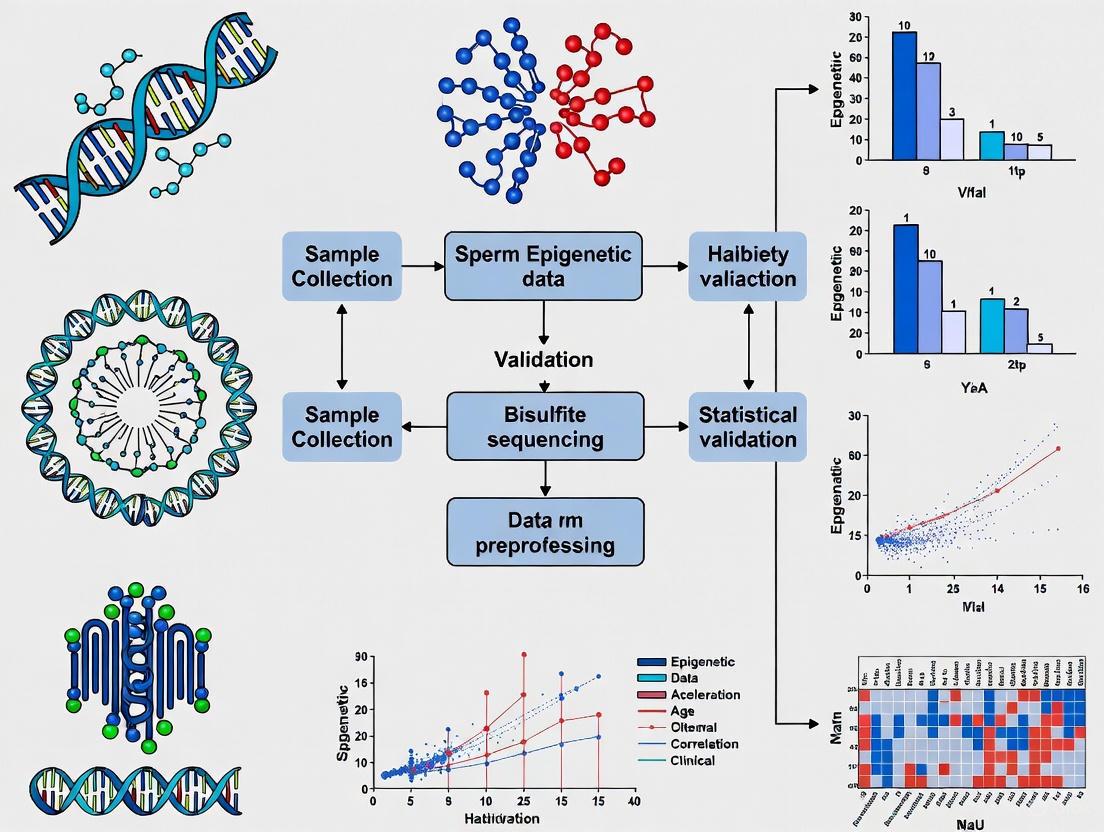
This article synthesizes current evidence on the validation of sperm epigenetic clocks in clinical cohorts, a novel biomarker capturing the biological aging of sperm.
Clinical Validation of the Sperm Epigenetic Clock: Biomarker Performance, Reproductive Outcomes, and Future Applications
Abstract
This article synthesizes current evidence on the validation of sperm epigenetic clocks in clinical cohorts, a novel biomarker capturing the biological aging of sperm. We explore the foundational principles of age-related DNA methylation changes in sperm and their enrichment in genes critical for development and neurodevelopment. The methodological landscape is reviewed, covering the development of sperm-specific clocks using machine learning and their application in predicting time-to-pregnancy, IVF success, and gestational age. We address key troubleshooting areas, including confounding factors and assay optimization, and present a comparative analysis of the clock's performance against traditional semen parameters. Finally, we evaluate its validation across diverse populations and discuss its emerging potential as a clinical tool for assessing male reproductive health and offspring outcomes.
The Basis of Sperm Epigenetic Aging: From Fundamental Changes to Functional Impact
The male germline is a dynamic environment where natural selection can favor harmful mutations, sometimes with consequences for the next generation [1]. Research efforts have provided compelling evidence of genome-wide DNA methylation alterations in aging and age-related diseases, with sperm representing a particularly unique tissue due to methylation patterns that emerge during spermatogenesis [2] [3]. Unlike somatic cells, which often show region-specific hypermethylation with age, sperm exhibit a pronounced trend toward global hypomethylation alongside locus-specific methylation changes [4]. This review synthesizes current findings on age-related methylation changes in sperm, focusing on their characterization, implications for offspring health, and the validation of sperm-specific epigenetic clocks in clinical cohorts.
Biological Mechanisms of Age-Related Methylation Changes in Sperm
Fundamental Aging Processes in the Testicular Niche
Male reproductive aging proceeds gradually and involves complex alterations across germ cells, somatic cells, and the testicular niche [4]. Multi-omics analyses highlight shifts in spermatogonial stem cell dynamics, diminished sperm quantity and quality, and reconfigured support from Sertoli and Leydig cells [4]. These somatic cells show numerical declines and exhibit senescence-associated changes that amplify inflammatory signals and compromise blood-testis barrier integrity [4].
Aging is strongly correlated with changes in DNA methylation, characterized by two general trends: the establishment of global hypomethylation (non-CpG islands) and regions of hypermethylation (primarily CpG islands) with age [5]. During spermatogenesis, however, both global and gene-specific DNA methylation levels predominantly decline with age—a trend distinctly different from that observed in somatic cells [2].
Oxidative Stress and Epigenetic Remodeling
Oxidative stress has emerged as a potent upstream driver of epigenetic dysregulations in aging sperm [4]. Excessive reactive oxygen species (ROS) disrupt DNA methylation, histone marks, and small RNA biogenesis, ultimately impairing spermatogenesis and male fertility [4]. The accumulation of oxidative damage with age contributes to global hypomethylation while simultaneously driving hypermethylation at specific loci, including those near genes implicated in polycomb repressive complex 2-binding locations [5] [6].
Table 1: Key Mechanisms Driving Age-Related Methylation Changes in Sperm
| Mechanism | Molecular Consequences | Impact on Methylation |
|---|---|---|
| Oxidative Stress | Increased reactive oxygen species (ROS) | Global hypomethylation; Locus-specific hypermethylation |
| Cellular Senescence | Senescence-associated secretory phenotype (SASP) in testicular somatic cells | Altered methylation maintenance |
| Stem Cell Attrition | Gradual decline in spermatogonial stem cells | Reduced fidelity of methylation patterning |
| Hormonal Changes | Declining testosterone and INSL3 production by aging Leydig cells | Indirect effects on methylation via altered gene expression |
| Clonal Expansion | Selection of spermatogonial clones with competitive advantages | Expansion of specific methylation patterns |
Figure 1: Signaling Pathways Linking Paternal Age to Sperm Methylation Changes and Offspring Outcomes
Quantitative Analysis of Age-Related Methylation Changes
Genome-Wide Hypomethylation Patterns
Recent studies utilizing double-enzyme reduced representation bisulfite sequencing (dRRBS) have provided comprehensive maps of age-related methylation changes in sperm. De Sena Brandine et al. (2023) conducted whole-genome bisulfite sequencing (WGBS) on longitudinal samples collected 10-18 years apart, revealing global sperm hypomethylation and expansion of promoter hypomethylated regions (HMRs) with advancing age [4]. Similarly, Bernhardt (2023) identified 1,565 differentially methylated regions (DMRs) in sperm, with 74% exhibiting hypomethylation in older males, many linked to genes involved in neurodevelopment [4].
Locus-Specific Hypermethylation
Despite the global hypomethylation trend, specific CpG sites show consistent hypermethylation with age. Research utilizing the mammalian methylation array, which profiles up to 36,000 CpG sites with flanking sequences conserved across mammals, has identified specific cytosines with methylation levels that change with age across numerous species [6]. These sites are highly enriched in polycomb repressive complex 2-binding locations and are near genes implicated in mammalian development, cancer, obesity, and longevity [6].
Table 2: Quantitative Changes in Sperm Parameters and Methylation with Advanced Paternal Age
| Parameter | Young Males (20-30 years) | Middle-Aged Males (40-50 years) | Older Males (>50 years) | Study Reference |
|---|---|---|---|---|
| Sperm Volume | Baseline | Significantly declined | Further significant decline | [7] |
| Sperm Progressive Motility | Baseline | Significantly declined | Further significant decline | [7] |
| Sperm Total Motility | Baseline | Significantly declined | Further significant decline | [7] |
| DNA Fragmentation Index (DFI) | Baseline | Increased | Further increased (>30% threshold) | [7] |
| Proportion of Sperm with Disease-Causing Mutations | ~2% | 3-5% | Up to 4.5% by age 70 | [1] |
| Global Methylation Level | Baseline | Hypomethylation | Progressive hypomethylation | [4] |
Mutation Accumulation and Clonal Expansion
Ultra-accurate DNA sequencing using NanoSeq has revealed that harmful genetic changes in sperm become substantially more common as men age because some mutations are actively favored during sperm production [1]. This research identified 40 genes where certain DNA changes are favored during sperm production, including many linked to childhood diseases, severe neurodevelopmental disorders, and inherited cancer risk [1]. The proportion of sperm carrying harmful mutations rises from approximately 2% in men in their early 30s to 3-5% in middle-aged and older men, reaching 4.5% by age 70 [1].
Experimental Models and Methodologies
Analytical Approaches for Methylation Assessment
Various methodologies have been employed to characterize age-related methylation changes in sperm, each with distinct advantages and limitations:
Double-Enzyme Reduced Representation Bisulfite Sequencing (dRRBS) This technique enables broader genome-wide assessment compared to traditional DNA methylation microarray platforms, facilitating the discovery of previously undetectable age-related CpG sites [2]. dRRBS combines two restriction enzymes to improve coverage and accuracy of genome-wide CpG methylation profiling, making it particularly valuable for identifying novel sperm-specific methylation markers [2].
Mammalian Methylation Array This array profiles up to 36,000 CpG sites with flanking DNA sequences highly conserved across the mammalian class, allowing for comparative studies of methylation patterns across species [6]. This approach has been instrumental in developing universal pan-mammalian epigenetic clocks that can estimate tissue age with high accuracy (r > 0.96) across 185 mammalian species [6].
Bisulfite Amplicon Sequencing (BSAS) Following genome-wide discovery, BSAS provides a targeted approach for validating age-related CpG sites through deep sequencing of specific genomic regions [2]. This method offers high sensitivity and quantitative accuracy for specific loci of interest.
Model Systems for Studying Testicular Aging
Research on testicular aging utilizes diverse model systems, each offering unique insights:
Human Studies Human testicular aging exhibits two distinct waves: fibrosis occurring around the 30s, followed by metabolic dysregulation in the 50s [4]. Single-cell RNA sequencing of human testes from young versus older men reveals that aging has an inconsistent impact on spermatogenic cells, with some older men retaining full spermatogenesis while others show obvious impairment [4].
Primate Models Rhesus macaques parallel human reproductive aging patterns, demonstrating measurable declines in testicular function, including lower testosterone and reduced fertility, typically emerging around 15-20 years of age [4]. Single-nucleus transcriptomic atlas of primate testes reveals marked attrition of the spermatogonial stem cell reservoir in aged males [4].
Rodent Models In mice, initial testicular aging features appear by approximately 12 months, characterized by stem cell attrition, decreased spermatogenesis, and structural remodeling [4]. Rats begin exhibiting pronounced fertility declines and hormonal disruptions between 15 and 18 months [4].
Figure 2: Experimental Workflow for Sperm Methylation Analysis
Sperm Epigenetic Clocks and Age Estimation
Development of Sperm-Specific Epigenetic Clocks
The unique methylation patterns in sperm, which differ significantly from somatic cells, have necessitated the development of sperm-specific epigenetic clocks. Recent research has leveraged publicly available 850K array data from 90 sperm samples to identify 31 sperm-specific age-related CpG sites genome-wide [2]. Using 18 of these newly identified sites along with 3 previously reported markers, researchers have constructed models that demonstrate enhanced accuracy in semen-related sample age estimation, achieving mean absolute errors of less than 3.00 years [2].
The most accurate model developed utilizes a 9-CpG random forest model that shows high accuracy for chronological age estimation (MAE = 3.30 years, R² = 0.76) [2]. This represents significant improvement over earlier models, such as the three-CpG model developed by Lee et al. (2015) which achieved an MAE of 5.4 years in testing sets [2].
Comparison with Somatic Epigenetic Clocks
Unlike somatic epigenetic clocks like the Horvath clock, which can predict age systemically in all human cell types and tissues except sperm, sperm-specific clocks account for the unique methylation reprogramming that occurs during spermatogenesis [3]. The pan-tissue Horvath clock, based on 353 CpG sites, starts ticking early during development where fetal tissues as well as embryonic and induced pluripotent stem cells reveal a DNA methylation age between -1 and 0 years [3].
Table 3: Performance Comparison of Methylation-Based Age Estimation Models
| Model Type | Tissue/Sample | Key Markers | Accuracy (MAE) | Coefficient of Determination (R²) |
|---|---|---|---|---|
| Sperm-Specific 9-CpG RF Model | Semen | Novel sites identified via dRRBS | 3.30 years | 0.76 |
| Previous Sperm Model (Lee et al.) | Semen | cg06304190, cg06979108, cg12837463 | 5.40 years | Not specified |
| Improved Sperm-Specific Model | Semen | 18 novel + 3 known sites | <3.00 years | Not specified |
| 9-CpG Model for Blood | Bloodstains | TRIM59, RASSF5, C1orf132, PDE4C, ELOVL2 | 3.05 years | 0.90 |
| Universal Pan-Mammalian Clock | Multiple tissues | 401 common genes | <1 year (relative error <3.3%) | r > 0.96 |
| Horvath Pan-Tissue Clock | All tissues except sperm | 353 CpG sites | High accuracy across tissues | Not specified |
Implications for Clinical Applications and Offspring Health
Association with Pregnancy and Offspring Outcomes
While sperm quality parameters and DNA fragmentation index significantly decline with advancing male age, their impact on assisted reproductive technology (ART) outcomes appears complex. A study of 1,205 ART treatment cycles found that male age and sperm quality did not exhibit a pronounced impact on ART outcomes, suggesting that embryonic development and cumulative pregnancy outcomes may be preserved despite declining sperm parameters [7].
However, advanced paternal age has been linked to increased risks for offspring health conditions. Children of older fathers are at higher risk of neurodevelopmental disorders such as autism spectrum disorder (ASD) and schizophrenia, which may manifest later in life [8]. Research has also linked advanced paternal age with a higher incidence of ASD in children, suggesting that genetic mutations related to paternal age could emerge later in development [8].
Potential for Intervention and Risk Mitigation
Research into mitigation strategies, including interventions targeting senescent cells, oxidative stress, and inflammatory pathways, may slow or reverse key mechanisms of testicular aging [4]. Interestingly, melatonin supplementation has been shown to markedly mitigate aging-associated alterations in testicular function via anti-inflammatory, antioxidant, and anti-apoptotic mechanisms [4].
The Scientist's Toolkit: Essential Research Reagents
Table 4: Essential Research Reagents for Sperm Methylation Studies
| Reagent/Technology | Specific Examples | Research Application | Key Features |
|---|---|---|---|
| Methylation Microarrays | Illumina Infinium HumanMethylation450 (450K) and MethylationEPIC (850K) BeadChips | Genome-wide methylation screening | Simultaneous profiling of 450,000-850,000 CpG sites |
| Bisulfite Conversion Kits | EpiTect Fast DNA Bisulfite Kit (Qiagen) | DNA treatment for methylation analysis | Converts unmethylated cytosines to uracils while preserving methylated cytosines |
| Targeted Bisulfite Sequencing | Bisulfite Amplicon Sequencing (BSAS) | Validation of specific age-related CpG sites | High sensitivity and quantitative accuracy for specific loci |
| Reduced Representation Bisulfite Sequencing | dRRBS (double-enzyme) | Genome-wide discovery of novel methylation markers | Improved coverage and accuracy of CpG methylation profiling |
| Methylation Analysis Systems | EpiTYPER System | Quantitative methylation analysis | Mass array-based detection of methylation differences |
| Ultra-Accurate Sequencing | NanoSeq | Detection of rare mutations in sperm | Unprecedented precision for identifying disease-causing mutations |
| Data Analysis Software | R packages (ggplot2, gridExtra), IBM SPSS Statistics | Statistical analysis and visualization | Comprehensive tools for methylation data analysis and age prediction modeling |
The characterization of age-related methylation changes in sperm reveals a consistent pattern of widespread hypomethylation accompanied by locus-specific changes that have significant implications for male fertility and offspring health. The development of sperm-specific epigenetic clocks represents a major advancement in forensic science and clinical andrology, providing accurate tools for age estimation with mean absolute errors approaching 3 years. Future research directions should focus on longitudinal studies to track individual methylation changes over time, further refinement of sperm-specific epigenetic clocks through incorporation of additional genomic regions, and exploration of interventions that might mitigate age-related epigenetic alterations in the male germline. The integration of multi-omics approaches will continue to illuminate the complex interplay between genetic, epigenetic, and environmental factors in shaping reproductive aging trajectories.
The validation of sperm epigenetic clocks in clinical cohorts has emerged as a critical frontier in male fertility research. These clocks, which estimate biological age based on sperm DNA methylation patterns, have demonstrated clinical utility in predicting time-to-pregnancy and reproductive outcomes [9]. A key mechanistic question underpinning these predictive models concerns the genomic distribution of age-related differentially methylated regions (AgeDMRs) and their potential regulatory influence on gene activity. This guide provides a comprehensive comparison of current research findings regarding the positioning of sperm AgeDMRs relative to transcription start sites (TSS) and genic regions, synthesizing evidence from multiple clinical and non-clinical cohorts to elucidate consistent patterns and methodological considerations.
Comparative Analysis of AgeDMR Genomic Distributions
Distribution Patterns Across Genomic Compartments
Table 1: Genomic Distribution Characteristics of Sperm AgeDMRs
| Genomic Feature | Hypomethylated AgeDMRs | Hypermethylated AgeDMRs | Study Reference |
|---|---|---|---|
| Median Distance to TSS | 1,368 bp | 17,205 bp | Bernhardt et al. [10] |
| Promoter/5' UTR Enrichment | Significantly enriched | Depleted | Bernhardt et al. [10] |
| Intergenic Region Distribution | Underrepresented | Significantly enriched | Bernhardt et al. [10] |
| Methylation Level Range | Primarily medium (20-80%) | Mixed (low, medium, high) | Bernhardt et al. [10] |
| Species Specificity | Human-specific patterns observed | Human-specific patterns observed | Potabattula et al. [11] |
The distribution of AgeDMRs across the genome follows distinct patterns based on their methylation direction. Hypomethylated AgeDMRs show significant clustering near transcriptional start sites, with a median distance of 1,368 bp from the nearest TSS, positioning them ideally for potential gene regulatory functions [10]. In contrast, hypermethylated AgeDMRs predominantly localize to gene-distal regions, with a median distance of 17,205 bp from TSS, suggesting different regulatory mechanisms or potentially fewer direct transcriptional consequences [10].
The preference for specific genomic compartments further highlights this divergence. Hypomethylated AgeDMRs are significantly enriched in promoter regions, 5' untranslated regions (UTRs), exons, and introns, while hypermethylated AgeDMRs are predominantly found in intergenic regions and introns [10]. This distribution pattern suggests that age-related DNA hypomethylation may preferentially affect regulatory elements with potential direct consequences for gene expression regulation.
Functional Enrichment of Genes Associated with AgeDMRs
Table 2: Functional Enrichment Analysis of Replicated AgeDMR-Associated Genes
| Functional Category | Number of Enriched Terms | Representative Biological Processes | Study Reference |
|---|---|---|---|
| Developmental Processes | 24 terms | Organ development, pattern specification, morphogenesis | Bernhardt et al. [10] |
| Nervous System Function | 17 terms | Synapse organization, neuron differentiation, neurogenesis | Bernhardt et al. [10] |
| Cellular Components | 10 terms | Synaptic membranes, neuronal cell bodies, postsynaptic density | Bernhardt et al. [10] |
Cross-study analysis has identified 2,355 genes harboring sperm AgeDMRs across different investigations, with only approximately 10% (241 genes) replicated in multiple studies [10]. These consistently replicated genes show significant functional enrichment in specific biological processes and cellular components. Developmental processes constitute the largest category, with 24 enriched terms encompassing organ development, pattern specification, and morphogenesis [10]. Nervous system functions represent the second major category, with 17 terms related to synapse organization, neuron differentiation, and neurogenesis [10].
The enrichment of AgeDMRs in genes associated with neurodevelopment provides a plausible epigenetic mechanism for the observed epidemiological associations between advanced paternal age and increased offspring risk for neurodevelopmental disorders, including autism spectrum disorder and schizophrenia [10]. This pattern persists despite the overall limited replication of individual AgeDMR genes across studies, suggesting that different genes within the same functional pathways may be affected in different individuals or study populations.
Methodological Framework for AgeDMR Analysis
Experimental Protocols for AgeDMR Identification
DNA Methylation Profiling Techniques
Multiple methodologies have been employed to identify AgeDMRs in sperm epigenome studies:
Reduced Representation Bisulfite Sequencing (RRBS) Protocol: The protocol employed by Bernhardt et al. provides a cost-effective approach for quantifying DNA methylation levels across CpG-rich genomic regions [10]. The methodology involves: (1) sperm DNA extraction using silica-based spin columns with tris(2-carboxyethyl) phosphine (TCEP) as a reducing agent to address protamine-bound DNA; (2) digestion of DNA with MspI restriction enzyme; (3) size selection of fragments (40-220 bp); (4) bisulfite conversion using the EZ DNA Methylation-Lightning Kit; (5) library preparation and sequencing on Illumina platforms; and (6) bioinformatic processing using tools such as Trim Galore for adapter trimming and Bismark for alignment to reference genomes [10].
Methylation Array-Based Approaches: Jenkins et al. and others have utilized Illumina MethylationEPIC BeadChip arrays, which provide coverage of over 850,000 CpG sites across the genome [9] [12]. The standard protocol includes: (1) sperm DNA extraction with TCEP reduction; (2) DNA quality assessment; (3) bisulfite conversion; (4) array hybridization following manufacturer specifications; (5) scanning and data extraction; (6) normalization using methods such as subset-quantile within array normalization (SWAN); and (7) quality control checks for bisulfite conversion efficiency and detection p-values [9] [12].
Proximity Analysis to Transcription Start Sites
The computational analysis of AgeDMR proximity to TSS follows standardized methodologies:
Distance Measurement Protocol: The distance between AgeDMRs and TSS is typically calculated as the interval between the AgeDMR midpoint and the closest transcription start site annotated in reference databases such as GENCODE or RefSeq [10]. The analytical workflow includes: (1) annotation of AgeDMRs with genomic features using tools like ChIPseeker or GenomicDistributions; (2) calculation of distances to nearest TSS; (3) statistical comparison of distance distributions between AgeDMR categories using non-parametric tests such as Wilcoxon rank-sum test; and (4) visualization of distribution patterns [13].
Gene Set Enrichment Testing with Proximity Analysis: ProxReg methodology complements standard gene set enrichment testing by evaluating whether genomic regions in a gene set are significantly closer to TSS or enhancers than expected by chance [14] [15]. The approach utilizes a modified two-sided Wilcoxon rank-sum test to assess the regulatory proximity of peaks, defined as the distance between the peak midpoint and the closest TSS or enhancer midpoint [14]. This method has been implemented in the chipenrich Bioconductor package and is available for multiple species including humans [14].
Analytical Workflow Visualization
Figure 1: Experimental workflow for analyzing AgeDMR genomic distribution and clinical validation. The pipeline encompasses sample processing, methylation profiling, bioinformatic analysis, and clinical correlation studies.
Essential Research Reagents and Tools
Table 3: Research Reagent Solutions for AgeDMR Studies
| Reagent/Tool Category | Specific Examples | Function in AgeDMR Research |
|---|---|---|
| DNA Methylation Profiling Platforms | Illumina EPIC BeadChip, RRBS, WGBS | Genome-wide methylation quantification at single-base resolution |
| DNA Extraction Reagents | TCEP reducing agent, silica-based spin columns, proteinase K | Efficient extraction of protamine-bound sperm DNA |
| Bioinformatic Tools | GenomicDistributions, ChIPseeker, chipenrich | Genomic annotation and proximity analysis to TSS/enhancers |
| Reference Annotations | GENCODE, FANTOM5, ENCODE | Curated TSS, promoter, and enhancer coordinates |
| Statistical Analysis Environments | R/Bioconductor, Python | Differential methylation analysis and functional enrichment |
The GenomicDistributions R package provides optimized functions for calculating properties of genomic region sets, including feature distances and genomic partition overlaps [13]. This package excels in computational performance and offers a consistent interface for summarizing single or multiple region sets, making it particularly valuable for comparative analyses of AgeDMR distributions across studies or conditions [13].
For enhancer proximity analyses, the ProxReg method implemented in the chipenrich package enables testing of whether genomic regions in a gene set are significantly closer to enhancers than expected by chance, using a non-parametric test [14] [15]. This approach complements standard TSS proximity analyses and provides additional insights into potential regulatory mechanisms, particularly for AgeDMRs located in distal intergenic regions.
The genomic distribution of sperm AgeDMRs demonstrates consistent patterns across multiple studies, with hypomethylated AgeDMRs preferentially located near transcription start sites and hypermethylated AgeDMRs enriched in gene-distal regions. These distribution patterns provide important insights into potential regulatory consequences and functional enrichment in biological processes related to development and nervous system function. The methodological framework presented here enables standardized analysis of AgeDMR proximity to regulatory elements, facilitating integration across studies and validation in clinical cohorts. As sperm epigenetic clocks continue to be refined for clinical application, understanding the genomic context and potential gene regulatory implications of AgeDMRs will be essential for interpreting their relationship with reproductive outcomes and intergenerational health.
Advanced paternal age is increasingly associated with increased risks for a spectrum of offspring medical problems, particularly those affecting neurodevelopment [4]. Accumulating evidence suggests that age-related changes in the sperm epigenome, rather than genetic mutations alone, serve as a fundamental mechanism underlying this phenomenon [16]. The sperm epigenome undergoes significant remodeling with advancing age, characterized by the emergence of specific age-related differentially methylated regions (ageDMRs). These epigenetic shifts are not random; they occur in patterns that have functional consequences. A pivotal study performing reduced representation bisulfite sequencing (RRBS) on 73 human sperm samples identified 1,565 ageDMRs, with a significant majority (74%, or 1,162 regions) being hypomethylated with age [16]. This systematic analysis of ageDMRs provides a foundation for investigating their biological impact through functional enrichment analysis, which links these epigenetic changes to specific genes, biological pathways, and ultimately, offspring health outcomes. This review synthesizes current data to objectively compare how sperm ageDMRs are functionally enriched in pathways crucial for neurodevelopment and embryogenesis, framing these findings within the broader context of validating sperm epigenetic clocks in clinical cohorts.
Functional Enrichment Analysis of Sperm AgeDMRs
Functional enrichment analysis provides a statistical framework to determine whether genes associated with sperm ageDMRs are over-represented in specific biological processes, cellular components, or molecular functions. This approach transforms a list of genes into actionable biological insights.
Table 1: Summary of AgeDMRs from Genomic Studies
| Study Feature | Bernhardt et al. (2023) Findings | Cumulative Evidence from Multiple Studies |
|---|---|---|
| Total AgeDMRs Identified | 1,565 | Not Specified |
| Hypomethylated DMRs | 1,162 (74%) | Not Specified |
| Hypermethylated DMRs | 403 (26%) | Not Specified |
| Genes with AgeDMRs | 1,002 genes with symbols | 2,355 genes reported |
| Replicated Genes | Not Specified | 241 genes (replicated in ≥1 study) |
| Chromosomal Hotspot | Chromosome 19 (twofold enrichment) | Not Specified |
The data from Bernhardt et al. reveal a clear bias toward hypomethylation in the aging sperm epigenome. Furthermore, these ageDMRs are not distributed randomly across the genome; chromosome 19 shows a significant twofold enrichment, a finding that may be linked to its high gene density and CpG content [16]. When results from conceptually similar genome-wide studies are aggregated, a substantial list of over 2,350 genes has been associated with sperm ageDMRs. However, a critical point of validation is replication; approximately 90% of these genes were reported in only a single study, underscoring the need for larger, confirmatory cohorts. A core set of 241 genes has been replicated in multiple studies, and it is this subset that forms the most reliable basis for functional enrichment analysis [16].
Enriched Biological Processes and Cellular Components
The 241 replicated genes were subjected to rigorous functional enrichment analysis, revealing a striking and non-random concentration in specific biological domains.
Table 2: Functional Enrichment of Replicated AgeDMR-Associated Genes
| Enrichment Category | Specific Functions and Components | Implication for Offspring Health |
|---|---|---|
| Biological Processes | 41 processes associated with development and the nervous system [16]. | Supports link to neurodevelopmental disorders. |
| Cellular Components | 10 components associated with synapses and neurons [16]. | Indicates potential disruption to neural connectivity. |
| Embryogenesis | Regulation of early developmental processes and gene programs [4] [17]. | Suggests risk for improper embryonic growth and congenital anomalies. |
The enrichment findings are robust and specific. The significant over-representation of genes in neurological and developmental pathways provides a compelling molecular hypothesis for the observed epidemiological links between advanced paternal age and increased offspring risk for disorders like autism spectrum disorder (ASD) and intellectual disability [16]. The localization of these gene products to synapses and neurons further suggests that the paternal age effect may directly impair the complex processes of neural circuit formation and synaptic plasticity in the developing brain [18].
Key Experimental Protocols for AgeDMR Research
Validating the functional role of sperm ageDMRs requires a suite of sophisticated and complementary experimental protocols. The methodologies below represent the core approaches used to generate the data discussed in this review.
Human Sperm Collection and DNA Methylation Profiling
1. Sample Collection and Preparation:
- Source: Semen samples are typically collected from male partners of couples undergoing fertility treatment or from sperm donors, with detailed phenotyping (e.g., age, BMI, semen quality parameters) [16].
- DNA Extraction: Genomic DNA is isolated from purified sperm cells using salt-based precipitation methods or commercial kits (e.g., DNeasy Blood & Tissue Kit from QIAGEN) to ensure high-quality, protein-free DNA for downstream analysis [19] [20].
2. DNA Methylation Interrogation:
- Reduced Representation Bisulfite Sequencing (RRBS): This cost-effective method enriches for CpG-rich regions of the genome. DNA is digested with a restriction enzyme (e.g., MspI), followed by bisulfite conversion, which deaminates unmethylated cytosines to uracils (read as thymines in sequencing), while methylated cytosines remain unchanged. Sequencing then reveals methylation status at single-base resolution within the captured regions [16].
- Whole-Genome Bisulfite Sequencing (WGBS): The gold standard for comprehensive methylome analysis, WGBS subjects the entire genome to bisulfite conversion and sequencing, providing an unbiased map of methylation across all genomic contexts [17] [21].
- Enzymatic Methyl-Sequencing (EM-seq): A newer, bisulfite-free method that uses enzymes (TET2 and APOBEC) to detect 5mC and 5hmC. EM-seq is less damaging to DNA and produces libraries with lower GC bias, requiring less sequencing coverage than WGBS while maintaining high accuracy [19].
3. Data Analysis and DMR Calling:
- Bioinformatic Processing: Sequencing reads are aligned to a reference genome, and methylation levels are calculated for each CpG site as the percentage of reads showing a cytosine (methylated) vs. thymine (unmethylated).
- Statistical Identification of AgeDMRs: Genomic regions showing statistically significant (FDR-adjusted) correlation between methylation level and donor age are identified as ageDMRs using software tools like
methylKitorDSS[16].
Functional Enrichment and Validation Workflow
1. Gene Annotation and Enrichment Analysis:
- AgeDMRs are annotated to the nearest gene or regulatory element (e.g., promoter, enhancer).
- The list of genes associated with ageDMRs is input into functional enrichment tools such as DAVID or clusterProfiler to test for over-representation in databases like Gene Ontology (GO) and Kyoto Encyclopedia of Genes and Genomes (KEGG) [16].
2. Cross-Species and Cross-Tissue Validation:
- Findings from human sperm are often compared with data from animal models (e.g., rodents, non-human primates) to assess conservation of epigenetic aging pathways [4] [21].
- Correlation with offspring outcomes is investigated in longitudinal cohorts or by examining epigenetic patterns in offspring tissues [18].
Experimental Workflow for Sperm AgeDMR Analysis
Signaling Pathways and Biological Logic
The functional enrichment of sperm ageDMRs is not an isolated phenomenon but is embedded within a broader biological context of testicular aging and intergenerational communication.
The Logical Chain from Sperm Epigenetics to Offspring Phenotype
The following diagram outlines the conceptual pathway linking paternal aging to potential offspring outcomes through sperm epigenetic alterations.
Paternal Age to Offspring Neurodevelopment Pathway
Key Signaling Pathways Implicated in AgeDMR Enrichment
The genes identified through functional enrichment analysis often converge on key signaling pathways critical for brain development and embryogenesis.
Wnt and Notch Signaling Pathways: These are fundamental pathways for cell fate determination, neuronal differentiation, and synaptic plasticity during brain development. Aberrant DNA methylation, including hypermethylation of promoters in these pathways, has been directly correlated with altered brain volume in children with ASD [18]. Age-related methylation changes in sperm could potentially transmit a predisposition for such dysregulation.
Cytoskeletal and Mitochondrial Pathways: In a non-model teleost (Arctic charr), comethylation network analyses linked sperm methylation modules to biological mechanisms vital for sperm physiology, including cytoskeletal regulation and mitochondrial function [19]. Given that the sperm contributes not only DNA but also essential organelles and structures to the embryo, such epigenetic alterations could directly impact early embryogenesis by compromising sperm motility and the integrity of the centriole, which is crucial for first cell divisions.
Glucocorticoid Receptor Signaling: While not directly listed in the ageDMR enrichment results, this pathway is a classic example of how early-life environmental exposures can epigenetically program neurodevelopment. Maternal stress and cortisol exposure can alter DNA methylation of the glucocorticoid receptor gene (NR3C1), impairing stress response systems in the child and contributing to behavioral dysregulation [18]. This serves as a paradigm for how epigenetic marks in gametes can set long-term transcriptional programs in the offspring.
The Scientist's Toolkit: Essential Research Reagents and Solutions
The following table details key reagents and materials essential for conducting research into sperm ageDMRs and their functional enrichment.
Table 3: Research Reagent Solutions for Sperm Epigenetics
| Reagent / Solution | Function | Example Product / Method |
|---|---|---|
| DNA Methylation Kits | Isolation of high-quality, inhibitor-free genomic DNA from sperm. | DNeasy Blood & Tissue Kit (QIAGEN) [20]; Salt-based precipitation [19]. |
| Bisulfite Conversion Kits | Chemical treatment of DNA to differentiate methylated and unmethylated cytosines for RRBS/WGBS. | EZ DNA Methylation-Gold Kit (Zymo Research) [16]. |
| Enzymatic Methylation Conversion | Enzyme-based conversion as an alternative to harsh bisulfite treatment for EM-seq. | EM-seq Kit (New England Biolabs) [19]. |
| Methylation-Specific PCR Reagents | For targeted validation of specific ageDMRs. | Pyrosequencing assays [20]. |
| Functional Enrichment Software | Bioinformatics tools for identifying over-represented biological terms. | DAVID, clusterProfiler [16]. |
| Sperm Motility Analysis | Correlating epigenetic marks with sperm quality phenotypes. | Computer-Assisted Sperm Analysis (CASA) systems [19]. |
The functional enrichment of sperm ageDMRs in pathways critical for neurodevelopment and embryogenesis provides a compelling and mechanistically plausible explanation for the increased disease susceptibility observed in the offspring of older fathers. The consistent identification of a core set of genes involved in synaptic function and nervous system development across multiple studies strengthens the hypothesis that age-induced methylation changes in the sperm epigenome contribute to increased offspring risk for neurodevelopmental disorders [16]. These findings are intrinsically linked to the validation of sperm epigenetic clocks, as these clocks are mathematical models built upon the very same age-related methylation changes that define ageDMRs. The convergence of functional enrichment analysis and epigenetic clock research offers a powerful framework for developing predictive biomarkers of paternal reproductive health and offspring risk, ultimately guiding clinical interventions and informing public health understanding of transgenerational epigenetic inheritance.
Epigenetic clocks are powerful computational tools that predict biological age based on DNA methylation patterns at specific CpG sites in the genome. These clocks have emerged as transformative biomarkers in aging research, offering insights into physiological aging, disease risk, and mortality that transcend chronological age. The foundational epigenetic clocks developed for somatic tissues—such as the multi-tissue Horvath clock and the blood-based Hannum clock—exhibit astonishing accuracy across diverse human tissues and cell types [22]. However, a critical limitation has emerged: these powerful somatic clocks demonstrate no predictive value in male germ cells [9]. This fundamental discrepancy arises from profound biological differences between somatic cells and spermatozoa, necessitating the development of specialized epigenetic clocks tailored specifically to the male gamete.
The need for sperm-specific epigenetic clocks extends beyond academic curiosity. With male factors contributing to approximately half of all infertility cases and paternal age steadily increasing worldwide, understanding and assessing male reproductive aging has never been more clinically relevant [9] [12]. This review comprehensively examines the distinct biological and technical considerations that justify the requirement for sperm-specific epigenetic clocks, compares their performance against established somatic clocks, details their clinical validation in reproductive outcomes, and provides methodological guidance for researchers pursuing this emerging field of investigation.
Fundamental Biological Distinctions Between Somatic and Sperm Cells
Spermatozoa differ from somatic cells in multiple fundamental aspects that directly impact epigenetic clock development. Understanding these distinctions is essential for appreciating why somatic clocks fail in sperm and why dedicated sperm clocks are biologically necessary.
Divergent Chromatin Architecture: Unlike somatic cells, where DNA is packaged with histones into nucleosomes, sperm chromatin undergoes extreme compaction during spermatogenesis through the replacement of most histones with protamines [23]. This radical restructuring creates a unique epigenetic landscape incompatible with somatic cell methylation paradigms. The MEIG1 protein plays a crucial role in this histone-to-protamine replacement process, and its deficiency causes severe sperm DNA damage and impaired embryonic development, highlighting the functional importance of proper sperm chromatin remodeling [23].
Parent-Specific Epigenetic Programming: Sperm exhibit parent-of-origin specific epigenetic programming that directs embryonic development after fertilization. This is exemplified in extreme form in systems like paternal genome elimination (PGE) in mealybugs, where paternal chromosomes are selectively heterochromatinized and eliminated during spermatogenesis based on their parental origin [24]. While less extreme in mammals, sperm still carry specialized epigenetic information that distinguishes them functionally from somatic cells.
Age-Related Methylation Patterns: Sperm and somatic tissues exhibit completely different sets of CpG sites that correlate with chronological age. Research has identified 353 CpG sites that form an accurate multi-tissue aging clock in humans [22], but these sites show no age-predictive value in sperm. Instead, sperm epigenetic clocks rely on entirely different genomic loci that are specifically informative about aging processes in male germ cells [9].
Cellular Composition Considerations: Somatic epigenetic clocks, particularly those developed for blood, can be confounded by age-related changes in cell-type composition [25]. For instance, naïve CD8+ T cells exhibit an epigenetic age 15-20 years younger than effector memory CD8+ T cells from the same individual [25]. Sperm, in contrast, represent a homogeneous cell population, eliminating this confounding factor but introducing unique challenges related to spermatogenic staging and maturation.
The diagram below illustrates these fundamental biological distinctions and their implications for epigenetic clock development:
Performance Comparison: Somatic vs. Sperm Epigenetic Clocks
Direct performance comparisons between established somatic clocks and newly developed sperm-specific clocks reveal dramatic differences in predictive accuracy and clinical utility. The following table summarizes key performance metrics across different epigenetic clock types:
Table 1: Performance Comparison of Somatic vs. Sperm Epigenetic Clocks
| Clock Characteristic | Multi-Tissue Somatic Clock | Sperm-Specific Epigenetic Clock |
|---|---|---|
| CpG Sites Used | 353 CpGs common across tissues [22] | Distinct sperm-specific CpGs [9] |
| Age Correlation (r) | 0.96 in validation tissues [22] | 0.91 in sperm [9] |
| Median Error | 3.6 years across tissues [22] | Not explicitly stated but high accuracy |
| Tissue Specificity | Works across diverse somatic tissues | Specific to sperm [9] |
| Reproductive Outcome Prediction | Not established | FOR=0.83 for time-to-pregnancy [9] |
| Effect of Smoking | Associated with age acceleration | Significantly advances sperm epigenetic age [9] |
The sperm epigenetic age (SEA) clock demonstrates particularly compelling clinical relevance. In prospective cohort studies, advanced SEA was significantly associated with longer time-to-pregnancy (fecundability odds ratio FOR=0.83) and shorter gestational length (-2.13 days) [9]. These associations remained significant after adjusting for female age and other covariates, underscoring the independent contribution of the male partner to reproductive success.
Notably, attempts to apply somatic epigenetic clocks to sperm completely fail to predict chronological age [9], just as sperm clocks would presumably fail in somatic tissues. This bidirectional specificity highlights the fundamental divergence in aging-associated methylation patterns between germline and somatic lineages.
Clinical Validation in Reproductive Cohorts
The clinical utility of sperm epigenetic clocks has been validated across multiple independent cohorts, demonstrating consistent associations with reproductive outcomes that transcend conventional semen analysis parameters.
Prediction of Time-to-Pregnancy
The landmark study developing sperm epigenetic clocks examined 379 couples from the Longitudinal Investigation of Fertility and Environment (LIFE) study, a population-based prospective cohort of couples discontinuing contraception to become pregnant [9]. Researchers observed a 17% lower cumulative pregnancy probability at 12 months for couples with male partners in the older compared to younger sperm epigenetic age (SEA) categories [9]. This association was independent of chronological age and female factors, suggesting SEA captures aspects of biological aging directly relevant to fecundity.
Association with Birth Outcomes
In the same cohort, advanced SEA was significantly associated with shorter gestational age among the 192 couples who achieved live births (-2.13 days; 95% CI: -3.67, -0.59) [9]. This finding connects paternal epigenetic aging not only to conception but also to pregnancy maintenance and fetal development.
Independence from Standard Semen Parameters
Notably, SEA shows mostly non-significant associations with conventional semen parameters like concentration, motility, or morphology in both general population and fertility clinic cohorts [12]. However, it does correlate with specific sperm head morphological abnormalities (head length, perimeter, elongation factor) and the presence of pyriform/tapered sperm [12]. This partial independence from standard semen parameters positions SEA as a complementary biomarker offering unique information beyond routine semen analysis.
Validation in ART Populations
The generalizability of SEA findings extends to assisted reproductive technology (ART) populations. While one study of 1,205 ART cycles found no significant association between male age and pregnancy outcomes [7], the sperm epigenetic clock showed strong predictive performance in an independent IVF cohort (n=173; r=0.83 between chronological and predicted age) [9], suggesting it may capture biological aspects of aging not reflected in chronological age alone in fertility treatment contexts.
Methodological Framework for Sperm Epigenetic Clock Development
Developing a sperm-specific epigenetic clock requires specialized methodological considerations distinct from somatic clock development. The following experimental workflow outlines the key stages:
Critical Methodological Considerations
Several methodological aspects specific to sperm require emphasis:
Sperm DNA Extraction: Standard DNA extraction protocols fail for sperm due to protamine packaging. Effective protocols require reducing agents like tris(2-carboxyethyl)phosphine (TCEP) to break protamine disulfide bonds [12].
Cohort Selection: Both general population cohorts (like the LIFE study) and clinical ART cohorts (like SEEDS) provide complementary insights—the former for natural fecundity and the latter for treatment outcomes [9] [12].
Confounding Adjustment: Analyses must adjust for key covariates including chronological age, BMI, and smoking status, all of which may influence epigenetic aging [9].
Research Reagent Solutions
Table 2: Essential Research Materials for Sperm Epigenetic Clock Development
| Reagent/Resource | Specific Function | Considerations for Sperm Research |
|---|---|---|
| Illumina Infinium MethylationEPIC BeadChip | Genome-wide DNA methylation profiling at >850,000 CpG sites | Standard array for epigenetic clock development; covers sperm-specific informative CpGs [9] |
| TCEP (Tris(2-carboxyethyl)phosphine) | Reducing agent for sperm DNA extraction | Essential for breaking protamine disulfide bonds; more stable than DTT at room temperature [12] |
| Density Gradient Centrifugation Media | Sperm isolation from seminal plasma | Removes somatic cells and debris; different protocols for research (one-step) vs. clinical (two-step) use [12] |
| Computer-Assisted Semen Analysis (CASA) | Quantitative assessment of sperm motility and morphology | Provides objective measures for correlation with epigenetic age [12] |
| Sperm Chromatin Structural Assay (SCSA) | Measurement of DNA fragmentation index (DFI) | Assesses sperm DNA integrity; DFI increases with male age [7] |
Sperm require unique epigenetic clocks due to fundamental biological differences from somatic cells, particularly their specialized chromatin structure and distinct age-related methylation patterns. Sperm-specific epigenetic clocks demonstrate strong predictive accuracy for chronological age and, more importantly, significant associations with reproductive outcomes including time-to-pregnancy and gestational age at delivery. These associations persist independently of conventional semen parameters, positioning sperm epigenetic aging as a novel biomarker of male fecundity.
Future research directions should include: developing racially and ethnically diverse sperm clocks; standardizing clinical cutoffs for prognostic use; integrating sperm epigenetic clocks with other biomarkers of seminal quality; and exploring interventions that might decelerate sperm epigenetic aging. As evidence mounts, sperm epigenetic clocks hold promise for revolutionizing male fertility assessment and uncovering novel mechanisms underlying reproductive aging.
Building and Applying the Clock: From Machine Learning to Clinical Prediction
The construction of accurate epigenetic clocks—models that predict biological age from DNA methylation data—is a cornerstone of modern aging research. These clocks serve as powerful biomarkers for assessing the effectiveness of longevity interventions, understanding age-related diseases, and evaluating overall health status. The selection of an appropriate machine learning (ML) technique is critical for developing clocks that are not only predictive but also generalizable and interpretable. This guide objectively compares the performance of various ML techniques, with a specific focus on Elastic Net regression and its alternatives, within the context of sperm epigenetic clock validation in clinical cohorts. Such validation is essential for establishing these clocks as reliable biomarkers in male fertility and reproductive health research.
Core Machine Learning Techniques for Clock Construction
Elastic Net Regression: The Established Benchmark
Elastic Net regression has emerged as the most common and benchmark method for constructing epigenetic clocks. It is a regularized linear regression technique that combines the properties of both Lasso (L1) and Ridge (L2) regularization.
Mathematical Foundation: The Elastic Net objective function minimizes the following:
RSS + λ * [(1 - α) * ||β||₂ + α * ||β||₁]where RSS is the residual sum of squares, λ is the regularization parameter controlling the overall penalty strength, and α is the mixing parameter that determines the balance between L1 and L2 penalties. When α is 1, Elastic Net behaves like Lasso regression, and when α is 0, it behaves like Ridge regression [26] [27].Advantages for Clock Construction: Its key advantages include the ability to handle datasets where the number of features (CpG sites) far exceeds the number of samples, automatic feature selection via the L1 penalty, and mitigation of multicollinearity problems through the L2 penalty. This often results in a sparse, interpretable model that identifies the most predictive CpG sites for age [28] [26] [29].
Advanced and Alternative Machine Learning Methods
While Elastic Net is a robust baseline, more sophisticated ML and feature selection methods can potentially yield superior performance.
Feature Selection Methods: These involve a discrete step to identify the most predictive CpG sites before model building. This is particularly advantageous in high-dimensional settings to improve efficiency and accuracy [28].
- Filter Methods (e.g., SelectKBest): Select features based on univariate statistical tests against the target variable (age).
- Wrapper Methods (e.g., Recursive Feature Elimination - RFE): Select features by recursively considering smaller and smaller sets of features, using a model's accuracy to guide the selection.
- Embedded Methods (e.g., Boruta): Use a Random Forest-based algorithm to identify all-relevant features by comparing the importance of original features with shadow features.
- Genetic Algorithms: Use evolutionary principles to evolve a population of feature subsets towards an optimal solution.
- Neural Network-Based Feature Selection: Leverage neural networks to identify and weigh the importance of different features [28].
Stacked Elastic Net: An interpretable meta-learning approach that combines multiple Elastic Net models with different mixing parameters (α) via stacking, rather than selecting a single α. This has been shown to increase predictivity without sacrificing the interpretability of the final model coefficients [30].
Ensemble Methods: State-of-the-art ensemble machine learning algorithms have been successfully applied to build highly accurate sperm epigenetic clocks, demonstrating exceptional correlation between predicted and chronological age [9].
Performance Comparison of Modeling Techniques
The performance of different machine learning and feature selection techniques for epigenetic clock construction has been systematically evaluated. The table below summarizes the predictive accuracy of various methods tested on the Hannum whole-blood methylation dataset, a common benchmark.
Table 1: Performance Comparison of Feature Selection and Modeling Methods for Epigenetic Age Prediction on the Hannum Dataset (GSE40279)
| Feature Selection / Modeling Method | Number of CpG Sites Selected | Average R² Score (from 10-Fold CV) | Median Absolute Error (Years) |
|---|---|---|---|
| KBest (2000) then Boruta | 35 | 0.873 | 3.08 |
| KBest (25) de novo | 36 | 0.862 | 3.14 |
| Boruta de novo | 53 | 0.861 | 3.08 |
| %-RFE to 1500 then Boruta | 52 | 0.835 | 3.57 |
| Elastic Net (No Feature Selection) | 276 | 0.827 | 3.91 |
| %-RFE to 100 | 161 | 0.825 | 3.83 |
| Top 5 Most Frequent CpGs | 5 | 0.820 | 3.79 |
| Genetic Algorithm de novo | 85 | 0.812 | 3.68 |
| SFM ElasticNet then Boruta | 7 | 0.813 | 3.71 |
Key Performance Insights:
- Combined Filter/Wrapper Methods are Top Performers: The best-performing model combined a filter method (SelectKBest for 2000 features) with a wrapper method (Boruta), achieving an R² of 0.873 using only 35 CpG sites [28]. This demonstrates the power of chaining different feature selection strategies to refine the feature set.
- Feature Selection Outperforms Plain Elastic Net: All the top-performing models incorporated a dedicated feature selection step prior to regression. The standard Elastic Net model without feature selection used 276 CpGs but achieved a lower R² (0.827) and higher error (3.91 years) than the best feature-selected models [28].
- The Price of Extreme Sparsity: While models with very few CpGs (e.g., 5 or 7) maintained respectable accuracy (R² > 0.81), they were generally outperformed by models using a few dozen selected sites, suggesting a trade-off between extreme sparsity and peak predictive power [28].
Experimental Protocols for Sperm Epigenetic Clock Validation
Validating a sperm epigenetic clock (SEA) in clinical cohorts requires a rigorous and multi-faceted experimental design. The workflow below outlines the key stages from participant recruitment to clinical association analysis.
Figure 1: Sperm Epigenetic Clock Validation Workflow
Cohort Design and Sample Collection
Robust validation hinges on well-characterized cohorts.
- Clinical and Population Cohorts: Validation should include both a non-clinical cohort recruited from the general population (e.g., the Longitudinal Investigation of Fertility and the Environment (LIFE) Study) and a clinical cohort of men seeking fertility treatment (e.g., the Sperm Environmental Epigenetics and Development Study (SEEDS)) [9] [12]. This allows researchers to assess the clock's performance across a spectrum of fecundity.
- Standardized Protocols: Semen samples are collected after a recommended period of ejaculatory abstinence. For non-clinical cohorts, samples may be collected at home and shipped cold to the lab, while clinic-collected samples are processed fresh after liquefaction [12]. Detailed demographic, lifestyle (e.g., smoking status), and medical history data are collected from all participants.
Laboratory Processing and DNA Methylation Analysis
Consistent lab protocols are critical for data quality and reproducibility.
- Sperm DNA Extraction: Sperm DNA is extracted using specialized protocols that account for its unique protamine-based packaging. This often involves a lysis buffer containing a reducing agent like tris(2-carboxyethyl) phosphine (TCEP) to efficiently open the dense chromatin structure [12].
- Methylation Profiling: Genome-wide DNA methylation is typically quantified using the Illumina Infinium MethylationEPIC (EPIC) BeadChip, which Interrogates over 850,000 CpG sites [9] [12]. Alternative methods like Reduced Representation Bisulfite Sequencing (RRBS) are also used [10].
- Bioinformatic Preprocessing: Raw data undergoes rigorous quality control (QC), normalization, and probe filtering using established pipelines (e.g., in R with
minfipackage) to remove technical artifacts and ensure data reliability.
Model Training, Validation, and Association Analysis
This phase translates methylation data into a validated biological tool.
- Model Building: The preprocessed methylation data (beta-values) from the training cohort is used as features, with chronological age as the target variable. Models like Elastic Net or ensemble methods are trained to derive the epigenetic clock [28] [9].
- Performance Metrics: The clock's accuracy is evaluated using metrics like the R² correlation between predicted and chronological age and the median absolute error (MAE) in years. Validation is performed on held-out test sets or, ideally, on independent external cohorts to prove generalizability [28] [9].
- Clinical Validation: The validated SEA is then used to test pre-specified biological and clinical hypotheses. This involves:
- Time-to-Pregnancy (TTP) Analysis: Using discrete-time proportional hazards models to evaluate if advanced SEA is associated with longer TTP, adjusted for female age, BMI, and other covariates [9].
- Semen Parameter Analysis: Employing multivariable linear regression to examine associations between SEA and semen characteristics (count, motility, morphology) as well as detailed sperm head morphology parameters [12].
- Outcome Analysis: Investigating links between paternal SEA and offspring outcomes such as gestational age at birth [9].
Table 2: Key Research Reagents and Solutions for Sperm Epigenetic Clock Development
| Reagent / Resource | Function / Application | Example Use Case |
|---|---|---|
| Illumina Infinium MethylationEPIC BeadChip | Genome-wide DNA methylation profiling of >850,000 CpG sites. | Primary platform for generating methylation data from sperm DNA [9] [12]. |
| TCEP (Tris(2-carboxyethyl)phosphine) | A stable reducing agent used in sperm-specific DNA lysis buffers. | Breaks protamine disulfide bonds to allow efficient sperm DNA extraction [12]. |
| QIAamp DNA Mini Kit (Qiagen) | Silica-based spin column technology for DNA purification. | Used for isolating high-quality sperm DNA after lysis [12] [31]. |
| Sperm Chromatin Structural Assay (SCSA) | Flow cytometry-based assay to measure sperm DNA fragmentation. | Assesses DNA integrity (DFI) as a potential confounding variable [12]. |
| Computer-Assisted Semen Analysis (CASA) | Automated, objective analysis of sperm concentration and motility. | Provides standardized semen parameters for association studies [12]. |
The construction and validation of sperm epigenetic clocks have matured significantly with the application of advanced machine learning techniques. While Elastic Net regression remains a strong, interpretable, and widely used benchmark, evidence shows that coupling it with dedicated feature selection methods like Boruta or SelectKBest can yield clocks with superior accuracy and lower sparsity. For the specific task of sperm epigenetic aging, ensemble machine learning methods have already set a high bar for predictive performance.
Successful validation in clinical cohorts goes beyond mere age prediction accuracy. It requires demonstrating clinical relevance, such as the association between advanced sperm epigenetic age and longer time-to-pregnancy, as well as analytical robustness across different populations and laboratory conditions. The choice of modeling technique should therefore be guided by the dual objectives of statistical excellence and biological translatability, ensuring the resulting clock is not just a predictive model but a meaningful biomarker for male reproductive health.
This guide provides a comparative analysis of methodologies for predicting reproductive outcomes, with a specific focus on their integration and validation within the context of sperm epigenetic clock research. Predicting success in assisted reproductive technology (ART) and natural conception is a cornerstone of modern reproductive medicine. We objectively compare the performance of established clinical assessments, artificial intelligence (AI) models, and emerging epigenetic biomarkers. The analysis is supported by experimental data summarizing diagnostic accuracy, key predictive factors, and methodological protocols. Furthermore, we detail essential research reagents and visualize core experimental workflows to equip scientists and drug development professionals with the tools for robust validation of novel predictors, such as sperm epigenetic clocks, in clinical cohorts.
The pursuit of reliable prediction in reproductive medicine spans two primary domains: predicting Time-to-Pregnancy (TTP) in natural conception and Clinical Pregnancy Success in assisted reproductive technologies (ART). Accurate prediction is vital for patient counseling, optimizing treatment strategies, and accelerating the development of new interventions.
TTP, defined as the duration of unprotected intercourse leading to a clinical pregnancy, is a key metric for evaluating fecundity in population studies [32]. Its estimation, however, is methodologically challenging, often relying on retrospective recall or current duration designs from demographic surveys, which can introduce bias and limit precision [32].
In the ART domain, success is typically defined by biochemical pregnancy, clinical pregnancy (confirmed via ultrasound), or live birth. Prediction models here have evolved from reliance on traditional clinical and morphological parameters to incorporate sophisticated AI and, more recently, molecular biomarkers like epigenetic clocks [33] [34] [20]. These clocks, which measure biological aging based on DNA methylation (DNAm) patterns, have revolutionized aging research and are now being explored for their utility in reproductive health [35] [20].
This guide frames the comparison of these predictive methodologies within the broader thesis of validating sperm epigenetic clocks. The validation of any novel biomarker requires a rigorous comparison against established standards. We therefore present a structured comparison of current prediction tools, their experimental bases, and performance data to establish a benchmark for evaluating the emerging potential of sperm-specific epigenetic clocks.
Comparative Analysis of Predictive Methodologies
This section provides a data-driven comparison of the primary approaches used to forecast reproductive outcomes.
Performance Metrics of Prediction Models
The table below summarizes the performance of various predictive models as reported in recent scientific literature.
Table 1: Performance Metrics of Different Predictive Models for Reproductive Outcomes
| Prediction Model | Application Context | Key Performance Metrics | Reference Outcome |
|---|---|---|---|
| AI for Embryo Selection | IVF Embryo Implantation | Pooled Sensitivity: 0.69; Specificity: 0.62; AUC: 0.70 | [33] |
| Life Whisperer AI Model | IVF Clinical Pregnancy | Accuracy: 64.3% | [33] |
| FiTTE AI System | IVF Clinical Pregnancy | Accuracy: 65.2%; AUC: 0.70 | [33] |
| Random Forest / XGBoost | IVF Implantation Success | AUC: 0.75 - 0.85 (depending on feature set) | [34] |
| Epigenetic Age (Zbieć-Piekarska2) | IVF Live Birth | AUC: 0.652; Adjusted OR: 0.91 per year | [20] |
| Epigenetic Age + Ovarian Reserve | IVF Live Birth | AUC: 0.692-0.693 (combined with AFC/AMH) | [20] |
| GrimAge v2 (EPA) | 10-Year All-Cause Mortality (General Population) | Hazard Ratio (HR): 1.54 per SD; AUC Improvement: +0.014 | [35] |
Key Predictive Factors Across Models
Different models leverage various patient, embryo, and molecular factors. Their relative importance is ranked differently by statistical and AI models.
Table 2: Key Predictive Factors and Their Relative Importance in Different Models
| Predictive Factor | Context | Reported Influence / Association | Source |
|---|---|---|---|
| Female Age | FET Clinical Pregnancy | Younger age significant predictor (OR: 0.93); Top factor in Random Forest model. | [36] |
| Embryo Stage | FET Clinical Pregnancy | Blastocyst transfer significantly higher CPR (61.14%) vs. cleavage-stage (34.13%). | [36] |
| Endometrial Thickness | FET Clinical Pregnancy | Increased thickness on transfer day associated with higher CPR (OR: 1.10). | [36] [37] |
| Anti-Müllerian Hormone (AMH) | FET Clinical Pregnancy | Higher levels independently associated with higher CPR (OR: 1.03). | [36] [37] |
| Number of High-Quality Embryos | FET Clinical Pregnancy | Strong positive association with CPR (e.g., OR: 1.67 for high-quality blastocysts). | [36] |
| Epigenetic Age Acceleration | IVF Live Birth | Higher EPA associated with lower live birth rate, independent of chronological age. | [20] |
| Morphokinetic Parameters | AI Embryo Selection | Dynamic development patterns used by AI models for implantation prediction. | [33] |
Experimental Protocols for Key Methodologies
To facilitate replication and validation, we detail the core experimental protocols for the featured predictive approaches.
Protocol for AI-Based Embryo Selection and Outcome Prediction
This protocol outlines the workflow for developing and validating an AI model to predict IVF success, as used in recent studies [33] [34].
Data Collection & Preprocessing:
- Data Sources: Retrospectively collect data from IVF cycles, including patient demographics (age, BMI, infertility type), ovarian stimulation parameters, sperm parameters, and detailed embryo morphology/morphokinetics from time-lapse imaging.
- Inclusion/Exclusion: Define clear criteria. A typical study includes single embryo transfers or double embryo transfers with unequivocal implantation results, excluding cycles with unknown embryo destiny [34].
- Data Labeling: Label each embryo or cycle with the outcome (e.g., implantation yes/no, clinical pregnancy yes/no).
- Data Cleaning: Handle missing values, normalize numerical data, and encode categorical variables.
Model Training & Validation:
- Algorithm Selection: Employ machine learning algorithms such as Random Forest, XGBoost, Support Vector Machines (SVM), or deep learning models like Convolutional Neural Networks (CNNs) for image-based analysis [33] [34].
- Feature Selection: Use techniques like Recursive Feature Elimination or variable importance ranking from tree-based models to identify the most predictive parameters [36] [34].
- Validation: Split data into training and testing sets. Use k-fold cross-validation to optimize hyperparameters and assess model performance on a held-out test set to ensure generalizability.
Performance Evaluation:
Protocol for Epigenetic Clock Analysis in IVF Cohorts
This protocol describes the methodology for investigating the association between epigenetic age acceleration and IVF outcomes, as implemented in recent clinical research [20].
Cohort Selection and Sample Collection:
- Design: A prospective observational study.
- Participants: Recruit women undergoing IVF treatment. Collect baseline clinical characteristics (age, AFC, AMH).
- Inclusion/Exclusion: Apply criteria such as no severe male factor, no prior IVF cycles, and absence of systemic diseases affecting pregnancy [20].
- Sample: Collect peripheral blood samples in EDTA tubes before the initiation of ovarian stimulation. Store at -80°C until DNA extraction.
Laboratory Processing & DNA Methylation Analysis:
- DNA Extraction: Isolate genomic DNA from white blood cells using a commercial kit (e.g., QIAGEN DNeasy Blood & Tissue Kit).
- Bisulfite Conversion: Treat extracted DNA with sodium bisulfite to convert unmethylated cytosines to uracils, while methylated cytosines remain unchanged.
- Targeted Analysis: For simplified clocks, perform PCR amplification of target CpG sites followed by pyrosequencing to quantify methylation levels at specific loci (e.g., ELOVL2, FHL2, TRIM59) [20].
- Array-Based Analysis: For comprehensive clocks (e.g., GrimAge, PhenoAge), use genome-wide methylation arrays (e.g., Illumina EPIC array).
Data Processing and Statistical Analysis:
- Epigenetic Age Calculation: Input the methylation beta values into the specific algorithm (e.g., "Zbieć-Piekarska2" or GrimAge) to compute the epigenetic age for each sample.
- EPA Derivation: Calculate Epigenetic Age Acceleration (EPA) as the residual from a linear regression of epigenetic age on chronological age. A positive residual indicates faster biological aging.
- Association Analysis: Use logistic regression to test the association between EPA (or epigenetic age) and the live birth outcome, adjusting for confounders like chronological age, AFC, and BMI.
- Predictive Performance: Evaluate the predictive power by calculating the AUC of models with and without the epigenetic measure.
Figure 1: Epigenetic Clock Validation Workflow. This diagram outlines the key steps for validating an epigenetic clock's predictive power for IVF outcomes in a clinical cohort.
The Scientist's Toolkit: Research Reagent Solutions
Successful research in this field relies on specific reagents and tools. The following table details essential materials for the epigenetic and AI-driven protocols described.
Table 3: Essential Research Reagents and Materials for Predictive Model Development
| Category / Item | Specific Example | Function / Application in Research |
|---|---|---|
| DNA Methylation Analysis | ||
| DNA Extraction Kit | QIAGEN DNeasy Blood & Tissue Kit [20] | Isolation of high-quality genomic DNA from blood or tissue samples. |
| Bisulfite Conversion Kit | EZ DNA Methylation Kit (Zymo Research) | Chemical treatment of DNA to distinguish methylated vs. unmethylated cytosines. |
| Pyrosequencing System | Qiagen Pyrosequencer | Targeted quantification of methylation levels at specific CpG sites. |
| Methylation Array | Illumina EPIC Infinium Methylation BeadChip | Genome-wide profiling of DNA methylation at over 850,000 sites. |
| Bioinformatics & AI | ||
| Epigenetic Clock Algorithms | GrimAge, PhenoAge, DunedinPACE, Zbieć-Piekarska2 [35] [20] | Pre-trained models to calculate biological age from methylation data. |
| Machine Learning Libraries | Scikit-learn (Python), XGBoost, TensorFlow/PyTorch | Building and training predictive models using clinical and embryological data. |
| Statistical Software | R software (v4.4.1+) with appropriate packages [36] | Data preprocessing, statistical analysis, and generation of visualizations. |
| Clinical & Embryology | ||
| Time-Lapse Imaging System | EmbryoScope | Continuous, non-invasive monitoring of embryo morphokinetics for AI analysis. |
| Hormone Assay Kits | AMH, FSH, β-hCG ELISA Kits | Quantifying serum levels of hormones critical for ovarian reserve and pregnancy tests. |
Discussion and Clinical Implications
The comparative data reveal a clear trajectory in the evolution of predictive models. Traditional clinical parameters remain foundational, but AI models significantly enhance predictive power by integrating complex, non-linear relationships between multiple variables [33] [34]. The application of AI to embryo selection demonstrates robust diagnostic performance, offering a more objective and accurate method than traditional morphological assessment alone.
The emergence of epigenetic clocks, particularly second-generation models like GrimAge and PhenoAge, introduces a novel dimension: biological aging [35]. The association between epigenetic age acceleration and reduced IVF success, even after adjusting for chronological age and ovarian reserve, suggests that these clocks capture aspects of biological fitness relevant to reproduction that are not reflected in standard tests [20]. This is a critical insight for the validation of sperm epigenetic clocks. It implies that a sperm-specific clock must not only correlate with chronological age but, more importantly, must show a consistent association with fertilization success, embryo quality, and ultimately, live birth rates.
For drug development and clinical practice, the integration of multi-modal data—clinical, AI-derived, and epigenetic—holds the greatest promise. Combining these approaches could lead to powerful, personalized prognostic tools. For instance, a model integrating a sperm epigenetic clock with female factors and AI-based embryo scoring could provide a comprehensive "fecundity index" for a couple. This would enable better patient counseling, optimized treatment selection, and provide a sensitive endpoint for clinical trials evaluating new therapies aimed at improving gamete quality and reproductive outcomes.
The sperm epigenome undergoes predictable age-associated changes, providing a novel biomarker for assessing potential risks to offspring health. Sperm epigenetic age (SEA) represents the biological age of male gametes, calculated using DNA methylation patterns at specific CpG sites, and serves as a distinct measure from chronological age. Emerging evidence suggests that advanced SEA may be associated with adverse offspring outcomes, including altered gestational age at birth and increased risk for neurodevelopmental disorders. This review synthesizes current findings on the mechanistic links between paternal epigenetic aging and child health, comparing data across clinical and population-based cohorts to evaluate the potential of SEA as a predictive biomarker in clinical practice.
Measuring Sperm Epigenetic Age: Clocks and Methodologies
Epigenetic Clock Development and Prediction Accuracy
Sperm-specific epigenetic clocks have been developed using machine learning approaches that identify CpG sites whose methylation status correlates strongly with chronological age. These clocks demonstrate remarkable accuracy in predicting male age, with the original paternal germ line age prediction model showing high correlation between predicted and chronological age (r² = 0.88, MAE = 3.29-3.36 years) [38]. The selection of CpG sites varies between clocks, with different studies identifying 140-1,565 age-associated differentially methylated regions (ageDMRs) in sperm [39] [10].
The technical workflow for determining SEA typically involves:
- Sperm collection and DNA isolation using specialized protocols that account for sperm-specific DNA packaging with protamines
- DNA methylation profiling using Illumina Infinium MethylationEPIC BeadChips or reduced representation bisulfite sequencing (RRBS)
- Computational analysis applying pre-trained epigenetic clock algorithms to estimate biological age
- Calculation of age acceleration by comparing epigenetic age to chronological age
Comparison of Sperm Epigenetic Clocks and Their Applications
Table 1: Comparison of Sperm Epigenetic Age Estimation Approaches
| Study/Model | CpG Sites | Correlation with Age | Associated Outcomes | Cohort Type |
|---|---|---|---|---|
| Paternal Germline Age Prediction Model [38] | Not specified | r² = 0.88, MAE = 3.29-3.36 years | Trend association with BMI | Clinical |
| RRBS-based AgeDMRs [10] | 1,565 regions | Significant (FDR-adjusted) | Enrichment in developmental genes | Fertility clinic |
| Targeted Age-Associated Regions [39] | 140 loci | ~72% showed expected direction | No significant transgenerational inheritance | Multi-generational |
Evidence Linking Advanced Sperm Epigenetic Age to Adverse Birth Outcomes
Gestational Age and Pregnancy Complications
Research directly connecting SEA with gestational age remains limited, though biological plausibility exists through several mechanisms. A key study found that advanced SEA was positively associated with longer time-to-pregnancy (TTP), suggesting potential impacts on early embryonic development [12]. Though not measuring SEA directly, commentary on paternal age studies notes that advanced paternal age is linked to increased risks for preterm birth and cesarean section, outcomes intimately connected to gestational age [8].
The proposed biological mechanisms for these associations include:
- Sperm DNA fragmentation: Increased in older sperm and associated with poor pregnancy outcomes
- Telomere length shortening: Decreases with age in sperm and linked to early pregnancy loss
- Epigenetic modifications: Age-related changes may alter gene expression in the embryo
Neonatal Health Indicators
While standard semen parameters (count, concentration, motility) show limited association with SEA, research has identified correlations with specific sperm morphological features. One study found SEA was significantly associated with:
- Higher sperm head length and perimeter
- Increased presence of pyriform and tapered sperm
- Lower sperm elongation factor [12]
These morphological abnormalities may contribute to impaired fertilizing capacity and subsequent embryonic development challenges, though direct links to specific neonatal health outcomes require further investigation.
Sperm Epigenetic Age and Neurodevelopmental Risk: Evidence and Mechanisms
Epidemiological Evidence for Neurodevelopmental Disorders
Substantial epidemiological evidence connects advanced paternal chronological age with increased risk for neurodevelopmental disorders in offspring, providing indirect support for potential SEA involvement:
Table 2: Paternal Age and Offspring Neurodevelopmental Disorder Risk
| Disorder | Risk Increase | Key Findings | References |
|---|---|---|---|
| Autism Spectrum Disorder (ASD) | 2-3 times higher for fathers >40 vs. 20s | Association evident from paternal mid-to-late 30s | [40] |
| Schizophrenia | 2-3 times higher for fathers >40 vs. 20s | Robust across different cohorts and ethnic groups | [40] |
| General Neurodevelopmental Impairment | Subtle cognitive declines | Observed during infancy and childhood | [10] |
These epidemiological patterns persist after controlling for potential confounders including socioeconomic status, paternal psychiatric morbidity, and maternal age [40]. The consistency of these associations across diverse populations suggests an underlying biological mechanism rather than purely social or environmental factors.
Biological Mechanisms Linking SEA to Neurodevelopmental Outcomes
The molecular pathways connecting advanced sperm epigenetic age with offspring neurodevelopment involve both genetic and epigenetic mechanisms:
Diagram 1: Proposed pathways linking advanced paternal age (APA) and sperm epigenetic age to offspring neurodevelopmental outcomes. Pathway involves both genetic mutations (SM) and epigenetic changes (EPC) that converge on altered embryonic development.
The specific epigenetic alterations in sperm include:
- DNA methylation changes: 74% of ageDMRs are hypomethylated, while 26% are hypermethylated [10]
- Genomic distribution patterns: Hypomethylated ageDMRs are preferentially located near transcription start sites, while hypermethylated ageDMRs are more gene-distal [10]
- Functional enrichment: AgeDMRs are significantly enriched in genes involved in 41 biological processes associated with development and the nervous system, particularly those functioning in synapses and neurons [10]
Critical Research Gaps and Transgenerational Considerations
The Transgenerational Inheritance Debate
A fundamental question in this field concerns whether paternal age-associated epigenetic changes are transmitted transgenerationally. Research addressing this question directly has yielded surprising results. One study comparing individuals with older versus younger paternal grandfathers found:
- No significantly differentially methylated regions between groups after multiple comparison correction
- No statistically significant germ line age difference (GLAD) between those with older versus younger grandfathers
- An extremely small trend (~1.5% difference) at age-associated loci, potentially biologically inert [39]
These findings suggest that the robust age-associated methylation alterations in sperm are largely '"reset"' during large-scale epigenetic reprogramming processes and are not directly inherited transgenerationally over two generations [39]. This has important implications for understanding the potential persistence of paternal age effects across multiple generations.
Methodological Considerations and Confounding Factors
Several methodological challenges complicate the interpretation of SEA studies:
- Cohort differences: Findings vary between clinical (fertility clinic) and non-clinical (population-based) cohorts [12]
- BMI interactions: High BMI may subtly accelerate epigenetic aging in sperm (~1.4 years), though results are not statistically significant [38]
- Maternal-paternal age interactions: The complex interaction between maternal and paternal ages is rarely adequately addressed [8]
- Lifestyle factors: Paternal lifestyle factors (diet, smoking, stress) independently influence sperm epigenetics [41]
Research Toolkit: Essential Methodologies and Reagents
Experimental Workflow for Sperm Epigenetic Age Studies
Diagram 2: Standard experimental workflow for sperm epigenetic age determination, from sample collection to computational analysis.
Essential Research Reagents and Solutions
Table 3: Key Research Reagents for Sperm Epigenetic Studies
| Reagent/Solution | Function | Application Notes |
|---|---|---|
| QIAamp DNA Blood Maxi Kits | Sperm DNA extraction | Modified protocols required for sperm-specific packaging |
| Tris(2-carboxyethyl)phosphine (TCEP) | Reducing agent for sperm DNA | Stable at room temperature; superior to DTT for sperm lysis |
| Illumina Infinium MethylationEPIC BeadChip | Genome-wide methylation profiling | Covers >850,000 CpG sites; includes 450K content |
| Zymo Bisulfite Conversion Kits | DNA treatment for methylation analysis | Converts unmethylated cytosines to uracils |
| Density Gradient Media | Sperm isolation from semen | Removes somatic cell contamination; critical for pure sperm DNA |
The association between advanced sperm epigenetic age and adverse offspring outcomes represents a promising but not yet fully validated area of research. Current evidence suggests that SEA may serve as a biomarker for increased risks of preterm birth and neurodevelopmental disorders, though mechanistic pathways and transgenerational persistence remain incompletely understood. The inconsistency in ageDMRs across studies and the subtle nature of observed effects highlight the need for:
- Larger, longitudinal studies with precise phenotypic characterization
- Standardized epigenetic clock methodologies across diverse populations
- Integrated analyses considering maternal and paternal factors concurrently
- Animal models to experimentally test causal relationships
As epigenetic clocks resistant to cellular composition changes continue to be developed [25], and as our understanding of sperm-specific epigenetic signatures advances, the potential for clinical translation of SEA measurement in fertility and preconception counseling continues to grow. However, significant validation work remains before these biomarkers can be implemented in routine clinical practice.
Epigenetic clocks, powerful biomarkers derived from DNA methylation patterns, have revolutionized the potential to measure biological aging and its deviation from chronological age [42]. These clocks quantify predictable changes in DNA methylation across the lifespan, providing a novel lens through which to evaluate health status and the impact of environmental exposures on aging trajectories [43] [42]. While initially developed to estimate biological age and predict mortality and age-related disease risks, their application has expanded to become sensitive biomarkers for quantifying the biological impact of environmental exposures [44]. Among these exposures, cigarette smoke stands out as one of the most extensively studied and potent environmental factors associated with accelerated epigenetic aging [44]. This review compares the performance of various epigenetic clocks in capturing exposure-related biological aging, with a specific focus on smoking, and situates these findings within the emerging field of sperm epigenetic clock validation in clinical reproductive cohorts.
Clock Comparison: Performance Across Tissues and Exposures
Different epigenetic clocks have been developed, each with unique strengths and tissue specificities. The table below summarizes key clocks and their documented responses to environmental exposures like smoking.
Table 1: Comparison of Epigenetic Clocks and Their Response to Environmental Exposures
| Epigenetic Clock | Tissue Specificity | Key Exposure Associations | Strength of Evidence for Smoking |
|---|---|---|---|
| Horvath's Clock [42] | Pan-tissue | Air pollution, smoking, metals | Strong (80% of studies show association) [44] |
| Hannum's Clock [42] | Blood | Smoking, BMI, clinical markers | Strong (80% of studies show association) [44] |
| PedBE Clock [43] | Buccal Cells | Secondhand Smoke, PAHs | Moderate (Current SHS associated with PedBE EAD) [43] |
| Sperm Epigenetic Age (SEA) [9] [12] | Sperm | Smoking, Phthalates | Strong (Current smoking advanced SEACpG, p<0.05) [9] |
| GrimAge/PhenoAge [42] | Blood | Smoking, mortality risk | Very Strong (Second-gen clocks with enhanced prediction) [42] |
The evidence for smoking's effect is robust across clocks and tissues. A systematic review of 102 studies found that 80% of analyses (53/66) reported a significant association between cigarette smoke exposure and increased epigenetic age acceleration (EAA) [44]. This effect is observable from childhood, as studies in preschool-aged children have shown that current exposure to secondhand smoke (SHS), measured by urinary cotinine, is associated with increased EAA using the Horvath and PedBE clocks [43]. In adults who smoke, the effect is even more pronounced, and critically, the methylation changes are partially reversible upon cessation, providing a potential biomarker for monitoring intervention success [45].
The Sperm Epigenetic Clock: A Novel Biomarker for Male Reproductive Health
The validation of sperm-specific epigenetic clocks represents a significant advancement in male reproductive health. Unlike somatic clocks, which use CpG sites irrelevant to male germ cells, sperm epigenetic clocks are built from age-correlated methylation sites specific to sperm DNA [9] [46].
Table 2: Sperm Epigenetic Clocks: Development and Clinical Associations
| Clock Model / Study | CpG Sites/Regions | Prediction Accuracy (MAE) | Key Clinical Associations |
|---|---|---|---|
| SEACpG (LIFE Study) [9] | Individual CpGs via EPIC array | r = 0.91 with chronological age | Longer Time-to-Pregnancy (FOR=0.83), Shorter Gestational Age, Smoking |
| SEADMR (LIFE Study) [9] | Differentially Methylated Regions | Performance comparable to SEACpG | Longer Time-to-Pregnancy (attenuated effect vs. SEACpG) |
| Pisarek et al. Model [46] | 6 CpGs (e.g., SH2B2, FOLH1B) | 5.1 years (Independent test set) | Developed for forensic age prediction |
| Jenkins et al. Model [46] | 51 age-related regions | 2.37 years (Test set) | High accuracy research model |
The sperm epigenetic age (SEA), particularly the SEACpG clock, demonstrates high predictive performance for chronological age (r=0.91) and, more importantly, shows clinical relevance as a novel biomarker for reproductive outcomes [9]. Advanced SEA is associated with a 17% lower cumulative probability of pregnancy at 12 months and a longer time-to-pregnancy (fecundability odds ratio 0.83), underscoring the male partner's importance in reproductive success [9]. Interestingly, while SEA is not consistently associated with standard semen parameters (count, motility, morphology), it is significantly linked to specific sperm head morphological defects [12]. This suggests that SEA provides a complementary measure of sperm quality that is independent of traditional semen analyses.
Experimental Workflow for Sperm Epigenetic Clock Analysis
The following diagram illustrates the generalized experimental protocol for developing and applying a sperm epigenetic clock, as derived from the methodologies cited in this review.
The Impact of Smoking on the Sperm Epigenetic Clock
Smoking is a key environmental exposure demonstrated to accelerate sperm epigenetic aging. In the Longitudinal Investigation of Fertility and the Environment (LIFE) Study, a population-based prospective cohort, current smokers displayed advanced SEACpG compared to non-smokers [9]. This finding aligns with the broader literature on somatic clocks, where smoking is one of the strongest predictors of increased epigenetic age acceleration [44]. The mechanism is thought to involve the multitude of chemicals in cigarette smoke, including polycyclic aromatic hydrocarbons (PAHs), which can cause oxidative stress and lead to epigenetic alterations [43] [45]. These changes are not merely correlative; they appear to have functional consequences for reproduction, as advanced SEA is linked to poorer pregnancy outcomes among couples from the general population [9].
Table 3: Key Research Reagent Solutions for Sperm Epigenetic Clock Studies
| Reagent / Resource | Function | Example Use Case |
|---|---|---|
| Infinium MethylationEPIC BeadChip [9] [46] | Genome-wide DNA methylation profiling of >850,000 CpG sites. | Discovery of age-correlated CpG sites in sperm DNA [46]. |
| Reducing Agent (e.g., TCEP) [12] | Efficiently breaks disulfide bonds in protamine-bound sperm DNA for extraction. | Critical step in sperm DNA extraction protocol for high-quality DNA [12]. |
| Bisulfite Conversion Reagents | Deaminates unmethylated cytosines to uracils, allowing methylation quantification. | Required pretreatment for both EPIC array and targeted sequencing [46]. |
| Targeted Bisulfite MPS | High-sensitivity, quantitative methylation analysis of specific CpG panels. | Validation of candidate CpG markers from EPIC array data [46]. |
| Sperm Chromatin Structural Assay (SCSA) [12] | Measures sperm DNA fragmentation index (DFI) and chromatin integrity. | Correlating sperm epigenetic age with DNA damage parameters [12]. |
Epigenetic clocks have firmly established their utility beyond estimating chronological age, proving to be sensitive biomarkers for environmental exposures such as smoking. The sperm epigenetic clock, in particular, has emerged as a clinically relevant tool, providing a novel and independent biomarker for assessing male fecundity and reproductive success [9] [12]. Future research should focus on validating these clocks in larger, more diverse populations and further exploring their reversibility upon exposure cessation [45]. Integrating sperm epigenetic clocks with other multi-omics data will likely enhance their predictive power and deepen our understanding of how paternal environmental exposures shape reproductive health and offspring outcomes.
Navigating Challenges and Refining the Sperm Epigenetic Clock for Clinical Use
The development of sperm epigenetic clocks—tools that predict a man's chronological or biological age based on DNA methylation patterns in sperm—represents a groundbreaking advancement in reproductive medicine. These clocks have demonstrated remarkable potential for predicting time-to-pregnancy and live birth outcomes, offering a novel biomarker that could revolutionize male fertility assessment. However, their transition from research tools to clinically applicable diagnostics faces a significant hurdle: the limitation posed by current study cohorts. Most validation studies have been conducted in cohorts that are predominantly Caucasian and limited in scale, raising questions about the generalizability of findings across diverse ethnic and racial populations [9] [47]. This limitation not only restricts our understanding of the fundamental biology of sperm epigenetics but also delays the implementation of these powerful tools in clinical settings serving diverse patient populations.
The imperative for diverse and large-scale cohorts extends beyond mere representation. Genetic ancestry, environmental exposures, socioeconomic factors, and lifestyle variables—all of which vary substantially across populations—can influence DNA methylation patterns [17]. Without comprehensive studies that capture this diversity, we cannot determine whether sperm epigenetic clocks perform equally well across different ethnic groups or whether population-specific models might be necessary. This review systematically examines the current limitations in cohort diversity and scale, compares existing validation data, and outlines methodological frameworks for addressing these gaps in future research.
Current State of Sperm Epigenetic Clock Validation
Performance Metrics and Clinical Validity
Sperm epigenetic clocks have achieved impressive technical accuracy in predicting chronological age. Multiple studies have demonstrated strong correlations between epigenetic age predictions and chronological age, with performance metrics that rival or exceed those of somatic epigenetic clocks.
Table 1: Performance Metrics of Sperm Epigenetic Clocks in Chronological Age Prediction
| Study | Sample Size | Population | Technology | Correlation (r) | Mean Absolute Error (MAE) |
|---|---|---|---|---|---|
| Jenkins et al. (2018) [48] | 329 | Mixed fertility status | Illumina 450K array | 0.94 | 2.04 years |
| LIFE Study (2022) [9] [47] | 379 | General population | Beadchip array | 0.91 | Not reported |
| SEEDS IVF Cohort [9] | 173 | IVF patients | Beadchip array | 0.83 | Not reported |
| Lee et al. (2015) [2] | 12 | Korean men | 450K array → SNaPshot | 0.85 | 4.2-5.4 years |
| Pisarek et al. (2021) [46] | 54 | Polish men | EPIC array → MPS | Not reported | 5.1 years |
| Yi et al. (2024) [2] | 21 (discovery) | Chinese men | dRRBS → BSAS | 0.85 | 3.30 years |
Beyond chronological age prediction, sperm epigenetic clocks show compelling clinical validity. In the Longitudinal Investigation of Fertility and the Environment (LIFE) Study, which prospectively followed couples attempting conception, advanced sperm epigenetic aging was significantly associated with a 17% lower cumulative probability of pregnancy at 12 months [9] [47]. Each unit increase in sperm epigenetic age was associated with longer time-to-pregnancy (fecundability odds ratio = 0.83; 95% CI: 0.76, 0.90; P = 1.2×10⁻⁵) and shorter gestational age among births (-2.13 days; 95% CI: -3.67, -0.59; P = 0.007) [9]. These associations remained significant after adjustment for female and male factors, including chronological age, highlighting the independent predictive value of sperm epigenetic aging.
Limitations in Current Cohort Diversity
The promising results above are tempered by significant limitations in the diversity of validation cohorts. The LIFE Study, which provides the strongest evidence for clinical utility, "consisted primarily of Caucasian men and women" [9] [47]. Similarly, other significant studies in the field have focused on predominantly European or Asian populations, leaving a critical gap in our understanding of how these clocks perform in African, Hispanic, Indigenous, and other underrepresented populations [2] [46] [48].
This limitation is particularly problematic given that DNA methylation patterns can be influenced by genetic ancestry, as well as population-specific environmental and lifestyle factors [17]. Without validation in diverse cohorts, we cannot determine whether current sperm epigenetic clocks are universally applicable or whether they require population-specific calibration. This gap directly impacts the equitable translation of this technology to clinical practice, potentially exacerbating health disparities in reproductive care.
Comparative Analysis of Cohort Characteristics and Methodologies
Cohort Composition Across Key Studies
Table 2: Cohort Characteristics and Diversity in Sperm Epigenetic Clock Studies
| Study | Cohort Size | Population Description | Reported Diversity Limitations | Clinical Context |
|---|---|---|---|---|
| LIFE Study (2022) [9] [47] | 379 | Couples from general population | "Primarily of Caucasian men and women" | Prospective pregnancy cohort |
| Jenkins et al. (2018) [48] | 329 | Mixed fertility status | Not explicitly stated | Fertility patients and donors |
| SEEDS Cohort [9] | 173 | IVF patients | Not explicitly stated | Fertility treatment setting |
| Pisarek et al. (2021) [46] | 54 (test set) | Polish men | Homogeneous Polish cohort | Forensic and reproductive research |
| Yi et al. (2024) [2] | 21→150 | Chinese men | Homogeneous Chinese cohort | Forensic application |
The table above illustrates the consistent pattern of limited diversity across studies. While some studies include participants with varied fertility status, the racial and ethnic composition remains narrow. This limitation is explicitly acknowledged in the LIFE Study publication, where the authors note that "analysis of large diverse cohorts is necessary to confirm the associations between SEA and couple pregnancy success in other races/ethnicities" [9] [47].
Methodological Approaches and Their Implications for Diverse Cohorts
The technical methodologies employed in sperm epigenetic clock development have evolved significantly, with implications for future diverse cohort studies:
Microarray-Based Approaches: Early studies predominantly utilized Illumina Infinium methylation arrays (450K or EPIC), which Interrogate ~850,000 CpG sites [9] [48]. While cost-effective for large cohorts, these arrays have inherent limitations in genome coverage, potentially missing population-specific methylation sites outside the predefined content.
Sequencing-Based Approaches: More recent studies have employed sequencing-based methods like reduced representation bisulfite sequencing (dRRBS) and bisulfite amplicon sequencing (BSAS) [2]. These methods offer the advantage of discovering novel, population-specific age-associated CpGs without the constraints of predefined array content, making them particularly suitable for diverse cohort studies.
Targeted Approaches: For clinical translation, targeted methods like methylation SNaPshot, pyrosequencing, and EpiTYPER have been developed [49] [46]. These methods focus on a small number of highly predictive CpG sites, but their performance across diverse populations depends on the initial discovery cohort composition.
Diagram 1: Impact of Limited Cohort Diversity on Sperm Epigenetic Clock Development and Application. This diagram illustrates how homogeneous training cohorts and diverse biological factors create uncertainties in clinical translation.
Experimental Protocols for Diverse Cohort Validation
Framework for Multi-Ethnic Validation Studies
To address current limitations, researchers should implement comprehensive validation studies with the following methodological considerations:
Cohort Recruitment Strategy:
- Implement purposeful sampling to ensure representation of major racial and ethnic groups, particularly those historically underrepresented in biomedical research
- Target sample sizes of at least 200 participants per major ethnic group to ensure adequate statistical power for subgroup analyses
- Collect detailed self-reported race and ethnicity data alongside genetic ancestry markers where possible
- Include participants from diverse socioeconomic backgrounds and geographic regions within the same ethnic groups to capture within-group variation
Laboratory Methodologies: For discovery phases in diverse cohorts, sequencing-based approaches are preferred:
Diagram 2: Recommended Workflow for Developing and Validating Sperm Epigenetic Clocks in Diverse Cohorts. This methodology emphasizes genome-wide discovery in diverse populations followed by targeted validation.
Statistical Analysis Plan:
- Perform primary analyses in the entire cohort, followed by stratified analyses by racial/ethnic group
- Test for interaction effects between epigenetic age acceleration and racial/ethnic group on reproductive outcomes
- Assess whether inclusion of genetic principal components improves prediction accuracy across groups
- Evaluate model calibration separately in each group to identify potential need for group-specific intercept or slope adjustments
The Scientist's Toolkit: Essential Research Reagents and Platforms
Table 3: Key Research Reagent Solutions for Sperm Epigenetic Clock Studies
| Category | Specific Products/Platforms | Function in Research | Considerations for Diverse Cohorts |
|---|---|---|---|
| DNA Methylation Profiling | Illumina Infinium EPIC v2.0 Array | Genome-wide methylation profiling at ~900,000 CpG sites | Limited to predefined content; may miss population-specific CpGs |
| dRRBS (double-enzyme Reduced Representation Bisulfite Sequencing) | Cost-effective genome-wide methylation discovery | Identifies novel CpGs without array constraints; better for diverse populations | |
| Whole Genome Bisulfite Sequencing (WGBS) | Comprehensive base-resolution methylome | Highest coverage but cost-prohibitive for large cohorts | |
| Targeted Methylation Analysis | Bisulfite Amplicon Sequencing (BSAS) | High-depth sequencing of specific target regions | Ideal for validating discovered CpGs across diverse cohorts |
| Massively Parallel Sequencing (MPS) | High-throughput targeted methylation analysis | Enables large-scale validation studies | |
| Pyrosequencing | Quantitative methylation analysis of individual CpGs | Cost-effective for clinical translation of validated clocks | |
| Sperm Processing | Somatic Cell Lysis Buffer | Removes contaminating somatic cells from semen | Critical for pure sperm epigenetic profiles |
| Proteinase K Digestion | Releases DNA from tightly packaged sperm chromatin | Essential for high-quality sperm DNA extraction | |
| Data Analysis | R/Bioconductor Packages (minfi, etc.) | Processing and normalization of methylation data | Must account for batch effects in multi-center diverse cohorts |
| Elastic Net Regression | Construction of epigenetic clock models | Handles correlated predictors; suitable for diverse biomarker discovery |
The validation of sperm epigenetic clocks across diverse and large-scale cohorts represents a critical next step in translating this promising technology to clinical practice. Current evidence strongly supports the clinical validity of these biomarkers, but their generalizability across diverse populations remains inadequately studied. Addressing this limitation requires concerted effort across multiple domains:
Methodological Advancements: Future studies should prioritize sequencing-based discovery in diverse cohorts to identify both universal and population-specific age-associated CpG sites. The development of multi-ethnic clocks with carefully evaluated calibration across groups will be essential for equitable implementation.
Consortium-Based Approaches: Given the sample sizes required for adequately powered diverse cohort studies, consortium-based approaches that combine resources across multiple institutions and geographical regions will be necessary. These consortia should intentionally oversample underrepresented populations to ensure sufficient statistical power for subgroup analyses.
Standardized Reporting: Researchers should consistently report the racial and ethnic composition of their study populations and explicitly acknowledge limitations in generalizability when cohorts lack diversity. This transparency will help contextualize findings and highlight areas where additional validation is needed.
The tremendous potential of sperm epigenetic clocks to improve male fertility assessment and treatment hinges on our ability to demonstrate their robustness across the diverse populations served in clinical practice. By prioritizing diversity and scale in validation cohorts, the research community can ensure that these advanced biomarkers fulfill their promise as equitable tools for enhancing reproductive outcomes across all patient populations.
Within male fertility research, advancing chronological age and increasing body mass index (BMI) represent two prevalent factors suspected of impairing semen quality. However, isolating their independent effects is complicated by their potential interaction and the presence of confounding variables. This objective comparison guide evaluates contemporary clinical evidence to decouple the influence of age from BMI on semen parameters. The analysis is framed within the critical need for robust biomarker validation, such as sperm epigenetic clocks, which promise to distinguish biological aging from chronological age in clinical cohorts. For researchers and drug development professionals, this synthesis provides a clear comparison of experimental data, methodologies, and the underlying molecular pathways involved.
Comparative Analysis of Age and BMI Effects on Semen Parameters
The tables below summarize the quantitative effects of male age and BMI on standard semen quality parameters, as reported in recent clinical studies.
Table 1: Documented Effects of Advanced Male Age on Semen Quality and DNA Integrity
| Semen Parameter | Direction of Change | Magnitude of Effect & Key Findings | Supporting Study Details |
|---|---|---|---|
| Semen Volume | Significant Decrease | Consistent negative correlation across multiple studies and meta-analyses [50] [7]. | Meta-analysis of 90 studies (n=93,839) [50]. |
| Sperm Motility | Significant Decrease | Declines in total and progressive motility are among the most consistently reported age-related effects [51] [50] [7]. | Analysis of 6,805 samples showing significant decline in progressive motility with age [7]. |
| Total Sperm Count | Significant Decrease | Negative correlation identified in large-scale meta-analysis [50]. | Meta-analysis of 90 studies (n=93,839) [50]. |
| Sperm Concentration | Inconsistent | Some studies report no clear decline [50], while others report a positive correlation [51]. | Retrospective analysis of 12,825 men found a positive correlation with age [51]. |
| Sperm Morphology | Significant Decrease | Decrease in the percentage of morphologically normal sperm [50]. | Meta-analysis of 90 studies (n=93,839) [50]. |
| Sperm DNA Fragmentation Index (DFI) | Significant Increase | Strong, consistent positive correlation with male age [51] [50] [7]. | Study of 1,253 samples found DFI increases with advancing age [7]. |
Table 2: Documented Effects of Elevated BMI on Semen Quality
| Semen Parameter | Direction of Change | Magnitude of Effect & Key Findings | Supporting Study Details |
|---|---|---|---|
| Semen Volume | Decrease | Significantly lower volume in overweight/obese men [52]. A study of 3966 donors found a 4.2% reduction in overweight men [52]. | Observational study of sperm donors (n=3,966) [52]. |
| Sperm Concentration | Inconsistent | Significant negative association found in some large studies [53] [52], but no association found in others [54]. | Chinese study of 2,384 men found lower concentration in overweight/obese groups [53]. |
| Total Sperm Count | Decrease | Significant reductions associated with both underweight and overweight status [52]. | Observational study of sperm donors (n=3,966) [52]. |
| Sperm Motility | Decrease | Lower motile sperm counts and progressive motility in overweight/obese men [53] [52]. | Chinese study of 2,384 men found lower motility in overweight/obese groups [53]. |
| Sperm Morphology | Generally Unaffected | Most studies report no clear association between BMI and normal sperm morphology [53] [54]. | No significant difference in morphology between BMI groups [53]. |
Detailed Experimental Protocols and Methodologies
To critically assess the data presented in the comparison tables, an understanding of the underlying experimental methodologies is essential. The following protocols are representative of those used in the cited clinical studies.
Protocol for Semen Analysis and Participant Categorization by BMI
This protocol is adapted from [53] and [52], which involved large cohort studies.
- 1. Participant Recruitment & Criteria: Participants are typically male partners from subfertile couples or, alternatively, a population of sperm donors to minimize confounding from female factors. Exclusion criteria often include pathologies affecting sperm quality (e.g., varicocele, orchitis, diabetes), recent fever, or history of genital surgery [53] [54].
- 2. Data Collection:
- Questionnaire: Administered to collect data on age, lifestyle factors (smoking, alcohol use), occupational exposure, and duration of sexual abstinence.
- Physical Examination: Height and weight are measured by trained staff to calculate BMI (kg/m²). Participants are categorized per WHO guidelines: Underweight (<18.5), Normal (18.5–24.9), Overweight (25–29.9), Obese (≥30) [53] [52].
- 3. Semen Sample Collection: After a recommended 2-7 days of sexual abstinence, a semen sample is collected by masturbation into a sterile container [53] [51].
- 4. Semen Analysis:
- Liquefaction: Samples are allowed to liquefy for 30 minutes at 37°C.
- Manual & CASA Analysis: Semen volume is measured by weight or pipette. Sperm concentration, motility (progressive, non-progressive, immotile), and other kinetic parameters are assessed using Computer-Assisted Semen Analysis (CASA) systems [51] [12].
- Morphology Assessment: Smears are stained and evaluated microscopically for the percentage of morphologically normal forms, often according to WHO strict criteria [54].
- 5. Statistical Analysis: Associations between BMI categories and semen parameters are analyzed using linear mixed models or ANOVA, adjusting for confounders like age, abstinence time, and smoking status [53] [52].
Protocol for Assessing Age-Related Sperm Molecular Changes
This protocol is based on [51], which integrated metabolomic and proteomic analyses.
- 1. Cohort Stratification: Men are categorized into age groups (e.g., ≤30 years as "young," ≥45 years as "aged") with strict exclusion criteria for metabolic diseases, long-term toxin exposure, and other known causes of infertility [51].
- 2. Sperm Purification: Liquefied semen is subjected to density gradient centrifugation (e.g., using two-layer 40%-80% Percoll). The sperm pellet is washed with PBS and examined under a microscope to ensure purity [51] [12].
- 3. Semen Metabolomic Analysis (LC-MS):
- Metabolite Extraction: Semen samples are mixed with cold methanol/acetonitrile buffer to precipitate proteins. The supernatant is dried and reconstituted for analysis.
- Liquid Chromatography-Mass Spectrometry (LC-MS): Metabolites are separated using UHPLC and analyzed by quadrupole time-of-flight (TOF) mass spectrometry.
- Data Processing: Unsupervised multivariate statistical analyses (PCA, PLS-DA) are used to identify differentially abundant metabolites between age groups [51].
- 4. Sperm Proteomic Analysis:
- Protein Extraction & Digestion: Purified sperm cells are lysed, and proteins are extracted, reduced, alkylated, and digested into peptides (e.g., with trypsin).
- LC-MS/MS for Proteomics: Peptides are separated by nano-UHPLC and analyzed by tandem mass spectrometry (MS/MS).
- Bioinformatics: MS/MS data are searched against protein databases to identify and quantify proteins. Differential expression analysis and pathway enrichment (e.g., KEGG, GO) are performed [51].
- 5. DNA Fragmentation Index (DFI) Analysis: Sperm DNA damage is measured using the Sperm Chromatin Structure Assay (SCSA) or a similar kit-based method. DFI is calculated as the ratio of fragmented DNA to total DNA [51] [12].
Signaling Pathways and Logical Workflows
The molecular interplay between aging, obesity, and sperm function can be visualized through key biological pathways and research workflows.
Diagram 1: Integrated Pathways of Sperm Dysfunction. This diagram illustrates the convergent and divergent biological mechanisms through which advanced age and obesity contribute to impaired sperm quality, highlighting oxidative stress as a key shared pathway.
Diagram 2: Experimental Workflow for Decoupling Confounders. This workflow outlines a comprehensive research design for independently evaluating the effects of age, BMI, and biological aging on semen quality and fertility status.
The Scientist's Toolkit: Essential Research Reagents and Materials
Table 3: Key Reagent Solutions for Male Fertility Research
| Item | Function/Application in Research | Example Use Case |
|---|---|---|
| Percoll Density Gradient | Isolation of motile, morphologically normal sperm from seminal plasma via centrifugation. | Sperm purification prior to proteomic analysis or ART procedures [51] [12]. |
| Computer-Assisted Semen Analysis (CASA) | Automated, objective assessment of sperm concentration, motility, and kinematics. | Standardized evaluation of semen parameters in large cohort studies [51] [12]. |
| Sperm Chromatin Structure Assay (SCSA) Kit | Quantification of sperm DNA fragmentation index (DFI) using flow cytometry. | Evaluating age-related or environmentally-induced sperm DNA damage [51] [12]. |
| DNA Methylation Array (e.g., EPIC BeadChip) | Genome-wide profiling of DNA methylation at CpG sites. | Construction and validation of sperm epigenetic clocks (SEA) [20] [12]. |
| Liquid Chromatography-Mass Spectrometry (LC-MS) | Identification and quantification of small molecules (metabolomics) or proteins (proteomics). | Discovering age- or BMI-associated molecular signatures in semen and sperm [51]. |
| Tris(2-carboxyethyl)phosphine (TCEP) | A stable, reducing agent used to decondense protamine-bound sperm DNA for extraction. | Critical for high-yield DNA isolation from sperm for downstream methylation analyses [12]. |
The validation of sperm epigenetic clocks, which estimate biological age based on DNA methylation patterns, is emerging as a critical area of clinical reproductive research. These clocks show promising associations with male fecundability, time-to-pregnancy, and offspring neurodevelopmental outcomes, independent of chronological age [55] [12]. Accurately measuring the DNA methylation (DNAm) patterns that form the basis of these clocks requires careful selection of laboratory platforms. Two principal technologies dominate the field: bisulfite sequencing and methylation arrays. This guide provides an objective comparison of their performance, supported by experimental data, to inform robust assay design for clinical cohort studies in reproductive medicine.
Bisulfite sequencing and methylation arrays are both used to measure DNA methylation at CpG sites but differ fundamentally in their approach, capabilities, and resource requirements.
Methylation Arrays, such as the Illumina Infinium MethylationEPIC BeadChip, use hybridisation to interrogate a fixed set of pre-defined CpG sites—over 850,000 in the case of the EPIC array [56] [57]. The process is standardized, with the array content determined by expert panels, which can lead to a biased representation of the genome toward genic and CpG-rich regions [58] [59].
Bisulfite Sequencing methods involve treating DNA with bisulfite, which converts unmethylated cytosines to uracils (read as thymines in sequencing), while methylated cytosines remain unchanged. This treated DNA is then sequenced, allowing for the quantification of methylation at single-base resolution. This category includes:
- Whole Genome Bisulfite Sequencing (WGBS): Aims to sequence nearly all CpGs in the genome.
- Reduced Representation Bisulfite Sequencing (RRBS): Targets a representative subset of the genome, primarily CpG islands.
- Targeted Bisulfite Sequencing: Uses custom panels to sequence specific regions of interest, offering a cost-effective compromise [56] [2] [59].
Table 1: Core Technology Specifications
| Feature | Methylation Array | Bisulfite Sequencing |
|---|---|---|
| Principle | Hybridization to pre-defined probes on a beadchip | Sequencing of bisulfite-converted DNA |
| CpG Coverage | Fixed (~850,000 - 930,000 sites) [56] [57] | Flexible (Thousands to millions of sites) [58] |
| Resolution | Single CpG site | Single-base pair |
| Genome Bias | Yes (biased towards genic/CpG-rich regions) [58] [59] | Low (WGBS); Variable (RRBS, Targeted) |
| Customization | Not possible | High (especially with targeted panels) [57] |
Performance Evaluation in Biological Research
Recent comparative studies provide empirical data on the performance and agreement of these two platforms.
A 2025 study directly compared the Infinium Methylation Array and a custom Targeted Bisulfite Sequencing (BS) panel using DNA from ovarian tissue and cervical swabs. The research concluded that "methylation profiles generated by bisulfite sequencing were consistent with those obtained using the Infinium Methylation Array," with strong sample-wise correlation, particularly in tissue samples [56] [57].
However, a systematic 2019 evaluation of WGBS library methods noted that systematic biases exist between WGBS and methylation arrays. The study found lower precision for WGBS across a range of sequencing depths and recommended a minimum coverage of 100x for WGBS to achieve a level of precision broadly comparable to the methylation array [58].
Table 2: Quantitative Performance Comparison from Empirical Studies
| Performance Metric | Methylation Array | Bisulfite Sequencing | Context & Notes |
|---|---|---|---|
| Platform Concordance | Reference Standard | Strong sample-wise correlation [56] [57] | Ovarian tissue & cervical swabs |
| Precision vs. Cost | High per-sample cost [56] | Cost-effective for larger sets [56] | Targeted BS is a budget-friendly alternative |
| Recommended Coverage | N/A | 100x (WGBS) [58] | For precision comparable to array |
| Data Quality in Low-DNA Samples | Standardized performance | Slightly lower agreement in swabs [57] | Due to reduced DNA quality |
Application in Sperm Epigenetics and Clinical Translation
The choice of platform has significant implications for studying sperm epigenetics and developing clinical biomarkers.
Interrogating the Unique Sperm Methylome
The sperm methylome is fundamentally different from somatic cells and contains regions of dynamic methylation (20-80%) postulated to be environmentally sensitive [55] [59]. Methylation arrays have successfully identified age-associated differentially methylated regions (ageDMRs) in sperm [55] [12]. However, their limited coverage is a constraint. One RRBS study on sperm discovered 1,565 ageDMRs, most of which were hypomethylated with age and enriched in genes linked to embryonic and neuronal development [55]. These dynamic, intergenic regions are often under-interrogated by arrays but can be specifically targeted for capture sequencing, improving the ability to find environmentally responsive regions [59].
Developing Reproductive Biomarkers
Sperm epigenetic clocks derived from array data are associated with real-world outcomes. For instance, advanced sperm epigenetic age (SEA) is linked to longer time-to-pregnancy [12]. Furthermore, a study testing a simplified epigenetic clock based on five CpG sites found that women whose partners had lower epigenetic age were more likely to achieve a live birth via IVF, suggesting its potential as a predictor in reproductive medicine [20].
For such clinical applications, targeted bisulfite sequencing offers a compelling path. It can reliably replicate array-based methylation profiles at a lower cost, making it suitable for analyzing larger sample sets in biomarker validation and diagnostic assay development [56] [2]. Methods like bisulfite amplicon sequencing have been used to develop accurate age estimation models from semen for forensic science, demonstrating high clinical applicability [2].
Experimental Protocols for Platform Assessment
For researchers aiming to validate these platforms for their specific needs, particularly in a sperm epigenetics context, the following methodological details are critical.
Sample Preparation and Bisulfite Conversion
- DNA Isolation: Sperm DNA requires specific extraction protocols due to unique packaging with protamines. A rapid method using a lysis buffer containing guanidine thiocyanate and the reducing agent tris(2-carboxyethyl)phosphine (TCEP) can be used, consistently yielding high-quality DNA without lengthy proteinase K digestions [12].
- Bisulfite Conversion: This is a critical step. Kits from manufacturers such as Zymo Research and Qiagen are commonly used. Performance comparisons of different kits should assess conversion efficiency, DNA degradation, and conversion specificity using fully methylated and unmethylated controls [57] [60].
Methylation Array Protocol
A standard protocol involves:
- Bisulfite Conversion: Using a kit such as the EZ DNA Methylation kit (Zymo Research).
- Array Processing: Whole-genome amplification, fragmentation, and hybridisation to an Infinium MethylationEPIC BeadChip.
- Data Processing & QC: Using packages like
minfiin R, including normalization (e.g., functional normalization), and filtering of probes affected by SNPs or cross-reactivity [57] [12].
Targeted Bisulfite Sequencing Protocol
A typical workflow based on a custom panel (e.g., QIAseq Targeted Methyl Panel) includes:
- Library Preparation: Using bisulfite-converted DNA as input for a targeted sequencing kit.
- Library Quality Control: Assessing concentration and size distribution (e.g., with Bioanalyzer). Over-amplified libraries may require rescue through reconditioning [57].
- Sequencing: Pooling libraries for sequencing on a platform such as Illumina MiSeq.
- Bioinformatic Analysis: Mapping reads and calling methylation states using a specialized workflow (e.g., in QIAGEN CLC Genomics Workbench). A context coverage of ≥30x is a common quality threshold for including CpG sites in the analysis [57].
Decision Framework and Technical Recommendations
The following diagram outlines the decision-making process for selecting an appropriate methylation profiling platform based on research goals and practical constraints. This is particularly salient for studies focused on sperm epigenetic clock development and validation.
Key Decision Factors
- Discovery vs. Targeted Research: For initial, unbiased discovery of novel sperm ageDMRs, WGBS is superior. For validating pre-defined signatures (e.g., an existing epigenetic clock), arrays or targeted sequencing are more efficient [55] [59].
- Region of Interest: If the research focuses on dynamic, intergenic regions or enhancers in sperm—areas potentially missed by arrays—sequencing-based methods are necessary [59].
- Scale and Cost: For large-scale clinical cohort validation, the high per-sample cost of arrays becomes prohibitive. Targeted bisulfite sequencing provides a reliable, cost-effective alternative for profiling hundreds of samples [56].
- Clinical Application: When developing a diagnostic assay, the customizability and scalability of targeted panels make them the preferred platform for eventual clinical translation [2].
The Scientist's Toolkit
Table 3: Essential Research Reagents and Kits for DNA Methylation Analysis
| Item | Function | Example Use Case |
|---|---|---|
| EZ DNA Methylation Kit (Zymo Research) | Bisulfite conversion of DNA for downstream array or sequencing applications. | Used in methylation array studies for sample preparation [57]. |
| Infinium MethylationEPIC BeadChip (Illumina) | Genome-wide methylation profiling at over 850,000 pre-defined CpG sites. | Used in sperm epigenetic age (SEA) studies to generate methylation data from clinical cohorts [12]. |
| QIAseq Targeted Methyl Panel (QIAGEN) | Customizable panel for targeted bisulfite sequencing of specific genomic regions. | Enables cost-effective, high-throughput validation of methylation biomarkers across many samples [57]. |
| DNeasy Blood & Tissue Kit (QIAGEN) | DNA extraction from standard somatic cells (e.g., white blood cells). | Used for DNA extraction in epigenetic clock studies based on blood samples [20]. |
| Tris(2-carboxyethyl)phosphine (TCEP) | A stable reducing agent that breaks down sperm-specific protamine packaging for efficient DNA extraction. | Critical component in specialized sperm DNA extraction protocols [12]. |
Both methylation arrays and bisulfite sequencing are powerful platforms for sperm epigenetic clock research. Methylation arrays provide a robust, standardized solution for initial discovery in moderate-sized cohorts, while bisulfite sequencing—particularly in its targeted form—offers a path for cost-effective, large-scale validation and clinical assay development. The decision is not merely technical but strategic, directly influencing the scale, cost, and translational potential of research into male fertility and offspring health. As the field moves toward clinical applications, targeted bisulfite sequencing is poised to become an indispensable tool for validating sperm epigenetic biomarkers in diverse populations.
Epigenetic age acceleration (EAA), the difference between an individual's DNA methylation (DNAm)-derived biological age and their chronological age, has emerged as a powerful biomarker for quantifying biological aging [61]. Positive age acceleration, where epigenetic age exceeds chronological age, is associated with numerous age-related declines and disease risks, including cognitive impairment, cardiovascular disease, and all-cause mortality [61] [62]. As research moves toward clinical applications, establishing standardized thresholds and validation frameworks for EAA becomes paramount for interpreting its clinical significance and translating findings into actionable insights.
The validation of EAA measures is particularly relevant in specialized clinical contexts such as reproductive medicine, where sperm epigenetic clock validation requires rigorous benchmarking against established standards [20]. Currently, the field lacks consensus on clinical thresholds for EAA, with interpretation varying significantly depending on the epigenetic clock used and the population studied. This article systematically compares the performance of major epigenetic clocks, details experimental methodologies for EAA assessment, and synthesizes existing evidence toward establishing preliminary clinical frameworks for EAA interpretation.
Comparative Analysis of Epigenetic Clocks
Classification and Performance Characteristics
Epigenetic clocks can be broadly categorized into first-generation models trained primarily to predict chronological age, and next-generation models optimized for predicting healthspan, mortality risk, and other phenotypic aging outcomes [63]. This fundamental difference in training approach significantly impacts their clinical utility and association with age-related outcomes.
Table 1: Comparison of Major Epigenetic Clocks and Their Clinical Associations
| Clock Name | Generation | Training Target | Mortality Hazard Ratio (per 5-year EAA) | Key Clinical Associations |
|---|---|---|---|---|
| HorvathAge | First | Chronological Age | 1.11 (J-shaped) [62] | Limited association with mortality in some studies [62] [64] |
| HannumAge | First | Chronological Age | 1.21 (J-shaped) [62] | Correlates with chronological age but limited predictive value for functional outcomes [64] |
| PhenoAge | Second | Phenotypic Age/Mortality | J-shaped (inflection at -7.65 years) [62] | Moderate predictive power for mortality and healthspan [64] |
| GrimAge | Second | Mortality Risk | 1.44 [62] | Strong predictor of all-cause mortality, cardiovascular mortality, and cognitive decline [61] [62] |
| GrimAge2 | Second | Mortality Risk | 1.40 [62] | Similar performance to GrimAge for mortality prediction [62] |
| DunedinPoAm | Second | Pace of Aging | Not quantified in results | Associated with functional healthspan markers [64] |
| LinAge2 | Clinical | Mortality/Functional Aging | Superior to CA [64] | Predicts cognitive scores, gait speed, activities of daily living [64] |
Performance Benchmarks for Mortality and Healthspan Prediction
Recent large-scale cohort studies have provided crucial data for benchmarking the performance of different epigenetic clocks. Analysis of NHANES data from adults aged ≥50 years revealed striking differences in how various clocks predict all-cause and cause-specific mortality [62]. GrimAge and GrimAge2 demonstrated linear relationships with mortality risk, with each 5-year increase in EAA associated with 44% and 40% increased risk of all-cause death, respectively [62]. In contrast, first-generation clocks like HorvathAge and HannumAge showed J-shaped associations with mortality risk, with inflection points at 2.29 and 3.07 years of acceleration, respectively [62].
Beyond mortality prediction, next-generation clocks show superior performance in forecasting functional healthspan outcomes. Analysis of healthspan markers including cognitive function, gait speed, and ability to perform activities of daily living revealed that GrimAge2 and LinAge2 consistently differentiated between high and low-functioning individuals, while HorvathAge showed no significant associations across these functional domains [64].
Experimental Methodologies for EAA Assessment
Standardized DNA Methylation Assessment Workflows
Robust EAA measurement requires standardized laboratory and computational workflows. The typical process begins with DNA extraction from appropriate biological samples, followed by bisulfite conversion to distinguish methylated from unmethylated cytosine residues [20]. The converted DNA is then analyzed using microarray platforms, predominantly the Illumina Infinium MethylationEPIC array, whichinterrogates over 850,000 CpG sites [25].
For specialized applications including potential sperm epigenetic clock validation, targeted approaches using pyrosequencing of specific CpG panels have been developed. These methods, such as the "Zbieć-Piekarska2" model analyzing only five CpG sites (ELOVL2, C1orf132/MIR29B2C, FHL2, KLF14, TRIM59), offer cost-effective alternatives suitable for clinical settings [20]. However, these simplified models may sacrifice the comprehensive biological capture of full-epigenome approaches.
After raw data collection, quality control and normalization are critical steps. The resulting methylation beta values are then input into clock-specific algorithms to calculate epigenetic age. Finally, EAA is typically derived as the residual from regressing epigenetic age on chronological age, often with additional adjustments for technical covariates and cell type composition [61] [25].
Diagram 1: Standardized workflow for epigenetic age acceleration assessment, showing key steps from sample collection to clinical interpretation.
Methodological Considerations for Specialized Applications
Different biological samples present unique challenges for EAA assessment. Most epigenetic clocks were developed using blood samples, and their application to other tissues requires validation [65]. Recent research has revealed significant differences in biological age estimates across tissues, with testis and ovary tissues appearing younger than expected, while lung and colon tissues appear older according to standard clocks [65]. These findings highlight the need for tissue-specific adjustments and specialized clocks for non-blood applications, including potential sperm-specific epigenetic clocks.
Cell type composition represents another critical methodological consideration. Naïve CD8+ T cells exhibit epigenetic ages 15-20 years younger than effector memory CD8+ T cells from the same individual [25]. This confounding effect has prompted development of composition-resistant clocks like IntrinClock, which shows stable predictions across 10 immune cell types while remaining sensitive to cell-intrinsic aging processes [25].
Establishing Clinical Thresholds for Age Acceleration
Current Evidence-Based Thresholds for Health Risk Stratification
While universal clinical thresholds for EAA remain elusive, recent large-scale studies provide preliminary benchmarks for risk stratification. For GrimAge, currently the strongest predictor of mortality, each 5-year increase in EAA corresponds to a 44% increased risk of all-cause mortality, a 33% increased risk of cardiovascular death, and a 54% increased risk of non-cardiovascular death [62]. This linear relationship suggests that even modest accelerations may have clinical significance.
For first-generation clocks, the J-shaped relationship with mortality risk indicates that threshold effects exist. For HorvathAge acceleration, the inflection point for all-cause mortality occurs at 2.29 years, suggesting this may represent a preliminary risk threshold [62]. Similarly, HannumAge acceleration shows an inflection at 3.07 years [62]. Below these thresholds, acceleration may not associate with increased mortality risk.
In cognitive domains, EAA thresholds show domain-specific associations. In ambulatory assessments of processing speed and working memory, GrimAge acceleration associated with poorer mean performance, while HorvathAge acceleration correlated with greater intraindividual variability [61]. These findings suggest that different clocks may capture distinct aspects of biological aging, necessitating domain-specific thresholds.
Contextual and Population-Specific Considerations
Clinical interpretation of EAA must account for population characteristics and clinical context. In reproductive medicine, a study of 379 women undergoing IVF found that epigenetic age was significantly lower in women who achieved live birth (36±5 years) compared to those who did not (39±5 years), with an area under the curve of 0.652 for predicting success [20]. This difference of approximately 3 years may represent a preliminary threshold for fertility-related biological aging, though further validation is needed.
The relationship between EAA and functional status also informs threshold development. For the LinAge2 clinical clock, significant differences in biological age were observed between individuals capable of performing all instrumental activities of daily living versus those with impairments [64]. Such functional associations provide anchor points for establishing clinically meaningful thresholds.
Table 2: Research Reagent Solutions for Epigenetic Age Assessment
| Category | Specific Product/Platform | Primary Function | Considerations for Clinical Application |
|---|---|---|---|
| DNA Extraction | DNeasy Blood & Tissue Kit (QIAGEN) [20] | High-quality DNA isolation from various sample types | Standardized yield and quality requirements essential |
| Bisulfite Conversion | EZ DNA Methylation kits (Zymo Research) | Convert unmethylated cytosines to uracils | Conversion efficiency critical for data quality |
| Methylation Array | Illumina Infinium MethylationEPIC v2.0 | Genome-wide methylation profiling at >900,000 CpG sites | Gold standard for comprehensive analysis [25] |
| Targeted Analysis | Pyrosequencing systems (Qiagen) | Quantitative analysis of specific CpG sites | Cost-effective for validated CpG panels [20] |
| Computational Tools | R packages (meffil, ENmix, etc.) | Data preprocessing, normalization, and age calculation | Standardized pipelines needed for reproducibility |
Signaling Pathways and Biological Mechanisms
Molecular Pathways Underlying Epigenetic Aging
The biological mechanisms captured by epigenetic clocks remain an active area of research, but several conserved pathways have emerged as central to epigenetic aging signatures. Nutrient-sensing pathways, including insulin and IGF-1 signaling, influence epigenetic aging through transcription factors like FOXO3A, which regulates cellular response to oxidative stress [66]. Mitochondrial function and cellular metabolism pathways are also reflected in epigenetic clocks, with alterations in mitochondrial activity associated with accelerated epigenetic aging [25].
In immune system aging, differentiation pathways drive significant epigenetic changes. The transition from naïve to memory T-cell phenotypes involves coordinated DNA methylation changes that overlap substantially with aging signatures [25]. This intersection between cellular differentiation and aging presents challenges for disentangling cell-intrinsic aging from composition changes, prompting development of specialized clocks like IntrinClock that control for these effects [25].
Diagram 2: Key biological pathways connecting aging drivers to epigenetic changes and clinical outcomes, highlighting mechanisms captured by epigenetic clocks.
The establishment of clinical thresholds for epigenetic age acceleration requires careful consideration of the specific clock used, population context, and clinical endpoints of interest. Current evidence supports several key conclusions:
- Next-generation clocks, particularly GrimAge and its derivatives, show superior performance for mortality prediction and should be prioritized for health-oriented applications [62] [64].
- Preliminary thresholds can be derived from large population studies, with 5-year GrimAge acceleration representing clinically significant mortality risk elevation [62].
- Tissue-specific and cell composition effects significantly impact EAA measurements and must be accounted for in specialized applications, including potential sperm epigenetic clock development [25] [65].
- Functional outcomes and domain-specific thresholds provide complementary approaches to mortality-based benchmarks for comprehensive clinical assessment [61] [64].
As the field advances, larger collaborative studies incorporating diverse populations and longitudinal designs will refine these preliminary thresholds. Validation of EAA thresholds in specific clinical contexts, including reproductive medicine, represents a critical next step for translating epigenetic aging biomarkers into clinically actionable tools.
Benchmarking Performance: Validation Across Cohorts and Comparison to Standard Measures
Sperm epigenetic aging (SEA) has emerged as a novel biomarker capturing the biological age of sperm, distinct from chronological age, by measuring DNA methylation patterns at specific CpG sites [9]. The validation of any biomarker across diverse and independent populations is a critical step in establishing its clinical utility and generalizability. This review synthesizes evidence from multiple studies that have evaluated the performance of sperm epigenetic clocks in two key populations: couples from the general population attempting unassisted conception and couples undergoing in vitro fertilization (IVF) treatment. The consistency of findings across these distinct clinical contexts underscores the robustness of SEA as a predictor of reproductive success and highlights its potential integration into clinical practice for a more comprehensive assessment of male fecundity.
Performance Metrics Across Populations
The following table summarizes the key characteristics and performance metrics of sperm epigenetic clocks in the general population and IVF cohorts, as reported in the literature.
Table 1: Performance of Sperm Epigenetic Clocks in Independent Cohorts
| Cohort Description | Sample Size | Epigenetic Clock Performance (vs. Chronological Age) | Key Reproductive Findings | Study (Source) |
|---|---|---|---|---|
| General Population (LIFE Study) | 379 men | High correlation (r = 0.91) [9] | 17% lower pregnancy probability after 12 months with older SEA; FOR=0.83 for time-to-pregnancy [9] [67] [68] | Pilsner et al., 2022 [9] |
| Fertility Clinic (SEEDS Cohort) | 173-192 men | High correlation (r = 0.83) [9] [12] | Association with pregnancy outcomes not specified in available data [9] | Pilsner et al., 2022; Cao et al., 2024 [9] [12] |
FOR: Fecundability Odds Ratio. A FOR of 0.83 indicates a 17% reduced probability of conception per cycle with advanced SEA [9].
Association with Semen Parameters
A critical aspect of validation is assessing whether a new biomarker provides information beyond standard clinical measures. Research indicates that sperm epigenetic age is largely independent of conventional semen parameters.
Table 2: Association Between Sperm Epigenetic Age and Semen Quality Metrics
| Semen Parameter Category | Association with Sperm Epigenetic Age | Notes |
|---|---|---|
| Standard Parameters (Count, Concentration, Motility, Morphology) | Not significantly associated [12] | Observed in both LIFE (general population) and SEEDS (IVF clinic) cohorts. |
| Detailed Sperm Morphology | Significantly associated with specific head defects [12] | Higher SEA linked to increased pyriform/tapered sperm, greater head length/perimeter, and lower elongation factor (LIFE study data). |
| Sperm Chromatin Integrity (DNA Fragmentation Index - DFI) | Not significantly associated [12] | Based on data from the LIFE study cohort. |
Detailed Experimental Protocols
Cohort Design and Participant Recruitment
The validation data for sperm epigenetic clocks are derived from two primary prospective cohort studies with distinct recruitment strategies:
- The Longitudinal Investigation of Fertility and the Environment (LIFE) Study: This population-based cohort recruited 501 couples from 16 counties in Michigan and Texas, USA, who were discontinuing contraception to become pregnant. Couples with a physician-diagnosis of infertility were ineligible. The study aimed to assess the influence of environmental factors on human fecundity [9] [12].
- The Sperm Environmental Epigenetics and Development Study (SEEDS): This clinical cohort comprised couples seeking infertility treatment at an IVF clinic in Springfield, Massachusetts. Male participants were eligible if they were ≥18 years old with no history of vasectomy and could provide a fresh semen sample [9] [12].
Laboratory and Analytical Workflow
The methodology for developing and validating the sperm epigenetic clocks involved a multi-step process, from sample collection to advanced statistical modeling. The workflow below illustrates the key stages of this process.
Diagram 1: Sperm Epigenetic Age Analysis Workflow. This diagram outlines the key steps from sample collection to statistical analysis used in validating sperm epigenetic clocks.
- Semen Sample Collection and DNA Isolation: In the LIFE study, men collected semen samples at home after at least 2 days of abstinence, which were shipped on ice. SEEDS participants provided fresh samples at the clinic. Sperm DNA was isolated using a protocol involving a lysis buffer with a reducing agent (e.g., TCEP) to handle sperm-specific protamine-based chromatin packaging [12].
- DNA Methylation Profiling: DNA from both cohorts was analyzed using the Infinium MethylationEPIC BeadChip array, which Interrogates methylation at over 850,000 CpG sites across the genome [9] [12] [46].
- Epigenetic Clock Construction and Validation: An ensemble machine learning algorithm was employed to train a model that predicts chronological age from the sperm DNA methylation data. The model's performance was evaluated by calculating the correlation (r) between predicted epigenetic age and actual chronological age in both the original cohort and the independent IVF cohort [9].
- Statistical Analysis of Reproductive Outcomes: In the LIFE study, discrete-time proportional hazards models were used to evaluate the relationship between SEA and time-to-pregnancy (TTP), yielding fecundability odds ratios (FORs) adjusted for covariates like body mass index and smoking status [9].
The Scientist's Toolkit: Key Research Reagents and Solutions
The following table details essential materials and reagents used in the cited studies for sperm epigenetic clock research.
Table 3: Essential Research Reagents for Sperm Epigenetic Age Analysis
| Item/Tool | Specific Example | Function in the Protocol |
|---|---|---|
| DNA Methylation BeadChip | Infinium MethylationEPIC BeadChip Array [9] [12] [46] | Genome-wide profiling of DNA methylation status at over 850,000 CpG sites. |
| DNA Extraction Kit | Silica-based spin columns (e.g., DNeasy Blood & Tissue Kit) [20] [12] | Purification of high-quality genomic DNA from sperm cells. |
| Reducing Agent | Tris(2-carboxyethyl)phosphine (TCEP) [12] | Critical for reducing disulfide bonds in protamines to efficiently extract DNA from sperm nuclei. |
| Bisulfite Conversion Kit | Not specified in results, but required. | Converts unmethylated cytosines to uracils, allowing methylation status to be determined via sequencing or array analysis. |
| Statistical Software | R or Python with specific packages [9] | Data cleaning, normalization, machine learning model implementation, and statistical analysis of associations. |
| Computer-Assisted Semen Analysis (CASA) | HTM-IVOS CASA machine [12] | For automated, detailed analysis of sperm concentration, motility, and morphology parameters. |
The validation of sperm epigenetic clocks across independent general population and IVF cohorts demonstrates their robustness as a novel biomarker of male fecundity. The high correlation with chronological age in both settings (r=0.91 and r=0.83, respectively) confirms the model's accuracy. Furthermore, the consistent lack of association with standard semen parameters in these cohorts [12] highlights that SEA provides unique biological information not captured by conventional semen analysis. Its significant association with longer time-to-pregnancy in the general population [9] underscores its clinical potential. Future research should focus on further validating these clocks in larger, more diverse populations and exploring their utility in guiding clinical decision-making for infertile couples.
Infertility affects a significant proportion of couples globally, with male factors contributing to nearly half of all cases [69]. The initial clinical evaluation of male infertility has relied primarily on standard semen analysis parameters—sperm count, concentration, motility, and morphology—as outlined by World Health Organization (WHO) guidelines [69]. However, a critical limitation has emerged: these conventional measures poorly predict reproductive outcomes and time-to-pregnancy for couples attempting conception [69] [70]. This diagnostic shortfall creates a pressing need for more accurate biomarkers of male fecundity.
The concept of biological aging provides a promising avenue for innovation. While chronological age is a known determinant of reproductive success, it fails to capture cumulative genetic and environmental influences on cellular function [70]. In contrast, epigenetic clocks, which measure age-related changes in DNA methylation patterns, offer a dynamic assessment of biological aging [71] [72]. Recent research has developed sperm-specific epigenetic clocks, termed sperm epigenetic age (SEA), which capture the biological aging of male gametes [69]. This comparative analysis evaluates the emerging evidence for SEA against standard semen parameters, examining their respective predictive power for reproductive outcomes and their validation across clinical cohorts.
Performance Comparison: Epigenetic Age Versus Standard Semen Parameters
Predictive Power for Clinical Outcomes
Extensive research reveals a fundamental divergence in predictive capability between epigenetic aging metrics and conventional semen parameters.
Table 1: Comparison of Predictive Power for Reproductive Outcomes
| Predictive Measure | Association with Time-to-Pregnancy | Association with Pregnancy Achievement | Association with Offspring Health |
|---|---|---|---|
| Sperm Epigenetic Age (SEA) | Significant association: Longer TTP with older SEA [69] [70] | 17% lower cumulative pregnancy probability after 12 months with older SEA [70] [67] | Association with shorter gestation; potential neurodevelopmental implications [70] [10] |
| Standard Semen Parameters | Poor predictor of reproductive outcomes [69] [70] | Limited predictive value for pregnancy success [69] | No direct associations established |
SEA demonstrates a significant association with time-to-pregnancy, with one study reporting a 17% lower cumulative probability of pregnancy after 12 months for couples where the male partner had older sperm epigenetically [70] [67]. Among couples who achieved pregnancy, advanced SEA was associated with shorter gestation periods [70]. This is particularly relevant given that older paternal age is a known risk factor for adverse neurological outcomes in offspring, suggesting SEA may capture biologically relevant aging processes that affect developmental trajectories [70] [10].
In contrast, standard semen parameters demonstrate limited predictive value for couple-based reproductive outcomes. Despite decades of use in male infertility assessment, these conventional measures show poor correlation with the probability of conception or time-to-pregnancy in the general population [69] [70].
Relationships with Semen Quality and Morphology
The relationship between epigenetic aging and semen quality reveals a more complex picture than initially hypothesized.
Table 2: Association with Semen Quality and Morphological Features
| Assessment Type | Standard Semen Parameters | Sperm Epigenetic Age |
|---|---|---|
| Basic Semen Parameters | Direct measure of count, concentration, motility, morphology | No significant association in LIFE and SEEDS cohorts [69] |
| Sperm Morphology | Assessed via standard WHO criteria | Associated with specific head defects: higher head length/perimeter, pyriform/tapered forms, lower elongation factor [69] |
| DNA Integrity | Measured via DNA Fragmentation Index (DFI) | No significant association with DNA fragmentation index (DFI) or high DNA stainability (HDS) [69] |
Notably, research across multiple cohorts—including the Longitudinal Investigation of Fertility and Environment (LIFE) study and the Sperm Environmental Epigenetics and Development Study (SEEDS)—found that SEA was not associated with standard semen characteristics such as count, concentration, or motility [69]. Similarly, no significant correlations emerged between SEA and DNA integrity parameters such as DNA fragmentation index (DFI) [69].
However, SEA showed distinct relationships with specific sperm morphological defects, particularly abnormalities in sperm head architecture. In the LIFE study, advanced SEA was significantly associated with higher sperm head length and perimeter, increased presence of pyriform (pear-shaped) and tapered sperm, and lower sperm elongation factor [69]. These findings suggest that SEA captures aspects of sperm quality that conventional assessments miss, particularly defects in sperm head formation that are less commonly evaluated during routine male infertility assessments.
Methodological Approaches: Measuring Sperm Epigenetic Age
Epigenetic Clock Development and Technical Workflow
The development of sperm epigenetic clocks follows a standardized methodological pipeline centered on DNA methylation analysis.
Figure 1: Technical workflow for developing and applying sperm epigenetic clocks, from sample collection to biological age prediction.
The process begins with semen sample collection following standard protocols, typically after 2-3 days of ejaculatory abstinence [69]. Sperm DNA extraction requires specialized protocols incorporating reducing agents like tris(2-carboxyethyl) phosphine (TCEP) to address sperm-specific chromatin packaging with protamines [69]. The extracted DNA undergoes bisulfite conversion, which transforms unmethylated cytosines to uracils while leaving methylated cytosines unchanged, allowing methylation status to be determined [73].
Methylation analysis is predominantly performed using Illumina EPIC BeadChip arrays, which Interrogate over 850,000 CpG sites across the genome [69]. Following data acquisition, rigorous quality control and preprocessing steps are essential, including normalization, batch effect correction, and removal of cross-hybridized probes [69]. The resulting methylation data then feeds into machine learning algorithms, with penalized regression models like elastic net or ensemble methods like Super Learner identifying the optimal combination of CpG sites that predict chronological age [69] [71]. The final output is a mathematical model that calculates biological age based on methylation patterns at key genomic sites.
Key Methodological Considerations
Several methodological factors critically influence the validity and interpretation of sperm epigenetic age measurements:
Somatic Cell Contamination: Sperm samples must be purified to avoid contamination by somatic cells, which have distinct methylation patterns. Quality control typically includes analysis of imprinting control regions like DLK1 and H19 to confirm minimal somatic cell contamination [69] [10].
Cohort Representation: The generalizability of epigenetic clocks depends on the sociodemographic diversity of training cohorts. Current clocks show limited representation across racial and ethnic groups, potentially limiting their applicability to diverse populations [74] [70].
Technical Variability: Standardized protocols for sample processing, DNA extraction, and methylation analysis are essential to minimize technical artifacts and enable cross-study comparisons [69].
Biological Significance: Mechanisms and Pathways
Functional Enrichment of Age-Related Methylation Changes
Sperm epigenetic aging does not represent random molecular changes but reflects targeted alterations in specific biological pathways.
Figure 2: Biological pathways enriched in sperm epigenetic aging and their potential health implications.
Genomic analyses reveal that age-related differentially methylated regions in sperm are not randomly distributed but show significant functional enrichment in specific biological processes. Studies have identified consistent enrichment in 41 biological processes associated with development and the nervous system, and 10 cellular components associated with synapses and neurons [10]. This pattern suggests that paternal age effects on the sperm epigenome may particularly affect offspring behavior and neurodevelopment [10].
The genomic distribution of age-related methylation changes follows distinct patterns. Hypomethylated ageDMRs (differentially methylated regions) tend to locate closer to transcription start sites, potentially having more direct regulatory effects on gene expression. In contrast, hypermethylated ageDMRs more frequently reside in gene-distal regions, with 74% of ageDMRs being hypomethylated and only 26% hypermethylated with advancing age [10]. This distribution suggests that sperm epigenetic aging predominantly involves loss of methylation in genic regions with potential regulatory significance.
Modifiable Factors Influencing Sperm Epigenetic Age
Unlike chronological age, sperm epigenetic age appears responsive to various modifiable factors:
Smoking: Men who smoke demonstrate higher epigenetic aging of sperm, suggesting a mechanism whereby tobacco exposure accelerates biological aging of germ cells [70].
Environmental Exposures: Urinary concentrations of several phthalate metabolites and their mixtures associate with advanced SEA, indicating that common environmental chemicals can influence the epigenetic aging trajectory of sperm [69].
Body Mass Index: While some studies found no significant correlation between BMI and specific ageDMRs [10], the relationship between adiposity and sperm epigenetic aging requires further investigation.
The responsiveness of SEA to environmental influences positions it as a dynamic biomarker that potentially captures the interplay between environmental exposures and biological aging processes in the male germline.
Research Applications: Tools and Reagents
Essential Research Solutions for Sperm Epigenetic Clock Studies
Table 3: Key Research Reagent Solutions for Sperm Epigenetic Age Analysis
| Research Tool | Specific Examples | Research Application |
|---|---|---|
| DNA Methylation Arrays | Illumina EPIC BeadChip (850,000 CpG sites) | Genome-wide methylation profiling [69] |
| Targeted Methylation Analysis | Pyrosequencing panels (ELOVL2, FHL2, TRIM59, KCNQ1DN, C1orf132) | Validation and focused studies [73] |
| Bisulfite Conversion Kits | Commercial bisulfite conversion kits | DNA treatment for methylation detection [73] |
| Sperm DNA Extraction Kits | Silica-based spin columns with TCEP reducing agent | Sperm-specific DNA isolation [69] |
| Bioinformatic Tools | LinAge2, HorvathAge, HannumAge, PhenoAge, GrimAge | Epigenetic clock calculation [71] [64] |
The methodology for assessing sperm epigenetic age relies on specialized reagents and computational tools. DNA methylation arrays form the cornerstone of epigenetic clock development, with the Illumina EPIC BeadChip providing comprehensive coverage of over 850,000 CpG sites [69]. For targeted approaches or validation studies, pyrosequencing panels focusing on specific age-informative CpGs (e.g., ELOVL2, FHL2, TRIM59) offer a cost-effective alternative [73].
The unique chromatin structure of sperm, packaged with protamines rather than histones, necessitates specialized DNA extraction protocols that incorporate reducing agents like TCEP to ensure high-quality DNA recovery [69]. Following data generation, a growing repertoire of bioinformatic tools and epigenetic clocks is available, each with distinct strengths and applications [71] [64].
The accumulating evidence demonstrates the superior predictive power of sperm epigenetic age compared to standard semen parameters for forecasting reproductive outcomes, particularly time-to-pregnancy. While conventional semen analysis provides basic information about sperm production and morphology, it fails to capture the biological aging processes that appear highly relevant for fecundity. SEA emerges as a novel biomarker that integrates genetic, environmental, and lifestyle factors into a composite measure of sperm biological age, offering a more holistic assessment of male reproductive potential.
Several important research directions warrant further investigation. First, the mechanistic links between advanced sperm epigenetic aging and longer time-to-pregnancy require elucidation—whether through effects on sperm function, embryonic development, or both. Second, the responsiveness of SEA to interventions represents a critical area for future study, with potential implications for clinical management of male infertility. Third, expanding the validation of SEA across diverse populations is essential, as current cohorts predominantly consist of Caucasian participants [70], limiting generalizability.
From a clinical perspective, sperm epigenetic aging shows promise as an independent biomarker of sperm quality that could enhance male fecundity assessment, particularly among couples struggling with unexplained infertility or delayed conception [69]. By providing a more accurate prediction of pregnancy probability, SEA could inform clinical decision-making and potentially expedite access to assisted reproductive technologies when appropriate. As research progresses, sperm epigenetic clocks may transform the assessment of male fertility, moving beyond static semen parameters to dynamic measures of biological aging that better reflect reproductive potential.
The period from fertilization to embryo implantation is characterized by extensive and dynamic reprogramming of the epigenetic landscape, which is crucial for normal embryonic development [75]. DNA methylation, the addition of a methyl group to a cytosine base in a CpG dinucleotide, is a key epigenetic mechanism that regulates gene activity and cell function during this critical developmental window [76]. These epigenetic states are particularly vulnerable to environmental influences during gametogenesis and early embryonic development when extensive reprogramming occurs [75].
Assisted reproductive technologies (ART), including in vitro fertilization (IVF) and ovarian stimulation, involve the manipulation and culture of embryos precisely during this period of profound epigenetic remodeling [77] [76]. With approximately 2.5 million reported ART cycles performed annually worldwide and around 8 million children born through these techniques, understanding the potential impact of ART procedures on the epigenetic status of embryos and subsequent offspring health is of paramount importance [77] [76]. This guide provides a comprehensive comparison of research findings on blastocyst methylation patterns and their correlation with childhood health outcomes, with particular attention to the validation of sperm epigenetic clocks in clinical cohorts.
DNA Methylation Patterns in ART-Conceived Offspring
Human Newborn Studies
A large-scale study of 962 ART-conceived and 983 naturally conceived newborns from the Norwegian Mother, Father and Child Cohort Study (MoBa) revealed significant epigenetic differences at birth [76]. The research, utilizing Illumina EPIC array data from 770,586 autosomal CpGs, identified widespread DNA methylation alterations in ART-conceived newborns compared to their naturally conceived counterparts.
Table 1: Key Findings from MoBa Newborn Methylation Study
| Parameter | ART-Conceived Newborns | Natural Conception | Statistical Significance |
|---|---|---|---|
| Global Methylation Trend | Overall hypomethylation | Balanced methylation | 74% of CpGs hypomethylated in ART group |
| Differentially Methylated CpGs | 607 CpGs at FDR < 0.01 | Reference group | 520 remained significant after full adjustment |
| Notable Genes Affected | BRCA1, HLA-DQB2 | Reference group | 10 CpGs in BRCA1 promoter; 11 in HLA-DQB2 |
| Parental Influence | Differences not explained by parental methylation | Reference group | Persisted after controlling for parents' DNAm |
| Subfertility Impact | Not explained by underlying subfertility | Reference group | No association with time-to-pregnancy |
The study found that these methylation differences were not explained by parental subfertility, as there was no evidence of difference in newborns' DNA methylation with increasing time to pregnancy [76]. Furthermore, the associations persisted after controlling for parents' DNA methylation levels, suggesting a direct effect of ART procedures rather than inherited epigenetic patterns.
Mouse Model Insights
Complementary research in mouse models has provided mechanistic insights into how ovarian stimulation affects the embryonic epigenome. A genome-wide DNA methylation assessment of blastocysts from superovulated mice revealed that while neither hormone stimulation nor sexual maturity had an impact on the low global methylation levels characteristic of the blastocyst stage, researchers detected hormone- and age-associated changes at specific positions dispersed throughout the genome [77].
Table 2: Mouse Blastocyst Methylation Findings After Superovulation
| Experimental Group | Global Methylation Level | Specific Alterations | Functional Consequences |
|---|---|---|---|
| Naturally Ovulated (Adult) | 14.9% (median) | Reference pattern | Baseline development |
| Superovulated (Adult) | 14.4% (median) | Alterations at Sgce and Zfp777 imprinted genes | Potential imprinting disruptions |
| Superovulated (Prepubertal) | 14.1% (median) | Anomalous methylation at limited CpG islands | Developmental competence concerns |
| In Vitro Follicle Culture | Globally reduced methylation | Increased variability at imprinted loci | Significant epigenetic instability |
Notably, superovulation in adult mice was associated with alterations at the Sgce and Zfp777 imprinted genes, while in vitro culture of follicles from the early pre-antral stage was associated with globally reduced methylation and increased variability at imprinted loci in blastocysts [77]. This suggests that the type and timing of ART interventions can produce distinct epigenetic outcomes.
Sperm Epigenetic Clocks and Reproductive Outcomes
Development and Validation of Sperm Epigenetic Clocks
The strong relationship between chronological age and DNA methylation patterns has enabled the development of epigenetic clocks to estimate biological age in somatic tissues [9] [78]. More recently, sperm-specific epigenetic clocks have been developed to assess the biological aging of male gametes and their potential impact on reproductive outcomes [9] [12].
A seminal study developed a sperm epigenetic age (SEA) clock using sperm DNA methylation data from 379 semen samples from the Longitudinal Investigation of Fertility and Environment (LIFE) Study, a population-based prospective cohort of couples discontinuing contraception to become pregnant [9]. The researchers employed a state-of-the-art ensemble machine learning algorithm to predict chronological age from sperm DNA methylation data, deriving clocks from both individual CpGs (SEA~CpG~) and differentially methylated regions (SEA~DMR~) [9].
The resulting SEA~CpG~ clock demonstrated exceptional predictive performance with a correlation between chronological and predicted age of r = 0.91 [9]. This clock showed strong generalizability when applied to an independent IVF cohort (the Sperm Environmental Epigenetics and Development Study [SEEDS]), with a correlation of r = 0.83 [9] [12].
Correlation with Pregnancy and Neonatal Outcomes
The clinical utility of sperm epigenetic clocks was demonstrated through their significant associations with reproductive outcomes [9]:
- In adjusted discrete Cox models, SEA~CpG~ was negatively associated with time-to-pregnancy (fecundability odds ratio = 0.83; 95% CI: 0.76, 0.90; P = 1.2×10^-5^), indicating longer time to conception with advanced SEA~CpG~.
- Couples with male partners in the older SEA categories had a 17% lower cumulative probability of pregnancy at 12 months compared to those with male partners in the younger SEA categories.
- For subsequent birth outcomes, advanced SEA~CpG~ was associated with shorter gestational age (n = 192; -2.13 days; 95% CI: -3.67, -0.59; P = 0.007).
Interestingly, SEA was not associated with standard semen parameters (count, concentration, motility, morphology) in either the LIFE or SEEDS cohorts [12]. However, in the LIFE study, it was significantly associated with subtler sperm morphological defects, including higher sperm head length and perimeter, presence of pyriform and tapered sperm, and lower sperm elongation factor [12]. This suggests that SEA provides complementary information to standard semen analyses and may represent an independent biomarker of sperm quality and male fecundity.
Experimental Protocols and Methodologies
Genome-Wide DNA Methylation Analysis
Post-Bisulfite Adaptor Tagging (PBAT) is a common method used for whole-genome bisulfite sequencing in preimplantation embryos with limited DNA material [77] [75]. The typical workflow involves:
- Bisulfite Conversion: Treatment of DNA with bisulfite to convert unmethylated cytosines to uracils while leaving methylated cytosines unchanged.
- Library Preparation: Using PBAT to generate sequencing libraries from bisulfite-converted DNA.
- Sequencing: High-throughput sequencing to achieve sufficient coverage (typically 52.6% to 87% of genomic CpG sites with >1 read) [77] [75].
- Bioinformatic Analysis: Mapping sequences to reference genomes, quantifying methylation levels, and identifying differentially methylated regions.
For human studies, the Illumina MethylationEPIC BeadChip is frequently used, which assesses methylation at approximately 850,000 CpG sites across the genome [76]. This array provides comprehensive coverage of coding gene promoters, enhancers, and other regulatory elements.
Sperm Epigenetic Clock Construction
The development of sperm epigenetic clocks involves sophisticated computational approaches [9]:
- Data Collection: Sperm DNA methylation data from well-characterized cohorts using array-based technologies.
- Feature Selection: Identification of age-associated CpG sites or regions through elastic net regression or similar regularization methods.
- Model Training: Application of ensemble machine learning algorithms to predict chronological age from methylation patterns.
- Validation: Testing the clock performance in independent cohorts and assessing associations with clinical outcomes.
The ensemble machine learning approach used in developing the SEA clock integrates multiple predictive models to enhance accuracy and generalizability [9].
Potential Health Implications and Molecular Pathways
Genes and Biological Processes Affected
Research has identified several genes and biological processes potentially affected by ART-associated methylation changes:
- Neurodevelopmental Genes: ART-conceived newborns show enrichment of differentially methylated CpGs in genes associated with Mendelian neurodevelopmental disorders [76]. Specific genes include MAPT and CLU, which have been associated with neuronal function in studies of childhood abuse and sperm methylation [79].
- Growth and Metabolism: Genes involved in growth regulation show methylation alterations in ART-conceived offspring, potentially explaining the observed associations with birthweight differences [76].
- Immune Function: The HLA-DQB2 gene, part of the major histocompatibility complex involved in immune response, exhibited 11 differentially methylated CpGs in ART-conceived newborns [76].
Intergenerational and Transgenerational Effects
Emerging evidence suggests that paternal life experiences, including early-life stress, may influence offspring development through epigenetic modifications in sperm [79] [80]. Childhood maltreatment exposure (CME) in men has been associated with specific DNA methylation patterns in sperm, including differences in genomic regions near the CRTC1 and GBX2 genes, which control brain development [80]. Additionally, studies have identified differential expression of sperm-borne small non-coding RNAs, including tRNA-derived small RNAs (tsRNAs) and miRNAs such as hsa-mir-34c-5p, in males with high CME [80].
These findings suggest a potential mechanism by which paternal environmental exposures could influence offspring neurodevelopment and health through epigenetic inheritance.
The Scientist's Toolkit: Essential Research Reagents
Table 3: Key Research Reagents for Embryo and Sperm Epigenetics Studies
| Reagent/Platform | Application | Function | Example Use |
|---|---|---|---|
| PBAT Library Prep | Whole-genome bisulfite sequencing | Enables methylation analysis from limited DNA | Single blastocyst methylome analysis [77] |
| Illumina EPIC BeadChip | Human methylation profiling | Simultaneous analysis of 850,000 CpG sites | Newborn cord blood methylation [76] |
| TCEP Reducing Agent | Sperm DNA extraction | Breaks disulfide bonds in protamines | Sperm DNA isolation for methylation studies [12] |
| Methyl-Sensitive Restriction Enzymes | Methylation analysis | Cleave unmethylated recognition sites | Bovine blastocyst methylome analysis [81] |
| RNA-seq Library Prep Kits | Small RNA profiling | Characterize sncRNA populations | Sperm tsRNA and miRNA analysis [80] |
The accumulating evidence demonstrates that ART procedures are associated with distinct epigenetic patterns in blastocysts and offspring, characterized by both global shifts in DNA methylation and specific alterations at genomically imprinted regions and genes involved in neurodevelopment, growth, and immune function [77] [76]. The development and validation of sperm epigenetic clocks provide a novel biomarker for assessing male fecundity and predicting reproductive outcomes, independent of standard semen parameters [9] [12].
Future research directions should focus on longitudinal studies to determine whether ART-associated methylation differences persist beyond the newborn period and their relationship to long-term health outcomes. Additionally, further refinement of sperm epigenetic clocks and their integration with other biomarkers may enhance their clinical utility for predicting reproductive success and offspring health. As ART utilization continues to increase worldwide, understanding these epigenetic relationships becomes increasingly crucial for optimizing procedures and ensuring the long-term health of conceived offspring.
The development of a sperm epigenetic clock represents a significant advancement in male reproductive health, moving beyond chronological age to assess the biological aging of sperm. Unlike somatic cells, where epigenetic clocks are well-established, male gametes present unique challenges due to their distinct methylation patterns, which often run counter to age-related trends observed in other tissues [48]. The accuracy and reliability of these predictive models are paramount for their translation into clinical practice, particularly for assessing male fecundity and informing fertility treatments [9] [12]. This guide objectively compares the performance of existing sperm epigenetic clocks, focusing on their prediction error and median absolute deviation (MAD), to provide researchers and clinicians with a clear understanding of their current capabilities and limitations within clinical validation research.
Quantitative Performance Comparison of Epigenetic Clocks
The predictive performance of epigenetic clocks is primarily evaluated using metrics such as the Mean Absolute Error (MAE), Mean Absolute Deviation (MAD), and the correlation coefficient (R) between predicted and chronological age. These metrics provide insight into the model's accuracy and consistency.
Table 1: Performance Comparison of Sperm Epigenetic Clocks
| Study (Year) / Model | Cohort Details | Key CpG Sites or Regions | Performance Metrics (vs. Chronological Age) | Primary Clinical Validation |
|---|---|---|---|---|
| Jenkins et al. (2018) [48] | 329 sperm samples (mixed fertility status) | 51 genomic regions | MAE: 2.04 years; R²: 0.89 | High technical reproducibility (MAE = 2.37 years in independent replicates) |
| SEACpG Clock (2022) [9] | 379 men from LIFE cohort (general population) | Based on individual CpGs | Correlation (r): 0.91 | Associated with longer time-to-pregnancy (FOR=0.83) and shorter gestation |
| 9-CpG RF Model (2024) [2] | 71 Chinese male semen samples | 9 novel semen-specific CpGs | MAE: 3.30 years; R²: 0.76 | Developed for forensic application using dRRBS and BSAS sequencing |
| Conventional Blood Clocks | ||||
| Horvath's Clock [42] [82] | Multi-tissue | 353 CpGs | MAE: ~3.6 years | High cross-tissue applicability but lower accuracy in sperm [48] |
| Hannum's Clock [42] [82] | Blood-specific | 71 CpGs | MAE: ~3.9 years | Optimized for blood; not designed for sperm |
Table 2: Association of Sperm Epigenetic Age (SEA) with Reproductive Outcomes in Clinical Cohorts
| Association Measure | LIFE Cohort (Non-Clinical) | SEEDS Cohort (Clinical, Infertility Patients) | Interpretation |
|---|---|---|---|
| Time-to-Pregnancy (TTP) | Significant negative association (FOR=0.83) [9] | Not reported | Advanced SEA linked to longer time to conceive in general population. |
| Standard Semen Parameters | No significant associations found [12] | No significant associations found [12] | SEA is independent of count, concentration, motility. |
| Sperm Head Morphology | Significant associations with head length, perimeter, and shape [12] | Data not available | SEA may be linked to subtle morphological defects. |
| Smoking Status | Trend toward increased SEA [48] | Not specifically reported | Environmental exposures may influence sperm biological age. |
Detailed Experimental Protocols for Key Studies
The LIFE/SEEDS Study Protocol: Linking SEA to Clinical Outcomes
This protocol established a sperm epigenetic clock strongly associated with couple-based pregnancy outcomes [9] [12].
- Cohort Design & Sample Collection: Two prospective cohorts were utilized: the LIFE Study (a non-clinical cohort of 379 couples discontinuing contraception) and SEEDS (a clinical cohort of 192 men seeking fertility treatment). This design allows for comparison across fertility spectra. Sperm samples were collected with a minimum of 2 days of abstinence [9] [12].
- Sperm DNA Isolation and Processing: Sperm DNA was isolated using a specialized protocol involving a lysis buffer containing guanidine thiocyanate and the reducing agent Tris(2-carboxyethyl)phosphine (TCEP) to handle sperm-specific protamine-based packaging [12]. DNA methylation was then assessed using the Illumina Infinium MethylationEPIC (EPIC) BeadChip [9] [12].
- Clock Construction and Training: A state-of-the-art ensemble machine learning algorithm was employed to predict chronological age from the sperm DNA methylation data. The model yielding the highest correlation (r=0.91) between predicted and chronological age was selected (SEACpG) [9].
- Outcome Assessment and Statistical Analysis: The primary outcome was time-to-pregnancy (TTP), measured over 12 months of follow-up. Discrete-time proportional hazards models were used to evaluate the relationship between SEA and TTP, adjusting for covariates such as male BMI and smoking status. The analysis revealed that advanced SEACpG was significantly associated with a longer TTP (fecundability odds ratio 0.83) [9].
The Regional Methylation Model Protocol
This earlier protocol focused on creating a highly accurate and reproducible clock by leveraging previously identified age-sensitive genomic regions [48].
- Data Compilation and Pre-processing: Publicly available Illumina 450K array data from 329 sperm samples (including fertile individuals, sperm donors, and infertility patients) were compiled. Beta-values, representing fractional methylation from 0 to 1, were used for analysis [48].
- Feature Selection and Model Training: Instead of using individual CpGs, the model was trained on the mean beta-values of 51 genomic regions previously identified as strongly associated with paternal age. This "regional level" training enhances biological interpretability. Model construction utilized the glmnet package in R, employing a 10-fold cross-validation strategy repeated 10 times [48].
- Technical Validation: The model's robustness was tested on an independent cohort of 10 sperm samples, each run in 6 technical replicates (60 arrays total). This validation confirmed high precision between replicates (standard deviation of 0.877 years) and maintained accuracy with an MAE of 2.37 years [48].
Visualizing Sperm Epigenetic Clock Workflows
The following diagram illustrates the logical pathway from sample collection to clinical interpretation, integrating the key experimental protocols described above.
Diagram 1: Integrated workflow for developing and applying sperm epigenetic clocks, showing the pathway from sample collection to clinical interpretation.
The Scientist's Toolkit: Essential Reagents and Materials
Table 3: Essential Research Reagents and Materials for Sperm Epigenetic Clock Studies
| Category | Specific Product/Kit | Critical Function in Protocol |
|---|---|---|
| DNA Methylation Array | Illumina Infinium MethylationEPIC BeadChip (850K) | Genome-wide methylation profiling of over 850,000 CpG sites. The standard platform for clock development [9] [12]. |
| Bisulfite Conversion Kit | EZ DNA Methylation Kit (Zymo Research) or equivalent | Converts unmethylated cytosines to uracils, allowing for methylation status determination at single-base resolution. A critical pre-array step. |
| Sperm DNA Lysis Reagent | Tris(2-carboxyethyl)phosphine (TCEP) | A stable reducing agent critical for breaking protamine disulfide bonds in sperm nuclei, enabling efficient DNA extraction [12]. |
| DNA Purification | Silica-based spin columns (e.g., Qiagen DNeasy) | Purifies DNA post-lysis and post-bisulfite conversion, removing contaminants that inhibit downstream enzymatic reactions. |
| Statistical Software | R Programming Environment with glmnet, minfi packages | Open-source environment for data normalization, statistical analysis, and machine learning model construction (Elastic Net, Random Forest) [83] [48]. |
| Validation Technology | Pyrosequencing; Bisulfite Amplicon Sequencing (BSAS) | Targeted, quantitative methods for validating methylation levels of specific clock CpGs in larger cohorts or for clinical assay development [2] [84]. |
Current evidence demonstrates that sperm epigenetic clocks can achieve high accuracy in predicting chronological age, with MAEs as low as 2.04 years in validation cohorts [48]. More importantly, the SEACpG clock has shown promising clinical validity, demonstrating a statistically significant association with time-to-pregnancy in a general population cohort, thereby moving beyond mere age correlation to predictive utility for fecundity [9]. A critical finding from comparative studies is that sperm epigenetic age appears to be largely independent of standard semen analysis parameters but may be linked to specific sperm morphological defects [12]. This suggests that SEA provides a novel, orthogonal biomarker of sperm quality that could complement existing clinical assessments.
For future research, key priorities include the further standardization of wet-lab protocols and computational methods to ensure cross-cohort reproducibility [85]. There is also a pressing need to validate these clocks in larger, more diverse ethnic populations and to further explore their utility in predicting outcomes from assisted reproductive technologies (ART). As the field matures, the translation of these complex array-based models into cost-effective, targeted clinical assays using technologies like pyrosequencing will be essential for widespread adoption in reproductive medicine [84].
Conclusion
The validation of sperm epigenetic clocks in clinical cohorts marks a significant advancement in male reproductive health, moving beyond traditional semen analysis. Key takeaways confirm that sperm biological age, distinct from chronological age, is a robust and superior predictor of reproductive success, including time-to-pregnancy and live birth. The consistent enrichment of age-related methylation changes in genes governing neurodevelopment provides a plausible mechanistic link between paternal age and offspring health. Future research must prioritize the inclusion of diverse ethnic populations, the standardization of assays for clinical deployment, and long-term studies to solidify the link between paternal epigenetic aging and child development. The integration of this biomarker into clinical practice holds promise for personalized infertility treatments, informed reproductive counseling, and a deeper understanding of the paternal contribution to offspring health.
References
- 1. Harmful DNA changes in the sperm found to rise sharply ... [https://www.news-medical.net/news/20251008/Harmful-DNA-changes-in-the-sperm-found-to-rise-sharply-with-age.aspx]
- 2. DNA methylation-based age estimation from semen [https://www.sciencedirect.com/science/article/abs/pii/S1872497324002114]
- 3. DNA Methylation Biomarkers in Aging and Age-Related ... [https://www.frontiersin.org/journals/genetics/articles/10.3389/fgene.2020.00171/full]
- 4. Multi-Omics Perspectives on Testicular Aging - PubMed Central [https://pmc.ncbi.nlm.nih.gov/articles/PMC12190642/]
- 5. The Role of DNA Methylation in Aging, Rejuvenation, and Age ... [https://pmc.ncbi.nlm.nih.gov/articles/PMC3482848/]
- 6. Universal DNA methylation age across mammalian tissues [https://www.nature.com/articles/s43587-023-00462-6]
- 7. Increasing age in men is negatively associated with sperm ... [https://www.frontiersin.org/journals/aging/articles/10.3389/fragi.2025.1603916/full]
- 8. Paternal age and neonatal health: unraveling epigenetic ... [https://pmc.ncbi.nlm.nih.gov/articles/PMC12448181/]
- 9. Sperm epigenetic clock associates with pregnancy ... [https://pmc.ncbi.nlm.nih.gov/articles/PMC9247414/]
- 10. Age-related methylation changes in the human sperm epigenome | Aging [https://www.aging-us.com/article/204546/text]
- 11. Species-Specific Paternal Age Effects and Sperm Methylation Levels of... [https://pubmed.ncbi.nlm.nih.gov/35203380/]
- 12. Associations between Sperm Epigenetic Age and Semen ... [https://www.mdpi.com/1467-3045/46/2/101]
- 13. GenomicDistributions: fast analysis of genomic intervals with... [https://bmcgenomics.biomedcentral.com/articles/10.1186/s12864-022-08467-y]
- 14. Testing Proximity of Genomic Regions to Transcription ... [https://pmc.ncbi.nlm.nih.gov/articles/PMC7069355/]
- 15. Testing Proximity of Genomic Regions to Transcription Start ... [https://pubmed.ncbi.nlm.nih.gov/32211031/]
- 16. Age-induced methylation changes in the sperm epigenome ... [https://www.news-medical.net/news/20230321/Age-induced-methylation-changes-in-the-sperm-epigenome-contribute-to-offsprings-medical-problems.aspx]
- 17. DNA Methylation: A Key Regulator in Male and Female ... [https://pmc.ncbi.nlm.nih.gov/articles/PMC12298693/]
- 18. Epigenetics and Environmental Exposures in Early ... [https://pmc.ncbi.nlm.nih.gov/articles/PMC12515299/]
- 19. Sperm DNA methylation landscape and its links to male ... [https://www.nature.com/articles/s41437-025-00756-y]
- 20. testing an epigenetic clock to forecast in vitro fertilization ... [https://pmc.ncbi.nlm.nih.gov/articles/PMC12257822/]
- 21. Epigenetic transgenerational effects of prenatal exposure ... [https://www.sciencedirect.com/science/article/pii/S0278691525004843]
- 22. DNA methylation age of human tissues and cell types [https://genomebiology.biomedcentral.com/articles/10.1186/gb-2013-14-10-r115]
- 23. Normal embryo development needs MEIG1-mediated sperm ... [https://pubmed.ncbi.nlm.nih.gov/40035530/]
- 24. Chromatin state dynamics of autosomes and the B ... [https://www.nature.com/articles/s41437-025-00800-x]
- 25. Development of an epigenetic clock resistant to changes in ... [https://www.nature.com/articles/s42003-024-06609-4]
- 26. Elastic Net Regression detailed guide ! | by Shruti Dhumne [https://medium.com/@shruti.dhumne/elastic-net-regression-detailed-guide-99dce30b8e6e]
- 27. How to Use Elastic Net Regression [https://towardsdatascience.com/how-to-use-elastic-net-regression-85a6a393222b/]
- 28. Novel feature selection methods for construction of accurate ... [https://pmc.ncbi.nlm.nih.gov/articles/PMC9432708/]
- 29. Comparison of the Effectiveness of Artificial Neural ... [https://www.mdpi.com/2073-4441/17/3/405]
- 30. Predictive and interpretable models via the stacked elastic ... [https://pmc.ncbi.nlm.nih.gov/articles/PMC8336997/]
- 31. Epigenetic age signatures in the forensically relevant body ... [https://www.sciencedirect.com/science/article/abs/pii/S1872497315300181]
- 32. The Use of Time to Pregnancy for Estimating and Monitoring ... [https://pmc.ncbi.nlm.nih.gov/articles/PMC7707157/]
- 33. Predicting pregnancy outcomes in IVF cycles: a systematic ... [https://pmc.ncbi.nlm.nih.gov/articles/PMC12476623/]
- 34. Comparison of machine learning classification techniques ... [https://www.sciencedirect.com/science/article/abs/pii/S1472648322004813]
- 35. An unbiased comparison of 14 epigenetic clocks in relation ... [https://www.medrxiv.org/content/10.1101/2025.07.14.25331494v1.full-text]
- 36. Analysis of factors influencing clinical pregnancy rates in ... [https://pmc.ncbi.nlm.nih.gov/articles/PMC12237683/]
- 37. Key factors influencing clinical pregnancy rates in frozen ... [https://www.sciencedirect.com/science/article/pii/S1472648325000677]
- 38. The combined effect of obesity and aging on human sperm ... [https://www.nature.com/articles/s41598-020-71979-8]
- 39. Age-associated sperm DNA methylation patterns do not ... [https://pmc.ncbi.nlm.nih.gov/articles/PMC6921445/]
- 40. Advanced paternal age effects in neurodevelopmental ... [https://pmc.ncbi.nlm.nih.gov/articles/PMC5299396/]
- 41. Review reveals how paternal lifestyle shapes sperm ... [https://www.news-medical.net/news/20251017/Review-reveals-how-paternal-lifestyle-shapes-sperm-epigenetics-and-offspring-health.aspx]
- 42. Epigenetic Clocks: Beyond Biological Age, Using the Past to ... [https://pmc.ncbi.nlm.nih.gov/articles/PMC12539533/]
- 43. Early-life exposure to secondhand smoke and polycyclic ... [https://pmc.ncbi.nlm.nih.gov/articles/PMC12631029/]
- 44. Chemical and climatic environmental exposures ... [https://www.sciencedirect.com/science/article/pii/S0013935125005985]
- 45. Epigenetic biomarkers for smoking cessation [https://www.sciencedirect.com/science/article/pii/S2772392523000196]
- 46. Epigenetic age prediction in semen – marker selection and ... [https://www.aging-us.com/article/203399/text]
- 47. Sperm epigenetic clock associates with pregnancy outcomes ... [https://pubmed.ncbi.nlm.nih.gov/35552703/]
- 48. Paternal germ line aging: DNA methylation age prediction ... [https://bmcgenomics.biomedcentral.com/articles/10.1186/s12864-018-5153-4]
- 49. A Targeted Epigenetic Clock for the Prediction of Biological ... [https://pmc.ncbi.nlm.nih.gov/articles/PMC9777448/]
- 50. Consistent age-dependent declines in human semen quality [https://www.sciencedirect.com/science/article/abs/pii/S1568163714001226]
- 51. A new perspective on semen quality of aged male [https://pmc.ncbi.nlm.nih.gov/articles/PMC9848653/]
- 52. an observational study of 3966 sperm donors - PubMed - NIH [https://pubmed.ncbi.nlm.nih.gov/30407511/]
- 53. Body mass index effects sperm quality [https://pmc.ncbi.nlm.nih.gov/articles/PMC5312225/]
- 54. Male obesity and semen quality: Any association? - PMC [https://pmc.ncbi.nlm.nih.gov/articles/PMC6004593/]
- 55. Age-related methylation changes in the human sperm ... [https://pmc.ncbi.nlm.nih.gov/articles/PMC10042684/]
- 56. of Comparative and Performance ... Methylation Array Bisulfite [https://pubmed.ncbi.nlm.nih.gov/41193405/]
- 57. Comparative Performance of Methylation Array and ... [https://pmc.ncbi.nlm.nih.gov/articles/PMC12589796/]
- 58. Systematic evaluation of library preparation methods and sequencing ... [https://www.nature.com/articles/s41598-019-46875-5?error=cookies_not_supported&code=a25b6b99-5f70-46e8-b322-37868852e3a0]
- 59. Customized MethylC-Capture Sequencing to Evaluate ... [https://pmc.ncbi.nlm.nih.gov/articles/PMC6792365/]
- 60. Conversion of DNA: Bisulfite ... | PLOS One Performance Comparison [https://journals.plos.org/plosone/article?id=10.1371/journal.pone.0135058]
- 61. Epigenetic Age Acceleration and Chronological Age [https://pmc.ncbi.nlm.nih.gov/articles/PMC10733172/]
- 62. Associations between five indicators of epigenetic age ... [https://clinicalepigeneticsjournal.biomedcentral.com/articles/10.1186/s13148-025-01872-6]
- 63. First-generation versus next-generation epigenetic aging ... [https://pubmed.ncbi.nlm.nih.gov/40533678/]
- 64. LinAge2: providing actionable insights and benchmarking ... [https://www.nature.com/articles/s41514-025-00221-4]
- 65. DNA Methylation Clocks May Require Tissue-Specific ... [https://www.aging-us.com/news-room/dna-methylation-clocks-may-require-tissue-specific-adjustments-for-accurate-aging-estimates]
- 66. Biomarkers selection and mathematical modeling in ... [https://www.nature.com/articles/s41514-023-00110-8]
- 67. New Sperm-Age Measure May Better Predict Pregnancy ... [https://www.uspharmacist.com/article/dehydroepiandrosterone-10-mg-rapiddissolve-tablets-1]
- 68. New measure of sperm age may be predictor of pregnancy ... [https://research.wayne.edu/news/new-measure-of-sperm-age-may-be-predictor-of-pregnancy-success-47894]
- 69. Associations between Sperm Epigenetic Age and Semen ... [https://pmc.ncbi.nlm.nih.gov/articles/PMC10887546/]
- 70. New measure of sperm age may be predictor of pregnancy ... [https://today.wayne.edu/medicine/news/2022/05/13/new-measure-of-sperm-age-may-be-predictor-of-pregnancy-success-47890]
- 71. Epigenetic age prediction - PMC [https://pmc.ncbi.nlm.nih.gov/articles/PMC8441394/]
- 72. Exploring the potential of epigenetic clocks in aging research [https://www.sciencedirect.com/science/article/abs/pii/S1046202324001919]
- 73. A Comparative Analysis of DNA Methylation Markers for ... [https://www.phlox.or.id/index.php/SJFM/article/view/233]
- 74. Epigenetic clocks and research implications of the lack of ... [https://pmc.ncbi.nlm.nih.gov/articles/PMC10411856/]
- 75. DNA methylation changes during preimplantation ... [https://pmc.ncbi.nlm.nih.gov/articles/PMC7216732/]
- 76. DNA methylation in newborns conceived by assisted ... [https://www.nature.com/articles/s41467-022-29540-w]
- 77. Genome-wide assessment of DNA methylation alterations ... [https://pmc.ncbi.nlm.nih.gov/articles/PMC9843966/]
- 78. Epigenetic ageing clocks: statistical methods and emerging ... [https://www.nature.com/articles/s41576-024-00807-w]
- 79. Exposure to childhood abuse is associated with human ... [https://pmc.ncbi.nlm.nih.gov/articles/PMC6168447/]
- 80. Exposure to childhood maltreatment is associated with ... [https://www.nature.com/articles/s41380-024-02872-3]
- 81. Genome-wide DNA methylation patterns of bovine blastocysts ... [https://bmcgenomics.biomedcentral.com/articles/10.1186/s12864-018-4826-3]
- 82. A systematic review of phenotypic and epigenetic clocks ... [https://www.aging-us.com/article/206098/text]
- 83. Improved epigenetic age prediction models by combining ... [https://pmc.ncbi.nlm.nih.gov/articles/PMC12261677/]
- 84. Association of Model-Predicted Epigenetic Age and Female ... [https://pmc.ncbi.nlm.nih.gov/articles/PMC12192080/]
- 85. Fail-tests of DNA methylation clocks, and development of a ... [https://www.aging-us.com/article/205046/text]