Comparative Analysis of Reproductive Microbiomes Across Animal Species: Implications for Biomedical Research and Conservation
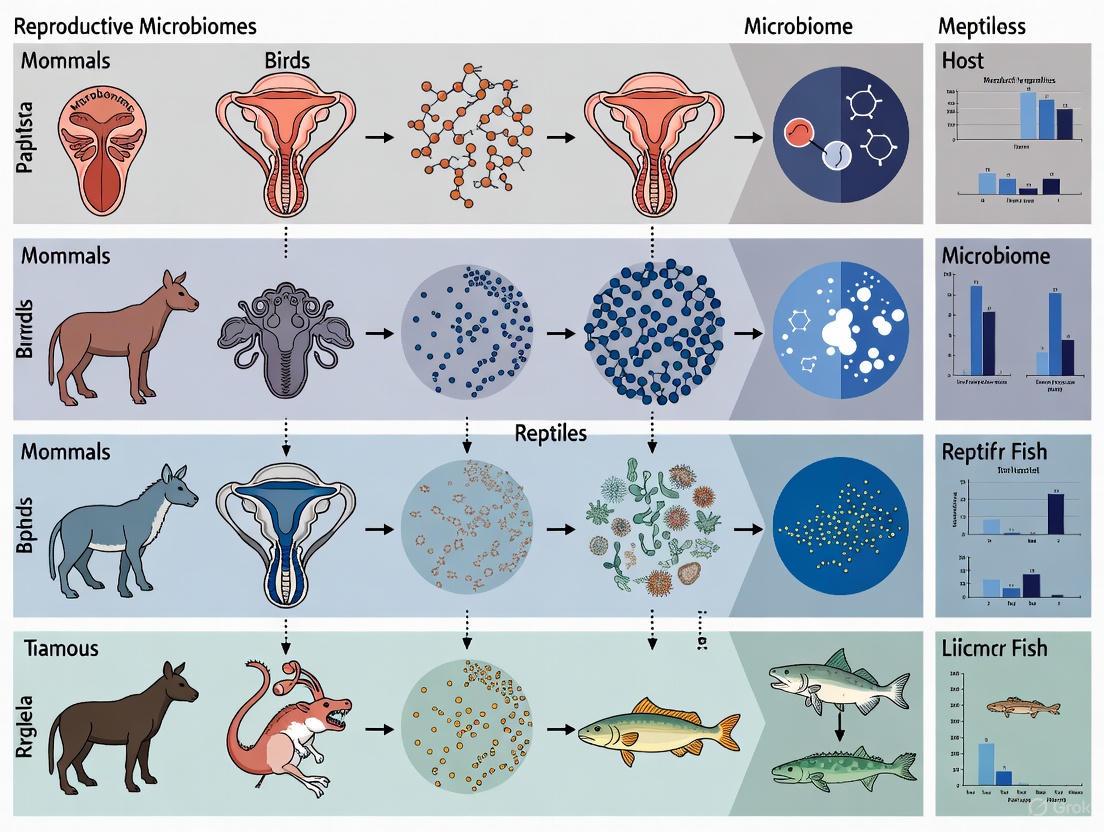
This article synthesizes current research on reproductive tract microbiomes across diverse animal species, from humans and livestock to wildlife.
Comparative Analysis of Reproductive Microbiomes Across Animal Species: Implications for Biomedical Research and Conservation
Abstract
This article synthesizes current research on reproductive tract microbiomes across diverse animal species, from humans and livestock to wildlife. It explores foundational concepts of microbial composition and function, examines cutting-edge methodological approaches and their associated challenges, and provides a comparative analysis of microbiome dynamics. Aimed at researchers, scientists, and drug development professionals, this review highlights how cross-species insights can inform clinical fertility practices, conservation strategies, and the development of novel therapeutic interventions. The integration of findings from human reproductive medicine and wildlife conservation offers a unique, holistic perspective on the reproductive microbiome's role in health and disease.
Defining the Reproductive Microbiome: Core Concepts and Species-Specific Diversity
In cross-disciplinary research, particularly in the rapidly evolving field of reproductive biology across animal species, precise terminology is not merely semantic—it is fundamental to accurate scientific communication. The terms "microbiome" and "microbiota" are often used interchangeably in literature, creating confusion that impedes collaborative efforts and data interpretation. This guide establishes a clear, foundational lexicon while contextualizing these concepts within reproductive microbiome research.
The distinction is conceptual and practical: microbiota refers to the community of living microorganisms themselves—the bacteria, archaea, fungi, viruses, and other microbes inhabiting a specific environment [1] [2]. In contrast, the microbiome encompasses the entire habitat, including not only the microorganisms but also their structural elements (like microbial cells), metabolic activities, and the surrounding environmental conditions [1] [2]. Critically, the microbiome includes the complete catalog of microbial genes and genomes, known as the metagenome [1] [3].
Understanding this distinction is paramount when comparing reproductive outcomes across species, as the functional potential (microbiome) of a microbial community (microbiota) can reveal mechanistic insights into fertility that the mere presence of organisms cannot.
Defining the Concepts: A Comparative Analysis
Core Definitions and Scope
The following table delineates the core distinctions between microbiota and microbiome, providing researchers with a quick reference for accurate application.
Table 1: Fundamental Distinctions Between Microbiota and Microbiome
| Aspect | Microbiota | Microbiome |
|---|---|---|
| Core Definition | The assemblage of living microorganisms present in a defined environment [1] [2]. | The entire habitat, comprising microorganisms, their genomes, and the surrounding environmental conditions [1] [2]. |
| Composition | Bacteria, archaea, fungi, viruses, and other microbes [4]. | The microbiota plus their structural elements, metabolites, microbial genomes, and the prevailing environmental conditions [2]. |
| Genetic Component | Does not intrinsically include genetic material. | Encompasses the full collection of microbial genes (the metagenome) [1] [3]. |
| Scope of Analysis | "Who is there?" – Taxonomy and relative abundance of community members. | "What are they doing?" – Functional potential, ecological interactions, and impact on the host [1]. |
Conceptual Relationship
A simple analogy posits that if the microbiome is a house, the microbiota represents the people who live there [1]. The house includes not only the inhabitants but also the furniture (structural elements), the conversations and activities (metabolic functions), and the blueprints for everything within it (genetic material). This holistic view is essential for understanding complex host-microbe interactions in reproductive health.
The term microflora is a dated synonym for microbiota, but it lacks the specificity required for modern scientific literature and is best avoided in formal research contexts [1].
Methodological Approaches: From Census to Functional Potential
Distinguishing between microbiota and microbiome necessitates different experimental and bioinformatic approaches. The choice of methodology directly influences whether a study characterizes the community members or investigates its functional capacity.
Characterizing the Microbiota
The primary tool for conducting a "census" of the microbial community is 16S ribosomal RNA (rRNA) gene amplicon sequencing [5] [6]. This method amplifies and sequences a specific, hypervariable region of the bacterial 16S rRNA gene, which serves as a taxonomic barcode.
Table 2: Key Experimental Protocols in Reproductive Microbiota/microbiome Research
| Method | Target | Key Applications in Reproductive Research | Protocol Summary |
|---|---|---|---|
| 16S rRNA Gene Sequencing [5] [6] | Microbiota (Taxonomic Composition) | Profiling vaginal, cervical, or endometrial communities; comparing breeds with divergent fertility [5] [6]. | 1. DNA extraction from swabs/lavage.2. PCR amplification of V4 region.3. Illumina sequencing.4. Bioinformatic processing (e.g., mothur, QIIME2) for OTU/ASV clustering.5. Taxonomic classification against databases (SILVA, Greengenes). |
| Shotgun Metagenomics [7] | Microbiome (Genetic Potential) | Investigating the functional gene repertoire of the reproductive tract; linking genes to metabolic pathways affecting pregnancy [7]. | 1. Total DNA extraction (without targeted PCR).2. Library preparation and whole-genome sequencing.3. Computational removal of host reads.4. Assembly of reads into contigs and gene prediction.5. Functional annotation (e.g., KEGG, COG databases). |
| Quantitative PCR (qPCR) [6] | Total Bacterial Abundance | Quantifying total bacterial load in low-biomass samples like the cervix; comparing abundance between animal breeds [6]. | 1. DNA extraction.2. Amplification with universal 16S rRNA primers.3. Quantification against a standard curve of known copy numbers. |
The workflow below illustrates the standard path for 16S rRNA sequencing analysis, a cornerstone method for microbiota characterization.
Diagram 1: 16S rRNA Sequencing Workflow for Microbiota Analysis.
Analyzing the Microbiome
To move beyond taxonomy and interrogate the microbiome's functional potential, shotgun metagenomic sequencing is employed [7]. This approach sequences all the genetic material in a sample, allowing researchers to reconstruct microbial genomes and identify the genes present. This can reveal potential metabolic capabilities, such as the production of short-chain fatty acids or inflammatory molecules that might influence the reproductive tract environment [8]. Furthermore, metabolomic and transcriptomic analyses provide additional layers of functional data, revealing the actual metabolites produced and the genes being expressed by the host and microbes.
Research in Context: Reproductive Microbiomes Across Animal Species
The distinction between microbiota and microbiome becomes critically important when applying this research to understand reproduction. Studies are increasingly linking microbial profiles to fertility outcomes in both humans and livestock.
Key Findings in Animal Reproductive Research
Cross-species investigations provide valuable perspectives on how microbial communities influence reproductive success.
Table 3: Selected Findings on Reproductive Microbiota/microbiome in Animal Studies
| Study Focus | Species | Key Finding | Implication |
|---|---|---|---|
| Cervical Microbiome & Fertility [6] | Sheep (Suffolk, Belclare, Norwegian White) | Lower-fertility breeds (Suffolk) showed higher bacterial abundance and diversity in the cervix during the follicular phase compared to high-fertility breeds. | Altered cervical microbiota may create a suboptimal environment, hampering sperm survival and transport. |
| Core Vaginal Microbiota [5] | Livestock (Cattle, Sheep, Pigs) | A combined analysis revealed 19 bacterial genera formed a core vaginal microbiota across cattle, sheep, and pigs, including Streptococcus and Corynebacterium. | Identifies conserved microbial members that may play fundamental roles in maintaining reproductive tract health. |
| Gut-Ovary Axis [8] | Mouse Model | Germ-free mice exhibited accelerated ovarian aging, which was rescued by microbial colonization or treatment with short-chain fatty acids (SCFAs). | Suggests a mechanistic link where gut microbiome metabolites (SCFAs) can systemically influence ovarian reserve and reproductive longevity. |
The Scientist's Toolkit: Essential Reagents and Materials
Table 4: Key Research Reagent Solutions for Microbiome Studies
| Reagent / Material | Function in Research |
|---|---|
| Universal 16S rRNA Primers (e.g., 515F/806R for V4 region) [5] | Allows for PCR amplification of a conserved bacterial gene region for taxonomic identification and community profiling. |
| DNA Extraction Kits (MoBio/PowerSoil) | Standardized kits for efficient lysis of microbial cells and purification of genomic DNA from complex sample types like swabs or mucus. |
| SILVA SSU Database [5] | A curated reference database of ribosomal RNA sequences used for accurate taxonomic classification of 16S rRNA sequencing reads. |
| Mock Microbial Communities [6] | Samples containing known quantities of specific microbes; used as positive controls to validate sequencing and bioinformatic protocols. |
| Decontamination Tools (e.g., decontam R package) [6] | Bioinformatics tools essential for identifying and removing contaminating DNA sequences, crucial for low-biomass samples (e.g., cervix, endometrium). |
The precision with which the scientific community adopts the terms "microbiota" and "microbiome" has tangible consequences for the progression of reproductive research. Acknowledging that microbiota refers to the microbial actors, while the microbiome encompasses the entire theater—including the scripts (genes), the actions (metabolites), and the stage (environment)—is a critical step forward.
This lexical clarity is the bedrock for generating testable hypotheses, designing robust experiments that appropriately measure structure versus function, and fostering meaningful cross-disciplinary dialogue. As research moves from correlative observations to establishing mechanistic causation [8], a unified lexicon will be indispensable for translating findings from animal models to clinical applications, ultimately improving reproductive outcomes across species.
The female reproductive tract (FRT) harbors dynamic microbial communities that play a crucial role in maintaining physiological functions and reproductive health. Once considered sterile except for the vagina, advancements in genomic technologies have revealed that the entire FRT, from the vagina to the endometrium and fallopian tubes, hosts its own typical microbiota, accounting for approximately 9% of the total bacterial population in females [9]. Understanding the spatial distribution of these microorganisms along the FRT provides critical insights for researchers and drug development professionals investigating reproductive biology, infertility, and gynecological diseases. This guide objectively compares microbial composition across genital regions, examines methodological approaches for studying these communities, and explores conserved patterns across animal species to inform comparative research on reproductive microbiomes.
Composition and Distribution of Reproductive Tract Microbiota
Spatial Variation Along the Reproductive Tract
The female reproductive tract exhibits a continuous yet distinct microbial landscape from the lower to upper regions, with significant implications for reproductive health and disease susceptibility.
Table 1: Spatial Distribution of Microbiota in the Human Female Reproductive Tract
| Anatomic Site | Dominant Taxa | Community Characteristics | Association with Health/Disease |
|---|---|---|---|
| Vagina | Lactobacillus spp. (L. crispatus, L. iners, L. gasseri, L. jensenii) [10] [9] | Low diversity; acidic pH (≤4.5); dynamic equilibrium [10] | Lactobacillus dominance protects against pathogens; dysbiosis linked to bacterial vaginosis [9] |
| Cervix | Similar to vaginal microbiota [10] | Strong similarity to vaginal communities; ascending colonization [10] | Transition zone; altered communities in endometriosis patients [11] |
| Endometrium | Lactobacillus, Pseudomonas, Acinetobacter, Clostridium [12] [11] | Low biomass; higher diversity than vagina [12] | Lactobacillus dominance associated with better reproductive outcomes; dysbiosis in gynecological diseases [13] |
| Peritoneal Fluid | Diverse anaerobes including Prevotella, Veillonella, Atopobium [11] | Highest diversity in upper reproductive tract [11] | Distinct communities in endometriosis patients [11] |
Research demonstrates a continuous change in microbiota distribution along the reproductive tract, with the lower reproductive tract (vagina and cervix) predominantly colonized by Lactobacillus species, while significant increases in diversity occur in the upper reproductive tract (endometrium and peritoneal fluid) [11]. This transition is particularly evident in the cervical region, which serves as a microbiological transition zone between lower and upper reproductive regions [11].
In a comprehensive study of 36 endometriosis patients and 14 control subjects, samples from five distinct locations (lower vagina, posterior vaginal fornix, cervical mucus, endometrium, and peritoneal fluid) revealed that the lower reproductive tract was predominantly dominated by Lactobacillus (Type II community), while the upper tract exhibited substantially higher diversity with increased prevalence of mixed communities including Prevotella, Veillonella, Atopobium, and other taxa (Type IV and V communities) [11].
Methodological Approaches for Microbiome Characterization
The accurate characterization of FRT microbiota requires specialized methodologies adapted to the unique challenges of low-biomass environments.
Table 2: Key Methodologies for Reproductive Microbiome Research
| Method Category | Specific Techniques | Applications | Considerations |
|---|---|---|---|
| Sample Collection | Vaginal/cervical swabs, endometrial biopsies, uterine fluid aspiration [9] | Microbial community analysis from specific FRT sites | Risk of contamination during transcervical sampling [9] |
| DNA Analysis | 16S rRNA gene sequencing, whole metagenome sequencing [9] [12] | Taxonomic profiling, functional potential assessment | Critical for non-cultivable organisms; requires careful contamination controls [9] |
| Culture-Dependent | Gram staining (Nugent score), aerobic/anaerobic culture [9] | Traditional pathogen identification | Limited to cultivable species (~1% of bacteria) [9] |
| Bioinformatic Analysis | DADA2, MEGAHIT, MetaGeneMark, DIAMOND [14] [12] | Sequence processing, assembly, gene prediction, functional annotation | Essential for metagenomic analysis and pathway prediction [12] |
Molecular-based techniques, particularly 16S rRNA gene sequencing, have revolutionized our understanding of reproductive microbiomes by enabling identification of non-cultivable organisms [9]. For low-biomass samples from upper reproductive sites, stringent controls are essential to distinguish true signals from contamination [15]. Metagenomic sequencing further enables functional insights by characterizing microbial metabolic pathways and their potential contributions to reproductive processes [12].
Experimental Models and Comparative Biology
Insights from Animal Models
Animal studies provide controlled systems for investigating host-microbe interactions in the FRT and their impact on reproductive outcomes.
Table 3: Comparative Analysis of Reproductive Microbiomes Across Species
| Species | Reproductive Tract Microbiome Features | Correlation with Reproduction | Research Applications |
|---|---|---|---|
| Mice | Lactobacillus, Enterococcus, Streptococcus in endometrium; shifts with reproductive state [12] | Postpartum diversity increases; metabolic pathway alterations [12] | Experimental manipulation of hormonal states [12] |
| Broiler Chickens | Varies by breed; Lactobacillales higher in Legacy line magnum [14] | Correlation with egg production traits [14] | Vertical transmission studies [14] |
| Black-footed Ferrets | Lower inter-individual variation in vaginal vs. prepuce microbiomes [16] | Vaginal diversity higher in females producing non-viable litters [16] | Conservation breeding optimization [16] |
| Non-Human Primates | Diverse vaginal communities lacking Lactobacillus dominance [15] | Variation with endocrine cycles [15] | Comparative reproductive immunology [15] |
In mice models, endometrial microbiota demonstrates dynamic changes across reproductive states. Metagenomic analysis revealed 95 genera and 134 species in mouse uteri, with unproductive mice showing higher abundance of Lactobacillus, Enterococcus, and Streptococcus, while postovulatory mice were colonized with Salmonella enterica and Campylobacter and exhibited enrichment in metabolic pathways and steroid biosynthesis [12]. Postpartum mice demonstrated increased pathogenic pathways and distinctive microbial communities including Chlamydia, Enterococcus, Pseudomonadales, Acinetobacter, and Clostridium [12].
A comparative study in broiler chickens revealed that genetic selection not modified reproductive tract physiology but also shaped reproductive tract microbiomes, with distinct taxonomic orders (Pseudomonadales, Verrucomicrobiales, Lactobacillales) showing differential abundance between modern commercial and legacy lines [14]. This highlights how host genetics and selective breeding can influence reproductive microbiomes with potential implications for fertility and vertical transmission.
Hormonal Regulation and Microbial Dynamics
The interplay between host endocrine system and reproductive microbiomes represents a critical area of investigation across species. In humans and animal models, endocrine mediators including estrogen, progesterone, and glucocorticoids significantly influence FRT microbial communities [15].
Figure 1: Hormone-Microbiome Interactions in Reproductive Regulation. This diagram illustrates the bidirectional relationship between host endocrine signaling and reproductive tract microbial communities, highlighting potential pathways through which microbiota influence reproductive outcomes.
In female Phayre's leaf monkeys, reproductive hormones, particularly progestagens, contribute to gut microbiome shifts during pregnancy and lactation [15]. Similarly, the maternal gut microbiome of Tibetan antelope shifts during the perinatal period [15]. In male birds, cloacal microbial diversity positively correlates with testosterone levels, which may subsequently affect reproductive behaviors including extra-pair copulations that increase opportunities for microbial transmission [15].
Research Toolkit and Technical Considerations
Essential Research Reagents and Solutions
Table 4: Essential Research Reagents for Reproductive Microbiome Studies
| Reagent/Kit | Application | Function | Example Use Cases |
|---|---|---|---|
| HiPure Bacterial DNA Kit [12] | Microbial DNA extraction | Isolation of high-quality DNA from low-biomass samples | Metagenomic sequencing of endometrial fluid [12] |
| NEBNext Ultra DNA Library Prep Kit [12] | Library preparation | Preparation of sequencing libraries for Illumina platforms | Whole metagenome sequencing of reproductive samples [12] |
| Ion Torrent PGM Platform [11] | 16S rRNA amplicon sequencing | Taxonomic profiling of microbial communities | Spatial distribution analysis along reproductive tract [11] |
| QIAamp DNA Mini Kit [11] | Genomic DNA extraction | Isolation of microbial DNA from swabs and fluid samples | Endometriosis microbiome studies [11] |
| Specific Primers (e.g., 515F/806R) [14] [11] | 16S rRNA gene amplification | Target amplification of variable regions for sequencing | Microbiome profiling in animal models [14] |
Methodological Workflow for Reproductive Microbiome Analysis
Figure 2: Experimental Workflow for Reproductive Microbiome Research. This diagram outlines key methodological steps from sample collection to data interpretation, highlighting critical quality control considerations and analysis approaches specific to reproductive tract microbiota studies.
Clinical Implications and Therapeutic Applications
Dysbiosis in the reproductive tract microbiota has been associated with various gynecological conditions including endometriosis, leiomyoma, endometrial polyps, and reproductive failures [13]. In endometriosis patients, significant microbial alterations begin appearing in the cervix and become more pronounced in the upper reproductive tract, with decreased Lactobacillus in vaginal flora and increased signature Operational Taxonomic Units in the cervix, endometrium, and peritoneal fluid [11].
Uterine leiomyoma (fibroids) demonstrate distinct microbial signatures, with patients showing decreased Lactobacillus sp. in vaginal and cervical samples and increased L. iners in the cervix compared to healthy controls [13]. Furthermore, microbial co-occurrence networks in leiomyoma patients exhibit lower connectivity and complexity, suggesting reduced stability of the microbiota [13].
The profound influence of reproductive tract microbiomes on fertility and pregnancy outcomes has stimulated therapeutic investigations. In assisted reproduction, studies have examined the use of lactobacilli-loaded vaginal capsules to reestablish vaginal eubiosis before fertility treatment, though one randomized controlled trial found no significant difference in vaginal microbiota improvement compared to placebo [17]. Importantly, this study demonstrated spontaneous improvement in unfavorable vaginal microbiota in 34.2% of patients within one to three months, suggesting potential benefit in postponing IVF treatment to await natural restoration of vaginal eubiosis [17].
The spatial distribution of microbes along the female reproductive tract follows distinct patterns from lower to upper regions, with Lactobacillus dominance typically decreasing while microbial diversity increases from the vagina to the peritoneal cavity. This microbial gradient demonstrates both conservation and variation across animal species, influenced by host genetics, endocrine factors, and environmental exposures. Robust methodological approaches accounting for low microbial biomass in upper reproductive sites are essential for accurate characterization. Growing understanding of how reproductive tract microbial communities contribute to gynecological health and disease offers promising avenues for diagnostic and therapeutic innovation, particularly in fertility and conservation contexts. Future research directions should focus on elucidating functional mechanisms of host-microbe interactions, standardizing sampling and analytical protocols, and developing targeted microbial therapies for reproductive disorders.
Community State Types (CSTs) in Human Vaginal Microbiomes and Analogous Classifications in Other Species
The vaginal microbiome plays a critical role in maintaining women's reproductive health, primarily through the activity of lactic acid-producing bacteria that inhibit pathogens. In humans, the composition of the vaginal microbiome is most commonly classified into Community State Types (CSTs), a system that categorizes microbial communities based on the dominant Lactobacillus species or the presence of a diverse, non-Lactobacillus-dominated state [18]. This classification provides a framework for understanding health, disease risk, and ecological stability. A core vaginal microbiome has been identified, with species like Lactobacillus iners, Lactobacillus crispatus, Gardnerella vaginalis, and Ureaplasma parvum found in over 90% of individuals in large cohorts, collectively accounting for a median abundance of 98.8% [19].
However, human vaginal microbiomes represent just one point on the spectrum of mammalian reproductive ecology. A comparative analysis across species reveals that the Lactobacillus-dominated state is unique to humans [20]. This distinction is crucial for researchers and drug development professionals, as it highlights the limitations of certain animal models and underscores the need for species-specific understanding when developing therapeutic interventions. This guide objectively compares the CST system in humans with the vaginal microbial classifications in other species, providing a foundational resource for cross-species comparative research.
Comparative Analysis of Vaginal Microbiome Classifications
Community State Types (CSTs) in Humans
The following table outlines the five generally accepted human vaginal Community State Types, their key characteristics, and associated health implications [18].
Table 1: Human Vaginal Community State Types (CSTs)
| Community State Type (CST) | Dominant Microbiota | Key Characteristics | Associated Health Implications |
|---|---|---|---|
| CST I | Lactobacillus crispatus | Considered the most healthy and stable state; produces high amounts of both L- and D-lactic acid, maintaining a protective, acidic environment (pH < 4.5). | Lowest risk for BV, STIs, UTIs, infertility, and preterm birth [18]. |
| CST II | Lactobacillus gasseri | A healthy state that produces D-lactic acid, though potentially slightly less than CST I. | Strong defense against pathogens; decreased risk of common vaginal infections [18]. |
| CST III | Lactobacillus iners | A versatile and less stable state; produces only L-lactic acid, requiring a higher bacterial load to maintain low pH. | Can coexist with disruptive bacteria; linked to higher risk of STIs and pregnancy complications compared to other Lactobacillus-dominated types [18]. |
| CST IV | Diverse anaerobic bacteria; low Lactobacillus abundance. | Characterized by high microbial diversity and a less stable environment. Divided into subtypes (e.g., IV-A: Gardnerella vaginalis; IV-B: Atopobium vaginae; IV-C: Streptococcus, Bifidobacterium, etc.). | Associated with vaginal dysbiosis (e.g., BV), higher risk of pregnancy complications, STI acquisition, and pelvic inflammatory disease. Some sub-states (e.g., Bifidobacterium-dominant) may be protective [18]. |
| CST V | Lactobacillus jensenii | A rare, healthy state that produces D-lactic acid and antimicrobial bacteriocins. | Highly protective; linked to very low risk of infections and other reproductive health issues [18]. |
The clinical relevance of these CSTs is underscored by large-scale association studies. For instance, a study of 6,755 Chinese women not only confirmed these core types but further stratified them into 13 "Vagitypes," finding significant associations with host and environmental variables such as age, bacterial vaginosis (BV), and lifestyle [19]. Critically, this study demonstrated functional outcomes, linking specific Vagitypes to reproductive success; women with L. iners- or L. jensenii-dominated Vagitypes had significantly higher live birth rates compared to those with a Fannyhessea vaginae-dominated Vagitype [19].
Vaginal Microbiome Profiles in Non-Human Species
In contrast to humans, the vaginal microbiome of other mammalian species, including non-human primates (NHPs), is typically not dominated by Lactobacillus and exhibits greater microbial diversity.
Table 2: Vaginal Microbiome Classifications in Non-Human Species
| Species/Group | Typical Microbiome Profile | Key Characteristics | Implications for Research |
|---|---|---|---|
| Non-Human Primates (e.g., Baboons, Macaques, Chimpanzees) | Diverse; not dominated by Lactobacillus. High abundance of Firmicutes, Bacteroidales, Actinobacteria (e.g., Mobiluncus), and Fusobacteria [21] [20]. | Microbiome is species-specific and shows limited congruence with host phylogeny. Composition is resilient and resistant to long-term colonization by exogenous L. crispatus [21] [20]. | NHP models may be suboptimal for studying human-specific Lactobacillus-driven therapeutics. Socioecological factors (e.g., mating systems) correlate with microbiome structure [20]. |
| Wild Mammals (across taxa) | Limited data; generally diverse and distinct from humans. | Composition is influenced by host-specific factors, ecology, and behavior. A "core" reproductive microbiome across wild species is not yet defined. | Crucial for conservation (e.g., microbiome-based diagnostics and probiotics). Research is challenged by logistical and ethical constraints of sampling [22]. |
The fundamental difference between human and NHP vaginal microbiomes is a key consideration for research design. Studies aimed at colonizing NHPs with human-derived Lactobacillus strains, such as L. crispatus, have demonstrated that while transient colonization is possible, the native microbiome is resilient and reverts to its baseline state within weeks [21]. This resistance to stable colonization underscores the profound ecological differences between these hosts and questions the utility of NHPs for testing probiotic interventions intended to establish a human-like vaginal environment [21].
Experimental Protocols and Methodologies
To ensure reproducibility and facilitate comparison across studies, this section details standard and emerging experimental protocols for characterizing the vaginal microbiome.
16S rRNA Gene Amplicon Sequencing
This is the most widely used method for taxonomic profiling and CST classification [19] [20].
- Sample Collection: Vaginal swabs are collected under clinical standards and stored appropriately to preserve microbial DNA.
- DNA Extraction & Amplification: Total genomic DNA is extracted. The 16S rRNA gene (e.g., V4 region) is amplified using universal bacterial primers.
- Sequencing: Amplified products are sequenced on high-throughput platforms like Illumina [19].
- Bioinformatic Analysis:
- Processing: Sequences are demultiplexed, quality-filtered, and clustered into Amplicon Sequence Variants (ASVs) or Operational Taxonomic Units (OTUs).
- Taxonomy Assignment: ASVs/OTUs are classified against reference databases (e.g., SILVA, Greengenes) to identify microbial taxa.
- Community Classification: Compositional data is used to assign CSTs via clustering algorithms or classification methods like the VALENCIA tool, a nearest centroid classifier validated for vaginal microbiomes [23].
Shallow Shotgun Metagenomic Sequencing (SMS) with Oxford Nanopore
This emerging protocol offers advantages in cost, speed, and functional insights [23].
- Sample & Library Preparation: DNA is extracted and prepared for sequencing without a targeted amplification step, allowing for the detection of all genomic material.
- Sequencing: Libraries are sequenced using Oxford Nanopore Technologies (ONT) platforms, which generate long reads in real-time.
- Bioinformatic Analysis:
- Taxonomic Profiling: Reads are aligned to comprehensive genomic databases for species-level identification.
- CST Assignment: Species abundance profiles are used for CST classification, showing high concordance with 16S-based methods [23].
- Additional Analyses: ONT-SMS enables the detection of non-bacterial members (e.g., fungi, viruses) and can quantify human cell types via methylation patterns, providing a more holistic view of the sample environment [23].
Visualization of Vaginal Microbiome Analysis Workflow
The following diagram illustrates the logical workflow and decision points for the two primary sequencing methodologies discussed.
The Scientist's Toolkit: Key Research Reagent Solutions
Table 3: Essential Materials and Reagents for Vaginal Microbiome Research
| Item | Function/Application | Examples & Notes |
|---|---|---|
| 16S rRNA Primers | Amplify variable regions of the 16S rRNA gene for taxonomic identification. | Primers 515F/806R (targeting V4 region); critical for amplicon sequencing workflow [20]. |
| DNA Extraction Kits | Isolate high-quality microbial genomic DNA from complex vaginal swab samples. | Kits optimized for Gram-positive bacteria (e.g., Mo Bio PowerSoil Kit). |
| Live Biotherapeutic Formulations | Investigate the impact of probiotic strains on microbiome composition and host health. | Lactobacillus crispatus CTV-05 (Lactin-V); used in clinical trials for BV prevention [21]. |
| Bioinformatic Tools | Analyze sequencing data, assign taxonomy, and classify communities into CSTs. | QIIME 2, mothur for 16S analysis; VALENCIA for CST classification [23]. |
| Latent Environment Allocation (LEA) | Explore microbial community samples based on semantic descriptions and contextual similarity. | Web application for positioning new microbiome samples within a global context of >30,000 samples [24]. |
The reproductive tract represents a critical interface where host health is dynamically regulated by complex microbial communities. Within this ecosystem, Lactobacillus species and pathogenic consortia engage in a constant struggle for dominance, functioning as key microbial regulators with profound implications for reproductive success across animal species. This balance is not merely a matter of microbial presence but involves sophisticated molecular communication, immune modulation, and ecological competition. Understanding this dual regulatory role provides crucial insights into reproductive health, disease pathogenesis, and potential therapeutic interventions.
The reproductive microbiome demonstrates remarkable conservation in its functional relationships despite variations in specific microbial taxa across host species. Research spanning humans, non-human primates, and other mammals reveals that Lactobacillus species consistently contribute to maintaining a protective microenvironment, while polymicrobial pathogenic consortia employ shared virulence strategies to disrupt homeostasis [15] [25]. This comparative framework allows researchers to identify fundamental mechanisms that transcend species boundaries, offering insights applicable to both clinical medicine and conservation biology for endangered species.
Comparative Analysis of Microbial Regulators
Table 1: Characteristics of Lactobacillus Regulators vs. Pathogenic Consortia
| Regulator Feature | Lactobacillus Species | Pathogenic Consortia |
|---|---|---|
| Primary Ecological Role | Homeostasis maintenance, colonization resistance [26] [27] | Dysbiosis induction, resource exploitation [28] [25] |
| Signature Metabolites | L-lactic acid, D-lactic acid, bacteriocins [26] [25] | Biogenic amines (putrescine, cadaverine), sialidases [25] |
| Environmental pH | Acidic (3.5-4.5) [25] | Neutral to alkaline (>4.5) [25] |
| Epithelial Barrier Function | Enhances integrity via tight junction proteins [26] | Disrupts integrity via mucin degradation [25] |
| Immune Modulation | Anti-inflammatory cytokine induction [26] [29] | Pro-inflammatory cytokine induction [25] |
| Inter-microbial Communication | LuxS/AI-2 QS system [30] | AI-2 QS, agr system (S. aureus) [28] |
Table 2: Lactobacillus Species Distribution and Functional Specialization
| Lactobacillus Species | Dominant Host Niches | Key Functional Attributes | Conservation Across Species |
|---|---|---|---|
| L. crispatus | Human vagina, primate reproductive tract [25] | High D-lactic acid production, stable biofilm formation [25] | Human-specific dominance pattern [25] |
| L. iners | Human vagina, various mammals [25] | Metabolic flexibility, transition species in dysbiosis [25] | Widespread across mammals with varied health associations |
| L. gasseri | Human vagina, gastrointestinal tracts [27] | Bacteriocin production, antimicrobial activity [27] | Isolated from multiple mammalian species |
| L. jensenii | Human vagina [25] | Lactic acid production, mucosal adhesion [25] | Predominantly reported in humans |
| L. rhamnosus | Human intestine, various reproductive tracts [26] [31] | Immune modulation, pathogen exclusion [26] [31] | Isolated from diverse mammalian hosts |
Molecular Mechanisms of Regulation
Lactobacillus-Mediated Homeostasis
Lactobacillus species employ multiple synergistic mechanisms to regulate reproductive tract health. Through glycogen metabolism, these bacteria create an acidic environment (pH 3.5-4.5) via lactic acid production that selectively inhibits pathogen growth while favoring commensal colonization [25]. This acidification represents a fundamental chemical barrier conserved across mammalian species. Beyond pH modulation, Lactobacillus species strengthen the physical epithelial barrier by enhancing the expression of tight junction proteins including ZO-1, occludin, and claudin in gut and reproductive epithelia [26]. This mechanism, demonstrated in Caco-2 cell models and mouse inflammation models, reduces microbial translocation and subsequent inflammation.
A third crucial mechanism involves immunomodulation through pattern recognition receptor signaling. Lactobacillus components such as lipoteichoic acids and surface layer proteins interact with Toll-like receptors (TLR2/TLR6) on epithelial and immune cells, modulating NF-κB signaling and subsequent cytokine production [29]. This interaction promotes anti-inflammatory responses characterized by reduced IL-17F and TNF-α expression, creating a tissue environment resistant to inflammatory damage [26]. These immunomodulatory effects extend beyond the local tissue environment through axis-based communication (gut-reproductive, gut-brain), demonstrating the systemic impact of Lactobacillus regulation [26].
Figure 1: Molecular Regulation in the Reproductive Microbiome. This diagram illustrates the competing mechanisms by which Lactobacillus species (green pathway) maintain homeostasis versus pathogenic consortia (red pathway) that drive toward dysbiosis.
Pathogenic Consortium Virulence Strategies
Polymicrobial pathogenic consortia associated with reproductive dysbiosis employ counter-strategies to subvert host protection. Organisms including Gardnerella vaginalis, Prevotella species, and Atopobium vaginae secrete sialidases and other mucin-degrading enzymes that compromise the protective mucus layer, facilitating epithelial invasion and ascending infection [25]. This enzymatic barrier degradation represents a key virulence mechanism shared across diverse pathological communities.
Through quorum sensing systems, pathogenic consortia coordinate virulence gene expression in a population-density-dependent manner. The Autoinducer-2 (AI-2) system, mediated by the LuxS enzyme, regulates virulence factors in multiple pathogens including Escherichia coli, Salmonella spp., and Clostridium difficile [28]. This communication system enables synchronized attacks on host defenses that individual bacterial cells could not accomplish alone.
Pathogenic consortia also manipulate the host immune response by triggering pro-inflammatory pathways through Toll-like receptor recognition. Bacterial components such as lipopolysaccharide (LPS) from Gram-negative organisms engage TLR4 on epithelial and immune cells, activating NF-κB signaling and production of inflammatory cytokines including IL-1β, IL-6, and IL-8 [25]. This sustained inflammation creates tissue damage that further favors pathogen colonization while damaging reproductive tissues.
Experimental Models and Methodologies
In Vitro Assessment Protocols
Table 3: Key Experimental Protocols for Studying Microbial Regulation
| Experimental Objective | Standard Protocol | Key Outcome Measures | Research Applications |
|---|---|---|---|
| Barrier Integrity Assessment | Transepithelial electrical resistance (TEER) measurement in Caco-2/HT-29 cell monolayers [26] [32] | Resistance (Ω×cm²), tight junction protein expression (ZO-1, occludin) [26] | Probiotic screening, pathogen virulence studies |
| Pathogen Exclusion Assay | Co-culture models with labeled pathogens; adhesion inhibition assays [28] [32] | Pathogen colony counts, fluorescence intensity [32] | Probiotic competition studies, anti-adhesion therapy |
| Cytokine Profiling | ELISA/multiplex assays on immune cell co-culture supernatants [26] [29] | IL-10, IL-12, TNF-α, IFN-γ concentrations [26] [29] | Immunomodulatory mechanism analysis |
| Biofilm Formation Quantification | Crystal violet staining; confocal microscopy with LIVE/DEAD staining [30] | Optical density at 590 nm; biofilm thickness/biovolume [30] | Antimicrobial resistance studies, probiotic persistence |
| Metabolite Profiling | GC-MS/MS; LC-MS/MS for short-chain fatty acids, biogenic amines [25] [31] | Lactic acid, butyrate, putrescine, cadaverine concentrations [25] [31] | Microbial functional activity assessment |
Research into microbial regulation employs standardized in vitro models that simulate key aspects of host-microbe interactions. The intestinal epithelial cell model utilizing Caco-2 and HT-29 cell lines allows investigators to study microbial effects on barrier function through transepithelial electrical resistance (TEER) measurements and immunofluorescence staining of tight junction proteins [26] [32]. These models have demonstrated that L. rhamnosus CNCM-I-3690 and L. casei DN-114 001 strengthen barrier integrity by upregulating ZO-1 expression, providing mechanistic insights into how lactobacilli might prevent pathogen translocation in reproductive tissues [26].
For assessing microbial adhesion competition, researchers employ co-culture models where epithelial cells are simultaneously or sequentially exposed to probiotic and pathogenic bacteria [32]. After incubation and washing, adhered bacteria are recovered and quantified through plate counting or fluorescence methods. Studies using these approaches have revealed that L. fermentum 88 and L. plantarum 9 can reduce adhesion of Escherichia coli to HT-29 cells by up to 50%, highlighting the potential for specific lactobacilli to exclude pathogens through competitive exclusion [32].
Advanced biofilm models have illuminated how microbial communities establish persistent colonization. Microtiter plate assays with crystal violet staining quantify total biofilm biomass, while confocal laser scanning microscopy with viability staining reveals the three-dimensional architecture and metabolic activity within these communities [30]. These techniques have demonstrated that lactobacilli biofilm formation is regulated by the LuxS/AI-2 quorum sensing system, with luxS gene knockout strains showing significantly reduced biofilm formation capacity [30].
Figure 2: Experimental Workflow for Microbial Regulation Studies. This diagram outlines the integrated methodological approach from sample collection through in vitro and in vivo models to multi-omic integration that characterizes modern research into microbial regulators.
In Vivo and Multi-Omic Approaches
Animal models provide essential platforms for investigating host-microbe interactions in physiologically relevant contexts. Mouse colonization models have been instrumental in elucidating how Lactobacillus species confer colonization resistance against multidrug-resistant Enterobacteriaceae (MRE) through cooperative interactions with Clostridiales, resulting in increased butyrate production and nutrient limitation for pathogens [31]. These models demonstrate that L. rhamnosus alone is necessary but insufficient for protection, highlighting the importance of multi-species consortium interactions in effective colonization resistance.
Modern microbiome research increasingly employs integrated multi-omic approaches that combine 16S rRNA sequencing, metatranscriptomics, metabolomics, and metagenomics to obtain a comprehensive understanding of microbial community structure and function. In studies of hospitalized patients, this approach revealed that Lactobacillus abundance negatively correlates with multidrug-resistant Enterobacteriaceae colonization, and identified specific cooperation between Lactobacillus and Clostridiales that was conserved in both humans and mice [31]. These translational findings underscore the value of combining clinical observation with experimental models to identify conserved mechanisms of microbial regulation.
The Scientist's Toolkit: Essential Research Reagents
Table 4: Key Research Reagent Solutions for Microbial Regulation Studies
| Reagent Category | Specific Examples | Research Applications | Technical Considerations |
|---|---|---|---|
| Cell Culture Models | Caco-2, HT-29 intestinal epithelial cells [26] [32] | Barrier function assessment, host-pathogen interactions [26] [32] | Passage number, differentiation time affect tight junction formation |
| Growth Media | Man Rogosa Sharpe (MRS) broth, MRS with bile salts (0.3%) [32] | Lactobacillus cultivation, probiotic tolerance screening [32] | Anaerobic conditions required for most Lactobacillus strains |
| Molecular Probes | Anti-ZO-1, anti-occludin antibodies; LIVE/DEAD BacLight bacterial viability kit [26] [30] | Tight junction visualization; bacterial viability in biofilms [26] [30] | Fixation method critical for epitope preservation in immunofluorescence |
| Cytokine Assays | ELISA kits for IL-10, IL-12, TNF-α, IFN-γ [26] [29] | Immunomodulatory profiling of host response [26] [29] | Multiplex platforms enable efficient screening of multiple analytes |
| Sequencing Platforms | 16S rRNA V3-V4 region primers; Illumina MiSeq/HiSeq [31] | Microbiome composition analysis, community dynamics [31] | Primer selection introduces bias in community representation |
| Metabolite Standards | Short-chain fatty acid mixes; biogenic amine standards [25] [31] | GC-MS/LC-MS quantification of microbial metabolites [25] [31] | Sample preparation critical for accurate quantification |
The comparative analysis of Lactobacillus species and pathogenic consortia as key microbial regulators reveals a complex equilibrium maintained through multiple competing mechanisms. The dynamic balance between these opposing forces determines reproductive health outcomes across diverse animal species. Lactobacillus species promote homeostasis through acidification, barrier enhancement, and immunomodulation, while pathogenic consortia employ mucin degradation, quorum-sensing virulence regulation, and pro-inflammatory activation to drive dysbiosis.
This understanding opens promising therapeutic avenues aimed at manipulating the reproductive microbiome. Probiotic interventions with specific Lactobacillus strains, prebiotic approaches to support beneficial communities, and targeted antimicrobial strategies that disrupt pathogenic consortia without harming protective species represent promising directions. The conservation of these regulatory mechanisms across animal species suggests that insights from model organisms and clinical studies can reciprocally inform both human reproductive medicine and conservation efforts for endangered species [15]. As research methodologies continue to advance, particularly in multi-omic integration and gnotobiotic models, our understanding of these fundamental microbial regulators will undoubtedly expand, offering new strategies for managing reproductive health across species.
The study of host-associated microbiomes has evolved from organ-specific investigations to a holistic understanding of cross-system communication. The concept of local, proximal, and distal regulatory roles describes how microbial communities in different body sites interact to influence host physiology, particularly in reproduction. Local regulation occurs within a specific niche, such as the vaginal ecosystem; proximal regulation involves adjacent sites, like oral microbes affecting gut communities; and distal regulation encompasses systemic effects, such as gut microbiota influencing distant organs via metabolic and immune pathways. This interconnected network forms microbiome axes that are essential for maintaining physiological homeostasis and reproductive fitness across animal species.
Emerging evidence from comparative studies indicates that these regulatory principles are conserved but distinctly specialized among different species. Understanding these mechanisms provides crucial insights for developing novel therapeutic strategies for reproductive disorders, infertility, and microbiome-based interventions. This review synthesizes current knowledge on the local, proximal, and distal regulatory roles connecting gut, oral, and reproductive microbiomes within the framework of cross-species reproductive microbiome research.
Local Regulation: Reproductive Tract Microbiome
Composition and Function in Health and Disease
The female reproductive tract (FRT) microbiome exhibits a structured spatial organization along the tract, with the lower reproductive tract (vagina and cervix) harboring distinct communities from the upper tract (uterus, fallopian tubes). In healthy women of reproductive age, the vaginal microbiome is typically dominated by Lactobacillus species, which acidify the environment to pH 3.5-4.5 through lactic acid production, thereby inhibiting pathogens and maintaining homeostasis [33].
Five community state types (CSTs) characterize the vaginal microbiome: CSTs I, II, III, and V are each dominated by a single Lactobacillus species (L. crispatus, L. gasseri, L. iners, and L. jensenii, respectively), while CST IV features a diverse mixture of facultative and obligate anaerobes [33]. Notably, not all lactobacilli provide equal protection. L. iners has a reduced genome size (~1.3 Mb) compared to other vaginal lactobacilli (1.5-2.0 Mb) and lacks the ability to produce D-lactic acid and hydrogen peroxide (H₂O₂), key antimicrobial compounds [33]. Instead, L. iners possesses virulence factors including inerolysin, a pore-forming toxin that may compromise vaginal defense [33].
CST IV, characterized by polymicrobial anaerobic communities including Gardnerella, Prevotella, Atopobium, and Mobiluncus, represents a dysbiotic state associated with bacterial vaginosis (BV) [33]. These communities deplete lactic acid, produce biogenic amines (putrescine, cadaverine), and elevate vaginal pH above 4.5 [33]. BV-associated bacteria secrete hydrolytic enzymes like sialidases that degrade mucins, compromising the cervicovaginal mucosal barrier and increasing infection risk [33].
Table 1: Vaginal Community State Types (CSTs) and Their Characteristics
| Community State Type | Dominant Microorganisms | pH | Clinical Association |
|---|---|---|---|
| CST I | Lactobacillus crispatus | 3.5-4.5 | Healthy |
| CST II | Lactobacillus gasseri | 3.5-4.5 | Healthy |
| CST III | Lactobacillus iners | 3.5-4.5 | Transition state |
| CST IV | Mixed anaerobes (Gardnerella, Prevotella, Atopobium) | >4.5 | Bacterial Vaginosis |
| CST V | Lactobacillus jensenii | 3.5-4.5 | Healthy |
Local Regulatory Mechanisms
The FRT microbiome employs multiple local regulatory mechanisms to maintain health. Lactobacilli competitively exclude pathogens through receptor competition, resource competition, and antimicrobial production [33]. Lactic acid maintains an acidic environment that inhibits pH-sensitive pathogens and modulates immune responses [33]. Microbial metabolites including bacteriocins and H₂O₂ provide direct antimicrobial activity against potential invaders [33].
The local immune system interacts with microbiota through pattern recognition receptors (TLRs) on epithelial cells. In dysbiosis, TLR4 recognizes LPS from BV-associated bacteria, activating NF-κB signaling and triggering pro-inflammatory cytokine production [33]. This inflammation can facilitate viral acquisition and adverse reproductive outcomes [33].
Proximal Regulation: Oral-Reproductive Tract Axis
Pathways of Microbial Translocation
The oral cavity serves as a reservoir for potential pathobionts that can translocate to reproductive tissues through hematogenous and ascending routes. Periodontal diseases create inflamed pockets where bacteria enter the bloodstream through ulcerated epithelium, enabling systemic dissemination [34]. Transient bacteremia from dental procedures or daily activities like tooth brushing can introduce oral microbes to distant sites [34].
Oral microbes possess adaptations for ectopic colonization. Porphyromonas gingivalis and Fusobacterium nucleatum can parasitize dendritic cells and macrophages, using them as "Trojan horses" for systemic dissemination [34]. These bacteria exhibit acid resistance, allowing survival through gastric passage when swallowed [34]. Certain oral pathobionts express adhesins that facilitate binding to various tissue types and resist elimination by host defenses [34].
Functional Consequences on Reproductive Health
Oral-reproductive tract connections have been demonstrated in multiple pathologies. Periodontal pathogens including P. gingivalis and Aggregatibacter actinomycetemcomitans have been associated with increased pancreatic cancer risk [34]. F. nucleatum has been consistently identified in colorectal cancer tissues, where it promotes tumor progression through various mechanisms [34].
In reproductive contexts, oral microbes may contribute to endometriosis, pelvic inflammatory disease, and adverse pregnancy outcomes. Molecular mimicry between oral bacterial and human antigens may trigger autoimmune responses affecting reproductive tissues [34]. Oral bacteria can induce inflammatory mediators that disrupt endometrial implantation or placental function [34].
Distal Regulation: Gut-Reproductive Tract Axis
Mechanisms of Gut-Distal Communication
The gut microbiome exerts distal effects on reproductive tissues through multiple interconnected mechanisms. Microbial metabolites including short-chain fatty acids (SCFAs), bile acids, and tryptophan derivatives enter systemic circulation and modulate immune and endocrine functions systemically [33]. Gut bacteria regulate circulating estrogen levels through secretion of β-glucuronidase, which deconjugates estrogen, allowing its reabsorption and affecting estrogen-dependent tissues [33].
Immune cell priming in gut-associated lymphoid tissue leads to systemic distribution of immune cells that can home to reproductive tissues [33]. Gut dysbiosis can increase intestinal permeability, allowing bacterial translocation and systemic inflammation that adversely impacts reproductive function [33]. The vagus nerve provides a direct neuroimmune connection between gut and distant organs, including reproductive tissues [33].
Impact on Reproductive Outcomes
Clinical evidence supports the gut-reproductive connection in various conditions. In polycystic ovary syndrome (PCOS), gut dysbiosis contributes to insulin resistance and hyperandrogenism through mechanisms involving bile acid signaling and bacterial antigen-mediated inflammation [33]. In endometriosis, altered gut microbiota profiles are observed, with proposed mechanisms including altered estrogen metabolism and immune dysregulation [33].
During pregnancy, maternal gut microbiota changes influence fetal development and pregnancy outcomes. Butyrate-producing bacteria support immune tolerance necessary for maintaining pregnancy [33]. Conversely, gut dysbiosis is associated with increased risk of preeclampsia and preterm birth through inflammatory pathways [33].
Table 2: Microbial Metabolites in Gut-Reproductive Tract Communication
| Metabolite Class | Producing Bacteria | Systemic Effects | Reproductive Impact |
|---|---|---|---|
| Short-chain fatty acids (SCFAs) | Bacteroides, Firmicutes | Immune regulation, Barrier function | Endometrial receptivity, Pregnancy maintenance |
| Secondary bile acids | Bacteroides, Clostridium | FXR, TGR5 signaling | Estrogen metabolism, PCOS pathogenesis |
| Tryptophan metabolites | Lactobacillus, Bifidobacterium | Aryl hydrocarbon receptor activation | Immune tolerance in pregnancy |
| Neuroactive metabolites | Bacillus, Escherichia | GABA, serotonin production | Hypothalamic-pituitary-ovarian axis regulation |
Comparative Analysis Across Species
Avian Reproductive Microbiomes
Avian species provide valuable comparative models for understanding reproductive microbiome ecology and evolution. In commercial broiler breeder lines, significant differences exist in reproductive tract microbiomes between modern Cobb dams and a Legacy line not under selection since 1986 [14]. The magnum section of Cobb dams was significantly longer, correlating with their larger egg production [14].
Microbiome composition differences between these lines include higher abundance of Pseudomonadales in the magnum of Legacy dams, while Verrucomicrobiales was lower [14]. In the infundibulum, Lactobacillales were higher in Legacy dams, while Verrucomicrobiales, Bacteroidales, RF32, and YS2 were lower [14]. These findings demonstrate that genetic selection for production traits simultaneously modifies reproductive physiology and associated microbial communities [14].
The hen reproductive tract consists of functionally specialized segments: infundibulum (fertilization site), magnum (albumen addition), isthmus (membrane formation), uterus (shell formation), and vagina (egg passage) [14]. The reproductive tract microbiome shows higher richness than the small intestine but lower than the cecum [14]. While the vaginal microbiome is unique, other segments show considerable overlap [14].
Conservation and Specialization of Microbiome Functions
Despite anatomical differences, core principles of microbiome-reproductive interactions are conserved across species. Lactobacillales dominance in reproductive tracts is observed in multiple mammals, though with species-specific variations in particular species [33] [14]. Microbial transmission to offspring occurs in both mammals and birds, though via different mechanisms (in utero vs. egg incorporation) [14].
Host genetics influence reproductive tract microbiome composition across species, though the strength of this effect varies [14]. In both humans and birds, gut microbes serve as a source for reproductive tract communities through direct translocation [33] [14]. Microbiome changes associated with sexual maturity are observed across species, reflecting hormonal influences on microbial ecology [14].
Experimental Models and Methodologies
Standardized Protocols for Microbiome Analysis
Comparative microbiome research requires standardized methodologies to enable valid cross-study and cross-species comparisons. The Earth Microbiome Project protocol provides a widely-adopted approach for 16S rRNA gene sequencing, utilizing V4 primers 515F (GTGYCAGCMGCCGCGGTAA) and 806R (GGACTACNVGGGTWTCTAAT) [14]. Sample processing typically involves phenol-chloroform extraction for DNA isolation, followed by Illumina MiSeq sequencing with quality control steps including read truncation at position 200 and exclusion of low-abundance amplicon sequence variants (ASVs) [14].
Bioinformatic processing commonly employs QIIME2 with DADA2 plugin for denoising and amplicon sequence variant determination [14]. Taxonomic assignment uses naive-bayes classifiers trained on reference databases like Greengenes [14]. Data normalization to consistent sequencing depth (e.g., 4,000 reads per sample) enables comparative analysis [14].
Reproducible Research Practices
Ensuring reproducibility in microbiome research requires careful documentation and data management. Reproducibility encompasses three distinct concepts: methods reproducibility (obtaining identical results with same data/tools), results reproducibility (producing similar results in independent studies), and inferential reproducibility (reaching same conclusions through independent analysis) [35].
Recommended practices include practicing literate programming by combining code and narrative text in reproducible documents [36]. Preserving computational workflows through version control systems like Git enables tracking of analytical decisions [36]. Comprehensive metadata collection documenting experimental conditions, sample processing, and analytical parameters is essential for meaningful cross-study comparisons [37].
Table 3: Essential Research Reagents and Platforms for Reproductive Microbiome Studies
| Category | Specific Tools/Reagents | Application | Considerations |
|---|---|---|---|
| Sequencing Platforms | Illumina MiSeq, NovaSeq | 16S rRNA gene sequencing, Shotgun metagenomics | Read length, Depth, Cost |
| Primers | 515F/806R (16S V4 region) | Bacterial community profiling | Amplification bias, Taxonomic resolution |
| Bioinformatics Tools | QIIME2, DADA2, Greengenes database | Sequence processing, Taxonomy assignment | Algorithm parameters, Database version |
| Statistical Platforms | R, Python with phyloseq, vegan | Statistical analysis, Visualization | Reproducibility, Community support |
| Version Control | Git, GitHub | Workflow documentation, Collaboration | Data privacy, Access management |
| Data Visualization | R Shiny, Plotly, Tableau | Interactive exploration, Reporting | Accessibility, Customization options |
The interconnected roles of local, proximal, and distal microbiomes in reproductive health represent a paradigm shift in understanding reproductive biology across species. The conservation of core principles alongside species-specific adaptations provides both fundamental insights and practical applications for improving reproductive outcomes.
Future research directions should include developing integrated multi-omic approaches that simultaneously analyze microbial genomics, host transcriptomics, and metabolomics across body sites. Longitudinal studies tracking microbiome dynamics across reproductive milestones will elucidate causal relationships. Expanded comparative studies across diverse species will identify evolutionarily conserved mechanisms versus specialized adaptations.
Translational applications include microbiome-based diagnostics for reproductive disorders, targeted probiotics for restoring ecological balance, and dietary interventions that modulate microbial metabolites affecting reproductive function. The emerging framework of local, proximal, and distal microbial regulation offers promising avenues for advancing reproductive medicine across species boundaries.
The study of host-associated microbiomes has revolutionized our understanding of animal physiology, health, and evolution. Within this field, comparative analyses across species provide unique insights into how ecology, phylogeny, and domestication shape microbial communities. This guide objectively compares microbiome profiles across four distinct groups: humans, broiler hens, non-human primates, and black-footed ferrets, with a specific focus on reproductive microbiomes where data is available. By synthesizing experimental data and methodologies from diverse studies, this guide serves as a resource for researchers, scientists, and drug development professionals seeking to understand cross-species microbiome patterns and their functional implications.
Comparative Microbiome Profiles
Table 1: Key comparative microbiome studies across species
| Host Species | Microbiome Site | Key Findings | Primary Influencing Factors | Citation |
|---|---|---|---|---|
| Humans vs. Vervets | Gut | Opposite response to Western diet; humans: ↑Firmicutes, ↓Prevotella; vervets: ↓Firmicutes, ↑Prevotella | Host-specific physiological adaptations, diet | [38] |
| Humans vs. Baboons | Gut | Non-industrialized human gut microbiomes more similar to baboons than to African apes | Convergent ecology over phylogeny | [39] |
| Non-Human Primates (Multiple species) | Gut | >1000 novel bacterial species identified; limited (20%) species-level overlap with human microbiome | Host lifestyle, speciation, evolutionary trajectories | [40] |
| Wild Old World Monkeys (3 species) | Fecal | Species-specific microbial communities; co-vary with host phylogeny | Host species, diet, phylogeny | [41] |
| Giant Pandas | Gut | Carnivore-like microbiome despite herbivorous diet; functional adaptations for bamboo digestion | Evolutionary history, dietary specialization | [42] |
Quantitative Microbiome Composition Data
Table 2: Microbial composition changes in response to Western diet in humans versus vervets
| Taxonomic Group | Change in Humans (Western vs. Non-Western) | Change in Vervets (TWD vs. Wild) | Proposed Functional Implication |
|---|---|---|---|
| Firmicutes | Increased | Decreased | Energy harvest, SCFA production |
| Bacteroidetes | Context-dependent | Increased | Complex polysaccharide digestion |
| Prevotella | Decreased | Increased | Fiber degradation, mucin utilization |
| Proteobacteria | Decreased | Decreased | Potential pathobiont reduction |
| Lentisphaerae | Decreased | Decreased | Carbohydrate metabolism |
| Predictive Metagenomic Shift | ↑Carbohydrate metabolism genes | ↑Amino acid metabolism genes | Metabolic adaptation to dietary macronutrients |
Experimental Protocols and Methodologies
Standardized Workflow for Comparative Microbiome Analysis
The following diagram illustrates a generalized experimental workflow derived from multiple studies for cross-species microbiome comparison:
Detailed Methodological Approaches
Sample Collection and Storage
Studies employed standardized collection protocols: fecal samples from humans and non-human primates were collected sterilely and immediately frozen at -80°C or in liquid nitrogen for transport [38] [43] [41]. Reproductive tract samples (where available) were collected using swabs and similarly preserved. For captive animals, samples were collected during routine health checks, while wild animal samples required field-appropriate preservation methods.
DNA Extraction and Sequencing
Most studies utilized commercial DNA extraction kits (e.g., QIAamp Fast DNA Stool Mini Kit) followed by quality assessment via gel electrophoresis and spectrophotometry [43]. Two main sequencing approaches were employed:
- 16S rRNA Gene Amplicon Sequencing: Using primers targeting hypervariable regions (V1-V3, V3-V4) on platforms such as Roche 454 Titanium or Illumina MiSeq [41].
- Shotgun Metagenomic Sequencing: Providing greater taxonomic resolution and functional insights, performed on Illumina platforms (HiSeq, NovaSeq) [40] [39].
Bioinformatic Analysis
Taxonomic profiling was performed using tools like QIIME, MOTHUR, or MetaPhlAn2 against reference databases (Greengenes, SILVA) [41]. Functional potential was predicted using PICRUSt for 16S data or directly annotated from metagenomic sequences using HUMAnN2 and KEGG pathways [38] [43]. Metagenome-assembled genomes (MAGs) were reconstructed using assembly and binning approaches to expand the reference database for underrepresented species [40].
The Scientist's Toolkit: Research Reagent Solutions
Table 3: Essential research reagents and materials for comparative microbiome studies
| Reagent/Material | Function/Application | Example from Studies |
|---|---|---|
| QIAamp Fast DNA Stool Mini Kit | DNA extraction from complex biological samples | Standardized DNA extraction from fecal samples [43] |
| Various Culture Media (LGAM, PYG, etc.) | Culturomics to recover diverse microbial taxa | 12 media types used to culture gut microbes from fecal samples [43] |
| PICRUSt (Phylogenetic Investigation of Communities by Reconstruction of Unobserved States) | Functional prediction from 16S rRNA data | Predicted metagenomic functions from taxonomic data [38] |
| MetaPhlAn2 (Metagenomic Phylogenetic Analysis) | Taxonomic profiling from metagenomic data | Profiled microbial composition from shotgun sequencing data [43] |
| HUMAnN2 (HMP Unified Metabolic Analysis Network) | Functional profiling from metagenomic data | Determined functional potential of microbial communities [43] |
| UniFrac | Beta-diversity metric incorporating phylogenetic information | Compared microbial community similarity between species [38] [39] |
Signaling Pathways and Microbial Interactions in Reproduction
The relationship between host biology and microbiomes, particularly in reproduction, involves complex signaling mechanisms as illustrated below:
Discussion and Research Implications
The comparative data reveal that host ecology often supersedes phylogeny in shaping microbiome composition, as evidenced by the convergence between human and baboon gut microbiomes despite distant evolutionary relationships [39]. The variable responses to Western diet between humans and vervets highlight host-specific evolutionary adaptations [38]. The discovery of over 1000 novel bacterial species in non-human primates underscores the vast unexplored microbial diversity in non-human species and its potential functional significance [40].
For researchers and drug development professionals, these findings emphasize the importance of selecting appropriate animal models for microbiome studies, considering ecological and physiological similarities alongside phylogenetic relationships. The methodological frameworks presented provide a foundation for standardized cross-species comparisons, while the identified knowledge gaps—particularly regarding reproductive microbiomes in broiler hens and black-footed ferrets—highlight priorities for future research.
Methodological Approaches in Reproductive Microbiome Research: From Sampling to Bioinformatics
Sample Collection and Preservation Best Practices for Diverse Species
The study of reproductive microbiomes across animal species provides critical insights into fertility, health, and conservation success. However, meaningful comparison requires rigorous standardization in how samples are collected, preserved, and processed. This guide synthesizes current methodologies and best practices for reproductive microbiome research, enabling reliable cross-species comparisons and advancing our understanding of microbial influences on reproduction.
Current Landscape in Reproductive Microbiome Research
Research into reproductive microbiomes has expanded beyond human and model organisms to encompass wildlife and endangered species. Studies have revealed that reproductive tract microbiomes can significantly influence fertilization success, embryonic development, and offspring health [44]. For example, in black-footed ferrets, vaginal microbiome composition correlates with offspring viability, while in male ferrets, sperm concentration is linked to the abundance of specific bacterial taxa such as Lactobacillus [16]. Similarly, research in broiler breeder hens shows that genetics and selective breeding have shaped the reproductive tract microbiome, which may subsequently affect egg production and vertical transmission of microbes to progeny [14].
This body of work underscores that host-associated microbiomes are shaped by a combination of endogenous factors (e.g., host physiology, genetics, hormonal status) and exogenous factors (e.g., environment, diet, social interactions) [44]. Therefore, robust comparative studies require meticulous documentation of these variables during sample collection.
Comparative Analysis of Sample Preservation Methods
The choice of preservation method is critical for maintaining DNA integrity for subsequent microbiome analysis. The table below compares the key characteristics of common preservation approaches.
Table: Comparison of Biological Specimen Preservation Methods for Microbiome Studies
| Method | Common Solutions | Key Advantages | Key Limitations | Best Use Cases |
|---|---|---|---|---|
| Chemical Fixation | 10% Formalin, Formaldehyde [45] | Inexpensive; very effective at preventing tissue decay; widely available. | Makes specimens brittle over time; fades colors; requires buffering; irritating fumes and toxic [45]. | Preserving tissue morphology for long-term storage; fixing tadpoles and small larvae [45]. |
| Ethanol-Based | 70% Ethanol, 95% Ethanol [45] | Effective for killing bacteria and slowing decay; suitable for a wide range of specimens. | High cost for pure ethyl alcohol; flammable; specimens can rot if solution weakens; evaporates easily [45]. | Standard storage for many reptile, amphibian, and tissue samples; field collections [45]. |
| Cryopreservation | Storage at ultra-cold temperatures (e.g., -80°C) [46] | Considered the "gold standard" for preserving DNA integrity long-term. | Logistically challenging and expensive for field work; DNA damage can occur during thawing [46]. | Long-term biobanking when cold chain can be reliably maintained. |
| EDTA-Based Solution | EDTA (Ethylenediaminetetraacetic acid) [46] | Safer and more convenient than ethanol; superior DNA quality/quantity vs. frozen or ethanol-thawed tissues; non-flammable. | A relatively new methodology; requires validation for diverse sample types. | Superior alternative to ethanol for DNA preservation, especially in field conditions where cold chain is unreliable. |
A recent breakthrough in preservation science is the use of the common food additive EDTA. Researchers found that thawing frozen tissue samples in an EDTA solution resulted in superior quality and quantity of recovered DNA compared to both directly extracted frozen tissues and ethanol-thawed samples [46]. EDTA acts as a chelating agent, binding metal ions that are essential for the function of DNase enzymes, thereby protecting DNA from degradation during the thawing process [46]. This method is particularly valuable for field research where maintaining a consistent cold chain is difficult and expensive.
Standardized Experimental Workflow for Cross-Species Studies
To ensure data comparability, researchers should adopt a standardized workflow from sample collection to data analysis. The following protocol, synthesizing methods from broiler breeder and black-footed ferret studies, provides a robust template.
Diagram: Standard Workflow for Reproductive Microbiome Studies
Detailed Experimental Protocol
Sample Collection
- Animal Handling: Secure necessary ethical approvals (e.g., IACUC). For consistent results, sample animals at a standardized physiological state (e.g., peak laying state in birds, specific breeding season in wildlife) [14] [16].
- Sterile Technique: Use sterile swabs for luminal sampling (vaginal, preputial) or sterile instruments for tissue collection (e.g., infundibulum, magnum mucosa) to avoid cross-contamination [14].
- Site Specificity: Clearly document the anatomical site sampled (e.g., vagina, prepuce, infundibulum, magnum), as microbiomes can vary significantly even within the reproductive tract [14].
Sample Preservation
- Immediately post-collection, place samples into sterile, pre-labeled tubes containing the chosen preservative (e.g., EDTA solution, 70% ethanol) or flash-freeze in liquid nitrogen for long-term storage at -80°C [14] [46].
- For EDTA preservation, the Northeastern University protocol recommends using an EDTA solution, potentially at an increased pH, for optimal DNA recovery [46].
DNA Extraction & Sequencing
- Extraction: Use a standardized DNA extraction method, such as phenol-chloroform extraction with mechanical disruption via glass beads, to ensure complete lysis of microbial cells [14].
- Library Preparation: Target the 16S rRNA gene V4 hypervariable region using primers 515F and 806R, following established protocols like the Earth Microbiome Project [14].
- Sequencing: Perform sequencing on an Illumina platform (e.g., MiSeq) to generate a sufficient depth of reads (e.g., ~11,000-16,000 reads per sample after quality control) [14].
Data Analysis
- Process sequences using a standardized pipeline like QIIME2. This includes denoising with DADA2 to generate amplicon sequence variants (ASVs), filtering out low-abundance sequences, and assigning taxonomy using a reference database (e.g., Greengenes) [14].
- Normalize sequence counts across samples before conducting downstream comparative analyses of alpha-diversity (within-sample diversity) and beta-diversity (between-sample composition) [14] [16].
Essential Research Reagent Solutions
The table below details key reagents and materials required for reproductive microbiome studies, based on cited experimental protocols.
Table: Essential Research Reagents for Reproductive Microbiome Studies
| Reagent/Material | Function/Purpose | Example from Literature |
|---|---|---|
| EDTA Preservative Solution | Chelates metal ions to inhibit DNase activity, preserving DNA integrity during sample thawing and storage. | Used as a safer, more effective alternative to ethanol for DNA recovery from frozen tissues [46]. |
| Phenol-Chloroform | Organic solvents used in DNA extraction to separate DNA from proteins and other cellular components. | Used in the phenol-chloroform extraction method with glass bead disruption for broiler breeder reproductive tract samples [14]. |
| Primers 515F/806R | PCR primers targeting the V4 region of the 16S rRNA gene for bacterial community amplification. | Utilized in the Earth Microbiome Project protocol for constructing sequencing libraries [14]. |
| Live Biotherapeutic Products (LBPs) | Defined microbial consortia or single strains used to modulate the microbiome for therapeutic or conservation purposes. | Developed by companies like Osel (LACTIN-V) and Freya Biosciences for treating vaginal dysbiosis and improving fertility outcomes [47]. |
| Buffered 10% Formalin | Fixative that preserves tissue morphology by cross-linking proteins; requires buffering to avoid acidity. | Standard solution for initial fixation of specimens, particularly for tadpoles and small larvae, before long-term storage in ethanol [45]. |
Implications for Drug Development and Conservation
Understanding reproductive microbiomes has direct translational applications. In drug development, companies are creating Live Biotherapeutic Products (LBPs) and vaginal microbiome transplants to treat conditions like bacterial vaginosis and improve fertility outcomes [47] [48]. The European and U.S. regulatory landscapes are evolving to address these complex therapies, focusing on characterization, safety, and batch-to-batch consistency [48].
In wildlife conservation, characterizing reproductive microbiomes of endangered species like the black-footed ferret provides biomarkers for reproductive success [16]. This knowledge can inform interventions, such as prebiotic or probiotic supplements, or strategic pairings of individuals to improve breeding success in ex-situ programs [44] [16].
The path to reliable comparative analysis of reproductive microbiomes is built upon a foundation of standardized best practices in sample collection and preservation. The adoption of innovative methods, such as EDTA-based preservation, alongside rigorous, documented experimental protocols, allows researchers to generate high-quality, comparable data. This standardization is paramount for unlocking the potential of microbiome science to advance both human health therapeutics and the conservation of endangered wildlife.
In the study of reproductive microbiomes across animal species, obtaining accurate microbial community profiles is fundamental. The 16S rRNA gene sequencing has become a cornerstone technique for such investigations, providing insights into the bacterial communities inhabiting host reproductive tracts. However, the reliability of these results is profoundly influenced by the initial steps of DNA extraction and library preparation. This guide objectively compares the performance of various DNA extraction methods and sequencing strategies, highlighting how methodological choices can introduce variability and bias, ultimately shaping the interpretation of reproductive microbiome data in wildlife conservation and biomedical research.
Section 1: Comparative Performance of DNA Extraction Methods
The DNA extraction process is a critical source of bias in microbiome studies, as different protocols vary in their efficiency at lysing diverse bacterial cell types and recovering high-quality genetic material. The table below summarizes the performance of several commercially available DNA extraction kits, based on comparative studies using human gut microbiome samples, which provide a relevant model for complex bacterial communities including those found in reproductive tracts [49].
Table 1: Comparison of DNA Extraction Kit Performance for 16S rRNA Sequencing
| Extraction Method (Kit/Protocol) | DNA Yield | DNA Purity (A260/280) | Fragment Size (bp) | Gram-Positive Lysis Efficiency | Alpha-Diversity (Observed Species) |
|---|---|---|---|---|---|
| S-DQ (SPD + DNeasy PowerLyzer) | High | ~1.8 (Pure) | ~18,000 | High | High |
| DQ (DNeasy PowerLyzer) | High | <1.8 | ~18,000 | Moderate | Moderate |
| S-Z (SPD + ZymoBIOMICS) | High | <1.8 | ~18,000 | Improved with SPD | Improved with SPD |
| Z (ZymoBIOMICS) | Moderate | <1.8 | ~18,000 | Moderate | Moderate |
| S-QQ (SPD + QIAamp Fast Stool) | Moderate | ~2.0 (Potential RNA) | Improved with SPD | Improved with SPD | Improved with SPD |
| QQ (QIAamp Fast Stool) | Low | ~2.0 (Potential RNA) | ~12,000 | Low | Low |
| S-MN (SPD + NucleoSpin Soil) | Low | <1.8 | ~21,000 (Longest) | Improved with SPD | Improved with SPD |
| MN (NucleoSpin Soil) | Moderate | <1.8 | ~12,000 | Moderate | Moderate |
Key Findings:
- Stool Preprocessing Device (SPD): The use of a standardized stool preprocessing device (SPD) upstream of DNA extraction improved the performance of most kits, particularly for DNA yield and the recovery of Gram-positive bacteria [49]. This is critical for reproductive tract microbiomes, which may contain diverse Firmicutes and other Gram-positive species.
- Overall Performance: The S-DQ protocol (SPD combined with the DNeasy PowerLyzer PowerSoil kit from QIAGEN) demonstrated the best overall performance in terms of DNA yield, purity, and recovery of microbial diversity [49].
- High Molecular Weight (HMW) DNA for Long-Read Sequencing: For advanced sequencing applications like shotgun metagenomics with Oxford Nanopore Technologies (ONT), the Quick-DNA HMW MagBead Kit (Zymo Research) was identified as superior for isolating pure, high molecular weight DNA, enabling more accurate genomic reconstruction [50].
Section 2: Detailed Experimental Protocols for DNA Extraction
To ensure reproducibility and facilitate comparative analysis in reproductive microbiome studies, detailed methodologies are essential. Below are the protocols for two high-performing methods.
Protocol for S-DQ Method (SPD + DNeasy PowerLyzer PowerSoil Kit)
This protocol is adapted for processing fecal or swab samples, analogous to those collected from reproductive studies in wildlife [49].
- Stool Preprocessing (SPD): Begin by homogenizing the sample using the stool preprocessing device (SPD, bioMérieux) according to the manufacturer's instructions. This critical first step standardizes the sample input, improving consistency.
- Cell Lysis: Transfer a standardized aliquot of the homogenized sample (e.g., 200-250 mg) to a PowerBead Tube provided in the kit. The tube contains a mixture of ceramic beads to facilitate mechanical lysis through bead-beating. This is particularly important for breaking the tough cell walls of Gram-positive bacteria.
- Bead-Beating: Securely lyse the samples using a bench-top homogenizer (e.g., Vortex-Genie 2) or a specialized bead-beater for a specified duration (typically 5-10 minutes) to ensure complete cell disruption.
- Inhibition Removal: Centrifuge the lysate and transfer the supernatant to a new microcentrifuge tube. Add inhibitor removal solutions to bind and precipitate non-DNA impurities.
- DNA Binding: The supernatant is then loaded onto a silica spin column membrane. DNA binds to the membrane in the presence of high-salt buffer.
- Washing: Wash the membrane twice with ethanol-based wash buffers to remove salts, proteins, and other contaminants.
- Elution: Elute the pure genomic DNA in a low-salt elution buffer or nuclease-free water.
Protocol for Quick-DNA HMW MagBead Kit
This protocol is optimized for obtaining long DNA fragments suitable for long-read sequencing technologies like Nanopore [50].
- Sample Lysis: Resuspend the sample pellet in PBS and mix with lysis buffer and proteinase K. Incubate at 55°C to digest proteins. This enzymatic lysis is gentler than vigorous bead-beating, helping to preserve DNA integrity.
- Magnetic Bead Binding: Add HMW MagBeads to the lysate. The DNA binds to the magnetic beads in the presence of a binding buffer.
- Washing: Place the tube on a magnetic stand to capture the beads. Remove the supernatant and wash the beads with a wash buffer while on the magnet. This SPRI (Solid-Phase Reversible Immobilization) system selectively purifies long DNA fragments.
- Elution: Elute the high molecular weight DNA from the beads using nuclease-free water.
Section 3: Bias in 16S rRNA Gene Amplification and Sequencing
Beyond DNA extraction, subsequent steps in the 16S rRNA workflow introduce additional layers of bias that must be navigated.
The Critical Role of Primer Selection and Template Concentration
- Primer Bias: So-called "universal" 16S rRNA primers can exhibit significant biases. A systematic evaluation of 57 primer sets revealed substantial limitations in their ability to capture true microbial diversity, often due to unanticipated variability in the gene's conserved regions [51]. This can lead to the under-representation of key taxa in reproductive microbiome profiles.
- Template Concentration: The amount of DNA template used in PCR amplification significantly impacts profile variability. Low template concentrations (e.g., 0.1 ng) are particularly susceptible to stochastic PCR effects, leading to less reproducible community profiles compared to higher concentrations (5-10 ng) [52]. This is a crucial consideration for low-biomass samples, such as some reproductive tract swabs.
Full-Length vs. Partial Gene Sequencing
Sequencing the entire ~1500 bp 16S rRNA gene provides superior taxonomic resolution compared to targeting shorter variable regions (e.g., V4, V1-V3), which has been a historical compromise due to sequencing technology limitations [53].
Table 2: Impact of 16S rRNA Target Region on Species-Level Classification Accuracy [53]
| Target Region | Approximate Classification Accuracy at Species Level | Notable Taxonomic Biases |
|---|---|---|
| V1-V9 (Full-length) | ~100% (Best) | Most consistent across taxa |
| V1-V3 | Moderate | Poor for Proteobacteria |
| V3-V5 | Moderate | Poor for Actinobacteria |
| V4 | ~44% (Worst) | General poor performance |
Section 4: Connecting Methodology to Reproductive Microbiome Research
The methodological considerations for DNA extraction and sequencing are not merely technical details; they have direct implications for the emerging field of reproductive microbiomes in wild animal species [54] [15].
- Enduring Impact of Methodology: The DNA extraction and sequencing protocols chosen for a study will definitively shape the observed structure of the reproductive microbiome. For instance, a method with poor Gram-positive lysis efficiency might fail to detect critical Lactobacillus or other Firmicutes species, which can be key players in reproductive health.
- Informing Conservation Biology: Understanding the links between reproductive tract microbiomes, host physiology, and environmental factors is a novel dimension in conservation biology. Optimized and standardized methods are essential to reliably monitor the reproductive health of endangered species, manage captive breeding programs, and assess the potential impact of assisted reproductive technologies on native microbiomes [15].
- A Framework for Comparison: The comparative data and protocols provided here serve as a framework for researchers to select and validate methods suitable for their specific study systems, whether they are investigating vaginal, seminal, or milk microbiomes in wildlife or model organisms [55].
The diagram below outlines the key steps in a typical 16S rRNA sequencing study, highlighting major sources of bias and their impacts on the final results.
Diagram Title: Key Workflow Steps and Bias Sources in 16S rRNA Sequencing
The Scientist's Toolkit: Essential Research Reagents and Materials
Table 3: Key Reagents and Kits for DNA Extraction and 16S rRNA Sequencing
| Item | Function/Application |
|---|---|
| DNeasy PowerLyzer PowerSoil Kit (QIAGEN) | Efficient lysis of difficult-to-lyse cells (e.g., Gram-positive bacteria); high DNA yield and purity. |
| Quick-DNA HMW MagBead Kit (Zymo Research) | Isolation of high molecular weight DNA optimal for long-read sequencing (e.g., Nanopore). |
| Stool Preprocessing Device (SPD, bioMérieux) | Standardizes sample homogenization prior to DNA extraction, improving yield and reproducibility. |
| ZymoBIOMICS Microbial Community Standard | Defined mock community used as a positive control to validate extraction and sequencing accuracy. |
| Chelex-100 Resin | Rapid, cost-effective DNA extraction via boiling and chelation of contaminants; useful for high-throughput screening. |
| PowerSoil DNA Isolation Kit (MoBio) | Widely used kit for soil and environmental samples, applicable to complex matrices. |
| Lysozyme | Enzyme used in gentle lysis protocols to digest peptidoglycan in Gram-positive cell walls. |
The path to a reliable and meaningful reproductive microbiome profile is paved with critical methodological choices. The evidence demonstrates that the combination of a stool preprocessing device with the DNeasy PowerLyzer PowerSoil kit (S-DQ) offers robust performance for standard 16S rRNA amplicon sequencing, while the Quick-DNA HMW MagBead kit is superior for studies utilizing long-read technologies. Furthermore, researchers must carefully consider primer selection, template concentration, and the choice of sequencing region, as each step holds the potential to significantly skew results. By adopting these optimized and standardized protocols, scientists can minimize technical variability and bias, thereby ensuring that their research into the reproductive microbiomes of wild animal species generates accurate, reproducible, and impactful data for conservation and biomedicine.
The study of microbial communities, particularly those inhabiting the reproductive tracts of animals, has been revolutionized by next-generation sequencing (NGS) technologies. In reproductive microbiome research across animal species—from livestock like cattle and pigs to model organisms—understanding the composition and function of these microbial ecosystems is crucial for addressing infertility, improving breeding outcomes, and understanding host-microbe interactions [56]. The choice between short-read and long-read sequencing technologies represents a critical methodological decision that directly impacts the resolution, accuracy, and depth of microbial community analysis. This guide provides an objective comparison of these platforms, supported by experimental data and tailored to applications in reproductive microbiome research.
Short-read sequencing (led by Illumina platforms) and long-read sequencing (pioneered by Pacific Biosciences [PacBio] and Oxford Nanopore Technologies [ONT]) constitute the primary NGS approaches [57] [58]. Each offers distinct advantages and limitations for characterizing reproductive microbiomes, where taxonomic resolution to the species or strain level is often essential for understanding their functional roles in fertility and host health.
The table below summarizes the fundamental characteristics of these competing technologies:
Table 1: Core Technical Specifications of Major Sequencing Platforms
| Feature | Short-Read (e.g., Illumina) | Long-Read (PacBio) | Long-Read (ONT) |
|---|---|---|---|
| Read Length | 35-700 bp [57] | Average 10-20 kb [58] | Few kb to >100 kb [58] |
| Raw Accuracy | >99.9% [59] | ~99.9% (HiFi mode) [58] | ~99.5% (Recent flow cells) [58] |
| Typical Output | High (Tb per run) | Moderate | Platform-dependent (MinION: 10-50 Gb; PromethION: 8-15 Tb) [58] |
| Primary Strengths | High throughput, low cost per base, established bioinformatics tools | High accuracy long reads, minimal GC bias | Ultra-long reads, real-time sequencing, portability |
| Main Limitations | Limited resolution in repetitive regions, fragmented assemblies [57] | Higher DNA input requirements, historically higher cost | Higher raw error rates, though improving [60] |
Experimental Protocols for Reproductive Microbiome Analysis
The methodological approach for NGS-based microbiome analysis involves multiple critical steps, from sample collection to bioinformatic processing. Research on the female genital tract microbiome highlights a significant lack of uniformity in protocols, which characterizes a major limitation in the field and affects the reproducibility of results across studies [61].
Sample Collection and DNA Extraction
In reproductive microbiome studies, sample collection methods vary significantly by species and anatomical site (e.g., vaginal swabs, endometrial biopsies, semen collection). For instance, studies have utilized endometrial biopsy brushes, transfer catheter tips, and swabs for sampling the female reproductive tract [61]. Immediate stabilization and proper storage at -80°C are critical to preserve microbial community structures [61] [58].
DNA extraction represents a major source of variability in 16S rRNA NGS analysis [61]. The extraction method must be optimized for the sample type and must yield high-quality, high-molecular-weight DNA, especially for long-read sequencing. For reproductive microbiome studies, protocols often include mechanical lysis (bead beating) followed by kit-based purification, such as the DNeasy Blood and Tissue Kit (QIAGEN) or Powersoil DNA Isolation Kit (MoBio) [61].
Library Preparation and Sequencing
For 16S rRNA amplicon sequencing—a common approach for taxonomic profiling—the choice of primer and amplified region is crucial.
- Short-read protocols typically amplify one or two hypervariable regions (e.g., V3-V4 or V1-V2) [61] [60]. This approach limits species-level resolution because each variable region enables the characterization of a different subsection of the microbiome [62].
- Long-read protocols can amplify the entire ~1,500 bp 16S rRNA gene, enabling higher taxonomic resolution, often to the species level [60]. A newer approach for short-read platforms involves sequencing multiple variable regions using kits like the xGen 16S Amplicon Panel v2 to improve classification accuracy [62].
For shotgun metagenomics, which sequences all genomic DNA in a sample, library preparation must be tailored to the platform. Long-read library preparation requires special care to avoid DNA shearing and maintain long fragment length, using specialized kits such as the ONT 16S Barcoding Kit or PacBio SMRTbell prep kit [58].
The following diagram illustrates a generalized workflow for a comparative sequencing study, from sample collection through to integrated analysis:
Performance Comparison and Experimental Data
Direct comparisons of short-read and long-read platforms provide valuable insights for selecting the appropriate technology for reproductive microbiome studies.
Taxonomic Resolution and Community Profiling
A comparative study of respiratory microbiomes found that while Illumina (short-read) captured greater species richness, Oxford Nanopore (long-read) generated full-length 16S rRNA reads (~1,500 bp) that enabled higher taxonomic resolution, often to the species level [60]. This finding is particularly relevant for reproductive microbiomes, where specific pathogenic species (e.g., Gardnerella vaginalis, Atopobium vaginae) have been linked to negative reproductive outcomes [61].
Another study demonstrated that using multiple variable regions with short-read sequencing could improve species-level identification, but this approach still cannot fully match the resolution offered by single-molecule long-read sequencing of the full-length 16S rRNA gene [62].
Diagnostic Performance in Infectious Contexts
A meta-analysis of sequencing platforms for lower respiratory tract infections found comparable sensitivity between Illumina (71.8%) and Nanopore (71.9%), though specificity varied substantially across studies [59]. The analysis highlighted that Illumina consistently produced superior genome coverage, while Nanopore demonstrated faster turnaround times (<24 hours) and greater flexibility in pathogen detection, advantages that would similarly apply to reproductive tract infection diagnostics.
Complementarity of Approaches
Research on gut viromes demonstrated that short-read and long-read assemblies recovered distinct viral genomes, with remarkable complementarity [63]. Combining assemblies from both approaches expanded the total number of nonredundant high-quality viral genomes by 4.83-21.7-fold compared to individual assemblers [63]. This suggests that a hybrid approach might be particularly powerful for characterizing complex reproductive microbiomes.
Table 2: Comparative Performance in Microbiome Studies
| Performance Metric | Short-Read Sequencing | Long-Read Sequencing |
|---|---|---|
| Species-Level Resolution | Limited with single variable region [62]; improved with multiple regions [62] | Superior with full-length 16S gene [60] |
| Sensitivity in Pathogen Detection | 71.8% (average for LRTI diagnosis) [59] | 71.9% (average for LRTI diagnosis) [59] |
| Assembly Contiguity | Highly fragmented; challenges with repetitive regions [57] [58] | More complete genomes; spans repetitive regions [57] [58] |
| Turnaround Time | Typically days to weeks | Can be <24 hours with real-time capabilities [59] |
| Concordance Between Platforms | 56-100% agreement reported in comparative studies [59] | 56-100% agreement reported in comparative studies [59] |
The Scientist's Toolkit: Essential Research Reagents
Successful implementation of NGS for reproductive microbiome research requires specific reagents and kits tailored to each experimental step.
Table 3: Essential Research Reagents for Reproductive Microbiome Sequencing
| Reagent/Kits | Function | Application in Reproductive Microbiome Research |
|---|---|---|
| DNeasy Blood & Tissue Kit (QIAGEN) | DNA extraction from swabs, biopsies | Used in genital tract microbiome studies for DNA purification [61] |
| Powersoil DNA Isolation Kit (MoBio) | DNA extraction from low-biomass samples | Effective for soil and environmental samples; applicable to complex reproductive samples [61] |
| xGen 16S Amplicon Panel v2 | Amplification of multiple 16S regions for short-read sequencing | Enables improved species-level classification with Illumina platforms [62] |
| ONT 16S Barcoding Kit | Full-length 16S amplification for Nanopore sequencing | Allows species-level resolution of reproductive microbiota [60] |
| Ion 16S Metagenomics Kit | Primer sets for 16S amplification on Ion Torrent platforms | Used in endometrial microbiome studies employing Ion PGM system [61] |
| ZymoBIOMICS Microbial Standards | Mock community controls | Validation of extraction and sequencing accuracy; used in benchmarking studies [62] |
Both short-read and long-read sequencing technologies offer distinct advantages for reproductive microbiome research across animal species. Short-read platforms provide cost-effective, high-throughput sequencing ideal for large-scale surveys of microbial community structure. Long-read technologies offer superior resolution for species-level classification and better handling of repetitive genomic regions, which is crucial for understanding the functional potential of reproductive microbiomes. The choice between platforms should be guided by specific research objectives: Illumina remains optimal for applications requiring maximal accuracy and depth, whereas Nanopore and PacBio excel in resolution and rapid turnaround. Future methodological developments will likely focus on standardizing protocols and leveraging hybrid sequencing approaches to maximize the complementary strengths of both technologies, ultimately advancing our understanding of reproductive microbiomes in diverse animal species.
Within the expanding field of reproductive biology, the study of microbial communities across animal species has emerged as a critical area of investigation. The composition and function of these microbiomes are increasingly understood to influence host health, reproductive success, and evolutionary fitness. Central to this research are two powerful DNA sequencing technologies: 16S rRNA amplicon sequencing and shotgun metagenomics. Each method offers distinct advantages and limitations, making the choice between them a fundamental step in experimental design. This guide provides an objective comparison of these tools, framing them within the specific context of comparative reproductive microbiome research to help scientists select the most appropriate methodology for their investigative goals.
Core Technological Principles
16S rRNA Amplicon Sequencing
This targeted approach focuses on sequencing specific hypervariable regions (V1-V9) of the 16S ribosomal RNA gene, a conserved marker present in all bacteria and archaea [64] [65]. The process involves extracting DNA from a sample, using polymerase chain reaction (PCR) to amplify one or more of these variable regions, and then sequencing the amplified products [64] [65]. The resulting sequences are clustered into Operational Taxonomic Units (OTUs) or Amplicon Sequence Variants (ASVs), which serve as proxies for taxonomic classification, primarily at the genus level and sometimes at the species level [66] [67].
Shotgun Metagenomic Sequencing
In contrast, shotgun metagenomics is a comprehensive approach that involves randomly fragmenting all the DNA extracted from a sample—including host, bacterial, viral, fungal, and other genomic material—into small pieces [64]. These fragments are sequenced, and powerful bioinformatics tools are then used to reassemble the sequences and align them to genomic databases [64] [67]. This method not only allows for taxonomic profiling, often at the species or strain level, but also enables the functional characterization of the microbial community by identifying genes present in the metagenome [64] [68].
Head-to-Head Comparison: Key Technical Factors
The choice between 16S amplicon and shotgun metagenomic sequencing involves balancing multiple factors, from cost to resolution. The table below summarizes the core differences that researchers must consider.
Table 1: Comparative Overview of 16S rRNA and Shotgun Metagenomic Sequencing
| Factor | 16S rRNA Sequencing | Shotgun Metagenomics |
|---|---|---|
| Cost per Sample | ~$50 USD [64] | Starting at ~$150 USD; depends on sequencing depth [64] |
| Taxonomic Resolution | Genus-level (sometimes species) [64] [69] | Species-level and strain-level (with sufficient depth) [64] [70] |
| Taxonomic Coverage | Bacteria and Archaea only [64] [67] | All domains of life: Bacteria, Archaea, Fungi, Viruses [64] [67] |
| Functional Profiling | No direct assessment; relies on prediction tools (e.g., PICRUSt) [64] [69] | Yes; direct characterization of functional genes and metabolic pathways [64] [68] |
| Bioinformatics Complexity | Beginner to Intermediate [64] | Intermediate to Advanced [64] |
| Sensitivity to Host DNA | Low (targets specific microbial gene) [64] | High (sequences all DNA); requires mitigation in high-host-DNA samples [64] |
| Primary Bias/Limitation | Primer bias, copy number variation [66] [71] | Database dependency, host DNA contamination [64] [70] |
Performance and Applicability in Microbiome Research
Taxonomic Profiling and Detection Sensitivity
Comparative studies consistently show that shotgun metagenomics typically detects a broader range of taxa, particularly those that are less abundant. A 2021 study comparing chicken gut microbiota found that when a sufficient number of reads was available, shotgun sequencing identified a statistically significant higher number of taxa than 16S sequencing [66]. The less abundant genera detected exclusively by shotgun were shown to be biologically meaningful, successfully discriminating between different experimental conditions [66].
Conversely, a 2023 large-cohort study demonstrated that for bacteria at the genus level, 16S amplicon and shotgun sequencing can offer a comparable level of taxonomic accuracy, even at shallow sequencing depths [69]. This agreement, however, tends to break down at finer taxonomic resolutions like species, and is much weaker for non-bacterial communities, such as fungi [69] [71].
Functional Insights
A decisive advantage of shotgun metagenomics is its capacity for functional analysis. By sequencing the entire genetic content of a sample, it allows researchers to identify secondary metabolite biosynthetic gene clusters (BGCs), such as those for polyketide synthases (PKS) and non-ribosomal peptide synthetases (NRPS), which are crucial for understanding microbial interactions and metabolite production in environments like soil or host-associated niches [68]. This capability is absent in standard 16S sequencing, which can only infer function indirectly through phylogenetic prediction algorithms [64].
Differential Abundance Analysis
The choice of sequencing method can directly impact the statistical outcomes of a study. Research on the chicken gut microbiome revealed that shotgun sequencing identified 152 statistically significant changes in genera abundance between gut compartments that 16S sequencing failed to detect. In comparison, 16S found only 4 changes that shotgun did not [66]. This suggests that shotgun sequencing provides greater power for differential analysis, likely due to its more comprehensive sampling of the community.
Experimental Protocols from Key Studies
Protocol 1: 16S rRNA Gene Amplicon Sequencing for Clinical Microbiome Studies
This protocol is adapted from a study investigating the gut microbiota in gestational diabetes mellitus [72].
- DNA Extraction: Microbial community DNA is extracted from stool samples using a commercial kit (e.g., MagPure Stool DNA KF kit). The extracted DNA is quantified using a fluorometer and quality-checked via agarose gel electrophoresis [72].
- PCR Amplification: The V4 hypervariable region of the 16S rRNA gene is amplified using gene-specific primers (e.g., 515F and 806R) that are tagged with Illumina adapter sequences [72].
- Library Preparation & Sequencing: PCR products are purified using magnetic beads (e.g., Agencourt AMPure XP). Libraries are validated on a bioanalyzer and sequenced on an Illumina platform (e.g., HiSeq 2500) to generate 2x250 bp paired-end reads [72].
- Bioinformatics Processing: Raw reads are quality-filtered to remove low-quality sequences, joint contamination, and reads containing Ns. The cleaned data is then processed through pipelines like DADA2 or QIIME2 to denoise reads, merge pairs, remove chimeras, and assign taxonomy by aligning to reference databases such as SILVA [72] [70].
Protocol 2: Shotgun Metagenomics for Functional Potential in Environmental Samples
This protocol is derived from a study profiling secondary metabolite BGCs in natural farmland soil [68].
- DNA Extraction & Quality Control: Total environmental DNA (eDNA) is extracted directly from soil samples using a kit (e.g., DNeasy PowerSoil Pro Kit). DNA yield and quality are assessed using a fluorometer and spectrophotometer [68].
- Library Preparation & Sequencing: No targeted amplification is performed. The extracted DNA is fragmented, and Illumina adapters are ligated to create sequencing libraries. Libraries are sequenced on a high-output platform like the Illumina NovaSeq 6000, generating billions of base pairs of data [68].
- Bioinformatics Analysis:
- Quality Control & Assembly: Raw reads are processed to remove contaminants and low-quality sequences. The cleaned reads are assembled into longer sequences (contigs) using assemblers like metaSPAdes [68].
- Taxonomic Annotation: Contigs are analyzed for small subunit (SSU) rRNA genes to determine domain and phylum composition [68].
- Functional Annotation: Assembled contigs are translated into protein-coding sequences (pCDS) and annotated against databases like InterPro and KEGG to identify functional pathways [68].
- BGC Identification: Tools like AntiSMASH are used to scan contigs for known and novel biosynthetic gene clusters responsible for secondary metabolite production [68].
Visualizing the Methodological Divide
The fundamental workflows of these two techniques, from sample to data, are illustrated below.
Figure 1: A comparative workflow of 16S Amplicon and Shotgun Metagenomic sequencing methodologies.
The Scientist's Toolkit: Essential Research Reagents and Materials
Successful microbiome research relies on a suite of reliable laboratory and computational tools. The following table details key solutions used in the protocols cited in this guide.
Table 2: Essential Research Reagents and Computational Tools for Microbiome Sequencing
| Item | Function | Example Products / Databases |
|---|---|---|
| DNA Extraction Kit | Isolates high-quality genomic DNA from complex samples. | NucleoSpin Soil Kit, DNeasy PowerSoil Pro Kit, MagPure Stool DNA KF Kit [68] [72] [70] |
| Automated Nucleic Acid Extractor | Automates and standardizes the DNA extraction process for high-throughput studies. | QIAcube (Qiagen), Maxwell RSC (Promega), KingFisher (Thermo Fisher) [65] |
| Sequencing Platform | High-throughput DNA sequencing. | Illumina MiSeq/HiSeq/NovaSeq, Ion Torrent Genexus [65] [68] |
| 16S Bioinformatics Pipeline | Processes raw 16S sequence data into taxonomic units. | QIIME2, MOTHUR, DADA2 (via R) [64] [70] |
| Shotgun Bioinformatics Pipeline | Classifies shotgun reads and performs functional analysis. | SHOGUN, Woltka, MetaPhlAn, HUMAnN [64] [69] |
| Taxonomic Reference Database (16S) | Reference for classifying 16S rRNA gene sequences. | SILVA, Greengenes2, RDP [69] [71] [70] |
| Taxonomic Reference Database (Shotgun) | Reference for classifying whole-genome shotgun reads. | RefSeq, GTDB, Web of Life (WoL) [69] [70] |
| Functional Annotation Database | Provides functional and pathway information for genes. | InterPro, KEGG, AntiSMASH (for BGCs) [68] |
The decision between 16S amplicon sequencing and shotgun metagenomics is not a matter of identifying a superior technology, but rather of selecting the right tool for the specific research question and context.
For studies within reproductive microbiome research across animal species, 16S amplicon sequencing is a powerful and efficient choice for large-scale surveys aimed at understanding shifts in bacterial community structure (beta-diversity) between health and disease states, across different reproductive stages, or among various animal species. Its cost-effectiveness allows for greater sample size, providing the statistical power needed for robust ecological comparisons [64] [69].
Conversely, shotgun metagenomics is the necessary choice when the research aims to move beyond taxonomy to understand the functional potential of the microbial community, to profile all microbial domains (bacteria, archaea, fungi, viruses) simultaneously, or to achieve strain-level resolution [64] [68]. This is particularly relevant when investigating mechanisms of host-microbe interaction, searching for functional biomarkers, or exploring the production of bioactive metabolites in the reproductive tract [68].
As sequencing costs continue to fall and bioinformatic tools become more accessible, shotgun metagenomics is likely to see wider adoption. However, the value of 16S sequencing for targeted, large-cohort studies remains undeniable. Future research may also leverage hybrid strategies, such as conducting 16S sequencing on all samples complemented by deep shotgun sequencing on a strategic subset, or harmonizing existing 16S datasets with new shotgun data to maximize analytical power [64] [69]. By carefully weighing the trade-offs outlined in this guide, researchers can make an informed decision that optimally aligns with their scientific objectives in the complex and fascinating field of reproductive microbiomes.
The study of reproductive microbiomes across animal species has emerged as a critical frontier in understanding fertility, reproductive health, and species conservation. In endangered species like the black-footed ferret, reproductive microbiomes have been directly linked to fertility markers, including offspring viability and sperm concentration [16]. Similarly, in broiler hens, the reproductive tract microbiome influences fertilization, egg production, and vertical transmission to progeny [14]. The accuracy of these biological insights, however, fundamentally depends on the bioinformatic pipelines used to analyze microbial sequencing data. Different pipelines can yield varying taxonomic profiles and diversity estimates, potentially affecting research conclusions and comparative analyses across studies [73] [74]. This guide provides an objective comparison of four widely used bioinformatic platforms—QIIME2, mothur, and the R packages phyloseq and microeco—focusing on their performance characteristics, methodological approaches, and applicability to reproductive microbiome research in diverse animal species.
Platform Classifications and Analytical Approaches
Table 1: Fundamental Characteristics of Bioinformatic Pipelines
| Pipeline | Primary Classification | Core Analytical Approach | Typical Output | Reproductive Microbiome Application Examples |
|---|---|---|---|---|
| QIIME2 | Integrated software suite | Plugins for quality control, feature table construction, and diversity analysis | ASVs (via DADA2, Deblur) or OTUs | Human fecal samples; broader ecosystem studies [73] [74] |
| mothur | Integrated software suite | Unified pipeline for 16S rRNA sequence processing | Primarily OTUs | Rumen microbiota; preterm infant fecal samples [75] [76] |
| phyloseq | R package | Data structure and tools for microbiome analysis in R | Works with multiple input types (OTUs, ASVs) | General microbiome analysis; integrated with DADA2 [77] |
| microeco | R package | Modular, object-oriented framework for data mining | Works with multiple input types | Microbial community ecology; statistical analysis and visualization [78] |
Key Methodological Distinctions
The pipelines differ fundamentally in their analytical philosophies. QIIME2 and mothur represent comprehensive, all-in-one solutions that guide users through the entire bioinformatic workflow from raw sequences to taxonomic assignment. In contrast, phyloseq and microeco operate primarily in the R environment, focusing on the downstream analysis of already-processed data [77] [78].
A critical methodological division exists between amplicon sequence variants (ASVs) and operational taxonomic units (OTUs). ASVs, generated by QIIME2 plugins like DADA2 and Deblur, resolve sequences down to single-nucleotide differences, providing higher resolution. OTUs, the traditional output of mothur and UPARSE, cluster sequences at a defined similarity threshold (typically 97%) [73]. This distinction significantly impacts the resolution and reproducibility of microbial community analyses, particularly when comparing reproductive microbiomes across animal species with potentially novel microbial compositions.
Performance Comparison and Experimental Data
Quantitative Comparisons Across Pipelines
Table 2: Performance Metrics Across Bioinformatics Pipelines
| Performance Metric | QIIME2 | mothur | UPARSE | Bioconductor | Notes |
|---|---|---|---|---|---|
| Genus-level Relative Abundance (Bacteroides) | 24.5% | 22.2% (Linux) | 23.6% (Linux) | 24.6% | Human fecal samples; SILVA database [73] |
| Richness (Number of Genera) | Lower compared to mothur with GreenGenes | Higher compared to QIIME with GreenGenes | Varies by protocol | Similar to QIIME2 | Rumen microbiota; database choice critical [75] |
| Operating System Consistency | Identical outputs (Linux vs. Mac) | Minimal differences (Linux vs. Mac) | Minimal differences (Linux vs. Mac) | Identical outputs (Linux vs. Mac) | Human fecal samples [73] |
| Impact of Database | Moderate | Significant | Not reported | Not reported | SILVA reduced differences between QIIME/mothur [76] |
Reproductive Microbiome Case Studies
In a comparison of broiler breeder lines, researchers used QIIME2 with DADA2 for ASV inference to analyze reproductive tract microbiomes, finding significant differences between modern commercial and legacy lines despite identical housing conditions [14]. This demonstrates QIIME2's sensitivity in detecting host genetic selection effects on reproductive microbiomes.
A separate study on black-footed ferrets revealed important correlations between reproductive microbiome composition and fertility markers. Although the specific pipeline wasn't detailed, the study highlighted how variation in vaginal microbiome phylogenetic diversity and composition correlated with production of non-viable litters in females, while male prepuce microbiomes showed correlations with sperm concentration [16]. Such findings underscore the importance of pipeline selection in conservation biology.
Experimental Protocols and Workflows
Generalized Experimental Workflow
The following diagram illustrates the common workflow for reproductive microbiome analysis, from sample collection through bioinformatic processing:
Detailed Methodological Protocols
Sample Collection and DNA Extraction: Reproductive microbiome studies employ site-specific sampling techniques. In avian species, this involves dissecting and sampling different reproductive tract sections (infundibulum, magnum) [14]. In mammals, samples may be collected from vagina, prepuce, or other reproductive structures [16]. DNA extraction typically uses commercial kits with bead-beating homogenization (e.g., QIAamp DNA Stool Mini Kit, E.Z.N.A. Stool DNA Kit) to mechanically disrupt samples and ensure comprehensive lysis of diverse microbial cells [73] [74].
Library Preparation and Sequencing: Most studies amplify hypervariable regions of the 16S rRNA gene (e.g., V3-V4, V1-V2, V4) using primers with overhang adapters. A two-step PCR protocol is common: initial amplification of the target region followed by a second PCR to attach dual indices and sequencing adapters. Purification between steps typically uses magnetic beads to remove primers and contaminants. Quality assessment includes fluorometric quantification (e.g., Qubit) and fragment analysis (e.g., Bioanalyzer) before pooling and loading onto sequencing platforms [73] [14] [74].
Bioinformatic Processing Variations: The critical divergence occurs during sequence processing. QIIME2 with DADA2 performs quality filtering, denoising, and ASV inference in an integrated workflow, while mothur follows a different procedure involving sequence alignment, pre-clustering, and OTU formation using distance-based algorithms. Both pipelines then assign taxonomy using reference databases, with SILVA generally preferred over GreenGenes for better consistency between pipelines [75] [76].
Integrated R Packages for Downstream Analysis
The R Ecosystem for Microbiome Analysis
The following diagram illustrates the relationship between various R packages for microbiome analysis:
Specialized Capabilities of R Packages
R packages excel in downstream statistical analysis and visualization of microbiome data. phyloseq provides a centralized object class to store and synchronize multiple data types (feature table, sample metadata, taxonomy table, phylogenetic tree), enabling comprehensive analysis while maintaining data integrity [77]. The microeco package offers a modular, object-oriented framework that simplifies complex data mining operations and integrates multiple analytical approaches into a cohesive workflow [78]. These packages are particularly valuable for reproductive microbiome studies requiring sophisticated statistical modeling to correlate microbial features with fertility markers across different animal species or experimental conditions.
Table 3: Essential Research Reagents and Computational Resources
| Category | Specific Product/Resource | Application in Reproductive Microbiome Research |
|---|---|---|
| DNA Extraction Kits | QIAamp DNA Stool Mini Kit, E.Z.N.A. Stool DNA Kit | Efficient lysis of diverse microbial communities from reproductive tract samples [73] [74] |
| Homogenization Equipment | TissueLyser II with glass beads | Mechanical disruption of tough microbial cell walls in reproductive tract specimens [73] [74] |
| Sequencing Platforms | Illumina MiSeq, Ion Torrent PGM | 16S rRNA amplicon sequencing of reproductive microbiome samples [74] |
| Reference Databases | SILVA, GreenGenes | Taxonomic classification of sequences from reproductive microbiomes [75] [76] |
| Computational Resources | High-performance computing cluster | Processing large sequencing datasets from multiple reproductive microbiome samples [73] |
The selection of an appropriate bioinformatic pipeline for reproductive microbiome research depends on several factors, including the study objectives, technical expertise, and desired resolution of microbial community analysis. Based on comparative studies:
QIIME2 is recommended for researchers seeking a comprehensive, user-friendly platform with the latest algorithms and excellent reproducibility across computing environments, particularly when utilizing its DADA2 plugin for high-resolution ASV analysis [73] [79].
mothur remains a robust choice for OTU-based approaches, especially when analyzing complex microbial communities where well-established clustering algorithms may provide more conservative and ecologically meaningful groupings [75] [76].
R packages (phyloseq, microeco) are essential for downstream statistical analysis, visualization, and data mining, regardless of the upstream processing pipeline. Their flexibility makes them particularly valuable for integrating microbiome data with host metadata, environmental variables, and fertility markers in reproductive studies [77] [78].
For reproductive microbiome studies comparing multiple animal species or seeking to identify subtle microbial biomarkers of fertility, a hybrid approach using QIIME2 for initial processing followed by advanced analysis in R provides both methodological rigor and analytical flexibility. Critically, consistency in pipeline application throughout a study is essential, and comparisons across studies should acknowledge pipeline differences as potential sources of variation in microbial community characterization [73] [16].
Functional characterization of microbial communities represents a pivotal frontier in molecular ecology, particularly in the emerging field of reproductive microbiomes. Understanding the functional capacity of these communities—what genes they carry and what metabolites they produce—provides crucial insights into their impact on host health, fertility, and reproductive success. This guide objectively compares the primary methodologies enabling researchers to bridge the gap between genetic potential and metabolic activity, with a specific focus on applications within comparative reproductive microbiome research across animal species.
The study of reproductive microbiomes across species has revealed fascinating patterns with direct implications for conservation and medicine. As noted in research on black-footed ferrets, "reproductive microbiomes contribute to reproductive health and success in humans. Yet data on reproductive microbiomes, and links to fertility, are absent for most animal species" [16]. Similarly, a review examining reproductive microbiomes across vertebrates emphasized that "synthesizing patterns in microbial ecology across human and animal taxa provides perspectives for understanding the factors that shape microbial communities and their contributions to reproduction" [55]. This comparative approach is essential for developing microbial biomarkers of reproductive success and informing conservation strategies [22].
Comparative Analysis of Functional Prediction Methodologies
Performance Comparison of Metagenomic Prediction Tools
Table 1: Comparison of Metagenomic Functional Prediction Approaches
| Method | Underlying Approach | Key Applications | Performance Metrics | Limitations |
|---|---|---|---|---|
| MelonnPan | Machine learning-based prediction using elastic net regularization [80] [81] | Predicting community metabolomes from taxonomic or functional profiles [81] | Successfully recovered community metabolic trends for >50% of associated metabolites; highest F1 scores in comparative evaluation [80] [81] | Performance depends on quality and size of training dataset [81] |
| Reference-Based Pipelines (MIMOSA, Mangosteen) | Relies on database knowledge (KEGG, BioCyc) of gene-to-metabolite reactions [80] | Inferring molecular compound identities from genetic information [80] | Lower accuracy in predicting differential metabolites between case and control subjects compared to ML approach [80] | Limited by completeness and accuracy of reference databases; provides partial view of metabolic capacity [80] |
| PRMT (Predicted Relative Metabolomic Turnover) | Calculates community-based metabolite potential (CMP) scores [81] | Predicting metabolites from coastal marine metagenomics datasets [80] [81] | Predicted metabolites correlated strongly with environmental factors [80] | Inability to distinguish between prediction failure due to missing annotation versus alternative biological mechanisms [81] |
Functional Classification Systems for Metagenomic Analysis
Table 2: Comparison of Functional Classification Databases
| Database | Classification Type | Key Characteristics | Sequence Count | Best Applications |
|---|---|---|---|---|
| eggNOG | Orthologous groups | Evolutionary genealogy of genes; non-supervised orthologous groups; lowest sequence redundancy [82] | 7.5M sequences [82] | General-purpose analysis; best performance with respect to sequence redundancy and structure [82] |
| KEGG | Orthology-based pathways | Manually curated except for one computationally generated database; 18 specific databases [82] | 13.2M sequences [82] | Medical applications; metabolism-focused research [82] |
| SEED | Subsystems | Protein families compiled from various resources; cleanest hierarchy [82] | 47.7M sequences [82] | Overviews of biological processes; metabolic modeling [82] |
| InterPro:BP | Protein families | Mapped to GO Biological Processes; largest database for automatic sequence annotation [82] | 14.8M sequences [82] | Medical applications; broad functional annotation [82] |
Experimental Protocols for Functional Characterization
Metabolomic Profiling Methodologies
Metabolomic analysis employs two primary approaches: untargeted and targeted profiling. Untargeted metabolomic profiling is discovery-based, identifying a comprehensive number of analytes and providing relative quantification, while targeted metabolomic profiling is validation-based, identifying and quantifying a relatively low set number of analytes (usually <100) [83]. The main technologies employed include:
Mass Spectrometry (MS) approaches often coupled with separation techniques including:
- GC-MS: Analysis of small molecular substances (<650 Daltons) [83]
- LC-MS: Analysis of complex molecules, non-volatile or thermally labile compounds [83]
- CE-MS: Analysis of polar and charged metabolites; enables profiling of microliter samples [83]
Nuclear Magnetic Resonance (NMR) Spectroscopy measures chemical shifts of atomic nuclei with non-zero spin dependent on the atom environment, allowing detection and exploration of analyte structure with minimal sample preparation [83].
Protocol for Predictive Metabolomic Profiling Using MelonnPan
The MelonnPan workflow implements the following standardized protocol [81]:
Sample Collection and Preparation: Collect paired microbiome sequencing and metabolome data from the environment of interest (e.g., reproductive tract samples).
Data Pre-processing:
- For metabolomic data: Process raw spectral data (from LC-MS/MS or NMR) to yield clustered features characterized by chromatographic retention time and exact mass.
- For sequencing data: Generate functional profiles using systems like HUMAnN2 with UniRef90 as reference catalogue.
Quality Control Filtering:
- Remove features of very low relative abundance and prevalence (<0.01% in ≥10% of samples).
- For the human gut model, this typically leaves ~2800 metabolites and ~800 gene families for final modeling.
Model Training:
- Use per-metabolite elastic net regularization to optimize a small number of sequence features' coefficients.
- Select final model based on rigorous internal validation (cross-validation) corresponding to the greatest cross-validated likelihood for each metabolite.
Model Validation:
- Flag metabolites that cannot be well predicted by any generalizable model (Spearman correlation coefficient <0.3).
- Apply to independent, external validation cohort.
- Summarize performance as each metabolite's Spearman's rank correlation coefficient across all samples with the corresponding measured metabolite.
Protocol for Targeted Metabolomic Biomarker Validation
For validation of metabolite biomarkers, the following protocol is recommended [84]:
Sample Collection: Collect blood samples in vacutainer tubes before treatment after overnight fasting. Centrifuge at 10,000 rpm to extract serum and store at -80°C.
Method Validation: Validate analytical methods in accordance with US FDA and EMA guidelines, assessing:
- Selectivity, linearity, accuracy, precision
- Matrix effect and stability
- Utilization of quality control (QC) samples for assessment of analysis reproducibility
Statistical Analysis and Machine Learning Model Development:
- Perform univariate statistical analysis using Shapiro-Wilk test for distribution, followed by Student's T-test or Mann-Whitney U-test (p-value <0.05).
- Conduct multivariate analysis including PCA and OPLS-DA.
- Perform debiased sparse partial correlation (DSPC) network analysis.
- Develop ML-based classification models using training (80%) and validation (20%) datasets with Stratified K Fold Cross Validation.
Visualizing Functional Characterization Workflows
Metagenomic to Metabolomic Prediction Workflow
Integrated Multi-Omic Analysis Pathway
The Scientist's Toolkit: Essential Research Reagents and Solutions
Table 3: Essential Research Reagents for Functional Characterization Studies
| Reagent/Category | Specific Examples | Function/Application | Supporting Evidence |
|---|---|---|---|
| Sequencing Technologies | Illumina HiSeq 2000/2500, MiSeq, Roche GS FLX-Titanium | Generating microbiome sequencing data (16S rRNA, shotgun metagenomics) | Used in multiple studies analyzing paired microbiome-metabolome datasets [80] |
| Metabolomic Standards | Standard solutions for amino acids, tryptophan metabolism intermediates, acylcarnitine profiling, isotope-labeled standards | Quantitative metabolomic profiling using HPLC-MS/MS | Essential for targeted metabolomic profiling; enables accurate quantification [84] |
| Chromatography Materials | HPLC, UPLC, UHPLC systems; GC-MS columns; LC-MS columns | Separation of complex metabolite mixtures prior to mass spectrometry | Critical components of MS-based metabolomic workflows [83] |
| Bioinformatic Tools | HUMAnN2, MelonnPan, MEGAN6, DIAMOND | Functional profiling of metagenomic sequences, metabolite prediction, sequence alignment | Used for functional profiling and metabolite prediction in validated workflows [80] [82] [81] |
| DNA Extraction Kits | Commercial kits for microbial DNA extraction | Isolation of high-quality DNA from reproductive tract samples | Essential starting point for metagenomic sequencing [16] |
The integration of metagenomic prediction with metabolomic profiling represents a powerful approach for advancing reproductive microbiome research across species. As demonstrated in studies of black-footed ferrets, "characterizing reproductive microbiomes across host species is foundational for understanding microbial biomarkers of reproductive success and for augmenting conservation husbandry" [16]. The comparative analysis presented in this guide provides researchers with objective performance data to select appropriate methodologies for their specific research contexts, whether studying reproductive microbiomes in endangered species, domestic animals, or human populations.
The field continues to evolve with improvements in reference databases, machine learning algorithms, and multi-omic integration techniques. Future directions will likely focus on enhancing prediction accuracy for low-abundance metabolites, expanding databases to include more reproductive microbiome-specific pathways, and developing standardized protocols for cross-species comparisons. These advances will further enable researchers to decode the complex relationships between microbial community function, metabolic activity, and reproductive outcomes across the animal kingdom.
The study of host-associated microbiomes, particularly those involved in reproduction, presents a significant challenge for researchers. While in vivo studies offer the most physiologically relevant data, they are often constrained by ethical considerations, high costs, and technical difficulties, especially in wildlife and endangered species [15]. In vitro models provide a controlled alternative but have traditionally struggled to recapitulate the complex functional output of living microbial communities. Within this context, the use of microbial metabolites as proxies in in vitro systems has emerged as a transformative approach. This strategy involves applying metabolites produced by microbial communities directly to host cell cultures, thereby mimicking the biochemical environment these microbes create without the complexities of co-culturing live organisms [85].
This guide objectively compares the performance of this metabolite-based proxy methodology against traditional in vitro approaches, with a specific focus on applications within reproductive microbiome research across animal species. We provide a detailed analysis of experimental data, protocols, and key reagents, offering researchers a practical framework for implementing these innovative models in their work on reproductive health, fertility, and conservation biology.
Comparative Analysis: Metabolite Proxies vs. Traditional In Vitro Models
The table below summarizes a direct performance comparison between microbial metabolite proxies and traditional co-culture in vitro models, based on published experimental findings.
Table 1: Performance Comparison of In Vitro Models Utilizing Microbial Metabolites
| Feature | Microbial Metabolite Proxy Model | Traditional Live Microbe Co-culture |
|---|---|---|
| Core Mechanism | Application of cell-free microbial metabolite mixtures to host cell cultures [85] | Co-cultivation of live host cells with live microorganisms [86] |
| Microbiome Function Recapitulation | Presents a key functional output (metabolome) to host cells [85] [87] | Can model direct microbial-host cell interactions and colonization |
| Experimental Complexity & Control | High degree of control over metabolite composition and dosage; simplified system [85] [87] | Complex, dynamic system; difficult to control variables and deconvolute results |
| Viability & Cytotoxicity | Did not affect cell morphology or induce significant cell death (∼5.5% death rate observed) [85] | Viability highly dependent on microbial strain; risk of pathogen overgrowth and host cell damage |
| Reproducibility & Standardization | High; metabolite pools can be characterized, standardized, and stored [87] | Low to moderate; high biological variability in microbial growth and activity between runs [86] |
| Host Immune/Inflammatory Response | Created an anti-inflammatory milieu (increased IL-10, suppressed IL-6, IL-8, TNFα) with healthy microbiome metabolites [85] | Response is unpredictable and can range from beneficial to strongly pro-inflammatory |
| Throughput & Screening Potential | High; suitable for screening the effects of different microbial metabolic profiles [87] | Lower throughput due to complexity and cultivation requirements for fastidious anaerobes [86] |
| Key Technical Challenge | Identifying and replicating the critical bioactive metabolites; loss of dynamic interaction | Cultivating the vast majority of unculturable microbes; maintaining community stability in vitro [88] [86] |
Experimental Workflow and Protocol for Metabolite Proxy Models
A robust protocol for developing and testing microbial metabolite proxies, as validated in a study on Lactobacillus-dominant vaginal cultures, involves a multi-stage process [85]. The following diagram and detailed protocol outline the key steps.
Detailed Experimental Protocol
Step 1: Microbiome Cultivation and Metabolite Production
- Microbiome Source: The process begins with the cultivation of the microbial community of interest. This can range from defined strains (e.g., L. crispatus, L. jensenii) to complex communities obtained from clinical samples (e.g., bacterial vaginosis) or wildlife specimens (e.g., vaginal, preputial, or seminal swabs) [85] [16].
- Culture Conditions: Cultures are grown in appropriate anaerobic conditions (e.g., 90% N₂, 5% H₂, 5% CO₂) to support the growth of fastidious anaerobic members [85] [86]. The choice of culture medium (e.g., Schaedler Broth, Gut Microbiota Medium) is critical, as it significantly impacts the resulting metabolic profile [86]. Incubation is typically carried out for 24-48 hours on a shaker (150 rpm) at the host's physiological temperature (e.g., 37°C for many mammals) [85] [86].
- Validation: The community structure post-cultivation should be confirmed using methods like qPCR arrays to ensure it retains the expected profile [85].
Step 2: Metabolite Harvesting and Processing
- After incubation, the culture is subjected to centrifugation (e.g., 5,000 × g for 10 minutes) to pellet microbial cells [85] [86].
- The cell-free supernatant, which contains the soluble microbial metabolites, is carefully collected. This supernatant can be pooled from multiple replicates to ensure a representative metabolite pool.
- The metabolite pool is then filter-sterilized (0.22 µm filter) to remove any remaining cells or debris, creating a sterile, bacteria-free metabolite proxy for subsequent in vitro experiments [85].
Step 3: Metabolomic Analysis and Characterization
- Untargeted Metabolomics: The metabolite pool is analyzed using techniques like untargeted mass spectrometry (LC-HR-MS/MS) to characterize the broad spectrum of small molecules present, such as fatty acids, nucleic acids, and sugar acids [85] [86].
- Pathway Analysis: Bioinformatics tools, such as Ingenuity Pathways Analysis (IPA), are used to map the identified metabolites to known signaling networks and biological functions (e.g., anti-fungal, anti-inflammatory pathways) [85].
- Targeted Analysis: Supplementary profiling of specific metabolites of interest, like short-chain fatty acids (SCFAs), can be performed using GC-MS [86] [87].
Step 4: In Vitro Application to Host Cell Cultures
- The pooled, bacteria-free metabolites are applied to traditional host cell cultures. In the vaginal model, these are Vaginal Epithelial Cell (VEC) cultures grown on transwells at an air-liquid interface to generate stratified layers [85].
- The metabolites are added to the culture medium, typically for a period of 24-72 hours, exposing the host cells to the biochemical signals derived from the microbiome [85].
Step 5: Functional Assessment of Host Response
- Cell Morphology and Viability: Assessed using microscopy and viability assays (e.g., Live/Dead staining). The metabolite proxies should not adversely affect cell morphology or induce significant cell death (e.g., ~5.5% cell death reported) [85].
- Cytokine Production: The levels of key pro-inflammatory and anti-inflammatory cytokines (e.g., IL-6, IL-8, TNFα, IL-10) in the culture supernatant are quantified by ELISA. Successful models show a distinct immunomodulatory profile (e.g., suppression of pro-inflammatory cytokines with healthy microbiome metabolites) [85].
- Other Functional Readouts: Additional assays can include transcriptomics to analyze gene expression changes in host cells or measurements of epithelial barrier integrity [87].
Signaling Pathways and Functional Outcomes
Microbial metabolites influence host cells through specific molecular pathways, leading to distinct physiological outcomes. The following diagram illustrates the key signaling mechanisms and functional impacts identified in studies of reproductive and gut microbiomes.
The functional data supporting these pathways is robust. In the vaginal microbiome model, metabolites from Lactobacillus-dominant communities significantly suppressed pro-inflammatory cytokines IL-6 (p = .0001), IL-8 (p = .009), and TNFα (p = .0007) while increasing anti-inflammatory IL-10 (p = .06) [85]. Conversely, metabolites from a bacterial vaginosis (BV) community induced a strong pro-inflammatory response, elevating the same cytokines (IL-6 p = .023, IL-8 p = .031, TNFα p = .021) [85]. This demonstrates the model's ability to distinguish between healthy and dysbiotic states based on metabolic output.
The Scientist's Toolkit: Essential Research Reagents
Implementing metabolite proxy models requires a specific set of reagents and tools. The following table details the essential solutions and their functions based on the protocols cited.
Table 2: Key Research Reagent Solutions for Metabolite Proxy Experiments
| Reagent / Solution | Function / Application | Examples & Key Details |
|---|---|---|
| Specialized Culture Media | To support the growth and metabolic activity of specific microbial communities in vitro. | Gut Microbiota Medium (GMM), Schaedler Broth (SM) [86]. Note: SM supported the highest number of core ASVs and SCFA production in gut microbiome cultures. |
| Cryopreservation Buffer | For long-term, viable storage of microbial inoculum derived from donor samples (e.g., fecal, reproductive swabs). | Typically contains glycerol or other cryoprotectants in a buffered salt solution; prepared in anaerobic conditions to maintain viability of anaerobes [86]. |
| Propidium Monoazide (PMA) | A DNA intercalating dye used to differentiate viable from non-viable bacteria in complex samples for sequencing ("PMA-seq"). | PMA penetrates only membrane-compromised (dead) cells; upon light exposure, it covalently binds their DNA, preventing its amplification in subsequent sequencing steps [86]. |
| DNA Extraction Kits (with Mechanical Lysis) | For high-quality, inhibitor-free genomic DNA extraction from complex microbial communities. | QIAamp PowerFecal Pro DNA Kit [86]. Includes bead-beating step (e.g., using a FastPrep-24 grinder) essential for lysing tough microbial cell walls. |
| 16S rRNA Gene Primers & Sequencing Kits | To characterize the taxonomic composition of the microbial community before and after cultivation. | Primers 341F/805R targeting the V3-V4 hypervariable region; compatible with Illumina MiSeq sequencing platforms [86] [16]. |
| Metabolite Analysis Tools | For the identification and quantification of microbial metabolites in conditioned media. | LC-HR-MS/MS for untargeted metabolomics; GC-MS for targeted analysis of SCFAs; Ingenuity Pathways Analysis (IPA) software for functional interpretation [85] [86]. |
| Cell Culture Assays | To assess the functional response of host cells to microbial metabolite proxies. | ELISA Kits for quantifying cytokines (IL-6, IL-8, TNFα, IL-10); Live/Dead Viability/Cytotoxicity Assay kits; materials for transepithelial electrical resistance (TEER) measurement [85]. |
The utilization of microbial metabolites as proxies in in vitro systems represents a significant advancement in microbiome research. This approach provides a highly controlled, reproducible, and functionally informative model that effectively bridges the gap between simplistic cell cultures and complex in vivo studies. The data demonstrates its utility in modeling specific host-microbiome interactions, particularly the immunomodulatory effects of healthy versus dysbiotic communities [85].
For researchers studying reproductive microbiomes across diverse animal species, especially in conservation contexts like the black-footed ferret [16], this methodology offers a practical and ethical pathway to understand the functional role of microbial communities in fertility and reproductive success. By focusing on the conserved language of microbial metabolites, this approach facilitates cross-species comparisons and the development of targeted interventions, such as probiotics or microbial therapies, to enhance reproductive outcomes in both wild and managed populations.
Challenges and Optimization Strategies in Cross-Species Microbiome Studies
Addressing Methodological Lack of Uniformity in Sample Processing and Analysis
The study of reproductive microbiomes across animal species holds immense promise for understanding fertility, reproductive health, and evolutionary biology. However, this field faces a significant challenge: the pervasive lack of uniformity in sample processing and analytical methodologies. This methodological variability complicates cross-study comparisons, hinders reproducibility, and obstructs the translation of basic research into clinical or conservation applications. This guide objectively compares current methodological approaches, supported by experimental data, to identify best practices and promote standardization in reproductive microbiome research.
Methodological Comparisons in Sample Collection
The initial step of sample collection introduces substantial variability. Research directly compares traditional and emerging techniques across different biological niches.
Table 1: Comparison of Skin Microbiome Sampling Techniques [89]
| Parameter | Swabbing Method | Tape-Stripping Method |
|---|---|---|
| Basis of Comparison | Next-generation sequencing (NGS) and culture-based studies on human back skin | Same as swabbing method |
| NGS Results | Baseline for microbial composition | Comparable microbial composition to swabbing |
| Culture Study (Viable Bacteria) | Lower number and variety of viable bacteria collected | Greater number and wider variety of viable bacteria collected |
| Key Advantage | Traditional, widely used method | Collects more viable bacteria without compromising compositional fidelity |
For urogenital microbiomes, the method of collection directly influences the interpretation of results. Voided urine samples are often contaminated by microbiota in the urethra, genitals, and skin. Recent consensus recommends specific terminology to differentiate samples: "urinary bladder" for samples collected via urethral catheterization, cystocentesis, or cystoscopic methods, and "urogenital" for voided samples [90]. This distinction is critical for accurate comparative analysis.
Standardization in Sample Processing and Storage
Post-collection processing introduces further variability. Key considerations include contamination prevention, storage strategies, and DNA extraction.
Contamination Prevention: Meticulous contamination control is paramount, especially for low-biomass samples like urine and endometrial tissue. Protocols must include personal protective equipment, sterile collection materials, and decontaminated environments. The challenge is evident in studies showing that eliminating contamination in urine samples is difficult even with stringent measures [90]. The inclusion of multiple negative controls—such as air swabs, unused sterile swabs, and extraction blanks with no starting material—is essential to distinguish authentic signal from contamination, particularly in low-biomass environments [91].
Storage Strategies: Immediate freezing at –80°C is the gold standard for preserving microbiome integrity. When this is not feasible, alternative strategies must be validated. For instance, refrigeration at 4°C has been shown to effectively maintain microbial diversity in fecal samples with no significant difference from –80°C freezing, while the effectiveness of preservative buffers can vary [90]. Stabilizing agents like AssayAssure and OMNIgene·GUT help maintain microbial composition at room temperature, though researchers must be mindful of each preservative's potential influence on specific bacterial taxa [90].
DNA Extraction Protocols: The choice of DNA extraction method significantly impacts data quality. Different DNA isolation kits can yield varying total DNA concentrations while sometimes producing comparable 16S-specific sequence depths and community diversity metrics [90]. Standardizing the extraction protocol across compared samples within a study is therefore a critical factor for internal consistency.
Analytical Techniques: From Taxonomy to Function
The choice of analytical technology dictates the resolution and functional insights gained from microbiome studies.
Table 2: Comparison of Microbiome Analysis Techniques [92] [90]
| Technique | Resolution & Target | Key Advantages | Key Limitations |
|---|---|---|---|
| 16S rRNA Amplicon Sequencing | Taxonomic profile (typically genus level) | Cost-effective; well-established bioinformatics; high sensitivity | Limited functional insight; primer biases affect results |
| Shotgun Metagenomic Sequencing | Species/strain level; functional gene potential | Identifies strains & functional potential; culture-independent | High human DNA background in host-derived samples; higher cost |
| Metatranscriptomics | Gene expression profile; active functions | Reveals actively transcribed functions & pathways | Requires RNA stabilization; needs paired metagenome for interpretation |
| Culturomics | Isolation of viable microorganisms | Enables virulence tests, antibiotic susceptibility, & proteomics | Miss a large proportion of unculturable species |
Strain-level resolution is often critical, as not all strains within a species are functionally equivalent. For example, specific Escherichia coli strains can be neutral, pathogenic, or probiotic [92]. While 16S amplicon analysis has limitations in differentiating strains, newer algorithms can discriminate small sequence differences corresponding to large phenotypic differences. Shotgun metagenomics more effectively discriminates strains via single nucleotide variants (SNVs) or variable genomic elements, though it requires sufficient sequencing depth [92].
Primer selection in 16S sequencing also influences results. For urinary microbiota studies, V1V2 primers are better suited, while V4 primers may underestimate species richness [90].
Experimental Protocols for Reproductive Microbiome Analysis
This protocol demonstrates a standardized approach for achieving reproducible microbiome assembly and plant phenotype responses across five independent laboratories.
- Standardized Materials: The organizing laboratory provided all participating labs with critical components: EcoFAB 2.0 devices, seeds, synthetic microbial community (SynCom) inoculum, and filters to minimize variation from labware.
- Detailed Protocol & Training: A comprehensive written protocol with annotated videos was created and followed by all laboratories to ensure uniform execution.
- SynCom Preparation: Synthetic communities of 16 or 17 defined bacterial members were prepared. Optical density at 600 nm (OD600) was converted to colony-forming units (CFUs) to ensure equal cell numbers in the final inoculum (1 × 10^5 bacterial cells per plant). Inocula were shipped as 100X concentrated stocks on dry ice.
- Sterility Controls: The sterility of the devices was tested by incubating spent medium on LB agar plates. In the study, less than 1% (2 out of 210) of tests showed bacterial growth.
- Phenotyping & Sampling: All labs measured plant biomass, performed root scans, and collected samples for 16S rRNA amplicon sequencing and metabolomics at specified time points.
- Centralized Sequencing & Analysis: To minimize analytical variation, all collected samples were sent to a single organizing laboratory for sequencing and metabolomic analysis.
This approach resulted in highly consistent, inoculum-dependent changes in plant phenotype, root exudate composition, and final bacterial community structure across all five laboratories [93].
This protocol outlines a controlled design to investigate the impact of host genetics on the reproductive tract microbiome in Cobb and Legacy line chickens.
- Controlled Rearing Conditions: Eggs from both genetic lines were incubated and hatched on-site. Birds were housed together under identical conditions and management from hatch to eliminate environmental confounders.
- Standardized Sample Collection: At 37 weeks of age, animals were euthanized. The infundibulum was removed and placed in sterile PBS. The magnum mucosa was scraped with a sterile glass slide into sterile PBS. All samples were flash-frozen in liquid nitrogen and stored at –20°C.
- DNA Extraction: Samples were mixed with Tris-saturated phenol and SDS, disrupted with glass beads, and processed through phenol-chloroform extraction. DNA was precipitated with isopropanol.
- 16S rRNA Gene Sequencing: Libraries were prepared using the Earth Microbiome Project protocol with V4 primers (515F/806R). Sequencing was performed on an Illumina MiSeq platform.
- Bioinformatic Processing: Sequences were processed in QIIME2. DADA2 was used for amplicon sequence variant (ASV) calling, and taxonomy was assigned using a classifier trained on the Greengenes database. Samples were normalized to 4,000 reads per sample for analysis.
This rigorous design confirmed that the two chicken lines, despite shared environments, possessed distinct reproductive tract microbiomes, indicating a host genetic influence [94].
Visualization of Standardized Workflows
The following diagram illustrates a generalized, standardized workflow for reproductive microbiome studies, integrating best practices from the cited methodologies to enhance reproducibility.
The Scientist's Toolkit: Essential Research Reagents & Materials
Table 3: Key Research Reagent Solutions for Reproductive Microbiome Studies [89] [93] [90]
| Item | Function/Application | Examples & Notes |
|---|---|---|
| Sterile Swabs / Tape | Collection of surface microbiota from skin, mucosa | Cotton swabs; medical-grade adhesive tape for tape-stripping [89] |
| DNA/RNA Stabilization Buffers | Preserves nucleic acid integrity during sample transport/storage | OMNIgene·GUT, AssayAssure; effectiveness is sample and taxa-dependent [90] |
| DNA Extraction Kits | Isolation of high-quality microbial DNA from complex samples | MO BIO PowerSoil Kit, STRATEC PSP Spin Stool DNA Plus Kit; choice impacts yield and composition [90] [91] |
| Standardized Synthetic Communities (SynComs) | Controls for sequencing depth, DNA extraction efficiency, and bioinformatic pipeline validation | Defined bacterial mixtures available from biobanks (e.g., DSMZ) [93] |
| 16S rRNA Gene Primers | Amplification of specific hypervariable regions for taxonomic profiling | V1V2 or V4 regions; primer choice influences taxonomic resolution and bias [94] [90] |
| Cell Lysis Additives | Enhanced breakage of tough microbial cell walls | Lysozyme, lysostaphin; critical for efficient DNA extraction from Gram-positive bacteria [89] |
Addressing methodological lack of uniformity is not merely a technical exercise but a fundamental requirement for advancing the field of comparative reproductive microbiome research. Evidence shows that standardized protocols for sample collection, storage, DNA extraction, and sequencing can yield highly reproducible results across multiple laboratories [93]. The consistent use of controls, careful selection of analytical techniques matched to research questions, and adoption of shared reagents and materials are all critical components of a robust methodological framework. By implementing these standardized practices, researchers can generate comparable, high-quality data, enabling meaningful cross-species comparisons and accelerating the translation of microbiome research into applications in conservation, medicine, and drug development.
Reproductive microbiomes represent complex ecosystems of microorganisms inhabiting host reproductive tracts, playing pivotal roles in fertilization, pregnancy maintenance, and offspring development across animal species. The emerging field of comparative reproductive microbiome research faces a fundamental challenge: host-dependent variability. This phenomenon, where identical genetic circuits or microbial communities exhibit different performances depending on the host organism, presents significant obstacles for translational applications and predictive modeling [95]. Understanding the genetic, physiological, and environmental factors driving this variability is crucial for advancing both fundamental knowledge and therapeutic development in reproductive medicine. This guide systematically compares how host genetics, physiology, and environmental factors influence reproductive microbiome composition and function across diverse animal species, providing researchers with a framework for navigating host-dependent variability in experimental design and therapeutic development.
Experimental Approaches in Reproductive Microbiome Research
Standardized Methodologies for Cross-Species Comparison
Research investigating reproductive microbiomes across species employs carefully standardized protocols to enable valid comparisons. The foundational experimental workflow typically involves sample collection from specific reproductive sites, DNA extraction, 16S rRNA gene sequencing, and bioinformatic analysis [14] [16]. For example, in a comparative study of broiler breeder lines, researchers collected infundibulum tissue and magnum mucosa scrapings, performed DNA extraction using phenol-chloroform methods with mechanical disruption, and conducted 250bp paired-end sequencing on an Illumina MiSeq platform using V2 reagent kits [14]. This standardized approach allowed for meaningful comparison between modern Cobb and Legacy broiler breeder lines despite their genetic differences.
In black-footed ferret research, scientists employed similar standardization, using 16S rRNA amplicon sequencing to characterize male (prepuce) and female (vaginal) microbiomes across ex-situ facilities and wild populations [16]. This methodological consistency enabled researchers to distinguish true biological variation from technical artifacts when comparing populations under different environmental conditions.
Comparative Experimental Designs
Robust experimental designs in reproductive microbiome research frequently incorporate cross-fostering approaches and controlled environmental conditions to disentangle genetic and environmental contributions. Studies using the Hybrid Mouse Diversity Panel (HMDP) - consisting of about 100 inbred strains of mice - have demonstrated that when maintained under controlled conditions, host genetic variation accounts for a substantial portion of gut microbiota composition, with heritability estimates up to 0.5 or more for many common taxa [96]. This resource provides high-resolution mapping capabilities through association analysis rather than traditional linkage approaches.
Table 1: Key Experimental Models in Reproductive Microbiome Research
| Model System | Key Features | Research Applications | References |
|---|---|---|---|
| Hybrid Mouse Diversity Panel (HMDP) | ~100 inbred strains, high-density genotyping | High-resolution mapping of host-genetic microbiota interactions | [96] |
| Black-footed Ferrets (Mustela nigripes) | Endangered species, ex-situ breeding populations | Correlations between reproductive microbiomes and fertility markers | [16] |
| Broiler Breeder Lines (Cobb vs. Legacy) | Genetic lines with different selection histories | Breeding program effects on reproductive tract microbiomes | [14] |
| Human Cohorts | Large population studies with health records | Genome-wide association studies for microbiome composition | [97] |
Genetic Factors Influencing Reproductive Microbiomes
Heritability of Microbial Communities
Host genetics significantly shape reproductive microbiome composition through multiple mechanisms. In controlled murine studies, microbiota compositions demonstrate substantially greater similarity within strains than between strains, confirming genetic contributions to microbial community assembly [96]. Using single nucleotide polymorphism (SNP)-based approaches with linear mixed models, researchers have estimated the heritability of various microbiota taxa, finding that genetic background accounts for a substantial fraction of abundance for most common microbiota when maintained under controlled environmental conditions.
The HMDP has been particularly valuable for examining host genetic effects, as the strains have been either sequenced or densely genotyped, enabling precise determination of genetic relatedness. This resource has revealed that the range of heritabilities of microbiota composition approaches that observed for clinical phenotypes, highlighting the significant role of host genetics in structuring microbial communities [96].
Specific Genetic Associations
Human genome-wide association studies have identified specific genetic variations linked to microbial abundance patterns. For instance, research involving 5,959 genotyped individuals with matched gut microbial metagenomes identified 567 independent SNP-taxon associations [97]. Specific findings include variants at the LCT locus associated with Bifidobacterium that differ according to dairy intake, and ABO blood group associations with Faecalicatena lactaris, suggesting preferential utilization of secreted blood antigens as energy sources in the gut [97].
Similarly, Enterococcus faecalis levels associate with variants in the MED13L locus, which has been linked to colorectal cancer, suggesting potential mechanistic connections between host genetics, microbiota composition, and disease susceptibility [97]. These specific genetic associations provide insights into the molecular mechanisms through which host genetics shape microbial communities and influence reproductive outcomes.
Physiological Mediators of Host-Dependent Variability
Endocrine Regulation
The host endocrine system serves as a critical mediator between genetic predisposition and actual microbial community structure in reproductive tracts. In various animal species, reproductive microbiomes show dynamic changes across reproductive cycles and breeding seasons coordinated by hormonal fluctuations [44]. Corticosteroid hormones (glucocorticoids and mineralocorticoids) significantly influence reproductive microbiome structure, with glucocorticoids like cortisol and corticosterone affecting reproductive functions through documented links to reproductive behavior and endocrine cycling in primates, rhinos, and wild birds [44].
Sex hormones particularly demonstrate strong structuring effects on reproductive microbiomes. In female mammals, increased circulating estradiol associated with sexual maturity links to changes in vaginal epithelium function and consequent microbial community restructuring [44]. In male birds, cloacal microbial diversity positively correlates with testosterone levels, which subsequently may affect rates of reproductive behaviors that create opportunities for microbial transmission [44]. These endocrine-microbiome relationships create bidirectional signaling pathways that integrate host physiology with microbial ecology.
Physiological Metrics and Circuit Performance
Beyond reproductive-specific physiology, general host physiological metrics significantly influence genetic circuit performance and microbial community function. Research in bacterial systems has demonstrated that identical genetic circuits exhibit different performance depending on host physiological context - an observation termed the "chassis effect" [95]. Through multivariate statistical approaches comparing model and novel bacterial hosts, researchers have determined that hosts exhibiting more similar metrics of growth and molecular physiology also exhibit more similar performance of genetic inverter circuits [95].
This physiological coupling extends to microbial community function, where features like growth rate, gene copy number, codon usage bias, and growth burden serve as physiological determinants influencing how genetic devices function across different host backgrounds [95]. Understanding these physiological mediators provides predictive power for implementing genetic devices in less-established microbial hosts and offers insights into similar host-dependent effects in reproductive microbiomes of higher organisms.
Environmental Confounders in Reproductive Microbiome Studies
Environmental Exposures and Microbial Transmission
Environmental factors introduce substantial variation in reproductive microbiome studies, often confounding simple genetic or physiological interpretations. In black-footed ferret research, wild individuals harbored potential soil bacteria in their reproductive microbiomes, likely reflecting their fossorial behavior and differential environmental exposures compared to ex-situ populations [16]. This environmental effect demonstrates how habitat and behavior directly shape reproductive microbial communities.
The complex interaction between environment and host biology is further illustrated in murine studies, where gut microbiota composition varied significantly across 110 strains of mice despite controlled laboratory conditions [96]. Environmental factors including maternal seeding, social interactions, and dietary variations contribute to this variability, creating challenges for disentangling pure host genetic effects from environmental influences [44] [96].
Captive Versus Wild Environments
Comparative studies consistently reveal differences between ex-situ (captive) and in-situ (wild) populations in reproductive microbiome structure. Research in black-footed ferrets found that while vaginal microbiomes showed lower inter-individual variation compared to prepuce microbiomes in both environments, wild ferrets displayed distinct microbial signatures compared to their captive counterparts [16]. These environmental effects potentially impact reproductive success, as evidenced by the finding that vaginal microbiomes of ex-situ female ferrets that produced non-viable litters had greater phylogenetic diversity and distinct composition compared to other females [16].
Table 2: Environmental Factors Influencing Reproductive Microbiomes Across Species
| Environmental Factor | Impact on Reproductive Microbiomes | Evidence | References |
|---|---|---|---|
| Captive vs. Wild Conditions | Distinct community composition; reduced microbial diversity in captivity | Black-footed ferrets show different microbiomes in ex-situ vs wild populations | [16] |
| Soil Exposure | Incorporation of environmental bacteria | Wild ferrets harbor potential soil bacteria in reproductive tracts | [16] |
| Dietary Variations | Altered nutrient availability for microbes | Gut microbiome changes indirectly affect reproductive microbiomes | [97] [96] |
| Management Practices | Differential microbial exposure | Poultry under identical management show more similar microbiomes | [14] |
Signaling Pathways and Physiological Interactions
Diagram 1: Signaling pathways integrating host genetics, physiology, and environmental factors in shaping reproductive microbiomes and outcomes. Estimated heritability values based on murine studies [96], with SNP-taxon associations demonstrated in human cohorts [97].
Research Reagent Solutions for Reproductive Microbiome Studies
Table 3: Essential Research Reagents and Platforms for Reproductive Microbiome Studies
| Reagent/Platform | Function | Application Examples | References |
|---|---|---|---|
| 16S rRNA Gene Sequencing (V4 region) | Taxonomic profiling of microbial communities | Characterizing vaginal/prepuce microbiomes in black-footed ferrets and poultry | [14] [16] |
| Illumina MiSeq Platform | High-throughput amplicon sequencing | 16S rRNA sequencing in broiler breeder reproductive tract study | [14] |
| Greengenes Database | Taxonomic classification reference | Taxonomy assignment in poultry reproductive tract microbiome analysis | [14] |
| Linear Mixed Models | Heritability estimation | Quantifying genetic contributions to microbiota composition in HMDP | [96] |
| Earth Microbiome Project Protocol | Standardized 16S sequencing protocol | Reproductive tract microbiome analysis in poultry | [14] |
| BASIC DNA Assembly | Standardized genetic circuit construction | Engineering genetic inverter circuits for chassis effect studies | [95] |
Implications for Therapeutic Development
Microbiome-Based Therapeutics
Understanding host-dependent variability has profound implications for developing microbiome-based therapeutics. Currently, several microbiome-based therapies are progressing through clinical development stages, with probiotic therapies representing the most advanced approach [98]. For conditions like recurrent Clostridioides difficile infection, fecal microbiota transplantation has demonstrated efficacy by restoring harmonious bacterial populations, establishing microbiome manipulation as a valid therapeutic approach [98].
In reproductive medicine, vaginal microbial imbalance (dysbiosis) is under investigation for possible associations with pre-term birth and human papillomavirus risk, with microbiota representing diagnostic and therapeutic opportunities to increase fertility treatment success [99]. The growing recognition that host genetics, physiology, and environment shape therapeutic responses highlights the need for personalized approaches in microbiome-based interventions.
Barriers and Opportunities
Despite promising applications, significant barriers remain in developing microbiome-based therapeutics, including unsubstantiated evidence bases, low familiarity among practitioners, and undefined commercial opportunities [98]. Successful development requires systematic approaches including commercial opportunity assessment, convincing value proposition development, market education, competitive positioning, and comprehensive evidence generation [98].
Overcoming host-dependent variability represents a particular challenge, as therapeutic efficacy may vary substantially across individuals with different genetic backgrounds, physiological states, and environmental exposures. The field requires increased understanding of how specific host factors influence therapeutic microbiome establishment and function to develop consistently effective interventions.
Host-dependent variability in reproductive microbiomes stems from complex interactions between genetic predispositions, physiological mediators, and environmental exposures. Comparative studies across animal species reveal consistent patterns of heritability, endocrine regulation, and environmental shaping of these critical microbial communities. Understanding these factors provides essential insights for developing effective microbiome-based therapeutics and advancing reproductive medicine. Future research should prioritize integrated approaches that simultaneously measure genetic, physiological, and environmental variables to build predictive models of reproductive microbiome function across diverse host backgrounds. Such efforts will ultimately enhance both fundamental knowledge and clinical applications in reproductive microbiome science.
Optimizing DNA Extraction for Low-Biomass Samples from Sterile Anatomical Sites
The study of reproductive microbiomes across animal species represents a frontier in conservation biology and reproductive health, offering insights into fertility, offspring development, and species survival [54] [15]. However, this research faces a fundamental technical challenge: reproductive tract samples (such as uterine, placental, or seminal samples) typically constitute low microbial biomass environments where minimal microbial DNA is overwhelmed by substantial host DNA [100] [101]. This imbalance poses significant obstacles for accurate metagenomic profiling, as standard DNA extraction methods developed for high-biomass samples (like stool) often yield predominately host genetic material, obscuring the true microbial community structure and potentially leading to erroneous conclusions [100] [102].
The contamination risk is exceptionally high in low-biomass studies, where contaminating DNA from reagents, sampling equipment, or the laboratory environment can easily surpass the target microbial signal [101]. Consequently, optimizing DNA extraction protocols is not merely a technical refinement but a fundamental requirement for generating reliable, reproducible data in reproductive microbiome research. This guide systematically compares DNA extraction methodologies, evaluates their performance on low-biomass samples, and provides evidence-based recommendations to guide researchers in selecting and implementing optimal protocols for their specific research contexts within the broader field of comparative animal reproductive biology.
Methodological Comparison: DNA Extraction and Host DNA Depletion Techniques
Multiple commercial kits and methodologies have been developed and adapted to address the unique challenges of low-biomass samples. The table below summarizes the performance of key extraction and depletion methods as reported in recent studies.
Table 1: Comparison of DNA Extraction and Host DNA Depletion Methods for Low-Biomass Samples
| Method Category | Specific Protocol/Kit | Key Features & Mechanism | Reported Performance on Low-Biomass Samples | Key Considerations |
|---|---|---|---|---|
| Host DNA Depletion | MolYsis Basic5 [100] | Selective enzymatic lysis of host cells (vertebrate) followed by degradation of the released DNA. | High Efficiency: Reduced host DNA from >99% to as low as 15% in nasopharyngeal aspirates; enabled microbiome/resistome characterization [100]. | Efficiency can be variable; must be paired with a compatible downstream DNA extraction kit. |
| DNA Extraction (Lysis-Intensive) | MasterPure Gram Positive DNA Purification Kit [100] | Lytic method designed to break down tough bacterial cell walls (e.g., Gram-positive). | High Microbial Yield: Effectively retrieved expected microbial DNA from mock communities where other kits failed [100]. | Paired successfully with MolYsis depletion ("Mol_MasterPure") for highest bacterial read increase (up to 1,725-fold) [100]. |
| DNA Extraction (Commercial Kit) | NucleoSpin Soil (MACHEREY–NAGEL) [103] | Not specified for low-biomass, but effective for diverse environmental matrices. | High Alpha Diversity: Associated with the highest alpha diversity estimates in a multi-sample type ecosystem study [103]. | A robust, general-purpose kit that may be suitable for projects involving multiple sample types. |
| Differential Lysis for Host DNA Reduction | Trypsin or Saponin Treatment [102] | Use of digestive enzymes or detergents to selectively lyse host cells prior to microbial DNA extraction. | Moderate Efficiency: Reduced human DNA content in breast tissue samples (Trypsin: ~82.6%; Saponin: ~80.5% host DNA) compared to mechanical lysis alone (~89.1%) [102]. | Less effective than specialized depletion kits but offers a potential pre-treatment option. |
Experimental Protocol: Evaluating Extraction Efficiency with Mock Communities
A critical strategy for validating any DNA extraction protocol for low-biomass research is the use of mock microbial communities [100] [103] [104]. These are samples created in the laboratory with known identities and quantities of microbial cells, which serve as a gold standard for evaluating the accuracy and bias of a method.
Detailed Methodology from Literature:
- Mock Community Composition: Studies often use commercial mock communities (e.g., ZymoBIOMICS) or custom-made mixes containing a defined ratio of both Gram-positive and Gram-negative bacteria [100] [103]. For instance, one protocol used a community including Imtechella halotolerans (Gram-negative) and Allobacillus halotolerans (Gram-positive) to test lysis efficiency across different cell wall types [103].
- Spike-In Controls: For actual patient samples, a known quantity of an exotic, non-native microbe (a "spike-in") can be added prior to DNA extraction. This allows for absolute quantification of microbial load and identification of cross-contamination [100].
- Efficiency Metric: The key quantitative measure is the ratio of observed microbial abundances in the sequencing data compared to the expected ratio based on the mock community's known composition. A significant deviation from the expected ratio indicates a bias in lysis or DNA recovery [103]. For example, one study found that the kit providing the highest alpha diversity (NucleoSpin Soil) still over-represented the Gram-negative vs. Gram-positive ratio (1.35 vs. an expected 0.43), highlighting that all kits exhibit some bias [103].
A Framework for Low-Biomass Microbiome Studies
Optimizing DNA extraction is only one component of a robust workflow for studying low-biomass microbiomes. The following diagram synthesizes recommendations from recent consensus guidelines [101] and experimental studies [100] [105] into a comprehensive workflow, from experimental design to sequencing.
Diagram 1: A comprehensive workflow for low-biomass microbiome studies, highlighting critical steps (in orange) and contamination control measures (in red) to ensure data quality, culminating in analysis and reporting (in green).
The Scientist's Toolkit: Essential Reagents and Controls
The following table details key reagents and controls that are non-negotiable for rigorous low-biomass microbiome research, as derived from the cited experimental protocols and consensus guidelines [100] [101].
Table 2: Essential Research Reagent Solutions for Low-Biomass DNA Studies
| Item | Function & Rationale | Example Usage in Protocol |
|---|---|---|
| MolYsis Basic5 [100] | Selective host DNA depletion kit. Degrades DNA from mammalian cells while preserving intracellular bacteria for downstream analysis. | Used as a pre-treatment step (e.g., 1 mL sample protocol) before microbial DNA extraction with a kit like MasterPure [100]. |
| MasterPure Gram Positive DNA Purification Kit [100] | DNA extraction kit with enhanced lytic conditions for efficient lysis of tough microbial cells, including Gram-positive bacteria. | Followed manufacturer's protocol after host DNA depletion. Retrieved expected microbial DNA yield where other kits failed [100]. |
| Mock Microbial Communities [100] [103] | Defined mixes of microbial cells with known composition. Used to benchmark DNA extraction efficiency, lysis bias, and sequencing accuracy. | Spike into a subset of samples or process aliquots separately to calculate extraction bias and validate the entire workflow [103]. |
| Nucleic Acid Degrading Solution (e.g., Bleach) [101] | Used for surface and equipment decontamination. Crucial for removing environmental DNA that can become a contaminant. | Applied to laboratory surfaces and non-disposable equipment before and during sample processing to reduce background contaminant DNA [101]. |
| Extraction Blank Controls [101] [104] | "No-sample" controls containing only buffers, carried through the entire DNA extraction and sequencing process. | Identifies contaminants inherent to the DNA extraction kits and laboratory reagents, which must be accounted for in data analysis [101]. |
The choice of an optimal DNA extraction protocol is not one-size-fits-all but must be tailored to the specific research question and sample type within reproductive microbiome studies. For instance, research on the vaginal microbiome in endangered primates [15] or the seminal microbiome in managed wildlife [55] presents distinct challenges compared to studies of placental tissues, which may approach the limits of detection [101].
Key Recommendations for Researchers:
- Prioritize Host DNA Depletion for High-Host Content Samples: When working with tissues expected to have very high host-to-microbe ratios (e.g., uterine biopsies, placental samples), a dedicated host DNA depletion step, such as the MolYsis system, is highly recommended. The evidence shows it can transform samples from unsequenceable to analytically viable [100].
- Validate with Mock Communities and Controls: No protocol should be trusted blindly. Incorporating mock communities and extensive negative controls is essential for validating the efficacy of the chosen workflow in your own laboratory setting and for providing a baseline for bioinformatic filtering [100] [103] [101].
- Balance Lysis Efficiency with Practicality: While intensive mechanical and chemical lysis (as in the MasterPure kit) provides superior recovery of diverse bacteria, including hard-to-lyse Gram-positives, the methodology must be feasible for the intended sample throughput [100] [106].
- Contextualize Findings Within Technical Limitations: Finally, researchers must interpret all findings from low-biomass sites with caution. Claims about a resident microbiome should only be made when the microbial signal significantly and consistently exceeds that found in the negative and extraction controls [101].
In conclusion, advancing the field of comparative reproductive microbiomes hinges on methodological rigor. By adopting and validating optimized DNA extraction protocols that effectively minimize host DNA and control for contamination, researchers can generate more reliable and comparable data, ultimately deepening our understanding of the role microbes play in animal reproduction and informing conservation strategies for threatened species.
In the study of reproductive microbiomes across animal species, the integrity of genomic data is paramount. Research has expanded beyond humans and model organisms to encompass a diverse range of species, from endangered black-footed ferrets to poultry breeds and wildlife species [44] [14] [16]. These studies investigate crucial links between microbial communities and reproductive outcomes, including fertility rates, offspring viability, and overall reproductive success [14] [107] [16]. However, the low biomass nature of many reproductive tract samples makes them particularly vulnerable to both contamination during sampling and technical variations during sequencing [44]. These challenges can obscure true biological signals and lead to erroneous conclusions. Consequently, robust bioinformatic workflows for contamination removal and data normalization have become essential components of reproducible research in this field. This guide objectively compares current tools and methods for addressing these challenges, providing experimental data and protocols to inform researchers' analytical decisions.
Contamination Detection in Microbial Genomes
The Contamination Problem in Genomic Databases
Contamination in genomic datasets represents a pervasive challenge, with one study identifying over 2 million contaminated records in GenBank alone [108]. This issue is particularly acute in reproductive microbiome studies, where samples often have low microbial biomass and high susceptibility to contamination from environmental sources, laboratory reagents, or host DNA [44] [109]. Left undetected, these contaminants can be misinterpreted as horizontal gene transfer events, skew phylogenetic analyses, and lead to false biological conclusions about microbial involvement in reproductive processes [108]. For example, in studies comparing reproductive microbiomes across animal species, contamination could create illusory correlations between specific bacteria and fertility outcomes [44] [16].
Comparative Performance of Contamination Detection Tools
Table 1: Comparison of Contamination Detection Tools for Genomic Data
| Tool | Methodology | Input Data | Taxonomic Scope | Key Strengths | Limitations |
|---|---|---|---|---|---|
| ContScout [108] | Protein-based classification + gene position data | Protein sequences | Eukaryotes & Prokaryotes | High specificity/sensitivity; distinguishes HGT from contamination | Limited for organisms with poor database representation |
| Conterminator [108] | Protein sequence similarity | Protein sequences | Eukaryotes & Prokaryotes | Effective for flagging contaminants in public databases | Lower detection rate compared to ContScout |
| BASTA [108] | LCA-based taxonomic classification | Protein sequences | Eukaryotes & Prokaryotes | Good for standard contamination detection | Intermediate performance between ContScout and Conterminator |
| CheckM/BUSCO [108] | Universal single-copy genes | Genome assemblies | Primarily Prokaryotes | Accurate contamination estimation | Cannot identify/remove all alien sequences |
| Kraken/BlobTools [108] | DNA sequence classification | DNA reads/contigs | Eukaryotes & Prokaryotes | Works directly on sequence data | Assumes contaminant exists in reference databases |
Recent benchmarking on 200 contaminated eukaryotic genomes revealed significant differences in detection capabilities between tools. ContScout identified 43,605 alien proteins, outperforming Conterminator (4,298) and BASTA (8,377) [108]. The overlap between tools was substantial, with 96-97% of proteins flagged by Conterminator or BASTA also identified by at least one other tool [108]. This suggests that while consensus approaches may be valuable, tool selection significantly impacts contamination detection sensitivity.
Experimental Protocol: ContScout Implementation for Reproductive Microbiome Data
The following protocol outlines the standard workflow for implementing ContScout, based on the methodology described in its original publication [108]:
Input Preparation: Compile the annotated genome or metagenome-assembled genome (MAG) in FASTA format, containing all predicted protein sequences.
Database Selection: Download and pre-format a reference protein database using ContScout's built-in downloader script. The Uniref100 database is commonly used, though custom databases can be employed for specific research contexts.
Taxonomic Classification: Run ContScout using DIAMOND or MMseqs2 for sequence similarity search against the reference database. Each query protein is classified at six taxonomic levels (superkingdom to family) based on its top database matches.
Contig Consensus Labeling: ContScout combines individual protein classifications with gene position data to establish consensus taxonomic labels for each contig or scaffold.
Contaminant Identification and Removal: Contigs where the majority taxonomic label disagrees with the target organism are flagged as contamination and removed with all encoded proteins.
The entire process typically requires 46-113 minutes per genome using 24 CPU cores, with the similarity search constituting 80-99% of the total runtime [108]. This workflow has demonstrated particular utility for reproductive microbiome studies, where distinguishing true symbionts from contaminants is essential for understanding microbial influences on host fertility.
ContScout Workflow for Contamination Detection
Data Normalization in Microbiome Studies
Normalization Challenges in Reproductive Microbiome Data
Normalization addresses technical variations in sequencing data that can obscure biological signals. In reproductive microbiome research, these challenges are particularly pronounced due to variations in sampling depth, DNA extraction efficiency from low-biomass samples, and library preparation protocols across different studies or facilities [110]. Without proper normalization, comparisons of microbial diversity and abundance between reproductive states, animal species, or conservation settings (ex-situ vs. wild) can yield misleading results [44] [16]. For instance, in a study of black-footed ferrets, differences in vaginal microbiome diversity between captive and wild individuals could reflect either true biological variation or technical artifacts without appropriate normalization [16].
Comparative Analysis of Normalization Methods
Table 2: Comparison of Normalization Methods for Microbiome Data Analysis
| Method | Application Context | Underlying Principle | Advantages | Limitations |
|---|---|---|---|---|
| Total Count (CPM) [110] | Within-sample comparison | Scales by total read count | Simple, intuitive | Does not account for gene length; sensitive to highly abundant features |
| TMM [110] | Between-sample comparison in a dataset | Trims extreme fold changes and averages remaining | Robust to highly differentially abundant features | Assumes most genes not differentially expressed |
| Quantile [111] [110] | Between-sample comparison | Forces identical distributions across samples | Effective for removing technical artifacts | Assumes global differences are technical, not biological |
| Z-score/Standard Deviation [111] | Cross-dataset comparison | Centers data to mean=0, standard deviation=1 | Enables comparison across different measurement platforms | Can be sensitive to outliers |
| Median Polish [111] | Microarray data, batch effect correction | Fits linear model to log-transformed values | Effective for systematic bias removal | Computationally intensive for large datasets |
The choice of normalization method depends heavily on the specific research question and experimental design. For within-sample comparisons in reproductive microbiome studies, TPM (Transcripts Per Million) is often preferred as it normalizes for both sequencing depth and transcript length [110]. For between-sample comparisons within a single study, TMM (Trimmed Mean of M-values) has demonstrated particular utility when comparing microbial communities across different reproductive states or fertility outcomes [110]. When integrating data from multiple studies or sequencing batches, empirical Bayes methods (e.g., ComBat, Limma) effectively remove batch effects while preserving biological signals [110].
Experimental Protocol: Implementing TMM Normalization for Comparative Microbiome Analysis
The following protocol details the implementation of TMM normalization for reproductive microbiome datasets, based on established best practices [110]:
Data Preprocessing: Obtain raw count data from your sequencing pipeline (16S rRNA amplicon sequencing data or metagenomic sequencing data). Perform initial quality control to remove low-quality samples based on sequencing depth and other quality metrics.
Reference Sample Selection: Choose a reference sample against which all other samples will be normalized. This is typically the sample with the highest sequencing depth or a pooled composite of all samples.
Fold Change Calculation: For each gene (or OTU/ASV in 16S data) in each sample, calculate the fold change (M-value) and absolute expression level (A-value) relative to the reference sample:
- M-value = log₂(gene count in sample / gene count in reference)
- A-value = ½ × log₂(gene count in sample × gene count in reference)
Data Trimming: Trim the data by removing genes that show extreme fold changes (typically top and bottom 30%) and very low or high expression levels (bottom and top 5%). This focuses the normalization on genes that are least likely to be truly differentially abundant.
Scaling Factor Calculation: Calculate the weighted mean of M-values for the remaining genes, with weights derived from the A-values, to obtain a scaling factor for each sample.
Count Adjustment: Adjust the read counts by dividing by the calculated scaling factors and the library size of each sample.
This method effectively corrects for differences in sequencing depth across samples while minimizing the impact of truly differentially abundant taxa, making it particularly suitable for identifying subtle microbial shifts associated with variations in reproductive success across animal species.
TMM Normalization Workflow
The Scientist's Toolkit: Essential Research Reagents and Materials
Table 3: Essential Research Reagents and Materials for Reproductive Microbiome Studies
| Reagent/Material | Application in Research | Function/Purpose | Example Use Case |
|---|---|---|---|
| 16S rRNA Primers (515F/806R) [14] | 16S rRNA gene amplicon sequencing | Amplify hypervariable regions of bacterial 16S rRNA gene for community profiling | Characterizing reproductive tract microbiomes in broiler breeder lines [14] |
| Phenol-Chloroform Reagents [14] | DNA extraction from low-biomass samples | Effective lysis of microbial cells and separation of DNA from other cellular components | Extracting DNA from magnum mucosa and infundibulum samples in poultry [14] |
| Illumina MiSeq Platform [14] | High-throughput sequencing | Generate 250-300bp paired-end reads for amplicon or shotgun metagenomic sequencing | Sequencing 16S rRNA amplicons from black-footed ferret reproductive samples [16] |
| DIAMOND/MMseqs2 [108] | Protein sequence similarity search | Rapid comparison of query sequences against reference databases for taxonomic classification | ContScout workflow for contamination detection in eukaryotic genomes [108] |
| Greengenes Database [14] | 16S rRNA gene taxonomy assignment | Reference database of 16S rRNA sequences for classifying bacterial and archaeal taxa | Assigning taxonomy to amplicon sequence variants in chicken reproductive tract study [14] |
| QIIME2 Platform [14] | Microbiome data analysis | Integrated pipeline for processing, analyzing, and visualizing microbiome data from raw sequences to statistical results | Processing 16S rRNA sequencing data from poultry reproductive tract samples [14] |
The integration of robust contamination detection and appropriate data normalization methods forms the foundation of reliable reproductive microbiome research across animal species. As this field expands to encompass more diverse species—from endangered black-footed ferrets to agricultural poultry—standardized bioinformatic workflows become increasingly crucial for generating comparable, reproducible data [44] [14] [16]. The tools and methods compared in this guide represent the current state of the art, with ContScout showing particular promise for sensitive contamination detection [108], and TMM normalization offering robust solutions for cross-sample comparisons in microbiome datasets [110]. As research continues to elucidate the connections between reproductive microbiomes and fertility outcomes in diverse animal species [107] [16], these bioinformatic approaches will play an increasingly vital role in ensuring that observed patterns reflect true biological phenomena rather than technical artifacts.
The field of microbiome research has revolutionized our understanding of health and disease across mammalian species, yet its potential remains constrained by significant reproducibility challenges. Efforts to explore the clinical impact of the microbiome are confounded by the complexity of microbiome measurements, compounded by biases and errors at each step of the research process [112]. The limited ability to compare between different research studies greatly hinders the progress of the research, necessitating robust standardization frameworks [112]. This is particularly relevant in comparative studies of reproductive microbiomes across animal species, where differences in sample collection, DNA extraction, and bioinformatics analysis can lead to distorted views of microbial community composition [112]. This guide examines current standardization initiatives and provides a structured comparison of methodologies to enhance reproducibility in cross-species microbiome research.
The Reproducibility Challenge in Microbiome Research
Microbiome studies exhibit unsettling variability in the data obtained by different laboratories, with even minor alterations in experimental procedures significantly impacting results [112]. A comparison of the two largest human microbiome profiling projects found that differences in DNA extraction protocols alone led to significant changes in the observed ratios of Firmicutes and Bacteroidetes—two of the gut's most abundant phyla [112]. This variability stems from multiple sources throughout the research workflow:
Sample handling and storage: Immediate preservation is critical as improper handling can introduce significant bias or even complete loss of information [112]. Temperature fluctuations and freeze-thaw cycles can compromise sample integrity.
DNA extraction: Extraction method represents the most significant variable in metagenomic measurements, with some protocols recovering up to 100-fold more DNA than alternatives [112]. This variability directly correlates with microorganism size, cellular structure, and lysis efficiency.
PCR amplification: Amplification introduces bias by preferentially amplifying some genomic sequences, particularly problematic in 16S rRNA gene sequencing where primer selection crucially impacts microbial diversity capture [112].
Bioinformatics analysis: A comparison of 11 tools for interpreting shotgun metagenomics data found that they arrived at dramatically different conclusions, with identified organisms differing by up to three orders of magnitude [113].
Standardization Frameworks and Reporting Guidelines
The STORMS Initiative
The Strengthening The Organization and Reporting of Microbiome Studies (STORMS) checklist provides a comprehensive reporting framework tailored to microbiome studies [114]. Developed by a multidisciplinary group of microbiome epidemiology researchers, STORMS adapts guidelines for observational and genetic studies to culture-independent human microbiome studies, while also developing new reporting elements for laboratory, bioinformatic, and statistical analyses [114].
The 17-item checklist is organized into six sections corresponding to typical scientific publication sections:
- Abstract: Should include study design, sequencing methods, and body sites sampled [114]
- Introduction: Should clearly describe background, evidence, or theory motivating the study, along with specific hypotheses or exploratory objectives [114]
- Methods: Should provide sufficient information for replicability, including participant characteristics, eligibility criteria, temporal context, and detailed laboratory procedures [114]
- Results: Should include findings with appropriate statistical analysis
- Discussion: Should address implications within existing research context and study limitations
- Other elements: Include declarations of ethics, data availability, and competing interests
Data and Metadata Standards
The Minimum Information about any (x) Sequence (MIxS) standards developed by the Genomic Standards Consortium provide critical frameworks for reporting sequencing studies [114] [115]. These standards are integrated into broader initiatives like the National Microbiome Data Collaborative (NMDC), which aims to make microbiome data Findable, Accessible, Interoperable, and Reusable (FAIR) [115].
Journals such as Microbiome have implemented strict data release policies requiring that all datasets supporting conclusions be available to reviewers at submission and publicly available at publication [113]. Accompanying metadata must be formatted according to MIxS standards, and analytical code/scripts must be shared to ensure complete reproducibility [113].
Experimental Controls and Methodological Standards
Quality Control Measures
The use of experimental controls is critical for guaranteeing quality and credibility in microbiome studies, especially when analyzing samples with low microbial biomass [113]. Essential controls include:
Mock microbial communities: Synthetic collections of microbes with well-defined concentrations that serve as benchmarks for sample preparation workflows [112]. These should contain diverse species representing both Gram-positive and Gram-negative bacteria, prokaryotic and eukaryotic organisms, and species with genetic challenges such as atypical guanine-cytosine content [112].
Negative controls: Include sampling controls, extraction controls, and PCR amplification controls to identify potential contamination from materials and reagents [113].
Positive controls: Well-characterized reference samples that monitor technical performance across batches and laboratories [113].
Standardized Experimental Protocols
The following experimental workflow diagram outlines key standardization points in microbiome research:
Standardized Workflow for Reproducible Microbiome Research
Comparative Analysis of Methodological Variability
Impact of Technical Variations
Table 1: Impact of Methodological Variations on Microbiome Results
| Experimental Step | Source of Variability | Impact on Results | Standardization Solution |
|---|---|---|---|
| Sample Collection & Storage | Delayed preservation, temperature fluctuations | Bacterial blooms; complete information loss [112] | Immediate preservation; standardized storage conditions |
| DNA Extraction | Lysis efficiency; cell wall structure bias | Up to 100-fold DNA yield variation; underrepresentation of Gram-positive bacteria [112] | Use of mock communities; standardized protocols with bead-beating |
| Library Preparation | Primer selection; PCR amplification bias | Missing archaea; skewed microbial diversity [112] | Validated primer sets; PCR conditions optimized for even amplification |
| Bioinformatics | Tool selection; classification algorithms | Organism identification varying by 3 orders of magnitude [112] | Combined bioinformatic approaches; standardized pipelines |
| Data Reporting | Inconsistent metadata; omitted experimental details | Inability to compare or reproduce findings [114] | STORMS checklist; MIxS standards |
Cross-Species Comparative Studies
Research comparing the gut microbiome of 54 mammalian species revealed that microbiota composition clearly reflects diet and gastrointestinal system structure, with certain degrees of similarity between closely related animals [116]. Specific clusters of taxa were observed across animals of the same species, diet, and gut morphology [116]. This has important implications for reproductive microbiome studies across species, where phylogenetic, physiological, and ecological factors must be accounted for in experimental design.
Comparative studies of wild versus captive animals demonstrate significant differences in gut microbiota composition, with captive primates developing a more human-like microbiota over time [116]. These findings highlight the importance of standardized reporting of animal habitat, diet, and environmental factors in cross-species microbiome comparisons.
Essential Research Reagent Solutions
Table 2: Essential Research Reagents for Reproducible Microbiome Studies
| Reagent/Kit Type | Function | Standardization Role | Key Considerations |
|---|---|---|---|
| Mock Microbial Communities | Synthetic microbial mixes with defined compositions [112] | Benchmarking sample preparation workflows; identifying process flaws | Should include Gram-positive/negative bacteria, archaea, eukaryotes |
| Standardized DNA Extraction Kits | Nucleic acid isolation with consistent lysis efficiency [112] | Minimizing bias against difficult-to-lyse organisms | Must include bead-beating for Gram-positive bacteria and yeast |
| 16S rRNA Gene PCR Primers | Amplification of taxonomic marker genes | Capturing full microbial diversity, including often-missed archaea [112] | Validated primer sets with broad phylogenetic coverage |
| Library Preparation Kits | Sequencing library construction with minimal bias | Reducing PCR-induced representation errors | Kits with low bias and even coverage across GC content |
| Positive Control Materials | Reference samples for quality control | Monitoring technical performance across batches and laboratories | Should mimic expected sample type and complexity |
Implementation of Standardization Frameworks
Integrated Approach to Reproducibility
Achieving reproducibility in microbiome research requires an integrated approach spanning the entire research lifecycle. The following diagram illustrates the interconnected components of an effective standardization strategy:
Integrated Framework for Microbiome Standardization
Emerging Approaches and Future Directions
The field continues to evolve with new methodologies addressing previous limitations. Artificial intelligence has emerged as a powerful tool to address challenges in establishing causality and overcoming methodological limitations [117]. The seamless integration of preclinical models and clinical trials is crucial to maximizing the translational impact of microbiome studies [117].
Multi-omics approaches that integrate metagenomics, metabolomics, and other data types are becoming increasingly important for comprehensive microbiome characterization. These approaches require even more rigorous standardization to ensure different data types can be effectively integrated and interpreted.
Standardization of microbiome research methods is no longer optional but essential for advancing our understanding of microbial communities across animal species. The reproducibility crisis in microbiome science can be addressed through adoption of standardized frameworks like STORMS, implementation of proper controls including mock communities, consistent use of public data repositories with MIxS-compliant metadata, and application of validated bioinformatic pipelines. For researchers comparing reproductive microbiomes across species, these standardization practices are particularly critical to distinguish true biological variation from technical artifacts. As the field progresses toward more clinical applications, rigorous standardization will be the foundation for credible, reproducible, and translatable microbiome research.
Integrating Multi-Omics Data for a Holistic Functional Understanding
The study of reproductive microbiomes has entered a transformative phase with the advent of multi-omics technologies. These approaches allow researchers to move beyond simple taxonomic catalogs to gain functional insights into how microbial communities influence host reproduction. In endangered species conservation, where reproductive success is critical for population survival, multi-omics integration provides unprecedented opportunities to understand the complex interactions between host physiology, microbial metabolism, and environmental factors. The fundamental challenge lies in harmonizing diverse data types—genomic, transcriptomic, epigenomic, proteomic, and metabolomic—each with distinct measurement units, distributions, and sources of biological variation [118].
Recent advancements have enabled detailed measurement of omics features within their biological context, creating heterogeneous datasets that require specialized integration approaches. For reproductive microbiome studies, this means simultaneously analyzing host genetic factors, microbial community composition, gene expression patterns, and metabolic activities to build comprehensive models of reproductive health and dysfunction. The black-footed ferret (Mustela nigripes) represents a compelling case study where multi-omics approaches are being applied to address critical reproductive challenges in an endangered species, illustrating both the potential and complexities of these methodologies in conservation biology [16].
Multi-Omics Integration Methods: A Comparative Analysis
Software and Algorithm Approaches
Multi-omics integration employs diverse computational strategies to extract meaningful biological signals from multiple data layers. These methods can be broadly categorized into correlation/factor analysis, clustering/classification, network-based approaches, and autoencoders, each with distinct strengths for specific research questions.
Correlation and factor analysis methods identify relationships between different omics datasets. Sparse Canonical Correlation Analysis (SCCA) helps identify variables that explain the covariance between datasets, while Multi-Omics Factor Analysis (MOFA) infers a small number of factors that capture the common variance across multiple omics layers [119]. These methods are particularly valuable for identifying key microbial taxa whose abundance correlates with host reproductive markers.
Clustering and classification approaches group samples based on integrated omics profiles. iCluster and Similarity Network Fusion (SNF) create composite representations that can identify distinct microbial-host states associated with different reproductive outcomes [119]. These methods have proven effective in stratifying patients—or in conservation contexts, individual animals—based on integrated molecular profiles.
Network-based integration methods like sparse multiple canonical correlation network analysis (SmCCNet) construct interaction networks that reveal how different molecular entities relate across omics layers [119]. For reproductive microbiomes, this can reveal how specific bacterial taxa influence host gene expression networks critical for reproduction.
Autoencoder approaches use neural networks to learn compressed representations of multi-omics data. Methods like maui (stacked variational autoencoders) and IntegrativeVAEs can integrate diverse datatypes while handling noise and missing values [119]. These are particularly useful for capturing non-linear relationships between microbial composition and host physiological parameters.
Comparative Analysis of Integration Methods
Table 1: Comparison of Multi-Omics Integration Methods for Reproductive Microbiome Studies
| Method Category | Representative Tools | Strengths | Limitations | Best-Suited Applications in Reproductive Microbiome Research |
|---|---|---|---|---|
| Correlation/Factor Analysis | MOFA [119], SCCA [119], mixOmics [119] | Identifies latent factors driving variation; Handles multiple omics types; Reveals relationships between features | May miss non-linear relationships; Requires careful parameter tuning | Identifying microbial taxa correlated with reproductive markers; Discovering shared variance patterns across host and microbiome data |
| Clustering/Classification | iCluster [119], SNF [119], MOGONET [119] | Groups samples by integrated profiles; Identifies subtypes with biological relevance; Can incorporate clinical outcomes | Sensitive to data preprocessing; May struggle with continuous outcomes | Stratifying individuals based on integrated host-microbe profiles; Predicting reproductive outcomes from multi-omics data |
| Network-Based | SmCCNet [119], PANDA [119] | Models complex interactions; Reveals system-level properties; Integrates prior knowledge | Computationally intensive; Complex interpretation | Mapping host-microbe interaction networks; Identifying key regulatory relationships in reproduction |
| Autoencoders | maui [119], IntegrativeVAEs [119] | Captures non-linear relationships; Robust to noise; Learns compressed representations | "Black box" interpretation; Requires large sample sizes | Integrating high-dimensional microbiome and host omics data; Identifying complex microbial signatures of fertility |
Experimental Design and Methodological Considerations
Multi-Omics Study Design Framework
Effective multi-omics integration requires careful experimental design to ensure robust and biologically meaningful results. Based on comprehensive benchmarking studies, several key factors significantly impact the success of multi-omics integration for reproductive microbiome research [118].
Sample size considerations are critical for obtaining statistically powerful results. Evidence suggests that a minimum of 26 samples per group provides robust clustering performance in multi-omics studies. For reproductive microbiome research involving endangered species where sample availability is often limited, this represents a significant consideration for study design and statistical power [118].
Feature selection strategies dramatically influence integration outcomes. Selecting less than 10% of omics features—focusing on the most biologically relevant variables—can improve clustering performance by up to 34% [118]. For reproductive microbiome studies, this might involve prioritizing microbial taxa previously associated with reproductive outcomes or host genes involved in reproductive pathways.
Data quality control must address several computational factors. Maintaining a sample balance under a 3:1 ratio between groups and controlling noise levels below 30% significantly enhances integration reliability. Additionally, appropriate preprocessing strategies tailored to each omics data type are essential for meaningful integration [118].
Table 2: Key Factors in Multi-Omics Study Design for Reproductive Microbiome Research
| Factor Category | Specific Factor | Recommendation | Impact on Results |
|---|---|---|---|
| Computational | Sample Size | ≥26 samples per group | Ensures robust clustering performance and statistical power |
| Computational | Feature Selection | <10% of omics features | Can improve clustering performance by 34% |
| Computational | Class Balance | <3:1 ratio between groups | Prevents bias toward majority class in classification |
| Computational | Noise Characterization | <30% noise level | Maintains biological signal integrity |
| Biological | Omics Combination | Strategic selection of complementary omics types | Enhances biological insight; avoids redundant measurements |
| Biological | Clinical/Reproductive Feature Correlation | Integration of relevant phenotypic data | Strengthens biological interpretation and clinical relevance |
Experimental Protocol for Reproductive Microbiome Multi-Omics Studies
A robust experimental workflow for reproductive microbiome multi-omics studies involves coordinated sample collection, processing, and computational analysis. The following protocol outlines key methodological steps based on current best practices [16] [118].
Sample Collection and Preservation: For comprehensive reproductive microbiome analysis, collect matched samples from relevant sites—vaginal, prepuce, semen, or endometrial fluid—using standardized collection kits. Immediately preserve samples in appropriate stabilizing solutions (e.g., RNAlater for transcriptomics, specific buffers for metabolomics) and store at -80°C until processing. For the black-footed ferret study, prepuce and vaginal samples were collected using sterile swabs, immediately frozen on dry ice, and transferred to -80°C storage [16].
DNA/RNA Extraction and Sequencing: Perform simultaneous DNA and RNA extraction using commercial kits validated for microbiome studies. For 16S rRNA amplicon sequencing, target the V3-V4 hypervariable regions using primers 341F and 805R. For shotgun metagenomics, use library preparation kits that maintain representation of low-abundance taxa. For host transcriptomics, employ rRNA depletion protocols to enrich for mRNA [16].
Data Generation and Preprocessing: Process 16S rRNA sequencing data through standard quality control pipelines (QIIME2, mothur) including denoising, chimera removal, and amplicon sequence variant (ASV) calling. For metagenomic data, perform quality trimming, host DNA removal, and taxonomic/profunctional profiling. For transcriptomic data, implement adapter trimming, quality filtering, and read alignment to reference genomes [16] [118].
Multi-Omics Data Integration: Apply appropriate integration methods based on research questions. For exploratory analysis, use factor-based methods like MOFA to identify latent factors. For predictive modeling, employ classification approaches like MOGONET. For network analysis, implement SmCCNet to construct host-microbe interaction networks [119] [118].
Essential Research Reagents and Tools
Table 3: Essential Research Reagents and Computational Tools for Reproductive Microbiome Multi-Omics Studies
| Category | Item/Reagent | Function/Application | Examples/Specifications |
|---|---|---|---|
| Sample Collection | Sterile Swab Kits | Collection of microbial samples from reproductive tracts | Puritan Medical Products; Includes transport media for DNA/RNA stabilization |
| Nucleic Acid Extraction | DNA/RNA Co-extraction Kits | Simultaneous isolation of DNA and RNA from limited samples | AllPrep DNA/RNA Mini Kit (Qiagen); ZymoBIOMICS DNA/RNA Miniprep Kit |
| Sequencing | 16S rRNA Amplification Primers | Targeted amplification of bacterial communities | 341F/805R targeting V3-V4 regions; Compatible with Illumina platforms |
| Sequencing | rRNA Depletion Kits | Enrichment of mRNA for host transcriptomics | Illumina Ribo-Zero Plus; New England Biolabs NEBNext rRNA Depletion |
| Computational Tools | QIIME 2 | Processing and analysis of 16S rRNA sequencing data | Denoising, ASV calling, taxonomic assignment; Integrates with phylogenetic methods |
| Computational Tools | MOFA+ | Multi-omics factor analysis for integrated datasets | Identifies latent factors across omics layers; Handles missing data |
| Computational Tools | SNF | Similarity network fusion for clustering | Integrates multiple omics data types to identify patient subgroups |
| Reference Databases | Greengenes/SILVA | Taxonomic classification of 16S rRNA sequences | Curated databases of ribosomal RNA sequences; Essential for taxonomic assignment |
| Reference Databases | KEGG/GO | Functional annotation of genes and pathways | Provides functional context for metagenomic and transcriptomic data |
Application in Reproductive Microbiome Research: Case Study
Black-Footed Ferret Reproductive Microbiome Study
The application of multi-omics approaches in black-footed ferret conservation provides a compelling case study of how these methods can address real-world reproductive challenges in endangered species. Researchers characterized male (prepuce) and female (vaginal) microbiomes of 59 black-footed ferrets across ex-situ facilities and wild populations using 16S rRNA amplicon sequencing, analyzing variation in microbiome structure according to markers of fertility including numbers of viable and non-viable offspring in females and sperm concentration in males [16].
The experimental design incorporated key elements of effective multi-omics study design, including appropriate sample sizes across groups (17 males and 12 females from NZCBI; 23 males and 13 females from FCC; 6 males and 8 females from Conata Basin), strategic feature selection focusing on bacterial taxa with known reproductive associations, and integration of relevant clinical reproductive metrics [16]. This comprehensive approach enabled researchers to identify meaningful correlations between microbiome features and reproductive outcomes despite the challenges of working with limited samples from an endangered species.
Key Findings and Methodological Insights
The study revealed several critical patterns that demonstrate the value of multi-omics approaches in reproductive microbiome research. Female vaginal microbiomes showed lower inter-individual variation compared to male prepuce microbiomes, suggesting more stable community structures in females. More significantly, vaginal microbiomes of ex-situ females that produced non-viable litters had greater phylogenetic diversity and distinct composition compared to other females, indicating that specific microbial community structures may serve as biomarkers for reproductive success [16].
In males, sperm concentration correlated with varying abundances of specific bacterial taxa, including Lactobacillus, mirroring findings in human reproductive studies and highlighting conserved relationships between microbes and reproductive function across species. Wild ferrets harbored potential soil bacteria in their reproductive microbiomes, reflecting their fossorial behavior and exposure to natural soil microbiomes, demonstrating how environmental factors shape reproductive microbial communities [16].
These findings illustrate how properly designed multi-omics studies can identify microbial biomarkers of reproductive success and provide insights for targeted interventions, such as microbial therapies including pre- and probiotics or transfaunations, to enhance conservation breeding strategies for endangered species.
Validation and Comparative Analysis: Translating Microbiome Insights Across Species
Benchmarking Computational Methods for Accurate Microbiome Characterization
In the field of comparative animal microbiome research, accurately characterizing the complex microbial communities within and across species is a fundamental challenge. The choice of computational methods can significantly impact the interpretation of data and the biological conclusions drawn. This guide provides an objective benchmark of prevalent computational strategies, evaluating their performance in deciphering microbiome data, with a particular focus on applications in cross-species studies. As research expands beyond traditional mammalian models to encompass a wider array of species, the development of standardized, reproducible, and accurate bioinformatic workflows becomes increasingly critical for advancing our understanding of host-microbiome evolution and ecology [120].
Benchmarking Microbiome-Metabolome Integration Methods
The integration of microbiome data with other omics layers, such as metabolomics, is a powerful approach for elucidating the functional relationships between microbial communities and their hosts. A comprehensive 2025 study systematically benchmarked nineteen different integrative methods to disentangle these complex relationships [121]. The methods were evaluated based on four key research goals: detecting global associations, data summarization, identifying individual associations, and feature selection.
Table 1: Performance of Top-Tier Methods for Microbiome-Metabolite Integration
| Research Goal | Best-Performing Method(s) | Key Strengths | Optimal Use Case |
|---|---|---|---|
| Global Association | MMiRKAT [121] | Powerful for detecting overall correlations; robust control of false positives. | Initial assessment to determine if a significant association exists between entire microbiome and metabolome datasets. |
| Data Summarization | sPLS (Sparse PLS) [121] | Effectively captures and explains shared variance between omic layers; good for visualization. | Identifying the main sources of shared variability and reducing data dimensionality for interpretation. |
| Individual Associations | CLR-based Pearson/Spearman [121] | High sensitivity and specificity for detecting pairwise specie-metabolite relationships. | Pinpointing specific, robust microbe-metabolite relationships for hypothesis generation. |
| Feature Selection | LASSO [121] | Identifies stable, non-redundant features; handles multicollinearity effectively. | Selecting the most relevant microbial and metabolic features for predictive modeling or biomarker discovery. |
The benchmark revealed that the performance of these methods is highly dependent on the specific research question. Furthermore, the choice of data transformation—such as Centered Log-Ratio (CLR) or Isometric Log-Ratio (ILR) to handle the compositional nature of microbiome data—was a critical factor influencing the outcome and interpretability of the analyses [121]. These findings provide a clear, evidence-based roadmap for researchers to select the most appropriate tool for their integrative analysis needs.
Standardized Experimental Protocols for Reproducible Microbiome Research
Reproducibility remains a significant hurdle in microbiome science. Variations in wet-lab and computational protocols can introduce substantial bias, making cross-study comparisons challenging [112]. This is particularly pertinent in comparative species research, where differences in sample collection, DNA extraction, and bioinformatic processing can confound true biological signals.
Key Experimental Workflow for Cross-Species Microbiome Studies
The following workflow diagram outlines the critical stages for a robust comparative microbiome study, from sample collection to data analysis.
Detailed Methodology for a Multi-Laboratory Microbiome Study
A 2025 international ring trial investigating plant-microbiome interactions established a detailed, reproducible protocol that can be adapted for comparative animal studies [122]. The key steps include:
- Standardized Sample Collection and Immediate Preservation: Samples (e.g., fecal, gut content) must be collected and immediately preserved using a standardized method (e.g., flash-freezing or specific preservatives like RNAlater) to prevent microbial blooms and preserve the in-vivo microbial profile. The interior of fecal samples should be prioritized to limit environmental contamination [122] [123].
- Controlled DNA Extraction with Mock Communities: The DNA extraction step is a major source of bias. The use of a validated, standardized kit is crucial. Incorporating a mock microbial community—a synthetic mixture of known microbes—is essential for benchmarking the entire wet-lab process and identifying protocol-specific flaws [112] [122]. This step is vital for ensuring that observed differences are biological and not technical.
- PCR and Library Preparation: For amplicon-based studies (e.g., 16S rRNA sequencing), the choice of primer set and target region is critical. Researchers must ensure their primers capture the full scope of expected diversity, including bacteria, archaea, and fungi, to avoid taxonomic bias [112]. For functional insights, shotgun metagenomic sequencing is preferred.
- Sequencing and Bioinformatic Analysis: The use of High-Fidelity (HiFi) long-read sequencing is increasingly favored for its ability to provide more accurate taxonomic classification and metagenome-assembled genomes (MAGs) [124]. All bioinformatic analyses should be performed using a standardized, version-controlled pipeline. The ring trial successfully centralized sequencing and metabolomic analysis to a single laboratory to minimize inter-lab analytical variation [122].
The Scientist's Toolkit: Essential Research Reagents and Materials
Successful and reproducible microbiome research relies on a suite of key reagents and computational tools. The following table details essential solutions for conducting a robust comparative study.
Table 2: Essential Research Reagent Solutions for Microbiome Studies
| Item | Function/Description | Application in Comparative Research |
|---|---|---|
| Mock Microbial Community | A defined mix of microbial cells with known abundance, used to benchmark DNA extraction and sequencing. | Quantifies technical bias and enables normalization across studies of different species [112] [122]. |
| Standardized DNA Extraction Kit | A commercially available, validated kit optimized for lysis of diverse cell walls (Gram-positive, Gram-negative, yeast). | Ensures equitable DNA recovery from varied microbiomes across the animal kingdom [112]. |
| HiFi Long-Read Sequencing | A sequencing technology that produces highly accurate long reads (e.g., PacBio SMRT sequencing). | Enables precise taxonomic profiling and strain-level resolution in non-model organisms [124]. |
| Bioinformatic Pipelines (e.g., QIIME 2, mothur) | Standardized computational workflows for processing raw sequence data into biological insights. | Promotes reproducibility and allows for direct comparison of datasets from different animal species [125]. |
| Causal Machine Learning Tools (e.g., Double ML) | Advanced statistical models that move beyond correlation to infer causal relationships. | Helps disentangle the effects of host phylogeny, diet, and environment on microbiome assembly [126]. |
Advanced Analytical and Causal Inference Frameworks
As the field matures, there is a growing shift from merely describing microbial associations to understanding their causal roles in host physiology. Traditional correlation-based analyses are often confounded by factors like diet, medication, and host genetics [126].
Advanced computational frameworks are now integrating causal machine learning (causal ML) with econometric tools to address this. Methods such as Double Machine Learning (Double ML) and causal forests are being used to control for high-dimensional confounders and quantify heterogeneous treatment effects in microbiome studies [126]. For example, these approaches can help determine if a specific microbial signature is a cause or consequence of a dietary adaptation across different animal species. The emerging Microbiome Causal Machine Learning (MiCML) platform represents a step towards operationalizing these methods for robust, biologically grounded conclusions in complex, multi-species datasets [126].
The accurate characterization of microbiomes in comparative species research is a multi-faceted challenge that requires careful consideration at every step, from experimental design to causal inference. Benchmarking studies demonstrate that no single computational method is universally superior; the choice must be guided by the specific biological question. The consistent adoption of standardized protocols, controlled reagents like mock communities, and advanced causal inference frameworks will be paramount for breaking the reproducibility barrier and building a unified, accurate understanding of the animal gut microbiome.
The seminovaginal microbiome, comprising all microorganisms from the seminal and vaginal ecosystems that are transferred and shared between partners during unprotected sexual intercourse, represents a critical yet understudied interface in sexual reproduction [127]. Unlike traditional approaches that examine male and female urogenital microbiomes in isolation, the concept of a complementary seminovaginal unit acknowledges the continuous microbial exchange that influences reproductive health, fertility, and pregnancy outcomes for both partners [127]. Research over the past decade has fundamentally shifted our understanding, revealing that semen hosts its own microbial community rather than being sterile, while the vaginal microbiome's complexity extends beyond previous conceptions [128]. This comparative analysis examines the structural and functional dynamics of seminovaginal microbiomes across animal species, providing researchers with experimental frameworks, quantitative datasets, and methodological guidelines for advancing this emerging field.
Comparative Analysis of Seminovaginal Microbiomes Across Species
Composition and Core Taxa in Livestock Species
Large-scale comparative analyses of livestock reproductive microbiomes reveal significant species-specific variations alongside conserved core taxa. A combined analysis of 2,911 vaginal samples from cattle, sheep, and pigs identified distinct structural differences in vaginal microbiota between species while uncovering 19 overlapping core genera present across all three species [5] [129]. At the genus level, the most abundant taxa included an unclassified Pasteurellaceae genus, Ureaplasma, and Streptococcus [5]. The seminovaginal niche in these species demonstrates specialized adaptations, with cattle and sheep vaginal microbiota containing higher abundances of Ureaplasma and Histophilus, while pig vaginal microbiota was enriched with Fusobacterium and Parvimonas [5].
Table 1: Core Vaginal Microbiome Composition Across Livestock Species
| Metric | Cattle | Sheep | Pigs |
|---|---|---|---|
| Total Samples Analyzed | 715 | 964 | 1,232 |
| Core OTUs (70% threshold) | 120 | 22 | 40 |
| Core Genera (70% threshold) | 82 | 50 | 63 |
| Most Abundant Phyla | Bacillota, Pseudomonadota, Bacteroidota | Bacillota, Pseudomonadota, Bacteroidota | Bacillota, Pseudomonadota, Bacteroidota |
| Species-Specific Enrichments | Ureaplasma, Histophilus | Ureaplasma, Histophilus | Fusobacterium, Parvimonas |
| Shared Core OTUs | 8 overlapping OTUs including Streptococcus (OTU 21), Clostridium sensu stricto 1 (OTU 18), and Corynebacterium (OTU 6) | 8 overlapping OTUs including Streptococcus (OTU 21), Clostridium sensu stricto 1 (OTU 18), and Corynebacterium (OTU 6) | 8 overlapping OTUs including Streptococcus (OTU 21), Clostridium sensu stricto 1 (OTU 18), and Corynebacterium (OTU 6) |
Transmission Dynamics and Microbial Exchange
The mechanism of microbial transmission during sexual intercourse follows stochastic, passive diffusion similar to the random walk of particles in physics, rather than being driven by deterministic forces [130]. Quantitative analysis of microbiome datasets from 23 couples revealed a microbial transmission probability of approximately 0.05 (5%) through sexual intercourse [130]. This exchange leads to measurable homogenization between semen and vaginal microbiomes, with studies demonstrating that the seminal microbiome can significantly decrease the relative abundance of Lactobacillus crispatus after intercourse, while Gardnerella vaginalis tends to dominate the vaginal communities of women whose partners have leukocytospermia [130].
The male urogenital tract (MUGT) comprises several distinct microbial environments—penile skin, urethra, semen, and urinary tract—each with unique bacterial communities influenced by factors including circumcision status, sexual practices, and hygiene [131]. The penile skin and foreskin harbor bacteria similar to other cutaneous surfaces, dominated by Corynebacterium and Staphylococcus genera, with uncircumcised men showing higher abundances of anaerobes such as Anaerococcus, Peptoniphilus, Finegoldia, and Prevotella [131]. Semen microbiome composition has direct implications for fertility, with Lactobacillus-dominated seminal communities associated with better sperm quality, while the presence of Ureaplasma, Mycoplasma, Prevotella, and Klebsiella pneumoniae correlates with reduced fertility [131].
Table 2: Functional Implications of Seminovaginal Microbial Exchange
| Aspect | Findings | Research Evidence |
|---|---|---|
| Transmission Mechanism | Stochastic, passive diffusion with approximately 5% transmission probability | Neutral theory modeling of 23 couples [130] |
| Fertility Implications | Lactobacillus iners abundance correlated with reduced sperm motility | Study of 73 men (half fertile, half infertile) [128] |
| Microbial Homogeneity | Semen and vaginal microbiomes show significant homogeneity compared to gut microbiomes | Supported by Taylor's power law analysis [130] |
| Evolutionary Significance | Microbial exchange may facilitate sexual reproduction according to Red Queen hypothesis | Co-evolutionary analysis [130] |
| Clinical Impact | Male partner's microbiota affects recurrent vaginal infections in women | Combination therapy studies [131] |
Experimental Models and Methodological Approaches
Key Experimental Protocols
16S rRNA Gene Amplicon Sequencing Protocol (as implemented in livestock studies [5]):
- Sample Collection: Vaginal samples collected using sterile swabs or lavage; semen samples collected through standard clinical procedures
- DNA Extraction: Use of commercial DNA extraction kits with appropriate negative controls
- Library Preparation: Amplification of the V4 region of the 16S rRNA gene using Illumina-platform compatible primers
- Quality Control: Sequence quality screening based on length, ambiguities, and homopolymer length
- Processing Pipeline:
- Sequence assembly using mothur v1.48.0 "make.contigs" command
- Alignment to trimmed SILVA SSU database (V138)
- Chimera removal with "chimera.vsearch" using SILVA-gold reference
- De novo OTU clustering at 97% similarity using "cluster.split"
- Taxonomic classification with SILVA SSU database
- Subsampling: Normalization to 10,000 sequences per sample using "sub.sample" with "persample" option to avoid sequencing depth bias
- Downstream Analysis: Multivariate statistical analysis in R v4.3.1 with phyloseq and microbiome packages
Neutral Theory Modeling of Microbial Transmission (as applied to seminovaginal microbiome [130]):
- Dataset Preparation: Collection of pre- and post-intercourse seminal and vaginal microbiome samples from couples
- Model Implementation: Application of Hubbell's Unified Neutral Theory of Biodiversity using Hierarchical Dirichlet Process approximated Multi-Site Neutral (HDP-MSN) model
- Parameter Estimation: Calculation of migration rate and transmission probability between seminal and vaginal niches
- Goodness-of-Fit Testing: Evaluation of whether observed transmission patterns follow neutral expectations
- Validation: Comparison of observed microbiome homogenization with model predictions
The Scientist's Toolkit: Essential Research Reagents
Table 3: Key Research Reagents for Seminovaginal Microbiome Studies
| Reagent/Kit | Application | Function | Example Use |
|---|---|---|---|
| NCBI SRA Toolkit | Data Access | Download of publicly available sequencing data | Accession of datasets from reproductive microbiome studies [5] |
| mothur v1.48.0 | Sequence Analysis | Quality control, OTU clustering, and community analysis | Processing of 16S rRNA gene sequences from vaginal samples [5] |
| SILVA SSU Database | Taxonomic Classification | Reference database for 16S rRNA gene sequence alignment | Taxonomic assignment of reproductive tract microbiota [5] |
| phyloseq R Package | Statistical Analysis | Multivariate analysis of microbiome data | Beta diversity analysis and visualization [5] |
| HDP-MSN Model | Neutral Theory Modeling | Analysis of microbial transmission dynamics | Determining stochastic vs. deterministic transmission [130] |
Visualization of Seminovaginal Microbiome Dynamics
Experimental Workflow for Comparative Seminovaginal Microbiome Analysis
Microbial Transmission Dynamics in Seminovaginal Environment
Implications for Reproductive Health and Fertility
The dynamic interplay within the seminovaginal microbiome has direct consequences for reproductive success. In humans, specific microbial signatures correlate with fertility outcomes, where high abundance of Lactobacillus iners in the semen microbiome is associated with reduced sperm motility [128]. This species produces a specific variation of lactic acid that may induce damaging inflammation, potentially impairing sperm function [128]. Similarly, the vaginal microbiome's composition affects reproductive outcomes, with dysbiosis linked to bacterial vaginosis and increased risk of infertility [130] [131].
The evolutionary implications of seminovaginal microbial exchange align with the Red Queen hypothesis, which suggests that sexual reproduction evolved despite its costs because it provides adaptive advantages in co-evolutionary arms races [130]. The stochastic drifts of microbiome transmissions during sexual intercourse may facilitate sexual reproduction by promoting homogeneity between semen and vaginal microbiomes, potentially enhancing sperm movement, survival, and egg fertilization [130]. This perspective reframes the seminovaginal microbiome not merely as a collection of commensal organisms but as an integral component of the reproductive system that influences evolutionary trajectories.
From a clinical perspective, understanding the seminovaginal microbiome opens avenues for novel therapeutic interventions. Treatment strategies for recurrent vaginal infections may benefit from incorporating male partner management, as evidenced by studies showing that combining oral metronidazole with topical antibiotics applied to penile skin reduces recurrence rates in women with bacterial vaginosis [131]. Similarly, modifiable lifestyle factors such as smoking, diet, and hygiene practices represent potential targets for optimizing the seminovaginal microbiome to improve reproductive outcomes [131].
The seminovaginal microbiome represents a dynamic, interconnected ecosystem with profound implications for reproductive health across animal species. Comparative analyses reveal both species-specific adaptations and conserved core taxa, while mechanistic studies demonstrate stochastic transmission dynamics with measurable functional consequences. The experimental frameworks and methodological approaches outlined provide researchers with robust tools for advancing this emerging field.
Future research should prioritize longitudinal studies of couples to elucidate temporal dynamics of microbial exchange, functional metagenomics to identify mechanistic pathways linking specific microbes to reproductive outcomes, and intervention trials targeting the seminovaginal microbiome to improve fertility. The integration of seminovaginal microbiome assessment into routine reproductive healthcare represents a promising frontier for addressing infertility and optimizing reproductive success across species.
The intricate relationship between host genetics and microbiome composition represents a frontier in biological research, with profound implications for health, disease, and evolution. While environmental factors significantly shape microbial communities, a growing body of evidence indicates that host genetic variation serves as a crucial determinant of microbiome assembly and function. Selective breeding studies across diverse species provide powerful natural experiments for elucidating these genetic influences, offering insights that bridge fundamental ecology and applied biotechnology. This review synthesizes current understanding of how host genetic regulation, revealed through selective breeding experiments, shapes microbiome composition across body sites, with particular emphasis on reproductive microbiomes in the context of cross-species comparative research.
The Genetic Basis of Microbiome Composition: Evidence from Selective Breeding
Plant Studies: Domestication and Rhizosphere Microbiomes
Research on plant systems has demonstrated that host genotype significantly influences the assembly of the rhizosphere microbiome through factors such as root morphology and exudate composition [132]. The process of domestication serves as a powerful model for understanding these relationships, as it represents millennia of artificial selection for desirable traits.
Table 1: Impact of Plant Domestication on Rhizosphere Microbiome Diversity
| Plant Species | Comparison | Alpha Diversity Pattern | Key Influencing Factors |
|---|---|---|---|
| Wheat | Domesticated vs. Wild | Higher in domesticated | Root exudate composition, soil type |
| Tomato | Domesticated vs. Wild | Higher in domesticated | Genetic diversity loss, defense capabilities |
| Cotton | Domesticated vs. Wild | Higher in domesticated | Microbiome-filtering abilities |
| Maize | Domesticated vs. Wild | Higher in wild relatives | Soil type, domestication history |
| Legumes | Domesticated vs. Wild | Higher in wild relatives | Artificial selection pressure |
The effect of domestication on rhizosphere microbiomes appears to be species-specific and soil-dependent, challenging earlier assumptions that domestication universally reduces microbiome diversity [132]. Instead, modern crops may exhibit impaired microbiome-filtering abilities, potentially explaining the higher microbiome diversity observed in several domesticated plants [132].
Animal Studies: Gut Microbiome and Behavioral Traits
Compelling evidence for host genetic influence on microbiomes comes from sophisticated animal models. A groundbreaking study demonstrated that selection and transmission of the gut microbiome alone can shift mammalian behavior independently of host genomic evolution [133]. Researchers performed four rounds of one-sided microbiome selection, serially transferring microbiomes from low-activity donor mice to germ-free recipients.
Table 2: Microbiome-Mediated Behavioral Selection in Mice
| Selection Round | Distance Traveled (Selection Line) | Distance Traveled (Control Line) | Key Microbial Taxa Enriched |
|---|---|---|---|
| N0 | Baseline | Baseline | Similar community composition |
| N1 | Initial decrease | No significant change | Early Lactobacillus enrichment |
| N2 | Progressive decrease | Stable | Lactobacillus dominance emerging |
| N3 | Significant decrease | Stable | Lactobacillus, indolelactic acid |
| N4 | Strongest decrease | Stable | Robust Lactobacillus association |
This experiment revealed that reduced locomotor activity was linked to enrichment of Lactobacillus and its metabolite indolelactic acid, and administration of either alone was sufficient to suppress locomotion [133]. These findings demonstrate that microbiome-mediated host traits can be selected and transmitted, driving behavioral changes over time without host genetic changes.
Avian Models: Genetic Selection and Reproductive Microbiomes
Poultry research provides particularly valuable insights into how selective breeding shapes reproductive microbiomes. A comparative analysis of modern commercial Cobb breeding dams with a Legacy line that hasn't undergone selection since 1986 revealed that breeding programs have significantly modified both the physiology of the reproductive tract and its associated microbiome [14].
Notable differences included:
- Magnum section: Pseudomonadales were higher in Legacy dams, while Verrucomicrobiales were lower
- Infundibulum: Lactobacillales were higher in Legacy dams, while Verrucomicrobiales, Bacteroidales, RF32, and YS2 were lower [14]
These findings demonstrate that genetic selection not only alters production traits but also significantly reshapes reproductive microbiomes, with potential implications for vertical transmission and offspring development.
Methodological Approaches in Selective Breeding-Microbiome Research
Experimental Designs and Protocols
Studies investigating host genetic effects on microbiomes employ several sophisticated methodological approaches:
1. Genetic Line Comparisons Research typically involves comparing distinct genetic lines maintained under identical environmental conditions to control for non-genetic factors. For example, studies in laying hens have utilized lines selectively bred for high antibody response against Newcastle Disease Virus vaccine alongside unselected control lines and commercial lines [134]. This design allows researchers to attribute observed microbiome differences to genetic factors rather than environmental influences.
2. Germ-Free Model Systems Germ-free animals serve as blank slates for microbiome transplantation experiments. The mouse behavioral selection study employed germ-free C57BL/6NTac recipients to control for host genetic variability, allowing exclusive focus on microbiome effects [133]. Recipients are conventionally inoculated through coprophagy or fecal transfer from donor lines.
3. One-Sided Host-Microbiome Selection This innovative approach involves selecting microbiomes from donor hosts exhibiting desired traits and serially transferring them to independently generated germ-free recipients across multiple rounds [133]. This powerful design directly tests whether microbiome selection alone can drive phenotypic change.
Analytical Techniques
16S rRNA Gene Sequencing The standard method for characterizing microbial community composition involves amplifying and sequencing the 16S rRNA gene [14]. Typical protocols include:
- DNA extraction using phenol-chloroform or commercial kits
- Amplification with V4 primers (515F/806R) following Earth Microbiome Project protocols
- Illumina MiSeq platform sequencing with V2 reagent kits
- Quality control using DADA2 plugin in QIIME2 for amplicon sequence variant (ASV) determination
- Taxonomy assignment using naive-bayes classifier trained on Greengenes database [14]
Metagenomic Sequencing for Structural Variation Analysis Advanced studies employ shotgun metagenomic sequencing to identify microbial structural variations (SVs) using tools like SGV-Finder [135]. This approach maps sequencing reads to reference genomes, resolves ambiguous read alignments, splits microbial genomes into bins, and compares metagenomic coverage across samples to identify deletion SVs (dSVs) and variable SVs (vSVs).
Host Genetic Regulation of Microbial Genetic Variation
Recent research has revealed that host genetics regulates not only microbial abundance but also microbial genetic diversity. A large-scale meta-analysis associating human genetic variation with gut microbial structural variation in 9,015 individuals identified specific interactions between host genes and microbial genetic elements [135].
Notably, the presence rate of a structural variation segment in Faecalibacterium prausnitzii that harbors an N-acetylgalactosamine (GalNAc) utilization gene cluster is higher in individuals who secrete the type A oligosaccharide antigen terminating in GalNAc—a feature determined by human ABO and FUT2 genotypes [135]. This discovery demonstrates a remarkable co-evolutionary relationship where host genetic variation in blood group antigens selects for specific microbial genetic adaptations to utilize these substrates.
Conceptual Framework of Host Genetics-Microbiome Interactions
The relationship between host genetics and microbiome composition can be visualized through the following conceptual framework:
Conceptual Framework of Host Genetics-Microbiome Interactions
This framework illustrates how host genetic factors influence microbiome composition through multiple mechanisms, while microbiome functions subsequently exert selective pressure on host evolution—a reciprocal relationship particularly relevant in selective breeding contexts.
The Scientist's Toolkit: Essential Research Reagents and Solutions
Table 3: Key Research Reagents for Host Genetics-Microbiome Studies
| Reagent Category | Specific Examples | Function/Application | Research Context |
|---|---|---|---|
| Germ-Free Model Systems | C57BL/6NTac mice, Axenic zebrafish | Controlled recipient models for microbiome transplantation | Mouse behavior studies [133], Fish growth research [136] |
| DNA Extraction Kits | Phenol-chloroform, Commercial kits | Microbial DNA isolation for sequencing | 16S rRNA profiling in poultry [14], Metagenomic studies [135] |
| Sequencing Platforms | Illumina MiSeq, NovaSeq | 16S rRNA and metagenomic sequencing | Microbial community analysis [14], Structural variation detection [135] |
| Bioinformatics Tools | QIIME2, SGV-Finder | Microbiome data analysis, Structural variant calling | ASV determination [14], SV identification [135] |
| Gnotobiotic Equipment | Isolators, Sterilized feed | Maintenance of germ-free animals | Microbiome transplantation experiments [133] |
| Metabolic Assay Kits | Enzyme activity assays, Metabolite quantification | Functional characterization of microbiome | Digestive enzyme measurement [136], Metabolite analysis [133] |
Implications for Conservation and Wildlife Management
Understanding how host genetics shapes microbiomes has significant implications for conservation biology, particularly for endangered species. Reproductive microbiomes specifically influence fertility, pregnancy outcomes, and offspring development across mammalian species [137] [138]. In managed care settings, where the fertility of endangered species is meticulously monitored, microbiome insights can inform assisted reproductive technologies and management strategies [137].
Comparative studies reveal that while taxonomic composition of reproductive microbiomes varies across species, functional conservation often occurs—exemplified by the "common function hypothesis" in vaginal microbiomes, where taxonomically distinct communities serve similar protective functions across host species [137]. This understanding enables development of more effective probiotic and prebiotic approaches tailored to conservation needs.
Selective breeding studies provide compelling evidence that host genetics significantly regulates microbiome composition across diverse species and body sites. From rhizosphere communities in plants to reproductive tract microbiomes in animals, host genetic variation acts as a filter that shapes microbial assembly and function. The genetic loci involved often relate to host physiological traits that create distinct microbial niches, such as root architecture in plants, blood group antigens in mammals, and reproductive tract physiology in birds.
Future research directions should include:
- Expanded characterization of host genetic regulation of microbial genetic variation
- Longitudinal studies tracking microbiome changes across multiple generations of selective breeding
- Investigation of the molecular mechanisms mediating host genetic effects on microbiome assembly
- Development of integrated models that account for both environmental and genetic influences
These insights not only advance fundamental understanding of host-microbiome evolution but also offer practical applications in agriculture, conservation, and medicine through microbiome-aware breeding strategies and management approaches.
Microbiome Correlates of Reproductive Success and Failure Across Species
Comparative Analysis of Reproductive Microbiomes
The composition of microbial communities, or microbiomes, is increasingly recognized as a key factor influencing reproductive outcomes across diverse animal species. The table below synthesizes key findings from studies on reproductive and gut microbiomes, highlighting correlates of success and failure.
Table 1: Microbiome Correlates of Reproductive Success and Failure Across Species
| Host Species / Group | Anatomic Site | Microbiome Correlates of Success | Microbiome Correlates of Failure/Impairment | Key Associated Outcomes |
|---|---|---|---|---|
| Humans (Women) | Endometrium | Lactobacillus dominance (LD) [139] | Loss of LD; Increased α-diversity (microbial variety/evenness) [139] | Repeated Implantation Failure (RIF), Miscarriage [139] |
| Humans (Women) | Vagina | Lactobacillus dominance (LD); L. crispatus, L. gasseri, L. jensenii [33] | CST IV (high-diversity, anaerobes); L. iners; Presence of biogenic amines [33] | Bacterial Vaginosis (BV), Preterm birth, Infertility [33] |
| 54 Mammalian Species | Gut | Composition reflects natural diet & gut morphology; High stability [116] | Altered composition in captivity; Reduced diversity in some species [116] | Potential indicator of host well-being in altered environments [116] |
| High-Altitude Mammals (QTP) | Gut | Host-specific functional enrichment of microbes; Co-phylogeny signals [140] | Host-swap events; Phylogenetic inertia [140] | Nutrient utilization, host survival in extreme environments [140] |
Detailed Experimental Protocols in Microbiome Research
Understanding the evidence base requires a clear explanation of the methods used to generate it. The following workflows are standard in the field.
Protocol for Endometrial Microbiome Analysis in Human Reproductive Failure
Objective: To characterize the endometrial microbiota composition and its association with reproductive outcomes (e.g., Repeated Implantation Failure - RIF) using 16S rRNA gene sequencing [139].
Workflow:
- Participant Recruitment & Sampling:
- DNA Extraction & Library Preparation:
- Sequencing & Data Processing:
- Sequence amplified genes using a platform like Illumina.
- Process raw sequences: quality filtering, denoising (error-correction), and clustering into Amplicon Sequence Variants (ASVs) or Operational Taxonomic Units (OTUs) [142].
- Taxonomic Classification & Bioinformatic Analysis:
- Classify sequences by comparing them to reference databases (e.g., SILVA, Greengenes) to determine microbial identities [142].
- Calculate α-diversity (within-sample diversity) and β-diversity (between-sample dissimilarity) metrics [139].
- Perform statistical tests to identify taxa significantly associated with reproductive outcomes.
- Validation & Intervention Studies:
- In studies showing dysbiosis, test interventional strategies such as personalized antibiotic therapy followed by probiotic supplementation, and assess subsequent clinical pregnancy rates [139].
Protocol for Cross-Species Gut Microbiome Analysis
Objective: To compare gut microbiome composition and evolutionary patterns across diverse mammalian species, and to assess the impact of captivity [116] [140].
Workflow:
- Sample Collection:
- Collect fresh fecal samples from wild and captive individuals of multiple species.
- For wild animals, sample based on normal appearance and minimize environmental exposure. Preserve samples in RNAlater or ethanol and store at -18°C [116].
- Metagenomic Sequencing & Assembly:
- Perform DNA extraction and whole-metagenome shotgun sequencing, generating vast amounts of short-read data [140] [142].
- Assemble sequenced reads into contigs and reconstruct Metagenome-Assembled Genomes (MAGs) using co-binning strategies that leverage tetranucleotide frequency and abundance correlations [140].
- Genome Curation and Cataloging:
- Functional & Evolutionary Analysis:
- Predict genes and functionally annotate them to identify metabolic pathways and traits (e.g., Biosynthetic Gene Clusters - BGCs) [140].
- Analyze phylosymbiosis by comparing host phylogeny with microbial community relationships.
- Investigate co-phylogeny (co-speciation) and host-swap events between hosts and their core microbial symbionts using whole-genome information [140].
Signaling Pathways and Workflow Visualizations
Microbial Dysbiosis and Proinflammatory Signaling in the Endometrium
Diagram Title: Proinflammatory Pathway in Endometrial Dysbiosis
Standard Workflow for Microbiome Analysis
Diagram Title: Microbiome Analysis Workflow
The Scientist's Toolkit: Essential Research Reagents and Materials
Table 2: Key Research Reagent Solutions for Microbiome Studies
| Item | Function/Description | Example Use-Case |
|---|---|---|
| ZymoBIOMICS Microbial Community Standard | A defined mock microbial community used as a positive control to optimize, validate, and benchmark entire metagenomic workflows, from DNA extraction to sequencing [143]. | Assessing technical performance and batch effects in a sequencing run [143]. |
| 16S rRNA Gene Primers | Sets of oligonucleotides designed to amplify hypervariable regions of the bacterial 16S rRNA gene for taxonomic profiling via amplicon sequencing [142]. | Conducting a microbial census of human endometrial or vaginal samples [139]. |
| RNAlater Stabilization Solution | A reagent that stabilizes and protects cellular RNA and DNA in intact, unfrozen tissue samples, preserving the in vivo gene expression profile and microbial composition [116]. | Preserving fecal samples from wild animals during field collection and transport [116]. |
| GTDB (Genome Taxonomy Database) | A standardized bacterial and archaeal taxonomy based on genome phylogeny, used for the taxonomic annotation of Metagenome-Assembled Genomes (MAGs) [140]. | Classifying novel SGBs from high-altitude mammals [140]. |
| MIxS Checklists & STORMS Checklist | Standardized reporting frameworks (MIxS for sample data; STORMS for full-study reporting) to ensure reproducibility, comparability, and meta-analysis of microbiome studies [141]. | Preparing a manuscript for publication to meet community standards [141]. |
Reproductive microbiomes, the microbial communities inhabiting host reproductive tracts and other sites influencing reproductive success, are increasingly recognized for their critical roles in fertility, pregnancy outcomes, and offspring development [137] [15]. In wildlife conservation, understanding these microbiomes provides a novel dimension for assessing population health and viability. The core premise is that specific, balanced microbial communities are associated with positive reproductive outcomes, while dysbiosis (an imbalance in this community) is linked to reproductive failure [137] [16]. This is particularly pertinent for endangered species managed in ex-situ breeding programs, where reproductive dysfunction can threaten species survival [16] [138]. By characterizing the reproductive microbiomes of both males and females across environments, conservationists can identify microbial biomarkers of fertility, develop diagnostic tools, and create targeted interventions to support the recovery of vulnerable populations [137] [15] [138].
Comparative Analysis of Reproductive Microbiomes Across Species
Synthesizing patterns across animal taxa reveals that while microbial taxonomy varies, the functional contributions of these communities to reproductive health often remain conserved. The table below summarizes key findings from seminal microbiome studies in wildlife and model species.
Table 1: Comparative Markers of Reproductive Microbiomes and Fertility Across Species
| Host Species | Site | Microbial Taxa Associated with Positive Fertility Markers | Microbial Taxa Associated with Negative Fertility Markers | Correlated Reproductive Outcome |
|---|---|---|---|---|
| Human (Homo sapiens) [137] [144] | Vagina | Lactobacillus spp. (e.g., L. crispatus) | Diverse anaerobic communities (e.g., Gardnerella, Prevotella) | Reduced risk of preterm birth; reproductive health |
| Human (Homo sapiens) [137] | Semen | Lactobacillus | Pseudomonas, Escherichia coli | Improved sperm motility, concentration, and morphology |
| Black-footed Ferret (Mustela nigripes) [137] [16] | Vagina | Lower phylogenetic diversity | Higher phylogenetic diversity | Production of viable litters |
| Black-footed Ferret (Mustela nigripes) [16] | Prepuce | Lactobacillus | Not Specified | Higher sperm concentration |
| Rhesus Monkey (Macaca mulatta) [145] | Gut (Late Pregnancy) | Lactobacillus spp., Bifidobacterium adolescentis | Not Specified | Healthy pregnancy |
| Boar (Sus scrofa domesticus) [137] | Semen | Lactobacillus | Escherichia coli | Improved sperm quality and freezing capacity |
| Collared Peccary (Pecari tajacu) [137] [138] | Semen/Prepuce | Not specified | Corynebacterium | Decreased sperm membrane integrity |
Key Insights from Cross-Species Comparison
- Common Function Hypothesis: The vaginal microbiome of humans is uniquely dominated by Lactobacillus, which creates a protective, acidic environment. In contrast, most other animals, including non-human primates and black-footed ferrets, harbor more diverse vaginal communities that lack Lactobacillus dominance but still perform similar protective functions, often using other lactic acid-producing bacteria [137] [145]. This supports the common function hypothesis, where taxonomically distinct communities converge on similar functions critical for host health [137].
- Microbial Diversity and Fertility: The relationship between microbial diversity and reproductive success is context-dependent. In women, high vaginal diversity is often a sign of dysbiosis and is linked to preterm birth [137]. Similarly, in black-footed ferrets, females that produced non-viable litters had vaginal microbiomes with greater phylogenetic diversity and distinct composition compared to successful breeders [16]. This suggests that a stable, low-diversity community may be optimal in the female reproductive tract.
- Male Reproductive Microbiomes: Emerging evidence from humans, boars, and black-footed ferrets indicates that the presence of Lactobacillus in the male reproductive tract is positively correlated with sperm quality metrics such as concentration and motility [137] [16]. Conversely, genera like Pseudomonas and Escherichia coli are consistently associated with negative effects on sperm quality across these species [137].
Methodologies for Wildlife Reproductive Microbiome Analysis
Standardized protocols are essential for generating robust and comparable data in microbiome studies. The following workflow outlines the primary steps from sample collection to data analysis.
Experimental Workflow for Microbiome Characterization
The following diagram illustrates the core steps for characterizing reproductive microbiomes in wildlife species.
Diagram Title: Wildlife Microbiome Analysis Workflow
Detailed Experimental Protocols
1. Sample Collection and Preservation:
- Procedure: Sterile swabs (e.g., BBL CultureSwabs) are used to collect samples from the reproductive tract. For females, this is typically vagin*al or preputial swabbing; for males, preputial swabbing is common as semen collection is often invasive [16]. Swabs are immediately placed on wet ice and stored at or below -70°C until DNA extraction [145].
- Considerations: For wildlife, non-invasive sampling is prioritized. Fecal samples can also be collected to investigate gut-reproductive axis interactions [15] [145]. Strict contamination controls are imperative due to the low biomass of these samples [144].
2. DNA Extraction and Sequencing:
- Procedure: Microbial DNA is extracted using commercial kits, such as the PowerSoil DNA Isolation Kit, followed by purification and quantification using a fluorometer [145] [16]. The 16S rRNA gene (e.g., V4 region) is then amplified and sequenced using high-throughput platforms like Illumina MiSeq [145] [16]. Metagenomic shotgun sequencing may also be used for deeper functional insights [145].
- Considerations: Processing all samples from an experiment in a single batch minimizes technical variation [145].
3. Bioinformatic and Statistical Analysis:
- Procedure: Raw sequences are processed using pipelines like QIIME 2 or DADA2/DEBLUR to denoise reads and group them into Amplicon Sequence Variants (ASVs) or Operational Taxonomic Units (OTUs) [145] [146]. Subsequent analysis involves calculating alpha diversity (within-sample diversity) and beta diversity (between-sample dissimilarity) metrics [16] [146].
- Key Alpha Diversity Metrics:
- Richness: Number of different taxa (e.g., Chao1).
- Phylogenetic Diversity: Evolutionary breadth of taxa (Faith PD).
- Evenness: Distribution of taxon abundances (Pielou's evenness) [146].
- Statistical Models: Data are often analyzed using mixed-effects models that account for host identity, facility, and other random effects to identify correlations between microbial features and markers of fertility (e.g., sperm concentration, offspring viability) [16].
The Scientist's Toolkit: Essential Research Reagents
Table 2: Key Research Reagents and Solutions for Microbiome Studies
| Item | Function/Application | Specific Examples |
|---|---|---|
| Sterile Swab Systems | Non-invasive sample collection from reproductive tract | BBL CultureSwab Collection and Transport System [145] |
| DNA Isolation Kits | Extraction of high-quality microbial DNA from low-biomass samples | PowerSoil DNA Isolation Kit (MoBio) [145] |
| Quantification Kits | Accurate measurement of DNA concentration post-extraction | Qubit dsDNA High Sensitivity Assay Kit (ThermoFisher) [145] |
| 16S rRNA Primers | Amplification of specific hypervariable regions for taxonomic profiling | Primers targeting the V4 region [16] |
| Positive Controls | Monitoring for contamination during DNA extraction and sequencing | ZymoBIOMICS Microbial Community Standard [144] |
Conservation Applications and Intervention Strategies
The ultimate value of microbiome research lies in its translation into practical tools for supporting endangered species.
- Diagnostic Biomarkers: Microbial profiles can serve as non-invasive health diagnostics. For example, a vaginal microbiome with abnormally high phylogenetic diversity in black-footed ferrets can flag females at risk of producing stillborn litters, allowing breeders to tailor management strategies [137] [16].
- Microbial Therapies: Insights from microbiome data can inform the development of prebiotics, probiotics, and postbiotics. For instance, milk replacers for neonates can be supplemented with specific bacteria to improve microbial colonization and health outcomes [137]. In ex-situ populations, modifying diet or husbandry to promote beneficial gut and reproductive microbes is a promising avenue [15].
- Transfaunation: The direct transfer of microbial communities from a healthy, fertile individual to one with dysbiosis is a potential intervention to restore a healthy reproductive microbiome and improve fertility [16].
Integrating microbiome science into conservation biology provides a powerful, novel framework for diagnosing and mitigating reproductive challenges in wildlife. The comparative approach demonstrates that despite taxonomic differences, conserved functional relationships exist between hosts and their reproductive microbiomes. By adopting standardized methodologies to identify microbial biomarkers of fertility, conservation managers can move beyond traditional metrics and leverage this emerging tool to optimize breeding programs, develop targeted interventions, and ultimately enhance the survival prospects of endangered species worldwide.
The study of reproductive microbiomes has emerged as a critical frontier in translational medicine, revealing profound connections between microbial communities and fertility outcomes across species. While fundamental differences exist between species-specific microbiomes, a shared pattern emerges: the composition and balance of reproductive tract microbiota significantly influence reproductive success, from conception to offspring viability. This comparative analysis examines the reproductive microbiomes of production animals, wildlife species, and humans to identify conserved microbial markers of fertility and translational pathways for therapeutic interventions. The integration of wildlife, livestock, and human findings provides a powerful framework for identifying universal microbial drivers of reproductive health while respecting species-specific variations, ultimately advancing microbiome-based therapeutics for both conservation and clinical medicine.
Table 1: Key Species in Comparative Reproductive Microbiome Research
| Species | Research Context | Key Microbial Findings | Fertility Correlations |
|---|---|---|---|
| Commercial Chickens (Cobb vs. Legacy lines) | Agricultural productivity | Distinct magnum/infundibulum microbiomes; Akkermansia as major community member in modern line [94] | Verrucomicrobiales, Bacteroidales, RF32, YS2 associated with breed differences [94] |
| Black-footed Ferrets (Mustela nigripes) | Endangered species conservation | Vaginal microbiomes less variable than male prepuce; wild ferrets harbor soil bacteria [16] | Higher phylogenetic diversity in females producing non-viable litters; sperm concentration correlates with Lactobacillus abundance [16] |
| Humans (Homo sapiens) | Clinical fertility treatments | Lactobacillus dominance associated with health; Gardnerella, Prevotella, Atopobium with dysbiosis [147] | Dysbiosis linked to repeated implantation failure, recurrent pregnancy loss; microbiome modulation improves IVF outcomes [147] |
Comparative Analysis of Reproductive Microbiomes Across Species
Production Animals: Agricultural Insights
In commercial poultry, research has demonstrated that genetic selection in breeding programs has significantly altered both reproductive physiology and the accompanying reproductive tract microbiomes. A comparative study of 37-week-old modern commercial Cobb breeding dams versus a Legacy line not under selection since 1986 revealed distinct microbial compositions between the breeds despite identical environmental conditions [94]. The modern Cobb line exhibited higher abundances of Verrucomicrobiales in the magnum, while Legacy dams showed higher Pseudomonadales. In the infundibulum, Lactobacillales were higher in Legacy dams, whereas Verrucomicrobiales, Bacteroidales, RF32, and YS2 were lower [94]. These findings indicate that host genetics and selective breeding shape reproductive tract microbiomes independently of environmental factors, with potential implications for egg production and vertical transmission of microbes to progeny.
The poultry research established that the gut microbiome serves as a primary source for reproductive tract bacteria, creating a pathway for vertical transmission to offspring [94]. This connection between gut and reproductive microbiomes represents a crucial translational bridge, as similar gut-reproductive axis communication is observed in mammalian species. The differential abundance of Akkermansia as a major community member in modern Cobb hens but not in Legacy hens further highlights how anthropogenic selection pressures can inadvertently alter microbial ecosystems with unknown consequences for animal health and productivity [94].
Wildlife Models: Conservation Implications
The endangered black-footed ferret provides a compelling wildlife model for studying reproductive microbiomes in conservation contexts. Research across ex-situ facilities and wild populations has revealed significant correlations between microbial profiles and reproductive outcomes [16]. Female vaginal microbiomes showed lower inter-individual variation compared to male prepuce microbiomes, and wild ferrets harbored potential soil bacteria not found in captive counterparts—likely reflecting their fossorial behavior and natural environmental exposures [16].
Critically, female ferrets that produced non-viable litters exhibited significantly greater phylogenetic diversity and distinct vaginal microbiome composition compared to successful breeders [16]. In males, sperm concentration correlated with varying abundances of bacterial taxa, including Lactobacillus, mirroring findings in human fertility studies [16]. These correlations between microbial profiles and reproductive success metrics offer potential biomarkers for assessing fertility in conservation breeding programs. The black-footed ferret research demonstrates how reproductive microbiome studies can address pressing conservation challenges, particularly for species experiencing reproductive dysfunction in managed care.
Human Applications: Clinical Translation
Human reproductive microbiome research has advanced significantly, revealing that urogenital tract dysbiosis is associated with repeated implantation failure (RIF), recurrent pregnancy loss (RPL), and reduced in vitro fertilization (IVF) success rates [147]. A healthy female reproductive tract is typically dominated by Lactobacillus species, which lower pH and protect against pathogens through multiple mechanisms including competitive exclusion, pathogen inhibition, and epithelial maintenance [16]. However, approximately 40% of women undergoing assisted reproductive technologies show disruption of this balanced state, favoring species like Gardnerella vaginalis, Prevotella, and Atopobium vaginae that trigger inflammation and compromise endometrial receptivity [147].
Clinical interventions targeting microbiome imbalances are showing promising results. The probiotic formulation Fertibiome, containing Ligilactobacillus salivarius PS11610, demonstrated in a prospective clinical trial that 88.9% of couples with idiopathic infertility resolved dysbiosis after six months of intervention, achieving a 44.4% pregnancy rate with several spontaneous conceptions [147]. A subsequent retrospective study of 694 IVF patients found that those taking Fertibiome for at least one month before embryo transfer showed significantly increased live birth rates in frozen embryo transfer cycles (26.4% with Fertibiome vs. 17.9% without) [147]. The male reproductive microbiome also contributes to fertility outcomes, with the absence of Lactobacilli and overrepresentation of pro-inflammatory microbes such as Prevotella linked to altered sperm parameters, DNA fragmentation, and oxidative stress [147].
Experimental Methodologies and Protocols
Standardized Sampling and Sequencing Approaches
The comparative analysis of reproductive microbiomes relies on standardized methodological approaches that enable cross-species translations. The foundational protocol for microbiome characterization involves sample collection, DNA extraction, 16S rRNA gene amplification, and high-throughput sequencing. In poultry research, the infundibulum was removed and placed in sterile PBS, while the magnum mucosa was scraped with a sterile glass slide into sterile PBS [94]. All samples were flash-frozen in liquid nitrogen and maintained at -20°C until DNA extraction could be performed. This careful preservation is crucial for maintaining microbial integrity for subsequent analysis.
For DNA extraction, samples are typically mixed with Tris-saturated phenol and 10% SDS, then disrupted with glass beads following phenol-chloroform extraction [94]. The purified DNA is precipitated with isopropanol and suspended in DDW. The 16S rRNA gene libraries are prepared using Earth Microbiome Project protocols with V4 primers 515F (GTGYCAGCMGCCGCGGTAA) and 806R (GGACTACNVGGGTWTCTAAT) [94]. Sequencing is performed on Illumina platforms (e.g., MiSeq) with quality control steps including truncation of reads at position 200, exclusion of amplicon sequence variants (ASVs) with less than 5 reads in the whole dataset, and normalization to consistent sequencing depth across samples (e.g., 4,000 reads per sample) [94]. Taxonomy assignment employs naive-bayes classifiers trained on reference databases such as Greengenes, with contamination checks against host mitochondrial DNA [94].
Analytical Frameworks for Cross-Species Comparison
Bioinformatic analysis of reproductive microbiome data involves multiple steps to quantify diversity and composition differences. Standard approaches include calculating alpha diversity metrics (e.g., phylogenetic diversity, richness) to assess within-sample diversity, and beta diversity measures (e.g., weighted/unweighted UniFrac, Bray-Curtis dissimilarity) to evaluate between-sample composition differences [16]. Statistical frameworks like PERMANOVA tests determine whether microbiome compositions differ significantly between groups, such as fertile versus infertile individuals, or captive versus wild environments.
Differential abundance analysis identifies specific bacterial taxa associated with reproductive outcomes. In black-footed ferret studies, researchers analyzed variation in microbiome structure according to markers of fertility including numbers of viable and non-viable offspring in females and sperm concentration in males [16]. These correlative analyses reveal microbial biomarkers of reproductive success that can be translated across species boundaries. The consistency of findings—such as the association between Lactobacillus abundance and improved reproductive outcomes in both humans and black-footed ferrets—strengthens the translational potential of these discoveries.
Data Integration: Comparative Tables of Key Findings
Table 2: Methodological Protocols Across Reproductive Microbiome Studies
| Protocol Component | Poultry Model [94] | Black-footed Ferret [16] | Human Clinical [147] |
|---|---|---|---|
| Sample Collection | Magnum mucosa scraping; infundibulum tissue in PBS | Vulvovaginal swabs (females); preputial swabs (males) | Vaginal and endometrial swabs; semen collection |
| DNA Extraction | Phenol-chloroform with glass bead disruption | Commercially available kits with bead beating | Various commercial kits optimized for human samples |
| Sequencing Region | 16S rRNA V4 region (515F/806R primers) | 16S rRNA V4 region | 16S rRNA or shotgun metagenomics |
| Sequencing Platform | Illumina MiSeq | Illumina platform | Various Illumina platforms |
| Data Analysis | QIIME2 with DADA2; Greengenes database | QIIME2; SILVA or Greengenes databases | Multiple bioinformatic pipelines |
Table 3: Microbial Taxa Associated with Reproductive Outcomes Across Species
| Reproductive Outcome | Poultry Findings | Black-footed Ferret Findings | Human Findings |
|---|---|---|---|
| Positive Indicators | Lactobacillales (in Legacy line infundibulum) [94] | Lactobacillus abundance correlated with sperm concentration [16] | Lactobacillus dominance (especially L. crispatus) [147] |
| Negative Indicators | Pseudomonadales (in Legacy line magnum) [94] | Increased phylogenetic diversity in females with non-viable litters [16] | Gardnerella, Prevotella, Atopobium vaginae [147] |
| Environmentally Influenced Taxa | Not reported | Soil bacteria in wild ferrets [16] | Not typically environmentally acquired in studies |
Mechanisms of Action: From Microbiome to Reproductive Outcomes
The reproductive microbiome influences fertility through multiple conserved mechanisms that translate across species boundaries. These include modulation of the local immune environment, maintenance of epithelial barrier integrity, competitive exclusion of pathogens, and influence on sperm function and viability. Understanding these shared pathways enables the development of targeted interventions that can be adapted across species.
The diagram above illustrates how balanced reproductive microbiomes promote optimal reproductive outcomes through multiple complementary mechanisms, while dysbiosis disrupts these processes leading to reproductive impairment. The conservation of these fundamental mechanisms across diverse species provides a robust foundation for translational applications.
The Scientist's Toolkit: Essential Research Reagents and Materials
Table 4: Essential Research Reagents for Reproductive Microbiome Studies
| Reagent/Material | Function | Example Application |
|---|---|---|
| Sterile PBS | Sample preservation medium during collection | Maintaining microbial integrity post-collection [94] |
| Tris-saturated phenol & SDS | Cell lysis and DNA stabilization during extraction | DNA isolation from reproductive tract samples [94] |
| 16S rRNA V4 Primers (515F/806R) | Amplification of target region for sequencing | Universal bacterial community analysis [94] |
| Illumina Sequencing Platforms | High-throughput amplicon sequencing | Generating microbiome composition data [94] [16] |
| QIIME2 Bioinformatics Platform | Data processing, ASV picking, taxonomy assignment | Standardized analysis pipeline across studies [94] |
| Greengenes/SILVA Databases | Taxonomic reference for sequence classification | Consistent taxonomic assignment across studies [94] [16] |
| Lactobacillus salivarius PS11610 | Probiotic intervention for dysbiosis | Fertibiome formulation for fertility enhancement [147] |
Translational Pathways and Clinical Applications
The translational potential of comparative reproductive microbiome research extends from wildlife conservation to human clinical medicine. In conservation breeding programs for endangered species like the black-footed ferret, microbiome monitoring could identify individuals with optimal microbial profiles for breeding, while microbial therapies could address dysbiosis associated with reproductive failure [16]. The finding that wild ferrets harbor distinct soil bacteria not found in captive populations suggests potential for environmental microbial exposures to enhance reproductive success in managed care [16].
In agricultural settings, poultry research demonstrates how breeding programs have inadvertently altered reproductive microbiomes, raising important questions about the consequences of these changes for animal health and productivity [94]. Understanding these microbial shifts enables more informed breeding strategies that consider microbiome impacts alongside traditional production traits.
Human fertility medicine is already benefiting from microbiome insights, with probiotic interventions like Fertibiome showing significant improvements in live birth rates following frozen embryo transfer [147]. The couple-centered approach, addressing both male and female reproductive microbiomes, represents a paradigm shift in fertility treatment that acknowledges the collaborative contribution of both partners' microbial health to reproductive success.
The convergence of findings across species—particularly the recurring importance of Lactobacillus species and the detrimental effects of dysbiosis characterized by increased phylogenetic diversity and pathogen enrichment—strengthens the fundamental biological principles governing reproductive microbiome functions. These conserved relationships facilitate the translation of diagnostic approaches and therapeutic interventions across the species boundary, advancing both conservation and human medicine through shared mechanistic understanding.
The comparative analysis of reproductive microbiomes across wildlife, livestock, and humans reveals conserved patterns of microbial influence on fertility while highlighting species-specific particularities. This interdisciplinary approach provides a powerful framework for identifying universal microbial drivers of reproductive success and developing targeted interventions. Future research should prioritize functional studies beyond correlation, exploring the metabolic pathways and host-microbe interactions that underlie observed relationships. As the field advances, integrating multi-omic approaches with ecological theory will further enhance our ability to translate findings across species, ultimately improving reproductive outcomes from conservation breeding to clinical fertility treatment.
Conclusion
The comparative study of reproductive microbiomes reveals a complex interplay between microbial communities, host physiology, and environmental factors that is conserved yet uniquely adapted across species. Key takeaways include the critical role of Lactobacillus-dominated communities in health, the profound impact of host genetics revealed by selective breeding studies, and the existence of a dynamic semino-vaginal microbiome interface. Methodologically, the field is advancing through long-read sequencing and integrated multi-omics, though significant challenges in standardization remain. For future research, prioritizing the development of unified methodological standards, exploring targeted microbiome-based interventions such as probiotics, and deepening investigations into the male reproductive microbiome will be crucial. These efforts will significantly advance clinical fertility treatments, inform wildlife conservation strategies, and open new avenues for drug development aimed at modulating the reproductive microbiome for improved health outcomes.
References
- 1. Microbiota vs Microbiome: Key Differences [https://www.allucent.com/resources/blog/what-difference-between-microbiome-and-microbiota]
- 2. Microbiota in health and diseases [https://www.nature.com/articles/s41392-022-00974-4]
- 3. Microbiome Vs Microbiota - Know the Difference! [https://www.fiosgenomics.com/microbiome-vs-microbiota/]
- 4. What's the Difference Between the Gut, Microbiome and ... [https://florastor.com/blogs/flora-stories/what-s-the-difference-between-the-gut-microbiome-and-microbiota?srsltid=AfmBOor7192C24_Ar2iySnN2yQ35w2Euzb3kRziGYVi7GHjoC5OKDT0H]
- 5. Combined analysis of 16S rRNA gene sequencing data ... [https://www.frontiersin.org/journals/microbiology/articles/10.3389/fmicb.2025.1524000/full]
- 6. The cervical microbiome of ewe breeds with known ... [https://www.nature.com/articles/s41598-025-97735-4]
- 7. The microbiome in reproductive health: protocol for a ... [https://pmc.ncbi.nlm.nih.gov/articles/PMC9014536/]
- 8. From gut to gamete: how the microbiome influences fertility ... [https://microbiomejournal.biomedcentral.com/articles/10.1186/s40168-025-02230-7]
- 9. Microbiota of Female Genital Tract – Functional Overview ... [https://pmc.ncbi.nlm.nih.gov/articles/PMC9853993/]
- 10. The Interplay Between Reproductive Microbiota and... Tract [https://pmc.ncbi.nlm.nih.gov/articles/PMC7087453/]
- 11. Microbiota composition and distribution along the female ... [https://link.springer.com/article/10.1186/s12941-020-00356-0]
- 12. Metagenomic analysis reveals a dynamic microbiome with diversified... [https://bmcgenomics.biomedcentral.com/articles/10.1186/s12864-023-09712-8]
- 13. Frontiers | Reproductive microbiome dysbiosis associated with... tract [https://www.frontiersin.org/journals/cellular-and-infection-microbiology/articles/10.3389/fcimb.2025.1519690/full]
- 14. Comparative analysis of reproductive tract microbiomes in ... [https://www.frontiersin.org/journals/veterinary-science/articles/10.3389/fvets.2024.1386410/full]
- 15. Interactions between reproductive biology and microbiomes in ... [https://animalmicrobiome.biomedcentral.com/articles/10.1186/s42523-021-00156-7]
- 16. Markers of fertility in reproductive microbiomes of male and ... [https://www.nature.com/articles/s42003-024-05908-0]
- 17. Editorial: Reproductive microbiome and its interplay with ... [https://pmc.ncbi.nlm.nih.gov/articles/PMC11358094/]
- 18. What Are Community State Types? [https://www.evvy.com/blog/community-state-types]
- 19. Population-level analyses identify host and environmental ... [https://www.nature.com/articles/s41392-025-02152-8]
- 20. Primate vaginal microbiomes exhibit species specificity ... [https://www.nature.com/articles/ismej201490]
- 21. The Vaginal Microbiome of Nonhuman Primates Can Be ... [https://pmc.ncbi.nlm.nih.gov/articles/PMC8579922/]
- 22. How deciphering the reproductive microbiomes can ... [https://pubmed.ncbi.nlm.nih.gov/40886421/]
- 23. Shallow shotgun metagenomic sequencing of vaginal ... [https://pubmed.ncbi.nlm.nih.gov/40855409/]
- 24. Latent environment allocation of microbial community data [https://journals.plos.org/ploscompbiol/article?id=10.1371/journal.pcbi.1006143]
- 25. of physiological and reproductive health in... Microbial regulators [https://www.nature.com/articles/s41522-025-00839-y?error=cookies_not_supported&code=96a4abc9-40b9-45e6-aead-b07ffccf0bc0]
- 26. Gut microbiome and human health: Exploring how the probiotic genus... [https://pmc.ncbi.nlm.nih.gov/articles/PMC9638459/]
- 27. Anti-Infective Activities of Lactobacillus Strains in the Human ... [https://pmc.ncbi.nlm.nih.gov/articles/PMC3993101/]
- 28. Lactobacilli, a Weapon to Counteract Pathogens through the ... [https://pmc.ncbi.nlm.nih.gov/articles/PMC9664955/]
- 29. Immunomodulatory mechanisms of lactobacilli | Microbial Cell... [https://microbialcellfactories.biomedcentral.com/articles/10.1186/1475-2859-10-S1-S17]
- 30. Regulatory mechanisms and applications of Lactobacillus ... [https://www.frontiersin.org/journals/microbiology/articles/10.3389/fmicb.2024.1465373/full]
- 31. Lactobacillus supports Clostridiales to restrict gut ... [https://www.nature.com/articles/s41467-022-33313-w]
- 32. In-vitro characterization of potentially probiotic Lactobacillus ... [https://annalsmicrobiology.biomedcentral.com/articles/10.1007/s13213-018-1396-1]
- 33. Microbial regulators of physiological and reproductive ... [https://www.nature.com/articles/s41522-025-00839-y]
- 34. Regulatory effects of oral microbe on intestinal microbiota ... [https://www.frontiersin.org/journals/cellular-and-infection-microbiology/articles/10.3389/fcimb.2023.1093967/full]
- 35. Reproducible image handling and analysis - PMC [https://pmc.ncbi.nlm.nih.gov/articles/PMC7849301/]
- 36. Chapter 3 Writing reproducible research - GitHub Pages [https://benmarwick.github.io/aswr/writing-reproducible-research.html]
- 37. 5 Reproducible Research Techniques - Data Training [https://learning.nceas.ucsb.edu/2020-12-neon/reproducible-research-techniques-data-training.html]
- 38. Variable responses of human and non-human primate gut microbiomes to a Western diet | Microbiome | Full Text [https://microbiomejournal.biomedcentral.com/articles/10.1186/s40168-015-0120-7]
- 39. Convergence of human and Old World monkey gut microbiomes demonstrates the importance of human ecology over phylogeny | Genome Biology | Full Text [https://genomebiology.biomedcentral.com/articles/10.1186/s13059-019-1807-z]
- 40. Microbial genomes from non-human primate gut metagenomes expand the primate-associated bacterial tree of life with over 1000 novel species | Genome Biology | Full Text [https://genomebiology.biomedcentral.com/articles/10.1186/s13059-019-1923-9]
- 41. Characterization of the Fecal Microbiome from Non-Human Wild Primates Reveals Species Specific Microbial Communities | PLOS One [https://journals.plos.org/plosone/article?id=10.1371/journal.pone.0013963]
- 42. Updating conservation metagenomics on the gut microbiome ... [https://pmc.ncbi.nlm.nih.gov/articles/PMC12273514/]
- 43. Comparative analysis of three experimental methods for ... [https://bmcmicrobiol.biomedcentral.com/articles/10.1186/s12866-025-03985-7]
- 44. Interactions between reproductive biology and ... [https://pmc.ncbi.nlm.nih.gov/articles/PMC8697499/]
- 45. Preservation Techniques | U-M LSA Museum of Zoology [https://lsa.umich.edu/ummz/herps/collections/preservation-techniques.html]
- 46. Preserving biological specimens for DNA analysis just got easier [https://news.northeastern.edu/2025/10/14/dna-preservation-breakthrough-sample-storage/]
- 47. Microscopic innovations in women's health [https://www.ddw-online.com/microscopic-innovations-in-womens-health-26092-202309/]
- 48. The regulatory framework for microbiome-based therapies [https://www.nature.com/articles/s41522-025-00683-0]
- 49. Comparison of DNA extraction methods for 16S rRNA gene ... [https://www.nature.com/articles/s41598-023-33959-6]
- 50. Comparison of 6 DNA extraction methods for isolation of high ... [https://bmcgenomics.biomedcentral.com/articles/10.1186/s12864-023-09537-5]
- 51. Unveiling the impact of 16S rRNA gene intergenomic ... [https://www.frontiersin.org/journals/microbiology/articles/10.3389/fmicb.2025.1573920/full]
- 52. Evaluating Bias of Illumina-Based Bacterial 16S rRNA ... [https://pmc.ncbi.nlm.nih.gov/articles/PMC4178620/]
- 53. Evaluation of 16S rRNA gene sequencing for species and ... [https://www.nature.com/articles/s41467-019-13036-1]
- 54. Reproductive Microbiomes in Wild Animal Species [https://pubmed.ncbi.nlm.nih.gov/31471799/]
- 55. perspectives from the reproductive microbiomes of animals [https://www.sciencedirect.com/science/article/pii/S2666334125000133]
- 56. Exploring trends in reproductive system microbiome ... [https://www.sciencedirect.com/science/article/abs/pii/S0034528825000578]
- 57. Why Are Long-Read Sequencing Methods Revolutionizing ... [https://www.mdpi.com/2076-2607/13/8/1861]
- 58. Unraveling metagenomics through long-read sequencing [https://translational-medicine.biomedcentral.com/articles/10.1186/s12967-024-04917-1]
- 59. Comparative Meta-Analysis of Long-Read and Short ... [https://www.mdpi.com/2076-2607/13/10/2366]
- 60. Comparative analysis of illumina and oxford nanopore ... [https://www.nature.com/articles/s41598-025-18768-3]
- 61. Methodological approaches in 16S sequencing of female ... [https://pmc.ncbi.nlm.nih.gov/articles/PMC11805751/]
- 62. Using short-read 16S rRNA sequencing of multiple ... [https://www.frontiersin.org/journals/bioinformatics/articles/10.3389/fbinf.2025.1484113/full]
- 63. Complementary insights into gut viral genomes: a comparative ... [https://microbiomejournal.biomedcentral.com/articles/10.1186/s40168-024-01981-z]
- 64. 16S rRNA Gene Sequencing vs. Shotgun Metagenomic ... [https://blog.microbiomeinsights.com/16s-rrna-sequencing-vs-shotgun-metagenomic-sequencing]
- 65. Advantages and Limitations of 16S rRNA Next-Generation ... [https://pmc.ncbi.nlm.nih.gov/articles/PMC7602188/]
- 66. Comparison between 16S rRNA and shotgun sequencing ... [https://www.nature.com/articles/s41598-021-82726-y]
- 67. Amplicon vs shotgun sequencing [https://www.bioscience.co.uk/blog/amplicon-vs-shotgun-sequencing]
- 68. Shotgun metagenomic insights into secondary metabolite ... [https://www.nature.com/articles/s41598-024-63254-x]
- 69. Comprehensive evaluation of shotgun metagenomics ... [https://pmc.ncbi.nlm.nih.gov/articles/PMC9939430/]
- 70. Comparison between 16S rRNA and shotgun sequencing in ... [https://bmcgenomics.biomedcentral.com/articles/10.1186/s12864-024-10621-7]
- 71. Consistent microbial insights across sequencing methods ... [https://pmc.ncbi.nlm.nih.gov/articles/PMC12282176/]
- 72. 16S rRNA gene amplicon sequencing of gut microbiota in ... [https://pmc.ncbi.nlm.nih.gov/articles/PMC8308075/]
- 73. Comparison of Bioinformatics Pipelines and Operating ... [https://pmc.ncbi.nlm.nih.gov/articles/PMC7318847/]
- 74. A comparison of sequencing platforms and bioinformatics ... [https://pmc.ncbi.nlm.nih.gov/articles/PMC5598039/]
- 75. Comparison of Mothur and QIIME for the Analysis ... [https://www.frontiersin.org/journals/microbiology/articles/10.3389/fmicb.2018.03010/full]
- 76. Comparison of Mothur and QIIME for the Analysis ... [https://pmc.ncbi.nlm.nih.gov/articles/PMC6300507/]
- 77. The best practice for microbiome analysis using R - PMC [https://pmc.ncbi.nlm.nih.gov/articles/PMC10599642/]
- 78. Tutorial for R microeco package (v1.16.0) [https://chiliubio.github.io/microeco_tutorial/]
- 79. How to Choose among the Methods? - User Support [https://forum.qiime2.org/t/how-to-choose-among-the-methods/527]
- 80. A Comparative Evaluation of Tools to Predict Metabolite ... [https://pmc.ncbi.nlm.nih.gov/articles/PMC7746778/]
- 81. Predictive metabolomic profiling of microbial communities ... [https://www.nature.com/articles/s41467-019-10927-1]
- 82. Comparison of functional classification systems - PMC [https://pmc.ncbi.nlm.nih.gov/articles/PMC9713901/]
- 83. Methods for Metabolomics [https://frontlinegenomics.com/methods-for-metabolomics/]
- 84. Targeted metabolomic profiling as a tool for diagnostics of ... [https://www.nature.com/articles/s41598-023-38140-7]
- 85. Validation of vaginal microbiome proxies for in vitro ... - PubMed [https://pubmed.ncbi.nlm.nih.gov/38009054/]
- 86. Effect of in vitro cultivation on human gut microbiota ... [https://www.nature.com/articles/s41598-023-29637-2]
- 87. Harnessing and delivering microbial metabolites as ... [https://www.sciencedirect.com/science/article/abs/pii/S0163725824000251]
- 88. Strategies Used for the Discovery of New Microbial ... [https://pmc.ncbi.nlm.nih.gov/articles/PMC12251386/]
- 89. A Comparison of Techniques for Collecting Skin ... [https://www.frontiersin.org/journals/microbiology/articles/10.3389/fmicb.2018.02362/full]
- 90. Best Practice Guidelines for Collecting Microbiome ... [https://www.sciencedirect.com/science/article/abs/pii/S2405456924002657]
- 91. Comparison of placenta samples with contamination controls ... [https://microbiomejournal.biomedcentral.com/articles/10.1186/s40168-016-0172-3]
- 92. Experimental design and quantitative analysis of microbial ... [https://genomebiology.biomedcentral.com/articles/10.1186/s13059-017-1359-z]
- 93. Breaking the reproducibility barrier with standardized ... [https://pmc.ncbi.nlm.nih.gov/articles/PMC12416739/]
- 94. Comparative analysis of reproductive tract microbiomes in ... [https://pmc.ncbi.nlm.nih.gov/articles/PMC11039882/]
- 95. Revealing the Host-Dependent Nature of an Engineered ... [https://pmc.ncbi.nlm.nih.gov/articles/PMC10432152/]
- 96. Genetic and environmental control of host-gut microbiota ... [https://pmc.ncbi.nlm.nih.gov/articles/PMC4579341/]
- 97. Combined effects of host genetics and diet on human gut ... [https://www.nature.com/articles/s41588-021-00991-z]
- 98. The Promise of Cutting-Edge Microbiome-Based ... [https://drug-dev.com/drug-development-the-promise-of-cutting-edge-microbiome-based-therapeutics/]
- 99. Microbiome [https://www.ferring.com/science-innovation/research-areas/research-areas-microbiome/]
- 100. Microbial DNA extraction of high-host content and low ... [https://pmc.ncbi.nlm.nih.gov/articles/PMC9811202/]
- 101. Guidelines for preventing and reporting contamination in ... [https://www.nature.com/articles/s41564-025-02035-2]
- 102. Comparison of Three DNA Isolation Methods and Two ... [https://www.mdpi.com/2075-1729/15/4/599]
- 103. Comparison of DNA extraction methods on different ... [https://www.nature.com/articles/s41598-024-59086-4]
- 104. Comparison of DNA Extraction Methods for Microbial ... [https://journals.plos.org/plosone/article?id=10.1371/journal.pone.0034605]
- 105. Protocol for microbial profiling of low-biomass upper ... [https://www.sciencedirect.com/science/article/pii/S2666166725001467]
- 106. Comparison of four DNA extraction methods for 16s rRNA ... [https://pmc.ncbi.nlm.nih.gov/articles/PMC10422837/]
- 107. From gut to gamete: how the microbiome influences fertility ... [https://pmc.ncbi.nlm.nih.gov/articles/PMC12465865/]
- 108. ContScout: sensitive detection and removal of ... [https://www.nature.com/articles/s41467-024-45024-5]
- 109. Challenging a bioinformatic tool's ability to detect microbial ... [https://pmc.ncbi.nlm.nih.gov/articles/PMC5600177/]
- 110. RNA-Seq Normalization: Methods and Stages [https://bigomics.ch/blog/why-how-normalize-rna-seq-data/]
- 111. Chapter 7 - Data Normalization — Bioinforomics [https://introduction-to-bioinformatics.dev.maayanlab.cloud/lectures/07-data-normalization/intro.html]
- 112. Setting standards for reproducibility in gut microbiome ... [https://www.nature.com/articles/d42473-018-00136-7]
- 113. Research - Microbiome - BioMed Central [https://microbiomejournal.biomedcentral.com/submission-guidelines/preparing-your-manuscript/research-article]
- 114. Reporting guidelines for Human Microbiome Research [https://pmc.ncbi.nlm.nih.gov/articles/PMC9105086/]
- 115. Data Standards [https://microbiomedata.org/data-standards/]
- 116. The Gut Microbiome of 54 Mammalian Species - PMC [https://pmc.ncbi.nlm.nih.gov/articles/PMC9246093/]
- 117. ensuring rigour, reproducibility and relevance in the era of AI [https://pubmed.ncbi.nlm.nih.gov/40745489/]
- 118. A review on multi-omics integration for aiding study design ... [https://pmc.ncbi.nlm.nih.gov/articles/PMC12372284/]
- 119. mikelove/awesome-multi-omics: List of software packages ... [https://github.com/mikelove/awesome-multi-omics]
- 120. Comparative gut microbiome research through the lens of ... [https://pmc.ncbi.nlm.nih.gov/articles/PMC11885713/]
- 121. A systematic benchmark of integrative strategies for ... [https://www.nature.com/articles/s42003-025-08515-9]
- 122. Breaking the reproducibility barrier with standardized ... [https://journals.plos.org/plosbiology/article?id=10.1371/journal.pbio.3003358]
- 123. The Gut Microbiome of 54 Mammalian Species [https://www.frontiersin.org/journals/microbiology/articles/10.3389/fmicb.2022.886252/full]
- 124. 2025 Microbiome SMRT Grant Awardees [https://www.pacb.com/blog/2025-microbiome-smrt-grant-awardees/]
- 125. Measuring the microbiome: Best practices for developing ... [https://www.sciencedirect.com/science/article/pii/S200103702030516X]
- 126. Beyond just correlation: causal machine learning for the ... [https://pmc.ncbi.nlm.nih.gov/articles/PMC12521120/]
- 127. The complementary seminovaginal microbiome in health ... [https://www.sciencedirect.com/science/article/abs/pii/S1472648324008964]
- 128. Semen Has Its Own Microbiome--And It Might Influence ... [https://www.scientificamerican.com/article/semen-has-its-own-microbiome-and-it-might-influence-fertility/]
- 129. Combined analysis of 16S rRNA gene sequencing data ... [https://pubmed.ncbi.nlm.nih.gov/39996073/]
- 130. Microbiome Transmission During Sexual Intercourse ... [https://pmc.ncbi.nlm.nih.gov/articles/PMC8964342/]
- 131. The male genital microbiota impact on women's health [https://www.biocodexmicrobiotainstitute.com/en/pro/male-genital-microbiota-impact-womens-health]
- 132. The role of plant host genetics in shaping the composition ... [https://pmc.ncbi.nlm.nih.gov/articles/PMC12363198/]
- 133. Selection and transmission of the gut microbiome alone ... [https://www.nature.com/articles/s41467-025-65368-w]
- 134. Host genetics drives differences in cecal microbiota ... [https://www.sciencedirect.com/science/article/pii/S0032579124001883]
- 135. Host genetic regulation of human gut microbial structural ... [https://www.nature.com/articles/s41586-023-06893-w]
- 136. The growth-promoting role of the intestinal microbiota in ... [https://www.frontiersin.org/journals/marine-science/articles/10.3389/fmars.2025.1635417/full]
- 137. Connecting microbial ecology to human fertility and ... [https://pmc.ncbi.nlm.nih.gov/articles/PMC12139248/]
- 138. How deciphering the reproductive microbiomes can ... [https://www.sciencedirect.com/science/article/abs/pii/S0378432025002209]
- 139. Endometrial microbiome in reproductive failure [https://pmc.ncbi.nlm.nih.gov/articles/PMC12149870/]
- 140. A unified catalog of 14062 microbial species ... - Microbiome [https://microbiomejournal.biomedcentral.com/articles/10.1186/s40168-025-02232-5]
- 141. Reporting guidelines for human microbiome research [https://www.nature.com/articles/s41591-021-01552-x]
- 142. Measuring the microbiome: Best practices for developing and ... [https://pmc.ncbi.nlm.nih.gov/articles/PMC7744638/]
- 143. Rigor and Reproducibility | Microbiome Core [https://www.med.unc.edu/microbiome/rigor-and-reproducibility/]
- 144. The matter of the reproductive microbiome - PMC [https://pmc.ncbi.nlm.nih.gov/articles/PMC6734629/]
- 145. Significant Microbial Changes Are Evident in the ... [https://pmc.ncbi.nlm.nih.gov/articles/PMC10304935/]
- 146. Key features and guidelines for the application of microbial ... [https://www.nature.com/articles/s41598-024-77864-y]
- 147. Beyond the gut: how Zinereo Pharma is redefining ... [https://microbiomepost.com/beyond-the-gut-how-zinereo-pharma-is-redefining-reproductive-health/]