Computer-Assisted Semen Analysis (CASA): Principles, Validation, and AI-Driven Innovations for Biomedical Research
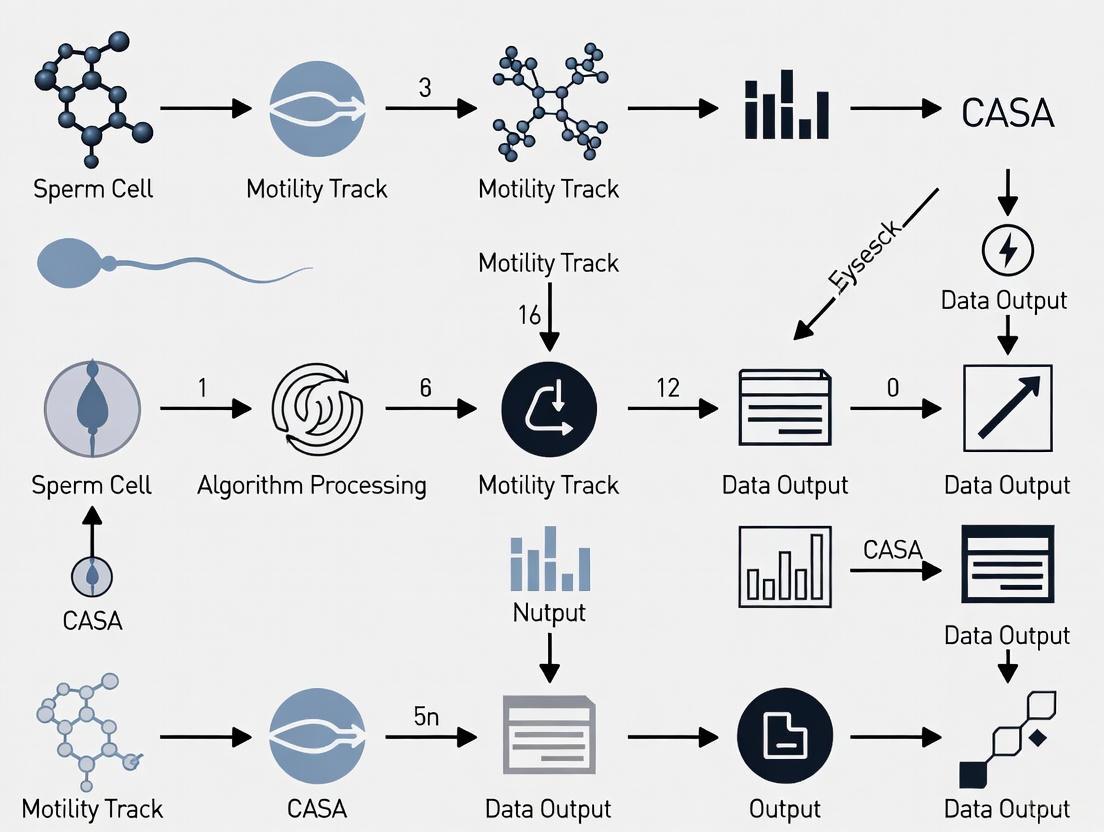
This article provides a comprehensive examination of Computer-Assisted Semen Analysis (CASA) systems, detailing their foundational principles, methodological applications, and evolving role in biomedical and clinical research.
Computer-Assisted Semen Analysis (CASA): Principles, Validation, and AI-Driven Innovations for Biomedical Research
Abstract
This article provides a comprehensive examination of Computer-Assisted Semen Analysis (CASA) systems, detailing their foundational principles, methodological applications, and evolving role in biomedical and clinical research. It explores the core technology behind automated sperm motility, concentration, and morphology assessment, emphasizing standardized protocols from the WHO 6th edition laboratory manual. The content addresses critical methodological considerations for assay optimization, common troubleshooting scenarios, and validation frameworks for ensuring data reliability. With a specific focus on the needs of researchers, scientists, and drug development professionals, it evaluates the comparative performance of CASA against manual analysis and highlights the transformative impact of artificial intelligence and machine learning in enhancing analytical precision, standardizing outcomes, and unlocking novel kinematic and DNA integrity biomarkers for advanced fertility diagnostics and toxicological screening.
CASA Fundamentals: From Optical Principles to WHO Standardization
Computer-Assisted Semen Analysis (CASA) systems represent a transformative technological advancement in the field of reproductive medicine, specifically designed to automate and objectively evaluate key sperm parameters. These systems leverage advanced image processing algorithms and artificial intelligence (AI) to overcome the limitations of traditional manual semen analysis, which is inherently prone to subjectivity, variability, and inconsistency [1]. The evolution of CASA technology over approximately 40 years has been marked by significant enhancements in imaging devices, computational power, and software algorithms, enabling more precise and reproducible assessments of sperm quality [1]. By providing automated, high-throughput evaluation of sperm motility, morphology, and concentration, CASA systems have become indispensable tools in major spermatology laboratories and clinical settings for diagnosing male infertility and guiding treatment strategies in assisted reproductive technologies (ART) [1] [2].
The integration of CASA within clinical workflows supports more accurate diagnosis and management of male infertility, ensuring effective patient counseling and treatment planning. Recent clinical validations demonstrate that AI-powered CASA systems operated by trained personnel show strong concordance with manual sperm analysis and can detect statistically significant improvements in sperm parameters following medical interventions, underscoring their clinical relevance [2]. This technical guide examines the core components, operational workflow, and experimental protocols of modern CASA systems, framed within the broader context of advancing reproductive medicine through technological innovation.
Core Components of a CASA System
A modern CASA system is an integrated platform comprising several sophisticated hardware and software components that work in concert to automate sperm analysis. Understanding these core elements is essential for researchers and clinicians to effectively utilize these systems and interpret their results.
Hardware Components
The hardware foundation of a CASA system is responsible for sample imaging and data acquisition, with specific configurations ensuring optimal capture of sperm characteristics.
Optical System: CASA systems utilize high-resolution microscopy with standardized objectives, typically 40x magnification with a numerical aperture of 0.65 for sufficient resolution to identify and track individual sperm cells [2]. This configuration provides an adequate field of view (typically 500 × 500 µm) while maintaining image clarity for detailed analysis.
Image Acquisition System: Modern systems employ digital cameras with high frame-rate capabilities (typically 60 frames per second or higher) to capture sperm movement with sufficient temporal resolution for accurate motility and kinematics assessment [2]. This frame rate enables the system to track rapid sperm movements and trajectory changes effectively.
Environmental Control: While not always explicitly detailed in methodology sections, maintaining consistent temperature during analysis is crucial for preserving sperm motility and obtaining accurate measurements. Many systems incorporate heated stages or environmental chambers to standardize analysis conditions.
Processing Unit: A robust computer system with adequate processing power and memory is essential for handling the substantial computational demands of real-time image analysis and AI algorithms, particularly when analyzing multiple samples or high sperm concentrations.
Software and Algorithmic Components
The software components represent the intelligence of the CASA system, where advanced algorithms transform raw image data into quantifiable sperm parameters.
Sperm Identification Algorithms: These algorithms distinguish sperm cells from other particles or debris in the sample based on size, shape, and optical characteristics. Contemporary systems employ thresholding techniques, discarding objects smaller than 4 µm or with non-sperm morphology to ensure accurate identification [2].
Tracking and Motility Analysis: Using consecutive video frames (typically ≥30 frames), the system tracks individual sperm trajectories, calculating movement parameters including velocity patterns and progression characteristics [2]. This enables classification into motility categories: progressive motile (PR), non-progressive motile (NP), and immotile (IM) based on defined velocity and straightness thresholds.
Morphological Analysis Algorithms: Advanced systems incorporate AI-based morphological assessment that evaluates sperm head, midpiece, and tail dimensions and shapes according to World Health Organization (WHO) criteria [1]. Machine learning models, particularly deep learning architectures, have significantly improved the accuracy and consistency of morphological classification.
Kinematic Parameter Calculation: The software computes detailed movement characteristics including Curvilinear Velocity (VCL), Straight-Line Velocity (VSL), Average Path Velocity (VAP), Amplitude of Lateral Head Displacement (ALH), Beat-Cross Frequency (BCF), Linearity (LIN), Straightness (STR), and Wobble (WOB) [2]. These parameters provide a comprehensive profile of sperm function beyond basic motility assessment.
AI and Machine Learning Integration: Modern CASA systems increasingly employ sophisticated AI techniques, from classical machine learning to deep learning models, to enhance analytical capabilities [1]. These approaches enable the detection of subtle predictive patterns not discernible by human observation and continue to evolve with advances in computer vision.
Table 1: Core CASA System Components and Their Functions
| Component Category | Specific Element | Function | Technical Specifications |
|---|---|---|---|
| Hardware | Optical System | Magnifies and resolves sperm cells for imaging | 40x objective, NA 0.65, 500×500 µm FOV [2] |
| Image Acquisition | Captures sequential images for tracking | ≥60 fps frame rate [2] | |
| Processing Unit | Executes analysis algorithms | Computer with sufficient RAM and CPU for video processing | |
| Software | Sperm Identification | Distinguishes sperm from debris | Size threshold (≥4 µm), morphological filters [2] |
| Tracking Algorithm | Follows individual sperm movement | ≥30 consecutive frames trajectory analysis [2] | |
| Motility Classification | Categorizes sperm movement patterns | PR: VAP ≥25 µm/s + STR ≥0.80 [2] | |
| Kinematic Calculator | Quantifies velocity and movement patterns | Computes VCL, VSL, VAP, ALH, BCF, LIN, STR, WOB [2] | |
| AI/ML Integration | Enhances analysis accuracy and detection | Deep learning for feature extraction from image data [1] |
Operational Workflow of CASA Systems
The operational workflow of a CASA system follows a standardized sequence from sample preparation to result generation, with each stage critically influencing the quality and reliability of the final analysis.
Sample Preparation and Loading
Proper sample preparation is fundamental to obtaining accurate CASA results. Semen samples are collected following standard protocols, typically after a recommended abstinence period of 2-5 days (median 3 days as used in validation studies) [2]. After collection, samples are allowed to liquefy completely at room temperature or in an incubator for approximately 30 minutes before analysis [2]. Once liquefied, a small aliquot (typically 5-10 µL) is loaded onto a standardized counting chamber, such as a Makler chamber, Leja chamber, or similar specialized slide that provides consistent depth for analysis. The loaded chamber is then placed on the microscope stage for imaging.
System Calibration and Quality Control
Regular calibration ensures measurement accuracy and consistency across analyses. Quality control protocols should be established according to manufacturer specifications and laboratory standards. For AI-based systems, calibration is typically performed periodically (e.g., for every 50 samples analyzed) [2]. Quality-control flags are often automatically raised for focus issues, illumination inconsistencies, or excessive debris density that might interfere with analysis [2]. These automated quality checks help maintain analytical integrity and alert operators to potential issues requiring intervention.
Image Acquisition and Processing
During operation, the system captures multiple digital video sequences from different microscopic fields to ensure a representative sperm population is analyzed. The number of fields assessed depends on sperm concentration and specific protocol requirements, but typically ranges from 3-8 fields to achieve adequate statistical representation. Each video sequence is processed frame-by-frame, with sperm cells identified and tracked across consecutive images. The system applies algorithms to distinguish sperm from non-sperm particles and artifacts, significantly reducing observational bias inherent in manual methods [1].
Data Analysis and Parameter Calculation
Following image processing, the system calculates standard sperm parameters:
- Concentration: Expressed in million/mL, calculated based on the number of sperm identified per unit volume.
- Motility Parameters: Percentage values for progressive motility (PR), non-progressive motility (NP), and immotility (IM) based on established kinematic thresholds [2].
- Kinematic Parameters: Quantitative measurements of movement characteristics including velocities (VCL, VSL, VAP), lateral head displacement (ALH), and oscillation patterns (BCF, LIN, STR, WOB) [2].
- Morphology Assessment: Percentage of normally formed spermatozoa, with advanced systems providing detailed classification of head, midpiece, and tail abnormalities.
The entire analysis process from completed liquefaction to result generation is efficient, with modern systems providing comprehensive results approximately one minute after sample loading [2].
Result Reporting and Interpretation
CASA systems generate detailed reports that typically include both quantitative data and graphical representations of sperm parameters. These reports compare results against WHO reference values where applicable and may flag abnormal parameters for clinical attention. The integration of AI facilitates not only automated reporting but also potential predictive insights regarding fertility potential or treatment outcomes [1].
Key Analytical Parameters and Outputs
CASA systems provide comprehensive quantitative and qualitative assessments of sperm quality, generating both standard clinical parameters and advanced kinematic measurements that offer deeper insights into sperm function.
Conventional Sperm Parameters
These parameters form the foundation of basic semen analysis and align with WHO standards for fertility assessment:
Sperm Concentration: Measured in million sperm per milliliter, with CASA providing automated counting that reduces human error. Validation studies demonstrate CASA's strong correlation with manual methods for concentration assessment [2].
Motility Characteristics: CASA systems classify sperm motility into three categories according to WHO guidelines:
- Progressive Motility (PR): Sperm moving actively, either linearly or in a large circle, regardless of speed. Systems typically define progressive motility using kinematic thresholds such as Velocity Average Path (VAP) ≥25 µm/s combined with Straightness (STR) ≥0.80 [2].
- Non-Progressive Motility (NP): All other patterns of motility with an absence of progression, with movements that may include flagellar force but without forward progression.
- Immotility (IM): Sperm showing no movement, with systems typically defining immotile as showing no displacement greater than 2 µm/s [2].
Morphology Assessment: The percentage of sperm with normal forms based on strict criteria assessing head, midpiece, and tail morphology. AI-enhanced CASA systems provide more consistent morphological classification compared to subjective manual assessment [1].
Kinematic Parameters
Beyond basic motility classification, CASA systems provide detailed kinematic analysis that offers insights into the quality and characteristics of sperm movement:
Velocity Parameters:
- Curvilinear Velocity (VCL): Measures the total distance traveled by the sperm head along its actual curved path per unit time, representing the instantaneous velocity of the sperm cell.
- Straight-Line Velocity (VSL): Calculates the straight-line distance between the beginning and end of the tracked path divided by the time taken, indicating the net progression velocity.
- Average Path Velocity (VAP): Determines the velocity along the sperm's average path, which is a smoothed representation of its actual trajectory.
Movement Pattern Parameters:
- Amplitude of Lateral Head Displacement (ALH): Quantifies the maximum width of the sperm head oscillation perpendicular to the average path direction, indicating the vigor of movement.
- Beat-Cross Frequency (BCF): Measures the frequency with which the sperm head crosses the average path, reflecting the rate of tail beating.
- Linearity (LIN): Calculated as (VSL/VCL)×100%, representing the straightness of the curvilinear path.
- Straightness (STR): Derived as (VSL/VAP)×100%, indicating the straightness of the average path.
- Wobble (WOB): Computed as (VAP/VCL)×100%, measuring the oscillation of the actual path about the average path.
Table 2: Key CASA Kinematic Parameters and Their Clinical Significance
| Parameter | Abbreviation | Definition | Clinical Significance | Typical Thresholds |
|---|---|---|---|---|
| Curvilinear Velocity | VCL | Total path distance per unit time | Reflects overall motility energy | - |
| Straight-Line Velocity | VSL | Net straight-line distance per unit time | Indicates effective forward progression | - |
| Average Path Velocity | VAP | Smoothed path distance per unit time | Represents overall progression efficiency | ≥25 µm/s for PR [2] |
| Amplitude of Lateral Head Displacement | ALH | Width of head oscillation | Correlates with movement vigor | - |
| Beat-Cross Frequency | BCF | Rate of sperm head crossing average path | Measures flagellar beating frequency | - |
| Linearity | LIN | (VSL/VCL)×100% | Quantifies path straightness | - |
| Straightness | STR | (VSL/VAP)×100% | Measures progression efficiency | ≥0.80 for PR [2] |
| Wobble | WOB | (VAP/VCL)×100% | Characterizes movement pattern stability | - |
Experimental Protocols and Validation Methodologies
Robust experimental protocols are essential for ensuring the reliability and reproducibility of CASA results in both clinical and research settings. The following methodologies are derived from recent validation studies.
Protocol for Clinical Validation of CASA Systems
A recent prospective study (2025) established a comprehensive protocol for validating AI-based CASA systems in clinical settings [2]:
Training and Competency Verification: Operators (e.g., urology residents) complete structured didactic modules on semen analysis principles (8 hours) followed by supervised hands-on sessions with the AI-CASA device (10 hours). Competency is verified through observed assessments with a minimum intra-class correlation coefficient (ICC) requirement of >0.85 compared to expert analysis [2].
Sample Analysis Protocol: Semen samples are collected after recommended abstinence periods (median 3 days in validation studies) and allowed to liquefy completely for 30 minutes before analysis [2]. Samples are then loaded into the system with calibration performed according to manufacturer specifications (e.g., every 50 samples).
Quality Control Measures: Automated flags monitor focus quality, illumination consistency, and debris density. System validation includes assessment of inter-operator variability (reported ICC = 0.89 for progressive motility in validation studies) and intra-operator repeatability (ICC = 0.92) [2].
Statistical Analysis and Powering: Studies should be appropriately powered for primary endpoints. Recent validation studies targeted sample sizes of 40 patients (allowing for 20% attrition from an initial n=32) to detect statistically significant differences in key parameters like progressive motility, assuming a mean increase of +6 percentage points with standard deviation of 12, two-sided α=0.05, and 80% power [2]. For multiple secondary endpoints, false discovery rate (FDR) control methods such as Benjamini-Hochberg procedure at q=0.05 are recommended.
Protocol for Research Applications
For research applications focusing on method development or advanced sperm analysis:
Sample Preparation Standardization: Implement strict protocols for collection vessels, transportation conditions, and processing timelines to minimize pre-analytical variables.
Multiple Field Analysis: Analyze sufficient microscopic fields (typically 5-8) to ensure representative sampling, with the number adjusted based on sperm concentration.
Kinematic Parameter Settings: Standardize kinematic thresholds for motility classification across all samples in a study to ensure consistency. Common thresholds include VAP ≥25 µm/s and STR ≥0.80 for progressive motility [2].
Temperature Control: Maintain consistent analysis temperature (typically 37°C) using heated stages to prevent temperature-related artifacts in motility assessment.
Data Export and Management: Implement standardized procedures for exporting raw data, calculated parameters, and image files for subsequent statistical analysis and archival.
Research Reagent Solutions and Essential Materials
The effective implementation of CASA technology requires specific reagents and materials to ensure accurate and reproducible results. The following table details key solutions and their applications in CASA workflows.
Table 3: Essential Research Reagents and Materials for CASA Analysis
| Category | Specific Product/Type | Function/Application | Example Systems |
|---|---|---|---|
| Commercial CASA Systems | LensHooke X1 PRO | AI-powered semen analyzer with autofocus optical technology | Bonraybio [2] |
| Sperm Class Analyzer (SCA) | Image processing-based CASA using phase-contrast microscopy | Microptics SL [2] | |
| SQA-V GOLD | Electro-optical technology for concentration and motility assessment | Medical Electronic Systems [2] | |
| IVOS and CEROS systems | Integrated microscope and camera for advanced image analysis | Hamilton-Thorne [2] | |
| Analysis Chambers | Makler Chamber | Standardized 10µm depth chamber for sperm counting and motility | Multiple systems [2] |
| Leja Chamber | Disposable chamber with consistent depth for standardized analysis | Multiple systems [2] | |
| Quality Control Materials | Calibration Suspensions | Verification of concentration and motility measurements | System-specific [2] |
| Control Slides | Validation of optical alignment and focus mechanisms | System-specific [2] | |
| Sample Collection | Sterile Collection Containers | Biological sample collection without spermatotoxic effects | Clinical standard [2] |
| Software Solutions | AI Algorithm Packages | Automated sperm identification, tracking, and classification | LensHooke X1 PRO [2] |
Advancements in AI Integration and Future Directions
The integration of artificial intelligence represents the most significant advancement in CASA technology, transforming traditional automated analysis into sophisticated diagnostic platforms with enhanced capabilities and predictive potential.
Machine Learning and Deep Learning Applications
Modern CASA systems increasingly employ a spectrum of AI techniques, from classical machine learning to advanced deep learning architectures [1]. Machine learning approaches, valued for their interpretability and efficiency with structured data, continue to play important roles in parameter analysis and classification tasks. However, deep learning methods have demonstrated remarkable capabilities in extracting intricate features directly from raw image and video data, enabling more accurate sperm identification, tracking, and morphological assessment without extensive pre-processing [1].
These AI-driven systems can identify subtle predictive patterns in sperm characteristics that may not be discernible through human observation, potentially correlating with clinical outcomes such as fertilization success in assisted reproductive technologies [1]. The emergence of extensive open datasets and big data analytics has further facilitated the development of more robust and generalizable models, though challenges remain regarding the requirement for large, high-quality annotated datasets for optimal training [1].
Current Limitations and Research Frontiers
Despite significant advancements, several challenges persist in the widespread implementation and validation of AI-enhanced CASA systems:
Data Standardization: Variations in sample preparation, imaging protocols, and analysis parameters across laboratories complicate the development of universally applicable AI models [1]. Establishing standardized protocols and reference materials is essential for improving model generalizability.
Clinical Validation: While CASA systems demonstrate strong analytical performance, rigorous clinical validation through controlled trials correlating CASA parameters with reproductive outcomes remains necessary [1] [2]. Future studies should establish clearer relationships between advanced CASA parameters and clinical endpoints such as natural conception, intrauterine insemination (IUI), or intracytoplasmic sperm injection (ICSI) success rates [2].
Algorithmic Transparency: The "black-box" nature of some complex AI algorithms presents challenges for clinical interpretation and adoption [1]. Developing explainable AI approaches that provide insights into analytical decision-making could enhance clinical utility and trust.
Integration with Multi-Omics Data: Future CASA systems may integrate traditional morphological and kinematic analysis with molecular data, including DNA integrity assessments, proteomic profiles, and metabolic parameters, to provide more comprehensive fertility evaluations [1].
The continued evolution of CASA technology, particularly through AI integration, promises to further enhance the objectivity, efficiency, and predictive value of semen analysis, ultimately contributing to more personalized and effective approaches to male fertility assessment and treatment [1]. As these systems become more sophisticated and validated, they are positioned to become indispensable tools in both clinical andrology laboratories and research settings, driving advancements in reproductive medicine through quantitative, data-driven analysis.
Historical Evolution and Technological Milestones in Semen Analysis Automation
The historical evolution of semen analysis automation represents a paradigm shift in andrology, transitioning from subjective microscopic assessments to sophisticated computational analyses. This transformation has been largely driven by the development of Computer-Assisted Semen Analysis (CASA) systems, which leverage advanced imaging and machine learning to overcome the limitations of manual methods [1]. The integration of artificial intelligence (AI) has further revolutionized this field, enabling unprecedented levels of objectivity, reproducibility, and analytical depth in evaluating sperm quality parameters [1]. This whitepaper examines the technological milestones in semen analysis automation, focusing on the principles underlying modern CASA systems and their critical role in both clinical diagnostics and pharmaceutical development.
The Evolution from Manual Analysis to Automated CASA
Era of Manual Semen Analysis
The foundation of male fertility assessment was established through manual semen analysis, guided by successive editions of the World Health Organization (WHO) laboratory manuals published between 1980 and 2010 [1]. These guidelines established baseline values for key semen parameters including concentration, motility, and morphology, creating a standardized framework for fertility prediction. However, this manual approach suffered from significant limitations:
- Subjectivity and Variability: Visual assessment by technicians introduced substantial inter- and intra-laboratory inconsistencies
- Labor-Intensive Processes: Manual counting and classification procedures were time-consuming and limited laboratory throughput
- Parameter Limitations: Routine analysis could not adequately assess functional parameters like DNA integrity or subtle kinematic patterns
Advent of Computer-Assisted Semen Analysis (CASA)
The introduction of CASA systems approximately four decades ago marked a revolutionary advancement in semen analysis [1]. Early CASA technology focused primarily on automating sperm identification and motility analysis through basic image processing algorithms. Over 40 years of continuous development, these systems have evolved significantly through enhancements in three critical domains:
- Imaging Devices: Higher resolution cameras with improved frame rates enabled better capture of rapid sperm movements
- Computational Power: Increased processing capabilities allowed for more complex analyses in real-time
- Software Algorithms: Sophisticated pattern recognition and tracking algorithms improved accuracy of sperm parameter quantification [1]
This technological evolution has transformed CASA from a supplementary tool to an essential technology in major spermatology laboratories worldwide, though application breadth varies significantly between facilities [1].
Table 1: Historical Progression of Semen Analysis Technologies
| Era | Primary Methodology | Key Parameters Measured | Limitations |
|---|---|---|---|
| Pre-1980s | Subjective Microscopy | Concentration, Basic Motility | High variability, qualitative assessment |
| 1980s-1990s | Early CASA Systems | Motility Patterns, Concentration | Limited imaging resolution, basic algorithms |
| 2000s-2010s | Advanced CASA | Kinematic Parameters, Basic Morphology | Improved tracking, standardized protocols |
| 2010s-Present | AI-Enhanced CASA | Motility, Morphology, DNA Integrity | Predictive modeling, deep learning analysis [1] |
Technological Foundations of Modern CASA Systems
Core Analytical Modules
Modern CASA systems integrate multiple specialized modules to provide comprehensive sperm assessment, with each module targeting specific sperm quality parameters through distinct computational approaches.
Sperm Motility and Tracking Analysis
The quantification of sperm movement represents one of the most technically sophisticated components of CASA systems. Contemporary platforms employ multi-object tracking algorithms to monitor individual sperm trajectories across sequential video frames [3]. The simulation models identify four distinct swimming modalities that must be detected and classified:
- Linear Mean Motility: Progressive movement characterized by straight-line trajectories
- Circular Motility: Non-progressive movement following curved or circular paths
- Hyperactive Motility: Complex, high-energy movement patterns with rapid direction changes
- Immotile States: Stationary sperm requiring differentiation from very slow movement [3]
Advanced tracking algorithms including Nearest Neighbor (NN), Global Nearest Neighbor (GNN), Probabilistic Data Association Filter (PDAF), and Joint Probabilistic Data Association Filter (JPDAF) have been implemented to maintain consistent tracking despite occlusions and high cell density [3]. Performance validation employs standardized metrics including Multi-Object Tracking Precision (MOTP) and Multi-Object Tracking Accuracy (MOTA) to quantify algorithmic effectiveness [3].
Morphological Analysis
Morphological assessment has evolved from simple dimensional measurements to sophisticated shape-based classifications. AI-enhanced systems utilize deep learning architectures to analyze sperm head, midpiece, and tail structures with precision exceeding human capabilities [1]. The computational approach involves:
- Image Segmentation: Separating individual sperm cells from background and other cellular elements
- Feature Extraction: Quantifying morphological descriptors including head ellipticity, acrosomal area, and vacuolation
- Classification Algorithms: Categorizing sperm based on strict WHO criteria or laboratory-specific standards
DNA Integrity Assessment
Advanced CASA systems now incorporate indirect and direct measures of DNA fragmentation, integrating fluorescence-based assessments with traditional brightfield analysis. This capability represents a significant advancement as DNA integrity correlates strongly with reproductive outcomes yet remains undetectable through conventional microscopy [1].
Simulation-Based Algorithm Validation
A critical innovation in CASA development is the use of physically accurate simulation environments for algorithm validation [3]. These systems generate synthetic semen images with precisely controllable parameters, enabling quantitative performance assessment against known ground truth data. The simulation framework incorporates:
- Sperm Cell Modeling: Physically accurate representation of sperm head and flagellum structures
- Movement Pattern Simulation: Mathematical models replicating the four primary swimming modalities
- Image Quality Parameters: Variable noise levels, focus conditions, and cell densities to test algorithmic robustness [3]
This approach allows researchers to systematically evaluate segmentation, localization, and tracking algorithms under controlled conditions before clinical deployment [3].
CASA System Workflow
The AI Revolution in CASA
Machine Learning and Deep Learning Integration
The integration of artificial intelligence represents the most transformative development in semen analysis automation. Contemporary systems employ a spectrum of machine learning approaches, each with distinct advantages for specific analytical tasks [1]:
- Classical Machine Learning: Algorithms including Support Vector Machines (SVM), Random Forests (RF), and Logistic Regression provide interpretable models for structured data analysis, particularly valuable for correlating environmental factors and lifestyle influences with sperm parameters [1]
- Deep Learning Architectures: Convolutional Neural Networks (CNNs) and more complex deep learning models excel at processing raw image and video data, automatically extracting relevant features without manual engineering [1]
This hybrid approach enables comprehensive analysis combining established statistical methods with state-of-the-art pattern recognition capabilities.
Big Data and Advanced Analytics
The emergence of extensive, open-access datasets has been instrumental in advancing AI applications in CASA systems [1]. These curated datasets enable:
- Model Training: Development of robust algorithms requiring large, diverse training examples
- Validation Studies: Independent verification of algorithmic performance across different population groups
- Predictive Modeling: Identification of subtle patterns correlating sperm parameters with clinical outcomes
The data-driven approach facilitates creation of individualized treatment protocols, shifting the paradigm from traditional methodologies to algorithmically enhanced precision medicine in reproductive care [1].
Table 2: Performance Metrics of Sperm Tracking Algorithms (Based on Simulation Studies)
| Tracking Algorithm | MOTA Score | MOTP Score | Computational Complexity | Optimal Use Case |
|---|---|---|---|---|
| Nearest Neighbor (NN) | 0.78 | 0.85 | Low | Low density samples |
| Global Nearest Neighbor (GNN) | 0.85 | 0.88 | Medium | Moderate density, clear paths |
| Probabilistic Data Association (PDAF) | 0.82 | 0.87 | Medium-High | High density, occlusions |
| Joint Probabilistic Data Association (JPDAF) | 0.89 | 0.91 | High | Complex environments, crowded fields [3] |
Experimental Protocols and Methodologies
Simulation-Based Validation Framework
Robust validation of CASA algorithms requires rigorous experimental protocols employing simulated environments with known ground truth. The following methodology enables quantitative performance assessment:
Image Simulation Protocol:
- Parameter Definition: Establish sperm density, motility type distribution, and noise levels matching target clinical scenarios
- Cell Modeling: Generate synthetic sperm images incorporating accurate morphological representations of head and flagellum structures [3]
- Movement Trajectory Generation: Implement mathematical models for the four swimming modalities (linear, circular, hyperactive, immotile) with physiologically plausible kinematic parameters [3]
- Image Sequence Synthesis: Render video sequences with appropriate temporal resolution and signal-to-noise characteristics
Algorithm Testing Protocol:
- Segmentation Assessment: Apply candidate algorithms to simulated images and compare extracted sperm locations against known coordinates using Precision, Recall, and Optimal Subpattern Assignment (OSPA) metrics [3]
- Tracking Evaluation: Implement multi-object tracking on simulated sequences and calculate MOTP and MOTA scores against ground truth trajectories [3]
- Robustness Testing: Repeat analyses across varying image quality conditions and sample characteristics to determine operational boundaries
Clinical Validation Methodology
While simulation provides essential algorithmic validation, clinical correlation remains imperative:
- Sample Collection: Obtain semen samples following standardized protocols with appropriate ethical oversight
- Reference Standard Establishment: Perform parallel manual assessments by experienced andrologists following WHO guidelines
- Algorithm Application: Process samples through CASA systems with candidate algorithms
- Statistical Correlation: Calculate concordance statistics between automated and manual results for key parameters
- Outcome Correlation: Where possible, correlate CASA parameters with clinical outcomes including fertilization rates and pregnancy success
The Scientist's Toolkit: Research Reagent Solutions
Table 3: Essential Research Reagents for CASA Algorithm Development and Validation
| Reagent/Resource | Function | Application in CASA Research |
|---|---|---|
| Simulated Semen Image Database | Algorithm validation with known ground truth | Provides controlled environment for testing segmentation, localization, and tracking algorithms without biological variability [3] |
| MATLAB Simulation Codes | Implementation of sperm movement models | Enables customization of swimming modes and image parameters for specific research questions [3] |
| Open CASA Datasets | Training and validation of machine learning models | Facilitates development of robust AI algorithms through diverse, annotated data [1] |
| Fluorescent Stains (DNA Integrity) | Assessment of sperm DNA fragmentation | Correlates traditional motility parameters with genetic quality metrics [1] |
| Standard Reference Materials | Quality control and inter-laboratory standardization | Ensures consistency and reproducibility of CASA measurements across platforms [1] |
Future Directions and Challenges
Despite significant advancements, several challenges persist in the full integration of AI-driven CASA systems into clinical practice:
Technical and Validation Challenges
- Data Dependency: Deep learning models require extensive, high-quality annotated datasets for training, which remain limited in reproductive medicine [1]
- Generalizability: Algorithm performance must be validated across diverse patient populations and laboratory settings to ensure broad applicability [1]
- Interpretability: The "black-box" nature of complex AI algorithms presents challenges for clinical adoption where diagnostic transparency is valued [1]
Integration and Regulatory Considerations
- Standardization: Development of consensus protocols for CASA system validation and operation is essential for widespread adoption
- Regulatory Frameworks: Establishing clear pathways for regulatory approval of AI-based diagnostic systems in reproductive medicine
- Data Security: Implementation of robust frameworks for protecting sensitive reproductive health information [1]
The future evolution of semen analysis automation will likely focus on enhanced multi-parameter assessment, integration with other diagnostic modalities, and the development of predictive models for personalized treatment optimization. As these technologies mature, they hold the potential to fundamentally transform male fertility assessment and management, enabling more precise diagnostics and targeted therapeutic interventions.
Computer-Assisted Semen Analysis (CASA) systems represent a technological evolution in the field of andrology, designed to provide objective, quantitative, and high-throughput analysis of sperm parameters. The core functionality of these systems rests upon a pipeline of sophisticated image processing techniques that transform raw optical data into quantifiable metrics of sperm quality, including concentration, motility, and morphology [1]. This technical guide details the fundamental principles of the three pivotal stages in CASA: image acquisition, image segmentation, and sperm cell tracking. By framing these technical components within the broader context of CASA research, this paper aims to provide researchers and drug development professionals with a clear understanding of the system's operational bedrock, its current capabilities, and the experimental methodologies used for its validation.
Image Acquisition in CASA Systems
The initial and critical step in CASA is the acquisition of high-quality digital imagery of sperm samples. This process involves capturing a time-lapse video sequence of a semen specimen loaded onto a microscope slide, typically under 200x magnification [3]. The quality of this acquisition directly dictates the performance of all subsequent analysis algorithms.
The core optical principle involves illuminating the sample, often using phase-contrast microscopy to enhance the contrast of transparent sperm cells against the background. A digital camera then captures this optical information at a defined frame rate (frames per second, fps). This temporal resolution is crucial for accurately capturing the rapid and complex movement patterns of motile sperm. The resulting video is a sequence of 2D grayscale or color images, where each sperm cell must be distinguishable from the background and from other cells for reliable analysis [4]. The challenges in this phase include managing varying levels of optical noise, distinguishing sperm from impurities or debris, and ensuring consistent illumination across the field of view.
Image Segmentation and Sperm Localization
Image segmentation is the process of partitioning a digital image into multiple segments to simplify its representation and enable the localization of individual sperm cells. The goal is to detect and identify every sperm present in each frame of the video sequence.
Algorithmic Approaches and Performance Metrics
Several segmentation and localization algorithms have been developed and tested, often evaluated using simulated semen images where the ground truth is known and controllable [3] [5]. These algorithms are compared using standard metrics such as precision (the proportion of detected sperm that are actual sperm) and recall (the proportion of actual sperm that are correctly detected) [3].
Table 1: Comparison of Sperm Detection and Segmentation Methods
| Method Category | Specific Algorithm/Model | Key Principle | Reported Performance |
|---|---|---|---|
| Traditional Image Processing | Threshold Segmentation [4] | Separates foreground from background based on pixel intensity. | Less accurate; struggles to distinguish sperm from impurities [4]. |
| Deep Learning (Feature Point Detection) | Improved SuperPoint [4] | Uses a deep learning network to detect sperm targets as feature points, removing the descriptor branch for efficiency. | Detection accuracy: 92%, Speed: 65 fps [4]. |
| Deep Learning (Semantic Segmentation) | U-Net [6] | A convolutional network for biomedical image segmentation that outputs a pixel-wise classification. | Effective for segmentation but can have longer processing times [4]. |
| Deep Learning (Object Detection) | YOLOv3, Faster R-CNN [4] [6] | Single-shot and two-stage detectors that localize and classify objects in an image. | Prone to miss detection of small, dense sperm targets [4]. |
Experimental Protocol for Validating Segmentation Algorithms
A robust method for validating segmentation algorithms involves the use of simulated semen images, as described by Choi et al. [3]. The protocol is as follows:
- Image Simulation: Generate a dataset of synthetic semen images using a publicly available simulator (e.g., the software from Choi et al. [3]). The simulator should model the sperm cell's head and flagellum and incorporate different swimming modes (linear, circular, hyperactive). Parameters such as cell density, noise levels, and image contrast should be controllable.
- Algorithm Application: Run the segmentation algorithms under test on the simulated image dataset.
- Performance Quantification: Compare the algorithm's output against the known ground truth of the simulation. Calculate metrics like precision, recall, and the Optimal Subpattern Assignment (OSPA) metric to evaluate segmentation and localization accuracy [3].
- Real-Image Validation: Finally, validate the observations from the simulation by applying the algorithms to a set of real human semen sample images to ensure performance translates to clinical data [3].
Segmentation Workflow
Sperm Cell Tracking and Motility Analysis
Following segmentation and localization across consecutive frames, multi-object tracking algorithms are employed to link the positions of the same sperm cell over time, thereby generating motion trajectories.
Tracking Algorithms and Motility Classification
The tracking process associates sperm detections in frame t with corresponding detections in frame t+1. Common algorithms used in CASA research include:
- Nearest Neighbor (NN): Links a detection in the current frame to the closest detection in the next frame.
- Global Nearest Neighbor (GNN): An extension of NN that finds the optimal global assignment for all detections across frames.
- Probabilistic Data Association Filter (PDAF) & Joint Probabilistic Data Association Filter (JPDAF): More sophisticated algorithms that handle uncertainty and clutter in dense environments [3].
Another effective method is the SORT (Simple Online and Realtime Tracking) algorithm, which combines motion estimation and data association to track multiple sperm targets efficiently [4]. The resulting trajectories are then analyzed to determine sperm motility. A sperm's survival (motility) is often judged by calculating the range of motion of its trajectory and comparing it to a set threshold [4]. Based on the trajectory patterns, sperm motility is typically classified into categories such as:
- Linear Mean: Progressive movement in a relatively straight line.
- Circular: Movement along a circular path.
- Hyperactive: High-amplitude, non-progressive thrashing movement.
- Immotile: Non-motile or dead sperm [3] [5].
Experimental Protocol for Tracking Algorithm Assessment
The performance of tracking algorithms can be objectively assessed using simulated semen videos, which provide known ground-truth trajectories [3].
- Generate Tracking Scenarios: Use simulation software to create semen video sequences with known sperm trajectories and defined motility types.
- Apply Tracking Algorithms: Process the simulated videos with different tracking algorithms (e.g., NN, GNN, PDAF, JPDAF, SORT).
- Evaluate Performance: Calculate standardized multi-object tracking metrics:
- MOTA (Multi-Object Tracking Accuracy): A composite measure that combines false positives, false negatives, and identity switches.
- MOTP (Multi-Object Tracking Precision): Measures the average alignment between the tracked and ground-truth bounding boxes or positions [3].
- Analyze Results: Compare the MOTA and MOTP scores for each algorithm to determine which performs best under the specific test conditions.
Table 2: Key Metrics for Sperm Tracking Performance Evaluation
| Metric | Full Name | What It Measures | Interpretation |
|---|---|---|---|
| MOTA | Multi-Object Tracking Accuracy | Overall tracking accuracy, factoring in false positives, missed detections, and identity switches. | Higher values indicate better overall tracking performance. |
| MOTP | Multi-Object Tracking Precision | Average precision of the object positions, i.e., the distance between tracked and ground-truth positions. | Higher values indicate more precise localization during tracking. |
| Precision | Precision | The proportion of tracked objects that are real sperm. | Measures the reliability of the tracker's outputs. |
| Recall | Recall | The proportion of real sperm that are successfully tracked. | Measures the tracker's ability to find all relevant objects. |
Cell Tracking Workflow
Advancements in CASA research are supported by a suite of software tools, datasets, and experimental reagents that enable the development and validation of algorithms.
Table 3: Key Research Reagents and Resources for CASA Development
| Resource Name | Type | Primary Function in Research | Source/Availability |
|---|---|---|---|
| Sperm Image Simulator [3] | Software | Generates life-like synthetic semen images and videos with controllable parameters (noise, density, motility) for objective algorithm testing. | Publicly available MATLAB code [3]. |
| SVIA Dataset [6] | Dataset | A large-scale public dataset containing microscopic videos and images with over 278,000 annotated objects. Used for training and benchmarking detection, segmentation, and tracking models. | Available for research purposes. |
| Visem Dataset [6] | Dataset | A multi-modal dataset containing 85 semen videos and associated metrics, useful for studying correlations between sperm analysis and other factors. | Publicly available. |
| HuSHeM & MHSMA Datasets [6] | Dataset | Smaller datasets focused on sperm head morphology, used for developing and testing classification algorithms for normal and abnormal sperm. | Publicly available. |
| Improved SuperPoint Network [4] | Deep Learning Model | A modified feature point detection network optimized for accurate and efficient sperm target detection in images. | Methodology described in research literature; requires implementation. |
| SORT Tracker [4] | Algorithm | A simple, online, real-time multi-target tracking algorithm used to generate sperm motion trajectories from detection data. | Publicly available algorithm. |
The objective evaluation of sperm motility is fundamental for assessing male fertility potential, and Computer-Aided Sperm Analysis (CASA) systems have revolutionized this process by providing quantitative, high-throughput kinematic data. Unlike subjective manual assessments, CASA systems utilize computer vision to track individual sperm cells in a calibrated microscope-camera system, calculating a suite of kinematic parameters from the recorded x and y coordinates of each spermatozoon over time [7] [1]. These parameters offer a detailed, multivariate description of sperm movement patterns, overcoming the limitations of traditional, descriptive motility categories [8]. The management and interpretation of data from CASA are crucial, as these systems can evaluate hundreds of individual sperm cells per sample, generating between 8 and 12 kinematic parameters for each cell and creating large, information-rich datasets [9] [7].
The biological significance of these kinematics is profound. They are not merely descriptors of motion but are functionally linked to sperm's ability to navigate the female reproductive tract, penetrate cervical mucus, and ultimately fertilize the oocyte [10] [11]. Furthermore, specific kinematic patterns, such as hyperactivation, are essential for successful zona pellucida penetration [10]. The analysis of these parameters is thus integral to modern andrology labs, providing insights that extend beyond basic motility percentages to predict fertility outcomes in procedures like in vitro fertilization (IVF) and intrauterine insemination (IUI) [10] [1]. This technical guide details the definitions, biological relevance, and methodological protocols for the core sperm kinematic parameters, framed within the principles of CASA systems research.
Core Sperm Kinematic Parameters
The movement of a sperm cell is described by its trajectory and the oscillation of its head. CASA systems deconstruct this complex movement into several quantitative kinematic parameters. The most critical of these are defined below, and their interrelationships are illustrated in Figure 1.
Definitions and Mathematical Foundations
VCL (Curvilinear Velocity): This parameter measures the actual path velocity of the sperm head along its true, often curved, trajectory. It is calculated as the sum of the point-to-point distances along the sperm's path divided by the total time. VCL reflects the kinetic energy of the sperm and is a key indicator of flagellar beat activity. High VCL is a characteristic of hyperactivated motility, which is necessary for oocyte penetration [10] [11] [12].
VSL (Straight-Line Velocity): This measures the straight-line distance between the beginning and end of the tracked path divided by the total time. VSL represents the net progression of the sperm cell toward its target. A high VSL is typically associated with efficient, forward-progressive movement through viscous media like cervical mucus [10] [11].
VAP (Average Path Velocity): VAP is the velocity along a computed average path, which smooths the raw trajectory of the sperm. This path is often generated by a rolling average algorithm. VAP serves as a practical estimate of the sperm's progressive velocity and is frequently used by CASA systems to classify sperm as progressively motile (e.g., when VAP > 25 µm/s) [10] [11].
LIN (Linearity): A ratio that expresses the straightness of the curvilinear path, calculated as (VSL/VCL) × 100%. LIN values range from 0% (perfectly circular motion) to 100% (perfectly straight motion). It indicates the efficiency of forward progression [10] [12].
STR (Straightness): This parameter measures the straightness of the average path, calculated as (VSL/VAP) × 100%. STR provides insight into the consistency of the movement direction along the smoothed path [10] [12].
ALH (Amplitude of Lateral Head Displacement): This is the average value of the extreme side-to-side movement of the sperm head, perpendicular to its average direction of movement. ALH is an indicator of the vigor and force of the flagellar beat. Like VCL, significantly higher ALH is a hallmark of hyperactivated motility [10] [11].
BCF (Beat-Cross Frequency): This estimates the average frequency at which the sperm's head crosses the average path in either direction. It is measured in Hertz (Hz) and reflects the rate of the flagellar beat [10].
Table 1: Definition and Biological Significance of Core Sperm Kinematic Parameters
| Parameter | Full Name | Definition | Unit | Biological Significance |
|---|---|---|---|---|
| VCL | Curvilinear Velocity | Velocity along the actual curved trajectory | µm/s | Indicates kinetic energy and flagellar activity; high in hyperactivation. |
| VSL | Straight-Line Velocity | Net velocity from start to end point | µm/s | Reflects effective forward progression. |
| VAP | Average Path Velocity | Velocity along a computed average path | µm/s | Used for classifying progressive motility. |
| LIN | Linearity | Linearity of the track (VSL/VCL) | % | Measures efficiency of forward movement. |
| STR | Straightness | Straightness of the average path (VSL/VAP) | % | Indicates consistency of movement direction. |
| ALH | Amplitude of Lateral Head Displacement | Mean width of head oscillations | µm | Reflects force and vigor of flagellar beating. |
| BCF | Beat-Cross Frequency | Rate of the sperm head crossing its average path | Hz | Estimates the frequency of flagellar beats. |
Figure 1: Logical Relationships Between Core Kinematic Parameters. This diagram illustrates how raw sperm tracking data is processed to calculate primary velocity parameters (VCL, VSL, VAP), which are then used to derive ratio parameters (LIN, STR). ALH and BCF are calculated directly from head oscillation patterns.
Quantitative Reference Data and Clinical Correlations
Understanding the typical ranges and clinical implications of kinematic parameters is essential for data interpretation. Reference values can vary significantly between species, individuals, and laboratory protocols. The following tables consolidate quantitative data from recent research to provide a benchmark for analysis.
Table 2: Reference Ranges for Sperm Kinematic Parameters in Human Studies
| Parameter | Reported Ranges in Fertile/Subfertile Men | Clinical Correlations and Trends |
|---|---|---|
| VCL (µm/s) | Wide variation; values >65 µm/s associated with better IVF outcomes [11]. | Declines with age and longer abstinence; associated with hyperactivation and fertilization potential [10] [11]. |
| VSL (µm/s) | Subject to variability; lower values linked to DNA damage [10]. | Found to increase over time in a large cohort study, suggesting a possible compensatory mechanism for declining motility [11]. |
| VAP (µm/s) | Used with STR to define progressive motility (e.g., >25 µm/s) [10]. | Similar trend to VSL, with observed increases over recent years in longitudinal studies [11]. |
| LIN (%) | Values ~40-80%; higher linearity may indicate better mucus penetration. | Lower LIN and STR values are significantly associated with pathological sperm DNA fragmentation (DFI ≥26%) [10]. |
| STR (%) | Values ~80% used to classify progressive motility; lower in DNA-damaged sperm [10]. | A key predictor in multivariate models for DNA damage; lower STR indicates less straight movement [10]. |
| ALH (µm) | Higher values characteristic of hyperactivation. | Lower ALH reported in tobacco- and heavy metal-exposed patients [10]. |
| BCF (Hz) | Variable; associated with sperm vitality and DNA integrity [10]. | Significantly associated with pathologically damaged sperm DNA in univariate and multivariate analyses [10]. |
Table 3: Kinematic Parameters in Animal Model Research (Brahman Bulls)
| Subpopulation | Kinematic Profile | Description | Prevalence by Sanitary Status* |
|---|---|---|---|
| SP1 | Lowest values in all parameters. | "Slow and nonlinear" subpopulation. | Not specified. |
| SP2 | High VAP and VCL; low VSL, LIN, and STR. | "Fast, but with less straight and linear" movement. | Not specified. |
| SP3 | High LIN, STR, WOB; low velocities. | "Linear and slow" subpopulation. | Highest in infection-free bulls (7.6%). |
| SP4 | Highest LIN, STR, VSL, VAP, and BCF. | "Fast, straight, and linear" with high tail beat. | Highest in BLV+/BHV-1+ (9.6%) and BLV−/BHV-1+ (18.8%) bulls. |
| Note | *BLV: Bovine Leukosis Virus; BHV-1: Bovine Herpesvirus-1. SP4, the most robust subpopulation, was more prevalent in virally-infected bulls, suggesting a complex relationship between health and kinematics [12]. |
Experimental Protocols for CASA Kinematic Analysis
Standardized protocols are critical for obtaining reliable, reproducible kinematic data. The following section outlines a generalized yet detailed methodological workflow for conducting CASA, based on standardized procedures reported in the literature.
Sample Preparation and Staining
- Semen Collection and Liquefaction: Semen samples are obtained via masturbation after a recommended period of sexual abstinence (typically 2-7 days). The sample is collected in a sterile container and allowed to liquefy at 37°C for at least 30 minutes [10] [11].
- Initial Assessment: Basic semen parameters, including volume and pH, are recorded. A preliminary assessment of concentration and motility can be performed to guide dilution.
- Sample Dilution: If necessary, the sample is diluted with a suitable buffer (e.g., phosphate-buffered saline - PBS) to achieve an optimal concentration for CASA analysis, typically aiming for 50-100 million sperm/mL to prevent cell overlap and tracking errors.
- Loading the Chamber: A small, fixed volume (e.g., 5-10 µL) of the well-mixed sample is carefully loaded into a pre-warmed counting chamber with a standardized depth (e.g., 20 µm Leja chamber) [10] [11]. Avoid introducing air bubbles.
CASA Instrument Setup and Data Acquisition
- System Calibration: Prior to analysis, calibrate the CASA system using a calibration slide to ensure accurate measurement of distances (µm). The pixel-to-micron ratio must be defined.
- Parameter Settings: Configure the software settings according to the manufacturer's guidelines and experimental needs. Key settings for the IVOS II CASA System (Hamilton Thorne) as an example include [10]:
- Frames Acquired: 30-60 frames.
- Frame Rate: 60 Hz.
- Minimum Contrast: 80.
- Minimum Cell Size (pixels): 3.
- Static Cell Size / Intensity: 6 pixels / 160.
- Velocity Cutoffs: Define thresholds for static, slow, and progressive motility. For example, spermatozoa with VAP > 25 µm/s and STR > 80% are often classified as progressively motile [10].
- Data Recording: Place the loaded chamber on the pre-warmed microscope stage and initiate the automated analysis. The system should capture a minimum of 200 spermatozoa from multiple, non-overlapping fields (e.g., 10-20 fields) to ensure a representative sample [11].
- Quality Control: Visually inspect a subset of tracks to ensure the software is correctly identifying and tracking sperm cells. Adjust settings if necessary.
Data Analysis and Subpopulation Identification
- Raw Data Export: Export the raw kinematic data for each individually tracked sperm cell. This dataset is the basis for all subsequent statistical analyses.
- Data Cleaning: Filter out artifacts and obviously erroneous tracks (e.g., tracks that are too short or originate from non-sperm particles).
- Descriptive Statistics: Calculate mean, median, and standard deviation for each kinematic parameter for the entire sample.
- Multivariate Analysis and Subpopulation Identification:
- Dimensionality Reduction: Perform Principal Component Analysis (PCA) on the correlation matrix of all kinematic parameters. This reduces the multidimensional data into fewer, uncorrelated principal components (PCs) that explain most of the variance [12].
- Clustering Analysis: Apply clustering algorithms, such as K-means or model-based clustering, to the principal component scores to identify distinct sperm subpopulations with defined motility characteristics [7] [8] [12].
- Subpopulation Characterization: Statistically compare the kinematic profiles of the identified clusters and calculate the percentage of spermatozoa belonging to each subpopulation per sample.
Figure 2: CASA Kinematic Analysis Workflow. The process begins with sample preparation, proceeds through standardized CASA data acquisition, followed by data processing, and culminates in multivariate analysis to identify kinematic subpopulations.
The Scientist's Toolkit: Essential Research Reagents and Materials
A successful CASA-based research program relies on consistent and high-quality materials. The following table details key reagents and equipment essential for conducting kinematic analyses.
Table 4: Essential Reagents and Materials for CASA Research
| Item | Specification / Example | Primary Function in Experiment |
|---|---|---|
| Counting Chamber | Disposable, with standardized depth (e.g., Leja 20 µm). | Provides a consistent and defined depth for visualization, preventing vertical stacking of sperm and ensuring accurate 2D tracking. |
| Buffer Solution | Phosphate-Buffered Saline (PBS), HEPES-buffered media. | Used for sample dilution to achieve optimal concentration for CASA analysis; maintains pH and osmotic balance. |
| Vitality Stains | Eosin-Nigrosin (e.g., VitalScreen), SYBR-14/PI kit. | Differentiates live (membrane-intact) from dead sperm, allowing for correlation of kinematics with cell viability [10]. |
| DNA Fragmentation Kits | Sperm Chromatin Dispersion test (e.g., halosperm). | Quantifies sperm DNA damage (DFI), enabling studies linking kinematic parameters to DNA integrity [10]. |
| CASA System | Commercial (e.g., Hamilton Thorne IVOS II) or open-source (CASA-BGM ImageJ plugin). | The core platform for automated sperm tracking and kinematic parameter calculation [13] [1]. |
| Flow Cytometer | Bench-top flow cytometer with appropriate lasers and filters. | Validates CASA findings and assesses additional sperm attributes like mitochondrial membrane potential and viability [13]. |
The World Health Organization (WHO) Laboratory Manual for the Examination and Processing of Human Semen, now in its sixth edition (2021), represents the global standard for semen analysis procedures, providing critical updates for both clinical and research settings [14]. This manual serves as an essential reference for standardizing procedures and maintaining quality assurance across andrology laboratories worldwide [15]. For researchers developing and validating Computer-Assisted Semen Analysis (CASA) systems, adherence to these guidelines ensures that algorithmic assessments of sperm concentration, motility, and morphology align with internationally recognized methodologies, enabling consistent and comparable research outcomes [3].
The evolution from the 5th to the 6th Edition introduces significant methodological refinements and conceptual shifts that directly impact CASA system development. A fundamental change is the manual's explicit move away from relying solely on reference thresholds for diagnosis, suggesting instead the use of "decision limits" that better reflect clinical context and multifactorial infertility assessments [15]. This paradigm shift necessitates that CASA systems evolve beyond simple classification based on population percentiles and incorporate more nuanced, multi-parameter analysis. Furthermore, the 6th Edition incorporates data from 3,589 fertile men across 13 countries and 6 continents, expanding the geographical representation compared to previous editions and providing a more robust global benchmark for semen parameter analysis [15].
Key Methodological Updates in the 6th Edition and CASA Implementation
Core Parameter Assessment Updates
The WHO 6th Edition introduces specific methodological adjustments that directly influence algorithm development in CASA systems:
Sperm Motility Analysis: The manual re-adopts the distinction of progressive motility into two categories: grade A (fast progressive) and grade B (slow progressive), reverting from the three-category system used in the 5th Edition [15]. This refinement requires CASA tracking algorithms to implement more precise velocity thresholds for accurate classification.
Morphological Assessment: The manual continues to emphasize strict morphological criteria (Kruger's) but provides updated methodological details that affect image analysis algorithms, particularly regarding sperm head, midpiece, and tail abnormalities [16].
Novel Parameters: The 6th Edition provides detailed protocols for assessing sperm DNA fragmentation (SDF) and seminal oxidative stress (OS), introducing standardized methodologies for emerging biomarkers of sperm function [15]. This creates new domains for CASA system innovation beyond conventional parameters.
Table 1: Comparison of Key Aspects Between WHO 5th and 6th Editions
| Parameter | WHO 5th Edition (2010) | WHO 6th Edition (2021) |
|---|---|---|
| Sample Size | 1,953 men from 8 countries [15] | 3,589 men from 13 countries [15] |
| Motility Categorization | Three categories | Four categories (reintroduction of A/B progressive distinction) [15] |
| Reference Framework | Reference values based on 5th percentiles [15] | Decision limits concept introduced; 5th percentiles as one interpretive tool [15] |
| DNA Fragmentation | Limited coverage | Detailed protocols included [15] |
| Oxidative Stress Testing | Limited coverage | Detailed protocols included [15] |
Quality Assurance and Standardization
The 6th Edition strengthens quality assurance protocols, which is particularly relevant for validating CASA systems across multiple research sites. The manual provides enhanced guidance on quality control procedures, including the use of standardized materials, regular calibration, and participation in external quality assessment schemes [14] [16]. For CASA developers, this underscores the necessity of implementing robust calibration protocols and reference materials to ensure consistent performance across different instruments and laboratories. The manual explicitly recognizes that proper standardization is essential for the comparability of results from different laboratories – a critical consideration for multi-center research studies utilizing CASA technologies [14].
Experimental Validation Frameworks for CASA Systems
Algorithm Validation Using Simulation Environments
A cutting-edge approach for validating CASA algorithms involves using simulated semen images where ground truth parameters are precisely known and controllable. Recent research has developed sophisticated simulation models that generate life-like sperm images with defined characteristics, enabling objective performance assessment of segmentation, localization, and tracking algorithms [3].
These simulation frameworks model human sperm cells exhibiting four distinct swimming modes:
- Linear mean swimming: Characterized by progressive forward movement
- Circular swimming: Exhibiting circular trajectory patterns
- Hyperactive swimming: Displaying high-energy, non-linear movement
- Immotile (or dead): Showing minimal to no movement [3]
The simulation software generates synthetic semen images by creating separate models for the sperm head and flagellum, then combining them using point spread functions to mimic microscope imaging characteristics [3]. This approach allows researchers to systematically test their algorithms under varying conditions of noise, cell density, and sample quality that would be difficult to control consistently with real clinical samples.
Performance Metrics for CASA Algorithm Validation
When evaluating CASA algorithms against the WHO guidelines, researchers should employ multiple quantitative metrics to assess different aspects of performance:
Segmentation and Localization Accuracy:
- Precision and Recall: Standard metrics for object detection accuracy
- Optimal Subpattern Assignment (OSPA): A more sophisticated metric for multi-object tracking performance [3]
Multi-Object Tracking Performance:
- Multi-Object Tracking Precision (MOTP): Measures localization accuracy of correctly tracked objects
- Multi-Object Tracking Accuracy (MOTA): Combines false positives, false negatives, and identity switches [3]
Clinical Parameter Agreement:
- Intraclass Correlation Coefficient (ICC): Measures consistency between CASA results and manual assessment
- Cohen's Kappa (κ): Assesses agreement in categorical classifications (e.g., oligozoospermia) [17]
Table 2: Essential Research Reagents and Materials for CASA Validation
| Reagent/Material | Specification/Function | Research Application |
|---|---|---|
| Calibrated Counting Chambers | Leja 4-chamber slides (20µm depth) [17] | Standardized volume and depth for concentration and motility analysis |
| Staining Solutions | Diff-Quik kit [17] | Standardized morphology assessment according to WHO criteria |
| Quality Control Materials | UK NEQAS protocols [17] | External quality assurance and inter-laboratory standardization |
| Simulation Software | MATLAB-based sperm simulator [3] | Algorithm validation with known ground truth parameters |
| Stage Warmers | Portable MiniTherm stage warmer [17] | Maintaining constant 37°C for motility assessment |
CASA Performance Assessment and Clinical Correlation
Current Performance Across Systems
Recent comparative studies reveal varying performance levels among commercial CASA systems when benchmarked against manual assessment according to WHO standards:
Sperm Concentration: LensHooke X1 Pro demonstrated the best performance (ICC: 0.842), followed by Hamilton-Thorne CEROS II (ICC: 0.723), and SQA-V Gold (ICC: 0.631) [17].
Sperm Motility: CEROS II showed moderate agreement with manual assessment (ICC: 0.634), while LensHooke X1 Pro (ICC: 0.417) and SQA-V Gold (ICC: 0.451) demonstrated poor agreement [17].
Sperm Morphology: Current CASA systems show limited agreement with manual morphology assessment, with LensHooke X1 Pro (ICC: 0.160) and SQA-V Gold (ICC: 0.261) both demonstrating poor consistency with trained andrologist evaluation [17].
These findings highlight the ongoing challenges in algorithm development, particularly for complex assessment domains like morphology that require sophisticated image analysis and pattern recognition capabilities.
Impact on Clinical Decision-Making
The analytical performance of CASA systems directly influences clinical treatment pathways, particularly the selection between conventional IVF and intracytoplasmic sperm injection (ICSI). Studies indicate that when treatment decisions are based on CASS-assessed morphology versus manual assessment, significant differences in ICSI allocation emerge:
- Manual morphology assessment typically results in approximately 50% of cases being allocated to ICSI based on teratozoospermia criteria [17].
- CASA-based morphology assessment with LensHooke X1 Pro reduced ICSI allocation to approximately 31%, while SQA-V Gold further reduced it to 15% [17].
This discrepancy underscores the critical importance of rigorous validation against WHO standards before implementing CASA systems in clinical decision-making workflows.
Future Directions and Research Opportunities
The integration of artificial intelligence (AI), particularly deep learning (DL) approaches, presents promising avenues for enhancing CASA system alignment with WHO 6th Edition standards. AI-driven CASA systems can potentially overcome current limitations through:
Enhanced Morphology Classification: DL algorithms can be trained on extensive annotated datasets to recognize subtle morphological features that correlate with manual assessment by experienced andrologists [1].
Multi-Parameter Predictive Modeling: Machine learning approaches can integrate multiple sperm parameters (motility, morphology, DNA fragmentation) to develop composite scores that better predict fertility outcomes than individual parameters alone [1].
Reduced Inter-System Variability: Standardized AI models deployed across different CASA platforms could minimize the current significant variability between systems, enhancing result comparability across research sites [17].
However, several challenges remain for widespread implementation, including the need for large, high-quality annotated datasets, model generalizability across diverse populations, and the "black-box" nature of some complex AI algorithms [1]. Future research should focus on developing explainable AI approaches that provide both assessment results and interpretable reasoning aligned with WHO methodological principles.
The WHO Laboratory Manual 6th Edition provides an essential framework for standardizing CASA system development and validation, with updated methodologies spanning basic semen parameters to advanced functional assays. While current CASA technologies demonstrate variable performance against manual standards – with reasonable concordance for concentration assessment but significant limitations in morphology classification – emerging approaches incorporating simulated validation environments and artificial intelligence offer promising pathways for enhanced compliance with WHO guidelines. For researchers in the field, adherence to these standardized protocols ensures that CASA system development remains grounded in clinically relevant methodologies, ultimately supporting the generation of reproducible, comparable data across the scientific community and facilitating the translation of technological innovations into improved male fertility assessment.
Key Terminology and Reference Values in Clinical and Research Contexts
Computer-Assisted Semen Analysis (CASA) systems represent a technological evolution in the quantitative assessment of sperm characteristics, moving beyond the subjective limitations of manual analysis. These systems utilize digital imaging, sophisticated tracking algorithms, and automated morphometry to provide objective, reproducible data on sperm concentration, motility, and morphology [18] [19]. The core value proposition of CASA technology lies in its ability to generate highly precise kinematic parameters that are difficult or impossible to quantify through visual estimation alone, thereby offering researchers and clinicians a more detailed profile of sperm function [3] [11]. This technical guide establishes the key terminology, reference values, and methodological protocols essential for rigorous CASA-based research within the broader thesis context of standardizing and advancing andrological assessment.
The evolution of CASA has been paralleled by successive editions of the World Health Organization (WHO) laboratory manual, which serves as the international standard for semen examination. Earlier versions like WHO4 (1999) acknowledged CASA's potential for high precision in concentration and kinematics measurement but expressed concerns about standardization, while WHO5 (2010) expanded on CASA sections and endorsed specific kinematic terminology [18]. The most recent WHO6 (2021) manual further incorporates CASA for evaluating complex functional aspects like hyperactivation, which is associated with fertilization potential and live birth outcomes [18]. Despite this progressive recognition, a critical analysis of the statistical foundation for reference populations highlights ongoing challenges in establishing universally transferable reference intervals due to methodological heterogeneity across studies [20]. This underscores the necessity for strict procedural standardization in CASA applications.
Core Terminology and Reference Values
Fundamental Semen Parameters
The quantitative assessment of semen relies on a set of fundamental parameters that serve as the primary indicators of male reproductive potential. These parameters have established reference limits based on distributions from fertile populations, as defined by the WHO manual [21]. It is crucial to note that these reference values represent the 5th percentiles of fertile men, not absolute thresholds for infertility.
Table 1: Fundamental Semen Parameters and WHO Reference Limits
| Parameter | Definition | WHO Lower Reference Limit (6th Edition) |
|---|---|---|
| Semen Volume | Total volume of ejaculate | ≥ 1.5 mL [21] |
| Sperm Concentration | Number of sperm per milliliter of ejaculate | ≥ 15 million/mL [21] |
| Total Sperm Count | Total number of sperm in the entire ejaculate | ≥ 39 million [21] |
| Total Motility | Percentage of all moving sperm | ≥ 42% [21] |
| Progressive Motility | Percentage of sperm moving actively, either linearly or in a large circle | ≥ 30% [21] |
| Sperm Morphology | Percentage of sperm with normal shape (head, midpiece, tail) | ≥ 4% [21] |
| pH | Acidity or alkalinity of semen | ≥ 7.2 [21] |
Advanced CASA Kinematic Parameters
CASA systems provide a deeper level of analysis by quantifying the precise movement patterns of individual spermatozoa. These kinematic parameters are critical for research into sperm function and the identification of specific motility phenotypes, such as hyperactivation, which is crucial for fertilization [18] [11].
Table 2: Key CASA-Derived Sperm Kinematic Parameters
| Parameter | Acronym | Definition | Research Significance |
|---|---|---|---|
| Curvilinear Velocity | VCL (μm/s) | Time-average velocity of the sperm head along its actual curvilinear path [11]. | High values are characteristic of hyperactivated motility [18]. |
| Straight-Line Velocity | VSL (μm/s) | Velocity measured in a straight line from the beginning to the end of the track [11]. | Indicates progressive movement; predictive of fertilization in IVF [11]. |
| Average Path Velocity | VAP (μm/s) | Velocity of the sperm head along its average path [11]. | Used to classify progressive motility. |
| Linearity | LIN (%) | The ratio VSL/VCL, expressing the straightness of the curvilinear path (VSL/VCL) [11]. | Lower values are associated with hyperactivation. |
| Straightness | STR (%) | The ratio VSL/VAP, expressing the straightness of the average path [11]. | Aids in characterizing movement efficiency. |
| Amplitude of Lateral Head Displacement | ALH (μm) | Magnitude of side-to-side movement of the sperm head [11]. | Significantly increased in hyperactive sperm. |
| Beat-Cross Frequency | BCF (Hz) | Frequency with which the sperm head crosses the average path [11]. | Can help predict sperm DNA damage [11]. |
| Wobble | WOB (%) | The ratio VAP/VCL, describing the oscillation of the actual path about the average path [11]. | Describes the tightness of the head movement. |
Statistical Foundations of Reference Values
The reference values provided in WHO manuals are derived from a meta-population of fertile men from multiple countries and studies. However, a critical statistical evaluation of the WHO 2021 dataset (n=3,589) has raised important concerns regarding its foundation. The analysis, based on International Federation of Clinical Chemistry (IFCC) recommendations, found that most prerequisite conditions for producing robust, common reference intervals were not met by the constituent studies [20]. Key shortcomings included insufficient information on sample size justification, participant recruitment rates, outlier handling, and the control of confounding factors like ethnicity [20]. Furthermore, verification tests revealed that the distribution of semen examination results from individual studies was not fully transferable across the meta-population, suggesting that aggregated data may not originate from a statistically homogeneous population [20]. This highlights a significant challenge in the field: the reliance on reference values that may be influenced by both real biological differences and methodological variations across research laboratories.
Experimental Protocols and Methodological Standardization
Standardized CASA Workflow for Human Semen Analysis
A rigorously standardized protocol is essential to minimize technical variability and ensure the reliability and reproducibility of CASA data. The following workflow, applicable to systems from manufacturers like Hamilton-Thorne and Microptic S.L., outlines the critical steps from sample collection to data analysis.
Title: Standardized CASA Analysis Workflow
Protocol Details:
Sample Collection and Preparation: Semen samples are collected by masturbation after a recommended abstinence period of 2-7 days [11]. The sample must be allowed to liquefy completely at 37°C for a minimum of 30 minutes [21]. Once liquefied, the sample is mixed gently to ensure homogeneity before analysis. Vigorous shaking should be avoided to prevent iatrogenic sperm damage.
Instrument Calibration and Settings: Prior to analysis, the CASA system must be calibrated according to the manufacturer's specifications. This includes verifying the camera settings (exposure, gain), defining the correct magnification, and ensuring the counting chamber depth is correctly set in the software (typically 20 µm for chambers like Leja) [22]. Consistent configuration of kinetic parameter thresholds (e.g., VAP cut-off for progressive motility) across all analyses in a study is paramount.
Loading and Analysis: A small aliquot (typically 5-7 µL) of the well-mixed sample is carefully loaded into a pre-warmed disposable counting chamber [11]. The loaded chamber is placed on a microscope stage maintained at 37°C. For analysis, a minimum of 200 spermatozoa should be tracked across no fewer than 10 different microscopic fields to ensure a representative sample and reduce sampling error [11]. The analysis should be performed promptly after loading to avoid desiccation.
Data Quality Control: Implementation of a robust quality control (QC) program is non-negotiable. This includes regular analysis of standardized control beads (e.g., latex Accu-Beads) to validate concentration measurements [19]. Furthermore, participation in external quality assurance (EQA) schemes and continuous training, potentially supported by e-learning tools, has been shown to significantly reduce inter-technician variability [23].
Protocol for Validating CASA Algorithms via Simulation
The development and testing of novel CASA algorithms for segmentation, localization, and tracking require robust validation against a known ground truth. Using simulated semen images is a powerful approach for this purpose, as all parameters are user-defined and controllable [3].
Title: CASA Algorithm Validation with Simulations
Protocol Details:
Sperm Cell Modeling: The simulation begins by generating a 2D model of a sperm cell. The head is modeled as an oval structure, consistent with WHO descriptions of normal morphology. The flagellum (tail) is generated as a thin cylinder, defined by a series of points (typically M=200) that create its curve [3].
Swimming Mode Integration: To create life-like movement, the simulation incorporates different kinematic models representing observed sperm swimming patterns. These include linear mean movement (progressive), circular motion, hyperactive movement (characterized by high VCL and ALH), and immotile cells [3]. These models are informed by fluid dynamics and non-linear equations of motion.
Image Synthesis and Validation: Individual sperm models are integrated into a multi-cell image. The simulation software applies optical effects like a point spread function and allows for the introduction of controlled levels of noise and debris to mimic real-world imaging conditions [3]. The output is a synthetic video sequence where the position and kinematic parameters of every sperm are known.
Performance Metric Calculation: The CASA algorithm under test is run on the synthetic video. Its output for parameters like sperm position (segmentation/localization) and tracked paths is compared directly to the ground truth data from the simulation. Standard metrics such as Multi-Object Tracking Precision (MOTP) and Accuracy (MOTA) are used for tracking evaluation, while precision and recall metrics assess segmentation performance [3]. This provides an objective and quantitative assessment of the algorithm's capabilities and limitations.
Essential Research Tools and Reagent Solutions
The reliability of CASA data is highly dependent on the consistent use of standardized materials and reagents. The following table details key components of the CASA research toolkit.
Table 3: Essential Research Reagent Solutions and Materials for CASA
| Item | Function/Application | Research Consideration |
|---|---|---|
| Standardized Counting Chambers (e.g., Leja) | Provides a consistent depth (typically 20 µm) for imaging and analysis. | Chamber type and depth significantly influence motility and kinematics results; must be kept constant within a study [22]. |
| Quality Control Beads (e.g., Accu-Beads) | Latex beads of known concentration and size for validating instrument accuracy and training personnel. | Essential for daily quality control of sperm concentration measurements and inter-laboratory standardization [19]. |
| Phase Contrast Microscope | Enables high-contrast imaging of unstained, motile spermatozoa. | Positive phase contrast (producing white sperm on grey background) improves distinction from debris compared to negative contrast [18]. |
| Temperature-Controlled Stage | Maintains samples at 37°C during analysis. | Critical for preserving native sperm motility and obtaining physiologically relevant kinetic data. |
| Fluorescent DNA Stains (e.g., Hoechst) | Used with fluorescent-capable CASA to accurately distinguish sperm heads from debris for concentration and motility. | WHO5 suggested this method improves accuracy, though it is omitted in WHO6 [18]. |
| Sperm Immobilization Reagents | Used for precise morphology analysis by CASA. | Allows for static imaging required for accurate morphometric measurements of the head and tail. |
| E-Learning Training Modules | Interactive software for standardized training of technicians in CASA operation and analysis. | Proven to significantly reduce inter- and intra-individual variation in CASA results [23]. |
Computer-Assisted Semen Analysis has irrevocably transformed the landscape of andrological research by introducing unparalleled objectivity and quantitative depth to sperm assessment. The technology's ability to precisely measure a vast array of kinematic and morphometric parameters provides researchers with a powerful toolkit to investigate sperm function beyond basic concentration and motility. However, this power is contingent upon rigorous methodological standardization, as detailed in the protocols and workflows of this guide. The ongoing critical evaluation of reference populations and the development of advanced validation techniques, such as image simulation, underscore the evolving and self-correcting nature of this scientific field. As CASA technology continues to integrate artificial intelligence and more sophisticated functional modules, its role in both basic reproductive research and clinical diagnostics is poised for significant expansion, provided that the foundational principles of standardization and validation remain paramount.
CASA Methodologies: From Standardized Protocols to Advanced Sperm Function Assays
Computer-Assisted Semen Analysis (CASA) systems represent a significant advancement in reproductive medicine and research, providing objective, quantitative, and high-throughput analysis of sperm parameters. These systems leverage digital imaging, computer algorithms, and automated tracking to eliminate the subjectivity and inconsistency inherent in manual semen analysis [24] [25]. The core principle of CASA technology is to transform visual sperm characteristics into robust, reproducible kinematic and morphometric data, thereby enhancing diagnostic accuracy for male infertility and providing reliable endpoints for pharmaceutical development and toxicological studies [3] [17]. This guide details the standardized protocols essential for generating consistent and reliable CASA data, framed within the broader research objective of validating and improving these automated systems.
Materials and Equipment
The Scientist's Toolkit: Essential Research Reagent Solutions
The following reagents and materials are critical for preparing and analyzing semen samples using CASA systems. Consistency in materials is vital for experimental reproducibility.
Table 1: Essential Materials and Reagents for CASA Analysis
| Item Name | Function/Explanation |
|---|---|
| Specialized Counting Chamber (e.g., Spermtrack, Leja 4 chamber slides) | Standardized slides with a defined depth (e.g., 20 µm) for consistent and reliable assessment of sperm concentration and motility [26]. |
| Phase-Contrast Microscope | Essential for visualizing unstained sperm cells with high clarity, typically equipped with a 10x to 20x objective for motility and a 100x oil-immersion objective for morphology [27] [26]. |
| Digital Camera (e.g., Basler acA780-75 gc) | High-speed camera capable of capturing 50-60 frames per second (fps) to accurately track rapid sperm movement and kinematics [26]. |
| Pre-Stained Slides (e.g., SpermBlue, Diff-Quik) | For sperm morphology assessment, enabling clear differentiation of the sperm head, midpiece, and tail [27] [17]. |
| Vitality Stains (e.g., BrightVit) | To distinguish between live and dead sperm cells, often used as a counter-test for motility assessments [27]. |
| Stage Warmer (e.g., Portable MiniTherm) | Maintains samples at a constant physiological temperature (37°C) during analysis, which is critical for preserving native sperm motility [17]. |
| Extender Solution | A buffer used to dilute semen samples to a standardized concentration (e.g., 6-20 million sperm/mL) for optimal CASA analysis and to prevent cell clumping [26] [25]. |
CASA System Configuration
Modern CASA systems integrate the microscope, camera, and computer with specialized software. Researchers must calibrate the system before use. This involves calibrating the microscope objectives using a micrometer and, if applicable, calibrating a motorized stage to ensure accurate coordinate mapping [27]. The software requires careful configuration of cell identification parameters (e.g., head size area of 28–70 μm²) and kinematic thresholds for classifying sperm motility and velocity [26].
Experimental Protocol
Sample Collection and Preparation
Procedure:
- Patient Preparation: Instruct the donor to abstain from ejaculation for 2-5 days prior to sample collection to ensure optimal sperm count and motility [25].
- Sample Collection: Collect the semen sample via masturbation into a clean, sterile container. Lubricants or condoms must be avoided as they can be toxic to sperm and interfere with analysis [25].
- Liquefaction: Allow the semen sample to liquefy at room temperature for 20-30 minutes. This is a critical step as coagulated semen cannot be analyzed accurately.
- Sample Preparation:
- Gently mix the liquefied sample to ensure homogeneity.
- If the sperm concentration is very high, dilute an aliquot with a pre-warmed extender or physiological buffer to a concentration within the optimal range for the CASA system (e.g., 6-20 million/mL) [26] [25]. The dilution ratio must be recorded for back-calculation of original concentration.
- For morphology or vitality analysis, prepare smears on slides using the appropriate stains (e.g., SpermBlue, Diff-Quik, BrightVit) as per manufacturer protocols [27].
Diagram 1: CASA Sample Preparation Workflow
Sample Loading and Instrument Setup
Procedure:
- Temperature Control: Pre-warm the counting chamber (e.g., Spermtrack, Leja) on a stage warmer set to 37°C [17].
- Loading the Sample:
- Pipette a defined volume of the prepared sample (typically 3-10 µL) onto the loading area of the chamber [26] [17]. The volume must be consistent to avoid variations in chamber depth.
- Carefully place the coverslip, if applicable, to ensure even distribution and prevent bubble formation, which can obscure the field of view.
- Microscope and Software Setup:
- Place the loaded chamber on the pre-warmed microscope stage (37°C).
- Using the 10x or 20x phase-contrast objective, locate a field with well-distributed sperm.
- In the CASA software, select the appropriate configuration for the analysis (e.g., human sperm, motility, and concentration).
- Adjust the camera settings (e.g., gain, brightness) to ensure clear cell detection without saturation. The software's "Intelligent Filter" can be activated to help distinguish sperm from debris [27].
Data Acquisition and Analysis
Procedure:
- Field Capture:
- The software will automatically capture video from multiple random fields (a minimum of 8 fields is recommended) to ensure a representative sample [26].
- Each field is typically captured as a short video (e.g., 1-second duration at 50 fps), generating a sequence of images for tracking sperm trajectories [26].
- Sperm Tracking and Classification:
- The CASA software algorithm identifies sperm heads in each frame and links these positions across frames to reconstruct the track for each sperm cell [3].
- Based on the kinematic parameters, sperm are automatically classified. A common classification is:
- Data Validation and Curation:
- After automated analysis, the operator must review the results. This includes manually adding any sperm that were not detected by the system and deleting any non-sperm particles or debris incorrectly identified as sperm [27].
- Report Generation: The software compiles data from all analyzed fields (typically from a minimum of 1000 sperm) and generates a comprehensive report [26] [25].
Diagram 2: CASA Data Acquisition and Analysis Workflow
Data Interpretation and Key Parameters
CASA systems generate a wide array of quantitative parameters. The following table summarizes the core parameters and their significance in sperm functionality research.
Table 2: Key Quantitative CASA Parameters for Research Analysis
| Parameter Category | Specific Parameter | Definition & Research Significance |
|---|---|---|
| Motility & Concentration | Total Motility (TMot) | Percentage of all motile sperm (progressive + non-progressive). A key indicator of sample quality. |
| Progressive Motility (PMot) | Percentage of sperm moving actively, either linearly or in a large circle. Crucial for predicting fertilization potential. | |
| Sperm Concentration | Number of sperm per milliliter of semen. A fundamental measure for fertility assessment [25]. | |
| Kinematic Parameters | Curvilinear Velocity (VCL) | Time-average velocity of the sperm head along its actual curved path. Reflects sperm vigor [26] [25]. |
| Straight-Line Velocity (VSL) | Time-average velocity of the sperm head along a straight line from its first to its last position. Indicates progressive efficiency [25]. | |
| Average Path Velocity (VAP) | Time-average velocity of the sperm head along its spatially averaged path. Used for motility classification [26]. | |
| Linearity (LIN) | LIN = (VSL/VCL) * 100%. Measures the straightness of the swim path [25]. | |
| Amplitude of Lateral Head Displacement (ALH) | The mean width of sperm head oscillation. Correlates with sperm force and vitality [25]. | |
| Beat-Cross Frequency (BCF) | The frequency at which the sperm tail crosses the average path. Indicates flagellar beating rate [25]. | |
| Morphology | Normal Forms | Percentage of sperm with ideal oval head and long, regular tail. Assessed using stained smears [27] [25]. |
Validation and Quality Control in CASA Research
A core research challenge with CASA systems is ensuring consistency and agreement with the manual method, which is often considered the historical gold standard [17]. Recent studies highlight that while CASA systems like the Hamilton-Thorne CEROS II and LensHooke X1 Pro show moderate to good agreement with manual methods for concentration (ICC: 0.723-0.842), their performance in morphology assessment is often poor (ICC: 0.160-0.261) [17]. This underscores the need for rigorous internal quality control (IQC).
IQC Protocols:
- QC Beads: Use suspensions of latex beads of known size and concentration to regularly verify the accuracy of the system's cell detection and concentration measurements [27].
- Micrometer Calibration: Periodically use a stage micrometer to verify the calibration of all microscope objectives, ensuring accurate spatial measurements [27].
- Inter-system and Inter-laboratory Comparison: For multi-center trials, standardized protocols and materials are essential to minimize variability introduced by different CASA instruments and algorithms [17].
Adherence to the detailed procedural guidelines for sample preparation, loading, and analysis outlined in this document is fundamental for obtaining reliable and reproducible data from CASA systems. As the technology evolves, ongoing research and validation efforts are critical. Future work must focus on refining algorithms, particularly for morphology assessment, and establishing universal standards to fully realize the potential of CASA in providing objective, high-throughput analysis for clinical diagnostics and pharmaceutical research [3] [17].
Computer-assisted semen analysis (CASA) systems have revolutionized andrology research by providing objective, quantitative assessment of sperm parameters. However, the reliability and reproducibility of CASA-derived data are highly dependent on appropriate configuration of core instrument settings. This technical guide examines three critical configuration elements—frame rate, cell detection thresholds, and chamber type—within the broader context of standardizing CASA methodologies for research and drug development. We synthesize evidence from recent studies and provide detailed protocols to optimize these parameters, ensuring accurate quantification of sperm concentration, motility, and kinematic profiles essential for robust experimental outcomes.
Computer-assisted semen analysis systems represent a significant technological advancement in reproductive biology, designed to provide objective, high-throughput analysis of sperm parameters that were traditionally assessed through subjective manual methods [19]. Modern CASA systems utilize sophisticated image processing algorithms to track individual sperm cells across consecutive video frames, enabling quantification of key parameters including sperm concentration, motility (total and progressive), and detailed kinematic measurements such as curvilinear velocity (VCL), straight-line velocity (VSL), and amplitude of lateral head displacement (ALH) [3] [11]. The fundamental principle underlying CASA technology involves capturing a series of digital images of sperm cells and applying segmentation, localization, and tracking algorithms to analyze their movement and concentration characteristics [3].
The analytical validity of CASA systems hinges on proper configuration of several interdependent instrument settings. In research environments, particularly in pharmaceutical development where precise quantification of sperm parameters is essential for evaluating compound effects, standardization of these settings is paramount. Despite technological advancements, studies indicate that CASA results can show increased variability in samples with extreme concentrations (<15 million/mL or >60 million/mL) or in the presence of non-sperm cells and debris [19]. This technical guide addresses these challenges by providing evidence-based protocols for configuring frame rate, cell detection thresholds, and chamber type—three critical parameters that collectively determine measurement accuracy, reproducibility, and cross-study comparability.
Frame Rate Optimization for Kinematic Analysis
Technical Principles and Research Implications
Frame rate, defined as the number of consecutive images captured per second (frames per second, fps), represents a fundamental parameter in CASA configuration that directly influences the accuracy of sperm kinematic measurements. The frame rate determines the temporal resolution of sperm tracking, affecting how precisely the system can capture the rapid, complex movement patterns characteristic of sperm motility. Different swimming modes—linear progressive, circular, hyperactivated, and immotile—exhibit distinct kinematic signatures that require specific frame rates for accurate characterization [3].
From a research perspective, insufficient frame rates lead to undersampling of sperm trajectories, resulting in inaccurate velocity measurements and misclassification of motility patterns. This is particularly critical when studying hyperactivated motility, which exhibits high-frequency, asymmetric flagellar beating that requires higher frame rates for proper resolution. Conversely, excessively high frame rates may generate unnecessarily large datasets without meaningful improvement in analytical precision, potentially overwhelming computational resources in high-throughput screening environments.
Experimental Evidence and Configuration Guidelines
Research indicates that optimal frame rate configuration depends on the specific kinematic parameters of interest and the expected velocity ranges within experimental samples. A comparative analysis of CASA systems found that frame rates between 30-60 Hz are typically sufficient for standard human semen analysis, while studies investigating hyperactivation may require higher frame rates (≥60 Hz) to accurately capture rapid head movements and track complex trajectories [3].
Table 1: Recommended Frame Rate Configurations for Specific Research Applications
| Research Focus | Recommended Frame Rate | Technical Rationale | Key Measured Parameters |
|---|---|---|---|
| Basic motility screening | 30 Hz | Adequate for classifying progressive vs. non-progressive motility | Total motility %, Progressive motility % |
| Standard kinematic analysis | 50-60 Hz | Balances resolution with computational efficiency | VCL, VSL, VAP, LIN, STR |
| Hyperactivation studies | 60-90 Hz | Captures rapid head oscillations and complex paths | ALH, BCF, VCL, WOB |
| Pharmacokinetic studies | 50 Hz | Optimal for detecting velocity changes post-treatment | VCL, VSL, VAP, MOT |
Abbreviations: VCL (curvilinear velocity), VSL (straight-line velocity), VAP (average path velocity), LIN (linearity), STR (straightness), ALH (amplitude of lateral head displacement), BCF (beat-cross frequency), WOB (wobble).
Experimental protocol for frame rate validation:
- Prepare semen samples with varying motility characteristics (low, medium, high motility)
- Analyze identical samples using progressively increasing frame rates (25, 30, 50, 60, 90 Hz)
- Compare kinematic parameters at each frame rate setting
- Identify the point where additional increases in frame rate do not significantly alter velocity measurements (≤5% change in VCL/VSL values)
- Establish this as the optimal frame rate for subsequent experiments with similar sample types
Cell Detection Thresholds and Algorithm Configuration
Fundamental Threshold Parameters
Cell detection thresholds constitute the algorithmic core of CASA systems, determining how the software distinguishes sperm cells from background artifacts and non-sperm elements. These thresholds directly impact the accuracy of sperm concentration counts and motility classifications. The "auto-multithresh" algorithm referenced in astronomical CASA applications provides a useful conceptual framework for understanding threshold-based detection systems, though its implementation in semen analysis follows different specific parameters [28]. The algorithm operates by identifying regions that exceed either a signal-to-noise limit or a sidelobe level, then applies pruning and expansion processes to refine the detection [28].
In semen analysis, the primary threshold parameters include:
- Noise threshold: Sets the minimum signal level for initial sperm detection
- Size threshold: Defines the acceptable pixel area range for sperm head identification
- Intensity threshold: Determines the minimum contrast level for cell recognition
- Motility threshold: Established as the path velocity exceeding 5 μm/s for classifying cells as motile [11]
- Progressive motility threshold: Typically defined as path velocities >25 μm/s with linearity >80% [11]
Research-Optimized Threshold Configuration
Table 2: Standardized Cell Detection Thresholds for Research-Grade CASA Analysis
| Parameter | Standard Value | Adjustment Range | Influence on Measurements |
|---|---|---|---|
| Minimum cell size | 5 pixels | 4-7 pixels | Smaller values increase debris misclassification |
| Maximum cell size | 75 pixels | 70-80 pixels | Larger values may miss small sperm heads |
| Intensity threshold | 60% background | 55-65% | Lower values increase sensitivity to low-contrast cells |
| Static size factor | 0.8 | 0.7-0.9 | Affects static cell identification |
| Static intensity factor | 0.8 | 0.7-0.9 | Impacts static cell detection sensitivity |
| Motility threshold | 5 μm/s | 5-10 μm/s | Higher values may underestimate total motility |
| Progressive motility | 25 μm/s + 80% LIN | 20-30 μm/s + 75-85% LIN | Determines progressive motility classification |
Configuration protocol for detection thresholds:
- Initial calibration: Use quality control beads at known concentrations to establish baseline detection settings
- Threshold optimization: Analyze samples with varying characteristics (normal, oligozoospermic, asthenozoospermic) while systematically adjusting threshold parameters
- Validation against manual counts: Compare CASA-derived concentration and motility values with standardized manual assessments using hemocytometers and visual motility estimates
- Specificity testing: Verify threshold performance with samples containing high debris levels or non-sperm cells
- Documentation: Record all threshold settings in method protocols to ensure experimental reproducibility
Research indicates that proper threshold configuration is particularly critical for samples at concentration extremes. CASA results show increased variability in low (<15 million/mL) and high (>60 million/mL) concentration specimens, while sperm motility assessment becomes inaccurate in samples with higher concentration or in the presence of non-sperm cells and debris [19]. This highlights the importance of threshold optimization for specific sample types in research settings.
Chamber Selection and Experimental Considerations
Comparative Chamber Performance
The counting chamber serves as the physical interface between the semen sample and the CASA imaging system, making its selection a critical methodological consideration. Different chamber types exhibit varying performance characteristics that significantly influence measurement accuracy, particularly for sperm concentration and motility parameters. A quality-control study comparing different counting chambers for human semen analysis in conjunction with CASA systems revealed significant variations in results depending on chamber selection [29].
Table 3: Counting Chamber Performance Characteristics in CASA Analysis
| Chamber Type | Sperm Concentration | Sperm Motility | Advantages | Limitations |
|---|---|---|---|---|
| Makler chamber | Significantly higher counts than other chambers | Standard performance | Reusable, minimal sample volume | Requires precise loading technique |
| Disposable 8-cell GoldCyto | Moderate concentration values | Reduced with capillary loading | Disposable, multiple chambers | Capillary loading affects motility |
| Disposable 4-cell Leja | Moderate concentration values | Reduced with capillary loading | Standardized depth, disposable | Potential capillary loading effects |
| Plain glass slide with coverslip | Comparable concentration | Higher than capillary-loaded chambers | Readily available, cost-effective | Variable depth, evaporation issues |
| Tissue culture dish cover with coverslip | Comparable concentration | Higher than capillary-loaded chambers | Available in most labs | Non-standardized depth |
The study found that significantly higher counts of sperm concentration were obtained from the reusable Makler chamber compared to other counting chambers [29]. Additionally, sperm motility from drop-loaded counting chambers (plain glass slide, tissue culture dish cover) was significantly higher than that of capillary-loaded chambers (GoldCyto, Leja) [29]. This demonstrates that both chamber design and loading methodology affect resultant CASA parameters.
Research-Grade Chamber Selection Protocol
For research applications requiring high reproducibility, the following protocol is recommended:
Chamber selection criteria:
- Choose disposable chambers when contamination risk must be minimized
- Select drop-loaded chambers when motility assessment is prioritized
- Use Makler chambers for concentration-dominant research questions
- Maintain consistency within a study to enable valid comparisons
Standardized loading methodology:
- Allow semen samples to liquefy completely at 37°C for at least 30 minutes [11]
- Mix samples gently but thoroughly before loading to ensure homogeneous distribution
- Avoid introducing air bubbles during loading
- Maintain consistent loading volume and technique across all samples
Environmental control:
- Perform analyses at consistent temperature (37°C recommended)
- Control for evaporation effects, particularly with open chamber designs
- Standardize time between loading and analysis to minimize temporal artifacts
Quality assurance:
- Validate each chamber type against manual counting methods initially
- Include control samples with known characteristics in each batch
- Document chamber type and loading methodology in all publications
The selection of counting chamber should be specified in all research reports and publications, as this represents a significant methodological variable that affects result interpretation and cross-study comparisons [29].
Integrated Workflow for CASA Configuration
The relationship between frame rate, detection thresholds, and chamber type represents a complex interaction that must be optimized holistically rather than through independent parameter adjustment. The following workflow provides a systematic approach for configuring these interdependent parameters in research settings.
Diagram 1: Research-Grade CASA Configuration Workflow illustrates the systematic process for optimizing frame rate, detection thresholds, and chamber selection. The workflow emphasizes the iterative validation and documentation essential for reproducible research outcomes.
The Scientist's Toolkit: Essential Research Materials
Table 4: Essential Research Reagents and Materials for CASA Experiments
| Item | Specification | Research Application | Technical Considerations |
|---|---|---|---|
| Counting chambers | Makler, Leja, GoldCyto, or glass slides | Sample presentation for imaging | Selection affects concentration and motility values [29] |
| Quality control beads | Latex Accu-Beads or similar | Personnel training and system validation | Verify concentration accuracy and inter-technician variability [19] |
| Standardized slides | Prepared with known sperm concentrations | Algorithm validation | Assess detection threshold performance |
| Temperature control system | Heated stage or environmental chamber | Maintain physiological temperature | Critical for motility preservation during analysis |
| Phase-contrast microscope | 10x-20x objectives | Basic sperm imaging | Required for all CASA systems |
| Digital camera system | Minimum 30 fps capture capability | Sperm tracking and recording | Higher frame rates needed for kinematic details |
| Image calibration slides | Micrometer scales | Spatial calibration | Ensure accurate velocity measurements |
| Data analysis software | CASA-specific or custom algorithms | Parameter quantification | Should include statistical packages for research analysis |
Proper configuration of frame rate, cell detection thresholds, and chamber type represents a fundamental prerequisite for generating valid, reproducible CASA data in research contexts. The optimal frame rate depends on the specific kinematic parameters under investigation, with higher frame rates (≥60 Hz) necessary for capturing hyperactivated motility patterns. Cell detection thresholds require careful optimization to balance sensitivity and specificity, particularly for samples with extreme concentrations or high debris levels. Chamber selection significantly influences both concentration and motility measurements, with disposable chambers minimizing contamination risk but potentially affecting motility values through capillary loading effects.
This technical guide provides a systematic framework for configuring these critical parameters, emphasizing validation protocols and documentation standards essential for research rigor. As CASA technology continues to evolve, particularly with artificial intelligence integration, these fundamental configuration principles will maintain their importance in ensuring data reliability and cross-study comparability in reproductive research and drug development.
Computer-Assisted Semen Analysis (CASA) systems have revolutionized the objective assessment of sperm parameters since their introduction in the 1980s [19]. These automated instruments utilize cameras and sophisticated software to analyze data obtained through microscopic evaluation, providing standardized and quantitative results for key semen parameters [19]. In modern andrology research and drug development, CASA systems offer significant advantages over manual analysis by reducing operator subjectivity, minimizing human error, and increasing laboratory throughput [19] [30]. The core parameters of sperm concentration, motility (both total and progressive), and vitality represent fundamental biomarkers in assessing male reproductive potential and evaluating the efficacy of therapeutic interventions [31].
Recent technological advancements have incorporated artificial intelligence (AI) and machine learning algorithms into CASA systems, further enhancing their accuracy and reliability [19] [30]. AI-based CASA devices can track sperm trajectories over multiple frames, extract detailed kinematic data, and distinguish between different motility patterns with consistency that surpasses manual analysis [30] [3]. This technical guide provides researchers and drug development professionals with comprehensive methodologies for assessing the core semen parameters using CASA technology, framed within the broader principles of computer-assisted semen analysis research.
Technical Foundations of CASA Parameter Assessment
System Configuration and Quality Control
Modern CASA systems employ standardized optical configurations and tracking algorithms to ensure reproducible results. Typical systems utilize a 40× objective with numerical aperture of 0.65, frame rates of 60 fps, and defined fields of view (e.g., 500 × 500 µm) [30]. Sperm tracking algorithms typically follow objects across ≥30 consecutive frames, discarding non-sperm particles based on size (<4 µm) and morphological characteristics [30]. Quality control measures should include regular calibration (e.g., after every 50 samples) and automated flagging for focus issues, illumination inconsistencies, and excessive debris density [30].
The underlying algorithms in CASA systems employ sophisticated computer vision techniques for segmentation, localization, and multi-object tracking of sperm cells [3]. These may include nearest neighbor (NN), global nearest neighbor (GNN), probabilistic data association filter (PDAF), and joint probabilistic data association filter (JPDAF) approaches, with performance evaluated through metrics like multi-object tracking precision (MOTP) and multi-object tracking accuracy (MOTA) [3]. Understanding these technical foundations is crucial for researchers to properly interpret CASA-generated data and recognize potential analytical artifacts.
Sample Preparation Protocols
Standardized sample preparation is critical for reliable CASA results. Semen samples should be collected after a minimum of 3 days and maximum of 7 days of sexual abstinence [31]. Collection occurs via masturbation into wide-mouthed, nontoxic containers, with maintenance at ambient temperature (20°C-37°C) during transport [31]. Complete liquefaction typically occurs within 20-60 minutes at 37°C before analysis [31] [32]. For accurate CASA assessment, samples should be properly diluted to achieve optimal sperm concentration for tracking, typically between 20-50 million/mL [19].
Table 1: Pre-Analytical Sample Handling Requirements
| Parameter | Specification | Rationale |
|---|---|---|
| Abstinence Period | 3-7 days | Ensures representative sperm concentration and quality |
| Collection Method | Masturbation into wide-mouthed container | Prevents sperm loss and toxic exposure |
| Transport Temperature | 20°C-37°C | Maintains sperm vitality and motility |
| Liquefaction Time | 20-60 minutes at 37°C | Ensures homogeneous sample for analysis |
| Analysis Timeline | Within 1 hour of collection | Prevents degradation of motility parameters |
Assessment of Sperm Concentration
Methodological Principles
Sperm concentration assessment in CASA systems relies on automated counting algorithms that identify and enumerate sperm heads in a defined volume. Systems use phase-contrast microscopy or electro-optical technology to distinguish sperm cells from non-sperm particles, debris, and other cellular elements [19] [30]. Advanced systems employ multiple targeting algorithms and AI-based classification to improve accuracy, particularly in challenging samples with high debris or abnormal morphology [30] [3].
The validation of concentration measurements typically involves comparison with manual hemocytometer counts using standardized chambers (e.g., Makler or Cell-VU chambers) [32]. Research indicates that CASA systems demonstrate high correlation with manual methods for concentration assessment (r=0.95-0.98), though increased variability has been observed at extremely low (<15 million/mL) and high (>60 million/mL) concentrations [19].
Experimental Protocol for Concentration Validation
Materials and Equipment:
- CASA system (e.g., SCA, IVOS, CEROS, LensHooke X1 PRO)
- Makler chamber or standardized counting chamber
- Phase-contrast microscope
- Semen samples spanning various concentrations (low, normal, high)
- Quality control beads (e.g., Accu-Beads) for system calibration
Procedure:
- Calibrate the CASA system using quality control beads according to manufacturer specifications.
- Ensure complete liquefaction of semen samples at 37°C.
- Mix samples thoroughly but gently to ensure homogeneous distribution.
- Load appropriate volume into CASA system chamber and automated counting chamber simultaneously.
- Perform duplicate CASA analyses according to system protocols.
- Perform duplicate manual counts using standardized chamber methodology.
- Calculate correlation coefficients and agreement statistics between methods.
- Analyze systematic differences using Bland-Altman plots.
Table 2: Performance Characteristics of CASA Systems for Concentration Assessment
| CASA System | Correlation with Manual (r-value) | Limitations/Special Considerations |
|---|---|---|
| SCA | 0.95 [19] | Overestimation in cases of low sperm count [19] |
| SQA-V Gold | High correlation (specific r not reported) [19] | Optimized for normal concentration ranges |
| LensHooke X1 PRO | 0.97 [30] | Wide detection range (0.1-300 million/mL) [30] |
| CEROS | Comparable to manual [19] | Increased variability at extremes of concentration [19] |
Assessment of Sperm Motility
Classification and Kinematic Parameters
CASA systems provide comprehensive motility assessment by classifying sperm into three categories based on movement characteristics:
- Progressive motility (PR): Defined by velocity average path (VAP) ≥25 µm/s and straightness (STR) ≥0.80 [30]
- Non-progressive motility (NP): Motile but below progressive thresholds
- Immotile (IM): No displacement >2 µm/s [30]
Beyond these categories, CASA systems extract detailed kinematic parameters that provide insights into sperm function:
- Curvilinear velocity (VCL): Total distance traveled per unit time along the actual path
- Straight-line velocity (VSL): Straight-line distance from beginning to end of track per unit time
- Average path velocity (VAP): Smoothed average path velocity
- Linearity (LIN): (VSL/VCL) × 100%
- Straightness (STR): (VSL/VAP) × 100%
- Amplitude of lateral head displacement (ALH): Maximum width of sperm head oscillation
- Beat-cross frequency (BCF): Rate at sperm head crosses the average path
Experimental Protocol for Motility Assessment
Materials and Equipment:
- CASA system with temperature-controlled stage (37°C)
- Pre-warmed counting chambers
- Timer
- Semen samples with varying motility profiles
Procedure:
- Maintain CASA system stage at 37°C throughout analysis.
- After liquefaction, mix sample gently to ensure homogeneous distribution.
- Load appropriate volume into pre-warmed chamber, avoiding bubble formation.
- Allow 30-60 seconds for stabilization before recording.
- Set tracking parameters: minimum 30 consecutive frames at 60 fps [30].
- Analyze multiple fields (minimum 5) to ensure representative sampling.
- Apply size and morphology filters to exclude non-sperm particles.
- Export raw trajectory data and calculated motility parameters.
- Validate system performance periodically using video samples with known motility characteristics.
Table 3: CASA Motility Parameters and Their Clinical Research Significance
| Parameter | Definition | Research Significance |
|---|---|---|
| Progressive Motility (PR) | VAP ≥25 µm/s and STR ≥0.80 [30] | Strong predictor of fertilizing capability |
| Non-progressive Motility (NP) | Motile but below PR thresholds | Indicator of sperm energy status |
| Curvilinear Velocity (VCL) | Total path velocity | Reflects sperm energy production and flagellar function |
| Straight-line Velocity (VSL) | Net displacement velocity | Correlates with ability to traverse female reproductive tract |
| Linearity (LIN) | (VSL/VCL) × 100% | Measures efficiency of forward progression |
| Amplitude of Lateral Head Displacement (ALH) | Width of head oscillation | Indicator of sperm hyperactivation |
Assessment of Sperm Vitality
Methodological Approaches
Sperm vitality assessment in CASA systems distinguishes between live immotile sperm and dead sperm, which is particularly important in samples with low motility. While traditional vitality staining (e.g., eosin-nigrosin) requires manual counting, emerging CASA technologies incorporate automated vitality assessment through membrane integrity probes or advanced image analysis algorithms [33]. The integration of AI enables these systems to identify subtle morphological features associated with sperm viability without the need for additional staining procedures [30].
According to WHO standards, normal semen samples should contain >58% live sperm [31]. Vitality assessment is especially crucial when motility is low (<40%), as it helps determine whether immotility results from cell death or structural/functional defects in the flagellum [31].
Experimental Protocol for Vitality Assessment
Materials and Equipment:
- CASA system with vitality module
- Vitality stains (e.g., eosin-nigrosin, SYBR-14/propidium iodide)
- Phase-contrast microscope with fluorescence capability (if using fluorescent stains)
- Incubator (37°C)
- Stopped timer
Procedure:
- For stained methods, prepare semen stain mixture according to standardized protocols.
- Incubate for specified duration (typically 5-30 seconds for eosin-nigrosin).
- Prepare smears and air-dry for manual validation.
- Load sample into CASA chamber for automated analysis.
- System identifies live/dead sperm based on membrane integrity markers.
- Analyze minimum of 200 sperm for statistical reliability.
- Compare automated CASA results with manual counts for validation.
- Calculate percentage vitality and compare against WHO reference limits.
Validation and Performance Characteristics of CASA Systems
Reliability and Concordance with Manual Methods
Recent systematic reviews demonstrate that CASA systems show a high degree of correlation with manual analysis for sperm concentration and motility parameters [19]. However, performance varies across different parameter types and sample characteristics:
- Concentration: High correlation (r=0.95-0.98) but increased variability at low (<15 million/mL) and high (>60 million/mL) concentrations [19]
- Motility: Strong correlation for total motility (r=0.93) and progressive motility (r=0.86), though accuracy decreases in samples with higher concentration or significant debris [19]
- Morphology: Highest level of difference compared to manual assessment due to heterogeneity in sperm shapes [19]
Advanced AI-based CASA systems show improved performance characteristics. The LensHooke X1 PRO demonstrates >90% sensitivity and specificity in identifying oligozoospermia and asthenozoospermia compared to manual methods [30]. Inter-operator variability for progressive motility assessment with AI-CASA systems shows excellent reliability (ICC = 0.89), as does intra-operator repeatability (ICC = 0.92) [30].
Limitations and Technical Considerations
Researchers must recognize several technical limitations when implementing CASA systems:
- Samples with high concentration or excessive debris may compromise tracking accuracy [19]
- Morphology assessment remains challenging due to the heterogeneous nature of sperm shapes [19]
- System-specific algorithms may yield different results for the same sample [19]
- Regular quality control and calibration are essential for maintaining accuracy [30]
- Optimal dilution factors must be determined for each sample type to ensure accurate tracking
Research Applications and Future Directions
The Scientist's Toolkit: Essential Research Reagents and Materials
Table 4: Essential Research Materials for CASA Experimental Protocols
| Item | Specification | Research Application |
|---|---|---|
| Counting Chambers | Makler, Cell-VU, or Leja chambers | Standardized depth for consistent concentration and motility assessment |
| Quality Control Beads | Accu-Beads or similar validated beads | System calibration and personnel training [19] |
| Vitality Stains | Eosin-nigrosin, SYBR-14/PI kits | Membrane integrity assessment for vitality testing |
| Temperature Control | Heated stages (37°C), incubators | Maintenance of physiological temperature during analysis |
| Reference Videos | Standardized semen video recordings | Inter-laboratory comparison and proficiency testing |
| AI-CASA Systems | LensHooke X1 PRO, SCA, IVOS II | Automated analysis with kinematic parameter extraction [30] |
Advanced Applications in Drug Development and Clinical Research
CASA systems play an increasingly important role in pharmaceutical development and clinical research. In interventional studies, such as varicocelectomy clinical trials, CASA systems have detected statistically significant improvements in both conventional and kinematic parameters postoperatively, demonstrating their sensitivity in measuring treatment efficacy [30]. The technology's ability to provide rapid, standardized readouts makes it particularly valuable for multi-center trials where consistency across sites is crucial.
Future developments in CASA technology focus on enhancing AI algorithms for improved sperm selection in assisted reproductive technologies, integrating multi-parameter analysis systems, and developing portable point-of-care devices [30]. These advancements will further establish CASA as an indispensable tool in male fertility research, drug development, and clinical andrology practice.
As the field evolves, researchers should prioritize validation studies comparing new CASA technologies against established methods, standardization of protocols across platforms, and development of reference materials for quality assurance. Such efforts will ensure that CASA systems continue to provide reliable, actionable data for assessing male reproductive health and evaluating novel therapeutic interventions.
Computer-Assisted Semen Analysis (CASA) systems have revolutionized andrology laboratories by providing objective, quantitative, and repeatable assessment of sperm parameters that were traditionally evaluated manually with significant subjectivity [34]. Within the broader thesis of CASA systems research, advanced morphometric analysis of the sperm cell—specifically the dimensional attributes of the sperm head and flagellum—represents a critical frontier for understanding male fertility potential. The spermatozoon is recognized as the most diverse cell type known, and this diversity is considered to reflect differences in sperm function [35]. Contemporary CASA systems leverage sophisticated image analysis algorithms, and increasingly, artificial intelligence (AI) to capture this diversity with high precision.
Morphometric analysis provides insights that extend beyond basic classification of "normal" versus "abnormal." It offers a quantitative framework for understanding how sperm design influences motility, cryoresistance, and ultimately, fertility outcomes [35]. The principles governing this analysis are rooted in the need for standardization, accuracy, and clinical relevance. This technical guide details the core dimensional parameters, methodologies, and analytical frameworks that underpin the advanced morphometric analysis of sperm head and flagellum within modern CASA research.
Sperm Head Morphometry: Parameters and Standards
The sperm head contains the paternal genetic material and is the site of the acrosome, which is crucial for oocyte binding and penetration. Its morphology is therefore a strong indicator of sperm health and function.
Dimensional Parameters and Reference Values
According to World Health Organization (WHO) guidelines, a normal sperm head is characterized by a smooth, oval configuration [36] [37]. Quantitative morphometric analysis typically involves measuring the following core parameters, with established reference ranges derived from manual and automated assessments:
Table 1: Standard Dimensional Parameters for Human Sperm Head Morphometry
| Parameter | Description | Normal Reference Range (µm) | Biological Significance |
|---|---|---|---|
| Head Length | Longitudinal axis of the head | 4.0 – 5.5 [37] | Related to nuclear compaction and shape integrity. |
| Head Width | Lateral axis of the head | 2.5 – 3.5 [37] | Indicator of overall head shape and symmetry. |
| Head Area | Total two-dimensional area | ~15.0 – 20.0 (calculated) [36] | Reflects overall size and potential for vacuolation. |
| Head Perimeter | Outer boundary length | Not Specified | Used for calculating shape descriptors (e.g., ellipticity). |
| Acrosomal Area | Area covered by the acrosome | 40% – 70% of head area [37] | Critical for oocyte penetration; key functional indicator. |
The early work of Eliasson established foundational metrics, defining normal head length and width between 3.0–5.0 µm and 2.0–3.0 µm, respectively [36]. These values have been refined over time, with contemporary AI-based systems adhering to the more recent WHO standards.
Experimental Protocol for Sperm Head Morphometry Analysis
The accuracy of sperm head morphometry is highly dependent on rigorous sample preparation and analysis protocols. The following methodology is standard for reliable Computer-Assisted Sperm Morphometric Analysis (CASA-Morph):
Sample Preparation and Staining:
- Fixation: Semen smears are prepared and air-dried. Fixation is typically performed using ethanol (96%, v/v) to preserve cell structure [38] [36].
- Staining: Staining is crucial for providing contrast. Common methods include:
- Papanicolaou Staining: A traditional method that provides good nuclear and cytoplasmic detail [38].
- Diff-Quik Staining: A rapid Romanowsky-type stain that has been validated as an effective alternative to Papanicolaou staining [39].
- Fluorescence Staining: Methods using fluorescence probes have been developed for more precise measurement of the nucleus and acrosome, reducing background noise [35].
Image Acquisition and Hardware Setup:
- Microscopy: A high-quality brightfield microscope with phase-contrast optics and oil immersion objectives (100x magnification) is essential [39] [35].
- Camera: A high-resolution digital camera (e.g., 3.15 megapixels or higher) is required to capture sufficient detail for accurate morphometry [39] [35].
- Slide: Use standardized counting chambers (e.g., Leja slides with 10 µm depth) to ensure consistent cell depth and focus [38].
Image Analysis and Data Extraction:
- Automated Capture: The CASA-Morph system automatically captures images of individual spermatozoa. A minimum of 200 sperm per sample should be analyzed to obtain a statistically reliable assessment [39] [37].
- Algorithmic Measurement: The software identifies the sperm head boundary and applies algorithms to extract morphometric parameters (length, width, area, perimeter) [40] [37].
- Validation: A qualified operator must validate each analyzed image to ensure the software has correctly identified and measured the sperm heads, excluding debris or artifacts [38].
Flagellum Morphometry: Structure and Quantitative Analysis
The sperm flagellum is a complex motile apparatus whose structure is directly linked to its function. Dimensional abnormalities are a major cause of asthenozoospermia.
Structural Segmentation and Dimensional Standards
The flagellum is divided into four main segments, each with distinct structural and morphometric characteristics:
- Connecting Piece: Connects the flagellum to the sperm head.
- Midpiece: Contains the mitochondrial sheath spiraled around the outer dense fibers and axoneme. The length of the midpiece is typically between 5.0–7.5 µm with a width of ~1 µm [36].
- Principal Piece: The longest segment, characterized by the fibrous sheath surrounding the axoneme.
- End Piece: The terminal, tapering segment of the flagellum.
The entire flagellum, covered by the axoneme, has a total length of approximately 45 µm [36]. The axoneme itself has a conserved "9+2" microstructure of nine outer microtubule doublets and two central single microtubules [41].
Clinical Context: Multiple Morphological Abnormalities of the Flagella (MMAF)
Multiple Morphological Abnormalities of the Flagella (MMAF) is a severe condition characterized by a combination of flagellar defects, including short, absent, bent, coiled, and irregular flagella [41]. The initial diagnosis of MMAF requires the detection of over 5% of sperm with at least four kinds of these flagellar abnormalities [41]. This phenotype is linked to genetic mutations affecting the axonemal and peri-axonemal structures.
Experimental Protocol for Flagellar Morphometry and Tracking
Analyzing the flagellum, especially in motile sperm, requires a different approach than head morphometry, focusing on tracking movement and structure in motion.
Sample Preparation and Loading:
- Non-Staining Analysis: For live sperm motility and flagellar analysis, samples can be analyzed without staining using phase-contrast microscopy [42]. This avoids potential toxicity from stains.
- Loading: A small volume of liquefied semen is loaded into a specialized counting chamber (e.g., Leja slide) pre-warmed to 37°C [38].
Video Acquisition and Kinematic Parameter Extraction:
- Setup: The chamber is placed on a thermostatically controlled microscope stage maintained at 36.5°C ± 0.5°C to preserve sperm motility [39].
- Recording: A digital camera captures high-frame-rate video (e.g., 25-85 frames per second) [39] [38]. Multiple fields of view are recorded for a representative analysis.
- Sperm Tracking: The CASA system employs multi-object tracking algorithms (e.g., improved FairMOT, probabilistic data association filters) to follow individual sperm paths across frames [3] [42].
- Kinematic Parameter Calculation: The software calculates a suite of parameters based on the tracked trajectory, including:
- Curvilinear Velocity (VCL): Time-average velocity along the actual path.
- Straight-Line Velocity (VSL): Velocity along the straight line from the start to end point.
- Average Path Velocity (VAP): Velocity along a spatially averaged path.
- Linearity (LIN): (VSL/VCL) * 100, indicating the straightness of the path.
- Amplitude of Lateral Head Displacement (ALH): Mean width of the head oscillation.
Morphological Classification: Advanced systems using deep learning (e.g., BlendMask and SegNet) can segment the flagellum into head, midpiece, and principal piece directly from live video, allowing for concurrent analysis of motility and morphology without staining [42].
Performance Validation and Quality Control in CASA Morphometry
For CASA-derived morphometric data to be clinically and scientifically valid, rigorous performance evaluation and quality control are imperative.
Validation Experiments and Metrics
Key performance aspects of a CASA system must be validated as detailed in studies like the evaluation of the GSA-810 system [39]:
- Accuracy: Assessed by analyzing latex bead quality control (QC) suspensions of known concentration (e.g., 15.00 ± 1.5 × 10⁶/mL and 80.00 ± 8.0 × 10⁶/mL). The system's detection values must fall within the target QC ranges [39].
- Precision (Repeatability): Evaluated by calculating the Coefficient of Variation (CV) for repeated measurements of the same sample. CVs for sperm concentration and progressive motility (PR) are negatively correlated with their values—higher parameters generally show better repeatability. For morphology, the CV for the percentage of abnormal forms should be less than 5% [39].
- Linearity: Tested by serially diluting a sample with a known high sperm concentration (e.g., ~100 × 10⁶/mL) and measuring the diluted samples. The correlation between measured and theoretical values should be strong (R² ≥ 0.99) [39].
Table 2: Key Performance Metrics for CASA Morphometry Validation
| Validation Type | Experimental Method | Acceptance Criterion | Relevance to Morphometry |
|---|---|---|---|
| Accuracy | Analysis of latex bead QC materials | Results within target value range [39] | Ensures overall system measurement fidelity. |
| Precision | 10 repeated measurements of the same sample | CV < 5% for morphology parameters [39] | Confirms repeatability of shape measurements. |
| Linearity | Serial dilution of a high-concentration sample | R² ≥ 0.99 for concentration [39] | Verifies system performance across expected range. |
| Inter-system Variability | Compare results from different CASA systems | Not standardized | Highlights need for algorithm transparency [3]. |
The Scientist's Toolkit: Essential Research Reagents and Materials
Successful implementation of advanced sperm morphometric analysis requires the use of specific, high-quality reagents and materials. The following table details key solutions and their functions in the experimental workflow.
Table 3: Essential Research Reagent Solutions for Sperm Morphometric Analysis
| Reagent / Material | Function / Application | Technical Notes |
|---|---|---|
| Leja Counting Chambers | Standardized slides for semen analysis. | 10 µm or 20 µm depth; ensures consistent depth for motility and concentration analysis [38]. |
| Diff-Quik Staining Solution | A rapid Romanowsky-type stain for sperm head morphometry. | Provides good contrast for head/acrosome analysis; validated against Papanicolaou [39]. |
| Papanicolaou Stain | A standard staining method for sperm morphology. | Provides detailed nuclear and cytoplasmic staining [38] [36]. |
| Ethanol (96%, v/v) | Fixative for sperm smears prior to staining. | Preserves cellular structure and prevents degeneration [38] [36]. |
| Latex Bead QC Suspensions | Quality control material for validating instrument accuracy. | Available in high and low concentrations to verify system calibration [39]. |
| Phosphate Buffered Saline (PBS) | Diluent for semen samples if required. | Must be pre-warmed to 37°C to avoid thermal shock to sperm. |
Advanced morphometric analysis of the sperm head and flagellum represents a sophisticated application of CASA systems, moving beyond simple classification to provide rich, quantitative data on sperm design. The precision offered by these automated systems, especially when enhanced by AI and deep learning, holds significant promise for improving the diagnostic and prognostic value of semen analysis in clinical andrology and reproductive research [42] [37]. However, the field must continue to address challenges related to standardization, validation, and the integration of morphometric data with other functional sperm parameters to fully realize its potential in understanding and treating male factor infertility.
The comprehensive evaluation of male fertility has evolved significantly beyond the traditional parameters of sperm concentration, motility, and morphology assessed by computer-assisted semen analysis (CASA) systems. Sperm DNA fragmentation (SDF) and chromatin assessment represent critical functional dimensions of sperm quality that provide profound insights into male infertility not revealed by routine semen analysis [43] [44]. The integrity of paternal DNA is indispensable for the transmission of genetic information and the birth of healthy offspring, with compelling evidence indicating that sperm DNA fragmentation has an independent and remarkable role in male infertility and reproductive success [43]. Despite normal routine semen parameters, up to 40% of male infertility cases display no identified abnormalities, highlighting the diagnostic value of SDF assessment in these idiopathic cases [45].
The clinical significance of SDF evaluation stems from its demonstrated associations with key reproductive outcomes. Elevated SDF levels have been consistently linked to reduced chances of achieving pregnancy through natural conception, decreased success rates after intrauterine insemination (IUI), and lower fertilization and pregnancy rates in in vitro fertilization (IVF) and intracytoplasmic sperm injection (ICSI) cycles [43] [44]. Furthermore, sperm DNA damage is associated with increased miscarriage rates and recurrent pregnancy loss in both natural and assisted reproduction [44]. The impact of SDF on reproductive success depends on the complex interplay between the extent and type of DNA damage and the capacity of the oocyte to repair such damage before embryonic gene activation occurs [43].
Table 1: Clinical Indications for SDF Testing Based on International Guidelines
| Clinical Scenario | Rationale for SDF Testing | Supporting Evidence Level |
|---|---|---|
| Unexplained infertility | Identify potential male factor in couples with normal standard tests | Moderate to strong [43] |
| Recurrent pregnancy loss | Assess paternal contribution to miscarriage risk | Moderate [43] [44] |
| Varicocele | Evaluate associated DNA damage despite normal semen parameters | Moderate [43] [46] |
| Failed IVF/ICSI attempts | Identify DNA fragmentation as possible cause of failure | Moderate to strong [43] |
| Advanced paternal age (>50 years) | Assess age-related DNA damage accumulation | Strong [46] |
| Poor embryo development | Determine paternal effect on embryonic genome activation | Moderate [43] |
Methodologies for Sperm DNA Fragmentation Assessment
Fundamental Principles of SDF Testing
The assessment of sperm DNA fragmentation employs various technological approaches based on distinct principles for detecting DNA damage. These methods can be broadly categorized into those that directly evaluate the presence of DNA breaks and those that assess chromatin susceptibility to denaturation [44]. The World Health Organization's 6th edition laboratory manual describes four principal methods for SDF evaluation: TdT-mediated dUTP nick-end labeling (TUNEL), sperm chromatin dispersion (SCD), sperm chromatin structure assay (SCSA), and comet assay [45]. Each technique possesses unique characteristics, advantages, and limitations, with significant differences in sensitivity, specificity, and the particular aspects of DNA damage they detect [44].
A critical distinction in SDF testing lies in the ability to differentiate between single-strand breaks (SSBs) and double-strand breaks (DSBs), as DSBs are significantly more lethal to embryonic development due to their greater challenges for repair [45]. While conventional SDF methods quantify total DNA fragmentation without distinguishing between SSBs and DSBs, emerging technologies now enable specific evaluation of DSBs, which show stronger correlation with certain reproductive failures [45]. The choice of methodology depends on multiple factors, including clinical context, laboratory capabilities, and the specific type of DNA damage of interest.
Comparative Analysis of Major SDF Assays
Table 2: Technical Specifications of Primary SDF Assessment Methods
| Method | Principle | Detection Mechanism | Threshold Value | Advantages | Limitations |
|---|---|---|---|---|---|
| TUNEL | Labels free 3'-OH termini of DNA breaks | Fluorescent dUTP incorporation by terminal deoxynucleotidyl transferase | ~24.8% for pregnancy prediction [43] | Direct detection of DNA breaks; Adaptable to flow cytometry | Requires specialized equipment; Multiple protocols affect standardization |
| SCD | Differential chromatin dispersion in denaturing conditions | Halo pattern visualization around sperm nucleus | ~20% discriminates infertile men [43] | No need for complex equipment; Simple protocol | Mainly detects unviable sperm [44]; Lower sensitivity |
| SCSA | Chromatin susceptibility to acid denaturation | Acridine orange staining (red vs green fluorescence) | DFI >25-30% clinically significant | High reproducibility; Automated analysis | Flow cytometer required; Indirect measure of DNA damage |
| Comet Assay | Electrophoretic DNA migration from nucleus | DNA "comet tail" formation under electric field | Tail extent moment >20-30% abnormal | Sensitive; Can differentiate SSB vs DSB | Time-consuming; Complex procedure [45] |
| SDFR (Novel) | PA gel trapping of DSB fragments | Halo formation from released 50kb DSB fragments | Under investigation | DSB-specific; Rapid and user-friendly [45] | New method requiring validation |
SDF Method Classification: Diagram illustrating the categorization of primary SDF assessment methodologies based on their detection principles and capabilities.
Advanced Techniques: Differentiating Single-Strand vs. Double-Strand Breaks
Recent technological innovations have focused on developing assays capable of specifically detecting double-strand breaks, which present greater challenges for cellular repair mechanisms and consequently have more severe implications for embryonic development. The Sperm DNA Fragmentation Releasing Assay (SDFR) represents one such advancement, utilizing polyacrylamide gel with optimized porosity (10-13%) to trap DSB fragments of approximately 50kb that are released from sperm chromatin following lysis [45]. This method capitalizes on the unique molecular characteristic that endonuclease-dependent DSBs result in specific fragment sizes typically around 50kb, which diffuse to form a detectable halo around the sperm nucleus [45].
Validation studies demonstrate that SDFR shows strong correlation with neutral comet assay (r=0.89), currently considered the reference method for DSB detection, while offering substantial advantages in processing time and technical complexity [45]. The SDFR assay exhibits high sensitivity and specificity in response to dose- and time-dependent simulated DSBs induced by DNase I and Alu I treatment, confirming its capability for specific DSB detection [45]. Clinical applications of DSB-specific testing show particular promise in predicting embryonic aneuploidy, where conventional semen parameters and total SDF assessments have demonstrated limited predictive value [45].
Experimental Protocols for SDF Assessment
TUNEL/PI Assay Protocol
The TUNEL/PI assay represents a modified version of the conventional TUNEL method that incorporates Propidium Iodide (PI) nuclear staining to distinguish sperm populations with different biological and clinical significance [44]. This protocol enables discrimination between two distinct sperm subpopulations: PI Brighter (containing both viable and unviable DNA-fragmented spermatozoa) and PI Dimmer (composed exclusively of unviable spermatozoa with fragmented DNA) [44]. Notably, only the PI Brighter population effectively distinguishes between fertile and subfertile men, indicating that DNA damage in this population demonstrates stronger association with reproductive outcomes [44].
Procedure:
- Prepare semen samples by washing with phosphate-buffered saline (PBS) and adjusting concentration to 5-10×10⁶ sperm/mL.
- Fix sperm cells in 4% paraformaldehyde for 30 minutes at room temperature.
- Permeabilize cells using 0.1% Triton X-100 in 0.1% sodium citrate for 2 minutes on ice.
- Incubate with TUNEL reaction mixture containing fluorescent-dUTP and terminal deoxynucleotidyl transferase (TdT) enzyme for 60 minutes at 37°C in a humidified dark chamber.
- Add Propidium Iodide (PI) working solution (0.5 μg/mL) and incubate for 10 minutes at room temperature.
- Analyze by flow cytometry using FL1 (FITC) filter for TUNEL signal and FL2 (PI) or FL3 (PI) filter for DNA content.
- Determine the percentage of TUNEL-positive sperm in both PI Brighter and PI Dimmer populations.
This protocol typically requires 3-4 hours to complete and allows for the analysis of thousands of cells, providing high statistical reliability and objective measurement [44]. The critical advantage of this method lies in its ability to differentiate clinically relevant DNA damage (PI Brighter population) from damage associated with non-viable sperm that may have less impact on assisted reproduction outcomes.
Sperm Chromatin Dispersion (SCD) Protocol
The SCD test operates on the principle that sperm with fragmented DNA fail to produce the characteristic halo of dispersed DNA loops when subjected to acid denaturation and nuclear protein removal [44]. The standard protocol involves:
- Mix 25 μL of liquefied semen (adjusted to 10-20×10⁶ sperm/mL) with 1% low-melting-point agarose maintained at 37°C.
- Pipette 25 μL of the mixture onto pre-coated slides and immediately cover with a 22×22 mm coverslip.
- Solidify slides on a cold plate (4°C) for 5 minutes.
- Carefully remove coverslip and incubate slides in freshly prepared acid denaturation solution (0.08N HCl) for 7 minutes at 22°C.
- Transfer slides to neutralizing and lysing solution (0.4M Tris-HCl, 0.4M DTT, 1% SDS, 0.05M EDTA, pH 7.5) for 25 minutes at room temperature.
- Wash slides thoroughly in distilled water for 5 minutes.
- Dehydrate sequentially in 70%, 90%, and 100% ethanol for 2 minutes each.
- Air dry and stain with Wright-Giemsa solution or specific fluorescent dyes.
- Evaluate under bright-field or fluorescence microscopy, scoring at least 500 spermatozoa.
Sperm with large or medium halos are classified as having intact DNA, while those with small or no halos are considered to have fragmented DNA [44]. Recent modifications incorporating hypo-osmotic swelling (HOS/SCD test) enable simultaneous assessment of sperm viability and DNA fragmentation, confirming that SCD primarily detects DNA fragmentation in non-viable sperm populations [44].
Sperm DNA Fragmentation Releasing Assay (SDFR) for DSB Detection
The SDFR assay represents an innovative approach specifically designed for evaluating double-strand breaks with reduced processing time and technical complexity compared to neutral comet assay [45].
Procedure:
- Mix 70 μL of semen sample with 70 μL of 30% (w/v) acrylamide/bis-acrylamide solution.
- Add 15 μL of 1% (w/v) ammonium persulfate and 15 μL tetramethylethylenediamine (TEMED) to initiate polymerization.
- Immediately place 15 μL aliquots onto pretreated microscope slides and cover with 24×40 mm coverslips.
- Incubate horizontally at room temperature for 5 minutes to complete polymerization.
- Carefully remove coverslips and apply lysis solution (0.4M Tris, 1M Urea, 0.05% SDS, 50mM TCEP, 50mM Na₂EDTA, 2.5M NaCl, 1% Triton X-100, 5mM NaOH, pH 8.0).
- Incubate at room temperature for 10 minutes, then tilt slide to drain residual reagents.
- Immerse slides sequentially in distilled water (5 minutes), Diff-Quik I (1 minute), Diff-Quik II (1 minute), and 75% ethanol (1 minute).
- Air dry completely and evaluate under bright-field microscopy.
- Score a minimum of 500 spermatozoa, classifying those with large or medium halos as containing DSBs.
The entire procedure requires approximately 30 minutes, significantly less than the 2-3 hours needed for neutral comet assay [45]. The porosity of the polyacrylamide gel (optimized between 10-13%) is critical for specific trapping of the approximately 50kb DNA fragments generated from DSBs, while retaining intact chromatin and smaller fragments from single-strand breaks [45].
SCD Assay Workflow: Sequential steps involved in the Sperm Chromatin Dispersion test for assessing sperm DNA fragmentation.
Integration of SDF Assessment with CASA Systems
Current Capabilities and Limitations of CASA in SDF Evaluation
Traditional computer-assisted sperm analysis (CASA) systems have primarily focused on the automated assessment of conventional sperm parameters including concentration, motility, and morphology. These systems utilize artificial vision algorithms that apply filters and phase contrast to captured images, identifying distinctive elements such as sperm heads and tails through area calculations and specific measurement algorithms [47]. While this approach offers objectivity and rapid analysis compared to manual assessment, it suffers from significant limitations including susceptibility to variations in illumination, optical alignment, sample preparation, and the presence of artifacts or debris [47].
The integration of SDF assessment into CASA platforms represents a substantial advancement in male fertility evaluation. Modern CASA systems have expanded to incorporate automated modules for additional sperm parameters including DNA fragmentation, vitality, and acrosome reaction [24]. However, current implementations vary significantly across platforms, with inconsistent agreement between different CASA systems and manual methods for morphology assessment (ICC: 0.160-0.261) [17]. This variability presents challenges for clinical decision-making, particularly in treatment selection between conventional IVF and ICSI where morphology assessment plays a crucial role [17].
Artificial Intelligence and Machine Learning Advancements
The integration of artificial intelligence, particularly deep learning neural networks, represents a transformative advancement in CASA technology that addresses many limitations of traditional artificial vision approaches [47] [1]. AI-enhanced CASA systems utilize raw images without the need for extensive preprocessing or filtering, delegating sperm identification and abnormality detection to trained neural networks rather than relying exclusively on predefined area calculations [47]. This approach offers substantially improved accuracy, reduced susceptibility to external influences, and enhanced adaptability across different species and sample conditions [47].
Machine learning applications in sperm analysis employ a spectrum of techniques, from classical algorithms valued for interpretability with structured data to deep learning models that excel at extracting intricate features directly from image and video data [1]. These advanced systems demonstrate remarkable capability in identifying subtle predictive patterns not discernible through human observation, including correlations between specific morphokinetic abnormalities and underlying DNA fragmentation [48]. Research has established significant relationships between specific abnormal morphological forms (elongated, thin, round, pyriform, amorphous, micro, and macro forms) and increased DNA fragmentation index, enabling predictive models for DNA integrity based on morphological features [48].
Table 3: AI Approaches in Advanced Sperm Analysis
| AI Technique | Application in Sperm Analysis | Advantages | Clinical Validation Status |
|---|---|---|---|
| Convolutional Neural Networks (CNN) | Sperm identification and morphology classification | High accuracy in image recognition; Reduced subjectivity | Early clinical validation |
| Recurrent Neural Networks (RNN) | Sperm motility tracking and kinematic analysis | Temporal pattern recognition; Path prediction | Research phase |
| Random Forest Classifiers | Correlation of morphometric features with DNA fragmentation | Interpretability; Handles multiple feature types | Moderate validation [48] |
| Support Vector Machines (SVM) | Treatment outcome prediction based on combined parameters | Effective with limited datasets; Non-linear classification | Research phase |
| Hybrid Ensemble Models | Embryo selection and pregnancy outcome prediction | Improved accuracy through model combination | Early clinical validation [1] |
Integrated Workflow for Comprehensive Sperm Analysis
The integration of SDF assessment with traditional CASA parameters enables a more comprehensive evaluation of male fertility potential. An optimal workflow incorporates both conventional and functional sperm parameters in a sequential diagnostic approach:
- Initial Assessment: Routine semen analysis using AI-enhanced CASA systems for concentration, motility, and morphology.
- Risk Stratification: Identification of cases requiring advanced SDF testing based on clinical history and initial parameters.
- SDF Evaluation: Application of appropriate SDF assays (TUNEL, SCD, or DSB-specific tests) according to clinical context and available resources.
- Integrated Analysis: Combined interpretation of conventional and functional parameters for diagnosis and treatment planning.
- Clinical Decision Support: Utilization of predictive models incorporating multiple parameters to guide treatment selection and sperm processing techniques.
This integrated approach facilitates personalized treatment strategies, including the selection of most appropriate assisted reproductive technology (conventional IVF vs. ICSI), implementation of specific sperm processing techniques to reduce DNA fragmentation, and determination of optimal timing for treatment based on the couple's complete diagnostic profile [43].
Integrated Sperm Analysis Pathway: Comprehensive diagnostic workflow combining conventional CASA parameters with advanced SDF assessment for enhanced clinical decision-making.
Research Reagent Solutions and Essential Materials
The implementation of robust SDF assessment protocols requires specific research-grade reagents and specialized materials to ensure reproducibility and accuracy. The following table details essential components for establishing SDF testing in research and clinical settings:
Table 4: Essential Research Reagents for SDF Assessment
| Reagent/Material | Function | Application Examples | Technical Specifications |
|---|---|---|---|
| Low-Melting-Point Agarose | Matrix for sperm embedding in SCD and comet assays | Sperm Chromatin Dispersion Test | High purity; Gelling temperature < 30°C [44] |
| Terminal Deoxynucleotidyl Transferase (TdT) | Enzyme for labeling DNA breaks in TUNEL assay | TUNEL/PI protocol | Recombinant form; High specific activity [44] |
| Fluorescent-dUTP Conjugates | Substrate for DNA break labeling | TUNEL with flow cytometry | FITC, Cy3, or Cy5 conjugates for detection |
| Propidium Iodide | Nuclear counterstain for viability assessment | TUNEL/PI method | Working concentration 0.5 μg/mL [44] |
| Acrylamide/Bis-acrylamide | Polyacrylamide gel formation for DSB trapping | SDFR Assay | 30% solution; 29:1 or 37.5:1 ratio [45] |
| Tetramethylethylenediamine (TEMED) | Polymerization catalyst for polyacrylamide gels | SDFR Assay | Electrophoresis grade; Stored at 4°C [45] |
| Ammonium Persulfate | Free radical initiator for gel polymerization | SDFR Assay | Freshly prepared 1% solution [45] |
| Diff-Quik Staining Solutions | Rapid staining for sperm visualization | SCD and SDFR assays | Commercial ready-to-use solutions [45] [17] |
| Hypo-osmotic Solution | Membrane integrity assessment for viability | HOS/SCD test | 150 mOsm/L; Fructose-citrate base [44] |
| DNase I Enzyme | Induction of controlled DSBs for assay validation | SDFR sensitivity testing | 40 U/mL concentration for time-course studies [45] |
Clinical Applications and Research Implications
Predictive Value for Assisted Reproductive Technologies
The integration of SDF assessment into clinical practice provides significant predictive value for outcomes in assisted reproductive technologies. High SDF levels have demonstrated consistent correlation with reduced fertilization rates in conventional IVF, impaired embryo development, lower implantation rates, and increased pregnancy loss [43] [44]. The predictive capacity varies between different ART procedures, with SDF showing particularly strong association with conventional IVF outcomes compared to ICSI, where the selection of a single spermatozoon and bypass of natural selection barriers may mitigate some effects of DNA damage [43].
Specific SDF thresholds have been proposed for clinical decision-making, with TUNEL values exceeding 24.8% showing 75% sensitivity and 69% specificity for predicting pregnancy failure in ICSI cycles using donor oocytes [43]. Similarly, a comprehensive meta-analysis established a threshold of 20% for discriminating infertile from fertile men with 79% sensitivity and 86% specificity across various SDF assays [43]. The clinical utility of SDF testing is particularly evident in cases of recurrent ART failure, where elevated DNA fragmentation may identify a modifiable factor affecting treatment success.
Therapeutic Interventions and SDF Management
The identification of high SDF levels enables targeted therapeutic interventions aimed at reducing DNA damage and improving reproductive outcomes. Clinical management strategies include:
Treatment of Underlying Conditions: Addressing reversible factors associated with elevated SDF, including varicocele repair (associated with 13.62% mean increase in SDF), optimization of metabolic parameters in impaired glucose tolerance (13.75% increase), and management of genital tract infections [46].
Lifestyle and Environmental Modifications: Implementation of interventions targeting modifiable risk factors with significant impact on SDF, including smoking cessation (9.19% increase), reduction of environmental pollutant exposure (9.68% increase), and optimization of sexual abstinence duration [46].
Laboratory Techniques for SDF Reduction: Application of advanced sperm processing methods such as magnetic-activated cell sorting (MACS), physiological ICSI (PICSI), and intracytoplasmic morphologically selected sperm injection (IMSI) to select sperm with lower DNA damage for assisted reproduction [43].
Antioxidant Supplementation: Administration of antioxidant regimens targeting oxidative stress as a primary mechanism of DNA fragmentation, with evidence supporting reduction in SDF levels following targeted antioxidant therapy [43].
The continuous advancement of CASA technologies integrated with SDF assessment holds promise for personalized treatment protocols based on comprehensive sperm functional assessment. AI-enhanced analysis systems provide the foundation for predictive models that can guide clinical decision-making and optimize treatment strategies for individual patients [1].
The incorporation of sperm DNA fragmentation and chromatin assessment represents a critical advancement in male fertility evaluation that significantly enhances the diagnostic capabilities of traditional CASA systems. The integration of these functional sperm parameters provides profound insights into male infertility not revealed by conventional semen analysis, enabling more accurate diagnosis, targeted therapeutic interventions, and improved prediction of assisted reproductive technology outcomes. Continued technological innovations, particularly in artificial intelligence and DSB-specific detection methods, promise to further revolutionize this field through enhanced automation, objectivity, and predictive accuracy. The ongoing standardization of methodologies and validation of clinical thresholds will strengthen the implementation of these advanced examinations in both research and clinical settings, ultimately advancing personalized fertility care and treatment outcomes.
Novel Applications in Drug Development and Reproductive Toxicology
The integration of advanced analytical technologies is revolutionizing both therapeutic development and safety assessment. Computer-Assisted Semen Analysis (CASA) systems have emerged as critical tools in reproductive toxicology, providing unprecedented quantitative insights into sperm kinematic parameters. These objective, high-throughput systems enable precise detection of subtle toxicological insults that might escape conventional analysis. Concurrently, the drug development landscape is being transformed by novel modalities that offer targeted therapeutic mechanisms. This technical guide examines these parallel advancements, framing CASA's role in evaluating the reproductive safety of cutting-edge therapeutic approaches, including PROteolysis TArgeting Chimeras (PROTACs) and radiopharmaceutical conjugates, which represent the frontier of precision medicine.
The Evolving Role of CASA in Reproductive Toxicology
Fundamental Principles and Key Parameters of CASA
Computer-Assisted Semen Analysis (CASA) systems automate the objective assessment of sperm concentration, motility, and kinematics. Unlike subjective manual methods, CASA utilizes digital image capture and sophisticated algorithms to track individual sperm cells, generating a wealth of quantitative data crucial for sensitive toxicological evaluation [22]. The technology analyzes a minimum of 200 spermatozoa from multiple microscopic fields, providing statistically robust data on both conventional semen parameters and intricate movement characteristics [11].
Table 1: Core Sperm Kinematic Parameters Measured by CASA Systems
| Parameter | Abbreviation | Definition | Toxicological Significance |
|---|---|---|---|
| Curvilinear Velocity | VCL (μm/s) | Time-average velocity along the actual sperm track | Reflects overall energy status; sensitive to metabolic toxicants |
| Straight-Line Velocity | VSL (μm/s) | Velocity along a straight line from track start to end | Indicates progressive efficiency; reduced by flagellar defects |
| Average Path Velocity | VAP (μm/s) | Velocity along the spatially averaged path | Useful for classifying motility patterns |
| Linearity | LIN (%) | Ratio VSL/VCL x 100 | Measures straightness of trajectory; indicator of hyperactivation |
| Straightness | STR (%) | Ratio VSL/VAP x 100 | Assesses path consistency |
| Amplitude of Lateral Head Displacement | ALH (μm) | Mean width of sperm head oscillation | Hyperactivation marker; altered by membrane fluidity changes |
| Beat-Cross Frequency | BCF (Hz) | Frequency of sperm head crossing the average path | Measures flagellar beating vigor |
CASA in Clinical and Research Applications
CASA has demonstrated significant utility in clinical settings for detecting subtle reproductive toxicities. A comprehensive 2023 study of 49,189 men utilizing CASA revealed important trends: while conventional parameters like sperm concentration and total motility declined over time, kinematic parameters including VCL, VSL, and VAP showed a counterintuitive increase [11]. This suggests a possible compensatory mechanism in male fertility where reduced sperm numbers may be partially offset by enhanced motility characteristics—a phenomenon detectable only through CASA kinematics.
In interventional studies, CASA has proven sensitive in detecting improvements following medical treatment. Research on varicocelectomy patients demonstrated that CASA-detected kinematic parameters (VCL, VSL, VAP, LIN, and WOB) showed significant improvement post-surgery, even when conventional parameters like concentration and subjective motility assessments showed no significant change [38]. This establishes CASA as a refined tool for measuring response to therapeutic interventions in reproductive medicine.
Novel Modalities in Drug Development
Targeted Protein Degradation with PROTACs
PROteolysis TArgeting Chimeras (PROTACs) represent a revolutionary therapeutic modality that hijacks the ubiquitin-proteasome system to degrade disease-causing proteins [49]. These heterobifunctional molecules consist of three key components: a target protein-binding ligand, an E3 ubiquitin ligase-recruiting ligand, and a connecting linker. As of 2025, more than 80 PROTAC drugs are in development pipelines, with over 100 commercial organizations involved in this field [49].
The primary toxicological consideration for PROTACs revolves around their ligase engagement specificity. Most current PROTACs utilize one of four E3 ligases: cereblon, VHL, MDM2, and IAP. Expansion to novel ligases including DCAF16, DCAF15, DCAF11, KEAP1, and FEM1B may improve tissue specificity and reduce off-target effects [49]. From a reproductive toxicology perspective, understanding the expression patterns of these ligases in reproductive tissues is essential for predicting potential adverse effects.
Radiopharmaceutical Conjugates
Radiopharmaceutical conjugates combine targeting molecules (antibodies, peptides, or small molecules) with radioactive isotopes, enabling highly localized radiation therapy while sparing healthy tissues [49]. These theranostic agents offer dual benefits—real-time imaging of drug distribution and targeted cytotoxic effects.
The reproductive toxicology assessment of radiopharmaceutical conjugates must consider both the radiation exposure profile and the potential accumulation of the targeting moiety in reproductive organs. Their targeted nature generally reduces systemic toxicity compared to conventional chemotherapy, but specific testing remains crucial, particularly for isotopes with longer half-lives or targeting molecules with receptors expressed in reproductive tissues.
Advanced Immunotherapies and Gene Editing
Allogeneic CAR-T therapies, derived from donor-derived or gene-edited cells, offer "off-the-shelf" alternatives to patient-specific approaches, potentially increasing accessibility [49]. Dual-target and armored CAR-T cells represent further innovations, with the former recognizing two antigens to reduce relapse rates, and the latter engineered to secrete cytokines or resist immunosuppression.
CRISPR-Cas gene editing has demonstrated remarkable therapeutic potential, with a landmark 2025 case featuring a seven-month-old infant receiving personalized CRISPR base-editing therapy developed in just six months [49]. The reproductive toxicological implications of these advanced modalities require careful evaluation of potential germline integration and off-target effects that might impact reproductive function.
Integrating CASA in Novel Drug Safety Assessment
Experimental Design for Reproductive Toxicology Screening
Comprehensive reproductive toxicology assessment of novel therapeutics requires a tiered approach incorporating CASA at multiple stages. The following protocol outlines a standardized methodology for evaluating potential male reproductive toxicity:
Sample Preparation Protocol:
- Animal Model Selection: Utilize sexually mature male rodents (typically 8-12 weeks old) with proper acclimatization
- Dosing Regimen: Administer test compound at three dose levels plus vehicle control, following OECD guidelines for duration
- Tissue Collection: Euthanize animals 24 hours after final dose, carefully dissect reproductive organs and record weights
- Sperm Collection: Isolate sperm from cauda epididymides in pre-warmed physiological buffer (e.g., HTF) at 37°C
- Incubation: Allow sperm to capacitate for 30-60 minutes at 37°C, 5% CO₂ before analysis
CASA Analysis Protocol:
- Instrument Calibration: Perform daily calibration using standardized beads according to manufacturer specifications
- Sample Loading: Pipette 5-10μL of sperm suspension into pre-warmed counting chamber (Leja slides, 10μm depth)
- Analysis Settings: Program CASA system (Hamilton-Thorne IVOS II or equivalent) with standardized settings:
- Frame rate: 60 Hz
- Minimum frames tracked: 30
- Temperature: 37°C maintained throughout analysis
- Cell detection: Size 4-60 pixels, intensity 20-250
- Data Collection: Analyze minimum of 200 spermatozoa from至少10 microscopic fields
- Quality Control: Include reference samples with known values in each run; two independent technicians blinded to treatment groups
Table 2: CASA-Based Assessment of Novel Therapeutics
| Therapeutic Class | Key Reproductive Toxicity Concerns | CASA Parameters Most Sensitive | Recommended Study Duration |
|---|---|---|---|
| PROTACs | Testicular atrophy, altered spermatogenesis, reduced motility | VCL, STR, ALH, progressive motility | 4-13 weeks |
| Radiopharmaceutical Conjugates | DNA damage, oxidative stress, reduced counts | VSL, LIN, BCF, concentration | Single dose with 8-week recovery |
| CRISPR/Cas Therapies | Off-target effects in germline, epigenetic changes | VCL, ALH, morphology, DNA fragmentation | 13-week comprehensive assessment |
| CAR-T Immunotherapies | Inflammatory cytokine effects, autoimmune orchitis | VAP, LIN, hyperactivation patterns | Dependent on cytokine release syndrome timing |
Data Interpretation and Risk Assessment
Interpretation of CASA data in regulatory contexts requires comparison to established reference ranges and historical control data. The WHO 2010 guidelines provide reference limits for conventional parameters (volume ≥1.5 mL, concentration ≥15 million/mL, total motility ≥40%, progressive motility ≥32%) [50], while laboratory-specific kinematic ranges should be established.
A statistically significant change in multiple kinematic parameters typically indicates a biologically relevant effect. For instance, coordinated decreases in VCL, VSL, and VAP suggest impaired energy metabolism, while specific alterations in ALH and LIN may indicate disrupted capacitation or hyperactivation processes essential for fertilization.
Visualization of Experimental Workflows
PROTAC Mechanism and Reproductive Safety Assessment
CASA-Based Reproductive Toxicology Screening Pipeline
Essential Research Reagent Solutions
Table 3: Key Reagents for CASA-Based Reproductive Toxicology Studies
| Reagent/Category | Specification | Research Function | Example Application |
|---|---|---|---|
| CASA Instrumentation | Hamilton-Thorne IVOS II, SCA Microptic | Automated sperm motility and kinematics analysis | Standardized toxicology screening per OECD guidelines |
| Counting Chambers | Leja Slides (10μm depth) | Standardized chamber for repeatable CASA measurements | Ensuring consistent sample depth for all analyses |
| Physiological Buffers | Human Tubal Fluid (HTF), Modified Krebs-Ringer | Sperm capacitation and maintenance medium | Supporting sperm viability during CASA analysis |
| Quality Control Beads | Latex beads of defined size | Daily instrument calibration and validation | Verifying CASA system performance before sample analysis |
| Reference Compounds | Known reproductive toxicants (e.g., cyclophosphamide) | Positive control for assay validation | Establishing assay sensitivity and dynamic range |
| Fixation Solutions | Formalin, Davidson's Fixative | Testicular tissue preservation for histopathology | Correlating CASA findings with structural testicular alterations |
| DNA Fragmentation Kits | Sperm Chromatin Structure Assay (SCSA) | Assessment of sperm DNA integrity | Complementary endpoint for genotoxic therapeutics |
| Cryopreservation Media | Glycerol-based cryoprotectants | Sperm banking for repeat analyses | Archiving samples for future investigations |
The parallel evolution of novel therapeutic modalities and advanced reproductive toxicology methods represents a critical frontier in drug development. CASA systems provide the sensitive, quantitative endpoints necessary to evaluate potential reproductive impacts of targeted protein degraders, radiopharmaceuticals, and gene editing therapies with unprecedented precision. The integration of sperm kinematic parameters into standard toxicological assessment enables detection of subtle functional deficits that may signal reproductive impairment before morphological changes become apparent. As drug development continues toward increasingly targeted approaches, CASA technology will play an indispensable role in comprehensive safety assessment, ensuring that therapeutic innovation proceeds without compromising reproductive health.
Optimizing CASA Performance: Quality Control, Pitfalls, and Data Integrity
Computer-Assisted Semen Analysis (CASA) systems represent a significant technological advancement in reproductive medicine, enabling objective, high-throughput analysis of sperm quality parameters. These systems leverage sophisticated image processing and machine learning algorithms to assess key metrics of male fertility, including sperm motility, morphology, and concentration [1]. The transition from subjective manual assessments to automated analysis promises enhanced consistency and reproducibility in fertility diagnostics. However, the analytical pipeline of CASA systems introduces multiple technical challenges that can compromise data reliability and clinical utility.
This technical guide examines the principal sources of analytical variability and common methodological pitfalls encountered in CASA research and clinical application. By understanding these challenges and implementing the proposed mitigation strategies, researchers and clinicians can enhance the precision and accuracy of sperm quality assessments, ultimately improving diagnostic validity and treatment outcomes in assisted reproductive technologies.
Fundamental Technical Pitfalls in CASA Systems
Sample Preparation and Pre-Analytical Variability
The pre-analytical phase introduces significant variability before analysis begins. Inconsistent sample handling protocols directly impact sperm motility and morphology measurements.
- Temperature Fluctuations: Sperm motility is highly sensitive to temperature changes. Deviations from standard incubation conditions (37°C) can artificially suppress or enhance motility parameters, leading to misclassification of sperm quality [1].
- Time-to-Analysis Delays: Spermatological samples are biologically dynamic. Analysis delays beyond WHO-recommended timeframes (30-60 minutes post-collection) can result in decreased motility measurements due to natural biological processes rather than intrinsic sample quality [1].
- Sample Dilution Inconsistencies: Improper dilution techniques or use of suboptimal diluents can alter sperm concentration measurements and disrupt motility patterns. Variations in dilution ratios between laboratories complicate inter-study comparisons [1].
Imaging and Segmentation Challenges
Image acquisition and processing constitute core technical components where multiple pitfalls can emerge, particularly affecting sperm detection and classification.
- Optical Configuration Variability: Differences in microscope magnification, camera sensitivity, and lighting conditions across systems directly influence segmentation accuracy. Inconsistent configurations can cause misidentification of debris as sperm cells or failure to detect smaller sperm populations [3].
- Algorithmic Limitations in High-Density Samples: With increasing sperm concentration, tracking algorithms struggle with object occlusion and identity switches, where the paths of individual sperm cells are incorrectly merged or swapped [3].
- Background Heterogeneity: Variations in sample background due to contaminants, uneven staining, or optical artifacts can challenge segmentation algorithms, leading to incomplete sperm detection or false positives [3].
Table 1: Common Imaging and Segmentation Pitfalls in CASA Systems
| Pitfall Category | Technical Manifestation | Impact on Analysis |
|---|---|---|
| Suboptimal Focus | Blurred cell boundaries | Impaired morphology assessment and motility tracking |
| Inconsistent Lighting | Variable contrast and shadowing | Inaccurate segmentation and classification |
| Cell Overlap | Occluded sperm in high-density samples | Underestimation of concentration and motility parameters |
| Background Artifacts | Detection of non-sperm particles | False positive counts and contaminated morphology data |
Tracking and Motility Analysis Limitations
Sperm motility assessment requires robust multi-object tracking in a dynamic environment with frequent collisions and similar-appearing objects.
- Trajectory Fragmentation: Complex sperm movement patterns, particularly hyperactivated motility, can challenge tracking continuity, resulting in fragmented trajectories that underestimate progressive motility [3].
- Algorithm Selection Bias: Different tracking algorithms (Nearest Neighbor, Global Nearest Neighbor, Probabilistic Data Association) exhibit varying performance characteristics under different sperm concentration and motility scenarios. Inappropriate algorithm selection can systematically bias motility measurements [3].
- Boundary Effect Neglect: Sperm cells frequently interact with sample chamber boundaries, which can artificially alter movement patterns. Failure to account for these boundary effects introduces systematic errors in velocity and linearity calculations [3].
Diagram: CASA Analytical Workflow and Pitfalls. This flowchart illustrates the standard analytical pipeline in CASA systems, highlighting critical points where technical variability can be introduced (dashed octagons).
System Configuration and Calibration
Inter-instrument variability remains a substantial challenge in CASA technology, even with identical manufacturer specifications.
- Optical Path Differences: Variations in microscope optics, camera sensors, and illumination sources between systems create measurement biases that affect all downstream analyses. Regular calibration using standardized micrometric beads is essential yet frequently overlooked in practice [3].
- Software Algorithm Disparities: Different CASA implementations utilize proprietary algorithms for sperm detection, classification, and tracking. These algorithmic differences can yield significantly divergent results from identical samples, complicating multi-center research and longitudinal studies [1].
- Threshold Configuration Inconsistency: User-configurable parameters for classifying motility types (immotile, slow, progressive, hyperactive) often vary between laboratories. Without standardized threshold definitions, identical sperm kinematics receive different classifications across systems [1].
Biological and Environmental Factors
Intrinsic biological variability and environmental influences introduce unavoidable noise into CASA measurements.
- Biological Heterogeneity: Sperm populations naturally exhibit substantial heterogeneity in motility and morphology, even within fertile samples. This biological variation can be misinterpreted as analytical error if not properly accounted for in experimental design [1].
- Temperature and Atmospheric Control: Fluctuations in stage temperature, ambient temperature, and atmospheric composition (particularly CO₂ levels) during analysis can significantly alter sperm motility characteristics between measurements [1].
- Operator-Induced Variability: Despite automation, CASA systems remain vulnerable to operator influences during sample loading, focus adjustment, and region of interest selection. Inter-operator differences contribute measurably to overall analytical variance [1].
Table 2: Key Analytical Performance Metrics and Variability Sources in CASA
| Performance Metric | Primary Variability Sources | Typical Coefficient of Variation |
|---|---|---|
| Sperm Concentration | Dilution errors, counting chamber depth, detection thresholds | 5-15% |
| Total Motility | Temperature control, time-to-analysis, classification thresholds | 10-20% |
| Progressive Motility | Tracking algorithm selection, velocity thresholds, sample viscosity | 15-25% |
| Morphology Classification | Staining consistency, segmentation accuracy, focus quality | 20-30% |
Data Quality and Computational Limitations
The computational aspects of CASA systems introduce their own unique variability sources that can constrain analytical reliability.
- Insufficient Training Data: Deep learning-based CASA systems require extensive, accurately annotated datasets for training. Limited training data leads to overfitting, where models perform well on training data but generalize poorly to new samples, particularly those with unusual characteristics [1].
- The "Black Box" Problem: Complex deep learning architectures can function as inscrutable black boxes, providing classifications without transparent rationale. This lack of interpretability challenges clinical validation and troubleshooting [1].
- Measurement Error Propagation: The CASA analytical pipeline involves multiple sequential measurements (detection → tracking → classification). Errors at early stages propagate and amplify through subsequent analyses, potentially compounding overall variability [51].
Methodological Standards and Validation Protocols
Experimental Validation Methodologies
Robust validation is essential for establishing CASA system reliability and identifying analytical limitations.
Simulation-Based Validation: Computational simulations provide ground truth data for evaluating algorithm performance. Using models that generate realistic sperm images with precisely controlled parameters enables quantitative assessment of segmentation and tracking accuracy under varying conditions [3].
Experimental Protocol:
- Generate synthetic semen images with known sperm concentrations, motility patterns, and morphological characteristics
- Process simulated images through CASA analysis pipeline
- Compare CASA output parameters to known simulation ground truth
- Quantify performance metrics: precision, recall, Optimal Subpattern Assignment (OSPA) metric for tracking accuracy [3]
Multi-Center Comparison Studies: Cross-validation between different CASA systems and laboratories identifies system-specific biases and methodological inconsistencies.
Experimental Protocol:
- Distribute aliquots of standardized semen samples to multiple participating laboratories
- Analyze samples using local CASA systems following standardized protocols
- Collect and statistically analyze results to quantify inter-system and inter-laboratory variability
- Establish harmonization criteria based on observed measurement correlations [1]
Reference Method Correlation: Establishing strong correlation between CASA outputs and established reference methods (e.g., manual counting for concentration, visual assessment for motility) validates analytical accuracy.
Experimental Protocol:
- Analyze clinical samples using both CASA and reference methods
- Perform statistical correlation analysis (Pearson correlation, Bland-Altman analysis)
- Establish acceptable agreement thresholds based on clinical requirements [1]
Standardization Strategies
Implementing comprehensive standardization protocols significantly reduces analytical variability in CASA systems.
- Pre-Analytical Standardization: Establish fixed protocols for sample collection, container types, incubation conditions, time-to-analysis limits, and dilution procedures. Document any deviations from standard protocols [1].
- System Calibration Regimen: Implement regular calibration schedules using standardized reference materials. Maintain detailed calibration logs and establish quality control thresholds for system performance verification [3].
- Operator Training and Certification: Develop comprehensive training programs for CASA operators, including practical competency assessments. Establish certification requirements to ensure consistent operator technique [1].
- Reference Range Establishment: Develop laboratory-specific reference ranges based on local population characteristics and system configuration rather than relying exclusively on manufacturer-provided ranges [1].
Diagram: CASA System Validation Protocol. This workflow outlines a comprehensive approach for validating CASA system performance, incorporating simulation-based testing, laboratory comparison studies, and implementation of standardized procedures.
The Scientist's Toolkit: Essential Research Reagents and Materials
Table 3: Essential Research Reagents and Materials for CASA Validation Studies
| Item | Specification/Function | Application Context |
|---|---|---|
| Standardized Counting Chambers | Precisely manufactured chambers with consistent depth (10μm) | Eliminates variability in sample volume and depth during analysis |
| Quality Control Beads | Fluorescent or brightfield microparticles with defined size and concentration | System calibration and daily quality control verification |
| Reference Semen Samples | Cryopreserved samples with characterized parameters | Inter-laboratory comparison and longitudinal performance tracking |
| Cell Staining Kits | Viability (e.g., eosin-nigrosin) and morphology stains | Standardization of morphological assessment criteria |
| Buffer Systems | Defined composition for sample dilution and maintenance | Maintains physiological conditions and minimizes technical artifacts |
| Software Simulators | Computational tools for generating synthetic semen images | Algorithm validation and performance benchmarking [3] |
Computer-Assisted Semen Analysis systems provide powerful capabilities for objective sperm assessment but remain vulnerable to multiple technical pitfalls and analytical variability sources. These challenges span the entire analytical pipeline, from sample preparation through image acquisition, algorithmic processing, and final data interpretation. Successful implementation requires comprehensive understanding of these limitations coupled with robust validation protocols and standardization measures. Future developments in artificial intelligence, particularly explainable AI and improved simulation methodologies, promise to address current limitations. However, rigorous attention to technical details and methodological standardization remains essential for generating reliable, clinically actionable data from CASA systems.
Computer-Assisted Semen Analysis (CASA) systems have revolutionized andrology research and clinical diagnostics by providing automated, high-throughput, and objective assessments of key sperm parameters, including concentration, motility, and kinematics [1]. Despite technological advances, the accuracy and reproducibility of CASA results are highly dependent on rigorous standardization of the pre-analytical phase [52]. This phase encompasses all procedures from sample collection to the moment of analysis. Factors such as temperature control during sample handling, the viscosity of the seminal fluid, and the presence of debris or non-sperm cells are major sources of variability that can compromise data integrity and inter-laboratory comparability [52] [53].
This technical guide details the impact of these critical pre-analytical factors, framed within the broader principles of CASA research. It provides evidence-based data, detailed methodological protocols, and visual tools to assist researchers and drug development professionals in mitigating these sources of error, thereby enhancing the reliability of their sperm analysis data.
The Critical Role of Pre-Analytical Factors in CASA
The pre-analytical phase is a significant vulnerability in semen analysis. Inconsistencies in sample handling can lead to data that is not only unreliable but also incomparable between different laboratories, even when using identical CASA equipment [52]. A survey of laboratories highlighted this issue, finding that fewer than 8% fully adhered to World Health Organization (WHO) guidelines, underscoring a lack of standardization that directly impacts research quality and clinical diagnostics [53].
The core challenge is that pre-analytical factors directly affect sperm physiology and the physical properties of the sample, which in turn influence the CASA system's ability to accurately identify and track sperm cells. For instance, temperature fluctuations can alter sperm motility kinetics, inconsistent management of sample viscosity can lead to unrepresentative sampling, and excessive debris can cause misclassification of sperm cells, leading to inaccurate concentration and motility counts [53] [54].
Quantitative Impact of Pre-Analytical Factors
The following tables summarize the specific effects and quantitative impacts of temperature, viscosity, and debris on key CASA-measured parameters.
Table 1: Impact of Temperature Control on Sperm Motility Parameters
| Temperature Condition | Impact on Total Motility (%) | Impact on Progressive Motility | Key Kinematic Parameters Affected |
|---|---|---|---|
| Premature cooling | Can induce a cold shock, significantly reducing overall motility. | Leads to a marked decrease in the proportion of progressively motile sperm. | Curvilinear Velocity (VCL), Average Path Velocity (VAP) |
| Analysis at room temperature | Lower than at 37°C; does not reflect physiological conditions. | Lower than at 37°C. | All velocity parameters (VCL, VAP, Straight-Line Velocity VSL) |
| Analysis at 37°C | Maintains physiological levels of motility. | Maintains physiological levels of progressive motility. | Provides the most physiologically relevant kinematic data. |
Table 2: Impact of Sample Viscosity and Debris on CASA Accuracy
| Factor | Effect on CASA Analysis | Reported Consequence |
|---|---|---|
| High Viscosity / Incomplete Liquefaction | Inhomogeneous sperm distribution; difficulty in pipetting representative samples. | Underestimation or overestimation of sperm concentration; inaccurate motility assessment [53]. |
| Presence of Debris & Round Cells | Misidentification as sperm heads (false positives for concentration) or as immotile sperm. | Overestimation of sperm concentration; underestimation of motility percentage [54]. |
| Use of Inappropriate Chamber | Altered chamber depth affects sperm settling and tracking. | Significantly different results; e.g., Makler chamber reported ~30% higher motile concentration than Microcell chamber [53]. |
Detailed Experimental Protocols for Mitigating Pre-Analytical Variability
To ensure the generation of high-quality, reproducible data, researchers must implement standardized protocols. The following sections provide detailed methodologies for investigating and controlling for key pre-analytical factors.
Protocol: Investigating the Impact of Temperature on Motility Kinematics
Objective: To quantitatively assess the effect of analysis temperature (room temperature vs. 37°C) on sperm motility and kinematic parameters using a CASA system.
Materials:
- Fresh, liquefied semen sample.
- Thermostatically controlled stage heater (set to 37°C).
- CASA system (e.g., Hamilton Thorne CEROS) with phase-contrast optics.
- Disposable counting chambers (e.g., Leja 20 µm depth).
- Timer.
- Pre-warmed pipettes and tips.
Methodology:
- Sample Preparation: After complete liquefaction, mix the semen sample gently but thoroughly. Split the sample into two aliquots.
- Temperature Equilibration: Keep one aliquot at room temperature (22-25°C). Incubate the second aliquot in a 37°C incubator for 10-15 minutes.
- CASA Analysis Setup:
- Configure the CASA system with standardized settings (e.g., 60 frames per second, 30 frames captured, minimum contrast 80, progressive motility threshold VAP > 25 µm/s) [54].
- Pre-warm the microscope stage to 37°C using the stage heater.
- Room Temperature Analysis:
- Load a 7 µL aliquot of the room-temperature sample onto a disposable chamber.
- Place the chamber on the microscope stage without the stage heater activated.
- Allow 15 seconds for settling.
- Acquire data from a minimum of 5 fields or 1000 sperm cells [54]. Record total motility (%), progressive motility (%), and key kinematic parameters (VCL, VSL, VAP).
- Physiological Temperature Analysis:
- Load a 7 µL aliquot of the 37°C-incubated sample onto a new disposable chamber.
- Immediately place the chamber on the pre-warmed 37°C stage.
- Allow 15 seconds for settling.
- Acquire data from a minimum of 5 fields or 1000 sperm cells using the same CASA settings.
- Data Analysis: Perform statistical analysis (e.g., paired t-test) to compare all motility and kinematic parameters between the two temperature conditions. Expect to find significantly higher values for most parameters at 37°C.
Protocol: Assessing the Effect of Viscosity and Debris on Concentration Accuracy
Objective: To evaluate how sample viscosity and the presence of debris influence the accuracy of sperm concentration and motility measurements.
Materials:
- Semen sample with known concentration and motility.
- Positive-displacement pipettes.
- Formal-saline diluent (for manual hemocytometer count).
- Neubauer improved hemocytometer.
- CASA system.
- Disposable counting chambers (Leja) and a Makler chamber (for comparison).
- Centrifuge and wash buffer (e.g., Ferticult) [54].
Methodology:
- Sample Preparation & Splitting:
- Obtain a semen sample with inherent viscosity or spiked with a known concentration of round cells/debris.
- Gently mix the sample. Split it into three aliquots:
- Aliquot 1 (Raw): Untreated, high-viscosity/debris-laden sample.
- Aliquot 2 (Washed): Wash 0.5 mL of sample in 3 mL of buffer, centrifuge at 600 g for 10 min, and re-suspend the pellet in 0.5 mL of clean buffer [54].
- Aliquot 3 (Diluted): Dilute the raw sample 1:1 with a formalin-based diluent as per WHO guidelines for manual counting [53].
- Manual Hemocytometer Reference Count:
- Using a positive-displacement pipette, prepare a dilution of Aliquot 3 (Diluted) in formal-saline.
- Load the Neubauer chamber and allow sperm to settle for 10-15 minutes in a humid chamber.
- Count a minimum of 200 sperm in duplicate under a phase-contrast microscope. This serves as the reference concentration [53].
- CASA Analysis:
- Analyze Aliquot 1 (Raw) using both a Leja chamber and a Makler chamber on the CASA system, following the manufacturer's motility settings.
- Analyze Aliquot 2 (Washed) using a Leja chamber.
- For all CASA runs, ensure duplicate measurements and a minimum cell count of 1000.
- Data Analysis:
- Compare the sperm concentration from CASA (Aliquot 1, Leja chamber) to the manual hemocytometer count. A significant overestimation indicates debris interference.
- Compare the concentration and motility of Aliquot 1 (Raw) and Aliquot 2 (Washed). A higher motility and more accurate concentration in the washed sample demonstrates the confounding effect of debris and viscosity.
- Compare the motile sperm concentration between the Leja and Makler chambers for Aliquot 1. A large discrepancy (e.g., >30% difference) highlights the impact of chamber selection [53].
Signaling Pathways Regulating Sperm Motility
Sperm motility is a complex process governed by intricate intracellular signaling cascades. Understanding these pathways is essential for appreciating how pre-analytical conditions can biochemically alter sperm function. The primary pathway involves calcium (Ca²⁺) and bicarbonate (HCO₃⁻) ions activating soluble adenylyl cyclase (sAC), leading to the production of cyclic AMP (cAMP) [52]. cAMP then activates Protein Kinase A (PKA), which phosphorylates key proteins, including those in the flagellar axoneme, thereby regulating motility. A competing pathway, the Ca²⁺/calmodulin pathway, also influences protein phosphorylation via CaM kinases [52].
Diagram 1: Sperm motility signaling pathways and influencing factors.
The Scientist's Toolkit: Essential Research Reagents and Materials
The selection of appropriate consumables and equipment is fundamental to standardizing pre-analytical procedures and obtaining reliable CASA data.
Table 3: Essential Materials for Pre-Analytical Control in CASA Research
| Item | Function & Importance | Technical Specification / Example |
|---|---|---|
| Positive-Displacement Pipettes | Accurate pipetting of highly viscous semen; avoids errors from fluid adherence to tip [53]. | Recommended over air-displacement pipettes for volumes like 50 µL. |
| Disposable Counting Chambers | Standardized depth for consistent sperm settling and tracking; minimizes loading errors. | Leja chambers (20 µm depth) [54]. |
| Phase-Contrast Microscope | Essential for clear visualization of unstained sperm, especially for morphology and manual verification. | Required for setup and troubleshooting of CASA image capture. |
| Thermostatic Stage Heater | Maintains sample at 37°C during analysis, providing physiologically relevant motility data. | Set to 37°C; critical for kinetic studies. |
| Formalin-Based Diluent | Fixes sperm for accurate manual concentration counts; used for calibrating CASA systems. | As specified in WHO laboratory manual [53]. |
| Sperm Wash Buffer | Removes seminal plasma, debris, and non-sperm cells; reduces background interference in CASA. | e.g., Ferticult buffer for preparing morphology smears [54]. |
Pre-analytical factors such as temperature, viscosity, and debris are not merely procedural details but are fundamental determinants of data quality in CASA research. Failure to control these variables introduces significant bias and noise, undermining the objective advantages of automated sperm analysis. By adopting the detailed experimental protocols and standardized materials outlined in this guide, researchers can significantly improve the precision, reproducibility, and biological relevance of their CASA data. This rigorous approach is essential for advancing our understanding of male fertility and for the development of effective therapeutic interventions.
Establishing Rigorous Quality Control (QC) and Quality Assurance (QA) Protocols
In the field of andrology research and male fertility diagnostics, Computer-Assisted Semen Analysis (CASA) systems have emerged as powerful tools designed to provide objective, quantitative assessment of sperm parameters. These systems enable the processing of large numbers of images with high consistency, addressing the limitations of manual analysis which can be subjective and time-consuming [3]. However, the reliability of CASA-generated data is fundamentally dependent on the implementation of robust Quality Control (QC) and Quality Assurance (QA) protocols. Without such frameworks, results can vary significantly between instruments, operators, and laboratories, compromising research integrity and clinical decision-making.
The need for standardization is underscored by recent studies demonstrating that different CASA systems can yield inconsistent results when analyzing the same samples. A 2025 study comparing three CASA systems found varying degrees of agreement with manual methods, with intraclass correlation coefficients (ICC) ranging from poor to moderate for key parameters like motility (ICC: 0.417-0.634) and morphology (ICC: 0.160-0.261) [17]. These findings highlight that technological advancement alone does not guarantee reliable results unless accompanied by rigorous quality management systems. This whitepaper establishes comprehensive QA/QC protocols to ensure data reliability in CASA-based research and diagnostics.
Quality Management Framework
Defining Quality Control and Quality Assurance
In the context of CASA systems, Quality Control (QC) refers to the system of technical procedures that continuously monitor the accuracy and precision of semen analysis parameters. It represents the practical day-to-day activities that verify instrument performance and operator competency [55] [56]. Conversely, Quality Assurance (QA) encompasses the broader management system that includes QC, along with policies, documentation, and processes designed to ensure that quality requirements will be fulfilled. QA represents the comprehensive approach that covers all stages of analysis—pre-analytical, analytical, and post-analytical [57].
Integrated QA/QC Workflow
The relationship between QA and QC components and their implementation timeline can be visualized through the following workflow:
Core Components of a Quality Management System
A robust quality management system for CASA research incorporates several essential elements, with standardized documentation serving as the foundation:
Standard Operating Procedures (SOPs): Detailed, step-by-step instructions for all processes, from sample handling and instrument operation to data recording and analysis. SOPs reduce errors by controlling variations and ensure consistency across different operators and timepoints [55] [56].
Personnel Competency Assessment: Regular evaluation of technical staff through both internal assessment and external proficiency testing. Laboratory technicians' performance should be formally evaluated at least biannually to ensure ongoing competency [56].
Equipment Management: Comprehensive documentation of instrument installation, calibration, maintenance, and performance verification. This includes regular function checks and calibration using standardized reference materials [57].
Document Control: A system for the regular review, revision, and archiving of all quality documents to ensure only current versions are in use.
Implementation of Quality Control Procedures
Internal Quality Control (IQC)
Internal Quality Control comprises the routine technical activities that monitor the precision and accuracy of CASA analyses within a single laboratory. IQC assesses day-to-day reproducibility and enables the detection of errors as they occur [55] [56]. Key elements include:
Reference Material Testing: Regular analysis of standardized control materials (e.g., latex beads of known concentration, video recordings of standardized samples) to verify instrument calibration and performance [56].
Replication Studies: Periodic analysis of duplicate samples to assess measurement reproducibility under normal operating conditions.
Control Charts: Graphical representation of QC results over time using Levy-Jennings plots with established control limits. Specific rules identify when an instrument's function is out of control, such as a single point outside 3 standard deviations or two out of three successive points outside 2 standard deviations [56].
External Quality Control (EQC)
External Quality Control provides an independent assessment of laboratory performance through an external agency, serving as a tool to evaluate accuracy and detect systematic variations [55] [56]. EQC programs typically involve:
Proficiency Testing: Analysis of samples provided by an external organization with subsequent comparison of results across participating laboratories.
Inter-laboratory Comparison: Formal comparison of results obtained from the same sample material analyzed in different laboratories, often using different CASA systems.
Third-party Certification: Independent verification that laboratory processes and results meet established standards, such as those set by the United Kingdom National External Quality Assessment Service (UK NEQAS) [17].
Commercial EQC programs are available specifically for CASA systems, such as the External Quality Control for SCA and SCA SCOPE, which help laboratories standardize their analyses and detect systematic errors [58].
QC Scheduling and Implementation
A properly implemented QC program follows a regular schedule with defined frequencies for various control activities. The table below outlines a recommended QC schedule for CASA laboratories:
Table 1: Recommended QC Schedule for CASA Laboratories
| Frequency | QC Activity | Parameters Monitored | Acceptance Criteria |
|---|---|---|---|
| Daily | Temperature monitoring of instruments | Incubators, stage warmers | 37°C ± 0.5°C [55] |
| Daily | QC bead counting | Concentration accuracy | Within established control limits [56] |
| Weekly | Reference sample analysis | Motility, concentration | < 10% coefficient of variation [57] |
| Monthly | Personnel proficiency testing | All major parameters | > 90% agreement with reference values [56] |
| Quarterly | Instrument comprehensive calibration | All measured parameters | Manufacturer specifications |
| Annually | EQC participation | All reported parameters | Within 2 SD of group mean [55] |
Quality Assurance in CASA Research
Pre-Analytical Phase
The pre-analytical phase encompasses all steps from sample collection to preparation for analysis. Standardization in this phase is critical as variations can significantly impact results:
Patient Instructions: Provide clear written instructions regarding abstinence period (2-7 days), proper collection techniques, and sample transport conditions [55] [56].
Sample Collection: Use standardized, validated collection containers that have been confirmed to be non-toxic to sperm. Record any collection issues, particularly if any fraction of the ejaculate is lost [56].
Sample Processing: Strictly control liquefaction time (30-60 minutes at 37°C) and maintain consistent sample mixing procedures using vortex mixers before analysis [55].
Analytical Phase
The analytical phase covers the actual operation of CASA instruments and measurement of sperm parameters. Key considerations include:
Instrument Calibration: Regular calibration according to manufacturer specifications using standardized reference materials. This includes verifying optical alignment, camera sensitivity, and stage movement accuracy [57].
Standardized Settings: Maintain consistent instrument settings (e.g., detection thresholds, frame rate, cell size gates) across all analyses once validated. Document any changes to these settings.
Environmental Control: Ensure stable temperature conditions during analysis, as temperature fluctuations can affect sperm motility parameters.
Post-Analytical Phase
The post-analytical phase involves data management, interpretation, and reporting:
Data Verification: Implement double-check procedures for all results before reporting, including verification of both manual worksheet entries and electronic medical records [56].
Result Validation: Establish criteria for validating results based on internal consistency between related parameters (e.g., total count vs. concentration).
Turnaround Time Monitoring: Track time from sample receipt to result reporting to ensure timely analysis, as delays beyond 60 minutes post-liquefaction can affect motility assessment [55].
Advanced Methodologies for CASA Algorithm Validation
Simulation-Based Validation
A cutting-edge approach to validating CASA algorithms involves using life-like simulations of semen images where all parameters are known and controllable. This methodology, described in a 2022 Scientific Reports paper, enables quantitative assessment of segmentation, localization, and tracking algorithms under varied conditions [3].
The simulation framework incorporates models for both sperm cell appearance and movement patterns, including four distinct swimming modes:
- Linear mean swimming: Characterized by progressive forward movement
- Circular swimming: Non-progressive circular paths
- Hyperactive swimming: High-amplitude, non-linear movement
- Immotile: No movement or minimal vibration
Table 2: Performance Metrics for CASA Algorithm Validation
| Algorithm Type | Validation Metrics | Application in Simulation |
|---|---|---|
| Segmentation | Precision, Recall | Accuracy of identifying sperm cells from background [3] |
| Localization | Optimal Subpattern Assignment (OSPA) | Accuracy of determining sperm head position [3] |
| Tracking | Multi-Object Tracking Precision (MOTP) | Accuracy of tracking sperm movement trajectories [3] |
| Tracking | Multi-Object Tracking Accuracy (MOTA) | Overall performance combining false positives, false negatives, mismatches [3] |
Experimental Protocol for Algorithm Validation
Researchers can implement the following detailed protocol to validate CASA algorithms using simulated images:
Image Simulation:
- Generate synthetic semen images using publicly available software (e.g., NJIT sperm simulator) with known ground truth parameters [3]
- Variate parameters of interest: noise levels, sperm concentration, motility patterns
- Output both image sequences and corresponding ground truth data files
Algorithm Testing:
- Process simulated images using candidate CASA algorithms
- Extract sperm parameters: concentration, motility characteristics, morphology metrics
- Compare algorithm outputs with known ground truth values
Performance Quantification:
- Calculate precision and recall for detection algorithms:
- Precision = True Positives / (True Positives + False Positives)
- Recall = True Positives / (True Positives + False Negatives)
- Compute Multi-Object Tracking Accuracy (MOTA):
- MOTA = 1 - (False Negatives + False Positives + Identity Switches) / Total Objects
- Determine Multi-Object Tracking Precision (MOTP):
- MOTP = Average localization error for correctly tracked objects
- Calculate precision and recall for detection algorithms:
Comparative Analysis:
- Evaluate algorithm performance across different conditions
- Identify failure modes and limitations
- Optimize algorithm parameters based on performance metrics
This simulation-based approach provides objective assessment of CASA algorithms before validation with real clinical samples, accelerating development while reducing costs [3].
The Researcher's Toolkit: Essential Materials for CASA QC
Table 3: Essential Research Reagents and Materials for CASA Quality Control
| Item | Specification | Research Application | Quality Function |
|---|---|---|---|
| Standardized Counting Chambers | Leja 4-chamber slides, 20μm depth [17] | Sample analysis | Standardized sample depth for consistent measurements |
| QC Latex Beads | Defined concentration (e.g., 50×10^6/mL) [56] | Daily instrument verification | Monitoring concentration accuracy and precision |
| Reference Video Recordings | Standardized sperm motility videos | Personnel training and validation | Assessing motility classification consistency |
| Control Semen Samples | Cryopreserved, characterized samples | Inter-laboratory comparison | Monitoring analytical performance across time |
| Stage Warmers | Temperature-controlled (37°C±0.5°C) [17] | Live sample analysis | Maintaining physiological temperature during analysis |
| Proteolytic Enzymes | α-chymotrypsin or bromelain [55] | Viscosity reduction | Standardizing viscous sample processing |
Inter-System Variability and Standardization Challenges
Recent comparative studies highlight significant challenges in achieving consistency across different CASA platforms. A 2025 study evaluating three commercial CASA systems (Hamilton-Thorne CEROS II, LensHooke X1 Pro, and SQA-V Gold) found substantial variations in their agreement with manual methods [17]:
- Sperm Concentration: LensHooke X1 Pro showed the best agreement (ICC=0.842), while SQA-V Gold demonstrated only moderate agreement (ICC=0.631)
- Sperm Motility: CEROS II showed moderate agreement (ICC=0.634), while the other systems demonstrated poor agreement (ICC=0.417-0.451)
- Sperm Morphology: All systems showed poor agreement with manual assessment (ICC=0.160-0.261)
These findings underscore that CASA systems cannot be used interchangeably without proper validation and standardization. The variability stems from differences in underlying algorithms, detection thresholds, and image processing methodologies [17]. This has direct implications for clinical decision-making, as the same sample might lead to different treatment recommendations (conventional IVF vs. ICSI) depending on the CASA system used for analysis [17].
Establishing rigorous QA/QC protocols is not optional but essential for ensuring the reliability and reproducibility of CASA-based research. As CASA technologies continue to evolve, with increasingly sophisticated algorithms for tracking and morphological analysis [3], the implementation of comprehensive quality systems becomes even more critical. The framework presented in this whitepaper provides a roadmap for researchers to:
- Implement structured QA and QC programs with clear documentation and regular monitoring
- Validate CASA algorithms using simulation-based approaches with quantitative performance metrics
- Standardize pre-analytical, analytical, and post-analytical processes across studies
- Participate in external quality assessment programs to identify and address systematic errors
Future developments in CASA technology should focus not only on improving algorithmic performance but also on enhancing standardization and interoperability between systems. Only through such rigorous attention to quality management can CASA systems fulfill their potential as reliable tools for male fertility assessment and reproductive research.
Strategies for Minimizing Inter-Operator and Inter-Laboratory Variability
In the field of computer-assisted semen analysis (CASA), the reproducibility of results across different operators and laboratories remains a significant challenge. Inter-operator and inter-laboratory variability can compromise data reliability, hinder multi-center research collaborations, and affect clinical decision-making in male infertility treatment. This technical guide examines the sources of this variability and presents evidence-based strategies to minimize it, framed within the broader context of CASA systems research. Standardization is becoming increasingly crucial with the growing worldwide export of semen straws and communication between animal breeding centers, where technical variability can sometimes exceed biological variability between samples [59]. The principles outlined here are essential for researchers, scientists, and drug development professionals seeking to generate robust, reproducible data in both clinical and research settings.
Technical and Analytical Variability
Technical variability in CASA systems arises from multiple factors, including instrument settings, sample preparation methods, and environmental conditions. A 2022 study systematically evaluating the IVOS II CASA system demonstrated that specific parameter settings significantly impact the final results. For instance, increasing the settings for STR (straightness) and VAP (average path velocity) progressive cut-off values from Low to High significantly reduced the percentage of detected progressive spermatozoa from 49.5±15.2% to 11.9±5.3% in egg yolk extender and from 51.9±9.1% to 10.0±2.4% in clear extender [59]. This highlights the profound effect that seemingly minor technical adjustments can have on analytical outcomes.
The same study found that modification of droplet proximal head length settings significantly affected the detection of normal sperm percentages in clear extender (88.0±4.7% to 96.0±0.6%) and the percentage of detected proximal droplets (12.2±4.7% to 0.6±0.2%) for Low, Medium, and High values respectively [59]. Such findings underscore how laboratory-specific configurations can introduce substantial inter-laboratory variability, potentially affecting clinical interpretations and research conclusions.
Human Operator Variability
Human factors contribute significantly to variability in CASA results. Operator experience level profoundly affects measurement consistency, as demonstrated in studies across various medical imaging fields. In vascular imaging, pre-training inter-observer intraclass correlation coefficients (ICCs) for morphologic feature measurements ranged from 0.04 to 0.68, improving to 0.69-0.97 after specialized training [60]. Similarly, in intracoronary imaging, inexperienced readers demonstrated poorer agreement with experts, particularly with intravascular ultrasound (IVUS) where lumen area ICC was 0.56 compared to >0.89 for optical coherence tomography (OCT) [61].
These findings translate to CASA operations, where subjective interpretation in sample preparation, system operation, and data analysis can introduce substantial variability. Brazil et al. identified large variation coefficients intra/inter laboratories in the range of 23 to 73% for sperm concentration; 9 to 37% for sperm motility; and 25 to 87% for morphological abnormalities assessment [59]. This highlights the critical need for standardized training and operational protocols.
Standardization Strategies for CASA Systems
Instrument Setting Standardization
The establishment of standardized instrument settings across platforms and laboratories is fundamental to minimizing technical variability. Research indicates that identifying sensitivity within CASA systems to changes in set parameters enables determination of optimal settings that can be applied across different CASA units [59]. The European QualiVets subgroup, comprising multiple semen production centers and research labs, developed a standardized international protocol for phenotypic assessment of semen quality parameters, addressing the need for harmonization of sample preparation, operational procedures, and analyses [59].
Table 1: Key CASA Parameters Requiring Standardization and Their Impact on Results
| Parameter Category | Specific Parameters | Impact of Variability | Standardization Recommendation |
|---|---|---|---|
| Motility Parameters | STR, VAP progressive cut-off values | Progressive motility detection varies from 11.9% to 49.5% with different settings [59] | Establish consensus cut-off values validated for specific sample types |
| Morphology Parameters | Droplet proximal head length | Normal sperm detection varies from 88.0% to 96.0% [59] | Define standardized morphological criteria across laboratories |
| Kinematic Parameters | VCL, VSL, VAP, ALH, LIN, WOB, STR | Affects velocity and movement pattern assessments | Implement validated tracking algorithms and frame rate settings |
| Image Capture Settings | Frames per second, number of frames, illumination | Influences sperm detection and tracking accuracy | Standardize capture settings (e.g., 60 fps, 30 frames) [59] |
Sample Preparation and Processing Protocols
Standardization of sample handling procedures is critical for reducing pre-analytical variability. The ELSA-Brasil multi-center study demonstrated that meticulous standardization of collection, processing, and measurement protocols could produce highly reliable biochemical measurements, with most analytes showing ICCs above 0.93 [62]. While this study focused on biochemical analytes, the principles apply directly to semen analysis.
Key elements of standardized sample processing include:
- Fixed centrifugation protocols: Standardized force and duration
- Consistent aliquot procedures: Uniform volume and container type
- Standardized incubation conditions: Fixed temperature (37°C) and duration (10 minutes) [59]
- Uniform chamber loading: Precise volume (3µL) and chamber type (20µm depth) [59]
The ELSA-Brasil study implemented centralized training and certification, preparation of procedure manuals, and standardized sample transport protocols, resulting in excellent quality of sample collection and processing [62]. These approaches can be directly adapted for CASA workflows in multi-center studies.
Quality Control Frameworks
Implementing robust quality control measures is essential for monitoring and maintaining standardization. The ELSA-Brasil study utilized multiple approaches including calculation of intra- and inter-assay coefficients of variation (CV), test-retest analysis in randomly selected participants, and Bland-Altman plots to assess measurement variability [62]. Their quality control analyses showed that collection, processing and measurement protocols produced reliable biochemical measurements, with intra-assay CVs varying from 0.86% to 3.97% and inter-assay CVs varying from 1.28% to 7.77% [62].
For CASA systems, regular calibration is crucial. One study implementing AI-based CASA specified that "calibration was performed for every 50 samples" [30]. Additionally, quality-control flags were automatically raised for focus, illumination, and debris density, providing real-time monitoring of analysis quality [30].
Table 2: Quality Control Metrics and Acceptability Thresholds for CASA Systems
| QC Metric | Calculation Method | Acceptability Threshold | Application Frequency |
|---|---|---|---|
| Intra-assay CV | Standard deviation/mean of repeated measurements of same sample | <5% for most parameters [62] | Each analysis session |
| Inter-assay CV | Variability between different analysis sessions | <8% for most parameters [62] | Weekly/Monthly |
| Intraclass Correlation Coefficient (ICC) | Ratio of between-individual variance to total variance [62] | >0.9 excellent; >0.8 good [30] | Quarterly for operator competency |
| Bland-Altman Analysis | Plotting differences against averages of two measurements [62] | No systematic bias, uniform scatter | Method comparison studies |
Implementation of Standardized Training Protocols
Structured Training Programs
Implementing comprehensive training programs significantly reduces operator-dependent variability. Studies across medical fields demonstrate that standardized training dramatically improves inter-observer reliability. In aortic dissection assessment, specialized training improved ICCs from as low as 0.04 (-0.05 to 0.13) to a range of 0.69 (0.52-0.87) to 0.97 (0.94-0.99), with Bland-Altman analysis showing decreased bias and limits of agreement [60].
For CASA systems, a validated training approach for urology residents included:
- Structured 8-hour didactic module on semen analysis principles
- 10 hours of supervised, hands-on sessions with the AI-CASA device
- Competency verification through two observed assessments (ICC >0.85 required)
- Validation of inter-operator variability for progressive motility across residents (ICC = 0.89) and intra-operator repeatability (ICC = 0.92) [30]
This structured approach resulted in residents effectively utilizing advanced CASA systems and detecting statistically significant postoperative improvements following varicocelectomy (p < 0.05) [30].
Certification and Proficiency Testing
Regular certification and proficiency testing ensure maintained competency. The World Health Organization recommends the use of an external laboratory to benchmark all technicians against the mean data for each parameter, aiming to reduce technical variability among technicians within laboratories [59]. This approach aligns with quality management systems in clinical laboratories.
Proficiency testing should include:
- Blind replicate samples identified only by barcode [62]
- Regular inter-laboratory comparison programs
- Re-certification at defined intervals (e.g., annually)
- Documented corrective actions for identified deviations
Emerging Technologies and Methodologies
Artificial Intelligence and Automation
Artificial intelligence (AI) approaches are demonstrating significant potential to reduce variability in semen analysis. Traditional CASA systems use classic image processing algorithms that can have limitations in discriminating sperm heads from other cells with similar size, potentially leading to improper results [63]. Next-generation AI systems address these limitations through advanced neural network classification systems comprising intricate series of embedded algorithms [63].
The Mojo AISA system utilizes artificial intelligence and deep learning algorithms to analyze semen samples quickly and accurately, performing multiple analyses simultaneously and providing a comprehensive evaluation of sperm quality in a single test [63]. Studies demonstrated that Mojo AISA could provide precise semen analysis results in a 50% shorter time compared to manual method, minimizing the time required for embryologists to perform the procedure and thereby improving productivity and efficiency [63].
Another AI-enabled system (LensHooke X1 PRO) combines AI algorithms with autofocus optical technology to assess semen parameters, producing rapid, standardized readouts that showed statistically significant postoperative improvements across multiple parameters (p < 0.05) following varicocelectomy [30]. These systems track sperm trajectories over ≥30 consecutive frames, discarding objects <4 µm or with non-sperm morphology, with progressive motility defined by specific velocity thresholds (VAP ≥25 µm/s and STR ≥0.80) [30].
Multi-Center Validation Studies
Properly designed multi-center studies are essential for validating standardization approaches. The European QualiVets subgroup initiative serves as a model for such collaborative efforts, bringing together multiple breeding centers and research labs (CRV, Viking Genetics, NCBC, AWE group, Allice, and IMV Technologies) to develop standardized international protocols for phenotypic assessment of semen quality parameters [59].
Key elements of successful multi-center validation include:
- Centralized training and certification of all personnel
- Standardized equipment and reagents across sites
- Blind replicate samples for quality control
- Statistical analysis of between-center variability
- Regular communication and problem-solving sessions
Experimental Protocols for Variability Assessment
Protocol for Evaluating Inter-Laboratory Variability
To assess inter-laboratory variability in CASA systems, researchers can implement the following protocol adapted from successful multi-center studies:
- Sample Preparation: Use aliquots from a single semen sample pool, prepared centrally and distributed to participating laboratories [59].
- Standardized Analysis Conditions: Ensure all laboratories use identical instrument settings, chamber types, and incubation conditions [59].
- Blind Replicate Analysis: Include blind replicates (samples from the same source labeled with different barcodes) to assess within- and between-laboratory variability [62].
- Data Collection: Collect data on all CASA parameters including concentration, motility (total, progressive, non-progressive), kinematics (VCL, VSL, VAP, ALH, LIN, STR, WOB), and morphology [59].
- Statistical Analysis: Calculate ICCs, CVs, and utilize Bland-Altman plots to assess agreement [62].
Protocol for Assessing Inter-Operator Variability
To evaluate and minimize inter-operator variability:
- Structured Training: Implement a standardized training program including didactic and hands-on components [30].
- Proficiency Assessment: Have operators analyze the same set of samples and compare results to reference values or expert consensus.
- Statistical Evaluation: Calculate inter-operator ICCs for key parameters, with competency thresholds defined a priori (e.g., ICC >0.85) [30].
- Longitudinal Monitoring: Conduct regular proficiency testing with feedback and remedial training as needed.
Visualizing Standardization Workflows
The following diagram illustrates a comprehensive workflow for implementing standardization strategies in CASA systems:
CASA Standardization Workflow: This diagram outlines a systematic approach to identifying and addressing key sources of variability in computer-assisted semen analysis through technical standardization, human factor management, and quality systems implementation.
Research Reagent Solutions for Standardization
Table 3: Essential Research Reagents and Materials for Standardized CASA
| Reagent/Material | Function in CASA | Standardization Consideration | Example from Literature |
|---|---|---|---|
| Seminal Extenders | Preserve sperm viability during processing | Type affects parameter detection; egg yolk vs. clear extenders show different responses to settings [59] | Optidyl, BullXcell, OptiXcell [59] |
| Analysis Chambers | Hold semen sample for microscopic evaluation | Depth affects sperm movement and focus; standardized depth (20µm) critical [59] | Leja chambers (20µm depth) [59] |
| Dilution Buffers | Prepare samples at optimal concentration for analysis | Composition and temperature affect sperm motility; requires standardization [59] | EasyBuffer B (IMV Technologies) [59] |
| Control Samples | Quality control and proficiency testing | Essential for monitoring inter-assay and inter-operator variability [62] | Blind replicates from single source [62] |
| Calibration Materials | Instrument calibration | Regular calibration ensures measurement accuracy | Calibration every 50 samples [30] |
Minimizing inter-operator and inter-laboratory variability in CASA requires a comprehensive, multi-faceted approach addressing technical, human, and procedural factors. Evidence demonstrates that standardized instrument settings, sample processing protocols, structured training programs, robust quality control systems, and emerging AI technologies can collectively significantly reduce variability and improve reproducibility. Implementation of these strategies will enhance the reliability of CASA data for both clinical decision-making and research applications, particularly in multi-center studies where standardization is most challenging yet most valuable. As CASA technology continues to evolve, maintaining focus on standardization principles will ensure that advances translate to improved consistency across laboratories and operators.
Troubleshooting Guide for Suboptimal Motility and Concentration Readings
Computer-Assisted Sperm Analysis (CASA) systems have revolutionized andrology laboratories by providing automated, objective assessment of key semen parameters, including sperm concentration and motility [1]. These systems leverage advanced image processing algorithms and, increasingly, artificial intelligence (AI) to track sperm cells and quantify their movement characteristics [47]. The core principle of CASA technology involves capturing sequential digital images of sperm samples via a microscope and camera, then using software to identify sperm cells and analyze their kinematic parameters [64] [30]. This automated approach aims to overcome the subjectivity, human error, and inter-operator variability inherent in manual semen analysis [19].
However, despite technological advancements, CASA systems remain susceptible to specific technical and pre-analytical factors that can compromise the accuracy of motility and concentration readings [19] [47]. Understanding these principles is fundamental for troubleshooting suboptimal results. Traditional machine vision in CASA systems often relies on predefined filters and area calculations to distinguish sperm from debris, making them sensitive to variations in sample preparation and instrument setup [47]. The emergence of AI-powered CASA represents a significant evolution, as these systems utilize neural networks trained on thousands of sperm images to make more nuanced identification decisions, potentially improving resilience to these common issues [47] [2]. This guide provides a systematic framework for identifying and resolving factors leading to suboptimal motility and concentration readings within the broader context of CASA research principles.
Systematic Problem Identification and Analysis
Suboptimal readings typically stem from a limited set of pre-analytical, analytical, and sample-specific factors. The table below outlines common symptoms, their potential causes, and recommended investigative actions.
Table 1: Symptom-Based Problem Identification Framework
| Observed Symptom | Potential Causes | Initial Investigation Steps |
|---|---|---|
| Abnormally low sperm concentration | High sample viscosity, incorrect dilution, debris/aggregates misclassified as single cell, chamber overfilling/underfilling, focus issues [19] [47] | Check dilution ratios and protocol; assess sample viscosity; review raw images for focus and debris. |
| Abnormally high sperm concentration | Chamber depth error, debris or non-sperm cells counted as sperm, improper cell detection threshold settings [19] | Verify chamber specification and loading technique; validate settings using quality control beads. |
| Low progressive motility readings | Temperature drop during analysis, outdated or improperly prepared media, incorrect kinematic thresholds (VAP, STR) [30] | Monitor sample temperature from collection to analysis; review and validate motility parameter settings. |
| High variability in replicate analyses | Inconsistent sample loading, temperature fluctuations, improper instrument calibration, software/firmware issues [19] [2] | Standardize loading technique; perform calibration and quality control checks; ensure software is up-to-date. |
| System flags for focus or debris | Dirty chamber or optics, poor sample preparation, high seminal plasma or cellular debris [30] [47] | Clean chamber and microscope optics; consider sample washing or purification; review preparation protocol. |
Validation Against Manual Methods
When troubleshooting, it is critical to validate CASA findings against manual methods. A systematic review of the literature reveals a high degree of correlation for sperm concentration and motility between manual and CASA analysis, but with specific limitations [19]. CASA results show increased variability in low-concentration (<15 million/mL) and high-concentration (>60 million/mL) specimens [19]. Furthermore, sperm motility assessment can be inaccurate in samples with high concentration or in the presence of non-sperm cells and debris [19]. Discrepancies in morphology assessment are the most pronounced [19]. Establishing a correlation protocol is an essential step in verifying whether a problem lies with the sample or the instrument.
Table 2: CASA vs. Manual Analysis Correlation from Systematic Review (2021)
| Parameter | Correlation Level | Common Discrepancies |
|---|---|---|
| Sperm Concentration | High correlation [19] | Overestimation in low-count samples; inaccuracy at very low (<15M/mL) and very high (>60M/mL) concentrations [19]. |
| Total Motility | High correlation [19] | Inaccurate in samples with high debris or cell aggregation [19]. |
| Progressive Motility | Correlation levels vary [30] | Highly dependent on the correct setting of kinematic thresholds (VAP, STR) [30]. |
| Sperm Morphology | Lowest correlation, high level of difference [19] | High heterogeneity in sperm shapes leads to challenges in automated classification [19]. |
Detailed Experimental Protocols for Troubleshooting
Protocol 1: Sample Preparation and Loading Verification
Objective: To eliminate pre-analytical variables related to sample handling that cause suboptimal motility and concentration readings.
Materials:
- Leja Standard Analysis Chamber: Disposable chambers with a consistent 20-micron depth are essential for standardized volume and cell distribution [30].
- Temperature-Controlled Stage Warmer: Maintains samples at 37°C to preserve motility during analysis [64].
- Phase-Contrast Microscope: Provides optimal contrast for visualizing sperm without staining, allowing the CASA system to accurately distinguish cells from background [64] [47].
- Pre-warmed Micropipettes and Tips: Ensure accurate volume measurement and transfer without temperature shock.
Methodology:
- Liquefaction and Mixing: Allow semen sample to complete liquefaction for 30 minutes at 37°C [30]. Gently mix the sample 10 times using a wide-bore pipette tip to ensure homogeneous distribution of sperm, avoiding vortexing which may damage sperm.
- Chamber Loading: Using a pre-warmed pipette tip, draw the recommended volume (e.g., 6-7 µL for a Leja chamber). Apply the sample to the chamber loading port by gently touching the tip, allowing capillary action to fill the chamber completely. Avoid pressure, which can damage sperm and cause flow artifacts.
- Incubation and Settling: Place the loaded chamber on a pre-warmed stage warmer (37°C) for 1 minute. This allows sperm to settle into a single focal plane and temperature to stabilize, which is critical for consistent motility analysis.
- Visual Inspection: Before starting the CASA analysis, visually inspect the chamber under the microscope. Check for:
- Even Distribution: Sperm should be distributed evenly across the grid.
- Appropriate Density: Fields should not be overcrowded (which impedes tracking) or too sparse.
- Absence of Bubbles or Debris: Bubbles can disrupt the analysis field, and excessive debris can interfere with sperm detection.
- Multiple Field Analysis: Program the CASA system to analyze a minimum of 5-8 random fields, or per manufacturer's recommendation, to ensure a representative sample is assessed.
Protocol 2: Instrument Calibration and Quality Control
Objective: To verify the precision and accuracy of the CASA system's optics and tracking algorithms.
Materials:
- Quality Control Beads (Latex Accu-Beads): Suspensions of beads with known size and concentration for validating cell counting and size detection algorithms [19].
- Calibration Slide: A micrometer slide with a precise grid for spatial calibration (µm/pixel).
- Video Validation File: A standardized video file of sperm with pre-verified parameters to test the software's analysis consistency.
Methodology:
- Spatial Calibration: Using the calibration slide, follow the manufacturer's instructions to set the correct micrometer-to-pixel ratio. This ensures all velocity (VCL, VSL, VAP) and head displacement (ALH) measurements are accurate [30].
- Concentration Verification:
- Prepare a dilution of QC beads according to the manufacturer's protocol.
- Load the bead suspension into a chamber and run the concentration analysis on the CASA system.
- The measured concentration should be within 10% of the known value. If not, review the cell detection thresholds and particle size gates in the software settings.
- Motility Algorithm Verification:
- Analyze the standardized video validation file.
- Compare the results for total motility, progressive motility, and velocity parameters against the established values for the video.
- Investigate any significant deviations by reviewing the kinematic parameter settings (e.g., VAP cutoff for progressive motility) [30].
- Inter-Operator Reproducibility Check: As demonstrated in clinical validation studies, have two trained technicians analyze the same sample and calculate the inter-operator variability (Intra-class Correlation Coefficient, ICC). An ICC >0.85 is considered excellent reliability [30] [2].
Technical Optimization and Advanced Configuration
Optimizing Software Detection Parameters
The accurate discrimination of sperm from debris and non-sperm cells is the foundation of reliable CASA results. The configuration of detection parameters must be species-specific and validated for your specific instrument.
Table 3: Key Software Parameters for Sperm Detection
| Parameter | Function | Troubleshooting Adjustment |
|---|---|---|
| Cell Size (Area) Gate | Defines the minimum and maximum pixel area for an object to be classified as a sperm head [47]. | Widen if correctly identified sperm are being rejected. Narrow if excessive debris is being counted as sperm. |
| Intensity Threshold | Sets the minimum contrast level for an object to be detected against the background. | Increase if background noise is detected; Decrease if faint sperm are not being identified. |
| Motility Thresholds (VAP, STR) | Defines the velocity (VAP) and straightness (STR) required for a sperm to be classified as "progressive" [30]. | Review and validate against manual observations. Incorrect thresholds are a common source of motility misclassification. |
| Path Smoothing | Controls how the sperm's raw trajectory is processed for kinematic calculation. | Reduce if fine movement patterns (e.g., ALH, BCF) are lost; Increase if tracking is overly sensitive to jitter. |
The Researcher's Toolkit: Essential Reagent Solutions
Table 4: Key Research Reagents and Materials for CASA Experiments
| Item | Function in CASA Research |
|---|---|
| Sperm Wash Media | Used to remove seminal plasma and reduce the presence of debris and non-sperm cells that can interfere with analysis, particularly in samples with high viscosity [19]. |
| Quality Control (QC) Beads | Latex beads of known size and concentration used for periodic validation of the instrument's concentration measurement accuracy and precision [19]. |
| Phase Contrast Microscope | Essential hardware component; its quality (objective numerical aperture, condenser alignment) directly impacts image clarity and the software's ability to track sperm accurately [64] [47]. |
| Motorized Microscope Stage | Allows for automated analysis of multiple fields, improving the efficiency and representativeness of the sample analysis [64]. |
| Standardized Analysis Chambers | Disposable slides (e.g., Leja) with a fixed depth (20µm) ensure consistent sample volume and depth, which is critical for accurate concentration and motility measurements [30]. |
The Future of Troubleshooting: AI and Integrated Systems
The next frontier in addressing CASA limitations lies in the integration of sophisticated artificial intelligence. AI-based CASA systems mark a leap from traditional machine vision by using neural networks trained on vast image libraries [1] [47]. These systems can learn to identify sperm based on complex features beyond simple area calculations, making them more robust to variations in lighting, sperm orientation, and the presence of debris [47]. For the researcher, this translates to systems that are less prone to the common pitfalls outlined in this guide.
Clinical studies have begun validating these AI-powered devices. For instance, the LensHooke X1 PRO system has demonstrated strong correlation with manual analysis and high sensitivity and specificity in identifying conditions like oligozoospermia and asthenozoospermia [30] [2]. Furthermore, these systems can provide a rapid, standardized readout, making them valuable not just for clinical diagnostics but also for high-throughput drug discovery and toxicology studies where consistency is paramount [64] [30]. The future of troubleshooting may evolve from manual parameter adjustment to curating high-quality training data and validating AI model outputs against clinical outcomes.
The integration of Computer-Assisted Semen Analysis (CASA) systems into clinical and research andrology has revolutionized the assessment of male fertility by introducing unprecedented levels of objectivity, consistency, and quantitative depth. These systems leverage sophisticated image processing and artificial intelligence (AI) algorithms to analyze sperm concentration, motility, and morphology according to World Health Organization (WHO) guidelines [2]. However, the clinical utility and research relevance of CASA-derived data are entirely contingent on rigorous validation protocols that ensure result accuracy and method reproducibility. Validation establishes the reliability of these automated systems, confirming that their outputs are both biologically meaningful and technically trustworthy. Without comprehensive validation, CASA systems risk generating data that, while precise, may lack accuracy and clinical correlation.
The validation challenge is multifaceted. It requires demonstrating that CASA software algorithms can correctly identify and track sperm cells under varying sample conditions and that the results are consistent across different operators, devices, and timepoints. This guide details the core principles, methodologies, and metrics essential for validating CASA software and algorithms, providing a structured framework for researchers and clinicians operating within the broader context of CASA systems research.
Core Validation Methodologies
Reference Material and Comparative Studies
A cornerstone of CASA validation involves benchmarking system performance against known reference standards and established manual methods.
- Latex Bead Validation: Initial validation of concentration measurement accuracy is performed using standardized latex bead suspensions (e.g., Accubeads). Studies have demonstrated that validated CASA systems can achieve a high degree of accuracy, with mean differences from target concentrations as low as 2.61% for high-concentration and 3.71% for low-concentration suspensions [65]. This step verifies the system's fundamental counting accuracy in a controlled environment.
- Manual Method Comparison: CASA results must be directly compared with those from traditional manual semen analysis (MSA) performed by experienced technicians. This involves analyzing identical patient samples using both methods. Key parameters for comparison include sperm concentration, total motility, and progressive motility. While strong correlations are often reported, it is critical to assess the limits of agreement between methods, as manual estimates for motile sperm can be consistently higher than CASA-derived values [65]. Interchangeability is more readily established for concentration than for motility parameters.
Table 1: Key Metrics for CASA System Validation Against Reference Standards
| Validation Metric | Target Value / Outcome | Interpretation |
|---|---|---|
| Accuracy (Latex Beads) | Mean difference < 5% from target concentration [65] | Confirms precision of concentration measurements. |
| Correlation with MSA (Motility) | High correlation for progressive (a), non-progressive (b), and immotile (d) grades [65] | Indicates consistent ranking of samples but not necessarily identical values. |
| Interchangeability with MSA (Concentration) | Tight limits of agreement in Bland-Altman analysis [65] | Suggests CASA can replace manual counts for concentration. |
Simulation-Based Algorithm Assessment
A powerful approach for objectively assessing the core algorithms of CASA systems is the use of in-silico simulations. This method involves generating synthetic semen videos with pre-defined, controllable parameters for sperm appearance and movement [3].
- Simulation Model: The simulation generates life-like sperm cells with models for the head and flagellum. It incorporates different swimming modes observed in real samples, including linear, circular, hyperactive, and immotile patterns [3]. Since all parameters (position, velocity, morphology) in the simulation are known, they serve as a perfect ground truth.
- Algorithm Testing: Segmentation, localization, and tracking algorithms can be tested on these simulated videos under various controlled conditions, including different noise levels, debris densities, and sperm concentrations. Performance is quantified using metrics like:
- Precision and Recall: For evaluating sperm cell detection and segmentation [3].
- Optimal Subpattern Assignment (OSPA) Metric: For evaluating multi-object tracking accuracy [3].
- Multi-Object Tracking Accuracy (MOTA) & Precision (MOTP): For evaluating the performance of tracking algorithms over time [3].
This simulation-based framework allows for the isolation and systematic testing of algorithmic components without the variability and unknown ground truth inherent in clinical samples.
Statistical Analysis for Reliability and Operator Proficiency
Robust statistical analysis is essential to quantify the reliability of CASA systems and to identify potential sources of error, including operator inexperience.
- Precision and Repeatability: Intra- and inter-operator reliability should be assessed using the intraclass correlation coefficient (ICC). High ICC values (e.g., >0.9) indicate excellent repeatability and reproducibility. For instance, studies have reported intra-operator ICCs of 0.92 and inter-operator ICCs of 0.89 for progressive motility assessments [2].
- Multivariate Statistics for Identifying Unreliable Data: Inexperienced operators can introduce systematic errors. Multivariate techniques like Principal Component Analysis (PCA) and hierarchical clustering can be applied to motility parameter datasets to identify outliers and cluster unreliable measurements. This objective analysis can flag data likely compromised by operational error, serving as a quality control tool [66].
Experimental Protocols for Key Validation Experiments
Protocol: Validation Against Manual Semen Analysis
This protocol outlines the steps for a method comparison study between a CASA system and manual analysis.
- Objective: To determine the correlation and limits of agreement between CASA and manual semen analysis for key sperm parameters.
- Materials and Reagents:
- Fresh semen samples from donors or patients.
- Standard laboratory equipment for manual analysis (Makler chamber or hemocytometer, microscope with phase-contrast).
- Calibrated CASA system.
- Phosphate-buffered saline (PBS) for dilution if needed.
- Procedure:
- Sample Preparation: Obtain informed consent. Allow semen samples to fully liquefy for 20-30 minutes at 37°C. Mix the sample gently but thoroughly.
- Sample Splitting: Divide each liquefied sample into two aliquots. One aliquot is designated for manual analysis, the other for CASA.
- Manual Analysis:
- Concentration: Load the sample onto a hemocytometer and perform counts according to WHO guidelines.
- Motility: Assess a minimum of 200 spermatozoa on a warmed stage, classifying them as progressively motile (PR), non-progressively motile (NP), or immotile (IM).
- CASA Analysis:
- Ensure the system is calibrated according to manufacturer specifications (e.g., for every 50 samples) [2].
- Load the sample into a CASA-specific chamber.
- Acquire video from multiple fields (a minimum of 30 consecutive frames per field is recommended) [2].
- Allow the AI algorithm to analyze concentration and motility.
- Data Analysis:
- Calculate Pearson or Spearman correlation coefficients between MSA and CASA for each parameter.
- Perform a Bland-Altman analysis to visualize the mean bias and limits of agreement between the two methods.
Protocol: Assessing Tracking Algorithm Performance Using Simulation
This protocol describes how to use simulated semen videos to validate sperm detection and tracking algorithms.
- Objective: To quantitatively evaluate the performance of sperm segmentation and tracking algorithms using a ground-truth simulated dataset.
- Materials and Reagents:
- Sperm image simulation software (e.g., the publicly available tool from Choi et al.) [3].
- Custom or commercial CASA segmentation and tracking algorithms.
- Procedure:
- Scenario Generation: Use the simulation software to generate a series of semen video sequences. Systematically vary parameters such as sperm concentration, ratio of swimming modes, and levels of image noise to create a range of challenging scenarios [3].
- Algorithm Execution: Run the segmentation and tracking algorithms on the generated video sequences.
- Performance Metric Calculation:
- For each frame, compare the algorithm's output to the simulation's ground truth.
- Calculate Precision and Recall for cell detection/segmentation.
- For tracking over time, calculate MOTA and MOTP [3].
- Benchmarking: Compare the performance of different algorithms (e.g., Nearest Neighbor vs. Joint Probabilistic Data Association Filter) under the same simulated conditions to identify the most robust approach.
Visualization of the Validation Workflow
The following diagram illustrates the integrated workflow for validating a CASA system, incorporating both wet-lab and in-silico components.
The Scientist's Toolkit: Essential Research Reagents and Materials
The following table details key materials and their functions in CASA validation experiments.
Table 2: Essential Research Reagents and Solutions for CASA Validation
| Item / Reagent | Function in Validation |
|---|---|
| Standardized Latex Beads (Accubeads) | Acts as a known-concentration reference material to validate the accuracy and precision of the CASA system's sperm concentration measurements [65]. |
| Phosphate-Buffered Saline (PBS) | A physiological buffer used for the controlled dilution of semen samples when necessary for analysis within the dynamic range of the CASA system. |
| Phase-Contrast Microscope | The core instrument for manual semen analysis, used as a comparator to validate CASA findings for concentration and motility [65]. |
| Hemocytometer / Makler Chamber | Standardized counting chambers used for manual determination of sperm concentration, serving as the reference method for CASA calibration [65]. |
| Sperm Image Simulation Software | Provides a virtual testing ground with a known ground truth for objectively evaluating the performance of segmentation, localization, and tracking algorithms without using patient samples [3]. |
CASA Validation: Benchmarking Against Manual Analysis and Emerging AI Technologies
Computer-Assisted Semen Analysis (CASA) systems have been developed to address the labor-intensive, time-consuming, and subjective challenges inherent in manual semen analysis (MSA), which remains the cornerstone of male fertility assessment in andrology laboratories worldwide [17]. The core promise of CASA technology lies in its potential to provide objective, quantitative, and highly reproducible measurements of key sperm parameters—including concentration, motility, and morphology—thus standardizing diagnostics across clinics and research institutions [3]. This technical guide examines the reliability and concordance of various CASA systems with the established gold standard of MSA, framed within the broader context of advancing principles for CASA systems research. For researchers, scientists, and drug development professionals, understanding the nuances of this comparative performance is critical for both appropriate technology deployment in clinical settings and for the rigorous design of male fertility studies.
Core Principles and Methodologies of CASA Systems
Fundamental Technological Operation
CASA systems are designed to automate the process of semen evaluation by leveraging digital imaging and computational algorithms. At their core, these systems typically integrate a microscope with a digital camera to capture sequential images or videos of semen samples. Customized software then analyzes these images to identify and characterize individual sperm cells [3] [67]. The analysis involves several sophisticated computational steps:
- Segmentation and Localization: Algorithms distinguish sperm cells from other cellular debris and background in the image. This step is crucial for accurate concentration counts.
- Multi-Object Tracking: By analyzing consecutive frames, the system tracks the movement paths of individual spermatozoa. This tracking forms the basis for all motility and kinematic parameter calculations.
- Kinematic Parameter Calculation: From the obtained tracks, the software computes various velocity measures (e.g., Curvilinear Velocity - VCL, Straight-Line Velocity - VSL, Average Path Velocity - VAP) and movement patterns (e.g., Linearity - LIN, Amplitude of Lateral Head Displacement - ALH) [38].
- Morphological Analysis: Advanced systems also attempt to assess sperm morphology by analyzing the head and flagellum dimensions and shape from captured images [17].
Key CASA Systems in Clinical and Research Use
Several CASA platforms are prevalent in both clinical and research environments, each with distinct technological implementations:
- Hamilton-Thorne Systems (IVOS II and CEROS II): These are widely used semi-automated semen analyzers that employ integrated microscopes, cameras, and phase-contrast optics for detailed image analysis. They are known for their comprehensive kinematic parameter output [17] [67].
- LensHooke X1 PRO: A more recent, compact, and portable device that utilizes Artificial Intelligence Optical Microscopic (AIOM) technology. It is designed for rapid analysis (approximately five minutes) using disposable test cassettes [67] [2].
- Sperm Class Analyzer (SCA): A CASA system that utilizes phase-contrast microscopy and image processing for assessing concentration and motility [38].
- SQA-V Gold Sperm Quality Analyzer: An automated analyzer that employs electro-optical technology to provide a rapid analysis (75 seconds) using disposable capillaries [17].
Experimental Protocols for CASA Validation
Validating CASA systems against manual methods requires rigorously controlled experimental designs. The following protocols are standardized approaches cited in recent literature.
Sample Collection and Preparation Protocol
- Participant Recruitment: Studies typically recruit a cohort comprising both normozoospermic healthy volunteers and infertile men to ensure a wide spectrum of semen quality. A sample size of 30-40 participants is common, with power analysis often performed for primary endpoints like progressive motility [67] [2].
- Semen Collection and Liquefaction: Semen samples are collected after a recommended abstinence period of 2-5 days via masturbation. Samples are allowed to liquefy completely in an incubator at 37°C for 30 minutes [67].
- Sample Aliquoting: Following liquefaction, native semen samples are split into multiple aliquots for parallel analysis by MSA and different CASA systems. This allows for direct paired comparisons from the same ejaculate [17] [67].
Manual Semen Analysis Protocol
The manual method serves as the reference standard and must be performed by experienced technicians following World Health Organization (WHO) guidelines [17].
- Concentration Assessment: Sperm concentration is calculated using an improved Neubauer hemocytometer chamber at 400x magnification [17] [38].
- Motility Assessment: A minimum of 200 spermatozoa are classified per sample. Motility is categorized as progressive motile (PR), non-progressive motile (NP), or immotile (IM). This is typically performed at 400x magnification [17].
- Morphology Assessment: Smears are stained (e.g., Diff-Quik) and a minimum of 200 spermatozoa are evaluated under 1000x oil-immersion magnification. Sperm are classified as having normal or abnormal morphology based on strict WHO criteria [17] [67].
CASA System Operation Protocol
- Calibration and Loading: CASA systems are calibrated according to manufacturer specifications. For analysis, a specific volume of semen (e.g., 3-6 µL for Leja chambers; 40 µL for LensHooke X1 PRO cassettes) is loaded into a counting chamber or disposable device [17] [67].
- Analysis Settings: Key settings such as frame rate (typically 25-60 frames per second), number of fields analyzed (e.g., 8-12), and cell detection thresholds are standardized. A minimum number of sperm tracks (e.g., 400) are captured and analyzed for each sample [38] [68].
- Temperature Control: Slides are maintained at 37°C during analysis using a thermostatic stage to preserve physiological motility [38].
The Motility Ratio Method for Validation
A novel method to objectively validate motility reliability involves creating samples with known proportions of motile and immotile sperm [68].
- Sample Splitting: A semen sample is split into two equal fractions. Fraction A is kept alive (representing maximum motility), while Fraction B is killed (e.g., by freeze-thawing, achieving 0% motility).
- Creating a Motility Range: A range of samples with known theoretical motility (e.g., 0%, 25%, 50%, 75%, 100%) is prepared by mixing Fractions A and B in precise ratios.
- Agreement Assessment: These prepared samples are analyzed by the CASA system. The measured motility values are then compared against the theoretical values to assess the accuracy and bias of the system [68].
Diagram 1: Motility Ratio Validation Workflow
Comparative Performance Data: CASA vs. Manual Analysis
Quantitative data from recent studies reveals the variable concordance between different CASA systems and manual semen analysis.
Table 1: Concordance of CASA Systems with Manual Semen Analysis for Key Parameters
| CASA System | Parameter | Concordance Metric | Value | Agreement Level |
|---|---|---|---|---|
| LensHooke X1 Pro | Concentration | ICC | 0.842 [17] | Good [17] |
| Hamilton-Thorne CEROS II | Concentration | ICC | 0.723 [17] | Moderate [17] |
| SQA-V Gold | Concentration | ICC | 0.631 [17] | Moderate [17] |
| Hamilton-Thorne CEROS II | Motility | ICC | 0.634 [17] | Moderate [17] |
| LensHooke X1 Pro | Motility | ICC | 0.417 [17] | Poor [17] |
| SQA-V Gold | Motility | ICC | 0.451 [17] | Poor [17] |
| LensHooke X1 Pro | Morphology | ICC | 0.160 [17] | Poor [17] |
| SQA-V Gold | Morphology | ICC | 0.261 [17] | Poor [17] |
Table 2: Agreement (Cohen's Kappa) of CASA Systems in Diagnosing Semen Abnormalities
| CASA System | Abnormality | Kappa (κ) Value | Agreement Level |
|---|---|---|---|
| LensHooke X1 Pro | Oligozoospermia | 0.701 [17] | Substantial [17] |
| Hamilton-Thorne CEROS II | Oligozoospermia | 0.664 [17] | Substantial [17] |
| SQA-V Gold | Oligozoospermia | 0.588 [17] | Moderate [17] |
| LensHooke X1 Pro | Asthenozoospermia | 0.405 [17] | Moderate [17] |
| Hamilton-Thorne CEROS II | Asthenozoospermia | 0.249 [17] | Fair [17] |
| SQA-V Gold | Asthenozoospermia | 0.157 [17] | Slight [17] |
Critical Analysis of Discrepancies and Clinical Impact
Parameter-Specific Performance Variations
The concordance data reveals significant variations in CASA performance across different semen parameters. While concentration measurements generally show the highest agreement with MSA, motility assessments are less consistent, and morphology analysis demonstrates the poorest concordance [17]. This hierarchy of performance can be attributed to several factors:
- Concentration: This is a relatively straightforward count of objects (sperm cells) within a defined volume, a task for which image analysis algorithms are well-suited, especially with adequate cell separation.
- Motility: The accurate tracking of numerous, rapidly moving sperm cells in a dense field is computationally complex. Overlapping tracks, cells moving out of the focal plane, and subjective threshold settings for progressive motility can lead to significant discrepancies [3] [68].
- Morphology: This parameter requires high-resolution imaging and sophisticated pattern recognition to evaluate subtle nuances in the shape of the sperm head and flagellum. Current algorithms struggle to match the trained eye of an experienced andrologist, leading to poor ICC values [17].
Impact on Clinical Decision-Making
The observed discrepancies are not merely statistical but have direct clinical ramifications, particularly in selecting assisted reproductive technologies. A pivotal finding from recent research is that CASA-based morphology results can skew treatment allocation between conventional in vitro fertilization (IVF) and intracytoplasmic sperm injection (ICSI) [17]. In one study, while the manual method indicated an ICSI rate of approximately 50% based on morphology, the rates derived from LensHooke X1 Pro and SQA-V Gold systems were around 31% and 15%, respectively [17]. This indicates a systemic tendency for the tested CASA systems to underestimate morphological abnormalities, which could lead to the inappropriate use of conventional IVF in cases that may actually require ICSI.
The Scientist's Toolkit: Essential Research Reagents and Materials
Table 3: Key Materials and Reagents for CASA Comparative Studies
| Item | Function/Description | Example Use Case |
|---|---|---|
| Leja Counting Chamber | Standardized disposable slide with a defined depth (e.g., 10µm, 20µm) for consistent sample depth and reliable concentration/motility analysis. | Used with IVOS II and CEROS II systems for loading semen samples [17] [68]. |
| LensHooke CS1 Test Cassette | Disposable cassette with dual drip areas for automated analysis of pH and other sperm parameters; features anti-leakage design. | Used specifically with the LensHooke X1 PRO analyzer [67]. |
| SQA-V Gold Capillary | Disposable capillary for loading semen samples into the SQA-V Gold analyzer for rapid electro-optical analysis. | Used with the SQA-V Gold system [17]. |
| Diff-Quik Staining Kit | A rapid Romanowsky-type stain used for assessing sperm morphology and vitality on fixed semen smears. | Standard staining method for manual morphology assessment according to WHO guidelines [17] [67]. |
| OptiXcell / EasyBuffer | Semen extender and dilution media used to prepare samples for analysis while maintaining sperm viability and motility. | Used for diluting bovine and porcine semen samples in validation studies [68]. |
| Improved Neubauer Hemocytometer | The gold standard chamber for manual sperm concentration counting, used for validating CASA concentration results. | Manual concentration count reference method [17] [38]. |
Advanced Research and Future Directions
Simulation Models for Algorithm Validation
A significant advancement in CASA research is the development of simulation models for generating synthetic semen images [3]. These models create life-like videos of semen samples with pre-defined parameters (e.g., concentration, specific swimming modes), providing a crucial ground truth for validating CASA algorithms. The simulation involves:
- Sperm Cell Modeling: Generating 2D images of a sperm cell by separately creating the head (modeled as an oval) and the flagellum (modeled as a thin, waving curve) and then combining them [3] [69].
- Swimming Mode Simulation: Incorporating different kinematic patterns observed in real sperm, such as linear, circular, hyperactive, and immotile [3].
- Algorithm Testing: Using the simulated images to objectively assess the performance of segmentation, localization, and tracking algorithms since the "correct answer" is known a priori [3] [69].
Diagram 2: CASA Algorithm Validation via Simulation
Artificial Intelligence and Digital Washing
Emerging techniques are poised to enhance CASA capabilities significantly:
- AI-Based Classification: Machine learning algorithms, such as K-means clustering guided by feature selection algorithms (e.g., Artificial Bee Colony), are being applied to classify sperm swimming patterns more accurately. This could improve the understanding of the relationship between sperm motility subpopulations and fertility potential [69].
- Digital Washing: This computational technique aims to digitally identify and isolate sperm cells from other debris and immotile cells in an unwased sample. If successful, it could potentially replace the physical, chemical washing processes used in labs, which are costly and can induce sperm stress [69].
- Improved Kinematic Analysis: New methods for calculating motility parameters, such as modeling the sperm flagellum as a traveling sinusoid and using an Extended Kalman Filter for state estimation, show promise for providing more accurate and consistent measurements of velocity and amplitude [69].
The comparative analysis of CASA systems against manual semen analysis reveals a landscape of continued technological evolution. Current data indicates that while modern CASA systems demonstrate good reliability for measuring sperm concentration and substantial agreement in diagnosing oligozoospermia, their performance in assessing motility is more variable, and morphology analysis remains a significant challenge. These discrepancies are not trivial and can influence critical clinical decisions, such as the allocation between IVF and ICSI. Therefore, the manual method cannot be universally replaced by the tested CASA systems at present, and CASA results, particularly for morphology, should be interpreted with caution. Future research must focus on refining algorithms—especially for tracking and morphological classification—through the use of simulation tools, artificial intelligence, and rigorous external validation. For researchers and clinicians, this underscores the necessity of understanding the specific strengths and limitations of each CASA platform and maintaining manual techniques as a vital reference standard in the andrology laboratory.
Computer-Assisted Semen Analysis (CASA) systems have revolutionized male fertility assessment by introducing objective, high-throughput evaluation of sperm parameters. These systems are designed to overcome the limitations of manual semen analysis, which suffers from significant subjectivity, inter-operator variability, and limited reproducibility [1]. The performance of CASA technologies directly impacts clinical decisions in assisted reproductive technologies (ART), making rigorous evaluation of their precision, accuracy, and sensitivity essential for both developers and clinical users [17]. Understanding these metrics requires examination across diverse sample types, including human clinical samples, agricultural specimens, and experimentally created scenarios that challenge system capabilities.
The evolution of CASA systems spans approximately four decades, with continuous improvements in imaging devices, computational power, and software algorithms [1]. Modern systems integrate sophisticated image processing and pattern recognition techniques to extract nuanced details from sperm samples, enabling assessment of key parameters including sperm concentration, motility, morphology, and kinetic patterns [3] [1]. The analytical performance of these systems must be established under varied conditions to ensure reliability across different clinical and research settings. This technical guide examines the core performance metrics for CASA systems, provides structured comparative data, outlines experimental methodologies for validation, and identifies essential research tools for comprehensive system evaluation.
Core Performance Metrics for CASA Systems
Defining Precision, Accuracy, and Sensitivity
In the context of CASA systems, precision refers to the reproducibility of measurements when analyzing the same sample multiple times (repeatability) or when analyses are performed by different operators (reproducibility). High precision is indicated by a low coefficient of variation (CV) across repeated measurements [70]. Accuracy represents how close CASA-derived measurements are to established reference methods, typically manual assessment by experienced technicians following World Health Organization (WHO) guidelines [17]. Sensitivity encompasses both the ability to correctly identify true positive cases (e.g., correctly classifying sperm with specific morphological defects) and to detect subtle differences in sperm parameters that have clinical significance [71] [1].
These metrics are influenced by multiple factors including sample preparation methods, optical system quality, algorithm sophistication, and environmental conditions during analysis. The clinical implications of these performance characteristics are substantial, as they affect diagnosis, treatment selection between conventional IVF and intracytoplasmic sperm injection (ICSI), and ultimately, patient outcomes [17].
Performance Comparison Across Systems and Parameters
Table 1: Comparative Performance of CASA Systems Against Manual Methods
| CASA System | Parameter | Agreement with Manual Method | Statistical Metric | Value |
|---|---|---|---|---|
| Hamilton-Thorne CEROS II | Concentration | Moderate | ICC | 0.723 |
| LensHooke X1 Pro | Concentration | Good | ICC | 0.842 |
| SQA-V Gold | Concentration | Moderate | ICC | 0.631 |
| Hamilton-Thorne CEROS II | Motility | Moderate | ICC | 0.634 |
| LensHooke X1 Pro | Motility | Poor | ICC | 0.417 |
| SQA-V Gold | Motility | Poor | ICC | 0.451 |
| LensHooke X1 Pro | Morphology | Poor | ICC | 0.160 |
| SQA-V Gold | Morphology | Poor | ICC | 0.261 |
| Deep Learning Model [71] | Morphology | Promising | Accuracy | 55-92% |
Table 2: Diagnostic Performance for Semen Parameter Abnormalities
| CASA System | Condition | Agreement Level | Cohen's κ Value |
|---|---|---|---|
| LensHooke X1 Pro | Oligozoospermia | Substantial | 0.701 |
| CEROS II | Oligozoospermia | Substantial | 0.664 |
| SQA-V Gold | Oligozoospermia | Moderate | 0.588 |
| LensHooke X1 Pro | Asthenozoospermia | Moderate | 0.405 |
| CEROS II | Asthenozoospermia | Fair | 0.249 |
| SQA-V Gold | Asthenozoospermia | Slight | 0.157 |
| LensHooke X1 Pro | Teratozoospermia | Slight | 0.177 |
| SQA-V Gold | Teratozoospermia | No agreement | 0.008 |
Recent advances in artificial intelligence have shown potential for improving these metrics, particularly for morphology assessment. Deep learning approaches using convolutional neural networks (CNN) have demonstrated accuracy ranging from 55% to 92% for sperm morphology classification when trained on augmented datasets [71]. These systems address the challenge of standardizing morphological evaluation, which remains one of the most subjective components of semen analysis.
Experimental Protocols for Performance Validation
Sample Preparation and Analysis Workflow
Robust validation of CASA system performance requires standardized experimental protocols that challenge systems across diverse sample types and conditions. The following methodology provides a framework for comprehensive performance assessment:
Sample Collection and Preparation: Semen samples should be collected after 3-7 days of sexual abstinence and allowed to liquefy at 37°C for up to 60 minutes [31]. For precision studies, samples should be selected to represent a range of concentrations (normozoospermic, oligozoospermic), motility patterns, and morphological profiles. Samples with high viscosity may require treatment with enzymes such as α-chymotrypsin to improve homogeneity without adversely affecting sperm function [70].
Reference Method Establishment: The manual method performed by experienced technicians following WHO guidelines serves as the reference standard [17]. Technicians should participate in regular internal and external quality control programs, such as the United Kingdom National External Quality Assessment Service (UK NEQAS) [17]. Concentration is typically calculated using an improved Neubauer counting chamber, motility evaluated at 400x magnification, and morphology assessed at 1000x oil-immersion magnification using stained smears [17].
Data Acquisition and Analysis: For CASA systems, samples should be loaded according to manufacturer specifications. Disposable chambers with standardized depth (e.g., Leja 4 chambers slides) help minimize variability [17]. Multiple fields should be analyzed to ensure representative sampling. For precision studies, each sample should be analyzed multiple times by the same operator (within-run precision) and by different operators (between-run precision) [70]. Temperature control at 37°C is critical during analysis as sperm motility is highly temperature-sensitive [72].
Statistical Framework for Performance Assessment
Comprehensive statistical analysis is essential for quantifying CASA system performance. The following approaches should be implemented:
Continuous Parameters (Concentration, Motility Percentages): Intraclass correlation coefficient (ICC) using a two-way random-effects model evaluates consistency between CASA and manual methods. Guidelines suggest ICC values <0.5 indicate poor agreement, 0.5-0.75 moderate agreement, 0.75-0.9 good agreement, and >0.9 excellent agreement [17]. Bland-Altman analysis determines the limits of agreement between methods and identifies systematic biases [17]. Linear regression establishes predictive relationships between CASA results and reference values.
Categorical Classifications (Oligozoospermia, Asthenozoospermia): Cohen's kappa coefficient (κ) assesses agreement for categorical diagnoses. Values ≤0 indicate no agreement, 0.01-0.20 none to slight, 0.21-0.40 fair, 0.41-0.60 moderate, 0.61-0.80 substantial, and 0.81-1.00 almost perfect agreement [17].
Diagnostic Performance: Sensitivity, specificity, and area under the curve (AUC) from receiver operating characteristic (ROC) analysis evaluate the ability to correctly identify clinical conditions. High-performance systems should demonstrate AUC values exceeding 0.95 for key parameters [72].
Advanced Methodologies for Enhanced Evaluation
Simulation-Based Validation
Simulation models provide a powerful approach for CASA validation by creating life-like semen images with known parameters. These models generate synthetic sperm cells with controlled head morphology and flagellum patterns, simulating four swimming modes: linear, circular, hyperactive, and immotile [3]. The simulation workflow includes:
Sperm Cell Modeling: Separate generation of head and flagellum images followed by combination. Head morphology follows WHO descriptions of generally oval shapes, while flagellum models emphasize the principal piece as a thin cylinder of uniform calibre [3].
Swimming Behavior Simulation: Implementation of different motility patterns based on established kinematic descriptions. Movement parameters can be adjusted to create challenging scenarios for tracking algorithms.
Multi-Cell Image Integration: Combining multiple simulated sperm cells into comprehensive images that mimic real clinical samples. This enables testing under controlled conditions with precisely known ground truth [3].
Simulated images allow rigorous testing of segmentation, localization, and tracking algorithms under varying noise levels and cell densities. Performance can be quantified using metrics including precision, recall, optimal subpattern assignment (OSPA) for segmentation, and multi-object tracking precision (MOTP) and accuracy (MOTA) for sperm tracking [3].
Deep Learning Approaches
Recent advances in deep learning have introduced new paradigms for sperm analysis. Convolutional Neural Networks (CNNs) can be trained on large, annotated datasets to classify sperm morphology with accuracy approaching expert level [71]. The implementation protocol includes:
Dataset Development: Creation of comprehensive sperm image datasets with expert annotations. The Sperm Morphology Dataset/Medical School of Sfax (SMD/MSS) exemplifies this approach with 1000 initial images expanded to 6035 through data augmentation [71].
Image Pre-processing: Denoising and normalization to enhance image quality. This includes handling variations in lighting from optical microscopes and staining inconsistencies from semen smears [71].
Model Architecture and Training: Implementation of CNN architectures with multiple layers for feature extraction and classification. Training should employ appropriate validation strategies to prevent overfitting and ensure generalizability.
These approaches demonstrate particular strength in morphology assessment, which remains the most challenging parameter for conventional CASA systems [71] [17].
Essential Research Tools and Reagents
Table 3: Research Reagent Solutions for CASA Validation
| Reagent/Equipment | Function in CASA Validation | Application Context |
|---|---|---|
| Improved Neubauer Chamber | Reference standard for sperm concentration | Manual method comparison [17] |
| Leja 4 Chamber Slides | Standardized counting chambers for CASA | Concentration and motility analysis [17] |
| α-Chymotrypsin | Enzymatic reduction of semen viscosity | Handling of challenging samples [70] |
| Diff-Quik Stain | Morphological assessment of sperm | Reference standard for morphology [17] |
| RAL Diagnostics Stain | Sperm staining for morphological evaluation | Dataset creation for AI training [71] |
| Latex Beads (5µm) | System calibration and validation | Verification of optical performance [72] |
| Disposable Capillary Tubes | Sample loading for specific CASA systems | SQA-V Gold system operation [17] |
| Temperature Control Stage | Maintain 37°C during analysis | Preserving sperm motility during evaluation [72] |
Comprehensive performance evaluation of CASA systems requires multifaceted assessment of precision, accuracy, and sensitivity across diverse sample types. Current evidence demonstrates variable performance across different systems and parameters, with concentration typically showing better agreement with manual methods than motility or morphology [17]. The integration of artificial intelligence, particularly deep learning approaches, shows promise for addressing current limitations, especially in morphological assessment [71] [1].
Validation methodologies should combine traditional comparison studies with manual methods, simulation-based testing with known ground truth, and clinical outcome correlation. Standardized protocols, appropriate statistical frameworks, and careful attention to sample handling are essential for meaningful performance assessment. As CASA technologies continue to evolve, rigorous performance evaluation remains crucial for ensuring their appropriate implementation in both clinical and research settings, ultimately supporting accurate diagnosis and effective treatment selection for male factor infertility.
Systematic Review of Commercial CASA Platforms (SCA, IVOS, CEROS, SQA-V Gold, LensHooke X1 PRO)
Computer-Assisted Semen Analysis (CASA) systems have transformed the assessment of male fertility by introducing automation, objectivity, and standardization to a field traditionally dependent on manual microscopic evaluation. Since their emergence in the 1980s, these platforms have evolved from research instruments to essential clinical tools, capable of analyzing sperm concentration, motility, and morphology with enhanced consistency and efficiency [19]. This systematic review evaluates five prominent commercial CASA platforms—SCA, IVOS, CEROS, SQA-V Gold, and LensHooke X1 PRO—within the broader research context of CASA system principles. It examines their technological bases, performance characteristics, and methodological considerations, providing researchers and drug development professionals with a technical guide for platform selection and experimental application. The adoption of CASA systems addresses critical limitations of manual analysis, including operator subjectivity, inter-laboratory variability, and the intensive training required for reliable results [19]. By leveraging digital imaging, advanced tracking algorithms, and automated parameter quantification, these systems offer improved reproducibility and throughput, which are essential for both clinical diagnostics and research environments [19] [73].
CASA systems fundamentally operate by capturing digital images or videos of spermatozoa under microscopy and applying software algorithms to analyze individual cell movements and characteristics. The core technological differentiation among platforms lies in their specific imaging modalities, tracking methodologies, and algorithmic approaches to handling challenging sample conditions such as debris or high cell density.
Platform Classifications and Core Technologies
Commercial CASA systems can be broadly categorized based on their underlying measurement technologies. Image Processing Systems (SCA, IVOS, CEROS, LensHooke X1 PRO) utilize optical microscopy coupled with a digital camera to capture sequential images for cell tracking and morphometric analysis [19] [73]. Conversely, the SQA-V Gold employs an electro-optical sensing method, measuring changes in light transmission through a capillary tube as sperm cells pass through, to determine concentration and motility [19]. This fundamental technological difference influences the type of data acquired, with image-based systems providing detailed kinematic parameters (e.g., VCL, VSL, VAP) and morphological data, while electro-optical systems prioritize rapid concentration and basic motility assessment.
Algorithmic Foundations and Analytical Capabilities
The analytical core of image-based CASA systems consists of several sophisticated algorithms working in sequence. Segmentation algorithms isolate individual sperm cells from the background and from each other, a process particularly challenging in dense or debris-laden samples [3]. Localization algorithms then determine the precise coordinates of each sperm head in every frame, while multi-object tracking algorithms (e.g., Nearest Neighbor, Global Nearest Neighbor, Probabilistic Data Association Filter) connect these positions across frames to reconstruct movement paths [3]. The accuracy of these algorithms is typically validated using metrics such as Multi-Object Tracking Precision (MOTP) and Multi-Object Tracking Accuracy (MOTA), which quantify the spatial and temporal fidelity of the tracking process [3]. Modern systems increasingly incorporate machine learning and artificial intelligence to improve the discrimination of sperm from non-sperm objects and to enhance the accuracy of morphology classification, representing a significant advancement over earlier rule-based algorithms [19].
Comprehensive Platform Comparison
The performance and applicability of CASA systems vary significantly across platforms. The following comparative analysis synthesizes data from validation studies to provide a detailed technical overview of the five systems under review.
Table 1: Technical Specifications and Commercial Profiles of CASA Platforms
| Platform | Manufacturer | Core Technology | Key Analytical Parameters | Distinguishing Features |
|---|---|---|---|---|
| SCA (Sperm Class Analyzer) | Microptics S.L. [19] | Image Processing (Phase Contrast) [73] | Concentration, Motility (Progressive, Hyperactive), Kinematics (VCL, VSL, VAP) [73] | Intelligent tail-detection filter for debris-rich samples; WHO 4/5 criteria compliance [73] |
| IVOS | Hamilton Thorne [19] | Image Processing | Concentration, Motility, Morphology | Often cited in validation studies for multiple parameters [19] |
| CEROS | Hamilton Thorne [19] | Image Processing | Concentration, Motility, Morphology | Compact design; validated against manual methods [19] |
| SQA-V Gold | Medical Electronic Systems [19] | Electro-Optical | Concentration, Motility | Rapid analysis; does not provide kinematic detail [19] |
| LensHooke X1 PRO | Bonraybio Co., Ltd. [19] | Image Processing | Concentration, Total & Progressive Motility | Portable design; high correlation for concentration and motility [19] |
Table 2: Performance Validation Based on Systematic Review Data (Correlation with Manual Analysis)
| Platform | Sperm Concentration | Total Motility | Progressive Motility | Morphology | Noted Limitations |
|---|---|---|---|---|---|
| SCA | Variable (P<0.0001) [19] | Variable (P<0.0001) [19] | Differs (P<0.0001) [19] | Differs (P<0.0001) [19] | Overestimation in low-count samples [19] |
| IVOS/CEROS | Comparable to manual [19] | Comparable to manual [19] | — | Difference vs. manual (P<0.05) [19] | — |
| SQA-V Gold | Comparable to manual [19] | Comparable to manual [19] | — | — | — |
| LensHooke X1 PRO | r = 0.97 [19] | r = 0.93 [19] | r = 0.81 [19] | — | Underestimation of total motility (P<0.0001) [19] |
Experimental Protocols for CASA Validation and Application
To ensure reliable and reproducible results, the implementation of CASA technology must follow standardized experimental protocols. These procedures cover sample preparation, system setup, data acquisition, and algorithm validation.
Standardized Sample Preparation and Analysis Workflow
A rigorous and consistent pre-analytical protocol is paramount for obtaining valid CASA results. The following workflow outlines the critical steps from sample collection to data acquisition.
Sample Collection and Preparation: Semen samples are collected via masturbation into a sterile, wide-mouthed container after a recommended 2-7 days of sexual abstinence. Following collection, the sample must be allowed to liquefy at room temperature for 30-60 minutes, as recommended by the WHO [73]. Once liquefied, a basic macroscopic assessment should be performed before proceeding to CASA.
Instrument Setup and Data Acquisition: A small, well-mixed aliquot of the sample is loaded into a standardized counting chamber (e.g., Makler, MicroCell, or Leja chamber) pre-warmed to 37°C. The chamber is then placed on a microscope stage equipped with a positive phase-contrast objective and a temperature-controlled stage maintained at 37°C to sustain sperm motility [73]. The CASA system's video settings (e.g., frame rate, typically 50-60 Hz) are configured according to the manufacturer's guidelines. Data acquisition involves capturing video sequences from a minimum of 5-8 random, non-overlapping microscopic fields to ensure a representative sample of the population is analyzed. The software then automatically processes these videos to generate data for concentration, motility, and kinematics [73].
Algorithm Validation Using Simulated Semen Images
A critical methodological approach in CASA research involves the use of simulated semen images to validate and compare segmentation, localization, and tracking algorithms against a known ground truth [3]. This process allows for the controlled evaluation of algorithm performance.
Simulation Model Generation: The simulation involves creating a realistic 2D model of a sperm cell, comprising an oval-shaped head and a flagellum, which are convolved with point spread functions to mimic optical effects [3]. Sperm movement is simulated using predefined swimming models: linear mean (straight-line progression), circular (large circular path), hyperactive (high-amplitude, non-linear thrashing), and immotile (no movement) [3]. These models are integrated to generate multi-cell synthetic video sequences with controllable parameters like cell density, noise level, and signal-to-noise ratio.
Algorithm Testing and Performance Metrics: Candidate CASA algorithms for segmentation, localization, and tracking are executed on the synthetic videos. Their performance is quantitatively assessed using standardized metrics [3]. For tracking accuracy, Multi-Object Tracking Precision (MOTP) measures the spatial alignment between tracked paths and ground truth, while Multi-Object Tracking Accuracy (MOTA) is a combined measure accounting for false positives, false negatives, and identity mismatches [3]. The Optimal Subpattern Assignment (OSPA) metric can be used to evaluate localization error, accounting for both cardinality and state estimation errors [3]. This simulation-based validation provides an objective foundation for selecting and optimizing algorithms for specific experimental or clinical needs.
The Scientist's Toolkit: Essential Research Reagents and Materials
To conduct CASA experiments that are both reliable and reproducible, researchers must utilize a set of standardized reagents and materials. The following table details key components of the experimental toolkit.
Table 3: Essential Research Reagents and Materials for CASA Experiments
| Item | Function/Description | Application in CASA |
|---|---|---|
| Standardized Counting Chambers (Makler, MicroCell, Leja) | Disposable slides with fixed depth (e.g., 10-20 µm) for consistent sample analysis. | Ensures uniform depth for accurate concentration and motility measurement; prevents compression of sperm cells. |
| Quality Control Beads (e.g., Latex Accu-Beads) | Suspensions of synthetic particles of known size and concentration. | Validates instrument precision and accuracy; used for personnel training and inter-laboratory calibration [19]. |
| Phase Contrast Microscope | Optical microscope with phase-contrast condenser and objectives. | Essential for generating high-contrast images of unstained, live spermatozoa, enabling reliable tracking [73]. |
| Temperature-Controlled Stage | A stage heater that maintains a set temperature (typically 37°C). | Preserves sperm motility during analysis by mimicking in vivo conditions [73]. |
| Semen Simulation Software | Software that generates synthetic semen images/videos with known ground truth [3]. | Enables objective assessment and validation of CASA algorithms under controlled conditions [3]. |
Discussion and Research Implications
The systematic evaluation of commercial CASA platforms reveals a clear trade-off between analytical depth and operational simplicity. Platforms like the SCA and IVOS/CEROS provide comprehensive kinematic and morphological data, which are indispensable for advanced research into sperm function [19] [73]. In contrast, systems like the SQA-V Gold offer rapid analysis for high-throughput clinical screening of basic parameters [19]. A consistent finding across validation studies is that CASA performance is most robust for sperm concentration and motility, while morphology assessment remains a challenge due to the heterogeneity of sperm shapes and orientation artifacts [19]. This underscores the necessity of using quality control beads and standardized protocols to ensure data reliability.
The future of CASA research is intrinsically linked to advancements in artificial intelligence and simulation. AI-powered systems promise to address current limitations in morphology classification and debris discrimination, potentially surpassing human operator consistency [19]. Furthermore, the use of publicly available simulation tools [3] provides a robust framework for developing and benchmarking next-generation algorithms against a known ground truth. For researchers and pharmaceutical developers, the choice of a CASA platform must be guided by the specific experimental questions, required parameters, and sample characteristics, with a clear understanding of each system's validated performance and inherent limitations.
The Role of Artificial Intelligence and Deep Learning in Enhancing CASA Accuracy
Computer-Assisted Semen Analysis (CASA) systems have revolutionized male fertility assessment by introducing objectivity and standardization into a field traditionally dominated by manual, subjective evaluation. These systems leverage advanced imaging and computational capabilities to provide precise measurements of key sperm parameters including concentration, motility, and morphology [1]. The integration of artificial intelligence (AI), particularly deep learning (DL), represents the next evolutionary leap in CASA technology, enabling unprecedented accuracy and automation in sperm quality assessment [74]. This transformation is critical given that male factors contribute to approximately 50% of infertility cases globally, necessitating more reliable diagnostic tools [75] [74].
The fundamental limitation of conventional CASA systems lies in their reliance on manually engineered features and traditional image processing techniques, which often struggle with the biological variability and complexity of sperm cells. AI-driven CASA systems overcome these limitations by learning discriminative features directly from large-scale data, capturing subtle patterns imperceptible to human observers or traditional algorithms [1]. This technical advancement facilitates the detection of subcellular features and kinematic patterns that correlate strongly with fertility potential, ultimately enhancing diagnostic precision and predictive value for assisted reproductive technology (ART) outcomes.
Technical Foundations of AI-Enhanced CASA
From Machine Learning to Deep Learning in CASA
The evolution of AI in CASA systems follows a trajectory from conventional machine learning to sophisticated deep learning architectures. Conventional machine learning algorithms, including support vector machines (SVM), k-nearest neighbors (KNN), and decision trees, have demonstrated utility in sperm morphology classification [74]. These algorithms typically rely on handcrafted features—shape descriptors, texture features, and kinematic parameters—extracted from sperm images and videos prior to classification [74].
Deep learning models, particularly convolutional neural networks (CNNs), represent a paradigm shift by automatically learning hierarchical feature representations directly from raw pixel data. This capability is especially valuable in sperm morphology analysis, where discriminative features may span multiple scales—from acrosomal structure at the subcellular level to tail morphology at the cellular level [74]. The capacity for automated feature extraction eliminates the subjectivity and engineering burden associated with manual feature design, while simultaneously discovering clinically relevant patterns beyond human perception.
Core Deep Learning Architectures for Sperm Analysis
Several deep learning architectures have demonstrated exceptional performance in CASA applications. ResNet50 (Residual Network with 50 layers), a CNN architecture utilizing skip connections to facilitate training of very deep networks, has been successfully applied to unstained live sperm morphology assessment, achieving test accuracy of 0.93 after 150 epochs of training [75]. This architecture enables the model to capture intricate morphological features at different levels of abstraction, from simple edges to complex cellular structures.
For sperm detection and tracking in video sequences, architectures combining CNNs with recurrent neural networks (RNNs) have proven effective. These models leverage CNNs for spatial feature extraction from individual frames, while RNNs model temporal dependencies across frames to analyze motility patterns [1]. More recently, transformer-based architectures with attention mechanisms have shown promise in capturing long-range dependencies in sperm kinematic data, though their computational demands necessitate optimization for clinical deployment [76].
Table 1: Performance Comparison of AI Models in Sperm Analysis
| Model Architecture | Application | Accuracy | Precision | Recall | Dataset |
|---|---|---|---|---|---|
| ResNet50 [75] | Morphology classification | 0.93 | 0.91-0.95 | 0.91-0.95 | Confocal microscopy images (21,600 images) |
| Custom CNN [74] | Head morphology classification | 0.90 | - | - | HSMA-DS (1,475 images) |
| Ensemble DL [1] | Embryo selection | - | - | - | Multiple datasets |
| SVM [74] | Morphology classification | - | - | - | SCIAN-MorphoSpermGS |
Experimental Protocols for AI-CASA Implementation
Dataset Curation and Annotation
The development of robust AI models for CASA requires carefully curated datasets with comprehensive annotations. Recent studies have established standardized protocols for dataset creation. In one experimental design, semen samples were dispensed as 6μL droplets onto standard two-chamber slides with a depth of 20μm [75]. Images were captured using confocal laser scanning microscopy at 40× magnification in LSM Z-stack mode, with a Z-stack interval of 0.5μm covering a total range of 2μm [75].
Annotation protocols require collaboration between embryologists and researchers who manually annotate well-focused sperm images using specialized programs such as LabelImg [75]. Each sperm image is typically categorized into multiple classes based on strict morphological criteria: normal sperm with smooth oval head, length-to-width ratio of 1.5-2, no vacuoles, slender and regular neck, uniform tail calibre, and cytoplasmic droplets less than one-third of the sperm head [75]. Abnormal categories encompass various defects including tapered, amorphous, pyriform, or round heads; observable vacuoles; aberrant necks; or abnormal tails [75]. Inter-annotator reliability should be quantified, with reported correlation coefficients of 0.95 for normal sperm detection and 1.0 for abnormal sperm detection [75].
Model Training and Validation
Effective AI model development for CASA follows a structured training pipeline. For sperm morphology classification using ResNet50, the transfer learning approach is typically employed, where a model pre-trained on natural images is fine-tuned on sperm morphology datasets [75]. The training process utilizes a dataset split into training, validation, and test sets, with reported implementations using 21,600 total images, of which 12,683 were annotated as unstained sperm [75]. The model is trained to minimize the difference between predicted and actual labels through iterative optimization.
Performance metrics must encompass both classification accuracy and clinical utility. Key performance indicators include precision (0.95 for abnormal sperm morphology, 0.91 for normal), recall (0.91 for abnormal, 0.95 for normal), and overall accuracy (0.93) [75]. Processing efficiency is another critical metric, with advanced models achieving average prediction times of approximately 0.0056 seconds per image [75]. Correlation with established methods provides validation of clinical relevance, with AI models showing strong correlation with computer-aided semen analysis (r=0.88) and conventional semen analysis (r=0.76) [75].
Table 2: Research Reagent Solutions for AI-CASA Experiments
| Item | Specification | Function |
|---|---|---|
| Microscopy System | Confocal Laser Scanning Microscope (e.g., LSM 800) [75] | High-resolution imaging of unstained live sperm |
| Slide System | Standard two-chamber slide, depth 20μm (e.g., Leja) [75] | Standardized sample presentation for imaging |
| Staining Solution | Diff-Quik stain (Romanowsky stain variant) [75] | Staining for conventional morphology assessment |
| Annotation Software | LabelImg program [75] | Manual annotation of sperm images for training data |
| CASA System | IVOS II (Hamilton Thorne) [75] or LensHooke X1 PRO [2] | Benchmarking and comparative analysis |
| Analysis Software | DIMENSIONS II Sperm Morphology Analysis [75] | Reference standard for morphology assessment |
AI Applications in Key CASA Parameters
Morphology Analysis Enhancement
Morphology assessment represents one of the most significant advancements through AI integration. Traditional morphology evaluation requires staining and high magnification (100×), rendering sperm unsuitable for clinical use [75]. AI models enable reliable assessment of normal sperm morphology in living, unstained sperm at lower magnifications, preserving sperm viability for subsequent ART procedures [75].
Deep learning approaches have demonstrated particular efficacy in segmenting complete sperm structures into head, neck, and tail components—a prerequisite for detailed morphological analysis [74]. This capability facilitates automated classification according to WHO criteria and the identification of specific defect patterns that may have prognostic significance for fertilization potential. The AI system can evaluate multiple morphological features simultaneously, including head vacuolation, acrosomal integrity, and tail abnormalities, providing a comprehensive morphological profile beyond binary normal/abnormal classification [74].
Motility and Kinematic Profiling
AI-driven CASA systems excel in motility analysis by leveraging sophisticated tracking algorithms that follow individual sperm across consecutive video frames. Modern systems utilize frame rates of 60 fps and track sperm trajectories over ≥30 consecutive frames, applying filters to discard objects <4μm or with non-sperm morphology [2]. This enables precise classification into progressive motility (velocity average path ≥25 μm/s and straightness ≥0.80), non-progressive motility, and immotile categories [2].
Beyond conventional motility parameters, AI algorithms extract detailed kinematic data including curvilinear velocity (VCL), straight-line velocity (VSL), average path velocity (VAP), amplitude of lateral head displacement (ALH), beat cross frequency (BCF), linearity (LIN), straightness (STR), and wobble (WOB) [2]. These parameters provide insights into sperm functional competence that may correlate with fertilizing ability. The integration of multiple kinematic features through machine learning models enables the identification of subtle motility patterns predictive of ART success.
Concentration and Vitality Assessment
AI algorithms enhance concentration assessment by improving detection accuracy, particularly in samples with debris or abnormal sperm forms. The algorithms employ size, shape, and motion characteristics to distinguish sperm from non-sperm objects, with validation studies demonstrating strong correlation with manual assessment methods [2]. This capability extends across the clinical concentration spectrum, with systems reliably detecting concentrations from 0.1–300 million/mL [2].
Vitality assessment, traditionally determined through staining techniques, can now be inferred through AI analysis of subtle motility characteristics and morphological features in unstained samples. This non-invasive approach preserves sperm viability while providing clinically relevant vitality information. The combination of multiple parameters through ensemble learning techniques further improves the accuracy of vitality prediction, offering a comprehensive assessment of sperm functional integrity.
Validation and Clinical Integration
Performance Validation Studies
Rigorous validation is essential for clinical adoption of AI-enhanced CASA systems. Recent studies demonstrate the validation process through comparison with established methods. In one experimental design, semen samples were divided into three aliquots for parallel assessment using AI analysis of unstained live sperm, computer-aided semen analysis of fixed sperm, and conventional semen analysis [75]. This approach enables direct comparison of methods while controlling for biological variability.
Clinical validation studies have demonstrated significant improvements in sperm parameter assessment following therapeutic interventions. In patients undergoing varicocelectomy, AI-CASA systems detected statistically significant postoperative improvements across multiple parameters, confirming their sensitivity to clinically meaningful changes [2]. The systems have shown high positive predictive values in identifying abnormal sperm parameters and excellent inter- and intra-rater reliability, addressing the variability concerns associated with manual assessment [2].
Table 3: Validation Metrics for AI-CASA Systems
| Validation Parameter | Performance Metric | Reference Method |
|---|---|---|
| Morphology Correlation | r=0.88 with CASA, r=0.76 with CSA [75] | WHO guidelines [75] |
| Inter-Operator Variability | ICC=0.89 (95% CI, 0.78–0.95) [2] | Manual semen analysis [2] |
| Intra-Operator Repeatability | ICC=0.92 (95% CI, 0.85–0.96) [2] | Manual semen analysis [2] |
| Analysis Time | ~1 minute after liquefaction [2] | Traditional manual analysis |
| Sensitivity/Specificity | >90% for oligozoospermia and asthenozoospermia [2] | Manual semen analysis [2] |
Integration into Clinical Workflows
Successful integration of AI-CASA systems into clinical practice requires attention to usability and workflow compatibility. Modern systems feature compact, portable designs with user-friendly interfaces that facilitate operation by clinical staff with varying technical expertise [2]. Training protocols for clinical personnel typically include structured didactic modules on semen analysis principles combined with hands-on sessions with the AI-CASA device, with competency verification through observed assessments [2].
The implementation of AI-CASA systems generates comprehensive reports integrating conventional parameters with advanced kinematic and morphological data. This enriched diagnostic information supports clinical decision-making for ART procedure selection, such as intracytoplasmic sperm injection (ICSI) versus conventional in vitro fertilization (IVF) [1]. Furthermore, the digital nature of AI-generated data facilitates longitudinal tracking of sperm parameters, enabling objective assessment of treatment response and disease progression.
Future Directions and Challenges
Technical Advancements
The future development of AI-enhanced CASA systems will likely focus on multimodal integration, combining brightfield microscopy with advanced imaging modalities such as fluorescence and phase contrast to capture complementary structural and functional information [1]. Additionally, the integration of multi-omics data—including proteomic, metabolomic, and genomic information—with traditional morphological and kinematic parameters may enable more comprehensive sperm quality assessment [1].
Algorithmic advancements will emphasize self-supervised and semi-supervised learning approaches to reduce the dependency on extensively annotated datasets, which represent a significant bottleneck in model development [74]. Attention mechanisms and transformer architectures are poised to improve model interpretability by highlighting the morphological features most influential in classification decisions, addressing the "black-box" concern often associated with deep learning models [76].
Clinical Translation Challenges
Despite promising technical advancements, several challenges impede widespread clinical adoption. The lack of standardized, high-quality annotated datasets remains a fundamental limitation, with current datasets often characterized by low resolution, limited sample size, and insufficient categories [74]. Model generalizability across diverse patient populations and imaging systems requires further validation through multi-center studies with standardized protocols [1].
Regulatory approval and clinical validation represent additional hurdles, necessitating rigorous demonstration of improved clinical outcomes rather than merely technical superiority. Ethical considerations regarding data privacy and algorithm transparency must be addressed through robust governance frameworks [1]. Finally, cost-effectiveness analyses are needed to justify the investment in AI-CASA technology relative to conventional methods, particularly in resource-limited settings.
The integration of artificial intelligence and deep learning into CASA systems represents a transformative advancement in male fertility assessment. By leveraging sophisticated algorithms for morphological analysis, motility tracking, and kinematic profiling, AI-enhanced CASA systems deliver unprecedented accuracy, objectivity, and efficiency in semen analysis. The technical capabilities of these systems, particularly in analyzing unstained, live sperm, preserve sperm viability while providing comprehensive assessment—a crucial advantage in clinical ART settings.
Despite persistent challenges related to dataset standardization, model generalizability, and clinical validation, the trajectory of innovation suggests that AI-driven approaches will become increasingly central to male fertility evaluation. As these technologies evolve, they promise to unlock new dimensions of sperm quality assessment, moving beyond traditional parameters to capture subtle functional characteristics with profound implications for fertility potential. The continued refinement and validation of AI-enhanced CASA systems will undoubtedly shape the future of andrological diagnosis and treatment selection in reproductive medicine.
The clinical validation of Computer-Assisted Semen Analysis (CASA) systems represents a critical frontier in male fertility assessment. These automated instruments, which use cameras and software to analyze data obtained by microscopic evaluation, have evolved from research tools to essential components in clinical andrology laboratories [19]. The primary objective of clinical validation studies is to establish robust correlations between CASA-derived parameters and tangible reproductive outcomes, thereby moving beyond traditional manual analysis toward more predictive, standardized, and objective sperm quality assessment [1]. This technical guide examines the current evidence, methodologies, and emerging trends in validating CASA parameters against clinical endpoints, providing researchers and clinicians with a framework for evaluating and implementing these technologies in both diagnostic and therapeutic contexts.
CASA Systems and Measured Parameters
CASA systems have been utilized since the 1980s to reduce subjectivity and human error in semen analysis [19]. These systems employ various technological approaches to sperm assessment:
- Image Processing Systems: Instruments like the Sperm Class Analyzer (SCA) and Hamilton-Thorne IVOS/CEROS use phase-contrast microscopy and digital cameras to capture and analyze sperm images [19] [2].
- Electro-Optical Systems: The SQA-V GOLD utilizes electro-optics to track sperm concentration and motility [19].
- AI-Enhanced Systems: Next-generation devices like the LensHooke X1 PRO integrate artificial intelligence algorithms with optical technology for improved analysis [2].
The fundamental principle underlying CASA technology involves automated identification and tracking of sperm cells across consecutive video frames, enabling quantitative measurement of kinematic parameters that are difficult to assess manually [3].
Key CASA Parameters
CASA systems provide comprehensive analysis of three primary semen characteristics:
Concentration and Count:
- Sperm concentration (million/mL)
- Total sperm count
- Systems demonstrate high correlation with manual methods (r=0.95-0.98) but show increased variability at extremes (<15 million/mL or >60 million/mL) [19]
Motility Parameters:
- Total motility (%)
- Progressive motility (%)
- Velocity parameters (VCL, VSL, VAP)
- Motion characteristics (ALH, BCF, LIN, STR, WOB)
- Progressive motility is typically defined as velocity average path (VAP) ≥25 µm/s and straightness (STR) ≥0.80 [2]
Morphology Assessment:
- Percentage of normal forms
- Head dimensions and shape
- While demonstrating correlation with manual assessment (r=0.77), morphology analysis remains challenging due to sperm shape heterogeneity [19]
Table 1: Key CASA Motility Parameters and Their Clinical Significance
| Parameter | Description | Clinical Relevance |
|---|---|---|
| VCL (µm/s) | Curvilinear velocity: total distance traveled per unit time | Assesses overall sperm vigor |
| VSL (µm/s) | Straight-line velocity: net distance traveled per unit time | Indicates forward progression efficiency |
| VAP (µm/s) | Average path velocity: smoothed average trajectory velocity | Used for motility classification |
| LIN (%) | Linearity: VSL/VCL ratio | Measures straightness of trajectory |
| ALH (µm) | Amplitude of lateral head displacement | Indicates head movement magnitude |
| BCF (Hz) | Beat cross frequency: rate of head crossing sperm average path | Measures flagellar beating frequency |
Clinical Validation Framework
Correlation with Manual Semen Analysis
Multiple studies have systematically compared CASA systems with conventional manual analysis, demonstrating variable levels of agreement across different semen parameters:
Sperm Concentration and Motility: A 2021 systematic review of 14 studies found a "high degree of correlation for sperm concentration and motility when analysis was performed either manually or by using a CASA system" [19]. The correlation for concentration is particularly strong (r=0.95-0.98), while motility parameters show slightly more variability between methods [19].
Morphology Assessment: Sperm morphology analysis demonstrates the "highest level of difference" between CASA and manual methods according to the same systematic review [19]. This discrepancy arises from the "high amount of heterogeneity seen between the shapes of the spermatozoa either in one sample or across multiple samples from the same subject" [19].
Table 2: Correlation Between CASA and Manual Semen Analysis Across Studies
| Parameter | Correlation Coefficient | Study/System | Notes |
|---|---|---|---|
| Sperm Concentration | r=0.97 | Agarwal et al., 2019 (LensHooke X1 PRO) | Strong agreement |
| Sperm Concentration | r=0.95 | Dearing et al., 2014 (SCA V 4.0) | Slight overestimation in low count samples |
| Total Motility | r=0.93 | Agarwal et al., 2019 (LensHooke X1 PRO) | Good agreement |
| Progressive Motility | r=0.86 | Engel et al., 2019 (SQA Vision) | Moderate agreement |
| Morphology | r=0.77 | Singh et al., 2011 (SQA IIC-P) | Highest variability between methods |
| Morphology | r=0.36 | Engel et al., 2019 (SQA Vision) | Poor agreement in some systems |
Validation Against Reproductive Outcomes
The ultimate test of CASA's clinical utility lies in its ability to predict actual reproductive success. Recent studies have begun establishing these critical correlations:
Varicocelectomy Outcomes: A 2025 prospective study validated AI-based CASA analysis in patients undergoing varicocelectomy, demonstrating "statistically significant postoperative improvements across multiple parameters (p < 0.05)" at 3-month follow-up [2]. This correlation between CASA parameters and surgical outcomes provides evidence for the clinical relevance of these automated measurements.
ART Success Prediction: Emerging research indicates that CASA-derived kinematic parameters may offer predictive value for assisted reproductive technology success. AI-enhanced CASA systems are being developed to "detect subtle predictive patterns not discernible by human observation" that may correlate with fertilization rates and embryo quality [1].
Experimental Protocols for CASA Validation
Standardized Sample Processing Protocol
Proper sample handling is critical for reliable CASA results. The following protocol is adapted from recent validation studies:
Sample Collection and Preparation:
- Collect semen samples after recommended abstinence periods (typically 2-5 days)
- Allow complete liquefaction at 37°C for 30-60 minutes
- Mix sample gently but thoroughly to ensure homogeneity
- Load into appropriate chamber (e.g., Makler, Leja, or disposable chambers)
- Ensure optimal concentration for analysis (ideally 5-50 million/mL); dilute if necessary
Analysis Conditions:
- Maintain temperature at 37°C throughout analysis
- Analyze multiple fields (minimum 5-8) to ensure representative sampling
- Track sperm cells for ≥30 consecutive frames at 60 fps frame rate [2]
- Set minimum tracking duration to ensure accurate velocity calculations
- Exclude objects <4 µm or with non-sperm morphology from analysis [2]
Validation Study Design
Equipment Calibration and Quality Control:
- Perform calibration according to manufacturer specifications (e.g., every 50 samples) [2]
- Use quality control beads (e.g., Accu-Beads) for personnel training and periodic validation [19]
- Implement regular maintenance schedules for optics and hardware components
Operator Training and Standardization:
- Conduct structured didactic training (minimum 8 hours) on semen analysis principles [2]
- Provide supervised hands-on sessions (minimum 10 hours) with the CASA device [2]
- Verify competency through observed assessments with intra-class correlation coefficient >0.85 required [2]
- Establish inter-operator variability metrics (target ICC >0.80)
Data Collection and Analysis:
- Collect both conventional and kinematic parameters according to WHO guidelines
- Implement blinding procedures when comparing CASA with manual methods
- Use appropriate statistical methods (ICC, correlation coefficients, Bland-Altman analysis)
- Control for multiple comparisons using methods like Benjamini-Hochberg FDR control [2]
Advanced Applications and AI Integration
Artificial Intelligence in CASA
The integration of artificial intelligence represents the most significant advancement in CASA technology, addressing several limitations of conventional systems:
Enhanced Sperm Identification: AI algorithms, particularly deep learning models, improve sperm detection accuracy by distinguishing sperm cells from non-sperm cells and debris, which has been a challenge for traditional CASA systems [19] [1].
Morphology Classification: Deep learning architectures enable more consistent and detailed morphology assessment by learning from large annotated datasets of sperm images, potentially overcoming the high heterogeneity in sperm shapes [1].
Predictive Modeling: AI-powered CASA systems can identify "subtle predictive patterns not discernible by human observation" by analyzing complex relationships between multiple kinematic and morphological parameters [1]. These systems show promise for predicting ART outcomes based on semen analysis alone.
Kinematic Parameter Analysis
Advanced CASA systems extract detailed motion parameters that provide insights into sperm function:
Motion Pattern Classification: Research has identified distinct swimming modes that can be characterized through CASA:
- Linear mean motion (directional progression)
- Circular motion (non-progressive circling)
- Hyperactive motion (high vigor, low progression)
- Immotile (no movement) [3]
Functional Correlations: Specific kinematic patterns have been associated with functional capacities like cervical mucus penetration, zona binding, and fertilization potential. The analytical framework for establishing these correlations involves sophisticated tracking algorithms and statistical modeling.
Research Reagent Solutions and Essential Materials
Table 3: Essential Research Materials for CASA Validation Studies
| Item | Specifications | Application/Function |
|---|---|---|
| Disposable Counting Chambers | Makler, Leja, or similar (depth 10-20µm) | Standardized sample depth for consistent analysis |
| Quality Control Beads | Latex Accu-Beads or equivalent | System calibration and operator training [19] |
| Temperature Control Stage | 37°C ± 0.5°C stability | Maintain optimal temperature for motility assessment |
| Reference Slides | Pre-characterized semen samples | Inter-laboratory standardization and proficiency testing |
| Phase Contrast Microscope | 10x-40x objectives, built-in camera | Image acquisition for analysis |
| Calibration Slides | Stage micrometers, grid patterns | Spatial calibration and magnification verification |
| Sample Collection Kits | Sterile, non-toxic containers | Standardized sample collection and transport |
Challenges and Limitations
Technical Limitations
Despite advancements, current CASA systems face several technical challenges:
Sample Quality Dependence: CASA results show "increased variability in low (<15 million/mL) and high (>60 million/mL) concentration specimens, while sperm motility assessment was inaccurate in samples with higher concentration or in the presence of non-sperm cells and debris" [19].
Morphology Analysis: Sperm morphology assessment remains particularly challenging, with studies showing the "highest level of difference" between CASA and manual methods [19]. The complex three-dimensional structure of sperm heads makes two-dimensional analysis susceptible to orientation artifacts.
System Variability: A study evaluating five different CASA systems found that "within system variability was considerably greater than between system," indicating that "differences in sample handling and operator expertise were more significant sources of variation than the CASA systems themselves" [77].
Standardization and Validation Challenges
The lack of standardized protocols and reference materials presents significant obstacles to CASA validation:
Protocol Harmonization: Variations in sample preparation, chamber types, analysis temperature, and parameter definitions complicate cross-study comparisons and clinical implementation.
Clinical Endpoint Validation: While technical validation against manual methods is important, the ultimate validation requires correlation with reproductive outcomes. Large-scale, prospective studies linking specific CASA parameters to pregnancy and live birth rates remain limited.
Future Directions
The future of CASA clinical validation will likely focus on several key areas:
Artificial Intelligence Integration: "Artificial intelligence-based CASA devices promise to offer higher efficiency of the analysis and improve the reliability of results" [19]. These systems will increasingly incorporate machine learning algorithms to identify subtle patterns predictive of reproductive success.
Multi-Parameter Predictive Models: Rather than relying on individual parameters, future validation studies will develop integrated scoring systems that combine multiple CASA metrics with clinical factors to improve predictive accuracy for ART outcomes.
Standardization Initiatives: Efforts to establish standardized protocols, reference materials, and proficiency testing programs will be essential for improving inter-laboratory consistency and clinical utility.
Extended Parameter Validation: Beyond conventional parameters, research will focus on validating novel CASA metrics such as sperm DNA fragmentation indices, hyperactivation patterns, and chemical response assessments against clinical outcomes.
Through continued technical refinement and rigorous clinical validation, CASA systems are poised to transform from automated semen analyzers to comprehensive sperm function assessment platforms that provide clinically actionable insights for male fertility evaluation and treatment.
The field of Computer-Assisted Semen Analysis (CASA) stands at a transformative crossroads. Traditional CASA systems have provided valuable foundational data on sperm motility, concentration, and morphology, but these parameters offer limited predictive power for complex biological outcomes like fertilization competence and embryonic viability. The integration of multi-omics technologies and high-content screening (HCS) platforms represents the next evolutionary leap, enabling a systems-biology approach to male fertility assessment. This paradigm shift moves analysis beyond descriptive characteristics to functional, molecular-level understanding.
Multi-omics—the simultaneous integration of genomics, transcriptomics, proteomics, and metabolomics—provides a comprehensive view of biological systems by measuring multiple molecular layers [78] [79]. When combined with high-content screening, which uses automated microscopy and image processing to extract quantitative data from cells, researchers can now correlate cellular phenotypes with deep molecular profiles [80]. For CASA research, this means linking dynamic sperm behavior and morphology with underlying molecular determinants, revolutionizing everything from clinical fertility diagnostics to toxicological screening and pharmaceutical development.
Technological Foundations and Current Trends
The Multi-Omics Landscape in Biomedical Research
Multi-omics research is transforming biological understanding by integrating disparate biological datasets into a cohesive analytical framework. The fundamental premise is that disease states, including reproductive dysfunction, originate from perturbations across multiple molecular layers—from genetic predisposition to metabolic dysregulation [78]. By measuring multiple analyte types within a biological pathway, researchers can pinpoint dysregulation to specific reactions, enabling identification of actionable therapeutic targets [78].
Key technological trends are driving this field forward in 2025:
- Single-Cell Resolution: Advances in single-cell technologies allow researchers to analyze genomic, transcriptomic, and proteomic changes at the cellular level, providing unprecedented insights into cellular heterogeneity [78] [79]. This is particularly relevant for sperm analysis, where individual cell variation significantly impacts functional outcomes.
- Network Integration: Multiple omics datasets are increasingly being mapped onto shared biochemical networks to improve mechanistic understanding [78]. This approach connects analytes (genes, transcripts, proteins, and metabolites) based on known interactions, such as transcription factors mapped to the transcripts they regulate.
- Artificial Intelligence and Machine Learning: AI is becoming indispensable for analyzing vast, complex multi-omics datasets [78] [79]. These technologies detect intricate patterns and interdependencies that would be impossible to derive from single-analyte studies, providing insights into disease pathways and biomarker discovery.
High-Content Screening Platform Capabilities
High-content screening integrates automated microscopy, image processing, and data analysis to investigate cellular processes with high precision [80]. The global HCS market is projected to grow from $3.1 billion in 2023 to $5.1 billion by 2029, at a compound annual growth rate of 8.4% [80], reflecting its expanding adoption across research domains.
Several key technologies are shaping the HCS market:
- High-Resolution Fluorescence Microscopy: Allows visualization of cellular structures, protein interactions, and disease markers with remarkable clarity [80].
- Live-Cell Imaging: Enables continuous observation of cell behavior, allowing researchers to track cellular responses over time [80].
- 3D Cell Culture & Organoid Screening: Provides a more accurate representation of human tissue, enhancing the reliability of drug screening [80].
- CRISPR-Based Functional Screening: Enables researchers to modify genes and analyze their effects, helping identify mechanisms of drug resistance and advance precision medicine research [80].
Table 1: Key Technologies Driving High-Content Screening Adoption
| Technology | Key Applications | Impact on CASA Research |
|---|---|---|
| High-Resolution Fluorescence Microscopy | Visualizing cellular structures, protein interactions | Detailed sperm organelle visualization (acrosome, mitochondria) |
| Live-Cell Imaging | Tracking disease progression, drug interactions | Continuous monitoring of sperm capacitation and acrosome reaction |
| 3D Cell Culture & Organoid Screening | More physiologically relevant drug testing | Development of advanced sperm-egg interaction models |
| Multiplexed Assay Technologies | Measuring multiple biological markers simultaneously | Concurrent assessment of multiple sperm function parameters |
| CRISPR-Based Functional Screening | Gene function analysis, disease modeling | Identification of genetic determinants of sperm dysfunction |
Integrative Methodologies: Bridging Multi-Omics with High-Content Phenotyping
Experimental Workflow for Integrated CASA Studies
The power of integrated multi-omics and HCS approaches lies in structured workflows that systematically bridge molecular profiling with functional phenotyping. Below is a generalized experimental framework adaptable to various CASA research scenarios.
Detailed Experimental Protocols
Protocol 1: High-Content Screening of Sperm Functional Parameters
Objective: To quantitatively assess multiple sperm functional parameters using automated imaging and analysis.
Materials:
- Fresh semen samples (washed and capacitated as appropriate)
- Molecular probes: Hoechst 33342 (nuclear stain), MitoTracker Red CMXRos (mitochondrial membrane potential), Fluo-4 AM (intracellular calcium), PSA-FITC (acrosome status)
- 96-well glass-bottom imaging plates
- Live-cell imaging system with environmental control (e.g., ImageXpress Micro Confocal System [80])
- Image analysis software (e.g., Harmony Software [80])
Methodology:
- Sample Preparation: Dilute semen samples to 5-10 × 10^6 sperm/mL in appropriate culture medium. Add molecular probes according to manufacturer recommendations and incubate for 30 minutes at 37°C, 5% CO2.
- Plate Loading: Transfer 200 μL of stained sperm suspension to each well of a 96-well glass-bottom plate. Include appropriate controls (unstained, single-stained for compensation).
- Image Acquisition: Using a high-content imaging system, acquire images at multiple positions per well using 20× or 40× objectives. For kinetic studies, program the system to capture images every 5-15 minutes over 2-4 hours while maintaining temperature and CO2 control.
- Image Analysis:
- Apply segmentation algorithms to identify individual sperm cells
- Measure intensity, texture, and morphological features for each fluorophore
- Calculate motion parameters from time-lapse sequences (velocity, linearity, lateral head displacement)
- Classify sperm into subpopulations based on combined parameters
Data Output: Multiparametric dataset including traditional CASA parameters (motility, morphology) augmented with biochemical (calcium flux, mitochondrial function) and functional (acrosome status) measurements.
Protocol 2: Multi-Omics Profiling of Sperm Subpopulations
Objective: To correlate high-content phenotypic data with molecular profiles by isolating sperm subpopulations for multi-omics analysis.
Materials:
- Sperm samples after HCS analysis
- Fluorescence-activated cell sorter (FACS) with capability for sorting based on multiple parameters
- RNA extraction kit (with protocols for low-abundance RNA)
- Protein extraction and digestion reagents
- Next-generation sequencing platform
- Mass spectrometry system for proteomics and metabolomics
Methodology:
- Cell Sorting: Based on HCS parameters (e.g., mitochondrial membrane potential, acrosome status, motility patterns), sort sperm into distinct subpopulations using FACS. Collect 50,000-100,000 cells per subpopulation for each omics analysis.
- Genomics/Transcriptomics:
- Extract total RNA and DNA from sorted populations
- Prepare sequencing libraries (RNA-seq for transcriptomics, whole genome or targeted sequencing for genomics)
- Sequence using appropriate platforms (consider single-cell RNA-seq for heterogeneity studies)
- Proteomics:
- Lyse sorted sperm cells and digest proteins with trypsin
- Analyze peptides using LC-MS/MS (liquid chromatography tandem mass spectrometry)
- Quantify protein abundance and post-translational modifications
- Metabolomics:
- Extract metabolites from sorted cells using methanol:water:chloroform system
- Analyze using LC-MS platforms in both positive and negative ionization modes
- Identify and quantify metabolites using reference standards
Data Integration: Use network-based approaches to integrate multi-omics datasets, mapping genes, transcripts, proteins, and metabolites onto shared biochemical networks to identify regulatory modules associated with specific phenotypic subgroups [78].
Table 2: Multi-Omics Platforms for Comprehensive Sperm Analysis
| Omics Layer | Technology Platform | Key Measured Parameters | Biological Insight |
|---|---|---|---|
| Genomics | Whole Genome Sequencing (WGS) [81] | Sequence variants, structural variations | Genetic determinants of sperm dysfunction |
| Epigenomics | Reduced Representation Bisulfite Sequencing (RRBS) [81] | DNA methylation patterns | Epigenetic regulation of sperm development and function |
| Transcriptomics | RNA-Seq, single-cell RNA-Seq [81] | mRNA, non-coding RNA expression | Gene activity states, regulatory networks |
| Proteomics | Mass spectrometry-based proteomics [81] | Protein expression, post-translational modifications | Functional effector molecules, signaling pathways |
| Metabolomics | Mass spectrometry-based metabolomics [81] | Small molecule metabolites, lipids | Metabolic activity, energy status, signaling molecules |
Analytical Approaches: From Data to Biological Insight
Data Integration and Network Analysis
The true power of integrated multi-omics and HCS approaches emerges through sophisticated data integration strategies. Simply analyzing each data type independently and correlating results post-hoc fails to maximize information content [78]. Optimal integration interweaves omics profiles into a single dataset for higher-level analysis, where sample groups (e.g., high-functioning vs. low-functioning sperm) are separated based on combinations of multiple analyte levels [78].
Network integration approaches map multiple omics datasets onto shared biochemical networks based on known interactions—for example, connecting transcription factors to the transcripts they regulate or metabolic enzymes to their substrates and products [78]. This strategy helps move beyond simple correlation to establish testable mechanistic hypotheses about sperm function.
The Scientist's Toolkit: Essential Research Reagent Solutions
Successful implementation of integrated multi-omics and HCS approaches requires carefully selected reagents and platforms. The following table details key solutions specifically relevant to advanced CASA research.
Table 3: Essential Research Reagent Solutions for Integrated CASA Studies
| Reagent/Material | Function | Example Application in CASA |
|---|---|---|
| Cell Viability & Function Probes (e.g., MitoTracker, Fluo-4 AM) | Assess mitochondrial membrane potential, calcium flux | Evaluation of sperm energy status and signaling events |
| CRISPR Libraries & Screening Tools [80] | Gene editing and functional genomics | Identification of genetic determinants of sperm function |
| Multiplex Immunoassay Kits (e.g., Bio-Plex) [80] | Simultaneous measurement of multiple proteins | Cytokine/protein biomarker profiling in seminal plasma |
| 3D Cell Culture Systems (e.g., Nunclon Sphera Plates) [80] | Create physiologically relevant culture models | Development of sperm-oviduct interaction models |
| Single-Cell RNA-Seq Kits | Transcriptome profiling at single-cell resolution | Analysis of heterogeneity in sperm populations |
| Mass Spectrometry Grade Solvents and Enzymes | Sample preparation for proteomics and metabolomics | Protein and metabolite extraction from sperm cells |
| Cloud-Based Data Storage & Analysis Platforms [80] | Secure storage and analysis of large datasets | Management and sharing of multi-omics and HCS data |
Future Perspectives and Concluding Remarks
The integration of multi-omics and high-content screening platforms represents a paradigm shift in CASA research, moving the field from descriptive phenomenology to mechanistic understanding. This approach enables researchers to link macroscopic sperm behavior (motility, morphology) with underlying molecular determinants, creating comprehensive functional profiles with significantly enhanced predictive power for fertility outcomes.
As these technologies continue to evolve, several key trends will shape their application in CASA research:
- Clinical Translation: Multi-omics is increasingly being applied in clinical settings, integrating molecular data with clinical measurements to predict disease progression and optimize treatment plans [78]. For CASA, this means developing diagnostic panels that combine traditional parameters with molecular biomarkers for significantly improved fertility prediction.
- Standardization and Collaboration: Widespread adoption of these integrated approaches will require standardized methodologies and robust protocols for data integration to ensure reproducibility and reliability [78]. Collaborative efforts among academia, industry, and regulatory bodies will be essential to establish these standards.
- Computational Advancements: The massive data output of multi-omics and HCS studies requires continued development of scalable computational tools [78]. Purpose-built analysis tools specifically designed for multi-omics data integration will become increasingly important [78].
For researchers in the CASA field, embracing these integrated approaches will require developing new technical competencies, particularly in bioinformatics and data science. However, the investment promises substantial returns in the form of deeper biological insights, improved diagnostic capabilities, and enhanced therapeutic development for male factor infertility. The future of CASA research lies not in abandoning its established parameters, but in enriching them with multidimensional molecular data to create a truly comprehensive understanding of sperm function.
Conclusion
Computer-Assisted Semen Analysis represents a paradigm shift in male fertility assessment, offering unprecedented objectivity, reproducibility, and depth of sperm functional analysis for biomedical research. The integration of CASA, guided by the WHO 6th edition standards, provides a robust framework for standardized evaluation across clinical and research settings. While challenges in standardization and validation persist, the ongoing incorporation of artificial intelligence and machine learning algorithms is rapidly enhancing the precision, automation, and predictive power of these systems. Future trajectories point toward the development of integrated, AI-driven platforms that combine traditional kinematic data with advanced molecular biomarkers like DNA fragmentation and oxidative stress. For researchers and drug development professionals, mastering CASA principles is no longer optional but essential for advancing personalized fertility treatments, conducting high-quality reproductive toxicology studies, and unlocking novel diagnostic and therapeutic avenues in andrology.
References
- 1. Revolutionizing Sperm Analysis with AI: A Review of ... [https://www.mdpi.com/2079-3197/13/6/132]
- 2. Validation of AI-based semen analysis by urologists in training [https://pmc.ncbi.nlm.nih.gov/articles/PMC12634335/]
- 3. An assessment tool for computer-assisted semen analysis ... [https://www.nature.com/articles/s41598-022-20943-9]
- 4. A method for sperm activity analysis based on feature point ... [https://www.frontiersin.org/journals/computer-science/articles/10.3389/fcomp.2022.861495/full]
- 5. An assessment tool for computer-assisted semen analysis ... [https://pubmed.ncbi.nlm.nih.gov/36207362/]
- 6. A new dataset of microscopic videos and images for ... [https://www.sciencedirect.com/science/article/abs/pii/S0208521621001480]
- 7. Unraveling sperm kinematic heterogeneity with machine ... [https://www.ovid.com/journals/ajan/pdf/10.4103/aja202544~unraveling-sperm-kinematic-heterogeneity-with-machine]
- 8. Identification of sperm subpopulations with defined motility ... [https://www.sciencedirect.com/science/article/abs/pii/S0378432011002557]
- 9. Unraveling sperm kinematic heterogeneity with machine ... [https://pubmed.ncbi.nlm.nih.gov/40791002/]
- 10. Standard Semen Parameters vs. Sperm Kinematics to ... [https://pmc.ncbi.nlm.nih.gov/articles/PMC7752507/]
- 11. Trends in sperm quality by computer-assisted ... [https://www.frontiersin.org/journals/endocrinology/articles/10.3389/fendo.2023.1194455/full]
- 12. Exploration of semen quality analyzed by casa-mot ... [https://www.nature.com/articles/s41598-023-45981-9]
- 13. Assessment of an open-access CASA software for bovine ... [https://www.sciencedirect.com/science/article/abs/pii/S0378432022001683]
- 14. WHO laboratory manual for the examination and ... [https://www.who.int/publications/i/item/9789240030787]
- 15. The Sixth Edition of the WHO Manual for Human Semen ... [https://pmc.ncbi.nlm.nih.gov/articles/PMC8706130/]
- 16. The sixth edition of the WHO Laboratory Manual for ... [https://www.sciencedirect.com/science/article/pii/S0015028221022986]
- 17. ICSI/IVF treatments allocation using CASAs compared to ... [https://pmc.ncbi.nlm.nih.gov/articles/PMC11813069/]
- 18. Blog on WHO and CASA sperm analysis - HT CASA [https://www.micropticsl.com/who-blog/]
- 19. The validity and reliability of computer-aided semen ... [https://pmc.ncbi.nlm.nih.gov/articles/PMC8350227/]
- 20. The statistical foundation of the reference population for ... [https://pmc.ncbi.nlm.nih.gov/articles/PMC9527466/]
- 21. Understanding Your Semen Analysis Results | Examen [https://examenlab.com/male-fertility-tests/understanding-semen-analysis-results/]
- 22. The application of computer-assisted semen analysis ... [https://www.jafs.com.pl/The-application-of-computer-assisted-semen-analysis-CASA-technology-to-optimise-semen,127691,0,2.html]
- 23. Standardization of computer-assisted semen analysis ... [https://www.sciencedirect.com/science/article/abs/pii/S0093691X11001038]
- 24. Assessment of Sperm Motility with the Use of Computer- ... [https://pubmed.ncbi.nlm.nih.gov/40202639/]
- 25. Computer Assisted Semen Analysis(CASA): Benefits & Accuracy [https://shukanhospital.com/treatment/male-infertility-treatment/computer-assisted-semen-analysis-casa/]
- 26. 2.2. Computer Assisted Semen Analyses (CASA) [https://bio-protocol.org/exchange/minidetail?id=10524987&type=30]
- 27. SCA® Tutorial of the SCA® CASA System - HT CASA [https://www.micropticsl.com/documents-support/sca-tutorial/]
- 28. Automasking Guide CASA 6.6.1 [https://casaguides.nrao.edu/index.php/Automasking_Guide_CASA_6.6.1]
- 29. Comparison of different counting chambers using a ... [https://www.micropticsl.com/faq-items/comparison-of-different-counting-chambers-using-a-computer-assisted-semen-analyzer/]
- 30. Validation of AI-based semen analysis by urologists in ... [https://www.frontiersin.org/journals/urology/articles/10.3389/fruro.2025.1702569/full]
- 31. Semen Analysis - StatPearls - NCBI Bookshelf - NIH [https://www.ncbi.nlm.nih.gov/books/NBK564369/]
- 32. Understanding Semen Analysis [https://www.stonybrookmedicine.edu/patientcare/urology/SemenAnalysis]
- 33. CASA Systems For Sperm Analysis [https://www.hamiltonthorne.com/products/casa-systems/]
- 34. A Review on CASA-Computer-Assisted Semen Analysis [https://ijcrar.com/abstractview.php?ID=1319&vol=13-6-2025&SNo=6]
- 35. Current status and potential of morphometric sperm analysis [https://pmc.ncbi.nlm.nih.gov/articles/PMC5109877/]
- 36. Measurement and significance of sperm morphology - PMC [https://pmc.ncbi.nlm.nih.gov/articles/PMC3739393/]
- 37. Deep feature engineering for accurate sperm morphology ... [https://journals.plos.org/plosone/article?id=10.1371/journal.pone.0330914]
- 38. Computer-aided sperm analysis: a useful tool to evaluate ... [https://pmc.ncbi.nlm.nih.gov/articles/PMC5507091/]
- 39. Performance evaluation of sperm concentration, motility ... [https://pmc.ncbi.nlm.nih.gov/articles/PMC10756940/]
- 40. Computer-assisted sperm head morphometry analysis ... [https://www.sciencedirect.com/science/article/abs/pii/S0093691X98000697]
- 41. The Molecular Basis of Multiple Morphological ... [https://www.mdpi.com/2073-4425/15/10/1315]
- 42. Multidimensional morphological analysis of live sperm ... [https://www.sciencedirect.com/science/article/pii/S2001037024000497]
- 43. Sperm DNA fragmentation testing: Summary evidence and ... [https://pmc.ncbi.nlm.nih.gov/articles/PMC7988559/]
- 44. Sperm Chromatin Dispersion Test Detects Sperm DNA Fragmentation... [https://pmc.ncbi.nlm.nih.gov/articles/PMC11050179/]
- 45. Innovative technology for evaluation of sperm DNA double- ... [https://www.nature.com/articles/s41598-023-46049-4]
- 46. a systematic review and meta-analysis - PMC - NIH [https://pmc.ncbi.nlm.nih.gov/articles/PMC9847125/]
- 47. AI in seminal analysis CASA systems [https://www.arquimea.com/blog/artificial-intelligence-ia-casa-systems/]
- 48. derived human sperm abnormalities: CASA with... correlation [https://link.springer.com/article/10.1007/s10815-012-9885-9]
- 49. The latest trends in drug discovery [https://www.cas.org/resources/cas-insights/2025-drug-discovery-trends]
- 50. Table 6. [WHO Guidelines for an Adequate Semen Analysis]. [https://www.ncbi.nlm.nih.gov/books/NBK279145/table/lab-assmt-testicular.T.who_guidelines_fo/?report=objectonly]
- 51. A Very Short List of Common Pitfalls in Research Design, Data Analysis, and Reporting - PMC [https://pmc.ncbi.nlm.nih.gov/articles/PMC9477699/]
- 52. Boar Sperm Motility Assessment Using Computer-Assisted ... [https://www.mdpi.com/2076-2615/15/3/305]
- 53. too little is known about the determinants of semen quality - PMC [https://pmc.ncbi.nlm.nih.gov/articles/PMC3739160/]
- 54. Double-blind prospective study comparing two automated ... [https://pmc.ncbi.nlm.nih.gov/articles/PMC3909144/]
- 55. Standardized Laboratory Procedures, Quality Control and ... [https://pmc.ncbi.nlm.nih.gov/articles/PMC8761242/]
- 56. Standardized laboratory procedures, quality control and ... [https://wjmh.org/DOIx.php?id=10.5534/wjmh.210022]
- 57. Quality assurance applied to semen analysis [https://www.sciencedirect.com/science/article/abs/pii/S0378432024002094]
- 58. External Quality Control 2025 - HT CASA [https://www.micropticsl.com/eqa-2025/]
- 59. The effect of adjusting settings within a Computer-Assisted ... [https://pmc.ncbi.nlm.nih.gov/articles/PMC8900729/]
- 60. Inter-observer variability of expert-derived morphologic risk ... [https://pubmed.ncbi.nlm.nih.gov/36029344/]
- 61. Interobserver variability between expert, experienced and ... [https://pubmed.ncbi.nlm.nih.gov/36207273/]
- 62. Variability in baseline laboratory measurements of the ... [https://pmc.ncbi.nlm.nih.gov/articles/PMC4988480/]
- 63. Revolutionizing semen analysis: introducing Mojo AISA, ... [https://www.frontiersin.org/journals/cell-and-developmental-biology/articles/10.3389/fcell.2023.1203708/full]
- 64. SCA® CASA automatic sperm System - HT analyzer CASA [https://www.micropticsl.com/products/sperm-class-analyzer-casa-system/]
- 65. Validation of a novel computer-assisted sperm analysis ... [https://www.sciencedirect.com/science/article/pii/S001502820804781X]
- 66. Use of Multivariate Statistics to Identify Unreliable Data ... [https://pubmed.ncbi.nlm.nih.gov/23394290/]
- 67. Validation of LensHooke® X1 PRO and Computer-Assisted ... [https://wjmh.org/DOIx.php?id=10.5534/wjmh.200185]
- 68. The Motility Ratio method as a novel approach to qualify ... [https://www.nature.com/articles/s41598-024-79500-1]
- 69. Ji-Won Choi, New Jersey Institute of Technology [https://digitalcommons.njit.edu/dissertations/1598/]
- 70. Medical Electronic Systems Studies and Publications [https://mes-global.com/support/medical-electronic-systems-studies-and-publications/]
- 71. Deep-learning based model for sperm morphology ... [https://pmc.ncbi.nlm.nih.gov/articles/PMC12599357/]
- 72. A Mobile Sperm Analyzer with User-Friendly Microfluidic ... [https://www.mdpi.com/2079-6374/15/6/394]
- 73. SCA® Motility and concentration sperm analysis with CASA [https://www.micropticsl.com/products/sperm-class-analyzer-casa-system/main-modules/sca-motility-concentration/]
- 74. Deep learning-based approach for sperm morphology analysis [https://pmc.ncbi.nlm.nih.gov/articles/PMC12538767/]
- 75. Artificial intelligence model for the assessment of unstained ... [https://pmc.ncbi.nlm.nih.gov/articles/PMC12060770/]
- 76. CASA: CNN Autoencoder-based Score Attention for ... [https://www.ijcai.org/proceedings/2025/619]
- 77. Reproducibility of computer-aided semen analysis [https://www.sciencedirect.com/science/article/pii/S001502821657201X]
- 78. 2025 Trends: Multiomics [https://www.genengnews.com/topics/omics/2025-trends-multiomics/]
- 79. Multiomics Trends in 2025 [https://aimed-analytics.com/blog/multiomics-trends-in-2025]
- 80. 10 Key Technologies Driving the High Content Screening ... [https://blog.bccresearch.com/10-key-technologies-driving-the-high-content-screening-hcs-market]
- 81. Multi-Omics Data Analysis [https://www.bcm.edu/academic-centers/dan-l-duncan-comprehensive-cancer-center/research/cancer-center-shared-resources/biostatistics-and-informatics/multi-omics-data-analysis]