Culture vs. Sequencing: Revolutionizing Pathogen Detection in Modern Diagnostics
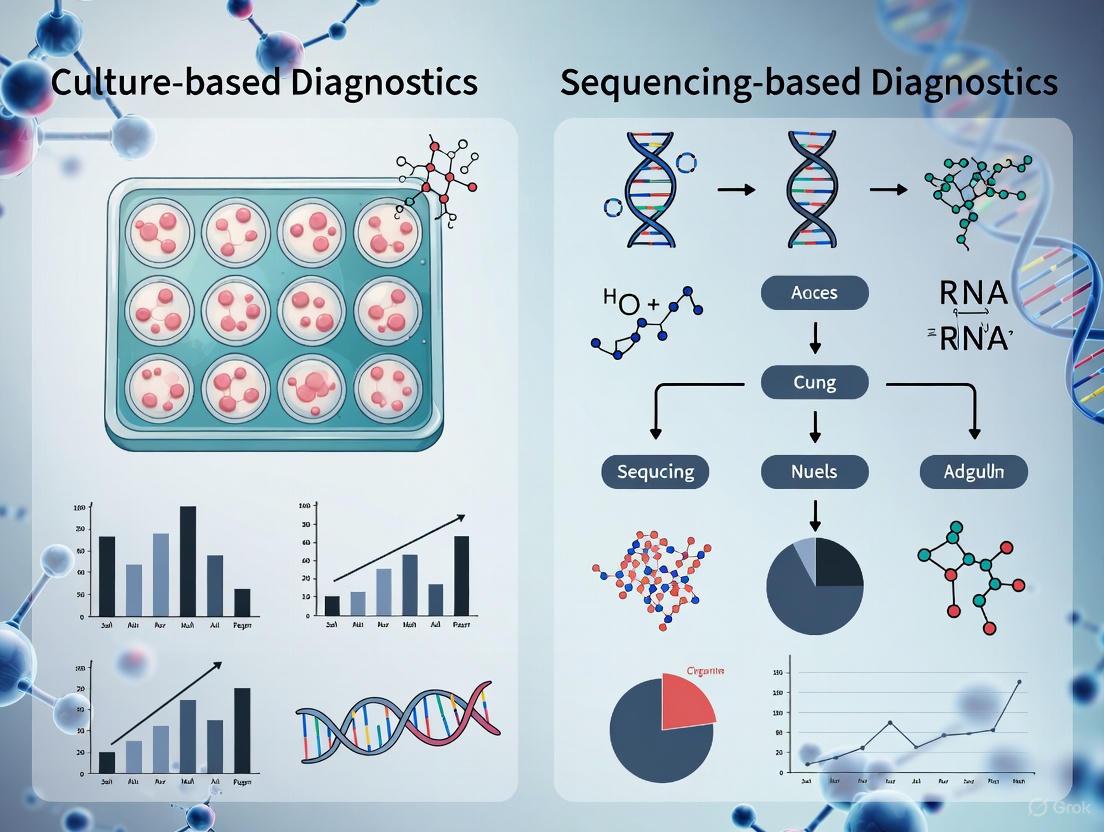
This article provides a comprehensive comparison between traditional culture-based methods and next-generation sequencing (NGS) for pathogen identification.
Culture vs. Sequencing: Revolutionizing Pathogen Detection in Modern Diagnostics
Abstract
This article provides a comprehensive comparison between traditional culture-based methods and next-generation sequencing (NGS) for pathogen identification. Tailored for researchers and drug development professionals, it explores the foundational principles, methodological applications, and key challenges of both techniques. Drawing on recent clinical studies, we analyze the superior sensitivity of sequencing for detecting fastidious and anaerobic organisms, while also addressing the persistent value of culture for antimicrobial susceptibility testing. The content synthesizes validation data and optimization strategies to guide the integration of these complementary diagnostics in research and clinical development pipelines, ultimately framing a future path for precision infectious disease management.
Core Principles and Diagnostic Evolution: From Petri Dishes to Genomic Sequencing
For over a century, microbial culture has served as the fundamental cornerstone of clinical microbiology, maintaining its status as the "gold standard" against which all other microbiological identification methods are compared [1]. This preeminence stems from its quantitative nature and its capacity to isolate cultivable microorganisms for comprehensive analysis [1]. The technique, which involves cultivating microorganisms in artificial media to permit proliferation to detectable levels, provides the foundational framework for infectious disease diagnosis, antimicrobial susceptibility testing, and epidemiological studies. Despite dramatic advances in diagnostic technologies, including the recent emergence of molecular techniques like next-generation sequencing, many patients with suspected infections still receive empiric antimicrobial therapy rather than targeted therapy guided by rapid pathogen identification [2]. This persistent gap between technological capability and clinical practice underscores the enduring relevance of culture-based methods while simultaneously highlighting the critical need for diagnostic innovations that can complement traditional approaches.
The established paradigm for microbial identification relies heavily on pure bacterial cultures, which remain essential for studying virulence, antibiotic susceptibility, and genome sequencing to facilitate the understanding and treatment of causative diseases [1]. As a library, NLM provides access to scientific literature. Inclusion in an NLM database does not imply endorsement of, or agreement with, the contents by NLM or the National Institutes of Health. Nevertheless, the limitations of traditional culture methods - particularly their prolonged time-to-result and inability to detect non-cultivable organisms - have stimulated intensive research into alternative diagnostic approaches [1]. This article examines the established gold standard of microbial culture within the context of emerging sequencing-based diagnostics, providing researchers and drug development professionals with a comparative analysis of these methodologies based on current experimental data and clinical validation studies.
Fundamental Principles and Methodologies of Microbial Culture
Core Technical Components of Culture-Based Diagnosis
The successful implementation of microbial culture diagnostics depends on several critical technical components that have been refined through decades of laboratory practice. Culture media, of fundamental importance for most microbiological tests, serves to obtain pure cultures, grow and count microbial cells, and cultivate and select microorganisms [1]. The likelihood of obtaining reliable, reproducible, and repeatable microbiological test results decreases significantly without high-quality media [1]. Standard bacterial culture protocols typically employ a battery of media including nutrient agar plates with 5% sheep blood and chocolate agar for fastidious organisms, with specialized anaerobic culture media added for tissue aspirates and biopsy specimens [1].
The diagnostic process typically begins with specimen collection from appropriate sites, followed by inoculation onto selective and non-selective media, incubation under controlled conditions (typically 35°C-37°C for 24-48 hours for most bacterial pathogens), and subsequent identification of grown colonies [1]. For blood cultures, automated systems such as BACTEC (Becton Dickinson) or BacT/ALERT3D (bioMérieux) are employed, with cultures monitored for 5-14 days depending on the clinical scenario [3] [4]. The table below summarizes essential research reagents and materials fundamental to culture-based diagnostics.
Table 1: Essential Research Reagent Solutions for Microbial Culture
| Reagent/Material | Function | Application Examples |
|---|---|---|
| Blood Agar Plates | General purpose medium with nutrients for bacterial growth; blood enables hemolysis observation | Primary isolation of pathogens from clinical specimens |
| Chocolate Agar | Enriched medium with heat-lysed blood components for fastidious organisms | Isolation of Haemophilus influenzae, Neisseria gonorrhoeae |
| Selective Media (e.g., MacConkey, CNA) | Suppresses normal flora while promoting pathogen growth | Isolation of enteric pathogens from stool samples |
| Thioglycollate Broth | Enrichment broth for anaerobic and aerobic microorganisms | Blood culture media, enrichment of low-inoculum infections |
| Biochemical Test Strips | Microbial identification through metabolic profiling | Species identification of Enterobacteriaceae |
| Antimicrobial Disks | Antibiotic susceptibility testing | Kirby-Bauer disk diffusion method |
Standardized Culture Workflow and Protocol
The following diagram illustrates the generalized workflow for traditional microbial culture from specimen collection through final identification and susceptibility testing:
Diagram 1: Standard Microbial Culture Workflow
For specific applications like bacteremia diagnosis, the protocol becomes more specialized. As detailed in a 2020 study comparing Gram staining and FISH for detecting bacteria in negative blood culture bottles, blood cultures were drawn (10 mL each) from septic patients and inoculated into aerobic and anaerobic FAN Plus media (bioMérieux) containing adsorbent polymeric beads to neutralize antimicrobials [3]. These were then placed in the BacT/ALERT3D system (bioMérieux) and incubated for 5 days [3]. The extended incubation period highlights one of the critical limitations of culture methods - the significant time delay before results become available.
Performance Comparison: Culture Versus Modern Sequencing Methods
Direct Diagnostic Performance Metrics
Recent comparative studies provide compelling data on the relative performance of culture versus modern sequencing techniques across various clinical scenarios. The table below summarizes key performance metrics from multiple clinical studies conducted between 2020-2025:
Table 2: Diagnostic Performance Comparison: Culture vs. Sequencing Methods
| Study & Year | Clinical Context | Method | Positive Detection Rate | Time to Result | Key Advantages |
|---|---|---|---|---|---|
| Shao et al., 2020 [3] | Sepsis (96 patients) | Blood Culture | Reference standard | 5 days | Gold standard, enables susceptibility testing |
| Gram Stain | 62.2% (blood samples) | 1 hour | Rapid screening | ||
| FISH | 75.6% (blood samples) | 4 hours | Higher sensitivity than Gram stain | ||
| 2024 LRTI Study [5] | Lower Respiratory Infections (165 patients) | Traditional Culture | 41.8% | 24-72 hours | Specificity, established practice |
| mNGS | 86.7% | ~20 hours | Broad pathogen detection | ||
| 2025 PJI Study [4] | Periprosthetic Joint Infection (167 patients) | Microbial Culture | Reference standard | 5-14 days | Gold standard |
| mNGS | Significantly higher | ~48 hours | Detects rare and fastidious pathogens | ||
| 2025 tNGS Study [6] | Pulmonary Infections | Microbial Culture | 25.2% | 24-72 hours | Specificity, cost-effective |
| Targeted NGS | 92.6% | ~24 hours | Higher sensitivity for mixed infections |
The significantly higher detection rates of sequencing methods, particularly in complex clinical scenarios like periprosthetic joint infections (PJI) and lower respiratory tract infections (LRTI), demonstrate the limitations of culture methods, especially in patients with prior antibiotic exposure or infections caused by fastidious organisms [4] [5]. In PJI diagnosis, where microbial culture fails to identify pathogens in 20-50% of cases with clear clinical evidence of infection, mNGS has demonstrated particular value in addressing this "culture-negative PJI" dilemma [4].
Methodological Limitations and Constraints
Despite its established position, microbial culture faces significant limitations that impact its diagnostic utility across clinical scenarios. The technique fundamentally cannot detect non-cultivable organisms such as many spirochetes, exhibits substantial transport constraints requiring prompt delivery to the laboratory (typically within 24-48 hours), and necessitates a prolonged period before results are obtained [1]. These limitations become particularly problematic in critical care settings like sepsis management, where standard blood cultures require 24-120 hours to be reported as preliminary positive [3].
The sensitivity limitations of culture methods are further exacerbated by prior antibiotic exposure. A 2025 study on periprosthetic joint infections identified prior antibiotic use (OR = 2.137, 95% CI = 1.069-4.272, P = 0.032) as a significant risk factor for discordance between microbial culture and mNGS results, particularly cases with negative culture but positive mNGS findings [4]. This phenomenon contributes substantially to the "culture-negative" infection dilemma that complicates clinical management across various infectious disease scenarios.
Emergence of Sequencing-Based Diagnostic Platforms
Next-Generation Sequencing Technologies and Applications
Next-generation sequencing technologies represent a paradigm shift in microbiological diagnosis, offering culture-independent approaches that detect microbial genetic material directly from clinical specimens. The fundamental advantage of these methods lies in their ability to identify pathogens without requiring microbial growth in culture media, thus circumventing limitations related to prior antibiotic therapy and fastidious growth requirements [3] [4]. Two primary NGS approaches have emerged in clinical diagnostics: metagenomic NGS (mNGS) which sequences all nucleic acids in a sample, and targeted NGS (tNGS) which enriches specific genetic targets before sequencing [7].
The workflow for mNGS involves comprehensive nucleic acid extraction from clinical specimens, library preparation, high-throughput sequencing, and sophisticated bioinformatic analysis to identify microbial sequences [5]. This process typically takes approximately 20 hours from sample to result [7]. In contrast, tNGS utilizes either amplification-based or capture-based target enrichment to focus sequencing efforts on predetermined pathogen panels, potentially offering improved sensitivity for included pathogens while reducing cost and computational burden [7]. The following diagram illustrates the comparative workflows of these sequencing approaches:
Diagram 2: Next-Generation Sequencing Diagnostic Workflows
Comparative Performance of Sequencing Modalities
Recent comparative studies have elucidated the relative strengths and limitations of different sequencing approaches. A 2025 comprehensive comparison of mNGS and two tNGS methods for lower respiratory infections revealed that capture-based tNGS demonstrated significantly higher diagnostic accuracy (93.17%) and sensitivity (99.43%) compared to both mNGS and amplification-based tNGS [7]. However, mNGS identified the highest number of species (totaling 80), confirming its particular utility for detecting rare and unexpected pathogens [7].
The cost and turnaround time differences between these methods are substantial. The same study reported that mNGS showed significantly higher cost ($840) and longer turnaround time (20 hours) compared to tNGS methods [7]. Amplification-based tNGS demonstrated poor sensitivity for both gram-positive (40.23%) and gram-negative bacteria (71.74%) but could serve as an alternative in situations requiring rapid results with limited resources [7]. These findings highlight the importance of matching diagnostic approach to clinical context and available resources.
Integrated Diagnostic Approaches: Synergy Between Traditional and Molecular Methods
Complementary Strengths in Clinical Practice
Rather than positioning sequencing technologies as outright replacements for traditional culture, contemporary research increasingly supports an integrated diagnostic approach that leverages the complementary strengths of both methodologies. While sequencing methods offer superior detection sensitivity and speed for pathogen identification, culture remains essential for obtaining isolates necessary for antimicrobial susceptibility testing and comprehensive phenotypic characterization [6]. This synergistic relationship is particularly valuable in managing complex infections where targeted antibiotic therapy is crucial.
The integrated value of these approaches was demonstrated in a 2024 study evaluating 16S rRNA gene next-generation sequencing alongside culture methods, which found that in samples from patients with confirmed infections, 16S NGS demonstrated diagnostic utility in over 60% of cases - either by confirming culture results in 21% or providing enhanced detection in 40% of instances [8]. Importantly, this study also revealed that pre-sampling antibiotic consumption did not significantly affect the sensitivity of 16S NGS, highlighting a key advantage over culture methods in patients with prior antibiotic exposure [8].
Antimicrobial Resistance Detection Capabilities
A critical limitation of current sequencing approaches involves the challenge of connecting identified pathogens with their antimicrobial resistance profiles. While molecular methods can detect known resistance genes, they cannot reliably predict phenotypic resistance expressions that are readily demonstrated through culture-based antimicrobial susceptibility testing [6]. A recent study on targeted next-generation sequencing for pulmonary infections noted that there were inconsistencies between tNGS antibiotic resistance gene detection and conventional drug susceptibility test resistance phenotypes [6]. The authors concluded that "microbial drug resistance genotypes detected by tNGS cannot accurately predict drug resistance phenotypes and require further improvement or integration with traditional microbial culture to establish a foundation for effective clinical treatment" [6].
This limitation has significant implications for clinical management, particularly in an era of escalating antimicrobial resistance. Until sequencing technologies can reliably bridge this genotype-to-phenotype gap, culture-based methods will maintain an essential role in guiding appropriate antimicrobial therapy, especially for serious infections requiring precise antibiotic selection.
The established gold standard of microbial culture maintains fundamental importance in clinical microbiology through its ability to provide viable isolates for phenotypic characterization and antimicrobial susceptibility testing. However, its limitations in sensitivity, turnaround time, and ability to detect fastidious or non-cultivable organisms have stimulated the development of sophisticated sequencing-based alternatives that offer complementary diagnostic capabilities. The accumulating evidence from recent comparative studies indicates that rather than a wholesale replacement of traditional methods, the future of microbiological diagnosis lies in strategic integration of these technologies.
For researchers and drug development professionals, this evolving diagnostic landscape presents both challenges and opportunities. The limitations of current sequencing technologies in predicting phenotypic resistance underscore the ongoing need for culture-based methods in antimicrobial development and stewardship. Simultaneously, the expanding capability to detect previously unrecognized pathogens through unbiased sequencing approaches opens new avenues for understanding disease pathogenesis and developing targeted interventions. As diagnostic technologies continue to advance, the optimal approach will likely involve tailored diagnostic algorithms that strategically deploy both traditional and molecular methods based on specific clinical scenarios, available resources, and the critical need for either rapid pathogen detection or comprehensive phenotypic characterization.
The accurate and timely identification of pathogens is a cornerstone of effective infectious disease management. For decades, conventional culture-based methods have served as the gold standard in clinical microbiology. However, the landscape of pathogen detection is undergoing a revolutionary transformation with the advent of Next-Generation Sequencing (NGS) technologies. Metagenomic NGS (mNGS), in particular, represents a paradigm shift by enabling unbiased, comprehensive detection of pathogens directly from clinical samples without the need for prior culturing [9]. This guide provides a detailed comparison between these two diagnostic approaches, framing them within the broader thesis of culture-based versus sequencing-based diagnostics research. We present objective experimental data, detailed methodologies, and analytical frameworks to assist researchers, scientists, and drug development professionals in evaluating these technologies for their specific applications. The transition from culture to sequencing mirrors larger trends in precision medicine, where comprehensive genomic information is increasingly guiding clinical decision-making and therapeutic development.
Conventional Culture: The Established Gold Standard
Conventional culture methods rely on the growth and propagation of microorganisms on specialized media under controlled laboratory conditions. The fundamental principle involves inoculating clinical samples onto culture plates or into liquid media to support the replication of viable pathogens. After a suitable incubation period (typically 24-48 hours for common bacteria, and significantly longer for slow-growing organisms like fungi and mycobacteria), resulting colonies are identified using biochemical profiling, microscopy, or more recently, Matrix-Assisted Laser Desorption/Ionization Time-of-Flight Mass Spectrometry (MALDI-TOF MS) [9]. This approach provides living isolates that can be used for subsequent antibiotic susceptibility testing, which remains a critical advantage. However, its major limitations include an inherent bias toward organisms that can be readily cultured under standard laboratory conditions, lengthy turnaround times (often 3-5 days, and up to weeks for slow-growing organisms), and significantly reduced sensitivity in patients who have received antimicrobial therapy prior to sample collection [10] [9].
Next-Generation Sequencing: A High-Throughput Genomic Approach
Next-Generation Sequencing (NGS), also known as high-throughput sequencing, encompasses several technologies that sequence DNA and RNA much more rapidly and cheaply than traditional Sanger sequencing. The core principle involves parallel sequencing of millions to billions of DNA fragments, generating massive amounts of sequence data in a single run [9]. In the context of pathogen detection, two primary NGS approaches are employed:
Targeted NGS: This approach involves amplifying and sequencing specific conserved genomic regions, such as the 16S ribosomal RNA (rRNA) gene for bacteria or the internal transcribed spacer (ITS) region for fungi. While it provides great depth for detecting specific microbial groups, it offers limited resolution for species-level identification and cannot assess broader genomic content or discover novel pathogens [9].
Shotgun Metagenomic NGS (mNGS): This is an untargeted approach that sequences all nucleic acids present in a clinical sample. After host DNA depletion and sequencing, bioinformatic analysis aligns the non-host reads against comprehensive microbial databases to identify pathogens, including bacteria, viruses, fungi, and parasites [9]. mNGS provides greater resolution for genetic content, can identify novel organisms, and allows for functional gene assessment, including some antibiotic resistance markers.
Table 1: Core Principles and Key Characteristics of Pathogen Detection Methods
| Characteristic | Conventional Culture | Targeted NGS | Shotgun Metagenomic NGS (mNGS) |
|---|---|---|---|
| Fundamental Principle | Growth of viable microorganisms on culture media | Amplification and sequencing of specific marker genes (e.g., 16S rRNA) | Unbiased sequencing of all nucleic acids in a sample |
| Throughput | Low (single pathogens typically) | Moderate (focused on specific groups) | High (comprehensive pathogen detection) |
| Turnaround Time | 3-5 days (weeks for slow-growers) | 24-48 hours | 24-72 hours (average 48 hours) |
| Pathogen Scope | Cultivable bacteria, fungi | Bacteria (16S) or fungi (ITS) | Bacteria, viruses, fungi, parasites |
| Ability to Detect Novel Pathogens | No | Limited | Yes |
| Antibiotic Sensitivity Testing | Yes (from live isolate) | Indirect (resistance genes) | Indirect (resistance genes) |
Comparative Performance Data: Analytical Sensitivity and Specificity
Recent clinical studies across diverse patient populations and sample types consistently demonstrate the enhanced sensitivity of mNGS compared to conventional culture, particularly for challenging diagnostic scenarios.
In a comprehensive study of 368 febrile patients with suspected infections, mNGS demonstrated significantly higher sensitivity compared to culture (58.01% vs. 21.65%, p < 0.001). While culture exhibited marginally higher specificity (99.27% vs. 85.40%, p < 0.001), the overall detection capability of mNGS was superior, making it particularly valuable for screening purposes where false negatives are clinically concerning [10]. The negative predictive value of mNGS (54.67%) also exceeded that of culture (42.9%), further supporting its utility in ruling out infections [10].
Similar trends were observed in specialized clinical contexts. In kidney transplantation, mNGS detected pathogens in organ preservation fluids at nearly twice the rate of conventional culture (47.5% vs. 24.8%, p < 0.05) [11] [12]. The difference was even more pronounced in recipient wound drainage fluids, where mNGS identified pathogens in 27.0% of samples compared to just 2.1% by culture (p < 0.05) [11] [12]. mNGS also demonstrated superior detection for ESKAPE pathogens and fungi combinations (28.4% vs. 16.3%, p < 0.05) [11] [12].
In orthopedics, where culture-negative infections present significant diagnostic challenges, NGS detected pathogens in 73% of cases (36/49) compared to 59% (29/49) with traditional cultures [13]. The discordance analysis revealed that in 11 of 19 discordant cases, cultures were negative while NGS was positive, highlighting the technique's particular value for difficult-to-grow microorganisms such as slow-growing anaerobic bacteria [13].
For lower respiratory tract infections, mNGS showed remarkably higher positive detection rates (86.7% vs. 41.8%, P < 0.05) across different sample types including bronchoalveolar lavage fluid, blood, tissue, and pleural effusion [5]. This study also highlighted mNGS's unique capacity to detect poly-microbial infections and rare pathogens, with 29 pathogen species identified exclusively by mNGS, including non-tuberculous mycobacteria, Prevotella, anaerobic bacteria, and various viruses [5].
Table 2: Comparative Detection Performance Across Clinical Studies
| Clinical Setting (Sample Size) | Sample Types | mNGS Positive Rate | Culture Positive Rate | Statistical Significance |
|---|---|---|---|---|
| Febrile Patients (n=368) [10] | Blood, BALF, CSF, tissue, puncture fluid | 58.01% | 21.65% | p < 0.001 |
| Kidney Transplantation (n=141) [11] [12] | Organ preservation fluid, wound drainage fluid | 47.5% (preservation)27.0% (drainage) | 24.8% (preservation)2.1% (drainage) | p < 0.05 for both |
| Orthopedic Infections (n=49) [13] | Tissue, synovial fluid | 73% | 59% | N/R |
| Lower Respiratory Tract Infections (n=165) [5] | BALF, blood, tissue, pleural effusion | 86.7% | 41.8% | p < 0.05 |
Methodological Deep Dive: Experimental Protocols and Workflows
Standard Culture Protocol
The conventional culture methodology follows a well-established workflow [11] [12]:
- Sample Inoculation: Clinical samples are directly inoculated into aerobic and/or anaerobic culture bottles (e.g., BD BACTEC Plus Aerobic/F).
- Incubation: All blood culture bottles are loaded into an automated incubation and monitoring system (e.g., BD BACTEC FX instrument) at appropriate temperatures (typically 35±1°C).
- Subculture: When a positive signal is detected, the culture broth is analyzed by Gram stain and subcultured onto solid media (blood agar plate, incubated in 5% CO₂ at 35±1°C for 18-24 hours). If fungi are suspected, additional subculture on SDA agar plates is performed with incubation at 37°C for 48 hours.
- Identification: Resulting colonies are transferred to a target plate for MALDI-TOF MS analysis, which provides species-level identification based on protein mass fingerprinting.
mNGS Wet-Lab and Bioinformatics Protocol
The mNGS workflow incorporates both laboratory and computational components [11] [12] [10]:
Wet-Lab Procedures:
- Sample Processing: Samples are transported to the sequencing facility under appropriate conditions (6°C to 35°C for blood; frozen at -20°C or on dry ice for other fluids).
- Host DNA Depletion: Human cells are removed by centrifugation, and cell-free DNA is extracted from the supernatant using commercial kits (e.g., QIAamp DNA Micro Kit).
- Library Preparation: Extracted DNA undergoes quality assessment (Qubit fluorometer, agarose gel electrophoresis), followed by library construction using sequencing kits (e.g., QIAseq Ultralow Input Library Kit).
- Sequencing: Qualified libraries are sequenced on platforms such as the Illumina Nextseq 550, generating millions to billions of short reads.
Bioinformatic Analysis:
- Quality Control and Host Read Removal: Raw sequencing data undergoes adapter trimming and low-quality read filtering (<35bp) using tools like Trimmomatic. Human sequences are removed by alignment to the human reference genome (GRCh38.p13) using bowtie2 or SNAP software.
- Pathogen Identification: Non-human reads are classified by alignment to comprehensive microbial databases (NCBI nt) using BLASTN or similar tools.
- Result Interpretation: Positive criteria are established, such as:
- For bacteria and fungi: genome coverage ranking top 10 of same kind microbes and not detected in negative controls.
- Ratio of sample RPM to negative control RPM >10.
- Special criteria for Mycobacterium tuberculosis and Cryptococcus.
Diagram 1: mNGS Wet-lab and Computational Workflow
Pathogen Spectrum and Specialized Applications
The comprehensive nature of mNGS provides distinct advantages in detecting pathogens that challenge conventional methods. mNGS demonstrates particular value in identifying:
- Fastidious and slow-growing organisms: Such as Mycobacterium tuberculosis, Borrelia burgdorferi (Lyme disease), and Treponema pallidum (syphilis) [14].
- Anaerobic bacteria: Including Clostridium botulinum (botulism) and Fusobacterium necrophorum (Lemierre syndrome) [14].
- Viruses: Both DNA and RNA viruses (with protocol modifications), including varicella-zoster virus, Ebstein-Barr virus, and novel viruses [9] [14].
- Fungi and parasites: Various species that are difficult to culture or identify through conventional means.
In kidney transplantation settings, mNGS uniquely detected clinically atypical pathogens that were completely missed by culture, including Mycobacterium, Clostridium tetani, and parasites [11] [12]. Similarly, in lower respiratory tract infections, 29 different pathogens were detected exclusively by mNGS, including non-tuberculous mycobacteria (NTM), Prevotella, anaerobic bacteria, Legionella gresilensis, Orientia tsugamushi, and various viruses [5].
However, it is important to note that mNGS does have detection limitations. One study reported that while mNGS detected 79.2% of Enterobacteriaceae and non-fermenting bacteria identified by culture, it only detected 22.2% of Gram-positive bacteria and 55.6% of fungi [11] [12]. This highlights that culture remains an important complementary method for certain microbial groups.
Diagram 2: Pathogen Detection Spectrum by Method
The Researcher's Toolkit: Essential Reagents and Platforms
Table 3: Key Research Reagent Solutions for Pathogen Detection Studies
| Product Category | Specific Examples | Research Application | Key Characteristics |
|---|---|---|---|
| Nucleic Acid Extraction Kits | QIAamp DNA Micro Kit (QIAGEN) | Isolation of cell-free DNA from clinical samples | Optimized for low-biomass samples; minimal contaminant carryover |
| Library Preparation Kits | QIAseq Ultralow Input Library Kit (QIAGEN) | DNA library construction for sequencing | Specifically designed for minimal input DNA; maintains complexity |
| Culture Media & Systems | BD BACTEC Plus Aerobic/F Culture Bottles; BD BACTEC FX Instrument | Automated microbial culture and detection | Enhanced recovery of pathogens; continuous monitoring system |
| Microbial Identification | MALDI-TOF MS (Bruker Daltonics) | Rapid identification of cultured isolates | Protein mass fingerprinting; extensive database coverage |
| Sequencing Platforms | Illumina Nextseq 550; iSeq 100; MiniSeq | High-throughput DNA sequencing | Various throughput options; high accuracy; established protocols |
| Bioinformatic Tools | Trimmomatic; bowtie2; BLASTN; SNAP | Data QC, host removal, pathogen identification | Open-source options; customizable parameters |
Clinical Impact and Therapeutic Guidance
The diagnostic superiority of mNGS translates directly into meaningful clinical outcomes, particularly through guidance of antimicrobial therapy. In the study of febrile patients, mNGS results led to antibiotic adjustments in 64 patients, including treatment transitions, antibiotic downgrading, and combination therapy. Notably, 21 patients experienced a definitive treatment turning point based on mNGS findings, with these patients subsequently recovering and being discharged due to timely antibiotic adjustment [10].
For lower respiratory tract infections, the impact was even more pronounced, with mNGS resulting in treatment modifications in 119 patients (72.13%). Importantly, 54 patients (32.73%) were able to have their antibiotic regimens reduced based on mNGS guidance, potentially helping to combat antimicrobial resistance [5]. In the kidney transplantation study, the combination of mNGS and bacterial culture results guided appropriate antibiotic administration, contributing to the absence of severe vascular complications despite a rehospitalization rate due to infections of 13.5% [11] [12].
A significant advantage of mNGS emerges in the context of prior antibiotic exposure. Both puncture fluid mNGS and tissue mNGS maintained significantly higher positive detection rates compared to culture in patients who had received antibiotics before testing (p = 0.000) [10]. This resilience to pre-analytical antibiotic exposure addresses a critical limitation of conventional culture, which often returns false-negative results in this common clinical scenario.
Limitations and Complementary Roles
Despite its advanced capabilities, mNGS faces several important limitations that researchers must consider:
Cost Considerations: Implementation expenses remain substantial, with estimated costs of approximately $130 per sample in 2018, not including upfront instrumentation investments or specialized training requirements [14]. This compares unfavorably with conventional culture, which remains relatively inexpensive.
Antibiotic Susceptibility Limitations: While mNGS can detect some antibiotic resistance genes, it cannot determine phenotypic antibiotic susceptibility with complete accuracy. One study reported 92% accuracy for predicting antibiotic resistance in Klebsiella pneumoniae, meaning approximately 8% of cases might receive improper treatment based on genomic data alone [14]. Additionally, in mixed samples, it can be challenging to associate resistance genes with specific pathogens.
Causality Determination: In samples containing multiple potential pathogens, distinguishing true causative organisms from colonization or background microbiome remains challenging. For instance, detecting MRSA in a sample from a known carrier doesn't necessarily implicate it as the disease cause [14].
Technical and Interpretation Challenges: mNGS requires specialized equipment, bioinformatics expertise, and carefully validated workflows. Results can be affected by contamination, host DNA background, and the selection of appropriate thresholds for pathogen calling [9].
These limitations highlight why conventional culture maintains importance in the diagnostic landscape. Culture provides live isolates for comprehensive antibiotic susceptibility testing, remains the gold standard for many infections, and offers an established, cost-effective approach for routine pathogen detection. The most effective diagnostic strategy often involves a complementary approach, using both technologies in conjunction to leverage their respective strengths.
The revolution in sequencing technologies, particularly mNGS, has fundamentally expanded our capability to detect and characterize pathogens in clinical and research settings. The compelling data from multiple studies demonstrates that mNGS offers significantly enhanced sensitivity, broader pathogen coverage, and faster turnaround times compared to conventional culture methods. These advantages translate directly into improved clinical decision-making and antimicrobial stewardship, as evidenced by the substantial proportion of patients whose treatment was appropriately guided by mNGS results.
However, rather than replacing conventional methods entirely, the current evidence supports an integrated diagnostic approach where these technologies play complementary roles. Culture methods remain essential for phenotypic antibiotic susceptibility testing and as a reference standard, while mNGS provides unparalleled power for detecting fastidious, rare, and novel pathogens, particularly in cases where traditional methods have failed. For researchers and drug development professionals, understanding the principles, performance characteristics, and limitations of both approaches is crucial for designing effective diagnostic strategies and advancing the field of infectious disease management. As sequencing technologies continue to evolve, becoming more accessible and cost-effective, their integration into routine diagnostic pathways will undoubtedly expand, further transforming our approach to combating infectious diseases.
In clinical microbiology, the term "fastidious organisms" refers to pathogens with complex nutritional requirements that necessitate specific growth conditions, making them difficult or impossible to cultivate using standard laboratory media. This inherent limitation of culture-based methods creates significant diagnostic blind spots, potentially leading to delayed or inappropriate antimicrobial therapy, prolonged hospital stays, and increased mortality rates [15]. Despite being considered the historical gold standard for pathogen identification, conventional culture methods fail to detect a substantial proportion of infectious agents, particularly in patients who have received prior antibiotic treatment [15] [13].
The emergence of sequencing-based diagnostics, particularly metagenomic next-generation sequencing (mNGS) and targeted next-generation sequencing (tNGS), offers a paradigm shift in detecting these elusive pathogens. Unlike culture, these molecular approaches do not rely on microbial growth in vitro, instead identifying pathogens through direct detection of their genetic material [15] [7]. This technological advancement is transforming diagnostic workflows, especially for complex cases involving slow-growing anaerobic bacteria, intracellular bacteria, and other challenging pathogens that routinely evade conventional culture methods [13].
This guide provides an objective comparison between established culture-based methods and emerging sequencing-based approaches, focusing specifically on their respective capabilities for detecting fastidious microorganisms. By presenting experimental data and methodological details, we aim to equip researchers and clinicians with the evidence needed to select appropriate diagnostic pathways for comprehensive pathogen identification.
Performance Comparison: Culture vs. Sequencing Technologies
Recent comparative studies demonstrate consistent patterns in the performance characteristics of culture versus sequencing methods. A 2024 study of 368 febrile patients with suspected infections revealed that mNGS exhibited significantly higher sensitivity compared to culture (58.01% vs. 21.65%, p < 0.001), enabling pathogen detection in cases where culture failed [15]. Conversely, culture maintained higher specificity (99.27% vs. 85.40%, p < 0.001), reflecting its strength in minimizing false positives despite its limited sensitivity [15].
Table 1: Overall Diagnostic Performance of mNGS vs. Culture in Febrile Patients
| Diagnostic Metric | mNGS | Conventional Culture | P-value |
|---|---|---|---|
| Sensitivity | 58.01% | 21.65% | <0.001 |
| Specificity | 85.40% | 99.27% | <0.001 |
| Negative Predictive Value | 54.67% | 42.90% | Not reported |
| Positive Predictive Value | 87.01% | 98.84% | Not reported |
The clinical impact of these performance differences is substantial. Among infected patients with positive mNGS results in the aforementioned study, 64 received adjusted antibiotic therapy based on findings, with 21 patients experiencing a definitive treatment turning point that led to recovery and discharge [15].
Detection of Fastidious Organisms in Specific Clinical Contexts
The advantage of sequencing technologies becomes particularly evident in specialized clinical contexts where fastidious organisms are prevalent. A 2023 study on orthopedic infections examined 49 patients and found that next-generation sequencing identified pathogens in 73% of cases (36/49) compared to 59% (29/49) for traditional cultures [13]. The discordance analysis revealed that in 11 of 19 discordant cases, cultures were negative while NGS was positive, with difficult-to-grow microorganisms such as slow-growing anaerobic bacteria being better detected by NGS [13].
Table 2: Organism-Specific Detection in Orthopedic Infections (N=49)
| Detection Category | NGS Positive Cases | Culture Positive Cases | Notable Organisms Better Detected by NGS |
|---|---|---|---|
| Overall Detection | 36/49 (73%) | 29/49 (59%) | - |
| Staphylococcus aureus | 10/49 | 14/49 | - |
| Cutibacterium acnes | 8/49 | 0/49 | Slow-growing anaerobic bacteria |
| Coagulase-negative Staphylococci | 8/49 | 8/49 | - |
| Polymicrobial Infections | 6/49 | 2/49 | Anaerobic mixtures |
In lower respiratory infections, a 2025 comprehensive comparison of sequencing methods demonstrated that mNGS identified the highest number of species (totaling 80), compared to 71 species identified by capture-based tNGS and 65 species by amplification-based tNGS [7]. This breadth of detection is particularly valuable for identifying rare, atypical, or fastidious pathogens that conventional methods might miss.
Methodological Approaches: Experimental Protocols
Conventional Culture Methodology
Standard culture protocols involve inoculating clinical samples onto specialized media that support the growth of diverse microorganisms. The methodology typically follows this workflow:
Sample Processing: Clinical specimens (blood, tissue, BALF, etc.) are processed according to their nature. Fluid samples may be concentrated by centrifugation, while tissue samples require homogenization under sterile conditions.
Culture Inoculation: Processed samples are inoculated onto various culture media, including:
- Blood agar for general bacterial growth
- Chocolate agar for fastidious organisms like Haemophilus influenzae
- MacConkey agar for gram-negative bacteria
- Specialized media for anaerobes, fungi, or mycobacteria
Incubation: Inoculated media are incubated under appropriate atmospheric conditions (aerobic, anaerobic, or microaerophilic) at 35-37°C for 24-48 hours, extended to several weeks for slow-growing organisms like mycobacteria or fungi.
Identification: Growing microorganisms are identified using techniques such as matrix-assisted laser desorption ionization-time of flight mass spectrometry (MALDI-TOF). Antibiotic susceptibility testing is performed using the VITEK II compact system with AST-GN334, AST-GN335, and AST-GP639 drug sensitivity cards to determine minimum inhibitory concentrations (MIC) following Clinical and Laboratory Standards Institute (CLSI) guidelines [15].
The critical limitation of this approach for fastidious organisms lies in steps 2 and 3—many pathogens fail to grow because their specific nutritional or atmospheric requirements cannot be replicated in standard culture media or within practical timeframes.
Metagenomic Next-Generation Sequencing Workflow
mNGS bypasses the need for microbial cultivation through direct genetic analysis of clinical samples. A representative protocol from recent studies includes:
Nucleic Acid Extraction: DNA is extracted from 200 µL of sample using the QIAamp DNA Micro Kit (QIAGEN). For comprehensive pathogen detection, RNA extraction may also be performed using the QIAamp Viral RNA Kit, followed by ribosomal RNA depletion using a Ribo-Zero rRNA Removal Kit and reverse transcription [15] [7].
Library Preparation: DNA libraries are constructed using kits such as the QIAseq Ultralow Input Library Kit (QIAGEN). The quality and quantity of libraries are assessed using the Qubit 3.0 fluorometer and Agilent 2100 Bioanalyzer [15].
Sequencing: Qualified DNA libraries are sequenced on platforms such as the Illumina Nextseq 550 with 75-bp single-end reads, generating approximately 20 million reads per sample [15] [7].
Bioinformatic Analysis:
- Raw data processing to remove adapters, ambiguous nucleotides, and low-quality reads
- Human sequence depletion by mapping to reference genome (hg38) using Burrows-Wheeler Aligner
- Microbial identification by aligning remaining reads to comprehensive genomic databases
- Positive detection criteria based on reads per million thresholds and comparison to negative controls [15] [7]
Advanced Enrichment Technologies for Enhanced Detection
To overcome the challenge of high host DNA background in clinical samples, specialized enrichment technologies have been developed:
Pathogen Enrichment Methods: Techniques such as Pathovate enable ultra-high enrichment of microbial DNA, converting clinical samples with a billion times more human DNA than microbial DNA into analyzable specimens with far more microbial DNA sequencing data than human data. This process, validated across over 60 species of bacterial and fungal pathogens at concentrations as low as 1 CFU/mL of blood, enables high-depth, whole-genome sequence coverage of microbial pathogens directly from clinical samples [16].
Bioinformatic Identification Algorithms: Proprietary algorithms like Keynome ID classify bacterial species present in a sample by leveraging curated reference genome databases to ensure high accuracy across numerous pathogen species. When paired with ultra-high enrichment preprocessing, these tools can determine the species of infections at concentrations as low as 1CFU/mL without the high false-positive rates that often reduce diagnostic applicability of hyper-sensitive molecular methods [16].
The Scientist's Toolkit: Essential Research Reagents & Platforms
Table 3: Key Research Reagents and Platforms for Sequencing-Based Pathogen Detection
| Reagent/Platform | Manufacturer/Provider | Primary Function | Application Notes |
|---|---|---|---|
| QIAamp DNA Micro Kit | QIAGEN | Pathogen DNA extraction from clinical samples | Optimal for low-biomass samples; compatible with various sample types |
| QIAseq Ultralow Input Library Kit | QIAGEN | Library construction from minimal DNA input | Essential for samples with limited pathogen nucleic acid |
| Illumina Nextseq 550 Platform | Illumina | High-throughput sequencing | Generates 20+ million reads per sample; 75-bp single-end reads |
| Ribo-Zero rRNA Removal Kit | Illumina | Host and microbial ribosomal RNA depletion | Critical for RNA sequencing to focus on mRNA targets |
| Benzonase + Tween20 | Qiagen/Sigma | Host nucleic acid degradation | Reduces human background to improve pathogen detection sensitivity |
| Burrows-Wheeler Aligner | Open Source | Human sequence subtraction | Filters out host sequences using hg38 reference genome |
| Pathovate Technology | Day Zero Diagnostics | Microbial DNA enrichment | Enables detection at 1 CFU/mL despite high host DNA background |
| Keynome ID Algorithm | Day Zero Diagnostics | Bacterial species classification | Uses curated reference database for accurate pathogen identification |
The evidence clearly demonstrates that sequencing-based technologies substantially overcome the fastidious organism blind spots inherent in conventional culture methods. While culture maintains advantages in specificity and provides isolates for antibiotic susceptibility testing, its limitations in detecting challenging pathogens are well-documented across multiple clinical settings [15] [13]. mNGS offers superior sensitivity and the ability to identify rare, atypical, and uncultivable pathogens, making it particularly valuable for complex diagnostic cases [15] [7].
For clinical researchers and diagnosticians, the choice between these methods should be guided by clinical context and diagnostic needs. Culture remains appropriate for routine cases where common pathogens are suspected and antibiotic susceptibility testing is required. In contrast, mNGS demonstrates particular value for immunocompromised patients, cases with prior antibiotic exposure, and situations where traditional methods have failed to identify a pathogen despite high clinical suspicion [15]. Targeted NGS approaches offer a middle ground, focusing on specific pathogen panels with potentially higher sensitivity for included organisms [7].
As sequencing technologies continue to evolve with reducing costs and faster turnaround times, their integration into standard diagnostic workflows represents a promising path toward more comprehensive infectious disease diagnosis. The optimal diagnostic approach may increasingly involve strategic combination of these complementary technologies rather than exclusive reliance on any single methodology.
For over a century, microbial culture has served as the cornerstone of pathogen identification, relying on the growth and phenotypic characterization of microorganisms. Today, genomics is orchestrating a fundamental paradigm shift in diagnostic microbiology. Next-generation sequencing (NGS) technologies are progressively replacing traditional methods, offering unprecedented resolution and speed in pinpointing disease-causing agents [17] [18]. This transition from culture-based to sequence-based diagnostics is transforming clinical microbiology, public health surveillance, and antimicrobial stewardship.
The limitations of conventional methods are increasingly apparent in modern healthcare landscapes. Culture-based techniques, while considered the historical "gold standard," suffer from prolonged turnaround times—often requiring days to weeks—and significantly diminished sensitivity in patients who have received prior antibiotic therapy [19] [17]. Molecular methods like PCR marked a substantial improvement but typically require presumptive knowledge of the pathogen and struggle with detecting novel organisms or complex polymicrobial infections [17] [20].
Genomic approaches now provide culture-independent pathogen detection through two principal modalities: metagenomic NGS (mNGS), which sequences all nucleic acids in a sample without prior targeting, and targeted NGS (tNGS), which enriches for specific pathogens before sequencing [7]. This review provides a comprehensive comparison of these emerging genomic methods against traditional diagnostics, examining their performance characteristics, methodological considerations, and practical applications in contemporary clinical and research settings.
Performance Comparison: Genomics Versus Conventional Methods
Multiple clinical studies across diverse infection types demonstrate the superior sensitivity of genomic methods compared to traditional culture-based diagnostics. The following tables summarize key performance metrics from recent investigations.
Table 1: Comparative Diagnostic Performance Across Infection Types
| Infection Type | Testing Method | Detection Rate | Turnaround Time | Key Advantages |
|---|---|---|---|---|
| Neurosurgical CNS Infections [20] | Microbial Culture | 59.1% | 22.6 ± 9.4 hours | Gold standard, provides isolates for AST |
| mNGS | 86.6% | 16.8 ± 2.4 hours | Unbiased detection, suitable for rare/novel pathogens | |
| ddPCR | 78.7% | 12.4 ± 3.8 hours | Rapid, quantitative, high sensitivity | |
| Pneumonia (ED Setting) [21] | Microbiological Culture | 45.2% | 24-48 hours | Established methodology, inexpensive |
| PPID Multiplex Assay | 77.8% | 6 hours | Comprehensive, detects co-infections | |
| Periprosthetic Joint Infection [19] | Microbial Culture | 50-80% (varies) | 5-14 days | Specificity for viable organisms |
| mNGS | Higher than culture | ~24-48 hours | Effective despite prior antibiotics |
Table 2: Direct Comparison of NGS Methodologies in Lower Respiratory Infections [7]
| Parameter | mNGS | Amplification-based tNGS | Capture-based tNGS |
|---|---|---|---|
| Number of Species Identified | 80 | 65 | 71 |
| Accuracy | 85.85% | 80.00% | 93.17% |
| Sensitivity | 92.66% | 71.74% (gram-negative bacteria) | 99.43% |
| Specificity for DNA Viruses | 87.83% | 98.25% | 74.78% |
| Cost (USD) | $840 | Lower than mNGS | Intermediate |
| Turnaround Time | 20 hours | Shortest | Intermediate |
The data reveal several consistent trends across infection types. Genomic methods consistently demonstrate higher detection rates than culture, particularly in challenging clinical scenarios such as patients with prior antibiotic exposure [19] and cases involving fastidious or slow-growing organisms [21]. The comprehensive nature of mNGS makes it exceptionally valuable for detecting rare, novel, or unexpected pathogens, while targeted approaches (tNGS) offer superior performance for routine diagnostics of known pathogens [7].
Methodological Deep Dive: Experimental Protocols and Workflows
Conventional Microbial Culture
Traditional culture methods remain standardized across clinical laboratories. For periprosthetic joint infection diagnosis, protocols typically involve inoculating clinical specimens (joint fluid, periprosthetic tissue, or prosthetic ultrasonic fluid) into aerobic and anaerobic blood culture bottles [19]. These are incubated in automated systems at 35-37°C with 5-7% CO₂ for 5-14 days. Microorganism identification then employs MALDI-TOF mass spectrometry or biochemical systems like VITEK II, followed by antimicrobial susceptibility testing [19]. Critical limitations include the extended time to results and significantly reduced sensitivity when patients have received antimicrobial therapy before sampling.
Metagenomic Next-Generation Sequencing (mNGS)
The mNGS workflow represents a fundamental departure from culture-based techniques, enabling unbiased detection of pathogens without prior knowledge of the causative agent:
Sample Processing: Clinical samples (tissue, fluid, etc.) undergo mechanical or enzymatic homogenization. For body fluids like cerebrospinal fluid, centrifugation concentrates microorganisms before nucleic acid extraction [20].
Nucleic Acid Extraction: Comprehensive extraction of both DNA and RNA is critical for detecting all pathogen types. Commercial kits like QIAamp DNA/RNA Kits are commonly employed [7].
Host DNA Depletion: This crucial step enhances sensitivity by reducing human background sequences. Methods include saponin-mediated selective lysis, centrifugation-based removal of human cells, or enzymatic degradation using benzonase [22] [7].
Library Preparation and Sequencing: Fragmented nucleic acids are ligated to sequencing adapters and amplified. Platforms like Illumina NextSeq generate millions of reads, which are computationally filtered to remove low-quality and human sequences before alignment to microbial databases [20] [7].
Targeted Next-Generation Sequencing (tNGS)
Targeted NGS approaches enhance sensitivity for specific pathogens by incorporating enrichment steps prior to sequencing:
Amplification-based tNGS: This approach uses multiplex PCR with numerous pathogen-specific primers to simultaneously amplify targets from extracted nucleic acids. For respiratory pathogens, assays may target up to 198 microorganisms in a single reaction [7]. After amplification, sequencing adapters and barcodes are added, followed by sequencing on platforms like Illumina MiniSeq.
Capture-based tNGS: This method uses biotinylated probes that hybridize to target pathogen sequences, which are then captured using streptavidin-coated magnetic beads. The enriched targets undergo library preparation and sequencing. This approach demonstrates particularly high accuracy (93.17%) for respiratory infections [7].
Host Depletion Technologies: Innovative approaches like specialized filtration membranes leverage electrostatic properties to selectively capture human cells while allowing pathogens to pass through, achieving over 98% reduction in host DNA background [22].
The Scientist's Toolkit: Essential Research Reagents and Technologies
Successful implementation of genomic pathogen diagnostics requires specialized reagents and technologies at each workflow stage:
Table 3: Essential Research Reagents for Genomic Pathogen Detection
| Category | Specific Products/Technologies | Research Application |
|---|---|---|
| Nucleic Acid Extraction | QIAamp UCP Pathogen DNA Kit, MagPure Pathogen DNA/RNA Kit | Maximize yield of pathogen nucleic acids from diverse clinical samples |
| Host DNA Depletion | Benzonase enzyme, Tween20, Saponin-based lysis, Human cell-specific filtration membranes | Reduce human background to improve detection of low-abundance pathogens |
| Target Enrichment | Respiratory Pathogen Detection Kit (KingCreate), Biotinylated probe panels | Selectively amplify or capture pathogen sequences before sequencing |
| Library Preparation | Ovation Ultralow System V2, Illumina DNA Prep Kits | Fragment DNA/RNA and attach sequencing adapters with minimal bias |
| Sequencing Platforms | Illumina NextSeq, MiniSeq, iSeq | Generate high-throughput sequence data with accuracy |
| Bioinformatics Tools | Fastp, Burrows-Wheeler Aligner, SNAP, Kcomplexity | Quality control, host sequence removal, pathogen classification |
Discussion: Clinical Implementation and Future Directions
The integration of genomic methods into diagnostic microbiology represents more than a simple technological upgrade—it constitutes a fundamental reengineering of the pathogen identification paradigm. The choice between mNGS and tNGS involves strategic trade-offs: mNGS offers greater breadth for discovery and rare pathogen detection, while tNGS provides greater depth, sensitivity, and cost-efficiency for targeted diagnostic panels [7].
Critical implementation challenges remain, including bioinformatics complexity, interpretation of detected organisms (distinguishing colonization from infection), and managing incidental findings [23]. The high sensitivity of NGS methods can sometimes detect clinically irrelevant organisms or background contamination, requiring careful clinical correlation [19]. Additionally, the detection of antimicrobial resistance genes by NGS does not always correlate with phenotypic resistance patterns, though this capability continues to improve [18].
Future directions in the field include the development of more streamlined integrated systems, expanded reference databases, and standardized reporting frameworks. As sequencing costs continue to decline and bioinformatic tools become more accessible, genomic pathogen identification is poised to transition from specialized reference laboratories to routine clinical practice, ultimately enabling more precise and personalized infectious disease management.
The evidence consistently demonstrates that genomic methods are not merely supplemental to traditional diagnostics but are rapidly becoming foundational tools that redefine our approach to pathogen detection, outbreak investigation, and therapeutic decision-making in infectious diseases.
From Bench to Bedside: Practical Protocols and Clinical Deployments
In clinical microbiology, the accurate and timely identification of pathogens is fundamental to the effective management of infectious diseases. For over a century, culture-based methods have served as the cornerstone of pathogen diagnosis, providing viable isolates for identification and antimicrobial susceptibility testing. However, the limitations of these traditional techniques—including prolonged turnaround times and an inherent inability to detect uncultivable or fastidious organisms—have driven the development of molecular alternatives [24]. Among these, 16S rRNA gene metagenomic sequencing (16S MG) and metagenomic next-generation sequencing (mNGS) have emerged as powerful, culture-independent tools that offer unbiased detection of microbial populations directly from clinical specimens [25] [26]. This guide provides a comprehensive, step-by-step comparison of these standardized workflows, presenting objective performance data and detailed experimental protocols to inform researchers and clinical laboratory professionals in their diagnostic operations.
Workflow Comparison: A Visual Guide
The following diagram illustrates the core procedural steps and comparative timelines for culture, 16S metagenomic sequencing, and mNGS diagnostic pathways.
Performance Metrics and Diagnostic Yield
Empirical data from recent clinical studies demonstrates the complementary strengths and limitations of each diagnostic method. The tables below summarize key performance indicators, including detection sensitivity, turnaround time, and ability to identify polymicrobial infections.
Table 1: Comparative Diagnostic Performance Across Infection Types
| Infection Type / Study | Method | Sensitivity / Positivity Rate | Key Findings / Advantages |
|---|---|---|---|
| Lower Respiratory Tract [27] | mNGS | 88.2% (vs. Sanger) | Detected more species in 9% of cases; superior for co-infections (66 vs 22 samples in BALF). |
| Culture | Sufficient for common bacteria | -- | |
| Spinal Infections [28] | mNGS | 77.78% | Extensive pathogen coverage; detected 9 cases of multiple infections. |
| Culture | 27.16% | Remains gold standard but low positivity rate. | |
| Culture-Negative Samples [29] | 16S MG | 74.3% (78/105) | Detected 32 different bacteria in culture-negative samples; 5.7% polymicrobial. |
| Culture | 0% (by definition) | -- | |
| Bloodstream Infections / Sepsis [30] | NGS (PISTE) | 91.7% sensitivity | Median time to result: 12.0 hours. |
| Culture (SoC) | Reference standard | Median time to result: 30.4 hours. | |
| Various Clinical Specimens [26] | mNGS | 74.2% | Higher sensitivity vs CMT (57.8%) and culture (31.7%). |
| Culture | 31.7% | -- |
Table 2: Analytical Performance of Sequencing Assays
| Performance Metric | 16S Metagenomic Sequencing [25] [29] | Shotgun mNGS [31] [26] |
|---|---|---|
| Limit of Detection | 10-100 CFU/mL [25] | ~500 copies/mL (for respiratory viruses) [31] |
| Linearity | -- | 100% (for viral load quantification) [31] |
| Pathogen Scope | Bacteria only (identification via 16S rRNA gene) | All pathogens: bacteria, viruses, fungi, parasites |
| Antibiotic Resistance Gene Detection | Limited | Comprehensive (via dedicated databases like CARD) [26] |
| Turnaround Time | ~24-48 hours | ~14-24 hours [31] |
| Quantification Capability | Quantitative (relative abundance) [25] | Quantitative (viral load, copies/mL) [31] |
Detailed Experimental Protocols
Standard Culture Protocol
Principle: Microbial growth on enriched media under controlled conditions to obtain viable isolates for identification and phenotypic antibiotic susceptibility testing (AST).
Step-by-Step Workflow: [28] [29]
- Sample Collection & Inoculation: Aseptically collect clinical specimens (e.g., tissue, BALF, pus) and inoculate onto selective and non-selective solid agar plates (e.g., Blood agar, Chocolate agar, McConkey agar) and into liquid enrichment broth (e.g., Brain-heart infusion broth).
- Incubation: Incubate plates and broths at 37°C under appropriate atmospheric conditions (aerobic, anaerobic, or microaerophilic) for 24 hours to several days, or up to 14 days for fastidious organisms [28].
- Subculture & Isolation: Upon observing microbial growth, subculture to isolate pure colonies. This step is crucial for mixed cultures.
- Species Identification: Isolated colonies are identified using matrix-assisted laser desorption/ionization time-of-flight (MALDI-TOF) mass spectrometry or biochemical profiling systems (e.g., Vitek 2, BD Phoenix) [27] [29].
- Antimicrobial Susceptibility Testing (AST): Perform AST on pure isolates using automated systems (e.g., BD Phoenix) or Kirby-Bauer disk diffusion, following Clinical and Laboratory Standards Institute (CLSI) guidelines. This adds an additional 16-24 hours to the workflow [30].
16S Metagenomic Sequencing (16S MG) Protocol
Principle: Amplification and sequencing of the hypervariable regions of the bacterial 16S rRNA gene to enable taxonomic classification.
Step-by-Step Workflow: [29]
- Sample Pretreatment & DNA Extraction: Process samples (tissue biopsies may require enzymatic or mechanical lysis). Extract and purify total genomic DNA using dedicated kits (e.g., PureLink Microbiome DNA Purification Kit).
- Library Preparation (Amplification): Amplify multiple hypervariable regions of the 16S rRNA gene (e.g., V2-4-8, V3-6, V7-9) using a targeted kit (e.g., Ion 16S Metagenomics Kit). Attach sample-specific barcode adapters (e.g., Ion Xpress Barcode Adapters).
- Sequencing: Load the prepared library onto a sequencer (e.g., Ion GeneStudio S5 system) and perform the run.
- Bioinformatic Analysis:
- Data Processing: Demultiplex barcoded samples and perform quality filtering.
- Taxonomic Classification: Compare sequences against curated 16S rRNA databases (e.g., Greengenes, MicroSEQ) to assign taxonomic ranks from family to species level. A frequency of reads (FDR) cut-off (e.g., 1000 counts) is often applied to distinguish potential pathogens from background microbiota [29].
Shotgun Metagenomic NGS (mNGS) Protocol
Principle: Untargeted sequencing of all nucleic acids (DNA and/or RNA) in a sample, followed by computational subtraction of host sequences and alignment to comprehensive microbial databases.
Step-by-Step Workflow: [27] [28] [31]
- Sample Collection & Inactivation: Collect samples in sterile, nuclease-free containers. Inactivate potential pathogens, often by heat (e.g., 56°C water bath for 30 minutes) [26].
- Nucleic Acid Extraction: Extract total nucleic acids using bead-beating for mechanical lysis and commercial kits (e.g., HostZEROTM Microbial DNA Kit, MagMax Microbiome Ultra II kit). For RNA viruses, include a DNase treatment step and subsequent reverse transcription [30] [31] [26].
- Library Preparation: Fragment the nucleic acids, followed by end-repair, adapter ligation, and PCR amplification. For RNA, a ribosomal RNA depletion step (15 min to 1 h) is critical. This process can be automated on instruments like the Ion Chef System [30] [31].
- Sequencing: Pool and load libraries onto a high-throughput sequencer (e.g., Illumina NextSeq, MGISEQ-200, Oxford Nanopore GridION). Sequencing times can vary from 5 to 13 hours for Illumina, to real-time for Nanopore [30] [28] [31].
- Bioinformatic Analysis: [28] [31] [26]
- Quality Control & Host Depletion: Filter low-quality reads and remove sequences aligning to the host genome (e.g., hg38).
- Pathogen Identification: Align non-host reads to comprehensive microbial databases (NCBI, PATRIC) using tools like Kraken2 or BLAST.
- Advanced Analysis: Perform de novo assembly to discover novel pathogens, and align contigs to resistance gene databases (e.g., CARD) for ARG profiling [31] [26].
The Scientist's Toolkit: Essential Research Reagents & Materials
Table 3: Key Reagents and Equipment for Diagnostic Workflows
| Item | Function / Application | Example Products / Kits |
|---|---|---|
| Nucleic Acid Extraction Kits | Isolation of total DNA/RNA from complex clinical samples; critical for sensitivity. | PureLink Microbiome DNA Purification Kit [29], HostZEROTM Microbial DNA Kit [26], MagMax Microbiome Ultra II [30] |
| Targeted Amplification Kits | Amplification of 16S rRNA hypervariable regions for 16S MG. | Ion 16S Metagenomics Kit [29] |
| Library Prep Kits | Preparation of sequencing libraries for shotgun mNGS (fragmentation, adapter ligation). | Kapa HyperPlus Kit [26], Illumina-compatible kits [31] |
| Sequencing Platforms | High-throughput sequencing of prepared libraries. | Illumina NextSeq/MiniSeq [31] [26], MGISEQ-200 [28], Oxford Nanopore GridION/PromethION [30], Ion GeneStudio S5 [29] |
| Bioinformatics Pipelines | Analysis of raw sequence data: quality control, host depletion, pathogen identification, ARG detection. | SURPI+ [31], Kraken2 [28] [26], IDseq [27], Custom pipelines (PISTE) [30] |
| Microbial Databases | Reference databases for taxonomic classification and ARG annotation. | NCBI GenBank, PATRIC, CARD (for ARGs) [26], FDA-ARGOS [31], Greengenes [29] |
| Internal Controls | Spiked-in controls to monitor extraction efficiency, amplification, and detect contamination. | MS2 phage, ERCC RNA Spike-In Mix [31] |
Discussion and Concluding Perspectives
The integration of culture-based and sequencing-based diagnostics represents the future of clinical microbiology. While culture remains the only method that provides isolates for phenotypic AST and is sufficient for common bacterial pathogens [27], its limitations in speed and sensitivity are clear. 16S MG is a highly sensitive tool for detecting and quantifying bacteria in culture-negative samples, proving particularly valuable for diagnosing orthopedic, central nervous system, and cardiac infections [29]. Meanwhile, shotgun mNGS offers the most comprehensive, agnostic approach, capable of identifying all domains of life—bacteria, viruses, fungi, and parasites—in a single assay, making it indispensable for diagnosing unexplained infections, detecting co-infections, and identifying rare or novel pathogens [27] [28] [24].
The choice of diagnostic workflow should be guided by clinical context and requirements. For rapid identification in sepsis, an mNGS workflow like PISTE can provide results in ~12 hours, significantly faster than culture [30]. For suspected bacterial infections where cultures are negative, 16S MG can identify the causative agent in a majority of cases [29]. However, culture remains essential for guiding antimicrobial therapy in many routine scenarios. Ultimately, these technologies are not mutually exclusive but are powerfully complementary. A synergistic diagnostic strategy, leveraging the strengths of each method, will provide the most accurate and actionable results to guide effective patient treatment and combat the growing threat of antimicrobial resistance.
The rapid and accurate identification of pathogens is a cornerstone of effective clinical management for infectious diseases. For over a century, culture-based methods have served as the standard of care, providing critical information for diagnosis and treatment. However, the emergence of sequencing-based diagnostics, particularly metagenomic next-generation sequencing (mNGS) and targeted NGS (tNGS), presents a paradigm shift with the potential to overcome significant limitations of traditional techniques. This guide objectively compares the performance of these diagnostic approaches across three complex clinical scenarios: orthopedic, bloodstream, and respiratory infections. Framed within a broader thesis on diagnostic evolution, this analysis provides researchers and drug development professionals with experimental data and protocols to inform both clinical practice and the development of next-generation diagnostic solutions.
Orthopedic Infections: A Challenge of Low-Burden Biofilms
Orthopedic infections, such as periprosthetic joint infection (PJI), are particularly challenging to diagnose due to the formation of biofilms and the low microbial load in surrounding tissues.
Experimental Protocols & Comparative Data
Optimal diagnosis often requires invasive sampling. For synovial fluid and periprosthetic tissue, current guidelines recommend obtaining three to six tissue samples using separate sterile instruments to distinguish contaminants from true pathogens [32]. Inoculating samples into blood culture bottles, rather than onto agar alone, increases yield by allowing for the detection of low levels of phagocytized bacteria [32]. For implant-related infections, sonication of explanted hardware disrupts biofilms, releasing microbes for culture and significantly increasing sensitivity compared to tissue culture alone (79% vs. 61%) while maintaining high specificity (99%) [32].
Molecular methods like broad-range 16S rRNA PCR are valuable for detecting fastidious organisms and in cases of prior antibiotic exposure. A 2023 survey of the Musculoskeletal Infection Society (MSIS) and European Bone and Joint Infection Society (EBJIS) revealed variations in the adoption of sequence-based diagnostics, with 18% of EBJIS respondents using them in over 75% of suspected PJI cases compared to 8% of MSIS respondents [33].
Table 1: Diagnostic Method Comparison in Orthopedic Infections
| Method | Typical Sample Type | Key Advantage | Key Limitation | Reported Sensitivity | Reported Specificity |
|---|---|---|---|---|---|
| Periprosthetic Tissue Culture | 3-6 tissue samples | Allows for antibiotic susceptibility testing [32] | Sensitivity reduced by prior antibiotics [32] | 61-69% [32] | High (reference standard) [32] |
| Sonication Fluid Culture | Explanted prosthesis | Disrupts biofilm; higher sensitivity than tissue culture [32] | Requires invasive hardware removal [32] | 72-79% [32] | 99% [32] |
| Synovial Fluid PCR | Synovial fluid | Rapid; less affected by antibiotics [32] | Limited pre-defined panel for multiplex PCR [32] | Varies by pathogen and panel | Varies by pathogen and panel |
| mNGS | Tissue, sonication fluid | Unbiased detection of rare/novel pathogens [15] | Cost; specialized expertise for interpretation [15] | Data needed for ortho-specific cohorts | Data needed for ortho-specific cohorts |
Workflow Diagram: Diagnosis of Orthopedic Implant Infection
The diagnostic pathway for a suspected orthopedic implant infection integrates both traditional and modern methodologies, with culture and molecular techniques often serving complementary roles.
Research Reagent Solutions for Orthopedic Infection Diagnosis
Table 2: Essential Research Reagents for Orthopedic Infection Diagnostics
| Reagent / Kit | Function in Protocol |
|---|---|
| Blood Culture Bottles (e.g., BACTEC, BacT/ALERT) | Enrichment of low numbers of bacteria from synovial fluid or tissue homogenate, increasing detection yield [32]. |
| Matrix-Assisted Laser Desorption/Ionization Time-of-Flight (MALDI-TOF) Mass Spectrometry | Rapid, proteomics-based identification of microorganisms from positive cultures, replacing slower biochemical assays [32]. |
| Broad-range 16S rRNA PCR Primers | Amplification of conserved bacterial ribosomal regions, enabling detection and identification of a wide range of bacteria from sonication fluid or tissue [32]. |
| Multiplex PCR Panels | Simultaneous detection of a predefined set of common orthopedic pathogens and resistance markers from clinical samples [32]. |
| DNA Extraction Kits (e.g., QIAamp UCP Pathogen DNA Kit) | Purification of high-quality microbial nucleic acids from complex samples like tissue or sonicate fluid for downstream mNGS/tNGS [7]. |
Bloodstream Infections: The Race Against Time in Sepsis
Bloodstream infections (BSIs) and septic shock are medical emergencies where every hour of delayed effective antimicrobial therapy significantly increases mortality [34].
Experimental Protocols & Comparative Data
The standard diagnostic method, automated blood culture, remains widely used but has a low positivity rate, particularly after antibiotic administration. A prospective observational study of 50 patients with septic shock found that at sepsis onset, the positivity rate for blood culture was only 33%, compared to 72% for NGS analysis of cell-free DNA (cfDNA) in plasma [34]. Over the entire study period, this disparity was even greater, with blood culture positivity at 11% versus 71% for NGS [34]. An independent expert panel assessed that 96% of positive NGS results were plausible and that having these results would have led to a change to a more adequate therapy in 53% of cases [34].
Another study comparing resource-rich and resource-limited settings highlighted the role of rapid methods like MALDI-TOF MS and rapid colorimetric tests (e.g., BetaLACTA) for direct identification of pathogens and resistance mechanisms from positive blood culture broth. These methods significantly shorten the turnaround time for definitive laboratory diagnosis, allowing for faster optimization of antibiotic therapy [35].
Table 3: Diagnostic Method Comparison in Bloodstream Infections & Sepsis
| Method | Typical Sample Type | Turnaround Time | Key Advantage | Reported Positivity Rate |
|---|---|---|---|---|
| Automated Blood Culture | Blood | 1-5 days [15] | Gold standard; allows for susceptibility testing [35] | 11-33% in septic shock [34] |
| MALDI-TOF MS (from positive broth) | Blood culture broth | Minutes after positivity | Very rapid pathogen identification [35] | N/A (dependent on culture) |
| Rapid Colorimetric Tests (e.g., BLT) | Blood culture broth | ~30 min after positivity | Rapid detection of specific resistance mechanisms (e.g., ESBL, carbapenemase) [35] | N/A (dependent on culture) |
| Plasma cfDNA NGS | Plasma (cell-free DNA) | ~24 hours [34] | High sensitivity; unaffected by prior antibiotics [34] | 71-72% in septic shock [34] |
Respiratory Infections: Untangling the Web of Pathogens
Lower respiratory tract infections (LRTIs) are a leading cause of mortality worldwide, and the diverse potential etiologies—bacterial, viral, fungal, and atypical pathogens—make targeted diagnosis difficult.
Experimental Protocols & Comparative Data
A 2025 study of 205 patients with suspected LRTIs provided a direct, real-world comparison of three sequencing approaches using bronchoalveolar lavage fluid (BALF) [7]:
- Metagenomic NGS (mNGS): Identified the highest number of species (80) but had the highest cost ($840/sample) and the longest turnaround time (20 hours).
- Capture-based tNGS: Demonstrated the best overall diagnostic performance, with an accuracy of 93.17% and sensitivity of 99.43% against a comprehensive clinical diagnosis. It identified 71 species.
- Amplification-based tNGS: Showcased poor sensitivity for gram-positive (40.23%) and gram-negative bacteria (71.74%), but was able to deliver rapid results at a lower cost.
This study underscores that no single NGS method is universally superior; the choice depends on the clinical scenario. mNGS is ideal for detecting rare or novel pathogens, capture-based tNGS is superior for routine high-performance diagnosis, and amplification-based tNGS can be a resource-conscious alternative when rapid results for specific pathogens are needed [7].
In contrast, a study on upper respiratory infections found that syndromic diagnosis based on symptoms alone was highly inaccurate. Of 97 symptomatic patients, only 23 were positive for an RNA virus by sequencing, and sequencing results matched positive PCR results in only 57% of individuals [36].
Workflow Diagram: Lower Respiratory Infection NGS Diagnostic Pathways
The following diagram compares the streamlined, targeted nature of tNGS with the comprehensive, unbiased approach of mNGS for diagnosing lower respiratory infections.
Research Reagent Solutions for Respiratory Infection Sequencing
Table 4: Essential Research Reagents for Respiratory Infection NGS
| Reagent / Kit | Function in Protocol |
|---|---|
| Ribonuclease (Benzonase) | Digestion of host nucleic acids to enrich for microbial reads in mNGS protocols [15] [7]. |
| Ribo-Zero rRNA Removal Kit | Removal of ribosomal RNA to improve the sequencing depth of messenger RNA and viral RNA in transcriptomic analyses [7]. |
| Ovation RNA-Seq System / Reverse Transcriptase | Conversion of extracted RNA into complementary DNA (cDNA) for sequencing of RNA viruses [7]. |
| Respiratory Pathogen Detection Panels (Primer/Panel) | Pre-defined sets of primers or probes for the enrichment of target pathogens in amplification-based or capture-based tNGS [7]. |
| Pathogen-Specific Bioinformatics Databases | Curated genomic databases for aligning sequencing reads and accurately identifying microbial species and strains [15] [7]. |
The evidence from orthopedic, bloodstream, and respiratory infection case studies reveals a clear and consistent trend: sequencing-based diagnostics are establishing a new benchmark for sensitivity and speed. Culture remains indispensable for antibiotic susceptibility testing, but its role as a primary discovery tool is being redefined. mNGS offers an unbiased, comprehensive lens for identifying rare and novel pathogens, while tNGS platforms are demonstrating superior accuracy and cost-effectiveness for routine, high-throughput diagnosis of known agents. The choice between these methods is context-dependent, dictated by clinical urgency, the breadth of the suspected pathogen panel, and available resources. For researchers and drug developers, this evolving landscape underscores the importance of continued innovation in wet-lab chemistry, bioinformatics, and reagent design to further enhance the accessibility, accuracy, and clinical utility of sequencing-based diagnostics.
The accurate and timely identification of pathogens is a cornerstone of effective infectious disease management. However, conventional culture-based methods consistently fall short in detecting fastidious microorganisms, including anaerobes and slow-growing bacteria, leading to delayed or missed diagnoses. This guide provides a comparative analysis of traditional microbial culture versus next-generation sequencing (NGS) for pathogen identification. We present objective performance data and detailed experimental protocols to equip researchers and drug development professionals with the evidence needed to select appropriate diagnostic strategies for their work.
In clinical microbiology, the traditional culture method has long been considered the gold standard for pathogen identification [37]. Despite its widespread use, the utility of culture drastically decreases for difficult-to-grow microorganisms or when patients have received prior antibiotic therapy [37]. Anaerobic bacteria and slow-growing pathogens like Mycobacterium tuberculosis present a particular challenge; their growth requirements are complex, and cultivation can take weeks, if they grow at all [38] [39]. This diagnostic gap can significantly hinder patient management, especially in severe infections such as periprosthetic joint infections (PJIs) and central nervous system (CNS) infections, where timely, targeted therapy is critical [4] [39].
Molecular diagnostic tools, particularly next-generation sequencing (NGS), have emerged as powerful, culture-independent alternatives. By detecting microbial nucleic acids directly from clinical samples, NGS bypasses the need for cultivation, offering a hypothesis-free approach to pathogen identification [40] [39]. This guide compares the performance of culture-based and NGS-based diagnostics, focusing on their ability to detect the "undetectable" pathogens that often evade conventional methods.
Performance Comparison: Culture vs. NGS
Numerous studies across various sample types and infectious syndromes have demonstrated the superior sensitivity of NGS, especially in complex polymicrobial and culture-negative scenarios.
Quantitative Detection Rates Across Sample Types
The following table summarizes key performance metrics from recent studies, highlighting the enhanced detection capability of NGS.
Table 1: Comparative Detection Rates of Culture vs. NGS in Various Infections
| Study Focus (Sample Type) | Culture Positivity Rate | NGS Positivity Rate | Key Findings | Citation |
|---|---|---|---|---|
| General Infectious Syndromes (123 samples: drainage fluids, blood, tissues) | 29.3% (36/123) | 57.7% (71/123) | NGS provided enhanced detection in 40% of confirmed infection cases. | [37] |
| Odontogenic Abscesses (Swabs) | 68.1% | 100% | NGS detected a median of 8 bacterial genera/sample vs. 1 via culture; superior for anaerobes. | [38] |
| Suspected Sepsis (Blood) | 16.5% (28/170) | 48.8% (83/170) | mNGS detected a mean of 3.2 microorganisms/sample vs. 1.1 for blood culture. | [41] |
| Bloodstream Infections (ICU) (500 blood samples) | 26.8% (Bacterial) | 38.2% (Bacterial) | NGS identified 33 additional pathogens, including non-culturable bacteria. | [42] |
| Central Nervous System (CNS) Infections (4,828 CSF samples) | Not directly comparable [See below] | 14.4% (697/4,828) | mNGS identified 797 organisms; 21.8% of diagnoses in a subset were made by mNGS alone. | [39] |
Note: For the CNS infection study, the sensitivity of the mNGS test was 63.1%, which was higher than that of indirect serologic testing (28.8%) and direct detection testing from CSF (45.9%) [39].
Detection of Polymicrobial and Specific Pathogen Groups
The advantages of NGS become even more pronounced when analyzing the complexity of infections and specific hard-to-culture pathogens.
Table 2: Detection of Complex and Fastidious Pathogens
| Pathogen Category | Culture-Based Performance | NGS-Based Performance | Citation |
|---|---|---|---|
| Polymicrobial Infections | Identified in only 11.1% (4/36) of positive samples. | Identified in 46.5% (33/71) of positive samples. | [37] |
| Anaerobes (in Odontogenic Abscesses) | Median of 0 genera per sample. | Median of 7 genera per sample. | [38] |
| Anaerobes & Fastidious Organisms (in Sepsis) | Blood culture detected no anaerobes or non-fermenting Gram-negative bacteria. | mNGS detected 75 anaerobes and 12 non-fermenting Gram-negative bacteria. | [41] |
| Slow-growing/Difficult-to-Culture Bacteria (e.g., Mycobacterium tuberculosis) | Challenging; contributes to high rates of culture-negative infections. | mNGS successfully identified 13 cases of M. tuberculosis and other rare pathogens in CNS infections. | [39] |
Experimental Protocols in Focus
To understand the data, it is essential to consider the fundamental methodological differences between the two approaches.
Workflow and Methodology Comparison
The following diagram illustrates the core workflows for both culture and NGS, highlighting the more direct path to identification offered by NGS.
Detailed Methodological Breakdown
Culture-Based Protocol
The traditional method relies on microbial growth and subsequent identification.
- Sample Processing: Fluid specimens (e.g., joint fluid, blood) are inoculated into aerobic and anaerobic blood culture bottles and incubated in automated systems (e.g., BACTEC 9050). Tissue specimens are minced, digested with trypsin, and homogenized using an automatic grinder before being plated on culture media [4].
- Culture Conditions: Aerobic cultures are typically incubated at 35-37°C with 5-7% CO2 for 5-6 days. Anaerobic cultures require longer incubation, from 10 to 14 days [4]. Fungal cultures may need up to 4 weeks [42].
- Pathogen Identification: Once growth is observed, isolated colonies are identified using techniques like Matrix-Assisted Laser Desorption/Ionization–Time of Flight Mass Spectrometry (MALDI-TOF MS) or biochemical profiling systems (e.g., VITEK2) [37] [42].
NGS-Based Protocol
NGS identifies pathogens by directly sequencing all nucleic acids in a sample.
- Sample Collection & Nucleic Acid Stabilization: Samples are collected and often placed in a nucleic acid-stabilizing solution (e.g., DNA/RNA Shield) to preserve microbial DNA/RNA during transport [38].
- DNA Extraction: Total nucleic acid is extracted from the sample using commercial kits (e.g., ZymoBIOMICS DNA Miniprep Kit, TIANamp Micro DNA Kit) [38] [4].
- Library Preparation: The extracted DNA is fragmented, and sequencing adapters are ligated. For 16S rRNA sequencing, a specific hypervariable region (e.g., V3) is amplified by PCR. For metagenomic NGS (mNGS), fragmentation is followed by library preparation without targeted amplification [37] [43] [40].
- Sequencing: The prepared library is sequenced on a high-throughput platform (e.g., Illumina MiSeq, Ion PGM, BGI SEQ-500) [37] [38] [4].
- Bioinformatic Analysis: Raw sequencing data undergoes a multi-step computational process:
- Base Calling: Converting raw signals to nucleotide sequences.
- Read Alignment/Classification: Comparing sequences to curated reference databases (e.g., PrecisionBIOME, custom pathogen databases) for taxonomic assignment [38] [41].
- Interpretation: Results are reviewed for plausibility, and contaminants are filtered out based on established thresholds and clinical correlation [41] [39].
The Scientist's Toolkit: Essential Research Reagents & Materials
Successful implementation of NGS for pathogen identification relies on a suite of specialized reagents and instruments.
Table 3: Key Research Reagent Solutions for NGS-Based Pathogen Detection
| Item Name | Function/Brief Description | Example Use Case |
|---|---|---|
| DNA/RNA Shield | A stabilizing solution that preserves microbial nucleic acid integrity in samples at room temperature for up to 30 days. | Stabilizing swab samples from odontogenic abscesses during transport to the sequencing lab. [38] |
| ZymoBIOMICS DNA Miniprep Kit | A commercial kit designed for the efficient extraction of high-quality microbial DNA from complex clinical samples. | DNA extraction from homogenized tissue or fluid samples prior to library preparation. [38] |
| Quick-16S NGS Library Prep Kit | A kit for targeted amplification and preparation of sequencing libraries focused on the 16S rRNA gene. | Preparing libraries for bacterial community profiling in polymicrobial infection samples. [38] |
| Ion PGM / Illumina MiSeq | High-throughput sequencing platforms that perform massively parallel sequencing of prepared DNA libraries. | Running the actual sequencing reaction to generate millions of raw sequence reads. [37] [38] |
| PrecisionBIOME Pipeline | A proprietary bioinformatics pipeline for analyzing raw NGS data, performing taxonomic classification, and generating microbial profiles. | Identifying the genera and species of pathogens detected in a septic blood sample. [38] |
Critical Analysis of Advantages and Limitations
A balanced evaluation is crucial for selecting the appropriate diagnostic tool.
NGS Advantages:
- Superior Sensitivity and Yield: NGS consistently demonstrates higher detection rates, particularly for anaerobes, slow-growing bacteria, and in polymicrobial infections [37] [38] [42].
- Culture-Independence: Its ability to detect non-culturable and fastidious pathogens directly from samples is a fundamental advantage over culture [40] [39].
- Antibiotic Insensitivity: NGS performance is not significantly affected by prior antibiotic administration, a major limitation for culture [37] [41].
- Speed: While not yet real-time, NGS can provide results in days, which is faster than waiting for the growth of slow-growing organisms like mycobacteria or fungi [39].
NGS Limitations and Challenges:
- Inability to Provide Susceptibility Data: A significant drawback of NGS is its current inability to routinely provide antibiotic susceptibility profiles, for which culture remains essential [41].
- Risk of Contamination and False Positives: The high sensitivity of NGS makes it susceptible to environmental contamination or detection of non-pathogenic colonizers, requiring careful interpretation and robust bioinformatic filtering [4] [39].
- Cost and Expertise: NGS remains relatively expensive and requires specialized expertise in both laboratory techniques and bioinformatics analysis [37] [40].
- Inability to Distinguish Viability: Like other molecular methods, NGS detects nucleic acids and cannot always distinguish between viable organisms and non-viable debris.
The evidence clearly demonstrates that NGS represents a paradigm shift in the diagnosis of infectious diseases, particularly for detecting pathogens that are elusive to traditional culture methods. Its superior sensitivity, ability to characterize complex polymicrobial communities, and resilience to pre-analytical factors like antibiotic exposure make it an indispensable tool for modern microbiology research and complex clinical diagnostics.
However, NGS is a complement rather than a wholesale replacement for culture. The ideal diagnostic paradigm is an integrated one, where the comprehensive detection power of NGS is combined with the live isolate procurement and phenotypic antimicrobial susceptibility testing provided by culture. For researchers and drug developers, the choice between these methods should be guided by the specific question at hand—whether it is the exhaustive cataloging of all potential pathogens or the acquisition of a live isolate for downstream experimental analysis.
The accurate identification of all pathogens in a polymicrobial infection is a critical challenge in clinical microbiology. Traditional culture-based methods, long considered the gold standard, have significant limitations in detecting complex communities of bacteria, fungi, and fastidious organisms. The advent of next-generation sequencing (NGS) technologies has revolutionized pathogen detection by enabling comprehensive analysis of microbial populations without prior cultivation. This guide objectively compares the performance of sequencing-based diagnostic approaches against traditional culture methods, providing researchers and drug development professionals with experimental data to inform their methodological selections.
Performance Comparison: Sequencing vs. Culture-Based Methods
Extensive research has demonstrated the superior capabilities of sequencing technologies in identifying polymicrobial infections compared to traditional culture. The tables below summarize key performance metrics from recent studies.
Table 1: Overall Diagnostic Performance of Sequencing vs. Culture
| Metric | Traditional Culture | Targeted NGS (tNGS) | Metagenomic NGS (mNGS) | 16S rRNA NGS |
|---|---|---|---|---|
| Polymicrobial Infection Detection Rate | Often fails to detect co-infections [44] | 55.4% of samples [44] | 27.7% of samples [44] | Superior to Sanger sequencing [45] |
| Average Detection Time | 61.48 hours [44] | 12.89 hours [44] | 17.38 hours [44] | Varies by protocol (typically <24h) |
| Sensitivity (vs. Culture) | Reference (100%) | 75-96.5% [44] [46] | Higher than culture [5] | 72% positivity rate [45] |
| Ability to Detect Fastidious/Rare Pathogens | Limited | Strong (e.g., Ureaplasma parvum, Candida tropicalis) [44] | Strong (e.g., Legionella gresilensis, Orientia tsugamushi) [5] | Strong (e.g., Borrelia bissettiiae) [45] |
Table 2: Concordance and Pathogen Yield Across Sample Types
| Sample Type | Culture Positivity Rate | NGS Positivity Rate | Key Findings |
|---|---|---|---|
| Urine (Suspected UTI) | 47.06% [46] | 56.68% [46] | tNGS showed 96.5% concordance with culture-positive samples and detected more antibiotic resistance genes (52.67% vs. 41.22% for mNGS) [44]. |
| Lower Respiratory Tract | 41.8% [5] | 86.7% [5] | mNGS identified 29 pathogens missed by traditional methods, including viruses and anaerobic bacteria [5]. |
| Sterile Sites (CSF, BALF) | Variable | Sensitivity: 87.5-100% [46] | NGS demonstrated highest sensitivity in CSF (100%) and BALF (87.5%) samples [46]. |
| Chronic Wounds | 2.89 species/sample [47] | 5.9 OTUs/sample [47] | Sequencing detected numerous obligate and facultative anaerobes (e.g., Anaerococcus, Finegoldia) missed by cultivation [47]. |
Experimental Workflows and Protocols
Core Methodologies in Practice
The enhanced performance of sequencing-based diagnostics stems from refined laboratory and computational workflows. Below are the detailed protocols for key methodologies cited in the performance tables.
Targeted NGS (tNGS) for UTI Diagnosis [44]
- Sample Collection: Fresh mid-stream urine collected in sterile containers. Both clear and turbid samples are acceptable.
- DNA Extraction: Use of commercial DNA extraction kits following manufacturer's instructions.
- Library Preparation: Multiplex amplification of bacterial 16S rRNA gene, fungal internal transcribed spacer (ITS) region, and antibiotic resistance genes (ARGs).
- Sequencing: Performance on a nanopore-based long-read sequencing platform.
- Bioinformatic Analysis: Utilization of proprietary automated sequence analysis and clinical report generation software. Only quality-filtered reads are used for final pathogen and ARG identification.
16S rRNA Amplicon Sequencing for Culture-Negative Samples [45]
- Sample Inclusion Criteria: Applied to samples that are (1) culture-negative, (2) from patients with antecedent antibiotic treatment, (3) from sterile sites, or (4) from cases with high clinical suspicion of infection.
- 16S rRNA PCR: Use of primers targeting conserved regions of the 16S rRNA gene (V3 and V4 regions).
- Sequencing Methods Comparison: Parallel Sanger sequencing and Oxford Nanopore Technologies (ONT) sequencing.
- ONT Sequencing Protocol:
- Library Prep: SQK-SLK109 protocol with additional reagents from New England Biolabs.
- Sequencing: GridION with FLO-MIN104/R9.4.1 flow cells. Super-accurate basecalling, minqscore=10, minbases=200, max_bases=500.
- Data Analysis: EPI2ME platform's Fastq 16S workflow and an in-house pipeline using the k-mer alignment (KMA) tool mapping to NCBI RefSeq and SILVA 138.1 databases.
Full-Length 16S rRNA Sequencing with Internal Controls [48]
- Internal Controls: Incorporation of ZymoBIOMICS Spike-in Control I (High Microbial Load) at 10% of total DNA input for quantification.
- DNA Amplification: Full-length 16S rRNA gene amplification for 25-35 cycles using ONT protocol (PCR barcoding amplicons, SQK-LSK109).
- Sequencing: MinION Mk1C device with Flow Cell Mk I, R9.4. Basecalling with Guppy (high accuracy).
- Quality Filtering: Reads with q-score ≥9 retained; reads <1,000 bp and >1,800 bp discarded.
- Taxonomic Classification: Emu software for genus and species-level resolution.
Workflow Visualization
The following diagram illustrates the parallel pathways of culture-based and sequencing-based diagnostic approaches, highlighting key differences that contribute to their performance characteristics.
The Scientist's Toolkit: Essential Research Reagents
Successful implementation of sequencing-based polymicrobial analysis requires specific reagents and controls. The following table details essential solutions for reliable results.
Table 3: Key Research Reagent Solutions for Sequencing-Based Polymicrobial Analysis
| Reagent / Solution | Function | Example Products / Protocols |
|---|---|---|
| Mock Community Standards | Validation and standardization of sequencing workflow performance. | ZymoBIOMICS Microbial Community Standards (D6300, D6305, D6331) [48] |
| Spike-in Controls | Internal standards for absolute quantification of microbial load. | ZymoBIOMICS Spike-in Control I (High Microbial Load, D6320) [48] |
| DNA Extraction Kits | Efficient lysis and purification of microbial DNA from diverse sample matrices. | QIAamp DNA Mini kit [47], QIAamp PowerFecal Pro DNA Kit [48], Micro-Dx with SelectNA plus [45] |
| 16S rRNA Amplification Primers | Target-specific amplification of conserved bacterial regions for sequencing. | Bakt341F/Bakt805R (V3-V4) [47], Pan-bacterial 16S primers (V3-V4) [45] |
| Library Preparation Kits | Preparation of sequencing-ready libraries from amplified or genomic DNA. | SQK-SLK109 (Oxford Nanopore) [45], Illumina 16S Metagenomic Sequencing Library Preparation [47] |
| Bioinformatic Tools | Taxonomic classification, resistance gene detection, and data visualization. | EPI2ME Fastq 16S [45], Emu [48], KMA tool [45], mothur [47] |
Sequencing technologies, particularly targeted NGS and 16S rRNA amplicon sequencing, demonstrate clear advantages over traditional culture methods for analyzing polymicrobial infections. The data consistently show superior detection of co-infections, faster turnaround times, and enhanced identification of fastidious organisms and antibiotic resistance genes. While culture remains valuable for obtaining isolates for antibiotic susceptibility testing, sequencing-based approaches provide a more comprehensive and rapid profile of complex microbial communities. The choice between tNGS, mNGS, and 16S sequencing depends on the specific clinical or research question, required turnaround time, and available resources. As sequencing costs continue to decline and protocols become more standardized, these technologies are poised to become fundamental tools for resolving complex polymicrobial infections in both research and clinical diagnostics.
Navigating Diagnostic Challenges: Contaminants, Host DNA, and Data Interpretation
Accurate pathogen identification is the cornerstone of effective infectious disease management. For researchers and drug development professionals, the choice between traditional culture-based diagnostics and modern sequencing-based methods often hinges on overcoming two critical, ubiquitous bottlenecks: prior antibiotic exposure and low bacterial load in clinical samples. These factors significantly compromise the sensitivity of gold-standard culture techniques, leading to culture-negative infections and hindering both patient care and antimicrobial development pipelines [19] [49]. This guide provides a comparative analysis of diagnostic technologies, framing them within the broader research thesis that while microbial culture provides essential phenotypic data, sequencing-based methods are indispensable for overcoming these specific diagnostic challenges. We present supporting experimental data and detailed methodologies to inform strategic decisions in clinical research and diagnostic development.
Comparative Performance of Diagnostic Modalities
The limitations of culture-based methods in real-world clinical scenarios are well-documented. Studies indicate that 20% to 50% of patients with clear clinical evidence of periprosthetic joint infection (PJI) present with negative culture results, a scenario heavily influenced by prior antibiotic use and low pathogen abundance [19]. The following sections and comparative data tables explore how modern technologies address these issues.
Quantitative Performance Benchmarking
Table 1: Overall Detection Performance Across Infection Types
| Infection Type | Metric | Microbial Culture | mNGS | tNGS (Capture-Based) | Broad-range PCR & Sequencing |
|---|---|---|---|---|---|
| Neurosurgical CNS Infections [20] | Positive Detection Rate | 59.1% | 86.6% (p<0.01) | 78.7% (p<0.01) | Not Applicable |
| Periprosthetic Joint Infection (PJI) [19] | Impact of Prior Antibiotics (Odds Ratio for Discordance) | Reference (Gold Standard) | 2.137 (P=0.032) | Not Available | Not Available |
| Infective Endocarditis (Valve Tissue) [50] | Sensitivity (vs. Culture) | ~15% (post-antibiotics) | Not Available | Not Available | 68% - 90% |
| Lower Respiratory Infection [7] | Number of Species Identified | Variable | 80 | 71 | Not Applicable |
Table 2: Operational and Technical Characteristics
| Characteristic | Microbial Culture | mNGS | tNGS (Capture-Based) | Droplet Digital PCR (ddPCR) |
|---|---|---|---|---|
| Average Turnaround Time | 22.6 ± 9.4 hours [20] | 16.8 ± 2.4 hours [20] | ~2.3 hours [50] | 12.4 ± 3.8 hours [20] |
| Cost (Approximate) | Low | High ($840/test) [7] | Moderate | Moderate |
| Key Strength | Gold standard, provides live isolates for AST | Unbiased detection of rare/novel pathogens [7] | High sensitivity for targeted pathogens, faster turnaround [50] | Superior quantification, high sensitivity for low loads [20] |
| Key Limitation | Low sensitivity post-antibiotics; slow [19] [49] | High cost, complex data interpretation, false positives [19] | Limited to pre-defined pathogen targets [50] | Requires prior suspicion of pathogen(s) [20] |
Impact of Prior Antibiotic Use
Antimicrobial therapy before sample collection is a primary cause of culture-negative infections. One study on PJI identified prior antibiotic use as a significant risk factor (OR=2.137, P=0.032) for discordant results, specifically negative culture alongside positive mNGS findings [19]. Culture-based methods rely on viable, replicating organisms, which are directly suppressed by antibiotics.
Sequencing technologies, which detect microbial nucleic acids rather than relying on growth, demonstrate markedly higher resilience to antibiotic exposure. In a study of neurosurgical central nervous system infections (NCNSIs), the administration of empiric antibiotics did not significantly influence the positive detection rates of either mNGS or ddPCR [20]. Similarly, for infective endocarditis, broad-range PCR of valve tissue maintains a sensitivity of 68-90% even in patients with prior antibiotic exposure, drastically outperforming valve culture which plummets to ~15% sensitivity in this context [50].
Challenge of Low Bacterial Load
Low microbial abundance in samples, such as on skin, in nasal cavities, or in deep-seated infections, poses a significant sensitivity challenge for any diagnostic platform. Quantitative microbial profiling, which combines sequencing with internal spike-in controls, is an emerging solution for absolute quantification. One study demonstrated that full-length 16S rRNA gene sequencing with spike-ins provided robust quantification across varying DNA inputs, showing high concordance with culture methods in samples with diverse microbial loads [51].
Digital PCR (dPCR) technologies, like ddPCR, offer another powerful approach. ddPCR partitions a sample into thousands of nanoreactions, allowing for absolute quantification of target DNA sequences without a standard curve and with a lower detection limit than conventional PCR. In NCNSIs, ddPCR demonstrated a significantly shorter time from sample harvesting to result (THTR) compared to both culture and mNGS (12.4 ± 3.8 hours vs. 22.6 ± 9.4 hours and 16.8 ± 2.4 hours, respectively; p<0.01), making it highly suitable for rapid detection of low-abundance pathogens in critical care settings [20].
Experimental Protocols for Key Studies
To ensure reproducibility and provide a clear framework for methodological evaluation, we detail the experimental workflows from pivotal studies cited in this guide.
Sample Collection:
- Joint Fluid: Aspirated pre-incision, injected into aerobic/anaerobic/fungal culture bottles.
- Periprosthetic Tissue: From 3 different inflamed sites, avoiding joint fluid contamination.
- Prosthetic Sonicate Fluid: Removed components sonicated in sterile saline (40 Hz, 5 min); supernatant used.
Microbial Culture:
- Fluids: Inoculated into Bactec Plus/F aerobic/anaerobic bottles; incubated in Bactec 9050 automated thermostat (35-37°C, 5-7% CO₂). Aerobic: 5-6 days; Anaerobic: 10-14 days.
- Tissue: Minced, digested with trypsin, homogenized (automatic grinder, 40 Hz, 90s), plated on culture plates.
- Identification: MALDI-TOF MS and VITEKII system.
Metagenomic NGS (mNGS):
- DNA Extraction: Total DNA from synovial fluid, sonicate fluid, or tissue homogenate using TIANamp Micro DNA Kit.
- Library Prep & Sequencing: As previously described [19], involving library construction and high-throughput sequencing.
- Bioinformatics: Human sequence subtraction; alignment to microbial databases.
Sample Preparation and Spike-in:
- Mock Communities: ZymoBIOMICS Microbial Community Standards used for optimization.
- Internal Control: ZymoBIOMICS Spike-in Control I added at a fixed proportion (e.g., 10%) of total DNA input.
DNA Extraction and Amplification:
- Extraction: QIAamp PowerFecal Pro DNA Kit.
- 16S Amplification: Full-length 16S rRNA gene amplification (25-35 cycles) using ONT protocol with varied total DNA input (0.1ng, 1.0ng, 5ng).
Sequencing and Analysis:
- Platform: MinION Mk1C with flow cell (R9.4).
- Basecalling: Guppy (high accuracy). Reads filtered (q-score ≥9, length 1,000-1,800 bp).
- Taxonomic Classification: Emu software for genus/species-level resolution.
- Quantification: Spike-in counts used to normalize and calculate absolute abundance.
Sample Collection:
- Cerebrospinal fluid (CSF) via lumbar puncture/drainage, or abscess samples from surgery.
Droplet Digital PCR (ddPCR):
- Nucleic Acid Extraction: Not explicitly detailed in provided excerpt.
- Partitioning and Amplification: Sample partitioned into ~20,000 nanoliter-sized droplets. Target DNA amplified in each droplet.
- Endpoint Reading: Droplets read individually via a droplet reader. Positive/Negative counts used for absolute quantification without a standard curve.
Analysis:
- Quantification: Copies per microliter of input sample calculated based on Poisson distribution.
Diagnostic Workflow Visualization
The following diagram illustrates the logical decision pathway for selecting a diagnostic method based on the clinical or research scenario, specifically addressing the bottlenecks of prior antibiotic use and low bacterial load.
Diagnostic Path for Challenging Infections
The Scientist's Toolkit: Essential Research Reagents & Materials
Table 3: Key Reagents and Materials for Advanced Pathogen Detection
| Item | Function/Application | Example Product/Catalog Number |
|---|---|---|
| Mock Microbial Community | Validates sequencing workflow accuracy and quantitation. | ZymoBIOMICS Microbial Community Standard (D6300/D6305/D6331) [51] |
| Spike-in Control | Internal standard for absolute quantification in sequencing. | ZymoBIOMICS Spike-in Control I (High Microbial Load, D6320) [51] |
| Pathogen DNA/RNA Kit | Simultaneous extraction of DNA and RNA for comprehensive mNGS. | QIAamp UCP Pathogen DNA Kit; MagPure Pathogen DNA/RNA Kit [7] |
| Benzonase Enzyme | Digests human host DNA to increase microbial sequencing depth. | Benzonase (Qiagen) [7] |
| Multiplex PCR Primers | Enriches target pathogen sequences in amplification-based tNGS. | Respiratory Pathogen Detection Kit (198 primers) [7] |
| Bioinformatic Database | Reference database for aligning sequences and identifying pathogens. | Self-building clinical pathogen database (from Genbank, Refseq) [7] |
The data unequivocally demonstrates that prior antibiotic use and low bacterial load constitute critical, interdependent bottlenecks that severely limit the efficacy of traditional culture-based diagnostics. For researchers and drug developers, a stratified, context-dependent approach is essential.
- For unbiased discovery of rare, novel, or unsuspected pathogens in culture-negative scenarios, mNGS is the most powerful tool, despite higher cost and complexity [19] [7].
- For sensitive, rapid detection and quantification when a pathogen is suspected, targeted NGS and ddPCR offer superior speed and sensitivity, are less affected by antibiotics, and are crucial for quantifying low-abundance pathogens [50] [20].
- Microbial culture remains irreplaceable for obtaining isolates essential for antimicrobial susceptibility testing (AST) and phenotypic drug development efforts [49].
The future of infectious disease diagnostics and antimicrobial development lies not in a single technology, but in the intelligent integration of these complementary methods. Combining the phenotypic depth of culture with the superior genomic detection power of sequencing-based platforms will be key to overcoming the persistent challenges of prior antibiotic exposure and low microbial burden.
The shift from traditional, culture-based diagnostic methods to modern sequencing-based approaches represents a paradigm change in clinical microbiology. Culture-based methods, long considered the gold standard, are constrained by prolonged turnaround times, low sensitivity for fastidious or uncultivable organisms, and frequent antibiotic interference [52] [7]. Metagenomic next-generation sequencing (mNGS) offers a powerful, hypothesis-free alternative, capable of rapidly identifying a vast spectrum of pathogens, including viruses, bacteria, fungi, and parasites, directly from clinical samples [52]. However, a significant obstacle impedes its sensitivity: the overwhelming abundance of host-derived nucleic acids that can constitute over 99.9% of the sequenced DNA in samples like bronchoalveolar lavage fluid (BALF) and blood, drastically reducing the sequencing depth available for microbial detection [53] [54]. This review objectively benchmarks the performance of various host DNA depletion strategies, framing them within the critical comparison of culture-based versus sequencing-based diagnostics. We provide a detailed analysis of experimental data and methodologies to guide researchers, scientists, and drug development professionals in selecting and optimizing these techniques to enhance the pathogen signal-to-noise ratio in clinical and research applications.
A Comparative Framework: Host Depletion Method Performance
Host depletion methods are broadly categorized into pre-extraction and post-extraction techniques. Pre-extraction methods physically separate or lyse host cells before DNA extraction, while post-extraction methods selectively remove host DNA based on biochemical properties post-extraction. The following table synthesizes performance data from recent studies evaluating these methods across different sample types.
Table 1: Performance Comparison of Host DNA Depletion Methods
| Method (Abbreviation) | Core Principle | Sample Types Tested | Host DNA Reduction | Microbial Read Enrichment (vs. Untreated) | Key Advantages | Key Limitations |
|---|---|---|---|---|---|---|
| Saponin Lysis + Nuclease (S_ase) [53] | Pre-extraction: Lyses human cells with saponin; digests DNA | BALF, Oropharyngeal Swab | 99.99% (to 0.9‱ of original) [53] | 55.8-fold (BALF) [53] | Very high host depletion efficiency | Diminishes certain pathogens (e.g., Prevotella spp., M. pneumoniae); introduces contamination [53] |
| HostZERO Kit (K_zym) [53] | Pre-extraction: Commercial kit for host cell lysis | BALF, Oropharyngeal Swab | 99.99% (to 0.9‱ of original) [53] | 100.3-fold (BALF) [53] | Highest microbial read increase; high host depletion | Introduces contamination; alters microbial abundance; cost [53] |
| Novel ZISC Filtration (F_ase) [53] [54] | Pre-extraction: Filters host cells via zwitterionic coating | Blood, BALF | >99% WBC removal [54] | 65.6-fold (BALF) [53]; >10-fold (Blood gDNA) [54] | Balanced performance; preserves microbial composition; less labor-intensive [53] [54] | May not capture cell-free microbial DNA [53] |
| QIAamp Microbiome Kit (K_qia) [53] [54] | Pre-extraction: Differential lysis of host cells | BALF, Blood | Moderate (inferred) | 55.3-fold (BALF) [53] | Good bacterial DNA retention [53] | Less efficient than other methods; complex workflow [54] |
| Nuclease Digestion (R_ase) [53] | Pre-extraction: Digests free DNA without cell lysis | BALF, Oropharyngeal Swab | 1-2 orders of magnitude [53] | 16.2-fold (BALF) [53] | Highest bacterial DNA retention rate in BALF (31%) [53] | Lower host depletion and microbial read enrichment [53] |
| Osmotic Lysis + Nuclease (O_ase) [53] | Pre-extraction: Hypotonic lysis of human cells | BALF, Oropharyngeal Swab | 1-4 orders of magnitude [53] | 25.4-fold (BALF) [53] | Significant host reduction | Lower performance compared to Sase, Kzym, F_ase [53] |
| Osmotic Lysis + PMA (O_pma) [53] | Pre-extraction: Hypotonic lysis; PMA degrades DNA | BALF, Oropharyngeal Swab | 1-4 orders of magnitude [53] | 2.5-fold (BALF) [53] | - | Least effective for increasing microbial reads [53] |
| NEBNext Microbiome Enrichment Kit [54] | Post-extraction: Removes CpG-methylated host DNA | Blood | Low (inferred from [54]) | Low (inferred) | - | Poor performance for respiratory and blood samples [53] [54] |
The data reveal that pre-extraction methods generally outperform post-extraction techniques. Among them, methods like Saponin Lysis (Sase) and the HostZERO Kit (Kzym) achieve the most profound host DNA removal, but this can come at the cost of introducing taxonomic bias and contamination. The novel ZISC-based filtration (Fase) and the QIAamp Kit (Kqia) demonstrate a more balanced profile, with robust enrichment and better microbial fidelity [53] [54]. The choice of method must therefore be tailored to the specific sample type and research question, balancing sheer enrichment power with the need for an unbiased representation of the microbial community.
Experimental Insights: Protocols and Workflows
Detailed Methodologies from Key Studies
To ensure reproducibility and provide a deeper understanding of the tabulated data, this section outlines the experimental protocols for several key host depletion methods.
1. Novel ZISC-based Filtration (F_ase) for Blood Samples [54]
- Sample Preparation: Fresh whole blood samples (3-13 mL volumes) were collected in anticoagulant tubes. For analytical sensitivity, samples were spiked with defined microbial community reference materials (e.g., ZymoBIOMICS D6331) at varying genome equivalents (10² to 10⁴ GE).
- Host Depletion: The Zwitterionic Interface Ultra-Self-assemble Coating (ZISC)-based filter (Devin, Micronbrane) was connected to a syringe. Approximately 4 mL of whole blood was gently pushed through the filter into a collection tube. This process achieved >99% removal of white blood cells while allowing bacteria and viruses to pass through unimpeded.
- DNA Extraction & Sequencing: Filtered blood underwent low-speed centrifugation (400g) to isolate plasma. The plasma was then subjected to high-speed centrifugation (16,000g) to pellet microbial cells. DNA was extracted from this pellet using a specialized Microbial DNA Enrichment Kit. Libraries were prepared and sequenced on platforms like Illumina NovaSeq6000 or MiSeq, with a minimum of 10 million reads per sample.
- Comparison: This gDNA-based workflow with host depletion was compared to unfiltered gDNA and cell-free DNA (cfDNA)-based mNGS.
2. Comprehensive Benchmarking of Seven Methods for Respiratory Samples [53]
- Sample Collection: Thirty-five BALF samples and 34 paired oropharyngeal (OP) swabs were collected from patients. Negative controls were also processed.
- Method Optimization & Application: The seven methods (Rase, Opma, Oase, Sase, Fase, Kqia, Kzym) were applied with optimized conditions:
- Sase: Used a saponin concentration of 0.025% for host cell lysis.
- Opma: Used a PMA concentration of 10 μM.
- Fase: Involved 10 μm filtering followed by nuclease digestion.
- Sample cryopreservation was optimized with 25% glycerol.
- Downstream Analysis: All samples (483 host-depleted, 69 raw, 63 negative controls) underwent shotgun DNA sequencing. Host DNA load was quantified by qPCR. Sequencing data was analyzed for microbial read count, species richness, and genome coverage.
Workflow Visualization: gDNA-based mNGS with Host Depletion
The following diagram illustrates the generalized workflow for a genomic DNA-based mNGS approach incorporating a pre-extraction host depletion step, as validated in the cited studies.
Diagram 1: gDNA mNGS workflow with host depletion. The pre-extraction step removes host material physically or enzymatically before sequencing, enriching the sample for microbial targets.
The Scientist's Toolkit: Essential Reagents and Kits
Successful implementation of host depletion strategies requires specific reagents and tools. The following table catalogues key solutions used in the featured experiments.
Table 2: Research Reagent Solutions for Host Depletion Studies
| Item Name | Manufacturer / Reference | Primary Function in Workflow |
|---|---|---|
| ZISC-based Filtration Device (Devin) | Micronbrane [54] | Physically removes >99% of host white blood cells from whole blood via a specialized zwitterionic coating. |
| QIAamp DNA Microbiome Kit | Qiagen [53] [54] | Pre-extraction method using differential lysis to selectively degrade mammalian cells and preserve microbes. |
| HostZERO Microbial DNA Kit | Zymo Research [53] | Pre-extraction commercial kit designed for comprehensive removal of host DNA from difficult samples. |
| NEBNext Microbiome DNA Enrichment Kit | New England Biolabs [54] | Post-extraction method that enriches microbial DNA by removing CpG-methylated host DNA. |
| ZymoBIOMICS Microbial Community Standards | Zymo Research [54] | Defined mock microbial communities used as spike-in controls to validate host depletion efficiency and quantify bias. |
| TIANamp Micro DNA Kit | TIANGEN BIOTECH [52] | For efficient extraction of microbial DNA from low-biomass samples post-host depletion. |
| Qubit Fluorometer | Invitrogen [52] | Precisely quantifies DNA concentration after extraction to ensure sufficient input for library preparation. |
Discussion: Integration into the Diagnostic Paradigm
The data confirms that effective host depletion is pivotal for unlocking the full potential of sequencing-based diagnostics. When optimized, methods like ZISC filtration or saponin lysis can increase microbial reads by over 100-fold, dramatically improving sensitivity and potentially reducing the required sequencing depth and cost [53] [54]. This enhancement is crucial for detecting low-abundance pathogens that would otherwise be masked by host DNA, a clear advantage over the limited sensitivity of cultures.
However, these methods are not without caveats. Introducing taxonomic bias by diminishing certain commensals and pathogens like Prevotella spp. and Mycoplasma pneumoniae is a significant concern, as it can distort the true microbial landscape [53]. Furthermore, the presence of cell-free microbial DNA in samples (up to 80% in respiratory samples) presents a challenge, as most pre-extraction methods are designed to target intact microbial cells and will miss this fraction [53]. This highlights a critical point of comparison with culture-based methods, which, while slow, report only on viable organisms.
The choice between mNGS with host depletion and targeted NGS (tNGS) also involves trade-offs. While mNGS offers a truly unbiased approach for discovering rare or novel pathogens, tNGS can be more cost-effective and faster for detecting a predefined set of pathogens, with one study showing capture-based tNGS achieving higher accuracy and sensitivity for routine lower respiratory infection diagnosis [7]. Therefore, the diagnostic and research context—whether it is for syndromic panels, antibiotic resistance profiling, or exploratory microbiome studies—should guide the selection of both the sequencing technology and the most appropriate host depletion strategy.
Host DNA depletion strategies are powerful engines driving the evolution of pathogen diagnostics from culture-dependent methods to sophisticated sequencing-based solutions. The experimental data demonstrates that while all methods significantly enhance the pathogen signal-to-noise ratio, they exhibit distinct performance profiles in terms of efficiency, bias, and practicality. The novel ZISC filtration and optimized saponin methods currently lead in providing a balanced performance. As the field advances, the integration of these depletion techniques with robust bioinformatic pipelines and standardized controls will be essential for generating reliable, actionable data. For researchers and clinicians, the decision matrix must weigh the required sensitivity against the need for quantitative accuracy, the sample type, and the specific clinical or research question, ultimately enabling more precise and personalized infectious disease management.
The accurate identification of microbial species and the effective filtering of contaminants are foundational to reliable biological and clinical research. For decades, culture-based methods have served as the gold standard for pathogen identification. However, these methods are constrained by long turnaround times (often 1-5 days), low sensitivity—particularly in patients with prior antibiotic exposure—and an inability to cultivate many fastidious or novel pathogens [15]. The emergence of next-generation sequencing (NGS) technologies has initiated a paradigm shift, offering culture-independent, high-throughput detection of microorganisms directly from clinical and environmental samples [15] [7].
This transition from traditional culturing to advanced sequencing technologies necessitates the development of sophisticated bioinformatic pipelines. These pipelines must tackle two core challenges: establishing genetic thresholds for precise species identification and implementing robust contaminant filtering protocols to distinguish true biological signals from laboratory and reagent-derived contamination. The performance of these computational approaches directly impacts diagnostic accuracy, clinical decision-making, and the validity of research conclusions in genomics.
Comparative Performance: Sequencing vs. Culture-Based Diagnostics
Extensive comparisons have quantified the relative strengths and weaknesses of sequencing-based and culture-based diagnostic approaches. The data reveal a trade-off between sensitivity and specificity that researchers must consider when selecting a methodology.
Table 1: Comparative Diagnostic Performance of mNGS vs. Conventional Culture
| Metric | Metagenomic NGS (mNGS) | Conventional Culture | P-value |
|---|---|---|---|
| Sensitivity | 58.01% | 21.65% | < 0.001 |
| Specificity | 85.40% | 99.27% | < 0.001 |
| Positive Predictive Value | 87.01% | 98.84% | Not Reported |
| Negative Predictive Value | 54.67% | 42.90% | Not Reported |
A 2024 study of 368 febrile patients demonstrated that mNGS possesses a significantly superior sensitivity compared to culture (58.01% vs. 21.65%), making it far more effective at screening for infectious diseases, especially for pathogens that are uncultivable or difficult to cultivate [15]. Conversely, conventional culture maintained higher specificity and positive predictive value, underscoring its utility for confirming infections when results are positive [15]. The high sensitivity of sequencing is further highlighted in pulmonary infection studies, where the positivity rate of targeted NGS (tNGS) was reported at 92.6%, drastically outperforming traditional microbial culture at 25.2% [6].
Beyond simple detection, mNGS identified a greater diversity of pathogens, including two or more species, at a significantly higher proportion than culture, illustrating its power to reveal complex polymicrobial infections that cultures often miss [6]. However, this high sensitivity comes with a cost; mNGS is more susceptible to false positives from contaminating DNA, which can be introduced from laboratory reagents, the environment, or human operators [55] [56].
Establishing Molecular Thresholds for Species Identification
A critical task for bioinformatic pipelines is to delineate species boundaries using genetic data. This is often achieved by establishing sequence similarity thresholds during read assembly and species assignment. These thresholds determine whether genetic sequences are clustered together as the same species or split into separate taxa.
The Impact of Similarity Thresholds on Data Assembly
The stringency of the similarity threshold chosen for de novo assembly of short reads can dramatically impact downstream biological inferences.
- Stringent Thresholds (e.g., 98-99% similarity): These risk "over-splitting" where highly divergent but true orthologous alleles from the same locus are incorrectly divided into separate, artificial loci. This leads to a loss of accurate allele representation and a reduction in the number of alleles per locus [57].
- Liberal Thresholds (e.g., 93-95% similarity): These risk "under-splitting" where paralogous sequences (from different loci) are incorrectly combined into a single locus. However, empirical studies on bird lineages suggest the frequency of under-splitting is low across thresholds, while over-splitting is a more prevalent issue with stringent settings [57].
The choice of threshold not only affects basic dataset assembly but also biases population genetic parameters. Inferences of genetic distances between individuals, gene tree depths, and estimates of ancestral effective population size (θ) have all been shown to differ depending on the similarity threshold applied [57]. These biases are particularly problematic for comparative studies across species with differing levels of genetic diversity, as the same threshold can interact with variation levels differently.
Genetic Distance Thresholds for Species Delineation
For taxonomic identification, a common approach is to use a predetermined genetic distance threshold to assign sequences to species. A large-scale analysis of the ITS2 region in seed plants provides a benchmark for such thresholds.
Table 2: ITS2 Genetic Distance Thresholds in Seed Plants
| Taxonomic Level | Average Genetic Distance | Key Findings |
|---|---|---|
| Sister Species (Angiosperms) | 3.98% | Mean value stable across monocots/dicots and herbaceous/woody plants. |
| Sister Species (Gymnosperms) | 1.95% | Stable in Pinidae and Cycadidae, but higher in Gnetidae (3.12%). |
| Intraspecific Variation | ~1/3 of Sister-Species Distance | AGDS is more than three times the intraspecific distance. |
| rbcL gene (Comparison) | 0.51% | Too low for distinguishing closely-related species; highlights need for variable markers. |
This research, based on over 17,000 sequences from 5,439 species, found that the average genetic distances of sister species (AGDS) in angiosperms was 3.98% and was remarkably stable across higher-level classifications and life histories [58]. This value provides a general threshold to aid in species identification and hypothesis-building in plant taxonomy, though fixed thresholds must be applied with caution due to variations in intraspecific divergence and evolutionary rates [58].
Contaminating DNA is a pervasive and often underappreciated confounder in sequencing experiments that can lead to severely biased results if not properly managed.
Pervasiveness and Origins of Contamination
Contamination is common across whole-genome sequencing (WGS) studies, even those using pure cultures [55]. An analysis of over 4,000 bacterial samples found that in many studies, a high proportion of samples had less than 90% of reads originating from the target organism [55]. Common contaminant sources include:
- Laboratory reagents and sequencing kits [56] [57].
- The experimental environment and human operators [59] [56].
- Carryover from previous sequencing runs on the same instrument [15] [55].
- Spike-in controls like the phiX174 phage used in Illumina platforms [59] [56].
Strikingly, contamination profiles are strongly influenced by sample type (e.g., whole blood vs. lymphoblastoid cell lines) and sequencing plate, indicating that batch effects are a major source of confounding variation [56].
Functional and Analytical Consequences
The presence of contaminant DNA is not merely a technical nuisance; it has demonstrable effects on host biology and data analysis.
- Functional Impact: Host-contaminant interactions can cause profound changes in the host molecular landscape. For example, during Mycoplasma infection of lymphoma cells, inflammatory and apoptotic pathways are significantly altered [59].
- Variant Calling Biases: In bacterial WGS, contamination can introduce hundreds of false positive and false negative single nucleotide polymorphisms (SNPs), even in samples with low levels of contamination. This compromises studies of phylogenetics, genome-wide associations, and antibiotic resistance [55].
- Misclassification of Host DNA: A particularly insidious form of computational contamination occurs when human DNA, especially from poorly assembled regions of the Y-chromosome not in the reference genome (GRCh38), misaligns to bacterial reference genomes. This creates spurious correlations between bacterial abundance and the sex of the sample donor [56].
Experimental Protocols for Contamination Detection and Filtering
To ensure data fidelity, researchers must incorporate specific contamination-aware steps into their bioinformatic workflows. The following protocols, derived from recent studies, provide a framework for this process.
Protocol 1: A Computational Approach for Profiling Microbial Contamination
This methodology is designed to rigorously investigate the genomic origins of sequenced reads, including those that map to multiple species, which are often discarded [59].
Detailed Workflow:
- Host Read Subtraction: Perform greedy alignment of all input NGS reads to the host reference genome (e.g., human hg38) to discard host-related reads.
- Microbial Mapping: Independently map the remaining (host-unmapped) reads to a comprehensive database of microbial genomes.
- Read Categorization: Categorize each microbial-mapped read as either:
- "Uniq-species-hit" or "Uniq-genus-hit": Uniquely mapped to a specific species or genus.
- "Multi-species-hit" or "Multi-genera-hit": Mapped to multiple species or genera.
- Statistical Significance Testing: Test the significance of unique microbe hits by comparing the observed value to an ensemble of unique hits derived from random read sets. A microbe is reported as a potential contaminant if its observed unique hits significantly exceed the random ensemble mean.
- Weighted Abundance Quantification: Calculate a Reads Per Million Host-mapped reads (RPMH) value for each species/genus. This step employs a scoring scheme that weights the contributions of reads mapped to multiple microbial genomes, rigorously penalizing multi-genera-hit reads when unique hits are frequent, and relaxing the penalty when unique hits are less frequent [59].
Protocol 2: Taxonomic Filtering for Whole-Genome Sequencing
This protocol uses a metagenomic classifier to directly remove contaminant reads prior to variant calling, ensuring that only reads from the target organism are analyzed [55].
Detailed Workflow:
- Taxonomic Classification: Use a k-mer-based taxonomic classifier like Kraken to assign every sequencing read to a taxonomic node (e.g., species, genus).
- Filtering Step: Extract and retain only reads classified under the target taxon (e.g., the genus Mycobacterium for a M. tuberculosis study). All other reads are discarded as contaminants.
- Variant Calling: Perform standard mapping and SNP calling pipelines (using tools like Bowtie2 and GATK) exclusively on the taxonomically filtered read set.
- Validation with Controls: Validate the classifier's accuracy using simulated sequence reads from the target organism's reference genome to estimate the proportion of reads correctly classified. This protocol has been shown to drastically reduce false positive and negative SNPs, leading to more accurate variant calls [55].
Visualization of Bioinformatics Workflows
The following diagrams illustrate the logical structure and key decision points of the bioinformatic pipelines described in the experimental protocols.
Microbial Contamination Profiling Pipeline
Diagram 1: A systematic workflow for profiling microbial contamination in host NGS data, incorporating read categorization and statistical testing [59].
Taxonomic Filtering for Variant Calling
Diagram 2: A contamination-aware variant calling pipeline that uses a taxonomic filter to remove non-target reads prior to analysis [55].
Successful implementation of contamination-aware bioinformatics requires a suite of computational tools and curated biological resources.
Table 3: Key Resources for Species ID and Contaminant Filtering
| Resource Name | Type | Primary Function | Application Context |
|---|---|---|---|
| Kraken2 | Software Tool | K-mer-based taxonomic classification of sequencing reads. | Rapid identification and filtering of contaminant reads in WGS and metagenomics [55] [56]. |
| Bowtie2 | Software Tool | Short-read aligner for mapping sequences to reference genomes. | Core mapping step in both contamination profiling and standard variant calling pipelines [59] [55]. |
| Stacks | Software Pipeline | De novo assembly of RAD-Seq loci from short reads using similarity thresholds. | Population genetics and phylogeography studies to cluster reads into orthologous loci [57]. |
| ITS2 Database | Sequence Database | Curated repository of Internal Transcribed Spacer 2 sequences. | Reference for species identification and threshold determination in plant and fungal taxa [58]. |
| GRCh38 | Reference Genome | The primary human reference genome assembly. | Used for host-sequence subtraction in studies of human samples or cell lines [59] [56]. |
| PhiX174 Genome | Control Sequence | A viral genome used as a spike-in control in Illumina sequencers. | Serves as a known positive control and a common source of reagent contamination [59] [56]. |
The establishment of precise molecular thresholds and robust contaminant filtering protocols represents a critical advancement in bioinformatics, enabling the full potential of sequencing technologies to be realized in diagnostic and research settings. While culture-based methods retain the advantage of high specificity and the ability to provide live isolates for antibiotic susceptibility testing, sequencing-based diagnostics offer unparalleled sensitivity and speed, particularly for complex infections and difficult-to-culture pathogens [15] [6] [7].
The choice of bioinformatic parameters, such as sequence similarity thresholds for assembly and genetic distance cutoffs for species identification, requires careful consideration, as these decisions directly impact the accuracy of downstream biological inferences [57] [58]. Furthermore, the pervasive nature of contamination in sequencing data necessitates the routine implementation of taxonomic filtering or other contamination-aware pipelines to safeguard data integrity [59] [55] [56]. As the field moves forward, the development and adoption of standardized, validated, and contamination-aware bioinformatic workflows will be essential for ensuring the fidelity of genomic studies and translating sequencing data into reliable clinical diagnostics.
The shift from culture-based to sequencing-based diagnostics represents a paradigm change in clinical microbiology. For decades, traditional microbial culture has served as the gold standard for pathogen identification, offering high specificity but suffering from well-documented limitations including long turnaround times, low sensitivity for fastidious organisms, and inability to detect non-viable or unculturable pathogens [7] [60]. The emergence of next-generation sequencing (NGS) technologies has transformed diagnostic capabilities, yet introduces new challenges in balancing sensitivity and specificity—the critical metrics that define diagnostic accuracy.
This comparative guide objectively analyzes the performance characteristics of different NGS approaches against traditional methods, providing researchers and drug development professionals with experimental data to inform diagnostic selection. The fundamental tension in NGS reporting lies in achieving maximal detection capability (sensitivity) while minimizing false positives (specificity), a balance that varies significantly across NGS platforms and requires careful consideration within specific research and clinical contexts [7] [61].
Technical Comparison of Diagnostic Approaches
Fundamental Methodological Differences
Traditional culture methods rely on microbial growth in specialized media, requiring viable organisms and appropriate growth conditions. Conventional biochemical tests and morphological analysis then identify pathogens, typically taking 24-72 hours or longer for slow-growing organisms like Mycobacterium tuberculosis [60] [13]. In contrast, NGS technologies detect pathogen nucleic acids directly from clinical samples, bypassing the growth requirement and enabling identification of non-viable, fastidious, or unculturable organisms [62].
Table 1: Core Technological Differences Between Diagnostic Approaches
| Feature | Traditional Culture | Metagenomic NGS (mNGS) | Targeted NGS (tNGS) |
|---|---|---|---|
| Basis of Detection | Microbial growth & viability | All nucleic acids in sample | Pre-selected pathogen sequences |
| Turnaround Time | 2-5 days (often longer) | ~20 hours | 8-19.75 days (varies by platform) |
| Pathogen Scope | Limited to culturable organisms | Unbiased, theoretically unlimited | Predetermined panel of pathogens |
| Sensitivity Limitations | Low bacterial load, prior antibiotics | Host DNA background, sequencing depth | Panel design, enrichment efficiency |
| Specificity Concerns | Low for commensals vs. pathogens | Environmental contamination, index hopping | Off-target amplification, cross-hybridization |
| Additional Data | Antibiotic susceptibility testing | Potential novel pathogen discovery | Genotyping, resistance genes, virulence factors |
NGS Methodology Variants
The NGS landscape comprises two primary approaches with distinct performance characteristics. Metagenomic NGS (mNGS) sequences all nucleic acids in a sample without prior selection, offering hypothesis-free detection but generating substantial data requiring sophisticated bioinformatic analysis [7] [62]. Targeted NGS (tNGS) enriches specific genetic targets before sequencing through either amplification-based (PCR) or capture-based (probe hybridization) methods, improving sensitivity for panel pathogens but limiting detection to predetermined targets [7].
Comparative Performance Data Across Applications
Respiratory Infection Diagnostics
Lower respiratory tract infections demonstrate the stark contrast between traditional and NGS-based methods. A 2022 study of 71 patients with LRTIs found a 26.8% (19/71) detection rate with traditional methods versus 84.5% (60/71) with mNGS of bronchoalveolar lavage fluid [60]. The same study highlighted mNGS's ability to detect difficult-to-culture pathogens including Mycobacterium species (12 cases), Streptococcus pneumoniae (5 cases), and various viruses [60].
A comprehensive 2025 comparison of 205 patients with suspected lower respiratory tract infections directly compared mNGS with two tNGS approaches [7]. The capture-based tNGS demonstrated superior diagnostic accuracy (93.17%) and sensitivity (99.43%) compared to both mNGS and amplification-based tNGS, though with lower specificity for DNA virus identification (74.78%) compared to amplification-based tNGS (98.25%) [7].
Table 2: Performance Metrics in Lower Respiratory Infection Detection (n=205)
| Method | Accuracy (%) | Sensitivity (%) | Specificity (%) | Species Detected | Turnaround Time | Cost |
|---|---|---|---|---|---|---|
| mNGS | Not reported | Not reported | Not reported | 80 species | 20 hours | $840 |
| Capture-based tNGS | 93.17 | 99.43 | Lower for DNA viruses | 71 species | Not reported | Not reported |
| Amplification-based tNGS | Not reported | 40.23 (gram-positive bacteria), 71.74 (gram-negative bacteria) | 98.25 (DNA viruses) | 65 species | Not reported | Not reported |
Orthopedic and Central Nervous System Infections
The sensitivity advantage of NGS extends to other challenging diagnostic scenarios. In orthopedic infections, a 2023 study of 49 patients found traditional cultures positive in 59% (29/49) of cases compared to 73% (36/49) with NGS [13]. Notably, NGS excelled at detecting difficult-to-grow microorganisms like slow-growing anaerobic bacteria, with an overall concordance rate of 61% between methods [13].
In immunocompromised populations, the diagnostic gap widens further. A 2023 study of 48 HIV-infected patients with central nervous system disorders found mNGS detected pathogens in 75% (36/48) of cases compared to 52.1% (25/48) with conventional methods [63]. The sensitivity and specificity of mNGS (63.9% and 66.7%, respectively) significantly exceeded conventional methods (sensitivity: 36.1%; specificity: 41.7%) in this challenging patient population [63].
Oncology Applications: Tissue and Liquid Biopsy
In non-small cell lung cancer (NSCLC) diagnostics, a 2025 meta-analysis of 56 studies found NGS highly accurate in tissue for detecting EGFR mutations (sensitivity: 93%, specificity: 97%) and ALK rearrangements (sensitivity: 99%, specificity: 98%) [61]. Liquid biopsy NGS demonstrated effectiveness for EGFR, BRAF V600E, KRAS G12C, and HER2 mutations (sensitivity: 80%, specificity: 99%) but showed limited sensitivity for fusion detection (ALK, ROS1, RET, NTRK) [61].
Technological advancements continue to improve liquid biopsy performance. A 2025 validation study of the Northstar Select liquid biopsy assay demonstrated a 95% limit of detection of 0.15% variant allele frequency for SNV/Indels—surpassing most commercial assays [64]. In a head-to-head comparison with established assays, Northstar Select identified 51% more pathogenic SNV/indels and 109% more copy number variants, resulting in 45% fewer null reports [64].
Experimental Protocols and Methodologies
Standard mNGS Workflow for Bronchoalveolar Lavage Fluid
The following protocol derives from published methodology in respiratory infection diagnostics [7]:
Sample Processing: Centrifuge 1mL BALF at 12,000×g for 10 minutes. Resuspend pellet in enzymatic lysis buffer.
Nucleic Acid Extraction: Use QIAamp UCP Pathogen DNA Kit (Qiagen) per manufacturer's instructions. For comprehensive pathogen detection, parallel RNA extraction using QIAamp Viral RNA Kit (Qiagen) with ribosomal RNA removal using Ribo-Zero rRNA Removal Kit (Illumina) is recommended.
Library Preparation: Fragment DNA via ultrasonication (Covaris) to 200-300bp. Perform end repair, adenylation, and adapter ligation using commercial library preparation kits (NuGEN Ovation Ultralow System V2). Amplify library with 8-10 PCR cycles.
Sequencing: Load onto Illumina Nextseq 550Dx or comparable platform. Sequence with 75bp single-end reads, generating approximately 20 million reads per sample.
Bioinformatic Analysis:
- Quality control: Remove adapter sequences, low-quality reads (Q-score <20), and short reads (<50bp) using Fastp.
- Host depletion: Map reads to human reference genome (hg38) using Burrows-Wheeler Aligner, remove aligned reads.
- Microbial identification: Align non-human reads to comprehensive pathogen database using SNAP v1.0.
- Interpretation: Apply thresholds for positive identification (RPM ≥0.05 for pathogens absent in negative controls; RPM ratio ≥10 for pathogens present in negative controls).
Targeted NGS Approaches
Amplification-based tNGS utilizes ultra-multiplex PCR with pathogen-specific primers to enrich targets. One respiratory pathogen panel employs 198 specific primers spanning bacteria, viruses, fungi, mycoplasma, and chlamydia [7]. After two rounds of PCR amplification, libraries are purified, barcoded, and sequenced on platforms like Illumina MiniSeq with approximately 0.1 million reads per library [7].
Capture-based tNGS uses probe hybridization for target enrichment. Samples are mixed with lysis buffer, protease K, and binding buffer, followed by mechanical disruption [7]. Biotinylated probes hybridize to target sequences, with capture using streptavidin-coated magnetic beads. This method demonstrates superior sensitivity for gram-positive (40.23% vs 71.74% for gram-negative) and gram-negative bacteria compared to amplification-based approaches [7].
The Scientist's Toolkit: Essential Research Reagent Solutions
Table 3: Key Research Reagents for NGS-Based Pathogen Detection
| Reagent/Kit | Manufacturer | Primary Function | Application Notes |
|---|---|---|---|
| QIAamp UCP Pathogen DNA Kit | Qiagen | Nucleic acid extraction from difficult samples | Includes human DNA depletion using Benzonase and Tween20 [7] |
| Ribo-Zero rRNA Removal Kit | Illumina | Depletion of ribosomal RNA | Critical for RNA pathogen detection; improves viral target sequencing [7] |
| Ovation RNA-Seq System | NuGEN | RNA reverse transcription and amplification | Maintains representation of low-abundance transcripts [7] |
| Ovation Ultralow System V2 | NuGEN | Library preparation from low-input DNA | Optimized for fragmented DNA from clinical samples [7] |
| Respiratory Pathogen Detection Kit | KingCreate | Amplification-based tNGS | Contains 198 microorganism-specific primers for respiratory pathogens [7] |
| MagPure Pathogen DNA/RNA Kit | Magen | Combined DNA/RNA extraction | Streamlines workflow for dual DNA/RNA pathogen detection [7] |
Interpreting NGS Results: Navigating Sensitivity-Specificity Tradeoffs
The diagnostic accuracy of NGS technologies must be interpreted within clinical context. While mNGS offers exceptional breadth of detection, its reduced specificity necessitates careful result interpretation. The high sensitivity of capture-based tNGS (99.43% in respiratory infections) makes it excellent for ruling out infections, while amplification-based tNGS's high specificity (98.25% for DNA viruses) provides superior confirmation of suspected pathogens [7].
Several strategies help balance these competing priorities:
Threshold Optimization: Establishing pathogen-specific read count thresholds (e.g., RPM ratio ≥10 for contaminants) significantly improves specificity without substantially compromising sensitivity [7] [63].
Integrated Diagnostics: Combining NGS with traditional methods leverages the strengths of both approaches. Traditional cultures provide essential antibiotic susceptibility data that NGS cannot, while NGS detects fastidious and non-viable organisms [13] [6].
Clinical Correlation: Final diagnosis should incorporate NGS findings with clinical presentation, laboratory markers, and imaging studies. Multi-disciplinary review remains essential for accurate interpretation [63].
The evolution from culture-based to sequencing-based diagnostics represents not merely a technological shift but a fundamental transformation in pathogen detection paradigms. For researchers and drug development professionals, strategic selection of diagnostic approaches requires careful consideration of specific application requirements. mNGS offers unparalleled detection capability for discovery-phase research and complex diagnostic cases, while tNGS provides superior sensitivity and cost-efficiency for targeted applications. Traditional methods retain value for antibiotic susceptibility testing and as reference standards.
As NGS technologies continue advancing, with liquid biopsy sensitivity reaching 0.15% VAF and turnaround times decreasing, the integration of these platforms into mainstream research and clinical practice appears inevitable [64] [61]. However, the optimal diagnostic pathway will likely involve complementary use of multiple technologies, leveraging the respective strengths of each approach to achieve both comprehensive detection and actionable results for precision medicine applications.
Data-Driven Analysis: Sensitivity, Specificity, and Clinical Impact Assessment
The accurate and timely identification of pathogens is a cornerstone of effective clinical management for infectious diseases. For over a century, conventional culture-based methods have served as the fundamental approach for pathogen detection and antimicrobial susceptibility testing. However, the landscape of diagnostic microbiology is undergoing a profound transformation with the emergence of advanced sequencing-based technologies. These molecular methods, particularly metagenomic next-generation sequencing (mNGS) and targeted next-generation sequencing (tNGS), offer the potential to overcome significant limitations of traditional cultures, including lengthy turnaround times and low sensitivity for fastidious or uncultivable organisms [15]. This meta-analysis systematically examines the comparative diagnostic performance of culture-based versus sequencing-based diagnostic methods through the framework of concordance (agreement) and discordance (disagreement) rates reported in contemporary clinical studies. The findings provide critical insights for researchers, scientists, and drug development professionals seeking to validate, implement, and advance next-generation diagnostic platforms in both clinical and research settings.
Quantitative Synthesis of Diagnostic Performance
A synthesis of data across multiple comparative studies reveals distinct performance patterns between diagnostic methodologies. The quantitative findings summarized in the table below provide a comprehensive overview of their relative strengths and limitations.
Table 1: Comparative Diagnostic Performance of Sequencing-Based vs. Culture-Based Methods
| Diagnostic Method | Sensitivity (Range or Mean) | Specificity (Range or Mean) | Key Advantages | Primary Limitations |
|---|---|---|---|---|
| Conventional Culture | 21.65% [15] | 99.27% [15] | Gold standard for antimicrobial susceptibility testing; High specificity. | Low sensitivity; Long turnaround time (1-5 days); Prior antibiotic use significantly reduces yield [15]. |
| Metagenomic NGS (mNGS) | 58.01% [15] | 85.40% [15] | Broad, untargeted pathogen detection; Identifies rare, novel, and difficult-to-culture pathogens [15]. | High cost; Susceptible to host DNA interference; Complex bioinformatics interpretation; Lower specificity than culture [15] [7]. |
| Targeted NGS (tNGS) | 92.6% (Positivity Rate) [6] | Information Not Provided | High sensitivity; Faster and lower cost than mNGS; Detects antimicrobial resistance genes [6]. | Limited to pre-defined pathogen targets; May miss novel or unexpected pathogens. |
| Capture-Based tNGS | 99.43% [7] | Lower than Amplification-based tNGS for DNA viruses [7] | Ideal for routine diagnostics; High accuracy (93.17%) [7]. | Lower specificity for DNA viruses compared to amplification-based tNGS [7]. |
| Amplification-Based tNGS | 40.23% (Gram-positive bacteria), 71.74% (Gram-negative bacteria) [7] | 98.25% (for DNA viruses) [7] | High specificity; Alternative for rapid results with limited resources [7]. | Poor sensitivity for bacteria [7]. |
The data demonstrates a fundamental trade-off between sensitivity and specificity. Sequencing technologies, particularly mNGS and capture-based tNGS, offer a marked improvement in sensitivity over culture, which is crucial for patients who have already received antibiotics or are infected with fastidious organisms [15]. However, culture maintains its position as the reference standard for specificity, and it remains the only method that provides phenotypic antibiotic susceptibility profiles [15] [6]. The choice of sequencing method also involves a secondary trade-off: mNGS offers unparalleled breadth for discovering unexpected pathogens, while tNGS provides greater depth, sensitivity for targeted agents, and more practical turnaround times and costs for routine use [7].
Experimental Protocols and Methodologies
Conventional Microbiological Culture Protocols
The standard culture protocols used as a comparator in the cited studies follow a consistent workflow. Samples (e.g., blood, bronchoalveolar lavage fluid (BALF), tissue) are inoculated onto specific solid and liquid culture media tailored to support the growth of bacteria, fungi, or mycobacteria. Following incubation, any resulting microbial growth is isolated, and pure colonies are identified using techniques such as matrix-assisted laser desorption ionization-time of flight mass spectrometry (MALDI-TOF) [15]. A critical step subsequent to identification is antibiotic susceptibility testing (AST), which is often performed using systems like VITEK II with dedicated test cards (e.g., AST-GN334 for Gram-negative bacteria) to determine minimum inhibitory concentrations (MICs) in accordance with guidelines from organizations like the Clinical and Laboratory Standards Institute (CLSI) [15]. A significant methodological limitation noted is that culture-based methods are inherently incapable of detecting viral pathogens.
Sequencing-Based Methodologies
Metagenomic NGS (mNGS)
The mNGS wet-lab protocol involves a series of critical steps to comprehensively sequence all nucleic acids in a sample. The workflow can be visualized as follows:
Diagram 1: mNGS Wet-Lab Workflow (Total: 76 characters)
- Nucleic Acid Extraction: DNA and RNA are simultaneously extracted from clinical samples (e.g., 200 μL of fluid or tissue homogenate) using commercial kits such as the QIAamp DNA Micro Kit [15]. For RNA viruses, this step is crucial.
- Host Nucleic Acid Depletion: To increase the yield of microbial sequences, human DNA is removed using nucleases like Benzonase or through probes that target human rRNA [15] [7].
- Library Preparation: The purified nucleic acids are fragmented and converted into a sequencing library using kits such as the QIAseq Ultralow Input Library Kit. This step attaches adapter sequences necessary for the sequencing process [15].
- Sequencing: The final library is sequenced on high-throughput platforms, most commonly the Illumina Nextseq 550, generating millions of short reads [15] [7].
The bioinformatic analysis of the raw data is equally critical and follows a structured pipeline to distinguish signal from noise:
Diagram 2: mNGS Bioinformatic Pipeline (Total: 77 characters)
- Quality Control: Adapters and low-quality sequences are removed from the raw data using tools like Fastp [7].
- Host Sequence Removal: Sequencing reads that align to the human reference genome (hg38) are filtered out using aligners such as the Burrows-Wheeler Aligner (BWA), significantly reducing the dataset's size and complexity [15] [7].
- Microbial Identification: The remaining non-host reads are aligned against comprehensive microbial genome databases. Positive identification often relies on statistical thresholds, such as Reads Per Million (RPM), and requires careful comparison to negative controls to account for environmental or reagent contamination [15] [7].
Targeted NGS (tNGS)
Targeted NGS methods focus on enriching specific genomic regions of interest before sequencing, which improves sensitivity for pre-defined pathogens and reduces costs. The two primary enrichment strategies are amplification-based and capture-based.
- Amplification-Based tNGS: This approach uses multiplex PCR with hundreds of pathogen-specific primers to amplify target sequences from extracted nucleic acids. After purification, these amplicons are used to construct sequencing libraries. This method is highly specific and can be very rapid, but its performance is limited by the design of the primer sets, potentially missing genetic variants or novel pathogens not covered by the primers [7].
- Capture-Based tNGS: This method uses biotinylated probes that hybridize to target pathogen sequences. The probe-bound targets are then captured using magnetic streptavidin beads, washed to remove non-specific material, and eluted for library preparation and sequencing. While more complex, this method generally provides broader coverage within targeted regions and is less susceptible to primer-based biases than amplification-based tNGS [7].
The Scientist's Toolkit: Essential Research Reagents and Materials
The successful execution of the diagnostic protocols described above relies on a suite of specialized reagents and tools. The following table details key solutions essential for researchers conducting comparative studies in this field.
Table 2: Key Research Reagent Solutions for Diagnostic Method Comparison
| Reagent / Kit Name | Primary Function | Associated Method |
|---|---|---|
| QIAamp DNA Micro Kit | Nucleic acid extraction and purification from low-volume samples. | mNGS [15] |
| QIAseq Ultralow Input Library Kit | Library construction from minimal quantities of input nucleic acid. | mNGS [15] |
| Benzonase / Tween20 | Enzymatic degradation of human DNA to enrich for microbial signals. | mNGS (Host Depletion) [7] |
| Ribo-Zero rRNA Removal Kit | Depletion of ribosomal RNA to improve transcriptome sequencing efficiency. | RNA-based mNGS [7] |
| Respiratory Pathogen Detection Kit (KingCreate) | Ultra-multiplex PCR amplification for targeted enrichment of respiratory pathogens. | Amplification-based tNGS [7] |
| MagPure Pathogen DNA/RNA Kit | Simultaneous co-extraction of both DNA and RNA from clinical samples. | tNGS [7] |
| VITEK II Compact System | Automated system for microbial identification and antibiotic susceptibility testing. | Conventional Culture [15] |
| MALDI-TOF Mass Spectrometry | Rapid identification of microbial isolates based on protein mass fingerprints. | Conventional Culture [15] |
Analysis of Discordance and Clinical Implications
Despite high overall concordance rates between digital and conventional methods in fields like pathology [65] [66], analyzing the root causes of diagnostic discordance is essential for improvement. In pathology, major discordances are frequently related to the assessment of subtle morphological features, with over half (57%) of major disagreements attributed to the evaluation of nuclear atypia, grading of dysplasia, and malignancy [65] [66]. Other common sources of discordance include inherently challenging diagnoses (26%) and the identification of small objects, such as micro-organisms or minute micrometastases (16%) [65] [66].
In the context of infectious disease diagnostics, the primary source of discordance between sequencing and culture stems from the higher sensitivity of sequencing. mNGS and tNGS frequently detect pathogens that cultures miss, especially in patients with prior antibiotic exposure [15]. This increased sensitivity has direct clinical utility. In one study, positive mNGS results led to adjusted antibiotic therapy for 64 patients, including 21 for whom the mNGS finding was a critical turning point in their management, facilitating recovery and discharge [15]. However, a significant challenge with mNGS is its lower specificity compared to culture, sometimes resulting in the detection of environmental contaminants or organisms of uncertain clinical significance, which can complicate interpretation [15].
For tNGS, a notable area of discordance lies in the detection of antimicrobial resistance. While tNGS can identify resistance genes, studies have reported inconsistencies between these genotypic predictions and the results of phenotypic drug susceptibility tests [6]. This highlights that the presence of a resistance gene does not always equate to its expression and a clinically resistant phenotype, indicating a critical area for future development.
The meta-analysis of concordance and discordance between diagnostic methodologies reveals a nuanced landscape. Culture-based methods remain the gold standard for specificity and phenotypic antibiotic susceptibility testing but are hampered by low sensitivity and slow turnaround times. Sequencing-based technologies, including mNGS and tNGS, represent a paradigm shift by offering markedly higher sensitivity, faster results, and the ability to detect uncultivable pathogens. The choice between a broad, hypothesis-free mNGS approach and a more focused, sensitive, and cost-effective tNGS approach depends on the clinical scenario, available resources, and the specific pathogens of interest.
Moving forward, the field is likely to see a shift towards integrated diagnostic workflows that leverage the strengths of both cultures and sequencing. Culture will continue to be indispensable for AST, while sequencing will become the primary tool for rapid and sensitive pathogen identification, especially in complex, critical, or culture-negative cases. For researchers and drug development professionals, these findings underscore the importance of using a multi-faceted approach to diagnostic validation and the exciting potential of sequencing technologies to drive the development of personalized, targeted therapeutic strategies.
The accurate identification of pathogens is fundamental to effective clinical management of infectious diseases. For years, conventional microbial culture has served as the gold standard, despite limitations in sensitivity and turnaround time [19] [67]. The emergence of metagenomic next-generation sequencing (mNGS) represents a paradigm shift, offering a culture-independent, hypothesis-free approach to pathogen detection [19] [39]. This guide provides an objective comparison of the statistical performance—specifically sensitivity and specificity—of culture-based versus mNGS-based diagnostics across diverse clinical sample types and infectious syndromes, providing researchers and drug development professionals with critical experimental data and methodologies.
Performance Metrics and Statistical Foundations
The evaluation of any diagnostic test relies on key statistical indices that quantify its accuracy [68].
- Sensitivity (True Positive Rate): The probability of a positive test result when the disease is present. Calculated as True Positives / (True Positives + False Negatives). A highly sensitive test is critical for ruling out disease [68].
- Specificity (True Negative Rate): The probability of a negative test result when the disease is absent. Calculated as True Negatives / (True Negatives + False Positives). A highly specific test is crucial for confirming a disease [68].
- Predictive Values: The Positive Predictive Value (PPV) and Negative Predictive Value (NPV) indicate the probability that a positive or negative test result is correct. Unlike sensitivity and specificity, these values are influenced by the prevalence of the disease in the population [68].
These metrics are foundational for comparing diagnostic tests, yet their estimation can be biased when the reference standard itself is imperfect, a challenge often addressed through statistical methods like discrepant analysis [69].
Comparative Performance Across Infectious Syndromes
The diagnostic performance of culture and mNGS varies significantly across different types of infections and sample matrices. The following sections and tables summarize quantitative comparisons from recent clinical studies.
Infected Pancreatic Necrosis (IPN)
A meta-analysis of studies directly comparing mNGS and culture in IPN reveals a stark contrast in sensitivity.
Table 1: Diagnostic Performance in Infected Pancreatic Necrosis (IPN) [67]
| Diagnostic Method | Pooled Sensitivity (95% CI) | Pooled Specificity (95% CI) | Area Under the Curve (AUC) |
|---|---|---|---|
| mNGS | 0.87 (0.72 – 0.95) | 0.83 (0.69 – 0.91) | 0.92 |
| Culture | 0.36 (0.23 – 0.51) | 0.83 (0.67 – 0.92) | 0.52 |
This data demonstrates that mNGS has a significantly higher sensitivity than culture (0.87 vs. 0.36) for diagnosing IPN, while maintaining comparable specificity. The considerably larger AUC for mNGS (0.92 vs. 0.52) underscores its superior overall diagnostic accuracy [67].
Central Nervous System (CNS) Infections
A large, seven-year performance evaluation of a clinical CSF mNGS test for CNS infections provides robust real-world data.
Table 2: Diagnostic Performance in Central Nervous System (CNS) Infections [39]
| Diagnostic Method | Sensitivity (%) | Specificity (%) | Overall Accuracy (%) |
|---|---|---|---|
| mNGS (CSF) | 63.1 | 99.6 | 92.9 |
| Indirect Serologic Testing | 28.8 | Not Reported | Not Reported |
| Direct Detection (CSF) | 45.9 | Not Reported | Not Reported |
The study concluded that mNGS exhibited higher sensitivity than both indirect serologic testing and direct detection testing from CSF. When considering only diagnoses made by CSF direct detection methods, the sensitivity of mNGS increased to 86% [39].
Bloodstream Infections (BSI) and Periprosthetic Joint Infection (PJI)
Studies in BSIs and PJI further highlight the complementary strengths and weaknesses of these methodologies.
Table 3: Performance in Bloodstream and Periprosthetic Joint Infections
| Infection & Sample Type | Diagnostic Method | Key Performance Findings | Study |
|---|---|---|---|
| Bloodstream (ICU) | NGS (Bactfast) | Detected bacterial presence in 38.2% of samples vs. 26.8% with culture. Identified additional, non-culturable bacteria. | [42] |
| Periprosthetic Joint (PJI) | mNGS vs. Culture | Prior antibiotic use, polymicrobial infections, and rare pathogens were risk factors for discordant results (negative culture/positive mNGS). | [19] |
Experimental Protocols and Methodologies
A clear understanding of the experimental workflows is essential for interpreting performance data.
Conventional Microbial Culture Protocol
The following protocol is typical for processing periprosthetic tissue in PJI diagnosis [19].
- Sample Collection: Under sterile conditions, collect periprosthetic tissue samples from 3-5 different sites exhibiting inflammation.
- Sample Processing: Mince and digest tissue using 1 ml of trypsin in an automatic grinder (40 Hz, 90 s) until homogenized.
- Inoculation and Incubation:
- Plate the tissue homogenate onto blood culture plates.
- Incubate under aerobic (5–7% CO₂ at 35-37°C for 5-6 days) and anaerobic (10-14 days) conditions.
- Pathogen Identification: Isolated colonies are identified using MALDI-TOF mass spectrometry or biochemical systems (e.g., VITEK II).
- Interpretation: A positive culture is typically defined by the growth of the same microorganism in at least two independent tissue samples.
Metagenomic NGS (mNGS) Protocol
A standardized mNGS protocol for CSF and other sterile site samples involves the following steps [19] [39]:
- Sample Pretreatment: Consistent with microbiological culture, samples are digested and homogenized.
- Nucleic Acid Extraction: Total DNA and/or RNA is extracted from the sample using a commercial kit (e.g., TIANamp Micro DNA Kit).
- Library Preparation:
- DNA libraries may undergo host DNA depletion via antibody-based methylated DNA removal.
- RNA libraries are treated with DNase to reduce host background and are reverse-transcribed.
- Libraries are prepared through fragmentation, adapter ligation, and amplification.
- High-Throughput Sequencing: Libraries are sequenced on an NGS platform (e.g., Illumina).
- Bioinformatic Analysis:
- Human sequence reads are filtered out.
- Remaining reads are aligned to comprehensive microbial databases.
- Organisms are identified based on the number of unique reads and confidence thresholds. Contaminants are flagged using background control databases.
Figure 1. Comparative diagnostic workflows for culture and mNGS. The diagram illustrates the key procedural steps for both conventional microbial culture and metagenomic next-generation sequencing (mNGS), highlighting the more complex, technology-driven pathway of mNGS that enables broader pathogen detection.
Analysis of Discordant Results and Diagnostic Pathways
Discrepancies between culture and mNGS results are common and understanding their origins is critical for test interpretation.
Factors Leading to Discordance
A study on periprosthetic joint infections identified several risk factors for finding a negative culture but a positive mNGS result [19]:
- Prior Antibiotic Use (OR = 2.137, 95% CI = 1.069-4.272, P = 0.032)
- Polymicrobial Infections (OR = 3.245, 95% CI = 1.278-8.243, P = 0.013)
- Infection by Rare Pathogens (OR = 2.735, 95% CI = 1.129-6.627, P = 0.026)
- Use of Intraoperative Tissue Specimens (OR = 2.837, 95% CI = 1.007-7.994, P = 0.049)
Conversely, consistency in specimen type across tests was a protective factor against discordance (OR = 0.471, 95% CI=0.254-0.875, P = 0.017) [19].
Diagnostic Test Sequences and Resolution
In clinical practice, tests are often performed sequentially. A review of methods for analyzing diagnostic test sequences describes simple combination rules [70]:
- The 'OR' Rule (Believe the Positive): A positive diagnosis is made if either Test 1 or Test 2 is positive. This maximizes sensitivity.
- The 'AND' Rule (Believe the Negative): A positive diagnosis is made only if both Test 1 and Test 2 are positive. This maximizes specificity.
For resolving discrepancies, a technique called discrepant analysis is sometimes used. Here, specimens with discordant results (e.g., culture-negative but mNGS-positive) undergo further confirmation with an additional test, which may include a different NAA test targeting a different gene [69].
Figure 2. Logical pathway for resolving discordant results. This decision tree outlines a clinical and laboratory approach for investigating and reconciling conflicting results between culture and mNGS tests, often involving confirmatory orthogonal methods.
The Scientist's Toolkit: Essential Research Reagents and Materials
Table 4: Key Reagents and Materials for Diagnostic Test Comparison
| Item | Function in Culture | Function in mNGS |
|---|---|---|
| Blood Culture Bottles (Aerobic/Anaerobic) | Enrichment broth for microbial growth from samples like blood and joint fluid. | Not typically used. |
| Tryptic Soy Agar / Blood Agar Plates | Solid media for isolation and colony formation of bacteria/fungi. | Not typically used. |
| Trypsin | Enzyme used to digest and homogenize tissue specimens prior to culture. | Also used for initial sample pretreatment and homogenization. |
| MALDI-TOF Mass Spectrometer | Instrument for rapid identification of microbial isolates based on protein spectra. | Not used for direct pathogen ID in mNGS. |
| VITEK II / API Systems | Automated or manual biochemical test systems for microbial identification. | Not used for direct pathogen ID in mNGS. |
| Nucleic Acid Extraction Kit | Used for downstream PCR or genetic analysis of isolates. | Critical for extracting total DNA/RNA directly from the clinical sample. |
| DNase / RNase Enzymes | Used in specific molecular procedures. | Critical for host nucleic acid depletion (e.g., DNase for RNA libraries). |
| Library Prep Kit (NGS) | Not applicable. | Critical for preparing sequencing libraries from extracted nucleic acids. |
| Bioinformatic Databases & Pipelines | Not applicable. | Critical for analyzing raw sequence data, filtering human reads, and identifying pathogens. |
The statistical comparison between culture and mNGS reveals a clear trade-off. mNGS consistently demonstrates superior sensitivity, particularly in cases of prior antibiotic use, fastidious organisms, and polymicrobial infections, as evidenced in IPN, CNS, and PJI [19] [67] [39]. Culture maintains high specificity and provides essential antibiotic susceptibility profiles but suffers from lower sensitivity and longer turnaround times. The choice of diagnostic method is not a simple substitution but a strategic decision. An integrated approach, leveraging the high sensitivity of mNGS for initial broad detection and the specificity and functionality of culture for confirmation and AST, represents the most powerful pathway forward for clinical microbiology. Future efforts must focus on standardizing mNGS protocols, reducing costs, and developing robust bioinformatic solutions to fully integrate this powerful tool into routine diagnostic and drug development pipelines.
In the relentless battle against antimicrobial resistance (AMR), determining the most effective antibiotic for a patient is paramount. Antimicrobial Susceptibility Testing (AST) stands as the cornerstone of this endeavor, guiding life-saving therapeutic decisions. The landscape of AST methodologies is broadly divided into two paradigms: the classical, phenotype-based approach, which includes culture-based techniques, and the modern, genotype-based approach, led by sequencing technologies. Phenotypic methods directly measure the observable response of bacteria to antibiotics, while genotypic methods detect the genetic determinants known to confer resistance [71].
Despite the rapid advancement and allure of molecular methods, culture-based AST, with its ability to provide a direct, functional measure of bacterial susceptibility, continues to play an indispensable role in clinical microbiology. This guide provides an objective comparison of these foundational and emerging technologies, framing them within the critical context of a diagnostic pipeline that stretches from specimen collection to a final, actionable result for the clinician. The following workflow illustrates this journey and the points at which different AST technologies integrate.
Classical Culture-Based Methods: The Foundational Framework
Classical phenotypic AST methods remain the reference standard against which newer technologies are validated. These methods are standardized by globally recognized bodies such as the Clinical and Laboratory Standards Institute (CLSI) and the European Committee on Antimicrobial Susceptibility Testing (EUCAST) [72] [71]. Their primary strength lies in providing a direct, functional assessment of whether a bacterium is inhibited or killed by an antibiotic under controlled conditions.
Core Methodologies and Experimental Protocols
The three principal culture-based methods form the backbone of routine clinical AST.
Disk Diffusion (Kirby-Bauer Test): This method involves preparing a standardized bacterial suspension (0.5 McFarland standard) and inoculating it onto a Mueller-Hinton agar plate. Antibiotic-impregnated paper disks are placed on the agar surface. After incubation (16-20 hours at 35°C for non-fastidious organisms), the diameter of the zone of inhibition around each disk is measured and interpreted using CLSI/EUCAST breakpoint tables to categorize the organism as Susceptible, Intermediate, or Resistant [72] [71].
Broth Dilution: This quantitative method determines the Minimum Inhibitory Concentration (MIC), which is the lowest concentration of an antibiotic that prevents visible bacterial growth. In broth microdilution, the most common format, a standardized inoculum is added to a panel containing serial two-fold dilutions of antibiotics. After incubation, the MIC is read as the first well with no visible growth. The MIC value is then compared to clinical breakpoints for interpretation [73] [72].
Agar Dilution: Considered a reference method for certain fastidious organisms, this technique involves incorporating serial two-fold dilutions of an antibiotic into molten agar. The solidified plates are then spot-inoculated with a standardized inoculum of multiple bacterial isolates. After incubation, the MIC is the lowest concentration of antibiotic that prevents growth or yields only a single colony [73].
The Scientist's Toolkit: Key Reagents for Culture-Based AST
Table 1: Essential research reagents and materials for classical AST protocols.
| Item | Function | Key Considerations |
|---|---|---|
| Mueller-Hinton Agar | Standardized medium for disk diffusion and agar dilution testing. | Must comply with CLSI/EUCAST specifications for cation concentration and pH to ensure reproducible results [72]. |
| Cation-Adjusted Mueller-Hinton Broth (CAMHB) | Liquid medium for broth microdilution. | Adjustment of calcium and magnesium ions is critical for accurate testing of aminoglycosides and polymyxins [72]. |
| Antimicrobial Disks | Impregnated with a defined antibiotic concentration for disk diffusion. | Requires proper storage at -20°C or -80°C to maintain stability and potency. Must be equilibrated to room temperature before use [72]. |
| McFarland Standards | Turbidity standards (0.5) for preparing a standardized bacterial inoculum. | Ensures a consistent concentration of bacteria (~1-2 x 10⁸ CFU/mL) for reliable and reproducible AST results [72]. |
| Quality Control (QC) Strains | Reference strains with known AST profiles (e.g., S. aureus ATCC 29213). | Used daily or weekly to verify the performance of testing conditions, media, reagents, and antibiotics [72]. |
Sequencing-Based Diagnostics: The Genotypic Vanguard
Sequencing-based methods, particularly next-generation sequencing (NGS) and targeted PCR, have emerged as powerful tools for rapidly detecting resistance mechanisms directly from clinical specimens or bacterial isolates. These methods identify specific resistance genes (e.g., mecA, blaKPC, vanA) or single-nucleotide polymorphisms (SNPs) associated with resistance [74] [71].
Core Methodologies and Experimental Protocols
Whole-Genome Sequencing (WGS): This hypothesis-free approach involves extracting total DNA from a bacterial isolate or directly from a clinical sample. Sequencing libraries are prepared and run on a high-throughput platform (e.g., Illumina, Oxford Nanopore). Bioinformatic analysis pipelines then assemble the reads and align them to reference databases of known resistance genes (e.g., CARD, ResFinder) to predict a resistance profile [71] [75].
Targeted Molecular Panels (Multiplex PCR): Commercial syndromic panels (e.g., BioFire Blood Culture Identification (BCID) Panel) use multiplex PCR to simultaneously detect a curated set of common pathogens and resistance markers directly from positive blood cultures. The protocol involves lysing the blood culture sample, amplifying target nucleic acids, and detecting amplicons via melting curve analysis or array technology, with results available in about an hour [74].
Head-to-Head Comparison: Performance Data and Critical Analysis
A direct comparison of culture-based and sequencing-based AST reveals a complementary relationship defined by a trade-off between speed and functional insight.
Table 2: A comprehensive comparison of culture-based and sequencing-based AST methodologies.
| Parameter | Culture-Based AST | Sequencing-Based AST |
|---|---|---|
| Fundamental Principle | Measures phenotypic response to antibiotics (inhibition of growth) [71]. | Detects genetic determinants of resistance (genes, mutations) [71]. |
| Typical Turnaround Time (from pure colony) | 16-24 hours [73] [72]. | 1-6 hours for targeted panels; 24-72 hours for WGS [73] [75]. |
| Key Performance Metrics | Categorical Agreement (CA): >95% with reference methods for most drug-bug combinations. Essential Agreement (EA): >90% for MIC comparisons [71] [75]. | Sensitivity/Specificity: Often >95% for detecting targeted resistance genes compared to reference phenotyping [71]. |
| Major Advantages | - Functional, phenotype-based result.- "Hypothesis-free" – detects all resistance mechanisms, known and unknown.- Established, standardized, and low-cost per test [73] [71] [75]. | - Rapid results, enabling earlier targeted therapy.- High throughput potential with WGS.- Can be applied directly to some clinical samples, bypassing culture [74] [71]. |
| Inherent Limitations & Gaps | - Slow turnaround time (18-72+ hours).- Limited sensitivity after antibiotic exposure.- Cannot detect resistance in non-culturable or dormant bacteria [74] [75]. | - Cannot distinguish between expressed and silent genes, potentially overestimating resistance.- May miss novel or complex resistance mechanisms not included in database.- High equipment and reagent costs for WGS; targeted panels have a limited target menu [73] [71] [75]. |
| Primary Clinical/Research Use Case | Gold standard for definitive AST; essential for validating new methods; routine clinical testing [73] [72]. | Rapid screening and initial guidance; outbreak investigation and transmission tracking; discovery of new resistance mechanisms [74] [71]. |
The "Antimicrobial Susceptibility Gap" is not a void to be filled by a single technology, but a space for strategic collaboration between classical and modern methods. The data clearly demonstrates that the "enduring role of culture for AST" is secure, anchored by its irreplaceable function as a phenotypic reference standard. Its ability to provide a direct, functional answer to the clinical question—"Will this antibiotic work?"—remains unmatched.
The future of effective antimicrobial stewardship and patient management lies in integrated diagnostic workflows. In such a paradigm, rapid genotypic tests act as early warning systems, guiding initial empiric therapy within hours. This is followed by robust phenotypic culture-based confirmation, which provides the definitive results necessary to de-escalate or optimize treatment regimens, ensuring they are both effective and precise. This synergistic approach, leveraging the speed of sequencing and the functional truth of culture, represents the most powerful strategy to combat the evolving threat of antimicrobial resistance.
The critical link between rapid, accurate pathogen identification and successful patient outcomes is a cornerstone of managing infectious diseases. For decades, culture-based methods have served as the diagnostic gold standard, guiding antimicrobial therapy through pathogen isolation and susceptibility testing. However, the significant limitations of these methods—including prolonged turnaround times, low sensitivity (particularly after antibiotic administration), and inability to cultivate fastidious organisms—have created pressing diagnostic gaps that directly impact patient care [34] [76]. The emergence of sequencing-based diagnostics, particularly next-generation sequencing (NGS) platforms, represents a paradigm shift in microbial detection, offering the potential to overcome these limitations and fundamentally reshape the correlation between diagnostic results and clinical prognosis.
The clinical imperative for improved diagnostics is most apparent in severe infections where delayed or inappropriate therapy dramatically increases mortality. In septic shock, for instance, the duration of hypotension before initiation of effective antimicrobial therapy is a critical determinant of survival [34]. Traditional blood cultures, while considered the standard of care, exhibit positivity rates of only 33% at sepsis onset and 11% over the entire disease course, leaving clinicians to administer broad-spectrum antibiotics empirically without microbiological confirmation in most cases [34]. Similarly, in culture-negative infective endocarditis (CNE), which accounts for up to 30% of all IE cases, diagnostic delays necessitate prolonged empirical therapy with broad-spectrum antibiotics, potentially contributing to antibiotic resistance and adverse drug reactions while compromising patient outcomes [76]. This review objectively compares the performance of these diagnostic approaches through the lens of clinical outcome correlation, examining how each method influences treatment decisions and, ultimately, patient prognosis.
Performance Comparison: Culture-Based versus Sequencing-Based Diagnostics
Comprehensive Performance Metrics
Substantial evidence now demonstrates that sequencing-based diagnostics offer significant advantages over traditional culture methods across multiple performance metrics that directly impact clinical decision-making and patient outcomes.
Table 1: Overall Performance Comparison of Culture-Based vs. Sequencing-Based Diagnostics
| Performance Metric | Culture-Based Methods | Next-Generation Sequencing | Clinical Impact |
|---|---|---|---|
| Overall Sensitivity | 40-60% (blood culture) [76]60.0% (bacterial/fungal infections) [77] | 90-95% (mNGS) [76]95.0% (bacterial/fungal infections) [77] | Higher detection of true infections, reducing false negatives |
| Pathogen Detection Rate at Sepsis Onset | 33% [34] | 72% [34] | More accurate initial therapy selection |
| Polymicrobial Infection Detection | Limited, often misses co-infections | Enhanced capability [13] [76] | Comprehensive coverage for mixed infections |
| Turnaround Time | Days to weeks [76] | 24-48 hours (mNGS) [76]~2.6 hours (LC-WGS) [78] | Faster treatment optimization |
| Impact on Therapy Adequacy | Baseline standard | Led to more adequate therapy in 53% of cases [34] | Direct improvement in treatment decisions |
The significantly higher detection rates of NGS have been consistently demonstrated across various clinical scenarios and specimen types. In a study of 50 patients with septic shock, NGS demonstrated a 72% positivity rate at sepsis onset compared to just 33% for blood culture, with overall positivity rates of 71% versus 11% throughout the disease course [34]. Similarly, in orthopedic infections, NGS detected pathogens in 73% of cases (36/49) compared to 59% (29/49) for traditional cultures, with NGS particularly outperforming for difficult-to-grow microorganisms such as slow-growing anaerobic bacteria [13]. The statistical superiority of NGS was further confirmed in a study of bacterial and fungal infections, where detection rates were 95.0% for NGS versus 60.0% for culture methods (P=0.008) [77].
Diagnostic Concordance and Discordance Analysis
The relationship between culture and NGS results reveals important patterns that underscore their complementary nature and the clinical value of NGS in specific scenarios.
Table 2: Analysis of Concordance Between Culture and NGS in Orthopedic Infections (n=49) [13]
| Result Pattern | Case Count | Percentage | Common Scenarios |
|---|---|---|---|
| Overall Concordance | 30/49 | 61% | Staphylococcus aureus, Pseudomonas aeruginosa |
| Culture-Negative / NGS-Positive | 11/19 | 58% of discordant cases | Detection of Cutibacterium acnes, Burkholderia spp. |
| Culture-Positive / NGS-Negative | 4/19 | 21% of discordant cases | Potential sample processing issues |
| Different Species Detected | 4/19 | 21% of discordant cases | Method-specific biases |
The 11/49 cases (22%) where cultures were negative but NGS was positive represent particularly valuable clinical scenarios where NGS can identify causative pathogens that would otherwise be missed. These often involve fastidious or anaerobic organisms such as Cutibacterium acnes or Finegoldia magna [13]. The ability to detect these difficult-to-culture pathogens directly enables more targeted antimicrobial therapy, potentially improving clinical outcomes in cases that would otherwise receive prolonged empirical treatment.
Experimental Methodologies and Workflows
Traditional Culture Diagnostic Protocol
The standard culture-based approach remains the foundation of conventional microbiological diagnosis, despite its limitations.
Sample Processing and Culture Initiation: Clinical samples (blood, tissue, aspirates) are inoculated onto appropriate solid and liquid media under sterile conditions. Blood cultures typically use automated systems that monitor microbial growth through CO₂ production or other metabolic indicators [76] [78].
Incubation and Growth Monitoring: Inoculated media are incubated at appropriate temperatures (usually 35-37°C) and atmospheres (aerobic, anaerobic, or microaerophilic) for 24 hours to several days, depending on the suspected pathogens. Fastidious organisms may require extended incubation with specialized nutrients [76].
Pathogen Identification: Visible colonies are subjected to identification methods. Traditional biochemical tests have been largely supplemented by matrix-assisted laser desorption/ionization-time of flight mass spectrometry (MALDI-TOF MS), which identifies organisms based on protein fingerprint profiles [78].
Antimicrobial Susceptibility Testing (AST): Pure isolates are tested against a panel of antimicrobial agents using disk diffusion, gradient diffusion, or broth microdilution methods. This requires additional 24-48 hours of incubation to determine minimum inhibitory concentrations (MICs) [78].
Next-Generation Sequencing Diagnostic Protocol
NGS methodologies represent a fundamental shift from culture-based growth to direct genetic detection of pathogens.
Sample Collection and Nucleic Acid Extraction: Clinical samples are collected following standardized procedures. Cell-free DNA from plasma or direct tissue samples are processed using commercial kits (e.g., TIANamp Micro DNA Kit) to extract total nucleic acids, encompassing both host and microbial content [34] [77].
Library Preparation: Extracted DNA is fragmented, end-repaired, and adapter-ligated to create sequencing libraries. Quality control is performed using systems such as Agilent 2100 to ensure library integrity before sequencing [77].
Sequencing Platform Execution: Quality-qualified libraries are sequenced using platforms such as BGISEQ-50, Illumina, or Oxford Nanopore MinION. The choice of platform depends on required throughput, read length, and turnaround time needs [77] [78].
Bioinformatic Analysis: High-quality sequencing data undergoes a rigorous computational pipeline:
- Removal of low-quality and short reads
- Computational subtraction of human host sequences mapped to reference genomes
- Alignment to comprehensive microbial genome databases
- Pathogen identification and quantification [77] [76]
Clinical Interpretation and Reporting: Identified microorganisms are evaluated for clinical relevance based on abundance, background controls, and clinical context. Advanced workflows like LC-WGS can also perform resistome profiling to detect antimicrobial resistance genes [78].
The Scientist's Toolkit: Essential Research Reagent Solutions
Implementing these diagnostic approaches requires specific reagents and platforms that define their capabilities and limitations.
Table 3: Essential Research Reagents and Platforms for Diagnostic Methods
| Category | Specific Products/Platforms | Application & Function | Considerations |
|---|---|---|---|
| Nucleic Acid Extraction | TIANamp Micro DNA Kit (DP316) [77] | Extraction of high-quality DNA from clinical samples | Critical for NGS success; ensures removal of inhibitors |
| Culture Media | Automated blood culture systems [78] | Supports growth of diverse microorganisms | Formulation affects recovery of fastidious organisms |
| Library Preparation | Commercial library prep kits [77] | Fragmentation, adapter ligation for NGS | Impacts sequencing efficiency and coverage uniformity |
| Identification Systems | MALDI-TOF MS [78] | Rapid identification of cultured isolates | Requires pure colonies; limited database for rare pathogens |
| Sequencing Platforms | BGISEQ-50 [77]Oxford Nanopore MinION [78] | High-throughput sequencingReal-time sequencing | Varying throughput, read length, and error profiles |
| Bioinformatic Tools | Kraken2, AMRFinderPlus [78] | Taxonomic classification, resistance gene detection | Database quality directly impacts pathogen identification |
Clinical Outcome Correlation: Bridging Diagnostics and Patient Prognosis
The ultimate validation of any diagnostic platform lies in its ability to positively influence patient management and clinical outcomes. Growing evidence demonstrates that the diagnostic paradigm shift from culture to sequencing-based methods has substantial implications for treatment efficacy and patient prognosis.
Impact on Antimicrobial Therapy and Stewardship
The most direct correlation between diagnostic results and patient treatment emerges in antimicrobial selection and de-escalation practices. In the critical care setting, where inappropriate initial antimicrobial therapy significantly increases mortality risk, NGS-based diagnosis demonstrated the potential to change to more adequate therapy in 53% of septic shock cases according to independent expert panel assessment [34]. This therapeutic optimization stems from the combined effect of higher detection rates of causative pathogens and faster turnaround times compared to conventional culture methods with their extended incubation requirements.
The expanded pathogen detection capability of NGS proves particularly valuable in complex clinical scenarios involving immunocompromised hosts, prior antibiotic exposure, or difficult-to-diagnose infections. In culture-negative infective endocarditis, mNGS enables comprehensive detection of bacteria, fungi, and viruses without prior assumptions about causative organisms, facilitating targeted therapy where traditional methods would necessitate continued broad-spectrum coverage [76]. Similarly, in orthopedic infections, NGS identification of difficult-to-culture anaerobic organisms like Cutibacterium acnes and Finegoldia magna enables targeted antimicrobial therapy that would not be guided by culture results alone [13].
Advanced Applications: Resistance Detection and Infection Control
Beyond simple pathogen identification, advanced NGS workflows provide additional prognostic insights through resistance gene detection and epidemiological typing. The LC-WGS (Whole-Genome Sequencing of Liquid Colony) approach demonstrated accurate resistome profiling for 94% of clinically relevant resistance profiles within approximately 4.2 hours, enabling early adjustment to appropriate antibiotics before traditional AST results are available [78]. This capability to detect resistance mechanisms directly from clinical samples represents a significant advancement in managing multidrug-resistant infections.
The public health and infection control implications of sequencing-based diagnostics further extend their impact on patient outcomes at the population level. NGS-based comparative phylogenomics enables precise outbreak investigation and pathogen tracking in healthcare settings, facilitating targeted infection control measures that prevent transmission [78]. This application demonstrates how advanced diagnostic technologies can correlate diagnostic results with prognosis not just for individual patients but across patient populations through improved hospital epidemiology.
The comprehensive comparison between culture-based and sequencing-based diagnostic methods reveals a complex landscape where each approach offers distinct advantages. While culture methods provide the benefits of viability assessment and direct antimicrobial susceptibility testing, they suffer from critical limitations in sensitivity, turnaround time, and ability to detect fastidious or uncultivable organisms. NGS methodologies address these limitations through culture-independent detection, broader pathogen coverage, and significantly faster results that enable earlier therapeutic optimization.
The correlation between diagnostic outcomes and patient prognosis increasingly favors the integration of sequencing technologies into diagnostic pathways, particularly for complex cases, culture-negative scenarios, and situations requiring rapid pathogen identification. The demonstrated ability of NGS to guide more adequate antimicrobial therapy in over 50% of septic shock cases represents a substantial advancement in precision infectious disease management [34]. Similarly, the application of mNGS in culture-negative endocarditis and orthopedic infections provides diagnostic clarity where conventional methods fail, directly enabling targeted treatment that improves clinical outcomes.
For researchers and clinical microbiologists, the evolving diagnostic landscape suggests a future where these technologies are strategically combined rather than exclusively used. Culture methods remain essential for antimicrobial susceptibility testing and understanding pathogen biology, while sequencing approaches provide unprecedented depth and speed of detection. As sequencing technologies continue to advance, with platforms like nanopore offering real-time sequencing in under 4 hours for bloodstream infections [78], the potential for further improving the correlation between rapid diagnosis and positive patient prognosis will continue to strengthen, ultimately transforming the management of infectious diseases through precision diagnostics.
Conclusion
The comparison between culture-based and sequencing-based diagnostics reveals not a replacement paradigm, but a complementary one. While NGS offers unparalleled sensitivity, speed, and the ability to detect uncultivable or fastidious pathogens—fundamentally advancing our understanding of complex microbiomes—traditional culture remains indispensable for providing live isolates for antimicrobial susceptibility testing (AST). The future of infectious disease diagnostics lies in synergistic, integrated workflows. For researchers and drug developers, this entails refining NGS protocols to improve specificity, developing standardized bioinformatic pipelines, and exploring the potential of NGS for resistance gene prediction. Ultimately, leveraging the strengths of both technologies will accelerate precise pathogen identification, guide targeted therapy, and fuel the development of novel antimicrobial agents, shaping the next era of clinical microbiology and therapeutic innovation.
References
- 1. Bacterium Culture - an overview | ScienceDirect Topics [https://www.sciencedirect.com/topics/medicine-and-dentistry/bacterium-culture]
- 2. Better Tests, Better Care: Improved Diagnostics for Infectious ... [https://pmc.ncbi.nlm.nih.gov/articles/PMC3820169/]
- 3. Classical Microbiological Diagnostics of Bacteremia [https://pmc.ncbi.nlm.nih.gov/articles/PMC7143506/]
- 4. Microbial culture vs. mNGS: diagnostic variations in ... [https://pmc.ncbi.nlm.nih.gov/articles/PMC12602205/]
- 5. Diagnostic value of metagenomic next-generation ... [https://www.nature.com/articles/s41598-025-23695-4]
- 6. Comparison of targeted next-generation sequencing and ... [https://www.sciencedirect.com/science/article/pii/S0732889324003596]
- 7. Comparative diagnostic performance of metagenomic and ... [https://www.nature.com/articles/s41598-025-11834-w]
- 8. Performance of 16S rRNA Gene Next-Generation ... [https://pubmed.ncbi.nlm.nih.gov/39001210]
- 9. Clinical applications of metagenomics next-generation ... [https://pmc.ncbi.nlm.nih.gov/articles/PMC11199093/]
- 10. Comparison of metagenomic next-generation sequencing and ... [https://bmcinfectdis.biomedcentral.com/articles/10.1186/s12879-024-09236-w]
- 11. Comparison of pathogen detection performance between ... [https://www.frontiersin.org/journals/cellular-and-infection-microbiology/articles/10.3389/fcimb.2025.1563962/full]
- 12. Comparison of pathogen detection performance between ... [https://pmc.ncbi.nlm.nih.gov/articles/PMC12375685/]
- 13. Traditional Cultures versus Next Generation Sequencing ... [https://pmc.ncbi.nlm.nih.gov/articles/PMC10668678/]
- 14. The Pros and Cons of NGS-Based Microbe Detection [https://www.clinicallab.com/the-pros-and-cons-of-ngs-based-microbe-detection-26167]
- 15. Comparison of metagenomic next-generation sequencing and ... [https://pmc.ncbi.nlm.nih.gov/articles/PMC10964532/]
- 16. Sequencing-based rapid diagnostic technology - Day Zero [https://www.dayzerodiagnostics.com/technology/]
- 17. PCR-based diagnostics for infectious diseases [https://pmc.ncbi.nlm.nih.gov/articles/PMC7106425/]
- 18. Exploring the Current State of Pathogen Genomics and ... - NCBI [https://www.ncbi.nlm.nih.gov/books/NBK615631/]
- 19. Microbial culture vs. mNGS: diagnostic variations in ... [https://www.frontiersin.org/journals/cellular-and-infection-microbiology/articles/10.3389/fcimb.2025.1611332/full]
- 20. Comparison of microbial culture, metagenomic next ... [https://pmc.ncbi.nlm.nih.gov/articles/PMC12343261/]
- 21. Development and diagnostic performance of a sensitive ... [https://pmc.ncbi.nlm.nih.gov/articles/PMC12502684/]
- 22. a novel filtration and targeted next-generation sequencing ... [https://www.frontiersin.org/journals/microbiology/articles/10.3389/fmicb.2025.1538265/full]
- 23. Next-generation sequencing approach for the diagnosis of ... [https://pmc.ncbi.nlm.nih.gov/articles/PMC5949614/]
- 24. Unveiling the Future of Infective Endocarditis Diagnosis [https://link.springer.com/article/10.1007/s44197-025-00455-1]
- 25. Validation and Retrospective Clinical Evaluation of a ... [https://www.sciencedirect.com/science/article/pii/S1525157818304999]
- 26. The Comparison of Metagenomic Next-Generation ... [https://pmc.ncbi.nlm.nih.gov/articles/PMC9586124/]
- 27. PMC Search Update - PubMed Central [https://pmc.ncbi.nlm.nih.gov/articles/PMC11944894/]
- 28. Metagenomic next-generation sequencing for the clinical ... [https://www.frontiersin.org/journals/cellular-and-infection-microbiology/articles/10.3389/fcimb.2024.1437665/full]
- 29. Evaluation of 16S-Based Metagenomic NGS as Diagnostic ... [https://www.mdpi.com/2076-0817/13/9/743]
- 30. An NGS-assisted diagnostic workflow for culture-independent ... [https://pmc.ncbi.nlm.nih.gov/articles/PMC12434068/]
- 31. Laboratory validation of a clinical metagenomic next ... [https://www.nature.com/articles/s41467-024-51470-y]
- 32. Enhancing Diagnostics in Orthopedic Infections - PMC [https://pmc.ncbi.nlm.nih.gov/articles/PMC9199406/]
- 33. Clinical practice variation in orthopedic infections [https://pmc.ncbi.nlm.nih.gov/articles/PMC12604139/]
- 34. Enhanced Performance of Next-Generation Sequencing ... [https://pubmed.ncbi.nlm.nih.gov/30720537/]
- 35. Bloodstream Infections: Comparison of Diagnostic Methods ... [https://pmc.ncbi.nlm.nih.gov/articles/PMC10535486/]
- 36. Comparing variability in diagnosis of upper respiratory tract ... [https://pmc.ncbi.nlm.nih.gov/articles/PMC10022352/]
- 37. Performance of 16S rRNA Gene Next-Generation ... [https://pmc.ncbi.nlm.nih.gov/articles/PMC11240331/]
- 38. Next-generation sequencing improves pathogen ... [https://pmc.ncbi.nlm.nih.gov/articles/PMC12405399/]
- 39. Seven-year performance of a clinical metagenomic next- ... [https://www.nature.com/articles/s41591-024-03275-1]
- 40. Application of next-generation sequencing to identify ... [https://www.frontiersin.org/journals/microbiology/articles/10.3389/fmicb.2023.1329330/full]
- 41. Detection of pathogenic microorganisms using ... [https://pmc.ncbi.nlm.nih.gov/articles/PMC12188782/]
- 42. Comparing NGS-Based identification of bloodstream ... [https://pmc.ncbi.nlm.nih.gov/articles/PMC11424606/]
- 43. Next-generation sequencing and its clinical application [https://pmc.ncbi.nlm.nih.gov/articles/PMC6528456/]
- 44. Rapid and accurate diagnosis of urinary tract infections using targeted... [https://pubmed.ncbi.nlm.nih.gov/40058503/]
- 45. Next Generation Sequencing Improves Diagnostic 16S ... [https://pmc.ncbi.nlm.nih.gov/articles/PMC12418051/]
- 46. Cross-sectional Study: Diagnostic Accuracy of Next ... [https://pmc.ncbi.nlm.nih.gov/articles/PMC12186076/]
- 47. Comparison Between Cultivation and Sequencing Based ... [https://pmc.ncbi.nlm.nih.gov/articles/PMC8211761/]
- 48. Quantitative profiling of bacterial communities via full length ... [https://bmcmicrobiol.biomedcentral.com/articles/10.1186/s12866-025-04399-1]
- 49. Limitations of current techniques in clinical antimicrobial ... [https://www.nature.com/articles/s44259-024-00033-8]
- 50. The Molecular Revolution in Infective Endocarditis Diagnosis [https://pmc.ncbi.nlm.nih.gov/articles/PMC12196431/]
- 51. Quantitative profiling of bacterial communities via full ... [https://pmc.ncbi.nlm.nih.gov/articles/PMC12581304/]
- 52. The Comparison of Diagnostic Performance Between Next ... [https://pmc.ncbi.nlm.nih.gov/articles/PMC12432008/]
- 53. Benefits and challenges of host depletion methods in ... [https://www.nature.com/articles/s41522-025-00762-2]
- 54. Optimization of Metagenomic Next-Generation Sequencing ... [https://pmc.ncbi.nlm.nih.gov/articles/PMC12436562/]
- 55. Contaminant DNA in bacterial sequencing experiments is a ... [https://bmcbiol.biomedcentral.com/articles/10.1186/s12915-020-0748-z]
- 56. bacterial, viral, and computational contamination in whole ... [https://www.nature.com/articles/s41598-022-13269-z]
- 57. Similarity thresholds used in DNA sequence assembly from ... [https://pmc.ncbi.nlm.nih.gov/articles/PMC4411482/]
- 58. Molecular thresholds of ITS2 and their implications for ... [https://www.nature.com/articles/s41598-017-17695-2]
- 59. A systematic sequencing-based approach for microbial ... [https://pmc.ncbi.nlm.nih.gov/articles/PMC6743104/]
- 60. Comparison of next-generation sequencing with traditional ... [https://pmc.ncbi.nlm.nih.gov/articles/PMC9794229/]
- 61. Diagnostic accuracy of next-generation sequencing (NGS) ... [https://link.springer.com/article/10.1007/s12094-025-04040-7]
- 62. Next-generation sequencing: 2025 Revolution [https://lifebit.ai/blog/next-generation-sequencing/]
- 63. Metagenomic next-generation sequencing versus ... [https://www.nature.com/articles/s41598-023-31974-1]
- 64. Validation of a liquid biopsy assay with increased sensitivity ... [https://pmc.ncbi.nlm.nih.gov/articles/PMC12447423/]
- 65. Diagnostic concordance and discordance in digital pathology: a systematic review and meta-analysis - PubMed [https://pubmed.ncbi.nlm.nih.gov/32934103/]
- 66. Diagnostic concordance and discordance in digital pathology: a systematic review and meta-analysis - PMC [https://pmc.ncbi.nlm.nih.gov/articles/PMC8223673/]
- 67. A Systematic Review and Meta-Analysis [https://link.springer.com/article/10.1007/s10620-025-09474-1]
- 68. Biostatistics Series Module 7: The Statistics of Diagnostic ... [https://pmc.ncbi.nlm.nih.gov/articles/PMC5286748/]
- 69. Evaluation of Bias in Diagnostic-Test Sensitivity and ... [https://pmc.ncbi.nlm.nih.gov/articles/PMC104545/]
- 70. A review of methods for the analysis of diagnostic tests ... [https://pmc.ncbi.nlm.nih.gov/articles/PMC11370044/]
- 71. Detecting antibiotic resistance: classical, molecular ... [https://www.frontiersin.org/journals/microbiology/articles/10.3389/fmicb.2025.1673343/full]
- 72. Antimicrobial Susceptibility Testing - StatPearls - NCBI - NIH [https://www.ncbi.nlm.nih.gov/books/NBK539714/]
- 73. Antimicrobial Susceptibility Testing: A Comprehensive Review ... [https://pmc.ncbi.nlm.nih.gov/articles/PMC9024665/]
- 74. Diagnostic Innovations to Combat Antibiotic Resistance in ... [https://pmc.ncbi.nlm.nih.gov/articles/PMC12428289/]
- 75. Next-generation rapid phenotypic antimicrobial ... [https://www.nature.com/articles/s41467-024-53930-x]
- 76. Unveiling the Future of Infective Endocarditis Diagnosis [https://pmc.ncbi.nlm.nih.gov/articles/PMC12373624/]
- 77. Comparison of the next-generation sequencing (NGS) ... [https://pmc.ncbi.nlm.nih.gov/articles/PMC7578456/]
- 78. Next-generation diagnostics of bloodstream infections ... [https://www.sciencedirect.com/science/article/pii/S2352396425000775]