Decoding Endometrial Receptivity: A Comprehensive Transcriptomic Comparison of Natural and HRT Cycles in Frozen Embryo Transfer
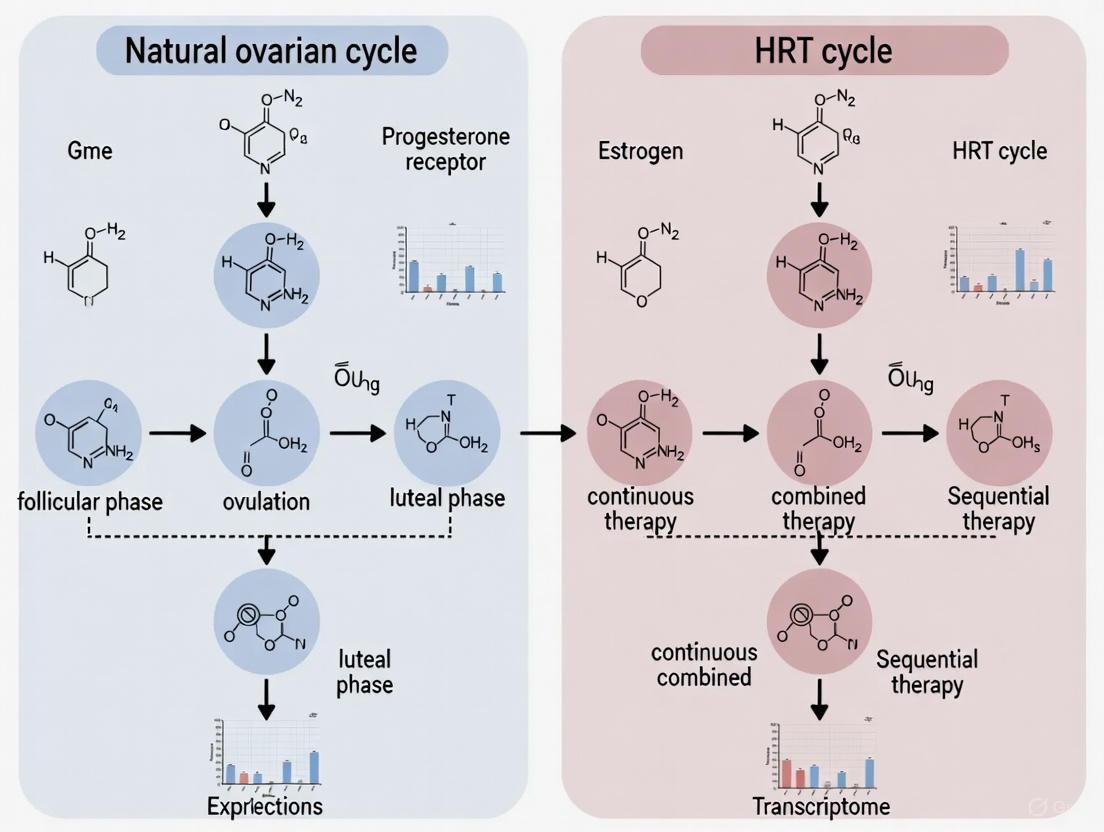
This review synthesizes current transcriptomic and clinical research comparing natural cycles (NC) and hormone replacement therapy (HRT) cycles for endometrial preparation in frozen embryo transfer (FET).
Decoding Endometrial Receptivity: A Comprehensive Transcriptomic Comparison of Natural and HRT Cycles in Frozen Embryo Transfer
Abstract
This review synthesizes current transcriptomic and clinical research comparing natural cycles (NC) and hormone replacement therapy (HRT) cycles for endometrial preparation in frozen embryo transfer (FET). For researchers and drug development professionals, we explore the foundational molecular signatures defining the window of implantation (WOI) in both cycle types, methodological advances in receptivity diagnostics like RNA-seq-based ERD models, and troubleshooting strategies for recurrent implantation failure (RIF) involving WOI displacement. Clinical validation data from recent randomized trials, including the COMPETE study, are presented, demonstrating that NC protocols are associated with significantly higher live birth rates and lower risks of miscarriage and antepartum hemorrhage in ovulatory women. This analysis underscores the critical influence of endometrial preparation on IVF success and the growing importance of personalized, transcriptome-guided embryo transfer strategies.
Molecular Foundations of the Window of Implantation: Defining the Receptive Transcriptome in Natural and HRT Cycles
Fundamental Concepts and Clinical Significance
Endometrial receptivity describes the intricate process undertaken by the uterine lining to prepare for the implantation of an embryo. The accepted definition is "the period of endometrial maturation during which the trophectoderm of the blastocyst can attach to the endometrial epithelial cells and subsequently invade the endometrial stroma and vasculature" [1]. This period of optimal receptivity, paired with an embryo's readiness to implant, is commonly referred to as the "window of implantation" (WOI) and generally occurs between days 20 and 24 of a normal 28-day menstrual cycle [1].
Successful implantation requires a receptive endometrium, a functional embryo, and synchronized cross-talk between maternal and embryonic tissues [1]. The preparation of a receptive endometrium is established by sequential exposure to estrogen and progesterone. Estrogen signals the proliferation of the endometrial lining during the preovulatory phase, while progesterone induces major cellular changes within the endometrium that create a receptive environment [1]. When synchrony is lost or receptivity is not achieved, the consequence is early pregnancy loss or infertility [1]. Approximately 60% of recurrent implantation failure (RIF) cases can be attributed to abnormal endometrial receptivity, often presenting as displacement of the WOI [2].
Assessment Methodologies: From Histology to Transcriptomics
The assessment of endometrial receptivity has evolved significantly from traditional methods to modern molecular approaches, as compared in Table 1.
Table 1: Comparison of Endometrial Receptivity Assessment Methods
| Method | Basis of Assessment | Key Markers/Features | Advantages | Limitations |
|---|---|---|---|---|
| Histological Dating [1] [3] | Morphological changes | Endometrial gland development, stromal characteristics | Established historical method | Poor reproducibility and accuracy [2] |
| Ultrasonography [1] [3] | Endometrial morphology and blood flow | Endometrial thickness, pattern, subendometrial blood flow | Non-invasive, widely available | Limited molecular information |
| Pinopode Analysis [3] | Electron microscopy of surface structures | Presence and development stage of pinopodes | Direct visualization of apical structures | Invasive, subjective assessment criteria |
| Molecular Marker Analysis [3] | Protein expression | Integrin αvβ3, osteopontin, HOXA10, LIF | Specific molecular targets | Limited to preselected markers |
| Endometrial Receptivity Array (ERA) [4] [5] [2] | Transcriptomic signature | 238-gene panel (commercial test) | Personalized WOI identification, improved outcomes in RIF | Invasive biopsy required, cost |
| RNA-Seq Based Tests [6] [2] | Whole transcriptome analysis | 175+ biomarker genes (research tools) | Comprehensive, no preselection bias | Emerging technology, validation ongoing |
| Uterine Fluid Extracellular Vesicles [6] | EV transcriptomics | Differential gene expression patterns | Non-invasive sampling | Research phase, requires validation |
Molecular Markers of Receptivity
Advanced research has identified specific molecular biomarkers critical for endometrial receptivity:
- Pinopodes: These "balloon-like" membrane protrusions appear during the implantation window, with their development and regression closely tied to progesterone levels. Studies show that patients with incomplete pinopode expression (<85 count) have significantly higher rates of miscarriage and RIF [3].
- Integrin αvβ3 and Osteopontin: This integrin subtype and its ligand are key adhesion molecules crucial for embryo implantation. Their dysfunction is associated with infertility, particularly in RIF and PCOS [3].
- HOXA10: A transcription factor that regulates endometrial receptivity and embryo implantation by affecting integrin αvβ3 expression. HOXA10 imbalance can impair implantation, leading to infertility and miscarriage [3].
- Leukemia Inhibitory Factor (LIF): A pleiotropic cytokine critical for multiple implantation processes, including decidualization, pinopod expression, and trophoblast differentiation. Insufficient LIF levels lead to implantation failure [3].
Transcriptomic Profiling: Natural Cycle versus HRT
The molecular landscape of endometrial receptivity differs significantly between natural cycles (NC) and hormone replacement therapy (HRT) cycles, forming a critical research focus for optimizing frozen embryo transfer (FET) outcomes.
Clinical Outcome Comparisons
Recent high-quality studies directly compare NC and HRT protocols for endometrial preparation:
Table 2: Clinical Outcomes of Natural Cycle versus HRT for Endometrial Preparation
| Outcome Measure | Natural Cycle Results | HRT Results | Statistical Significance | Study Reference |
|---|---|---|---|---|
| Live Birth Rate | 54.0% | 43.0% | RR 1.26 (95% CI 1.10-1.44) [7] | COMPETE RCT [8] [7] |
| Clinical Pregnancy Rate | 64.5% | 58.3% | P = 0.025 [5] | Large Retrospective Analysis [5] |
| Miscarriage Rate | Lower incidence | Higher incidence | RR 0.61 (95% CI 0.41-0.89) [7] | COMPETE RCT [7] |
| Antepartum Hemorrhage | Lower incidence | Higher incidence | RR 0.63 (95% CI 0.42-0.93) [7] | COMPETE RCT [7] |
| Gestational Diabetes | Potentially higher risk | Potentially lower risk | P < 0.05 [9] | Propensity-Matched Study [9] |
The COMPETE randomized controlled trial demonstrated that in women with regular menstrual cycles, NC endometrial preparation resulted in significantly higher live birth rates (54.0% vs. 43.0%, RR 1.26) compared to HRT [7]. This large RCT also found lower risks of miscarriage and antepartum hemorrhage in the NC group [7]. However, some studies suggest NC may be associated with a higher probability of gestational diabetes, indicating the need for careful protocol selection based on patient factors [9].
Transcriptomic Differences
Transcriptomic analyses reveal fundamental differences in gene expression profiles between NC and HRT cycles:
Diagram 1: Biological Pathways Differentiating NC and HRT Cycles
The absence of the corpus luteum in HRT cycles results in reduced secretion of vasoactive substances like vascular endothelial growth factor and relaxin, potentially explaining the differences in obstetric outcomes [7]. Additionally, ovarian hyperstimulation in some protocols leads to supraphysiological levels of estrogen and progesterone, which alter gene expression and trigger rapid transformation to a secretory endometrium, creating asynchrony with embryo development [1].
WOI Displacement and Personalized Embryo Transfer
Incidence and Impact of WOI Displacement
Research indicates that approximately 28% of RIF patients exhibit a displaced implantation window, primarily characterized by pre-receptive endometrium [4]. A larger retrospective analysis of 782 patients found that age and the number of previous failed embryo transfer cycles were positively correlated with displaced WOI, with rates increasing gradually with these factors [5]. This displacement leads to embryo-endometrial asynchrony, which typically results in implantation failure or RIF [2].
ERA-Guided Personalized Transfer
Endometrial receptivity analysis (ERA) has emerged as a molecular diagnostic tool to identify individual WOI timing:
Diagram 2: ERA Testing and Personalized Embryo Transfer Workflow
Studies demonstrate significant improvements in pregnancy outcomes with ERA-guided personalized embryo transfer (pET). In RIF patients, pET resulted in significantly higher clinical pregnancy rates (62.7% vs. 49.3%, P < 0.001) and live birth rates (52.5% vs. 40.4%, P < 0.001) compared to non-personalized transfer [5]. Similarly, a prospective study showed that pET guided by an RNA-Seq-based endometrial receptivity test (rsERT) significantly improved the intrauterine pregnancy rate in RIF patients transferring day-3 embryos (50.0% vs. 23.7%, RR 2.107) [2].
Advanced Research Technologies and Methods
Emerging Assessment Approaches
Uterine Fluid Extracellular Vesicles (UF-EVs): Recent research explores the transcriptomic profiling of extracellular vesicles isolated from uterine fluid as a non-invasive alternative to endometrial biopsies. A Bayesian logistic regression model integrating UF-EV gene expression modules with clinical variables achieved a predictive accuracy of 0.83 for pregnancy outcome [6].
Multi-omics Integration: Advanced studies now integrate transcriptomics, proteomics, and metabolomics to comprehensively analyze endometrial receptivity dynamics. Machine learning models combining multi-omics data have demonstrated high predictive accuracy (AUC > 0.9) for assessing receptivity status [10].
Single-cell and Spatial Transcriptomics: These technologies resolve cellular heterogeneity and localized molecular interactions within the endometrium, such as lncRNA H19 enrichment in endometrial stroma, providing unprecedented resolution of receptivity-associated changes [10].
The Scientist's Toolkit: Essential Research Reagents
Table 3: Key Research Reagent Solutions for Endometrial Receptivity Studies
| Reagent/Category | Specific Examples | Research Application | Function in Experimental Workflow |
|---|---|---|---|
| High-Throughput Sequencing Kits | RNA-Seq library preparation kits | Transcriptomic profiling | Comprehensive gene expression analysis of endometrial tissue or UF-EVs [6] [2] |
| Microarray Platforms | Custom ERA arrays (238 genes) | Targeted receptivity assessment | Clinical ERA testing for WOI identification [5] [2] |
| Hormone Formulations | Estradiol valerate, micronized progesterone | HRT cycle simulation | Creating artificial cycles for comparative transcriptome studies [8] [7] |
| RNA Stabilization Reagents | RNAlater, PAXgene Tissue systems | Sample preservation | Maintaining RNA integrity from biopsy collection to processing [2] |
| Cell Culture Media | Stromal cell decidualization media | In vitro modeling | Studying molecular mechanisms of receptivity in controlled systems |
| Extracellular Vesicle Isolation Kits | Ultracentrifugation, precipitation, size exclusion | UF-EV research | Isolving vesicles from uterine fluid for non-invasive assessment [6] |
| Immunoassay Kits | ELISA for LIF, integrins, osteopontin | Protein marker validation | Quantifying key receptivity biomarkers [3] |
The assessment of endometrial receptivity and the window of implantation has evolved from morphological evaluation to sophisticated transcriptomic analyses. The comparison between natural and HRT cycles reveals significant differences in molecular profiles and clinical outcomes, with natural cycles demonstrating advantages in live birth rates for ovulatory women. ERA-guided personalized embryo transfer represents a significant advancement for patients with recurrent implantation failure, addressing the approximately 28% of cases with displaced WOI. Emerging technologies focusing on non-invasive assessment through uterine fluid extracellular vesicles and multi-omics integration promise to further refine our understanding of endometrial receptivity and improve assisted reproductive outcomes.
Core Transcriptomic Signatures of the Receptive Endometrium in Natural Cycles
In the realm of assisted reproductive technology (ART), a receptive endometrium is a critical determinant of successful embryo implantation and pregnancy [11]. The window of implantation (WOI) is a transient period during the mid-secretory phase when the endometrium acquires a receptive phenotype, enabling the complex embryo-maternal cross-talk necessary for pregnancy establishment [11] [6]. Impaired uterine receptivity is believed to be a major cause of implantation failure, even when high-quality embryos are transferred [11].
Extensive research over the past 15 years has utilized transcriptomic technologies to characterize the molecular signature of a receptive endometrium [11]. This guide objectively compares the core transcriptomic signatures of the receptive endometrium in natural cycles, providing a foundational comparison for research on natural versus hormone replacement therapy (HRT) cycle transcriptomes. The molecular landscape is distinct from that of stimulated cycles, with significant implications for drug development and diagnostic test creation [11] [12].
Core Transcriptomic Signature of Receptivity in Natural Cycles
The transition from pre-receptive to receptive endometrium involves significant gene expression changes. In natural cycles, the WOI typically opens around day 7 after the luteinizing hormone (LH) surge and lasts approximately 48 hours [11]. Transcriptomic profiling reveals hundreds of genes that are systematically up-regulated or down-regulated during this critical period.
Key Gene Expression Changes
Table 1: Transcriptomic Changes During the Window of Implantation in Natural Cycles
| Study Reference | Participants | Comparison | Number of Up-regulated Genes | Number of Down-regulated Genes |
|---|---|---|---|---|
| Carson et al. [11] | Fertile volunteers | ES vs MS | 323 | 370 |
| Riesewijk et al. [11] | Fertile volunteers | ES vs MS | 153 | 58 |
| Talbi et al. [11] | Normo-ovulatory women | ES vs MS | 1415 | 1463 |
| Diaz-Gimeno et al. [11] | Fertile donors | ES vs MS | 143 | 95 |
Table 2: Functional Classification of Differentially Expressed Genes
| Functional Category | Representative Genes | Biological Role in Implantation |
|---|---|---|
| Adhesion Factors | LIF, Integrins | Enhancement of embryo attachment to endometrial epithelium |
| Immune Modulation | Chemokines, Cytokines | Regulation of maternal immune tolerance to semi-allogeneic embryo |
| Metabolic Pathways | Transporters, Enzymes | Provision of nutritional support for early embryo development |
The molecular signature of receptivity encompasses genes involved in adhesion, invasion, survival, growth, differentiation, decidualization, and immuno-modulation [11]. The correct spatio-temporal synthesis and balance of these factors plays a crucial role in uterine preparation for implantation [11]. Recent spatial transcriptomics studies have revealed that these molecular changes occur in specific endometrial regions and cell types, with distinct patterns in luminal epithelium, glandular epithelium, and stromal compartments [13].
Natural Cycle vs. HRT Cycle: Transcriptomic and Clinical Outcomes
The molecular differences between natural and HRT cycles extend beyond transcriptomic profiles to significant clinical outcomes. The COMPETE randomized controlled trial demonstrated that in ovulatory women, natural cycle frozen embryo transfer resulted in a significantly higher live birth rate (54.0%) compared to HRT cycles (43.0%), with an absolute difference of 11.1 percentage points [7] [8]. Natural cycles were also associated with lower miscarriage rates and reduced antepartum hemorrhage [7].
Molecular Basis for Outcome Differences
The superior outcomes with natural cycles may be attributed to several molecular factors absent in HRT cycles:
- Corpus Luteum Factors: Natural cycles provide the full complement of vasoactive substances like vascular endothelial growth factor and relaxin secreted by the corpus luteum, which are absent in HRT cycles [7].
- Transcriptomic Discrepancies: Studies comparing natural and stimulated cycles have identified hundreds of differentially expressed genes between these conditions [11]. Horcajadas et al. reported 874 up-regulated and 505 down-regulated genes when comparing natural versus controlled ovarian stimulation cycles [11].
- Endometrial Maturation: HRT cycles may induce alterations in the normal progression of endometrial maturation, potentially displacing the WOI [12].
Advanced Transcriptomic Profiling Technologies
Recent advances in transcriptomic technologies have enabled more precise characterization of endometrial receptivity.
Targeted Gene Expression Profiling
The beREADY assay utilizes Targeted Allele Counting by sequencing (TAC-seq) technology to analyze 72 genes (57 endometrial receptivity biomarkers, 11 additional WOI-relevant genes, and 4 housekeeper genes) [12]. This method enables sensitive, dynamic detection of transcriptome biomarkers with single-molecule resolution, providing quantitative prediction of endometrial receptivity status [12].
Table 3: Performance Metrics of Transcriptomic Tests for Endometrial Receptivity
| Test Parameter | beREADY Assay Performance | Clinical Significance |
|---|---|---|
| Classification Accuracy | 98.8% (cross-validation) | High reliability in identifying WOI status |
| Displaced WOI in Fertile Women | 1.8% | Establishes baseline prevalence in healthy population |
| Displaced WOI in RIF Patients | 15.9% | Identifies significant molecular etiology in infertile population |
Non-Invasive Alternatives: Uterine Fluid Extracellular Vesicles
A promising non-invasive approach involves analyzing extracellular vesicles isolated from uterine fluid (UF-EVs) [6]. The transcriptomic profile of UF-EVs strongly correlates with that of endometrial tissue biopsies, providing a less invasive method for receptivity assessment [6]. RNA-sequencing of UF-EVs has identified 966 differentially expressed genes between women who achieved pregnancy and those who did not after euploid blastocyst transfer [6].
Spatial Transcriptomics for Regional Analysis
Spatial transcriptomics technologies like the NanoString GeoMx platform enable region-specific and cell-type-specific analysis of endometrial gene expression [13]. This approach has revealed that women with recurrent implantation failure (RIF) have specific alterations in different endometrial regions that are overlooked when analyzing homogenized endometrium [13]. Studies comparing RIF versus fertile controls have identified:
- 685 differentially expressed genes in luminal epithelium
- 293 differentially expressed genes in glandular epithelium
- 419 differentially expressed genes in subluminal stroma
- 1,125 differentially expressed genes in subluminal stromal CD45+ leukocytes [13]
Workflow for Transcriptomic Analysis of Endometrial Receptivity
Dysregulated Pathways in Implantation Failure
Spatial transcriptomic analyses have identified specific pathway dysregulations in women with recurrent implantation failure. These include:
- WNT Signaling Pathway: Altered in both functionalis and subluminal stroma [13]
- Response to Estradiol: Dysregulated in subluminal stroma [13]
- Ovulation Cycle Pathways: Impaired in subluminal stromal regions [13]
- Immune Response Pathways: Significant dysregulation observed in CD45+ leukocyte populations [13]
Key Signaling Pathways in Endometrial Receptivity
The Scientist's Toolkit: Essential Research Reagents and Platforms
Table 4: Essential Research Tools for Endometrial Receptivity Studies
| Tool Category | Specific Products/Platforms | Research Application |
|---|---|---|
| Transcriptomic Profiling Platforms | Affymetrix HG-U133 Plus 2.0, Agilent Whole Human Genome Oligo Microarray, Illumina TAC-seq | Genome-wide expression analysis and targeted biomarker detection |
| Spatial Transcriptomics | NanoString GeoMx Digital Spatial Profiler | Region-specific and cell-type-specific gene expression analysis |
| Non-Invasive Sampling | Uterine Fluid Extracellular Vesicle (UF-EV) Isolation Kits | Transcriptomic analysis of uterine fluid as surrogate for tissue biopsy |
| Computational Analysis Tools | Weighted Gene Co-expression Network Analysis (WGCNA), Gene Set Enrichment Analysis (GSEA) | Identification of co-expression modules and pathway enrichment |
| Endometrial Receptivity Tests | ERA test (Igenomix), ER Map test (IGLS), WIN-Test (INSERM), beREADY assay | Clinical assessment of window of implantation timing |
The core transcriptomic signature of the receptive endometrium in natural cycles represents a highly coordinated molecular program essential for successful embryo implantation. Advanced transcriptomic technologies continue to refine our understanding of this critical biological process, revealing increasingly complex regional and cell-type-specific patterns. The significant molecular differences between natural and HRT cycles, coupled with the superior clinical outcomes observed with natural cycles in ovulatory women, underscore the importance of maintaining physiological endocrine environments in ART. Future research should focus on leveraging these transcriptomic signatures to develop personalized approaches to endometrial preparation that optimize implantation potential while minimizing obstetric risks.
Gene Expression Signatures and Window of Implantation Dynamics
The window of implantation (WOI) is a critical, transient period when the endometrium is receptive to embryo attachment. Transcriptome analysis reveals that the hormonal environment significantly influences the timing and molecular signature of this window.
WOI Displacement in HRT Cycles
Studies investigating recurrent implantation failure (RIF) patients have found a high incidence of displaced WOI in HRT cycles. One transcriptome-based assessment of endometrial receptivity found that 67.5% (27/40) of RIF patients were non-receptive on the conventional progesterone administration day (P+5) in an HRT cycle [14]. After personalized embryo transfer (pET) guided by an endometrial receptivity diagnostic (ERD) model, the clinical pregnancy rate in these RIF patients improved to 65% (26/40), underscoring the functional impact of this displacement [14]. Another study using the beREADY classification model reported a significantly higher proportion of displaced WOI in an RIF group compared to fertile women (15.9% vs. 1.8%, p=0.012) [12]. This suggests that the HRT protocol may be associated with a higher degree of asynchrony in a subset of patients.
Conserved vs. Aberrant Gene Expression Patterns
Despite different underlying physiology, research indicates that core endometrial receptivity (ER)-related genes can exhibit similar expression patterns during the WOI in both NC and HRT cycles [14]. However, aberrant expression of specific genes in HRT cycles is linked to WOI displacement. A study of RIF patients identified 10 differentially expressed genes (DEGs) involved in immunomodulation, transmembrane transport, and tissue regeneration that could accurately classify endometrium with advanced, normal, or delayed WOI [14]. Furthermore, a separate analysis confirmed that the expression profiles of essential endometrial receptivity biomarkers in PCOS patients showed no significant difference from healthy controls, indicating that the HRT protocol itself, rather than specific patient factors like PCOS, can be a primary driver of transcriptomic variation [12].
| Analysis Type | Key Findings | Associated Functional Pathways | Reference |
|---|---|---|---|
| WOI Displacement Analysis | 67.5% of RIF patients were non-receptive on conventional P+5 day in HRT cycles. | Immunomodulation, Transmembrane Transport, Tissue Regeneration | [14] |
| Gene Expression Profiling | 10 DEGs identified that classify advanced, normal, and delayed WOI in HRT cycles. | Leukocyte Extravasation Signalling, Lipid Metabolism, Detoxification | [14] |
| Functional Pathway Analysis | Dysregulated genes in infertile women were enriched in transport (18.8%) and transporter activity (13.1%). | Cellular Localization, Transport, Extracellular Matrix Organization | [15] |
Experimental Protocols for Transcriptome Comparison
Accurate profiling of endometrial gene expression requires standardized methodologies for sample collection, processing, and data analysis. The following section details key experimental workflows.
Endometrial Biopsy and Sample Processing
Endometrial tissue sampling is typically performed via pipelle biopsy during the mid-secretory phase, timed as either LH+7 in a natural cycle or P+5 in an HRT cycle. The tissue is immediately snap-frozen in liquid nitrogen and stored at -80°C until RNA extraction. Total RNA is then isolated using commercial kits, with quality and quantity assessed via spectrophotometry and microfluidics-based analysis.
Transcriptome Analysis Workflow
The core analysis involves several steps. For RNA sequencing (RNA-Seq), libraries are prepared from total RNA and sequenced on a high-throughput platform. For targeted approaches like the TAC-seq method used in the beREADY test, cDNA is synthesized and specific biomarker panels are amplified and sequenced. Bioinformatic processing includes aligning reads to a reference genome, quantifying gene expression, and performing differential expression analysis. Computational models then classify the samples into receptivity categories (pre-receptive, receptive, post-receptive) based on trained classifiers.
Figure 1: Transcriptome Analysis Workflow
Clinical Outcomes: Live Birth and Complications
The molecular differences between NC and HRT protocols manifest in significant disparities in clinical success rates and obstetric safety profiles.
Efficacy: Live Birth and Pregnancy Rates
The COMPETE trial, a large randomized controlled trial, demonstrated a clear superiority of NC over HRT in ovulatory women. The intention-to-treat analysis showed a live birth rate of 54.0% in the NC group compared to 43.0% in the HRT group, representing an absolute difference of 11.1 percentage points and a risk ratio of 1.26 [7] [16]. Furthermore, the NC protocol was associated with a substantially lower risk of miscarriage compared to HRT.
Safety: Maternal and Neonatal Complications
Retrospective cohort studies and the COMPETE trial indicate that HRT cycles are associated with an increased risk of several obstetric and neonatal complications. A study of 6,886 singleton live births found that, after adjusting for confounders, the HRT group had a significantly higher risk of hypertensive disorders of pregnancy and preterm birth compared to the NC group [17]. The COMPETE trial further reported a lower rate of antepartum hemorrhage in the NC group [7]. These findings are summarized in the table below.
| Outcome Measure | Natural Cycle (NC) | Hormone Replacement Therapy (HRT) | Effect Size (RR, aOR, or Absolute Difference) | Reference |
|---|---|---|---|---|
| Live Birth Rate | 54.0% | 43.0% | RR 1.26 (95% CI 1.10 to 1.44) | [7] [16] |
| Miscarriage Rate | Lower | Higher | RR 0.61 (95% CI 0.41 to 0.89) | [7] [16] |
| Antepartum Hemorrhage | Lower | Higher | RR 0.63 (95% CI 0.42 to 0.93) | [7] |
| Hypertensive Disorders | Lower | Higher | aOR 2.00 (95% CI 1.54 to 2.60) | [17] |
| Preterm Birth | Lower | Higher | aOR 1.78 (95% CI 1.39 to 2.28) | [17] |
Molecular Pathways and Putative Mechanisms
The divergence in clinical outcomes between NC and HRT is likely rooted in fundamental molecular differences driven by the presence or absence of the corpus luteum.
The Corpus Luteum and Vasoactive Substance Hypothesis
A leading hypothesis to explain the poorer outcomes in HRT cycles is the absence of the corpus luteum. The corpus luteum, present in ovulatory cycles like NC, secretes not only progesterone but also a range of vasoactive substances, such as vascular endothelial growth factor (VEGF) and relaxin [7] [17]. These substances are thought to be crucial for maternal cardiovascular adaptation to pregnancy, and their deficiency in HRT cycles may predispose patients to hypertensive disorders and impaired placental development [7] [18].
Key Dysregulated Pathways
Transcriptomic analyses point to specific biological pathways that are dysregulated in HRT cycles or in association with infertility. Studies have identified significant alterations in genes involved in leukocyte extravasation signaling, a process critical for immune modulation during implantation [15]. Furthermore, pathways related to cellular transport and transporter activity are notably affected, which could impact the secretion of endometrial factors necessary for embryo communication [15]. These pathway disruptions, visualized below, provide a molecular rationale for the observed clinical differences.
Figure 2: Mechanistic Pathways in NC vs. HRT Outcomes
The Scientist's Toolkit: Key Research Reagents & Materials
| Item | Function in Research | Example Application |
|---|---|---|
| RNA Extraction Kit | Isolation of high-quality total RNA from endometrial biopsy tissue. | Preparing samples for RNA-Seq or targeted transcriptome analysis. [12] [14] |
| Reverse Transcription Kit | Synthesis of complementary DNA (cDNA) from purified RNA templates. | First step in library preparation for sequencing. [12] [19] |
| Targeted Sequencing Panel | Amplification and analysis of a defined set of biomarker genes. | High-sensitivity WOI classification using tests like beREADY. [12] |
| Estradiol Valerate | Exogenous estrogen for building the endometrium in HRT protocol models. | Creating artificial cycles in clinical or preclinical studies. [7] [17] |
| Vaginal Micronized Progesterone | Exogenous progesterone for secretory transformation in HRT cycles. | Luteal phase support in HRT protocol models. [7] [18] |
| Computational Classification Model | Software algorithm to interpret gene expression data and predict receptivity status. | Determining WOI (pre-receptive, receptive, post-receptive) from transcriptomic data. [12] [14] |
The comparison between Natural Cycle and Hormone Replacement Therapy for endometrial preparation reveals a clear dichotomy at both molecular and clinical levels. Transcriptomic profiling establishes that the HRT protocol is associated with a higher incidence of a displaced window of implantation and aberrant gene expression in pathways critical for immune regulation and cellular communication. Clinically, this translates to a significantly lower live birth rate and a higher risk of miscarriage and obstetric complications, such as hypertensive disorders and preterm birth, compared to the Natural Cycle. The absence of the corpus luteum and its associated vasoactive substances in HRT cycles presents a compelling mechanistic hypothesis for these observed deficits. For researchers and clinicians, these findings underscore the importance of the hormonal environment in shaping endometrial receptivity and suggest that for ovulatory women, a Natural Cycle approach should be the preferred strategy to optimize FET success and safety.
The molecular characterization of endometrial receptivity has become a cornerstone of reproductive medicine, particularly for patients experiencing recurrent implantation failure (RIF). This review synthesizes current evidence comparing the transcriptomic landscapes of natural versus artificial hormone replacement therapy (HRT) cycles, with focused analysis on VEGF signaling, integrin function, and immunomodulatory gene networks. We present quantitative data from recent clinical trials and molecular studies that demonstrate the superiority of natural cycles in promoting a receptive endometrial environment, supported by biomarker discovery and pathway analysis. The integration of transcriptomic biomarkers into personalized embryo transfer protocols has significantly improved pregnancy outcomes, offering a paradigm shift from standardized to precision medicine in assisted reproduction.
The success of embryo implantation depends on a synchronized dialogue between a viable embryo and a receptive endometrium, a transient period known as the window of implantation (WOI) [2]. The molecular events governing endometrial receptivity are orchestrated by complex signaling pathways and biomarkers, including vascular endothelial growth factor (VEGF), integrins, and various immunomodulatory genes [20] [2]. With the increasing utilization of frozen embryo transfer (FET) in assisted reproductive technology, optimal endometrial preparation has become a critical focus of research [7] [8].
Two primary protocols dominate clinical practice: natural cycles (NC) and artificial cycles with hormone replacement therapy (HRT). While HRT offers scheduling convenience, emerging evidence suggests that the supraphysiological hormone levels in these cycles may alter the endometrial transcriptome in ways that compromise receptivity [21] [22]. This review systematically compares these protocols through the lens of modern transcriptomics, focusing on key signaling pathways and biomarkers that define the receptive endometrium, with particular emphasis on their implications for patients experiencing recurrent implantation failure.
Comparative Analysis of Endometrial Preparation Protocols
Clinical Outcomes: Natural Cycles vs. HRT
Recent high-quality evidence demonstrates significant clinical advantages for natural cycle endometrial preparation in ovulatory women. The COMPETE randomized controlled trial, comprising 902 women, revealed striking differences in reproductive outcomes between the two protocols [7] [8].
Table 1: Clinical Outcomes from the COMPETE RCT (N=902)
| Outcome Measure | Natural Cycle (n=448) | HRT Cycle (n=454) | Risk Ratio (95% CI) | Absolute Difference (95% CI) |
|---|---|---|---|---|
| Live Birth Rate | 54.0% (242/448) | 43.0% (195/454) | 1.26 (1.10 to 1.44) | 11.1% (4.6 to 17.5) |
| Miscarriage Rate | 8.3% (37/448) | 13.4% (61/454) | 0.61 (0.41 to 0.89) | -5.2% (-9.3 to -1.0) |
| Antepartum Hemorrhage | 9.2% (41/448) | 14.5% (66/454) | 0.63 (0.42 to 0.93) | -5.3% (-9.4 to -1.3) |
The COMPETE trial investigators concluded that "hormone replacement treatment should not be prioritized in women with regular menstrual cycle undergoing FET as it is associated with lower live birth rate and potentially higher risks of obstetric and perinatal complications" [8]. The observed reduction in miscarriage rates and antepartum hemorrhage in natural cycles suggests fundamental differences in endometrial development and placental establishment between the protocols.
Transcriptomic Profiles of Endometrial Receptivity
Molecular analyses provide mechanistic insights into the clinical advantages observed in natural cycles. Multiple transcriptomic studies have revealed significant differences in gene expression profiles between natural and HRT cycles during the window of implantation [21] [22].
Table 2: Transcriptomic Differences Between Natural and HRT Cycles
| Molecular Feature | Natural Cycles | HRT Cycles | Functional Implications |
|---|---|---|---|
| Overall Transcriptome | More favorable receptivity signature [21] | Disrupted expression patterns [21] | Improved embryo-endometrial dialogue in NC |
| WOI Displacement Rate | Lower incidence [22] | 67.5% of RIF patients non-receptive at P+5 [22] | Higher synchronization failure in HRT |
| VEGF Pathway Genes | Balanced expression [20] | Altered signaling dynamics [23] | Abnormal vascular maturation in HRT |
| Immune Response Genes | Appropriate regulation [20] | Dysregulated interleukin signaling [21] | Impaired maternal immune tolerance |
| Matrix Metalloproteinases | Physiological expression [21] | Significant downregulation [21] | Defective extracellular remodeling |
A study examining endometrial transcriptomes in recurrent implantation failure patients found that "natural cycles are associated with a better endometrial receptivity transcriptome than artificial cycles" [21]. The researchers noted that artificial cycles appeared to have a stronger negative effect on genes and pathways crucial for endometrial receptivity, including ESR2, FSHR, LEP, and several interleukins and matrix metalloproteinases.
The high rate of window of implantation displacement in HRT cycles is particularly noteworthy. One study found that 67.5% of RIF patients (27/40) were non-receptive at the conventional timing (P+5) in HRT cycles, necessitating personalized adjustment of transfer timing [22]. After implementing transcriptome-guided personalized embryo transfer, the clinical pregnancy rate in these RIF patients improved to 65%, demonstrating the clinical impact of accounting for these molecular differences.
Key Signaling Pathways in Endometrial Receptivity
VEGF Signaling Pathway
The vascular endothelial growth factor family comprises central mediators of vasculogenesis and angiogenesis, with VEGF-A being the most extensively studied member [24] [20]. VEGF signaling occurs primarily through two receptor tyrosine kinases: VEGFR1 (Flt-1) and VEGFR2 (KDR/Flk-1), with VEGFR2 serving as the main signaling receptor for VEGF-A-mediated mitogenesis and permeability [24].
VEGF Isoforms and Receptors: VEGF-A undergoes alternative splicing to generate multiple isoforms with distinct properties: VEGF121 is highly diffusible, VEGF165 is partially ECM-bound, and VEGF189 and VEGF206 are strongly heparin-binding and ECM-associated [24]. The VEGF165 isoform is the most physiologically relevant and abundant in human tissues. VEGF receptors include VEGFR1, which can function as a decoy receptor, VEGFR2 as the primary signaling receptor, and neuropilin co-receptors that enhance binding affinity [24] [20].
In the context of endometrial receptivity, VEGF signaling plays a dual role: it promotes the vascular permeability necessary for implantation while facilitating the intricate vascular remodeling required for successful placentation [20]. Studies suggest that the balanced expression of VEGF and its receptors in natural cycles supports appropriate endometrial vascular function, while disrupted signaling in HRT cycles may contribute to the observed increase in obstetric complications [7] [21].
Diagram 1: VEGF Signaling Pathway in Endometrial Receptivity. VEGF-A signals primarily through VEGFR2, with neuropilin-1 (NRP1) acting as a co-receptor. Key downstream effects include enhanced vascular permeability, endothelial cell proliferation, and survival, all critical for implantation.
Integrins and Extracellular Matrix Remodeling
Integrins, a family of cell adhesion molecules, facilitate endometrial-trophoblast interaction and extracellular matrix remodeling during implantation. While specific integrin data was limited in the available literature, transcriptomic studies consistently identify extracellular matrix organization and cell adhesion as biological processes significantly disrupted in HRT cycles compared to natural cycles [21].
The abnormal expression of matrix metalloproteinases (MMPs) and their inhibitors in HRT cycles suggests compromised endometrial remodeling capacity [21]. This molecular deficit may manifest functionally as impaired embryo invasion and inadequate placental development, potentially explaining the higher rates of antepartum hemorrhage observed in HRT cycles [7] [8].
Immunomodulatory Genes and Maternal-Fetal Interface
The establishment of maternal-fetal tolerance involves sophisticated regulation of immune cell populations and cytokine networks at the implantation site. Natural killer (NK) cells, macrophages, and T lymphocytes play crucial roles in this process, guided by precise chemokine signaling [20].
Key Immunological Regulators:
- PlGF (Placental Growth Factor): Influences uterine natural killer cell proliferation and differentiation, and promotes Th17 cell differentiation through VEGFR1 activation [20].
- VEGF-C: Enhances CD8+ T cell responses through VEGFR3 signaling, potentially improving anti-tumor immunity but having complex effects in reproduction [20].
- Interleukins and Cytokines: Multiple interleukin pathways show disrupted expression in HRT cycles, potentially compromising the delicate immune balance required for successful implantation [21].
The presence of a corpus luteum in natural cycles appears critical for appropriate immune cell function, potentially through the secretion of vasoactive substances like VEGF and relaxin [7] [8]. HRT cycles, which lack corpus luteum formation, may consequently display aberrant immune profiles at the maternal-fetal interface.
Experimental Approaches and Methodologies
Transcriptomic Profiling Techniques
Advanced genomic technologies have revolutionized endometrial receptivity research by enabling comprehensive molecular characterization of the window of implantation.
RNA Sequencing (RNA-Seq): Next-generation sequencing provides ultra-high sensitivity, accurate quantification, and whole-transcriptome analysis without predetermined gene sets [2]. This approach identified 175 biomarker genes for endometrial receptivity, achieving 98.4% accuracy in predicting the WOI [2].
Single-Cell RNA Sequencing (scRNA-seq): This cutting-edge methodology resolves cellular heterogeneity within endometrial tissue by profiling individual cells. Recent applications have revealed VEGF-mediated communication networks between fibroblasts, macrophages, and endothelial cells in response to therapy [23]. The experimental workflow typically involves:
- Single-cell isolation from tissue samples using enzymatic digestion
- Microfluidic partitioning and barcoding
- cDNA library preparation and amplification
- High-throughput sequencing
- Bioinformatic analysis including clustering, differential expression, and cell-cell communication inference [23]
Endometrial Receptivity Array (ERA): This customized microarray-based test analyzes the expression of 238 genes to determine endometrial receptivity status [2]. While commercially available, RNA-seq methods offer advantages in comprehensiveness and quantification accuracy [22].
Clinical Trial Designs
- Study Type: Single-center, open-label, parallel-group randomized controlled trial
- Participants: 902 women with regular menstrual cycles scheduled for FET
- Intervention: Natural cycle (n=448) vs. HRT cycle (n=454) endometrial preparation
- Primary Outcome: Live birth rate after initial FET
- Methodological Strength: Randomized design, intention-to-treat analysis, large sample size
- Limitation: Permitted crossover between arms under specific conditions
Personalized Embryo Transfer Studies: [2] [22]
- Design: Prospective, nonrandomized controlled trials
- Approach: Endometrial receptivity diagnosis-guided timing vs. conventional timing
- Population: Patients with recurrent implantation failure
- Outcome: Significantly improved pregnancy rates with personalized timing (50.0% vs. 23.7% for day-3 embryos)
Diagram 2: Experimental Workflow for Endometrial Receptivity Transcriptomics. The process involves sample collection from natural cycle and HRT participants, followed by RNA extraction, sequencing, bioinformatic analysis, and clinical application through personalized embryo transfer (pET).
The Scientist's Toolkit: Research Reagent Solutions
Table 3: Essential Research Reagents for Endometrial Receptivity Studies
| Reagent/Category | Specific Examples | Research Application | Function |
|---|---|---|---|
| RNA Sequencing Kits | Illumina TruSeq, SMARTer | Transcriptome profiling | Comprehensive gene expression analysis |
| Single-Cell Isolation Kits | 10X Genomics Chromium | scRNA-seq library preparation | Partitioning individual cells for sequencing |
| Immunohistochemistry Antibodies | PLA2G4A, CD68, FoxP3, CD8 | Protein localization and quantification | Validation of transcriptomic findings |
| Hormone Preparations | Estradiol valerate, Micronized progesterone | HRT cycle modeling | Endometrial preparation without ovulation |
| Cell Culture Systems | HUVEC, THP-1, A549 | In vitro modeling of implantation | Study of cell-type specific responses |
| Bioinformatic Tools | CellChat, inferCNV, SingleR | scRNA-seq data analysis | Cell communication and annotation |
Clinical Applications and Therapeutic Implications
The translation of transcriptomic findings into clinical practice has yielded significant advances in managing recurrent implantation failure. Personalized embryo transfer guided by endometrial receptivity diagnosis has demonstrated remarkable efficacy, improving pregnancy outcomes in patients with previous multiple implantation failures [2] [22].
The molecular understanding of VEGF signaling in endometrial receptivity also informs therapeutic approaches beyond reproduction. The observed communication between tumor-associated macrophages, fibroblasts, and endothelial cells via VEGF signaling in cancer contexts [23] mirrors the complex stromal-epithelial interactions in the cycling endometrium. This parallel underscores the fundamental role of VEGF in tissue remodeling across physiological and pathological processes.
Furthermore, the identification of specific resistance mechanisms to VEGF pathway inhibition in oncology [23] [25] provides insights into potential compensatory pathways that might be activated in suboptimal endometrial environments. These cross-disciplinary connections highlight the value of integrating findings from reproductive, cancer, and vascular biology to advance our understanding of VEGF biology in endometrial receptivity.
The comparative analysis of natural and HRT cycles through transcriptomic profiling has revealed fundamental differences in endometrial receptivity signatures, with natural cycles demonstrating superior molecular preparation for implantation. Key signaling pathways involving VEGF, extracellular matrix remodeling, and immunomodulation show more physiological expression patterns in natural cycles, corresponding with improved clinical outcomes including higher live birth rates and reduced complications.
The integration of transcriptomic biomarkers into clinical practice through personalized embryo transfer represents a significant advancement in reproductive medicine, particularly for patients with recurrent implantation failure. Future research directions should include longitudinal studies assessing the long-term implications of endometrial preparation protocols, refined single-cell atlas development of the maternal-fetal interface, and therapeutic applications of VEGF pathway modulation in tailored endometrial preparation strategies.
The corpus luteum (CL), a transient endocrine gland formed after ovulation, plays a critical role in establishing and maintaining early pregnancy. Its absence in hormone replacement therapy (HRT) cycles for frozen embryo transfer (FET) has emerged as a significant factor affecting reproductive outcomes and maternal vascular health. This review synthesizes evidence from clinical trials, molecular studies, and physiological investigations to compare the consequences of CL-preserving natural cycles (NC) versus CL-deficient HRT cycles. We examine how the missing CL secretory portfolio—not merely progesterone but also vasoactive substances like relaxin—contributes to altered endometrial transcriptome, impaired maternal cardiovascular adaptation, and ultimately, reduced live birth rates and increased obstetric risks. The findings underscore the importance of prioritizing physiological cycles when possible and developing targeted interventions to mitigate deficits in CL-deficient protocols.
Frozen embryo transfer (FET) cycles have become an integral component of assisted reproductive technology (ART), with endometrial preparation protocols primarily falling into two categories: natural cycles (NC), which preserve the ovulatory function and the corpus luteum, and artificial cycles using hormone replacement therapy (HRT), which typically suppress ovulation and bypass corpus luteum formation. The corpus luteum, traditionally recognized for its vital production of progesterone, is now understood to secrete a diverse array of hormones and signaling molecules crucial for early pregnancy establishment.
This review examines the physiological consequences of corpus luteum absence in HRT cycles, a clinically significant issue given the rising global prevalence of FET. We explore the molecular, vascular, and clinical implications of this absence, framing the discussion within the context of natural cycle versus HRT cycle transcriptome comparison research. The evidence indicates that the corpus luteum contributes far beyond progesterone support, and its absence creates a non-physiological endocrine environment with measurable impacts on endometrial receptivity, implantation, and placental development.
Physiological Functions of the Corpus Luteum
Endocrine Secretions and Signaling Pathways
The corpus luteum is a dynamic endocrine organ that forms from the ruptured follicle after ovulation. Its primary function is the production of progesterone, absolutely essential for endometrial transformation and pregnancy maintenance. Progesterone from the CL prepares the endometrium for implantation by promoting secretory changes and modulating immune tolerance [26]. Beyond progesterone, the CL secretes estradiol, and other important factors including relaxin, a potent vasoactive peptide [27].
The CL is fundamentally dependent on luteinizing hormone (LH) stimulation for its formation, maintenance, and steroidogenic function. In early pregnancy, human chorionic gonadotropin (hCG) from the implanting blastocyst rescues the CL from luteolysis, maintaining progesterone production until the luteoplacental shift occurs around 8-9 weeks of gestation [26].
The Concept of the "Inadequate Corpus Luteum"
True luteal phase deficiency (LPD) remains controversial and is considered rare in natural cycles, as the corpus luteum typically produces more progesterone than required for fertility. The robust nature of the CL makes evolutionary sense, as mutations preventing conception would be heavily selected against [26]. However, suboptimal luteal function can occur due to inadequate follicular development, impaired LH surge, or specific medical conditions. In such cases, the focus should be on improving follicular growth and ovulation quality rather than simply supplementing progesterone [26].
In assisted reproduction, particularly in GnRH agonist/antagonist cycles, LH deficiency creates a genuine need for luteal phase support, as the physiological luteal support mechanism is disrupted [26]. This iatrogenic insufficiency differs fundamentally from the rare spontaneous luteal phase defect in natural cycles.
Clinical Outcomes: NC vs HRT FET Cycles
Live Birth and Pregnancy Outcomes
Recent high-quality evidence demonstrates superior reproductive outcomes in natural cycles compared to HRT cycles for ovulatory women. The COMPETE trial, a large randomized controlled trial, found significantly higher live birth rates in the NC group (54.0%) compared to the HRT group (43.0%), with an absolute difference of 11.1 percentage points [7] [8] [16].
Table 1: Clinical Outcomes from the COMPETE Randomized Controlled Trial
| Outcome Measure | Natural Cycle (n=448) | HRT Cycle (n=454) | Risk Ratio (95% CI) | Absolute Difference (95% CI) |
|---|---|---|---|---|
| Live Birth Rate | 54.0% | 43.0% | 1.26 (1.10-1.44) | 11.1 pp (4.6-17.5) |
| Miscarriage Rate | Lower | Higher | 0.61 (0.41-0.89) | - |
| Antepartum Hemorrhage | Lower | Higher | 0.63 (0.42-0.93) | - |
The COMPETE trial also revealed significantly lower miscarriage rates and antepartum hemorrhage rates in the NC group, with risk ratios of 0.61 and 0.63 respectively [7]. These findings strongly suggest that the presence of the corpus luteum provides benefits beyond initial implantation, supporting ongoing pregnancy maintenance.
A retrospective study by Soliman et al. found that outcomes varied by patient characteristics, with NC protocols showing particular advantage for patients with BMI >30, where clinical pregnancy rates and live birth rates were significantly higher compared to HRT (71.43% vs. 51.28% in double embryo transfers) [28].
Obstetric and Perinatal Complications
The absence of the corpus luteum in HRT cycles has been linked to adverse obstetric outcomes. Research by von Versen-Höynck et al. demonstrated that vascular health in early pregnancy is altered in women with absent or excessive numbers of corpus luteum [27]. Specifically, women with 0 CL (programmed FET) lacked the typical early pregnancy drop in mean arterial pressure seen in women with 1 CL (natural cycles or spontaneous conception) [27].
These vascular changes may underlie the increased risk of hypertensive disorders observed in some studies of HRT cycles. The altered cardiovascular adaptation represents insufficient maternal adaptation that may contribute to the increased risk of preeclampsia associated with certain ART cycles [27].
Molecular Consequences: Endometrial Transcriptome Analysis
Gene Expression Profiling
Endometrial transcriptome studies provide molecular evidence for the superior receptivity achieved in natural cycles. Research on recurrent implantation failure (RIF) patients has revealed that HRT cycles significantly alter endometrial gene expression compared to natural cycles [21].
A study comparing endometrial gene expression profiles found that natural cycles are associated with a better endometrial receptivity transcriptome than artificial cycles. HRT cycles demonstrated stronger negative effects on genes and pathways crucial for endometrial receptivity, including ESR2, FSHR, LEP, and several interleukins and matrix metalloproteinases [21]. Significant overrepresentation of estrogen response elements was found among genes with deteriorated expression in artificial cycles, while progesterone response elements predominated in genes with amended expression [21].
Table 2: Transcriptomic Differences Between Natural and HRT Cycles
| Transcriptomic Feature | Natural Cycles | HRT Cycles | Functional Implications |
|---|---|---|---|
| Overall Gene Expression Pattern | More physiological, closer to fertile controls | Significantly altered | Better synchronization with embryo development in NC |
| ESR2 (Estrogen Receptor Beta) Expression | Preserved | Diminished | Altered estrogen signaling |
| FSHR (Follicle-Stimulating Hormone Receptor) Expression | Maintained | Reduced | Potential disruption of local follicular factors |
| Cytokine and Interleukin Pathways | Normal expression | Dysregulated | Impaired immune dialogue for implantation |
| Matrix Metalloproteinases | Appropriate regulation | Altered | Potential impact on tissue remodeling |
| Hormone Response Elements | Balanced distribution | Overrepresentation of ERE and PRE | Artificial response to hormonal stimulation |
Window of Implantation Displacement
Transcriptomic analysis has revealed that the window of implantation (WOI) is displaced in a significant proportion of patients undergoing HRT cycles. One study of recurrent implantation failure patients found that 67.5% (27/40) were non-receptive at the conventional timing (P+5) in HRT cycles [14]. After personalized embryo transfer guided by endometrial receptivity diagnosis, the clinical pregnancy rate improved to 65%, indicating the importance of precise WOI determination in HRT cycles [14].
Notably, despite the displacement observed in many HRT cycles, research shows that endometrial receptivity-related genes share similar expression patterns during WOI in both natural and HRT cycles, suggesting that the fundamental receptivity program remains intact but its timing may be disrupted in artificial cycles [14].
Vascular and Cardiovascular Implications
The corpus luteum contributes significantly to maternal cardiovascular adaptation to pregnancy. The absence of the CL in programmed HRT cycles eliminates the production of vasoactive substances beyond progesterone, particularly relaxin, which has known effects on vascular function [27].
Research comparing vascular health parameters in early pregnancy has demonstrated:
- Impaired endothelial function: Women with 0 CL showed significantly lower Reactive Hyperemia Index (RHI) compared to those with 1 CL [27]
- Altered arterial stiffness: Higher augmentation index was noted in FET cycles with suppressed CL [27]
- Reduced circulating progenitor cells: Both angiogenic and non-angiogenic circulating progenitor cells were lower in the absence of a CL [27]
- Absent physiological blood pressure reduction: The typical early pregnancy drop in mean arterial pressure was lacking in women with 0 CL [27]
These findings suggest that the corpus luteum contributes to maternal vascular adaptation in early pregnancy, and its absence may predispose to hypertensive disorders later in gestation.
Luteal Phase Support Strategies
Progesterone Supplementation in Natural Cycles
The necessity of progesterone supplementation in true natural cycles remains debated. However, evidence suggests that even in ovulatory cycles, supplemental progesterone may improve outcomes. A large retrospective study of modified natural cycles (mNC-FET) with euploid blastocyst transfers found that vaginal progesterone supplementation significantly increased live birth rates compared to no supplementation (67.7% vs 59.1%) [29].
Interestingly, the same study found that adding subcutaneous progesterone to vaginal progesterone provided no additional benefit, suggesting that adequate serum levels can be achieved with appropriate vaginal regimens alone [29]. This highlights the importance of individualized luteal support based on cycle type and patient characteristics.
Progesterone Monitoring in HRT Cycles
In HRT cycles, where no corpus luteum is present, progesterone supplementation is mandatory. However, the optimal dosing and monitoring strategies continue to evolve. Research indicates that mid-luteal serum progesterone concentration below 9-11 ng/ml negatively impacts reproductive outcomes in HRT-FET [30].
Different vaginal progesterone products show significant variability in serum concentrations achieved. Studies comparing various vaginal micronized progesterone products found significant differences in serum progesterone levels despite equivalent dosing, highlighting the importance of considering product-specific pharmacokinetics when designing HRT protocols [30].
The Scientist's Toolkit: Research Reagent Solutions
Table 3: Essential Research Reagents for Corpus Luteum and Endometrial Receptivity Studies
| Research Tool | Application | Key Features/Functions | Representative Examples |
|---|---|---|---|
| RNA-seq Platforms | Endometrial transcriptome profiling | Comprehensive gene expression analysis, identification of differentially expressed genes | Identification of WOI displacement in RIF patients [14] |
| Endometrial Receptivity Diagnostic Tests | Personalized window of implantation detection | Machine learning algorithms with biomarker genes to predict receptive status | ERD model with 166 biomarker genes [14] |
| EndoPAT 2000 Device | Vascular endothelial function assessment | Non-invasive measurement of reactive hyperemia index (RHI) and arterial stiffness | Detection of impaired RHI in women with 0 CL [27] |
| Flow Cytometry Panels | Circulating progenitor cell quantification | Characterization of angiogenic and non-angiogenic endothelial progenitor cells | Identification of reduced CPCs in CL-deficient cycles [27] |
| Vaginal Progesterone Formulations | Luteal phase support in clinical protocols | Various delivery systems with different pharmacokinetic profiles | Crinone, Utrogestan, Cyclogest, Lutinus [30] |
| Immunoassays | Hormone level monitoring | Quantitative measurement of progesterone, estradiol, LH, hCG | Serum progesterone threshold determination (>11 ng/ml) [30] |
The absence of the corpus luteum in HRT cycles has profound physiological consequences that extend far beyond simple progesterone deficiency. The CL functions as a multifunctional endocrine gland producing a portfolio of hormones and signaling molecules that collectively contribute to endometrial receptivity, maternal vascular adaptation, and pregnancy maintenance.
The evidence from clinical trials, transcriptomic studies, and vascular physiology research consistently demonstrates the superiority of natural cycles for ovulatory women undergoing FET. The presence of the corpus luteum is associated with higher live birth rates, lower miscarriage rates, reduced obstetric complications, and more physiological endometrial development and maternal cardiovascular adaptation.
For clinical practice, these findings suggest that natural cycles should be prioritized for ovulatory women whenever feasible. When HRT cycles are medically necessary, strategies to mitigate the corpus luteum deficit should be considered, including potential luteal phase optimization with supplemental vasoactive substances beyond progesterone, careful monitoring of progesterone levels, and personalized timing of embryo transfer based on endometrial receptivity assessment.
Future research should focus on developing targeted interventions to compensate for the specific secretory deficits in CL-deficient cycles and identifying patient subgroups who might benefit most from physiological cycle preservation.
From Sequencing to Diagnosis: Methodological Approaches and Clinical Tools for Receptivity Assessment
The molecular characterization of the endometrium is fundamental to understanding uterine health, embryo implantation, and the pathology of conditions such as recurrent implantation failure (RIF). Transcriptome analysis allows researchers to quantify gene expression across the entire genome, providing insights into the complex regulatory mechanisms that govern endometrial receptivity. Two principal technologies—Microarrays and RNA Sequencing (RNA-Seq)—have emerged as the dominant platforms for high-throughput transcriptome profiling. Within endometrial research, these technologies are increasingly applied to compare physiological differences, most notably between natural menstrual cycles and hormone replacement therapy (HRT) cycles used in assisted reproduction. This guide provides an objective, data-driven comparison of microarray and RNA-Seq performance, focusing on their application in endometrial studies to help researchers select the optimal technology for their specific investigative goals.
Fundamental Principles
- Microarray Technology: This is a hybridization-based technology where fluorescence intensity is measured from predefined DNA probes immobilized on a solid surface. The intensity corresponds to the abundance of specific, known RNA transcripts in the sample. It has been the primary platform for transcriptomics for over a decade [31].
- RNA-Seq Technology: This is a sequencing-based technology that involves converting RNA into complementary DNA (cDNA) followed by massively parallel next-generation sequencing. The resulting reads are mapped to a reference genome, and transcript abundance is quantified by counting these aligned reads. RNA-Seq does not rely on predefined probes and provides a digital readout of expression [31] [32].
Core Technical Differences
Table 1: Fundamental Differences Between Microarray and RNA-Seq
| Aspect | Microarray | RNA-Seq |
|---|---|---|
| Underlying Principle | Hybridization to predefined probes | cDNA sequencing and read counting |
| Dependency on Genome Annotation | Requires complete prior knowledge | Can be used without a reference genome (de novo assembly) |
| Transcript Discovery | Limited to known, predefined transcripts | Can detect novel transcripts, splice variants, and non-coding RNAs [32] |
| Dynamic Range | Narrower (∼10³) [33] | Wider ( > 10⁵) [32] [33] |
| Background Signal | Susceptible to high background noise and nonspecific binding [31] | Very low background signal [34] |
Performance Comparison in Transcriptomic Profiling
Sensitivity, Specificity, and Dynamic Range
Multiple independent studies have systematically compared the performance of these two platforms. A landmark 2014 study published in PLoS One demonstrated that RNA-Seq has a broader dynamic range and superior sensitivity, particularly for low-abundance transcripts. This study also found that RNA-Seq was better at differentiating biologically critical isoforms and identifying genetic variants [35] [32]. This is largely because microarrays are limited by background noise at the low end and signal saturation at the high end of detection, whereas RNA-Seq produces discrete, digital read counts [32].
A more recent study from 2025, which serves as an updated comparison, confirmed that RNA-Seq identifies a larger number of differentially expressed genes (DEGs) with a wider dynamic range. However, it also noted that despite this advantage, the two platforms showed equivalent performance in identifying impacted functions and pathways through gene set enrichment analysis (GSEA) for the cannabinoids studied [31].
Concordance and Complementary Data
Despite their technical differences, gene expression levels quantified by both platforms often show a strong positive correlation. One study reported a Spearman correlation coefficient (rs) > 0.76 between RNA-Seq and microarray data [34]. Another analysis concluded that for most genes, the correlation coefficients between gene expression and protein expression were not significantly different between the two platforms [36].
Crucially, the two methods can also provide complementary information. A 2012 study investigating the HrpX regulome found that while 72% of known target genes were detected by both platforms, the remaining 28% were uniquely detected by one method or the other [34]. This demonstrates that employing both techniques can yield a more comprehensive picture of the transcriptome than either could alone.
Table 2: Summary of Comparative Performance Metrics
| Performance Metric | Microarray | RNA-Seq | Key Supporting Evidence |
|---|---|---|---|
| Correlation with Platform | Spearman rs ~0.76-0.80 [34] | Spearman rs ~0.76-0.80 [34] | High correlation in absolute and relative expression levels [34] |
| Detection of DEGs | Identifies fewer DEGs, especially low-abundance ones [35] | Identifies more DEGs (∼40% more in some studies) with higher fold-change [35] [33] | Superior sensitivity and wider dynamic range of RNA-Seq [35] [32] |
| Functional Enrichment Output | Equivalent performance in pathway identification via GSEA [31] | Equivalent performance in pathway identification via GSEA [31] | Similar functional conclusions despite platform differences [31] |
| Correlation with Protein Expression | Good correlation for most genes, with some exceptions (e.g., BAX, PIK3CA) [36] | Good correlation for most genes, with some exceptions (e.g., BAX, PIK3CA) [36] | Comparable performance in predicting protein levels from mRNA [36] |
Experimental Protocols for Endometrial Studies
Standard Workflow for Microarray Analysis
The following protocol is adapted from methodologies used in recent endometrial transcriptome studies [31] [14]:
- RNA Sample Preparation: Endometrial tissue is obtained via biopsy. Total RNA is extracted and purified, including a DNase digestion step to remove genomic DNA contamination. RNA concentration and purity are measured via spectrophotometry (e.g., NanoDrop), and RNA integrity is confirmed using an instrument such as the Agilent Bioanalyzer to ensure an RNA Integrity Number (RIN) is sufficiently high [31].
- cDNA and cRNA Synthesis: For platforms like Affymetrix GeneChip, 100 ng of total RNA is reverse-transcribed into single-stranded cDNA using a T7-linked oligo(dT) primer. This is then converted to double-stranded cDNA. Biotin-labeled complementary RNA (cRNA) is synthesized via in vitro transcription (IVT) [31].
- Fragmentation and Hybridization: Approximately 12 µg of cRNA is fragmented and hybridized onto the microarray chip (e.g., GeneChip PrimeView Human Gene Expression Array) for 16 hours at 45°C [31].
- Washing, Staining, and Scanning: The chip is washed and stained on a fluidics station and then scanned to create image (DAT) files [31].
- Data Preprocessing: Scanned images are processed with software (e.g., Affymetrix GeneChip Command Console) to generate cell intensity (CEL) files. These are imported into an analysis console (e.g., Affymetrix Transcriptome Analysis Console) where the Robust Multi-array Average (RMA) algorithm performs background adjustment, quantile normalization, and summarization to produce normalized, log2-transformed expression values [31].
Standard Workflow for RNA-Seq Analysis
The following protocol details RNA-Seq library preparation and data analysis as applied in endometrial research [31] [37] [14]:
- RNA Sample Preparation: As with microarray, high-quality total RNA is extracted from endometrial biopsies, and its quality and integrity are rigorously checked [31] [14].
- Library Preparation: The Illumina Stranded mRNA Prep, Ligation Kit is typically used. Briefly, messenger RNA (mRNA) with polyA tails is purified from 100-1000 ng of total RNA using oligo(dT) magnetic beads. The mRNA is then fragmented and reverse-transcribed into cDNA. Adapters are ligated to the cDNA ends, and the library is amplified via PCR [31].
- Sequencing: Libraries are pooled and sequenced on an Illumina platform (e.g., HiSeq 2000, NovaSeq) to generate a sufficient number of high-quality short reads (e.g., 75-150 bp paired-end) [31] [36].
- Bioinformatic Analysis:
- Quality Control and Trimming: Raw sequencing reads are assessed for quality using tools like FastQC. Low-quality bases and adapters are trimmed with tools like Trimmomatic or Cutadapt [34].
- Read Alignment: High-quality reads are aligned to a reference genome (e.g., GRCh38) using splice-aware aligners such as STAR [34] [36].
- Transcript Quantification: Gene-level abundance is estimated by counting reads that align to exons of each gene (e.g., using featureCounts) or with transcript-level quantification tools like RSEM (RNA-seq by Expectation-Maximization). Expression is often normalized as TPM (Transcripts Per Million) or FPKM (Fragments Per Kilobase of transcript per Million mapped reads) [36].
- Differential Expression Analysis: Normalized read counts are used to identify statistically significant DEGs between groups (e.g., natural cycle vs. HRT cycle) using software packages like DESeq2 or edgeR [14].
Diagram 1: Comparative experimental workflows for microarray and RNA-Seq in endometrial profiling.
Application in Endometrial Receptivity: Natural Cycle vs. HRT Cycle
Transcriptome profiling is pivotal for understanding endometrial receptivity (ER) and defining the window of implantation (WOI). This is particularly relevant for comparing the molecular signatures of natural cycles to the artificial hormonal environment of HRT cycles used in frozen embryo transfer.
Transcriptome-Based Endometrial Receptivity Diagnosis
Both microarray and RNA-Seq are used to develop diagnostic tools for ER. The Endometrial Receptivity Array (ERA) is a commercial test based on a microarray that analyzes 238 genes to predict WOI status [38]. RNA-Seq is also being leveraged for this purpose. For instance, one study developed an RNA-Seq-based endometrial receptivity test (rsERT) using 175 biomarker genes, while another established a transcriptome-based Endometrial Receptivity Diagnostic (ERD) model using 166 genes [38] [14]. These tools can identify displacements in the WOI (advanced or delayed), allowing for personalized embryo transfer (pET), which has been shown to improve clinical pregnancy rates in patients with Recurrent Implantation Failure (RIF) [38] [14].
Comparative Studies and Molecular Insights
Research directly comparing the endometrial transcriptome of natural and HRT cycles is ongoing. One study noted that a large number of ER-related genes showed significant correlation and similar gene expression patterns in P+5 endometrium from HRT cycles and LH+7 endometrium from natural cycles, suggesting shared molecular pathways governing receptivity despite different cycle regimens [14].
Single-cell RNA-sequencing (scRNA-Seq), an advanced application of RNA-Seq, has been used to profile human endometrial tissues at unprecedented resolution. One such study analyzed 55,308 cells from healthy and intrauterine adhesion (IUA) patients, identifying 11 distinct cell lineages and revealing specific fibroblast and endothelial subpopulations that were altered in IUA, providing deeper insights into the cellular microenvironment [37]. This level of cellular heterogeneity analysis is beyond the capability of standard microarrays.
Diagram 2: Transcriptome analysis of natural versus HRT cycles reveals receptivity insights.
The Scientist's Toolkit: Essential Research Reagents and Materials
Table 3: Key Reagent Solutions for Endometrial Transcriptome Profiling
| Item | Function | Example Products / Kits |
|---|---|---|
| iCell Hepatocytes 2.0 | Commercial iPSC-derived hepatocytes used in toxicogenomic studies modeling liver function [31]. | FUJIFILM Cellular Dynamics iCell Hepatocytes [31] |
| RNA Extraction Kit | Purifies high-quality, genomic DNA-free total RNA from endometrial biopsy tissue. | Qiagen EZ1 RNA Cell Mini Kit [31] |
| RNA Quality Assessment | Evaluates RNA integrity, a critical pre-analytical step. | Agilent 2100 Bioanalyzer with RNA 6000 Nano Reagent Kit [31] |
| Microarray Platform | Integrated system for hybridization-based transcriptome profiling. | Affymetrix GeneChip 3' IVT PLUS Reagent Kit & PrimeView Human Gene Expression Array [31] |
| RNA-Seq Library Prep Kit | Prepares mRNA-seq libraries from total RNA for next-generation sequencing. | Illumina Stranded mRNA Prep, Ligation Kit [31] |
| Single-Cell RNA-Seq Platform | Enables transcriptome profiling at single-cell resolution. | 10X Genomics Chromium System [37] |
Both microarray and RNA-Seq are powerful, validated technologies for endometrial transcriptome profiling. The choice between them is not a matter of which is universally superior, but which is most appropriate for the specific research context.
- Choose Microarray when: The research objective is focused on profiling a predefined set of known transcripts in a large number of samples with a limited budget. Its lower cost, smaller data size, and well-established, user-friendly analysis pipelines make it a viable and efficient choice for targeted studies, such as applying a predefined ERA signature [31] [39].
- Choose RNA-Seq when: The research is discovery-oriented, aiming to identify novel transcripts, splice variants, or non-coding RNAs, or to characterize cellular heterogeneity. Its broader dynamic range, higher sensitivity for low-abundance genes, and ability to profile species without a fully annotated genome make it the preferred tool for exploratory research and comprehensive molecular characterization [31] [32] [33].
For the specific aim of comparing natural and HRT cycle transcriptomes, RNA-Seq offers a more comprehensive and unbiased approach. Its ability to detect subtle, system-wide changes and its application in emerging technologies like single-cell RNA-seq will likely provide the deepest insights into the nuanced molecular dialogues that define endometrial receptivity across different cycle regimens.
In the evolving field of reproductive medicine, particularly within research comparing the endometrial transcriptome following natural cycles (NC) versus hormone replacement therapy (HRT) cycles, robust diagnostic and data modeling tools are indispensable. The choice between NC and HRT for endometrial preparation in frozen-thawed embryo transfer (FET) is a critical research focus, with recent high-quality evidence suggesting that NC leads to higher live birth rates and lower risks of certain complications in ovulatory women [8] [7]. To decipher the molecular underpinnings of these clinical outcomes, researchers rely on a suite of commercial diagnostic tools. This guide objectively compares the principles and workflows of three such categories: the Endometrial Receptivity Array (ERA), Win-Test platforms for statistical analysis, and Entity-Relationship Diagram (ERD) models for data management.
Principles and Workflows of Core Diagnostic Tools
Endometrial Receptivity Array (ERA)
Principle: The ERA is a molecular diagnostic tool that uses transcriptomic analysis to assess the status of the endometrial lining. It analyzes the expression levels of a specific panel of genes to determine whether the endometrium is in a "receptive" state, which is optimal for embryo implantation. This is crucial in HRT cycles, where the artificial hormonal environment may alter the window of implantation compared to NC.
Workflow: The typical workflow begins with an endometrial biopsy, a procedure to collect a small tissue sample from the uterine lining. This biopsy is ideally performed after a mock HRT cycle to simulate the conditions of an actual embryo transfer. RNA is then extracted from the tissue sample and used to generate labeled cDNA. This cDNA is hybridized to a proprietary microarray chip containing probes for the receptivity-associated genes. The resulting gene expression profile is analyzed by a dedicated software platform, which classifies the endometrium as either "receptive" or "non-receptive." This result allows clinicians to personalize the timing of embryo transfer in a subsequent FET cycle, a process known as personalized embryo transfer (pET) [8].
Win-Test and Statistical Analysis Platforms
Principle: "Win-Test" is conceptualized here as a representative for statistical software platforms (e.g., R, SAS, SPSS) used to analyze experimental data. In the context of NC vs. HRT research, these tools are used to determine the statistical significance of observed differences in clinical outcomes (like live birth rates) and transcriptomic data.
Workflow: The analysis workflow starts with data collection from well-designed studies, such as the recent COMPETE randomized controlled trial, which showed a 54.0% live birth rate with NC versus 43.0% with HRT [8] [7]. This data is input into the statistical software. Researchers then formulate a null hypothesis (e.g., "there is no difference in live birth rates between NC and HRT"). Using statistical tests like risk ratio (RR) calculations—which for the COMPETE trial was 1.26 (95% CI 1.10 to 1.44) for live birth favoring NC—the software computes a p-value [7]. A p-value below a predetermined threshold (typically 0.05) leads to the rejection of the null hypothesis, providing statistical evidence for a real effect. The workflow also includes generating confidence intervals to estimate the precision of the effect size.
Entity-Relationship Diagram (ERD) Models
Principle: ERD models are a high-level data modeling technique used to logically structure the vast amounts of data generated in clinical transcriptome research. They define the entities (key data objects), their attributes, and the relationships between them, serving as a blueprint for a robust research database.
Workflow: The process begins with identifying the core entities of the research domain. Key entities include
Patient,Treatment_Cycle,Transcriptomic_Data, andClinical_Outcome. Each entity is then defined with its attributes; for example, thePatiententity hasPatient_ID(primary key),Age, andInfertility_Diagnosis. TheTreatment_Cycleentity would have aCycle_IDand aCycle_Typeattribute to distinguish between NC and HRT [40]. The next step is to define the relationships between these entities, such as a one-to-many relationship where onePatientcan have multipleTreatment_Cycles. This ER model is then used to create a relational schema, which is physically implemented as a database to store and manage all research data efficiently [40] [41].
Comparative Analysis and Experimental Data
The following table summarizes the performance and application of these tools in a research setting.
Table 1: Comparative Analysis of Diagnostic and Data Tools in Reproductive Research
| Tool Category | Primary Function | Key Performance Metric | Supporting Data from COMPETE Trial | Advantages | Limitations |
|---|---|---|---|---|---|
| ERA (Molecular Dx) | Assess endometrial receptivity status via transcriptome | Predictive value for implantation success | Enables personalization of transfer timing in HRT cycles; directly investigates the transcriptomic window of implantation. | Personalizes treatment, data-driven. | Invasive biopsy required, focus is on timing rather than underlying cycle physiology. |
| Win-Test (Stats Platform) | Analyze clinical and omics data for significant differences | Statistical power, p-value, confidence intervals | Live Birth: NC 54.0% vs. HRT 43.0% (RR 1.26, 95% CI 1.10-1.44); Miscarriage: Lower with NC (RR 0.61, 95% CI 0.41-0.89) [7]. | Objectively quantifies treatment effects, handles complex datasets. | Requires expertise in statistics and study design to avoid misinterpretation. |
| ERD Models (Data Mgt) | Structure and manage research data | Logical data integrity, query efficiency | Essential for managing data from 902 randomized women, their cycle types, transcriptomic datasets, and associated outcomes [40] [7]. | Creates a single source of truth, improves data quality and collaboration. | Requires upfront design effort; is a supporting tool, not a direct generator of biological insights. |
Experimental Protocols for Key Methodologies
Protocol 1: Endometrial Transcriptome Profiling Workflow
This protocol is foundational for research comparing NC and HRT cycles.
- Patient Recruitment and Randomization: Recruit ovulatory women with regular menstrual cycles scheduled for FET. Randomize them 1:1 to either NC or HRT endometrial preparation protocols using a web-based system with allocation concealment [7].
- Endometrial Tissue Biopsy: Perform an endometrial biopsy in a mock cycle. In the NC group, schedule the biopsy based on the LH surge. In the HRT group, initiate estrogen valerate (e.g., 6mg/day) on cycle day 5, add micronized progesterone after adequate endometrial development, and time the biopsy accordingly [7].
- RNA Extraction: Immediately stabilize the tissue (e.g., RNAlater) and homogenize it. Extract total RNA using a commercial kit with DNase treatment. Assess RNA quality and integrity (e.g., RIN > 8.0) using an instrument like a Bioanalyzer.
- Microarray Analysis (for ERA): For targeted analysis, use the ERA microarray. Convert qualified RNA to labeled cDNA and hybridize to the specific chip. For discovery-based research, use a whole-transcriptome microarray or RNA-Seq.
- Data Analysis: Normalize the gene expression data. Use statistical software (Win-Test representative) to perform differential expression analysis between NC and HRT samples. Apply multiple testing corrections. Conduct pathway analysis (e.g., KEGG, GO) to identify biological processes affected by the cycle type.
Protocol 2: Data Management and Analysis Workflow for Clinical Trial Data
This protocol ensures data integrity from collection to statistical analysis, as used in trials like COMPETE.
- Database Creation using ERD: Design a relational database based on an ERD. Key tables include
Patients,Treatment_Cycles(with a foreign key toPatientsand attributeCycle_Type),Lab_Samples, andClinical_Outcomes(with a foreign key toPatients). - Data Collection and Entry: Use an Electronic Data Capture (EDC) system to input patient data, adhering to the database schema. In the COMPETE trial, this allowed for the clean management of data from 448 women in the NC group and 454 in the HRT group, including cross-over cases [7].
- Data Validation and Cleaning: Run queries to check for missing, inconsistent, or out-of-range data. Resolve any discrepancies against source documents.
- Statistical Analysis Plan (SAP): Pre-specify all analyses. The primary analysis for COMPETE was live birth rate after the initial FET, analyzed on an intention-to-treat basis. Calculations included risk ratios (RR) and absolute differences with 95% confidence intervals (CI) [7].
- Execution of Analysis: Use statistical software to run the analyses defined in the SAP. This generates the key outcome metrics, such as the 11.1 percentage point absolute difference in live birth rate favoring NC.
Visualization of Workflows and Relationships
Diagram 1: Transcriptome Data Management ERD
Diagram 2: NC vs HRT Transcriptome Analysis Workflow
The Scientist's Toolkit: Essential Research Reagent Solutions
Table 2: Key Reagents and Materials for Endometrial Receptivity Research
| Item Name | Function/Brief Explanation |
|---|---|
| RNAlater Stabilization Solution | Preserves RNA integrity in endometrial biopsy tissue immediately after collection, preventing degradation prior to extraction. |
| Total RNA Extraction Kit | Isolates high-quality, DNA-free total RNA from small, heterogeneous endometrial tissue samples for downstream transcriptomic analysis. |
| ERA Microarray Chip & Kit | A commercial solution for targeted analysis of a curated gene panel to diagnose receptive vs. non-receptive endometrial status. |
| RNA-Seq Library Prep Kit | For whole-transcriptome discovery research, prepares cDNA libraries from RNA for next-generation sequencing to find novel biomarkers. |
| Statistical Software (e.g., R, SAS) | The "Win-Test" platform for performing complex statistical analyses, including differential expression and clinical outcome comparisons. |
| Electronic Data Capture (EDC) System | Securely manages and stores patient demographic, clinical, and molecular data according to the defined ERD model for audit and analysis. |
| Estradiol Valerate & Micronized Progesterone | The pharmaceutical agents used to create the artificial hormonal environment in the HRT arm of the study protocol [7]. |
| LH Surge Detection Kit | Critical for accurately timing the endometrial biopsy and (in a real cycle) embryo transfer in the Natural Cycle arm [7]. |
The precise identification of the window of implantation (WOI) is a cornerstone of successful assisted reproductive technology (ART). Emerging evidence from transcriptomic comparisons reveals significant differences in endometrial receptivity between natural cycles (NC) and hormone replacement therapy (HRT) cycles, driving the development of personalized embryo transfer (pET) strategies. Molecular tools leveraging machine learning (ML) are now enabling precise WOI prediction by analyzing the endometrial gene expression signature, moving beyond traditional histological dating. This guide provides a comparative analysis of algorithmic approaches for endometrial receptivity assessment, detailing experimental protocols, performance metrics, and implementation frameworks for research and clinical applications.
Experimental Protocols and Methodologies
Transcriptomic Profiling for Endometrial Receptivity
Endometrial Tissue Sampling: The foundational step involves obtaining endometrial biopsies under standardized conditions. In HRT cycles, biopsies are typically timed relative to progesterone administration (e.g., P+5), while in natural cycles, timing references the LH surge (e.g., LH+7) [14]. The procedure requires a specialized endometrial pipelle to collect tissue samples from the uterine wall, which are then immediately stabilized in RNAlater solution to preserve RNA integrity for subsequent transcriptomic analysis [42].
RNA Extraction and Quality Control: Total RNA is extracted from homogenized tissue samples using commercial kits with DNase treatment to remove genomic DNA contamination. RNA quality and concentration are assessed via microfluidic electrophoresis systems, ensuring an RNA Integrity Number (RIN) >8.0 for high-quality samples [14]. This stringent quality control is critical for generating reliable gene expression data.
Gene Expression Analysis: Two primary technological platforms are employed:
- RT-qPCR Platforms: Tools like ER Map utilize high-throughput reverse transcription quantitative polymerase chain reaction (RT-qPCR) to amplify and quantify a targeted panel of 40-166 receptivity-associated genes. This method is valued for its high accuracy, reproducibility, and dynamic range [43] [44].
- High-Throughput Sequencing: RNA sequencing (RNA-Seq) provides a comprehensive, unbiased view of the entire transcriptome. This approach facilitates the discovery of novel receptivity biomarkers and the development of diagnostic models like the Endometrial Receptivity Diagnostic (ERD), which incorporates 166 biomarker genes [14].
Machine Learning Model Development
Data Preprocessing: Raw gene expression data (Cq values from RT-qPCR or read counts from RNA-Seq) undergo normalization (e.g., using housekeeping genes) and transformation to ensure comparability across samples. For RNA-Seq data, this includes steps for adapter trimming, quality filtering, and transcript quantification [14].
Feature Selection and Model Training: Machine learning models are trained to classify endometrial samples as "pre-receptive," "receptive," or "post-receptive." Feature selection algorithms identify the most informative genes, which are then used to train classifiers. Commonly used algorithms include:
- Random Forest: An ensemble method effective for classifying high-dimensional transcriptomic data and determining feature importance [45].
- Neural Networks: Deep learning models capable of identifying complex, non-linear patterns in gene expression data [45] [46].
- Gradient Boosting Machines (XGBoost, LightGBM, CatBoost): Known for high predictive accuracy in structured data, these algorithms often achieve top performance in classification tasks [46].
Model validation employs k-fold cross-validation (typically k=5 or k=10) to ensure robustness and avoid overfitting. The final model is evaluated on a held-out test set to estimate real-world performance [46].
Comparative Performance Analysis
Clinical Validation of Transcriptomic Tools
Molecular tools for WOI prediction demonstrate significant clinical utility, particularly for patients with recurrent implantation failure (RIF). The table below summarizes key clinical outcome data.
Table 1: Clinical Outcomes of Transcriptomic-Based WOI Prediction Tools
| Tool / Study | Patient Population | WOI Displacement Rate | Pregnancy Rate (Within WOI) | Pregnancy Rate (Outside WOI) | Miscarriage Rate (Within WOI) |
|---|---|---|---|---|---|
| ER Map [44] | 2,256 subfertile patients | 34.2% (771/2256) | 44.35% | 23.08% (deviation >12h) | ~20.94% |
| ERD Model [14] | 40 RIF patients | 67.5% (27/40) at P+5 | 65% (after pET) | N/A | N/A |
| COMPETE Trial [7] | 902 ovulatory women | N/A | 54.0% (NC) vs 43.0% (HRT) | N/A | Lower in NC (RR 0.61) |
The COMPETE randomized controlled trial provides crucial evidence for protocol selection, demonstrating that natural cycle endometrial preparation yields a significantly higher live birth rate (54.0% vs. 43.0%) and lower miscarriage rates compared to HRT in ovulatory women [7]. Transcriptomic studies further reveal that HRT cycles exhibit similar but not identical gene expression patterns to natural cycles, with critical displacements in WOI timing for a substantial proportion of patients [14].
Algorithm Performance Benchmarking
Machine learning algorithm selection significantly impacts prediction accuracy. General benchmarking across diverse datasets provides guidance for algorithm performance expectations.
Table 2: Machine Learning Algorithm Performance Comparison (Total Wins Across Tasks) [46]
| Algorithm | Binary Classification (Wins) | Multi-class Classification (Wins) | Regression (Wins) | Total Wins |
|---|---|---|---|---|
| CatBoost | 114 | 39 | 90 | 243 |
| LightGBM | 108 | 42 | 92 | 242 |
| XGBoost | 108 | 37 | 88 | 233 |
| Random Forest | 67 | 17 | 56 | 140 |
| Neural Network | 53 | 35 | 54 | 142 |
| Extra Trees | 52 | 18 | 45 | 115 |
| Decision Tree | 20 | 7 | 21 | 48 |
For transcriptomic classification tasks, tree-based ensemble methods (CatBoost, LightGBM, XGBoost) consistently outperform other algorithms, demonstrating particular strength in handling structured biological data with multiple categorical and numerical features [46]. The choice of algorithm should also consider computational efficiency, with LightGBM often providing faster training times on large genomic datasets.
Technical Implementation Framework
Signaling Pathways and Experimental Workflow
The process of endometrial receptivity assessment integrates molecular biology and machine learning into a cohesive workflow, as illustrated below.
Diagram 1: Endometrial Receptivity Assessment Workflow
The molecular basis of this workflow involves key biological pathways activated during the WOI. Below is a simplified representation of the primary signaling mechanisms.
Diagram 2: Key Signaling Pathways in Endometrial Receptivity
Essential Research Reagent Solutions
Successful implementation of WOI prediction requires specific research reagents and platforms. The following table details essential materials and their functions.
Table 3: Essential Research Reagents and Platforms for WOI Studies
| Reagent/Platform | Function | Application Note |
|---|---|---|
| Endometrial Pipelle | Minimally invasive tissue collection from uterine lining | Ensure sufficient tissue for RNA extraction; multiple passes may be needed |
| RNAlater Solution | RNA stabilization at collection site | Preserves transcriptomic profile; critical for sample integrity |
| RNA Extraction Kit | High-quality total RNA isolation | Include DNase treatment step to remove genomic DNA contamination |
| RT-qPCR System | Targeted gene expression quantification | ER Map utilizes 40-gene panel; high reproducibility between cycles [43] |
| RNA-Seq Library Prep Kit | Whole transcriptome library preparation | Enables discovery of novel biomarkers beyond predefined gene sets |
| Microarray Platform | Parallel analysis of 238 receptivity genes | Used in endometrial receptivity array (ERA) [42] |
Machine learning algorithms applied to endometrial transcriptomic data have revolutionized personalized embryo transfer by enabling precise identification of the window of implantation. Comparative analysis reveals that gradient boosting algorithms (CatBoost, LightGBM, XGBoost) deliver superior performance for classifying receptivity status. Clinical validation demonstrates that personalizing transfer timing based on these molecular assessments significantly improves pregnancy rates and reduces miscarriage risk, particularly in patients with recurrent implantation failure. The integration of these computational approaches with traditional reproductive medicine represents a paradigm shift toward truly personalized fertility treatments, with future advancements likely coming from multi-omics integration and refined temporal mapping of the receptive endometrium across different patient populations and cycle protocols.
The molecular analysis of the endometrium is a cornerstone of reproductive research, particularly in the context of infertility treatments and recurrent implantation failure (RIF). With the rising prevalence of frozen embryo transfer (FET) cycles, optimal endometrial assessment has become increasingly critical for understanding endometrial receptivity and achieving embryo-endometrial synchrony. The central challenge lies in obtaining representative endometrial samples through methods that balance analytical precision with patient comfort and clinical practicality. This comparison guide examines two principal approaches for endometrial assessment: the traditional endometrial biopsy and emerging less invasive alternatives, with a specific focus on their application in transcriptomic profiling comparing natural cycles (NC) and hormone replacement therapy (HRT) cycles.
Methodological Comparison of Sampling Techniques
Endometrial Tissue Biopsy
Experimental Protocol: Endometrial biopsy is typically performed using a disposable suction catheter (e.g., Pipelle) during the mid-secretory phase, corresponding to the window of implantation (WOI). In natural cycles, timing is based on the luteinizing hormone (LH) surge (LH+7 to LH+9), while in HRT cycles, it is typically scheduled 5 days after progesterone initiation (P+5) [47] [14]. The procedure involves inserting the catheter through the cervix into the uterine cavity without cervical dilation and applying negative pressure to aspirate endometrial tissue. Samples are immediately preserved in RNAlater or similar nucleic acid stabilization solutions for subsequent transcriptomic analysis [47].
Standardization Considerations: Critical standardization factors include: (1) precise cycle timing confirmation through LH testing or ultrasound monitoring; (2) anatomical sampling location within the uterine cavity; (3) avoidance of blood-heavy samples that may compromise RNA quality; and (4) uniform processing protocols for RNA extraction and quality assessment (RNA Integrity Number ≥7 is generally required for reliable transcriptomic analysis) [47] [48].
Less Invasive Alternatives
Uterine Fluid Aspiration
Experimental Protocol: Uterine fluid sampling employs a specialized catheter to aspirate endometrial secretions without tissue disruption. The procedure is performed during the WOI, similarly timed to tissue biopsies. Samples are centrifuged to remove cellular debris, and the supernatant is analyzed for biomarkers including glycodelin A (GdA), leukemia inhibitory factor (LIF), and progesterone [49]. Protein content and electrophoresis patterns provide additional assessment parameters.
Standardization Considerations: Standardization challenges include: (1) variable fluid volume and viscosity across menstrual cycle phases; (2) potential blood contamination; (3) sensitivity to collection technique and catheter type; and (4) requirement for highly sensitive analytical methods due to lower biomarker concentrations compared to tissue samples [49] [47].
Cervical Cell Collection
Experimental Protocol: Cervical cells are collected using a cytobrush during a standard gynecological examination. The brush is inserted into the endocervical canal, rotated 360 degrees, then withdrawn and placed in preservation medium. This method is significantly less invasive than endometrial biopsy and does not require specialized training [47].
Standardization Considerations: Standardization factors include: (1) consistent sampling location within the endocervical canal; (2) avoidance of vaginal cell contamination; (3) uniform processing protocols for RNA extraction (samples with RIN ≥6 are typically considered adequate); and (4) recognition that the transcriptome does not directly mirror endometrial tissue, especially during the WOI [47].
Comparative Performance Data
Table 1: Comprehensive Comparison of Endometrial Sampling Methodologies
| Parameter | Endometrial Biopsy | Uterine Fluid Aspiration | Cervical Cell Collection |
|---|---|---|---|
| Invasiveness | High (invasive procedure) | Moderate (minimally invasive) | Low (minimally invasive) |
| Patient Discomfort | Significant; requires pain management in some cases [50] | Mild to moderate discomfort | Minimal discomfort [47] |
| Sample Type | Endometrial tissue | Endometrial secretions | Endocervical cells |
| RNA Quality/Quantity | High (RIN ≥7 required) [47] | Not applicable (protein analysis) | Variable (RIN ≥6 acceptable) [47] |
| Transcriptomic Analysis | Comprehensive (whole transcriptome RNA-seq) [21] [14] | Limited to specific biomarkers [49] | Does not reflect endometrial receptivity [47] |
| Procedure Risks | Bleeding, infection, uterine perforation (rare) [50] | Minimal risk | Minimal risk |
| Cycle Disruption | Often disrupts sampled cycle [47] | Potentially allows same-cycle transfer [49] | Allows same-cycle transfer |
| Diagnostic Accuracy for WOI | High (accuracy up to 94.51% with rsERT) [48] | Moderate (correlates with histological dating) [49] | Poor (no correlation with WOI) [47] |
| Technical Standardization | Well-established protocols | Requires standardization [47] | Standardized collection but limited diagnostic utility |
| Ideal Application | Transcriptomic profiling, ER status assessment [21] [14] | Biomarker monitoring, repeated sampling | Large-scale screening where endometrial tissue is unavailable |
Table 2: Clinical Outcomes and Molecular Insights from Comparative Transcriptomic Studies
| Study Type | NC vs. HRT Molecular Findings | Impact on Clinical Outcomes | Sampling Method Used |
|---|---|---|---|
| Randomized Controlled Trial (COMPETE, n=902) [7] [8] | Not assessed in this study | Higher live birth rate with NC (54.0% vs. 43.0%); Lower miscarriage rates with NC (RR 0.61) | Not specified |
| Transcriptomic Analysis (RIF patients) [21] | NC associated with superior receptivity transcriptome; HRT negatively affects genes crucial for receptivity (ESR2, FSHR, interleukins) | NA | Endometrial biopsy |
| Transcriptomic Analysis (RIF patients) [14] | Similar expression patterns of ER-related genes during WOI in both NC and HRT cycles | 67.5% of RIF patients were non-receptive at conventional P+5 timing in HRT cycles | Endometrial biopsy |
| Diagnostic Accuracy Study [48] | WOI displacement found in 45.45% of RIF patients (95% with delayed WOI) | Personalized embryo transfer significantly improved pregnancy rates (IPR: 61.36% vs. 31.82%) | Endometrial biopsy (rsERT test) |
| Less Invasive Method Study [49] | Glycodelin A levels in uterine secretions correlated with histological dating (r=0.376, p=0.048) | Potential for assessing endometrial maturation without disrupting implantation | Uterine fluid aspiration |
Transcriptomic Insights into Natural vs. HRT Cycles
The molecular differences between natural and artificial cycles have been characterized through endometrial transcriptomic profiling:
Natural Cycles demonstrate a more favorable receptivity signature with proper expression of genes critical for implantation, including estrogen and progesterone receptors, interleukin pathways, and matrix metalloproteinases [21]. The presence of a corpus luteum in natural cycles contributes vasoactive substances like vascular endothelial growth factor and relaxin, which may enhance endometrial receptivity and placental development [7].
HRT Cycles show significant alterations in key signaling pathways despite adequate morphological development. These include disruptions in estrogen receptor signaling (GTF2H2B, POLR2B, POLR2E), VEGF family ligand-receptor interactions (VEGFR1, VEGFB), and integrin signaling (ITGAL, PAK7, ILK) [51]. A substantial proportion of women undergoing HRT cycles (29-43%) exhibit non-receptive endometrium at the conventional P+5 timing, with a particular tendency toward delayed window of implantation in RIF patients [51].
Diagram 1: Transcriptomic differences between natural and HRT cycles
Experimental Workflows for Endometrial Receptivity Assessment
Diagram 2: Experimental workflow for endometrial receptivity assessment
The Scientist's Toolkit: Essential Research Reagent Solutions
Table 3: Essential Research Reagents and Materials for Endometrial Receptivity Studies
| Reagent/Material | Specific Examples | Research Application | Function |
|---|---|---|---|
| RNA Stabilization Reagents | RNAlater | Tissue and cell sample preservation | Stabilizes RNA profile immediately after collection preventing degradation |
| RNA Extraction Kits | RNeasy Mini/Micro Kit (Qiagen) | RNA isolation from tissue and cells | High-quality RNA extraction with minimal DNA contamination |
| RNA Quality Assessment | Qubit RNA IQ Assay | RNA integrity measurement | Determines RNA Integrity Number (RIN) for sample quality control |
| Library Preparation Kits | TruSeq Stranded mRNA Library Prep | RNA sequencing library preparation | Prepares sequencing libraries with strand specificity |
| Sequencing Platforms | Illumina NextSeq 500 | Transcriptome sequencing | High-throughput RNA sequencing for gene expression profiling |
| Bioinformatics Tools | DESeq2, STAR aligner, RSEM | Differential expression analysis | Identifies significantly differentially expressed genes between conditions |
| Hormone Preparations | Estradiol valerate, Micronized progesterone | HRT cycle implementation | Creates artificial endocrine environment for endometrial preparation |
| Sampling Devices | Pipelle catheter, Cytobrush, Uterine fluid catheter | Endometrial sample collection | Obtains endometrial tissue, fluid, or cervical cells with minimal contamination |
The choice between endometrial biopsy and less invasive alternatives represents a critical methodological decision in reproductive research. Endometrial biopsy remains the gold standard for comprehensive transcriptomic analyses comparing natural and HRT cycles, providing robust data on gene expression patterns and endometrial receptivity status. However, less invasive methods like uterine fluid aspiration offer promising alternatives for specific applications, particularly when repeated sampling or same-cycle embryo transfer is desired. The emerging transcriptomic evidence indicating superior receptivity in natural cycles, combined with clinical data showing higher live birth rates, underscores the importance of precise endometrial assessment. Future directions will likely focus on refining less invasive techniques to better capture endometrial receptivity status while minimizing patient discomfort and cycle disruption.
Recurrent implantation failure (RIF) remains a significant challenge in assisted reproductive technology, affecting nearly 10% of patients undergoing in vitro fertilization and embryo transfer (IVF-ET) [22]. The molecular mechanisms underlying window of implantation (WOI) displacement in RIF patients have remained unclear, creating a critical knowledge gap in reproductive medicine [22] [52]. This case study examines the application of a transcriptome-based Endometrial Receptivity Diagnosis (ERD) model to guide personalized embryo transfer (pET) in RIF patients, achieving a remarkable 65% clinical pregnancy rate [22] [53] [52].
The research is framed within a broader investigative thesis comparing endometrial transcriptome profiles between natural and hormone replacement therapy (HRT) cycles. This comparison is crucial for understanding whether HRT cycles accurately recapitulate the natural molecular processes essential for successful embryo implantation [22]. The study demonstrates that ER-related genes share similar expression patterns during WOI in both natural and HRT cycles, providing validation for using HRT cycles in endometrial receptivity assessment while enabling precise timing of embryo transfer [22] [52].
Experimental Design and Methodologies
Patient Recruitment and Selection Criteria
The study employed rigorous inclusion and exclusion criteria to ensure a homogeneous RIF population for transcriptome analysis [22]. Researchers recruited 40 RIF patients with a mean of 4.55 ± 2.28 prior failures, aged 25-39, with body mass index of 18-27 kg/m² [22]. Key exclusion criteria eliminated confounding factors by excluding patients with endometriosis, endometritis, hysteromyoma, adenomyosis, endometrial hyperplasia, thin endometrium (<7mm), intrauterine adhesion, endometrial polyps, hydrosalpinx, reproductive-tract malformation, polycystic ovarian syndrome, thyroid dysfunction, hyperprolactinemia, or immunological/thrombotic disorders [22].
Table 1: Patient Demographic and Clinical Characteristics
| Characteristic | Inclusion Criteria | Exclusion Criteria |
|---|---|---|
| Age | 25-39 years | <25 or >39 years |
| BMI | 18-27 kg/m² | <18 or >27 kg/m² |
| Previous Failures | ≥3 attempts with ≥4 high-quality embryos | Endometrial pathology |
| Endometrial Thickness | ≥7mm | <7mm |
| Additional Factors | Male, tubal, or unexplained infertility | Endocrinological disorders |
Endometrial Sampling Protocol
Endometrial sampling followed a standardized protocol across HRT cycles [22]. Estradiol valerate (Progynova; Bayer, Leverkusen, Germany) was administered at 4-8 mg daily starting from day 2 of the menstrual cycle until endometrial thickness reached ≥7 mm [22]. In the HRT cycle, progesterone administration began using 300 mg progesterone soft gels (Utrogestan; CYNDEA PHARMA SL, Olvega, Spain) every 12 hours [54]. Endometrial biopsies were collected at precisely 120 ± 3 hours after progesterone initiation (P+5) using a sterile pipette (Jiaobao Healthcare Technologies Ltd., China) to collect 50-70 mg of endometrial tissue from the uterine fundus [22] [54].
For natural cycle comparison, transcriptome data from LH+5 (n=20), LH+7 (n=19), and LH+9 (n=25) endometrial samples were obtained from healthy fertile Chinese women recruited from previous research [22]. All endometrial specimens were transferred to frozen tubes (Biosigma S.p.A.; Kona, Italy) containing 1.5 mL of RNA later solution (Qiagen GmbH; Hilden, Germany), shaken vigorously to stabilize genetic material, stored at 4°C for at least 4 hours, then shipped at room temperature for analysis [54].
Endometrial Receptivity Diagnosis Model and RNA Sequencing
The ERD model applied in this study was developed based on specific endometrial transcriptome signatures combined with machine learning algorithms [22]. The model incorporates 166 biomarker genes and demonstrated 100% prediction accuracy in the training set [22]. RNA-seq was employed for comprehensive gene expression profiling, providing a more quantitative method compared to microarray-based approaches and operating completely independent of prior knowledge [22].
Diagram 1: Experimental workflow for ERD model application and pET guidance
Key Findings and Comparative Analysis
WOI Displacement Prevalence and pET Outcomes
The ERD results revealed a striking prevalence of WOI displacement among RIF patients, with 67.5% (27/40) exhibiting non-receptive endometrium at the conventional WOI (P+5) of the HRT cycle [22] [53] [52]. Following ERD-guided pET, the clinical pregnancy rate improved significantly to 65% (26/40), demonstrating the effectiveness of transcriptome-based WOI prediction [22] [52].
Among the 26 patients who achieved clinical pregnancy after pET, analysis of their P+5 endometrial samples showed distinct WOI displacement patterns: advanced WOI (n=6), normal WOI (n=10), and delayed WOI (n=10) [22] [52]. This distribution confirms that WOI displacement is a major factor in RIF and underscores the limitation of conventional timing approaches that assume uniformity across all women [22].
Table 2: WOI Distribution and Pregnancy Outcomes in RIF Patients
| Patient Group | Number of Patients | Percentage | Clinical Pregnancy after pET |
|---|---|---|---|
| Non-receptive at P+5 | 27/40 | 67.5% | 26/40 (65%) |
| Receptive at P+5 | 13/40 | 32.5% | Not separately reported |
| Advanced WOI | 6/26 | 23.1% | Achieved pregnancy with adjusted timing |
| Normal WOI | 10/26 | 38.5% | Achieved pregnancy with conventional timing |
| Delayed WOI | 10/26 | 38.5% | Achieved pregnancy with adjusted timing |
Comparative Transcriptome Analysis: Natural vs. HRT Cycles
A pivotal finding within the broader thesis context was the significant correlation between gene expression patterns in natural and HRT cycles [22]. The study demonstrated that a substantial number of ER-related genes showed similar expression patterns in P+3, P+5, and P+7 endometrium from HRT cycles compared to LH+5, LH+7, and LH+9 endometrium from natural cycles [22] [52].
This parallel suggests that HRT cycles largely recapitulate the natural molecular processes during the implantation window, validating their use for endometrial receptivity assessment [22]. The transcriptome-based ERD model effectively captures these conserved molecular signatures regardless of cycle type, enabling accurate WOI prediction in both natural and medicated cycles [22].
Identification of Key Differentially Expressed Genes
Transcriptome analysis identified 10 differentially expressed genes (DEGs) that accurately classified endometrium with different WOI statuses [53]. These DEGs included CES4A, LRRC1, SLC25A48, TM4SF4, DPP4, CXCR1, CXCR2, OSM, LCN2, and TNFRSF10C [53]. Functional analysis revealed their involvement in critical biological processes including immunomodulation, transmembrane transport, and tissue regeneration [53] [52].
Diagram 2: Molecular pathways of key DEGs in WOI classification
The aberrant expression of these genes was associated with WOI displacements, providing molecular targets for understanding receptivity defects in RIF patients [53] [52]. The immunomodulatory genes (CXCR1, CXCR2, OSM, TNFRSF10C) are particularly significant given the crucial role of immune regulation during embryo implantation [53].
Comparative Performance Analysis
ERD-Guided pET vs. Conventional FET
When contextualized within broader research on RIF management, the 65% clinical pregnancy rate achieved with ERD-guided pET compares favorably with conventional frozen embryo transfer (FET) approaches. A separate retrospective cohort study demonstrated that patients in the conventional FET group were significantly less likely to achieve clinical pregnancy compared to those in the ERA group (HR = 0.788, 95%CI 0.593-0.978, p < 0.05) [54].
Table 3: Outcome Comparison Between ERD-Guided pET and Conventional FET
| Parameter | ERD-Guided pET | Conventional FET | Statistical Significance |
|---|---|---|---|
| Clinical Pregnancy Rate | 65% (26/40) [22] | 50.74% (overall study population) [54] | HR = 0.788, 95%CI 0.593-0.978 [54] |
| Live Birth Rate | Not specifically reported | 33.09% (overall study population) [54] | Not directly comparable |
| WOI Displacement Detection | 67.5% of RIF patients [22] | Not routinely assessed | N/A |
| Predictor Strength | Significant positive predictor [54] | Reference category | HR = 1.0 (reference) [54] |
Alternative Predictive Factors in RIF Management
The superior performance of ERD-guided pET must be considered alongside other established predictors of implantation success. The same retrospective study identified additional significant factors including number of previous implantation failures, embryo transfer strategy, and embryo quality [54].
Patients with more than three previous implantation failures had substantially lower probability of achieving clinical pregnancy (HR = 0.058, 95%CI 0.026-0.128, p < 0.05) and live birth (HR = 0.055, 95%CI 0.019-0.160, p < 0.05) compared to patients with three or fewer failures [54]. Double embryo transfer and high-quality embryo transfer also emerged as positive predictors, with respective hazard ratios of 1.357 (95%CI 1.079-1.889) and 1.917 (95%CI 1.225-1.863) for clinical pregnancy [54].
Research Reagent Solutions
Table 4: Essential Research Reagents and Materials for Endometrial Receptivity Studies
| Reagent/Material | Manufacturer/Supplier | Function in Experimental Protocol |
|---|---|---|
| Estradiol Valerate (Progynova) | Bayer, Leverkusen, Germany | Endometrial preparation in HRT cycles [22] |
| Progesterone Soft Gels (Utrogestan) | CYNDEA PHARMA SL, Olvega, Spain | Luteal phase support in HRT cycles [54] |
| Dydrogesterone Tablets | Abbott Biologics Ltd., Amstelveen, Netherlands | Progesterone receptor agonist for endometrial transformation [54] |
| Sterile Pipette | Jiaobao Healthcare Technologies Ltd., China | Endometrial tissue collection via biopsy [54] |
| RNA Later Solution | Qiagen GmbH, Hilden, Germany | RNA stabilization in endometrial specimens [54] |
| Frozen Tubes | Biosigma S.p.A., Kona, Italy | Sample storage and transportation [54] |
| Custom Microarray Chips | Agilent Technologies | Gene expression profiling for ERA testing [54] |
This case study demonstrates the robust clinical utility of transcriptome-based ERD models for guiding pET in RIF patients, achieving a 65% clinical pregnancy rate in a population where two-thirds exhibited WOI displacement [22] [52]. The findings validate the molecular similarity between natural and HRT cycles in terms of ER-related gene expression patterns, addressing a fundamental question in reproductive biology [22].
The identification of 10 specific DEGs involved in immunomodulation, transmembrane transport, and tissue regeneration provides mechanistic insights into WOI displacement and offers potential biomarkers for future diagnostic refinements [53] [52]. The superior performance of ERD-guided pET compared to conventional FET timing underscores the limitation of one-size-fits-all approaches and emphasizes the necessity of personalized embryo transfer strategies [22] [54].
Future research directions should include validation in larger, multi-center cohorts, exploration of cost-effectiveness, and investigation of therapeutic approaches targeting the identified DEG pathways to correct receptivity defects rather than merely working around them through timing adjustments.
Addressing Implantation Failure: Transcriptomic Displacement and Personalized Correction Strategies
Recurrent Implantation Failure (RIF) represents one of the most significant challenges in reproductive medicine, affecting approximately 5-15% of couples undergoing in vitro fertilization (IVF) treatment [55] [56]. Defined as the failure to achieve clinical pregnancy after multiple transfers of high-quality embryos—typically three or more cycles with at least four good-quality embryos—RIF causes tremendous emotional and financial distress for patients and clinicians alike [22] [55]. While initial research focused predominantly on embryonic factors, particularly genetic abnormalities, emerging evidence underscores that endometrial dysfunction contributes substantially to implantation failure [57] [58]. Successful embryo implantation requires a precisely synchronized dialogue between a viable blastocyst and a receptive endometrium during a narrow physiological window known as the window of implantation (WOI) [22] [55]. In RIF patients, this delicate synchronization is often disrupted by molecular abnormalities that alter endometrial receptivity and displace the WOI [22] [59].
The transcriptomic landscape of the endometrium provides critical insights into the molecular basis of RIF. Global gene expression profiling reveals that RIF is not a single entity but rather a heterogeneous condition with distinct molecular subtypes, each characterized by unique transcriptional signatures [57]. Transcriptomic studies comparing natural cycles to hormone replacement therapy (HRT) cycles have further illuminated how hormonal manipulations alter endometrial gene expression, potentially contributing to implantation failure in susceptible individuals [21] [51]. This review comprehensively examines the transcriptomic etiology of RIF, with particular emphasis on comparative analyses between natural and artificial cycles, and explores how these insights are reshaping diagnostic and therapeutic approaches to this challenging condition.
Definitions and Diagnostic Criteria
The definition of RIF varies across studies and clinical settings, though common criteria include failure to achieve pregnancy after multiple high-quality embryo transfers. Most contemporary studies define RIF as the failure to achieve clinical pregnancy after three or more transfers of at least four high-quality embryos in women under 40 years of age [55]. Some researchers employ even stricter criteria, requiring failure after transfer of ten or more embryos [57]. Clinical pregnancy is typically confirmed by ultrasonographic evidence of an intrauterine gestational sac with cardiac activity around the sixth gestational week [22].
RIF diagnosis requires thorough evaluation to exclude other contributing factors. Standard assessment includes chromosomal analysis of both partners, evaluation of ovarian reserve (FSH, LH, AMH measurements), sperm DNA fragmentation testing, and assessment of uterine anatomy and tubal patency through hysterosalpingogram, hysteroscopy, or laparoscopy [55]. Patients with identifiable uterine pathologies such as endometriosis, adenomyosis, endometrial polyps, intrauterine adhesions, congenital uterine anomalies, hydrosalpinx, or chronic endometritis are typically excluded from RIF studies to focus on functional rather than structural causes of implantation failure [22] [57].
Table 1: Standard Diagnostic Workup for RIF Patients
| Evaluation Category | Specific Assessments | Purpose |
|---|---|---|
| Embryo Quality | Morphological grading, Genetic testing of embryos | Rule out embryonic factors |
| Uterine Factors | Hysteroscopy, Ultrasound, Hysterosalpingogram | Exclude anatomical abnormalities |
| Immunological Factors | NK cell activity, T-cell populations, Cytokine profiles | Identify immune dysregulation |
| Endocrine Factors | Hormone levels (FSH, LH, AMH, progesterone) | Assess ovarian reserve and luteal function |
| Thrombophilic Factors | Antiphospholipid antibodies, Inherited thrombophilia panels | Identify coagulation abnormalities |
| Genetic Factors | Karyotyping of both partners | Detect balanced translocations |
Transcriptomic Profiling of RIF: Key Methodologies
Advanced transcriptomic technologies have revolutionized our understanding of endometrial receptivity in RIF patients. The predominant methodologies include microarrays, RNA sequencing (RNA-seq), and more recently, spatial transcriptomics, each offering distinct advantages and limitations.
Sample Collection and Patient Stratification
Endometrial sampling for transcriptomic analysis follows standardized protocols to ensure consistency across studies. Biopsies are typically performed during the mid-secretory phase, corresponding to the putative window of implantation—specifically 5-8 days after the luteinizing hormone (LH) surge in natural cycles or 5-7 days after progesterone administration in HRT cycles [57]. Tissue collection uses Pipelle endometrial biopsy catheters, and samples are immediately frozen in liquid nitrogen or preserved in RNAlater to preserve RNA integrity [22]. Histological dating according to Noyes' criteria confirms endometrial maturity, while additional validation through scanning electron microscopy can check for pinopodes, structural markers of receptivity [55] [21].
Research participants are carefully selected based on stringent inclusion and exclusion criteria. RIF patients typically are under 40 years old with body mass index (BMI) between 18-27 kg/m², regular menstrual cycles (25-35 days), and no evidence of uterine abnormalities or endocrine disorders [22] [57]. Control groups include fertile women with proven fertility or women with tubal factor infertility who achieved pregnancy after their first embryo transfer [57]. This rigorous stratification minimizes confounding variables and enhances the reliability of transcriptomic findings.
RNA Sequencing and Data Analysis
RNA extraction from endometrial samples typically uses commercial kits such as Qiagen RNeasy Mini Kits, followed by quality control assessment with RNA Integrity Number (RIN) requiring a minimum value of 7.0 [57] [56]. Library preparation employs standard protocols compatible with high-throughput sequencing platforms such as Illumina NovaSeq 6000 or similar systems [56].
Bioinformatic analysis represents a critical phase in transcriptomic studies. The analytical pipeline generally includes:
- Quality Control: Assessing raw sequence data using tools like FastQC
- Alignment: Mapping reads to the human reference genome (GRCh38) using STAR or HISAT2
- Quantification: Generating gene counts with featureCounts or HTSeq
- Differential Expression: Identifying differentially expressed genes (DEGs) using R packages such as limma, DESeq2, or EdgeR with thresholds typically set at |logFC| > 1 and adjusted p-value < 0.05 [22] [57]
- Functional Enrichment: Analyzing biological pathways and processes through Gene Ontology (GO) and Kyoto Encyclopedia of Genes and Genomes (KEGG) using clusterProfiler or similar tools [57] [60]
More advanced analyses include weighted gene co-expression network analysis (WGCNA) to identify gene modules associated with clinical traits, and machine learning algorithms such as support vector machine recursive feature elimination (SVM-RFE) and random forests to identify diagnostic gene signatures [57] [60].
Figure 1: Transcriptomic Analysis Workflow for RIF Research. This diagram illustrates the standardized pipeline from endometrial tissue collection through computational analysis to biomarker identification.
Comparative Transcriptomics: Natural Cycles versus HRT Cycles
The transition from fresh embryo transfers to freeze-all strategies with subsequent frozen embryo transfer (FET) has heightened the importance of understanding how different endometrial preparation protocols affect the molecular landscape of the endometrium. Transcriptomic comparisons between natural cycles (NC) and hormone replacement therapy (HRT) cycles reveal significant differences in gene expression patterns that may underlie variations in implantation success.
Global Transcriptomic Differences
Natural cycles demonstrate a more favorable receptivity transcriptome profile compared to artificial cycles. A comparative study of endometrial gene expression in RIF patients found that cluster analysis clearly distinguished natural cycles from artificial cycles, with natural cycles associated with expression patterns more conducive to implantation [21]. Artificial cycles showed stronger negative effects on genes and pathways crucial for endometrial receptivity, including key receptors (ESR2, FSHR), metabolic factors (LEP), and various interleukins and matrix metalloproteinases [21].
The hormonal milieu appears to drive these transcriptomic differences. Researchers identified significant overrepresentation of estrogen response elements (EREs) among genes with deteriorated expression in artificial cycles (p < 0.001), while progesterone response elements (PREs) predominated in genes with amended expression in artificial cycles (p = 0.0052) [21]. This suggests that the supraphysiological hormone levels in HRT cycles may disrupt the normal hormonal regulation of endometrial gene expression.
Windown of Implantation (WOI) Displacement
Transcriptomic profiling has revealed that displacement of the WOI is common in RIF patients, occurring in up to 67.5% of cases according to one endometrial receptivity diagnosis (ERD) study [22] [59]. This displacement can be either advanced or delayed relative to the conventional timing of progesterone administration (P+5) in HRT cycles or LH surge (LH+7) in natural cycles.
A transcriptome-based ERD model applied to 40 RIF patients identified 10 differentially expressed genes (DEGs) involved in immunomodulation, transmembrane transport, and tissue regeneration that could accurately classify endometrium with different WOI statuses [22]. Notably, a large number of endometrial receptivity-related genes showed significant correlation and similar expression patterns in P+3, P+5, and P+7 endometrium from HRT cycles and LH+5, LH+7, and LH+9 endometrium from natural cycles, suggesting conserved molecular programs across cycle types [22] [59].
Table 2: Transcriptomic Differences Between Natural and HRT Cycles in RIF Patients
| Transcriptomic Feature | Natural Cycles | HRT Cycles | Functional Implications |
|---|---|---|---|
| Global Gene Expression | More favorable receptivity profile [21] | Altered expression patterns [21] | Better synchronization with embryo development in NC |
| WOI Timing | More physiological window [21] | Higher displacement rate (67.5%) [22] | Increased need for personalized transfer timing in HRT |
| Hormone Response Elements | Balanced ERE and PRE regulation [21] | ERE predominance in dysregulated genes [21] | Potential hormone signaling disruption in HRT |
| Immune Response Genes | Appropriate expression patterns [21] | Dysregulation of interleukins [21] | Altered maternal immune tolerance in HRT |
| Extracellular Matrix Genes | Normal remodeling [21] [60] | Altered MMP expression [21] | Potential impairment of trophoblast invasion in HRT |
| Clinical Pregnancy Rate | Comparable or superior to HRT [21] | Improved with personalized timing [22] | Importance of transcriptome-guided transfer |
Spatial Transcriptomics Insights
Emerging spatial transcriptomics technologies provide unprecedented resolution in understanding endometrial organization in RIF. A recent study employing 10x Visium spatial transcriptomics sequenced 8 endometrial tissues from 4 normal individuals and 4 RIF patients during the mid-luteal phase, identifying 10,131 high-quality spots with a median of 3,156 genes detected per spot [56]. This approach revealed seven distinct cellular niches with specific characteristics in the endometrial tissue architecture.
Integration of spatial data with public single-cell RNA datasets demonstrated that unciliated epithelial cells constitute the dominant components in both normal and RIF endometrium [56]. This spatial perspective enables researchers to understand not just which genes are expressed, but where they are expressed within the tissue context—offering new insights into how cellular organization and local microenvironment contribute to endometrial receptivity.
Molecular Subtypes of RIF: Towards Personalized Medicine
Transcriptomic analyses have revealed that RIF is not a single entity but rather encompasses distinct molecular subtypes with different underlying pathophysiologies. This heterogeneity likely explains the variable treatment responses observed clinically and highlights the need for personalized therapeutic approaches.
Immune and Metabolic Subtypes
Comprehensive computational analysis integrating multiple endometrial transcriptomic datasets has identified two reproducible RIF subtypes: an immune-driven subtype (RIF-I) and a metabolic-driven subtype (RIF-M) [57]. The RIF-I subtype shows enrichment for immune and inflammatory pathways, including IL-17 and TNF signaling (p < 0.01), and demonstrates increased infiltration of effector immune cells [57]. In contrast, the RIF-M subtype is characterized by dysregulation of oxidative phosphorylation, fatty acid metabolism, steroid hormone biosynthesis, and altered expression of the circadian clock gene PER1 [57].
Immunohistochemical validation confirmed these subtypes, with the T-bet/GATA3 expression ratio—a measure of immune polarization—significantly higher in RIF-I compared to RIF-M [57]. This molecular stratification represents a significant advance in RIF classification, moving beyond descriptive clinical characteristics to mechanism-based subgroups.
Diagnostic Biomarkers and Predictive Models
Several transcriptomic biomarkers and models show promise for RIF diagnosis and subtype classification. The MetaRIF classifier, developed using machine learning algorithms, accurately distinguishes RIF subtypes in independent validation cohorts (AUC: 0.94 and 0.85) and outperforms previously published models [57]. This classifier incorporates genes representative of both immune and metabolic pathways to enable precise subtyping.
Another study identified EHF as a shared diagnostic gene between endometriosis and RIF, with ROC curve analysis demonstrating excellent diagnostic accuracy for both conditions [60]. Gene Set Enrichment Analysis revealed that both conditions share biological processes including dysregulated extracellular matrix remodeling and abnormal immune infiltration [60].
Table 3: Molecular Subtypes of Recurrent Implantation Failure
| Characteristic | Immune Subtype (RIF-I) | Metabolic Subtype (RIF-M) |
|---|---|---|
| Enriched Pathways | IL-17 signaling, TNF signaling, Allograft rejection, Inflammatory response [57] | Oxidative phosphorylation, Fatty acid metabolism, Steroid hormone biosynthesis [57] |
| Cellular Features | Increased effector immune cell infiltration [57] | Altered mitochondrial function, Metabolic dysregulation [57] |
| Key Marker | High T-bet/GATA3 ratio [57] | Altered PER1 expression (circadian clock) [57] |
| Immune Microenvironment | Pro-inflammatory cytokine profile, NK cell activation [57] [55] | Altered macrophage polarization, Treg dysfunction [57] |
| Potential Therapeutics | Sirolimus (mTOR inhibition) [57] | Prostaglandins [57] |
| Molecular Classifier | MetaRIF (AUC: 0.94) [57] | MetaRIF (AUC: 0.85) [57] |
Key Signaling Pathways and Biological Processes in RIF
Transcriptomic studies have consistently implicated several key biological pathways in the pathogenesis of RIF, offering insights into potential therapeutic targets.
Immune Dysregulation Pathways
Immune dysfunction represents a central feature in many RIF cases, particularly in the immune-driven subtype (RIF-I). Natural killer (NK) cells and their dysregulation feature prominently in RIF pathophysiology. Abnormal activity of uterine NK cells disrupts vascular remodeling, promotes ischemic symptoms, and increases oxidative stress, creating an unfavorable environment for trophoblast invasion [55]. The Th1/Th2 balance is also crucial, with a shift toward pro-inflammatory Th1 and Th17 responses implicated in implantation failure, while Th2 anti-inflammatory cytokine responses and T-regulatory (Treg) cell profiles support appropriate implantation [55].
Cytokine signaling is markedly altered in RIF endometrium. Interleukin-6 (IL-6), which normally peaks during the WOI and supports placental development, shows abnormal expression patterns in RIF patients [55]. Similarly, leukemia inhibitory factor (LIF), a critical cytokine for pinopode development and blastocyst attachment, is frequently deficient in RIF patients [55]. Administration of exogenous LIF has been shown to rescue implantation in experimental models, suggesting potential therapeutic utility [55].
Extracellular Matrix Remodeling
Aberrant extracellular matrix (ECM) remodeling represents another hallmark of RIF pathophysiology. Transcriptomic analyses consistently identify dysregulation of matrix metalloproteinases (MMPs) and their inhibitors in RIF endometrium [21] [60]. These enzymes play crucial roles in tissue remodeling during embryo implantation and trophoblast invasion. Dysregulated ECM remodeling likely creates a physical barrier to implantation and disrupts the delicate signaling between the endometrium and the developing blastocyst.
Angiogenic and Vascular Signaling
Proper vascular development is essential for endometrial receptivity and subsequent placentation. Transcriptomic studies reveal alterations in VEGF family ligand-receptor interactions in RIF patients, with significant changes in VEGFR1 and VEGFB expression observed in HRT cycles compared to natural cycles [51]. Integrin signaling, which mediates cell adhesion and communication, is also disrupted, with abnormalities in ITGAL, PAK7, and ILK expression [51].
Figure 2: Key Signaling Pathways in RIF Pathophysiology. This diagram illustrates the major biological processes disrupted in recurrent implantation failure and their interrelationships.
The Scientist's Toolkit: Essential Research Reagents and Platforms
Cut-edge RIF transcriptomics research relies on specialized reagents, platforms, and computational tools. The following table details key resources essential for investigating the transcriptomic basis of recurrent implantation failure.
Table 4: Essential Research Resources for RIF Transcriptomics
| Resource Category | Specific Products/Platforms | Research Application |
|---|---|---|
| RNA Extraction | Qiagen RNeasy Mini Kits [57] | High-quality RNA isolation from endometrial biopsies |
| Quality Assessment | Agilent Bioanalyzer (RIN evaluation) [56] | RNA integrity measurement prior to sequencing |
| Sequencing Platforms | Illumina NovaSeq 6000 [56] | High-throughput RNA sequencing |
| Spatial Transcriptomics | 10x Genomics Visium Platform [56] | Spatial mapping of gene expression in endometrial tissue |
| Bioinformatic Tools | Seurat (v4.3.0.1) [56] | Single-cell and spatial transcriptomics data analysis |
| Differential Expression | limma R package [60] | Identification of differentially expressed genes |
| Pathway Analysis | clusterProfiler R package [60] | Gene Ontology and pathway enrichment analysis |
| Molecular Classification | ConsensusClusterPlus [57] | Unsupervised clustering for subtype identification |
| Validation Methods | Immunohistochemistry (T-bet/GATA3) [57] | Protein-level validation of transcriptomic findings |
| Data Integration | CARD (v1.1) [56] | Deconvolution of spatial transcriptomics data using scRNA references |
Transcriptomic profiling has fundamentally advanced our understanding of recurrent implantation failure, revealing it to be a heterogeneous condition with distinct molecular subtypes driven by immune dysfunction, metabolic disturbances, and altered extracellular matrix remodeling. The comparison between natural and HRT cycles has demonstrated significant differences in endometrial gene expression, with natural cycles generally exhibiting more favorable receptivity profiles. These findings carry important implications for both clinical practice and future research directions.
Personalized embryo transfer based on transcriptomic assessment of endometrial receptivity shows considerable promise. Studies implementing endometrial receptivity diagnosis (ERD) models have demonstrated significantly improved pregnancy rates in RIF patients—from historically poor rates to approximately 65% clinical pregnancy rates after personalized transfer timing [22] [59]. The identification of specific RIF subtypes (immune vs. metabolic) further enables targeted therapeutic interventions, such as sirolimus for immune-dysregulated RIF or prostaglandins for metabolic subtypes [57].
Future research should focus on validating these molecular classifiers in large, multi-center prospective trials and developing targeted interventions for specific RIF subtypes. Integration of multi-omics approaches—combining transcriptomics with proteomics, metabolomics, and epigenomics—will provide a more comprehensive understanding of RIF pathophysiology. Additionally, exploring the dynamic interaction between endometrial receptivity and embryo quality through embryonic-endometrial dialogue analysis represents a promising frontier for improving IVF success rates.
The transcriptomic insights gained over the past decade have already begun transforming RIF from a clinical enigma to a molecularly defined condition. As these advances continue to translate into clinical practice, they offer hope for the many patients struggling with this challenging condition.
Recurrent implantation failure (RIF) presents a significant challenge in assisted reproductive technology, affecting approximately 5-15% of couples undergoing in vitro fertilization (IVF) [56]. While multiple factors contribute to RIF, the displacement of the window of implantation (WOI) has emerged as a critical endometrial factor. The WOI represents a brief period during the mid-secretory phase when the endometrium acquires a receptive phenotype capable of supporting blastocyst implantation [61]. Transcriptomic profiling has revolutionized our understanding of endometrial receptivity by revealing that WOI displacement occurs in a substantial proportion of RIF patients and contributes significantly to implantation failure [61] [22].
This review synthesizes current evidence on the prevalence and functional impact of WOI displacement in RIF, with particular emphasis on comparative transcriptomic signatures between natural and hormone replacement therapy (HRT) cycles. We provide a comprehensive analysis of molecular diagnostics and their clinical utility in guiding personalized embryo transfer (pET) strategies to overcome implantation failure.
Prevalence of WOI Displacement in RIF Populations
Documented Rates Across Studies
Multiple transcriptomic studies have consistently demonstrated high rates of WOI displacement in RIF populations, though reported prevalence varies based on diagnostic methodology and patient characteristics.
Table 1: Prevalence of WOI Displacement in RIF Patients Across Transcriptomic Studies
| Study | Sample Size | Cycle Type | Diagnostic Method | WOI Displacement Prevalence | Displacement Pattern |
|---|---|---|---|---|---|
| PMC (2024) [22] | 40 RIF patients | HRT | RNA-seq ERD model | 67.5% (27/40) at P+5 | Not specified |
| Scientific Reports (2025) [62] | 200 RIF patients | HRT | ERA (NGS) | 41.5% (83/200) | Pre-receptive: 89.2% (74/83), Late receptive: 7.2% (6/83), Post-receptive: 3.6% (3/83) |
| Trials (2024) [61] | Literature synthesis | Various | Various methodologies | 25-50% | Not specified |
The variability in reported prevalence rates can be attributed to several factors:
- Diagnostic methodologies: RNA-seq versus microarray-based technologies
- Cycle protocol differences: Natural cycles versus HRT cycles
- Population heterogeneity: Varying definitions of RIF and patient inclusion criteria
Notably, the high prevalence of pre-receptive status (89.2%) observed in one study [62] suggests a predominant trend toward delayed endometrial maturation in RIF patients undergoing HRT cycles.
Transcriptomic Landscapes: Natural Cycles Versus HRT Cycles
Molecular Signature Comparisons
Advanced transcriptomic analyses have revealed fundamental differences between natural cycles (NC) and hormone replacement therapy (HRT) cycles, with significant implications for endometrial receptivity and WOI dynamics.
Table 2: Comparative Transcriptomic Features of Natural Versus HRT Cycles
| Transcriptomic Feature | Natural Cycles | HRT Cycles | Functional Implications |
|---|---|---|---|
| WOI Timing | LH+7 [22] [63] | P+5 [61] [22] | Different molecular reference points for receptivity |
| Gene Expression Patterns | Similar expression patterns of ER-related genes during WOI in NC (LH+5, LH+7, LH+9) and HRT (P+3, P+5, P+7) [22] | Key receptivity genes show similar dynamics but different regulation | Core receptivity pathways conserved but with altered regulation |
| Cellular Dynamics | Physiological interplay between ovarian hormones and endometrial response | Absence of corpus luteum; direct hormonal control | NC may support more natural cellular communication |
| Clinical Outcomes | Higher live birth rates (54.0% vs. 43.0%) and lower miscarriage rates in ovulatory women [7] | Reduced live birth rates and higher obstetric risks in some populations [7] [9] | NC demonstrates superior clinical efficacy in appropriate patient populations |
A 2025 single-cell transcriptomic study further elucidated the dynamic cellular processes during WOI in natural cycles, identifying a two-stage decidualization process in stromal cells and a gradual transition process in luminal epithelial cells [63]. These finely coordinated temporal events may be disrupted in HRT cycles, contributing to the higher rates of WOI displacement observed in RIF patients undergoing artificial endometrial preparation.
Clinical Outcome Correlations
The molecular differences between NC and HRT cycles translate to significant clinical outcome disparities. The large COMPETE randomized controlled trial (n=902) demonstrated that in women with regular menstrual cycles, NC preparation resulted in significantly higher live birth rates (54.0% vs. 43.0%, RR 1.26) and lower risks of miscarriage and antepartum hemorrhage compared to HRT cycles [7] [8]. These findings were corroborated by a propensity score-matched analysis showing superior clinical pregnancy and live birth rates with NC protocols [9].
The superior performance of NC protocols underscores the importance of the corpus luteum function and physiological endocrine environment in establishing optimal endometrial receptivity, aspects that are absent in HRT cycles.
Molecular Diagnostics for WOI Assessment
Transcriptomic Technologies and Methodologies
Several advanced transcriptomic technologies have been developed to diagnose WOI displacement and guide personalized embryo transfer in RIF patients.
Endometrial Receptivity Array (ERA)
The ERA utilizes microarray technology to analyze the expression of 238 genes related to endometrial development. This technology provides a molecular signature that classifies endometrial status as pre-receptive, receptive, or post-receptive [61] [62].
Endometrial Receptivity Testing (ERT)
ERT employs RNA sequencing (RNA-Seq) technology to analyze the whole transcriptome, utilizing a machine learning algorithm that incorporates 175 predictive genes. RNA-Seq offers advantages including high sensitivity, accurate quantification, and a broader dynamic range [61].
Single-Cell RNA Sequencing
This advanced methodology enables the profiling of gene expression at individual cell resolution. A recent study analyzed over 220,000 endometrial cells across the WOI, identifying distinct cellular subpopulations and temporal dynamics that are obscured in bulk analyses [63].
Spatial Transcriptomics
Spatial transcriptomics technologies, such as the 10x Visium platform, preserve the spatial context of gene expression within endometrial tissue architecture. This approach has identified seven distinct cellular niches with specific characteristics in both normal and RIF endometrium [64] [56].
Diagnostic and Clinical Efficacy
The clinical utility of these transcriptomic diagnostics is demonstrated through improved pregnancy outcomes following personalized embryo transfer:
A multicenter retrospective study (n=270) reported significantly higher pregnancy rates (65.0% vs. 37.1%), ongoing pregnancy rates (49.0% vs. 27.1%), and live birth rates (48.2% vs. 26.1%) with ERA-guided pET compared to standard embryo transfer in patients with previous implantation failures [62].
A study utilizing the ERD model demonstrated that 67.5% of RIF patients were non-receptive at the conventional WOI (P+5) in HRT cycles. After ERD-guided pET, the clinical pregnancy rate improved to 65%, highlighting the effectiveness of transcriptome-based WOI prediction [22].
A prospective, single-blind randomized controlled trial is currently underway to further validate the efficacy of ERT-guided pET in RIF patients with euploid embryos, with live birth rate as the primary outcome [61] [65].
Dysregulated Molecular Pathways in RIF Endometrium
Transcriptomic profiling of RIF endometrium has identified several dysregulated pathways contributing to impaired receptivity and WOI displacement.
Single-cell transcriptomic analysis has revealed that RIF endometria can be stratified into two distinct classes of deficiencies: one characterized by displaced WOI and another by dysregulated epithelium in a hyper-inflammatory microenvironment [63]. This stratification suggests distinct mechanistic subtypes of endometrial factor infertility in RIF patients.
The hyper-inflammatory microenvironment observed in some RIF patients features aberrant cytokine signaling and immune cell activation that may create a hostile implantation environment [63]. Additionally, defects in the two-stage decidualization process disrupt the carefully coordinated molecular and cellular events necessary for successful implantation.
Research Reagent Solutions
Table 3: Essential Research Tools for Endometrial Receptivity Studies
| Research Tool | Application | Key Features | Representative Use |
|---|---|---|---|
| 10x Visium Spatial Transcriptomics | Spatial gene expression profiling | Captures transcriptome while preserving tissue architecture | Mapping 7 distinct cellular niches in human endometrium [64] [56] |
| Single-cell RNA Sequencing (10X Chromium) | High-resolution cellular mapping | Profiles gene expression in individual cells; identifies rare cell populations | Analysis of 220,848 endometrial cells across WOI [63] |
| Endometrial Receptivity Array (ERA) | WOI assessment | Customized microarray analyzing 238 genes; commercial availability | Clinical classification of receptive status [61] [62] |
| RNA-seq for ERT | Transcriptomic receptivity assessment | Whole transcriptome analysis; machine learning integration; 175-gene predictor | WOI prediction in HRT cycles [61] [22] |
| CARD Deconvolution Algorithm | Spatial data cell type quantification | Estimates cell type proportions from spatial transcriptomics data | Integration of spatial and single-cell data [56] |
| StemVAE Computational Algorithm | Temporal modeling of single-cell data | Models transcriptomic dynamics across time series | Predicting endometrial cell state transitions [63] |
Transcriptomic profiling has fundamentally advanced our understanding of WOI displacement in RIF, revealing a prevalence of 25-67.5% depending on population and diagnostic methodology. The comparison between natural and HRT cycles has demonstrated significant molecular and clinical differences, with natural cycles generally exhibiting superior reproductive outcomes when appropriate for the patient population.
The emergence of sophisticated transcriptomic technologies including RNA-seq, single-cell analysis, and spatial transcriptomics has enabled unprecedented resolution in characterizing endometrial receptivity defects. These tools have identified key dysregulated pathways in RIF endometrium, including epithelial dysfunction, impaired stromal decidualization, and altered immune microenvironments.
Future research directions should focus on integrating multi-omics approaches, developing non-invasive diagnostic methods, and translating molecular findings into targeted therapeutic interventions. The ongoing refinement of personalized embryo transfer strategies based on transcriptomic assessment holds significant promise for improving outcomes for patients with recurrent implantation failure.
The window of implantation (WOI) represents a critical, transient period during which the endometrium acquires a receptive phenotype capable of supporting embryo implantation. Displacement of this window—whether advanced or delayed—is increasingly recognized as a significant contributor to recurrent implantation failure (RIF) in assisted reproductive technology. Molecular studies now reveal that this displacement manifests through aberrant gene expression patterns affecting key biological processes, particularly in the contexts of both natural menstrual cycles and artificially prepared hormone replacement therapy (HRT) cycles [52] [63].
Transcriptomic analyses of endometrial tissue have demonstrated that a substantial proportion of RIF patients—approximately 67.5% in one recent study—exhibit non-receptive endometrium at the conventional timing (P+5) in HRT cycles [52]. This molecular asynchrony underscores the limitations of standardized embryo transfer timing and highlights the necessity for personalized approaches based on individual receptivity signatures. The identification of differentially expressed genes (DEGs) associated with WOI displacement provides not only diagnostic biomarkers but also insights into the fundamental biological processes compromised in RIF patients.
Comparative Transcriptomic Profiles: Natural Versus HRT Cycles
Molecular Synchronization Across Cycle Types
Comprehensive transcriptomic investigations have revealed that endometrial receptivity (ER)-related genes maintain remarkably consistent expression patterns during the WOI in both natural and HRT cycles [52]. Significant correlations exist between gene expression profiles in P+3, P+5, and P+7 endometrium from HRT cycles and LH+5, LH+7, and LH+9 endometrium from natural cycles, suggesting that core molecular programs of receptivity persist despite different endocrine environments [52]. This molecular conservation enables the development of diagnostic tools applicable across various clinical protocols.
However, important distinctions emerge in clinical outcomes. The recent COMPETE randomized controlled trial demonstrated that natural cycles for endometrial preparation in ovulatory women resulted in significantly higher live birth rates (54.0% vs. 43.0%) and lower risks of miscarriage and antepartum hemorrhage compared to HRT cycles [8] [7] [16]. These findings suggest that while the core receptivity program may be similar, subtle molecular differences or the absence of corpus luteum factors in HRT cycles may impact ultimate reproductive success.
Prevalence and Impact of WOI Displacement
WOI displacement represents a significant clinical challenge in reproductive medicine, with varying prevalence across patient populations:
Table 1: Prevalence of WOI Displacement in Different Patient Populations
| Population | Prevalence of WOI Displacement | Study Details | Citation |
|---|---|---|---|
| Fertile women | 1.8% | Validation set of fertile women | [12] |
| RIF patients | 15.9% | Significant increase compared to fertile women (p=0.012) | [12] |
| RIF patients | 67.5% | Non-receptive at conventional WOI timing (P+5) in HRT cycles | [52] |
| RIF patients with successful pregnancy after pET | 61.5% | Among 26 patients with clinical pregnancy after pET | [52] |
The high prevalence of WOI displacement in RIF patients underscores its clinical significance. After personalized embryo transfer (pET) guided by endometrial receptivity diagnosis (ERD), the distribution of WOI displacements among patients who achieved clinical pregnancy was approximately 38.5% delayed, 23.1% advanced, and 38.5% normal, based on the conventional P+5 timing in HRT cycles [52]. This distribution highlights the individual variability in WOI timing and the potential for improved outcomes with personalized transfer strategies.
Core DEG Functional Categories in WOI Displacement
Immunomodulation Genes
Single-cell transcriptomic profiling of luteal-phase endometrium has uncovered a hyper-inflammatory microenvironment in RIF patients, characterized by dysregulated immune signaling and compromised endometrial biosensing capabilities [63]. The endometrial stroma in particular functions as a biosensor of embryo quality, and its impairment may represent a critical checkpoint in implantation failure [63].
Recent investigations of uterine fluid inflammatory proteomics using the Olink Target-96 Inflammation panel have further elucidated the immune dysregulation in displaced WOI. These studies reveal that the displaced WOI group exhibits increased expression of various inflammatory factors compared to the normal WOI group [66]. Transcriptomic data from endometrial tissues corroborate these findings, showing that differential gene sets between receptive phases are predominantly enriched in immune-related processes, with significantly lower expression of immune-related genes in the WOI group compared to the displaced WOI group [66].
Gene set enrichment analyses of uterine fluid extracellular vesicles have identified adaptive immune response (GO:0002250) as significantly enriched, with a normalized enrichment score (NES) of 1.71 [6]. This systematic inflammatory dysregulation likely creates a suboptimal microenvironment for embryo implantation and subsequent development.
Transmembrane Transport Genes
Dysregulation of ion transport and nutrient transfer mechanisms represents another hallmark of WOI displacement. Gene ontology analyses of differentially expressed genes in uterine fluid extracellular vesicles have identified significant enrichment in ion homeostasis (GO:0050801, NES=1.53) and inorganic cation transmembrane transport (GO:0098662, NES=1.45) [6].
At the molecular function level, significant enrichment occurs in active transmembrane transporter activity (GO:0022804, NES=1.68) and ATPase-coupled transmembrane transporter activity (GO:0042626, NES=1.84) [6]. These transport mechanisms are crucial for establishing the appropriate electrochemical gradients and nutrient availability required for successful embryo implantation and early development.
The identification of these DEGs suggests that compromised transport function may contribute to implantation failure by creating a suboptimal microenvironment for the developing embryo, potentially affecting nutrient availability, waste removal, and cellular communication between the endometrium and embryo.
Tissue Regeneration Genes
The endometrium exhibits remarkable regenerative capacity throughout the menstrual cycle, and proper regulation of tissue remodeling is essential for receptivity. Single-cell transcriptomic time-series analysis has uncovered a two-stage decidualization process in stromal cells and a gradual transitional process in luminal epithelial cells across the WOI [63].
Tissue regeneration genes coordinate the extensive remodeling required for receptivity, including vascular changes, extracellular matrix modification, and cellular differentiation. Disruption of these processes in WOI displacement suggests compromised tissue preparedness for implantation, potentially affecting both embryo attachment and subsequent placental development.
The discovery of a time-varying gene set regulating epithelial receptivity has enabled stratification of RIF endometria into distinct classes of deficiencies, providing a molecular framework for understanding the heterogeneity in RIF presentations [63].
Table 2: Key Functional Categories of DEGs in WOI Displacement
| Functional Category | Key GO Terms/Processes | Normalized Enrichment Score (NES) | Biological Significance in WOI |
|---|---|---|---|
| Immunomodulation | Adaptive immune response (GO:0002250) | 1.71 | Prevents excessive inflammation while maintaining appropriate immune tolerance |
| Transmembrane Transport | Ion homeostasis (GO:0050801) | 1.53 | Regulates electrochemical gradients and nutrient transfer |
| Inorganic cation transmembrane transport (GO:0098662) | 1.45 | Maintains ionic balance crucial for cellular signaling | |
| Active transmembrane transporter activity (GO:0022804) | 1.68 | Facilitates nutrient and ion transport against concentration gradients | |
| Tissue Regeneration | Two-stage stromal decidualization | N/A | Prepares endometrial stroma for embryo invasion and placental development |
| Epithelial transition | N/A | Regulates luminal epithelium for embryo attachment |
Experimental Models and Methodologies
Transcriptomic Profiling Workflows
Multiple experimental approaches have been developed to characterize the transcriptomic signatures of WOI displacement:
Transcriptomic Analysis Workflow for WOI Displacement Studies
Key Research Reagent Solutions
Table 3: Essential Research Reagents for WOI Transcriptomic Studies
| Reagent/Technology | Specific Application | Function in Experimental Protocol |
|---|---|---|
| Olink Target-96 Inflammation Panel | Inflammatory proteomics of uterine fluid | Simultaneously measures 92 inflammation-related proteins in uterine fluid samples [66] |
| TAC-seq (Targeted Allele Counting by sequencing) | Targeted transcriptomic profiling | Enables biomolecule analysis down to single-molecule level for endometrial receptivity biomarkers [12] |
| 10X Chromium System | Single-cell RNA sequencing | Captures single cells for high-resolution transcriptomic landscape analysis [63] |
| RNA stabilization solutions | Sample preservation | Maintains RNA integrity during storage and transport prior to sequencing [66] |
| Random forest algorithm | Machine learning classification | Builds predictive models for endometrial receptivity status [67] |
Diagnostic and Clinical Applications
Emerging Diagnostic Platforms
The characterization of DEGs in WOI displacement has enabled the development of several diagnostic platforms:
The beREADY model utilizes TAC-seq technology to analyze 72 genes (57 endometrial receptivity biomarkers, 11 additional WOI-relevant genes, and 4 housekeeper genes) [12]. This model demonstrates exceptional accuracy, with 98.8% average cross-validation accuracy and 98.2% accuracy in validation groups. In clinical applications, it detected displaced WOI in only 1.8% of fertile women compared to 15.9% in RIF patients (p=0.012) [12].
The non-invasive RNA-seq based endometrial receptivity test (nirsERT) analyzes transcriptomic profiles from uterine fluid specimens, eliminating the need for invasive biopsies [67]. This approach identified 864 ER-associated DEGs and established a model with 87 markers and 3 hub genes, achieving 93.0% mean accuracy in 10-fold cross-validation [67]. In validation studies, 77.8% of patients predicted with normal WOI achieved successful intrauterine pregnancies, while none with predicted displaced WOI had successful outcomes [67].
The endometrial receptivity diagnostic (ERD) model incorporates 166 biomarker genes and demonstrated 100% prediction accuracy in its training set [52]. When applied clinically, it improved pregnancy rates in RIF patients to 65% after ERD-guided personalized embryo transfer, compared to previous failures [52].
Clinical Implementation Workflow
Clinical Implementation Pathway for WOI Diagnostics
The comprehensive transcriptomic profiling of endometrium during the window of implantation has revolutionized our understanding of endometrial receptivity and its disruptions in infertility. The identification of differentially expressed genes involved in immunomodulation, transmembrane transport, and tissue regeneration provides not only biomarkers for clinical diagnosis but also insights into the fundamental biological processes underlying WOI displacement.
The convergence of transcriptomic signatures between natural and HRT cycles suggests core molecular programs of receptivity that persist across different endocrine environments [52]. However, the superior clinical outcomes with natural cycles in ovulatory women indicate that subtle molecular differences or corpus luteum-derived factors not captured in current transcriptomic analyses may play crucial roles in reproductive success [8] [7].
Future research directions should focus on several key areas: First, the development of truly non-invasive diagnostic methods using uterine fluid or extracellular vesicles could enable same-cycle receptivity assessment and treatment [66] [6] [67]. Second, integration of multi-omic approaches—combining transcriptomics, proteomics, and metabolomics—may provide a more comprehensive view of receptivity mechanisms. Third, longitudinal studies tracking individual patients across multiple cycles could elucidate the consistency of WOI timing and the factors influencing its potential variability.
The characterization of DEGs in WOI displacement represents a significant advance in reproductive medicine, moving beyond morphological assessment to molecular precision. As these tools become more refined and accessible, they hold the potential to transform the evaluation and treatment of implantation failure, offering personalized approaches based on individual molecular signatures of endometrial receptivity.
The success of embryo implantation in in vitro fertilization (IVF) depends critically on a synchronized dialogue between a viable embryo and a receptive endometrium. This period of endometrial receptivity, known as the window of implantation (WOI), represents a brief temporal span when the endometrial tissue is molecularly primed to accept the developing embryo. Traditionally, the WOI was estimated based on histological criteria or hormonal timelines, but transcriptomic analyses have revealed significant inter-individual variation in its timing and molecular signature. The emergence of transcriptomic diagnostics has fundamentally challenged the paradigm of standardized transfer timing, enabling a personalized approach to embryo transfer that aligns with an individual's unique molecular receptivity profile. Within the broader context of natural cycle versus hormone replacement therapy (HRT) cycle research, these diagnostic tools offer unprecedented insights into how different endometrial preparation protocols influence the molecular landscape of receptivity and ultimately impact reproductive outcomes.
Technical Comparison: Transcriptomic Diagnostic Platforms
Established and Emerging Transcriptomic Technologies
The field of endometrial receptivity assessment has evolved from histological dating to sophisticated transcriptomic analyses. Current technologies can be broadly categorized into invasive tissue-based approaches and emerging non-invasive alternatives, each with distinct methodological foundations and clinical applications.
Table 1: Comparison of Transcriptomic Diagnostic Platforms for Endometrial Receptivity
| Platform | Technology Base | Sample Type | Key Advantages | Reported Accuracy |
|---|---|---|---|---|
| Endometrial Receptivity Array (ERA) | Microarray | Endometrial biopsy | Established clinical validation, standardized interpretation | >98% in validation studies [68] |
| RNA-Seq-based ER Test (rsERT) | RNA sequencing | Endometrial biopsy | Whole-transcriptome analysis, ultra-high sensitivity | 98.4% accuracy in cross-validation [68] |
| Uterine Fluid Extracellular Vesicles (UF-EVs) Analysis | RNA sequencing | Uterine fluid | Non-invasive, reflects functional molecular cargo | 83% predictive accuracy for pregnancy [6] |
| AI-Driven Stratification | RNA sequencing + machine learning | Endometrial biopsy | Identifies subphenotypes beyond timing disruption | Reveals four distinct prognostic profiles [69] |
Research Reagent Solutions for Transcriptomic Analysis
Table 2: Essential Research Reagents and Platforms for Endometrial Receptivity Studies
| Reagent/Platform | Primary Function | Application in Transcriptomic Diagnosis |
|---|---|---|
| Endometrial Biopsy Pipelle | Tissue collection | Obtains endometrial tissue samples for RNA extraction |
| RNA Stabilization Reagents | RNA preservation | Maintains transcript integrity during sample processing and storage |
| RNA-Seq Library Prep Kits | Library preparation | Converts RNA to sequencing-ready libraries for transcriptome analysis |
| Microarray Platforms | High-throughput profiling | Simultaneously analyzes expression of predefined gene sets |
| UF-EV Isolation Kits | Vesicle isolation | Enriches extracellular vesicles from uterine fluid for non-invasive analysis |
| qPCR Assay Kits | Target validation | Verifies differential expression of key biomarker genes |
Clinical Trial Evidence: Efficacy of Personalized Transfer Timing
Randomized Controlled Trials on Receptivity Testing
The clinical value of transcriptomic diagnostics for guiding embryo transfer timing has been evaluated in several randomized controlled trials, with divergent findings that highlight the complexity of endometrial receptivity.
A pivotal double-blind, randomized clinical trial involving 767 participants compared endometrial receptivity testing using the Endometrial Receptivity Analysis (ERA) against standard timing for frozen euploid embryo transfer. Contrary to expectations, the study found no significant improvement in live birth rates with receptivity-guided transfer (58.5% in the intervention group vs. 61.9% in the control group; rate ratio 0.95, 95% CI 0.79 to 1.13; P = .38). Secondary outcomes including biochemical pregnancy and clinical pregnancy rates similarly showed no significant differences between groups [70].
In contrast, a prospective, nonrandomized controlled trial evaluating an RNA-Seq-based endometrial receptivity test (rsERT) in patients with repeated implantation failure (RIF) demonstrated significant benefits. The experimental group undergoing personalized embryo transfer guided by rsERT results achieved a substantially higher intrauterine pregnancy rate (50.0%) compared to the control group (23.7%) when transferring day-3 embryos (RR, 2.107; 95% CI 1.159 to 3.830; P = 0.017). For blastocyst transfers, the pregnancy rate in the experimental group (63.6%) was 20 percentage points higher than the control group (40.7%), though this difference did not reach statistical significance (RR, 1.562; 95% CI 0.898 to 2.718; P = 0.111) [68].
Natural Cycle Versus Hormone Replacement Therapy: The COMPETE Trial
The COMPETE randomized controlled trial provided crucial insights into the interaction between endometrial preparation protocols and reproductive outcomes. This single-center trial assigned 902 women with regular menstrual cycles to either natural cycle or HRT endometrial preparation before frozen embryo transfer. The natural cycle group demonstrated significantly higher live birth rates (54.0% vs. 43.0%; absolute difference 11.1 percentage points, 95% CI 4.6 to 17.5; RR 1.26, 95% CI 1.10 to 1.44) alongside lower miscarriage rates (RR 0.61, 95% CI 0.41 to 0.89) and reduced antepartum hemorrhage (RR 0.63, 95% CI 0.42 to 0.93) [8] [7].
This trial highlights the superior physiological environment of the natural cycle endometrium, suggesting that the corpus luteum function absent in HRT cycles contributes essential vasoactive substances and molecular factors that support implantation and early pregnancy maintenance. The findings challenge the presumption of equivalence between different endometrial preparation protocols and underscore the importance of considering the underlying endocrine environment when interpreting transcriptomic signatures of receptivity.
Molecular Stratification: Beyond Timing Disruption
AI-Driven Endometrial Stratification
Recent advances in artificial intelligence have enabled more nuanced stratification of endometrial receptivity beyond simple temporal displacement. A multicenter prospective study applying AI algorithms to whole transcriptome data from 131 IVF patients identified four distinct reproductive prognosis-related profiles (p1, p2, c2, and c1) with markedly different pregnancy outcomes. The c1 profile was associated with a 91% pregnancy rate, while the p1 profile demonstrated a 43% biochemical miscarriage rate, and the p2 profile showed a 43% clinical miscarriage rate [69].
This stratification revealed distinct molecular pathomechanisms underlying implantation failure. The p1 profile was characterized by an excessive immune response against the embryo during early pregnancy stages, while p2 presented initial immune tolerance followed by later rejection due to inadequate metabolic response. These findings suggest that transcriptomic disruption encompasses not only temporal misalignment but fundamental functional deficiencies in the endometrial tissue that require different therapeutic approaches.
Non-Invasive Alternatives: Uterine Fluid Extracellular Vesicles
The invasive nature of endometrial biopsies has motivated the development of non-invasive diagnostic alternatives. Transcriptomic analysis of extracellular vesicles isolated from uterine fluid (UF-EVs) represents a promising approach that reflects the molecular cargo of endometrial cells without requiring tissue biopsy. A study of 82 women undergoing single euploid blastocyst transfer identified 966 differentially expressed genes between women who achieved pregnancy and those who did not. A Bayesian logistic regression model integrating gene expression modules with clinical variables achieved a predictive accuracy of 0.83 and an F1-score of 0.80 for pregnancy outcome prediction [6].
This non-invasive approach captures the functional molecular dialogue between the endometrium and embryo, potentially providing a more dynamic assessment of the implantation microenvironment than a static tissue biopsy.
Experimental Protocols for Transcriptomic Analysis
Endometrial Biopsy and RNA Sequencing Protocol
The standard protocol for transcriptomic endometrial receptivity assessment involves precise timing of endometrial biopsy, careful RNA extraction, and sophisticated bioinformatic analysis:
Endometrial Preparation: Patients undergo either natural cycle monitoring or HRT preparation. In HRT cycles, exogenous estradiol is administered until endometrial thickness reaches ≥7mm, followed by progesterone initiation [70].
Biopsy Timing: In HRT cycles, biopsies are typically performed 123±3 hours after progesterone initiation, corresponding to the anticipated window of implantation [70].
Tissue Collection: Endometrial samples are obtained using a pipelle biopsy device under sterile conditions.
RNA Extraction and Quality Control: Total RNA is extracted using commercial kits, with RNA integrity number (RIN) typically required to be >7 for sequencing reliability.
Library Preparation and Sequencing: RNA-seq libraries are prepared using standardized kits and sequenced on platforms such as Illumina to achieve sufficient depth (typically 30-50 million reads per sample).
Bioinformatic Analysis: Sequencing reads are aligned to the reference genome, quantified, and analyzed for differential expression. Machine learning algorithms classify samples as pre-receptive, receptive, or post-receptive based on established gene signatures [68].
Uterine Fluid Extracellular Vesicle Isolation and Analysis
The protocol for non-invasive receptivity assessment using UF-EVs involves:
Sample Collection: Uterine fluid is aspirated using a specialized catheter during the anticipated window of implantation.
EV Isolation: Extracellular vesicles are isolated from uterine fluid using ultracentrifugation or commercial isolation kits.
RNA Extraction: RNA is extracted from isolated EVs, requiring specialized methods to recover small RNA species.
RNA Sequencing and Analysis: Library preparation and sequencing follow similar protocols to tissue RNA-seq, with adjustments for potentially lower RNA input [6].
Diagram 1: Transcriptomic Diagnosis Workflow for Embryo Transfer Timing
Comparative Outcomes: Data Synthesis
Table 3: Comparative Clinical Outcomes of Different Transfer Timing Strategies
| Intervention | Patient Population | Live Birth Rate | Clinical Pregnancy Rate | Miscarriage Rate | Study Design |
|---|---|---|---|---|---|
| ERA-guided transfer | General IVF with euploid embryos | 58.5% (vs. 61.9% control) | 68.8% (vs. 72.8% control) | No significant difference | Randomized controlled trial [70] |
| rsERT-guided transfer | RIF patients (Day 3 embryos) | N/R | 50.0% (vs. 23.7% control) | Significantly reduced | Nonrandomized controlled trial [68] |
| Natural Cycle Preparation | Ovulatory women | 54.0% (vs. 43.0% HRT) | N/R | 39% reduction vs. HRT | Randomized controlled trial [8] |
| HRT Preparation | Ovulatory women | 43.0% (vs. 54.0% NC) | N/R | Higher vs. natural cycle | Randomized controlled trial [8] |
Diagram 2: Endometrial Receptivity Disruption Classification and Targeted Interventions
The evidence regarding transcriptomic diagnosis for adjusting embryo transfer timing reveals a complex landscape with nuanced clinical implications. While the largest randomized trial did not demonstrate benefit for unselected populations undergoing euploid embryo transfer [70], significant improvements have been observed in specific patient subgroups, particularly those with repeated implantation failure [68]. The critical insight emerging from recent research is that endometrial receptivity encompasses not only temporal alignment but also fundamental molecular competence of the endometrial tissue.
The integration of transcriptomic diagnostics with the choice between natural and hormone replacement cycles represents a promising direction for personalized reproductive medicine. The demonstrated superiority of natural cycles in ovulatory women [8] [7] suggests that the endocrine environment of the natural cycle supports molecular processes essential for implantation that may be inadequately replicated in HRT cycles. Future research should focus on identifying specific patient phenotypes most likely to benefit from transcriptomic diagnostics, developing targeted interventions for distinct molecular disruption patterns, and validating non-invasive approaches that can dynamically assess receptivity without the limitations of tissue biopsy.
For researchers and drug development professionals navigating the complexities of endometrial receptivity, the clinical debate has often been simplistically framed as natural cycles (NC) versus hormone replacement therapy (HRT) for frozen embryo transfer (FET). Emerging transcriptomic evidence, however, reveals that the optimal paradigm extends beyond selecting a cycle protocol to identifying which patients possess an inherent endometrial transcriptomic profile that would benefit from a personalized embryo transfer (pET). This guide compares the clinical performance and molecular foundations of standard protocols against pET strategies, providing the experimental data and methodologies needed to inform future research and therapeutic development.
Clinical Outcomes: pET and Cycle Protocols Head-to-Head
The clinical success of an endometrial preparation strategy is ultimately measured by live birth rates (LBR) and related obstetric outcomes. The data present a nuanced picture, where the superiority of a protocol is highly dependent on the patient population.
Natural Cycle vs. Hormone Replacement Therapy in Ovulatory Women
For the general population of ovulatory women, high-quality evidence from the 2025 COMPETE randomized controlled trial (RCT), a large study of 902 women, provides a clear verdict [7] [8].
- Higher Live Birth Rate: NC-FET resulted in a significantly higher LBR (54.0%) compared to HRT-FET (43.0%), with an absolute difference of 11.1 percentage points (RR 1.26, 95% CI 1.10–1.44) [7].
- Improved Obstetric Safety: The NC group also demonstrated significantly lower risks of miscarriage (RR 0.61, 95% CI 0.41–0.89) and antepartum hemorrhage (RR 0.63, 95% CI 0.42–0.93) [7].
Conclusion for this cohort: HRT should not be prioritized in women with regular menstrual cycles, as NC is associated with superior live birth rates and potentially lower risks of obstetric complications [7].
Personalized ET vs. Standard Timing in Repeated Implantation Failure (RIF)
For patients with Repeated Implantation Failure (RIF), the question shifts to whether pET, guided by an endometrial receptivity test, can overcome the limitations of standard timing. The evidence here is mixed and appears dependent on the technology used.
Table 1: Clinical Outcomes of pET in Patients with Previous Implantation Failure
| Study / Group | Patient Population | Live Birth Rate (LBR) | Clinical Pregnancy Rate (CPR) | Key Findings |
|---|---|---|---|---|
| ERA-guided pET (Multicenter Retrospective, 2025) [62] | 200 patients with ≥1 previous failure (ERA-guided) | 48.2% | 65.0% | Significantly higher CPR and LBR compared to standard FET. |
| Standard FET (Multicenter Retrospective, 2025) [62] | 70 patients with ≥1 previous failure (Standard timing) | 26.1% | 37.1% | Served as control. |
| Optimized Gene-Enhanced ERA (Meta-analysis, 2025) [38] | RIF patients | RR 2.61 for LBR (95% CI 1.58–4.31) | RR 2.04 for CPR (95% CI 1.53–2.72) | Next-generation techniques showed significant improvement. |
| Traditional ERA (Meta-analysis, 2025) [38] | RIF patients | RR 1.55 for LBR (95% CI 0.96–2.50) | RR 1.25 for CPR (95% CI 0.85–1.84) | No statistically significant benefit was found. |
| rsERT-guided pET (Retrospective, 2024) [71] | 48 RIF patients (rsERT-guided) | 35.4% | 43.8% | Higher LBR (not signif.) and significantly higher CPR vs. control. |
| Standard FET (Retrospective, 2024) [71] | 95 RIF patients (Standard timing) | 21.1% | 24.2% | Served as control. |
Conclusion for this cohort: pET shows promise in RIF populations, but its efficacy is not uniform across all testing methodologies. Optimized, RNA-seq-based tests (rsERT) demonstrate a more consistent and significant benefit in meta-analyses compared to traditional array-based ERA [38] [71].
Molecular Mechanisms: Transcriptomic Insights into Receptivity
The clinical outcomes are rooted in profound molecular differences discerned through transcriptomic profiling. Understanding these mechanisms is key to patient stratification.
Natural vs. Artificial Cycle Endometrial Transcriptome
Research directly comparing the transcriptomes of NC and HRT cycles reveals that NC is associated with a more favorable receptivity signature.
A seminal transcriptome analysis of RIF patients found that cluster analysis demonstrated that natural cycles are associated with a better endometrial receptivity transcriptome than artificial cycles [21]. The study identified that in HRT cycles, there is a significant downregulation of genes and pathways crucial for receptivity, including those involving ESR2, FSHR, LEP, various interleukins, and matrix metalloproteinases [21]. Furthermore, the study discovered a significant overrepresentation of estrogen response elements (EREs) among genes with deteriorated expression in artificial cycles, while progesterone response elements (PREs) predominated in genes with amended expression, highlighting the distinct regulatory impact of exogenous hormones [21].
The Displaced Window of Implantation (WOI) in RIF
The primary rationale for pET is that a significant proportion of patients, especially those with RIF, have a displaced WOI that standard timing cannot accommodate.
Table 2: Prevalence of Displaced WOI in RIF Patients
| Study | Testing Method | Patient Population | Percentage with Displaced WOI | Breakdown |
|---|---|---|---|---|
| Zhang et al., 2024 [14] | RNA-seq-based ERD model | RIF patients (n=40) | 67.5% (27/40) | Pre-receptive: Majority |
| Li et al., 2024 [71] | rsERT (RNA-seq-based) | RIF patients (n=60) | 60.0% (36/60) | All pre-receptive |
| Sciencedirect, 2025 [62] | ERA | Patients with ≥1 failure (n=200) | 41.5% (83/200) | Pre-receptive: 74 (89.2%)Late-receptive: 6 (7.2%)Post-receptive: 3 (3.6%) |
This high rate of displacement underscores the biological rationale for pET. Transcriptome analysis of RIF patients has further identified specific differentially expressed genes (DEGs) involved in immunomodulation, transmembrane transport, and tissue regeneration that can accurately classify endometrium with different WOI statuses (advanced, normal, delayed) [14].
Experimental Workflows and Diagnostic Protocols
For scientists seeking to replicate or build upon this research, the following workflows detail the core methodologies.
Standard Cycle Preparation Protocols
COMPETE Trial NC-FET Protocol [7]:
- Monitoring: Transvaginal ultrasound began on menstrual cycle day 5.
- Ovulation Tracking: When the dominant follicle reached 14mm, serum LH was measured daily.
- Transfer Timing: FET was scheduled after detecting an LH surge (>20 IU/L) or after an hCG trigger. Cleavage-stage embryos were transferred on ovulation +3 day, and blastocysts on ovulation +5 day.
- Luteal Support: 200 mg vaginal micronized progesterone three times daily started from ovulation day.
COMPETE Trial HRT-FET Protocol [7]:
- Estrogen Priming: 6 mg oral estradiol valerate daily started on cycle day 5.
- Endometrial Check: After 5 days, endometrial thickness was assessed via ultrasound; the dose could be increased to 8 mg if needed.
- Progesterone Start: Once endometrial thickness was ≥7 mm, progesterone was initiated.
- Transfer Timing: Cleavage embryos were transferred on day 3 of progesterone, and blastocysts on day 5.
Endometrial Receptivity Testing and pET Workflow
The process for an RNA-seq-based endometrial receptivity diagnosis (ERD) is summarized below, illustrating the pathway from biopsy to personalized transfer [14] [71].
Key Experimental Steps:
- Endometrial Biopsy: A pipelle is used to obtain a tissue sample from the uterine fundus during a mock cycle. For HRT cycles, this is typically performed after 5 full days (≈120 hours) of progesterone administration (P+5), following estrogen priming [62] [14].
- RNA Sequencing & Analysis: Total RNA is extracted and sequenced. The resulting transcriptome is analyzed against a pre-defined model of receptivity. For example, the ERD model uses 166 biomarker genes, while the rsERT uses 175 [14] [71].
- WOI Classification: The computational predictor classifies the endometrium as Receptive, Pre-receptive, or Post-receptive [62] [14].
- Personalized Transfer: For a "receptive" result, transfer proceeds at the standard P+5 (for blastocysts). For a "pre-receptive" result, the transfer is delayed by a calculated number of hours; for "post-receptive," it is moved earlier [62].
The Scientist's Toolkit: Essential Research Reagents and Assays
Table 3: Key Reagents and Materials for Endometrial Receptivity Research
| Item / Technology | Function in Research | Example Application in Literature |
|---|---|---|
| Estradiol Valerate | Synthetic estrogen for building the endometrium in artificial cycles. | Used for endometrial priming in HRT cycles (6-8 mg/day oral) [7] [14]. |
| Micronized Progesterone | Provides luteal phase support and transforms the endometrium to a secretory state. | Administered vaginally (e.g., 200 mg tid) or orally in HRT and NC cycles [7] [62]. |
| RNA-Seq (NGS) | High-throughput, comprehensive profiling of the entire endometrial transcriptome. | Core technology for rsERT and ERD tests; identifies DEGs and predicts WOI [38] [14] [71]. |
| Custom Gene Panels (e.g., ERA) | Targeted microarray analysis of a specific set of receptivity genes. | The traditional ERA test analyzes a panel of 238-248 genes [62] [72]. |
| RNA Preservation Solution | Stabilizes RNA in endometrial biopsy samples at low temperatures for transport. | Critical for preserving RNA integrity from clinic to lab (e.g., XK-039, Yikon Genomics) [71]. |
| Machine Learning Algorithms | Computational models that classify receptivity status based on complex transcriptomic data. | Used to analyze RNA-seq data and build the predictive classifier for WOI [14] [71]. |
The evidence compels a shift in the framework for endometrial preparation. For the general ovulatory population, the NC protocol should be the first-line strategy, as it yields superior live birth rates and safer obstetric outcomes, likely mediated by a more physiological transcriptomic environment.
The value of pET is not for all patients but is specifically reserved for a stratified cohort: those with repeated implantation failure. Within this RIF population, a significant proportion (41-68%) present with a displaced WOI identifiable via transcriptomic analysis. The future of pET lies in the adoption of optimized, RNA-seq-based diagnostic tests (e.g., rsERT, ERD), which show more robust improvements in live birth rates compared to earlier technologies. For researchers and drug developers, the focus must move beyond the simple NC-vs-HRT dichotomy and toward refining biomarkers and algorithms to identify the candidates for whom personalized timing will be most transformative.
Clinical Validation and Outcome Analysis: Linking Transcriptomic Data to Live Birth and Obstetric Results
Within the evolving landscape of assisted reproductive technology (ART), frozen-thawed embryo transfer (FET) has become a cornerstone treatment, with its success heavily reliant on optimal endometrial preparation [8] [7]. The ongoing scientific discourse compares the physiological approach of the natural cycle (NC) with the controlled environment of hormone replacement therapy (HRT) cycles. Prior to the COMPETE trial, a lack of sufficiently powered randomized controlled trials (RCTs) meant the optimal protocol for women with regular ovulatory cycles remained undetermined [8] [7]. This gap in evidence is particularly relevant in the context of emerging transcriptome research, which seeks to understand the fundamental molecular differences in endometrial receptivity between these cycles. The COMPETE (Comparison of Endometrial Preparation Protocols for Frozen Embryo Transfer) trial was designed as a large, open-label RCT to provide definitive evidence, comparing live birth rates and key obstetric outcomes between NC and HRT protocols in a well-defined patient population [8] [7] [16].
COMPETE Trial Design and Participant Profile
The COMPETE trial was conducted as a single-center, parallel, open-label RCT at the Assisted Reproduction Center of the Northwest Women’s and Children’s Hospital in Xi’an, China, between December 2020 and December 2022 [7] [16]. The trial enrolled 902 women with regular menstrual cycles (defined as 21 to 35 days) who were scheduled for their first FET cycle after in vitro fertilization (IVF) [7]. Participants were randomly assigned in a 1:1 ratio using a web-based electronic data capture system to either the NC group (n=448) or the HRT group (n=454) [7] [16].
- Intervention Protocols: The trial employed distinct, protocol-driven interventions for endometrial preparation.
- NC Protocol: Participants underwent monitoring via serial transvaginal ultrasound starting on cycle day 5. Ovulation was confirmed either by detecting a serum luteinizing hormone (LH) surge (>20 IU/L) with ultrasound evidence of follicular collapse or by administering human chorionic gonadotropin (hCG) if needed. Luteal phase support with vaginal progesterone was initiated from the day of ovulation. Embryo transfer was timed based on the day of ovulation for both cleavage-stage and blastocyst embryos [7].
- HRT Protocol: Participants received oral estradiol valerate (6 mg daily) starting on cycle day 5, with the dose potentially increased to a maximum of 8 mg based on endometrial thickness. Once a trilaminar endometrium reaching at least 7 mm was confirmed, micronized vaginal progesterone was introduced for luteal support. The timing of embryo transfer was fixed relative to the start of progesterone administration [7].
- Primary Outcome and Analysis: The pre-specified primary outcome was the live birth rate after the initial FET cycle. The analysis adhered to the intention-to-treat (ITT) principle, including all participants as randomized [7] [16].
- Crossover Consideration: A notable feature of the trial design was the allowance for crossover under specific conditions. In the NC group, 101 women switched to HRT due to anovulation, while in the HRT group, 29 women switched to NC because of spontaneous ovulation. The authors note this may limit the certainty in directly comparing the efficacy of the two protocols [7] [16].
Quantitative Outcomes: Live Birth, Miscarriage, and Hemorrhage
The COMPETE trial provided clear, quantitative evidence favoring the natural cycle protocol for key outcomes of live birth, miscarriage, and antepartum hemorrhage.
Table 1: Primary and Secondary Outcomes of the COMPETE Trial
| Outcome Measure | Natural Cycle (NC) Group (n=448) | Hormone Replacement Therapy (HRT) Group (n=454) | Risk Ratio (RR) [95% CI] | Absolute Difference [95% CI] |
|---|---|---|---|---|
| Live Birth Rate (Primary Outcome) | 242 (54.0%) | 195 (43.0%) | RR 1.26 [1.10 to 1.44] | 11.1 pp [4.6 to 17.5] |
| Miscarriage Rate | Reported 39% lower | Reported 39% higher | RR 0.61 [0.41 to 0.89] | Not Specified |
| Antepartum Hemorrhage Rate | Reported 37% lower | Reported 37% higher | RR 0.63 [0.42 to 0.93] | Not Specified |
The data demonstrates a statistically significant and clinically meaningful absolute difference of 11.1 percentage points in the live birth rate, corresponding to a 26% relative increase in the chance of a live birth with the NC protocol [7] [16]. Furthermore, the NC protocol was associated with substantially lower risks of two critical adverse obstetric outcomes: miscarriage and antepartum hemorrhage [7] [16].
These findings from a rigorous RCT are corroborated by a large retrospective European cohort study published in 2022, which also found significantly higher rates of first-trimester bleeding and miscarriage in HRC-FET compared to NC-FET [73].
Physiological Rationale and Transcriptome Context
The superior clinical outcomes associated with the natural cycle protocol in the COMPETE trial are believed to be rooted in fundamental physiological differences between NC and HRT cycles, which are the subject of intense investigation in transcriptome comparison research.
The core distinction lies in the presence or absence of a functional corpus luteum. A natural cycle, driven by endogenous hormonal activity, results in the formation of a corpus luteum. This temporary endocrine structure not only produces progesterone but also a spectrum of other vasoactive substances, including vascular endothelial growth factor (VEGF) and relaxin [8] [7]. These substances are thought to be crucial for mediating maternal cardiovascular and renal adaptations to early pregnancy.
In contrast, HRT cycles, which rely solely on exogenous estrogen and progesterone, create an anovulatory state devoid of a corpus luteum. This absence is hypothesized to lead to a deficiency in these critical vasoactive factors, potentially resulting in impaired placental development, inadequate vascular remodeling, and a higher susceptibility to obstetric complications like miscarriage and hemorrhage [7] [73]. This physiological model provides a strong rationale for the observed clinical outcomes and frames the importance of molecular-level transcriptomic studies.
Diagram 1: Physiological Pathways in NC and HRT Cycles. NC leads to corpus luteum formation and secretion of key substances, while HRT creates an anovulatory state with a proposed deficiency, linking to clinical outcomes.
Transcriptome research aims to move beyond this physiological model by directly characterizing the gene expression signatures of the endometrium in both cycle types. The research question is whether the endometrial transcriptomic profile during the window of implantation in a natural cycle is more conducive to embryo implantation and placental development compared to the profile in an artificial HRT cycle. Identifying specific gene pathways and biomarkers differentially expressed between these protocols could unlock personalized endometrial preparation strategies and novel therapeutic targets to improve FET success rates.
The Scientist's Toolkit: Research Reagent Solutions
The following table details key reagents and materials essential for conducting rigorous clinical and translational research in the field of endometrial preparation, such as that exemplified by the COMPETE trial.
Table 2: Essential Research Reagents and Materials
| Research Reagent / Material | Critical Function in Protocol |
|---|---|
| Oral Estradiol Valerate | Primary estrogen source in HRT protocols for endometrial proliferation and preparation [7]. |
| Vaginal Micronized Progesterone | Provides luteal phase support in both NC and HRT cycles; crucial for secretory transformation of the endometrium [7]. |
| Urinary hCG (Human Chorionic Gonadotropin) | Used to trigger final oocyte maturation and ovulation in modified natural cycles or when an LH surge is absent [7]. |
| Serum LH (Luteinizing Hormone) Assays | Critical for monitoring the LH surge in NC-FET to accurately time ovulation and schedule embryo transfer [7]. |
| Transvaginal Ultrasound | Gold-standard method for monitoring follicular growth, endometrial thickness, and trilaminar pattern appearance [7]. |
| Dydrogesterone | A synthetic progestogen used orally as part of luteal phase support in some clinical protocols [28]. |
The COMPETE trial provides Level I evidence that for ovulatory women undergoing their first FET, initiating endometrial preparation with a natural cycle protocol yields superior clinical outcomes compared to a hormone replacement therapy protocol. The findings demonstrate a significant increase in live birth rates and a concurrent decrease in the risks of miscarriage and antepartum hemorrhage with the NC approach [7] [16]. These results strongly suggest that HRT should not be prioritized in this patient population.
The trial's conclusions align with a growing body of evidence, including large retrospective analyses, which indicate that HRT cycles are associated with higher rates of early pregnancy complications [73]. The physiological rationale centered on corpus luteum function provides a compelling framework for these findings. For researchers and clinicians, this evidence underscores the importance of the endometrial preparation protocol as a critical modifiable factor in ART success. Future research integrating these clinical outcomes with deep molecular phenotyping through transcriptome analysis will be essential to fully elucidate the mechanisms behind endometrial receptivity and pave the way for truly personalized fertility treatments.
Frozen-thawed embryo transfer (FET) has become an indispensable component of assisted reproductive technology (ART), with endometrial preparation protocols playing a crucial role in successful implantation. The two predominant methods for endometrial preparation are the natural cycle (NC) and hormone replacement therapy (HRT). While both protocols aim to synchronize embryonic and endometrial development, their physiological mechanisms and clinical outcomes differ substantially. The COMPETE trial, a large-scale randomized controlled trial conducted in China, provides the most recent and robust evidence comparing these protocols, demonstrating a significant 11.1 percentage point advantage in live birth rates for NC (54.0%) over HRT (43.0%) in ovulatory women [8] [7] [16].
This guide objectively compares the efficacy, obstetric outcomes, and underlying physiological mechanisms of NC versus HRT cycles, with particular emphasis on their implications for transcriptome research. The data presented herein are synthesized from recent large-scale clinical trials, retrospective analyses, and systematic reviews to provide researchers and drug development professionals with a comprehensive evidence base for protocol selection and future research directions.
Table 1: Primary Clinical Outcomes from the COMPETE Trial (n=902)
| Outcome Measure | Natural Cycle (NC) (n=448) | HRT Cycle (n=454) | Absolute Difference (Percentage Points) | Risk Ratio (RR) | 95% CI |
|---|---|---|---|---|---|
| Live Birth Rate | 54.0% (242/448) | 43.0% (195/454) | +11.1 | 1.26 | 1.10 to 1.44 |
| Miscarriage Rate | - | - | - | 0.61 | 0.41 to 0.89 |
| Antepartum Hemorrhage | - | - | - | 0.63 | 0.42 to 0.93 |
Table 2: Secondary Outcomes from Supplementary Studies
| Outcome Measure | Natural Cycle (NC) | HRT Cycle | P-value | Study Reference |
|---|---|---|---|---|
| Live Birth Rate (Euploid Blastocyst) | 68.80% | 58.35% | 0.034 | Frontiers in Endocrinology 2022 [74] |
| Clinical Pregnancy Rate | 68.23% | 58.89% | 0.008 | Frontiers in Medicine 2020 [75] |
| Biochemical Miscarriage | 6.86% | 18.18% | <0.001 | Frontiers in Medicine 2020 [75] |
| Total Pregnancy Loss | 8.51% | 21.14% | 0.005 | Frontiers in Endocrinology 2022 [74] |
Table 3: Research Reagent Solutions for Endometrial Preparation Protocols
| Reagent/Category | Function in Protocol | Example Products/Dosages |
|---|---|---|
| Oral Estradiol Valerate | Artificial endometrial proliferation in HRT cycles | Progynova (4-8 mg/day) [7] [75] |
| Vaginal/Intramuscular Progesterone | Luteal phase support in both protocols; transforms endometrium to secretory state | Crinone vaginal gel (90mg/day), Micronized progesterone (40mg/day IM) [7] [74] [75] |
| Urinary or Recombinant hCG | Triggers ovulation in modified natural cycles | Ovitrelle (250µg r-hCG), Pregnyl (10,000 IU u-hCG) [7] [76] |
| Transdermal Estrogen | Alternative estrogen delivery for endometrial preparation in HRT | Climara Forte patch (100µg) [76] |
| Oral Dydrogesterone | Synthetic progesterone for luteal phase support | Duphaston (10-30 mg/day) [74] [75] |
Detailed Experimental Protocols from Key Studies
COMPETE Trial Methodology (2025)
The COMPETE trial employed a rigorous randomized controlled design with specific protocols for each arm [8] [7]:
Natural Cycle Protocol:
- Monitoring began on menstrual cycle day 5 with serial transvaginal ultrasounds.
- When the dominant follicle reached 14mm diameter, serum luteinizing hormone (LH) was measured daily alongside ultrasound.
- Ovulation was confirmed by detected LH surge (>20 IU/L) with ultrasound evidence of collapsed follicles.
- For cleavage embryos, FET was scheduled on ovulation day +3; for blastocysts, on ovulation day +5.
- If no LH surge was detected with dominant follicle >17mm, urinary hCG (10,000 IU) could be administered to trigger ovulation.
- Luteal support consisted of 200mg vaginal micronized progesterone three times daily starting from ovulation day.
HRT Cycle Protocol:
- Oral estradiol valerate (6mg daily) was initiated on menstrual cycle day 5.
- Endometrial thickness was assessed after 5 days, with possible escalation to 8mg daily maximum.
- Once endometrial thickness reached ≥7mm, progesterone supplementation was initiated.
- FET timing was based on embryo developmental stage relative to progesterone initiation.
- Luteal support continued with estrogen and progesterone [7].
Euploid Blastocyst Transfer Study Protocol (2022)
This retrospective study focused specifically on single euploid blastocyst transfers [74]:
Natural Cycle Monitoring:
- Urine hCG testing commenced on days 8-12 of the menstrual cycle.
- Transvaginal ultrasound tracked follicle development daily once the leading follicle reached 15mm diameter.
- Serum hormone levels (LH, progesterone, estrogen) were measured when the dominant follicle exceeded 17mm diameter.
- Intramuscular progesterone (20mg initial, then 40mg daily) was administered after confirmed ovulation.
- Blastocyst transfer occurred 5 days post-ovulation (day 5 blastocyst).
- Luteal support combined oral dydrogesterone (20mg/day) and intramuscular progesterone (40mg/day).
HRT Protocol:
- Oral estradiol valerate (4-6mg/day) was initiated based on previous cycle endometrial thickness.
- Endometrial thickness was assessed 5-10 days later, with transfer proceeding if ≥7mm.
- Intramuscular progesterone was initiated once adequate endometrial thickness was achieved.
- Embryo transfer timing was based on days of progesterone exposure relative to blastocyst developmental stage [74].
Physiological Pathways and Transcriptome Implications
The differential clinical outcomes between NC and HRT cycles stem from fundamental physiological differences in endometrial preparation and corpus luteum function. The diagrams below illustrate these key mechanistic pathways.
Discussion and Research Implications
Interpretation of Clinical Outcomes
The superior live birth rates observed in natural cycles across multiple studies suggest significant physiological advantages to maintaining the natural hypothalamic-pituitary-ovarian axis. The 26% relative increase in live birth rate with NC (RR 1.26) and 39% reduction in miscarriage risk (RR 0.61) demonstrated in the COMPETE trial indicate clinically meaningful differences that should inform treatment protocols [8] [7]. These findings are further supported by studies focusing specifically on euploid blastocyst transfers, which eliminate embryonic aneuploidy as a confounding factor and still demonstrate significantly higher live birth rates with NC (68.80% vs. 58.35%, p=0.034) [74].
The reduced rates of antepartum hemorrhage in NC cycles (RR 0.63) provide additional evidence for the importance of corpus luteum function in establishing and maintaining pregnancy. The corpus luteum produces not only progesterone but also vasoactive substances like vascular endothelial growth factor (VEGF) and relaxin, which are crucial for proper placental development and vascular adaptation during pregnancy [8] [75]. Their absence in HRT cycles may underlie the increased obstetric complications observed in this protocol.
Transcriptome Research Implications
The physiological differences between NC and HRT cycles have profound implications for transcriptome research in reproductive medicine:
Endometrial Receptivity Signatures: The artificial hormonal environment in HRT cycles likely creates a distinct endometrial transcriptomic profile compared to the natural cycle. Research should focus on identifying the specific gene expression patterns associated with optimal implantation in each protocol, particularly regarding genes involved in vascular remodeling, immune modulation, and cellular adhesion.
Corpus Luteum Factors: Transcriptomic analyses comparing endometrial tissue from NC versus HRT cycles should prioritize identifying differentially expressed genes related to vascular function and extracellular matrix remodeling, potentially explaining the differential obstetric outcomes. The COMPETE trial authors specifically hypothesized that "the absence of the corpus luteum and consequent reduced secretion of vasoactive substances like vascular endothelial growth factor and relaxin in HRT cycles" might explain the outcome differences [7].
Personalized Medicine Approaches: Future research should aim to develop transcriptomic signatures that can predict which patients would benefit most from NC versus HRT protocols. The finding that NC appears particularly advantageous for patients with BMI >30 warrants further investigation into the interaction between metabolic status and endometrial response to different preparation protocols [28].
The cumulative evidence from large-scale trials, particularly the recent COMPETE study, demonstrates clear superiority of natural cycle protocols over hormone replacement therapy for endometrial preparation in frozen embryo transfer cycles for ovulatory women. The significant increases in live birth rates coupled with reduced risks of miscarriage and antepartum hemorrhage provide strong justification for prioritizing NC as the first-line approach for this patient population.
For the research community, these findings highlight critical directions for future investigation, particularly in understanding the transcriptomic mechanisms underlying these clinical differences. The absence of corpus luteum-derived factors in HRT cycles represents a key area for molecular research, with potential implications for drug development aimed at mimicking the complete physiological environment of natural cycles while maintaining the scheduling convenience of programmed cycles.
Within the field of obstetrics, preeclampsia, gestational diabetes mellitus (GDM), and preterm birth represent three of the most significant challenges to maternal and neonatal health. These conditions account for a substantial proportion of serious pregnancy complications and long-term health consequences for both mother and child. The complex pathophysiology of these conditions involves intricate molecular dialogues at the maternal-fetal interface, where transcriptomic profiling has emerged as a powerful tool for unraveling disease mechanisms. Recent advances in transcriptome comparison research, particularly between natural and hormone replacement therapy (HRT) cycles, provide a novel lens through which to examine the foundational biology of these obstetric syndromes. This review synthesizes current evidence on the risk profiles, clinical outcomes, and underlying molecular signatures of preeclampsia, GDM, and preterm birth, with particular emphasis on how endometrial preparation protocols in frozen embryo transfer (FET) may influence their development.
Preeclampsia: Risk Assessment, Outcomes, and Molecular Mechanisms
Epidemiology and Clinical Risk Factors
Preeclampsia is a pregnancy-specific disorder characterized by new-onset hypertension and proteinuria after 20 weeks of gestation, affecting 2-8% of pregnancies globally [77]. Its etiology is multifactorial, with recent case-control studies identifying both non-modifiable and potentially modifiable risk factors. A 2025 study of 545 participants in the United Arab Emirates demonstrated that age at first pregnancy between 17-20 years (aOR = 4.909) and 21-29 years (aOR = 3.209), thyroid disorders (aOR = 4.346), allergy (aOR = 6.899), and family history of hypertension (aOR = 3.323) were independent predictors of preeclampsia [77].
Table 1: Adjusted Odds Ratios for Preeclampsia Risk Factors
| Risk Factor | Adjusted Odds Ratio | 95% Confidence Interval |
|---|---|---|
| Age at first pregnancy 17-20 years | 4.909 | Not reported |
| Age at first pregnancy 21-29 years | 3.209 | Not reported |
| Thyroid disorders | 4.346 | Not reported |
| Allergy | 6.899 | Not reported |
| Family history of hypertension | 3.323 | Not reported |
The discriminatory accuracy of various risk assessment criteria has been systematically evaluated, with the World Health Organization (WHO) criteria demonstrating superior performance (AUROC 0.79) compared to NICE (AUROC 0.74), ACOG, and CENETEC criteria [78]. The WHO criteria achieved a true positive rate of 83.6%, positive predictive value of 60.5%, and negative predictive value of 90.3%, supporting their use for primary care screening [78].
Maternal and Perinatal Outcomes
Preeclampsia significantly impacts both maternal and fetal health. Maternal complications include persistent hypertension, postpartum depression, placental abruption, and progression to HELLP syndrome [77]. Neonatal outcomes associated with preeclampsia encompass preterm birth, respiratory distress syndrome, and increased neonatal intensive care unit admissions [77]. The long-term cardiovascular implications for mothers are substantial, with preeclampsia serving as a recognized risk factor for future cardiovascular disease.
Transcriptomic Profiling and Pathophysiological Insights
Recent transcriptomic analyses have provided unprecedented insights into the molecular basis of preeclampsia. A 2025 integrated analysis of microarray and single-cell datasets comparing early-onset preeclampsia with placenta accreta spectrum revealed inverse gene expression patterns, particularly in decidua, endothelial, and extravillous trophoblast cell populations [79].
Pathway analysis of early-onset preeclampsia demonstrates significant activation in biological processes related to hypoxia response, angiogenesis regulation, phosphatidylinositol 3-kinase signaling, and developmental processes involved in reproduction [79]. Simultaneously, suppression is observed in aerobic respiration and anabolic pathways. Hallmark pathway analysis further reveals activation of immunologic pathways including tumor necrosis factor-α signaling, mTORC1 signaling, and IL2-STAT5 signaling [79].
The comparative transcriptomic analysis identified nine genes with marked differential expression between early-onset preeclampsia and placenta accreta. Eight genes (ANKRD37, AOX1, CP, GBP3, IFIT1, IGFBP6, NEK11, and SERPINA3) demonstrated high expression in preeclampsia but low expression in placenta accreta, while one gene (OPRK1) showed the opposite pattern [79]. These findings highlight the key functions of trophoblast migration, decidual signaling, and hypoxia pathways in these opposing disorders of placentation.
Figure 1: Comparative Molecular Signatures of Preeclampsia and Placenta Accreta Spectrum Disorders
Gestational Diabetes Mellitus: Comparative Management and Outcomes
Pathophysiology and Risk Profile
Gestational diabetes mellitus (GDM) is defined as carbohydrate intolerance with first detection during late second trimester, affecting 7-10% of all pregnancies globally [80]. The pathophysiology centers on progressive insulin resistance induced by placental hormones, coupled with inadequate pancreatic β-cell compensation to meet increased insulin demands [81]. Established risk factors include overweight or obesity, advanced maternal age, and family history of diabetes, with meta-analyses demonstrating that overweight pregnant women face 2.14-fold higher risk, obese women 3.56-fold higher risk, and severely obese women 8.56-fold higher risk of GDM compared to normal-weight women [81].
Maternal and Fetal Complications
GDM imposes significant risks for both immediate and long-term health consequences. Maternal complications include increased rates of cesarean delivery, preeclampsia, perineal lacerations, and future progression to type 2 diabetes [81] [80]. Nearly 10% of women with GDM are diagnosed with diabetes shortly postpartum, with 20-60% developing the condition within 5-10 years without intervention [81].
Fetal and neonatal complications include macrosomia, shoulder dystocia, birth injuries, hypoglycemia at birth, and premature birth [81] [80]. The Pedersen hypothesis explains that maternal hyperglycemia results in fetal hyperglycemia and subsequent hyperinsulinemia, which drives excessive fetal growth [81]. Long-term offspring risks include higher rates of obesity, type 2 diabetes, and cardiovascular disease later in life.
Management Approaches: Induction versus Expectant Management
The optimal timing of delivery for women with GDM remains a subject of investigation. A 2023 systematic review and meta-analysis of 11 studies (3 RCTs and 8 observational studies) compared induction at 38-40 weeks with expectant management [80]. The analysis demonstrated that induction significantly reduced the odds of macrosomia (RCTs: OR 0.49, 95% CI 0.30-0.81; observational studies: OR 0.64, 95% CI 0.54-0.77) and severe perineal lacerations (observational studies: OR 0.59, 95% CI 0.39-0.88) [80].
Table 2: Outcomes of Induction vs. Expectant Management in GDM Pregnancies
| Outcome | Randomized Controlled Trials | Observational Studies |
|---|---|---|
| Macrosomia | OR 0.49 (0.30-0.81) | OR 0.64 (0.54-0.77) |
| Cesarean Section | OR 0.95 (0.64-1.43) | OR 1.03 (0.79-1.34) |
| Severe Perineal Lacerations | Not reported | OR 0.59 (0.39-0.88) |
| NICU Admission | No significant difference | No significant difference |
No significant differences were observed for cesarean delivery rates, neonatal intensive care unit admissions, Apgar scores, or perinatal mortality between the groups [80]. These findings support current professional society recommendations offering induction between 38-40 weeks for GDM pregnancies.
Preterm Birth: Risk Factor Assessment and Evidence Synthesis
Epidemiology and Heterogeneity
Preterm birth, defined as delivery before 37 completed weeks of gestation, affects approximately 15 million infants annually with global rates ranging from 5-18% [82]. Preterm birth represents a syndrome with multiple etiologies rather than a single disease entity, explaining the challenge in prediction and prevention despite decades of research.
Comprehensive Risk Factor Evaluation
A 2023 umbrella review of meta-analyses evaluated 166 associations between various risk factors and preterm birth, applying stringent criteria for robustness of evidence [82]. The analysis identified only seven risk factors supported by robust evidence after accounting for between-study heterogeneity, small-study effects, and excess significance bias.
Table 3: Robust Risk Factors for Preterm Birth with Supporting Evidence
| Risk Factor | Effect Measure | Evidence Grade |
|---|---|---|
| Amphetamine exposure | Not reported | Robust |
| Isolated single umbilical artery | Not reported | Robust |
| Maternal personality disorder | Not reported | Robust |
| Sleep-disordered breathing | Not reported | Robust |
| Prior induced termination of pregnancy with vacuum aspiration | Not reported | Robust |
| Low gestational weight gain | Not reported | Robust |
| Interpregnancy interval <6 months after miscarriage | Not reported | Robust |
Earlier studies had identified additional risk factors including young maternal age, low pre-pregnant weight, low weekly weight gain, nulliparity, previous preterm birth, multiple induced abortions or spontaneous losses, uterine anomalies, and pyelonephritis [83]. The stark contrast between the numerous proposed risk factors and the limited number supported by robust evidence highlights the need for methodological rigor in obstetric epidemiology.
Endometrial Preparation Protocols: Transcriptomic Implications for Obstetric Safety
Natural Cycle versus Hormone Replacement Therapy in FET
The COMPETE trial, a large randomized controlled trial conducted in China, compared natural cycle (NC) with hormone replacement therapy (HRT) for endometrial preparation in women with regular ovulatory cycles undergoing frozen-thawed embryo transfer [7]. The study demonstrated significantly higher live birth rates in the NC group (54.0% vs. 43.0%; absolute difference 11.1%, RR 1.26, 95% CI 1.10-1.44) and lower risks of miscarriage (RR 0.61, 95% CI 0.41-0.89) and antepartum hemorrhage (RR 0.63, 95% CI 0.42-0.93) compared to the HRT group [7].
The physiological basis for these differences may relate to the absence of corpus luteum in HRT cycles, with consequent reduction in secretion of vasoactive substances like vascular endothelial growth factor and relaxin, or to endometrial changes induced by exogenous hormone administration [7]. These findings have significant implications for obstetric safety, as the endometrial preparation protocol may influence placentation and subsequent pregnancy outcomes.
Integration with Transcriptomic Research
The transcriptomic comparison between early-onset preeclampsia and placenta accreta provides a molecular framework for understanding how altered endometrial environments might predispose to obstetric complications [79]. The inverse gene expression patterns observed in these opposing disorders of placentation suggest that the maternal endometrial environment before and during implantation programs subsequent placental development.
The COMPETE trial findings gain biological plausibility when interpreted through the lens of transcriptomic research. HRT cycles, which create an artificial endometrial environment without corpus luteum factors, might predispose to suboptimal trophoblast invasion and spiral artery remodeling – hallmarks of the shallow implantation observed in preeclampsia [79]. Future research directly examining the transcriptomic profiles of endometrium prepared with NC versus HRT protocols would provide mechanistic insights into the observed clinical differences.
Figure 2: Proposed Mechanism Linking Endometrial Preparation Protocols to Obstetric Outcomes
Research Reagent Solutions for Transcriptomic Analysis
Table 4: Essential Research Reagents for Placental and Endometrial Transcriptomic Studies
| Reagent/Category | Function/Application | Specific Examples |
|---|---|---|
| RNA Sequencing Platforms | Transcriptome profiling | 10x Chromium Single-Cell RNA Sequencing |
| Microarray Systems | Genome-wide expression analysis | Comprehensive human genome probes |
| Bioinformatics Tools | Differential expression analysis | Seurat, DESeq2, EdgeR |
| Pathway Analysis Software | Biological interpretation of gene sets | Gene Ontology (GO), KEGG enrichment |
| Cell Type Markers | Identification of placental cell populations | Extravillous trophoblast, decidual, endothelial markers |
| Validation Reagents | Confirmatory analysis of transcriptomic findings | Quantitative Real-time PCR (qPCR) |
The comprehensive assessment of preeclampsia, gestational diabetes, and preterm birth reveals complex obstetrical syndromes with distinct yet overlapping risk profiles, clinical outcomes, and molecular mechanisms. Transcriptomic analyses have uncovered fundamental biological processes underlying these conditions, particularly the inverse gene expression patterns in disorders of placentation. The emerging research on endometrial preparation protocols demonstrates that the hormonal environment during implantation programs subsequent pregnancy outcomes, with natural cycles conferring advantages over hormone replacement therapy in frozen embryo transfer cycles. These findings highlight the critical importance of the maternal endometrial environment in shaping obstetric safety and suggest that transcriptomic profiling may eventually guide personalized approaches to pregnancy management and risk mitigation. Future research integrating single-cell transcriptomics, spatial profiling, and longitudinal sampling will further elucidate the dynamic molecular conversations at the maternal-fetal interface that determine pregnancy success or complication.
Successful embryo implantation hinges on a delicate synchronization between a developing embryo and a receptive endometrium, a period known as the window of implantation (WOI). While histological dating and morphological assessments have traditionally guided clinical practice, they often fail to capture the intricate molecular dynamics that dictate endometrial receptivity. The emergence of high-throughput transcriptomic technologies has revolutionized reproductive medicine by enabling a comprehensive, gene-level analysis of the endometrium and embryo. These tools reveal that the molecular chronology of the WOI can be displaced—advanced, delayed, or altered in duration—despite a normal histological appearance, providing a compelling explanation for many cases of idiopathic infertility and recurrent implantation failure (RIF) [14]. This guide objectively compares the molecular and clinical findings from two predominant endometrial preparation protocols—natural cycles (NC) and hormone replacement therapy (HRT) cycles—and details how transcriptomic signatures are being leveraged to predict and enhance pregnancy success for researchers and drug development professionals.
Clinical Outcomes: Natural Cycle vs. HRT Cycle
The choice of endometrial preparation protocol for frozen-thawed embryo transfer (FET) is a critical clinical decision. The COMPETE trial, a large, open-label randomized controlled trial, provides high-quality evidence comparing Natural Cycles (NC) and Hormone Replacement Therapy (HRT) in ovulatory women [7] [8].
Table 1: Key Clinical Outcomes from the COMPETE RCT [7] [8]
| Outcome Measure | Natural Cycle (NC) Group (n=448) | HRT Group (n=454) | Absolute Difference (Percentage Points) | Risk Ratio (RR) | 95% CI for RR |
|---|---|---|---|---|---|
| Live Birth Rate | 54.0% (242/448) | 43.0% (195/454) | +11.1 | 1.26 | 1.10 to 1.44 |
| Miscarriage Rate | Lower | Higher | - | 0.61 | 0.41 to 0.89 |
| Antepartum Hemorrhage | Lower | Higher | - | 0.63 | 0.42 to 0.93 |
The COMPETE trial demonstrates that an NC strategy results in a significantly higher live birth rate and a lower risk of adverse obstetric outcomes like miscarriage and antepartum hemorrhage compared to HRT [7] [8]. The authors conclude that HRT should not be prioritized over NC in women with regular menstrual cycles [8]. The molecular basis for these clinical differences is rooted in the transcriptomic profiles created by each protocol.
Transcriptomic Signatures of Endometrial Receptivity
The Window of Implantation and Its Displacement
The WOI is a transient period in the mid-secretory phase when the endometrial environment is optimal for embryo implantation. Transcriptomic profiling has revealed that this window is not uniform across all patients. A seminal study by Díaz-Gimeno et al. stratified the WOI signature into four distinct transcriptomic profiles [84]:
- Optimal Receptive (RR) Signature: Associated with an ongoing pregnancy rate (OPR) of 80% regarding live birth [84].
- Late Receptive (LR) Signature: Carried a high risk of 50% biochemical pregnancy and a significantly lower OPR of 33.3% [84].
- Late Pre-receptive (LPR) Signature: Showed favorable outcomes with an OPR of 76.9% and a biochemical pregnancy rate of 7.7%, similar to the RR signature [84].
This stratification highlights that a single "receptive" transcriptomic state does not exist. Instead, subtle variations in gene expression, such as the abnormal down-regulation of cell cycle pathways in the LR signature, can significantly impact implantation success and early pregnancy maintenance [84].
Natural Cycle vs. HRT: A Molecular Comparison
While both NC and HRT cycles aim to prepare the endometrium for implantation, they achieve this through different physiological pathways, which is reflected in their transcriptomic signatures.
- Similar Expression Patterns of Key Receptors: A study of RIF patients found that endometrial receptivity (ER)-related genes share highly similar expression patterns during the WOI in both natural and HRT cycles. This suggests that the core molecular machinery of receptivity can be successfully activated by both protocols [14].
- Incidence of WOI Displacement: Despite similar core signatures, WOI displacement is a significant issue. In one study, 67.5% (27/40) of RIF patients were found to be non-receptive on day P+5 (the standard timing) of an HRT cycle [14]. After adjusting the transfer time based on a transcriptomic diagnosis of their personal WOI, the clinical pregnancy rate in these RIF patients improved to 65% (26/40), demonstrating the power of personalized timing [14].
- Aberrant Gene Expression in HRT: The same study identified 10 differentially expressed genes (DEGs) related to immunomodulation, transmembrane transport, and tissue regeneration that could accurately classify endometrium with advanced, normal, or delayed WOI. The aberrant expression of these genes in HRT cycles is a key molecular correlate of WOI displacement [14].
The absence of a corpus luteum in HRT cycles, and the consequent deficiency in corpus luteum-derived factors like vascular endothelial growth factor and relaxin, is hypothesized to be a primary cause of these transcriptomic and clinical differences [7].
Transcriptomic Profiling of the Embryo
The embryo's transcriptome provides another layer of information for assessing developmental potential. Research has focused on the trophectoderm (TE), which forms the placenta, and the inner cell mass (ICM), which becomes the fetus.
Table 2: Embryo Transcriptomic Signatures and Correlations with Pregnancy Expectation [85]
| Embryonic Component | Key Transcriptomic Findings | Correlation with Pregnancy Expectation |
|---|---|---|
| Trophectoderm (TE) | A larger number of genes correlated with pregnancy expectation were identified in TE than in ICM. Key downregulated genes in poor-prognosis blastocysts included tight junction-related genes CXADR and ATP1B1. | Stronger |
| Inner Cell Mass (ICM) | Fewer genes associated with pregnancy expectation were identified. | Weaker |
| Aneuploidy Estimation | Aneuploidy estimation using RNA-Seq data did not correlate with pregnancy expectation, highlighting the unique information provided by transcriptomic profiles. | No Correlation |
This data indicates that the TE transcriptome, which mediates the initial interaction with the endometrium, is a more robust predictor of pregnancy success than the ICM transcriptome or RNA-based aneuploidy assessment [85].
Emerging Technologies and Novel Biomarkers
Non-Invasive Monitoring via Cell-Free RNA
The analysis of cell-free RNA (cfRNA) in maternal blood represents a paradigm shift towards non-invasive pregnancy monitoring. The placental and maternal contribution to the cfRNA pool changes dynamically across gestation, increasing from <1% in the first trimester to about 15% after 24 weeks [86]. This circulating transcriptome can predict gestational age within 14.7 days and has shown promise in identifying pregnancies at risk for preeclampsia weeks before clinical symptoms appear [86]. For instance, Rasmussen et al. developed a model using a 7-gene cfRNA signature that predicted preeclampsia with 75% sensitivity and an area under the curve (AUC) of 0.82 [86].
Spatial Transcriptomics
Spatial transcriptomics (ST) is a breakthrough technology that preserves the spatial localization of gene expression within a tissue section, overcoming a key limitation of single-cell RNA sequencing [87]. By combining histological techniques with high-throughput RNA sequencing, ST allows researchers to visualize and quantitatively analyze the transcriptome's spatial distribution [87]. This is crucial for understanding complex processes like embryo implantation, where the precise location of a expressing cell—for instance, at the maternal-fetal interface—can determine its function. Methods like the commercial 10X Genomics Visium platform and Slide-seqV2 have achieved resolutions down to 10-55 μm, enabling the study of cellular niches and interaction networks within the endometrium [87].
Evolutionary Transcriptomics
Evolutionary transcriptomics compares gene expression across species to identify genes that are uniquely involved in human pregnancy. One study found that hundreds of genes have gained or lost endometrial expression in the human lineage [88]. These "recruited genes" are enriched for immune functions and pathways related to adverse outcomes like preterm birth and preeclampsia. Notable examples include [88]:
- HTR2B: Implicated in a novel serotonin-mediated signaling system at the maternal-fetal interface.
- PDCD1LG2: Involved in establishing maternal-fetal immunotolerance.
- CORIN: Plays a role in remodeling uterine spiral arteries, a process critical for deep placental invasion.
These human-specific genes provide new avenues for understanding the unique challenges of human pregnancy and for developing targeted diagnostics and therapies [88].
Experimental Protocols and Methodologies
Endometrial Receptivity Diagnostic (ERD) Workflow
The following diagram illustrates the standard workflow for transcriptome-based endometrial receptivity diagnosis and personalized embryo transfer, as used in recent studies [14].
Key Research Reagent Solutions
Table 3: Essential Research Tools for Reproductive Transcriptomics
| Reagent / Solution | Function in Research | Example Application in Studies |
|---|---|---|
| RNA Stabilization Reagents | Preserves RNA integrity immediately after tissue collection from endometrial biopsy. | Critical for ensuring accurate transcriptomic data from clinical samples [14]. |
| RNA-seq Library Prep Kits | Prepares cDNA libraries from extracted RNA for high-throughput sequencing. | Used for whole-transcriptome profiling of endometrium and embryonic cells [85] [14]. |
| Spatial Transcriptomics Kits | Enables capture of mRNA directly from tissue sections on barcoded spots. | 10X Genomics Visium used for spatial mapping of gene expression in endometrial tissue [87]. |
| Cell-free RNA Collection Tubes | Stabilizes cfRNA in maternal blood samples for liquid biopsy. | Essential for preeclampsia prediction studies using maternal blood [86]. |
| Single-Cell RNA-seq Kits | Isolates single cells and prepares RNA-seq libraries for cellular heterogeneity studies. | Could be applied to dissect cellular subpopulations in endometrium or embryos [89]. |
The correlation between molecular findings and clinical outcomes is unequivocal. Transcriptomic signatures provide an objective, precise, and personalized assessment of endometrial and embryonic status that surpasses traditional morphological evaluations. The evidence shows that natural cycles support a more favorable transcriptomic environment for live birth compared to HRT cycles, likely due to the presence of the corpus luteum. Furthermore, the high incidence of a displaced WOI, particularly in RIF patients, underscores the necessity of moving away from a one-size-fits-all transfer timing.
The future of assisted reproduction and related drug development lies in the integration of these multi-faceted transcriptomic data—from endometrial receptivity arrays and embryo analysis to non-invasive cfRNA monitoring and spatial mapping. By adopting these sophisticated tools, researchers and clinicians can transition from pattern recognition to mechanism-based understanding, ultimately paving the way for more effective, personalized interventions to improve pregnancy success.
Within the evolving landscape of frozen-thawed embryo transfer (FET), the comparison between natural cycle and hormone replacement therapy protocols represents a critical area of investigation. While emerging transcriptome research seeks to uncover the molecular dialogues governing endometrial receptivity, the clinical validation of these findings rests upon a robust methodological foundation. This guide examines the current limitations related to statistical power for rare obstetric outcomes and the imperative for multi-center validation, contextualized within the broader thesis of natural cycle versus HRT cycle transcriptome comparison research. The assessment of endometrial preparation protocols extends beyond live birth rates to encompass obstetric and perinatal safety, necessitating rigorous methodological approaches to confirm the biological mechanisms suggested by genomic studies [7] [14].
Current Clinical Evidence: Natural Cycle vs. HRT Outcomes
Recent high-quality evidence from the COMPETE randomized controlled trial provides compelling clinical data comparing endometrial preparation protocols. This single-center trial enrolled 902 women with regular ovulatory cycles, offering the strongest evidence to date on comparative effectiveness.
Table 1: Primary Outcomes from the COMPETE Trial (N=902)
| Outcome Measure | Natural Cycle (n=448) | HRT Cycle (n=454) | Absolute Difference | Risk Ratio |
|---|---|---|---|---|
| Live Birth Rate | 54.0% | 43.0% | +11.1 percentage points | 1.26 |
| Miscarriage Rate | - | - | - | 0.61 |
| Antepartum Hemorrhage | - | - | - | 0.63 |
Source: COMPETE trial, 2025 [7]
The COMPETE trial implemented detailed experimental protocols. Women in the natural cycle group underwent serial transvaginal ultrasound starting on menstrual cycle day 5, with serum luteinizing hormone measurement when the dominant follicle reached 14mm. FET was scheduled after confirmed LH surge or administration of urinary hCG for ovulation triggering. Luteal phase support consisted of 200mg vaginal micronized progesterone thrice daily from ovulation day. The HRT group received oral estradiol valerate starting day 5, with potential dosage escalation to 8mg daily based on endometrial thickness assessment. Once endometrial thickness reached ≥7mm, vaginal progesterone gel and oral dydrogesterone were initiated, with FET scheduled 5 days later [7].
Supporting evidence from a secondary analysis of a multicenter trial involving 800 women further substantiates the safety profile of natural cycles, demonstrating comparable maternal and neonatal complications between protocols but significantly higher biochemical miscarriage with HRT cycles (18.18% vs. 6.86%, p<0.001) [75].
Figure 1: Experimental Protocol Workflow for Natural Cycle vs. HRT Endometrial Preparation in FET
Critical Limitations in Current Evidence
Insufficient Power for Rare Outcomes
The COMPETE trial authors explicitly acknowledge that their study had "insufficient statistical power to assess rare pregnancy complications" [7]. This represents a fundamental limitation common in single-center reproductive trials, where sample size calculations prioritize common endpoints like live birth rates. Rare but clinically significant obstetric outcomes such as placenta accreta spectrum, venous thromboembolism, and specific congenital anomalies occur at frequencies too low to detect meaningful differences in trials of this scale.
The statistical power limitation becomes methodologically problematic when considering that HRT cycles create an artificial endocrine environment lacking the corpus luteum. The absence of corpus luteum-derived vasoactive substances like vascular endothelial growth factor and relaxin has been hypothesized to contribute to adverse obstetric outcomes, but confirming these associations for rare complications requires substantially larger datasets [7].
Single-Center Design and Generalizability
The COMPETE trial's single-center design at Northwest Women's and Children's Hospital in Xi'an, China, introduces concerns regarding generalizability and external validity. Clinical practices, patient populations, and laboratory protocols vary substantially across institutions and geographical regions, potentially limiting transportability of findings [90].
Additionally, the trial permitted cross-over between arms under specific conditions: 101 women (22.5%) in the natural cycle group converted to HRT due to absent ovulation, while 29 women (6.4%) in the HRT group converted to natural cycle protocol due to spontaneous ovulation. While clinically pragmatic, this design element "limits certainty in directly assessing NC versus HRT efficacy" according to the trial authors [7].
Multi-Center Validation: Paradigms from Predictive Model Research
Insights from cardiovascular and oncology prediction model research demonstrate that multi-center validation is essential for establishing generalizable clinical tools. A comprehensive review of cardiovascular risk prediction models revealed that 39 of 50 studies (78%) ignored the multi-center nature of their data in statistical analysis, and 23 studies (46%) failed to describe the clinical settings or types of centers from which data were obtained [90].
Table 2: Multi-Center Validation Frameworks Across Medical Specialties
| Medical Domain | Model/Intervention | Centers | Validation Approach | Key Outcome |
|---|---|---|---|---|
| Surgical Transfusion [91] | S-PATH Machine Learning Model | 45 US Hospitals | External validation without local retraining | Median AUROC: 0.929 |
| ICU Readmission [92] | iREAD Prediction Model | 208 Hospitals | Development at single center, validation across multiple health systems | AUROC: 0.771 (internal), 0.725 (external) |
| Multi-Cancer Detection [93] | OncoSeek AI Test | 7 Centers, 3 Countries | Validation across different platforms and sample types | AUC: 0.829, Sensitivity: 58.4% |
| Postoperative Complications [94] | Multitask Learning Model | 3 Hospitals | Derivation and external validation cohorts | AUROCs: 0.805-0.925 |
Successful multi-center validation frameworks share several methodological commonalities: (1) use of both academic and community settings to capture spectrum bias; (2) harmonized data collection protocols across sites; (3) statistical approaches that account for clustering effects; and (4) transportability assessment across diverse patient populations [91] [90].
Figure 2: Methodological Framework for Multi-Center Validation Addressing Common Challenges
The Scientist's Toolkit: Essential Research Reagents & Platforms
Table 3: Key Research Reagent Solutions for Transcriptome and Clinical Validation Studies
| Research Tool | Application in NC vs. HRT Research | Function & Purpose |
|---|---|---|
| RNA-seq Platforms | Endometrial receptivity diagnostic (ERD) models | Comprehensive transcriptome profiling of WOI; identifies displacement in RIF patients [14] |
| Electronic Data Capture (EDC) | Multi-center trial coordination (e.g., COMPETE) | Web-based randomization, allocation concealment, standardized data collection across sites [7] |
| Machine Learning Algorithms (XGBoost, MT-GBM) | Predictive model development for outcomes | Handles nonlinear relationships; multitask learning for multiple complications [94] [95] |
| Protein Tumor Marker Panels (OncoSeek) | Cancer risk assessment in fertility patients | Multi-cancer early detection; demonstrates validation across platforms [93] |
| Mixed Effects Regression | Accounting for center-level clustering | Adjusts for within-center correlation; provides better prediction in multi-center data [90] |
Future Research Directions
Prioritized Investigation Pathways
The integration of transcriptome findings with clinical outcomes requires specifically designed studies addressing current methodological gaps. Priority pathways include:
Multi-center randomized trials specifically powered for rare obstetric outcomes, recruiting approximately 5,000-10,000 participants to detect clinically relevant differences in complications occurring at frequencies of 0.5-2%.
Standardized endometrial receptivity assessment using validated RNA-seq protocols across multiple centers to determine whether WOI displacement patterns in HRT cycles correlate with adverse obstetric outcomes [14].
Prospective validation of ERD models in diverse populations, employing leave-center-out cross-validation techniques to establish generalizability of receptivity biomarkers across different patient demographics and clinical settings [90].
Mixed effects statistical modeling that explicitly accounts for center-level clustering effects, enabling proper quantification of variation in treatment effects across institutions while providing more accurate prediction intervals for outcomes [90].
Integrated Omics and Clinical Validation
Future research must bridge the molecular-clinical divide through integrated study designs. The COMPETE trial methodology provides an excellent clinical framework for incorporating multi-omics components. Adding serial endometrial transcriptome profiling, proteomic analysis of uterine fluid, and comprehensive hormone monitoring would create a definitive dataset linking endocrine environment, endometrial receptivity signatures, and clinical outcomes across multiple centers.
Such initiatives require international consortium approaches similar to those employed in oncology and cardiovascular disease, with harmonized protocols for sample collection, molecular analysis, and outcome ascertainment. Only through this coordinated, multi-disciplinary approach can the field definitively establish whether the molecular differences observed between natural and HRT cycles translate to clinically meaningful differences in safety profiles.
Conclusion
The integration of transcriptomic analysis with clinical outcomes definitively shows that the endometrial preparation protocol is not merely a logistical choice but a critical determinant of IVF success. While HRT and NC cycles share broad similarities in gene expression patterns during the WOI, subtle but significant molecular differences, potentially linked to the absent corpus luteum in HRT, translate to substantial clinical disparities. The COMPETE trial provides robust evidence that for ovulatory women, NC should be the preferred protocol, yielding superior live birth rates and a safer obstetric profile. The future of endometrial preparation lies in personalization, moving beyond a one-size-fits-all approach. Transcriptome-based diagnostic tools are pivotal for identifying individual WOI displacements, particularly in RIF patients, and guiding pET to rescue implantation. Future research must focus on developing less invasive diagnostics, validating these findings across diverse populations, and elucidating the precise molecular mechanisms by which hormonal regimens impact endometrial function and long-term offspring health, thereby paving the way for novel therapeutic interventions in reproductive medicine.
References
- 1. Endometrial Receptivity - StatPearls - NCBI Bookshelf - NIH [https://www.ncbi.nlm.nih.gov/books/NBK587449/]
- 2. The role of transcriptomic biomarkers of endometrial ... [https://translational-medicine.biomedcentral.com/articles/10.1186/s12967-021-02837-y]
- 3. Molecular and biological markers for assessing endometrial ... [https://pmc.ncbi.nlm.nih.gov/articles/PMC12041708/]
- 4. Novel endometrial receptivity test increases clinical ... [https://pubmed.ncbi.nlm.nih.gov/40221820/]
- 5. The study on the clinical efficacy of endometrial receptivity ... [https://www.nature.com/articles/s41598-025-91745-y]
- 6. Endometrial receptivity profiled through transcriptomic ... [https://www.nature.com/articles/s41598-025-19633-z]
- 7. Natural cycle versus hormone replacement therapy as ... [https://pmc.ncbi.nlm.nih.gov/articles/PMC12193059/]
- 8. Natural cycle versus hormone replacement therapy as ... [https://journals.plos.org/plosmedicine/article?id=10.1371/journal.pmed.1004630]
- 9. Comparison of clinical outcomes and perinatal ... [https://www.frontiersin.org/journals/endocrinology/articles/10.3389/fendo.2024.1416841/full]
- 10. Advances in endometrial receptivity and embryo ... [https://www.sciencedirect.com/science/article/pii/S2950248925000355]
- 11. 15 years of transcriptomic analysis on endometrial receptivity [https://pmc.ncbi.nlm.nih.gov/articles/PMC6681490/]
- 12. Targeted gene expression profiling for accurate ... [https://www.nature.com/articles/s41598-023-40991-z]
- 13. Cell type and region-specific transcriptional changes in the ... [https://pmc.ncbi.nlm.nih.gov/articles/PMC11929460/]
- 14. Frontiers | Endometrial transcriptome profiling of patients with... [https://www.frontiersin.org/journals/endocrinology/articles/10.3389/fendo.2023.1292723/full]
- 15. Endometrial gene expression analysis at the time of ... [https://pubmed.ncbi.nlm.nih.gov/19933690/]
- 16. Natural cycle versus hormone replacement therapy as ... [https://pubmed.ncbi.nlm.nih.gov/40561125/]
- 17. Increased risk of maternal and neonatal complications in hormone ... [https://rbej.biomedcentral.com/articles/10.1186/s12958-020-00601-3]
- 18. protocol for an open-label randomized controlled trial [https://www.frontiersin.org/journals/medicine/articles/10.3389/fmed.2025.1522004/full]
- 19. Analysis of Stage-Specific Gene Expression Profiles in the ... [https://journals.plos.org/plosone/article?id=10.1371/journal.pone.0143436]
- 20. Vascular Endothelial Growth Factor (VEGF) Family and the ... [https://pmc.ncbi.nlm.nih.gov/articles/PMC11763294/]
- 21. Endometrial transcriptome analysis indicates superiority of ... [https://www.sciencedirect.com/science/article/abs/pii/S1472648316300281]
- 22. Endometrial transcriptome profiling of patients with recurrent ... [https://pmc.ncbi.nlm.nih.gov/articles/PMC10863671/]
- 23. scRNA-seq reveals that VEGF signaling mediates the ... [https://translational-medicine.biomedcentral.com/articles/10.1186/s12967-025-06485-4]
- 24. VEGF in Signaling and Disease: Beyond Discovery and ... [https://pmc.ncbi.nlm.nih.gov/articles/PMC6410740/]
- 25. Biomarkers as Predictive Factors of Anti-VEGF Response - PMC [https://pmc.ncbi.nlm.nih.gov/articles/PMC9139112/]
- 26. The inadequate corpus luteum - PMC [https://pmc.ncbi.nlm.nih.gov/articles/PMC8812462/]
- 27. Absent or Excessive Corpus Luteum Number is Associated ... [https://pmc.ncbi.nlm.nih.gov/articles/PMC6378337/]
- 28. Assessing the Efficacy of HRT vs. Natural Cycle Protocols in ... [https://jivfww.scholasticahq.com/article/128075-personalized-fertility-strategies-assessing-the-efficacy-of-hrt-vs-natural-cycle-protocols-in-frozen-embryo-replacement]
- 29. Comparison of three luteal phase support in cases with ... [https://www.sciencedirect.com/science/article/abs/pii/S246878472500087X]
- 30. What to expect from a 'standard vaginal progesterone ... [https://www.sciencedirect.com/science/article/pii/S1472648324009258]
- 31. An updated comparison of microarray and RNA-seq for ... [https://pmc.ncbi.nlm.nih.gov/articles/PMC12016467/]
- 32. RNA-Seq vs Microarrays | Compare technologies [https://www.illumina.com/science/technology/next-generation-sequencing/beginners/advantages/rna-seq-vs-arrays.html]
- 33. vs. Microarray - RNA : Which Is Better for Gene Expression... Seq [https://rna.cd-genomics.com/resource/microarray-vs-rna-seq-gene-expression-profiling.html]
- 34. - RNA and seq complement each other in microarray ... transcriptome [https://bmcgenomics.biomedcentral.com/articles/10.1186/1471-2164-13-629]
- 35. of Comparison - RNA and Seq in microarray profiling... transcriptome [https://pubmed.ncbi.nlm.nih.gov/24454679/]
- 36. Comparison of RNA-Seq and microarray in the prediction ... [https://www.frontiersin.org/journals/genetics/articles/10.3389/fgene.2024.1342021/full]
- 37. Single-cell transcriptome profiling of the human ... [https://www.nature.com/articles/s41598-025-97433-1]
- 38. Optimized gene-enhanced ERA improves in vitro fertilization ... [https://pmc.ncbi.nlm.nih.gov/articles/PMC11903006/]
- 39. Microarray vs RNA Sequencing: Which Gene Expression ... [https://www.labmanager.com/microarray-vs-rna-sequencing-which-gene-expression-analysis-technique-is-more-effective-33683]
- 40. ER Diagrams vs. ER Models vs. Relational Schemas [https://dev.to/arctype/er-diagrams-vs-er-models-vs-relational-schemas-4h4i]
- 41. Re: ER/Win vs Designer/2000 - Which is better? [https://www.orafaq.com/usenet/comp.databases.oracle.server/1997/04/03/0272.htm]
- 42. Review of Endometrial Receptivity Array: A Personalized ... [https://pmc.ncbi.nlm.nih.gov/articles/PMC10219399/]
- 43. ER Map® empowers personalized embryo transfer [https://www.igls.net/en/unlocking-the-woi-wonder-er-map-empowers-personalised-embryo-transfer/]
- 44. The precise determination of the window of implantation ... [https://www.nature.com/articles/s41598-021-92955-w]
- 45. Investigating Receptivity and Affect Using Machine Learning [https://pmc.ncbi.nlm.nih.gov/articles/PMC10882474/]
- 46. Machine Learning Algorithm Comparison [https://mljar.com/blog/ml-algorithm-comparison/]
- 47. The cervical transcriptome changes during the menstrual ... [https://www.frontiersin.org/journals/reproductive-health/articles/10.3389/frph.2023.1224919/full]
- 48. Application of RNA-sequencing based predictive model for ... [https://www.medrxiv.org/content/10.1101/2024.05.26.24307954v1.full-text]
- 49. The feasibility of a less method to assess invasive ... endometrial [https://pubmed.ncbi.nlm.nih.gov/19076963/]
- 50. Patient acceptance of transvaginal sonographic endometrial ... | HKMJ [https://www.hkmj.org/abstracts/v28n2/133.htm]
- 51. Endometrial receptivity under hormone replacement ... [https://esmed.org/MRA/mra/article/view/242]
- 52. Endometrial transcriptome profiling of patients with ... [https://pubmed.ncbi.nlm.nih.gov/PMC10863671]
- 53. Endometrial transcriptome profiling of patients with recurrent ... [https://www.omicsdi.org/dataset/geo/GSE252280]
- 54. Analysis of predictors of clinical pregnancy and live birth ... [https://pmc.ncbi.nlm.nih.gov/articles/PMC11059039/]
- 55. Biomolecular Markers of Recurrent Implantation Failure—A ... [https://pmc.ncbi.nlm.nih.gov/articles/PMC8472752/]
- 56. A spatial transcriptomics dataset of the endometrium from ... [https://www.nature.com/articles/s41597-025-05995-6]
- 57. Molecular subtype of recurrent implantation failure reveals ... [https://pmc.ncbi.nlm.nih.gov/articles/PMC12257665/]
- 58. Review Molecular aspects of implantation failure [https://www.sciencedirect.com/science/article/pii/S0925443912001330]
- 59. Endometrial transcriptome profiling of patients with ... [https://pubmed.ncbi.nlm.nih.gov/38352249/]
- 60. Shared diagnostic biomarkers and underlying mechanisms ... [https://www.frontiersin.org/journals/endocrinology/articles/10.3389/fendo.2025.1490746/full]
- 61. Efficacy of endometrial receptivity testing for recurrent ... [https://pmc.ncbi.nlm.nih.gov/articles/PMC11134766/]
- 62. Clinical outcomes following endometrial receptivity ... [https://www.nature.com/articles/s41598-025-01056-5]
- 63. Time-series single-cell transcriptomic profiling of luteal ... [https://www.nature.com/articles/s41467-024-55419-z]
- 64. A spatial transcriptomics dataset of the endometrium from ... [https://pubmed.ncbi.nlm.nih.gov/41162434/]
- 65. Efficacy of endometrial receptivity testing for recurrent ... - Trials [https://trialsjournal.biomedcentral.com/articles/10.1186/s13063-024-08125-6]
- 66. Inflammatory proteomics of uterine fluid is potentially a non ... [https://link.springer.com/article/10.1007/s10815-025-03728-7]
- 67. Can biomarkers identified from the uterine fluid transcriptome ... [https://rbej.biomedcentral.com/articles/10.1186/s12958-023-01070-0]
- 68. The role of transcriptomic biomarkers of endometrial ... [https://pmc.ncbi.nlm.nih.gov/articles/PMC8082865/]
- 69. Stratifying IVF population endometria using a prognosis ... [https://pmc.ncbi.nlm.nih.gov/articles/PMC12491665/]
- 70. Effect of Timing by Endometrial Receptivity Testing vs ... [https://pmc.ncbi.nlm.nih.gov/articles/PMC9856480/]
- 71. Personalized embryo transfer guided by rsERT improves ... [https://www.frontiersin.org/journals/medicine/articles/10.3389/fmed.2024.1369317/full]
- 72. 15 years of transcriptomic analysis on endometrial receptivity [https://fertilityresearchandpractice.biomedcentral.com/articles/10.1186/s40738-019-0059-7]
- 73. Early pregnancy complications after frozen-thawed embryo ... [https://www.sciencedirect.com/science/article/pii/S0301211522005644]
- 74. Natural cycle increases the live-birth rate compared with ... [https://www.frontiersin.org/journals/endocrinology/articles/10.3389/fendo.2022.969379/full]
- 75. Maternal and Neonatal Complications After Natural vs. ... [https://www.frontiersin.org/journals/medicine/articles/10.3389/fmed.2020.00338/full]
- 76. Natural cycle versus hormone replacement therapy ... [https://pmc.ncbi.nlm.nih.gov/articles/PMC6274666/]
- 77. Unveiling the risks and outcomes of preeclampsia: a case ... [https://pmc.ncbi.nlm.nih.gov/articles/PMC12628982/]
- 78. Comparison of the discriminatory accuracy of four risk ... [https://www.sciencedirect.com/science/article/abs/pii/S2210778918300400]
- 79. Transcriptomic comparison of early onset preeclampsia ... [https://www.nature.com/articles/s44294-025-00106-7]
- 80. Comparison of adverse maternal and perinatal outcomes ... [https://bmcpregnancychildbirth.biomedcentral.com/articles/10.1186/s12884-023-05779-z]
- 81. A Comprehensive Review of Gestational Diabetes Mellitus [https://pmc.ncbi.nlm.nih.gov/articles/PMC10663705/]
- 82. Risk factors for preterm birth: an umbrella review of meta ... [https://bmcmedicine.biomedcentral.com/articles/10.1186/s12916-023-03171-4]
- 83. A Comparison of Risk Factors for Preterm Labor and Term ... [https://pubmed.ncbi.nlm.nih.gov/8793362/]
- 84. Window of implantation transcriptomic stratification reveals different... [https://pubmed.ncbi.nlm.nih.gov/28863933/]
- 85. in trophectoderm and inner... | PLOS One Transcriptomic signatures [https://journals.plos.org/plosone/article?id=10.1371/journal.pone.0278663]
- 86. Cell-Free RNA Transcriptome and Prediction of Adverse ... [https://pmc.ncbi.nlm.nih.gov/articles/PMC9990094/]
- 87. Spatial Transcriptomics: A Powerful Tool in Disease ... [https://pmc.ncbi.nlm.nih.gov/articles/PMC11103497/]
- 88. Evolutionary transcriptomics implicates new genes and ... [https://elifesciences.org/articles/69584]
- 89. High-Throughput Transcriptome Profiling in Drug and ... [https://www.frontiersin.org/journals/genetics/articles/10.3389/fgene.2020.00019/full]
- 90. Untapped potential of multicenter studies: a review of ... [https://diagnprognres.biomedcentral.com/articles/10.1186/s41512-019-0046-9]
- 91. Multicenter Validation of a Machine Learning Model for ... [https://pmc.ncbi.nlm.nih.gov/articles/PMC12205404/]
- 92. Articles Multicenter validation of a machine learning model ... [https://www.sciencedirect.com/science/article/pii/S2589537025000446]
- 93. A large-scale, multi-centre validation study of an AI- ... [https://www.nature.com/articles/s41698-025-01105-2]
- 94. Multicenter validation of a scalable, interpretable, multitask ... [https://pmc.ncbi.nlm.nih.gov/articles/PMC12485121/]
- 95. Multi-center validation of machine learning model for ... [https://www.nature.com/articles/s41746-022-00625-6]