Decoding Stromal Decidualization: Transcriptome Dynamics from Biphasic Programming to Metabolic Rewiring
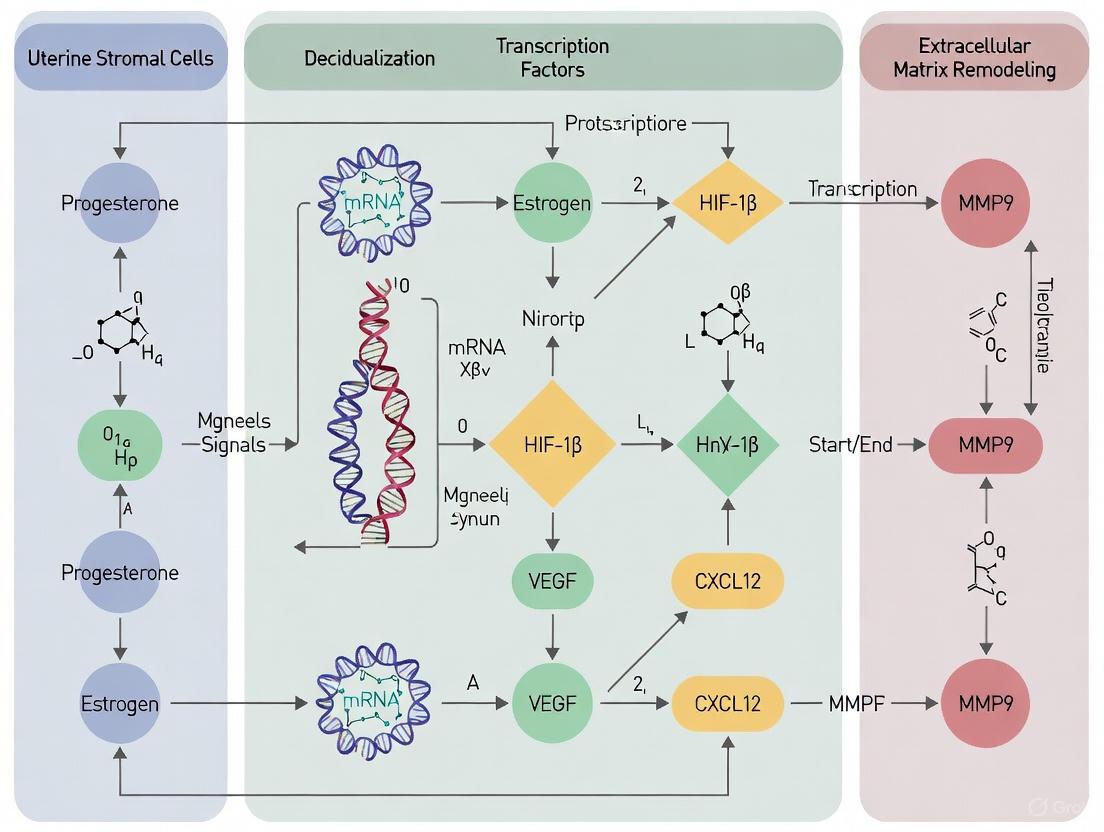
This article synthesizes current research on the transcriptome dynamics of human endometrial stromal cell decidualization, a process critical for embryo implantation and pregnancy maintenance.
Decoding Stromal Decidualization: Transcriptome Dynamics from Biphasic Programming to Metabolic Rewiring
Abstract
This article synthesizes current research on the transcriptome dynamics of human endometrial stromal cell decidualization, a process critical for embryo implantation and pregnancy maintenance. We explore the foundational biphasic transcriptional programming, characterized by an early STAT-dominated and a later NF-κB-regulated state. The review compares methodological approaches for in vitro decidualization, highlighting how stimulus choice (e.g., cAMP, MPA) dictates distinct transcriptomic and functional outputs. We further examine transcriptomic alterations associated with decidualization failure in conditions like recurrent spontaneous abortion and discuss the critical role of metabolic reprogramming, including mitochondrial biogenesis and oxidative phosphorylation. Finally, we validate in vitro findings against in vivo single-cell RNA-seq data, providing a comprehensive resource for researchers and clinicians aiming to improve outcomes in reproductive medicine and drug development.
The Core Transcriptional Program: Unraveling Biphasic Dynamics and Metabolic Rewiring
The differentiation of human endometrial stromal fibroblasts (ESFs) into decidual stromal cells (DSCs) is a critical prerequisite for successful embryo implantation and pregnancy. This process, known as decidualization, involves extensive transcriptional reprogramming driven by hormonal cues. Recent transcriptomic analyses reveal that decidualization is not a monolithic event but a multiphasic process characterized by distinct, sequential transcriptional programs. This whitepaper delineates the molecular architecture of this biphasic response, summarizing findings that an early phase dominated by STAT signaling pathways transitions to a later phase regulated by NF-κB pathways. This dynamic regulatory shift is essential for establishing the fetal-maternal interface, and its dysregulation is implicated in reproductive failures such as recurrent pregnancy loss (RPL) [1] [2] [3].
Decidualization represents a profound transformation of the uterine endometrium, wherein ESFs differentiate into specialized DSCs under the influence of progesterone and the second messenger cyclic adenosine monophosphate (cAMP) [1] [3]. This differentiation is fundamental to implantation and the maintenance of pregnancy in placental mammals. The process entails considerable transcriptional and cellular remodeling, enabling the endometrium to support the developing embryo while orchestrating immune tolerance [1].
Historically, studies have focused on the proximal changes associated with the initiation of decidualization. However, emerging evidence characterizes the process as consisting of an early pro-inflammatory phase (up to 3 days in vitro) followed by a later secretory phase (up to 8 days in vitro) [1]. This whitepaper synthesizes recent research to frame decidualization within a biphasic model of gene expression, detailing the central roles of the STAT and NF-κB pathways in governing its early and late stages, respectively. Understanding this temporal regulation provides a critical framework for diagnosing and treating disorders of early pregnancy.
Experimental Protocols for Studying Biphasic Transcriptomics
The foundational findings on biphasic gene expression were elucidated through a well-established in vitro decidualization model, coupled with comprehensive transcriptome sequencing. The following methodology details the key experimental approach.
Cell Culture andIn VitroDecidualization
- Cell Line: Studies utilized immortalized human ESFs (T HESC, corresponding to ATCC CRL-4003) [1].
- Growth Medium: Cells were maintained in Dulbecco's Modified Eagle Medium (DMEM) supplemented with 10% charcoal-stripped calf serum, 1% antibiotic/antimycotic, 1 nmol/L sodium pyruvate, 0.1% insulin-transferrin-selenium, and 0.12% sodium bicarbonate [1].
- Decidualization Induction: To initiate differentiation, the growth medium was replaced with a decidualization medium containing 2% charcoal-stripped calf serum, 0.5 mMol/L 8-bromoadenosine 3′,5′-cyclic monophosphate (8-br-cAMP), and 1.0 μmol/L of the synthetic progestin medroxyprogesterone acetate (MPA) [1]. The medium was refreshed every 48 hours.
- Time Points: Cells were harvested for analysis after 3 days (early decidualization) and 8 days (late decidualization) of treatment to capture the distinct phases of the process [1].
RNA Sequencing and Computational Analysis
- RNA Extraction: Total RNA was extracted using RNeasy Plus Mini or Midi kits, including on-column DNase I treatment. RNA quality was assessed with an Agilent Bioanalyzer 2100 [1].
- Sequencing: High-throughput sequencing was performed on the Illumina Genome Analyzer II platform, generating at least 30 million reads per sample [1].
- Bioinformatic Processing: Sequence reads were mapped to the human reference genome (GRCh37.69) using Tophat2. Gene counts were calculated with HTSeq and normalized as transcripts per million (TPM). Differential transcription was analyzed with the edgeR package (FDR < 0.05, absolute fold-change > 2.0, TPM > 2 in at least one condition) [1].
- Pathway Analysis: Gene ontology (GO) and pathway enrichment analyses were conducted using METASCAPE and Ingenuity Pathway Analysis (IPA). IPA's activation z-score was used to predict pathway activation states [1].
The experimental workflow for transcriptomic analysis is summarized in the diagram below.
Core Findings: A Two-Phase Transcriptional Program
Transcriptome comparisons between 3-day and 8-day in vitro DSCs revealed extensive, dynamic changes, suggesting the existence of two distinct regulatory states.
The Early Phase: STAT Pathway Dominance
The early phase of decidualization (approximately 3 days) is characterized by a transcriptional landscape dominated by the Signal Transducer and Activator of Transcription (STAT) pathway [1]. Analysis of differentially transcribed genes in this phase showed significant enrichment for STAT-related signaling. This includes the upregulation of known progesterone receptor (PGR) target genes, indicating that this early phase is under progesterone control [1]. The early phase is also associated with a pro-inflammatory signature, which is thought to be critical for initiating the decidual process and preparing the endometrium for embryo implantation [1].
The Late Phase: NF-κB Pathway Regulation
In contrast, the late phase of decidualization (approximately 8 days) transitions to a state predominantly regulated by the Nuclear Factor κB (NF-κB) pathway [1]. Pathway enrichment analysis of the late decidual cell transcriptome identified NF-κB as a central regulator. This phase aligns with the establishment of a secretory phenotype and the consolidation of the fetal-maternal interface [1]. The proper regulation of NF-κB signaling is critical for limiting the inflammatory response and maintaining decidual homeostasis, as its over-activation due to mechanisms such as Gαq deficiency can lead to aberrant inflammation and compromised pregnancy outcomes [3].
Functional Consequences: Proliferation and Viability
Functional assays demonstrated that decidualization leads to proliferative quiescence. This cessation of proliferation is reversible upon progesterone withdrawal after 3 days of decidualization but becomes increasingly irreversible after 8 days, indicating a commitment to the differentiated state over time [1]. In contrast, progesterone withdrawal was found to induce cell death at comparable levels after both short and long exposure to deciduogenic stimuli, suggesting a separate mechanism controlling cellular viability during this process [1].
The core regulatory dynamics of the two phases are illustrated below.
The following tables consolidate key quantitative findings from the transcriptomic and functional analyses of biphasic decidualization.
Table 1: Summary of Key Experimental Findings in Biphasic Decidualization
| Experimental Aspect | Early Phase (3-day DSCs) | Late Phase (8-day DSCs) |
|---|---|---|
| Dominant Signaling Pathway | STAT pathway [1] | NF-κB pathway [1] |
| Cellular Phenotype | Pro-inflammatory onset [1] | Secretory phase establishment [1] |
| Proliferation State | Proliferative quiescence [1] | Proliferative quiescence [1] |
| Reversibility of Quiescence | Reversible upon P4 withdrawal [1] | Largely irreversible [1] |
| Cell Death upon P4 Withdrawal | Induced [1] | Induced at comparable levels [1] |
Table 2: Key Signaling Molecules and Transcription Factors in Decidualization
| Molecule/Pathway | Role/Function in Decidualization | Experimental Evidence |
|---|---|---|
| Progesterone (P4) / PGR | Master regulator; controls both early and late phases via target genes [1] [2]. | RNA-seq, siRNA studies [1]. |
| cAMP / PKA Signaling | Critical second messenger and signaling pathway for initiating decidualization [1] [3]. | In vitro decidualization with 8-br-cAMP [1]. |
| STAT Proteins | Key transcription factors dominating the early phase transcriptome [1]. | Transcriptome enrichment analysis (RNA-seq) [1]. |
| NF-κB Pathway | Central regulator of the late phase transcriptome; controls inflammatory balance [1] [3]. | Transcriptome enrichment analysis; IκB expression regulation [1] [3]. |
| Gαq-PKD/PKCμ-HDAC5 | Signaling axis that limits NF-κB response by promoting IκB (NFκBIA) expression [3]. | RNA-seq, knockout models, pharmacological inhibition in HESCs [3]. |
| FOXO1 | Key transcription factor interacting with PGR for decidualization [1] [3]. | siRNA studies, RNA-seq [1]. |
The Scientist's Toolkit: Essential Research Reagents
This section catalogs critical reagents and tools used in the featured studies for investigating biphasic gene expression during decidualization.
Table 3: Key Research Reagent Solutions for Decidualization Studies
| Reagent / Resource | Function and Application | Specific Example / Catalog |
|---|---|---|
| Human Endometrial Stromal Fibroblasts (ESFs) | Primary cell model for in vitro decidualization studies. | T HESC cell line (ATCC CRL-4003) [1]. |
| Decidualization Inducers | Chemical inducers used to mimic the in vivo hormonal environment. | 8-br-cAMP (Sigma, B7880) and Medroxyprogesterone Acetate - MPA (Sigma, M1629) [1]. |
| Cell Culture Medium | Supports growth and differentiation of ESFs. | DMEM (Sigma, D2906/D8900) with charcoal-stripped serum [1]. |
| RNA Extraction Kit | High-quality RNA isolation for transcriptomic studies. | RNeasy Plus Mini/Midi Kit (Qiagen, 74134/75142) [1]. |
| CRISPR/Cas9 System | For targeted gene knockout to study gene function (e.g., GNAQ). | Brunello sgRNA library or specific sgRNAs [4] [3]. |
| Pathway Analysis Software | Bioinformatics tools for interpreting RNA-seq data and pathway enrichment. | Ingenuity Pathway Analysis (IPA), METASCAPE [1]. |
Metabolic reprogramming is a fundamental process in the differentiation of human endometrial stromal cells (ESCs) into decidual stromal cells, a transformation essential for embryo implantation and pregnancy establishment. This whitepaper synthesizes current research demonstrating how decidualizing ESCs undergo a profound metabolic shift characterized by extensive mitochondrial biogenesis and enhanced oxidative phosphorylation (OXPHOS) capacity. We detail the specific molecular mechanisms, transcriptional regulators, and experimental methodologies for investigating these processes, providing a technical resource for researchers and drug development professionals working in reproductive biology and stromal cell metabolism.
Decidualization represents a critical differentiation process in human endometrial stromal cells (ESCs), transitioning from fibroblast-like cells to specialized, secretory decidual cells. This transformation is orchestrated by hormonal signals, primarily progesterone and cAMP, and requires substantial energetic and biosynthetic resources [5]. Recent research has illuminated mitochondrial biogenesis and reorganization of the mitochondrial network as central hallmarks of this metabolic reprogramming. During decidualization, ESCs dramatically reshape their mitochondrial architecture and function to meet the increased energy demands associated with their new secretory phenotype and to support the biosynthetic requirements for embryo implantation and placental development [5] [6]. This whitepaper examines the core mechanisms driving mitochondrial remodeling during stromal decidualization, with particular focus on quantitative changes in mitochondrial metrics, underlying molecular pathways, and essential research methodologies for investigating these processes.
Quantitative Profiling of Mitochondrial Dynamics
Systematic quantification of mitochondrial changes during decidualization reveals profound structural and functional adaptations. The data below summarize key morphometric and molecular alterations observed in in vitro decidualization models.
Table 1: Quantitative Changes in Mitochondrial Metrics During Decidualization
| Parameter | Change During Decidualization | Measurement Method | Biological Significance |
|---|---|---|---|
| Mitochondrial Volume per Cell | 4.5-fold increase [5] | Morphometric analysis [5] | Enhanced energy production capacity |
| Mitochondrial Network Size | 4-fold increase (absolute terms) [5] | Immunofluorescence (TOM20 staining) [5] | Expansion of the respiratory apparatus |
| Mitochondrial/Total Cell Volume Ratio | Significant increase [5] | Morphometric analysis [5] | Prioritization of mitochondrial investment |
| Frequency of Mitochondria >10μm | 3-fold increase [5] | 3D reconstruction of immunofluorescence [5] | Shift toward elongated, tubular mitochondria |
| Mitochondria-ER Contacts (MERCs) | Significant increase in number and length [5] | Transmission Electron Microscopy (TEM) [5] | Enhanced inter-organelle communication for lipid/calcium exchange |
| Citrate Synthase (CS) Protein Level | Marked increase [5] | Western Blot [5] | Indicator of mitochondrial mass and TCA cycle capacity |
| OXPHOS Subunit Protein Levels | Marked increase [5] | Western Blot [5] | Increased electron transport chain capacity |
| Respiratory Capacity | Increased [5] | Functional assays [5] | Elevated ATP production via oxidative phosphorylation |
The data in Table 1 demonstrate a comprehensive mitochondrial overhaul. Beyond mere enlargement, the network becomes more tubular and establishes closer physical interactions with the endoplasmic reticulum (ER). These mitochondria-ER contact sites (MERCs), quantified by transmission electron microscopy, are crucial hubs for calcium transfer, lipid biosynthesis, and mitochondrial fission/fusion dynamics [5]. The concomitant increase in citrate synthase and OXPHOS subunits confirms that this structural expansion is directly linked to enhanced functional capacity for oxidative phosphorylation.
Experimental Models and Protocols for Investigation
Different experimental models and decidualization protocols yield distinct transcriptional and metabolic outcomes. Understanding these differences is crucial for designing appropriate research methodologies.
1In VitroDecidualization Stimuli and Transcriptional Outcomes
Research indicates that the choice of decidualization stimuli significantly influences the resulting transcriptional profile and cellular functions.
Table 2: Comparison of Common In Vitro Decidualization Protocols
| Decidualization Stimulus | Key Differentially Expressed Genes (DEGs) | Altered Cellular Functions | Proximity to In Vivo Decidualization |
|---|---|---|---|
| cAMP | 1442 up, 2109 down [7] | Angiogenesis, inflammation, immune system, embryo implantation [7] | Moderate |
| cAMP + MPA | 1378 up, 2443 down [7] | Angiogenesis, inflammation, immune system, insulin signaling [7] | Closest [7] |
| MPA | 956 up, 1058 down [7] | Insulin signaling [7] | More distant |
| E2 + MPA | 913 up, 1087 down [7] | Insulin signaling [7] | More distant |
The combination of cAMP and medroxyprogesterone acetate (MPA) appears to induce a transcriptome most closely resembling the in vivo decidualization state, affecting a broad range of genes and incorporating functional pathways from both individual stimuli [7]. This protocol is therefore recommended for studies aiming to mimic physiological conditions.
Key Methodological Approaches
- Cell Culture and Decidualization: Telomerase-immortalized human ESCs (T-HESCs) are commonly cultured and decidualized in vitro using a cocktail containing 1 μM medroxyprogesterone acetate (MPA) and 100 μM dibutyryl cyclic AMP (cAMP) in OptiMEM with 2% charcoal-stripped fetal bovine serum for 6 days [8] [7]. Primary human ESCs can be used with similar protocols.
- Functional Metabolic Assessment: Seahorse XF Analyzer technology can be employed to measure the Oxygen Consumption Rate (OCR) and Extracellular Acidification Rate (ECAR) in real-time. This allows for the direct quantification of OXPHOS and glycolytic activity before and after decidualization [5] [9].
- Mitochondrial Network Visualization: Immunofluorescence staining for mitochondrial markers like TOM20 (outer membrane) or HSP60 (matrix) is used. Images are acquired by confocal microscopy and analyzed with morphometric software (e.g., ImageJ) to quantify network volume, interconnectivity, and mitochondrial length [5].
- Transcriptomic Analysis: RNA-sequencing (RNA-seq) is applied to identify differentially expressed genes involved in mitochondrial biogenesis and metabolism. For heterogeneity analysis, single-cell RNA-seq (scRNA-seq) is performed, with data integration and batch effect removal using tools like the Harmony R package [6] [10].
- Gene Regulatory Network Inference: The pySCENIC computational pipeline is used to infer transcription factor activities from scRNA-seq data. This involves three steps: 1) GRNBoost2 to identify co-expression modules, 2) cisTarget for motif enrichment analysis to define regulons, and 3) AUCell to score regulon activity in individual cells [11].
Molecular Regulators and Signaling Pathways
The metabolic shift toward OXPHOS is governed by a complex interplay of transcription factors, signaling pathways, and epigenetic regulators integrated within the decidualization transcriptome.
Diagram 1: Signaling pathways driving metabolic shift in decidualization. Key transcription factors and signaling cascades integrate hormonal signals to upregulate mitochondrial biogenesis and OXPHOS genes.
The diagram illustrates the core regulatory network. Hormonal stimulation triggers the activation of key transcription factors. CREB3L1 and CREB3L2, which are pivotal for Golgi complex remodeling during decidualization, are part of this network [5]. Other essential transcription factors include FOXO1, a well-established decidualization regulator, and PPAR-γ, which is linked to lipid metabolism [11] [9]. These factors orchestrate the expression of nuclear and mitochondrial genome-encoded genes to build the mitochondrial machinery.
Simultaneously, critical signaling pathways are activated:
- The PI3K/AKT/mTOR pathway is a central regulator of cell growth and metabolism, promoting the expression of metabolic genes and mitochondrial activity [12] [9].
- The AMPK/PGC1-α axis is a key stimulator of mitochondrial biogenesis. PGC1-α is a master co-activator that induces the expression of nuclear genes involved in OXPHOS and mitochondrial replication [9].
- PPAR-γ signaling promotes fatty acid oxidation and mitochondrial biogenesis, linking lipid metabolic rewiring to energy production [9].
This coordinated genetic and signaling program results in the documented expansion of the mitochondrial network and its increased respiratory capacity, effectively powering the energy-intensive decidualization process.
The Scientist's Toolkit: Essential Research Reagents
The following table catalogues critical reagents and tools for investigating mitochondrial biogenesis and OXPHOS in decidualizing stromal cells.
Table 3: Key Research Reagent Solutions for Mitochondrial Analysis in Decidualization
| Reagent / Tool | Function / Target | Application in Decidualization Research |
|---|---|---|
| Medroxyprogesterone Acetate (MPA) | Synthetic progestin [7] | Component of standard in vitro decidualization cocktails [5] [7] |
| Dibutyryl cyclic AMP (cAMP) | Cell-permeable cAMP analog [7] | Potent inducer of decidualization; used alone or combined with MPA [5] [7] |
| TOM20 Antibody | Outer mitochondrial membrane protein [5] | Immunofluorescence staining and quantification of mitochondrial network morphology and volume [5] |
| Anti-OXPHOS Antibody Cocktail | Subunits of electron transport chain complexes [5] | Western Blot analysis of mitochondrial mass and respiratory chain component levels [5] |
| MitoTracker Probes | Live-cell permeable mitochondrial dyes [5] | Live imaging of mitochondrial dynamics, fission/fusion events, and transport [5] |
| Seahorse XFp Analyzer Kits | Measure OCR and ECAR [9] | Functional assessment of OXPHOS and glycolytic flux in live decidualized cells [9] |
| ROMIDEPSIN (HDAC1/2 Inhibitor) | Histone Deacetylase inhibitor [13] | Tool to probe epigenetic regulation of decidualization; reverses TET3-mediated repression of ITGA10 [13] |
| CD14 MicroBeads | Magnetic cell separation [9] | Isolation of primary human monocytes for generating dendritic cells in co-culture studies [9] |
Metabolic reprogramming centered on mitochondrial biogenesis and enhanced OXPHOS is a non-negotiable hallmark of stromal cell decidualization. The quantitative data, molecular pathways, and experimental tools detailed in this whitepaper provide a framework for ongoing research. A deep understanding of these processes is not only fundamental to reproductive biology but also opens avenues for diagnosing and treating decidualization-related disorders such as recurrent implantation failure and recurrent pregnancy loss. Future research should focus on leveraging single-cell multi-omics to further decipher the heterogeneity of metabolic states within the decidual stroma and identify precise therapeutic targets.
Decidualization, the process by which human endometrial stromal cells (ESCs) differentiate into specialized decidual cells, is a cornerstone of embryo implantation and the establishment of pregnancy. For decades, the secretion of prolactin (PRL) and insulin-like growth factor binding protein-1 (IGFBP-1) has served as the foundational biochemical marker for confirming decidualization in vitro and in vivo [14] [7]. However, the landscape of decidualization assessment is rapidly evolving. Transcriptomic, cistromic, and single-cell RNA sequencing (scRNA-seq) technologies are unveiling a vastly more complex molecular repertoire, revealing that PRL and IGFBP-1 represent merely the tip of the iceberg [8] [15] [7]. Framed within a broader thesis on stromal decidualization transcriptome dynamics, this technical guide synthesizes recent multi-omics discoveries to expand the core decidual marker repertoire. We provide researchers and drug development professionals with a refined toolkit of novel markers, detailed experimental protocols for their identification, and a conceptual framework for understanding their integration in the decidualization network, thereby enabling a more nuanced investigation of reproductive success and failure.
Expanded Repertoire of Decidualization Markers
Advanced genomic and proteomic profiling has identified a new generation of decidualization markers that reflect the process's complexity beyond PRL and IGFBP-1. The table below catalogs these novel markers, their specific expression patterns, and their functional roles.
Table 1: Expanded Repertoire of Decidualization Markers
| Marker Gene/Protein | Expression Pattern/Function | Associated Technique | Significance/Biological Role |
|---|---|---|---|
| FOXO1 | Upregulated; transcription factor | Cut&Run, RNA-seq, scRNA-seq | Master regulator; links ESR1 binding to decidual gene networks [8] |
| TIMP3 | Upregulated in decidualized stroma | scRNA-seq | Decidualization marker; tissue remodeling [15] |
| CSRNP1 | Upregulated in late decidualization | scRNA-seq | Transcription factor associated with late decidualization [15] |
| ATF3 | Upregulated in decidualized stroma | scRNA-seq | Decidualization marker [15] |
| PAEP | Upregulated in decidualized stroma | scRNA-seq (Progesterone-associated endometrial protein) [15] | |
| SFRP4 | Upregulated in proliferative stroma in DR states | scRNA-seq, Immunofluorescence | Marker of proliferative stroma and decidualization resistance [15] |
| MMP11 | Upregulated in proliferative stroma in DR states | scRNA-seq | Co-marker of proliferative stroma in decidualization resistance [15] |
| ERRFI1 | Upregulated; distal ESR1 binding | RNA-seq, Cut&Run, H3K27ac HiChIP | Involved in endometrial cancer pathways [8] |
| NRIP1 | Upregulated; distal ESR1 binding | RNA-seq, Cut&Run, H3K27ac HiChIP | Regulated by estrogen signaling; cancer relevance [8] |
| EPAS1 | Upregulated; distal ESR1 binding | RNA-seq, Cut&Run, H3K27ac HiChIP | Hypoxia-inducible factor; cancer relevance [8] |
| ITGA10 | Downregulated by TET3/HDAC1/2 | Functional assays | Novel target; inhibits ESC proliferation/migration during decidualization [13] |
| C2CD4B | Upregulated in endothelial cells in sPE | scRNA-seq | Associated with acute inflammation [15] |
| IL-1B, CCL5, IL32 | Upregulated in immune cells in sPE | scRNA-seq | Inflammatory dysregulation in decidualization resistance [15] |
These markers delineate specific functional subpopulations and pathological states. For instance, a "mosaic state" within the stroma, characterized by the coexistence of IGFBP1+ decidualized cells and SFRP4+/MMP11+ proliferative stromal cells, has been identified as a hallmark of decidualization resistance (DR) in patients with a history of severe preeclampsia (sPE) [15]. Furthermore, the activation of estrogen receptor alpha (ESR1) drives a distinct transcriptional program that regulates not only classical decidualization but also inflammation, proliferation, and cancer-related pathways, as evidenced by the upregulation of ERRFI1, NRIP1, and EPAS1 [8].
Experimental Protocols for Marker Discovery and Validation
CRISPR Activation to Engineer an Estrogen-Responsive Stromal Cell Model
The native low expression of ESR1 in primary and immortalized human endometrial stromal cells (hESCs) often limits their estrogen responsiveness in vitro. This protocol details the creation of a robust model for studying ESR1-driven decidualization.
Table 2: Key Research Reagents for ESR1 CRISPR Activation
| Item | Function/Description |
|---|---|
| Telomerase-immortalized hESCs (THESCs) | Proliferative, stable cell base for engineering [8] |
| Ef1a-dCas9-VPR-Blast Lentivirus | Delivers CRISPR activation system (dCas9-VPR) with blasticidin resistance [8] |
| ESR1–3 gRNA Lentivirus | Targets the ESR1 promoter for transcriptional activation [8] |
| Blasticidin | Selects for cells successfully transduced with dCas9-VPR [8] |
| Charcoal-stripped FBS | Removes hormones for controlled estradiol (E2) stimulation experiments [8] |
Methodology:
- Cell Culture and Lentiviral Transduction: Culture THESCs in regular hESC media (DMEM/F-12 + 10% FBS + 1% Penicillin-Streptomycin). Transduce cells with the Ef1a-dCas9-VPR-Blast lentivirus and select stable polyclonal populations using engineered hESC media (DMEM/F-12 + 10% FBS + 4 μg/mL Blasticidin) [8].
- gRNA Transduction: Transduce THESC-dCas9-VPR cells with a lentivirus expressing the ESR1-3 gRNA (sequence: CGAGCTCATATGCATTACAA), which was validated to induce robust ESR1 activation, alongside a non-targeting control gRNA. Use an MOI of 12 and perform experiments within three weeks of transduction [8].
- Hormonal Stimulation: Prior to experiments, switch to low-serum media (OptiMEM + 2% charcoal-stripped FBS) for 24 hours. Subsequently, treat cells with either vehicle (0.01% EtOH) or 10 nM 17β-estradiol (E2) for the desired duration to probe ligand-dependent and independent ESR1 activity [8].
Multi-Omics Integration: Transcriptome, Cistrome, and Chromatin Architecture
This workflow enables the genome-wide identification of novel markers and their regulatory mechanisms.
Methodology:
- Bulk RNA-seq: Extract total RNA from control and decidualized ESCs. Prepare libraries and sequence. Bioinformatic Analysis: Perform differential gene expression analysis (e.g., DESeq2) to identify ligand-independent and dependent ESR1 transcriptional programs. Compare DEGs with genes active in the proliferative phase endometrium to validate physiological relevance [8] [7].
- Cut&Run for ESR1: Harvest ESR1-activated hESCs after E2 treatment. Using the Cut&Run assay with an ESR1-specific antibody, profile genome-wide ESR1 binding sites. Bioinformatic Analysis: Map binding sites to genomic features (promoter, distal elements) and identify enriched motifs like estrogen response elements (EREs) [8].
- H3K27ac HiChIP: Perform H3K27ac HiChIP on primary endometrial stromal cells treated with a decidualization cocktail. This technique concurrently maps active enhancers/promoters (via H3K27ac) and chromatin looping interactions. Bioinformatic Analysis: Identify hormone-induced changes in chromatin architecture [8].
- Data Integration: Overlap distal ESR1 binding sites from Cut&Run with the anchors of H3K27ac HiChIP loops. This links ESR1-bound enhancers to their target gene promoters (e.g., FOXO1, ERRFI1), functionally validating novel markers and their regulatory logic [8].
Single-Cell and Spatial Transcriptomics to Decipher Cellular Heterogeneity
This protocol resolves cellular diversity and rare subpopulations in decidualizing endometrium.
Methodology:
- Sample Preparation and scRNA-seq: Obtain endometrial biopsies from patients and controls (e.g., post-sPE patients). Dissociate tissue into single-cell suspensions. Perform scRNA-seq using a platform like 10x Genomics to capture transcriptomes of thousands of individual cells [15].
- Bioinformatic Clustering and Annotation: Process raw data (alignment, quantification). Use graph-based clustering and uniform manifold approximation and projection (UMAP) for visualization. Identify major cell types (epithelium, stroma, immune) and subclusters by referencing known markers. For stroma, subclusters include decidualized (IGFBP1, TIMP3), proliferative (SFRP4, MMP11), and transition populations [15].
- Differential Abundance and Expression: Compare the proportion of each subpopulation between patient and control groups to identify differentially abundant states (e.g., mosaic stroma in sPE). Perform differential expression analysis within each cell type to find condition-specific markers [15].
- Spatial Validation: Validate scRNA-seq findings using spatial transcriptomics or immunofluorescence on consecutive tissue sections. This confirms the localization of identified subpopulations, such as SFRP4+ stromal cells, within the tissue architecture [15].
Signaling Pathways and Functional Networks in Decidualization
The novel markers identified are not isolated entities but function within an integrated molecular network. Decidualization is primarily mediated by progesterone and cAMP, which activate a downstream network of transcription factors, including FOXO1, STAT5, and C/EBPβ [16]. Estrogen signaling through ESR1 is a critical priming and regulatory component, with its dysregulation linked to pathologies [8]. Furthermore, pathways like TGFβ1-SMAD can attenuate classical decidual marker expression, revealing a complex interplay of stimulatory and inhibitory signals [14]. The diagram below synthesizes these pathways and the placement of novel markers within this network.
The move beyond PRL and IGFBP1 represents a paradigm shift in our understanding of stromal decidualization. The expanded marker repertoire, encompassing transcription factors like FOXO1 and CSRNP1, structural proteins like TIMP3, and pathological indicators like SFRP4 and MMP11, provides a higher-resolution lens through which to view this critical process. The integration of sophisticated experimental models, such as CRISPRa-engineered stromal cells, with multi-omics technologies allows for the systematic discovery and functional validation of these markers. This refined toolkit empowers researchers to dissect the transcriptome dynamics of decidualization with unprecedented precision, paving the way for novel diagnostic strategies and therapeutic interventions for a spectrum of reproductive disorders, from implantation failure and preeclampsia to endometrial cancer.
The transformation of endometrial stromal cells (EnSCs) into specialized secretory decidual cells is a fundamental process in human reproduction, enabling embryo implantation and supporting early pregnancy. This differentiation, known as decidualization, necessitates a profound remodeling of the cell's secretory machinery to accommodate the increased production and release of factors critical for gestation, such as prolactin, IGFBP1, and various collagens [17]. The endoplasmic reticulum (ER) and Golgi complex undergo specific, coordinated expansion and restructuring to support this new, high-demand secretory phenotype. Understanding the molecular regulators and morphological changes driving this reorganization is essential for elucidating the mechanisms of healthy pregnancy and identifying the origins of related disorders.
Molecular Regulators of Secretory Pathway Remodeling
The massive reshaping of the secretory pathway during decidualization is not a passive consequence of increased protein synthesis but is actively driven by a specific transcriptional program. Time-course transcriptomic analyses of decidualizing EnSCs reveal that Gene Ontology terms associated with vesicular trafficking and the early secretory pathway are among the most significantly upregulated [17].
A key finding is the central role played by the transcription factors CREB3L1 and CREB3L2. These factors are upregulated during decidualization and regulate a cluster of genes involved in the function of the ER, Golgi, and lysosomal compartments [17]. Experimental knockdown of both CREB3L1 and CREB3L2 demonstrates their necessity, leading to:
- Golgi fragmentation instead of proper enlargement.
- Accumulation of collagen in dilated ER cisternae.
- A significant decrease in overall protein secretion [17].
This establishes CREB3L1 and CREB3L2 as critical regulators for the adaptation of the secretory pathway to meet the demands of the decidualized state.
Beyond the stroma, glandular-epithelial crosstalk is also vital. The secreted glycoprotein Clusterin (Clu) is produced by uterine glands in response to estrogen and influences the stromal decidualization process in mice. It signals through its receptor, Trem2, expressed in the decidual region. Functional studies show that recombinant CLU protein increases the expression of decidual markers IGFBP1 and PRL, an effect that is blocked when Trem2 is inhibited [18].
Table 1: Key Molecular Regulators of Secretory Remodeling in Decidualization
| Regulator | Type | Expression/Location | Primary Function in Remodeling |
|---|---|---|---|
| CREB3L1 / CREB3L2 | Transcription Factor | Upregulated in decidualizing Stromal Cells [17] | Orchestrates Golgi enlargement and efficient protein secretion; required for collagen secretion [17] |
| Clusterin (Clu) | Secreted Chaperone | Uterine Glands; Estrogen-responsive [18] | Paracrine modulator of decidualization; upregulates IGFBP1 and PRL via Trem2 receptor [18] |
| Trem2 | Receptor | Decidual Stromal Region [18] | Mediates the pro-decidualization signal from secreted Clusterin [18] |
| SFRP4 | Secreted Signaling Molecule | Marker of Proliferative Stroma [15] | Identifies a non-decidualized, proliferative stromal subpopulation in decidualization resistance [15] |
Experimental Models and Methodologies for Studying Remodeling
Investigating ER and Golgi dynamics in decidualization relies on robust in vitro models and a combination of advanced techniques.
In Vitro Decidualization Model
A standard protocol involves using telomerase-immortalized human endometrial stromal cells (T-HESC). Decidualization is induced by treating cells with a hormonal cocktail containing progesterone, cAMP, and estradiol (E2) [8] [15]. Media formulations are critical; experiments often employ low-serum, charcoal-stripped media to control hormone levels, with E2 added to activate estrogen signaling [8].
Key Methodological Approaches
- Time-Course Transcriptomics: Bulk RNA-seq at multiple time points (e.g., 6h, 18h, Day 1 to Day 6) after progesterone stimulation identifies differentially expressed genes and enriched pathways, pinpointing when secretory pathway genes are activated [17].
- Single-Cell RNA Sequencing (scRNA-seq): This technology resolves cellular heterogeneity. It can identify distinct stromal subpopulations, such as decidualized cells (expressing IGFBP1, TIMP3), proliferative stromal cells (expressing MMP11, SFRP4), and transitional states, revealing a mosaic state in disorders like severe preeclampsia [15].
- Functional Validation via Knockdown: The necessity of specific genes like CREB3L1/L2 is validated using siRNA or shRNA-mediated knockdown, followed by assessment of Golgi morphology (e.g., via immunofluorescence) and secretion assays [17].
- Gene Regulatory Network (GRN) Analysis: Tools like SCENIC applied to scRNA-seq data can infer the transcription factors regulating specific cell states in vivo, identifying known (e.g., FOXO1) and novel (e.g., DDIT3, BRF2) regulators of decidual stromal cells [11].
Quantitative Data and Morphological Changes in Health and Disease
Successful decidualization is characterized by a specific pattern of organelle remodeling. In contrast to plasma cell differentiation, which features massive ER expansion, decidualizing EnSCs undergo more pronounced Golgi complex enlargement [17]. This is reflected in transcriptomic data showing coordinated upregulation of genes involved in ER-to-Golgi vesicular trafficking, Golgi organization, and protein glycosylation [17].
Dysregulation of this process, known as decidualization resistance (DR), is a feature of obstetric complications like severe preeclampsia (sPE). Multi-omics studies of endometrial samples from patients with a history of sPE reveal:
- Glandular anatomical abnormalities, including dilated gland openings and altered epithelial structure [15].
- A stromal mosaic state at the single-cell level, where proliferative stromal cells (MMP11+, SFRP4+) coexist with decidualized (IGFBP1+) cells, indicating a failure of uniform differentiation [15].
- Aberrant immune cell signaling, with macrophages and NK cells showing inflammatory dysregulation (e.g., upregulation of IL1B, CCL5), contributing to a compromised microenvironment [15].
Table 2: Secretory Pathway and Cellular Markers in Decidualization
| Cellular Component / Process | Key Markers | Change in Healthy Decidualization | Alteration in Decidualization Resistance |
|---|---|---|---|
| Golgi Complex | Genes for vesicular trafficking, glycosylation [17] | Pronounced enlargement and reorganization [17] | Fragmentation (upon CREB3L1/L2 knockdown); failure to remodel [17] |
| Endoplasmic Reticulum | Redox enzymes, chaperones, cargo receptors (e.g., ERGIC-53) [17] | Modulation and coordination with Golgi expansion [17] | Accumulation of cargo (e.g., collagen) in dilated cisternae [17] |
| Decidualized Stroma | IGFBP1, PRL, TIMP3, PAEP [15] | Emergence and dominance of decidualized subpopulations [15] | Mosaic state with persistent proliferative stroma (SFRP4+, MMP11+); reduced decidualized subpopulations [15] |
| Secretory Cargo | Collagen types I, IV, VIII; Prolactin; IGFBP1 [17] | Upregulated and efficiently secreted [17] | Overall decreased protein secretion; collagen accumulation [17] |
The Scientist's Toolkit: Essential Research Reagents
Table 3: Key Reagents for Studying Secretory Pathway Remodeling
| Reagent / Tool | Function / Target | Example Application |
|---|---|---|
| T-HESC Cell Line | Telomerase-immortalized human endometrial stromal cell line [17] [8] | In vitro model for hormone-induced decidualization [17] |
| Decidualization Cocktail | Progesterone, cAMP, Estradiol (E2), Medroxyprogesterone acetate (MPA) [8] [15] | To chemically induce the decidualization process in stromal cells in vitro [8] |
| siRNA/shRNA (CREB3L1/L2) | Knockdown of specific transcription factors [17] | Functional validation of regulators required for Golgi remodeling and secretion [17] |
| Anti-SFRP4 Antibody | Detects proliferative stromal cell marker [15] | Immunofluorescence staining to identify non-decidualized stromal subpopulations in tissue [15] |
| Anti-Clusterin Antibody | Detects gland-derived secretory chaperone [18] | Immunofluorescence to localize Clusterin expression in uterine glands and lumen [18] |
| SCENIC Algorithm | Computational gene regulatory network inference from scRNA-seq data [11] | To identify key transcription factors (e.g., DDIT3, BRF2) governing stromal and immune cell states in vivo [11] |
The remodeling of the endoplasmic reticulum and Golgi apparatus is a definitive characteristic of the decidual secretory phenotype, actively governed by a precise transcriptional program. Transcription factors like CREB3L1 and CREB3L2, along with paracrine signals such as gland-derived Clusterin, are instrumental in coordinating these structural changes to ensure efficient protein secretion. The integrity of this process is paramount; its failure, manifesting as decidualization resistance with aberrant stromal subpopulations and disrupted organelle architecture, is a key pathophysiological feature of severe obstetric syndromes. Future research leveraging multi-omics and advanced gene network analyses will continue to unravel this complex regulatory landscape, offering new diagnostic and therapeutic avenues for pregnancy disorders rooted in defective decidualization.
The process of stromal decidualization is a pivotal prerequisite for successful embryo implantation and pregnancy establishment. This transformation is governed by an intricate transcriptional network that integrates hormonal and cAMP-mediated signaling. This whitepaper delineates the core transcription factor circuitry comprising Progesterone Receptor (PGR), FOXO1, CREB family members, and STATs, highlighting their interdependent functions, genomic targets, and the critical role of the newly identified regulator SOX4. Understanding this network provides crucial insights for addressing etiologies of implantation failure, recurrent pregnancy loss, and developing targeted therapeutic strategies.
Human endometrial stromal cell (HESC) decidualization represents a quintessential example of coordinated cellular differentiation, essential for maternal-fetal communication and placental development [19]. The process is characterized by dramatic morphological and functional changes in stromal cells, driven by the post-ovulatory rise in progesterone and local production of cAMP [7]. At its core, this differentiation is executed by a network of transcription factors that translate hormonal signals into a specific gene expression program, marked by the induction of classic decidual markers like Prolactin (PRL) and Insulin-like Growth Factor Binding Protein 1 (IGFBP1) [19] [20]. Dysregulation of this network is directly linked to clinical reproductive challenges, including recurrent implantation failure (RIF) and recurrent spontaneous abortion (RSA) [19] [21]. This whitepaper synthesizes current research to delineate the roles and interactions of PGR, FOXO1, STATs, and CREB in forming the definitive decidual transcriptional framework.
Core Transcription Factor Network in Decidualization
Progesterone Receptor (PGR): The Master Regulator
PGR, a nuclear hormone receptor, is the primary mediator of progesterone signaling and a cornerstone of decidualization.
- Genomic Regulation: PGR directly binds to specific genomic sequences to activate or repress a suite of target genes. Chromatin Immunoprecipitation sequencing (ChIP-Seq) has identified PGR binding sites in the promoters of key decidual genes [19].
- Regulation of SOX4: A critical direct target of PGR is the transcription factor SOX4. PGR binds to the SOX4 promoter, inducing its expression in response to progesterone [19] [22]. This finding establishes a feed-forward loop where PGR activates a downstream transcription factor that, in turn, stabilizes PGR itself.
- Protein Stability Control: Beyond its transcriptional role, PGR protein levels are post-translationally regulated. The E3 ubiquitin ligase HERC4 targets PGR for proteasomal degradation. SOX4 counteracts this by repressing HERC4, thereby stabilizing the PGR protein and ensuring sustained progesterone signaling [19]. This SOX4-HERC4-PGR axis is often dysregulated in endometriosis patients suffering from implantation failure.
FOXO1: The Decidualization Executor
FOXO1 is one of the earliest and most critical transcription factors induced during decidualization, acting as a key executor of the differentiation program.
- Direct Transcriptional Control: FOXO1 directly binds to and activates the promoters of hallmark decidual markers, including PRL and IGFBP1 [19] [20].
- Cooperative Genomic Binding with PGR: Integration of FOXO1 and PGR ChIP-Seq data reveals extensive co-occupancy on genomic targets, with FOXO1 required for PGR binding at over 75% of its target intervals [20]. This functional cooperation is essential for the expression of shared target genes like Interferon Regulatory Factor 4 (IRF4), a novel transcriptional regulator of decidualization.
- Regulation by SOX4: FOXO1 expression is itself under the transcriptional control of SOX4. RNA sequencing following SOX4 knockdown shows significant downregulation of FOXO1, positioning SOX4 upstream in the regulatory hierarchy [19].
CREB Family Members: Integrating cAMP Signaling
The cAMP Response Element-Binding Protein (CREB) family transcription factors integrate the critical cAMP signal during decidualization.
- Activation Mechanism: CREB is activated by phosphorylation in response to elevated cAMP levels. It then binds to cAMP Response Elements (CREs) in the regulatory regions of target genes [23].
- Hepatic Gluconeogenesis vs. Decidualization: While CREB's role in activating gluconeogenic genes like PEPCK and G6Pase is well-established in the liver [23] [24], its specific genomic targets in decidualizing stroma are an area of active investigation. It is postulated to regulate genes essential for the energy remodeling and metabolic adaptation of decidual cells.
- Interaction with Co-activators: The transcriptional activity of CREB is potentiated by co-activators like CRTC2 (CREB Regulated Transcription Coactivator 2), which undergoes fasting- or cAMP-dependent dephosphorylation and nuclear translocation to associate with CREB [23].
STATs: Mediators of Cytokine Signaling
Signal Transducers and Activators of Transcription (STATs), particularly STAT3 and STAT5, are implicated in decidualization, often in response to cytokine and growth factor signaling.
- Upstream Activation: STATs are phosphorylated and activated by kinase cascades downstream of cytokine receptors (e.g., IL-11 receptor) and growth factor receptors [19].
- Transcriptional Role: Once activated, STAT dimers translocate to the nucleus and bind to specific DNA response elements, contributing to the transcriptional program. STAT5 has been identified as a PKA-induced transcription factor capable of modulating PR function [20].
- Context in the Network: RNA-Seq data indicates that STAT3 is among the genes critical for decidualization that are downregulated upon SOX4 depletion [19], placing it within the broader SOX4-dependent transcriptional network.
Table 1: Core Transcription Factors in Human Endometrial Stromal Cell Decidualization
| Transcription Factor | Primary Inducing Signal | Key Regulatory Role | Representative Target Genes |
|---|---|---|---|
| PGR | Progesterone | Master regulator; initiates and sustains decidual program; regulates SOX4 | SOX4, IRF4 |
| FOXO1 | cAMP / PKA | Executes differentiation; directly activates decidual markers; enables PGR binding | PRL, IGFBP1, IRF4 |
| CREB | cAMP | Integrates cAMP signaling; modulates metabolic and transcriptional adaptation | PGC-1α, PEPCK (in liver) |
| STAT3/5 | Cytokines / PKA | Modulates PR function; contributes to transcriptional response | PRL (in cooperation with other TFs) |
| SOX4 | Progesterone / PGR | Upstream regulator; stabilizes PGR protein; essential for FOXO1 expression | FOXO1, HERC4 (repression) |
Experimental Models and Methodologies
In Vitro Decidualization Models
A critical step in studying decidualization is the choice of an in vitro model that accurately recapitulates the in vivo process. Primary human endometrial stromal cells (HESCs) are isolated from proliferative-phase endometrial biopsies and subjected to different decidualizing stimuli [7] [20].
Table 2: Common Protocols for In Vitro Decidualization of HESCs
| Stimulus | Key Components | Reported Strengths / Characteristics |
|---|---|---|
| MPA | Medroxyprogesterone Acetate | A classical method; alters functions related to insulin signaling [7]. |
| E2+MPA | Estradiol + MPA | Mimics the corpus luteum secretion; similar profile to MPA alone [7]. |
| cAMP | 8-Br-cAMP or other cAMP analogs | Rapid induction (4 days); alters functions in angiogenesis, inflammation, immune system, and embryo implantation [7]. |
| cAMP+MPA | cAMP + Medroxyprogesterone Acetate | Considered the strongest inducer; most closely recapitulates the cellular functions of in vivo decidualization [7]. |
| EPC | Estradiol, MPA, cAMP | A widely used cocktail; induces robust morphological and molecular changes [19] [20]. |
Key Methodological Approaches
Cutting-edge genomic and molecular techniques are required to dissect the transcription factor network.
- RNA Interference (siRNA/shRNA): Loss-of-function studies using small interfering RNAs (siRNAs) or short hairpin RNAs (shRNAs) are employed to knockdown specific transcription factors (e.g., FOXO1, PGR, SOX4, IRF4) prior to decidualization. This allows for the assessment of the factor's necessity by measuring the subsequent impact on marker gene expression (e.g., PRL, IGFBP1) and cellular morphology [19] [20].
- RNA Sequencing (RNA-Seq): This transcriptomic analysis is used to identify the full suite of genes differentially expressed upon a perturbation, such as siRNA-mediated knockdown (e.g., of SOX4 or FOXO1) or in response to decidualization signals. It provides a global view of the transcriptional network and dependent pathways [19] [25] [20].
- Chromatin Immunoprecipitation Sequencing (ChIP-Seq): This technique identifies the direct genomic binding sites of transcription factors. It has been pivotal in demonstrating that PGR directly binds the SOX4 promoter [19], and that FOXO1 and PGR co-occupy a vast number of genomic regions [20].
- Single-Cell RNA Sequencing (scRNA-seq): This advanced technology resolves cellular heterogeneity within the decidua. It has identified subpopulations of stromal cells at different stages of decidualization and revealed defective decidualization and aberrant cell-cell communication in pathological conditions like Recurrent Spontaneous Abortion (RSA) [21].
The following diagram illustrates the logical workflow of a typical functional genomics experiment in this field, from cell culture to data integration.
The Scientist's Toolkit: Essential Research Reagents
Table 3: Key Reagent Solutions for Decidualization Transcription Factor Research
| Reagent / Resource | Function / Application | Example Use Case |
|---|---|---|
| Primary HESCs | The primary cellular model for in vitro studies. | Isolated from proliferative phase biopsies, used for all functional experiments [20]. |
| Decidualization Cocktails (EPC, cAMP+MPA) | Chemically defined stimuli to induce differentiation. | EPC (Estradiol, MPA, 8-Br-cAMP) used to mimic the in vivo hormonal milieu [19] [7]. |
| siRNA/shRNA Libraries | For targeted gene knockdown. | ON-TARGETplus siRNA pools (e.g., siFOXO1, siPGR) used to define transcription factor necessity [20]. |
| CRISPR/Cas9 System | For complete gene knockout. | Used to generate stable SOX4 knockout HESC lines [19]. |
| ChIP-Grade Antibodies | For immunoprecipitation of TF-DNA complexes. | Antibodies against PGR, FOXO1, SOX4, and RNA Pol II used for ChIP-Seq [19] [20]. |
| Reference Genes (e.g., STAU1) | For normalization in RT-qPCR. | STAU1 validated as a stable reference gene for decidualization studies, superior to ACTB [26]. |
Integrated Pathway and Future Perspectives
The current research delineates a sophisticated, self-reinforcing transcription factor network central to decidualization. The following diagram synthesizes these interactions into a coherent signaling pathway.
This model reveals that the SOX4-PGR-FOXO1 axis forms a critical positive feedback loop: PGR induces SOX4 expression, and SOX4 stabilizes PGR protein and induces FOXO1 expression, which then collaborates with PGR to drive the terminal differentiation program. This network is vulnerable to disruption, as seen in endometriosis and RSA, where dysregulation of components like SOX4 and PGR leads to defective decidualization [19] [21].
Future research directions should include:
- Defining the precise genomic targets and co-factor dependencies for CREB and STATs in the decidual context.
- Utilizing multi-omics integration (scRNA-Seq, ATAC-Seq, ChIP-Seq) to map the dynamic changes in the transcriptional regulome throughout differentiation in vivo.
- Investigating how dysregulation of this network in patient-derived cells can be pharmacologically corrected, opening avenues for therapeutic intervention in infertility.
The transcription factor network involving PGR, FOXO1, CREB, and STATs, with the pivotal upstream input from SOX4, constitutes the master regulatory engine of stromal decidualization. The interdependencies and feed-forward loops within this network ensure a robust and coordinated differentiation response. A deep understanding of these interactions, facilitated by the experimental models and reagents detailed herein, is fundamental for advancing our knowledge of reproductive biology and for developing diagnostic and therapeutic solutions for a range of female reproductive disorders.
Bench to Biosimulation: Optimizing In Vitro Models and Analytical Techniques
In the realm of reproductive biology, the molecular characterization of endometrial stromal cell decidualization represents a critical frontier for understanding pregnancy establishment and its associated disorders. This whitepaper delves into the core research finding that different decidualization stimuli—specifically cAMP, medroxyprogesterone acetate (MPA), and their combination—orchestrate distinct transcriptomic landscapes and functional outcomes in human endometrial stromal cells (ESCs). Within the broader context of stromal decidualization transcriptome dynamics research, this delineation is paramount. It not only challenges the conventional use of these stimuli as biologically equivalent but also provides a foundational framework for selecting in vitro models that most accurately recapitulate in vivo physiology for both basic research and drug development [7].
Core Findings: Transcriptomic and Functional Divergence
A pivotal 2024 study directly compared the transcriptomes and cellular functions of ESCs decidualized using different protocols: MPA, E2+MPA, cAMP, and cAMP+MPA [7]. The research revealed profound differences, underscoring that the choice of stimulus is not merely a methodological detail but a determinant of the resulting cellular state.
Quantitative Differences in Gene Expression
The initial transcriptomic analysis revealed significant quantitative disparities in the number of differentially expressed genes (DEGs) induced by each stimulus.
Table 1: Number of Differentially Expressed Genes (DEGs) by Stimulus
| Decidualization Stimulus | Up-Regulated Genes | Down-Regulated Genes | Total DEGs |
|---|---|---|---|
| cAMP | 1,442 | 2,109 | 3,551 |
| cAMP + MPA | 1,378 | 2,443 | 3,821 |
| MPA | 956 | 1,058 | 2,014 |
| E2 + MPA | 913 | 1,087 | 2,000 |
Data derived from RNA-sequence analysis comparing decidualized cells to corresponding controls [7].
Stimuli utilizing cAMP (cAMP and cAMP+MPA) induced approximately twice the number of DEGs compared to protocols without cAMP (MPA and E2+MPA) [7]. Furthermore, hierarchical clustering demonstrated that the transcriptome profiles of cells decidualized with cAMP alone and MPA alone are distinctly separated, while the combination of cAMP+MPA induces a unique transcriptomic state that is further distant from undifferentiated controls than either stimulus alone [7].
Qualitative Differences in Cellular Function
Beyond the number of genes altered, Gene Ontology (GO) analysis exposed striking qualitative differences in the biological functions enriched by each stimulus, summarized in the table below.
Table 2: Stimulus-Specific Enrichment of Key Cellular Functions
| Decidualization Stimulus | Enriched Functional Pathways (GO Terms) |
|---|---|
| cAMP-using stimuli(cAMP, cAMP+MPA) | Angiogenesis, Inflammation, Immune System Processes, Embryo Implantation |
| MPA-using stimuli(MPA, E2+MPA, cAMP+MPA) | Insulin Signaling Pathways |
| All four stimuli | Cell Morphology, Signal Transduction, Cell Proliferation, Metabolism, Differentiation |
The specific functions were validated by RT-PCR, confirming that cAMP-using stimuli up-regulated genes associated with angiogenesis (e.g., ANGPT2, VEGFA), inflammation (e.g., PTGS2, IL1A), and embryo implantation (e.g., IL1B), whereas MPA-using stimuli consistently altered pathways related to insulin signaling [7].
Methodologies for Transcriptomic Comparison
A detailed understanding of the experimental protocols is essential for evaluating these findings and their applicability to research and development.
Core Experimental Workflow
The following diagram outlines the key experimental steps for comparative transcriptomic analysis of decidualization.
Detailed Protocol Specifications
- Cell Culture: Primary human ESCs are typically cultured in a DMEM/F-12 medium supplemented with 10% fetal bovine serum (FBS) and 1% penicillin-streptomycin [8] [27]. Prior to decidualization, cells are often switched to a low-serum, phenol-red-free medium containing 2% charcoal-stripped FBS to eliminate confounding hormonal effects [8] [27].
- Decidualization Induction: Cells are treated for a period ranging from several days to two weeks, with media replenished every 48-72 hours [7] [27].
- Validation and Analysis: Successful decidualization is confirmed by a morphological shift from fibroblastic to rounded, epithelioid-like cells and a significant increase in established marker genes, most commonly Insulin-like Growth Factor Binding Protein 1 (IGFBP1) and Prolactin (PRL), measured via RT-qPCR or immunoassays [7] [27]. RNA sequencing is performed on purified RNA, followed by bioinformatic pipelines for DEG calling (common thresholds: adjusted p-value < 0.05, |log2 fold-change| > 1) and functional enrichment analysis (e.g., Gene Ontology) [7].
Signaling Pathways and Molecular Mechanisms
The distinct transcriptomes arise from the engagement of different upstream signaling pathways that converge on the core decidualization program.
Key Signaling Pathways in Decidualization
Mechanism of cAMP and PKA Signaling
A key mechanistic insight reveals that cAMP induces the expression of the progesterone receptor (PGR) gene through the activation of the protein kinase A (PKA) pathway [29]. This establishes a fundamental crosstalk mechanism where the cAMP/PKA axis primes ESCs for a more robust response to progesterone by elevating the levels of its nuclear receptor. In contrast, MPA-activated PR signaling downregulates PGR expression, creating a feedback loop [29]. Furthermore, downstream decidualization markers are differentially regulated by these pathways; for instance, PRL expression is positively regulated by the cAMP-PKA pathway but can be inhibited by MPA-activated PR signaling, whereas IGFBP1 is induced by both pathways [29].
The Role of Membrane Progesterone Receptors
Beyond nuclear receptors, non-classical membrane progesterone receptors (mPRs), particularly mPRβ, contribute to the decidualization process. Activation of mPRβ with a selective agonist can upregulate key decidualization markers like IGFBP1, PRL, HAND2, and FOXO1 [30]. Notably, mPRβ expression is reduced in endometriosis, a condition linked to decidualization defects, and its knockdown impairs decidualization, highlighting its functional importance and potential as a therapeutic target [30].
The Scientist's Toolkit: Research Reagent Solutions
For researchers aiming to model or therapeutically target specific aspects of decidualization, selecting the appropriate reagents is critical. The table below catalogues essential materials and their applications.
Table 3: Essential Research Reagents for Decidualization Studies
| Reagent / Material | Function / Role | Examples & Notes |
|---|---|---|
| Cell Models | In vitro system for mechanistic studies | Primary ESCs: Closest to physiology. T-HESC cell line (ATCC CRL-4003): Immortalized, consistent genetic background [29]. |
| Decidualization Stimuli | Induce differentiation | 8-Br-cAMP (0.5 mM): Potent PKA activator [27]. MPA (1 µM): Synthetic progestin [7]. P4 (1 µM): Natural progesterone. 17β-Estradiol (E2; 10 nM): Often used with MPA [8]. |
| Pathway Modulators | Investigate specific signaling pathways | PKA Inhibitor (H-89): Tests PKA dependence [29]. mPR Agonist (Org OD 02-0): Activates mPRβ [30]. HDAC1/2 Inhibitor (Romidepsin): Tests epigenetic regulation role [13]. |
| Detection & Validation | Confirm successful decidualization | qPCR Primers: For markers IGFBP1, PRL, FOXO1 [7]. Antibodies: For IGFBP1/PRL (Immunoassay/IF) [27]. Reference Gene (STAU1): Validated for qPCR normalization in decidualization studies [26]. |
Discussion and Research Implications
Bridging the Gap Between In Vitro and In Vivo Decidualization
A critical question in the field is which in vitro protocol most faithfully recapitulates the in vivo decidualization state. By comparing the transcriptomic signatures of in vitro-decidualized ESCs to single-cell RNA-seq data from human endometrial tissues, it was concluded that the cAMP+MPA-induced decidualization most closely mirrors the in vivo state [7]. This combination appears to capture the synergistic signaling of both pathways, leading to a more comprehensive and physiologically relevant differentiation.
Relevance to Pregnancy Disorders and Therapeutic Development
The concept of "decidualization resistance" (DR) is increasingly recognized in the pathogenesis of severe obstetric syndromes. Single-cell RNA-seq studies of endometrium from patients with a history of severe preeclampsia (sPE) reveal a "stromal mosaic state" where proliferative stromal cells (expressing MMP11, SFRP4) coexist with IGFBP1+ decidualized cells, indicating a failure to fully and uniformly differentiate [15]. This aberrant cellular environment features proinflammatory dysregulation and disrupted cell-cell communication, implicating specific pathways like WNT and SPP1 as potential therapeutic targets [15]. Furthermore, novel molecular regulators continue to be identified, such as TET3, which inhibits decidualization by repressing the transcription of ITGA10 through recruitment of HDAC1/2, suggesting potential targets for intervention [13].
For drug development professionals, these findings highlight that the choice of in vitro decidualization model should be strategically aligned with the biological process or pathology being investigated. Screening for compounds intended to enhance endometrial receptivity or rescue decidualization defects may yield different results depending on whether a cAMP-dominant, MPA-dominant, or combined stimulus model is employed.
Single-cell RNA sequencing (scRNA-seq) has revolutionized our ability to study complex biological systems by enabling the examination of gene expression at the resolution of individual cells. This technological advancement is particularly transformative in the field of stromal biology, where it has uncovered previously unappreciated levels of heterogeneity and dynamic differentiation trajectories. Within the context of stromal decidualization, scRNA-seq provides unprecedented insights into the transcriptome dynamics that underpin this critical process in reproductive biology. This whitepaper explores how scRNA-seq elucidates cellular heterogeneity, identifies novel subpopulations, delineates differentiation pathways, and reveals dysregulated communication networks in decidualization disorders. We present comprehensive experimental workflows, data analysis frameworks, and visualization tools that empower researchers to leverage this powerful technology for advancing both fundamental knowledge and therapeutic development in stromal biology and beyond.
Single-cell RNA sequencing represents a paradigm shift from traditional bulk RNA-seq approaches, which average gene expression across thousands to millions of cells, thereby masking cellular heterogeneity [31]. Since its conceptual breakthrough in 2009 [32], scRNA-seq has evolved into a highly accessible and powerful tool that allows researchers to profile transcriptomes at single-cell resolution, enabling the identification and characterization of rare cell populations, the reconstruction of developmental trajectories, and the dissection of complex cellular ecosystems [33] [31].
The fundamental principle underlying scRNA-seq involves isolating individual cells, capturing their mRNA transcripts, converting RNA to cDNA, amplifying the cDNA, and preparing sequencing libraries with cell-specific barcodes that allow transcriptome data to be traced back to individual cells of origin [32] [31]. Critical technical innovations include the introduction of unique molecular identifiers (UMIs) which tag individual mRNA molecules to correct for amplification biases and improve quantitative accuracy [32], and microfluidic-based systems that enable high-throughput processing of thousands of cells simultaneously [33].
In the specific context of stromal biology, scRNA-seq has proven invaluable for deciphering the complexity of stromal cell populations and their differentiation pathways. Stromal cells, particularly in the endometrium, are not a homogeneous population but consist of multiple subpopulations at various differentiation stages with distinct transcriptional signatures and functional capabilities [21]. During decidualization—the process by which endometrial stromal cells differentiate to support embryo implantation—scRNA-seq has revealed intricate transcriptional reprogramming and dynamic cell-state transitions that are critical for successful pregnancy but were previously obscured in bulk analyses [21] [34].
Experimental Design and Methodological Framework
Sample Preparation and Single-Cell Isolation
Robust experimental design begins with appropriate sample collection and processing. For endometrial stromal studies, biopsies should be precisely timed according to the luteinizing hormone (LH) surge (e.g., LH+3 to LH+11) to capture critical phases of decidualization [34]. Tissue dissociation into single-cell suspensions requires optimized enzymatic protocols using collagenase Type IV (0.5 mg/mL) and DNase I (0.1 mg/mL) [21], with careful attention to maintaining cell viability while minimizing stress-induced transcriptional artifacts [32]. Sample fixation techniques, such as those enabled by the 10x Genomics Flex assay, can preserve biological states and facilitate workflow flexibility, particularly for precious clinical samples [33].
Following dissociation, single-cell isolation is typically achieved using droplet-based systems (e.g., 10x Genomics Chromium) which encapsulate individual cells in oil-water emulsion droplets (GEMs) together with barcoded beads and reverse transcription reagents [33]. These systems can process thousands of cells simultaneously with high efficiency and relatively low multiplet rates [33]. Alternatively, plate-based methods (e.g., SMART-seq2) provide full-length transcript coverage but with lower throughput [35].
Library Preparation and Sequencing
The core library preparation process involves cell lysis within droplets or wells, reverse transcription of polyadenylated mRNA using poly(T) primers containing cell barcodes and UMIs, cDNA amplification, and library construction [33] [31]. The 10x Genomics Chromium system employs GEM-X technology that generates increased numbers of smaller droplets, enhancing recovery efficiency and reducing multiplet rates [33]. Current platforms can profile from 80,000 to over 5 million cells per kit, depending on the specific technology [33].
Sequencing is typically performed on Illumina platforms, with recommended sequencing depth varying by application. For stromal cell identification and differential expression analysis, 20,000-50,000 reads per cell is often sufficient, while more complex analyses like splice variant detection may require deeper sequencing [31]. The resulting sequencing data undergoes demultiplexing using tools like Cell Ranger (10x Genomics) or CeleScope (Singleron) to generate gene expression matrices where rows represent genes, columns represent cells, and values represent UMI counts [36].
Table 1: Key Commercial scRNA-seq Platforms and Their Characteristics
| Platform | Throughput Range | Transcript Coverage | UMI Support | Sample Compatibility |
|---|---|---|---|---|
| 10x Genomics Chromium (3') | 80-960K cells/kit | 3'-only | Yes | Fresh, frozen |
| 10x Genomics Flex | 80K-5.12M cells/kit | Protein-coding | Yes | Fresh, frozen, fixed (including FFPE) |
| Smart-seq2 | 1-384 cells/run | Full-length | No | Fresh, frozen |
| CEL-seq2 | 96-1,536 cells/run | 3'-only | Yes | Fresh |
| MARS-seq | 96-1,536 cells/run | 3'-only | Yes | Fresh |
Quality Control and Data Preprocessing
Rigorous quality control is essential for generating reliable scRNA-seq data. The initial processing stage involves filtering low-quality cells using metrics including:
- Total UMI counts (count depth)
- Number of detected genes per cell
- Fraction of mitochondrial reads [36]
Cells with low UMI counts/gene detection may represent damaged cells or empty droplets, while those with high mitochondrial read fractions often indicate apoptosis or cellular stress [36]. Potential doublets (multiple cells captured as one) typically exhibit unusually high gene counts and UMI totals [36]. Computational tools like Seurat and Scater provide functions for calculating these metrics and applying appropriate thresholds [36].
Following quality control, data normalization accounts for technical variations in sequencing depth across cells, typically using methods like regularized negative binomial regression or relative count transformation [36]. Feature selection identifies highly variable genes that drive biological heterogeneity, which are then used for downstream dimensionality reduction and clustering analyses [36].
Analytical Approaches for Deciphering Stromal Heterogeneity
Cell Type Identification and Subpopulation Analysis
The identification of stromal cell populations and their subpopulations begins with dimensionality reduction techniques, primarily Principal Component Analysis (PCA) followed by visualization methods such as Uniform Manifold Approximation and Projection (UMAP) or t-Distributed Stochastic Neighbor Embedding (t-SNE) [21] [36]. Graph-based clustering algorithms then group cells with similar expression profiles, with resolution parameters determining the granularity of clustering [21].
Cell type annotation is performed by identifying cluster-specific marker genes and comparing them to established cell-type signatures [36]. In decidualization studies, stromal subpopulations have been classified based on expression of known decidualization markers (e.g., PRL, IGFBP1) and novel markers identified through differential expression analysis [21]. Recent research has revealed three distinct stromal subpopulations at various decidualization stages and two fibroblast populations in human endometrium, demonstrating previously underappreciated heterogeneity [21].
Differential expression analysis between conditions (e.g., normal vs. pathological) employs statistical methods accounting for the unique characteristics of single-cell data, such as zero-inflation and over-dispersion [36]. Tools like Seurat's FindMarkers function implement specialized tests for identifying genes that are differentially expressed between predefined cell groups [21].
Trajectory Inference and Pseudotemporal Ordering
Trajectory inference algorithms reconstruct cellular differentiation paths by ordering cells along pseudotemporal trajectories based on transcriptional similarity, allowing researchers to model dynamic processes like stromal decidualization without requiring timed samples [21] [36]. Monocle 2 has been successfully applied to stromal cells to identify separated decidualization trajectories marked by PLA2G2A and WNT4 expression [21].
These methods rely on the concept that cells captured at static timepoints actually represent a continuum of differentiation states. By analyzing expression patterns across this continuum, researchers can identify genes that are dynamically regulated during the process [21]. RNA velocity analysis extends this approach by leveraging unspliced versus spliced mRNA ratios to predict future cell states, providing directional information about differentiation trajectories [34].
In endometrial stromal cells, trajectory analysis has uncovered a two-stage decidualization process with distinct transcriptional programs, providing mechanistic insights into how stromal cells acquire specialized functions to support pregnancy [34]. This approach has also revealed developmental bifurcations where stromal progenitor cells commit to different differentiation fates [21].
Cell-Cell Communication Analysis
Cell-cell communication analysis infers potential interactions between different cell types by leveraging curated databases of ligand-receptor pairs [21] [36]. Tools like CellPhoneDB identify enriched receptor-ligand interactions between cell types based on the co-expression of interacting molecules [21].
In decidualization research, this approach has revealed that stromal cells dominate communications with other cell types, including endothelial cells, macrophages, uterine NK cells, and perivascular cells [21]. Comparative analyses between normal and pathological endometrium (e.g., from recurrent spontaneous abortion patients) have identified obstructed communication networks, particularly abnormal activation of macrophages and NK cells mediated by over-activated TNFSF12 (TWEAK) and FASLG signaling pathways [21].
Table 2: Key Signaling Pathways in Stromal Decidualization Identified by scRNA-seq
| Pathway | Key Components | Cellular Source | Functional Role in Decidualization | Dysregulation in Pathology |
|---|---|---|---|---|
| TNFSF12 (TWEAK) signaling | TNFSF12, Fn14 receptor | Stromal, immune cells | Stromal cell differentiation, survival | Over-activated in RSA, associated with stromal cell demise [21] |
| FASLG signaling | FASLG, FAS receptor | Stromal, immune cells | Apoptosis regulation, immune privilege | Over-activated in RSA, contributes to pregnancy failure [21] |
| WNT4 pathway | WNT4, FZD receptors | Stromal subpopulations | Decidualization trajectory specification | Marker for distinct stromal differentiation path [21] |
| PLA2G2A pathway | PLA2G2A, downstream targets | Stromal subpopulations | Alternative decidualization program | Identifies separate stromal differentiation trajectory [21] |
Case Study: Stromal Dysregulation in Reproductive Disorders
scRNA-seq studies have provided unprecedented insights into how defective stromal decidualization contributes to reproductive disorders. In recurrent spontaneous abortion (RSA), scRNA-seq of decidual samples revealed overtly decreased decidualized stromal cells accompanied by augmented macrophages compared to healthy controls [21]. The aberrantly activated TWEAK and FASLG signaling pathways in RSA are considered potential causes for stromal cell demise and pregnancy failure [21].
In recurrent implantation failure (RIF), time-series scRNA-seq profiling across the window of implantation has stratified endometria into two distinct classes of deficiencies based on epithelial receptivity gene expression patterns [34]. Further investigation uncovered a hyper-inflammatory microenvironment surrounding dysfunctional endometrial epithelial cells in RIF, suggesting altered stromal-epithelial-immune cross-talk contributes to implantation failure [34].
These findings demonstrate how scRNA-seq can move beyond correlation to reveal mechanistic insights into disease pathogenesis by identifying specific disrupted cell states, aberrant differentiation trajectories, and dysregulated communication networks that underlie clinical conditions.
Table 3: Key Research Reagent Solutions for Stromal scRNA-seq Studies
| Resource Category | Specific Tools/Reagents | Function/Application |
|---|---|---|
| Single-cell platforms | 10x Genomics Chromium, Singleron GEXSCOPE | High-throughput single-cell capture and barcoding |
| Dissociation reagents | Collagenase Type IV (0.5 mg/mL), DNase I (0.1 mg/mL) | Tissue dissociation into single-cell suspensions [21] |
| Cell viability markers | Propidium iodide, DAPI, Calcein AM | Distinguishing live/dead cells during quality control |
| Analysis pipelines | Cell Ranger, Seurat, Monocle 2, CellPhoneDB | Data processing, clustering, trajectory inference, communication analysis [21] [36] |
| Visualization tools | Loupe Browser, Palo, ggplot2 | Data exploration and visualization [37] [38] |
| Reference databases | CellMarker, PanglaoDB, CellPhoneDB DB | Cell type annotation and ligand-receptor pair reference |
Visualizing Experimental and Analytical Workflows
Endometrial scRNA-seq Experimental Workflow
Stromal Heterogeneity and Trajectory Analysis
Single-cell RNA sequencing has fundamentally transformed our understanding of stromal biology by revealing unprecedented resolution of cellular heterogeneity, differentiation trajectories, and communication networks. In the context of decidualization research, scRNA-seq has identified distinct stromal subpopulations, delineated branching differentiation pathways, and uncovered dysregulated interactions in pathological conditions. The methodological framework presented in this whitepaper provides researchers with a comprehensive guide for designing studies, executing experiments, conducting analyses, and interpreting results in stromal cell biology and beyond.
As scRNA-seq technologies continue to evolve, several emerging directions promise to further advance stromal biology research. Multi-omic approaches that simultaneously profile gene expression alongside epigenetic states, surface proteins, or spatial information will provide more comprehensive views of stromal cell identities and functions [32]. Spatial transcriptomics technologies will contextualize stromal subpopulations within their tissue microenvironments, bridging single-cell resolution with architectural organization [37]. Computational methods for integrating time-series data will enhance our ability to model dynamic processes like decidualization across temporal scales [34]. Finally, the increasing accessibility of single-cell technologies will empower more researchers to explore stromal heterogeneity across physiological and pathological contexts, accelerating both fundamental discoveries and therapeutic development for stromal-related disorders.
Stromal decidualization represents a critical reprogramming event in the human endometrium, transforming elongated fibroblast-like stromal cells into specialized secretory decidual cells essential for embryo implantation and pregnancy maintenance [39]. This process, driven primarily by progesterone and cAMP signaling, unfolds across the secretory phase of the menstrual cycle, establishing a precisely timed window of implantation [40] [41]. Time-course transcriptomics has emerged as a powerful approach to deconstruct the molecular choreography of decidualization, revealing transient gene expression waves, regulatory network dynamics, and cell-state transitions that underlie this essential physiological process.
The analytical challenge lies in capturing and interpreting these temporal transcriptional patterns, which range from rapid early response genes to sustained late-effectors that define the decidual phenotype. Single-cell and single-nuclei RNA sequencing (scRNA-seq, snRNA-seq) technologies have further revealed the remarkable heterogeneity within stromal populations during this differentiation trajectory, identifying distinct subpopulations with unique functional attributes [40] [42] [15]. This technical guide provides a comprehensive framework for designing, executing, and interpreting time-course transcriptomic studies focused on delineating the stromal decidualization transcriptome from early commitment to terminal differentiation.
Experimental Design for Temporal Profiling
Strategic Considerations for Time-Course Experiments
Time-course transcriptomic studies of endometrial tissue require meticulous experimental design to account for both biological complexity and technical variability. The human endometrium exhibits significant inter-individual variation in cellular composition across the secretory phase, necessitating appropriate sample size and replication strategies [40] [43]. Three primary experimental designs apply to decidualization studies:
- Single-time series: Comparing multiple time points against a single baseline control (typically proliferative phase). This approach requires fewer samples but provides less statistical power for identifying transient expression changes.
- Multi-time series: Investigating multiple conditions simultaneously (e.g., fertile vs. RIF patients) across parallel time courses. This robust design controls for variability but increases sequencing costs and sample processing requirements.
- Periodic/cyclic series: Sampling recurrent biological cycles (e.g., multiple menstrual cycles). While biologically comprehensive, this approach demands extensive resources and is often impractical for human studies [43].
For stromal decidualization research, the multi-time series design offers optimal balance, enabling direct comparison of physiological and pathophysiological differentiation trajectories across precisely timed secretory phase intervals.
Temporal Resolution and Sample Collection
Precise temporal mapping of the decidualization process requires strategic sampling across the secretory phase, with timing referenced to the luteinizing hormone (LH) surge for optimal synchronization [40]. The critical window of implantation spans approximately LH+7 to LH+11, but early decidualization events commence as early as LH+3.
Table 1: Recommended Sampling Protocol for Decidualization Time-Course Studies
| Phase | Key Time Points | Biological Processes | Minimum Donors per Time Point |
|---|---|---|---|
| Early Secretory | LH+3, LH+5 | Stromal cell priming, initial differentiation signals | 3-4 |
| Mid Secretory | LH+7, LH+9 | Active decidualization, epithelial receptivity, immune recruitment | 6-8 |
| Late Secretory | LH+11, LH+13 | Terminal differentiation, matrix remodeling, senescence emergence | 3-4 |
Sample collection should employ consistent methodologies across time points. Endometrial biopsies should be immediately processed for single-cell dissociation or snap-frozen in liquid nitrogen for bulk RNA-seq. For single-cell studies, enzymatic digestion protocols must be optimized to preserve cell viability while minimizing stress-induced transcriptional artifacts [40] [42].
Methodological Approaches and Analytical Frameworks
RNA-seq Workflow Optimization
A standardized RNA-seq processing pipeline ensures reproducible identification of differentially expressed genes (DEGs) across time points. Based on comparative performance evaluations, the following workflow represents the current optimal approach:
Table 2: Recommended RNA-seq Analysis Workflow for Time-Course Studies
| Processing Step | Recommended Tool | Key Parameters | Rationale |
|---|---|---|---|
| Quality Control & Trimming | fastp | Quality threshold: Q20; adapter removal | Superior quality improvement and processing speed [44] |
| Alignment | STAR | Two-pass mode; outFilterMismatchNmax: 10 | High sensitivity for splice junction discovery |
| Quantification | featureCounts | Primary alignments only; strand-specific | Accurate gene-level counts with low computational overhead |
| Differential Expression | DESeq2 | Negative binomial model; independent filtering | Robust performance with limited replicates [43] |
| Time-Course Analysis | tradeR | Empirical Bayes spline fitting | Specifically designed for temporal expression patterns |
This workflow consistently outperforms alternative tool combinations in accuracy for identifying differentially expressed genes, particularly important for capturing subtle temporal expression changes during staged decidualization [43] [44].
Single-Cell RNA-seq for Decidualization Trajectories
For high-resolution mapping of stromal differentiation, scRNA-seq and snRNA-seq enable decomposition of heterogeneous cellular responses and identification of rare transitional states. The recently developed Human Endometrial Cell Atlas (HECA) provides an essential reference framework, integrating 313,527 cells from 63 women to establish consensus cell type identities and marker genes [42].
Critical considerations for single-cell time-course studies include:
- Cell type annotation: Transfer learning approaches to map new data onto established reference atlases
- Trajectory inference: RNA velocity and pseudotime analysis to reconstruct differentiation paths
- Cell-cell communication: Ligand-receptor pairing analysis to identify temporal changes in stromal-epithelial-immune crosstalk
Computational tools like StemVAE (variational autoencoder) have been specifically developed to model time-series single-cell endometrial data, enabling both temporal prediction and pattern discovery across the window of implantation [40].
Core Signaling Pathways and Transcriptional Networks
Regulatory Dynamics of Decidualization
The transcriptional landscape of decidualization is characterized by phased activation of key signaling pathways and transcription factors. Bulk and single-cell transcriptomic analyses have identified a two-stage stromal decidualization process with distinct early and late transcriptional programs [40].
Early Phase (LH+3 to LH+7): Characterized by rapid response genes including transcription factors (FOXO1, HOXA10), signaling mediators (WNT4), and initial matrix remodeling enzymes. PRMT5, a protein arginine methyltransferase, emerges as a critical early regulator, with expression increasing upon decidualization and deficiency leading to impaired differentiation [45].
Late Phase (LH+7 to LH+11): Dominated by secretory program activation (IGFBP1, PRL), extensive extracellular matrix reorganization, and emergence of specialized stromal subpopulations. Single-cell analyses have identified distinct decidualized stromal subsets expressing complementary marker combinations (PAEP, EGR1, CXCL2, IGFBP1, TIMP3) [40] [15].
The following diagram illustrates the core transcriptional network governing decidualization:
Figure 1: Core Transcriptional Network Regulating Decidualization. Key signaling pathways and transcription factors activated during early and late phases of stromal differentiation.
Experimental Models and Their Applications
Multiple experimental systems enable transcriptional profiling of decidualization, each with distinct advantages and limitations:
Table 3: Model Systems for Decidualization Transcriptomics
| Model System | Key Applications | Technical Considerations | Transcriptomic Relevance |
|---|---|---|---|
| Primary hESCs | Pathway manipulation, drug screening, mechanistic studies | Donor variability, limited expansion capacity | Faithfully captures physiological differentiation program [45] |
| Endometrial Assembloids | Cell-state heterogeneity, embryo-endometrium interactions, senescence modeling | Complex protocol, specialized expertise | Recapitulates cellular diversity of midluteal endometrium [41] |
| Animal Models | In vivo validation, systemic factors, genetic manipulation | Species-specific differences in decidualization | Complementary approach for conserved pathways |
| Patient Biopsies | Physiological relevance, pathological comparisons, spatial context | Inter-individual variation, precise timing critical | Gold standard for validating in vitro findings [40] [42] |
Recent advancements in 3D model systems, particularly endometrial assembloids that combine gland-like organoids with primary stromal cells, closely mimic the cellular states and gene expression patterns of midluteal endometrium, including the emergence of senescent subpopulations that calibrate the implantation microenvironment [41].
The Scientist's Toolkit: Essential Research Reagents
Successful time-course transcriptomic studies of decidualization require carefully selected reagents and reference materials. The following table summarizes essential research tools:
Table 4: Essential Research Reagents for Decidualization Transcriptomics
| Reagent Category | Specific Examples | Application | Technical Notes |
|---|---|---|---|
| Decidualization Inducers | 8-Br-cAMP (0.5 mM), Medroxyprogesterone acetate (1 μM) | In vitro differentiation of hESCs | Synergistic action required for robust differentiation [41] [45] |
| Signaling Inhibitors | GSK591 (PRMT5 inhibitor, 10 μM), U0126 (ERK inhibitor, 10 μM) | Pathway perturbation studies | Validate mechanistic involvement of specific pathways [46] [45] |
| Cell Isolation | CD10+ magnetic bead separation, FACS sorting | Stromal cell purification | Ensures population homogeneity for bulk RNA-seq |
| scRNA-seq Kits | 10X Chromium Single Cell 3' Reagent Kit | Single-cell transcriptome profiling | Optimized for endometrial cell types [40] [42] |
| Reference Datasets | Human Endometrial Cell Atlas (HECA) | Cell type annotation, data integration | Essential benchmark for cell identity assignment [42] |
| Quality Control | FastQC, TRIzol RNA isolation | RNA integrity assessment | RIN >8.0 recommended for sequencing |
Clinical Applications and Pathophysiological Insights
Time-course transcriptomics has revealed fundamental insights into endometrial disorders characterized by decidualization defects. In recurrent implantation failure (RIF), single-cell analyses have identified displaced window of implantation timing, decreased epithelial receptivity, and a hyperinflammatory microenvironment in dysfunctional endometrial epithelial cells [40]. Similarly, in severe preeclampsia (sPE), multipronged transcriptomic approaches have uncovered a stromal mosaic state with proliferative stromal cells (MMP11+, SFRP4+) coexisting with IGFBP1+ decidualized cells, indicating aberrant differentiation dynamics [15].
Integration with genome-wide association studies (GWAS) has further illuminated the pathophysiological relevance of specific cell states. Mapping of endometriosis risk loci onto endometrial single-cell data identified macrophages and subsets of decidualized stromal cells as likely sites of dysregulation, providing cellular context for genetic susceptibility [42]. These findings highlight the translational potential of temporal transcriptomic profiling for diagnosing and treating endometrial-factor infertility.
Time-course transcriptomics provides an unparalleled window into the dynamic process of stromal decidualization, from early commitment to terminal differentiation. The experimental and computational frameworks outlined in this technical guide enable comprehensive mapping of the molecular events that establish endometrial receptivity. As single-cell technologies advance and reference atlases expand, temporal profiling of the decidualization transcriptome will continue to illuminate pathological mechanisms and reveal novel therapeutic opportunities for reproductive disorders characterized by endometrial dysfunction.
The dialogue between a developing embryo and the maternal endometrium is a critical determinant of reproductive success. Central to this process is stromal decidualization, a transformation of endometrial stromal cells (ESCs) into specialized decidual cells that facilitate embryo implantation and support early pregnancy [47]. Disruptions in this process are implicated in a spectrum of obstetric complications, including pregnancy loss and severe preeclampsia (sPE) [15]. A hallmark of sPE is a decidualization-resistant (DR) endometrial state, characterized by a stromal mosaic where proliferative stromal cells expressing markers like MMP11 and SFRP4 coexist with decidualized cells expressing IGFBP1 [15]. Understanding the transcriptome dynamics that underpin stromal decidualization is therefore paramount. This guide details advanced in vitro models engineered to dissect the molecular circuitry of the maternal-fetal interface, with a specific focus on capturing the transcriptomic shifts that define successful and impaired decidualization.
Core Model Systems and Methodologies
Re-engineering Cellular Responsiveness: The CRISPRa Model
A primary challenge in studying estrogen signaling in ESCs is their naturally low expression of the estrogen receptor alpha (ESR1), which limits responsiveness to estradiol (E2) in vitro [8]. A breakthrough methodology involves using a CRISPR activation (CRISPRa) system to restore ESR1 expression and E2 sensitivity in telomerase-immortalized human ESCs (THESCs) [8].
Detailed Experimental Protocol:
- Cell Line Engineering:
- Transduce THESCs (ATCC CRL-4003) with a lentivirus encoding an Ef1a-dCas9-VPR-Blast construct to generate THESCdCas9-VPR cells.
- Maintain transduced cells in selection media (DMEM/F-12, 10% FBS, 4 µg/mL Blasticidin) [8].
- gRNA Design and Transduction:
- Design guide RNAs (gRNAs) targeting the ESR1 promoter using tools like CHOPCHOP or CRISPick. A specific gRNA, ESR1-3 (sequence: CGAGCTCATATGCATTACAA), was identified to induce robust ESR1 activation [8].
- Transduce THESCdCas9-VPR cells with gRNA lentivirus at a multiplicity of infection (MOI) of 12.
- Hormonal Treatment:
- Prior to experiments, culture cells in low-serum, phenol-red-free media (e.g., OptiMEM with 2% charcoal-stripped FBS) for at least 24 hours to eliminate confounding hormonal effects.
- Treat ESR1-activated and control cells with either 10 nM 17β-estradiol (E2) or a vehicle control (0.01% ethanol) for a predetermined period (e.g., 24-48 hours) to study ligand-dependent and independent effects [8].
- Functional Validation:
- Assess restored estrogen responsiveness through functional assays. ESR1 activation promotes cell viability and, in the presence of E2, significantly enhances cell migration [8].
Modeling Decidualization and Its Disruption
To directly model the decidualization process and its pathologies, primary or immortalized ESCs are treated with a decidualization cocktail.
Detailed Experimental Protocol:
- Cell Culture:
- Culture primary human ESCs or THESCs in regular growth media.
- Induction of Decidualization:
- To induce differentiation, treat confluent cells with a decidualization cocktail, often referred to as EPC media: OptiMEM supplemented with 2% charcoal-stripped FBS, 10 nM E2, 1 µM medroxyprogesterone acetate (MPA), and 100 µM dibutyryl cyclic AMP (cAMP) [8].
- Treat control cells with a vehicle cocktail.
- Refresh the media every 2-3 days. Morphological changes from fibroblastic to rounded, epithelioid-like cells can be observed within 3-5 days, with full decidualization typically achieved over 7-10 days.
- Modeling Decidualization Resistance (DR):
- To study inhibitory mechanisms, manipulate key genes prior to decidualization. For example, overexpression of TET3 inhibits decidualization by repressing the transcription of ITGA10, a novel downstream target. This repression is mediated by TET3's recruitment of histone deacetylases HDAC1/2 to the ITGA10 promoter, independent of TET3's DNA demethylation activity [13].
- Inhibition of HDAC1/2, either via siRNA-mediated knockdown or pharmacologically with romidepsin, can reverse TET3-mediated repression of ITGA10 and restore decidualization capacity [13].
The experimental workflow for establishing these core models is summarized in the diagram below.
Multi-Omic Readouts and Data Integration
To fully capture transcriptome dynamics, these in vitro models are coupled with high-resolution multi-omic profiling.
- Bulk RNA-seq: Used to identify differential gene expression between experimental conditions (e.g., E2 vs. vehicle, decidualized vs. control). In ESR1-activated cells, this revealed both ligand-dependent and independent transcriptional programs regulating inflammation, proliferation, and cancer-related pathways. Notably, 72% of differentially expressed genes overlapped with genes active in human endometrial tissue during the proliferative phase, underscoring physiological relevance [8].
- Single-cell RNA-seq (scRNA-seq): Applied to profile endometrial samples from patients with conditions like sPE and controls, this technology can reveal sPE-associated shifts in cellular composition and a stromal mosaic state that is characteristic of DR [15]. When adapted to in vitro models, it can resolve heterogeneity in the decidualization response.
- Cut&Run for Cistromic Analysis: Cleavage Under Targets and Release Using Nuclease (Cut&Run) assays profile genome-wide transcription factor binding sites (e.g., ESR1). In ESR1-activated ESCs, most binding sites were located at distal regulatory elements rather than promoters [8].
- Chromatin Architecture (H3K27ac HiChIP): HiChIP for the H3K27ac histone mark maps hormone-induced changes in chromatin looping. Integration of HiChIP data with Cut&Run data can link distal ESR1 binding sites to gene promoters, functionally connecting enhancer activity with gene regulation [8].
- Spatial Transcriptomics and Proteomics: Technologies like spatial transcriptomics and laser capture microdissection coupled with mass spectrometry (LCM-MS) validate in vitro findings in a spatial context and corroborate pathway-level disruptions, such as the absence of stromal-to-epithelial transition and disrupted response to steroid hormones [15].
The following table summarizes the key quantitative findings from these multi-omic approaches.
Table 1: Summary of Key Quantitative Findings from Multi-Omic Profiling
| Experimental Approach | Key Quantitative Finding | Biological/Pathological Relevance |
|---|---|---|
| Bulk RNA-seq [8] | 72% of differentially expressed genes (DEGs) in the in vitro model overlapped with genes active in human proliferative-phase endometrium. | Validates the physiological relevance of the CRISPRa ESR1 model. |
| Cut&Run (ESR1) [8] | Majority of ESR1 binding sites were located at distal regulatory elements. | Suggests ESR1 acts primarily through enhancers; necessitates chromatin looping data for gene target linking. |
| Integrated Cut&Run & HiChIP [8] | Distal ESR1 binding sites were linked via chromatin loops to promoters of genes involved in decidualization (e.g., FOXO1) and endometrial cancer (e.g., ERRFI1, NRIP1, EPAS1). | Provides mechanistic insight into how ESR1 regulates critical genes from a distance. |
| scRNA-seq (sPE patient biopsies) [15] | Identification of a stromal mosaic: co-existence of proliferative stromal cells (MMP11+, SFRP4+) with decidualized cells (IGFBP1+). | Defines a cellular signature of decidualization resistance in severe preeclampsia. |
| Functional Assays [8] | ESR1 activation promoted cell viability and, in the presence of E2, enhanced cell migration. | Demonstrates the functional impact of restored ESR1 signaling on cellular phenotypes. |
The Scientist's Toolkit: Essential Research Reagents
Table 2: Key Research Reagent Solutions for Embryo Invasion and Decidualization Studies
| Reagent / Material | Function / Application | Example / Source |
|---|---|---|
| Telomerase-immortalized hESCs (THESCs) | Provides a renewable, consistent, and genetically tractable cell source for in vitro modeling. | ATCC CRL-4003 [8] |
| dCas9-VPR CRISPRa System | Enables targeted transcriptional activation of endogenous genes, such as ESR1, to restore hormone responsiveness. | Dharmacon CRISPRmod CRISPRa lentiviral dCas9-VPR [8] |
| Decidualization Cocktail (EPC) | A combination of hormones and a second messenger used to induce in vitro decidualization of stromal cells. | 10 nM E2, 1 µM MPA, 100 µM cAMP in OptiMEM with 2% csFBS [8] |
| HDAC1/2 Inhibitor (Romidepsin) | A pharmacological tool used to reverse TET3-mediated repression of ITGA10 and rescue decidualization capacity. | Commercially available HDAC inhibitor [13] |
| Charcoal-stripped FBS | Removes lipophilic hormones like estrogens, enabling controlled study of hormonal effects in cell culture. | Standard component for hormone-depletion media [8] |
Signaling Pathways in Decidualization and Invasion
The molecular dialogue at the maternal-fetal interface is governed by intricate signaling pathways. Dysregulation in these pathways is a hallmark of conditions like decidualization resistance. Key pathways implicated include the WNT pathway, SPP1 signaling, and the endoglin pathway, which exhibit aberrant activity in sPE [15]. Furthermore, the non-catalytic action of TET3, which recruits HDAC1/2 to repress ITGA10 transcription, represents a critical regulatory axis independent of DNA demethylation [13]. Simultaneously, successful implantation requires precise communication from innate immune cells. Uterine NK (uNK) cells, the predominant leukocytes in the decidua, release cytokines like CSF1, CSF2, XCL1, and CCL5 that facilitate trophoblast differentiation and produce angiogenic factors such as VEGF and PGF for spiral artery remodeling [47]. The interplay between these stromal and immune pathways is crucial for invasion.
The process of human endometrial stromal cell (ESC) decidualization is a critical event for successful embryo implantation and the establishment of pregnancy. Disruptions in this finely orchestrated process can lead to implantation failure, miscarriage, and infertility [25] [7]. Modern high-throughput RNA sequencing (RNA-seq) technologies have revolutionized our ability to capture the complex transcriptomic dynamics during decidualization, generating vast amounts of data that require sophisticated bioinformatic interpretation [48] [49]. This technical guide outlines best practices for analyzing RNA-seq data within the specific context of stromal decidualization research, focusing on three fundamental analytical approaches: Gene Ontology (GO) analysis, Kyoto Encyclopedia of Genes and Genomes (KEGG) pathway enrichment, and Protein-Protein Interaction (PPI) network construction. By implementing these robust bioinformatic pipelines, researchers can transform raw sequencing data into biologically meaningful insights about the mechanisms governing stromal cell fate and function.
Experimental Design and Data Preprocessing
Foundational Considerations for Decidualization Studies
Research into stromal decidualization presents unique methodological considerations. In vitro models of decidualization employ various stimuli, including medroxyprogesterone acetate (MPA), estradiol (E2), and cAMP, alone or in combination [7]. Transcriptomic analyses have revealed that the choice of stimulus significantly influences results; cAMP-containing stimuli produce approximately twice as many differentially expressed genes (DEGs) compared to non-cAMP stimuli and alter distinct cellular functions including angiogenesis, inflammation, immune system regulation, and embryo implantation [7]. The combination of cAMP and MPA most closely recapitulates the in vivo decidualization state [7], an important consideration when designing experiments and interpreting results.
RNA-seq Data Processing Workflow
A standardized RNA-seq workflow begins with quality control of raw sequencing reads using tools like FastQC, followed by adapter trimming and alignment to a reference genome (e.g., using STAR or HISAT2) [49]. Following alignment, gene-level counts are generated using featureCounts or similar tools, which are then used as input for differential expression analysis with packages such as DESeq2, edgeR, or limma [49] [6]. For stromal decidualization studies, it is crucial to account for potential batch effects and biological variability in the experimental design, particularly when integrating multiple datasets or comparing different decidualization protocols.
Table 1: Key Differential Expression Analysis Tools
| Tool | Primary Methodology | Best Use Cases | Key Considerations |
|---|---|---|---|
| DESeq2 | Negative binomial distribution | Small sample sizes, low expression genes | Robust to outliers, handles complex designs |
| edgeR | Negative binomial models | Experiments with multiple factors | Powerful for paired designs, requires careful normalization |
| limma | Linear models with empirical Bayes moderation | Large sample sizes (>10 per group) | Also suitable for microarray data, fast computation |
Functional Enrichment Analysis: GO and KEGG
Implementation and Best Practices
Following identification of DEGs, functional enrichment analysis provides critical biological context by identifying overrepresented GO terms and KEGG pathways. GO analysis categorizes genes into three structured vocabularies: biological process, molecular function, and cellular component [25] [6]. KEGG pathway analysis maps DEGs to known molecular interaction networks and metabolic pathways [25]. For decidualization studies, clusterProfiler is a widely-used R package that efficiently performs both GO and KEGG enrichment analyses, offering visualization capabilities that facilitate interpretation of results [6]. The DAVID functional enrichment tool and Reactome pathway database also provide valuable alternative platforms for these analyses [49].
Statistical rigor requires application of multiple testing correction methods such as Benjamini-Hochberg false discovery rate (FDR) to minimize type I errors. Significance thresholds of adjusted p-value < 0.05 and fold change > 1.5-2 are commonly applied in decidualization studies [25] [7]. To reduce redundancy in GO results, tools like REVIGO can summarize and visualize enriched terms by removing semantically similar entries [7].
Application in Decidualization Research
In stromal cell biology, functional enrichment analysis has revealed crucial insights. Studies have shown that during embryo invasion, ESCs exhibit significant enrichment in oxidative phosphorylation, mitochondrial organization, and p53 signaling pathways [25]. Additionally, analyses have demonstrated that cAMP-based decidualization stimuli specifically enrich terms related to angiogenesis, inflammation, and immune system processes, while MPA-based stimuli preferentially affect insulin signaling pathways [7]. These stimulus-specific signatures highlight the importance of contextualizing findings within the experimental methodology.
Diagram 1: RNA-seq Analysis Workflow. This flowchart outlines the key steps from raw data processing through functional enrichment analysis.
Protein-Protein Interaction Network Analysis
PPI networks provide a systems-level view of molecular relationships by mapping physical and functional interactions between proteins encoded by DEGs. The STRING database is a widely used resource for known and predicted PPIs across multiple species and served as the foundation for PPI analysis in recent decidualization research [25]. Several additional databases provide valuable PPI data, as detailed in Table 2.
Table 2: Key Protein-Protein Interaction Databases
| Database | Focus & Specialty | Data Sources | URL |
|---|---|---|---|
| STRING | Known & predicted PPIs across species | Experimental, databases, textmining, co-expression | https://string-db.org/ |
| BioGRID | Protein and genetic interactions | Manual curation of high-throughput studies | https://thebiogrid.org/ |
| IntAct | Molecular interaction data | Manually curated experimental data | https://www.ebi.ac.uk/intact/ |
| MINT | Experimentally verified PPIs | Focus on high-throughput experiments | https://mint.bio.uniroma2.it/ |
| DIP | Experimentally determined PPIs | Curated database of interacting proteins | https://dip.doe-mbi.ucla.edu/ |
Network analysis begins by inputting DEGs into databases like STRING to generate interaction networks, which can then be visualized and analyzed using tools such as Cytoscape [25] [48]. In decidualization studies, this approach has identified key hub proteins like EP300, which appears to regulate transcriptional adaptation during embryo invasion through chromatin remodeling [25]. These hub proteins represent critical regulatory nodes that may control the decidualization process.
Advanced PPI Analysis with Deep Learning
Recent advances in deep learning have dramatically enhanced PPI prediction capabilities. Graph Neural Networks (GNNs), including Graph Convolutional Networks (GCNs) and Graph Attention Networks (GATs), excel at capturing complex patterns in protein structures and interactions [50]. These architectures can aggregate information from neighboring nodes in protein networks to reveal intricate spatial dependencies and interaction patterns. For decidualization research, where novel protein interactions may be discovered, deep learning approaches like the AG-GATCN framework and Deep Graph Auto-Encoders offer robust solutions against noise interference and enable hierarchical representation learning [50].
Diagram 2: PPI Network Analysis Pipeline. This workflow shows the process from DEG input to hub gene identification, including emerging deep learning approaches.
Integrated Analysis and Visualization
Multi-Omics Data Integration
Comprehensive analysis of stromal decidualization benefits from integrating multiple data types within their biological network context. Tools like VANTED (Visualization and Analysis of Networks with Related Experimental Data) enable researchers to map transcriptomic, proteomic, and metabolomic data onto biological pathways [48]. This integrated approach allows for the visual exploration of complex datasets in the context of metabolic pathways or signaling networks, facilitating the identification of key regulatory mechanisms during decidualization. VANTED supports statistical comparisons of multiple datasets, correlation network generation, and clustering of substances with similar temporal expression patterns—particularly valuable for time-course studies of the decidualization process [48].
Advanced Visualization Techniques
Effective visualization is essential for interpreting complex transcriptomic data. Biological networks can be represented using standard exchange formats such as Graph Modelling Language (GML) or Systems Biology Markup Language (SBML), then imported into visualization tools [48]. For stromal decidualization studies, mapping experimental data onto KEGG pathways or custom-drawn networks helps contextualize findings within established biological processes. Visual attributes like false color coding (heatmaps), node sizing, and edge weighting can represent expression changes, statistical significance, and interaction confidence, respectively [48]. These visualization strategies have revealed critical insights, such as the metabolic reprogramming and heterogeneity that occurs during decidualization, with distinct subpopulations of decidual cells exhibiting different metabolic activities [6].
Table 3: Key Research Reagents and Computational Tools for Decidualization Transcriptomics
| Reagent/Tool | Function/Application | Example Use in Decidualization Research |
|---|---|---|
| Medroxyprogesterone Acetate (MPA) | Progesterone receptor agonist | In vitro decidualization stimulus [7] |
| 8-Br-cAMP | cAMP analog, activates PKA signaling | Short-term decidualization induction [25] [7] |
| Estradiol (E2) | Estrogen receptor agonist | Combined with MPA to mimic corpus luteum secretion [7] |
| clusterProfiler | R package for GO & KEGG enrichment | Identifying enriched biological processes in decidualized ESCs [6] |
| STRING Database | PPI network resource | Constructing interaction networks from DEGs in embryo-invaded stromal cells [25] |
| Cytoscape | Network visualization and analysis | Visualizing and analyzing PPI networks in decidualization studies [48] |
| VANTED | Network data visualization and analysis | Mapping transcriptomic data onto metabolic pathways in stromal cells [48] |
| CellChat | Cell-cell communication analysis | Inferring communication between decidual and trophoblast cells [6] |
Bioinformatic analysis of RNA-seq data through GO, KEGG, and PPI network approaches provides a powerful framework for elucidating the molecular mechanisms underlying stromal decidualization. By implementing the standardized workflows, analytical best practices, and visualization techniques outlined in this guide, researchers can effectively decode the complex transcriptomic changes that occur during this critical reproductive process. Integration of these computational approaches with experimental validation will continue to advance our understanding of decidualization biology and inform the development of novel diagnostic and therapeutic strategies for infertility and pregnancy disorders.
Decoding Decidualization Deficiency: Transcriptomic Signatures of Pathology and Protocol Optimization
Recurrent Spontaneous Abortion (RSA), defined as the occurrence of two or more consecutive pregnancy losses before 20-24 weeks of gestation, represents a significant challenge in reproductive medicine, affecting approximately 1-2.5% of reproductive-aged women [51] [52]. Despite extensive clinical investigation, the underlying causes remain idiopathic in 40-60% of cases, creating a critical gap in diagnostic and therapeutic options [51] [52]. Emerging research has increasingly focused on the molecular mechanisms operating at the maternal-fetal interface, with particular emphasis on transcriptomic dysregulation within decidual tissues.
The process of decidualization, wherein endometrial stromal cells differentiate into specialized decidual cells, establishes a receptive environment for embryo implantation and placental development [7]. This complex transformation involves dramatic reprogramming of gene expression networks regulated by hormonal cues, immune factors, and epigenetic mechanisms. Disruption of these meticulously coordinated processes can lead to inadequate decidualization, compromising maternal-fetal immune tolerance and ultimately resulting in pregnancy loss [13].
This whitepaper synthesizes recent advances in our understanding of transcriptomic alterations in RSA, with particular focus on aberrant decidualization and immune dysregulation. By integrating findings from bulk and single-cell RNA sequencing studies, spatial transcriptomics, and functional validation experiments, we aim to provide researchers and drug development professionals with a comprehensive resource that bridges molecular mechanisms with potential clinical applications.
Key Transcriptomic Alterations in RSA Decidua
Dysregulated Gene Expression Patterns
Integrative analysis of multiple decidual tissue transcriptomic datasets has revealed consistent dysregulation of specific gene clusters in RSA patients compared to healthy controls. A landmark study analyzing three independent datasets (GSE113790, GSE161969, and GSE178535) identified ten key genes through machine learning approaches, with Complement Factor H-Related Protein 1 (CFHR1) emerging as the optimal biomarker [51]. CFHR1 overexpression was strongly associated with complement/coagulation pathway dysregulation and impaired decidualization capacity.
Table 1: Key Dysregulated Genes in RSA Decidua
| Gene Symbol | Expression in RSA | Functional Category | Potential Mechanism |
|---|---|---|---|
| CFHR1 | Upregulated | Complement regulation | Activates complement/coagulation pathways; impairs decidualization |
| ITGA10 | Downregulated | Cell adhesion | Transcriptional repression via TET3/HDAC1/2 complex |
| FOXO1 | Dysregulated | Transcription factor | Disrupted ESR1-mediated regulation |
| FOSL2 | Downregulated | Transcription factor | Impaired dNK1 cell transformation |
| CXCL1 | Upregulated | Chemokine | Neutrophil recruitment and activation |
| TET3 | Upregulated | Epigenetic modifier | Represses ITGA10 via HDAC1/2 recruitment |
Spatial transcriptomic analyses have further refined our understanding of zonal specificity in RSA decidua, identifying two distinct spatial domains: the implantation zone (IZ) and glandular-secretory zone (GZ), corresponding to decidua compacta and spongiosa, respectively [53]. These domains demonstrate markedly different transcriptomic profiles in RSA, with the IZ showing particularly pronounced deficiencies in immunoregulatory gene networks.
Non-Coding RNA Landscape
The circular RNA (circRNA) landscape in RSA reveals tissue-specific alterations, with decidual tissue showing the highest percentage (12.5%) of differentially expressed circRNAs between cases and controls [52]. A comprehensive analysis of four reproductive tissues identified 123 differentially expressed circRNAs in decidua, with circRNAs originating from genes OGA, FNDC3B, RAB11FIP1, SIPA1L2, and GREB1L showing the highest expression in RSA patients [52]. Functional enrichment analysis associated these circRNAs with embryonic morphogenesis, placental development, and immunological response pathways.
Table 2: Differential circRNA Expression Across Reproductive Tissues in RSA
| Tissue | Total circRNAs Detected | Differentially Expressed circRNAs | Percentage | Key Dysregulated circRNAs |
|---|---|---|---|---|
| Decidua | 983 | 123 | 12.5% | OGA, FNDC3B, RAB11FIP1 |
| Decidua Immune Cells | 646 | 41 | 6.35% | - |
| Endometrium | 285 | 8 | 2.8% | SIPA1L2, GREB1L |
| Chorionic Villus | 1113 | 4 | 0.36% | KCNN2, FAT3, ACAP2 |
Methodological Approaches for Transcriptomic Analysis
Integrated Multi-Cohort Analysis Protocol
The standardization of transcriptomic analysis across multiple cohorts enables robust identification of consistently dysregulated pathways in RSA:
Dataset Acquisition and Normalization: Retrieve decidual tissue transcriptomic datasets from public repositories (e.g., GEO). Apply batch correction and normalization using the "sva" package (v3.48.0) in R software to construct harmonized expression matrices [51].
Differential Expression Analysis: Identify differentially expressed genes (DEGs) using the "limma" package with thresholds of |logFC| > 0.585 and nominal p-value < 0.05 for preliminary screening [51].
Weighted Gene Co-expression Network Analysis (WGCNA): Employ WGCNA R package (v1.72-1) to construct co-expression networks. Determine optimal soft-thresholding power, generate topological overlap matrices, and identify modules correlated with RPL [51].
Machine Learning Feature Selection: Apply multiple algorithms (LASSO, SVM-RFE, Random Forest) to identify optimal feature genes. Implement using "glmnet," "e1071," "kernlab," and "randomForest" R packages with cross-validation [51].
Experimental Validation: Confirm key findings using RT-qPCR with GAPDH normalization and immunohistochemistry on patient-derived decidual tissues [51].
Single-Cell and Spatial Transcriptomics
Single-cell RNA sequencing protocols enable deconvolution of cellular heterogeneity within decidual tissues:
Cell Isolation and Processing: Extract stromal and immune cells from first-trimester decidual tissues using enzymatic digestion and mechanical dissociation [53] [11].
Library Preparation and Sequencing: Utilize 10X Genomics platform for single-cell RNA sequencing with appropriate read depth and quality controls [11].
Data Processing and Clustering: Apply Scanpy (v1.8.2) or Seurat (v4.0) pipelines for normalization, scaling, batch correction, and clustering [11].
Gene Regulatory Network Analysis: Implement pySCENIC (v0.11.2) for gene regulatory network inference using raw count matrices and cisTarget motif databases [11].
Spatial Transcriptomics: Integrate spatial gene expression data with cell-type signatures to map molecular features to tissue architecture [53].
Signaling Pathways and Molecular Mechanisms
Complement and Coagulation Activation
CFHR1 has been identified as a central regulator of RSA pathogenesis through complement and coagulation cascade activation. In vitro functional experiments demonstrate that CFHR1 overexpression directly impairs decidualization and promotes pro-inflammatory responses [51]. The diagnostic efficacy of CFHR1 is substantial, with ROC analysis demonstrating an AUC of 0.950, highlighting its potential as a clinical biomarker [51].
Diagram 1: CFHR1-Mediated Pathway in RSA. This diagram illustrates how CFHR1 overexpression activates complement and coagulation pathways, recruits immune cells, and ultimately impairs decidualization.
ESR1 Signaling in Stromal Cells
CRISPR-mediated ESR1 activation in telomerase-immortalized human endometrial stromal cells (THESCs) has revealed both ligand-dependent and independent transcriptional programs regulating inflammation, proliferation, and cancer-related pathways [8]. Integration of Cut&Run data with H3K27ac HiChIP chromatin architecture analysis links distal ESR1 binding sites to promoters of genes critical for decidualization (FOXO1) and endometrial pathologies [8].
mTOR-Mediated Treg/Th17 Imbalance
The mTOR signaling pathway represents a crucial regulatory node in RSA-associated immune dysregulation. Studies in RSA mouse models demonstrate significant Treg cell decrease and Th17 cell increase, accompanied by elevated pro-inflammatory cytokines (IL-17) and reduced anti-inflammatory cytokines (TGF-β, IL-10) [54]. Pharmacological inhibition of mTOR using metformin or PD-L1 Fc fusion protein restores Treg/Th17 balance and improves pregnancy outcomes [54].
Neutrophil-Mediated Immune Dysregulation
Single-cell transcriptomic profiling reveals increased neutrophil proportions and distinct activation states in RSA decidua [55]. These neutrophils exhibit a TNF-α-driven polarized phenotype with upregulated oxidative stress and antigen presentation capabilities. The APP-CD74 axis has been identified as a key signaling pathway, with CXCL1 and related genes showing consistent upregulation and strong diagnostic performance for RSA [55].
The Scientist's Toolkit: Research Reagent Solutions
Table 3: Essential Research Reagents for RSA Transcriptomic Studies
| Reagent/Category | Specific Examples | Function/Application | Reference |
|---|---|---|---|
| Cell Culture Media | DMEM/F-12 + 10% FBS (regular hESC media); OptiMEM + 2% charcoal-stripped FBS (low serum media); E2 media (10nM 17β-estradiol); EPC media (E2 + MPA + cAMP) | Supports growth and decidualization of endometrial stromal cells under various hormonal conditions | [8] [7] |
| Decidualization Inducers | Medroxyprogesterone acetate (MPA); 17β-estradiol (E2); cAMP; Combinations (cAMP+MPA, E2+MPA) | Stimulates in vitro decidualization; different induces produce distinct transcriptomic profiles | [7] |
| CRISPR Activation System | Ef1a-dCas9-VPR-Blast construct; ESR1-targeting gRNAs (ESR1-3: CGAGCTCATATGCATTACAA) | Restores ESR1 expression and E2 responsiveness in immortalized stromal cells | [8] |
| Immunological Assays | ELISA kits for IL-17, TGF-β, IL-10; FACS antibodies for Treg (CD4+CD25+FoxP3+) and Th17 (CD4+IL-17A+) | Quantifies cytokine levels and immune cell populations in RSA models | [54] |
| Transcriptomic Analysis | "sva", "limma", "WGCNA" R packages; pySCENIC; CellChat; SCENIC | Batch correction, differential expression, co-expression networks, gene regulatory networks, cell-cell communication | [51] [55] [11] |
Integrated Transcriptomic Workflow
Diagram 2: Integrated Transcriptomic Workflow for RSA Research. This workflow outlines the comprehensive process from sample collection to biomarker discovery, integrating computational and experimental approaches.
The transcriptomic landscape of RSA reveals a complex interplay between aberrant decidualization and immune dysregulation, characterized by distinct molecular signatures across different cellular compartments and spatial domains within decidual tissues. Key pathways include CFHR1-mediated complement/coagulation activation, ESR1-driven transcriptional programs, mTOR-regulated Treg/Th17 imbalance, and neutrophil-mediated immune responses through APP-CD74 signaling.
The integration of multiple transcriptomic approaches—from bulk RNA sequencing to single-cell and spatial technologies—provides unprecedented resolution for deciphering RSA pathogenesis. These advances, coupled with robust experimental validation frameworks, offer promising avenues for biomarker discovery and targeted therapeutic interventions. As these technologies continue to evolve, they hold considerable promise for elucidating the remaining idiopathic cases of RSA and developing personalized management strategies for affected patients.
Decidualization, the functional and morphological differentiation of endometrial stromal cells (ESCs), is a critical prerequisite for successful embryo implantation and the maintenance of pregnancy. This process involves a complex transcriptional reprogramming of fibroblasts into specialized epithelioid decidual cells. A precise gene regulatory network (GRN), governed by specific transcription factors and epigenetic regulators, controls this differentiation. Dysregulation of key factors within this network can lead to decidualization resistance, a pathological state implicated in various reproductive disorders including recurrent pregnancy loss, preeclampsia, and infertility. This whitepaper synthesizes findings from recent knockdown studies to elucidate the roles of TET3, Luman/CREB3, and other critical factors in decidualization, providing a mechanistic understanding of their dysfunctions and offering standardized experimental frameworks for continued research in stromal decidualization transcriptome dynamics.
Core Regulatory Factors and Their Dysfunctions
TET3: An Epigenetic Gatekeeper of Decidualization
The Ten-eleven translocation protein 3 (TET3) is a key epigenetic modulator recently identified as a critical inhibitor of decidualization. Contrary to its canonical role in DNA demethylation, TET3 operates through a non-catalytic mechanism to repress decidualization.
- Mechanism of Action: TET3 overexpression inhibits the transcription of integrin subunit alpha 10 (ITGA10), a novel downstream target crucial for stromal cell proliferation and migration. This repression is independent of TET3's catalytic activity. Instead, TET3 recruits histone deacetylases 1 and 2 (HDAC1/2) to the promoter region of ITGA10, facilitating a repressive chromatin state and silencing its expression [56].
- Consequence of Dysfunction: Overexpression of TET3 leads to significantly suppressed proliferation and migration of human ESCs, hallmarks of impaired decidualization. The inhibitory effect can be reversed by simultaneous knockdown of HDAC1 and HDAC2 or pharmacological inhibition using the HDAC1/2-specific inhibitor romidepsin, confirming the mechanistic pathway [56].
Table 1: Key Findings from TET3 Knockdown/Overexpression Studies
| Aspect | Experimental Finding | Functional Outcome |
|---|---|---|
| Target Gene | Repression of ITGA10 transcription [56] | Suppressed stromal cell proliferation and migration [56] |
| Molecular Mechanism | Recruitment of HDAC1/2 to ITGA10 promoter [56] | Chromatin remodeling and transcriptional repression [56] |
| Catalytic Dependence | Independent of TET3's dioxygenase activity [56] | Highlights a non-canonical, structural function for TET3 [56] |
| Pharmacological Rescue | HDAC1/2 inhibition with Romidepsin reverses repression [56] | Validates the TET3-HDAC1/2 axis as a potential therapeutic target [56] |
Luman/CREB3: An ER Stress-Responsive Decidualization Coordinator
Luman (also known as CREB3) is an endoplasmic reticulum (ER)-resident transcription factor that integrates cellular stress signals with transcriptional outputs essential for decidualization. Knockdown studies in mice ESCs demonstrate that Luman is a central regulator of the decidual transcriptome.
- Mechanism of Action: As a member of the CREB3 family, Luman is activated via regulated intramembrane proteolysis (RIP) in the Golgi apparatus. The released N-terminal domain translocates to the nucleus to regulate target genes [57]. During in vitro decidualization, Luman expression is significantly upregulated. Its knockdown leads to widespread transcriptomic alterations, primarily affecting genes involved in protein processing in the ER, ECM-receptor interactions, and the PI3K-Akt signaling pathway [58] [59].
- Consequence of Dysfunction: Luman knockdown results in the significant downregulation of decidual markers (Prl8a2, Prl3c1) and dysregulation of key signaling molecules, including Bone Morphogenetic Proteins (BMPs), growth factors (VEGFB, FGF10), and other transcription factors (WNT4, NOTCH1) [58]. This is associated with an increased proportion of ESCs in the G1 phase of the cell cycle, indicating a disruption in the normal differentiation-linked cell cycle arrest [58].
Table 2: Key Findings from Luman/CREB3 Knockdown Studies
| Aspect | Experimental Finding | Functional Outcome |
|---|---|---|
| Decidual Markers | Significant repression of Prl8a2 and Prl3c1 [58] | Impaired in vitro decidualization [58] |
| Transcriptomic Impact | Dysregulation of 6,320 genes at 48h post-decidualization [58] | Widespread disruption of decidual GRN [58] |
| Critical Pathways | Protein processing in ER, BMP signaling, PI3K-Akt, Focal adhesion [58] | Compromised cellular stress response, signaling, and communication [58] |
| Cell Cycle | Increased expression of Cyclins and CDKs; more cells in G1 phase [58] | Disruption of normal cell cycle exit during differentiation [58] |
Other Critical Regulatory Factors
Beyond TET3 and Luman, a network of other transcription factors is vital for decidualization, with knockdown studies revealing profound defects.
- FOXO1: A central transcription factor in decidualization. Insulin, at physiological levels, inhibits FOXO1 transcriptional activity by promoting its nuclear export via the PI3K pathway. This leads to the downregulation of key FOXO1 target genes like IGFBP1, providing a mechanistic link between hyperinsulinemia and endometrial dysfunction [60].
- ESR1 (ERα): Estrogen receptor alpha is crucial for stromal-epithelial communication and decidualization. A CRISPR-activation model restoring ESR1 expression in human ESCs revealed its role in promoting cell viability and migration. It regulates a network of genes involved in decidualization (e.g., FOXO1) and endometrial cancer, linking its dysregulation to both infertility and pathology [8].
- Novel In Vivo Regulators: Single-cell RNA sequencing and gene regulatory network analysis of first-trimester decidua have identified novel transcription factors driving stromal cell differentiation in vivo, including DDIT3 and BRF2, which are involved in oxidative stress protection [61].
Integrated Molecular Pathways and Network Analysis
The regulatory factors discussed do not operate in isolation but form an intricate, interdependent network. A prime example of pathway integration is the role of Luman/CREB3. As an ER stress transducer, Luman connects the cellular state of the secretory pathway with transcriptional programs. Its knockdown disrupts ER protein processing, which in turn impacts the secretion of critical signaling molecules like BMPs and growth factors (VEGFB, FGF10). These molecules are themselves key regulators of pathways such as PI3K-Akt, which is also dysregulated upon Luman knockdown. The PI3K-Akt pathway is a known regulator of FOXO1, thereby creating a functional link between these factors. This network explains the widespread transcriptomic disruption observed when a single key node like Luman is perturbed.
Diagram 1: Integrated network of Luman/CREB3 knockdown effects. The diagram illustrates how Luman, activated by ER stress, regulates a broad transcriptome. Dysregulation of this network impacts key downstream pathways and factors like PI3K-Akt and FOXO1, converging on a decidualization defect.
Experimental Protocols for Knockdown Studies
In Vitro Decidualization of Human Endometrial Stromal Cells (hESCs)
Primary Cell Isolation and Culture:
- Source: Endometrial biopsies are obtained from healthy, reproductive-aged volunteers during the proliferative phase (cycle day 5-9) [60].
- Isolation: Tissues are minced and digested with collagenase III (1 mg/mL) supplemented with DNase I (40 μg/mL) for 2-2.5 hours at 37°C [60].
- Purification: The cell suspension is filtered through a 40μm strainer, allowing single stromal cells to pass while retaining glandular fragments. Purity is confirmed by immunostaining for stromal (CD10) and epithelial (cytokeratin) markers [60].
- Culture: Cells are maintained in DMEM/F-12 medium supplemented with 10% Fetal Bovine Serum (FBS) and 1% Penicillin-Streptomycin [8].
Decidualization Induction:
- Upon confluence, cells are switched to a decidualization medium. A common protocol uses a "cocktail" containing:
- The medium is typically refreshed every 2-3 days, and decidualization is assessed over 6-12 days.
Gene Knockdown via Lentiviral shRNA
Protocol for Luman Knockdown (as exemplified in mouse ESCs) [58]:
- Lentivirus Production: HEK293T cells are transfected with a packaging plasmid and the plasmid encoding Luman-specific shRNA (shLuman) or a non-silencing control (shNC).
- Viral Transduction: ESCs are transduced with the lentiviral supernatant at a suitable Multiplicity of Infection (MOI). A common reagent like Polybrene (e.g., 8 μg/mL) is often added to enhance transduction efficiency.
- Selection and Validation: After 48-72 hours, transduction efficiency can be monitored via a reporter (e.g., GFP). Knockdown efficiency is validated by quantifying mRNA reduction using qRT-PCR and protein reduction using Western Blot or immunofluorescence.
Protocol for TET3 Functional Studies [56]:
- While the specific method is not detailed in the provided results, similar lentiviral approaches are standard for overexpressing TET3 in hESCs. Functional rescue experiments involve co-treatment with pharmacological inhibitors like Romidepsin (HDAC1/2 inhibitor) or co-knockdown of HDAC1/2 using siRNA.
Transcriptomic and Functional Analysis
- RNA-Sequencing: For global transcriptome analysis, total RNA is extracted from knockdown and control cells at critical time points (e.g., 0, 48, 72h post-decidualization). Libraries are prepared and sequenced (e.g., 50 million reads per sample). Differential expression analysis is performed using tools like DESeq2 [58].
- Functional Assays:
The Scientist's Toolkit: Essential Research Reagents
Table 3: Key Reagents for Decidualization and Knockdown Studies
| Reagent/Category | Specific Examples | Function in Research |
|---|---|---|
| Cell Culture Media | DMEM/F-12, OptiMEM [8] | Base medium for cell growth and decidualization induction. |
| Decidualization Inducers | 17β-estradiol (E2), Medroxyprogesterone Acetate (MPA), dibutyryl cAMP [8] | Mimic the hormonal milieu of the secretory phase to trigger differentiation in vitro. |
| Gene Manipulation Tools | Lentiviral shRNA particles [58], CRISPRa/dCas9-VPR system [8] | Knockdown or activation of specific target genes (e.g., Luman, ESR1). |
| Pharmacological Inhibitors | Romidepsin [56], PI3K inhibitors (e.g., LY294002) [60] | Mechanistic studies to block specific pathways (HDAC1/2, PI3K) and test functional rescue. |
| Key Antibodies | Anti-Luman [58], Anti-FOXO1 [60], Anti-IGFBP1 [15], Anti-SFRP4 [15] | Protein-level validation of knockdown/overexpression and marker analysis (Western Blot, IF). |
| Critical Assay Kits | qRT-PCR kits, RNA-seq library prep kits | Validation and discovery of transcriptional changes. |
Knockdown studies have been instrumental in deconstructing the complex regulatory hierarchy governing stromal decidualization. The evidence confirms that dysfunctions in diverse factors—from epigenetic regulators like TET3 and stress transducers like Luman/CREB3 to core transcription factors like FOXO1 and ESR1—can converge on a common phenotype of decidualization failure. The emerging paradigm highlights the importance of non-canonical functions, as seen with TET3, and the critical role of subcellular localization and proteolytic activation, as with Luman. Future research should leverage multi-omics approaches and advanced in vivo models to further elucidate the dynamics of these networks. Targeting these dysregulated pathways, such as using specific HDAC inhibitors to counteract TET3 overexpression, holds promising therapeutic potential for treating pregnancy disorders rooted in decidualization resistance.
Mitochondrial Dysfunction and Metabolic Imbalance as a Cause of Implantation Failure
Implantation failure represents a significant challenge in reproductive medicine, particularly in the context of assisted reproductive technologies. Emerging evidence underscores the pivotal role of mitochondrial dysfunction and metabolic imbalance in the disruption of stromal decidualization and endometrial receptivity. This whitepaper synthesizes current research findings to elucidate the molecular mechanisms through which mitochondrial defects impair decidualization, drawing upon transcriptomic dynamics, single-cell analyses, and metabolic profiling. We further provide detailed experimental methodologies for investigating these phenomena and propose a framework for therapeutic development targeting mitochondrial health to improve reproductive outcomes.
Embryo implantation is a complex process requiring synchronized crosstalk between a competent blastocyst and a receptive endometrium. The establishment of endometrial receptivity hinges upon the precise differentiation of endometrial stromal cells (ESCs) into specialized decidual cells, a process known as decidualization [62]. This transformation is energetically demanding and highly regulated by hormonal, immunological, and metabolic cues. Recent research has illuminated the central role of cellular metabolism and mitochondrial function as critical determinants of decidualization success [63] [64].
Within the context of a broader thesis on stromal decidualization transcriptome dynamics, this review posits that mitochondrial dysfunction and consequent metabolic imbalance constitute a fundamental pathological axis in implantation failure. The endometrium undergoes dramatic cyclical changes, and the window of implantation (WOI) is a period of intense metabolic activity [65]. Mitochondria, as hubs of bioenergetics and signaling, are indispensable for meeting the energetic demands of decidualizing stromal cells and for regulating apoptotic pathways [66]. Dysregulation of mitochondrial dynamics, oxidative phosphorylation, and redox homeostasis can disrupt the delicate transcriptomic landscape required for receptivity, leading to conditions such as recurrent implantation failure (RIF) [64] [34]. This whitepaper aims to dissect these mechanisms for a scientific audience, providing both a theoretical foundation and practical experimental tools.
Molecular Mechanisms Linking Mitochondria to Decidualization
Mitochondrial Dynamics and Energetics in Stromal Cells
Decidualization involves a cellular reprogramming event that includes cytoskeletal restructuring, extracellular matrix (ECM) remodeling, and a pronounced metabolic stress response [62]. Mitochondria are crucial for fueling these processes. The energy requirements are primarily met through oxidative phosphorylation (OXPHOS) in the mitochondrial inner membrane. Key metabolic substrates like pyruvate, fatty acids, and glutamine are processed through the tricarboxylic acid (TCA) cycle to generate reducing equivalents (NADH and FADH2), which drive the electron transport chain (ETC) to produce ATP [63] [66].
The dynamic nature of mitochondria—continual cycles of fission and fusion—is vital for maintaining a healthy network and meeting shifting cellular demands. Proteins such as mitofusins (Mfn1, Mfn2) facilitate fusion, while Dynamin-related protein 1 (DRP1) mediates fission [63]. Perturbations in this balance have severe consequences. For instance, oocyte-specific deletion of Drp1 in models results in abnormally fused mitochondria, disrupted calcium signaling, and defective meiosis [63]. Similarly, loss of Mfn1 and Mfn2 leads to infertility and loss of follicular reserve, highlighting the importance of these processes in reproductive tissues [63].
Transcriptomic Integration and Metabolic Dysregulation
The transcriptomic landscape of the decidualizing stroma is tightly controlled by hormones and transcription factors. Progesterone (P4), a key hormone, induces the expression of critical transcription factors like HOXA10, FOXO1, and HAND2, which orchestrate the genetic program for receptivity and decidualization [62]. FOXO1, for instance, controls the transcription of decidual markers such as prolactin (dPRL) and insulin-like growth factor-binding protein 1 (IGFBP1) [62].
Mitochondrial dysfunction can disrupt this transcriptional network. In pathological states such as endometriosis, the eutopic endometrium exhibits progesterone resistance and heightened inflammation, which impairs decidualization [62]. This is coupled with epigenetic dysregulation and a senescence-associated secretory phenotype (SASP), creating a hostile microenvironment [62]. From a metabolic perspective, RIF endometria show distinct dysregulation of glycerophospholipid metabolism, fatty acid metabolism, and glycolysis/gluconeogenesis pathways [64]. A study classifying RIF into two metabolic subtypes revealed that one subtype was enriched in inflammatory pathways, while the other was linked to dysregulated lipid metabolism, including biosynthesis of unsaturated fatty acids and mitochondrial fatty acid beta-oxidation [64].
Consequences of Dysfunction: Oxidative Stress and Quality Control
A primary consequence of mitochondrial dysfunction is the excessive generation of reactive oxygen species (ROS). When the ETC is inefficient, electrons can leak and prematurely reduce oxygen, forming superoxide radicals. Oxidative stress can damage lipids, proteins, and DNA, including mitochondrial DNA (mtDNA) [67]. mtDNA is particularly vulnerable due to its proximity to the ETC and lack of protective histones.
Oxidative stress also triggers inflammatory pathways, further disrupting the endometrial milieu. In endometriosis, oxidative stress from retrograde menstrual blood promotes lesion growth and a hyper-inflammatory environment [62]. This inflammatory state is recapitulated in RIF, where a hyper-inflammatory microenvironment contributes to dysfunctional endometrial epithelial cells [34].
Mitochondrial quality control, via mitophagy, is essential for clearing damaged organelles. The PINK1-Parkin pathway is a key regulator of this process [66]. However, in conditions like maternal obesity, mitophagy can become defective, leading to the accumulation of damaged mitochondria in oocytes. These damaged mitochondria can be transmitted to the offspring, programming mitochondrial and metabolic dysfunction in the next generation [68]. This underscores the long-term implications of impaired quality control.
The following diagram illustrates the core signaling pathway through which mitochondrial dysfunction leads to implantation failure.
Key Experimental Evidence and Data
Insights from Single-Cell Transcriptomics
Time-series single-cell transcriptomic profiling of the luteal-phase endometrium has provided unprecedented resolution of the WOI. One study analyzing over 220,000 endometrial cells from fertile women and women with RIF uncovered a two-stage stromal decidualization process and a gradual transition of luminal epithelial cells across the WOI [34]. This detailed atlas revealed that RIF endometria could be stratified into distinct classes of deficiency, often characterized by a hyper-inflammatory microenvironment and dysregulated epithelial receptivity genes [34].
The cellular composition of the endometrium is highly heterogeneous, encompassing unciliated and ciliated epithelial cells, stromal cells, endothelial cells, and various immune cells (NK/T cells, myeloid cells, B cells, mast cells) [34]. Single-cell RNA-sequencing (scRNA-seq) has been instrumental in resolving this complexity, identifying distinct subpopulations within these major cell types and revealing their unique gene expression signatures during the menstrual cycle [65] [34].
Metabolic Phenotyping in Recurrent Implantation Failure
Bioinformatic analyses of RIF endometrium have identified specific metabolic genes and pathways that are dysregulated. A study integrating transcriptomics data from 70 RIF and 99 normal endometrium tissues uncovered 109 metabolism-related genes that were differentially expressed [64]. These genes were significantly enriched in pathways such as:
- Glycolipid metabolic processes (phospholipid, glycerolipid metabolism)
- Cholesterol metabolism
- Fatty acid metabolism and biosynthesis
- Glycolysis/gluconeogenesis
Using machine learning algorithms (LASSO, random forest, SVM-RFE), the study identified eight characteristic genes (SRD5A1, POLR3E, PPA2, PAPSS1, PRUNE, CA12, PDE6D, and RBKS) that could effectively predict RIF occurrence [64]. This highlights the potential of metabolic gene signatures as diagnostic biomarkers.
Table 1: Characteristic Metabolism-Related Genes in RIF
| Gene Symbol | Expression in RIF | Putative Function |
|---|---|---|
| SRD5A1 | Downregulated | Steroid metabolism (androgen backdoor pathway) |
| POLR3E | Downregulated | RNA polymerase subunit |
| PPA2 | Downregulated | Mitochondrial inorganic pyrophosphatase |
| PAPSS1 | Upregulated | Sulfation pathway; cartilage and proteoglycan synthesis |
| PRUNE | Downregulated | Exopolyphosphatase, cell migration |
| CA12 | Downregulated | Carbonic anhydrase, pH regulation |
| PDE6D | Downregulated | Cyclic nucleotide phosphodiesterase |
| RBKS | Downregulated | Carbohydrate kinase |
Furthermore, consensus clustering based on the 109 metabolism-related genes classified RIF patients into two distinct subtypes [64]:
- Subtype A: Enriched in inflammasomes and inflammatory response pathways.
- Subtype B: Enriched in lipid metabolism pathways, including biosynthesis of unsaturated fatty acids and mitochondrial fatty acid beta-oxidation.
This stratification underscores the metabolic heterogeneity of RIF and suggests the need for personalized therapeutic approaches.
Table 2: Mitochondrial Functional Metrics in Oocyte and Embryo Quality
| Mitochondrial Parameter | Normal Function | Dysfunction & Consequences |
|---|---|---|
| mtDNA Copy Number | High copy number in mature oocytes (~100,000) provides sufficient ATP for maturation and early development [67]. | Reduced copy number linked to poor oocyte quality, failed fertilization, and impaired embryonic development [67]. |
| mtDNA Mutations | Intact mtDNA ensures proper ETC complex assembly and function. | Accumulation of mutations with age/pollution disrupts OXPHOS, increases ROS, and raises aneuploidy risk [67]. |
| Membrane Potential (ΔΨm) | High potential drives ATP synthesis and is a key indicator of health. | Reduced ΔΨm indicates poor energetic capacity, linked to developmental arrest [63] [67]. |
| Morphology & Distribution | Rounded, even cytoplasmic distribution in mature oocytes. | Aggregated, swollen organelles with broken cristae; associated with abnormal spindle formation [63] [67]. |
| Dynamics (Fission/Fusion) | Balanced fusion/fission maintains network health and quality control. | Knockout of Mfn2 reduces fertilization rates; Drp1 deletion causes developmental arrest [63]. |
Experimental Protocols and Methodologies
Investigating Mitochondrial Function in Endometrial Cells
Protocol 1: Assessing Mitochondrial Bioenergetics in Primary Endometrial Stromal Cells
- Cell Isolation and Decidualization: Isolate primary human ESCs from endometrial biopsies via enzymatic digestion (collagenase I and DNase I). Purify stromal cells by filtration and differential adhesion. Induce in vitro decidualization by treating with 0.5 mM cAMP (e.g., dibutyryl-cAMP) and 1 μM medroxyprogesterone acetate (MPA) for 6-10 days. Validate decidualization by measuring increased secretion of IGFBP1 and PRL via ELISA.
- Seahorse XF Analyzer Assay: Utilize the Agilent Seahorse XF Analyzer to measure real-time oxygen consumption rate (OCR) and extracellular acidification rate (ECAR) as proxies for OXPHOS and glycolysis, respectively.
- Seed decidualized and control ESCs in XF microplates.
- Perform a Mitochondrial Stress Test by sequential injection of:
- Oligomycin (1.5 μM): ATP synthase inhibitor; reveals ATP-linked respiration.
- FCCP (1.0 μM): Uncoupler; reveals maximal respiratory capacity.
- Rotenone & Antimycin A (0.5 μM each): Complex I and III inhibitors; reveal non-mitochondrial respiration.
- Perform a Glycolysis Stress Test by sequential injection of:
- Glucose (10 mM).
- Oligomycin (1.0 μM).
- 2-DG (50 mM); a glucose analog that inhibits glycolysis.
- Data Analysis: Calculate key parameters from OCR profiles: basal respiration, ATP production, proton leak, maximal respiration, and spare respiratory capacity. From ECAR profiles, calculate glycolysis, glycolytic capacity, and glycolytic reserve. Compare these metrics between decidualized and non-decidualized cells, or between cells from RIF and fertile patients.
Protocol 2: Single-Cell RNA-Sequencing for Transcriptomic Dynamics
- Sample Collection and Preparation: Collect endometrial biopsies from fertile and RIF patients at precisely timed points across the WOI (e.g., LH+3, +5, +7, +9, +11), confirmed by serum LH measurement [34]. Dissociate tissues into single-cell suspensions using a gentle enzymatic cocktail (e.g., collagenase, dispase, DNase).
- Library Preparation and Sequencing: Isolate viable single cells using a 10X Chromium system to capture barcoded transcripts. Construct libraries following the standard 10X Genomics protocol and sequence on an Illumina platform to a sufficient depth (e.g., >50,000 reads per cell).
- Bioinformatic Analysis:
- Preprocessing: Use Cell Ranger to demultiplex data, align reads to a reference genome (e.g., GRCh38), and generate feature-barcode matrices.
- Quality Control and Clustering: Filter out low-quality cells and doublets using tools like Seurat or Scanpy. Perform dimensionality reduction (PCA, UMAP) and cluster cells to identify major types and subtypes.
- Time-Series and Trajectory Analysis: Employ algorithms like StemVAE (as used in [34]) or RNA velocity to model transcriptomic dynamics across the WOI and infer cellular differentiation trajectories.
- Differential Expression and Pathway Analysis: Identify differentially expressed genes (DEGs) between fertile and RIF cohorts within specific cell clusters. Perform functional enrichment analysis (GO, KEGG) on DEGs to pinpoint disrupted pathways, focusing on mitochondrial and metabolic processes.
The Scientist's Toolkit: Key Research Reagents and Models
Table 3: Essential Research Tools for Investigating Mitochondria in Implantation
| Tool / Reagent | Function / Application | Key Example(s) |
|---|---|---|
| Endometrial Organoids | 3D in vitro models that mimic native endometrial epithelium and glandular function; useful for studying hormone response, decidualization, and embryo-epithelium interaction [65]. | Derived from primary tissues or menstrual effluent; can be co-cultured with stromal cells or embryos [65]. |
| scRNA-seq Platforms | Resolves cellular heterogeneity and transcriptomic dynamics at single-cell resolution across the menstrual cycle and in disease states [65] [34]. | 10X Genomics Chromium; used to build atlases of WOI and define RIF subtypes [34]. |
| Mitochondrial Dyes & Reporters | Assess mitochondrial mass, membrane potential (ΔΨm), ROS, and calcium in live cells. | TMRE/JC-1 for ΔΨm; MitoTracker for mass; MitoSOX for mitochondrial superoxide. |
| Mitophagy Reporters | Monitor the selective autophagy of mitochondria. | mt-Keima assay; LC3/GABARAP antibodies with mitochondrial markers (e.g., TOMM20) for immunofluorescence. |
| Small Molecule Inhibitors/Activators | Probe the functional role of specific mitochondrial processes. | Mdivi-1 (DRP1 inhibitor) [63]; Oligomycin (ATP synthase inhibitor); FCCP (mitochondrial uncoupler). |
| Antioxidants | Investigate the role of oxidative stress in decidualization failure. | N-acetyl cysteine (NAC), MitoQ (mitochondria-targeted antioxidant) [66]. |
The following diagram outlines a comprehensive experimental workflow for profiling mitochondrial and transcriptomic dynamics in the endometrium.
Therapeutic Implications and Future Directions
Understanding the role of mitochondrial dysfunction opens avenues for therapeutic intervention. Current strategies can be broadly categorized as "one-size-fits-all" approaches to improve general mitochondrial health and "precision medicine" strategies for specific defects [66] [69].
Dietary and Pharmacological Interventions:
- Antioxidant Supplementation: Compounds like Coenzyme Q10 (CoQ10), N-acetyl cysteine (NAC), and MitoQ aim to mitigate oxidative stress. CoQ10, a component of the ETC, has shown promise in improving ovarian response [66].
- NAD+ Precursors: Nicotinamide riboside (NR) boosts levels of NAD+, a crucial cofactor for mitochondrial sirtuins and energy metabolism, potentially enhancing oocyte quality [66].
- Mitochondrial Biogenesis Inducers: Activation of the AMPK/PGC-1α pathway, potentially through exercise mimetics or specific agents, can increase mitochondrial mass and function [66].
Advanced and Emerging Therapies:
- Mitochondrial Replacement Therapy (MRT): This involves replacing defective mtDNA in oocytes, offering hope for preventing the transmission of severe mitochondrial diseases [63] [69].
- Mitochondrial Transplantation: The direct transfer of isolated healthy mitochondria into compromised cells or tissues is being explored. Preclinical studies and some clinical cases (e.g., in pediatric ECMO support) have shown beneficial outcomes, though challenges with stability and internalization remain [66].
- Gene Therapy and Editing: For known nuclear or mitochondrial DNA mutations, approaches using CRISPR-based technologies or targeted delivery of wild-type mtDNA are under investigation [66].
Future research should focus on integrating multi-omics data (transcriptomics, proteomics, metabolomics) from well-phenotyped patient cohorts to define specific metabolic endotypes of implantation failure [70]. This will facilitate the development of personalized, targeted interventions. Furthermore, optimizing delivery methods for mitochondrial therapeutics and conducting robust clinical trials will be essential for translating these promising strategies into clinical practice.
The in vitro decidualization of human endometrial stromal cells (ESCs) is a foundational model for investigating uterine receptivity, embryo implantation, and placental disorders [71] [72]. This process, which mirrors the complex differentiation event in the maternal endometrium, is essential for successful pregnancy; its impairment is a documented cause of infertility, recurrent miscarriage, and great obstetrical syndromes like preeclampsia [71] [15]. The core challenge in utilizing this model lies in its imperfect recapitulation of the in vivo state, often manifesting as low differentiation efficiency, incomplete transcriptional programming, and a failure to replicate the native tissue's cellular heterogeneity [7] [15]. This whitepaper synthesizes recent multi-omics and functional studies to delineate the major roadblocks in existing in vitro models and provides a strategic framework of validated solutions to overcome them, thereby enhancing the fidelity and predictive power of stromal decidualization research.
Identifying Key Roadblocks in Current Models
Inherent Limitations in Primary Cell Models
Primary ESCs used in research often exhibit a baseline deficiency in estrogen receptor alpha (ESR1) expression, which severely blunts their responsiveness to estradiol (E2), a critical hormone for priming the decidualization process [8]. This results in a transcriptome that lacks key ligand-dependent ESR1 transcriptional programs governing inflammation, proliferation, and cancer-related pathways [8]. Furthermore, primary cells in culture can exhibit a state of decidualization resistance (DR), a pathological phenotype observed in patients with a history of severe preeclampsia. This state is characterized by a "mosaic" stroma where proliferative stromal cells (marked by MMP11 and SFRP4) persist alongside decidualized cells (marked by IGFBP1), indicating a failure to fully exit the proliferative phase and commit to differentiation [15].
Stimulus-Dependent Transcriptional Divergence
A significant roadblock is the assumption that different decidualization stimuli induce equivalent cellular states. Research demonstrates this is not the case. Transcriptional profiling reveals that the choice of chemical stimulus fundamentally shapes the resulting decidualized cell's phenotype [7].
Table 1: Transcriptional and Functional Outcomes of Common Decidualization Stimuli
| Stimulus Protocol | Number of Differentially Expressed Genes (DEGs) | Key Altered Cellular Functions | Proximity to In Vivo Decidualization |
|---|---|---|---|
| MPA alone | 956 Up / 1058 Down [7] | Insulin signaling [7] | Low |
| E2 + MPA | 913 Up / 1087 Down [7] | Insulin signaling [7] | Low |
| cAMP alone | 1442 Up / 2109 Down [7] | Angiogenesis, Inflammation, Immune system, Embryo implantation [7] | Intermediate |
| cAMP + MPA | 1378 Up / 2443 Down [7] | Insulin signaling, Angiogenesis, Inflammation, Immune system [7] | Highest [7] |
As illustrated in Table 1, protocols using cAMP (alone or with MPA) induce a much broader transcriptomic shift, activating pathways related to angiogenesis and the immune response that are hallmarks of the in vivo process. The combination of cAMP and MPA produces a decidualized state most closely aligned with in vivo decidualization, likely because it activates both the cAMP-dependent and direct genomic progesterone signaling pathways [7].
Epigenetic and Microenvironmental Barriers
The differentiation process is also governed by epigenetic factors that can act as roadblocks. For instance, the enzyme TET3 has been identified as a potent inhibitor of decidualization. It represses the transcription of the pro-differentiation gene ITGA10 by recruiting histone deacetylases HDAC1 and HDAC2 to its promoter, independent of TET3's canonical DNA demethylation activity [13]. Furthermore, standard 2D cultures fail to replicate the intricate microenvironment of the endometrium, which includes a complex microvascular network. The decidualization status of this network directly modulates its complexity and secretory profile, which in turn influences trophoblast outgrowth—a key functional outcome impossible to assess in simple monocultures [73].
Experimental Solutions and Optimization Protocols
Restoring Hormonal Responsiveness via Genetic Engineering
To overcome the low ESR1 expression in primary ESCs, a robust solution is the implementation of a CRISPR activation (CRISPRa) system.
Protocol: CRISPRa-Mediated ESR1 Activation in Telomerase-immortalized hESCs (THESCs)
- Cell Engineering: Stably transduce THESCs with a lentivirus expressing the Ef1a-dCas9-VPR-Blast construct (Dharmacon) to generate THESC
dCas9-VPRcells. Maintain these cells in engineered media (DMEM/F-12, 10% FBS, 4 µg/mL Blasticidin) [8]. - gRNA Selection and Transduction: Design and clone guide RNAs (gRNAs) targeting the ESR1 promoter (e.g., ESR1-3: 5'-CGAGCTCATATGCATTACAA-3') into a lentiviral vector co-expressing GFP and a neomycin resistance marker. Produce lentivirus and transduce THESC
dCas9-VPRcells at an MOI of 12 [8]. - Validation: Confirm successful ESR1 activation via qPCR, western blot, and functional response to E2 treatment. Engineered cells exhibit enhanced cell viability and, in the presence of E2, increased migration capacity [8].
Optimizing Stimulus Selection for a Physiologically Relevant State
Based on transcriptomic evidence, the combined use of cAMP and MPA is recommended to capture the broadest spectrum of in vivo-like decidualization.
Protocol: Standardized In Vitro Decidualization with cAMP + MPA
- Cell Preparation: Culture primary human ESCs or engineered lines in a basal medium until 80-90% confluent.
- Decidualization Media: Replace the medium with a decidualization cocktail containing OptiMEM supplemented with 2% charcoal-stripped fetal bovine serum, 1% Penicillin-Streptomycin, 10 nM 17β-estradiol (E2), 1 μM Medroxyprogesterone Acetate (MPA), and 100 μM dibutyryl cyclic AMP (cAMP). This is also referred to as EPC media [8] [7].
- Timeline and Validation: Treat cells for a minimum of 4 days to 12 days, with medium changes every 2-3 days. Validate successful decidualization by quantifying the induction of classic marker genes IGFBP1 and PRL via qRT-PCR or ELISA [7].
Targeting Epigenetic and Senescence Pathways
To mitigate epigenetic repression of decidualization, targeting the TET3/HDAC1/2 axis has proven effective.
Protocol: Overcoming TET3-Mediated Inhibition
- Pharmacological Inhibition: Treat ESCs undergoing decidualization with the HDAC1/2-specific inhibitor Romidepsin. This treatment has been shown to reverse TET3-mediated repression of ITGA10 and restore decidualization capacity [13].
- Genetic Knockdown: Use small interfering RNA (siRNA) to simultaneously knock down both HDAC1 and HDAC2 expression, which is necessary to block TET3's repressive function effectively [13].
Furthermore, given the link between cellular senescence and failed decidualization, researchers should assess senescence markers (e.g., SA-β-gal activity) in their models. Senomorphic agents can be applied to suppress the deleterious effects of the senescence-associated secretory phenotype (SASP) [72].
Advanced 3D and Co-culture Models
Moving beyond 2D monocultures is crucial for contextual fidelity.
Protocol: Engineering a Decidualization-Sensitive Endometrial Microvascular Network
- Hydrogel Encapsulation: Prepare a 5% (w/v) Gelatin Methacryloyl (GelMA) hydrogel solution. Encapsulate a co-culture of Human Endometrial Microvascular Endothelial Cells (HEMECs) and primary endometrial stromal cells at a 2:1 ratio (500,000 HEMECs/mL : 250,000 stromal cells/mL) [73].
- Culture and Stability: Culture the hydrogel in endothelial cell growth media (e.g., EGM-2) without exogenous VEGF supplementation. The 2:1 ratio is critical for forming stable, long-lasting networks (up to 21 days) that deposit basement membrane proteins (laminin) and form tight junctions (ZO-1) [73].
- Application: Use this 3D model to study how the decidualization status of the stromal compartment (induced via cAMP+MPA treatment) directly influences microvascular complexity and trophoblast recruitment capabilities [73].
The Scientist's Toolkit: Essential Research Reagents
Table 2: Key Reagents for Optimizing In Vitro Decidualization Studies
| Reagent | Function in Decidualization | Example/Source |
|---|---|---|
| dCas9-VPR System | CRISPR activation system for robustly inducing endogenous ESR1 gene expression. | Dharmacon (CRISPRmod CRISPRa lentiviral dCas9-VPR) [8] |
| Medroxyprogesterone Acetate (MPA) | A synthetic progestin that activates the progesterone receptor (PGR). | Sigma-Aldrich [8] [7] |
| Dibutyryl cyclic AMP (cAMP) | A cell-permeable cAMP analog that activates protein kinase A signaling, a key decidualization pathway. | Sigma-Aldrich [7] |
| Charcoal-Stripped FBS | Removes lipophilic hormones like estrogens and progestins to create a defined hormonal environment. | Gibco [8] |
| Romidepsin | HDAC1/2 inhibitor used to reverse epigenetic repression of decidualization genes like ITGA10. | Selleck Chemicals [13] |
| Gelatin Methacryloyl (GelMA) | A tunable hydrogel that supports 3D co-culture of endometrial microvascular networks. | Advanced Biomatrix [73] |
Visualizing Key Workflows and Pathways
Overcoming the ESR1 Expression Roadblock
The TET3/HDAC Epigenetic Inhibition Pathway
Optimizing the efficiency and fidelity of in vitro decidualization models requires a multi-faceted approach that addresses inherent cellular limitations, stimulus-specific biases, and critical epigenetic and microenvironmental contexts. The integrated strategies outlined herein—from genetic engineering of hormone responsiveness and optimized stimulus protocols to epigenetic manipulation and advanced 3D modeling—provide a robust experimental roadmap. By adopting these solutions, researchers can significantly enhance the translational relevance of their findings, accelerating the discovery of diagnostic markers and therapeutic interventions for a wide spectrum of pregnancy disorders rooted in defective decidualization.
Stromal decidualization, the process by which endometrial stromal cells differentiate to support embryo implantation and pregnancy, is a critical event in human reproduction. Disruptions in this highly coordinated process are implicated in a range of reproductive disorders, including recurrent implantation failure (RIF) and recurrent pregnancy loss (RPL). The emergence of sophisticated transcriptomic technologies has revolutionized our ability to probe the molecular underpinnings of decidualization, enabling the identification of diagnostic biomarkers and therapeutic targets with clinical potential. Transcriptomics provides a comprehensive view of gene expression patterns, cellular heterogeneity, and regulatory networks that govern stromal cell fate determination. Within the context of a broader thesis on stromal decidualization transcriptome dynamics, this technical guide examines the complete pipeline from raw transcriptomic data to clinically actionable biomarkers, with particular emphasis on computational methodologies, experimental validation frameworks, and integration with functional mechanisms.
Recent advances in single-cell RNA sequencing (scRNA-seq) have uncovered unprecedented resolution in endometrial cellular dynamics across the window of implantation. Time-series scRNA-seq profiling of luteal-phase endometrium has revealed a two-stage stromal decidualization process and gradual transitional process in luminal epithelial cells, providing a refined temporal map for identifying critical checkpoints in receptivity establishment [34]. In pathological states such as RIF, these sophisticated transcriptomic approaches have identified dysregulated epithelial subtypes existing within a hyper-inflammatory microenvironment, suggesting distinct molecular subtypes of endometrial deficiency [34]. The integration of transcriptomic data with machine learning algorithms further enhances our ability to distill complex gene expression patterns into robust diagnostic signatures, moving the field toward precision medicine in reproductive health.
Transcriptomic Technologies and Data Acquisition
The foundation of any biomarker discovery pipeline rests on robust data generation through appropriate transcriptomic technologies. The selection of platform depends on research objectives, resolution requirements, and computational resources.
Bulk versus Single-Cell RNA Sequencing
Bulk RNA sequencing provides a population-average view of gene expression and remains widely used due to its cost-effectiveness and established analytical frameworks. It has successfully identified differentially expressed genes in decidual tissues from women with RPL compared to controls [51]. However, this approach masks cellular heterogeneity, potentially obscuring critical rare cell populations or subtype-specific expression patterns.
Single-cell RNA sequencing (scRNA-seq) resolves transcriptomes at individual cell resolution, enabling characterization of cellular diversity, developmental trajectories, and cell-type-specific responses. A recent time-series scRNA-seq study of the human endometrium across the window of implantation analyzed over 220,000 endometrial cells, identifying eight distinct cell populations and revealing previously unappreciated heterogeneity within stromal and epithelial compartments [34]. This granular view is particularly valuable for understanding complex tissues like the endometrium, where multiple cell types coordinate to establish receptivity.
Experimental Design Considerations
Proper experimental design is paramount for generating biologically meaningful transcriptomic data. Key considerations include:
- Sample Collection and Timing: Endometrial sampling should be precisely timed relative to the LH surge (e.g., LH+7 for window of implantation studies) and pathological status clearly defined [34].
- Replication and Cohort Size: Sufficient biological replicates (typically 3-5 per group) are essential for robust statistical power, though larger cohorts are needed for machine learning applications.
- Batch Effects: Technical variance introduced through different processing batches can be mitigated through randomization and recorded for subsequent statistical correction.
- Integration of Public Datasets: Leveraging existing transcriptomic repositories like Gene Expression Omnibus (GEO) enhances statistical power and validation potential. For example, an RPL study integrated three independent decidual tissue transcriptomic datasets (GSE113790, GSE161969, GSE178535) to increase sample size from 19 individuals [51].
Table 1: Comparison of Transcriptomic Technologies for Decidualization Research
| Technology | Resolution | Key Applications in Decidualization | Limitations |
|---|---|---|---|
| Bulk RNA-seq | Tissue-level expression | Identifying overall expression differences in RPL/RIF; Pathway analysis | Masks cellular heterogeneity; Cannot identify rare cell types |
| Single-cell RNA-seq | Individual cell level | Characterizing stromal subpopulations; Mapping differentiation trajectories; Identifying rare epithelial states | Higher cost; Complex computational analysis; Technical noise |
| Spatial Transcriptomics | Tissue location preserved | Mapping gene expression to tissue architecture; Characterizing embryo implantation sites | Lower resolution than scRNA-seq; Limited gene detection sensitivity |
Computational Analysis Frameworks
Data Preprocessing and Quality Control
Raw sequencing data requires extensive preprocessing before biological interpretation. The standard workflow includes:
- Read Alignment and Quantification: Using tools like STAR or HISAT2 to align reads to the reference genome, followed by gene-level quantification with featureCounts or similar tools.
- Quality Assessment: Metrics including total reads, alignment rates, gene detection counts, and sample-level clustering identify potential outliers.
- Batch Effect Correction: Computational methods like the "ComBat" function from the sva package remove technical variance while preserving biological signals [51] [74].
- Normalization: Techniques such as TPM (Transcripts Per Million) or DESeq2's median-of-ratios method account for library size differences and other technical confounding factors.
Differential Expression Analysis
Identifying genes that show statistically significant expression differences between experimental conditions (e.g., RIF versus control) typically employs the limma package for microarray data or DESeq2 for RNA-seq data [51] [74]. An RPL study applied thresholds of |logFC| > 0.585 and nominal p-value < 0.05 for preliminary DEG screening, balancing stringency with discovery potential in a smaller cohort [51]. For the hypertrophic cardiomyopathy study, more stringent thresholds of |log2(fold change)| > 2 and false discovery rate (FDR) < 0.05 were implemented [74].
Advanced Analytical Approaches
- Weighted Gene Co-expression Network Analysis (WGCNA): This systems biology approach identifies modules of highly correlated genes and relates them to sample traits. In RPL decidua, WGCNA identified gene modules significantly associated with pregnancy loss, with hub genes selected based on |geneModuleMembership| > 0.8 and |geneTraitSignificance| > 0.2 [51].
- Gene Set Enrichment Analysis: GSEA evaluates whether defined sets of genes (e.g., pathways, ontological categories) show statistically significant concordant differences between two biological states, moving beyond single-gene analysis to pathway-level insights.
- Immune Cell Deconvolution: Single-sample GSEA (ssGSEA) quantifies relative abundance of immune cell types from bulk transcriptomic data, revealing immune microenvironment changes in RPL decidua, including increased macrophages and γδ T cells [51].
Computational Workflow for Transcriptomic Biomarker Discovery
Machine Learning for Biomarker Identification
Machine learning (ML) approaches have dramatically enhanced our ability to identify robust biomarker signatures from high-dimensional transcriptomic data. These algorithms can capture complex, non-linear relationships between genes and phenotypes that might be missed by conventional statistical methods.
Algorithm Selection and Implementation
A systematic evaluation of multiple ML algorithms ensures optimal model performance for specific datasets and research questions. One comprehensive approach evaluated 113 combinations of 12 machine-learning algorithms, including:
- Regularization methods (LASSO, Elastic Net) for feature selection and dimensionality reduction
- Tree-based ensembles (Random Forest, XGBoost, GBM) for capturing complex interactions
- Support Vector Machines (SVM) with recursive feature elimination (SVM-RFE) for identifying maximally informative gene subsets
- Other classifiers (Naive Bayes, Linear Discriminant Analysis, Partial Least Squares) [74]
For RPL biomarker discovery, researchers employed three complementary algorithms: LASSO, SVM-RFE, and Random Forest, then took the intersection of genes identified by all three methods to select optimal feature genes with high confidence [51].
Model Validation and Performance Assessment
Rigorous validation is essential to ensure biomarker generalizability beyond the discovery cohort:
- Cross-Validation: K-fold cross-validation (typically 10-fold) provides robust performance estimates while maximizing data utility.
- External Validation: Independent cohorts offer the most stringent assessment of model generalizability. The HCM study used GSE180313 as an external validation set following model development on GSE230585 and GSE249925 [74].
- Performance Metrics: Area under the receiver operating characteristic curve (AUC) is the gold standard for diagnostic performance, with values >0.9 indicating excellent discrimination in successful implementations [51].
Table 2: Machine Learning Algorithms for Transcriptomic Biomarker Discovery
| Algorithm Category | Specific Methods | Key Advantages | Typical Applications |
|---|---|---|---|
| Regularization Methods | LASSO, Elastic Net, Ridge | Built-in feature selection; Handles multicollinearity; Interpretable | Initial feature reduction; High-dimensional data |
| Tree-Based Ensembles | Random Forest, XGBoost, GBM | Captures non-linear relationships; Robust to outliers; Handles missing data | Complex trait prediction; Interaction discovery |
| Support Vector Machines | SVM-RFE | Effective in high-dimensional spaces; Clear margin of separation | Feature ranking; Binary classification |
| Other Classifiers | Naive Bayes, LDA, PLS | Computational efficiency; Probabilistic outputs | Baseline modeling; Multi-class problems |
Multi-Omics Integration and Functional Validation
Multi-Omics Integration Strategies
Integrating transcriptomic data with other molecular layers provides a more comprehensive understanding of decidualization biology and strengthens biomarker validation. Multi-omics strategies combine genomics, transcriptomics, proteomics, and metabolomics to elucidate disease mechanisms and discover biomarkers [75]. Two primary integration approaches include:
- Horizontal Integration: Combining the same type of omics data from different studies or cohorts to increase statistical power.
- Vertical Integration: Simultaneous analysis of multiple omics layers from the same samples to establish mechanistic connections between molecular levels.
In reproductive medicine, transcriptomics has been successfully integrated with proteomics to identify SCGB2A1 as a key regulator of endometrial decidualization in RIF. SCGB2A1 was found to be significantly downregulated in both endometrial stroma and uterine fluid during the critical decidualization window, and functional studies revealed its physical interaction with protein kinase B (AKT), disrupting AKT/FOXO1 signaling when deficient [76].
Experimental Validation of Candidate Biomarkers
Transcriptomic discoveries require orthogonal validation to confirm biological and clinical relevance:
- RT-qPCR: The gold standard for technical validation of RNA sequencing results, using the 2−ΔΔCt method with appropriate reference genes (e.g., GAPDH) [51].
- Immunohistochemistry (IHC): Provides protein-level confirmation and spatial context within tissue architecture [51] [76].
- Functional Assays: In vitro decidualization models using primary human endometrial stromal cells (HESCs) or immortalized lines (e.g., ATCC CRL-4003) treated with decidualization media containing medroxyprogesterone and 8-Br-cAMP [27].
The RPL study exemplifies a comprehensive validation approach, where CFHR1 was confirmed as the optimal biomarker through RT-qPCR showing significant overexpression in RPL decidua, IHC demonstrating increased protein expression, and functional assays linking CFHR1 to complement/coagulation dysregulation and impaired decidualization [51].
Signaling Pathways and Biological Mechanisms
Transcriptomic analyses of decidualization have uncovered several critical signaling pathways that may serve as therapeutic targets:
The Kynurenine-AhR Pathway in Progesterone Response
Excessive progesterone exposure impairs mouse decidualization through activation of the kynurenine-AhR pathway. This pathway involves:
- Upregulation of IDO1 and TDO: Key enzymes in tryptophan metabolism that increase kynurenine production
- Activation of Aryl Hydrocarbon Receptor (AhR): A ligand-activated transcription factor
- Induction of CYP1A1 and CYP1B1: Cytochrome P450 enzymes that generate reactive estrogen metabolites
- Suppression of Decidualization Markers: Including Prl8a2, Prl3c1, and BMP2 [77] [78]
This pathway represents a novel mechanism whereby progesterone excess disrupts uterine receptivity, with potential implications for clinical progesterone supplementation protocols.
Amino Acid Sensing and TGFβ-SMAD Signaling
Amino acid restriction impairs human endometrial decidualization through disruption of TGFβ-SMAD signaling:
- Halofuginone (HF)-induced amino acid restriction inhibits expression of key decidualization markers (IGFBP-1, PRL)
- Proline supplementation rescues HF-induced decidualization defects, while leucine does not
- TGFβ-SMAD signaling is disrupted under amino acid restriction and restored by proline supplementation [27]
This pathway highlights the crucial role of nutrient sensing in endometrial receptivity and suggests potential dietary or therapeutic interventions for women with decidualization disorders.
Kynurenine-AhR Pathway in Progesterone-Mediated Decidualization Impairment
The Scientist's Toolkit: Essential Research Reagents
Table 3: Essential Research Reagents for Decidualization Transcriptomics
| Reagent/Category | Specific Examples | Application and Function |
|---|---|---|
| Cell Culture Models | Primary HESCs, ATCC CRL-4003, Applied Biological Materials T0533 | In vitro decidualization studies; Functional validation of candidates |
| Decidualization Inducers | Medroxyprogesterone (MPA), 8-Br-cAMP, Estradiol (E2) | Stimulate stromal cell differentiation; Create disease models |
| Pathway Modulators | Halofuginone (HF), CH-223191 (AhR antagonist), Epacadostat (IDO1 inhibitor) | Investigate specific pathway contributions; Mechanistic studies |
| RNA Sequencing Kits | 10X Chromium single-cell kits, SMART-seq2 reagents | Transcriptome library preparation; Single-cell resolution studies |
| Validation Reagents | IGFBP-1 antibodies, SCGB2A1 primers, CFHR1 detection antibodies | Technical confirmation of transcriptomic findings; Protein-level validation |
The integration of transcriptomic technologies with sophisticated computational approaches has dramatically accelerated the pace of biomarker discovery in stromal decidualization research. The pipeline from raw sequencing data to clinically actionable biomarkers now incorporates multi-omics integration, machine learning, and functional validation frameworks that collectively enhance the robustness and translational potential of research findings. As these methodologies continue to evolve, several emerging trends are poised to further transform the field.
Looking ahead, several technological advances promise to enhance transcriptomic biomarker discovery. Artificial intelligence and machine learning are anticipated to play increasingly prominent roles through predictive analytics for disease progression and treatment responses, automated data interpretation to accelerate discovery timelines, and personalized treatment planning based on individual patient transcriptomic profiles [79]. The rise of multi-omics approaches will enable more comprehensive biomarker signatures that reflect biological complexity, while advancements in liquid biopsy technologies may facilitate non-invasive endometrial assessment [79]. Single-cell multi-omics and spatial transcriptomics are expanding the scope of biomarker discovery, deepening our understanding of tumor heterogeneity and tissue microenvironment interactions in the context of reproductive disorders [75]. These technological innovations, combined with standardized analytical frameworks and collaborative research efforts, will continue to advance our understanding of stromal decidualization and produce improved diagnostic and therapeutic options for women with reproductive disorders.
Bridging Model Systems: Validating In Vitro Findings Against In Vivo and Cross-Species Data
Stromal decidualization is a fundamental transformation process in which fibroblast-like human endometrial stromal cells (hESCs) differentiate into specialized, secretory epithelioid decidual cells. This process is indispensable for embryo implantation, the establishment of pregnancy, and the maintenance of gestational health [7] [80]. In vivo, decidualization is orchestrated by a complex interplay of hormonal cues, primarily rising progesterone levels and local cyclic AMP (cAMP) signaling, which drive extensive transcriptomic and functional reprogramming of the stromal compartment [15] [6]. Given the ethical and practical constraints of studying human decidualization directly in the endometrium, in vitro models using primary hESCs have become the cornerstone of research into the molecular dynamics of this process [7].
A variety of chemical stimuli are employed to induce decidualization in cultured hESCs, including medroxyprogesterone acetate (MPA), estradiol (E2), and cAMP analogues, used either alone or in combination [7]. However, a critical, often overlooked question persists: How well do these different in vitro protocols mimic the authentic in vivo decidual state? The transcriptome dynamics underlying stromal decidualization are complex, and the choice of inducer can significantly influence the resulting cellular phenotype, gene expression profile, and functional capabilities [7] [15]. This technical review synthesizes recent evidence to benchmark common decidualization protocols against the in vivo standard, providing researchers and drug development professionals with a data-driven guide for model selection. Fidelity in recapitulating the in vivo state is not merely an academic exercise; it is paramount for ensuring that research findings related to implantation failure, recurrent pregnancy loss, and other obstetric syndromes are biologically relevant and translatable [51] [15].
Comparative Analysis of Decidualization Stimuli
Transcriptomic Landscapes and Altered Cellular Functions
A direct comparison of transcriptomes and gene ontology (GO) enrichment reveals that different decidualization stimuli drive distinct transcriptional programs and functional outcomes in hESCs.
Table 1: Transcriptomic Changes Induced by Different Decidualization Stimuli
| Stimulus | Total DEGs* | Key Upregulated Cellular Functions (GO Terms) | Key Downregulated Cellular Functions (GO Terms) | Closeness to In Vivo Decidualization |
|---|---|---|---|---|
| cAMP | 3,551 | Angiogenesis, Inflammation, Immune System, Embryo Implantation [7] | - | Moderate |
| cAMP + MPA | 3,821 | Angiogenesis, Inflammation, Immune System, Embryo Implantation, Insulin Signaling [7] | - | Closest [7] |
| MPA | 2,014 | Insulin Signaling [7] | - | Distant |
| E2 + MPA | 2,000 | Insulin Signaling [7] | - | Distant |
DEGs: Differentially Expressed Genes; defined as fold change ≥ 2 and FDR ≤ 0.01 in the referenced study [7].
The quantitative data shows that stimuli utilizing cAMP (cAMP and cAMP+MPA) induce a much broader transcriptomic shift, with approximately twice the number of DEGs compared to protocols without cAMP (MPA and E2+MPA) [7]. Qualitatively, cAMP-using stimuli are uniquely potent at activating pathways critical for endometrial receptivity and maternal-fetal crosstalk, including angiogenesis (e.g., VEGFA, ANGPT2), inflammation (e.g., PTGS2, IL1A/B), and immune system regulation (e.g., CXCL12, CD40) [7]. In contrast, MPA-using stimuli (MPA, E2+MPA, and cAMP+MPA) consistently enrich for pathways related to insulin signaling [7].
When these in vitro profiles were benchmarked against single-cell RNA-seq data from human endometrium, the cellular functions altered during in vivo decidualization most closely resembled those observed in hESCs stimulated with the cAMP+MPA combination [7]. This protocol appears to capture the broader functional spectrum of native decidualization.
Insights from In Vivo and Cross-Species Model Validation
The imperative for physiologically relevant in vitro models is underscored by studies of decidualization resistance in clinical populations. For example, single-cell RNA sequencing of endometrium from patients with a history of severe preeclampsia (sPE) reveals a "stromal mosaic state" in vivo, where proliferative stromal cells (expressing MMP11, SFRP4) aberrantly coexist with decidualized cells (expressing IGFBP1), a hallmark of defective decidualization [15]. Furthermore, metabolic reprogramming is a key feature of in vivo decidualization, with differentiated decidual cells showing increased activity in amino acid and sphingolipid metabolism [6]. These critical in vivo characteristics provide a high-resolution benchmark against which in vitro models must be compared.
While the mouse is a widely used model, important species-specific differences exist. A comparative transcriptomic analysis of three mouse decidualization models—natural pregnancy (NPD), artificial decidualization (AD), and in vitro decidualization (IVD)—found that while AD closely mirrored NPD, the IVD model showed significant transcriptomic divergence, including the downregulation of the established marker Alpl [81]. This highlights a common challenge across species: standard in vitro protocols may not fully capture the in vivo reality, reinforcing the need for careful model selection and validation in human studies.
Detailed Experimental Protocols for In Vitro Decidualization
Standard Protocol for cAMP + MPA-Induced Decidualization
The following methodology is widely used and has been validated by transcriptomic profiling as recapitulating key aspects of the in vivo state [7] [27] [82].
- Cell Culture: Immortalized hESC lines (e.g., T-HESC from ATCC, CRL-4003) or primary hESCs are maintained in phenol red-free DMEM/F12 medium supplemented with 10% fetal bovine serum (FBS) and 1% penicillin-streptomycin [27] [80]. Cells are cultured at 37°C in a humidified incubator with 5% CO₂.
- Decidualization Induction: At 90-100% confluence, the growth medium is replaced with a decidualization medium. This consists of phenol red-free DMEM/F12 supplemented with 2% charcoal-stripped FBS, 1% penicillin-streptomycin, and the deciduogenic stimuli: 0.5 mM 8-Br-cAMP (a cell-permeable cAMP analogue) and 1 μM Medroxyprogesterone Acetate (MPA) [27] [82].
- Treatment Duration and Media Refreshment: The decidualization medium is refreshed every 48 hours. The treatment typically continues for 6 to 8 days to achieve a fully differentiated state [27] [82].
- Validation of Decidualization:
- Morphological Assessment: Differentiated cells are observed to shift from a slender, fibroblastic morphology to a larger, rounded, epithelioid shape under a phase-contrast microscope.
- Molecular Marker Analysis: The gold-standard validation is the significant upregulation of secreted decidual markers, most commonly Insulin-like Growth Factor Binding Protein-1 (IGFBP-1) and Prolactin (PRL). This is quantified at the mRNA level by RT-qPCR and at the protein level by ELISA of the culture supernatant [7] [83] [82].
Protocol Variations and Their Applications
- cAMP-Only Stimulation: Cells are treated with 0.5 mM 8-Br-cAMP in serum-free or 2% charcoal-stripped serum medium for a shorter period, often 4 days [7] [8]. This protocol is useful for studying rapid, cAMP-driven signaling but may lack the full transcriptomic breadth provided by combination with MPA.
- MPA with Estradiol (E2): Cells are treated with 1 μM MPA and 10 nM E2 for up to 14 days, with media changes every 2-3 days [7]. This protocol aims to more closely mimic the hormonal milieu of the luteal phase.
- Inclusion of Additional Factors: Seminal fluid extracellular vesicles (SF-EVs) have been shown to enhance decidualization, increasing prolactin secretion when added to hESCs treated with cAMP and progesterone [83]. This represents a more complex, multi-factorial model.
The Scientist's Toolkit: Key Research Reagent Solutions
Table 2: Essential Reagents for In Vitro Decidualization Research
| Reagent / Tool | Function / Purpose | Example Citations / Usage |
|---|---|---|
| 8-Br-cAMP | Cell-permeable cAMP analogue; activates protein kinase A (PKA) signaling, a core deciduogenic pathway. | Used at 0.5 mM in combination with MPA [27] [82]. |
| Medroxyprogesterone Acetate (MPA) | Synthetic progestin; activates the progesterone receptor to drive stromal cell differentiation. | Used at 1 μM in combination with 8-Br-cAMP [7] [82]. |
| Charcoal-Stripped FBS | FBS treated to remove lipophilic hormones (e.g., steroids); reduces background hormonal signaling. | Essential for hormone-responsive studies, typically used at 2% in decidualization media [27] [82]. |
| IGFBP-1 & PRL ELISA Kits | Gold-standard assays for quantifying secretion of definitive decidual marker proteins. | Used for validation of successful in vitro decidualization [83] [82]. |
| Immortalized hESC Line (T-HESC) | A consistent, renewable source of human endometrial stromal cells for experimentation. | ATCC CRL-4003; used in multiple cited studies [27] [80]. |
| SRC-3/NCOA3 Antibodies | Investigates the role of critical transcriptional coactivators required for decidualization. | Used for IHC and Western Blotting to study SRC-3 function [80]. |
Signaling Pathways and Molecular Mechanisms of Decidualization
The process of in vitro decidualization, particularly when induced by the cAMP+MPA combination, engages a complex network of interconnected signaling pathways and transcriptional regulators that mirror key aspects of the in vivo process. The following diagram synthesizes these core mechanisms.
Diagram: Core signaling pathways in cAMP+MPA-induced decidualization. The diagram integrates key elements from the search results: activation by cAMP and MPA [7] [82], the essential role of SRC coactivators [80], key transcription factors like FOXO1 and HAND2 [27] [80], and the critical functional outputs (secretory, metabolic, angiogenic, inflammatory) that define the decidual state and must be benchmarked against in vivo data [7] [15] [6].
Based on the integrated analysis of transcriptomic fidelity and functional enrichment, the combination of cAMP and MPA emerges as the most robust in vitro protocol for recapitulating the broad spectrum of in vivo decidualization [7]. Its superiority lies in its ability to activate a more comprehensive gene network, encompassing not only core differentiation markers but also pathways critical for angiogenesis, immunomodulation, and inflammation that are hallmarks of the receptive endometrium.
For researchers aiming to model the stromal decidualization transcriptome dynamics with high physiological accuracy, the following recommendations are proposed:
- Primary Readouts: Move beyond the sole measurement of IGFBP1 and PRL. Validation experiments should include a panel of genes representing the broader functional spectrum, such as VEGFA, ANGPT2, and CXCL12, to confirm the protocol's success in activating key decidual pathways [7].
- Context-Specific Protocol Selection: While cAMP+MPA is the preferred general model, the research question may dictate protocol choice. Studies focused purely on progesterone signaling may utilize MPA-containing protocols, while investigations into cAMP-specific roles may employ a cAMP-only shorter induction [7] [8].
- Incorporate Multi-Omic Validation: Where resources allow, findings from in vitro models should be validated against public single-cell RNA-seq datasets of human endometrium across the menstrual cycle or from clinical cohorts [7] [15]. This directly benchmarks the model against the in vivo gold standard.
- Consider Cellular Stress and Metabolism: Account for the impact of metabolic reprogramming and nutrient sensing on decidualization competence. Amino acid availability, particularly proline, and TGF-β-SMAD signaling have been identified as important modulators of the decidualization process [27] [6].
In conclusion, the pursuit of a perfectly faithful in vitro model of decidualization continues. The current evidence strongly supports the use of the combined cAMP and MPA protocol as the benchmark for studies where transcriptomic and functional fidelity to the in vivo state is a primary concern. This approach will enhance the reliability and clinical translatability of research into the molecular dynamics of endometrial receptivity and its pathologies.
The emergence of single-cell technologies has transformed reproductive biology, providing unprecedented resolution to study the process of decidualization—the functional and morphological transformation of endometrial stromal cells (ESCs) essential for embryo implantation and pregnancy maintenance. Single-cell atlases provide a reference catalog of cellular diversity within complex tissues, cataloging distinct cell lineages and their molecular signatures across various conditions [84]. Within the context of stromal decidualization transcriptome dynamics, these atlases serve as indispensable frameworks for distinguishing fundamental cellular identities (cell types) from transient, functional adaptations (cell states) [84]. This distinction is crucial because defects in decidualization, termed decidualization resistance (DR), are implicated in serious obstetric complications such as severe preeclampsia (sPE), recurrent pregnancy loss, and infertility [15].
The validation of cell type-specific and state-specific markers against comprehensive single-cell atlases represents a critical step in ensuring the biological relevance and reproducibility of findings. When applied to decidualization research, this approach moves beyond simple cataloging to actively decipher the molecular mechanisms underlying reproductive success and disease pathogenesis. For instance, multi-omic profiling of patients with a history of sPE has revealed a stromal "mosaic state" where proliferative stromal cells (expressing MMP11 and SFRP4) coexist with IGFBP1-positive decidualized cells, a hallmark of DR that can be validated against reference atlases [15]. This technical guide provides a comprehensive framework for leveraging single-cell atlases to rigorously validate markers specific to decidual cell types and states, with direct application to understanding the transcriptome dynamics of stromal decidualization.
Core Concepts: Cell Types, States, and Atlas Integration
Distinguishing Lineage Heterogeneity from Regulatory Heterogeneity
A fundamental principle in single-cell analysis is the distinction between two classes of heterogeneity:
Lineage Heterogeneity (Cell Types): Represents stable cell populations with distinct developmental origins and epigenetic landscapes. These populations form the "cell atlas" that catalogs cellular diversity. Markers of lineage heterogeneity are typically stable, binary (positive/negative), and often map to differentially accessible chromatin regions or consistently expressed genes [84]. In decidual research, examples include distinct stromal subpopulations, epithelial cells, and various immune cell types like decidual natural killer (dNK) cells [61].
Regulatory Heterogeneity (Cell States): Represents transient, often reversible functional states within a single lineage. These "single-cell states" are driven by microenvironmental cues (cytokines, hormones, cell-cell contacts) and can change rapidly. Their markers are often quantitative, involving phosphorylation states, metabolic activity, or subtle shifts in gene expression [84]. Within decidualized stromal cells, states might include "acute cytokine response," "senescent," or "maximally secretory."
Table 1: Comparative Features of Cell Type and Cell State Markers
| Feature | Cell Type Markers | Cell State Markers |
|---|---|---|
| Stability | Stable over time | Dynamic, reversible |
| Molecular Basis | Epigenetic modifications, lineage-defining TFs | Signaling pathway activity, metabolic status |
| Expression Pattern | Often binary (on/off) | Quantitative, continuous |
| Dependence | Largely cell-intrinsic | Highly microenvironment-dependent |
| Optimal Profiling | High-throughput scRNA-seq (SMART-seq2), scATAC-seq | Mass cytometry, in situ methods, full-length scRNA-seq |
| Example in Decidualization | PGR, HOXA10, HOXA11 [61] | Intracellular phospho-profiles, IGFBP1 expression level [84] [15] |
Single-Cell Atlas Architectures and Integration Challenges
Single-cell atlases are increasingly complex, often combining data from multiple tissues, donors, laboratories, and technological platforms. The Human Cell Atlas (HCA) and Human BioMolecular Atlas Program (HuBMAP) represent large-scale efforts to map all human cells [85]. Specialized atlases also exist, such as the Single Cell Atlas (SCA), a multi-omics encyclopedia encompassing 125 healthy adult and fetal tissues [86], and disease-specific atlases, such as those characterizing tumor microenvironments [87].
A significant technical challenge is data integration—combining these diverse datasets to enable comparative analysis. Batch effects (technical variation) can obscure biological signals, making robust integration methods essential. Benchmarking studies have identified several high-performing integration tools, including:
- Scanorama and scVI: Excel at complex integration tasks [88].
- scANVI and scGen: Particularly effective when cell annotations are available [88].
- GIANT: A gene-based integration method that constructs a unified embedding space for genes across modalities and tissues, facilitating the identification of conserved gene functions [85].
These integration methods enable researchers to project new data onto established reference atlases, allowing for the validation of putative markers by assessing their consistency across diverse populations and experimental conditions.
Diagram 1: Marker Validation Workflow. This diagram outlines the key stages in validating cell type-specific and state-specific markers against single-cell atlases.
A Framework for Marker Validation Using Single-Cell Atlases
Computational Validation and Specificity Assessment
The first validation step involves computational analysis to assess marker specificity and consistency using reference atlas data.
Step 1: Atlas Selection and Data Integration: Select an appropriate reference atlas (e.g., SCA, reproductive tissue-specific atlas) and integrate your dataset using a robust integration method (e.g., Scanorama, Harmony) [88] [86]. The GIANT method, which focuses on gene-level integration across modalities, is particularly useful for confirming that a putative marker gene occupies a consistent position in the gene-embedding space across multiple tissues and data types [85].
Step 2: Cell Type/State Annotation and Projection: Annotate cell populations in your data based on the reference atlas. For cell states, this may require special attention to transitional populations. For example, in decidualization, one might identify a "stromal mosaic state" containing both proliferative (MMP11+, SFRP4+) and decidualized (IGFBP1+) stromal cells, as seen in sPE [15].
Step 3: Quantitative Specificity Metrics: Use computational tools to calculate quantitative metrics for your candidate markers. The scCTS tool is specifically designed to identify cell type-specific (CTS) markers from population-level scRNA-seq data, accounting for between-donor heterogeneity that can obscure inconsistent but genuine markers [89]. It reports both the prevalence of a marker across donors and the strength of its differential expression.
Table 2: Key Computational Tools for Marker Validation
| Tool | Primary Function | Key Feature | Application in Decidualization |
|---|---|---|---|
| scCTS [89] | Identifies CTS genes from multi-donor data | Accounts for between-subject heterogeneity | Identify robust stromal markers consistent across patients |
| SCENIC [61] | Infers gene regulatory networks (GRNs) | Links TFs to target gene modules | Discover TFs driving decidual states (e.g., DDIT3, BRF2) |
| GIANT [85] | Gene-based integration of multi-omics data | Creates unified gene-embedding space | Validate marker conservation across data modalities |
| EcoTyper [87] | Identifies cell states and multicellular ecosystems | Defines clinically relevant cell states | Characterize dysregulated stromal states in sPE |
Experimental Validation in Decidualization Research
Computational predictions require rigorous experimental validation, particularly for dynamic processes like decidualization.
Spatial Validation: Spatial transcriptomics and imaging mass cytometry validate the in situ expression and tissue context of markers. For example, spatial profiling in sPE patients has confirmed glandular anatomical defects and the aberrant co-localization of stromal subpopulations [15]. These techniques confirm that markers identified in dissociated cells reflect genuine tissue organization.
Multi-omics Corroboration: Corroborate RNA expression with evidence of regulatory potential. For instance, in a study of ESR1 (estrogen receptor alpha) in endometrial stromal cells, RNA-seq was integrated with Cut&Run (for ESR1 genomic binding) and H3K27ac HiChIP (for chromatin architecture). This linked distal ESR1 binding sites to promoters of decidualization genes like FOXO1, confirming their direct regulation and validating their role in the decidual state [8].
Functional Confirmation: The gold standard for marker validation involves perturbation experiments. For example, a study on TET3 demonstrated its inhibitory role in decidualization by showing that its overexpression suppressed the proliferation and migration of ESCs by repressing a novel downstream target, ITGA10. Furthermore, rescuing ITGA10 expression reversed these effects, functionally validating its importance [13].
Detailed Methodologies for Key Experiments
Protocol: Gene Regulatory Network Analysis with SCENIC
Gene regulatory network (GRN) analysis identifies transcription factors (TFs) that define cell states, providing a mechanistic basis for marker validation.
Application: Identify core TFs regulating decidual stromal (dS) and decidual natural killer (dNK) cell subpopulations from first-trimester pregnancy scRNA-seq data [61].
Procedure:
- Input Data Preparation: Extract the raw UMI count matrix for your cell populations of interest (e.g., 12,584 stromal cells).
- Adjacency Matrix Calculation: Use
grnboost2(part of the pySCENIC workflow) to infer co-expression modules between TFs and their potential target genes. - Regulon Refinement: Use the
ctxfunction to perform cis-regulatory motif enrichment analysis on the co-expression modules. This step identifies direct targets of each TF by assessing the enrichment of its binding motifs in the promoters and enhancers (±10 kb from TSS) of the target genes, resulting in "regulons" (TF + its direct targets). - Cellular Activity Scoring: Use the
aucellfunction to calculate the activity score for each regulon in each individual cell. A regulon is considered "active" in a cell if its score exceeds a predefined threshold (e.g., AUC > 0.05). - Regulon Specificity Analysis: Compute the Regulon Specificity Score (RSS) to identify the TFs most specific to your cell subpopulation of interest. Select core regulons (e.g., >50 target genes) for downstream functional analysis [61].
Outcome: In dS cells, this protocol identified known decidual TFs like FOXO1 and novel drivers like DDIT3 and BRF2, which regulate oxidative stress protection during decidualization [61].
Protocol: Integrating scRNA-seq with Chromatin Architecture
This multi-omics protocol validates that markers identified in scRNA-seq are underpinned by specific regulatory mechanisms.
Application: Decipher ESR1-driven transcription in human endometrial stromal cells [8].
Procedure:
- Cell Model Engineering: Engineer telomerase-immortalized human ESCs (THESCs) to express a CRISPR activation (CRISPRa) system targeting the ESR1 locus, restoring estrogen responsiveness.
- Bulk RNA-seq & Cut&Run:
- Treat ESR1-activated and control cells with estradiol (E2) or vehicle.
- Perform bulk RNA-seq to identify ligand-dependent and independent ESR1 transcriptional programs.
- Perform Cut&Run with an ESR1 antibody to map genome-wide ESR1 binding sites.
- H3K27ac HiChIP in Primary Cells: Perform H3K27ac HiChIP on primary endometrial stromal cells treated with a decidualization cocktail. This identifies regions of active chromatin and maps the 3D looping interactions between these regions and gene promoters.
- Data Triangulation: Integrate the three datasets. Link distal ESR1 binding sites (from Cut&Run) to target gene promoters (e.g., FOXO1, ERRFI1) via chromatin loops identified by H3K27ac HiChIP. These genes are strong candidates for validated ESR1-regulated markers of the decidual state [8].
Outcome: This integrated approach revealed ESR1's role in regulating decidualization and inflammation-related gene networks, with direct relevance to endometrial pathologies [8].
Diagram 2: Multi-omics Validation. This diagram illustrates the integration of scRNA-seq, Cut&Run, and HiChIP data to validate marker genes and their regulatory mechanisms.
Table 3: Research Reagent Solutions for Decidualization Marker Validation
| Reagent / Resource | Function | Example in Context |
|---|---|---|
| CRISPR Activation (CRISPRa) System [8] | Enables targeted gene activation in hard-to-transfect primary cells. | Restoring ESR1 expression in immortalized human ESCs (THESCs) to re-establish estrogen responsiveness for functional studies. |
| dCas9-VPR Blast Lentivirus [8] | Delivery vector for the CRISPRa system; blasticidin resistance enables selection of successfully transduced cells. | Used to engineer THESCs stably expressing the dCas9-VPR transcriptional activator. |
| Validated gRNAs [8] | Guides the CRISPRa machinery to specific genomic loci (e.g., gene promoters). | gRNA "ESR1-3" successfully induced robust ESR1 activation in endometrial stromal cells. |
| Decidualization Cocktail [8] | A standardized hormone mixture to induce decidualization in vitro. | Typically contains 17β-estradiol (E2), medroxyprogesterone acetate (MPA), and cAMP. |
| Charcoal-Stripped Serum [8] | Removes hormones and other lipophilic factors from serum to create a defined baseline for hormone treatment studies. | Essential for media used in E2 stimulation experiments to eliminate confounding effects of serum hormones. |
| HDAC1/2 Inhibitor (Romidepsin) [13] | Small molecule inhibitor used for mechanistic functional validation. | Reversed TET3-mediated repression of ITGA10, confirming the non-catalytic role of TET3 in decidualization. |
The rigorous validation of cell type-specific and state-specific markers against comprehensive single-cell atlases is no longer an optional step but a necessity for producing robust, translatable findings in stromal decidualization research. By integrating computational projections with multi-omic corroboration and functional assays, researchers can move beyond simple gene lists to a mechanistic understanding of decidualization dynamics and its associated pathologies like sPE. The frameworks, methods, and resources detailed in this guide provide a pathway to achieve this rigor, ultimately accelerating the discovery of diagnostic markers and therapeutic targets for pregnancy-related disorders.
Stromal decidualization, the transformation of endometrial stromal fibroblasts into specialized decidual cells, represents a cornerstone of reproductive biology in many mammals. This process is not only critical for successful embryo implantation and placentation but also exhibits remarkable diversity across different species. The emergence of comparative transcriptomics has provided unprecedented insights into the evolutionary conservation and divergence of the molecular pathways governing this complex biological event. Within the context of a broader thesis on stromal decidualization transcriptome dynamics, this technical guide systematically examines the conserved and species-specific transcriptomic signatures in three key model organisms: mice, pigs, and cattle. Each of these species offers unique advantages for reproductive research—mice provide genetic tractability, pigs share anatomical and physiological similarities with humans, and cattle represent economically important domestic animals with distinct reproductive characteristics. By integrating findings from multiple transcriptomic studies, we aim to establish a comprehensive framework for understanding how evolutionary pressures have shaped the genetic programs underlying stromal decidualization, with direct implications for both basic reproductive biology and translational medicine.
Comparative Transcriptomic Landscapes Across Species
Analytical Frameworks and Computational Approaches
Cross-species transcriptomic comparisons require sophisticated computational frameworks to overcome challenges related to sequence divergence, annotation differences, and technical variability. Recent studies have employed uniform bioinformatics pipelines to process RNA sequencing (RNA-seq) data across multiple species, enabling direct comparison of gene expression patterns [90] [91]. A critical first step involves identifying one-to-one orthologous genes, with one analysis utilizing 8,324 such genes for comparative purposes [90]. For single-cell RNA sequencing (scRNA-seq) data, the integration of datasets from different species is typically performed using harmony R package to remove batch effects, followed by standard clustering workflows in Seurat [6]. The alignment of reads to species-specific reference genomes (e.g., GRCm38.p5 for mice, Sscrofa11.1 for pigs, ARS-UCD1.2 for cattle) ensures accurate quantification of gene expression [92].
Machine learning approaches have further enhanced our ability to identify species-specific transcriptomic signatures. In one study of muscle tissue, researchers applied nine machine learning models, including Support Vector Classifier (SVC) and Adaptive Boosting (AdaBoost), combined with SHapley Additive exPlanations (SHAP) method to identify key genes influencing tissue development across cattle, pigs, and sheep [93]. This interpretable machine learning framework successfully identified both conserved and species-specific genes associated with muscle growth, demonstrating a methodology that could be adapted for reproductive tissues.
Table 1: Key Computational Tools for Cross-Species Transcriptomic Analysis
| Tool/Package | Primary Function | Application in Reproductive Studies |
|---|---|---|
| STAR | Sequence alignment | Alignment of RNA-seq reads to reference genomes [92] |
| DESeq2/edgeR | Differential expression analysis | Identification of DEGs between species or conditions [91] [6] |
| Harmony | Batch effect correction | Integration of scRNA-seq datasets across species [6] |
| Seurat | Single-cell analysis | Clustering and visualization of scRNA-seq data [6] |
| WGCNA | Co-expression networks | Identification of correlated gene modules [92] |
| Monocle2 | Trajectory inference | Reconstruction of differentiation pathways [6] |
Conserved Transcriptomic Signatures in Reproductive Tissues
Despite significant physiological differences, numerous transcriptomic pathways remain remarkably conserved across mice, pigs, and cattle. In a comprehensive analysis of oocyte maturation, comparative transcriptome analysis identified 551 conserved differentially expressed genes (DEGs) during the transition from germinal vesicle (GV) to metaphase II (MII) stages in humans, pigs, and mice [91]. These conserved genes showed significant enrichment in mitochondrial and mitochondrial intima-related functions, suggesting fundamental metabolic requirements during oocyte maturation that transcend species boundaries.
Similarly, studies of endometrial tissues have revealed conserved metabolic reprogramming during the transition from non-pregnancy to pregnancy in pigs, cattle, and mice [6]. Amino acid and sphingolipid metabolism appear to be particularly important across species, with disruptions in these pathways potentially contributing to reproductive failures. The conservation of these metabolic pathways highlights their fundamental role in supporting the energy-intensive process of decidualization and embryo implantation.
Another area of significant conservation involves genes related to DNA replication and cell cycle regulation. During oocyte maturation, DEGs in all three species (human, porcine, and mouse) were mainly involved in DNA replication, cell cycle, and redox regulation [91]. This conservation underscores the core biological processes required for successful oocyte development across mammalian species.
Divergent Transcriptomic Pathways and Species-Specific Adaptations
While many core biological processes are conserved, significant species-specific adaptations have emerged through evolution. In the context of oocyte maturation, while humans and pigs share similar timelines (approximately 40 hours from luteinizing hormone surge to MII stage), mice complete this process much more rapidly (7-13 hours) [91]. This physiological difference is reflected in their transcriptomic profiles, with species-specific genes showing distinct expression patterns.
A comparative transcriptomic analysis of donkey oocytes compared to cattle, sheep, pigs, and mice revealed that donkey-specific differentially expressed genes were involved in RNA metabolism and apoptosis [92]. Similarly, Weighted Gene Co-expression Network Analysis (WGCNA) has demonstrated species-specific gene expression patterns across these species [92]. These findings suggest that while core biological functions are maintained, different species have evolved distinct regulatory mechanisms to achieve similar reproductive outcomes.
In the context of the maternal-fetal interface, humans have evolved particularly deep placental invasion, accompanied by unique gene expression patterns. Research has shown that hundreds of genes have gained or lost endometrial expression in the human lineage, contributing to human-specific maternal-fetal communication (e.g., HTR2B), immunotolerance (e.g., PDCD1LG2), and vascular remodeling (e.g., CORIN) systems [94]. While this specific study focused on human-specific adaptations, it highlights the broader principle that species evolve distinct transcriptomic profiles to support their unique reproductive strategies.
Table 2: Species-Specific Transcriptomic Features in Reproductive Tissues
| Species | Specific Features | Key Genes/Pathways | Functional Implications |
|---|---|---|---|
| Mouse | Rapid oocyte maturation | Species-specific DEGs during GV-MII transition [91] | Accelerated meiotic progression |
| Pig | Extended maturation similar to humans | TIMP1, PGRMC2, SLC38A3 [91] | Metabolic adaptations for prolonged maturation |
| Cattle | Ruminant-specific adaptations | Genes involved in lipid metabolism [6] | Energy utilization strategies |
Transcriptomic Dynamics of Stromal Decidualization
Core Decidualization Pathway and Metabolic Reprogramming
Stromal decidualization represents a critical process in early pregnancy, characterized by the differentiation of endometrial stromal cells into specialized decidual cells. Single-cell RNA sequencing studies have revealed that this process involves substantial metabolic reprogramming, with decidual cells exhibiting increased amino acid and sphingolipid metabolism compared to their stromal precursors [6]. This metabolic shift appears to be conserved across multiple species, including pigs, cattle, and mice, suggesting a fundamental requirement for metabolic adaptation during the transition from non-pregnancy to pregnancy [6].
The decidualization process is driven by complex transcriptional networks. In humans, under the influence of progesterone and cyclic AMP, elongated fibroblast-like endometrial stromal cells undergo differentiation into rounded, specialized secretory epithelioid decidual cells [6]. This transformation is essential for controlling trophoblast invasion, maintaining tissue homeostasis, and establishing immune tolerance—functions that appear to be crucial across multiple mammalian species.
Recent research has highlighted the importance of amino acid availability for proper decidualization. Studies using human endometrial stromal cells (HESCs) have demonstrated that amino acid restriction, particularly of proline, impairs decidualization, as evidenced by reduced expression of key markers like insulin-like growth factor binding protein-1 (IGFBP-1) [95]. Interestingly, supplementation with proline, but not leucine, rescued the inhibitory effects on decidualization, highlighting the specific metabolic requirements of this process [95].
Cellular Senescence and Heterogeneity in Decidualization
An intriguing aspect of decidualization revealed by transcriptomic studies is the emergence of cellular senescence as a programmed component of the process. Single-cell analysis of decidualizing primary endometrial stromal cells has demonstrated that stromal cells first mount an acute stress response before emerging as either decidual cells (DC) or senescent decidual cells (snDC) [96]. This divergence is marked by differential gene expression, with decidual stress defense genes (e.g., CRYAB, HSD11B1, and GLRX) enriched in DC, while genes involved in oxidative stress signaling and cellular senescence (e.g., KIAA1199, CLU, and ABI3BP) prevail in snDC [96].
The transcriptomic signatures associated with decidual senescence have important implications for reproductive success. Studies have revealed a conspicuous link between a pro-senescent decidual response in peri-implantation endometrium and recurrent pregnancy loss [96]. This suggests that the balance between different decidual cell populations is critical for establishing and maintaining pregnancy, with potential implications across multiple species.
Beyond the DC/snDC dichotomy, additional heterogeneity exists within decidual populations. Metabolic heterogeneity has been observed in decidual cells, with subpopulations exhibiting different metabolic activities and cellular functions [6]. Decidual cells with high metabolism exhibit higher cellular activity and show a strong propensity for signaling, potentially representing a more active subset within the decidual tissue [6].
Figure 1: Transcriptomic Dynamics During Stromal Cell Decidualization. The diagram illustrates the differentiation pathway from endometrial stromal cells to distinct decidual cell fates, highlighting key transcriptional events and branch points.
Experimental Protocols for Cross-Species Transcriptomic Analysis
Sample Collection and Processing Standards
To ensure valid cross-species comparisons, standardized protocols for sample collection and processing must be implemented. For oocyte studies, a typical approach involves collecting oocytes at specific developmental stages—germinal vesicle (GV) and metaphase II (MII)—from each species. Sample sizes generally range from 9-15 oocytes per stage for larger species (human, pig) to 24 oocytes per stage for mice [91]. The zona pellucida is typically digested using species-specific methods (acid tyrode's solution for human and mouse oocytes; streptomysin for porcine oocytes) [91].
For endometrial studies, tissue collection timing is critical. Human secretory endometrium samples are typically obtained from hysterectomy specimens of reproductive-age women with normal menstrual cycles, while decidual samples come from pregnancy terminations [6]. Similar timing considerations apply to animal studies, with precise staging of the estrous cycle or pregnancy being essential for meaningful comparisons.
RNA extraction follows standardized protocols, typically using kits such as the RNeasy Mini Kit (QIAGEN) with strict quality control measures [91]. For single-cell analyses, cells are subjected to quality control filters—cells with fewer than 500 detected genes or with mitochondrial gene expression exceeding 15% are typically removed, as are genes expressed in fewer than three cells [6].
Library Preparation and Sequencing Approaches
Library preparation for cross-species transcriptomic studies often employs SMART (Switching Mechanism at 5' end of RNA Template) preamplification to address the limited RNA quantity from precious samples like oocytes or sorted cells [91]. This method utilizes poly(A) RNA as a template with oligo(dT) primers for first-strand cDNA synthesis using SMART reverse transcriptase. The resulting libraries are typically sequenced on Illumina platforms (e.g., Novaseq 6000) with paired-end read lengths of 2×150 bp [91].
For bulk tissue analyses, standard RNA sequencing protocols are employed, with careful attention to normalization across samples. The Trimmed Mean of M-values (TMM) normalization method from the edgeR package is commonly used to mitigate discrepancies in library sizes across diverse samples and correct for biases in library composition [93].
Analytical Workflows for Cross-Species Comparisons
The analytical workflow for cross-species transcriptomic comparisons typically involves multiple steps:
Quality Control: FastQC (v0.11.8) is used to check raw RNA-seq data, followed by Fastp (v0.23.1) for further quality control and removal of low-quality reads [92].
Sequence Alignment: STAR (v2.7.0f) is commonly selected for sequence alignment to species-specific reference genomes, generating BAM format files sorted by coordinate [92].
Expression Quantification: FeatureCounts (v1.6.3) is typically used to generate gene counts, which are then normalized using fragments per kilobase of exon model per million mapped fragments (FPKM) or counts per million (CPM) [92].
Differential Expression Analysis: DESeq2 (v1.32.0) is frequently employed to identify differentially expressed genes (DEGs) between species or conditions, with significance thresholds typically set at |log2fold change| > 2 and p-value < 0.05 [92].
Cross-Species Gene Matching: To enable direct comparisons, gene symbols are often converted to homologous gene symbol IDs via tools like the gprofiler2 R package [92].
Figure 2: Experimental Workflow for Cross-Species Transcriptomic Analysis. The diagram outlines the key steps from sample collection to computational analysis in comparative transcriptomic studies.
The Scientist's Toolkit: Essential Research Reagents and Materials
Table 3: Essential Research Reagents for Cross-Species Transcriptomic Studies
| Reagent/Kit | Specific Application | Function in Experimental Protocol |
|---|---|---|
| RNeasy Mini Kit (QIAGEN) | RNA extraction from oocytes and tissues | Total RNA isolation with quality control [91] |
| SMART Reverse Transcriptase | cDNA library preparation | Template-switching mechanism for full-length cDNA synthesis [91] |
| Illumina Novaseq 6000 Platform | High-throughput sequencing | Paired-end sequencing (2×150 bp) of transcript libraries [91] |
| TRIzol Reagent | RNA isolation from tissues | Total RNA extraction maintaining integrity [6] |
| Harmony R Package | Single-cell data integration | Batch effect correction across multiple datasets [6] |
| Seurat R Package | Single-cell RNA sequencing analysis | Clustering, visualization, and differential expression [6] |
| DESeq2/edgeR | Differential expression analysis | Statistical analysis of RNA-seq count data [91] [6] |
Implications for Drug Development and Therapeutic Strategies
The insights gained from cross-species transcriptomic comparisons have significant implications for drug development and therapeutic strategies targeting reproductive disorders. By identifying conserved pathways essential for normal reproductive function, researchers can prioritize targets with higher potential translational relevance. For instance, the conserved role of amino acid metabolism in decidualization [6] suggests that metabolic interventions might represent a promising therapeutic approach for conditions like recurrent pregnancy loss.
Drug repurposing strategies based on transcriptomic signatures have already shown promise. One study identified genistein, pioglitazone, alprostadil, flunisolide, and tenoxicam as potential therapies for endometrial failure not originating in endometrial timing [97]. These drugs were found to promote decidualization or inhibit immune responses in endometrial cell cultures, demonstrating how transcriptomic insights can direct therapeutic development [97].
Furthermore, the identification of species-specific transcriptomic signatures helps guide appropriate model selection for preclinical testing. For example, the closer similarity between porcine and human oocyte maturation timelines [91] suggests that pigs may be more appropriate than mice for testing certain reproductive therapeutics. Similarly, the unique transcriptional features of human decidualization [94] highlight both the value and limitations of animal models in reproductive drug development.
Cross-species transcriptomic comparisons of mice, pigs, and cattle have revealed both remarkable conservation and significant divergence in the genetic programs underlying reproductive processes like stromal decidualization. These insights not only advance our fundamental understanding of reproductive biology but also provide practical guidance for experimental design, model selection, and therapeutic development. As transcriptomic technologies continue to evolve, particularly in single-cell and spatial applications, our ability to decipher the complex regulatory networks governing reproduction across species will deepen, ultimately enhancing both animal husbandry and human reproductive medicine. The integration of machine learning approaches with multi-species transcriptomic data holds particular promise for identifying robust biomarkers and therapeutic targets with genuine translational potential.
Within the broader scope of research on stromal decidualization transcriptome dynamics, the precise analysis of cell-cell communication at the maternal-fetal interface represents a critical frontier. The process of decidualization, wherein human endometrial stromal cells (ESCs) differentiate into specialized decidual stromal cells (DSCs), establishes a receptive environment for embryo implantation and pregnancy maintenance [98] [99]. This transformation is not merely a cell-autonomous process but depends on intricate signaling dialogues between embryonic trophectoderm and maternal decidual cells [25]. Disruptions in these communication networks are intimately linked to reproductive pathologies, including recurrent implantation failure (RIF) and miscarriage [100].
Contemporary single-cell RNA sequencing (scRNA-seq) technologies have revolutionized our capacity to infer these communication networks by profiling ligand-receptor interactions at unprecedented resolution [101] [102]. However, computational prediction represents only the initial phase; rigorous experimental validation is imperative to confirm the biological relevance of inferred signaling pathways. This technical guide provides a comprehensive framework for validating predicted maternal-fetal signaling pathways, integrating advanced computational tools with functional experimental methodologies specifically within the context of decidualization research.
Computational Prediction of Communication Networks
Tool Selection and Methodology
The first critical step in analyzing cell-cell communication involves selecting appropriate computational tools that leverage scRNA-seq data to infer ligand-receptor interactions. These tools can be broadly categorized into two classes: those that focus primarily on ligand-receptor co-expression and those that incorporate downstream signaling consequences.
Table 1: Comparison of Major Cell-Cell Communication Inference Tools
| Tool Name | Database Features | Key Methodological Advantages | Integration with Spatial Data | Considerations for Maternal-Fetal Studies |
|---|---|---|---|---|
| CellChat | Manually curated database (CellChatDB) with 2,021 interactions; accounts for heteromeric complexes and co-factors [103] | Systems-level network analysis; pattern recognition; manifold learning across datasets [103] | Can incorporate spatial restrictions when data available [104] | Excellent for comparing receptive vs. non-receptive endometrium |
| CellPhoneDB | Includes heteromeric receptor complexes; considers subunit structure [104] [101] | Statistical testing using permutation of cell labels [101] | Version 3 incorporates spatial neighborhood information [104] | Accounts for complex hormone receptors relevant to decidualization |
| NicheNet | Incorporates prior knowledge of downstream signaling and gene regulatory effects [104] [101] | Predicts ligand-target regulatory networks; prioritizes interactions based on downstream effects [104] | Limited spatial integration in original implementation | Useful for connecting ligands to functional outcomes in stromal cells |
| NICHES | Leverages existing ligand-receptor databases | Analyzes interactions at single-cell resolution; models autocrine signaling [101] | Designed specifically for spatial transcriptomics data [101] | Captures heterogeneity in stromal cell decidualization states |
The fundamental principle underlying these tools is the inference of communication probability based on the co-expression of ligands and receptors across cell populations. The generic workflow involves: (1) filtering gene expression matrices to include known ligands and receptors; (2) aggregating expression levels across cell types or clusters; (3) evaluating each candidate ligand-receptor pair across sender-receiver cell type pairs; and (4) computing a communication score, often followed by statistical testing to identify significant interactions [101].
Application to Decidualization Context
When applying these tools to maternal-fetal communication, researchers should leverage specialized experimental models of decidualization. In vitro decidualization of primary human ESCs can be induced using various stimuli, including medroxyprogesterone acetate (MPA), cyclic AMP (cAMP), or their combination [7]. Each stimulus produces distinct transcriptomic and functional outcomes, with cAMP-containing stimuli particularly enriching pathways related to angiogenesis, inflammation, immune system regulation, and embryo implantation [7]. The combination of cAMP and MPA most closely recapitulates the in vivo decidualization state [7], making it particularly valuable for generating biologically relevant predictions.
Figure 1: Computational Prediction Workflow for Maternal-Fetal Signaling. The process begins with scRNA-seq data and cell type annotation, integrates with ligand-receptor interaction (LRI) databases, infers communication networks, and generates testable hypotheses for experimental validation.
Experimental Validation Methodologies
Primary Cell Culture Models
Validating predicted signaling pathways requires physiologically relevant experimental models. Primary human endometrial stromal cells (hESCs) isolated from luteal-phase endometrial biopsies serve as the foundation for these studies [25] [98]. The standard protocol involves:
Cell Isolation: Endometrial tissue is washed to remove blood cells, minced into 1-2 mm pieces, and digested with 0.25% trypsin plus 0.53 mM EDTA at 37°C for 30 minutes. Stromal cells are separated using a 100 μm cell strainer [25].
In Vitro Decidualization: Cells are treated with decidualization stimuli for 6-14 days, typically using:
Quality Assessment: Successful decidualization is confirmed by morphological changes (enlarged, rounded cells with rounded nuclei) and elevated secretion markers prolactin (PRL) and insulin-like growth factor binding protein-1 (IGFBP1) [7] [100].
Table 2: Experimental Models for Validating Maternal-Fetal Signaling
| Model System | Key Components | Applications | Technical Considerations |
|---|---|---|---|
| Stromal-Trophoblast Co-culture | Primary decidualized hESCs with human blastocysts or trophoblast spheroids [25] | Direct assessment of embryo-stromal cross-talk; invasion assays | Blastocyst availability; ethical considerations; quality control essential |
| Assembloids | MEN1-knockdown hESCs co-cultured with endometrial epithelial organoids [100] | Studying stromal-epithelial communication; role of specific genes | Complex culture system requiring optimization |
| Extracellular Vesicle (EV) Studies | EVs isolated from decidualized hESCs characterized by size and markers (CD63, CD81) [98] | Investigating vesicle-mediated communication; cargo analysis | Ultracentrifugation or commercial kit isolation; uptake kinetics vary by cell type |
Functional Validation Approaches
Genetic Manipulation
Gene knockdown or overexpression provides direct evidence for the role of predicted signaling components. For example:
Lentiviral Knockdown: As demonstrated in Menin (MEN1) studies, lentivirus-mediated knockdown in primary hESCs before decidualization effectively impairs the decidualization process, as shown by reduced PRL and IGFBP1 expression and secretion [100].
Morphological Assessment: Following genetic manipulation, cytoskeletal changes can be visualized through F-actin staining, where successful decidualization produces rounded cells while knockdown cells may retain elongated morphology [100].
Signaling Pathway Modulation
Pharmacological inhibition or activation tests the functional relevance of predicted pathways:
WNT Pathway Modulation: Lithium chloride (LiCl) can be used to activate the WNT signaling pathway, while Menin deficiency suppresses negative regulators SFRP2 and DKK1, leading to aberrant WNT activation and impaired decidualization [100].
Metabolic Intervention: Given the crucial role of glucose metabolism in decidualization, modulating glucose transporters (e.g., GLUT1) or glycolytic enzymes (e.g., HK2, PFK1) tests the metabolic aspect of stromal-embryo cross-talk [99].
Extracellular Vesicle Communication
EVs from decidualized hESCs (D-EnSCs) play important roles in maternal-fetal communication:
EV Isolation: Ultracentrifugation of conditioned media from decidualized hESCs yields EVs that can be characterized by nanoparticle tracking analysis and Western blotting for markers CD63, CD81, and CD9 [98].
Functional Uptake Assays: Fluorescently labeled EVs are incubated with recipient cells (e.g., trophoblasts or natural killer cells), with uptake kinetics monitored over 4-24 hours [98].
Functional Assessment: D-EnSC-derived EVs attenuate natural killer cell cytotoxicity and increase the frequency of pregnancy-friendly CD56bright NK cells, indicating immune modulation at the maternal-fetal interface [98].
Key Signaling Pathways in Maternal-Fetal Communication
Several signaling pathways recurrently emerge as critical regulators of maternal-fetal communication during decidualization, serving as prime candidates for validation studies.
Metabolic Reprogramming Pathways
Decidualization involves significant metabolic rewiring, with glucose metabolism playing a central role:
Glucose Transporter Regulation: GLUT1 expression increases during decidualization, facilitated by progesterone signaling through MAPK and PI3K/AKT pathways, and is epigenetically regulated through H3K27ac modification [99]. miR-140-5p downregulation reduces GLUT1 expression and impairs decidualization [99].
Glycolytic Activation: Decidualized stromal cells exhibit Warburg-like metabolism with enhanced glycolysis. Key glycolytic enzymes include hexokinase 2 (HK2), phosphofructokinase-1 (PFK1), and PFKFB3, which are regulated by factors such as steroid receptor coactivator-2 (SRC-2) [99].
Amino Acid Metabolism: Decidualization significantly alters amino acid metabolism, particularly increasing methionine and phenylalanine production, which may support epigenetic modifications and immune cell function [98].
Immune Modulation Pathways
The maternal-fetal interface requires precise immune regulation to accommodate the semi-allogeneic embryo:
Stromal-NK Cell Cross-talk: Decidualized stromal cells shift natural killer cells toward a pregnancy-friendly phenotype (CD56bright) with reduced cytotoxicity, partially mediated through cAMP packaged into EVs [98].
Cytokine Signaling: cAMP-using decidualization stimuli upregulate genes associated with inflammation (PTGS2, IL1A) and immune system regulation (CXCL12, CD40) [7].
HLA-G Mediated Tolerance: Decidualization upregulates HLA-G expression following interferon gamma pre-treatment, preventing NK cell cytotoxicity [98].
Transcriptional and Epigenetic Regulation
Epigenetic mechanisms fine-tune the transcriptional landscape of decidualizing stromal cells:
Menin-H3K4me3 Axis: Menin, a subunit of H3K4 methyltransferase, regulates decidualization by maintaining appropriate WNT signaling through negative regulators SFRP2 and DKK1 [100]. Reduced stromal Menin expression is associated with RIF [100].
EP300 and Chromatin Remodeling: EP300 plays a key role in regulating transcription via chromatin remodeling to facilitate adaptive gene expression changes during embryo invasion [25].
TP53 Signaling: The TP53 signaling pathway assists stromal cells in acquiring adaptive changes during the embryo invasion phase [25].
Figure 2: Maternal-Fetal Signaling Network at the Implantation Interface. The diagram illustrates key communication axes between embryonic trophectoderm and maternal cell types, highlighting major signaling mechanisms identified through transcriptomic studies.
The Scientist's Toolkit
Essential Research Reagents
Table 3: Key Reagents for Studying Maternal-Fetal Signaling
| Reagent/Category | Specific Examples | Function in Research | Technical Notes |
|---|---|---|---|
| Decidualization Inducers | 8-Br-cAMP (0.5 mM), Medroxyprogesterone acetate (MPA, 1 μM), Estradiol (E2) [25] [7] | In vitro induction of stromal cell differentiation | cAMP-containing stimuli enrich implantation-related pathways; MPA enhances insulin signaling [7] |
| Cell Culture Media | DMEM/F12 with 10% FBS; G2-plus for embryo co-culture [25] | Support stromal cell growth; embryo viability | Serum-free alternatives available for specific applications |
| Validation Antibodies | Anti-PRL, anti-IGFBP1, anti-Menin, anti-H3K4me3 [100] | Confirm decidualization status; protein localization | Validate specificity for human tissues |
| qPCR Reference Genes | STAU1, KHLF9, TSCI [26] | Normalize gene expression data in decidualization studies | STAU1 shows consistent expression in ESCs and DSCs [26] |
| EV Isolation Reagents | Ultracentrifugation equipment; commercial EV isolation kits [98] | Isolate extracellular vesicles for communication studies | Characterize by size (NTA) and markers (CD63, CD81, CD9) |
The integration of computational prediction with rigorous experimental validation provides a powerful framework for elucidating the complex signaling networks that govern maternal-fetal communication during early pregnancy. As transcriptomic technologies continue to advance, incorporating spatial context and multi-omic data will further refine these analyses. The methodologies outlined in this guide provide a roadmap for researchers to move beyond prediction to functional validation, ultimately advancing our understanding of the fundamental processes that support human reproduction and identifying novel therapeutic targets for reproductive disorders. The dynamic transcriptome changes occurring in endometrial stromal cells during embryo invasion represent not just biological phenomena but potential diagnostic and therapeutic opportunities to address the challenge of reproductive failure.
The process of stromal decidualization, wherein endometrial stromal cells (ESCs) differentiate into specialized decidual cells, is a pivotal event for successful embryo implantation and the establishment of pregnancy [71]. Transcriptome dynamics—the changes in the entire set of RNA transcripts—are at the heart of this transformation. However, a comprehensive understanding requires the integration of multiple omics layers, as mRNA expression changes are significantly influenced by, and must be coordinated with, the epigenetic landscape to achieve functional proteomic outputs [105] [106]. This integration is crucial for elucidating the complete molecular circuitry that governs decidualization, with direct implications for addressing infertility and improving assisted reproductive technologies.
Biological Background: Decidualization and Multi-Omics Regulation
The Process of Decidualization
Decidualization represents a critical differentiation event in the human endometrium, essential for embryo implantation. Driven primarily by progesterone and cyclic AMP (cAMP) signaling, fibroblast-like ESCs undergo a remarkable transformation into rounded, epithelioid-like decidual cells [71] [7]. This process is characterized by dramatic morphological and functional changes, including the secretion of specific markers such as prolactin (PRL) and insulin-like growth factor-binding protein 1 (IGFBP1) [71] [45]. The decidualized stroma provides a nutritive and immunologically privileged environment for the invading embryo, controls trophoblast invasion, and is fundamental to placental development [71] [6]. Impairments in decidualization are strongly associated with reproductive failures, including infertility, recurrent miscarriages, and disorders like endometriosis [71] [45].
The Interplay of Omics Layers
The regulation of decidualization extends beyond the transcriptome, creating a complex interplay between different molecular layers:
- Epigenetic Regulation: DNA methylation and histone modifications can dictate the accessibility of genes for transcription, thereby priming or directing transcriptome changes during differentiation [106].
- Transcriptome Dynamics: The complete set of mRNA transcripts undergoes extensive reprogramming, reflecting the cell's altered functional state and protein production needs [25] [7].
- Proteomic Output: The final functional effectors are proteins. Notably, the correlation between mRNA and protein abundance is not always straightforward, as post-transcriptional and post-translational mechanisms can buffer or modulate the final proteome, meaning that not all mRNA co-expression translates to protein co-expression [105].
Methodological Framework for Multi-Omics Integration
Key Research Reagents and Experimental Models
Table 1: Essential Research Reagents for Studying Decidualization and Multi-Omics Layers
| Reagent/Category | Specific Examples | Function in Research |
|---|---|---|
| In Vitro Decidualization Stimuli | Medroxyprogesterone Acetate (MPA), 8-Br-cAMP, Estradiol (E2) | Induces differentiation of human ESCs into decidual cells in culture [25] [7]. |
| Primary Cell Sources | Primary Human Endometrial Stromal Cells (phESCs) | Provides a physiologically relevant model for studying human decidualization [25] [107]. |
| Key Assay Technologies | RNA-sequencing (Bulk and Single-cell), Illumina Infinium Methylation EPIC Array, SOMAscan Proteomics Platform | Enable genome-wide profiling of the transcriptome, epigenome, and proteome, respectively [25] [106] [6]. |
| Pathway Inhibitors/Activators | GSK591 (PRMT5 inhibitor), C-Peptide | Used to dissect the functional role of specific epigenetic regulators and signaling pathways in decidualization [45] [107]. |
| Embryo Co-culture Models | Blastocyst-stromal cell co-culture | Allows study of stromal cell transcriptomic responses to direct embryo invasion [25]. |
Experimental Workflows
A typical integrated multi-omics workflow involves parallel and sequential profiling of molecular layers. The diagram below outlines a general experimental pipeline for correlating transcriptome dynamics with proteomic and epigenetic changes.
Key Quantitative Findings in Decidualization
Transcriptomic and Functional Changes During Decidualization
Different decidualization stimuli trigger distinct transcriptomic and functional programs in ESCs. The table below summarizes key findings from a comparative study of various stimuli.
Table 2: Transcriptomic and Functional Signatures Induced by Different Decidualization Stimuli [7]
| Decidualization Stimulus | Total Differentially Expressed Genes (DEGs) | Key Upregulated Biological Functions (GO Terms) | Key Distinguishing Features |
|---|---|---|---|
| cAMP | 3,551 (1,442 Up, 2,109 Down) | Angiogenesis, Inflammation, Immune System, Embryo Implantation | Induces the most significant transcriptome change alone. |
| cAMP + MPA | 3,821 (1,378 Up, 2,443 Down) | Angiogenesis, Inflammation, Immune System, Insulin Signaling | Most closely mimics in vivo decidualization. |
| MPA | 2,014 (956 Up, 1,058 Down) | Insulin Signaling, Cell Morphology, Signal Transduction | MPA-using stimuli consistently alter insulin signaling. |
| E2 + MPA | 2,000 (913 Up, 1,087 Down) | Insulin Signaling, Cell Morphology, Signal Transduction | Addition of E2 to MPA induces unique DEGs. |
During embryo invasion, stromal cells exhibit further transcriptomic shifts. A study profiling primary human ESCs (phESCs) after 48 hours of blastocyst invasion identified 592 differentially expressed genes (DEGs) compared to non-invaded controls. Key altered pathways included oxidative phosphorylation, mitochondrial organization, and the P53 signaling pathway, with the transcriptional regulator EP300 implicated as a key hub [25].
Epigenetic-Transcriptome-Proteome Crosstalk
The relationship between epigenetics, transcriptomics, and proteomics is context-dependent. A foundational analysis across mouse tissues revealed that a significant amount of mRNA co-expression, particularly among genomically neighboring genes or genes with similar epigenetic marks, is non-functional and not propagated to the protein level [105]. This highlights the critical importance of proteomic validation for transcriptomic findings.
Specific epigenetic regulators have been mechanistically linked to decidualization success:
- PRMT5: This protein arginine methyltransferase shows increased expression upon decidualization. Its inhibition or decreased expression in endometriosis patients leads to defective decidualization, impaired expression of markers (FOXO1, HOXA10, WNT4, IGFBP1, PRL), and activation of the NF-κB signaling pathway, creating a direct epigenetic-transcriptome-functional link [45].
- hRpn13-PADI4-HDAC8 Axis: A study demonstrated a network where the proteasome substrate receptor hRpn13 influences the transcriptome through interactions with epigenetic factors like HDAC8 and PADI4, and the transcription factor NF-κB p50, showcasing a direct molecular bridge between protein degradation, epigenetics, and gene expression programs [108].
Signaling Pathways and Molecular Networks
The molecular network governing the integration of omics layers during decidualization involves several key pathways and feedback loops. The diagram below synthesizes these interactions into a coherent signaling network.
Advanced Integration and Single-Cell Perspectives
The emergence of single-cell RNA-sequencing (scRNA-seq) has revealed previously unappreciated heterogeneity in the decidualization process. Integrated analysis of scRNA-seq datasets from the menstrual cycle and first-trimester maternal-fetal interface has identified metabolic heterogeneity within decidual cells [6]. Subpopulations of decidual cells exhibit distinct metabolic signatures, with some showing heightened activity in amino acid and sphingolipid metabolism [6]. This metabolic reprogramming is a conserved feature across species (pigs, cattle, mice) during the transition to pregnancy. Furthermore, computational tools like MEBOCOST can now infer metabolite-mediated cell-cell communication between decidual and trophoblast cells, adding another layer to the multi-omics landscape of implantation [6].
To effectively integrate these diverse datatypes, advanced computational frameworks are essential. Methods like SynOmics, a graph convolutional network, are specifically designed to capture complex within- and cross-omics dependencies by constructing feature interaction networks, moving beyond simple correlation analyses to model the underlying biological system more accurately [109].
The integration of transcriptomic, proteomic, and epigenetic data is indispensable for moving from a descriptive catalog of gene expression changes to a mechanistic understanding of stromal decidualization. Key insights reveal that transcriptome dynamics are not isolated events but are shaped by an epigenetic backdrop and are subject to post-transcriptional buffering, resulting in a functional proteome that directly executes the decidual program. The consistent implication of specific pathways—such as NF-κB signaling, mitochondrial metabolism, and PRMT5-mediated methylation—across multiple studies and omics layers highlights robust nodal points for potential therapeutic intervention. Future research, leveraging single-cell technologies and sophisticated integration algorithms, will continue to decipher the complexity of this process, offering new avenues for diagnosing and treating reproductive disorders rooted in decidualization failure.
Conclusion
The transcriptomic landscape of stromal decidualization is a meticulously orchestrated, dynamic, and multifactorial process. Key takeaways include its biphasic nature, the profound metabolic rewiring required to support the secretory phenotype, and the existence of significant cellular heterogeneity. Methodologically, the choice of in vitro decidualization stimulus critically influences the resulting transcriptome, with the cAMP+MPA combination currently best mimicking the in vivo state. Furthermore, transcriptomic analyses have successfully pinpointed specific deficits in conditions like RSA, implicating dysregulated signaling, impaired metabolic adaptation, and disrupted stromal-immune communication. Future research must focus on integrating multi-omics data to build predictive models of decidualization success, translating transcriptomic signatures into clinically viable diagnostic tools for infertility, and developing novel therapeutics that can target and rescue deficient decidualization programs to improve pregnancy outcomes.
References
- 1. Decidualization of Human Endometrial Stromal Fibroblasts is ... [https://pmc.ncbi.nlm.nih.gov/articles/PMC6728557/]
- 2. Decidualization of Human Endometrial Stromal Fibroblasts ... [https://link.springer.com/article/10.1177/1933719118802056]
- 3. Gαq-PKD/PKCμ signal regulating the nuclear export of ... [https://elifesciences.org/articles/83083]
- 4. Biphasic control of the B cell transcriptome by mTORC1 and ... [https://pmc.ncbi.nlm.nih.gov/articles/PMC12594101/]
- 5. Mitochondria remodeling during endometrial stromal cell ... [https://pmc.ncbi.nlm.nih.gov/articles/PMC11452479/]
- 6. Metabolic reprogramming and heterogeneity during the ... [https://biosignaling.biomedcentral.com/articles/10.1186/s12964-024-01763-y]
- 7. Differential gene expression in decidualized human ... [https://www.nature.com/articles/s41598-024-58065-z]
- 8. Deciphering ESR1-driven transcription in human ... [https://pmc.ncbi.nlm.nih.gov/articles/PMC12582374/]
- 9. Identification of Profound Metabolic Alterations in Human ... [https://www.frontiersin.org/journals/immunology/articles/10.3389/fimmu.2021.806110/full]
- 10. An IGF1-expressing endometrial stromal cell population is ... [https://bmcbiol.biomedcentral.com/articles/10.1186/s12915-022-01483-0]
- 11. Gene Regulatory Network Analysis of Decidual Stromal ... [https://link.springer.com/article/10.1007/s43032-024-01653-1]
- 12. Warburg-like Metabolic Reprogramming in Endometriosis [https://www.mdpi.com/1424-8247/18/6/813]
- 13. TET3 inhibits the decidualization of human endometrial ... [https://www.sciencedirect.com/science/article/abs/pii/S0003986125002656]
- 14. TGFβ1 Attenuates Expression of Prolactin and IGFBP-1 in ... [https://pmc.ncbi.nlm.nih.gov/articles/PMC2945765/]
- 15. Multi-omics-based mapping of decidualization resistance ... [https://www.nature.com/articles/s41591-024-03407-7]
- 16. Exploring the presence of markers of decidualization in ... [https://pmc.ncbi.nlm.nih.gov/articles/PMC10427808/]
- 17. CREB3L1 and CREB3L2 control Golgi remodelling during ... [https://pmc.ncbi.nlm.nih.gov/articles/PMC9608648/]
- 18. Clusterin from endometrial glands plays a critical role in ... [https://bmcgenomics.biomedcentral.com/articles/10.1186/s12864-024-10827-9]
- 19. SOX4 facilitates PGR protein stability and FOXO1 ... [https://pmc.ncbi.nlm.nih.gov/articles/PMC8923662/]
- 20. FOXO1 is Required for Binding of PR on IRF4, Novel ... [https://pmc.ncbi.nlm.nih.gov/articles/PMC4347287/]
- 21. Single‐cell transcriptome analysis reveals defective decidua ... [https://pmc.ncbi.nlm.nih.gov/articles/PMC8560595/]
- 22. SOX4 facilitates PGR protein stability and FOXO1 ... [https://elifesciences.org/articles/72073]
- 23. CREB and FoxO1: two transcription factors for the regulation ... [https://pmc.ncbi.nlm.nih.gov/articles/PMC4133859/]
- 24. The Transcription Factors CREBH, PPARa, and FOXO1 as ... [https://pmc.ncbi.nlm.nih.gov/articles/PMC8355060/]
- 25. Transcriptomic analysis of human endometrial stromal cells ... [https://pmc.ncbi.nlm.nih.gov/articles/PMC8519554/]
- 26. Selection and validation of reference genes for ... [https://www.sciencedirect.com/science/article/pii/S1642431X25000300]
- 27. Amino Acid Restriction Impairs Human Endometrial ... [https://pmc.ncbi.nlm.nih.gov/articles/PMC12439679/]
- 28. Single-cell analysis of prostaglandin E2-induced human ... [https://pmc.ncbi.nlm.nih.gov/articles/PMC8757638/]
- 29. cAMP regulates the progesterone receptor gene ... [https://www.sciencedirect.com/science/article/abs/pii/S0039128X24000011]
- 30. Membrane Progesterone Receptor Beta Regulates the ... [https://www.mdpi.com/1422-0067/26/15/7297]
- 31. A practical guide to single-cell RNA-sequencing for ... [https://genomemedicine.biomedcentral.com/articles/10.1186/s13073-017-0467-4]
- 32. Single‐cell RNA sequencing technologies and applications [https://pmc.ncbi.nlm.nih.gov/articles/PMC8964935/]
- 33. Single cell RNA-seq: An introductory overview and tools for ... [https://www.10xgenomics.com/blog/single-cell-rna-seq-an-introductory-overview-and-tools-for-getting-started]
- 34. Time-series single-cell transcriptomic profiling of luteal ... [https://www.nature.com/articles/s41467-024-55419-z]
- 35. Chapter 1 Introduction to Single Cell Technology [https://holab-hku.github.io/Fundamental-scRNA/background.html]
- 36. Data analysis guidelines for single-cell RNA-seq in ... [https://pmc.ncbi.nlm.nih.gov/articles/PMC9716519/]
- 37. spatially aware color palette optimization for single-cell and ... [https://pmc.ncbi.nlm.nih.gov/articles/PMC9272793/]
- 38. Palo: Spatially-aware color palette optimization for single-cell ... [https://winnie09.github.io/Wenpin_Hou/pages/Palo.html]
- 39. Human Decidual Stromal Cells as a Component of the ... [https://pmc.ncbi.nlm.nih.gov/articles/PMC4864559/]
- 40. Time-series single-cell transcriptomic profiling of luteal ... [https://pmc.ncbi.nlm.nih.gov/articles/PMC11695634/]
- 41. Modelling the impact of decidual senescence on embryo ... [https://pmc.ncbi.nlm.nih.gov/articles/PMC8523170/]
- 42. An integrated single-cell reference atlas of the human ... [https://www.nature.com/articles/s41588-024-01873-w]
- 43. Dynamics in Transcriptomics: Advancements in RNA-seq ... [https://pmc.ncbi.nlm.nih.gov/articles/PMC4564389/]
- 44. A comprehensive workflow for optimizing RNA-seq data analysis [https://bmcgenomics.biomedcentral.com/articles/10.1186/s12864-024-10414-y]
- 45. Endometrial stromal PRMT5 plays a crucial role in ... [https://www.nature.com/articles/s41420-022-01196-x]
- 46. Transcriptomic profiling reveals key early response genes ... [https://pmc.ncbi.nlm.nih.gov/articles/PMC10797253/]
- 47. Embryo-maternal cross-talk: key players in successful ... [https://pmc.ncbi.nlm.nih.gov/articles/PMC12548195/]
- 48. VANTED: A system for advanced data analysis and ... [https://pmc.ncbi.nlm.nih.gov/articles/PMC1413562/]
- 49. RNA-Seq - Bioinformatics for Beginners, January 2025 [https://bioinformatics.ccr.cancer.gov/docs/bioinformatics-for-beginners-2025/index.md.bak1/]
- 50. Recent advances in deep learning for protein-protein interaction [https://pmc.ncbi.nlm.nih.gov/articles/PMC12168265/]
- 51. Exploring novel molecular mechanisms underlying ... [https://www.nature.com/articles/s41598-025-10604-y]
- 52. The circRNA Landscape in Recurrent Pregnacy Loss (RPL) [https://www.mdpi.com/1422-0067/25/23/12622]
- 53. Spatial Transcriptomics of Human Decidua Identifies ... [https://pubmed.ncbi.nlm.nih.gov/41031483/]
- 54. The role of mTOR signaling pathway-mediated Treg/Th17 ... [https://pubmed.ncbi.nlm.nih.gov/41161140/]
- 55. Neutrophil-Mediated Immune Dysregulation in Recurrent ... [https://www.frontiersin.org/journals/immunology/articles/10.3389/fimmu.2025.1707497/full]
- 56. TET3 Inhibits the Decidualization of Human Endometrial ... [https://pubmed.ncbi.nlm.nih.gov/40675525/]
- 57. CREB3 Transcription Factors: ER-Golgi Stress Transducers as ... [https://pmc.ncbi.nlm.nih.gov/articles/PMC6616197/]
- 58. Exploring the role of Luman/CREB3 in regulating ... [https://bmcgenomics.biomedcentral.com/articles/10.1186/s12864-020-6515-2]
- 59. Exploring the role of Luman/CREB3 in regulating ... [https://pubmed.ncbi.nlm.nih.gov/32000663/]
- 60. Dysregulation of In Vitro Decidualization of Human ... [https://journals.plos.org/plosone/article?id=10.1371/journal.pone.0171004]
- 61. Gene Regulatory Network Analysis of Decidual Stromal Cells ... [https://pmc.ncbi.nlm.nih.gov/articles/PMC11438719/]
- 62. Mechanisms of Decidual Dysfunction and Infertility in ... [https://pmc.ncbi.nlm.nih.gov/articles/PMC12177681/]
- 63. Significance of Mitochondrial Dynamics in Reproductive ... [https://pmc.ncbi.nlm.nih.gov/articles/PMC12358321/]
- 64. Recurrent Implantation Failure: Bioinformatic Discovery of ... [https://pmc.ncbi.nlm.nih.gov/articles/PMC10487894/]
- 65. Organoids as powerful models of endometrium epithelium ... [https://pmc.ncbi.nlm.nih.gov/articles/PMC12234953/]
- 66. Mitochondrial dysfunction: mechanisms and advances in ... [https://www.nature.com/articles/s41392-024-01839-8]
- 67. Mitochondrial dysfunction in oocytes: implications for fertility ... [https://ovarianresearch.biomedcentral.com/articles/10.1186/s13048-025-01764-6]
- 68. Mitochondrial dysfunction in the offspring of obese mothers ... [https://www.sciencedirect.com/science/article/pii/S0925443923001680]
- 69. Fetal and obstetrics manifestations of mitochondrial diseases [https://translational-medicine.biomedcentral.com/articles/10.1186/s12967-024-05633-6]
- 70. Advances in endometrial receptivity and embryo ... [https://www.sciencedirect.com/science/article/pii/S2950248925000355]
- 71. Decidualization of the human endometrium - PMC [https://pmc.ncbi.nlm.nih.gov/articles/PMC6046526/]
- 72. The Regulators of Human Endometrial Stromal Cell ... [https://pmc.ncbi.nlm.nih.gov/articles/PMC9496326/]
- 73. Endometrial decidualization status modulates ... [https://www.nature.com/articles/s44294-024-00020-4]
- 74. Transcriptomic analysis and machine learning modeling ... [https://www.frontiersin.org/journals/genetics/articles/10.3389/fgene.2025.1596049/full]
- 75. Multi-omics strategies for biomarker discovery and application ... [https://pmc.ncbi.nlm.nih.gov/articles/PMC12638490/]
- 76. Secretoglobin family 2 A member 1 downregulation impairs ... [https://www.sciencedirect.com/science/article/abs/pii/S0141813025092153]
- 77. Excessive progesterone impairs mouse decidualization via ... [https://www.frontiersin.org/journals/cell-and-developmental-biology/articles/10.3389/fcell.2025.1622998/full]
- 78. Excessive progesterone impairs mouse decidualization via ... [https://pmc.ncbi.nlm.nih.gov/articles/PMC12497852/]
- 79. Challenges and Future Trends in Biomarker Analysis for ... [https://blog.crownbio.com/challenges-and-future-trends-in-biomarker-analysis-for-clinical-research-whats-ahead-in-2025]
- 80. Decidualization of human endometrial stromal cells ... [https://www.frontiersin.org/journals/reproductive-health/articles/10.3389/frph.2022.1033581/full]
- 81. Comparative Analysis of Mouse Decidualization Models at ... [https://pmc.ncbi.nlm.nih.gov/articles/PMC7465532/]
- 82. Lysophosphatidic acid promotes endometrial ... [https://www.frontiersin.org/journals/cell-and-developmental-biology/articles/10.3389/fcell.2025.1652740/full]
- 83. In vitro decidualisation of human endometrial stromal cells is ... [https://pmc.ncbi.nlm.nih.gov/articles/PMC6352950/]
- 84. Single-cell states versus single-cell atlases—two classes of ... [https://pmc.ncbi.nlm.nih.gov/articles/PMC4899244/]
- 85. A unified analysis of atlas single-cell data - PMC [https://pmc.ncbi.nlm.nih.gov/articles/PMC12047537/]
- 86. a single-cell multi-omics human cell encyclopedia | Genome ... [https://genomebiology.biomedcentral.com/articles/10.1186/s13059-024-03246-2]
- 87. Atlas of clinically distinct cell states and ecosystems across ... [https://www.sciencedirect.com/science/article/pii/S0092867421010618]
- 88. Benchmarking atlas-level data integration in single-cell ... [https://www.nature.com/articles/s41592-021-01336-8]
- 89. scCTS: identifying the cell type-specific marker genes from ... [https://genomebiology.biomedcentral.com/articles/10.1186/s13059-024-03410-8]
- 90. Comparative immune-relevant transcriptome reveals the ... [https://pmc.ncbi.nlm.nih.gov/articles/PMC9706707/]
- 91. Comparatively profiling the transcriptome of human, Porcine ... [https://bmcgenomics.biomedcentral.com/articles/10.1186/s12864-025-11431-1]
- 92. Comparative Transcriptomics Uncover the Uniqueness of ... [https://www.frontiersin.org/journals/genetics/articles/10.3389/fgene.2022.839207/full]
- 93. Comparative Transcriptome Analysis of Bovine, Porcine ... [https://www.mdpi.com/2076-2615/14/20/2947]
- 94. Evolutionary transcriptomics implicates new genes and ... [https://pmc.ncbi.nlm.nih.gov/articles/PMC8660021/]
- 95. Amino Acid Restriction Impairs Human Endometrial ... [https://pubmed.ncbi.nlm.nih.gov/40956656/]
- 96. Recurrent pregnancy loss is associated with a pro- ... [https://www.nature.com/articles/s42003-020-0763-1]
- 97. A Drug Repurposing Strategy for a New Cause of ... [https://www.medrxiv.org/content/10.1101/2025.11.04.25339037v1.full]
- 98. Decidualised endometrial stromal cell‐derived ... [https://pmc.ncbi.nlm.nih.gov/articles/PMC12514555/]
- 99. Glucose metabolism and endometrium decidualization [https://www.frontiersin.org/journals/endocrinology/articles/10.3389/fendo.2025.1546335/full]
- 100. Endometrial stromal Menin supports ... [https://www.nature.com/articles/s42003-025-08434-9]
- 101. The diversification of methods for studying cell–cell ... [https://pmc.ncbi.nlm.nih.gov/articles/PMC11139546/]
- 102. Applications and analytical tools of cell communication based ... [https://cellandbioscience.biomedcentral.com/articles/10.1186/s13578-021-00635-z]
- 103. Inference and analysis of cell-cell communication using ... [https://www.nature.com/articles/s41467-021-21246-9]
- 104. Methods to study cell-cell communication from single- ... [https://frontlinegenomics.com/methods-to-study-cell-cell-communication/]
- 105. Epigenetic Variability Confounds Transcriptome but Not ... [https://pmc.ncbi.nlm.nih.gov/articles/PMC6210221/]
- 106. Epigenetics meets proteomics in an epigenome-wide ... [https://www.nature.com/articles/s41467-019-13831-w]
- 107. C-Peptide Inhibits Decidualization in Human Endometrial ... [https://www.frontiersin.org/journals/cell-and-developmental-biology/articles/10.3389/fcell.2020.609551/full]
- 108. hRpn13 shapes the proteome and transcriptome through ... [https://www.sciencedirect.com/science/article/pii/S1097276523009802]
- 109. SynOmics: integrating multi-omics data through feature ... [https://pubmed.ncbi.nlm.nih.gov/41231214/]