Decoding the Cyclic Endometrium: A Temporal Transcriptome Atlas of the Human Menstrual Cycle
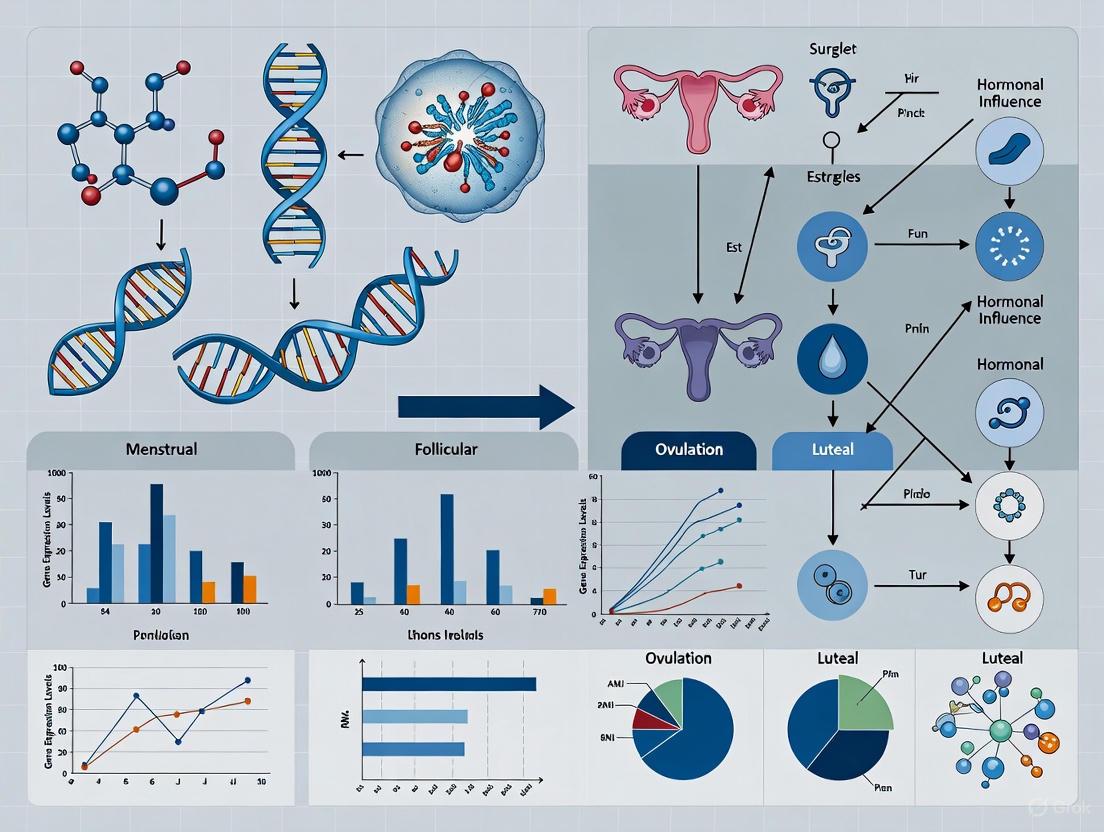
This review synthesizes current transcriptomic research on the dynamic remodeling of the human endometrium across the menstrual cycle.
Decoding the Cyclic Endometrium: A Temporal Transcriptome Atlas of the Human Menstrual Cycle
Abstract
This review synthesizes current transcriptomic research on the dynamic remodeling of the human endometrium across the menstrual cycle. We explore foundational single-cell and bulk RNA-seq atlases that define phase-specific gene expression signatures, from proliferation to receptivity. The article critically evaluates methodological advances, including spatial transcriptomics and organoid models, for their application in studying endometrial biology. Furthermore, it details how transcriptomic profiling uncovers molecular aberrations in infertility disorders like adenomyosis and recurrent implantation failure, offering a framework for diagnostic and therapeutic innovation. Finally, we discuss the validation of biomarkers and comparative analyses with other tissue types, providing a comprehensive resource for researchers and drug development professionals in reproductive medicine.
Mapping the Molecular Landscape: Transcriptomic Dynamics of the Cycling Endometrium
Defining Phase-Specific Gene Expression Signatures from Proliferative to Secretory Phases
The human endometrium undergoes profound, cyclic morphological and functional changes throughout the menstrual cycle, driven by tightly regulated shifts in gene expression patterns. Understanding these phase-specific gene expression signatures is critical for advancing research into endometrial-related disorders such as endometriosis, adenomyosis, recurrent implantation failure, and heavy menstrual bleeding [1]. While histological dating has been the traditional method for cycle staging, recent advances in temporal transcriptome analysis reveal that molecular staging provides superior precision and objectivity [1] [2]. This Application Note details standardized protocols for defining and validating gene expression signatures that demarcate the transition from the proliferative to secretory phases, providing researchers with a robust framework for investigating endometrial function and dysfunction. By establishing a molecular staging model, researchers can overcome the limitations posed by natural variability in menstrual cycle length and the rapid, dynamic changes in endometrial gene expression [1].
Molecular Staging Models for the Endometrial Cycle
The Need for Molecular Staging
The endometrium exhibits dramatic cyclical changes in gene expression that occur on a daily, and sometimes hourly, basis, driven primarily by estrogen during the proliferative phase and progesterone during the secretory phase [1]. Traditional methods for determining endometrial cycle stage—including endocrine monitoring of luteinizing hormone (LH) surges, ultrasound follicle tracking, last menstrual period (LMP) dating, and histopathology—all present significant limitations. Histopathology, while direct, remains subjective with inherent inaccuracy even among experts [1]. Furthermore, natural variability in cycle length poses a substantial challenge: only 12.4% of women have a classic 28-day cycle, with most experiencing cycles ranging from 23-35 days, and over half having inter-cycle variations of 5 days or more [1]. This biological variability complicates accurate comparison between matched samples and has contributed to the poor replicability of many studies linking gene expression to endometrial pathologies [1].
Development and Validation of Molecular Staging
A robust molecular staging model was developed using RNA-seq expression data from 236 endometrial samples classified into 7 pathological stages [1]. The approach utilized penalized cyclic cubic regression splines to model expression patterns for over 20,000 genes throughout the entire menstrual cycle. For each sample, a "model time" was assigned by minimizing the mean squared error between observed expression data and the fitted gene models [1]. This method successfully addressed the challenge of variable cycle length by ranking samples from start to end of cycle, removing the dependency on an idealized 28-day cycle. The model demonstrated strong correlation between molecularly determined post-ovulatory days and pathology estimates (r = 0.9297), validating its accuracy [1]. The approach also works effectively with broader stage classifications (early-, mid-, and late-secretory), maintaining strong correlation with more precise day-based models (r = 0.9807) [1].
Phase-Specific Transcriptomic Signatures
Proliferative Phase Signatures
The proliferative phase, centered on estrogen-driven endometrial growth, demonstrates a distinct transcriptomic profile characterized by genes involved in cellular assembly, epithelial barrier function, and structural organization [2] [3]. Temporal transcriptome analysis across five time points (mid-proliferative, late proliferative/peri-ovulatory, early secretory, mid-secretory, and late secretory) reveals the late proliferative phase as a critical transition point to the secretory phase [2].
Key proliferative phase signatures include upregulation of:
- Cytoskeletal genes: TUBB2A, TUBA1B, TUBB, TUBA1C, and CFL1, which support microtubule cytoskeleton organization and cell division [3]
- Cell signaling regulators: CDC42 and ACTB, involved in actin dynamics and intracellular signaling [3]
- Estrogen-responsive genes: FOSL1, a regulator of cell proliferation and differentiation induced by estrogen [3]
- Lipid metabolism genes: FADS1, SREBF2, PI4K2A, and LDLR, reflecting estrogen's role in lipid metabolism [3]
- Cell cycle components: CCNYL1, which enhances Wnt/β-catenin signaling in mitosis [3]
Table 1: Key Upregulated Genes in the Proliferative Phase Endometrium
| Gene Symbol | Fold Change | Function |
|---|---|---|
| FOSL1 | Significant upregulation | Cell proliferation and differentiation regulator |
| FADS1 | Significant upregulation | Lipid metabolism |
| SREBF2 | Significant upregulation | Lipid metabolism regulation |
| TUBB2A | Significant upregulation | Microtubule structure, cell division |
| TUBA1B | Significant upregulation | Microtubule structure, cell division |
| CCNYL1 | Significant upregulation | Enhances Wnt/β-catenin signaling |
| CDC42 | Significant upregulation | Actin dynamics, intracellular signaling |
Secretory Phase Signatures
The transition to the secretory phase, dominated by progesterone, initiates a dramatic transcriptional shift. Analysis reveals synchronized daily changes in expression for over 3,400 endometrial genes throughout the cycle, with the most dramatic changes occurring during the secretory phase [1]. The secretory phase upregulates genes involved in inflammatory responses, cellular movement, and preparation for implantation [3].
Key secretory phase signatures include upregulation of:
- Inflammatory mediators: PLA2G6, which promotes inflammation through the arachidonic acid pathway and regulates monocyte chemotaxis [3]
- Cell activation markers: ENPP3, an ectonucleotide pyrophosphatase/phosphodiesterase expressed on basophils and mast cells [3]
- Oxidative stress response: ADHFE1, an enzyme mediating oxidative stress responses [3]
- Serine protease inhibitors: SERPINA5, the most downregulated gene in the proliferative phase (thus upregulated in secretory) [3]
Table 2: Key Upregulated Genes in the Secretory Phase Endometrium
| Gene Symbol | Fold Change | Function |
|---|---|---|
| SERPINA5 | Significant upregulation | Serine proteinase inhibitor |
| PLA2G6 | Significant upregulation | Inflammatory response, arachidonic acid pathway |
| ENPP3 | Significant upregulation | Cell activation marker |
| ADHFE1 | Significant upregulation | Oxidative stress response |
Cervical Transcriptome Changes
The transcriptome of the cervix also shows menstrual cycle-dependent changes, though these differ from endometrial patterns. Studies comparing proliferative and secretory phases in the endocervix identified 202 differentially expressed genes (DEGs) [3]. Recent research on cytobrush-collected cervical cells found minimal changes during the implantation window transition, with the most significant differences appearing during the transition to the late secretory phase (2136 DEGs) [4]. Cervical cells collected during hormonal replacement cycles showed 1899 DEGs enriched in immune system processes [4].
Experimental Protocols
Sample Collection and Processing
Endometrial Tissue Collection:
- Collect endometrial biopsies using Pipelle flexible suction catheter or similar devices
- Immediately place samples into RNAlater solution for RNA stabilization
- Incubate at 4°C for 24 hours, then transfer to -80°C for long-term storage [4]
- Confirm cycle phase through LH peak measurement and histological dating according to Noyes' criteria [4]
Cervical Cell Collection:
- Collect endocervical cells using cytobrushes (e.g., Kito-brushes) prior to endometrial biopsy
- Process samples identically to endometrial tissues with RNAlater stabilization [4]
- This minimally invasive approach enables standardized collection for potential diagnostic applications [4]
RNA Extraction and Quality Control
RNA Extraction:
- Extract total RNA from endometrial tissue using RNeasy Mini kit (Qiagen) or equivalent
- Extract RNA from cervical cells using RNeasy Micro kit (Qiagen) for smaller samples
- Assess RNA quality using Qubit RNA IQ Assay or similar methods
- Require RNA Integrity Number (RIN) ≥7 for endometrial tissue and ≥6 for cervical cells [4]
Library Preparation and Sequencing:
- Prepare RNA libraries with TruSeq Stranded mRNA Library Prep kit (Illumina) using 250-500 ng input RNA
- Perform paired-end sequencing (e.g., 2×75 bp) on NextSeq 500 or similar platforms [4]
- Align reads to reference genome (GRCh37) using STAR aligner (v2.7.10a)
- Perform quantification using RSEM (v1.3.3) [4]
Bioinformatics Analysis Pipeline
Differential Expression Analysis:
- Process raw sequencing data through nf-core pipeline (version 3.5)
- Filter low-expressed genes (raw read count = 0, then mean-TPM >1 per group)
- Identify differentially expressed genes using DESeq2 (v.1.36.0) with Benjamini-Hochberg adjusted p-value ≤0.01 and minimum 2-fold change between groups [4]
- Conduct dimensional reduction analysis using UMAP algorithm on VST-transformed count matrix [4]
Pathway and Functional Analysis:
- Perform biological mechanism investigation using g:Profiler [4]
- Conduct cell-type enrichment analysis with xCell tool using reference datasets (GSE119209, GSE86491, GTEx project) [4]
The Scientist's Toolkit: Research Reagent Solutions
Table 3: Essential Research Reagents for Menstrual Cycle Transcriptome Studies
| Reagent/Kit | Application | Key Features |
|---|---|---|
| RNAlater (Thermo Fisher) | RNA stabilization | Preserves RNA integrity during sample storage |
| RNeasy Mini Kit (Qiagen) | RNA extraction from tissue | High-quality RNA from endometrial biopsies |
| RNeasy Micro Kit (Qiagen) | RNA extraction from cells | Optimal for limited cervical cell samples |
| TruSeq Stranded mRNA Library Prep Kit (Illumina) | RNA library preparation | Strand-specific libraries for transcriptome analysis |
| DESeq2 (Bioconductor) | Differential expression | Statistical analysis of count-based RNA-seq data |
| STAR Aligner | Read alignment | Spliced transcript alignment to reference genome |
| RSEM | Quantification | Accurate transcript abundance estimation |
| xCell Tool | Cell-type enrichment | Deconvolution of bulk transcriptomic data |
Signaling Pathways and Regulatory Networks
The transition from proliferative to secretory phases involves coordinated activity across multiple signaling pathways. During the proliferative phase, Wnt/β-catenin signaling plays a crucial role in cellular proliferation and is enhanced by CCNYL1 [3]. Histone-encoding genes within the HIST cluster on chromosome 6 show increased activity during the late proliferative phase, declining during the mid-secretory phase [2]. The secretory phase demonstrates upregulation of inflammatory pathways including those mediated by PLA2G6 in the arachidonic acid pathway [3]. Additionally, the Wnt/β-catenin signaling pathway, potentially restrictive to HIV infection, shows negative correlation with the secretory phase in the endocervix [3].
The molecular staging of the endometrial cycle through temporal transcriptome analysis represents a significant advancement over traditional histological methods. By defining precise phase-specific gene expression signatures, researchers can now classify endometrial samples with unprecedented accuracy, enabling more robust investigations into endometrial biology and pathology. The protocols outlined in this Application Note provide a comprehensive framework for capturing the dynamic transcriptomic landscape across the menstrual cycle transition points. Implementation of these standardized methods will enhance reproducibility across studies and accelerate discovery of diagnostic and therapeutic targets for common endometrial disorders that affect nearly all women at some stage of life [1]. Future directions should focus on integrating single-cell approaches with temporal analysis to resolve cellular heterogeneity while capturing the precise dynamics of endometrial maturation.
Single-Cell RNA-Seq Reveals Cellular Heterogeneity and Subpopulation Dynamics
Single-cell RNA sequencing (scRNA-seq) has revolutionized transcriptomics by enabling the investigation of gene expression at the level of individual cells, rather than averaging signals across bulk tissue populations [5]. This technology provides unprecedented resolution for uncovering cellular heterogeneity, identifying novel cell types and states, and revealing complex cellular dynamics within tissues. In the context of menstrual cycle research, scRNA-seq offers powerful insights into the intricate cellular remodeling and molecular regulation that occur cyclically in reproductive tissues [6]. This application note details how scRNA-seq methodologies are being employed to dissect cellular heterogeneity and subpopulation dynamics, with particular emphasis on their application to temporal transcriptome analysis throughout the menstrual cycle.
Key Biological Insights in Reproductive Biology
Recent scRNA-seq studies have dramatically advanced our understanding of cellular composition and dynamics in reproductive tissues. These investigations have revealed profound cellular heterogeneity and specialized subpopulations that underlie tissue function and pathology.
Fallopian Tube Remodeling Across the Menstrual Cycle and Menopause
A comprehensive single-cell atlas of the human fallopian tube, constructed from 85,107 pre-menopausal and 46,111 post-menopausal cells, has revealed substantial shifts in cell type frequencies, gene expression patterns, transcription factor activity, and cell-to-cell communication associated with menopausal status and menstrual cycle phase [6]. The study identified 19 distinct cell clusters representing 12 major cell types, including multiple subtypes of secretory epithelial (SE) cells, ciliated epithelial cells, smooth muscle cells, and various stromal and immune populations.
Key findings include:
- Menstrual Cycle-Dependent States: Secretory epithelial cells exhibit distinct molecular states regulated by hormonal changes throughout the menstrual cycle [6].
- Menopausal Shifts: Postmenopausal fallopian tubes show increased chromatin accessibility in aging-associated transcription factors (Jun, Fos, BACH1/2), while most hormone receptors are downregulated [6].
- Clinical Implications: A pre-menopausal secretory epithelial gene cluster enriches in the immunoreactive molecular subtype of high-grade serous ovarian cancer (HGSC), while genes expressed in post-menopausal secretory cells show enrichment in the mesenchymal molecular type of HGSC, suggesting distinct cellular origins for different cancer subtypes [6].
Cellular Heterogeneity in Pathological Conditions
In ureteral stricture tissue, scRNA-seq has identified 11 major cell types with distinct subpopulation dynamics compared to normal controls [7]. Pathological tissues exhibited increased proportions of S100A8+ and MT1E+ basal epithelial cells with pro-inflammatory characteristics, expansion of inflammatory fibroblasts and smooth muscle cell subsets, and macrophages with mixed M1/M2 polarization [7]. Similarly, in thin endometrium, scRNA-seq has revealed a significant perivascular expression pattern of CD9+ SUSD2+ cells—putative progenitor stem cells—with TE-associated shifts manifesting as increased fibrosis and attenuated cell cycle progression and adipogenic differentiation [8].
Table 1: Key Cellular Subpopulations Identified by scRNA-seq in Reproductive Tissues
| Tissue | Cell Population | Key Identifiers | Functional Significance |
|---|---|---|---|
| Fallopian Tube [6] | Secretory Epithelial 1 (SE1) | OVGP1+ | Distinct menstrual cycle-dependent states |
| Secretory Epithelial 2 (SE2) | OVGP1+ | Responsive to hormonal changes | |
| Secretory Epithelial 3 (SE3) | Cell cycle genes | Proliferative population | |
| Stromal 1 (ST1) | POSTN+, NR2F2+ | Myofibroblast characteristics | |
| Stromal 2 (ST2) | CD34+ | Stem cell marker, constitutive stromal component | |
| Ureteral Stricture [7] | S100A8+ Basal Epithelial | S100A8, MT1E | Pro-inflammatory characteristics |
| Inflammatory Fibroblasts | Specific marker expansion | Pathological remodeling | |
| APOE+ Macrophages | APOE, APOBEC3A | Mixed M1/M2 polarization | |
| Thin Endometrium [8] | CD9+ SUSD2+ Perivascular | CD9, SUSD2 | Putative progenitor stem cells, dysfunctional in TE |
Experimental Protocols and Methodologies
Single-Cell RNA Sequencing Workflow
A standardized scRNA-seq workflow encompasses multiple critical steps from sample preparation to data analysis, each requiring specific methodological considerations for optimal results in menstrual cycle research.
Sample Preparation and Single-Cell Isolation
The initial stage involves creating a single-cell suspension from tissue samples through enzymatic and mechanical dissociation—a particularly critical step for reproductive tissues that undergo cyclic structural changes [9]. For fallopian tube studies, samples are typically collected from specific anatomical regions (ampulla, fimbriae, isthmus) during different menstrual cycle phases, with precise documentation of hormonal status [6]. Cell viability should exceed 80% to ensure high-quality data, as dead cells can release RNA that contributes to background noise [9].
Single-cell isolation employs either plate-based or droplet-based methods:
- Plate-based methods (Smart-seq2, Smart-seq3) provide full-length transcript coverage but lower throughput [10] [11].
- Droplet-based methods (10x Genomics Chromium, Drop-Seq) enable high-throughput analysis of thousands of cells, capturing 3' or 5' ends of transcripts [5] [11]. The 10x Genomics platform has been successfully used in fallopian tube studies, recovering approximately 5,000-10,000 cells per sample [6].
Library Preparation and Sequencing
Library construction involves capturing mRNA, reverse transcribing it to cDNA with cellular barcodes and Unique Molecular Identifiers (UMIs), and amplifying the cDNA before sequencing [9]. UMIs are essential for accurate transcript quantification as they distinguish biological duplicates from amplification artifacts [11]. The choice between PCR-based amplification (used in Smart-seq2, 10x Genomics) and in vitro transcription (IVT) methods (used in CEL-Seq, MARS-Seq) depends on the specific protocol [11].
For menstrual cycle studies where detecting subtle transcriptional changes is critical, sequencing depth should be sufficient to capture lower-abundance transcripts. Current best practices recommend sequencing to a depth of 20,000-50,000 reads per cell, depending on the complexity of the cell population [12].
Quality Control and Data Processing
Rigorous quality control is essential for reliable scRNA-seq data. The following QC metrics should be applied:
- Count Depth: The number of transcripts detected per cell. Cells with unusually high counts may represent multiplets (droplets containing multiple cells), while those with low counts may indicate poor capture or empty droplets [9] [12].
- Genes per Cell: Typically ranges from 1,000 to 10,000 depending on the protocol and cell type. Outliers may indicate poor-quality cells or multiplets [12].
- Mitochondrial Read Fraction: Elevated mitochondrial RNA (>10-20%) often indicates stressed, dying, or low-quality cells due to cytoplasmic RNA leakage [9] [12].
Data processing pipelines such as Cell Ranger (10x Genomics) process raw sequencing data to perform read alignment, UMI counting, and cell calling [12]. The resulting count matrices undergo normalization to account for technical variability between cells, typically using methods like log-normalization with a scale factor of 10,000 [8].
Downstream Analytical Approaches
Table 2: Key Analytical Methods for scRNA-seq Data in Menstrual Cycle Research
| Analysis Type | Common Tools | Application in Menstrual Cycle Research |
|---|---|---|
| Clustering & Visualization | Seurat, Scanpy | Identification of distinct cell populations across cycle phases [7] [8] |
| Differential Expression | Seurat, DESeq2 | Detection of hormone-responsive genes [6] |
| Trajectory Inference | Monocle2, SCANPY, scVelo | Reconstruction of cellular differentiation pathways [7] [8] |
| Cell-Cell Communication | CellChat | Analysis of signaling pathway changes during tissue remodeling [7] [8] |
| Transcription Factor Activity | SCENIC, cisBP database | Identification of regulatory programs driving cyclic changes [6] |
| Data Integration | Harmony, Seurat | Combining datasets from multiple cycle timepoints [6] |
Advanced analytical methods enable the extraction of biologically meaningful insights from scRNA-seq data:
- Clustering and Cell Type Identification: Unsupervised clustering algorithms group cells based on transcriptional similarity, revealing distinct cell populations [9]. Fallopian tube studies have identified 19 distinct clusters representing 12 major cell types [6].
- Pseudotime Analysis: Reconstruction of differentiation trajectories using tools like Monocle2 can reveal continuous biological processes such as cellular differentiation or activation states [7] [8].
- Cell-Cell Communication: Tools like CellChat infer intercellular signaling networks by mapping ligand-receptor interactions, revealing pathways such as PERIOSTIN, collagen, and laminin in ureteral stricture pathology [7].
Signaling Pathways and Cellular Crosstalk
scRNA-seq studies have revealed intricate cell-cell communication networks that coordinate tissue function and remodeling. In reproductive tissues, these networks are dynamically regulated throughout the menstrual cycle.
In pathological conditions such as ureteral stricture, cell-cell communication analysis has revealed enhanced signaling among fibroblasts, endothelial cells, and immune subsets, particularly via PERIOSTIN, collagen, and laminin pathways [7]. Similarly, in thin endometrium, signaling pathways related to collagen deposition around blood vessels are markedly interrupted, particularly in perivascular CD9+SUSD2+ cells [8]. These disrupted communication networks contribute to impaired endometrial regeneration and repair.
In scallop gonad research—a model for reproductive biology—scRNA-seq has identified bidirectional ligand-receptor interactions between germ cells and accessory cells involving TGF-β, Notch, PI3K-Akt, and Wnt signaling pathways [13], suggesting evolutionary conservation of certain reproductive signaling mechanisms.
Research Reagent Solutions
Table 3: Essential Research Reagents for scRNA-seq in Menstrual Cycle Studies
| Reagent Category | Specific Examples | Function and Application |
|---|---|---|
| Single-Cell Isolation Platforms | 10x Genomics Chromium, Fluidigm C1, MobiNova-100 | Partitioning individual cells for barcoding [7] [10] |
| Library Preparation Kits | Chromium Next GEM Single Cell 3' Reagent Kits, Smart-seq2/3 | Generating barcoded sequencing libraries [10] [12] |
| Enzymes for Reverse Transcription | Moloney Murine Leukemia Virus (M-MLV) Reverse Transcriptase | cDNA synthesis from captured mRNA [11] |
| Barcoding Systems | Cellular barcodes, Unique Molecular Identifiers (UMIs) | Tracking transcripts to individual cells and molecules [5] [11] |
| Sequencing Reagents | Illumina NovaSeq 6000, NextSeq | High-throughput sequencing of libraries [7] |
| Cell Sorting Reagents | Fluorescently-labeled antibodies for FACS | Isolation of specific cell populations prior to sequencing [14] |
| Analysis Software | Seurat, Scanpy, Cell Ranger | Processing raw data and performing downstream analyses [9] [8] [12] |
Single-cell RNA sequencing has emerged as a transformative technology for elucidating cellular heterogeneity and subpopulation dynamics in reproductive biology. Its application to menstrual cycle research has revealed previously unappreciated cellular diversity in fallopian tubes, endometrium, and related reproductive tissues, uncovering how distinct cell populations respond to hormonal fluctuations and contribute to both physiological processes and pathological conditions. The detailed methodologies outlined in this application note provide researchers with a framework for implementing scRNA-seq approaches in their investigations of temporal transcriptome dynamics throughout the menstrual cycle. As these technologies continue to evolve, they promise to yield increasingly precise insights into the cellular basis of reproductive health and disease, potentially identifying novel therapeutic targets for conditions ranging from infertility to gynecologic cancers.
The human endometrium is a uniquely dynamic tissue, undergoing more than 400 cycles of regeneration, differentiation, and shedding throughout a woman's reproductive life [15]. This remarkable regenerative capacity is orchestrated by complex temporal and spatial coordination of multiple signaling pathways. Among these, Wnt/β-catenin, NOTCH, and Interferon signaling pathways have emerged as critical regulators of endometrial function across the menstrual cycle. Their coordinated activities govern fundamental processes including stem cell maintenance, tissue regeneration, immune modulation, and receptivity for embryo implantation [16] [17] [18]. Disruptions in these pathways are increasingly implicated in various endometrial pathologies, from implantation failure to endometriosis [17] [19] [20]. This Application Note synthesizes current experimental evidence and provides detailed methodologies for investigating these pathways, with particular emphasis on their temporal regulation during the menstrual cycle.
Pathway Fundamentals and Temporal Regulation
Wnt/β-Catenin Signaling
The Wnt/β-catenin pathway is a cornerstone of endometrial regeneration and differentiation. During the menstrual cycle, Wnt signaling activity demonstrates precise temporal regulation, with distinct peaks during the proliferative and menstrual phases that support stem cell activation and tissue rebuilding [18]. The pathway is initiated when Wnt ligands bind to Frizzled receptors and LRP5/6 co-receptors, preventing the destruction complex and allowing β-catenin accumulation. Stable β-catenin translocates to the nucleus, forming complexes with TCF/LEF transcription factors to activate target genes essential for cell proliferation and differentiation [20].
Research indicates that endometrial niche cells at menstruation secrete specific factors that activate Wnt/β-catenin signaling in endometrial mesenchymal stem/stromal cells (eMSCs), promoting their self-renewal and clonogenic activity [18]. This pathway also plays a decisive role in endometrial receptivity, where nuclear β-catenin translocation is essential for proper decidualization. Notably, studies have shown that approximately 60-70% of women with Recurrent Implantation Failure (RIF) exhibit defects in Wnt pathway components, with a marked 55% reduction in β-catenin nuclear translocation compared to fertile controls [20].
NOTCH Signaling
The NOTCH signaling pathway operates through direct cell-cell contact or via extracellular vesicles, where membrane-bound ligands (JAG1, DLL1) interact with NOTCH receptors (NOTCH1-4) on adjacent cells [16] [21]. This interaction triggers proteolytic cleavage by γ-secretase, releasing the Notch Intracellular Domain (NICD) which translocates to the nucleus and activates target genes such as HES and HEY families [16].
NOTCH signaling is indispensable for maintaining endometrial mesenchymal stromal/stem-like cells (eMSCs) in a quiescent state, preserving the stem cell pool during regeneration cycles [16]. Gain-of-function experiments demonstrate that NOTCH activation promotes eMSC maintenance, while inhibition produces opposite effects [16]. The pathway also facilitates communication between myometrial cells and eMSCs via JAG1-containing extracellular vesicles, creating a niche that supports stem cell function [21]. Recent investigations reveal intricate crosstalk between NOTCH and Wnt pathways, where quiescent eMSC maintained by NOTCH activation can re-enter the cell cycle depending on Wnt activity in the microenvironment [16].
Interferon Signaling
Interferon signaling represents a crucial immunological component of endometrial regulation, with types I (IFNα, IFNβ), II (IFNγ), and III (IFNλ) IFNs activating the JAK-STAT pathway upon binding to their cognate receptors [17]. This pathway is particularly significant during the luteal phase and early pregnancy, where it contributes to immune tolerance and facilitates embryo implantation.
In pathological contexts, IFN signaling assumes a dual role. While essential for normal endometrial function and pregnancy maintenance, dysregulated IFN signaling is associated with endometriosis progression [17]. Endometriotic tissues exhibit elevated IFN levels compared to normal endometrium, with type II IFN (IFNγ) failing to induce apoptosis in ectopic endometrial stromal cells—a protective mechanism that operates in normal endometrial stromal cells [17]. This defect enables ectopic cells to evade immune surveillance, facilitating endometriosis establishment.
Table 1: Key Signaling Pathways in Endometrial Function
| Pathway | Core Components | Primary Functions in Endometrium | Temporal Expression |
|---|---|---|---|
| Wnt/β-catenin | Wnt ligands, Frizzled receptors, β-catenin, TCF/LEF | Stem cell activation, tissue regeneration, decidualization | Peaks during menstrual and proliferative phases [18] |
| NOTCH | NOTCH1-4 receptors, JAG1, DLL ligands, NICD | Stem cell maintenance, cellular quiescence, lineage specification | Active throughout cycle, specific roles in regeneration [16] [21] |
| Interferon | IFNAR/IFNGR receptors, JAKs, STATs, IRFs | Immune regulation, viral defense, embryo implantation, apoptosis regulation | Prominent in secretory phase and early pregnancy [17] |
Experimental Data and Quantitative Analysis
Key Quantitative Findings
Recent investigations have yielded substantial quantitative insights into pathway activities and dysregulations in endometrial pathologies:
Table 2: Quantitative Signaling Pathway Alterations in Endometrial Pathologies
| Pathway | Experimental Context | Key Quantitative Findings | Functional Consequences |
|---|---|---|---|
| Wnt/β-catenin | Recurrent Implantation Failure (RIF) [20] | 55% reduction in β-catenin nuclear translocation; 45% decrease in decidual markers (PRL, IGFBP-1) | Impaired decidualization, failed implantation |
| NOTCH | Endometrial MSC maintenance [16] | JAG1 coating increased CD140b+CD146+ cells; DAPT inhibition abolished this effect | Regulation of eMSC quiescence and maintenance |
| Interferon | Endometriosis pathogenesis [17] | Elevated IFN levels in ectopic tissues; defective apoptosis in ectopic stromal cells | Immune evasion, disease progression |
| Pathway Crosstalk | NOTCH-Wnt interaction in eMSC [16] | JAG1-induced quiescence reversed by WNT3A/WNT5A treatment | Dynamic stem cell state transitions |
Methodological Protocols
Protocol: Assessing NOTCH Signaling in Endometrial MSC
Objective: To evaluate NOTCH pathway activation in human endometrial mesenchymal stem/stromal cells (eMSC) using gain- and loss-of-function approaches.
Materials:
- Primary human endometrial stromal cells (isolated from surgical specimens)
- Recombinant JAG1 protein (or JAG1-coated culture plates)
- DAPT (γ-secretase inhibitor, 1.25 μM in DMSO)
- NOTCH1 siRNA and control siRNA
- Antibodies: anti-NICD, anti-HES1, anti-HEY2, anti-Notch1
- Flow cytometry antibodies: anti-CD140b-PE, anti-CD146
Procedure:
- Isolate eMSC from endometrial biopsies using sequential magnetic bead selection with CD140b and CD146 antibodies [16] [21].
- Culture eMSC under three conditions:
- Experimental: Culture on JAG1-coated plates (5 μg/mL)
- Inhibition: Culture on fibronectin-coated plates with DAPT (1.25 μM)
- Control: Culture on fibronectin-coated plates with DMSO vehicle
- Analyze phenotypic markers after 72 hours by flow cytometry for CD140b and CD146 co-expression.
- Assess NOTCH activation via immunofluorescence staining for NICD nuclear localization.
- Confirm pathway activity by Western blot analysis of NICD, HES1, and HEY2 protein levels.
- Perform functional assays including colony-forming unit assays and cell cycle analysis by propidium iodide staining.
Applications: This protocol enables investigation of NOTCH signaling in eMSC maintenance, quiescence, and cross-talk with other pathways such as Wnt/β-catenin [16].
Protocol: Evaluating Wnt/β-Catenin Pathway in Decidualization
Objective: To investigate Wnt/β-catenin signaling during in vitro decidualization of human endometrial stromal cells (hESC).
Materials:
- Primary human endometrial stromal cells
- Decidualization induction medium: 0.5 mM cAMP + 1 μM medroxyprogesterone acetate
- Wnt pathway modulators: IWP-2 (2.5 μM, Wnt inhibitor), SKL2001 (Wnt agonist)
- Antibodies: anti-active β-catenin, anti-β-catenin, anti-IGFBP1, anti-PRL
- Luciferase reporter constructs: TCF/LEF reporter
Procedure:
- Culture hESC to 80% confluence in standard growth medium.
- Pre-treat cells with Wnt modulators or vehicle for 24 hours before decidualization induction.
- Induce decidualization using cAMP and MPA for 5-7 days, refreshing media and treatments every 48 hours.
- Monitor decidualization by measuring prolactin (PRL) and IGFBP1 secretion via ELISA.
- Analyze β-catenin localization by immunofluorescence and subcellular fractionation followed by Western blotting.
- Assess transcriptional activity using TCF/LEF luciferase reporter assays.
- Evaluate morphological changes by phalloidin staining for F-actin and brightfield microscopy.
Applications: This approach allows precise determination of Wnt/β-catenin contribution to decidualization, relevant for understanding receptivity defects in RIF patients [19] [20].
Protocol: Analyzing Interferon Signaling in Endometrial Cells
Objective: To characterize interferon response in normal versus endometriotic endometrial stromal cells.
Materials:
- Normal human endometrial stromal cells (hESC)
- Endometriotic stromal cells (EcSC) from ovarian endometrioma
- Recombinant human IFNγ (50 ng/mL)
- JAK-STAT pathway inhibitors: Ruxolitinib (JAK1/2 inhibitor, 1 μM)
- Apoptosis detection kit (Annexin V/PI)
- Antibodies: anti-pSTAT1, anti-STAT1, anti-CASP3
Procedure:
- Culture matched hESC and EcSC from the same patients under identical conditions.
- Stimulate cells with IFNγ for 24 hours, with or without Ruxolitinib pre-treatment (2 hours).
- Analyze pathway activation by Western blot for phosphorylated STAT1 and total STAT1.
- Assess apoptotic response by flow cytometry using Annexin V/PI staining after 48 hours of IFNγ treatment.
- Evaluate gene expression of interferon-stimulated genes (ISGs) by qRT-PCR.
- Measure cytokine secretion in conditioned media using multiplex cytokine arrays.
Applications: This protocol facilitates investigation of defective interferon signaling in endometriosis, particularly the apoptosis resistance mechanism in ectopic stromal cells [17].
Research Reagent Solutions
Table 3: Essential Research Reagents for Signaling Pathway Studies
| Reagent/Category | Specific Examples | Research Application | Key Considerations |
|---|---|---|---|
| Pathway Activators | Recombinant JAG1, WNT3A, WNT5A, SKL2001 (Wnt agonist), Interferons (IFNα, IFNγ) | Gain-of-function studies, pathway stimulation | JAG1 can be used as soluble protein or plate-bound [16]; Wnt agonists rescue NOTCH-induced quiescence [16] |
| Pathway Inhibitors | DAPT (γ-secretase inhibitor), IWP-2 (Wnt inhibitor), IWR-1 (Wnt inhibitor), Ruxolitinib (JAK inhibitor) | Loss-of-function studies, pathway interrogation | DAPT at 1.25 μM effectively inhibits NOTCH without apoptosis [16]; IWR-1 at 5 mg/kg in vivo [22] |
| siRNA/Silencing Tools | NOTCH1 siRNA, MEN1 siRNA, β-catenin shRNA | Target validation, mechanistic studies | NOTCH1 siRNA abolishes JAG1-mediated eMSC maintenance [16]; Menin knockdown activates Wnt pathway [19] |
| Detection Antibodies | anti-NICD, anti-active β-catenin, anti-phospho STAT1, anti-Ki67, anti-IGFBP1 | Pathway activity readouts, phenotyping | Nuclear NICD indicates NOTCH activation [16]; β-catenin nuclear translocation measures Wnt activity [20] |
| Cell Isolation Tools | Anti-CD140b/PDGFRβ, anti-CD146/MCAM, anti-CD45, anti-EpCAM | Primary cell isolation, stem cell enrichment | Sequential bead selection yields pure eMSC (CD140b+CD146+) [16] [21] |
Signaling Pathway Visualizations
Wnt and NOTCH Signaling Crosstalk in Endometrial Repair
Interferon Signaling in Endometrial Homeostasis
Experimental Workflow for Pathway Analysis
Discussion and Research Implications
The intricate interplay between Wnt, NOTCH, and interferon signaling pathways creates a sophisticated regulatory network that coordinates endometrial cycling. Temporal specificity is paramount—Wnt signaling dominates during regeneration phases, NOTCH maintains stem cell reservoirs, and interferon signaling prevails during implantation and immune surveillance phases [16] [17] [18]. The recently elucidated crosstalk between NOTCH and Wnt pathways reveals how eMSC transition between quiescent and active states in response to microenvironmental cues [16]. NOTCH activation maintains quiescence through cell cycle inhibitors, while Wnt ligands can reverse this state, promoting proliferation and differentiation when regeneration is required.
From a clinical perspective, disruptions in these pathways contribute significantly to reproductive pathologies. In Recurrent Implantation Failure (RIF), simultaneous dysregulation of Wnt/β-catenin and PI3K-AKT-mTOR pathways creates a hostile endometrial environment, with documented reductions in β-catenin nuclear translocation (70% cytoplasmic retention) and AKT phosphorylation (65% decrease) [20]. In endometriosis, defective interferon signaling enables ectopic cell survival through apoptosis resistance [17]. These molecular insights open new therapeutic avenues, including pathway-specific interventions such as Wnt agonists to enhance decidualization or JAK inhibitors to modulate aberrant interferon responses.
Future research directions should prioritize spatial transcriptomics to map pathway activities across endometrial niches [23], develop temporal pathway modulation strategies synchronized with menstrual cycle phases, and explore combination therapies that target multiple pathways simultaneously. The development of more physiologically relevant in vitro models, including assembloids that recapitulate stromal-epithelial crosstalk, will further advance our understanding of these signaling networks in endometrial biology and pathology [19].
Within the context of temporal transcriptome analysis of the menstrual cycle, understanding the distinct roles of luminal and glandular epithelial cells is paramount for deciphering the mechanisms of endometrial receptivity. These compartments create specialized microenvironments that are temporally regulated to facilitate embryo implantation. Spatial transcriptomics has emerged as a powerful tool to resolve these spatially organized gene expression programs, moving beyond the limitations of bulk and single-cell RNA sequencing that lose crucial anatomical context. This application note details protocols and analytical frameworks for applying spatial transcriptomic technologies to precisely map the dynamic molecular landscapes of luminal and glandular epithelial microenvironments across the window of implantation (WOI).
Background and Significance
The human endometrium undergoes precisely timed molecular and cellular changes during the menstrual cycle to achieve receptivity. Single-cell RNA sequencing studies of over 220,000 endometrial cells have revealed a highly dynamic cellular landscape across the WOI, characterized by a two-stage stromal decidualization process and a gradual transition of luminal epithelial cells [24]. Notably, a specific luminal epithelial population has been identified that expresses classic luminal markers (LGR4, FGFR2, ERBB4) while also localizing to glandular areas, challenging strict compartmentalization and suggesting a lineage relationship [24]. These cells exhibit low latent time and RNA velocity trajectories indicating differentiation potential toward glandular cells [24].
Spatial context is critical, as dysregulation of these spatiotemporal programs is implicated in reproductive pathologies like recurrent implantation failure (RIF). Endometria from women with RIF can exhibit displaced WOI signatures and a hyper-inflammatory microenvironment surrounding dysfunctional epithelial cells [24]. Furthermore, recent studies integrating genotype data have identified endometriosis-risk genes such as GREB1 and WASHC3 that are significantly associated with risk through genetically regulated splicing events, findings discernible only through transcript-level analysis [25]. These insights underscore the necessity of spatially resolved molecular profiling to understand both physiological and pathophysiological states.
Protocol for Spatial Transcriptomic Profiling of Planar Endometrial Cultures
This protocol adapts the 10x Genomics Visium HD workflow for adherent cell cultures and engineered planar tissues, which are incompatible with standard embedding and sectioning [26]. It is ideal for modeling the endometrial epithelial interface.
Materials and Reagents
Table 1: Key Research Reagent Solutions for Spatial Transcriptomics
| Item | Function/Application | Source/Example |
|---|---|---|
| Visium HD Microscope Slide | Hydrogel-coated slide with barcoded capture spots for transcript binding. | 10x Genomics [26] |
| PureCol, Type I Bovine Collagen Solution | Coats slides to create a biologically relevant surface for cell adhesion and growth. | Advanced Biomatrix [26] |
| Paraformaldehyde (16%) | Fixes cells in place, preserving spatial arrangement and RNA integrity. | Electron Microscopy Sciences [26] |
| CytAssist Instrument | Facilitates transfer of probes from the sample slide to the Visium HD capture slide. | 10x Genomics [26] |
| Space Ranger | Computational pipeline for processing FASTQ files from Visium HD experiments. | 10x Genomics [26] [27] |
| Bluing Reagent (Dako) | Used in H&E staining protocol for nuclear contrast. | Agilent [26] |
| Gill II Hematoxylin & Eosin Y | Counterstains for histological visualization and annotation of tissue/culture structure. | Sigma; MilliporeSigma [26] |
Step-by-Step Procedure
1. Microscope Slide Sterilization and Coating
- Sterilize Visium HD microscope slides by submerging in 70% ethanol for 30 minutes in a biosafety cabinet [26].
- Wash slides thoroughly in sterile distilled water five times to remove residue [26].
- Coat the sterile slides with a thin layer of collagen solution (e.g., PureCol) to promote cell adhesion [26].
2. Cell Seeding and Culture
- Culture and expand endometrial epithelial cells of interest (e.g., primary luminal or glandular cells, cell lines) using standard methods [26].
- Seed cells directly onto the coated capture area of the Visium HD slide. For patterned co-cultures, techniques like single-cell bioprinting can be employed [26].
- Culture cells until the desired confluence and spatial organization are achieved.
3. Fixation, Permeabilization, and Staining
- Fix cells on the slide by incubating with 4% paraformaldehyde (diluted from 16% stock) [26].
- Permeabilize cells to allow access for sequencing probes.
- Perform H&E staining for morphological context: stain with Gill II Hematoxylin, apply Bluing Reagent, and counterstain with Eosin Y [26].
4. Visium HD Library Preparation and Sequencing
- Follow the standard Visium HD Spatial Gene Expression protocol without modification.
- Use the CytAssist instrument for probe transfer from the cells on the microscope slide to the Visium HD capture slide [26].
- Proceed with library construction and sequencing as per the manufacturer's instructions.
5. Data Processing and Initial Analysis
- Process raw sequencing data (FASTQ files) using Space Ranger to align reads, count transcripts, and assign spatial barcodes [26] [27].
- The output can then be imported into analysis frameworks like Seurat or Giotto for downstream biological interpretation [27].
Diagram 1: Experimental workflow for planar culture spatial transcriptomics.
Data Analysis and Integration Framework
The analysis of spatial transcriptomic data involves several steps to decode the unique signatures of epithelial microenvironments.
Key Analytical Tools
Table 2: Computational Tools for Spatial Transcriptomic Data Analysis
| Tool Category | Examples | Application |
|---|---|---|
| Processing & Visualization | Space Ranger, Xenium Analyzer, Xenium Explorer, Giotto, Seurat, Squidpy | Primary data processing, alignment, barcode assignment, and interactive visualization [27]. |
| Cell Type Annotation | Cell2location, RCTD, CellTypist, Azimuth | Reference-based mapping of cell types onto spatial data using single-cell RNA-seq atlases [27]. |
| Spatially Variable Genes | SpatialDE, HotSPOT, SINFONIA | Identification of genes with significant spatial expression patterns [27]. |
| Cell-Cell Communication | CellChat, COMMOT | Inference of communication networks between luminal epithelium, glandular epithelium, and stromal cells [27]. |
| Spatial Domains & NICHEs | Banksy, SpaGCN, STAGATE | Clustering of spatial data into anatomical or functional domains [27]. |
Integrating Temporal and Spatial Dynamics
A powerful application is correlating spatial profiles with the precise temporal context of the menstrual cycle. Time-series single-cell data can serve as a reference for spatial data. Algorithms like StemVAE can model transcriptomic dynamics across the WOI (from LH+3 to LH+11), providing a predictive framework for determining the receptivity status of a spatial sample based on its epithelial gene expression profile [24].
Diagram 2: Integration of spatial data with a temporal reference atlas.
Key Molecular Insights and Data Interpretation
Spatial transcriptomics enables the systematic cataloging of compartment-specific gene expression.
Table 3: Key Molecular Features of Luminal and Glandular Epithelium During the WOI
| Feature | Luminal Epithelium | Glandular Epithelium | Functional Significance |
|---|---|---|---|
| Marker Genes | LGR4, LGR5, FGFR2, ERBB4, LIFR, LPAR3 [24] |
MMP26, SPP1, MUC16, PAEP, GPX3 [24] [28] |
Luminal markers facilitate embryo attachment; glandular markers support secretion. |
| Receptivity Genes | MSX1, MEIS1 |
PAEP, CXCL14 |
Spatially distinct receptivity programs [24]. |
| Dysregulation in RIF | Displaced temporal expression, hyper-inflammatory signaling [24] | Altered secretory profile | Contributes to impaired implantation [24]. |
| Splicing Regulation | Splicing changes in GREB1, WASHC3 linked to endometriosis risk [25] |
Isoform-level variation adds a layer of regulatory control. |
These data reveal that the establishment of receptivity is not a uniform process but involves a coordinated, spatially partitioned interplay of genes. For instance, while luminal epithelium upregulates adhesion-related pathways, glandular epithelium enhances protein synthesis and secretion. In RIF, this precise spatial coordination is disrupted, often manifesting as an aberrant inflammatory response in the luminal compartment [24].
The application of spatial transcriptomics to endometrial biology, particularly when framed within a detailed temporal context, provides an unprecedented view of the molecular choreography defining the window of implantation. The protocol outlined herein for profiling planar cultures, combined with the recommended analytical toolkit, empowers researchers to dissect the unique microenvironments of luminal and glandular epithelium. This approach is instrumental in moving from observational studies to mechanistic insights, ultimately accelerating the development of diagnostics and therapeutics for endometrial-factor infertility and other gynecological disorders.
The Late Proliferative Phase as a Critical Transition Point to Receptivity
The human endometrium undergoes precisely timed molecular and cellular transformations to achieve a brief window of receptivity, known as the Window of Implantation (WOI). Temporal transcriptome analysis has revolutionized our understanding of these dynamics, revealing that the late proliferative phase (LPP) is not merely a period of estrogen-driven growth but a critical transition point. This phase is characterized by a foundational genetic and proteomic reprogramming that primes the tissue for the subsequent progesterone-mediated decidualization, ultimately determining implantation success.
Temporal Transcriptomic Landscape
High-resolution RNA sequencing (RNA-seq) across the menstrual cycle identifies the LPP as a hub of significant transcriptional change. The shift from the mid-proliferative to the LPP involves the coordinated downregulation of proliferation-associated genes and the initial activation of pathways critical for receptivity.
Table 1: Key Transcriptional Changes in the Late Proliferative Phase
| Gene Symbol | Gene Name | Fold Change (LPP vs. Mid-Proliferative) | Function in Endometrium |
|---|---|---|---|
| PAEP | Progestagen-Associated Endometrial Protein | +8.5 | Immunomodulation, precursor to Glycodelin-A |
| GPX3 | Glutathione Peroxidase 3 | +6.2 | Protection from oxidative stress |
| SLC1A1 | Solute Carrier Family 1 Member 1 | +5.8 | Amino acid transport for embryo viability |
| MKI67 | Marker of Proliferation Ki-67 | -12.1 | Cell proliferation marker (downregulated) |
| CCNB1 | Cyclin B1 | -9.8 | Cell cycle progression (downregulated) |
Critical Signaling Pathways
The transition is governed by the crosstalk between estrogen receptor (ER) and progesterone receptor (PR) signaling, even before serum progesterone levels rise significantly.
Diagram 1: Signaling Network at the LPP Transition
Title: Estrogen and Progesterone Receptor Crosstalk
Experimental Protocols for Temporal Analysis
Protocol 4.1: Endometrial Biopsy Processing for RNA-seq
- Objective: To obtain high-quality RNA for transcriptome analysis from endometrial tissue biopsies.
- Reagents: RNAlater stabilization solution, TRIzol reagent, DNase I kit, RNeasy Mini Kit.
- Procedure:
- Immediately following biopsy, immerse tissue in 5 volumes of RNAlater. Incubate at 4°C overnight, then store at -80°C.
- Homogenize 30 mg of tissue in 1 mL TRIzol using a rotor-stator homogenizer.
- Phase separate by adding 0.2 mL chloroform per 1 mL TRIzol. Centrifuge at 12,000 x g for 15 minutes at 4°C.
- Transfer the aqueous phase to a new tube and purify RNA using the RNeasy Mini Kit, including the on-column DNase I digestion step.
- Elute RNA in nuclease-free water. Assess integrity using an Agilent Bioanalyzer (RIN > 8.0 required).
Protocol 4.2: Computational Analysis of Time-Series Transcriptome Data
- Objective: To identify significantly changing genes and pathways across the menstrual cycle.
- Software: R (v4.2+), DESeq2, clusterProfiler.
- Procedure:
- Alignment & Quantification: Align quality-controlled (FastQC) reads to the human reference genome (GRCh38) using STAR. Quantify gene-level counts with featureCounts.
- Differential Expression: Using DESeq2, model gene counts as a function of cycle day (continuous variable). Identify genes with an adjusted p-value < 0.05 and |log2FoldChange| > 1.
- Time-Series Clustering: Apply the Mfuzz package to group genes with similar expression trajectories over time.
- Pathway Analysis: Input lists of temporally regulated genes into clusterProfiler for Gene Ontology (GO) and Kyoto Encyclopedia of Genes and Genomes (KEGG) enrichment analysis.
Diagram 2: Transcriptomic Workflow
Title: Temporal Transcriptomics Analysis Pipeline
The Scientist's Toolkit: Research Reagent Solutions
Table 2: Essential Reagents for Endometrial Receptivity Research
| Reagent / Kit | Function & Application |
|---|---|
| RNAlater Stabilization Solution | Preserves RNA integrity in fresh tissue samples prior to nucleic acid extraction. |
| RNeasy Mini Kit (Qiagen) | Silica-membrane-based purification of high-quality total RNA from complex tissues. |
| TruSeq Stranded mRNA Library Prep Kit | Preparation of strand-specific sequencing libraries for transcriptome analysis on Illumina platforms. |
| Anti-ERα (Clone EP1), Rabbit Monoclonal | Immunohistochemistry for validating estrogen receptor alpha protein expression and localization. |
| Anti-PR (Clone PgR 1294), Mouse Monoclonal | Immunohistochemistry for validating progesterone receptor protein expression and localization. |
| Ishikawa Cell Line | A well-differentiated human endometrial adenocarcinoma cell line used for in vitro models of receptivity. |
| Decidualization Induction Media | A cocktail of cAMP + Medroxyprogesterone Acetate (MPA) to induce in vitro decidualization of primary human endometrial stromal cells. |
Implications for Drug Development
The LPP represents a novel therapeutic window. Targeting pathways active during this transition (e.g., enhancing antioxidant defense via GPX3 mimetics or modulating amino acid transport via SLC1A1) could potentially rescue defects in endometrial receptivity. Furthermore, temporal transcriptome signatures from the LPP could serve as predictive biomarkers for assessing the endometrial response in fertility treatments and in the safety profiling of drugs that may impact reproductive function.
From Bulk to Single-Cell: Advanced Methodologies for Endometrial Transcriptomics
Transcriptome analysis is indispensable for exploring complex biological systems, and the choice between bulk and single-cell RNA sequencing (scRNA-seq) fundamentally shapes experimental outcomes and interpretations. This is particularly true in menstrual cycle research, where tissues like the endometrium undergo rapid, coordinated changes across multiple cell types in response to hormonal cues. Bulk RNA-seq provides a population-averaged view of gene expression, while scRNA-seq resolves cellular heterogeneity, enabling the discovery of rare cell types and transient states. This application note frames the comparative advantages of these technologies within the context of temporal transcriptome analysis of the menstrual cycle, providing structured data comparisons, detailed protocols, and visualization to guide researchers and drug development professionals.
Comparative Analysis of Bulk and Single-Cell RNA-Seq
The decision between bulk and single-cell RNA-seq hinges on the research question, with each method offering distinct advantages and trade-offs in resolution, cost, and application [29] [30] [31]. Bulk RNA-seq measures the average gene expression profile from a population of thousands to millions of cells, making it a powerful tool for identifying overall transcriptomic differences between conditions, such as healthy versus diseased tissue, or across different time points in a time-course experiment [29]. In contrast, single-cell RNA-seq profiles the transcriptome of individual cells, uncovering the cellular heterogeneity within a sample that is otherwise averaged out in a bulk readout [29] [32].
Table 1: Core Characteristics of Bulk and Single-Cell RNA-Sequencing
| Feature | Bulk RNA-Seq | Single-Cell RNA-Seq |
|---|---|---|
| Resolution | Population-averaged expression [29] | Individual cell expression [29] |
| Key Strength | Cost-effective differential expression analysis for large cohorts [29] [30] | Deconstruction of cellular heterogeneity; discovery of novel/rare cell types and states [29] [33] |
| Ideal for | Differential gene expression, biomarker discovery, pathway analysis over entire tissue [29] | Cell atlas construction, lineage tracing, tumor evolution, immune cell dynamics [29] [30] [33] |
| Cost | Lower cost per sample [29] | Higher cost per cell; requires deeper sequencing [29] |
| Data Complexity | Lower; more straightforward statistical analysis [29] | High-dimensional; requires specialized bioinformatics pipelines [29] [12] |
| Sample Input | Total RNA from tissue or cell pellets [29] [34] | Viable single-cell or nuclei suspension [29] [32] |
| Limitation | Masks cellular heterogeneity; cannot identify rare cell populations [29] | Gene dropout effects for low-abundance transcripts; complex sample prep [29] [33] |
The technologies are highly complementary. A typical synergistic strategy uses bulk RNA-seq to identify global transcriptomic changes across conditions or time, followed by scRNA-seq to pinpoint the specific cell types and states driving those changes [35] [30]. For instance, in endometriosis research, bulk RNA-seq can flag dysregulated pathways in patient endometrium, while subsequent scRNA-seq reveals that these changes originate predominantly from specific mesenchymal cell subpopulations [35].
Application in Menstrual Cycle and Endometrial Research
The human endometrium is a dynamically remodeling tissue, making it a prime candidate for temporal transcriptome studies. Its cellular composition and gene expression programs shift dramatically across the proliferative, secretory, and menstrual phases to support or shed the endometrial lining.
Key Research Findings
- Uncovering Receptivity Dynamics: A time-series scRNA-seq study of the luteal-phase endometrium profiled over 220,000 cells across the window of implantation (WOI). This high-resolution atlas uncovered a two-stage decidualization process in stromal cells and a gradual transition in luminal epithelial cells, identifying a time-varying gene set that regulates epithelial receptivity. In women with Recurrent Implantation Failure (RIF), this approach stratified endometria into distinct classes of deficiency and revealed a hyper-inflammatory microenvironment [24].
- Identifying Cellular Drivers of Disease: Research into endometriosis pathogenesis integrated bulk and single-cell data from the proliferative eutopic endometrium. scRNA-seq analysis identified mesenchymal cells as major contributors, a finding masked in the bulk data. Cross-referencing differentially expressed genes (DEGs) from bulk RNA-seq with scRNA-seq data from mesenchymal cells pinpointed eight key genes (SYNE2, TXN, NUPR1, CTSK, GSN, MGP, IER2, CXCL12) for a predictive model with high diagnostic accuracy [35].
Strategic Workflow Selection
For menstrual cycle research, the choice of method depends on the specific biological question:
- Bulk RNA-seq is ideal for establishing global, phase-specific transcriptomic signatures (e.g., proliferative vs. secretory endometrium) across many patient samples [29] [31].
- scRNA-seq is essential for mapping the precise cellular trajectories (e.g., stromal decidualization, epithelial cell transition) and identifying rare, key cell populations like progenitors or specific immune subsets that orchestrate these phases [24].
Experimental Protocols
Protocol for Bulk RNA-Seq Library Preparation
This protocol is adapted from the KAPA RNA HyperPrep Kit with RiboErase (HMR) for Illumina platforms [34].
1. RNA Extraction and Quality Control
- Extract total RNA from a tissue homogenate or cell pellet using a standard kit (e.g., Qiagen RNase-Free DNase Set or ThermoFisher PicoPure Kit for low cell counts) [34].
- Quantify RNA concentration and assess purity using a spectrophotometer/fluorometer (e.g., DeNovix DS-11 FX+). Proceed with samples having an RNA Integrity Number (RIN) > 8.0 for optimal results.
2. rRNA Depletion and Library Construction
- Use 300 ng of total RNA as input for the KAPA RNA HyperPrep Kit [34].
- The workflow consists of:
- rRNA Depletion: Use RiboErase to remove ribosomal RNA (rRNA) and enrich for coding and non-coding RNA.
- RNA Fragmentation & Priming: Fragment RNA and prime for first-strand synthesis.
- First-Strand cDNA Synthesis: Synthesize cDNA using random primers.
- Second-Strand Synthesis: Create double-stranded cDNA.
- Adapter Ligation: Ligate Illumina-compatible adapters (e.g., IDT for Illumina – TruSeq DNA UD Indexes) to the dsDNA. This step enables sequencing on Illumina platforms [36] [34].
- Library Amplification: Perform PCR to enrich for adapter-ligated fragments.
- Purify the library using magnetic beads after key steps.
3. Library QC and Sequencing
- Quantify the final library using methods like qPCR.
- Sequence on an Illumina platform (e.g., NovaSeq X Plus with a 10B flow cell, targeting 25-50 million reads per sample for differential expression) [34].
Protocol for Single-Cell RNA-Seq Library Preparation (10x Genomics)
This protocol outlines the GEM-X-based workflow for single-cell partitioning and library prep [29] [32] [12].
1. Generation of Single-Cell Suspension
- Dissociate endometrial biopsy tissue using enzymatic (e.g., collagenase) and/or mechanical methods to create a single-cell suspension [29] [24].
- Critical Step: Perform cell counting and viability assessment (e.g., using trypan blue and an automated cell counter). Aim for >80% cell viability to minimize ambient RNA from dead cells. Filter the suspension to remove cell clumps and debris [29] [32].
2. Partitioning, Barcoding, and cDNA Synthesis on Chromium X
- Load the single-cell suspension, Gel Beads containing barcoded oligonucleotides, and partitioning oil onto a microfluidic chip on a Chromium X Series instrument [29] [32].
- The instrument generates Gel Beads-in-emulsion (GEMs), where each GEM ideally contains a single cell, a single Gel Bead, and reverse transcription (RT) reagents [32].
- Within each GEM:
- The barcoded cDNA from all GEMs is then pooled and cleaned up.
3. Library Construction and Sequencing
- The pooled cDNA is amplified and then used to construct a sequencing library following the Chromium Single Cell protocol [32] [12].
- The library is quantified and sequenced on an Illumina platform. For the 3' gene expression assay, a sequencing depth of 20,000-50,000 reads per cell is typically recommended [12].
Data Analysis and Interpretation
Bulk RNA-Seq Analysis
After sequencing, reads are aligned to a reference genome, and gene counts are quantified. Primary analysis includes [31]:
- Differential Expression Analysis: Using tools like DESeq2 or edgeR to identify genes significantly altered between conditions (e.g., proliferative vs. secretory phase).
- Pathway Enrichment Analysis: Using tools like GSEA to identify biological processes and pathways enriched in the DEG list.
Single-Cell RNA-Seq Analysis
The analysis of scRNA-seq data is more complex and involves several key steps, best practiced by processing each sample individually before integration [12]:
- Primary Data Processing: Use the Cell Ranger pipeline to align reads, demultiplex cellular barcodes, and generate a feature-barcode count matrix [12].
- Quality Control (QC) and Filtering: Filter out low-quality cells in Loupe Browser or with community tools based on:
- Dimensionality Reduction and Clustering: Cells are clustered based on gene expression patterns using algorithms like graph-based clustering in Loupe Browser, visualized via UMAP or t-SNE [12].
- Cell Type Annotation: Clusters are annotated using known marker genes (e.g., PAX8 for epithelial cells, VIM for stromal cells, PTPRC for immune cells in endometrium) [24].
- Advanced Analyses: Trajectory inference (pseudotime) to model cellular transitions (e.g., during decidualization) and differential expression testing between conditions within specific cell types [24] [12].
Table 2: Key Research Reagent Solutions for Transcriptomic Studies
| Reagent / Kit | Function | Application Context |
|---|---|---|
| KAPA RNA HyperPrep Kit with RiboErase [34] | rRNA depletion and library construction for bulk RNA-seq. | Ideal for generating whole transcriptome libraries from total RNA extracted from endometrial tissues. |
| Chromium X Series Instrument & GEM-X Kits [29] [32] | Microfluidic partitioning, barcoding, and library prep for single-cell RNA-seq. | The core platform for high-throughput scRNA-seq, used in recent endometrial atlas studies [24]. |
| Illumina Stranded Total RNA Prep [36] | Library preparation for bulk RNA-seq with ribosomal RNA removal. | An alternative for whole transcriptome analysis, compatible with degraded samples like FFPE. |
| Cell Ranger Pipeline [12] | Primary analysis software for aligning reads, counting UMIs, and initial clustering of 10x Genomics data. | Essential first step for transforming raw scRNA-seq sequencing data into an analyzable gene-cell matrix. |
| Loupe Browser [12] | Interactive desktop software for visualization, QC, and analysis of 10x Genomics single-cell data. | Enables researchers to visually explore clusters, check marker genes, and perform initial filtering. |
The most powerful insights often come from integrating bulk and single-cell approaches. As demonstrated in endometriosis research, bulk RNA-seq can identify a dysregulated gene signature, while scRNA-seq reveals the contributing cell type (mesenchymal cells) and enables the construction of a high-accuracy diagnostic model [35]. For menstrual cycle research, this synergy is critical: bulk profiling can define the overarching molecular phases of the cycle, and single-cell technology can deconstruct these phases into specific cellular programs and interactions, such as the crosstalk between stromal and epithelial cells during the window of implantation [24].
In conclusion, bulk and single-cell RNA-seq are not competing technologies but complementary tools. A strategic combination of both methods, tailored to the dynamic context of menstrual cycle biology, provides the most robust and insightful framework for advancing our understanding of endometrial health and disease, ultimately informing the development of novel diagnostic and therapeutic strategies.
Leveraging Endometrial Organoids as In Vitro Models for Hormonal Response Studies
The human endometrium, the mucosal lining of the uterus, undergoes dynamic, cyclical changes in response to ovarian hormones throughout the menstrual cycle, making it a uniquely complex tissue to study. Endometrial organoids have emerged as a revolutionary three-dimensional (3D) in vitro model system that recapitulates the structural and functional characteristics of the native endometrium. These self-organizing, genetically stable cultures contain both progenitor/stem and differentiated cells that closely mirror the tissue of origin, providing an unprecedented platform for investigating hormonal responses, endometrial receptivity, and pathological conditions [37] [38]. Within the context of temporal transcriptome analysis of menstrual cycle research, endometrial organoids offer a controlled system to decipher the intricate molecular changes that occur during the proliferative and secretory phases, enabling researchers to isolate epithelial-specific responses from the complex cellular milieu of the whole tissue [39].
The significance of this model lies in its ability to replicate the in vivo environment while allowing for precise experimental manipulation. Unlike traditional two-dimensional cultures, endometrial organoids maintain apicobasal polarity, form gland-like structures, and respond physiologically to sex steroid hormones and early-pregnancy signals [37] [40]. This application note details standardized protocols for generating, maintaining, and applying endometrial organoids in hormonal response studies, with a specific focus on transcriptomic analyses that align with menstrual cycle research.
Endometrial Organoid Derivation and Culture
Endometrial organoids can be established from various tissue sources, each offering distinct advantages for research applications:
Table 1: Tissue Sources for Endometrial Organoid Derivation
| Tissue Source | Derivation Efficiency | Key Advantages | Research Applications |
|---|---|---|---|
| Fresh Endometrial Biopsies | 96-100% [37] [41] | High viability, robust organoid formation | Fundamental hormone response studies, disease modeling |
| Cryopreserved Endometrial Biopsies | Comparable to fresh [41] | Enables biobanking, facilitates collaboration | Multi-center studies, rare disease research |
| Menstrual Flow | 87% [42] | Completely non-invasive, repeated sampling | Longitudinal studies, patient-specific modeling |
| Decidual Tissue | 96% [37] | High cell yield, pregnancy-related responses | Early pregnancy, placental interface studies |
| Malignant Endometrium | Established [37] | Preserves tumor characteristics | Endometrial cancer research, drug screening |
Core Culture Protocol
The establishment and long-term maintenance of endometrial organoids require a carefully formulated culture medium and specific environmental conditions:
- Base Medium: Advanced DMEM/F12 supplemented with serum substitutes N2 and B27 [38]
- Essential Growth Factors:
- EGF (Epidermal Growth Factor): Promoves proliferation
- R-spondin-1: Activates Wnt/β-catenin signaling, crucial for stem cell maintenance
- FGF10 (Fibroblast Growth Factor 10): Provides physiological stromal signaling
- HGF (Hepatocyte Growth Factor): Supports epithelial growth and morphogenesis
- Pathway Modulators:
- Noggin: BMP pathway inhibitor that prevents differentiation
- A83-01: TGF-β pathway inhibitor that blocks epithelial-mesenchymal transition
- Nicotinamide: PARP-1 inhibitor essential for long-term culture
- Extracellular Matrix: Matrigel or BME for 3D structural support
- Passaging: Organoids are typically passaged at ratios of 1:2 to 1:3 every 7-10 days [37]
Table 2: Key Research Reagent Solutions for Endometrial Organoid Culture
| Reagent Category | Specific Examples | Function | Mechanism of Action |
|---|---|---|---|
| Wnt Pathway Activators | R-spondin-1, CHIR99021, Wnt3A [38] | Maintain stemness and enable expansion | Stabilizes β-catenin, prevents stem cell differentiation |
| Differentiation Inhibitors | Noggin, A83-01 [37] [38] | Support long-term culture | Inhibits BMP and TGF-β signaling pathways |
| Metabolic Supplements | Nicotinamide, N-acetylcysteine [37] [38] | Enhance cell viability and growth | Acts as antioxidant and PARP-1 inhibitor |
| Stromal Signaling Factors | FGF10, HGF [37] | Improve organoid establishment | Mimics physiological stromal-epithelial crosstalk |
| Extracellular Matrix | Matrigel, BME [41] [43] | Provides 3D structural support | Basement membrane matrix for self-organization |
The derivation process involves mincing endometrial tissue into 0.5-2 mm³ fragments followed by enzymatic digestion (e.g., collagenase) to isolate glandular fragments [41]. The epithelial fragments are then resuspended in ice-cold Matrigel and plated as domes. After polymerization, the culture medium is added, and organoids typically begin to form within 2-7 days, depending on the tissue source [37] [42].
Experimental Workflow for Hormonal Response Studies
Diagram 1: Experimental workflow for hormonal response studies using endometrial organoids, showing the progression from tissue collection to data analysis, with key hormonal treatment phases indicated.
Hormonal Treatment Regimens
Standardized Hormonal Treatment Protocols
To simulate the physiological hormonal environment of the menstrual cycle and early pregnancy, defined treatment regimens have been established:
Proliferative Phase Simulation:
- Treatment: Estrogen alone (0.1-1 nM E2) for 7-14 days [43]
- Key Molecular Responses: Upregulation of estrogen receptor (ESR1), increased proliferation markers (Ki67), and induction of Wnt signaling components [44] [43]
Secretory Phase Simulation:
- Treatment: Estrogen priming (0.1-1 nM E2 for 2 days) followed by combined estrogen and progesterone (10-50 nM P4) for 6-14 days [45] [43]
- Key Molecular Responses: Induction of secretory markers (PAEP, SPP1), downregulation of progesterone receptor (PGR), and appearance of decidualization markers
Window of Implantation (WOI) Simulation:
- Treatment: E2 priming followed by E2 + P4 + cAMP (0.5 mM) + lactogens (prolactin, hPL, hCG) for 6-14 days [42] [45]
- Key Molecular Responses: Enhanced secretion of 'uterine milk' proteins (glycodelin/PAEP, osteopontin/SPP1), formation of pinopodes, and cilia generation [42] [45]
Temporal Transcriptomic Analysis
Long-term hormonal treatments (up to 28 days) have demonstrated that organoids can recapitulate full menstrual cycle dynamics [43]. Temporal transcriptome analysis across simulated cycle phases reveals:
- Late Proliferative Phase: Distinct transcriptional profile with 804 upregulated and 391 downregulated genes compared to mid-proliferative phase [39]
- Mid-Secretory Phase: Extensive transcriptomic remodeling with 594 upregulated and 945 downregulated genes, representing the most significant shift in gene expression [39]
- Phase-Specific Signatures: Identification of 81 genes consistently differentially expressed throughout the entire endometrial cycle [39]
Signaling Pathways in Endometrial Organoids
Diagram 2: Key signaling pathways regulating endometrial organoid development and hormonal responses, showing how external cues and pathway modulators influence differentiation outcomes.
Transcriptomic Analysis and Validation
Methodological Approaches
Comprehensive transcriptomic analysis of hormonally-treated endometrial organoids employs multiple complementary techniques:
- Bulk RNA Sequencing: Provides overall gene expression patterns and identifies differentially expressed genes (DEGs) across treatment conditions [37] [43]
- Single-Cell RNA Sequencing (scRNA-seq): Resolves cellular heterogeneity and identifies rare cell populations within organoids [44] [45]
- Spatial Transcriptomics: Maps gene expression to tissue architecture when organoids are integrated with spatial technologies [44]
Validation of Physiological Relevance
Transcriptomic analyses consistently demonstrate that endometrial organoids closely mirror the native endometrium:
- Global Gene Expression: Organoids cluster more closely with primary glandular epithelium than with stromal cells, confirming their epithelial identity [37]
- Lineage-Specific Markers: Organoids express characteristic endometrial epithelial markers (FOXA2, SOX17, PAX8) and respond to hormonal stimulation with appropriate secretory (PAEP, MUC1, LIF) and ciliated cell (FOXJ1) differentiation [37] [42] [44]
- Phase-Specific Signatures: Hormonally treated organoids recapitulate in vivo transcriptomic signatures of the window of implantation, including induction of receptivity-associated genes and suppression of non-receptive markers [45] [39]
Applications in Menstrual Cycle Research
Modeling Physiological Menstrual Cycle Dynamics
Endometrial organoids provide a unique platform for investigating the temporal dynamics of the menstrual cycle:
- Proliferative-to-Secretory Transition: Organoids enable detailed analysis of the transcriptomic switch from proliferation to differentiation, including the role of the late proliferative phase in preparing for receptivity [39]
- Window of Implantation Studies: The system allows precise manipulation of WOI timing and identification of critical factors governing this brief receptive period [40] [45]
- Epithelial-Stromal Interactions: When co-cultured with stromal cells (assembloids), the model recapitulates paracrine signaling essential for physiological hormone responses [41] [40]
Disease Modeling and Drug Screening
Patient-derived organoids offer powerful applications in pathological conditions:
- Endometrial Cancer: Organoids derived from malignant endometrium preserve the genetic and phenotypic characteristics of the original tumors, enabling drug screening and personalized treatment approaches [37] [38]
- Endometriosis: Organoids from eutopic and ectopic endometrium reveal disease-specific abnormalities in hormone responsiveness and invasive potential [37] [40]
- Implantation Failure: Organoids from women with infertility recapitulate aberrant receptivity responses, identifying molecular defects in epithelial function [40]
Endometrial organoids represent a transformative model system for studying hormonal responses within the context of temporal transcriptome analysis across the menstrual cycle. Their ability to recapitulate in vivo glandular architecture, hormonal responsiveness, and molecular signatures provides an unprecedented platform for investigating normal endometrial physiology and pathological conditions. The standardized protocols and analytical approaches outlined in this application note establish a foundation for consistent implementation across research laboratories, enabling advances in understanding endometrial biology and developing novel therapeutic interventions for reproductive disorders.
Computational Tools and Algorithms for Temporal Data Modeling and Prediction
Application Notes
The Need for Computational Modeling in Menstrual Cycle Research
The human menstrual cycle is a dynamic, multi-phase process characterized by complex temporal patterns of hormonal fluctuation and tissue remodeling [46]. Understanding its transcriptomic landscape requires computational tools capable of modeling these temporal dynamics and predicting phase-specific molecular events. Traditional biochemical methods for cycle phase determination, including self-report counting methods and limited hormone assays, demonstrate significant inaccuracy with Cohen's kappa estimates ranging from -0.13 to 0.53, indicating disagreement to only moderate agreement with validated methods [47]. Computational approaches integrating multi-parameter data streams offer promising alternatives for accurate, non-invasive cycle phase classification and prediction, enabling more robust temporal transcriptome analysis.
Machine Learning Applications for Cycle Phase Classification
Recent advances in machine learning have demonstrated remarkable efficacy in classifying menstrual cycle phases using physiological data collected from wearable sensors. Table 1 summarizes performance metrics across multiple studies and algorithmic approaches.
Table 1: Performance of Machine Learning Algorithms in Menstrual Cycle Phase Classification
| Algorithm | Data Input | Classification Task | Accuracy | AUC-ROC | Citation |
|---|---|---|---|---|---|
| XGBoost | Sleeping heart rate (circadian rhythm nadir) | Luteal phase classification & ovulation detection | Significant improvement over BBT | N/A | [48] |
| Random Forest | Skin temperature, EDA, IBI, HR (wristband) | 3-phase (Period, Ovulation, Luteal) | 87% | 0.96 | [49] |
| Random Forest | Skin temperature, EDA, IBI, HR (wristband) | 4-phase (Period, Follicular, Ovulation, Luteal) | 71% | 0.89 | [49] |
| Logistic Regression | Skin temperature, EDA, IBI, HR (wristband) | 4-phase (Leave-one-subject-out) | 63% | N/A | [49] |
| Hidden Markov Model | In-ear temperature sensor | Ovulation occurrence detection | 76.92% | N/A | [49] |
| RBF Network | ECG/HRV features | 3-phase (Follicular, Ovulation, Luteal) | 95% | N/A | [49] |
The application of XGBoost to sleeping heart rate data (specifically heart rate at the circadian rhythm nadir, minHR) has demonstrated particular robustness, significantly improving luteal phase classification and reducing ovulation day detection absolute errors by 2 days compared to basal body temperature (BBT) methods in individuals with high sleep timing variability [48]. For wearable device data, random forest classifiers achieve highest accuracy (87%) in three-phase classification tasks, though performance decreases with more granular four-phase classification [49].
Temporal Transcriptome Dynamics Across Menstrual Phases
Transcriptomic analyses reveal profound, phase-specific gene expression patterns throughout the menstrual cycle. Table 2 summarizes key transcriptional dynamics across major menstrual phases.
Table 2: Temporal Transcriptome Dynamics Across Menstrual Cycle Phases
| Cycle Phase | Key Upregulated Genes/Functions | Biological Processes | Citation |
|---|---|---|---|
| Menstrual | NCR3, Wnt5a, Wnt7a, MMPs (MMP1, -3, -10), F2R (PAR-1), LOX | Apoptosis, inflammation, tissue interruption, wound healing initiation | [28] |
| Proliferative | CCL18, MT2A, PLIN2, TGFB2 (early); IHH, SERP4, PGR (mid); AGTR2, HMGIC, CRIM1 (late) | Tissue regeneration, cell proliferation, extracellular matrix remodeling | [28] |
| Secretory | PAEP, GPX3, CXCL14 (epithelia); DKK1 (stroma) | Decidualization, preparation for implantation, immune modulation | [28] |
| Spatial Mapping | SOX9+LGR5+ (surface epithelium); SOX9+LGR5- (basal glands) | Tissue regeneration, stem/progenitor cell activity | [44] |
Single-cell RNA sequencing has enabled unprecedented resolution of endometrial cellular dynamics, identifying distinct epithelial subpopulations including SOX9+ progenitors, ciliated cells (FOXJ1, PIFO), lumenal cells (LGR5), and glandular cells (SCGB2A2) with precise spatial localization throughout the cycle [44]. These temporal and spatial transcriptome maps provide critical reference data for computational modeling of cycle phase based on molecular signatures.
Experimental Protocols
Protocol 1: Machine Learning Model Development for Cycle Phase Classification
Study Design and Data Collection
- Participant Recruitment: Recruit naturally-cycling women of reproductive age (18-34 years) with regular menstrual cycles (21-35 days). Exclude participants using hormonal contraception or with known gynecological disorders [48] [49].
- Physiological Data Acquisition: Collect high-frequency physiological data using wearable sensors:
- Heart rate (HR) and interbeat interval (IBI) via photoplethysmography
- Skin temperature via thermal sensors
- Electrodermal activity (EDA) via electrodermal sensors
- Accelerometry for activity monitoring and sleep detection [49]
- Ground Truth Validation:
- Data Collection Duration: Monitor participants for multiple complete menstrual cycles (minimum 2-3 cycles) to capture within-subject variability [48].
Feature Engineering and Preprocessing
- Circadian Rhythm Features: Calculate heart rate at circadian rhythm nadir (minHR) from sleeping heart rate data [48].
- Window-Based Feature Extraction:
- Fixed windows: Segment data into non-overlapping windows corresponding to cycle phases
- Rolling windows: Use sliding windows for daily phase tracking [49]
- Feature Selection: Include time-domain, frequency-domain, and nonlinear features from HR, HRV, temperature, and EDA signals.
- Data Normalization: Apply within-subject z-score normalization to account for individual differences in baseline physiology.
Model Training and Validation
- Algorithm Selection: Implement multiple classifiers including Random Forest, XGBoost, and logistic regression for performance comparison [48] [49].
- Validation Strategy:
- Leave-last-cycle-out: Train on initial cycles, test on final cycle
- Leave-one-subject-out: Assess generalizability across individuals [49]
- Performance Metrics: Evaluate using accuracy, precision, recall, F1-score, and area under the receiver operating characteristic curve (AUC-ROC).
- Hyperparameter Tuning: Optimize parameters using nested cross-validation to prevent overfitting.
Protocol 2: Temporal Transcriptome Analysis of Endometrial Tissue
Sample Collection and Processing
- Participant Stratification: Recruit participants across full reproductive lifespan with careful cycle phase determination [50] [47].
- Tissue Collection: Obtain endometrial biopsies using standard Pipelle protocol during specific cycle phases:
- Proliferative phase (days 8-12)
- Secretory phase (days 19-23)
- Menstrual phase (days 1-3) [28]
- Phase Validation: Confirm cycle phase through:
- Histological dating according to Noyes criteria
- Serum progesterone and estradiol measurements
- Urinary LH surge detection for ovulation confirmation [50]
- Sample Preservation: Immediately stabilize RNA using RNAlater or similar preservatives; flash-freeze in liquid nitrogen for long-term storage.
Transcriptomic Profiling
- RNA Sequencing:
- Single-Cell RNA Sequencing:
- Prepare single-cell suspensions using enzymatic digestion (collagenase/DNase)
- Isolate viable cells using fluorescence-activated cell sorting (FACS)
- Process using 10X Genomics Chromium platform
- Sequence to depth of 50,000 reads per cell [44]
- Spatial Transcriptomics:
- Preserve tissue architecture in OCT compound
- Section at 10μm thickness onto Visium slides
- Process according to 10X Genomics Visium spatial protocol [44]
Computational Analysis
- Preprocessing:
- Quality control: Filter low-quality cells/reads (scRNA-seq)
- Alignment to reference genome (GRCh38) using STAR
- Gene quantification using featureCounts or similar
- Temporal Analysis:
- Pseudotemporal ordering using Monocle2 or Slingshot
- Phase-specific differential expression using DESeq2 or MAST
- Gene set enrichment analysis for pathway identification [28]
- Spatial Analysis:
- Integration with single-cell data using cell2location or Tangram
- Cell-cell communication inference using CellPhoneDB v.3.0 [44]
- Multi-omics Integration: Combine transcriptomic data with hormone measurements using multi-view learning approaches.
Signaling Pathway and Workflow Visualizations
Computational Workflow for Menstrual Cycle Phase Classification
Transcriptomic Analysis Workflow for Temporal Modeling
Key Signaling Pathways in Menstrual Cycle Regulation
The Scientist's Toolkit: Research Reagent Solutions
Table 3: Essential Research Reagents and Platforms for Menstrual Cycle Computational Biology
| Category | Specific Solution | Function/Application | Key Features | Citation |
|---|---|---|---|---|
| Wearable Sensors | E4 wristband, EmbracePlus | Physiological data collection (HR, EDA, temperature, IBI) | Continuous monitoring, research-grade sensors | [49] |
| Ovulation Confirm | Urinary LH test kits | Ground truth ovulation detection | Confirms LH surge, establishes phase reference | [49] [50] |
| Bioinformatics | Cell2location algorithm | Spatial mapping of cell types | Integrates scRNA-seq with spatial transcriptomics | [44] |
| Cell Communication | CellPhoneDB v.3.0 | Cell-cell communication analysis | Incorporates spatial coordinates for signaling inference | [44] |
| Phase Determination | C-PASS system | Standardized PMDD/PME diagnosis | Prospective daily symptom rating for cycle disorders | [46] |
| Single-cell Platforms | 10X Genomics Chromium | Single-cell RNA sequencing | High-throughput cell partitioning, barcoding | [44] |
| Satial Transcriptomics | 10X Genomics Visium | Spatial gene expression profiling | Tissue context preservation, whole-transcriptome | [44] |
| Data Resources | Reproductive Cell Atlas | Reference maps of uterine cells | Open-source web server for data exploration | [44] |
Deconvolution of Bulk Data to Infer Cellular Composition and Activity
The human endometrium is a complex, dynamic tissue that undergoes profound cyclical changes in cellular composition and function throughout the menstrual cycle to support embryo implantation and pregnancy. These changes are precisely regulated by ovarian-derived steroid hormones and involve coordinated interactions between multiple cell types, including epithelial, stromal, and immune cells [51] [44]. Understanding the temporal dynamics of these cellular populations is crucial for elucidating both normal endometrial function and pathological states that contribute to infertility and other reproductive disorders.
Traditional bulk transcriptomic analyses of endometrial tissue have provided valuable insights into gene expression changes across the menstrual cycle but are fundamentally limited by their inability to resolve cell-type-specific contributions. These studies average gene expression across all cells in a tissue sample, obscuring critical information about which specific cell types are driving observed expression changes and how their proportions vary across cycle phases and disease states [51] [52]. This averaging effect is particularly problematic in the endometrium, where multiple cell types undergo synchronized yet distinct functional changes in response to hormonal cues.
Computational deconvolution approaches have emerged as powerful solutions to these limitations, enabling researchers to infer both cell type proportions and cell-type-specific gene expression patterns from bulk RNA-sequencing data. These methods leverage reference signatures derived from single-cell RNA sequencing (scRNA-seq) or sorted cell populations to decompose bulk expression data into its cellular constituents [51] [52]. When applied to temporal studies of the menstrual cycle, deconvolution provides unprecedented resolution for tracking how individual cell populations contribute to endometrial maturation, receptivity, and pathological states such as endometriosis and recurrent implantation failure (RIF).
Computational Framework and Methodologies
Core Deconvolution Algorithms and Approaches
Several computational approaches have been developed and adapted for deconvoluting endometrial transcriptomic data. Gene set enrichment-based methods, such as xCell, utilize compendiums of cell-type-specific signatures derived from multiple human tissue consortia to estimate cell type abundances from bulk data [52]. These methods employ a permutation-based framework to establish statistical significance for enrichment scores, distinguishing true cell type presence from background signals. The original xCell method incorporates signatures for 64 classical human cell types, which must be evaluated for their applicability to endometrial tissue specifically [52].
Reference-based deconvolution methods leverage cell-type-specific gene expression profiles obtained from scRNA-seq data of endometrial tissue. These approaches mathematically decompose bulk expression data as linear combinations of reference profiles, solving for cell type proportions that best explain the observed bulk expression patterns [51]. The accuracy of these methods depends critically on the quality and comprehensiveness of the reference scRNA-seq data, which must capture the full diversity of endometrial cell types across menstrual cycle phases.
Hybrid approaches combine multiple computational strategies to overcome limitations of individual methods. For example, some pipelines initially use enrichment-based methods to identify broadly present cell types, then apply reference-based methods for finer subtyping of major populations. These integrated approaches are particularly valuable for discovering novel cell states or populations that may not be represented in existing signature databases [52].
Signature Validation and Evaluation Metrics
The accuracy of deconvolution results depends critically on the specificity and appropriateness of the cell-type signatures used. Several statistical metrics and validation approaches have been developed specifically for endometrial studies:
Permutation testing: Empirical null distributions of enrichment scores are generated by permuting gene labels in bulk data, allowing estimation of statistical significance for cell type abundance scores [52]. Signatures with median enrichment scores exceeding the 90th percentile of the null distribution (ecdfnull > 90%) are considered statistically significant.
scRNA-seq concordance analysis: Deconvolution signatures are evaluated against scRNA-seq data from healthy endometrium to assess their specificity for intended cell types. This involves examining the expression patterns of signature genes across cell clusters in single-cell data [52].
Artificial mixture validation: Controlled mixtures of sorted endometrial cell populations are created and profiled to directly validate deconvolution accuracy. The predicted proportions from computational methods are compared against known cellular compositions of these artificial mixtures [52].
Table 1: Key Metrics for Evaluating Deconvolution Signature Quality in Endometrial Studies
| Metric | Calculation Method | Interpretation | Optimal Value |
|---|---|---|---|
| Signature Specificity Score | Mean expression in target cell type vs. all other types | Measures how uniquely a signature identifies its intended cell type | >2-fold enrichment |
| Permutation P-value | Percentile of actual score in null distribution | Statistical significance of enrichment | ecdfnull > 0.9 |
| Cross-validation Accuracy | Correlation between predicted and actual proportions in artificial mixtures | Predictive performance for cell type abundances | R² > 0.7 |
Experimental Design Considerations for Temporal Studies
Designing deconvolution studies for menstrual cycle research requires careful consideration of temporal dynamics and biological variability:
Sample timing and stratification: Precise dating of endometrial samples relative to the luteinizing hormone (LH) surge is critical for meaningful temporal analysis. Studies should stratify samples by cycle phase (proliferative, early secretory, mid-secretory, late secretory) with sufficient biological replicates per phase [24] [39].
Reference data compatibility: scRNA-seq reference data should ideally come from the same tissue context (eutopic endometrium) and cover similar menstrual cycle phases as the bulk data being deconvoluted. Batch effects between reference and bulk data must be addressed through appropriate normalization [51].
Handling inter-individual variation: Endometrial cellular composition shows substantial natural variation between individuals, which can confound disease-associated differences. Study designs should include matched controls and sufficient sample sizes to account for this variability [24].
Protocols for Endometrial Tissue Deconvolution
Protocol 1: Reference-Based Deconvolution of Menstrual Cycle Time Series
This protocol describes a comprehensive workflow for deconvoluting bulk RNA-seq data from endometrial samples collected across multiple menstrual cycle phases, using scRNA-seq data as a reference.
Step 1: Preprocessing of Bulk RNA-seq Data
- Process raw sequencing reads through standard QC pipelines (FastQC, MultiQC)
- Perform adapter trimming and quality filtering (Trimmomatic, Cutadapt)
- Align reads to the reference genome (STAR, HISAT2) and generate gene count matrices (featureCounts)
- Normalize count data using TPM or FPKM methods and remove batch effects using ComBat or similar algorithms [52]
Step 2: scRNA-seq Reference Processing
- Download and process public scRNA-seq data from endometrial studies (e.g., GEO accession GSE111976)
- Perform quality control to remove low-quality cells and doublets
- Conduct normalization, variable feature selection, and scaling (Seurat or Scanpy workflows)
- Cluster cells and annotate cell types using established marker genes [24] [44]
Step 3: Generation of Reference Signature Matrix
- Identify marker genes for each cell type using differential expression testing (Wilcoxon rank-sum test)
- Filter markers for specificity (expressed in >25% of cells in target population and <10% in others)
- Create a reference matrix containing expression values of marker genes across all cell types
- Ensure balanced representation of all major endometrial cell types [51]
Step 4: Deconvolution Execution
- Select appropriate deconvolution tool (CIBERSORTx, MuSiC, DWLS) based on study objectives
- Run deconvolution using the reference signature matrix and bulk expression data
- Apply non-negative constraints to ensure biologically plausible proportion estimates
- Generate confidence intervals through bootstrapping or permutation testing [51] [52]
Step 5: Validation and Downstream Analysis
- Validate results using artificial mixtures or orthogonal methods (flow cytometry, IHC)
- Perform differential proportion analysis across cycle phases or disease states
- Conduct cell-type-specific differential expression testing using the deconvolution results
- Integrate findings with clinical metadata for biological interpretation [51]
Protocol 2: Differential Proportion Analysis Across Cycle Phases
This protocol focuses specifically on identifying statistically significant changes in cell type proportions across menstrual cycle phases using deconvolution results.
Step 1: Data Organization and Quality Control
- Organize deconvolution results into a matrix with samples as rows and cell type proportions as columns
- Ensure proportions sum to approximately 1 for each sample (allow for technical variation)
- Remove outliers using principal component analysis of proportion data
- Check for associations between technical covariates and proportion estimates [51]
Step 2: Statistical Testing for Proportion Differences
- Apply variance-stabilizing transformation (arcsine square root) to proportion data
- Perform Kruskal-Wallis tests for overall differences across multiple cycle phases
- Conduct pairwise Wilcoxon rank-sum tests between specific phases of interest
- Adjust p-values for multiple testing using Benjamini-Hochberg procedure [51] [39]
Step 3: Visualization and Interpretation
- Generate stacked bar plots showing average composition by cycle phase
- Create box plots of specific cell type proportions across phases
- Perform principal component analysis on proportion data to visualize phase separation
- Correlate proportion changes with clinical metadata (age, BMI, fertility status) [51]
Step 4: Integration with Clinical Outcomes
- Test associations between cell type proportions and clinical endpoints (implantation success, pregnancy outcomes)
- Build multivariate models adjusting for relevant clinical covariates
- Perform mediation analysis to understand causal pathways linking proportions to outcomes [24]
Table 2: Example Cell Type Proportion Changes Across Menstrual Cycle Phases
| Cell Type | Proliferative Phase | Early Secretory | Mid-Secretory | Late Secretory | Statistical Significance |
|---|---|---|---|---|---|
| Stromal Fibroblasts | 45.2% ± 5.1 | 48.7% ± 4.8 | 52.3% ± 6.2 | 50.1% ± 5.7 | p = 0.003 |
| Luminal Epithelia | 12.5% ± 2.3 | 15.1% ± 2.8 | 18.3% ± 3.1 | 14.2% ± 2.6 | p = 0.001 |
| Glandular Epithelia | 22.8% ± 3.4 | 25.3% ± 3.9 | 23.1% ± 3.2 | 21.7% ± 3.5 | p = 0.12 |
| Ciliated Epithelia | 3.2% ± 0.9 | 2.8% ± 0.7 | 1.5% ± 0.5 | 2.1% ± 0.6 | p = 0.008 |
| Immune Cells | 16.3% ± 3.2 | 8.1% ± 2.1 | 4.8% ± 1.7 | 11.9% ± 2.8 | p < 0.001 |
Applications in Menstrual Cycle and Endometrial Research
Characterizing Normal Endometrial Dynamics
Deconvolution approaches have revealed sophisticated temporal dynamics in cellular composition and function across the normal menstrual cycle. During the proliferative phase, the endometrium is characterized by higher proportions of epithelial progenitor cells (SOX9+ populations) and active immune populations, supporting tissue regeneration and remodeling following menstruation [44]. The transition to the secretory phase involves a dramatic reprogramming of cellular functions, with stromal fibroblasts initiating decidualization and epithelial cells transitioning to receptive states.
In the mid-secretory phase, which corresponds to the window of implantation, deconvolution analyses have identified precise coordination between epithelial and stromal compartments. Stromal fibroblasts show strong upregulation of decidualization markers (PRL, IGFBP1), while luminal epithelial cells express receptivity factors (LIF, GPX3) [39]. Single-cell resolution studies have further revealed that stromal decidualization occurs as a two-stage process, with distinct early and late decidual gene expression programs [24]. Similarly, luminal epithelial cells undergo a gradual transition rather than an abrupt switch to the receptive state.
Immune cell populations also show marked phase-specific dynamics, with uterine natural killer (uNK) cells expanding significantly during the secretory phase and acquiring specialized functional states that support implantation and placental development [44]. These normal cellular dynamics serve as essential reference points for identifying pathological deviations in conditions such as endometriosis and recurrent implantation failure.
Identifying Cellular Drivers of Endometrial Pathologies
Deconvolution analyses have provided crucial insights into the cellular basis of endometrial disorders by identifying specific cell types and molecular pathways that are altered in disease states:
Endometriosis: Women with endometriosis show altered cellular composition in eutopic endometrium, particularly during the mid-secretory phase. Specifically, they exhibit significantly lower proportions of luminal and ciliated epithelial cells when compared to healthy controls [51]. Cell-type-specific differential expression analysis has identified downregulation of PTGS1 (prostaglandin-endoperoxide synthase 1) and upregulation of POSTN (periostin) in stromal fibroblasts and glandular epithelia from endometriosis patients [51]. These changes are accompanied by a pervasive pro-inflammatory signature across multiple cell types, including epithelial, endothelial, and immune cells [52].
Recurrent Implantation Failure (RIF): scRNA-seq studies of RIF patients have revealed displacement of the window of implantation and dysregulation of epithelial receptivity genes [24]. Deconvolution of bulk data from RIF patients has identified deficiencies in stromal decidualization and epithelial maturation, with specific impairment in the transition from early to late decidual programs. Additionally, RIF endometrium shows evidence of a hyper-inflammatory microenvironment that may disrupt embryo-endometrium communication [24].
Molecular Subtyping: Deconvolution approaches have enabled stratification of endometrial disorders into molecular subtypes based on distinct cellular signatures. For example, RIF endometria can be classified into two subgroups—one characterized by displaced temporal development and another by fundamentally dysfunctional epithelial responses [24]. Similar stratification has been applied to endometriosis, revealing subgroups with distinct immune and stromal involvement.
Novel Sampling Approaches: Menstrual Fluid Analysis
Menstrual fluid (MF) represents a non-invasive alternative to endometrial biopsy for studying endometrial biology and pathology. Recent studies have demonstrated that MF contains millions of viable cells that accurately reflect the cellular composition and transcriptional states of the intact endometrium [53]. Computational integration of MF single-cell data with endometrial biopsy samples shows strong concordance between MF cells and their endometrial counterparts, particularly for epithelial and stromal lineages.
Deconvolution approaches applied to MF transcriptomes have identified disease-associated signatures in endometriosis, including impaired decidualization, reduced apoptosis, increased proliferation, and altered inflammatory activity across immune cell subsets [53]. These findings highlight the potential of MF-based diagnostics coupled with deconvolution analysis for non-invasive monitoring of endometrial health and disease.
The protocol for MF-based deconvolution studies includes:
- Self-collection of MF using menstrual cups on day 2 of menstruation
- Serial filtration through 100μm and 70μm strainers to separate cellular fractions
- Fluorescence-activated cell sorting (FACS) to isolate CD45+ (immune), CD45-EPCAM+ (epithelial), and CD45-EPCAM- (stromal) populations
- scRNA-seq or bulk RNA-seq of sorted populations
- Computational deconvolution using endometrial reference signatures [53]
Table 3: Key Research Reagent Solutions for Endometrial Deconvolution Studies
| Reagent/Resource | Function | Example Products/Specifications | Application Notes |
|---|---|---|---|
| Reference scRNA-seq Datasets | Provides cell-type signatures for deconvolution | GEO: GSE111976, GSE234354; [51] [24] | Ensure compatibility with study population and cycle phases |
| Deconvolution Software | Computational tools for estimating cell proportions | CIBERSORTx, MuSiC, DWLS, xCell [51] [52] | Selection depends on reference type and study design |
| Cell Type Markers | Validation of deconvolution results | Immunohistochemistry/flow cytometry panels for epithelial (EPCAM), stromal (VIM), immune (CD45) [44] [53] | Essential for orthogonal validation of computational predictions |
| Hormone Assays | Precise cycle phase determination | ELISA for LH, progesterone, estradiol | Critical for accurate temporal classification of samples |
| Single-cell RNA-seq Kits | Generating new reference data | 10X Genomics Chromium Single Cell 3' Reagent Kits [24] | Enables creation of study-specific reference signatures |
| Spatial Transcriptomics | Validation of spatial localization | 10X Visium Spatial Gene Expression [44] | Confirms anatomical context of deconvoluted cell types |
Analysis of Cell-Type-Specific Signaling Pathways
Deconvolution studies have identified several key signaling pathways that exhibit cell-type-specific regulation across the menstrual cycle and in endometrial disorders:
WNT and NOTCH Signaling: These pathways play complementary roles in regulating epithelial differentiation. WNT signaling promotes secretory cell differentiation, while NOTCH signaling drives ciliated cell fate [44]. In organoid models, inhibition of WNT signaling enhances secretory differentiation, while NOTCH inhibition promotes ciliated cell formation. Dysregulation of these pathways in endometriosis may contribute to altered epithelial composition and function.
Prostaglandin Pathways: PTGS1 (COX-1) downregulation in stromal and glandular cells of endometriosis patients suggests disruption in prostaglandin synthesis, which may impair decidualization and immune cell communication [51]. Cell-type-specific analysis reveals that prostaglandin pathway alterations are particularly prominent in stromal fibroblasts during the mid-secretory phase.
Inflammatory and Immune Signaling: Multiple immune signaling pathways show cell-type-specific dysregulation in endometrial disorders. In endometriosis, interferon response pathways are upregulated across epithelial, stromal, and immune compartments, while TNF-α signaling shows complex cell-type-specific alterations [52]. In RIF, a hyper-inflammatory signature particularly affects epithelial cells and may create a hostile microenvironment for embryo implantation [24].
RNA Metabolism and Biogenesis Pathways: Deconvolution analyses have identified enrichment of RNA metabolism and biogenesis pathways among differentially expressed genes in endometrial disorders [51]. These pathways may represent fundamental mechanisms through which hormonal signaling is disrupted in conditions like endometriosis, potentially affecting cell proliferation and migration.
Computational deconvolution of bulk transcriptomic data has transformed our understanding of endometrial biology by enabling researchers to resolve cellular heterogeneity and identify cell-type-specific contributions to menstrual cycle dynamics and disease pathogenesis. These approaches have revealed sophisticated temporal coordination between epithelial, stromal, and immune compartments during the transition to receptivity, and have identified specific cellular disruptions in conditions like endometriosis and recurrent implantation failure.
Future developments in deconvolution methodology will likely focus on improving resolution for rare cell populations, integrating multiple data modalities (epigenomic, proteomic), and incorporating spatial context through alignment with spatial transcriptomics data. Additionally, the application of deconvolution to non-invasive sampling approaches like menstrual fluid analysis holds promise for clinical translation, potentially enabling less invasive diagnostic and monitoring strategies for endometrial disorders.
As these methodologies continue to evolve, they will further illuminate the complex cellular interactions that underpin endometrial function and dysfunction, ultimately advancing both fundamental reproductive biology and clinical care for endometrial disorders.
Integration of Transcriptomic Data with Clinical Outcomes in Assisted Reproduction
This application note details the integration of transcriptomic data with clinical outcomes to advance assisted reproductive technology (ART). It provides a structured overview of key transcriptomic applications, delivers validated experimental protocols for endometrial and embryonic analysis, and presents a systems biology approach for predicting ART success. The content is framed within the broader context of temporal transcriptome dynamics across the menstrual cycle, offering researchers and drug development professionals actionable methodologies and analytical frameworks to improve reproductive outcomes.
Transcriptomics has emerged as a crucial methodology for deciphering gene expression and regulatory networks in human reproduction, providing novel insights and robust scientific support for advancing ART [54]. By analyzing the complete set of RNA transcripts in gametes, embryos, and endometrial tissue, researchers can identify molecular signatures associated with developmental potential, maturation processes, and tissue receptivity. This approach has proven particularly valuable for addressing two fundamental challenges in ART: selecting the most viable embryos and determining the optimal timing for embryo transfer based on endometrial receptivity status.
The integration of transcriptomic data with clinical outcomes represents a paradigm shift toward personalized treatment in reproductive medicine. Current research focuses on establishing reproducible molecular signatures that correlate strongly with successful implantation, clinical pregnancy, and live birth rates. This application note synthesizes the most current methodological approaches and evidence-based findings to standardize and advance this promising field.
Key Applications and Clinical Impact
Transcriptomic profiling in ART spans multiple biological systems and timepoints, each offering distinct clinical applications and impacts on treatment outcomes.
Table 1: Transcriptomic Applications in Assisted Reproduction
| Application Area | Analytical Focus | Key Transcriptomic Findings | Clinical Impact |
|---|---|---|---|
| Endometrial Receptivity Assessment | Window of Implantation (WOI) determination | 34.2% of patients show displaced WOI; Gene signatures (e.g., 248-gene ERA panel) identify receptive status [55] [56] | Significantly higher pregnancy rates (44.35% vs 23.08%) and reduced pregnancy loss (~2x reduction) with personalized transfer timing [56] |
| Embryo Selection & Development Potential | Day 3 embryo quality assessment | PQ embryos categorized into genuine (gPQ) and morphological (mPQ) subgroups with distinct ZGA impairment patterns [57] | Improved embryo selection; mPQ embryos can form normal blastocysts despite morphological appearance [57] |
| Live Birth Prediction Modeling | Combined clinical and molecular factors | Integration of ovulation dysfunction with GAST, GPX3, and THBS2 gene expression [58] | Combined model achieves superior predictive accuracy (AUC = 0.842) vs. clinical or gene-only models [58] |
| Non-Invasive Receptivity Assessment | Uterine Fluid Extracellular Vesicles (UF-EVs) | 966 differentially expressed genes between pregnant and non-pregnant groups; 4 co-expression modules linked to pregnancy [59] | Non-invasive alternative to endometrial biopsy with 0.83 predictive accuracy for pregnancy outcome [59] |
| Temporal Dynamics Across Menstrual Cycle | Phase-specific gene expression | 5,082 DEGs across cycle; LP and MS phases show most specific DEGs (804 up LP; 945 down MS) [39] | Reveals critical transition biology; informs personalized cycle management strategies |
Table 2: Clinical Outcome Evidence for Transcriptomic Applications
| Intervention | Study Design | Population | Key Outcome Measures | Evidence Level |
|---|---|---|---|---|
| ER Map/WOI Determination | Retrospective cohort (n=2,256) [56] | Subfertile ART patients | Clinical Pregnancy Rate: 44.35% (within WOI) vs 23.08% (>12h deviation) [56] | Large-scale clinical validation |
| Endometrial Receptivity Array (ERA) | Propensity score-matched cohort (n=408) [55] | RIF patients (≥2 prior failures) | Clinical Pregnancy: Higher in ERA group (HR=0.788, p<0.05); Live Birth: 33.09% overall in RIF [55] | Real-world clinical data |
| UF-EV Transcriptomic Profiling | Prospective study (n=82) [59] | Single euploid blastocyst transfer | Predictive Accuracy: 0.83 (Bayesian model with clinical factors); F1-score: 0.80 [59] | Technical validation & clinical correlation |
| Combined Clinical-Gene Model | Nested case-control (n=39) [58] | Infertile women (18-38 years) | Live Birth Prediction: AUC 0.688 (clinical), 0.772 (gene), 0.842 (combined) [58] | Proof-of-concept |
Experimental Protocols
Endometrial Receptivity Profiling via Transcriptomic Analysis
Principle: Determine endometrial receptivity status through transcriptomic profiling of endometrial tissue or uterine fluid extracellular vesicles (UF-EVs) to identify the window of implantation (WOI).
Materials:
- Endometrial biopsy pipette (Jiaobao Healthcare Technologies Ltd., China) or UF-EV collection catheter
- RNA stabilization solution (RNAlater, Qiagen GmbH)
- Total RNA extraction kit (e.g., Qiagen RNeasy)
- RNA quality assessment system (e.g., Bioanalyzer)
- High-throughput RT-qPCR platform (ER Map) or RNA-sequencing platform
- Customized gene panels or whole transcriptome analysis tools
Procedure:
- Patient Preparation:
- Schedule procedure during expected WOI (LH+7 in natural cycles or P+5 in HRT cycles)
- Confirm endometrial thickness ≥8mm via ultrasound in HRT cycles
Sample Collection:
Sample Processing:
- Immediately transfer tissue to 1.5mL RNAlate solution, shake vigorously
- Store at 4°C for ≥4 hours, then at -20°C or ship at room temperature for analysis
- For UF-EVs: isolate EVs using sequential centrifugation and size-exclusion chromatography [59]
RNA Extraction and Quality Control:
- Extract total RNA using column-based methods
- Assess RNA integrity number (RIN) >7.0 for tissue, >5.0 for UF-EVs
Transcriptomic Analysis:
Computational Analysis:
Interpretation: Classify endometrium as pre-receptive, receptive, or post-receptive based on established gene expression signatures. Determine optimal embryo transfer timing personalized to patient's WOI.
Embryo Quality Assessment via Single-Embryo Transcriptomics
Principle: Evaluate developmental potential of day 3 human embryos through single-embryo RNA-sequencing to identify molecular signatures distinguishing genuine poor-quality (gPQ) from morphological poor-quality (mPQ) embryos.
Materials:
- Single embryo lysis buffer
- Single-cell RNA library preparation kit (e.g., SMART-Seq)
- Amplified cDNA quantification system (e.g., Qubit)
- High-sensitivity DNA analysis kit (e.g., Bioanalyzer)
- Next-generation sequencing platform
Procedure:
- Embryo Selection and Preparation:
- Select day 3 embryos of good quality (GQ) and poor quality (PQ) based on standard morphological assessment
- Wash embryos thoroughly in PBS to remove culture media
Single-Embryo Lysis and RNA Extraction:
- Transfer individual embryos to minimal volume lysis buffer
- Process immediately or store at -80°C
cDNA Synthesis and Amplification:
- Perform reverse transcription with oligo-dT priming
- Amplify cDNA using PCR with limited cycles to maintain representation
Library Preparation and Sequencing:
- Fragment amplified cDNA to appropriate size distribution
- Construct sequencing libraries with dual index barcodes
- Assess library quality via Bioanalyzer
- Sequence on appropriate platform (Illumina NovaSeq) at minimum 5 million reads/embryo
Bioinformatic Analysis:
- Quality control (FastQC)
- Map reads to reference genome (STAR)
- Quantify gene expression (featureCounts)
- Identify differentially expressed genes (DESeq2)
- Assess zygotic genome activation (ZGA) signature genes [57]
- Perform clustering analysis to distinguish gPQ from mPQ embryos
Interpretation: Classify PQ embryos into gPQ (genuinely compromised, impaired ZGA) and mPQ (morphologically poor but molecularly competent) categories. Use identified marker genes to guide embryo selection decisions.
Figure 1: Embryo Transcriptomic Analysis Workflow. Day 3 embryos are initially classified morphologically, with poor-quality embryos undergoing transcriptomic profiling to distinguish those with developmental potential (mPQ) from those with fundamental molecular defects (gPQ).
Signaling Pathways and Molecular Mechanisms
Transcriptomic studies have elucidated critical signaling pathways governing endometrial receptivity and embryo-endometrial dialogue. Systems biology approaches reveal coordinated gene networks rather than individual markers drive reproductive success.
Figure 2: Endometrial Receptivity Signaling Network. Hormonal signals regulate progenitor populations, with WNT and NOTCH pathways driving differentiation toward secretory and ciliated lineages essential for receptivity [44].
Key molecular insights from transcriptomic studies include:
WNT and NOTCH Pathway Regulation: In vitro downregulation of WNT or NOTCH pathways increases differentiation efficiency along secretory and ciliated lineages, respectively [44]. This reveals the signaling mechanisms controlling the epithelial composition of receptive endometrium.
Temporal Gene Expression Dynamics: The late proliferative phase represents an essential transition point with 804 significantly upregulated genes, while the mid-secretory phase shows 945 downregulated genes, indicating distinct biological processes dominating each phase [39].
Co-expressed Gene Modules: Weighted gene co-expression network analysis (WGCNA) of UF-EV transcriptomes identifies four functionally relevant modules correlated with pregnancy outcome, enriched for implantation-related biological processes [59].
Zygotic Genome Activation Signature: In day 3 embryos, impaired zygotic genome activation distinguishes genuine poor-quality embryos from those with merely morphological abnormalities, providing a molecular basis for developmental potential assessment [57].
The Scientist's Toolkit: Research Reagent Solutions
Table 3: Essential Research Reagents for Reproductive Transcriptomics
| Reagent/Technology | Manufacturer Examples | Application in Reproductive Transcriptomics | Key Considerations |
|---|---|---|---|
| RNAlater Stabilization Solution | Qiagen | Preserves RNA in endometrial biopsies during transport/storage | Critical for field samples; enables room temperature shipping |
| Single-Cell RNA Library Kits | 10x Genomics, Takara Bio | Single-embryo transcriptomics; endometrial cell atlas | Enables analysis of limited material; reveals cellular heterogeneity |
| ER Map/ERA Gene Panels | Igenomix, other providers | Clinical assessment of endometrial receptivity status | Standardized panels; requires clinical validation |
| UF-EV Isolation Kits | Various commercial providers | Non-invasive endometrial receptivity assessment | Maintains RNA integrity; minimizes blood contamination |
| Spatial Transcriptomics Platforms | 10x Genomics Visium | Mapping gene expression to tissue architecture | Preserves spatial context; identifies microenvironments |
| Bayesian Modeling Frameworks | Custom implementation | Predicting pregnancy outcomes from transcriptomic data | Integrates multiple data types; provides probability estimates |
Data Analysis and Interpretation Framework
Statistical Considerations for Transcriptomic Studies
Robust statistical analysis is essential for deriving meaningful biological insights from reproductive transcriptomic data:
Multiple Testing Correction: Apply Benjamini-Hochberg false discovery rate (FDR) correction with threshold of padj < 0.05 for differential expression analysis [39].
Batch Effect Correction: Utilize ComBat or similar methods when integrating multiple datasets or sequencing batches [60].
Confounding Factor Management: Account for critical variables including menstrual cycle timing, BMI, ovarian stimulation protocol, and fertility diagnosis through appropriate statistical modeling [60].
Validation Strategies: Employ independent cohort validation, RT-qPCR confirmation of key targets, and functional assays to verify biological significance of findings.
Clinical Implementation Framework
Translating transcriptomic findings into clinical practice requires:
Algorithm Development: Convert gene expression signatures into clinically applicable classification algorithms with clear thresholds.
Clinical Workflow Integration: Define how transcriptomic testing fits within existing ART protocols, including timing relative to ovarian stimulation and embryo transfer cycles.
Outcome Tracking: Establish systems for ongoing monitoring of clinical outcomes following implementation to verify real-world performance.
Quality Assurance: Implement rigorous QC measures including RNA quality thresholds, sample processing standards, and analytical reproducibility assessments.
The integration of transcriptomic data with clinical outcomes represents a transformative approach in assisted reproduction, moving beyond morphological assessment to molecular precision medicine. The protocols and applications detailed in this document provide a roadmap for implementing these advanced methodologies in both research and clinical settings.
Future developments will likely focus on several key areas: (1) enhanced non-invasive assessment methods using uterine fluid and other biofluids; (2) multi-omics integration combining transcriptomics with proteomics, metabolomics, and epigenomics; (3) artificial intelligence-driven predictive modeling using increasingly complex datasets; and (4) expanded therapeutic applications targeting identified molecular pathways to improve reproductive outcomes.
As these technologies evolve, continued emphasis must be placed on rigorous validation, standardization of methodologies, and demonstration of clinical utility through appropriately designed trials. The field stands poised to significantly advance the personalization and effectiveness of assisted reproduction through strategic application of transcriptomic technologies.
Diagnosing Dysregulation: Transcriptomic Insights into Endometrial Infertility Disorders
Identifying Displaced Windows of Implantation in Recurrent Implantation Failure (RIF)
Recurrent Implantation Failure (RIF) presents a significant challenge in reproductive medicine, affecting approximately 5-15% of couples undergoing in vitro fertilization (IVF) [61] [23] [62]. While multiple factors contribute to RIF, the displacement of the window of implantation (WOI)—the brief period when the endometrium is receptive to embryo attachment—represents a crucial pathological mechanism [63]. Emerging research utilizing temporal transcriptome analysis reveals that WOI displacement occurs in approximately 25% of RIF patients, necessitating precise diagnostic methodologies and personalized therapeutic interventions [64].
Within the context of menstrual cycle research, temporal transcriptome analysis has enabled unprecedented resolution of endometrial receptivity dynamics. Molecular studies demonstrate that the WOI is not merely a static state but a precisely orchestrated sequence of gene expression patterns [63]. Disruptions to this temporal sequence—whether shifts in timing or pathological interruptions—can critically impair implantation success [63]. This application note details standardized protocols for identifying displaced WOI in RIF patients through transcriptomic approaches, with emphasis on integration into broader temporal analysis of menstrual cycle biology.
Clinical Definitions and Significance
Table 1: Diagnostic Criteria for Recurrent Implantation Failure
| Definition Source | Maternal Age | Number of Failed Cycles | Number of Embryos Transferred | Embryo Quality Requirements |
|---|---|---|---|---|
| Coughlan et al. [65] | <40 years | ≥3 fresh or frozen cycles | ≥4 good-quality embryos | Proper developmental status according to day of development |
| ESHRE PGD Consortium [65] | Not specified | Multiple transfers | >10 embryos in multiple transfers | Good-quality embryos |
| Chinese Expert Consensus [63] | <40 years | ≥3 cycles | ≥4 high-quality embryos | Not specified |
| Clinical Practice Variation [65] | Varies | Typically 3 cycles | Varies | Good-quality (Day 3: ≥8 cells, symmetric, <10% fragmentation; Blastocyst: ≥3BB) |
The clinical definition of RIF remains heterogeneous across professional societies, though common elements include failure to achieve pregnancy after multiple embryo transfer cycles with good-quality embryos [65] [66]. The pathophysiology of WOI displacement in RIF involves complex molecular interactions, with recent multi-platform transcriptomic analyses identifying two distinct RIF subtypes: immune-driven (RIF-I) and metabolic-driven (RIF-M) [61]. These subtypes demonstrate characteristic gene expression profiles that directly impact endometrial receptivity dynamics and represent promising targets for personalized therapeutic interventions.
Molecular Assessment Techniques
Endometrial Receptivity Array (ERA)
The Endometrial Receptivity Array (ERA) represents a molecular diagnostic tool that analyzes the expression of 238 genes to classify endometrial status into four distinct phases: proliferative, pre-receptive, receptive, and post-receptive [63] [64]. This technology has demonstrated high specificity (0.8857) and sensitivity (0.9976) in identifying the WOI, with particular clinical utility for RIF patients suspected of having WOI displacement [63].
Experimental Protocol: ERA Implementation
- Cycle Preparation: Select either natural cycles (for ovulatory women) or hormone replacement therapy (HRT) cycles (for anovulatory women) [64]
- Endometrial Biopsy: Perform biopsy during the mid-luteal phase (typically 5-8 days after LH surge or progesterone administration) using a Pipelle catheter [63] [64]
- RNA Extraction and Quality Control: Extract total RNA using Qiagen RNeasy Mini Kits; ensure RNA Integrity Number (RIN) >7 for optimal quality [61]
- Microarray Analysis: Hybridize samples to ERA chips and analyze expression patterns of the 238-gene panel [63]
- Computational Classification: Compare expression profiles to reference database to determine endometrial phase [63] [64]
- Clinical Interpretation: Classify results as receptive, pre-receptive, or post-receptive, with corresponding adjustments to embryo transfer timing [64]
Spatial and Single-Cell Transcriptomic Approaches
Advanced spatial transcriptomics using the 10x Visium platform enables topographic mapping of gene expression within endometrial tissue architecture [23]. This approach has identified seven distinct cellular niches in RIF patients, revealing localized disruptions in WOI-related gene networks [23]. Integration with single-cell RNA sequencing (scRNA-seq) further resolves cell-type-specific contributions to endometrial receptivity, with particular emphasis on epithelial and stromal compartments [67].
Experimental Protocol: Spatial Transcriptomics Workflow
- Tissue Collection and Preservation: Obtain endometrial biopsies during LH+7; immediately flash-freeze in isopentane pre-chilled with liquid nitrogen; store at -80°C [23]
- Sectioning and Staining: Cryosection tissue at optimal thickness (typically 10-20μm); perform hematoxylin and eosin staining for histological reference [23]
- Spatial Library Preparation: Permeabilize tissue to release mRNA; capture transcripts on barcoded spots; perform reverse transcription and library construction following 10x Visium protocols [23]
- Sequencing and Alignment: Sequence libraries on Illumina NovaSeq 6000 (PE150); align reads to reference genome (GRCh38) using Space Ranger pipeline [23]
- Data Integration and Deconvolution: Integrate spatial data with scRNA-seq reference datasets using CARD algorithm to resolve cellular composition within each spot [23]
- Niche Identification and Differential Expression: Perform unsupervised clustering to identify spatial niches; conduct differential expression analysis using Seurat's FindAllMarkers function [23]
Figure 1: Molecular Subtyping and Targeted Intervention Pathway for RIF Patients
Temporal Classification of WOI Displacement
Transcriptomic profiling has enabled precise categorization of WOI displacement patterns in RIF patients, with significant implications for treatment personalization [63]. Sebastian-Leon et al. (2018) established a classification system that distinguishes four distinct WOI disruption patterns, enabling more targeted therapeutic approaches [63].
Table 2: Classification of WOI Displacement Patterns in RIF
| Category | WOI Shift | WOI Interruption | Proposed Mechanism | Therapeutic Approach |
|---|---|---|---|---|
| DP | Present | Present | Significant molecular asynchrony | Significant transfer timing adjustment + targeted therapy |
| DN | Present | Absent | Molecular timing disruption without pathological interruption | Transfer timing adjustment only |
| OP | Absent | Present | Pathological disruption with normal timing | Targeted therapy without timing adjustment |
| ON | Absent | Absent | Non-WOI related RIF etiology | Investigate alternative RIF factors |
Research Reagent Solutions
Table 3: Essential Research Reagents for WOI Displacement Studies
| Reagent/Category | Specific Examples | Research Application | Protocol Notes |
|---|---|---|---|
| RNA Stabilization | RNAlater, Qiagen RNeasy Mini Kits | Preserve endometrial tissue RNA integrity | Immediate immersion post-biopsy; RIN >7 required [61] [23] |
| Spatial Transcriptomics | 10x Visium Spatial Gene Expression Kit | Topographic gene expression mapping | Compatible with frozen sections; optimize permeabilization [23] |
| Single-Cell RNA Sequencing | 10x Chromium Single Cell 3' Kit | Cell-type-specific transcriptomic profiling | Target 5,000-10,000 cells/sample; minimize mitochondrial genes [67] |
| Computational Analysis | Seurat (v4.3.0), Space Ranger (v2.0.0) | Spatial data alignment and clustering | Use GRCh38 reference genome; resolution 0.6 for clustering [23] |
| Molecular Classification | ERA test (Igenomix) | WOI timing assessment | Requires mock cycle biopsy; 238-gene panel [63] [64] |
| Cell Type Markers | T-bet (TBX21), GATA3, PER1 | Subtype validation via IHC | T-bet/GATA3 ratio distinguishes RIF-I vs RIF-M [61] |
Molecular Subtyping and Therapeutic Implications
Recent integrative transcriptomic analyses have revolutionized our understanding of RIF heterogeneity by identifying two molecular subtypes with distinct pathogenic mechanisms and therapeutic implications [61]. The RIF-I (immune-driven) subtype demonstrates enrichment in IL-17 and TNF signaling pathways, increased effector immune cell infiltration, and elevated T-bet/GATA3 expression ratios [61]. Conversely, the RIF-M (metabolic-driven) subtype exhibits dysregulation in oxidative phosphorylation, fatty acid metabolism, steroid hormone biosynthesis, and altered expression of the circadian clock gene PER1 [61].
Figure 2: Molecular Subtypes of RIF with Characteristic Pathways and Candidate Therapeutics
Experimental Protocol: Molecular Subtype Classification
- Sample Collection: Obtain endometrial biopsies during mid-secretory phase (LH+5 to LH+8); confirm timing histologically using Noyes criteria [61]
- RNA Extraction and Quality Control: Extract total RNA; ensure RIN >7 and minimal degradation [61]
- Transcriptomic Profiling: Perform RNA sequencing using Illumina platforms; sequence to depth of ≥30 million reads/sample [61]
- Bioinformatic Analysis:
- Classifier Application: Apply MetaRIF classifier (64 algorithm combinations) to distinguish subtypes in validation cohorts [61]
- Therapeutic Prediction: Utilize Connectivity Map (CMap) database to identify candidate compounds for each subtype [61]
Clinical Application and Pregnancy Outcomes
The clinical implementation of WOI assessment and correction strategies demonstrates significant impact on reproductive outcomes for RIF patients. Meta-analyses of RIF populations indicate baseline implantation rates of approximately 19.3% and clinical pregnancy rates of 29.4% without targeted intervention [62]. The strategic adjustment of embryo transfer timing based on transcriptomic profiling has demonstrated particular utility in specific RIF subpopulations.
Sequential Embryo Transfer Protocol
- Patient Selection: Identify RIF patients with suspected WOI displacement after comprehensive evaluation [68]
- Transfer Scheduling: Arrange dual transfers in a single cycle—typically a Day-3 embryo followed by a blastocyst, or sequential blastocyst transfers [68]
- Mechanistic Rationale: Utilize the initial transfer for endometrial "priming" through cytokine release and mechanical stimulation [68]
- Timing Optimization: Maximize synchronization probability between embryo developmental stage and receptive endometrium [68]
- Outcome Monitoring: Track implantation rates, multiple pregnancy incidence, and complications [68]
The identification of displaced windows of implantation in RIF patients represents a paradigm shift in reproductive medicine, moving from empirical timing to molecularly-defined personalization. Through advanced transcriptomic methodologies—including ERA, spatial transcriptomics, and molecular subtyping—clinicians and researchers can now precisely characterize endometrial receptivity disruptions and implement targeted interventions. The integration of these approaches into broader temporal analysis of menstrual cycle dynamics provides unprecedented insights into the complex molecular choreography governing embryo implantation. As these technologies continue to evolve, they promise further refinement of personalized treatment strategies for this challenging patient population, ultimately improving reproductive outcomes through science-driven precision medicine.
This application note details the molecular profiling of adenomyosis, an estrogen-dependent gynecological disorder characterized by the invasion of endometrial glands and stroma into the myometrium. The pathogenesis involves dysregulation of multiple signaling pathways, including VEGF, Wnt/β-catenin, PI3K, and NF-κB, which collectively drive hormonal imbalance, angiogenesis, proliferation, invasion, inflammation, and fibrosis [69]. A pivotal finding in recent temporal transcriptome studies is the significant alteration of Interferon (IFN) signaling within the endometrium during the window of implantation (WOI), coupled with extensive extracellular matrix (ECM) reorganization [70]. These molecular fingerprints are critical for understanding the mechanisms underlying dysmenorrhea, menorrhagia, and infertility in adenomyosis patients. The insights provided herein are framed within a broader thesis on temporal transcriptome dynamics across the menstrual cycle, offering researchers and drug development professionals a foundation for developing targeted therapies and diagnostic biomarkers.
Adenomyosis is a common benign uterine disease, with an incidence rate of approximately 1.03%, peaking at 1.5% annually in the 41-45 age group [69]. It is defined by the presence of ectopic endometrial tissue within the myometrium, often coexisting with endometriosis and uterine fibroids [69] [71]. The disease is fundamentally estrogen-dependent and exhibits progesterone resistance, features driven by complex signaling pathway dysregulations [69].
Key pathological processes include:
- Hormonal Imbalance: Characterized by decreased ESR1 (ERα) and increased ESR2 (ERβ) expression in ectopic lesions, alongside reduced progesterone receptor PGR-B expression due to DNA methylation [69].
- Angiogenesis: Mediated by the VEGF/HIF-1 signaling axis, which is highly active in adenomyosis and supports lesion vascularization [69].
- Cell Proliferation and Invasion: Driven by aberrant activation of the Wnt/β-catenin and PI3K pathways, promoting epithelial-mesenchymal transition (EMT) and ectopic lesion survival [69].
- Inflammation and Fibrosis: Involving NF-κB, TGF-β, and inflammasome activation, which create a pro-inflammatory microenvironment and stimulate ECM remodeling and smooth muscle hypertrophy [69] [71].
Single-cell and spatial transcriptomic analyses further reveal that adenomyosis lesions originate from basalis endometrium and exhibit abnormal progesterone signaling in epithelial and fibroblast-like cells, alongside WNT pathway involvement, providing new avenues for drug discovery [71].
Key Molecular Findings from Temporal Transcriptome Analysis
Transcriptomic profiling of endometrial biopsies, timed to the WOI (LH+7 to LH+9), has identified specific molecular disruptions in adenomyosis. RNA sequencing (RNA-seq) of receptive-phase endometrium from adenomyosis patients versus controls revealed 382 differentially expressed genes (DEGs),
Table 1: Key Signaling Pathways Altered in Adenomyosis Endometrium
| Pathway Name | Biological Process | Key Molecules/Genes | Regulation in Adenomyosis | Functional Impact |
|---|---|---|---|---|
| Expression of IFN-induced Genes [70] | Immune Response, Endometrial Receptivity | ISGs (Interferon-Stimulated Genes) | Downregulated | Impaired uterine receptivity, compromised embryo implantation |
| Response to IFN-alpha [70] | Innate Immunity, Inflammation | IFN-α, ISGs | Altered | Disrupted immune microenvironment during implantation window |
| Extracellular Matrix Organization [70] | Tissue Remodeling, Fibrosis | Collagens, Fibronectin, LOX | Upregulated | Fibrosis, stiffened endometrium, disrupted implantation |
| Tumour Necrosis Factor Production [70] | Pro-inflammatory Signaling | TNF | Upregulated | Chronic inflammation, adverse implantation environment |
| Regulation of Reproductive Process [70] | Embryo Implantation | Specific Implantation Factors | Dysregulated | Direct contribution to infertility |
Table 2: Differentially Expressed Genes (DEGs) in Adenomyosis Receptive Endometrium
| Gene Category | Example Genes | Putative Function in Endometrium | Expression Change in Adenomyosis | Association with Implantation |
|---|---|---|---|---|
| IFN-Stimulated Genes (ISGs) | (e.g., RSAD2, IFI44L, MX1) | Antiviral response, stromal cell differentiation, immunomodulation | Predominantly Downregulated [70] | Critical for endometrial receptivity and embryo attachment; downregulation implies functional impairment |
| ECM & Fibrosis-Related Genes | (e.g., COL1A1, COL3A1, FN1, LOX) | Collagen formation, matrix stiffness, tissue architecture | Upregulated [70] | Creates a fibrotic, non-receptive endometrial environment |
| Pro-inflammatory Cytokines | TNF, IL6 | Leukocyte recruitment, inflammation | Upregulated [70] | Generates a hostile inflammatory milieu for the embryo |
Detailed Experimental Protocol: RNA-Seq for Endometrial Receptivity Investigation
This protocol outlines the procedure for identifying transcriptomic alterations in the endometrium of patients with adenomyosis during the window of implantation (WOI), based on the methodology from [70].
Patient Selection and Endometrial Biopsy
- Patient Cohorts: Recruit women of reproductive age (e.g., ≤ 42 years) undergoing assisted reproduction. The adenomyosis group is diagnosed via transvaginal ultrasound (TVUS) using standardized criteria (asymmetrical myometrial thickening, irregular endometrial-myometrial junction, myometrial cysts). The control group comprises women with normal uteri and male or tubal factor infertility.
- Exclusion Criteria: Include hormonal treatment within two months prior to biopsy, anovulatory cycles, polycystic ovary syndrome (PCOS), uterine fibroids, endometrial polyps, hydrosalpinges, or deep infiltrating endometriosis.
- Sample Timing: Time endometrial biopsies to the WOI using urinary LH dipstick detection (LH surge day is LH+0; perform biopsy on LH+7 to LH+9).
- Sample Collection: Obtain endometrial biopsies from the fundal/upper uterus using a Pipelle catheter. Immediately snap-freeze tissue in liquid nitrogen or isopentane and store at -80°C until RNA extraction.
RNA Extraction, Library Preparation, and Sequencing
- RNA Extraction: Isolate total RNA from frozen endometrial tissue using a commercial kit (e.g., miRNeasy Mini Kit, Qiagen). Assess RNA integrity (RIN > 7) using an Agilent Bioanalyzer.
- Library Preparation and RNA-seq: Use the Illumina NovaSeq 6000 platform for sequencing. Prepare libraries from high-quality RNA samples following the manufacturer's standard protocol (e.g., poly-A selection for mRNA enrichment, cDNA synthesis, adapter ligation, and PCR amplification). Aim for a sequencing depth of 20-30 million paired-end (e.g., PE150) reads per sample.
Bioinformatic Analysis and Data Integration
- Read Processing: Align raw sequencing reads (FASTQ files) to a reference genome (e.g., GRCh38) using a specialized aligner (e.g., STAR).
- Differential Expression: Generate gene-level count matrices. Perform differential expression analysis between adenomyosis and control groups using R/Bioconductor packages (e.g., DESeq2, edgeR). Define DEGs with a p-value < 0.05 (before multiple-testing adjustment).
- Pathway Enrichment Analysis: Input the list of identified DEGs into functional enrichment tools (e.g., Cytoscape with ClueGO/CluePedia apps) to identify overrepresented pathways (e.g., Gene Ontology, KEGG). Use a strict significance cutoff (e.g., Bonferroni p-value < 0.05).
- Data Integration: Cross-reference the identified DEGs with existing databases or published gene sets related to endometrial receptivity in healthy uteri, endometriosis, and adenomyosis to prioritize robust, pathology-specific candidate pathways [70].
Signaling Pathway Visualization and Dysregulation
The pathogenesis of adenomyosis is driven by the crosstalk of multiple signaling pathways that regulate core cellular processes.
The altered IFN signaling pathway, particularly the expression of IFN-induced genes, is a hallmark of impaired receptivity in adenomyosis [70]. The cGAS-STING pathway, another cytosolic DNA sensor that activates IFN-I, is also implicated in its pathogenesis, creating a chronic inflammatory state [69]. Concurrently, pathways like TGF-β and those upstream of ECM organization are upregulated, driving fibrosis [69] [70]. Single-cell sequencing data confirms that fibroblasts in adenomyosis lesions differentiate into cells expressing high levels of ECM components and smooth muscle cells, directly contributing to the characteristic tissue fibrosis and stiffness [71].
The Scientist's Toolkit: Research Reagent Solutions
Table 3: Essential Research Reagents and Resources
| Reagent/Resource | Specific Example | Function/Application in Adenomyosis Research |
|---|---|---|
| RNA-seq Platform | Illumina NovaSeq 6000 | High-throughput transcriptome profiling of endometrial biopsies [70]. |
| Molecular Dating Tool | beREADY (CCHT) | Molecular tool for precise endometrial receptivity dating using transcriptomic signatures [70]. |
| Spatial Transcriptomics | 10x Visium Spatial Tissue Optimization Slide | Enables gene expression analysis within tissue spatial context; useful for studying lesion heterogeneity [23]. |
| Functional Analysis Software | Cytoscape with ClueGO/CluePedia apps | Functional enrichment analysis of DEGs to identify dysregulated biological pathways [70]. |
| Single-Cell RNA-seq Package | R Seurat package | Processing, integration, and clustering of single-cell RNA sequencing data from eutopic endometrium and lesions [71]. |
| cGAS-STING Agonists | Synthetic cyclic dinucleotides (e.g., cGAMP) | Experimental tools to activate the cGAS-STING-IFN pathway and study its role in adenomyosis-associated inflammation [69] [72]. |
| WNT Pathway Modulators | XAV939 (Tankyrase inhibitor) | Small molecule inhibitors to experimentally suppress aberrant Wnt/β-catenin signaling in cell models [69]. |
| Antibody for ESR2 (ERβ) | Validated anti-ERβ antibody (e.g., PPZ0506 from PPMX) | Immunohistochemistry to detect elevated ERβ expression in ectopic lesions [69]. |
Characterizing the Hyper-Inflammatory Microenvironment in Pathological Endometria
The endometrial microenvironment is a critical determinant of reproductive success. A precisely orchestrated inflammatory response is essential for processes like embryo implantation and decidualization. However, a breakdown in this regulation, leading to a hyper-inflammatory microenvironment, is increasingly recognized as a key pathological feature in conditions such as endometriosis (EM) and polycystic ovary syndrome (PCOS), contributing to symptoms like chronic pelvic pain and infertility [73] [74]. This application note situates this pathology within the framework of temporal transcriptome analysis, which reveals that the dysregulation of specific cellular and molecular pathways during critical phase transitions, particularly the late proliferative and window of implantation (WOI) phases, underpins these conditions [2] [24]. We provide detailed protocols for characterizing this aberrant immune landscape, enabling researchers to identify novel therapeutic targets.
Key Characteristics of the Hyper-Inflammatory Endometrium
The pathological hyper-inflammatory state is characterized by distinct cellular infiltrates, altered molecular signaling, and disrupted stromal-epithelial-immune crosstalk. Key features, supported by single-cell RNA sequencing (scRNA-seq) and other molecular analyses, are summarized below.
Table 1: Key Features of the Hyper-Inflammatory Endometrial Microenvironment
| Feature Category | Specific Characteristic | Associated Pathological Condition(s) | Key Molecules/Cells Identified |
|---|---|---|---|
| Immune Cell Dysregulation | Altered Macrophage Polarization & Function | Endometriosis [73] [74] | M1-like (pro-inflammatory): IL-1β, IL-6, TNF-α, iNOS; M2-like (pro-resolving): IL-10, TGF-β, CCL17/18 |
| Increased Pro-inflammatory Macrophages | PCOS with Chronic Endometritis (CE) [75] | Increased IL-1β, IL-6, IL-18, TNF-α | |
| Dysfunctional Uterine Natural Killer (uNK) Cells | Recurrent Implantation Failure (RIF), Endometriosis [24] [74] | Exhausted PD1+ NK cells | |
| Molecular Mediators | Hypoxia & Angiogenesis Signaling | PCOS [75] | ↑ HIF-1α, VEGF, EPO (mRNA and protein) |
| Endoplasmic Reticulum Stress (ERS) | PCOS [75] | ↑ Expression of ERS-related molecules | |
| Cytokine/Chemokine Imbalance | Endometriosis, RIF [73] [24] | ↑ MCP-1, IL-6, TNF-α | |
| Stromal/Epithelial Dysfunction | Disrupted Decidualization | RIF [24] | Aberrant two-stage stromal decidualization process |
| Compromised Epithelial Receptivity | RIF [24] | Altered expression of time-varying epithelial receptivity genes |
Experimental Protocols for Microenvironment Characterization
Protocol: Single-Cell RNA Sequencing (scRNA-seq) for Temporal Analysis of Endometrial Immune Landscapes
This protocol is adapted from studies profiling the window of implantation in fertile women and those with Recurrent Implantation Failure (RIF) [24].
1. Sample Collection and Preparation
- Patient Cohort: Recruit fertile women and patients with pathological conditions (e.g., RIF, EM) with regular menstrual cycles. Dating of the menstrual cycle must be precisely determined by serial blood tests for the luteinizing hormone (LH) surge.
- Biopsy Timing: Collect endometrial aspirates at key time points across the menstrual cycle, for example: LH+3, LH+5, LH+7 (the core of the WOI), LH+9, and LH+11 [24].
- Tissue Dissociation: Immediately process biopsies via enzymatic dispersion (e.g., using collagenase and DNAse) to create a single-cell suspension. Pass the suspension through a cell strainer to remove debris.
2. Single-Cell Library Preparation and Sequencing
- Cell Capture: Use a droplet-based system (e.g., 10X Chromium) to capture thousands of single cells.
- cDNA Synthesis and Amplification: Perform reverse transcription within the droplets to barcode cDNA from individual cells, followed by cDNA amplification.
- Library Preparation: Construct sequencing libraries following the manufacturer's protocol. Sequence libraries on an appropriate platform (e.g., Illumina) to a sufficient depth (median recommended: ~3,000 genes per cell) [24].
3. Computational Data Analysis
- Quality Control and Filtering: Remove doublets and low-quality cells (e.g., those with high mitochondrial gene content or an abnormally low number of genes).
- Dimensionality Reduction and Clustering: Use algorithms like Seurat or Scanpy for normalization, scaling, principal component analysis (PCA), and graph-based clustering. Visualize cells in two dimensions using UMAP.
- Cell Type Annotation: Manually annotate cell clusters based on established marker genes:
- Epithelial: EPCAM, PAEP
- Stromal: PGR, DECORIN
- Endothelial: PECAM1, VWF
- Immune: PTPRC (CD45)
- Myeloid/Macrophages: CD68, CD14, CD163
- NK/T cells: NCAM1 (CD56), CD3E [24]
- Advanced Temporal Modeling: Employ computational tools like StemVAE (as used in the foundational study) to model transcriptomic dynamics across time points, predict cellular states, and uncover differentiation trajectories [24].
Protocol: Quantifying Inflammatory Mediators and Stress Markers
This protocol details methods to validate findings from transcriptomic analyses in PCOS and other hyper-inflammatory states [75].
1. Protein-Level Quantification via ELISA
- Sample Preparation: Homogenize endometrial tissue samples in a suitable protein extraction buffer containing protease inhibitors. Centrifuge to clear debris and collect the supernatant.
- Assay Procedure: Use commercial Enzyme-Linked Immunosorbent Assay (ELISA) kits to quantify inflammatory mediators such as IL-1β, IL-6, IL-18, and TNF-α. Follow the manufacturer's instructions precisely.
- Data Analysis: Interpolate protein concentrations from a standard curve generated with known standards included in the kit.
2. Gene Expression Analysis via RT-qPCR
- RNA Extraction: Extract total RNA from endometrial tissue using a commercial kit (e.g., TRIzol-based method). Assess RNA purity and integrity.
- cDNA Synthesis: Perform reverse transcription with 1μg of total RNA using a reverse transcriptase enzyme and oligo(dT) or random hexamer primers.
- Quantitative PCR: Run reactions in triplicate using SYBR Green or TaqMan chemistry on a real-time PCR system. Use GAPDH or ACTB as a reference gene for normalization.
- Target Genes: Primers should be designed for:
- Hypoxia pathway: HIF-1α, VEGF, EPO
- Endoplasmic reticulum stress (ERS) markers: XBP1, ATF4, CHOP
- Inflammatory cytokines: IL6, TNF, IL1B [75]
- Analysis: Calculate relative gene expression using the 2^(-ΔΔCt) method.
3. Protein Expression Validation via Western Blot
- Protein Extraction: As in the ELISA protocol.
- Gel Electrophoresis and Transfer: Separate proteins by SDS-PAGE and transfer to a PVDF or nitrocellulose membrane.
- Immunoblotting: Block the membrane and incubate with primary antibodies against target proteins (e.g., HIF-1α, VEGF, or ERS-related proteins like GRP78). Follow with a horseradish peroxidase (HRP)-conjugated secondary antibody.
- Detection: Develop blots using a chemiluminescent substrate and visualize with a digital imager. Normalize band intensities to a housekeeping protein like β-Actin or GAPDH.
Signaling Pathways and Workflow Visualization
Diagram 1: Integrated signaling pathways in a hyper-inflammatory endometrium. Pathological triggers (PCOS, Endometriosis, RIF) activate interconnected hypoxia/ERS and immune dysregulation pathways, culminating in tissue dysfunction and clinical symptoms.
Diagram 2: A comprehensive experimental workflow from patient recruitment to data analysis, highlighting the critical role of precise temporal sampling and integrated computational methods.
The Scientist's Toolkit: Research Reagent Solutions
Table 2: Essential Reagents and Tools for Endometrial Microenvironment Research
| Category | Item/Reagent | Specific Function/Example |
|---|---|---|
| Single-Cell Genomics | 10X Chromium Controller & Kits | Partitioning single cells into droplets for barcoding and library preparation [24]. |
| Enzymatic Dissociation Cocktail | Tissue dissociation into single-cell suspensions (e.g., Collagenase IV, DNase I) [24]. | |
| Immunological Assays | ELISA Kits | Quantifying specific inflammatory cytokines (e.g., IL-1β, IL-6, TNF-α) in tissue homogenates [75]. |
| Flow Cytometry Antibodies | Immunophenotyping immune cells (e.g., anti-CD14, CD68, CD163, CD56, CD3) from endometrial digests. | |
| Molecular Biology | RT-qPCR Primers/Probes | Assessing mRNA expression of targets like HIF1A, VEGFA, IL6, and ERS genes [75]. |
| Primary Antibodies for Western Blot | Detecting protein levels of HIF-1α, VEGF, and ERS markers (e.g., GRP78, CHOP) [75]. | |
| Computational Tools | Seurat / Scanpy | R/Python packages for scRNA-seq data analysis, including clustering and differential expression [24]. |
| StemVAE Algorithm | A computational model for temporal prediction and pattern discovery in time-series scRNA-seq data [24]. | |
| Critical Disposables | Cell Strainers (40-70μm) | Removing cell clumps and debris post-dissociation to prevent microfluidic chip clogging. |
Stratifying Infertility Patients Based on Endometrial Transcriptome Subtypes
Within the broader context of temporal transcriptome analysis of the menstrual cycle, the endometrial transcriptome has emerged as a critical determinant of implantation success. The endometrium is a highly dynamic tissue, and its receptivity is governed by precisely timed molecular events during the window of implantation (WOI) [76]. Traditional histological dating has proven insufficient for assessing endometrial receptivity, leading to the development of molecular profiling technologies that can objectively classify endometrial status [76].
Recent advances in transcriptomic analysis, particularly through single-cell RNA sequencing (scRNA-seq) and bulk RNA sequencing, have revealed that what was previously categorized as "receptive" or "non-receptive" endometrium actually encompasses distinct molecular subtypes with significant implications for reproductive outcomes [77] [78]. This application note details the methodologies and analytical frameworks for identifying these endometrial transcriptome subtypes, with direct applications for research and drug development in reproductive medicine.
Key Endometrial Transcriptome Subtypes and Clinical Correlations
Comprehensive transcriptomic profiling has revealed that endometrial receptivity is not a binary state but exists along a spectrum of molecular phenotypes. The stratification of infertility patients based on these subtypes provides critical prognostic information and potential therapeutic directions.
Table 1: Defined Endometrial Transcriptome Subtypes and Associated Clinical Outcomes
| Subtype Classification | Molecular Characteristics | Reported Clinical Outcomes | Citation |
|---|---|---|---|
| Good Prognosis Profiles (c1/c2) | Optimal receptivity signature; well-defined WOI | c1: 91% Pregnancy Rate (PR)c2: 78% Ongoing Pregnancy Rate (OPR) | [77] |
| Poor Prognosis Profile 1 (p1) | Excessive immune response against embryo | Highest biochemical miscarriage rate (43%) | [77] |
| Poor Prognosis Profile 2 (p2) | Immune-tolerant but lacking metabolic response | Highest clinical miscarriage rate (43%) | [77] |
| Late Receptive (LR) | Abnormal down-regulation of cell cycle | 50% biochemical pregnancy rate33.3% ongoing pregnancy rate | [78] |
| Immune-Driven RIF (RIF-I) | Enriched IL-17/TNF signaling; immune cell infiltration | Associated with recurrent implantation failure | [79] |
| Metabolic-Driven RIF (RIF-M) | Dysregulated oxidative phosphorylation & fatty acid metabolism | Associated with recurrent implantation failure | [79] |
The identification of four distinct transcriptomic profiles independent of histological timing represents a significant advancement in personalized reproductive medicine. These profiles—termed p1, p2, c1, and c2—demonstrate a clear gradient of reproductive prognosis, with c1 and c2 associated with favorable outcomes and p1 and p2 with poor outcomes [77]. This stratification provides a molecular taxonomy that explains why a binary classification of "receptive" versus "non-receptive" has proven insufficient for clinical prediction.
Further refining this approach, additional research has characterized Recurrent Implantation Failure (RIF) into two reproducible molecular subtypes: an immune-driven subtype (RIF-I) characterized by enriched IL-17 and TNF signaling pathways with increased infiltration of effector immune cells, and a metabolic-driven subtype (RIF-M) marked by dysregulation of oxidative phosphorylation, fatty acid metabolism, and steroid hormone biosynthesis [79]. This subtyping has direct implications for targeted therapeutic interventions, with bioinformatics approaches suggesting sirolimus as a candidate for RIF-I and prostaglandins for RIF-M [79].
Experimental Protocols for Endometrial Transcriptome Analysis
Sample Collection and Processing Protocol
Proper sample collection and processing are fundamental to obtaining high-quality transcriptomic data. The following protocol outlines the standardized procedure for endometrial biopsy collection and initial processing:
- Patient Recruitment and Criteria: Recruit women aged 18-38 years with regular menstrual cycles (25-35 days). Exclude patients with intrauterine pathologies, hydrosalpinx, endometriosis, adenomyosis, endocrine disorders, or hormonal medication use within the preceding three months [79].
- Biopsy Timing: Schedule endometrial biopsy during the mid-secretory phase, specifically 5-8 days after the luteinizing hormone (LH) peak. Confirm timing through serial blood LH measurements [80] [79].
- Tissue Collection: Collect endometrial biopsies using an endometrial suction Pipelle catheter. Immediately place the tissue sample into cryopreservation medium (1× DMEM, 30% fetal bovine serum, 7.5% DMSO) [81].
- Cryopreservation: Transfer the cryovial to a controlled-rate freezing container and place at -80°C overnight. For long-term storage, transfer samples to liquid nitrogen [81].
- Sample Processing for Sequencing: Thaw tissue and wash twice with DMEM. Dissociate in DMEM containing 0.5% collagenase with shaking at 110 rpm at 37°C until tissue is digested (<20 minutes). Add ice-cold FBS and ACK lysing buffer, then centrifuge at 205 × g at 4°C for 6 minutes. Resuspend cells in ice-cold PBS with 5% FBS and filter through 50μm and 35μm strainers to separate single cells from tissue fragments [81].
Single-Cell RNA Sequencing Library Preparation
For high-resolution cellular mapping, the following scRNA-seq protocol is recommended:
- Single-Cell Suspension: Prepare a high-viability single-cell suspension as described in Section 3.1. Determine cell concentration and viability using trypan blue exclusion or automated cell counters.
- Cell Capture: Use the 10X Chromium system for single-cell capture according to manufacturer's instructions. Target a cell recovery of 5,000-10,000 cells per sample [80].
- Library Preparation: Perform library preparation using the Single-Cell Tagged Reverse Transcription (STRT) protocol or similar method. For Illumina-compatible libraries, use a 48-plex approach to process 48 cells in parallel [81].
- Quality Control: Assess library quality using Bioanalyzer or TapeStation. Sequence on Illumina platforms to a minimum depth of 50,000 reads per cell [80].
- Data Processing: Process raw sequencing data through alignment, barcode assignment, and unique molecular identifier (UMI) counting using Cell Ranger or similar pipelines. Filter out low-quality cells, doublets, and cells with high mitochondrial gene content [80].
Bulk RNA Sequencing for Transcriptomic Profiling
For population-level analyses and diagnostic applications, bulk RNA sequencing provides a cost-effective alternative:
- RNA Extraction: Isolate total RNA from endometrial tissue using Qiagen RNeasy Mini Kits or equivalent. Assess RNA quality using RNA Integrity Number (RIN), accepting only samples with RIN >7 [82] [79].
- Library Preparation: Construct transcriptome libraries using mRNA enrichment protocols. For the Massively Parallel Single-Cell RNA-seq method (MARS-seq), barcode mRNA, reverse transcribe into cDNA, and pool samples [79].
- Sequencing: Sequence on Illumina platforms to a minimum depth of 30 million reads per sample. Include both test samples and controls in each sequencing run to minimize batch effects [83].
Computational Analysis and Stratification Methods
The analytical workflow for stratifying endometrial transcriptome subtypes involves multiple computational steps:
- Data Integration and Normalization: Harmonize multi-platform datasets using random-effects models. Remove batch effects using ComBat or similar algorithms [79].
- Differential Expression Analysis: Identify differentially expressed genes (DEGs) between conditions using MetaDE or similar tools with adjusted p-values (<0.05) and minimum fold-change thresholds [79].
- Unsupervised Clustering: Perform consensus clustering using ConsensusClusterPlus to identify molecular subtypes. Determine optimal cluster number based on consensus cumulative distribution function (CDF) and tracking plot analysis [79].
- Pathway Analysis: Conduct Gene Set Enrichment Analysis (GSEA) to identify biological pathways associated with each subtype. Use MSigDB collections for comprehensive pathway coverage [79].
- Machine Learning Classifier Development: Split data into training (80%) and validation (20%) sets. Test multiple algorithms (SVM, kNN, random forest) to develop a predictive model with optimal F-score [77] [79].
- Temporal Modeling: For time-series data, employ variational autoencoder models (e.g., StemVAE) to elucidate transcriptomic dynamics across the window of implantation [80].
The Scientist's Toolkit: Research Reagent Solutions
Table 2: Essential Research Reagents for Endometrial Transcriptome Studies
| Reagent / Solution | Function / Application | Specifications / Alternatives |
|---|---|---|
| DMEM with Collagenase | Tissue dissociation to single cells | 0.5% collagenase in DMEM, 37°C incubation with shaking [81] |
| Fetal Bovine Serum (FBS) | Cell suspension stabilizer | 5% FBS in PBS for cell resuspension; ice-cold [81] |
| Cell Strainers | Removal of tissue fragments | Sequential filtration through 50μm and 35μm filters [81] |
| Cryopreservation Medium | Long-term sample storage | 1X DMEM, 30% FBS, 7.5% DMSO [81] |
| RNeasy Mini Kit | Total RNA isolation from tissue | Qiagen; includes silica-membrane purification [79] |
| 10X Chromium System | Single-cell partitioning | Enables barcoding of individual cells for scRNA-seq [80] |
| STRT Protocol | Single-cell library preparation | 48-plex Illumina-compatible libraries [81] |
Visualizing Experimental Workflows and Signaling Pathways
Endometrial Transcriptome Analysis Workflow
Endometrial Transcriptome Subtype Signaling Pathways
The stratification of infertility patients based on endometrial transcriptome subtypes represents a paradigm shift in reproductive medicine, moving beyond histological dating to molecular phenotyping. The protocols and analytical frameworks outlined in this application note provide researchers and drug development professionals with standardized methodologies for identifying these subtypes, with direct implications for prognostic assessment and targeted therapeutic development. As temporal transcriptome analysis of the menstrual cycle continues to evolve, integrating these stratification approaches into clinical trials and diagnostic development will be essential for advancing personalized treatment strategies in reproductive medicine.
Temporal transcriptome analysis of the menstrual cycle provides unparalleled insights into the dynamic molecular changes that govern endometrial receptivity and reproductive health. However, the inherent physiological and technical variability in sample collection and processing presents a significant challenge to data accuracy and reproducibility. This application note details a standardized framework of best practices, from precise sample timing to advanced computational integration, designed to mitigate these variabilities and empower robust, high-fidelity research outcomes. Adherence to these protocols is critical for generating reliable data capable of discerning genuine biological signals from noise, thereby accelerating discoveries in female reproductive biology and the development of novel therapeutics.
Establishing a Rigorous Sample Collection Framework
The foundation of any temporal transcriptomics study is the precise timing and characterization of sample collection. In menstrual cycle research, where transcriptional changes are rapid and finely regulated, inaccuracies in phase determination can completely obscure true biological patterns.
Defining the Window of Implantation with Hormonal Precision
The window of implantation (WOI) is a critical, narrow period during which the endometrium is receptive to embryo attachment. Precise timing is paramount, as even minor misalignments can lead to erroneous conclusions, particularly in studies of conditions like Repeated Implantation Failure (RIF).
Table 1: Key Temporal Landmarks for Endometrial Sampling
| Timing Landmark | Method of Determination | Biological Significance | Considerations for Transcriptomics |
|---|---|---|---|
| LH Surge (LH+0) | Serial blood or urine tests for Luteinizing Hormone [23] [24] | The most reliable reference point for aligning the secretory phase across individuals. | Establishes a common temporal axis for cross-sectional and longitudinal studies. |
| Mid-Luteal Phase (LH+7) | Precisely 7 days after the detected LH surge [23] [24] | The classical time point for the opening of the WOI and endometrial receptivity. | The primary time point for assessing receptivity; RIF studies often compare LH+7 samples to fertile controls. |
| WOI Series (LH+3 to LH+11) | A series of time points relative to LH surge [24] | Captures the dynamic progression into and out of the receptive state. | Essential for modeling temporal trajectories and identifying phased processes like stromal decidualization. |
As demonstrated in a high-resolution single-cell study, sampling across a series (LH+3, LH+5, LH+7, LH+9, LH+11) is vital for capturing the full spectrum of endometrial dynamics, including a two-stage decidualization process in stromal cells and a gradual transition in luminal epithelial cells [24]. Relying on a single time point, even the critical LH+7, fails to capture this dynamic landscape.
Standardizing Patient Cohort Selection
Controlling for confounding variables through strict inclusion and exclusion criteria is non-negotiable. The following protocol, adapted from contemporary studies, provides a template for cohort selection [23] [84] [24]:
- Inclusion Criteria: Participants should be of reproductive age (e.g., 18-35 years) with documented natural, regular menstrual cycles (21-35 days). For control groups ("fertile" or "CTR"), a history of proven fertility and/or multiparity is required.
- Exclusion Criteria: Comprehensive exclusion criteria are essential to minimize biological noise. These must include:
- Use of hormonal contraception or intrauterine devices.
- Uterine pathologies (e.g., endometriosis, adenomyosis, fibroids).
- Endocrine, metabolic, or autoimmune disorders.
- Diagnosed sleep disorders, psychiatric conditions, or use of psychoactive medications [84].
- A history of recurrent pregnancy loss or implantation failure for the control cohort.
Comprehensive Wet-Lab Processing Protocols
Following precise collection, standardized processing protocols are critical to minimize technical introduction of variability.
Endometrial Tissue Biopsy and Stabilization
- Procedure: Endometrial biopsies should be collected from the fundal and upper part of the uterus using a Pipelle catheter or similar device during the pre-determined LH+ time point [23].
- Stabilization: Immediately upon collection, tissue must be rapidly stabilized.
- For Single-Cell RNA-Seq (scRNA-seq): Fresh tissue should be placed in a cold, appropriate transport medium and immediately processed for enzymatic dissociation into single-cell suspensions. Prolonged delays will increase cell stress and alter the transcriptome.
- For Spatial Transcriptomics: Fresh tissue should be rapidly frozen in isopentane pre-chilled with liquid nitrogen and stored at -80°C until sectioning. This preserves spatial RNA integrity [23].
- For Bulk RNA-Seq: Tissue can be stabilized in RNAlater or flash-frozen in liquid nitrogen.
RNA Sequencing Library Preparation
The choice of sequencing technology must align with the research question. Below is a comparative table of key technologies.
Table 2: Comparison of Transcriptomics Technologies for Menstrual Cycle Research
| Technology | Typical Resolution | Key Advantage | Key Limitation | Ideal Use Case |
|---|---|---|---|---|
| Bulk RNA-Seq | Tissue-level | Cost-effective for cohort screening; identifies large expression shifts [23] | Loses cellular heterogeneity; spatial context lost | Identifying global DEGs between patient groups (e.g., RIF vs. CTR) at a specific time point. |
| Single-Cell RNA-Seq (scRNA-seq) | Single-cell | Reveals cell-type-specific dynamics and rare populations [24] | Spatially agnostic; higher cost and complexity | Deconstructing endometrial cellularity and modeling temporal trajectories of specific cell types. |
| Spatial Transcriptomics (10x Visium) | 55 μm spots (~cell clusters) | Preserves spatial context for cell communication studies [23] | Lower resolution than scRNA-seq; spot deconvolution needed | Mapping niche environments and embryo-endometrium interaction sites. |
| Long-Read RNA-Seq | Full-length transcripts | Accurately identifies novel isoforms and fusion transcripts [85] | Higher error rate per base; lower throughput | Comprehensive transcriptome annotation and isoform switching detection across the cycle. |
A robust QC step is critical post-sequencing. For spatial transcriptomics, metrics include a median gene count per spot >2,000, a median UMI count >4,000, and a mitochondrial gene percentage <20% [23]. For scRNA-seq, similar thresholds for gene/UMI counts and mitochondrial percentage are applied, with additional doublet detection and removal [24].
Computational Integration and Data Analysis
Computational strategies are the final layer of defense against technical variability, ensuring extracted signals are biologically meaningful.
Experimental Workflow for Temporal Transcriptomics
The following diagram illustrates the integrated workflow from patient recruitment to data analysis, highlighting key decision points for overcoming technical variability.
Advanced Analytical Pipelines
- Data Integration and Deconvolution: To reconcile data from different technologies or batches, tools like Harmony [23] are used for batch correction. Furthermore, spatial transcriptomics data can be deconvoluted using tools like CARD [23] by integrating a matched scRNA-seq reference to infer cell-type proportions within each spatial spot, recovering cellular resolution.
- Temporal Modeling: For time-series scRNA-seq data, algorithms like StemVAE [24] and RNA velocity [24] can be employed. These tools model the transcriptomic dynamics across the WOI in a predictive manner, inferring cellular trajectories and latent time, thereby providing a continuous view of developmental processes like decidualization.
The following diagram outlines the core computational steps for analyzing a spatial transcriptomics dataset, from raw data to biological interpretation.
The Scientist's Toolkit: Essential Research Reagents and Materials
Table 3: Key Research Reagent Solutions for Menstrual Cycle Transcriptomics
| Item | Function/Description | Example Use in Protocol |
|---|---|---|
| Pipelle Endometrial Catheter | Minimally invasive device for obtaining endometrial tissue biopsies. | Standardized collection of endometrial tissue from the fundus [23]. |
| Mira Fertility Monitor | At-home device for quantifying daily urinary hormone concentrations (e.g., LH, E3G, PdG). | Objective, continuous tracking of hormonal fluctuations to precisely pinpoint the LH surge and cycle phases [84]. |
| 10x Visium Spatial Slide | Glass slide with spatially barcoded oligo arrays for capturing mRNA from tissue sections. | Enables genome-wide spatial transcriptomics on fresh-frozen endometrial biopsies [23]. |
| CytAssist Instrument (10x Visium) | Instrument that enables spatial transcriptomics from formalin-fixed paraffin-embedded (FFPE) tissue sections. | Expands spatial analysis to valuable archival clinical samples [86]. |
| Seurat R Toolkit | A comprehensive R package for the analysis and integration of single-cell and spatial transcriptomics data. | Used for quality control, normalization, clustering, and finding differentially expressed genes [23]. |
| CARD Software | Computational tool for deconvoluting spatial transcriptomics data using a scRNA-seq reference. | Infers cell-type composition within each Visium spot, bridging scRNA-seq and spatial data [23]. |
| SleepImage Ring / Oura Ring | FDA-approved wearable devices for tracking physiological sleep metrics. | Monitors sleep-related physiological variables (heart rate, body temperature) as covariates in longitudinal cycle studies [48] [84]. |
The successful execution of temporal transcriptome analysis in menstrual cycle research hinges on a multi-faceted strategy that rigorously addresses technical variability at every stage. By implementing the detailed practices outlined here—from LH-surge-timed sampling and strict patient phenotyping to the selection of appropriate sequencing technologies and advanced computational integration—researchers can achieve a new level of data clarity and reliability. This structured approach is fundamental for uncovering the precise molecular choreography of the endometrium, with direct implications for diagnosing and treating endometrial-factor infertility and advancing women's health.
Benchmarking Biomarkers and Models: Validation and Cross-Tissue Analysis
Validating Candidate Receptivity Biomarkers in Independent Cohorts
Within the broader context of temporal transcriptome analysis in menstrual cycle research, the validation of endometrial receptivity biomarkers is a critical step for translating molecular discoveries into clinically useful diagnostics. The window of implantation (WOI) is a transient period during the mid-secretory phase of the menstrual cycle when the endometrium acquires a receptive phenotype capable of supporting embryo implantation [87]. Aberrations in the molecular processes governing this transition are significant contributors to female infertility, particularly in cases of recurrent implantation failure (RIF) where endometrial dysfunction is suspected [88].
A persistent challenge in this field is the poor overlap of candidate biomarkers across different studies, which complicates the identification of robust diagnostic signatures [87]. This application note provides detailed protocols for establishing the analytical validity and biological relevance of candidate receptivity biomarkers through rigorous statistical frameworks and experimental validation in independent cohorts, thereby addressing a crucial bottleneck in reproductive medicine.
Biomarker Validation Framework
Statistical Considerations for Validation
The journey from biomarker discovery to clinical implementation requires meticulous statistical planning to ensure results are reproducible and clinically meaningful. Table 1 outlines key statistical metrics and their interpretations for biomarker validation.
Table 1: Key Statistical Metrics for Biomarker Validation
| Metric | Calculation/Definition | Interpretation in Receptivity Context |
|---|---|---|
| Sensitivity | Proportion of receptive cases correctly identified | Ability to detect true WOI status |
| Specificity | Proportion of non-receptive cases correctly identified | Ability to exclude non-WOI phases |
| Area Under Curve (AUC) | Overall discrimination capacity | Diagnostic accuracy across all thresholds |
| Positive Predictive Value | Proportion with positive test who are receptive | Clinical utility for transfer timing |
| Negative Predictive Value | Proportion with negative test who are not receptive | Reliability for delaying transfer |
| False Discovery Rate (FDR) | Proportion of false positives among significant findings | Control for multiple testing in omics studies |
Biomarker validation should employ pre-specified statistical plans developed prior to data analysis to minimize bias and data-driven conclusions [89]. For genomic biomarkers, controlling the false discovery rate (FDR) is essential when handling high-dimensional data [89]. The intended use of the biomarker—whether for prognostic purposes (assessing inherent receptivity status) or predictive purposes (forecasting response to specific interventions)—determines the appropriate validation approach [89].
Cohort Design Considerations
Successful validation requires independent cohorts that directly reflect the target population and intended clinical use [89]. Key considerations include:
- Sample Size Determination: Power calculations should ensure sufficient statistical power to detect clinically meaningful effects, accounting for expected effect sizes and outcome prevalence [89].
- Temporal Alignment: Precisely timed sample collection relative to the LH surge (e.g., LH+7 to LH+9 for mid-secretory phase) is critical for reducing biological variability [88].
- Clinical Phenotyping: Rigorous patient characterization including fertility status, age, BMI, and detailed reproductive history enables stratified analyses [88].
- Batch Effect Management: Implementation of randomization and blinding procedures during sample processing prevents technical artifacts from influencing results [89].
Experimental Protocols for Biomarker Validation
Transcriptomic Validation Workflow
The following protocol outlines a comprehensive approach for validating transcriptomic biomarkers of endometrial receptivity:
Figure 1: Experimental workflow for validating transcriptomic biomarkers of endometrial receptivity.
Candidate Biomarker Selection
- Input: Prioritize candidate genes from discovery-phase studies (e.g., 3,608 distinct genes associated with endometrial progression and implantation failure [87])
- Filtering: Apply biological relevance criteria (pathway analysis) and statistical thresholds (FDR < 0.05, log2FC > 1 [59])
- Classification: Categorize candidates as hormonal regulators (progesterone/estrogen-related), transcription factors, or miRNAs based on upstream regulatory analysis [87]
Independent Cohort Recruitment
- Validation Cohort: Recruit 82-129 participants [87] [59] undergoing ART with single euploid blastocyst transfer
- Inclusion Criteria: Regular menstrual cycles, confirmed ovulation (LH surge), no hormonal treatments for ≥3 months [88]
- Patient Groups: Include both fertile controls and women with implantation failure [88]
- Ethical Considerations: Obtain institutional review board approval and written informed consent [88]
Sample Collection and Processing
- Timing: Collect endometrial samples during early secretory (LH+1 to LH+3) and mid-secretory (LH+7 to LH+9) phases [88]
- Methods:
- Processing: Divide samples for (1) molecular analysis (snap-freezing in RNAlater) and (2) histological confirmation of endometrial dating [88]
RNA Extraction and Quality Control
- Tissue Disruption: Homogenize up to 30mg endometrial tissue using mechanical disruptors
- RNA Isolation: Use miRNeasy Mini/RNeasy MinElute kits with DNase I treatment to separate small and large RNA fractions [88]
- Quality Assessment: Determine RNA integrity numbers (RIN > 8.0) using Bioanalyzer 2100 Small RNA kit [88]
- Quantification: Use fluorometric methods for accurate concentration measurement
Transcriptomic Profiling
- Library Preparation: Employ TruSeq Small RNA Library Preparation for miRNA analysis [88] or standard mRNA sequencing protocols
- Sequencing: Perform high-throughput sequencing (75bp single-end or 150bp paired-end) on Illumina platforms to achieve minimum depth of 20 million reads per sample
- Controls: Include positive controls and inter-run calibrators to monitor technical performance
Computational Validation Pipeline
Data Preprocessing and Normalization
- Quality Control: Assess raw read quality using FastQC, trim adapter sequences, and filter low-quality reads
- Alignment: Map reads to reference genome (GRCh38) using splice-aware aligners (STAR, HISAT2)
- Quantification: Generate gene-level counts using featureCounts or transcript-level estimates with Salmon
- Normalization: Apply appropriate methods (TPM, CPM) to account for library size differences
Batch Effect Correction
- Assessment: Detect technical artifacts using principal component analysis and surrogate variable analysis
- Correction: Apply ComBat or remove unwanted variation (RUV) methods when batch effects are confirmed [89]
- Validation: Verify correction efficacy through visualization and comparison of pre-/post-correction data
Differential Expression Analysis
- Statistical Modeling: Use negative binomial models (DESeq2, edgeR) for count data or linear models (limma) for continuous measurements
- Contrasts: Test specific hypotheses (e.g., mid-secretory vs. early secretory; pregnant vs. non-pregnant)
- Multiple Testing Correction: Apply Benjamini-Hochberg procedure to control false discovery rate (FDR < 0.05) [89]
Analytical Methods for Validation
Regulatory Network Analysis
Understanding the upstream regulation of candidate biomarkers provides crucial biological validation. A systems biology approach can identify master regulators of endometrial function.
Figure 2: Regulatory network governing endometrial receptivity biomarkers.
Identifying Upstream Regulators
- Data Sources: Utilize DoRothEA database for transcription factor-target relationships and TarBase for miRNA-mRNA interactions [87]
- Enrichment Analysis: Perform functional over-representation analysis to identify regulators significantly associated with candidate biomarker lists [87]
- Network Construction: Build regulatory networks where nodes represent gene lists and regulators, with edges indicating significant enrichment (FDR ≤ 0.05) [87]
Validation of Master Regulators
- Prioritization: Select influential regulators based on degree distribution (number of gene lists regulated by each molecule) [87]
- Experimental Confirmation: Validate expression patterns of selected transcription factors (e.g., CTCF, GATA6) throughout the menstrual cycle in independent cohorts [87]
- Functional Assessment: Employ organoid models to manipulate candidate regulators (e.g., WNT or NOTCH pathways) and evaluate differentiation outcomes [44]
Advanced Statistical Validation Methods
Joint Modeling of Longitudinal and Time-to-Event Data
When evaluating how early longitudinal biomarker measurements predict future clinical outcomes (e.g., pregnancy success), joint modeling approaches are preferred over traditional two-stage methods [90].
The joint model consists of two linked submodels:
- Longitudinal Submodel:
- Models biomarker trajectory over time using linear mixed effects:
- Y~ij~ = β~0~ + β~1~t~ij~ + β~2~X~i~ + I~i~ + S~i~t~ij~ + e~ij~
- where e~ij~ ~ N(0,σ~vi
2~) and log(σ~vi2~) = μ~V~ + U~i~ [90]
- Survival Submodel:
- Models time-to-event outcome (e.g., clinical pregnancy) using Cox proportional hazards:
- λ~i~(t) = λ~0~(t)exp(γ~T~Z~i~ + α~1~η~i~(t) + α~2~σ~vi~) [90]
- Implementation: Use R packages such as
JMorjoineRwith maximum likelihood estimation
Bayesian Predictive Modeling
For clinical translation, Bayesian methods can integrate multiple biomarker modules with clinical variables to predict pregnancy outcomes [59].
- Model Structure:
- Logistic regression framework incorporating gene co-expression modules and clinical covariates
- Pregnancy Outcome ~ ModuleEigengenes + VesicleSize + PreviousMiscarriages + MaternalAge
- Performance Assessment:
- Evaluate using predictive accuracy (e.g., 0.83) and F1-score (e.g., 0.80) [59]
- Conduct posterior predictive checks to assess model calibration
Research Reagent Solutions
Table 2: Essential Research Reagents for Endometrial Receptivity Biomarker Validation
| Reagent/Kit | Manufacturer | Specific Application | Critical Function |
|---|---|---|---|
| miRNeasy Mini/RNeasy MinElute Kits | Qiagen | RNA extraction from endometrial tissue | Simultaneous isolation of small and large RNA species |
| TruSeq Small RNA Library Prep Kit | Illumina | Small RNA sequencing library preparation | Platform-specific compatibility for miRNA profiling |
| PAXgene Blood miRNA Kit | Qiagen | RNA extraction from whole blood | Stabilization of RNA phenotype for liquid biopsies |
| Bioanalyzer 2100 Small RNA Kit | Agilent Technologies | RNA quality control | Assessment of RNA integrity and quantification |
| BabyTime hLH Urine Cassette | Pharmanova | Ovulation timing determination | Precise menstrual cycle phase identification |
| Pipelle Endometrial Biopsy Catheter | Laboratoire CCD | Endometrial tissue collection | Minimally invasive sample acquisition |
| Histopaque-1077 | Sigma-Aldrich | Blood fraction separation | Leukocyte isolation for comparative analysis |
Data Interpretation and Clinical Translation
Performance Benchmarks for Clinical Implementation
Table 3 summarizes expected performance characteristics for validated receptivity biomarkers based on published validation studies.
Table 3: Performance Benchmarks for Validated Receptivity Biomarkers
| Validation Metric | Target Performance | Exemplary Study Results |
|---|---|---|
| Predictive Accuracy | >0.80 | 0.83 achieved with Bayesian model integrating UF-EV transcriptomics [59] |
| Sensitivity | >0.85 | 0.99758 for endometrial dating with ERA [91] |
| Specificity | >0.85 | 0.8857 for endometrial dating with ERA [91] |
| Module-Trait Correlation | >0.25 | 0.40 for grey module with pregnancy outcome in WGCNA [59] |
| Differentially Expressed Genes | FDR < 0.05 | 966 DEGs between pregnant and non-pregnant groups [59] |
Biological Validation of Candidate Biomarkers
Beyond statistical significance, candidate biomarkers should demonstrate:
- Temporal Dynamics: Expression patterns that align with known menstrual cycle progression (e.g., upregulation in mid-secretory phase) [87]
- Spatial Localization: Cell-type specific expression consistent with known reproductive biology (e.g., glandular vs. lumenal epithelium) [44]
- Regulatory Plausibility: Association with established receptivity pathways (e.g., progesterone signaling, WNT pathway) [87] [44]
- Functional Relevance: Correlation with functional outcomes (e.g., embryo implantation, pregnancy success) [59]
This protocol provides a comprehensive framework for validating candidate endometrial receptivity biomarkers in independent cohorts, with particular emphasis on statistical rigor and biological relevance. The integration of transcriptomic profiling, regulatory network analysis, and advanced statistical modeling enables robust biomarker qualification that can reliably inform clinical diagnostic development. As the field progresses toward less invasive assessment methods using uterine fluid extracellular vesicles and blood-based biomarkers, these validation principles will remain essential for establishing clinical utility in reproductive medicine.
{# The Application Note}
{# Benchmarking Endometrial Organoids Against In Vivo Tissue States}
The human endometrium undergoes dynamic, cyclical changes of shedding, regeneration, and differentiation throughout the menstrual cycle, processes coordinated by the hypothalamic–pituitary–ovarian axis [44]. Endometrial dysfunction underpins many common disorders, including infertility, miscarriage, endometriosis, and endometrial carcinoma [44]. A deep understanding of its biology is vital for improving reproductive health outcomes [92]. For decades, research has been hindered by the limitations of traditional in vitro models and the ethical concerns associated with in vivo experiments [92].
Endometrial organoids have recently emerged as revolutionary biomimetic systems, offering a physiologically relevant in vitro model to study the specific tissue or organ of origin [93]. These self-organizing three-dimensional (3D) structures are derived from endometrial epithelial cells, often with the inclusion of stromal components, and can be propagated long-term [93] [94]. They retain the morphology, function, and gene signature of the native tissue in vivo and respond functionally to ovarian hormones [44]. This application note provides a structured framework for researchers to benchmark endometrial organoid models against in vivo tissue states, focusing on transcriptomic fidelity during the menstrual cycle. We summarize key quantitative data, provide detailed protocols for critical experiments, and visualize core signaling pathways to accelerate model validation in reproductive biology and drug development.
Key Benchmarking Findings
Comprehensive single-cell RNA sequencing (scRNA-seq) studies have systematically compared the transcriptional profiles of endometrial organoids to the native endometrium across the menstrual cycle. The table below summarizes the core benchmarking findings regarding how well organoids recapitulate in vivo epithelial cell states.
Table 1: Benchmarking Summary of Endometrial Organoids Against In Vivo Tissue
| Aspect | In Vivo Endometrial Signature [44] | Organoid Model Recapituation [44] | Key Markers and Pathways |
|---|---|---|---|
| Proliferative Phase | SOX9+ epithelial progenitors; Spatial zoning of LGR5+ (surface) and IHH+ (basal glands) populations. | Recapitulates SOX9+ populations; Shows WNT pathway activity. | SOX9, MMP7, ESR1, LGR5, WNT7A, IHH |
| Secretory Phase | Emergence of PAEP+ secretory cells and FOXJ1+ ciliated cells; Progesterone-driven differentiation. | Hormone-responsive; Differentiates into PAEP+ and FOXJ1+ cells; Requires progesterone. | PAEP, FOXJ1, PGR |
| Ciliated Cell Differentiation | Present in both proliferative and secretory phases; Estrogen-sufficient. | Faithfully differentiates ciliated cells in vitro; Regulated by NOTCH signaling downregulation. | FOXJ1, PIFO, TP73, TPPP3 |
| Secretory Cell Differentiation | Specific to the post-ovulatory, progesterone-dominated secretory phase. | Faithfully differentiates secretory cells in vitro; Regulated by WNT signaling downregulation. | PAEP, SCGB2A2, CXCL8 |
| Stromal-Epithelial Interaction | Critical for tissue function and decidualization; Involves paracrine signaling. | Standard epithelial organoids lack stromal components [94]. Co-culture and "floating organoid" models have been developed to incorporate this interaction [94] [95]. | PRL, IGFBP1 (Stromal); LIF, HB-EGF (Epithelial) |
Experimental Protocols for Key Benchmarking Experiments
Protocol: Establishing Endometrial Organoids from Primary Tissue
This protocol is adapted from established methods for generating 3D endometrial organoids from human tissue samples [92] [95].
Essential Materials:
- Fresh endometrial tissue (benign hysterectomy samples, proliferative phase).
- Collagenase II (1 mg/mL) and Collagenase IV (1 mg/mL).
- ROCK inhibitor (Y27632, 10µM).
- Cell recovery solution.
- Matrigel, phenol red-free (e.g., Corning #356255).
- Organoid culture medium: Advanced DMEM/F12 supplemented with B27 (1X), N2 (1X), 500nM A83-01 (TGF-β inhibitor), 250 µg/mL EGF, 250 µg/mL Rspondin-1, and 100 µg/mL Noggin [92].
- Wide-bore pipette tips.
Detailed Procedure:
- Tissue Dissociation: Mince fresh endometrial tissue finely and digest in a cocktail of Collagenase II and IV, supplemented with ROCK inhibitor, at 37°C for 45 minutes with gentle agitation [92].
- Cell Isolation: Filter the digested tissue through a 100 µm cell strainer. Centrifuge the filtrate at 100 g for 5 minutes to pellet cells. Wash the pellet with DMEM/F12.
- Matrigel Embedding: Resuspend the final cell pellet in Matrigel (∼70% concentration). Plate the suspension as 30-50 µL droplets in a pre-warmed 24-well plate and allow to polymerize for 20-30 minutes at 37°C [92].
- Culture Initiation: Overlay each Matrigel droplet with 500 µL of complete organoid culture medium. Culture at 37°C in a 5% CO₂ incubator.
- Medium and Passaging: Replace the medium every 2-3 days. Organoids typically form within 3-4 days and can be passaged every 1-2 weeks. For passaging, remove Matrigel using cell recovery solution, mechanically dissociate organoids, and re-embed the fragments in fresh Matrigel [92].
Protocol: Hormonal Induction to Model the Secretory Phase and WOI
To benchmark organoids against the in vivo secretory phase and Window of Implantation (WOI), a defined hormonal regimen must be applied [96].
Essential Materials:
- Established endometrial organoids (7-10 days after passage).
- Estradiol (E2).
- Progesterone (P4) or synthetic progestin (e.g., Medroxyprogesterone Acetate).
- cAMP (for decidualization priming in co-culture models).
Detailed Procedure:
- Baseline Media: Culture organoids in standard growth medium without hormones for 24-48 hours to establish a baseline.
- Proliferative Phase Mimicry: Treat organoids with 10 nM Estradiol (E2) for 3-5 days to simulate the estrogen-dominated proliferative phase [92].
- Secretory Phase/WOI Mimicry: Following E2 priming, introduce a combination of 10 nM E2 and 1 µM Progesterone (P4) (or a corresponding concentration of a synthetic progestin) to the culture medium for an additional 5-7 days to induce secretory differentiation and receptivity [92] [96].
- Validation: Analyze the organoids for established WOI markers, such as the upregulation of secretory proteins (e.g., PAEP), loss of epithelial cell proliferation, and morphological changes (e.g., apical pinopodes and microvilli remodeling) [96]. scRNA-seq is the gold standard for transcriptomic benchmarking.
The Scientist's Toolkit: Essential Research Reagents
Table 2: Key Research Reagent Solutions for Endometrial Organoid Culture
| Reagent / Material | Function / Application | Example |
|---|---|---|
| B27 & N2 Supplements | Provide essential hormones, proteins, and lipids for neural crest-derived tissues; standard for defined organoid media. | Gibco #17504-044 (B27); Gibco #17502-048 (N2) [92] |
| Recombinant Growth Factors (Noggin, EGF, Rspondin-1) | Maintain stemness and promote proliferation by mimicking key niche signaling pathways (BMP inhibition, WNT activation, EGF signaling). | MCE #HY-P7051A (Noggin); MCE #HY-P7109 (EGF); MCE #HY-P7114 (Rspondin-1) [92] |
| Matrigel | Basement membrane extract providing a 3D scaffold that supports polarized growth and self-organization. | Corning #356255 (phenol red-free) [92] |
| ROCK Inhibitor (Y27632) | Enhances single-cell survival and prevents anoikis during passaging and initial plating. | MCE #HY-10071/CS-0131 [92] |
| A83-01 (TGF-β Inhibitor) | Inhibits TGF-β signaling, which helps maintain epithelial progenitor cells in an undifferentiated state. | MCE #HY-10432 [92] |
| Estradiol (E2) & Progesterone (P4) | Key ovarian hormones used to differentiate organoids and model the proliferative and secretory phases of the menstrual cycle in vitro. | Sigma-Aldrich E8875 (E2); Sigma-Aldridge P0130 (P4) |
Signaling Pathways Regulating Endometrial Cell Fate
The differentiation of endometrial epithelial cells into secretory and ciliated lineages is tightly regulated by specific signaling pathways, both in vivo and in organoid models. scRNA-seq analysis has been instrumental in deciphering these mechanisms [44].
Figure 1: Signaling pathways regulate epithelial cell fate. Progenitor cell maintenance is promoted by WNT and NOTCH signaling. Progesterone (P4) drives differentiation by downregulating WNT to promote secretory fate and downregulating NOTCH to promote ciliated cell fate [44].
Experimental Workflow for Organoid Benchmarking
A robust benchmarking workflow involves the generation of organoids, their differentiation, and multi-modal analysis to validate their fidelity to native tissue states.
Figure 2: A workflow for organoid establishment and benchmarking. The process from primary tissue to validated organoids involves establishment, directed differentiation, and comprehensive analysis against a reference in vivo atlas [94] [44].
The human menstrual cycle is a complex process governed by dynamic molecular changes in reproductive tissues. While the transcriptomic profile of the endometrium, particularly in relation to endometrial receptivity, has been extensively studied, comparative analyses with the cervix remain limited. Understanding the synchronized yet distinct transcriptional regulation in these tissues is crucial for advancing reproductive medicine, improving diagnostics for conditions like repeated implantation failure (RIF), and developing novel therapeutic strategies. This application note synthesizes recent transcriptomic findings to delineate the molecular interplay between the endometrium and cervix throughout the menstrual cycle, providing standardized protocols for researchers in this field.
Key Transcriptomic Findings
Temporal Dynamics During the Menstrual Cycle
Table 1: Comparative Transcriptomic Changes in Endometrium vs. Cervix During the Menstrual Cycle
| Tissue / Sample Type | Proliferative vs. Secretory Phase | Early vs. Mid-Secretory (Implantation Window) | Transition to Late Secretory | Key Technological Insights |
|---|---|---|---|---|
| Endometrium (Tissue Biopsy) | Significant changes in gene expression profiles drive tissue remodeling and preparation for receptivity [23]. | Dramatic transcriptomic shift defines the Window of Implantation (WOI); key for receptivity tests [23]. | Further transcriptomic changes preceding menstruation [23]. | Spatial transcriptomics on the 10x Visium platform reveals distinct cellular niches and cell-specific gene expression patterns in the mid-luteal phase [23]. |
| Cervix (Tissue) | Early microarray studies identified key differentially expressed genes and molecular pathways between phases [4]. | Not specifically highlighted in the available data. | Not specifically highlighted in the available data. | Initial studies used tissue collected during hysterectomy [4]. |
| Cervix (Cytobrush Sample) | Moderate transcriptomic changes observed [4]. | Only 4 Differentially Expressed Genes (DEGs) identified; changes are minimal and do not reflect the endometrial receptivity signature [4]. | 2,136 DEGs identified, indicating significant changes before menstruation [4]. | RNA-seq of cytobrush-collected cells shows the transcriptome does not mirror the endometrium, offering little utility for receptivity diagnostics [4]. |
Insights from Pathological States: Repeated Implantation Failure (RIF)
Studies employing spatial transcriptomics of endometrial tissues from RIF patients and normal controls during the mid-luteal phase have identified seven distinct cellular niches with specific gene expression characteristics [23]. Deconvolution of spatial data by integrating it with public single-cell RNA-seq datasets confirmed that unciliated epithelial cells are the dominant cellular components in these samples [23]. This integrated analysis provides a valuable atlas for investigating aberrant molecular mechanisms in RIF, which are not yet discernible from cervical transcriptomes.
Experimental Protocols for Reproductive Tissue Transcriptomics
Protocol A: Bulk RNA-Sequencing of Cervical Cells Collected via Cytobrush
This protocol is adapted from the study by Pathare et al. (2023) [4].
1. Patient Preparation and Sample Collection
- Inclusion Criteria: Recruit healthy, pre-menopausal women with confirmed regular menstrual cycles. Document cycle history and confirm the luteinizing hormone (LH) surge using urine dipstick tests.
- Sample Collection: Using a sterile cytobrush (e.g., Kito-brush), gently collect endocervical cells. This procedure is minimally invasive and well-tolerated.
- Sample Stabilization: Immediately post-collection, transfer the cytobrush into a tube containing an RNA stabilization reagent (e.g., RNAlater). Incubate at 4°C for 24 hours, then store at -80°C until RNA extraction.
2. RNA Extraction and Quality Control
- Extraction: Isolate total RNA using a micro-scale RNA isolation kit (e.g., RNeasy Micro Kit from Qiagen), following the manufacturer's protocol. This is optimized for low-biomass samples.
- Quality Control: Assess RNA integrity (RIN) using an appropriate method (e.g., Qubit RNA IQ Assay). Samples with an RIN ≥ 6 are considered eligible for library preparation.
3. Library Preparation and Sequencing
- Library Prep: Construct sequencing libraries from 250-500 ng of input RNA using a stranded mRNA library preparation kit (e.g., TruSeq Stranded mRNA Prep from Illumina).
- Sequencing: Sequence the libraries on a high-throughput platform (e.g., Illumina NextSeq 500) using a paired-end read length of 2x75 bp. Aim for a minimum of 25-30 million reads per sample.
4. Data Analysis
- Alignment and Quantification: Align raw sequencing reads to the human reference genome (e.g., GRCh37) using a splice-aware aligner like STAR. Perform gene-level quantification with tools such as RSEM.
- Differential Expression: Identify Differentially Expressed Genes (DEGs) between cycle phases using the DESeq2 package in R, applying a threshold of adjusted p-value ≤ 0.01 and a minimum 2-fold change.
Protocol B: Spatial Transcriptomics of Endometrial Tissue
This protocol is based on the work published in Scientific Data (2025) [23].
1. Tissue Acquisition and Preparation
- Biopsy Collection: Obtain endometrial biopsies using a Pipelle suction catheter during the desired cycle phase (e.g., LH+7 for mid-luteal phase).
- Flash-Freezing: Immediately embed the tissue in Optimal Cutting Temperature (OCT) compound and flash-freeze in isopentane pre-chilled with liquid nitrogen. Store at -80°C.
- Cryosectioning: Section the frozen tissue at a thickness of 10-20 µm and mount onto the capture areas of a 10x Visium Spatial Gene Expression Slide.
2. Library Preparation and Sequencing
- Staining and Imaging: Stain the tissue sections with Hematoxylin and Eosin (H&E) and image them using a brightfield microscope to capture histological context.
- Permeabilization: Optimize tissue permeabilization time to release mRNA for capture by the spatially barcoded spots on the slide.
- Library Generation: Perform on-slide reverse transcription, cDNA amplification, and library construction following the standard 10x Visium protocol.
- Sequencing: Sequence the libraries on an Illumina platform (e.g., NovaSeq 6000) with a PE150 configuration to a sufficient depth.
3. Data Processing and Integration
- Alignment and Spot Selection: Use the Space Ranger pipeline (v2.0.0) to align sequences, detect tissue sections, and generate feature-spot matrices. Filter out spots with gene counts <500 or mitochondrial gene percentage >20%.
- Clustering and Analysis: Normalize data and perform unsupervised clustering in Seurat to identify spatial niches. Find marker genes for each niche.
- Cell-Type Deconvolution: Integrate with a matched single-cell RNA-seq dataset using tools like CARD to infer cell-type composition within each spatially barcoded spot.
Visualization of Workflows and Molecular Findings
Transcriptomic Analysis Workflow for Reproductive Tissues
Transcriptomic Dynamics Across the Menstrual Cycle
The Scientist's Toolkit: Research Reagent Solutions
Table 2: Essential Research Reagents and Kits for Reproductive Transcriptomics
| Item Name | Function / Application | Example Product / Specification |
|---|---|---|
| Cytobrush | Minimally invasive collection of endocervical cells for RNA analysis. | Kito-brush [4] |
| Pipelle Catheter | Standardized, minimally invasive collection of endometrial tissue biopsies. | Pipelle flexible suction catheter [4] [23] |
| RNA Stabilization Reagent | Preserves RNA integrity immediately after sample collection, critical for accurate transcriptome analysis. | RNAlater [4] |
| Micro-Scale RNA Isolation Kit | Purifies high-quality total RNA from low-input samples like cytobrush collections or small tissue fragments. | RNeasy Micro Kit (Qiagen) [4] |
| Mini-Scale RNA Isolation Kit | For RNA extraction from larger tissue samples, such as endometrial biopsies. | RNeasy Mini Kit (Qiagen) [4] |
| Stranded mRNA Library Prep Kit | Prepares sequencing libraries from purified RNA, preserving strand orientation for accurate transcript mapping. | TruSeq Stranded mRNA Library Prep Kit (Illumina) [4] |
| Spatial Transcriptomics Slide | Slide with barcoded spots for capturing mRNA from tissue sections, enabling spatial gene expression analysis. | 10x Visium Spatial Gene Expression Slide [23] |
| RNA Integrity Assessment | Evaluates RNA quality to ensure only high-quality samples proceed to costly library preparation and sequencing. | Qubit RNA IQ Assay (RIN ≥6 for cells, ≥7 for tissue) [4] [23] |
Assessing the Diagnostic Potential of Minimally Invasive Sampling Techniques
The integration of minimally invasive sampling techniques is revolutionizing molecular diagnostics and personalized medicine. Within the specific context of temporal transcriptome analysis of the menstrual cycle, these approaches provide an unparalleled opportunity to decode the dynamic molecular changes of the human endometrium in a patient-centric manner. Menstrual blood (MB), once considered merely a waste product, has emerged as a rich, accessible, and complex biological fluid that reflects systemic and reproductive health [97]. This Application Note details the protocols and applications for utilizing MB and other minimally invasive samples in reproductive health research, providing a framework for scientists and drug development professionals to incorporate these methods into their studies on temporal biology.
The endometrium undergoes dramatic, cyclic changes in cellular composition and function, processes that have been historically challenging to study longitudinally without repeated invasive biopsies [44]. The emergence of dense single-cell and spatial reference maps of the human uterus now provides a benchmark for validating findings from less invasive samples [44]. Menstrual effluent, which contains endometrial cells, immune cells, and biomolecules from the shedding uterine lining, serves as a novel liquid biopsy for the endometrium, enabling high-resolution, cycle-phase-specific transcriptomic analysis without the need for surgical procedures [15].
Diagnostic Applications and Correlative Data
Research has validated the utility of menstrual blood for diagnosing a range of conditions and monitoring systemic health biomarkers, demonstrating significant correlations with traditional blood samples.
Table 1: Validated Diagnostic Applications of Menstrual Blood
| Target / Condition | Key Analyte(s) | Correlation with Traditional Samples | Performance / Notes |
|---|---|---|---|
| Diabetes Monitoring | HbA1c [97] | No significant difference vs. systemic blood [97] | FDA-cleared test available (Q-Pad) [97] |
| Vitamin Status | Vitamin A & D [98] | Significant correlation (Vit A: r=0.77; Vit D: r=0.66) with capillary blood [98] | Levels measurable via mass spectrometry of DBS [98] |
| Cervical Cancer / HPV | HPV DNA [15] | 97.7% sensitivity vs. cervical smears [15] | Enables non-invasive HPV genotyping and detection of multiple infections [15] |
| Endometriosis | Aromatase (CYP19A1), CCL5, IL-1Ra [15] | N/A (Direct measurement from MB) | Elevated aromatase in MB: strong expression in 67.6% of patients [15] |
| Genital Tuberculosis | M. tuberculosis DNA [15] | N/A (Direct measurement from MB) | 90.2% sensitivity, 86.1% specificity via multiplex PCR [15] |
| Routine Health Metrics | Cholesterol, Creatinine, hsCRP, HDL, LDL [97] | Significant correlation with systemic levels [97] | Potential for comprehensive health monitoring |
Beyond the specific conditions listed, the temporal transcriptome dynamics across the menstrual cycle—encompassing the mid-proliferative, late proliferative (peri-ovulatory), early secretory, mid-secretory, and late secretory phases—can be profiled from MB-derived cells [2]. This allows for the investigation of phase-specific gene expression profiles and the identification of dysregulated pathways in endometrial disorders such as infertility, endometriosis, and endometrial carcinoma [44] [2].
Experimental Protocols
Protocol 1: Menstrual Blood Collection and Processing for Transcriptomic Analysis
This protocol is designed for the collection of menstrual effluent for downstream RNA extraction and transcriptomic studies, enabling temporal analysis of the menstrual cycle.
Materials:
- Menstrual cup (medical-grade silicone) or FDA-approved collection pad (e.g., Q-Pad)
- Transport tube containing RNAlater or appropriate nucleic acid stabilization buffer
- Cold pack for transport (if required)
- Phosphate-Buffered Saline (PBS), sterile
- Cell strainer (40-100µm)
- DNase/RNase-free microcentrifuge tubes
Procedure:
- Sample Collection: On the designated day of the menstrual cycle (typically day 1-2 for a proliferative-phase-centric view), participants will self-insert a sterile menstrual cup or position the collection pad according to the manufacturer's instructions. The sample should be collected over a defined period (e.g., 2-4 hours).
- Sample Stabilization: After removal, transfer the menstrual effluent from the cup or elute it from the pad into a 50mL conical tube containing 20-30 mL of cold PBS. For transcriptomic studies, immediately aliquot the sample into a stabilization reagent like RNAlater to preserve RNA integrity. Store samples temporarily at 4°C.
- Transport: Place stabilized samples on a cold pack and transport to the laboratory within 24 hours of collection.
- Processing: Centrifuge the PBS-diluted sample at 800 x g for 10 minutes at 4°C to pellet cellular material. Carefully aspirate the supernatant.
- Cell Isolation and Lysis: Resuspend the cell pellet in PBS and pass through a cell strainer to remove debris and large mucus aggregates. Centrifuge the filtrate again. The resulting cell pellet can be used for immediate RNA extraction or flash-frozen in a stabilizing reagent for later use.
- RNA Extraction: Proceed with total RNA extraction using a commercially available kit suitable for complex samples, incorporating a DNase digestion step to remove genomic DNA contamination. Assess RNA integrity and quantity using an Agilent Bioanalyzer or similar system (RIN >7 is recommended for RNA-seq).
Protocol 2: Comparison of Methods Experiment for Biomarker Validation
This protocol outlines the experimental design for validating the measurement of a novel biomarker in menstrual blood against a established comparative method using matched capillary or venous blood, based on CLSI guidelines [99].
Materials:
- Matched set of MB and capillary/venous blood samples from the same participant (n=40 minimum) [99]
- Dried Blood Spot (DBS) cards
- Capillary blood collection kit (lancet, gauze)
- All materials for MB collection (see Protocol 1)
- Analytical platforms for target biomarker (e.g., LC-MS/MS, ELISA, clinical chemistry analyzer)
Procedure:
- Sample Pair Collection: Collect paired samples (MB and capillary blood) from at least 40 participants [99]. Ensure the sample concentration range of the biomarker covers the medically relevant decision levels.
- Sample Analysis: Analyze all samples using both the test method (optimized for MB) and the comparative method (validated for blood) within a narrow time window to ensure analyte stability [99]. Analyze samples in a blinded fashion and in a randomized order to avoid bias.
- Data Analysis:
- Graphical Inspection: Create a difference plot (test result minus comparative result vs. comparative result) to visually assess systematic error and identify outliers [99].
- Statistical Calculation: For data covering a wide analytical range, perform linear regression analysis (Y [test method] = a + bX [comparative method]) to calculate the slope (b) and y-intercept (a). Estimate the systematic error (SE) at critical medical decision concentrations (Xc) using the formula: SE = (a + bXc) - Xc [99].
- Interpretation: A slope not significantly different from 1.0 and a y-intercept not significantly different from 0 indicates good agreement between the two methods.
Visualizing Signaling Pathways and Workflows
Endometrial Epithelial Lineage Differentiation Pathway
The following diagram summarizes the key signaling pathways regulating the differentiation of endometrial epithelial lineages, as revealed by single-cell and in vitro organoid studies [44].
Menstrual Blood Transcriptomic Analysis Workflow
This workflow outlines the end-to-end process for utilizing menstrual blood in temporal transcriptome studies, from participant recruitment to data integration.
The Scientist's Toolkit: Research Reagent Solutions
Table 2: Essential Research Reagents and Materials for Menstrual Blood Research
| Item | Function / Application | Example / Notes |
|---|---|---|
| Menstrual Cup / Collection Pad | Non-invasive sample collection | Medical-grade silicone cup; FDA-cleared Q-Pad for HbA1c [97] |
| RNAlater / Nucleic Acid Stabilizer | Preserves RNA integrity for transcriptomics | Critical for temporal transcriptome analysis from MB [2] |
| Cell Strainers (40-100µm) | Removes debris and mucus from MB | Improves sample quality for single-cell applications |
| Dried Blood Spot (DBS) Cards | Stable room-temperature storage & transport | Used for vitamins, HbA1c, and other biomarkers [98] |
| Collagenase/Dispase Mix | Tissue dissociation for organoid culture | Essential for deriving epithelial cells from MB tissue fragments [44] |
| WNT Pathway Inhibitor (e.g., IWP-2) | Modulates cell differentiation in vitro | In vitro downregulation increases secretory lineage efficiency [44] |
| NOTCH Pathway Inhibitor (e.g., DAPT) | Modulates cell differentiation in vitro | In vitro downregulation increases ciliated lineage efficiency [44] |
| Mass Spectrometry Kits | Quantification of proteins, vitamins, metabolites | Used for vitamin A/D analysis and proteomic studies [98] [15] |
| scRNA-seq Kit (10x Genomics) | Single-cell transcriptomic profiling | For mapping cellular heterogeneity in MB [44] |
| Spatial Transcriptomics Slides | Mapping gene expression in tissue context | 10x Visium used to benchmark organoids and map endometrium [44] |
Regulatory and Study Design Considerations
When developing IVDs based on menstrual blood, researchers must navigate the regulatory landscape. In the United States, the FDA regulates IVDs as medical devices [100]. Studies using investigational IVDs on human biospecimens constitute human subjects research and require Institutional Review Board (IRB) oversight, even if the researcher never interacts with the donor [101]. For the validation of a new MB-based test against a comparative method, a well-designed comparison of methods experiment is foundational. This involves testing a minimum of 40 patient specimens covering the analytical range of interest and using statistical tools like linear regression or bias analysis to quantify systematic error [99].
Table of Contents
- Introduction
- Validated Reference Genes for the Reproductive Tract
- Experimental Protocols
- Critical Reagent Considerations
- The Scientist's Toolkit
Temporal transcriptome analysis of the female reproductive tract is pivotal for understanding the complex molecular events that govern the menstrual cycle, embryo implantation, and pregnancy. A major challenge in building unified, comparable reference maps across different studies and tissue types is the standardization of experimental workflows. Inconsistent data normalization, driven by the use of unvalidated reference genes (RGs) and variable reagent quality, can lead to irreproducible results and hinder data integration. This application note provides validated RGs and detailed protocols for robust gene expression analysis in human and mouse uterine tissues, establishing a foundation for reliable temporal transcriptome studies.
Validated Reference Genes for the Reproductive Tract
Appropriate normalization is the cornerstone of accurate quantitative PCR (qPCR) data. The MIQE guidelines strongly recommend using at least two validated RGs for reliable normalization [102]. The stability of traditional "housekeeping" genes can vary significantly by species, tissue, and experimental condition. The tables below summarize stability rankings of candidate RGs from key studies on uterine tissues.
Table 1: Recommended Reference Genes for Human Myometrium (Pregnant)
This table ranks candidate RGs based on their expression stability in pregnant human myometrium, as determined by geNorm and NormFinder algorithms [102].
| Gene Symbol | Gene Name | Stability Rank (Most to Least Stable) | Recommended for Normalization |
|---|---|---|---|
| CYC1 | Cytochrome c-1 | 1 | Yes |
| YWHAZ | Tyrosine 3-monooxygenase/tryptophan 5-monooxygenase activation protein zeta | 2 | Yes |
| ATP5B | ATP synthase subunit beta | 3 | Yes |
| RPL13A | Ribosomal protein L13a | 4 | - |
| UBC | Ubiquitin C | 5 | - |
| GAPDH | Glyceraldehyde-3-phosphate dehydrogenase | 6 | - |
| ACTB | Beta-actin | 7 | No |
| 18S | 18S ribosomal RNA | 8 | No |
| B2M | Beta-2-microglobulin | 9 | No |
Table 2: Reference Gene Stability in Mouse Uterus (Peri-Implantation Period)
This table summarizes the stability of RGs across multiple mouse models of early pregnancy (including natural pregnancy, pseudopregnancy, and delayed implantation) using three different evaluation algorithms [103].
| Gene Symbol | Gene Name | geNormPLUS | NormFinder | BestKeeper | Composite Recommendation |
|---|---|---|---|---|---|
| RPLP0 | Ribosomal protein lateral stalk subunit P0 | 1 | 1 | 2 | Most Stable |
| GAPDH | Glyceraldehyde-3-phosphate dehydrogenase | 2 | 2 | 1 | Most Stable |
| TBP | TATA-box binding protein | 3 | 3 | 5 | Stable |
| HPRT1 | Hypoxanthine phosphoribosyltransferase 1 | 4 | 4 | 4 | Stable |
| PPIA | Peptidylprolyl isomerase A | 5 | 5 | 3 | Stable |
| UBC | Ubiquitin C | 6 | 6 | 6 | Intermediate |
| TUBA | Tubulin alpha | 7 | 7 | 7 | Intermediate |
| ACTB | Beta-actin | 8 | 8 | 8 | Least Stable |
| B2M | Beta-2-microglobulin | 9 | 9 | 9 | Least Stable |
| 18S | 18S ribosomal RNA | 10 | 10 | 10 | Least Stable |
Experimental Protocols
Protocol 1: Tissue Collection and RNA Isolation from Human Endometrium/Myometrium
Application: RNA extraction from human reproductive tissues for downstream transcriptome analysis [102] [104].
Materials:
- Pipelle Endometrial Suction Curette
- RNAlater stabilization solution
- TRIzol Reagent or commercial RNA extraction kit (e.g., MN NucleoSpin RNA kit)
- DNase I, RNase-free
- Refrigerated centrifuge
Procedure:
- Tissue Collection: Obtain endometrial biopsies during the desired phase of the menstrual cycle (e.g., late proliferative phase, days 10-14) using a Pipelle curette [104]. For myometrium, collect biopsies from the upper lip of the lower uterine incision during Cesarean sections [102].
- Stabilization: Immediately wash the tissue sample with ice-cold phosphate-buffered saline (PBS) and submerge it in RNAlater solution. Store at 4°C for 24 hours, then remove and freeze at -80°C for long-term storage [102] [104].
- Homogenization: Homogenize 80-90 mg of thawed tissue in TRIzol Reagent using a mechanical homogenizer [102].
- RNA Extraction: Extract total RNA following the standard TRIzol protocol or the instructions of your selected RNA purification kit.
- DNA Digestion: Treat the extracted RNA with DNase I to remove any contaminating genomic DNA [102].
- Quality Control: Assess RNA concentration and purity using a spectrophotometer (acceptable A260/A280 ratio >1.8). Verify RNA integrity using agarose gel electrophoresis or an automated electrophoresis system [102] [103].
Protocol 2: cDNA Synthesis and qPCR for Relative Quantification
Application: Accurate quantification of mRNA abundance for target and reference genes [102] [104].
Materials:
- Reverse transcriptase kit (e.g., AMV First Strand cDNA Synthesis kit)
- Random primers or oligo(dT) primers
- Real-time PCR thermocycler
- SYBR Green qPCR master mix
- Validated primer pairs for target and reference genes
Procedure:
- cDNA Synthesis: Synthesize cDNA from 500 ng of total RNA in a 20 µL reaction volume using a reverse transcription kit with random primers. Use the following thermocycler conditions: 25°C for 5 min, 42°C for 60 min, and 80°C for 5 min [102].
- Primer Validation: Use primer pairs with an amplification efficiency between 95-105%. Verify primer specificity by analyzing the melt curve for a single peak and by running the product on an agarose gel to confirm a single band of the expected size [103].
- qPCR Setup: Perform qPCR reactions in technical triplicates. A typical 20 µL reaction contains 2 µL of diluted cDNA, 0.8 µM each of forward and reverse primers, and 10 µL of SYBR Green master mix [103].
- Thermocycling: Use a standard two-step cycling protocol: initial denaturation at 95°C for 30 sec, followed by 45 cycles of 95°C for 5 sec and 60°C for 20-30 sec [102] [103].
- Data Analysis: Calculate cycle threshold (Ct) values. Normalize the Ct values of the target genes against the geometric mean of at least two validated RGs (e.g., CYC1 and YWHAZ for human myometrium). Calculate relative gene expression using the 2^(-ΔΔCt) method [104].
Critical Reagent Considerations
Fetal Bovine Serum (FBS) in Cell Culture Models
Cell culture models are integral to functional studies in reproductive biology. FBS is a common media supplement, but its use requires careful consideration.
- Batch Variability: FBS is a biologically complex and undefined mixture of over 1,000 components, including growth factors, hormones, and metabolites, leading to significant lot-to-lot variation [105] [106]. This variation can profoundly impact experimental outcomes.
- Impact on Reproducibility: Different brands and batches of FBS have been shown to differentially influence the baseline expression of key genes, such as IL-8, in epithelial cell lines via the pERK pathway [107]. This can directly affect the reproducibility of in vitro findings.
- Best Practices:
- Batch Testing: Always test multiple FBS batches for performance with your specific cell line and assay before purchasing a large quantity.
- Detailed Reporting: In publications, report the FBS brand, lot number, and country of origin to enhance experimental transparency [107].
- Consider Alternatives: Where possible, evaluate serum-free or chemically defined media to reduce variability and address ethical concerns associated with FBS production [106].
The following workflow outlines the key steps for establishing a robust gene expression analysis pipeline for reproductive tract studies.
Experimental Workflow for Transcriptome Mapping
The Scientist's Toolkit
Table 3: Essential Research Reagents for Reproductive Tract Analysis
This table lists key reagents and their functions for gene expression studies in the female reproductive tract.
| Reagent | Function in Research | Application Note |
|---|---|---|
| Validated qPCR Reference Genes (e.g., CYC1, YWHAZ, RPLP0) | Normalization of gene expression data to correct for technical variation. | Using unvalidated genes like ACTB or 18S can lead to significant inaccuracies. Always validate for your specific tissue and condition [102] [103]. |
| Fetal Bovine Serum (FBS) | Supplement for cell culture media, providing nutrients, growth factors, and hormones. | A source of significant experimental variability. Always batch test and report the brand and lot number used [105] [107]. |
| RNAlater | RNA Stabilization Solution | Preserves RNA integrity in fresh tissue samples immediately after collection, preventing degradation during storage or transport [102] [104]. |
| TRIzol Reagent | Monophasic solution of phenol and guanidine isothiocyanate for RNA isolation. | Effectively isolates high-quality total RNA from various tissue types, including fibrous uterine tissue [102]. |
| SYBR Green Master Mix | Fluorescent dye for real-time PCR that binds double-stranded DNA. | Enables detection and quantification of PCR products during each cycle of the qPCR reaction [103] [104]. |
| Monoclonal Antibodies (e.g., against Estrogen Receptor) | Detection of specific protein targets via immunohistochemistry, western blot, etc. | Essential for correlating transcriptomic data with protein expression and localization in reproductive tissues [108]. |
The diagram below summarizes a strategic approach to evaluating and selecting critical FBS batches to minimize its variable impact on cell-based assays.
FBS Batch Evaluation Strategy
Conclusion
Temporal transcriptome analysis has fundamentally advanced our understanding of the endometrium from a histological to a dynamic molecular entity. The integration of single-cell and spatial technologies has decoded the intricate cellular choreography underlying the menstrual cycle and revealed specific pathogenic signatures in infertility. These insights are paving the way for personalized endometrial receptivity testing and the development of targeted treatments for conditions like adenomyosis and RIF. Future research must focus on longitudinal multi-omics studies, the functional validation of candidate genes in advanced models, and the translation of these robust molecular classifiers into clinical diagnostics to improve outcomes in assisted reproduction and women's health.
References
- 1. A molecular staging model for accurately dating the ... [https://pmc.ncbi.nlm.nih.gov/articles/PMC10556104/]
- 2. Endometrial Proliferative Phase-Centered View of ... [https://pubmed.ncbi.nlm.nih.gov/38791358/]
- 3. Comparative transcriptome analysis of the human ... [https://www.nature.com/articles/s41598-019-49647-3]
- 4. The cervical transcriptome changes during the menstrual ... [https://pmc.ncbi.nlm.nih.gov/articles/PMC10375708/]
- 5. An Introduction to the Analysis of Single-Cell RNA ... [https://pmc.ncbi.nlm.nih.gov/articles/PMC6072887/]
- 6. A cell atlas of the human fallopian tube throughout ... [https://www.nature.com/articles/s41467-024-55440-2]
- 7. Single-Cell RNA Sequencing Reveals Cellular ... [https://pubmed.ncbi.nlm.nih.gov/40979497/]
- 8. Single-cell RNA sequencing of endometrium uncovers ... [https://pmc.ncbi.nlm.nih.gov/articles/PMC12465366/]
- 9. Current best practices in single‐cell RNA‐seq analysis [https://pmc.ncbi.nlm.nih.gov/articles/PMC6582955/]
- 10. Single-cell RNA Sequencing (scRNA-Seq) Protocols [https://www.bgee.org/support/scRNA-seq-protocols-comparison]
- 11. Navigating single-cell RNA-sequencing: protocols, tools ... [https://genomicsinform.biomedcentral.com/articles/10.1186/s44342-025-00044-5]
- 12. Best Practices for Analysis of 10x Genomics Single Cell ... [https://www.10xgenomics.com/analysis-guides/best-practices-analysis-10x-single-cell-rnaseq-data]
- 13. Single-cell RNA sequencing reveals cellular heterogeneity ... [https://www.sciencedirect.com/science/article/pii/S2772735125000484]
- 14. Comparison of Single Cell Transcriptome Sequencing ... [https://pmc.ncbi.nlm.nih.gov/articles/PMC10743076/]
- 15. The secrets of menstrual blood: emerging ... [https://www.frontiersin.org/journals/cell-and-developmental-biology/articles/10.3389/fcell.2025.1623959/full]
- 16. The role of Notch signaling in endometrial mesenchymal ... [https://www.nature.com/articles/s42003-022-04044-x]
- 17. Interferon Signaling in the Endometrium and in ... [https://pmc.ncbi.nlm.nih.gov/articles/PMC9687697/]
- 18. Understanding the regulatory mechanisms of endometrial ... [https://pmc.ncbi.nlm.nih.gov/articles/PMC7302161/]
- 19. Endometrial stromal Menin supports ... [https://www.nature.com/articles/s42003-025-08434-9]
- 20. Disruption of the Wnt/β-Catenin and PI3K-AKT-mTOR ... [https://link.springer.com/article/10.1007/s43032-025-01832-8]
- 21. Myometrial extracellular vesicles promoted endometrial ... [https://biosignaling.biomedcentral.com/articles/10.1186/s12964-025-02282-0]
- 22. Notch2 improves granulosa cell functions in premature ... [https://pmc.ncbi.nlm.nih.gov/articles/PMC12308925/]
- 23. A spatial transcriptomics dataset of the endometrium from ... [https://www.nature.com/articles/s41597-025-05995-6]
- 24. Time-series single-cell transcriptomic profiling of luteal ... [https://www.nature.com/articles/s41467-024-55419-z]
- 25. Regulation of RNA splicing in endometrial tissue and its ... [https://www.sciencedirect.com/science/article/pii/S2589004225014683]
- 26. Protocol for single-cell spatial transcriptomic profiling of ... [https://pmc.ncbi.nlm.nih.gov/articles/PMC12491524/]
- 27. Analysis Approaches for Spatial Gene Expression Data [https://www.10xgenomics.com/analysis-guides/spatial-gex-lit-review]
- 28. Uterine Transcriptome: Understanding Physiology and ... [https://pmc.ncbi.nlm.nih.gov/articles/PMC10136129/]
- 29. Bulk vs. single cell RNA-seq: Experimental differences and ... [https://www.10xgenomics.com/blog/bulk-vs-single-cell-RNA-seq-experimental-differences-and-advantages-of-single-cell-resolution]
- 30. Should I Choose Single Cell Sequencing or Bulk ... [https://singleron.bio/should-i-choose-single-cell-sequencing-or-bulk-sequencing/]
- 31. Bioinformatics perspectives on transcriptomics [https://www.rna-seqblog.com/bioinformatics-perspectives-on-transcriptomics-a-comprehensive-review-of-bulk-and-single-cell-rna-sequencing-analyses/]
- 32. Single cell RNA-seq: An introductory overview and tools for ... [https://www.10xgenomics.com/blog/single-cell-rna-seq-an-introductory-overview-and-tools-for-getting-started]
- 33. Whole Transcriptome vs. Targeted Gene Expression Profiling [https://missionbio.com/company/blog/comparison-whole-transcriptome-vs-targeted-gene-expression-profiling/]
- 34. Library preparation using KAPA RNA HyperPrep Kit ... [https://www.protocols.io/view/jax-dpc-library-preparation-using-kapa-rna-hyperpr-eb45baqy7.html]
- 35. Integration of Single Cell and Bulk RNA-Sequencing Reveals ... [https://pmc.ncbi.nlm.nih.gov/articles/PMC11871914/]
- 36. RNA Library Preparation [https://www.illumina.com/techniques/sequencing/ngs-library-prep/rna.html]
- 37. Long-term, hormone-responsive organoid cultures of ... [https://pmc.ncbi.nlm.nih.gov/articles/PMC5410172/]
- 38. Human Endometrial Organoids: Recent Research ... [https://www.frontiersin.org/journals/cell-and-developmental-biology/articles/10.3389/fcell.2022.844623/full]
- 39. Endometrial Proliferative Phase-Centered View of ... [https://www.mdpi.com/1422-0067/25/10/5320]
- 40. Using organoids to investigate human endometrial receptivity [https://www.frontiersin.org/journals/endocrinology/articles/10.3389/fendo.2023.1158515/full]
- 41. Derivation of hormone-responsive human endometrial ... [https://www.sciencedirect.com/science/article/abs/pii/S0014482722001987]
- 42. Menstrual flow as a non-invasive source of endometrial ... [https://www.nature.com/articles/s42003-021-02194-y]
- 43. Proof-of-Concept for Long-Term Human Endometrial ... [https://pmc.ncbi.nlm.nih.gov/articles/PMC11545391/]
- 44. Mapping the temporal and spatial dynamics of the human ... [https://www.nature.com/articles/s41588-021-00972-2]
- 45. Human receptive endometrial organoid for deciphering the ... [https://elifesciences.org/reviewed-preprints/90729v2]
- 46. How to study the menstrual cycle - PubMed Central - NIH [https://pmc.ncbi.nlm.nih.gov/articles/PMC8363181/]
- 47. Determining Menstrual Cycle Phase - PubMed Central - NIH [https://pmc.ncbi.nlm.nih.gov/articles/PMC10714354/]
- 48. Machine learning model for menstrual cycle phase ... [https://www.sciencedirect.com/science/article/pii/S0010482525000551]
- 49. Machine learning-based menstrual phase identification ... [https://www.nature.com/articles/s44294-025-00078-8]
- 50. How to study the menstrual cycle: Practical tools and ... [https://www.sciencedirect.com/science/article/abs/pii/S0306453020303188]
- 51. Deconvolution of bulk endometrial tissue identifies cell type ... [https://www.medrxiv.org/content/10.1101/2025.10.10.25337703v1]
- 52. Whole-Tissue Deconvolution and scRNAseq Analysis ... [https://pmc.ncbi.nlm.nih.gov/articles/PMC8766492/]
- 53. Single-cell characterization of menstrual fluid at ... [https://elifesciences.org/reviewed-preprints/99558]
- 54. Transcriptomics empower assisted reproductive ... [https://pubmed.ncbi.nlm.nih.gov/41160204/]
- 55. Analysis of predictors of clinical pregnancy and live birth in ... [https://www.frontiersin.org/journals/medicine/articles/10.3389/fmed.2024.1348733/full]
- 56. The precise determination of the window of implantation ... [https://www.nature.com/articles/s41598-021-92955-w]
- 57. Transcriptomic profiling of day 3 human embryos of poor ... [https://www.sciencedirect.com/science/article/pii/S2211124724012397]
- 58. A combined clinical and specific genes' model to predict live ... [https://pmc.ncbi.nlm.nih.gov/articles/PMC10541716/]
- 59. Endometrial receptivity profiled through transcriptomic ... [https://www.nature.com/articles/s41598-025-19633-z]
- 60. A systematic review of transcriptomic studies of the human ... [https://pmc.ncbi.nlm.nih.gov/articles/PMC10388686/]
- 61. Molecular subtype of recurrent implantation failure reveals ... [https://pmc.ncbi.nlm.nih.gov/articles/PMC12257665/]
- 62. Incidence of pregnancy outcomes among patients with ... [https://bmcpregnancychildbirth.biomedcentral.com/articles/10.1186/s12884-025-08372-8]
- 63. 子宫内膜容受性的研究进展! [https://www.medsci.cn/article/show_article.do?id=323c84638306]
- 64. 试管婴儿移植窗口期如何通过ERA精准确定? [https://www.hsurrogacy.com/how-to-accurately-determine-the-window-period-for-in-vitro/]
- 65. Recurrent implantation failure: A comprehensive summary ... [https://pmc.ncbi.nlm.nih.gov/articles/PMC9849692/]
- 66. Defining recurrent implantation failure: a profusion of ... [https://www.sciencedirect.com/science/article/pii/S0015028221021579]
- 67. CN117476233A - 一种子宫内膜容受性预测模型及其构建方法 [https://patents.google.com/patent/CN117476233A/zh]
- 68. 毓璜顶医院公益直播课第181期:序贯移植——反复种植失败女性的福音 [http://jk.jiaodong.net/system/2024/08/12/200502202.shtml]
- 69. Signaling pathways and advances in targeted therapy for ... [https://pmc.ncbi.nlm.nih.gov/articles/PMC12635047/]
- 70. Transcriptomics of receptive endometrium in women with ... [https://rbej.biomedcentral.com/articles/10.1186/s12958-021-00871-5]
- 71. Endometriosis and Adenomyosis Unveiled Through Single ... [https://pmc.ncbi.nlm.nih.gov/articles/PMC12282335/]
- 72. Interferon signaling and STING pathway in head and neck ... [https://pmc.ncbi.nlm.nih.gov/articles/PMC12495733/]
- 73. Macrophages in endometriosis: key roles and emerging ... [https://pmc.ncbi.nlm.nih.gov/articles/PMC12538831/]
- 74. Endometriosis and autoimmunity [https://www.sciencedirect.com/science/article/abs/pii/S1568997225000126]
- 75. To explore the relationship between endometrial ... [https://pmc.ncbi.nlm.nih.gov/articles/PMC12412377/]
- 76. Guidelines for the design, analysis and interpretation of 'omics ... [https://pmc.ncbi.nlm.nih.gov/articles/PMC3845681/]
- 77. Stratifying IVF population endometria using a prognosis ... [https://pmc.ncbi.nlm.nih.gov/articles/PMC12491665/]
- 78. Window of implantation transcriptomic stratification reveals ... [https://www.sciencedirect.com/science/article/pii/S0015028217305022]
- 79. Molecular subtype of recurrent implantation failure reveals ... [https://translational-medicine.biomedcentral.com/articles/10.1186/s12967-025-06771-1]
- 80. Time-series single-cell transcriptomic profiling of luteal ... [https://pmc.ncbi.nlm.nih.gov/articles/PMC11695634/]
- 81. Single-cell transcriptome analysis of endometrial tissue [https://pmc.ncbi.nlm.nih.gov/articles/PMC4791917/]
- 82. The endometrial transcriptome of infertile women with and ... [https://pmc.ncbi.nlm.nih.gov/articles/PMC11168281/]
- 83. Transcriptomic analysis of endometrial receptivity for a ... [https://www.sciencedirect.com/science/article/pii/S0015028220326789]
- 84. Exploring alterations in sleep-related physiological and ... [https://pmc.ncbi.nlm.nih.gov/articles/PMC12306290/]
- 85. Systematic assessment of long-read RNA-seq methods for ... [https://www.nature.com/articles/s41592-024-02298-3]
- 86. A practical guide for choosing an optimal spatial ... [https://bmcgenomics.biomedcentral.com/articles/10.1186/s12864-025-11235-3]
- 87. Deciphering a shared transcriptomic regulation and the ... [https://pmc.ncbi.nlm.nih.gov/articles/PMC10496172/]
- 88. A Two-Cohort RNA-seq Study Reveals Changes in ... [https://www.mdpi.com/2073-4425/9/12/574]
- 89. Biomarker Discovery and Validation: Statistical Considerations [https://pmc.ncbi.nlm.nih.gov/articles/PMC8012218/]
- 90. Comparing statistical methods in assessing the prognostic ... [https://bmcmedresmethodol.biomedcentral.com/articles/10.1186/s12874-022-01686-7]
- 91. A genomic diagnostic tool for human endometrial ... [https://www.sciencedirect.com/science/article/pii/S0015028210007016]
- 92. Comparative analysis of organoid, air-liquid interface, and ... [https://www.nature.com/articles/s41598-025-93374-x]
- 93. Organoids as powerful models of endometrium epithelium ... [https://pmc.ncbi.nlm.nih.gov/articles/PMC12234953/]
- 94. A floating endometrial organoid model recapitulates ... [https://www.sciencedirect.com/science/article/pii/S0014482725003490]
- 95. Protocol for the establishment and characterization of an ... [https://www.sciencedirect.com/science/article/pii/S2666166724000595]
- 96. Human receptive endometrial organoid for deciphering the ... [https://elifesciences.org/reviewed-preprints/90729v2/reviews]
- 97. Potential for and challenges of menstrual blood as a non ... [https://pmc.ncbi.nlm.nih.gov/articles/PMC11305704/]
- 98. Menstrual Blood as a Non-Invasive Alternative for ... [https://www.mdpi.com/2077-0383/13/23/7212]
- 99. The Comparison of Methods Experiment [https://www.westgard.com/lessons/basic-method-validation/lesson23.html]
- 100. In Vitro Diagnostics [https://www.fda.gov/medical-devices/products-and-medical-procedures/in-vitro-diagnostics]
- 101. Beginner's Guide to IRB Review of IVD Research [https://www.advarra.com/blog/beginners-guide-to-irb-review-of-ivd-research/]
- 102. Identification and validation of suitable reference genes for ... [https://pmc.ncbi.nlm.nih.gov/articles/PMC7884357/]
- 103. Reference Gene Selection for Real-Time Quantitative PCR ... [https://journals.plos.org/plosone/article?id=10.1371/journal.pone.0062462]
- 104. Gene expression analysis of membrane progesterone ... [https://bmcresnotes.biomedcentral.com/articles/10.1186/s13104-019-4787-x]
- 105. The Basics of Fetal Bovine Serum Use in Cell Culture [https://www.thermofisher.com/us/en/home/references/gibco-cell-culture-basics/cell-culture-environment/fbs-basics.html]
- 106. A plea to reduce or replace fetal bovine serum in cell culture ... [https://pmc.ncbi.nlm.nih.gov/articles/PMC3967615/]
- 107. Fetal bovine serum, an important factor affecting the ... [https://www.nature.com/articles/s41598-023-29060-7]
- 108. Mouse anti Human Estrogen Receptor [https://www.exalpha.com/products/mouse-anti-human-estrogen-receptor/X1266M]