Decoding the Mid-Secretory Endometrium: A Comprehensive Guide to Transcriptomic Signatures and Their Clinical Applications
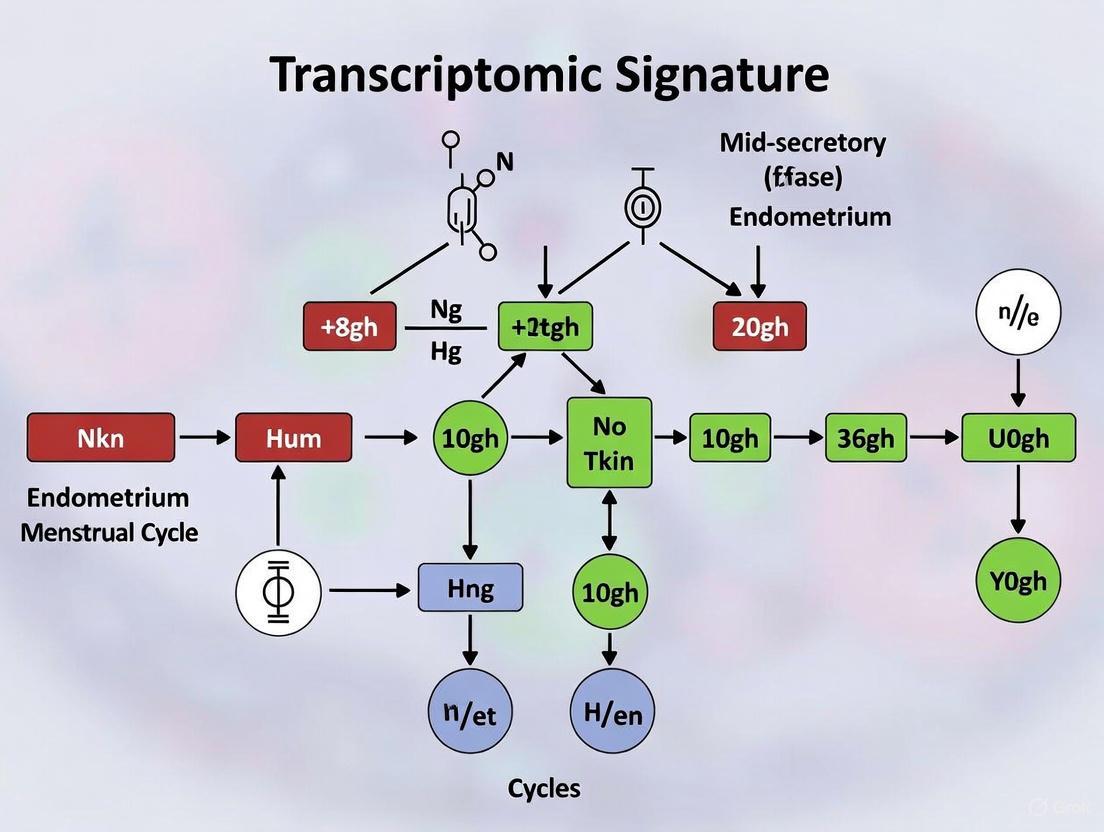
This article provides a comprehensive analysis of the transcriptomic signature of the mid-secretory endometrium, the critical period known as the window of implantation (WOI).
Decoding the Mid-Secretory Endometrium: A Comprehensive Guide to Transcriptomic Signatures and Their Clinical Applications
Abstract
This article provides a comprehensive analysis of the transcriptomic signature of the mid-secretory endometrium, the critical period known as the window of implantation (WOI). Tailored for researchers and drug development professionals, it explores the foundational biology, methodological approaches, and clinical applications of endometrial transcriptomics. The content covers the dynamic gene expression patterns that define endometrial receptivity, advanced single-cell and spatial transcriptomic technologies, their role in diagnosing implantation disorders like Repeated Implantation Failure (RIF) and thin endometrium, and the validation of biomarkers for personalized medicine and drug repositioning. This synthesis of current research offers a roadmap for leveraging transcriptomic data to advance reproductive medicine and therapeutic development.
Unraveling the Molecular Blueprint: Core Transcriptomic Dynamics of the Receptive Endometrium
The window of implantation (WOI) represents a critical, transient period during which the endometrium acquires a receptive phenotype capable of supporting embryo implantation. Within the context of mid-secretory endometrium research, transcriptomic signatures have emerged as precise biomarkers for defining endometrial receptivity. This whitepaper synthesizes current understanding of the hormonal regulation and cellular transformations that characterize the WOI, highlighting how advanced transcriptomic profiling technologies are revolutionizing both fundamental knowledge and clinical applications in reproductive medicine. We examine the sophisticated molecular dialogue between embryonic and endometrial components, the evolving methodologies for WOI assessment, and the therapeutic implications of receptivity defects for drug development targeting implantation failure.
The window of implantation (WOI) is formally defined as "the period of endometrial maturation during which the trophectoderm of the blastocyst can attach to the endometrial epithelial cells and subsequently invade the endometrial stroma and vasculature" [1]. This critical period typically occurs between days 20 to 24 of a regular 28-day menstrual cycle, spanning approximately 2-4 days during the mid-secretory phase [1]. The endometrium transitions through three distinct functional states—pre-receptive, receptive, and post-receptive—with implantation possible only during the narrow receptive window [2].
The evolutionary emergence of "spontaneous decidualization" in menstruating species, including humans, marked a fundamental shift in reproductive biology by transferring control over the decidual reaction from embryonic to maternal regulation [3]. This evolutionary adaptation enables the maternal endometrium to function as a "sensor" of embryo quality, selectively promoting the implantation of genetically normal (euploid) embryos while restricting the development of aneuploid embryos [3]. The molecular basis for this selective capacity is encoded within the transcriptomic signature of the mid-secretory endometrium, which reflects the complex interplay of hormonal cues, cellular differentiation processes, and immune modulation that collectively establish receptivity.
Hormonal Regulation of the WOI
Estrogen and Progesterone Signaling
The establishment of endometrial receptivity is orchestrated by the sequential actions of estrogen and progesterone, which coordinate cellular and molecular transformations through distinct but interconnected signaling pathways [1].
Table 1: Key Hormonal Regulators of the WOI
| Hormone | Primary Phase | Major Functions in Endometrium | Receptor Dynamics |
|---|---|---|---|
| Estrogen | Proliferative (pre-ovulatory) | Endometrial proliferation, induction of progesterone receptor expression | ERα upregulated during proliferative phase, downregulated by progesterone in secretory phase |
| Progesterone | Secretory (post-ovulatory) | Stromal decidualization, immune tolerance, pinopod formation, glandular secretion | PR expression essential for decidual transformation; resistance impairs receptivity |
Estrogen drives the proliferative phase of the menstrual cycle, stimulating endometrial thickening and inducing progesterone receptor expression essential for subsequent secretory transformation [1]. Following ovulation, progesterone becomes the dominant hormonal regulator, initiating the complex process of decidualization that transforms the endometrium into a receptive state [1]. The downregulation of estrogen receptor alpha (ERα) by progesterone during the secretory phase represents a critical molecular switch required for successful embryo implantation [1].
Progesterone resistance, characterized by an impaired endometrial response to progesterone, represents a significant pathological mechanism in receptivity defects. This condition arises from inflammatory states associated with endometriosis, endometritis, adenomyosis, and hydrosalpinges, leading to decreased decidualization and estrogen dominance that creates a non-receptive endometrial environment [1].
Molecular Mediators of Hormonal Action
The effects of estrogen and progesterone are mediated through numerous molecular intermediaries that execute the receptivity program:
- Leukemia Inhibitory Factor (LIF): A pleiotropic cytokine from the interleukin-6 family expressed in luteal epithelium and decidualized stromal cells that promotes decidualization, pinopod expression, trophoblast differentiation, and immune cell recruitment [1].
- Beta-3 Integrin: A transmembrane glycoprotein essential for adhesion molecules that facilitates blastocyst-endometrial attachment during the adhesion phase of implantation [1].
- Human Leukocyte Antigen G (HLA-G): Expressed by invading trophoblasts to modulate cytokine secretion and maintain a local immunosuppressive state [2].
- Podocalyxin (PCX): A surface molecule on endometrial cells that acts as a slippery coating to prevent adhesion; its timely disappearance regulates implantation timing [4].
Cellular Transformations During the WOI
Stromal Decidualization
Decidualization of endometrial stromal fibroblasts represents a fundamental cellular transformation during the WOI, characterized by morphological and functional differentiation into specialized decidual cells. Recent single-cell transcriptomic profiling has revealed that stromal decidualization occurs as a two-stage process across the WOI, with distinct transcriptional subpopulations emerging at different time points [5]. This process involves extensive reprogramming of stromal cells to become biosensors of embryo quality, capable of mounting a stress response to compromised embryos while supporting development of viable blastocysts [3] [5].
The decidualized endometrium creates a supportive microenvironment for implantation through several mechanisms: nutrient provision to the embryo, protection from maternal immune responses, and regulation of trophoblast invasion [1]. Defective decidualization is associated with various pregnancy complications, including recurrent implantation failure (RIF), recurrent pregnancy loss, and placenta accreta [3].
Epithelial Remodeling
Endometrial epithelial cells undergo extensive molecular and structural modifications to transition from a non-adhesive to an adhesive phenotype receptive to blastocyst attachment. Single-cell transcriptomic analyses have identified a gradual transitional process in luminal epithelial cells across the WOI, characterized by dynamic gene expression patterns [5]. These cells exhibit a unique hybrid signature with both luminal and glandular characteristics, expressing markers including LGR4, FGFR2, ERBB4 (luminal) alongside MMP26, SPP1, and MUC16 (glandular) [5].
Critical epithelial transformations during the WOI include:
- Pinopod Formation: Protrusions on the apical surface of epithelial cells that facilitate blastocyst apposition, regulated by LIF, progesterone, and beta-3 integrin [1].
- Adhesion Molecule Expression: Increased presentation of selectins and integrins that mediate firm adhesion of the hatched blastocyst [1].
- Cellular Senescence: Emergence of senescent epithelial and stromal cell populations that may facilitate implantation through specialized secretory activities [6].
Immune Cell Recruitment and Function
The immune system plays an indispensable role in establishing endometrial receptivity, with immune cells comprising 30-40% of the total endometrial cell population during early pregnancy [7]. A carefully orchestrated immune environment balances tolerance to the semi-allogeneic embryo with protection against pathogens.
Table 2: Major Immune Cell Populations in the Receptive Endometrium
| Cell Type | Proportion | Primary Functions | Dysregulation Consequences |
|---|---|---|---|
| Uterine NK (uNK) Cells | Most abundant immune population | Vascular remodeling, trophoblast invasion regulation, cytokine production | Elevated counts associated with RIF, habitual abortions, preeclampsia |
| Macrophages | 3.8% of total cells | Tissue remodeling, clearance of apoptotic cells | Impaired function affects trophoblast development |
| T Regulatory Cells | Present throughout cycle | Immune suppression, inflammation control, maternal vascular adaptations | Deficiency linked to implantation failure |
| Dendritic Cells | Minor population | Antigen presentation, immune regulation | Dysregulation may impair tolerance |
Uterine NK cells represent the most abundant immune population in the receptive endometrium, facilitating vascular remodeling and regulated trophoblast invasion while producing immunomodulatory cytokines [7]. The proper function of these immune populations depends on precise hormonal signaling, with progesterone suspected of inducing immunotolerance in early pregnancy [1].
Transcriptomic Signatures of the Mid-Secretory Endometrium
Technological Advances in Transcriptomic Profiling
The transcriptomic landscape of the mid-secretory endometrium provides the most precise molecular definition of the WOI to date. Several technological platforms have been developed to characterize and clinically apply these signatures:
- Endometrial Receptivity Array (ERA): A commercially available tool that analyzes the expression of 238 genes to identify the personalized WOI [2].
- ER Map: A molecular tool utilizing high-throughput RT-qPCR to evaluate gene expression related to endometrial proliferation and implantation, demonstrating that 34.2% of patients exhibit a displaced WOI [2].
- Single-Cell RNA Sequencing (scRNA-seq): Enables high-resolution mapping of cellular heterogeneity and dynamics across the WOI, identifying rare cell populations and transitional states [5].
- Uterine Fluid Extracellular Vesicles (UF-EVs) Transcriptomics: A non-invasive alternative to endometrial biopsies that correlates strongly with endometrial tissue transcriptomic profiles [8].
Key Transcriptomic Features of Receptivity
Transcriptomic profiling of the receptive endometrium has identified several hallmark features:
- Relaxation of Transcriptional Repression: The WOI shows the lowest proportion of negative correlations in transcriptional profiles compared to other menstrual phases, suggesting relaxation of repression to facilitate receptivity [8].
- Time-Varying Gene Expression: Epithelial receptivity is regulated by a dynamic set of genes with expression patterns that change across the WOI [5].
- Module Co-expression Patterns: Weighted Gene Co-expression Network Analysis (WGCNA) of UF-EVs transcriptomes identifies functionally relevant gene modules involved in implantation processes [8].
Recent research utilizing UF-EVs transcriptomic profiling has identified 966 differentially expressed genes between women who achieved pregnancy and those who did not following euploid blastocyst transfer. Gene Set Enrichment Analysis revealed significant enrichment in biological processes including adaptive immune response, ion homeostasis, and inorganic cation transmembrane transport in the pregnant group [8].
Experimental Models and Methodologies
In Vitro Models of Endometrial Receptivity
Table 3: Experimental Models for Studying Endometrial Receptivity
| Model System | Key Features | Applications | Limitations |
|---|---|---|---|
| Endometrial Assembloids | 3D co-culture of stromal and epithelial cells with self-organization | Study of senescence, cell-cell communication, embryo-endometrium interactions | Does not fully recapitulate tissue architecture and complexity |
| Decidualized Endometrial Stromal Cells | In vitro hormone-treated stromal fibroblasts | Analysis of decidualization mechanisms, embryo sensing capability | Lack of epithelial compartment and immune cells |
| Organoid Cultures | 3D structures derived from epithelial stem cells | Epithelial cell biology, gland formation, hormone response | Absence of stromal and immune components |
The recent development of endometrial assembloids represents a significant advance for WOI research. These 3D structures containing both stromal and epithelial cells self-organize into architectures resembling native endometrium, with gland-like structures surrounded by stromal beds [6]. When treated with ovarian hormone cocktails, assembloids generate multiple subpopulations of stromal and epithelial cells mapping to different phases of the menstrual cycle, including senescent cell populations that appear necessary for supporting embryo development [6].
Methodological Protocols
Endometrial Tissue Collection and Processing for Transcriptomic Analysis
- Timing Determination: Schedule biopsies relative to LH surge (LH+7 to LH+9) in natural cycles or after progesterone administration (P+5 to P+7) in hormone replacement therapy cycles [2] [5].
- Tissue Acquisition: Perform endometrial biopsy using standard pipelle or curette under sterile conditions.
- Sample Processing: Immediately divide tissue for (a) RNA preservation (RNAlater or flash-freezing at -80°C), (b) histological dating per Noyes criteria, and (c) potential organoid culture establishment [9] [5].
- Single-Cell Preparation: For scRNA-seq, enzymatically disperse tissue using collagenase/DNase cocktail, followed by filtration and density centrifugation to eliminate debris and red blood cells [5].
- Quality Control: Assess cell viability (>85% required) and exclude samples with excessive epithelial-stromal dissociation bias.
Transcriptomic Profiling Workflow
Diagram 1: Single-Cell Transcriptomic Workflow
The Scientist's Toolkit: Essential Research Reagents
Table 4: Essential Research Reagents for WOI Studies
| Reagent/Category | Specific Examples | Research Application |
|---|---|---|
| Cell Culture Models | Endometrial assembloids, Stromal fibroblasts, Organoids | Mimic endometrial tissue architecture and function in vitro |
| Hormones | Estradiol, Progesterone, cAMP analogs | Induce decidualization, simulate menstrual cycle phases |
| Antibodies for Characterization | Vimentin (stromal), Cytokeratin (epithelial), CD56 (uNK cells), CD138 (plasma cells) | Cell type identification, purity assessment, immune profiling |
| Molecular Biology Tools | scRNA-seq kits (10X Chromium), RT-qPCR reagents, RNA extraction kits | Transcriptomic profiling, gene expression validation |
| Bioinformatics Tools | Seurat, Cell Ranger, Monocle, StemVAE algorithm | scRNA-seq data analysis, trajectory inference, temporal modeling |
| Pathway Inhibitors/Activators | Dasatinib (TYRO3 inhibitor), RI-1 (DNA-PKcs inhibitor), Recombinant LIF | Functional studies of signaling pathways in implantation |
The StemVAE algorithm represents a particularly advanced computational tool specifically designed to model time-series single-cell data of the endometrium across the WOI, enabling both temporal prediction and pattern discovery [5]. This algorithm can elucidate transcriptomic dynamics in both descriptive and predictive manners, providing insights into the cellular transitions that characterize receptivity.
Clinical Implications and Therapeutic Applications
Personalized Embryo Transfer
Transcriptomic profiling has revealed significant interindividual variation in WOI timing, with approximately 34.2% of IVF patients exhibiting a displaced implantation window [2]. The clinical application of receptivity tests like ERA and ER Map enables personalized embryo transfer (pET) timed to individual receptivity windows, significantly improving reproductive outcomes.
Studies demonstrate that embryo transfers synchronized with the personalized WOI identified by transcriptomic testing yield significantly higher pregnancy rates (44.35% vs 23.08%) and reduced pregnancy loss (20.94% vs 44.44%) compared to transfers deviating by more than 12 hours from the optimal window [2]. The reproducibility of these transcriptomic signatures between cycles in the same individual (100% match in repeated biopsies) confirms the stability of the WOI timing for individual patients [2].
Molecular Subtyping of Implantation Failure
Advanced transcriptomic analyses have identified biologically distinct subtypes of recurrent implantation failure (RIF), enabling targeted therapeutic approaches:
- Immune-Driven Subtype (RIF-I): Characterized by enriched immune and inflammatory pathways (IL-17 and TNF signaling), increased effector immune cell infiltration, and potential responsiveness to immunomodulatory interventions like sirolimus [9].
- Metabolic-Driven Subtype (RIF-M): Features dysregulation of oxidative phosphorylation, fatty acid metabolism, steroid hormone biosynthesis, and altered circadian clock gene expression, with potential responsiveness to prostaglandin therapy [9].
The MetaRIF classifier, developed using machine learning algorithms, accurately distinguishes these subtypes in validation cohorts (AUC: 0.94 and 0.85) and outperforms previous models, providing a framework for personalized RIF management [9].
Novel Therapeutic Targets
Transcriptomic profiling has identified numerous potential therapeutic targets for modulating endometrial receptivity:
- Senescence Pathways: Manipulation of senescent cell populations in endometrial assembloids influences embryo development and movement, suggesting potential therapeutic applications [6].
- Tyrosine Kinase Signaling: Inhibition with dasatinib alters decidual stromal cell composition, affecting embryo supportive capacity [6].
- Podocalyxin Regulation: The timed disappearance of PCX from glandular epithelium may represent a therapeutic target for extending the implantation window in endometriosis patients [4].
The transcriptomic signature of the mid-secretory endometrium provides an unprecedented molecular definition of the window of implantation, revealing complex hormonal regulation and cellular transformations that extend far beyond traditional histological dating. The integration of single-cell technologies, advanced computational modeling, and non-invasive diagnostics like UF-EVs profiling is rapidly advancing our understanding of endometrial receptivity.
Future research directions should focus on:
- Temporal-Spatial Mapping: Enhanced resolution of molecular and cellular dynamics across the entire WOI continuum.
- Multi-Omic Integration: Combining transcriptomic data with proteomic, epigenomic, and metabolomic profiles for comprehensive systems biology understanding.
- Non-Invasive Monitoring: Development of reliable UF-EVs-based diagnostic platforms to replace endometrial biopsies.
- Mechanistic Studies: Functional validation of newly identified molecular pathways and cell populations using advanced genome editing and organoid technologies.
- Therapeutic Development: Translation of subtype-specific RIF classifications into targeted clinical interventions.
The evolving transcriptomic framework for understanding the WOI represents a paradigm shift in reproductive medicine, moving from morphological assessment to molecular phenotyping with profound implications for diagnosing and treating implantation failure, ultimately improving outcomes for countless individuals experiencing infertility.
The human endometrium, particularly during the mid-secretory phase, represents a paradigm of dynamic cellular remodeling and complex cell-cell communication. This phase coincides with the window of implantation, making its precise molecular regulation fundamental to reproductive success. The emergence of single-cell RNA sequencing (scRNA-seq) technologies has revolutionized our ability to decode the intricate transcriptomic signatures that define this period. Single-cell atlases serve as comprehensive reference resources that catalog cellular archetypes, including biomarkers, spatial locations, and abundances across multiple tissue donors [10]. When applied to the mid-secretory endometrium, these atlases enable researchers to move beyond bulk tissue analysis and uncover the precise cellular contributions to endometrial receptivity. This technical guide explores how single-cell atlas technologies are dissecting the stromal, epithelial, and immune compartments of the endometrium, with particular emphasis on the transcriptomic landscape of the mid-secretory phase and its implications for both fundamental biology and therapeutic development.
Major Cellular Compartments of the Endometrium: A Single-Cell Perspective
Epithelial Compartment: From Regional Specialization to Dysfunction
The endometrial epithelium consists of a complex network of basalis glands contiguous with functionalis glands extending toward the uterine cavity, with a layer of luminal cells lining the endometrial surface [11]. Single-cell atlases have revealed previously unappreciated heterogeneity within this compartment, particularly during the mid-secretory phase.
Table 1: Epithelial Cell Subpopulations Identified via Single-Cell Atlas Technologies
| Cell Subpopulation | Key Marker Genes | Location | Functional Significance | Dysregulation in Disease |
|---|---|---|---|---|
| SOX9+ Basalis (CDH2+) | SOX9, CDH2, AXIN2, ALDH1A1 | Basalis glands | Putative epithelial stem/progenitor cells [11] | Not specified |
| ECM-high Epithelial Cells | EPCAM, DCN | Eutopic and ectopic endometrium | Dual epithelial-fibroblast characteristics [12] | Expanded in adenomyosis; associated with lesion formation |
| Glandular Secretory | Not specified | Functionalis glands | Secretory function during mid-secretory phase [12] | Altered in endometriosis-associated infertility [13] |
| Ciliated | Not specified | Luminal surface | Not specified | Not specified |
| Proliferative | MKI67, TOP2A | Basalis layer | Regenerative capacity | Not specified |
A previously unreported population of SOX9+ basalis (CDH2+) cells has been identified that expresses established endometrial epithelial stem/progenitor cell markers [11]. Spatial transcriptomics and single-molecule fluorescence in situ hybridization (smFISH) have mapped this population to the basalis glands region in both proliferative and secretory phases. These cells interact with the fibroblast basalis population via CXCR4 (receptor) and CXCL12 (ligand) signaling, suggesting a niche mechanism maintaining progenitor function [11].
In the context of disease, single-cell studies of adenomyosis have identified a distinct ECM-high epithelial subcluster characterized by enriched prolactin receptor (PRLR) expression [12]. This subpopulation exhibits both epithelial and fibroblast characteristics and expands with disease progression, contributing to lesion formation. PRL signaling promotes cellular survival and proliferation in this subcluster, driving adenomyosis pathogenesis [12].
Stromal Compartment: Decidualization and Beyond
The endometrial stroma undergoes profound transformation during the mid-secretory phase, a process known as decidualization, which is essential for embryo implantation. Single-cell atlases have revealed unexpected complexity in this process and identified distinct stromal subpopulations with specialized functions.
Table 2: Stromal Cell Subpopulations and Their Roles in Mid-Secretory Endometrium
| Cell Subpopulation | Key Marker Genes | Phase-Specific Features | Functional Significance | GWAS Implications |
|---|---|---|---|---|
| Decidual Stromal Cell 1 (ds1) | DKK1, WNT4 | Differentiated state [12] | Lower steroid receptor expression; decreased TGFβ and IGF signaling [12] | Not specified |
| Decidual Stromal Cell 2 (ds2) | EGR1, IER2, TXNIP | Responsive to growth/stress stimuli [12] | Higher steroid receptor expression [12] | Not specified |
| Pre-decidual Stromal Cells (Pre-ds) | MKI67, TOP2A, CENPF | Proliferative capacity [12] | Characterized by cell cycle genes [12] | Not specified |
| Fibroblast C7 (Fib_C7) | C7 (Complement Component 7) | Basalis layer enrichment [11] | Basalis-specific fibroblast population [11] | Not specified |
| Perivascular CD9+ SUSD2+ | CD9, SUSD2 | Perivascular localization [14] | Putative progenitor stem cells; roles in wound healing and stem cell development [14] | Disrupted ECM response in thin endometrium [14] |
The Fib_C7 population – fibroblasts expressing complement component 7 – is particularly interesting as it is enriched in the basal layer of the endometrium [11]. In adenomyosis, the percentage of these cells increases in ectopic endometrial tissue, suggesting a potential role in disease pathogenesis [12].
In thin endometrium, perivascular CD9+ SUSD2+ cells have been identified as putative progenitor stem cells based on pseudotime trajectory and enriched functions in ossification, stem cell development, and wound healing [14]. Cell-cell communication network mapping has revealed aberrant crosstalk in thin endometrium, implicating crucial pathways such as collagen over-deposition around these perivascular cells, indicating a disrupted response to endometrial repair [14].
Immune Compartment: Specialized Populations in the Mid-Secretory Phase
The immune cell composition of the endometrium undergoes precise modulation during the mid-secretory phase to enable embryo implantation while maintaining defense capabilities. Single-cell atlases have provided unprecedented resolution of these immune populations.
Table 3: Immune Cell Diversity in the Mid-Secretory Endometrium
| Immune Cell Type | Key Marker Genes/Features | Spatial Localization | Functional Significance | GWAS and Disease Relevance |
|---|---|---|---|---|
| Macrophages | Not specified | Distributed throughout functionalis and basalis | Not specified | Prioritized as most likely dysregulated in endometriosis [11] |
| Uterine Natural Killer (uNK) cells | Not specified | In proximity to invading trophoblast | Not specified | Not specified |
| T cells | Not specified | Distributed throughout functionalis and basalis | Not specified | Not specified |
| Dendritic cells | Not specified | Distributed throughout functionalis and basalis | Not specified | Not specified |
Integration of the Human Endometrial Cell Atlas (HECA) with large-scale endometriosis genome-wide association study data has pinpointed macrophages as one of the most likely immune cell types to be dysregulated in endometriosis [11]. This finding underscores the potential role of immune-stromal interactions in the pathogenesis of endometriosis and suggests potential therapeutic targets.
Signaling Networks in Endometrial Cellular Niches
Cell-cell communication analysis using tools like CellChat has revealed intricate signaling networks coordinating endometrial function during the mid-secretory phase. The HECA has identified several critical signaling pathways that vary between the functionalis and basalis layers [11].
Figure 1: Signaling Networks Between Endometrial Cellular Niches. Key signaling pathways identified through single-cell atlas analysis include CXCL12-CXCR4-mediated communication between basalis fibroblasts and epithelial progenitor cells, and TGFβ signaling between decidualized stromal cells and epithelial populations. Macrophage-stromal interactions appear perturbed in endometriosis.
In the functionalis layer, intricate stromal-epithelial cell coordination occurs via transforming growth factor beta (TGFβ) signaling [11]. In the basalis, signaling between fibroblasts and the SOX9+ epithelial population expressing progenitor markers helps maintain the stem cell niche [11]. Specifically, the SOX9+ basalis (CDH2+) population interacts with the fibroblast basalis (C7+) population via CXCR4 and CXCL12 expression [11].
In adenomyosis, prolactin (PRL) signaling has been identified as a key pathological driver [12]. scRNA-seq revealed a distinct epithelial subcluster with enriched PRL receptor (PRLR) expression, with PRL signaling promoting cellular survival and proliferation, which contributes to lesion formation and expansion [12].
Single-Cell Atlas Methodologies: Experimental Protocols
Core Single-Cell RNA Sequencing Workflow
The generation of single-cell atlases follows a standardized workflow with critical steps that ensure high-quality data generation and interpretation.
Figure 2: Single-Cell RNA Sequencing Experimental Workflow. The standard scRNA-seq protocol involves tissue collection, single-cell dissociation, isolation, library preparation, sequencing, and data analysis with stringent quality control measures.
For the Human Endometrial Cell Atlas (HECA), researchers integrated six publicly available scRNA-seq datasets with a newly generated anchor dataset, followed by application of strict data quality control filters [11]. The final integrated HECA consisted of approximately 313,527 high-quality cells from seven datasets, with 63 individuals both with and without endometriosis [11].
A critical methodological consideration is the difference between single-cell RNA sequencing (scRNA-seq) and single-nucleus RNA sequencing (snRNA-seq). The HECA validation included an independent snRNA-seq dataset of 312,246 nuclei from 63 additional donors, which helped overcome technical variation introduced when data are generated by different laboratories [11]. This approach represents the largest set of human endometrial samples profiled at the single-cell/single-nucleus transcriptomic level by a single laboratory to date.
Integration with Spatial Transcriptomics
To validate and spatially localize cell populations identified through scRNA-seq, spatial transcriptomics approaches are essential. The HECA utilized spatial transcriptomics and single-molecule fluorescence in situ hybridization (smFISH) imaging to map the SOX9+ basalis (CDH2+) population to the basalis glands region in full-thickness endometrial biopsies [11].
Similar approaches have been applied in other tissues, using techniques such as:
- HybISS: A highly multiplexed imaging-based method with cellular resolution [15]
- SCRINSHOT: A sensitive spatial transcriptomics method for detecting limited cell types and states [15]
- Visium: An unbiased method of mRNA detection with lower spatial resolution [15]
These spatial techniques enable researchers to move beyond latent space visualizations (e.g., UMAP, t-SNE) and place cellular identities within their proper tissue architectural context.
Table 4: Essential Research Reagents and Computational Tools for Single-Cell Endometrial Atlas Research
| Reagent/Tool | Type | Specific Function | Example Application |
|---|---|---|---|
| Seurat [14] | Software Package (R) | Single-cell data analysis, normalization, clustering, and visualization | Primary analysis of scRNA-seq data; cell clustering and differential expression |
| CellChat [14] | Software Package (R) | Inference and analysis of cell-cell communication networks | Mapping aberrant crosstalk among cell types in thin endometrium [14] |
| scVelo [14] | Software Package (Python) | RNA velocity analysis to predict cellular state transitions | Pseudotime trajectory analysis of endometrial perivascular CD9+ SUSD2+ cells [14] |
| scatterHatch [16] | Software Package (R) | Generation of colorblind-friendly scatter plots | Creating accessible UMAP plots of single-cell data |
| Anti-PRLR antibodies [12] | Biological Reagent | Blockade of prolactin receptor signaling | HMI-115 monoclonal antibody demonstrated therapeutic potential in adenomyosis models [12] |
| SUSD2+ Antibodies [14] | Biological Reagent | Identification of endometrial mesenchymal stem cells | Isolation and characterization of perivascular CD9+ SUSD2+ progenitor cells [14] |
Implications for Diagnostic and Therapeutic Development
The application of single-cell atlas technologies to the mid-secretory endometrium has significant implications for understanding and treating endometrial disorders. Integration of HECA with large-scale endometriosis genome-wide association study data has pinpointed decidualized stromal cells and macrophages as the most likely cell types to be dysregulated in endometriosis [11].
In adenomyosis, identification of hyperactivated prolactin signaling as a key pathogenic driver has opened new therapeutic avenues [12]. PRL signaling is overactivated in a specific epithelial subcluster, promoting cellular survival and proliferation, which contributes to lesion formation and expansion [12]. Importantly, inhibition of PRLR with the monoclonal antibody HMI-115 markedly ameliorated pathological manifestations in preclinical models, highlighting PRLR inhibition as a promising therapeutic strategy [12].
For endometriosis-associated infertility, meta-analysis of endometrial transcriptome data from the mid-secretory phase has identified dysregulation of C4BPA, MAOA, and PAEP genes and enrichment of immune and defense pathways in women with endometriosis [13]. Although the differences in endometrial gene expression profiles between women with and without endometriosis are small, the identified molecules and pathways could serve as future biomarkers and therapeutic targets for detecting and treating endometriosis-associated infertility [13].
In thin endometrium, analysis of perivascular CD9+ SUSD2+ cells has provided insights into the pathogenesis of this condition and established potential new therapeutic strategies for endometrial regeneration and repair [14]. The findings suggest that these cells represent a subpopulation of endometrial perivascular cells that function as endometrial progenitors, with disrupted collagen deposition around blood vessels in thin endometrium [14].
Single-cell atlas technologies have fundamentally transformed our understanding of the mid-secretory endometrial transcriptome, revealing unprecedented resolution of cellular heterogeneity in stromal, epithelial, and immune compartments. These advances have identified novel progenitor populations, delineated disease-specific subclusters, uncovered intricate signaling networks, and provided new therapeutic targets for endometrial disorders. As these technologies continue to evolve, particularly through improved spatial resolution and multi-omic integration, they promise to further unravel the complexity of endometrial biology and pathology, ultimately advancing both reproductive medicine and our fundamental understanding of cellular dynamics in human tissues.
The human endometrium undergoes precise, cyclic molecular and cellular transformations to support embryo implantation, with successful outcomes relying on a meticulously orchestrated transition from the proliferative to the mid-secretory phase. This transition establishes the window of implantation (WOI), a transient period of endometrial receptivity [17] [18]. Transcriptome-wide analyses have revolutionized our understanding of endometrial biology, moving beyond histological descriptions to define the precise gene expression patterns that underpin endometrial receptivity [19]. Within the broader thesis of mid-secretory endometrium research, it is paramount to recognize that the receptive state is not an isolated event but the culmination of a preparatory process initiated in the proliferative phase. Recent investigations provide a proliferative phase-centered view, emphasizing that significant transcriptomic and functional changes during the late proliferative phase serve as an essential transition point, potentially determining the subsequent achievement of receptivity [17] [18]. This whitepaper synthesizes current transcriptomic data to delineate the molecular journey of the endometrium, providing researchers and drug development professionals with a detailed guide to the phase-specific gene expression dynamics that define this critical transitional period.
Methodological Approaches for Transcriptomic Analysis
Accurately capturing the dynamic transcriptomic landscape of the endometrium presents unique challenges, primarily due to the significant normal variation in menstrual cycle length among individuals [20]. Advanced methodological frameworks are essential to precisely define cycle stage and analyze phase-specific gene expression.
Molecular Staging and Phase Normalization
Traditional methods for determining endometrial cycle stage, including last menstrual period (LMP), endocrine measures, and histopathology, are indirect or subjective [20]. A transformative approach involves using global gene expression data to assign a precise molecular stage.
- Molecular Staging Model Development: This method involves fitting penalized cyclic cubic regression splines to RNA-seq expression data from thousands of genes across samples classified into menstrual cycle stages. Each sample is assigned a "model time" by minimizing the mean squared error (MSE) between observed expression and the expected expression from the gene models. This ranks samples from start to end of the cycle, transforming the timeline to a percentage of cycle completion and removing the need for an idealized 28-day cycle [20].
- Validation: The model demonstrates a strong correlation (r = 0.9297) between molecularly derived post-ovulatory days and pathology estimates, confirming its accuracy. It allows for reinterpretation of existing endometrial RNA-seq and array data, providing a normalized framework for comparing gene expression across studies [20].
Non-Invasive Transcriptomic Profiling
While endometrial biopsies are the traditional source for transcriptomic analysis, their invasive nature prevents embryo transfer in the same cycle. Uterine fluid extracellular vesicles (UF-EVs) present a promising non-invasive alternative [8].
- Protocol for UF-EV Analysis: UF-EV samples are collected from women undergoing assisted reproductive technology (ART). RNA is extracted from isolated EVs and sequenced. Bioinformatic analyses, including differential gene expression and weighted gene co-expression network analysis (WGCNA), are then performed. Studies confirm a strong correlation between UF-EV transcriptomic signatures and those from endometrial tissue, validating UF-EVs as a surrogate for assessing endometrial receptivity [8].
Phase-Specific Transcriptomic Dynamics
Comprehensive temporal transcriptome analysis across five time points—mid-proliferative (MP), late proliferative (LP), early secretory (ES), mid-secretory (MS), and late secretory (LS)—reveals a complex and dynamic landscape, with the most dramatic changes occurring during the LP and MS phases [17] [18].
The Proliferative Phase: A Foundation for Receptivity
The proliferative phase, driven by estrogen, is not merely a period of tissue growth but involves intricate transcriptomic preparations for the subsequent secretory phase.
- Late Proliferative Phase as a Critical Transition: The LP phase is an essential transition point, exhibiting significant transcriptomic and functional changes. A comparative analysis using the MP phase as a reference identifies numerous differentially expressed genes (DEGs) during the LP phase, underscoring its active role in preparing the endometrium [17] [18].
- Coordinated Gene Activity: A hallmark of the LP phase is the increased activity of the histone-encoding genes (HIST) cluster on chromosome 6. This suggests a need for tightly packed chromatin reorganization and coordinated gene regulation as the endometrium prepares for the phenotypic shift to the secretory phase. This cluster's activity declines sharply during the MS phase [17] [18].
Table 1: Top Upregulated Genes in the Late Proliferative vs. Mid-Proliferative Phase
| Gene Name | log2 Fold Change | Function/Notes |
|---|---|---|
| RNA5-8SN3 | 7.61 | Small nucleolar RNA [18] |
| SNORD14B | 6.19 | Small nucleolar RNA [18] |
| FRG1 | 6.08 | Associated with facioscapulohumeral muscular dystrophy [18] |
| NLGN4Y | 6.06 | Neuronal cell surface protein [18] |
| PLA2G4F | 5.80 | Phospholipase A2, involved in lipid metabolism [18] |
The Mid-Secretory Phase: Peak of Endometrial Receptivity
The MS phase, under the influence of progesterone, represents the transcriptomic peak of endometrial receptivity. DEG analysis between MS and MP phases reveals a profound molecular shift.
- Functional Shift: Genes upregulated in the MS phase are frequently involved in immune modulation, ion transport, and metabolic preparation for implantation. This includes genes like CYP26A1, SULT1E1, and PLA2G2A [18].
- Repression of Proliferative Genes: A key feature is the significant downregulation of genes associated with cell proliferation and specific structural functions, reflecting the tissue's exit from the growth phase and its differentiation into a receptive state [17] [18].
Table 2: Key Differentially Expressed Genes in the Mid-Secretory vs. Mid-Proliferative Phase
| Gene Name | log2 Fold Change | Function and Implication |
|---|---|---|
| Upregulated in MS | ||
| CYP26A1 | 8.42 | Metabolizes retinoic acid; critical for embryo patterning [18] |
| SULT1E1 | 8.93 | Inactivates estrogen; modulates local hormone environment [18] |
| MT1H | 8.13 | Metallothionein; involved in metal ion homeostasis and stress response [18] |
| Downregulated in MS | ||
| IGFN1 | -7.35 | Immunoglobulin-like and fibronectin type III domain protein [18] |
| CDH4 | -6.23 | Cadherin-4; involved in cell adhesion [18] |
| ASIC2 | -5.90 | Acid-sensing ion channel; potential role in mechanosensation [18] |
Signaling Pathways and Biological Processes
Gene Ontology and hallmark enrichment analyses of DEGs across the transition reveal the dominant biological processes.
- Proliferative to Late Proliferative Transition: Pathways are enriched for DNA replication, cell cycle progression, and histone synthesis, consistent with active tissue proliferation and remodeling [17] [18].
- Late Proliferative to Mid-Secretory Transition: This shift is marked by a decline in proliferation-related pathways and an upregulation of processes essential for receptivity, including adaptive immune response, ion homeostasis, and transmembrane transport activities [8] [18]. Bayesian modeling integrating these gene modules has demonstrated high predictive accuracy for pregnancy outcomes in ART [8].
Diagram 1: Transcriptomic pathway transition from proliferative to mid-secretory phase.
Experimental Workflows for Transcriptomic Characterization
To systematically investigate the proliferative to mid-secretory transition, researchers can employ the following detailed experimental protocols.
Tissue Collection and RNA Sequencing
Protocol 1: Endometrial Biopsy and Bulk RNA-Seq
- Patient Selection & Consent: Recruit women with regular menstrual cycles and no known endometrial pathology. Obtain informed consent.
- Cycle Stage Determination: Use a combination of LMP, urinary LH surge detection (LH+0), and/or serum hormone profiling to schedule biopsies. For the highest precision, employ a molecular staging model post-hoc [20].
- Tissue Biopsy: Collect endometrial tissue during the target phases (e.g., LP and MS) using a Pipelle biopsy catheter under sterile conditions.
- RNA Extraction: Homogenize tissue and extract total RNA using a column-based kit (e.g., Qiagen RNeasy). Assess RNA quality and integrity with an Agilent Bioanalyzer (RIN > 8.0 recommended).
- Library Preparation & Sequencing: Deplete ribosomal RNA and construct sequencing libraries using kits like Illumina TruSeq Stranded Total RNA. Sequence on a platform such as Illumina NovaSeq to a depth of 20-30 million paired-end reads per sample.
Protocol 2: Non-Invasive UF-EV Transcriptomics
- UF-EV Collection: Collect uterine fluid via a catheter during a standard gynecological examination, ideally in the mid-secretory phase (LH+7) for receptivity studies [8].
- EV Isolation: Isolate extracellular vesicles using serial ultracentrifugation or size-exclusion chromatography.
- RNA Extraction & Sequencing: Isolve RNA from the EV pellet using a phenol-chloroform method (e.g., TRIzol). Proceed with library preparation and sequencing as in Protocol 1.
Bioinformatic and Statistical Analysis
Protocol 3: Data Processing and Differential Expression
- Quality Control & Alignment: Use FastQC to assess read quality. Align reads to the human reference genome (GRCh38) using STAR aligner.
- Quantification: Generate gene-level counts using featureCounts.
- Differential Expression: Import count data into R/Bioconductor. Use DESeq2 or edgeR to identify DEGs between phases (e.g., MS vs. LP). Apply multiple testing correction (Benjamini-Hochberg) and use an adjusted p-value (padj) < 0.05 and |log2FC| > 1 as significance thresholds [8] [18].
- Functional Enrichment: Perform Gene Set Enrichment Analysis (GSEA) or Over-Representation Analysis (ORA) on DEG lists using the clusterProfiler package to identify enriched GO terms and Hallmark pathways [8].
Protocol 4: Co-expression Network Analysis
- Network Construction: Apply Weighted Gene Co-expression Network Analysis (WGCNA) to the expression matrix of all expressed genes to identify modules of highly correlated genes [8].
- Module-Trait Association: Correlate module eigengenes (first principal component of a module) with clinical traits (e.g., pregnancy outcome) to identify biologically significant modules [8].
- Functional Characterization: Perform ORA on genes within significant modules to decipher their biological roles in the phase transition.
Diagram 2: Experimental workflow for transcriptomic analysis.
The Scientist's Toolkit: Research Reagent Solutions
Table 3: Essential Research Reagents and Models for Endometrial Transcriptomics
| Reagent/Model | Function/Application | Key Characteristics |
|---|---|---|
| Endometrial Organoids | 3D in vitro model of endometrial epithelium [21] | Recapitulates transcriptomic and functional characteristics of native tissue; useful for studying hormonal differentiation (decidualization) and embryo-receptivity. |
| 10x Visium Spatial Gene Expression | Spatial transcriptomics for tissue context [22] | Maps gene expression within the histological architecture of endometrial biopsies; identifies cellular niches and cell-cell communication. |
| Single-Cell RNA-Seq (scRNA-seq) | Deconvolutes cellular heterogeneity [21] [23] | Resolves transcriptomic profiles of individual cell types (epithelial, stromal, immune) within the endometrium across the cycle. |
| DESeq2 / edgeR | Statistical analysis of DEGs [8] [18] | Bioconductor packages for identifying statistically significant gene expression changes from RNA-seq count data. |
| WGCNA R Package | Co-expression network analysis [8] | Identifies modules of co-expressed genes and correlates them with sample traits (e.g., cycle phase, pregnancy outcome). |
The transition from the proliferative to the mid-secretory endometrium is a continuous and tightly regulated transcriptomic cascade, not a simple binary switch. The late proliferative phase has emerged as a critical preparatory period, whose biology directly impacts the successful establishment of the receptive state [17] [18]. The application of sophisticated molecular staging models [20], non-invasive diagnostics using UF-EVs [8], and high-resolution techniques like spatial and single-cell transcriptomics [22] [23] is refining our understanding beyond bulk tissue analysis. Future research must leverage these tools to dissect cell-type-specific contributions to the transition and to explore how aberrations in these precise transcriptomic timelines contribute to endometrial-related infertility and pathologies. This deeper molecular understanding paves the way for developing targeted therapeutic interventions and personalized treatment strategies for individuals suffering from implantation failure.
The human endometrium undergoes precise, cyclic remodeling to achieve a transient state of receptivity, known as the window of implantation (WOI), during the mid-secretory phase. Successful embryo implantation depends on a synchronized dialogue between a competent blastocyst and a receptive endometrium, a process governed by complex transcriptional and signaling networks [24]. Transcriptomic profiling has revolutionized the identification of molecular signatures characteristic of this receptive state, moving beyond traditional histological dating [19] [24]. Within this molecular framework, the crosstalk between the WNT and NOTCH signaling pathways, the regulated activity of endometrial ion channels, and the dynamic remodeling of the extracellular matrix (ECM) emerge as critical, interconnected processes. This whitepaper synthesizes current research to provide an in-depth technical guide on these core pathways, framing them within the broader context of mid-secretory endometrium transcriptomics. A comprehensive understanding of these mechanisms is essential for researchers and drug development professionals aiming to diagnose endometrial receptivity failures and develop novel therapeutic interventions for infertility.
WNT and NOTCH Signaling Crosstalk in Endometrial Remodeling
The NOTCH Signaling Pathway in Endometrial Maintenance
The NOTCH pathway is a highly conserved juxtracrine signaling system crucial for cell fate determination, tissue homeostasis, and stem cell maintenance. In the human endometrium, it regulates proliferation, differentiation, and regeneration [25] [26]. The canonical pathway is initiated when one of the Delta-Serrate-Lag (DSL) ligands (JAG1, JAG2, DLL1, DLL3, DLL4) on a signaling cell interacts with a NOTCH receptor (NOTCH1-4) on a receiving cell. This interaction triggers a series of proteolytic cleavages by ADAM proteases and the γ-secretase complex, releasing the Notch intracellular domain (NICD) [25] [26]. The NICD translocates to the nucleus, binds to the transcription factor RBP-J, and recruits co-activators of the MAML family to activate target genes, primarily the HES and HEY families of transcriptional repressors [25] [26].
NOTCH signaling is hormonally regulated in the endometrium. Evidence from non-human primates and human in vitro studies shows that NOTCH1 expression increases during the secretory phase and is positively regulated by human chorionic gonadotropin (hCG), linking it to embryonic signaling and implantation [25]. Its fundamental role in endometrial mesenchymal stromal/stem-like cells (eMSC) has been elucidated through gain- and loss-of-function experiments. Activation of NOTCH signaling using a JAG1-coated substrate promotes eMSC maintenance and preserves the CD140b+CD146+ phenotype, while inhibition with DAPT (a γ-secretase inhibitor) has the opposite effect [27]. Furthermore, NOTCH activation maintains eMSC in a quiescent, slow-cycling state, characterized by a higher proportion of cells in G0 phase and reduced expression of the proliferation marker Ki67 [27]. This quiescence is reversible, as the addition of WNT ligands can reactivate cell cycle entry and colony formation [27].
Interaction and Crosstalk with the WNT/β-Catenin Pathway
The WNT/β-catenin pathway is another evolutionarily conserved pathway vital for stem cell self-renewal and maintenance. In the endometrium, soluble factors from niche cells, including WNT5A, can activate WNT/β-catenin signaling to facilitate eMSC self-renewal [27]. A critical crosstalk exists between the NOTCH and WNT pathways in eMSC. Research demonstrates that activation of NOTCH signaling enhances the expression and nuclear accumulation of active β-catenin, a key mediator of canonical WNT signaling [27]. This interplay suggests that the balance between NOTCH-induced quiescence and WNT-induced proliferation is a key regulatory mechanism for the eMSC pool. The state of eMSC is thus determined by the integrated signaling activities in their microenvironment: high NOTCH and low WNT/β-catenin activity promotes quiescence, whereas a shift towards WNT activation stimulates proliferation and self-renewal [27].
Table 1: Functional Outcomes of NOTCH and WNT Signaling in eMSC
| Signaling Pathway | Experimental Manipulation | Effect on eMSC Phenotype | Effect on Cell Cycle |
|---|---|---|---|
| NOTCH | Activation (JAG1 substrate) | Promotes maintenance of CD140b+CD146+ phenotype [27] | Induces quiescence; increases G0 phase [27] |
| NOTCH | Inhibition (DAPT) | Reduces CD140b+CD146+ population [27] | Limited effect on its own [27] |
| WNT/β-catenin | Activation (WNT3A/WNT5A) | Promotes colony formation [27] | Reverses JAG1-induced quiescence; promotes proliferation [27] |
Novel Mechanisms of NOTCH Signal Delivery
Beyond direct cell-cell contact, NOTCH signaling can be activated at a distance via extracellular vesicles (EV). Recent research identifies a novel communication axis where myometrial cells secrete EVs loaded with the NOTCH ligand JAG1. These EVs are internalized by eMSC, activating NOTCH signaling and promoting self-renewal and clonogenic activity. Silencing of JAG1 in myometrial cells or NOTCH1 in eMSC nullifies these stimulatory effects. Furthermore, combined transplantation of eMSC with myometrial EVs enhances endometrial regeneration in a mouse injury model, highlighting the therapeutic potential of this pathway [28].
Figure 1: EV-Mediated NOTCH Activation. Myometrial cells secrete JAG1-containing extracellular vesicles that are internalized by endometrial mesenchymal stem/stromal cells (eMSC), activating NOTCH1 signaling and promoting self-renewal [28].
Ion Channel Regulation and Endometrial Receptivity
The proper function of ion channels in the endometrium is critical for establishing receptivity, and their dysregulation is strongly associated with pathological states like Recurrent Implantation Failure (RIF).
Key Ion Channels and Their Impaired Expression in RIF
Transcriptomic analyses reveal significant alterations in the expression of ion channel coding genes in the endometrium of women with RIF compared to fertile controls during the window of implantation. These include:
- Epithelial Sodium Channel (ENaC): Composed of subunits encoded by SCNN1A, SCNN1B, and SCNN1G. ENaC is essential for absorbing uterine fluid to decrease intraluminal fluid volume, facilitating embryo apposition. Protease-mediated activation of ENaC by the embryo triggers depolarization, calcium influx, and prostaglandin E2 (PGE2) release, promoting decidualization [29]. Endometrial expression of all three ENaC subunit genes is significantly downregulated in RIF patients [29].
- Cystic Fibrosis Transmembrane Conductance Regulator (CFTR): This chloride and water channel is typically downregulated during the implantation window to minimize fluid secretion. In contrast, RIF endometrium shows overexpression of CFTR, which would maintain a higher volume of uterine fluid and is likely detrimental to implantation [29].
- T-type Calcium Channels (
CACNA1H): Calcium ions act as critical second messengers in adhesion and decidualization. The CACNA1H gene, encoding a T-type calcium channel alpha-1 subunit, is downregulated in RIF, potentially disrupting essential calcium-mediated signaling during implantation [29]. - Potassium Channel (
KCNQ1): This potassium channel is implicated in regulating Na+ absorption and Cl- secretion. KCNQ1 expression is downregulated in RIF. Furthermore, increased DNA methylation in the regulatory region of KCNQ1 has been observed in RIF patients, suggesting an epigenetic mechanism for its silencing [29].
Table 2: Ion Channel Gene Dysregulation in Recurrent Implantation Failure (RIF)
| Ion Channel | Gene(s) | Normal Role in Implantation | Expression in RIF | Functional Consequence in RIF |
|---|---|---|---|---|
| Epithelial Na+ Channel (ENaC) | SCNN1A, SCNN1B, SCNN1G | Absorbs uterine fluid; embryo signal transduction [29] | Downregulated [29] | Impaired fluid clearance & decidualization [29] |
| CFTR | CFTR | Reduced secretion to minimize fluid [29] | Upregulated [29] | Excessive uterine fluid likely impairing adhesion [29] |
| T-type Calcium Channel | CACNA1H | Intracellular Ca2+ signaling for adhesion/decidualization [29] | Downregulated [29] | Disrupted calcium-mediated signaling [29] |
| Potassium Channel | KCNQ1 | Electrolyte transport and fluid homeostasis [29] | Downregulated (epigenetically silenced) [29] | Dysregulated ion and fluid balance [29] |
Gene-set enrichment analysis of RIF endometrial tissues confirms the significant involvement of genes responsible for ion transport and the regulation of membrane potential, underscoring the collective importance of ionic homeostasis in successful implantation [29].
Extracellular Matrix Remodeling and Signaling
The extracellular matrix (ECM) is not a static scaffold but a dynamic signaling entity that regulates cell adhesion, polarity, proliferation, and differentiation. Its remodeling is a hallmark of the cyclic regeneration and breakdown of the endometrium.
ECM as a Signaling Platform
The basement membrane, a specialized ECM rich in type IV collagen and laminin, separates epithelial and stromal compartments, establishing cell polarity and facilitating integrin-mediated signaling [30]. ECM remodeling is driven by the coordinated actions of various cell types, including epithelial cells, myoepithelial cells, fibroblasts, and immune cells [30]. Processes such as decidualization involve significant restructuring of the ECM to support the invading embryo. Transcriptomic studies of the mid-secretory endometrium have identified upregulated genes involved in ECM composition and modification, including ADAMTS15 (a disintegrin and metalloproteinase with thrombospondin motifs 15) and integrins like ITGB3 (integrin subunit beta 3) and ITGA2 (integrin subunit alpha 2) [24]. These molecules are critical for cell-ECM interactions and are functionally significant for the window of implantation.
Insights from Single-Cell Transcriptomics
Single-cell RNA sequencing (scRNA-seq) provides unprecedented resolution to study ECM dynamics at a cellular level. In studies of the mammary gland (a model for stromal-rich tissues like the human breast and endometrium), scRNA-seq has delineated the specific contributions of different cell types to ECM remodeling. Fibroblasts are identified as the primary collagen producers, while myoepithelial cells are central to epithelial-stromal crosstalk, influencing ECM remodeling through signaling pathways such as FGF and NCAM [30]. This suggests that similar, highly specialized cellular interactions drive endometrial ECM remodeling during the secretory phase and decidualization.
Experimental Approaches and Methodologies
Key Experimental Protocols for Pathway Analysis
1. Isolation and Culture of Primary Endometrial Mesenchymal Stem/Stromal Cells (eMSC)
- Tissue Digestion: Minced endometrial tissues are digested in a solution of collagenase type III (0.3 mg/ml) and deoxyribonuclease type I (40 µg/ml) for 1 hour at 37°C in a shaking water bath [28].
- Cell Purification: Dispersed cells are purified via Ficoll-Paque density gradient centrifugation. Leukocytes are removed using anti-CD45 antibody-coated Dynabeads, and epithelial cells are removed using anti-CD326 (EpCAM) microbeads, resulting in a stromal cell population [28].
- eMSC Selection: Stromal cells are sequentially selected using magnetic beads. Cells are first incubated with a PE-conjugated anti-CD140b antibody, followed by anti-mouse IgG1 magnetic microbeads. The isolated CD140b+ cells are expanded, then subjected to a second selection round using anti-CD146 microbeads to obtain the CD140b+CD146+ eMSC population [28].
2. Gain- and Loss-of-Function Studies for NOTCH Signaling
- NOTCH Activation: Culture plates are coated with a recombinant Notch ligand (e.g., JAG1) to activate the pathway in plated cells [27].
- NOTCH Inhibition: Cells are treated with DAPT (N-[N-(3,5-Difluorophenacetyl)-L-alanyl]-S-phenylglycine t-butyl ester), a potent γ-secretase inhibitor, typically at 1.25 µM to block NOTCH cleavage and activation without inducing apoptosis [27].
- Gene Silencing: Specific knockdown of genes like NOTCH1 or JAG1 is achieved using small interfering RNA (siRNA) transfection protocols to validate the specificity of pathway involvement [27] [28].
3. Analysis of NOTCH Activation
- Western Blotting: Protein lysates are probed for cleaved, active NOTCH intracellular domain (NICD) and downstream targets like HES1 and HEY2 to confirm pathway activation or inhibition [27].
- Immunofluorescence: Used to visualize the nuclear translocation of NICD in cells, a hallmark of NOTCH activation, and to confirm co-expression of proteins (e.g., CD140b, CD146, and NOTCH1) [27].
4. Transcriptomic Analysis of Endometrial Tissue
- RNA from FFPE Tissues: RNA is extracted from formalin-fixed paraffin-embedded (FFPE) endometrial biopsy sections using specialized kits (e.g., High Pure FFPET RNA Isolation Kit). RNA quality and concentration are assessed using a NanoDrop and Bioanalyzer [24].
- Gene Expression Quantification: Targeted transcriptomic analysis can be performed using systems like the nCounter analysis system (NanoString Technologies), which allows for precise counting of hundreds of mRNA transcripts without amplification, which is ideal for potentially degraded RNA from FFPE samples [24].
- Differential Expression Analysis: Bioinformatics tools, such as the limma package in R, are used to identify differentially expressed genes (DEGs) between experimental groups (e.g., pregnant vs. non-pregnant), with common significance thresholds set at |log2FC| > 1.5 and an adjusted p-value < 0.05 [29] [24].
The Scientist's Toolkit: Essential Research Reagents
Table 3: Key Reagents for Investigating Endometrial Signaling Pathways
| Reagent / Tool | Function / Target | Example Application in Endometrial Research |
|---|---|---|
| DAPT (γ-secretase inhibitor) | Pharmacologically inhibits NOTCH receptor cleavage [27] | Loss-of-function studies to determine NOTCH pathway role in eMSC maintenance [27] |
| Recombinant JAG1 Protein | Activates NOTCH signaling by acting as a receptor ligand [27] | Coating culture surfaces to study NOTCH activation effects on eMSC [27] |
| Collagenase Type III | Enzymatically digests collagen in tissues [28] | Isolation of single-cell suspensions from endometrial biopsies [28] |
| Anti-CD140b & Anti-CD146 Microbeads | Magnetic beads for cell surface antigen selection [28] | Sequential magnetic-activated cell sorting (MACS) to isolate pure eMSC populations [28] |
| nCounter Panels (e.g., ERA) | Targeted multiplexed gene expression analysis [24] | Transcriptomic profiling of endometrial receptivity status in clinical samples [24] |
| siRNA for NOTCH1/JAG1 | Silences specific gene expression post-transcriptionally [27] [28] | Validating the specific role of a NOTCH component in a phenotypic assay [28] |
Integrated Pathway Crosstalk and Transcriptomic Dynamics
The signaling pathways of WNT-NOTCH, ion channels, and ECM remodeling do not operate in isolation; they form an integrated network that dictates the transcriptional signature of the mid-secretory endometrium. NOTCH-WNT crosstalk directly regulates the fate of eMSC, the putative progenitors for cyclical regeneration [27]. The activity of ion channels establishes the ionic milieu and fluid balance necessary for embryo apposition and also triggers downstream signaling cascades (e.g., via calcium) that may interface with NOTCH and WNT pathways [29]. Furthermore, the ECM itself is a repository of growth factors and provides a physical and biochemical context that modulates all these signaling pathways. Integrins, which are upregulated during the WOI (e.g., ITGB3), are themselves signaling receptors that can influence cellular metabolism, survival, and gene expression programs [24].
Figure 2: Integrated Signaling Network. The WNT-NOTCH, ion channel, and ECM remodeling pathways form an interactive network that converges to regulate eMSC fate and establish the transcriptomic signature of a receptive endometrium, which is essential for successful implantation [27] [29] [24].
The molecular orchestration of the mid-secretory endometrium is a feat of systems biology, where the concerted action of the WNT-NOTCH, ion channel, and ECM remodeling pathways ensures the precise timing and tissue state required for embryo implantation. Transcriptomic technologies have been instrumental in mapping the output of these pathways and identifying their dysregulation in infertility conditions like RIF. The future of research and drug development in this field lies in leveraging this integrated view. Targeting the crosstalk between these pathways, exploiting novel signaling mechanisms like EV-mediated communication, and correcting specific ion channel deficiencies represent promising therapeutic strategies. A deep, mechanistic understanding of these core signaling pathways will ultimately empower scientists to diagnose and treat the root causes of implantation failure, bringing hope to countless individuals struggling with infertility.
The successful establishment of pregnancy depends on a precisely synchronized dialogue between a viable embryo and a receptive endometrium, culminating in the process of embryo implantation. This critical phase is governed by a transient period known as the window of implantation (WOI), typically occurring on day 7 after the luteinizing hormone surge (LH+7) in the natural cycle [31] [32]. Within this narrow temporal frame, the human endometrium undergoes profound molecular and cellular reprogramming to attain a state of receptivity, characterized by enhanced embryo attachment capacity and stromal decidualization. Functional genomics approaches, particularly transcriptomic analyses, have revolutionized our understanding of the complex gene regulatory networks that underpin these processes. Research within the broader context of mid-secretory endometrium studies has revealed that inadequate uterine receptivity contributes significantly to implantation failure, accounting for approximately two-thirds of cases, while embryonic factors are responsible for the remaining third [32] [33]. This technical guide examines how transcriptomic signatures define endometrial receptivity, regulate embryo attachment, and direct the decidualization process, providing a comprehensive resource for researchers, scientists, and drug development professionals working in reproductive biology.
Core Transcriptomic Signatures of Endometrial Receptivity
Meta-Signature of the Receptive Endometrium
Large-scale transcriptomic analyses have consistently identified a conserved gene expression signature that characterizes the mid-secretory, receptive endometrium. A meta-analysis of 164 endometrial samples (76 pre-receptive and 88 receptive) identified 57 robust endometrial receptivity-associated genes, comprising 52 up-regulated and 5 down-regulated transcripts during the WOI [33]. The most significantly up-regulated genes include PAEP (progestagen-associated endometrial protein), SPP1 (secreted phosphoprotein 1 or osteopontin), GPX3 (glutathione peroxidase 3), MAOA (monoamine oxidase A), and GADD45A (growth arrest and DNA damage inducible alpha). Conversely, the most significantly down-regulated genes are SFRP4 (secreted frizzled related protein 4), EDN3 (endothelin 3), OLFM1 (olfactomedin 1), CRABP2 (cellular retinoic acid binding protein 2), and MMP7 (matrix metalloproteinase 7) [33].
Table 1: Core Meta-Signature Genes of Endometrial Receptivity
| Gene Symbol | Gene Name | Regulation Direction | Proposed Function in Receptivity |
|---|---|---|---|
| PAEP | Progestagen-associated endometrial protein | Up-regulated | Immunomodulation, embryo-maternal signaling |
| SPP1 | Secreted phosphoprotein 1 (Osteopontin) | Up-regulated | Embryo adhesion, cell-matrix interactions |
| GPX3 | Glutathione peroxidase 3 | Up-regulated | Oxidative stress protection, redox homeostasis |
| MAOA | Monoamine oxidase A | Up-regulated | Metabolism of bioactive amines |
| GADD45A | Growth arrest and DNA damage inducible alpha | Up-regulated | Cell cycle regulation, DNA repair |
| SFRP4 | Secreted frizzled related protein 4 | Down-regulated | Wnt signaling inhibition |
| EDN3 | Endothelin 3 | Down-regulated | Vasoconstriction, potentially limited in implantation |
| OLFM1 | Olfactomedin 1 | Down-regulated | Cell adhesion modulation |
| CRABP2 | Cellular retinoic acid binding protein 2 | Down-regulated | Retinoic acid signaling |
| MMP7 | Matrix metalloproteinase 7 | Down-regulated | Extracellular matrix remodeling |
Validation of this meta-signature in independent sample sets confirmed the differential expression of 39 genes (35 up-regulated and 4 down-regulated) during the WOI [33]. Furthermore, cell-type-specific expression analysis revealed distinct patterns in epithelial and stromal compartments, with certain genes exhibiting predominant expression in specific cell types, highlighting the cellular heterogeneity of endometrial responses.
Single-Cell Resolution of Receptivity Signatures
Recent advances in single-cell RNA sequencing (scRNA-seq) have enabled unprecedented resolution of the cellular and molecular dynamics during the WOI. A time-series scRNA-seq atlas profiling over 220,000 endometrial cells across the WOI (LH+3 to LH+11) revealed a complex cellular architecture and dynamic transcriptomic reprogramming [31]. The analysis identified eight major cell types: unciliated epithelial cells (16.8%), ciliated epithelial cells (1.9%), stromal cells (35.8%), endothelial cells (0.6%), natural killer (NK)/T cells (38.5%), myeloid cells (3.8%), B cells (1.8%), and mast cells (0.6%) [31].
Subcluster analysis further resolved this heterogeneity, identifying 8 epithelial, 5 stromal, 11 NK/T, and 10 myeloid subpopulations [31]. This high-resolution mapping revealed a two-stage stromal decidualization process and a gradual transitional process of luminal epithelial cells across the WOI, challenging previous binary models of receptivity. RNA velocity trajectory analysis indicated that luminal epithelial cells possess relatively high differentiation potential and can differentiate toward glandular cells, suggesting a previously unappreciated plasticity in the endometrial epithelium during the implantation window [31].
Pathway Enrichment and Functional Annotation
Enrichment analysis of receptivity-associated genes reveals their involvement in specific biological processes and pathways essential for implantation. A significant proportion of these genes participate in immune responses, inflammatory processes, wound healing, complement and coagulation cascades, and extracellular matrix organization [33]. Notably, the complement and coagulation cascade pathway emerges as significantly enriched, with several meta-signature genes connected to the complement cascade component [33].
Furthermore, meta-signature genes demonstrate a 2.13-times higher probability of being present in exosomes compared to the rest of the protein-coding genes in the human genome (Fisher's exact test, two-sided p = 0.0059) [33]. This finding suggests a potentially important role for extracellular vesicles in mediating embryo-endometrial communication during the implantation process.
Transcriptomic Regulation of Embryo Attachment
Epithelial Receptivity Genes
The luminal endometrial epithelium serves as the initial point of contact with the implanting embryo, and its transcriptomic reprogramming is essential for facilitating adhesion. Single-cell transcriptomic characterization has identified a time-varying gene set regulating epithelial receptivity across the WOI [31]. These genes encode adhesion molecules, signaling receptors, and secreted factors that collectively create a permissive interface for embryo attachment.
Key epithelial receptivity genes include LGR4, FGFR2, and ERBB4 in luminal epithelium, and MMP26, SPP1, and MUC16 in glandular epithelium [31]. Interestingly, some luminal cell populations exhibit hybrid characteristics, expressing both luminal and glandular marker genes, and are localized to both the surface layer and glandular areas of the endometrium [31]. This spatial distribution suggests a more complex epithelial organization than previously recognized.
Embryo-Endometrial Dialogue
Transcriptomic analyses have revealed that the embryo and endometrium engage in a sophisticated molecular dialogue that is essential for successful implantation. Endometrial stromal cells function as biosensors of embryo quality, responding to embryo-derived signals by modifying their transcriptomic profile and secretory activity [31]. For example, human endometrial stromal cells respond to embryo-derived hsa-miR-320a by altering their migratory capacity toward high-quality blastocysts, and to serine proteases from poor-quality embryos by reducing production of implantation-related factors [31].
This bidirectional communication is mediated by various secreted factors, including cytokines, growth factors, and non-coding RNAs. The transcriptomic signature of receptive endometrium reflects this communicative capacity, with up-regulation of genes involved in signal transduction and response to external stimuli [33].
Transcriptomic Control of Decidualization
The Decidualization Process
Decidualization refers to the functional and morphological differentiation of endometrial stromal fibroblasts into specialized secretory decidual stromal cells, a process essential for embryo implantation and placental development [34]. This transformation is characterized by enlarged, rounded nuclei, increased numbers of nucleoli, expansion of the rough endoplasmic reticulum and Golgi apparatus, and the accumulation of cytoplasmic glycogen and lipid droplets [34]. In humans, decidualization begins during the mid-secretory phase around day 6 after ovulation, regardless of the presence of an embryo, and becomes fully established in early pregnancy [34].
The process is primarily driven by the postovulatory rise in progesterone, acting through its nuclear receptor (PR), with cAMP serving as a critical intracellular mediator [34] [35]. Decidualized stromal cells secrete specific marker proteins, most notably prolactin (PRL) and insulin-like growth factor-binding protein 1 (IGFBP-1), which are widely used as molecular indicators of decidualization status [34] [35].
Transcriptomic Dynamics of Decidualization
Single-cell transcriptomic analyses have revealed unexpected heterogeneity in decidualizing stromal cells and have identified distinct subpopulations with specialized functions. Studies of endometrial and decidual cells have identified seven subsets of stromal cells: Rem-SC (with high tissue remodeling properties), dRem-SC (decidualized Rem-SC), PreSec-SC (with secretory ability), Sec-SC (with high secretory ability), dSec-SC, Pro-SC (proliferating), and endometrial mesenchymal stem cells (eMSCs) [36].
A particularly important finding is the identification of a unique IGF1+ stromal cell population that appears to initiate decidualization [36]. These IGF1+ stromal cells (IGF1high, IGFBP1-, PRL-) appear to be precursor cells that give rise to IGF1low, IGFBP1+ populations and eventually IGF1-, IGFBP1high, PRL+ fully decidualized cells [36]. This differentiation trajectory was demonstrated through pseudotime analysis of decidual stromal cells from early pregnancy [36].
Table 2: Stromal Cell Subpopulations in Decidualization
| Subpopulation | Key Marker Genes | Proposed Function |
|---|---|---|
| IGF1+ Rem-SC | IGF1, MMP11, DIO2 | Tissue remodeling, decidualization initiation |
| dRem-SC | ADAMTS5, IGFBP1 | Decidualized remodeling |
| PreSec-SC | IGF1, FABP5, IGFBP3 | Precursor secretory capacity |
| Sec-SC | PLA2G2A, IGFBP1 | High secretory activity |
| dSec-SC | PRL, IGFBP1, ADAMTS5 | Fully decidualized secretory cells |
| Pro-SC | TOP2A, MKI67 | Proliferation |
| eMSC | ACTA2, RGS5 | Stem cell population |
Regulatory Network of Decidualization
The transcriptomic regulation of decidualization involves a complex network of transcription factors, signaling molecules, and hormonal mediators. A critical regulatory network for endometrial stromal cell decidualization comprises progesterone and proteins regulated by progesterone and/or cAMP, including homeobox A10, forkhead box O1 (FOXO1), signal transducers and activators of transcription (STATs), and heart and neural crest derivatives expressed transcript 2 (HAND2) [34].
HAND2, in particular, has been identified as a key transcription factor in uterine receptivity and decidualization. During human endometrial stromal cell decidualization, progestins increase HAND2 mRNA levels in a time- and dose-dependent manner [34]. siRNA-mediated silencing of HAND2 expression attenuates both morphological differentiation and the expression of decidua-specific factors, including PRL, fibulin-1, tissue inhibitor of metalloproteinase-3, and interleukin-15 [34].
Experimental Models and Methodologies
In Vitro Decidualization Models
In vitro decidualization of human endometrial stromal cells (ESCs) provides a controlled system for studying the transcriptomic regulation of this process. Several protocols have been established using different decidualization stimuli: medroxyprogesterone acetate (MPA), estradiol + MPA, cAMP, and cAMP + MPA [35]. Each stimulus induces a distinct transcriptomic profile and altered cellular functions, as revealed by RNA-seq analysis.
Comparative studies show that the number of differentially expressed genes is approximately two times higher in cAMP-using stimuli (cAMP and cAMP + MPA) compared to non-cAMP stimuli (MPA and E2 + MPA) [35]. Specifically, cAMP-using stimuli upregulate 1442 genes and downregulate 2109 genes, while MPA alone upregulates 956 genes and downregulates 1058 genes [35]. Furthermore, these different stimuli alter distinct cellular functions:
- cAMP-using stimuli (cAMP and cAMP + MPA) predominantly alter functions related to angiogenesis, inflammation, immune system, and embryo implantation [35].
- MPA-using stimuli (MPA, E2 + MPA, and cAMP + MPA) primarily affect cellular functions associated with insulin signaling [35].
When compared to in vivo decidualization signatures derived from public single-cell RNA-seq data of human endometrium, the altered cellular functions most closely resemble those observed with cAMP + MPA-induced decidualization, suggesting this combination may best recapitulate the in vivo process [35].
Single-Cell RNA Sequencing Workflow
The experimental workflow for single-cell transcriptomic characterization of endometrial tissues involves several critical steps:
- Sample Collection: Endometrial biopsies timed precisely according to LH surge (LH+3 to LH+11) or confirmed WOI status [31].
- Tissue Dissociation: Enzymatic dispersion of endometrial tissue into single-cell suspensions while preserving cell viability and RNA integrity.
- Single-Cell Capture: Using microfluidics systems such as the 10X Genomics Chromium System to partition individual cells into nanoliter-scale droplets with barcoded beads.
- Library Preparation: Reverse transcription, amplification, and addition of sequencing adapters to create indexed libraries.
- Sequencing: High-throughput sequencing on platforms such as Illumina to generate sufficient read depth per cell (typically 50,000-100,000 reads/cell).
- Bioinformatic Analysis:
- Quality control and filtering of low-quality cells and doublets
- Batch correction and normalization
- Dimensionality reduction (PCA, UMAP)
- Cluster identification and cell type annotation using marker genes
- Differential expression analysis
- Trajectory inference (pseudotime, RNA velocity)
- Cell-cell communication analysis
This workflow has been successfully applied to generate a high-resolution cellular map of human endometrium across the WOI, comprising over 220,000 cells [31].
Functional Validation Approaches
Transcriptomic findings require functional validation to establish causal relationships. Key validation approaches include:
- In vitro decidualization assays: Treatment of primary ESCs with decidualization stimuli (cAMP, MPA, or combinations) followed by measurement of marker genes (PRL, IGFBP1) and morphological changes.
- Gene silencing/overexpression: Using siRNA, shRNA, or CRISPR-based approaches to modulate candidate gene expression in ESCs followed by assessment of decidualization markers.
- Spatial validation: Spatial transcriptomics or immunohistochemistry to confirm localization of identified genes and proteins in endometrial tissues.
- Animal models: Although limited by species differences, certain aspects can be validated in rodent models or using humanized systems.
Technical Diagrams
Transcriptomic Regulation of Decidualization
Two-Stage Decidualization Process
Research Reagent Solutions
Table 3: Essential Research Reagents for Endometrial Receptivity and Decidualization Studies
| Reagent/Category | Specific Examples | Function/Application |
|---|---|---|
| Decidualization Inducers | Medroxyprogesterone acetate (MPA), 8-Bromo-cAMP, Estradiol (E2) | In vitro induction of decidualization in endometrial stromal cells |
| Cell Culture Media | Phenol red-free DMEM/F12, Charcoal-stripped FBS | Hormone-responsive cell culture |
| Antibodies for Validation | Anti-PRL, Anti-IGFBP1, Anti-IGF1, Anti-HAND2, Anti-FOXO1 | Immunodetection of decidualization markers and regulators |
| qPCR Assays | TaqMan assays for PRL, IGFBP1, PAEP, SPP1, HAND2, FOXO1 | Quantitative measurement of gene expression |
| Single-Cell Platforms | 10X Genomics Chromium System, Parse Biosciences | Single-cell RNA sequencing |
| Bioinformatics Tools | Seurat, Scanpy, Monocle, CellPhoneDB | Analysis of scRNA-seq data, trajectory inference, cell-cell communication |
| Hormone Assays | ELISA for LH, progesterone, estradiol | Precise menstrual cycle dating |
Clinical Implications and Therapeutic Perspectives
The transcriptomic signatures of endometrial receptivity and decidualization have significant clinical implications, particularly for diagnosing and treating infertility conditions such as recurrent implantation failure (RIF). Women with RIF (defined as failure to achieve clinical pregnancy after transfer of at least four good-quality embryos in multiple cycles) frequently exhibit displaced WOI and dysregulated epithelium in a hyper-inflammatory microenvironment [31] [32].
Transcriptomic biomarkers have been translated into clinical diagnostic tests, such as the Endometrial Receptivity Array (ERA) and RNA-seq-based Endometrial Receptivity Test (rsERT), which analyze the expression of 238 and 175 genes, respectively, to identify the personalized WOI [32]. Clinical studies demonstrate that personalized embryo transfer (pET) guided by these transcriptomic tests significantly improves pregnancy outcomes in RIF patients, with the intrauterine pregnancy rate increasing from 23.7% in conventional transfer to 50.0% in rsERT-guided pET when transferring day-3 embryos [32].
Beyond diagnostics, the identification of specific transcriptomic signatures in deficient endometria opens avenues for targeted therapeutic interventions. For instance, the discovery of a hyper-inflammatory microenvironment in RIF endometria suggests potential benefits from immunomodulatory approaches [31]. Similarly, the delineation of specific decidualization deficiencies may enable hormonal or pharmacological correction to improve endometrial receptivity.
Functional genomics approaches have fundamentally advanced our understanding of the transcriptomic signatures governing embryo attachment and decidualization. The integration of bulk transcriptomic analyses with single-cell resolution datasets has revealed an unprecedented level of complexity in the cellular and molecular regulation of endometrial receptivity. The conserved meta-signature of 57 receptivity-associated genes, the identification of distinct stromal subpopulations with specialized functions, and the elucidation of the two-stage decidualization process represent significant milestones in endometrial biology.
Future research directions should focus on:
- Spatiotemporal mapping using spatial transcriptomics to precisely localize receptivity signatures within endometrial tissue architecture.
- Multi-omics integration combining transcriptomics with proteomic, epigenomic, and metabolomic datasets for a comprehensive systems biology understanding.
- Dynamic modeling of embryo-endometrial interactions using advanced coculture systems and organoid models.
- Therapeutic translation of transcriptomic findings into targeted interventions for endometrial-factor infertility.
As these technologies and analytical approaches continue to evolve, functional genomics will undoubtedly yield deeper insights into the intricate molecular dialogue between embryo and endometrium, ultimately improving diagnostic capabilities and therapeutic outcomes for individuals struggling with infertility.
From Data to Diagnostics: Cutting-Edge Technologies Profiling Endometrial Receptivity
In the field of reproductive biology, understanding the transcriptomic signature of the mid-secretory endometrium is crucial for unraveling the complexities of embryo implantation and conditions such as endometriosis. The choice of RNA sequencing technology fundamentally shapes the resolution and depth of the insights we can gain. Bulk RNA sequencing (bulk RNA-seq) and single-cell RNA sequencing (scRNA-seq) represent two powerful yet distinct approaches for transcriptomic analysis. This guide provides an in-depth comparison of these methodologies, framing them within the context of endometrial research to help scientists, researchers, and drug development professionals select the optimal tool for their investigative goals.
Fundamental Technological Differences
Bulk RNA-Sequencing: The Population Average
Bulk RNA-seq is a next-generation sequencing (NGS) method that measures the whole transcriptome across a population of thousands to millions of cells simultaneously. It provides a population-level average of gene expression, where RNA is extracted from all digested cells in a sample and sequenced as a pooled mixture [37] [38]. The resulting data represents the average expression level for each gene across all cells in the sample, comparable to viewing an entire forest from a distance without distinguishing individual trees [37]. This approach is ideal for obtaining a holistic view of the transcriptomic state of a tissue.
Single-Cell RNA-Sequencing: Cellular Resolution
In contrast, scRNA-seq profiles the whole transcriptome of individual cells, enabling the resolution of cellular heterogeneity within a sample [37] [38]. Modern high-throughput platforms like the 10x Genomics Chromium system can simultaneously analyze up to 20,000 individual cells [38]. The core technological advancement involves partitioning single cells into nanoliter-scale reactions within microfluidic chips, where each cell's RNA is barcoded with a unique cellular identifier before library preparation [37] [38]. This allows transcripts from thousands of individual cells to be pooled for sequencing while maintaining the ability to trace each transcript back to its cell of origin during data analysis.
Comparative Analysis: Key Technical Specifications
Table 1: Technical comparison between bulk and single-cell RNA sequencing
| Feature | Bulk RNA-Seq | Single-Cell RNA-Seq |
|---|---|---|
| Resolution | Population average [37] | Individual cell level [37] [39] |
| Cost per Sample | Lower (~1/10th of scRNA-seq) [39] | Higher [37] [39] |
| Data Complexity | Lower, less computationally intensive [37] [39] | Higher, requires specialized bioinformatics [37] [39] |
| Cell Heterogeneity Detection | Limited, masks cellular diversity [37] [39] | High, reveals cellular subpopulations [37] [39] |
| Rare Cell Type Detection | Limited, diluted by dominant populations [39] | Possible, can identify rare populations [38] [39] |
| Gene Detection Sensitivity | Higher per sample [39] | Lower per cell, sparser data [39] |
| Sample Input Requirement | Higher cell numbers [39] | Lower, can work with limited material [39] |
| Experimental Workflow | Simpler sample prep [37] | Requires single-cell suspension [37] |
| Splicing & Isoform Analysis | More comprehensive [39] | Limited with 3'-biased methods [39] |
Applications in Mid-Secretory Endometrium Research
Bulk RNA-Seq Applications in Endometrial Studies
Bulk RNA-seq has been instrumental in establishing foundational knowledge of endometrial receptivity. Its applications include:
Differential gene expression analysis: Comparing transcriptomic profiles between different experimental conditions, such as receptive versus non-receptive endometrium or endometriosis versus healthy controls [37] [40]. This approach can identify distinct genes that are upregulated or downregulated in these conditions.
Biomarker discovery: Identifying RNA-based molecular signatures for diagnosis, prognosis, or stratification of endometrial conditions [37]. For instance, a meta-analysis of mid-secretory endometrial transcriptomes revealed dysregulated pathways of chemotaxis and locomotion in women with endometriosis [40].
Large cohort studies: Profiling global expression patterns across patient populations to establish baseline transcriptomic profiles [37]. This is particularly valuable for biobank projects and studying endometrial receptivity across diverse patient populations.
Single-Cell RNA-Seq Applications in Endometrial Studies
scRNA-seq provides unprecedented resolution for investigating cellular heterogeneity in the endometrium:
Characterizing heterogeneous cell populations: Identifying distinct cell types, cell states, and rare cell populations within the endometrial tissue [37] [41]. This has revealed previously unappreciated cellular diversity in both healthy and pathological endometrium.
Deciphering cell-type specific contributions: Understanding how different endometrial cell types (epithelial, stromal, immune) contribute to receptivity and pathology [42] [41]. A recent study on thin endometrium used scRNA-seq to reveal that PRP therapy increased stemness in proliferating stromal cells and stimulated mesenchymal-epithelial transition [41].
Reconstructing cellular trajectories: Mapping developmental lineages and temporal changes during the menstrual cycle or in response to treatments [37]. This enables researchers to understand how cellular states evolve during the transition from proliferative to secretory phase.
Analyzing tumor microenvironment: In endometrial cancers, scRNA-seq can reveal complex interactions between tumor cells, stromal cells, and infiltrating immune cells [38]. Similar approaches have identified rare treatment-resistant cell populations in other cancers [38].
Experimental Protocols and Methodologies
Bulk RNA-Seq Workflow
The standard bulk RNA-seq protocol involves:
- Sample collection and RNA extraction: Biological samples are digested to extract total RNA or enriched mRNA [37].
- Library preparation: RNA is converted to cDNA and processed into sequencing-ready libraries [37].
- Sequencing and data analysis: Libraries are sequenced, and computational analysis reveals gene expression levels across the sample [37].
Single-Cell RNA-Seq Workflow
The scRNA-seq workflow, particularly for the 10x Genomics platform, includes:
- Single-cell suspension generation: Tissues are dissociated into viable single-cell suspensions through enzymatic or mechanical processes [37] [38].
- Cell partitioning and barcoding: Single cells are isolated into Gel Beads-in-emulsion (GEMs) within a microfluidic chip, where cell-specific barcodes are added to all transcripts from each cell [37] [38].
- Library preparation and sequencing: Barcoded products create sequencing libraries that maintain cellular origin information [37] [38].
- Bioinformatic analysis: Specialized computational tools process the data to reconstruct single-cell transcriptomes [43].
Diagram 1: Experimental workflows for bulk and single-cell RNA-seq
Data Normalization and Analysis Considerations
RNA-Seq Normalization Methods
Normalization is essential for accurate RNA-seq data interpretation. The three main normalization stages include:
Within-sample normalization: Adjusts for technical variables like transcript length and sequencing depth within an individual sample. Common methods include:
Between-sample normalization: Adjusts for technical variations between samples in a dataset:
Cross-dataset normalization: Corrects for batch effects across different studies using methods like ComBat or Limma [44] [45].
Table 2: Common RNA-seq normalization methods and their applications
| Normalization Method | Type | Key Features | Best Applications |
|---|---|---|---|
| TPM | Within-sample | Corrects for sequencing depth and transcript length, comparable across samples [44] | Within-sample comparisons [44] |
| FPKM/RPKM | Within-sample | Normalizes for library size and gene length [44] | Within-sample gene expression comparisons [44] |
| TMM | Between-sample | Assumes most genes are not differentially expressed, robust to outliers [44] [45] | Differential expression between samples [44] [45] |
| RLE | Between-sample | Uses median of expression ratios, performs well with small sample sizes [45] | Differential expression, personalized metabolic models [45] |
| Quantile | Between-sample | Makes expression distributions identical across samples [44] | Preparing data for downstream analysis [44] |
Integrated Approaches in Endometrial Research
Combining Bulk and Single-Cell Approaches
Recent studies demonstrate the power of integrating both approaches. For example:
Huang et al. (2024): Combined bulk and scRNA-seq in B-cell acute lymphoblastic leukemia to identify developmental states driving chemotherapy resistance [37].
Endometriosis study: Integrated bulk and scRNA-seq data from proliferative phase endometrium to identify mesenchymal cells as major contributors to pathogenesis and developed an 8-gene diagnostic model (SYNE2, TXN, NUPR1, CTSK, GSN, MGP, IER2, CXCL12) with high accuracy [42].
The Scientist's Toolkit: Essential Research Reagents
Table 3: Key research reagents and solutions for endometrial transcriptomics
| Reagent/Solution | Function | Application Notes |
|---|---|---|
| 10x Genomics Chromium | Single cell partitioning and barcoding | Enables high-throughput scRNA-seq; multiple kit options available [37] [38] |
| GEM-X Flex Gene Expression Assay | High-throughput scRNA-seq | Reduces cost per cell; maximizes sequencing budget [37] |
| Chromium X Series Instrument | Microfluidic partitioning | Automated, controlled environment for single cell isolation [37] [38] |
| Cell Ranger | Data analysis pipeline | Processes scRNA-seq data from FASTQ to count matrices [38] [43] |
| Seurat R Package | scRNA-seq analysis | Comprehensive toolkit for clustering, visualization, and analysis [41] [43] |
| UMI Tools | Unique Molecular Identifier processing | Corrects for PCR amplification biases [43] |
| Actinomycin D (Act-seq) | Transcriptional inhibition | Preserves native transcriptional states during cell dissociation [43] |
Diagram 2: Integrated analysis approach combining bulk and single-cell RNA-seq
The choice between bulk and single-cell RNA-seq for mid-secretory endometrium research depends on specific research questions, resources, and analytical capabilities.
Select bulk RNA-seq when:
- Studying homogeneous cell populations or overall tissue responses
- Working with large sample cohorts or limited budgets
- Focusing on differential expression between conditions
- Conducting initial discovery-phase research
Select single-cell RNA-seq when:
- Investigating cellular heterogeneity within endometrial samples
- Identifying rare cell populations or novel cell states
- Mapping developmental trajectories or lineage relationships
- Studying complex tissues with multiple cell types
As technologies advance and costs decrease, integrated approaches that leverage both methodologies offer the most comprehensive strategy for unraveling the complex transcriptomic landscape of the mid-secretory endometrium in both health and disease.
Spatial transcriptomics (ST) represents a paradigm shift in molecular biology, enabling the comprehensive profiling of gene expression within an intact tissue context. This stands in contrast to traditional bulk or single-cell RNA sequencing methods, which require tissue dissociation and consequently lose all spatial information [46]. The position of a cell relative to its neighbors and non-cellular structures provides critical information for defining cellular phenotype, state, and function, as location determines the signals to which cells are exposed [46]. These technologies are particularly transformative for studying complex, architecturally dependent tissues like the human endometrium, where cellular function is tightly regulated by spatial niches and hormonal cues across the menstrual cycle.
The study of endometrial biology, especially the transcriptomic signature of the mid-secretory endometrium during the window of implantation (WOI), greatly benefits from this technological advancement. Endometrial receptivity involves finely orchestrated interactions between epithelial, stromal, and immune cells in specific tissue locations [47] [48]. Spatial transcriptomics allows researchers to visualize these interactions directly, moving beyond inferred relationships to observed spatial relationships, thereby providing unprecedented insights into the mechanisms of embryo implantation and conditions like Repeated Implantation Failure (RIF) [22].
Core Principles and Methodologies of Spatial Transcriptomics
Spatial transcriptomics technologies broadly divide into three main categories based on their underlying principles: in situ hybridization (ISH), in situ sequencing (ISS), and in situ capturing (ISC) [49].
Technology Categories and Comparison
Table 1: Comparison of Major Spatial Transcriptomics Technologies
| Category | Examples | Resolution | Capture Approach | Genes Assayed | Key Advantages | Key Limitations |
|---|---|---|---|---|---|---|
| In Situ Hybridization (ISH) | merFISH, seqFISH+ | Subcellular | Targeted | Up to 10,000 | High RNA capture efficiency | Targeted; requires specialized equipment |
| In Situ Sequencing (ISS) | STARmap, FISSEQ | Subcellular | Targeted | Up to 1,000 | Subcellular resolution; 3D localization | Limited fields of view; targeted |
| In Situ Capturing (ISC) | 10x Visium, Slide-seq | 55 µm - 10 µm spots | Unbiased | Whole transcriptome | Unbiased; easily accessible | Lower resolution & capture efficiency |
In situ hybridization (ISH) techniques, such as multiplexed error-robust FISH (merFISH) and sequential FISH (seqFISH), rely on hybridizing fluorescently labeled probes to predetermined RNA targets within tissue sections. This approach provides subcellular resolution and high capture efficiency but is inherently targeted, meaning genes must be selected in advance [49].
In situ sequencing (ISS) methods, including Spatially Resolved Transcript Amplicon Readout Mapping (STARmap), directly sequence cDNA amplicons with spatial barcodes within the tissue. They also achieve subcellular resolution and can profile hundreds to thousands of pre-selected targets [49].
In situ capturing (ISC) technologies, such as the commercially widely adopted 10x Genomics Visium platform, utilize arrays of reverse transcription primers containing positional barcodes. Tissue sections are placed on these arrays, mRNA is captured and barcoded based on its location, and then libraries are prepared for next-generation sequencing. This approach allows for unbiased, whole-transcriptome profiling without the need for pre-selecting targets, though at a lower spatial resolution (spots of 55 µm diameter typically encompass multiple cells) [22] [46] [49].
A Generalized Experimental Workflow
The following diagram outlines a standard workflow for a Visium-based spatial transcriptomics experiment, which is commonly used in endometrial research.
Diagram 1: Standard Spatial Transcriptomics Workflow.
A typical ST workflow, as used in endometrial studies [22], begins with the collection and optimal cutting temperature (OCT) embedding of fresh tissue, which is then cryosectioned. Sections are placed on a Visium slide, stained with hematoxylin and eosin (H&E), and imaged to record tissue histology. The tissue is then permeabilized to release mRNA, which is captured by spatially barcoded oligonucleotides on the slide. Following capture, reverse transcription creates cDNA, which is used to construct sequencing libraries. These libraries are sequenced on platforms like the Illumina NovaSeq 6000. Finally, the sequenced data is aligned to a reference genome (e.g., GRCh38) using specialized pipelines like Space Ranger, and integrated with the histological image for downstream analysis [22].
Spatial Transcriptomics in Endometrial Research
The application of ST in gynecologic research is rapidly advancing our understanding of the dynamic human endometrium. Its ability to preserve spatial context is crucial for deciphering the complex cell-cell communication and niche formation that underpin endometrial function and dysfunction.
Key Signaling Pathways and Cellular Niches
Spatial transcriptomic studies have elucidated key signaling pathways that are active in specific endometrial locales. Research by Garcia-Alonso et al. highlighted the role of WNT and NOTCH signaling in regulating epithelial lineage differentiation in the lumenal and glandular microenvironments [47]. A follow-up integrated atlas study further identified intricate stromal-epithelial cell coordination via TGFβ signaling in the functionalis layer, and defined signaling between fibroblasts and a progenitor-like epithelial population (SOX9+ CDH2+) in the basalis layer [50].
These interactions create distinct cellular niches. A pioneering ST study on Repeated Implantation Failure (RIF) identified seven distinct cellular niches (Niche 1–7) with specific gene expression characteristics within the mid-luteal phase endometrium [22]. Deconvolution analysis integrating ST with public single-cell RNA data revealed that unciliated epithelial cells were the dominant component, underscoring the critical role of spatially organized epithelium in receptivity.
Visualizing Endometrial Cellular Communication
The diagram below synthesizes the key signaling pathways and cellular interactions within the endometrial functionalis and basalis layers, as revealed by recent spatial transcriptomic studies.
Diagram 2: Endometrial Signaling Pathways.
Spatial transcriptomics has mapped critical signaling pathways to their specific microenvironments in the endometrium. In the basalis, TGFβ signaling facilitates communication between fibroblasts and SOX9+ progenitor epithelial cells, which are vital for tissue regeneration [50]. These progenitor cells also signal via the WNT pathway to influence the overlying glandular epithelium in the functionalis. Within the functionalis itself, TGFβ signaling further coordinates stromal-epithelial interactions, while NOTCH signaling between lumenal and glandular epithelial cells helps regulate differentiation into secretory and ciliated lineages [47].
A Practical Workflow: Investigating RIF with Spatial Transcriptomics
To illustrate the application of ST, we detail a specific experiment that generated the first spatial atlas of endometrial tissue in normal and RIF conditions [22].
Detailed Experimental Protocol
- Patient Enrollment and Sample Collection: The study included 4 normal individuals (CTR) and 4 RIF patients (history of ≥3 failed embryo transfers with good-quality embryos). Participants were under 35 years, had a BMI < 28 kg/m², and were free of uterine pathologies. Endometrial biopsies were collected at the fundal/upper uterus during the mid-luteal phase (LH +7) using a Pipelle biopsy catheter [22].
- Tissue Processing and Sequencing: Fresh endometrial tissues were rapidly frozen in pre-chilled isopentane and stored at -80°C. Cryosections were placed on 10x Visium slides. After H&E staining and imaging, tissues were permeabilized to release mRNA for capture by spatially barcoded spots. Libraries were constructed per standard protocol and sequenced on the Illumina NovaSeq 6000 platform using a PE150 model [22].
- Data Processing and Analysis: The Space Ranger count pipeline (v2.0.0) aligned data to the GRCh38 human genome, detected tissues, and aligned fiducials. Data was processed in Seurat (v4.3.0); spots with <500 genes or >20% mitochondrial genes were filtered out. The SCTransform function was used for normalization. Unsupervised clustering identified spatial niches. Cellular deconvolution was performed using the CARD package integrated with a public scRNA-seq dataset (GSE183837) to estimate cell type proportions within each spot [22].
Key Research Reagents and Solutions
Table 2: Essential Research Reagents for a Visium ST Experiment
| Reagent / Material | Function / Purpose | Example from Endometrial Study |
|---|---|---|
| 10x Visium Spatial Slide | Array of ~5,000 barcoded spots for mRNA capture | 10x Genomics Visium Spatial Tissue Optimization Slide [22] |
| Illumina Sequencing Kit | High-throughput sequencing of barcoded cDNA libraries | Illumina NovaSeq 6000, PE150 model [22] |
| Space Ranger Software | Pipeline for alignment, tissue detection, and feature-spot matrix creation | Space Ranger (v2.0.0) for alignment to GRCh38 [22] |
| Cryoprotective Medium | Preserves tissue morphology and RNA integrity | Embedding in OCT compound and freezing in isopentane [22] |
| H&E Staining Kit | Histological staining for tissue morphology assessment | Standard methanol fixation and H&E staining [22] |
| Public scRNA-seq Reference | Enables deconvolution of cell types within ST spots | Integrated with public scRNA data (GSE183837) using CARD [22] |
Data Output and Validation
The study generated high-quality data from 8 samples, yielding 10,131 high-quality spots with a median of 3,156 genes detected per spot. Key quality metrics included a sequencing saturation over 90% and Q30 scores exceeding 90% for barcodes, UMIs, and RNA reads [22].
Table 3: Representative Spatial Transcriptomics Quality Metrics from an Endometrial Study
| Quality Metric | Result | Interpretation |
|---|---|---|
| Total High-Quality Spots | 10,131 | Sufficient data points for robust analysis |
| Median Genes per Spot | 3,156 | High transcriptional coverage |
| Sequencing Saturation | > 90% | High depth, indicating most transcripts were sampled |
| Q30 Score for Bases | > 90% | High sequencing accuracy |
| Reads Mapped to Genome | > 90% | Efficient alignment and low background noise |
Spatial transcriptomics is poised to become a cornerstone of biomedical research. Current trends point toward the integration of multi-omics at spatial resolution, including proteomics and chromatin accessibility [46] [51]. Computational methods are rapidly evolving to better integrate ST with single-cell data, infer cell-cell interactions, and model spatial gene expression patterns [46] [49]. The ongoing development of higher-resolution, more accessible platforms will further democratize this technology.
In the specific context of mid-secretory endometrium research, ST provides a powerful lens to decipher the precise molecular dialogue that enables embryo implantation. The creation of comprehensive reference atlases, like the Human Endometrial Cell Atlas (HECA), which integrates single-cell and spatial data from dozens of women, provides an essential framework for understanding both physiology and pathology [50]. By moving beyond single-cell suspensions to visualize gene expression in its native architectural context, spatial transcriptomics is not merely mapping tissues—it is fundamentally reshaping our understanding of cellular identity and function in endometrial health and disease.
The molecular characterization of the mid-secretory endometrium represents a critical frontier in reproductive medicine, with profound implications for understanding implantation failure and improving assisted reproductive technology (ART) outcomes. Traditional endometrial receptivity assessment relies on invasive tissue biopsies that cannot be performed immediately before embryo transfer, introducing inter-cycle variability that limits diagnostic accuracy [52]. Within this context, uterine fluid extracellular vesicles (UF-EVs) have emerged as a transformative biological resource, offering a non-invasive "liquid biopsy" of endometrial status. These nano-sized lipid bilayer vesicles, secreted by endometrial cells into the uterine cavity, carry molecular cargo—including proteins, RNAs, and miRNAs—that reflect the physiological state of their tissue of origin [52] [53]. A groundbreaking study demonstrated a highly significant correlation between the transcriptional profiles of endometrial biopsies and paired UF-EV samples (Pearson’s r = 0.70), establishing UF-EVs as faithful mirrors of the endometrial transcriptome [53]. This correlation, framed within research on the mid-secretory endometrium's transcriptomic signature, provides the foundation for developing novel, minimally invasive diagnostic platforms that could precisely identify the window of implantation immediately prior to embryo transfer.
Molecular Signatures of UF-EVs: Bridging the Discovery-Application Gap
Extracellular vesicles in uterine fluid serve as molecular archives of endometrial function, with multi-omics analyses revealing dynamic changes across the menstrual cycle that are particularly pronounced during the mid-secretory phase.
Transcriptomic and miRNOME Profiles of UF-EVs
The transcriptomic cargo of UF-EVs undergoes significant reprogramming during the transition from the non-receptive (LH+2) to the receptive (LH+7) phase. A comprehensive RNA-seq analysis of UF-EVs from fertile women identified 942 gene transcripts that were more abundant and 1,305 transcripts that were less abundant in the receptive phase [53]. Gene set enrichment analysis demonstrated extremely significant concordance with commercial endometrial receptivity arrays (NES=9.38 for up-regulated transcripts, NES=-5.40 for down-regulated transcripts) [53]. Beyond protein-coding genes, the miRNOME of UF-EVs shows distinct clustering patterns that align with endometrial tissue phases, with mid- and late-secretory samples grouping separately from proliferative and early-secretory phases [52]. Specifically, nine miRNAs are differentially expressed in mid-secretory phase UF-EVs, five of which (including hsa-miR-30d-5p and hsa-miR-200b-3p) are common to both UF-EVs and endometrial biopsies and have established roles in implantation [52].
Table 1: Key Transcriptomic and miRNA Signatures in Mid-Secretory UF-EVs
| Molecular Type | Specific Molecules | Regulation in MS Phase | Potential Functional Role |
|---|---|---|---|
| mRNA | Histone genes, Metallothionein genes | Differential | Endometrial tissue remodeling, protection against oxidative stress |
| miRNA | hsa-miR-30d-5p, hsa-miR-200b-3p | Up-regulated | Embryo implantation, regulation of embryonic trophectoderm |
| miRNA | hsa-miR-141-3p, hsa-miR-200a-3p | Up-regulated | Embryo-maternal communication |
| sncRNA | tRNA-Aspartate, Valine, Glutamate derived tsRNAs | Dynamic changes | Response to maternal metabolic status, embryo development |
Proteomic and Surface Marker Signatures
The surface proteome of UF-EVs reveals distinct cellular origins and phase-specific patterns. In the mid-secretory phase, UF-EVs show significantly increased expression of immune cell markers including CD56 (natural killer cells), CD45 (pan-leukocyte), and CD3 (pan-T-cell) compared to the proliferative phase, highlighting the critical role of immune modulation during implantation [52]. In contrast, markers associated with endometrial epithelial cells (CD29, CD133, and CD326) remain relatively constant across cycle phases [52]. This surface proteomic profiling suggests that UF-EVs originate from several major endometrial cell populations, providing a comprehensive representation of the endometrial microenvironment.
Table 2: Proteomic and Surface Marker Changes in UF-EVs Across Menstrual Cycle
| Marker Category | Specific Markers | Change in MS vs. Proliferative | Cellular Origin/Function |
|---|---|---|---|
| Immune Cell Markers | CD56, CD45, CD3 | Significantly increased (P<0.005) | Natural killer cells, leukocytes, T-cells |
| Epithelial Cell Markers | CD29, CD133, CD326 | No significant change | Endometrial epithelial cells |
| Coagulation-Related | CD142 | Significantly increased (P<0.005) | Tissue factor, implantation process |
| Functional Proteins | HTRA1 | Differential in endometritis | Potential biomarker for subclinical endometritis |
Experimental Workflows: From Sample Collection to Data Analysis
The isolation and characterization of UF-EVs require standardized methodologies to ensure reproducible results across studies. The following workflow outlines the key procedural steps established in recent investigations.
Detailed Methodological Protocols
Sample Collection and Processing
Uterine fluid collection is typically performed via aspiration or lavage of the endometrial cavity without affecting implantation rates [52] [53]. For fertile women, cycle phase is determined using menstrual history (proliferative phase) or detection of the LH peak (secretory phases, with early-secretory at LH+2/LH+3, mid-secretory at LH+7 to LH+9, and late-secretory at LH+12 to LH+14) [52]. Following collection, UF samples undergo differential centrifugation to remove cells and debris: 250 × g for 5 minutes, followed by 2,000 × g for 10 minutes, and 10,000 × g for 30 minutes [54]. The supernatant containing EVs is then used for subsequent isolation procedures.
EV Isolation and Characterization
Ultracentrifugation remains the gold-standard method for isolating UF-EVs, though size exclusion chromatography is also employed for specific applications [55]. For ultracentrifugation, the pre-processed supernatant is centrifuged at high speeds (typically 100,000-120,000 × g) to pellet EVs [55]. Physical characterization includes nanoparticle tracking analysis (NTA) to determine particle size distribution and concentration, with successful implantation associated with slightly smaller UF-EVs (mean diameter 205.5 ± 22.97 nm vs. 221.5 ± 20.57 nm in failure groups) [53]. Transmission electron microscopy confirms classic EV morphology, while Western blotting validates the presence of EV protein markers (CD9, CD81, TSG101, and HSP70) [55].
Multi-Omics Analysis
For transcriptomics, total RNA is extracted from UF-EVs and sequenced using RNA-seq libraries [53]. For miRNA analysis, small RNA sequencing identifies differentially expressed miRNAs across cycle phases [52]. Proteomic profiling utilizes mass spectrometry-based shotgun proteomics, with liquid chromatography-tandem mass spectrometry (LC-MS/MS) identifying hundreds of proteins in UF-EVs [54] [55]. Differential expression analysis is performed between cycle phases or between fertile and infertile populations, with functional annotation and pathway enrichment analysis revealing biological processes associated with implantation.
Signaling Pathways and Molecular Mechanisms
UF-EVs mediate their effects through the transfer of bioactive molecules that regulate critical pathways in embryo-maternal communication. The following diagram summarizes key signaling pathways influenced by UF-EV cargo.
The molecular cargo of UF-EVs regulates several signaling pathways critical for implantation. miRNAs in UF-EVs, including hsa-miR-200b-3p, hsa-miR-141-3p, and hsa-miR-200a-3p, are predicted to regulate mRNAs in both endometrial tissue and the pre-implantation embryo trophectoderm [52]. Rabbit model studies indicate that UF-EV miRNAs are associated with Hippo, PI3K-Akt, FoxO, endocytosis, and mTOR pathways [56], which are essential for cell proliferation, differentiation, and immune regulation during embryo-maternal interactions. Concurrently, the transition to the receptive phase in human endometrium is marked by increased expression of key genes in UF-EVs including PAEP, GPX3, CXCL14, and DPP4 [57], all previously identified as pivotal during the window of implantation.
The Scientist's Toolkit: Essential Research Reagents and Materials
Table 3: Essential Research Reagents for UF-EV Studies
| Reagent/Category | Specific Examples | Function/Application | Experimental Notes |
|---|---|---|---|
| Cell Culture Models | RL95-2 cells (receptive endometrium analog), JAr cells (trophoblast analog), Primary Human Epithelial Endometrial Cells (pHEECs), Endometrial organoids | Mimic in vivo endometrial and trophoblast cells for functional studies | Hormonal treatment with estrogen (10^-8 M) and progesterone (10^-7 M) to mimic secretory phase [55] |
| EV Isolation Kits | Ultracentrifugation, ExoQuick-TC, Norgen Cell Culture Media Exosome Purification Kit, Size Exclusion Chromatography | Isolate EVs from uterine fluid or conditioned media | Ultracentrifugation identified as most efficient for endometrial epithelial cells [55] |
| Characterization Instruments | Nanoparticle Tracking Analysis (NTA), Transmission Electron Microscopy (TEM), Western Blotting apparatus | Physical characterization (size/concentration), morphological analysis, protein marker validation | Confirm EV markers CD9, CD81, TSG101, HSP70 [55] |
| Omics Technologies | RNA-seq, miRNA-seq, Mass Spectrometry-based Proteomics, LC-MS/MS, PANDORA-seq (for sncRNAs) | Comprehensive molecular profiling of EV cargo | Identify differentially expressed transcripts/proteins between cycle phases or study groups |
| Hormonal Reagents | β-estradiol (E2), progesterone (P4), charcoal-stripped FBS, phenol-red free media | Mimic menstrual cycle phases in vitro | Charcoal-stripped FBS removes hormones to create defined baseline [58] |
Functional Validation and Clinical Applications
The functional significance of UF-EV cargo is validated through embryo culture models and clinical correlation studies. Exposure of embryos to UF-EVs from cows with clinical endometritis reduced embryo developmental rates and quality, demonstrating the functional impact of pathological EV cargo [54]. Similarly, trophoblast-derived EVs can specifically reprogram the secretory proteome of receptive endometrial epithelial cells (RL95-2) to enrich proteins that support embryo development and attachment [59]. These functional assays provide critical validation for observational omics data.
Clinically, analysis of UF-EVs from the receptive phase (LH+7) of women undergoing euploid blastocyst transfer revealed 97 genes with increased transcript levels and 64 genes with decreased transcript levels in women who achieved pregnancy compared to those with failed implantation [53]. This signature represents a promising starting point for developing clinical diagnostics. Furthermore, the discovery that HTRA1 emerges as a potential biomarker for subclinical endometritis in bovine models highlights the translational potential of UF-EV proteomics for diagnosing subtle endometrial pathologies that escape conventional detection methods [54].
Uterine fluid extracellular vesicles represent a sophisticated biological system that mirrors the complex transcriptomic, proteomic, and miRNomic landscape of the mid-secretory endometrium. The robust correlation between UF-EV cargo and endometrial tissue signatures, combined with the minimally invasive nature of UF collection, positions UF-EVs as powerful tools for advancing reproductive medicine. As standardized protocols for UF-EV isolation and analysis continue to evolve, these vesicles hold exceptional promise for revolutionizing endometrial receptivity assessment, enabling precise identification of the implantation window immediately prior to embryo transfer. Future research directions should focus on validating specific UF-EV biomarkers in large clinical cohorts, developing standardized diagnostic platforms, and exploring the therapeutic potential of engineered EVs to improve endometrial receptivity. The integration of UF-EV analysis into clinical practice could ultimately reduce the emotional, physical, and financial burdens associated with multiple assisted reproduction cycles, accelerating the time to successful pregnancy for countless individuals worldwide.
The molecular characterization of the mid-secretory endometrium represents a critical frontier in reproductive medicine, particularly in understanding the intricate transcriptomic signatures that define endometrial receptivity. The window of implantation (WOI) is a transient period during which the endometrium acquires a receptive phenotype capable of supporting embryo implantation. Disruptions in this carefully orchestrated process contribute significantly to infertility, affecting an estimated 50% of women with endometriosis [13]. Traditional histological dating methods have proven insufficient for accurately assessing endometrial receptivity, creating an urgent need for advanced computational approaches that can decode the complex molecular networks governing this process [33].
Modern transcriptomic analysis has moved beyond simple differential expression to embrace sophisticated computational frameworks that can unravel cellular heterogeneity, temporal dynamics, and spatial organization. Weighted Gene Co-expression Network Analysis (WGCNA) enables the identification of modular gene expression patterns correlated with phenotypic traits. Trajectory inference methods reconstruct cellular differentiation paths and temporal transitions, while deconvolution algorithms resolve cellular mixtures from bulk tissue data or enhance spatial transcriptomics. When integrated within a cohesive analytical pipeline, these methods offer unprecedented insights into the molecular basis of endometrial receptivity and its dysregulation in infertility disorders [60] [13].
This technical guide provides a comprehensive framework for implementing these computational pipelines specifically within the context of mid-secretory endometrial research. We present standardized methodologies, performance benchmarks, and practical implementation strategies to accelerate discovery in endometrial biology and facilitate the development of diagnostic biomarkers and therapeutic targets for endometriosis-associated infertility and other reproductive disorders [13] [33].
Weighted Gene Co-expression Network Analysis (WGCNA)
Methodological Framework
WGCNA operates on the fundamental principle that genes with correlated expression patterns across samples often participate in shared biological processes or are co-regulated within common pathways. The analysis begins with construction of a gene co-expression similarity matrix, typically using absolute correlation coefficients between all gene pairs across samples. This matrix is then transformed into an adjacency matrix using a power weighting function (a soft thresholding approach) that emphasizes strong correlations while penalizing weak ones, resulting in a scale-free network topology [33].
Network construction proceeds through module identification via topological overlap matrix (TOM) calculation and hierarchical clustering. The TOM quantifies the network interconnectedness of each gene pair by considering not only their direct correlation but also their shared neighborhood connections. Dynamic tree cutting algorithms then partition the clustering dendrogram to identify modules of highly co-expressed genes. These modules are subsequently related to clinical traits of interest, such as endometrial receptivity status, hormonal levels, or infertility diagnoses, through module-trait association analysis [33].
Application to Endometrial Receptivity
In endometrial receptivity research, WGCNA has proven instrumental in identifying coordinated gene expression programs that define the transition from pre-receptive to receptive endometrium. A meta-analysis of 164 endometrial samples (76 pre-receptive and 88 mid-secretory) revealed distinct co-expression modules significantly associated with the window of implantation [33]. These modules were enriched for immune response pathways, complement activation, and extracellular vesicle functions, highlighting the importance of maternal immune adaptation and embryo-endometrial communication during implantation [33].
Table 1: Key Co-expression Modules Associated with Endometrial Receptivity
| Module Color | Hub Genes | Biological Processes | Trait Correlation |
|---|---|---|---|
| Blue | PAEP, SPP1, GPX3 | Immune response, Complement activation | 0.92 with receptivity |
| Brown | MAOA, GADD45A | Response to external stimulus | 0.85 with receptivity |
| Yellow | SFRP4, EDN3, OLFM1 | Wnt signaling inhibition | -0.79 with receptivity |
| Green | C4BPA, CFD | Humoral immune response | 0.73 with receptivity |
The implementation of WGCNA in endometrial studies requires careful consideration of sample collection timing, precise phenotyping, and appropriate normalization strategies to account for technical variability. Particularly important is the accurate classification of endometrial phase through luteinizing hormone (LH) dating or molecular classification to ensure that biological variability does not obscure true co-expression relationships [33].
Trajectory Inference Methods
Computational Approaches
Trajectory inference methods reconstruct cellular dynamics and differentiation pathways from single-cell or bulk transcriptomic data, modeling transitions between cellular states. These algorithms can be broadly categorized into linear, tree-based, and graph-based methods, each with distinct assumptions about developmental processes. In the context of endometrial biology, trajectory inference offers powerful insights into the temporal progression of endometrial transformation throughout the menstrual cycle and the cellular transitions that underpin receptivity acquisition [60].
For endometrial applications, the most relevant methods include pseudotemporal ordering algorithms that model the continuum of endometrial maturation from proliferative to early secretory through mid-secretory phases. These include Monocle3, which uses reversed graph embedding to learn principal graphs from single-cell data; Slingshot, which performs simultaneous lineage identification based on minimum spanning trees; and PAGA, which models complex trajectories through graph abstraction with confidence in connectivity between states [60].
Endometrial Differentiation Trajectories
Application of trajectory inference to endometrial data has revealed the continuous nature of endometrial maturation, challenging the traditional discrete phase classification. Analysis of FACS-sorted epithelial and stromal cells across the menstrual cycle has identified distinct differentiation trajectories in these compartments, with epithelium showing more pronounced transcriptional shifts during the window of implantation [33]. Specifically, trajectory analysis confirmed 39 meta-signature genes with differential expression along the pseudotemporal axis, with 35 up-regulated and 4 down-regulated during WOI transition [33].
A critical innovation in endometrial trajectory analysis is the BulkTrajBlend algorithm, which addresses the "omitted cell" problem in single-cell sequencing through beta-variational autoencoders (β-VAE) and graph neural networks. This approach leverages bulk RNA-seq data to interpolate and restore continuity to cell differentiation trajectories that may be interrupted by technical limitations in single-cell protocols, particularly relevant for capturing rare transitional states in endometrial maturation [61].
Diagram 1: BulkTrajBlend trajectory reconstruction workflow (Title: Trajectory Reconstruction Workflow)
Table 2: Trajectory Inference Methods for Endometrial Research
| Method | Algorithm Type | Strengths | Endometrial Application |
|---|---|---|---|
| Monocle3 | Reversed graph embedding | Handles complex branching | Epithelial-stromal differentiation |
| Slingshot | Minimum spanning tree | Fast execution | Cycle phase transitions |
| PAGA | Graph abstraction | Confidence metrics | Cellular state transitions |
| BulkTrajBlend | β-VAE + GNN | Recovers omitted cells | Complete maturation trajectory |
Deconvolution Algorithms
Spatial Transcriptomics Deconvolution
Spatial transcriptomics technologies have revolutionized our ability to study tissue architecture while maintaining spatial context, but many platforms lack single-cell resolution, necessitating computational deconvolution to infer cell-type compositions within capture spots. Multiple algorithms have been developed to address this challenge by leveraging single-cell RNA sequencing (scRNA-seq) as reference data to decompose mixed expression profiles from spatial spots [62] [63].
These methods can be categorized into several computational frameworks: statistics-based approaches (RCTD, SPOTlight, SpatialDWLS) that assume specific count distributions and use maximum-likelihood estimation; machine learning-based methods (Tangram, DestVI) that directly learn mapping functions; and graph-based approaches (STdGCN, GraphST) that incorporate spatial neighborhood information to improve deconvolution accuracy. Benchmarking studies have demonstrated that methods incorporating spatial information consistently outperform those that treat spots independently [62] [64].
Advanced Deconvolution Frameworks
STdGCN (Spatial Transcriptomics deconvolution using Graph Convolutional Networks) represents a significant advancement by integrating expression profiles from scRNA-seq with spatial localization through graph convolutional networks. The method constructs two link graphs: an expression graph based on mutual nearest neighbors (MNN) using expression similarity, and a spatial graph based on Euclidean distance between spots in ST data. These graphs are processed through separate GCN layers, with outputs concatenated and fed into fully connected layers to predict cell-type proportions [62].
In comprehensive benchmarking against 17 state-of-the-art methods across multiple platforms (seqFISH, seqFISH+, MERFISH), STdGCN achieved superior performance with the lowest average Jensen-Shannon divergence (JSD) and root-mean-square error (RMSE) in most datasets. Specifically, it demonstrated particular strength in deconvolving spots with multiple cell types, maintaining accurate proportions even in complex cellular mixtures [62].
ST-deconv incorporates contrastive learning (CL) to enhance spatial representation of adjacent spots and employs domain-adversarial networks (DANN) to improve generalization across datasets. This approach reduces RMSE by 13% to 60% compared to traditional methods, achieving RMSE as low as 0.03 for high spatial correlation datasets and 0.07 for low spatial correlation datasets [63].
GraphST utilizes graph self-supervised contrastive learning for spatially informed cell-type deconvolution. It combines graph neural networks with contrastive learning to maximize embedding similarity between spatially adjacent spots while minimizing similarity between non-adjacent spots. This approach demonstrated 10% higher clustering accuracy than existing methods and superior cell-type deconvolution for capturing spatial niches in breast cancer tissue and lymph node germinal centers [64].
Diagram 2: Spatial deconvolution computational framework (Title: Spatial Deconvolution Framework)
Performance Benchmarking
Table 3: Performance Comparison of Spatial Deconvolution Methods
| Method | Algorithm Type | JSD (lower better) | RMSE (lower better) | Spearman Correlation |
|---|---|---|---|---|
| STdGCN | Graph convolutional network | 0.082 | 0.045 | 0.761 |
| ST-deconv | Contrastive learning + DANN | 0.091 | 0.030 | 0.812 |
| GraphST | Self-supervised contrastive | 0.095 | 0.052 | 0.783 |
| RCTD | Statistical (Poisson) | 0.124 | 0.068 | 0.692 |
| SPOTlight | Non-negative matrix factorization | 0.131 | 0.071 | 0.654 |
| Cell2location | Bayesian (negative binomial) | 0.117 | 0.061 | 0.721 |
Integrated Pipeline for Endometrial Receptivity
Comprehensive Analytical Framework
An integrated computational pipeline combining WGCNA, trajectory inference, and deconvolution algorithms provides a powerful framework for elucidating the transcriptomic signature of mid-secretory endometrium. This unified approach enables researchers to identify co-regulated gene modules, reconstruct temporal dynamics of endometrial maturation, and resolve spatial organization of cellular communities within endometrial tissue [60] [33].
The pipeline begins with quality control and normalization of transcriptomic data, followed by WGCNA to identify receptivity-associated gene modules. These modules then inform the selection of features for trajectory inference, which models the progression from pre-receptive to receptive states. Finally, spatial deconvolution algorithms map these dynamics onto tissue architecture, revealing how cellular composition and organization support endometrial receptivity [60].
Application to Endometriosis Research
In endometriosis research, this integrated approach has revealed subtle but significant alterations in endometrial receptivity. A meta-analysis of transcriptomic data from 125 women (78 with endometriosis, 47 controls) identified dysregulated pathways of chemotaxis and immune response in the mid-secretory endometrium of affected women, despite relatively small effect sizes at the individual gene level [13]. Specifically, molecules C4BPA, MAOA, and PAEP showed altered expression, suggesting potential biomarkers for impaired receptivity in endometriosis [13].
Spatial deconvolution applied to endometrial tissues could further elucidate how cellular organization is disrupted in endometriosis, particularly in understanding the distribution and interaction of immune cells, epithelial cells, and stromal fibroblasts during the window of implantation. Such analyses may reveal novel cellular niches that support or impair embryo implantation in affected women [13] [62].
Experimental Protocols
Sample Preparation and Quality Control
For endometrial transcriptomic studies, precise timing of sample collection is critical. Mid-secretory phase biopsies should be timed according to LH surge (LH+7 to LH+9) or progesterone levels, with confirmation of endometrial dating through either histology or molecular profiling. Single-cell preparations require fresh tissue processing with enzymatic digestion (collagenase/hyaluronidase mixtures) followed by fluorescence-activated cell sorting (FACS) to separate epithelial and stromal compartments [33].
Quality control metrics for scRNA-seq should include thresholds for mitochondrial gene percentage (<20%), number of detected genes (>500 per cell), and total UMI counts. For spatial transcriptomics, quality assessment should evaluate spatial autocorrelation, total counts per spot, and number of genes detected per spot. Batch effects should be addressed through harmonization algorithms when integrating multiple datasets [60] [64].
Computational Implementation
The OmicVerse framework provides a comprehensive Python-based environment for implementing these analyses, offering unified access to multiple algorithms for both bulk and single-cell RNA-seq analyses. This framework includes implementations of BulkTrajBlend for trajectory interpolation and various deconvolution methods, facilitating reproducible analysis of endometrial transcriptomic data [61].
For WGCNA implementation, the R package WGCNA should be used with soft thresholding power determined through scale-free topology fit analysis. For trajectory inference, Monocle3 or Slingshot are recommended for endometrial applications, while STdGCN or GraphST represent the current state-of-the-art for spatial deconvolution of endometrial tissues [60] [62] [64].
Table 4: Research Reagent Solutions for Endometrial Transcriptomics
| Reagent/Resource | Function | Application in Endometrial Research |
|---|---|---|
| 10x Genomics Visium | Spatial transcriptomics | Capture spatial gene expression in endometrial biopsies |
| Collagenase IV + Hyaluronidase | Tissue dissociation | Single-cell preparation from endometrial tissue |
| FACS markers (CD9+ for epithelium) | Cell population isolation | Separate epithelial and stromal compartments |
| OmicVerse Python library | Computational framework | Unified analysis of bulk and single-cell data |
| BulkTrajBlend algorithm | Trajectory interpolation | Recover complete differentiation trajectories |
| STdGCN package | Spatial deconvolution | Resolve cell-type composition in spatial data |
The integration of WGCNA, trajectory inference, and deconvolution algorithms provides a powerful computational framework for deciphering the complex transcriptomic landscape of mid-secretory endometrium. These methods enable researchers to move beyond simple differential expression to understand the modular organization, temporal dynamics, and spatial architecture of gene expression programs that define endometrial receptivity.
As spatial transcriptomics technologies continue to advance and computational methods become more sophisticated, these pipelines will increasingly enable the identification of robust biomarkers for clinical assessment of endometrial receptivity and the development of targeted interventions for endometriosis-associated infertility and other disorders of implantation. The standardized methodologies and benchmarking data presented here provide a foundation for implementing these approaches in endometrial research, with potential for direct translation to clinical applications in reproductive medicine.
Within the broader research on the transcriptomic signature of the mid-secretory endometrium, the development of RNA-seq-based Endometrial Receptivity Tests (rsERT) represents a significant diagnostic advancement. The window of implantation (WOI) is a transient period during which the endometrium acquires a receptive phenotype, allowing for blastocyst implantation [65] [66]. Displacement of this window is a recognized cause of embryo implantation failure, particularly in women experiencing recurrent implantation failure (RIF) [65] [67].
Traditional assessment methods, such as histological dating and pinopode evaluation, suffer from subjectivity and poor correlation with functional receptivity [65] [66]. Transcriptomic analysis has enabled a more precise, molecular definition of the WOI. While the endometrial receptivity array (ERA) utilizing microarray technology pioneered this field [66], the advent of RNA sequencing (RNA-Seq) offers superior sensitivity, a broader dynamic range, and the ability for whole-transcriptome discovery without pre-defined gene panels [67]. This guide details the development, validation, and application of rsERT as a powerful diagnostic tool for personalizing embryo transfer in assisted reproduction.
Technical Foundations of rsERT
The fundamental premise of rsERT is that the transition of the endometrium to a receptive state is governed by distinct and measurable changes in gene expression. The mid-secretory phase, corresponding to the WOI, is characterized by a unique transcriptomic fingerprint that differs significantly from pre-receptive and post-receptive phases [67] [21].
Single-cell RNA-sequencing studies have further refined our understanding of the endometrial epithelium's remodeling during the menstrual cycle, revealing phase-specific gene expression patterns [21]. For instance, the receptive phase is associated with the upregulation of genes involved in biosynthetic processes, secretion, and ion transport, while downregulating genes related to cell adhesion and extracellular matrix organization [21]. rsERT leverages these conserved molecular patterns to objectively classify endometrial status.
Compared to microarray-based ERA, RNA-Seq provides several technical advantages critical for diagnostic application:
- Ultra-high sensitivity: Capable of detecting low-abundance transcripts.
- Accurate quantification: Provides a direct digital count of transcript molecules.
- Unrestricted gene discovery: Allows for the identification of novel biomarker genes not represented on microarray chips [67].
These attributes enable the construction of a more robust and comprehensive predictive model for endometrial receptivity.
rsERT Development: Methodologies and Protocols
Patient Recruitment and Endometrial Biopsy
The development of a reliable rsERT requires stringent patient selection criteria to establish a normative receptivity signature.
- Inclusion Criteria for Model Establishment: Typically involves women with proven fertility (e.g., history of intrauterine pregnancy) undergoing in vitro fertilization (IVF) due to non-endometrial factors, such as tubal or male infertility [67]. These patients should have a normal ovarian reserve, regular menstrual cycles, and, crucially, have achieved a successful intrauterine pregnancy after the first embryo transfer in the index cycle to confirm normal endometrial receptivity [67].
- Endometrial Sampling Protocol: The biopsy is typically performed during the mid-secretory phase. In a natural cycle, this is 7 days after the LH surge (LH+7) or 5 days after ovulation. In a hormone replacement therapy (HRT) cycle, the biopsy is taken after 5 days of progesterone administration (P+5) [68]. The tissue is obtained using an endometrial sampler from the uterine fundus to ensure a representative sample.
- Sample Processing: The biopsied tissue is immediately rinsed in saline and divided. For RNA sequencing, the sample is stored in a specific RNA stabilization solution (e.g., RNA-later) to preserve transcript integrity [65] [68]. Specimens are stored at -20°C or lower until RNA extraction.
RNA Sequencing and Bioinformatic Analysis
The wet-lab and computational workflow for establishing an rsERT is systematic and multi-staged.
Figure 1. Experimental and computational workflow for developing an RNA-seq-based Endometrial Receptivity Test (rsERT).
- RNA Extraction and Library Construction: Total RNA is extracted from the endometrial tissue. The quality and quantity of RNA are assessed using methods such as Bioanalyzer. Sequencing libraries are prepared from the high-quality RNA [67] [68].
- Sequencing and Alignment: Libraries are sequenced on a high-throughput platform (e.g., Illumina). The resulting raw sequencing reads are quality-controlled and aligned to a human reference genome [67].
- Differential Expression and Biomarker Selection: Gene expression levels are quantified. Differential expression analysis is performed between samples from different phases (pre-receptive, receptive, post-receptive) to identify significantly dysregulated genes [67]. A panel of several hundred biomarker genes is selected based on their ability to distinguish the receptive state. For example, one established rsERT uses a panel of 175 biomarker genes [67], while another commercial test (ERA) analyzes 248 genes [69].
- Computational Predictor and Model Training: A machine learning algorithm (e.g., a supervised classifier) is trained using the expression data from the biomarker genes. The model learns to classify an unknown sample into a specific endometrial phase. The model's performance is validated using techniques like ten-fold cross-validation, with reported average accuracies exceeding 94-98% [70] [67].
Advanced Model: Single vs. Multiple Time-Point Sampling
Initial rsERT models required endometrial biopsies from the same patient at three time points (e.g., LH+5, LH+7, LH+9) during a single menstrual cycle to delineate the WOI precisely [70]. While highly accurate, this protocol is invasive, costly, and burdensome for patients.
To address this, a modified rsERT using a single time-point biopsy has been developed. This model was trained using data from patients who achieved pregnancy after a three-time-point guided transfer, effectively using their successful transfer time as a known receptive reference point. This modified rsERT can provide an hour-based prediction of the WOI with an average accuracy of 94.51% (sensitivity 92.73%, specificity 96.27%) [70], making it a more practical and patient-friendly clinical tool.
Key Analytical and Validation Data
The clinical performance of rsERT is demonstrated through its diagnostic yield in RIF populations and subsequent pregnancy outcomes after guided embryo transfer.
Table 1: Diagnostic Yield of Displaced WOI in RIF Patients Using rsERT
| Study Population | Sample Size | Patients with Normal WOI | Patients with Displaced WOI | Most Common Displacement | Citation |
|---|---|---|---|---|---|
| RIF Patients (3-time-point rsERT) | 49 | 32 (65.31%) | 17 (34.69%) | Advancement (30.61%) | [65] |
| RIF Patients (Modified rsERT) | 88 | 48 (54.55%) | 40 (45.45%) | Delay (95.00% of displacements) | [70] |
| RIF Patients (Validation) | 60 | 24 (40.00%) | 36 (60.00%) | Pre-receptive (All non-receptive) | [68] |
Table 2: Pregnancy Outcomes after rsERT-Guided Personalized Embryo Transfer (pET) vs. Standard ET
| Outcome Measure | rsERT-guided pET | Standard ET | P-value | Citation |
|---|---|---|---|---|
| Intrauterine Pregnancy Rate (Day-3 embryos) | 50.0% | 23.7% | P=0.017 | [67] |
| Clinical Pregnancy Rate | 43.8% | 24.2% | P=0.017 | [68] |
| Positive β-hCG Rate | 67.05% / 56.3%* | 39.77% / 30.5%* | P=0.000 / P=0.003 | [70] [68] |
| Ongoing Pregnancy Rate (ERA-guided, euploid) | 49.0% | 27.1% | P<0.01 | [69] |
| Live Birth Rate (ERA-guided, euploid) | 48.2% | 26.1% | P<0.01 | [69] |
Data from two different studies [70] [68].
The Scientist's Toolkit: Essential Research Reagents and Materials
Table 3: Key Research Reagent Solutions for rsERT Development
| Reagent/Material | Function | Example | Citation |
|---|---|---|---|
| Endometrial Sampler | Minimally invasive device for obtaining endometrial tissue biopsies. | AiMu Medical Science & Technology Co. sampler | [65] |
| RNA Stabilization Solution | Preserves RNA integrity in tissue samples immediately after biopsy, preventing degradation. | RNA-later buffer; XK-039 preservation solution | [65] [68] |
| RNA Library Prep Kit | Converts extracted RNA into a format compatible with high-throughput sequencing platforms. | Various commercial kits for stranded RNA-seq | [67] |
| Computational Classifier | Machine learning algorithm that analyzes gene expression data to predict endometrial status. | Custom-built classifier using 175-gene signature | [70] [67] |
| Electronic Data Capture (EDC) System | Manages and validates clinical and transcriptomic data, ensuring accuracy and compliance. | Systems compliant with 21 CFR Part 11 | [71] |
Emerging Trends and Future Directions
The field of endometrial receptivity diagnostics is rapidly evolving, with several promising trends:
- Non-Invasive Alternatives: Research is focusing on analyzing extracellular vesicles (EVs) in uterine fluid (UF-EVs). The transcriptomic profile of UF-EVs strongly correlates with that of endometrial tissue, offering a completely non-invasive method for assessing receptivity [8].
- Advanced Modeling: Systems biology approaches, such as Weighted Gene Co-expression Network Analysis (WGCNA), are being used to identify modules of functionally related genes associated with pregnancy outcomes. Integration of these modules with clinical variables in Bayesian predictive models has shown high accuracy (F1-score of 0.80) for predicting pregnancy success [8].
- Organoid Models: Endometrial organoids that closely mimic the native epithelium's cellular and transcriptomic characteristics are emerging as powerful in vitro tools. These organoids enable detailed study of the molecular pathways governing embryo-endometrium interaction and can be used to validate findings from rsERT studies [21].
- Integration with Artificial Intelligence (AI): As datasets grow, AI and deep learning algorithms are expected to further refine the predictive power of transcriptomic signatures, potentially integrating additional omics layers for a holistic view of receptivity [66].
The development of RNA-seq-based endometrial receptivity tests marks a significant transition from morphological to molecular diagnostics in reproductive medicine. By leveraging the precise and comprehensive data provided by RNA-Seq, rsERT offers an objective and highly accurate method for identifying the individual window of implantation. The robust clinical validation, demonstrating significantly improved pregnancy outcomes for RIF patients after personalized embryo transfer, solidifies its role as a critical diagnostic tool. As research progresses, the integration of non-invasive sampling and sophisticated computational models promises to further enhance the precision and accessibility of endometrial receptivity assessment, ultimately improving success rates in assisted reproduction.
Addressing Implantation Failure: Transcriptomic Dysregulation in Clinical Pathologies
Thin endometrium (TE), a condition characterized by impaired endometrial receptivity, poses a significant challenge in reproductive medicine. This whitepaper synthesizes recent transcriptomic evidence revealing that TE pathogenesis is fundamentally linked to immune dysregulation, particularly the activation of cytotoxic gene expression programs. Integrated analysis of bulk and single-cell RNA sequencing data identifies specific immune-related gene signatures—including upregulated expression of CORO1A, GNLY, and GZMA—that distinguish TE from normal endometrial tissue. These findings provide a novel molecular perspective on TE, moving beyond traditional hormonal and structural explanations to highlight immune dysfunction as a key therapeutic target. The mechanistic insights and methodological frameworks presented herein offer researchers a foundation for developing targeted diagnostic and therapeutic strategies to improve endometrial receptivity and pregnancy outcomes.
Thin endometrium (TE), typically defined as an endometrial thickness of ≤7 mm during the proliferative phase, represents a significant clinical challenge in assisted reproductive technology (ART) [72] [73] [74]. This condition is associated with impaired endometrial receptivity, reduced implantation rates, and increased risk of miscarriage [72] [73] [74]. While traditional research has focused on hormonal insufficiency and structural abnormalities, recent advances in transcriptomic profiling have revealed profound alterations in immune signaling pathways underlying TE pathogenesis [72] [75].
The molecular window of implantation in the mid-secretory endometrium involves precisely orchestrated interactions between epithelial, stromal, and immune cells [8] [21]. Disruption of this delicate balance, particularly in the immune component, appears central to TE pathology. Emerging evidence from high-throughput transcriptomic technologies demonstrates that TE is characterized by significant immune dysregulation, notably involving natural killer (NK) cell-mediated cytotoxicity and leukocyte activation pathways [72] [75]. This whitepaper integrates recent findings from bulk and single-cell RNA sequencing studies to provide a comprehensive technical overview of immune-related gene signatures in TE, with particular emphasis on cytotoxic activation patterns and their implications for diagnostic and therapeutic development.
Transcriptomic Landscape of Thin Endometrium
Bulk RNA Sequencing Reveals Distinct Immune Signatures
Comprehensive transcriptomic profiling of endometrial tissues from TE patients versus healthy controls has identified fundamental alterations in immune-related gene expression. A 2025 study conducting bulk RNA sequencing on endometrial tissues revealed 57 differentially expressed genes (DEGs) in TE patients compared to controls with normal endometrial thickness [72] [73] [74].
Table 1: Key Differentially Expressed Genes in Thin Endometrium
| Gene Symbol | Gene Name | Expression Change | Functional Category | Validation Method |
|---|---|---|---|---|
| CORO1A | Coronin 1A | Upregulated | Immune cell activation | qPCR validation [72] |
| GNLY | Granulysin | Upregulated | NK cell cytotoxicity | qPCR validation [72] |
| GZMA | Granzyme A | Upregulated | T/NK cell-mediated cytotoxicity | qPCR validation [72] |
Gene Ontology enrichment analysis of these DEGs highlighted significant involvement in immune activation processes, including leukocyte degranulation and natural killer (NK) cell-mediated cytotoxicity [72] [74]. Notably, canonical cellular senescence markers were not detected in TE tissues, suggesting that immune dysregulation may play a more prominent role than senescence in TE pathogenesis [72].
Single-Cell Resolution of Cellular Alterations
Integration with publicly available single-cell RNA-seq data (NCBI SRA accession: PRJNA730360) has enabled precise mapping of transcriptional alterations across endometrial cell populations [72] [73] [74]. This approach confirmed increased immune cell infiltration and altered gene expression in both stromal and epithelial cell populations in TE [72].
A separate 2024 single-cell transcriptomics study comparing TE patients with recurrent implantation failure (RIF) against those with normal endometrial thickness further elucidated distinct cellular abnormalities [75]. The TE-RIF group exhibited notable dysregulations in the TNF and MAPK signaling pathways, which are pivotal for stromal cell growth and endometrial receptivity [75]. In contrast, RIF patients with normal endometrium thickness showed disturbances primarily in energy metabolism pathways, suggesting different pathological mechanisms underlying implantation failure [75].
Table 2: Comparative Transcriptomic Profiles in Endometrial Conditions
| Parameter | Thin Endometrium (TE) | Normal Endometrium RIF | Fertile Controls |
|---|---|---|---|
| Key Dysregulated Pathways | TNF signaling, MAPK signaling, NK cell cytotoxicity | Energy metabolism, oxidative phosphorylation | Balanced immune signaling |
| Immune Cell Infiltration | Increased | Normal range | Physiological levels |
| Stromal-Epithelial Crosstalk | Disrupted | Minimally affected | Normal communication |
| Cellular Composition | Altered proportions | Largely preserved | Standard distribution |
Experimental Methodologies for Transcriptomic Analysis
Sample Collection and Preparation
Patient Selection Criteria:
- TE defined as maximal endometrial thickness <7 mm during proliferative phase
- Control participants with endometrial thickness ≥8 mm and history of spontaneous full-term pregnancy
- Age under 35 years with regular ovulatory menstrual cycles (26-30 days)
- Exclusion of endocrine disorders, structural uterine abnormalities, immunologic diseases, and recent hormonal treatments [72] [73] [74]
Tissue Processing:
- Endometrial tissues snap-frozen in liquid nitrogen and stored at -80°C
- Total RNA extraction using RNA-easy isolation reagent (Vazyme)
- RNA quality assessment via NanoDrop spectrophotometer and Agilent Bioanalyzer
- Strand-specific library construction after ribosomal RNA depletion [72] [73] [74]
Sequencing and Computational Analysis
Bulk RNA-Seq Parameters:
- High-throughput sequencing on BGISEQ platform
- Approximately 6 Gb of data generated per sample
- Quality control using FastQC, Trim Galore, and Cutadapt
- Read alignment to reference genome using STAR
- Gene-level quantification with StringTie and RSEM
- Normalization using FPKM and TPM metrics [72] [73] [74]
Differential Expression Analysis:
- DEG identification using DESeq2 package in R
- Significance thresholds: adjusted p-value (FDR) < 0.05 and fold change > 1.5
- Gene Ontology enrichment analysis with clusterProfiler package [72] [73] [74]
Single-Cell RNA-Seq Analysis:
- Data preprocessing and normalization using Seurat package in R
- Quality control: exclusion of cells with low gene counts or high mitochondrial content
- Dimensionality reduction via UMAP and t-SNE
- Cell clustering and differential expression analysis using FindMarkers function [72] [73] [75]
Key Signaling Pathways and Molecular Mechanisms
Cytotoxic Immune Activation in TE Pathogenesis
The most prominent transcriptomic signature in TE involves activation of cytotoxic immune responses. Significant upregulation of CORO1A, GNLY, and GZMA was consistently observed across both bulk and single-cell datasets and validated using quantitative PCR [72] [74]. These genes are functionally related to cytotoxic immune responses:
- GZMA (Granzyme A): Serine protease stored in cytotoxic granules of NK cells and T lymphocytes, induces caspase-independent cell death
- GNLY (Granulysin): Antimicrobial protein expressed in cytotoxic granules with pro-inflammatory and chemotactic properties
- CORO1A (Coronin 1A): Actin-binding protein that regulates immune cell migration and activation
The coordinated upregulation of these genes suggests enhanced cytotoxic activity within the endometrial microenvironment, potentially contributing to impaired stromal-epithelial interactions and disrupted receptivity [72] [75].
Dysregulated Stromal-Epithelial Communication
Single-cell transcriptomic analysis revealed aberrant interactions between epithelial and stromal cells specifically in the TE group [75]. CellPhoneDB analysis of intercellular communication identified disrupted signaling networks involving:
- TNF and MAPK signaling pathways: Critical for stromal cell growth and endometrial receptivity
- Impaired proliferating stromal (pStromal) cells: Exhibited defective cell cycle signaling pathways
- Disrupted crosstalk mechanisms: Impacting endometrial receptivity establishment [75]
These findings suggest that immune dysregulation in TE extends beyond simple inflammatory responses to encompass fundamental alterations in tissue remodeling and cellular communication networks essential for successful embryo implantation.
Table 3: Key Research Reagent Solutions for Endometrial Transcriptomic Studies
| Reagent/Resource | Specific Example | Application | Function |
|---|---|---|---|
| RNA Isolation Kit | RNA-easy isolation reagent (Vazyme) | Total RNA extraction from endometrial tissue | Maintains RNA integrity for sequencing |
| Library Prep Kit | Strand-specific library construction kits | RNA-seq library preparation | Preserves strand information for transcript annotation |
| Sequencing Platform | BGISEQ platform | High-throughput sequencing | Generates ~6 Gb data per sample for transcriptome coverage |
| Quality Control Tools | FastQC, Trim Galore, Cutadapt | Pre-processing of raw sequencing data | Ensures data quality before alignment |
| Alignment Software | STAR | Read alignment to reference genome | Maps sequencing reads to genomic coordinates |
| Quantification Tools | StringTie, RSEM | Gene-level quantification | Measures expression levels using FPKM/TPM metrics |
| Differential Expression | DESeq2 R package | Identification of DEGs | Statistical analysis of expression changes between conditions |
| Single-Cell Analysis | Seurat R package | scRNA-seq data processing | Cell clustering, visualization, and marker identification |
| Pathway Analysis | clusterProfiler R package | Gene Ontology enrichment | Functional interpretation of DEGs |
| Cell-Cell Communication | CellPhoneDB | Analysis of ligand-receptor interactions | Identifies disrupted intercellular signaling |
Research Implications and Future Directions
The identification of immune-related gene signatures in TE opens several promising avenues for diagnostic and therapeutic development. The upregulated genes CORO1A, GNLY, and GZMA represent potential biomarkers for assessing endometrial receptivity and may serve as targets for immunomodulatory interventions [72] [74].
From a therapeutic perspective, these findings suggest that approaches aimed at modulating endometrial immune responses—rather than solely focusing on hormonal enhancement—may prove beneficial for women with TE. Potential strategies include:
- Localized immunomodulation to normalize cytotoxic gene expression
- Stromal-epithelial signaling restoration to improve tissue receptivity
- Personalized treatment approaches based on individual immune signatures
For drug development professionals, these transcriptomic insights provide novel targets for pharmaceutical intervention and biomarkers for treatment response monitoring. Future research should focus on functional validation of these immune signatures using endometrial organoid models [21] and translational studies assessing the clinical utility of immune profiling in ART outcomes.
This technical overview synthesizes compelling evidence that thin endometrium is characterized by distinct immune-related transcriptomic signatures, with particular emphasis on cytotoxic gene activation. The integration of bulk and single-cell RNA sequencing approaches has revealed significant upregulation of CORO1A, GNLY, and GZMA in TE tissues, highlighting the crucial role of immune dysregulation in endometrial receptivity failure. These findings fundamentally advance our understanding of TE pathophysiology beyond traditional structural and hormonal paradigms, providing researchers and drug development professionals with novel molecular targets for diagnostic and therapeutic innovation. The methodological frameworks and mechanistic insights presented herein establish a foundation for future functional studies and clinical translation aimed at improving outcomes for women with this challenging condition.
Within the broader context of transcriptomic signature research on the mid-secretory endometrium, the molecular dialogue between stromal and epithelial compartments emerges as a critical determinant of endometrial receptivity. Successful embryo implantation depends upon exquisitely synchronized bidirectional communication between endometrial stromal and epithelial cells during the narrow window of implantation (WOI) [76]. This review examines how the breakdown of stromal-epithelial crosstalk contributes to defective decidualization and impaired receptivity, with particular focus on insights gained from transcriptomic profiling of the mid-secretory phase endometrium.
The human endometrium undergoes dramatic remodeling during the menstrual cycle, with the mid-secretory phase marked by molecular and cellular changes that establish a receptive environment for embryo implantation [24]. During this critical period, stromal cells initiate decidualization—a differentiation process essential for pregnancy establishment—while epithelial cells undergo functional changes that enable embryo attachment and invasion [77]. Disruption of the paracrine signaling networks that coordinate these processes represents a significant pathological mechanism underlying recurrent implantation failure (RIF) and other reproductive disorders [78].
Molecular Mechanisms of Stromal-Epithelial Communication
Key Signaling Pathways
The stromal and epithelial compartments of the endometrium communicate through an elaborate network of paracrine factors regulated by estrogen and progesterone [78]. Genetically engineered mouse models have been instrumental in elucidating these signaling pathways, revealing their critical functions during implantation.
The HAND2-FGF Signaling Axis: In endometrial stromal cells, progesterone signaling induces expression of HAND2, a transcription factor that inhibits fibroblast growth factor (FGF) production [77]. Stromal-derived FGFs normally act on epithelial FGFR receptors to activate the ERK pathway and modulate epithelial proliferation [77]. When this pathway is disrupted through stromal-specific Men1 knockdown, researchers observed significant upregulation of FGF2, FGF9, and FGF17, leading to excessive epithelial proliferation and impaired differentiation [77].
The Menin-H3K4me3 Epigenetic Regulatory Pathway: Menin, a subunit of histone methyltransferase complexes, regulates gene expression through histone 3 lysine 4 trimethylation (H3K4me3) [77]. Transcriptomic analyses reveal that Menin deficiency in stromal cells suppresses expression of secreted frizzled-related protein 2 (SFRP2) and dickkopf WNT signaling pathway inhibitor 1 (DKK1), both negative regulators of the WNT signaling pathway [77]. This suppression leads to aberrant WNT pathway activation, impaired decidualization, and disrupted epithelial differentiation.
The SCGB2A1-AKT-FOXO1 Pathway: Recent investigations identified secretoglobin family 2A member 1 (SCGB2A1) as a progesterone-regulated factor dynamically expressed in endometrial stroma during the mid-secretory phase [79]. SCGB2A1 physically interacts with protein kinase B (AKT), and its deficiency disrupts this interaction, resulting in aberrant AKT activation, increased FOXO1 phosphorylation, and impaired FOXO1 nuclear translocation—ultimately suppressing decidualization [79].
Table 1: Key Signaling Pathways in Stromal-Epithelial Crosstalk
| Pathway | Molecular Components | Primary Function | Consequence of Disruption |
|---|---|---|---|
| HAND2-FGF | HAND2, FGF2, FGF9, FGF17, FGFR | Controls epithelial proliferation via paracrine signaling | Excessive epithelial proliferation, impaired differentiation |
| Menin-WNT | Menin, H3K4me3, SFRP2, DKK1, β-catenin | Regulates WNT signaling through epigenetic mechanisms | Aberrant WNT activation, defective decidualization |
| SCGB2A1-AKT-FOXO1 | SCGB2A1, AKT, FOXO1 | Mediates progesterone signaling during decidualization | Impaired FOXO1 nuclear translocation, suppressed decidual markers |
| LIF-STAT3 | LIF, LIFR, GP130, JAK, STAT3 | Coordinates implantation-related gene expression | Impaired decidualization, absent EGF-like growth factor expression |
Visualization of Stromal-Epithelial Crosstalk Signaling Pathways
Consequences of Crosstalk Disruption
Impaired Decidualization
Decidualization represents a fundamental differentiation process wherein endometrial stromal cells transform into specialized decidual cells that support embryo implantation and development [76]. The breakdown of stromal-epithelial crosstalk profoundly disrupts this process through multiple molecular mechanisms.
Transcriptomic analysis of MEN1-knockdown human endometrial stromal cells (hESCs) revealed significant downregulation of decidualization marker genes, including PRL and IGFBP1, along with other critical decidualization genes such as HAND2, EGR1, CEBPB, WNT4, and FST [77]. Menin deficiency in stromal cells suppresses the expression of SFRP2 and DKK1—negative regulators of the WNT signaling pathway—through H3K4me3 modification, leading to aberrant WNT pathway activation as evidenced by β-catenin nuclear accumulation [77].
Single-cell RNA sequencing studies have further refined our understanding of decidualization defects, identifying distinct populations of stromal cells with varying differentiation capacities across the menstrual cycle [11]. The emergence of a novel synthetic extracellular matrix for endometrial cell culture has enabled more precise investigation of these processes, revealing how stromal-epithelial communication mediates responses to inflammatory stimuli such as IL1B [80].
Disrupted Endometrial Receptivity
The endometrial epithelium must undergo precise functional changes to become receptive to embryo attachment during the WOI. When stromal-epithelial crosstalk fails, epithelial cells cannot properly differentiate, resulting in impaired receptivity.
Research using assembloid models (co-cultures of endometrial epithelial organoids with stromal cells) has demonstrated that MEN1 knockdown in stromal cells hinders HAND2-FGFs-FGFR mediated epithelial cell differentiation [77]. This disruption manifests as altered expression of key receptivity markers in epithelial cells, including glycodelin A, beta-catenin, CD166/ALCAM, and IGF-1R [81]. These molecular changes occur despite normal histological dating of the endometrium, highlighting the limitations of conventional morphological assessment and the importance of molecular diagnostics [81].
Spatial transcriptomic profiling has revealed intricate stromal-epithelial coordination in the functionalis layer via transforming growth factor beta (TGFβ) signaling, while the basalis layer demonstrates distinct signaling between fibroblasts and epithelial progenitor cells [11]. The disruption of these spatially organized signaling networks contributes to receptivity failure.
Table 2: Consequences of Crosstalk Breakdown on Molecular and Cellular Processes
| Cellular Process | Normal Function | Dysregulation in Crosstalk Breakdown |
|---|---|---|
| Stromal Decidualization | Differentiation into secretory decidual cells | Impaired differentiation; reduced PRL, IGFBP1 expression |
| Epithelial Differentiation | Acquisition of receptive phenotype | Altered receptivity marker expression; persistent proliferation |
| WNT Signaling Regulation | Controlled pathway activity for tissue remodeling | Aberrant activation due to lost SFRP2/DKK1 repression |
| Cell Cycle Control | Balanced proliferation and differentiation | Excessive stromal and epithelial proliferation |
| Embryo Implantation | Successful embryo attachment and invasion | Impaired receptivity; recurrent implantation failure |
Research Models and Methodologies
Experimental Models for Studying Crosstalk
Advanced experimental models have been developed to investigate stromal-epithelial crosstalk under controlled conditions that mimic the endometrial microenvironment.
Synthetic Extracellular Matrix Hydrogels: Researchers have created a fully synthetic polyethylene glycol (PEG)-based hydrogel crosslinked with matrix metalloproteinase-labile peptides to enable co-culture of human endometrial epithelial and stromal cells [80]. This matrix is tuned to a stiffness regime similar to native endometrial tissue and functionalized with a collagen-derived adhesion peptide (GFOGER) and a fibronectin-derived peptide (PHSRN-K-RGD) [80]. The system captures healthy and disease states across a simulated menstrual cycle and enables the study of cell-cell and cell-matrix communication in a controlled, tunable 3D environment.
Assembloid Models: These co-culture systems combine normal endometrial epithelial-like organoids with stromal cells, allowing investigation of paracrine interactions [77]. When epithelial organoids are co-cultured with MEN1 knockdown stromal cells, the assembloids exhibit altered responses to hormonal stimulation, demonstrating how stromal deficiency impacts epithelial function [77].
Single-Cell and Spatial Transcriptomics: The Human Endometrial Cell Atlas (HECA) represents a high-resolution single-cell reference atlas combining 313,527 cells from 63 women [11]. This resource enables the mapping of signaling interactions between stromal and epithelial cells across menstrual cycle phases and in pathological states. Spatial transcriptomics has been particularly valuable for identifying distinct cellular niches in the functionalis and basalis layers [11].
The Scientist's Toolkit: Essential Research Reagents
Table 3: Key Research Reagents for Studying Stromal-Epithelial Crosstalk
| Reagent/Cell System | Specifications | Research Application |
|---|---|---|
| Primary hESCs | Isolated from endometrial biopsies | In vitro decidualization studies |
| PEG-based Hydrogel | GFOGER and PHSRN-K-RGD functionalization | 3D co-culture of stromal and epithelial cells |
| Decidualization Media | cAMP, medroxyprogesterone acetate, estradiol | Artificial induction of decidualization |
| Lentiviral Vectors | shRNA for MEN1 knockdown | Genetic manipulation of stromal cells |
| Hormone Treatments | Estradiol, MPA, cAMP | Simulation of menstrual cycle phases in vitro |
| Endometrial Organoids | Derived from epithelial progenitors | Epithelial response studies in assembloids |
| Antibody Panels | PRL, IGFBP1, HAND2, β-catenin | Assessment of decidualization and receptivity markers |
Experimental Workflow for Crosstalk Investigation
Clinical Implications and Therapeutic Perspectives
The breakdown of stromal-epithelial crosstalk has significant clinical implications, particularly for understanding the molecular basis of recurrent implantation failure (RIF). Transcriptomic analyses of RIF patients have revealed aberrant gene expression patterns during the WOI, with notable decreases in Menin expression in endometrial stroma [77]. Similarly, SCGB2A1 is significantly downregulated in both the endometrial stroma and uterine fluid of RIF patients during the critical window for decidualization [79].
Emerging therapeutic strategies focus on targeting specific molecular pathways disrupted in RIF. For instance, pharmacological inhibition of AKT partially rescues the decidualization defects caused by SCGB2A1 deficiency, suggesting potential intervention points [79]. The identification of WNT5A upregulation and aberrant activation of non-canonical WNT signaling in endometrial stromal cells from endometriosis patients offers novel targets for therapeutic intervention [82].
Advanced in vitro models, particularly the synthetic hydrogel-based co-culture systems, provide platforms for screening potential therapeutics that can restore functional stromal-epithelial crosstalk [80]. These systems enable researchers to study epithelial-stromal communication in a controlled environment while maintaining the physiological relevance of primary human cells.
The integration of transcriptomic data from mid-secretory endometrium with functional studies using advanced co-culture models has substantially advanced our understanding of stromal-epithelial crosstalk in endometrial biology. The identification of key molecular pathways—including HAND2-FGF signaling, Menin-mediated epigenetic regulation of WNT inhibitors, and SCGB2A1-AKT-FOXO1 interactions—provides a framework for understanding how communication breakdown leads to decidualization defects and impaired receptivity.
Future research directions should focus on leveraging single-cell and spatial transcriptomic datasets to further elucidate the spatial organization of signaling networks within distinct endometrial layers and regions. Additionally, the development of more sophisticated in vitro models that incorporate immune cells and vascular components will provide more comprehensive understanding of the endometrial microenvironment. These advances will ultimately contribute to improved diagnostic approaches and targeted therapies for implantation failure and other endometrial disorders.
Emerging transcriptomic analyses of the mid-secretory endometrium are revealing a novel pathway for implantation dysfunction characterized by hyper-inflammatory microenvironments. This whitepaper synthesizes recent findings from single-cell RNA sequencing (scRNA-seq) and immune profiling studies that identify a pathological state of excessive inflammation in the endometrial tissue of patients with recurrent implantation failure (RIF). We detail the specific cellular players, cytokine networks, and molecular pathways driving this phenomenon, with particular emphasis on dysregulated immune cell proportions, altered cytokine profiles, and aberrant stromal-epithelial communication. The characterization of this hyper-inflammatory signature provides not only a framework for understanding implantation failure but also novel diagnostic biomarkers and targeted therapeutic approaches for one of the most challenging conditions in reproductive medicine.
The window of implantation (WOI) represents a critical period during the mid-secretory phase of the menstrual cycle when the endometrium acquires a transient receptive phenotype capable of supporting embryo attachment and invasion [83] [67]. This process requires precisely orchestrated interactions between epithelial, stromal, and immune cells within the endometrial tissue. Transcriptomic profiling has emerged as a powerful tool for deciphering the molecular complexity of endometrial receptivity, revealing that displacement or pathological disruption of the WOI contributes significantly to recurrent implantation failure (RIF) – a condition affecting approximately 10% of women undergoing assisted reproductive technology [67] [84].
Recent advances in single-cell transcriptomic technologies have enabled unprecedented resolution of the cellular and molecular dynamics within the endometrium across the menstrual cycle. Time-series scRNA-seq analyses of the luteal-phase endometrium have uncovered a previously unrecognized pathological state characterized by a hyper-inflammatory microenvironment in patients with RIF [5]. This state represents a significant departure from the carefully balanced immune milieu that normally facilitates embryo acceptance and represents a novel pathway for implantation dysfunction. This whitepaper examines the cellular constituents, molecular mediators, and transcriptomic signatures of this hyper-inflammatory microenvironment, framing these findings within the broader context of mid-secretory endometrium research and their implications for diagnostic and therapeutic development.
Molecular and Cellular Evidence of Hyper-Inflammation
Single-Cell Transcriptomic Profiling of Dysregulated Endometrium
Comprehensive single-cell analyses of endometrial tissue from fertile women and RIF patients across the WOI have provided definitive evidence of a hyper-inflammatory state. A recent time-series scRNA-seq study profiling over 220,000 endometrial cells from LH+3 to LH+11 revealed that RIF endometria are characterized by dysregulated epithelial cells existing within a hyper-inflammatory microenvironment [5]. The study identified two distinct classes of deficiencies in RIF patients based on epithelial receptivity gene expression patterns, both associated with pro-inflammatory activation.
Table 1: Key Cell Populations Altered in RIF Hyper-inflammatory Microenvironment
| Cell Type | Alteration in RIF | Functional Consequences |
|---|---|---|
| Luminal Epithelial Cells | Disrupted transitional process; Aberrant receptivity gene expression | Impaired embryo adhesion and communication |
| Stromal Cells | Disrupted two-stage decidualization process | Deficient support for embryo invasion and placentation |
| Uterine NK (uNK) Cells | Altered subpopulation distribution and activity | Abnormal vascular remodeling and trophoblast invasion |
| Macrophages | M1/M2 polarization imbalance; Increased pro-inflammatory subsets | Excessive inflammation; Impaired immunotolerance |
| T Helper Cells | Th1/Th2 imbalance toward pro-inflammatory Th1 | Pro-inflammatory cytokine dominance |
The stromal compartment shows significant abnormalities, with a disrupted two-stage decidualization process that fails to establish the appropriate immunomodulatory environment. Stromal fibroblasts from RIF patients exhibit altered expression of key regulatory genes that normally suppress inflammatory responses during the WOI [5]. This decidualization deficiency further contributes to the hyper-inflammatory milieu by failing to provide adequate signals for immune cell education and polarization.
Cytokine Profiles and Immune Cell Imbalances
Peripheral and local cytokine profiling further supports the hyper-inflammatory hypothesis of implantation failure. A comprehensive analysis of serum cytokine profiles in RIF patients revealed elevated pro-inflammatory cytokines (including IL-2, IFN-γ, TNF-α, and TNF-β) and decreased anti-inflammatory cytokines (including IL-4 and IL-10) compared to control subjects with successful first-cycle pregnancy [85]. This altered profile resulted in a significantly increased Th1/Th2 cytokine ratio in RIF patients, indicating a systemic shift toward pro-inflammatory immunity.
Table 2: Altered Cytokine Profiles in RIF Patients
| Cytokine | Change in RIF | Primary Immune Source | Role in Implantation |
|---|---|---|---|
| IL-2 | Increased | Th1 Cells | T-cell activation and proliferation |
| IFN-γ | Increased | Th1 Cells, NK Cells | Macrophage activation, inflammation |
| TNF-α | Increased | Macrophages, Mast Cells | Pro-inflammatory signaling |
| TNF-β | Increased | T Cells | Pro-inflammatory signaling |
| IL-4 | Decreased | Th2 Cells | Anti-inflammatory response |
| IL-6 | Variable | Macrophages, Stromal Cells | Dual pro/anti-inflammatory roles |
| IL-10 | Decreased | Tregs, Macrophages | Anti-inflammatory, immunotolerance |
| LIF | Decreased | Glandular Epithelium | Endometrial receptivity, pinopode development |
The macrophage population in RIF endometrium shows a distinct polarization imbalance, with a shift toward the pro-inflammatory M1 phenotype and reduced anti-inflammatory M2 populations [83]. This M1/M2 disproportion creates a cytotoxic environment in the uterus through excessive production of reactive oxygen species and pro-inflammatory cytokines, ultimately leading to inappropriate endometrium receptivity, difficult trophoblast proliferation, and impossible embryo nesting [83]. Additionally, alterations in uterine natural killer (uNK) cell populations and function further contribute to this pathological microenvironment through abnormal cytokine secretion and impaired vascular remodeling [83] [84].
Experimental Models and Methodologies
Single-Cell RNA Sequencing Workflow for Endometrial Analysis
The identification of hyper-inflammatory microenvironments in RIF has relied heavily on advanced scRNA-seq methodologies. The following workflow illustrates the key experimental steps for profiling the endometrial transcriptome:
Tissue Collection and Processing: Endometrial biopsies are precisely timed according to the LH surge (LH+7 for the receptive window) to control for physiological cycle variations [5]. Tissues undergo enzymatic digestion (collagenase/DNase mixtures) to generate single-cell suspensions, with viability typically >85% required for quality sequencing.
Single-Cell Sequencing: Cells are loaded onto microfluidic devices (10X Chromium system) for barcoding and library preparation. Sequencing depth targets typically exceed 50,000 reads per cell to adequately capture the transcriptomic diversity [5]. The recent study by Nature Communications (2025) sequenced 220,848 cells with a median of 8,481 unique transcripts and 2,983 genes per cell [5].
Computational Analysis: Raw sequencing data undergo quality control, normalization, batch effect correction, and clustering. Cell populations are annotated using known marker genes: epithelial cells (EPCAM, KRTT8), stromal cells (PDGFRA, DECORIN), endothelial cells (PECAM1, VWF), immune cells (PTPRC) with subsets identified by specific markers (NK cells: NCAM1, GNLY; macrophages: CD68, CSF1R; T cells: CD3D) [5].
Endometrial Organoid Models for Functional Studies
Endometrial organoids have emerged as powerful experimental tools for studying epithelium-specific responses in a physiologically relevant context. These three-dimensional structures derived from primary endometrial epithelial cells or stem cells closely replicate the native glandular epithelium transcriptomically and functionally [21].
Organoid Establishment: Primary epithelial cells are isolated from endometrial biopsies through enzymatic digestion and density gradient centrifugation. Cells are embedded in Matrigel and cultured with specific growth factors (Wnt3A, R-spondin1, Noggin, EGF) to promote organoid formation and maintenance [21].
Hormonal Treatment: To model the WOI, organoids are treated with estradiol to simulate the proliferative phase followed by progesterone to induce secretory differentiation. The receptivity status can be assessed through transcriptomic profiling and functional adhesion assays with embryonic surrogates [21].
Application to RIF Research: Organoids derived from RIF patients retain disease-specific characteristics, including altered expression of receptivity markers and abnormal secretory responses [21]. These models enable functional validation of hyper-inflammatory signatures identified through scRNA-seq and high-throughput drug screening for potential therapeutics.
The Scientist's Toolkit: Essential Research Reagents
Table 3: Key Research Reagent Solutions for Endometrial Microenvironment Studies
| Reagent/Category | Specific Examples | Research Application | Technical Notes |
|---|---|---|---|
| Single-Cell RNA-seq Kits | 10X Genomics Chromium Single Cell 3' Kit | Comprehensive transcriptome profiling at single-cell resolution | Enables identification of rare immune subpopulations |
| Cell Separation Media | Ficoll-Paque PLUS, Percoll | Density gradient separation of immune cells from endometrial tissue | Critical for isolating specific immune subsets for functional assays |
| Cell Culture Matrices | Matrigel, Cultrex BME | 3D support for endometrial organoid growth and maintenance | Preserves native epithelial architecture and function |
| Cytokine Detection Kits | Luminex xMAP, AimPlex Multiplex Immunoassays | Multiplex quantification of inflammatory cytokines in serum/fluid | Simultaneous measurement of Th1/Th2 cytokine ratios |
| Flow Cytometry Antibodies | Anti-CD45, CD56, CD3, CD68, CD163 | Immunophenotyping of endometrial immune cell populations | Enables quantification of M1/M2 macrophage ratios |
| Hormonal Reagents | β-Estradiol, Medroxyprogesterone acetate | In vitro modeling of menstrual cycle phases | Essential for creating receptive vs. non-receptive conditions |
Signaling Pathways in Hyper-Inflammatory Microenvironments
The hyper-inflammatory state in RIF endometrium involves dysregulation of multiple interconnected signaling pathways. The following diagram illustrates the key molecular interactions:
The pathway illustrates how dysfunctional epithelial cells fail to properly communicate with incoming embryos and adjacent stromal cells. This leads to impaired stromal decidualization and subsequent defective immune cell education. The poorly decidualized stromal cells fail to appropriately educate uNK cells, which in turn contributes to macrophage polarization imbalance toward the pro-inflammatory M1 phenotype. Concurrently, increased Th1 cell activation produces excessive IFN-γ, further reinforcing M1 macrophage polarization and creating a self-sustaining inflammatory loop. The resulting pro-inflammatory cytokines (TNF-α, IL-6, IL-1β) directly impair epithelial receptivity and embryo viability, completing a vicious cycle of implantation failure.
This model is supported by transcriptomic data showing altered NF-κB pathway activation and dysregulated JAK-STAT signaling in RIF endometrium, which represent potential therapeutic targets for interrupting this pathological circuit [86] [5].
Diagnostic and Therapeutic Implications
Biomarker Discovery and Diagnostic Applications
The identification of hyper-inflammatory signatures has enabled the development of novel diagnostic tools for RIF. Transcriptomic analyses of uterine fluid extracellular vesicles (UF-EVs) have revealed 966 differentially expressed genes between women who achieved pregnancy and those who did not after euploid blastocyst transfer [8]. A Bayesian logistic regression model integrating gene expression modules with clinical variables achieved a predictive accuracy of 0.83 for pregnancy outcome, highlighting the clinical potential of inflammatory biomarkers [8].
Furthermore, studies comparing endometriosis and RIF have identified shared diagnostic biomarkers, including the EHF gene, which demonstrates excellent diagnostic accuracy for both conditions [87]. These shared genes participate in biological processes including dysregulated extracellular matrix remodeling and abnormal immune infiltration, reinforcing the connection between inflammatory pathways and implantation failure [87].
Therapeutic Considerations and Future Directions
The characterization of hyper-inflammatory microenvironments suggests several potential therapeutic strategies for RIF:
- Immunomodulatory Interventions: Targeted approaches to correct the Th1/Th2 imbalance and macrophage polarization defects, potentially through cytokine blockade or cellular therapy
- Personalized Embryo Transfer: Transcriptomic receptivity tests (such as rsERT) can identify displaced WOI and guide pET, significantly improving pregnancy rates in RIF patients [67]
- Metabolic Modulation: Emerging evidence of metabolic alterations in RIF endometrium suggests that metabolic interventions may indirectly ameliorate inflammatory responses [88]
- Microbiome-Based Approaches: Correction of vaginal Lactobacillus depletion observed in RIF patients may help restore local immune homeostasis [84]
Future research directions should focus on developing targeted anti-inflammatory interventions that can specifically modulate the endometrial microenvironment without compromising the systemic immune response. Additionally, the integration of multi-omics approaches (transcriptomics, proteomics, metabolomics) will provide a more comprehensive understanding of the inflammatory networks driving implantation failure and identify novel points for therapeutic intervention.
The study of the mid-secretory endometrial transcriptome represents a powerful model for understanding complex tissue dynamics and cellular heterogeneity in reproductive health and disease. The successful identification of a robust transcriptomic signature of endometrial receptivity relies on the strategic integration of multiple transcriptomic technologies. This technical guide outlines comprehensive data integration strategies for correlating bulk, single-cell, and spatial transcriptomic datasets, framed within the context of mid-secretory endometrium research. We provide experimental protocols, analytical frameworks, and visualization tools to enable researchers to extract multidimensional insights into endometrial function, with particular relevance for understanding endometriosis-associated infertility and developing diagnostic biomarkers.
The human endometrium undergoes dramatic morphological and functional changes throughout the menstrual cycle, with the mid-secretory phase representing a critical window of implantation (WOI) characterized by a unique transcriptional landscape [13] [33]. Transcriptomic technologies have revolutionized our understanding of endometrial receptivity, yet each approach provides distinct advantages and limitations. Bulk RNA sequencing measures average gene expression across all cells in a sample, providing a robust, cost-effective overview of transcriptional changes [89]. Single-cell RNA sequencing (scRNA-seq) resolves cellular heterogeneity by profiling gene expression in individual cells, enabling identification of rare cell populations and distinct cellular states [89] [90]. Spatial transcriptomics preserves the architectural context of gene expression, mapping transcriptional activity within intact tissue sections [89] [90].
Each of these technologies has contributed significantly to endometrial research. A meta-analysis of endometrial receptivity that incorporated 164 endometrial samples identified 57 consistently dysregulated genes during the WOI, including up-regulated markers such as PAEP, SPP1, and GPX3 [33]. Another meta-analysis focusing on endometriosis found altered expression of C4BPA, MAOA, and PAEP in the mid-secretory endometrium of affected women, despite relatively subtle overall transcriptomic differences [13]. These findings highlight both the consensus and challenges in defining endometrial receptivity signatures.
Choosing the appropriate transcriptomic method depends on research goals, sample characteristics, and budgetary constraints. The table below summarizes the key applications and considerations for each technology in endometrial research.
Table 1: Transcriptomic Technology Selection Guide for Endometrial Research
| Technology | Optimal Applications in Endometrial Research | Technical Considerations | Data Output |
|---|---|---|---|
| Bulk RNA-seq | - Initial transcriptome profiling between endometrial phases [89]- Comparing eutopic endometrium from women with/without endometriosis [13]- Pharmacogenomic studies of drug effects on endometrial function [91] | - Cannot resolve cellular heterogeneity [89]- May miss rare cell populations due to averaging [89] | - Average gene expression values for entire tissue sample- Differential expression between conditions |
| Single-Cell RNA-seq | - Characterizing cellular heterogeneity in endometrial tissues [89]- Identifying rare endometrial cell populations [90]- Tracking cell state transitions during menstrual cycle [92] | - Requires viable single-cell suspensions [89]- Higher cost and computational demands [89]- Potential dissociation artifacts [90] | - Gene expression matrix for individual cells- Cell type annotations and proportions- Trajectory analysis |
| Spatial Transcriptomics | - Mapping gene expression in intact endometrial tissue architecture [89]- Localizing receptivity biomarkers to specific tissue compartments [90]- Validating cell types identified by scRNA-seq [89] | - Resolution may not reach single-cell level [89]- Requires well-preserved tissue sections [89]- Lower transcript detection sensitivity [90] | - Gene expression data with spatial coordinates- Tissue region annotations- Spatial expression patterns |
Each technology provides complementary insights. For instance, bulk RNA-seq efficiently identifies overall transcriptional differences between pre-receptive and receptive endometrium, while scRNA-seq can determine which specific cell types (epithelial, stromal, immune) express these receptivity markers, and spatial transcriptomics can verify their location within the tissue context [33].
Data Integration Strategies and Analytical Frameworks
Sequential Integration Approaches
Sequential integration employs findings from one technology to inform the design or interpretation of subsequent experiments. This approach has proven highly effective in endometrial receptivity studies:
Bulk to Single-Cell Validation: Meta-analyses of bulk transcriptomic studies first identified a consensus set of 57 endometrial receptivity-associated genes [33]. Researchers can then use scRNA-seq to validate which specific cell types express these markers, as demonstrated by findings that genes like DDX52 and DYNLT3 show epithelium-specific up-regulation, while others like C1R and APOD are stroma-specific [33].
Single-Cell to Spatial Mapping: Cell populations and signature genes identified through scRNA-seq can be mapped back to tissue locations using spatial transcriptomics. For example, a study of the tumor microenvironment used this approach to localize previously unidentified cell subpopulations to distinct tissue niches [90].
Computational Integration Methods
Advanced computational tools enable simultaneous integration of datasets from multiple technologies:
Spatial Deconvolution: Algorithms such as CIBERSORT or NMFReg17 use scRNA-seq data as a reference to deconvolve spatial transcriptomics spots, estimating the proportion of different cell types within each capture area [90]. This is particularly valuable for endometrium research where multiple cell types coexist in precise spatial arrangements.
Cell-Type Mapping: Tools like Seurat Integration and pciSeq can map scRNA-seq-derived cell types onto spatial data, predicting their tissue locations [90]. This approach was used in embryonic heart development to chart cardiac morphogenesis transcriptomic patterns in 3D across anatomical regions [90].
Ligand-Receptor Interaction Analysis: Methods such as RNA-Magnet and SingleCellSignalR infer intercellular communication networks from scRNA-seq data, which can then be contextualized spatially to understand localized signaling events [90]. In the endometrium, this could reveal paracrine signaling between epithelial and stromal cells during the WOI.
The "transcriptome reversal" paradigm represents another powerful integrative framework, initially developed for cancer and neurodevelopmental disorders but highly applicable to endometrial studies [93]. This approach identifies compounds that reverse disease-associated gene expression signatures toward a healthy state, which could be adapted to correct aberrant endometrial receptivity signatures in infertility contexts.
Integrated Workflow Visualization
Data Integration Workflow
Experimental Protocols for Endometrial Transcriptomics
Sample Preparation Guidelines
Endometrial Tissue Collection and Processing:
- Collect endometrial biopsies under standardized conditions, with precise documentation of menstrual cycle timing confirmed by luteinizing hormone (LH) surge dating or histological dating [33].
- For bulk RNA-seq: Immediately stabilize tissue in RNAlater or flash-freeze in liquid nitrogen [91].
- For scRNA-seq: Process tissue immediately for cell dissociation using enzymatic protocols (collagenase/DNase digestion) optimized for endometrial tissue to maintain cell viability [93].
- For spatial transcriptomics: Embed tissue in OCT compound and snap-freeze, or fix in formalin and embed in paraffin (FFPE) following standardized protocols [89].
Quality Control Measures:
- Assess RNA quality using Bioanalyzer or TapeStation (RIN > 8 for bulk sequencing) [91].
- For scRNA-seq: Verify cell viability >80% using trypan blue or automated cell counters [93].
- For spatial transcriptomics: Confirm tissue morphology preservation through H&E staining of consecutive sections [89].
Library Preparation and Sequencing
Table 2: Sequencing Guidelines for Endometrial Transcriptomics
| Technology | Recommended Platform | Sequencing Depth | Sample Size Considerations |
|---|---|---|---|
| Bulk RNA-seq | Illumina NovaSeq, NextSeq | 30-50 million reads per sample [91] | Minimum 5-8 samples per group for statistical power [13] |
| Single-Cell RNA-seq | 10x Genomics Chromium, Parse Biosciences | 50,000 reads per cell [89] | 3-5 samples per group, capturing 5,000-10,000 cells per sample [92] |
| Spatial Transcriptomics | 10x Genomics Visium, Visium HD | 50,000-100,000 reads per spot [89] | 3-5 biological replicates per condition, multiple tissue sections per sample [90] |
Data Analysis Pipelines
Bulk RNA-seq Analysis:
- Quality control with FastQC and adapter trimming with Trimmomatic
- Alignment to reference genome (GRCh38) using STAR aligner
- Gene quantification with featureCounts
- Differential expression analysis with DESeq2 or limma-voom
- Pathway enrichment analysis using g:Profiler or GSEA [33]
scRNA-seq Analysis:
- Processing with CellRanger or similar pipeline
- Quality control filtering with Seurat or Scanpy (remove cells with <200 genes or >25% mitochondrial reads) [93]
- Normalization and integration using Harmony or Seurat CCA
- Clustering and cell type annotation using marker genes
- Trajectory analysis with Monocle3 or PAGA [92]
Spatial Transcriptomics Analysis:
- Tissue alignment and spot selection using 10x Space Ranger
- Integration with scRNA-seq data using Seurat CCA or Tangram
- Spatial clustering and region identification
- Spatially variable gene detection with SpatialDE or SPARK [90]
Essential Research Reagents and Tools
Table 3: Essential Research Reagents for Endometrial Transcriptomics
| Reagent Category | Specific Products | Application in Endometrial Research |
|---|---|---|
| Cell Dissociation | Collagenase IV, DNase I, TrypLE [93] | Generating single-cell suspensions from endometrial tissue for scRNA-seq |
| RNA Stabilization | RNAlater, TRIzol, RNeasy Kits [91] | Preserving RNA integrity in endometrial biopsies for bulk sequencing |
| Library Preparation | 10x Chromium Next GEM Kits, Illumina TruSeq [89] | Preparing sequencing libraries for transcriptomic profiling |
| Spatial Transcriptomics | 10x Visium Spatial Gene Expression Slides [89] | Capturing spatially resolved gene expression from endometrial sections |
| cDNA Synthesis | Smart-Seq2 reagents, Template Switching Oligos [93] | Amplifying cDNA for full-length transcript coverage |
| Quality Control | Bioanalyzer RNA kits, LunaCell FFPE RNA kits [33] | Assessing RNA quality from precious endometrial samples |
Biological Pathways and Visualization
The integrated analysis of transcriptomic data from mid-secretory endometrium has revealed several key biological pathways essential for receptivity:
Endometrial Receptivity Pathways
Applications in Endometrial Pathology and Drug Discovery
The integration of multiple transcriptomic technologies provides powerful insights into endometrial pathologies and therapeutic development:
Endometriosis-Associated Infertility: Women with endometriosis exhibit altered endometrial receptivity, with meta-analyses identifying dysregulated genes including C4BPA, MAOA, and PAEP during the WOI [13]. Integrated transcriptomic approaches can determine whether these changes originate from specific cell populations and how they spatially organize within eutopic endometrium, potentially explaining compromised implantation in these patients.
Biomarker Discovery: The 57-gene meta-signature of endometrial receptivity provides candidate biomarkers for clinical application [33]. Validation across multiple transcriptomic platforms strengthens their utility for diagnosing receptive endometrium and guiding embryo transfer timing in assisted reproduction.
Therapeutic Development: The transcriptome reversal paradigm identifies compounds that reverse disease-associated gene signatures toward healthy states [93]. Applied to endometriosis, this approach could screen for compounds that restore normal receptivity signatures, potentially addressing the endometriosis-associated infertility that affects approximately 50% of women with this condition [13].
Strategic integration of bulk, single-cell, and spatial transcriptomic technologies provides a comprehensive framework for elucidating the complex molecular landscape of the mid-secretory endometrium. The sequential and computational integration approaches outlined in this guide enable researchers to overcome the limitations of individual technologies, yielding insights into cellular heterogeneity, spatial organization, and molecular networks that would remain obscured by any single method. As these technologies continue to evolve and become more accessible, their integrated application will accelerate the discovery of diagnostic biomarkers and therapeutic targets for endometrial-related infertility disorders, ultimately improving clinical outcomes in reproductive medicine.
Bench to Bedside: Validating Biomarkers and Repurposing Therapeutics
The success of embryo implantation in assisted reproductive technology (ART) hinges on a delicate synchronization between a viable blastocyst and a receptive endometrium. This receptivity occurs during a transient period in the mid-secretory phase known as the window of implantation (WOI), a molecular state primarily defined by a specific transcriptomic signature [94] [95]. Historically, the assessment of endometrial readiness relied on histological dating and ultrasonography, but the limited accuracy and reproducibility of these methods have driven the pursuit of more objective, molecular diagnostics [94] [95]. The advent of high-throughput technologies has enabled the comprehensive profiling of the endometrial transcriptome, revealing that the receptive state is characterized by the coordinated expression of hundreds of genes [69]. This foundational research forms the basis for endometrial receptivity tests, which aim to objectively diagnose receptivity status and guide personalized embryo transfer (pET) by aligning the transfer of the embryo with the patient's individual WOI [69] [96]. This whitepaper critically examines the current landscape of prospective clinical trials and studies validating the efficacy of pET guided by transcriptomic analysis.
Clinical Trial Data: Outcomes and Evidence
The clinical validation of transcriptomics-guided pET has yielded a complex body of evidence, with studies reporting divergent outcomes. The following table summarizes key prospective and randomized controlled trials (RCTs).
Table 1: Summary of Clinical Studies on Transcriptomics-Guided pET
| Study / Trial Identifier | Design | Patient Population | Intervention vs. Control | Primary Outcome(s) | Key Findings |
|---|---|---|---|---|---|
| AdhesioRT Trial [94] | Prospective RCT | Infertility patients | AdhesioRT-guided pET (n=50) vs. standard ET (n=54) | Pregnancy Rate | Lower pregnancy rate with pET (28% vs 61%) Transfers on standard day (PG+6): 58.4% pregnancy rate Transfers on shifted day: 19.6% pregnancy rate |
| ERA in RIF (2025) [69] | Multicenter Retrospective | ≥1 previous failed transfer; euploid blastocyst | ERA-guided pET (n=200) vs. standard ET (n=70) | Ongoing Pregnancy Rate (OPR) | Significantly higher OPR with pET (49.0% vs 27.1%, p<0.01) aOR for OPR: 2.8 (95% CI 1.5–5.5) |
| rsERT for RIF (2024) [96] | Retrospective Cohort | RIF patients | rsERT-guided pET (n=115) vs. standard FET (n=272) | Clinical Pregnancy Rate (CPR) | Higher CPR with rsERT (54.8% vs 38.6%, P=0.003) Highest CPR (58.6%) in "non-receptive" patients after timing adjustment |
| ERT for RIF (ChiCTR2100049041) [95] | Protocol for Prospective RCT | RIF patients with euploid blastocysts | ERT-guided pET vs. standard ET (1:1 randomization) | Live Birth Rate (LBR) | Aims to provide Level-I evidence on LBR. Planned enrollment: 132 patients. (Trial ongoing) |
| Meta-analysis (2025) [97] | Meta-analysis (14 studies) | RIF patients | ERA-guided pET vs. standard transfer | CPR, LBR | No significant benefit from traditional ERA (RR for LBR: 1.55, 95% CI 0.96–2.50) Optimized gene-enhanced ERA significantly improved CPR and LBR (RR for LBR: 2.61, 95% CI 1.58–4.31) |
Analysis of Divergent Outcomes
The conflicting evidence, as seen in the negative AdhesioRT trial versus the positive rsERT and ERA studies, can be attributed to several factors:
- Test Methodology: The specific transcriptomic technology and algorithm used are critical. The positive outcomes associated with optimized gene-enhanced ERA and RNA-Seq-based tests (rsERT) suggest that next-generation sequencing and refined gene panels may offer superior predictive power compared to earlier microarray-based tests [97] [96].
- Patient Population: The definition of the study population, particularly of Recurrent Implantation Failure (RIF), varies significantly between studies. The benefit of pET appears most pronounced in a well-defined RIF population transferring euploid embryos, where the endometrial factor is the primary variable [69] [95].
- Precision of Timing: Emerging evidence suggests that the precision of WOI identification matters. The rsERT test, which aims to predict the optimal transfer time with hourly precision, reported success even in patients initially classified as "non-receptive," indicating that subtle WOI displacements can be corrected for improved outcomes [96].
Detailed Experimental Protocols
The clinical application of transcriptomics-guided pET relies on a series of robust and standardized experimental protocols. Below is a detailed breakdown of the key methodologies.
Endometrial Tissue Biopsy and Sample Preparation
The initial and critical step is the procurement of a representative endometrial sample during a mock cycle.
- Cycle Preparation: The endometrial biopsy is typically performed in a hormone replacement therapy (HRT) cycle. Patients undergo estradiol priming (orally or via patches) until endometrial thickness reaches ≥7 mm, with progesterone levels confirmed to be <1 ng/mL. Progesterone supplementation is then initiated, with the biopsy timed for approximately 120 hours (P+5) after progesterone administration [69] [96].
- Biopsy Procedure: An endometrial tissue sample is obtained from the fundus of the uterine cavity using a pipelle catheter inserted through the cervix [69].
- Sample Processing: For spatial transcriptomics, fresh tissue is rapidly frozen in pre-chilled isopentane and stored at -80°C. Tissue sections are then prepared on 10x Visium slides, followed by fixation, H&E staining, and permeabilization to release mRNA for capture [22]. For RNA-seq, total RNA is extracted from the biopsy sample using commercial kits (e.g., Qiagen RNeasy Mini Kits) [9].
Transcriptomic Analysis and Computational Prediction
The core analytical process involves quantifying gene expression and applying a computational classifier.
- RNA Sequencing: Extracted RNA is sequenced on platforms like Illumina NovaSeq 6000. For rsERT, a random-forest regression model is trained on samples with known pregnancy outcomes to predict the optimal implantation point with hourly precision [96].
- Microarray Analysis: Traditional ERA utilizes a microarray to analyze the expression of 238 genes. An algorithm then classifies the endometrium as Receptive, Pre-receptive, or Post-receptive [69] [95].
- Spatial Transcriptomics Integration: Advanced studies integrate spatial transcriptomics data with single-cell RNA sequencing (scRNA) datasets. Tools like CARD (conditional autoregressive-based deconvolution) are used to deconvolute the cellular composition within the tissue spots, identifying distinct cellular niches and their gene expression profiles in conditions like RIF [22].
Table 2: Key Reagent Solutions for Transcriptomic Profiling of Endometrial Receptivity
| Research Reagent / Tool | Function in Experiment | Specific Example / Technology |
|---|---|---|
| Endometrial Biopsy Pipelle | Minimally invasive collection of endometrial tissue sample. | Pipelle de Cornier |
| RNA Extraction Kit | Isolation of high-quality total RNA from tissue samples. | Qiagen RNeasy Mini Kits [9] |
| Spatial Transcriptomics Platform | Captures gene expression data while retaining tissue location information. | 10x Genomics Visium [22] |
| Next-Generation Sequencer | High-throughput sequencing of transcriptomes (RNA-Seq). | Illumina NovaSeq 6000 [22] |
| Computational Classifier | Algorithm that analyzes gene expression to diagnose receptivity and predict WOI. | Random-forest regression (rsERT) [96], ERA algorithm |
Molecular Subtyping for Deep Phenotyping
Beyond identifying the WOI, transcriptomics is used to dissect the heterogeneity of RIF. One study identified two biologically distinct molecular subtypes of RIF through a multi-dataset computational analysis:
- Immune-Driven Subtype (RIF-I): Characterized by enrichment of immune and inflammatory pathways (e.g., IL-17 and TNF signaling) and increased infiltration of effector immune cells.
- Metabolic-Driven Subtype (RIF-M): Marked by dysregulation of oxidative phosphorylation, fatty acid metabolism, and steroid hormone biosynthesis.
A machine learning classifier, MetaRIF, was developed to distinguish these subtypes with high accuracy (AUC up to 0.94), opening avenues for subtype-specific therapies, such as sirolimus for RIF-I and prostaglandins for RIF-M [9].
Signaling Pathways and Molecular Mechanisms
The transcriptomic signature of the receptive endometrium involves the coordinated regulation of multiple biological processes and signaling pathways. Gene Set Enrichment Analysis (GSEA) of transcripts from uterine fluid extracellular vesicles (UF-EVs) and endometrial tissue has identified key pathways.
Key Pathways in Endometrial Receptivity and RIF Subtypes
As illustrated, the molecular landscape is bifurcated in pathological states like RIF. The immune-driven subtype (RIF-I) shows potent activation of pro-inflammatory pathways like IL-17 and TNF signaling, which can disrupt the delicate immune tolerance required for embryo implantation [9]. Conversely, the metabolic-driven subtype (RIF-M) is characterized by deficiencies in core energy production and metabolic processes, including oxidative phosphorylation and fatty acid metabolism, potentially depriving the endometrium of the energy and biosynthetic precursors needed for remodeling [9]. Beyond these subtypes, successful receptivity is also associated with adaptive immune responses, ion homeostasis, transmembrane transporter activity, and the structural constitution of ribosomes, reflecting a tissue preparing for intense protein synthesis and communication [8].
The clinical validation of transcriptomics-guided pET presents a paradigm of personalized reproductive medicine, yet the evidence remains nuanced. Prospective trials confirm that the molecular assessment of the mid-secretory endometrium can identify a displaced WOI in a significant proportion of patients, particularly those with RIF. However, the success of pET in improving live birth rates appears highly dependent on the specific technological platform and the precise definition of the patient population.
Future directions in the field are focused on several key areas:
- Refinement of Transcriptomic Technologies: The shift from microarray to RNA-Seq-based tests and the development of "optimized gene-enhanced" panels show promise for greater accuracy and clinical utility [97].
- Non-Invasive Diagnostics: The profiling of extracellular vesicles in uterine fluid (UF-EVs) represents a groundbreaking advance towards a truly non-invasive method for assessing endometrial receptivity, potentially replacing the need for a biopsy [8].
- Deep Molecular Phenotyping: The identification of distinct RIF subtypes (RIF-I and RIF-M) moves beyond a one-size-fits-all approach, paving the way for subtype-specific therapies that target the underlying immune or metabolic dysfunction [9].
- Prospective RCTs: The completion of ongoing rigorous RCTs, such as the one registered under ChiCTR2100049041, is essential to provide definitive Level-I evidence regarding the efficacy of these tests in improving the ultimate outcome of interest: live birth rates [95].
In conclusion, while transcriptomics has undeniably refined our understanding of endometrial receptivity, its translation into routine clinical practice necessitates continued rigorous validation, technological standardization, and a commitment to deep phenotypic stratification of patients.
The precise evaluation of endometrial receptivity during the mid-secretory phase is a cornerstone of reproductive medicine, particularly in the context of assisted reproductive technology (ART). A thin endometrium (TE), typically defined as an endometrial thickness of ≤7 mm during the proliferative phase, is a clinically significant condition associated with impaired endometrial receptivity, reduced embryo implantation rates, and increased risk of miscarriage [73]. While structural and hormonal factors have been extensively studied, the molecular mechanisms underlying TE pathogenesis remain incompletely understood, creating a critical diagnostic and therapeutic gap in fertility management.
The emergence of transcriptomic technologies has revolutionized our understanding of endometrial physiology by enabling comprehensive profiling of gene expression patterns during the window of implantation (WOI). Within this context, immune-related transcriptomic alterations have recently been identified as potential key contributors to TE pathogenesis [73]. Specifically, genes encoding proteins involved in cytotoxic immune responses—CORO1A (Coronin 1A), GNLY (Granulysin), and GZMA (Granzyme A)—have shown significant upregulation in TE patients, suggesting their potential utility as diagnostic biomarkers and therapeutic targets [73].
This technical guide provides an in-depth assessment of the performance characteristics of CORO1A, GNLY, and GZMA as potential biomarkers for TE, with particular emphasis on their accuracy within the transcriptomic signature of mid-secretory endometrium. We further evaluate the enhanced diagnostic and prognostic potential of multi-gene panels incorporating these immune-related markers, providing researchers and drug development professionals with comprehensive experimental protocols, data analysis frameworks, and technical considerations for advancing this promising field of reproductive medicine.
Biomarker Performance in Thin Endometrium
Individual Biomarker Profiles
Comprehensive transcriptomic analyses of endometrial tissues from TE patients versus healthy controls have revealed distinct expression patterns for CORO1A, GNLY, and GZMA. These genes consistently demonstrate significant upregulation in TE, implicating immune dysregulation as a central feature of the condition's pathophysiology [73].
Table 1: Individual Biomarker Expression Profiles in Thin Endometrium
| Biomarker | Full Name | Function | Expression in TE | Fold Change | Associated Biological Processes |
|---|---|---|---|---|---|
| CORO1A | Coronin 1A | Actin-binding protein regulating immune cell migration and function | Upregulated | >1.5× | Leukocyte degranulation, cytoskeletal remodeling, B-cell receptor signaling |
| GNLY | Granulysin | Antimicrobial protein with cytolytic activity against target cells | Upregulated | >1.5× | Natural killer cell-mediated cytotoxicity, innate immune response |
| GZMA | Granzyme A | Serine protease mediating apoptosis in target cells | Upregulated | >1.5× | NK cell-mediated cytotoxicity, immune activation, programmed cell death |
The integration of bulk RNA sequencing with single-cell RNA sequencing (scRNA-seq) data has enabled more precise cellular localization of these biomarkers within the endometrial tissue landscape. CORO1A, GNLY, and GZMA expression alterations are particularly prominent in specific immune cell populations, stromal cells, and epithelial cell compartments, highlighting the cellular heterogeneity of the immune response in TE [73].
Multi-Gene Panel Performance
While individual biomarkers provide valuable insights, multi-gene panels offer enhanced diagnostic and prognostic capabilities through the integration of complementary molecular information. The combination of CORO1A, GNLY, and GZMA with additional differentially expressed genes (DEGs) creates a more robust signature of TE pathophysiology.
Table 2: Multi-Gene Panel Performance Characteristics
| Panel Composition | Analytical Platform | Sensitivity | Specificity | AUC | Clinical Utility |
|---|---|---|---|---|---|
| CORO1A, GNLY, GZMA | Bulk RNA-seq + qPCR validation | Not specified | Not specified | Not specified | TE diagnosis, immune dysregulation assessment |
| 57 DEG signature (includes target biomarkers) | Bulk RNA-seq | Not specified | Not specified | Not specified | Comprehensive TE profiling, pathway analysis |
| 966 differentially expressed transcripts | UF-EV RNA sequencing | Not specified | Not specified | Not specified | Non-invasive receptivity assessment, pregnancy prediction |
The diagnostic performance of these multi-gene panels can be further enhanced through integration with clinical variables such as vesicle size (in UF-EV analysis) and history of previous miscarriages. One study utilizing a Bayesian logistic regression model that integrated gene expression modules with clinical variables achieved a predictive accuracy of 0.83 and an F1-score of 0.80 for pregnancy outcome prediction, demonstrating the considerable potential of combinatorial approaches [8].
Experimental Protocols for Biomarker Assessment
Sample Collection and Preparation
Patient Selection Criteria:
- TE patients: Maximal endometrial thickness <7 mm during proliferative phase
- Control participants: Endometrial thickness ≥8 mm with history of at least one spontaneous full-term pregnancy
- Exclusion criteria: Endocrine disorders (PCOS, thyroid dysfunction), recent hormone replacement therapy, structural uterine abnormalities, active infections, immunologic diseases, or current pregnancy/lactation [73]
Tissue Collection Protocol:
- Obtain endometrial tissue biopsies during the mid-secretory phase (days 19-21 of menstrual cycle)
- Snap-freeze tissues immediately in liquid nitrogen
- Store at -80°C until RNA extraction
- For non-invasive approaches, collect uterine fluid (UF) for extracellular vesicle (UF-EV) isolation [8]
RNA Extraction Methodology:
- Homogenize frozen endometrial tissues in liquid nitrogen
- Lysse samples with 500 μL RNA-Easy solution
- Add 200 μL RNase-free ddH₂O and incubate at room temperature
- Centrifuge to separate RNA-containing supernatant
- Precipitate RNA with 500 μL precooled isopropyl alcohol
- Wash RNA pellet with 75% ethanol and air-dry
- Dissolve in 40 μL DEPC-treated water and incubate at 60°C for 10 minutes
- Assess RNA concentration and purity using NanoDrop spectrophotometer
- Evaluate RNA integrity using Agilent Bioanalyzer [73]
Transcriptomic Profiling Workflow
Library Preparation and Sequencing:
- Remove ribosomal RNA (rRNA) from total RNA to enrich for mRNA
- Fragment mRNA randomly in NEB fragmentation buffer using divalent cations
- Construct strand-specific libraries from fragmented mRNA
- Assess library size distribution using Agilent 2100 Bioanalyzer
- Quantify library concentration via quantitative reverse transcription-PCR (qRT-PCR)
- Perform high-throughput sequencing on BGISEQ platform (approximately 6 Gb data per sample) [73]
Bioinformatic Analysis Pipeline:
- Quality control of raw reads using FastQC, Trim Galore, and Cutadapt
- Alignment to reference genome using STAR aligner
- Gene-level quantification using StringTie and RSEM
- Normalization of expression levels using FPKM and TPM metrics
- Differential expression analysis with DESeq2 package (FDR < 0.05, fold change > 1.5)
- Gene Ontology enrichment analysis using clusterProfiler package [73]
Single-Cell RNA Sequencing Analysis
For scRNA-seq data analysis:
- Preprocess, normalize, and perform dimensionality reduction using Seurat package in R
- Exclude low-quality cells (low gene counts or high mitochondrial content)
- Conduct differential expression analysis among cell clusters using FindMarkers function
- Identify shared DEGs between bulk RNA-seq and scRNA-seq data using intersect or inner_join functions
- Visualize high-dimensional data using t-SNE/UMAP projections
- Generate heatmaps to display DEG expression patterns across cell populations [73]
Validation Techniques
Quantitative PCR (qPCR) Validation:
- Design primers for target genes (CORO1A, GNLY, GZMA) and reference genes
- Perform reverse transcription to generate cDNA
- Run qPCR reactions in triplicate using SYBR Green or TaqMan chemistry
- Calculate relative expression using the 2^(-ΔΔCt) method
- Confirm statistical significance of expression differences [73]
Functional Validation Approaches:
- Immunohistochemistry for protein-level localization and quantification
- In vitro models using endometrial cell cultures
- Gene silencing techniques (siRNA, CRISPR-Cas9) to establish functional roles
- Correlation with clinical outcomes (implantation rates, pregnancy success) [73]
CORO1A in Immune Regulation and Cancer
While CORO1A has emerged as a significant biomarker in thin endometrium, its functional role extends across various pathological contexts, particularly in cancer and immune regulation. A comprehensive pan-cancer analysis of CORO1A has revealed its multifaceted contributions to tumor biology and immune responses.
CORO1A demonstrates heightened expression in 66.7% of tumor types (22/33), showing consistently high diagnostic potential and variable prognostic significance across cancers [98]. Its diagnostic value is particularly pronounced in cutaneous melanoma (SKCM), where it reaches 98% accuracy with a prognostic hazard ratio of 0.77 [98]. These findings highlight the robust biomarker potential of CORO1A beyond reproductive disorders.
The functional significance of CORO1A in immune regulation is particularly relevant to its potential role in endometrial receptivity. CORO1A promoter regions often exhibit hypomethylation, which correlates with immune cell infiltration (ICI) levels in the tumor microenvironment [98]. Enrichment analyses highlight its critical contribution to B-cell receptor pathways and other immune-linked processes, suggesting multiple potential roles in aspects such as signal transduction regulation, cytoskeletal remodeling, migration, and interactions with other immune molecules [98].
In breast cancer specifically, CORO1A is highly expressed in tumor tissues, and patients with high CORO1A expression demonstrate favorable prognosis [98]. Functional studies show that CORO1A knockdown inhibits the growth and metastasis of breast cancer cells, while overexpression produces the opposite effect, confirming its functional importance in cancer pathophysiology [98].
Research Reagent Solutions
Table 3: Essential Research Reagents for Biomarker Studies
| Reagent/Category | Specific Examples | Application | Function in Workflow |
|---|---|---|---|
| RNA Isolation Kits | RNA-easy isolation reagent (Vazyme) | Total RNA extraction from endometrial tissues | Maintains RNA integrity, removes contaminants for downstream applications |
| Library Prep Kits | Strand-specific library preparation kits | RNA-seq library construction | Preserves strand orientation information, reduces artifacts in transcriptome data |
| scRNA-seq Platforms | 10X Genomics, SMART-seq2 | Single-cell transcriptomic profiling | Enables cellular resolution of gene expression, identifies cell-type specific patterns |
| qPCR Reagents | SYBR Green, TaqMan probes | Target gene validation | Confirms RNA-seq findings, provides quantitative expression data |
| Bioinformatics Tools | FastQC, Trim Galore, Cutadapt, STAR, DESeq2, Seurat | Data processing and analysis | Quality control, alignment, differential expression, and single-cell analysis |
| Reference Databases | NCBI SRA (PRJNA730360), TCGA, GTEx | Data comparison and validation | Provides normative expression data, enables cross-study validation |
Signaling Pathways and Biomarker Networks
The biomarkers CORO1A, GNLY, and GZMA participate in interconnected immune signaling pathways that contribute to endometrial receptivity and TE pathogenesis. Understanding these network relationships is essential for interpreting their functional significance and developing targeted interventions.
The pathway diagram illustrates how immune activation signals trigger the upregulation of CORO1A, GNLY, and GZMA, leading to enhanced natural killer (NK) cell cytotoxicity and leukocyte degranulation. These processes subsequently alter normal tissue remodeling mechanisms in the endometrium, ultimately contributing to impaired endometrial receptivity characteristic of thin endometrium [73].
Gene Ontology enrichment analyses further support the involvement of these biomarkers in critical biological processes including leukocyte degranulation, NK cell-mediated cytotoxicity, and immune activation processes [73]. Notably, canonical senescence markers are not detected in TE tissues, suggesting that immune dysregulation may play a more prominent role than senescence in TE pathogenesis [73].
The comprehensive assessment of CORO1A, GNLY, and GZMA as biomarkers for thin endometrium reveals their significant potential for improving diagnosis, prognosis, and therapeutic development in reproductive medicine. These immune-related genes demonstrate consistent upregulation in TE patients and participate in critical pathways involving NK cell cytotoxicity and immune activation processes. The integration of these biomarkers into multi-gene panels enhances their diagnostic performance, particularly when combined with clinical variables using advanced modeling approaches.
Future research directions should focus on validating these biomarkers in larger, diverse patient cohorts, establishing standardized cutoff values for clinical implementation, and exploring targeted therapeutic strategies that modulate these immune pathways to improve endometrial receptivity. The continued advancement of transcriptomic technologies and single-cell analysis methods will further refine our understanding of endometrial receptivity and accelerate the development of precision medicine approaches for infertility treatment.
Within the field of endometriosis research, a significant challenge is the development of effective, non-hormonal treatments for the chronic pain associated with the condition. Traditional de novo drug discovery is a time-consuming and costly process, often taking over a decade and costing billions of dollars [99] [100]. Computational drug repositioning has emerged as a powerful strategy to circumvent these hurdles by identifying new therapeutic uses for existing approved drugs, significantly reducing development time, cost, and risk [99] [101].
This technical guide focuses on a specific, transcriptomics-based computational repositioning pipeline that successfully identified simvastatin (a cholesterol-lowering drug) and primaquine (an antimalarial) as promising candidates for treating endometriosis-related pain. The core thesis of this approach is that drugs capable of inducing gene expression signatures that are the inverse, or "reversal," of a disease signature have a high potential for therapeutic efficacy [102] [101]. We will frame this methodology within the context of endometriosis research, particularly the intricate transcriptomic landscape of the mid-secretory endometrium and its dysregulation in disease states.
Core Concepts and Methodology
Theoretical Foundation: Signature Reversal
The foundational principle of the signature-based repositioning approach is the "guilt-by-association" concept applied to gene expression. It hypothesizes that if a drug can produce a gene expression profile that downregulates genes upregulated in a disease and upregulates genes downregulated in that disease, it can counteract the disease's molecular mechanisms [102] [101].
This is quantified using a reversal score. A strong negative correlation between a drug's gene expression signature and a disease's gene expression signature suggests high therapeutic potential. This method leverages large-scale, publicly available transcriptomic databases such as the Connectivity Map (CMap) and its successor, the Library of Integrated Network-Based Cellular Signatures (LINCS), which contain gene expression profiles from human cell lines treated with thousands of bioactive compounds [102] [101].
The Computational Repositioning Pipeline
The pipeline for identifying simvastatin and primaquine involved a multi-step process, detailed below and summarized in Figure 1.
Figure 1. Computational Drug Repositioning Workflow. The pipeline begins with disease data acquisition and proceeds through signature matching and experimental validation.
Disease Signature Generation
The initial step involves generating a robust gene expression signature for the disease of interest. In the featured study, this was done using public bulk transcriptomic data from endometriosis patients. The signature can be refined by stratifying patients based on clinical parameters such as ASRM disease stage (I-II vs. III-IV) and menstrual cycle phase (proliferative, early secretory, mid-secretory) to account for disease and biological heterogeneity [102]. Differential expression analysis is performed to identify genes that are significantly upregulated or downregulated in disease samples compared to healthy controls.
In Silico Screening and Candidate Prioritization
The disease signature is used as a query against the CMap database. The computational pipeline systematically compares the disease signature to the expression profiles of thousands of drug-treated samples, calculating a reversal score for each drug. From an initial list of 299 drugs identified for endometriosis, simvastatin and primaquine were selected as top candidates based on their strong reversal scores and favorable pre-existing clinical safety profiles [102]. The visual pattern of gene expression reversal for these two drugs against multiple endometriosis signatures is a key indicator of their potential [102].
Experimental Validation: From In Silico to In Vivo
In Vivo Model and Behavioral Pain Assessment
The top computational candidates, simvastatin and primaquine, were validated using a well-established rat model of endometriosis.
Detailed Experimental Protocol:
- Endometriosis Induction: Autologous uterine tissue is transplanted into the intestinal mesentery and abdominal wall of the rat to mimic human endometriotic lesions [102].
- Drug Treatment: After the establishment of lesions, animals are orally administered either simvastatin (40 mg/kg/day), primaquine (40 mg/kg/day), or a vehicle control for a specified duration.
- Pain Behavioral Testing: A key surrogate marker for endometriosis-associated pain, vaginal hyperalgesia, is measured. This involves delivering calibrated volumes of water intra-vaginally and quantifying escape responses (a behavioral reflex indicating pain) across three periods:
- Baseline: Pre-surgery.
- Post-Endo: After disease induction but before treatment.
- Post-Treatment: After the course of drug or vehicle treatment.
Results: Both simvastatin and primaquine treatment led to a significant reduction in escape responses during the post-treatment period compared to the post-endo period, indicating a attenuation of vaginal hyperalgesia. In contrast, the vehicle-treated group showed no improvement [102].
Table 1: Summary of In Vivo Behavioral Pain Results
| Treatment Group | Dose (p.o.) | Effect on Vaginal Hyperalgesia (vs. Post-Endo) | Statistical Significance |
|---|---|---|---|
| Vehicle Control | N/A | No significant reduction | Not Significant |
| Simvastatin | 40 mg/kg/day | Significant attenuation | p < 0.05 (Bonferroni-corrected) |
| Primaquine | 40 mg/kg/day | Significant attenuation | p < 0.05 (Bonferroni-corrected) |
Transcriptomic Confirmation of Mechanism
To confirm that the therapeutic effect was linked to a reversal of the disease signature at the molecular level, RNA sequencing was performed on uterine and endometriosis lesion tissues from the treated and control rats.
Detailed Experimental Protocol:
- Tissue Collection: After behavioral testing, uteri and endometriotic lesions are harvested from sacrificed animals.
- RNA Extraction and Sequencing: Total RNA is extracted, sequenced, and processed through a standard RNA-seq pipeline (quality control, alignment, quantification).
- Differential Expression Analysis: Gene expression profiles from drug-treated animals are compared to those from untreated controls. The analysis assesses whether treatment reverses the expression of genes that were dysregulated in the disease state.
Results: Differential expression analysis confirmed that treatment with simvastatin and primaquine resulted in a significant reversal of endometriosis-associated gene expression signatures in both the uterus and lesions, providing mechanistic support for the computational predictions and the observed pain relief [102].
Integration with Endometrial Transcriptomics
The success of this pipeline is profoundly contextualized by advancements in our understanding of endometrial biology, particularly the transcriptomic dynamics of the mid-secretory phase, which encompasses the window of implantation (WOI). During this critical period, the endometrium undergoes precise morphological and molecular changes, a process known as decidualization, to become receptive to an embryo [8] [21].
Single-cell RNA-sequencing (scRNA-seq) studies have meticulously profiled the transcriptomic changes of the endometrial epithelium throughout the menstrual cycle, redefining phases based on gene expression patterns rather than histology alone [21]. The mid-secretory phase is characterized by the expression of critical genes such as:
- PAEP (progestogen-associated endometrial protein)
- LIF (leukemia inhibitory factor)
- HB-EGF (heparin-binding EGF-like growth factor)
These factors are secreted by the glandular epithelium to provide a conducive environment for embryo implantation and development [21]. Endometriosis disrupts this delicate transcriptomic orchestration. Computational repositioning strategies, like the one that identified simvastatin and primaquine, aim to identify drugs that can "reset" this dysregulated transcriptomic landscape back to a healthy state, particularly targeting pathways relevant to the receptive endometrium.
Essential Research Toolkit
Implementing a computational drug repositioning pipeline requires a suite of specific data resources, analytical tools, and experimental models. The following table details key reagents and resources used in the featured study and the broader field.
Table 2: Research Reagent Solutions for Computational Repositioning
| Resource Category | Example(s) | Function and Application |
|---|---|---|
| Transcriptomic Databases | Connectivity Map (CMap), LINCS, GEO [102] [101] | Provide pre-compiled gene expression signatures for drugs and diseases for in silico signature matching. |
| Drug Repositioning Ontologies & Catalogs | REMEDi4ALL, RepurposeDB [100] | Classify and evaluate computational resources to guide selection for specific repurposing projects. |
| Animal Models of Disease | Rat autologous endometrial transplant model [102] | Provides a physiologically relevant in vivo system for validating candidate drug efficacy and safety. |
| Behavioral Assays | Vaginal hyperalgesia test [102] | Quantifies pain, a key clinical symptom, serving as a primary functional readout for drug efficacy. |
| Spatial Visualization Tools | Spaco, scatterHatch [103] [16] | Software for creating spatially aware, colorblind-friendly visualizations of complex data like spatial transcriptomics. |
| Organoid Models | Endometrial epithelial organoids [21] | Provides a physiologically relevant, human-derived in vitro model for studying endometrial (patho)biology and screening drugs. |
The relationships between these tools and the biological system are illustrated in Figure 2.
Figure 2. Resource Integration in Endometriosis Drug Repositioning. The workflow shows how diverse research tools connect to address a clinical problem.
The successful identification and validation of simvastatin and primaquine for endometriosis pain demonstrates the power of transcriptomics-based computational drug repositioning. This methodology, which hinges on the systematic reversal of disease-associated gene expression signatures, provides a rational and efficient framework for discovering new therapeutic uses for existing drugs. When grounded in a deep understanding of tissue-specific biology—such as the transcriptomic profile of the mid-secretory endometrium—this approach holds significant promise for accelerating the development of novel, effective treatments for complex gynecological conditions like endometriosis, ultimately addressing a major unmet need in women's health.
The precise evaluation of endometrial receptivity is a critical determinant of success in assisted reproduction. This whitepaper provides a systematic evaluation of three distinct transcriptomic profiling platforms for endometrial receptivity assessment: the established Endometrial Receptivity Array (ERA), the emerging RNA-seq based Endometrial Receptivity Test (rsERT), and the minimally invasive Uterine Fluid Extracellular Vesicle (UF-EV) profiling. Within the broader context of mid-secretory endometrium research, we analyze the technical consistency, clinical performance, and practical implementation of each platform. By synthesizing current validation data and providing detailed experimental workflows, this guide serves as a foundational resource for researchers and clinicians navigating the transition from histologic dating to molecular phenotyping of the window of implantation.
The human endometrium undergoes precisely orchestrated molecular changes during the menstrual cycle to create a transient window of implantation (WOI), a period lasting approximately 4 days during the mid-secretory phase when the endometrium is receptive to embryo attachment and invasion [21]. This receptive state is characterized by a unique transcriptomic signature driven by post-ovulatory progesterone elevation, which activates complex genetic programs essential for successful embryo implantation [20].
Traditional methods for assessing endometrial receptivity, including histologic dating and pinopode observation via scanning electron microscopy, have shown poor correlation with molecular assessments and limited predictive value for implantation success [65]. The emergence of transcriptomic profiling technologies has revolutionized endometrial receptivity assessment by quantifying the precise gene expression patterns that define the WOI. These platforms aim to objectively identify the optimal timing for embryo transfer, particularly for patients experiencing recurrent implantation failure (RIF).
Platform Specifications and Technical Profiles
We compare three principal transcriptomic platforms for endometrial receptivity testing, summarizing their core technical specifications and genetic targets in Table 1.
Table 1: Technical Specifications of Transcriptomic Receptivity Platforms
| Parameter | ERA (Endometrial Receptivity Array) | rsERT (RNA-seq based ER Test) | UF-EV (Uterine Fluid Extracellular Vesicles) |
|---|---|---|---|
| Technology Basis | Microarray | RNA sequencing | RNA profiling of extracellular vesicles |
| Gene Targets | 238 genes | 175 biomarker genes | 68 mRNA biomarkers (proposed) |
| Sample Type | Endometrial biopsy | Endometrial biopsy | Uterine fluid |
| Invasiveness | Invasive | Invasive | Minimally invasive |
| Output | Receptive vs. Non-receptive status | Pre-receptive, Receptive, Post-receptive | Receptive status prediction |
| Reported Accuracy | >90% (commercial claims) | 98.4% (cross-validation) | Under validation |
| Cycle Flexibility | HRT and natural cycles | HRT and natural cycles | Demonstrated in HRT cycles |
The ERA utilizes microarray technology to analyze expression of 238 genes, classifying endometrium as receptive or non-receptive based on a computational predictor [104]. The rsERT platform employs next-generation RNA sequencing of 175 biomarker genes, providing distinction between pre-receptive, receptive, and post-receptive states with reported high accuracy (98.4%) in cross-validation studies [65]. In development, UF-EV profiling represents a paradigm shift toward minimally invasive assessment by analyzing RNA extracted from extracellular vesicles collected from uterine fluid, requiring no endometrial biopsy [104].
Experimental Protocols for Platform Implementation
Endometrial Tissue Sampling and Preparation
Accurate transcriptomic profiling begins with standardized sample collection. The following protocol applies to both ERA and rsERT platforms, which require endometrial biopsies:
Patient Preparation: For ovulatory patients, conduct ultrasound monitoring from cycle day 10. Measure plasma LH when dominant follicle reaches ≥14mm. Record LH peak day as LH+0. For anovulatory patients, employ hormone replacement treatment (HRT) starting with estradiol on cycle day 3. Add progesterone after at least 12 days if endometrium is >7mm, designating the first progesterone day as P+0 [65].
Biopsy Timing: In natural cycles, perform biopsies on days LH+7 (or LH+5, +7, +9 for multiple research samples). In HRT cycles, biopsy on P+5 (or P+3, +5, +7 for multiple samples) [65].
Sample Processing: Immediately following collection, divide tissue specimens evenly. Place one portion in RNA-later buffer for RNA sequencing and rsERT testing. For parallel pinopode studies, fix the other portion in 2.5% glutaraldehyde solution for >48 hours, followed by PBS rinsing, ethanol series dehydration, critical point drying, and palladium gold coating for scanning electron microscopy [65].
RNA Extraction and Quality Control
Extraction Method: Use TRIzol-based or column-based RNA extraction methods. For UF-EV samples, first concentrate extracellular vesicles from uterine fluid via ultracentrifugation or precipitation before RNA extraction [104].
Quality Assessment: Verify RNA integrity using Bioanalyzer or TapeStation. Accept only samples with RNA Integrity Number (RIN) >7.0 for sequencing applications.
Quantification: Precisely quantify RNA using fluorometric methods (e.g., Qubit) to ensure accurate input amounts for downstream applications.
Platform-Specific Processing Protocols
Table 2: Platform-Specific Processing Workflows
| Step | ERA Protocol | rsERT Protocol | UF-EV Protocol |
|---|---|---|---|
| RNA Amplification | Required (often 2-round) | Not required | Required for low input |
| Library Preparation | Direct labeling for microarray | Poly-A selection & cDNA synthesis | Target-specific or whole transcriptome |
| Sequencing/Array | Hybridization to microarray chip | Illumina platform (75M reads) | Variable depth based on input |
| Data Analysis | Proprietary algorithm | Custom bioinformatics pipeline | Normalized to reference genes |
Analytical Validation and Interpretation
Data Normalization: For all platforms, normalize gene expression values using housekeeping genes or global scaling methods to account for technical variability.
Signature Application: Apply pre-defined gene expression signatures specific to each platform. The rsERT tool utilizes a classifier trained on known receptive, pre-receptive, and post-receptive samples [65].
WOI Determination: Classify samples based on the expression profile. The rsERT system specifically distinguishes between pre-receptive, receptive, and post-receptive states, while ERA typically provides a binary receptive/non-receptive classification [65] [104].
Comparative Performance and Clinical Validation
Diagnostic Concordance and Discrepancies
When comparing transcriptomic platforms to traditional assessment methods, significant discrepancies emerge. A direct comparison between rsERT and pinopode evaluation in the same RIF patients revealed poor diagnostic consistency. In a study of 49 RIF patients, rsERT diagnosed 65.31% with normal WOI, with most displacements being advancements (30.61%). In contrast, pinopode evaluation identified only 28.57% with normal WOI, with most patients (63.27%) presenting delayed patterns [65].
This discrepancy highlights the fundamental differences between structural/morphological assessment (pinopodes) and molecular profiling (transcriptomics). Following personalized embryo transfer (pET), the rsERT-guided group achieved significantly higher pregnancy rates with fewer transfer cycles (50.00% vs. 16.67%, p=0.001), suggesting superior clinical utility of transcriptomic assessment [65].
Platform Accuracy and Technical Performance
The development of molecular staging models for endometrial dating has provided robust frameworks for validating receptivity tests. One such model revealed synchronized daily expression changes for over 3,400 endometrial genes throughout the cycle, with the most dramatic changes occurring during the secretory phase [20]. This comprehensive gene expression atlas enables precise normalization and comparison across platforms.
The rsERT platform demonstrated 98.4% accuracy in distinguishing endometrial receptivity phases through tenfold cross-validation of its 175-gene classifier [65]. Other targeted gene expression profiling approaches, such as the beREADY assay, also show promise for sensitive and dynamic detection of transcriptomic biomarkers, providing quantitative prediction of receptivity status [104].
Table 3: Clinical Performance Metrics in RIF Populations
| Performance Measure | rsERT-Guided pET | Pinopode-Guided pET | Statistical Significance |
|---|---|---|---|
| Clinical Pregnancy Rate | 50.00% | 16.67% | p=0.001 |
| Required ET Cycles | Reduced | Higher | Significant |
| WOI Displacement Detection | 34.69% (mostly advanced) | 71.43% (mostly delayed) | Poor concordance |
| Normal WOI Identification | 65.31% | 28.57% | Fundamental discrepancy |
The Scientist's Toolkit: Essential Research Reagents
Successful implementation of transcriptomic receptivity testing requires specific research reagents and platforms. Table 4 details essential materials and their applications.
Table 4: Essential Research Reagents for Transcriptomic Receptivity Studies
| Reagent Category | Specific Products/Platforms | Application in Receptivity Testing |
|---|---|---|
| RNA Stabilization | RNA-later buffer (Thermo Fisher AM7020) | Preserves endometrial RNA integrity post-biopsy |
| RNA Extraction | TRIzol, column-based kits (Qiagen) | Isolates high-quality RNA from tissue/fluid |
| Library Prep | Illumina TruSeq, SMARTer kits | Prepares sequencing libraries from extracted RNA |
| Sequencing Platforms | Illumina NovaSeq, NextSeq | High-throughput RNA sequencing |
| Microarray Systems | Affymetrix GeneChip | ERA-specific gene expression profiling |
| EV Isolation | Ultracentrifugation, precipitation kits | Concentrates extracellular vesicles from uterine fluid |
| Bioinformatics Tools | Seurat, DESeq2, custom pipelines | Analyzes differential gene expression |
Future Directions: Integration and Personalization
The field of endometrial receptivity testing is evolving toward multi-omics integration and enhanced personalization. Combining transcriptomic data with proteomic, epigenomic, and single-cell analyses promises more comprehensive receptivity assessment [105]. Single-cell RNA sequencing has already identified specialized uterine immune cell populations, including dendritic cell subtypes with stage-specific roles in implantation, revealing new dimensions of endometrial receptivity beyond epithelial function [105].
The development of minimally invasive approaches using uterine fluid extracellular vesicles represents another significant advancement. UF-EV profiling could enable repeated sampling across the same cycle, potentially capturing the dynamic nature of the WOI more effectively than single time-point biopsies [104].
Cross-platform comparison of ERA, rsERT, and UF-EV profiling reveals a rapidly evolving landscape in endometrial receptivity assessment. While ERA established the clinical utility of transcriptomic signatures, rsERT represents a refinement with enhanced accuracy and phase discrimination capabilities. The emerging UF-EV profiling platform promises to transform the field through minimally invasive sampling. Consistency across these platforms stems from their shared foundation in the fundamental transcriptomic signature of the mid-secretory endometrium, while their differences reflect variations in technology, sampling methods, and analytical approaches. For researchers and clinicians, selection among these platforms involves balancing factors of invasiveness, cost, analytical performance, and clinical validation status. As multi-omics integration advances, these transcriptomic platforms will likely form the cornerstone of increasingly personalized approaches to endometrial receptivity assessment and fertility treatment.
Animal models serve as indispensable tools in biomedical research, bridging the gap between hypothesis-driven laboratory investigations and clinical applications in human patients. These models enable researchers to study disease progression, diagnosis, and treatment modalities in systems that closely mimic human physiology [106]. The importance of animal models has increased significantly in recent decades, particularly in drug development and preclinical trials, where therapeutic outcomes and drug safety remain paramount considerations before human administration [106]. The fundamental value of animal models stems from the notable physiological and anatomical resemblances between humans and other mammals, allowing for the investigation of complex physiological processes involving circulatory factors, hormones, cellular structures, and tissue systems under controlled conditions [106].
In the specific context of endometrium research and drug development, animal models provide unique insights into the complex molecular interactions that characterize the window of implantation (WOI) and endometrial receptivity. With the emergence of sophisticated transcriptomic profiling technologies that can identify potential biomarkers and therapeutic targets in human endometrial studies, animal models offer essential platforms for validating these findings under in vivo conditions [8] [107]. The use of animal models in this field follows established ethical guidelines, including the principles of replacement, reduction, and refinement (the 3Rs), which aim to minimize animal usage while maximizing scientific value [106] [108]. These principles encourage researchers to employ alternative methods when possible, reduce the number of animals used, and refine procedures to minimize suffering, thus ensuring ethical responsibility in experimental design.
Validation Frameworks for Animal Models
Criteria for Model Validation
The scientific community has established rigorous criteria for validating animal models to ensure their relevance and predictive power for human conditions. The most widely accepted validation framework, originally proposed by Wilner in 1984, encompasses three principal criteria: predictive validity, face validity, and construct validity [109]. These criteria provide a comprehensive approach to evaluating how well an animal model recapitulates human disease and responds to therapeutic interventions.
Predictive Validity: This measures how accurately a model can predict currently unknown aspects of human disease or response to therapeutics. Predictive validity is particularly crucial in preclinical drug discovery, where it holds the most weight in evaluating potential therapeutic efficacy [109]. For example, the 6-OHDA rodent model for Parkinson's Disease demonstrates predictive validity through its correlation with human therapeutic outcomes [109].
Face Validity: Face validity refers to how closely a model replicates the phenotypic manifestations of a human disease. This includes similarity in symptoms, signs, and disease progression between humans and the animal model. The MPTP non-human primate model for Parkinson's Disease exemplifies strong face validity, as it closely mirrors the human disease phenotype [109].
Construct Validity: Construct validity evaluates how well the mechanisms used to induce disease in animals reflect the currently understood disease etiology in humans. This criterion emphasizes similarity in the underlying biological dysfunctions between human and animal models. Transgenic mice for Spinal Muscular Atrophy (Smn1 and hSmn2) demonstrate strong construct validity, as they replicate the genetic basis of the human disease [109].
Strategic Implementation of Validation Criteria
No single animal model perfectly satisfies all three validation criteria while simultaneously recapitulating every aspect of clinical conditions [109]. Individual models frequently demonstrate strengths in one validation area while showing limitations in others. A model might exhibit strong predictive validity for drug response while lacking comprehensive face validity, or vice versa. This reality necessitates a strategic, multifactorial approach to animal model selection and implementation.
The relative importance of each validation criterion depends largely on the research objectives. For drug discovery programs focused on identifying compounds with therapeutic potential, predictive validity typically assumes primary importance [109]. In contrast, studies aimed at understanding disease mechanisms may prioritize construct validity, while investigations of disease manifestations may emphasize face validity. Understanding these distinctions enables researchers to select the most appropriate models for their specific research goals and to interpret resulting data within the context of each model's inherent limitations and strengths.
Table 1: Validation Criteria for Animal Models in Research
| Validity Type | Definition | Research Emphasis | Example Model |
|---|---|---|---|
| Predictive Validity | How well the model predicts unknown aspects of human disease or therapeutic response | Drug discovery, therapeutic efficacy | 6-OHDA rodent model for Parkinson's Disease |
| Face Validity | How closely the model replicates human disease phenotype | Disease symptoms, progression, manifestations | MPTP non-human primate model for Parkinson's Disease |
| Construct Validity | How well the model reflects known human disease etiology | Disease mechanisms, biological pathways | Smn1 and hSmn2 transgenic mice for Spinal Muscular Atrophy |
Integration with Transcriptomic Endometrium Research
Transcriptomic Profiling of Endometrial Receptivity
Advanced transcriptomic technologies have revolutionized our understanding of endometrial receptivity during the mid-secretory phase, corresponding to the window of implantation (WOI). RNA sequencing (RNA-seq) analyses of endometrial tissue and uterine fluid extracellular vesicles (UF-EVs) have identified critical molecular signatures associated with successful embryo implantation [8]. These studies reveal that the receptive endometrium demonstrates a globally higher gene expression profile compared to non-receptive states, with specific biological processes such as adaptive immune response, ion homeostasis, and inorganic cation transmembrane transport being significantly enriched during this critical period [8].
Weighted Gene Co-expression Network Analysis (WGCNA) has further refined our understanding by clustering differentially expressed genes into functionally relevant modules. In one comprehensive study of UF-EVs from women undergoing assisted reproductive technology (ART), WGCNA identified four distinct co-expression modules associated with pregnancy outcomes [8]. These modules demonstrated varying degrees of correlation with pregnancy success, with the grey module (containing 624 genes) showing the highest correlation (cor = 0.40), followed by the brown module (37 genes, cor = 0.33) [8]. These gene clusters participate in key biological processes essential for embryo implantation and development, providing crucial insights into the molecular basis of endometrial receptivity.
Animal Models for Validating Endometrial Receptivity Findings
Animal models serve as essential platforms for validating transcriptomic discoveries related to endometrial receptivity. Their controlled environments enable researchers to manipulate specific variables and establish causal relationships that would be difficult or unethical to demonstrate in human studies. The translation of transcriptomic findings from human studies to animal models follows a systematic workflow that maximizes validation efficiency while acknowledging species-specific differences.
This validation workflow begins with the identification of differentially expressed genes (DEGs) from human endometrial transcriptomic studies, such as those comparing receptive versus non-receptive endometrium or pregnant versus non-pregnant outcomes after ART [8] [107]. These DEGs undergo pathway enrichment analysis to identify biologically relevant processes, followed by selection of candidate genes for functional validation. Appropriate animal models are then selected based on their relevance to the specific research question, with consideration of factors such as reproductive physiology similarity, genetic manipulability, and practical constraints.
In the validation phase, researchers administer candidate drugs or genetic manipulations to assess their effects on both the molecular targets (e.g., gene expression changes) and functional outcomes (e.g., implantation rates). Molecular analyses of animal tissues determine whether the interventions produce the expected changes in target pathways, while functional assessments evaluate their impact on reproductive outcomes. Finally, correlation analyses determine whether the molecular signatures observed in animal models recapitulate those identified in human studies, strengthening the evidence for translational relevance.
Experimental Protocols for In Vivo Validation
Pharmacokinetic and Pharmacodynamic Characterization
Comprehensive pharmacokinetic (PK) and pharmacodynamic (PD) characterization forms the foundation of in vivo drug validation studies. PK studies elucidate how the body processes a drug candidate, encompassing absorption, distribution, metabolism, and excretion (ADME) parameters. In early discovery stages, approaches such as cassette dosing (simultaneous administration of multiple compounds) and sparse sampling schemes enhance throughput, while later stages employ more sophisticated designs using chemical inhibitors or surgical and genetic animal models to characterize determinants of drug disposition [110].
PD studies investigate the biological effects of drug candidates, establishing relationships between drug concentration and pharmacological response. PK/PD modeling provides a quantitative framework for identifying potential clinical candidates by linking biomarkers to pharmacological response, validating in vitro to in vivo correlations, and predicting efficacious exposure targets [110]. These models have proven particularly valuable for understanding mechanisms of pharmacological response, including receptor theory applications in central nervous system disorders and cell turnover concepts in oncology and infectious diseases [110].
Table 2: Key Experimental Approaches for PK/PD Characterization
| Study Type | Methodology | Applications | Key Parameters |
|---|---|---|---|
| Cassette Dosing | Simultaneous administration of multiple compounds | Early discovery screening | Relative bioavailability, clearance |
| Sparse Sampling | Limited blood collection per animal | Reduced animal usage in PK studies | Population PK parameters |
| Mechanistic PK | Use of inhibitors, surgical models, or genetically modified animals | Understanding disposition mechanisms | Enzyme/transporter contributions, tissue distribution |
| Biomarker PD | Linking drug exposure to biomarker modulation | Proof of mechanism, dose selection | EC50, Emax, exposure-response relationships |
| Disease PD | Linking drug exposure to efficacy in disease models | Proof of concept, human dose projection | Target engagement, therapeutic index |
Functional Validation of Molecular Mechanisms
Functional validation of molecular mechanisms identified through transcriptomic analyses requires carefully designed in vivo experiments. For endometrial receptivity research, this typically involves assessing the impact of candidate drugs or genetic manipulations on implantation success and molecular pathways. A Bayesian logistic regression model integrating gene expression modules with clinical variables has demonstrated impressive predictive accuracy for pregnancy outcomes (accuracy of 0.83, F1-score of 0.80) in human studies [8], providing strong candidates for in vivo validation.
Experimental protocols for validating endometrial receptivity mechanisms typically involve several key steps. First, researchers establish baseline molecular and functional characteristics in the chosen animal model during the receptive phase. This includes quantifying expression of target genes and proteins, as well as assessing normal implantation rates. Next, interventions are designed to modulate the target pathways—these may include pharmacological inhibitors, neutralizing antibodies, gene knockdown or overexpression approaches, or small molecule activators. Finally, researchers evaluate both molecular outcomes (changes in target pathway activity) and functional endpoints (implantation rates, embryo development, pregnancy outcomes).
For transcriptomic validation, RNA sequencing of animal endometrial tissues following interventions provides comprehensive data on gene expression changes. Comparison of these patterns with human transcriptomic signatures determines whether the intervention recapitulates the molecular profile associated with receptivity in humans. Additional functional assays may include assessment of embryo attachment and invasion in vitro, histological evaluation of endometrial differentiation, and measurement of specific biochemical markers associated with receptivity, such leukemia inhibitory factor (LIF) or progestogen-associated endometrial protein (PAEP) [21].
The Scientist's Toolkit: Essential Research Reagents and Materials
Successful in vivo validation requires access to a comprehensive toolkit of research reagents and model systems. The selection of appropriate tools depends on the specific research objectives, with different models offering distinct advantages for various aspects of endometrium research and drug validation.
Table 3: Essential Research Reagents and Models for Endometrial Research
| Reagent/Model | Category | Key Applications | Considerations |
|---|---|---|---|
| Primary human endometrial cells | Cellular model | Transcriptomic profiling, pathway analysis | Limited lifespan, donor variability |
| Endometrial organoids | 3D culture model | Hormonal response, epithelial studies | Retain tissue-specific functions [21] |
| Mouse models | Small animal model | Genetic manipulation, drug screening | Short reproductive cycle, readily available |
| Non-human primates | Large animal model | Reproductive physiology, translational studies | Close phylogenetic relationship, ethical constraints [106] |
| UF-EV isolation kits | Reagent | Non-invasive endometrial receptivity assessment | RNA preservation, purity critical [8] |
| scRNA-seq platforms | Technology | Cellular heterogeneity, rare cell populations | High resolution, computational complexity [82] |
| WGCNA software | Bioinformatics | Gene co-expression network analysis | Identifies functionally related modules [8] |
Endometrial organoids have emerged as particularly valuable tools in endometrium research, serving as physiologically relevant in vitro models that closely replicate the cellular, transcriptomic, and functional characteristics of native tissue [21]. These organoid models enable researchers to study intricate physiological processes such as hormonal differentiation (decidualization) and embryo-receptivity, as well as disease pathophysiology [21]. Organoid-based adhesion models have proven especially useful as platforms that faithfully reproduce the receptive endometrium, offering new tools to explore molecular mechanisms of early embryo-endometrium interaction while bypassing ethical restrictions associated with human studies [21].
For in vivo validation, both small and large animal models offer complementary advantages. Murine models provide practical advantages including short reproductive cycles, genetic manipulability, and lower maintenance costs, facilitating larger-scale studies [106]. In contrast, non-human primates offer closer phylogenetic relationships to humans, with similar genetic, biochemical, and physiological characteristics that enhance translational relevance, particularly for reproductive studies [106]. The choice between these model systems depends on the specific research questions, available resources, and ethical considerations.
Animal model corroboration remains an essential component of the drug discovery pipeline, providing critical in vivo validation of candidate drugs and molecular mechanisms identified through transcriptomic approaches. The integration of sophisticated transcriptomic profiling with rigorous animal model validation creates a powerful framework for advancing our understanding of endometrial receptivity and developing novel therapeutic interventions for reproductive disorders. By applying established validation criteria—predictive, face, and construct validity—researchers can select appropriate models and interpret resulting data within the context of each model's strengths and limitations.
The continuing evolution of animal model development, including the creation of more sophisticated genetically engineered models and the refinement of humanized systems, promises to enhance the translational relevance of preclinical studies. Meanwhile, advances in transcriptomic technologies, particularly single-cell and spatial profiling approaches, are providing unprecedented insights into the molecular complexity of endometrial receptivity [82]. The convergence of these technological advances with rigorous validation frameworks will accelerate the development of novel therapeutics for reproductive disorders, ultimately improving outcomes for patients struggling with infertility and other reproductive conditions.
Conclusion
The transcriptomic profiling of the mid-secretory endometrium has revolutionized our understanding of endometrial receptivity, moving beyond histology to a precise, molecular definition of the WOI. The integration of single-cell and spatial transcriptomics has uncovered unprecedented cellular heterogeneity and dynamic processes underlying implantation. These advances are directly impacting clinical practice, enabling the diagnosis of WOI displacement in RIF and revealing novel immune dysregulation in thin endometrium. The successful application of transcriptomic signatures to guide personalized embryo transfer and reposition existing drugs like simvastatin opens a new frontier for therapeutic development. Future research must focus on standardizing diagnostic assays, expanding multi-omic integration, and conducting large-scale clinical trials to fully realize the potential of endometrial transcriptomics in improving fertility outcomes and developing novel therapeutics.
References
- 1. Endometrial Receptivity - StatPearls - NCBI Bookshelf - NIH [https://www.ncbi.nlm.nih.gov/books/NBK587449/]
- 2. The precise determination of the window of implantation ... [https://www.nature.com/articles/s41598-021-92955-w]
- 3. The Role of the Endometrium in Implantation: A Modern View [https://pmc.ncbi.nlm.nih.gov/articles/PMC11395593/]
- 4. Endometriosis may shorten the window for embryo ... [https://www.remembryo.com/endometriosis-may-shorten-the-window-for-embryo-implantation/]
- 5. Time-series single-cell transcriptomic profiling of luteal ... [https://www.nature.com/articles/s41467-024-55419-z]
- 6. Endometrium: Preparing for implantation [https://elifesciences.org/articles/73739]
- 7. Cellular Micro-Environment of the Endometrium ... [https://www.frontiersin.org/research-topics/62042/cellular-micro-environment-of-the-endometrium-reproduction-embryo-implantation-and-placentation---from-bench-to-bedside-and-beyond-to-tissue-engineeringundefined]
- 8. Endometrial receptivity profiled through transcriptomic ... [https://www.nature.com/articles/s41598-025-19633-z]
- 9. Molecular subtype of recurrent implantation failure reveals ... [https://pmc.ncbi.nlm.nih.gov/articles/PMC12257665/]
- 10. The State of Single-Cell Atlas Data Visualization in the ... [https://pmc.ncbi.nlm.nih.gov/articles/PMC12580505/]
- 11. An integrated single-cell reference atlas of the human ... [https://www.nature.com/articles/s41588-024-01873-w]
- 12. Single-cell RNA sequencing identifies the prolactin ... [https://www.nature.com/articles/s41392-025-02339-z]
- 13. The mid-secretory endometrial transcriptomic landscape in ... [https://pmc.ncbi.nlm.nih.gov/articles/PMC9022214/]
- 14. Single-cell RNA sequencing of endometrium uncovers ... [https://pmc.ncbi.nlm.nih.gov/articles/PMC12465366/]
- 15. Spatial single-cell atlas reveals regional variations in ... [https://www.nature.com/articles/s41467-025-65704-0]
- 16. Generating colorblind-friendly scatter plots for single-cell data [https://elifesciences.org/articles/82128]
- 17. Endometrial Proliferative Phase-Centered View of ... [https://pubmed.ncbi.nlm.nih.gov/38791358/]
- 18. Endometrial Proliferative Phase-Centered View of ... [https://pmc.ncbi.nlm.nih.gov/articles/PMC11121472/]
- 19. The genomics of the human endometrium [https://www.sciencedirect.com/science/article/pii/S0925443912001123]
- 20. A molecular staging model for accurately dating the ... [https://www.nature.com/articles/s41467-023-41979-z]
- 21. Organoids as powerful models of endometrium epithelium ... [https://pmc.ncbi.nlm.nih.gov/articles/PMC12234953/]
- 22. A spatial transcriptomics dataset of the endometrium from ... [https://www.nature.com/articles/s41597-025-05995-6]
- 23. Single-cell technologies and spatial transcriptomics ... [https://www.frontiersin.org/journals/immunology/articles/10.3389/fimmu.2025.1636483/full]
- 24. Transcriptomic patterns in early-secretory and mid ... [https://pmc.ncbi.nlm.nih.gov/articles/PMC10514596/]
- 25. Notch signaling in Reproduction - PMC [https://pmc.ncbi.nlm.nih.gov/articles/PMC8585702/]
- 26. Functional Gene Expression Differentiation of the Notch ... [https://www.frontiersin.org/journals/cell-and-developmental-biology/articles/10.3389/fcell.2020.592616/full]
- 27. The role of Notch signaling in endometrial mesenchymal ... [https://www.nature.com/articles/s42003-022-04044-x]
- 28. Myometrial extracellular vesicles promoted endometrial ... [https://biosignaling.biomedcentral.com/articles/10.1186/s12964-025-02282-0]
- 29. Differential expression of ion channel coding genes in the ... [https://pmc.ncbi.nlm.nih.gov/articles/PMC11349755/]
- 30. Single-cell transcriptomics reveals extracellular matrix ... [https://www.sciencedirect.com/science/article/abs/pii/S0141813025042217]
- 31. Time-series single-cell transcriptomic profiling of luteal ... [https://pmc.ncbi.nlm.nih.gov/articles/PMC11695634/]
- 32. The role of transcriptomic biomarkers of endometrial ... [https://pmc.ncbi.nlm.nih.gov/articles/PMC8082865/]
- 33. Meta-signature of human endometrial receptivity [https://www.nature.com/articles/s41598-017-10098-3]
- 34. Decidualization of the human endometrium - PMC [https://pmc.ncbi.nlm.nih.gov/articles/PMC6046526/]
- 35. Differential gene expression in decidualized human ... [https://www.nature.com/articles/s41598-024-58065-z]
- 36. An IGF1-expressing endometrial stromal cell population is ... [https://bmcbiol.biomedcentral.com/articles/10.1186/s12915-022-01483-0]
- 37. Bulk vs. single cell RNA-seq: Experimental differences and ... [https://www.10xgenomics.com/blog/bulk-vs-single-cell-RNA-seq-experimental-differences-and-advantages-of-single-cell-resolution]
- 38. From bulk, single-cell to spatial RNA sequencing [https://www.nature.com/articles/s41368-021-00146-0]
- 39. Understanding Bulk and Single-Cell RNA Sequencing [https://www.cd-genomics.com/resource-bulk-rna-sequencing-vs-single-cell-rna-sequencing.html]
- 40. The mid-secretory endometrial transcriptomic landscape in ... [https://pubmed.ncbi.nlm.nih.gov/35464885/]
- 41. Comprehensive single-cell transcriptome analysis of ... [https://www.nature.com/articles/s41598-025-99468-w]
- 42. Integration of Single Cell and Bulk RNA-Sequencing Reveals ... [https://pmc.ncbi.nlm.nih.gov/articles/PMC11871914/]
- 43. Beyond bulk: A review of single cell transcriptomics ... [https://pmc.ncbi.nlm.nih.gov/articles/PMC6710112/]
- 44. RNA-Seq Normalization: Methods and Stages [https://bigomics.ch/blog/why-how-normalize-rna-seq-data/]
- 45. A benchmark of RNA-seq data normalization methods for ... [https://www.nature.com/articles/s41540-024-00448-z]
- 46. An introduction to spatial transcriptomics for biomedical research [https://genomemedicine.biomedcentral.com/articles/10.1186/s13073-022-01075-1]
- 47. Mapping the temporal and spatial dynamics of the human ... [https://www.nature.com/articles/s41588-021-00972-2]
- 48. Human Endometrial Transcriptomics - PubMed Central - NIH [https://pmc.ncbi.nlm.nih.gov/articles/PMC4484960/]
- 49. Research Techniques Made Simple: Spatial Transcriptomics [https://pmc.ncbi.nlm.nih.gov/articles/PMC8969263/]
- 50. An integrated single-cell reference atlas of the human ... [https://pmc.ncbi.nlm.nih.gov/articles/PMC11387200/]
- 51. Museum of spatial transcriptomics [https://www.nature.com/articles/s41592-022-01409-2]
- 52. Multi-omics analysis of uterine fluid extracellular vesicles ... [https://pmc.ncbi.nlm.nih.gov/articles/PMC11904304/]
- 53. Global transcriptomic changes occur in uterine fluid- ... [https://pmc.ncbi.nlm.nih.gov/articles/PMC8289330/]
- 54. Investigation of Uterine Fluid Extracellular Vesicles' ... [https://www.mdpi.com/2218-273X/14/6/626]
- 55. Proteomic analysis of extracellular vesicles secreted by ... [https://rbej.biomedcentral.com/articles/10.1186/s12958-021-00879-x]
- 56. Characterization and miRNA profiling of extracellular ... [https://www.sciencedirect.com/science/article/pii/S0093691X25002547]
- 57. Organoids as powerful models of endometrium epithelium ... [https://link.springer.com/article/10.1007/s00018-025-05807-5]
- 58. The Extracellular Vesicles Proteome of Endometrial Cells ... [https://pmc.ncbi.nlm.nih.gov/articles/PMC9953153/]
- 59. Secretory Proteomic Responses of Endometrial Epithelial ... [https://www.mdpi.com/1422-0067/24/15/11924]
- 60. Guidelines for bioinformatics of single-cell sequencing data ... [https://pmc.ncbi.nlm.nih.gov/articles/PMC8889402/]
- 61. OmicVerse: a framework for bridging and deepening ... [https://www.nature.com/articles/s41467-024-50194-3]
- 62. STdGCN: spatial transcriptomic cell-type deconvolution using ... [https://genomebiology.biomedcentral.com/articles/10.1186/s13059-024-03353-0]
- 63. ST-deconv: an accurate deconvolution approach for spatial ... [https://pmc.ncbi.nlm.nih.gov/articles/PMC12390763/]
- 64. Spatially informed clustering, integration, and ... [https://www.nature.com/articles/s41467-023-36796-3]
- 65. The RNA-seq based endometrial receptivity test (rsERT ... [https://pmc.ncbi.nlm.nih.gov/articles/PMC9634259/]
- 66. A Comprehensive Review of the Endometrial Receptivity ... [https://pmc.ncbi.nlm.nih.gov/articles/PMC11424594/]
- 67. The role of transcriptomic biomarkers of endometrial ... [https://translational-medicine.biomedcentral.com/articles/10.1186/s12967-021-02837-y]
- 68. Personalized embryo transfer guided by rsERT improves ... [https://www.frontiersin.org/journals/medicine/articles/10.3389/fmed.2024.1369317/full]
- 69. Clinical outcomes following endometrial receptivity ... [https://www.nature.com/articles/s41598-025-01056-5]
- 70. Application of RNA-sequencing based predictive model for ... [https://www.medrxiv.org/content/10.1101/2024.05.26.24307954v1.full-text]
- 71. Clinical Data Validation: Ensuring Accuracy and Quality in ... [https://www.klindat.com/clinical-data-validation-ensuring-accuracy-and-quality-in-clinical-trials/]
- 72. Immune-related gene signatures of thin endometrium [https://pubmed.ncbi.nlm.nih.gov/41113715/]
- 73. Immune-related gene signatures of thin endometrium [https://www.frontiersin.org/journals/endocrinology/articles/10.3389/fendo.2025.1626451/full]
- 74. Immune-related gene signatures of thin endometrium [https://pmc.ncbi.nlm.nih.gov/articles/PMC12531038/]
- 75. Varied cellular abnormalities in thin vs. normal endometrium ... [https://rbej.biomedcentral.com/articles/10.1186/s12958-024-01263-1]
- 76. Molecular Signaling Regulating Endometrium–Blastocyst ... [https://www.mdpi.com/1422-0067/21/1/23]
- 77. Endometrial stromal Menin supports ... [https://www.nature.com/articles/s42003-025-08434-9]
- 78. Role of Uterine Stromal-Epithelial Crosstalk in Embryo ... [https://pmc.ncbi.nlm.nih.gov/articles/PMC4768910/]
- 79. Secretoglobin family 2 A member 1 downregulation impairs ... [https://www.sciencedirect.com/science/article/pii/S0141813025092153]
- 80. Organoid co-culture model of the human endometrium in a ... [https://www.sciencedirect.com/science/article/pii/S2666634023002271]
- 81. Changes in receptivity epithelial cell markers of endometrium ... [https://reproductive-health-journal.biomedcentral.com/articles/10.1186/s12978-015-0034-7]
- 82. Single-cell and spatial transcriptomic profiling revealed ... [https://www.sciencedirect.com/science/article/pii/S2666979X24003665]
- 83. Biomolecular Markers of Recurrent Implantation Failure—A ... [https://pmc.ncbi.nlm.nih.gov/articles/PMC8472752/]
- 84. Implantation Failure: Where to Look Up? [https://www.mdpi.com/2077-0383/14/22/8163]
- 85. Alterations of Cytokine Profiles in Patients With Recurrent ... [https://www.frontiersin.org/journals/endocrinology/articles/10.3389/fendo.2022.949123/full]
- 86. Roles of immune microenvironment in the female reproductive ... [https://pmc.ncbi.nlm.nih.gov/articles/PMC10786641/]
- 87. Shared diagnostic biomarkers and underlying mechanisms ... [https://www.frontiersin.org/journals/endocrinology/articles/10.3389/fendo.2025.1490746/full]
- 88. Recurrent Implantation Failure: Bioinformatic Discovery of ... [https://www.mdpi.com/1422-0067/24/17/13488]
- 89. How to choose the right transcriptomic approach [https://www.scdiscoveries.com/blog/how-to-choose-the-right-transcriptomic-approach/]
- 90. Integrating single-cell and spatial transcriptomics to elucidate ... [https://pmc.ncbi.nlm.nih.gov/articles/PMC9888017/]
- 91. High-Throughput Transcriptome Profiling in Drug and ... [https://www.frontiersin.org/journals/genetics/articles/10.3389/fgene.2020.00019/full]
- 92. Integrating bulk, single-cell, and spatial transcriptomics to ... [https://www.nature.com/articles/s41698-025-00893-x]
- 93. A transcriptome-based drug discovery paradigm for ... [https://pmc.ncbi.nlm.nih.gov/articles/PMC8122510/]
- 94. Article Clinical efficacy of AdhesioRT-guided personalized ... [https://www.sciencedirect.com/science/article/abs/pii/S1472648325003815]
- 95. Efficacy of endometrial receptivity testing for recurrent ... - Trials [https://trialsjournal.biomedcentral.com/articles/10.1186/s13063-024-08125-6]
- 96. Precise hourly personalized embryo transfer significantly ... [https://www.frontiersin.org/journals/endocrinology/articles/10.3389/fendo.2024.1408398/full]
- 97. Optimized gene-enhanced ERA improves in vitro fertilization ... [https://pmc.ncbi.nlm.nih.gov/articles/PMC11903006/]
- 98. CORO1A: a pan-cancer prognosis, diagnostic and immune ... [https://pmc.ncbi.nlm.nih.gov/articles/PMC12535887/]
- 99. A review of computational drug repurposing - PMC [https://pmc.ncbi.nlm.nih.gov/articles/PMC6989243/]
- 100. Computational drug repurposing: approaches, evaluation ... [https://www.nature.com/articles/s41573-025-01164-x]
- 101. A review of computational drug repositioning: strategies ... [https://jcheminf.biomedcentral.com/articles/10.1186/s13321-020-00450-7]
- 102. A Transcriptomics-Based Computational Drug ... [https://pmc.ncbi.nlm.nih.gov/articles/PMC12154721/]
- 103. Protocol for enhancing visualization clarity for categorical ... [https://pmc.ncbi.nlm.nih.gov/articles/PMC11103473/]
- 104. Targeted gene expression profiling for accurate endometrial ... [https://www.semanticscholar.org/paper/Targeted-gene-expression-profiling-for-accurate-Meltsov-Saare/179b0364c5c793e506f729dedf46e499c53b0450]
- 105. Decoding functional and developmental trajectories of ... [https://www.sciencedirect.com/science/article/pii/S2589004225016128]
- 106. Role of animal models in biomedical research: a review [https://pmc.ncbi.nlm.nih.gov/articles/PMC9247923/]
- 107. Transcriptomics of receptive endometrium in women with ... [https://pmc.ncbi.nlm.nih.gov/articles/PMC8722101/]
- 108. In Vivo Pharmacology | Animal models | CRO [https://www.oncodesign-services.com/discovery-services/in-vivo-pharmacology/]
- 109. Understanding Validity in Animal Models for Drug Discovery [https://www.taconic.com/resources/validated-animal-models]
- 110. Application of in vivo animal models to characterize the ... [https://pubmed.ncbi.nlm.nih.gov/20053166/]