Decoding Tissue-Specific RNAi Efficiency in Insects: From Molecular Mechanisms to Therapeutic Applications
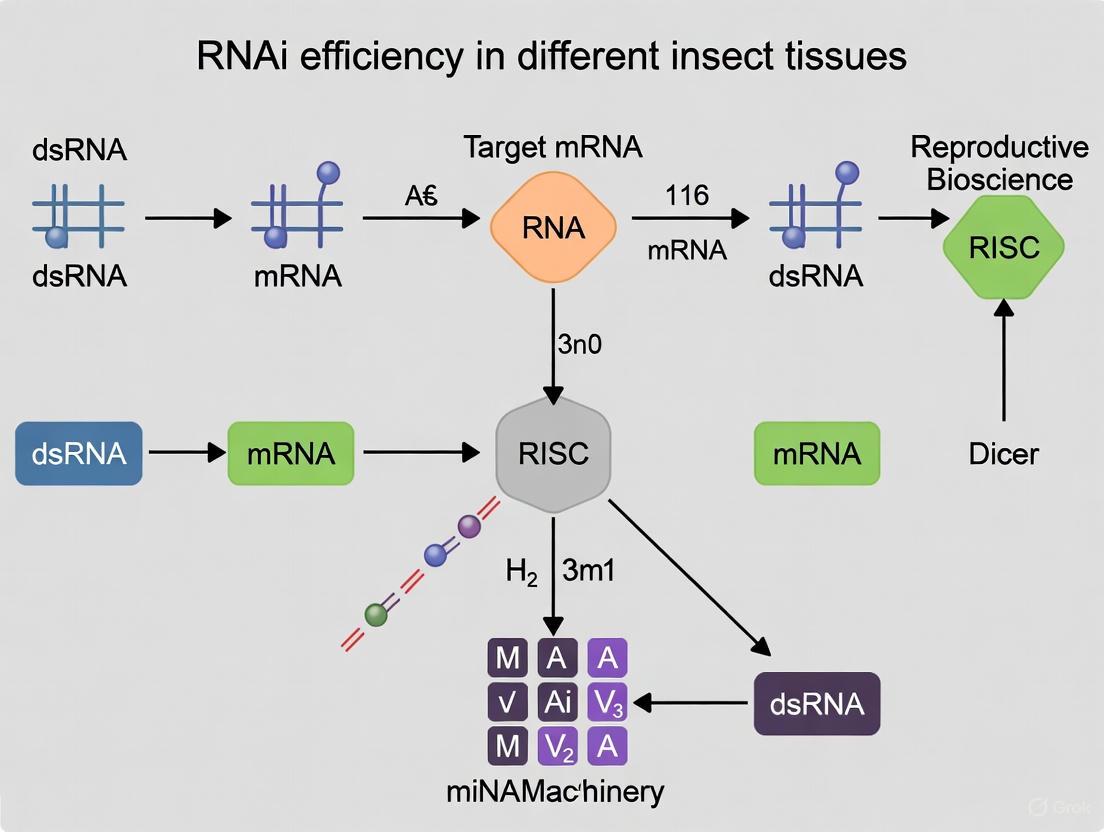
This article provides a comprehensive analysis of the variable efficiency of RNA interference (RNAi) across different insect tissues, a critical factor for both fundamental research and applied biotechnology.
Decoding Tissue-Specific RNAi Efficiency in Insects: From Molecular Mechanisms to Therapeutic Applications
Abstract
This article provides a comprehensive analysis of the variable efficiency of RNA interference (RNAi) across different insect tissues, a critical factor for both fundamental research and applied biotechnology. We explore the foundational biological mechanisms governing systemic RNAi, including dsRNA uptake, transport, and core RNAi machinery distribution. The review details advanced methodological approaches for tissue-specific dsRNA delivery, highlighting nanoparticle and conjugate technologies that overcome biological barriers. We further present troubleshooting strategies to optimize RNAi efficacy in recalcitrant tissues and species, and a comparative validation of RNAi responses across diverse insect models. This resource is tailored for researchers, scientists, and drug development professionals seeking to harness RNAi for pest control, functional genomics, and therapeutic development.
The Biological Landscape of Systemic RNAi: Uptake, Spreading, and Tissue Barriers
Frequently Asked Questions (FAQs) and Troubleshooting
Q1: My RNAi experiment in insect tissues shows no gene knockdown. What could be wrong?
Several factors specific to insect systems could be responsible:
- Inefficient dsRNA processing: In some insect orders, particularly Lepidoptera, the conversion of long dsRNA into functional siRNA in the midgut can be inefficient. This is often linked to low expression levels of Dicer-2 and rapid degradation of dsRNA in the gut environment [1].
- Ineffective siRNA sequences: The siRNA features for optimal efficacy in insects can differ from those established for mammalian systems. Ensure your siRNA or dsRNA design considers features like thermodynamic asymmetry and specific nucleotide preferences (e.g., adenine at the 10th position in the antisense strand) [2].
- Poor delivery or uptake: The method of delivering dsRNA or siRNA (e.g., feeding, injection) can drastically affect uptake, especially in different insect tissues. Optimize your delivery protocol for your target tissue [3] [1].
Q2: How can I confirm that my observed phenotypic effect is due to specific gene silencing and not an off-target effect?
- Use multiple independent RNAi triggers: Always test at least two different siRNAs or shRNAs targeting distinct regions of the same gene. Observing the same phenotype with multiple constructs confirms the effect is due to knocking down your gene of interest [3] [4].
- Include rigorous controls: Always include a negative control siRNA (e.g., non-targeting scramble sequence) and a positive control siRNA (targeting a constitutively expressed gene) to identify non-specific effects and validate your experimental system [3] [5] [4].
- Correlate phenotype with knockdown: Measure the reduction in both target mRNA (e.g., via qRT-PCR) and protein levels (e.g., via Western blot) to directly correlate the observed phenotype with the level of gene knockdown [3] [5].
Q3: I detect mRNA knockdown but see no change at the protein level. Why?
This is a common issue often related to protein turnover rates.
- Long protein half-life: The target protein may have a very slow turnover rate. Even if its mRNA is efficiently degraded, pre-existing protein can persist in the cell for a long time [5].
- Solution: Perform a time-course experiment. Extend the time between siRNA delivery and protein analysis to allow for sufficient protein degradation. Assess protein levels at 24, 48, 72, and even 96 hours post-transfection [3].
Q4: My vector-based shRNA construct shows poor silencing efficiency. How can I troubleshoot this?
- Verify insert sequence: Up to 20% of clones may contain mutated inserts. Sequence your construct to confirm the shRNA insert is correct [6].
- Check transfection/transduction efficiency: Low efficiency will result in poor knockdown. Optimize transfection conditions or, for viral vectors, ensure an adequate Multiplicity of Infection (MOI) and include polycations like Polybrene to enhance transduction [6].
- For inducible systems: Ensure your cell line expresses the required repressor protein (e.g., Tet repressor) and that your culture medium (especially FBS) is free of tetracycline, which can cause leaky basal expression [6].
Troubleshooting Guide: Common RNAi Problems in Insect Research
| Problem Scenario | Possible Causes | Recommended Solutions |
|---|---|---|
| No Gene Knockdown | • Inefficient dsRNA uptake/processing [1]• Poorly designed siRNA sequence [2]• Low transfection/ delivery efficiency [6] | • Use siRNA designs optimized for insects (e.g., via dsRIP platform) [2]• Test siRNA efficacy via injection before feeding trials [2]• Optimize delivery method and use a positive control siRNA [5] |
| High Cell Death / Toxicity | • Cytotoxic transfection reagent [3]• Off-target effects from high siRNA concentration [4]• Non-specific immune activation | • Titrate down transfection reagent and siRNA concentration [5] [4]• Include a negative control siRNA to identify reagent toxicity [3]• Use a different transfection reagent or delivery method |
| Variable Knockdown Efficiency Between Tissues | • Tissue-specific differences in core RNAi machinery (Dicer, RISC) expression [1]• Differences in dsRNA uptake pathways [1] | • Measure expression of Dicer-2 and Argonaute-2 in your target tissue [1]• For tissues with low Dicer-2, consider using pre-processed siRNA instead of long dsRNA [1] |
| Ineffective shRNA Knockdown | • Mutations in the shRNA insert [6]• Poor vector transduction or transfection [6]• Silencing of the promoter | • Sequence-verify the shRNA insert in your plasmid [6]• Optimize viral titer (for lentiviral vectors) or transfection protocol [6]• Try a different promoter or vector system |
Experimental Protocols for Key Investigations
Protocol 1: Testing RNAi Efficacy in Insect Larva via Feeding
This protocol is adapted from a study on Spodoptera litura to assess the efficacy of dsRNA/siRNA in inducing mortality through feeding [1].
- dsRNA/siRNA Preparation: Synthesize dsRNA targeting your gene of interest using a kit (e.g., MEGAscript T7 Kit) and primers with T7 promoter sequences. For siRNA, design and synthesize multiple sequences [1].
- Insect Maintenance: Rear insects (e.g., second-instar larvae) under controlled conditions (e.g., 26°C, 12h/12h light/dark cycle) on an artificial diet [1].
- Feeding Bioassay: Starve larvae for 12-24 hours before the experiment. For every 10 larvae, add a measured amount of dsRNA or siRNA (e.g., 3 µg) to a small portion of artificial diet (approx. 100 mg). Replace the diet daily with freshly prepared RNAi-treated food for 4 days.
- Post-Treatment Observation: After the feeding period, provide larvae with a normal, untreated diet ad libitum. Record larval mortality daily for a defined period (e.g., up to 14 days) [1].
- Efficiency Validation: Isolate RNA from the target tissue (e.g., midgut) of treated and control larvae. Perform qRT-PCR to quantify the knockdown of the target mRNA [1].
Protocol 2: Validating Gene Knockdown at mRNA and Protein Levels
This standard protocol is crucial for confirming RNAi success and is applicable to most systems, including insect cell cultures or tissues [3] [5].
- Treatment and Sampling: Transfert cells or treat tissues with your siRNA/dsRNA and appropriate controls. Harvest samples at multiple time points (e.g., 24, 48, 72 hours) to capture the peak of knockdown [3] [5].
- mRNA Level Analysis (qRT-PCR):
- RNA Isolation: Extract total RNA using a method like TRIzol. Check RNA quality and concentration [1].
- cDNA Synthesis: Synthesize cDNA from 500 ng of total RNA using a reverse transcription kit [1].
- Quantitative PCR: Perform real-time qPCR using a SYBR Green kit. Normalize target gene expression to housekeeping genes (e.g., Actin, 18S). Calculate fold-change using the ΔΔCt method [1].
- Protein Level Analysis (Western Blot):
- Protein Extraction: Prepare cell or tissue lysates at each time point.
- Gel Electrophoresis and Transfer: Separate proteins by SDS-PAGE (e.g., 4-15% gradient gel) and transfer to a PVDF membrane [3].
- Immunodetection: Block the membrane and incubate with primary antibody against your target protein, followed by an enzyme-conjugated secondary antibody. Detect the signal using a sensitive chemiluminescent substrate kit (e.g., Western-SuperStar System). Always re-probe for a loading control (e.g., GAPDH) [3].
Table 1: Experimentally Determined siRNA Features Correlating with High Insecticidal Efficacy in Tribolium castaneum [2]
| siRNA Sequence Feature | Correlation with High Efficacy | Notes / Comparison to Mammalian Systems |
|---|---|---|
| Thermodynamic Asymmetry | Positive | A weakly paired 5' end on the antisense strand promotes its loading into RISC; a conserved feature [2]. |
| Secondary Structure | Negative (absence is positive) | Lack of secondary structure in the target mRNA region is predictive of high efficacy [2]. |
| Nucleotide at Position 10 (Antisense) | Adenine (A) | Presence of adenine at the 10th position is predictive [2]. |
| GC Content (nt 9-14, Antisense) | High GC content | This differs from human data. High GC in this region was associated with efficacy in beetles, unlike in humans where low GC is preferred [2]. |
Table 2: Comparative Efficacy of dsRNA vs. siRNA in Spodoptera litura Midgut [1]
| Parameter | dsRNA | siRNA |
|---|---|---|
| Gene Silencing (midgut) | Not significant | Effective |
| Impact on Larval Growth/Mortality | No significant impact | Clear insecticidal effects observed |
| Conversion to Functional siRNA | Inefficient | Directly functional (bypasses Dicer) |
| Hypothesized Primary Reason | Low Dicer-2 expression & rapid dsRNA degradation in gut [1] | Bypasses the need for Dicer-2 processing [1] |
RNAi Machinery and Experimental Workflow
The Scientist's Toolkit: Essential Research Reagents
Table 3: Key Reagents for RNAi Experiments in Insect Research
| Reagent / Kit | Function / Application | Example Use Case in Protocol |
|---|---|---|
| MEGAscript T7 Kit | In vitro transcription for synthesizing long dsRNA. | Generating dsRNA for feeding bioassays in insect larvae [1]. |
| TRIzol Reagent | Monophasic solution for the isolation of high-quality total RNA from cells and tissues. | Isolating RNA from insect midgut tissue to check knockdown efficiency post-treatment [1]. |
| mirVana miRNA Isolation Kit | For the isolation of total small RNA enriched for miRNAs and siRNAs. | Extracting small RNAs for northern blot analysis to detect siRNA formation from delivered dsRNA [1]. |
| SensiFAST SYBR Hi-ROX Kit | Ready-to-use mix for quantitative real-time PCR (qRT-PCR). | Quantifying mRNA levels of the target gene and reference genes to calculate knockdown efficiency [1]. |
| Western-SuperStar Immunodetection System | A highly sensitive chemiluminescent kit for detecting proteins in Western blots. | Confirming the reduction of target protein levels in insect cells or tissues after RNAi treatment [3]. |
| HiPerFect Transfection Reagent | A reagent for efficiently delivering siRNA into a wide range of mammalian and insect cells with low cytotoxicity. | Transfecting siRNA into insect cell lines for in vitro RNAi screens [4]. |
| PureLink HQ Mini Plasmid Purification Kit | For preparing high-quality, pure plasmid DNA for sequencing or transfection. | Purifying shRNA expression plasmids to ensure sequence verification and high-quality DNA for transfection [6]. |
Core Concepts: Definitions and Key Distinctions
What is the fundamental difference between Systemic and Environmental RNAi?
Environmental RNAi describes the initial process where a cell takes up double-stranded RNA (dsRNA) directly from its external environment. This is the first step in the sequence, enabling the RNAi response to be triggered by external dsRNA sources. In contrast, Systemic RNAi refers to the phenomenon where the gene-silencing signal spreads from the initial site of uptake to other cells and tissues throughout the organism, leading to a body-wide silencing effect [7] [8].
How do the mechanisms of dsRNA uptake differ between these pathways?
The mechanism of dsRNA internalization is a key differentiator and can vary significantly between insect species, which greatly impacts their overall sensitivity to RNAi. The table below summarizes the two primary uptake pathways.
Table 1: Primary Pathways for dsRNA Uptake in Insects
| Uptake Pathway | Mechanism | Presence in Insects | Implications for RNAi Efficiency |
|---|---|---|---|
| Transmembrane Channel (Sid-1-like) | Passive import of dsRNA via channel proteins [7]. | Variable; Coleopterans often have multiple Sid-1-like genes, while dipterans like Drosophila lack them entirely [7]. | Generally associated with robust systemic RNAi and high RNAi sensitivity, as seen in many beetles [7]. |
| Endocytic Pathway | Active engulfment of dsRNA from the environment [7]. | Widespread across insect orders [7]. | Can limit the efficiency and systemic spread of RNAi if dsRNA is degraded in endosomes rather than released into the cytoplasm [7]. |
Troubleshooting Guide: Common Experimental Challenges
FAQ 1: We observe weak or no gene silencing after feeding dsRNA to our insect model. What could be the cause?
This is a common challenge, particularly in lepidopteran and hemipteran species. The issue often lies in the efficiency of dsRNA uptake and processing.
- Confirm dsRNA uptake and processing: Check if the dsRNA is being efficiently converted into small interfering RNAs (siRNAs) in the target tissue. Northern blot analysis can be used to detect the presence of processed siRNAs. For example, in Spodoptera litura, a key reason for dsRNA inefficacy is its failure to be processed into functional siRNA in the midgut [1].
- Evaluate nuclease activity: Insect guts, saliva, and hemolymph often contain high levels of nucleases that rapidly degrade dsRNA [7] [9]. Analyze the stability of your dsRNA in the insect's gut fluid or hemolymph. Using modified nucleotides or nanoparticle formulations can enhance stability.
- Check expression of RNAi core machinery: Low expression of essential enzymes like Dicer-2 can severely limit the conversion of dsRNA into siRNA. Quantify the expression levels of Dicer-2 and Argonaute-2 (Ago2) in your target tissue using qRT-PCR. Research on Spodoptera litura has directly linked low Dicer-2 expression in the midgut to poor RNAi efficacy [1].
FAQ 2: Our siRNA shows efficient mRNA knockdown but no corresponding reduction in protein levels. How should we proceed?
This discrepancy can arise due to the differential turnover rates of mRNA and protein.
- Perform a time-course experiment: Gene silencing at the mRNA level can be measured as early as 24-48 hours post-treatment. However, the effect on protein levels depends on the protein's half-life. We recommend performing a time course experiment to determine the peak protein knockdown, which may require a longer duration [5].
- Verify siRNA delivery efficiency: Use a fluorescently labeled control siRNA to confirm that the molecules are successfully entering the cells. Additionally, always include a validated positive control siRNA that targets a well-characterized gene to demonstrate that your transfection or delivery system is working correctly [5].
FAQ 3: Why is RNAi efficiency highly variable across different insect orders?
The core RNAi machinery is conserved, but the components responsible for the systemic spread and environmental uptake of the dsRNA signal are not. The following diagram illustrates the complete pathway and key points of variation.
The table below summarizes the differential RNAi responses observed across insect orders, which stem from the variations in the pathway above.
Table 2: Comparative RNAi Sensitivity and Mechanisms Across Insect Orders
| Insect Order | Example Species | Sid-1-like Genes | Environmental RNAi Efficiency | Systemic RNAi |
|---|---|---|---|---|
| Coleoptera | Tribolium castaneum, Leptinotarsa decemlineata | 2-3 genes [7] | High sensitivity [7] | Robust, body-wide silencing [7] |
| Lepidoptera | Spodoptera litura, Bombyx mori | Up to 3 genes [7] | Generally low sensitivity [1] | Limited or absent in many species [7] |
| Hemiptera | Philaenus spumarius, Nilaparvata lugens | 1 gene (e.g., N. lugens) [7] | Variable, often moderate [9] | Can be effective, enabling systemic spread [7] [9] |
| Orthoptera | Locusta migratoria | 1 gene [7] | Low sensitivity via feeding [7] | Robust via injection [7] |
| Diptera | Drosophila melanogaster | None identified [7] | Low via feeding, high via injection [7] | Limited |
Experimental Protocols for Assessing RNAi Efficiency
Protocol 1: Evaluating dsRNA Stability and siRNA Conversion in Insect Midgut
This protocol is critical for troubleshooting RNAi inefficacy in recalcitrant species like lepidopterans.
- dsRNA Feeding: Feed a known quantity of dsRNA (e.g., 3 µg per 10 larvae) to the insects using an artificial diet [1].
- Tissue Dissection and RNA Extraction: At various time points post-feeding (e.g., 2, 6, 12, 24 hours), dissect the midguts. Extract total RNA, including the small RNA fraction, using a specialized kit like the mirVana miRNA Isolation Kit [1].
- Northern Blot Analysis: Fractionate the extracted small RNAs using denaturing polyacrylamide gel electrophoresis (PAGE). Transfer to a membrane and hybridize with a probe complementary to your target siRNA to detect successful processing of the ingested dsRNA into siRNAs [1].
Protocol 2: Microinjection for Reliable Systemic Delivery in Adults
Microinjection is often used to bypass gut-based barriers and directly trigger systemic RNAi.
- dsRNA Synthesis: Amplify a target gene fragment with T7 promoter sequences flanking both ends. Use this as a template for in vitro transcription with a kit such as the MEGAscript T7 Kit. Treat with DNase to remove template DNA and purify the dsRNA [10] [9].
- Insect Preparation and Injection: Anesthetize adult insects (e.g., with CO₂). Using a microinjector and a fine glass needle, inject a defined volume (e.g., 1 µL) and concentration (e.g., 80 ng/µL) of dsRNA solution between abdominal segments [9].
- Efficiency Evaluation: Maintain injected insects and collect samples at multiple time points (e.g., 3, 8, 15, 24 days post-injection). Extract RNA from whole bodies or specific tissues and evaluate silencing efficiency via quantitative reverse-transcription PCR (RT-qPCR) [10] [9].
The Scientist's Toolkit: Essential Reagent Solutions
Table 3: Key Reagents for RNAi Experiments in Insects
| Reagent / Kit | Function | Application Example |
|---|---|---|
| MEGAscript T7 Kit | High-yield in vitro synthesis of dsRNA from a DNA template [1] [9]. | Production of dsRNA for feeding or microinjection assays. |
| mirVana miRNA Isolation Kit | Simultaneous purification of total RNA and enrichment of small RNA fractions (<200 nt) [1]. | Isolation of siRNA for northern blot analysis to confirm dsRNA processing. |
| Direct-zol RNA Mini Prep Kit | Rapid purification of high-quality total RNA from tissue samples [9]. | RNA extraction for downstream gene expression analysis via RT-qPCR. |
| SensiFAST SYBR Hi-ROX Kit | Ready-to-use master mix for highly sensitive and specific quantitative real-time PCR [1]. | Measuring mRNA knockdown levels of target genes after RNAi treatment. |
| HybEZ Hybridization System | Maintains optimum humidity and temperature for in situ hybridization assays [11]. | Used in RNAscope assays to visualize spatial distribution of target mRNA in tissues. |
Frequently Asked Questions: Troubleshooting dsRNA Uptake and RNAi Efficiency
FAQ 1: Why is my exogenous dsRNA treatment not inducing gene silencing in my insect cell culture? Several factors could be responsible. First, confirm the dsRNA length is optimal; in Drosophila S2 cells, dsRNAs shorter than 200 bp show significantly reduced uptake and silencing efficiency [12]. Ensure your experimental conditions support active uptake; the process is temperature-dependent and inefficient at 4°C [12]. Check for nuclease activity in your culture medium that might be degrading the dsRNA before cellular uptake can occur [13].
FAQ 2: How can I improve dsRNA stability and delivery for RNAi in lepidopteran insects, which are often recalcitrant? A primary challenge is dsRNA degradation by nucleases in the hemolymph and gut. A leading strategy is to formulate dsRNA with nanoparticle complexes. Materials such as chitosan, branched amphiphilic peptide capsules, and cationic polymers can encapsulate dsRNA, shielding it from nucleases and enhancing cellular uptake [13].
FAQ 3: What are the key differences between SID-1-mediated uptake and endocytic uptake of dsRNA? The SID-1 pathway, characterized in C. elegans, allows for the passive, direct transport of dsRNA across the cell membrane and is crucial for systemic RNAi [14]. In contrast, many insect cells lacking sid-1 homologues rely on active, receptor-mediated endocytosis (e.g., clathrin-mediated endocytosis or macropinocytosis) for dsRNA internalization [12] [15]. This endocytic pathway involves dsRNA being trafficked through endosomal compartments, from which it must escape to enter the RNAi machinery [15].
FAQ 4: Which cellular factors are critical for intracellular dsRNA trafficking after endocytosis?
Intracellular vesicle transport is governed by Rab GTPases. In the migratory locust, silencing Rab5 (involved in early endosomes) and Rab7 (involved in late endosomes) significantly impairs RNAi efficiency in the fat body, indicating their essential role in dsRNA transport [15]. Furthermore, successful RNAi requires dsRNA escape from endosomes, a process facilitated by Vacuolar-type H+-ATPase (V-ATPase) proteins that acidify the endosomal lumen [15].
Table 1: Quantifying the Impact of dsRNA Length on Uptake Efficiency in Drosophila S2 Cells
| dsRNA Length | Method of Introduction | Relative Gene Silencing Efficiency | Key Findings |
|---|---|---|---|
| 21 bp (siRNA) | Added to medium ("soaking") | Ineffective / No significant silencing | Short dsRNA fails to enter cells via the natural uptake machinery [12]. |
| 21 bp (esiRNA pool) | Transfected (forced introduction) | Effective silencing | Diverse pool of siRNAs is functional when bypassing the uptake barrier [12]. |
| 200-592 bp | Added to medium ("soaking") | Effective and length-dependent silencing | Long dsRNA is efficiently internalized and initiates RNAi [12]. |
Table 2: Key Proteins in dsRNA Uptake and Trafficking in the Fat Body of Locusta migratoria
| Protein / Gene | Function in dsRNA Transport | Experimental Effect of Gene Silencing |
|---|---|---|
| Apolipophorins (ApoLp) | Carrier proteins in hemolymph that bind and shuttle dsRNA [15]. | Knocking down LmApoLp-III and LmApoLp-II/I reduces dsRNA uptake and RNAi efficiency [15]. |
| Scavenger Receptors (SR) | Cell membrane receptors that recognize the ApoLp-dsRNA complex [15]. | Silencing LmSRA and LmSRC impairs dsRNA internalization [15]. |
| Clathrin Heavy Chain | Forms the coat of clathrin-coated pits for receptor-mediated endocytosis [15]. | Knockdown decreases dsRNA uptake, identifying a primary internalization pathway [15]. |
| Rab5 & Rab7 | Small GTPases regulating early and late endosomal trafficking [15]. | Silencing disrupts intracellular transport of dsRNA and reduces RNAi efficacy [15]. |
| V-ATPase | Acidifies endosomes by pumping protons; crucial for dsRNA endosomal escape [15]. | Knocking down subunits (LmV-ATPase A, C, H) causes dsRNA accumulation in endosomes and weakens RNAi [15]. |
Detailed Experimental Protocols
Protocol 1: Genome-wide RNAi Screen for dsRNA Uptake Components (as performed in Drosophila S2 cells)
This protocol is used to identify host genes required for the uptake and processing of exogenous dsRNA.
- Cell Culture and Reporter System: Use Drosophila S2 cells stably expressing an inducible fluorescent reporter protein (e.g., GFP).
- dsRNA Library Preparation: Utilize a genome-wide dsRNA library targeting genes of interest. The cited study used a library covering ~7,000 Drosophila genes with homologs in C. elegans and mammals [12].
- Primary Screening ("RNAi of RNAi"):
- For each gene in the library, incubate S2 cells with the corresponding dsRNA to knock down the host gene's mRNA.
- After a suitable incubation period (e.g., 4-5 days), add dsRNA targeting the fluorescent reporter (e.g., GFP dsRNA) to the culture supernatant.
- Incubate further to allow for RNAi-mediated silencing of the reporter.
- Flow Cytometry Analysis: Use Fluorescence Activated Cell Sorting (FACS) to measure the mean fluorescence intensity in the cell population. A high GFP signal indicates that knockdown of the host gene has disrupted the RNAi process against the reporter.
- Secondary Screening: Take primary hits and test them using different RNAi reporters to filter out reporter-specific effects and identify a core set of genes essential for exogenous dsRNA uptake and processing [12].
Protocol 2: Functional Validation of dsRNA Uptake Pathways Using Pharmacological Inhibitors
This protocol helps determine if a cell line utilizes active endocytosis for dsRNA uptake.
- Cell Preparation: Plate the insect cells of interest (e.g., S2 cells, fat body cells) in appropriate culture wells.
- Inhibitor Treatment: Pre-treat cells with specific pharmacological inhibitors of endocytosis. Common inhibitors include:
- Chlorpromazine: Inhibits clathrin-mediated endocytosis.
- EIPA (5-(N-Ethyl-N-isopropyl)amiloride): Inhibits macropinocytosis.
- Include a negative control (e.g., DMSO vehicle only).
- dsRNA Incubation (Pulse): After pre-treatment, add fluorescently labelled (e.g., Cy3) long dsRNA (>200 bp) to the culture medium. Co-incubate the cells with the inhibitor and dsRNA for a defined period (e.g., 60 minutes).
- Wash and Analyze: Thoroughly wash the cells to remove free dsRNA.
- Assessment:
- Microscopy: Use fluorescence microscopy to visualize and quantify the internalized dsRNA. A significant reduction in punctate fluorescent signal in inhibitor-treated cells compared to the control indicates the involvement of that endocytic pathway [12].
- Functional Assay: Alternatively, use unlabeled dsRNA targeting a reporter gene. After the pulse and subsequent wash, culture the cells and measure reporter silencing after 48 hours. Reduced silencing in inhibitor-treated groups confirms the functional importance of endocytosis for dsRNA entry [12].
Pathway and Mechanism Visualizations
The Scientist's Toolkit: Key Research Reagents
Table 3: Essential Reagents for Studying dsRNA Transport Mechanisms
| Reagent / Material | Function in dsRNA Transport Research | Specific Example / Application |
|---|---|---|
| Long dsRNA (>200 bp) | The primary trigger for efficient RNAi via natural uptake machinery; used for "soaking" or feeding experiments [12]. | In vitro transcription using T7 or SP6 RNA polymerase kits to produce target gene-specific dsRNA. |
| Fluorescently-Labelled dsRNA | Allows direct visualization and quantification of dsRNA binding, internalization, and subcellular localization via microscopy [12]. | Cy3- or FITC-labelled dsRNA used in pulse-chase experiments and inhibitor studies. |
| Pharmacological Inhibitors | Chemical tools to block specific uptake pathways and determine the primary mechanism used by cells [12] [15]. | Chlorpromazine (clathrin-mediated endocytosis), EIPA (macropinocytosis), Bafilomycin A1 (V-ATPase activity). |
| siRNA / dsRNA Libraries | Enable high-throughput, genome-wide functional screens to identify novel genes involved in dsRNA uptake and trafficking [12]. | Genome-wide dsRNA libraries for Drosophila screening in S2 cells. |
| Antibodies for Key Proteins | Used in immunofluorescence to confirm protein localization and co-localization with internalized dsRNA [15]. | Antibodies against Clathrin, Rab5, Rab7, V-ATPase subunits, and Scavenger Receptors. |
| Nanoparticle Formulations | Advanced delivery systems designed to protect dsRNA from degradation and enhance cellular uptake, especially in recalcitrant species [13]. | Chitosan, peptide capsules, and lipid nanoparticles used to encapsulate dsRNA for oral delivery. |
Frequently Asked Questions (FAQs)
Why is my administered dsRNA degraded before it can trigger an RNAi response? The hemolymph and gut fluid of many insect species contain high levels of specific nucleases (dsRNases) that rapidly degrade exogenous double-stranded RNA (dsRNA). This degradation occurs before the dsRNA can be taken up by cells and processed by the Dicer-2 enzyme, effectively shutting down the RNAi pathway before it can begin [13] [16]. The activity levels of these nucleases vary significantly between insect orders, which is a primary reason for the variable success of RNAi across different species [16].
My RNAi experiment failed in a lepidopteran insect. What are the common challenges? Lepidopterans (e.g., Spodoptera litura) are notoriously recalcitrant to RNAi, particularly through feeding. This is due to a combination of factors:
- High dsRNase Activity: Their gut fluid and hemolymph exhibit very high levels of dsRNA-degrading enzymes [16].
- Inefficient dsRNA Processing: There is often low expression of the core RNAi machinery protein, Dicer-2, in the midgut, leading to inefficient conversion of long dsRNA into siRNAs [1].
- Rapid Degradation: Even if dsRNA survives the gut environment, it is quickly degraded in the hemolymph, preventing systemic spread [16].
What is the difference between using dsRNA and siRNA, and which should I use? Both are triggers for RNAi, but they enter the pathway at different points.
- dsRNA (long double-stranded RNA): Requires cellular uptake and processing by Dicer-2 into siRNAs. It is more cost-effective for large-scale experiments but is highly susceptible to degradation by dsRNases [13] [1].
- siRNA (small interfering RNA): These are the 21-25 nucleotide products of Dicer-2 activity. They can be directly loaded into the RISC complex, bypassing the Dicer-2 processing step. This can be more effective in species with high dsRNase activity or low Dicer-2 expression, as shown in Spodoptera litura [1]. However, siRNA is generally more expensive to synthesize and can be less stable environmentally.
How can I protect dsRNA from degradation in my target insect? The most promising strategy is the use of nanoparticle complexes to encapsulate and deliver dsRNA. These nanoparticles protect the dsRNA from nucleases in the hemolymph and gut environment and can enhance cellular uptake. Commonly used materials include:
Troubleshooting Guides
Problem: Low or No Gene Knockdown Following dsRNA Injection or Feeding
| Possible Cause | Diagnostic Experiments | Proposed Solution |
|---|---|---|
| High dsRNase activity in hemolymph/gut | Incubate dsRNA with insect hemolymph or gut fluid in vitro and analyze integrity by gel electrophoresis [16]. | 1. Increase the dosage of dsRNA to saturate nucleases. 2. Switch to siRNA to bypass the Dicer-2 step [1]. 3. Use nanoparticle-encapsulated dsRNA [13]. |
| Low expression of core RNAi machinery (Dicer-2) | Quantify the expression levels of Dicer-2, Argonaute-2, and other core genes in your target tissue (e.g., midgut) using qRT-PCR [1]. | 1. Use siRNA instead of dsRNA. 2. Target a different tissue with higher RNAi competency. |
| Inefficient cellular uptake | Use a fluorescently labeled dsRNA/siRNA to track uptake and localization in tissues. | Utilize nanoparticle-mediated delivery to enhance cellular internalization [13]. |
| Rapid clearance/degradation in vivo | Inject a fixed amount of dsRNA and collect hemolymph at different time points. Measure remaining dsRNA using a sensitive method like QuantiGene [16]. | 1. Use nuclease-resistant RNA analogs (e.g., 2'-fluoro-modified). 2. Employ sustained-release delivery systems like nanoparticles. |
Problem: Variable RNAi Efficacy Between Different Insect Species
| Insect Order | Example Species | Relative RNAi Efficacy (Injection) | Relative RNAi Efficacy (Feeding) | Primary Barrier |
|---|---|---|---|---|
| Coleoptera | Tribolium castaneum | High [16] | High [16] | Low nuclease activity [16] |
| Blattaria | Periplaneta americana | High [16] | Moderate [16] | Moderate nuclease activity [16] |
| Lepidoptera | Spodoptera litura | Low [1] [16] | Very Low [1] [16] | High nuclease activity & Low Dicer-2 expression [1] [16] |
| Hemiptera | Philaenus spumarius | Moderate [9] | Low to Moderate [9] | Significant nucleases in gut and hemolymph [9] |
Experimental Protocols
Protocol 1: Assessing dsRNA Stability in Hemolymph and Gut FluidIn Vitro
Purpose: To determine the degradation capacity of insect hemolymph or gut fluid for dsRNA, explaining variable RNAi efficacy [16].
Materials:
- Purified dsRNA (target gene or control)
- Hemolymph or gut fluid collection tools (capillary tubes, dissection tools)
- Ice-cold phosphate-buffered saline (PBS)
- Thermostatic water bath or incubator
- Agarose gel electrophoresis equipment
Method:
- Sample Collection: Collect hemolymph from a cold-anesthetized insect using a capillary tube. For gut fluid, dissect the midgut, rinse in PBS, and centrifuge to collect luminal fluid.
- Incubation: Mix a known quantity of dsRNA (e.g., 100 ng) with the hemolymph or gut fluid sample. Incubate the mixture at the insect's physiological temperature (e.g., 25-28°C for many species).
- Time Course: Remove aliquots at different time points (e.g., 0, 5, 15, 30, 60 minutes) and immediately stop the reaction by placing on ice.
- Analysis: Analyze the integrity of the dsRNA by running the aliquots on an agarose gel. A sample with high nuclease activity will show rapid degradation of the dsRNA band over time [16].
Protocol 2: Abdominal Microinjection of dsRNA in Insects
Purpose: To deliver dsRNA directly into the hemocoel of an insect, bypassing the gut barrier to assess systemic RNAi response [10] [9].
Materials:
- Purified, sterile dsRNA
- Microinjector (e.g., Nanoject II, Eppendorf)
- Fine glass needles (pulled from capillary tubes)
- CO₂ pad or ice for anesthesia
- Sterile injection buffer (e.g., Tris-EDTA)
Method:
- Preparation: Anesthetize adult insects on a CO₂ pad or ice.
- Loading: Back-load a glass needle with a defined volume (e.g., 1 µL) of dsRNA solution (typically 100-5000 ng/µL, species-dependent) [9] [16].
- Injection: Gently inject the dsRNA into the abdomen, between two segments, taking care not to damage internal organs.
- Recovery: Allow insects to recover in a clean container with food.
- Validation: After 24-72 hours, harvest the target tissue and assess gene knockdown using qRT-PCR.
Signaling Pathways and Workflows
RNAi Degradation Pathway in Insects
Experimental Workflow for RNAi Barrier Analysis
The Scientist's Toolkit: Research Reagent Solutions
| Reagent / Material | Function in Experiment | Key Considerations |
|---|---|---|
| MEGAscript T7 Kit [1] [9] | High-yield in vitro transcription for synthesizing large quantities of dsRNA. | Cost-effective for producing dsRNA for feeding or injection experiments. |
| Chitosan Nanoparticles [13] | A biodegradable cationic polymer that forms complexes with dsRNA, protecting it from nucleases and enhancing cellular uptake. | Particularly useful for oral delivery in species with high gut nuclease activity. |
| Branched Amphiphilic Peptide Capsules (BAPCs) [13] | A class of nanoparticle that encapsulates dsRNA and facilitates its delivery in insect diets. | Shows promise for protecting dsRNA in the harsh gut environment. |
| Dicer-2 siRNA [1] | Pre-synthesized siRNAs that bypass the need for Dicer-2 processing. | Can be more effective than dsRNA in Lepidopterans and other species with low endogenous Dicer-2 activity. |
| QuantiGene Assay [16] | A branched DNA signal amplification assay that directly quantifies RNA targets without reverse transcription. | Ideal for accurately measuring in vivo dsRNA stability and persistence in hemolymph. |
| Silencer Select/Validated siRNAs [5] | Commercially available, pre-designed and validated siRNAs. | Useful as positive controls or for initial gene screening in cell cultures or amenable insects. |
The table below summarizes the fundamental physiological and molecular barriers that account for the dramatic difference in RNAi sensitivity between Coleopteran (sensitive) and Lepidopteran (recalcitrant) insects.
| Barrier Mechanism | Coleopteran Response (Sensitive) | Lepidopteran Response (Recalcitrant) |
|---|---|---|
| dsRNA Stability | Lower dsRNase activity in gut and hemolymph [17] | High dsRNase activity rapidly degrades dsRNA [1] [18] [17] |
| Core RNAi Machinery | Efficient dsRNA processing by Dicer-2; functional systemic spread [19] [20] | Low Dicer-2 expression impedes dsRNA processing to siRNA [1]; impaired systemic RNAi [19] |
| Cellular Uptake | Efficient SID-1-like transporter expression facilitates dsRNA uptake [19] | Inefficient cellular internalization and transport [20] [17] |
| Intestinal Environment | Gut pH and enzymes are less detrimental to dsRNA [17] | Alkaline gut pH and robust nucleases degrade dsRNA [17] |
Frequently Asked Questions for Researchers
Q1: Our lab has confirmed successful dsRNA synthesis and uptake in a Lepidopteran model, yet we observe no phenotypic effect. What are the most probable causes?
The most likely failure points are in the post-uptake processing of dsRNA. Key areas to investigate are:
- Inefficient dicing: Check the expression levels of Dicer-2 and associated dsRNA-binding proteins like R2D2 and Loquacious in your target tissue. Lepidopterans often have low Dicer-2 expression, preventing the efficient conversion of long dsRNA into the siRNA duplexes needed for RISC loading [19] [1].
- RISC assembly defects: Ensure core components like Argonaute-2 (Ago2) are functional. Defects in the RNA-induced silencing complex (RISC) assembly will prevent target mRNA cleavage even if siRNAs are present [19] [21].
- Off-target tissue selection: Validate that your target gene is expressed and essential in the tissue you are delivering dsRNA to. A gut-specific promoter may not be effective if the gene's critical function is in the fat body [20].
Q2: We see strong gene knockdown via injection in Coleopterans but no effect with oral feeding. How can we improve oral delivery efficacy?
This indicates a primary barrier in the gut environment. Your strategy should focus on protecting the dsRNA payload.
- Shield dsRNA from nucleases: Utilize nanoparticle carriers (e.g., chitosan, ZIF-8, liposomes) that form complexes with dsRNA, protecting it from degradation by dsRNases in the gut [18] [22] [17].
- Promote cellular uptake: Certain nanomaterials, such as ZIF-8@PDA, can enhance cellular uptake by activating endocytic and phagosome pathways, facilitating the dsRNA's escape from the gut lumen into cells [22].
- Consider transgenic delivery: For plant pests, Host-Induced Gene Silencing (HIGS) in transgenic plants can provide continuous, protected dsRNA expression within plant tissues, ensuring delivery during feeding [23] [20].
Q3: Is RNAi recalcitrance in Lepidoptera an absolute barrier, or can it be overcome?
Recalcitrance is not absolute but represents a significant hurdle that can be overcome with advanced strategies. Recent research shows promising avenues:
- Nanoparticle technology: As demonstrated with Spodoptera frugiperda, nanocarriers like ZIF-8@PDA can significantly enhance dsRNA stability, increase uptake by 12- to 350-fold, and lead to effective gene silencing and mortality [22].
- Gene editing: Knockout of specific gut-expressed dsRNase genes in Lepidopterans using CRISPR-Cas9 has been shown to increase dsRNA stability and improve RNAi efficacy, confirming the critical role of these nucleases [17].
- Using siRNA directly: Bypass the need for Dicer-2 processing by directly synthesizing and delivering siRNA. One study on Spodoptera litura found that while dsRNA was ineffective, siRNA elicited clear insecticidal effects [1].
Experimental Protocols & Methodologies
Protocol 1: Assessing dsRNA Stability in Insect Hemolymph or Gut Fluid
This protocol is critical for diagnosing the first major barrier in recalcitrant species [1] [18].
- Sample Collection: Dissect and collect midgut tissue or hemolymph from your target insect species.
- Prepare Fluid Extract: Centrifuge gut tissues in a suitable buffer (e.g., PBS) to obtain gut fluid supernatant. Hemolymph can be used directly after centrifugation to remove cells.
- Incubation Assay: Incubate a known quantity of your target dsRNA (e.g., 500 ng) with the gut fluid/hemolymph at the insect's physiological temperature (e.g., 26°C).
- Time-Course Analysis: Remove aliquots at specific time points (e.g., 0, 15, 30, 60 minutes).
- Analysis: Analyze the integrity of dsRNA using agarose gel electrophoresis. Compare the band intensity over time against a dsRNA control incubated in nuclease-free buffer.
- Troubleshooting: If rapid degradation is observed, consider repeating the assay with the addition of nuclease inhibitors or by pre-complexing dsRNA with a nanoparticle to confirm protection [18] [22].
Protocol 2: Quantifying Key RNAi Machinery Gene Expression
Use this protocol to determine if low expression of core RNAi pathway components is a limiting factor [1].
- RNA Extraction: Isolate total RNA from the target tissue (e.g., midgut, fat body) using a commercial kit (e.g., TRIzol).
- cDNA Synthesis: Synthesize first-strand cDNA using a reverse transcription kit.
- qRT-PCR: Perform quantitative real-time PCR using gene-specific primers for:
- Core RNAi Genes: Dicer-2, Ago2, R2D2.
- Nuclease Genes: dsRNase (identify from genome/transcriptome first).
- Reference Genes: Actin, 18S rRNA, or EF1α for normalization.
- Data Analysis: Use the 2−ΔΔCT method to calculate relative expression levels. Compare expression profiles across species (sensitive vs. recalcitrant) or different developmental stages.
The Scientist's Toolkit: Key Research Reagents
| Research Reagent | Function & Application in RNAi Research |
|---|---|
| Dicer-2 / Ago2 Antibodies | Validate protein expression and localization in different tissues via Western blot or immunohistochemistry [19]. |
| ZIF-8 / Chitosan Nanoparticles | Protect dsRNA from enzymatic degradation and enhance cellular uptake in recalcitrant insects [22]. |
| Engineered HT115 E. coli | Cost-effective, scalable production of dsRNA for high-throughput screens or feeding assays [22]. |
| T7 RiboMAX Express Kit | High-yield, in vitro transcription of high-purity dsRNA for critical experiments [1] [9]. |
| dsRNase-specific siRNAs | Knock down endogenous nuclease genes to improve stability of subsequently delivered therapeutic dsRNA [18] [17]. |
| Cy3/Cy5-dsRNA | Fluorescently labeled tracer to visualize dsRNA uptake, distribution, and stability in vivo [22]. |
Visualizing the Core RNAi Pathway and Major Barriers
The following diagram illustrates the core RNAi mechanism and highlights the key points of failure in Lepidopterans, providing a logical framework for troubleshooting.
Advanced Strategies: Enhancing RNAi in Recalcitrant Species
Nanoparticle-Mediated dsRNA Delivery
Nanocarriers represent one of the most promising strategies to overcome multiple barriers simultaneously [18] [22]. The workflow involves:
- Synthesis: Self-assembly of nanoparticles (e.g., ZIF-8) with dsRNA via electrostatic and van der Waals forces.
- Protection: The nanoparticle shell (e.g., Polydopamine or PDA) protects dsRNA from degradation in hemolymph and gut fluid.
- Enhanced Uptake: The complex activates endocytic/phagosome pathways in gut cells, leading to dramatically increased cellular uptake (e.g., 12-fold higher in gut tissue, 358-fold higher in cell lines) [22].
- Endosomal Escape: The nanocarrier helps the dsRNA achieve early endosomal escape, avoiding lysosomal degradation and allowing release into the cytoplasm to function [18].
Advanced Delivery Strategies for Tissue-Targeted RNAi Applications
Frequently Asked Questions (FAQs)
Q1: What are the primary advantages of using nanoparticle carriers over delivering naked dsRNA for insect RNAi studies?
A1: Nanoparticles address the key limitation of naked dsRNA, which is rapid degradation in the insect gut. They enhance RNAi efficiency by:
- Protecting dsRNA: Shielding dsRNA from enzymatic degradation by nucleases present in the insect hemolymph and gut fluid [24] [22].
- Improving Cellular Uptake: Facilitating increased cellular absorption through endocytic pathways. For instance, chitosan/dsRNA nanoparticles showed a 7.3 to 8.3-fold increase in uptake by locust epidermal cells, while MOF-based nanoparticles increased fluorescence intensity in gut tissues by 12.33-fold compared to naked dsRNA [24] [22].
- Enhancing Stability: Providing a stable complex that protects the dsRNA payload in various biological environments [25].
Q2: Why is RNAi efficiency low in lepidopteran insects, and how can nanoparticles help?
A2: Lepidopterans (e.g., fall armyworm, Spodoptera frugiperda) exhibit strong dsRNA degradation by gut nucleases, lack efficient intracellular transport, and may have defective core RNAi mechanisms [22] [26]. Nanoparticles like ZIF-8@PDA overcome this by not only protecting dsRNA and enhancing uptake but also by inducing synergistic effects, such as influencing the insect's gut microbiota to suppress its immune response, thereby increasing mortality [22] [26].
Q3: How do I choose between chitosan, MOF, and liposome carriers for my experiment?
A3: The choice depends on your target insect and experimental goals. The table below compares key characteristics:
Table 1: Comparison of Nanoparticle Carriers for Insect RNAi
| Feature | Chitosan Nanoparticles | MOF Nanoparticles (e.g., ZIF-8) | Liposome Nanoparticles |
|---|---|---|---|
| Primary Advantage | High biocompatibility, mucoadhesion, low cost [25] | High porosity, synergistic immune effects, high encapsulation efficiency [22] [27] | High encapsulation efficiency for nucleic acids, proven clinical use [28] |
| Mechanism of Uptake | Increases absorption in gut and epidermal cells [24] | Activates endocytic/phagosome pathways [22] | Promotes cellular uptake and endosomal escape [28] |
| Reported Efficacy (Sample Insect) | 96.6% improved RNAi efficiency in Locusta migratoria [24] | Significant growth inhibition and mortality in Spodoptera frugiperda [22] | Widely used for nucleic acid delivery; specific insect efficacy varies [28] |
| Key Consideration | Solubility requires acidic conditions [25] | Cost and complex synthesis may be higher [22] | Stability can be a challenge; may require stabilizers [25] |
Q4: What are common reasons for low RNAi efficiency even when using nanoparticles?
A4: Troubleshooting should focus on:
- Nanoparticle Synthesis: Incorrect ratios of polymer to dsRNA or inefficient mixing during preparation can lead to poor encapsulation and unstable particles [29].
- dsRNA Integrity: The quality of the synthesized dsRNA is paramount. Always verify its integrity and concentration before encapsulation [30].
- Inefficient Endosomal Escape: The nanoparticle may be successfully internalized but fail to release its dsRNA payload into the cytoplasm. Consider carriers with endosomolytic properties (e.g., those utilizing the proton sponge effect) [31].
Troubleshooting Guides
Low Mortality or Gene Silencing Efficiency
| Problem | Potential Cause | Solution |
|---|---|---|
| Low RNAi effect | Unstable nanoparticles; dsRNA degraded before uptake. | ✓ Check nanoparticle stability in gut fluid in vitro [24].✓ Optimize the crosslinking or encapsulation protocol to ensure complete dsRNA protection [25]. |
| Inefficient cellular uptake. | ✓ Characterize nanoparticle size and surface charge. Particles that are too large or have the wrong surface charge may not be internalized effectively [32].✓ Consider incorporating targeting ligands to enhance specific cell uptake. | |
| dsRNA not released from the nanoparticle inside the cell. | ✓ Use pH-sensitive materials (e.g., certain MOFs or chitosan) that degrade in the acidic endosomal environment [27] [31].✓ Explore formulations that promote endosomal escape, such as those with cationic lipids or polymers [31]. | |
| High larval mortality in control groups | Nanoparticle cytotoxicity. | ✓ Perform a dose-response curve with the empty nanoparticle carrier (without dsRNA) to determine a non-toxic working concentration [25].✓ Ensure thorough purification of nanoparticles to remove unreacted or toxic chemicals from the synthesis process. |
Nanoparticle Synthesis and Characterization Issues
| Problem | Potential Cause | Solution |
|---|---|---|
| Large particle size or broad size distribution | Aggregation during formation. | ✓ Ensure rapid and efficient mixing during synthesis (e.g., using turbulent jet mixers) [29].✓ Optimize the concentration of the polymer and crosslinker. ✓ Use filtration or sonication to reduce aggregate size post-synthesis. |
| Low dsRNA encapsulation efficiency | Incorrect ratio of nanoparticle components to dsRNA. | ✓ Systemically vary the N/P ratio ( polymer to dsRNA ratio) to find the optimal formulation [28] [25].✓ Confirm the compatibility of the dsRNA with the encapsulation method. |
| Unstable nanoparticle suspension | Insufficient surface charge leading to aggregation. | ✓ Measure the zeta potential. A value greater than ±30 mV typically indicates good electrostatic stability [32].✓ Add stabilizers like PEG or use surfactants to improve colloidal stability. |
The following table consolidates key experimental results from recent studies to provide benchmarks for your research.
Table 2: Summary of Quantitative Efficacy Data from Recent Studies
| Nanoparticle Type | Target Insect / System | Target Gene | Key Quantitative Results | Citation |
|---|---|---|---|---|
| Chitosan/dsRNA | Locusta migratoria | LmCht10 | - 67% decrease in target mRNA via feeding; 2x increase in mortality.- 96.6% improved RNAi via injection; 2x increase in mortality.- 7.3 to 8.3-fold higher epidermal cell uptake. | [24] |
| ZIF-8@PDA/dsRNA | Spodoptera frugiperda | CHS, V-ATPaseB | - 12.33-fold higher fluorescence in gut tissues vs. naked dsRNA.- 357.9-fold higher fluorescence in Sf9 cells vs. naked dsRNA.- Induced overgrowth of gut Serratia, reducing insect ROS immune response. | [22] |
| Chitosan (General) | Drug Delivery Systems | N/A | - Up to 90% drug encapsulation efficiency.- 2–3-fold improvement in oral drug bioavailability.- 50–70% increase in drug release at specific pH values. | [25] |
Experimental Protocols
Protocol: Synthesis of Chitosan/dsRNA Nanoparticles via Ionic Gelation
This is a standard method for forming chitosan-based nanoparticles, as applied in locust studies [24] [25].
Principle: Positively charged amino groups of chitosan electrostatically interact with negatively charged polyanions like tripolyphosphate (TPP) and dsRNA, forming a gel-like network that encapsulates the dsRNA.
Materials:
- Chitosan (low molecular weight, deacetylation degree > 85%)
- Sodium Tripolyphosphate (TPP)
- dsRNA of interest (e.g., targeting a chitinase gene)
- Acetic acid solution (1% v/v)
- Nuclease-free water
- Magnetic stirrer
Procedure:
- Prepare Chitosan Solution: Dissolve chitosan in 1% acetic acid solution to a final concentration of 1-2 mg/mL. Stir until completely dissolved and filter sterilize.
- Prepare TPP/dsRNA Solution: Dissolve TPP in nuclease-free water and mix with your purified dsRNA. The typical TPP concentration is 0.5-1 mg/mL.
- Form Nanoparticles: Under constant magnetic stirring, add the TPP/dsRNA solution dropwise to an equal volume of the chitosan solution.
- Incubate: Continue stirring for 30-60 minutes at room temperature to allow nanoparticle formation to complete.
- Purify: Centrifuge the nanoparticle suspension (e.g., 14,000 rpm for 30 min) to remove unencapsulated dsRNA. Resuspend the pellet in nuclease-free water or buffer.
- Characterize: Determine particle size, polydispersity index (PDI), and zeta potential using dynamic light scattering (DLS). Confirm dsRNA encapsulation efficiency using a fluorescence quantification kit [25].
Protocol: Assessing dsRNA Protection from Gut Fluid Degradation
Principle: This in vitro assay verifies the protective capability of your nanoparticles before proceeding to live insect bioassays [24].
Materials:
- Nanoparticle formulation and naked dsRNA (control)
- Gut fluid collected from target insects
- Incubation buffer
- Gel electrophoresis equipment
Procedure:
- Prepare Samples: Incubate a fixed amount of nanoparticle-encapsulated dsRNA and naked dsRNA with insect gut fluid at the insect's physiological temperature.
- Time Course: Remove aliquots at different time points (e.g., 0, 15, 30, 60 min).
- Stop Reaction: Heat-inactivate the enzymes to stop the degradation reaction.
- Analyze Integrity: Run the samples on an agarose gel. The intact dsRNA band will be clearly visible for protected samples, while the naked dsRNA will show rapid degradation over time.
Pathway and Workflow Visualizations
MOF Nanoparticle RNAi Pathway
This diagram illustrates the enhanced RNAi mechanism of MOF-based nanoparticles in lepidopteran insects, based on the synergistic effects described in the research [22] [26].
Nanoparticle Synthesis & Screening Workflow
This workflow outlines the key steps from nanoparticle synthesis to efficacy testing, integrating troubleshooting checkpoints.
The Scientist's Toolkit: Research Reagent Solutions
Table 3: Essential Materials for Nanoparticle-Mediated RNAi Experiments
| Reagent / Material | Function / Application | Key Considerations |
|---|---|---|
| Chitosan | Biopolymer for forming cationic nanoparticles via ionic gelation. | Select based on molecular weight and degree of deacetylation, which influence nanoparticle stability and properties [25]. |
| ZIF-8 (Zeolitic Imidazolate Framework-8) | Metal-Organic Framework (MOF) for high-efficiency dsRNA encapsulation and delivery. | Offers high porosity and pH-sensitive degradation. Cost and synthesis complexity are factors to consider [22] [27]. |
| Cationic Lipids | Component of liposomal nanoparticles for complexing and delivering nucleic acids. | Critical for forming stable complexes and promoting endosomal escape. Optimize lipid-to-RNA ratio for efficiency and minimal cytotoxicity [28] [31]. |
| dsRNA (Double-stranded RNA) | The effector molecule for inducing RNA interference. | Can be produced via in vitro transcription kits (high purity) or bacterial expression systems (cost-effective for large-scale field applications) [22]. |
| Sodium Tripolyphosphate (TPP) | Crosslinking agent used in ionic gelation with chitosan to form nanoparticles. | Concentration and mixing speed are critical parameters controlling nanoparticle size and uniformity [25]. |
| Turbulent Jet Mixer | Equipment for continuous manufacturing of nanoparticles. | Provides superior mixing, leading to smaller particle size, narrower distribution, and higher encapsulation efficiency compared to traditional microfluidics [29]. |
Troubleshooting Guide: FAQs on dsRNA Stability and RNAi Efficiency
This guide addresses common challenges in maintaining dsRNA stability for RNAi applications in entomological research, providing targeted solutions to improve experimental outcomes.
FAQ 1: Why does my orally delivered dsRNA degrade rapidly in insect gut environments, and how can I prevent this?
Rapid degradation of dsRNA in insect guts is primarily due to the presence of potent dsRNA-specific nucleases, particularly in the alkaline environments of lepidopteran and orthopteran insects [33]. The gut fluid often exhibits several hundred-fold higher dsRNA degrading activity than other tissues like hemolymph [33].
Solutions:
- Apply Chemical Modifications: Incorporate phosphorothioate (PS) backbone modifications or 2'-fluoro (2'F) ribose substitutions. These modifications significantly increase dsRNA resistance to nucleases present in southern green stink bug saliva and soil environments [34].
- Utilize Nanoparticle Encapsulation: Employ Zeolitic Imidazolate Framework-8 with polydopamine coating (ZIF-8@PDA) to protect dsRNA from enzymatic hydrolysis. This approach demonstrated a 12.33-fold increase in fluorescence intensity in gut tissues of Spodoptera frugiperda compared to naked dsRNA, indicating enhanced stability and uptake [22].
- Optimize dsRNA Length: Use longer dsRNAs (>200 bp) as they generally show higher RNAi efficacy. Short dsRNAs (<27 nt) often exhibit limited knockdown efficiency due to reduced uptake across the insect midgut epithelium and fewer siRNAs generated after Dicer processing [35].
FAQ 2: Why does dsRNA produce inconsistent RNAi effects across different insect tissues and species?
RNAi efficacy varies significantly due to differences in nuclease activity, dsRNA uptake mechanisms, and core RNAi machinery components across insect species and tissues [33] [1]. Key limiting factors include differential expression of Dicer-2, nuclease potency, physiological pH variations, and intracellular transport efficiency [34] [1].
Solutions:
- Characterize Tissue-Specific Nuclease Activity: Assess dsRNA degradation rates in gut fluid, hemolymph, and carcass samples for your target species. Biochemical assays reveal that enzymes from different insects vary in their optimal reaction conditions and kinetic parameters [33].
- Validate Dicer-2 Expression: Confirm adequate Dicer-2 expression in target tissues, as low expression impedes conversion of dsRNA to functional siRNA. In Spodoptera litura, low Dicer-2 expression in midguts contributes to poor RNAi efficacy despite successful results in other species [1].
- Employ Species-Specific dsRNA Design: Optimize dsRNA length and target sequence for each insect species. For example, while Diabrotica virgifera virgifera responds well to 184-240 bp dsRNAs [35], other species may require different lengths.
FAQ 3: What chemical modifications optimally balance nuclease resistance and RNAi pathway compatibility?
The optimal chemical modifications must protect dsRNA from degradation while still allowing recognition and processing by Dicer enzymes and downstream RNAi machinery components [34].
Solutions:
- Phosphorothioate Modifications: Replace non-bridging oxygen atoms with sulfur in the phosphate backbone. PS-modified dsRNAs show increased resistance to southern green stink bug saliva nucleases and soil nucleases while maintaining RNAi efficacy in Drosophila melanogaster cell cultures [34].
- 2'-Fluoro Modifications: Incorporate 2'-fluoro nucleotides in pyrimidine positions (C and U). These modifications enhance resistance to enzymatic degradation and improve RNAi efficacy without compromising Dicer recognition [34].
- Strategic Modification Placement: Focus modifications on the sense strand or utilize patchy modification patterns rather than fully modified dsRNAs to maintain Dicer processing capability while improving stability [34].
Quantitative Comparison of dsRNA Stabilization Approaches
Table 1: Efficacy of Chemical Modifications in Enhancing dsRNA Stability
| Modification Type | Nuclease Resistance | RNAi Efficacy | Optimal Application |
|---|---|---|---|
| Phosphorothioate (PS) | High resistance to SGSB saliva nucleases and soil nucleases [34] | Maintained efficacy in D. melanogaster cells; mortality in stink bug and corn rootworm [34] | Backbone modifications; environmental applications |
| 2'-Fluoro (2'F) | Increased resistance to soil nucleases [34] | Improved efficacy in D. melanogaster cell cultures [34] | Ribose modifications; lepidopteran pests |
| 5-Hydroxymethyl | Moderate resistance [34] | Data not fully reported [34] | Pyrimidine modifications |
| ZIF-8@PDA Nanoparticles | Complete protection from gut fluid and hemolymph nucleases for >24 hours [22] | 357.9-fold higher uptake in Sf9 cells; significant mortality in S. frugiperda [22] | Lepidopteran species with high gut nuclease activity |
Table 2: Tissue-Specific dsRNA Degrading Activity in Insect Species
| Insect Species | Whole Body Activity | Gut Activity | Hemolymph Activity | Optimal Delivery Method |
|---|---|---|---|---|
| Spodoptera litura | High [33] | Several hundred-fold higher than other tissues [33] | Moderate [33] | Nanoparticle encapsulation [22] |
| Locusta migratoria | High [33] | Several hundred-fold higher than other tissues [33] | Moderate [33] | Chemical modification + injection |
| Periplaneta americana | Moderate [33] | Several hundred-fold higher than other tissues [33] | Low [33] | Oral delivery with protectants |
| Zophobas atratus | Low [33] | Several hundred-fold higher than other tissues [33] | Low [33] | Standard oral delivery |
Experimental Protocols for Assessing dsRNA Stability
Protocol 1: Evaluating dsRNA Stability in Insect Gut Fluids
This protocol measures dsRNA degradation kinetics in insect digestive fluids to guide stabilization strategy selection [33].
Materials:
- Freshly dissected insect midguts
- Nuclease-free buffer (50 mM Tris-HCl, pH 8.0)
- Target dsRNA (200-500 bp)
- Fluorescence quenching system for detection
- Electrophoresis equipment or qPCR system
Method:
- Prepare gut fluid supernatant by dissecting midguts, homogenizing in ice-cold buffer, and centrifuging at 12,000 × g for 15 minutes.
- Incubate 1 µg of dsRNA with 10 µL gut fluid supernatant in a total volume of 50 µL at the insect's physiological temperature (typically 25-30°C).
- Collect aliquots at 0, 15, 30, 60, and 120 minutes.
- Analyze dsRNA integrity using:
- Electrophoresis: Run samples on 1% agarose gel to visualize degradation patterns.
- qPCR-based quantification: Extract residual dsRNA and quantify using target-specific primers.
- Fluorescence method: Use dsRNA labeled with fluorophore-quencher pairs; degradation increases fluorescence [33].
- Compare degradation rates between unmodified and chemically modified dsRNA.
Protocol 2: Testing Chemical Modification Efficacy in Live Insects
This protocol evaluates the biological activity of stabilized dsRNA in target insect species [34].
Materials:
- Chemically modified dsRNA (PS or 2'F modifications)
- Control unmodified dsRNA
- Target insects (e.g., western corn rootworm, stink bug nymphs)
- Artificial diet or plant material
- RNA extraction kit
- qRT-PCR reagents for target gene expression analysis
Method:
- Synthesize dsRNA with specific chemical modifications using modified nucleotides in in vitro transcription [34].
- Administer dsRNA to insects via:
- Oral delivery: Incorporate 3 µg dsRNA per 100 mg artificial diet [1].
- Topical application: Apply dsRNA solutions to plant surfaces.
- Maintain treatment groups with daily diet replacement for 4 days.
- Monitor mortality daily for 14 days post-treatment.
- Assess gene silencing efficacy by:
- Extracting RNA from target tissues at 24-72 hours post-treatment.
- Performing qRT-PCR to quantify target mRNA reduction using appropriate reference genes.
- Calculating percent knockdown using the 2^(-ΔΔCT) method [1].
Research Reagent Solutions for dsRNA Stabilization
Table 3: Essential Reagents for Enhancing dsRNA Stability in Insect RNAi
| Reagent/Chemical | Function | Application Example |
|---|---|---|
| Phosphorothioate NTPs | Backbone modification for nuclease resistance [34] | Replacement of standard NTPs in in vitro transcription [34] |
| 2'-Fluoro NTPs | Ribose modification enhancing stability [34] | Incorporation during dsRNA synthesis [34] |
| ZIF-8 precursors | Metal-organic framework for nanoparticle encapsulation [22] | Self-assembly with dsRNA for enhanced delivery [22] |
| Polydopamine coating | Protective shell preventing enzymatic degradation [22] | Surface modification of dsRNA-loaded nanoparticles [22] |
| Protease inhibitors | Reduce nuclease activity in tissue extracts [33] | Addition to gut fluid preparations during stability assays [33] |
Signaling Pathways and Experimental Workflows
Diagram 1: dsRNA Stability Enhancement Pathways. This diagram illustrates the pathways through which chemical modifications and nanoparticle encapsulation protect dsRNA from degradation and enable successful RNAi. Protected dsRNA proceeds through proper Dicer processing and RISC loading, while unprotected dsRNA is degraded by nucleases, yielding limited functional fragments.
Diagram 2: Experimental Workflow for Enhanced dsRNA Preparation. This workflow outlines the systematic process for developing stabilized dsRNA constructs, from initial design through efficacy assessment, including iterative optimization based on stability testing results.
Troubleshooting Guide: Common RNAi Experimental Challenges
This guide addresses specific issues researchers encounter when selecting and validating target genes for RNAi-based pest control.
FAQ 1: Why is my dsRNA treatment not causing mortality or the expected lethal phenotype in my target pest?
Several factors can diminish RNAi efficiency, leading to a lack of observable effect.
- Potential Cause: Rapid Degradation of dsRNA. dsRNA can be degraded by nucleases (dsRNases) in the insect's gut or hemolymph before it can be taken up by cells. This is a particularly significant barrier in lepidopteran and some hemipteran insects [17].
- Troubleshooting Steps:
- Check dsRNA Stability: Incubate your dsRNA with the insect's midgut content or hemolymph in vitro and analyze its integrity using gel electrophoresis.
- Use Modified dsRNA: Consider using nuclease-resistant dsRNA analogs or formulating dsRNA within nanoparticles to shield it from degradation [17].
- Target dsRNase Genes: Pre-treat insects with dsRNA targeting the pest's own dsRNase genes to reduce nuclease activity and improve the stability of subsequent dsRNA treatments [17].
- Potential Cause: Poor Cellular Uptake. The efficiency of the cellular machinery that imports dsRNA, such as the SID-1 transmembrane channel, varies significantly between insect species and tissues [36] [17].
- Troubleshooting Steps:
- Validate Delivery Method: If using feeding assays, ensure the dsRNA is being ingested. For recalcitrant species, microinjection directly into the hemocoel can help bypass gut-related barriers and confirm gene function.
- Use Carrier Molecules: Explore delivery strategies that enhance uptake, such as complexing dsRNA with liposomes or cationic polymers [36].
FAQ 2: I confirmed mRNA knockdown, but I do not see a corresponding reduction in protein levels or a physiological effect. What could be wrong?
- Potential Cause: Slow Protein Turnover. The target protein may have a long half-life and persist in the cell long after its mRNA has been degraded [5].
- Troubleshooting Steps:
- Extend Observation Time: Assess protein levels and phenotype at multiple time points (e.g., 72, 96, or 120 hours post-treatment) to allow for sufficient protein dilution through cell division and degradation [5].
- Investigate Functional Redundancy: The target gene may have paralogs or genes in the same pathway that compensate for its loss. Check the expression levels of related genes.
- Potential Cause: Off-Target Effects. The dsRNA/siRNA may be inadvertently silencing other genes with partial sequence complementarity, leading to confounding phenotypes that mask the effect of the intended target [36] [37].
- Troubleshooting Steps:
- Perform RNA-Seq: Use transcriptome sequencing (RNA-Seq) on treated insects to identify all genes that were differentially expressed and confirm the specificity of the silencing.
- Use Multiple, Unique dsRNAs: Design and test several independent dsRNA constructs targeting different regions of the same gene. A consistent phenotype across constructs increases confidence in the result [5].
FAQ 3: My target gene shows a strong lethal phenotype in one insect species but no effect in a related species. Why does RNAi efficiency vary so much?
- Potential Cause: Species-Specific Differences in Core RNAi Machinery. The expression and activity of key proteins in the RNAi pathway (e.g., Dicer, Argonaute) differ between insects, making some orders (like Coleoptera) highly sensitive and others (like Lepidoptera) more refractory [17].
- Troubleshooting Steps:
- Reference Comparative Studies: Consult recent literature on the RNAi efficiency of your target species. Table 1 below summarizes key factors.
- Benchmark with a Positive Control: Use a dsRNA targeting a housekeeping gene with a known lethal phenotype (e.g., actin, V-ATPase) to establish a baseline for RNAi efficiency in your specific insect species and delivery method.
Table 1: Key Factors Affecting RNAi Efficiency Across Insect Orders
| Factor | High RNAi Efficiency (e.g., Coleoptera) | Low/Variable RNAi Efficiency (e.g., Lepidoptera) | References |
|---|---|---|---|
| dsRNA Stability | Low dsRNase activity in gut/hemolymph | High dsRNase activity in gut/hemolymph; alkaline midgut | [17] |
| Cellular Uptake | Efficient systemic RNAi response (e.g., robust SID-like activity) | Inefficient systemic spread and cellular uptake | [17] |
| Core Machinery | Highly active and expressed Dicer and Argonaute proteins | Less active or expressed RNAi pathway components | [17] |
Experimental Protocols: From Gene Selection to Validation
This section provides detailed methodologies for key experiments in the genome-wide selection of essential target genes, as exemplified by recent work on Nilaparvata lugens [38].
Protocol 1:In SilicoGenome-Wide Screening for Putative Lethal Genes
This protocol describes a bioinformatics pipeline to identify potential essential genes in a target pest by leveraging data from model organisms like Drosophila melanogaster.
Methodology:
Data Acquisition:
- Download the complete genome assembly, protein sequences, and annotation file (GFF format) for your target pest (e.g., N. lugens) from NCBI.
- Download the same data files for the reference model organism (e.g., D. melanogaster) [38].
Homology Analysis:
- Perform a BLASTp analysis, using the target pest's proteome as the query against the model organism's proteome.
- Set a stringent E-value cutoff (e.g., ≤ 10-5). Identify homologous pairs based on E-value, percentage identity, and alignment coverage [38].
Identification of Essential Genes:
- Obtain a list of genes whose silencing results in lethal or sterile phenotypes in the model organism. For D. melanogaster, this data is available from the Vienna Drosophila Resource Center (VDRC) [38].
- Cross-reference your list of homologous genes from Step 2 with this list of essential genes. The overlapping genes constitute your initial list of putative essential genes for the target pest [38].
Safety and Specificity Check:
- To ensure biosafety and minimize off-target effects, filter the list by removing genes with high sequence similarity to non-target organisms (e.g., humans, beneficial insects, the host plant). This can be done via additional BLAST searches against relevant databases.
Protocol 2: Validation of Target Genes in Transgenic Plants
This protocol outlines the process of validating selected target genes by generating transgenic plants expressing the corresponding dsRNA and assessing pest resistance.
Methodology:
dsRNA Construct Design:
- Select a gene from your filtered list of putative targets (e.g., NlRan or NlSRP54 from the N. lugens study) [38].
- Clone a ~300-500 bp gene-specific fragment into an appropriate RNAi vector (e.g., a hairpin RNA vector) for plant transformation.
Plant Transformation and Growth:
Bioassay for Pest Resistance:
- Introduce a standardized number of the target pest (e.g., N. lugens) onto the transgenic plants and wild-type control plants.
- Monitor and record insect mortality, growth inhibition, fecundity, and overall plant damage over a defined period.
- Use molecular techniques (qRT-PCR) to confirm the reduction of the target gene's mRNA in insects fed on the transgenic plants, thereby linking the observed phenotype to the RNAi mechanism [38].
The experimental workflow for the genome-wide selection and validation of essential genes is summarized in the diagram below.
The Scientist's Toolkit: Research Reagent Solutions
The following table details key reagents and materials essential for conducting research in RNAi-based pest control.
Table 2: Essential Research Reagents and Materials
| Item | Function/Application | Example/Note |
|---|---|---|
| dsRNA Synthesis Kit | In vitro transcription of high-quality, template-directed dsRNA. | Critical for producing large quantities of dsRNA for both lab injection and feeding bioassays. |
| RNAi Vector | Plant transformation vector for stable expression of hairpin RNA (hpRNA) in crops. | e.g., pHellsgate or pRNAi-GG vectors for generating transgenic plants [38]. |
| Cationic Lipid Transfection Reagent | Facilitates dsRNA uptake into insect cell cultures for in vitro screening. | Useful for high-throughput screening of candidate genes before whole-insect assays. |
| Silencer Select/Stealth RNAi | Commercially available, pre-designed, and validated siRNA sequences. | Often used as a positive control to optimize transfection and silencing protocols in cell cultures [5]. |
| qRT-PCR Kit | Quantitative measurement of target gene mRNA knockdown to confirm RNAi efficacy. | Essential for correlating observed phenotypes with molecular silencing data [38] [5]. |
| dsRNase Enzyme Assay | Measures nuclease activity in insect hemolymph or gut extracts. | Helps diagnose dsRNA instability issues in recalcitrant insect species [17]. |
RNAi Mechanism and Barriers in Insects
A clear understanding of the RNAi mechanism and the primary barriers that limit its efficiency is fundamental to troubleshooting. The following diagram illustrates the core pathway and key obstacles.
This technical support guide provides a detailed overview of the critical parameters for designing effective double-stranded RNA (dsRNA) for RNA interference (RNAi). The content is framed within ongoing research into optimizing RNAi efficiency across different insect tissues, a field essential for developing next-generation biopesticides and functional genomics tools. The following sections address frequently asked questions and troubleshooting guides to help researchers overcome common experimental challenges.
Key Design Parameters at a Glance
The table below summarizes the core parameters for designing effective dsRNA, synthesizing findings from recent research.
| Parameter | Key Findings & Optimal Range | Rationale & Experimental Evidence |
|---|---|---|
| dsRNA Length | >60 bp is critical for cellular uptake; 200-500 bp is typical for pesticidal applications. Positive correlation between length and silencing efficiency observed in Tribolium castaneum [39] [35]. | Longer dsRNAs allow for more efficient uptake in the insect midgut and are processed into a larger pool of siRNAs, increasing the likelihood of generating effective siRNAs [35]. |
| Thermodynamic Asymmetry | The antisense (guide) strand should have a weakly paired 5' end. This is a key predictor of high efficacy [39]. | Thermodynamic asymmetry guides the RNA-induced silencing complex (RISC) to load the antisense strand, ensuring it targets the complementary mRNA for degradation [39]. |
| GC Content | In insects, high GC content from the 9th to 14th nucleotides of the antisense siRNA is associated with high efficacy. This contrasts with findings from human cells [39]. | The optimal GC content in this region is thought to influence the efficiency of the RNAi machinery, though the precise mechanistic basis in insects is still under investigation [39]. |
| Specific Sequence Motifs | Presence of an adenine (A) at the 10th position in the antisense siRNA is predictive of high efficacy [39]. | Specific nucleotide preferences at key positions can enhance the processing and loading of siRNAs into the RISC [39]. |
| Secondary Structures | The absence of secondary structures in the target mRNA region is crucial for high efficacy [39]. | Open, accessible regions of the target mRNA are more easily bound by the RISC, leading to more efficient silencing [39]. |
Frequently Asked Questions & Troubleshooting Guides
FAQ: What are the most common reasons for low RNAi efficiency in my experiments?
Low RNAi efficiency can stem from various factors. The diagram below outlines a systematic troubleshooting workflow to diagnose and address these issues.
Troubleshooting Guide: My dsRNA is unstable and degraded before uptake.
Problem: Rapid degradation of dsRNA by nucleases present in insect saliva, hemolymph, or gut fluids, leading to failed gene silencing [13] [1].
Solutions:
- Use Nanoparticle Encapsulation: Complex dsRNA with carrier molecules to shield it from nucleases.
- Chitosan nanoparticles: Biodegradable and cationic, they bind dsRNA and enhance cellular uptake [13].
- ZIF-8@PDA (Zeolitic Imidazolate Framework-8 with Polydopamine): This nanocomplex has been shown to protect dsRNA from enzymatic degradation in the gut and hemolymph of Spodoptera frugiperda, leading to a 12-fold increase in fluorescence intensity in gut tissues compared to naked dsRNA [22].
- Cationic Lipids/Branched Amphiphilic Peptides: Form capsules that facilitate dsRNA delivery and improve stability [13].
- Engineer Nuclease Resistance: Consider chemical modifications to the dsRNA backbone (e.g., 2'-fluoro, 2'-O-methyl) though cost may be prohibitive for large-scale agricultural use.
- Target Tissue-Specific Delivery: For lepidopterans with strong gut nucleases, consider injection-based delivery to the hemocoel for initial functional validation, though this is not viable for field control.
Experimental Protocol: Assessing dsRNA Stability In Vivo
- Synthesize and Label: Synthesize target dsRNA and label it with a fluorescent dye (e.g., Cy3).
- Treat Insects: Feed or inject the labeled dsRNA into the insect.
- Collect Tissues: At various time points (e.g., 0, 2, 6, 24 hours), dissect relevant tissues like the midgut, hemolymph, and fat body.
- Extract and Analyze: Extract nucleic acids and analyze dsRNA integrity using:
- Agarose Gel Electrophoresis: Visualize the intact dsRNA band.
- Northern Blotting: Use a probe complementary to your dsRNA to detect full-length and degraded products [1].
FAQ: Why does RNAi work well in beetles but poorly in moths and butterflies?
The efficacy of RNAi varies significantly among insect orders, with Coleoptera (beetles) generally showing high sensitivity while Lepidoptera (moths/butterflies) are often recalcitrant [1] [22]. The following diagram contrasts the functional RNAi pathway in beetles with the impaired pathway in lepidopterans.
Key Reasons for Lepidopteran Recalcitrance:
- Low Dicer-2 Expression: The enzyme responsible for processing long dsRNA into siRNAs is often expressed at low levels in lepidopteran midguts, creating a bottleneck [1].
- Potent Nuclease Activity: The gut environment of lepidopterans is rich in dsRNA-specific nucleases that rapidly degrade the RNAi trigger before it can be processed [13] [1].
- Inefficient Systemic Spread: The signal may not spread effectively from the gut to other tissues.
Solutions:
- Use siRNA Instead of dsRNA: Bypass the Dicer-2 processing step by directly synthesizing and delivering siRNAs. One study on Spodoptera litura showed that while dsRNA was ineffective, siRNA exhibited clear insecticidal effects [1].
- Nanoparticle Delivery: As mentioned above, nanoparticles can protect dsRNA from nucleases and enhance cellular uptake, overcoming both stability and uptake barriers [22].
Troubleshooting Guide: My dsRNA is stable and taken up, but I get no gene silencing.
Problem: Despite confirmed dsRNA stability and uptake, the expected gene knockdown phenotype is not observed.
Solutions:
- Re-optimize dsRNA Sequence:
- Target Multiple Regions: If the first dsRNA design fails, target different regions of the same mRNA. Efficacy can vary dramatically based on the targeted region due to local secondary structures or protein binding [40].
- Use Bioinformatics Tools: Utilize web platforms like dsRIP (Designer for RNA Interference-based Pest Management) to identify the most effective sequence regions within your target gene based on insect-specific parameters (e.g., thermodynamic asymmetry, GC content) [39] [41].
- Validate Target Gene Essentiality: Ensure the target gene is essential for the insect's survival or reproduction at the life stage you are testing. Consult databases of known effective target genes (e.g., V-ATPase, CHS) [35].
- Check for Off-target Effects: Use a negative control dsRNA (e.g., targeting GFP) to rule out non-specific effects. For the experimental sample, always use a scrambled-sequence dsRNA control to confirm that the phenotype is due to specific silencing.
- Confirm mRNA Knockdown: Use qRT-PCR to quantitatively measure the reduction in target mRNA levels. The absence of a phenotypic effect could be due to insufficient mRNA knockdown.
Experimental Protocol: Systematic dsRNA Optimization
- Select Target Gene: Choose an essential gene (e.g., V-ATPase, CHS).
- Design Multiple Fragments: Divide the gene's coding sequence into 3-4 overlapping fragments of 200-400 bp each [40].
- Synthesize dsRNA: Synthesize dsRNA for each fragment and a negative control.
- Bioassay: Conduct a bioassay (e.g., feeding or injection) with each dsRNA and monitor mortality/growth.
- qRT-PCR Validation: For the most effective fragment(s), further divide it into smaller compartments (~220 bp) to pinpoint the most potent region, as demonstrated in plant-virus systems [40].
- Final Design: Use the most effective short region for large-scale production or further experimentation.
The Scientist's Toolkit: Essential Research Reagents
This table lists key reagents and tools used in dsRNA-based research for insect RNAi.
| Reagent / Tool | Function & Application | Example Use Case |
|---|---|---|
| MEGAscript T7 RNAi Kit | In vitro transcription for high-quality, pure dsRNA synthesis. | Synthesizing dsRNA for initial efficacy screens and mechanistic studies [1]. |
| Engineered HT115 E. coli | Cost-effective, large-scale dsRNA production via bacterial fermentation. | Producing dsRNA for large-scale feeding bioassays or field application; can reduce costs to 1/5 of in vitro transcription [22]. |
| Chitosan Nanoparticles | A biodegradable, cationic polymer that forms complexes with dsRNA, enhancing stability and cellular uptake. | Oral delivery of dsRNA to lepidopteran pests like Helicoverpa armigera [13]. |
| ZIF-8@PDA Nanoparticles | A metal-organic framework that provides superior protection and enhanced cellular delivery of dsRNA. | Sprayable formulation for controlling recalcitrant pests like Spodoptera frugiperda; shown to greatly increase dsRNA uptake [22]. |
| dsRIP Web Platform | A bioinformatics tool for designing optimized dsRNA sequences based on insect-specific parameters. | Identifying the most effective and specific dsRNA region within a target gene for a pest species while minimizing risk to non-target organisms [39] [41]. |
| mirVana miRNA Isolation Kit | Isolation of small RNAs, including siRNAs processed from delivered dsRNA. | Confirming the processing of dsRNA into siRNAs in vivo via northern blot analysis [1]. |
FAQs and Troubleshooting Guides
Q1: Why does feeding dsRNA work well for controlling some insect pests (like beetles) but not others (like many caterpillars)?
A1: Efficiency varies significantly between insect orders due to differences in their RNAi machinery and gut environment.
- Core Issue: A robust RNAi response requires efficient dsRNA uptake, stability in the gut, and processing by the Dicer-2 enzyme into siRNAs [42] [43].
- High Efficiency in Coleoptera (e.g., beetles): These insects often have a robust systemic RNAi response, where the silencing signal spreads from the gut to other tissues [42] [43].
- Low Efficiency in Lepidoptera (e.g., caterpillars like Spodoptera litura): Two major barriers exist:
- Rapid dsRNA Degradation: The gut environment contains high levels of nucleases that quickly degrade naked dsRNA before it can be taken up [1].
- Low Dicer-2 Expression: The midgut has low expression of the Dicer-2 gene, which is essential for processing long dsRNA into functional siRNAs. Consequently, dsRNA is not efficiently converted into the siRNA that guides mRNA destruction [1].
Q2: What can I do to improve RNAi efficiency in insects that are recalcitrant to feeding dsRNA?
A2: The primary strategy is to protect the dsRNA and enhance its delivery and uptake.
- Use Nanoparticle Carriers: Encapsulating dsRNA in nanoparticles (e.g., those made from chitosan, lipids, or layered double hydroxides) can shield it from gut nucleases and promote cellular uptake [44] [45].
- Consider Alternative Molecules: In some lepidopterans, directly feeding synthetic siRNA can be more effective than long dsRNA because it bypasses the need for Dicer-2 processing. However, siRNAs are generally less stable in the environment [1].
- Optimize dsRNA Design and Dosage: Using longer dsRNA fragments (>200 bp) can improve uptake in some insects, as uptake is often length-dependent [42].
Q3: How does injection as a delivery route overcome the limitations of feeding?
A3: Injection bypasses several major barriers.
- Avoids Gut Degradation: By delivering dsRNA directly into the hemolymph (insect blood), it avoids exposure to the harsh, nuclease-rich gut environment [42].
- Bypasses Gut Uptake: It does not rely on the often-inefficient dsRNA uptake mechanisms in the gut cells.
- Enables Systemic RNAi: Once in the hemolymph, dsRNA can be transported to various tissues. Lipophorins (hemolymph proteins) and exosome-like vesicles have been implicated in this systemic spread, leading to body-wide gene silencing [42]. Injection is therefore the gold standard for assessing a gene's susceptibility to RNAi in a given insect.
Q4: What are the key advantages of using transgenic plants for RNAi-based pest control?
A4: This approach, often called Host-Induced Gene Silencing (HIS), offers a continuous and specific defense system.
- Continuous Protection: The plant constantly produces the dsRNA, providing ongoing defense against pests that feed on it [42] [46].
- Species Specificity: By targeting unique pest genes, the effect can be limited to the target insect, minimizing impact on beneficial insects [42].
- Proof of Concept: This has been successfully demonstrated in crops like corn engineered to express dsRNA against the Western corn rootworm (Diabrotica virgifera), leading to significant pest mortality and crop protection [42].
Table 1: Comparison of RNAi Delivery Routes in Insect Research
| Delivery Route | Key Advantages | Key Limitations & Challenges | Typical Applications | Considerations for RNAi Efficiency |
|---|---|---|---|---|
| Feeding | - Non-invasive- Mimics natural exposure- High-throughput screening- Suitable for field applications | - Variable efficiency (poor in Lepidoptera)- dsRNA degradation in gut- Low cellular uptake in some species- Requires high dsRNA amounts | - Bio-pesticide development- Large-scale pest control screens- Studying gut-specific genes | - Dicer-2 expression is critical for long dsRNA processing [1]- Gut pH and nucleases affect dsRNA stability [1]- dsRNA length influences uptake [42] |
| Injection | - High efficiency and reliability- Bypasses gut barriers- Induces robust systemic RNAi- Precise dosage control | - Invasive, can cause physical damage- Labor-intensive, not scalable- Not suitable for field applications | - Functional gene validation- Studies requiring whole-body (systemic) silencing- Testing dsRNA designs in vivo | - Systemic spread mechanisms (e.g., via hemolymph) are crucial [42]- Lipophorins and exosome-like vesicles may transport the RNAi signal [42] |
| Transgenic Plants | - Continuous and stable dsRNA production- Target-specific pest control- Reduced pesticide use- Self-sustaining system | - Complex and lengthy development process- Regulatory and public acceptance hurdles- Potential for off-target effects | - Development of durable crop varieties- Sustainable agriculture- Large-scale pest management | - dsRNA expression level and stability in plant tissues are key- Uptake by the pest during feeding is a critical, efficiency-limiting step [42] |
Table 2: Research Reagent Solutions for RNAi Delivery
| Reagent / Material | Function in RNAi Experiments | Key Considerations |
|---|---|---|
| Long dsRNA (>200 bp) | The primary trigger for the siRNA pathway; processed by Dicer-2 into siRNAs [42] [43]. | More stable and efficiently taken up than siRNAs in many insects; requires in vitro synthesis. |
| synthetic siRNA (21-23 nt) | Directly loads into RISC, bypassing the need for Dicer-2 cleavage [1]. | Can be more effective than dsRNA in some recalcitrant species (e.g., S. litura); less environmentally stable and more expensive [1]. |
| Nanoparticles (Chitosan, LNPs) | Protects dsRNA/siRNA from degradation and enhances cellular uptake [44] [45]. | Crucial for improving RNAi in insects with robust nucleases; composition (organic, inorganic, peptide-based) must be optimized [44]. |
| Dicer-2 siRNA | Used to knock down Dicer-2 expression to confirm its role in the RNAi pathway. | Validates the mechanism of dsRNA processing; low Dicer-2 expression correlates with poor RNAi efficiency [1]. |
| In vitro Transcription Kit | Standard method for synthesizing high-quality, gene-specific long dsRNA. | Essential for producing the core RNAi trigger; purity and concentration are critical for success. |
Experimental Protocols
Protocol 1: Evaluating RNAi Efficacy via Feeding in Lepidopteran Larvae
This protocol is adapted from research on Spodoptera litura to systematically investigate barriers to RNAi [1].
1. dsRNA Synthesis:
- Template Preparation: Design primers with T7 promoter sequences to amplify a 300-500 bp fragment of your target gene from cDNA.
- In Vitro Transcription: Use a commercial T7 RNA polymerase kit (e.g., MEGAscript) to synthesize dsRNA according to the manufacturer's instructions.
- Purification and Quantification: Treat the product with DNase to remove template DNA. Purify the dsRNA using TRIzol or a similar reagent. Confirm integrity via agarose gel electrophoresis and determine concentration via spectrophotometry [1].
2. Insect Feeding Bioassay:
- Insect Rearing: Maintain insects on an artificial diet under controlled conditions (e.g., 26°C, 12h:12h light:dark cycle).
- Diet Preparation: For lepidopteran larvae, starve 2nd instar larvae for 12-24 hours. Mix 3 µg of dsRNA with approximately 100 mg of artificial diet for every 10 larvae.
- Feeding Regimen: Replace the diet with freshly prepared dsRNA-laced diet daily for 4 days to ensure consistent exposure. Include a control group fed with nonsense dsRNA (e.g., GFP).
- Post-Treatment: After 4 days, provide larvae with a normal diet and monitor mortality, larval weight, and pupation rates daily for up to 14 days [1].
3. Molecular Efficacy Analysis:
- RNA Extraction and qRT-PCR: Extract total RNA from the larval midguts and other tissues of interest after the feeding period. Synthesize cDNA and perform qRT-PCR to quantify the mRNA expression level of the target gene. Use genes like Actin or 18S for normalization [1].
- Northern Blot Analysis (Advanced): To directly assess dsRNA processing, extract small RNAs from the midgut. Use northern blotting with a probe against your target sequence to detect the presence of ~21 nt siRNAs, which indicates successful processing by Dicer-2 [1].
Protocol 2: Validating Systemic RNAi via Microinjection
This protocol is used to confirm gene function by bypassing potential gut barriers.
1. dsRNA Preparation: Prepare and purify dsRNA as in Protocol 1. Resuspend it in nuclease-free buffer or insect saline.
2. Injection Procedure:
- Anesthesia: Briefly anesthetize insects (e.g., adult mosquitoes or early-instar larvae) on ice or with CO₂.
- Microinjection: Using a finely pulled glass needle and a microinjector, deliver a precise volume (e.g., 50-200 nL) of dsRNA solution (typically 1-5 µg/µL) into the hemocoel (body cavity) of the insect. For larvae, inject between segments; for adults, inject through the thoracic mesopleura.
- Controls: Inject a control group with an equal volume and concentration of nonsense dsRNA.
3. Post-Injection Analysis:
- Incubation: Allow injected insects to recover and incubate under standard conditions for 24-72 hours.
- Phenotypic Assessment: Record mortality, developmental defects, or other visible phenotypes.
- Molecular Confirmation: As in Protocol 1, use qRT-PCR on RNA extracted from whole insects or specific tissues (e.g., fat body, ovary) to confirm knockdown of the target mRNA, demonstrating the systemic spread of the RNAi signal.
Signaling Pathways and Workflows
Overcoming RNAi Inefficiency: Key Challenges and Optimization Techniques
A major obstacle in applying RNA interference (RNAi) for insect pest control or gene function studies is the rapid degradation of double-stranded RNA (dsRNA) by tissue nucleases. Upon introduction into an insect, dsRNA is exposed to a hostile environment rich in enzymes that rapidly cleave it, thereby reducing its availability to trigger the intended gene-silencing response [47] [48]. This instability is a primary factor behind the variable and often low RNAi efficacy observed across many insect species, particularly in Lepidoptera [49] [1]. Understanding and mitigating this degradation is therefore critical for advancing research and developing effective RNAi-based applications.
Frequently Asked Questions (FAQs)
Q1: Why is my delivered dsRNA failing to induce gene silencing? The most common reason is the degradation of dsRNA by nucleases present in the insect's gut, hemolymph, or other tissues [48] [49]. Before the dsRNA can be taken up by cells and processed by the RNAi machinery, these enzymes can cleave it into ineffective fragments. This is a particularly significant barrier in lepidopteran and dipteran insects [1].
Q2: What are dsRNases and where are they found? dsRNases are double-stranded RNA-degrading enzymes belonging to the DNA/RNA non-specific endonuclease family [49]. They require a divalent ion, such as magnesium (Mg²⁺), for activity and can cleave both double-stranded and single-stranded nucleic acids [49]. These nucleases are often highly expressed in the insect midgut and hemolymph, creating a major barrier for orally delivered dsRNA [49] [50].
Q3: Apart from insect nucleases, are there other factors that degrade dsRNA? Yes, recent research shows that symbiotic bacteria in the insect gut can also secrete nucleases that degrade dsRNA. For example, in the cotton bollworm (Helicoverpa armigera), certain strains of Bacillus bacteria secrete ribonucleases into the gut, which directly degrade ingested dsRNA and significantly reduce RNAi efficiency [48].
Q4: How can I improve dsRNA stability and RNAi efficacy in my experiments? Several strategies have proven effective:
- Co-silencing insect dsRNases: Simultaneously delivering dsRNA that targets both your gene of interest and the insect's own dsRNase genes [50].
- Using nanoparticle carriers: Protecting dsRNA by complexing it with nanoparticles like lipofectamine or Carbon Quantum Dots (CQDs) to shield it from nucleases [51].
- Selecting more stable RNA forms: In some species, synthetic small interfering RNA (siRNA) may be more effective than long dsRNA, as it might be less susceptible to degradation or bypass certain processing steps [1].
Troubleshooting Guide: dsRNA Instability
| Symptom | Possible Cause | Recommended Solution |
|---|---|---|
| Low or no gene knockdown after oral dsRNA delivery | Rapid degradation of dsRNA by gut nucleases [49] | - Co-deliver dsRNA targeting insect dsRNases [50]- Formulate dsRNA with nanoparticle protectants (e.g., CQDs, chitosan) [51] |
| Variable RNAi efficiency between insect species or tissues | Differential expression levels of dsRNases in different tissues or species [49] | - Quantify dsRNase expression levels across tissues (e.g., via qPCR)- Consider alternative delivery methods (e.g., microinjection) for critical tissues [47] [52] |
| Reduced RNAi effect in insects with rich gut microbiota | Degradation of dsRNA by nucleases secreted by symbiotic gut bacteria [48] | - Use higher concentrations of protected dsRNA- Pre-treat insects with antibiotics to alter gut microbiota (for research purposes) [48] |
| Poor persistence of RNAi effect | Continuous high activity of nuclease enzymes degrading the dsRNA over time [49] | - Use sustained-release delivery systems- Perform multiple deliveries of protected dsRNA |
Quantitative Data: Impact of Nuclease Silencing on RNAi Efficacy
The following table summarizes experimental data from recent studies that implemented nuclease co-silencing to enhance RNAi-mediated mortality in insects.
Table 1: Efficacy of Co-Silencing Gut Nucleases and Vital Genes in Pest Insects
| Insect Species | Target Vital Gene | Target Nuclease(s) | Mortality with Vital Gene dsRNA Alone | Mortality with Vital Gene + Nuclease dsRNA | Key Findings | Citation |
|---|---|---|---|---|---|---|
| Ceratitis capitata (Medfly) | CcVha68-1 (V-ATPase A) | CcdsRNase1 & CcdsRNase2 | Not specified | 79% in 7 days | Simultaneous silencing of two nucleases and a vital gene dramatically increased mortality and reduced dsRNA degradation in gut juice. | [50] |
| Cnaphalocrocis medinalis (Rice Leaffolder) | CmCHS (Chitin synthase) | CmdsRNase2 | 56.84% silencing efficiency | 83.44% silencing efficiency (26.6% increase) | Co-silencing improved RNAi efficiency by 26.6%, demonstrating that nuclease knockdown enhances target gene knockdown. | [49] |
| Zeugodacus cucurbitae (Melon Fly) | ZcCOPI-alpha | ZcdsRNase1 | Not specified | 84% | Co-silencing a nuclease and a vital gene induced high mortality, confirming the strategy's effectiveness across Tephritidae. | [50] |
Experimental Protocol: Co-silencing Gut Nucleases to Enhance RNAi
This protocol is adapted from successful experiments in Diptera and Lepidoptera [49] [50]. It outlines the steps for simultaneously silencing a gut nuclease and a vital target gene via oral feeding in adult insects.
Objective: To significantly improve RNAi-induced mortality in Ceratitis capitata by co-feeding dsRNAs targeting the V-ATPase A subunit and two gut-specific dsRNases.
Materials and Reagents:
- Insects: Laboratory-reared adult Ceratitis capitata (or your target species).
- dsRNA Production:
- Template DNA for CcVha68-1, CcdsRNase1, and CcdsRNase2 (or orthologs).
- T7 RiboMAX Express RNAi System (or similar in vitro transcription kit).
- Nuclease-free water.
- Feeding Setup:
- Artificial diet or sucrose solution.
- Feeding chambers (e.g., small cups with mesh lids).
Procedure:
- dsRNA Synthesis:
- Design and PCR-amplify gene fragments (300-600 bp) for the target vital gene (CcVha68-1) and the nucleases (CcdsRNase1, CcdsRNase2), flanked by T7 promoter sequences.
- Synthesize dsRNA for each target using a T7 polymerase-based in vitro transcription kit [47] [50].
- Purify the dsRNA, quantify concentration, and confirm integrity via agarose gel electrophoresis.
Experimental Setup:
- Prepare the following feeding solutions:
- Group 1 (Control): Nuclease-free water or dsRNA targeting an irrelevant sequence (e.g., dsGFP).
- Group 2 (Vital Gene): dsRNA targeting CcVha68-1.
- Group 3 (Combined): A mixture of dsRNAs targeting CcVha68-1, CcdsRNase1, and CcdsRNase2.
- Mix the respective dsRNA solution with the artificial diet or sucrose solution.
- Prepare the following feeding solutions:
dsRNA Delivery and Monitoring:
- Starve adult insects for a short period (e.g., 2-4 hours).
- Provide the dsRNA-laced diet to the insects for three consecutive days.
- After the feeding period, replace with a normal diet.
- Monitor and record mortality daily for at least seven days.
- To confirm gene silencing, collect insect guts or whole bodies at specific time points (e.g., 2-3 days post-feeding) for RNA extraction and qRT-PCR analysis of the target transcripts.
The workflow below visualizes the co-silencing strategy and its protective effect on dsRNA.
The Scientist's Toolkit: Essential Reagents for dsRNA Stability Research
Table 2: Key Research Reagents and Their Applications
| Reagent / Material | Function in Addressing dsRNA Instability | Example Use Case |
|---|---|---|
| T7 In Vitro Transcription Kits | High-yield synthesis of pure, long dsRNA molecules for feeding or injection experiments. | Producing dsRNA for co-silencing experiments in Ceratitis capitata [50]. |
| Carbon Quantum Dots (CQDs) | Nanoparticle carrier that binds to and protects dsRNA from gut nucleases, enhancing its delivery into cells. | Used in mosquitoes and rice stem borers to improve gene silencing and mortality [51]. |
| Lipofectamine Reagent | A transfection reagent that forms liposomes to complex with dsRNA, shielding it and promoting cellular uptake. | Tested as a dsRNA protectant in paper wasps, though efficacy was limited in that species [51]. |
| RNase Activity Assay Kits | Quantify nuclease activity in insect gut juices or hemolymph before and after nuclease silencing. | Used to confirm reduced nuclease activity after dsRNA treatment in Helicoverpa armigera [48]. |
| One-Step RT-qPCR Kits | Rapidly assess the silencing efficiency of both target nuclease and vital genes from insect tissue samples. | Measuring knockdown of CmdsRNase2 and CmCHS in Cnaphalocrocis medinalis [49]. |
The instability of dsRNA in the presence of tissue nucleases is no longer an insurmountable barrier. As outlined in this technical guide, proven strategies like co-silencing insect dsRNases and employing protective nanoparticles offer robust solutions to enhance dsRNA longevity and, consequently, RNAi efficacy. By systematically applying these troubleshooting methods and experimental protocols, researchers can overcome a critical bottleneck, paving the way for more reliable gene function studies and the successful development of RNAi-based pest control technologies.
This technical support center provides resources for researchers investigating the intersection of nanotechnology and gut microbiota manipulation, with particular emphasis on applications within insect RNAi (RNA interference) efficiency studies. The combination of nanoparticles with specific bacterial strains presents a promising strategy for enhancing RNAi-based pest control and therapeutic development, though researchers frequently encounter challenges with dsRNA stability, nanoparticle toxicity, and variable experimental outcomes. The following guides address these specific technical challenges through troubleshooting advice, detailed protocols, and reagent recommendations to support your experimental workflow.
Troubleshooting FAQs
FAQ 1: Why is my dsRNA degrading rapidly in lepidopteran insect models, and how can I improve its stability?
- Problem: Rapid degradation of dsRNA by nucleases in the insect gut or hemolymph is a primary cause of low RNAi efficiency in many insect orders, particularly Lepidoptera [53] [54].
- Solution:
- Utilize Nanoparticle Shielding: Formulate chitosan-based dsRNA nanoparticles (NP-dsRNA). The cationic chitosan polymer forms a complex with anionic dsRNA, protecting it from nuclease degradation [53].
- Incorporate Nuclease Inhibitors: Add nuclease inhibitors like EDTA or Zn²⁺ to your dsRNA preparation. Ex vivo incubation experiments have shown these reagents can enhance dsRNA stability in insect tissue extracts [53].
- Experimental Consideration: Despite improved dsRNA stability ex vivo, enhancing RNAi efficiency in vivo can be complex. Improving stability is a necessary but sometimes insufficient step, as other barriers like inadequate cellular uptake may also limit RNAi efficacy [53].
FAQ 2: My nanoparticles are showing toxicity in the model organism, confounding my research results. How can this be mitigated?
- Problem: Nanoparticles, such as silver nanoparticles (AgNPs), can induce toxic effects like oxidative stress, inflammation, and impaired reproduction, which interferes with experimental outcomes [55].
- Solution:
- Manipulate the Gut Microbiota: Colonize the model organism with protective bacterial strains. Research in Caenorhabditis elegans has demonstrated that colonization with specific bacteria like Pseudomonas mendocina can significantly mitigate the reproductive toxicity of AgNPs [55].
- Identify Protective Metabolites: The protective effect is linked to bacterial metabolites. In the case of P. mendocina, the thiamine-derived metabolites 4-methyl-5-thiazoleethanol (MTE) and thiamine monophosphate (ThMP) were identified as pivotal in reducing toxicity [55]. Supplementing with these metabolites could be an alternative strategy.
FAQ 3: I am getting inconsistent RNAi results across different insect species. What factors should I consider?
- Problem: RNAi efficiency is highly variable among insect orders and even between species within the same order [54].
- Solution: Focus on two key areas:
- dsRNA Degradation: Assess the dsRNase activity in the body fluids of your target insect. Insects with high nuclease activity (e.g., many lepidopterans) will rapidly degrade naked dsRNA, requiring stabilization methods [54].
- dsRNA Processing: Evaluate the insect's ability to process dsRNA into siRNAs. Some insects, like certain coleopterans, efficiently process dsRNA into siRNAs, while others, like many lepidopterans, show poor processing, which is a major bottleneck [54].
- Recommendation: Before main experiments, conduct pilot studies to characterize the dsRNA degradation rate and processing capability in your specific insect model. This will inform the necessity and choice of delivery enhancers like nanoparticles.
Experimental Protocols
Protocol 1: Preparation of Chitosan-based dsRNA Nanoparticles (NP-dsRNA) for Oral Delivery
This protocol is adapted from methods used to enhance RNAi in the European corn borer (Ostrinia nubilalis), an insect recalcitrant to RNAi [53].
- Purify dsRNA: Ethanol-precipitate your synthesized dsRNA and further purify it using a kit like the MEGAclear Transcription Clean-Up Kit (Invitrogen). Elute the purified dsRNA in nuclease-free water [53].
- Form Nanoparticle Complex: Combine 8 μg of purified dsRNA (in 8 μl water) with 2 μl of a proprietary chitosan-based polymer (at a concentration of 8 μg/μl in 1% acetic acid). Add 198 μl of 1% acetic acid to this mixture [53].
- Incubate: Allow the solution to incubate at room temperature for three hours to facilitate the formation of NP-dsRNA [53].
- Pellet Nanoparticles: Centrifuge the solution at 16,000 × g for 30 minutes. The NP-dsRNA will form a pellet [53].
- Quantify and Resuspend: Carefully transfer the supernatant to a new tube. Quantify the unincorporated dsRNA remaining in the supernatant using a spectrophotometer and subtract this from the starting quantity to determine the amount of dsRNA incorporated into the nanoparticle pellet. Resuspend the final NP-dsRNA pellet in nuclease-free water to the desired concentration. Use a hand-held homogenizer to ensure the nanoparticles are fully resuspended before use [53].
Protocol 2: Assessing dsRNA Stability in Insect Tissue Extracts
This ex vivo assay helps identify the most effective dsRNA-protecting reagents for your insect model before moving to more resource-intensive in vivo experiments [53].
- Prepare Tissue Extracts: Harvest gut contents (GC) and hemolymph (HE) from your insect model. Pool tissues from multiple individuals (e.g., 15) for a biological replicate. Normalize the total protein content between replicates using PBS [53].
- Set Up Incubation Reactions: For each test condition, incubate 1 μg of coated (e.g., NP-dsRNA, lipoplexes) or uncoated dsRNA with 2.7 μl of the normalized tissue extract. Adjust the final volume to 14 μl with PBS and/or your chosen nuclease inhibitor (e.g., EDTA, Zn²⁺) [53].
- Incubate and Quench: Incubate the reactions at room temperature for 30 minutes. Stop the reaction by adding 50 mM EDTA or by heating to 65°C for 10 minutes [53].
- Quantify Remaining dsRNA: Convert the remaining intact dsRNA in each sample to cDNA and quantify it using RT-PCR. Use a standard curve to convert cycle threshold (Ct) values into nanograms of remaining dsRNA to compare stability across different treatments [53].
The Scientist's Toolkit: Research Reagent Solutions
The table below lists key reagents used in experiments combining nanoparticles and gut microbiota manipulation for RNAi research.
| Reagent/Item | Function/Application |
|---|---|
| Chitosan-based Polymer | Forms protective nanoparticles around dsRNA, shielding it from nuclease degradation in the insect gut to enhance oral RNAi delivery [53]. |
| Cationic Liposomes (e.g., Metafectene Pro, Lipofectamine RNAiMax) | Form lipoplexes with dsRNA to improve cellular uptake and stability, used in both injection and feeding experiments [53]. |
| Nuclease Inhibitors (EDTA, Zn²⁺) | Chelating agents that inhibit nuclease activity, enhancing the stability of dsRNA in insect hemolymph and gut content extracts [53]. |
| Probiotic Strains (e.g., Lactobacillus, Bifidobacteria) | Live beneficial microorganisms that, when combined with nanoparticles, can modulate gut microbiota, reduce inflammation, and enhance mucosal barrier function in gastrointestinal regenerative medicine [56]. |
| Protective Bacterial Strains (e.g., Pseudomonas mendocina) | Specific gut bacteria that can colonize the host and mitigate nanoparticle-induced toxicity (e.g., reproductive toxicity from AgNPs) via the production of protective metabolites [55]. |
| Thiamine-derived Metabolites (MTE, ThMP) | Bacterial metabolites identified as key players in mitigating AgNP reproductive toxicity; can be used as supplements to replicate the protective effects of certain gut bacteria [55]. |
Experimental Workflow & Mechanistic Pathways
Workflow for RNAi Enhancement via Nanoparticles
The diagram below outlines a structured experimental workflow for enhancing RNAi efficiency in insects using nanoparticle-delivered dsRNA.
Gut Microbiota Mitigation of Nanoparticle Toxicity
This diagram illustrates the mechanism by which specific gut bacteria can mitigate the reproductive toxicity of silver nanoparticles (AgNPs), as demonstrated in C. elegans [55].
Core Mechanisms: How dsRNA Enters Cells
What are the primary pathways for dsRNA uptake in insect cells? Research indicates that double-stranded RNA (dsRNA) enters cells primarily through two active, energy-dependent processes: Receptor-Mediated Endocytosis and Phagocytosis. These are not passive diffusion events but rather specific cellular uptake mechanisms that significantly influence RNA interference (RNAi) efficiency.
Receptor-Mediated Endocytosis: This is a well-characterized pathway for dsRNA entry. In Drosophila S2 cells, dsRNA binding to the cell surface and subsequent internalization is temperature-dependent and results in dsRNA localization in punctate intracellular structures. A genome-wide screen confirmed that this process requires numerous components of the endocytosis and vesicle-trafficking machinery [12]. The entry mechanism can discriminate based on dsRNA length, with longer dsRNAs (>200 bp) typically being internalized much more efficiently than short siRNAs (21 bp) [12].
Phagocytosis: An alternative route for dsRNA uptake, particularly for material encapsulated within bacteria or other particles. Drosophila S2 cells can efficiently ingest dsRNA-expressing E. coli through phagocytosis, which induces robust and specific RNAi. This pathway is distinct from the one used for naked dsRNA uptake, as the RNAi effect remains even when the culture medium is treated with RNase III, confirming that free dsRNA leakage from bacteria is not responsible for the silencing [57].
Troubleshooting Guide: Addressing Common Experimental Challenges
FAQ: Uptake and Efficiency
Q: My RNAi experiment shows no gene silencing. Could the dsRNA be failing to enter the cells? A: Yes, inefficient cellular uptake is a common bottleneck. To diagnose this:
- Confirm dsRNA integrity: Run your dsRNA on a gel to ensure it has not degraded [1].
- Verify uptake mechanism: Ensure your experimental conditions (e.g., temperature) support active endocytosis [12].
- Use a positive control: Always include a validated, functional siRNA or dsRNA known to work in your cell type to confirm your transfection and detection methods are sound [58].
- Check for pathway-specific barriers: In some lepidopteran insects, low expression of Dicer-2 and rapid degradation of dsRNA in the gut environment can prevent the conversion of long dsRNA into functional siRNAs, rendering uptake futile. In such cases, directly using siRNA might be more effective [1].
Q: I observe gene silencing, but it's weaker than expected. How can I enhance uptake? A: Weak silencing often correlates with suboptimal uptake. You can:
- Optimize dsRNA length: Use long dsRNAs (>200 bp) rather than short siRNAs for endocytic uptake, as they are more efficiently internalized by this pathway [12].
- Inhibit non-productive pathways: Research shows that siRNA-containing complexes are internalized by multiple pathways, but not all lead to productive silencing. Inhibiting these non-productive pathways can enhance intracellular levels of siRNAs and improve silencing [59].
- Utilize delivery vehicles: Formulate dsRNA with carriers like liposomes (e.g., Lipofectamine 2000) or cell-penetrating peptides (CPPs). These agents package dsRNA into nanoparticles that protect it and enhance its entry into cells [60] [31].
Q: The RNAi effect is inconsistent across different cell types. Why? A: The preferred endocytic pathway for productive RNAi is highly cell-type dependent. A study using Lipofectamine 2000/siRNA complexes found that active silencing was initiated via different pathways—Graf1-mediated endocytosis (GME), Arf6-dependent endocytosis (ADE), or flotillin-mediated endocytosis (FME)—depending on whether the cells were HeLa, H1299, HEK293, or HepG2 [59]. Therefore, optimization of delivery conditions is required for each cell type.
Quantitative Data: Endocytic Pathway Efficiency
Table 1: Impact of Inhibiting Specific Endocytic Pathways on siRNA Silencing Efficiency in Different Cell Lines [59]
| Cell Line | Productive Uptake Pathway | Effect of Pathway Inhibition on Silencing |
|---|---|---|
| HeLa | Varies (Graf1, Arf6, or Flotillin-mediated) | Inhibition of non-productive pathways enhanced silencing. |
| H1299 | Varies (Graf1, Arf6, or Flotillin-mediated) | Inhibition of non-productive pathways enhanced silencing. |
| HEK293 | Varies (Graf1, Arf6, or Flotillin-mediated) | Inhibition of non-productive pathways enhanced silencing. |
| HepG2 | Varies (Graf1, Arf6, or Flotillin-mediated) | Inhibition of non-productive pathways enhanced silencing. |
Experimental Protocol: Determining the Productive Uptake Pathway
Objective: To identify which endocytic pathway is responsible for productive dsRNA uptake in your specific cell model.
Materials:
- Cultured cells of interest
- Target dsRNA/siRNA and a fluorescently-labeled version
- Endocytic pathway inhibitors (e.g., Chlorpromazine for CME, Filipin for CvME, Dynasore for dynamin-dependent pathways, EIPA for macropinocytosis) [59]
- Flow cytometer or fluorescence microscope
- qRT-PCR reagents for target gene expression analysis
Method:
- Pre-treatment: Divide your cells into several batches. Treat each batch with a different, well-characterized endocytic inhibitor for 1 hour before transfection [59].
- Transfection: Incubate the pre-treated cells with your dsRNA/siRNA complexed with your standard transfection reagent. Include a control group with no inhibitor.
- Analysis:
- Uptake Measurement: Using fluorescently-labeled dsRNA, measure cellular fluorescence via flow cytometry to quantify total uptake in each inhibitor-treated group.
- Functional Silencing Measurement: Using target-specific dsRNA, extract mRNA from each group 24-48 hours post-transfection and measure knockdown of the target gene using qRT-PCR.
- Interpretation: Compare the results. An inhibitor that significantly reduces functional silencing (mRNA knockdown) without affecting, or while even increasing, total fluorescence uptake indicates that the pathway it blocks is likely the productive route for your RNAi agent in that cell type. Conversely, an inhibitor that increases total uptake but decreases silencing may be blocking a pathway that leads to degradation, thereby shunting more cargo to the productive pathway [59].
Pathway Visualization and Workflow
Figure 1: dsRNA Uptake Pathways. The diagram illustrates the parallel routes of Receptor-Mediated Endocytosis (green) and Phagocytosis (red) for dsRNA entry into cells, culminating in the cytosolic release of dsRNA for RNAi activation.
The Scientist's Toolkit: Key Research Reagents
Table 2: Essential Reagents for Studying and Enhancing Cellular Uptake
| Reagent / Tool | Function / Mechanism | Key Considerations |
|---|---|---|
| Lipofectamine 2000 [59] | A cationic lipid formulation that complexes with nucleic acids to form nanoparticles, enhancing uptake primarily through various clathrin-independent endocytic pathways. | The specific productive pathway (GME, ADE, FME) is cell-type dependent [59]. |
| Chemical Inhibitors (e.g., Chlorpromazine, Dynasore, Filipin) [59] | Pharmacological agents used to selectively inhibit specific endocytic pathways (e.g., CME, dynamin-dependent, CvME) to determine the route of entry. | Requires careful optimization of concentration and exposure time to minimize cytotoxicity. Specificity can be an issue; use a panel of inhibitors for confirmation [59]. |
| Cell-Penetrating Peptides (CPPs) [60] | Cationic peptides that electrostatically package dsRNA/siRNA into stable nanoparticles, facilitating cellular internalization, often via endocytosis. | Covalent conjugation to siRNA can neutralize charge and hinder uptake; non-covalent complexing is often more effective [60]. |
| Cholesterol Conjugation [31] | Chemical modification of siRNA that enhances stability in serum and promotes association with lipoproteins, facilitating cellular uptake. | Improves pharmacokinetics and can enhance delivery to certain tissues, like the liver. |
| PEGylation [31] | Covalent attachment of polyethylene glycol (PEG) to siRNA or its delivery vehicle. | "Shields" the therapeutic agent from the immune system and reduces renal clearance, increasing its circulation half-life. |
Frequently Asked Questions (FAQs)
FAQ 1: Why does RNAi efficiency vary so dramatically between insect orders like Coleoptera and Lepidoptera? The variation is primarily due to differences in core RNAi machinery, dsRNA stability, and uptake mechanisms. Lepidopterans often exhibit low expression of critical genes like Dicer-2, rapid degradation of dsRNA by gut nucleases, and inefficient systemic spreading of the RNAi signal [61] [1]. Coleopterans, in contrast, typically possess robust and efficient systemic RNAi pathways [62].
FAQ 2: Is dsRNA or siRNA more effective for gene silencing in refractory species like Spodoptera litura? Experimental evidence in Spodoptera litura indicates that siRNA can exhibit clearer insecticidal effects compared to long dsRNA. This is because dsRNA often cannot be efficiently processed into functional siRNA in the midgut, likely due to low Dicer-2 expression and rapid dsRNA degradation [1]. Therefore, directly applying siRNA may bypass a critical bottleneck in some lepidopterans.
FAQ 3: What are the primary biological barriers limiting RNAi efficiency in insect pests? The major barriers include: 1) Degradation of dsRNA by dsRNases in the gut or hemolymph, 2) Inefficient cellular uptake due to deficient endosomal escape or transmembrane transport, 3) Imperfections in the core RNAi machinery (e.g., Dicer-2, Argonaute-2), and 4) Inadequate amplification of the RNAi signal via secondary siRNAs [61] [35] [63].
FAQ 4: How can nanoparticle delivery systems improve RNAi efficacy? Nanoparticles, such as those based on chitosan, liposomes, or ZIF-8, protect dsRNA from enzymatic degradation by nucleases in the insect gut. They also enhance cellular uptake by promoting endocytic pathways and can facilitate endosomal escape, ensuring more dsRNA molecules reach the cytoplasm where the RNAi machinery is active [35] [22].
Troubleshooting Guides
Problem: Low Mortality or Knockdown After dsRNA Feeding
Potential Cause 1: Rapid Degradation of dsRNA in the Gut
- Diagnosis: Incubate your dsRNA with the insect's gut fluid and analyze its integrity via gel electrophoresis. Rapid degradation indicates high nuclease activity [1] [63].
- Solution:
- Use Nanoparticle Carriers: Formulate dsRNA with cationic polymers or lipids. For example, ZIF-8@PDA nanoparticles significantly protect dsRNA and enhance uptake in Spodoptera frugiperda [22].
- Chemical Modification: Consider stabilizing dsRNA with specific chemical modifications, though cost may be a factor for large-scale agricultural use.
Potential Cause 2: Inefficient Cellular Uptake and Systemic Spreading
- Diagnosis: Check for the expression of genes involved in dsRNA uptake (e.g., Sid-1 like genes) in your target tissue. Low expression may limit uptake [61].
- Solution:
- Use Effective Carriers: Utilize nanoparticles that activate endocytic/phagosome pathways. The ZIF-8@PDA system increased dsRNA uptake in gut cells by over 12-fold [22].
- Target Accessible Tissues: For injection-based delivery, target tissues with known systemic RNAi response.
Potential Cause 3: Inefficient Processing of dsRNA by the Core RNAi Machinery
- Diagnosis: Quantify the expression levels of core RNAi genes (Dicer-2, Argonaute-2, R2D2) in the target tissue using qRT-PCR. Low Dicer-2 expression, as found in Spodoptera litura midgut, prevents efficient conversion of dsRNA to siRNA [1].
- Solution:
- Bypass Dicer Processing: Directly synthesize and deliver siRNAs, which are loaded directly into the RISC complex, circumventing the need for Dicer-2 [1].
- Optimal dsRNA Design: Use longer dsRNAs (>200 bp) as they generate multiple siRNAs, increasing the chance of effective silencing, provided the dsRNA is stable and can be processed [35].
Problem: Inconsistent RNAi Results Between Insect Species or Developmental Stages
Potential Cause: Species-Specific and Stage-Dependent Expression of RNAi Pathway Genes
- Diagnosis: Analyze the expression profile of RNAi core genes across different developmental stages of your target pest. For example, V-ATPaseB expression in S. frugiperda increases with larval instar [22].
- Solution:
- Stage-Specific Targeting: Administer dsRNA during developmental stages when both the target gene and the core RNAi machinery components are highly expressed.
- Empirical Optimization: Always empirically determine the optimal dsRNA length and concentration for each new species, as bioinformatic prediction has limitations.
Table 1: Efficacy of Different RNAi Triggers in Pest Control
| Insect Species | Order | RNAi Trigger | Target Gene | Key Efficacy Finding | Primary Limiting Factor | Citation |
|---|---|---|---|---|---|---|
| Spodoptera litura | Lepidoptera | Long dsRNA | mesh, iap | No significant gene silencing or impact on larval growth. | Inefficient dsRNA processing; Low Dicer-2 expression. | [1] |
| Spodoptera litura | Lepidoptera | siRNA | mesh, iap | Clear insecticidal effects observed. | Bypasses the need for Dicer-2 processing. | [1] |
| Spodoptera frugiperda | Lepidoptera | dsRNA (Nanoparticle) | CHS, V-ATPaseB | High mortality; limited growth; PM lysis. | Nanoparticle enhanced stability and uptake. | [22] |
| Diabrotica virgifera | Coleoptera | Long dsRNA | Snf7 | Successful pest control; commercialized product. | Robust systemic RNAi response. | [35] [62] |
Table 2: Key Reagent Solutions for RNAi Research in Insects
| Reagent / Material | Function / Application | Example Use-Case | Key Consideration | |
|---|---|---|---|---|
| In vitro transcribed dsRNA | Standard method for producing high-purity, gene-specific dsRNA triggers. | Functional gene validation studies; high-specificity screens. | Cost can be prohibitive for large-scale feeding assays. | [1] |
| Bacterially produced dsRNA | Cost-effective production of dsRNA for large-scale feeding assays and field applications. | Delivering dsRNA via artificial diet or transgenic plants. | May yield impure RNA mixtures; requires purification checks. | [62] [22] |
| Synthetic siRNA | Directly triggers RISC formation, bypassing Dicer processing. | Overcoming RNAi inefficiency in species with low Dicer-2 activity (e.g., Lepidoptera). | Higher cost per dose; requires careful design to find effective sequences. | [1] |
| ZIF-8@PDA Nanoparticles | Protects dsRNA from degradation and enhances cellular uptake. | Improving RNAi efficacy in refractory lepidopteran pests like S. frugiperda. | Synthesis requires optimization for consistency and scale. | [22] |
| Cationic Liposomes / Chitosan | Alternative nanocarriers for dsRNA encapsulation and delivery. | Oral delivery of dsRNA to pests, improving stability in the gut. | Biocompatibility and encapsulation efficiency are key parameters. | [35] [63] |
Detailed Experimental Protocols
Protocol 1: Assessing dsRNA Stability in Insect Gut Fluid
Purpose: To diagnose if rapid degradation of dsRNA is a primary cause of RNAi failure [1] [63]. Materials: Purified dsRNA, dissected insect gut fluid, incubation buffer, gel electrophoresis equipment. Steps:
- Prepare Gut Fluid: Dissect the insect midgut, collect the gut fluid, and centrifuge to remove debris.
- Incubation: Mix a known quantity of dsRNA (e.g., 500 ng) with gut fluid in a suitable buffer. Incubate at the insect's physiological temperature (e.g., 28°C) for various time points (e.g., 0, 15, 30, 60 min).
- Analysis: Stop the reaction and analyze dsRNA integrity using 1% agarose gel electrophoresis. Compare against a control dsRNA sample incubated without gut fluid.
- Interpretation: Severe degradation within short time frames indicates a high nuclease environment, necessitating stabilized delivery systems.
Protocol 2: Evaluating Core RNAi Machinery Gene Expression
Purpose: To determine if low expression of RNAi pathway genes correlates with poor efficacy [1]. Materials: RNA extraction kit (e.g., TRIzol), cDNA synthesis kit, qRT-PCR system, gene-specific primers for Dicer-2, Argonaute-2, and housekeeping genes (e.g., Actin, 18S). Steps:
- RNA Extraction: Isolate total RNA from the target tissue (e.g., midgut, fat body) of the insect.
- cDNA Synthesis: Synthesize first-strand cDNA from the extracted RNA.
- Quantitative PCR: Perform qRT-PCR using primers for the core RNAi genes and reference genes.
- Data Analysis: Use the ∆∆CT method to calculate relative gene expression levels. Compare expression across species with known high (e.g., Tribolium castaneum) and low (e.g., Spodoptera litura) RNAi efficiency to establish a baseline.
Pathway and Workflow Visualizations
RNAi Mechanism and Barriers Diagram
This diagram illustrates the core RNAi pathway in insects and highlights key points where the process fails in refractory species.
Nanoparticle Enhancement Workflow
This workflow outlines how nanoparticle-based delivery systems overcome biological barriers to enhance RNAi efficacy.
Troubleshooting Guides and FAQs
FAQ: Addressing Common RNAi Experimental Challenges
Why is my RNAi efficiency low in lepidopteran insect tissues? Low RNAi efficiency in insects like moths and butterflies is a common challenge due to several biological barriers. Your dsRNA may be degraded by nucleases in the hemolymph or gut fluid, fail to be efficiently taken up by cells, or lack the ability to spread systemically [7] [22] [64]. Lepidopterans generally show lower RNAi sensitivity compared to coleopterans like beetles [7] [22]. To improve efficiency, consider using nanoparticle carriers (e.g., ZIF-8@PDA) to protect dsRNA from degradation, ensure you are targeting essential genes with high expression in your tissue of interest, and verify the quality and integrity of your dsRNA before application [22] [64].
How can I minimize off-target effects in my RNAi experiments? Off-target effects occur when your RNAi construct silences genes other than your intended target, often due to partial sequence complementarity. To minimize this:
- Utilize bioinformatic tools like si-Fi software to design specific RNAi sequences and predict potential off-target matches [65].
- Follow established design rules, including maintaining GC content between 30-50% and ensuring the seed region (nucleotides 2-8 of the guide strand) has limited complementarity to non-target genes [66] [67].
- For mammalian systems, chemically modified siRNAs can reduce off-target effects, though this approach may have limited application in insect research [67].
My RNAi construct did not produce the expected phenotype, even though qPCR shows mRNA reduction. What could be wrong? This discrepancy can arise for several reasons. The mRNA knockdown might be insufficient to cause a phenotypic change—a ≥90% knockdown is often required for a strong phenotype in some insects [7]. The protein half-life might be long, so a reduction in mRNA does not immediately translate to reduced protein levels. It is also possible that your assay is not sensitive enough to detect the phenotypic change, or that genetic redundancy compensates for the loss of your target gene [64]. Always include multiple controls and consider using complementary techniques like CRISPR/Cas9 to validate your findings [67].
How can I track the delivery and efficacy of my RNAi treatment in vivo? Molecular imaging techniques provide powerful tools for this purpose.
- Fluorescence Imaging: Label dsRNA/siRNA with fluorescent dyes (e.g., Cy3) or use quantum dots (QDs) to track the localization of RNAi carriers in tissues or cells [68] [22].
- Bioluminescence Imaging (BLI): If targeting a gene like luciferase, BLI can visually confirm silencing efficacy based on reduced light emission [68].
- PET/SPECT Imaging: For quantitative, tomographic assessment in mammalian systems, radiolabeled siRNAs can be used to determine biodistribution [68].
Troubleshooting Guide: Step-by-Step Problem Solving
Problem: Poor Cellular Uptake of dsRNA/siRNA This is a major bottleneck, especially in lepidopteran tissues [22].
- Solution 1: Utilize nanoparticle carriers. Materials like ZIF-8 and chitosan can protect dsRNA and enhance cellular uptake via endocytic pathways [22]. For example, ZIF-8@PDA nanoparticles increased fluorescence intensity from labeled dsGFP by over 350-fold in Sf9 cells compared to naked dsRNA [22].
- Solution 2: Verify the expression of dsRNA uptake machinery. Check if the target insect possesses Sid-1-like genes, which are involved in channel-mediated dsRNA uptake. The number of these genes varies between insect orders, which can impact efficiency [7].
- Solution 3: Optimize delivery method. For cell culture, optimize transfection reagent and protocol. For whole insects, consider trunk injection or root soaking as alternative delivery routes [7].
Problem: Inconsistent Gene Silencing Between Replicates
- Solution 1: Sequence your final construct. Up to 20% of clones may contain mutated inserts (1-2 bp deletions), which drastically reduce RNAi efficacy. Always sequence-positive transformants to confirm the insert sequence [6].
- Solution 2: Standardize dsRNA production and quality. Use a consistent, high-yield method (e.g., engineered HT115 E. coli or in vitro transcription kits) and check dsRNA integrity on an agarose gel before use [22].
- Solution 3: Control for tissue-specific variability. RNAi efficacy can vary greatly between tissues. If studying a specific tissue, ensure your delivery method effectively targets it and consider using tissue-specific promoters for vector-based RNAi [64].
Data Presentation: Quantitative Optimization Parameters
Table 1: Key Sequence Parameters for Optimizing siRNA Efficiency Based on Experimental Evidence in Insect Cells
| Parameter | Optimal Range / Feature | Impact on RNAi Efficiency | Experimental Validation |
|---|---|---|---|
| GC Content | 30 - 50% | siRNAs with GC content >60% showed significantly reduced efficiency in Drosophila S2 cells [66]. | Targeted knockdown of the Diap1 gene [66]. |
| Seed Region ( nucleotides 2-8) | ≥4 A/U bases | Low thermodynamic stability in the seed region is critical for efficient RISC loading and target cleavage [66]. | Analysis of siRNA-mediated apoptosis in S2 cells [66]. |
| Length | 21-23 nt | Longer siRNAs (27 nt) can be less effective; 21 nt is standard. Specific Dicer cleavage preferences vary by insect species [66]. | Varying siRNA length against a single target site in the Diap1 gene [66]. |
| 3' Overhangs | 2-nt (e.g., "TT") | 3'T and 3'TT overhangs contribute to the thermodynamic stability of the siRNA duplex, aiding RISC incorporation [66]. | Measurement of siRNA duplex stability and gene silencing efficacy [66]. |
| Target mRNA Secondary Structure | Accessible, unstructured regions | Local RNA target structure influences siRNA efficacy; inaccessible regions can reduce silencing [66]. | Systematic analysis of intentionally designed binding regions [66]. |
Table 2: Systemic RNAi Efficiency and dsRNA Uptake Mechanisms Across Insect Orders
| Order | Example Species | Sid-1-like Genes | Oral RNAi Sensitivity | Proposed Primary Uptake Mechanism |
|---|---|---|---|---|
| Coleoptera | Tribolium castaneum, Leptinotarsa decemlineata | 2-3 genes | High | Sid-1-like channel proteins and endocytosis [7]. |
| Lepidoptera | Bombyx mori | 3 genes | Low / Variable | Endocytosis plays a significant role; Sid-1 involvement not confirmed [7]. |
| Diptera | Drosophila melanogaster | 0 genes | Low | Lacks Sid-1; relies entirely on endocytic pathways [7]. |
| Orthoptera | Locusta migratoria | 1 gene | Low (injection works) | Endocytosis is involved; Sid-1 role requires further study [7]. |
Experimental Protocols
Protocol 1: Assessing RNAi Efficiency via Nanoparticle-Mediated Delivery in Insect Larvae
This protocol is adapted from recent work using ZIF-8@PDA nanoparticles for dsRNA delivery in Spodoptera frugiperda [22].
- dsRNA Preparation: Synthesize target gene dsRNA (e.g., for Chitin synthase, CHS or V-ATPaseB) and a control (e.g., dsGFP) using an in vitro transcription kit or an engineered HT115 E. coli system for cost-effective large-scale production [22].
- Nanoparticle Assembly (dsRNA@ZIF-8@PDA):
- Synthesize ZIF-8 nanoparticles via self-assembly of Zn²⁺ and 2-methylimidazole in an aqueous solution.
- Incubate the synthesized dsRNA with ZIF-8 nanoparticles to form a complex via electrostatic and van der Waals interactions (dsRNA@ZIF-8).
- Coat the complex with a polydopamine (PDA) shell by adding dopamine hydrochloride and allowing it to self-polymerize, creating the final dsRNA@ZIF-8@PDA nanoparticles.
- Characterize nanoparticles using SEM/TEM and dynamic light scattering to confirm size (~100-110 nm) and ζ-potential [22].
- Bioassay and Delivery:
- Separate third-instar larvae into treatment groups (e.g., naked dsRNA, dsRNA@ZIF-8@PDA, untreated control).
- Apply treatments by spraying onto detached host plant leaves (e.g., maize) and inoculate one larva per leaf.
- Maintain larvae under standard conditions and monitor for 4 days [22].
- Efficacy Assessment:
- Phenotypic Scoring: Record mortality rates daily. Observe for specific morphological defects (e.g., limited growth, peritrophic membrane lysis for CHS silencing) [22].
- Molecular Validation: For a quantitative measure, extract RNA from target tissues, synthesize cDNA, and perform qPCR to calculate the percentage of target mRNA knockdown relative to controls.
- Imaging Uptake (Optional): To confirm delivery, repeat the bioassay with Cy3-labeled dsRNA and use fluorescence imaging to visualize and quantify uptake in gut tissues [22].
Protocol 2: Validating RNAi Specificity and Predicting Off-Target Effects Using si-Fi Software
This protocol uses the open-source si-Fi software to design and validate RNAi constructs for plants [65], a process that can be conceptually adapted for insect research.
- Sequence Input:
- Obtain the full-length mRNA sequence of your target insect gene.
- Prepare a custom database of non-target transcripts in FASTA format. This should include the entire transcriptome of the insect, if available, or at least closely related gene family members.
- siRNA Efficiency Prediction:
- Input your target sequence into the si-Fi software.
- The algorithm will scan the sequence and generate a list of potential siRNA target sites with predicted efficiency scores.
- Off-Target Search:
- Run the top candidate siRNA sequences against your custom non-target database.
- The software will report potential off-target genes based on sequence complementarity, particularly in the seed region.
- Construct Design and Experimental Validation:
- Select a target region with high predicted efficiency and no significant off-target hits.
- Clone the selected ~500 bp fragment into an appropriate RNAi vector (e.g., pIPKTA30N) in an inverted-repeat orientation [65].
- After in vivo testing, the resistance phenotype (or molecular knockdown) serves as the primary readout for RNAi efficiency. The si-Fi prediction can be validated by correlating the observed efficiency with the initial prediction score [65].
Mandatory Visualization
RNAi Mechanism and Experimental Workflow
dsRNA Uptake and Intracellular Processing
The Scientist's Toolkit: Research Reagent Solutions
Table 3: Essential Reagents and Resources for RNAi Experiments in Insects
| Reagent / Resource | Function / Description | Application Note |
|---|---|---|
| si-Fi Software | An open-source desktop tool for RNAi construct design, efficiency prediction, and off-target search [65]. | Uses custom FASTA databases. Essential for designing specific constructs and minimizing off-target effects in plants; concepts applicable to insect research. |
| ZIF-8@PDA Nanoparticles | A metal-organic framework (ZIF-8) coated with polydopamine (PDA) to protect dsRNA and enhance cellular uptake [22]. | Increases dsRNA stability against nucleases and enhances fluorescence intensity of delivered dsRNA in insect gut cells by over 12-fold [22]. |
| pIPKTA30N Vector | A plasmid vector for creating hairpin RNA (hpRNA) constructs for stable RNAi expression [65]. | Used in Gateway-based cloning systems. Allows for the expression of long dsRNA hairpins, which can be more effective than short siRNAs in some systems. |
| Bac-to-Bac Baculovirus System | A eukaryotic expression system used for producing recombinant proteins, including mutant insect proteins for functional studies [69]. | Useful for in vitro assays, e.g., expressing mutant acetylcholinesterase (AChE) to study insecticide resistance mechanisms [69]. |
| Cy3/Cy5 Fluorescent Dyes | Fluorophores used to label nucleic acids (e.g., dsRNA) for tracking uptake and localization in cells and tissues [68] [22]. | Enables visualization and quantification of RNAi delivery efficiency via fluorescence imaging. |
| One Shot Stbl3 E. coli | Chemically competent cells designed for the stable replication of difficult DNA, such as lentiviral vectors and constructs with inverted repeats [6]. | Recommended for cloning RNAi vectors containing hairpin sequences to minimize recombination events. |
Validating and Comparing RNAi Efficacy Across Insect Models and Tissues
Troubleshooting Common RNAi Issues inTribolium castaneum
FAQ: Why is my dsRNA injection not producing a detectable knockdown phenotype?
Several factors related to dsRNA preparation and handling can compromise RNAi efficacy:
- dsRNA concentration is too low: While low concentrations can work, higher concentrations produce more robust and prolonged silencing. Test a range from 0.0001 µg/µL to 1 µg/µL to establish the minimum effective dose for your target [70].
- dsRNA fragment is too short: For systemic RNAi, dsRNA must be longer than approximately 60 base pairs to enable efficient cellular uptake. Fragments of 31 bp fail to induce silencing, while 69 bp and longer fragments are effective [70].
- Competitive inhibition from multiple dsRNAs: Co-injecting several different dsRNAs can lead to competition for uptake and processing, reducing the efficacy against each target. Where possible, test dsRNAs individually before attempting combinatorial knockdowns [70].
- Degradation of dsRNA during storage or handling: Always aliquot dsRNA and store it at -80°C. Avoid repeated freeze-thaw cycles and use nuclease-free reagents and tubes during preparation [71].
FAQ: How can I design more effective dsRNA sequences?
Recent research has identified sequence-specific features that enhance siRNA efficacy in insects, which differ from design rules for mammalian systems [39].
- Thermodynamic asymmetry: The siRNA duplex should be designed so the antisense (guide) strand has a less stable 5' end. This promotes its preferential loading into the RNA-induced silencing complex (RISC) [39].
- Nucleotide preference: Include an adenine at the 10th position of the antisense siRNA strand [39].
- GC content: In contrast to mammalian systems, a higher GC content in the 9th to 14th nucleotide region of the antisense strand correlates with improved efficacy in insects [39].
- Secondary structures: Select target sites that lack strong secondary structures in the mRNA, as these can impede RISC binding and cleavage [39].
FAQ: What controls are essential for a valid RNAi experiment?
Proper controls are critical for interpreting your results and distinguishing specific from non-specific effects [72].
- Negative Control: A non-targeting dsRNA with no significant sequence similarity to the transcriptome of your organism. This controls for the effects of the injection procedure and the immune response to foreign RNA [72].
- Positive Control: A dsRNA targeting a gene with a known, observable phenotype (e.g., TcEcR for ecdysone receptor, which causes developmental defects). This validates that your RNAi protocol is working effectively [73] [74].
- Fluorescent Transfection Control: A fluorescently labeled dsRNA (e.g., Cy3-labeled) to visually confirm successful delivery and uptake into cells and tissues [72] [75].
Experimental Protocols & Best Practices
This protocol is adapted from established visual injection techniques for T. castaneum.
1. Insect Rearing and Selection
- Culture T. castaneum (e.g., Ga-1 strain) on whole-wheat flour with 5% brewer's yeast at 30°C and ~70% humidity.
- Select last-instar larvae for injection. The pu-11 strain, which expresses EYFP in wing primordia, can help accurately identify this stage.
2. dsRNA Preparation
- Synthesize dsRNA via in vitro transcription. Target fragments should be >200 bp for high efficiency [70] [39].
- Resuspend purified dsRNA in a suitable injection buffer (e.g., 0.1 mM sodium phosphate buffer, pH 7.6, with 0.5 mM KCl).
- Include a visible dye, like green food coloring, to track successful injection.
3. Injection Setup
- Prepare a sticky glass slide by coating it with repositionable glue.
- Anesthetize larvae by brief exposure to ether vapor or on ice.
- Align larvae on their sides on the sticky slide.
4. Microinjection
- Use a pulled borosilicate glass needle and a microinjector apparatus.
- Insert the needle into the larval hemolymph through the intersegmental membrane, typically between the 2nd and 3rd abdominal segments.
- Deliver a volume of 100-500 nL. A visible spread of the colored injection buffer within the larva indicates a successful delivery.
5. Post-injection Care
- Gently remove injected larvae from the glue slide using a fine brush.
- Return larvae to fresh culture flour and monitor daily for phenotypic changes.
- For gene expression analysis (e.g., by RT-qPCR), dissect tissues or whole larvae at the appropriate time point (typically 3-5 days post-injection).
Quantitative Data for Experimental Design
Table 1: Impact of dsRNA Parameters on RNAi Efficacy in T. castaneum [70]
| Parameter | Tested Range | Optimal Value/Learning | Impact on Efficacy |
|---|---|---|---|
| dsRNA Length | 21 bp (siRNA) to 520 bp | > 60 bp | 31 bp fragments showed 0% knockdown; 69 bp and longer fragments achieved 100% knockdown. |
| dsRNA Concentration | 0.0001 µg/µL to 1 µg/µL | 0.001 µg/µL | Knockdown was achieved even at very low concentrations (0.001 µg/µL), but higher concentrations prolong the effect. |
| Competitive Inhibition | Co-injection of multiple dsRNAs | N/A | Simultaneous injection of different dsRNAs can inhibit the silencing of each other, suggesting competition for cellular uptake. |
Table 2: Key siRNA Sequence Features for Optimized Insecticidal dsRNA Design [39]
| Sequence Feature | Recommendation for Insects | Contrast with Mammalian Rules |
|---|---|---|
| Thermodynamic Asymmetry | Weaker 5' end binding in the antisense strand | Consistent with mammalian rules. |
| Nucleotide at Position 10 (Antisense) | Adenine (A) | Not a universally strong feature in mammals. |
| GC Content (nt 9-14, Antisense) | High GC content associated with higher efficacy | Low GC content in this region is preferred in mammals. |
| Secondary Structure | Avoid target sites with high mRNA secondary structure | Consistent with mammalian rules. |
Workflow Visualization
RNAi Experimental Troubleshooting Workflow
The Scientist's Toolkit: Research Reagent Solutions
Table 3: Essential Reagents and Kits for RNAi Research
| Reagent / Kit Name | Function / Application | Key Features |
|---|---|---|
| T7 RiboMAX Express System | Large-scale in vitro dsRNA transcription | High-yield production of dsRNA for injection or feeding assays [73]. |
| DsiRNAs (IDT) | Potent 27mer duplex RNAs for silencing | Longer than standard siRNAs; optimized for Dicer processing and increased RISC loading efficiency [75]. |
| TriFECTa RNAi Kit (IDT) | All-in-one kit for knockdown experiments | Includes 3 target-specific DsiRNAs, positive control (HPRT), negative control, and fluorescent transfection control [75]. |
| ZR small-RNA PAGE Recovery Kit | Purification of synthesized dsRNA | Efficient recovery and cleanup of dsRNA fragments after transcription [73]. |
| dsRIP Web Platform | Computational design of insecticidal dsRNA | Optimizes dsRNA sequences based on insect-specific parameters to maximize efficacy and minimize off-target effects [39]. |
In the pursuit of understanding RNA interference (RNAi) efficiency across different insect tissues, selecting the appropriate biological model is a critical first step. Research methodologies are primarily categorized by the context in which the experiment is performed: in vivo, ex vivo, or in vitro.
- In Vivo: Refers to experiments conducted within a living organism. For RNAi research, this involves introducing dsRNA or siRNA into an intact insect, such as through feeding or injection, and observing the systemic effects and gene silencing efficiency in various tissues [76] [77]. This approach is essential for studying whole-organism responses, including systemic RNAi, but introduces complexity from the entire biological system.
- Ex Vivo: Literally translates to "out of the living." In this approach, living tissues or organs (e.g., insect midguts, fat body) are excised from the organism and studied in a controlled laboratory environment with minimal alteration to their natural state [78] [77]. This method bridges the gap between simplified cell cultures and the whole organism, as it maintains the tissue's native 3D architecture, cell populations, and extracellular matrix interactions [78].
- In Vitro: Meaning "in glass," these experiments are performed with isolated cells (e.g., insect cell lines) cultured outside their original biological context [78] [77]. These models, which can be simple monocultures or more complex 3D co-cultures, offer high control over variables and are suitable for high-throughput screening of specific molecular mechanisms [78] [77].
The following table summarizes the core characteristics and optimal use cases for each model system in insect RNAi research.
| Model System | Definition | Key Advantages | Key Limitations | Ideal Use Cases in RNAi Research |
|---|---|---|---|---|
| In Vivo | Experiments conducted within a living insect organism [76]. | Provides full physiological context; studies systemic RNAi, tissue tropism, and whole-organism phenotypes (e.g., mortality, growth) [1]. | High cost and complexity; intrinsic individual variability; lower throughput; ethical considerations [78]. | Validating final RNAi trigger efficacy; studying systemic spread and non-target effects. |
| Ex Vivo | Experiments using tissues or organs excised from a living insect and maintained in culture [78] [77]. | Maintains tissue structure and cell interactions; more physiologically relevant than in vitro; allows for controlled interventions [78]. | Limited lifespan (typically 10-14 days); inherent donor variability; limited genetic engineering options [78]. | Investigating tissue-specific RNAi barriers (e.g., midgut uptake, hemolymph transport). |
| In Vitro | Experiments using isolated insect cells purified from their native biological environment [78] [77]. | High control & reproducibility; suitable for high-throughput screening; enables deep mechanistic studies via genetic engineering [78]. | Less physiologically similar; lacks native tissue structure and intercellular interactions of a whole organism [78]. | High-throughput dsRNA/siRNA library screening; mechanistic studies of RNAi pathway components. |
Frequently Asked Questions (FAQs) and Troubleshooting Guides
FAQ 1: Why is there such a major difference in RNAi efficacy between insect orders, like Coleoptera (beetles) and Lepidoptera (moths/butterflies)?
The differential RNAi efficiency observed between insect orders stems from a combination of physiological, cellular, and molecular barriers. Key factors include:
- dsRNA Degradation and Gut Environment: The insect midgut is a primary battlefield for orally delivered RNAi. Lepidopteran larvae often exhibit a strongly alkaline gut environment and high levels of dsRNA-specific nucleases (dsRNases), which rapidly degrade dsRNA before it can be taken up by cells [35]. A study on Spodoptera litura confirmed that dsRNA is quickly degraded in the midgut, limiting its availability for processing into active siRNAs [1].
- Cellular Uptake and Systemic Spread: Efficient RNAi requires dsRNA to be transported into cells. Many coleopterans possess robust transmembrane channels (e.g., SID-1-like proteins) that facilitate systemic dsRNA uptake and spread. In contrast, these pathways are often less efficient or absent in lepidopterans, confining the RNAi response to localized areas [62] [35].
- Intracellular Processing: Once inside the cell, dsRNA must be processed by the core RNAi machinery. The enzyme Dicer-2 cleaves long dsRNA into functional siRNAs. Research on Spodoptera litura revealed that low expression levels of Dicer-2 in the midgut critically impede the conversion of dsRNA into siRNA, rendering long dsRNA treatments ineffective. In such species, directly introducing synthesized siRNA can bypass this bottleneck and induce a stronger RNAi effect [1].
FAQ 2: We are not observing the expected gene knockdown phenotype in our in vivo insect model, even though the dsRNA design is correct. What are the primary areas to troubleshoot?
When facing inefficient RNAi in vivo, a systematic investigation of the following areas is recommended:
Verify dsRNA Integrity and Delivery:
- Problem: Degraded dsRNA or insufficient delivery dose.
- Solution: Always run an agarose gel to confirm dsRNA integrity before administration [1]. Ensure the dsRNA is stable in the delivery medium (e.g., artificial diet). Perform a dose-response curve to determine the optimal concentration and consider using nanoparticle carriers (e.g., chitosan, ZIF-8) to protect dsRNA from degradation and enhance cellular uptake [22].
Confirm Successful Uptake and Processing:
- Problem: dsRNA is not being taken up by the target cells or is not being processed into siRNAs.
- Solution: Use northern blot analysis to detect the presence of your target dsRNA and, crucially, the subsequent generation of siRNAs in the target tissue (e.g., midgut) [1]. A lack of siRNAs indicates a failure in uptake or Dicer-2 processing.
Assess Knockdown at the Molecular Level:
- Problem: The RNAi trigger is not effectively reducing the target mRNA level.
- Solution: Use quantitative RT-PCR (qRT-PCR) to measure mRNA levels in the target tissue. Normalize data using appropriate housekeeping genes (e.g., actin, 18S rRNA) and compare results to negative controls (e.g., scrambled dsRNA) [79] [1]. A lack of reduction in mRNA suggests the RNAi mechanism is not engaging the intended target.
Evaluate Target Gene Suitability:
- Problem: The selected gene is not a good candidate for RNAi, or the target sequence is inaccessible.
- Solution: Select genes that are essential for survival (e.g., V-ATPase, cytoskeletal proteins) and target multiple distinct regions of the mRNA with different dsRNAs to find an effective sequence [35]. Bioinformatic tools can help predict secondary structure and avoid off-target sites.
FAQ 3: When should we choose an ex vivo model over a high-throughput in vitro screen for studying tissue-specific RNAi barriers?
The choice between ex vivo and in vitro models depends on the research question and the balance between physiological relevance and experimental throughput.
Choose an Ex Vivo Model when: Your goal is to investigate RNAi processes in a context that preserves the native tissue architecture and cell-to-cell communication. For example, using an ex vivo midgut culture is ideal for studying the role of the peritrophic matrix as a physical barrier to dsRNA uptake, or for measuring transport across the gut epithelium, as these processes are heavily influenced by the intact tissue structure [78]. This model provides more physiologically relevant data before moving to complex in vivo trials.
Choose an In Vitro Model when: The priority is high-throughput screening of large libraries of dsRNA or siRNA constructs to identify effective target genes [78] [77]. In vitro systems are also superior for deep mechanistic studies that require genetic manipulation (e.g., CRISPR, transgenesis) to knock out or knock down specific genes in the RNAi pathway itself, as they offer more control and reproducibility [78].
Experimental Protocol: Assessing RNAi Efficacy in an Ex Vivo Midgut Culture
This protocol outlines a method for using ex vivo insect midgut cultures to evaluate tissue-specific RNAi uptake and processing, a common bottleneck in lepidopteran pests [1].
Objective: To determine the ability of a target insect midgut tissue to take up long dsRNA and process it into siRNAs.
Materials:
- Research Reagents:
- Dicer-2 Antibody: For quantifying Dicer-2 protein expression levels via Western blot [1].
- Silencer Select Negative Control No. 1 siRNA: A validated negative control for RNAi experiments [79].
- TRIzol Reagent: For high-quality total RNA extraction from tissues [1].
- MEGAscript T7 Kit: For in vitro synthesis of high-quality, long dsRNA [1].
- mirVana miRNA Isolation Kit: For the specific isolation of small RNAs, including siRNAs, for northern blot analysis [1].
- SensiFAST SYBR Hi-ROX Kit: For sensitive and accurate qRT-PCR analysis of mRNA knockdown [1].
- Nanoparticle Formulation (e.g., ZIF-8): To enhance dsRNA stability and uptake in recalcitrant species [22].
Methodology:
- Tissue Preparation: Dissect midguts from late-instar larvae under sterile conditions. Place each midgut in a culture medium designed to maintain tissue viability.
- dsRNA Treatment: Incubate the ex vivo midguts with your target dsRNA (e.g., 500 ng/µL). A dsRNA targeting a GFP sequence can be used as a negative control, and a known effective dsRNA (if available) can serve as a positive control. Parallel experiments with naked dsRNA and nanoparticle-formulated dsRNA are highly recommended [22].
- Sample Collection: At various time points (e.g., 2, 6, 12, 24 hours), collect the tissues for analysis.
- Analysis:
- Small RNA Northern Blot: Isolate small RNAs from the midgut tissues. Use a northern blot with a probe complementary to the expected siRNA sequence to confirm the production of siRNAs from the administered long dsRNA. A lack of signal indicates a failure in dsRNA uptake or Dicer-2 processing [1].
- qRT-PCR: Extract total RNA from the tissues and synthesize cDNA. Perform qRT-PCR with gene-specific primers to quantify the knockdown of the target mRNA. Use the ΔΔCT method for analysis, normalizing to stable housekeeping genes like actin or 18S rRNA [1].
- Western Blot: Analyze protein lysates from the tissues to measure the level of Dicer-2 and, if possible, the downregulation of the target protein, providing a final confirmation of phenotypic effect.
The Scientist's Toolkit: Key Research Reagents
The following table lists essential reagents and their applications for troubleshooting RNAi efficiency in insect tissue models.
| Reagent / Kit Name | Primary Function in RNAi Research | Key Application Example |
|---|---|---|
| MEGAscript T7 Kit | In vitro synthesis of high-quality, long dsRNA [1]. | Generating dsRNA triggers for feeding assays or ex vivo tissue treatment. |
| mirVana miRNA Isolation Kit | Isolation of high-quality small RNA fractions, including siRNAs [1]. | Detecting and confirming the production of siRNAs from long dsRNA in target tissues via northern blot. |
| SensiFAST SYBR Hi-ROX Kit | Sensitive and reliable SYBR Green-based qRT-PCR for gene expression analysis [1]. | Quantifying mRNA knockdown levels of the target gene after RNAi treatment. |
| TRIzol Reagent | Simultaneous extraction of high-quality RNA, DNA, and proteins from a single sample [1]. | Comprehensive molecular analysis from limited ex vivo or in vivo tissue samples. |
| Silencer Select Negative Control siRNA | A validated, non-targeting siRNA to distinguish sequence-specific effects from non-specific ones [79]. | Serves as a critical negative control in both in vitro and in vivo RNAi experiments. |
| ZIF-8@PDA Nanoparticles | Nanocarrier that protects dsRNA from enzymatic degradation and enhances cellular uptake [22]. | Overcoming dsRNA instability and poor uptake in recalcitrant insects like lepidopterans. |
Visualizing Workflows and Pathways
RNAi Mechanism and Experimental Workflow
This diagram integrates the core RNAi mechanism with a decision-making workflow for selecting and troubleshooting experimental models.
Key Factors Affecting RNAi Efficiency Across Tissues
This diagram visualizes the major biological barriers that impact RNAi success, from delivery to target engagement, and how they can be investigated using different models.
Frequently Asked Questions
Q1: At what time point should I measure mRNA knockdown after transfection? The optimal time for assessment depends on your target gene and cell type. For many experiments, measuring mRNA levels at 48 hours post-transfection is recommended. However, factors such as transcription activity, mRNA turnover rate, and alternative pathways can influence this timing. To determine the peak knockdown for your specific experiment, perform a time course experiment analyzing multiple time points [5].
Q2: I am observing strong mRNA knockdown, but no corresponding reduction in target protein. What could explain this? This discrepancy often arises from variables affecting protein turnover. Even with successful mRNA knockdown, the existing protein may persist due to a slow protein turnover rate. A longer time course may be needed to observe the effect on protein levels. We recommend correlating siRNA, target mRNA, and target protein levels from the same sample for a comprehensive view [80] [5] [81].
Q3: My siRNA treatment is causing high cell death. Is this due to the transfection or my siRNA? To determine the cause, first run a transfection reagent control only (mock transfection). This will show if your cells are sensitive to the transfection reagent itself. You can also try using different cell densities and siRNA concentrations to diminish toxic effects from the transfection process [5].
Q4: How can I confirm that my observed phenotypic effect is due to on-target gene knockdown? A phenotypic effect should be confirmed using at least one additional siRNA targeted against a different region of the same mRNA. Different siRNAs to the same gene should induce similar phenotypic changes. Furthermore, the gold-standard control is an RNAi rescue experiment, where the phenotype is rescued by expressing an siRNA-resistant form of the target gene [80] [82].
Troubleshooting Guide
| Problem Scenario | Possible Causes | Recommended Solutions |
|---|---|---|
| No or low (<10%) knockdown [5] | - Suboptimal transfection- Inefficient siRNA- Inadequate assay | 1. Use a validated positive control siRNA (e.g., GAPDH) to check transfection efficiency [81] [82].2. Optimize transfection conditions: Test different cell densities and siRNA concentrations (e.g., 5-100 nM) [80] [5].3. Check qRT-PCR assay positioning; ensure it is not far from the siRNA cut site [5]. |
| Inconsistent phenotypic results between replicate experiments | - Technical variability- Biological variability- Poor assay reproducibility | 1. Ensure all essential controls are included in every experiment (see "The Scientist's Toolkit" below) [82].2. Standardize cell passage number and handling procedures.3. Confirm that replicates (repeat measurements with the same siRNA) are highly reproducible, which is a hallmark of a robust assay [83]. |
| Phenotypes from different siRNAs targeting the same gene do not match [83] | - Prevalence of off-target effects mediated by the siRNA "seed" sequence | 1. Be aware that seed-sequence effects can dominate morphological profiles [83].2. Compare phenotypes induced by siRNAs sharing the same seed sequence; these often look more similar than those targeting the same gene with different seeds [83].3. Use multiple siRNAs per target and prioritize phenotypes consistent across different sequences [80]. |
Experimental Protocols & Data Interpretation
Protocol 1: Validating Knockdown via Quantitative RT-PCR
This is the preferred method for confirming target mRNA reduction [81].
- Transfect cells with your target-specific siRNA and a non-targeting negative control siRNA.
- Harvest cells 48 hours post-transfection (or after your optimized time course).
- Isolate total RNA, ensuring RNA quality is not degraded.
- Perform qRT-PCR using a validated assay (e.g., TaqMan Gene Expression Assays). The target site for the qPCR assay should be within a few hundred bases of the siRNA cut site for accurate quantification.
- Analyze data using the ΔΔCt method. Compare target mRNA levels in siRNA-treated cells to levels in negative control-treated cells. Knockdown of 70% or greater is typically considered a successful validation for many pre-designed siRNAs [5].
Protocol 2: A Reporter-Based Assay for Specificity Testing
This protocol helps determine if an siRNA causes unintended off-target silencing of homologous genes [84].
- Clone a 23-nucleotide target sequence (for your gene of interest and its close homolog) downstream of a luciferase reporter gene.
- Co-transfect cells with the reporter construct and the siRNA being tested.
- Measure luciferase activity 24-48 hours after transfection.
- Quantify specific knockdown by the reduction in luciferase activity relative to a control. This system allows you to test whether your siRNA silences a homologous gene with only partial sequence match, which is a common risk in RNAi experiments [84].
The Scientist's Toolkit
| Item | Function | Example/Description |
|---|---|---|
| Positive Control siRNA [81] [82] | Verifies that your transfection and detection systems are working. | An siRNA known to efficiently knock down a ubiquitous gene like GAPDH. Its effect should be easily measurable. |
| Negative Control siRNA [81] [82] | Distinguishes specific from non-specific effects. | A non-silencing siRNA with no significant homology to any gene in the target organism's genome (e.g., Silencer Negative Control #1). |
| Validated Pre-designed siRNAs [81] | Increases the likelihood of successful knockdown. | Commercially available siRNAs (e.g., Silencer Select, Stealth RNAi) that are guaranteed to silence their target. |
| Transfection Reagent/Optimization Kit [81] | Enables delivery of siRNA into cells. | Lipid- or amine-based agents (e.g., siPORT) designed for siRNA delivery. Optimization for cell type is critical. |
| RNAi Rescue Construct [80] | The most definitive control for confirming on-target effect. | A version of your target gene that has been codon-optimized to be resistant to the siRNA, allowing for phenotypic rescue. |
| Metric | Typical Target/Recommended Value | Notes & Considerations |
|---|---|---|
| mRNA Knockdown | ≥70% (for many pre-designed siRNAs) [5] | Measured by qRT-PCR 48 hours post-transfection. The gold standard for initial validation. |
| siRNA Concentration | 5 - 100 nM (requires titration) [80] [5] | High concentrations (≥100 nM) can increase off-target effects. Use the lowest concentration that gives robust knockdown [80]. |
| Number of siRNAs per Gene | ≥2 independent sequences [80] [82] | Different siRNAs to the same gene should produce similar phenotypes, helping to rule out off-target effects. |
| Phenotypic Concordance | Low for same-gene, high for same-seed [83] | A critical caveat: different siRNAs for the same gene often produce dissimilar morphological profiles, while siRNAs sharing a seed sequence produce highly similar profiles, indicating dominant off-target effects [83]. |
Experimental Workflow for RNAi Efficiency Analysis
The diagram below outlines a logical workflow for conducting and troubleshooting an RNAi experiment, from design to data interpretation.
RNA interference (RNAi) is a powerful tool for genetic research and pest management, but its efficacy varies dramatically between insect orders. A pervasive issue in the field is the stark contrast between the high RNAi sensitivity observed in coleopteran insects (beetles) and the notable recalcitrance of lepidopteran insects (moths and butterflies). This technical guide synthesizes current research to help scientists troubleshoot this variability, providing a framework for optimizing RNAi experiments across species.
The core problem stems from multiple biological barriers that differ between these insect orders. Research indicates that lepidopterans possess potent nucleases that rapidly degrade double-stranded RNA (dsRNA), exhibit less efficient cellular uptake and processing mechanisms, and show fundamental differences in their core RNAi machinery components compared to coleopterans [85] [54] [86]. Understanding these differences is crucial for designing successful cross-species RNAi experiments.
Comparative Analysis: Quantitative Differences in RNAi Responses
Table 1: Key Quantitative Differences in RNAi Responses Between Insect Orders
| Parameter | Lepidopteran Insects | Coleopteran Insects |
|---|---|---|
| dsRNA Degradation | Rapid degradation in hemolymph and gut contents [54] [86] | Significantly more stable; slower degradation [54] [86] |
| siRNA Production | Greatly reduced or absent processing of dsRNA to siRNA [54] [1] [86] | Efficient processing of fed/injected dsRNA into siRNA [54] |
| Dicer-2 Expression | Low expression levels in midgut tissues [1] | Adequate expression for efficient dsRNA processing [54] |
| Effective dsRNA Concentration | Requires relatively high doses for minimal effect [85] [53] | Effective at much lower concentrations [54] |
| Systemic Spread | Generally limited; primarily local effects [86] | Efficient systemic RNAi response [86] |
Table 2: dsRNA Degradation Activity in Body Fluids Across Insect Orders
| Insect Order | Representative Species | Relative dsRNA Degradation Activity | CB50 Value Range (mg/ml) |
|---|---|---|---|
| Lepidopteran | Spodoptera frugiperda, Heliothis virescens | High (degrades dsRNA rapidly) [54] | Very low concentrations sufficient for degradation [54] |
| Coleopteran | Popillia japonica, Tribolium castaneum | Variable between species [54] | 0.05 - 36.86 [54] |
| Hemipteran | Acyrthosiphon pisum, Murgantia histrionica | Moderate [54] | 0.07 - 6.56 [54] |
| Dipteran | Aedes aegypti, Drosophila melanogaster | Moderate [54] | 2.83 - 4.98 [54] |
| Orthopteran | Gryllus texensis, Syrbula admirabilis | Moderate to low [54] | 2.47 - 11.02 [54] |
Mechanisms Underlying Differential RNAi Efficiency
dsRNA Stability and Degradation
The instability of dsRNA in lepidopteran body fluids represents a primary barrier to RNAi efficacy. Lepidopteran hemolymph and gut contents contain potent nucleases that rapidly degrade dsRNA before it can be processed by the RNAi machinery [54] [86]. Comparative studies show dsRNA persists much longer in coleopteran hemolymph than in lepidopteran hemolymph [85] [86].
A Lepidoptera-specific nuclease, termed RNAi efficiency-related nuclease (REase), has been identified as a key factor in this degradation process. REase expression is strongly up-regulated by dsRNA exposure and can digest various nucleic acids, contributing significantly to RNAi insensitivity in lepidopterans [85].
Cellular Uptake and Processing
While both lepidopteran and coleopteran cells can take up dsRNA, their processing capabilities differ substantially. Coleopteran cells efficiently process dsRNA into siRNA, while lepidopteran cells show deficient processing despite adequate uptake [86]. This suggests intracellular barriers in lepidopterans, including potential trapping of dsRNA in acidic bodies and inadequate expression of Dicer-2, a key enzyme in the RNAi pathway [1] [86].
Comparative RNAi Pathways in Coleopteran vs. Lepidopteran Insects
Troubleshooting Guide: FAQs and Solutions
Why does RNAi work well in coleopterans but fail in lepidopterans?
This discrepancy stems from multiple factors. Lepidopterans possess potent dsRNA-degrading nucleases in their hemolymph and gut, rapidly destroying the RNAi trigger before processing [85] [54]. They also exhibit low expression of Dicer-2, essential for converting dsRNA to siRNA, and may have impaired systemic spreading of the RNAi signal [1] [86]. Coleopterans generally lack these barriers and process dsRNA efficiently.
What strategies can enhance RNAi efficiency in lepidopterans?
- Nuclease Inhibition: Use nuclease inhibitors like EDTA or specific cations to protect dsRNA [53]
- dsRNA Stabilization: Employ transfection reagents (Metafectene Pro) or nanoparticle-based delivery systems (chitosan) to shield dsRNA from degradation [53]
- Alternative Triggers: Consider using pre-processed siRNA, which may bypass some processing deficiencies in lepidopterans [1]
- Higher Doses: Increase dsRNA concentrations to compensate for rapid degradation [53]
How can I test whether poor RNAi results stem from delivery or target issues?
- Stability Assays: Incubate dsRNA with insect hemolymph or gut content extracts ex vivo to assess degradation rates [53] [54]
- Uptake Tracking: Use fluorescently labeled dsRNA to visualize cellular uptake [86]
- Processing Verification: Employ Northern blotting to detect siRNA production from delivered dsRNA [54] [1]
- Control Experiments: Include positive controls from known functional targets and species with established RNAi efficacy [87]
Essential Experimental Protocols
Protocol 1: Assessing dsRNA Stability in Insect Tissues
Purpose: Determine degradation rates of dsRNA in hemolymph or gut contents [53] [54]
- Tissue Collection: Harvest hemolymph or gut contents from insect specimens
- Protein Normalization: Normalize total protein content between biological replicates using PBS
- Incubation: Incubate 1μg of dsRNA with tissue extracts in a final volume of 14μL at room temperature for 30 minutes
- Reaction Quenching: Stop degradation by adding EDTA or heating to 65°C for 10 minutes
- Quantification: Convert remaining dsRNA to cDNA and quantify via RT-PCR comparing to standard curves [53]
Protocol 2: Evaluating dsRNA Processing via Northern Blot
Purpose: Detect siRNA production from administered dsRNA [54] [1]
- RNA Isolation: Extract total RNA from treated tissues using appropriate isolation kits
- Gel Electrophoresis: Fractionate RNA using 15% denaturing polyacrylamide gel electrophoresis (PAGE)
- Transfer and Fixing: Transfer RNA to membranes and fix using appropriate methods
- Hybridization: Use labeled probes to detect siRNA bands
- Visualization: Detect siRNA bands using appropriate imaging systems
Protocol 3: Testing Potential RNAi Enhancers
Purpose: Screen reagents for their ability to improve RNAi efficacy [53]
- Reagent Preparation: Prepare nuclease inhibitors (EDTA, Zn²⁺), transfection reagents (Metafectene Pro), or nanoparticle formulations (chitosan-based)
- Stability Testing: Assess enhanced dsRNA stability in tissue extracts as in Protocol 1
- In Vivo Testing: Administer reagent-dsRNA combinations via injection or feeding
- Efficacy Assessment: Measure target gene knockdown using qRT-PCR and phenotypic effects
Experimental Troubleshooting Workflow
The Scientist's Toolkit: Essential Research Reagents
Table 3: Key Reagents for RNAi Troubleshooting in Refractory Insects
| Reagent/Category | Specific Examples | Function/Application | Experimental Notes |
|---|---|---|---|
| Nuclease Inhibitors | EDTA, Zn²⁺, Mn²⁺, Co²⁺ | Chelate cations required for nuclease activity; enhance dsRNA stability [53] | Concentration-dependent effects; test multiple concentrations for optimal results [53] |
| Transfection Reagents | Metafectene Pro, Lipofectamine RNAiMax | Form protective complexes with dsRNA; enhance cellular uptake [53] | May require optimization of ratios; effectiveness varies by species [53] |
| Nanoparticle Systems | Chitosan-based nanoparticles | Protect dsRNA from degradation; facilitate cellular entry [53] | Improve stability but may not overcome all barriers; incorporation efficiency varies [53] |
| dsRNA Production Kits | MEGAscript T7 Kit | Generate high-quality dsRNA for experiments [1] [86] | Quality control essential; verify integrity by gel electrophoresis [1] |
| Detection Tools | Fluorescent labels (Cy3, FAM), Radioactive labels (³²P) | Track dsRNA uptake, distribution, and processing [86] | Fluorescent labels allow visualization in live cells; radioactive labels enable sensitive detection [86] |
Key Recommendations for Researchers
Species-Specific Validation: Always validate RNAi protocols for each species, even within the same insect order, as significant variability exists [54]
Multipronged Approaches: Combine enhancement strategies (e.g., nanoparticles with nuclease inhibitors) rather than relying on single solutions [53]
Comprehensive Assessment: Evaluate both molecular (gene expression) and phenotypic outcomes when determining RNAi success [1] [87]
Appropriate Controls: Include species with known RNAi sensitivity as positive controls and non-targeting dsRNA as negative controls [53] [87]
Understanding the fundamental biological differences between lepidopteran and coleopteran RNAi responses enables researchers to develop more effective, species-appropriate strategies. As RNAi-based technologies continue to advance for both basic research and pest management applications, acknowledging and addressing these taxonomic disparities will be crucial for success.
Troubleshooting Guide: FAQs on RNAi in Lepidopteran Pests
Q1: Why is RNAi efficiency often low in lepidopteran insects like Spodoptera frugiperda and Ostrinia nubilalis, and what are the primary strategies to overcome this?
A1: Low RNAi efficiency in Lepidoptera is attributed to several key factors:
- Rapid dsRNA degradation: Instability of dsRNA in the hemolymph and gut due to high nuclease activity is a major limitation [53] [88]. The pH of the insect gut also significantly influences dsRNA stability, which varies between insect orders [88].
- Cellular uptake barriers: Inefficient cellular uptake of dsRNA and low efficiency of endosomal release can prevent sufficient dsRNA from reaching the cytoplasm [89].
- Refractory target genes: For some genes, even with stable dsRNA delivery, the silencing effect may be insufficient, suggesting complex, gene-specific barriers [53].
Strategies to overcome these limitations focus on enhancing dsRNA stability and delivery, primarily using nanocarriers like cationic polymers (e.g., chitosan) and liposomes to protect dsRNA from degradation and improve cellular uptake [53] [88] [89].
Q2: What specific experimental protocols have successfully enhanced RNAi in Ostrinia nubilalis (European Corn Borer)?
A2: Research on O. nubilalis has tested several protocols, though with varying success in vivo [53].
Protocol: Assessing dsRNA Stability and RNAi Efficacy ex vivo
- Tissue Extract Preparation: Harvest hemolymph (HE) and gut contents (GC) from fifth-instar larvae. Normalize the total protein content between biological replicates using PBS [53].
- Reagent Preparation:
- Chitosan nanoparticles (NP dsRNA): Combine purified dsRNA with a chitosan-based polymer in acetic acid. Incubate to allow nanoparticle formation, then pellet the complexes via centrifugation [53].
- Lipoplexes (Lipo dsRNA & Meta dsRNA): Mix dsRNA with transfection reagents like Lipofectamine RNAiMax or Metafectene Pro in a buffered solution and incubate to form complexes [53].
- Nuclease Inhibitors: Prepare stock solutions of inhibitors like EDTA or Zn²⁺ in PBS [53].
- Ex vivo Incubation: Incubate coated or uncoated dsRNA with the tissue extracts in the presence or absence of nuclease inhibitors. Quench the reaction after a set time (e.g., 30 minutes) using EDTA or heat [53].
- Analysis: Quantify the remaining intact dsRNA using RT-PCR to determine which reagents best protect dsRNA from degradation [53].
Key Finding: While reagents like Metafectene Pro, EDTA, and chitosan nanoparticles enhanced dsRNA stability ex vivo, they were ineffective at improving RNAi efficiency in whole ECB in vivo, indicating that enhancing stability alone is insufficient [53].
Q3: Are there any novel delivery systems that have shown promise for RNAi in lepidopteran pests?
A3: Yes, recent advances include Rolling Circle Transcription (RCT). This enzymatic RNA production method creates stable RNA microspheres (RMS) without additional nanomaterials, which protect the RNA and facilitate cellular delivery [89].
Protocol: Using Rolling Circle Transcription (RCT) for RNA Microsphere Production
- Template Design: Design a linear single-stranded DNA (ssDNA) template containing a T7 promoter sequence and tandem repeats of the target hairpin RNA sequence [89].
- Circularization: Use T4 DNA ligase to circularize the linear ssDNA template [89].
- RCT Reaction: Incubate the circular template with T7 RNA polymerase and nucleoside triphosphates (NTPs) to transcribe long RNA repeats that self-assemble into RMS [89].
- Delivery: The resulting RMS can be used for oral delivery or other methods to test RNAi efficacy, as demonstrated in the lepidopteran pest Mythimna separata [89]. This system achieved significant gene suppression and increased larval mortality, showing great potential for application in other recalcitrant species like S. frugiperda and O. nubilalis [89].
The following table summarizes key experimental data and outcomes from RNAi studies in S. frugiperda and O. nubilalis.
Table 1: Summary of RNAi Enhancement Strategies in S. frugiperda and O. nubilalis
| Insect Species | Target Gene | Strategy / Reagent | Key Experimental Findings | Efficacy Outcome |
|---|---|---|---|---|
| Ostrinia nubilalis | Lethal giant larvae (OnLgl), others | Chitosan nanoparticles, Lipofectamine RNAiMax, Metafectene Pro, EDTA, Zn²⁺ | Enhanced dsRNA stability in hemolymph and gut content extracts ex vivo [53]. | Ineffective at enhancing RNAi efficiency in vivo [53]. |
| Ostrinia nubilalis | Various | Midgut tissue culture assay | RNAi efficiency varied significantly between target genes; nuclease inhibitors helped only for some refractory genes [53]. | Suggests gene-specific barriers beyond dsRNA stability [53]. |
| Spodoptera frugiperda | Not specified | Chitosan nanoparticles | Protected dsRNA from degradation in the insect gut and improved its entry into the hemolymph [88]. | Improved silencing efficiency of target genes [88]. |
Experimental Workflow and Signaling Pathways
The diagram below illustrates the core RNAi mechanism within an insect cell and the points where delivery strategies intervene to enhance the process.
The Scientist's Toolkit: Research Reagent Solutions
Table 2: Essential Reagents and Materials for RNAi Experiments in Recalcitrant Insects
| Reagent / Material | Function / Purpose | Specific Examples / Notes |
|---|---|---|
| Nanocarrier Systems | Protect dsRNA from environmental and insect gut nucleases; improve cellular uptake and targeting [88]. | Chitosan nanoparticles: Biocompatible polymer that binds dsRNA via electrostatic forces [88].Cationic liposomes: (e.g., Lipofectamine RNAiMax) form lipoplexes with dsRNA for improved delivery [53]. |
| Nuclease Inhibitors | Chelate cations or inhibit enzymes to slow dsRNA degradation in hemolymph and gut extracts [53]. | EDTA: A chelating agent that inhibits nucleases by removing essential metal cofactors [53].Divalent Cations (Zn²⁺): Can enhance dsRNA stability under specific conditions [53]. |
| dsRNA Production Kits | For in vitro transcription and purification of high-quality dsRNA. | MEGAclear Kit: (e.g., from Invitrogen) used for purifying transcribed dsRNA for nanoparticle formation [53]. |
| Control dsRNA/siRNA | Essential for distinguishing sequence-specific silencing from non-specific effects (e.g., immune responses) [53] [90]. | Non-targeting siRNA: A scrambled sequence with no significant homology to the target genome [90].GFP dsRNA: A common control for genes not present in the target insect [53]. |
| Software & Design Tools | To design specific and effective siRNA/dsRNA target sequences. | BLOCK-iT RNAi Designer: (Thermo Fisher) for designing siRNA and shRNA sequences [91] [89].BLAST analysis: Critical for checking sequence specificity and minimizing off-target effects [90]. |
Conclusion
The efficiency of RNAi in insects is fundamentally determined by a complex interplay of tissue-specific barriers, systemic transport mechanisms, and species-specific molecular machinery. While significant challenges remain, particularly in lepidopterans, advances in nanoparticle delivery, dsRNA design, and a deeper understanding of systemic RNAi pathways are rapidly overcoming these hurdles. The successful translation of RNAi technology from a research tool to practical applications in pest control and biomedical research hinges on continued innovation in tissue-targeted delivery and a nuanced, species-specific approach. Future research should focus on elucidating the precise nature of the systemic RNAi signal, developing next-generation nanocarriers with enhanced tissue tropism, and establishing standardized validation frameworks to reliably predict and optimize RNAi outcomes across the insect kingdom.
References
- 1. Differential RNAi efficacy of siRNA and dsRNA targeting ... [https://www.frontiersin.org/journals/insect-science/articles/10.3389/finsc.2025.1574585/full]
- 2. Optimizing dsRNA sequences for RNAi in pest control and ... [https://pmc.ncbi.nlm.nih.gov/articles/PMC12039203/]
- 3. RNAi Four-Step Workflow [https://www.thermofisher.com/us/en/home/references/ambion-tech-support/rnai-sirna/tech-notes/rnai-four-step-workflow.html]
- 4. Optimized Solutions for RNAi Experiments [https://www.genengnews.com/gen-articles/optimized-solutions-for-rnai-experiments]
- 5. RNAi Synthetics Support—Troubleshooting [https://www.thermofisher.com/us/en/home/technical-resources/technical-reference-library/rnai-support-center/rnai-synthetics-support/rnai-synthetics-support-troubleshooting.html]
- 6. Vector-Based RNAi Support—Troubleshooting [https://www.thermofisher.com/us/en/home/technical-resources/technical-reference-library/rnai-support-center/vector-based-rnai-support/vector-based-rnai-support-troubleshooting.html]
- 7. RNAi Efficiency, Systemic Properties, and Novel Delivery ... [https://pmc.ncbi.nlm.nih.gov/articles/PMC5112363/]
- 8. Review Environmental RNA interference [https://www.sciencedirect.com/science/article/abs/pii/S0168952508001261]
- 9. RNA interference protocols for gene silencing in the ... [https://www.nature.com/articles/s41598-024-73889-5]
- 10. Protocol for RNA interference in gene expression in adult ... [https://www.sciencedirect.com/science/article/pii/S2666166725002710]
- 11. RNAscope Troubleshooting Guide and FAQ [https://acdbio.com/technical-support/solutions]
- 12. The endocytic pathway mediates cell entry of dsRNA to ... [https://pmc.ncbi.nlm.nih.gov/articles/PMC2731564/]
- 13. Unveiling new frontiers in pest control [https://www.sciencedirect.com/science/article/abs/pii/S0022191025001386]
- 14. Cryo-EM structure reveals how SID-1 recognizes dsRNA ... [https://www.nature.com/articles/s41594-024-01277-8]
- 15. Molecular mechanisms of dsRNA uptake and intracellular ... [https://www.sciencedirect.com/science/article/abs/pii/S0965174825001766]
- 16. Variation in RNAi efficacy among insect species is ... [https://www.sciencedirect.com/science/article/abs/pii/S0965174816300960]
- 17. Recent advances in understanding of the mechanisms of RNA ... [https://pmc.ncbi.nlm.nih.gov/articles/PMC11695441/]
- 18. Effects of Double-Stranded RNA Degrading Nucleases on ... [https://pmc.ncbi.nlm.nih.gov/articles/PMC11857036/]
- 19. Insect double-stranded RNA-binding proteins [https://www.sciencedirect.com/science/article/abs/pii/S0022191025001647]
- 20. Double-Stranded RNA Technology to Control Insect Pests [https://www.frontiersin.org/journals/plant-science/articles/10.3389/fpls.2020.00451/full]
- 21. RNA Interference in Insects: From a Natural Mechanism of ... [https://pmc.ncbi.nlm.nih.gov/articles/PMC10968014/]
- 22. Increased and synergistic RNAi delivery using MOF ... [https://www.nature.com/articles/s41467-025-61604-5]
- 23. RNA-based technologies for insect control in plant production [https://www.sciencedirect.com/science/article/pii/S0734975019301636]
- 24. -mediated Chitosan of dsRNA for enhancing... nanoparticle delivery [https://pubmed.ncbi.nlm.nih.gov/40342233/]
- 25. Chitosan Nanoparticle-Based Drug Delivery Systems [https://pmc.ncbi.nlm.nih.gov/articles/PMC12157975/]
- 26. AgroPages-Increased and synergistic RNAi using delivery ... MOF [https://news.agropages.com/News/NewsDetail---54589.htm]
- 27. pH-sensitive metal–organic framework carrier decorated ... [https://www.sciencedirect.com/science/article/abs/pii/S0378517324011670]
- 28. Recent Advance of Liposome Nanoparticles for Nucleic Acid ... [https://pmc.ncbi.nlm.nih.gov/articles/PMC9864445/]
- 29. Frequently Asked Questions - Lipid Nanoparticles (LNPs) ... [https://diantpharma.com/?page_id=1308]
- 30. RNA Therapeutics: Delivery Problems and Solutions—A Review [https://pmc.ncbi.nlm.nih.gov/articles/PMC12567017/]
- 31. Engineering siRNA therapeutics: challenges and strategies [https://jnanobiotechnology.biomedcentral.com/articles/10.1186/s12951-023-02147-z]
- 32. Frequently Asked Questions [https://nanocomposix.com/pages/frequently-asked-questions]
- 33. Biochemical Comparison of dsRNA Degrading Nucleases ... [https://www.frontiersin.org/journals/physiology/articles/10.3389/fphys.2018.00624/full]
- 34. Chemically modified dsRNA induces RNAi effects in ... [https://pmc.ncbi.nlm.nih.gov/articles/PMC9478931/]
- 35. RNAi in Pest Control: Critical Factors Affecting dsRNA ... [https://pmc.ncbi.nlm.nih.gov/articles/PMC12295715/]
- 36. RNAi-based therapeutics–current status, challenges and ... [https://pmc.ncbi.nlm.nih.gov/articles/PMC3378126/]
- 37. Achieving efficient RNAi therapy: progress and challenges [https://www.sciencedirect.com/science/article/pii/S2211383513000610]
- 38. Genome-wide selection of potential target candidates for ... [https://pmc.ncbi.nlm.nih.gov/articles/PMC11536790/]
- 39. Optimizing dsRNA for RNAi in pest control and research... sequences [https://bmcbiol.biomedcentral.com/articles/10.1186/s12915-025-02219-6]
- 40. optimization and multiple gene-targeting improve the... Sequence [https://applbiolchem.springeropen.com/articles/10.1186/s13765-022-00756-0]
- 41. dsRNA Designer [https://dsrip.uni-goettingen.de/efficiency]
- 42. RNA Interference in Insects: Protecting Beneficials and ... [https://pmc.ncbi.nlm.nih.gov/articles/PMC6336832/]
- 43. Perspectives of RNAi, CUADb and CRISPR/Cas as ... [https://pmc.ncbi.nlm.nih.gov/articles/PMC12296058/]
- 44. Unveiling new frontiers in pest control [https://pubmed.ncbi.nlm.nih.gov/40939831/]
- 45. Nanoparticle-loaded dsRNA delivery system for pesticides [https://www.sciencedirect.com/science/article/pii/S2773237125000590]
- 46. Trans-kingdom RNAi in plant–pathogen interactions [https://www.maxapress.com/article/id/689008c4fa6c586fb1bc15ae]
- 47. Double-strand RNA (dsRNA) delivery methods in Insects [https://pmc.ncbi.nlm.nih.gov/articles/PMC8959005/]
- 48. Bacillus secretes nucleases to degrade dsRNA, thereby ... [https://pmc.ncbi.nlm.nih.gov/articles/PMC12229549/]
- 49. Identification and characterization of a dsRNA-degrading ... [https://www.nature.com/articles/s41598-025-00888-5]
- 50. Simultaneous Silencing of Gut Nucleases and a Vital ... [https://www.mdpi.com/2075-4450/15/9/717]
- 51. Gene silencing for invasive paper wasp management [https://journals.plos.org/plosone/article?id=10.1371/journal.pone.0279983]
- 52. Protocol for RNA interference in gene expression in adult ... [https://pubmed.ncbi.nlm.nih.gov/40450693/]
- 53. Comparison of strategies for enhancing RNA interference ... [https://pmc.ncbi.nlm.nih.gov/articles/PMC7855606/]
- 54. Comparative analysis of double-stranded RNA ... [https://www.nature.com/articles/s41598-017-17134-2]
- 55. Gut microbiota mitigate the reproductive toxicity of silver ... [https://www.nature.com/articles/s41467-025-62595-z]
- 56. Synergistic Effect of Nanoparticles with Probiotics on ... [https://pubmed.ncbi.nlm.nih.gov/40778962/]
- 57. A Phagocytic Route for Uptake of Double-Stranded RNA in RNAi [https://journals.plos.org/plosone/article?id=10.1371/journal.pone.0019087]
- 58. Synthetics Support— RNAi Troubleshooting [https://www.thermofisher.com/uk/en/home/technical-resources/technical-reference-library/rnai-support-center/rnai-synthetics-support/rnai-synthetics-support-troubleshooting.html]
- 59. Endocytosis Controls siRNA Efficiency: Implications for ... [https://pmc.ncbi.nlm.nih.gov/articles/PMC6987736/]
- 60. Enhancing the cellular uptake of siRNA duplexes following ... [https://pmc.ncbi.nlm.nih.gov/articles/PMC2293332/]
- 61. Molecular mechanisms influencing efficiency of RNA in... interference [https://pubmed.ncbi.nlm.nih.gov/29931761/]
- 62. RNAi turns 25:contributions and challenges in insect science [https://www.frontiersin.org/journals/insect-science/articles/10.3389/finsc.2023.1209478/full]
- 63. ( RNA ) for interference pest management: understanding... RNAi insect [https://link.springer.com/article/10.1007/s42977-025-00281-3]
- 64. Review Towards the elements of successful insect RNAi [https://www.sciencedirect.com/science/article/abs/pii/S0022191013001856]
- 65. siRNA-Finder (si-Fi) Software for RNAi-Target Design and Off ... [https://pmc.ncbi.nlm.nih.gov/articles/PMC6704232/]
- 66. Assessment of RNA interference effectiveness mediated by ... [https://www.sciencedirect.com/science/article/abs/pii/S0965174825001626]
- 67. RNAi vs. CRISPR: Guide to Selecting the Best Gene ... [https://www.synthego.com/blog/rnai-vs-crispr-guide/]
- 68. In Vivo Imaging of RNA Interference [https://jnm.snmjournals.org/content/51/2/169]
- 69. Functional study on the mutations in the silkworm (Bombyx ... [https://pmc.ncbi.nlm.nih.gov/articles/PMC3889635/]
- 70. Parameters Affecting the Efficiency of RNAi - PMC - NIH [https://pmc.ncbi.nlm.nih.gov/articles/PMC3484993/]
- 71. Larval RNA Interference in the Red Flour Beetle, Tribolium ... [https://www.jove.com/t/52059/larval-rna-interference-in-the-red-flour-beetle-tribolium-castaneum]
- 72. Dharmacon™ RNAi Controls [https://horizondiscovery.com/en/gene-modulation/knockdown/controls/rnai-controls]
- 73. Engineered RNA nanostructures for scalable and efficient ... [https://www.sciencedirect.com/science/article/abs/pii/S0167779925003129]
- 74. Establishing RNAi for basic research and pest control and ... [https://frontiersinzoology.biomedcentral.com/articles/10.1186/s12983-021-00444-7]
- 75. RNAi Kits for Gene Silencing | IDT [https://www.idtdna.com/pages/products/functional-genomics/dsirnas-and-trifecta-rnai-kits]
- 76. In vivo and ex vivo gene therapies explained [https://www.genomicseducation.hee.nhs.uk/blog/in-vivo-and-ex-vivo-gene-therapies-explained/]
- 77. Ex vivo meaning: ex vivo vs in vitro [https://biobide.com/ex-vivo-vs-in-vitro-whats-the-difference]
- 78. Differences Between Ex Vivo & In Vitro Models [https://qima-lifesciences.com/blog/blog-cosmetics/ex-vivo-vs-in-vitro/]
- 79. RNAi Screening Webinar Questions and Answers [https://www.thermofisher.com/us/en/home/life-science/cloning/synthetic-biology/synthetic-biology-webinars/rnai-screening-webinar-q-a.html]
- 80. Top 10 Ways to Validate Your RNAi Data [https://www.thermofisher.com/us/en/home/references/ambion-tech-support/rnai-sirna/general-articles/top-ten-ways-to-ensure-valid-rnai-data.html]
- 81. RNAi How To for New Users [https://www.thermofisher.com/us/en/home/references/ambion-tech-support/rnai-sirna/tech-notes/rnai-how-to--for-new-users.html]
- 82. Performing appropriate RNAi control experiments [https://www.qiagen.com/us/knowledge-and-support/knowledge-hub/bench-guide/transfection/guidelines-for-transfection/performing-appropriate-rnai-control-experiments]
- 83. Morphological Profiles of RNAi-Induced Gene Knockdown Are ... [https://journals.plos.org/plosone/article?id=10.1371/journal.pone.0131370]
- 84. A rapid and sensitive assay for quantification of siRNA ... [https://pmc.ncbi.nlm.nih.gov/articles/PMC545496/]
- 85. A nuclease specific to lepidopteran insects suppresses RNAi [https://pmc.ncbi.nlm.nih.gov/articles/PMC5912458/]
- 86. Reduced stability and intracellular transport of dsRNA ... [https://pmc.ncbi.nlm.nih.gov/articles/PMC4962799/]
- 87. RNAi screening: tips and techniques - PMC [https://pmc.ncbi.nlm.nih.gov/articles/PMC3036573/]
- 88. Advances in nanocarriers to improve the stability of dsRNA ... [https://www.frontiersin.org/journals/bioengineering-and-biotechnology/articles/10.3389/fbioe.2022.974646/full]
- 89. Rolling circle transcription: A new system to produce RNA ... [https://www.sciencedirect.com/science/article/abs/pii/S0048357523003450]
- 90. FAQs of siRNA/RNAi [https://rna.bocsci.com/support/faqs-of-sirna.html]
- 91. RNAi Synthetics Support | Thermo Fisher Scientific - US [https://www.thermofisher.com/us/en/home/technical-resources/technical-reference-library/rnai-support-center/rnai-synthetics-support.html]