Decoding Uterine Fibroid Pathogenesis: A Genomic and Multi-Omic Perspective for Therapeutic Discovery
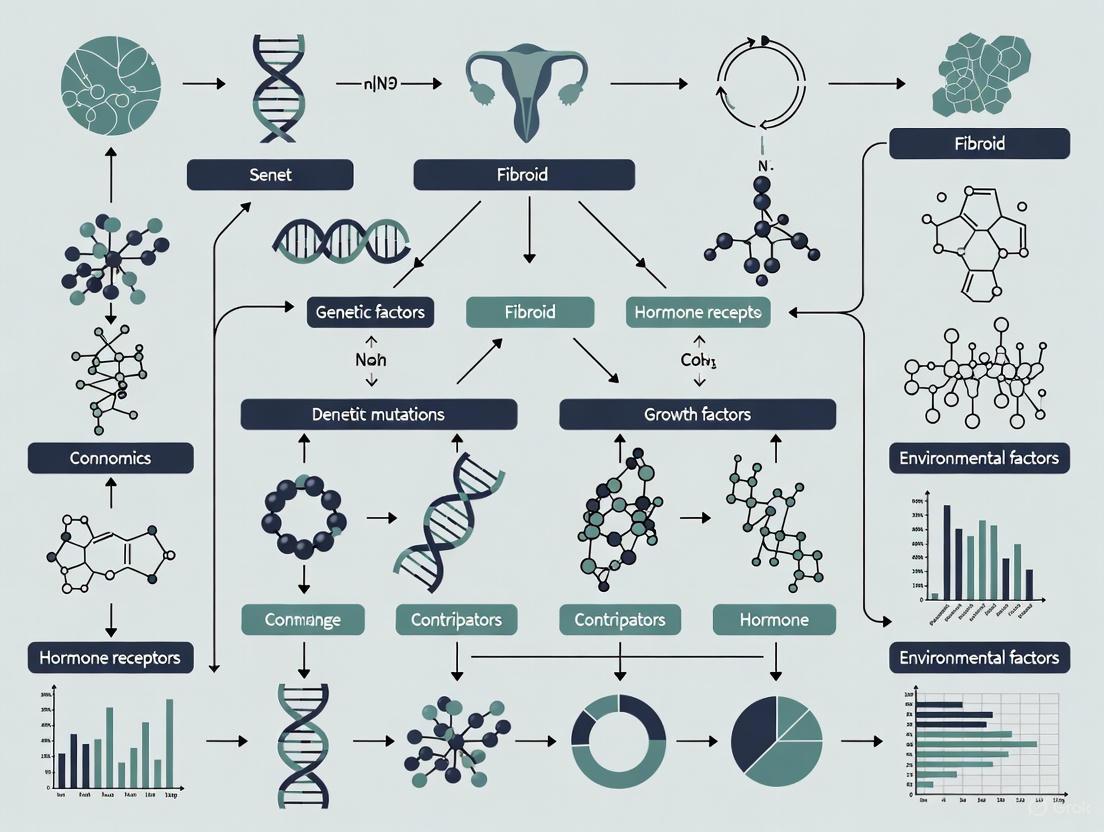
This review synthesizes the latest genomic and multi-omic advances elucidating the complex etiology of uterine fibroids.
Decoding Uterine Fibroid Pathogenesis: A Genomic and Multi-Omic Perspective for Therapeutic Discovery
Abstract
This review synthesizes the latest genomic and multi-omic advances elucidating the complex etiology of uterine fibroids. We explore foundational genetic drivers, including high-penetrance somatic mutations in MED12 and HMGA2, and detail novel germline risk loci identified through large-scale, diverse ancestry GWAS. The article critically assesses cutting-edge methodologies from single-cell RNA sequencing to systems biology, which are unraveling tumor heterogeneity and revealing new therapeutic targets. We further address challenges in translating genetic findings into targeted therapies and validate discoveries through cross-ancestry and multi-omic data integration. Designed for researchers, scientists, and drug development professionals, this resource aims to bridge genomic knowledge with innovative treatment strategies for this common benign tumor.
Core Genetic Drivers and Novel Risk Loci: Building the Genomic Framework of Uterine Fibroids
Uterine fibroids (uterine leiomyomas) are the most common benign tumors in women of reproductive age, representing a significant source of morbidity and healthcare cost. The etiology of these monoclonal tumors has been substantially elucidated by the discovery of high-penetrance somatic mutations in specific driver genes. This whitepaper examines the central roles of MED12, HMGA2, and FH mutations in uterine fibroid pathogenesis. Current evidence establishes that these genetic alterations define molecularly distinct and mutually exclusive subtypes of leiomyomas, each with characteristic tumor initiation pathways and clinical implications. MED12 mutations occur in approximately 70% of sporadic cases, primarily affecting exon 2 and disrupting mediator complex function. HMGA2 activation through chromosomal rearrangements or overexpression drives another significant subset, while FH deficiency represents a rarer but clinically important subgroup often associated with hereditary syndromes. Understanding these molecular pathways provides crucial insights for diagnostic development, personalized risk assessment, and targeted therapeutic interventions.
Uterine fibroids are benign smooth muscle tumors that demonstrate remarkable prevalence, affecting 70%-80% of women by age 50 [1]. These tumors originate from monoclonal expansion of transformed myometrial cells, with their development strongly influenced by ovarian steroids estrogen and progesterone. Until the discovery of recurrent somatic mutations, the genetic basis of fibroid pathogenesis remained poorly understood. Recent genomic studies have revealed that approximately 90% of uterine fibroids harbor driver mutations in one of several key genes, with MED12, HMGA2, and FH representing the most significant and well-characterized [2].
These mutations define distinct molecular subtypes with different pathogenic mechanisms. The high frequency and mutual exclusivity of these mutations suggest they represent alternative pathways in fibroid development, each capable of initiating tumorigenesis independently. This whitepaper synthesizes current research on these genetic drivers, focusing on their mutation spectra, functional consequences, and implications for diagnosis and therapy.
MED12 Mutations: Prevalence, Spectrum, and Functional Consequences
Mutation Prevalence and Spectrum
MED12, encoding mediator complex subunit 12, is the most frequently mutated gene in uterine fibroids, with reported mutation rates of 64.3% to 74.7% in different populations [3] [4]. These mutations occur almost exclusively in exon 2, particularly within codons 44 and 131, which represent hotspots for missense mutations. The mutation c.131G>A (p.G44D) is the most common single nucleotide variant [4]. Research involving Southern United States populations has confirmed this pattern while also identifying novel mutations including 107T>C, 105A>T, 122T>A, and 92T>A, demonstrating some geographic variation in mutation spectra [4].
Table 1: Spectrum and Frequency of MED12 Mutations in Uterine Fibroids
| Mutation Type | Nucleotide Change | Amino Acid Change | Frequency | Population |
|---|---|---|---|---|
| Missense | c.131G>A | p.G44D | 20.2% | Southern US [4] |
| Missense | c.130G>A | p.G44S | 7.0% | Southern US [4] |
| Missense | c.107T>C | p.L36P | 12.8% | Southern US [4] |
| Missense | c.130G>C | p.G44R | 2.8% | Southern US [4] |
| Missense | c.131G>C | p.G44A | 2.1% | Southern US [4] |
| Small in-frame deletions | Various | - | 17.5% | Southern US [4] |
| Multiple mutation types | - | - | 74.7% | Northwestern US [3] |
Molecular and Functional Consequences
MED12 is a component of the mediator complex, a multi-subunit interface that regulates transcription by bridging DNA-binding transcription factors with RNA polymerase II. The mediator complex plays crucial roles in transcriptional initiation, elongation, and RNA processing [2]. Uterine fibroid-associated MED12 mutations disrupt the binding interface with other components of the CDK8 module (MED13, Cyclin C, and CDK8/CDK19), leading to aberrant mediator function [5].
Functionally, these mutations trigger activation of specific signaling pathways that promote tumor growth. MED12 mutations have been shown to:
- Activate the Wnt/β-catenin pathway through upregulation of WNT4 expression, establishing a pro-proliferative signaling environment [6] [4]
- Dysregulate TGF-β signaling, promoting extracellular matrix remodeling and fibrogenesis [6]
- Induce epithelial-mesenchymal transition (EMT), enhancing the invasive potential of transformed cells [6]
These pathway alterations collectively drive the uncontrolled smooth muscle cell proliferation that characterizes fibroid development.
Figure 1: MED12 Mutation Signaling Pathway. Mutations in MED12 exon 2 disrupt the CDK8 module, activating Wnt/β-catenin and TGF-β signaling pathways that promote tumor growth through epithelial-mesenchymal transition.
HMGA2 Activation: Mechanisms and Oncogenic Effects
Genetic Alterations and Expression Patterns
HMGA2 (high mobility group AT-hook 2) is activated in uterine fibroids primarily through chromosomal rearrangements, most commonly translocations between chromosome bands 12q15 and 14q24 [7]. These structural variations lead to overexpression of full-length HMGA2 protein, an architectural transcription factor that normally shows restricted expression to embryonic tissues [5]. In adult tissues, HMGA2 is typically undetectable, making its presence in fibroids a clear marker of transformation.
Approximately 40-50% of uterine fibroids show detectable cytogenetic aberrations, with rearrangements affecting the HMGA2 locus representing about 20% of these cases [5]. However, expression analyses reveal that HMGA2 mRNA and protein levels are elevated in most leiomyomas compared to matched myometrium, regardless of the presence of chromosomal abnormalities [5]. This suggests that both rearrangement-dependent and independent mechanisms can drive HMGA2 overexpression in fibroid pathogenesis.
Functional Role in Tumorigenesis
HMGA2 functions as an architectural transcription factor that binds AT-rich regions of DNA, modifying chromatin structure and regulating the assembly of protein complexes that control transcription of genes involved in:
- Cell growth and proliferation
- Differentiation
- Apoptosis evasion
- Cellular transformation
The oncogenic effects of HMGA2 are primarily mediated through its dysregulation of multiple signaling pathways. HMGA2 overexpression has been experimentally demonstrated to induce benign mesenchymal tumors in mouse models, confirming its driver role in tumorigenesis [5].
FH Deficiency: Metabolic Alterations and Clinical Implications
Mutation Types and Diagnostic Features
Fumarate hydratase (FH) deficiency in uterine fibroids results from biallelic inactivation of the FH gene, located on chromosome 1q42.3-43. FH mutations include whole-gene deletions, frameshift mutations, and point mutations, with recent case reports identifying double-site mutations (c.724C>T in exon 5 and c.1292C>T in exon 9) [8]. FH-deficient leiomyomas represent only 0.4-1.6% of all uterine fibroids but present distinctive clinical and pathological characteristics [8].
Diagnostically, FH-deficient leiomyomas show:
- Characteristic histology: bizarre cells, prominent nucleoli, perinuclear halos, eosinophilic cytoplasmic globules, and antler-like blood vessels [8]
- Immunohistochemical profile: loss of FH expression and positive staining for 2-succinocysteine (2SC) [8] [7]
- Early onset: affected patients typically develop fibroids approximately 10 years earlier than those with non-FH deficient tumors [8]
Table 2: Comparative Features of Major Uterine Fibroid Molecular Subtypes
| Feature | MED12-mutant | HMGA2-overexpressing | FH-deficient |
|---|---|---|---|
| Frequency | 64-75% [3] [4] | ~10% of MED12-wild type [3] | 0.4-1.6% [8] |
| Primary Genetic Alteration | Missense mutations in exon 2 | Chromosomal rearrangements 12q14-15; overexpression | Biallelic FH inactivation |
| Key Molecular Features | Disrupted mediator complex; WNT4 activation | Chromatin remodeling; transcriptional dysregulation | TCA cycle disruption; pseudohypoxia |
| Histological Associations | Conventional leiomyomas [7] | Cellular leiomyomas [7] | Bizarre nuclei; distinctive morphology [7] |
| Clinical Implications | Most common subtype | Mutual exclusivity with MED12 mutations | HLRCC syndrome association |
Pathogenic Mechanisms and Clinical Significance
FH catalyzes the conversion of fumarate to malate in the mitochondrial tricarboxylic acid (TCA) cycle. FH deficiency leads to multiple metabolic derangements that promote tumorigenesis:
- TCA cycle disruption promotes anaerobic glycolysis (Warburg effect), generating pseudohypoxia that supports tumor development [8]
- Fumarate accumulation inhibits hypoxia-inducible factor (HIF) hydroxylation, stabilizing HIF and activating downstream targets including VEGF and GLUT1 that promote angiogenesis and metabolic adaptation [8]
- DNA damage repair impairment through inhibition of lysine demethylases, compromising genomic integrity and facilitating additional mutations [8]
FH-deficient leiomyomas have significant clinical implications due to their association with Hereditary Leiomyomatosis and Renal Cell Cancer (HLRCC) syndrome, an autosomal dominant condition caused by germline FH mutations. Patients with HLRCC are predisposed to develop cutaneous leiomyomas, early-onset uterine leiomyomas, and aggressive renal cell carcinoma [8]. Identification of FH-deficient leiomyomas should prompt genetic counseling and consideration of renal surveillance, particularly when associated with personal or family history of cutaneous lesions or renal cancer.
Mutual Exclusivity and Integrated Pathogenic Model
Extensive molecular profiling of uterine fibroids has established that mutations in MED12, HMGA2 alterations, and FH deficiencies are mutually exclusive events in fibroid pathogenesis [3] [7]. This pattern strongly suggests that these genetic hits represent independent, alternative pathways for tumor development, each sufficient to drive leiomyoma formation without requiring additional mutations in the other driver genes.
The mutual exclusivity pattern indicates that:
- These alterations may activate overlapping downstream pathways, making concurrent mutations redundant
- each mutation defines a distinct molecular subtype with characteristic gene expression profiles
- different cell types or contexts may be preferentially susceptible to specific mutations
This molecular classification has important implications for understanding fibroid heterogeneity and developing targeted therapies. MED12-mutant, HMGA2-overexpressing, and FH-deficient fibroids essentially represent different diseases at the molecular level, potentially explaining variations in clinical behavior, growth patterns, and treatment responses.
Figure 2: Mutual Exclusive Genetic Pathways in Uterine Fibroids. MED12 mutations, HMGA2 activation, and FH deficiency represent three independent molecular pathways in uterine fibroid pathogenesis.
Diagnostic and Therapeutic Implications
Diagnostic Applications and Molecular Classification
The molecular characterization of uterine fibroids has important diagnostic applications, particularly in distinguishing between conventional leiomyomas, histopathological variants, and malignant leiomyosarcomas. Research demonstrates that MED12 mutations occur in only 9.7% of leiomyosarcomas compared to 74.7% of benign leiomyomas, highlighting their utility in differential diagnosis [3]. Similarly, HMGA2 overexpression is present in 25% of leiomyosarcomas but shows no overlap with MED12 mutations in these malignant tumors [3].
The distribution of driver mutations varies significantly among histological subtypes:
- Conventional leiomyomas: predominantly MED12 mutations [7]
- Cellular leiomyomas: frequent HMGA2 overexpression [7]
- Leiomyomas with bizarre nuclei: most often FH-deficient [7]
- Mitotically active leiomyomas: primarily MED12 mutations [7]
This molecular stratification provides pathologists with objective markers for classification and risk assessment, complementing traditional histological evaluation.
Therapeutic Opportunities and Targeted Approaches
The distinct molecular pathways activated in different fibroid subtypes present opportunities for targeted therapeutic interventions:
- MED12-mutant tumors: Potential targeting of downstream Wnt/β-catenin and TGF-β signaling pathways [6]
- HMGA2-overexpressing tumors: Chromatin-modifying agents or transcriptional inhibitors
- FH-deficient tumors: Metabolic therapies targeting glycolytic dependency or HIF pathway inhibition
Current clinical management of uterine fibroids remains predominantly surgical, with hysterectomy being definitive treatment. However, understanding the molecular basis of fibroid pathogenesis enables development of pharmacologic approaches that target specific signaling pathways. Hormonal therapies including selective progesterone receptor modulators (e.g., Ulipristal acetate) and GnRH agonists provide non-surgical options, but their efficacy varies across molecular subtypes [2].
Experimental Approaches and Research Methodologies
Key Experimental Protocols
Advanced molecular techniques have been essential for characterizing uterine fibroid mutational landscapes:
MED12 Mutation Analysis:
- DNA Extraction: From fresh frozen or formalin-fixed paraffin-embedded (FFPE) tissue using specialized kits (NucleoSpin FFPE DNA Kit) or conventional non-enzymatic methods [7]
- PCR Amplification: Primer sequences: sense 5'-GCCCTTTCACCTTGTTCCTT-3' and anti-sense 5'-TGTCCCTATAAGTCTTCCCAACC-3' producing 125-bp product [4]
- Sequencing: Sanger sequencing of MED12 exon 2 using Big Dye Terminator chemistry on ABI automated sequencers [7] [4]
- Variant Detection: Manual and software-assisted (Mutation Surveyor) analysis of sequence chromatograms [7]
HMGA2 Expression Analysis:
- Immunohistochemistry: Antibodies against HMGA2 (1:500 dilution) on tissue microarrays; scoring based on intensity and distribution [3]
- Quantitative PCR: RNA extraction followed by RT-qPCR with normalization to reference genes [5]
- Western Blotting: Protein extraction, SDS-PAGE separation, transfer to PVDF membranes, and detection with chemiluminescence [3] [5]
FH Deficiency Determination:
- Immunohistochemistry: Concurrent staining for FH (loss of expression) and 2-succinocysteine (2SC) (gain of expression) [8] [7]
- Genetic Analysis: Sanger sequencing or next-generation sequencing of all FH exons to identify germline and somatic mutations [8]
- Functional Assays: Measurement of fumarate accumulation and enzymatic activity [8]
Figure 3: Experimental Workflow for Molecular Subtyping. Comprehensive analysis integrates multiple molecular techniques to classify uterine fibroids into distinct genetic subtypes.
Essential Research Reagents and Tools
Table 3: Essential Research Reagents for Uterine Fibroid Molecular Analysis
| Reagent/Tool | Specific Example | Application | Function |
|---|---|---|---|
| DNA Extraction Kit | NucleoSpin FFPE DNA Kit (Macherey-Nagel) [7] | Nucleic acid purification | Obtain high-quality DNA from archived specimens |
| PCR Reagents | AmpliTaq-Gold DNA Polymerase (Applied Biosystems) [4] | DNA amplification | Specific amplification of target genes |
| Sequencing Chemistry | Big Dye Terminator v3.1 (Applied Biosystems) [7] | Sanger sequencing | Nucleotide sequence determination |
| Primary Antibodies | Anti-MED12 (Proteintech) [3]; Anti-HMGA2 (Biocheck) [7]; Anti-2SC [7] | Immunohistochemistry | Protein detection and localization |
| Tissue Microarrayer | Manual tissue arrayer (MTA-I, Beecher Instruments) [7] | High-throughput analysis | Parallel processing of multiple samples |
| Bioinformatics Tools | Mutation Surveyor (SoftGenetics) [7]; SnpEff [2] | Variant analysis | Mutation detection and annotation |
Future Directions and Research Opportunities
Despite significant advances in understanding uterine fibroid genetics, important research questions remain:
- Cell of Origin: Identification of specific myometrial stem or progenitor cells that undergo transformation
- Ethnic Disparities: Molecular basis for increased fibroid incidence, size, and symptom severity in African American women
- Therapeutic Targets: Development of subtype-specific treatments based on underlying molecular alterations
- Symptom Correlation: Relationship between mutation subtypes and specific clinical manifestations like abnormal uterine bleeding [2]
- Malignant Transformation: Potential progression from benign leiomyomas to leiomyosarcomas, supported by shared MED12 mutations in some cases [3] [9]
Emerging technologies including single-cell sequencing, spatial transcriptomics, and CRISPR-based functional screens will further illuminate fibroid biology and identify novel therapeutic vulnerabilities. Multi-omic approaches integrating genomic, transcriptomic, and proteomic data promise to reveal the complex regulatory networks underlying fibroid pathogenesis and associated symptoms [2].
High-penetrance somatic mutations in MED12, HMGA2, and FH represent the primary drivers of uterine fibroid pathogenesis, defining molecularly distinct subtypes with characteristic clinical and pathological features. The mutual exclusivity of these alterations indicates they represent alternative pathways to tumor development, each capable of initiating leiomyoma formation independently. Molecular classification of fibroids based on their genetic drivers enhances diagnostic precision, informs prognostic assessment, and creates opportunities for targeted therapeutic development. Future research focusing on the cell types of origin, ethnic disparities, and subtype-specific vulnerabilities will further advance our understanding and management of this common yet complex disease.
Uterine fibroids (UFs), or leiomyomata, are benign monoclonal tumors of the uterine smooth muscle tissue and represent the most common benign tumor affecting people with a uterus [10]. The cumulative incidence reaches nearly 70% by age 50 in White individuals and exceeds 80% in Black individuals, making them a major cause of hysterectomy and significant source of healthcare costs [10]. Established risk factors include early menarche, obesity, and family history, with Black race and African ancestry representing particularly strong risk factors [10]. Twin-based heritability estimates for uterine fibroids range from 26% to 63%, highlighting the substantial role of genetic predisposition in their etiology [10]. Genome-wide association studies (GWAS) have emerged as a powerful tool for identifying the specific genetic variants underlying this germline predisposition, offering insights into biological mechanisms and potential therapeutic targets.
Key GWAS Findings in Uterine Fibroids
Recent Multi-Ancestry Meta-Analysis Breakthroughs
A landmark 2025 genome-wide meta-analysis published in Nature Communications has substantially advanced our understanding of fibroid genetics [10]. This study, the largest of its kind, included 74,294 cases (27.7% of non-European descent) and 465,810 controls (18.3% non-European descent), combining publicly available summary statistics with newly generated data [10]. Through multi-ancestry and ancestry-stratified analyses, this research identified:
- 11 novel genes associated with fibroid risk across multiple ancestry groups
- Replication of known fibroid GWAS genes in African ancestry individuals
- 46 additional novel genes identified through genetically predicted gene expression and colocalization analyses
- Estimation of SNP-based heritability in African ancestry populations at 15.9% [10]
The most significant genetic associations identified included rs78378222 in the TP53 gene (OR 0.53, 95% CI 0.50–0.56, p = 2.57 × 10⁻¹³²) and rs58415480 in SYNE1 (OR 0.82, 95% CI 0.81–0.84, p = 5.58 × 10⁻¹¹⁵), both well-established associations with fibroids [10].
Table 1: Novel Genetic Loci Identified in the 2025 Multi-Ancestry Meta-Analysis
| Sentinel SNP | Mapped Gene | Odds Ratio (95% CI) | P-value | Ancestry Analysis | Novelty Status |
|---|---|---|---|---|---|
| rs74582999 | VIP | Not specified | Not specified | Multi-ancestry & European | Novel |
| rs761779 | FOXO3 | Not specified | Not specified | Multi-ancestry | Novel |
| rs149261442 | TEKT1 | Not specified | Not specified | Multi-ancestry & European | Previously unpublished |
| rs184210518 | SLC16A11 | Not specified | Not specified | Multi-ancestry | Previously unpublished |
| rs56897532 | COL22A1 | 0.78 (0.72–0.85) | 5.39 × 10⁻⁹ | African ancestry | Novel |
Ancestry-Specific Genetic Architecture
The 2025 meta-analysis revealed important differences in genetic architecture across ancestry groups, with significant implications for understanding disparities in fibroid prevalence and severity [10]. The African ancestry analysis identified a novel gene association in COL22A1 (rs56897532, OR 0.78, 95% CI 0.72–0.85, p = 5.39 × 10⁻⁹) [10]. This finding is particularly significant given the higher prevalence and severity of fibroids in women of African ancestry.
Table 2: Ancestry-Stratified Findings from the 2025 Meta-Analysis
| Ancestry Group | Cases/Controls | Notable Findings | SNP-based Heritability | Genomic Inflation (λGC) |
|---|---|---|---|---|
| European | 53,711/380,441 | 216 sentinel SNPs, 4 novel/unpublished gene associations | 0.07 (SE 0.003) | 1.17 |
| East Asian/Central South Asian | 14,905/69,609 | 108 sentinel SNPs, most significant SNPs in SIRT3 and PSMD13 | 0.115 (SE 0.007) | 1.07 |
| African | 5,678/15,760 | 2 sentinel SNPs, novel association in COL22A1 | 0.159 (Not specified) | Not specified |
| Multi-ancestry | 74,294/465,810 | 372 sentinel SNPs, 8 novel/unpublished gene associations | 0.05 (SE 0.002) | 1.09 |
Functional Pathway Enrichment and Biological Insights
Pathway enrichment analysis of the genes identified in the 2025 meta-analysis revealed significant enrichment in several critical biological networks, including cancer-related pathways, cell death and survival, reproductive system disease, and cellular growth and proliferation [10]. Additionally, the study found that increased predicted expression of HEATR3 in uterine tissue was associated with fibroids across ancestry strata, highlighting a potentially important role for this gene in fibroid pathogenesis [10]. These findings align with earlier research identifying key mutations in MED12, FH, HMGA2, and COL4A5-COL4A6 as contributors to fibroid development [1].
GWAS Methodology and Experimental Protocols
Core GWAS Workflow and Pipeline
The GWAS pipeline involves multiple critical steps to ensure robust and reproducible results. The following diagram illustrates the standard workflow:
Cohort Building and Phenotype File Preparation
The initial stage involves careful cohort construction and phenotype file preparation, which serves as the foundation for any GWAS. According to the Genomics England GWAS pipeline, the phenofile is a space- or tab-separated text file that must contain specific columns [11]:
- Sample ID column: Contains platekey IDs or appropriate sample identifiers
- Sex specification column: Males coded as 0, females as 1
- Phenotype specification column: Case-control status or quantitative trait values
- Optional covariate columns: Age, principal components, or other relevant covariates
Genomic Data Processing and Quality Control
Quality control represents a critical phase in GWAS to eliminate technical artifacts and reduce false positives. Key QC measures include [12]:
- Sample-level QC: Removal of samples with excessive missingness (>3-5%), identification of cryptic relatedness, checks for sex discrepancies, and assessment of heterozygosity rates
- Variant-level QC: Exclusion of SNPs with high missingness (>2-5%), low minor allele frequency (MAF <0.01), and significant deviation from Hardy-Weinberg equilibrium (HWE p<1×10⁻⁶ in controls)
- Population stratification: Use of principal component analysis (PCA) or genetic relationship matrices to account for population structure
The Genomics England pipeline recommends using an unrelatedfile specifying individuals without close familial relationships for HWE testing and a HQplinkfile containing high-quality independent SNPs for constructing the genetic relationship matrix (GRM) [11].
Association Analysis Methods
Different GWAS methods are available depending on the phenotype type and study design [11]:
- SAIGE: Preferred method for binary or continuous phenotypes, effective for case-control imbalance
- GCTA fastGWA: Efficient for binary or continuous phenotypes, faster computation for large datasets
- GATE: Specifically designed for time-to-event phenotypes, requires specification of event time column
The association analysis typically employs a mixed model approach to account for population structure and relatedness, with covariates such as age, sex, and genetic principal components included to reduce confounding [11].
Visualization and Data Interpretation
Functional Interpretation of GWAS Hits
Post-GWAS functional interpretation is essential for translating genetic associations into biological insights. The following diagram illustrates the pathway from GWAS discovery to biological mechanism:
The 2025 meta-analysis utilized genetically predicted gene expression and colocalization analyses to identify 46 additional novel genes associated with fibroids, demonstrating the power of these functional follow-up approaches [10].
Research Reagent Solutions Toolkit
Table 3: Essential Research Reagents and Resources for GWAS
| Research Tool | Function/Application | Specifications/Examples |
|---|---|---|
| High-Quality DNA Samples | Genotyping input material | Minimum quantity and quality thresholds for reliable genotyping |
| Genotyping Arrays | Genome-wide variant profiling | Platforms covering 500,000 to 5 million SNPs, imputation to larger reference panels |
| Whole Genome Sequencing | Comprehensive variant discovery | 30x coverage recommended for rare variant detection |
| PLINK | Data management and basic association analysis | Open-source toolset for GWAS QC and analysis [12] |
| SAIGE | Mixed model association testing | Specifically handles case-control imbalance [11] |
| PRSice | Polygenic risk score calculation | Generates individual-level genetic risk profiles [12] |
| LD Score Regression | Heritability estimation and QC | Distinguishes inflation due to polygenicity from population structure [10] |
| FUMA | Functional mapping of GWAS results | Online platform for post-GWAS functional annotation |
GWAS have fundamentally advanced our understanding of germline predisposition to uterine fibroids, identifying numerous risk loci and revealing important biological pathways. The recent large-scale multi-ancestry meta-analysis has substantially expanded the known genetic architecture of fibroids while highlighting ancestry-specific effects that may underlie health disparities. Future directions include functional validation of identified genes, development of polygenic risk scores for clinical stratification, and integration of genetic findings with multi-omics data to elucidate complete disease mechanisms. These advances hold promise for developing targeted therapies and personalized management approaches for this common condition.
Recent large-scale genomic investigations have profoundly advanced our understanding of uterine fibroid etiology, moving beyond established drivers like MED12 and HMGA2. This whitepaper synthesizes findings from landmark 2024-2025 genome-wide association study (GWAS) meta-analyses that identify HEATR3, FOXO3, and COL22A1 as novel genetic loci significantly associated with fibroid development. We present quantitative risk associations, detailed experimental methodologies for variant identification and functional validation, and integrated pathway analyses. The findings highlight the considerable genetic heterogeneity across ancestries and reveal enrichment in pathways fundamental to cancer, cell proliferation, and extracellular matrix dynamics, offering new targets for therapeutic intervention and personalized risk assessment.
Uterine fibroids (leiomyomas) are benign monoclonal tumors of the uterine smooth muscle, representing the most common benign tumor in individuals with a uterus, with a cumulative incidence approaching 70-80% by age 50 [13] [14]. Their etiology involves a complex interplay of genetic, hormonal, and environmental factors. Until recently, genetic research was largely confined to protein-coding genes like MED12 (mutated in ~70% of fibroids) and HMGA2 [2] [15]. However, these findings failed to fully explain the disease's high heritability, estimated at 26-63% from twin studies [13] [16], or the significant disparities in prevalence and severity, which are notably higher in women of African ancestry [13] [14].
The advent of large-scale, diverse genomic biobanks has enabled a transformative shift. Initial GWAS had collectively identified 72 associated genes but were limited by insufficient inclusion of non-European individuals [13] [14]. The latest multi-ancestry meta-analyses, comprising over 74,000 cases and 465,000 controls, have dramatically expanded the genetic landscape, uncovering novel risk loci and providing unprecedented insights into the molecular pathogenesis of this common disease [13] [14] [17].
The 2025 genome-wide meta-analysis by Kim et al. represents the largest and most diverse genetic study of uterine fibroids to date. It combined publicly available summary statistics with newly generated data from participants of European, African, East Asian, and Central South Asian ancestry [13] [14]. This scale was critical for identifying both ancestry-shared and ancestry-specific risk variants.
Table 1: Novel Genetic Loci Associated with Uterine Fibroid Risk
| Gene | Lead Variant | Odds Ratio (95% CI) | P-value | Ancestry Association | Gene Function & Notes |
|---|---|---|---|---|---|
| HEATR3 | Not Specified | Not Reported | < 5×10⁻⁸ | Cross-Ancestry | Increased predicted expression in uterine tissue; enriched in cancer pathways [13] [14] |
| FOXO3 | rs761779 | Not Reported | < 5×10⁻⁸ | Multi-ancestry | Maps to a regulatory region; involved in cell cycle arrest and apoptosis [13] [14] |
| COL22A1 | rs56897532 | 0.78 (0.72–0.85) | 5.39×10⁻⁹ | African Ancestry | Novel gene association; intergenic variant [13] |
| VIP | rs74582999 | Not Reported | < 5×10⁻⁸ | European & Multi-ancestry | Intron variant; one of three novel genes identified [13] [17] |
| PAX2 | Not Specified | Not Reported | < 5×10⁻⁸ | Multi-ancestry | Novel gene association identified in prior analysis [17] |
Beyond the novel loci listed in Table 1, the study replicated many known associations, with the most significant SNPs being rs78378222 in TP53 (OR 0.53) and rs58415480 in SYNE1 (OR 0.82) [13] [14]. Furthermore, the SNP-based heritability was notably higher in the African ancestry population (15.9%) compared to the overall estimate, underscoring the genetic complexity and the importance of diverse cohort inclusion [13] [14] [18].
Detailed Methodologies for Gene Discovery and Validation
The discovery and validation of these novel loci relied on a sophisticated, multi-stage analytical workflow integrating statistical genetics, functional genomics, and experimental validation.
Genome-Wide Association Study (GWAS) Meta-Analysis
Objective: To identify genetic variants associated with uterine fibroid risk across and within diverse ancestry groups.
- Cohort Composition: Data were aggregated from eight datasets, creating a final cohort of 74,294 cases and 465,810 controls. Cases and controls were stratified into four primary groups for analysis: European, East Asian/Central South Asian, African, and a combined multi-ancestry group [13] [14].
- Meta-Analysis Protocol: GWAS summary statistics from each contributing study were generated using standardized quality control and imputation pipelines. A fixed-effects inverse-variance weighted meta-analysis was then performed across the studies for each ancestry stratum and the combined cohort [13] [17].
- Variant Annotation and Mapping: Genome-wide significant variants (p < 5×10⁻⁸) were identified and mapped to genes based on their physical proximity to the transcription start site. Conditional and joint analysis (GCTA-COJO) was used to identify independent secondary signals within associated loci [13].
Genetically Predicted Gene Expression (GPGE) and Colocalization
Objective: To bridge the gap between genetic association and biological function by identifying genes whose expression is influenced by fibroid-risk variants.
- Methodology: S-PrediXcan was employed to estimate the association between genetically predicted gene expression and fibroid risk. This method uses models trained on reference transcriptome datasets (e.g., GTEx) to impute gene expression from genotype data across 49 different tissues [17].
- Colocalization Analysis: To ensure that the same causal variant was responsible for both the GWAS signal and expression quantitative trait loci (eQTLs), colocalization analyses were performed. This step was critical for confirming genes like HEATR3, where its predicted expression in uterine tissue was associated with fibroid risk across ancestries [13] [14].
Functional Validation via Epigenomic Integration and CRISPR
Objective: To experimentally validate the potential causality of genes in high-risk genomic regions.
- 3D Genomic Integration: As demonstrated in a complementary 2024 study by Northwestern scientists, chromatin interaction data (e.g., Hi-C) and epigenomic marks (e.g., H3K27ac) were integrated with GWAS risk loci. This helped connect non-coding risk variants with their potential target genes through physical chromatin looping [19].
- CRISPR-based Screening: The Northwestern group used CRISPR-mediated epigenetic repression or activation (CRISPRi/a) to target disease-associated genomic regions in fibroid-relevant cell models. By repressing a regulatory element and observing changes in the expression of a candidate gene, they could functionally validate nearly 400 potential risk genes, moving beyond mere statistical association [19].
Figure 1: Experimental workflow for the discovery and validation of novel fibroid risk genes, from cohort collection to functional validation.
Pathway and Functional Enrichment Analysis
To decipher the biological mechanisms underlying the genetic associations, the identified genes were subjected to systematic pathway enrichment analysis.
Using Ingenuity Pathway Analysis (IPA), researchers compiled significant genes from the GPGE analysis and identified statistically overrepresented pathways [17]. The novel genes, including those from GPGE, were significantly enriched in several critical networks:
- Cancer and Tumorigenesis Pathways: Genes were enriched in well-defined pathways such as p53 signaling, BRCA1-mediated DNA damage response, and HOTAIR regulatory pathways [17].
- Cellular Growth and Proliferation: This aligns with the fundamental nature of fibroids as benign tumors driven by aberrant smooth muscle cell proliferation [13] [14].
- Cell Death and Survival: Dysregulation of apoptosis is a known feature of fibroids, and the genetic findings corroborate this at a pathway level [13].
- Reproductive System Disease: This enrichment directly links the genetic findings to the specific pathology [13] [14].
Furthermore, the analysis highlighted a marked enrichment in pathways related to pulmonary fibrosis signaling, suggesting shared mechanistic underpinnings between fibroid development and fibrotic diseases, potentially centered on excessive extracellular matrix (ECM) deposition [17].
Figure 2: Proposed signaling pathways linking novel genetic risk factors to the fibroid phenotype. Risk variants influence gene expression/function, which converges on key cellular pathways driving tumor development.
The Scientist's Toolkit: Essential Research Reagents and Materials
To replicate and build upon the research outlined, scientists require specific reagents and resources. The following table details key materials used in the featured studies.
Table 2: Key Research Reagent Solutions for Fibroid Genomics
| Reagent / Resource | Function / Application | Specific Example / Note |
|---|---|---|
| GWAS Summary Statistics | Base data for meta-analysis. | Publicly available statistics from biobanks (e.g., FinnGen, UK Biobank) and newly run GWAS [13]. |
| S-PrediXcan Software | Estimates genetically predicted gene expression from genotype data. | Critical for identifying GPGE associations in tissues like uterus [17]. |
| CRISPR Epigenetic Modulators (CRISPRi/a) | For functional validation of non-coding risk variants. | Used to repress or activate enhancer regions linked to candidate genes [19]. |
| Multi-omics Data (Hi-C, ChIP-seq) | Mapping 3D genome architecture and epigenetic marks. | Integrates GWAS hits with regulatory elements and target genes [19]. |
| Ingenuity Pathway Analysis (IPA) | Bioinformatics software for pathway enrichment analysis. | Identified enrichment in p53 signaling, DNA damage response, and fibrosis pathways [17]. |
| Single-cell RNA-seq Data | Identifying cell-type-specific expression of risk genes. | Revealed contribution of immune cells alongside smooth muscle cells [19]. |
Discussion and Future Directions
The identification of HEATR3, FOXO3, and COL22A1 represents a significant leap forward, but it also opens new avenues of inquiry. The finding that HEATR3 shows a consistent association via predicted expression in uterine tissue across ancestries suggests it may be a core node in fibroid pathogenesis, potentially a promising candidate for therapeutic targeting. The role of FOXO3, a well-known tumor suppressor involved in stress resistance and apoptosis, implies that a loss of protective cellular functions is a key mechanism in fibroid development [13] [14]. The discovery of COL22A1 specifically in the African ancestry cohort is particularly consequential, as it may partially explain the elevated disease burden in this population and highlights the critical need for diverse genetic studies to achieve equitable precision medicine [13].
Future research must focus on functional mechanistic studies to delineate the precise roles of these genes in uterine smooth muscle cells and the tumor microenvironment. The link to fibrosis pathways suggests that repurposing anti-fibrotic agents could be a viable therapeutic strategy. Furthermore, integrating these genetic findings with environmental and hormonal risk factors will be essential to build a comprehensive model of fibroid etiology.
Recent multi-ancestry meta-analyses have successfully illuminated previously unknown genetic territories of uterine fibroid etiology. The discovery of HEATR3, FOXO3, and COL22A1, alongside dozens of other novel genes, provides a more complete and complex blueprint of the disease's genetic architecture. These findings, coupled with insights into shared pathways like cancer, fibrosis, and DNA damage response, offer a robust foundation for the future development of non-hormonal, genetically-informed therapies and improved risk prediction models, ultimately aiming to reduce the significant global burden of this common disease.
Chromosomal Rearrangements and Cytogenetic Abnormalities
Chromosomal rearrangements and cytogenetic abnormalities represent a fundamental class of genomic alterations in which the structure or number of chromosomes becomes disrupted. These abnormalities include deletions, duplications, translocations, inversions, and aneuploidies that can fundamentally alter gene expression, disrupt regulatory elements, and drive pathological processes [20]. In the context of uterine fibroids (UFs), also known as uterine leiomyomas, these chromosomal anomalies play a crucial etiological role in tumor initiation and progression. Uterine fibroids are the most common benign tumors of the female reproductive system, affecting 70-80% of women by age 50, with significant associated morbidity including heavy menstrual bleeding, pelvic pain, infertility, and reproductive complications [21] [22].
The genomic landscape of uterine fibroids is characterized by diverse chromosomal rearrangements and specific driver mutations that promote tumorigenesis through distinct molecular pathways. Approximately 40-50% of fibroids exhibit detectable chromosomal abnormalities, indicating a substantial genetic component to their development [21]. The study of these aberrations has revealed clinically relevant molecular subtypes with implications for tumor behavior, symptom profile, and potential therapeutic approaches. This review synthesizes current understanding of chromosomal rearrangements and cytogenetic abnormalities in uterine fibroids, with particular focus on their integration into a broader genomic framework for understanding fibroid etiology.
Major Cytogenetic Abnormalities in Uterine Fibroids
Uterine fibroids exhibit several characteristic cytogenetic abnormalities that define molecular subtypes with distinct clinical and pathological features. These abnormalities range from specific point mutations in key regulatory genes to large-scale structural rearrangements and chromosomal gains and losses.
MED12 Mutation Subtype
The most frequently identified genetic alteration in uterine fibroids occurs in the mediator complex subunit 12 (MED12) gene, with mutation frequencies ranging from 50-85% across different study populations [21] [23]. MED12 is a component of the mediator complex, which regulates transcriptional initiation and elongation by RNA polymerase II [2]. These mutations are predominantly missense mutations located in exon 2, which disrupt the interaction between MED12 and the cyclin-dependent kinase 8 (CDK8) module of the mediator complex [23].
MED12-mutated fibroids typically present as multiple, smaller tumors with rich extracellular matrix composition and poor vasculature [21]. At the molecular level, these mutations are associated with increased genomic instability, altered chromatin landscape and enhancer engagement, and heightened responsiveness to progesterone signaling [23]. The disrupted MED12-CDK8 interaction leads to aberrant transcriptional regulation, particularly affecting genes involved in extracellular matrix organization, Wnt signaling, and cell cycle progression.
Biomarker profiles may be mutation-type specific, with proteins such as HPGDS (hematopoietic prostaglandin D synthase) and CBR3 (carbonyl reductase 3) showing specific association with MED12-mutated fibroids [21]. This suggests potential for molecular classification to refine diagnostic and therapeutic strategies.
HMGA2 Rearrangement Subtype
The high mobility group AT-hook 2 (HMGA2) rearrangement represents the second most common genetic alteration in uterine fibroids, occurring in approximately 10% of cases [23]. This subtype is characterized by chromosomal rearrangements, most commonly translocations involving the RAD51B gene on chromosome 12q14-15, which lead to overexpression of HMGA2 [2] [23]. HMGA2 encodes a architectural transcription factor that binds to AT-rich regions of DNA, modulating chromatin structure and influencing the transcription of numerous genes involved in cell growth and differentiation [2].
Fibroids with HMGA2 rearrangements display distinct clinical features, including larger tumor size, faster growth rate, and fewer incorporated non-mutated fibroblasts compared to MED12-mutated tumors [23]. HMGA2 overexpression is particularly common in specific histological variants including intravascular leiomyomatosis, hydropic leiomyoma, and cellular leiomyoma [23]. The molecular pathogenesis involves disruption of normal growth control pathways, with prominent effects on proliferative signaling networks.
FH Deficiency Subtype
Mutations in the fumarate hydratase (FH) gene represent a less common but clinically significant subtype of uterine fibroids. FH functions as a tumor suppressor gene encoding a key enzyme in the Krebs cycle that converts fumarate to malate [2]. FH mutations promote a pseudohypoxic state even under normal oxygen conditions and alter metabolic signaling pathways [2]. Patients with FH mutations have an increased risk of renal cancer, making identification of this subtype clinically important for comprehensive cancer risk assessment [21].
Other Cytogenetic Abnormalities
Additional cytogenetic abnormalities identified in uterine fibroids include deletions involving the COL4A5-COL4A6 collagen gene cluster on the X chromosome, which have been linked to familial fibroid cases [21] [2]. Recent genomic studies have also identified novel risk loci through genome-wide association studies (GWAS), with multi-ancestry analyses revealing variants in genes such as VIP, FOXO3, and COL22A1 associated with fibroid risk [13]. These findings highlight the complex genetic architecture underlying fibroid development across diverse ancestral populations.
Table 1: Major Cytogenetic Abnormalities in Uterine Fibroids
| Genetic Subtype | Frequency | Primary Genetic Alteration | Key Clinical Features |
|---|---|---|---|
| MED12 Mutation | 50-85% | Point mutations in exon 2 of MED12 gene | Multiple small tumors, abundant extracellular matrix, poor vasculature |
| HMGA2 Rearrangement | ~10% | Translocations involving 12q14-15, often with RAD51B | Larger tumor size, faster growth, fewer incorporated fibroblasts |
| FH Deficiency | Rare | Inactivating mutations in fumarate hydratase | Associated with hereditary leiomyomatosis and renal cell cancer risk |
| COL4A5-COL4A6 Deletion | Rare | Deletions in Xq22-23 collagen genes | Associated with familial fibroid cases |
Table 2: Characteristics of Major Uterine Fibroid Molecular Subtypes
| Feature | MED12-Mutated | HMGA2-Rearranged | FH-Deficient |
|---|---|---|---|
| Tumor Number | Multiple | Often solitary | Variable |
| Tumor Size | Smaller | Larger | Variable |
| Extracellular Matrix | Abundant | Moderate | Variable |
| Vascularity | Poor | Moderate | Variable |
| Growth Rate | Moderate | Faster | Variable |
| Associated Biomarkers | HPGDS, CBR3 | - | - |
Experimental Approaches for Detecting Cytogenetic Abnormalities
The comprehensive characterization of chromosomal rearrangements and cytogenetic abnormalities in uterine fibroids requires integrated multi-omic approaches. Advanced methodologies enable researchers to identify both large-scale chromosomal alterations and specific molecular drivers with high precision.
Targeted DNA Sequencing
Targeted sequencing approaches allow focused investigation of known fibroid-associated genes with high coverage and cost efficiency. The SureSelect targeted sequencing protocol provides a robust methodology for identifying mutations in the MED12, FH, AHR, and COL4A6 genes [2].
Protocol: SureSelect Targeted DNA Sequencing
- DNA Extraction: Purify genomic DNA from fresh frozen fibroid, myometrium, and endometrium tissues stored at -80°C using commercial kits (e.g., PureLink Genomic DNA Kit).
- Library Preparation: Use approximately 100 ng of each DNA sample to create Illumina sequencing libraries (e.g., NEBNext Ultra II FS DNA Library Prep Kit).
- PCR Amplification: Amplify libraries with index primers to enable multiplexing.
- Target Enrichment: Perform targeted capture and enrichment using the SureSelect XT HS Target Enrichment Kit with custom probes for fibroid-associated genes.
- Sequencing: Pool indexed libraries at equimolar concentrations and sequence on platforms such as NextSeq 500 to achieve ~8 million reads per sample.
- Quality Control: Assess read quality using FastQ Screen v0.14.0, FastQC v0.11.9, and MultiQC v1.5.dev0.
- Variant Calling: Map raw reads to reference genome (hg38) using BWA v0.7.17 and perform variant calling with bcftools v1.9 mpileup with minimum mapping quality of 20 and minimum base quality of 30.
- Variant Annotation: Annotate variants and predict functional effects using SnpEff and Ensembl Variant Effect Predictor [2].
Bulk RNA Sequencing
Transcriptomic profiling through RNA sequencing enables the identification of gene expression patterns, fusion events, and pathway alterations associated with different fibroid genetic subtypes.
Protocol: Bulk RNA-Sequencing from Fibroid Tissues
- Tissue Homogenization: Cryomill tissue samples in Trizol without thawing using liquid nitrogen-cooled equipment.
- RNA Extraction: Perform RNA extraction using Direct-zol RNA miniprep kit with on-column DNAse I digestion to remove genomic DNA contamination.
- RNA Quantification and Quality Control: Quantify RNA by spectrophotometry (e.g., NanoPhotometer) and assess quality using high-sensitivity RNA ScreenTape assays.
- Library Preparation: Prepare sequencing libraries using standardized kits with appropriate strand-specific protocols.
- Sequencing and Analysis: Sequence on Illumina platforms and process data through pipelines for quality control, alignment, and differential expression analysis [2].
Multi-Omic Integration
Advanced studies now integrate DNA, RNA, and proteomic data to comprehensively characterize the molecular landscape of fibroids. This approach identifies latent factors that correlate with clinical features such as heavy menstrual bleeding and reveals how genetic alterations in fibroids influence endometrial function through signaling impacts on mechanisms like RNA splicing [2].
Diagram 1: Multi-omic workflow for fibroid analysis. This integrated approach correlates genetic, transcriptional, and proteomic data to identify pathogenic mechanisms.
Research Reagent Solutions
Comprehensive research on chromosomal rearrangements in uterine fibroids requires specialized reagents and tools designed for cytogenetic and molecular analyses.
Table 3: Essential Research Reagents for Fibroid Genomics
| Reagent/Tool | Specific Example | Application in Fibroid Research |
|---|---|---|
| DNA Extraction Kits | PureLink Genomic DNA Kit (Invitrogen) | High-quality DNA extraction from fresh frozen fibroid tissues for sequencing applications |
| Library Prep Kits | NEBNext Ultra II FS DNA Library Prep Kit | Preparation of Illumina-compatible sequencing libraries from fibroid DNA |
| Target Capture Systems | SureSelect XT HS Target Enrichment Kit | Enrichment of fibroid-associated genes (MED12, FH, HMGA2) prior to sequencing |
| RNA Isolation Kits | Direct-zol RNA Miniprep Kit (Zymo Research) | RNA extraction with on-column DNase digestion for transcriptomic studies |
| Quality Control Tools | High-sensitivity DNA/RNA ScreenTape (Agilent) | Assessment of nucleic acid quality and quantity before sequencing |
| Variant Callers | bcftools mpileup, SnpEff | Identification and functional annotation of sequence variants in fibroid samples |
| Pathway Analysis Software | Enrichment analysis tools | Interpretation of genomic data in biological context of ECM, TGF-β, and Wnt signaling |
Functional Consequences of Cytogenetic Abnormalities
The chromosomal rearrangements and cytogenetic abnormalities in uterine fibroids exert their pathological effects through disruption of key cellular processes and signaling pathways.
Transcriptional Dysregulation
MED12 mutations fundamentally alter transcriptional regulation by disrupting the mediator complex's ability to coordinate interactions between transcription factors and RNA polymerase II. This leads to widespread changes in gene expression, particularly affecting pathways related to extracellular matrix formation, cell cycle progression, and hormonal response [2] [23]. The mediator complex functions as a critical interface between gene-specific regulatory proteins and the basal transcription machinery, and its disruption in MED12-mutated fibroids creates a distinct transcriptomic profile characterized by dysregulation of Wnt/β-catenin signaling, TGF-β3 pathways, and progesterone-responsive genes.
Chromatin Organization Alterations
HMGA2 rearrangements influence three-dimensional chromatin architecture and accessibility. The HMGA2 protein functions as a chromatin modulator that alters DNA conformation by binding to AT-rich regions in the minor groove, facilitating the assembly of enhanceosome complexes that regulate transcription of genes involved in cell growth and proliferation [2]. Overexpression of HMGA2 in fibroids leads to widespread epigenetic reprogramming and changes in chromatin landscape that promote oncogenic transcriptional programs.
Metabolic Dysregulation
FH-deficient fibroids exhibit profound metabolic alterations characterized by a pseudohypoxic state even under normal oxygen conditions. FH loss leads to accumulation of fumarate, which inhibits α-ketoglutarate-dependent dioxygenases including prolyl hydroxylases and histone demethylases [2]. This results in stabilization of hypoxia-inducible factors (HIFs) and alterations in the epigenetic landscape that drive tumor growth. The metabolic reprogramming in FH-deficient fibroids represents a unique pathogenic mechanism among fibroid subtypes.
Extracellular Matrix Remodeling
A hallmark of uterine fibroids across molecular subtypes is the excessive deposition of disorganized extracellular matrix (ECM), which contributes significantly to tumor bulk and stiffness [21]. Cytogenetic abnormalities in fibroids dysregulate multiple pathways involved in ECM synthesis and remodeling, including TGF-β signaling, integrin signaling, and various collagen-processing pathways. Proteomic studies have identified altered expression of versican, collagen types, and various matrix metalloproteinases in fibroids compared to normal myometrium [21].
Diagram 2: Signaling consequences of cytogenetic abnormalities. Different genetic drivers converge on common pathogenic pathways in fibroid development.
Clinical Implications and Therapeutic Perspectives
Understanding the spectrum of chromosomal rearrangements and cytogenetic abnormalities in uterine fibroids has important implications for clinical management, risk stratification, and therapeutic development.
The distinct molecular subtypes of fibroids demonstrate variable clinical behavior and treatment responses. MED12-mutated tumors show heightened sensitivity to progesterone signaling, suggesting potential responsiveness to hormonal modulation therapies [23]. HMGA2-rearranged fibroids, with their more rapid growth kinetics, may require more aggressive intervention in symptomatic cases. FH-deficient tumors warrant comprehensive renal surveillance due to the associated cancer risk [21].
Current pharmacological approaches for uterine fibroids include gonadotropin-releasing hormone agonists (GnRHa) and selective progesterone receptor modulators (SPRMs) such as ulipristal acetate, which primarily provide temporary symptom relief and tumor shrinkage but do not eliminate fibroids completely [22] [23]. However, these medical therapies have limitations including side effects and restricted duration of use, highlighting the need for more targeted approaches based on molecular classification.
Emerging therapeutic strategies focus on targeting the specific pathways dysregulated by the cytogenetic abnormalities in different fibroid subtypes. For MED12-mutated tumors, approaches that specifically disrupt the aberrant mediator complex function or downstream transcriptional programs may offer more precise interventions. For HMGA2-driven fibroids, strategies targeting the chromatin remodeling activities or specific growth factor pathways may prove beneficial. The metabolic vulnerabilities of FH-deficient fibroids represent another promising avenue for targeted therapy.
The development of biomarker-driven treatment approaches represents an important future direction for personalized fibroid management. Potential biomarkers including PLP1, FOS, versican, LDH, and IGF-1 show promise for diagnosis and recurrence prediction [21]. Mutation-specific biomarkers such as HPGDS and CBR3 for MED12-mutated fibroids could enable more precise molecular classification and treatment selection [21].
Gene therapy approaches offer innovative potential for definitive treatment but remain limited by current gaps in understanding of the complete genetic landscape of fibroids [21]. Advances in delivery systems and gene editing technologies may eventually provide opportunities for corrective interventions targeting the underlying genetic drivers of fibroid growth.
Chromosomal rearrangements and cytogenetic abnormalities represent fundamental drivers in the pathogenesis of uterine fibroids, with distinct molecular subtypes characterized by specific genetic alterations including MED12 mutations, HMGA2 rearrangements, and FH deficiencies. These abnormalities disrupt critical cellular processes including transcriptional regulation, chromatin organization, metabolic homeostasis, and extracellular matrix remodeling, ultimately leading to tumor development and associated symptoms.
Advanced genomic technologies have greatly enhanced our understanding of the cytogenetic landscape of uterine fibroids, revealing complex interactions between genetic predisposition, somatic mutations, and hormonal influences in disease pathogenesis. Multi-omic approaches that integrate DNA, RNA, and protein-level data provide comprehensive insights into how specific genetic alterations translate to pathological processes and clinical manifestations.
The characterization of fibroid molecular subtypes has important implications for developing targeted therapeutic strategies and personalized management approaches. Future research directions should focus on elucidating the precise mechanisms by which specific cytogenetic abnormalities drive tumor growth, identifying robust biomarkers for diagnosis and monitoring, and developing innovative interventions that target the fundamental genetic drivers of fibroid pathogenesis rather than merely addressing symptoms. Such advances promise to transform the management of this common condition that significantly impacts women's health and quality of life.
Abstract This whitepaper delineates the pivotal role of epigenetic mechanisms—DNA methylation, histone modifications, and microRNAs (miRNAs)—in the tumorigenesis of uterine fibroids (UFs). As benign tumors with a prevalence exceeding 70% in women, UFs represent a significant health burden driven by complex etiology where somatic mutations and epigenetic dysregulation converge. This document provides an in-depth analysis of the core epigenetic pathways, summarizes key quantitative findings, and details standardized experimental protocols for ongoing research. Framed within the broader context of UF genomics, this resource is intended to accelerate the development of targeted epigenetic therapies for researchers and drug development professionals.
Uterine fibroids (leiomyomas) are monoclonal benign tumors originating from the myometrial smooth muscle cells, affecting a vast majority of women by age 50 and causing symptoms including heavy menstrual bleeding, anemia, and reproductive issues [23] [24]. The genomic foundation of UFs is well-established, with driver mutations in the MED12 gene occurring in approximately 70% of tumors and overexpression of HMGA2 in about 10% of cases [23]. However, genetics alone cannot fully explain tumor initiation, progression, and heterogeneity. Epigenetics, defined as heritable changes in gene expression that do not alter the DNA sequence itself, provides a critical layer of regulation [25] [26].
The interplay between the genetic and epigenetic landscapes is a hallmark of UF pathogenesis. For instance, mutations in MED12, a subunit of the transcriptional Mediator complex, are associated with increased genomic instability and an altered chromatin landscape, thereby influencing the cellular response to progesterone [23]. Simultaneously, epigenetic mechanisms can silence tumor suppressor genes or activate oncogenic pathways independently of genetic mutations. This whitepaper dissects the three major epigenetic mechanisms—DNA methylation, histone modification, and miRNA activity—and their integrated role in UF tumorigenesis, providing a technical guide for ongoing research and therapeutic exploration.
Core Epigenetic Mechanisms in UF Pathogenesis
DNA Methylation and Hydroxymethylation
DNA methylation involves the addition of a methyl group to the 5-carbon of cytosine in CpG dinucleotides (5mC), typically leading to gene repression when it occurs in promoter regions. This process is catalyzed by DNA methyltransferases (DNMTs), with DNMT1 maintaining methylation patterns and DNMT3A/DNMT3B establishing de novo methylation [25] [27]. The reversal of this mark is initiated by Ten-Eleven Translocation (TET) enzymes, which oxidize 5mC to 5-hydroxymethylcytosine (5hmC) and other derivatives, leading to demethylation and often, gene activation [25] [26].
In UFs, a distinct pattern of global hypomethylation coupled with focal hypermethylation is observed.
- Global Hypomethylation: Uterine leiomyomas (ULM) show global DNA hypomethylation compared to normal myometrium, which is associated with genomic instability and potential activation of normally silenced genes. This is accompanied by significantly elevated levels of 5hmC and upregulated TET1/TET3 demethylating enzymes [27].
- Focal Hypermethylation: Specific gene promoters become hypermethylated and silenced. A critical example is the epigenetic silencing of hormone receptors. Leiomyoma stem cells (LSCs) exhibit reduced TET1/TET3 expression, leading to dual-level methylation silencing of both the progesterone receptor (PR) gene locus and its target genes. This silencing directly inhibits PR expression and suppresses progesterone-induced differentiation pathways [27]. In contrast, the malignant counterpart, uterine leiomyosarcoma (ULMS), demonstrates progesterone receptor DNA hypermethylation throughout the entire tumor mass, explaining its typical lack of hormone dependence [27].
Table 1: DNA Methylation Enzymes and Their Roles in Uterine Fibroids
| Enzyme / Factor | Function | Expression/Status in UFs | Functional Consequence |
|---|---|---|---|
| DNMT1 | Maintenance DNA methyltransferase | Inconsistent/Variable [27] | Unstable maintenance of methylation marks. |
| DNMT3A/3B | De novo DNA methyltransferases | Generally decreased [27] | Contributes to global hypomethylation. |
| TET1/TET3 | 5mC dioxygenases (initiate demethylation) | Significantly elevated in bulk tumor [27] | Increases 5hmC, linked to gene activation. |
| TET1/TET3 | 5mC dioxygenases | Reduced in Leiomyoma Stem Cells (LSCs) [27] | Promotes hypermethylation and silencing of PR and target genes. |
| 5hmC | Oxidative derivative of 5mC | Elevated in ULM vs. myometrium [27] | Biomarker for active demethylation and open chromatin state. |
Histone Modifications
Histone modifications are post-translational alterations (PTMs) to the N-terminal tails of histone proteins, which regulate chromatin structure and gene accessibility. These include acetylation, methylation, phosphorylation, and ubiquitination [25]. The dynamic interplay of writers (e.g., Histone Acetyltransferases, HATs; Histone Methyltransferases, HMTs), erasers (e.g., Histone Deacetylases, HDACs; Histone Demethylases, KDMs), and readers (e.g., Bromodomain proteins) dictates the transcriptional output [25].
While the specific histone modification landscape in UFs is less characterized than in cancers, key insights emerge from comparative analyses with ULMS.
- Histone Acetylation: Generally associated with open, transcriptionally active chromatin. ULMS, the malignant counterpart, demonstrates increased histone acetyltransferase activity and elevated HDAC class I expression, suggesting a tightly regulated but aberrant acetylation landscape driving oncogene expression [27].
- Histone Methylation: The functional outcomes depend on the specific lysine residue methylated and its degree of methylation (me1, me2, me3). For example, H3K9me3 and H3K27me3 are typically repressive marks. Dysregulation of these marks can lead to the silencing of tumor suppressors in UFs, though the specific targets are an active area of research.
Table 2: Key Histone Modifiers and Their Implications in Uterine Tumors
| Enzyme / Complex | Type | Function | Relevance in Uterine Tumors |
|---|---|---|---|
| HATs (e.g., p300/CBP) | Writer | Adds acetyl groups to lysine residues. | Altered activity can activate oncogenic pathways. |
| HDACs (Class I) | Eraser | Removes acetyl groups from lysine residues. | Elevated in ULMS; potential therapeutic target [27]. |
| BET Family (e.g., BRD4) | Reader | Recognizes acetylated lysines. | Potential target for inhibiting oncogenic transcriptional programs. |
| EZH2 | Writer | Catalyzes H3K27me3 (repressive mark). | Often dysregulated in cancers; role in UFs under investigation. |
MicroRNA (miRNA) Dysregulation
MicroRNAs (miRNAs) are small non-coding RNAs (~22 nucleotides) that regulate gene expression post-transcriptionally by binding to the 3' untranslated region (UTR) of target mRNAs, leading to translational repression or mRNA degradation [27]. They are crucial epigenetic regulators, and their dysregulation is a common feature in tumorigenesis.
In UFs, specific miRNA profiles have been identified that promote tumor growth and extracellular matrix (ECM) accumulation.
- let-7 Family: A key tumor-suppressive miRNA family that directly targets and suppresses HMGA2 expression. In UFs, as tumor size increases, HMGA2 expression markedly rises while let-7 levels decrease. This lack of pairing between let-7 and HMGA2 is a key molecular mechanism promoting tumor growth [24].
- Oncogenic miRNAs: miRNAs such as miR-21 and miR-155 are frequently overexpressed in cancers and can target tumor suppressor pathways. While more research is needed in UFs, their known roles suggest similar involvement.
- Epigenetic-Targeting miRNAs: Certain miRNAs target epigenetic modifiers themselves, creating feedback loops. For example, miR-101 targets EZH2 and miR-29 targets DNMT3A/B, and their disruption can lead to widespread epigenetic alterations [28].
The diagram below illustrates the core epigenetic mechanisms and their interactions in a uterine fibroid cell.
Diagram 1: Core Epigenetic Mechanisms in Uterine Fibroid Tumorigenesis. This diagram illustrates how writers, erasers, and readers regulate DNA methylation, histone modifications, and miRNA expression, ultimately converging on altered gene expression outputs. Genetic and hormonal signals can influence these epigenetic layers.
Experimental Protocols for Epigenetic Analysis
This section provides detailed methodologies for key techniques used to investigate the epigenetic landscape of uterine fibroids.
Genome-Wide DNA Methylation Analysis
- Objective: To identify differentially methylated regions (DMRs) between UF tissue and matched normal myometrium on a genome-wide scale.
- Principle: This protocol utilizes the Illumina Infinium MethylationEPIC BeadChip, which interrogates methylation states at over 850,000 CpG sites across the genome. Genomic DNA is treated with bisulfite, converting unmethylated cytosines to uracils, while methylated cytosines remain unchanged. The converted DNA is then amplified, fragmented, and hybridized to the BeadChip. Methylation status (β-value) is determined by the ratio of fluorescent signals from methylated vs. unmethylated alleles.
- Workflow:
- Tissue Collection & DNA Extraction: Snap-freeze surgically resected UF and adjacent normal myometrial tissues. Extract high-molecular-weight genomic DNA using a commercial kit (e.g., DNeasy Blood & Tissue Kit, Qiagen). Quantify DNA using a fluorometer.
- Bisulfite Conversion: Treat 500 ng of genomic DNA using the EZ DNA Methylation-Lightning Kit (Zymo Research), following the manufacturer's instructions. This step deaminates unmethylated cytosines.
- Whole-Genome Amplification & Enzymatic Fragmentation: Amplify the bisulfite-converted DNA and then fragment it enzymatically to a size optimal for hybridization.
- BeadChip Hybridization: Apply the fragmented DNA to the Illumina Infinium MethylationEPIC BeadChip for overnight hybridization.
- Single-Base Extension & Staining: On the chip, a single-base extension step incorporates fluorescently labeled nucleotides.
- Scanning & Data Analysis: Scan the BeadChip with an iScan scanner. Process the raw intensity data (IDAT files) using R/Bioconductor packages like
minfifor normalization and quality control. DMRs can be identified with packages such asDMRcate.
Chromatin Immunoprecipitation Sequencing (ChIP-seq)
- Objective: To map the genome-wide binding sites of specific histone modifications (e.g., H3K27ac for active enhancers, H3K27me3 for repressed regions) or transcription factors in UF cells.
- Principle: Proteins are cross-linked to DNA in living cells. The chromatin is then sheared and immunoprecipitated with an antibody specific to the protein or histone mark of interest. The associated DNA is purified, sequenced, and mapped to the reference genome to identify enriched regions.
- Workflow:
- Cross-Linking & Cell Lysis: Cross-link cells/tissue with 1% formaldehyde for 10 minutes. Quench the reaction with glycine. Lyse cells and isolate nuclei.
- Chromatin Shearing: Sonicate the cross-linked chromatin to shear DNA into fragments of 200–500 bp using a focused ultrasonicator. Confirm fragment size by agarose gel electrophoresis.
- Immunoprecipitation: Pre-clear the sheared chromatin with Protein A/G beads. Incubate an aliquot with the specific antibody (e.g., anti-H3K27ac) and another with a control IgG overnight at 4°C. Add Protein A/G beads to capture the antibody-chromatin complexes.
- Washing, Elution & Reverse Cross-Linking: Wash beads stringently to remove non-specific binding. Elute the immunoprecipitated chromatin and reverse the cross-links by incubating at 65°C with high salt.
- DNA Purification & Library Prep: Purify the ChIP DNA using a PCR purification kit. Prepare a sequencing library from the purified DNA using a kit like the NEBNext Ultra II DNA Library Prep Kit for Illumina.
- Sequencing & Data Analysis: Sequence the libraries on an Illumina platform. Analyze the resulting FASTQ files using a pipeline like the ENCODE ChIP-seq pipeline (alignment with Bowtie2, peak calling with MACS2).
microRNA Expression Profiling
- Objective: To quantify the differential expression of miRNAs between UF and normal myometrium.
- Principle: This protocol uses quantitative reverse transcription PCR (RT-qPCR) for targeted, high-sensitivity quantification. Small RNAs, including miRNAs, are reverse-transcribed using gene-specific stem-loop primers, which improves specificity and efficiency. The resulting cDNA is then quantified using TaqMan probes in a qPCR reaction.
- Workflow:
- RNA Extraction: Isolate total RNA, including the small RNA fraction, from tissue or cells using a kit like the miRNeasy Mini Kit (Qiagen). Ensure an RNA Integrity Number (RIN) > 8.0.
- Reverse Transcription (RT): Using the TaqMan Advanced miRNA cDNA Synthesis Kit, polyadenylate the miRNAs and then reverse transcribe them using a universal primer.
- Preamplification (Optional): Perform a limited-cycle PCR preamplification to increase the amount of specific cDNA targets for low-abundance miRNAs.
- Quantitative PCR (qPCR): Dilute the (pre-amplified) cDNA and set up qPCR reactions with TaqMan Advanced miRNA Assays for the miRNAs of interest (e.g., let-7 family, miR-21) and normalization controls (e.g., miR-16-5p, SNORD44). Run the reactions on a real-time PCR instrument.
- Data Analysis: Calculate the relative quantification (RQ) of miRNA expression using the comparative ΔΔCq method.
The Scientist's Toolkit: Essential Research Reagents
Table 3: Key Reagents and Kits for Epigenetic Research in Uterine Fibroids
| Reagent / Kit | Vendor Examples | Function in Protocol |
|---|---|---|
| DNeasy Blood & Tissue Kit | Qiagen | High-quality genomic DNA extraction from tissue. |
| EZ DNA Methylation-Lightning Kit | Zymo Research | Rapid and complete bisulfite conversion of DNA. |
| Infinium MethylationEPIC BeadChip | Illumina | Genome-wide methylation profiling at >850,000 CpG sites. |
| Anti-H3K27ac Antibody | Abcam, Cell Signaling Technology | Specific immunoprecipitation of active enhancer and promoter regions in ChIP-seq. |
| Protein A/G Magnetic Beads | Thermo Fisher Scientific | Efficient capture of antibody-chromatin complexes in ChIP. |
| NEBNext Ultra II DNA Library Prep Kit | New England Biolabs | Preparation of high-quality sequencing libraries from ChIP DNA. |
| miRNeasy Mini Kit | Qiagen | Isolation of total RNA, including small RNAs. |
| TaqMan Advanced miRNA Assays | Thermo Fisher Scientific | Specific detection and quantification of mature miRNAs via RT-qPCR. |
The intricate interplay of DNA methylation, histone modifications, and miRNA regulation constitutes a fundamental layer in the pathogenesis of uterine fibroids. These epigenetic mechanisms interact with core genetic drivers like MED12 mutations and hormonal signals to dictate tumor initiation, growth, and maintenance. The experimental protocols and tools outlined herein provide a roadmap for deepening our understanding of this complex landscape.
The future of UF research and therapy lies in targeting this epigenetic machinery. The use of DNMT inhibitors (e.g., 5-Azacytidine) or HDAC inhibitors (e.g., Vorinostat) to reverse pathogenic epigenetic marks represents a promising therapeutic avenue, potentially alone or in combination with hormonal therapies. Furthermore, integrating multi-omics data—epigenomic, genomic, and transcriptomic—will enable the molecular stratification of UFs, paving the way for personalized medicine approaches that move beyond one-size-fits-all treatments and towards precision interventions for this common and impactful condition.
From Sequencing to Systems Biology: Advanced Methodologies for Deconstructing Fibroid Genomics
Uterine fibroids (leiomyomas) represent a significant biomedical challenge as the most common benign tumors in people with a uterus, with a cumulative incidence approaching 70% in White individuals and over 80% in Black individuals by age 50 [13]. These benign monoclonal tumors of the uterine myometrium cause substantial morbidity including heavy menstrual bleeding, pelvic pain, infertility, and pregnancy complications, while generating estimated annual U.S. healthcare costs between $5.9-34.4 billion [13] [29]. The established heritability of uterine fibroids, estimated through twin studies to range from 26-63%, underscores the vital importance of genomic approaches for elucidating disease etiology [13]. Previous genome-wide association studies (GWAS) had identified 72 genes associated with fibroid risk but were limited by insufficient representation of diverse ancestry groups, creating critical knowledge gaps in our understanding of the genetic architecture of this common disease [13]. This technical guide examines how large-scale genomic meta-analyses and multi-ancestry GWAS strategies are addressing these limitations to advance our understanding of uterine fibroids etiology.
Technical Foundations: GWAS and Meta-Analysis Methodologies
Core Experimental Protocols for Multi-Ancestry GWAS
The implementation of a comprehensive multi-ancestry GWAS meta-analysis follows a standardized workflow with multiple quality control checkpoints. The following protocol outlines the key methodological stages:
Stage 1: Dataset Curation and Harmonization
- Collect GWAS summary statistics from contributing studies, applying uniform quality control thresholds (e.g., imputation quality score >0.9, minor allele frequency >0.01, Hardy-Weinberg equilibrium p-value >1×10^-6)
- Harmonize effect alleles across datasets using reference panels such as the 1000 Genomes Project
- Annotate variants with reference to standard genomes (e.g., GRCh37/hg19 or GRCh38/hg38)
Stage 2: Ancestry Stratification and Population Genetics
- Stratify participants using genetic principal components analysis against reference populations (e.g., 1000 Genomes Project)
- Define ancestry groups: European (EUR), African (AFR), East Asian (EAS), Central South Asian (CSA)
- Calculate ancestry-specific linkage disequilibrium (LD) matrices for downstream analyses
Stage 3: Meta-Analysis Implementation
- Conduct fixed-effects inverse-variance weighted meta-analysis within ancestry groups
- Perform cross-ancestry meta-analysis using methods that account for heterogeneity (e.g., MR-MEGA)
- Apply genomic control correction to account for residual population stratification (λGC ~1.0-1.2 acceptable)
Stage 4: Significance Testing and Locus Definition
- Set genome-wide significance threshold at p < 5 × 10^-8
- Identify independent significant variants through LD-based clumping (typically r^2 < 0.1 within 1 Mb windows)
- Define loci by grouping variants in LD with sentinel variants
Stage 5: Functional Annotation and Prioritization
- Map variants to genes using positional, eQTL, and chromatin interaction mapping
- Conduct gene-based association tests (e.g., MAGMA, VEGAS)
- Perform functional enrichment analyses using databases like GO, KEGG, Reactome
Workflow Visualization: Multi-Ancestry GWAS Meta-Analysis
Figure 1: Multi-ancestry GWAS meta-analysis workflow demonstrating the integration of diverse datasets from ancestry-stratified analyses.
Research Reagent Solutions for Genomic Studies
Table 1: Essential research reagents and computational tools for large-scale genomic studies of uterine fibroids
| Category | Specific Tool/Resource | Function/Application |
|---|---|---|
| GWAS Meta-analysis Tools | MR-MEGA, METAL, GWAMA | Cross-ancestry meta-analysis with heterogeneity adjustment |
| Functional Mapping | FUMA, OpenTarget Genetics, ANNOVAR | Functional annotation of non-coding variants and gene mapping |
| Gene Expression Prediction | S-PrediXcan, FUSION | Tissue-specific genetically predicted gene expression analysis |
| Pathway Analysis | MAGMA, Ingenuity Pathway Analysis (IPA) | Gene-set enrichment and biological pathway identification |
| Colocalization Analysis | COLOC, eCAVIAR | Determining shared genetic signals across traits |
| Heritability Estimation | LD Score Regression (LDSC), SumHer | Partitioning heritability and calculating SNP-based heritability |
| Data Resources | GWAS Catalog, GTEx, UK Biobank | Reference data for replication and functional validation |
Quantitative Findings from Recent Large-Scale Applications
Table 2: Summary findings from a recent large-scale multi-ancestry GWAS meta-analysis of uterine fibroids (74,294 cases; 465,810 controls) [13] [30]
| Analysis Stratum | Sample Size (Cases/Controls) | Novel Genes Identified | SNP-Based Heritability | Key Genomic Findings |
|---|---|---|---|---|
| Multi-ancestry | 74,294/465,810 | 11 | 0.05 (SE 0.002) | 372 sentinel SNPs; 8 previously unpublished genes |
| European | 53,711/380,441 | 4 | 0.07 (SE 0.003) | 216 sentinel SNPs; replication of 178 known variants |
| East Asian/Central South Asian | 14,905/69,609 | 0 | 0.115 (SE 0.007) | 108 sentinel SNPs; replication of 110 known variants |
| African | 5,678/15,760 | 1 | 0.159 (SE NA) | 2 sentinel SNPs; novel COL22A1 association |
Significant Genetic Loci and Their Functional Characteristics
Table 3: Novel and previously unpublished genes associated with uterine fibroids in recent multi-ancestry GWAS
| Gene Symbol | Sentinel Variant | Odds Ratio (95% CI) | P-value | Functional Category |
|---|---|---|---|---|
| VIP | rs74582999 | NA | NA | Novel association; neuroendocrine peptide |
| FOXO3 | rs761779 | NA | NA | Novel association; transcription factor, cell cycle regulation |
| COL22A1 | rs56897532 | 0.78 (0.72-0.85) | 5.39×10^-9 | Novel association in African ancestry; collagen family |
| TEKT1 | rs149261442 | NA | NA | Previously unpublished; structural protein |
| SLC16A11 | rs184210518 | NA | NA | Previously unpublished; metabolic transporter |
| HEATR3 | NA | NA | NA | Uterine tissue expression association across ancestries |
Advanced Analytical Techniques: From Genetics to Biology
Genetically Predicted Gene Expression and Pathway Analysis
The application of transcriptome-wide association study (TWAS) methods through S-PrediXcan analysis enables the identification of associations between genetically predicted gene expression and fibroid risk across 49 tissue types [13] [30]. This approach has revealed 588 significant predicted expression gene-tissue pairs, comprising 173 unique genes not previously associated with uterine fibroids. These genes demonstrate significant enrichment in pathways including p53 signaling, HOTAIR regulatory pathways, BRCA1-mediated DNA damage response, and pulmonary fibrosis signaling [30]. Particularly notable is the identification of 15 novel genetically predicted gene expression associations specific to uterine tissue, highlighting the tissue-specificity of genetic effects in fibroid pathogenesis.
Signaling Pathway Integration in Uterine Fibroids Etiology
Figure 2: Integrated molecular pathogenesis of uterine fibroids showing convergence of genetic hits and hormonal dysregulation on key signaling pathways.
Methodological Considerations and Technical Challenges
Ancestry-Specific Analytical Approaches
The analysis of diverse ancestry groups requires specialized methodological considerations. For African ancestry populations, which demonstrate both higher disease burden (15.9% SNP-based heritability) and greater genetic diversity, increased sample sizes are necessary to achieve comparable statistical power to European ancestry studies [13]. This disparity stems from differences in minor allele frequency spectra, linkage disequilibrium patterns, and potentially causal allele heterogeneity across populations. Recent studies have addressed this through ancestry-specific analyses coupled with cross-ancestry fine-mapping, which improves causal variant resolution by leveraging differences in LD patterns across populations [13] [30].
Statistical Fine-Mapping and Colocalization Methods
Advanced fine-mapping techniques including probabilistic identification of causal SNPs (e.g., PAINTOR, FINEMAP) enable prioritization of likely causal variants within associated loci. Colocalization analyses determine whether genetic associations for uterine fibroids share causal variants with related traits, revealing shared genetic architecture with conditions including endometriosis, various cancers, and biomarkers such as vitamin D levels and blood pressure [30]. These analyses provide important insights into potential pleiotropic effects and comorbidity patterns observed clinically.
Large-scale genomic approaches including multi-ancestry GWAS meta-analyses have substantially advanced our understanding of uterine fibroids etiology by identifying novel genetic risk factors, characterizing ancestry-specific effects, and elucidating the biological pathways driving disease pathogenesis. The integration of genetically predicted gene expression data with pathway enrichment analyses has highlighted the importance of DNA damage response, cell cycle regulation, and fibrosis-related pathways in fibroid development. These findings create exciting opportunities for developing novel therapeutic strategies targeting specific molecular pathways identified through genomic studies. Future research directions should include expanded diverse ancestry representation, integration of multi-omics data (epigenomics, transcriptomics, proteomics), and functional validation of identified genetic loci using appropriate preclinical models.
Single-cell RNA sequencing (scRNA-seq) has revolutionized biological research by enabling the detailed exploration of cellular heterogeneity, identifying rare cell types, and uncovering novel cellular states within complex tissues. This technology profiles transcriptomes of individual cells rather than bulk samples, providing unprecedented resolution to dissect intercellular variation in diverse biological contexts [31] [32] [33]. Within uterine fibroids research, a field historically limited by tissue heterogeneity and bulk analysis methods, scRNA-seq offers powerful new approaches to elucidate cellular composition, identify progenitor cell populations, and characterize molecular pathways driving fibroid pathogenesis and associated symptoms like heavy menstrual bleeding [2] [34].
Uterine fibroids (leiomyomata) represent a significant health burden, affecting up to 80% of women by age 50, with disproportionate impact on Black women and annual U.S. healthcare costs estimated between $5.9-34.4 billion [14] [34]. These benign smooth muscle tumors exhibit considerable heterogeneity in their genetic drivers, including MED12 mutations, HMGA2 rearrangements, and FH inactivation, but the cellular origins and mechanisms underlying fibroid development and associated symptoms remain incompletely understood [2] [34]. The application of scRNA-seq to uterine disorders has begun to reveal previously unappreciated cellular diversity within both the myometrium and endometrium, identifying distinct smooth muscle cell subpopulations, fibroblast subtypes, and potential progenitor cells that may contribute to fibroid pathogenesis [34].
Technical Foundations of Single-Cell RNA Sequencing
Core Technological Principles and Platform Comparisons
ScRNA-seq technologies fundamentally rely on isolating individual cells, capturing their mRNA, and labeling transcripts with cell-specific barcodes and unique molecular identifiers (UMIs) during reverse transcription. This barcoding approach enables sequencing of pooled libraries while maintaining the ability to attribute sequences back to their cell of origin after alignment to a reference genome [33]. The resulting data is structured as a digital gene expression matrix (DGE), where rows represent genes, columns represent individual cells, and values indicate transcript counts per cell [33].
Table 1: Comparison of Major scRNA-seq Platform Technologies
| Sequencing Method | Cell Separation Principle | Cell Capture Efficiency | Transcript Capture Efficiency | Key Advantages | Typical Applications |
|---|---|---|---|---|---|
| Fluidigm C1 | Size-specific microfluidic chambers | Defined chamber count (96-800) | ~6,606 genes/cell (average) | Allows cell imaging pre-lysis; consistent capture | Targeted studies with known cell size |
| DropSeq | Droplet microfluidics | ~5% of input cells | ~10.7% of cellular transcripts | Highly cost-effective; customizable | Large-scale cell atlas projects |
| Chromium 10X | Droplet microfluidics | ~65% of input cells | ~14% of cellular transcripts | High automation; commercial support | Standardized production sequencing |
| SCI-Seq | Combinatorial indexing (FACS) | 5%-10% of input cells | ~10%-15% of cellular transcripts | Extreme scalability to millions of cells | Massive-scale projects; rare cell identification |
Critical Quality Control Considerations for scRNA-seq Data
Robust quality control (QC) is essential for generating reliable single-cell data. Key QC metrics include:
- Transcripts per cell: Cells with abnormally low or high transcript counts indicate poor capture quality or multiple cells (doublets), respectively. Appropriate thresholds are experiment-specific and depend on cell type [33].
- Mitochondrial gene content: Elevated mitochondrial transcript percentages often indicate stressed, dying, or low-quality cells [33].
- Unique gene counts: The number of detected genes per cell reflects library complexity and sequencing depth [32] [33].
QC parameters must be tailored to biological context. For example, when studying rare cell populations like potential fibroid progenitor cells among abundant smooth muscle cells, standard deviation-based outlier removal might inadvertently eliminate biologically relevant rare populations with distinct transcriptional activity [33].
Experimental Workflows and Analytical Frameworks
Comprehensive scRNA-seq Experimental Protocol
A standardized scRNA-seq workflow for uterine fibroid research encompasses multiple critical stages:
Title: End-to-End scRNA-seq Workflow
- Sample Acquisition and Processing: Collect fibroid, adjacent myometrium, and endometrial tissues with appropriate ethical approval. Immediately snap-freeze in liquid nitrogen or process fresh for single-cell isolation [2].
- Single-Cell Suspension Preparation: Cryomill frozen tissue in Trizol or dissociate fresh tissue using optimized enzymatic cocktails (collagenase/hyaluronidase) to maximize viability while preserving RNA integrity [2].
- Cell Capture and Barcoding: Utilize droplet-based systems (10X Genomics Chromium) or plate-based platforms (Fluidigm C1) to partition individual cells with barcoded beads for mRNA capture [33].
- Library Preparation and Sequencing: Perform reverse transcription, cDNA amplification, and library construction following platform-specific protocols. Sequence libraries appropriately (typically 50,000-100,000 reads/cell) [33].
- Computational Analysis: Process raw sequencing data through alignment, quality filtering, normalization, and dimensional reduction using established pipelines [32] [33].
- Biological Validation: Confirm key findings using orthogonal methods such as immunofluorescence, flow cytometry, or RNAscope to validate identified cell populations and markers [34].
Analytical Frameworks for Cellular Heterogeneity and Progenitor Cell Identification
Advanced computational tools enable the extraction of biological insights from scRNA-seq data:
- Data Preprocessing and Integration: Tools like Seurat and Scran perform normalization, scaling, and batch correction to enable cross-sample comparisons [32].
- Dimensionality Reduction and Visualization: Principal component analysis (PCA) followed by nonlinear methods like t-distributed stochastic neighbor embedding (t-SNE) or UMAP project high-dimensional data into 2D/3D visualizations [31] [33].
- Cell Clustering and Annotation: Graph-based clustering algorithms identify transcriptionally distinct cell populations, which are annotated using marker gene databases and reference atlases [32] [33].
- Trajectory Inference and Pseudotime Analysis: Tools like Monocle3 model cellular differentiation trajectories, ordering cells along pseudotemporal continua to reconstruct developmental processes and identify potential progenitor-progeny relationships [32] [34].
Table 2: Key Analytical Tools for scRNA-seq Data in Uterine Research
| Analytical Task | Software Tools | Key Functionality | Relevance to Fibroid Research |
|---|---|---|---|
| Data Preprocessing & QC | Seurat, Scanpy | Normalization, batch correction, quality control | Standardized processing of fibroid cell populations |
| Dimensionality Reduction | t-SNE, UMAP, net-SNE | 2D/3D visualization of high-dimensional data | Mapping cellular heterogeneity in fibroid ecosystems |
| Cell Clustering | Seurat, SC3 | Identification of transcriptionally distinct populations | Discriminating smooth muscle, fibroblast, and progenitor subtypes |
| Trajectory Inference | Monocle3, PAGA | Reconstruction of differentiation trajectories | Modeling progenitor cell differentiation in myometrium |
| Cell-Cell Communication | CellChat, NicheNet | Inference of intercellular signaling networks | Characterizing fibroid-microenvironment crosstalk |
| Gene Regulatory Networks | hdWGCNA, SCENIC | Co-expression and regulatory network modeling | Identifying key transcriptional regulators in fibroids |
Research Reagent Solutions for Uterine scRNA-seq Studies
Table 3: Essential Research Reagents for scRNA-seq Studies of Uterine Fibroids
| Reagent/Category | Specific Examples | Function | Application Notes for Uterine Tissue |
|---|---|---|---|
| Tissue Dissociation Kits | Miltenyi Tumor Dissociation Kit | Enzymatic breakdown of extracellular matrix | Optimize time/temperature to preserve smooth muscle cell viability |
| Cell Viability Stains | Propidium iodide, DAPI | Distinguish live/dead cells | Critical for removing dead cells that increase background noise |
| Surface Marker Antibodies | CD31, CD45, CD90, CD146 | Immunophenotyping and cell sorting | Isolate specific uterine cell populations pre-sequencing |
| Single-Cell Library Prep Kits | 10X Chromium Next GEM | Barcoding and cDNA synthesis | Standardized workflow for consistent fibroid cell capture |
| Bioinformatic Packages | Seurat, Monocle3, CellChat | Computational data analysis | Integrated pipelines for uterine cell atlas construction |
| Spatial Transcriptomics | 10X Visium, CosMx | Spatial localization of gene expression | Correlate cellular positioning with transcriptional states |
Signaling Pathways in Uterine Fibroid Pathogenesis
ScRNA-seq studies have identified key signaling pathways altered in uterine fibroids, particularly in relation to heavy menstrual bleeding symptoms:
Title: Fibroid Signaling Pathways to Symptoms
ScRNA-seq analyses reveal that fibroids with MED12 mutations create a altered signaling microenvironment that influences both fibroid cells and adjacent endometrial tissue [2] [34]. Key pathway alterations include:
- TGF-β/Wnt Signaling: Central to extracellular matrix (ECM) remodeling and fibrosis, with scRNA-seq identifying specific smooth muscle and fibroblast subpopulations driving this process [34].
- Angiogenesis Pathways: Multi-omic analyses correlate MED12, AHR, and COL4A6 mutations with dysregulated angiogenesis pathways in endometrium, potentially contributing to abnormal uterine bleeding [2].
- RNA Splicing Mechanisms: MED12, part of the mediator complex regulating RNA polymerase II transcription, when mutated appears to influence RNA transcript isoform expression in endometrium through altered signaling [2].
- ERK and mTOR Pathways: Single-cell studies characterize smooth muscle subpopulations in fibroids with activated ERK and mTOR signaling, driving proliferation and ECM production [34].
Integration with Multi-Omic Approaches in Uterine Fibroid Research
The most powerful insights emerge from integrating scRNA-seq with complementary genomic technologies:
- Genomic Integration: Combining scRNA-seq with GWAS data from large multi-ancestry studies (74,294 cases; 465,810 controls) identifies 11 novel fibroid-associated genes and reveals enriched pathways in cancer, cell death, and cellular growth networks [14].
- Spatial Transcriptomics: Mapping scRNA-seq data onto tissue architecture using spatial transcriptomics preserves contextual relationships between cell populations, revealing geographical patterns of progenitor cell distribution and signaling gradients [34].
- Proteomic Correlation: Integrating proteomic data with single-cell transcriptomics validates protein-level expression of identified markers and provides functional validation of pathway alterations [2].
This multi-omic framework enables the construction of comprehensive cellular maps of uterine disorders, identifying not just cellular heterogeneity but also the molecular mechanisms underlying fibroid development and associated symptoms, paving the way for targeted therapeutic interventions [2] [34].
Uterine fibroids (UFs), or leiomyomas, are benign tumors affecting up to 80% of women by age 50, with a disproportionate disease burden and severity observed in Black women [35] [36]. The complex etiology of UFs involves a combination of genetic, hormonal, and cellular factors, with genetic changes considered the initiators of tumor growth [36]. This whitepaper explores the application of multi-omic integration—the synergistic combination of genomic, transcriptomic, and proteomic data—to elucidate the pathogenic mechanisms underlying UF development and its associated symptoms, most notably heavy menstrual bleeding (HMB). By systematically correlating these layered molecular landscapes, researchers can move beyond singular driver mutations to construct comprehensive models of disease pathogenesis, thereby identifying new avenues for targeted therapeutic intervention [35] [36] [37].
Uterine fibroids represent a significant healthcare burden, costing an estimated $4–9 billion annually in direct treatment costs in the United States and are the leading indication for hysterectomy [35]. Despite their high prevalence, the development of effective medical therapies has been hindered by an incomplete understanding of their molecular origins. Historically, research has focused on singular pathways or mutations. However, the emerging paradigm is that UF pathogenesis is driven by a complex interplay of genetic susceptibility, hormonal signaling, and metabolic reprogramming [36].
Multi-omic approaches provide a powerful framework to dissect this complexity. By simultaneously analyzing the genome (DNA sequence variations), transcriptome (RNA expression and splicing), and proteome (protein expression and modification), researchers can bridge the gap between genetic predisposition and functional phenotypic outcomes. This integrative methodology is essential for uncovering the latent molecular networks that connect driver mutations in fibroid tissue to downstream functional consequences in the surrounding endometrium, such as the abnormal uterine bleeding that affects nearly half of all UF patients [35].
Molecular Foundations of Uterine Fibroids
Key Genomic Drivers and Pathways
The genomic landscape of UFs is characterized by several well-defined, often mutually exclusive, driver mutations. The table below summarizes the primary genetic alterations and their functional consequences.
Table 1: Key Genomic Alterations in Uterine Fibroids
| Gene/Pathway | Mutation Frequency | Primary Function | Consequence in UF Pathogenesis |
|---|---|---|---|
| MED12 | ~70% of cases [35] | Component of the Mediator complex regulating RNA Polymerase II transcription [35] | Dysregulation of transcription initiation and elongation; altered RNA splicing in endometrium [35] |
| HMGA2 | ~10-15% of cases [35] | Architectural transcription factor altering DNA structure [35] | Promotes assembly of protein complexes influencing transcription; often rearranged [35] |
| FH (Fumarate Hydratase) | 0.4-1.6% of cases [36] | Enzyme in the TCA cycle catalyzing fumarate to L-malate conversion [36] | Fumarate accumulation acts as an oncometabolite, stabilizing HIF-1α and driving glycolytic reprogramming [36] |
| AHR & COL4A5/COL4A6 | Recently identified variants [35] | Aryl hydrocarbon receptor signaling; Collagen formation in extracellular matrix (ECM) [35] | Influences ECM formation and TGF-β signaling; linked to familial UF cases [35] |
Beyond these specific mutations, broader pathway analyses have consistently highlighted the role of TGF-β signaling, Wnt/β-catenin pathway, and extracellular matrix (ECM) organization as central to UF biology and the characteristic fibrosis [35] [36].
The Emergence of Metabolic Reprogramming
A pivotal concept in understanding UF pathogenesis is metabolic reprogramming, specifically a shift toward aerobic glycolysis, also known as the Warburg effect [36]. This adaptation, well-established in cancer and fibrotic disorders, allows cells to meet the high biosynthetic demands of rapid growth and ECM production.
In UFs, this reprogramming is driven by multiple factors:
- FH Deficiency: Loss of FH function leads to fumarate accumulation, which inhibits prolyl hydroxylases (PHDs). This results in the stabilization of Hypoxia-Inducible Factor 1-alpha (HIF-1α) even under normal oxygen conditions (pseudohypoxia) [36]. HIF-1α then transcriptionally activates genes involved in glucose uptake and glycolysis.
- Other Regulatory Networks: Key signaling pathways such as PI3K/Akt and mTOR, as well as transcription factors like c-Myc, further sustain the glycolytic phenotype and couple it with fibrotic signaling [36].
This metabolic shift is not merely a passive consequence but an active driver of UF pathogenesis, supporting proliferation, ECM production, and cellular survival.
Methodological Approaches for Multi-Omic Integration
Experimental Workflow and Protocols
A robust multi-omic study requires careful tissue collection, processing, and parallel molecular profiling. The following workflow, derived from a seminal 2025 study, outlines the key steps [35].
Diagram 1: Multi-omic experimental workflow.
Tissue Collection and Preparation
- Patient Cohort: The study should encompass a well-characterized cohort, for example, 73 UF patients and 18 non-UF controls. Tissues collected include fibroid nodules, adjacent myometrium, and endometrium [35].
- Processing: Immediately after surgery, tissues are snap-frozen in liquid nitrogen and stored at -80°C to preserve molecular integrity. For RNA sequencing, samples can be cryomilled in Trizol to prevent RNA degradation [35].
Detailed Molecular Profiling Protocols
Table 2: Core Methodologies for Multi-Omic Profiling
| Omic Layer | Core Technique | Key Protocol Steps | Data Output & Analysis |
|---|---|---|---|
| Genomics | SureSelect Targeted Sequencing [35] | - DNA purification via kits (e.g., PureLink Genomic DNA Kit).- Illumina library prep (e.g., NEBNext Ultra II FS DNA Library Prep Kit).- Target enrichment with SureSelect XT HS.- Sequencing on platforms like NextSeq 500. | - Read alignment to a reference genome (e.g., hg38) with BWA.- Variant calling using bcftools.- Annotation with SnpEff/Ensembl VEP. |
| Transcriptomics | Bulk RNA-Sequencing [35] | - Cryomilling of tissue in Trizol.- Standard RNA library preparation.- Sequencing to an appropriate depth. | - Differential gene expression analysis (e.g., DESeq2, edgeR).- Analysis of differential transcript usage (DTU) and alternative splicing. |
| Proteomics | Mass Spectrometry-Based Proteomics [35] | (Inferred from context) Protein extraction, digestion, and liquid chromatography-tandem mass spectrometry (LC-MS/MS). | - Protein identification and quantification.- Pathway enrichment analysis (e.g., GO, KEGG). |
Data Integration and Analytical Strategies
The primary challenge of multi-omics is the integrative analysis of these complex datasets.
- Multi-Omic Factor Analysis (MOFA): This is a powerful statistical method that identifies the latent factors that drive variation across all omic layers. It can reveal coordinated molecular programs that would be invisible in single-omic analyses [35].
- Pathway and Network Analysis: Integrated data is mapped onto biological pathways (e.g., KEGG, Reactome) to identify systems-level dysregulation in processes like angiogenesis, ECM organization, and RNA splicing [35].
- Machine Learning: ML approaches are increasingly used to integrate multi-omic data for improved diagnosis, prognosis, and management of complex disorders, including those in female reproductive health [37].
Key Insights from an Integrated Multi-Omic Model
The application of the above framework has yielded a more sophisticated model of UF pathology and its associated symptoms.
A Systems View of Fibroid Pathogenesis and Symptomatology
The integrated model reveals that genetic alterations in the fibroid itself can exert long-range effects on the transcriptional and proteomic landscape of the endometrium, explaining symptoms like HMB [35]. Specifically:
- MED12-mutated fibroids influence RNA transcript isoform expression in the endometrium through altered signaling, potentially involving the TGF-β pathway [35].
- Latent factors derived from multi-omic analysis of the endometrium directly correlate with HMB and the presence of fibroids with specific driver mutations (MED12, AHR, COL4A6) [35].
- These factors are associated with pathways involved in angiogenesis, ECM organisation, and RNA splicing, linking the fibroid's genotype to the functional phenotype of bleeding [35].
This leads to a revised pathogenic model, illustrated below.
Diagram 2: Signaling from mutated fibroids to endometrial dysfunction.
The Scientist's Toolkit: Essential Research Reagents and Materials
The following table details key reagents and materials essential for conducting the multi-omic experiments described in this whitepaper.
Table 3: Research Reagent Solutions for Multi-Omic UF Studies
| Item | Specific Example / Kit | Function in Workflow |
|---|---|---|
| DNA Library Prep Kit | NEBNext Ultra II FS DNA Library Prep Kit [35] | Prepares genomic DNA fragments for high-throughput sequencing by end-repair, dA-tailing, and adapter ligation. |
| Target Enrichment System | SureSelect XT HS Target Enrichment Kit [35] | Captures and enriches specific genomic regions of interest (e.g., candidate genes) prior to sequencing. |
| DNA Extraction Kit | PureLink Genomic DNA Kit [35] | Purifies high-quality, high-molecular-weight DNA from fresh frozen tissue samples. |
| RNA Stabilization Reagent | Trizol [35] | A mono-phasic solution of phenol and guanidine isothiocyanate that stabilizes RNA during tissue homogenization and lyses cells. |
| Mass Spectrometry System | LC-MS/MS (Liquid Chromatography-Tandem Mass Spectrometry) [35] | The core platform for identifying and quantifying proteins in complex mixtures from tissue samples. |
Implications for Therapeutic Development and Future Directions
The insights gleaned from multi-omic integration directly inform the future of UF therapeutics. By moving beyond a purely hormonal targeting strategy, this approach identifies novel, mechanism-based intervention points.
- Targeting Metabolic Dependencies: The clear role of glycolytic reprogramming invites exploration of metabolic inhibitors. Targeting key regulators like HIF-1α, mTOR, or specific glycolytic enzymes could disrupt the bioenergetic supply chain supporting fibroid growth and ECM production [36].
- Restoring Splicing Fidelity: The discovery that MED12 mutations lead to aberrant RNA splicing in the endometrium opens up the possibility of therapies aimed at correcting splicing defects, an area of active development in oncology [35].
- Personalized Medicine: Understanding a patient's specific fibroid genotype (e.g., MED12 vs. FH-deficient) and its corresponding multi-omic signature could guide the selection of targeted therapies, moving toward a more personalized and effective treatment paradigm [38] [37].
Future work will require larger, diverse cohort studies to validate these findings across populations. Furthermore, the incorporation of additional omic layers, such as metabolomics and epigenomics, will provide an even more holistic view of UF pathogenesis and unlock new therapeutic possibilities.
Uterine fibroids (leiomyomas) represent a significant women's health burden, affecting approximately 70% of women by age 50 and causing symptoms including heavy menstrual bleeding, anemia, and reproductive complications in nearly a quarter of those affected [19]. Despite their prevalence, the etiopathogenesis of uterine fibroids has remained incompletely understood, creating a critical gap in therapeutic development. Traditional genetic approaches, including genome-wide association studies (GWAS), have identified numerous genomic loci associated with fibroid risk, with recent meta-analyses revealing 72 known associated genes and 11 novel genetic associations [13]. However, association does not equal causation, creating a pressing need for functional validation methodologies that can systematically bridge this gap.
CRISPR-based functional genomics has emerged as a powerful technological framework for addressing this challenge. By enabling high-throughput, precise perturbation of candidate genes and regulatory elements, CRISPR screens provide a direct experimental pathway to establish causal relationships between genetic variants and phenotypic outcomes [39] [40]. This approach is particularly valuable for uterine fibroids, where recent research has identified nearly 400 potential candidate genes through integrated analysis of GWAS data with epigenomic and single-cell transcriptomic profiles [41] [19]. This technical guide outlines comprehensive methodologies for deploying CRISPR-based screens to validate causal genes in uterine fibroid research, providing both conceptual frameworks and practical implementation strategies for researchers and drug development professionals.
Uterine Fibroid Genomics: From Risk Loci to Causal Validation
The genetic architecture of uterine fibroids reveals substantial complexity, with both hereditary and somatic factors contributing to pathogenesis. Twin studies indicate heritability estimates ranging from 26% to 63%, while cytogenetic analyses demonstrate that 40-50% of fibroids contain karyotypically detectable chromosomal abnormalities, frequently involving chromosomes 6, 7, 12, and 14 [42]. Key driver genes identified through molecular profiling include MED12, frequently mutated in fibroids, and HMGA2, often disrupted through chromosomal rearrangements [43]. Steroid hormones estrogen and progesterone act as primary promoters of fibroid growth, with both estrogen receptors (ER) and progesterone receptors (PR) found at higher concentrations in leiomyoma tissue compared to adjacent myometrium [42].
Recent large-scale genomic investigations have significantly expanded our understanding of fibroid genetics. A 2025 genome-wide meta-analysis encompassing 74,294 cases and 465,810 controls identified multiple novel fibroid-associated genes, including VIP and FOXO3, while also demonstrating substantial genetic heterogeneity across different ancestry groups [13]. Simultaneously, integrative approaches combining GWAS with epigenomic and single-cell transcriptomic data have revealed that fibroid pathogenesis involves not only smooth muscle cells but also specific immune cell populations, highlighting the cellular complexity of this monoclonal tumor [41].
Table 1: Key Genetic Associations in Uterine Fibroids
| Gene/Region | Association Type | Functional Significance | Validation Evidence |
|---|---|---|---|
| MED12 | Somatic mutation | Encodes Mediator complex subunit; transcriptional regulation | High-frequency mutations in fibroids [41] |
| HMGA2 | Chromosomal rearrangement | Architectural transcription factor; disrupted in rearrangements | Cytogenetic abnormalities [42] |
| TP53 | GWAS hit (rs78378222) | Tumor suppressor; 3' UTR variant | Multi-ancestry GWAS meta-analysis [13] |
| SYNE1 | GWAS hit (rs58415480) | Nuclear envelope organization | Large-scale replication [13] |
| HEATR3 | Expression QTL | Ribosome biogenesis | Predicted expression association across ancestries [13] |
| COL22A1 | Novel African ancestry locus | Collagen formation | Ancestry-specific association [13] |
The substantial number of genetic associations identified through these approaches creates a validation bottleneck that can be addressed through CRISPR-based functional genomics. As noted in recent research, "when we took that information and compared it to a majority Black population, or Japanese population, the regions of the genome associated with disease are unique. That really shows the importance of studying diseases in diverse ancestry populations" [19]. This genetic diversity underscores the need for robust functional validation platforms capable of assessing causal genes across different patient populations.
CRISPR-Based Screening Platforms: Methodological Foundations
CRISPR screening technologies have revolutionized functional genomics by enabling systematic perturbation of gene networks at unprecedented scale and precision. These approaches leverage the programmable DNA targeting capability of CRISPR-Cas systems to create defined genetic perturbations whose functional consequences can be measured through appropriate phenotypic assays [44] [40].
Core CRISPR Systems for Functional Genomics
The CRISPR toolkit for functional genomics has expanded considerably beyond the original nuclease-active Cas9 system. Current platforms enable diverse perturbation modalities, each with distinct applications for fibroid research:
- CRISPR knockout (CRISPR-KO): Utilizes wild-type Cas9 to generate double-strand breaks, resulting in frameshift mutations and gene inactivation through error-prone non-homologous end joining (NHEJ) repair. This approach is ideal for loss-of-function studies and identifying essential genes [45] [40].
- CRISPR interference (CRISPRi): Employs catalytically dead Cas9 (dCas9) fused to transcriptional repressors like KRAB domain to block transcription without altering DNA sequence. This enables reversible gene suppression and avoids confounding effects of DNA damage response [41] [40].
- CRISPR activation (CRISPRa): Uses dCas9 fused to transcriptional activators (e.g., VP64, p65) to enhance gene expression from endogenous loci, facilitating gain-of-function studies [41] [40].
- Epigenetic editing: Leverages dCas9 fused to chromatin modifiers (e.g., DNMT3A for methylation, TET for demethylation) to investigate regulatory elements and epigenetic mechanisms in fibroid pathogenesis [41] [40].
Table 2: CRISPR Perturbation Systems for Fibroid Research
| Perturbation Choice | Molecular Effect | Applications in Fibroid Research | Key Considerations |
|---|---|---|---|
| wtCas9 (KO) | Double-strand breaks, indels | Loss-of-function screening for essential genes | Permanent modification; DNA damage response |
| CRISPRi (dCas9-KRAB) | Transcriptional repression | Reversible gene suppression; essential gene validation | No DNA damage; partial knockdown |
| CRISPRa (dCas9-p300) | Transcriptional activation | Gain-of-function studies; enhancer validation | Context-dependent effects |
| Base editors | Single-nucleotide changes | Modeling specific SNPs from GWAS | Precision editing without DSBs |
| Epigenetic editors | Chromatin modification | Investigating regulatory elements | Stable but reversible effects |
Screening Formats: Pooled vs. Arrayed Approaches
CRISPR screens can be implemented in two primary formats, each with distinct methodological considerations for fibroid research:
Pooled screens involve introducing a library of sgRNAs into a single population of cells via lentiviral transduction at low multiplicity of infection (MOI), ensuring each cell receives a single sgRNA. After applying selective pressure, sgRNA abundance is quantified through next-generation sequencing to identify enriched or depleted guides [44] [45]. This format is particularly suitable for fitness-based assays and requires minimal cellular material, but is limited to single-parameter readouts.
Arrayed screens implement genetic perturbations in a multi-well format where each well contains reagents targeting a single gene. This enables complex multiparametric phenotyping including high-content imaging, transcriptomic profiling, and biochemical assays [44]. While more resource-intensive, arrayed screens provide immediate genotype-phenotype linkage and are compatible with sophisticated assays relevant to fibroid biology.
Table 3: Comparison of Pooled vs. Arrayed Screening Approaches
| Parameter | Pooled Screening | Arrayed Screening |
|---|---|---|
| Throughput | High (entire genome in one tube) | Medium (96- to 384-well plates) |
| Phenotypic assays | Binary outcomes (viability, FACS) | Multiparametric (imaging, omics) |
| Data deconvolution | Required (NGS of sgRNAs) | Direct genotype-phenotype linkage |
| Equipment needs | Standard cell culture, NGS | High-content imaging, automation |
| Cell model compatibility | Easy-to-transfect lines | Primary cells, co-cultures |
| Cost per target | Low | Moderate to high |
Integrated Experimental Framework for Fibroid Gene Validation
A comprehensive validation pipeline for uterine fibroids candidate genes integrates multiple CRISPR screening modalities in a tiered approach, progressing from discovery to mechanistic investigation.
Primary Pooled Screens for Candidate Gene Discovery
Initial functional validation begins with pooled CRISPR-KO screens targeting genes within risk loci identified through GWAS. The experimental workflow comprises four key phases [45]:
Library Design: Selection of sgRNAs targeting candidate genes, typically using validated libraries such as Brunello or GeCKO, which include 4-6 sgRNAs per gene to ensure statistical robustness. Essential housekeeping genes (e.g., ribosomal proteins) serve as positive controls, while non-targeting sgRNAs function as negative controls [45].
Library Delivery: Introduction of the sgRNA library into Cas9-expressing uterine smooth muscle cells or fibroid-derived cells via lentiviral transduction at MOI ~0.3 to ensure single integration events. Selection markers (e.g., puromycin resistance) enable enrichment of successfully transduced cells [45].
Phenotypic Selection: Application of relevant selective pressures for 14-21 days to allow phenotypic manifestation. Selection criteria for fibroid research may include proliferation advantages, extracellular matrix deposition, or response to hormonal stimulation.
Sequencing and Analysis: Genomic DNA extraction, amplification of integrated sgRNAs, and NGS to quantify guide abundance. Statistical analysis identifies significantly enriched or depleted sgRNAs using algorithms like MAGeCK or CERES, which correct for confounding factors like copy number effects [46].
Figure 1: Workflow for Pooled CRISPR Screening in Fibroid Research
Hit Validation Using Secondary Assays
Primary screen hits require validation through orthogonal approaches to exclude false positives and confirm biological relevance:
CelFi (Cellular Fitness) Assay: This recently developed method enables rapid validation of gene essentiality by monitoring indel profiles over time [46]. Cells are transfected with RNPs targeting candidate genes, and genomic DNA is harvested at days 3, 7, 14, and 21 post-transfection. Targeted sequencing quantifies the percentage of out-of-frame (OoF) indels, with depletion indicating negative selection against the knockout. The fitness ratio (OoF indels at day 21 / day 3) provides a quantitative measure of gene essentiality, with values <1 indicating growth defects [46].
Arrayed CRISPR Validation: Confirmed hits from pooled screens undergo further characterization in arrayed format, enabling multiparametric phenotyping. This includes assessment of fibroid-relevant phenotypes such as:
- Proliferation and viability metrics
- Extracellular matrix deposition (collagen, fibronectin)
- Smooth muscle differentiation markers
- Hormone response pathways (estrogen, progesterone)
- Transcriptomic profiling via single-cell RNA sequencing [41]
Advanced Applications: Integrating Multi-Omics and Epigenetic Editing
Recent advances enable more sophisticated validation strategies specifically relevant to uterine fibroids:
Single-Cell CRISPR Screens: Combining pooled CRISPR screening with single-cell RNA sequencing (Perturb-seq) allows simultaneous assessment of genetic perturbations and transcriptomic consequences in heterogeneous cell populations, identifying cell-type-specific effects in fibroid microenvironments [41].
Epigenetic Editing for Regulatory Elements: For non-coding variants identified through GWAS, dCas9-effector systems can directly test the functional impact of specific regulatory elements. As demonstrated in recent fibroid research, "CRISPR-based epigenetic repression (dCas9-KRAB) or activation (dCas9-p300) in a UF disease-relevant cell type further refines and narrows down the potential gene targets" [41].
In Vivo Modeling: CRISPR screens in animal models, particularly patient-derived xenografts in immunocompromised mice, enable validation of gene function in physiologically relevant contexts with intact tissue architecture and hormonal signaling [39].
Implementation Toolkit: Reagents and Methodologies
Successful implementation of CRISPR screens for fibroid gene validation requires careful selection of reagents and experimental models.
Research Reagent Solutions
Table 4: Essential Reagents for CRISPR Screens in Fibroid Research
| Reagent Category | Specific Examples | Function | Considerations for Fibroid Research |
|---|---|---|---|
| CRISPR Libraries | Brunello, GeCKO, SAM | Gene perturbation | Target uterine smooth muscle cell transcriptome |
| Delivery Systems | Lentivirus, RNPs | Introduce CRISPR components | Primary cell sensitivity; optimize for myometrial cells |
| Cas9 Variants | SpCas9, dCas9-KRAB, dCas9-p300 | Genome editing or transcriptional control | Match to perturbation type (KO/i/a) |
| Cell Models | Primary myometrial cells, immortalized lines, patient-derived cells | Biological context | Maintain relevant phenotype in culture |
| Selection Markers | Puromycin, blasticidin, fluorescence | Enumerate transfected cells | Determine optimal selection window |
| Assay Kits | Cell viability, ECM deposition, hormone response | Phenotypic readouts | Fibroid-specific endpoints |
Protocol: Arrayed CRISPR Screen for Fibroid-Relevant Phenotypes
This protocol outlines a targeted arrayed screen for validating candidate genes in uterine fibroid biology:
Cell Preparation:
- Plate primary uterine smooth muscle cells or patient-derived fibroid cells in 96-well plates at 2,000-5,000 cells/well in smooth muscle growth media
- Include controls: non-targeting sgRNAs (negative), essential genes (positive), and MED12-targeting sgRNAs (disease-relevant control)
CRISPR Transfection:
- Complex 50nM sgRNA with 100nM Cas9 protein to form RNPs
- Transfect using lipofectamine CRISPRMAX or electroporation
- Include untreated and transfection-only controls
Phenotypic Assaying (days 3-7 post-transfection):
- Proliferation: Cell Titer-Glo viability assay
- ECM Deposition: Sirius Red collagen staining or fibronectin ELISA
- Gene Expression: RT-qPCR for smooth muscle markers (ACTA2, MYH11)
- Hormone Response: Estradiol (10nM) or progesterone (100nM) treatment followed by proliferation assessment
Data Analysis:
- Normalize values to non-targeting sgRNA controls
- Calculate Z-scores for each phenotype across the screen
- Apply statistical cutoffs (e.g., FDR < 0.1, fold-change > 2)
Figure 2: Arrayed CRISPR Screening for Fibroid-Relevant Phenotypes
CRISPR-based screening technologies provide an powerful experimental framework for bridging the gap between genetic associations and causal mechanisms in uterine fibroid pathogenesis. The integrated approach outlined in this technical guide—combining pooled discovery screens with arrayed validation and advanced epigenetic editing—enables systematic functional annotation of genetic variants across diverse cellular contexts. As these methodologies continue to evolve, particularly through improved in vivo screening capabilities and single-cell multi-omics integration, they promise to accelerate the identification of therapeutic targets for this common yet understudied disease. For translational researchers, this functional genomics pipeline offers a validated strategy to prioritize candidate genes and advance toward mechanism-based interventions for uterine fibroids.
Uterine fibroids (UFs), or leiomyomata, are benign tumors of the uterus with a cumulative incidence affecting approximately 70% of White individuals and over 80% of Black individuals by age 50 [14] [13]. These prevalent tumors cause significant morbidity, including heavy menstrual bleeding, pelvic pain, and infertility, with annual treatment costs in the United States estimated between $5.9 and $34.4 billion [14] [13]. The high heritability of fibroids, estimated between 26% and 63% from twin studies, underscores the critical importance of genetic research in understanding their etiology [14] [13].
Pathway enrichment analysis has emerged as an essential bioinformatics methodology for moving beyond single-gene associations to identify biological pathways and networks dysregulated in uterine fibroids. This approach helps researchers gain mechanistic insight by identifying biological pathways that are enriched in a gene list more than would be expected by chance [47]. For uterine fibroids, this method has proven particularly valuable for interpreting genomic, transcriptomic, and proteomic data to uncover the complex molecular interplay driving tumor development and associated symptoms. By examining enriched pathways rather than individual genes, researchers can identify the core biological processes—such as those involving cancer-related genes, cell proliferation mechanisms, and extracellular matrix (ECM) dynamics—that contribute to fibroid pathogenesis [14] [2].
Key Pathways Implicated in Uterine Fibroid Pathogenesis
Genetic Landscape and Enriched Pathways from Genomic Studies
Recent large-scale genomic studies have substantially expanded our understanding of the genetic architecture underlying uterine fibroids. A 2025 multi-ancestry genome-wide meta-analysis comprising 74,294 cases and 465,810 controls identified numerous novel genetic associations and provided enhanced power for pathway enrichment analyses [14] [13]. The findings revealed that fibroid-associated genes are significantly enriched in several critical biological networks, as detailed in Table 1.
Table 1: Key Pathway Enrichments in Uterine Fibroids from Genomic Studies
| Pathway Category | Specific Pathways/Networks | Representative Genes | Biological Significance in UFs |
|---|---|---|---|
| Cancer-Related Pathways | Cell cycle regulation, Tumor suppressor pathways, DNA damage response | TP53, HEATR3, FOXO3 | Regulation of cellular growth and proliferation; shared mechanisms with neoplastic processes [14] |
| Cell Death & Survival Networks | Apoptosis regulation, Cell survival signaling | BIRC3, EDNRB | Protection against programmed cell death, enabling abnormal tissue persistence [14] [48] |
| Reproductive System Disease | Hormone response, Uterine development, Function | MED12, COL4A5, COL4A6 | Direct impact on uterine structure and function; hormone-mediated growth [14] |
| Cellular Growth & Proliferation | Growth factor signaling, Mitogenic pathways | HMGA2, AHR, IGF-1 | Driving monoclonal expansion of smooth muscle cells [2] [14] |
| Extracellular Matrix Organization | ECM-receptor interaction, Collagen formation, Matrix assembly | COL4A5, COL4A6, COL22A1, Versican | Determining fibroid stiffness, mechanical properties, and growth patterns [2] [1] |
The enrichment of cancer-related pathways is particularly noteworthy, as it highlights shared biological mechanisms between benign fibroid growth and malignant processes, though fibroids maintain their benign character through other regulatory mechanisms. The ECM organization pathway enrichment aligns with the characteristic excessive ECM deposition that defines fibroid tissue composition and contributes to their mass effect symptoms [2].
Multi-Omic Integration Reveals Signaling Networks
Advanced multi-omic approaches that integrate genomic, transcriptomic, and proteomic data have provided unprecedented insights into the signaling networks driving fibroid pathogenesis. A comprehensive 2025 study employing targeted DNA sequencing, RNA sequencing, and proteomic methodologies across fibroid, myometrium, and endometrium tissues from 91 patients systematically correlated genetic alterations with their functional consequences [2].
This research confirmed the central role of mediator complex subunit 12 (MED12) mutations, present in approximately 90% of UF cases, while also identifying novel variants in aryl hydrocarbon receptor (AHR) and collagen type IV alpha 6 chain (COL4A6) genes [2]. Through pathway enrichment analysis of multi-omic data, researchers identified several coordinated pathways:
- Angiogenesis pathways: Dysregulated blood vessel formation contributing to heavy menstrual bleeding
- RNA splicing mechanisms: MED12 mutations influence RNA transcript isoform expression in endometrium
- TGF-β signaling: Aberrant signaling modulating alternative splicing in UF-affected endometrium
- Wnt/β-catenin signaling: Pathway alterations previously associated with UF development [2]
The integration of multi-omic factor analyses particularly highlighted the contribution of ECM dynamics and RNA splicing to UF-associated endometrial dysfunction, offering new insights into how genetic alterations in fibroids influence endometrial function via signaling impacts on RNA splicing machinery [2].
Experimental Framework for Pathway Analysis in Fibroid Research
Protocol for Pathway Enrichment Analysis
Pathway enrichment analysis provides a standardized framework for interpreting gene lists derived from uterine fibroid genomic studies. The protocol comprises three major stages that transform raw omics data into biologically meaningful insights, as visualized in Figure 1 [47].
Figure 1: Workflow for Pathway Enrichment Analysis in Uterine Fibroids Research
Stage 1: Definition of a Gene List from Omics Data The initial stage involves processing raw genomic data to identify genes of interest. For uterine fibroid studies, this typically entails:
- Identifying differentially expressed genes between fibroid and matched myometrial tissues
- Compiling lists of somatically mutated genes from sequencing data
- Selecting genes from genome-wide association studies (GWAS) surpassing significance thresholds
- Creating either a simple gene list or a ranked list based on statistical measures (e.g., fold-change, p-value) [47]
Stage 2: Pathway Enrichment Analysis With the gene list defined, researchers perform statistical tests to identify enriched pathways:
- Selection of appropriate pathway databases (Gene Ontology, MSigDB, Reactome)
- Application of enrichment tests (Fisher's exact test for simple lists, Gene Set Enrichment Analysis for ranked lists)
- Implementation of multiple testing corrections (False Discovery Rate, Family-Wise Error Rate) to reduce false positives [47]
Stage 3: Visualization and Interpretation The final stage focuses on interpreting enrichment results:
- Construction of enrichment maps to visualize relationships between enriched pathways
- Identification of overarching biological themes
- Prioritization of pathways for functional validation in uterine fibroid models [49] [47]
Databases and Analytical Tools
The effectiveness of pathway enrichment analysis depends on appropriate selection of databases and software tools. Table 2 outlines essential resources specifically valuable for uterine fibroids research.
Table 2: Essential Pathway Analysis Resources for Uterine Fibroids Research
| Resource Category | Specific Tool/Database | Application in UF Research | Key Features |
|---|---|---|---|
| Pathway Databases | Gene Ontology (GO) | Comprehensive biological process annotation | Standardized terms for processes, functions, components [47] |
| Molecular Signatures Database (MSigDB) | Curated gene sets including oncogenic signatures | Hallmark gene sets, computational annotations [47] | |
| Reactome | Detailed pathway diagrams for ECM signaling | Manually curated human pathways [47] | |
| Analysis Software | g:Profiler | Rapid enrichment analysis for UF gene lists | Multiple testing correction, visualization [47] |
| Gene Set Enrichment Analysis (GSEA) | Rank-based analysis for transcriptomic data | Identification of subtle coordinated expression changes [47] | |
| Cytoscape with EnrichmentMap | Visualization of enriched pathway networks | Reduces redundancy in pathway results [49] | |
| Specialized Resources | MatriNet | Analysis of ECM network dynamics | ECM protein-protein interactions across tissues [50] |
The ECM Dynamics Pathway in Uterine Fibroids
ECM Composition and Remodeling in Fibroids
The extracellular matrix represents a complex three-dimensional network of proteins that provides structural support and biochemical cues to cells within tissues [51]. In uterine fibroids, ECM dysregulation is a hallmark feature, characterized by excessive deposition of matrix components that contributes significantly to tumor volume and symptomatology. The matrisome—the ensemble of genes encoding ECM proteins—comprises over 1000 genes in mammals, giving rise to unique architectural properties across tissues [51].
Key ECM components implicated in uterine fibroids include:
- Structural proteins: Collagens (particularly types I, III, and IV), elastin, fibronectin, and laminin
- Proteoglycans and glycosaminoglycans: Versican, decorin, hyaluronic acid
- Remodeling enzymes: Matrix metalloproteinases (MMPs), cathepsins, ADAM/ADAMTS family proteases
- Regulatory factors: ECM-bound growth factors including TGF-β [2] [52]
The enrichment of ECM organization pathways in genomic studies of uterine fibroids underscores the fundamental role of matrix dynamics in disease pathogenesis [2]. Specific collagen gene alterations identified in fibroids, including COL4A5, COL4A6, and the novel association COL22A1, directly impact ECM composition and mechanical properties [2] [14] [13].
ECM-Mediated Signaling and Mechanotransduction
Beyond its structural role, the ECM serves as a critical signaling platform that regulates cellular behavior through mechanotransduction—the process by which cells convert mechanical stimuli into biochemical signals. In uterine fibroids, abnormal ECM stiffness and composition influence key pathogenic processes as illustrated in Figure 2.
Figure 2: ECM-Mediated Signaling Mechanisms in Uterine Fibroids Pathogenesis
The diagram illustrates how abnormal ECM in fibroids engages multiple pro-tumorigenic mechanisms. ECM remodeling in fibroids creates a stiff microenvironment that activates integrin signaling and promotes growth factor bioavailability, particularly TGF-β, which drives smooth muscle cell proliferation [51] [52]. Additionally, the altered ECM composition impairs normal immune cell infiltration, similar to mechanisms observed in cancer, contributing to an immune-tolerant microenvironment permissive for fibroid growth [52].
The link between ECM dynamics and heavy menstrual bleeding—the most common symptom of uterine fibroids—deserves particular emphasis. Research demonstrates that genetic alterations in fibroids influence endometrial function via signaling impacts on RNA splicing mechanisms, potentially explaining abnormal uterine bleeding through ECM-mediated pathway activations [2].
Research Reagent Solutions for Fibroid Pathway Analysis
Table 3: Essential Research Reagents for Investigating Pathways in Uterine Fibroids
| Reagent Category | Specific Examples | Research Application | Technical Notes |
|---|---|---|---|
| Sequencing & Genomics | SureSelect Target Enrichment (Agilent) | Targeted DNA sequencing of UF-associated genes | Custom panels for MED12, HMGA2, COL4A5/6 mutations [2] |
| PureLink Genomic DNA Kit (Invitrogen) | DNA purification from frozen UF tissues | Maintains integrity for multi-omic studies [2] | |
| NEBNext Ultra II FS DNA Library Prep Kit (NEB) | Illumina sequencing library preparation | Compatible with low-input UF samples [2] | |
| Transcriptomics | Direct-zol RNA Miniprep Kit (Zymo Research) | RNA extraction from UF tissues | On-column DNase I digestion for RNA-seq [2] |
| Cryomilling with Trizol | Tissue homogenization for RNA preservation | Maintains RNA integrity from frozen UF specimens [2] | |
| Pathway Analysis Software | Cytoscape with EnrichmentMap | Visualization of enriched pathways | Reduces redundancy in GSEA results [49] [47] |
| g:Profiler | Rapid pathway enrichment analysis | User-friendly for initial screening [47] | |
| Gene Set Enrichment Analysis (GSEA) | Rank-based pathway analysis | Captures subtle coordinated expression changes [47] | |
| Specialized Databases | MatriNet | Analysis of ECM network interactions | Examines ECM protein interactions in UF microenvironment [50] |
| Pathway Commons | Meta-database of pathway information | Integrates multiple pathway sources for comprehensive analysis [47] |
Pathway enrichment analysis has proven indispensable for advancing our understanding of uterine fibroids pathogenesis, moving beyond individual genetic associations to elucidate the complex biological networks driving disease development. The integration of multi-omic approaches with sophisticated pathway analysis tools has identified critical roles for cancer-related pathways, cell proliferation networks, and ECM dynamics in fibroid biology.
The most significant insights emerging from recent research include:
- The identification of 11 novel genes associated with fibroids through multi-ancestry GWAS approaches [14] [13]
- The role of MED12 mutations in influencing RNA splicing mechanisms in the endometrium, potentially explaining heavy menstrual bleeding [2]
- The central importance of ECM remodeling in creating a stiff, pro-proliferative microenvironment that supports fibroid growth [2] [51] [52]
- The enrichment of cancer-associated pathways in benign fibroids, suggesting shared mechanisms with neoplastic processes [14]
Future research directions will likely focus on developing ECM-targeted interventions to normalize the tumor microenvironment, exploiting the identified pathway vulnerabilities for therapeutic benefit, and integrating multi-omic data across diverse ancestry groups to address health disparities in uterine fibroids. The continued refinement of pathway analysis methodologies will further enhance our ability to translate genetic findings into mechanistic understanding and ultimately, improved treatments for this common condition affecting millions worldwide.
Navigating Genomic Complexity: Addressing Heterogeneity, Disparities, and Translational Challenges
Uterine fibroids (UFs), or leiomyomas, are benign monoclonal neoplasms of the myometrium that represent the most common gynecologic tumors among reproductive-age women [53]. By age 50, over 70% of all women develop at least one fibroid, with prevalence exceeding 80% in Black women [53] [54]. Although benign, these tumors cause significant morbidity, including heavy menstrual bleeding, anemia, pelvic pain, reproductive complications, and reduced quality of life [54] [55]. The economic burden is substantial, estimated at $41.4 billion in 2022 in the United States alone [56].
A critical advancement in UF biology has been the recognition that these tumors exhibit significant tumor heterogeneity, driven by distinct molecular subtypes [57]. The two most prevalent and well-characterized genetic drivers are MED12 hotspot mutations and HMGA2 overexpression, which define major molecular subtypes with divergent pathogenesis, clinical behavior, and therapeutic responses [53] [58] [59]. This whitepaper examines the etiological differences between these subtypes, providing researchers and drug development professionals with experimental frameworks and analytical tools to resolve UF heterogeneity.
Table 1: Prevalence and Basic Characteristics of Major UF Genetic Subtypes
| Characteristic | MED12-Mutant Subtype | HMGA2-Overexpressing Subtype |
|---|---|---|
| Prevalence | 50-80% of all UFs [53] [59] | More common in tumors with 12q14-15 rearrangements [58] |
| Primary Genetic Alteration | Recurrent missense mutations in exon 2 (e.g., Gly44) [53] [59] | Chromosomal rearrangements or general upregulation leading to overexpression [58] |
| Molecular Consequence | Gain-of-function mutation disrupting Mediator kinase [59] | Overexpression of architectural transcription factor [60] |
Molecular Pathogenesis of Major Genetic Subtypes
MED12-Mutant Subtype: Signaling Pathways and 3D Genome Reprogramming
The MED12 protein is a critical component of the CDK8 kinase module of the Mediator complex, which regulates transcription by bridging enhancers with gene promoters and facilitating RNA polymerase II assembly [53]. Approximately 50-80% of UFs harbor somatic mutations in MED12, with the majority being missense mutations affecting codon 44 (Gly44) in exon 2 [53] [59]. These mutations are gain-of-function alterations that fundamentally reprogram cellular physiology.
Key pathogenic mechanisms of MED12 mutations include:
- Altered Mediator Kinase Activity: MED12 mutations disrupt the allosteric regulation of CDK8, impairing Mediator kinase activity and leading to dysregulated gene expression programs [59].
- Wnt/β-Catenin Signaling Dysregulation: Mutant MED12 aberrantly activates Wnt/β-catenin signaling, a key pathway driving tumorigenesis [59].
- 3D Genome Compartmentalization Switch: Engineered MED12 Gly44 mutations cause substantial reorganization of 3D chromatin architecture, altering genome compartmentalization and driving fibroid-specific transcriptional programs [53].
- Metabolic Reprogramming: The tryptophan/kynurenine pathway is activated in MED12-mutant cells, promoting growth through the AHR (aryl hydrocarbon receptor) pathway [61].
- Extracellular Matrix Remodeling: MED12-mutant UFs exhibit upregulated gene expressions related to ECM organization and enriched collagen-rich ECM components [59].
Table 2: Key Pathogenic Signaling Pathways in MED12-Mutant UFs
| Pathway/Process | Molecular Alteration | Downstream Effects |
|---|---|---|
| Mediator Kinase Function | Impaired CDK8 kinase activity [59] | Aberrant transcription initiation and elongation |
| Wnt/β-Catenin Signaling | Pathway dysregulation [59] | Activation of proliferative and tumorigenic gene programs |
| Tryptophan/Kynurenine/AHR | Pathway activation [61] | Enhanced tumor growth and metabolic reprogramming |
| 3D Genome Organization | Chromatin compartmentalization switch [53] | Fibroid-specific gene expression programs |
HMGA2-Overexpressing Subtype: Transcriptional Reprogramming and Cellular Plasticity
HMGA2 (High Mobility Group AT-hook 2) is an architectural transcription factor that regulates gene expression by modulating chromatin structure. While highest expression occurs in UFs with chromosomal rearrangements affecting 12q14-15, HMGA2 is generally upregulated in fibroids regardless of these specific aberrations, suggesting a fundamental role in UF pathogenesis [58].
Recent research demonstrates that HMGA2 overexpression induces cellular plasticity in differentiated myometrial cells, promoting a stem cell-like or dedifferentiated phenotype [60]. Key pathogenic features include:
- Dedifferentiation and Enhanced Self-Renewal: HMGA2-overexpressing myometrial cells (HMGA2hi) exhibit stem cell-like properties, including enhanced self-renewal capacity and ability to differentiate into other mesenchymal cell types [60].
- Transcriptomic Reprogramming: HMGA2hi cells share significant transcriptomic similarities with native HMGA2-driven fibroids, particularly in extracellular matrix pathways [60].
- Reduced Proliferation with Increased Plasticity: Unlike rapidly dividing MED12-mutant cells in 3D environments, HMGA2hi cells show decreased proliferation but greater differentiation potential [60].
- Extracellular Matrix Dysregulation: Both HMGA2hi engineered cells and native HMGA2 fibroids show dysregulated ECM pathways, contributing to tumor expansion and stiffness [60].
Experimental Models and Methodologies
Engineering MED12 Mutations in Cellular Models
A significant challenge in UF research has been the inability to maintain MED12-mutant cells in conventional 2D culture, as wild-type cells typically outgrow them [53] [60]. To overcome this, researchers have developed sophisticated CRISPR-Cas9 approaches:
CRISPR-Mediated Homology-Directed Repair (HDR) Protocol [53]:
- Cell Line Selection: Utilize immortalized myometrial smooth muscle cells (SMCs) that retain markers of primary SMCs.
- CRISPR Component Delivery: Transiently deliver wild-type Cas9, sgRNA targeting MED12 exon 2, and a custom-designed single-stranded DNA (ssDNA) oligo knock-in template via nucleofection.
- Knock-In Template Design: Design template to disrupt the PAM sequence while introducing the specific amino acid substitution (e.g., Gly44→Asn).
- Single-Cell Cloning: Single-cell sort nucleofected cells and expand individual colonies.
- Genotypic Validation:
- Perform qPCR-based colony screening on genomic DNA from hundreds of single-cell colonies.
- Validate WT and mutant allele frequency using CRISPR-TIDER analysis.
- Sequence cDNA to confirm mutant MED12 expression in mRNA.
- Phenotypic Confirmation: Verify that mutant cells recapitulate UF-like features, including altered proliferation in 3D cultures and enhanced lesion formation in vivo.
This approach has successfully generated clonal cell lines that are homozygous or heterozygous for MED12 Gly44 mutations, providing a faithful model for studying MED12-driven UF pathogenesis [53].
Modeling HMGA2-Driven Pathogenesis
Lentiviral Overexpression Protocol [60]:
- Cell Immortalization: Establish immortalized myometrial cell lines from patient samples.
- Lentiviral Transduction: Transduce cells with HMGA2-expressing lentivirus to generate HMGA2hi populations.
- Stem Cell Assays:
- Assess self-renewal capacity using colony formation assays.
- Evaluate differentiation potential into various mesenchymal lineages.
- Measure proliferation rates compared to control cells.
- Transcriptomic Analysis: Perform RNA sequencing of HMGA2hi cells and compare to native HMGA2 fibroid tissues and control myometrium.
- ECM Characterization: Analyze collagen production and other ECM components through biochemical and imaging approaches.
Comparative Phenotypic Assays
Proliferation and Growth Assays:
- 2D vs. 3D Proliferation: Monitor growth kinetics in 2D culture and 3D sphere formation assays [53]. MED12-mutant cells exhibit reduced 2D proliferation but enhanced 3D growth.
- In Vivo Lesion Formation: Implant engineered cells into immunodeficient mice and measure lesion size, collagen deposition, and ECM composition [53].
Metabolic Profiling:
- Tryptophan/Kynurenine Pathway: Quantify metabolites in the tryptophan/kynurenine pathway using mass spectrometry [61].
- AHR Activation: Measure AHR pathway activity through nuclear translocation and target gene expression.
Analytical Frameworks for Resolving Heterogeneity
Signaling Pathway Mapping
MED12 Mutation Signaling Cascade
HMGA2 Overexpression Signaling Cascade
Comparative Pathogenic Features
Table 3: Comparative Analysis of Cellular and Molecular Phenotypes
| Parameter | MED12-Mutant | HMGA2-Overexpressing |
|---|---|---|
| Proliferation in 2D | Reduced (doubling time ~32h) [53] | Decreased [60] |
| Proliferation in 3D | Enhanced sphere formation [53] | Not specified |
| Stem Cell Properties | Not specified | Enhanced self-renewal and differentiation [60] |
| ECM Production | Elevated collagen and ECM deposition [53] [59] | Dysregulated ECM pathways [60] |
| Primary Transcriptomic Features | Altered Tryptophan/kynurenine metabolism [53] [61] | Stem cell-like signature [60] |
| Genome Organization | Substantial 3D chromatin reorganization [53] | Transcriptomic similarity to native fibroids [60] |
The Scientist's Toolkit: Essential Research Reagents
Table 4: Key Research Reagents for UF Subtype Investigation
| Reagent/Category | Specific Example | Research Application |
|---|---|---|
| CRISPR-Cas9 System | WT Cas9, sgRNA targeting MED12 exon 2, ssDNA HDR template [53] | Precise introduction of MED12 hotspot mutations |
| Lentiviral Vectors | HMGA2-expressing lentivirus [60] | Overexpression of HMGA2 in myometrial cells |
| Cell Culture Models | Immortalized myometrial SMC line [53] | UF-relevant cellular background for genetic engineering |
| 3D Culture Systems | Sphere formation assays [53] | Assessment of cell-autonomous proliferation capacity |
| Metabolic Assays | Tryptophan/kynurenine pathway analysis [61] | Profiling metabolic reprogramming in MED12 mutants |
| Transcriptomic Tools | RNA sequencing, pathway analysis [53] [60] | Comparative gene expression profiling between subtypes |
| Epigenomic Tools | Hi-C, chromatin conformation capture [53] | Mapping 3D genome reorganization in MED12 mutants |
| In Vivo Models | Immunodeficient mouse implantation [53] | Assessment of lesion formation and tumorigenicity |
The distinct molecular pathogenesis of MED12-mutant and HMGA2-overexpressing UF subtypes underscores the necessity of precision medicine approaches in fibroid research and drug development. These subtypes exhibit fundamental differences in their driving mechanisms: MED12 mutations operate through 3D genome reprogramming and metabolic pathway activation, while HMGA2 overexpression functions through cellular dedifferentiation and transcriptomic reshaping.
For therapeutic development, these differences suggest subtype-specific vulnerabilities. MED12-mutant tumors may respond to inhibitors targeting the tryptophan/kynurenine/AHR pathway or Wnt signaling, while HMGA2-driven tumors might be susceptible to approaches that target stem cell properties or specific ECM components [59] [61]. The differential response to existing medical treatments like gonadotropin-releasing hormone agonists and ulipristal acetate based on MED12 mutation status further validates this subtype-specific approach [59].
Future research should focus on developing comprehensive molecular classifications that extend beyond MED12 and HMGA2, identifying additional subtypes and their interactions. Integration of patient-reported outcome measures (PROMs) with molecular subtyping will be essential for developing truly personalized treatment strategies that address both biological drivers and symptom burden [54]. As our understanding of UF heterogeneity deepens, so too will our ability to provide targeted, effective, and fertility-sparing treatments for this common condition.
Uterine fibroids represent a pervasive health burden, with a cumulative incidence affecting nearly 70% of White individuals and over 80% of Black individuals by age 50 [13]. This significant disparity in disease prevalence, particularly affecting women of African ancestry, underscores the critical need for inclusive genomic research that adequately represents diverse population groups. The historical over-reliance on European-ancestry cohorts in genome-wide association studies (GWAS) has created a substantial ancestry gap, limiting our understanding of fibroid etiology across different genetic backgrounds and hindering the development of equitable therapeutic strategies [13]. This whitepaper provides a technical framework for implementing inclusive genomic strategies specifically within uterine fibroids research, addressing methodological challenges, ethical considerations, and analytical approaches essential for bridging this gap and advancing our understanding of fibroid pathogenesis across all populations.
Current Genomic Landscape and Disparities in Uterine Fibroids Research
Quantifying the Ancestry Gap in Existing Genomic Data
Recent advancements in fibroid genomics have identified numerous genetic loci associated with disease risk, yet significant disparities persist in representation across ancestry groups. A 2025 multi-ancestry GWAS meta-analysis for uterine fibroids, comprising 74,294 cases and 465,810 controls, revealed substantial imbalances in cohort composition [13]. As detailed in Table 1, while this represents progress, African ancestry individuals remain significantly underrepresented relative to disease burden.
Table 1: Ancestry Representation in 2025 Uterine Fibroids GWAS Meta-Analysis
| Ancestry Group | Cases | Controls | Percentage of Total Cohorts | Notable Genetic Findings |
|---|---|---|---|---|
| European | 53,711 | 380,441 | 71.7% | 216 sentinel SNPs identified; 4 novel genes |
| East Asian/Central South Asian | 14,905 | 69,609 | 15.1% | 108 sentinel SNPs identified; heritability 11.5% |
| African | 5,678 | 15,760 | 3.9% | 2 sentinel SNPs identified; heritability 15.9% |
| Multi-ancestry Meta-analysis | 74,294 | 465,810 | - | 372 sentinel SNPs; 8 novel fibroid-associated genes |
Genetic Insights from Diverse Cohorts
The inclusion of diverse ancestry groups has yielded crucial biological insights into fibroid pathogenesis. The African ancestry meta-analysis, despite smaller sample sizes, revealed a SNP-based heritability of 15.9% - significantly higher than the multi-ancestry estimate of 5% [13]. This suggests potentially stronger genetic contributions to fibroid development in this population and highlights the value of studying underrepresented groups. The analysis identified rs56897532 near COL22A1 as a novel association specific to African ancestry individuals [13]. Multi-ancestry approaches further enabled the discovery of 46 additional genes through expression quantitative trait locus (eQTL) colocalization analyses, with significant enrichment in pathways related to cancer, cell death and survival, reproductive system disease, and cellular growth and proliferation [13].
Methodological Framework for Inclusive Genomic Study Design
Population Descriptor System and Data Provenance
Implementing appropriate population descriptors is fundamental to ethical and scientifically rigorous inclusive genomics. The National Academies of Science, Engineering, and Medicine (NASEM) framework recommends distinguishing between population descriptors (axes of measurement such as ethnicity, geography) and population labels (specific values such as "Pakistani") [62]. This approach preserves crucial contextual information and respects community preferences in self-identification. The system should capture:
- Descriptor Provenance: Original source and method of assignment (self-reported, researcher-assigned, genetically inferred)
- Label Harmonization: Transparent mapping between original and harmonized labels across datasets
- Temporal Dynamics: Capacity to update descriptors as terminology evolves or participant identities change
Table 2: Essential Components of the Population Descriptor Data Model
| Data Field | Function | Implementation Example |
|---|---|---|
| Original Label | Records the population descriptor exactly as provided by participant or source study | "Black," "African American," "Caribbean" |
| Descriptor Axis | Categorizes the type of descriptor (e.g., ethnicity, nationality, geographic ancestry) | Ethnicity, Geographic Ancestry |
| Harmonized Label | Standardized term for cross-study analysis, with clear mapping rules | "African American" with documented inclusion criteria |
| Provenance Metadata | Documents how the descriptor was assigned (self-report, inference, administrative record) | "Self-reported using OMB categories" |
| Justification | Explains scientific rationale for using specific descriptors in the analysis | "Stratification to control for population structure in GWAS" |
Legacy Data Integration and Harmonization Challenges
The PRIMED Consortium Population Descriptors Working Group has developed a flexible data model to address the significant challenges of legacy genomic data, defined as data collected in previous studies where direct contact with participants regarding population descriptors is no longer feasible [62]. Key considerations include:
- Preserving Original Descriptors: Maintaining original population labels while creating harmonized versions for analysis, ensuring traceability of decisions
- Documenting Transformation Rules: Explicitly recording how original labels map to harmonized categories, including any assumptions or limitations
- Addressing Historical Context: Acknowledging that some legacy descriptors may now be considered stigmatizing or inappropriate (e.g., "Caucasian") while maintaining data integrity [62]
Technical Strategies for Genomic Analysis Across Diverse Ancestries
Multi-ancestry GWAS and Meta-Analysis Protocols
The 2025 uterine fibroids GWAS provides a methodological blueprint for conducting multi-ancestry genomic analyses [13]. The protocol involves:
- Ancestry Stratification: Genetically infer ancestry using principal component analysis (PCA) with reference panels (e.g., 1000 Genomes)
- Stratified GWAS: Conduct separate association analyses within each ancestry group using standardized quality control metrics
- Meta-analysis: Combine summary statistics across cohorts using fixed-effects or random-effects models, testing for heterogeneity
- Functional Annotation: Integrate multi-ethnic reference panels (e.g., 1000 Genomes, gnomAD) for variant annotation and frequency assessment
Diagram: Multi-ancestry GWAS workflow for uterine fibroids research
Heritability Estimation and Genetic Architecture Comparisons
Employing appropriate methods for heritability estimation across diverse populations is crucial. The 2025 fibroid GWAS utilized the SumHer Linkage Disequilibrium Adjusted Kinships (LDAK) model with ancestry-specific HapMap3 tags [13]. Key technical considerations include:
- Ancestry-Specific LD Panels: Using appropriate linkage disequilibrium reference panels matched to each ancestry group
- Genetic Correlation Analysis: Estimating genetic correlations (rg) between ancestry groups to assess shared genetic architecture
- Partitioned Heritability: Decomposing heritability by functional genomic categories to identify biological pathways
The significantly higher heritability estimate in African ancestry populations (15.9%) compared to European ancestry (7%) suggests important differences in genetic architecture or potentially greater genetic contributions to disease risk in this population [13].
Experimental Protocols for Functional Validation
Genetically Predicted Gene Expression Analysis
Colocalization analyses integrating uterine tissue eQTL data from diverse cohorts enable identification of candidate causal genes. The standard protocol involves:
- eQTL Data Curation: Acquire tissue-specific (preferably uterine) eQTL summary statistics from diverse populations (e.g., GTEx, eQTLGen)
- Colocalization Testing: Apply statistical colocalization methods (e.g., COLOC, eCAVIAR) to identify shared causal variants between GWAS signals and eQTLs
- Cross-ancestry Replication: Test whether genes identified in one ancestry show consistent association patterns in others
- Functional Enrichment: Conduct pathway analyses using databases such as Ingenuity Pathway Analysis or GO enrichment
This approach identified HEATR3 as a fibroid-associated gene with consistent effects across ancestry strata through increased predicted expression in uterine tissue [13].
In Vitro and In Vivo Functional Studies
Following genetic identification, functional validation requires carefully designed experiments:
- Cell Line Selection: Include diverse cellular models (e.g., uterine smooth muscle cells from different ethnic backgrounds) when possible
- CRISPR-Cas9 Screening: Implement genome editing to validate candidate genes in relevant cell models
- Organoid Models: Develop 3D uterine fibroid organoids from patient-derived tissues of diverse backgrounds
- High-Throughput Assays: Design multiplexed screens for cellular proliferation, extracellular matrix deposition, and hormone response
Research Reagent Solutions for Inclusive Fibroid Genomics
Table 3: Essential Research Reagents and Resources for Inclusive Fibroid Genomics
| Reagent/Resource | Function | Application in Inclusive Genomics |
|---|---|---|
| HapMap3 Reference Panels | LD reference for heritability estimation | Ancestry-specific tags (GBR, EAS, AFR) enable accurate estimation across populations |
| D4 Format Tools | Efficient storage and analysis of quantitative genomics data | Enables scalable analysis of diverse datasets with adaptive encoding [63] |
| DisMod-MR 2.1 | Bayesian meta-regression tool for disease modeling | Synthesizes diverse data sources for consistent estimation of incidence and prevalence [22] |
| PRIMED Consortium Data Model | Standardized framework for population descriptors | Facilitates ethical use of legacy data with appropriate provenance tracking [62] |
| GTEx Uterine Tissue eQTLs | Expression quantitative trait loci reference | Enables colocalization analyses to identify candidate causal genes [13] |
| COLOC Software Package | Statistical colocalization analysis | Identifies shared genetic signals between GWAS and functional genomic data [13] |
Implementation Roadmap and Future Directions
Bridging the ancestry gap in uterine fibroids genomics requires coordinated effort across multiple domains. Implementation priorities include:
- Strategic Cohort Expansion: Targeted recruitment of underrepresented populations, particularly African ancestry individuals who bear the greatest fibroid burden
- Standardized Data Collection: Adoption of NASEM-aligned population descriptor frameworks across research consortia
- Analytical Method Development: Investment in statistical methods that improve power for cross-ancestry genetic discovery
- Functional Genomics in Diverse Models: Expansion of functional validation studies using cellular models from diverse genetic backgrounds
The global burden of uterine fibroids continues to rise, with projections indicating increasing incidence and prevalence, particularly affecting low- and middle-income countries [22]. Implementing inclusive genomic strategies is therefore both an scientific imperative and an ethical obligation to ensure equitable benefits from genetic discoveries across all populations affected by this common, impactful condition.
Uterine fibroids (UFs), or uterine leiomyomata, represent the most common benign tumors in women of reproductive age, with a staggering prevalence of up to 80% [35] [64]. These hormonally-responsive smooth muscle neoplasms constitute a major public health burden, accounting for over 50% of hysterectomies in the United States with annual direct treatment costs estimated between $4–9 billion [35]. While many fibroids remain asymptomatic, approximately 25-46% of affected women experience debilitating symptoms including heavy menstrual bleeding (HMB), pelvic pain, infertility, and urinary incontinence [35] [65]. HMB stands as the most prevalent symptom, significantly impacting quality of life through consequent anemia, pain, and psychological distress [35] [66].
The etiology of fibroids demonstrates substantial heritability, with twin and familial aggregation studies confirming strong genetic components [65] [64]. Ethnic disparities further underscore genetic influences, with Black women experiencing higher prevalence, earlier onset, and more severe symptoms compared to White women [35] [64]. Despite their clinical significance, the molecular mechanisms linking specific genetic drivers to symptomatic presentations like HMB remain incompletely characterized, limiting targeted therapeutic development.
This technical review synthesizes current genomic research to elucidate the pathways connecting fibroid genotype to phenotypic expression, with particular focus on HMB. We integrate multi-omic approaches, genomic association studies, and molecular profiling to construct a comprehensive model of fibroid pathogenesis and symptom generation, providing researchers and drug development professionals with mechanistic insights for targeted intervention.
Genetic Drivers and Molecular Classification of Fibroids
Constitutional and Somatic Genetic Alterations
Fibroid pathogenesis involves both constitutional (germline) genetic variants that predispose women to developing fibroids, and somatic mutations that drive tumor initiation and growth [64]. Genome-wide association studies (GWAS) have identified numerous risk loci across diverse populations, while molecular profiling has revealed recurrent somatic alterations that enable molecular classification of fibroid subtypes.
Table 1: Major Genetic Drivers in Uterine Fibroid Pathogenesis
| Genetic Alteration | Frequency | Molecular Consequences | Clinical Correlations |
|---|---|---|---|
| MED12 mutations | ~70% of fibroids [64] | Disrupted mediator complex function; altered RNA transcription and splicing [35] | Most common driver; associated with HMB via endometrial effects [35] |
| HMGA2 rearrangements | ~10-20% of fibroids [35] | Chromosomal rearrangements at 12q15; overexpression of architectural transcription factor [64] | Larger tumor size; mutually exclusive with MED12 mutations [64] |
| HMGA1 rearrangements | ~5% of fibroids [64] | Rearrangements at 6p21; overexpression of architectural transcription factor | Often co-occurs with MED12 mutations [64] |
| FH inactivation | ~1.3% of sporadic fibroids [64] | Biallelic loss of fumarate hydratase; impaired Krebs cycle and pseudohypoxic state [35] | Associated with HLRCC syndrome; early onset multiple fibroids [64] |
| COL4A5-COL4A6 deletions | Rare [64] | Somatic deletions at Xq22.3 [35] | Associated with ATS-DL syndrome [64] |
Recent multi-ancestry genomic analyses have expanded our understanding of fibroid heritability. A 2025 genome-wide meta-analysis identified 11 novel genes associated with fibroids across multiple ancestry groups, estimating SNP-based heritability at 15.9% in African ancestry populations [67]. The study identified 46 novel genes through genetically predicted gene expression and colocalization analyses, significantly enriched in cancer, cell death and survival, reproductive system disease, and cellular growth and proliferation networks [67]. Notably, increased predicted expression of HEATR3 in uterine tissue was associated with fibroids across ancestry strata [67].
Molecular Subclassification of Fibroids
Integrative genomic analyses enable molecular subclassification of fibroids into distinct pathways [64]:
- MED12-mutant subgroup: Characterized by missense mutations in exon 2 of the MED12 gene, representing the most common molecular subtype with distinct gene expression profiles.
- HMGA2-overexpression subgroup: Features chromosomal rearrangements involving 12q15 leading to HMGA2 dysregulation, mutually exclusive with MED12 mutations.
- FH-deficient subgroup: Exhibits biallelic inactivation of fumarate hydratase, promoting a pseudohypoxic state.
- COL4A5-COL4A6 deletion subgroup: Characterized by somatic deletions in collagen genes previously associated with familial syndromes.
This molecular classification accounts for approximately 90% of all fibroid cases, with a small fraction (<10%) remaining without identifiable driver mutations [64]. Each subgroup demonstrates distinct transcriptional profiles and potentially different clinical behaviors, underscoring the importance of genotype-phenotype correlations.
Molecular Mechanisms of Heavy Menstrual Bleeding
Multi-Omic Insights into HMB Pathogenesis
The molecular basis of HMB in fibroid patients represents a critical gap in our understanding of fibroid pathophysiology. Recent multi-omic approaches have provided unprecedented insights into how fibroid genetic drivers influence endometrial function to produce abnormal uterine bleeding.
A 2025 integrative multi-omic study utilizing targeted DNA sequencing, RNA sequencing, and proteomic methodologies across fibroid, myometrium, and endometrium tissues from 91 patients identified key mechanistic pathways [35]. Beyond confirming MED12 mutations, this study identified variants in AHR and COL4A6, with multi-omic factor analysis revealing that driver mutations in MED12, AHR, and COL4A6 associate with pathways involved in angiogenesis, extracellular matrix organization, and RNA splicing [35].
The proposed model, supported by in vivo evidence, suggests that altered signaling from MED12-mutated fibroids influences RNA transcript isoform expression in the endometrium through aberrant TGF-β signaling and its role in modulating alternative splicing [35]. This represents a paradigm shift in understanding HMB—not as purely mechanical effect, but as a consequence of molecular signaling between fibroid and endometrial tissues that disrupts normal RNA processing mechanisms.
Genetic Associations Specific to HMB
Phenotypic stratification of UF cases by heavy menstrual bleeding has revealed specific genetic associations. A GWAS limited to HMB symptoms across 3,409 cases and 199,171 controls identified genome-wide significant associations at three of 29 independent UF loci [65]:
- 5p15.33 (TERT): rs72709458, OR = 0.86, P = 3.50 × 10⁻⁸
- 5q35.2 (FGFR4): rs2456181, OR = 0.87, P = 4.20 × 10⁻¹⁰
- 11q22.3 (ATM): rs1800057, OR = 0.66, P = 2.80 × 10⁻⁹
These findings suggest that specific genetic variants may predispose not only to fibroid development but also to the symptomatic expression of HMB. Mendelian randomization analyses further support that genetic predisposition to UF is causally linked to increased HMB risk (β estimate = 0.26, P = 1.) [65].
Table 2: Key Signaling Pathways Implicated in UF-Associated HMB
| Pathway | Genetic Drivers | Molecular Mechanisms | Potential Therapeutic Targets |
|---|---|---|---|
| TGF-β Signaling | MED12, AHR [35] | Alternative splicing in endometrium; ECM remodeling | TGF-β inhibitors, Splicing modulators |
| Angiogenesis Regulation | MED12, COL4A6 [35] | Vascular abnormalities; impaired vessel maturation | Anti-angiogenic factors |
| Extracellular Matrix Organization | COL4A5-COL4A6, AHR [35] | Disrupted endometrial integrity; impaired tissue architecture | ECM-targeting approaches |
| RNA Splicing Mechanisms | MED12 [35] | Aberrant transcript isoform expression in endometrium | RNA-based therapeutics |
Experimental Approaches and Methodologies
Multi-Omic Integration Protocols
The complex genotype-phenotype relationships in fibroid pathogenesis require sophisticated multi-omic approaches. Recent studies have established robust methodologies for systematic correlation of genetic, transcriptional, and proteomic phenotypes [35]:
Tissue Collection and Processing:
- Collection of matched fibroid, myometrium, pseudocapsule, and endometrium tissues from surgical specimens
- Immediate snap-freezing in liquid nitrogen with storage at -80°C
- Cryomilling under liquid nitrogen conditions for RNA preservation
- Histopathological confirmation of diagnosis and menstrual cycle phase
SureSelect Targeted Sequencing:
- DNA purification using PureLink Genomic DNA Kit
- Illumina library preparation with NEBNext Ultra II FS DNA Library Prep Kit
- Target enrichment using SureSelect XT HS Target Enrichment Kit
- Sequencing on NextSeq 500 to ~8 million reads/sample
- Variant calling with bcftools using GRCh38 reference
Bulk RNA-sequencing:
- TRIzol-based RNA extraction from cryomilled tissues
- Quality assessment using TapeStation systems
- Library preparation with poly-A selection
- Differential expression and alternative splicing analyses
Patient-Centered Outcome Assessment
Comprehensive evaluation of fibroid symptoms, particularly HMB, requires standardized patient-reported outcome measures (PROMs). A 2025 systematic review identified 75 studies utilizing various PROMs in fibroid research [66]. Key assessments include:
- Uterine Fibroid Symptom and Quality of Life (UFS-QoL): Fibroid-specific questionnaire evaluating symptoms and health-related QoL
- Uterine Fibroid Daily Bleeding Diary (UF-DBD): Assessment of menstrual blood loss
- Pictorial Blood Loss Assessment Chart (PBAC): Visual assessment of menstrual bleeding
- Perioperative Anxiety Symptoms related to Uterine Fibroids (PASM-UF): Evaluation of fibroid-specific anxiety symptoms
- Fibroid Symptom Diary (FSD): Assessment of fibroid-related pain, bleeding severity, and fatigue
The limited utilization of fibroid-specific PROMs in clinical trials (only 4 identified) represents a significant gap in current research methodology [66].
Research Reagent Solutions and Technical Tools
Table 3: Essential Research Reagents and Platforms for Fibroid Genomics
| Reagent/Platform | Specific Application | Function and Utility |
|---|---|---|
| SureSelect XT HS Target Enrichment Kit | Targeted DNA sequencing | Enrichment of genomic regions of interest prior to sequencing [35] |
| NEBNext Ultra II FS DNA Library Prep Kit | NGS library preparation | High-throughput sequencing library construction from input DNA [35] |
| PureLink Genomic DNA Kit | DNA purification | Isolation of high-quality DNA from fresh frozen tissue samples [35] |
| TRIzol Reagent | RNA extraction | Maintenance of RNA integrity during tissue homogenization [35] |
| UFS-QoL Questionnaire | Patient-reported outcomes | Standardized assessment of fibroid-specific symptoms and quality of life [66] |
| Pictorial Blood Loss Assessment Chart | Menstrual bleeding quantification | Objective measurement of heavy menstrual bleeding in clinical research [66] |
Signaling Pathways and Molecular Workflows
The following diagrams visualize key signaling pathways and experimental workflows central to understanding genotype-phenotype relationships in fibroid-associated HMB.
The integration of genomic, transcriptomic, and proteomic data has fundamentally advanced our understanding of fibroid pathogenesis and the molecular basis of symptoms like heavy menstrual bleeding. The established model, wherein MED12 mutations drive aberrant TGF-β signaling that subsequently alters RNA splicing in the endometrium, provides a mechanistic framework for understanding how fibroid genotype influences phenotypic expression [35]. These insights reveal potential therapeutic targets in the angiogenesis, extracellular matrix organization, and RNA splicing pathways that mediate symptom development.
Future research directions should include:
- Development of fibroid-specific patient-reported outcome measures to better quantify symptom severity and treatment response [66]
- Functional validation of identified variants in AHR and COL4A6 genes and their contribution to HMB pathways [35]
- Investigation of therapeutic approaches targeting the TGF-β signaling and RNA splicing mechanisms [35]
- Expanded multi-ancestry genomic studies to identify population-specific determinants of disease severity and symptom presentation [67]
The continued application of multi-omic approaches across diverse patient populations will further elucidate the complex interplay between genetic drivers and symptomatic presentation, ultimately enabling more precise, targeted interventions for this common and debilitating condition.
Overcoming Technical Hurdles in Functional Validation of Non-Coding Risk Variants
Uterine fibroids (UFs) represent a significant health burden, affecting approximately 70% of women, with Black women experiencing disproportionately higher rates and disease severity [15] [68]. Despite their prevalence, the pathogenesis of these benign smooth muscle tumors remains incompletely understood, leading to limited non-surgical treatment options. Genome-wide association studies (GWAS) have identified numerous genetic variants associated with UF risk, but the majority reside in non-coding regions of the genome, presenting substantial challenges for biological interpretation and functional validation [69] [70]. These non-coding variants are hypothesized to modulate gene regulation through various mechanisms, including altering the function of non-coding RNAs (ncRNAs) and disrupting cis-regulatory elements (CREs) such as enhancers and promoters [69].
The functional characterization of non-coding risk variants is particularly critical in uterine fibroids, where driver mutations in genes like MED12, HMGA2, and FH coexist with numerous GWAS-identified risk variants in non-coding regions [15] [35]. These non-coding variants likely contribute to the aberrant expression of protein-coding genes functionally associated with extracellular matrix (ECM) production, cell proliferation, apoptosis, and inflammation – all hallmark features of fibroid pathogenesis [15]. This technical guide examines the current methodologies, challenges, and emerging solutions for functionally validating non-coding risk variants within the specific context of uterine fibroid genomics research.
Methodological Framework: From Association to Function
Computational Prioritization of Candidate Variants
The initial step in functional validation involves prioritizing candidate variants from GWAS loci for experimental follow-up. Statistical fine-mapping methods aim to identify causal variants within haplotype blocks by accounting for linkage disequilibrium (LD) [69] [71]. As shown in Table 1, multiple complementary approaches are employed to prioritize variants based on different biological evidence.
Table 1: Computational Methods for Variant Prioritization
| Method Category | Specific Approaches | Key Output | Applications in UF Research |
|---|---|---|---|
| Statistical Fine-mapping | PAINTOR, FINEMAP, SuSiE | Credible sets of putative causal variants | Prioritizing variants from UF GWAS loci [70] |
| Functional Annotation | ANNOVAR, Ensembl VEP | Variant consequence predictions | Annotating UF-associated non-coding variants [69] |
| Expression Quantitative Trait Locus (eQTL) Analysis | Colocalization methods | Variant-gene expression associations | Linking UF variants to dysregulated genes in myometrium/fibroids [71] |
| Chromatin Interaction Mapping | Hi-C, ChIA-PET | Physical chromatin contacts | Connecting UF variants to promoter regions of target genes [69] |
| Machine Learning Prioritization | LASSO regression, DeepSEA | Pathogenicity scores | Identifying functional UF variants from multi-omic data [72] [71] |
Experimental Validation Workflows
Once candidate variants are prioritized, experimental validation is essential to establish their functional impact. The following diagram illustrates the comprehensive workflow from initial discovery to functional validation of non-coding variants in uterine fibroid research:
Diagram 1: Comprehensive workflow for non-coding variant functional validation. The process begins with GWAS discovery and proceeds through computational prioritization and experimental validation phases, culminating in pathway mapping specific to uterine fibroid pathogenesis.
Technical Hurdles and Advanced Solutions
Challenge 1: Connecting Variants to Target Genes
A fundamental challenge in non-coding variant validation is definitively linking risk variants to their target genes, particularly when variants reside in genomic regions with multiple potential targets [69] [71]. In uterine fibroids, this is complicated by the tissue-specific nature of gene regulation and the influence of hormonal signaling on chromatin architecture.
Advanced Solutions:
- Chromatin Conformation Capture Techniques: Methods such as Hi-C and ChIA-PET provide physical mapping of chromatin interactions, directly connecting enhancer regions containing risk variants with promoter elements of target genes [71].
- Activity-by-Contact (ABC) Modeling: This computational approach integrates histone modification data (H3K27ac) with chromatin interaction data to predict enhancer-gene relationships, successfully identifying target genes in multiple complex traits [71].
- CRISPR-based Chromatin Interaction Mapping: New techniques like enCHIP-seq utilize catalytically inactive Cas9 (dCas9) to purify specific genomic regions and their interaction partners, enabling variant-specific chromatin mapping [69].
Challenge 2: Modeling Tissue and Context Specificity
Non-coding variants often exhibit cell-type-specific effects, posing significant challenges for uterine fibroid research where the relevant cell types (smooth muscle cells, fibroblasts) may be difficult to culture and maintain in their physiological state [15] [69].
Advanced Solutions:
- Primary Cell Cultures from Fibroid and Myometrial Tissues: Establishing patient-derived cell cultures maintains relevant cellular context for functional studies [15] [35].
- Induced Pluripotent Stem Cell (iPSC) Models: Reprogramming patient somatic cells to iPSCs followed by differentiation into uterine smooth muscle cells provides an unlimited resource for studying variant effects in relevant cell types [69].
- Single-Cell Epigenomic Profiling: Technologies like scATAC-seq enable mapping of chromatin accessibility at single-cell resolution, identifying cell-type-specific regulatory elements in heterogeneous tissues [71].
Challenge 3: Multiplexed Functional Screening
Traditional approaches to validating non-coding variants are low-throughput, creating bottlenecks when numerous candidate variants require testing. This is particularly relevant in uterine fibroids, where multiple genetic drivers (MED12 mutations, HMGA2 rearrangements) may interact with non-coding risk variants [15] [35].
Advanced Solutions:
- Massively Parallel Reporter Assays (MPRAs): These enable simultaneous testing of thousands of sequence variants for regulatory activity in a single experiment, significantly accelerating functional validation [69] [71].
- CRISPR-Based Screens: Pooled CRISPR screens with single-guide RNA (sgRNA) libraries targeting non-coding regions can identify functional elements through phenotypic selection or reporter expression [71].
- Perturb-seq: This method combines CRISPR-mediated perturbations with single-cell RNA sequencing, enabling high-throughput mapping of variant effects on gene expression in complex cell populations [71].
Experimental Protocols for Key Validation Methods
Massively Parallel Reporter Assay (MPRA) Protocol
MPRAs provide a high-throughput approach to functionally testing thousands of non-coding variants simultaneously. The following protocol is adapted for uterine fibroid research:
Step 1: Library Design and Synthesis
- Synthesize oligonucleotide library containing 170-200bp sequences centered on each candidate variant, including both reference and alternative alleles
- Include barcode sequences for each variant to enable multiplexed quantification
- Clone library into reporter vector upstream of a minimal promoter and fluorescent reporter gene
Step 2: Cell Transduction and Culture
- Transduce library into primary uterine smooth muscle cells or fibroid-derived cells using lentiviral delivery
- Maintain cells in appropriate media (DMEM/F12 with 10% FBS) with potential hormone treatment (estrogen/progesterone) to mimic physiological conditions
- Harvest cells at multiple time points (24h, 48h, 72h) to account for dynamic regulatory effects
Step 3: RNA Extraction and Sequencing
- Extract total RNA using TRIzol method with DNase I treatment
- Reverse transcribe mRNA to generate barcoded cDNA library
- Amplify barcode regions and sequence using high-throughput sequencing (Illumina)
Step 4: Data Analysis
- Count barcode reads from DNA and RNA libraries to calculate enrichment ratios
- Compare expression levels between reference and alternative alleles
- Identify variants with significant allele-specific effects on reporter expression [69] [71]
Endogenous Validation Using CRISPR-Cas9 Genome Editing
While MPRAs provide valuable data in episomal contexts, validation in the endogenous genomic context is essential. The following CRISPR-based protocol enables precise editing of non-coding variants in their native chromosomal environment:
Step 1: Guide RNA Design and Validation
- Design sgRNAs targeting regions flanking the candidate variant using optimized design tools (CRISPick, CHOPCHOP)
- Include modifications to enhance specificity (truncated guides, modified sgRNA scaffolds)
- Validate editing efficiency using T7E1 assay or tracking of indels by decomposition (TIDE) in relevant cell types
Step 2: Delivery and Selection
- Transfect uterine smooth muscle cells with ribonucleoprotein (RNP) complexes of Cas9 protein and sgRNA
- Include donor template containing desired allele (alternative or reference sequence) with silent mutations to prevent re-cutting
- Use puromycin selection or FACS sorting to enrich for edited cells
Step 3: Phenotypic Characterization
- Analyze edited clones for changes in candidate gene expression using qRT-PCR and RNA-seq
- Assess chromatin modifications using ChIP-qPCR for H3K27ac and other relevant marks
- Evaluate effects on cellular phenotypes relevant to fibroids (proliferation, ECM production, apoptosis) [69]
The Scientist's Toolkit: Essential Research Reagents
Table 2: Key Research Reagents for Non-Coding Variant Validation
| Reagent/Category | Specific Examples | Function in Validation Pipeline | UF-Specific Applications |
|---|---|---|---|
| Cell Models | Primary myometrial cells, HuLM cells, Patient-derived iPSCs | Provide biologically relevant context for functional assays | Studying hormone response, MED12 mutation effects [15] [35] |
| CRISPR Tools | SpCas9, dCas9-KRAB, dCas9-p300, Base editors | Genome editing and epigenetic modulation | Introducing UF-associated variants, modeling their effects [69] |
| Sequencing Reagents | Illumina RNA-seq kits, 10x Genomics Single Cell kits, ATAC-seq kits | Transcriptomic and epigenomic profiling | Identifying dysregulated pathways in UF pathogenesis [35] [71] |
| Reporter Systems | Luciferase vectors, GFP reporters, MPRA libraries | Measuring regulatory activity of sequences | Testing enhancer activity of UF-associated variants [69] |
| Antibodies | H3K27ac, H3K4me1, MED12, RNA Pol II | Chromatin immunoprecipitation, protein detection | Characterizing chromatin states in UF vs normal myometrium [15] [35] |
| Bioinformatics Tools | FINEMAP, LASSO regression models, MEME Suite | Statistical fine-mapping, motif disruption analysis | Prioritizing causal variants from UF GWAS hits [72] [71] |
Uterine Fibroid Specific Pathway Integration
The functional validation of non-coding variants in uterine fibroids must be interpreted within the context of established pathogenic pathways. The following diagram illustrates key molecular pathways in uterine fibroids and potential points where non-coding variants may exert influence:
Diagram 2: Molecular pathways in uterine fibroid pathogenesis showing potential intervention points for non-coding variants. Non-coding variants (highlighted in yellow) may influence fibroid development through multiple mechanisms including miRNA dysregulation, enhancer hijacking, and splicing alterations, ultimately contributing to clinical manifestations such as heavy menstrual bleeding.
Recent multi-omic studies in uterine fibroids have revealed that non-coding variants may contribute to fibroid pathogenesis through several specific mechanisms. MED12-mutant fibroids demonstrate distinct gene expression profiles with greater upregulation of genes associated with ECM remodeling and cell cycle progression [15] [35]. Non-coding variants may enhance these effects through:
- Regulation of ncRNAs: Multiple ncRNAs (miR-21, miR-29, miR-200, H19, MIAT) are dysregulated in fibroids and influence ECM production, cell proliferation, and apoptosis [15].
- Alternative Splicing Modulation: Altered signaling from MED12-mutated fibroids influences RNA transcript isoform expression in the endometrium, potentially leading to abnormal uterine bleeding [35].
- Hormone Response Alteration: Non-coding variants may affect response elements for estrogen and progesterone, key drivers of fibroid growth [15] [70].
The functional validation of non-coding risk variants represents both a formidable challenge and a tremendous opportunity in uterine fibroid research. As methodologies continue to advance, integrating multi-omic data with high-throughput functional assays will be essential for unraveling the complex regulatory architecture underlying fibroid pathogenesis. The development of more sophisticated uterine cell models, improved genome editing tools, and single-cell multi-omics approaches will further accelerate this process.
Ultimately, successfully mapping non-coding variants to their functional roles and target genes will identify novel therapeutic targets for uterine fibroids, potentially leading to non-hormonal treatment strategies that address the fundamental genetic drivers of this common gynecologic tumor [15]. As these functional validation pipelines mature, they will not only advance our understanding of uterine fibroids but also provide a roadmap for deciphering non-coding variant function across complex genetic diseases.
Uterine fibroids (UFs), or leiomyomas, represent a significant health burden, affecting 70%-80% of women by age 50 [73]. Despite their high prevalence, current diagnostic paradigms rely heavily on imaging techniques such as ultrasound and magnetic resonance imaging (MRI) that typically identify fibroids only after they have achieved substantial size and often become symptomatic [73] [74]. The clinical imperative for earlier detection through non-invasive molecular biomarkers is clear, yet the path from discovery to clinical application presents substantial challenges. This technical review examines the current landscape of UF biomarker research within the context of advancing genomic understanding, detailing the methodological frameworks, validation hurdles, and integration strategies required to translate promising molecular signatures into clinically viable diagnostic tools.
The limitations of current diagnostic approaches create a compelling case for biomarker development. Diagnosis primarily occurs incidentally during routine pelvic exams or after women present with symptoms including heavy menstrual bleeding, pelvic pressure, frequent urination, and reproductive complications [73] [75] [76]. By this stage, fibroid growth may already be extensive, potentially complicating treatment and affecting outcomes. Furthermore, the heterogeneous nature of fibroids, classified by location as intramural, submucosal, subserosal, or pedunculated, creates distinct molecular environments that may necessitate different biomarker panels for accurate detection [73] [76]. The development of non-invasive diagnostics, particularly blood-based biomarkers, promises to revolutionize clinical practice by enabling earlier detection, molecular classification, and personalized management strategies.
Genomic Landscape of Uterine Fibroids: Foundation for Biomarker Discovery
The genomic landscape of uterine fibroids provides critical insights for biomarker discovery, revealing distinct somatic and germline mutations that drive tumor pathogenesis. Approximately 40%-50% of fibroids exhibit chromosomal abnormalities, indicating a strong genetic component to their development [73]. Key driver mutations have been identified in several genes, with MED12 mutations occurring in 50-85% of sporadic fibroids, establishing it as the most frequently mutated gene in this pathology [73]. These mutations, predominantly found in exon 2, disrupt the mediator complex that regulates RNA polymerase II activity, leading to aberrant transcriptional control and cellular proliferation.
Other significant genetic alterations include mutations in the fumarate hydratase (FH) gene, which confer an increased risk of renal cancer [73]. Additionally, rearrangements in HMGA2 and COL4A5-COL4A6 genes contribute to fibroid pathogenesis through distinct mechanisms involving transcriptional regulation and extracellular matrix composition [73]. Germline mutations also play a crucial role, with family history representing a significant risk factor. Women with a first-degree relative affected by fibroids have substantially higher risk, and those developing fibroids before age 30 are more likely to have a genetic predisposition [73]. This genetic heterogeneity presents both a challenge and opportunity for biomarker development, as different molecular subtypes may require distinct diagnostic approaches.
Table 1: Key Genetic Alterations in Uterine Fibroids and Their Clinical Implications
| Gene/Pathway | Mutation Frequency | Functional Consequence | Clinical Associations |
|---|---|---|---|
| MED12 | 50-85% | Disrupted transcriptional regulation; altered ECM composition | Smaller but more numerous fibroids; rich ECM; poor vasculature |
| FH | Rare | Impaired mitochondrial metabolism; accumulation of fumarate | Increased risk of renal cancer; hereditary leiomyomatosis |
| HMGA2 | ~5-10% | Chromosomal rearrangements; transcriptional dysregulation | Larger, solitary fibroids; different growth patterns |
| COL4A5-COL4A6 | Rare | Altered collagen composition in ECM | X-linked inheritance patterns |
| Myocardin pathway | N/A | Enhanced smooth muscle differentiation | Causal link to increased fibroid risk via genetic studies |
Genome-wide association studies (GWAS) have further illuminated fibroid risk loci, identifying polymorphisms in genes involved in smooth muscle cell differentiation and proliferation, such as those within the myocardin and cyclin-dependent kinase inhibitor 1A pathways [73]. These findings not only enhance our understanding of fibroid etiology but also provide a framework for classifying fibroids based on molecular signatures rather than solely on clinical presentation. The emerging recognition that biomarker profiles may be mutation-type specific suggests potential for precision medicine approaches in UF diagnostics and therapeutics [73]. For instance, MED12-mutant fibroids demonstrate distinct phenotypic characteristics including smaller size, greater numbers, rich extracellular matrix, and poor vasculature compared to wild-type counterparts [73].
Current Biomarker Candidates: From Discovery to Validation
The search for reliable UF biomarkers has identified several promising candidates across different biological systems and pathological processes. These potential biomarkers reflect various aspects of fibroid pathogenesis, including extracellular matrix remodeling, metabolic alterations, and oxidative stress responses.
Protein and Genetic Biomarkers
Several protein biomarkers show diagnostic potential through their altered expression in fibroid tissues or circulation. Proteolipid protein (PLP1), an X-linked gene encoding a major myelin protein, demonstrates significant upregulation at both mRNA and protein levels in uterine fibroid samples [73]. Conversely, FOS, a non-X-linked gene encoding a transcription factor in the AP-1 complex, is downregulated in UF tissues, with studies linking this decrease to extracellular matrix (ECM) remodeling and fibrotic changes characteristic of fibroid development [73]. The ECM component versican, a key proteoglycan, shows significantly lower serum levels in women with uterine fibroids compared to healthy controls [73].
Other promising biomarkers include lactate dehydrogenase (LDH) and insulin-like growth factor-1 (IGF-1), whose protein levels decrease two days after uterus-preserving surgeries but increase again six months postoperatively, suggesting potential for monitoring treatment response [73]. However, the relationship between these markers and long-term fibroid recurrence remains unclear, as studies have not extended beyond six months of follow-up [73].
Mutation-specific biomarkers represent another promising avenue. HPGDS (hematopoietic prostaglandin D synthase) and CBR3 (carbonyl reductase 3) may be specifically associated with MED12-mutated fibroids, enabling molecular classification that could refine diagnostic and therapeutic strategies [73].
Metabolic and Oxidative Stress Biomarkers
Altered metabolic profiles and oxidative stress markers provide additional diagnostic opportunities. Lipidomics studies reveal distinctly altered lipid profiles in UF patients, though specific lipid species require further characterization [73]. Oxidative stress biomarkers, including lipid peroxidation (LOOH) products, advanced oxidation protein products (AOPPs), and carbonyl groups, are elevated in the sera of women with uterine fibroids, while antioxidant thiol levels are reduced [73]. Notably, serum AOPP and carbonyl levels correlate with total fibroid weight and infertility duration, positioning them as potential biomarkers for both diagnosis and disease monitoring [73].
Table 2: Promising Biomarker Candidates for Uterine Fibroids
| Biomarker Category | Specific Candidates | Direction of Change | Biological Context | Stage of Validation |
|---|---|---|---|---|
| Protein Biomarkers | PLP1 | Upregulated | Myelin protein; unclear role in UF | Tissue analysis in Asian cohorts |
| FOS | Downregulated | Transcription factor; ECM remodeling | Tissue analysis | |
| Versican | Decreased in serum | ECM proteoglycan; excessive deposition | Serum analysis in Eastern Indian cohort | |
| LDH, IGF-1 | Post-treatment changes | Treatment response monitoring | 6-month postoperative monitoring | |
| Metabolic Biomarkers | Oxidative stress markers (AOPP, carbonyl) | Elevated in serum | Correlate with fibroid weight and infertility | Serum analysis with clinical correlation |
| Lipid profiles | Altered | Lipid metabolism changes | Lipidomics studies | |
| Genetic Biomarkers | MED12 mutations | Somatic mutations | Transcriptional regulation | Extensive tissue analysis |
| HPGDS, CBR3 | Mutation-specific | MED12-mutant fibroids | Tissue-specific expression |
The table above summarizes key biomarker candidates currently under investigation. The variability in study populations, with significant research conducted in specific ethnic groups (Asian females for PLP1/FOS and Eastern Indian cohorts for versican), highlights the importance of diverse population validation to establish universally applicable biomarkers [73].
Methodological Frameworks: Experimental Protocols for Biomarker Validation
Robust experimental methodologies are essential for translating initial biomarker discoveries into clinically applicable diagnostics. This section outlines key protocols and technical approaches for biomarker identification and validation in uterine fibroids.
Sample Processing and Biobanking Protocols
Tissue Collection and Preservation: Fresh fibroid tissue and adjacent normal myometrial samples should be collected during myomectomy or hysterectomy procedures under institutional review board-approved protocols. Tissue segments are divided for formalin fixation and paraffin embedding (FFPE) for histological analysis, flash-freezing in liquid nitrogen for molecular studies, and preservation in RNAlater for transcriptomic analysis. Matching blood samples should be collected in EDTA tubes for plasma separation and PAXgene tubes for RNA preservation [73].
Serum/Plasma Processing: Whole blood samples are centrifuged at 2,500 × g for 15 minutes at 4°C within 2 hours of collection. The resulting plasma or serum is aliquoted and stored at -80°C until analysis. For protein biomarker studies, protease inhibitors should be added to prevent degradation [73].
Analytical Methodologies
Transcriptomic Analysis: RNA is extracted using commercial kits with DNase treatment. RNA quality is assessed using Bioanalyzer (RIN >7.0 required). For RNA sequencing, libraries are prepared using poly-A selection and sequenced on appropriate platforms (e.g., Illumina). Differential gene expression analysis is performed using standardized bioinformatics pipelines, with validation of selected targets via quantitative RT-PCR [73].
Proteomic Approaches: Serum proteins are analyzed using multiplex immunoassays (Luminex) or mass spectrometry-based proteomics. For discovery-phase studies, liquid chromatography-tandem mass spectrometry (LC-MS/MS) with isobaric tags (TMT or iTRAQ) enables relative quantification across multiple samples. Candidate verification employs targeted MS approaches such as multiple reaction monitoring (MRM) [73].
Oxidative Stress Markers: Serum advanced oxidation protein products (AOPPs) are measured by spectrophotometric detection of absorbance at 340 nm against a chloramine-T calibration curve. Carbonyl groups are detected by reaction with 2,4-dinitrophenylhydrazine (DNPH) and measurement at 370 nm. Lipid peroxidation is assessed via thiobarbituric acid reactive substances (TBARS) assay [73].
Imaging-Histology Correlations
MRI-Guided Tissue Sampling: For studies correlating biomarker expression with imaging features, pre-surgical MRI is used to guide targeted tissue sampling from specific fibroid regions with different imaging characteristics (e.g., T2-weighted signal intensity, perfusion characteristics) [77]. This approach enables direct correlation between radiological features and molecular profiles.
Technical Challenges in Validation and Translation
The transition from biomarker discovery to clinical application faces numerous technical challenges that must be systematically addressed through rigorous validation frameworks.
Analytical Validation Challenges
Pre-analytical Variability: Biomarker measurements can be significantly influenced by pre-analytical factors including sample collection timing (menstrual cycle phase), processing delays, and storage conditions. Standardized protocols across collection sites are essential but challenging to implement [73].
Assay Performance: Developing assays with sufficient sensitivity and specificity for low-abundance biomarkers in complex matrices like serum or plasma remains technically challenging. Optimization of immunoassays for novel protein biomarkers often requires extensive antibody validation and cross-reactivity testing [73].
Platform Harmonization: Differences in analytical platforms (e.g., mass spectrometry vs. immunoassays) and reagent lots can generate variable results, complicating cross-study comparisons and multi-center validation efforts.
Biological and Clinical Challenges
Molecular Heterogeneity: The diversity of fibroid genetic subtypes (MED12 mutations, FH-deficient, HMGA2 rearrangements) suggests that different biomarker panels may be needed for distinct molecular categories [73]. This heterogeneity necessitates stratified validation approaches.
Temporal Dynamics: Biomarker levels may fluctuate throughout the menstrual cycle and in response to hormonal treatments, requiring careful timing of sample collection and interpretation within the clinical context [73].
Ethnic Variability: Existing biomarker studies have been conducted in specific ethnic populations (Asian, Eastern Indian), raising questions about generalizability given the known ethnic disparities in UF prevalence and severity, particularly the higher burden in Black women [73] [78].
Table 3: Technical Challenges in UF Biomarker Development and Potential Mitigation Strategies
| Challenge Category | Specific Challenges | Potential Mitigation Strategies |
|---|---|---|
| Analytical Validation | Pre-analytical variability | Standardized SOPs across collection sites; detailed sample metadata |
| Assay sensitivity/specificity | Orthogonal validation methods; use of validated reference materials | |
| Platform harmonization | Cross-platform comparisons; reference standardization | |
| Biological Complexity | Molecular heterogeneity | Stratification by genetic subtype; multiplex biomarker panels |
| Temporal dynamics | Cycle-phase matched sampling; longitudinal sampling designs | |
| Ethnic variability | Multi-ethnic validation cohorts; population-specific reference ranges | |
| Clinical Translation | Disease specificity | Inclusion of appropriate control groups (other gynecologic conditions) |
| Clinical utility demonstration | Prospective blinded validation studies; health economic analyses |
Visualization of Research Workflows and Biological Pathways
The following diagrams illustrate key experimental workflows and biological pathways relevant to UF biomarker development.
Biomarker Discovery and Validation Workflow
Diagram 1: Biomarker development workflow from discovery to clinical implementation.
Key Signaling Pathways in UF Pathogenesis
Diagram 2: Key signaling pathways in uterine fibroid pathogenesis and biomarker relationships.
The Scientist's Toolkit: Essential Research Reagents and Platforms
Advancing UF biomarker research requires specialized reagents, biological materials, and technological platforms. The following table details essential components of the UF research toolkit.
Table 4: Essential Research Reagents and Platforms for UF Biomarker Studies
| Category | Specific Reagents/Platforms | Research Application | Technical Considerations |
|---|---|---|---|
| Biological Materials | Fresh UF tissue & matched myometrium | Molecular analyses; primary cell cultures | Requires IRB approval; optimal processing within 30 minutes |
| Serum/plasma biobank | Circulating biomarker studies | Standardized collection tubes; protease inhibitors for protein studies | |
| Urine samples | Metabolic byproduct analysis | First-morning voids preferred; normalization to creatinine | |
| Molecular Assays | RNA extraction kits (e.g., Qiagen RNeasy) | Transcriptomic studies | RNA integrity number (RIN) >7 for sequencing |
| Multiplex immunoassay panels (Luminex) | Protein biomarker quantification | Validation for UF-specific proteins required | |
| qRT-PCR assays | Candidate gene validation | TaqMan assays preferred for standardized quantification | |
| Sequencing Platforms | RNA-Seq (Illumina) | Transcriptome profiling | Poly-A selection; 30-50 million reads/sample recommended |
| Whole exome/genome sequencing | Mutation detection | 100x coverage for somatic variant calling | |
| Specialized Reagents | MED12 mutation-specific antibodies | Immunohistochemical validation | Limited commercial availability; requires validation |
| Oxidative stress assay kits (AOPP, carbonyl) | Oxidative damage quantification | Avoid repeated freeze-thaw cycles; include reduced standards | |
| Cell Culture Systems | Primary myometrial and fibroid smooth muscle cells | Functional studies | Limited passage number (≤5); characterize hormone responsiveness |
The development of non-invasive diagnostics for uterine fibroids stands at a critical juncture, with promising biomarker candidates emerging from genomic and proteomic studies yet facing significant validation challenges. The path forward requires systematic multi-center validation across diverse populations, standardization of pre-analytical and analytical protocols, and integration of molecular biomarkers with clinical imaging data. Future research directions should prioritize longitudinal studies to establish temporal relationships between biomarker fluctuations and disease progression, development of mutation-specific biomarker panels that reflect the molecular heterogeneity of fibroids, and exploration of combined modality approaches integrating liquid biopsies with advanced imaging biomarkers. The ultimate goal remains the development of clinically implemented non-invasive diagnostics that enable early detection, personalized risk stratification, and improved therapeutic monitoring for this common yet complex condition.
Cross-Platform Validation and Ancestry-Specific Insights: Strengthening Genomic Discoveries
Uterine fibroids (leiomyomas) represent a significant healthcare burden, affecting up to 80% of women by menopause, with disproportionate prevalence and severity among women of African ancestry [13] [79]. These benign tumors constitute the leading indication for hysterectomy, accounting for approximately 40% of all procedures and generating an estimated annual economic burden of $5.9–34.4 billion in the United States alone [13]. The etiology of fibroids remains incompletely understood, though twin and familial aggregation studies estimate heritability between 26% and 69%, underscoring a substantial genetic component [13] [80].
Prior to 2025, genome-wide association studies (GWAS) had identified 72 susceptibility loci for uterine fibroids, but these studies predominantly included individuals of European ancestry, limiting their generalizability and power to detect population-specific risk variants [13] [81]. This review examines state-of-the-art methodologies for validating novel genetic loci through replication and colocalization approaches within multi-ancestry frameworks, contextualized within the broader thesis of understanding fibroid etiology.
Recent Breakthroughs in Multi-Ancestry Genetic Discovery
Landscape of Genetic Association Studies
The genetic architecture of uterine fibroids has been progressively elucidated through multiple GWAS efforts over the past decade. Early studies were conducted primarily in Japanese and European ancestry populations, identifying initial susceptibility loci in or near genes such as OBFC1, BET1L, and TNRC6B [80]. Subsequent trans-ethnic GWAS efforts confirmed these findings and began to uncover ancestry-specific effects, notably identifying a signal in the CDC42/WNT4 locus with effect estimates in opposite directions between African and European ancestry women [80].
A 2025 genome-wide meta-analysis representing a pivotal advancement included 74,294 cases and 465,810 controls (27.7% non-European descent), marking the largest and most diverse genetic study of uterine fibroids to date [13]. This study identified 11 novel genes associated with fibroids through multi-ancestry and ancestry-stratified analyses, substantially expanding the known genetic risk landscape [13]. The SNP-based heritability was estimated at 15.9% in African ancestry populations, confirming the substantial genetic contribution to fibroid risk across populations [13].
Table 1: Key Multi-Ancestry GWAS Findings in Uterine Fibroids (2025 Meta-Analysis)
| Ancestry Group | Sample Size (Cases/Controls) | Novel Loci Identified | Most Significant SNP | Key Genes |
|---|---|---|---|---|
| Multi-ancestry Meta-analysis | 74,294/465,810 | 8 | rs78378222 (OR=0.53) | TP53, SYNE1, VIP, FOXO3 |
| European Ancestry | 53,711/380,441 | 4 | rs78378222 (OR=0.53) | TP53, SYNE1, VIP, DCST2 |
| East Asian/Central South Asian | 14,905/69,609 | 0 | rs73392700 (OR=0.77) | SIRT3, PSMD13 |
| African Ancestry | 5,678/15,760 | 1 | rs56897532 (OR=0.78) | COL22A1 |
Ancestry-Specific Genetic Architecture
The 2025 meta-analysis revealed substantial heterogeneity in genetic effects across ancestry groups [13]. While the European ancestry analysis identified 216 sentinel SNPs, the African ancestry analysis revealed only six statistically significant SNPs, with the most significant novel association at rs56897532 in COL22A1 [13]. This disparity likely reflects both smaller sample sizes in non-European cohorts and genuine differences in genetic architecture, including allele frequency variations and linkage disequilibrium patterns.
The functional characterization of these loci further emphasized their biological relevance. Genes identified through genetically predicted expression analyses were significantly enriched in pathways related to cancer, cell death and survival, reproductive system disease, and cellular growth and proliferation networks [13]. Particularly noteworthy was the finding that increased predicted expression of HEATR3 in uterine tissue was associated with fibroids across ancestry strata, suggesting a conserved molecular mechanism [13] [80].
Methodological Framework for Locus Validation
Multi-Stage GWAS Design for Replication
Robust validation of genetic associations requires a multi-stage approach that prioritizes independence and ancestry diversity. The established protocol involves:
Stage 1: Discovery
- Conduct ancestry-stratified GWAS in each population separately
- Apply genomic control (λGC ~1.09) and LDSC intercept (1.06) to assess inflation [13]
- Implement conditional analyses to identify independent signals
- Set significance threshold at p < 5 × 10⁻⁸ for sentinel variants
Stage 2: Replication
- Test suggestive associations (p < 1 × 10⁻⁵) in independent cohorts [80]
- Maintain consistent case/control definitions across studies
- For uterine fibroids, optimal phenotyping requires pelvic imaging confirmation to reduce misclassification (up to 51% by self-report) [82]
Stage 3: Meta-analysis
- Combine discovery and replication results using fixed-effects models
- Assess heterogeneity using Cochran's Q and I² statistics [13]
- Calculate ancestry-specific and trans-ancestry summary statistics
Table 2: Essential Quality Control Metrics for Multi-Ancestry GWAS
| QC Metric | Target Threshold | Purpose | Tools |
|---|---|---|---|
| Genomic Inflation (λGC) | <1.1 | Controls for population stratification | PLINK |
| LD Score Regression Intercept | ~1.0 | Distinguishes polygenicity from confounding | LDSC |
| Imputation Quality | R² > 0.8 | Ensures genotype accuracy | Minimac4, IMPUTE2 |
| Heterogeneity (I²) | <50% | Identifies ancestry-specific effects | METAL, GWAMA |
| Call Rate | >95% | Eliminates poor-quality samples | PLINK, GCTA |
Colocalization Analysis Framework
Colocalization analysis tests whether GWAS signals share causal variants with molecular quantitative trait loci (QTLs), providing mechanistic insights into risk loci. The standard workflow comprises:
Step 1: Dataset Preparation
- Obtain summary statistics from GWAS and QTL studies
- Harmonize effect alleles and strands across datasets
- Use liftOver for genome build coordination
Step 2: Colocalization Testing
- Apply Bayesian colocalization (e.g., COLOC) or frequentist methods
- Calculate posterior probabilities for shared causal variants (PPH4 > 0.7 considered strong evidence) [83]
- Integrate multiple QTL types: expression (eQTL), splicing (sQTL), and protein (pQTL)
Step 3: Multi-Tissue Integration
- Analyze all available tissues from consortia like GTEx (49 tissues in v8)
- Prioritize biologically relevant tissues (uterine, reproductive)
- Account for tissue-sharing of regulatory effects
In the 2025 fibroid meta-analysis, this approach identified 46 additional novel genes through genetically predicted expression and colocalization analyses [13]. Similarly, a telomere length GWAS demonstrated that 31 of 56 significant loci colocalized with eQTLs or sQTLs in at least one tissue [83].
Diagram 1: Colocalization Analysis Workflow for Identifying Causal Genes. This framework integrates GWAS signals with molecular QTLs to prioritize candidate genes for functional validation.
Technical Protocols for Key Experiments
Genetically Predicted Gene Expression Analysis
Transcriptome-wide association studies (TWAS) and related approaches impute gene expression based on genetic data to identify gene-trait associations:
Protocol 1: TWAS with FUSION
- Input: GWAS summary statistics and LD reference panel
- Expression Prediction: Train models using reference datasets (e.g., GTEx, Young Finns Study)
- Association Testing: Test imputed expression against trait of interest
- Significance Threshold: Apply Bonferroni correction for number of genes tested
In fibroid research, this approach identified significant associations for LUZP1 in vagina (P = 4.6 × 10⁻⁸), OBFC1 in esophageal mucosa (P = 8.7 × 10⁻⁸), and HEATR3 in skeletal muscle tissue (P = 5.8 × 10⁻⁶) [80].
Protocol 2: Summary Mendelian Randomization
- Instrument Selection: Use cis-acting eQTLs as instrumental variables
- Effect Estimation: Apply inverse-variance weighted method
- Sensitivity Analyses: Conduct MR-Egger and weighted median tests
- Colocalization: Verify shared causal variants via COLOC
Functional Validation of Candidate Genes
Protocol 3: Overexpression/Knockdown Studies
- Cell Lines: Utilize immortalized myometrial cells (e.g., UtSMС, hTERT)
- Gene Modulation: Employ lentiviral transduction for stable expression/silencing
- Phenotypic Assays: Assess proliferation (CellTiter-Glo), apoptosis (caspase-3/7), ECM production (Masson's trichrome)
- Telomere Length Measurement: Implement qPCR or flow-FISH assays
The telomere length meta-analysis validated KBTBD6 and POP5 through overexpression, demonstrating telomere lengthening as predicted by statistical analyses [83].
Protocol 4: CRISPR/Cas9 Genome Editing
- Target Design: Guide RNAs targeting predicted causal regions
- Delivery System: Lentiviral or ribonucleoprotein transfection in K562 cells
- Validation: Sanger sequencing and T7E1 assay for indels
- Expression Impact: qRT-PCR to confirm altered gene expression
Analytical Considerations for Diverse Ancestries
Challenges in Cross-Ancestry Genetic Analysis
Multi-ancestry analyses present unique methodological challenges that require careful consideration:
Expression Model Portability: Predictive models of gene expression demonstrate substantially reduced performance when applied across ancestry groups. Models trained in European samples performed 3-4 times worse (0.02–0.04 difference in median R²) in African ancestry samples compared to models trained in African samples [84]. This portability gap persists even when increasing MAF thresholds, suggesting fundamental differences in genetic architecture beyond allele frequency spectra [84].
LD Reference Panels: Ancestry-matched linkage disequilibrium references are critical for accurate association testing. Mismatched LD structures in TWAS can increase false positive rates and reduce power to detect genuine associations [84].
Cohort Ascertainment: Differences in healthcare access, diagnostic criteria, and phenotypic characterization across populations can introduce biases that mimic genetic effects.
Recommended Best Practices
- Ancestry-Stratified Analyses: Conduct separate GWAS in each ancestry group before meta-analysis
- Ancestry-Specific Expression Models: Train prediction models within ancestry groups rather than pooling
- Inverse-Variance Weighted Meta-Analysis: Combine effect sizes across ancestry groups and studies
- Portability Assessment: Evaluate cross-ancestry performance of all genetic models
The Scientist's Toolkit: Essential Research Reagents
Table 3: Key Research Reagent Solutions for Fibroid Genomics
| Reagent/Category | Specific Examples | Function/Application | Technical Notes |
|---|---|---|---|
| Genotyping Arrays | Affymetrix Biobank Array, Illumina MEGA array | Genome-wide variant detection | Prioritize arrays with improved coverage of African-derived variants |
| Imputation Reference | 1000 Genomes Project, TOPMed | Inference of ungenotyped variants | TOPMed provides superior imputation accuracy for diverse populations |
| eQTL/sQTL Resources | GTEx v8, eQTLGen, DICE | Colocalization and functional annotation | DICE offers cell-type specific eQTLs from sorted immune cells |
| Cell Models | Primary myometrial cells, UtSMC, hTERT-immortalized lines | Functional validation studies | Preserve ancestry information when establishing cell lines |
| Gene Modulation | Lentiviral CRISPR/Cas9, siRNA, overexpression vectors | Mechanistic studies | Use inducible systems for genes affecting viability |
| LD Reference Panels | Ancestry-matched 1000 Genomes, UK Biobank | Association testing fine-mapping | Mismatched LD causes false positives in TWAS |
The integration of replication and colocalization approaches within diverse ancestry groups has dramatically advanced our understanding of uterine fibroid genetics. The identification of 11 novel loci and 46 additional genes through these methods has highlighted key biological pathways, including cancer-related processes, cell death and survival mechanisms, and cellular growth and proliferation networks [13]. The consistent association of HEATR3 across ancestry strata suggests particularly promising therapeutic targets.
Future efforts must prioritize increasing representation of underrepresented populations in genetic studies, developing improved methods for cross-ancestry analysis, and integrating multi-omic data to fully elucidate the mechanistic basis of fibroid development. The methodologies outlined here provide a robust framework for validating genetic associations that will accelerate the translation of genomic discoveries into clinical applications, ultimately reducing the significant burden of this common disease.
Uterine fibroids (UFs), or leiomyomata, represent a significant global health burden, particularly impacting women of reproductive age. The etiology of UFs is underpinned by a complex interplay of genetic, environmental, and hormonal factors. Recent advances in comparative genomics have begun to elucidate the distinct and shared genetic architectures of UFs across diverse populations. This whitepaper synthesizes current genomic research, highlighting population-specific risk loci, common somatic driver mutations, and the shared genetic underpinnings with other conditions. We provide detailed methodologies for key genomic experiments and a curated toolkit of research reagents to empower further investigation into the molecular pathogenesis of UFs, ultimately guiding the development of targeted therapeutic interventions.
Uterine fibroids are benign monoclonal tumors of the uterine smooth muscle, affecting up to 80% of women by age 50, with a disproportionately higher incidence, earlier onset, and greater severity among women of African ancestry [85]. The substantial healthcare costs, estimated at $34.4 billion annually in the United States, and the profound impact on quality of life underscore the necessity of understanding their etiology [85]. While hormonal and environmental factors contribute to UF pathogenesis, genomic studies confirm a highly heritable component, with twin-based heritability estimates ranging from 26% to 63% [13]. The application of comparative genomics across diverse ancestry groups is critical to unraveling the population-specific and shared genetic variants that drive UF development and growth. This in-depth technical guide frames these findings within the broader thesis of UF genomics research, providing researchers and drug development professionals with a synthesis of current data, standardized protocols, and essential research tools.
Population-Specific Genetic Landscapes
Genome-wide association studies (GWAS) have identified numerous genetic loci associated with UF risk, with significant heterogeneity in allele frequency and effect size across ancestries. A recent large-scale meta-analysis, comprising 74,294 cases and 465,810 controls (27.7% non-European), identified 11 novel genes and highlighted stark disparities in genetic discovery [13].
Table 1: Novel and Population-Specific Genetic Loci Associated with Uterine Fibroids from a 2025 GWAS Meta-Analysis
| Ancestry Group | Sample Size (Cases/Controls) | Key Novel or Population-Specific Loci (Gene) | Odds Ratio (OR) | P-value |
|---|---|---|---|---|
| Multi-ancestry | 74,294 / 465,810 | rs74582999 (VIP) | Not Reported | Not Reported |
| rs761779 (FOXO3) | Not Reported | Not Reported | ||
| European | 53,711 / 380,441 | rs74582999 (VIP) | Not Reported | Not Reported |
| rs76798800 (DCST2) | Not Reported | Not Reported | ||
| East Asian/Central South Asian | 14,905 / 69,609 | No novel genes reported; secondary signals in known genes. | - | - |
| African | 5,678 / 15,760 | rs56897532 (COL22A1) | 0.78 | 5.39 × 10⁻⁹ |
The SNP-based heritability of UFs was estimated at 15.9% in African ancestry populations, higher than the 11.5% estimated in East Asian and the 7% in European populations, potentially reflecting the greater disease burden and earlier onset observed clinically [13]. Functional enrichment analyses of associated genes implicate critical pathways in cancer, cell death and survival, and cellular growth and proliferation [13].
Beyond germline risk variants, somatic mutations within fibroid tumors themselves show ethnic variation. The most frequent somatic mutation occurs in the MED12 gene, found in approximately 70-80% of fibroids [86]. However, its prevalence is higher in tumors from women of African ancestry (79%) compared to those of White ancestry (68%) [85]. This disparity suggests that population background influences the molecular pathogenesis of the tumor.
Diagram 1: Experimental workflow for identifying somatic MED12 mutations in uterine fibroid tumors using targeted DNA sequencing, as employed in recent multi-omic studies [2].
Shared Genetic Architecture and Pleiotropy
Comparative genomics reveals that UF risk does not operate in isolation but shares genetic architecture with other physiological traits and diseases. A 2025 study employing Mendelian randomization (MR) and linkage disequilibrium score regression (LDSC) demonstrated a significant shared genetic basis between UFs and blood pressure (BP) traits [87].
Table 2: Shared Genetic Architecture Between Uterine Fibroids and Blood Pressure Traits
| Analysis Method | Trait 1 | Trait 2 | Genetic Correlation (Rg) / Odds Ratio (OR) | P-value |
|---|---|---|---|---|
| LDSC Regression | Uterine Fibroids | Diastolic BP (DBP) | Rg = 0.132 | < 5.0 × 10⁻⁵ |
| LDSC Regression | Uterine Fibroids | Systolic BP (SBP) | Rg = 0.063 | < 2.5 × 10⁻² |
| MR (UF as Exposure) | Uterine Fibroids | Diastolic BP (DBP) | OR = 1.20 | < 2.7 × 10⁻³ |
| MR (BP as Exposure) | Diastolic BP (DBP) | Uterine Fibroids | OR = 1.04 | < 2.2 × 10⁻³ |
| MR (BP as Exposure) | Systolic BP (SBP) | Uterine Fibroids | OR = 1.00 | < 4.0 × 10⁻² |
This bidirectional causal relationship suggests pleiotropy, where genetic variants influence both conditions. The data indicates that diastolic blood pressure is a stronger risk factor for UFs compared to systolic blood pressure, pointing toward common biological pathways, potentially involving smooth muscle function and vascular biology, that drive both etiologies [87].
Molecular Mechanisms and Signaling Pathways
Multi-omic approaches integrating genomic, transcriptomic, and proteomic data are elucidating how genetic alterations translate into UF pathology and symptoms like heavy menstrual bleeding (HMB). A 2025 systems-based study of 91 patients revealed that driver mutations in genes like MED12, AHR, and COL4A6 are associated with pathways involved in angiogenesis, extracellular matrix (ECM) organization, and RNA splicing [2].
A proposed model suggests that altered signaling from MED12-mutated fibroids influences RNA transcript isoform expression in the adjacent endometrium through mechanisms involving TGF-β signaling, potentially explaining the occurrence of abnormal uterine bleeding independent of the physical presence of the tumor [2].
Diagram 2: Proposed model of how genetic alterations in fibroids dysregulate key cellular pathways, leading to endometrial dysfunction and the clinical symptom of heavy menstrual bleeding [2].
Detailed Experimental Protocols
Multi-ancestry Genome-Wide Association Study (GWAS) Meta-Analysis
Objective: To identify common genetic variants associated with UF risk across and within diverse ancestry groups.
Methodology Summary:
- Cohort Acquisition and Genotyping: Utilize data from a combination of publicly available summary statistics and newly run GWAS from biobanks and research cohorts. The analyzed meta-analysis included 74,294 cases and 465,810 controls [13].
- Ancestry Stratification: Perform quality control and analysis stratified by genetic ancestry (e.g., European, East Asian/Central South Asian, African) to mitigate confounding and identify population-specific effects.
- Meta-Analysis: Conduct fixed-effects or random-effects inverse-variance-weighted meta-analysis within and across ancestry groups to combine summary statistics.
- Variant Annotation and Prioritization: Map sentinel SNPs (independent significant variants) to the nearest gene transcription start site. Perform conditional analysis to identify independent secondary signals.
- Heritability and Functional Enrichment:
- Estimate SNP-based heritability using tools like SumHer with appropriate ancestry-matched linkage disequilibrium (LD) reference panels [13].
- Perform pathway enrichment analysis (e.g., with Gene Ontology, KEGG) to identify biological processes disproportionately represented among associated genes.
Integrated Multi-Omic Analysis of Fibroid Tissues
Objective: To correlate genetic alterations with transcriptomic and proteomic changes in matched fibroid, myometrium, and endometrium tissues.
Methodology Summary:
- Tissue Collection: Collect fresh frozen tissues from patients undergoing hysterectomy or myomectomy, with informed consent and ethical approval. Snap-freeze in liquid nitrogen and store at -80°C [2].
- Targeted DNA Sequencing:
- DNA Extraction: Use a commercial kit (e.g., PureLink Genomic DNA Kit).
- Library Preparation & Target Enrichment: Create sequencing libraries (e.g., NEBNext Ultra II FS DNA Library Prep Kit) and enrich for a custom gene panel (e.g., Agilent SureSelect XT HS) including genes like MED12, HMGA2, FH, AHR, and COL4A5/COL4A6 [2].
- Sequencing & Variant Calling: Sequence on a platform like Illumina NextSeq 500. Map reads to a reference genome (e.g., hg38) using BWA. Call variants with bcftools mpileup and annotate using SnpEff or Ensembl VEP [2].
- Bulk RNA-Sequencing:
- RNA Extraction: Extract total RNA from cryomilled tissue in Trizol using a column-based kit (e.g., Zymo Research Direct-zol RNA miniprep) with DNase I treatment.
- Library Prep and Sequencing: Prepare RNA-seq libraries (e.g., Illumina TruSeq) and sequence on a platform like NovaSeq 6000.
- Differential Expression & Splicing Analysis: Align reads (e.g., with STAR), quantify transcript abundances, and perform differential gene expression analysis (e.g., with DESeq2). Identify alternative splicing events and differential transcript usage with tools like DEXSeq or SUPPA2 [2].
- Data Integration: Use latent factor analysis and other multi-omic integration methods to identify correlations between genomic drivers, transcript isoforms, and clinical phenotypes like heavy menstrual bleeding.
The Scientist's Toolkit: Research Reagent Solutions
Table 3: Essential Reagents and Resources for Uterine Fibroid Genomic Research
| Category | Item / Resource | Specification / Example | Primary Function in Research |
|---|---|---|---|
| Sample Prep | PureLink Genomic DNA Kit | Invitrogen, Cat# K182001 | High-quality DNA purification from fresh frozen tissue [2]. |
| Direct-zol RNA Miniprep Kit | Zymo Research, Cat# R2050 | RNA extraction including on-column DNase digestion [2]. | |
| Sequencing | NEBNext Ultra II FS DNA Library Prep Kit | New England Biolabs, Cat# E7805S | Preparation of Illumina-compatible sequencing libraries from DNA [2]. |
| SureSelect XT HS Target Enrichment | Agilent | Target enrichment for focused sequencing of UF-related genes [2]. | |
| Bioinformatics | bcftools | v1.9+ | Variant calling from sequencing data (mpileup) [2]. |
| Ensembl Variant Effect Predictor (VEP) | Web tool / API | Functional annotation and effect prediction of genetic variants [2]. | |
| SnpEff | Toolsuite | Genomic variant annotation and effect prediction [2]. | |
| STAR | Aligner | Spliced alignment of RNA-seq reads to a reference genome. | |
| DESeq2 | R/Bioconductor Package | Differential gene expression analysis from RNA-seq count data. | |
| Data Resources | GWAS Catalog | https://www.ebi.ac.uk/gwas/ | Public repository of published GWAS results for validation [13]. |
| ENDOX Study & Biobank | Oxford, UK (09/H0604/58) | Source of well-characterized UF tissue samples for multi-omic studies [2]. |
Uterine fibroids (UFs), or leiomyomata, represent a significant burden on women's health, constituting the most common benign pelvic tumor in women of reproductive age [88]. The etiology of these hormonally responsive, benign monoclonal tumors is complex, involving an interplay of genetic predisposition, environmental exposures, and endocrine factors [29]. Historically, epidemiological studies have identified numerous risk factors, including early menarche, obesity, African ancestry, and nulliparity [89] [88]. However, establishing causal relationships from observational data alone remains challenging due to potential confounding and reverse causation.
Recent advances in genomic technologies have revitalized UF research, enabling scientists to move beyond association studies toward causal inference [19] [21]. This technical guide explores how the integration of large-scale epidemiologic data with cutting-edge genetic approaches is validating established risk factors and uncovering novel biological pathways. We focus specifically on the validation of early menarche and obesity as causal risk factors through Mendelian randomization (MR) studies, genome-wide association studies (GWAS), and investigations of gene-environment interactions, framing these findings within the broader context of UF genomics research.
Epidemiological Foundation of UF Risk Factors
Established Risk Factors and Disease Burden
Uterine fibroids affect an estimated 70-80% of women by age 50, with cumulative incidence differing significantly by race [89] [21]. By age 50, the cumulative incidence exceeds 80% for Black women compared to approximately 70% for White women [89] [13]. The healthcare impact is substantial, with UF accounting for 40% of hysterectomy indications and annual healthcare costs estimated at $34 billion in the United States alone [88] [13].
Table 1: Established Epidemiological Risk Factors for Uterine Fibroids
| Risk Factor | Effect Size/Incidence | Population Notes | Primary References |
|---|---|---|---|
| African Ancestry | 2-3x higher incidence compared to White women; earlier onset by ~10 years | Persists after adjustment for socioeconomic factors | [89] [29] |
| Early Menarche | Each year earlier associated with increased risk; menarche <12 years associated with increased symptom severity | Prolonged estrogen exposure hypothesis | [90] [91] |
| Obesity (High BMI) | >20% increased risk per 10 kg weight gain; 6% increase per BMI unit | Positive association in Black women; interaction with genetic ancestry | [29] [92] |
| Age | Peak prevalence: 45-49 years; declines post-menopause | Steady increase through reproductive years | [89] [88] |
| Nulliparity | Increased risk compared to parous women | Protective effect increases with number of live births | [89] [13] |
| Hypertension | Elevated SBP and DBP independently associated | Mendelian randomization supports causality | [91] |
The symptomatology and clinical presentation of UFs vary considerably based on tumor size, location, and number. Heavy menstrual bleeding and pelvic pressure represent the most common symptoms, though up to 50% of women may remain asymptomatic [88]. The FIGO (International Federation of Gynecology and Obstetrics) classification system provides standardized categorization of fibroids based on their mural location, which correlates with symptomatology and guides treatment decisions [88].
Challenges in Traditional Epidemiological Studies
Traditional epidemiological studies of UFs face several methodological challenges that complicate causal inference. A significant issue is disease misclassification, as a large proportion of tumors are asymptomatic and remain undetected without universal screening [89]. Ultrasound screening studies reveal that 51% of premenopausal women without a clinical diagnosis nonetheless have ultrasound evidence of UFs [89].
Additionally, women who seek treatment often represent the severe end of the disease spectrum, introducing selection bias [89]. The symptomatic presentation of UFs frequently overlaps with other gynecological conditions such as endometriosis and adenomyosis, creating potential for confounding [89]. These limitations highlight the need for complementary approaches that can strengthen causal inference, such as genetically informed methods.
Genetic Architecture of Uterine Fibroids
Germline Genetic Contributions
Twin studies estimate the heritability of UFs at 26-63%, supporting a substantial genetic component to disease risk [13]. Early GWAS focused predominantly on European ancestry populations, but recent efforts have expanded to include diverse ancestry groups, revealing both shared and ancestry-specific genetic risk factors [13] [19].
Table 2: Key Genetic Findings from Recent UF GWAS
| Genetic Approach | Sample Size | Novel Findings | Functional Insights | Reference |
|---|---|---|---|---|
| Multi-ancestry GWAS meta-analysis | 74,294 cases; 465,810 controls (27.7% non-European) | 11 novel genes; 8 previously unpublished genes | Enrichment in cancer, cell death, reproductive system disease pathways | [13] |
| African ancestry-specific analysis | 5,678 cases; 15,760 controls | Novel association in COL22A1; SNP-based heritability estimated at 15.9% | HEATR3 expression in uterine tissue associated with fibroids across ancestries | [13] |
| European ancestry meta-analysis | 53,711 cases; 380,441 controls | Novel associations: VIP, DCST2; secondary signals in known regions | [13] | |
| Integrated single-cell and epigenomic analysis | >20,000 uterine fibroid cases | Identified 24 new risk loci; nearly 400 genes may contribute to fibroid development | Implicated immune cells in addition to smooth muscle cells in pathogenesis | [19] |
Recent multi-ancestry GWAS have substantially expanded our understanding of UF genetic architecture. A 2025 meta-analysis identifying 11 novel genes highlighted enrichment in pathways related to cancer, cell death and survival, reproductive system disease, and cellular growth and proliferation [13]. Particularly noteworthy was the finding that increased predicted expression of HEATR3 in uterine tissue associates with fibroids across ancestry strata, suggesting a conserved functional role [13].
Somatic Mutations and Driver Events
Approximately 40-50% of UFs harbor characteristic somatic mutations that drive tumor development [21] [86]. The mediator complex subunit 12 (MED12) gene represents the most frequently mutated driver, with mutations occurring in 45-90% of tumors across different populations [21] [86]. Other significant somatic alterations include overexpression of HMGA2, mutations in fumarate hydratase (FH), and disruptions in the COL4A5-COL4A6 locus [21] [86].
These somatic events correlate with distinct tumor phenotypes. MED12-mutant fibroids tend to be smaller but more numerous, with a rich extracellular matrix and poor vasculature, while wild-type fibroids exhibit higher vascularization and smooth muscle proliferation [21]. This molecular heterogeneity underscores the complexity of UF pathogenesis and may explain variations in treatment response.
Diagram 1: Genetic and Environmental Interactions in UF Pathogenesis. Germline genetic variants and somatic mutations interact with hormonal and environmental factors to drive tumor development.
Methodological Approaches for Validating Risk Factors
Mendelian Randomization Studies
Mendelian randomization (MR) represents a powerful approach for assessing causal relationships between risk factors and disease outcomes. This method uses genetic variants as instrumental variables to minimize confounding and reverse causation, leveraging the random assortment of alleles during meiosis [91].
A comprehensive MR investigation analyzed 20 potential risk factors for UFs using data from the FinnGen consortium (18,060 cases and 105,519 controls) and UK Biobank (4,351 cases and 332,848 controls) [91]. The study employed three MR methods: inverse variance weighted (IVW) as the primary analysis, supplemented by MR-Egger and weighted median approaches for sensitivity analyses. Multivariable MR was used to identify independent risk factors when correlations existed between exposures.
Table 3: Key Mendelian Randomization Findings for UF Risk Factors
| Risk Factor | MR Effect Estimate | Statistical Significance | Validation in UK Biobank | Inference |
|---|---|---|---|---|
| Age at Menarche | 0.72 OR per SD increase (95% CI: 0.60-0.87) | P < 0.001 | Consistent | Causal, protective with later menarche |
| Systolic BP | 1.16 OR per SD increase (95% CI: 1.02-1.32) | P = 0.02 | Consistent | Causal |
| Diastolic BP | 1.20 OR per SD increase (95% CI: 1.06-1.35) | P = 0.003 | Consistent | Causal, independent effect |
| Age at Natural Menopause | 1.14 OR per SD increase (95% CI: 1.03-1.26) | P = 0.01 | Consistent | Causal, longer reproductive lifespan |
| Fasting Insulin | 1.10 OR per SD increase (95% CI: 1.01-1.20) | P = 0.03 | Not replicated | Suggestive of causality |
| Body Mass Index | 1.16 OR per SD increase (95% CI: 1.07-1.26) | P < 0.001 | Consistent | Causal |
This MR analysis confirmed earlier menarche, hypertension, and obesity as causal risk factors for UFs, while ruling out smoking as a protective factor [91]. Notably, the study identified later age at natural menopause as a novel causal factor, supporting the role of cumulative lifetime estrogen exposure in UF pathogenesis.
Gene-Environment Interaction Studies
Beyond establishing causality, understanding how genetic risk interacts with environmental exposures represents a crucial step in elucidating UF etiology. African genetic ancestry and body mass index (BMI) demonstrate a particularly compelling interaction, where the association between local European ancestry and UF risk is modified by BMI categories [92].
In one investigation, researchers performed admixture mapping in African American women from BioVU (539 cases, 794 controls) and CARDIA (264 cases, 173 controls), then conducted fixed-effects meta-analysis [92]. The statistical significance threshold for local-ancestry and BMI interactions was empirically estimated with 10,000 permutations (p-value = 1.18×10^(-4)).
This approach identified a significant interaction between European ancestry and BMI around ADTRP on chromosome 6p24 (continuous-interaction p-value = 3.75×10^(-5)), with the strongest association in the obese category (ancestry odds ratio [AOR] = 0.51, p-value = 2.23×10^(-5)) [92]. A second interaction was detected at chromosome 2q31-32, containing COL5A2 and TFPI, with the latter being an immediate downstream target of ADTRP. These findings illustrate how modifiable (BMI) and non-modifiable (genetic ancestry) factors interact to influence UF risk.
Diagram 2: Mendelian Randomization Framework for Causal Inference. MR uses genetic variants as instrumental variables to test causal relationships between risk factors and disease outcomes.
Experimental Protocols for Genetic Validation
Genome-Wide Association Study Protocol
Objective: To identify genetic variants associated with uterine fibroid risk across diverse ancestry groups.
Sample Preparation:
- Collect DNA from peripheral blood or saliva samples
- Ensure case definition includes ultrasound confirmation or surgical/pathology reports to reduce misclassification
- Stratify participants by self-reported race/ethnicity and genetically determined ancestry
- Obtain informed consent and institutional review board approval
Genotyping and Quality Control:
- Perform genome-wide genotyping using array technologies (e.g., Illumina Global Screening Array)
- Impute to reference panels (1000 Genomes Project, TOPMed) for additional variant coverage
- Apply standard quality control filters: call rate >98%, Hardy-Weinberg equilibrium p > 1×10^(-6), minor allele frequency >1%
- Remove related individuals (pi-hat > 0.2) and population outliers based on principal components analysis
Statistical Analysis:
- Conduct ancestry-stratified association tests using logistic regression adjusted for age, principal components
- Perform meta-analysis across cohorts using fixed-effect or random-effect models
- Apply genome-wide significance threshold (p < 5×10^(-8))
- Identify independent signals through linkage disequilibrium clumping (r^2 < 0.01 within 1 Mb window)
- Estimate heritability using LD score regression
Functional Follow-up:
- Annotate significant variants using databases (GTEx, ENCODE, Roadmap Epigenomics)
- Perform colocalization analysis with expression quantitative trait loci (eQTL) data
- Conduct pathway enrichment analysis (GO, KEGG, Reactome)
Mendelian Randomization Analysis Protocol
Objective: To assess causal relationships between risk factors and uterine fibroid development.
Genetic Instrument Selection:
- Identify genetic variants associated with exposure (e.g., BMI, age at menarche) at genome-wide significance (p < 5×10^(-8)) from published GWAS
- Clump variants to ensure independence (r^2 < 0.001, window size = 10,000 kb)
- Calculate F-statistic to assess instrument strength (F > 10 indicates strong instruments)
Two-Sample MR Analysis:
- Obtain genetic association estimates for selected instruments from UF GWAS
- Harmonize exposure and outcome data (ensure same effect alleles)
- Perform primary analysis using inverse variance weighted (IVW) method
- Conduct sensitivity analyses: MR-Egger, weighted median, MR-PRESSO
- Test for directional pleiotropy using MR-Egger intercept and Cochran's Q statistic
Multivariable MR:
- For correlated exposures (e.g., SBP and DBP), perform multivariable MR to identify independent effects
- Include genetic instruments for all exposures in a single model
- Estimate direct effects of each exposure conditional on others
Validation:
- Repeat analysis in independent UF datasets (e.g., FinnGen and UK Biobank)
- Perform meta-analysis of MR results across datasets
- Apply false discovery rate correction for multiple testing
The Scientist's Toolkit: Essential Research Reagents and Materials
Table 4: Essential Research Reagents for UF Genetic Studies
| Reagent/Material | Specification | Application | Notes |
|---|---|---|---|
| DNA Extraction Kits | High-molecular-weight DNA from blood/saliva | GWAS, sequencing | Ensure high yield for array genotyping |
| Genotyping Arrays | Illumina Global Screening Array, Multi-Ethnic Genotyping Array | Genome-wide variant detection | Select arrays with content relevant to diverse populations |
| Whole Genome Sequencing Kits | Illumina NovaSeq, PacBio HiFi | Detection of rare variants, structural variants | Increasingly cost-effective for large samples |
| CRISPR-Cas9 Systems | Lentiviral delivery, guide RNA libraries | Functional validation of candidate genes | Enables epigenetic repression/activation [19] |
| Single-Cell RNA Sequencing Kits | 10x Genomics Chromium, Smart-seq2 | Cell-type specific expression profiling | Identifies causal cell types [19] |
| Cell Culture Media | Primary myometrial smooth muscle cells | In vitro functional studies | Maintain phenotype through low passages |
| Antibodies for Immunohistochemistry | α-SMA, desmin, MED12, ERα, PR | Protein localization and expression | Validate findings from genetic studies |
| Biobanked Tissue Samples | Paired fibroid and myometrial tissue | Multi-omics analyses | Should include clinical and demographic metadata |
Integrated Pathophysiological Model
The integration of epidemiologic and genetic data supports a comprehensive model of UF pathogenesis wherein genetic susceptibility interacts with hormonal and metabolic factors to drive tumor development. Early menarche extends the window of estrogen and progesterone exposure, while obesity contributes to a hyperestrogenic state through increased aromatase activity in adipose tissue [29] [91]. In genetically susceptible individuals, particularly those of African ancestry, these hormonal exposures trigger somatic mutations (e.g., in MED12) that lead to clonal expansion of myometrial smooth muscle cells [21] [86].
The disorganized extracellular matrix characteristic of UFs results from aberrant transforming growth factor-β (TGF-β) signaling and altered expression of collagen-organizing proteins such as dermatopontin [29]. Recent single-cell RNA sequencing data implicate immune cells alongside smooth muscle cells in UF pathogenesis, expanding our understanding of the cellular ecosystem involved in tumor development [19].
This integrated model explains why Black women experience earlier onset and more severe disease, as they exhibit both genetic susceptibility factors and higher prevalence of obesity and earlier menarche [89] [92]. The model further accounts for the regression of UFs after menopause, when hormonal stimulation declines.
The integration of epidemiologic and genetic approaches has substantially advanced our understanding of UF etiology, moving from observational associations to causal inferences. MR studies have validated early menarche and obesity as causal risk factors, while gene-environment interaction studies have elucidated how genetic ancestry modifies the effect of adiposity on UF risk. Large-scale genetic studies have identified hundreds of susceptibility loci, revealing new biological pathways and potential therapeutic targets.
Future research should prioritize several key areas. First, increasing diversity in genetic studies remains imperative, as the majority of known UF risk loci derive from European ancestry populations. Second, functional characterization of identified genes and variants using advanced techniques like CRISPR-based screening and single-cell multi-omics will bridge the gap between statistical associations and biological mechanisms. Third, integrating germline genetic risk with somatic mutation profiles may enable molecular classification of UFs with clinical utility. Finally, leveraging genetic discoveries to develop non-surgical treatments that target specific pathways represents the ultimate translational goal.
For drug development professionals, these findings highlight several promising therapeutic avenues, including TGF-β signaling, collagen organization pathways, and specific metabolic processes. The validated causal relationships between modifiable risk factors (obesity, hypertension) and UF development further suggest that preventive strategies targeting these factors may reduce disease incidence in susceptible populations. As our understanding of UF genomics continues to mature, the prospect of personalized risk prediction and targeted interventions grows increasingly attainable.
Uterine fibroids (UFs), or leiomyomas, represent a significant women's health burden, affecting approximately 70-80% of women by age 50 [21]. These benign tumors of the uterine smooth muscle tissue cause symptoms including heavy menstrual bleeding, pelvic pain, infertility, and pregnancy complications in nearly one quarter of affected women [21] [2]. The etiology of fibroids involves complex interactions between genetic predisposition, hormonal influences, and environmental factors, with heritable genetics accounting for a substantial portion of disease risk [93]. First-degree relatives of affected women have a 2.5-fold greater risk of developing leiomyomas, and concordance among monozygotic twins is nearly twice that of dizygotic twins [93].
Recent advances in genomic technologies have dramatically expanded our understanding of UF pathogenesis. Large-scale genome-wide association studies (GWAS) have identified numerous genetic risk loci, while molecular profiling has revealed characteristic somatic mutations and altered signaling pathways [93] [19]. However, a significant challenge persists in translating these human genetic findings into mechanistic understanding and therapeutic applications, primarily due to limitations in existing preclinical models [94]. This technical review examines the current landscape of UF genomics and provides a framework for benchmarking preclinical models against human genetic discoveries.
Current Genetic Findings from Human Studies
Key Genomic Alterations in Uterine Fibroids
Uterine fibroids exhibit a diverse genomic landscape encompassing somatic mutations, chromosomal rearrangements, and germline susceptibility variants. Understanding these alterations provides the essential foundation for evaluating preclinical models.
Table 1: Key Genetic Alterations in Human Uterine Fibroids
| Genetic Alteration Type | Key Genes/Regions | Frequency | Functional Consequences |
|---|---|---|---|
| Somatic Mutations | MED12 | 50-85% | Altered transcriptional regulation, RNA splicing defects |
| FH | 1-2% | Impaired Krebs cycle, hypoxia pseudohypoxia | |
| Germline Risk Loci | 24 risk loci from GWAS | Varies by ancestry | 394 potential target genes identified |
| Chromosomal Rearrangements | HMGA2 | ~10% | Transcriptional dysregulation |
| COL4A5-COL4A6 | Rare | Collagen disruption, familial cases | |
| Epigenetic Alterations | H3K27ac changes | 16 of 24 risk loci | Aberrant chromatin organization, enhancer activation |
The most frequently mutated gene in uterine fibroids is MED12, encoding mediator complex subunit 12, with mutations occurring in 50-85% of tumors [21] [93]. These mutations primarily cluster in exon 2 and disrupt the mediator complex's regulation of RNA polymerase II, leading to widespread transcriptional dysregulation [2]. Additional somatic drivers include fumarate hydratase (FH) mutations, which alter cellular metabolism and promote a pseudohypoxic state, and translocations affecting high mobility group AT-hook 2 (HMGA2), which dysregulate transcriptional networks [2] [93].
Recent GWAS meta-analyses representing over 20,000 uterine fibroid cases and 223,918 controls have identified 24 genomic risk loci containing hundreds of potentially causal variants [93] [19]. Integration with multi-omics data (epigenomics, transcriptomics, 3D chromatin organization) has expanded the list of potential target genes to nearly 400, far exceeding the approximately 120 genes previously implicated [19]. Notably, these risk loci show population-specific patterns, with different genetic architectures observed across European, African, and Japanese ancestries [19].
Molecular Subtypes and Signaling Pathways
Fibroids demonstrate distinct molecular subtypes based on their genetic drivers. MED12-mutant fibroids tend to be smaller but more numerous, with a rich extracellular matrix and poor vasculature, while MED12 wild-type tumors exhibit higher vascularization and smooth muscle proliferation [21]. These phenotypic differences reflect underlying pathway alterations, with MED12-mutant tumors showing dysregulated Wnt/β-catenin, TGF-β, and insulin-like growth factor 1 (IGF-1) signaling [2].
Multi-omic integration has revealed that UF-associated heavy menstrual bleeding involves aberrant signaling from mutated fibroids to the endometrium, resulting in altered RNA transcript isoform expression through disrupted splicing mechanisms [2]. This exemplifies how genetic alterations in fibroids can exert paracrine effects on surrounding tissues to produce clinical symptoms.
Limitations of Current Preclinical Models
Animal Models and Their Deficiencies
Current animal models of uterine fibroids suffer from critical limitations in replicating human disease genetics and pathophysiology. The most widely used model, the Eker rat, carries a germline mutation in the tuberous sclerosis complex-2 (TSC2) tumor suppressor gene and develops uterine leiomyomas with approximately 65% frequency by 16 months of age [94]. However, this model diverges significantly from human UF genetics, as TSC2 mutations have not been linked to human fibroid pathogenesis [94].
Table 2: Limitations of Current Preclinical Uterine Fibroid Models
| Model Type | Examples | Key Limitations | Genetic Concordance with Human UFs |
|---|---|---|---|
| Animal Models | Eker Rat (TSC2 mutation) | Different genetic basis, minimal collagen stroma, develops malignant tumors | Poor - different driver genes |
| Guinea Pig (with hormone treatment) | Low spontaneous incidence, requires artificial induction | Unknown - limited genetic characterization | |
| Potbellied Pig Models | Lack myometrial controls, limited validation | Unknown - limited genetic characterization | |
| 2D Cell Culture | Primary myometrial cells | Loss of native tissue architecture, dedifferentiation | Partial - retains patient mutations but loses tissue context |
| 3D Cell Culture | Myometrial stem cells in matrices | Better architecture but still simplified microenvironment | Good - can incorporate patient-specific genetics |
Additional model deficiencies include histological disparities; Eker rat fibroids show relatively small amounts of collagenous connective tissue stroma compared to the abundant, abnormally cross-linked collagen characteristic of human UFs [94]. Furthermore, Eker rats develop both benign and malignant smooth muscle tumors, while human uterine fibroids are almost exclusively benign, complicating the interpretation of therapeutic outcomes [94].
Alternative animal models, including guinea pigs, potbellied pigs, and rabbit VX2 tumor systems, present different challenges. The guinea pig model requires hormone treatments to induce fibroid development, creating an artificial disease state that may not reflect natural pathogenesis [94]. These models frequently lack appropriate myometrial controls, and xenograft systems often fail to incorporate matched human myometrial tissue for proper comparison [94].
The Promise of Three-Dimensional Cell Culture Models
Advanced three-dimensional (3D) cell culture systems have emerged as promising alternatives that better replicate human UF genetics and tissue architecture. These models utilize myometrial stem cells rather than differentiated myometrial cells, cultivated in biomimetic environments that more closely resemble native tissue organization [94].
Professor José Teixeira from Massachusetts General Hospital notes that "MMSC-material interactions in 3D with topographical cues may provide an effective means to regulate many fibroid-related biological events, including differentiation, epigenetic state, or cell reprogramming" [94]. These systems bridge the gap between traditional 2D cultures and in vivo models, offering cost-effective, scalable, and ethically favorable platforms for preclinical research while maintaining greater genetic and architectural fidelity to human disease.
Benchmarking Methodologies: Evaluating Model Fidelity
Genetic Benchmarking Framework
A systematic approach to benchmarking model fidelity should encompass multiple genetic dimensions. The following experimental protocols enable comprehensive evaluation of how well preclinical models recapitulate human UF genetics.
Protocol 1: Multi-Omic Genetic Concordance Assessment
- DNA Sequencing: Perform whole exome or genome sequencing to identify somatic mutations in model systems. Focus on key UF drivers including MED12 (exon 2), FH, and HMGA2 rearrangements [93].
- Transcriptomic Profiling: Conduct RNA sequencing comparing model systems to human UF and matched myometrium. Evaluate expression of the 394 genes associated with UF risk loci [93] [19].
- Epigenetic Characterization: Employ H3K27Ac ChIP-Seq to assess enhancer and promoter activity, comparing with differential H3K27ac signals observed in 16 of 24 human UF risk loci [93].
- 3D Chromatin Organization: Utilize Hi-C or related methods to evaluate chromatin architecture, particularly focusing on risk loci showing significantly higher chromatin contact frequency in fibroid tissue [93].
Protocol 2: Functional Validation of Risk Loci Using CRISPR
- Design guide RNAs targeting UF-associated risk loci identified through GWAS [93].
- Implement CRISPR-based epigenetic editing using dCas9-KRAB (for repression) or dCas9-p300 (for activation) in UF-relevant cell types [93].
- Assess transcriptional outcomes via RNA-seq to identify differentially expressed genes.
- Validate phenotype changes including proliferation, extracellular matrix deposition, and response to hormonal stimuli.
Pathway and Phenotypic Benchmarking
Beyond genetic concordance, models must recapitulate key pathway activities and phenotypic features of human UFs.
Protocol 3: Signaling Pathway Activation Assessment
- TGF-β Pathway Evaluation: Measure phospho-SMAD2/3 levels via Western blot, ECM gene expression (versican, collagens) [21] [2].
- Wnt/β-Catenin Signaling: Assess β-catenin localization (nuclear vs. cytoplasmic), target gene expression (AXIN2, MYC) [2].
- Steroid Hormone Response: Evaluate proliferation and gene expression changes in response to progesterone and estradiol [2].
- Angiogenesis Capacity: Measure VEGF expression and microvessel density in model systems [21].
Diagram 1: Comprehensive benchmarking workflow for evaluating preclinical UF models against human genetic findings. The framework assesses genetic concordance, pathway activity, and phenotypic features.
Experimental Protocols for Model Validation
Advanced Genomic Validation Techniques
Protocol 4: Single-Cell RNA Sequencing for Cell Type Identification
- Tissue Dissociation: Create single-cell suspensions from model systems using enzymatic digestion (collagenase IV, 1-2 mg/mL, 37°C, 30-60 min) with gentle mechanical disruption [93].
- Library Preparation: Utilize 10X Genomics Chromium system for single-cell RNA-seq library preparation following manufacturer's protocol.
- Sequencing and Analysis: Perform sequencing to depth of 50,000 reads per cell. Analyze data to identify cell populations and compare with human UF single-cell atlas [93].
- Cell Type Attribution: Determine which cell types (smooth muscle cells, immune cells, stem cells) express UF risk genes in model versus human tissues [19].
Protocol 5: Integrative Analysis of Model Systems
- Data Collection: Compile genomic, transcriptomic, epigenomic, and proteomic data from model systems.
- Multi-Omic Integration: Use FUMA platform or similar tools to integrate multi-omics data and compare with human UF references [93].
- Network Analysis: Construct gene regulatory networks and pathway maps to identify conserved and divergent modules.
- Benchmark Scoring: Develop quantitative fidelity scores based on concordance with human UF genetic features.
Functional and Therapeutic Validation
Protocol 6: Drug Response Profiling
- Compound Screening: Test standard UF therapeutics (ulipristal acetate, GnRH agonists) in model systems [2].
- Dose-Response Analysis: Establish IC50 values for therapeutic agents.
- Pathway-Specific Inhibitors: Evaluate compounds targeting genetically validated pathways (TGF-β inhibitors, Wnt modulators).
- Correlation with Human Data: Compare response profiles with clinical outcomes where available.
Diagram 2: Key molecular pathways in uterine fibroid pathogenesis showing interplay between different genetic drivers. Successful models should recapitulate these pathway activities.
Essential Research Reagents and Tools
Table 3: Essential Research Reagents for Uterine Fibroid Model Benchmarking
| Reagent/Category | Specific Examples | Function in Benchmarking | Considerations |
|---|---|---|---|
| CRISPR Tools | dCas9-KRAB, dCas9-p300, guide RNAs targeting UF risk loci | Functional validation of non-coding variants through epigenetic editing | Optimize delivery methods (lentiviral, nanoparticle) for model systems |
| Single-Cell RNA-seq Kits | 10X Genomics Chromium Single Cell 3' Reagent Kit | Cell type identification and gene expression profiling in heterogeneous tissues | Ensure high cell viability (>85%) before processing |
| Epigenetic Profiling Reagents | H3K27Ac antibodies for ChIP-seq, ATAC-seq kits | Assessment of enhancer/promoter activity and chromatin accessibility | Cross-validate antibodies for species specificity in animal models |
| Cell Culture Matrices | Matrigel, collagen-based hydrogels, synthetic scaffolds | 3D culture environments for myometrial stem cells | Optimize stiffness to mimic native uterine tissue (2-5 kPa) |
| Primary Cell Isolates | Human myometrial stem cells, fibroid smooth muscle cells | Patient-specific models retaining native genetics | Characterize MED12 mutation status in donor tissue |
| Pathway Reporters | TGF-β/Smad responsive elements, Wnt/β-catenin reporters | Functional assessment of key signaling pathways | Validate specificity with pathway inhibitors |
| Animal Models | Eker rats, immunodeficient mice for xenografts | In vivo validation of genetic findings | Acknowledge species-specific limitations in hormone response |
The benchmarking framework presented here enables systematic evaluation of preclinical UF models against the expanding landscape of human genetic findings. As research advances, several critical areas require continued development. First, models must better incorporate population diversity to reflect the varying genetic architecture observed across ancestries [19]. Second, advanced 3D systems should integrate multiple cell types—including smooth muscle cells, immune cells, and vascular components—to capture the complex tissue microenvironment [94] [19]. Finally, standardized benchmarking metrics will facilitate comparison across models and accelerate the translation of genetic discoveries to therapeutic applications.
The integration of comprehensive genetic data from human studies with rigorously benchmarked model systems represents the most promising path toward understanding uterine fibroid etiology and developing effective, targeted treatments for this common yet understudied condition.
Uterine fibroids (UFs), or leiomyomas, are benign monoclonal tumors of the uterine smooth muscle, representing the most common benign tumor affecting the female reproductive system. With a cumulative incidence affecting 70%-80% of women by age 50, fibroids constitute a significant burden on women's health and healthcare systems, with annual U.S. costs estimated at $5.9-$34.4 billion [21] [13] [95]. The etiology of fibroids involves a complex interplay of genetic, hormonal, and environmental factors, with genetic studies revealing substantial heritability estimated between 26%-63% from twin studies and approximately 15.9% SNP-based heritability in African ancestry populations [13]. Recent multi-ancestry genome-wide association studies (GWAS) have dramatically expanded our understanding of the genetic architecture of fibroids, identifying numerous risk loci and facilitating the discovery of novel therapeutic targets [13] [19].
The validation of druggable targets within these novel gene pathways represents a critical frontier in developing effective, non-surgical treatments for uterine fibroids, particularly for women seeking fertility-preserving options. This review synthesizes current genomic research on fibroid pathogenesis, outlines systematic approaches to therapeutic target validation, and provides methodological guidance for assessing the druggability of emerging gene pathways in uterine fibroid therapeutics.
Genomic Insights into Fibroid Pathogenesis
Key Driver Mutations and Molecular Subtypes
Uterine fibroids demonstrate significant molecular heterogeneity, with several well-established driver mutations defining distinct molecular subtypes that may require tailored therapeutic approaches [21] [96]. Each fibroid is monoclonal, originating from a single progenitor cell, and the specific driver mutation varies between fibroids even within the same patient [96].
Table 1: Key Driver Mutations in Uterine Fibroids
| Gene | Mutation Frequency | Molecular Characteristics | Clinical/Pathological Features |
|---|---|---|---|
| MED12 | 50-85% [21] | Alters transcriptional regulation; biomarkers HPGDS and CBR3 specifically associated [21] | Smaller but more numerous fibroids; rich extracellular matrix, poor vasculature [21] |
| FH | Less common [21] | Loss of tumor suppressor function [21] | Associated with increased renal cancer risk [21] |
| HMGA2 | ~10% [21] [96] | Chromosomal rearrangements; overexpression [21] [96] | Overexpression drives proliferation [96] |
| COL4A5-COL4A6 | Less common [21] | X-linked collagen gene abnormalities [21] | Associated with specific fibroid subtypes [21] |
Germline Genetic Risk Factors
Recent large-scale genomic studies have substantially expanded our understanding of germline genetic risk factors for uterine fibroids. A 2025 multi-ancestry GWAS meta-analysis comprising 74,294 cases and 465,810 controls identified 11 novel genes associated with fibroids across multi-ancestry and ancestry-stratified analyses [13]. The study replicated known fibroid GWAS genes in African ancestry individuals and identified 46 additional novel genes through genetically predicted gene expression and colocalization analyses [13]. These genes demonstrate significant enrichment in cancer, cell death and survival, reproductive system disease, and cellular growth and proliferation networks [13].
Northwestern Medicine scientists further identified 24 new risk loci through meta-analysis of existing fibroid GWAS studies and, by integrating 3D genomic organization and epigenomic data, suggested that nearly 400 genes may contribute to fibroid development—substantially more than the approximately 120 previously suspected [19]. This expansion of the genetic landscape highlights the complex polygenic nature of fibroid predisposition and reveals numerous potential pathways for therapeutic intervention.
Table 2: Novel Genetic Associations Identified in Recent UF GWAS
| Gene | Ancestry Association | Potential Functional Role | Druggability Category |
|---|---|---|---|
| HEATR3 | Cross-ancestry [13] | Increased predicted expression in uterine tissue associated with fibroids [13] | High (protein synthesis regulator) |
| VIP | European, multi-ancestry [13] | Intronic variant; vasoactive intestinal peptide signaling [13] | Medium (neuroendocrine signaling) |
| FOXO3 | Multi-ancestry [13] | Regulatory region variant; transcription factor regulating apoptosis, cell cycle [13] | Low (transcription factor) |
| COL22A1 | African ancestry [13] | Intergenic variant; collagen formation [13] | Medium (extracellular matrix) |
| DCST2 | European ancestry [13] | Intronic variant; cellular function not fully characterized [13] | Unknown |
Methodological Framework for Target Validation
Druggability Assessment Criteria
Therapeutic target validation requires systematic assessment of multiple criteria to establish a gene product's potential as a drug target. The following framework provides a structured approach to evaluating novel gene pathways identified in uterine fibroid genomics:
- Genetic Evidence: Assess strength of association from GWAS and functional genomic studies, including colocalization with expression quantitative trait loci (eQTLs) and chromatin interactions [13] [19].
- Biological Plausibility: Evaluate the gene's role in pathways relevant to fibroid pathogenesis, including smooth muscle proliferation, extracellular matrix deposition, and inflammatory signaling [21] [48].
- Expression Specificity: Determine tissue and cell-type specific expression patterns using single-cell RNA sequencing and protein localization studies [19].
- Chemical Tractability: Evaluate the potential for developing small molecules, biologics, or other modalities against the target protein.
- Therapeutic Window: Assess potential safety concerns based on expression in essential tissues and known gene-disease associations [96].
- Experimental Validation: Plan functional studies in relevant model systems to establish causal relationships [19].
Experimental Protocols for Functional Validation
CRISPR-Based Epigenetic Editing for Target Prioritization
Recent studies have successfully employed CRISPR-based epigenetic repression or activation of fibroid disease-associated genomic regions to narrow down and validate disease-associated genes [19]. The following protocol outlines this approach:
Protocol: CRISPRa/i Screening for UF Target Validation
- Guide RNA Design: Design sgRNAs targeting GWAS-identified risk loci using tools like CRISPick or CHOPCHOP, focusing on regions with epigenetic signatures of regulatory elements.
- Library Construction: Clone sgRNAs into lentiviral vectors containing CRISPR activation (CRISPRa) or interference (CRISPRi) systems (e.g., dCas9-KRAB for repression; dCas9-VPR for activation).
- Cell Line Selection: Utilize human uterine smooth muscle cells (HUtSMC) or fibroid-derived cells. Culture cells in DMEM/F12 medium supplemented with 10% FBS, 1% penicillin-streptomycin at 37°C with 5% CO₂.
- Viral Transduction: Transduce cells with lentiviral particles at MOI 0.3-0.5 in the presence of 8μg/mL polybrene. Spinfect at 1000×g for 60 minutes at 32°C.
- Selection and Expansion: Select transduced cells with puromycin (1-2μg/mL) for 7 days.
- Phenotypic Screening: Assess fibroid-relevant phenotypes including:
- Proliferation: Cell counting kit-8 (CCK-8) assay at 24, 48, and 72 hours post-selection
- Apoptosis: Annexin V/propidium iodide staining with flow cytometry
- Extracellular Matrix Production: Collagen quantification via Sircol assay and mRNA expression of COL1A1, COL3A1
- Contractility: Calcium imaging and collagen gel contraction assays
- Transcriptomic Analysis: Perform RNA-seq on screened cells to identify differentially expressed pathways.
- Hit Validation: Validate top hits using individual sgRNAs with multiple guides per target.
Drug-Target Mendelian Randomization for Druggability Assessment
Mendelian randomization (MR) uses genetic variants as instrumental variables to infer causal relationships between potential drug targets and disease risk. Recent studies have applied this method to evaluate lipid-lowering drug targets for uterine fibroids [97].
Protocol: Drug-Target Mendelian Randomization
- Variant Selection: Extract genetic variants from GWAS of drug targets (e.g., protein quantitative trait loci [pQTLs] or expression quantitative trait loci [eQTLs]) and uterine fibroid GWAS summary statistics.
- Data Sources: Utilize publicly available GWAS resources (e.g., UK Biobank, FinnGen) and UF-specific GWAS meta-analyses [13].
- MR Analysis:
- Apply inverse variance weighted (IVW) method as primary analysis
- Include sensitivity analyses (MR-Egger, weighted median, MR-PRESSO) to assess pleiotropy
- Calculate odds ratios (OR) with 95% confidence intervals for UF risk per standard deviation change in exposure
- Colocalization Analysis: Perform Bayesian colocalization to assess whether protein/expression traits and UF risk share causal variants (posterior probability >80% considered strong evidence).
- Phenome-Wide Association Scan: To assess potential adverse effects, conduct phenome-wide scans of instrument variants in large biobanks.
Visualization of Key Pathways and Workflows
UF Therapeutic Target Validation Workflow
Key Signaling Pathways in Uterine Fibroids
The Scientist's Toolkit: Research Reagent Solutions
Table 3: Essential Research Reagents for UF Target Validation Studies
| Reagent/Category | Specific Examples | Function in UF Research | Application Notes |
|---|---|---|---|
| CRISPR Systems | dCas9-KRAB (interference), dCas9-VPR (activation) [19] | Epigenetic manipulation of UF risk loci; functional validation | Enable precise modulation of gene expression without altering DNA sequence |
| Cell Models | Primary human uterine smooth muscle cells (HUtSMC), fibroid-derived cells, immortalized myometrial cells [19] | In vitro modeling of UF pathogenesis | Primary cells maintain physiological relevance but have limited lifespan |
| Animal Models | Immunodeficient mice for xenograft studies, Eker rat model (spontaneous UF development) | Preclinical validation of therapeutic targets | Eker rats carry Tsc2 mutation and develop fibroids spontaneously |
| scRNA-seq Platforms | 10x Genomics, Smart-seq2 | Cell type identification in UF microenvironment | Reveals heterogeneity between MED12-mutant, HMGA2-overexpressing, and wild-type fibroids [19] |
| Extracellular Matrix Assays | Sircol collagen assay, versican ELISA [21] | Quantification of ECM components | Versican significantly lower in women with UFs; excessive ECM is disease hallmark [21] |
| Lipidomics Tools | Mass spectrometry-based lipid profiling, CETP inhibitors [97] | Study lipid metabolism in UF pathogenesis | HDL-C protective, TG risk factor; CETP inhibition reduces UF risk [97] |
Case Studies in UF Target Validation
CETP Inhibition as a Therapeutic Strategy
A recent Mendelian randomization study provided compelling evidence for cholesteryl ester transfer protein (CETP) inhibition as a potential therapeutic strategy for uterine fibroids. The analysis revealed that genetically predicted inhibition of CETP was associated with lower UF risk (OR = 0.95, 95% CI: 0.92–0.98, P = 7.83×10⁻⁴), as well as reduced levels of UF-associated clinical traits including estradiol level, excessive menstruation, abdominal and pelvic pain, myomectomy, and miscarriage [97]. This study exemplifies how genetic approaches can repurpose existing drug targets for UF treatment.
Shared Molecular Pathways Between UFs and Infertility
Integrative analysis of gene expression and methylation datasets has identified shared molecular landscape between uterine fibroids and recurrent implantation failure (RIF), revealing three key genes (EDNRB, BIRC3, and TRPC6) that may represent therapeutic targets for both conditions [48]. Functional analysis suggests that targeting EDNRB, known for its role in cancer therapies, could modulate cellular processes in UFs and RIF. Similarly, BIRC3, involved in apoptosis regulation, may offer therapeutic potential for reducing abnormal tissue growth and enhancing implantation success [48].
The validation of druggable targets in novel gene pathways represents a paradigm shift in uterine fibroid therapeutics, moving beyond hormonal manipulation toward precision medicine approaches based on molecular subtyping. The expanding genetic landscape of fibroids, revealed through large-scale multi-ancestry GWAS and functional genomic studies, provides a rich resource for target discovery. However, translating these genetic discoveries into effective therapies requires systematic validation using the methodological frameworks outlined in this review.
Future directions should include the development of more sophisticated model systems that recapitulate the heterogeneity of human fibroids, increased focus on non-hormonal therapeutic targets, and dedicated effort to ensure that emerging treatments are effective across diverse ancestral backgrounds. As our understanding of the genomic architecture of fibroids continues to mature, so too will our ability to develop targeted, effective, and fertility-sparing treatments for this common condition.
Conclusion
The genomic landscape of uterine fibroids is rapidly expanding, moving beyond established drivers like MED12 and HMGA2 to encompass hundreds of novel risk genes and complex epigenetic layers. The integration of multi-ancestry GWAS with single-cell and multi-omic technologies has been pivotal, revealing unprecedented cellular heterogeneity and implicating critical pathways in cell proliferation, extracellular matrix organization, and immune response. Future research must prioritize the functional characterization of these novel genes, the development of personalized models reflecting diverse genetic backgrounds, and the translation of these discoveries into non-hormonal, targeted therapies. This refined genomic understanding promises to de-escalate the current reliance on surgical interventions and usher in a new era of precision medicine for uterine fibroids.
References
- 1. Genetic and biomarker approaches to uterine fibroids [https://pubmed.ncbi.nlm.nih.gov/40330123/]
- 2. A systems-based approach to uterine fibroids identifies ... [https://www.nature.com/articles/s43856-025-01051-x]
- 3. MED12 and HMGA2 mutations: Two independent genetic ... [https://pmc.ncbi.nlm.nih.gov/articles/PMC4081525/]
- 4. Novel MED12 gene somatic mutations in women from the ... [https://pmc.ncbi.nlm.nih.gov/articles/PMC4682355/]
- 5. HMGA2 and MED12 alterations frequently co-occur in ... [https://www.sciencedirect.com/science/article/abs/pii/S0090825818310631]
- 6. MED12 somatic mutation promotes human uterine ... [https://www.sciencedirect.com/science/article/pii/S2949838425000325]
- 7. Characterization of MED12, HMGA2, and FH alterations ... [https://molecular-cancer.biomedcentral.com/articles/10.1186/s12943-017-0672-1]
- 8. Fumarate Hydratase–Deficient Leiomyoma with Double ... [https://pmc.ncbi.nlm.nih.gov/articles/PMC11640030/]
- 9. MED12 mutations in leiomyosarcoma and extrauterine ... [https://www.sciencedirect.com/science/article/pii/S0893395222022505]
- 10. Genome-wide meta-analysis identifies novel risk loci for uterine ... [https://www.nature.com/articles/s41467-025-57483-5?error=cookies_not_supported]
- 11. The GWAS pipeline [https://re-docs.genomicsengland.co.uk/gwas/]
- 12. A tutorial on conducting genome‐wide association studies [https://pmc.ncbi.nlm.nih.gov/articles/PMC6001694/]
- 13. Genome-wide meta-analysis identifies novel risk loci for ... [https://www.nature.com/articles/s41467-025-57483-5]
- 14. Genome-wide meta-analysis identifies novel risk loci for ... [https://pmc.ncbi.nlm.nih.gov/articles/PMC11885530/]
- 15. The Roles of Non-Coding RNAs in the Pathogenesis of ... [https://pmc.ncbi.nlm.nih.gov/articles/PMC12384623/]
- 16. The Truth About Are Uterine Fibroids Genetic Explained [https://pkwomensclinic.com.sg/the-truth-about-are-uterine-fibroids-genetic-explained/]
- 17. 430 Genome-wide meta-analysis identifies novel risk loci ... [https://pmc.ncbi.nlm.nih.gov/articles/PMC11035338/]
- 18. MSTPublications: April 2025 - Vanderbilt School of Medicine [https://medschool.vanderbilt.edu/2025/04/28/mstpublications-april-2025/]
- 19. New Genes Implicated in Uterine Fibroid Development [https://news.feinberg.northwestern.edu/2024/03/13/new-genes-implicated-in-uterine-fibroid-development/]
- 20. Chromosome abnormality [https://en.wikipedia.org/wiki/Chromosome_abnormality]
- 21. Genetic and biomarker approaches to uterine fibroids [https://pmc.ncbi.nlm.nih.gov/articles/PMC12052703/]
- 22. The epidemiology of uterine fibroids: global disease burden ... [https://pmc.ncbi.nlm.nih.gov/articles/PMC12488583/]
- 23. Uterine Fibroids - PMC - PubMed Central - NIH [https://pmc.ncbi.nlm.nih.gov/articles/PMC12419501/]
- 24. A Review of Cellular and Molecular Mechanisms Involved ... [https://brieflands.com/journals/jjcmb/articles/164618]
- 25. Epigenetic regulation in the tumor microenvironment [https://www.nature.com/articles/s41392-023-01480-x]
- 26. Cancer Epigenetics - an overview | ScienceDirect Topics [https://www.sciencedirect.com/topics/biochemistry-genetics-and-molecular-biology/cancer-epigenetics]
- 27. Decoding the Epigenome: Comparative Analysis of Uterine ... [https://www.mdpi.com/2072-6694/17/16/2610]
- 28. Cancer Genetics and Epigenetics: Two Sides of the Same ... [https://pmc.ncbi.nlm.nih.gov/articles/PMC3396881/]
- 29. Recent Advances in Uterine Fibroid Etiology - PMC [https://pmc.ncbi.nlm.nih.gov/articles/PMC5490981/]
- 30. 430 Genome-wide meta-analysis identifies novel risk loci ... [https://pubmed.ncbi.nlm.nih.gov/PMC11035338]
- 31. Generalizable and Scalable Visualization of Single-Cell ... [https://pmc.ncbi.nlm.nih.gov/articles/PMC6469860/]
- 32. ScRDAVis: An R shiny application for single-cell transcriptome ... [https://journals.plos.org/ploscompbiol/article?id=10.1371/journal.pcbi.1013721]
- 33. An Introduction to the Analysis of Single-Cell RNA ... [https://pmc.ncbi.nlm.nih.gov/articles/PMC6072887/]
- 34. Mapping Human Uterine Disorders Through Single-Cell ... [https://www.mdpi.com/2073-4409/14/3/156]
- 35. A systems-based approach to uterine fibroids identifies ... [https://pmc.ncbi.nlm.nih.gov/articles/PMC12311048/]
- 36. Glycolytic Reprogramming in Uterine Fibroids [https://www.mdpi.com/2073-4425/16/11/1268]
- 37. Multi-omics and machine learning for the prevention ... [https://pmc.ncbi.nlm.nih.gov/articles/PMC9996332/]
- 38. Trending in 2025: New Gene Discoveries Revolutionizing ... [https://sacmd.com/trending-in-2025-new-gene-discoveries-revolutionizing-uterine-fibroid-treatments/]
- 39. CRISPR-based functional genomics tools in vertebrate ... [https://www.nature.com/articles/s12276-025-01514-0]
- 40. Functional Genomics via CRISPR-Cas - PMC [https://pmc.ncbi.nlm.nih.gov/articles/PMC6309720/]
- 41. Integrating leiomyoma genetics, epigenomics, and single-cell ... [https://pubmed.ncbi.nlm.nih.gov/38326302/]
- 42. The Genetic Bases of Uterine Fibroids; A Review - PMC [https://pmc.ncbi.nlm.nih.gov/articles/PMC3719293/]
- 43. Uterine Fibroids NIH Overview [https://discoverwhr.nih.gov/research/uterine-fibroids/]
- 44. CRISPR Screens: Approaches, Strategies, and Workflow [https://www.synthego.com/guide/crispr-methods/crispr-screen/]
- 45. Research Techniques Made Simple: CRISPR Genetic ... [https://pmc.ncbi.nlm.nih.gov/articles/PMC8525197/]
- 46. Rapid and robust validation of pooled CRISPR knockout ... [https://www.nature.com/articles/s41598-025-96095-3]
- 47. Pathway enrichment analysis and visualization of omics data ... [https://pmc.ncbi.nlm.nih.gov/articles/PMC6607905/]
- 48. Identifying shared molecular landscape between uterine ... [https://www.sciencedirect.com/science/article/pii/S2405844025013878]
- 49. Visualize · Pathway Guide [https://www.pathwaycommons.org/guide/workflows/rna_seq_to_enrichment_map/visualize/]
- 50. Analysis of extracellular matrix network dynamics in cancer ... [https://www.sciencedirect.com/science/article/pii/S0945053X22000713]
- 51. Extracellular Matrix Dynamics: a Key Regulator of Cell ... [https://pmc.ncbi.nlm.nih.gov/articles/PMC10922734/]
- 52. Extracellular matrix dynamics in tumor immunoregulation [https://jhoonline.biomedcentral.com/articles/10.1186/s13045-025-01717-y]
- 53. Engineered MED12 mutations drive leiomyoma-like ... [https://www.nature.com/articles/s41467-023-39684-y]
- 54. Navigating the future landscape of uterine fibroid research [https://pmc.ncbi.nlm.nih.gov/articles/PMC12291502/]
- 55. Addressing heterogenous outcomes in uterine fibroid ... [https://pubmed.ncbi.nlm.nih.gov/32199924/]
- 56. Filling the Gaps in Uterine Fibroid Research [https://medschool.duke.edu/stories/filling-gaps-uterine-fibroid-research]
- 57. Recognizing Heterogeneity in Fibroids Could Expand ... [https://physicians.dukehealth.org/articles/recognizing-heterogeneity-fibroids-could-expand-treatment-options]
- 58. Overexpression of HMGA2 in uterine leiomyomas points to ... [https://pubmed.ncbi.nlm.nih.gov/18980243/]
- 59. Role of MED12 mutation in the pathogenesis of uterine ... [https://pubmed.ncbi.nlm.nih.gov/37668348/]
- 60. HMGA2 overexpression induces plasticity in myometrial cells ... [https://pubmed.ncbi.nlm.nih.gov/39025326/]
- 61. MED12 mutation activates the tryptophan/kynurenine/AHR ... [https://insight.jci.org/articles/view/171305]
- 62. A data model for population descriptors in genomic research [https://www.sciencedirect.com/science/article/pii/S0002929725001922]
- 63. Balancing efficient analysis and storage of quantitative ... [https://pmc.ncbi.nlm.nih.gov/articles/PMC9355464/]
- 64. FIBROIDS: GENOTYPE AND PHENOTYPE - PMC [https://pmc.ncbi.nlm.nih.gov/articles/PMC4733577/]
- 65. Genome-wide association and epidemiological analyses ... [https://www.nature.com/articles/s41467-019-12536-4]
- 66. Navigating the future landscape of uterine fibroid research [https://bmcwomenshealth.biomedcentral.com/articles/10.1186/s12905-025-03926-6]
- 67. Genome-wide meta-analysis identifies novel risk loci for ... [https://pubmed.ncbi.nlm.nih.gov/?linkname=pubmed_pubmed_citedin&from_uid=40050615]
- 68. The Roles of Non-Coding RNAs in the Pathogenesis ... [https://pubmed.ncbi.nlm.nih.gov/40862769/]
- 69. Functional Validation of Noncoding Variants Associated ... [https://pmc.ncbi.nlm.nih.gov/articles/PMC12411058/]
- 70. Variants associating with uterine leiomyoma highlight ... [https://www.nature.com/articles/s41467-018-05428-6]
- 71. advances in noncoding variant prioritization and validation [https://www.sciencedirect.com/science/article/abs/pii/S0962892424000667]
- 72. Development and validation of a nomogram-based predictive ... [https://pmc.ncbi.nlm.nih.gov/articles/PMC12368230/]
- 73. Frontiers | Genetic and biomarker approaches to uterine ... fibroids [https://www.frontiersin.org/journals/global-womens-health/articles/10.3389/fgwh.2025.1581823/full]
- 74. Uterine fibroids - Diagnosis and treatment [https://www.mayoclinic.org/diseases-conditions/uterine-fibroids/diagnosis-treatment/drc-20354294]
- 75. - Symptoms and causes - Mayo Uterine fibroids Clinic [https://www.mayoclinic.org/diseases-conditions/uterine-fibroids/symptoms-causes/syc-20354288]
- 76. Uterine Fibroids: Causes, Symptoms & Treatment [https://my.clevelandclinic.org/health/diseases/9130-uterine-fibroids]
- 77. Non-invasive magnetic resonance imaging-guided focused ... [https://pubmed.ncbi.nlm.nih.gov/18160200/]
- 78. : Diagnosis and Treatment | AAFP Uterine Fibroids [https://www.aafp.org/pubs/afp/issues/2017/0115/p100.html]
- 79. Racial and Ethnic Differences in the Pathogenesis and ... [https://pmc.ncbi.nlm.nih.gov/articles/PMC4170830/]
- 80. A Trans-Ethnic Genome-Wide Association Study of Uterine ... [https://www.frontiersin.org/journals/genetics/articles/10.3389/fgene.2019.00511/full]
- 81. Genome-wide meta-analysis identifies novel risk loci for ... [https://pubmed.ncbi.nlm.nih.gov/40050615/]
- 82. A multi-stage genome-wide association study of uterine ... [https://pmc.ncbi.nlm.nih.gov/articles/PMC5628188/]
- 83. Validation of human telomere length multi-ancestry meta- ... [https://www.nature.com/articles/s41467-024-48394-y]
- 84. Lessons from the Global Biobank Meta-analysis Initiative [https://pmc.ncbi.nlm.nih.gov/articles/PMC9631681/]
- 85. Racial disparity in uterine leiomyoma: new insights of genetic ... [https://pmc.ncbi.nlm.nih.gov/articles/PMC10904341/]
- 86. Gene variants polymorphisms and uterine leiomyoma [https://www.frontiersin.org/journals/genetics/articles/10.3389/fgene.2024.1330807/full]
- 87. Uterine fibroids show evidence of shared genetic architecture ... [https://pubmed.ncbi.nlm.nih.gov/39670377/]
- 88. Uterine fibroids: a narrative review of epidemiology and ... [https://gpm.amegroups.org/article/view/10206/html]
- 89. Epidemiology of Uterine Fibroids – From Menarche to ... [https://pmc.ncbi.nlm.nih.gov/articles/PMC4733579/]
- 90. Associations Between Earlier Menarche and Fibroid Severity ... [https://pubmed.ncbi.nlm.nih.gov/39405329/]
- 91. Genetic liability to multiple factors and uterine leiomyoma risk [https://www.frontiersin.org/journals/endocrinology/articles/10.3389/fendo.2023.1133260/full]
- 92. African genetic ancestry interacts with body mass index to ... [https://journals.plos.org/plosgenetics/article?id=10.1371/journal.pgen.1006871]
- 93. Integrating leiomyoma genetics, epigenomics, and single- ... [https://www.nature.com/articles/s41467-024-45382-0]
- 94. Research Models Fail to Replicate Human Uterine Fibroid ... [https://anilocus.com/research-human-uterine-fibroid/?srsltid=AfmBOopOysvMo1MjMfurmueCxa_xMvOkbHn4intAgTh5lVTSBmidGw9A]
- 95. Why Do 80% of Women Develop Uterine Fibroids, and ... [https://reprohealth.ucla.edu/2025/03/03/why-do-80-of-women-develop-uterine-fibroids-and-what-can-be-done-to-prevent-or-treat-them/]
- 96. Novel Approaches to Possible Targeted Therapies and ... [https://www.mdpi.com/2079-9721/11/4/156]
- 97. Genetic association of lipid and lipid-lowing drug targets ... [https://www.sciencedirect.com/science/article/pii/S2405844024175706]