Ensemble Learning for Imbalanced Fertility Data: Advanced Methods for Predictive Modeling in Reproductive Medicine
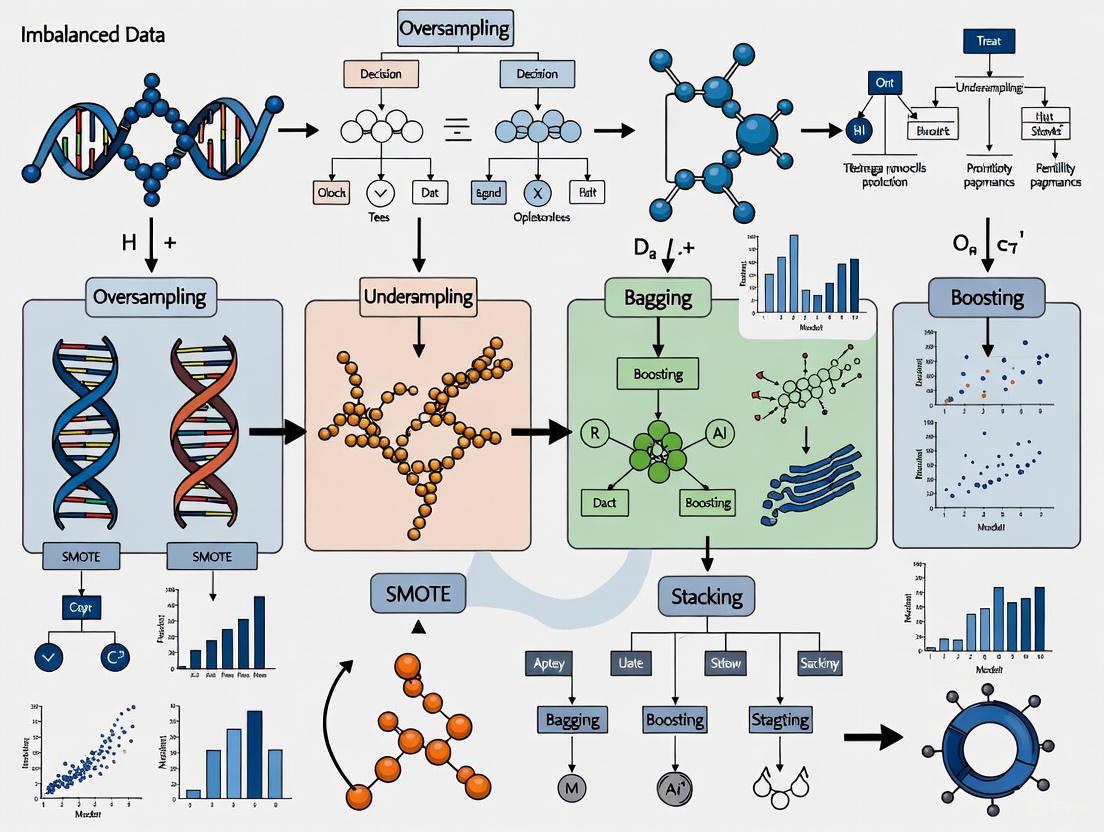
This article provides a comprehensive examination of ensemble learning techniques specifically designed to address class imbalance in fertility and reproductive health datasets.
Ensemble Learning for Imbalanced Fertility Data: Advanced Methods for Predictive Modeling in Reproductive Medicine
Abstract
This article provides a comprehensive examination of ensemble learning techniques specifically designed to address class imbalance in fertility and reproductive health datasets. Tailored for researchers, scientists, and drug development professionals, it explores the foundational challenges of imbalanced data in clinical fertility studies, presents a methodological review of advanced ensemble frameworks like P-EUSBagging and hybrid neural network-optimization models, and discusses optimization strategies including data-level resampling and algorithm-level tuning. The content further synthesizes validation protocols and performance metrics essential for robust model evaluation, offering a critical resource for developing reliable, interpretable, and clinically actionable predictive tools in reproductive medicine.
The Imbalanced Data Challenge in Fertility Diagnostics and Prediction
The Prevalence and Impact of Class Imbalance in Reproductive Health Datasets
Class imbalance, a prevalent condition in machine learning where one class significantly outnumbers others, presents a substantial bottleneck for predictive modeling in reproductive health [1]. In this domain, the condition of interest—such as infertility, specific fertility disorders, or successful pregnancy outcomes—is often the minority class, making up a small fraction of the available data [1]. Conventional machine learning algorithms trained on such imbalanced datasets tend to exhibit an inductive bias toward the majority class, prioritizing overall accuracy at the expense of reliably identifying critical minority cases [1] [2]. This systematic bias can have profound consequences in reproductive medicine, where failing to correctly identify at-risk patients or underlying conditions may delay diagnosis, compromise treatment efficacy, and adversely affect patient outcomes [1]. This Application Note examines the prevalence and impact of class imbalance across reproductive health datasets and provides detailed protocols for employing ensemble learning techniques to address these challenges effectively.
Quantitative Landscape of Class Imbalance in Reproductive Health
The problem of class imbalance manifests across multiple domains of reproductive health research, influencing both clinical and public health studies. The following table summarizes documented prevalence rates and imbalance ratios from recent investigations:
Table 1: Documented Class Imbalance in Reproductive Health Studies
| Condition or Context | Reported Prevalence/Imbalance | Data Source/Study |
|---|---|---|
| Female Infertility | 14.8% (2017-2018) to 27.8% (2021-2023) | NHANES cross-cohort analysis (2015-2023) [3] |
| Anovulatory Cycles | 47% of tracked cycles lacked clear ovulation signs | Analysis of 211,000 tracked cycles [4] |
| Low Progesterone (PdG) | Present in 22% of tracked cycles | Hormonal health index report [4] |
| Elevated LH (Potential PCOS) | Noted in 13% of cases | Hormonal health index report [4] |
| Modern Contraceptive Use | Varies significantly by socioeconomic status | Analysis across 48 low- and middle-income countries [5] |
The increasing prevalence of self-reported infertility, rising from 14.8% in 2017-2018 to 27.8% in 2021-2023 in U.S. women, underscores a growing public health challenge while simultaneously creating increasingly balanced datasets for machine learning applications [3]. This trend contrasts with other reproductive health conditions that remain strongly imbalanced, such as anovulatory cycles observed in nearly half of all tracked cycles [4].
Beyond clinical conditions, class imbalance also arises in fertility-related agricultural research, which often serves as a model for human reproductive studies. In chicken egg fertility classification, for instance, imbalance ratios of 1:13 (minority:majority) are commonly encountered, creating significant predictive modeling challenges analogous to those in human fertility studies [2].
Ensemble Learning Frameworks for Imbalanced Fertility Data
Ensemble learning methods combine multiple models to achieve improved robustness and predictive performance compared to single-model approaches. These techniques are particularly valuable for addressing class imbalance in fertility datasets. The following table summarizes key ensemble approaches applicable to reproductive health data:
Table 2: Ensemble Learning Techniques for Imbalanced Fertility Data
| Ensemble Technique | Core Mechanism | Applicability to Fertility Data |
|---|---|---|
| Bagging (Bootstrap Aggregating) | Creates multiple dataset variants via bootstrapping; aggregates predictions [6]. | Reduces variance and mitigates overfitting to majority class in fertility datasets. |
| Boosting (e.g., XGBoost) | Sequentially builds models that focus on previously misclassified instances [3]. | Enhances detection of rare fertility disorders by emphasizing minority class cases. |
| Stacking Classifier Ensemble | Combines diverse base models via a meta-classifier [3]. | Leverages strengths of multiple algorithms for robust infertility risk prediction. |
| Easy Ensemble & Balance Cascade | Uses ensemble of undersampled models with specific sampling strategies [6]. | Efficiently handles severe imbalance in fertility treatment outcome prediction. |
| Bagging of Extrapolation Borderline-SMOTE SVM (BEBS) | Integrates borderline-informed sampling with ensemble of SVMs [6]. | Addresses critical borderline cases in fertility classification tasks. |
Recent research demonstrates the successful application of these ensemble methods for infertility risk prediction. One study utilizing NHANES data showed that multiple ensemble models, including Random Forest, XGBoost, and a Stacking Classifier, achieved excellent and comparable predictive ability (AUC > 0.96) despite relying on a streamlined feature set [3]. This reinforces the effectiveness of ensemble methods for infertility risk stratification even with minimal predictor sets.
Experimental Protocols for Ensemble Learning on Imbalanced Fertility Data
Protocol 1: Data Preprocessing and Feature Selection for Fertility Datasets
Objective: Prepare imbalanced reproductive health data for ensemble modeling through appropriate preprocessing and feature selection.
Materials and Reagents:
- Software: Python 3.8+ with scikit-learn, imbalanced-learn, pandas, numpy
- Dataset: NHANES reproductive health data (2015-2023) or equivalent fertility dataset
- Hardware: Standard computing workstation (8+ GB RAM recommended)
Procedure:
- Data Harmonization: Select only variables consistently available across all dataset cycles (e.g., age at menarche, total deliveries, menstrual irregularity, pelvic infection history) to ensure comparability [3].
- Inclusion Criteria Definition: Apply strict inclusion criteria (e.g., women aged 19-45 with complete infertility-related variable data) [3].
- Feature Engineering:
- Encode categorical variables (menstrual irregularity, PID history) using one-hot encoding
- Scale continuous variables (age at menarche, total deliveries) using standardization
- Create binary classification target based on self-reported infertility definition [3]
- Feature Selection:
- Apply LASSO (Least Absolute Shrinkage and Selection Operator) regularization for feature refinement and enhanced model interpretability [7]
- Use multivariate logistic regression to estimate adjusted odds ratios and inform feature importance [3]
- Retain features with significant associations (p < 0.05) in preliminary analysis
- Data Splitting: Partition data into training (70%), validation (15%), and test (15%) sets while preserving the imbalance ratio across splits
Quality Control:
- Address missing data using appropriate imputation methods or exclusion criteria
- Verify no data leakage between splits using subject identifiers
- Confirm consistent preprocessing across all dataset segments
Protocol 2: Hybrid Resampling and Ensemble Classification
Objective: Implement a combined resampling and ensemble approach to handle severe class imbalance in fertility prediction tasks.
Materials and Reagents:
- Software: Python with imbalanced-learn, scikit-learn, xgboost
- Dataset: Preprocessed fertility dataset from Protocol 1
- Hardware: Standard computing workstation
Procedure:
- Baseline Model Establishment:
- Train a ZeroR or dummy classifier as performance baseline
- Calculate baseline metrics (accuracy, F1-score, AUC-ROC) [2]
- Resampling Technique Evaluation:
- Ensemble Model Training:
- Implement Bagging with decision trees as base estimators
- Configure Random Forest with class weighting adjusted for imbalance
- Train XGBoost with scaleposweight parameter adjusted for imbalance ratio
- Construct Stacking Classifier combining diverse base models (LR, RF, XGBoost) with meta-classifier [3]
- Model Tuning and Validation:
Quality Control:
- Ensure synthetic samples from SMOTE conform to physiological plausibility for medical data [1]
- Validate model calibration using reliability curves
- Confirm robustness through multiple random seeds and dataset variations
Workflow Visualization
Diagram 1: Ensemble learning workflow for imbalanced fertility data
The Scientist's Toolkit: Research Reagent Solutions
Table 3: Essential Computational Tools for Imbalanced Fertility Research
| Tool/Technique | Function | Application Context |
|---|---|---|
| SMOTE | Generates synthetic minority class instances | Addressing rarity of specific fertility conditions in datasets [6] |
| Borderline-SMOTE | Creates synthetic samples focusing on class boundary | Improving detection of borderline fertility disorder cases [6] |
| LASSO Regularization | Performs feature selection with regularization | Identifying most predictive fertility markers from high-dimensional data [7] |
| Stratified Cross-Validation | Preserves class distribution in data splits | Ensuring representative model validation on imbalanced fertility data [3] |
| Cost-Sensitive Learning | Adjusts misclassification costs during training | Prioritizing correct identification of rare fertility disorders [1] |
| UMAP (Uniform Manifold Approximation and Projection) | Reduces data dimensionality while preserving structure | Visualizing and analyzing patterns in high-dimensional fertility data [7] |
Class imbalance represents a fundamental challenge in reproductive health data science, potentially compromising the validity and clinical utility of predictive models. Ensemble learning techniques, particularly when combined with strategic resampling approaches and appropriate evaluation metrics, offer a powerful framework for addressing these challenges. The protocols outlined in this Application Note provide methodological guidance for developing robust predictive models capable of effectively identifying rare reproductive health conditions and outcomes. As reproductive health datasets continue to grow in scale and complexity, the thoughtful application of these ensemble methods will be essential for advancing both clinical care and public health initiatives in this domain.
Application Notes: Clinical Scenarios and Quantitative Findings
This section synthesizes key quantitative findings from recent investigations into male infertility biomarkers and diagnostic models. The data presented below supports the development of robust, ensemble-based predictive frameworks for managing imbalanced fertility datasets.
Table 1: Biomarker Expression and Sperm DNA Integrity Correlations
| Parameter | Oligozoospermic Group (Mean ± SD) | Normozoospermic Group (Mean ± SD) | Fold Change | P-value | Correlation with Progressive Motile Sperm (ρ) |
|---|---|---|---|---|---|
| 5'tRF-Glu-CTC Expression | 15.58 ± 4.34 | 12.53 ± 4.99 | 1.692 | 0.024 | Not Significant |
| Sperm DNA Fragmentation Index (DFI) | Not Significant | Not Significant | - | >0.05 | -0.537 (P=0.015) |
| Total Progressive Motile Sperm Count | - | - | - | - | -0.509 (P=0.026) |
Source: Adapted from [8]
Table 2: Performance Metrics of Advanced Diagnostic Models for Male Infertility
| Model / Framework | Reported Accuracy | Sensitivity | Specificity | Computational Time (seconds) | Key Innovation |
|---|---|---|---|---|---|
| Hybrid MLFFN–ACO Framework | 99% | 100% | Not Reported | 0.00006 | Ant Colony Optimization for parameter tuning [9] |
| Multi-Level Ensemble (Feature & Decision Fusion) | 67.70% | Not Reported | Not Reported | Not Reported | Fusion of multiple EfficientNetV2 features & classifier voting [10] |
| CNN-SVM/RF/MLP-A Hybrid | Not Reported | Not Reported | Not Reported | Not Reported | Combination of deep feature extraction with traditional classifiers [10] |
Source: Adapted from [9] and [10]
Experimental Protocols
Protocol: Quantification of 5'tRF-Glu-CTC in Seminal Plasma
Application: This protocol details the steps for extracting and measuring the expression level of the tRNA-derived fragment 5'tRF-Glu-CTC from human seminal plasma, a potential biomarker for oligozoospermia [8].
Reagents:
- SanPrep Column microRNA Miniprep Kit (Biobasic, Cat. No. SK8811)
- miRNA All-In-One cDNA Synthesis Kit (ABM, Cat. No. G898)
- BlasTaq 2X qPCR MasterMix (Applied Biological Materials)
- Stem-loop oligomer probes and primers specific for 5'tRF-Glu-CTC and reference miR-320 [8]
Procedure:
- Sample Preparation: Centrifuge freshly collected semen samples at 600xg for 5 minutes to separate seminal plasma from the sperm pellet.
- RNA Isolation: Extract total RNA, including small RNAs, from 200 μL of seminal plasma using the SanPrep Column microRNA Miniprep Kit according to the manufacturer's instructions.
- Quality Assessment: Measure RNA concentration and purity (A260/A280 ratio) using a microplate spectrophotometer.
- Reverse Transcription (cDNA Synthesis):
- Use 200 ng of total RNA as a template.
- Perform reverse transcription in a 20 μL reaction volume containing 10 μL of 2x miRNA cDNA Synthesis SuperMix, enzyme mix, and stem-loop oligomer probes.
- Use the following sequence-specific probe for 5'tRF-Glu-CTC:
5’-GTCTCCTCTGGTGCAGGGTCCGAGGTATTCGCACCAGAGGAGACCGTGCCG-3’.
- Quantitative Real-Time PCR (qRT-PCR):
- Set up 20 μL reactions containing 10 μL of BlasTaq 2X qPCR MasterMix, 0.5 μL of each forward and reverse primer (10 μM), and template cDNA.
- Use the following 5'tRF-Glu-CTC-specific forward primer:
5’-GGCGGTCCCTGGTGGTCTAGTGGTTAGGATT-3’. - Use a universal reverse primer.
- Run all samples in duplicate.
- Normalize the mean quantification cycle (Cq) values of 5'tRF-Glu-CTC to the reference small RNA miR-320 for each sample.
- Data Analysis: Calculate relative gene expression changes using the 2−ΔΔCq method [8].
Protocol: Sperm DNA Fragmentation Index (DFI) Assessment via TUNEL Assay
Application: This protocol describes the terminal deoxynucleotidyl transferase-mediated dUTP nick-end labeling (TUNEL) method for evaluating sperm DNA fragmentation, a key parameter correlated with sperm motility and ART outcomes [8].
Reagents:
- In situ Apoptosis Detection Kit (Takara Bio Inc., Shiga, Japan)
- 3.6% Paraformaldehyde
- Phosphate Buffer with Sucrose
- Poly-L-lysine coated slides
- DAPI (4',6-diamidino-2-phenylindole) for nuclear counterstaining
Procedure:
- Sperm Fixation: Fix the sperm pellet in 3.6% paraformaldehyde.
- Slide Preparation: Transfer fixed sperm onto poly-L-lysine coated slides using a phosphate buffer containing sucrose. Allow to adhere overnight.
- TUNEL Reaction: Perform the in situ labeling reaction using the In situ Apoptosis Detection Kit, strictly following the manufacturer's instructions. This step incorporates fluorescein-labeled nucleotides at the 3'-OH ends of fragmented DNA.
- Counterstaining: Apply DAPI to stain all sperm nuclei.
- Microscopy and Analysis:
- Analyze spermatozoa using a fluorescent microscope equipped with FITC and DAPI filters. Examine general morphology with a light microscope.
- For each sample, analyze at least 5 fields and a minimum of 200 cells.
- Use image analysis software (e.g., ImageJ, Version 1.54p) for quantification.
- DFI Calculation: Calculate the DNA Fragmentation Index (DFI) as the number of spermatozoa exhibiting FITC fluorescence (indicating DNA fragmentation) divided by the total number of spermatozoa counted [8].
Protocol: Ensemble Learning Framework for Sperm Morphology Classification
Application: This protocol outlines a novel ensemble-based approach for the automated classification of sperm morphology into multiple categories, addressing class imbalance and improving diagnostic robustness [10].
Reagents/Resources:
- Hi-LabSpermMorpho dataset (or equivalent, containing multiple morphological classes)
- Computational environment (e.g., Python with TensorFlow/PyTorch)
- Pretrained EfficientNetV2 models (S, M, L variants)
- Support Vector Machine (SVM), Random Forest (RF), and Multi-Layer Perceptron with Attention (MLP-A) classifiers
Procedure:
- Data Preparation:
- Utilize a comprehensive sperm image dataset (e.g., Hi-LabSpermMorpho with 18,456 images across 18 classes).
- Apply standard image preprocessing (resizing, normalization) and augment the data to mitigate class imbalance.
- Feature Extraction:
- Use multiple pretrained EfficientNetV2 models to extract deep features from the sperm images.
- Extract features from the penultimate layer of each network.
- Feature-Level Fusion:
- Concatenate the feature vectors obtained from the different EfficientNetV2 models to create a comprehensive, high-dimensional feature set.
- Classification with Ensemble:
- Train multiple classifiers, including SVM, RF, and MLP-A, on the fused feature set.
- Feature-Level Fusion Path: Use the fused features to train the SVM, RF, and MLP-A classifiers.
- Decision-Level Fusion Path: Perform soft voting on the predictions from the individual EfficientNetV2 models to combine their outputs.
- Model Evaluation:
- Evaluate the final ensemble model's performance on a held-out test set using metrics such as accuracy, precision, recall, and F1-score, with particular attention to performance on under-represented morphological classes [10].
Workflow Visualizations
tRNA-derivative Analysis Workflow
Ensemble Learning for Morphology
The Scientist's Toolkit: Research Reagent Solutions
Table 3: Essential Reagents and Materials for Fertility Diagnostics Research
| Item / Reagent | Function / Application | Example / Specification |
|---|---|---|
| SanPrep Column microRNA Miniprep Kit | Isolation of total RNA, including small tRNA-derived fragments (tRFs), from seminal plasma. | Biobasic, Cat. No. SK8811 [8] |
| miRNA All-In-One cDNA Synthesis Kit | Reverse transcription of miRNA and tRFs using stem-loop probes for highly specific cDNA synthesis. | ABM, Cat. No. G898 [8] |
| Stem-loop RT and qPCR Primers | Sequence-specific detection and quantification of target tRFs (e.g., 5'tRF-Glu-CTC) via qRT-PCR. | Custom designed sequences [8] |
| In situ Apoptosis Detection Kit | Fluorescent labeling of DNA strand breaks in spermatozoa for TUNEL assay and DFI calculation. | Takara Bio Inc. [8] |
| Hi-LabSpermMorpho Dataset | A comprehensive image dataset for training and validating automated sperm morphology classification models. | 18,456 images across 18 distinct morphology classes [10] |
| Pretrained CNN Models (EfficientNetV2) | Deep feature extraction from sperm images for subsequent classification tasks. | EfficientNetV2 S, M, L variants [10] |
| Ant Colony Optimization (ACO) Algorithm | Nature-inspired metaheuristic for optimizing neural network parameters and feature selection in diagnostic models. | Used in hybrid MLFFN–ACO frameworks [9] |
Limitations of Traditional Statistical and Machine Learning Methods
In the specialized field of fertility research, the quality of data is paramount. A pervasive challenge that compromises this quality is class imbalance, a phenomenon where the number of observations in one category significantly outweighs those in another [11]. In contexts such as the prediction of successful embryo implantation or the classification of specific infertility etiologies, "positive" cases are often drastically outnumbered by "negative" ones [12]. Traditional statistical and machine learning (ML) methods, designed with the assumption of relatively balanced class distributions, frequently fail under these conditions, leading to models that are biased, inaccurate, and clinically unreliable [11] [13]. This application note details the specific limitations of these traditional approaches and provides structured, actionable protocols for adopting more robust ensemble learning techniques, framed within the critical context of imbalanced fertility data.
The Core Challenge: Why Traditional Methods Fail on Imbalanced Data
Traditional ML algorithms, including logistic regression, support vector machines (SVM), and standard decision trees, optimize for overall accuracy. When confronted with a dataset where the majority class comprises 90% or more of the samples, these models naturally develop a bias toward the majority class, as this is the easiest path to achieving high accuracy [14] [13]. For instance, a model predicting successful pregnancy from in vitro fertilization (IVF) cycles might achieve 95% accuracy by simply predicting "failure" for all cases, thereby completely failing to identify the successful outcomes that are of primary clinical interest [13].
The root problem is often not the imbalance itself but a combination of other factors exacerbated by it. These include the use of inappropriate evaluation metrics like accuracy, an absolute lack of sufficient minority class samples for the model to learn meaningful patterns, and poor inherent separability between the classes based on the available features [13]. Traditional methods, which are often less flexible, struggle to capture the complex, non-linear patterns that might distinguish a viable embryo from a non-viable one when such patterns are present in only a small fraction of the data [13].
Table 1: Limitations of Traditional Methods in Imbalanced Fertility Data Contexts
| Traditional Method | Primary Limitation | Manifestation in Fertility Research |
|---|---|---|
| Logistic Regression | Linear decision boundary; biased towards the majority class due to optimization for overall error minimization. | Misses complex, non-linear interactions between hormonal levels, genetic markers, and clinical outcomes. Produces poorly calibrated probabilities. |
| Standard Decision Trees | Splitting criteria (e.g., Gini impurity) are global and can ignore small minority class clusters. | A tree might fail to split on a key biomarker for implantation success because the split does not significantly improve overall node purity. |
| Support Vector Machines (SVM) | Tries to find a large-margin hyperplane, which can be skewed by the dense majority class, effectively ignoring the minority class. | The optimal hyperplane for classifying embryo quality might be pushed to a region that excludes all rare but viable embryo phenotypes. |
| k-Nearest Neighbours (k-NN) | The class of a new sample is based on its local neighbours, which are likely all from the majority class in imbalanced regions. | An embryo with a rare but promising morphological pattern may be misclassified because its nearest neighbours in the dataset are all non-viable. |
Advanced Techniques: Ensemble Learning and Data Augmentation
To overcome these limitations, the ML community has developed advanced techniques focused on altering the data distribution or the learning algorithm itself. The most effective strategies for imbalanced fertility data involve ensemble learning and data augmentation.
Ensemble Learning Methods
Ensemble learning combines multiple base models to produce a single, more robust and accurate predictive model [15]. Its power lies in leveraging the "wisdom of the crowd," where the collective decision of diverse models mitigates the individual errors of any single one [14] [16]. For imbalanced data, specialized ensemble techniques have been developed.
Table 2: Specialized Ensemble Methods for Imbalanced Data
| Ensemble Method | Core Mechanism | Advantage for Fertility Data |
|---|---|---|
| Balanced Random Forest | Each tree is trained on a bootstrap sample where the majority class is under-sampled to balance the classes [17]. | Ensures every decision tree in the forest has adequate exposure to rare positive outcomes (e.g., successful sperm retrieval in non-obstructive azoospermia), improving sensitivity. |
| Easy Ensemble | Uses bagging to train multiple AdaBoost classifiers on balanced subsets of the data created by random under-sampling of the majority class [17]. | Effectively creates several "experts" focused on different aspects of the hard-to-predict minority class, ideal for complex tasks like predicting live birth from multi-modal data. |
| Balanced Bagging | Similar to Balanced Random Forest but allows for any base estimator (e.g., SVM, decision trees) and can also incorporate oversampling [17]. | Offers flexibility to use the most appropriate base model for the specific fertility dataset (e.g., hormonal time-series, genetic data). |
| Boosting (e.g., AdaBoost, XGBoost) | Trains models sequentially, with each new model focusing on the instances previously misclassified, thereby giving more weight to the minority class over time [14] [16]. | Adaptively learns from "difficult" cases, such as patients with unexplained infertility, forcing the model to improve its predictions where it matters most. |
Data Augmentation and Synthetic Data Generation
Data augmentation techniques artificially increase the number of samples in the minority class. The Synthetic Minority Over-sampling Technique (SMOTE) and its variants generate new synthetic examples by interpolating between existing minority class instances in feature space [11] [18]. More recently, Generative Adversarial Networks (GANs) have been used to create highly realistic synthetic tabular data, which is particularly valuable when the absolute number of minority samples is very low, a common scenario in rare infertility disorders [12] [19].
Table 3: Data Augmentation Techniques for Imbalanced Fertility Datasets
| Technique | Description | Considerations for Fertility Data |
|---|---|---|
| SMOTE | Creates synthetic samples along line segments joining k nearest neighbors of the minority class [11]. | Can help balance a dataset for embryo image classification but may generate non-physiological samples if features are not continuous. |
| Borderline-SMOTE | Focuses synthetic data generation on the "borderline" instances of the minority class that are near the decision boundary [11]. | Useful for highlighting the subtle morphological differences that separate high-grade from borderline-low-grade embryos. |
| SVM-SMOTE | Uses support vectors to identify areas of the minority class to oversample, often focusing on harder-to-learn instances [12]. | Can target patient subgroups that are most ambiguous, improving model performance on edge cases. |
| GAN-based (e.g., GBO, SSG) | Employs a generator network to create new synthetic data and a discriminator to critique it, leading to highly realistic synthetic samples [12]. | Promising for generating synthetic patient profiles for rare conditions while preserving patient privacy, enabling more robust model development. |
Experimental Protocols
Protocol 1: Implementing a Balanced Ensemble Model for Embryo Viability Classification
Objective: To train a classifier for predicting day-5 blastocyst viability using clinical and morphological data, mitigating the class imbalance where high-quality viable embryos are the minority.
Workflow Overview:
Materials & Reagents:
- Dataset: Retrospective dataset of embryo records with features (morphology grade, patient age, fertilization method) and label (viable/not-viable).
- Software: Python 3.8+,
imbalanced-learn(imblearn) library,scikit-learn. - Computing: Computer with minimum 8GB RAM.
Step-by-Step Procedure:
- Data Preprocessing: Clean the data by handling missing values (e.g., imputation or removal) and encode categorical variables (e.g., one-hot encoding for fertilization method). Standardize numerical features (e.g., patient age) to have zero mean and unit variance.
- Train-Test Split: Split the preprocessed data into training (80%) and testing (20%) sets, using stratification to preserve the original class imbalance ratio in both splits.
- Baseline Model Training: Train a standard logistic regression model on the training set. Use this model's performance as a benchmark.
- Balanced Ensemble Training:
- Balanced Random Forest: Instantiate a
BalancedRandomForestClassifierfrom theimblearn.ensemblemodule. Set parameters liken_estimators=100andrandom_state=42for reproducibility. Fit the model on the training data. - Easy Ensemble: Instantiate an
EasyEnsembleClassifierfrom the same module, also withn_estimators=100. Fit it on the training data.
- Balanced Random Forest: Instantiate a
- Model Evaluation: Generate predictions on the test set for all three models. Calculate evaluation metrics, with a primary focus on F1-Score and Area Under the Precision-Recall Curve (AUC-PR) for the minority class (viable embryos), as these are more informative than accuracy under imbalance [13].
- Model Selection: Deploy the model that demonstrates the highest F1-score and AUC-PR for the viable embryo class, ensuring it meets the clinical requirement for a balance between precision and recall.
Protocol 2: Generating Synthetic Patient Data Using GANs
Objective: To augment a small dataset of patients with a rare infertility syndrome by generating high-fidelity synthetic patient data, enabling more robust downstream analysis.
Workflow Overview:
Materials & Reagents:
- Dataset: A small, curated dataset of patients diagnosed with the rare condition, containing clinical and lab values.
- Software: Python 3.8+,
ctganlibrary orPyTorch/TensorFlowfor custom GAN implementation. - Computing: Computer with a GPU (recommended for faster training), 16GB RAM.
Step-by-Step Procedure:
- Data Preparation: Preprocess the original real-world dataset. This includes normalizing continuous variables (e.g., hormone levels) and encoding categorical variables (e.g., genetic markers).
- GAN Selection and Initialization: Select a GAN architecture designed for tabular data, such as a Conditional Tabular GAN (CTGAN). Initialize the generator and discriminator networks with random weights.
- Adversarial Training:
- In each training epoch, the discriminator is trained to distinguish real patient records from synthetic ones produced by the generator.
- The generator is then trained to produce synthetic data that can "fool" the discriminator.
- This iterative process continues for a predefined number of epochs or until the synthetic data quality is deemed sufficient [12] [19].
- Synthetic Data Generation and Validation: After training, use the generator to create a new set of synthetic patient records.
- Fidelity Check: Use metrics like Similarity Score [19] or statistical distance measures (e.g., Jensen-Shannon divergence) to compare the distributions of synthetic and real data.
- Privacy Check: Ensure no synthetic record is an exact copy of a real patient to prevent privacy breaches.
- Data Augmentation: Combine the validated synthetic data with the original real data to create a larger, balanced dataset for subsequent machine learning tasks.
The Scientist's Toolkit: Research Reagent Solutions
Table 4: Essential Computational Tools for Imbalanced Fertility Research
| Tool / Reagent | Type | Function / Application | Example / Source |
|---|---|---|---|
imbalanced-learn |
Software Library | Provides a wide range of resampling (SMOTE, ADASYN) and ensemble (BalancedRF, EasyEnsemble) algorithms specifically for imbalanced data. | Python Package Index (PyPI) |
| CTGAN & TVAE | Generative Model | Deep learning models specifically designed to generate synthetic tabular data for augmenting small or imbalanced datasets. | sdv.dev (Synthetic Data Vault) |
| XGBoost | Ensemble Algorithm | A highly efficient and effective gradient boosting framework that can be tuned for imbalanced data using scaleposweight parameter. | xgboost.ai |
| SHAP (SHapley Additive exPlanations) | Explainable AI (XAI) Tool | Interprets model predictions by quantifying the contribution of each feature, crucial for validating model logic in clinical settings. | shap.readthedocs.io |
| Stratified K-Fold Cross-Validation | Evaluation Protocol | Ensures that each fold of cross-validation maintains the same class distribution as the full dataset, preventing biased performance estimates. | scikit-learn |
The journey from traditional, biased statistical models to advanced, fair ML systems for fertility research is necessitated by the field's inherent data challenges. Traditional methods, which fail when classes are imbalanced, can lead to clinically misleading conclusions. As outlined in this note, the path forward involves a strategic shift towards specialized ensemble methods like Balanced Random Forest and Easy Ensemble, complemented by sophisticated data augmentation techniques including SMOTE variants and GANs. By adopting the structured experimental protocols and tools provided, researchers and drug developers can build more reliable and actionable models, ultimately accelerating progress in the understanding and treatment of infertility.
Defining Ensemble Learning and its Core Principles for Data Imbalance
Ensemble learning is a machine learning technique that aggregates two or more learners (e.g., regression models, neural networks) to produce better predictions than any single model alone [20]. This approach operates on the principle that a collectivity of learners yields greater overall accuracy than an individual learner, effectively mitigating issues of bias and variance that often plague single-model approaches [21] [20]. In the context of imbalanced data, where one class significantly outnumbers others (a common challenge in fertility research and medical diagnostics), ensemble methods provide particularly valuable solutions by combining multiple models to improve detection of minority classes without sacrificing overall performance [14].
The relevance of ensemble learning to imbalanced fertility data research stems from its ability to address critical challenges in reproductive medicine. Fertility datasets often exhibit significant class imbalance, with normal semen quality samples substantially outnumbering altered or pathological cases [9]. This imbalance can lead to models that achieve high accuracy by simply predicting the majority class, while failing to identify clinically significant minority classes—a potentially disastrous outcome in diagnostic applications [14]. Ensemble methods effectively counter this tendency through various mechanisms that force models to focus on difficult-to-classify minority instances.
Core Principles and Mechanisms
Fundamental Principles
Ensemble learning operates on several core principles that explain its effectiveness, particularly for imbalanced data scenarios:
Diversity Principle: Ensemble methods combine diverse models trained on different data subsets or using different algorithms, creating a collective intelligence that captures patterns a single model might miss [21] [20]. This diversity is crucial for identifying rare patterns in minority classes.
Error Reduction Principle: By combining multiple models, ensemble methods average out individual model errors, reducing both variance (through techniques like bagging) and bias (through techniques like boosting) [21] [20].
Focus Principle: Specific ensemble techniques, particularly boosting algorithms, sequentially focus on misclassified instances, forcing subsequent models to pay greater attention to difficult cases that often belong to minority classes [14].
Key Ensemble Types for Imbalanced Data
Table 1: Ensemble Learning Types for Addressing Data Imbalance
| Ensemble Type | Core Mechanism | Advantages for Imbalanced Data | Common Algorithms |
|---|---|---|---|
| Bagging | Trains models in parallel on random data subsets and aggregates predictions [21] | Reduces variance and overfitting; can incorporate class weight adjustments [14] | Random Forest, Balanced Random Forest [14] |
| Boosting | Trains models sequentially with each new model focusing on previous errors [21] | Naturally prioritizes difficult minority class instances; reduces bias [14] | AdaBoost, Gradient Boosting, XGBoost [21] [20] |
| Stacking | Combines multiple models via a meta-learner that learns optimal combination [21] | Leverages diverse model strengths; can capture complex minority class patterns [21] | Stacked Generalization with heterogeneous classifiers [20] |
| Hybrid Approaches | Combines ensemble methods with sampling techniques like SMOTE [18] | Addresses imbalance at both data and algorithm levels [18] | Random Forest with SMOTE, Boosting with oversampling [18] |
Experimental Protocols for Fertility Data Research
Protocol 1: Balanced Random Forest for Fertility Classification
Objective: To implement a Balanced Random Forest (BRF) classifier for male fertility diagnosis using clinical, lifestyle, and environmental factors.
Materials and Dataset:
- Fertility Dataset from UCI Machine Learning Repository (100 samples, 10 attributes) [9]
- Preprocessing: Min-Max normalization to [0,1] range to handle heterogeneous feature scales [9]
- Class distribution: 88 "Normal" and 12 "Altered" seminal quality (moderate imbalance) [9]
Methodology:
- Data Preprocessing: Apply range scaling to all features using Min-Max normalization to ensure consistent contribution to the learning process [9].
- Bootstrap Sampling: For each tree in the forest, create balanced bootstrap samples with equal representation of both classes [14].
- Model Training: Train multiple decision trees on different balanced subsets, ensuring each tree has a balanced perspective [14].
- Prediction Aggregation: Combine predictions through majority voting or probability averaging across all trees [21].
- Evaluation: Assess using sensitivity, specificity, and AUC-PR in addition to accuracy, with emphasis on minority class performance [14].
Expected Outcomes: BRF typically demonstrates improved recall for the minority "Altered" class compared to standard Random Forest, while maintaining competitive overall accuracy [14].
Protocol 2: Feature-Level Fusion with Ensemble Classification
Objective: To develop an ensemble framework combining multiple CNN architectures with feature-level fusion for sperm morphology classification.
Materials:
- Hi-LabSpermMorpho dataset (18,456 images across 18 morphology classes) [10]
- Multiple EfficientNetV2 variants for feature extraction [10]
- Traditional classifiers: SVM, Random Forest, MLP with Attention mechanism [10]
Methodology:
- Feature Extraction: Extract deep features from multiple EfficientNetV2 models using penultimate layer activations [10].
- Feature-Level Fusion: Concatenate features from different architectures to create enriched feature representations [10].
- Classifier Training: Train multiple diverse classifiers (SVM, RF, MLP-A) on fused features [10].
- Decision-Level Fusion: Implement soft voting to combine classifier predictions [10].
- Evaluation: Assess using multi-class accuracy and per-class metrics, with particular attention to low-sample classes [10].
Expected Outcomes: The fusion-based ensemble achieved 67.70% accuracy on 18-class sperm morphology classification, significantly outperforming individual classifiers and effectively mitigating class imbalance issues [10].
Workflow Visualization
Ensemble Methods for Imbalanced Fertility Data
The Scientist's Toolkit: Research Reagent Solutions
Table 2: Essential Computational Tools for Ensemble Learning in Fertility Research
| Research Reagent | Type | Function in Ensemble Fertility Research | Implementation Example |
|---|---|---|---|
| Random Forest with Class Weighting | Algorithm | Adjusts class weights to penalize minority class misclassification, improving sensitivity [14] | class_weight='balanced' in scikit-learn [14] |
| Balanced Random Forest (BRF) | Algorithm | Ensures each tree is trained on balanced bootstrap samples for fair minority class representation [14] | Imbalanced-learn library implementation [14] |
| AdaBoost with Sequential Focus | Algorithm | Iteratively increases weight on misclassified minority instances, forcing model attention [14] | AdaBoostClassifier with decision stumps in scikit-learn [21] |
| EfficientNetV2 Architectures | Feature Extractor | Provides multi-scale feature representations for fusion-based ensembles in image analysis [10] | Transfer learning from pre-trained models on sperm morphology images [10] |
| Ant Colony Optimization (ACO) | Bio-inspired Optimizer | Enhances neural network learning efficiency and convergence for fertility prediction [9] | Hybrid MLFFN-ACO framework for parameter tuning [9] |
| SMOTE + Ensemble Hybrids | Data Augmentation | Generates synthetic minority samples combined with ensemble classification [18] | Random Oversampling or SMOTE with Random Forest [18] |
| Multi-Level Fusion Framework | Architecture | Combines feature-level and decision-level fusion for robust ensemble predictions [10] | EfficientNetV2 features + SVM/RF/MLP-A + soft voting [10] |
Performance Metrics and Evaluation
Table 3: Quantitative Performance of Ensemble Methods on Fertility Data
| Ensemble Method | Dataset | Key Performance Metrics | Comparative Advantage |
|---|---|---|---|
| Hybrid MLFFN-ACO Framework [9] | UCI Fertility Dataset (100 cases) | 99% accuracy, 100% sensitivity, 0.00006s computational time [9] | Ultra-fast prediction suitable for real-time clinical applications with perfect sensitivity |
| Multi-Level Fusion Ensemble [10] | Hi-LabSpermMorpho (18,456 images, 18 classes) | 67.70% accuracy, significant improvement over individual classifiers [10] | Effectively handles multi-class imbalance in complex morphology classification |
| Random Forest with Class Weighting [14] | Imbalanced clinical datasets | High minority class recall, maintained specificity [14] | Simple implementation with immediate improvement over unweighted models |
| Data Augmentation + Ensemble Combinations [18] | Various benchmark imbalanced datasets | Significant performance improvements over single approach solutions [18] | Addresses imbalance at both data and algorithm levels for enhanced robustness |
The performance data demonstrates that ensemble methods consistently outperform individual classifiers on imbalanced fertility datasets. The hybrid MLFFN-ACO framework achieves remarkable 100% sensitivity, ensuring no true positive cases are missed—a critical requirement in clinical diagnostics [9]. The multi-level fusion approach shows substantial gains in complex multi-class scenarios, proving particularly valuable for detailed morphological analysis in spermatology [10].
Implementation Considerations for Fertility Research
When implementing ensemble methods for imbalanced fertility data, several practical considerations emerge:
Data Quality and Annotation: High-quality, consistently annotated data is essential, particularly for medical images where expert labeling is costly but necessary [10].
Computational Resources: Complex ensembles, especially those combining multiple deep learning architectures, require significant computational resources and efficient implementation [10].
Clinical Interpretability: Model decisions must be interpretable for clinical adoption. Techniques like feature importance analysis and proximity search mechanisms provide necessary transparency [9].
Class Imbalance Strategies: The severity of imbalance should guide method selection—moderate imbalances may be addressed with class weighting, while severe imbalances may require hybrid approaches combining sampling with ensembles [18].
Ensemble learning represents a powerful methodology for addressing the pervasive challenge of class imbalance in fertility research and reproductive medicine. By leveraging the collective intelligence of multiple models, these techniques enhance detection of rare but clinically significant conditions, ultimately supporting more accurate diagnosis and personalized treatment planning in reproductive healthcare.
A Methodological Deep Dive: Ensemble Architectures for Fertility Data
Ensemble learning techniques, particularly bagging-based approaches, provide powerful methodological frameworks for addressing the critical challenge of class imbalance in biomedical datasets. This application note details the implementation of two robust bagging algorithms—Random Forest and the novel P-EUSBagging—within the context of imbalanced fertility data research. We present structured performance comparisons, detailed experimental protocols, and specialized toolkits to enable researchers to effectively apply these methods for predicting rare reproductive outcomes, ultimately supporting more accurate clinical decision-making in reproductive medicine and drug development.
Class imbalance represents a significant obstacle in fertility research, where outcomes of interest such as successful implantation or specific treatment-related complications naturally occur at low frequencies. Standard machine learning algorithms often exhibit bias toward the majority class, leading to poor predictive performance for these critical minority classes. Bagging (Bootstrap Aggregating) addresses this challenge by creating multiple models on bootstrapped dataset subsets and aggregating their predictions, thereby reducing variance and improving generalization [22] [23].
Random Forest extends bagging by incorporating random feature selection at each split, creating diverse trees that collectively form a robust classifier [23] [24]. P-EUSBagging represents a recent advancement specifically designed for imbalanced learning, utilizing data-level diversity metrics and adaptive voting to enhance minority class detection [25]. When applied to fertility datasets characterized by skewed class distributions, these bagging variants can significantly improve prediction of rare reproductive events, enabling more reliable research conclusions and clinical predictions.
Technical Performance Comparison
The following tables summarize key performance characteristics and diversity metrics for bagging-based approaches relevant to imbalanced fertility data research.
Table 1: Performance Comparison of Bagging Algorithms on Imbalanced Datasets
| Algorithm | Key Mechanism | Best Performing Context | Reported Accuracy | Reported AUC | Advantages for Fertility Data |
|---|---|---|---|---|---|
| Random Forest [26] [24] | Bootstrap samples + random feature selection | General imbalanced data with feature heterogeneity | 75-82% (with ROS) | 0.89-0.93 | Handles mixed data types; minimal preprocessing; provides feature importance |
| P-EUSBagging [25] | IED diversity metric + weight-adaptive voting | Severe imbalance with complex minority patterns | Significantly improves G-Mean | Significantly improves AUC | Explicitly maximizes data diversity; adaptive reward/penalty voting |
| Balanced Random Forest [17] | Under-samples majority class in each bootstrap | Severe imbalance where minority preservation critical | Comparable to RF with sampling | Comparable to RF with sampling | Maintains all minority instances; reduces bias toward majority class |
| EasyEnsemble [17] [27] | AdaBoost learners on balanced bootstrap samples | Complex minority class patterns requiring high recall | High recall (e.g., 0.86) potentially with lower precision | Not specified | Excellent minority class detection; hierarchical ensemble structure |
Table 2: Diversity Metrics in Ensemble Learning for Imbalanced Data
| Diversity Metric | Type | Computational Requirements | Correlation with Performance | Application in Fertility Research |
|---|---|---|---|---|
| IED (Instance Euclidean Distance) [25] | Data-level (no model training) | Low complexity; one-time evaluation | High (mean absolute correlation: 0.94 with classifier-based) | Pre-training diversity assessment; dataset optimization |
| Q-statistics [25] | Classifier-level (pairwise) | High (requires trained models) | Established reference metric | Post-hoc ensemble analysis |
| Disagreement Measure [25] | Classifier-level (pairwise) | High (requires trained models) | Established reference metric | Model selection and combination |
| Correlation Coefficient (ρ) [25] | Classifier-level (pairwise) | High (requires trained models) | Established reference metric | Diagnostic evaluation of ensemble components |
Experimental Protocols
Random Forest for Imbalanced Fertility Data
Principle: Construct multiple decision trees using bootstrap samples from the original dataset with random feature selection at each split, then aggregate predictions through majority voting [23] [24]. For imbalanced fertility data, this approach benefits from inherent variance reduction and can be enhanced with strategic sampling.
Protocol:
Data Preparation:
- Compile fertility dataset with clinical features and imbalanced outcome variable
- Partition data into training (70%) and test (30%) sets, preserving imbalance ratio
- Preprocess features: normalize continuous variables, encode categorical variables
Parameter Configuration:
- Set number of trees (
n_estimators= 500) - Determine feature subset size at each split (
max_features= √p for classification) - Specify minimum samples at leaf node (
min_samples_leaf= 1-5 for high imbalance) - Enable bootstrap sampling (
bootstrap= True)
- Set number of trees (
Imbalance-Specific Adjustments:
- Apply Random Oversampling (ROS) to training set prior to model building [26]
- Consider stratified bootstrap sampling to ensure minority class representation
- Implement weighted random forests using
class_weight= 'balanced'
Model Training:
Performance Validation:
- Evaluate using G-Mean and AUC-ROC in addition to accuracy
- Utilize out-of-bag (OOB) error estimation as internal validation [23]
- Perform 10-fold cross-validation with stratification to maintain imbalance
P-EUSBagging for Severe Imbalance
Principle: Generate multiple balanced subsets with maximal data-level diversity using the Instance Euclidean Distance (IED) metric, then combine predictions through weight-adaptive voting that rewards correct minority class predictions [25].
Protocol:
Data Preprocessing:
- Compile fertility dataset with confirmed outcome labels
- Normalize all features to ensure comparable distance calculations
- Identify minority class instances for special consideration in sampling
IED Diversity Calculation:
- Apply optimal instance pairing or greedy instance pairing algorithm
- Compute pairwise diversity between all potential subsets using Euclidean distance
- Select sub-datasets with maximal IED values for base classifier training
Population Based Incremental Learning (PBIL) Integration:
- Initialize probability vector for instance selection
- Generate candidate subsets using current probability vector
- Evaluate subset fitness using IED diversity metric
- Update probability vector toward high-diversity solutions
- Iterate until convergence or maximum generations
Ensemble Construction:
- Train base classifiers (typically decision trees) on each diverse subset
- Apply weight-adaptive voting strategy:
- Initialize equal weights for all classifiers
- For each prediction, increase weight for correct classifiers
- Decrease weight for classifiers producing errors
- Particularly reward correct minority class predictions
Implementation Framework:
Validation and Interpretation:
- Compare performance against standard Random Forest
- Analyze weight distribution across classifiers
- Examine diversity-performance correlation
- Conduct statistical testing on G-Mean improvements
Workflow Visualization
Bagging Workflow for Imbalanced Fertility Data: This diagram illustrates the complete analytical pathway for applying bagging-based approaches to imbalanced fertility datasets, highlighting key decision points between Random Forest and P-EUSBagging based on imbalance severity and research objectives.
The Scientist's Toolkit
Table 3: Essential Research Reagents and Computational Tools
| Tool/Resource | Type | Specific Function | Application in Fertility Research |
|---|---|---|---|
| scikit-learn [22] [24] | Python Library | Implements Random Forest and base bagging algorithms | Core machine learning framework for building ensemble models |
| imbalanced-learn [17] [27] | Python Library | Provides specialized ensemble methods for imbalanced data | Access to BalancedRandomForest, EasyEnsemble, and sampling methods |
| Instance Euclidean Distance (IED) [25] | Diversity Metric | Measures data-level diversity without model training | Pre-training assessment of dataset suitability for P-EUSBagging |
| Population Based Incremental Learning (PBIL) [25] | Evolutionary Algorithm | Generates diverse data subsets for ensemble training | Optimization of training subsets for maximum diversity in P-EUSBagging |
| Weight-Adaptive Voting [25] | Ensemble Strategy | Dynamically adjusts classifier weights based on performance | Enhanced focus on accurate minority class prediction in fertility outcomes |
| G-Mean & AUC-ROC [26] [25] | Evaluation Metrics | Assess model performance on imbalanced data | Comprehensive evaluation of fertility outcome prediction quality |
| Stratified Cross-Validation [26] | Validation Technique | Maintains class distribution in training/validation splits | Reliable performance estimation for rare fertility events |
Within the domain of ensemble learning, gradient boosting algorithms represent a powerful class of sequential learning techniques that build models in a stage-wise fashion, with each new model attempting to correct the errors of its predecessors. XGBoost (eXtreme Gradient Boosting) and LightGBM (Light Gradient Boosting Machine) have emerged as two of the most dominant and effective implementations of this paradigm, particularly for structured or tabular data commonly encountered in medical and biological research [28] [29]. Their application is especially potent in specialized fields like fertility research, where datasets are often characterized by class imbalance, a multitude of interacting clinical features, and a critical need for both high accuracy and model interpretability [30] [31] [32].
This article provides detailed application notes and experimental protocols for leveraging XGBoost and LightGBM within the specific context of imbalanced fertility data research. It synthesizes performance benchmarks from recent scientific studies, outlines structured implementation workflows, and provides a clear, comparative analysis of both algorithms to assist researchers and scientists in selecting and optimizing the appropriate tool for their predictive modeling tasks.
Performance Analysis and Comparative Evaluation
A critical step in experimental design is the selection of an appropriate algorithm based on empirical evidence. The following tables summarize quantitative performance metrics of XGBoost and LightGBM from various recent studies, including those focused on fertility outcomes.
Table 1: Comparative Model Performance in Fertility Research Applications
| Study / Prediction Task | Best Model | Key Performance Metrics | Comparative Models |
|---|---|---|---|
| Clinical Pregnancy Outcome after IVF [31] | LightGBM | Accuracy: 92.31%, Recall: 87.80%, F1-Score: 90.00%, AUC: 90.41% | XGBoost, KNN, Naïve Bayes, Random Forest, Decision Tree |
| Blastocyst Yield in IVF Cycles [29] | LightGBM | R²: ~0.67, MAE: ~0.79-0.81; Multi-class Accuracy: 67.8%, Kappa: 0.5 | XGBoost, SVM, Linear Regression |
| Live Birth Outcome after Fresh Embryo Transfer [32] | Random Forest | AUC: >0.80 | XGBoost (2nd best performer), GBM, AdaBoost, LightGBM, ANN |
| Type 2 Diabetes Risk Prediction [33] | XGBoost | Accuracy: 96.07%, AUC: 99.29% | CatBoost |
Table 2: Architectural and Operational Characteristics
| Characteristic | XGBoost | LightGBM |
|---|---|---|
| Tree Growth Strategy | Level-wise (grows tree breadth-first) [28] | Leaf-wise (grows tree depth-first, seeking the highest gain leaf) [28] |
| Handling of Sparse Data | Good, but may require more pre-processing [28] | Excellent, natively handles sparse data (e.g., csr_matrix) [28] |
| Memory & Speed | Higher memory usage; generally faster on smaller datasets [28] | Lower memory usage; often significantly faster on large datasets (>10,000 samples) [28] [29] |
| Overfitting Control | Strong, via regularization parameters in its objective function [28] [32] | Can be more prone on small datasets; controlled via max_depth and other leaf-growth parameters [28] |
Key Insights from Performance Data
- Performance Parity and Nuance: In many studies, XGBoost and LightGBM demonstrate remarkably similar top-line performance, as seen in the blastocyst yield prediction study where both achieved nearly identical R² and MAE [29]. The choice between them then becomes a matter of secondary factors such as training speed, memory efficiency, and model interpretability.
- Dataset Size and Structure Dependence: LightGBM's leaf-wise growth and histogram-based optimization often give it a distinct speed and memory advantage with high-dimensional and large-scale datasets, making it a preferred choice for massive data resources like biobanks [28] [29]. Conversely, XGBoost's level-wise approach can be more robust and easier to tune on smaller, cleaner datasets.
- Superior Performance in Specific Contexts: As shown in Table 1, LightGBM can achieve superior performance on specific fertility prediction tasks, such as clinical pregnancy outcome, where it identified key predictors like estrogen concentration at HCG injection and endometrium thickness [31]. However, other tasks, such as live birth prediction, may see other algorithms like Random Forest perform best, with XGBoost as a strong contender [32].
Experimental Protocols for Imbalanced Fertility Data
This section outlines a standardized, end-to-end protocol for developing and validating predictive models using XGBoost and LightGBM, with integrated techniques to address class imbalance commonly found in fertility datasets (e.g., where successful pregnancies are outnumbered by unsuccessful ones).
Data Pre-processing and Feature Engineering
Objective: To prepare a clean, well-scaled dataset with a robust set of features for model training. Materials: Raw clinical dataset (e.g., CSV file), Python with pandas, scikit-learn, and imbalanced-learn libraries.
Handling Missing Data:
- For fertility datasets, use non-parametric imputation methods suitable for mixed data types. The missForest algorithm, available in R, has been effectively used in fertility studies to impute missing values in pre-treatment patient characteristics [32].
- Alternatively, impute missing values for numerical features with the median and for categorical features with the mode.
Addressing Outliers:
- Use the Mahalanobis Distance for multivariate outlier detection in clinical features, as applied in IVF pregnancy outcome studies [31].
- Visually inspect features using boxplots to identify univariate outliers. Consider capping extreme values at a specified percentile (e.g., 5th and 95th).
Feature Scaling:
- Apply min-max scaling to normalize continuous features to a [0, 1] range, ensuring all clinical features contribute equally during model fitting [31].
- Formula: ( X{\text{scaled}} = \frac{X - X{\text{min}}}{X{\text{max}} - X{\text{min}}} )
Feature Selection:
- Option A (Filter Method): Use the
SelectFromModelfunction in scikit-learn with a LightGBM or XGBoost estimator as the base model to select the most important features based on importance thresholds [33]. - Option B (Wrapper Method): Employ Recursive Feature Elimination (RFE) to iteratively remove the least important features until the optimal subset is identified, as demonstrated in blastocyst yield prediction [29].
- Retain features based on both data-driven importance and clinical expert validation to ensure biological relevance [32].
- Option A (Filter Method): Use the
Addressing Class Imbalance
Objective: To mitigate model bias towards the majority class (e.g., non-pregnancy) and improve sensitivity to the minority class.
Primary Approach: Algorithm-Level Cost-Setting
- Both XGBoost and LightGBM allow for the specification of class weights directly in their loss functions. This is the most straightforward and often most effective method [30] [27].
- Set the
scale_pos_weightparameter in XGBoost or theclass_weightparameter in LightGBM to be inversely proportional to the class frequencies. This increases the penalty for misclassifying minority class samples.
Secondary Approach: Data-Level Resampling
- If cost-setting is insufficient, especially with very weak learners, data resampling can be explored [27].
- Recommended Technique: Apply the Synthetic Minority Over-sampling Technique (SMOTE) to generate synthetic samples for the minority class. This has been successfully combined with gradient boosting models in medical studies [30] [33].
- Protocol:
- Import
SMOTEfrom theimbalanced-learnlibrary. - Apply SMOTE only to the training split after train-test splitting to avoid data leakage.
- Use
RandomOverSamplerorRandomUnderSamplerfor a simpler, often equally effective, baseline [27].
- Import
Model Training, Hyperparameter Tuning & Evaluation
Objective: To train a robust, high-performance model that generalizes well to unseen data.
Stratified Data Splitting
- Split the dataset into training (e.g., 70%) and testing (e.g., 30%) sets using stratified splitting (
train_test_splitwithstratify=y) to preserve the original class distribution in both splits [30].
- Split the dataset into training (e.g., 70%) and testing (e.g., 30%) sets using stratified splitting (
Hyperparameter Optimization with Optuna
- Manual tuning is inefficient. Use the Optuna framework for automated, efficient hyperparameter search, which has been shown to significantly boost model performance and reduce training time [34] [35].
- Key Hyperparameters to Tune:
- XGBoost:
learning_rate,max_depth,subsample,colsample_bytree,reg_lambda,reg_alpha,scale_pos_weight. - LightGBM:
learning_rate,num_leaves,feature_fraction,bagging_fraction,lambda_l1,lambda_l2,min_data_in_leaf.
- XGBoost:
- Protocol Snippet:
Model Training with Cross-Validation
- Train the final model using the optimized hyperparameters from Optuna.
- Employ 5-fold cross-validation repeated 5 times on the training set to obtain a robust estimate of model performance and ensure stability [31].
Performance Evaluation on Test Set
- Critical Step: For threshold-dependent metrics like Precision and Recall, do not use the default 0.5 probability threshold. Optimize the decision threshold based on the Precision-Recall trade-off that is most relevant to the clinical problem (e.g., high recall for sensitive screening) [27].
- Recommended Metrics:
- Threshold-independent: AUC-ROC and AUC-PR (Precision-Recall Curve), with AUC-PR being more informative for imbalanced data [30].
- Threshold-dependent: Precision, Recall (Sensitivity), F1-Score (harmonic mean of Precision and Recall) [30] [31].
- Holistic Metrics: Confusion Matrix, Matthew's Correlation Coefficient (MCC), and Cohen's Kappa, which provide a more balanced view for imbalanced classes [30].
Visualization of the Experimental Workflow
The following diagram illustrates the integrated experimental protocol for handling imbalanced fertility data, from pre-processing to model interpretation.
Diagram Title: Imbalanced Fertility Data Modeling Workflow
Table 3: Key Computational Tools and Libraries
| Item / Library | Function / Application | Reference |
|---|---|---|
| XGBoost Library | Implementation of the XGBoost algorithm; optimal for datasets where precision and regularization are critical. | [28] [32] |
| LightGBM Library | Implementation of the LightGBM algorithm; optimal for large, high-dimensional datasets requiring fast training and lower memory footprint. | [28] [31] [29] |
| Imbalanced-learn (imblearn) | Python library providing implementations of oversampling (e.g., SMOTE) and undersampling techniques. | [30] [27] |
| Optuna Framework | An automatic hyperparameter optimization software framework, particularly effective for tuning LightGBM and XGBoost. | [34] [35] |
| SHAP (SHapley Additive exPlanations) | A unified approach to explain the output of any machine learning model, crucial for identifying key predictive features in clinical models. | [29] [34] [33] |
| Scikit-learn | Provides fundamental utilities for data splitting, preprocessing, metrics, and baseline models. | [30] [31] |
Model Interpretation and Clinical Insight Generation
Objective: To translate model predictions into clinically actionable insights by identifying the most influential features and their directional impact on the prediction.
Global Interpretability with SHAP:
- Use the SHAP library to calculate Shapley values for the entire dataset.
- Generate a summary plot to visualize the global feature importance and the distribution of each feature's impact on the model output [33]. This can reveal, for instance, that female age and embryo grade are consistently the top predictors of live birth [32].
- Protocol Snippet:
Local Interpretability:
- For a single patient's prediction, use SHAP to create a force plot. This explains the "reasoning" behind the model's prediction for that specific instance, showing how each feature pushed the prediction from the base value towards the final outcome [33].
- This is invaluable for clinicians to understand and trust the model's recommendation for an individual patient.
Partial Dependence Analysis:
- Plot Partial Dependence Plots (PDPs) or Individual Conditional Expectation (ICE) plots to understand the functional relationship between a key feature (e.g., Estrogen Concentration) and the predicted outcome, marginalizing over the effects of all other features [29] [32].
- This can visually confirm known clinical relationships, such as the negative correlation between female age and probability of live birth.
The integration of neural networks with nature-inspired optimization algorithms represents a paradigm shift in computational intelligence, particularly for tackling complex, real-world problems characterized by high dimensionality, non-linearity, and data imbalance. These hybrid frameworks leverage the powerful pattern recognition and predictive capabilities of deep learning models, while nature-inspired metaheuristics enhance their efficiency, robustness, and generalizability by optimizing critical parameters and architectural components. Within the specific and critical domain of fertility data research—where datasets are often small, costly to obtain, and inherently imbalanced—these hybrid approaches offer a promising path toward more reliable, interpretable, and clinically actionable diagnostic tools. This document provides detailed application notes and experimental protocols for developing and validating such hybrid systems, framed within a broader thesis on ensemble learning techniques for imbalanced fertility data.
Conceptual Framework and Key Applications
At its core, a hybrid framework combines a neural network (e.g., a Multilayer Perceptron or Convolutional Neural Network) with a nature-inspired optimization algorithm (e.g., Ant Colony Optimization, Biogeography-Based Optimization). The neural network acts as the primary predictive model, whereas the metaheuristic algorithm performs a crucial supporting role, such as hyperparameter tuning, feature selection, or class imbalance mitigation, thereby overcoming key limitations of standalone deep learning models.
The logical workflow of such a system can be visualized as a cyclic process of improvement, as illustrated below.
Diagram 1: High-level workflow of a hybrid neural network and nature-inspired optimization framework.
Recent research demonstrates the efficacy of this approach across multiple domains, including biomedical diagnostics and environmental monitoring. Key applications relevant to fertility research include:
- Medical Diagnostics: A hybrid framework combining a multilayer feedforward neural network with Ant Colony Optimization (ACO) was developed for male fertility diagnostics. The ACO algorithm provided adaptive parameter tuning, enhancing predictive accuracy and overcoming the limitations of conventional gradient-based methods. This system achieved a remarkable 99% classification accuracy and 100% sensitivity on a clinical dataset, demonstrating high efficacy in handling imbalanced data [9].
- Medical Image Analysis: The HDL-ACO framework integrates CNNs with ACO for classifying ocular Optical Coherence Tomography (OCT) images. In this system, ACO is employed for hyperparameter optimization and feature space refinement, leading to a model that achieved 95% training accuracy and 93% validation accuracy, outperforming standard models like ResNet-50 and VGG-16 [36].
- Environmental Modeling: For drought susceptibility assessment, an ensemble deep learning model (CNN-Attention-LSTM) was enhanced using Biogeography-Based Optimization (BBO) and Differential Evolution (DE). The BBO-optimized ensemble achieved the best performance (AUROC = 0.91), showcasing the utility of metaheuristics in optimizing complex, multi-component neural architectures [37].
Quantitative Performance Comparison
The performance of various hybrid frameworks is summarized in the table below for easy comparison. These metrics highlight the potential gains in accuracy and efficiency from successful hybridization.
Table 1: Performance Metrics of Hybrid Frameworks in Various Applications
| Application Domain | Neural Network Component | Optimization Algorithm | Key Performance Metrics | Reference |
|---|---|---|---|---|
| Male Fertility Diagnostics | Multilayer Feedforward Network | Ant Colony Optimization (ACO) | 99% Accuracy, 100% Sensitivity, 0.00006 sec computational time | [9] |
| Ocular OCT Image Classification | Convolutional Neural Network (CNN) | Ant Colony Optimization (ACO) | 95% Training Accuracy, 93% Validation Accuracy | [36] |
| Plant Leaf Image Classification | Convolutional Neural Network (CNN) | Hybrid PB3C-3PGA | 98.96% Accuracy on Mendeley Dataset | [38] |
| Drought Susceptibility Assessment | CNN-Attention-LSTM Ensemble | Biogeography-Based Optimization (BBO) | AUROC = 0.91, R² = 0.79, RMSE = 0.22 | [37] |
Experimental Protocols
This section provides a detailed, step-by-step protocol for replicating a hybrid framework, using the male fertility diagnostics study [9] as a primary exemplar.
Protocol 4.1: ACO-Optimized Neural Network for Imbalanced Fertility Data
I. Objective: To develop a high-accuracy diagnostic model for male fertility that effectively handles class imbalance by integrating a Multilayer Feedforward Neural Network (MLFFN) with Ant Colony Optimization (ACO).
II. Dataset Preprocessing and Preparation
- Data Source: Acquire the "Fertility Dataset" from the UCI Machine Learning Repository. The used dataset contained 100 samples with 10 attributes (e.g., lifestyle, environmental factors) and a binary label (Normal/Altered) [9].
- Data Cleansing: Remove incomplete records. The final dataset should be curated to 100 samples.
- Range Scaling (Normalization): Apply Min-Max normalization to rescale all feature values to a [0, 1] range. This ensures consistent contribution from features originally on different scales (e.g., binary 0/1 and discrete -1/0/1) [9].
- Formula: ( X{\text{norm}} = \frac{X - X{\min}}{X{\max} - X{\min}} )
III. Model Architecture and Optimization Setup
- Neural Network Configuration:
- Type: Multilayer Feedforward Neural Network (MLFFN).
- Input Layer: Number of nodes equal to the number of features after preprocessing (9).
- Hidden Layers: The exact architecture (number and size of layers) is a key hyperparameter to be optimized by ACO. Start with a simple topology like one hidden layer with 5-10 neurons for exploration.
- Output Layer: 1 node with a sigmoid activation function for binary classification.
- Ant Colony Optimization Setup:
- Role of ACO: The ACO algorithm is used to optimize the hyperparameters of the MLFFN (e.g., learning rate, number of hidden units, momentum) and to perform feature selection, thereby enhancing learning efficiency and convergence [9].
- ACO Parameters: Initialize standard ACO parameters: number of ants (e.g., 20-50), pheromone evaporation rate (e.g., ρ=0.5), and heuristic information (based on feature importance or inverse of error).
IV. Experimental Workflow The detailed, iterative process of training and optimizing the hybrid model is outlined in the following workflow.
Diagram 2: Detailed workflow of the ACO-based optimization loop for neural network tuning.
Steps:
- ACO Initialization: Initialize pheromone trails for all hyperparameters and/or features to be optimized [9].
- Solution Construction: For each ant in the colony, probabilistically construct a candidate solution. This solution represents a specific set of hyperparameters for the MLFFN and/or a selected subset of features.
- Model Training & Evaluation: For each ant's candidate solution:
- Configure the MLFFN with the proposed hyperparameters.
- Train the network on the (normalized) training data. To address class imbalance, use a fitness function like the F1-Score or Sensitivity instead of raw accuracy during evaluation [9].
- Evaluate the trained model on a validation set. The performance metric (fitness) is recorded.
- Pheromone Update: After all ants have constructed and evaluated their solutions, update the global pheromone trails. Paths (hyperparameters/features) that led to higher fitness models receive stronger pheromone reinforcement, guiding the search in subsequent iterations [9].
- Termination and Selection: Repeat steps 2-4 for a predefined number of iterations or until convergence. The best solution (hyperparameter set and feature subset) found over all iterations is selected as the final model configuration.
V. Model Interpretation and Validation
- Feature Importance Analysis: Implement a Proximity Search Mechanism (PSM) or use SHapley Additive exPlanations (SHAP) to analyze the trained model. This identifies and ranks the contribution of lifestyle and environmental factors (e.g., sedentary habits, stress) to the prediction, providing crucial clinical interpretability [9] [37].
- Performance Reporting: Evaluate the final model on a completely held-out test set. Report standard classification metrics, with a strong emphasis on Sensitivity (Recall) and Specificity due to the imbalanced nature of the data. The use of the Area Under the Receiver Operating Characteristic Curve (AUROC) is also recommended.
The Scientist's Toolkit: Research Reagent Solutions
Table 2: Essential Computational Tools and Materials for Hybrid Framework Development
| Item Name / Category | Function / Purpose | Exemplars & Notes |
|---|---|---|
| Programming Frameworks | Provides the foundation for implementing neural networks and optimization algorithms. | Python with libraries: TensorFlow/PyTorch (Neural Networks), Scikit-learn (preprocessing, metrics), Numpy/Pandas (data handling). MATLAB is also used [38] [36]. |
| Optimization Algorithms | Nature-inspired metaheuristics for tuning hyperparameters and selecting features. | Ant Colony Optimization (ACO) [9] [36], Biogeography-Based Optimization (BBO) [37], Differential Evolution (DE) [37], Hybrid PB3C-3PGA [38]. |
| Explainable AI (XAI) Tools | Provides post-hoc interpretability of the "black-box" model, critical for clinical adoption. | SHapley Additive exPlanations (SHAP) [37], Proximity Search Mechanism (PSM) [9], One-At-a-Time (OAT) sensitivity analysis [37]. |
| Public Datasets | Standardized benchmarks for development, training, and validation. | UCI Machine Learning Repository (e.g., Fertility Dataset [9]), Mendeley Data [38], annotated medical image datasets (e.g., OCT datasets [36]). |
The integration of Convolutional Neural Networks (CNNs) and Transformers through ensemble methods represents a paradigm shift in analyzing complex medical data. CNNs excel at extracting local, hierarchical features from structured data like images, but often struggle with capturing long-range dependencies. Transformers, with their self-attention mechanisms, excel at modeling global contexts and relationships within data [39] [40]. Feature-level fusion involves combining the intermediate feature maps or representations from these architectures before the final classification layer, creating a richer, more comprehensive feature set [41]. Decision-level fusion, in contrast, aggregates the final predictions or decisions from separate CNN and Transformer models, leveraging their complementary strengths at the output stage [42]. Within fertility research, where datasets are often high-dimensional, complex, and plagued by class imbalance, these fusion strategies offer powerful tools to build more robust and accurate predictive models for applications like cumulative live birth prediction and embryo quality assessment [43] [44].
Core Fusion Architectures: Mechanisms and Workflows
Feature-Level Fusion
Feature-level fusion creates a unified and discriminative feature representation by combining intermediate features from CNN and Transformer branches. The Multi-Head Attention Feature Fusion (MHAFF) framework provides an advanced mechanism for this purpose, moving beyond simple addition or concatenation [40]. In MHAFF, features from one modality (e.g., CNN features) can serve as the Query, while features from another (e.g., Transformer features) serve as the Key and Value for a multi-head attention layer. This allows the model to dynamically and contextually recalibrate the importance of features from one branch based on their relevance to features in the other, effectively capturing complex inter-modal relationships [40].
Another prominent design is the parallel dual-branch architecture. Here, the input data is simultaneously processed by a CNN branch (e.g., with convolutional and pooling layers) and a Transformer branch (e.g., with a cosine attention mechanism and Swin Transformer stages). The features from corresponding stages of each branch are then fused, often via concatenation or more sophisticated gated fusion modules, and finally passed to a dense block for classification [45] [46]. This approach ensures that both local granular features and global contextual information are preserved and integrated throughout the network.
Decision-Level Fusion
Decision-level fusion, also known as ensemble fusion, aggregates the final predictions from multiple independent models. A common implementation is the Quad-Ensemble framework, which leverages techniques like Bagging, Boosting, Stacking, and Voting to combine the outputs of base classifiers such as Decision Trees, Random Forests, and Gradient Boosted Trees [42]. For instance, the BEBS (Bagging of Extrapolation Borderline-SMOTE SVM) method employs bagging on an ensemble of Support Vector Machine (SVM) classifiers, each trained on data that has been preprocessed to address class imbalance [6]. The final prediction is made by aggregating the votes or probability outputs from all individual models in the ensemble, leading to improved robustness and generalization, particularly on unseen data [42].
Table 1: Comparison of Fusion Architectures for Medical Data
| Fusion Type | Key Mechanism | Advantages | Limitations | Exemplar Model |
|---|---|---|---|---|
| Feature-Level | Combines intermediate feature maps from CNN and Transformer branches. | Captures fine-grained, complementary feature relationships; often uses a single classifier. | Fusion mechanism can be complex; may require careful feature alignment. | MHAFF [40], TransMed [39] |
| Decision-Level | Aggregates final predictions from multiple independent models. | High flexibility; can use heterogeneous models; mitigates overfitting. | Does not model inter-feature correlations; higher computational cost for multiple models. | QEML-MHRC [42], BEBS [6] |
| Hybrid Fusion | Employs both feature and decision-level fusion in a unified framework. | Leverages strengths of both approaches for maximum performance. | High model complexity and computational demand. | N/A |
Figure 1: Workflow of a generic feature-level fusion model, integrating CNN and Transformer pathways.
Application Notes for Imbalanced Fertility Data
Addressing Data Imbalance
Class imbalance is a pervasive challenge in medical data, where the class of interest (e.g., successful pregnancy) is often significantly outnumbered. Direct learning from such imbalanced datasets produces suboptimal models biased toward the majority class [6] [44]. At the data level, techniques like the Synthetic Minority Over-sampling Technique (SMOTE) and its variant Adaptive Synthetic Sampling (ADASYN) are highly effective. These methods generate synthetic samples for the minority class by interpolating between existing minority class instances, thereby balancing the class distribution before model training [6] [44]. Research on assisted-reproduction data suggests that a positive rate (minority class proportion) below 10% severely degrades model performance, and achieving a rate of at least 15% is recommended for stable performance, potentially through oversampling [44].
At the algorithmic level, ensemble methods like Bagging and Boosting inherently improve performance on imbalanced data. Bagging, through bootstrap sampling, creates multiple training subsets, some of which may have a more balanced representation of the minority class. Boosting algorithms sequentially train models, giving higher weight to misclassified samples, which often belong to the minority class, thereby gradually improving their recognition [6] [42]. Cost-sensitive learning, which assigns a higher misclassification cost to the minority class, can also be integrated into ensemble methods to further enhance their ability to learn from imbalanced fertility datasets [6].
Experimental Protocol for Fusion Model Development
This protocol outlines the key steps for developing a CNN-Transformer fusion model for an imbalanced fertility prediction task, such as forecasting cumulative live birth from assisted reproduction treatment data [44].
Step 1: Data Preprocessing and Imbalance Treatment
- Data Cleaning: Remove non-characteristic variables (e.g., patient IDs), handle duplicate entries, and address missing values and outliers using appropriate statistical methods [44].
- Variable Screening: Use a robust algorithm like Random Forest to evaluate feature importance based on metrics like Mean Decrease Accuracy (MDA). Select the top-k most informative features to reduce dimensionality and prevent overfitting [44].
- Addressing Imbalance: Apply SMOTE or ADASYN to the training set to synthetically oversample the minority class. Critical Note: Apply oversampling after splitting the data into training and testing sets to avoid data leakage and over-optimistic performance estimates [44].
Step 2: Model Architecture Design and Training
- Architecture Selection: Choose a fusion strategy. For feature-level fusion, implement a dual-branch network (e.g., a ResNet-50 CNN branch and a Swin-Transformer branch) with a fusion module like MHAFF [40]. For decision-level fusion, train separate CNN and Transformer models independently.
- Implementation: Use a deep learning framework like PyTorch or TensorFlow. For the fusion module, implement the multi-head attention mechanism to allow cross-modal feature interaction [40].
- Training: Use stratified k-fold cross-validation (e.g., k=5 or 10) on the processed training data to ensure reliable model validation and avoid overfitting [43]. Optimize the model using an appropriate loss function for imbalanced data.
Step 3: Model Evaluation and Interpretation
- Performance Assessment: Evaluate the model on the held-out test set. Use metrics appropriate for imbalanced data: Area Under the Curve (AUC), F1-Score, G-mean, and Precision-Recall curves, in addition to standard accuracy [42] [44].
- Model Interpretation: Employ techniques like Grad-CAM for CNN branches or attention visualization for Transformer branches to interpret the model's predictions and identify the most influential features, which is crucial for clinical acceptance [39].
Table 2: Essential Research Reagent Solutions for Fusion Models
| Reagent / Resource | Type | Function in Protocol | Exemplar / Note |
|---|---|---|---|
| SMOTE / ADASYN | Algorithm | Synthetically balances the training dataset to mitigate class imbalance. | Critical for pre-processing fertility data where positive outcomes are rare [44]. |
| Random Forest | Algorithm | Screens and ranks features by importance prior to deep model training. | Used with MDA (Mean Decrease Accuracy) for feature selection [44]. |
| ResNet-50 / VGG16 | CNN Model | Acts as the local feature extractor branch within the fusion architecture. | Provides hierarchical local feature maps [40]. |
| Swin Transformer | Transformer Model | Acts as the global context extractor branch within the fusion architecture. | Captures long-range dependencies efficiently with shifted windows [45]. |
| Multi-Head Attention | Neural Layer | Dynamically fuses features from CNN and Transformer branches. | Core of advanced feature fusion (MHAFF), superior to concatenation [40]. |
| Stratified K-Fold | Validation Technique | Provides robust model performance estimation on imbalanced datasets. | Ensures each fold preserves the original class distribution [43]. |
Figure 2: An experimental protocol for developing a fusion model for imbalanced fertility data.
The fusion of CNNs and Transformers at both the feature and decision levels presents a powerful frontier for tackling the intricate challenges of imbalanced fertility data research. By synergistically combining the strengths of these architectures—local feature precision and global contextual understanding—these advanced ensembles offer a path to more reliable and insightful predictive models. The successful application of this paradigm hinges on a rigorous methodology that integrates robust data-level techniques like SMOTE to handle class imbalance and employs multi-faceted evaluation metrics. As these fusion strategies continue to evolve, they hold significant promise for accelerating discovery and improving outcomes in reproductive medicine, ultimately providing clinicians with more accurate decision-support tools.
The application of advanced machine learning techniques to maternal healthcare represents a critical frontier in reducing global maternal mortality. Ensemble learning techniques have emerged as particularly powerful tools for addressing the pervasive challenge of imbalanced fertility data, where high-risk cases are often underrepresented in datasets. This case study examines a novel ensemble method combining XGBoost and Deep Q-Network (DQN) that demonstrates exceptional performance in pregnancy risk prediction on multi-class imbalanced datasets [47]. The approach addresses a significant need in maternal health informatics, as traditional predictive models often struggle with the complex, nonlinear relationships present in medical data and exhibit bias toward majority classes in imbalanced distributions [42] [48]. With the World Health Organization reporting approximately 295,000 preventable maternal deaths annually [48], the development of accurate risk prediction systems has profound implications for global maternal health outcomes, particularly in resource-constrained settings.
Comparative Performance Metrics
Table 1: Performance comparison of ensemble methods for pregnancy risk prediction
| Model | Accuracy | Precision | Recall | F1-Score | Dataset | Class Balance Method |
|---|---|---|---|---|---|---|
| XGBoost-DQN Ensemble [47] | 0.9819 | 0.9819 | 0.9819 | 0.9819 | Private (5,313 women, Indonesia) | DQN minority class training |
| Voting Classifier + ADASYN [48] | 0.8719 | N/R | N/R | 0.8766 (Macro) | UCI Public Dataset | ADASYN oversampling |
| Deep Hybrid (ANN+RF) [49] | 0.95 | 0.97 | 0.97 | 0.97 | Health Risk Dataset | Not specified |
| Stacking Ensemble + Stratified Sampling [50] | 0.872 | N/R | N/R | N/R | Bangladesh (1,014 women) | Stratified sampling |
| MLP with SMOTE [51] | 0.81 | 0.82 | 0.82 | 0.82 | Bangladesh MHRD | SMOTE |
| Random Forest with PCA [52] | 0.752 | 0.857 | N/R | 0.73 | Oman (402 maternal deaths) | PCA |
N/R = Not Reported in search results
High-Risk Class Performance
Table 2: Class-specific performance for high-risk pregnancy prediction
| Model | High-Risk Accuracy | High-Risk Precision | High-Risk Recall | High-Risk F1-Score |
|---|---|---|---|---|
| MLP Model [51] | 0.91 | N/R | 0.91 | 0.91 |
| Gradient Boosted Trees with Ensemble Stacking [42] | 0.90 (Class "HR") | N/R | N/R | N/R |
| XGBoost for Miscarriage Risk [53] | N/R | N/R | N/R | N/R (AUC: 0.9209) |
Experimental Protocols
XGBoost-DQN Ensemble Methodology
The XGBoost-DQN ensemble framework represents a sophisticated approach to handling imbalanced pregnancy risk data through a dual-model architecture that leverages the complementary strengths of both algorithms [47].
Phase 1: XGBoost Training for Majority Classes
Purpose: To effectively model the majority class patterns while providing a foundation for subsequent minority class training.
Procedural Steps:
- Data Preparation: Partition the complete dataset into majority and minority classes based on risk category distribution
- Parameter Tuning: Optimize XGBoost hyperparameters including:
- maxdepth: 6-10
- learningrate: 0.1-0.3
- subsample: 0.8-1.0
- colsample_bytree: 0.8-1.0
- Model Training: Train XGBoost exclusively on majority class instances
- Feature Importance Analysis: Extract and rank feature contributions to inform DQN state representation
Phase 2: Deep Q-Network for Minority Class Classification
Purpose: To address class imbalance by applying reinforcement learning for optimal minority class recognition.
Architecture Specifications:
- Input Layer: Dimension matching feature space from XGBoost analysis
- Hidden Layers: Multiple fully connected layers with ReLU activation
- Output Layer: Q-values for each possible classification action
- Experience Replay: Implement buffer for storing and sampling transitions
- Target Network: Periodic update of stable learning targets
Training Protocol:
- State Representation: Define state space based on feature vectors from minority class samples
- Reward Structure: Design reward function favoring correct minority class identification
- Exploration-Exploitation: Implement ε-greedy policy for balanced learning
- Iteration: Train until Q-value convergence or performance plateau
Phase 3: Ensemble Integration
Purpose: To combine model predictions for optimal overall performance across all risk categories.
Integration Methodology:
- Weighted Prediction Fusion: Develop algorithm to combine XGBoost and DQN outputs
- Confidence Calibration: Adjust prediction confidence based on class-specific model performance
- Threshold Optimization: Tune classification boundaries for maximal F1-score across all classes
Data Preprocessing and Augmentation Protocol
Effective handling of imbalanced datasets requires systematic preprocessing, as demonstrated across multiple studies [51] [48] [54].
Data Cleaning and Validation
Procedural Framework:
- Missing Value Analysis: Identify and document missing data patterns
- Outlier Detection: Apply statistical methods (IQR, Z-score) to identify physiologically implausible values
- Example: Remove heart rate recordings of 7 bpm as physiologically impossible [48]
- Data Type Validation: Ensure clinical measurements fall within medically acceptable ranges
- Duplicate Removal: Eliminate redundant patient records
Class Imbalance Remediation
Multiple approaches demonstrate effectiveness across different studies:
SMOTE Implementation [51]:
- Apply Synthetic Minority Over-sampling Technique exclusively to training set
- Generate synthetic samples along line segments joining k minority class nearest neighbors
- Maintain natural distribution in test set for unbiased evaluation
ADASYN Protocol [48]:
- Implement Adaptive Synthetic sampling approach
- Generate minority class samples based on density distribution
- Focus on difficult-to-learn minority class examples
Hybrid Sampling Approach [54]:
- Combine undersampling of majority class with oversampling of minority class
- Experiment with different minority class multiplication factors (2x, 3x, 4x)
- Achieve optimal balance between recall (64%) and precision (74%)
Feature Engineering Protocol
Advanced feature engineering enhances model performance by capturing clinically relevant relationships [48].
Derived Feature Construction:
- Pulse Pressure Calculation:
- Formula: SystolicBP - DiastolicBP
- Clinical Significance: Indicator of arterial stiffness
- Mean Arterial Pressure:
- Formula: DiastolicBP + 1/3(SystolicBP - DiastolicBP)
- Clinical Significance: Perfusion pressure approximation
Feature Selection:
- Apply recursive feature elimination
- Utilize tree-based importance scores
- Incorporate clinical domain knowledge
Visualization of Methodologies
XGBoost-DQN Ensemble Workflow
Workflow for XGBoost-DQN Ensemble
Data Preprocessing Pipeline
Data Preprocessing Pipeline
Research Reagent Solutions
Computational Framework and Datasets
Table 3: Essential research reagents and computational resources
| Resource Category | Specific Tool/Source | Application Function | Implementation Example |
|---|---|---|---|
| Programming Frameworks | Python (v3.6+) [51] [55] | Core programming environment for model development | Data preprocessing, algorithm implementation |
| TensorFlow/Keras [51] | Deep learning framework for DQN implementation | Neural network construction and training | |
| XGBoost Library [47] [55] | Gradient boosting implementation | Majority class modeling | |
| Scikit-learn [51] [48] | Traditional ML algorithms and utilities | Data splitting, metric calculation | |
| Clinical Datasets | Indonesian Private Dataset [47] | 5,313 patient records for model development | XGBoost-DQN ensemble validation |
| UCI Maternal Health Risk [48] | Public benchmark dataset | Method comparison and testing | |
| Bangladesh MHRD [51] [50] | 1,014 patient records from rural settings | Resource-constrained scenario testing | |
| Oman National Mortality Data [52] | 402 maternal death records | High-risk pattern identification | |
| Data Processing Tools | SMOTE/ADASYN [51] [48] | Synthetic minority oversampling | Class imbalance remediation |
| Principal Component Analysis [52] | Dimensionality reduction | Feature space optimization | |
| Stratified Sampling [50] | Representative data partitioning | Maintains class distribution in splits | |
| Hardware Infrastructure | NVIDIA GPU (RTX3050Ti) [51] | Accelerated deep learning training | DQN network optimization |
| High-performance CPU [51] | Data processing and traditional ML | XGBoost model training |
Discussion and Implementation Considerations
The XGBoost-DQN ensemble represents a significant advancement in handling imbalanced pregnancy risk data, achieving remarkable performance metrics of 0.9819 across accuracy, precision, recall, and F1-score [47]. This approach effectively addresses the critical challenge of detecting high-risk pregnancies where traditional models often fail due to class imbalance. The methodology's strength lies in its hybrid architecture: XGBoost efficiently models majority class patterns while DQN's reinforcement learning framework specializes in minority class recognition through optimized decision-making sequences.
Implementation of this ensemble method requires careful attention to several factors. The computational intensity of DQN training necessitates appropriate hardware resources, with studies utilizing NVIDIA GPUs such as the RTX3050Ti for efficient processing [51]. Furthermore, the sequential training protocol—where XGBoost trains first on majority classes followed by DQN on minority classes—demands meticulous data partitioning to prevent information leakage and ensure model independence. The integration phase requires sophisticated weighting algorithms that account for class-specific model performance, particularly crucial for high-risk categories where prediction accuracy carries profound clinical implications.
The exceptional performance of high-risk classification (reaching 91% accuracy in some implementations [51]) demonstrates the clinical potential of this approach. Early identification of high-risk pregnancies enables targeted interventions, potentially reducing maternal mortality through timely care escalation. Future research directions should explore real-time adaptation mechanisms, federated learning approaches for multi-institutional collaboration while preserving data privacy, and integration with electronic health record systems for seamless clinical workflow integration.
Optimizing Ensemble Performance: Tackling Data and Model Complexity
Class imbalance is a pervasive challenge in machine learning, particularly acute within medical and health research, where critical minority classes—such as patients with a specific disease or, in the context of this note, individuals with fertility issues—are often of primary interest. Models trained on imbalanced data risk developing a prediction bias toward the majority class, severely compromising their clinical utility [56] [44]. While algorithm-level solutions like ensemble learning and cost-sensitive learning exist, data-level strategies that directly adjust the training set composition offer a model-agnostic and often more interpretable path to robustness [57].
This Application Note focuses on data-level strategies, charting the evolution of the Synthetic Minority Over-sampling Technique (SMOTE) from its original formulation to its modern variants. We place special emphasis on their application within fertility data research, a field where dataset imbalances are common due to the relative rarity of certain conditions or outcomes. The protocols and analyses herein are designed to be integrated into a broader research workflow that leverages ensemble learning techniques for robust predictive modeling on imbalanced fertility datasets.
The SMOTE Ecosystem: From Foundation to Frontiers
The original SMOTE algorithm addressed the limitations of simple oversampling by generating synthetic minority class examples through linear interpolation between a sample and its k-nearest neighbors [56]. While groundbreaking, its tendency to generate noisy samples in overlapping regions and its neglect of local data density spurred decades of innovation.
The following table summarizes the key evolutionary branches of the SMOTE algorithm, highlighting their core mechanisms and suitability for different data complexities.
Table 1: The SMOTE Algorithm Family: Evolution and Characteristics
| Algorithm | Core Mechanism | Advantages | Considerations for Fertility Data |
|---|---|---|---|
| SMOTE [56] | Linear interpolation between minority class samples. | Increases diversity beyond mere duplication. | Can blur class boundaries in complex, non-linear biomedical data. |
| Borderline-SMOTE [56] | Selective oversampling of minority samples near the class decision boundary. | Focuses synthetic data generation on critical, hard-to-learn areas. | Highly relevant if the predictive model for fertility outcomes relies on fine distinctions. |
| ADASYN [56] | Generation of synthetic data based on the density distribution of minority samples; more samples are generated for "hard-to-learn" examples. | Adaptively shifts the classifier decision boundary to be more focused on the difficult cases. | Useful for datasets with significant intra-class imbalance within the minority class (e.g., different subtypes of infertility). |
| SVM-SMOTE [56] | Uses Support Vector Machine (SVM) to identify the decision boundary and generates samples near the support vectors. | Leverages a strong classifier to define a more accurate region for safe oversampling. | Can be computationally intensive for very large datasets. |
| G-SMOTE [56] | Generates synthetic samples within a geometric region (e.g., a hypersphere) around each selected minority instance. | Offers more control over the data generation mechanism, allowing deformation of the generation space. | The geometric shape parameter can be tuned to better fit the underlying distribution of fertility biomarkers. |
| ISMOTE [56] | Expands the sample generation space by adding random quantities to a base sample, not confined to linear paths. | Mitigates overfitting in high-density regions and better preserves the original data distribution. | A promising recent (2025) approach for high-dimensional fertility data where preserving distributional integrity is key. |
A critical development in practice is the combination of SMOTE with undersampling techniques to form hybrid approaches. A prominent example is SMOTEENN (SMOTE + Edited Nearest Neighbors), which first applies SMOTE to oversample the minority class and then uses ENN to remove any samples (both majority and minority) that are misclassified by their k-nearest neighbors [58]. This combination can effectively clean the feature space and yield well-defined class clusters.
Quantitative Performance Comparison
Evaluating the efficacy of any resampling technique requires a suite of metrics beyond simple accuracy. The following table synthesizes findings from recent studies comparing various SMOTE variants and hybrid methods across medical and health datasets.
Table 2: Comparative Performance of Resampling Techniques on Medical Data
| Resampling Method | Reported Performance Gains | Dataset / Context | Citation |
|---|---|---|---|
| ISMOTE | Relative improvements in F1-score (+13.07%), G-mean (+16.55%), and AUC (+7.94%) over mainstream oversamplers. | 13 public datasets from KEEL, UCI, and Kaggle. | [56] |
| SMOTEENN | Achieved F1-Scores of 0.992, 0.982, and 0.983 across three different brain stroke prediction datasets. | Meta-learning framework for imbalanced brain stroke prediction. | [58] |
| SMOTE + Normalization + CNN | Achieved 99.08% accuracy on 24 imbalanced datasets. | Mixed model for imbalanced binary classification. | [57] |
| SMOTE & ADASYN | Significantly improved classification performance (AUC, G-mean, F1-Score) in datasets with low positive rates (<10%) and small sample sizes (<1500). | Assisted-reproduction medical data with cumulative live birth as the outcome. | [44] |
| GMM-SMOTE Hybrid (GSRA) | Achieved an F1-Score of 99% and MCC of 96.9% on the HAM10000 skin cancer dataset. | Dynamic ensemble learning for medical imbalanced big data. | [59] |
Experimental Protocols
Protocol 1: Benchmarking SMOTE Variants for Fertility Preference Prediction
This protocol is adapted from a study that used machine learning to identify key predictors of fertility preferences in Somalia [60].
1. Research Question: Which SMOTE variant (Borderline-SMOTE, ADASYN, SVM-SMOTE) most effectively improves the performance of a Random Forest classifier in predicting fertility preferences from demographic and health survey data?
2. Data Preparation:
- Source: Survey data with variables including age, education, parity, wealth index, residence, and distance to health facilities [60].
- Preprocessing: Handle missing values, encode categorical variables, and normalize numerical features. The outcome variable is a binary classification of fertility preference.
- Imbalance Characterization: Calculate the Imbalance Ratio (IR). The original study used 8,951 women from the Somalia Demographic and Health Survey [60].
3. Experimental Workflow: The benchmark follows a structured pipeline to ensure robust and comparable results.
4. Resampling & Modeling:
- On the training set only, apply each SMOTE variant and a baseline (no resampling). Use consistent parameters (e.g., k=5 for nearest neighbors).
- Train a Random Forest classifier (e.g., with 100 trees) on each resampled training set.
- Use a fixed random state for reproducibility.
5. Evaluation:
- Predict on the untouched test set.
- Calculate Accuracy, Precision, Recall, F1-Score, and AUC-ROC.
- Use SHAP (SHapley Additive exPlanations) analysis on the best-performing model to interpret feature contributions and validate the model clinically [60].
Protocol 2: Hybrid Resampling for Ensemble Learning on Large-Scale Medical Data
This protocol is inspired by a dynamic ensemble learning framework for medical imbalanced big data [59].
1. Research Question: Does a hybrid resampling technique (GMM for undersampling + SMOTE for oversampling) coupled with a dynamic ensemble classifier outperform standard resamplers on a large-scale fertility dataset?
2. Data Preparation:
- Source: Large-scale electronic health records or a dataset like HAM10000 adapted for a fertility context (e.g., predicting successful IVF outcomes).
- Preprocessing: Perform feature selection using Mutual Information Gain Maximization (MIGM) to reduce dimensionality and redundancy [59].
3. Experimental Workflow: The process involves a sophisticated, multi-stage pre-processing and modeling pipeline.
4. Resampling & Modeling:
- Resampling: Apply the Gaussian Mixture Model (GMM) based Combined Resampling Algorithm (GSRA). Use GMM to create representative prototypes for undersampling the majority class and SMOTE to oversample the minority class [59].
- Modeling: Train an Incremental Dynamic Learning Policy-based Relevance Vector Machine (IDLP-RVM) classifier. This ensemble method dynamically prunes and replaces weak base models as new data arrives, maintaining high accuracy and robustness [59].
5. Evaluation:
- Use a hold-out test set for final validation.
- Report F1-Score, Matthews Correlation Coefficient (MCC), and Kappa, as these are robust for imbalanced scenarios [59].
- Compare against benchmarks like SVM or Random Forest with standard SMOTE.
The Scientist's Toolkit: Research Reagent Solutions
Table 3: Essential Computational Tools for Resampling and Model Development
| Tool / "Reagent" | Function / Description | Exemplar Use Case |
|---|---|---|
| imbalanced-learn (Python) | A comprehensive library offering dozens of oversampling (SMOTE variants) and undersampling techniques. | The primary environment for implementing Protocols 1 and 2. |
| SHAP (SHapley Additive exPlanations) | A game theory-based method to explain the output of any machine learning model, quantifying feature importance. | Interpreting the Random Forest model in Protocol 1 to identify top predictors of fertility preferences [60]. |
| Gaussian Mixture Model (GMM) | A probabilistic model for representing normally distributed subpopulations within an overall population. | Used in Protocol 2 for intelligent undersampling of the majority class by modeling its density distribution [59]. |
| Mutual Information Gain Maximization (MIGM) | A feature selection method that captures the non-linear relationships between features and the target variable. | Pre-processing step in Protocol 2 to select the most discriminative features for classification, reducing noise [59]. |
| Random Forest Classifier | An ensemble learning method that constructs multiple decision trees and aggregates their results. | A robust, high-performance baseline classifier suitable for a wide range of data types, including structured fertility data [60] [44]. |
The analysis of fertility data presents a significant challenge in biomedical research: the inherent class imbalance where outcomes of interest (such as successful pregnancies or specific infertility diagnoses) are often outnumbered by negative cases. This imbalance can severely bias standard machine learning models, rendering them ineffective for the precise predictions needed in clinical settings. Within a broader thesis on ensemble learning for imbalanced fertility data, this document details two critical algorithm-level solutions—Cost-Sensitive Learning and Threshold Tuning. These techniques directly modify the learning process or prediction rule to prioritize correct identification of the minority class, which is paramount for developing reliable tools in fertility research and treatment planning.
Theoretical Foundations
The Class Imbalance Problem in Fertility Data
In medical datasets, including those from fertility research, a class imbalance occurs when the distribution of classes is highly skewed [61]. Typically, the healthy patients or negative outcomes form the majority class, while the patients with a specific condition (e.g., a rare infertility diagnosis) constitute the minority class [62]. Standard machine learning algorithms, designed to maximize overall accuracy, become biased towards the majority class. This leads to poor performance on the minority class, which is often the class of greatest clinical interest [61]. The severity of imbalance is quantified by the Imbalance Ratio (IR):
IR = Number of Majority Class Examples / Number of Minority Class Examples [61]
Cost-Sensitive Learning (CSL)
Cost-Sensitive Learning is a subfield of machine learning that addresses classification problems where the cost of different types of misclassification errors is not equal [63] [64]. Instead of treating all errors as equally bad, CSL incorporates a known cost matrix into the model training process. The goal shifts from maximizing overall accuracy to minimizing the total misclassification cost [63].
For binary fertility-related problems (e.g., predicting ICSI treatment success), the cost matrix defines penalties for four possible outcomes, with a primary focus on the two types of errors [63] [65]:
- False Negative (FN): Missing a positive case (e.g., failing to identify a patient who will ultimately succeed in treatment). This is typically the more costly error in medicine.
- False Positive (FP): Incorrectly flagging a negative case (e.g., predicting success for a patient who will not conceive).
A common heuristic for setting these costs uses the Imbalance Ratio (IR), where the cost of a false negative is set to the IR, and the cost of a false positive is set to 1 [64]. This balances the overall influence of each class during training.
Threshold Tuning (Threshold-Moving)
Many classifiers output a probability or score for each class. The default decision threshold is typically 0.5, where a score ≥ 0.5 is predicted as the positive class [66]. However, on imbalanced data, this default can be highly suboptimal.
Threshold Tuning, or threshold-moving, is the process of finding a new, optimal threshold for this decision rule [66]. This simple yet powerful technique does not require retraining the model; it only changes how the model's outputs are interpreted. The objective is to find a threshold that optimizes a business-relevant metric, such as maximizing recall in a cancer screening scenario or balancing the trade-off between different error costs [66] [67].
Application Protocols and Methodologies
Protocol for Implementing Cost-Sensitive Learning
This protocol outlines the steps to apply CSL to a fertility dataset, such as predicting infertility risk or treatment success.
Step 1: Define the Cost Matrix Engage with clinical stakeholders to define the cost matrix. If domain-specific costs are unavailable, a robust starting point is to use the class imbalance ratio. Example Cost Matrix for an Infertility Prediction Model:
| Predicted: Infertile | Predicted: Fertile | |
|---|---|---|
| Actual: Infertile | 0 (True Negative) | C_FN (False Negative) |
| Actual: Fertile | C_FP (False Positive) | 0 (True Positive) |
Where C_FN is the cost of missing an infertile patient, and C_FP is the cost of incorrectly labeling a fertile patient as infertile. A heuristic is to set C_FN = IR and C_FP = 1 [64].
Step 2: Integrate Costs into the Model
Most machine learning libraries, like scikit-learn, offer built-in parameters for CSL. Use the class_weight parameter.
class_weight='balanced': The algorithm automatically sets weights inversely proportional to class frequencies [64].class_weight={0: 1, 1: IR}: Manually set weights using a dictionary, where1is the majority class weight andIRis the minority class weight.
Step 3: Train and Validate the Cost-Sensitive Model
- Perform stratified k-fold cross-validation to ensure each fold preserves the original class distribution.
- During validation, evaluate performance using cost-sensitive metrics (see Section 4.1) rather than just accuracy.
Protocol for Tuning the Decision Threshold
This protocol assumes you have a trained model that can output probabilities or decision scores.
Step 1: Generate Predictions on a Validation Set Use the model to predict probabilities for the positive class on a validation set (not the training set, to avoid overfitting) [67].
Step 2: Define an Objective Metric Choose a metric to maximize or minimize. Common choices include:
- F1-Score: Balances precision and recall.
- Balanced Accuracy: The average of recall obtained on each class.
- Custom Cost/Business Metric: A function that calculates the total cost given a specific cost matrix.
Step 3: Search for the Optimal Threshold
- Grid Search: Test a range of threshold values (e.g., from 0.01 to 0.99 in 0.01 increments). For each threshold, convert probabilities to class labels and calculate the objective metric. The threshold yielding the best metric is optimal [66].
- Using ROC or PR Curves: The optimal threshold on a ROC curve is the point closest to the top-left corner. On a Precision-Recall curve, it is often the point closest to the top-right corner [66]. Tools like
TunedThresholdClassifierCVin scikit-learn can automate this process via cross-validation [67].
Step 4: Implement the Tuned Threshold
Once the optimal threshold t is found, use it for future predictions: Predicted Class = 1 if predicted_probability >= t, else 0.
Table 1: Summary of Key Experimental Protocols from Literature
| Study Focus | Dataset | Preprocessing / Key Features | Model Training & Tuning | Key Finding |
|---|---|---|---|---|
| Predicting Female Infertility Risk [3] | NHANES (2015-2023); 6,560 women | Harmonized clinical variables (age at menarche, total deliveries, menstrual irregularity, etc.) | Models (LR, RF, XGBoost) tuned with GridSearchCV and 5-fold cross-validation. | All ML models demonstrated excellent predictive ability (AUC >0.96), showcasing their potential for risk stratification. |
| Predicting ICSI Treatment Success [68] | 10,036 patient records; 46 clinical features | Features known prior to treatment decision (clinical and demographic) | Random Forest, Neural Networks, and RIMARC algorithm compared. | Random Forest achieved the highest predictive performance (AUC 0.97). |
| Learning Misclassification Costs [65] | 5 Gene expression datasets (e.g., Leukemia) | High-dimensional, imbalanced data | Optimal cost weights for Extreme Learning Machine (ELM) found via grid search and function fitting. | Function fitting was an efficient method to find optimal cost weights, greatly improving model accuracy. |
Evaluation and Validation
Metrics for Imbalanced Classification
Accuracy is a misleading metric for imbalanced data. The following metrics and visual tools should be used instead.
Table 2: Essential Metrics for Evaluating Models on Imbalanced Fertility Data
| Metric | Formula | Interpretation & Relevance |
|---|---|---|
| Precision | TP / (TP + FP) |
How many of the predicted positive cases are truly positive? (Avoiding false alarms) |
| Recall (Sensitivity) | TP / (TP + FN) |
How many of the actual positive cases did we find? (Avoiding missed cases) |
| F1-Score | 2 * (Precision * Recall) / (Precision + Recall) |
Harmonic mean of precision and recall; useful for a single balanced score. |
| Balanced Accuracy | (Recall + Specificity) / 2 |
Average accuracy per-class; robust to imbalance. |
| AUC-ROC | Area Under the ROC Curve | Measures the model's ability to separate classes across all thresholds. |
| AUC-PR | Area Under the Precision-Recall Curve | More informative than ROC when the positive class is rare. |
| Weighted Classification Accuracy (WCA) [65] | w1 * (TP/(TP+FN)) + w2 * (TN/(TN+FP)) |
Allows assigning different importance (weights w1, w2) to the accuracy of each class. |
Visualizing the Workflow and Impact
The following diagrams illustrate the logical relationship between the two methods and the effect of threshold tuning.
Diagram 1: Algorithm-Level Solutions Workflow. Two parallel pathways for addressing class imbalance: integrating costs during training (Cost-Sensitive Learning) and adjusting the decision rule post-training (Threshold Tuning).
Diagram 2: Impact of Threshold Tuning. Lowering the decision threshold from the default 0.5 increases the model's sensitivity (recall), reducing false negatives at the potential cost of more false positives. This is often clinically desirable.
The Scientist's Toolkit
Table 3: Essential Research Reagent Solutions for Computational Experiments
| Item / Tool | Function in Analysis | Example / Note |
|---|---|---|
| Python with scikit-learn | Primary programming environment for implementing ML models and techniques. | Provides class_weight parameter for CSL and TunedThresholdClassifierCV for threshold tuning [64] [67]. |
| Cost Matrix | Quantifies the penalty for different prediction errors to guide the model. | Can be defined via class_weight as a dictionary or using the 'balanced' heuristic [64]. |
| GridSearchCV | Hyperparameter tuning and optimal threshold search via exhaustive cross-validation. | Essential for automating the search over a defined parameter space (e.g., thresholds from 0.1 to 0.9). |
| ROC & Precision-Recall Curves | Diagnostic plots to visualize model performance across all thresholds and select the optimal one. | The ROC curve plots TPR vs FPR; the Precision-Recall curve is more informative for imbalanced data [66]. |
| Stratified K-Fold Cross-Validation | Validation technique that preserves the class distribution in each fold, providing a robust performance estimate. | Prevents over-optimistic performance estimates on imbalanced datasets. |
| Synthetic Fertility Datasets | Benchmarking and testing new algorithms where real clinical data is limited or inaccessible. | Functions like make_classification() in scikit-learn can generate customizable imbalanced data [64]. |
Ensemble learning, which combines multiple machine learning models to achieve better predictive performance than any single constituent model, is one of the best solutions for imbalanced classification problems. A key property affecting ensemble performance is diversity among base classifiers, as the power of ensemble learning heavily depends on how differently these classifiers make their predictions. Traditional diversity metrics, including Q-statistics, correlation coefficient (ρ), and disagreement measure, evaluate diversity based on the outputs of already-trained base classifiers. This approach incurs significant computational overhead, as base classifiers must be fully trained before diversity can be assessed, and the entire training process often must be repeated if diversity is unsatisfactory [25].
The Instance Euclidean Distance (IED) metric represents a paradigm shift in diversity measurement for ensemble learning. IED evaluates diversity directly from the training data without requiring the training of base classifiers, significantly reducing the time complexity associated with ensemble construction. This innovative approach is particularly valuable for imbalanced data scenarios, such as fertility and medical data research, where computational efficiency and model robustness are critical considerations. By enabling data-level diversity optimization before classifier training, IED facilitates the development of more effective ensembles for applications like infertility risk prediction and fertility treatment outcome classification, where data imbalance is a persistent challenge [25] [69] [44].
Comparative Analysis of Diversity Metrics
Quantitative Comparison of Diversity Metrics
Table 1: Comparison of Diversity Measurement Approaches
| Metric Type | Representative Metrics | Measurement Basis | Training Required | Computational Efficiency |
|---|---|---|---|---|
| Classifier-Level | Q-statistics, Correlation Coefficient (ρ), Disagreement Measure | Classifier outputs/predictions | Yes | Low (requires trained models) |
| Data-Level | Instance Euclidean Distance (IED) | Training data distribution | No | High (no models required) |
Performance Correlation Between IED and Traditional Metrics
Table 2: Performance Comparison of IED vs. Classifier-Based Diversity Metrics
| Evaluation Aspect | IED Performance | Traditional Metrics Performance | Comparative Advantage |
|---|---|---|---|
| Correlation with classifier-based metrics | Mean absolute correlation coefficient of 0.94 with Q-statistics, disagreement, and correlation coefficient | Baseline | Strong positive correlation established |
| Training time | Significant reduction | High due to repeated model training | Cuts down time complexity substantially |
| Required training cycles | One-time evaluation | Multiple iterations often needed | Eliminates retraining needs |
| Application stage | Pre-training phase | Post-training phase | Enables proactive optimization |
Experimental results across 44 imbalanced datasets from the KEEL repository demonstrate that IED achieves similar performance to classifier-based diversity measures, with a mean absolute correlation coefficient of 0.94 compared to three established classifier-based diversity measures (Q-statistics, disagreement, and correlation coefficient ρ). This strong correlation validates IED's effectiveness while providing substantial computational advantages [25].
IED Mathematical Framework and Calculation
Core IED Calculation Methodology
The IED metric operates by calculating diversity in two distinct steps: first, it computes the diversity between any two sub-datasets in the ensemble, then calculates the overall IED value by averaging all pairwise diversity measurements across all sub-datasets.
For two sub-datasets Dp = {d1p, d2p, ..., dnp} and Dq = {d1q, d2q, ..., dnq}, each containing n data instances, the IED metric employs either an optimal instance pairing algorithm or a greedy instance pairing algorithm to calculate the average Euclidean distance between paired instances from the two sub-datasets [25].
The mathematical formulation is as follows:
- Optimal Instance Pairing: Finds the optimal one-to-one mapping between instances in Dp and Dq that minimizes the sum of Euclidean distances
- Greedy Instance Pairing: Iteratively pairs each instance in Dp with its nearest unpaired neighbor in Dq
- Distance Calculation: For each pair (dip, djq), compute the Euclidean distance in feature space
- Averaging: The final IED between Dp and Dq is the average of all pairwise distances
This approach effectively captures the dissimilarity between different training subsets at the data level, providing a reliable proxy for the classifier-level diversity that would emerge from models trained on these subsets.
IED Integration with Population-Based Incremental Learning
In the P-EUSBagging framework, IED combines with Population-Based Incremental Learning (PBIL) to generate sub-datasets with maximal data-level diversity. PBIL serves as an evolutionary algorithm that maintains a probability distribution over potential solutions and updates it based on high-performing individuals. The IED metric functions as the fitness function within this evolutionary approach, directly guiding the search toward diverse training subsets without the computational overhead of training classifiers at each generation [25].
Experimental Protocol for IED Validation
IED Evaluation Protocol
Objective: Validate the correlation between IED and established classifier-based diversity metrics, and assess the computational efficiency of IED measurement.
Materials:
- 44 imbalanced datasets from KEEL repository
- Computational environment with standardized hardware specifications
- Implementation of IED with both optimal and greedy pairing algorithms
- Benchmark implementations of Q-statistics, disagreement measure, and correlation coefficient ρ
Procedure:
- Data Preparation:
- Partition each dataset into multiple training subsets using bootstrap sampling
- Apply stratification to maintain original class imbalance ratios in subsets
IED Calculation:
- For each pair of training subsets, compute IED using both optimal and greedy pairing
- Record computation time for each IED calculation
- Average pairwise IED values to obtain overall ensemble diversity measure
Benchmark Diversity Calculation:
- Train diverse base classifiers (decision trees, SVMs) on each subset
- Calculate Q-statistics, disagreement measure, and correlation coefficient ρ
- Record total computation time including classifier training
Correlation Analysis:
- Compute correlation coefficients between IED values and each classifier-based metric
- Perform statistical significance testing on correlation results
- Compare computational requirements across all diversity measures
Validation Metrics:
- Mean Absolute Correlation Coefficient
- Computational time (seconds)
- Statistical significance (p-values)
P-EUSBagging Application Protocol for Fertility Data
Objective: Implement and evaluate the P-EUSBagging ensemble framework with IED for imbalanced fertility data classification.
Materials:
- Clinical fertility datasets with documented imbalance ratios
- Patient records including hormonal profiles, genetic factors, and semen parameters
- Implementation of P-EUSBagging algorithm with IED diversity optimization
- Benchmark algorithms (standard Bagging, Boosting, Single classifiers)
Procedure:
- Data Preprocessing:
- Handle missing values using appropriate imputation methods
- Normalize numerical features (age, hormone levels, sperm concentration)
- Encode categorical variables (genetic variations, medical history)
- Perform train-test split with maintained imbalance ratio
P-EUSBagging Implementation:
- Initialize PBIL population with random training subset configurations
- Evaluate subset fitness using IED metric
- Update probability distribution based on high-IED subsets
- Generate final ensemble training subsets with maximal IED
- Train heterogeneous base classifiers on optimized subsets
Weight-Adaptive Voting Implementation:
- Initialize base classifier weights uniformly
- Dynamically adjust weights based on prediction accuracy
- Reward classifiers with correct predictions through weight increase
- Penalize classifiers with incorrect predictions through weight decrease
- Apply weighted voting for final classification decisions
Model Evaluation:
- Assess performance using G-Mean and AUC metrics
- Compare with benchmark algorithms
- Perform statistical significance testing
- Analyze feature importance for clinical interpretability
Evaluation Metrics:
- Geometric Mean (G-Mean)
- Area Under ROC Curve (AUC)
- Training time efficiency
- Sensitivity and Specificity
Workflow Visualization
Research Reagent Solutions
Table 3: Essential Research Tools for IED Implementation
| Research Tool | Function/Purpose | Implementation Notes |
|---|---|---|
| IED Calculator | Measures data-level diversity without classifier training | Implement with optimal (exact) and greedy (approximate) pairing algorithms |
| PBIL Framework | Evolutionary algorithm for subset optimization | Use IED as fitness function; adjustable population size and learning rate |
| Weight-Adaptive Voting | Dynamic classifier weighting based on performance | Implement reward/penalty mechanism; adjustable weight update parameters |
| KEEL Dataset Repository | Source of imbalanced datasets for validation | 44 datasets with varying imbalance ratios for comprehensive testing |
| Fertility Data Preprocessor | Handles clinical data specific to fertility research | Manages hormonal data, genetic factors, and semen parameters |
| Statistical Validation Suite | Correlation analysis and significance testing | Pearson/Spearman correlation; p-value calculation for IED-metric relationships |
Hyperparameter Optimization and Feature Selection for Enhanced Generalizability
The application of ensemble learning to imbalanced fertility datasets presents both a significant opportunity and a formidable challenge in reproductive medicine research. Fertility data is inherently complex, characterized by high dimensionality, non-linear relationships between clinical parameters, and frequent class imbalance where successful outcomes (e.g., clinical pregnancy, live birth) are often outnumbered by unsuccessful attempts [70] [3]. This imbalance can severely compromise model generalizability, leading to optimistic performance metrics that fail to translate to clinical utility. Within this context, hyperparameter optimization and feature selection emerge as critical preprocessing and optimization techniques that work synergistically to enhance model robustness, interpretability, and ultimately, generalizability across diverse patient populations.
The integration of these techniques is particularly vital for ensemble methods, which combine multiple learning algorithms to obtain better predictive performance than could be obtained from any constituent learning algorithm alone. However, without careful hyperparameter tuning and feature curation, ensembles may simply amplify biases present in imbalanced datasets. This protocol details comprehensive methodologies for addressing these challenges specifically within fertility research, providing actionable frameworks for developing models that maintain diagnostic and prognostic accuracy when deployed in real-world clinical settings.
Quantitative Evidence in Fertility Research
Recent studies demonstrate the significant impact of feature selection and hyperparameter optimization on model performance in fertility research. The table below summarizes quantitative findings from key investigations:
Table 1: Performance of Optimized ML Models in Fertility Research
| Study Focus | Dataset Characteristics | Feature Selection Method | Hyperparameter Optimization | Key Performance Metrics |
|---|---|---|---|---|
| Male Fertility Diagnostics [70] | 100 cases, 10 features, 88:12 class ratio | Ant Colony Optimization (ACO) | Adaptive parameter tuning via ACO | Accuracy: 99%, Sensitivity: 100%, Computational Time: 0.00006s |
| IVF Live Birth Prediction [71] | Clinical, demographic & procedural factors | PCA & Particle Swarm Optimization (PSO) | Transformer-based model tuning | Accuracy: 97%, AUC: 98.4% |
| ICSI Treatment Success [68] | 10,036 records, 46 clinical features | Not specified | Random Forest algorithm tuning | AUC: 0.97 |
| Female Infertility Risk Prediction [3] | NHANES data (6,560 women), 7 features | Multivariate Logistic Regression for feature importance | GridSearchCV with 5-fold cross-validation | AUC: >0.96 across 6 ML models |
| IVF Clinical Pregnancy [72] | 840 patients, 13 features | Principal Component Analysis (PCA) | LightGBM with leafwise growth & depth limitation | Accuracy: 92.31%, Recall: 87.80%, F1-score: 90.00%, AUC: 90.41% |
These studies consistently demonstrate that appropriate feature selection and hyperparameter optimization yield substantial improvements in model performance across diverse fertility research applications. The achieved metrics indicate strong potential for clinical implementation, particularly noting the high sensitivity values crucial for diagnostic applications where false negatives carry significant consequences.
Experimental Protocols
Hybrid Feature Selection for IVF/ICSI Success Prediction
Background: This protocol describes a hybrid feature selection methodology combining filter, embedded, and wrapper methods enhanced with Hesitant Fuzzy Sets (HFSs) for predicting IVF/ICSI success [73]. The approach effectively handles high-dimensional data with class imbalance commonly encountered in fertility research.
Materials:
- Clinical dataset of IVF/ICSI cycles (e.g., 734 individuals with 1000 cycles)
- 38 potential predictive features encompassing demographic, clinical, and laboratory parameters
- Python/R environment with scikit-learn and specialized HFS libraries
Procedure:
- Data Partitioning: Split dataset into training (80%) and testing (20%) subsets while preserving class imbalance ratios.
- Filter and Embedded Method Application:
- Apply Variance Threshold (VT) with threshold = 0.35
- Implement k-Best selection using ANOVA F-value
- Execute L1-based feature selection (Lasso regularization)
- Perform tree-based selection using Random Forest importance
- HFS-Based Scoring: Evaluate feature selection techniques using HFS scoring system to account for uncertainty and hesitation in expert judgments.
- Wrapper Method Implementation: Apply sequential feature selector methods (SFS, SBS, SFFS, SFBS) with k=7 features determined by domain expertise.
- Model Training and Validation: Train Random Forest model with selected features and validate using cross-validation on testing set.
Expected Outcomes: This hybrid approach achieved accuracy of 0.795, AUC of 0.72, and F-Score of 0.8 while selecting only 7 critical features: FSH, 16Cells, FAge, oocytes, quality of transferred embryos (GIII), compact, and unsuccessful outcome [73]. The method significantly outperforms single-approach feature selection techniques.
Simultaneous Hyperparameter Tuning for Ensemble Models
Background: This protocol details the simultaneous hyperparameter optimization approach for ensemble models, which tunes all model parameters concurrently rather than in isolation [74]. This method is particularly effective for complex ensemble architectures dealing with imbalanced fertility data.
Materials:
- Ensemble pipeline architecture (e.g., multi-level stacking or blending)
- Configuration of computational resources for parallel processing
- Optimization algorithm (Bayesian optimization, genetic algorithm, or particle swarm optimization)
Procedure:
- Ensemble Architecture Definition: Construct ensemble pipeline specifying base models (e.g., Random Forest, SVM, XGBoost) and meta-learner structure.
- Search Space Configuration: Define unified search space encompassing all hyperparameters from all ensemble components.
- Objective Function Formulation: Establish evaluation metric that addresses class imbalance (e.g., F1-score, AUC-PR rather than accuracy).
- Simultaneous Optimization Execution: Implement optimization algorithm that explores combined parameter space rather than individual model spaces.
- Validation and Stability Assessment: Execute multiple optimization runs with different random seeds to assess result stability and avoid local optima.
Expected Outcomes: Research demonstrates that simultaneous tuning outperforms isolated and sequential approaches, particularly for complex, multi-level ensembles [74]. Although computationally intensive, this approach prevents suboptimal parameter configurations that can occur when models are tuned independently without considering their interactions within the ensemble.
Workflow Visualization
Figure 1: Comprehensive Workflow for Ensemble Learning on Imbalanced Fertility Data. This integrated pipeline combines hybrid feature selection with simultaneous hyperparameter optimization to enhance model generalizability.
The Scientist's Toolkit: Research Reagent Solutions
Table 2: Essential Computational Tools for Fertility ML Research
| Tool/Category | Specific Examples | Primary Function | Application in Fertility Research |
|---|---|---|---|
| Feature Selection Algorithms | Ant Colony Optimization [70], PCA [71] [72], HFS-based hybrid methods [73] | Dimensionality reduction & feature importance quantification | Identifies key prognostic factors (e.g., FSH, female age, embryo morphology) from high-dimensional clinical data |
| Hyperparameter Optimization Frameworks | Hyperopt, GridSearchCV [3], Bayesian optimization, PSO [71] | Automated search for optimal model parameters | Tunes ensemble components to address class imbalance and improve generalizability |
| Ensemble Learning Architectures | Random Forest [68] [3], Stacking Classifier [3], LightGBM [29] [72], XGBoost [3] | Combines multiple models to improve predictive performance | Enhances prediction of treatment outcomes (IVF success, live birth) from imbalanced datasets |
| Interpretability Tools | SHAP [71] [60], Partial Dependence Plots [29], Feature Importance Analysis [70] | Model interpretation & clinical insight generation | Identifies key predictors and their decision boundaries for clinical adoption |
| Imbalance Handling Techniques | SMOTE [60], Cost-sensitive learning, Ensemble-based sampling | Addresses class distribution skew | Improves sensitivity to minority classes (successful pregnancies) in fertility data |
Advanced Optimization Techniques
Nature-Inspired Optimization for Male Fertility Diagnostics
Background: The ant colony optimization (ACO) algorithm provides a robust approach for feature selection in male fertility diagnostics, effectively handling the non-linear relationships between lifestyle, environmental, and clinical factors [70].
Protocol:
- Problem Representation: Map the feature selection problem to a graph where nodes represent features and paths represent feature subsets.
- Pheromone Initialization: Initialize pheromone trails on all edges to equal values.
- Ant Solution Construction: Deploy multiple "ants" to build feature subsets based on pheromone trails and heuristic information.
- Pheromone Update: Increase pheromone on edges belonging to high-performing feature subsets and implement evaporation to avoid premature convergence.
- Iterative Refinement: Repeat steps 3-4 until convergence criteria met (e.g., maximum iterations or performance plateau).
Implementation Considerations: This approach achieved 99% classification accuracy with 100% sensitivity on an imbalanced male fertility dataset (88 normal vs. 12 altered cases) [70], demonstrating exceptional effectiveness for fertility applications with pronounced class imbalance.
Transformer-Based Models with Feature Optimization
Background: Transformer-based models, particularly TabTransformer, offer state-of-the-art performance for IVF outcome prediction when combined with sophisticated feature optimization techniques like Particle Swarm Optimization (PSO) [71].
Protocol:
- Feature Optimization: Apply PSO to identify optimal feature subsets, balancing relevance and redundancy.
- Architecture Configuration: Implement TabTransformer with attention mechanisms to model complex interactions between clinical features.
- Preprocessing Robustness: Validate model performance across different data perturbation and preprocessing scenarios.
- Interpretability Enhancement: Apply SHAP analysis to identify clinically relevant predictors and decision boundaries.
Implementation Considerations: This pipeline achieved 97% accuracy and 98.4% AUC in predicting IVF live birth outcomes [71], with SHAP analysis providing crucial interpretability for clinical adoption.
The integration of sophisticated feature selection and hyperparameter optimization techniques represents a paradigm shift in handling imbalanced fertility data through ensemble learning. The protocols detailed herein provide actionable methodologies for developing models that maintain robust performance across diverse patient populations and clinical settings. As fertility research continues to generate increasingly complex and high-dimensional datasets, these approaches will be essential for translating computational advances into genuine clinical impact, ultimately improving diagnostic accuracy, prognostic precision, and treatment outcomes in reproductive medicine.
Addressing Overfitting and Improving Clinical Interpretability with SHAP
The application of ensemble machine learning (ML) models to imbalanced fertility data presents a significant opportunity to enhance predictive accuracy in reproductive health research. However, two major challenges impede their clinical translation: the inherent risk of overfitting to imbalanced class distributions and the opaque "black-box" nature of complex ensembles. This protocol details a methodology that integrates SHapley Additive exPlanations (SHAP) not only as a post-hoc interpretability tool but as an integral component for model validation and insight generation. By systematically addressing overfitting and prioritizing clinical interpretability, this framework aims to bridge the gap between high-performance analytics and actionable, trustworthy clinical decision support in fertility research [75] [76].
Background and Theoretical Foundations
The Challenge of Imbalanced Data in Fertility Research
Fertility datasets often exhibit class imbalance, where outcomes of interest (e.g., infertile cases, specific fertility preferences) are underrepresented. This imbalance can lead to models with high accuracy but poor generalization, as they become biased toward predicting the majority class. Common issues include small sample sizes, class overlapping, and small disjuncts, which collectively challenge the model's ability to learn discriminative patterns for the minority class [77].
SHAP and Interpretable Machine Learning
SHAP is a unified approach based on cooperative game theory that explains the output of any ML model by quantifying the marginal contribution of each feature to a single prediction [75]. Its core strength lies in providing both local explanations (for individual predictions) and global interpretability (for overall model behavior). SHAP satisfies key properties of Efficiency, Symmetry, Additivity, and Null player, ensuring a fair distribution of "payout" (prediction) among feature "players" [75].
Experimental Protocols for Ensemble Learning on Imbalanced Fertility Data
Data Preprocessing and Feature Engineering
- Handling Missing Values: Implement a single imputation procedure, replacing missing values with the mean of the respective variable. For categorical features, use the mode [78].
- Addressing Class Imbalance: Apply the Synthetic Minority Over-sampling Technique (SMOTE) to generate synthetic samples for the minority class. This technique identifies nearest neighbors of minority-class instances and creates new instances along the line segments connecting them in the feature space [78] [77].
- Data Normalization: Normalize numerical features using Z-score standardization (
(x - μ) / σ) to ensure all features have a mean of zero and a standard deviation of one [79]. - Data Splitting: Split the dataset into training (e.g., 70%) and testing (e.g., 30%) sets. Use stratified splitting to preserve the original class distribution in each subset [78].
Ensemble Model Training and Validation
This protocol leverages a Stacked Ensemble strategy to combine the predictive strengths of multiple algorithms.
Diagram 1: Stacked ensemble workflow for fertility prediction.
- Base Learners (Tier 1): Train multiple models on the preprocessed data. The selection is strategic, leveraging complementary strengths [79]:
- Support Vector Machine (SVM): Excels in solving nonlinear problems and finding optimal decision boundaries in high-dimensional spaces.
- Random Forest: A robust bagging algorithm that effectively handles imbalanced datasets and reduces variance by averaging multiple decision trees.
- XGBoost: A powerful gradient boosting algorithm that sequentially corrects errors from previous models, mitigating high bias issues.
- Meta Learner (Tier 2): The predictions (preferably class probabilities, not just final labels) from all base learners, combined with the original preprocessed features, form a mixed feature vector. This vector is used to train a meta-learner, such as a Backpropagation (BP) Neural Network, which learns the optimal way to combine the base predictions for a final, more accurate output [79].
- Validation: Employ 5-fold or 10-fold cross-validation on the training set to tune hyperparameters and avoid overfitting. Use the held-out test set for the final performance evaluation [77].
SHAP Analysis for Interpretation and Validation
- Computing SHAP Values: Use the
KernelSHAPorTreeSHAP(for tree-based models like Random Forest and XGBoost) explainer from the SHAP library to compute feature importance values for the ensemble model's predictions [75] [79]. - Global Interpretability: Generate summary plots (e.g., beeswarm plots) to visualize the global impact of the top features on the model's output. This helps identify the most influential predictors across the entire dataset.
- Local Interpretability: For individual predictions, generate force plots or waterfall plots to illustrate how each feature contributed to shifting the base value (average model output) to the final prediction for that specific instance.
- Overfitting Detection with SHAP: A critical step is to compute and compare SHAP values on both the training and test sets. Significant discrepancies in the top features or their effect directions between these sets can indicate that the model has learned spurious patterns and has overfit [80].
Key Reagents and Computational Tools
Table 1: Essential research reagents and computational tools.
| Category | Item/Solution | Specification/Function |
|---|---|---|
| Data Source | Demographic and Health Survey (DHS) Data | Publicly available, nationally representative datasets on fertility, maternal and child health. (e.g., Somalia DHS 2020, Ethiopia DHS 2016-2019) [81] [78]. |
| Programming Language | Python 3 | Primary language for data preprocessing, model building, and analysis. |
| Key Python Libraries | sklearn (scikit-learn) |
Provides implementations of SVM, Random Forest, data preprocessing, and cross-validation. |
xgboost |
Provides the XGBoost algorithm. | |
imblearn |
Provides SMOTE for handling class imbalance. | |
shap |
Core library for computing and visualizing SHAP values. | |
pandas, numpy |
Data manipulation and numerical computations. | |
| Validation Framework | mlr3 (R) or scikit-learn (Python) |
Provides a systematic framework for benchmarking and evaluating multiple ML models [82]. |
Performance Metrics and Benchmarking
Evaluating models on imbalanced data requires metrics beyond simple accuracy.
Table 2: Key performance metrics for model evaluation and benchmarking.
| Metric | Formula | Interpretation in Fertility Context |
|---|---|---|
| Accuracy | (TP + TN) / (TP + FP + TN + FN) | Overall correctness. Can be misleading for imbalanced data [79]. |
| Precision | TP / (TP + FP) | When the model predicts a fertility outcome, how often is it correct? [79] |
| Recall (Sensitivity) | TP / (TP + FN) | What proportion of actual positive cases (e.g., infertility) did the model correctly identify? [81] [79] |
| F1-Score | 2 * (Precision * Recall) / (Precision + Recall) | Harmonic mean of precision and recall; provides a balanced view [81] [78]. |
| Area Under the Receiver Operating Characteristic Curve (AUROC) | Area under the TP rate vs. FP rate curve | Measures the model's ability to distinguish between classes. A value of 0.9 indicates excellent discrimination [81]. |
| Area Under the Precision-Recall Curve (AUPRC) | Area under the precision vs. recall curve | More informative than AUROC for imbalanced datasets, as it focuses on the performance of the positive (minority) class [82]. |
Interpreting Results and Generating Clinical Insights
The final step involves translating model outputs and SHAP explanations into clinically actionable knowledge.
Diagram 2: SHAP-based interpretation and overfitting check workflow.
- Identify Top Predictors: Use the global SHAP summary to list the most impactful features. For example, in a study predicting fertility preferences in Somalia, the top predictors were age group, region, number of births in the last five years, and distance to health facilities [81].
- Interpret Feature Effects: Analyze the direction of the effect. In the CTG classification example, an increase in the value of
ASTV(abnormal short-term variability) was associated with a higher predicted probability of an abnormal fetal state, while an increase inAC(accelerations) was associated with a higher probability of a normal state [79]. - Contextualize with Clinical Knowledge: Crucially, supplement SHAP outputs with clinical expertise. A study found that presenting clinicians with "Results with SHAP plot and Clinical Explanation (RSC)" led to significantly higher acceptance, trust, and satisfaction compared to SHAP plots alone [76]. For instance, a SHAP plot might highlight
naringeninintake as important for predicting CVD-cancer comorbidity; a clinical explanation would note this is a flavonoid found in citrus fruits with known antioxidant properties [82]. - Guard Against Overfitting: The reliability of SHAP explanations is contingent on the model itself being robust. If an overfitted model produces high accuracy on the training set but poor generalization, its SHAP explanations will also be unreliable and non-intuitive [80]. The workflow in Diagram 2 emphasizes comparing SHAP results between training and test sets as a critical validation step.
This protocol provides a comprehensive guide for applying ensemble learning to imbalanced fertility data while rigorously addressing overfitting and leveraging SHAP for enhanced clinical interpretability. By integrating advanced modeling techniques with a steadfast focus on validation and transparent explanation, researchers can develop predictive tools that are not only accurate but also clinically trustworthy and actionable. The outlined steps for generating clinical explanations alongside SHAP outputs are essential for bridging the gap between data-driven insights and informed clinical decision-making in reproductive medicine.
Benchmarking and Validation: Ensuring Clinical Relevance and Reliability
In the domain of fertility data research, imbalanced datasets are a prevalent and critical challenge. Class imbalance occurs when the number of instances in one class significantly outweighs those in another, such as when the number of patients with a specific fertility disorder is much smaller than the number of healthy controls [83]. In such scenarios, standard machine learning classifiers, which are often accuracy-oriented, become biased toward the majority class. This leads to models that appear highly accurate while failing to identify the minority class instances that are frequently of primary research interest [84] [85].
The inadequacy of accuracy as a performance metric under these conditions necessitates the adoption of more sophisticated evaluation tools. Metrics such as the Area Under the Receiver Operating Characteristic Curve (AUC), F1-Score, and G-Mean provide a more truthful representation of model performance by focusing on the correct classification of minority classes without being swayed by class distribution [83]. For researchers applying ensemble learning techniques to fertility data, a deep understanding of these metrics is essential for developing models that are not only statistically sound but also clinically and scientifically actionable.
Critical Performance Metrics for Imbalanced Classification
The Receiver Operating Characteristic (ROC) Curve and Area Under the Curve (AUC)
The Receiver Operating Characteristic (ROC) curve is a fundamental tool for evaluating classifier performance across all possible decision thresholds. It plots the True Positive Rate (TPR or Sensitivity) against the False Positive Rate (FPR) at various threshold settings. The Area Under the ROC Curve (AUC) provides a single scalar value representing the model's overall ability to discriminate between the positive (minority) and negative (majority) classes. An AUC of 1.0 indicates perfect classification, while 0.5 suggests performance equivalent to random guessing [86].
Contrary to some common beliefs, recent research has demonstrated that the ROC-AUC metric is inherently robust to class imbalance. The ROC curve and its associated AUC score remain invariant to changes in the class distribution because both axes of the plot (TPR and FPR) are calculated as proportions within their respective true classes, making them independent of class priors. This characteristic makes ROC-AUC particularly valuable for imbalanced fertility studies, as it allows for fair performance comparisons across datasets with different imbalance ratios [87].
Precision-Recall Curve and AUC-PR
While ROC-AUC is robust to imbalance, the Precision-Recall (PR) curve and its associated Area Under the Precision-Recall Curve (AUC-PR) are often more informative for imbalanced problems where the primary interest lies in the minority class. The PR curve plots Precision (the proportion of true positives among all predicted positives) against Recall (equivalent to TPR, the proportion of actual positives correctly identified) [87].
Unlike the ROC-AUC, the PR-AUC is highly sensitive to class imbalance. As the imbalance ratio increases, the baseline performance (that of a random classifier) in PR space decreases, making a high PR-AUC score more difficult to achieve. This sensitivity makes AUC-PR particularly valuable for fertility researchers focused on accurately identifying rare conditions or outcomes, as it directly reflects the model's performance on the class of primary interest [87].
Threshold-Dependent Metrics: F1-Score and G-Mean
For applications requiring a fixed classification threshold, single-threshold metrics become essential. The F1-Score is the harmonic mean of precision and recall, providing a balanced measure between these two often-competing objectives. It is particularly useful when both false positives and false negatives carry significant cost, and there is a need to balance these concerns [85] [88].
The Geometric Mean (G-Mean) is another critical metric for imbalanced data, calculated as the square root of the product of sensitivity (recall) and specificity. It ensures that the model performs well on both the minority and majority classes, preventing the classifier from favoring one at the expense of the other. A high G-Mean indicates balanced performance across classes, making it exceptionally valuable for fertility studies where both accurate identification of at-risk patients and correct classification of healthy individuals are important [56].
Table 1: Key Performance Metrics for Imbalanced Data in Fertility Research
| Metric | Calculation Formula | Interpretation | Strengths for Imbalanced Data |
|---|---|---|---|
| ROC-AUC | Area under TPR vs. FPR curve | Overall classification performance across all thresholds | Robust to class imbalance; allows comparison across datasets |
| PR-AUC | Area under Precision vs. Recall curve | Performance focused on the positive class | Highly sensitive to minority class performance |
| F1-Score | 2 × (Precision × Recall)/(Precision + Recall) | Balance between precision and recall | Useful when both FP and FN have costs |
| G-Mean | √(Sensitivity × Specificity) | Balance between sensitivity and specificity | Ensures good performance on both classes |
Experimental Protocols for Metric Evaluation
Benchmarking Classifier Performance Under Imbalance
When evaluating ensemble methods for imbalanced fertility data, a systematic benchmarking protocol is essential. The following methodology provides a robust framework for assessing model performance:
Dataset Preparation and Splitting: Begin with a fertility dataset containing clinically relevant features. First, split the data into training (70%) and hold-out test (30%) sets, preserving the original class distribution in both splits. The training set is used for model development and hyperparameter tuning, while the test set is reserved for final evaluation [84].
Define the Evaluation Framework: Establish a k-fold cross-validation strategy (typically k=5 or k=10) on the training set. This process involves partitioning the training data into k subsets, iteratively using k-1 folds for training and the remaining fold for validation. Crucially, performance metrics (AUC, F1-Score, G-Mean) should be calculated on the validation folds before any resampling techniques are applied to ensure unbiased estimates of model performance on the original data distribution [84].
Model Training and Threshold Selection: Train multiple ensemble classifiers (e.g., Random Forest, XGBoost, AdaBoost) on the training folds. For models that output probabilities, determine the optimal classification threshold. While 0.5 is the default, for imbalanced data, Youden's Index (J = Sensitivity + Specificity - 1) can be used to select a threshold that balances sensitivity and specificity. Alternatively, thresholds can be tuned to maximize the F1-Score if that is the primary metric of interest [86].
Comprehensive Metric Calculation: On the hold-out test set, calculate a suite of metrics including AUC-ROC, AUC-PR, F1-Score, and G-Mean. This multi-faceted evaluation provides complementary views of model performance. As demonstrated in fertility preference prediction research, Random Forest ensembles can achieve high performance (e.g., AUROC of 0.89) on imbalanced data through this rigorous evaluation process [60].
Statistical Comparison and Model Selection: Compare metrics across different ensemble methods using appropriate statistical tests (e.g., paired t-tests or McNemar's test) to determine if performance differences are significant. Select the best-performing ensemble configuration for deployment.
Addressing Metric Limitations Through Model Calibration
A critical but often overlooked aspect of model evaluation for imbalanced data is calibration - the degree to which predicted probabilities match observed event rates. A well-calibrated model that predicts an event probability of 20% should see the event occur approximately 20% of the time in practice. Poor calibration can lead to misinterpretation of model outputs and suboptimal decision-making [86].
Calibration can be assessed quantitatively using the Brier score (which measures the mean squared difference between predicted probabilities and actual outcomes) or visually using calibration curves. When employing resampling techniques like SMOTE to address class imbalance, it is particularly important to perform post-processing calibration, as these techniques can distort the underlying probability distribution. Methods such as Platt scaling or isotonic regression can help realign predicted probabilities with true event rates after resampling [86].
Implementation in Fertility Research Context
Application to Fertility Preference Prediction
In fertility research, machine learning models often face significant class imbalance. For example, studies predicting fertility preferences among women in Somalia and Nigeria have successfully employed ensemble methods with appropriate performance metrics. In these contexts, the goal is typically to predict whether women desire more children (majority class) or prefer to cease childbearing (minority class) [60] [89].
The Random Forest algorithm has demonstrated particularly strong performance in this domain, achieving an AUROC of 0.89 in Somalia and 0.92 in Nigeria when predicting fertility preferences. These high AUC values indicate excellent discriminatory power despite class imbalance. Feature importance analysis in these studies revealed that age group, region, number of births in the last five years, and number of children born were the most influential predictors, providing valuable insights for targeted public health interventions [60] [89].
Table 2: Example Performance of Ensemble Classifiers on Imbalanced Fertility Data
| Classifier | Dataset/Application | AUROC | F1-Score | Key Predictors Identified |
|---|---|---|---|---|
| Random Forest | Fertility Preferences (Somalia) | 0.89 | 0.82 | Age group, region, recent births |
| Random Forest | Fertility Preferences (Nigeria) | 0.92 | 0.92 | Number of children, age, ideal family size |
| XGBoost | Musculoskeletal Disorders (Students) | 0.99 (after SMOTE) | N/R | Regional facilities, BMI, gender |
| AdaBoost | Customer Churn Prediction | N/R | 0.876 | N/A |
The Researcher's Toolkit for Imbalanced Fertility Data
Implementing effective ensemble learning for imbalanced fertility data requires a comprehensive toolkit of computational methods and resampling techniques:
Ensemble Algorithms: Random Forest and XGBoost have demonstrated strong performance on imbalanced fertility data, maintaining robust performance even as imbalance increases. These algorithms inherently manage imbalance through bagging and boosting mechanisms respectively [60] [84] [88].
Resampling Techniques: The Synthetic Minority Over-sampling Technique (SMOTE) and its variants create synthetic minority class instances to rebalance datasets. In fertility research, SMOTE has been shown to significantly improve sensitivity (e.g., from 18% to 85% in one study) while maintaining or improving AUC values [88].
Model Interpretation Tools: SHapley Additive exPlanations (SHAP) provides both global and local interpretability for ensemble models on imbalanced data, quantifying the contribution of each feature to individual predictions. This is particularly valuable for understanding complex models and identifying clinically relevant predictors in fertility studies [60] [86].
Threshold Optimization Methods: Youden's Index and cost-sensitive thresholding enable researchers to select classification thresholds that align with the clinical or research context, rather than relying on the default 0.5 threshold that is often suboptimal for imbalanced data [86].
Workflow Visualization
Ensemble Learning Workflow for Imbalanced Fertility Data
The move beyond simple accuracy to comprehensive metrics like AUC, F1-Score, and G-Mean represents a critical evolution in evaluating ensemble learning models for imbalanced fertility data. The ROC-AUC provides a robust, imbalance-invariant measure of overall discriminatory power, while PR-AUC, F1-Score, and G-Mean offer nuanced perspectives on minority class performance that are often most relevant for fertility research questions. By implementing the systematic evaluation protocols outlined in this article and selecting metrics aligned with specific research objectives, scientists can develop more reliable, interpretable, and clinically actionable models to advance the field of reproductive medicine and fertility research.
Imbalanced data presents a significant challenge in fertility research and many medical fields, where the event of interest (e.g., successful pregnancy, specific sperm morphology, or viable embryo) occurs infrequently compared to negative cases. Traditional classification algorithms often fail to accurately identify these minority classes, as they tend to be biased toward the majority class [90]. This performance degradation limits the clinical applicability of predictive models for critical decision-making in assisted reproductive technologies (ART).
Ensemble learning techniques have emerged as a powerful solution to the class imbalance problem by combining multiple models to improve generalization and robustness [10]. This paper provides a comparative analysis of ensemble models against single classifiers and traditional methods, with a specific focus on applications in fertility research. We present quantitative performance comparisons, detailed experimental protocols, and practical implementation guidelines to assist researchers in developing more reliable predictive models for imbalanced fertility datasets.
Performance Comparison of Classification Approaches
Quantitative Results Across Fertility Applications
Table 1: Performance comparison of ensemble models versus single classifiers in fertility research
| Application Domain | Best Performing Model | Accuracy (%) | AUC | Other Metrics | Comparison Models | Citation |
|---|---|---|---|---|---|---|
| Sperm Morphology Classification | Ensemble (Feature-level & Decision-level Fusion) | 67.70 | - | - | Individual EfficientNetV2 variants | [10] |
| Clinical Pregnancy Prediction (IVF/ICSI) | Random Forest | 72.00 | 0.80 | - | Bagging (Acc: 74%, AUC: 0.79) | [91] |
| Clinical Pregnancy Prediction (IUI) | Random Forest | 85.00 | - | - | Other ensemble models | [91] |
| Embryo Selection (Day 3 Embryos) | Ensemble Classifier | 98.00 | - | - | Existing approaches | [92] |
| Embryo Selection (Blastocysts) | Ensemble Classifier | 93.00 | - | - | Existing approaches | [92] |
| ICSI Treatment Success Prediction | Random Forest | - | 0.97 | - | Neural Networks (AUC: 0.95), RIMARC (AUC: 0.92) | [68] |
Performance on General Imbalanced Medical Data
Table 2: Performance of classifiers and resampling methods on imbalanced medical datasets
| Method Category | Specific Technique | Average Performance (%) | Key Findings | Citation |
|---|---|---|---|---|
| Classifiers | Random Forest | 94.69 | Best performing classifier across cancer datasets | [93] |
| Classifiers | Balanced Random Forest | ~94.69 | Close second performance | [93] |
| Classifiers | XGBoost | ~94.69 | Close second performance | [93] |
| Resampling Methods | SMOTEENN (Hybrid) | 98.19 | Highest mean performance | [93] |
| Resampling Methods | IHT | 97.20 | Second highest performance | [93] |
| Resampling Methods | RENN | 96.48 | Third highest performance | [93] |
| Baseline | No Resampling | 91.33 | Significantly lower than resampling methods | [93] |
Experimental Protocols for Fertility Data Analysis
Protocol 1: Ensemble Model Development for Sperm Morphology Classification
Purpose: To develop an ensemble model for classifying sperm morphology using feature-level and decision-level fusion techniques.
Materials and Reagents:
- Hi-LabSpermMorpho dataset (18,456 images across 18 morphology classes)
- Multiple EfficientNetV2 variants for feature extraction
- Support Vector Machines (SVM), Random Forest (RF), and Multi-Layer Perceptron with Attention (MLP-A) classifiers
Procedure:
- Feature Extraction:
- Extract features from sperm images using multiple EfficientNetV2 variants
- Apply dimensionality reduction via dense-layer feature transformations
Feature-Level Fusion:
- Combine features extracted from different EfficientNetV2 models
- Fuse the feature vectors to create an enriched representation
Classification:
- Train SVM, RF, and MLP-A classifiers on the fused features
- Optimize hyperparameters for each classifier using cross-validation
Decision-Level Fusion:
- Implement soft voting to combine predictions from all classifiers
- Assign weights to each classifier based on individual performance
Model Evaluation:
- Evaluate using accuracy, precision, recall, and F1-score
- Assess performance on individual morphology classes, particularly minority classes
Expected Outcomes: The ensemble framework should significantly outperform individual classifiers, with enhanced capability to handle class imbalance across morphological classes [10].
Protocol 2: Handling Extreme Imbalance in Medical Data
Purpose: To establish optimal cut-off values and processing methods for highly imbalanced medical datasets.
Materials and Reagents:
- Assisted reproduction medical records (17,860 samples, 45 variables)
- Random Forest algorithm for variable selection
- SMOTE, ADASYN, OSS, and CNN (Condensed Nearest Neighbor) resampling methods
Procedure:
- Dataset Construction:
- Construct datasets with different imbalance degrees (ratios from 99:1 to 60:40)
- Create datasets with varying sample sizes (from <1200 to >1500)
Variable Screening:
- Use Random Forest to evaluate variable importance
- Apply Mean Decrease Accuracy (MDA) and Mean Decrease Gini (MDG) indicators
Model Training:
- Train logistic regression models on datasets with different imbalance degrees
- Evaluate performance using AUC, G-mean, F1-Score, Accuracy, Recall, and Precision
Imbalance Treatment:
- Apply SMOTE, ADASYN, OSS, and CNN to datasets with low positive rates
- Compare performance improvements across methods
Cut-off Determination:
- Identify optimal positive rate and sample size thresholds for stable performance
- Validate cut-offs on independent test sets
Expected Outcomes: Model performance stabilizes with positive rates above 15% and sample sizes above 1500. SMOTE and ADASYN oversampling significantly improve classification performance for datasets with low positive rates and small sample sizes [44].
Visualization of Methodologies
Ensemble Learning Workflow for Imbalanced Fertility Data
Data-Level vs. Algorithm-Level Approaches for Imbalance
The Scientist's Toolkit: Essential Research Reagents and Materials
Table 3: Key research reagents and computational tools for ensemble learning with imbalanced fertility data
| Item | Function/Application | Example Usage in Fertility Research |
|---|---|---|
| Hi-LabSpermMorpho Dataset | Comprehensive dataset for sperm morphology classification | Contains 18,456 images across 18 distinct sperm morphology classes for training and evaluation [10] |
| EfficientNetV2 Architectures | Feature extraction from medical images | Multiple variants used to extract complementary features from sperm images [10] |
| SMOTE (Synthetic Minority Over-sampling Technique) | Generating synthetic samples for minority classes | Addressing class imbalance in assisted reproduction datasets [44] |
| ADASYN (Adaptive Synthetic Sampling) | Adaptive synthetic sample generation | Focusing on difficult-to-learn minority class examples in fertility datasets [44] |
| Random Forest Algorithm | Ensemble classification and feature importance evaluation | Predicting clinical pregnancy success and screening key variables [44] [91] |
| SVM (Support Vector Machines) | Classification of high-dimensional data | Sperm morphology classification using extracted deep features [10] |
| MLP with Attention Mechanism | Capturing important features in complex data | Enhancing classification robustness in sperm morphology analysis [10] |
| SHAP (Shapley Additive Explanations) | Model interpretability and feature contribution analysis | Explaining impact of sperm parameters on clinical pregnancy prediction [91] |
Discussion and Applications in Fertility Research
Ensemble models demonstrate consistent superiority across various fertility research applications, from sperm morphology classification to clinical pregnancy prediction. The combination of multiple classifiers through feature-level and decision-level fusion consistently outperforms individual models, particularly for imbalanced datasets where minority classes are of critical importance [10] [91].
In clinical practice, ensemble approaches can enhance decision support systems for embryologists, enabling more reliable embryo selection and improving IVF success rates. The implementation of ensemble models for sperm morphology classification addresses the limitations of traditional manual evaluation, which is subjective, time-consuming, and prone to inter-observer variability [10]. Similarly, ensemble models for embryo selection achieve remarkable accuracy (93-98%), potentially reducing the need for multiple embryo transfers and associated risks [92].
For extremely imbalanced fertility datasets, the integration of data-level approaches (e.g., SMOTE, ADASYN) with ensemble methods provides an optimal framework. Studies recommend a minimum positive rate of 15% and sample size of 1500 for stable model performance, with resampling techniques essential for datasets falling below these thresholds [44].
Future research directions should explore automated ensemble selection techniques, real-time adaptation to evolving fertility datasets, and integration of multi-modal data sources (genetic, clinical, and imaging data) within ensemble frameworks to further enhance predictive performance in reproductive medicine.
The application of ensemble learning techniques to imbalanced fertility datasets represents a significant advancement in reproductive medicine. These models, which combine multiple machine learning algorithms to improve predictive performance, are increasingly critical for diagnosing male infertility, predicting blastocyst formation in IVF cycles, and assessing clinical pregnancy success rates [10] [29] [91]. However, their clinical utility depends entirely on two factors: rigorous validation against real-world outcomes and the ability to translate complex predictions into interpretable insights for clinicians and researchers. This protocol details standardized methodologies for validating ensemble models in fertility contexts and transforming their outputs into actionable clinical guidance, with particular emphasis on addressing the class imbalance inherent in many reproductive health datasets [44].
Experimental Validation Protocols
Multi-Level Ensemble Framework for Sperm Morphology Classification
Objective: To automate the classification of sperm morphology into 18 distinct classes while mitigating observer variability, using a feature-level and decision-level fusion approach [10].
Dataset Specifications:
- Source: Hi-LabSpermMorpho dataset [10] [94]
- Sample Size: 18,456 expert-labeled sperm images [10]
- Class Distribution: 18 morphological classes including head, neck, and tail abnormalities [94]
- Staining Variations: Diff-Quick staining techniques (BesLab, Histoplus, GBL) [94]
Experimental Workflow:
Implementation Protocol:
- Feature Extraction: Process all images through multiple EfficientNetV2 architectures to extract complementary feature representations [10]
- Feature-Level Fusion: Concatenate penultimate layer features from all architectures into a unified feature vector
- Classifier Training:
- Train Support Vector Machines (SVM) with radial basis function kernel
- Train Random Forest (RF) with 100 decision trees
- Train Multi-Layer Perceptron with Attention (MLP-Attention)
- Decision Fusion: Implement soft voting mechanism combining probabilistic outputs from all three classifiers
- Validation: Use stratified 10-fold cross-validation to ensure representative sampling across all morphology classes
Validation Metrics:
- Primary Endpoint: Overall classification accuracy
- Secondary Endpoints: Per-class precision, recall, and F1-score
- Comparative Baseline: Performance against individual classifiers and traditional manual assessment
Two-Stage Divide-and-Ensemble Classification for Enhanced Robustness
Objective: To implement a hierarchical classification framework that reduces misclassification between visually similar sperm abnormalities [94].
Dataset: Utilizes the same Hi-LabSpermMorpho dataset with staining-specific subsets [94]
Experimental Workflow:
Implementation Protocol:
- First Stage - Category Splitting:
- Train a dedicated "splitter" model to categorize images into two principal groups:
- Category 1: Head and neck region abnormalities
- Category 2: Normal morphology with tail-related abnormalities
- Train a dedicated "splitter" model to categorize images into two principal groups:
Second Stage - Category-Specific Ensembles:
- For each category, implement a customized ensemble of four deep learning architectures:
- DeepMind's NFNet-F4
- Vision Transformer (ViT) variants
- Two additional complementary architectures
- For each category, implement a customized ensemble of four deep learning architectures:
Structured Multi-Stage Voting:
- Implement a voting mechanism where each model casts primary and secondary votes
- Resolve ties using a predefined decision hierarchy based on clinical significance
- Generate final classification with confidence scoring
Validation Approach:
- Compare accuracy against single-model baselines across three staining protocols
- Measure reduction in misclassification rates between visually similar categories
- Assess computational efficiency and inference time for clinical deployment
Quantitative Blastocyst Yield Prediction for IVF Cycle Management
Objective: To develop and validate machine learning models for predicting quantitative blastocyst yields in IVF cycles, supporting extended culture decisions [29].
Dataset Specifications:
- Sample Size: 9,649 IVF/ICSI cycles [29]
- Outcome Distribution:
- 40.7% produced no usable blastocysts
- 37.7% yielded 1-2 usable blastocysts
- 21.6% resulted in ≥3 usable blastocysts
- Data Splitting: Random split into training (70%) and testing (30%) sets [29]
Implementation Protocol:
- Feature Selection:
- Apply Recursive Feature Elimination (RFE) to identify optimal feature subset
- Evaluate model performance with 6-21 features to determine stability
- Select features based on R² and Mean Absolute Error (MAE) metrics
Model Training & Optimization:
- Compare three machine learning models: SVM, LightGBM, and XGBoost
- Use linear regression as performance baseline
- Optimize hyperparameters via Bayesian optimization
- Implement stratified sampling to maintain outcome distribution
Model Interpretation:
- Apply Individual Conditional Expectation (ICE) plots
- Generate Partial Dependence Plots (PDP) for top features
- Calculate feature importance scores using built-in model metrics
Validation Strategy:
- Primary Metrics: R² values and Mean Absolute Error (MAE)
- Clinical Utility Assessment:
- Stratify predictions into three categories (0, 1-2, ≥3 blastocysts)
- Calculate accuracy and kappa coefficients for category prediction
- Evaluate performance in poor-prognosis subgroups (advanced maternal age, poor embryo morphology, low embryo count)
Performance Benchmarking and Comparative Analysis
Table 1: Performance Comparison of Ensemble Methods for Fertility Applications
| Application Domain | Ensemble Approach | Dataset Characteristics | Performance Metrics | Comparative Advantage |
|---|---|---|---|---|
| Sperm Morphology Classification | Feature-level + Decision-level fusion [10] | 18 classes, 18,456 images [10] | 67.70% accuracy [10] | 4.38% improvement over single-model baselines [94] |
| Two-Stage Sperm Classification | Category-aware ensemble with multi-stage voting [94] | 3 staining protocols, 18 classes [94] | 68.41-71.34% accuracy across stains [94] | Reduces misclassification in visually similar categories [94] |
| Blastocyst Yield Prediction | LightGBM with feature selection [29] | 9,649 IVF cycles, 3 outcome categories [29] | R²: 0.673-0.676, MAE: 0.793-0.809 [29] | Superior to linear regression (R²: 0.587, MAE: 0.943) [29] |
| Clinical Pregnancy Prediction | Random Forest ensemble [91] | 734 IVF/ICSI cycles, 1,197 IUI cycles [91] | Accuracy: 0.72, AUC: 0.80 [91] | Identified clinically significant sperm parameter cut-offs [91] |
Table 2: Clinical Validation Metrics Across Different Fertility Applications
| Validation Aspect | Sperm Morphology Analysis | Blastocyst Yield Prediction | Clinical Pregnancy Prediction |
|---|---|---|---|
| Dataset Size | 18,456 images [10] | 9,649 cycles [29] | 1,931 treatment cycles [91] |
| Class Balance Strategy | Feature-level fusion [10] | Stratified sampling [29] | Ensemble learning with traditional sperm parameters [91] |
| Key Performance Metrics | 67.70% accuracy [10] | R²: 0.673-0.676, MAE: 0.793-0.809 [29] | Accuracy: 0.72, AUC: 0.80 [91] |
| Clinical Interpretability Output | Morphology class probabilities with confidence scores [10] [94] | Blastocyst yield categories (0, 1-2, ≥3) with probabilities [29] | SHAP values for sperm parameters, clinical cut-off values [91] |
| Validation Approach | Cross-validation across staining protocols [94] | Internal validation with poor-prognosis subgroups [29] | Cycle-specific analysis with procedure-type stratification [91] |
The Scientist's Toolkit: Research Reagent Solutions
Table 3: Essential Research Reagents and Computational Tools for Ensemble Learning in Fertility Research
| Reagent/Resource | Specification | Application in Experimental Protocol | Clinical/Research Function |
|---|---|---|---|
| Hi-LabSpermMorpho Dataset [10] [94] | 18,456 expert-labeled images, 18 morphology classes, 3 staining protocols | Model training and validation for sperm morphology classification | Gold-standard reference for automated sperm morphology assessment |
| Diff-Quick Staining Kits [94] | BesLab, Histoplus, and GBL variants | Sample preparation for sperm morphology imaging | Enhances morphological features for classification consistency |
| EfficientNetV2 Architectures [10] | Multiple variants (S, M, L) | Feature extraction backbone for ensemble models | Provides complementary feature representations for fusion |
| Custom Ensemble Framework [10] | SVM, Random Forest, MLP-Attention with soft voting | Decision-level fusion for improved classification | Mitigates individual classifier limitations through complementarity |
| Vision Transformer (ViT) Variants [94] | Multiple model sizes | Category-specific classification in two-stage framework | Captures long-range dependencies in sperm images |
| LightGBM Framework [29] | Gradient boosting framework | Blastocyst yield prediction with feature selection | Handles mixed data types and provides native feature importance |
| SHAP Explanation Framework [91] | Shapley Additive Explanations | Model interpretability for clinical pregnancy prediction | Quantifies feature contribution to individual predictions |
Clinical Translation and Implementation Guidelines
Interpretation of Model Outputs for Clinical Decision-Making
Sperm Morphology Classification:
- Actionable Output: Probability distribution across 18 morphological classes with confidence scoring [10] [94]
- Clinical Integration: Flag samples exceeding predefined abnormality thresholds according to WHO guidelines [94]
- Quality Control: Implement uncertainty quantification to identify borderline cases requiring expert review
Blastocyst Yield Prediction:
- Clinical Decision Support:
- Treatment Guidance:
- Recommend extended culture for predicted yields ≥1 blastocyst
- Consider early transfer or alternative strategies for predicted zero yield cycles
Clinical Pregnancy Prediction:
- Parameter Optimization: Utilize identified cut-off values (sperm count: 54 for IVF/ICSI, 35 for IUI; morphology: 30 for all procedures) [91]
- Treatment Selection: Leverage SHAP values to understand relative contribution of sperm parameters for individual patient counseling [91]
Validation Framework for Clinical Deployment
Pre-Implementation Requirements:
- Performance Thresholds:
- Bias Assessment: Evaluate model performance across patient demographics, infertility causes, and clinical subgroups
- Failure Analysis: Establish protocols for handling low-confidence predictions and outlier cases
Continuous Monitoring Protocol:
- Data Drift Detection: Monitor feature distribution shifts in incoming patient data
- Performance Decay Assessment: Schedule quarterly model performance re-evaluation
- Clinical Outcome Correlation: Track concordance between predictions and actual treatment outcomes
The clinical validation and interpretation frameworks presented herein provide a standardized methodology for translating ensemble learning predictions into actionable clinical insights within fertility medicine. By implementing these protocols, researchers and clinicians can ensure that advanced machine learning models not only achieve high statistical performance but also generate interpretable, clinically useful outputs that directly inform patient management decisions. The integration of robust validation strategies with explicit interpretation frameworks addresses the critical need for transparency and clinical relevance in AI-assisted reproductive medicine, ultimately bridging the gap between computational predictions and actionable clinical wisdom.
Within reproductive medicine, the analysis of high-dimensional clinical data and complex biological images presents a significant challenge, particularly due to the frequent issue of class imbalance in datasets. Ensemble learning techniques have emerged as a powerful methodology to address these challenges, improving the robustness and generalizability of predictive models for fertility diagnostics and treatment outcomes. This application note provides a quantitative review of the documented real-world performance of these methods, summarizing key metrics, detailing experimental protocols, and outlining essential computational tools.
The following tables consolidate documented performance metrics for ensemble learning models across various fertility-related applications, providing a benchmark for researchers.
Table 1: Performance of Ensemble Models in Fertility Outcome Prediction
| Application Area | Best-Performing Model(s) | Reported Accuracy | Reported Sensitivity/Recall | Reported AUC | Citation |
|---|---|---|---|---|---|
| IVF/ICSI Clinical Pregnancy Prediction | Logit Boost | 96.35% | Not Specified | Not Specified | [95] |
| IVF/ICSI Clinical Pregnancy Prediction | Random Forest | 72.00% | Not Specified | 0.80 | [91] |
| IUI Clinical Pregnancy Prediction | Random Forest / Bagging | 85.00% | Not Specified | >0.80 | [91] |
| Male Fertility Diagnostics | Hybrid MLP-ACO | 99.00% | 100.00% | Not Specified | [9] |
| Short Birth Interval Prediction | Random Forest | 97.84% | 99.70% | 0.98 | [78] |
Table 2: Performance of Ensemble Models in Sperm Morphology Classification
| Model Architecture | Dataset | Key Technique | Reported Accuracy | Number of Classes |
|---|---|---|---|---|
| EfficientNetV2 Ensemble + SVM/RF/MLP-A | Hi-LabSpermMorpho | Feature & Decision-Level Fusion | 67.70% | 18 [10] |
Detailed Experimental Protocols
Protocol 1: Ensemble Framework for Sperm Morphology Classification
This protocol outlines the methodology for a novel multi-level ensemble approach to classify sperm images into 18 distinct morphological classes [10].
- Aim: To develop a robust, automated framework for sperm morphology classification that mitigates observer variability and addresses class imbalance.
- Dataset: Hi-LabSpermMorpho dataset, containing 18,456 image samples across 18 classes [10].
- Preprocessing & Feature Extraction:
- Input: Raw sperm microscopy images.
- Feature Extraction: Utilize multiple pre-trained EfficientNetV2 variants as feature extractors.
- Feature Source: Extract features from the penultimate layers of each network.
- Ensemble Construction & Training:
- Feature-Level Fusion: Concatenate features extracted from the multiple EfficientNetV2 models to create a comprehensive feature vector.
- Classifier Training: Train multiple machine learning classifiers, including Support Vector Machines (SVM), Random Forest (RF), and a Multi-Layer Perceptron with an Attention mechanism (MLP-A), on the fused feature set.
- Decision-Level Fusion: Combine the predictions of the trained classifiers using a soft voting mechanism to produce the final classification output.
- Performance Evaluation: Evaluate the model based on classification accuracy across all 18 classes. The fusion-based model achieved a benchmark accuracy of 67.70%, significantly outperforming individual classifiers [10].
Protocol 2: Handling Class Imbalance with SMOTE and Ensembles for Churn Prediction
This protocol, derived from methodologies applied in churn prediction, demonstrates a effective strategy for handling class imbalance in fertility datasets using data augmentation and ensemble learning [18] [96] [85].
- Aim: To improve model sensitivity to the minority class (e.g., specific infertility diagnoses or negative treatment outcomes) in an imbalanced dataset.
- Data Resampling:
- Imbalance Assessment: Calculate the class distribution ratio within the dataset.
- Synthetic Data Generation: Apply the Synthetic Minority Oversampling Technique (SMOTE) to the training set only. SMOTE generates synthetic samples for the minority class by interpolating between existing instances [18] [85].
- Model Training & Evaluation:
- Base Classifier Training: Train multiple base classifiers (e.g., Decision Trees) on the resampled, balanced dataset.
- Ensemble Construction: Employ a boosting algorithm (e.g., AdaBoost) to sequentially combine the base classifiers, with each subsequent model focusing on instances misclassified by previous ones [85].
- Metrics: Evaluate performance using balanced accuracy and F1-score to ensure robust measurement of majority and minority class prediction [85]. One study reported an F1-Score of 87.6% for the minority class using this approach [85].
The Scientist's Toolkit: Essential Research Reagents & Solutions
Table 3: Key Computational Tools for Ensemble Learning on Fertility Data
| Tool Name | Type | Primary Function in Workflow | Exemplary Use-Case |
|---|---|---|---|
| EfficientNetV2 | Deep CNN Architecture | Feature extraction from complex medical images. | Used as a core feature extractor in sperm morphology classification [10]. |
| SMOTE | Data Augmentation Algorithm | Generates synthetic samples for the minority class to balance datasets. | Critical for improving sensitivity in models trained on imbalanced clinical data [18] [85]. |
| Random Forest | Ensemble Learning Algorithm | Builds a robust classifier from an ensemble of decision trees; handles non-linear relationships well. | Achieved top performance in predicting clinical pregnancy and short birth intervals [91] [78]. |
| XGBoost / AdaBoost | Boosting Ensemble Algorithm | Sequentially combines weak models to create a strong predictor, often providing high accuracy. | Used for IVF success prediction and churn prediction with SMOTE [95] [85]. |
| SHAP (SHapley Additive exPlanations) | Model Interpretation Library | Provides post-hoc model explainability by quantifying feature importance for individual predictions. | Identified sperm motility, morphology, and count as key factors in clinical pregnancy prediction [91]. |
| Ant Colony Optimization (ACO) | Nature-Inspired Optimizer | Optimizes model parameters and feature selection, enhancing performance and convergence. | Integrated with a neural network to achieve 99% accuracy in male fertility diagnostics [9]. |
Conclusion
Ensemble learning techniques represent a paradigm shift in managing imbalanced fertility data, consistently demonstrating superior performance over traditional models by effectively capturing complex, non-linear relationships in clinical and lifestyle factors. The synergy of data-level strategies like SMOTE with advanced ensemble architectures such as Random Forest, XGBoost, and hybrid frameworks provides a powerful toolkit for achieving high predictive accuracy, clinical interpretability, and robustness. Future directions should focus on the development of standardized, large-scale multi-center fertility datasets, the integration of multi-modal data including imaging and genetic markers, and the creation of more sophisticated, explainable AI systems. These advancements will be crucial for fostering translational research, enabling personalized treatment pathways, and ultimately improving success rates in assisted reproductive technologies, thereby offering new hope to couples facing infertility.
References
- 1. Handling imbalanced medical datasets: review of a decade ... [https://link.springer.com/article/10.1007/s10462-024-10884-2]
- 2. Handling the Imbalanced Problem in Agri-Food Data ... [https://www.mdpi.com/2304-8158/13/20/3300]
- 3. A Cross-Cohort Analysis Using NHANES Data (2015–2023) [https://pmc.ncbi.nlm.nih.gov/articles/PMC12427665/]
- 4. 9+ Eye-Opening Stats About Women's Hormonal Health in ... [https://shop.miracare.com/blogs/resources/hormonal-report-2025?srsltid=AfmBOoqis00pubcbmr0clpdIL9pwCEw7GGUjTZwd5N4ofgsMhX0_jGLB]
- 5. New Study Reveals Global Progress Towards Reducing ... [https://publichealth.jhu.edu/2025/new-study-reveals-global-progress-towards-reducing-inequalities-in-family-planning-access]
- 6. A Novel Ensemble Method for Imbalanced Data Learning [https://pmc.ncbi.nlm.nih.gov/articles/PMC5304315/]
- 7. Sparse attention regression network-based soil fertility ... [https://www.sciencedirect.com/science/article/abs/pii/S0169743924002296]
- 8. tRF-Glu-CTC as a Biomarker for Oligozoospermia and ART ... [https://pmc.ncbi.nlm.nih.gov/articles/PMC12400651/]
- 9. Enhancing the precision of male fertility diagnostics ... [https://www.nature.com/articles/s41598-025-25052-x]
- 10. Advanced Multi-Level Ensemble Learning Approaches for ... [https://pmc.ncbi.nlm.nih.gov/articles/PMC12192502/]
- 11. A review of machine learning methods for imbalanced data ... [https://pubs.rsc.org/en/content/articlehtml/2025/sc/d5sc00270b]
- 12. Enhancing and improving the performance of imbalanced ... [https://www.sciencedirect.com/science/article/abs/pii/S0893608024000819]
- 13. Is class imbalance really a problem in machine learning? [https://datascience.stackexchange.com/questions/134389/is-class-imbalance-really-a-problem-in-machine-learning]
- 14. Ensemble Methods for Imbalanced Data | by Hey Amit [https://medium.com/we-talk-data/ensemble-methods-for-imbalanced-data-8bb1e287e3b9]
- 15. What is Ensemble Learning in Machine Learning? [https://www.enlitia.com/resources-blog-post/what-is-ensemble-learning-in-machine-learning]
- 16. Improving machine learning with ensemble learning on ... [https://pmc.ncbi.nlm.nih.gov/articles/PMC10785929/]
- 17. Ensemble Methods for Imbalanced Data | CodeSignal Learn [https://codesignal.com/learn/courses/evaluation-metrics-advanced-techniques/lessons/ensemble-methods-for-imbalanced-data-1]
- 18. A review of ensemble learning and data augmentation ... [https://www.sciencedirect.com/science/article/pii/S0957417423032803]
- 19. An enhancement of machine learning model performance ... [https://www.nature.com/articles/s41598-025-15019-3]
- 20. What is ensemble learning? [https://www.ibm.com/think/topics/ensemble-learning]
- 21. Ensemble Learning [https://www.geeksforgeeks.org/machine-learning/a-comprehensive-guide-to-ensemble-learning/]
- 22. Bagging and Random Forest Ensemble Algorithms for ... [https://www.machinelearningmastery.com/bagging-and-random-forest-ensemble-algorithms-for-machine-learning/]
- 23. Bagging and Random Forest [https://www.cs.cornell.edu/courses/cs4780/2022sp/notes/LectureNotes21.html]
- 24. 11.12 - From Bagging to Random Forests | STAT 897D [https://online.stat.psu.edu/stat857/node/181/]
- 25. Imbalanced ensemble learning leveraging a novel data- ... [https://www.sciencedirect.com/science/article/abs/pii/S003132032400637X]
- 26. Comparative performance of bagging and boosting ... [https://www.nature.com/articles/s41598-025-23846-7]
- 27. Should You Use Imbalanced-Learn in 2025? [https://www.blog.trainindata.com/should-you-use-imbalanced-learn-in-2025/]
- 28. XGBoost vs LightGBM - It's Amit - Medium [https://mr-amit.medium.com/xgboost-vs-lightgbm-b6ca76620156]
- 29. Development and validation of machine learning models ... [https://www.nature.com/articles/s41598-025-06998-4]
- 30. Imbalanced Data | Peter Lorenz - GitHub Pages [https://lorenz-peter.github.io/blog/2025/imbalanced-data/]
- 31. Using feature optimization and LightGBM algorithm to ... [https://www.frontiersin.org/journals/endocrinology/articles/10.3389/fendo.2023.1305473/full]
- 32. Predictive models for live birth outcomes following fresh ... [https://translational-medicine.biomedcentral.com/articles/10.1186/s12967-025-07045-6]
- 33. Leveraging XGBoost and explainable AI for accurate ... [https://pmc.ncbi.nlm.nih.gov/articles/PMC12577272/]
- 34. Optimizing LightGBM and XGBoost Algorithms for ... [https://link.springer.com/article/10.1007/s13369-025-10217-7]
- 35. Optuna-LightGBM [https://www.sciencedirect.com/science/article/pii/S2666790825001776]
- 36. HDL-ACO hybrid deep learning and ant colony ... [https://www.nature.com/articles/s41598-025-89961-7]
- 37. Hybrid Deep Neural Architectures with Evolutionary ... [https://www.mdpi.com/2072-4292/17/17/3122]
- 38. HPB3C-3PG algorithm: A new hybrid global optimization ... [https://www.sciencedirect.com/science/article/pii/S1574954124001237]
- 39. TransMed: Transformers Advance Multi-Modal Medical Image ... [https://pmc.ncbi.nlm.nih.gov/articles/PMC8391808/]
- 40. MHAFF: Multi-Head Attention Feature Fusion of CNN and ... [https://arxiv.org/html/2501.05209v1]
- 41. A novel feature-level fusion scheme with multimodal ... [https://www.sciencedirect.com/science/article/abs/pii/S0169260724001184]
- 42. Ensemble machine learning framework for predicting ... [https://www.nature.com/articles/s41598-024-71934-x]
- 43. An ensemble-based stage-prediction machine learning ... [https://www.sciencedirect.com/science/article/pii/S2772442524000248]
- 44. Processing imbalanced medical data at the data level with ... [https://biodatamining.biomedcentral.com/articles/10.1186/s13040-024-00384-y]
- 45. A swin transformer and CNN fusion framework for accurate ... [https://www.nature.com/articles/s41598-025-93671-5]
- 46. CNN–Transformer gated fusion network for medical image ... [https://www.nature.com/articles/s41598-025-00119-x]
- 47. A novel ensemble XGBoost and deep Q-network for ... [https://www.sciencedirect.com/science/article/pii/S2405959525000724]
- 48. Predicting Pregnancy Risk Levels Using Ensemble ... [https://www.preprints.org/manuscript/202411.0371]
- 49. Deep hybrid model for maternal health risk classification in ... [https://www.frontiersin.org/journals/artificial-intelligence/articles/10.3389/frai.2023.1213436/full]
- 50. A Machine Learning Approach for Predicting Maternal ... [https://www.mdpi.com/1999-5903/17/5/190]
- 51. Prediction of high-risk pregnancy based on machine ... [https://pmc.ncbi.nlm.nih.gov/articles/PMC12049423/]
- 52. Predicting maternal risk level using machine learning models [https://bmcpregnancychildbirth.biomedcentral.com/articles/10.1186/s12884-024-07030-9]
- 53. Risk prediction model based on machine learning for ... [https://pubmed.ncbi.nlm.nih.gov/38711993/]
- 54. Evaluating how different balancing data techniques impact ... [https://pubmed.ncbi.nlm.nih.gov/40173408/]
- 55. A New XGBoost Algorithm Based Prediction Model for ... [https://www.imrpress.com/journal/CEOG/50/8/10.31083/j.ceog5008172/htm]
- 56. An improved SMOTE algorithm for enhanced imbalanced ... [https://www.nature.com/articles/s41598-025-09506-w]
- 57. Effective Class-Imbalance Learning Based on SMOTE and ... [https://www.mdpi.com/2076-3417/13/6/4006]
- 58. A Novel Explainable Attention-Based Meta-Learning ... [https://pubmed.ncbi.nlm.nih.gov/40292890/]
- 59. A dynamic ensemble learning based data mining ... [https://www.sciencedirect.com/science/article/abs/pii/S0950705124015818]
- 60. Application of machine learning algorithms and SHAP ... [https://pmc.ncbi.nlm.nih.gov/articles/PMC12277441/]
- 61. Cost-sensitive learning for imbalanced medical data [https://link.springer.com/article/10.1007/s10462-023-10652-8]
- 62. Performance analysis of cost-sensitive learning methods ... [https://www.sciencedirect.com/science/article/pii/S235291482100174X]
- 63. Cost-Sensitive Learning for Imbalanced Classification [https://www.machinelearningmastery.com/cost-sensitive-learning-for-imbalanced-classification/]
- 64. 2. Cost-sensitive learning [https://fraud-detection-handbook.github.io/fraud-detection-handbook/Chapter_6_ImbalancedLearning/CostSensitive.html]
- 65. Learning misclassification costs for imbalanced ... [https://pmc.ncbi.nlm.nih.gov/articles/PMC6929277/]
- 66. A Gentle Introduction to Threshold-Moving for Imbalanced ... [https://www.machinelearningmastery.com/threshold-moving-for-imbalanced-classification/]
- 67. 3.3. Tuning the decision threshold for class prediction [https://scikit-learn.org/stable/modules/classification_threshold.html]
- 68. Comparing machine learning approaches for predicting the ... [https://www.sciencedirect.com/science/article/pii/S2666521225000079]
- 69. A Predictive Model for the Risk of Infertility in Men Using ... [https://jurolsurgery.org/articles/a-predictive-model-for-the-risk-of-infertility-in-men-using-machine-learning-algorithms/doi/jus.galenos.2022.2021.0134]
- 70. Enhancing the precision of male fertility diagnostics ... [https://pmc.ncbi.nlm.nih.gov/articles/PMC12559441/]
- 71. An integrated optimization and deep learning pipeline for ... [https://www.sciencedirect.com/science/article/pii/S0169260725003967]
- 72. Using feature optimization and LightGBM algorithm to ... [https://pmc.ncbi.nlm.nih.gov/articles/PMC10716466/]
- 73. A hybrid feature selection algorithm to determine effective ... [https://pmc.ncbi.nlm.nih.gov/articles/PMC10869959/]
- 74. Hyperparameters Tuning for Machine Learning Model ... [https://towardsdatascience.com/hyperparameters-tuning-for-machine-learning-model-ensembles-8051782b538b/]
- 75. Practical guide to SHAP analysis: Explaining supervised machine... [https://pmc.ncbi.nlm.nih.gov/articles/PMC11513550/]
- 76. Comparison of SHAP and clinician friendly explanations ... [https://www.nature.com/articles/s41746-025-01958-8]
- 77. Unboxing Industry-Standard AI Models for Male Fertility ... [https://pmc.ncbi.nlm.nih.gov/articles/PMC10094449/]
- 78. Ensemble learning to predict short birth interval among ... [https://pmc.ncbi.nlm.nih.gov/articles/PMC11796282/]
- 79. A hybrid stacked ensemble and Kernel SHAP-based model for ... [https://bmcmedinformdecismak.biomedcentral.com/articles/10.1186/s12911-023-02378-y]
- 80. GitHub - FelipeDrummond/nlp_ interpretability _overfit: Research... [https://github.com/FelipeDrummond/nlp_interpretability_overfit]
- 81. Application of machine learning algorithms and SHAP ... [https://www.nature.com/articles/s41598-025-04704-y]
- 82. Machine learning and SHAP value interpretation for ... [https://www.sciencedirect.com/science/article/pii/S2213231724004488]
- 83. A comprehensive review on data-level methods for ... [https://www.sciencedirect.com/science/article/abs/pii/S0957417425025370]
- 84. Benchmarking Binary Classifiers Under Class Imbalance ... [https://arxiv.org/html/2509.07605v1]
- 85. Mitigating class imbalance in churn prediction with ... [https://www.nature.com/articles/s41598-025-01031-0]
- 86. So You've Got a High AUC, Now What? An Overview of ... [https://pmc.ncbi.nlm.nih.gov/articles/PMC12260203/]
- 87. The receiver operating characteristic curve accurately ... [https://www.sciencedirect.com/science/article/pii/S2666389924001090]
- 88. Evaluating the performance of different machine learning ... [https://bmcmedresmethodol.biomedcentral.com/articles/10.1186/s12874-025-02654-7]
- 89. Exploring machine learning algorithms for predicting ... [https://www.frontiersin.org/journals/digital-health/articles/10.3389/fdgth.2024.1495382/full]
- 90. Handling the Imbalanced Problem in Agri-Food Data ... [https://pmc.ncbi.nlm.nih.gov/articles/PMC11507408/]
- 91. Ensemble machine learning models for sperm quality ... [https://www.nature.com/articles/s41598-024-73326-7]
- 92. Selection of human embryo for IVF treatment using ... [https://www.sciencedirect.com/science/article/abs/pii/S1286011525001341]
- 93. Learning from Imbalanced Data: Integration of Advanced ... [https://www.mdpi.com/2072-6694/16/19/3417]
- 94. Category-Aware Two-Stage Divide-and-Ensemble ... [https://pmc.ncbi.nlm.nih.gov/articles/PMC12428259/]
- 95. Catalyzing IVF outcome prediction: exploring advanced ... [https://pmc.ncbi.nlm.nih.gov/articles/PMC11573753/]
- 96. A review of ensemble learning and data augmentation ... [https://arxiv.org/html/2304.02858]