Environmental Assault on Sperm DNA: Mechanisms, Biomarkers, and Therapeutic Avenues for Male Fertility
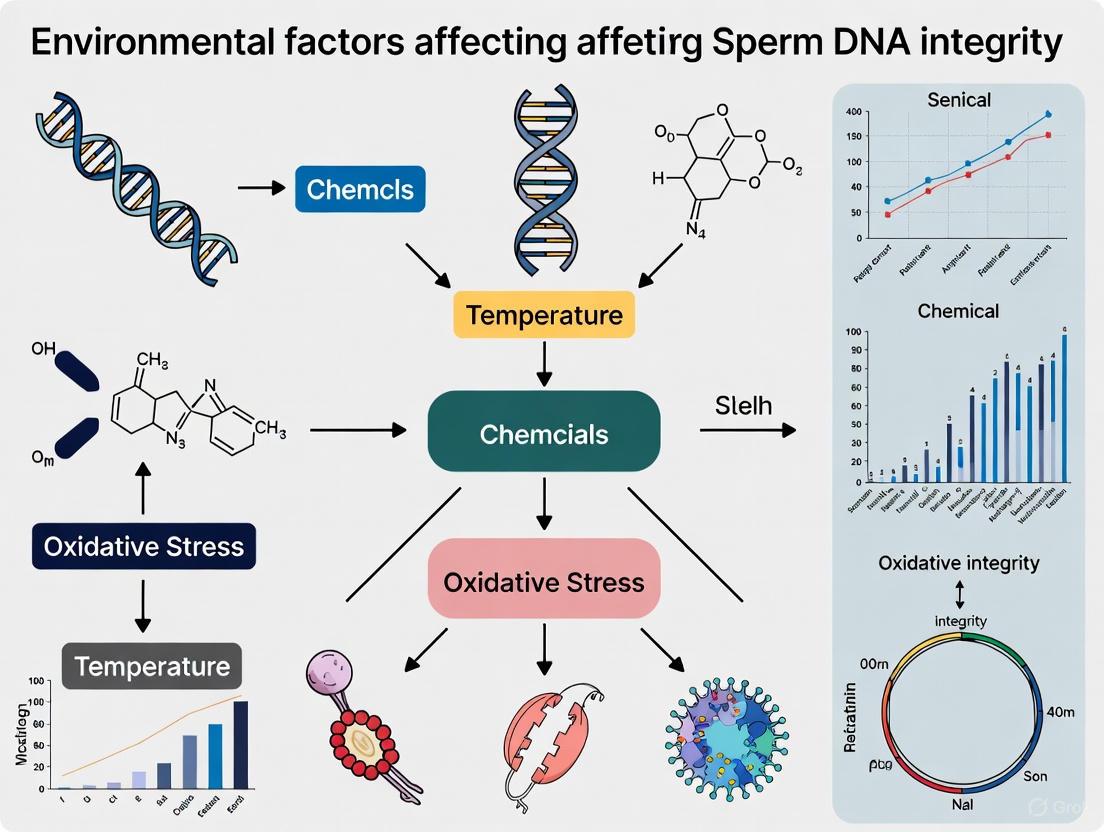
This article synthesizes current evidence on the impact of environmental factors on sperm DNA integrity, a critical parameter for male fertility and reproductive outcomes.
Environmental Assault on Sperm DNA: Mechanisms, Biomarkers, and Therapeutic Avenues for Male Fertility
Abstract
This article synthesizes current evidence on the impact of environmental factors on sperm DNA integrity, a critical parameter for male fertility and reproductive outcomes. We explore the mechanistic pathways—including oxidative stress, endocrine disruption, and direct DNA damage—through which air pollution, endocrine-disrupting chemicals, and lifestyle factors compromise sperm chromatin. The review critically assesses advanced Sperm DNA Fragmentation (SDF) testing methodologies and their clinical applications for diagnostics and patient stratification. Furthermore, we evaluate emerging intervention strategies, from lifestyle modifications to advanced sperm selection techniques and potential pharmacological treatments. Designed for researchers, scientists, and drug development professionals, this analysis highlights sperm DNA integrity as a biomarker of environmental exposure and a promising target for novel therapeutic development, aiming to bridge laboratory research with clinical innovation in andrology.
Unraveling the Assault: Key Environmental Toxins and Their Mechanisms of Sperm DNA Damage
The global decline in sperm quality represents a profound and accelerating public health crisis. Sperm counts have declined by approximately 60% among men in North America, Europe, and Australia between 1973 and 2011, with the rate of decline increasing to over 2% per year in studies published after 2000 [1]. This trend is no longer confined to Western nations, as recent research incorporating data from Africa, Asia, and South America confirms a statistically significant decline in sperm concentration across both "western" and "non-western" regions [1]. Male factor infertility now accounts for approximately 50% of infertility cases worldwide, affecting about 7% of men globally [2] [3]. The consistency of these findings across diverse geographical regions suggests that environmental rather than genetic factors are primarily responsible for this disturbing trend.
The decline in sperm parameters coincides with an increase in other male reproductive disorders, including testicular cancer and cryptorchidism, suggesting a common origin in fetal development and early life exposures [2]. Beyond its immediate reproductive implications, poor semen quality has emerged as a biomarker for overall male health. A Danish study of 4,712 men found that semen parameters could serve as predictors for long-term morbidity and mortality, particularly related to cardiovascular disease and diabetes mellitus [2] [3]. Men with the lowest sperm concentrations were hospitalized on average seven years earlier than those with normal sperm counts, independent of socioeconomic status and lifestyle factors [2] [3]. This connection underscores that the sperm quality crisis reflects broader environmental health threats with implications beyond reproductive function.
Key Environmental Factors and Mechanisms
Endocrine-Disrupting Chemicals (EDCs)
Endocrine-disrupting chemicals constitute a class of compounds that interfere with hormonal signaling at extremely low concentrations, particularly during critical developmental windows. These chemicals mimic or block the action of natural hormones, disrupting the delicate endocrine balance required for normal spermatogenesis and reproductive system development.
Table 1: Major Endocrine-Disrupting Chemicals Affecting Sperm Quality
| Chemical Class | Common Sources | Primary Reproductive Effects | Key Mechanisms |
|---|---|---|---|
| Phthalates | Soft plastics, food containers, medical tubing, personal care products | Reduced testosterone, smaller genitalia, lowered sperm counts [1] | Anti-androgenic; lowers testosterone production [1] |
| Bisphenols (BPA) | Hard plastics, food can linings, receipt paper | Increased estrogenic activity, impaired sperm function [2] [3] | Estrogenic; mimics natural estrogen [1] |
| Polychlorinated Biphenyls (PCBs) | Industrial contaminants, fish and seafood | Reduced sperm motility, abnormal morphology [2] [3] | Altered steroidogenesis, oxidative stress |
| Organochlorinated Pesticides | Agricultural pesticides, contaminated food | Decreased sperm concentration, DNA damage [2] [3] | Estrogenic and anti-androgenic effects |
The concept of "phthalate syndrome" was identified through research on the effects of phthalate exposure during critical gestational periods, resulting in smaller penises, a shorter anogenital distance, and—once children reached sexual maturity—lowered sperm counts [1]. These findings demonstrate that the most significant impacts of EDCs occur during fetal development, programming reproductive system deficits that manifest in adulthood.
Air Pollution and Particulate Matter
Air pollution has emerged as a major contributor to declining sperm quality, with multiple studies demonstrating negative correlations between air pollutant levels and semen parameters. A meta-analysis revealed substantial negative correlations between air pollution levels and semen volume, sperm concentration, total sperm motility, morphology, and the DNA fragmentation index [2]. The mechanisms by which air pollution impairs sperm function include:
- Oxidative Stress: Increased generation of reactive oxygen species (ROS) results in lipid peroxidation, fragmentation of sperm DNA, and infertility [2] [3].
- Heavy Metals and PAHs: Car exhaust contains heavy metals like lead, zinc, and copper, as well as polycyclic aromatic hydrocarbons (PAHs) which have estrogenic, antiestrogenic, and antiandrogenic properties that impair gametogenesis and gonadal steroidogenesis [2].
- DNA Damage and Epigenetic Changes: Exposure to PAHs creates DNA adducts and causes changes in gene expression and DNA methylation, resulting in male infertility [2] [3].
Particulate matter, particularly PM2.5 (particles ≤ 2.5µm), presents a significant risk as these fine particles can accumulate in reproductive organs via placental and blood-testis barriers, disrupting hormone levels and contributing to infertility [2] [3]. Studies show that sperm exposed to PM2.5 exhibit a higher frequency of morphological defects and cytoplasmic droplets [2].
Lifestyle and Health Factors
Multiple lifestyle and health factors significantly impact sperm DNA integrity, as revealed by a systematic review and meta-analysis of 190 studies [4]. The following table summarizes the quantitative impact of key risk factors on sperm DNA fragmentation (SDF):
Table 2: Impact of Health and Lifestyle Factors on Sperm DNA Fragmentation
| Risk Factor | Increase in Sperm DNA Fragmentation | Notes |
|---|---|---|
| Varicocele | 13.62% (CI: 9.39–17.84) [4] | Most significant health condition |
| Impaired Glucose Tolerance | 13.75% (CI: 6.99–20.51) [4] | Comparable to varicocele impact |
| Testicular Tumors | 11.3% (CI: 7.84–14.76) [4] | Highest among malignancies |
| Smoking | 9.19% (CI: 4.33–14.06) [4] | Most disruptive lifestyle factor |
| Pollution | 9.68% (CI: 6.85–12.52) [4] | Significant environmental impact |
| Paternal Age (>50) | 12.58% (CI: 7.31–17.86) [4] | Drastic effect from age 50 onwards |
These risk factors primarily operate through oxidative stress pathways, where an imbalance between reactive oxygen species (ROS) and antioxidant defenses leads to sperm membrane lipid peroxidation, loss of membrane integrity, and DNA damage [5]. Due to their cell membranes' high concentrations of unsaturated fatty acids and limited antioxidant capacity, spermatozoa are particularly vulnerable to oxidative damage [5].
Advanced Diagnostic Methodologies
Sperm DNA Integrity Assessment
The evaluation of sperm DNA fragmentation has emerged as a critical diagnostic parameter that provides prognostic information beyond conventional semen analysis. Several validated methodologies exist for assessing SDF:
- Sperm Chromatin Structure Assay (SCSA): This flow cytometry-based method measures the susceptibility of sperm DNA to acid-induced denaturation. It is considered a gold standard for SDF assessment and has strong predictive value for fertility outcomes [6] [7].
- Sperm Chromatin Dispersion (SCD) Test: A simpler technique that allows for accurate quantification of DNA fragmentation using conventional bright-field microscopy. The halo of dispersed DNA loops observed in sperm with intact DNA is absent or reduced in sperm with fragmented DNA [5].
- Terminal Deoxynucleotidyl Transferase (dUTP) Nick End Labeling (TUNEL): This method directly labels DNA strand breaks with fluorescent nucleotides and can be analyzed by flow cytometry or fluorescence microscopy [4].
- Comet Assay (Single-Cell Gel Electrophoresis): This technique measures single and double-strand DNA breaks by evaluating DNA migration patterns under electrophoresis. The alkaline version detects both single and double-strand breaks, while the neutral version primarily detects double-strand breaks [7].
A novel co-staining protocol using acridine orange (AO) and LIVE/DEAD Fixable Blue Dead Cell Stain (LD) has been validated for simultaneous analysis of DNA fragmentation in membrane-intact spermatozoa via flow cytometry [6]. This method allows for the assessment of four sperm categories and provides clinically relevant information about the DNA fragmentation in viable spermatozoa, potentially improving the diagnosis of male infertility [6].
Epigenetic Biomarkers
Epigenetic alterations, particularly in DNA methylation patterns, have emerged as promising biomarkers for male infertility. A 2019 study identified a signature of 217 differential DNA methylation regions (DMRs) associated with idiopathic male infertility using genome-wide analysis [8]. The experimental protocol for this analysis involved:
- DNA Extraction and Fragmentation: DNA was extracted from sperm samples and fragmented for methylated DNA immunoprecipitation (MeDIP) analysis.
- MeDIP Sequencing: MeDIP is a genome-wide analysis examining 95% of the genome comprising low density CpG regions. The MeDIP DNA is prepared for next generation DNA sequencing.
- Bioinformatic Analysis: Sequencing data were analyzed to identify DMRs comparing fertile versus infertile patient sperm DNA [8].
This research also identified distinct epigenetic signatures that could predict responsiveness to follicle stimulating hormone (FSH) therapeutic treatment. The study found 56 DMRs that distinguished patients who responded to FSH therapy with a 2-3 fold increase in sperm number and/or motility versus non-responders [8]. This novel use of epigenetic biomarkers to identify responsive patient populations may dramatically improve clinical trials and facilitate targeted therapeutic interventions.
Emerging Technologies: Deep Learning Applications
Advanced computational methods are being developed to non-invasively assess sperm DNA quality. A deep convolutional neural network (CNN) has been trained to predict DNA integrity from brightfield images alone, demonstrating moderate correlation (bivariate correlation ~0.43) between sperm cell images and DNA quality [7].
The experimental workflow for this technology involves:
- Image Acquisition: Collection of bright-field images of individual sperm cells.
- DNA Quality Assessment: Measurement of actual DNA Fragmentation Index (DFI) for each sperm cell using established assays.
- Model Training: Training a deep CNN on approximately 1,000 sperm cells of known DNA integrity to learn the relationship between visual features and DNA quality.
- Prediction and Selection: Using the trained model to predict DNA integrity from new sperm images in under 10 milliseconds per cell, enabling selection of sperm with higher DNA integrity for assisted reproductive technologies [7].
This approach can identify higher DNA integrity cells relative to the median, with the potential to select sperm at the 86th percentile from a given sample, which could significantly improve intracytoplasmic sperm injection (ICSI) outcomes [7].
Diagram 1: Pathways linking environmental factors to impaired sperm DNA integrity and clinical outcomes
The Scientist's Toolkit: Research Reagent Solutions
Table 3: Essential Research Reagents for Sperm DNA Integrity Studies
| Reagent/Assay | Application | Key Features | References |
|---|---|---|---|
| Acridine Orange (AO) | DNA fragmentation detection via flow cytometry | Metachromatic dye that emits green when bound to double-stranded DNA and red when bound to single-stranded DNA | [6] |
| LIVE/DEAD Fixable Blue Stain | Membrane integrity assessment | Reactive dye that penetrates membrane-compromised cells | [6] |
| Methylated DNA Immunoprecipitation (MeDIP) | Genome-wide DNA methylation analysis | Examines 95% of genome comprising low density CpG regions; uses anti-methylcytosine antibody | [8] |
| Sperm Chromatin Dispersion (SCD) Test Kit | DNA fragmentation assessment | Contains pre-coated slides, agarose, and processing solutions for bright-field microscopy | [5] |
| Propidium Iodide (PI) | Cell viability assessment | Membrane-impermeant dye that stains DNA of membrane-compromised cells | [6] |
| Terminal Deoxynucleotidyl Transferase (TdT) | TUNEL assay for DNA strand breaks | Enzymatically labels 3'-OH ends of DNA breaks with fluorescent nucleotides | [4] |
Therapeutic Interventions and Future Directions
Medical Interventions
Follicle stimulating hormone (FSH) therapeutic treatment represents a promising strategy for a subpopulation of male infertility patients. Clinical studies have demonstrated that treatment with 150 IU dose of FSH three times per week for three months resulted in a 2-3 fold increase in sperm number and/or motility in responsive patients [8]. The identification of epigenetic biomarkers that can predict FSH responsiveness may enable more targeted application of this therapy. Specifically, 56 distinct DMRs have been identified that differentiate FSH-responsive from non-responsive patients, with no overlap between the infertility-associated DMRs and the FSH responsiveness-associated DMRs [8]. This suggests that epigenetic profiling could significantly improve patient selection and treatment outcomes.
Lifestyle Modification Protocols
Structured lifestyle modification programs have demonstrated efficacy in reducing sperm DNA fragmentation. A proposed study protocol involves comprehensive assessment and intervention:
- Baseline Assessment: Semen analysis, DNA fragmentation testing (using SCD test), and detailed lifestyle questionnaire covering dietary habits, occupational background, and lifestyle practices.
- Intervention Components:
- Cessation of smoking and alcohol consumption
- Implementation of structured fitness routines with professional guidance
- Emphasis on adequate hydration and nutritional optimization
- Follow-up Evaluation: Reassessment of sperm DNA fragmentation levels after 3-6 months of lifestyle modifications [5].
This protocol anticipates a significant reduction in sperm DNA fragmentation index following lifestyle modifications, potentially improving both natural and assisted reproductive outcomes [5].
Policy Implications and Future Research
The accumulating evidence linking environmental toxicants to declining sperm quality necessitates urgent regulatory action. Scientists have called for "action needed on plastic additives linked to sperm decline," particularly highlighting the need for safer replacements for phthalates and bisphenols [1]. The collapse of global pollution treaties highlights the challenges in addressing this crisis through international regulation.
Future research directions should focus on:
- Elucidating precise mechanisms by which specific toxicants impair spermatogenesis and sperm function
- Developing refined biomarkers that can identify subpopulations at particular risk or responsive to specific interventions
- Advancing detection technologies that enable non-invasive assessment of sperm DNA integrity in clinical settings
- Exploring interventions that can mitigate or reverse the effects of environmental exposures on sperm quality
The integration of advanced technologies like deep learning with traditional semen analysis represents a promising avenue for improving both diagnosis and treatment selection in male infertility [7]. As the field progresses, the assessment of sperm quality may serve not only as a reproductive evaluation but as a valuable gateway to broader men's healthcare, prompting proactive strategies that mitigate associated health risks and potentially enhance longevity [9].
Male infertility is a significant global health concern, with male factor infertility contributing to nearly 50% of cases among couples of childbearing age [10]. In recent decades, a noticeable decline in sperm parameters has been observed, raising concerns about the impact of environmental factors on male reproductive health [2]. Among these factors, airborne pollutants—specifically fine particulate matter (PM2.5), ozone (O3), and heavy metals—have emerged as significant threats to sperm DNA integrity and overall semen quality [11] [12] [13].
The integrity of sperm DNA is crucial for successful fertilization, proper embryonic development, and the health of offspring [14] [15]. Environmental toxicants can compromise this integrity through multiple mechanisms, primarily by inducing oxidative stress, which leads to sperm DNA fragmentation, lipid peroxidation, and protein oxidation [10]. This technical review examines the current evidence linking exposure to PM2.5, ozone, and heavy metals with impaired sperm DNA integrity, explores the underlying molecular mechanisms, and summarizes methodological approaches for investigating these associations in research settings.
Pollutant-Specific Effects on Sperm DNA Integrity
Fine Particulate Matter (PM2.5)
PM2.5 refers to airborne particles with a diameter of less than 2.5 micrometers, which can penetrate deeply into the respiratory system and enter the systemic circulation. A recent spatial cross-sectional study of 21,851 U.S. men undergoing fertility evaluation demonstrated that higher PM2.5 exposure was significantly associated with increased sperm DNA fragmentation index (DFI) (estimate = 0.45; P = 0.0025) [11]. The study revealed a clear nonlinear dose-response relationship, with effects peaking at approximately 11 µg/m³ [11]. Notably, this analysis identified a significant interaction between PM2.5 and socioeconomic status, indicating that men from lower socioeconomic areas experienced stronger pollution-related DNA damage [11].
Table 1: Key Findings on PM2.5 Exposure and Sperm DNA Integrity
| Study Type | Sample Size/Model | Exposure Assessment | Key Findings | Reference |
|---|---|---|---|---|
| Spatial cross-sectional study | 21,851 U.S. men | Satellite-derived models aligned with spermatogenic window | Higher PM2.5 associated with increased DFI; dose-response pattern peaking at ~11 µg/m³; stronger effects in lower SES | [11] |
| Mouse model | C57BL/6 mice (n=6/group) | Intratracheal instillation of WS-PM2.5 and WI-PM2.5 | WI-PM2.5 increased DFI and abnormal sperm heads; both types reduced normal sperm morphology | [16] |
| Prospective cohort | Human males with sperm quality issues | Atomic absorption spectrophotometry | PM2.5-related metal toxicants adversely affected sperm morphology and DNA integrity | [13] |
The chemical composition of PM2.5 significantly influences its reproductive toxicity. Research has differentiated between water-soluble (WS-PM2.5) and water-insoluble (WI-PM2.5) components, each with distinct toxicological profiles [16]. WS-PM2.5 contains endotoxins, metal ions, and nitrates, while WI-PM2.5 is typically enriched with polycyclic aromatic hydrocarbons (PAHs), carbonaceous particles, and water-insoluble heavy metals [16]. Animal studies demonstrate that WI-PM2.5 exposure particularly increases sperm DNA fragmentation index and abnormal sperm head morphology, while both WS-PM2.5 and WI-PM2.5 reduce rates of normal sperm morphology [16].
Ozone (O3)
Ground-level ozone is a major secondary air pollutant formed through photochemical reactions between nitrogen oxides and volatile organic compounds. Evidence regarding ozone's impact on semen quality has been conflicting, though recent research has shed light on its potential mechanisms of action.
A comprehensive study among 1,068 potential sperm donors who provided 5,002 repeated semen samples found that every 10 μg/m³ increase in ozone exposure was associated with decreased sperm telomere length, concentration, total count, total motile sperm number, and semen volume [12]. Interestingly, ozone exposure was paradoxically associated with increased total motility and progressive motility [12]. The association was strongest when exposure was measured during specific spermatogenesis stages (I and II for sperm quality parameters; stage II specifically for sperm telomere length) [12]. Mediation analysis revealed that approximately 9% and 8% of the association between O3 exposure and sperm concentration and count, respectively, was mediated by sperm telomere length [12].
Table 2: Ozone Exposure Effects on Sperm Parameters
| Sperm Parameter | Effect per 10 μg/m³ Increase in O3 | Most Sensitive Exposure Window | Mediation by Sperm Telomere Length |
|---|---|---|---|
| Sperm telomere length | Decrease | Spermatogenesis stage II | - |
| Sperm concentration | Decrease | Spermatogenesis stages I & II | ~9% |
| Total sperm count | Decrease | Spermatogenesis stages I & II | ~8% |
| Total motile sperm number | Decrease | Spermatogenesis stages I & II | Not reported |
| Semen volume | Decrease | Spermatogenesis stages I & II | Not reported |
| Total motility | Increase | Spermatogenesis stages I & II | Not reported |
| Progressive motility | Increase | Spermatogenesis stages I & II | Not reported |
Integrated transcriptomic and metabolomic analyses of testicular tissue from ozone-exposed mice have revealed disrupted spermatogenesis pathways, including dysregulation of protein serine/threonine kinase activity, intracellular signal transduction, cell projection organization, and regulation of microtubule polymerization [17]. Additionally, twenty differential metabolites were identified as top abundance ranking features, primarily as intermediate products of phospholipid metabolism that act as signal molecules participating in intracellular signal transduction pathways, potentially affecting the fluidity and structure of sperm cell membranes [17].
Heavy Metals
Heavy metals, including lead (Pb), mercury (Hg), cadmium (Cd), chromium (Cr), and arsenic (As), are concerning environmental toxicants that can bioaccumulate in reproductive tissues [18]. These metals act as endocrine disruptors, interfering with processes mediated by endogenous hormones and negatively affecting endocrine functions [14]. The primary mechanisms through which heavy metals impair sperm DNA integrity include induction of oxidative stress, inflammation, and disruption of the blood-testis barrier [13] [18].
Flow cytometry analysis of sperm DNA fragmentation in men with teratozoospermia, asthenozoospermia, and oligozoospermia revealed DNA fragmentation indices ≥30% and ≥25% in the asthenozoospermia and oligozoospermia groups, respectively, associated with heavy metal exposure [13]. Scanning electron microscopy further demonstrated that chromium and arsenic exposure were specifically linked with sperm head and acrosome damage [13].
Table 3: Heavy Metal Effects on Sperm Quality and DNA Integrity
| Heavy Metal | Major Sources | Key Effects on Sperm | Proposed Mechanisms |
|---|---|---|---|
| Cadmium (Cd) | Industrial emissions, battery production, phosphate fertilizers, cigarette smoke | Reduced motile sperm count and viability; increased immotile sperm | ROS production; competition with essential elements; blood-testis barrier disruption; Sertoli cell DNA damage |
| Lead (Pb) | Battery recycling, construction, painting, contaminated water | Reduced sperm quality; decreased testicular steroidogenic enzymes; lower serum testosterone | Inhibition of lysine acetylation; ROS overproduction; disruption of hypothalamus-pituitary-testis axis |
| Mercury (Hg) | Fish/seafood consumption, manufacturing, environmental contamination | Decreased sperm concentration and motility; increased sperm abnormalities; DNA strand breaks | ROS production; antioxidant mechanism disruption; testicular structural damage |
| Chromium (Cr) | Industrial processes, contaminated food/water | Sperm head and acrosome damage; increased DNA fragmentation | Oxidative stress; direct DNA damage |
| Arsenic (As) | Contaminated drinking water, industrial processes | Poor semen quality; reduced sperm count and mobility | ROS generation; antioxidant depletion |
Heavy metals disrupt the delicate balance between reactive oxygen species (ROS) production and the body's antioxidant defenses [18]. Seminal plasma contains antioxidants including vitamin C, vitamin E, zinc, and selenium that normally counteract ROS effects and preserve sperm function [18]. However, exposure to heavy metals through occupational or environmental means increases ROS production beyond the capacity of these protective systems, leading to oxidative damage of sperm DNA, proteins, and lipids [18].
Molecular Mechanisms of Pollutant-Induced Sperm DNA Damage
Oxidative Stress Pathways
Oxidative stress represents a central mechanism unifying the sperm DNA damaging effects of PM2.5, ozone, and heavy metals. Under physiological conditions, low levels of ROS play essential roles in sperm capacitation, hyperactivation, and the acrosome reaction [10]. However, when ROS production exceeds antioxidant capacity, oxidative stress occurs, damaging sperm membranes, proteins, and DNA [10].
Sperm cells are particularly vulnerable to oxidative damage due to their high polyunsaturated fatty acid content in membranes, limited cytoplasmic volume (and thus limited antioxidant resources), and minimal DNA repair capabilities [10]. ROS-induced sperm DNA damage includes single-strand and double-strand breaks, as well as the formation of oxidative base lesions such as 8-hydroxy-2'-deoxyguanosine (8-OHdG) [10]. DNA fragmentation resulting from oxidative stress has been strongly correlated with male infertility and poor reproductive outcomes, including recurrent pregnancy loss and increased risk of congenital anomalies in offspring [10].
Diagram 1: Oxidative stress pathway for sperm DNA damage
Epigenetic Modifications
Beyond direct DNA damage, environmental pollutants can induce epigenetic modifications that affect sperm function and early embryonic development. Integrated multi-omics approaches have revealed that exposure to airborne toxins alters both transcriptomic and metabolomic profiles in testicular tissue [17]. In ozone-exposed mice, spermatogenesis was significantly affected through dysregulation of protein serine/threonine kinase activity, intracellular signal transduction, cell projection organization, and regulation of microtubule polymerization [17]. These molecular events participate in the regulation and control of spermatogenesis and may contribute to transgenerational inheritance of pollutant effects.
Heavy metal exposure has been associated with altered sperm nuclear basic proteins (SNBP) and reduced DNA binding affinity, creating unstable DNA binding that produces DNA damage [14]. Furthermore, studies have demonstrated that men from highly contaminated regions show higher zinc, chromium, and copper concentrations in semen alongside lower sperm motility and higher DNA damage compared to those not exposed to environmental pollutants [14].
Methodological Approaches for Pollution Research
Exposure Assessment Methodologies
Accurate exposure assessment is crucial for investigating the relationship between airborne pollutants and sperm DNA integrity. Multiple approaches have been employed in recent studies:
PM2.5 Exposure Quantification: Validated satellite-derived models aligned with the 70-80 day spermatogenic window prior to sample collection provide refined exposure assessment [11]. For compositional analysis, PM2.5 samples can be collected on quartz fiber filters and separated into water-soluble (WS-PM2.5) and water-insoluble (WI-PM2.5) fractions using ultrasonic bath sonication and centrifugation [16]. Chemical characterization includes ion chromatography for inorganic anions (F-, Cl-, Br-, NO3-, SO42-) and cations (NH4+, K+, Na+, Ca2+, Mg2+), along with inductively coupled plasma-atomic emission spectrometry (ICP-AES) for metallic elements including Cr, Mn, Fe, Ni, Zn, Cd, Pb, As, and others [16].
Heavy Metal Measurement: Atomic absorption spectrophotometry remains a standard technique for quantifying heavy metal concentrations in biological samples [13]. Seminal plasma metal concentrations provide a direct biomarker of the exposure status of the male reproductive system [18].
Ozone Exposure Assessment: Stationary monitoring data coupled with temporal alignment to critical spermatogenesis windows (particularly stages I and II) provides the most sensitive exposure assessment [12].
Diagram 2: Research methodology workflow
Sperm Quality Assessment Techniques
Comprehensive sperm quality assessment extends beyond conventional parameters to include molecular markers of DNA integrity:
Sperm DNA Fragmentation Index (DFI): Flow cytometry following sperm chromatin structure assay (SCSA) provides quantitative assessment of DNA fragmentation [13] [16]. This approach allows for high-throughput analysis and has been consistently associated with air pollution exposure.
Sperm Telomere Length (STL): Quantitative PCR methods assess telomere length, which has been identified as a mediator between ozone exposure and reduced semen quality [12].
Mitochondrial Function Assessment: Flow cytometric analysis of mitochondrial membrane potential (MMP) using fluorescent probes (e.g., JC-1) provides insight into mitochondrial function, which is crucial for sperm motility and vulnerable to pollutant-induced oxidative stress [16].
Morphological Analysis: Scanning electron microscopy (SEM) enables detailed evaluation of sperm head and acrosome abnormalities associated with specific metal exposures [13].
Integrated Omics Approaches: Transcriptomic mRNA sequencing combined with metabolomic profiling using high-performance liquid chromatography-tandem mass spectrometry (HPLC-MS/MS) provides comprehensive insight into molecular alterations in testicular tissue following pollutant exposure [17].
The Scientist's Toolkit: Research Reagent Solutions
Table 4: Essential Research Reagents and Materials
| Reagent/Material | Application | Function | Example Methodology |
|---|---|---|---|
| Quartz fiber filters | PM2.5 sample collection | Capture airborne particulates for compositional analysis | Collection of WS-PM2.5 and WI-PM2.5 fractions [16] |
| Ion chromatography systems | PM2.5 compositional analysis | Quantification of water-soluble ions (F-, Cl-, Br-, NO3-, SO42-, NH4+, K+, Na+, Ca2+, Mg2+) | Characterization of WS-PM2.5 components [16] |
| Inductively coupled plasma-atomic emission spectrometry (ICP-AES) | Heavy metal analysis | Detection and quantification of metallic elements in PM2.5 and biological samples | Analysis of Cr, Mn, Fe, Ni, Zn, Cd, Pb, As, and other metals [16] |
| Atomic absorption spectrophotometry | Heavy metal quantification | Measurement of heavy metal concentrations in biological samples | Analysis of seminal plasma metal content [13] |
| Flow cytometer with appropriate fluorescent probes | Sperm DNA fragmentation and mitochondrial function | Quantitative assessment of DFI, MMP, and ROS production | Sperm chromatin structure assay (SCSA); JC-1 staining for MMP [13] [16] |
| Scanning electron microscope | Sperm morphological analysis | High-resolution imaging of sperm head and acrosome structure | Identification of pollutant-specific morphological abnormalities [13] |
| HPLC-MS/MS systems | Metabolomic profiling | Comprehensive analysis of metabolic alterations in testicular tissue | Identification of differential metabolites in pollutant-exposed tissues [17] |
| RNA sequencing platforms | Transcriptomic analysis | Genome-wide expression profiling | Identification of dysregulated spermatogenesis pathways [17] |
The evidence comprehensively demonstrates that airborne pollutants—PM2.5, ozone, and heavy metals—pose significant threats to sperm DNA integrity through shared and pollutant-specific mechanisms. Oxidative stress emerges as a central pathway, with pollutants generating reactive oxygen species that overwhelm antioxidant defenses and damage sperm DNA, proteins, and lipids. The resulting sperm DNA fragmentation, telomere shortening, and epigenetic alterations contribute to male infertility and potentially adverse offspring outcomes.
Methodological advances in exposure assessment, particularly satellite-derived modeling aligned with spermatogenic windows and comprehensive chemical characterization of PM2.5 components, have strengthened the epidemiological evidence. Meanwhile, integrated multi-omics approaches in experimental models provide unprecedented insight into the molecular mechanisms underlying pollutant-induced spermatogenesis impairment.
Future research directions should include more refined exposure assessment considering specific pollutant mixtures, investigation of potential transgenerational epigenetic effects, and exploration of interventions to mitigate pollutant-induced sperm DNA damage. The findings underscore the urgent need for stringent air quality regulations and targeted public health interventions to protect male reproductive health, particularly in disadvantaged populations bearing disproportionate pollution exposure.
The decline of semen quality in many industrialized countries has positioned male infertility as a public health priority, with growing evidence linking it to exposure to environmental contaminants [19]. Endocrine-Disrupting Chemicals (EDCs) are exogenous substances that interfere with the synthesis, secretion, transport, binding, action, or elimination of natural hormones in the body, thereby disrupting homeostasis and reproductive processes [20] [19]. This whitepaper examines three critical classes of EDCs—Bisphenol A (BPA), phthalates, and pesticides—focusing on their mechanisms and quantitative impacts on sperm DNA integrity, a key biomarker for male reproductive health and a sensitive indicator of environmental stress [19]. The male reproductive system is highly vulnerable to these toxicants, which can induce sperm DNA damage, alter epigenetic programming, and enable transgenerational inheritance of defects, making human semen an early and reliable matrix for environmental health assessment [21] [19].
Chemical-Specific Effects on Sperm DNA Integrity
Bisphenol A (BPA) and Analogues
BPA is a foundational chemical in polycarbonate plastics and epoxy resins, leading to ubiquitous human exposure through food packaging, dental materials, and thermal paper [21] [22]. It exhibits genotoxic and epigenotoxic effects on male germ cells, jeopardizing embryonic survival and development through the transmission of a damaged paternal genome [21].
- DNA Fragmentation: Exposure of adult zebrafish to 100 µg/L BPA during early spermatogenesis (mitotic phase) induced a slight increase in sperm chromatin fragmentation. Conversely, exposure to 2000 µg/L BPA, particularly during the entire spermatogenesis process, resulted in severe DNA damage, with all spermatozoa exhibiting over 40% DNA fragmentation and 29% showing 70–80% fragmentation [21].
- Epigenetic Alterations: Spermatozoa from BPA-exposed males showed significant increases in histone acetylation marks (H3K9Ac and H3K27Ac), which were similarly transmitted to the resulting embryos. Global DNA methylation was not significantly altered in this model [21].
- Impacts on Progeny: Paternal BPA exposure triggered high levels of DNA repair activity (γH2AX and 53BP1 foci) in embryos sired by males treated with 100 µg/L BPA. Exposure to 2000 µg/L BPA led to a significant increase in apoptotic activity in early embryos (up to 68.2%) and severe mortality, reaching 100% by 48 hours post-fertilization after paternal exposure during the entire spermatogenesis [21].
Phthalates
Phthalates, particularly Di-(2-ethylhexyl) phthalate (DEHP), are plasticizers found in consumer products, personal care items, and food packaging. Mono-(2-ethylhexyl) phthalate (MEHP) is a primary bioactive metabolite of DEHP [23] [24].
- Hormonal Alterations: In a cross-sectional study of men from an infertility clinic, MEHP was inversely associated with serum levels of estradiol, total testosterone, and free testosterone, indicating significant disruption of the endocrine environment essential for spermatogenesis [23] [24].
- Sperm DNA Damage and Apoptosis: The percentage of DEHP metabolites excreted as MEHP (%MEHP) showed a positive dose-response relationship with the percentage of tail DNA in the comet assay, a direct measure of DNA strand breaks. Furthermore, MEHP and other DEHP metabolites (MEHHP, MEOHP) were positively associated with the percentage of Annexin V+/PI- spermatozoa, a marker for early apoptosis [23] [24].
Pesticides
Organophosphates (e.g., Chlorpyrifos) and other classes of pesticides are widely used in agriculture and are established EDCs with demonstrated reproductive toxicity [20] [25].
- Induction of Oxidative Stress and Apoptosis: Chlorpyrifos induces apoptosis in testicular cells by generating reactive oxygen species (ROS), reducing mitochondrial membrane potential, and increasing lipid peroxidation. This oxidative stress directly damages sperm cellular components and DNA [20].
- Hormonal and Sperm Effects: Epidemiological and animal studies link pesticide exposure to reduced sperm concentration, motility, and typical morphology. For instance, occupational exposure in men has been associated with altered follicle-stimulating hormone (FSH) levels and increased sperm aneuploidy [20] [19].
Table 1: Quantitative Summary of EDC Effects on Sperm DNA and Related Parameters
| EDC Class | Specific Compound | Experimental Model | Key Findings Related to Sperm DNA/Function | Magnitude of Effect |
|---|---|---|---|---|
| Bisphenols | BPA (100 µg/L) | Zebrafish (male exposure) | Slight increase in sperm chromatin fragmentation; increased embryonic DNA repair activity [21]. | ~30% of sperm had <10% DNA fragmentation (long exposure) [21] |
| Bisphenols | BPA (2000 µg/L) | Zebrafish (male exposure) | Severe sperm DNA damage; induced early apoptosis in embryos [21]. | 100% embryo mortality by 48 hpf (long exposure) [21] |
| Phthalates | MEHP (DEHP metabolite) | Human epidemiological study | Inverse association with serum testosterone; positive association with sperm DNA damage (tail DNA) and early apoptosis [23] [24]. | Significant inverse dose-response for testosterone (P<0.05); positive dose-response for DNA damage (P<0.05) [23] |
| Pesticides | Chlorpyrifos | Rat / Mouse cell lines | Induced testicular-cell apoptosis via ROS generation and reduced steroidogenic gene expression [20]. | Decreased sperm count and serum testosterone levels in rats [20] |
| Air Pollutants | PM2.5, B[a]P | Human epidemiological study | Increased sperm mitochondrial DNA deletion rate following high-exposure period [26]. | MtDNA deletion rates significantly higher after high pollution season (P=0.049) [26] |
Mechanisms of Action
EDCs impair sperm DNA integrity through multiple interconnected pathways, with oxidative stress being a central mechanism.
Oxidative Stress
A critical balance between reactive oxygen species (ROS) and antioxidant defenses is essential for sperm function. Excessive ROS, generated by EDC exposure or from immature spermatozoa and leukocytes, damages sperm plasma membranes (rich in polyunsaturated fatty acids) and nuclear DNA, leading to fragmentation [19]. This oxidative stress is a documented effect of PM, PAHs, and organophosphate pesticides [19]. The transcription factor Nrf2, a master regulator of the antioxidant response, is a key player in counteracting this damage [19].
Endocrine Receptor Interference
EDCs mimic or block the action of natural hormones. BPA binds to estrogen receptors (ERα and ERβ) with weak estrogenic activity, disrupting the hormonal regulation of spermatogenesis [22]. Many phthalates and their metabolites exhibit anti-androgenic properties, interfering with androgen receptor signaling and testosterone production, which is crucial for meiotic division and sperm maturation [22] [25].
Epigenetic Modifications
EDCs can alter the epigenetic landscape of sperm, including histone modifications and DNA methylation patterns. Paternal exposure to BPA has been shown to increase histone acetylation (H3K9Ac, H3K27Ac) in spermatozoa, which can be transmitted to the embryo and alter gene expression, potentially affecting progeny health and development [21].
The following diagram illustrates the core mechanistic pathways through which BPA, Phthalates, and Pesticides disrupt sperm DNA integrity.
Essential Research Toolkit
This section details critical reagents and methodologies for investigating the impact of EDCs on sperm DNA integrity.
Key Research Reagent Solutions
Table 2: Essential Reagents and Kits for EDC Research on Sperm DNA Integrity
| Research Reagent / Kit | Primary Function in Analysis | Specific Application Example |
|---|---|---|
| Comet Assay Kit | Quantifies single and double-strand DNA breaks in individual sperm cells [23] [21]. | Detecting phthalate-induced DNA strand breaks, reported as % tail DNA [23]. |
| Annexin V/Propidium Iodide (PI) Apoptosis Kit | Distinguishes early apoptotic (Annexin V+/PI-) from late apoptotic/necrotic spermatozoa [23] [24]. | Identifying sperm in early stages of phthalate-induced apoptosis [23]. |
| Sperm Chromatin Structure Assay (SCSA) | Flow cytometry-based method to assess sperm DNA fragmentation index (DFI) and chromatin maturity [26]. | Correlating air pollution exposure with increased DFI [26]. |
| QIAamp DNA Blood Mini Kit (with DTT) | Isolates high-quality genomic DNA from complex semen samples for downstream molecular analysis [26]. | Extracting sperm DNA for real-time PCR analysis of mtDNA copy number and deletion [26]. |
| SYTO-9 Master Mix | Fluorescent dye for real-time PCR quantification of DNA targets [26]. | Amplifying nuclear (β2M) and mitochondrial (MinorArc, MajorArc) DNA to calculate mtDNAcn and deletion rates [26]. |
| Proteinase K | Digests proteins and nucleases, critical for liberating and protecting nucleic acids during DNA isolation from sperm [26]. | Sample processing prior to DNA isolation for mtDNA analysis [26]. |
| GuEX Buffer | A guanidine hydrochloride-based buffer for efficient cell lysis and nucleic acid stabilization prior to DNA purification [26]. | Initial processing and stabilization of semen samples within 24 hours of collection [26]. |
| Antibodies (γH2AX, 53BP1) | Immunodetection of DNA double-strand break markers and repair foci formation in sperm or early embryos [21]. | Assessing activation of embryonic DNA damage response after paternal BPA exposure [21]. |
Detailed Experimental Protocol: Sperm Mitochondrial DNA Analysis
The following workflow and protocol, adapted from a study on air pollution, is used to assess mtDNA copy number (mtDNAcn) and deletion (mtDNAdel) rates as sensitive biomarkers of oxidative stress induced by environmental exposures [26].
Procedure:
- Sample Collection and Processing: Collect semen sample by masturbation after 2–7 days of abstinence. Allow to liquefy at room temperature. Wash sperm in PBS. Process the sediment within 24 hours using 400 µL GuEX buffer and 20 µL proteinase K (20 mg/ml) for 15 min at 37°C. After centrifugation, resuspend the pellet in PBS [26].
- DNA Isolation: Isolate genomic DNA from the processed sperm using the QIAamp DNA Blood Mini Kit, incorporating 30 µL of 1 M dithiothreitol (DTT) to efficiently break sperm chromatin disulfide bonds. Elute and store DNA at -20°C [26].
- Real-Time PCR Amplification:
- Targets: Design primers for a single-copy nuclear gene (e.g., Beta-2 microglobulin, β2M), an invariable region of mtDNA (e.g., MinorArc), and a large region encompassing common deletion sites (e.g., MajorArc).
- Reaction Setup: Perform triplicate 10 µL reactions containing 1x SYTO-9 Master Mix, 0.3 µM primers, and 10 ng of isolated DNA.
- Cycling Conditions: 95°C for 4 min; 40 cycles of 94°C for 60 s, 55°C for 30 s, and 72°C for 45 s.
- Data Calculation:
- mtDNA Copy Number (mtDNAcn): Calculate using the ΔΔCq method relative to the nuclear reference gene: MtDNAcn = 2 × 2^(Cqβ2M - CqMinorArc).
- mtDNA Deletion Rate (mtDNAdel): Calculate the ratio of the large amplicon to the small, stable amplicon: mtDNAdel = 2^(CqMajorArc - CqMinorArc) [26].
The evidence conclusively demonstrates that EDCs, including BPA, phthalates, and pesticides, are significant environmental risk factors for male reproductive health by compromising sperm DNA integrity. The mechanisms are multifactorial, involving oxidative stress, hormonal interference, and epigenetic modifications. The use of advanced molecular techniques—such as sperm mtDNA analysis, comet assay, and assessment of epigenetic marks—provides a powerful "Scientist's Toolkit" for detecting these subtle but critical impacts. Integrating these sensitive biomarkers into environmental health assessment and surveillance programs is crucial for early detection of risk and for developing public health policies aimed at reducing exposure, thereby protecting male fertility and the health of future generations.
Male infertility is a significant global health concern, with male factor infertility contributing to nearly 50% of cases among couples of childbearing age [10]. While conventional semen analysis assesses parameters like sperm count, motility, and morphology, approximately 15% of infertile patients show no abnormalities in these standard tests, indicating the need for more sophisticated diagnostic approaches that evaluate sperm at the molecular level [27] [28]. Integrity of sperm genome is now recognized as an essential prerequisite for the birth of healthy offspring, making DNA integrity analysis a crucial diagnostic and prognostic marker of sperm reproductive potential [28].
Environmental factors induce sperm damage through three interconnected cellular pathways: oxidative stress, apoptosis, and epigenetic alterations. These pathways compromise sperm function, DNA integrity, and the paternal epigenetic contribution to the embryo. This whitepaper examines the mechanisms through which these pathways operate, their interrelationships, and the experimental methodologies employed in their investigation, framed within the context of environmental effects on sperm DNA integrity.
Oxidative Stress Pathways
Molecular Mechanisms of Oxidative Damage
Reactive oxygen species (ROS) play a complex dual role in sperm physiology and pathology. At controlled physiological levels, ROS are essential for normal sperm functions including capacitation, hyperactivation, and the acrosome reaction [10]. However, when ROS production exceeds the antioxidant capacity of the seminal plasma, oxidative stress occurs, leading to structural and functional damage to spermatozoa [10] [29].
Sperm cells are particularly vulnerable to oxidative stress due to their unique characteristics: high polyunsaturated fatty acid (PUFA) content in their membranes, limited cytoplasmic volume containing antioxidant defenses, and minimal DNA repair capabilities [10]. The primary sources of oxidative stress in sperm include leukocyte activity, mitochondrial dysfunction, and environmental factors such as smoking, pollution, and scrotal hyperthermia [10] [30].
The molecular mechanisms of oxidative damage encompass three primary targets:
Lipid Peroxidation: The sperm membrane, rich in PUFAs, is particularly susceptible to lipid peroxidation, a chain reaction that leads to the formation of toxic byproducts such as malondialdehyde (MDA) and 4-hydroxynonenal (4-HNE) [10]. These byproducts compromise membrane integrity, affecting fluidity and permeability essential for sperm motility and fusion with the oocyte.
DNA Fragmentation: ROS can induce single-strand and double-strand breaks in sperm DNA, as well as the formation of oxidative base lesions such as 8-hydroxy-2'-deoxyguanosine (8-OHdG) [10] [28]. DNA fragmentation resulting from oxidative stress has been strongly correlated with male infertility and poor reproductive outcomes, including recurrent pregnancy loss and increased risk of congenital anomalies [10] [28].
Protein Oxidation: Oxidative modification affects key proteins involved in sperm motility and structure, including actin and tubulin, leading to loss of motility and abnormal morphology [10]. Protein oxidation also impairs enzymes regulating sperm metabolism and energy production, further compromising sperm viability.
Table 1: Quantitative Markers of Oxidative Stress in Sperm Pathology
| Marker Category | Specific Marker | Normal Range | Pathological Range | Detection Method |
|---|---|---|---|---|
| Lipid Peroxidation | Malondialdehyde (MDA) | <1.0 μmol/L | 1.5-4.0 μmol/L | Colorimetric assay |
| 4-hydroxynonenal (4-HNE) | Low immunofluorescence | High immunofluorescence | Immunofluorescence | |
| DNA Damage | DNA Fragmentation Index (DFI) | <15% | 15-30% (moderate), >30% (severe) | TUNEL, SCSA |
| 8-OHdG | <5% positive cells | 10-25% positive cells | Immunohistochemistry | |
| Oxidative Stress | ROS levels | <20 RLU/s × 10^6 | >40 RLU/s × 10^6 | Chemiluminescence |
Environmental Triggers of Oxidative Stress
Environmental factors significantly influence oxidative stress levels in sperm. Scrotal hyperthermia, whether from occupational exposure (professional drivers, welders) or clinical conditions (varicocele), directly induces the oxidative stress cascade in ejaculated sperm, affecting plasma membrane fluidity, mitochondrial homeostasis, and DNA integrity [30]. Studies on professional drivers and infertile men with varicocele revealed significant induction of mitochondrial superoxide anion generation and positive correlation with DNA fragmentation levels [30].
Other environmental factors including smoking, alcohol consumption, pollution, and obesity have been associated with increased sperm DNA damage [28]. These factors introduce free radicals into the body or disrupt the natural antioxidant systems, leading to elevated ROS levels and subsequent sperm damage.
Apoptotic Pathways in Sperm
Intrinsic Apoptosis Signaling
Apoptosis in spermatozoa occurs primarily through the intrinsic (mitochondrial) pathway. In somatic cells, this pathway is characterized by mitochondrial outer membrane permeabilization (MOMP), leading to cytochrome c release and caspase activation. While spermatozoa possess an abbreviated apoptotic machinery, they demonstrate key markers of intrinsic apoptosis including phosphatidylserine externalization, mitochondrial membrane potential dissipation, and DNA fragmentation [30].
The mitochondrial pathway in sperm is characterized by decreased mitochondrial membrane potential and enhanced DNA fragmentation, creating a strongly apoptotic phenotype in cases of male infertility [30]. These apoptotic events can be triggered by various stressors including genital heat stress, oxidative stress, and environmental toxins.
Detection Methodologies for Sperm Apoptosis
Flow cytometry provides a robust platform for multiparameter assessment of apoptotic markers in sperm. Key methodologies include:
Annexin V-FITC/PI Staining: This method detects phosphatidylserine (PS) externalization, an early apoptotic event. PS translocates from the inner to outer membrane leaflet during apoptosis, where it can be detected by Annexin V-FITC binding. Propidium iodide (PI) distinguishes necrotic cells (Annexin V+/PI+) from apoptotic cells (Annexin V+/PI-) [27].
JC-1 Staining for Mitochondrial Membrane Potential (MMP): The lipophilic cationic dye JC-1 exhibits potential-dependent accumulation in mitochondria, indicated by fluorescence emission shift from green (~525 nm) to orange-red (~590 nm) as MMP increases. Mitochondrial depolarization is indicated by a decrease in the red/green fluorescence intensity ratio [27].
DNA Fragmentation Assessment: The TUNEL (Terminal deoxynucleotidyl transferase dUTP Nick End Labeling) assay detects DNA strand breaks by catalytically incorporating fluorescent-dUTP at DNA break sites, which can be quantified by flow cytometry [30].
Table 2: Research Reagent Solutions for Apoptosis Detection
| Research Reagent | Application | Detection Method | Key Function |
|---|---|---|---|
| Annexin V-FITC | Early apoptosis detection | Flow cytometry | Binds externalized phosphatidylserine |
| Propidium Iodide (PI) | Membrane integrity | Flow cytometry (Ex/Em: 535/617 nm) | Distinguishes necrotic cells |
| JC-1 Dye | Mitochondrial membrane potential | Flow cytometry (monomers: Ex/Em: 490/529 nm; aggregates: Ex/Em: 514/590 nm) | Detects mitochondrial depolarization |
| MitoSOX Red | Mitochondrial superoxide | Flow cytometry (Ex/Em: 510/580 nm) | Detects mitochondrial superoxide generation |
| TUNEL Assay Kit | DNA fragmentation | Flow cytometry/Fluorescence microscopy | Labels DNA strand breaks |
Epigenetic Alterations
Oxidative Stress and Epigenetic Dysregulation
Epigenetic mechanisms—including DNA methylation, histone modifications, and non-coding RNA activity—are crucial for spermatogenesis and the establishment of paternal genomic imprints [31]. However, these dynamic processes are highly vulnerable to oxidative stress, which can disrupt epigenetic programming in male germ cells.
Oxidative stress affects epigenetic regulation through multiple mechanisms:
DNA Methylation Dynamics: ROS can directly modify epigenetic regulators by oxidizing cysteine residues in DNA methyltransferases (DNMTs), leading to aberrant methylation patterns [31]. Both hypermethylation and hypomethylation of critical gene regions have been associated with impaired spermatogenesis.
Impaired Epigenetic Reprogramming: Research using bovine models demonstrates that oxidative DNA lesions in sperm impair active DNA demethylation at paternal pronuclei without affecting 5-hydroxymethylcytosine (5hmC) levels [32]. The recruitment of DNA repair proteins like XRCC1 to damaged paternal pronuclei indicates that base excision repair pathways are activated at the expense of normal DNA demethylation processes.
Histone Modifications: ROS interfere with histone acetyltransferases and deacetylases, altering chromatin accessibility and disrupting transcriptional programs essential for germ cell differentiation [31].
Transgenerational Implications
Epigenetic alterations induced by oxidative stress in sperm can have transgenerational consequences. Abnormal epigenetic patterns may be inherited by subsequent generations, potentially affecting gene expression and health outcomes in offspring [31]. For instance, hypermethylation or hypomethylation of critical gene regions associated with oxidative stress have been linked to impaired spermatogenesis and higher risk of genetic abnormalities in descendants [31].
Environmental factors such as diabetes can compromise sperm genetic and epigenetic integrity through alterations in DNA methylation, histone modifications, and non-coding RNA expression, thereby posing potential risks to offspring health [33].
Experimental Protocols and Methodologies
Integrated Flow Cytometric Analysis
Flow cytometry enables simultaneous assessment of multiple sperm function biomarkers. The following protocol allows for measurement of apoptosis, mitochondrial membrane potential, and DNA damage in human sperm with a single cytometer [27]:
Cell Preparation:
- Obtain human semen samples by masturbation after 3-5 days of abstinence
- Immediately incubate semen samples at 37°C for liquefaction (up to 1 hour)
- Assess sperm concentration using computer-aided sperm analysis (CASA)
Simultaneous Staining Protocol:
- For apoptosis detection: Wash 1×10^6 sperm cells, resuspend in binding buffer, add 2μL FITC Annexin V and 2μL PI, incubate 15 minutes at 25°C in dark
- For mitochondrial membrane potential: Incubate 2×10^6 sperm cells with JC-1 working solution (10μg/mL) for 20 minutes at 37°C in dark, wash twice with PBS
- For DNA damage assessment: Use sperm chromatin structure assay (SCSA) with acridine orange (AO) staining or TUNEL assay
- Analyze all samples by flow cytometry immediately after preparation
Technical Considerations:
- Proper sample processing timing is critical to prevent additional damage during waiting periods
- Include appropriate controls: CCCP (carbonyl cyanide m-chlorophenyl hydrazone) as positive control for JC-1 assay
- Use multiparameter flow cytometry with appropriate laser configurations and filter sets for each fluorochrome
Simultaneous Membrane Integrity and DNA Fragmentation Assay
A novel co-staining method using acridine orange (AO) and LIVE/DEAD Fixable Blue Dead Cell Stain (LD) enables simultaneous assessment of sperm membrane integrity and DNA fragmentation [6]:
- Prepare sperm suspensions as described above
- Co-stain with AO and LD according to manufacturer's protocols
- Analyze by flow cytometry with appropriate laser configurations (UV laser for LD, 488nm laser for AO)
- The method allows discrimination of four sperm populations: membrane-intact/DNA intact, membrane-intact/DNA fragmented, membrane-damaged/DNA intact, and membrane-damaged/DNA fragmented
This protocol specifically enables assessment of DNA fragmentation in the live (membrane-intact) sperm fraction, providing clinically relevant information for male infertility diagnosis [6].
Pathway Interrelationships and Visualization
The following diagrams illustrate the key signaling pathways and experimental workflows for assessing oxidative stress, apoptosis, and epigenetic alterations in sperm.
Oxidative Stress Signaling Pathway
Integrated Experimental Workflow
Oxidative stress, apoptotic activation, and epigenetic alterations represent three interconnected cellular pathways through which environmental factors compromise sperm DNA integrity. These pathways collectively contribute to male infertility through distinct yet overlapping mechanisms that impair sperm function, DNA integrity, and the paternal epigenetic contribution to the embryo.
Understanding these pathways provides not only improved diagnostic capabilities but also potential therapeutic targets. The development of advanced flow cytometric techniques enabling simultaneous assessment of multiple sperm function biomarkers represents a significant advancement in male fertility evaluation. Future research directions should focus on elucidating the precise molecular mechanisms linking environmental exposures to these cellular pathways, developing standardized clinical assessments for these parameters, and exploring targeted interventions to mitigate their detrimental effects on male reproductive health.
The study of environmental threats to male fertility has progressively shifted from examining individual risk factors to understanding their complex interplay. Within the broader context of environmental factors affecting sperm DNA integrity research, this whitepaper provides a technical analysis of how two prevalent lifestyle factors—cigarette smoking and alcohol consumption—individually and synergistically compromise sperm quality and function. Evidence indicates that these lifestyle factors do not operate in isolation; rather, they can interact with each other and with other environmental toxicants, leading to amplified detrimental effects on sperm maturation and genomic integrity. This document synthesizes current quantitative data, details standardized experimental protocols for assessing sperm DNA damage, and presents a mechanistic model for their synergistic action, providing researchers and drug development professionals with a foundation for designing targeted intervention studies and therapeutic agents.
Quantitative Data Synthesis: Sperm Parameters and DNA Integrity
The impact of smoking and alcohol on semen parameters and sperm DNA integrity has been quantified in multiple clinical studies. The data below summarize key findings from comparative analyses.
Table 1: Impact on Conventional Sperm Parameters (Mean Values) [34]
| Parameter | Non-Smokers | Heavy Smokers | Non-Drinkers | Heavy Drinkers |
|---|---|---|---|---|
| Semen Volume (ml) | Information Missing | 3.20 ± 1.43 | Information Missing | 2.81 ± 1.56 |
| Sperm Count (mill/ml) | Information Missing | 65.75 ± 31.32 | Information Missing | 53.51 ± 32.67 |
| Total Motility (%) | Information Missing | 24.27 ± 8.18 | Information Missing | 23.75 ± 1.75 |
| Morphologically Normal Spermatozoa (%) | Information Missing | 28.77 ± 11.82 | Information Missing | 27.06 ± 13.13 |
Table 2: Impact on Sperm DNA and Chromatin Integrity [34] [35]
| Marker of Damage | Non-Smokers | Heavy Smokers | Non-Drinkers | Heavy Drinkers |
|---|---|---|---|---|
| Sperm DNA Fragmentation (SDF) (%) | Significantly Lower | 15.55 ± 3.33% | Significantly Lower | 22.37 ± 7.60% |
| Protamine Deficiency (%) | Significantly Lower | 33.27 ± 8.56% | Significantly Lower | 37.03 ± 9.75% |
A study on 207 men seeking fertility evaluation further confirmed the deleterious effect, showing that cigarette smoking was significantly correlated with semen volume and SDF, while alcohol status was correlated with the percent of spermatozoa with small halos, indicative of DNA damage. [35]
Experimental Protocols for Assessing Sperm DNA Damage
To ensure reproducibility and validate research findings in this field, the following core methodologies are employed.
Sperm DNA Fragmentation (sDF) Evaluation by TUNEL Assay
The TUNEL (TdT-mediated dUTP Nick-End Labeling) assay is a cornerstone technique for quantifying DNA strand breaks in spermatozoa. [34]
- Principle: The enzyme Terminal Deoxynucleotidyl Transferase (TdT) catalyzes the addition of fluorescently-labeled dUTP to the 3'-OH ends of fragmented DNA. The percentage of spermatozoa with incorporated label, measured via flow cytometry or fluorescence microscopy, directly corresponds to the level of DNA fragmentation.
- Protocol Workflow:
- Semen Sample Preparation: Semen samples are obtained by masturbation after 2-7 days of sexual abstinence and processed following WHO guidelines. A swim-up or density gradient centrifugation is typically used to select a population of motile sperm.
- Fixation and Permeabilization: Washed sperm cells are fixed in 4% paraformaldehyde and then permeabilized with a solution containing 0.1% Triton X-100 and 0.1% sodium citrate to allow reagent entry.
- Labeling Reaction: Cells are incubated in the TUNEL reaction mixture containing TdT enzyme and fluorescein-dUTP. A negative control (without TdT) and a positive control (treated with DNase I to induce fragmentation) must be run in parallel.
- Analysis by Flow Cytometry: Cells are analyzed using a flow cytometer. A minimum of 10,000 events per sample are acquired. Spermatozoa with fluorescence intensity exceeding a threshold set by the negative control are considered TUNEL-positive.
- Data Calculation: The sDF is expressed as the percentage of TUNEL-positive cells in the total sperm population analyzed.
Sperm Chromatin Maturity Assessment by CMA3 Staining
Chromomycin A3 (CMA3) staining is a fluorochrome-based assay used to assess protamine deficiency, which indicates improper sperm chromatin packaging. [34]
- Principle: CMA3 competitively binds to GC-rich regions of DNA where nucleoproteins are loosely packaged or where protamines are deficient. High CMA3 fluorescence is inversely correlated with proper chromatin condensation.
- Protocol Workflow:
- Smear Preparation: A small volume of washed sperm is smeared onto a glass slide and air-dried.
- Staining: Smears are fixed in Carnoy's solution (3:1 methanol:glacial acetic acid) for 20 minutes. Then, 100 µL of CMA3 solution (0.25 mg/mL in McIlvaine's buffer, pH 7.0) is applied, and the slide is incubated in the dark for 20 minutes.
- Washing and Mounting: The slide is rinsed gently in McIlvaine's buffer and mounted with a coverslip.
- Fluorescence Microscopy: Slides are examined under a fluorescence microscope with the appropriate filter set. A minimum of 200 spermatozoa per sample are evaluated.
- Scoring: Spermatozoa exhibiting bright yellow fluorescence are scored as CMA3-positive, indicating protamine deficiency. Results are reported as the percentage of CMA3-positive cells.
Synergistic Risk Analysis and Mechanistic Pathways
The co-consumption of tobacco and alcohol presents a greater risk than either factor alone, a phenomenon observed across multiple health outcomes.
Table 3: Interaction Analysis of Smoking and Drinking on Treatment Efficacy in Psoriasis Patients [36]
| Exposure | Odds Ratio (OR) for Failure to Achieve PASI75 at Week 8 | 95% Confidence Interval |
|---|---|---|
| Smoking Only | 7.78 | 5.26 ~ 11.49 |
| Drinking Only | 5.21 | 3.29 ~ 8.27 |
| Smoking & Drinking (Interaction) | 12.74 | 7.16 ~ 22.67 |
This synergistic interaction can be modeled mechanistically in the context of sperm DNA integrity through a shared pathway of oxidative stress and compromised endogenous defense systems.
The Scientist's Toolkit: Essential Research Reagents
Table 4: Key Reagent Solutions for Sperm DNA Integrity Research
| Reagent / Kit | Primary Function in Research | Technical Notes |
|---|---|---|
| Halosperm / SCD Kits | To assess sperm DNA fragmentation based on the presence of a characteristic halo of dispersed DNA loops after controlled nuclear protein removal. | Provides a standardized, relatively rapid commercial assay. Correlated with TUNEL results. [35] |
| TUNEL Assay Kit | To enzymatically label DNA strand breaks in situ for quantification via flow cytometry or microscopy. | Considered a gold-standard method. Requires careful controls and instrument calibration. [34] |
| Chromomycin A3 (CMA3) | To evaluate protamine deficiency and chromatin maturity by fluorescence. | A cost-effective cytochemical assay. Scoring can be subjective; requires experienced personnel. [34] |
| Reactive Oxygen Species (ROS) Detection Probes (e.g., DCFH-DA) | To directly measure levels of intracellular oxidative stress in sperm populations. | Allows for a direct mechanistic link between lifestyle exposures and a primary pathway of damage. |
| Antioxidant Assay Kits (e.g., for Total Antioxidant Capacity, GSH) | To quantify the antioxidant defense capacity of seminal plasma or sperm cells. | Helps explain individual variation in susceptibility to smoking/alcohol-induced damage. |
Measuring the Damage: Advanced Biomarkers and SDF Testing in Clinical & Research Settings
Conventional semen analysis, assessing parameters such as concentration, motility, and morphology, has long been the cornerstone of the male fertility evaluation. However, a significant diagnostic gap remains, as approximately 15% of men with normal semen analysis profiles are still infertile [37]. This limitation has driven the search for more refined diagnostic tools that probe the functional integrity of sperm. Among the most promising is Sperm DNA Fragmentation (SDF) testing, a molecular assay that evaluates the damage present within the paternal genome. The integrity of sperm DNA is now widely acknowledged as a critical factor for successful fertilization, embryo development, and pregnancy outcomes [38]. This whitepaper details the clinical rationale for SDF testing, framing it within the context of environmental threats to sperm DNA integrity and providing a technical guide for researchers and clinicians.
Sperm Chromatin Structure: A Framework Vulnerable to Damage
To understand the clinical significance of SDF, one must first appreciate the unique architecture of sperm chromatin. The paternal genome is packaged with remarkable efficiency to protect it during transit while ensuring it is accessible for embryonic development post-fertilization.
Structural Organization of Sperm DNA
Mammalian sperm chromatin is organized into three primary structural domains, each with a distinct functional role:
- Protamine-Bound Chromatin (Toroidal Structure): The vast majority (∼85-98%) of sperm DNA is tightly coiled into toroids by protamines, testis-specific nuclear basic proteins that neutralize the DNA backbone [39] [40]. This semi-crystalline, disulfide-crosslinked structure provides immense physical and chemical protection to the DNA [39].
- Histone-Bound Chromatin: A smaller, but critical, portion (2-15%) of the genome remains bound by histones [39]. This fraction is non-randomly distributed, preferentially associated with gene promoters and genomic regions crucial for early embryonic development, such as transcription factors and imprinted genes [39].
- Nuclear Matrix Attachment Regions (MARs): The DNA is attached to the sperm nuclear matrix at intervals of roughly 50 kb, creating a structural framework that is believed to be essential for DNA replication in the embryo [39].
This structured packaging is not just protective; it is also functional. The histone-bound regions and nuclear matrix organization are transferred to the paternal pronucleus after fertilization and are thought to have important roles in initiating the embryonic developmental program [39].
Mechanisms of Sperm DNA Damage
The compact nature of sperm chromatin is designed to minimize damage, but it is not impervious. The primary mechanisms leading to SDF include:
- Defective Chromatin Remodeling: During spermiogenesis, histones are replaced by transition proteins and then protamines. Incomplete or aberrant protamination leaves the DNA more susceptible to damage [38].
- Oxidative Stress: This is a major mediator of SDF. Reactive oxygen species (ROS) can attack DNA, leading to single- and double-strand breaks [37] [41]. Sources of oxidative stress can be intrinsic (e.g., leukocytospermia, varicocele) or extrinsic (e.g., environmental exposures, lifestyle) [15].
- Abortive Apoptosis: In some cases, an initiated but incomplete process of programmed cell death during spermatogenesis can result in spermatozoa with fragmented DNA [38].
The following diagram illustrates the journey of sperm DNA from its vulnerable states to clinical consequences, highlighting key damage mechanisms and outcomes.
Environmental Factors and Sperm DNA Integrity: A Research Focus
The sperm genome is a sensitive biomarker for environmental exposure. A growing body of evidence links a variety of exogenous and lifestyle factors to increased SDF, creating a compelling case for its use in environmental health research [15] [42].
Table 1: Environmental and Lifestyle Factors Associated with Sperm DNA Damage
| Factor Category | Specific Exposures/Factors | Postulated Mechanism of DNA Damage |
|---|---|---|
| Chemical Agents | Cigarette smoke, airborne pollutants, chemotherapeutic agents [15] | Induction of oxidative stress; direct genotoxicity [15] [41] |
| Physical Agents | Radiation, heat (e.g., febrile illness, occupational exposure) [15] | Direct DNA strand breaks; induction of oxidative stress [15] [41] |
| Biological & Lifestyle Factors | Increasing male age, elevated BMI, diabetes, sexually transmitted infections [15] | Increased systemic oxidative stress; inflammation [37] [15] |
These factors induce DNA damage primarily through the generation of oxidative stress, although direct genotoxic effects also play a role [41]. The vulnerability of sperm DNA to these insults underscores the importance of SDF as a biomarker in studies aimed at understanding the impact of environmental toxins and lifestyle on male reproductive health.
Sperm DNA Fragmentation Testing: Core Methodologies and Protocols
Several laboratory assays have been developed to quantify SDF. They can be broadly classified as direct or indirect tests, each with distinct principles and technical considerations.
Commonly Used SDF Assays
Table 2: Key Methodologies for Sperm DNA Fragmentation Testing
| Assay Name | Classification | Underlying Principle | Detection Method | Proposed Clinical Threshold |
|---|---|---|---|---|
| Sperm Chromatin Structure Assay (SCSA) | Indirect | Measures susceptibility of sperm DNA to acid denaturation. DNA with strand breaks denatures more readily. | Flow cytometry after acridine orange staining. Green (double-stranded) vs. Red (single-stranded) fluorescence [38]. | DNA Fragmentation Index (DFI) > 30% [38] |
| Terminal Deoxynucleotidyl Transferase dUTP Nick End Labeling (TUNEL) | Direct | Enzymatically labels terminal ends of DNA strand breaks with fluorescent nucleotides. | Fluorescence microscopy or flow cytometry [38]. | Multiple cut-offs; lacks single standardized value [38] |
| Sperm Chromatin Dispersion (SCD) Test (HaloTest) | Indirect | Sperm with non-fragmented DNA forms a characteristic halo of dispersed DNA loops after acid denaturation and protein removal. | Bright-field or fluorescence microscopy. Sperm with fragmented DNA show a small or absent halo [38]. | Varies by laboratory |
| Comet Assay (Single Cell Gel Electrophoresis) | Direct | Fragmented DNA migrates further out of the cell nucleus during electrophoresis, forming a "comet tail." | Fluorescence microscopy; tail length/moment is quantified [43]. | Varies by laboratory |
Detailed Experimental Protocol: SCSA
The SCSA is one of the most standardized SDF tests. The following provides a detailed protocol.
- Principle: The assay quantifies the susceptibility of sperm DNA to denature in situ when exposed to a mild acid treatment, followed by staining with acridine orange (AO). AO fluoresces green when intercalated into double-stranded DNA and red when associated with single-stranded DNA. The ratio of red to total (red+green) fluorescence provides the DNA Fragmentation Index (DFI) [38].
Step-by-Step Workflow:
- Sample Preparation: Fresh semen samples are collected and diluted to a concentration of 1-2 million sperm/mL in a suitable buffer (e.g., TNE). It is critical to analyze the sample within 30-60 minutes of collection to prevent in vitro artifacts.
- Acid Denaturation: 200 µL of the diluted sperm suspension is mixed with 400 µL of a low-pH detergent solution (0.1% Triton X-100, 0.15 M NaCl, 0.08 N HCl, pH 1.2). This solution lyses the cell membrane and partially denatures the DNA at sites of strand breaks. The sample is incubated for 30 seconds.
- Staining: The sample is then stained by adding 1.2 mL of an acridine orange staining solution (6 µg/mL AO, 0.1 M citric acid, 0.2 M Na₂HPO₄, 1 mM EDTA, 0.15 M NaCl, pH 6.0).
- Flow Cytometry Analysis: Within 3 minutes of staining, the sample is run through a flow cytometer. A minimum of 5,000 events (sperm) should be analyzed.
- Laser Excitation: 488 nm argon laser.
- Emission Detection:
- Green fluorescence (dsDNA): 515-530 nm bandpass filter (FL1).
- Red fluorescence (ssDNA): >630 nm longpass filter (FL3).
- Data Analysis: The DFI is calculated as the ratio of the red fluorescence intensity to the total fluorescence intensity (red + green). SCSA software typically gates the sperm population and provides the DFI percentage. A DFI > 30% is considered clinically significant [38].
Advanced Detection Platforms: The CometChip
To address limitations of reproducibility and throughput in traditional comet assays, advanced platforms like the CometChip have been developed [43]. This platform uses a micro-patterned 96-well agarose array to trap individual cells in a single focal plane, enabling high-throughput, automated analysis with significantly reduced inter-assay variation. This makes it particularly suitable for large-scale screening of compounds for genotoxicity or for epidemiological studies [43].
Table 3: The Scientist's Toolkit - Key Reagent Solutions for SDF Research
| Research Reagent / Tool | Function / Application | Example Use in SDF Testing |
|---|---|---|
| Acridine Orange | Metachromatic fluorescent dye that differentially stains dsDNA (green) and ssDNA (red). | Core stain used in the SCSA to determine the DNA Fragmentation Index [38]. |
| Terminal Deoxynucleotidyl Transferase (TdT) | Enzyme that catalyzes the addition of fluorescently-labeled dUTP to 3'-OH ends of DNA fragments. | Essential component of the TUNEL assay for direct labeling of DNA strand breaks [38]. |
| Agarose Gels (Low & High Melt Point) | Matrix for embedding and electrophoresing single cells. | Used in the standard Comet Assay and the modern CometChip platform to assess DNA migration [43]. |
| Protamine-Specific Antibodies | Immunodetection of protamine levels and distribution. | Research tool to investigate the integrity of the nucleo-protamine structure, a key factor in SDF [40] [44]. |
| Reactive Oxygen Species (ROS) Detection Probes | Cell-permeable fluorescent probes that detect intracellular ROS (e.g., DCFH-DA). | Used in parallel with SDF tests to correlate DNA damage with oxidative stress levels in sperm samples [37]. |
Clinical Indications for SDF Testing: An Evidence-Based Approach
While universal screening is not yet recommended, SDF testing provides critical diagnostic and prognostic value in specific clinical scenarios, as endorsed by expert panels and major urological associations [37] [38].
The primary clinical indications include:
- Unexplained Infertility and Recurrent Pregnancy Loss (RPL): In couples where routine workups are normal, SDF testing can reveal a potential male factor. A value above 25% SDF index signifies an acceptable threshold for a higher chance of miscarriage and pregnancy failure or a longer time to pregnancy [37]. Studies have shown significantly higher SDF in men whose partners experience RPL [38].
- Varicocele: Varicoceles are associated with oxidative stress and elevated SDF [38]. Testing is recommended in men with grade 2/3 varicocele and normal semen parameters, and in those with grade 1 varicocele and borderline/abnormal semen parameters, to aid in the decision for surgical repair (varicocelectomy) [38].
- Failed Assisted Reproduction: A high level of SDF is associated with lower pregnancy rates in in vitro fertilization (IVF) and, to a lesser extent, intracytoplasmic sperm injection (ICSI) [37] [38]. More compellingly, it is correlated with an increased risk of pregnancy loss after both IVF and ICSI [38]. In cases of recurrent ART failure, SDF testing can guide the use of strategies like testicular sperm aspiration (TESA), as testicular sperm has been shown to have lower SDF than ejaculated sperm [37] [38].
- Lifestyle Risk Factors and Medical Conditions: Testing is rationalized for infertile men with significant exposure to modifiable risk factors such as smoking, obesity, diabetes, or prior chemo-/radiotherapy, as these are known to increase SDF [37] [15].
Sperm DNA fragmentation testing represents a critical evolution beyond the limitations of conventional semen analysis. By providing a direct measure of the functional integrity of the paternal genome, it offers invaluable insights into the etiology of male infertility, especially in the context of growing environmental and lifestyle challenges. The structured packaging of sperm chromatin, while protective, is vulnerable to disruption, leading to DNA damage with direct consequences for reproductive success. As research continues to standardize assays, define robust clinical thresholds, and validate interventional strategies, SDF testing is poised to become an integral component of a comprehensive, modern diagnostic workup for the infertile male, ultimately improving clinical outcomes and guiding therapeutic innovations.
Sperm DNA fragmentation (SDF) has emerged as a critical biomarker in male infertility assessment, often providing insights beyond conventional semen parameters [45]. The integrity of sperm DNA is not only crucial for successful fertilization and embryo development but also serves as a sensitive indicator of environmental and occupational exposures [46]. As reproductive toxicology continues to evolve, the accurate detection and quantification of DNA damage in sperm has become paramount for researchers investigating the impact of environmental factors on male fertility. This whitepaper provides an in-depth technical analysis of the four principal assays used for SDF detection: TUNEL (Terminal deoxynucleotidyl transferase dUTP Nick-End Labeling), SCSA (Sperm Chromatin Structure Assay), SCD (Sperm Chromatin Dispersion) test, and COMET (Single Cell Gel Electrophoresis) assay. Each method operates on distinct biochemical principles, offers varying levels of sensitivity and specificity, and presents unique advantages and limitations for both clinical and research applications [47] [48]. Understanding these methodologies is essential for researchers, toxicologists, and clinicians working to elucidate the complex relationships between environmental exposures and sperm DNA integrity.
Fundamental Principles of Sperm DNA Fragmentation Assays
TUNEL Assay
The TUNEL assay detects DNA fragmentation by identifying the 3'-OH termini of single and double-strand DNA breaks. The technique utilizes terminal deoxynucleotidyl transferase (TdT), a template-independent enzyme that catalyzes the addition of labeled deoxyuridine triphosphate (dUTP) to the 3'-hydroxyl ends of DNA fragments [49] [50]. This labeling can be visualized through various detection systems, including fluorescent dyes (e.g., FITC), colorimetric substrates (e.g., DAB), or other tags such as biotin or digoxigenin. The fundamental principle relies on the direct labeling of DNA breakpoints, making it particularly sensitive for detecting apoptosis-associated DNA fragmentation [50]. However, the unique, highly compact nature of sperm chromatin, reinforced by disulfide bonds in protamines, presents a challenge for TdT enzyme access, potentially leading to underestimation of damage unless appropriate chromatin decondensation steps are incorporated [50].
Sperm Chromatin Structure Assay (SCSA)
The SCSA measures the susceptibility of sperm chromatin to acid-induced DNA denaturation in situ, which is indicative of DNA strand breaks and abnormal chromatin packaging [45]. In this flow cytometry-based assay, raw semen samples are briefly treated with a low-pH detergent solution (pH 1.2) that denatures DNA at sites of strand breaks. The samples are then stained with acridine orange (AO), a metachromatic fluorochrome that intercalates into double-stranded DNA (emitting green fluorescence) and binds to single-stranded DNA (emitting red fluorescence) [45] [51]. The DNA Fragmentation Index (%DFI) is calculated from the ratio of red to total (red plus green) fluorescence, representing the proportion of sperm with DNA damage. Simultaneously, the assay measures high DNA stainability (%HDS), which reflects immature chromatin with excess histones that is overly accessible to the dye [45]. This dual-parameter assessment provides valuable information about both DNA integrity and chromatin maturity.
Sperm Chromatin Dispersion (SCD) Test
The SCD test, commercially available as the Halosperm kit, operates on the principle that sperm with fragmented DNA fail to produce the characteristic halo of dispersed DNA loops after acid denaturation and removal of nuclear proteins [52] [53]. In this technique, sperm embedded in an agarose microgel on a slide are subjected to a denaturing treatment using an acid solution followed by a lysing solution containing dithiothreitol (DTT) and detergents. Sperm with non-fragmented DNA release their DNA loops after this treatment, forming a prominent halo around the core nucleus when stained, whereas sperm with fragmented DNA show minimal or no halo dispersion [52]. The differential dispersion pattern arises because fragmented DNA lacks the structural integrity to maintain the expanding halo structure. The test can be visualized using fluorescent microscopy with DAPI or conventional bright-field microscopy after Diff-Quik staining, making it accessible to laboratories without specialized equipment [53].
COMET Assay
The COMET assay (Single Cell Gel Electrophoresis) measures DNA damage at the level of individual cells by leveraging the migration of fragmented DNA in an electric field [54]. Sperm cells are suspended in agarose and layered on a microscope slide, then lysed to remove membranes and proteins, leaving the DNA as "nucleoids." During electrophoresis under alkaline conditions (pH >13), fragments of damaged DNA migrate toward the anode, forming a characteristic "comet tail" while intact DNA remains in the "head" [54]. The relative intensity and distribution of DNA between the head and tail quantitatively reflect the number of DNA strand breaks. The alkaline version of the assay detects both single and double-strand breaks, as well as alkali-labile sites, while the neutral version primarily detects double-strand breaks [47] [54]. The COMET assay is exceptionally sensitive, capable of detecting as few as 50 strand breaks per cell, and can be adapted to assess various types of DNA lesions, including crosslinks and base damage [54].
Comparative Performance Analysis
Predictive Value and Diagnostic Thresholds
The clinical utility of SDF tests depends significantly on their ability to distinguish fertile from infertile populations. A comprehensive comparative study evaluating all four assays within the same patient population established distinct threshold values for infertility and demonstrated varying predictive capabilities [47]. The alkaline COMET assay emerged as the most predictive of male infertility, followed by TUNEL, SCD, and SCSA, whereas the neutral COMET assay showed no significant predictive power [47]. Table 1 summarizes the established diagnostic thresholds and predictive performance characteristics for each assay.
Table 1: Diagnostic Thresholds and Predictive Values for Sperm DNA Fragmentation Assays
| Assay | Infertility Threshold | Sensitivity | Specificity | Predictive Ranking |
|---|---|---|---|---|
| TUNEL | 20.05% | High | High | 2nd |
| SCSA | 18.90% | Moderate | Moderate | 4th |
| SCD Test | 22.75% | Moderate | High | 3rd |
| Alkaline COMET | 45.37% | Very High | Very High | 1st |
| Neutral COMET | 34.37% | Not Predictive | Not Predictive | Not Recommended |
For ART outcomes, specific clinical thresholds have been established, particularly for SCSA. A %DFI value greater than 25% indicates that laboratories should consider moving from intrauterine insemination (IUI) to intracytoplasmic sperm injection (ICSI) fertilization [45]. Similarly, high DNA stainability (%HDS) exceeding 25% may result in early embryo death due to abnormal chromatin structure affecting gene expression [45].
Response to Induced DNA Damage
Recent investigations have compared how these assays detect sperm DNA fragmentation induced by cryopreservation and in vitro incubation [48]. While all four tests successfully identified increased SDF following both treatments, significant discrepancies emerged in their quantitative responses. When comparing fold increases in induced SDF, most assay pairings demonstrated poor concordance (Lin's concordance correlation coefficients below 0.5) [48]. The only exception was the SCD test and COMET assay pair, which showed moderate concordance with coefficients of approximately 0.5 during both cryopreservation and incubation [48].
Notably, TUNEL detected the highest amounts of SDF following cryopreservation, with LiveTUNEL confirmation indicating that this damage predominantly occurred in the viable sperm fraction [48]. In contrast, the increases in SDF detected by SCSA, SCD test, and COMET assay were more comparable between incubation and cryopreservation conditions [48]. These findings suggest that the assays may respond differently to various types of DNA damage, highlighting the importance of test selection based on the specific research or clinical context.
Technical Comparison and Practical Considerations
Each SDF detection method presents distinct technical requirements, advantages, and limitations that influence their suitability for different laboratory settings. Table 2 provides a comprehensive comparison of the technical characteristics of the four assays.
Table 2: Technical Comparison of Sperm DNA Fragmentation Assays
| Parameter | TUNEL | SCSA | SCD Test | COMET Assay |
|---|---|---|---|---|
| Principle | Labels 3'-OH DNA ends | Chromatin susceptibility to denaturation | Halo dispersion pattern | DNA migration in electric field |
| Detection Method | Flow cytometry, fluorescence microscopy | Flow cytometry | Bright-field/fluorescence microscopy | Fluorescence microscopy |
| Cells Assessed | 5000-10,000 with flow cytometry | 5,000-10,000 | 500-1000 | 100-500 |
| DNA Breaks Detected | Single & double-strand | Single & double-strand (indirect) | Single & double-strand (indirect) | Single & double-strand (alkaline) |
| Equipment Cost | High (flow cytometry) | High (flow cytometry) | Low (microscopy) | Moderate (electrophoresis + microscopy) |
| Standardization | Moderate, improving | High (federally registered protocol) | High (commercial kits) | Moderate, protocol variations |
| Throughput | High with flow cytometry | High | Moderate | Low |
| Special Training | Extensive required | Extensive for flow cytometry | Minimal | Moderate |
The TUNEL assay offers direct detection of DNA breaks but requires sophisticated instrumentation and faces challenges with sperm chromatin compaction [50]. SCSA provides high-throughput, standardized analysis but necessitates flow cytometry expertise and significant capital investment [45] [51]. The SCD test stands out for its simplicity, cost-effectiveness, and accessibility to laboratories with basic microscopy capabilities [52] [53]. The COMET assay delivers exceptional sensitivity and the ability to detect a wide spectrum of DNA lesions but has lower throughput and requires careful technical execution [54].
Methodological Protocols
TUNEL Assay Protocol
The TUNEL assay can be performed with various detection systems. The most common approach (used in 50% of recent publications) utilizes dUTP directly conjugated to FITC [49]. The basic protocol involves:
- Sperm Preparation: Wash raw semen samples to remove seminal plasma and resuspend in buffer. Adjust concentration to approximately 1-2×10⁶ sperm/mL.
- Fixation and Permeabilization: Fix sperm in 4% paraformaldehyde for 1 hour at room temperature. Permeabilize with 0.1% Triton X-100 in 0.1% sodium citrate for 2 minutes on ice.
- Chromatin Decondensation (Optional but Recommended): Treat with 5mM dithiothreitol (DTT) for 45 minutes at room temperature to relax compact sperm chromatin and improve TdT enzyme access [50].
- Labeling Reaction: Incubate sperm with TUNEL reaction mixture containing TdT enzyme and FITC-labeled dUTP for 1 hour at 37°C in a dark, humidified chamber.
- Analysis: Analyze by flow cytometry (10,000 events) or fluorescence microscopy (500 cells). Include appropriate controls (DNase I-treated positive control, omission of TdT negative control).
For flow cytometry analysis, the percentage of TUNEL-positive cells is determined by gating on the sperm population and establishing a threshold based on negative controls.
SCSA Protocol
The SCSA follows a federally registered, standardized protocol [45] [51]:
- Sample Preparation: Dilute fresh or frozen-thawed raw semen in TNE buffer (0.01 M Tris-HCl, 0.15 M NaCl, 1 mM EDTA, pH 7.4) to a concentration of approximately 1-2×10⁶ sperm/mL.
- Acid Denaturation: Add 0.4 mL of acid-detergent solution (0.08 M HCl, 0.15 M NaCl, 0.1% Triton X-100, pH 1.2) to 0.2 mL of sperm suspension. Mix immediately on a vortex and incubate for 30 seconds.
- Staining: Add 1.2 mL of acridine orange staining solution (6 μg/mL AO in 0.1 M citric acid, 0.2 M Na₂HPO₄, 1 mM EDTA, 0.15 M NaCl, pH 6.0) using an automatic dispenser.
- Flow Cytometric Analysis: Place sample in flow cytometer with 488 nm excitation. Begin data acquisition at 3 minutes post-staining. Collect data from 5,000-10,000 events per sample.
- Data Analysis: Calculate %DFI from the ratio of red to total (red + green) fluorescence intensity. Calculate %HDS from the proportion of sperm with high green fluorescence (indicating immature chromatin).
The entire procedure from sample reception to data acquisition can be completed within approximately 10 minutes per sample [51].
SCD Test Protocol (Halosperm Kit)
The improved SCD test protocol enables bright-field microscopy assessment [53]:
- Agarose Embedding: Mix liquefied semen with low-melting-point agarose (provided in the kit) to achieve a final concentration of 10 million/mL. Pipette 30 μL onto pre-treated slides and cover with a coverslip.
- Solidification: Place slides on a cold plate (4°C) for 5 minutes to allow the agarose to solidify.
- Denaturation and Lysis: Carefully remove coverslip and immerse slides in acid solution (0.08 N HCl) for 7 minutes. Transfer to lysing solution (0.8 M dithiothreitol, 1% SDS, 2 M NaCl) for 25 minutes at room temperature.
- Washing and Dehydration: Wash slides in distilled water for 5 minutes. Dehydrate in sequential ethanol baths (70%, 90%, 100%) for 2 minutes each.
- Staining: Stain with Diff-Quik or similar Wright-Giemsa stain according to manufacturer's instructions.
- Microscopic Evaluation: Examine under 100x bright-field magnification. Score 500 sperm as either (a) sperm with large- or medium-sized halos (non-fragmented DNA) or (b) sperm with small or no halos (fragmented DNA).
The coefficient of variation for inter-observer reproducibility is typically less than 3% with proper training [52].
COMET Assay Protocol (Alkaline Version)
The alkaline COMET assay provides high sensitivity for detecting DNA strand breaks [54]:
- Slide Preparation: Coat microscope slides with normal-melting-point agarose (1% in PBS). Prepare cell suspension at 1×10⁵ cells/mL in PBS.
- Embedding: Mix sperm suspension with low-melting-point agarose (0.7% in PBS) at 37°C at a 1:10 ratio (v/v). Spread 100 μL on pre-coated slides and cover with coverslip. Solidify at 4°C for 10 minutes.
- Lysis: Remove coverslip and immerse slides in freshly prepared, cold lysis solution (2.5 M NaCl, 100 mM EDTA, 10 mM Tris, 1% Triton X-100, pH 10) for 1 hour at 4°C.
- Denaturation and Electrophoresis: Place slides in alkaline electrophoresis solution (300 mM NaOH, 1 mM EDTA, pH >13) for 20 minutes to unwind DNA. Perform electrophoresis at 25 V (0.7-1.0 V/cm) for 20-30 minutes at 4°C.
- Neutralization and Staining: Neutralize slides with 0.4 M Tris-HCl (pH 7.5) for 5 minutes. Stain with fluorescent DNA-binding dye such as ethidium bromide (20 μg/mL) or SYBR Green.
- Analysis: Examine using fluorescence microscopy with appropriate filter. Score 100-500 comets per sample using image analysis software to determine parameters such as tail moment and % DNA in tail.
The limit of sensitivity is approximately 50 strand breaks per diploid mammalian cell [54].
The Scientist's Toolkit: Essential Research Reagents and Materials
Successful implementation of SDF assays requires specific reagents and instrumentation. Table 3 outlines the essential materials for each method, providing researchers with a comprehensive resource for laboratory setup.
Table 3: Essential Research Reagents and Materials for Sperm DNA Fragmentation Assays
| Assay | Core Reagents | Function | Instrumentation | Commercial Kits Available |
|---|---|---|---|---|
| TUNEL | Terminal deoxynucleotidyl transferase (TdT), Labeled dUTP (FITC, Biotin, BrdU), Dithiothreitol (DTT), Paraformaldehyde, Triton X-100 | Enzyme catalyzes addition of labeled nucleotides to DNA breaks; DTT decondenses chromatin | Flow cytometer or fluorescence microscope | Yes (multiple vendors) |
| SCSA | TNE buffer, Acid-detergent solution (pH 1.2), Acridine Orange stock solution, Staining buffer | Acid denatures DNA at break sites; AO differentially stains ds/ss DNA | Flow cytometer with 488nm laser | Proprietary registered protocol |
| SCD Test | Low-melting-point agarose, Acid solution (HCl), Lysing solution (DTT, SDS, NaCl), Diff-Quik stain | Acid and lysing solutions denature proteins; agarose preserves nuclear structure | Bright-field or fluorescence microscope | Yes (Halosperm and others) |
| COMET Assay | Normal and low-melting-point agarose, Lysis solution (high salt, detergents), Alkaline electrophoresis buffer, Fluorescent DNA stain (Ethidium Bromide, SYBR Green) | Lysis removes cellular components; electrophoresis separates DNA fragments | Electrophoresis unit, fluorescence microscope | Yes (multiple vendors) |
The availability of commercial kits has significantly improved the standardization and reproducibility of these assays, particularly for TUNEL and SCD tests where more than 90% of recent publications reported using commercial kits [49]. For SCSA, while the protocol is federally registered, the required reagents can be prepared in-house following published recipes [51].
Applications in Environmental Sperm Research
The precise detection of sperm DNA fragmentation provided by these assays has proven invaluable for investigating the impact of environmental factors on male reproductive health. Epidemiological studies have consistently demonstrated associations between environmental exposures and increased SDF, with each assay contributing unique insights:
Endocrine Disrupting Chemicals: Research utilizing TUNEL and SCSA has shown that exposure to plastics-derived endocrine disruptors (BPA, phthalates) and pesticides is significantly associated with elevated sperm DNA damage [46]. These chemicals can induce oxidative stress, a primary mechanism for DNA breakage in sperm, which is sensitively detected by the COMET assay [45].
Air Pollution: Particulate matter (PM2.5) exposure has been correlated with increased SDF levels across multiple assay platforms. The SCD test, with its simplicity and cost-effectiveness, has been particularly valuable in large-scale population studies examining air pollution effects [46].
Heat Exposure: Studies employing the TUNEL assay have demonstrated that scrotal heating from occupational exposure, laptop use, or saunas can increase sperm DNA fragmentation within weeks [46]. The COMET assay's sensitivity has been instrumental in detecting early DNA damage following thermal stress.
Occupational Hazards: Workers in agriculture, manufacturing, and chemical industries show elevated SDF levels detected by multiple assays. The high-throughput capability of SCSA makes it suitable for occupational health screening programs [46].
Cryopreservation Studies: Recent comparative studies using all four assays have revealed that cryopreservation induces significant DNA fragmentation, with TUNEL showing the highest sensitivity to this type of damage [48]. This has important implications for fertility preservation and assisted reproductive technologies.
The complementary use of these assays in environmental research provides a more comprehensive understanding of how various toxicants affect sperm chromatin, with different assays potentially detecting distinct aspects of DNA damage resulting from specific exposure scenarios.
The comparative analysis of TUNEL, SCSA, SCD test, and COMET assay reveals a complex landscape of methodological approaches for assessing sperm DNA fragmentation. Each technique offers distinct advantages: TUNEL provides direct detection of DNA breaks, SCSA offers high-throughput standardization, SCD test delivers simplicity and accessibility, and COMET assay delivers exceptional sensitivity. The choice of assay depends on specific research objectives, available resources, and technical expertise. For environmental health studies investigating the impact of toxicants on male reproduction, the complementary use of multiple assays may provide the most comprehensive assessment of sperm DNA integrity. As research continues to elucidate the relationships between environmental exposures and male fertility, these SDF detection methods will remain essential tools for identifying reproductive hazards and protecting male reproductive health.
The integrity of sperm DNA is a critical determinant of male fertility, embryonic development, and assisted reproductive technology (ART) outcomes. While environmental factors such as pollutants, radiation, and lifestyle exposures are established contributors to sperm DNA damage, the consistency and reliability of research findings depend heavily on the standardization of pre-analytical conditions. This technical guide addresses two fundamental pre-analytical variables in male fertility research: ejaculatory abstinence periods and seminal sample processing protocols. Evidence indicates that abstinence duration directly influences sperm DNA fragmentation (SDF), a key biomarker for genetic integrity, while processing methodologies affect sample stability and analytical accuracy. By establishing evidence-based, standardized protocols for these variables within the context of environmental research, this guide aims to enhance data comparability, improve experimental reproducibility, and strengthen conclusions regarding the impact of environmental insults on male reproductive health.
The Critical Role of Ejaculatory Abstinence Duration
Ejaculatory abstinence (EA), the period of sexual rest before semen sample collection, is a modifiable pre-analytical factor with a profound impact on semen parameters and sperm DNA integrity. The World Health Organization (WHO) recommends a 2- to 7-day abstinence window for routine semen analysis. However, emerging research suggests this one-size-fits-all approach requires refinement for specific research contexts, particularly when investigating sperm DNA integrity.
Impact on Conventional Semen Parameters
The effect of abstinence duration on standard semen parameters exhibits clear trends, though these effects can vary between men with normal and abnormal semen profiles.
Table 1: Impact of Ejaculatory Abstinence Duration on Semen Parameters
| Semen Parameter | Impact of Prolonged Abstinence (>5 days) | Research Consensus |
|---|---|---|
| Semen Volume | Significant increase [55] [56] | Strong, direct relationship; 15 of 17 studies show increase [55] |
| Total Sperm Count | Significant increase [55] [56] | Strong, direct relationship; 11 of 11 studies show increase [55] |
| Sperm Concentration | Significant increase in normospermic men [56] | Strong in normospermic men; variable in subfertile men |
| Sperm Motility | Decrease, particularly in men with existing sperm abnormalities [55] [56] | Trend toward improved motility with shorter abstinence (1-3 days) [55] |
| Sperm Morphology | Inconsistent findings across studies [55] | 11 of 16 studies show no significant association [55] |
| Semen pH | No significant change [55] | 3 of 3 studies show no association [55] |
A large-scale retrospective analysis of 23,527 semen samples demonstrated that in normospermic patients, total sperm count, concentration, and morphology trended upward from day 1 to day 7 of abstinence. Conversely, in patients with sperm abnormalities, motility significantly decreased with longer abstinence [56]. This suggests that optimal abstinence periods may need tailoring based on the individual's semen profile and the specific parameters under investigation.
Impact on Sperm DNA Integrity
The relationship between abstinence and sperm DNA integrity is complex and critically important for research on environmental genotoxicants.
DNA Fragmentation Index (DFI): Multiple studies confirm that DFI increases with longer ejaculatory abstinence. One study of 1,253 samples found DFI was positively correlated with increasing abstinence duration and advancing male age [57]. This is potentially due to prolonged exposure to oxidative stress within the male reproductive tract over time.
High DNA Stainability (HDS): HDS, a measure of immature sperm chromatin condensation, shows an inverse relationship with abstinence. Research indicates HDS decreases with longer abstinence days, as well as with increasing age and body mass index (BMI) [57]. The biological mechanisms underlying this observation require further elucidation.
The trade-off between sperm quantity and DNA quality with extended abstinence is a key consideration. While longer abstinence increases the total sperm yield, it may concurrently increase the proportion of sperm with DNA damage, potentially confounding studies of environmental toxicants that also induce DNA fragmentation.
Standardized Sample Processing Protocols
Consistent sample handling following collection is paramount to preserving sperm integrity and ensuring analytical accuracy. Variations in processing timelines, temperatures, and techniques introduce significant pre-analytical variability that can obscure true biological effects.
From Collection to Storage: A Critical Window
Robust protocols for the initial hours post-collection are essential to maintain sample stability.
Table 2: Standardized Sample Processing Workflow
| Processing Stage | Recommended Protocol | Rationale & Evidence |
|---|---|---|
| Collection | Collect into sterile container after 2-7 days abstinence (tailored if needed). Document exact abstinence time. | Abstinence time is a critical confounder that must be recorded [58] [56]. |
| Time to Processing | Process sample within 2 hours of collection [58]. | Minimizes metabolic deterioration and time-dependent oxidative damage. |
| Interim Storage | Room temperature or 4°C if processing within 24 hours is not feasible [58]. | Cool temperatures slow metabolic activity but freezing without processing is not recommended. |
| Initial Processing | "Double spin" or filtration to remove seminal plasma and blood cells [58]. | Reduces leukocyte contamination, a significant source of reactive oxygen species (ROS). |
| Long-Term Storage | At least 1 year at -20°C or -80°C for extracted RNA/DNA [58]. | miRNAs and DNA are stable under these conditions for extended periods. |
| Anticoagulant Use | EDTA is preferred; heparin should be avoided [58]. | Heparin can interfere with downstream molecular analyses like PCR. |
Adhering to a standard, common workflow with careful documentation of all relevant pre-analytical variables is the most critical practice for ensuring data quality and inter-study comparability [58].
Minimizing Pre-Analytical Variability in Environmental Studies
Research focusing on environmental toxins must be particularly vigilant, as the effects of interest may be subtle and easily masked by processing artifacts.
- Control for Endogenous Oxidative Stress: Procedures such as double centrifugation to remove leukocytes are crucial. Leukocytes are a potent source of ROS, which can synergize with environmental oxidants to exacerbate sperm DNA damage [59].
- Documentation of Ischemic Time: For tissue-based analyses, warm ischemic time (time from interruption of blood supply to tissue fixation or freezing) should be documented and kept to a minimum, ideally under one hour [58].
- Uniform Fixation: If fixation is used, a common fixative should be applied across all specimens in a study, with formalin fixation times standardized (e.g., up to 72 hours prior to processing) [58].
Environmental Context and Sperm DNA Integrity
Environmental factors compromise sperm DNA integrity through distinct yet interconnected biological pathways. Understanding these mechanisms is essential for designing rigorous studies.
Figure 1: Pathways of Environmental Impact on Sperm DNA Integrity. Environmental factors primarily induce sperm DNA damage through oxidative stress, with additional contributions from defective apoptosis, chromatin remodeling, and epigenetic alterations [15] [60] [59].
Key Mechanisms of DNA Damage
- Oxidative Stress: A primary mechanism linking environmental exposures to sperm damage. Air pollution, pesticides, and heavy metals generate reactive oxygen species (ROS) that overwhelm the sperm's limited antioxidant defenses, leading to lipid peroxidation, DNA strand breaks, and base modifications [60] [59].
- Abortive Apoptosis: Defective sperm cells that escape programmed cell death (apoptosis) during spermatogenesis can appear in the ejaculate. These cells often possess partially fragmented DNA and may be more prevalent under conditions of environmental stress or toxicant exposure [59].
- Defective Chromatin Maturation: The replacement of histones with protamines during spermiogenesis is crucial for DNA compaction. Environmental toxicants can disrupt this process, leading to increased chromatin instability and susceptibility to DNA damage [59]. This is often reflected in HDS values.
- Epigenetic Alterations: Environmental factors can induce heritable changes in gene expression without altering DNA sequence, through mechanisms like DNA methylation and histone modifications. These epigenetic changes can affect fertility and potentially be transmitted to offspring [60].
The Scientist's Toolkit: Reagents and Essential Materials
Table 3: Research Reagent Solutions for Sperm DNA Integrity Studies
| Reagent / Material | Function / Application | Technical Notes |
|---|---|---|
| EDTA Tubes | Collection tube anticoagulant of choice. Prevents coagulation. | Preferred over heparin, which can inhibit PCR and other molecular analyses [58]. |
| Acridine Orange | Metachromatic dye used in Sperm Chromatin Structure Assay (SCSA). | Binds dsDNA (green fluorescence) and ssDNA (red fluorescence) to calculate DFI and HDS [57]. |
| Terminal Deoxynucleotidyl Transferase (TdT) | Enzyme core component of TUNEL assay. | Catalyzes addition of labeled dUTP to 3'-OH ends of DNA breaks for fluorescence detection [61]. |
| Protamine-Specific Antibodies | Assessment of protamine deficiency via immunofluorescence or flow cytometry. | Identifies improper chromatin packaging, a cause of intrinsic DNA fragility [59]. |
| ROS Detection Probes | Measurement of intracellular reactive oxygen species. | Probes like DCFH-DA are cell-permeable and become fluorescent upon oxidation [59]. |
| Antioxidant Buffers | Preservation of sperm integrity during processing and cryopreservation. | Contains supplements (e.g., catalase, glutathione) to mitigate exogenous oxidative stress [59]. |
Standardizing pre-analytical variables is not merely a procedural formality but a fundamental requirement for generating reliable and comparable data in male fertility research, particularly in the study of environmental impacts on sperm DNA integrity. The evidence supports a move towards tailored, rather than generic, protocols.
Synthesized Evidence-Based Recommendations:
- Tailor Abstinence Periods: For studies focused on sperm DNA integrity, especially in men with known asthenospermia or high baseline DFI, shorter, tailored abstinence periods (e.g., 1-3 days) should be considered to minimize the confounder of abstinence-induced oxidative DNA damage [55] [57] [56].
- Implement a Strict Processing Timeline: Process semen samples within 2 hours of collection to minimize metabolic and oxidative degradation. If delay is unavoidable, store at 4°C for up to 24 hours [58].
- Prioritize Leukocyte Removal: Employ a "double-spin" or gradient centrifugation protocol to isolate spermatozoa and reduce leukocyte contamination, a significant source of artifactual ROS [58].
- Document All Pre-Analytical Variables: Meticulously record abstinence time, processing time, temperature conditions, and patient factors (age, BMI) known to influence DNA integrity. This transparency is critical for data interpretation and reproducibility [58] [57].
- Standardize Within-Study Protocols: Ensure that all samples within a single study are collected and processed using an identical, documented workflow, including the same collection materials, centrifuges, temperatures, and storage conditions [58].
By adopting these standardized, evidence-based protocols, researchers can significantly reduce pre-analytical variability, thereby enhancing the sensitivity of their studies to detect the true effects of environmental factors on male reproductive health and sperm DNA integrity.
Varicocele, an abnormal dilation of the pampiniform plexus veins, represents the most common correctable cause of male factor infertility, affecting approximately 15-20% of the general male population and 35-45% of men with primary infertility [62] [63]. Within the broader research context of environmental factors affecting sperm DNA integrity, varicocele provides a critical clinical model for understanding how anatomical abnormalities induce molecular-level damage to sperm chromatin, ultimately manifesting as unexplained infertility and recurrent pregnancy loss (RPL). While the female factor has traditionally been the focus in RPL investigations, emerging evidence indicates that male contributors—particularly sperm DNA integrity—account for a significant proportion of previously unexplained cases [64]. This technical guide examines the pathophysiological mechanisms linking varicocele to sperm DNA damage, diagnostic methodologies, and therapeutic interventions, providing researchers and drug development professionals with a comprehensive framework for investigating this complex relationship.
Pathophysiological Mechanisms Linking Varicocele to Sperm DNA Damage
The detrimental effects of varicocele on male reproductive function are mediated through multiple interconnected pathways that ultimately compromise sperm DNA integrity. Understanding these mechanisms is essential for developing targeted therapeutic interventions.
Oxidative Stress and Hypoxia
The primary mechanism through which varicocele induces sperm DNA damage is via oxidative stress. Venous stasis resulting from impaired testicular drainage leads to testicular hypoxia and temperature elevation, which in turn triggers excessive production of reactive oxygen species (ROS) [65]. Under physiological conditions, ROS play essential roles in sperm capacitation and acrosome reaction; however, excessive ROS generation overwhelms the antioxidant defense systems, resulting in oxidative stress. This imbalance leads to lipid peroxidation of sperm plasma membranes, mitochondrial DNA damage, and nuclear DNA fragmentation [60] [59]. The spermatozoon is particularly vulnerable to oxidative attack due to its limited cytoplasmic volume containing antioxidant enzymes and its high concentration of polyunsaturated fatty acids [59].
Table 1: Primary Pathophysiological Mechanisms in Varicocele-Associated Infertility
| Mechanism | Pathophysiological Process | Consequence on Sperm |
|---|---|---|
| Oxidative Stress | Imbalance between ROS production and antioxidant capacity | DNA fragmentation, lipid peroxidation, loss of membrane integrity |
| Hyperthermia | Impaired thermoregulation due to venous stasis | Disruption of spermatogenesis, increased oxidative stress |
| Hypoxia | Reduced testicular perfusion and venous stasis | Cellular acidosis, impaired energy metabolism, apoptosis |
| Toxic Metabolite Accumulation | Reduced clearance of adrenal and renal metabolites | Direct toxic effect on spermatogenesis and steroidogenesis |
| Hormonal Imbalance | Leydig cell dysfunction | Reduced testosterone production, impaired spermatogenesis |
Genetic and Epigenetic Alterations
Emerging evidence suggests that varicocele induces not only genetic but also epigenetic modifications in spermatozoa. Genetic regulation of inflammation appears crucial in varicocele pathophysiology, with studies identifying mutations in several genes (CFTR, NANOS1, GATA4, MAP3K1) in varicose veins excised during varicocelectomy [65]. Additionally, aberrant DNA methylation patterns and altered expression of specific microRNAs (e.g., miR-210-3p) have been observed in men with varicocele, potentially explaining the transgenerational implications of this condition [65]. These epigenetic modifications may affect genomic imprinting and gene expression regulation in embryos, contributing to implantation failure and early pregnancy loss [64].
Apoptotic Dysregulation
Abortive apoptosis represents another mechanism for sperm DNA damage in varicocele. Normally, defective germ cells undergo programmed cell death during spermatogenesis; however, in varicocele, this process may be disrupted, allowing spermatozoa with partial DNA fragmentation to escape elimination and appear in the ejaculate [59]. These sperm retain limited fertilizing capability but often result in defective embryonic development, potentially explaining the association between varicocele and RPL [64].
Diagnostic Approaches and Methodologies
A comprehensive diagnostic workflow is essential for accurately assessing varicocele and its impact on sperm DNA integrity. The following section outlines standardized protocols for clinical evaluation and advanced laboratory assessment.
Clinical Evaluation and Grading
Physical examination remains the cornerstone of varicocele diagnosis, with the Dubin and Amelar classification system representing the most widely used grading framework [62]:
- Grade I: Palpable only during Valsalva maneuver
- Grade II: Palpable without Valsalva maneuver
- Grade III: Visible through scrotal skin
Examination should be conducted in a warm room to promote relaxation of the cremasteric muscle, with the patient standing during both quiet respiration and Valsalva maneuver [62]. Notably, only clinically palpable varicoceles have been consistently associated with infertility, while subclinical varicoceles (detectable only by ultrasound) demonstrate unclear clinical significance [62].
Scrotal Ultrasound and Doppler Assessment
Scrotal ultrasound with color Doppler serves as an adjunctive diagnostic tool, particularly when physical examination is challenging due to obesity, prior scrotal surgery, or other anatomical factors [62]. Diagnostic criteria include:
- Vein diameter >2-3 mm (commonly used cutoff values)
- Reversal of blood flow during Valsalva maneuver
- Prolonged reflux (>2 seconds) indicating venous incompetence
Ultrasound also permits assessment of testicular volume, with a discrepancy >2 mL or >10% between testes suggesting significant atrophy [62]. Recent advances in shear wave elastography show promise for improved diagnostic accuracy by quantifying tissue stiffness changes associated with impaired testicular function [65].
Semen and Sperm DNA Integrity Analysis
Comprehensive semen evaluation should include at least two semen analyses conducted according to WHO guidelines [62]. Beyond conventional parameters (concentration, motility, morphology), advanced assessment of sperm DNA integrity provides critical prognostic information:
Table 2: Sperm DNA Fragmentation Testing Methodologies
| Method | Principle | Parameters Measured | Threshold Value |
|---|---|---|---|
| TUNEL Assay | Labels DNA strand breaks with fluorescent nucleotides | Percentage of DNA-fragmented sperm | >15-20% considered pathological |
| SCSA | Acid-induced DNA denaturation measured by flow cytometry | DNA Fragmentation Index (DFI) | DFI >25-30% associated with RPL |
| SCD Test | Halomax assay evaluating chromatin dispersion | Halo size patterns correlating with DNA damage | Large halo = intact DNA; Small/no halo = fragmented DNA |
| Comet Assay | Electrophoretic separation of DNA fragments | Tail moment, intensity, and length | Tail extent moment >20-25% abnormal |
Novel Biomarkers and Research Assays
Several emerging biomarkers show promise for both diagnostic and prognostic applications in varicocele-associated infertility:
- Isoprostanoids: Elevated levels of F2-dihomo-isoprostanes, F2-isoprostanes, and F4-neuroprostanes in seminal plasma correlate with oxidative stress and sperm apoptosis [65]
- MicroRNAs: Increased expression of miR-210-3p associates with varicocele grade and severity of infertility [65]
- Antisperm antibodies (ASAs): Meta-analyses demonstrate significantly elevated ASA levels in serum and seminal fluid of varicocele patients [65]
- Seminal plasma leptin: Elevated levels correlate with asthenozoospermia in varicocele patients, suggesting disrupted carbohydrate metabolism [65]
Therapeutic Interventions and Outcomes
Treatment of varicocele aims to interrupt venous reflux, thereby ameliorating the pathophysiological processes that compromise sperm DNA integrity.
Varicocele Repair Techniques
Multiple surgical and endovascular approaches exist for varicocele repair, each with distinct advantages and limitations:
- Microsurgical Subinguinal Varicocelectomy: Current gold standard with highest success rates and lowest complication profiles [62]. This approach permits precise identification and preservation of testicular arteries, lymphatics, and nerves while systematically ligating all venous channels.
- Percutaneous Embolization: Minimally invasive approach performed by interventional radiologists using coils, vascular plugs, or sclerosing agents [66]. Advantages include faster recovery, lower cost, and comparable success rates to surgical approaches.
- Laparoscopic Varicocelectomy: Offers high retroperitoneal access but requires general anesthesia and carries risk of visceral injury.
- Conventional Open Techniques: Including retroperitoneal (Palomo) and inguinal approaches, with higher recurrence rates and complications compared to microsurgery.
Table 3: Comparative Outcomes of Varicocele Treatment Modalities
| Parameter | Microsurgical Varicocelectomy | Percutaneous Embolization | Laparoscopic Repair |
|---|---|---|---|
| Technical Success Rate | 95-99% | 90-95% (left), 80-85% (right) | 90-95% |
| Recurrence Rate | 1-2% | 3-15% | 5-10% |
| Complication Rate | 1-3% | 2-5% | 5-15% |
| Hydrocele Formation | <1% | 0% | 5-10% |
| Improvement in Semen Parameters | 60-80% | 50-70% | 60-75% |
| Pregnancy Rates | 40-45% | 30-40% | 35-45% |
| Cost Effectiveness | High | Moderate | Low |
Impact on Sperm DNA Integrity and Reproductive Outcomes
Varicocele repair demonstrates significant beneficial effects on sperm DNA integrity and reproductive outcomes:
- Sperm DNA Fragmentation: Varicocelectomy reduces sperm DNA fragmentation index by approximately 30% within 3-6 months post-procedure [65] [64]
- Semen Parameters: Meta-analyses demonstrate significant improvements in sperm concentration (75.0% increase), progressive motility (15.9% improvement), and normal morphology (14.3% enhancement) following varicocelectomy [67]
- Pregnancy and Live Birth Rates: A 2025 meta-analysis reported significantly higher clinical pregnancy rates (OR: 1.38) and live birth rates (OR: 2.18) in infertile men who underwent varicocelectomy prior to assisted reproductive technologies [68]
- Miscarriage Rates: A randomized controlled trial demonstrated significantly reduced miscarriage rates following varicocelectomy (13.3% vs. 69.2% in expectant management group) in couples with recurrent pregnancy loss [67]
Environmental Context and Research Implications
The study of varicocele provides important insights into how environmental stressors impact sperm DNA integrity. Several parallels exist between varicocele-induced oxidative stress and environmentally-mediated sperm damage:
Common Pathways of DNA Damage
Environmental toxicants and varicocele share common mechanistic pathways for inducing sperm DNA damage:
- Oxidative Stress: Both air pollutants (PM2.5, NO2, SO2) and varicocele generate excessive ROS, overwhelming antioxidant defenses [60]
- Epigenetic Alterations: Environmental chemicals (phthalates, pesticides) and varicocele both induce aberrant DNA methylation patterns and microRNA expression profiles [65] [60]
- Apoptotic Dysregulation: Multiple environmental stressors disrupt normal apoptotic processes during spermatogenesis, similar to the abortive apoptosis observed in varicocele [59]
Research Reagent Solutions
Table 4: Essential Research Reagents for Investigating Sperm DNA Integrity
| Reagent/Category | Specific Examples | Research Application |
|---|---|---|
| DNA Fragmentation Assays | TUNEL Kit (Roche), SCSA Kit (Halosperm) | Quantification of sperm DNA damage levels |
| Oxidative Stress Markers | Lipid Peroxidation (MDA) Assay, ROS Detection Probes (DCFDA) | Measurement of oxidative stress in semen |
| Antioxidant Capacity Assays | Total Antioxidant Capacity Kit, SOD Activity Assay | Evaluation of seminal plasma antioxidant defenses |
| Epigenetic Analysis Kits | Methylated DNA Quantification Kit, miRNA Isolation Kits | Assessment of epigenetic modifications |
| Sperm Function Assays | Hyaluronan Binding Assay, CAP-Score Kit | Evaluation of sperm maturity and functional competence |
| Hormonal Assays | ELISA Kits for Testosterone, FSH, LH | Assessment of endocrine function |
| Cell Culture Media | Human Tubal Fluid (HTF), Sperm Washing Medium | Sperm processing for functional studies |
Varicocele represents a clinically relevant model for understanding the complex interplay between anatomical abnormalities, oxidative stress, and sperm DNA damage in male factor infertility and recurrent pregnancy loss. The mechanistic pathways linking varicocele to compromised sperm chromatin integrity mirror those activated by environmental toxicants, providing valuable insights for researchers investigating environmental impacts on male reproduction.
Future research should focus on standardizing sperm DNA integrity assessment methodologies, validating novel biomarkers for clinical use, and elucidating the genetic and epigenetic mechanisms underlying individual susceptibility to varicocele-induced infertility. Additionally, well-designed randomized controlled trials are needed to establish evidence-based protocols for varicocele management in the context of recurrent pregnancy loss and to refine patient selection criteria for various treatment modalities. As our understanding of the male contribution to reproductive failure continues to evolve, varicocele research will remain central to unraveling the complex relationship between anatomical, environmental, and molecular factors in human infertility.
Male factor infertility has demonstrated a dramatic increase, with recent epidemiological studies revealing an alarming 50% decline in human sperm counts and quality over the past 50 years [69]. Historically, the primary diagnostic approach has relied on assessing semen parameters associated with reduced sperm number and motility, yet this method has proven insufficient for reliably separating fertile from infertile males [70]. The emerging paradigm in male fertility research focuses on sperm epigenetics, particularly DNA methylation, as a molecular gateway to understanding idiopathic infertility and therapeutic responsiveness. DNA methylation involves the addition of a methyl group to cytosine bases in CpG dinucleotides, creating molecular "switches" that can regulate gene expression without altering the underlying DNA sequence [69]. This epigenetic mechanism has emerged as a promising biomarker for both diagnosing male infertility and predicting treatment outcomes, particularly for follicle-stimulating hormone (FSH) therapy responsiveness [70] [69].
The significance of this research extends beyond diagnostic applications into the realm of environmental health. A substantial body of evidence indicates that the primary drivers of increased male factor infertility include environmental exposures to toxicants, endocrine disruptors, abnormal nutrition, smoking, alcohol, and stress [69] [46]. These exposures can induce epigenetic alterations in sperm that not only affect fertility but may also have transgenerational consequences for offspring health [69]. Within this context, sperm DNA methylation represents a critical interface between environmental factors and reproductive health, serving as a molecular record of exposure and a potential predictor of therapeutic outcomes.
Molecular Mechanisms: Linking DNA Methylation to Sperm Function
Fundamental Epigenetic Processes in Spermatogenesis
Spermatogenesis represents a highly orchestrated developmental process wherein epigenetic marks, including DNA methylation, undergo dynamic remodeling to facilitate the production of functional spermatozoa. During gametogenesis, DNA methylation patterns are established in a manner that ensures proper genomic imprinting and gene expression regulation in the resulting embryo [69]. The ten-eleven translocation (TET) enzymes play a crucial role in modulating these methylation patterns by catalyzing the oxidation of 5-methylcytosine (5-mC) to 5-hydroxymethylcytosine (5-hmC) [71]. This conversion represents an active demethylation pathway that is particularly relevant in male fertility, as recent research has demonstrated positive correlations between iron biomarkers (essential for TET enzyme function) and global sperm 5-hmC levels [71].
The proper establishment and maintenance of DNA methylation patterns during spermatogenesis are vital for several aspects of sperm function:
- Genomic imprinting: Maintenance of parent-specific methylation patterns at imprinted loci
- Gene expression regulation: Silencing of developmental genes that should not be expressed in sperm
- Chromatin structure: Facilitation of chromatin compaction during protamine replacement
- Transposon silencing: Suppression of repetitive element activity to maintain genomic stability
Environmental factors can disrupt these delicate epigenetic programming events, leading to aberrant methylation patterns that compromise sperm function and fertility potential. The susceptibility of spermatogenesis to environmental insults underscores the importance of understanding these molecular mechanisms for both diagnostic and therapeutic applications.
Environmental Epigenetics and Sperm DNA Integrity
Growing evidence positions sperm DNA methylation as a molecular sensor of environmental exposure. Multiple studies have demonstrated that certain environmental factors, including cigarette smoking, advanced age, and environmental pollutants, can significantly influence the sperm DNA methylome [72]. Endocrine-disrupting chemicals (EDCs) present in plastics (e.g., BPA and phthalates), pesticides, and other industrial products have been particularly implicated in altering sperm epigenetic marks and reducing sperm quality parameters [46]. These epigenetic changes may occur through several mechanisms, including oxidative stress induction, interference with DNA methyltransferase activity, or alteration of TET enzyme function [71].
The relationship between environmental exposures and sperm epigenetics extends beyond immediate fertility concerns to encompass potential transgenerational effects. Environmentally induced epigenetic changes in sperm have been shown in animal models to promote disease states in offspring, including metabolic disorders and reproductive abnormalities [69]. This emerging understanding of environmental epigenetics highlights the importance of sperm DNA methylation not only as a biomarker for infertility but also as a potential indicator of future generational health.
Diagnostic Biomarkers: DNA Methylation Signatures in Male Infertility
Differential Methylation Regions in Idiopathic Infertility
Groundbreaking research has identified specific differential DNA methylation regions (DMRs) that serve as epigenetic signatures for male idiopathic infertility. A 2019 study employing a genome-wide approach using methylated DNA immunoprecipitation (MeDIP) analysis identified 217 statistically significant DMRs (p < 1e-05) when comparing fertile versus infertile patient sperm [70] [69]. This genome-wide analysis examined approximately 95% of the genome comprising low-density CpG regions, providing a more comprehensive assessment than previous microarray approaches that investigated less than 1% of the genome [69]. The identified DMRs were predominantly located within 1000 bp windows, with fewer spanning multiple windows, suggesting focused epigenetic disruption in infertility.
The genomic distribution and associated functional categories of these infertility-related DMRs provide insights into the biological processes affected in male infertility. Approximately 50% of the DMRs were located within 10 kb of known genes, with associated genes enriched in several key functional categories [69]. The table below summarizes the distribution of DMR-associated genes across major functional categories:
Table 1: Functional Categories of DMR-Associated Genes in Male Infertility
| Functional Category | Representative Functions | Research Significance |
|---|---|---|
| Transcription | Gene expression regulation, transcription factor activity | Potential impact on spermatogenesis gene networks |
| Signaling | Cell communication, signal transduction | Disruption of sperm maturation pathways |
| Metabolism | Cellular energy production, biosynthetic processes | Implications for sperm motility and function |
| Other Categories | Diverse cellular functions | Additional pathways affecting sperm quality |
The identification of these DMR signatures represents a significant advancement beyond conventional semen analysis, providing molecular markers that may differentiate fertile from infertile males with greater precision than sperm count or motility parameters alone [70].
Technical Approaches for Methylation Analysis
The progression of methodological approaches for assessing sperm DNA methylation has evolved from targeted analyses to more comprehensive genome-wide assessments. Initial microarray-based approaches focused primarily on CpG islands, representing less than 5% of the genome, while more recent techniques like MeDIP-seq provide broader coverage of genomic regions with lower CpG density [69]. The emergence of enzymatic methylation sequencing (EM-seq) offers advantages over traditional bisulfite-based methods by avoiding DNA degradation while maintaining high accuracy with lower sequencing coverage requirements [73].
Table 2: Comparison of Sperm DNA Methylation Analysis Methodologies
| Method | Genomic Coverage | Key Advantages | Research Applications |
|---|---|---|---|
| Microarray | <5% (CpG islands) | Cost-effective, high-throughput | Initial biomarker discovery |
| MeDIP-seq | ~95% (low-density CpG regions) | Genome-wide, captures non-CpG island regions | Comprehensive epigenetic profiling |
| WGBS | Nearly complete | Gold standard for single-base resolution | Detailed mechanistic studies |
| EM-seq | Comprehensive | Reduced DNA damage, lower GC bias | Emerging technique with advantages for sperm epigenetics |
These technical advances have enabled researchers to identify increasingly refined epigenetic signatures associated with male infertility, with particular clinical relevance for cases classified as idiopathic based on standard semen parameters.
Therapeutic Applications: FSH Responsiveness and Epigenetic Biomarkers
Predicting FSH Therapeutic Outcomes
Follicle-stimulating hormone (FSH) therapy represents a promising treatment approach for male factor infertility, with demonstrated efficacy in improving sperm parameters in a subpopulation of patients [70] [69]. However, clinical application has been limited by the unpredictable responsiveness among patients, with some individuals showing significant improvement in sperm concentration and motility while others demonstrate minimal benefit. This variability in treatment response has driven research into epigenetic biomarkers that could predict which patients are likely to benefit from FSH therapy.
A seminal study published in Scientific Reports in 2019 identified distinct epigenetic signatures associated with FSH responsiveness by comparing genome-wide DMRs between responder and non-responder populations [70] [69]. The investigation revealed 56 statistically significant DMRs (p < 1e-05) that distinguished FSH-responsive from non-responsive patients, with each DMR comprising a single 1000 bp window [69]. Importantly, analysis demonstrated no overlap between the infertility-associated DMRs and the FSH responsiveness-associated DMRs, even when less stringent statistical thresholds were applied (p < 0.001), indicating distinct epigenetic mechanisms underlying general infertility versus therapeutic responsiveness [69].
The clinical implications of these findings are substantial, as they suggest the potential for developing epigenetic diagnostics to guide treatment selection for infertile men. By identifying patients most likely to respond to FSH therapy, clinicians could optimize treatment strategies while avoiding unnecessary interventions and expenses for those unlikely to benefit. This approach represents a movement toward personalized medicine in male fertility treatment, leveraging epigenetic information to maximize therapeutic efficacy.
Iron Homeostasis and Sperm Epigenetic Modifications
Recent research has expanded our understanding of the relationship between nutritional factors, epigenetic modifications, and fertility outcomes. A 2025 prospective study investigating iron biomarkers in men from infertile couples revealed significant associations between iron parameters and sperm DNA hydroxymethylation, as well as cumulative live birth rates (CLBR) following intracytoplasmic sperm injection (ICSI) [71]. The study demonstrated that 5-hmC levels in spermatozoa showed positive correlations with serum iron (R = 0.29; p = 0.04), serum total iron-binding capacity (TIBC) (R = 0.29; p = 0.04), and seminal fluid iron (R = 0.30; p = 0.04) [71].
Multivariate regression analysis confirmed that higher serum TIBC levels were significantly associated with increased 5-hmC percentage (p = 0.02), while seminal fluid iron demonstrated a positive association with CLBR [71]. Specifically, each 1 µg/dl increase in seminal fluid iron was associated with a 1.016% rise in CLBR (p = 0.0009), whereas seminal fluid transferrin showed a negative association with CLBR [71]. These findings position iron homeostasis as a crucial factor in sperm epigenetic regulation and clinical fertility outcomes, suggesting potential avenues for nutritional interventions alongside pharmacological treatments.
Table 3: Iron Biomarkers and Their Associations with Sperm Epigenetics and Clinical Outcomes
| Iron Biomarker | Association with 5-hmC | Association with CLBR | Proposed Mechanism |
|---|---|---|---|
| Serum Iron | Positive correlation (R=0.29, p=0.04) | Not reported | Cofactor for TET enzyme activity |
| Serum TIBC | Positive correlation (R=0.29, p=0.04); confirmed in multivariate analysis (p=0.02) | Not reported | Indicator of iron transport capacity |
| Seminal Fluid Iron | Positive correlation (R=0.30, p=0.04) | 1.016% increase per 1 µg/dl (p=0.0009) | Direct impact on sperm epigenetics and function |
| Seminal Fluid Transferrin | Not significant | 3.754% decrease per 1 mg/dl (p=0.04) | Potential indicator of inflammatory state |
Experimental Approaches and Methodologies
Study Populations and Sample Collection
Robust experimental design in sperm DNA methylation research requires careful participant selection and standardized sample collection procedures. Studies investigating epigenetic biomarkers for male infertility typically compare well-characterized fertile controls against idiopathic infertility patients, with strict exclusion criteria to control for confounding factors [69]. Common exclusion criteria include history of varicocele, cryptorchidism, hyperprolactinemia, malignant or benign tumors, known chromosomal abnormalities, testicular torsion or trauma, orchiditis, smoking, use of anabolic steroids or recreational drugs, body mass index >30 kg/m², or high alcohol intake [69]. This rigorous screening ensures that identified epigenetic differences are more likely associated with idiopathic infertility rather than other medical conditions.
Semen sample collection follows standardized protocols, typically after a sexual abstinence period of 2-5 days, with analysis performed according to World Health Organization guidelines [69] [71]. For longitudinal studies assessing therapeutic interventions, multiple samples are collected: initially upon enrollment, at the start of treatment, and after a defined treatment period (e.g., three months for FSH therapy studies) [69]. This sampling strategy allows researchers to distinguish baseline epigenetic signatures from treatment-induced changes while accounting for natural variability in sperm parameters.
Laboratory Techniques for DNA Methylation Analysis
The selection of appropriate laboratory methodologies is critical for generating reliable sperm DNA methylation data. The field has evolved from targeted approaches to comprehensive genome-wide analyses, with several techniques now commonly employed:
DNA Extraction and Processing: Sperm DNA isolation typically begins with sample digestion using proteinase K in appropriate lysis buffers, followed by RNAse treatment to remove contaminating RNA [73]. DNA purification may utilize salt-based precipitation methods or commercial kits optimized for sperm cells, which have unique chromatin organization due to protamine replacement [73].
Methylated DNA Immunoprecipitation (MeDIP): This genome-wide approach enriches for methylated DNA fragments using antibodies specific to 5-methylcytosine [69]. The immunoprecipitated DNA is then prepared for next-generation sequencing, allowing identification of differential methylation regions across approximately 95% of the genome comprising low-density CpG regions [69]. The MeDIP protocol typically involves DNA fragmentation, immunoprecipitation with anti-5mC antibodies, library preparation, and high-throughput sequencing.
Enzymatic Methylation Sequencing (EM-seq): A recently developed alternative to bisulfite-based methods, EM-seq utilizes enzymatic conversion to detect 5mC and 5hmC without the DNA damage associated with bisulfite treatment [73]. This approach demonstrates reduced GC bias and requires lower sequencing coverage while maintaining high accuracy, making it particularly suitable for sperm epigenetics studies [73].
Whole-Genome Bisulfite Sequencing (WGBS): Traditionally considered the gold standard for DNA methylation analysis, WGBS provides single-base resolution methylation data through bisulfite conversion of unmethylated cytosines to uracils [73]. While comprehensive, this method requires high sequencing coverage and can result in DNA degradation, limitations that emerging techniques like EM-seq seek to address.
Bioinformatic Analysis and Data Interpretation
The computational analysis of sperm DNA methylation data involves multiple processing steps and specialized statistical approaches. Following sequencing, raw reads undergo quality control, adapter trimming, and alignment to reference genomes. Methylation levels are then quantified at individual CpG sites or across defined genomic regions, with subsequent identification of DMRs between experimental groups [69]. Statistical thresholds for DMR identification vary between studies, with common significance thresholds set at p < 1e-05 and false discovery rate (FDR)-adjusted p-values < 0.1 [69].
Advanced analytical approaches include comethylation network analyses, which identify modules of correlated methylation sites associated with sperm quality traits [73]. Functional interpretation of results involves annotating DMRs to genomic features (promoters, gene bodies, intergenic regions) and nearby genes, followed by gene set enrichment analysis to identify biological pathways potentially affected by methylation changes [69] [73]. These bioinformatic pipelines transform raw sequencing data into biologically meaningful insights regarding the epigenetic regulation of sperm function and fertility.
Research Reagent Solutions and Technical Tools
The following table provides a comprehensive overview of essential research reagents and methodologies employed in sperm DNA methylation studies, offering technical guidance for researchers designing experiments in this field.
Table 4: Essential Research Reagents and Methodologies for Sperm DNA Methylation Studies
| Category | Specific Reagents/Methods | Application Notes |
|---|---|---|
| DNA Methylation Analysis | MeDIP-seq, EM-seq, WGBS, Microarrays | MeDIP covers 95% genome; EM-seq reduces DNA damage [69] [73] |
| Sperm Preparation | Density gradient centrifugation (80-40 layers), Sperm Medium washing | Selects motile sperm for analysis [71] |
| DNA Extraction | Salt-based precipitation, Proteinase K digestion, RNAse A treatment | Adapted for sperm-specific chromatin structure [73] |
| Epigenetic Modification Quantification | ELISA-based colorimetric assays for 5-hmC | Correlates with iron biomarkers [71] |
| Sequencing Library Preparation | MeDIP antibodies, EM-seq kits, Bisulfite conversion reagents | Method choice affects genomic coverage and bias [69] [73] |
| Bioinformatic Tools | DMR identification algorithms, Comethylation network analysis, Gene set enrichment | Identifies correlated methylation modules [73] |
Visualizing Experimental Workflows and Molecular Pathways
Sperm DNA Methylation Analysis Workflow
Sperm DNA Methylation Analysis Workflow: This diagram illustrates the comprehensive pipeline for sperm DNA methylation analysis, from sample collection through biomarker validation, highlighting key methodological options at each stage.
Environmental Impact on Sperm Epigenetics Pathway
Environmental Impact on Sperm Epigenetics: This pathway visualization illustrates the mechanistic links between environmental exposures and sperm epigenetic alterations, highlighting how various factors converge on molecular pathways that ultimately affect fertility and treatment responsiveness.
The emerging role of sperm DNA methylation as a biomarker for male infertility and therapeutic responsiveness represents a paradigm shift in reproductive medicine. The identification of specific epigenetic signatures associated with idiopathic infertility and FSH treatment responsiveness holds significant promise for developing molecular diagnostics that surpass the limitations of conventional semen analysis [70] [69]. Furthermore, the demonstrated connections between environmental exposures, iron homeostasis, and sperm epigenetics underscore the importance of considering external factors and nutritional status in both assessment and treatment strategies [46] [71].
Future research directions should focus on validating these epigenetic biomarkers in larger, multi-center studies to establish robust clinical applications. Additionally, longitudinal investigations examining the stability of sperm DNA methylation patterns in response to environmental interventions and the potential for transgenerational epigenetic inheritance will be crucial for understanding the full implications of these findings. The integration of epigenetic assessments with genetic, metabolic, and clinical data will ultimately enable more comprehensive diagnostic approaches and personalized treatment strategies for male factor infertility, moving the field toward precision medicine in reproductive health.
As methodological advances continue to improve the resolution and accessibility of epigenetic analyses, sperm DNA methylation biomarkers are poised to become integral components of male fertility evaluation and treatment selection, offering new hope for couples struggling with infertility while providing insights into the complex interplay between environment, epigenetics, and reproductive health.
Counteracting the Damage: Intervention Strategies and Sperm Quality Optimization
Within the broader investigation of environmental factors compromising sperm DNA integrity, lifestyle choices such as tobacco use and alcohol consumption represent significant, yet modifiable, risk factors. Research increasingly indicates that exposure to the constituents of tobacco smoke and ethanol can induce damage at the molecular level, leading to impaired spermatogenesis, epigenetic alterations, and compromised fertility outcomes. This whitepaper synthesizes current evidence from clinical and mechanistic studies to delineate the specific impacts of smoking and alcohol on sperm DNA integrity. It further presents detailed experimental methodologies for investigating these effects and summarizes key quantitative findings, providing a technical resource for researchers and drug development professionals working in reproductive toxicology and men's health.
Mechanistic Insights into Toxin-Induced Sperm Damage
The detrimental effects of smoking and heavy alcohol consumption on male fertility are mediated through direct and indirect pathways that ultimately converge on sperm DNA integrity and function. Understanding these mechanisms is crucial for developing targeted interventions.
Impact of Smoking and Nicotine
Nicotine, the primary bioactive compound in tobacco, and other smoke constituents adversely affect sperm characteristics through multiple interconnected pathways. Evidence from both human and mouse models shows that nicotine exposure disrupts the delicate process of spermatogenesis by reducing the proportion of somatic cells and terminal elongating spermatids, inhibiting meiosis, and impeding the critical histone-to-protamine transition [74]. This disruption is compounded by metabolic interference; nicotine exposure disrupts energy metabolism in the testes by interfering with the tricarboxylic acid cycle and promoting anaerobic respiration, leading to decreased ATP levels [74]. These metabolic changes create a state of hypoxia and oxidative stress, which is a primary driver of sperm DNA damage.
A pivotal 2025 study comparing tobacco smokers (TS) and cannabis smokers (CS) to non-smokers (NS) provided quantitative evidence of these damages. The study found a significant decline in normal sperm morphology in both TS (5.02%) and CS (2.26%) groups compared to NS (7.46%) [75]. Furthermore, DNA integrity, as assessed by Acridine Orange (AO) staining, was severely compromised, with a significantly higher proportion of sperm with DNA fragmentation in CS (28.53%) compared to NS (10.1%) and TS (6.4%) [75]. Chromomycin A3 (CMA3) staining also indicated increased protamine deficiency in CS (37.13%) compared to TS (25.3%) and NS (15.0%), suggesting improper chromatin packaging that further exposes DNA to oxidative insult [75].
Beyond the immediate cellular damage, nicotine exposure significantly alters global sperm DNA methylation patterns, indicating profound epigenetic consequences [74]. This is a critical finding for the broader context of environmental factors affecting sperm DNA integrity, as these epigenetic changes have potential implications for offspring health.
Impact of Alcohol Consumption
Alcohol interferes with male reproductive function at systemic, endocrine, and cellular levels. Ethanol consumption disrupts the hypothalamic-pituitary-gonadal axis, leading to decreased secretion of Luteinizing Hormone (LH) and Follicle-Stimulating Hormone (FSH) from the pituitary gland [76]. This, in turn, causes a reduction in testosterone production, the primary hormone responsible for spermatogenesis and the maintenance of sexual function. Concurrently, alcohol consumption increases estrogen levels in men, which further suppresses sperm production and negatively affects sexual performance [76].
At the testicular level, chronic alcohol consumption leads to inflammation and deterioration of testicular tissue, directly impacting the seminiferous tubules where sperm production occurs [76]. The process of spermatogenesis, which takes approximately 74 days, is vulnerable to alcohol's toxic effects at every phase, resulting in the production of lower-quality sperm [76]. This manifests as:
- Reduced Sperm Count (Oligospermia): Due to disrupted testosterone function and direct damage to Sertoli and Leydig cells.
- Reduced Sperm Motility (Asthenospermia): Alcohol impairs the nervous system that controls sperm motility and likely damages the mitochondrial apparatus within the sperm tail.
- Abnormal Sperm Morphology (Teratospermia): Alcohol can alter the shape of sperm, leading to features like oversized heads or overly short tails that hinder egg penetration [76].
The flowchart below illustrates the interconnected pathways through which smoking and alcohol consumption impair sperm DNA integrity and overall male reproductive function.
Figure 1: Pathways of Smoking and Alcohol-Induced Sperm Damage. This diagram illustrates the key mechanistic pathways, including oxidative stress, hormonal disruption, and direct cellular toxicity, through which smoking and alcohol consumption converge to impair spermatogenesis and sperm DNA integrity. TCA: Tricarboxylic Acid Cycle; ROS: Reactive Oxygen Species; LH: Luteinizing Hormone; FSH: Follicle-Stimulating Hormone.
Quantitative Evidence and Data Synthesis
The mechanistic pathways described above translate into measurable declines in semen quality parameters. The following tables consolidate quantitative findings from recent studies, providing a clear overview of the evidence.
Table 1: Impact of Smoking on Semen Parameters and DNA Integrity
| Parameter | Non-Smokers (NS) | Tobacco Smokers (TS) | Cannabis Smokers (CS) | Assay/Method | Citation |
|---|---|---|---|---|---|
| Normal Sperm Morphology | 7.46% | 5.02% | 2.26% | WHO Guidelines [75] | [75] |
| Sperm with DNA Fragmentation | 10.1% | 6.4% | 28.53% | Acridine Orange (AO) Staining [75] | [75] |
| Sperm with Protamine Deficiency | 15.0% | 25.3% | 37.13% | Chromomycin A3 (CMA3) Staining [75] | [75] |
| Progressive Motility | 14.27% | 13.12% | 10.18% | WHO Guidelines [75] | [75] |
| Global DNA Methylation | Baseline | Significantly Altered | Not Reported | Methylation Array/Analysis [74] | [74] |
Table 2: Impact of Alcohol and General Environmental Toxicants on Male Fertility
| Exposure / Factor | Impact on Semen Quality / Fertility | Key Findings | Citation |
|---|---|---|---|
| Excessive Alcohol | Reduced sperm count, motility, normal morphology | Disrupts testosterone, LH, FSH; increases estrogen; causes testicular damage. Defined as >14 drinks/week or binge drinking (5+ drinks/occasion). | [77] [76] |
| Air Pollution (PM2.5) | Decreased motility, concentration, count; increased morphological defects | Inverse correlation with sperm quality; linked to oxidative stress and DNA fragmentation. | [2] [78] |
| Endocrine Disruptors (BPA, Phthalates) | Impaired spermatogenesis, steroidogenesis | Chemicals act as EDCs, disrupting hormonal balance and testicular function. | [2] [3] |
| Reversibility Post-Cessation | Recovery of sperm quality & DNA methylation | Smoking cessation effectively reversed abnormal DNA methylation and improved sperm quality. | [74] |
Experimental Protocols for Assessing Sperm DNA Damage
For researchers investigating toxin-induced sperm damage, standardized and robust experimental protocols are essential. The following section details key methodologies cited in the literature.
Semen Analysis and Sperm Processing
Protocol 1: Basic Semen Analysis (WHO Guidelines)
- Sample Collection: Collect semen samples after a recommended 2-7 days of sexual abstinence. Allow samples to liquefy for 20-30 minutes at 37°C before analysis.
- Macroscopic Analysis: Assess volume (by weighing), pH, viscosity, and liquefaction time.
- Microscopic Analysis (Manual):
- Sperm Concentration and Motility: Load a diluted semen sample onto a hemocytometer or Makler chamber. Assess under a phase-contrast microscope at 200x or 400x magnification.
- For concentration, count sperm in defined grids and calculate millions per milliliter.
- For motility, classify at least 200 sperm into progressive motile, non-progressive motile, and immotile categories.
- Sperm Morphology: Create a thin smear, air-dry, and stain (e.g., Papanicolaou, Diff-Quik). Evaluate at least 200 sperm under 1000x oil immersion magnification, classifying each as normal or abnormal based on strict Kruger criteria [75].
- Automated Analysis: Utilize Computer-Assisted Sperm Analysis (CASA) systems for high-throughput, objective assessment of concentration, motility, and kinematics.
Protocol 2: Sperm Preparation via Density Gradient Centrifugation
- Purpose: To isolate motile, morphologically normal spermatozoa free of seminal plasma, leukocytes, and other cellular debris for downstream DNA integrity assays.
- Procedure:
- Prepare a discontinuous density gradient (e.g., 80% and 40% silica gel layers) in a conical centrifuge tube.
- Carefully layer the liquefied semen sample on top of the gradient.
- Centrifuge at 300-400 x g for 15-20 minutes.
- Aspirate and discard the supernatant and the layers above the sperm pellet.
- Wash the resulting sperm pellet with a suitable buffer (e.g., PBS or culture medium) by re-centrifuging.
- Resuspend the final purified sperm pellet in buffer for subsequent analysis [75].
Sperm DNA Integrity and Chromatin Assessment
Protocol 3: Acridine Orange (AO) Test for DNA Fragmentation
- Principle: The AO stain metachromatically shifts fluorescence from green (double-stranded DNA) to red (single-stranded/DNA) when DNA is fragmented, allowing for quantification of sperm with denatured DNA.
- Procedure:
- Prepare a sperm smear on a glass slide and air-dry.
- Fix the smear in Carnoy's solution (methanol:acetic acid, 3:1) for at least 4 hours.
- Allow the slide to air-dry completely.
- Stain with a freshly prepared AO staining solution (0.19 mg/ml in citrate buffer, pH 2.5) for 5 minutes in the dark.
- Gently rinse with deionized water and coverslip.
- Analysis: Within 3 hours, examine the slide under a fluorescence microscope with a blue light excitation filter (450-490 nm). Count at least 200 sperm, classifying them as green (normal DNA) or red/orange (fragmented DNA). Calculate the DNA Fragmentation Index (% of red/orange sperm) [75].
Protocol 4: Chromomycin A3 (CMA3) Staining for Protamine Deficiency
- Principle: CMA3 is a fluorescent dye that competes with protamines for binding to guanosine-cytosine (GC)-rich regions in sperm chromatin. Deficient protamination results in increased CMA3 fluorescence, indicating poorly packaged DNA susceptible to damage.
- Procedure:
- Prepare a sperm smear and air-dry.
- Fix the smear in Carnoy's solution for 5 minutes, then air-dry.
- Apply 100 µL of CMA3 staining solution (0.25 mg/mL in McIlvaine's buffer, pH 7.0) and cover with a coverslip.
- Incubate in the dark for 20 minutes at room temperature.
- Gently rinse the slide with PBS and air-dry in the dark.
- Analysis: View the slide under a fluorescence microscope with the appropriate filter (excitation ~410-460 nm, emission ~480-550 nm). Score at least 200 sperm; bright yellow-green staining (CMA3-positive) indicates protamine deficiency, while dull yellow staining (CMA3-negative) indicates normal chromatin packaging [75].
The workflow for conducting a comprehensive analysis of sperm quality and DNA integrity, from sample collection to final assessment, is outlined below.
Figure 2: Sperm Quality and DNA Integrity Assessment Workflow. This diagram outlines the key steps in a comprehensive laboratory analysis, from initial semen processing to specialized assays for DNA fragmentation, chromatin packaging, and epigenetic profiling. mtDNA: Mitochondrial DNA; PCR: Polymerase Chain Reaction.
The Scientist's Toolkit: Key Research Reagents
Table 3: Essential Reagents and Kits for Sperm DNA Integrity Research
| Reagent / Kit | Primary Function in Research | Key Application in Field |
|---|---|---|
| Acridine Orange (AO) | Metachromatic fluorescent stain that distinguishes double-stranded (green) from single-stranded (red) DNA. | Quantification of sperm DNA fragmentation (SDF) via the AO test or Sperm Chromatin Structure Assay (SCSA) [75]. |
| Chromomycin A3 (CMA3) | Fluorochrome that binds to GC-rich regions in DNA, indicating protamine deficiency. | Assessment of sperm chromatin packaging quality; high fluorescence correlates with immature chromatin and DNA damage [75]. |
| Carnoy's Solution (Methanol:Acetic Acid) | A cytological fixative that preserves cellular structure while allowing dye penetration. | Standard fixative for sperm smears prior to AO, CMA3, and other fluorescent staining protocols [75]. |
| Silica-Based Density Gradient Media (e.g., PureSperm, Percoll) | Separates sperm populations based on buoyant density and motility. | Isolation of a fraction of motile, morphologically normal spermatozoa with lower DNA damage for research or ART [75]. |
| DNA Methylation Analysis Kits (e.g., Bisulfite Conversion, Microarray) | Converts unmethylated cytosine to uracil, allowing for quantitative mapping of methylated sites. | Investigation of epigenetic alterations in sperm DNA induced by environmental toxins like nicotine [74]. |
| MT-CO1, MT-CO2, MT-CO3 Primers | Specific primers for amplifying mitochondrial cytochrome C oxidase genes via PCR. | Screening for sequence variations or mutations in mitochondrial DNA related to sperm dysfunction and oxidative stress [75]. |
The body of evidence unequivocally demonstrates that lifestyle factors, particularly smoking and excessive alcohol consumption, are significant contributors to impaired sperm DNA integrity and male infertility. The mechanisms, primarily driven by oxidative stress, hormonal disruption, and direct epigenetic modification, are now well-defined. Importantly, research indicates that the damage inflicted by these toxins is not necessarily permanent. Studies on smoking cessation show a promising reversal of both sperm quality and aberrant DNA methylation patterns, underscoring the profound benefit of lifestyle modification [74]. For researchers, robust and standardized experimental protocols are available to quantify these effects, from basic semen analysis to advanced assessments of DNA fragmentation and chromatin maturity. This evidence provides a compelling scientific foundation for public health initiatives and clinical counseling aimed at mitigating environmental risks to male reproductive health.
Within the broader research on environmental factors affecting sperm DNA integrity, oxidative stress has emerged as a critical pathological nexus linking environmental exposures to male infertility. Oxidative stress occurs when an imbalance arises between the production of reactive oxygen species (ROS) and the body's capacity to neutralize them with antioxidant defenses [79] [80]. The male reproductive system is particularly vulnerable to such damage; sperm membranes are rich in polyunsaturated fatty acids (PUFAs) that are highly susceptible to ROS-induced lipid peroxidation, and spermatozoa possess limited cytoplasmic volume, resulting in minimal endogenous antioxidant defenses and limited capacity for DNA repair [79] [10] [81]. Environmental factors—including exposure to pollutants, pesticides, industrial chemicals, lifestyle habits such as smoking and poor diet, and physiological conditions like varicocele—can significantly increase ROS production, leading to sperm DNA fragmentation, membrane damage, and ultimately, impaired fertility [81] [82]. This whitepaper examines the efficacy and limitations of antioxidant supplementation as an intervention to mitigate these damaging effects and preserve sperm genomic integrity.
Molecular Mechanisms of Oxidative Damage to Sperm
The generation of ROS in semen originates from multiple sources, which can be categorized as endogenous and exogenous.
Endogenous Sources:
- Immature Spermatozoa: Morphologically abnormal sperm are a significant source of ROS due to residual cytoplasm that contains ROS-generating enzymes [10] [83].
- Leukocytes: Activated leukocytes, particularly in conditions like leukocytospermia or genital tract infections, produce high levels of ROS as part of the immune response [79] [10].
- Mitochondrial Dysfunction: The mitochondrial electron transport chain in sperm is a primary site of endogenous ROS generation, especially when electron leakage occurs [10] [82].
Exogenous Sources:
- Environmental Toxins: Exposure to heavy metals, industrial solvents, pesticides, and air pollutants can induce ROS production [82].
- Lifestyle Factors: Smoking, alcohol consumption, and obesity are strongly associated with increased seminal ROS [82]. Testicular hyperthermia from varicocele or tight clothing also contributes to oxidative stress [82] [83].
- Diet: Diets high in processed foods and low in natural antioxidants can reduce the body's antioxidant capacity [82].
Mechanisms of Sperm Damage
Excessive ROS inflicts damage on sperm through several distinct but interconnected molecular pathways, which are illustrated in Figure 1.
Lipid Peroxidation: ROS, particularly the hydroxyl radical, attacks the polyunsaturated fatty acids in the sperm plasma membrane, initiating a self-propagating chain reaction of lipid peroxidation [79] [10]. This process compromises membrane fluidity and integrity, reducing sperm motility and its ability to fuse with the oocyte. Key byproducts of this process, such as malondialdehyde (MDA) and 4-hydroxynonenal (4-HNE), are themselves toxic and can form adducts with proteins and DNA, further impairing cellular function [10] [81].
Protein Oxidation: ROS can oxidatively modify amino acid side chains in proteins, leading to the formation of protein carbonyls and causing protein fragmentation, aggregation, and loss of function [79]. Critical proteins involved in sperm motility, such as those in the axoneme, and enzymes essential for energy production are particularly vulnerable, directly impairing sperm function [10].
DNA Fragmentation: The compact nature of sperm DNA, tightly packaged with protamines, does not make it immune to oxidative assault. ROS can cause single and double-strand breaks in the DNA backbone and oxidize nitrogenous bases, forming lesions such as 8-hydroxy-2'-deoxyguanosine (8-OHdG) [79] [10]. This oxidative damage to sperm DNA is a critical pathology, as it is associated with reduced fertilization rates, impaired embryo development, increased miscarriage rates, and potential health risks for offspring [79] [10] [82].
The following diagram synthesizes these core mechanisms and their functional consequences on sperm integrity.
Figure 1. Molecular Mechanisms of Oxidative Sperm Damage. This diagram illustrates the primary pathways through which excessive reactive oxygen species (ROS) damage sperm components, leading to functional impairment. Key mechanisms include membrane lipid peroxidation, protein oxidation, and DNA fragmentation, which collectively contribute to infertility and poor reproductive outcomes.
Antioxidant Defense Systems
The body employs a sophisticated antioxidant defense system to counteract ROS, comprising both enzymatic and non-enzymatic components that work synergistically.
Endogenous Antioxidant Mechanisms
Enzymatic Antioxidants: These are the first line of defense, catalyzing the conversion of ROS into less harmful molecules.
- Superoxide Dismutase (SOD): Catalyzes the dismutation of the superoxide radical (O₂•⁻) into hydrogen peroxide (H₂O₂) and oxygen [79] [80].
- Catalase (CAT): Located primarily in peroxisomes, it converts hydrogen peroxide into water and oxygen [80].
- Glutathione Peroxidase (GPx): Uses reduced glutathione (GSH) as a cofactor to reduce hydrogen peroxide and lipid hydroperoxides to water and corresponding alcohols, respectively [79] [80].
Non-Enzymatic Antioxidants: These include small molecules that scavenge free radicals.
- Glutathione (GSH): A tripeptide that is one of the most abundant intracellular antioxidants, acting as a cofactor for GPx and directly neutralizing ROS [80].
- Vitamin C (Ascorbic Acid): A water-soluble vitamin that scavenges free radicals in the aqueous phase of the cell and can regenerate Vitamin E [80].
- Vitamin E (α-Tocopherol): A fat-soluble vitamin that is the primary antioxidant protecting cell membranes from lipid peroxidation by donating a hydrogen atom to lipid peroxyl radicals [80].
Exogenous Antioxidants: Types and Functions
Dietary and supplemental antioxidants bolster the endogenous system. Their types, sources, and primary roles are summarized in Table 1.
Table 1: Key Antioxidants in Male Reproductive Health: Sources and Mechanisms
| Antioxidant | Type / Class | Natural Dietary Sources | Primary Proposed Mechanism(s) in Reproduction |
|---|---|---|---|
| Vitamin E | Fat-soluble Vitamin | Nuts, seeds, spinach, plant oils [80] | Major chain-breaking antioxidant inhibiting lipid peroxidation in sperm membranes [80] [84]. |
| Vitamin C | Water-soluble Vitamin | Citrus fruits, broccoli, peppers [80] | Scavenges free radicals in seminal plasma, regenerates vitamin E [80]. |
| Coenzyme Q10 | Benzoquinone | Meat, fish, nuts, whole grains [80] | Participates in mitochondrial electron transport, acts as a membrane antioxidant [80] [84]. |
| Selenium | Essential Trace Mineral | Brazil nuts, seafood, meat [80] | Essential cofactor for glutathione peroxidase [80] [84]. |
| Zinc | Essential Trace Mineral | Meat, shellfish, legumes [80] | Contributes to DNA packaging, stabilizes sperm chromatin, cofactor for antioxidant enzymes [84]. |
| L-Carnitine | Amino Acid Derivative | Red meat, dairy, poultry [84] | Facilitates fatty acid transport into mitochondria for energy production, has direct antioxidant activity [84]. |
| Lycopene | Carotenoid | Tomatoes, watermelon, pink grapefruit [81] | Potent singlet oxygen quencher; shown to improve sperm motility and reduce DNA fragmentation [81]. |
| N-Acetylcysteine (NAC) | Thiol-based Compound | Not significant in diet; precursor to cysteine | Boosts cellular glutathione levels, direct ROS scavenging [80]. |
Clinical Evidence and Efficacy of Supplementation
Quantitative Outcomes of Antioxidant Supplementation
Clinical studies investigating antioxidant supplementation have reported improvements in various semen parameters and DNA integrity. The data, synthesized from multiple studies, are presented in Table 2.
Table 2: Summary of Clinical Evidence for Antioxidant Supplementation on Sperm Parameters
| Antioxidant Regimen | Study Design / Population | Key Quantitative Outcomes (Pre- vs. Post-Supplementation) | Reference |
|---|---|---|---|
| Combined Micronutrients (Vit E, Se, Zn, Folic Acid, L-Carnitine, L-Arginine, CoQ10, Glutathione) [84] | Interventional trial (n=71); Infertile men with high DFI | Sperm Concentration: 29.7 → 35.7 million/mL (p<0.001)DNA Fragmentation Index (DFI): 45.6% → 34.8%Sperm Vitality: 75.5% → 81.1% (p<0.001) | [84] |
| Lycopene (4-8 mg/day) [81] | Clinical evidence in male infertility | Reported improvements in sperm motility and reduction in sperm DNA fragmentation. | [81] |
| Coenzyme Q10 (100-300 mg/day) [80] | Various RCTs | Improvements reported in sperm motility and concentration. | [80] |
Limitations and Inconsistencies in Clinical Evidence
Despite promising data, the clinical evidence for antioxidant supplementation is not unequivocal.
- Variable Study Quality: Many studies suffer from limitations such as small sample sizes, short durations, and heterogeneous patient populations, making it difficult to draw definitive conclusions [79] [82].
- Lack of Standardization: There is no consensus on the optimal dosage, combination, or duration of treatment. The efficacy of a single antioxidant versus a cocktail remains debated [79] [80].
- Inconsistent Endpoints: While many studies show improvement in semen parameters, the translation of these improvements into meaningful clinical outcomes—such as increased live birth rates—is less consistently demonstrated [82] [80]. This underscores the necessity for more large-scale, randomized controlled trials with live birth as the primary endpoint.
Experimental Protocols and Research Methodologies
Rigorous experimental design is paramount for evaluating the efficacy of antioxidant interventions. This section outlines standard protocols for clinical trials and essential laboratory techniques for assessing oxidative stress and sperm function.
Standardized Clinical Trial Protocol
A robust clinical study design for assessing antioxidant efficacy typically involves the following workflow, which can be adapted for different antioxidant formulations.
Figure 2. Workflow for Clinical Trials on Antioxidant Efficacy. This diagram outlines the key stages of a clinical study, from participant screening based on oxidative stress markers to post-intervention analysis, highlighting the standard 3-month duration aligned with the spermatogenic cycle.
Key Analytical Assays and the Scientist's Toolkit
Accurate measurement of oxidative stress and its impact on sperm is critical. Table 3 details essential reagents and assays used in this field of research.
Table 3: Research Reagent Solutions for Assessing Oxidative Stress and Sperm Integrity
| Assay / Reagent Category | Specific Example(s) | Primary Function / Measured Parameter | Research Context |
|---|---|---|---|
| ROS Detection | Chemiluminescence assays (e.g., luminol), fluorescent probes (DCFH-DA), Electron Spin Resonance (ESR) [85] [80] | Directly measures levels of reactive oxygen species in seminal plasma or sperm suspensions. | Quantifying the oxidative burden. ESR provides specific radical identification [85]. |
| Sperm DNA Fragmentation | Sperm Chromatin Dispersion (SCD - Halosperm) [84], TUNEL Assay, Sperm Chromatin Structure Assay (SCSA) [82] [80] | Assesses the integrity of sperm nuclear DNA; detects single and double-strand breaks. | A primary endpoint for genetic damage. DFI ≥ 30% is often considered pathological [84]. |
| Lipid Peroxidation Assays | Measurement of Malondialdehyde (MDA) via Thiobarbituric Acid Reactive Substances (TBARS) assay [86] [10] | Quantifies the end-products of lipid peroxidation, serving as a biomarker of oxidative membrane damage. | Correlates with loss of sperm motility and viability. |
| Antioxidant Capacity Assays | Total Antioxidant Capacity (TAC) assays, Ferric Reducing Antioxidant Power (FRAP) [80] | Measures the cumulative, synergistic antioxidant power of all antioxidants present in seminal plasma. | Assessing the overall antioxidant defense status. |
| Semen Analysis | Computer-Assisted Sperm Analysis (CASA), Eosin-Nigrosin stain for vitality [84] | Provides standard parameters: concentration, motility, morphology, and vitality. | Foundational assessment of sperm quality pre- and post-intervention. |
| Advanced Assays | ELISA for 8-OHdG, Protein Carbonyl Assay [81] | Detects specific oxidative damage to DNA (8-OHdG) and proteins (carbonyls). | Mechanistic studies for specific molecular damage. |
Limitations and Future Directions
The application of antioxidant supplementation, while promising, is bounded by significant limitations that must be addressed through future research.
The Risk of Reductive Stress: The "antioxidant paradox" refers to the potential for excessive antioxidant intake to shift the redox balance towards reductive stress, which can disrupt essential redox signaling and potentially impair sperm function [80]. Physiological levels of ROS are indispensable for crucial sperm functions including capacitation, hyperactivation, and the acrosome reaction [10] [80]. Over-supplementation risks suppressing these necessary processes.
Bioavailability and Formulation: A major hurdle is the inherently poor bioavailability of many plant-based antioxidants, such as curcumin and resveratrol, which often show absorption rates of less than 10% [81]. Future research must focus on advanced delivery technologies—such as nanoencapsulation (which can enhance bioavailability 5 to 30-fold), phospholipid complexation, and the use of absorption enhancers like piperine—to improve therapeutic efficacy [81].
Lack of Personalized Protocols: Current evidence does not allow for precise personalization. Future studies need to integrate -omics technologies (e.g., transcriptomics, proteomics) to identify specific patient endophenotypes—such as those with mitochondrial dysfunction versus inflammatory ROS predominance—that would benefit most from tailored antioxidant regimens [81] [80].
Regulatory and Safety Considerations: The supplement industry lacks the stringent oversight of the pharmaceutical sector, leading to potential issues with product quality, standardization, and purity [80]. Furthermore, the long-term safety of high-dose antioxidant supplementation requires further investigation, including potential pro-oxidant effects and interactions with other medications [80].
Male infertility accounts for nearly half of all infertility cases worldwide, necessitating advanced assisted reproductive technologies (ART) to overcome these challenges [87]. The integrity of sperm DNA has emerged as a critical factor influencing ART success, with environmental pollutants and lifestyle factors significantly impacting sperm quality and genetic material [15] [60]. These environmental insults, including air pollution, pesticides, and oxidative stress, can lead to increased sperm DNA fragmentation (SDF), which adversely affects fertilization, embryo development, and pregnancy outcomes [60]. In response to these challenges, advanced sperm selection techniques have been developed to isolate sperm with the highest genetic integrity for use in ART procedures.
Traditional sperm selection methods like density gradient centrifugation (DGC) and swim-up primarily select sperm based on motility and morphology but are limited in their ability to identify sperm with DNA damage [87]. This limitation has driven the development of advanced techniques that select sperm based on molecular and biophysical characteristics. Magnetic Activated Cell Sorting (MACS), Zeta Potential, and Physiological Intracytoplasmic Sperm Injection (PICSI) represent three such advanced methodologies that enable the selection of sperm with superior genetic integrity, potentially mitigating the negative impacts of environmental factors on sperm quality [88] [89] [90].
This technical review provides an in-depth analysis of these three advanced sperm selection techniques, focusing on their mechanisms, methodologies, and clinical applications. By framing this discussion within the context of environmental impacts on sperm DNA integrity, we aim to provide researchers and clinicians with a comprehensive understanding of how these technologies can counter the detrimental effects of environmental factors on male fertility.
Environmental Factors Compromising Sperm DNA Integrity
Environmental pollutants and lifestyle factors significantly impact male fertility by compromising sperm DNA integrity through multiple mechanisms. Understanding these factors provides crucial context for developing and applying advanced sperm selection techniques.
Mechanisms of Sperm DNA Damage
Sperm DNA damage occurs primarily through oxidative stress, abortive apoptosis, and defective chromatin maturation [59]. Reactive oxygen species (ROS) produced in response to environmental insults can overwhelm the antioxidant defense systems in semen, leading to nuclear and mitochondrial DNA damage, telomere shortening, and epigenetic alterations [60]. Abortive apoptosis represents another pathway where defective sperm cells escape programmed cell death and appear in the ejaculate with partial DNA breaks; these sperm may retain fertilizing potential but cannot support normal embryonic development [59].
Key Environmental Stressors
Air pollution, particularly particulate matter (PM2.5), sulfur dioxide (SO₂), and nitrogen dioxide (NO₂), has been significantly correlated with reduced semen volume, sperm concentration, motility, and normal morphology, while increasing DNA fragmentation index [60]. Chemical exposures to pesticides, phthalates, and heavy metals have demonstrated detrimental effects on spermatogenesis, with maternal exposure during pregnancy potentially affecting sons' semen quality in adulthood [60]. Physical factors including radiation, elevated scrotal temperature, and electromagnetic fields further contribute to sperm DNA damage through direct genotoxic effects and oxidative stress pathways [15] [60].
The recognition of these environmental impacts highlights the critical need for advanced sperm selection methods that can identify and isolate sperm with intact DNA despite these ubiquitous exposures, thereby improving ART outcomes in affected populations.
Advanced Sperm Selection Techniques
Magnetic Activated Cell Sorting (MACS)
Principles and Mechanisms
MACS technology leverages the early externalization of phosphatidylserine (PS) during apoptosis for sperm selection. In viable, non-apoptotic sperm, PS remains on the inner leaflet of the plasma membrane. During early apoptosis, before observable changes in motility or morphology occur, PS is translocated to the outer membrane leaflet [91]. This externalized PS has high affinity for annexin V, a protein conjugated to magnetic microbeads in the MACS system.
When the sperm sample is passed through a magnetic column, apoptotic sperm bound to annexin V-microbead complexes are retained, while non-apoptotic sperm pass through unaffected [88] [91]. This process efficiently separates a population of non-apoptotic sperm with lower DNA fragmentation for use in ART procedures.
MACS Sperm Selection Workflow
Experimental Protocol
The standard MACS protocol involves the following steps [88] [91]:
Sample Preparation: Fresh or frozen-thawed semen samples are initially processed using density gradient centrifugation to isolate motile sperm and remove seminal plasma.
Annexin V Incubation: The processed sperm pellet is resuspended in 100µL of binding buffer. Annexin V-conjugated magnetic microbeads are added (approximately 10µL per 1×10⁶ sperm) and incubated for 15 minutes at room temperature.
Magnetic Separation: The labeled sample is applied to a MACS column placed in a magnetic separator. The column is washed with 500µL of binding buffer, and the flow-through containing non-apoptotic sperm is collected.
Quality Assessment: The collected fraction is assessed for concentration, motility, and DNA fragmentation index using appropriate assays (e.g., TUNEL assay).
Preparation for ART: The selected sperm population is further processed for use in intrauterine insemination (IUI), in vitro fertilization (IVF), or intracytoplasmic sperm injection (ICSI).
Clinical Applications and Efficacy
MACS is particularly indicated for patients with high sperm DNA fragmentation, recurrent implantation failure, poor embryo quality, or unexplained infertility [91]. A systematic review and meta-analysis of prospective randomized trials demonstrated that sperm selection using MACS resulted in statistically significant improvements in pregnancy rates compared to conventional methods (RR = 1.50, 95% CI 1.14-1.98) [88]. The technique is safe and efficient for selecting functional sperm with consistently good results, particularly when used to complement standard sperm selection methods in ART.
Zeta Potential Selection
Principles and Mechanisms
The Zeta potential technique utilizes the inherent negative electrical charge on mature, functionally competent sperm membranes. This negative charge, known as the zeta potential, arises from the presence of sialic acid and other negatively charged residues on the surface of mature sperm [90] [92]. During epididymal maturation, sperm undergo changes in surface charge that correlate with functional maturity and DNA integrity.
The method is based on the principle that mature sperm with intact DNA maintain a higher negative surface charge compared to immature or damaged sperm [90]. When brought into contact with a positively charged surface, such as the inside of a test tube, sperm with higher negative charge will adhere, allowing for the selection of a population with better DNA integrity.
Zeta Potential Sperm Selection
Experimental Protocol
The Zeta potential selection protocol involves these key steps [90]:
Sample Preparation: Semen samples are washed with phosphate-buffered saline (PBS) to remove seminal plasma without centrifugation, which can affect surface charge.
Selection Procedure:
- A 1mL sterile plastic test tube is positively charged by rubbing with a plastic glove or other appropriate material.
- The tube is filled with 1mL of the washed sperm suspension.
- The tube is gently rolled for 60 seconds to allow negatively charged sperm to adhere to the positively charged wall.
- The non-adherent sperm are carefully poured off.
Recovery of Selected Sperm: The adherent sperm are recovered by adding 1mL of culture medium and gently pipetting along the inner wall of the tube.
Analysis: The recovered sperm are assessed for concentration, motility, morphology, and DNA fragmentation. Studies have shown that sperm selected by this method exhibit significantly lower DNA fragmentation and protamine deficiency compared to unprocessed samples [92].
Application to ART: The selected sperm can be used for ICSI, with evidence showing improved embryo quality and development.
Advantages and Limitations
The Zeta method offers several advantages: it is simple, cost-effective, requires no specialized equipment, and avoids potential damage from centrifugation [90] [92]. However, it may be less effective in cases of severe male factor infertility and provides lower purity selection compared to MACS for certain parameters like normal acrosome and protamine content [92].
Physiological ICSI (PICSI)
Principles and Mechanisms
PICSI employs hyaluronic acid (HA) binding as a physiological marker for sperm maturity and functional competence. Hyaluronic acid is a major component of the cumulus oophorus that surrounds the oocyte, and in natural fertilization, only mature sperm with intact acrosomes can bind to HA and penetrate this layer [89].
The basis for this technique lies in the correlation between sperm maturity and the presence of HA receptors on the sperm membrane. Sperm that can bind to HA demonstrate better SDF results, lower levels of aneuploidy, and more normal morphology [89]. These sperm have completed cytoplasmic extrusion, nuclear maturation, and contain minimal DNA fragmentation.
PICSI Sperm Selection Workflow
Experimental Protocol
The standard PICSI procedure involves these steps [89]:
Preparation of HA Slide: A specialized PICSI dish containing microdots of hyaluronic acid hydrogel is equilibrated to room temperature.
Sample Application: A washed sperm sample is applied to the HA dots, and the dish is covered with mineral oil to prevent evaporation.
Incubation and Selection: The dish is incubated for 15-30 minutes at 37°C. During this time, mature sperm with intact HA receptors bind to the hydrogel surface.
Sperm Retrieval: Bound sperm are carefully retrieved using an ICSI pipette. The selection is based on both binding capacity and normal morphology.
ICSI Procedure: The selected sperm are used for oocyte injection following standard ICSI protocols.
Clinical Efficacy and Applications
PICSI is particularly beneficial for patients with abnormal sperm DNA fragmentation. A prospective randomized trial including 413 ICSI cases with abnormal SDF (>20.3%) found that while there were no overall significant differences between PICSI and MACS in clinical outcomes, female age influenced the optimal technique selection [89]. PICSI was preferred for women over 30 years, while MACS showed better outcomes for women younger than 30 years.
Comparative Analysis of Advanced Sperm Selection Techniques
Technical Comparison
Table 1: Comparison of Advanced Sperm Selection Techniques
| Parameter | MACS | Zeta Potential | PICSI |
|---|---|---|---|
| Selection Principle | Apoptosis marker (phosphatidylserine externalization) | Electrostatic charge (membrane surface charge) | Physiological maturity (hyaluronic acid binding) |
| Basis for Selection | Early apoptotic markers | Sperm membrane maturity | Sperm membrane maturity and nuclear integrity |
| Equipment Required | MACS separator, columns, annexin V microbeads | Standard lab equipment, charged surface | HA-coated dishes, ICSI equipment |
| Sample Processing Time | 30-45 minutes | 15-20 minutes | 30-45 minutes |
| Cost Considerations | High (specialized reagents) | Low (minimal equipment) | Moderate (specialized dishes) |
| DNA Fragmentation Reduction | Significant reduction demonstrated [88] | Significant reduction demonstrated [92] | Significant reduction demonstrated [89] |
| Compatibility with ART | Suitable for IUI, IVF, ICSI | Primarily for ICSI | Specifically for ICSI |
| Pregnancy Outcome | Improved pregnancy rates (RR=1.50) [88] | Limited clinical data | Age-dependent efficacy [89] |
Clinical Efficacy Data
Table 2: Clinical Outcomes of Advanced Sperm Selection Techniques
| Outcome Measure | MACS | Zeta Potential | PICSI |
|---|---|---|---|
| Pregnancy Rate | 45.49% vs. 30.12% (control) [88] | Limited clinical data | Comparable to MACS overall [89] |
| Implantation Rate | No significant difference (RR=1.03) [88] | No data available | Age-dependent: better for women >30 years [89] |
| Miscarriage Rate | No significant difference (RR=2.00) [88] | No data available | Reduced in cases with high DNA fragmentation [89] |
| DNA Fragmentation | Significant reduction | Significant reduction [92] | Significant reduction |
| Sperm Morphology | Improved normal morphology | Improved normal morphology [92] | Improved normal morphology |
| Optimal Patient Population | High DNA fragmentation, recurrent failure, poor embryo quality | Good for general sperm quality improvement | Abnormal DNA fragmentation, older female partners |
Synergistic Applications
Research indicates that these advanced techniques can be used in combination to maximize sperm quality. For instance, density gradient centrifugation followed by MACS has been shown to be more effective than either method alone [91]. Similarly, studies have explored the combination of Zeta potential with DGC, resulting in sperm with superior DNA integrity [92]. The sequential application of multiple selection methods may provide cumulative benefits for patients with severe male factor infertility.
The Scientist's Toolkit: Essential Research Reagents
Table 3: Key Research Reagents for Advanced Sperm Selection
| Reagent/Material | Application | Function | Example Specifications |
|---|---|---|---|
| Annexin V-Conjugated Magnetic Microbeads | MACS | Binds to externalized phosphatidylserine on apoptotic sperm | Human-specific, >90% purity, conjugated to 50nm magnetic beads |
| MACS Columns and Separators | MACS | Creates magnetic field for separation | MS Columns (for up to 1×10⁷ cells), MiniMACS Separator |
| Hyaluronic Acid-Coated Dishes | PICSI | Provides binding surface for mature sperm | 60mm dishes with 10µL HA microdots, sterile packaging |
| Zeta Potential Analyzer | Zeta Method | Measures surface charge of sperm | Malvern Zetasizer Nano-ZS, requires 20µL sample volume |
| TUNEL Assay Kit | DNA Fragmentation Assessment | Labels fragmented DNA for quantification | Fluorochrome-conjugated dUTP, includes positive and negative controls |
| CMA3 Staining Kit | Protamine Deficiency Assessment | Evaluates chromatin compaction | Chromomycin A3, standardized for sperm analysis |
| HOS Test Kit | Membrane Integrity Testing | Assesses sperm membrane functionality | Hyposmotic solution, validated for human sperm |
| Antioxidant Supplements | Sample Processing | Reduces oxidative stress during processing | Combination of catalase, glutathione, and vitamin E |
Advanced sperm selection techniques represent a significant evolution in addressing male factor infertility, particularly in the context of increasing environmental threats to sperm DNA integrity. MACS, Zeta potential, and PICSI each offer unique mechanisms for selecting sperm with superior genetic quality, demonstrating improved outcomes in DNA fragmentation parameters and, in some cases, clinical pregnancy rates.
The choice of technique depends on multiple factors including the specific patient pathology, available resources, and technical expertise. MACS offers robust selection based on apoptotic markers, Zeta potential provides a simple charge-based method, and PICSI utilizes physiological binding mechanisms. Evidence suggests that these methods may have particular utility in different clinical scenarios, with patient factors such as female age influencing optimal technique selection.
Future directions in advanced sperm selection will likely focus on combining these techniques for synergistic effects, developing standardized protocols, and further validating clinical outcomes through large-scale randomized trials. As environmental challenges to male fertility continue to escalate, these advanced selection methods will play an increasingly vital role in optimizing ART outcomes for affected couples.
Sperm DNA fragmentation (SDF) represents a critical parameter in male fertility assessment, with significant implications for reproductive outcomes. Emerging evidence indicates that ejaculatory abstinence (EA) duration is a modifiable factor directly influencing SDF levels. This technical review synthesizes current research demonstrating that strategic reduction of ejaculatory abstinence periods effectively lowers SDF while optimizing other semen parameters. We examine the molecular mechanisms underpinning this phenomenon, primarily focusing on oxidative stress accumulation during prolonged epididymal sperm storage. The analysis incorporates meta-analytical data, clinical studies, and molecular pathways to provide researchers and clinicians with evidence-based protocols for implementing short abstinence strategies in fertility research and treatment. Within the broader context of environmental factors affecting sperm DNA integrity, strategic ejaculatory frequency emerges as a readily controllable variable with substantial potential to improve sperm quality and reproductive success.
Sperm DNA fragmentation (SDF) refers to the presence of single or double-stranded breaks in the DNA of spermatozoa, compromising genetic integrity and potentially affecting fertilization, embryonic development, and pregnancy outcomes [93]. While conventional semen analysis assesses parameters like concentration, motility, and morphology, SDF provides crucial functional information that often correlates more strongly with reproductive success [94] [93]. The DNA Fragmentation Index (DFI) has emerged as a standardized metric for quantifying this parameter, with clinical significance becoming increasingly apparent in both natural conception and assisted reproductive technologies (ART) [95].
Multiple etiological pathways contribute to SDF, including aberrant chromatin packaging, abortive apoptosis, and oxidative stress [93]. Of these, oxidative stress represents a particularly significant mechanism wherein reactive oxygen species (ROS) overwhelm antioxidant defenses in the seminal plasma, directly damaging sperm DNA [96] [93]. The duration of sperm storage in the epididymis directly influences ROS exposure time, creating a crucial link between ejaculatory abstinence periods and SDF levels [97].
Within the landscape of environmental factors affecting sperm DNA integrity—including age, lifestyle, toxicant exposure, and thermal stress—ejaculatory abstinence stands out as a uniquely readily modifiable factor [98] [96]. Unlike genetic predispositions or chronic environmental exposures, abstinence periods can be adjusted immediately and without medical intervention, offering a practical approach to optimizing sperm DNA quality for both diagnostic and therapeutic purposes.
The Impact of Abstinence Duration on Semen Parameters: A Quantitative Analysis
The World Health Organization (WHO) currently recommends an abstinence period of 2-7 days before semen collection for analysis [97]. However, contemporary research challenges this broad range, demonstrating that distinct semen parameters respond differently to abstinence duration. Longer abstinence periods consistently increase sperm concentration and volume but often at the expense of DNA integrity and motility.
Table 1: Impact of Abstinence Duration on Semen Parameters Based on Meta-Analysis of RCTs [99]
| Semen Parameter | Effect of Long Abstinence (≥3 days) | Effect of Short Abstinence (<2 days) | Statistical Significance |
|---|---|---|---|
| Sperm Concentration | Increase (MD: 8.19) | Decrease | p < 0.01 |
| Semen Volume | Increase (MD: 0.96) | Decrease | p < 0.01 |
| Sperm DNA Fragmentation | Increase (MD: 3.46) | Decrease | p < 0.01 |
| Progressive Motility | Decrease (MD: -1.83) | Increase | p < 0.01 |
| Total Motility | No significant difference | No significant difference | p = 0.06 |
A 2024 meta-analysis of 13 randomized controlled trials (RCTs) encompassing 2,315 patients provided level-1 evidence supporting the association between shorter abstinence and reduced SDF [99]. The analysis demonstrated a linear relationship between increasing abstinence days and both sperm concentration and SDF, indicating a direct dose-response effect [99].
Table 2: Findings from Large-Scale Observational Studies (2024-2025)
| Study Design | Sample Size | Abstinence Categories | Key Findings on SDF |
|---|---|---|---|
| Cross-sectional (2025) [97] | 3,052 men | Short (0-1d), Recommended (2-7d), Long (>7d) | Long abstinence associated with higher DFI (OR: 2.8, p<0.001) |
| Cross-sectional (2025) [100] | 1,349 men | Grouped by ejaculation frequency over 4 weeks | Higher ejaculatory frequency associated with significant DFI decrease (P<0.001) |
| Observational (2019) [98] | 2,963 men | 2-7 days (recorded as continuous variable) | Positive correlation between abstinence duration and DFI (r=0.181, P<0.01) |
These findings collectively demonstrate that while prolonged abstinence maximizes sperm quantity, it compromises DNA quality. Strategic implementation of short abstinence periods represents a promising approach to optimizing sperm genetic integrity for reproductive purposes.
Molecular Mechanisms: Linking Abstinence Duration to Sperm DNA Damage
The relationship between ejaculatory abstinence and SDF is primarily mediated through two interconnected biological processes: oxidative stress and sperm aging during epididymal storage.
Oxidative Stress Accumulation
Spermatozoa are particularly vulnerable to oxidative damage due to their limited cytoplasmic volume, which contains reduced antioxidant capacity [96]. During prolonged epididymal transit and storage, sperm cells experience cumulative exposure to reactive oxygen species (ROS) generated from both endogenous (e.g., sperm metabolism, leukocytes) and exogenous sources [96] [93]. This oxidative stress directly damages sperm DNA, leading to fragmentation.
Diagram 1: Oxidative Stress Pathway in Prolonged Abstinence
Sperm Aging and Epididymal Storage
The epididymis serves not only as a transport conduit but also as a storage reservoir for spermatozoa. With prolonged abstinence, sperm cells experience functional senescence characterized by:
- Gradual degradation of motility apparatus [96]
- Accumulation of morphological abnormalities [96]
- Activation of apoptotic pathways leading to DNA fragmentation [93]
- Energy metabolism shifts affecting ATP production and functionality [96]
Diagram 2: Sperm Aging Mechanisms During Extended Abstinence
Short abstinence strategies effectively minimize these damaging processes by reducing epididymal storage time, thereby limiting cumulative ROS exposure and preventing advanced sperm aging [99] [97].
Experimental Protocols and Research Methodologies
Standardized Abstinence Protocol for SDF Reduction
For research investigating the effects of short abstinence on SDF, the following protocol provides a standardized approach:
Subject Preparation and Eligibility:
- Recruit male participants aged 18-45 years
- Record baseline characteristics: age, BMI, smoking status, medical history
- Exclude subjects with azoospermia, genital tract infections, recent surgery, or genetic defects [100] [97]
Abstinence Intervention:
- Initial sample collection after 3-7 days of abstinence (control)
- Implement short abstinence period of 1-3 hours to 2 days (intervention) [99] [101]
- Maintain consistent conditions for both collections (time of day, collection method)
Semen Analysis and SDF Assessment:
- Collect semen by masturbation into sterile containers
- Analyze after 30 minutes liquefaction at 37°C
- Assess conventional parameters using Computer-Assisted Semen Analysis (CASA) [98] [97]
- Evaluate SDF using appropriate methodology (see Section 4.2)
Data Analysis:
- Employ paired statistical tests (e.g., paired t-test, Wilcoxon signed-rank test)
- Calculate mean differences with confidence intervals
- Perform meta-regression analysis if multiple studies are available [99]
Sperm DNA Fragmentation Assessment Techniques
Several validated methodologies exist for SDF detection, each with distinct mechanisms and applications:
Table 3: Key Methodologies for Sperm DNA Fragmentation Assessment
| Method | Principle | Advantages | Disadvantages |
|---|---|---|---|
| Sperm Chromatin Structure Assay (SCSA) | Flow cytometry detection of acid-induced DNA denaturation | High reproducibility, large sample capacity | Requires specialized equipment, complex analysis [93] |
| Terminal Deoxynucleotidyl Transferase dUTP Nick End Labeling (TUNEL) | Enzymatic labeling of DNA strand breaks | Direct measurement, compatible with fluorescence microscopy | Protocol variability between labs [101] [93] |
| Sperm Chromatin Dispersion (SCD) | Acid treatment and staining to visualize DNA dispersion halo | No specialized equipment needed, cost-effective | Subjective interpretation without software [98] |
| Comet Assay | Electrophoresis to detect DNA fragments based on migration | Sensitive, detects single and double-strand breaks | Time-consuming, technical expertise required [93] |
Research Reagent Solutions and Essential Materials
Table 4: Essential Research Reagents for Sperm DNA Fragmentation Studies
| Reagent/Category | Specific Examples | Research Application |
|---|---|---|
| SDF Detection Kits | SCD kits (Anke Biotechnology) [98], SCSA reagents [97] | Standardized DNA fragmentation assessment |
| Seminal Analysis Systems | Computer-Assisted Semen Analysis (CASA) systems (e.g., BEION S3) [100] | Automated assessment of sperm concentration and motility |
| Flow Cytometry Reagents | SCSA reagents, TUNEL assay kits [100] | Quantitative SDF analysis |
| Antioxidant Assays | Total antioxidant capacity (TAC) kits, ROS detection kits | Measurement of oxidative stress markers |
| DNA Staining Dyes | Acridine orange, propidium iodide, Hoechst dyes | Nuclear integrity and DNA damage assessment |
Clinical Applications and Research Implications
The implementation of short ejaculatory abstinence protocols has yielded significant implications across reproductive research and clinical practice:
Assisted Reproductive Technologies (ART)
Strategic abstinence periods can optimize sperm selection for various ART procedures:
- Intracytoplasmic sperm injection (ICSI): Reduced SDF through short abstinence may improve embryo quality and pregnancy rates [101]
- In vitro fertilization (IVF): Lower DNA damage correlates with better fertilization and implantation outcomes [99]
- Intrauterine insemination (IUI): Some studies demonstrate improved pregnancy rates with shorter abstinence [102]
Diagnostic Applications
Short abstinence protocols enhance the diagnostic precision in male fertility evaluation:
- Unexplained infertility: Identifying high SDF despite normal conventional parameters [93]
- Recurrent pregnancy loss: Assessing paternal contribution to miscarriage risk [100] [95]
- Varicocele assessment: Evaluating oxidative stress impact on DNA integrity [93]
Therapeutic Implications
For men with elevated SDF, recommended short abstinence periods (every 1-2 days) before conception attempts may serve as a non-pharmacological intervention to improve natural conception prospects [100] [95].
Strategic ejaculatory frequency represents a scientifically validated, readily implementable approach to reducing sperm DNA fragmentation. The evidence consistently demonstrates that shorter abstinence periods (≤2 days) significantly lower SDF while maintaining or improving sperm motility, despite modest reductions in sperm concentration. This approach functions within the broader paradigm of environmental factors influencing sperm quality, offering a practical intervention to mitigate DNA damage accumulated during epididymal storage.
Future research should prioritize:
- Standardized protocols for abstinence duration across different patient populations
- Direct comparisons between short abstinence and surgical sperm retrieval techniques [101]
- Molecular studies elucidating precise mechanisms linking abstinence to DNA damage
- Randomized trials measuring clinical outcomes including live birth rates
- Personalized medicine approaches determining optimal abstinence based on individual patient factors
For researchers and clinicians, incorporating short ejaculatory abstinence protocols represents an evidence-based strategy to optimize sperm genetic quality, potentially enhancing reproductive success across diverse clinical scenarios.
Within the broader investigation of environmental factors compromising sperm DNA integrity, surgical and hormonal interventions represent critical therapeutic strategies. Impaired sperm DNA integrity, often manifested as elevated sperm DNA fragmentation (SDF), is a key functional parameter in male infertility, linked to reduced fertilization rates, impaired embryo development, and increased pregnancy loss. [103] [104] This whitepaper provides a technical analysis of two cornerstone interventions: varicocelectomy, which addresses a common physical anomaly linked to oxidative stress and hyperthermia; and follicle-stimulating hormone (FSH) therapy, which directly supports the spermatogenic microenvironment. The focus is on their efficacy, mechanistic pathways, and experimental protocols relevant to researchers and drug development professionals working on male fertility.
Varicocelectomy: Efficacy and Mechanisms
Quantitative Efficacy on Semen Parameters and DNA Integrity
Varicocelectomy, the surgical correction of dilated scrotal veins, significantly improves conventional semen parameters and reduces sperm DNA fragmentation. The procedure mitigates environmental insults like oxidative stress and scrotal hyperthermia, which are known to damage sperm DNA. [103]
Table 1: Quantitative Impact of Varicocelectomy on Sperm Parameters and DNA Fragmentation
| Outcome Measure | Pre-operative Mean (Approx.) | Post-operative Mean (Approx.) | Mean Difference (95% CI) | Time to Effect | Source/Notes |
|---|---|---|---|---|---|
| Sperm DNA Fragmentation (SDF) | Varies by baseline | - | -6.86% (CI: -10.04, -3.69); p<0.00001 [103] | 3 months [103] | Maximal reduction (-12.39%) observed at 6 months [104] |
| -12.39% (CI: -22.41, -2.36) [104] | 6 months [104] | ||||
| Sperm Concentration (10⁶/mL) | Varies by baseline | - | +9.59 (CI: 7.80, 11.38); p<0.00001 [103] | 3 months [103] | |
| Progressive Motility (%) | Varies by baseline | - | +8.66 (CI: 6.96, 10.36); p<0.00001 [103] | 3 months [103] | |
| Total Motile Sperm Count (TMSC) | Profound (<2 million) | - | WMD: +10.20 million (CI: 9.11-11.30) [105] | Not Specified | Improvement is dose-dependent by varicocele grade [104] |
| Severe (2-5 million) | - | WMD: +15.77 million (CI: 10.65-20.89) [105] | |||
| Moderate (5-10 million) | - | WMD: +19.18 million (CI: 10.40-27.96) [105] | |||
| Spontaneous Pregnancy Rate | - | - | Correlates with post-op TMSC [105] | Post-operative | 55.4% for TMSC >20 million; 26.3% for TMSC <5 million [105] |
The efficacy is influenced by the severity of the condition, with high-grade (Grade III) varicoceles showing a greater reduction in SDF (-7.35%) compared to Grade II (-4.55%). [104]
Experimental Protocol for Assessing Varicocelectomy Outcomes
A standardized protocol for evaluating varicocelectomy in clinical studies is critical for generating comparable data.
- Patient Selection: Include men with clinically palpable varicocele (Grades I-III) and infertility, defined by failure to conceive after 12 months of unprotected intercourse. Exclude patients with other causes of infertility (e.g., genetic anomalies, genital tract infections, female factor infertility) and those with subclinical varicoceles. [106] [103] [107]
- Intervention: Perform microsurgical subinguinal or inguinal varicocelectomy. The procedure involves ligation of the affected spermatic veins, preserving arterial and lymphatic vessels. [103]
- Pre- and Post-operative Assessment:
- Semen Analysis: Collect semen samples after 3-5 days of sexual abstinence. Analyze pre-operative and post-operative samples (at 3, 6, and 12 months) for concentration, motility (progressive and total), and morphology according to World Health Organization (WHO) guidelines. [106] [107]
- Sperm DNA Fragmentation (SDF) Testing: Utilize standardized assays such as the sperm chromatin structure assay (SCSA), terminal deoxynucleotidyl transferase dUTP nick end labeling (TUNEL), or sperm chromatin dispersion (SCD). A threshold of >25% DFI is typically considered pathological. [103] [104]
- Clinical Outcome: Record spontaneous pregnancy rates confirmed by ultrasound. [106] [105]
FSH Therapy: Efficacy and Mechanisms
Physiological Role and Therapeutic Efficacy of FSH
FSH is a glycoprotein hormone that binds to FSHR on Sertoli cells, which are crucial for nurturing and supporting developing germ cells. [108] The synergy between FSH and intratesticular testosterone is essential for quantitatively and qualitatively normal spermatogenesis, regulating genes involved in blood-testis barrier function and germ cell maturation. [108]
Table 2: Impact of FSH Therapy on Sperm Parameters and DNA Integrity in Idiopathic Infertility
| Outcome Measure | Dosage Regimen (IU) | Effect Size (Mean Difference) | Significance | Notes |
|---|---|---|---|---|
| Sperm DNA Fragmentation (SDF) | 75 IU three times/week [104] | -6.66% (CI: -9.64, -3.69) [104] | p < 0.05 | Measured at 3 months [104] |
| Sperm Concentration | Low (175-262.5/week) [109] | Not Significant [109] | - | Dose-dependent effect [109] |
| Intermediate (350-525/week) [109] | Improved [109] | p < 0.05 | ||
| High (700-1050/week) [109] | Improved [109] | p < 0.05 | ||
| Sperm Motility | Low (175-262.5/week) [109] | Improved [109] | p < 0.05 | Dose-dependent effect [109] |
| All doses (pooled) [109] | Improved [109] | p < 0.05 | ||
| Pregnancy Rate | 75 IU three times/week [106] | 62.5% (vs. 0% in surgery-only control) [106] | p < 0.05 | Post-varicocelectomy; rhFSH was superior to hCG/HMG [106] |
The efficacy of FSH therapy is dose-dependent. High doses (700-1050 IU per week) are most effective, significantly improving sperm concentration, total count, and progressive motility. [109] Both highly purified urinary FSH (hpFSH) and recombinant human FSH (rhFSH) are effective, with no significant differences in efficacy between the two preparations. [109]
Experimental Protocol for FSH Therapy Trials
Well-controlled trials are essential for evaluating FSH therapy in male infertility.
- Patient Population: Enroll men with idiopathic infertility and oligozoospermia (sperm count <15 million/mL) with normal gonadotropin levels (FSH <8-12 IU/L). [109] [110] Exclude patients with known causes of infertility such as varicocele, genital infections, or genetic disorders. [109]
- Treatment Protocol:
- Intervention Group: Administer subcutaneous or intramuscular FSH (hpFSH or rhFSH) for a minimum of 3 months. Common regimens include 150 IU every other day (high dose, 525 IU/week) or 75 IU three times per week (intermediate dose, 225 IU/week). [106] [109]
- Control Group: Use placebo or no treatment. [109]
- Outcome Measures:
- Primary Endpoints: Changes in semen parameters (concentration, total count, motility, morphology) assessed via WHO guidelines at baseline and after treatment. [109]
- Secondary Endpoints: Changes in SDF (using TUNEL, SCSA, etc.), serum hormone levels (FSH, Inhibin B), and spontaneous pregnancy rates. [104] [109]
- Predictors of Response: Baseline parameters such as a lower "Testicular Index" (calculated as (FSH + Testosterone) / bi-testicular volume), larger testicular volume, and lower baseline FSH levels are associated with a higher probability of achieving pregnancy after FSH treatment. [110]
The Scientist's Toolkit: Research Reagent Solutions
Table 3: Essential Reagents and Assays for Male Fertility Research
| Reagent/Assay | Specific Examples | Research Application & Function |
|---|---|---|
| Recombinant Human FSH (rhFSH) | Gonal-f (Merck Serono) [106] [111] | Used in clinical trials and in vitro studies to provide a pure, consistent FSH source for stimulating spermatogenesis or studying FSHR signaling. |
| Urinary-Derived FSH (uFSH/hMG) | Menopur (Ferring Pharmaceuticals) [111] [112] | Contains a mix of FSH and hCG (LH activity). Used in clinical studies, particularly relevant for research on FSHR genotype-specific responses. [111] |
| Human Chorionic Gonadotropin (hCG) | Choriomon (Institute Biochemique) [106] | Acts as an LH agonist in research models to stimulate Leydig cells for intratesticular testosterone production, often used in combination with FSH. [106] [108] |
| Sperm DNA Fragmentation Assays | SCSA, TUNEL, SCD [103] [104] | Functional assessment of sperm quality. Critical for evaluating the impact of oxidative stress and the efficacy of interventions on sperm DNA integrity. |
| FSHR Genotyping | FSHR N680S (rs6166) variant analysis [111] [112] | Precision medicine tool. Identifying this polymorphism (NN vs. SS genotype) predicts response to FSH type (rFSH vs. uFSH) in ovarian stimulation, with potential implications for male fertility research. [111] [112] |
| cAMP Functional Assay | In vitro cAMP measurement in transfected COS-1 cells [111] [112] | Used to characterize FSHR activity and signaling efficacy in response to different FSH preparations (e.g., rFSH vs. uFSH) across genetic variants. [111] |
Varicocelectomy and FSH therapy are two potent, evidence-based interventions that directly target the physiological pathways governing sperm production and integrity. Varicocelectomy acts primarily by mitigating environmental insults like oxidative stress and hyperthermia, leading to significant improvements in SDF and conventional semen parameters. FSH therapy, through its direct action on Sertoli cells and synergy with testosterone, enhances the spermatogenic microenvironment, improving sperm output and reducing DNA damage. The efficacy of both interventions can be optimized through careful patient selection, employing predictive biomarkers like the Testicular Index for FSH, and prioritizing surgical correction for higher-grade varicoceles. Future research should continue to integrate genetic profiling and standardized functional sperm assays to further personalize these treatments, ultimately improving outcomes for couples affected by male factor infertility.
Data-Driven Insights: Epidemiological Trends, Clinical Validation, and Social Disparities
The integrity of paternal genetic material is a cornerstone of successful reproduction and offspring health. Among the various factors compromising sperm DNA integrity, advancing paternal age has emerged as a significant and independent risk factor. This whitepaper examines the complex relationship between advancing paternal age and rising sperm DNA fragmentation (SDF), positioning it within the broader context of environmental and lifestyle stressors on male fertility. For researchers and drug development professionals, understanding this correlation is critical for developing targeted diagnostic tools and therapeutic interventions. This guide synthesizes current evidence, presents structured quantitative data, details experimental protocols, and visualizes key molecular pathways to equip scientists with a comprehensive resource for investigating age-related sperm DNA damage.
The global trend of delayed paternity has intensified scientific scrutiny on the implications of advanced paternal age on male fertility and progeny health. Sperm DNA fragmentation, a condition characterized by breaks in the DNA strands within the sperm head, represents a critical parameter of sperm quality that transcends conventional semen analysis. While environmental toxicants, lifestyle factors, and clinical conditions like varicocele are established contributors to SDF, chronological age presents a unique and pervasive confounding factor in research and clinical outcomes [113] [114]. The mechanisms underpinning age-associated SDF are multifactorial, encompassing oxidative stress accumulation, inefficient DNA repair mechanisms, and alterations in chromatin remodeling processes, specifically the expression of protamines responsible for DNA compaction [28] [115]. This document delineates the quantitative relationships between age and SDF, outlines robust methodological approaches for its assessment, and explores the subsequent impact on reproductive success and offspring health, thereby providing a framework for future research and therapeutic development.
Quantitative Data: Correlation Between Paternal Age and SDF
Epidemiological and clinical studies consistently demonstrate a positive correlation between advancing paternal age and increased levels of sperm DNA damage. The data, however, often reveal the influence of age as a confounder intertwined with other risk factors.
Table 1: Studies Quantifying the Association Between Paternal Age and Sperm DNA Fragmentation
| Study Population | Age Groups Compared | Key Findings on SDF | Associated Risk Factors |
|---|---|---|---|
| Normozoospermic Men (n=106) [115] | 20-25 vs. 40-45 years | Significantly higher DNA damage in older men (p<0.001). | Correlated with reduced sperm motility, morphology, and protamine transcript levels. |
| Infertile Men (n=746) [116] | Continuous variable | Age identified as an independent predictor for abnormal DFI (>30%) in a multivariate model. | BMI, smoking, hot spring bathing, stress, and lack of exercise. |
| Infertile Men (n=116) [113] | ≥40 years vs. younger | DNA damage increased in men ≥40, but association with DFI≥20% was not statistically significant. | BMI, varicocele, tobacco use, and environmental/occupational risks showed stronger significant associations. |
The data indicates that while age is a significant contributor, its effect is often modulated by co-existing factors. A 2025 predictive model study established that age, in conjunction with body mass index (BMI), smoking, and stress, was a powerful predictor of abnormal DFI, creating a nomogram for clinical risk assessment [116]. Furthermore, molecular analyses reveal that men aged 40-45 exhibit the lowest levels of sperm protamine 1 (PRM1) and protamine 2 (PRM2) transcripts, which are crucial for proper DNA packaging. This protamine deficiency was significantly correlated with both increased age and higher DNA fragmentation levels [115].
Mechanistic Pathways: How Advanced Age Leads to SDF
The escalation of SDF with age is not a passive process but is driven by specific biological mechanisms. Understanding these pathways is essential for identifying potential intervention points.
Oxidative Stress and Compromised DNA Repair
Over time, men accumulate exposure to reactive oxygen species (ROS) from both endogenous metabolic processes and environmental sources. The male germline has sophisticated DNA repair mechanisms, including nucleotide excision repair (NER) and base excision repair (BER). However, the efficacy of these systems declines with age, leading to an accumulation of single-strand breaks (SSBs) and double-strand breaks (DSBs) [114]. Additionally, the extraordinary chromatin compaction in mature sperm, while protective, renders the DNA largely inaccessible to repair enzymes, passing the burden of repair to the oocyte post-fertilization.
Protamine Deficiency and Faulty Chromatin Packaging
The replacement of histones with protamines during spermiogenesis is critical for achieving hyper-condensed, transcriptionally inert sperm chromatin. A hallmark of aging sperm is the dysregulation of this process. A 2025 cross-sectional study demonstrated a significant age-related decline in the transcript content of both PRM1 and PRM2 in normozoospermic men [115]. This imbalance leads to faulty chromatin packaging, leaving the DNA more vulnerable to physical breakage and oxidative insult. The study found a significant inverse correlation between protamine transcript levels and DNA damage [115].
The "Selfish Spermatogonial Selection" Hypothesis
This model explains a specific class of paternal age-effect (PAE) disorders but also sheds light on mutation accumulation. It posits that certain de novo single nucleotide variants (dnSNVs), such as activating mutations in genes like FGFR2 and FGFR3, can confer a proliferative advantage to the spermatogonial stem cells (SSCs) carrying them [117]. As the testicular niche environment changes with age, these "selfish" mutant SSCs undergo clonal expansion, leading to their overrepresentation in the sperm pool of older men. This results in a higher probability of transmitting these disease-causing mutations to offspring and contributes to a genotypically compromised sperm population [117].
Experimental Protocols for Assessing Age-Related SDF
Robust and standardized experimental methodologies are paramount for accurately quantifying SDF and elucidating its relationship with paternal age. Below are detailed protocols for key assays used in this field of research.
Sperm Chromatin Structure Assay (SCSA)
The SCSA is a flow cytometry-based technique and is considered a gold standard for SDF assessment due to its high reproducibility.
Detailed Protocol:
- Sample Preparation: Dilute a fresh, liquefied semen sample to a concentration of 1-2 x 10^6 sperm/mL in TNE buffer (0.01 M Tris-HCl, 0.15 M NaCl, 1 mM EDTA, pH 7.4).
- Acid Denaturation: Mix 100 µL of the diluted sample with 200 µL of a low-pH detergent solution (0.1% Triton X-100, 0.15 M NaCl, 0.08 N HCl, pH 1.2). Incubate for 30 seconds precisely.
- Staining: Add 600 µL of acridine orange (AO) staining solution (6 µg/mL AO, 0.1 M Citric Acid, 0.2 M Na2HPO4, 1 mM EDTA, 0.15 M NaCl, pH 6.0). The sample should be stained for 3 minutes.
- Flow Cytometry Analysis: Within 3-10 minutes of staining, analyze the sample using a flow cytometer. AO intercalated into double-stranded DNA fluoresces green (515-530 nm), while AO associated with single-stranded DNA fluoresces red (>630 nm).
- Data Calculation: The SCSA software calculates the DNA Fragmentation Index (DFI) as the ratio of red fluorescence to total (red + green) fluorescence. A DFI > 30% is often used as a clinical threshold for elevated fragmentation [118] [116].
Terminal Deoxynucleotidyl Transferase dUTP Nick End Labeling (TUNEL) Assay
The TUNEL assay directly detects DNA strand breaks by enzymatically labeling the 3'-OH ends with modified nucleotides.
Detailed Protocol:
- Slide Preparation: Create sperm smears on glass slides and air-dry. Fix the cells with 4% paraformaldehyde for 30 minutes at room temperature.
- Permeabilization: To allow reagent penetration, treat the slides with a permeabilization solution (0.1% Triton X-100 in 0.1% sodium citrate) on ice for 2 minutes.
- Labeling Reaction: Prepare the TUNEL reaction mixture containing Terminal deoxynucleotidyl Transferase (TdT) enzyme and fluorescein-dUTP. Apply the mixture to the sperm cells and incubate in a dark, humidified chamber at 37°C for 60 minutes. Include a negative control (without TdT enzyme) and a positive control (treated with DNase I).
- Detection and Analysis: After washing, the slides can be counterstained with a DNA dye like DAPI or propidium iodide. Analyze under a fluorescence microscope or flow cytometer. Sperm with DNA fragmentation will exhibit green fluorescence. A minimum of 200 sperm per sample should be counted to determine the percentage of TUNEL-positive cells [113] [114].
Sperm Chromatin Dispersion (SCD) Test
The SCD test, or Halosperm assay, is based on the principle that sperm with fragmented DNA fail to produce a characteristic halo of dispersed chromatin following acid denaturation and protein removal.
Detailed Protocol:
- Agarose Embedding: Mix fresh semen with low-melting-point agarose to a final concentration of 0.7% at 37°C. Place a drop of the mixture on a pretreated glass slide and cover with a coverslip. Solidify on a cold plate for 5 minutes.
- Denaturation and Removal of Nuclear Proteins: Remove the coverslip and immerse the slide in an acid denaturation solution (0.08 N HCl) for 7 minutes. Subsequently, transfer the slide to a lysing solution (0.4 M Tris, 1% SDS, 0.05 M DTT, pH 7.5) for 25 minutes. This step removes nuclear proteins and cellular membranes.
- Washing and Staining: Wash the slide thoroughly in distilled water and dehydrate in sequential ethanol baths (70%, 90%, 100%). Stain with a DNA-specific fluorescent stain such as DAPI or propidium iodide.
- Microscopy Evaluation: Sperm with non-fragmented DNA will display large or medium-sized halos of dispersed DNA loops around the core. Sperm with fragmented DNA will show a very small halo or no halo at all. The percentage of sperm without halos is reported as the DFI [113] [28].
The Researcher's Toolkit: Essential Reagents and Materials
Table 2: Key Research Reagent Solutions for SDF Analysis
| Reagent / Material | Primary Function | Application Example |
|---|---|---|
| Acridine Orange | Metachromatic dye that fluoresces green (dsDNA) or red (ssDNA). | Quantifying the ratio of denatured to native DNA in the Sperm Chromatin Structure Assay (SCSA) [28]. |
| Terminal Deoxynucleotidyl Transferase (TdT) | Enzyme that catalyzes the addition of labeled dUTP to 3'-OH ends of DNA breaks. | Enzymatic labeling of DNA strand breaks in the TUNEL assay for direct detection of fragmentation [113] [114]. |
| Fluorescein-dUTP | Fluorescently-tagged nucleotide used as a substrate for TdT. | Serves as the detectable label in the TUNEL reaction, marking sites of DNA damage [114]. |
| Low-Melting-Point Agarose | Forms a gentle gel matrix for embedding sperm cells without inducing damage. | Used in the Sperm Chromatin Dispersion (SCD) test and Comet assay to immobilize cells for processing and analysis [28]. |
| Protamine-specific Antibodies | Immunodetection of protamine proteins or their histone-to-protamine replacement ratio. | Investigating deficiencies in chromatin compaction linked to age and high SDF via Western Blot or Immunofluorescence [115]. |
| Reactive Oxygen Species (ROS) Detection Kits | Chemical probes (e.g., Chemiluminescence) that react with ROS to generate a measurable signal. | Quantifying seminal oxidative stress levels as a potential causative mechanism for age-related SDF [28] [114]. |
Implications for Reproductive Outcomes and Offspring Health
Elevated SDF in older men has direct clinical consequences, negatively impacting natural conception and assisted reproductive technology (ART) outcomes. Research indicates that high SDF is correlated with impaired embryo development, reduced blastocyst formation rates, lower implantation rates, and an increased risk of pregnancy loss [28] [118] [114]. A 2025 study found that paternal sperm DNA damage contributed to embryo aneuploidy, and when combined with advanced maternal age, the risk of miscarriage was 5.76 times higher [118].
Beyond reproductive success, the transmission of damaged paternal DNA carries implications for offspring health. The association between advanced paternal age and an elevated risk for offspring neuropsychiatric disorders, including autism spectrum disorder (ASD) and schizophrenia, is well-documented [119] [120] [117]. While often attributed to de novo single nucleotide variants (dnSNVs) that accumulate in the male germline with age, it is important to note that one major study concluded that the epidemiologic associations for ASD and schizophrenia "significantly exceed the risk that could be explained by dnSNVs alone," suggesting other factors like epigenetic changes or accumulated SDF may play critical roles [119] [120]. This underscores the complexity of paternal age effects and the need for research that integrates genetic, epigenetic, and DNA integrity perspectives.
The correlation between advancing paternal age and rising SDF is a robust phenomenon with significant implications for fertility, ART success, and transgenerational health. Age acts as a pervasive confounding factor, exacerbating the effects of other environmental and lifestyle stressors on sperm genomic integrity. Future research must focus on disentangling the synergistic effects of age and other risk factors through large, longitudinal studies. Furthermore, exploring the specific molecular triggers of age-related protamine deficiency and the efficacy of various therapeutic interventions—from antioxidant regimens to advanced sperm selection techniques like testicular sperm extraction, which may yield sperm with lower DNA damage—remains a priority [118] [114]. For the research and pharmaceutical community, a deep understanding of these pathways is not merely academic; it is the foundation for developing novel diagnostics, protective agents, and effective treatments to mitigate the risks associated with delayed paternity.
Spatial epidemiology, defined as the description and analysis of geographic variations in disease with respect to demographic, environmental, behavioral, socioeconomic, and genetic risk factors, provides a powerful framework for investigating environmental determinants of health [121]. Recent technological advances in geographic information systems (GIS), statistical methodology, and the availability of high-resolution, geographically referenced health and environmental data have created unprecedented opportunities to investigate how place-based factors influence disease etiology [121]. Within this field, the impact of fine particulate matter (PM₂.₅) on sperm DNA fragmentation (SDF) represents a critical research frontier with significant implications for male fertility and reproductive health.
The global rise in male infertility cases correlates strongly with declining semen quality parameters, with environmental factors emerging as significant contributors [78]. PM₂.₅, consisting of microscopic particles less than 2.5 micrometers in diameter, can penetrate deeply into the respiratory system and enter the bloodstream, triggering systemic effects far beyond the lungs [122]. Epidemiological studies have consistently demonstrated that air pollution exposure adversely affects semen quality, leading to decreased sperm concentration, total sperm count, motility, viability, and increased abnormal sperm morphology [78]. Crucially, PM₂.₅ has been associated with increased sperm DNA fragmentation, a key factor in male infertility and adverse reproductive outcomes [78] [123].
This technical guide examines the methodologies for validating PM₂.₅ exposure assessment in large-scale spatial epidemiological studies and establishes the mechanistic links between this ubiquitous environmental pollutant and sperm DNA integrity. By integrating advanced exposure science with molecular epidemiology, researchers can better quantify the relationship between ambient air quality and male reproductive health, ultimately informing public health interventions and regulatory policies.
Spatial Exposure Assessment Methodologies for PM₂.₅
Accurate exposure assessment presents a fundamental challenge in air pollution epidemiology. The discrepancy between ambient concentrations measured at fixed monitoring sites and actual personal exposure introduces measurement error that can bias health effect estimates [124]. Spatial epidemiology employs diverse methodologies to address this challenge, each with distinct strengths and limitations for PM₂.₅ exposure assessment.
Exposure Assessment Approaches
Table 1: Comparison of PM₂.₅ Exposure Assessment Methods in Spatial Epidemiology
| Method Type | Spatial Resolution | Temporal Resolution | Key Advantages | Principal Limitations |
|---|---|---|---|---|
| Nearest Monitor | Low (city/regional) | High (daily/hourly) | Routinely available, regulatory standards | High spatial error, misclassification |
| Spatio-Temporal Models | Moderate-High (1-10 km) | Moderate-High (daily) | Accounts for spatial variation, complete coverage | Computational intensity, model uncertainty |
| Land Use Regression (LUR) | High (≤100 m) | Static (long-term average) | High spatial resolution, multiple predictors | Limited temporal variability, location-specific |
| Data Fusion Approaches | Variable | Moderate-High | Leverages multiple data sources, improved accuracy | Complex implementation, requires expertise |
| Satellite-Based Estimates | Moderate (1-50 km) | Moderate (daily) | Global coverage, long-term data | Cloud interference, indirect measurement |
The calibration coefficient for nearest monitor PM₂.₅ exposure has been estimated at 0.31 (95% CI: 0.14, 0.47) when using personal PM₂.₅ of ambient origin as the true exposure metric, indicating substantial measurement error [124]. In contrast, outdoor home predictions from spatio-temporal models show a higher calibration coefficient of 0.54 (95% CI: 0.42, 0.65), reflecting reduced spatial error [124]. This underscores the importance of sophisticated exposure assessment methods in characterizing accurate exposure-response relationships.
Critical Considerations in Exposure Assessment Scale
The scale of exposure assessment significantly influences observed health effect estimates. A comprehensive Canadian cohort study following 2.4 million adults found that longer exposure averaging periods strengthened associations between PM₂.₅ and mortality [125]. For nonaccidental mortality, hazard ratios increased from 1.11 (95% CI = 1.08, 1.13) for 1-year moving averages to 1.23 (95% CI = 1.20, 1.27) for 8-year moving averages [125].
Spatial scale similarly impacts effect estimates, particularly for cause-specific outcomes. Respiratory and lung cancer mortality demonstrated heightened sensitivity to the spatial scale of exposure assessment, with stronger associations observed at smaller spatial scales (1 km versus 5 or 10 km) [125]. This has direct implications for SDF research, as reproductive outcomes may similarly exhibit fine-scale spatial patterning.
Advanced Geospatial Modeling Approaches
Geospatial exposure models incorporate spatial relationships and spatiotemporal correlation to improve exposure assessment accuracy. These models can be conceptualized as space/time random fields (S/TRF), providing a probabilistic characterization of exposure across geographic domains [126]. The fundamental equation for these models accounts for the latent structure of environmental exposures:
$${z}{i}={y}{i}-{\varepsilon }_{i}$$
where zi is the latent exposure estimate, yi is the observed noisy data, and εi is the error term [126].
Recent innovations include machine learning approaches that fuse multiple data sources. The rapidfire (relatively accurate particulate information derived from inputs retrieved easily) R package exemplifies this advancement, employing random forest regression to integrate official air quality monitoring, satellite observations, meteorological modeling, predictive smoke modeling, and low-cost sensor networks [127]. This approach has demonstrated excellent agreement with independent filter-based measurements during wildfire events, achieving correlation coefficients (r) >0.9 with temporary monitor data in California applications [127].
Biological Mechanisms Linking PM₂.₅ Exposure to Sperm DNA Damage
The pathway from PM₂.₅ exposure to sperm DNA fragmentation involves multiple interconnected biological mechanisms that collectively compromise sperm genomic integrity. Understanding these pathways is essential for developing targeted interventions and identifying susceptible populations.
Figure 1: Biological Pathways from PM₂.₅ Exposure to Sperm DNA Fragmentation
Oxidative Stress Pathways
PM₂.₅ exposure induces systemic oxidative stress through the generation of reactive oxygen species (ROS), leading to lipid peroxidation and sperm DNA fragmentation [78]. The particulate matter contains transition metals and polycyclic aromatic hydrocarbons (PAHs) that directly promote oxidative damage to sperm membranes and chromatin [78] [123]. Spermatozoa are particularly vulnerable to oxidative insult due to their limited antioxidant defenses and high concentration of polyunsaturated fatty acids in their membranes.
Systemic Inflammation and Endocrine Disruption
Upon inhalation, PM₂.₅ triggers pulmonary inflammation that extends systemically through circulating inflammatory mediators [122] [78]. These inflammatory cytokines can compromise the blood-testis barrier and disrupt the delicate spermatogenic microenvironment. Additionally, heavy metals and PAHs in PM₂.₅ exhibit estrogenic, antiestrogenic, and antiandrogenic activities that interfere with normal steroidogenesis and gametogenesis [78]. Recent evidence implicates the transient receptor potential vanilloid 1 (TRPV1) in neurogenic inflammation and metabolic disruption following PM₂.₅ exposure, offering novel insights into how environmental insults disrupt testicular function [122].
Epigenetic Modifications and Direct Genetic Damage
Emerging research indicates that PM₂.₅ components can directly alter sperm DNA through the formation of DNA adducts and changes in DNA methylation patterns [78]. Studies in zebrafish demonstrate that dioxin-like compounds, often associated with PM₂.₅, induce transgenerational reproductive effects through DNA methylation changes transmitted paternally through sperm [78]. These epigenetic modifications represent a plausible mechanism for the heritable effects of environmental exposures on male fertility.
Methodological Framework for Spatial Epidemiological Studies
Implementing robust spatial epidemiological studies investigating PM₂.₅ and SDF relationships requires careful consideration of study design, exposure assessment, outcome measurement, and statistical approaches.
Study Design Considerations
Retrospective cohort designs utilizing existing health registries and historical pollution data offer efficient approaches for studying rare outcomes like infertility. The Canadian Census Health and Environment Cohort (CanCHEC), which followed 2.4 million adults, exemplifies this design [125]. Cross-sectional studies with detailed exposure assessment and semen collection provide alternatives for initial investigations, though they are limited by temporal ambiguity between exposure and outcome.
Critical design elements include:
- Spatial matching of cases and controls to minimize confounding by neighborhood-level factors
- Multiple exposure assessment methods to quantify measurement error
- Stratified analyses by potential effect modifiers such as age, obesity, and socioeconomic status
- Seasonal adjustment to account for temporal variation in both air pollution and semen quality
Sperm DNA Fragmentation Assessment Methods
Table 2: Laboratory Methods for Sperm DNA Fragmentation Assessment
| Method | Principle | Parameters Measured | Advantages | Limitations |
|---|---|---|---|---|
| TUNEL Assay | Detects DNA strand breaks using terminal deoxynucleotidyl transferase | % DNA fragmented cells | Direct measurement, quantitative | Requires flow cytometry or fluorescence microscopy |
| SCSA | Acridine orange staining with flow cytometry | DNA Fragmentation Index (DFI) | High throughput, standardized | Specialized equipment needed |
| Comet Assay | Electrophoretic separation of DNA fragments | Tail moment, % DNA in tail | High sensitivity, single-cell level | Labor intensive, inter-laboratory variability |
| SCD Test | Chromatin dispersion after acid denaturation | Halo size patterns | Simple, low cost | Semi-quantitative, subjective scoring |
Standardization of SDF assessment is critical for comparability across studies. The selection of specific assays should align with research objectives, considering throughput, cost, and analytical precision requirements.
Statistical Approaches for Spatial Data
Spatial epidemiological data require specialized statistical methods to account for autocorrelation, the modifiable areal unit problem (MAUP), and other spatial biases [121] [128]. Bayesian hierarchical models provide flexible frameworks for incorporating spatial random effects and smoothing unstable estimates from small areas [121]. These models can be extended to space-time applications to simultaneously address both spatial and temporal correlation structures.
Key methodological considerations include:
- Addressing socioeconomic confounding: Spatially organized socioeconomic factors strongly predict health outcomes and often correlate with pollution patterns [121]
- Multiple testing correction: Traditional methods may be overly conservative for spatially correlated data, requiring false discovery rate adjustments
- Spatial scale selection: Conducting sensitivity analyses at multiple spatial scales (e.g., 1 km, 5 km, 10 km) to evaluate robustness of findings [125]
Experimental Protocols and Research Toolkit
Integrated Exposure Assessment Protocol
Objective: To characterize personal PM₂.₅ exposure from ambient sources for correlation with SDF measures.
Materials:
- Personal air sampling pumps with PM₂.₅ cyclones
- GPS loggers or residential geocoding capabilities
- Time-activity diaries
- Ambient PM₂.₅ monitoring data from regulatory networks
- Satellite-based aerosol optical depth measurements
- Land use regression or spatio-temporal model predictions
Procedure:
- Recruit participants from infertility clinics or general population
- Collect residential addresses and geocode to latitude/longitude coordinates
- Deploy personal samplers for 24-48 hour monitoring periods
- Collect time-activity data to account for microenvironments
- Obtain ambient PM₂.₅ data from nearest regulatory monitor
- Generate spatio-temporal model predictions for participant locations
- Calculate infiltration factors using sulfur-based tracer method when possible [124]
- Estimate personal ambient PM₂.₅ using the equation: PMpers.ambient = (SO₄pers/SO₄ambient) × PMambient [124]
Validation: Compare exposure estimates with paired personal measurements in subset of participants.
Sperm DNA Fragmentation Assessment Protocol
Objective: To quantitatively assess sperm DNA fragmentation using TUNEL assay.
Materials:
- Fresh semen samples
- Terminal deoxynucleotidyl transferase (TdT) enzyme
- Fluorescently labeled nucleotides
- Flow cytometer or fluorescence microscope
- Positive control cells (e.g., hydrogen peroxide-treated sperm)
- Negative control (omitting TdT enzyme)
Procedure:
- Process semen samples within 1 hour of collection
- Wash sperm and fix with paraformaldehyde
- Permeabilize cells with Triton X-100
- Incubate with TdT reaction mixture containing fluorescent-dUTP
- Counterstain with propidium iodide
- Analyze by flow cytometry (10,000 events per sample)
- Calculate % TUNEL-positive cells using appropriate gating
- Include quality controls in each run
Quality Assurance: Establish inter-assay coefficient of variation <15% using control samples.
Research Reagent Solutions and Essential Materials
Table 3: Research Reagent Solutions for PM₂.₅-SDF Studies
| Category | Specific Items | Function/Application | Technical Notes |
|---|---|---|---|
| Exposure Assessment | Personal air samplers, GPS loggers, PM₂.₅ filters, Sulfate analysis kits | Personal exposure monitoring, Source apportionment | Use Teflon filters for elemental analysis; quartz for organic carbon |
| Semen Analysis | Sperm washing media, Fixation buffers, Permeabilization reagents | Semen processing, sperm isolation | Maintain physiological pH and osmolarity throughout processing |
| DNA Fragmentation Assays | Terminal deoxynucleotidyl transferase, Fluorescent-dUTP, Acridine orange, Agarose | DNA break detection, chromatin assessment | Aliquot enzymes to avoid repeated freeze-thaw cycles |
| Oxidative Stress Markers | DCFH-DA probe, Lipid peroxidation kits, Antioxidant assay kits | ROS measurement, oxidative damage quantification | Protect fluorescent probes from light during procedures |
| Molecular Biology | DNA extraction kits, Bisulfite conversion kits, PCR reagents, Antibodies for 8-OHdG | Epigenetic analysis, DNA damage quantification | Include appropriate controls for methylation-specific PCR |
Spatial epidemiology provides a powerful conceptual and methodological framework for investigating the relationship between PM₂.₅ exposure and sperm DNA fragmentation. The integration of sophisticated geospatial exposure assessment with validated biomarkers of reproductive toxicity offers a promising approach to quantify this environmental health risk. Evidence from multiple study domains indicates that PM₂.₅ exposure contributes to sperm DNA damage through oxidative stress, systemic inflammation, endocrine disruption, and epigenetic mechanisms.
Future research priorities should include:
- Prospective cohort studies with repeated measures of both exposure and outcome
- Advanced exposure modeling incorporating indoor/outdoor transitions and personal activity patterns
- Integrated -omics approaches to identify mechanistic pathways and susceptible subpopulations
- Intervention studies evaluating the efficacy of antioxidants in mitigating PM₂.₅-induced sperm damage
- Standardized protocols for SDF assessment to enhance cross-study comparability
As climate change intensifies wildfire frequency and urban air pollution remains a global challenge, understanding the reproductive health implications of PM₂.₅ exposure becomes increasingly urgent. Spatial epidemiological approaches will be essential for identifying vulnerable populations and informing evidence-based public health protections.
A growing body of evidence indicates that environmental hazards are not distributed uniformly across populations. Socioeconomically disadvantaged groups experience disproportionate exposure to environmental pollutants, creating a cascade of health disparities including adverse reproductive outcomes [129]. This disparity forms a critical context for research investigating environmental factors affecting sperm DNA integrity, as the same populations experiencing elevated exposure to reproductive toxicants often face greater barriers to healthcare and preventative resources [130]. Understanding these exposure disparities is essential for developing targeted public health interventions and for ensuring that research on environmental impacts on male reproductive health accurately reflects population-level risks.
This technical review examines the mechanisms through which socioeconomic factors influence exposure to environmental hazards known to affect sperm DNA, summarizes current quantitative evidence of exposure disparities, and provides methodological guidance for researchers investigating these complex relationships. The interplay between socioeconomic status, environmental exposure, and biological susceptibility creates a triple jeopardy scenario for vulnerable populations, resulting in health disparities driven by environmental factors [129].
Socioeconomic Determinants of Environmental Exposure
Conceptual Framework of Environmental Inequality
Vulnerable populations experience elevated environmental risk through three primary pathways: increased exposure to environmental hazards, greater biological susceptibility to their effects, and reduced capacity to avoid, cope with, or recover from exposures [130]. These factors collectively contribute to health disparities observed across socioeconomic groups.
The concept of environmental inequality differs from environmental justice in that it represents an empirically measurable disparity rather than a normative judgment about fairness [129]. Research demonstrates that socioeconomic status serves as a significant determinant of exposure to multiple environmental stressors, with low-SES communities frequently residing in areas with higher concentrations of criteria air pollutants, industrial facilities, and other hazard sources [131] [129].
Pathways Linking Socioeconomic Status to Sperm DNA Damage
Table 1: Pathways Linking Socioeconomic Status to Sperm DNA Damage
| Pathway | Biological Mechanism | Affected Sperm Parameters |
|---|---|---|
| Differential Exposure | Higher levels of air pollutants (PM2.5, PM10, NO2) directly induce oxidative stress in reproductive tissues [132] | Sperm DNA fragmentation, altered DNA methylation patterns [132] |
| Occupational Hazards | Workplace exposure to endocrine-disrupting chemicals (glycol ethers, pesticides) interferes with hormonal regulation of spermatogenesis [133] | Reduced sperm concentration, motility, and increased morphological abnormalities [133] |
| Increased Biological Susceptibility | Higher prevalence of underlying conditions (obesity, diabetes) and chronic stress may exacerbate toxicity of environmental exposures [15] [130] | Amplified sperm DNA damage response, reduced DNA repair capacity |
| Lifestyle Factors | Higher smoking rates, nutritional deficiencies, and psychological stress compound effects of environmental exposures [15] | Oxidative stress-mediated DNA damage, mitochondrial dysfunction |
Global Evidence of Socioeconomic Disparities in Environmental Exposures
Air Pollution Exposure Gradients
A comprehensive global review of socioeconomic disparities and air pollution exposure demonstrates consistent patterns across world regions, with important implications for populations' reproductive health risks [129].
Table 2: Global Socioeconomic Disparities in Criteria Air Pollutant Exposure
| Region | SES-Exposure Relationship | Key Pollutants | Magnitude of Disparity |
|---|---|---|---|
| North America | Consistent inverse association between SES and exposure [129] | PM2.5, NO2 | PM2.5 concentrations 0.14-0.9 μg/m³ higher in low-education areas [129] |
| Europe | Mixed patterns with non-linear relationships [129] | NO2, PM10 | High-SES quintiles sometimes had lower NO2; middle-income groups sometimes had lowest PM10 [129] |
| Asia, Africa, New Zealand | Generally inverse association similar to North America [129] | PM10, PM2.5 | Community SES inversely associated with particulate matter in Ghana [129] |
| Hong Kong | Public housing policy moderates disparities [129] | Multiple pollutants | Inequality reduced in public housing residents compared to private housing [129] |
The triple jeopardy hypothesis posits that low-SES communities face not only higher exposure to environmental hazards but also increased susceptibility to poor health outcomes due to psychosocial stressors, fewer opportunities for health-promoting behaviors, and poorer baseline health status [129]. This combination ultimately drives health disparities through environmental mechanisms.
Biological Magnification of Small Effects in Vulnerable Populations
Vulnerable populations experience greater absolute impact from equivalent environmental exposures due to their baseline health status. Research from the Environmental influences on Child Health Outcomes (ECHO) program demonstrates that the same reduction in mean birthweight (125g) produces dramatically different effects on low birthweight rates across socioeconomic groups: 3.1 percentage points for infants of mothers with bachelor's degrees versus 5.3 percentage points for infants of mothers with less than high school education [134]. This differential susceptibility principle likely extends to male reproductive outcomes, where baseline sperm quality and DNA integrity may be compromised in populations with greater allostatic load or pre-existing health conditions.
Environmental Toxicants and Sperm DNA Integrity: Mechanisms and Evidence
Air Pollution and Sperm Epigenetics
Recent evidence indicates that paternal air pollution exposure mediates adverse offspring birth outcomes through sperm DNA methylation changes. A 2024 birth cohort study demonstrated that paternal exposure to PM2.5, PM10, and NO2 was negatively associated with offspring birthweight, with an identified critical exposure window of 15-69 days before fertilization (spermatogenesis) [132]. This exposure resulted in 10,328 differentially methylated regions in sperm, with the IGF2R gene emerging as a key gene involved in the epigenetic process [132]. These findings establish a direct mechanism whereby environmental exposures can transmit paternal environmental legacy to offspring through epigenetic modifications.
The biological pathway can be visualized as follows:
Endocrine Disrupting Chemicals and Male Reproductive Health
Endocrine disrupting chemicals (EDCs), including numerous pesticides, represent another significant threat to sperm DNA integrity. These compounds interfere with normal hormonal function through multiple mechanisms, including receptor binding, altered hormone metabolism, and disruption of normal developmental processes [135]. Male reproductive conditions potentially related to EDC exposure include poor semen quality, low sperm count, high numbers of morphologically abnormal sperm, testicular cancer, and reproductive organ malformations [133].
Investigation of the link between EDC exposure and male reproductive damage is complicated by the complexity of chemical mixtures present in real-world environments, inadequate knowledge about effects of chronic low-level exposure, and differential individual susceptibility based on genetic and epigenetic factors [133].
Methodological Considerations for Environmental Reproductive Health Research
Advanced Exposure Assessment
Accurate exposure assessment represents a critical methodological challenge in environmental reproductive health research. Crude proximity-based metrics (e.g., distance to roads) have been shown to inadequately capture true exposure patterns, potentially obscuring socioeconomic disparities [131]. Recommended approaches include:
- Direct chemical measurements in biological samples rather than relying on environmental proxies [133]
- Personal monitoring for air pollutants with high spatial variability
- Biomarkers of internal dose that account for individual metabolic differences
- Cumulative exposure indices that capture multiple chemical interactions
The complexity of chemical mixtures in real-world environments necessitates sophisticated statistical approaches that can account for non-monotonic dose-response relationships and chemical interactions that may produce synergistic effects [133].
Vulnerable Population Research Protocols
Studying environmental influences on sperm DNA integrity in vulnerable populations requires specific methodological adaptations:
- Community-engaged research approaches to build trust and ensure culturally appropriate protocols
- Longitudinal designs that capture time-varying exposures and sensitive windows of susceptibility
- Collection of detailed covariate data on potential confounders (diet, stress, occupational exposures)
- Adequate statistical power to detect potentially small but clinically meaningful effects within vulnerable subgroups
Research indicates that vulnerable populations with unfavorable baseline outcomes may demonstrate greater absolute responses to equivalent environmental insults, necessitating careful interpretation of effect sizes [134].
The Scientist's Toolkit: Research Reagent Solutions
Table 3: Essential Research Materials for Investigating Environmental Effects on Sperm DNA
| Research Tool | Application | Specific Function |
|---|---|---|
| Reduced Representation Bisulfite Sequencing (RRBS) | Sperm epigenomics [132] | Genome-wide detection of differentially methylated regions in sperm DNA |
| Weighted Quantile Sum (WQS) Regression | Mixture effects analysis [132] | Statistical approach to identify effects of chemical mixtures and most influential components |
| Biomonitoring Assays | Exposure assessment [135] | Quantification of pesticide metabolites (e.g., chlorpyrifos, atrazine) in urine or blood samples |
| Computer-Assisted Sperm Analysis (CASA) | Semen quality assessment | Objective measurement of sperm concentration, motility, and morphology parameters |
| Comet Assay | DNA damage quantification | Detection of sperm DNA fragmentation and single-strand breaks |
| Hormone Receptor Binding Assays | Endocrine disruption screening [135] | Assessment of chemical binding affinity to estrogen and androgen receptors |
Socioeconomic disparities in environmental exposures represent a significant factor in the distribution of male reproductive risks, with vulnerable populations experiencing disproportionate exposure to air pollutants, endocrine-disrupting chemicals, and other hazards known to compromise sperm DNA integrity. The interplay between socioeconomic factors, environmental exposures, and biological susceptibility creates a self-reinforcing cycle of reproductive health disparities that demands targeted research and intervention.
Future research must prioritize the development of more sophisticated exposure assessment methods that capture real-world chemical mixtures, investigate critical windows of susceptibility, and elucidate the epigenetic mechanisms through which environmental exposures become biologically embedded. Only through such comprehensive approaches can we effectively address the disproportionate environmental reproductive health burdens borne by vulnerable populations and develop evidence-based interventions to promote reproductive justice.
Sperm DNA fragmentation (SDF) represents a critical biomarker of male fertility potential, reflecting the integrity of paternal genetic material contributed during fertilization. Within assisted reproductive technology (ART), the precise impact of SDF on clinical outcomes remains a subject of extensive investigation, particularly within the broader context of environmental factors compromising sperm DNA integrity. Elevated SDF has been associated with various detrimental effects on reproductive capacity, potentially affecting fertilization, embryo development, and pregnancy sustainability. This technical review synthesizes current evidence on SDF's predictive value for in vitro fertilization (IVF) and intracytoplasmic sperm injection (ICSI) outcomes, with particular emphasis on live birth rates (LBR). It further delineates standardized methodological approaches for SDF assessment and explores the interplay between environmental exposures and sperm chromatin damage, providing researchers and clinicians with a comprehensive evidence-based resource.
Pathophysiology and Environmental Etiologies of Sperm DNA Fragmentation
Sperm DNA fragmentation arises from complex etiologies, predominantly through three fundamental mechanisms: abortive apoptosis, defective sperm maturation, and oxidative stress [136]. During spermatogenesis, chromatin compaction involves histone exchange with transitional proteins and protamines; aberrations in this process can lead to DNA strand breaks. Abortive apoptosis represents another significant pathway, wherein physiologically defective germ cells evade programmed elimination and persist in ejaculated semen. The most prevalent mechanism, oxidative stress (OS), occurs when excessive reactive oxygen species (ROS) overwhelm seminal plasma antioxidant defenses, directly damaging sperm nuclear DNA and activating apoptotic pathways [136].
Environmental Determinants of SDF
The integrity of sperm DNA is increasingly compromised by diverse environmental and lifestyle factors, which induce damage primarily through oxidative stress and endocrine disruption.
- Air Pollution: Exposure to particulate matter (PM2.5 and PM10), ozone, nitrogen dioxide, and sulfur dioxide correlates significantly with increased SDF, reduced sperm motility, and abnormal morphology [78]. These pollutants generate systemic oxidative stress while heavy metals like lead and cadmium exhibit endocrine-disrupting properties, interfering with steroidogenesis [78].
- Endocrine Disrupting Chemicals (EDCs): Widespread environmental contaminants including dioxins, pesticides, phthalates, and bisphenols bioaccumulate and mimic or block hormonal actions. Dioxins, for instance, mediate toxicity via the aryl hydrocarbon receptor (AHR) complex on testicular cells, potentially altering DNA methylation patterns in germ cells [78].
- Heat Exposure: Scrotal hyperthermia from occupational settings, sedentary lifestyles, or personal habits (e.g., saunas, laptops on lap) directly impairs testicular thermoregulation. A 2021 study in Andrology confirmed that scrotal heating reduces sperm count and motility within weeks by elevating oxidative stress [46] [136].
- Lifestyle Factors: Cigarette smoke introduces cadmium, lead, and benzopyrene, which promote DNA adduct formation. Obesity contributes to SDF through chronic inflammation, hormonal imbalance, and increased scrotal temperature. Alcohol consumption and advanced paternal age are also associated with elevated SDF levels [136] [78].
The following diagram illustrates the pathways through which environmental factors lead to sperm DNA damage:
Laboratory Assessment of Sperm DNA Fragmentation
Accurate SDF quantification requires validated methodologies with standardized protocols. The table below summarizes principal SDF detection techniques and their methodological foundations.
Table 1: Sperm DNA Fragmentation Assessment Methodologies
| Method | Principle | Protocol Steps | Key Output Parameters | Advantages/Limitations |
|---|---|---|---|---|
| Sperm Chromatin Structure Assay (SCSA) | Flow cytometric detection of DNA denaturability using acridine orange [57] | 1. Dilute semen to 1-2×10⁶ sperm/mL2. Treat with acid solution (pH 1.2) for 30s3. Stain with acridine orange (AO)4. Analyze by flow cytometry (≥5000 cells)5. Calculate DFI using dedicated software | DNA Fragmentation Index (DFI) = % sperm with denatured DNAHigh DNA Stainability (HDS) = % immature sperm with incomplete chromatin condensation [57] | High precision, standardized, objective; requires flow cytometer and specialized training |
| Terminal Deoxynucleotidyl Transferase dUTP Nick End Labeling (TUNEL) | Enzymatic labeling of DNA strand breaks with fluorescent nucleotides | 1. Sperm fixation and permeabilization2. Incubation with TdT enzyme and labeled dUTP3. Counterstaining with DNA dye (e.g., DAPI)4. Flow cytometry or fluorescence microscopy analysis | % TUNEL-positive sperm (direct DNA break quantification) | Detects single and double-strand breaks; multiple platform options; protocol variability between labs |
| Sperm Chromatin Dispersion (SCD) | Differential protein removal reveals DNA fragmentation via halo pattern visualization | 1. Embed sperm in agarose on slide2. Acid denaturation and lysing to remove nuclear proteins3. Staining with DNA-specific fluorescent dye (e.g., DAPI, propidium iodide)4. Fluorescence microscopy evaluation | % sperm with fragmented DNA (small or no halo) vs. non-fragmented DNA (large halo) | No complex instrumentation required; cost-effective; subjective scoring |
| Single Cell Gel Electrophoresis (Comet Assay) | DNA fragment migration under electrophoresis visualized as "comet tail" | 1. Embed sperm in agarose on slide2. Lysis to remove membranes and proteins3. Alkaline or neutral electrophoresis4. DNA staining and fluorescence microscopy5. Image analysis for tail moment/intensity | Tail Length, % DNA in Tail, Tail Moment, Olive Tail Moment | High sensitivity for DNA damage; technically demanding; low throughput |
The SCSA protocol, widely utilized in clinical research, follows this standardized workflow:
Essential Research Reagents and Solutions
The following table details critical reagents and their functions for SDF assessment, particularly for SCSA and TUNEL methodologies:
Table 2: Essential Research Reagent Solutions for SDF Assessment
| Reagent/Solution | Composition/Type | Primary Function | Application Notes |
|---|---|---|---|
| Acridine Orange | Metachromatic fluorochrome dye | DNA denaturability assessment; binds dsDNA (green) vs. ssDNA (red) | Core component of SCSA; requires flow cytometry with 488nm excitation [57] |
| Sperm Washing Buffer | HEPES-buffered medium with protein supplement | Semen sample dilution and washing | Maintains physiological pH and osmolarity during processing |
| Acid Denaturation Solution | Low pH buffer (pH 1.2) | Partial DNA denaturation | Critical SCSA step; induces DNA denaturation at break sites only |
| TdT Enzyme and Labeled dUTP | Terminal deoxynucleotidyl transferase + fluorescent-dUTP | Enzymatic labeling of DNA strand breaks | Core components of TUNEL assay; multiple fluorophore options available |
| Lysing Solution | High salt + detergent buffer | Nuclear protein removal | Used in SCD and Comet assays; composition varies by protocol |
| DNA Staining Dyes | DAPI, Propidium Iodide, SYBR Green | Nuclear counterstaining | Fluorescence microscopy visualization; concentration optimization required |
| Agarose Matrix | Low-melting point agarose | Sperm immobilization for microscopy | Required for SCD and Comet assays; specific concentrations per protocol |
SDF Impact on ART Outcomes: Quantitative Analysis
The relationship between SDF and ART success demonstrates threshold-dependent effects, with varying impact across different treatment modalities and outcome parameters.
SDF and Embryo Ploidy Status
A 2025 systematic review and meta-analysis of 1,516 ART cycles provides crucial insights into the SDF-embryo euploidy relationship [137]. The analysis revealed no significant association between high SDF and embryo euploidy when using a 15% cutoff (pooled OR = 0.897; 95% CI 0.741–1.085). However, at a 30% cutoff, high SDF (DFI ≥30%) was associated with significantly lower embryo euploidy rates (pooled OR = 0.742; 95% CI 0.558–0.988; I² = 62.2%), suggesting a potential threshold effect of sperm DNA integrity on embryonic chromosomal normality [137].
Table 3: SDF Thresholds and Corresponding Impact on ART Outcomes
| ART Outcome Parameter | SDF Threshold | Impact | Significance/Evidence Level |
|---|---|---|---|
| Embryo Euploidy Rate | DFI ≥30% | Significantly reduced euploidy (OR=0.742) | Meta-analysis of 6 studies (1,516 cycles) [137] |
| Embryo Euploidy Rate | DFI ≥15% | No significant reduction (OR=0.897) | Meta-analysis of 6 studies (1,516 cycles) [137] |
| Pregnancy Prediction | DFI ≥24.8% | Discriminative threshold for pregnancy | ICSI study with donor oocytes (75% sensitivity, 69% specificity) [136] |
| Clinical Pregnancy | DFI ≥20% | Commonly used discriminative cutoff | Suggested threshold for clinical utility [136] |
| Live Birth Rate (ICSI) | DFI variability | Inconsistent correlation | Some studies show no correlation; others report positive correlation [57] |
SDF and Clinical Pregnancy/Live Birth Outcomes
The impact of SDF on clinical pregnancy and live birth rates reveals complex, technique-dependent relationships:
ICSI Outcomes: A comprehensive study investigating sperm DNA stainability (HDS) found no significant correlation with live birth rates in fresh ICSI cycles, challenging the predictive value of this parameter [57]. Surprisingly, this study reported a positive correlation between DFI and live birth rate in fresh ICSI cycles, suggesting potential methodological confounding factors or complex interactions with oocyte quality [57].
Conventional IVF: Elevated SDF demonstrates more consistent negative correlations with fertilization rates and embryo quality in conventional IVF compared to ICSI, potentially due to the natural selection barriers bypassed during ICSI [136].
Recurrent Pregnancy Loss: High SDF levels are significantly associated with unexplained recurrent pregnancy loss and recurrent implantation failure, with proposed mechanisms including impaired paternal gene activation at the 4-8 cell stage [136].
The relationship between SDF and ART outcomes is moderated by multiple factors, as illustrated below:
Sperm Preparation Techniques and SDF Impact
Sperm processing methodologies significantly influence the resultant SDF levels in prepared samples, potentially affecting ART outcomes:
Density Gradient Centrifugation (DGC) vs. Swim-Up (SU): A 2022 retrospective propensity score-matched study of 1,438 cycles (719 DGC vs. 719 SU) demonstrated no significant differences in cumulative live birth rates (OR=1.143, 95% CI: 0.893–1.461) or LBR per transfer (OR=1.082, 95% CI: 0.896–1.307) between preparation techniques [138]. However, DGC showed superior fertilization rates with poor-quality sperm samples (β=0.074, 95% CI: 0.008–0.140), suggesting technique selection should consider initial semen parameters [138].
SDF Reduction Strategies: Both DGC and SU effectively reduce SDF compared to raw semen, though comparative studies show inconsistent results regarding their relative efficiency. Advanced sperm selection techniques (PICSI, IMSI, MACS) may offer additional SDF reduction benefits for severe male factor cases [138].
Sperm DNA fragmentation represents a significant paternal factor influencing ART success, with demonstrated threshold-dependent effects on embryo euploidy and clinical outcomes. The current evidence supports SDF testing in specific clinical scenarios: unexplained infertility, recurrent pregnancy loss, varicocele, and prior ART failures. The 30% DFI threshold emerges as particularly relevant for embryo chromosomal normality risk assessment.
Future research should prioritize standardized SDF assessment protocols, prospective studies controlling for female factors, and intervention strategies targeting environmental SDF contributors. The development of advanced sperm selection technologies and antioxidant regimens may mitigate SDF impacts, while ongoing investigation into sperm epigenetic contributions remains crucial. Integrating SDF assessment within comprehensive male fertility evaluation offers promising avenues for optimizing ART outcomes through personalized treatment approaches.
The global decline in male fertility is a pressing public health issue, with male factors contributing to approximately 50% of infertility cases among reproductive-aged couples [139]. This decline coincides with increasing environmental pressures on sperm quality, creating an urgent need for advanced sperm selection techniques in Assisted Reproductive Technology (ART). Sperm DNA fragmentation (SDF), often exacerbated by environmental factors such as air pollution and endocrine-disrupting chemicals, has emerged as a critical parameter affecting ART success [78] [139]. While conventional semen analysis remains the cornerstone of male fertility assessment, it often fails to predict the functional competence of spermatozoa, particularly their DNA integrity [140].
The rigorous natural selection process that sperm undergo in the female reproductive tract results in only one in 10,000 ejaculated spermatozoa successfully reaching and fertilizing the oocyte [141] [139]. ART, particularly Intracytoplasmic Sperm Injection (ICSI), bypasses much of this selection, potentially allowing sperm with damaged DNA to be used for fertilization. This underscores the critical importance of effective in vitro sperm selection strategies to emulate natural selection mechanisms and identify the most competent spermatozoa [139].
This review provides a comprehensive, evidence-based comparison of both traditional and advanced sperm selection techniques, with a specific focus on their efficacy in selecting sperm with improved DNA integrity—a parameter of paramount importance in the context of increasing environmental threats to male reproductive health.
Environmental Context: Sperm DNA Integrity Under Siege
Understanding the efficacy of sperm selection techniques requires acknowledging the environmental context that compromises sperm DNA integrity. Multiple environmental factors have been identified as significant contributors to sperm DNA damage.
Air pollution, particularly exposure to particulate matter (PM2.5 and PM10), is consistently associated with decreased sperm motility, concentration, and increased DNA fragmentation [78]. The proposed mechanisms include hormonal disruption, induction of oxidative stress leading to lipid peroxidation, and direct DNA alteration through the formation of DNA adducts [78].
Endocrine-disrupting chemicals (EDCs), such as bisphenol A (BPA), phthalates, dioxins, and pesticides, represent another major threat. These chemicals interfere with hormone systems and have been linked to declines in sperm count and integrity [46] [78]. Dioxins, for instance, are persistent organic pollutants that act as endocrine disruptors and may cause reproductive dysfunction through mechanisms involving DNA methylation changes [78].
Lifestyle and occupational exposures, including excessive heat exposure (from laptops, saunas, or occupational settings), have been shown to reduce sperm count and motility within weeks [46]. Furthermore, chemicals encountered in certain industries (e.g., agriculture, manufacturing) can act as reproductive toxins that accumulate over time [46].
These environmental assaults create a pressing clinical need for sperm selection techniques that can effectively isolate spermatozoa with intact DNA, thereby mitigating the effects of these ubiquitous exposures and improving ART outcomes.
Conventional Sperm Selection Techniques: A Baseline Comparison
Traditional sperm selection methods form the foundation of ART laboratory practice. The two most prevalent techniques are Swim-Up (SU) and Density Gradient Centrifugation (DGC).
Table 1: Comparison of Conventional Sperm Selection Techniques
| Feature | Swim-Up (SU) | Density Gradient Centrifugation (DGC) |
|---|---|---|
| Principle | Active migration of motile sperm into culture medium [139] | Separation based on density, size, and shape during centrifugation [141] [142] |
| Key Advantages | Simple, minimal equipment; yields sperm with better progressive motility [141] [139] | Higher sperm recovery rate; effective for infectious samples; removes more single-strand DNA damage [141] [142] |
| Key Limitations | Low recovery rate; unsuitable for severe oligoasthenozoospermia [142] [139] | Higher oxidative stress and sperm hyperactivation; more sperm head vacuoles [141] [139] |
| Impact on DNA Integrity | Effectively removes sperm with double-strand DNA breaks [142] | Effective against double-strand and single-strand DNA damage [142] |
| Clinical Recommendation | Preferred for IUI and IVF in normozoospermic samples [141] | Preferred for ICSI; suitable for a wider range of sample qualities [141] |
A 2021 comparative study in normozoospermic samples revealed that while DGC resulted in higher sperm recovery, it also induced higher levels of oxidative stress and capacitation compared to SU [141]. Despite these differences in laboratory parameters, a Cochrane review concluded that there is insufficient evidence to recommend one method over the other based on clinical pregnancy rates in IUI cycles [139]. This clinical equivalence underscores the limitation of conventional methods in selecting for DNA integrity and has driven the development of more advanced techniques.
Advanced Sperm Selection Techniques: Head-to-Head Efficacy
Magnetic-Activated Cell Sorting (MACS)
Principle and Protocol: MACS technology utilizes Annexin-V conjugated magnetic microbeads to selectively remove apoptotic spermatozoa. During apoptosis, phosphatidylserine (PS) is externalized from the inner to the outer leaflet of the sperm plasma membrane. Annexin-V has a high affinity for PS, allowing for the magnetic separation of apoptotic (Annexin-V positive) from non-apoptotic (Annexin-V negative) sperm [143]. The standard protocol involves incubating processed sperm samples with Annexin-V microbeads, then passing them through a column placed in a magnetic field. The non-apoptotic, DNA-intact sperm pass through the column while the apoptotic sperm are retained [143].
Efficacy Data: A 2025 prospective, head-to-head study compared MACS against Zeta potential and short abstinence periods. The study found that MACS was particularly effective, providing "more sperm with normal morphology and fewer sperm with abnormal SCD/CMA3 tests (p < .001)" and was identified as the "superior approach" for obtaining sperm with improved DNA integrity [144]. Furthermore, the combination of DGC with MACS has shown promising results, leading to a substantial decline in apoptotic spermatozoa and improved ART cycle parameters [143].
Microfluidic Sperm Sorting
Principle and Protocol: Microfluidic devices, such as the ZyMot chip, leverage sperm motility and fluid dynamics to isolate sperm with low DNA fragmentation. These devices are typically fabricated from PDMS and contain microchannels that create a multi-laminar flow. Semen is introduced into one inlet, and a buffer solution into another. Motile and functionally competent spermatozoa can swim across the fluid streams and directionally navigate through specific microchannels or outlets, separating themselves from immotile sperm, seminal plasma, and debris [143] [140]. This process is purely physical and avoids the mechanical stress of centrifugation.
Efficacy Data: A 2023 retrospective clinical trial compared microfluidic sperm sorting (ZyMot) with traditional DGC in an unselected IVF-ICSI population. The study, involving 239 couples, found that while the fertilization rate was similar (p=0.87), the microfluidic group demonstrated significantly better blastocyst rate (p=0.046) and clinical pregnancy rate (p=0.049) [140]. The technique is praised for its ability to rapidly isolate sperm with high motility and DNA integrity while minimizing oxidative stress [140].
Hyaluronic Acid (HA) Binding
Principle and Protocol: This method, commercialized as PICSI, mimics the natural selection process in the oviduct where only mature sperm with intact acrosomes express receptors that bind to hyaluronic acid, a major component of the cumulus-oophorus complex. The experimental protocol involves placing a processed sperm sample on a Petri dish coated with hyaluronic acid. Mature, DNA-intact sperm will bind to the glass via the HA coating, while immature sperm remain unbound and can be washed away. The bound sperm are then collected for ICSI [145].
Efficacy Data: A Cochrane review of RCTs concluded that sperm selected by HA binding may have little or no effect on live birth or clinical pregnancy but may reduce miscarriage rates (RR 0.61, 95% CI 0.45 to 0.83) compared to conventional ICSI [145]. This suggests that while HA selection may not enhance the initial success of implantation, it potentially supports better post-implantation embryo development by selecting genetically superior sperm.
Comparative Analysis of Advanced Techniques
Table 2: Head-to-Head Comparison of Advanced Sperm Selection Techniques
| Technique | Primary Selection Basis | Key DNA Integrity Findings | Impact on Clinical Outcomes | Major Advantages | Major Limitations |
|---|---|---|---|---|---|
| MACS | Surface marker (Phosphatidylserine externalization) [144] [143] | Significant reduction in sperm with abnormal DNA fragmentation (p<.001) [144] | Improved embryo quality and pregnancy rates in studies; Cochrane review notes uncertainty due to low-quality evidence [144] [145] | Effectively removes apoptotic sperm; can be combined with DGC [143] | Requires specialized equipment and reagents [143] |
| Microfluidic (ZyMot) | Motility & Fluid Dynamics [143] [140] | Selects sperm with lowest DNA fragmentation rate [140] | Significantly higher blastocyst and clinical pregnancy rates vs. DGC [140] | Low mechanical stress, consistent conditions, reduced operator dependency [140] | Device cost, potential for clogging with poor-quality samples [143] |
| HA-Binding (PICSI) | Sperm maturity & membrane integrity [145] | Selects sperm with better genomic integrity [145] | May reduce miscarriage rates; little to no effect on live birth [145] | Mimics natural selection; no special equipment needed [145] | Not suitable for all samples, especially those with low count/motility [145] |
| Zeta Potential | Surface charge (Negative charge) [144] | Significant reduction in sperm with abnormal DNA tests (p<.001) [144] | Uncertain effect on live birth and clinical pregnancy (very low-quality evidence) [145] | Simple, uses inherent electrical properties [144] | Less effective than MACS in direct comparison [144] |
Figure 1: Conceptual Framework: Mitigating Environmentally-Induced Sperm DNA Damage via Advanced Selection Techniques. This diagram illustrates how advanced sperm selection strategies target the sperm DNA damage exacerbated by environmental factors, with the goal of improving clinical outcomes in ART.
Experimental Protocols for Key Clinical Studies
For researchers aiming to validate or build upon these findings, a clear understanding of the experimental methodologies from key head-to-head studies is essential.
Protocol: Prospective Comparison of MACS, Zeta, and Short Abstinence
A 2025 prospective study provided a direct comparison of several advanced strategies [144].
- Participant Recruitment: 30 men with increased sperm DFI (>18% as per SCD test) and a history of recurrent ART failures or abortions were enrolled.
- Sample Collection and Processing: Each participant provided a semen specimen after 2-3 days of abstinence. This specimen was divided into three parts:
- Sample 1 (Control): Underwent standard semen analysis and DNA evaluation (SCD/CMA3).
- Sample 2 (Zeta): Processed using the Zeta potential method and then analyzed.
- Sample 3 (MACS): Processed using the MACS technique and then analyzed.
- Short Abstinence Arm: A fourth sample was provided the next day (after ~24 hours of abstinence) and analyzed.
- Outcome Measures: The primary outcomes were the percentage of progressively motile sperm, normal morphology, and DNA/protamination integrity (SCD/CMA3 indices).
Protocol: Retrospective Comparison of Microfluidics vs. DGC
A 2023 retrospective trial compared microfluidic sperm selection with the gold standard DGC [140].
- Study Design and Population: A 12-month retrospective study of 239 couples undergoing IVF-ICSI. Participants were allocated to a control group (DGC, n=119) or a study group (ZyMot microfluidic device, n=120).
- Inclusion/Exclusion Criteria: Women aged 21-40 and male partners aged 21-45. Exclusion criteria included female age >41 and severe male factor (severe oligoasthenospermia, cancer).
- Intervention:
- Control Group: Sperm prepared using a double swim-up method after liquefaction.
- Study Group: Sperm prepared using the ZyMot microfluidic device according to manufacturer instructions.
- Outcome Measures: Primary outcome was fertilization rate. Secondary outcomes included blastocyst formation rate and clinical pregnancy rate (confirmed by ultrasound).
The Scientist's Toolkit: Essential Research Reagents
Table 3: Key Reagents and Materials for Sperm Selection Research
| Reagent / Material | Primary Function in Research | Example Application |
|---|---|---|
| Annexin-V Conjugated Microbeads | Binds to externalized phosphatidylserine on apoptotic sperm for magnetic separation [143]. | Implementation of the MACS protocol for isolating non-apoptotic sperm populations [144] [143]. |
| Hyaluronic Acid-Coated Dishes | Selects mature spermatozoa based on the presence of intact hyaluronic acid receptors on the sperm head [145]. | PICSI (Physiological ICSI) procedures to assess sperm maturity and DNA integrity [145]. |
| Microfluidic Sperm Sorting Chips (e.g., ZyMot) | Device for selecting motile sperm with low DNA fragmentation based on fluid dynamics and swim-through ability [140]. | Centrifugation-free sperm preparation for studies evaluating oxidative stress and DNA damage [140]. |
| Chromomycin A3 (CMA3) | Fluorescent dye that assesses sperm protamination by competing with protamines for binding to DNA; less staining indicates better chromatin packaging [144]. | Evaluation of sperm chromatin integrity in studies comparing different selection techniques [144]. |
| Sperm Chromatin Dispersion (SCD) Test Kits | Diagnostic kit to assess sperm DNA fragmentation; sperm with fragmented DNA do not produce the characteristic halo of dispersed DNA [144]. | Quantifying the DNA fragmentation index (DFI) as a primary outcome measure in efficacy studies [144]. |
| Density Gradient Media (e.g., PureSperm, Silane-coated Silica) | Discontinuous gradient medium for separating sperm based on density and motility during centrifugation [141] [142]. | Standard DGC preparation, often used as a control or initial processing step before advanced selection [141] [140]. |
Figure 2: Generalized Experimental Workflow for Comparative Sperm Selection Studies. This workflow outlines the common pathway used in clinical studies to evaluate different sperm selection techniques, from sample collection to final clinical application.
The evidence from head-to-head clinical studies indicates that no single sperm selection technique is universally superior, but each has specific strengths in mitigating different aspects of sperm dysfunction, particularly DNA damage linked to environmental insults.
- MACS demonstrates significant efficacy in removing apoptotic sperm and providing sperm with improved DNA integrity, establishing it as a powerful tool for samples suspected of high apoptosis [144].
- Microfluidic Sperm Sorting offers a compelling combination of improved blastocyst and pregnancy rates while minimizing mechanical and oxidative stress, making it an excellent choice for routine application and for samples where oxidative damage is a concern [140].
- HA-Binding shows a unique profile with a potential to reduce miscarriage rates, likely by selecting sperm with better chromatin maturity [145].
The choice of technique should be guided by the specific etiology of male infertility, the suspected primary type of sperm DNA damage, and available laboratory resources. Furthermore, the integration of these advanced methods with conventional DGC or SU often yields synergistic benefits. Future research should focus on standardizing protocols and identifying specific patient profiles that would benefit most from each advanced selection strategy, paving the way for more personalized and effective fertility treatments.
Conclusion
The integrity of sperm DNA is under significant threat from a multitude of modifiable environmental and lifestyle factors, primarily mediated through oxidative stress and endocrine disruption. The establishment of standardized Sperm DNA Fragmentation (SDF) testing is paramount for accurate diagnosis, prognostic evaluation, and effective personalization of treatment strategies for male factor infertility. Future research must prioritize longitudinal studies to clarify causal relationships, the development of targeted pharmaceutical interventions such as FSH analogs guided by epigenetic biomarkers, and a deeper investigation into the transgenerational epigenetic consequences of paternal environmental exposures. For biomedical researchers and drug developers, this field presents a critical opportunity to innovate in diagnostics and create novel therapies that protect the male germline, thereby addressing a fundamental aspect of reproductive and public health.
References
- 1. Action needed on plastic additives linked to sperm , experts warn decline [https://www.theguardian.com/world/2025/aug/19/urgent-action-needed-plastic-additives-sperm-count-decline-experts-warn]
- 2. Frontiers | Potential effects of environmental toxicants on sperm quality and potential risk for fertility in humans [https://www.frontiersin.org/journals/endocrinology/articles/10.3389/fendo.2025.1545593/full]
- 3. Potential effects of environmental toxicants on sperm quality and potential risk for fertility in humans - PMC [https://pmc.ncbi.nlm.nih.gov/articles/PMC12133492/]
- 4. Lifestyle-, environmental-, and additional health factors associated with an increased sperm DNA fragmentation: a systematic review and meta-analysis | Reproductive Biology and Endocrinology | Full Text [https://rbej.biomedcentral.com/articles/10.1186/s12958-023-01054-0]
- 5. Study Protocol: Effect of Lifestyle Modification on Sperm DNA Fragmentation Index - PMC [https://pmc.ncbi.nlm.nih.gov/articles/PMC12156561/]
- 6. Simultaneous detection of sperm membrane integrity and DNA ... [https://pubmed.ncbi.nlm.nih.gov/33830681/]
- 7. Deep learning-based selection of human sperm with high DNA integrity [https://www.nature.com/articles/s42003-019-0491-6?error=cookies_not_supported&code=23de7775-78a4-4ddb-8565-b48f5529f427]
- 8. Sperm DNA Methylation Epimutation Biomarkers for Male Infertility and FSH Therapeutic Responsiveness | Scientific Reports [https://www.nature.com/articles/s41598-019-52903-1]
- 9. Male Infertility and Reduced Life Expectancy: Epidemiology, Mechanisms, and Clinical Implications - PubMed [https://pubmed.ncbi.nlm.nih.gov/40507691/]
- 10. Frontiers | Mechanisms of oxidative stress-induced sperm dysfunction [https://www.frontiersin.org/journals/endocrinology/articles/10.3389/fendo.2025.1520835/full]
- 11. exposure and Fine fragmentation in... particulate matter sperm DNA [https://pubmed.ncbi.nlm.nih.gov/40897385/]
- 12. exposure associates with Ozone quality indicators: sperm ... Sperm [https://pubmed.ncbi.nlm.nih.gov/37591176/]
- 13. Heavy Metal Exposure and its Consequences on Quality... Sperm [https://link.springer.com/article/10.1007/s12291-025-01350-z]
- 14. Impact of Heavy Metals on Human Male Fertility—An Overview - PMC [https://pmc.ncbi.nlm.nih.gov/articles/PMC8468047/]
- 15. Environmental and lifestyle factors associated with sperm DNA damage - PubMed [https://pubmed.ncbi.nlm.nih.gov/21117927/]
- 16. Impact of PM2.5 Exposure on Reproductive Health and Sperm Functions in Mice from a High-Pollution Industrial Environment | Aerosol and Air Quality Research [https://link.springer.com/article/10.1007/s44408-025-00035-9]
- 17. Evaluation of Ambient Ozone Pollution Exposure on Mice Testicular... [https://link.springer.com/article/10.1007/s43032-025-01907-6]
- 18. A Narrative Review of Heavy Metals and Sperm Quality: The Interplay with Antioxidant Imbalance and Reactive Oxygen Species - PMC [https://pmc.ncbi.nlm.nih.gov/articles/PMC12384910/]
- 19. The Role of Human Semen as an Early and Reliable Tool of Environmental Impact Assessment on Human Health | IntechOpen [https://www.intechopen.com/chapters/59074]
- 20. chemicals and male fertility: from physiological... Endocrine disrupting [https://pmc.ncbi.nlm.nih.gov/articles/PMC10598475/]
- 21. Genetic and epigenetic alterations induced by bisphenol A exposure... [https://www.nature.com/articles/s41598-019-54368-8?error=cookies_not_supported&code=b481ccb4-541c-4bf4-852d-8e0de73fb9d7]
- 22. chemicals and male reproductive health - PMC Endocrine disrupting [https://pmc.ncbi.nlm.nih.gov/articles/PMC10841502/]
- 23. exposure in association with serum hormone levels, Phthalate ... sperm [https://pubmed.ncbi.nlm.nih.gov/26654563/]
- 24. exposure in association with serum hormone levels, Phthalate ... sperm [https://hero.epa.gov/hero/index.cfm/reference/details/reference_id/3070933]
- 25. Agents: Toxicological Aspects on Male... Endocrine Disrupting [https://link.springer.com/article/10.1007/s43032-025-01989-2]
- 26. Association between sperm mitochondrial DNA copy number and deletion rate and industrial air pollution dynamics | Scientific Reports [https://www.nature.com/articles/s41598-022-12328-9]
- 27. Flow Cytometric Analysis of Biomarkers for Detecting Human Sperm ... [https://www.jove.com/t/63790/flow-cytometric-analysis-biomarkers-for-detecting-human-sperm]
- 28. Sperm DNA integrity assays: diagnostic and prognostic challenges and implications in management of infertility - PMC [https://www.ncbi.nlm.nih.gov/pmc/articles/PMC3224170/]
- 29. Role of Oxidative Stress in Male Infertility: An Updated Review - PubMed [https://pubmed.ncbi.nlm.nih.gov/31007461/]
- 30. The role of the intrinsic pathway of apoptosis in human ejaculated... [https://pmc.ncbi.nlm.nih.gov/articles/PMC10789687/]
- 31. Oxidative-Stress-Mediated Epigenetic Dysregulation in... [https://pmc.ncbi.nlm.nih.gov/articles/PMC11765119/]
- 32. in Oxidative affects the epigenetic reprogramming in... stress sperm [https://pubmed.ncbi.nlm.nih.gov/30333056/]
- 33. Systemic impacts of diabetes on spermatogenesis and intervention... [https://rbej.biomedcentral.com/articles/10.1186/s12958-025-01454-4]
- 34. Impact of heavy alcohol consumption and cigarette smoking on... [https://pubmed.ncbi.nlm.nih.gov/35484935/]
- 35. The impact of cigarette smoking and alcohol consumption on sperm ... [https://link.springer.com/article/10.1007/s00404-014-3281-x]
- 36. Tobacco smoking interacted with alcohol drinking could increase the fa [https://www.dovepress.com/tobacco-smoking-interacted-with-alcohol-drinking-could-increase-the-fa-peer-reviewed-fulltext-article-PTT]
- 37. Routine assessment of sperm DNA fragmentation in clinical practice... [https://pmc.ncbi.nlm.nih.gov/articles/PMC5643633/]
- 38. utility of sperm DNA fragmentation Clinical : concise practice... testing [https://tau.amegroups.org/article/view/16084/17039]
- 39. Function of sperm chromatin structural elements in fertilization and development - PMC [https://pmc.ncbi.nlm.nih.gov/articles/PMC2790366/]
- 40. Sperm chromatin structure: Insights from in vitro to in situ experiments - ScienceDirect [https://www.sciencedirect.com/science/article/pii/S0955067422000217]
- 41. Stress-induced DNA damage biomarkers: applications and limitations - PMC [https://www.ncbi.nlm.nih.gov/pmc/articles/PMC4451417/]
- 42. Chromatin and Sperm | SpringerLink Environmental Factors [https://link.springer.com/chapter/10.1007/978-1-4419-6857-9_25]
- 43. Next generation high throughput DNA damage detection platform for genotoxic compound screening | Scientific Reports [https://www.nature.com/articles/s41598-018-20995-w]
- 44. Sperm Chromatin: Fertile Grounds for Proteomic Discovery of Clinical Tools - PMC [https://pmc.ncbi.nlm.nih.gov/articles/PMC2559940/]
- 45. Sperm Chromatin Structure Assay (SCSA®) for Fertility Assessment - PubMed [https://pubmed.ncbi.nlm.nih.gov/35926128/]
- 46. & Environmental Health: What the Factors Is... Sperm Research [https://www.linkedin.com/pulse/environmental-factors-sperm-health-what-research-telling-eric-lacy-zaurf]
- 47. Comprehensive analysis of sperm DNA fragmentation by five different... [https://pubmed.ncbi.nlm.nih.gov/23843251/]
- 48. Induction of Sperm DNA Fragmentation by Cryopreservation and In... [https://www.mdpi.com/1422-0067/26/18/8978]
- 49. staining TUNEL [https://www.abcam.com/en-us/technical-resources/guides/cell-health-guide/tunel-staining-or-tunel-assay]
- 50. sciencedirect.com/topics/medicine-and-dentistry/ tunel - assay [https://www.sciencedirect.com/topics/medicine-and-dentistry/tunel-assay]
- 51. Sperm Chromatin Structure Assay (SCSA®) for Fertility Assessment - PMC [https://pmc.ncbi.nlm.nih.gov/articles/PMC12016460/]
- 52. The sperm chromatin dispersion test: a simple method for the determination of sperm DNA fragmentation - PubMed [https://pubmed.ncbi.nlm.nih.gov/12514084/]
- 53. Simple determination of human sperm DNA fragmentation with an improved sperm chromatin dispersion test - ScienceDirect [https://www.sciencedirect.com/science/article/abs/pii/S0015028205027780]
- 54. The comet assay: a method to measure DNA damage in individual cells | Nature Protocols [https://www.nature.com/articles/nprot.2006.5]
- 55. The impact of ejaculatory abstinence on semen analysis parameters... [https://pmc.ncbi.nlm.nih.gov/articles/PMC5845044/]
- 56. Frontiers | Ejaculatory abstinence duration impacts semen... [https://www.frontiersin.org/journals/endocrinology/articles/10.3389/fendo.2025.1529262/full]
- 57. Frontiers | High sperm DNA stainability might not be an accurate predictive indicator of male fertility and assisted reproductive technology outcomes [https://www.frontiersin.org/journals/endocrinology/articles/10.3389/fendo.2025.1510114/full]
- 58. in, Variability out: best practice recommendations to... variability [https://pubmed.ncbi.nlm.nih.gov/28306519/]
- 59. Frontiers | Sperm DNA Integrity and Male Fertility in Farm Animals: ... [https://www.frontiersin.org/articles/10.3389/fvets.2020.00321/full]
- 60. Impacts of environmental pollutants and environmentally transmitted parasites on male fertility and sperm quality | Discover Applied Sciences [https://link.springer.com/article/10.1007/s42452-025-07400-8]
- 61. The Utility of Sperm DNA Fragmentation as a Diagnostic Tool for Male Infertility and Its Predictive Value for Assisted Reproductive Technology Outcomes [https://www.mdpi.com/1422-0067/26/13/6314]
- 62. The Varicocele : Clinical Presentation, Evaluation, and Surgical... [https://pmc.ncbi.nlm.nih.gov/articles/PMC5005075/]
- 63. - Wikipedia Varicocele [https://en.wikipedia.org/wiki/Varicocele]
- 64. The male contribution to recurrent pregnancy loss - Ibrahim - Translational Andrology and Urology [https://tau.amegroups.org/article/view/19793/html]
- 65. Recent Trends in the Management of Varicocele [https://www.mdpi.com/2077-0383/14/15/5445]
- 66. Embolization: Interventional Radiologist's Perspective - PMC Varicocele [https://pmc.ncbi.nlm.nih.gov/articles/PMC9767774/]
- 67. Effects of varicocele repair on spontaneous first trimester miscarriage: a randomized clinical trial - PubMed [https://pubmed.ncbi.nlm.nih.gov/22641495/]
- 68. Influence of Varicocelectomy on Assisted Reproductive Technology Outcomes of Infertile Patients with Varicocele: A Systematic Review and Meta-Analysis - PubMed [https://pubmed.ncbi.nlm.nih.gov/40293106/]
- 69. Epimutation Sperm for Male DNA ... Methylation Biomarkers Infertility [https://www.nature.com/articles/s41598-019-52903-1?error=cookies_not_supported&code=1ae01046-d795-401d-8c3c-8d0418451da5]
- 70. Epimutation Sperm for Male DNA ... Methylation Biomarkers Infertility [https://pubmed.ncbi.nlm.nih.gov/31727924/]
- 71. Iron biomarkers in men with infertility are associated with sperm ... [https://translational-medicine.biomedcentral.com/articles/10.1186/s12967-025-06777-9]
- 72. DNA methylation in human sperm: a systematic review - PubMed [https://pubmed.ncbi.nlm.nih.gov/32790874/]
- 73. Sperm DNA methylation landscape and its links to male fertility in a non-model teleost using EM-seq | Heredity [https://www.nature.com/articles/s41437-025-00756-y]
- 74. Mechanisms and reversibility of nicotine-induced spermatogenesis... [https://pubmed.ncbi.nlm.nih.gov/40665023/]
- 75. How tobacco and cannabis affect male fertility and genetic integrity [https://www.news-medical.net/news/20250306/How-tobacco-and-cannabis-affect-male-fertility-and-genetic-integrity.aspx]
- 76. Does Drinking Hurt Sperm ? Learn the Impact on Fertility [https://www.v-ivf.com/2025/07/how-alcohol-affects-sperm-and-fertility/]
- 77. Guide: How 2025 Impacts Alcohol and Fertility – Costs... Sperm Quality [https://www.inliber.com/en/posts/2024-guide-how-alcohol-impacts-sperm-quality-and-fertility-costs-and-effects-explainedyH5v]
- 78. Impact of environmental factors on human semen quality and male fertility: a narrative review | Environmental Sciences Europe | Full Text [https://enveurope.springeropen.com/articles/10.1186/s12302-021-00585-w]
- 79. The Impact of Oxidative Stress on Male Reproductive Function... [https://pmc.ncbi.nlm.nih.gov/articles/PMC10460465/]
- 80. Frontiers | Antioxidant therapy for infertile couples: a comprehensive review of the current status and consideration of future prospects [https://www.frontiersin.org/journals/endocrinology/articles/10.3389/fendo.2024.1503905/full]
- 81. Frontiers | Plant-based bioactives and oxidative stress in reproduction: anti-inflammatory and metabolic protection mechanisms [https://www.frontiersin.org/journals/nutrition/articles/10.3389/fnut.2025.1650347/full]
- 82. The Role of Antioxidants in Male Fertility: A Comprehensive Review of Mechanisms and Clinical Applications [https://www.mdpi.com/2076-3921/14/8/1013]
- 83. The Role of the Natural Antioxidant Mechanism in Sperm Cells - PubMed [https://pubmed.ncbi.nlm.nih.gov/34845666/]
- 84. Micronutrient supplements as antioxidants in improving sperm ... [https://bacandrology.biomedcentral.com/articles/10.1186/s12610-023-00197-9]
- 85. | April Antioxidants - Browse Articles 2025 [https://www.mdpi.com/2076-3921/14/4]
- 86. Frontiers | Mini review of plant products as food supplement against... [https://www.frontiersin.org/journals/pharmacology/articles/10.3389/fphar.2025.1522814/full]
- 87. A Narrative Review on the Sperm Selection Methods in Assisted Reproductive Technology: Out with the New, the Old Is Better? - PMC [https://pmc.ncbi.nlm.nih.gov/articles/PMC11856075/]
- 88. using magnetic activated cell sorting ( Sperm ) in... selection MACS [https://pmc.ncbi.nlm.nih.gov/articles/PMC3644127/]
- 89. PICSI vs. MACS for abnormal sperm DNA fragmentation ICSI cases: a prospective randomized trial - PMC [https://pmc.ncbi.nlm.nih.gov/articles/PMC7550434/]
- 90. technique for Zeta semen quality - PMC potential analyzing [https://pmc.ncbi.nlm.nih.gov/articles/PMC7182756/]
- 91. Improving Sperm with Selection : Definition & Indication MACS [https://www.invitra.com/en/annexin-v-column-macs/]
- 92. vs apoptotic marker: which is more suitable for ICSI... Zeta potential [https://link.springer.com/article/10.1007/s10815-013-0022-1]
- 93. and male infertility: a narrative review and guide... Sperm DNA integrity [https://tau.amegroups.org/article/view/98645/html]
- 94. 精子DNA完整性对男性生育力的补充预测价值 [https://zhlcyszz.cma-cmc.com.cn/CN/10.3877/cma.j.issn.1674-0785.2019.07.002]
- 95. 男性备育必查项目:精子DNA碎片率(DFI)—— 教你读懂什么是DFI-健康160 [https://www.91160.com/doctors/articledetail/docid-200171736/articleid-275117.html]
- 96. Repainting the old fence: connecting curiosity and conception on... [https://mefj.springeropen.com/articles/10.1186/s43043-025-00229-6]
- 97. Frontiers | Association of abstinence time with semen quality in men who undergoing fertility evaluation: a cross-sectional study from 3052 participants [https://www.frontiersin.org/journals/endocrinology/articles/10.3389/fendo.2025.1472333/full]
- 98. 武汉市男性精子DNA碎片率与年龄及精液常规参数的相关性研究 [http://cjrh.bjmu.edu.cn/fileup/HTML/2019-6-568.shtml]
- 99. Frontiers | Effects of long and short ejaculatory abstinence on sperm parameters: a meta-analysis of randomized-controlled trials [https://www.frontiersin.org/journals/endocrinology/articles/10.3389/fendo.2024.1373426/full]
- 100. Impact of ejaculation frequency on semen parameters and DNA ... [https://rbej.biomedcentral.com/articles/10.1186/s12958-025-01439-3]
- 101. ESHRE 2024:短期禁欲后,睾丸精子的精子DNA碎片明显低于射出精子-MedSci.cn [https://www.medsci.cn/article/show_article.do?id=cea88335892e]
- 102. The impact of ejaculatory abstinence on semen analysis parameters: a systematic review | Journal of Assisted Reproduction and Genetics [https://link.springer.com/article/10.1007/s10815-017-1086-0]
- 103. The effects of varicocelectomy on the DNA fragmentation index and other sperm parameters: a meta-analysis - PMC [https://pmc.ncbi.nlm.nih.gov/articles/PMC7488296/]
- 104. Assessing the efficacy of varicocelectomy , antioxidants, FSH ... [https://www.nature.com/articles/s41598-025-93267-z?error=cookies_not_supported&code=e6cae894-97c8-423a-994e-0c7ea3f698da]
- 105. Outcome of varicocelectomy on different degrees of total motile... [https://pubmed.ncbi.nlm.nih.gov/31434522/]
- 106. of recombinant human Comparison ... follicle stimulating hormone [https://pmc.ncbi.nlm.nih.gov/articles/PMC4169682/]
- 107. Assessment of Sperm Characteristics After Laparoscopic... [https://brieflands.com/articles/mejrh-163287]
- 108. Follicle-Stimulating Hormone (FSH) Action on Spermatogenesis: A Focus on Physiological and Therapeutic Roles - PMC [https://pmc.ncbi.nlm.nih.gov/articles/PMC7230878/]
- 109. FSH dosage effect on conventional sperm parameters: a meta-analysis of randomized controlled studies - PMC [https://pmc.ncbi.nlm.nih.gov/articles/PMC7275804/]
- 110. Testicular index: clinical, applicable tool to predict pregnancy in men... [https://pubmed.ncbi.nlm.nih.gov/40762901/]
- 111. Frontiers | FSH receptor N680S genotype-guided gonadotropin choice... [https://www.frontiersin.org/journals/endocrinology/articles/10.3389/fendo.2025.1576090/full]
- 112. Genotype-Based FSH Choice Boosts IVF Outcomes [https://www.medscape.com/viewarticle/genotype-guided-follicle-stimulating-hormone-selection-2025a1000bq1]
- 113. The influence of individual and environmental factors on sperm DNA fragmentation index and its association with IVF outcomes [https://www.ovid.com/journals/apjr/fulltext/10.4103/apjr.apjr_145_24~the-influence-of-individual-and-environmental-factors-on]
- 114. Sperm DNA integrity and male infertility: a narrative review and guide for the reproductive physicians - PMC [https://pmc.ncbi.nlm.nih.gov/articles/PMC9360512/]
- 115. Association of sperm protamine1 and protamine2 transcript content... [https://pubmed.ncbi.nlm.nih.gov/40959470/]
- 116. Frontiers | Predictive model of sperm DNA fragmentation in infertile men based on lifestyle factors [https://www.frontiersin.org/journals/endocrinology/articles/10.3389/fendo.2025.1675168/full]
- 117. sciencedirect.com/topics/medicine-and-dentistry/ paternal - age -effect [https://www.sciencedirect.com/topics/medicine-and-dentistry/paternal-age-effect]
- 118. Frontiers | Editorial: Insights in DNA fragmentation [https://www.frontiersin.org/journals/endocrinology/articles/10.3389/fendo.2025.1570774/full]
- 119. - Paternal -related de novo mutations and... | Nature Communications age [https://www.nature.com/articles/s41467-019-11039-6?error=cookies_not_supported]
- 120. - Paternal -related de novo mutations and risk for five disorders age [https://pubmed.ncbi.nlm.nih.gov/31292440/]
- 121. Spatial Epidemiology: Current Approaches and Future Challenges - PMC [https://pmc.ncbi.nlm.nih.gov/articles/PMC1247193/]
- 122. Frontiers | Epidemiological and mechanistic links between... [https://www.frontiersin.org/journals/endocrinology/articles/10.3389/fendo.2025.1653375/full]
- 123. and lifestyle Environmental associated with factors ... sperm DNA [https://www.scilit.com/publications/de9915a3f323aaa158189d5c2479ba13]
- 124. measurement error in Exposure . PM health effects studies... 2 5 [https://ehjournal.biomedcentral.com/articles/10.1186/1476-069X-13-2]
- 125. Evaluating the Sensitivity of PM . 2 -Mortality Associations to the... 5 [https://pubmed.ncbi.nlm.nih.gov/31693516/]
- 126. A review of geospatial exposure models and approaches for health data integration | Journal of Exposure Science & Environmental Epidemiology [https://www.nature.com/articles/s41370-024-00712-8]
- 127. GMD - A model for rapid PM . 2 estimates in wildfire... 5 exposure [https://gmd.copernicus.org/articles/17/381/2024/]
- 128. Spatial Epidemiology - an overview | ScienceDirect Topics [https://www.sciencedirect.com/topics/medicine-and-dentistry/spatial-epidemiology]
- 129. and Air Pollution Exposure: a Global... Socioeconomic Disparities [https://link.springer.com/article/10.1007/s40572-015-0069-5]
- 130. EHINZ [https://ehinz.ac.nz/indicators/population-vulnerability/what-are-vulnerable-populations/]
- 131. Reassessing racial and socioeconomic in disparities ... environmental [https://pubmed.ncbi.nlm.nih.gov/16889134/]
- 132. Alterations in sperm methylation may as a mediator of paternal... DNA [https://pubmed.ncbi.nlm.nih.gov/38103775/]
- 133. Chemicals in the environment and human male fertility - PMC [https://pmc.ncbi.nlm.nih.gov/articles/PMC2078473/]
- 134. Do small effects matter more in vulnerable ? populations [https://bmcpublichealth.biomedcentral.com/articles/10.1186/s12889-024-20075-x]
- 135. Effect of Endocrine Disruptor Pesticides: A Review - PMC [https://pmc.ncbi.nlm.nih.gov/articles/PMC3138025/]
- 136. Sperm DNA Fragmentation | Esco Medical [https://www.esco-medical.com/news/sperm-dna-fragmentation-in-assisted-reproductive-technology]
- 137. Effect of sperm DNA fragmentation on embryo euploidy rate in assisted reproductive technologies: a systematic review and meta-analysis | European Journal of Medical Research | Full Text [https://eurjmedres.biomedcentral.com/articles/10.1186/s40001-025-03402-9]
- 138. Cumulative live after birth / rates cycles with sperm prepared... IVF ICSI [https://rbej.biomedcentral.com/articles/10.1186/s12958-022-00933-2]
- 139. for assisted reproductive technology: do we have... Sperm selection [https://link.springer.com/article/10.1007/s10815-025-03684-2]
- 140. Comparative Study of Sperm Selection Techniques for Pregnancy Rates in an Unselected IVF–ICSI Population - PMC [https://pmc.ncbi.nlm.nih.gov/articles/PMC10145657/]
- 141. Advanced Sperm Selection Techniques for Assisted Reproduction - PMC [https://pmc.ncbi.nlm.nih.gov/articles/PMC11278480/]
- 142. Sperm Separation and Selection Techniques to Mitigate Sperm DNA Damage - PMC [https://pmc.ncbi.nlm.nih.gov/articles/PMC11856810/]
- 143. Emerging trends in sperm selection: enhancing success rates in assisted reproduction | Reproductive Biology and Endocrinology | Full Text [https://rbej.biomedcentral.com/articles/10.1186/s12958-024-01239-1]
- 144. of Various Efficacy Strategies in Obtaining Sperm ... Selection Sperm [https://pubmed.ncbi.nlm.nih.gov/41108028/]
- 145. Advanced sperm selection techniques for assisted reproduction - PubMed [https://pubmed.ncbi.nlm.nih.gov/31425620/]