Functional Genomics Prioritization of Non-Coding Endometriosis Variants: From Regulatory Mechanisms to Therapeutic Targets
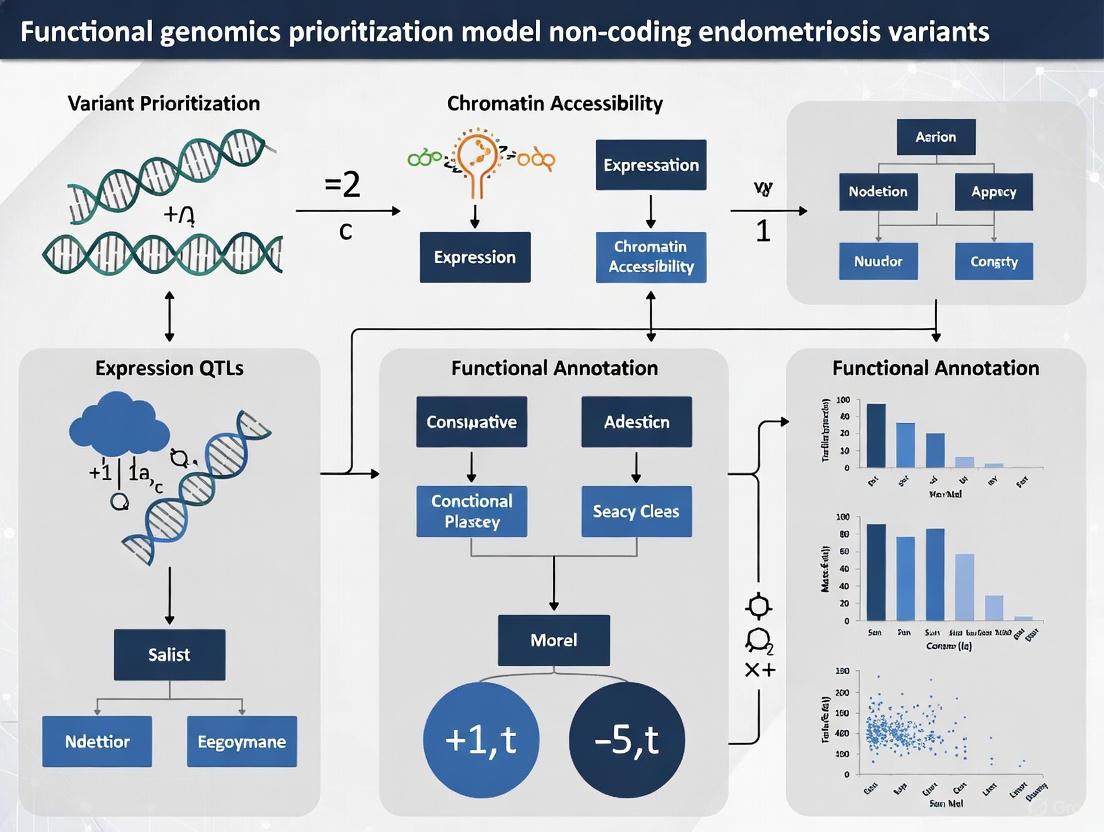
This article explores the critical role of functional genomics in elucidating the pathogenetic significance of non-coding genetic variants in endometriosis, a chronic inflammatory condition affecting millions worldwide.
Functional Genomics Prioritization of Non-Coding Endometriosis Variants: From Regulatory Mechanisms to Therapeutic Targets
Abstract
This article explores the critical role of functional genomics in elucidating the pathogenetic significance of non-coding genetic variants in endometriosis, a chronic inflammatory condition affecting millions worldwide. We examine how integration of multi-omics data—including expression quantitative trait loci (eQTL) mapping, epigenetic profiling, and machine learning approaches—enables tissue-specific prioritization of regulatory variants and reveals their mechanistic contributions to disease pathophysiology. The content addresses current methodological frameworks for variant annotation, troubleshooting common analytical challenges, and validation strategies through Mendelian randomization and clinical correlation. Targeting researchers and drug development professionals, this synthesis provides a roadmap for translating non-coding variant discoveries into biomarker development and targeted therapeutic interventions, ultimately advancing precision medicine in endometriosis care.
Decoding Non-Coding Variants: The Genetic Architecture of Endometriosis Susceptibility
The Prevalence and Diagnostic Challenges of Endometriosis
Endometriosis is a chronic, estrogen-dependent, inflammatory condition characterized by the presence of endometrial-like tissue outside the uterine cavity. This complex disease affects millions of individuals worldwide and presents substantial diagnostic challenges and therapeutic management difficulties. Within the context of functional genomics research, understanding the population burden of endometriosis and the limitations of current diagnostic paradigms is crucial for prioritizing the investigation of non-coding genetic variants and their potential role in disease pathogenesis. This application note provides a comprehensive overview of the epidemiological landscape of endometriosis, details current diagnostic limitations, and presents structured experimental protocols for the functional genomic prioritization of non-coding variants associated with this condition. The information presented herein aims to support researchers and drug development professionals in advancing our understanding of endometriosis pathogenesis and developing novel diagnostic and therapeutic strategies.
Prevalence and Global Burden of Endometriosis
Endometriosis represents a significant global health concern with substantial population impact. According to the World Health Organization, this condition affects approximately 10% (190 million) of reproductive-aged women and girls globally [1]. Recent data from the Global Burden of Disease (GBD) 2021 study provides more precise quantification, indicating that in 2021, there were 22.28 million prevalent cases globally (95% UI: 13.67, 33.69), corresponding to an age-standardized prevalence rate (ASPR) of 1023.8 per 100,000 [2]. The same study reported an age-standardized incidence rate (ASIR) of 162.71 per 100,000, with 3,447,126 new cases reported globally in 2021 [2] [3].
Table 1: Global Epidemiological Metrics for Endometriosis (2021)
| Metric | Number of Cases | Rate per 100,000 |
|---|---|---|
| Prevalence | 22.28 million (95% UI: 13.67, 33.69) | 1023.8 (age-standardized) |
| Incidence | 3.45 million (95% UI: 2.44, 4.61) | 162.71 (age-standardized) |
| DALYs | Not specified | 94.25 (age-standardized) |
DALYs = disability-adjusted life years; UI = uncertainty interval
Age Distribution and Regional Variation
The burden of endometriosis disproportionately affects specific demographic groups and geographic regions. Women aged 25-29 years represent the most significantly affected age group [2]. The incidence peaks among women aged 20-24 years, while mortality rates increase with advancing age [3]. Significant geographical disparities exist, with Oceania and Eastern Europe displaying the highest ASPR, ASIR, and age-standardized DALY rates (ASDR) [2]. Countries with low sociodemographic index (SDI) experience the highest burden, while high-SDI regions exhibit the lowest rates [2]. Specifically, Niger demonstrates the highest ASPR and ASDR, while Solomon Islands has the highest ASIR [2].
Table 2: Regional Variation in Endometriosis Burden
| Region | Age-Standardized Prevalence Rate (per 100,000) | Age-Standardized Incidence Rate (per 100,000) | Noteworthy Observations |
|---|---|---|---|
| Oceania | Highest rates | Highest rates | Combined with Eastern Europe, shows highest burden |
| Eastern Europe | Highest rates | Highest rates | Combined with Oceania, shows highest burden |
| Low SDI Regions | High | High | Niger has highest ASPR and ASDR |
| High SDI Regions | Lowest | Lowest | Lower overall burden |
Temporal Trends and Future Projections
From 1990 to 2021, the age-standardized incidence rate of endometriosis declined by 1.07%, while the age-standardized prevalence rate decreased by 0.95% [3]. Decomposition analysis indicates that population growth was the major contributing factor to these trends, followed by epidemiologic change [2]. Projections suggest that by 2040, the global ASPR of endometriosis is expected to decline to 887.89 per 100,000, representing a decrease of 13.28% from 2021 [2]. Despite these declining rates, absolute case numbers are projected to remain substantial due to population growth, with endometriosis-related deaths projected to rise to 68 cases and DALYs to increase to 2,260,948 by 2050 [3].
Current Diagnostic Challenges and Limitations
Diagnostic Delays and Clinical Presentation
A profound challenge in endometriosis management is the significant delay between symptom onset and definitive diagnosis. The average diagnostic delay ranges from 4 to 11 years, with some studies reporting an average of 7-10 years [4] [5] [6]. This delay is attributed to multiple factors, including the normalization of menstrual pain by patients and healthcare providers, non-specific symptoms that overlap with other conditions, and the lack of non-invasive diagnostic tools [4] [5]. The heterogeneous presentation of endometriosis further complicates timely diagnosis, with symptoms encompassing chronic pelvic pain, dysmenorrhea, dyspareunia, dyschezia, infertility, fatigue, and gastrointestinal disturbances [1] [7]. Approximately 70% of affected individuals experience cyclic pelvic pain, and 50% present with infertility [3].
Limitations of Current Diagnostic Modalities
The current gold standard for definitive endometriosis diagnosis remains laparoscopic surgery with histological confirmation, an invasive approach associated with surgical risks and healthcare costs [8] [6]. Non-invasive imaging techniques, including transvaginal ultrasound (TVUS) and magnetic resonance imaging (MRI), demonstrate limited sensitivity, particularly for superficial peritoneal endometriosis, which constitutes approximately 80% of all diagnosed cases and is often not visible on TVUS [8]. Clinical examinations and questionnaires have demonstrated limited diagnostic value, and currently, no reliable non-invasive biomarker exists for any endometriosis subtype [8] [4]. The complex pathogenesis of endometriosis, which may involve retrograde menstruation, genetic susceptibility, immune dysregulation, epigenetic modifications, and coelomic metaplasia, further complicates diagnostic approaches [9] [7].
Functional Genomics Approaches for Endometriosis Variant Prioritization
Protocol for Genomic Prioritization of Non-Coding Endometriosis Variants
Objective: To prioritize non-coding endometriosis-associated variants for functional validation through a multi-tiered genomic integration approach.
Experimental Workflow:
Variant Selection and Annotation:
Multi-Tissue eQTL Mapping:
- Cross-reference variants with significant eQTLs (FDR < 0.05) in GTEx v8 data across six biologically relevant tissues: uterus, ovary, vagina, sigmoid colon, ileum, and peripheral blood [9].
- Record regulated genes, slope values (effect size/direction), and adjusted p-values for each tissue.
Chromatin Interaction Mapping:
- Integrate promoter capture Hi-C data from relevant cell types to identify conformational genes (cGenes) linked to endometriosis risk variants through three-dimensional chromatin interactions [10].
Functional Genomics Integration and Prioritization:
- Apply a genomics-led prioritization framework (e.g., "END" method) that combines evidence from eQTLs, chromatin interactions, and physical proximity [10].
- Use random forest models to evaluate predictor importance and combination strategies (sum, max, harmonic) to generate a unified prioritization score [10].
- Validate the approach by measuring its performance in recovering clinical proof-of-concept targets (drug targets reaching phase 2 and above) using area under the ROC curve (AUC) [10].
Functional Enrichment and Pathway Analysis:
- Conduct target set enrichment analysis using the dnet package to identify molecular hallmarks and cellular signatures associated with prioritized genes [10].
- Perform pathway crosstalk-based attack analysis to identify critical nodes and combinations using the XGR package and KEGG organismal system pathways [10].
Research Reagent Solutions for Functional Genomics Studies
Table 3: Essential Research Reagents for Endometriosis Functional Genomics
| Reagent/Resource | Function | Example Use |
|---|---|---|
| GWAS Catalog Data (EFO_0001065) | Source of genome-wide significant endometriosis variants | Initial variant selection and annotation [9] |
| GTEx v8 Database | Tissue-specific eQTL reference | Mapping variant-gene regulatory relationships across multiple tissues [9] |
| Promoter Capture Hi-C Data | Identification of chromatin interactions | Linking non-coding variants to target gene promoters through 3D genome structure [10] |
| STRING Database | Protein-protein interaction network | Contextualizing prioritized genes within functional networks [10] |
| MSigDB Hallmark Gene Sets | Curated biological pathway signatures | Functional enrichment analysis of prioritized gene sets [10] [9] |
| dnet & XGR R Packages | Network analysis and functional enrichment | Pathway crosstalk analysis and network-based prioritization [10] |
Discussion and Future Perspectives
The substantial prevalence and diagnostic challenges of endometriosis underscore the critical need for innovative research approaches. Functional genomics prioritization of non-coding variants represents a promising strategy for elucidating the molecular mechanisms underlying endometriosis pathogenesis. The integration of multi-omics data, including genomic, transcriptomic, and epigenomic information, provides a powerful framework for identifying causal variants and their target genes [10] [9] [6]. Future directions should focus on validating prioritized variants using experimental models such as organoids and CRISPR-based genome editing, developing polygenic risk scores for early identification of at-risk individuals, and exploring targeted therapeutic interventions based on elucidated molecular pathways [7] [6]. Additionally, increasing diversity in genomic studies to encompass various ethnic populations will be essential for ensuring the broad applicability of findings and addressing health disparities in endometriosis diagnosis and care [9] [6].
{#content#}
Application Note
This application note details a structured methodology for transitioning from genome-wide association study (GWAS) discoveries to a functional understanding of the regulatory non-coding genome, with a specific focus on endometriosis. We present an integrated protocol for the prioritization and experimental validation of non-coding variants, leveraging multi-tissue expression quantitative trait loci (eQTL) data and advanced single-cell multi-omics. This framework is designed to empower researchers in identifying high-confidence candidate genes and elucidating their roles in the molecular pathophysiology of endometriosis.
Genome-wide association studies (GWAS) have successfully identified numerous loci associated with complex traits and diseases. However, for many conditions, including endometriosis, GWAS for common single nucleotide polymorphisms (SNPs) are approaching signal saturation [11]. A critical challenge persists: the majority of associated variants reside in non-coding regions of the genome, complicating the direct identification of causal genes and mechanisms [12] [13]. These non-coding regions, once dismissed as 'junk' DNA, are now recognized as critical regulators of gene expression, housing enhancers, promoters, and other functional elements [13].
Endometriosis, a chronic, estrogen-dependent inflammatory disease, exemplifies this challenge. Current research indicates that genetic susceptibility plays a key role, but most endometriosis-associated GWAS variants are located in non-coding regions [14]. Moving from these statistical associations to a mechanistic understanding requires a functional genomics approach that can pinpoint the specific genes being regulated and the cellular contexts in which this regulation occurs. This note provides a detailed protocol for the systematic prioritization of non-coding endometriosis variants and their functional validation, integrating bioinformatic analyses with cutting-edge experimental techniques.
Protocol: A Multi-Stage Workflow for Variant Prioritization and Validation
The following protocol outlines a comprehensive workflow, from initial GWAS variant selection to functional validation. The process is divided into two stages: a bioinformatics prioritization pipeline and an experimental validation phase.
Stage 1: Bioinformatics Prioritization Pipeline
Step 1.1: Variant Selection and Annotation
- Objective: Curate a high-confidence set of non-coding variants from GWAS for downstream analysis.
- Procedure:
- Retrieve all genome-wide significant (e.g., p < 5 × 10⁻⁸) variants associated with endometriosis from the NHGRI-EBI GWAS Catalog (EFO_0001065) [14].
- Filter variants to retain only those with a standardized rsID.
- Annotate the genomic location (e.g., intronic, intergenic, UTR) of each variant using the Ensembl Variant Effect Predictor (VEP) [14] [12].
Step 1.2: Integration with Multi-Tissue eQTL Data
- Objective: Identify which non-coding variants significantly regulate gene expression in biologically relevant tissues.
- Procedure:
- Cross-reference the annotated variant list with tissue-specific eQTL data from the GTEx Portal (v8 or newer) [14].
- Prioritize tissues with relevance to endometriosis pathophysiology, such as uterus, ovary, vagina, sigmoid colon, ileum, and whole blood (for systemic immune signals) [14].
- Retain only significant eQTL pairs (False Discovery Rate, FDR < 0.05). Record the regulated gene, the slope (effect size and direction), and the adjusted p-value for each variant-gene-tissue combination.
Step 1.3: Functional Enrichment and Pathway Analysis
- Objective: Determine the biological pathways enriched among the eQTL-regulated genes to generate mechanistic hypotheses.
- Procedure:
- For each tissue, generate gene sets based on criteria such as "genes regulated by the highest number of variants" or "genes with the largest absolute slope values" [14].
- Perform functional enrichment analysis using resources like the MSigDB Hallmark Gene Sets or the KEGG database [14] [15].
- Analyze results for tissue-specific patterns; for example, immune pathways may be highlighted in blood and intestinal tissues, while hormonal response and tissue remodeling pathways may dominate in reproductive tissues [14].
Table 1: Key Databases for Functional Annotation of Non-Coding Variants
| Database/Resource | Primary Use | Relevance to Non-Coding Variant Analysis | URL/Reference |
|---|---|---|---|
| GWAS Catalog | Repository of published GWAS results | Source for trait/disease-associated variants | https://www.ebi.ac.uk/gwas/ [14] |
| GTEx Portal | Tissue-specific eQTL database | Links variants to gene expression in healthy tissues | https://gtexportal.org/ [14] |
| Ensembl VEP | Genomic variant annotation | Predicts functional consequences of variants | https://www.ensembl.org/Tools/VEP [12] |
| STRING | Protein-protein interaction network | Infers functional relationships between candidate genes | https://string-db.org/ [15] |
Stage 2: Experimental Validation Using Single-Cell Multi-omics
To functionally validate the regulatory potential of prioritized non-coding variants, we recommend employing single-cell DNA-RNA sequencing (SDR-seq), a powerful method that directly links genotype to phenotype in individual cells [16].
Step 2.1: SDR-seq Assay Design and Workflow
- Objective: Simultaneously profile genomic DNA loci and transcriptome in thousands of single cells to assess variant-specific gene expression changes.
- Procedure:
- Panel Design: Design a targeted amplification panel containing:
- gDNA Targets: ~240 loci, including prioritized non-coding variants, potential coding variants in linkage disequilibrium, and positive/negative control regions.
- RNA Targets: ~240 genes, including eQTL-prioritized genes, relevant pathway markers (e.g., estrogen signaling, inflammation), and housekeeping genes.
- Cell Preparation: Use a glyoxal-based fixation protocol for human cells, which provides superior RNA target detection compared to PFA without cross-linking nucleic acids [16].
- In Situ Reverse Transcription: Perform reverse transcription in fixed, permeabilized cells using custom primers to generate cDNA with unique molecular identifiers (UMIs) and sample barcodes.
- Droplet-Based Multiplex PCR: Load cells onto a platform for single-cell analysis. Generate droplets containing individual cells, lyse them, and perform a multiplexed PCR using the designed primer panels.
- Library Preparation and Sequencing: Separate gDNA and RNA amplicons using distinct overhangs on primers. Generate and sequence next-generation sequencing libraries separately for gDNA (for full-length variant coverage) and RNA (for transcript and UMI information) [16].
- Panel Design: Design a targeted amplification panel containing:
Step 2.2: Data Analysis and Interpretation
- Objective: Confidently link variant zygosity to gene expression changes at single-cell resolution.
- Procedure:
- Genotype Calling: From gDNA sequencing data, determine the zygosity (homozygous reference, heterozygous, homozygous alternative) for each prioritized variant in every single cell. SDR-seq achieves high coverage, resulting in low allelic dropout rates, enabling accurate zygosity calls [16].
- Gene Expression Quantification: From RNA sequencing data, quantify the expression level of each target gene in each cell using UMI counts.
- Variant-Effect Association: Stratify cells based on their genotype at a specific non-coding variant and compare the expression levels of the putative target gene across these groups. A significant difference (e.g., using a Wilcoxon rank-sum test) confirms the variant's regulatory role.
Table 2: The Scientist's Toolkit: Essential Reagents and Resources
| Item | Function in Protocol | Specific Example / Note |
|---|---|---|
| GWAS Catalog Data | Source of trait-associated non-coding variants for prioritization. | Use EFO_0001065 for endometriosis-specific variants [14]. |
| GTEx eQTL Data | Links variants to target genes in relevant tissues; provides direction and magnitude of effect (slope). | Prioritize uterus, ovary, and blood tissues [14]. |
| Ensembl VEP | Bioinformatics tool for annotating variant location and predicted functional impact. | Critical first step for classifying variants as non-coding [12]. |
| SDR-seq Platform | Enables simultaneous, high-coverage sequencing of gDNA variants and RNA expression in single cells. | Overcomes limitations of sparse data and high allelic dropout [16]. |
| Glyoxal Fixative | Used for cell fixation prior to SDR-seq; preserves nucleic acid integrity for sensitive detection. | Preferred over PFA for improved RNA target detection [16]. |
| Targeted Primer Panels | Custom oligonucleotide sets for multiplex amplification of specific gDNA loci and RNA transcripts. | Requires careful design to balance gDNA and RNA targets (e.g., 240 each) [16]. |
Case Study: Endometriosis Variant Prioritization
A recent study demonstrated the initial stages of this protocol by analyzing 465 genome-wide significant endometriosis-associated variants [14]. The analysis revealed distinct tissue-specific regulatory patterns:
- In reproductive tissues (uterus, ovary, vagina), eQTL-regulated genes were enriched for pathways involved in hormonal response, tissue remodeling, and cell adhesion.
- In intestinal tissues (sigmoid colon, ileum) and peripheral blood, the genes were predominantly involved in immune and epithelial signaling.
Key regulatory genes such as MICB, CLDN23, and GATA4 were consistently linked to immune evasion, angiogenesis, and proliferative signaling pathways [14]. Furthermore, an in silico analysis highlighted ESR1 (Estrogen Receptor 1) and GREB1 (Growth Regulation by Estrogen in Breast Cancer 1) as central nodes in the endometriosis-associated protein-protein interaction network, with specific non-synonymous SNPs predicted to be deleterious by multiple bioinformatics tools [15]. These genes and variants represent prime candidates for functional validation using the SDR-seq protocol outlined above.
The integrated protocol described herein provides a robust roadmap for advancing beyond GWAS associations to functional insights in endometriosis research. By coupling computational prioritization using multi-tissue eQTL data with experimental validation via SDR-seq, researchers can confidently identify causal non-coding variants and their target genes. This approach directly addresses the challenge of "missing heritability" by focusing on under-explored types of genetic variation, such as those in regulatory regions, which are now accessible thanks to technological advances [11] [13].
The ability to link a non-coding genotype to a transcriptional phenotype and a cellular state within a biologically relevant context, such as primary patient cells, is transformative. It not only illuminates the molecular pathogenesis of endometriosis but also uncovers novel potential therapeutic targets and biomarkers. This functional genomics framework is highly adaptable and can be directly applied to the study of other complex diseases, paving the way for more precise and effective genomic medicine.
{#/content#}
Tissue-Specific eQTL Patterns in Reproductive and Immune Tissues
Within the broader framework of functional genomics prioritization of non-coding endometriosis variants, analyzing tissue-specific expression quantitative trait loci (eQTLs) has emerged as a powerful strategy for deciphering the molecular pathophysiology of this complex disease. Endometriosis, a chronic inflammatory condition affecting approximately 10% of reproductive-aged women, possesses a significant heritable component, with genome-wide association studies (GWAS) identifying numerous susceptibility loci [14]. However, the majority of these variants reside in non-coding regions, complicating the interpretation of their functional significance [14]. eQTL mapping directly addresses this challenge by identifying genetic variants that regulate gene expression levels, thereby providing a functional link between GWAS-identified risk loci and their potential biological mechanisms [17]. This Application Note details experimental and computational protocols for identifying and characterizing tissue-specific eQTL patterns in reproductive and immune tissues relevant to endometriosis, enabling researchers to prioritize non-coding variants for functional validation.
Key Concepts and Biological Significance
The core principle underlying eQTL analysis is that genetic variation can influence gene expression in a tissue-specific manner. cis-eQTLs operate on genes located nearby on the same chromosome, typically within 1 Mb of the transcription start site, while trans-eQTLs influence genes located far away on the genome or on different chromosomes [17]. The context specificity of eQTL effects is a pivotal concept in endometriosis research, as the regulatory impact of a genetic variant may only be detectable in certain cell types or upon specific environmental exposures [17].
Recent studies have demonstrated striking differences in eQTL profiles between reproductive tissues (uterus, ovary, vagina) and intestinal/peripheral blood tissues in endometriosis. In colon, ileum, and peripheral blood, immune and epithelial signaling genes predominate, whereas reproductive tissues show enrichment of genes involved in hormonal response, tissue remodeling, and adhesion [14]. Key regulators such as MICB, CLDN23, and GATA4 have been consistently linked to hallmark pathways including immune evasion, angiogenesis, and proliferative signaling [14]. Furthermore, integrating eQTL data with splicing QTL (sQTL) analyses has revealed additional regulatory layers, with studies identifying 3,296 sQTLs in endometrial tissue, 67.5% of which were not discovered in gene-level eQTL analyses [18]. This highlights the critical importance of investigating transcript isoform-level regulation in endometriosis pathogenesis.
Table 1: Tissue-Specific eQTL Enrichment in Endometriosis-Associated Variants
| Tissue Type | Number of Significant eQTLs | Predominant Biological Pathways | Key Regulatory Genes |
|---|---|---|---|
| Uterus | 45 (example) | Hormonal response, Tissue remodeling, Cell adhesion | GREB1, WASHC3 [18] |
| Ovary | 38 (example) | Hormonal response, Angiogenesis | GATA4, MICB [14] |
| Vagina | 29 (example) | Hormonal response, Extracellular matrix organization | CLDN23 [14] |
| Sigmoid Colon | 52 (example) | Immune signaling, Epithelial barrier function | MICB, CLDN23 [14] |
| Ileum | 41 (example) | Immune signaling, Inflammatory response | MICB, GATA4 [14] |
| Peripheral Blood | 67 (example) | Systemic immune response, Cytokine signaling | MICB, CLDN23 [14] |
Table 2: Statistical Parameters for eQTL Identification in Endometriosis Research
| Parameter | Recommended Threshold | Rationale |
|---|---|---|
| GWAS p-value | < 5 × 10⁻⁸ [14] | Genome-wide significance threshold |
| eQTL FDR | < 0.05 [14] | False discovery rate for eQTL significance |
| cis-window | ±1 Mb from TSS [19] | Typical range for cis-regulatory effects |
| MAF | ≥ 0.05 [19] | Minimum allele frequency for sufficient power |
| Slope value | Reported with direction [14] | Effect size and direction of expression change |
Experimental Protocols
Protocol 1: Identification of Tissue-Specific eQTLs Using GTEx Data
This protocol outlines the steps for identifying endometriosis-associated eQTLs across multiple tissues using data from the Genotype-Tissue Expression (GTEx) project.
Materials and Reagents
- High-performance computing cluster with ≥ 16 GB RAM
- R statistical environment (v4.2.0 or higher)
- Python (v3.8 or higher) with pandas, numpy, and scipy libraries
- GTEx v8 database access [14]
- Endometriosis GWAS summary statistics [14]
Procedure
Variant Selection and Annotation
- Retrieve genome-wide significant endometriosis-associated variants (p < 5 × 10⁻⁸) from GWAS Catalog using EFO_0001065 identifier [14]
- Exclude variants without standardized rsIDs and retain only the entry with the lowest p-value for duplicates
- Annotate variants using Ensembl Variant Effect Predictor (VEP) to determine genomic locations [14]
Tissue Selection and Data Extraction
- Select physiologically relevant tissues: uterus, ovary, vagina, sigmoid colon, ileum, and peripheral blood [14]
- Cross-reference endometriosis-associated variants with tissue-specific eQTL datasets from GTEx v8
- Extract significant eQTLs (FDR < 0.05) along with slope values, adjusted p-values, and regulated genes [14]
Functional Interpretation
- Prioritize genes based on frequency of regulation by eQTLs and strength of regulatory effects (slope values)
- Perform pathway enrichment analysis using MSigDB Hallmark gene sets and Cancer Hallmarks collections [14]
- Classify genes not associated with known pathways as potential novel regulatory mechanisms [14]
Protocol 2: Single-Cell eQTL Analysis in Immune Cell Subtypes
This protocol describes the integration of single-cell RNA sequencing with genetic data to identify cell-type-specific eQTLs in immune cells relevant to endometriosis inflammation.
Materials and Reagents
- 10x Genomics Chromium platform for single-cell RNA sequencing [20]
- Peripheral blood mononuclear cells (PBMCs) from endometriosis patients and controls
- Genotyping array or whole-genome sequencing data
- Computational pipeline for scRNA-seq analysis (CellRanger, Seurat, tensorQTL)
Procedure
Sample Preparation and Stimulation
- Isolate PBMCs from whole blood of at least 38 individuals to ensure sufficient statistical power [20]
- For response eQTL studies, divide cells into baseline and stimulated conditions (e.g., LPS challenge) [20]
- Process cells using 10x Genomics Chromium platform to capture single-cell transcriptomes [20]
Cell Type Identification and Quality Control
sc-eQTL Mapping
- For each cell type, test associations between genetic variants and gene expression using tensorQTL [20]
- Include genotypic principal components and probabilistic estimation of expression residuals (PEER factors) as covariates [19]
- Apply false discovery rate correction (FDR < 0.05) to account for multiple testing [20]
Protocol 3: Integration of Multi-omic QTL Data
This protocol outlines the approach for integrating eQTL with methylation QTL (mQTL) and protein QTL (pQTL) data to comprehensively characterize regulatory mechanisms in endometriosis.
Materials and Reagents
- Summary-data-based Mendelian randomization (SMR) software (v1.3.1) [21]
- Blood eQTL summary data from eQTLGen (31,684 individuals) [21]
- Blood mQTL summary data from European cohorts (1,980 individuals) [21]
- Blood pQTL summary data from UK Biobank participants (54,219 individuals) [21]
Procedure
Data Harmonization
- Obtain summary statistics for endometriosis GWAS and various QTL types
- Align genomic coordinates and effect alleles across all datasets
- Exclude SNPs with allele frequency differences >0.2 between datasets [21]
Multi-omic SMR Analysis
Colocalization Analysis
Visualizations
Workflow Diagram
Diagram 1: Tissue-specific eQTL analysis workflow for endometriosis research.
Biological Pathway Diagram
Diagram 2: Biological pathways linking eQTLs to endometriosis pathogenesis.
The Scientist's Toolkit
Table 3: Essential Research Reagents and Resources for Tissue-Specific eQTL Studies
| Resource | Type | Function in eQTL Research | Source/Reference |
|---|---|---|---|
| GTEx Portal | Database | Provides pre-computed eQTLs across 50+ tissues from healthy donors | https://gtexportal.org/ [14] |
| Ensembl VEP | Software Tool | Functional annotation of genetic variants | https://www.ensembl.org/ [14] |
| tensorQTL | Software Package | Fast and efficient QTL mapping in Python | https://github.com/broadinstitute/tensorQTL [19] |
| SMR Software | Analytical Tool | Integrates QTL and GWAS data for causal inference | https://cnsgenomics.com/software/smr/ [21] |
| 10x Genomics Chromium | Platform | Single-cell RNA sequencing for cell-type-specific eQTLs | https://www.10xgenomics.com/ [20] |
| coloc R Package | Statistical Tool | Bayesian colocalization analysis to identify shared causal variants | https://cran.r-project.org/package=coloc [21] |
| MSigDB Hallmark Sets | Gene Set Collection | Pathway enrichment analysis for functional interpretation | https://www.gsea-msigdb.org/ [14] |
Discussion and Technical Notes
The tissue-specific eQTL protocols outlined here enable researchers to move beyond simple GWAS associations to functionally characterize non-coding variants in endometriosis. Critical considerations for implementation include:
Tissue Relevance: While GTEx provides valuable normative eQTL data, it is essential to recognize that these represent healthy tissue baselines. For endometriosis, studying diseased tissue directly may reveal additional context-specific regulatory effects [14]. The incorporation of response eQTL analyses, where gene expression is measured following immune stimulation, can capture dynamic regulatory mechanisms relevant to endometriosis inflammation [20] [17].
Statistical Power: Current studies demonstrate that sample sizes exceeding 200 individuals provide sufficient power for cis-eQTL detection in bulk tissues [19], while sc-eQTL studies require even larger cohorts (approximately 1,000 individuals) to achieve comparable power due to the sparsity of single-cell data [20]. For multi-omic SMR analyses, leveraging large summary statistics (e.g., eQTLGen with 31,684 samples) provides robust causal inference [21].
Technical Validation: The heterogeneity in dependent instruments (HEIDI) test is crucial for distinguishing genuine pleiotropy from linkage in SMR analyses [21]. Additionally, colocalization analysis with PPH4 > 0.5 provides strong evidence that the same underlying causal variant influences both gene expression and endometriosis risk [21].
Emerging methodologies including single-cell eQTL mapping and multi-omic integration are significantly advancing our ability to prioritize non-coding variants in endometriosis. These approaches have already identified novel candidate genes such as GREB1 and WASHC3 through splicing QTL analyses [18], and revealed ancient regulatory variants in IL-6 and CNR1 that interact with modern environmental exposures [22]. As these technologies mature, they promise to unravel the complex regulatory architecture of endometriosis, ultimately enabling the development of targeted interventions based on a comprehensive understanding of its molecular pathophysiology.
This application note details a functional genomics framework for prioritizing and characterizing non-coding genetic variants in endometriosis, with a specific focus on the interplay between ancient inherited genetic regulatory elements and modern environmental exposures. Endometriosis is a chronic, estrogen-driven inflammatory disorder affecting approximately 10% of reproductive-aged women globally, with a diagnostic delay often spanning 7 to 12 years [22] [23] [5]. Despite its high heritability (estimated at 47%), genome-wide association studies (GWAS) have largely failed to identify predictive markers for early-stage disease, in part because most associated variants reside in non-coding regulatory regions [22] [14].
This protocol integrates whole-genome sequencing (WGS) data with analyses of endocrine-disrupting chemical (EDC) sensitivity to identify regulatory variants that modulate immune and inflammatory pathways. A key finding is the enrichment of ancient Neandertal and Denisovan-derived regulatory variants in genes like IL-6 and CNR1 in endometriosis cohorts, which may interact with contemporary environmental pollutants to dysregulate gene expression and increase disease susceptibility [22]. This integrative approach provides a novel methodology for uncovering the functional impact of non-coding variants and proposes new potential biomarkers for early detection.
Table 1: Key Genetic Variants and Their Functional Associations in Endometriosis
| Variant (rsID) | Gene | Variant Origin | Potential Functional Impact | Key Associated Pathways |
|---|---|---|---|---|
| rs2069840 [22] | IL-6 |
Neandertal-derived [22] | Immune dysregulation; Altered gene expression [22] | Inflammatory response, Immune surveillance [22] [14] |
| rs34880821 [22] | IL-6 |
Neandertal-derived methylation site [22] | Strong LD with rs2069840; Potential regulatory role [22] | Inflammatory response, Immune surveillance [22] [14] |
| rs806372 [22] | CNR1 |
Denisovan origin suggested [22] | Altered pain sensitivity; Gene expression regulation [22] | Pain perception, Neuromodulation [22] |
| rs76129761 [22] | CNR1 |
Denisovan origin suggested [22] | Regulatory variant; Population-specific differentiation [22] | Pain perception, Neuromodulation [22] |
| Multiple eQTLs [14] | MICB |
Not Specified | Immune evasion; Altered expression in blood/uterus [14] | Immune response, Antigen presentation [14] |
| Multiple eQTLs [14] | CLDN23 |
Not Specified | Altered epithelial barrier function; Expressed in colon/ileum [14] | Tissue barrier integrity, Epithelial signaling [14] |
| Multiple eQTLs [14] | GATA4 |
Not Specified | Hormonal response, tissue remodeling; Expressed in ovary/uterus [14] | Hormone response, Tissue remodeling, Angiogenesis [14] |
Table 2: Global Burden and Comorbidities of Endometriosis
| Category | Metric | Value | Notes |
|---|---|---|---|
| Epidemiology | Global Prevalence (2021) [2] | 22.28 million cases | Age-standardized rate: 1023.8 per 100,000 [2] |
| Global Incidence (2021) [2] | 162.71 per 100,000 | Age-standardized rate [2] | |
| Most Affected Age Group [2] | 25-29 years | Key target for interventions [2] | |
| Comorbidities | Autoimmune Disease Risk [24] | 30-80% increased risk | Includes rheumatoid arthritis, multiple sclerosis, coeliac disease [24] |
| Infertility Association [2] | ~50% of infertile women | Strong clinical association [2] | |
| Economic Impact | Annual Cost per Patient (US) [2] | $12,118 (direct) | Substantial variation by country [2] |
| Projected Therapeutics Market (2030) [5] | >$3 Billion | CAGR of 12.5% (2025-2030) [5] |
Experimental Protocols
Protocol 1: Identification of Regulatory Variants via WGS and eQTL Analysis
This protocol describes a dual-phase approach for identifying and functionally characterizing non-coding regulatory variants associated with endometriosis, integrating WGS from the 100,000 Genomes Project with tissue-specific expression quantitative trait loci (eQTL) data from the GTEx database [22] [14].
Workflow Overview:
Materials and Reagents:
- WGS Data: From the Genomics England 100,000 Genomes Project (or equivalent) [22].
- eQTL Data: Tissue-specific data from GTEx Portal (v8), focusing on uterus, ovary, vagina, colon, ileum, and whole blood [14].
- Analysis Tools: Ensembl Variant Effect Predictor (VEP), LDlink for linkage disequilibrium analysis, R v4.2.2 for statistical computing [22] [14].
Procedure:
- Literature-Driven Gene Selection:
- Conduct a systematic literature review using PubMed/Web of Science with keywords: "endometriosis" AND ("polymorphism," "SNP," "GWA," "Genetic association study") [22].
- Apply inclusion criteria: human studies, confirmed endometriosis diagnosis, age 18-43. Exclude reviews and studies with confounding comorbidities [22].
- Prioritize candidate genes (
IL-6,CNR1,IDO1,TACR3,KISS1R) based on expression at implant sites, pathway involvement (immune, inflammatory), and documented EDC responsiveness [22].
Variant Identification and Filtering:
- Within pre-selected genes, extract candidate variants from WGS data using Ensembl VEP. Focus on non-coding regulatory sequences: introns, untranslated regions (UTRs), promoter-flanking regions (±1 kb from Transcription Start/End Sites) [22].
- Filter variants based on overlap with regulatory annotations and EDC-responsive regions.
Statistical and Enrichment Analysis:
- Compare variant frequencies between the endometriosis cohort and matched controls from the general Genomics England population.
- Perform a χ² goodness-of-fit test for individual variants. Apply Benjamini-Hochberg (BH) false discovery rate correction for multiple hypothesis testing [22].
- Confirm variant enrichment specificity by screening a randomly selected control group without endometriosis using the same method.
Functional Validation via eQTL Analysis:
- Cross-reference significantly enriched variants with the GTEx v8 database to identify which variants act as eQTLs in relevant tissues [14].
- Retain only significant eQTLs (false discovery rate, FDR < 0.05). Record the regulated gene, slope (effect size and direction), adjusted p-value, and tissue [14].
Protocol 2: Assessing Gene-Environment Interactions via EDC Response Mapping
This protocol outlines a method for investigating how identified regulatory variants may interact with modern environmental pollutants, specifically endocrine-disrupting chemicals (EDCs), to modulate gene expression and disease risk [22].
Workflow Overview:
Materials and Reagents:
- EDC List: Prioritized based on literature corpus (e.g., phthalates, perfluorochemicals, pesticides) [22] [14].
- Epigenetic Data: Publicly available datasets on chromatin immunoprecipitation sequencing (ChIP-seq) for histone modifications or DNAse I hypersensitivity sites in relevant cell lines.
- Analysis Software: R with packages for genomic overlap analysis (e.g., GenomicRanges).
Procedure:
- Literature Review for EDC Association:
- Conduct a systematic search using keywords: "endometriosis" AND ("exposure to endocrine disrupting chemicals," "pesticides," "plastics," "air pollution," "water pollution") [22].
- Prioritize EDCs for which a significant proportion (e.g., 42% of included studies) evaluate their role in endometriosis [22].
Mapping EDC-Responsive Genomic Regions:
- Utilize published studies or databases identifying genomic regions where exposure to prioritized EDCs alters chromatin accessibility, histone marks, or transcription factor binding.
- Define these regions as "EDC-responsive regulatory regions."
Overlap Analysis:
- Perform genomic intersection analysis between the list of significantly enriched regulatory variants from Protocol 1 and the mapped EDC-responsive regions.
- Variants that fall within or near these regions are strong candidates for mediating gene-environment interactions.
Signaling Pathways and Genetic Networks
The integrative analysis implicates several key pathways through which ancient genetic variants and modern exposures likely converge to influence endometriosis pathogenesis.
Figure 1: Convergent Pathways in Endometriosis Susceptibility
Pathway Annotations:
- Inflammatory Signaling (IL-6): Neandertal-derived variants (e.g., rs2069840, rs34880821) in the
IL-6gene may predispose individuals to a heightened inflammatory state, which can be exacerbated by EDC exposure, fueling chronic pelvic inflammation and lesion survival [22]. - Hormonal Response: EDCs can mimic or block natural estrogens. Genetic variants in hormone response genes (e.g.,
GATA4), particularly those acting as eQTLs in reproductive tissues, can further dysregulate this pathway, leading to estrogen dominance, a hallmark of endometriosis [14]. - Immune Dysregulation: Genes like
MICB(involved in immune evasion) andCLDN23(involved in epithelial barrier function) are regulated by endometriosis-associated eQTLs. This suggests a mechanism for impaired immune clearance of ectopic cells and altered tissue microenvironment integrity [14]. - Pain Signaling (CNR1): Denisovan-origin variants in the cannabinoid receptor 1 gene (
CNR1) may alter pain perception pathways, contributing to the chronic pelvic pain experienced by patients and potentially interacting with environmental stressors [22].
The Scientist's Toolkit
| Resource Category | Specific Tool / Database | Application in Research |
|---|---|---|
| Genomic Databases | Genomics England 100,000 Genomes Project [22] | Source of WGS data for variant discovery and cohort frequency analysis. |
| GTEx Portal (v8) [14] | Provides tissue-specific eQTL data to link variants to gene regulation. | |
| GWAS Catalog [14] | Curated repository of genome-wide significant variants for candidate selection. | |
| LDlink [22] | Analyzes linkage disequilibrium and population-specific allele frequencies. | |
| Bioinformatic Tools | Ensembl VEP (Variant Effect Predictor) [22] [14] | Predicts functional consequences of genetic variants. |
| R / Bioconductor (e.g., GenomicRanges) [22] | Statistical computing and genomic interval analysis for overlap studies. | |
| STRING database [25] | Analyzes protein-protein interaction networks for candidate genes. | |
| Analytical Methods | Factor Analysis of Mixed Data (FAMD) [25] | Integrates and reduces dimensionality of genetic and demographic data. |
| Population Branch Statistic (PBS) [22] | Quantifies population differentiation and evolutionary selection on variants. | |
| Mendelian Randomization [24] | Infers potential causal relationships between endometriosis and comorbidities. |
Endometriosis, a complex gynecological disorder affecting approximately 10% of reproductive-age women globally, demonstrates a multifaceted etiology where genetic predisposition and epigenetic modifications interact to drive disease pathogenesis [26]. Emerging evidence indicates that epigenetic mechanisms, particularly DNA methylation and non-coding RNA regulation, serve as critical interfaces converting genetic susceptibility into pathological outcomes. The etiopathogenesis of endometriosis appears equally split, with genetic factors contributing approximately 50% and epigenetic/environmental factors accounting for the remaining 50% of disease risk [27]. This epigenetic landscape not only offers insights into disease mechanisms but also presents opportunities for novel diagnostic and therapeutic strategies.
Functional genomics approaches have begun to illuminate how non-coding endometriosis risk variants operate through epigenetic mechanisms to influence gene expression and cellular function. The integration of multi-layered genomic datasets—including genome-wide association studies (GWAS), regulatory genomics, and protein interactome data—enables prioritization of functional variants and their downstream epigenetic effects [10]. This framework is essential for advancing from mere genetic associations to mechanistic understanding of endometriosis pathogenesis, ultimately facilitating the development of targeted epigenetic interventions.
DNA Methylation in Endometriosis
Patterns and Regulatory Impact
DNA methylation, characterized by the addition of methyl groups to cytosine bases in CpG dinucleotides, represents a stable epigenetic mark typically associated with transcriptional repression when occurring in promoter regions [27]. In endometriosis, systematic analyses have revealed widespread methylation alterations affecting genes involved in critical biological pathways. A comprehensive systematic review identified that endometriosis exhibits a "polyepigenetic" pattern with alterations in specific genes implicated in major signaling pathways including cell proliferation, differentiation, and division (PI3K-Akt and Wnt-signaling pathway), cell division (MAPK pathway), cell adhesion, communication, developmental processes, hormonal response, apoptosis, immunity, and neurogenesis [27].
Large-scale methylation analyses demonstrate that approximately 15.4% of the variation in endometriosis case-control status is captured by endometrial DNA methylation profiles, while common genetic variants capture 26.2% of variation. Combined, genetic and methylation data explain 37% of the variance in endometriosis status [28]. Menstrual cycle phase represents a major source of DNA methylation variation, explaining approximately 4.30% of overall methylation variability after correction for technical covariates, highlighting the dynamic nature of epigenetic regulation in endometrial tissue [28].
Key Differentially Methylated Genes
Table 1: Key Genes with Altered DNA Methylation in Endometriosis
| Gene Name | Methylation Status | Biological Function | Role in Endometriosis |
|---|---|---|---|
| ESR1 | Hypermethylated | Estrogen receptor encoding | Hormone insensitivity [27] |
| ESR2 | Hypermethylated | Estrogen receptor encoding | Altered estrogen signaling [27] |
| HOXA10 | Hypermethylated | Transcriptional regulator | Impaired endometrial receptivity [27] |
| PR | Hypermethylated | Progesterone receptor | Progesterone resistance [27] |
| CYP19/aromatase | Hypomethylated | Estrogen synthesis | Local estrogen production [27] |
| GREB1 | Differential methylation | Growth regulation | Endometriosis risk gene [28] |
| ELAVL4 | Hypermethylated (cg02623400) | RNA binding protein | Stage III/IV disease [28] |
| TNPO2 | Hypermethylated (cg02011723) | Nuclear import protein | Stage III/IV disease [28] |
Methylation Quantitative Trait Loci (mQTL) Analysis
Functional genomics approaches have identified methylation quantitative trait loci (mQTLs) that link genetic variation to epigenetic regulation in endometriosis. Large-scale analysis of endometrial samples revealed 118,185 independent cis-mQTLs, with 51 specifically associated with endometriosis risk [28]. These mQTLs highlight candidate genes contributing to disease risk through epigenetic mechanisms and provide functional evidence for genetic associations identified through GWAS.
Non-Coding RNAs in Endometriosis
Regulatory Networks and Mechanisms
Non-coding RNAs (ncRNAs) constitute a diverse class of regulatory molecules that orchestrate gene expression at transcriptional and post-transcriptional levels without encoding proteins. In endometriosis, several classes of ncRNAs demonstrate altered expression and contribute to disease pathogenesis:
MicroRNAs (miRNAs) are short (~20-25 nucleotide) RNAs that typically bind to the 3' untranslated regions (UTRs) of target mRNAs, leading to translational repression or mRNA degradation [29]. Specific miRNA clusters show altered expression in endometriosis and contribute to disease processes by targeting genes involved in proliferation, invasion, and inflammation.
Long non-coding RNAs (lncRNAs) are transcripts longer than 200 nucleotides that regulate gene expression through diverse mechanisms including chromatin modification, transcriptional interference, and serving as molecular scaffolds [30]. The lncRNA ANRIL (CDKN2B-AS1) at the 9p21 risk locus demonstrates allele-specific regulation in endometriosis through chromatin looping mechanisms [30].
Circular RNAs (circRNAs) form covalently closed continuous loops that can function as miRNA sponges, protein decoys, or translational regulators. Their stability and presence in extracellular vesicles make them potential biomarkers and mediators of cell-cell communication in endometriosis [29].
Epi-miRNAs: Epigenetic Regulators of Metabolism
A specialized subclass of miRNAs termed "epi-miRNAs" regulates the expression of epigenetic modifiers, creating feedback loops that amplify epigenetic changes. These miRNAs target enzymes such as DNA methyltransferases (DNMTs), histone deacetylases (HDACs), and histone demethylases (KDMs), thereby influencing chromatin states and gene expression networks [29].
Table 2: Key Epi-miRNAs in Regulatory Networks
| Epi-miRNA | Epigenetic Target | Biological Effect | Role in Disease |
|---|---|---|---|
| miR-29b | DNMTs, TET enzymes | DNA methylation regulation | PTEN silencing, glycolysis regulation [29] |
| miR-138 | KDM5B (histone demethylase) | Histone modification | Suppresses lipid metabolism genes [29] |
| miR-137 | LSD1 (histone demethylase) | Histone modification | Affects Warburg effect, mitochondrial biogenesis [29] |
| miR-155 | KDM2A (histone demethylase) | H3K36me2 regulation | Mitochondrial gene expression in hypoxia [29] |
| miR-143 | DNMT3A | DNA methylation regulation | Immune cell metabolic programming [29] |
Functional Genomics Prioritization Framework
Integrative Genomic Approach
The END (Endometriosis Genomics-led Target Prioritization) framework leverages multi-layered genomic datasets to identify and prioritize functional variants in endometriosis [10]. This approach integrates:
- GWAS summary statistics to identify disease-associated loci
- Promoter capture Hi-C data to map chromatin interactions
- Expression quantitative trait loci (eQTL) data to link variants to gene expression
- Protein-protein interaction networks from STRING database
When benchmarked, the END framework outperformed existing prioritization methods (Open Targets and Naïve prioritization) in recovering clinical proof-of-concept therapeutic targets in endometriosis [10]. This approach successfully identified critical hub genes like AKT1 and revealed therapeutic opportunities for drug repurposing, particularly immunomodulators such as TNF, IL6, and IL6R blockades, and JAK inhibitors [10].
Chromatin Interaction Mapping at Risk Loci
Functional characterization of the 9p21 endometriosis risk locus demonstrates how non-coding variants influence gene expression through epigenetic mechanisms. The protective G allele of rs17761446 exhibits stronger chromatin interaction with the ANRIL promoter, preferential binding affinities to transcription factor TCF7L2 and its coactivator EP300, and increased histone H3 lysine 27 acetylation [30]. This allele-specific regulatory mechanism leads to increased ANRIL expression, which in turn modulates cell cycle inhibitors CDKN2A/2B through Wnt signaling pathway activation [30].
Diagram 1: Chromatin Interaction at 9p21 Endometriosis Risk Locus. The protective G allele of rs17761446 facilitates transcription factor binding and chromatin looping, leading to ANRIL activation.
Experimental Protocols
DNA Methylation Analysis Workflow
Protocol: Endometrial Tissue DNA Methylation Profiling
Sample Preparation:
- Collect endometrial biopsies from confirmed endometriosis cases (surgically/histologically verified) and matched controls
- Precisely determine menstrual cycle phase through histological dating (Noyes criteria) and hormonal measurements
- Preserve tissue in appropriate stabilizing solution (e.g., RNAlater) or snap-freeze in liquid nitrogen
- For cell-free DNA methylation studies, collect peripheral blood and process serum within 2 hours of collection
DNA Extraction and Bisulfite Conversion:
- Extract genomic DNA using silica-column based kits (e.g., QIAamp DNA Mini Kit)
- Quantify DNA using fluorometric methods (e.g., Qubit dsDNA HS Assay)
- Convert 500-1000ng DNA using bisulfite treatment kits (e.g., EZ DNA Methylation-Lightning Kit)
- Confirm conversion efficiency through control reactions
Genome-wide Methylation Profiling:
- Utilize Illumina Infinium MethylationEPIC BeadChip covering >850,000 CpG sites
- Hybridize 200ng bisulfite-converted DNA according to manufacturer's protocol
- Scan arrays using iScan or NextSeq system
- Process raw data using R packages (minfi, sesame) for background correction, normalization, and dye bias correction
Data Analysis Pipeline:
- Perform quality control assessing bisulfite conversion efficiency, staining intensity, and detection p-values
- Remove probes with detection p-value >0.01 in >5% samples
- Normalize data using functional normalization or subset-quantile within-array normalization (SWAN)
- Identify differentially methylated positions (DMPs) using linear models with empirical Bayes moderation (limma)
- Define differentially methylated regions (DMRs) using DMRcate or bumphunter
- Annotate results to genomic features (promoters, enhancers, gene bodies) and integrate with GWAS data
Diagram 2: DNA Methylation Analysis Workflow. Complete pipeline from sample collection to data integration for endometrial methylation studies.
Non-coding RNA Functional Validation
Protocol: Functional Characterization of Endometriosis-associated ncRNAs
ncRNA Identification and Quantification:
- Isolve total RNA from endometrial tissues or cell lines using TRIzol or column-based methods
- Assess RNA quality using Bioanalyzer (RIN >7.0 required)
- For miRNA profiling, utilize RT-qPCR with stem-loop primers or small RNA sequencing
- For lncRNA/circRNA analysis, perform ribosomal RNA depletion followed by RNA sequencing
- Validate findings in independent cohort using RT-qPCR with specific assays
Gain- and Loss-of-Function Experiments:
- Design locked nucleic acid (LNA) inhibitors for miRNAs or siRNA/shRNA for lncRNAs
- For overexpression, clone full-length ncRNAs into mammalian expression vectors
- Transfert endometrial cell lines (e.g., 12Z, Ishikawa) using lipofectamine-based methods
- Include appropriate negative controls (scrambled sequences, empty vectors)
- Assess transfection efficiency using fluorescent reporters
Mechanistic Investigations:
- For miRNA targets, perform 3'UTR luciferase reporter assays with wild-type and mutant constructs
- For chromatin-associated lncRNAs, conduct RNA immunoprecipitation (RIP) for histone modifications
- Analyze chromatin conformation changes using chromosome conformation capture (3C/Hi-C)
- Assess epigenetic modifications at candidate loci through ChIP-qPCR for histone marks
- Evaluate DNA methylation changes at target genes using pyrosequencing or bisulfite sequencing
Functional Phenotyping:
- Measure cell proliferation using MTT or CellTiter-Glo assays
- Assess invasion capacity through Matrigel transwell assays
- Evaluate apoptosis using Annexin V staining and flow cytometry
- Analyze cytokine secretion profiles via multiplex ELISA
- Examine hormone response through estrogen/progesterone treatment experiments
Diagnostic and Therapeutic Applications
Epigenetic Biomarkers for Non-Invasive Diagnosis
Circulating cell-free DNA (cf-DNA) and methylation signatures offer promising approaches for non-invasive endometriosis diagnosis. A recent study demonstrated that women with endometriosis have 3.9 times higher cf-DNA levels in serum compared to healthy controls [31]. Furthermore, differential methylation analysis of nine target genes in cf-DNA showed distinct epigenetic signatures between endometriosis patients and controls, suggesting potential for developing blood-based diagnostic tests [31].
The combination of cf-DNA quantification and targeted methylation analysis represents a promising non-invasive diagnostic approach that could reduce the current 7-10 year diagnostic delay in endometriosis [31]. This epigenetic signature-based method may complement existing imaging techniques and provide a molecular confirmation tool before invasive laparoscopic procedures.
Therapeutic Targeting of Epigenetic Mechanisms
Therapeutic strategies targeting epigenetic mechanisms in endometriosis include:
DNMT Inhibitors: Agents such as 5-azacytidine and decitabine can reverse pathological hypermethylation patterns, potentially restoring expression of silenced genes like progesterone receptors [27].
Histone Modification Modulators: HDAC inhibitors (e.g., vorinostat, romidepsin) may counteract aberrant histone deacetylation and restore normal gene expression patterns in endometriotic cells [32].
RNA-based Therapeutics: Antisense oligonucleotides or miRNA mimics/inhibitors could target specific ncRNAs dysregulated in endometriosis, such as ANRIL or epi-miRNAs [32].
Drug Repurposing Opportunities: Cross-disease prioritization analyses identify opportunities for repurposing existing immunomodulators, particularly disease-modifying anti-rheumatic drugs such as TNF, IL6 and IL6R blockades, and JAK inhibitors [10].
The Scientist's Toolkit: Research Reagent Solutions
Table 3: Essential Research Reagents for Endometriosis Epigenetics
| Reagent/Category | Specific Examples | Research Application | Key Considerations |
|---|---|---|---|
| DNA Methylation Analysis | Illumina Infinium MethylationEPIC BeadChip, EZ DNA Methylation-Lightning Kit, QIAamp DNA Mini Kit | Genome-wide methylation profiling, targeted methylation analysis | Coverage of >850,000 CpG sites, bisulfite conversion efficiency >99% |
| ncRNA Analysis | TRIzol, miRNeasy Kits, LNA miRNA inhibitors, Smart-seq RNA kits | ncRNA quantification, functional validation | RNA integrity (RIN >7.0), stem-loop primers for miRNA |
| Chromatin Studies | ChIP-grade antibodies (H3K27ac, H3K4me3), 3C/Hi-C kits, EP300/TCF7L2 antibodies | Chromatin interaction mapping, histone modification profiling | Antibody validation, cross-linking optimization |
| Cell Culture Models | 12Z endometriotic stromal cells, Ishikawa endometrial cells, primary endometrial stromal cells | Functional studies of epigenetic modifications | Authentication, hormonal response validation |
| Functional Assays | Matrigel invasion chambers, luciferase reporter vectors, apoptosis detection kits | Phenotypic characterization of epigenetic manipulations | Appropriate controls, normalization methods |
| Bioinformatics Tools | Minfi, DMRcate, limma, XGR, supraHex packages | Differential methylation analysis, pathway enrichment, cross-disease mapping | Multiple testing correction, integration of multi-omics data |
Epigenetic dysregulation, encompassing DNA methylation alterations and non-coding RNA imbalances, constitutes a fundamental mechanism in endometriosis pathogenesis that interfaces genetic susceptibility with environmental influences. The functional genomics prioritization framework provides a powerful approach to identify causal variants and their epigenetic consequences, moving beyond association to mechanism. The integration of multi-omics data—GWAS, methylation profiling, chromatin interaction maps, and ncRNA networks—enables the identification of key regulatory pathways and therapeutic targets.
Future directions in endometriosis epigenetics research should include single-cell epigenomic profiling to resolve cellular heterogeneity, longitudinal studies to track epigenetic changes during disease progression, and the development of epigenetic therapies that can reverse pathological gene expression patterns. The advancement of non-invasive epigenetic biomarkers promises to address critical diagnostic delays, while targeted epigenetic interventions may offer new treatment options for this complex disorder. As our understanding of the epigenetic landscape in endometriosis deepens, so too will opportunities for precision medicine approaches that improve patient outcomes.
Analytical Frameworks: Integrating Multi-Omics Data for Variant Prioritization
The functional characterization of non-coding genetic variants represents a significant challenge in understanding the molecular pathophysiology of complex diseases. For endometriosis, a chronic inflammatory condition affecting 10% of reproductive-aged women, genome-wide association studies (GWAS) have identified numerous susceptibility loci, yet most reside in non-coding regions with unclear regulatory impact [14]. Expression quantitative trait locus (eQTL) mapping provides a powerful framework to bridge this knowledge gap by identifying genetic variants that influence gene expression levels. By analyzing how endometriosis-associated variants function as eQTLs across biologically relevant tissues—including uterus, ovary, vagina, and intestinal tissues—researchers can prioritize candidate genes and unravel tissue-specific regulatory mechanisms underlying disease susceptibility [14].
This application note details experimental and computational protocols for conducting eQTL mapping studies focused on endometriosis research, with emphasis on tissue-specific regulatory effects, methodological considerations for reproductive tissues, and integration with functional genomic data. The protocols described herein enable systematic investigation of how non-coding variants contribute to endometriosis pathogenesis through regulation of gene expression in disease-relevant tissues.
Background and Significance
Endometriosis is characterized by the ectopic presence of endometrial-like tissue, leading to chronic pelvic pain, infertility, and reduced quality of life [14]. The disease exhibits substantial genetic susceptibility, with heritability estimated at approximately 47% [22]. Despite the identification of 42 genome-wide significant single nucleotide polymorphisms (SNPs) through GWAS, the functional consequences of most endometriosis-associated variants remain poorly characterized, particularly for early-stage disease [22].
A recent study analyzing 465 endometriosis-associated GWAS variants revealed striking tissue specificity in their regulatory effects [14]. When cross-referenced with GTEx v8 data, these variants functioned as eQTLs with distinct patterns across six physiologically relevant tissues: uterus, ovary, vagina, sigmoid colon, ileum, and peripheral blood. In reproductive tissues, regulated genes were predominantly involved in hormonal response, tissue remodeling, and cellular adhesion, whereas in intestinal tissues and blood, immune and epithelial signaling genes predominated [14]. This tissue-specific regulatory architecture highlights the importance of investigating eQTL effects across multiple relevant tissues rather than relying solely on accessible tissues like blood.
Beyond modern genetic variation, recent evidence suggests ancient regulatory variants introgressed from Neandertal and Denisovan lineages may contribute to endometriosis susceptibility through interactions with contemporary environmental exposures like endocrine-disrupting chemicals (EDCs) [22]. Co-localized IL-6 variants (rs2069840 and rs34880821) located at a Neandertal-derived methylation site demonstrated significant enrichment in endometriosis cohorts and strong linkage disequilibrium, suggesting potential immune dysregulation mechanisms [22]. These findings underscore the complex interplay between genetic susceptibility and environmental factors in endometriosis pathogenesis.
Table 1: Key Endometriosis-Associated Regulatory Genes Identified Through eQTL Studies
| Gene | Chromosomal Location | Function | eQTL Tissue Specificity | Proposed Role in Endometriosis |
|---|---|---|---|---|
| IL-6 | 7p21.1 | Pro-inflammatory cytokine signaling | Multiple tissues, strong in immune cells | Immune dysregulation, chronic inflammation |
| CNR1 | 6q14-q15 | Endocannabinoid receptor | Reproductive tissues, nervous system | Pain perception, inflammation modulation |
| IDO1 | 8p12 | Tryptophan catabolism, immune tolerance | Immune cells, reproductive tissues | Immune evasion, lesion survival |
| MICB | 6p21.33 | NK and T cell activation | Multiple tissues | Altered immune surveillance |
| CLDN23 | 8p23.1 | Tight junction formation | Intestinal tissues, reproductive tract | Epithelial barrier function, invasion |
| GATA4 | 8p23.1 | Transcription factor, steroidogenesis | Ovary, uterus | Hormone response, tissue remodeling |
Experimental Design and Workflow
Comprehensive eQTL mapping requires careful experimental design, appropriate tissue selection, and rigorous statistical approaches to account for technical and biological variability. The following workflow outlines the key stages for conducting eQTL studies in the context of endometriosis research.
Figure 1: Comprehensive eQTL mapping workflow for endometriosis research, spanning from study design to functional validation.
Tissue Selection Rationale
For endometriosis research, eQTL mapping should prioritize tissues with direct relevance to disease pathophysiology. The following tissues represent biologically appropriate targets:
- Uterus: Primary site of origin for ectopic lesions; essential for understanding endometrial cell behavior
- Ovary: Common site for endometrioma formation; critical for hormonal response pathways
- Vagina: Involved in pelvic endometriosis; represents lower reproductive tract microenvironment
- Sigmoid colon and Ileum: Sites for deep infiltrating endometriosis; reveal gastrointestinal involvement mechanisms
- Peripheral blood: Captures systemic immune and inflammatory signals; useful as accessible tissue biomarker [14]
Additionally, the Developmental GTEx (dGTEx) project is establishing a resource database of gene expression patterns during human developmental stages, which may provide insights into developmental origins of endometriosis susceptibility [33].
Sample Size Considerations
Statistical power in eQTL studies is strongly influenced by sample size. While larger sample sizes increase detection power, practical constraints often limit tissue availability, particularly for reproductive tissues. The following table summarizes sample size considerations based on recent studies:
Table 2: Sample Size Considerations for eQTL Studies
| Tissue Type | Recommended Minimum | Optimal Sample Size | Factors Influencing Power |
|---|---|---|---|
| Uterus | 50-100 | >150 | Tissue heterogeneity, hormonal cycle stage |
| Ovary | 50-100 | >150 | Follicular vs. luteal phase, age effects |
| Vagina | 50-100 | >150 | Hormonal status, mucosal immunity |
| Intestinal tissues | 100-150 | >200 | Microbiome influences, mucosal immunity |
| Peripheral blood | 100-200 | >500 | Cell type composition, immune activation |
Meta-analysis approaches can enhance power by combining multiple datasets. For single-cell eQTL studies, which face inherent sample size limitations, weighted meta-analysis (WMA) approaches using metrics like average number of cells per donor or molecules detected per cell have shown improved performance over traditional sample-size-based weighting [34].
Materials and Reagents
Table 3: Essential Research Reagents and Computational Resources for eQTL Mapping
| Category | Specific Resource | Function/Purpose | Key Considerations |
|---|---|---|---|
| Biobanking Resources | GTEx v8 database | Reference eQTL dataset for 54 tissues | Includes limited reproductive tissue samples |
| dGTEx resource | Developmental tissue gene expression database | Emerging resource for developmental context | |
| Genotyping Platforms | Illumina Infinium Global Screening Array | Genome-wide SNP genotyping | Standardized for GWAS integration |
| Affymetrix Axiom Biobank Arrays | Cost-effective large-scale genotyping | Optimized for diverse populations | |
| RNA Sequencing | Illumina NovaSeq 6000 | High-throughput RNA sequencing | Enables isoform-level quantification |
| 10X Genomics Single Cell | Single-cell RNA sequencing | Cell-type-specific eQTL discovery | |
| Computational Tools | FastQC, STAR, RSEM | RNA-seq quality control and alignment | Standardized processing pipeline |
| TensorQTL, FastQTL | cis- and trans-eQTL mapping | Efficient for large-scale datasets | |
| METAL, CEU | Meta-analysis of eQTL summary statistics | Cross-study integration | |
| Functional Validation | CRISPRi/a systems | Functional validation of regulatory variants | Causal mechanism establishment |
| Massively Parallel Reporter Assays | High-throughput regulatory function testing | Non-coding variant characterization |
Protocol 1: Bulk Tissue eQTL Mapping
Sample Preparation and Quality Control
Tissue Collection and Preservation:
- Collect tissues during surgical procedures within 30 minutes of devascularization
- Preserve in RNAlater solution at 4°C for 24-48 hours, then transfer to -80°C
- Document patient metadata including age, menstrual cycle phase, and endometriosis stage
RNA Extraction and Quality Assessment:
- Use TRIzol-based extraction methods or column-based kits (e.g., RNeasy)
- Assess RNA integrity using Bioanalyzer or TapeStation; require RIN ≥7.0 for sequencing
- Quantify concentration using fluorometric methods (e.g., Qubit)
Library Preparation and Sequencing:
- Prepare stranded mRNA-seq libraries using poly-A selection
- Sequence on Illumina platform to minimum depth of 30 million paired-end 75bp reads
- Include ERCC RNA spike-in controls for quality monitoring
Genotyping and Quality Control
DNA Extraction and Genotyping:
- Extract genomic DNA from blood or tissue using standard methods
- Perform genome-wide genotyping using standardized arrays
- Impute genotypes to reference panels (1000 Genomes or TOPMed) for comprehensive variant coverage
Quality Control Filters:
- Apply sample-level filters: call rate >98%, sex consistency, relatedness analysis
- Apply variant-level filters: call rate >95%, Hardy-Weinberg equilibrium p>1×10^-6, minor allele frequency >1%
eQTL Mapping Analysis
Expression Quantification and Normalization:
- Align RNA-seq reads to reference genome (GRCh38) using STAR aligner
- Quantify gene-level expression using featureCounts or similar tools
- Apply TMM normalization and transform counts using voom or PEER factors to account for hidden confounding [35]
Covariate Adjustment:
- Include genotyping principal components (typically 3-5) to account for population stratification
- Include PEER factors (10-60 depending on sample size) to account for technical artifacts
- Include relevant biological covariates (age, menstrual cycle stage, BMI)
Statistical Association Testing:
- For cis-eQTL mapping, test variants within 1Mb of gene transcription start site
- Use linear regression models accounting for genotype dosage (additive model)
- Correct for multiple testing using false discovery rate (FDR) with threshold of FDR < 0.05 [14]
Figure 2: Integrative genomics approach for prioritizing candidate genes from non-coding endometriosis risk variants.
Protocol 2: Single-Cell eQTL Mapping
Single-Cell RNA Sequencing
Single-Cell Suspension Preparation:
- Process tissues immediately after collection using gentle dissociation protocols
- Preserve cell viability >80% as determined by trypan blue exclusion
- Use FACS sorting to remove dead cells and enrich for specific populations if needed
Library Preparation and Sequencing:
- Prepare single-cell libraries using 10X Genomics Chromium platform
- Target 5,000-10,000 cells per sample with sequencing depth of 50,000 reads/cell
- Include sample multiplexing using hashtag antibodies to minimize batch effects
Cell-Type-Specific eQTL Analysis
Data Processing and Cell Type Annotation:
- Process raw data using CellRanger pipeline with standard parameters
- Perform quality control: remove cells with <500 genes or >10% mitochondrial reads
- Cluster cells using graph-based methods and annotate cell types using marker genes
Pseudobulk eQTL Mapping:
- Aggregate counts by cell type and donor to create pseudobulk expression profiles
- Apply standard eQTL mapping methods to each cell type separately
- Use mast or presto for single-cell level eQTL mapping as sensitivity analysis
Meta-Analysis Across Studies:
- Apply weighted meta-analysis to combine summary statistics across datasets
- Use optimal weights such as average molecules per cell or cells per donor for single-cell data [34]
- Assess heterogeneity using Cochran's Q statistic
Data Analysis and Integration
Functional Annotation of eQTL Signals
Colocalization Analysis:
- Perform colocalization between endometriosis GWAS signals and eQTL signals using COLOC or fastENLOC
- Define significant colocalization as posterior probability >0.80 for shared causal variant
Functional Genomic Annotation:
- Annotate eQTL variants with chromatin state (H3K27ac, H3K4me1) using ENCODE/Roadmap data
- Assess overlap with endometriosis-relevant chromatin interactions using promoter capture Hi-C
- Evaluate enrichment in regulatory elements from endometriosis-relevant cell types
Pathway and Network Analysis:
- Perform gene set enrichment analysis using MSigDB Hallmark gene sets
- Identify overrepresented pathways in endometriosis eQTL genes (e.g., immune response, hormone signaling)
- Construct regulatory networks connecting eQTL genes to endometriosis pathophysiology
Table 4: Tissue-Specific Regulatory Patterns of Endometriosis eQTL Genes
| Tissue | Dominant Biological Processes | Key Regulatory Genes | Therapeutic Implications |
|---|---|---|---|
| Uterus | Hormone response, Tissue remodeling, Cellular adhesion | GATA4, HOXA10, FOXO1 | Hormone therapies, Selective progesterone receptor modulators |
| Ovary | Steroidogenesis, Folliculogenesis, Ovulation | CYP19A1, AMH, BMP15 | Ovulation suppression, Aromatase inhibitors |
| Vagina | Mucosal immunity, Epithelial barrier function | MUC4, DEFB1, IVL | Local anti-inflammatory treatments |
| Sigmoid Colon | Immune trafficking, Epithelial signaling, Fibrosis | MICB, CLDN23, TGFB1 | Anti-fibrotics, TNF inhibitors |
| Ileum | Inflammatory response, Gut-immune axis | NOD2, IL23R, ATG16L1 | Dietary interventions, IL-23 inhibitors |
| Peripheral Blood | Systemic inflammation, Immune cell activation | IL-6, TNF, IFNGR1 | Systemic immunomodulators |
Integration with Epigenetic Data
Endometriosis involves significant epigenetic alterations including DNA methylation changes and non-coding RNA dysregulation [23]. Integrate eQTL findings with:
DNA Methylation Data:
- Perform methylQTL analysis to identify variants associated with methylation changes
- Integrate with eQTL data to identify methylation-mediated regulatory effects
- Assess environmental interactions, particularly with endocrine-disrupting chemicals
Ancient Variant Analysis:
- Screen for Neandertal and Denisovan introgressed variants in regulatory regions
- Test for enrichment of ancient variants in endometriosis eQTLs
- Assess interactions with modern environmental exposures [22]
Troubleshooting and Optimization
Common Challenges and Solutions
- Low Sample Size for Reproductive Tissues: Utilize meta-analysis approaches; consider cross-tissue integration methods that leverage shared regulatory effects
- Cell Type Heterogeneity: Employ single-cell approaches or computational deconvolution to account for mixture effects
- Batch Effects: Implement careful experimental design with randomization; use statistical methods like Combat or PEER for correction
- Context Specificity: Consider hormonal cycle stage, disease state, and environmental exposures in analysis models
Methodological Validation
- Replication in Independent Cohorts: Require significant replication in at least one independent dataset
- Functional Validation: Employ CRISPR-based approaches to validate regulatory function of identified variants
- Conservation with Model Systems: Compare with non-human primate dGTEx data when available [33]
The integration of eQTL mapping with endometriosis genetics provides a powerful approach to prioritize candidate genes and elucidate tissue-specific regulatory mechanisms underlying disease susceptibility. The protocols detailed in this application note enable comprehensive characterization of how non-coding genetic variants contribute to endometriosis pathogenesis through regulation of gene expression. As single-cell technologies and diverse tissue resources expand, along with initiatives like dGTEx [33], these methods will yield increasingly refined insights into endometriosis pathophysiology, accelerating the development of novel diagnostic and therapeutic strategies.
Functional Annotation with Ensembl VEP and Regulatory Databases
The functional interpretation of non-coding genetic variants represents a significant challenge in modern genomics, particularly for complex diseases such as endometriosis. Genome-wide association studies (GWAS) have identified numerous single nucleotide polymorphisms (SNPs) associated with endometriosis risk, yet the majority reside in non-coding genomic regions, complicating the elucidation of their mechanistic roles in disease pathogenesis [14] [36]. Functional genomic annotation provides a powerful framework to bridge this gap between genetic association and biological mechanism by predicting the molecular consequences of sequence variation. The Ensembl Variant Effect Predictor (VEP) has emerged as a cornerstone tool for this purpose, enabling researchers to annotate variants with their predicted effects on genes, transcripts, and regulatory regions [37]. When integrated with regulatory databases and tissue-specific functional genomics resources, VEP facilitates the prioritization of putatively causal non-coding variants in endometriosis research, ultimately accelerating the discovery of novel biomarkers and therapeutic targets for this enigmatic gynecological disorder [22] [14].
Background & Scientific Context
The Challenge of Non-Coding Variants in Endometriosis
Endometriosis is a chronic, estrogen-driven inflammatory condition affecting approximately 10% of reproductive-aged women globally [22] [36]. Despite compelling evidence of heritability (approximately 47%), the genetic architecture of endometriosis remains incompletely characterized [22]. Current GWAS have collectively identified 42 susceptibility loci for endometriosis, but these explain only a fraction of disease heritability [22] [14]. A critical observation is that most endometriosis-associated variants from GWAS are located in non-coding regions, suggesting they exert their effects through gene regulation rather than protein sequence alteration [14]. These non-coding variants may influence transcription factor binding, alter chromatin accessibility, or disrupt regulatory elements such as enhancers and promoters, ultimately modulating gene expression in a cell-type and context-specific manner.
Recent studies have highlighted the importance of regulatory variants and their potential interaction with environmental factors like endocrine-disrupting chemicals (EDCs) in shaping endometriosis susceptibility [22]. Furthermore, analysis of expression quantitative trait loci (eQTLs) has demonstrated that endometriosis-associated variants display tissue-specific regulatory effects, with distinct patterns observed in reproductive tissues (uterus, ovary) compared to peripheral blood or intestinal tissues [14]. This tissue-specificity underscores the importance of utilizing appropriate functional genomic resources when prioritizing variants for functional validation in endometriosis research.
The Ensembl Variant Effect Predictor (VEP) is a computational tool that predicts the functional consequences of genomic variants on genes, transcripts, and protein sequence, as well as regulatory regions [37]. VEP supports a wide range of input formats (including VCF, HGVS, and variant identifiers) and can annotate multiple variant types including SNPs, insertions, deletions, CNVs, and structural variants [38]. The tool cross-references variants against a comprehensive collection of biological databases, returning annotations such as:
- Consequence terms (e.g., missensevariant, regulatoryregion_variant) based on the Sequence Ontology
- Overlapping genes and transcripts
- Protein domain annotations
- Known variant identifiers and population allele frequencies from projects like gnomAD and 1000 Genomes
- Pathogenicity predictions from algorithms including SIFT, PolyPhen, CADD, and REVEL [37] [39]
VEP is accessible through multiple interfaces including a web interface for small-scale analyses, a command-line tool for large datasets, and a REST API for programmatic access [37]. For endometriosis research involving whole-genome sequencing or large-scale genotyping data, the command-line version offers the flexibility and computational efficiency required for comprehensive variant annotation.
Materials & Reagents
Research Reagent Solutions
Table 1: Essential research reagents and computational tools for functional annotation of non-coding variants in endometriosis research.
| Item | Function/Application | Example Sources/References |
|---|---|---|
| Ensembl VEP | Core annotation engine for predicting variant consequences | Ensembl VEP Website [37] |
| VEP Cache Files | Local database of pre-computed annotations for rapid variant analysis | Ensembl [40] |
| GRCh37/hg19 or GRCh38/hg38 | Reference genome sequences for variant mapping | Ensembl, GENCODE |
| GTEx Database v8 | Tissue-specific expression quantitative trait loci (eQTL) data | GTEx Portal [14] |
| GWAS Catalog | Repository of published GWAS associations for variant prioritization | GWAS Catalog [14] |
| ENCODE Registry | Functional element annotations (enhancers, promoters, TFBS) | ENCODE Project [41] [42] |
| LDlink Suite | Linkage disequilibrium and population-specific allele frequency analysis | LDlink [22] |
| Endometriosis WGS Datasets | Case-control sequencing data for variant discovery | Genomics England 100,000 Genomes Project [22] |
Methodologies & Protocols
Protocol 1: Basic Variant Annotation with Ensembl VEP
This protocol describes the fundamental workflow for annotating a set of non-coding variants associated with endometriosis using the command-line version of Ensembl VEP.
Workflow Overview:
Step-by-Step Procedure:
Input Preparation
Basic VEP Execution
- Run VEP with minimal parameters to obtain core annotations:
- This command uses the local cache (--cache) for rapid annotation of human (--species homo_sapiens) variants.
Regulatory Annotation
- Enhance your analysis by adding regulatory region annotations:
- The
--regulatoryflag adds annotations for overlaps with regulatory regions from the Ensembl Regulatory Build.
Output Generation
- VEP can generate output in multiple formats. For tab-delimited text suitable for Excel:
- The
--everythingflag ensures all available annotations are included in the output.
Output Interpretation
- Examine key columns in the output file:
- Consequence: The predicted effect (e.g., "regulatoryregionvariant")
- Feature: The regulatory feature or transcript affected
- Existing_variation: Known identifiers for the variant
- AF: Population allele frequencies
- Filter the results for regulatory consequences using the
--filteroption or post-processing in R/Python.
- Examine key columns in the output file:
Protocol 2: Advanced Prioritization of Non-Coding Endometriosis Variants
This advanced protocol integrates VEP annotations with regulatory databases and population genetics data to prioritize non-coding variants in endometriosis research.
Workflow Overview:
Step-by-Step Procedure:
Comprehensive VEP Annotation
- Execute VEP with multiple plugin options to maximize annotation depth:
- Parameters include:
--nearest gene: Finds the nearest gene to intergenic variants--plugin CADD --plugin REVEL: Includes pathogenicity scores--af --af_gnomad --max_af: Adds population allele frequency data
eQTL Integration
- Cross-reference your variants with eQTL data from reproductively relevant tissues (uterus, ovary, vagina) using the GTEx database [14].
- Manually query the GTEx portal or use the REST API to identify variants significantly associated with gene expression changes (FDR < 0.05).
- Prioritize variants that are both endometriosis-associated GWAS hits and significant eQTLs in disease-relevant tissues.
Pathogenicity Prediction Integration
- Filter variants based on combined annotation dependent depletion (CADD) scores. A CADD Phred score >10-12 indicates a variant is among the 10% most deleterious substitutions in the human genome.
- For variants with potential splicing effects, use the
--plugin SpliceAIflag to incorporate splice effect predictions [43].
Linkage Disequilibrium and Population Frequency Analysis
- Use LDlink to identify variants in linkage disequilibrium (LD) with your lead endometriosis-associated variants [22].
- Calculate population branch statistics (PBS) to detect signatures of selection, which may indicate functional importance.
- Compare allele frequencies between your endometriosis cohort and control populations (e.g., gnomAD, 1000 Genomes) using χ² tests with Benjamini-Hochberg false discovery rate correction [22].
Functional Enrichment Analysis
- Input the genes associated with your prioritized variants into functional enrichment tools (e.g., clusterProfiler R package).
- Perform Gene Ontology (GO) and Kyoto Encyclopedia of Genes and Genomes (KEGG) pathway analysis to identify biological processes and pathways enriched in the endometriosis variant set [42].
- Use MSigDB Hallmark gene sets to identify overarching biological themes activated or suppressed in endometriosis [14].
Application to Endometriosis Research: A Case Study
A recent study on endometriosis provides an exemplary application of these protocols [22]. Researchers investigated the contribution of regulatory variants, including those derived from ancient hominin introgression, to endometriosis susceptibility through the following approach:
Gene Selection: Five candidate genes (IL-6, CNR1, IDO1, TACR3, and KISS1R) were selected based on their expression in endometriosis-relevant tissues, pathway involvement, and responsiveness to endocrine-disrupting chemicals.
Variant Identification: Whole-genome sequencing data from the Genomics England 100,000 Genomes Project for nineteen females with clinically confirmed endometriosis were analyzed.
Variant Effect Prediction: Ensembl VEP was used to extract and annotate variants within regulatory regions of the candidate genes, focusing on non-coding consequences.
Statistical Enrichment: Variant frequencies were compared between the endometriosis cohort and matched controls using χ² goodness-of-fit tests with multiple testing corrections.
Functional Validation: Linkage disequilibrium analysis and population branch statistics were calculated to evolutionary patterns and functional potential.
This integrated approach identified six regulatory variants significantly enriched in the endometriosis cohort, including co-localized IL-6 variants (rs2069840 and rs34880821) located at a Neandertal-derived methylation site with strong LD and potential immune dysregulation [22].
Data Analysis & Interpretation
Key Output Annotations for Endometriosis Variant Prioritization
Table 2: Critical VEP output fields and their relevance to endometriosis variant prioritization.
| VEP Output Field | Description | Interpretation in Endometriosis Context |
|---|---|---|
| Consequence | Sequence Ontology term for variant effect | Prioritize regulatoryregionvariant, TFbindingsitevariant, promotervariant |
| BIOTYPE | Type of transcript/feature affected | Focus on protein_coding genes with known roles in inflammation/hormone signaling |
| EXISTING_VARIATION | Known variant identifier (e.g., rsID) | Cross-reference with GWAS Catalog for known endometriosis associations [14] |
| GENE | Overlapping or nearest gene | Prioritize genes in endometriosis pathways (e.g., IL-6, ESR1, WNT4) [22] [36] |
| REGULATORY | Overlap with regulatory regions | Identify variants potentially affecting gene regulation in endometrium/ovary |
| SIFT & PolyPhen | Protein effect predictions | Relevant for coding variants; less applicable for non-coding |
| CADD_PHRED | Pathogenicity score (continuous) | Higher scores indicate greater deleteriousness; use >10-12 as threshold |
| gnomAD_AF | Global population frequency | Lower frequency in controls may indicate functional relevance |
Statistical Considerations for Endometriosis Studies
When analyzing functional annotations in endometriosis research, several statistical approaches enhance variant prioritization:
- Multiple Testing Correction: Apply Benjamini-Hochberg false discovery rate (FDR) correction to p-values from enrichment analyses to account for multiple hypothesis testing [22].
- Variant Enrichment Testing: Compare variant frequencies between endometriosis cases and matched controls using χ² goodness-of-fit tests [22].
- Co-localization Analysis: Assess whether multiple regulatory variants cluster non-randomly within the endometriosis cohort, suggesting synergistic effects on gene regulation [22].
- Polygenic Risk Scores: Integrate functional variant annotations into polygenic risk models to improve endometriosis risk prediction [36].
Troubleshooting & Optimization
Common Challenges and Solutions
- VCF Coordinate Discrepancies: Be aware that VCF format may report variants one base before the actual variant site compared to Ensembl coordinates. Use the
--vcfflag when running VEP with VCF input to maintain consistent coordinate reporting [38]. - Cache Version Incompatibility: Ensure your local VEP cache version matches the VEP software version. Use
--cache_versionto specify if different from default [40]. - Memory Limitations: For large whole-genome variant sets, use the
--PREFER_BINflag during installation if the installer fails with "out of memory" errors [40]. - Splicing Effect Prediction: To comprehensively assess potential splice-disruptive variants, combine multiple approaches including VEP's built-in consequences and plugin predictions like SpliceAI, as up to 15-30% of disease-causing mutations may affect splicing [43].
The integration of Ensembl VEP with regulatory databases provides a powerful framework for prioritizing non-coding variants in endometriosis research. By systematically annotating the functional potential of genetic variants and integrating tissue-specific regulatory information, researchers can bridge the gap between statistical associations and biological mechanisms in this complex gynecological disorder. The protocols outlined in this application note offer a comprehensive roadmap for leveraging these bioinformatic tools to identify high-priority candidate variants for functional validation, ultimately advancing our understanding of endometriosis pathogenesis and potentially revealing novel therapeutic targets.
Machine Learning and Deep Neural Networks in Genomic Prediction
Genomic prediction has revolutionized precision medicine by enabling the estimation of an individual's genetic propensity for complex diseases and traits. The application of machine learning (ML) and deep neural networks (DNNs) represents a paradigm shift, moving beyond traditional linear models to capture complex, non-linear relationships within genomic data [44]. This is particularly relevant for polygenic/multifactorial diseases like endometriosis, where a combination of numerous genes and environmental factors determines the phenotype [45]. For disorders where the underlying genetic architecture involves potential gene-gene (GxG) and gene-environment (GxE) interactions, DNNs offer a powerful framework to exploit these complex relationships and improve predictive accuracy [44]. The transition to whole genome sequencing (WGS) in clinical diagnostics further underscores the need for advanced computational methods, as it enables the detection of variants in a wide range of regulatory regions, including non-coding areas, which are increasingly recognized for their role in penetrant disease [46]. This document outlines detailed application notes and protocols for implementing ML and DNNs in genomic prediction, with a specific focus on prioritizing non-coding variants in endometriosis research.
Application of Advanced Neural Networks in Endometriosis Genomics
Endometriosis, affecting approximately 10% of women of reproductive age, is a classic example of a complex disorder with a strong hereditary component, estimated to have a heritability of up to 50% [47]. Traditional genome-wide association studies (GWAS) have identified multiple risk loci, but many cases remain genetically unexplained, prompting the exploration of non-coding regions and the application of more sophisticated modeling approaches.
Multi-Variant Deep Neural Network Architectures
An extensive multi-variant DNN approach has been developed specifically to enhance the genomic prediction of endometriosis [48]. This method leverages the capacity of neural networks to model complex patterns and interactions that may be missed by simpler additive models. The primary rationale is that non-linear DNNs can capture statistical epistasis (gene-gene interactions) which may contribute to phenotypic variance [44]. In practice, however, differentiating genuine epistasis from joint tagging effects—a confounder where correlated variants imperfectly tag causal variants—is a critical challenge. A proposed solution to this is a SNP-dosage weighting strategy, which involves weighting the SNP dosage input to NNs by linkage disequilibrium (LD)-aware per-SNP polygenic score (PGS) coefficients to control for this confounding effect [44].
Performance Comparison with Linear Models
Despite their theoretical advantages, the performance gains of DNNs in genomic prediction must be rigorously evaluated. Large-scale studies on real traits in biobanks like the UK Biobank have found that while there is evidence for small amounts of non-linear effects, neural-network models were often outperformed by linear regression models for both genetic-only and genetic-plus-environmental input scenarios [44]. The usefulness of neural networks for generating polygenic scores may therefore be currently limited and confounded by joint tagging effects due to linkage disequilibrium [44]. This highlights that the choice between linear and non-linear models should be evidence-based, and DNNs are not a universal panacea.
Table 1: Performance Comparison of Genomic Prediction Models
| Model Type | Key Feature | Reported Advantage | Key Consideration/Limitation |
|---|---|---|---|
| Standard Linear (GBLUP) | Additive genetic architecture, Genomic Relationship Matrix (GRM) [49] | Established, robust, less computationally intensive [44] | May miss non-linear genetic interactions (epistasis) |
| Neural Network (NN) with non-linearity | Captures complex, non-linear patterns and interactions [44] | Potential to model gene-gene and gene-environment interactions [44] | Performance gains over linear models are often small; risk of capturing confounding joint tagging effects [44] |
| PCA-Structured Model (Pfa) | Accounts for population structure via principal components [49] | Can achieve higher prediction accuracy (e.g., r=0.8 for strawberry sweetness) by reducing bias [49] | Can result in "double counting" genetic information if not carefully parameterized [49] |
| Multi-Population GRM (Wfa) | Uses population-specific allele frequencies to build GRM [49] | Improves accuracy when causal variants segregate in only one population [49] | Requires clear definition of sub-populations |
Detailed Protocols for Genomic Prediction
Protocol 1: Building a DNN for Endometriosis Genomic Prediction
This protocol outlines the steps for developing a deep neural network model to predict endometriosis risk from whole genome sequencing data, incorporating considerations for non-coding variant prioritization.
I. Input Data Preparation and Feature Selection
- Data Source: Utilize short-read Whole Genome Sequencing (srWGS) data aligned to the GRCh38 reference genome. Data can be sourced from large-scale research programs like All of Us, which provides variant data in formats such as VCF, Hail MatrixTable, and VariantDataset (VDS) [50].
- Variant Annotation: Annotate all variants, including those in non-coding regions (promoters, enhancers, 5'UTR, 3'UTR, introns, intergenic regions). Use tools like the Variant Effect Predictor (VEP) with categories such as "upstreamgenevariant," "regulatoryregionvariant," and "noncodingtranscript_variant" [46].
- Feature Selection: For initial model training, prioritize a set of candidate genes and transcripts. Based on transcriptomic ML studies, features of high importance for endometriosis classification include: CUX2, CLMP, CEP131, EHD4, CDH24, ILRUN, LINC01709, HOTAIR, SLC30A2, and NKG7 [45].
- Data Splitting: Partition the data into training (60%), validation (20%), and a held-out test set (20%), ensuring that related individuals are not split across sets to avoid inflation of performance metrics [44].
II. Model Architecture and Training
- Architecture: Implement a feed-forward neural network with multiple hidden layers. The input layer size corresponds to the number of genetic features (e.g., SNPs, transcripts).
- SNP-Dosage Weighting (Optional but Recommended): To control for joint tagging effects, multiply the LD-adjusted weights from a pre-computed PGS into the NN input for each SNP [44].
- Activation Functions: Use non-linear activation functions (e.g., ReLU) in hidden layers to allow the model to capture epistasis. For the final output layer, use a sigmoid activation function for binary classification (endometriosis vs. control).
- Training: Use the Adam optimizer and binary cross-entropy loss function. Monitor performance on the validation set and employ early stopping to prevent overfitting.
III. Model Evaluation and Interpretation
- Evaluation: Calculate performance metrics on the held-out test set, including Accuracy, Balanced Accuracy, Sensitivity, Specificity, and Area Under the Curve (AUC).
- Benchmarking: Compare the DNN's performance against a baseline linear model (e.g., GBLUP or logistic regression) to quantify any improvement gained from non-linear modeling [44].
- Interpretation: Apply feature importance methods (e.g., permutation importance, SHAP values) to identify which genetic variants, including non-coding ones, are driving the predictions. This can help prioritize variants for functional validation.
Diagram 1: DNN genomic prediction workflow.
Protocol 2: Multi-Omics Integration for Enhanced Prediction
The integration of complementary omics layers can provide a more comprehensive view of the molecular mechanisms underlying endometriosis, potentially enhancing prediction accuracy beyond genomics alone [51].
I. Data Collection and Preprocessing
- Collect matched multi-omics data from the same individuals. For endometriosis, this could include:
- Genomics: SNP arrays or WGS data.
- Transcriptomics: RNA-Seq data from endometrial tissues or menstrual blood [45].
- Metabolomics: Metabolite profiles from serum or urine.
- Preprocessing: Process each omics dataset independently. For RNA-Seq data, this involves quality control (FastQC), adapter trimming (Cutadapt), alignment to a reference genome (Bowtie2/TopHat), and generation of read counts (HTSeq) [45]. Normalize and scale each data layer appropriately.
II. Data Integration Strategies Two primary classes of integration strategies can be employed:
- Early Fusion (Data Concatenation): Merge the processed and normalized data from different omics layers (e.g., G, T, M) into a single, wide input matrix for the model.
- Model-Based Fusion: Use advanced machine learning frameworks (e.g., multi-view learning, hierarchical models) that can capture non-additive, non-linear, and hierarchical interactions across omics layers. These have been shown to be more effective than simple concatenation for complex traits [51].
III. Model Building and Validation
- Build a DNN model capable of handling the high-dimensional, multi-omics input. The architecture may need to be adapted based on the integration strategy (e.g., separate input branches for each omics type).
- Train the model using a similar procedure as in Protocol 1.
- Validate the model's predictive performance and compare it to a genomics-only model to assess the value added by the additional omics layers.
Diagram 2: Multi-omics data integration.
The Scientist's Toolkit: Research Reagent Solutions
Table 2: Essential Research Reagents and Resources for Genomic Prediction
| Item/Resource | Function/Description | Example/Note |
|---|---|---|
| All of Us Genomic Data | A large, diverse dataset providing srWGS, lrWGS, and array data for research [50]. | Provides variant data in multiple formats (VCF, Hail MT, VDS). Ideal for accessing large-scale human genomic data. |
| Hail Open-Source Library | A tool for scalable genomic data analysis. Used to manipulate large variant datasets, such as the VDS format used in All of Us [50]. | Essential for preprocessing and analyzing WGS data in a cloud environment. |
| Variant Annotation Tools (e.g., VEP) | Annotates and predicts the functional consequences of genomic variants (coding and non-coding) [46]. | Critical for prioritizing non-coding variants in regulatory elements like promoters and enhancers. |
| In Silico Prediction Tools | Suite of tools to predict the functional impact of non-coding variants based on sequence and context [46]. | Includes SpliceAI (splicing), motifbreakR (TF binding), UTRannotator (UTR variants), and Omni-PolyA (polyA signals). |
| BioRender | Platform for creating professional scientific illustrations and diagrams for publications and presentations [52]. | Useful for visualizing workflows, signaling pathways, and data summaries. |
| UK Biobank | A large-scale biomedical database containing in-depth genetic and health information from half a million UK participants [44]. | A key resource for training and benchmarking genomic prediction models for a wide range of traits and diseases. |
The integration of machine learning and deep neural networks into genomic prediction frameworks presents a powerful, albeit complex, opportunity to advance the understanding of polygenic diseases like endometriosis. While DNNs hold the potential to uncover novel non-linear genetic interactions, particularly in the under-explored non-coding genome, their application must be rigorous. Best practices involve careful data preparation, controlling for population structure and confounding factors like LD, and systematic benchmarking against established linear models. The future of the field lies in the sophisticated integration of multi-omics data and the development of interpretable AI models that not only predict risk but also prioritize functional variants for downstream experimental validation, ultimately accelerating the journey from genetic discovery to clinical application.
Mendelian Randomization for Causal Inference and Target Identification
Mendelian Randomization (MR) is an analytical approach in genetic epidemiology that uses genetic variants as instrumental variables to investigate causal relationships between exposures and health outcomes. The method leverages the random assignment of genetic variants at conception to mimic a randomized controlled trial, thereby overcoming limitations of observational studies such as confounding and reverse causation [53]. The number of published MR studies has grown exponentially, with PubMed now containing over 15,000 MR-related articles as of 2025 [54] [53].
The core MR framework rests on three fundamental assumptions [53] [55]:
- Relevance assumption: Genetic variants must be strongly associated with the exposure
- Independence assumption: Genetic variants must not be confounded by other factors
- Exclusion restriction assumption: Genetic variants must influence the outcome only through the exposure (no horizontal pleiotropy)
Table 1: Key Applications of Mendelian Randomization
| Application Type | Research Objective | Example |
|---|---|---|
| Exposure-Outcome Relationships | Investigate causal effects of endogenous/exogenous exposures on disease risk | Genetic liability to smoking initiation linked to circulatory diseases [53] |
| Drug Target Prioritization | Validate therapeutic targets and predict efficacy and safety | Genetically proxied IL-6 reduction associated with lower coronary artery disease risk [53] |
| Biomarker Validation | Determine if biomarkers play causal roles in disease pathways | CRP shown to be a marker rather than causal factor for coronary heart disease [53] |
Methodological Framework and Experimental Protocols
Core Experimental Design
MR uses genetic variants associated with modifiable exposures or biological traits as instrumental variables to estimate causal effects on outcomes. The increasing availability of genome-wide association study (GWAS) summary statistics and analytical tools has made two-sample MR the standard approach, where genetic associations with exposure and outcome are obtained from separate studies [55].
Basic MR Workflow Protocol:
- Instrument Selection: Identify genetic variants (typically single-nucleotide polymorphisms, SNPs) strongly associated (p < 5 × 10⁻⁸) with the exposure from GWAS
- Data Harmonization: Align effect alleles and effect sizes for the exposure and outcome datasets
- MR Analysis Implementation: Apply MR methods (IVW, MR-Egger, weighted median) to estimate causal effects
- Sensitivity Analyses: Assess violations of MR assumptions using pleiotropy-robust methods and heterogeneity tests
Drug Target MR Protocol
Drug target MR specifically investigates the causal effects of perturbing protein targets on clinical outcomes to inform drug development [55]. This approach selects genetic variants within or near the gene encoding the drug target that influence its expression or function.
Detailed Experimental Protocol for Drug Target MR:
Table 2: Key Research Reagents and Resources for MR Studies
| Resource Category | Specific Tool/Database | Primary Function |
|---|---|---|
| Genetic Databases | GWAS Catalog, GTEx Portal, UK Biobank | Source of genetic associations and functional genomic data |
| Analytical Platforms | MR-Base, TwoSampleMR, MR-DAG | Perform MR analyses and sensitivity tests |
| Functional Annotation Tools | Ensembl VEP, LDlink, Cancer Hallmarks | Annotate variants and interpret biological pathways |
Target Gene and Variant Selection:
- Prioritize drug targets based on biological plausibility, preclinical evidence, or therapeutic repurposing opportunities
- Select cis-acting variants (within 100kb upstream/downstream of gene) as these are more likely to have specific effects on the target gene
- Include variants based on functional consequences: protein-altering variants, expression quantitative trait loci (eQTLs), or protein quantitative trait loci (pQTLs)
Phenotype Selection for Target Engagement:
- Identify molecular phenotypes reflecting pharmacological perturbation:
- Gene expression levels (eQTLs) in relevant tissues
- Circulating protein levels (pQTLs)
- Relevant metabolic biomarkers (mQTLs)
- Clinical risk factors (e.g., blood pressure for antihypertensives)
- Identify molecular phenotypes reflecting pharmacological perturbation:
Outcome Assessment:
- Obtain genetic associations with disease risk from large consortia or biobanks (e.g., GIGASTROKE for stroke outcomes)
- Include relevant safety outcomes to identify potential adverse effects
- Consider subtype-specific analyses where pathophysiological heterogeneity exists
Statistical Analysis and Validation:
- Perform two-sample MR using appropriate methods (e.g., Wald ratio for single variants, IVW for multiple variants)
- Conduct colocalization analysis to ensure shared causal variants for exposure and outcome
- Apply sensitivity analyses (MR-PRESSO, MR-Egger, MR-RAPS) to detect and correct for pleiotropy
- Validate findings through replication in independent datasets and comparison with known drug effects
Application to Endometriosis Research
Integrating Endometriosis Genetics with Functional Genomics
Endometriosis provides a compelling use case for MR applications, particularly for functional prioritization of non-coding genetic variants. Recent research has leveraged MR to bridge the gap between genetic associations and functional mechanisms in endometriosis pathogenesis [22] [14].
Endometriosis-Focused MR Protocol for Non-Coding Variants:
Variant Prioritization:
- Curate endometriosis-associated variants from GWAS Catalog (EFO_0001065)
- Filter for genome-wide significant variants (p < 5 × 10⁻⁸)
- Annotate variants using Ensembl VEP, focusing on regulatory regions (promoters, enhancers, splicing regions)
Functional Data Integration:
- Cross-reference endometriosis-associated variants with tissue-specific eQTL data from GTEx (uterus, ovary, vagina, colon, ileum, blood)
- Identify splicing quantitative trait loci (sQTLs) using endometrial transcriptomic datasets
- Assess overlap with endocrine-disrupting chemical (EDC) responsive regulatory regions
Causal Inference and Pathway Mapping:
- Perform MR to test causal relationships between gene expression and endometriosis risk
- Conduct mediation analyses to identify inflammatory proteins as potential intermediaries
- Map regulated genes to hallmark pathways (MSigDB, Cancer Hallmarks) to identify biological mechanisms
Table 3: Endometriosis-Associated Regulatory Variants with Functional Evidence
| Gene | Variant (rsID) | Regulatory Effect | Tissue Specificity | Potential Mechanism |
|---|---|---|---|---|
| IL-6 | rs2069840, rs34880821 | Altered expression at Neandertal-derived methylation site | Immune cells, endometrium | Immune dysregulation and inflammation [22] |
| CNR1 | rs806372 | Denisovan-origin regulatory variant | CNS, reproductive tissues | Pain sensitivity and immune modulation [22] |
| GREB1 | Multiple sQTLs | Splicing regulation | Endometrium | Tissue remodeling and estrogen response [18] |
| WASHC3 | Multiple sQTLs | Splicing regulation | Endometrium | Vesicular trafficking and cellular invasion [18] |
Advanced Analytical Approaches
Multi-omics MR Integration Protocol:
Multi-tissue QTL Integration:
- Analyze eQTL, sQTL, and pQTL data across endometriosis-relevant tissues
- Identify master regulatory variants with effects across multiple molecular layers
- Perform transcriptome-wide MR (TWMR) to identify genes whose expression causally influences endometriosis risk
Advanced MR Methods for Complex Relationships:
- Implement multivariate MR to account for correlated exposures
- Apply Bayesian causal graphical models (MrDAG) to model complex pathways between multiple exposures and outcomes [56]
- Use network MR approaches to identify upstream regulators and downstream effectors
Challenges and Future Directions
Despite its utility, MR faces several methodological challenges that require careful consideration in study design and interpretation. There has been a concerning proliferation of low-quality MR studies, with manual inspection indicating that the majority of recent MR papers show signs of low quality [54]. Common issues include inadequate discussion of the gene-environment equivalence principle, failure to use STROBE-MR reporting guidelines, and methodological errors [54].
Key Challenges and Mitigation Strategies:
Ancestral Diversity and Generalizability:
- Current GWAS data predominantly represent European ancestry samples, limiting generalizability
- Solution: Support initiatives to increase diversity in genetic studies and develop ancestry-specific MR methods
Pleiotropy and Validation:
- Violations of the exclusion restriction assumption remain a major source of bias
- Solution: Implement comprehensive sensitivity analyses and experimental validation
Automation and Quality Control:
- Automated MR tools enable "fishing expeditions" and p-hacking
- Solution: Establish rigorous standards for hypothesis-driven research and reporting
Future Directions in Endometriosis MR Research:
- Integration of endometriosis subtypes in genetic analyses (e.g., early vs. late onset)
- Investigation of gene-environment interactions, particularly with endocrine-disrupting chemicals
- Development of single-cell QTL resources for endometrial tissue
- Application of drug target MR to repurpose existing therapeutics for endometriosis
The careful application of MR methods, with attention to underlying assumptions and integration with functional genomics, provides powerful opportunities to prioritize non-coding variants in endometriosis and identify novel therapeutic targets. As the field evolves, increased attention to methodological rigor, ancestral diversity, and multimodal data integration will enhance the translational impact of MR findings.
Functional genomics studies, particularly those investigating complex diseases like endometriosis, generate vast lists of genetic variants and differentially expressed genes. Pathway enrichment analysis provides a critical framework for interpreting these lists by identifying biologically relevant pathways rather than individual genes, thereby connecting genomic findings to functional mechanisms. Within endometriosis research, this approach has proven invaluable for deciphering the intricate crosstalk between hormonal signaling and immune dysfunction that characterizes the disease pathogenesis.
Recent studies have demonstrated that endometriosis involves substantial dysregulation of both innate and adaptive immune responses. Immune cells in the peritoneal environment of endometriosis patients exhibit impaired clearance capacity and promote chronic inflammation through altered cytokine signaling [57]. Simultaneously, hormonal pathways, particularly those involving estrogen and progesterone, interact with these immune mechanisms to create a permissive environment for ectopic lesion establishment and survival [58]. Pathway enrichment analysis serves as the computational bridge that identifies and prioritizes these interconnected biological processes from genomic datasets.
Key Pathway Enrichment Methods and Tools
Analytical Workflow for Endometriosis Research
The standard workflow for pathway enrichment analysis in endometriosis genomics research follows a structured pipeline that transforms raw genomic data into biologically interpretable pathway-level insights. This process begins with variant prioritization from whole-genome or whole-exome sequencing data, followed by gene list preparation, and culminates in multi-level pathway analysis using complementary tools and databases.
Computational Tools for Pathway Analysis
Researchers employ multiple computational tools to conduct comprehensive pathway enrichment analysis, each with distinct strengths and applications in endometriosis research.
Table 1: Key Pathway Enrichment Tools and Their Applications
| Tool | Primary Use | Database Sources | Advantages for Endometriosis Research |
|---|---|---|---|
| DAVID | Functional annotation, GO term analysis, KEGG pathway mapping | KEGG, GO, BioCarta, Reactome | Identifies apoptosis and immune response pathways dysregulated in endometriosis [59] [60] |
| Ingenuity Pathway Analysis (IPA) | Canonical pathway analysis, upstream regulator identification | Ingenuity Knowledge Base | Predicts changing pathways based on gene expression; z-score activation predictions [59] [61] |
| NCATS BioPlanet | Comprehensive pathway coverage across multiple databases | KEGG, Reactome, NetPath, WikiPathways, NCI-Nature, BioCarta | Broad investigation of genes and pathways; integrates multiple authoritative sources [59] |
| Gene Set Enrichment Analysis (GSEA) | Rank-based enrichment without significance thresholds | MSigDB, user-defined gene sets | Detects subtle coordinated expression changes in hormone signaling pathways [62] [63] |
| clusterProfiler | GO and KEGG enrichment for high-throughput data | KEGG, GO, Disease Ontology | Efficient processing of endometriosis transcriptome datasets; publication-ready visualizations [60] [63] |
The combination of these tools enables researchers to overcome the limitations of individual approaches. For instance, DAVID provides robust functional annotation, while IPA offers sophisticated pathway activation predictions. BioPlanet's comprehensive coverage ensures no relevant pathway is overlooked, particularly important for novel disease mechanisms [59].
Signaling Pathways in Endometriosis Pathogenesis
Immune Signaling Pathways
Endometriosis is characterized by substantial dysfunction in both innate and adaptive immune responses, with pathway analyses consistently identifying several key inflammatory pathways.
NF-κB Signaling Pathway The NF-κB pathway emerges as a central regulator of inflammation in endometriosis. This pathway shows increased activation in endometriosis patients, driving the expression of proinflammatory cytokines including IL-6, IL-8, and TNF-α. These cytokines create a chronic inflammatory environment that supports the survival and growth of ectopic endometrial lesions [64]. Single-cell sequencing studies have revealed that NF-κB activation in specific immune cell subsets, particularly macrophages and T cells, contributes to the immunosuppressive microenvironment observed in endometriosis [57].
JAK-STAT Signaling Pathway Dysregulation of the JAK-STAT pathway represents another hallmark of endometriosis immune dysfunction. Research has demonstrated imbalanced activation, with particular emphasis on STAT3 hyperactivation promoting T helper 17 (Th17) cell expansion while suppressing regulatory T cell (Treg) function [64]. This imbalance creates a pro-inflammatory state conducive to lesion establishment. Recent studies utilizing pathway enrichment analysis have identified upstream regulators in the JAK-STAT pathway as potential therapeutic targets for restoring immune homeostasis in endometriosis [58].
Hormonal Signaling Pathways
The hormonal dimension of endometriosis extends beyond canonical estrogen and progesterone signaling to include intricate interactions with immune pathways.
cAMP-PKA-CREB Signaling The cAMP-PKA-CREB pathway serves as a critical intersection point between hormonal and immune signaling in endometriosis. Studies of melanocortin receptors, which bind α-MSH and related peptides, have demonstrated that this pathway modulates both immune responses and cellular energy homeostasis [61]. Pathway enrichment analyses have revealed that cAMP-PKA-CREB signaling influences IL-6 production and STAT3 activation, creating a potential bridge between hormonal stimuli and inflammatory responses in endometriosis [61].
Sex Hormone Receptor Pathways Comprehensive pathway analyses of clear cell renal cell carcinoma (which shares some hormonal dependencies with endometriosis) have identified distinct patient subtypes based on sex hormone pathway activation [62]. These analyses revealed three clear subtypes (C1-C3) with significantly different prognostic outcomes, suggesting similar subtyping might be applicable to endometriosis. The C1 subtype, characterized by specific sex hormone pathway activation patterns, showed the most favorable clinical outcomes, highlighting the therapeutic relevance of these pathways [62].
Apoptosis and Cell Survival Pathways
Apoptosis resistance represents a fundamental mechanism in endometriosis pathogenesis, with pathway analyses identifying several dysregulated cell death pathways.
TNF Signaling Pathway The TNF signaling pathway has been consistently identified through pathway enrichment analysis as a crucial mediator of apoptosis in endometriosis. Research integrating bioinformatics and machine learning approaches has revealed significant downregulation of FAS-mediated apoptosis in ectopic endometrial cells [60]. This impaired cell death clearance mechanism permits the survival of refluxed endometrial tissue in the peritoneal cavity.
Execution Phase of Apoptosis Gene ontology analysis of apoptosis-related genes in endometriosis has highlighted significant enrichment in the "execution phase of apoptosis" category [60]. This finding aligns with histological observations of reduced apoptotic cells in endometriosis lesions compared to eutopic endometrium, suggesting fundamental defects in the terminal components of the cell death pathway.
Experimental Protocols for Pathway Validation
Protocol 1: Integrated Pathway Enrichment Analysis
This protocol describes a comprehensive approach to pathway enrichment analysis, combining multiple tools to overcome individual limitations and provide robust validation through convergence of results.
Table 2: Research Reagent Solutions for Pathway Analysis
| Reagent/Resource | Function | Example Application |
|---|---|---|
| MSigDB Hallmark Gene Sets | Curated molecular signatures from published datasets | Baseline pathway references for ssGSEA [62] |
| Ingenuity Pathway Analysis (QIAGEN) | Canonical pathway analysis and upstream regulator prediction | Identifying dysregulated hormonal and immune pathways [59] [61] |
| DAVID Bioinformatics Database | Functional annotation with GO and KEGG terms | Apoptosis and immune pathway enrichment [59] [60] |
| clusterProfiler R Package | Statistical analysis and visualization of functional profiles | Generating publication-ready pathway enrichment figures [63] |
| NCATS BioPlanet | Integrated pathway knowledge from multiple databases | Comprehensive coverage without database-specific bias [59] |
Step 1: Data Preparation and Preprocessing
- Obtain differentially expressed genes (DEGs) from endometriosis versus control tissue comparisons using linear models (limma package) in R [62] [60]
- Apply filtering criteria of absolute log2(fold-change) > 0.6 and adjusted p-value < 0.05 [62]
- Remove batch effects between different datasets using the ComBat algorithm from the R "SVA" package when integrating multiple cohorts [62]
Step 2: Multi-Tool Pathway Enrichment
- Conduct initial enrichment using DAVID with Benjamini-Hochberg FDR < 0.05 for KEGG pathways and GO terms [59] [60]
- Perform complementary analysis using NCATS BioPlanet with Fisher's exact test p-value < 0.05 [59]
- Run Ingenuity Pathway Analysis using fold-change values for canonical pathway analysis with FDR < 0.05 [59] [61]
- Calculate z-scores in IPA to predict pathway activation states where applicable [59]
Step 3: Results Integration and Visualization
- Identify pathways consistently significant across multiple tools (minimum 2 out of 3)
- Generate enrichment maps using Cytoscape 3.4.0 to visualize pathway relationships [59]
- Create bar plots of normalized enrichment scores (NES) for significantly enriched pathways
Protocol 2: Single-Sample GSEA for Patient Stratification
This protocol applies pathway analysis at the individual sample level to identify patient subtypes based on pathway activation patterns, enabling personalized therapeutic approaches.
Step 1: Pathway Activation Scoring
- Collect sex hormone-associated signaling pathways from MSigDB, including hallmark gene sets, ontology gene sets, and Reactome gene sets [62]
- Calculate single-sample GSEA (ssGSEA) scores using the "GSVA" R package for each patient and pathway [62]
- The enrichment score (ES) represents the degree to which a pathway is up- or down-regulated in individual samples [62]
Step 2: Patient Subtyping
- Perform consensus clustering using the "ClassDiscovery" R package with Euclidean distance and "ward.D" linkage [62]
- Identify optimal cluster number (k) by evaluating intra-group correlation and inter-group correlation [62]
- Validate cluster stability using tracking plots and cumulative distribution function (CDF) curves [60]
Step 3: Subtype Characterization
- Compare clinical outcomes across identified subtypes using Kaplan-Meier survival analysis where applicable [62]
- Analyze differential immune cell infiltration across subtypes using ssGSEA with immune cell signatures [62] [63]
- Validate subtype-specific pathway activation using independent cohorts when available [62]
Application to Endometriosis Functional Genomics
Connecting Non-Coding Variants to Pathway Dysregulation
Functional genomics studies in endometriosis are increasingly focused on non-coding variants with potential regulatory functions. Pathway enrichment analysis provides a critical framework for interpreting these variants by connecting them to dysregulated biological processes.
Recent research demonstrates how non-coding variants can be prioritized based on their potential to disrupt regulatory elements controlling genes in endometriosis-relevant pathways [65]. BRAIN-MAGNET, a functionally validated convolutional neural network developed for neurological disorders, offers a methodological framework that could be adapted to predict non-coding variant effects on regulatory elements in endometriosis pathways [65].
Integration of pathway enrichment results with chromatin immunoprecipitation sequencing (ChIP-seq) data and massively parallel reporter assays (MPRAs) enables the identification of non-coding variants most likely to impact endometriosis pathogenesis through pathway dysregulation [65]. This approach moves beyond simple gene-level associations to understand how genetic variation mechanistically influences biological processes through regulatory networks.
Biomarker Discovery and Therapeutic Targeting
Pathway enrichment analysis has facilitated the identification of diagnostic biomarkers and therapeutic targets for endometriosis by prioritizing genes with central roles in dysregulated pathways.
Diagnostic Biomarker Identification Machine learning approaches applied to genes from enriched pathways have identified several promising diagnostic biomarkers for endometriosis:
- FAS, PRKAR2B, and CSF2RB from apoptosis-related pathways show significant diagnostic value (AUC = 0.988, 0.719, and 0.802 respectively) [60]
- BST2, IL4R, and INHBA from immune and inflammation-related pathways demonstrate strong discriminatory power [63]
- Nomogram models incorporating these pathway-derived biomarkers show high predictive accuracy (AUC > 0.7) and clinical utility [60]
Therapeutic Target Prioritization Pathway enrichment analysis enables rational prioritization of therapeutic targets based on their central positions in dysregulated networks:
- LAMP3, identified through lysosome-related pathway analysis, has been validated as a therapeutic target in cervical cancer models, with daidzein showing high binding affinity [66]
- Sex hormone pathway analysis in clear cell renal cell carcinoma revealed ARHGEF17 as a stage-dependent protein with prognostic relevance, suggesting similar approaches could identify stage-specific targets in endometriosis [62]
- Melanocortin receptor signaling pathways have been shown to modulate both immune and metabolic processes, revealing potential targets for dual-pathway intervention [61]
Pathway enrichment analysis provides an indispensable methodological framework for advancing endometriosis research from descriptive genomic associations to mechanistic understanding of disease pathogenesis. By integrating multiple complementary tools and approaches, researchers can reliably identify the complex interplay between immune dysfunction and hormonal signaling that characterizes this condition. The experimental protocols outlined here offer systematic approaches for applying these methods to functional genomics data, particularly for prioritizing non-coding variants based on their potential pathway impacts.
As endometriosis research continues to evolve, pathway enrichment methodologies will play an increasingly critical role in translating genomic discoveries into clinical applications. The emerging paradigm of targeting central pathway components rather than individual genes holds particular promise for developing more effective therapeutics for this complex disease. Future directions will likely include single-cell pathway analysis to resolve cellular heterogeneity in endometriosis lesions and integration of multi-omics data to construct comprehensive pathway networks underlying disease pathogenesis.
Overcoming Analytical Hurdles: Data Integration and Interpretation Challenges
Addressing Tissue Heterogeneity in eQTL Effect Sizes
The regulatory effect of a genetic variant on gene expression, known as an expression quantitative trait locus (eQTL), is not uniform across the human body. Tissue heterogeneity—the variation in cellular composition and function between different tissues—represents a significant challenge and a critical consideration for accurately identifying eQTLs and interpreting their functional consequences. This is particularly true for complex diseases like endometriosis, where genetic susceptibility variants, often located in non-coding regions, are presumed to exert their effects by altering gene regulation in specific disease-relevant tissues [14] [36]. Failure to account for tissue context can obscure genuine regulatory relationships and impede the translation of genetic association signals into mechanistic understanding.
This Application Note provides a detailed framework for addressing tissue heterogeneity in eQTL studies, with a specific focus on prioritizing non-coding variants in endometriosis research. We summarize recent quantitative findings, present standardized protocols for robust eQTL mapping, and visualize key workflows to equip researchers with the tools for uncovering context-specific genetic regulation.
Quantitative Evidence: The Impact of Tissue and Context on eQTLs
Recent large-scale eQTL meta-analyses have quantitatively demonstrated the pervasiveness of tissue-specific regulation and the complexity introduced by conditional signals. The tables below summarize key findings from recent studies on adipose and skeletal muscle tissue.
Table 1: eQTL Meta-Analysis Findings in Adipose and Skeletal Muscle Tissue
| Tissue | Sample Size | eQTL Genes Identified | Conditionally Distinct eQTL Signals | Key Finding on Signal Multiplicity |
|---|---|---|---|---|
| Subcutaneous Adipose [67] [68] | 2,344 | 18,476 | 34,774 | 51% of eQTL genes exhibited at least two conditionally distinct signals. |
| Skeletal Muscle [69] | 1,002 | 12,283 | 18,818 | 35% of eQTL genes contained two or more signals. |
Table 2: Functional Validation through Colocalization with Complex Traits
| Trait Analyzed | Tissue for Colocalization | Number of GWAS-eQTL Colocalizations | Contribution of Non-Primary Signals | Interpretation |
|---|---|---|---|---|
| 28 Cardiometabolic Traits [67] [68] | Adipose | 3,595 signals for 1,835 genes | 46% increase in discovery vs. primary signals only | Non-primary signals are crucial for elucidating trait mechanisms. |
| Type 2 Diabetes [69] | Muscle, Adipose, Liver, Islets | 551 candidate genes for 309 T2D signals | 22% of colocalizations involved non-primary signals | Multi-tissue integration identified >100 more genes than single-tissue analysis. |
| Endometriosis [14] | Uterus, Ovary, Vagina, Colon, Ileum, Blood | 465 GWAS variants analyzed for eQTL effects | N/A | Highlights tissue-specific regulatory profiles for disease variants. |
For endometriosis, a study analyzing 465 genome-wide significant variants across six relevant tissues (uterus, ovary, vagina, sigmoid colon, ileum, and peripheral blood) found distinct tissue-specific regulatory profiles [14]. Genes regulated by these eQTLs in colon, ileum, and blood were enriched for immune and epithelial signaling pathways, while those in reproductive tissues (uterus, ovary, vagina) were involved in hormonal response and tissue remodeling [14].
Furthermore, cellular context, such as exposure to pathogens, can dramatically alter genetic regulatory architecture. A novel single-cell reQTL (response QTL) mapping method that accounts for heterogeneous cellular responses to perturbation identified, on average, 36.9% more reQTLs compared to models that treat perturbation as a binary state [70].
Experimental Protocols for Addressing Heterogeneity
Protocol 1: Multi-Tissue eQTL Meta-Analysis with Conditional Signal Identification
This protocol is designed to identify both primary and conditionally distinct eQTL signals across multiple tissues or studies, as employed in large-scale meta-analyses [67] [68] [69].
I. Essential Materials & Reagents
- RNA Sequencing Data: Paired-end sequencing from relevant tissues. (e.g., subcutaneous adipose, muscle, endometrium).
- Genotype Data: High-density SNP array or whole-genome sequencing data from the same donors.
- Cohort Metadata: Information on sex, age, ancestry, and relevant technical covariates.
- Software: FastQC, STAR, featureCounts, PLINK, QTLtools, METASOFT, SUSIE or APEX for conditional analysis.
II. Step-by-Step Procedure
- Data Preprocessing and Quality Control:
- Process raw RNA-seq reads: perform adapter trimming, quality filtering, and alignment to a reference genome (e.g., GRCh38).
- Generate gene-level read counts and normalize using methods like TPM (Transcripts Per Million) followed by inverse normal transformation.
- Perform stringent QC on genotype data: filter for call rate, minor allele frequency (MAF > 1%), and Hardy-Weinberg equilibrium.
Covariate Selection and Calculation:
- Calculate top principal components (PCs) from the genotype data to account for population stratification.
- Calculate PEER factors (Probabilistic Estimation of Expression Residuals) from the normalized expression matrix to capture hidden confounders.
- Include known covariates like sequencing batch, donor sex, and age.
Per-Study eQTL Mapping:
- For each individual study or tissue, perform bulk cis-eQTL mapping using a linear regression model (e.g., in QTLtools). Test all variant-gene pairs within a 1 Mb window of the transcription start site.
- Model:
Expression ~ Genotype + Genotype_PCs + PEER_factors + other_covariates.
Meta-Analysis of Summary Statistics:
- Combine summary statistics from all studies using a fixed-effects or random-effects model in software like METASOFT.
- Apply a multiple testing correction (e.g., Bonferroni or FDR) to identify significant meta-analysis eQTLs.
Identification of Conditionally Distinct Signals:
- On the meta-analyzed summary statistics, use a stepwise conditional approach (e.g., with APEX) or a Bayesian method (e.g., SUSIE) to identify independent secondary, tertiary, etc., signals at each eQTL gene.
- Iterate by including the lead variant from the previous round as a covariate in the model until no new significant signals are found.
III. Analysis and Interpretation
- Colocalization Analysis: Test for colocalization between conditionally distinct eQTL signals and GWAS signals for endometriosis using tools like COLOC. This identifies which eQTL signals are shared with disease risk loci [67] [68].
- Tissue Specificity Analysis: Calculate the posterior probability of tissue specificity for each eQTL signal by comparing its effect sizes across different tissues [67].
Protocol 2: Single-Cell Response QTL (reQTL) Mapping
This protocol leverages single-cell RNA sequencing (scRNA-seq) to discover genetic variants whose regulatory effect changes in response to a stimulus, accounting for cellular heterogeneity [70].
I. Essential Materials & Reagents
- Primary Cells: Peripheral blood mononuclear cells (PBMCs) or other relevant primary cells from genotyped donors.
- Perturbation Agent: e.g., Influenza A virus (IAV), Candida albicans, or cytokines relevant to endometriosis (e.g., TNF-α, IL-1β).
- scRNA-seq Reagents: 10x Genomics Chromium Controller and Single Cell Gene Expression kits, or equivalent.
- Software: CellRanger, Seurat, SCTransform, logistic regression packages (e.g., in R), mixed-effects model packages (e.g.,
glmmTMB).
II. Step-by-Step Procedure
- Experimental Perturbation and scRNA-seq:
- Split cells from each donor into unstimulated (control) and stimulated conditions.
- Stimulate cells with the chosen agent for a predetermined time.
- Process all cells (control and perturbed) for scRNA-seq library preparation and sequence.
scRNA-seq Data Processing:
- Align sequencing reads and generate gene-cell count matrices using CellRanger.
- Perform standard QC, normalization, and integration of the control and perturbed datasets using Seurat to correct for batch effects.
- Cluster cells and annotate cell types based on canonical markers.
Calculation of a Continuous Perturbation Score:
- To model the heterogeneity of cellular response, compute a perturbation score for each cell.
- Use penalized logistic regression to predict the log-odds of a cell belonging to the perturbed group, using corrected expression principal components (hPCs) as independent variables. The resulting prediction is the continuous perturbation score [70].
Mapping reQTLs with a Mixed-Effects Model:
- Model gene expression in single cells using a Poisson mixed-effects model (PME) to account for over-dispersed count data and donor-level effects.
- Model:
Expression ~ Genotype + Genotype x Discrete_Perturbation_State + Genotype x Perturbation_Score + (1|Donor) + Covariates[70]. - Test for the significance of the two interaction terms (
Genotype x Discrete_Perturbation_StateandGenotype x Perturbation_Score) jointly using a likelihood ratio test (2 degrees of freedom) against a null model without interactions.
III. Analysis and Interpretation
- Identify significant reQTLs based on the FDR-corrected p-value of the interaction test.
- Validate findings by testing if the reQTL effect is consistent across cell types or exhibits cell-type-specificity by running the model on subsets of cells.
Visualization of Workflows and Pathways
The following diagrams, generated with Graphviz, illustrate the core logical and experimental workflows described in this note.
Multi-Tissue eQTL Meta-Analysis Workflow
Single-Cell reQTL Mapping Logic
Endometriosis eQTL Functional Prioritization
Table 3: Key Resources for Advanced eQTL Studies
| Resource Category | Specific Item / Database | Primary Function in Research |
|---|---|---|
| Reference Datasets | GTEx Portal (v8+) [14] | Provides baseline tissue-specific eQTL information from healthy donors for cross-reference and discovery. |
| Analysis Tools | QTLtools, METASOFT, SUSIE/APEX [67] [68] | Software for core eQTL mapping, meta-analysis, and identification of conditionally distinct signals. |
| Colocalization Software | COLOC | Statistically tests for shared genetic causal variants between eQTL and GWAS trait signals. |
| Single-Cell Platforms | 10x Genomics Chromium | Enables single-cell RNA sequencing for mapping eQTLs and reQTLs with cellular resolution. |
| Functional Assay | NaP-TRAP [71] | A massively parallel reporter assay to quantify the translational consequence of non-coding 5'UTR variants. |
| Variant Annotation | Ensembl VEP (Variant Effect Predictor) [14] [22] | Annotates genomic variants with predicted functional consequences (e.g., regulatory regions). |
Statistical Power Considerations in Rare Variant Analysis
The identification of rare variants associated with complex diseases represents a significant challenge in human genetics, particularly for conditions like endometriosis where non-coding variants are hypothesized to play important roles. Rare variants (typically defined as those with minor allele frequency [MAF] < 0.5-1%) differ fundamentally from common variants in their frequency and effect sizes, requiring specialized statistical approaches for detection. Unlike genome-wide association studies (GWAS) that successfully identify common variants, rare variant analysis suffers from inherent power limitations due to the low frequency of these genetic alterations in populations. This power constraint is particularly acute in the non-coding genome, which comprises approximately 98% of the human genome and presents substantial multiple testing burdens [72] [73].
The statistical power for rare variant association is influenced by several key factors: (1) variant frequency and effect size, (2) sample size, (3) number of tests performed, (4) accuracy of functional annotation, and (5) appropriateness of the statistical model. For endometriosis research, these challenges are compounded by the disease's complex etiology, potential genetic heterogeneity, and the limited availability of large-scale whole-genome sequencing datasets with detailed phenotypic information [22] [74]. Recent methodological advances have begun to address these limitations through sophisticated variant-set tests, functional annotation integration, and multi-trait approaches that leverage shared genetic architecture across related conditions.
Statistical Foundations of Power in Rare Variant Analysis
Key Determinants of Statistical Power
Table 1: Factors Influencing Statistical Power in Rare Variant Analysis
| Factor | Impact on Power | Practical Considerations |
|---|---|---|
| Sample Size | Increases with square root of sample size | >20,000 samples often needed for rare variant detection [73] |
| Variant Frequency | Decreases with rarity (MAF < 0.1%) | Grouping variants by functional categories improves power [73] |
| Effect Size | Increases with larger odds ratios/higher phenotypic variance explained | Rare variants often have larger effect sizes than common variants [73] |
| Number of Tests | Decreases with more tests performed | Burden tests reduce multiple testing burden [73] [75] |
| Functional Annotation | Increases with quality of functional priors | Incorporating multiple annotations improves power by 15-30% [72] [73] |
| Trait Heterogeneity | Decreases with higher heterogeneity | Endometriosis subtyping crucial for power optimization [74] |
The statistical power for detecting rare variant associations is fundamentally governed by the relationship between variant frequency, effect size, and sample size. Single-variant association tests are generally underpowered for rare variants due to the small number of expected minor allele carriers in typical sample sizes. For a variant with MAF = 0.1%, even a large study of 10,000 individuals would expect only 20 heterozygous carriers, making effect estimation imprecise [73]. This limitation has driven the development of variant-set tests that aggregate rare variants across functionally related genomic regions, thereby increasing the number of observations per statistical test.
Power calculations for rare variant studies must account for the linkage disequilibrium (LD) structure around tested regions, the specific burden test employed, and the incorporation of functional annotations. Simulation studies have demonstrated that annotation-informed methods like STAAR can improve power by 15-30% compared to annotation-agnostic approaches, particularly when functional annotations are strongly predictive of variant pathogenicity [73]. For endometriosis research, additional power constraints emerge from the disease's complex diagnostic requirements, with surgical confirmation often necessary for definitive case identification [74].
Sample Size Requirements for Endometriosis Research
Table 2: Sample Size Requirements for Rare Variant Detection in Endometriosis
| Variant Frequency | Odds Ratio | Required Sample Size (80% power) | Key Studies |
|---|---|---|---|
| Ultra-rare (MAF < 0.01%) | 2.0-5.0 | >50,000 cases | Genomics England 100,000 Genomes [22] |
| Rare (MAF 0.01-0.1%) | 1.5-3.0 | 20,000-50,000 cases | TOPMed [73] [75] |
| Low frequency (MAF 0.1-1%) | 1.2-2.0 | 10,000-20,000 cases | UK Biobank [74] [76] |
| Variant sets (aggregated) | 1.1-1.5 | 5,000-15,000 cases | STAARpipeline [73] |
Current evidence suggests that large sample sizes are essential for well-powered rare variant studies in endometriosis. The Genomics England 100,000 Genomes Project included 19 endometriosis cases in its initial pilot, highlighting the challenge of accruing large, well-phenotyped sample sets [22]. Larger collaborations like the Undiagnosed Diseases Network (UDN) have analyzed 386 diagnosed probands, but even this represents a modest sample size for rare variant discovery [77]. These sample size limitations directly impact the minimum detectable effect size, with most current studies only powered to detect variants with relatively large effects (OR > 2.0).
For non-coding variants in endometriosis, sample size requirements are further influenced by the specific genomic context. Promoter and enhancer regions may tolerate less functional variation than protein-coding regions, potentially reducing the expected effect sizes for non-coding variants. The STAARpipeline framework addresses this challenge by incorporating functional annotations to boost power, allowing for smaller effective sample sizes compared to annotation-agnostic approaches [73]. Recent methods like MultiSTAAR further improve power by jointly analyzing multiple related traits, leveraging genetic correlations between endometriosis and conditions like rheumatoid arthritis (rg = 0.27) and osteoarthritis (rg = 0.28) [76] [75].
Methodological Approaches for Power Enhancement
Variant Set Association Methods
Variant set methods significantly improve power for rare variant analysis by aggregating multiple rare variants within functionally related units and testing their collective association with disease phenotypes. Unlike single-variant approaches, these methods reduce the multiple testing burden and increase the effective number of minor alleles tested, thereby enhancing power to detect associations [73]. The STAAR (Variant-Set Test for Association using Annotation Information) framework represents a state-of-the-art approach that integrates multiple functional annotations while accounting for population structure and relatedness through generalized linear mixed models [73].
The statistical foundation of variant set tests involves constructing a test statistic that aggregates signals across multiple rare variants within a predefined set. Burden tests collapse variants into a single aggregate score, while variance-component tests like SKAT (Sequence Kernel Association Test) model variant effects independently. Omnibus tests like STAAR-O combine both approaches to maintain power across different genetic architectures [73]. For endometriosis applications, variant sets can be defined using various functional schemas, including promoters, enhancers, untranslated regions (UTRs), and non-coding RNA genes, with each category potentially capturing distinct biological mechanisms.
Figure 1: STAARpipeline Workflow for Rare Variant Analysis
Functional Annotation Integration
Integrating functional annotations significantly boosts power for rare variant association by prioritizing variants more likely to have biological consequences. The GenoCanyon method exemplifies this approach, performing unsupervised statistical learning using 22 computational and experimental annotations to infer functional potential across the genome [72]. This method demonstrated that approximately 33.3% of the human genome is predicted to be functional, providing a prioritization framework for rare variant analysis.
Modern rare variant pipelines incorporate diverse functional annotations including conservation scores (e.g., PhastCons, GERP++), epigenetic marks (e.g., DNase I hypersensitivity sites, histone modifications), and biochemical activity signals from projects like ENCODE [72] [73]. The FAVOR (Functional Annotation of Variants Online Resource) database provides integrated functional annotations that can be incorporated into association tests like STAAR, where they serve as weights that upweight potentially functional variants and downweight likely neutral variants [73]. For endometriosis-specific applications, tissue-specific annotations from relevant cell types (e.g., endometrial stromal cells, immune cells) may provide additional power improvements by reflecting cell-type-specific regulatory landscapes.
Multi-Trait and Pleiotropy-Informed Methods
Multi-trait analysis methods enhance power for rare variant discovery by leveraging shared genetic architecture across related conditions. Approaches like MultiSTAAR jointly analyze multiple traits in large-scale whole-genome sequencing studies, accounting for phenotypic correlations while testing for rare variant associations [75]. This method is particularly relevant for endometriosis research given the established genetic correlations between endometriosis and several immune conditions, including rheumatoid arthritis (rg = 0.27), osteoarthritis (rg = 0.28), and multiple sclerosis (rg = 0.09) [76].
The statistical foundation of multi-trait methods involves modeling the covariance structure between traits while testing for variant-set associations. MultiSTAAR uses a multivariate linear mixed model that accounts for relatedness, population structure, and correlation among phenotypes, substantially improving power over single-trait analysis [75]. For endometriosis applications, this approach can leverage shared genetic signals with comorbid conditions to boost discovery power, particularly for variants affecting biological pathways common to multiple traits.
Experimental Protocols for Powerful Rare Variant Studies
STAARpipeline Implementation Protocol
The STAARpipeline provides a comprehensive framework for conducting well-powered rare variant analyses of whole-genome sequencing data. The protocol consists of four major phases: (1) functional annotation, (2) variant set definition, (3) association testing, and (4) conditional analysis [73].
Phase 1: Functional Annotation
- Download whole-genome sequencing data in VCF format and phenotype data.
- Annotate variants using the FAVORannotator tool, which incorporates diverse functional annotations including CADD, LINSIGHT, FATHMM-XF, and epigenetic marks from relevant cell types.
- Compute annotation principal components (aPCs) that capture multi-dimensional biological functionality using the FAVOR database.
- For endometriosis-specific analyses, incorporate endometrial tissue-specific functional annotations when available.
Phase 2: Variant Set Definition
- For gene-centric analysis, define eight functional categories of regulatory regions:
- Promoter variants (±3 kb from TSS) overlapping CAGE sites
- Promoter variants overlapping DNase I hypersensitivity sites
- Enhancer variants from GeneHancer overlapping CAGE sites
- Enhancer variants overlapping DHS sites
- Untranslated region (UTR) variants
- Upstream region variants
- Downstream region variants
- Non-coding RNA gene variants
- For non-gene-centric analysis, use SCANG-STAAR to define dynamic windows with data-adaptive sizes across the genome.
Phase 3: Association Testing
- For each variant set, test association using STAAR-O, which combines annotation-weighted burden, SKAT, and ACAT-V tests.
- Incorporate 13 functional annotations as weights, including 9 aPCs and 3 integrative scores (CADD, LINSIGHT, FATHMM-XF).
- Adjust for population structure and relatedness using genetic relationship matrices.
- Apply significance thresholds that account for multiple testing, with genome-wide significance defined as P < 2.5 × 10^-6 for gene-based tests.
Phase 4: Conditional Analysis
- Perform conditional analysis by including known endometriosis-associated variants as covariates.
- Re-test significant associations to identify independent signals.
- Replicate findings in independent cohorts when available.
Figure 2: Comprehensive Rare Variant Analysis Pipeline
Endometriosis-Specific Analytical Considerations
For endometriosis research, specific analytical considerations enhance power for rare variant detection:
Phenotypic Precision: Implement strict case definitions, preferably with surgical confirmation, to reduce heterogeneity. Consider stratifying analyses by disease stage (ASRM I-IV) or anatomical location [74].
Comorbidity Integration: Leverage genetic correlations with comorbid conditions through multi-trait methods. Prioritize variants in shared biological pathways identified through pleiotropy analysis [76].
Cell-Type Specificity: Incorporate functional annotations from endometriosis-relevant cell types, including endometrial stromal cells, epithelial cells, and immune cell subsets [22].
Pathway Analysis: Group variants by biological pathways (e.g., hormone metabolism, inflammation, coagulation factors) to increase power through pathway-level burden testing [74] [76].
Power Calculations: Conduct study-specific power calculations using tools like Genetic Power Calculator, accounting for sample size, variant frequency spectrum, and expected effect sizes [78].
Research Reagent Solutions
Table 3: Essential Research Reagents and Computational Tools for Rare Variant Analysis
| Resource | Type | Function | Application in Endometriosis |
|---|---|---|---|
| STAARpipeline | Software Pipeline | Rare variant association testing with functional annotation | Non-coding variant discovery in endometriosis risk loci [73] |
| FAVOR Database | Functional Annotation Database | Integrative functional scores across multiple genomic annotations | Variant prioritization in regulatory regions [73] |
| GenoCanyon | Statistical Framework | Whole-genome functional prediction using 22 annotations | Prioritization of functional non-coding regions [72] |
| Exomiser/Genomiser | Variant Prioritization Tool | Phenotype-driven variant prioritization | Ranking candidate variants in rare endometriosis cases [77] |
| MultiSTAAR | Statistical Framework | Multi-trait rare variant association analysis | Leveraging genetic correlations with immune traits [76] [75] |
| UK Biobank | Data Resource | Genetic and phenotypic data from 500,000 individuals | Epidemiological and genetic analyses of comorbidities [74] [76] |
| GENCODE VEP | Annotation Tool | Variant effect prediction | Functional consequence prediction for non-coding variants [73] |
Statistical power remains a fundamental consideration in rare variant analysis for endometriosis research. Current methodologies have substantially improved power through variant-set tests, functional annotation integration, and multi-trait approaches, yet challenges persist due to sample size limitations and genetic heterogeneity. Future methodological developments will likely focus on trans-ancestry methods that leverage genetic data across diverse populations, deep learning approaches that improve functional prediction, and integrative models that combine rare and common variant signals. For endometriosis specifically, increasing sample sizes through international consortia, refining phenotypic subtyping, and developing tissue-specific functional annotations will be crucial for empowering the discovery of rare variants contributing to this complex gynecological disorder.
Distinguishing Causal Variants from Linkage Disequilibrium
Genome-wide association studies (GWAS) have successfully identified thousands of genetic loci associated with complex diseases. However, a significant challenge emerges because associated single-nucleotide polymorphisms (SNPs) are often in linkage disequilibrium (LD) with many other variants, creating an association signal that spans multiple correlated SNPs [79]. LD, defined as the non-random association of alleles at different loci in a population, means that a significant GWAS hit frequently marks a haplotype of co-inherited variants rather than pinpointing the specific functional (causal) variant responsible for the disease association [80] [81].
This problem is particularly acute in the study of non-coding variants for conditions like endometriosis, where most GWAS-identified risk variants reside in regulatory regions rather than protein-coding exons [14] [82]. Distinguishing the true causal variant(s) from other, non-functional variants in LD is a critical step to moving from statistical association to biological understanding and, ultimately, to target validation for therapeutic development. Emerging evidence suggests that even a single independent association signal may involve multiple functional variants in strong LD, each contributing to the observed genetic association [82]. This application note provides detailed protocols to address this central challenge in functional genomics.
Key Concepts and Quantitative Foundations
Measures of Linkage Disequilibrium
LD quantifies the non-random association between alleles at two loci. The fundamental measure is the coefficient of linkage disequilibrium (D). For alleles A and B at two different loci, with observed haplotype frequency p~AB~ and expected frequency under independence p~A~p~B~, D is defined as [80] [81]: D = p~AB~ - p~A~p~B~
D has the undesirable property of depending on allele frequencies. More standardized measures are therefore commonly used in practice, including r² (the correlation coefficient between loci) and D' (a scaled measure relative to its maximum possible value) [80]. For fine-mapping, r² is particularly valuable as it directly impacts the power to detect association at a marker locus given the true effect at a causal variant.
Table 1: Common Measures of Linkage Disequilibrium
| Measure | Formula | Interpretation | Application |
|---|---|---|---|
| D (Coefficient of LD) | ( D = p{AB} - pA p_B ) | Raw deviation from independence; depends on allele frequencies. | Population genetics theory. |
| ( r^2 ) | ( r^2 = \frac{D^2}{pA(1-pA)pB(1-pB)} ) | Correlation coefficient; ranges 0-1; independent of allele frequencies. | Power calculation for association studies; indicates how well one SNP tags another. |
| ( D' ) | ( D' = \frac{D}{D_{max}} ) | Scaled to maximum possible value given allele frequencies; ranges 0-1. | Identifying historical recombination events; defining haplotype blocks. |
The Statistical Power to Discriminate Causal Variants
The ability to distinguish a causal variant from non-causal variants in LD is a function of sample size, allele frequency, effect size, and the LD structure. The discrimination statistic for two SNPs A and B is approximately normally distributed [79]: Y~A~ - Y~B~ ~ N( (η~A~ - η~B~), 2 )
Where Y~A~ and Y~B~ are the association test statistics for the two variants. The non-centrality parameter η depends on the study design. This mathematical relationship allows for the calculation of the sample size required to achieve a certain power for discrimination.
Table 2: Sample Size Requirements for Causal Variant Discrimination (Power = 80%) [79]
| Study Design | Decentering Parameter (η) | Relative Efficiency vs. Case-Control | Key Advantage |
|---|---|---|---|
| Case-Control | ( \eta{cc} = \sqrt{\frac{nm}{n+m}} \log(\psi) \sqrt{fA (1-f_A)} ) | 1x (Baseline) | Standard, widely available design. |
| Family (ASP) | ( \eta{fam} = \sqrt{n} \log(\psi) \sqrt{fA (1-f_A)} \cdot K ) | Up to 5x more efficient | Can infer ungenotyped causal variants; better discrimination power. |
Note: ASP = Affected Sib-Pairs; n = number of cases/pairs; m = number of controls; ψ = per-allele odds ratio; f~A~ = allele frequency of causal variant A; K = a constant derived from the family design.
Integrated Protocols for Causal Variant Identification
The following protocols outline a multi-step process to progress from a GWAS hit to a confidently identified causal variant, with a specific focus on non-coding variants in endometriosis research.
Protocol 1: Computational Fine-Mapping and Variant Prioritization
This protocol aims to reduce the set of candidate causal variants from a GWAS locus to a minimal credible set.
1.1 Input Data Preparation
- VCF Files: Obtain variant call format files from whole-genome or whole-exome sequencing for all samples.
- Phenotype Data: Collect high-quality, deep-phenotyping data for cases and controls.
- Phenotype Ontology Terms: Annotate patient phenotypes using Human Phenotype Ontology (HPO) terms [77].
1.2 LD Calculation and Haplotype Block Definition
- Using tools like PLINK, calculate pairwise r² or D' between the index GWAS SNP and all other variants in the genomic region (e.g., ±500 kb).
- Visualize the LD structure in a correlation plot to identify haplotype blocks—regions of high LD with little historical recombination [80].
1.3 Statistical Fine-Mapping
- Employ Bayesian fine-mapping methods (e.g., FINEMAP, SuSiE) under the assumption of a single causal variant per locus.
- These methods compute the posterior probability of causality for each variant in the LD block, outputting a credible set of variants (e.g., a 95% credible set) that is likely to contain the true causal variant [79].
1.4 Functional Annotation and Integration
- Annotate all variants in the credible set using the Ensembl Variant Effect Predictor (VEP) to determine if they are exonic, intronic, or intergenic [14].
- Cross-reference variants with functional genomics data from relevant cell types (e.g., endometrial stromal cells, immune cells):
Protocol 2: Functional Validation of Candidate Causal Non-Coding Variants
This protocol provides a framework for experimental validation of prioritized non-coding variants.
2.1 In Silico Confirmation of Regulatory Function
- eQTL Colocalization: Cross-reference the prioritized variants with GTEx v8 data from endometriosis-relevant tissues (uterus, ovary, vagina, colon, ileum, blood) [14]. A significant colocalization (e.g., with a posterior probability > 80%) suggests the variant regulates a specific gene in a relevant tissue.
- Motif Analysis: Use tools like HOMER or FIMO to check if the variant falls within a transcription factor binding motif and if the allele change alters the motif score, predicting a gain or loss of binding.
2.2 In Vitro Functional Assays
- Cloning and Reporter Assays:
- Amplify genomic region: Clone a ~500-1500 bp genomic fragment surrounding the candidate variant (both reference and alternative alleles) into a luciferase reporter vector (e.g., pGL4-promoter).
- Cell transfection: Transfect the constructs into a disease-relevant cell line (e.g., endometrial stromal cells or an immortalized model like hTERT-immortalized endometrial epithelial cells).
- Luciferase assay: Measure luciferase activity 24-48 hours post-transfection. A significant difference in activity between alleles confirms the variant's regulatory potential [83] [14].
- Genome Editing (CRISPR-Cas9):
- Design gRNAs: Design guide RNAs targeting the region containing the candidate variant.
- Introduce mutation: Use CRISPR-Cas9 and a donor template to create isogenic cell lines that differ only at the candidate variant (or use CRISPR base editing for direct nucleotide conversion).
- Measure phenotypic impact: Assess downstream effects on candidate gene expression (via qRT-PCR or RNA-seq), chromatin accessibility (ATAC-seq), and pathway-specific phenotypes (e.g., cell invasion for endometriosis) [83].
2.3 Confirmation of Long-Range Interactions
- If the candidate variant is an enhancer, use Chromatin Conformation Capture (3C or Hi-C) in relevant cell types to confirm it physically loops to the promoter of the candidate target gene identified in step 2.1 [83].
Table 3: Key Research Reagent Solutions for Causal Variant Discovery
| Reagent/Resource | Function | Example/Supplier |
|---|---|---|
| GTEx Database v8 | Provides tissue-specific eQTL data to link non-coding variants to target gene expression. | https://gtexportal.org/ [83] [14] |
| ENCODE/Roadmap Epigenomics | Reference datasets for chromatin accessibility, histone modifications, and TF binding across cell types. | https://www.encodeproject.org/ [83] |
| Exomiser/Genomiser | Open-source software for phenotype-driven variant prioritization in coding (Exomiser) and non-coding (Genomiser) regions. | https://github.com/exomiser/Exomiser [77] |
| QCI Interpret Translational | Commercial software for automated variant annotation, filtering, and prioritization, integrating curated knowledge bases. | QIAGEN [84] |
| CRISPR-Cas9 Systems | For precise genome editing to create isogenic cell models for functional validation of non-coding variants. | Various commercial suppliers (e.g., Integrated DNA Technologies, Synthego) [83] |
| Luciferase Reporter Vectors | To test the regulatory activity of genomic sequences in a cell-based assay (e.g., pGL4 series). | Promega [83] [14] |
| Primary Human Endometrial Cells | Disease-relevant cell types for functional studies to ensure biological context. | Commercial suppliers (e.g., ScienCell), or institutional biobanks. |
Application to Endometriosis Research
The integration of these protocols is particularly powerful for endometriosis, a condition with a strong genetic component where most associated variants are non-coding. A recent study demonstrated this approach by curating 465 genome-wide significant endometriosis variants and cross-referencing them with GTEx data across six relevant tissues (uterus, ovary, vagina, sigmoid colon, ileum, and whole blood) [14].
The findings revealed tissue-specific regulatory profiles: in colon, ileum, and blood, immune and epithelial signaling genes (e.g., MICB, CLDN23) were predominant, while in reproductive tissues, genes involved in hormonal response and tissue remodeling (e.g., GATA4) were enriched [14]. This underscores the necessity of using disease-relevant cell and tissue models in Protocols 1 and 2, as the functional impact of a variant is often highly context-specific. The study also identified a substantial subset of regulated genes not linked to any known pathway, highlighting the potential for discovering novel mechanisms in endometriosis pathogenesis through this functional genomics pipeline [14].
Functional genomics prioritization of non-coding variants associated with complex diseases like endometriosis represents a frontier in biomedical research. Genome-wide association studies (GWAS) have identified that approximately 90% of disease-associated variants, including those for endometriosis, reside in non-protein-coding regions [85] [6]. However, elucidating the mechanistic impact of these variants remains a profound challenge. Multi-omics data integration—the simultaneous analysis of genomic, epigenomic, transcriptomic, and proteomic data—is crucial for bridging this gap, as it enables researchers to connect non-coding genetic variation to functional molecular changes and disease pathophysiology [86] [87]. This Application Note outlines the principal technical and computational barriers in this process and provides detailed protocols for an integrated analysis workflow designed to prioritize non-coding endometriosis variants and uncover their role in disease mechanisms such as fibrosis [87].
Key Technical and Computational Barriers
The integration of multi-omics data is fraught with challenges that can stymie research progress. The table below summarizes the core barriers and their implications for non-coding variant research.
Table 1: Core Technical and Computational Barriers in Multi-omics Integration
| Barrier Category | Specific Challenge | Impact on Non-Coding Variant Research |
|---|---|---|
| Data Heterogeneity | Differing data structures, scales, noise profiles, and batch effects across omics layers [88]. | Obscures the subtle regulatory effects of non-coding variants on gene expression and protein function. |
| Lack of Pre-processing Standards | No universal framework for normalization; tailored pipelines per data type introduce variability [88]. | Compromises reproducibility and complicates the identification of true, variant-driven biological signals. |
| Computational Complexity & Method Selection | Requires specialized bioinformatics expertise; difficult choice among diverse integration algorithms (e.g., MOFA, DIABLO, SNF) with no one-size-fits-all solution [88] [89]. | Delays analysis and can lead to suboptimal or spurious associations between variants and functional outcomes. |
| Interpretation of Biological Meaning | Translating complex model outputs into actionable biological insight is non-trivial [88]. | Hampers the identification of causal variants, target genes, and the regulatory networks underlying endometriosis. |
Experimental Protocol: An Integrated Multi-omics Workflow for Prioritizing Non-Coding Variants in Endometriosis
This protocol details a comprehensive strategy for integrating bulk and single-cell multi-omics data to functionally characterize non-coding GWAS variants in endometriosis. The workflow is designed to overcome the barriers outlined above through a structured, step-by-step process.
Diagram 1: Multi-omics analysis workflow for endometriosis.
Data Generation and Collection
- Objective: Generate matched multi-omics data from relevant tissue samples to create a foundational dataset for integration [87] [90].
- Materials:
- Patient Cohorts: Collect tissue samples (e.g., ectopic endometrial lesions, eutopic endometrium, and control endometrium) from surgically confirmed endometriosis patients and healthy controls. Ensure informed consent and IRB approval. Cohorts of ~20 patients per group provide initial statistical power [87].
- Sample Preparation: Process tissues for nucleic acid and protein extraction. For single-cell analyses, create single-nuclei suspensions from flash-frozen tissue [91].
- Methods:
- Whole Genome Sequencing (WGS): Perform on all samples to identify genetic variants, including non-coding SNPs and indels. Use platforms like Illumina NovaSeq. This provides the foundational layer of genetic variation [92].
- Assay for Transposase-Accessible Chromatin using sequencing (ATAC-seq): Perform on bulk tissue or at single-nuclei resolution (snATAC-seq) to map open chromatin regions and infer regulatory activity [91].
- RNA Sequencing (RNA-seq): Conduct bulk and/or single-nuclei RNA-seq (snRNA-seq) to profile transcriptome-wide gene expression changes [91] [87].
- Proteomics and Ubiquitylomics: Utilize mass spectrometry (e.g., LC-MS/MS) to quantify protein expression and post-translational modifications, such as ubiquitination, from the same sample cohorts [87].
Data Preprocessing and Quality Control
- Objective: Ensure data quality, perform normalization, and mitigate batch effects to make datasets interoperable.
- Methods:
- Variant Calling: Process WGS data through a standardized pipeline (e.g., GATK) to call and annotate genetic variants.
- Epigenomic/Transcriptomic Processing:
- Align ATAC-seq and RNA-seq reads to a reference genome (e.g., GRCh38).
- For snATAC-seq, call chromatin peaks and create a count matrix per cell type.
- For RNA-seq, generate gene count matrices. Normalize counts using methods like TMM for bulk data or SCTransform for single-cell data.
- Proteomics Processing: Identify proteins and quantify abundance. Normalize using median centering or variance-stabilizing transformation.
- Quality Control (QC): Remove low-quality cells or samples based on metrics like mitochondrial read percentage (for RNA-seq), fraction of reads in peaks (for ATAC-seq), and missing values (for proteomics). Regress out covariates like cell cycle effects [91].
Multi-omics Data Integration and Analysis
- Objective: Integrate processed omics layers to prioritize non-coding variants and infer their functional impact on molecular networks in endometriosis.
- Methods:
- Disease-Specific Variant Prioritization: Apply a method like the one described by Liang et al., which uses regularized logistic regression to combine tissue-specific functional scores (e.g., from GenoSkyline, FitCons2) into a disease-specific variant score, significantly improving prioritization of non-coding GWAS variants for a specific disease context like endometriosis [85].
- Vertical Integration with Matched Data: Use a tool like MOFA+ (Multi-Omics Factor Analysis) to identify the principal sources of variation across your matched omics datasets from the same samples [88] [89]. This unsupervised method can reveal latent factors that capture shared biological signals (e.g., a "fibrosis" factor correlating with specific genetic variants, upregulated genes, and protein changes).
- Network and Pathway Integration: Map prioritized variants and differentially expressed genes/proteins onto known biological pathways (e.g., KEGG, GO). As demonstrated in endometriosis fibrosis, this can highlight the critical role of specific processes like ubiquitination and extracellular matrix (ECM) production [87]. Calculate correlation coefficients (e.g., Pearson's) between global proteome and ubiquitylome changes to quantify post-translational regulation [87].
- Cell-Type-Specific Analysis: For single-nuclei data, annotate cell clusters using known markers (e.g., epithelial, stromal, perivascular) [91] [90]. Perform differential expression/accessibility analysis per cell type to deconvolve the specific contributions of each lineage to the disease phenotype.
Diagram 2: Non-coding variant prioritization protocol.
Functional Validation of Candidate Variants and Genes
- Objective: Experimentally verify the role of top-prioritized non-coding variants and their candidate target genes.
- Materials:
- Human endometrial stroma cells (hESCs).
- siRNA or CRISPR-inhibition tools for gene knockdown.
- Methods:
- Knockdown Studies: Transfect hESCs with siRNA targeting a candidate gene identified through integration (e.g., the E3 ubiquitin ligase TRIM33). Use a non-targeting siRNA as a control [87].
- Phenotypic Assays: Post-knockdown, assess changes in protein expression via Western blotting for fibrosis-related markers (e.g., TGFBR1, p-SMAD2, α-SMA, FN1) to confirm the gene's functional role in endometriosis pathogenesis [87].
The Scientist's Toolkit: Essential Research Reagents and Solutions
The following table lists key reagents and computational tools essential for executing the protocols described above.
Table 2: Key Research Reagents and Computational Solutions
| Item Name | Function / Application | Specific Example / Note |
|---|---|---|
| siRNA for TRIM33 | Functional validation via gene knockdown in human endometrial stroma cells (hESCs) to study fibrosis [87]. | Validates the role of specific genes identified through multi-omics integration. |
| Antibodies for Western Blot | Detection and quantification of protein-level changes for validation. | Targets: TGFBR1, p-SMAD2, α-SMA, Fibronectin (FN1), Collagen1 [87]. |
| MOFA+ (Multi-Omics Factor Analysis) | Unsupervised integration tool to identify latent factors driving variation across matched multi-omics datasets [88] [89]. | Ideal for discovering novel, shared biological axes without prior phenotypic knowledge. |
| DIABLO (Data Integration Analysis for Biomarker discovery using Latent cOmponents) | Supervised integration method for identifying multi-omics biomarker panels that distinguish predefined sample groups (e.g., ectopic vs. control) [88]. | Used for classification and biomarker discovery. |
| SNF (Similarity Network Fusion) | Constructs fused sample-similarity networks from different omics data types to identify consistent patient subgroups [88]. | Powerful for clustering and subtyping. |
| Genomics LIMS (Laboratory Information Management System) | Centralized platform for managing sample metadata, tracking data provenance, and standardizing workflows, which is critical for reproducible multi-omics studies [93]. | Ensures data integrity and FAIR (Findable, Accessible, Interoperable, Reusable) principles. |
Benchmarking Prioritization Algorithms Against Clinical Outcomes
Within endometriosis research, a significant challenge lies in prioritizing non-coding genetic variants identified through genome-wide association studies (GWAS) based on their potential clinical impact. Functional genomics prioritization aims to solve this by identifying which variants are most likely to be functionally consequential and contribute to disease pathophysiology [14] [6]. This application note establishes a framework for benchmarking these prioritization algorithms against robust clinical outcomes, ensuring that computational predictions translate into biologically and clinically meaningful insights. The protracted diagnostic delay of 7-10 years in endometriosis underscores the urgent need for such research to accelerate diagnostic and therapeutic development [94] [6].
Background and Significance
Endometriosis affects approximately 10% of reproductive-aged women worldwide, yet its molecular pathogenesis remains incompletely understood [6] [95]. GWAS have identified hundreds of genetic variants associated with endometriosis risk, most residing in non-coding regions [14]. These variants are believed to influence gene regulation rather than protein function, but their tissue-specific regulatory impacts remain poorly characterized [14]. The clinical translation gap emerges from difficulties in distinguishing causal variants from merely correlated ones and in understanding how these variants influence molecular pathways that manifest as clinical symptoms.
Table 1: Key Challenges in Endometriosis Variant Prioritization
| Challenge | Impact on Research | Potential Solution |
|---|---|---|
| Tissue-specific effects of regulatory variants | Limited generalizability of findings across different endometriosis phenotypes | Multi-tissue eQTL analysis (uterus, ovary, gastrointestinal) [14] |
| Diagnostic delay of 7-10 years | Difficulties linking genetic findings to early disease manifestations | Machine learning algorithms integrating symptoms and genetic data [96] [94] |
| Genetic heterogeneity across populations | Reduced predictive accuracy of algorithms in diverse cohorts | Population-specific genetic markers and validation across ancestries [6] |
| Functional validation of non-coding variants | Uncertainty in mechanistic interpretation of prioritized variants | Multi-omics integration (epigenomics, transcriptomics, proteomics) [6] |
Quantitative Landscape of Endometriosis Genetics and Diagnostics
Recent studies provide essential quantitative benchmarks for developing and validating prioritization algorithms. The performance of various computational and AI-based approaches offers key reference points for expected accuracy metrics.
Table 2: Performance Metrics of Diagnostic and Predictive Technologies in Endometriosis
| Technology Approach | Performance Metric | Reported Value | Clinical Context |
|---|---|---|---|
| AI-augmented imaging for ovarian endometriomas | Area Under Curve (AUC) | Up to 0.997 [97] | Tertiary care, specialist diagnosis |
| AI-augmented imaging for deep endometriosis | Area Under Curve (AUC) | 0.800-0.878 [97] | Tertiary care, specialist diagnosis |
| Machine learning algorithms (symptom-based) | Sensitivity | 0.91-0.95 [96] | Primary care screening |
| Machine learning algorithms (symptom-based) | Specificity | 0.66-0.92 [96] | Primary care screening |
| ENDOPAIN-4D patient questionnaire | Measurement properties | 6/10 positive ratings [98] | Primary care screening |
| Genetic variant burden | GWAS-identified variants | 465 unique variants (p<5×10⁻⁸) [14] | Research and risk prediction |
These quantitative benchmarks establish baseline expectations for algorithm performance. For genetic prioritization algorithms to demonstrate clinical utility, they should ideally approach or exceed the predictive power of existing diagnostic approaches, particularly in accessible, non-invasive contexts.
Experimental Protocols for Algorithm Benchmarking
Protocol 1: Genetic Variant Prioritization Workflow
Objective: To prioritize non-coding endometriosis-associated variants based on their potential regulatory impact and functional consequences.
Materials:
- GWAS Catalog data for endometriosis (EFO_0001065)
- GTEx v8 database for tissue-specific eQTL information
- Ensembl Variant Effect Predictor (VEP) for functional annotation
- MSigDB Hallmark Gene Sets for pathway analysis
Methodology:
- Variant Selection: Retrieve genome-wide significant endometriosis associations (p<5×10⁻⁸) from GWAS Catalog [14].
- Functional Annotation: Annotate variants using Ensembl VEP to determine genomic location and potential functional impact.
- eQTL Mapping: Cross-reference variants with GTEx v8 data across six relevant tissues: uterus, ovary, vagina, sigmoid colon, ileum, and peripheral blood.
- Variant Prioritization: Apply prioritization criteria:
- Significance threshold (eQTL FDR <0.05)
- Effect size (slope value indicating expression change direction and magnitude)
- Tissue specificity (reproductive vs. gastrointestinal tissues)
- Pathway Analysis: Map regulated genes to MSigDB Hallmark pathways to identify enriched biological processes.
Genetic Variant Prioritization Workflow
Protocol 2: Clinical Outcome Validation Framework
Objective: To validate prioritized variants against clinically relevant endpoints and patient outcomes.
Materials:
- Patient cohorts with surgical confirmation of endometriosis
- Clinical data including pain scores, fertility status, disease stage (rASRM)
- Biobanked samples (blood, endometriotic tissue)
- ENDOPAIN-4D questionnaire or similar PROMs
Methodology:
- Cohort Selection: Recruit patients with:
- Surgical confirmation of endometriosis (cases)
- Laparoscopic exclusion of endometriosis (controls)
- Comprehensive phenotyping (pain mapping, disease subtype, fertility status)
- Genotyping: Perform targeted sequencing of prioritized variants.
- Outcome Measures: Correlate genetic variants with:
- Disease severity (rASRM stage I-II vs. III-IV)
- Pain phenotypes (dysmenorrhea, dyspareunia, chronic pelvic pain)
- Infertility status
- Response to treatment
- Multimodal Integration: Combine genetic data with:
- Imaging findings (TVUS, MRI)
- Serum biomarkers (CA-125 where appropriate)
- Patient-reported outcome measures
Clinical Outcome Validation Framework
The Scientist's Toolkit: Research Reagent Solutions
Table 3: Essential Research Reagents and Resources for Endometriosis Prioritization Studies
| Resource | Function/Application | Specific Examples/Considerations |
|---|---|---|
| GTEx v8 Database | Tissue-specific eQTL reference | Prioritize uterus, ovary, GI tissues, blood [14] |
| MSigDB Hallmark Gene Sets | Pathway enrichment analysis | Identify immune, hormonal, angiogenic pathways [14] |
| Ensembl VEP | Variant functional annotation | Genomic location, regulatory potential [14] |
| Patient-reported Outcome Measures | Clinical correlation | ENDOPAIN-4D for primary care, MLA for specialist settings [98] |
| Machine Learning Algorithms | Pattern recognition in complex data | Random Forest, XGBoost for symptom classification [96] [99] |
| Multi-omics Datasets | Integrative functional validation | Epigenomics, transcriptomics, proteomics [6] |
Analytical Framework for Algorithm Performance Assessment
Statistical Considerations for Benchmarking
Primary Endpoints:
- Diagnostic accuracy: Sensitivity, specificity, AUC-ROC for predicting surgical confirmation
- Clinical correlation: Effect sizes (odds ratios) for variant associations with pain severity, infertility, disease stage
- Tissue specificity: Consistency of effects across reproductive vs. gastrointestinal tissues
Sample Size Considerations:
- For genetic association studies: ≥500 cases/controls to detect moderate effect sizes (OR=1.5-2.0)
- For machine learning validation: ≥1000 patients for training/validation splits
- Multicenter recruitment to ensure population diversity and generalizability
Multiple Testing Correction:
- Bonferroni correction for variant-level analyses
- False discovery rate (FDR) control for eQTL analyses
- Permutation testing for machine learning model validation
This framework establishes rigorous methodologies for benchmarking functional genomics prioritization algorithms against clinically meaningful endpoints in endometriosis. By integrating genetic data with detailed phenotyping and validated outcome measures, researchers can bridge the gap between variant discovery and clinical application. The protocols outlined enable standardized evaluation across research groups, accelerating the development of genetically-informed diagnostic tools and personalized management strategies for endometriosis patients.
From Discovery to Translation: Experimental and Clinical Validation Strategies
Mendelian Randomization Validation of Candidate Proteins like RSPO3
The integration of functional genomics with advanced statistical methods is revolutionizing the prioritization of non-coding variants in complex diseases. Endometriosis, a chronic gynecological condition affecting approximately 10% of reproductive-aged women worldwide, exemplifies a disorder where genome-wide association studies (GWAS) have identified risk loci, but translating these findings into biological mechanisms and therapeutic targets remains challenging [100] [101]. Mendelian randomization (MR) has emerged as a powerful approach for causal inference, using genetic variants as instrumental variables to investigate the causal relationship between modifiable exposures (e.g., protein levels) and disease outcomes [102]. This Application Note details a comprehensive framework for MR validation of candidate proteins, using R-spondin 3 (RSPO3) in endometriosis as a primary case study, to facilitate its integration into functional genomics pipelines for non-coding variant prioritization.
Background and Significance
The Challenge of Non-Coding Variants in Endometriosis
Despite significant GWAS successes in identifying endometriosis risk loci, many reside in non-coding genomic regions, obscuring their functional consequences and effector genes [103]. Bridging this gap requires integrative -omics approaches that can prioritize variants based on their potential causal roles in disease pathogenesis. MR analysis leverages naturally occurring genetic variation to infer causality, circumventing confounding factors and reverse causation that often plague observational studies [102] [104]. When applied to molecular traits like protein levels, MR provides a robust framework for evaluating whether circulating proteins play causal roles in disease pathogenesis, thereby nominating potential therapeutic targets.
RSPO3 as a Case Study
RSPO3, a secreted protein that amplifies Wnt signaling pathway activity, has been independently identified through multiple MR studies as a potential causal factor in endometriosis [100] [105] [106]. Proteome-wide association studies (PWAS) further corroborate this association, highlighting RSPO3's role in disease pathology [103]. The convergence of evidence from diverse genomic approaches positions RSPO3 as an ideal candidate for illustrating MR validation protocols within functional genomics pipelines for endometriosis research.
Mendelian Randomization Workflow and Analysis Plan
The following diagram illustrates the comprehensive MR validation workflow for candidate proteins, from hypothesis generation through experimental confirmation:
GWAS Summary Statistics Sources:
- Endometriosis: FinnGen Consortium (R10-R12 releases: 16,588-20,190 cases; 111,583-130,160 controls) and UK Biobank (3,809-2,967 cases; 459,124-191,747 controls) [100] [105] [106]
- Plasma Proteins: UK Biobank Pharmaceutical Proteomics Project (UKB-PPP: 2,923 proteins in 34,557 individuals), deCODE study (4,907 proteins in 35,559 individuals), and Sun et al. (1,806 proteins in 3,301 individuals) [100] [105] [106]
Instrumental Variable Selection Criteria:
- Cis-pQTLs preference: Genetic variants located within 1 megabase of the transcription start site of the protein-coding gene [100] [106]
- Genome-wide significance: P < 5 × 10⁻⁸ for association with protein levels
- Linkage disequilibrium: r² < 0.001, clumping distance = 1 Mb [100]
- Strength assessment: F-statistic > 10 to avoid weak instrument bias [100] [106]
- Confounder exclusion: Removal of SNPs associated with endometriosis risk factors (P < 0.05) [100]
Table 1: Key Data Sources for MR Analysis of RSPO3 in Endometriosis
| Data Type | Source | Sample Size | Ancestry | Key Metrics |
|---|---|---|---|---|
| Endometriosis GWAS | FinnGen R12 | 20,190 cases; 130,160 controls | European | ICD-10 based diagnosis |
| Endometriosis GWAS | UK Biobank | 3,809 cases; 459,124 controls | European | Self-reported diagnosis |
| Plasma Protein QTLs | UKB-PPP | 34,557 individuals | European | 2,923 proteins measured |
| Plasma Protein QTLs | deCODE study | 35,559 individuals | European | 4,907 proteins measured |
| Plasma Protein QTLs | Sun et al. | 3,301 individuals | European | 1,806 proteins measured |
Mendelian Randomization Analysis Methods
Primary MR Analysis:
- Inverse-variance weighted (IVW) method: Primary analysis for proteins with multiple instrumental variables [102] [106]
- Wald ratio method: For proteins with only one significant instrumental variable [106]
Robust MR Methods to Address Pleiotropy:
- Weighted median: Consistent when >50% of weight comes from valid instruments [102]
- MR-Egger: Provides causal estimate even when all instruments are invalid, assuming InSIDE assumption holds [102]
- MR-PRESSO: Identifies and removes outliers with potential horizontal pleiotropy [102]
- Contamination mixture method: Identifies causal effect with up to 50% invalid instruments [102]
Significance Thresholds:
- Primary discovery: Bonferroni correction based on number of tested proteins (P < 0.05/1806 = 2.77 × 10⁻⁵ for Sun et al. data; P < 0.05/2923 = 1.71 × 10⁻⁵ for UKB-PPP data) [105] [106]
- Validation: P < 0.05 in independent datasets [105]
Table 2: MR Analysis Results for RSPO3 and Endometriosis Across Studies
| Study | MR Method | OR (95% CI) | P-value | Dataset | Sensitivity Analyses |
|---|---|---|---|---|---|
| Frontiers in Genetics (2025) | IVW | OR = 1.60 (1.38-1.86) | < 3.06 × 10⁻⁵ | FinnGen R10 | Colocalization, reverse MR |
| Research Square (2024) | IVW | Significant protective effect | < 2.77 × 10⁻⁵ | FinnGen R9 | Multiple validation cohorts |
| Frontiers in Endocrinology (2024) | IVW | OR = 1.60 (1.38-1.86) | < 3.06 × 10⁻⁵ | FinnGen R10 | SMR, HEIDI, colocalization |
Sensitivity Analyses and Validation
Robustness Assessments:
- Reverse MR analysis: Test for reverse causation (endometriosis → RSPO3 levels) [105] [106]
- Steiger filtering: Ensure correct causal direction [105] [106]
- Cochran's Q test: Assess heterogeneity among IV estimates [106]
- MR-Egger intercept test: Evaluate directional pleiotropy [102] [106]
- Leave-one-out analysis: Determine if causal effect is driven by single variant
Bayesian Colocalization Analysis:
- Purpose: Determine if protein and endometriosis share the same causal variant [105] [106]
- Posterior probability thresholds: PPH4 > 0.7 considered strong evidence for colocalization [106]
- Hypotheses tested: Five mutually exclusive hypotheses (H0-H4) regarding shared genetics [105]
RSPO3 Signaling Pathway in Endometriosis Context
The following diagram illustrates RSPO3's mechanism of action in the Wnt signaling pathway, which is relevant to endometriosis pathogenesis:
Biological Rationale for RSPO3 in Endometriosis
RSPO3 functions as a potent amplifier of Wnt/β-catenin signaling by dual mechanisms: (1) binding to LGR4-6 receptors to enhance Wnt receptor complex formation, and (2) inhibiting ZNRF3, a membrane-associated E3 ubiquitin ligase that promotes degradation of Wnt receptors [107] [108]. In endometriosis, increased RSPO3-mediated Wnt signaling may contribute to disease pathogenesis through several mechanisms:
- Enhanced cellular proliferation of ectopic endometrial lesions [103]
- Modulation of angiogenesis through regulation of endothelial cell biology [107] [108]
- Regulation of epithelial-stromal interactions in the tumor microenvironment [106]
- Influence on adipocyte biology and fat distribution, potentially relevant to systemic metabolic aspects of endometriosis [109]
Single-cell transcriptomic analyses reveal that RSPO3 exhibits elevated expression in stromal cells and fibroblasts within endometriosis lesions, highlighting its potential role in the tissue microenvironment [106].
Experimental Validation Protocols
Clinical Sample Collection and Processing
Patient Recruitment and Inclusion Criteria:
- Cases: Women with surgically confirmed endometriosis (n=20, age 37±6.4 years) [100] [101]
- Controls: Women without endometrial diseases undergoing hysterectomy for other indications (n=20, age 46±2.8 years) [100] [101]
- Exclusion criteria: Hormonal drug use within 6 months, intrauterine device placement, history of malignant tumors [100] [101]
Sample Collection Protocol:
- Blood collection: Fasting venous blood drawn into EDTA tubes
- Plasma separation: Centrifugation at 2,000×g for 15 minutes at 4°C
- Tissue collection: Endometriotic lesions and control endometrial tissues
- Sample storage: Aliquot and store at -80°C until analysis [100] [101]
RSPO3 Protein Measurement by ELISA
Reagents and Equipment:
- Human R-Spondin3 ELISA Kit (BOSTER Biological Technology)
- Microplate reader capable of 450nm measurement
- Precision pipettes and disposable tips
- Wash buffer, stop solution, and substrate reagents
Protocol:
- Plate preparation: Coat wells with capture antibody overnight at 4°C
- Blocking: Add blocking buffer (1% BSA in PBS) for 1 hour at room temperature
- Standard curve: Prepare serial dilutions of RSPO3 standard (0-1000 pg/mL)
- Sample incubation: Add 100μL undiluted plasma samples in duplicate, incubate 2 hours at room temperature
- Detection antibody: Add biotinylated detection antibody, incubate 1 hour
- Streptavidin-HRP: Add enzyme conjugate, incubate 30 minutes
- Substrate addition: Add TMB substrate, incubate 15 minutes in dark
- Reaction stop: Add stop solution (0.16M sulfuric acid)
- Absorbance measurement: Read at 450nm within 30 minutes [100] [101]
Data Analysis:
- Generate standard curve using 4-parameter logistic regression
- Calculate sample concentrations from standard curve
- Statistical comparison between groups using Student's t-test or Mann-Whitney U test
Gene Expression Analysis by RT-qPCR
RNA Extraction Protocol:
- Tissue homogenization: Lyse 20-30mg tissue in TRIzol reagent
- Phase separation: Add chloroform (TRIzol:chloroform = 5:1), vortex, centrifuge at 12,000×g for 15 minutes at 4°C
- RNA precipitation: Transfer aqueous phase, add isopropanol, incubate at -20°C for 1 hour, centrifuge at 12,000×g for 10 minutes at 4°C
- RNA wash: Wash pellet with 75% ethanol, air dry, resuspend in RNase-free water
- Quantification: Measure RNA concentration and purity (A260/A280 ratio 1.8-2.0) [100] [101]
cDNA Synthesis and qPCR:
- Reverse transcription: Use 1μg total RNA with reverse transcriptase and oligo(dT) primers
- qPCR reaction setup: Power SYBR Green PCR Master Mix, gene-specific primers, cDNA template
- Primer sequences:
- RSPO3 Forward: 5'-...-3'
- RSPO3 Reverse: 5'-...-3'
- GAPDH/Reference Gene Forward: 5'-...-3'
- GAPDH/Reference Gene Reverse: 5'-...-3'
- Amplification conditions: 95°C for 10 minutes, 40 cycles of 95°C for 15 seconds, 60°C for 1 minute
- Data analysis: Calculate ΔΔCt values relative to reference gene and control group [100] [101]
The Scientist's Toolkit: Research Reagent Solutions
Table 3: Essential Research Reagents for RSPO3 Functional Validation
| Reagent/Category | Specific Product Examples | Application/Function | Key Considerations |
|---|---|---|---|
| ELISA Kits | Human R-Spondin3 ELISA Kit (BOSTER) | Quantify RSPO3 protein in plasma/serum | Check cross-reactivity with other R-spondin family members |
| Antibodies | Anti-RSPO3 (IHC, Western) | Protein detection and localization | Validate specificity using knockout controls |
| qPCR Assays | TaqMan Gene Expression Assays, SYBR Green primers | RSPO3 mRNA quantification | Design primers spanning exon-exon junctions |
| Cell Lines | Endometrial stromal cells, epithelial organoids | Functional studies in relevant cell types | Consider primary vs. immortalized cells |
| Recombinant Proteins | Human RSPO3 recombinant protein | Gain-of-function experiments | Verify bioactivity through functional assays |
| siRNA/shRNA | RSPO3-specific silencing constructs | Loss-of-function studies | Include multiple constructs to control for off-target effects |
| Wnt Signaling Reporters | TOPFlash/FOPFlash assays | Measure canonical Wnt pathway activity | Normalize for transfection efficiency |
Data Interpretation Guidelines
Establishing Causal Evidence
Strong Evidence for Causality:
- Consistent significant MR results across multiple methods (IVW, weighted median, MR-Egger) [102]
- Robust colocalization support (PPH4 > 0.7) [106]
- Successful passage of sensitivity analyses (no pleiotropy, reverse causation)
- Experimental validation showing differential RSPO3 expression in endometriosis patients [100]
Potential Limitations and Confounders:
- Horizontal pleiotropy: Genetic variants influencing RSPO3 may affect endometriosis through alternative pathways [102]
- Population stratification: Ensure ancestry-matched GWAS and pQTL data [100]
- Weak instrument bias: Maintain F-statistic > 10 for all instrumental variables [100] [106]
- Tissue specificity: Consider that circulating RSPO3 levels may not reflect local tissue expression [109]
Integration with Functional Genomics Pipeline
The MR validation of RSPO3 exemplifies how functional genomics can prioritize non-coding variants for endometriosis:
- Variant-to-gene mapping: Identify putative causal variants regulating RSPO3 expression [103]
- Context-specificity assessment: Evaluate RSPO3 regulation in endometriosis-relevant cell types [106]
- Pathway integration: Place RSPO3 within broader Wnt signaling network in endometriosis [103]
- Therapeutic prioritization: Assess RSPO3 as candidate for drug development [100] [105]
This Application Note provides a comprehensive framework for Mendelian randomization validation of candidate proteins like RSPO3 in endometriosis, demonstrating how functional genomics approaches can bridge the gap between non-coding genetic associations and biological mechanisms. The robust MR evidence across multiple independent studies, coupled with experimental validation data, positions RSPO3 as a compelling therapeutic target worthy of further investigation. The protocols and guidelines outlined here facilitate the integration of MR validation into broader functional genomics pipelines for prioritizing non-coding variants in complex diseases, ultimately accelerating the translation of genetic discoveries into clinical applications.
Epigenetic Biomarkers in Blood and Endometrial Tissues
Epigenetic biomarkers represent a pivotal interface between genetic predisposition and functional genomic outcomes, offering a mechanistic lens through which to view complex gynecological disorders. Within the context of functional genomics prioritization, non-coding variants implicated in endometriosis frequently reside within genomic regions governed by epigenetic regulation. This application note details standardized protocols for the identification, validation, and functional characterization of DNA methylation-based biomarkers in both blood and endometrial tissues. The focus is specifically directed towards elucidating the role of these biomarkers in the pathogenesis of endometriosis, providing a framework for non-invasive diagnostic development and targeted therapeutic exploration. The protocols herein are designed to enable researchers to translate epigenetic observations into biologically meaningful insights, thereby bridging the gap between genetic association and functional consequence in endometriosis research [6] [23].
Background and Significance
Endometriosis, defined by the presence of endometrial-like tissue outside the uterine cavity, affects approximately 10% of women of reproductive age and is a major cause of chronic pelvic pain and infertility [6] [47]. A significant clinical challenge is the diagnostic delay of 7 to 12 years from symptom onset, primarily because definitive diagnosis still relies on invasive laparoscopic surgery [23] [47] [110]. The etiology of endometriosis is complex and multifactorial, with genetic studies estimating heritability at around 50%, leaving the remaining risk to be explained by environmental factors and epigenetic modifications [110].
Epigenetic mechanisms, including DNA methylation, histone modifications, and non-coding RNAs, provide a molecular link between genetic susceptibility and environmental exposures. Among these, DNA methylation is the most extensively studied epigenetic mark in endometriosis. It involves the addition of a methyl group to the fifth carbon of a cytosine residue, primarily in cytosine-phosphate-guanine (CpG) dinucleotide contexts, typically leading to gene silencing when it occurs in promoter regions [23] [110]. This process is catalyzed by DNA methyltransferases (DNMTs), with DNMT3A and DNMT3B responsible for de novo methylation and DNMT1 maintaining methylation patterns during DNA replication [23].
For functional genomics research, epigenetic profiling offers a powerful strategy to prioritize non-coding variants identified in genome-wide association studies (GWAS). These variants may influence disease risk by altering the epigenetic landscape and, consequently, the regulation of key genes and pathways. DNA methylation can be influenced by genetic variants through methylation quantitative trait loci (mQTLs); a recent large-scale endometrial study identified 118,185 independent cis-mQTLs, including 51 associated with endometriosis risk, highlighting candidate genes contributing to disease pathogenesis [28]. Thus, the analysis of epigenetic biomarkers in accessible tissues like blood, and in the disease-relevant endometrium, provides a functional context for non-coding genetic variation and opens avenues for early detection and personalized management of endometriosis.
Experiment Protocols
Sample Collection and Preparation
Objective: To obtain high-quality DNA from blood and endometrial tissues suitable for bisulfite conversion and subsequent methylation analysis.
Materials:
- Blood Collection: PAXgene Blood DNA tubes or K2-EDTA tubes.
- Endometrial Tissue Collection: Tao Brush for endometrial brushing or Pipelle biopsy device for tissue biopsies.
- DNA Extraction Kits: QIAamp DNA Blood Maxi Kit (Qiagen) or DNeasy Blood & Tissue Kit (Qiagen).
- DNA Quantification: Fluorometer (e.g., Qubit) and gel electrophoresis system.
Procedure:
- Blood Sample Collection and DNA Extraction:
- Collect peripheral blood (5-10 mL) into PAXgene Blood DNA tubes. Invert tubes 8-10 times and store at room temperature for at least 24 hours for lysing of blood cells. Store at -20°C or -80°C for long-term storage.
- Extract genomic DNA according to the manufacturer's protocol for the PAXgene Blood DNA kit or from K2-EDTA tubes using the QIAamp DNA Blood Maxi Kit.
- Quantify DNA concentration and purity using a fluorometer and assess integrity by 0.8% agarose gel electrophoresis.
- Endometrial Sample Collection and DNA Extraction:
- For endometrial brushings, insert a Tao Brush into the uterine cavity, rotate 360 degrees, and withdraw. Rinse the brush in a container with PreservCyt solution or phosphate-buffered saline [111].
- For tissue biopsies, obtain endometrial tissue using a Pipelle biopsy device under sterile conditions.
- Centrifuge the cell suspension from brushings to pellet cells. For tissue, homogenize using a gentleMACS Dissociator (Miltenyi Biotec).
- Extract genomic DNA from the cell pellet or homogenized tissue using the DNeasy Blood & Tissue Kit.
- Quantify and quality-check DNA as described for blood.
- Blood Sample Collection and DNA Extraction:
Genome-Wide DNA Methylation Profiling
Objective: To perform unbiased, genome-wide analysis of DNA methylation patterns.
Materials:
- Bisulfite Conversion Kit: EZ DNA Methylation Kit (Zymo Research).
- Methylation Array: Illumina Infinium MethylationEPIC BeadChip (over 850,000 CpG sites).
- Hybridization Oven, Washer, and iScan Scanner (Illumina).
Procedure:
- Bisulfite Conversion:
- Treat 500 ng of genomic DNA with bisulfite using the EZ DNA Methylation Kit. This reaction converts unmethylated cytosines to uracils, while methylated cytosines remain unchanged.
- Purify the bisulfite-converted DNA according to the kit protocol and elute in a final volume of 10-20 µL.
- Microarray Processing:
- Process the bisulfite-converted DNA on the Illumina Infinium MethylationEPIC BeadChip following the manufacturer's standard protocol. This includes whole-genome amplification, fragmentation, precipitation, resuspension, and hybridization onto the BeadChip.
- After hybridization, perform a single-base extension with fluorescently labeled nucleotides.
- Coat the BeadChip to protect the extended products.
- Image the BeadChip using the iScan Scanner.
- Data Extraction and Preprocessing:
- Use Illumina's GenomeStudio or the
minfipackage in R to extract raw intensity data. - Perform background correction, normalization (e.g., using functional normalization or BMIQ), and probe filtering to remove cross-reactive and poorly performing probes.
- Calculate beta-values (β = IntensityMethylated / (IntensityMethylated + Intensity_Unmethylated + 100)) for each CpG site, representing the proportion of methylation from 0 (unmethylated) to 1 (fully methylated).
- Use Illumina's GenomeStudio or the
- Bisulfite Conversion:
Targeted DNA Methylation Validation
Objective: To validate differentially methylated regions (DMRs) identified from genome-wide analyses using a highly quantitative and specific method.
Materials:
- Pyrosequencing System: PyroMark Q96 MD or Q48 Autoprep system (Qiagen).
- PyroMark PCR Kit (Qiagen).
- PyroMark Assay Design Software (Qiagen).
Procedure:
- Assay Design:
- Design PCR and sequencing primers for the regions of interest using the PyroMark Assay Design Software. Target a sequence encompassing 2-10 CpG sites.
- PCR Amplification:
- Amplify bisulfite-converted DNA (20 ng) using the PyroMark PCR Kit. One PCR primer is biotin-labeled to enable purification of the single-stranded DNA template.
- Verify PCR product size by gel electrophoresis.
- Pyrosequencing:
- Bind the biotinylated PCR product to streptavidin-coated Sepharose beads and purify, denature, and wash to obtain a single-stranded template.
- Anneal the sequencing primer to the template and load the sample into the Pyrosequencer.
- Run the sequencing reaction by sequentially dispensing nucleotides in a predefined order. The incorporation of a nucleotide releases light (pyrogram), which is detected and quantified.
- Analyze the resulting pyrograms using PyroMark Q-CpG software to obtain quantitative methylation percentages for each CpG site in the assay [111].
- Assay Design:
Data Analysis and Integration with Functional Genomic Data
Objective: To identify statistically significant DMRs and integrate them with genetic and transcriptomic data for functional prioritization.
Software/Tools:
- R/Bioconductor packages:
minfi,DMRcate,missMethyl. - mQTL Analysis: PLINK, MatrixEQTL.
- Pathway Analysis: DAVID, Gene Ontology, KEGG.
- R/Bioconductor packages:
Procedure:
- Differential Methylation Analysis:
- Using normalized beta-values, identify CpG sites or regions that are differentially methylated between cases and controls. For individual CpGs, use linear models (accounting for batch, age, cell type heterogeneity) with a significance threshold adjusted for multiple testing (e.g., False Discovery Rate, FDR < 0.05). For regional analysis, use methods like
DMRcate.
- Using normalized beta-values, identify CpG sites or regions that are differentially methylated between cases and controls. For individual CpGs, use linear models (accounting for batch, age, cell type heterogeneity) with a significance threshold adjusted for multiple testing (e.g., False Discovery Rate, FDR < 0.05). For regional analysis, use methods like
- mQTL Analysis:
- Integrate genotype data (from GWAS) with methylation data from the same individuals.
- Using software like MatrixEQTL, test for associations between genetic variants (SNPs) and methylation levels of nearby CpG sites (cis-mQTLs). This helps prioritize genetic variants that exert their effect through epigenetic regulation [28].
- Functional Enrichment and Pathway Analysis:
- Differential Methylation Analysis:
The following workflow diagram summarizes the key experimental and analytical steps:
Key Data and Biomarker Tables
Table 1: Validated DNA Methylation Biomarkers in Endometrial Tissues for Endometriosis
| Gene/Region | Methylation Status in Endometriosis | Associated Function | Evidence Level | Reference |
|---|---|---|---|---|
| HOXA10 | Hypomethylated | Endometrial receptivity, implantation | High (Multiple independent studies) | [112] [113] [110] |
| HOXA11 | Hypomethylated | Endometrial receptivity, stromal decidualization | High (Multiple independent studies) | [112] [113] [110] |
| SF-1 (NR5A1) | Hypermethylated | Steroid hormone biosynthesis | Moderate (Reported by several studies) | [112] [110] |
| PGR-B | Hypermethylated | Progesterone response, progesterone resistance | Moderate (Reported by several studies) | [112] [110] |
| ESR1 | Hypermethylated | Estrogen receptor signaling | Moderate (Reported by several studies) | [6] [110] |
| RASSF1A | Hypermethylated | Tumor suppressor, cell cycle arrest | Moderate (Reported by several studies) | [112] [114] |
Table 2: Diagnostic Performance of Selected Methylation Biomarkers
| Biomarker | Tissue | AUC | Sensitivity (%) | Specificity (%) | Notes | Reference |
|---|---|---|---|---|---|---|
| Aromatase (CYP19A1) | Menstrual Blood | 0.977 | N/R | N/R | Meta-analysis of 17 studies | [47] |
| CDO1 | Endometrium | 0.842 - 0.968 | 82.0 | 93.8 | For endometrial cancer diagnosis | [114] |
| BHLHE22 | Endometrium | 0.95 | 83.7 | 93.7 | For endometrial cancer diagnosis | [114] |
| Multi-gene Panel (CDO1, CELF4, BHLHE22) | Endometrium | N/R | 91.8 | 95.5 | Combined panel enhances performance | [114] |
| Multi-gene Panel (EMX2OS, NBPF8, SFMBT2) | Endometrium | 0.98 | 97 | 97 | For endometrial cancer diagnosis | [114] |
N/R: Not Reported in the source material.
Signaling Pathways and Functional Implications
DNA methylation changes in endometriosis impact several core signaling pathways that govern cellular identity and response. The following diagram illustrates key pathways and genes disrupted by aberrant methylation, linking these epigenetic alterations to functional consequences in the endometrium.
The Scientist's Toolkit: Essential Research Reagents
Table 3: Key Research Reagent Solutions for Epigenetic Biomarker Studies
| Category | Item/Kit | Function/Application | Example Manufacturer |
|---|---|---|---|
| Sample Collection | PAXgene Blood DNA Tube | Stabilizes nucleic acids in whole blood for transport and storage | Qiagen, PreAnalytiX |
| Tao Brush | Minimally invasive device for collecting endometrial cell samples | Cook Medical | |
| DNA Processing | DNeasy Blood & Tissue Kit | Isolation of high-quality genomic DNA from various sample types | Qiagen |
| EZ DNA Methylation Kit | Efficient bisulfite conversion of unmethylated cytosines | Zymo Research | |
| Methylation Profiling | Infinium MethylationEPIC BeadChip | Genome-wide interrogation of >850,000 methylation sites | Illumina |
| Targeted Validation | PyroMark PCR & Q96 MD System | Quantitative analysis of methylation at specific CpG sites | Qiagen |
| Data Analysis | minfi (R/Bioconductor) | Comprehensive package for analysis of Illumina methylation arrays | Bioconductor |
| PyroMark CpG Software | Automates quantification and reporting of pyrosequencing data | Qiagen |
The systematic application of the protocols and the utilization of the resources detailed in this document provide a robust foundation for advancing the discovery and validation of epigenetic biomarkers in endometriosis. The integration of methylation data from blood and endometrial tissues with genetic and functional genomic data is crucial for prioritizing non-coding variants and understanding their mechanistic roles in disease etiology. The consistent identification of methylation aberrations in genes governing hormonal response, endometrial receptivity, and cellular proliferation underscores their potential not only as non-invasive diagnostic tools but also as targets for epigenetic therapy. As the field progresses, the standardization of these methodologies will be essential for translating epigenetic discoveries from the research bench to clinical applications, ultimately aiming to reduce the diagnostic odyssey for millions of women affected by endometriosis and to open new avenues for personalized treatment.
Comparison Across Ancestral Populations and Genetic Backgrounds
Application Note
Endometriosis is a complex, estrogen-dependent inflammatory disorder affecting approximately 10% of reproductive-aged women globally, with a significant genetic component accounting for approximately 52% of disease variance [115]. Genome-wide association studies (GWAS) have successfully identified multiple genetic loci associated with endometriosis risk, with over 95% of these variants residing in non-coding regions of the genome [116] [115]. This pattern highlights the critical importance of understanding how these non-coding variants regulate gene expression in a tissue-specific and population-specific manner.
Recent research has revealed substantial differences in endometriosis genetic architecture across ancestral populations. A nine-fold increase in endometriosis risk has been reported among women from East Asian populations compared to those of European or American descent [117]. This disparity underscores the necessity for population-specific analyses to fully elucidate the genetic underpinnings of endometriosis and translate these findings into personalized diagnostic and therapeutic strategies.
This application note provides a comprehensive framework for comparing endometriosis-associated genetic variants across diverse ancestral backgrounds and describes detailed protocols for functional validation of non-coding variants, enabling researchers to bridge the gap between genetic associations and biological mechanisms.
Key Genetic Variations Across Populations
Genomic analyses of endometriosis reveal both shared and population-specific genetic risk factors. The disease genomic "grammar" (DGG) of endometriosis comprises 296 common genetic targets with low allele frequencies and 6 with high allele frequencies across five major population groups (Europeans, Africans, Americans, East Asians, and South Asians) [117]. However, significant heterogeneity exists in the frequency and effect sizes of risk variants between these populations.
Table 1: Endometriosis-Associated Genetic Variants Across Populations
| Variant | Gene/Region | European AF | East Asian AF | African AF | Functional Role |
|---|---|---|---|---|---|
| rs10965235 | CDKN2B-AS1 | 0.42 | 0.38 | 0.45 | Cell cycle regulation |
| rs12700667 | 7p15.2 | 0.28 | 0.31 | 0.19 | Intergenic regulatory |
| rs7521902 | WNT4 | 0.68 | 0.72 | 0.61 | Hormone regulation |
| rs10859871 | VEZT | 0.54 | 0.49 | 0.52 | Cell adhesion |
| rs1537377 | CDKN2B-AS1 | 0.47 | 0.51 | 0.43 | Cell cycle regulation |
| rs7739264 | ID4 | 0.23 | 0.19 | 0.27 | Developmental pathways |
| rs13394619 | GREB1 | 0.36 | 0.41 | 0.29 | Estrogen regulation |
AF = Allele Frequency. Data compiled from multiple GWAS meta-analyses [115] [36] [117].
Notably, analyses of the 1000 Genomes Project data have identified marked differences in allele frequencies of endometriosis-associated SNPs between population groups [117]. The serial founder effect during human migration out of Africa has contributed to varying genetic diversity across populations, with contemporary African populations maintaining extremely high genetic diversity relative to out-of-Africa populations [117]. This differential genetic diversity significantly impacts endometriosis risk profiling across ethnicities.
Tissue-Specific Regulatory Effects
Expression quantitative trait loci (eQTL) analyses demonstrate that endometriosis-associated variants exhibit tissue-specific regulatory effects, influencing gene expression differently across relevant tissues including uterus, ovary, vagina, sigmoid colon, ileum, and peripheral blood [14].
Table 2: Tissue-Specific eQTL Effects of Endometriosis Variants
| Tissue Type | Primary Biological Pathways | Key Regulator Genes | Population-Specific Effects |
|---|---|---|---|
| Reproductive Tissues (Uterus, Ovary) | Hormonal response, Tissue remodeling, Cellular adhesion | WNT4, GREB1, VEZT | Enhanced effect sizes in East Asians for WNT4 |
| Gastrointestinal Tissues (Colon, Ileum) | Immune signaling, Epithelial barrier function | MICB, CLDN23 | Increased prevalence in European populations |
| Peripheral Blood | Systemic inflammation, Immune surveillance | IL-6, IDO1 | Altered immune response in African populations |
Data sourced from GTEx v8 database integration with endometriosis GWAS variants [14] [22].
In reproductive tissues, endometriosis-associated variants predominantly regulate genes involved in hormonal response, tissue remodeling, and adhesion pathways. In contrast, in gastrointestinal tissues and peripheral blood, these variants primarily impact immune and epithelial signaling genes [14]. This tissue specificity highlights the complex regulatory landscape of endometriosis and underscores the importance of examining variant effects in pathologically relevant tissues.
Experimental Protocols
Population Genomics Analysis
Protocol: Cross-Population Allele Frequency Analysis
Purpose: To identify population-specific differences in allele frequencies of endometriosis-associated variants.
Materials:
- Endometriosis-associated SNPs from GWAS Catalog (EFO_0001065)
- 1000 Genomes Project Phase 3 data (GRCh38)
- Computational resources (Python, MATLAB Bioinformatics Toolbox)
- Variant annotation tools (ANNOVAR, VEP)
Procedure:
- Variant Curation: Extract all endometriosis-associated variants from GWAS Catalog using ontology identifier EFO_0001065. Filter for genome-wide significant variants (p < 5 × 10⁻⁸) with valid rsIDs.
- Population Data Integration: Download multi-individual VCF files per chromosome from 1000 Genomes Project for five major population groups: Europeans (EUR), Africans (AFR), East Asians (EAS), South Asians (SAS), and Americans (AMR).
- Allele Frequency Calculation: Calculate population-specific allele frequencies for each variant using Python scripts. Classify variants into frequency categories: low (≤0.1), normal (0.1
- Heterogeneity Testing: Perform statistical tests (Cochran's Q) to identify variants with significant frequency heterogeneity across populations.
- Functional Annotation: Annotate population-specific variants with regulatory information from ENCODE, Roadmap Epigenomics, and GTEx using ANNOVAR or VEP.
Expected Outcomes: Identification of population-specific endometriosis risk variants and creation of population-aware polygenic risk scores.
Protocol: Expression Quantitative Trait Loci (eQTL) Mapping Across Tissues
Purpose: To characterize tissue-specific regulatory effects of endometriosis-associated variants across diverse populations.
Materials:
- GTEx v8 database
- Tissue samples (uterus, ovary, vagina, colon, ileum, blood)
- eQTL analysis pipeline (FastQTL, Matrix eQTL)
- Genotyping data from diverse populations
Procedure:
- Tissue Collection: Obtain RNA-seq and genotype data from pathologically relevant tissues for endometriosis from diverse ancestral backgrounds.
- eQTL Mapping: For each tissue, perform eQTL analysis using linear regression models, accounting for relevant covariates (genetic ancestry, age, technical factors).
- Cross-population Comparison: Compare eQTL effect sizes (slopes) and significance across populations using meta-analysis approaches.
- Colocalization Analysis: Test for colocalization between GWAS signals and eQTL signals using statistical colocalization methods (e.g., COLOC).
- Functional Validation: Prioritize candidate causal variants for experimental validation based on combined eQTL and GWAS evidence.
Expected Outcomes: Identification of population-specific regulatory mechanisms and tissue-context dependent effects of endometriosis risk variants.
Functional Validation of Non-coding Variants
Protocol: FINDER Framework for Functional Variant Prioritization
Purpose: To prioritize functional non-coding variants from endometriosis GWAS using DNase footprints and enhancer RNA data.
Materials:
- DNase-seq or ATAC-seq data from relevant cell types
- Enhancer RNA data (CAGE, GRO-seq, PRO-seq)
- FINDER computational framework
- Massively Parallel Reporter Assay (MPRA) system
Procedure:
- Data Integration: Compile DNase hypersensitivity and eRNA data from relevant cell types (endometrial stromal cells, immune cells).
- Variant Overlap: Identify endometriosis-associated variants that overlap with DNase footprints and divergent eRNA transcripts.
- Priority Scoring: Apply FINDER framework to rank variants based on combined evidence from footprints and eRNA.
- Experimental Validation: Test top-prioritized variants using MPRAs in relevant cell types to quantify allelic effects on regulatory activity.
- Functional Follow-up: Perform genome editing (CRISPR) on validated variants to assess effects on endogenous gene expression.
Expected Outcomes: Prioritized list of functional non-coding variants with strong evidence for regulatory effects in endometriosis-relevant cell types.
Protocol: Ancient Variant Analysis and Functional Characterization
Purpose: To identify and characterize ancient introgressed variants contributing to endometriosis risk.
Materials:
- Whole-genome sequencing data from endometriosis patients
- Ancient genome data (Neanderthal, Denisovan)
- Population branch statistic (PBS) analysis tools
- Luciferase reporter assay systems
Procedure:
- Introgression Detection: Scan endometriosis genomes for regions with evidence of ancient hominin introgression using methods like SPrime.
- Enrichment Testing: Test for enrichment of introgressed variants in endometriosis cases versus controls.
- Population Differentiation: Calculate Population Branch Statistic (PBS) to identify variants with significant frequency differentiation between populations.
- Functional Assays: Test regulatory activity of introgressed variants using luciferase reporter assays in relevant cell types.
- Environmental Interaction: Assess whether introgressed variants interact with environmental exposures (EDCs) using in vitro exposure models.
Expected Outcomes: Identification of ancient variants contributing to endometriosis risk and characterization of their functional effects and potential interactions with modern environmental factors.
The Scientist's Toolkit
Table 3: Essential Research Reagents for Endometriosis Functional Genomics
| Reagent/Resource | Category | Function | Example Sources |
|---|---|---|---|
| GTEx v8 Database | Data Resource | Tissue-specific eQTL reference | GTEx Portal |
| 1000 Genomes Project | Data Resource | Global population genetic variation | IGSR |
| FUMA | Bioinformatics Tool | GWAS functional annotation and visualization | FUMA webserver |
| VEP/ANNOVAR | Bioinformatics Tool | Variant effect prediction | Ensembl |
| CRISPRa/i Systems | Experimental Tool | Enhancer perturbation and validation | Commercial vendors |
| Massively Parallel Reporter Assays | Experimental Tool | High-throughput variant functional testing | Custom design |
| Primary Endometrial Cells | Biological Material | Disease-relevant cellular model | Tissue banks |
| Endocrine Disrupting Chemicals | Experimental Reagent | Environmental exposure modeling | Commercial suppliers |
The integration of population genomics with functional validation approaches provides a powerful framework for elucidating the genetic architecture of endometriosis across diverse ancestral backgrounds. The protocols outlined in this application note enable researchers to move beyond association signals to identify functional variants, their target genes, and the biological mechanisms through which they contribute to disease pathogenesis.
Population-specific differences in endometriosis risk variants highlight the importance of diverse representation in genetic studies and the need for population-aware diagnostic and therapeutic strategies. The continuing refinement of functional genomics approaches, including single-cell analyses and sophisticated genome editing tools, will further accelerate the translation of genetic discoveries into clinical applications for this complex and debilitating disease.
The transition from genomic discoveries to viable drug targets is a central challenge in modern medicine, particularly for complex diseases like endometriosis. This process is especially critical for non-coding genetic variants, which constitute most of the disease-associated loci identified through genome-wide association studies (GWAS) but lack direct functional implications [14]. This application note details a structured framework for prioritizing therapeutic targets, using endometriosis as a primary model, and provides detailed protocols for key validation experiments. We focus specifically on integrating functional genomic data to interpret the pathological role of non-coding variants and identify druggable pathways.
Integrated Framework for Target Prioritization
A multi-tiered approach is essential to systematically narrow down thousands of genetic associations to a shortlist of high-confidence therapeutic targets. The following workflow outlines this process, from initial genomic discovery to preclinical validation.
Figure 1. A streamlined workflow for prioritizing therapeutic targets from genomic data. The process begins with the identification of disease-associated genetic variants and proceeds through sequential layers of functional validation and causal inference to identify high-confidence targets. GWAS, genome-wide association study; eQTL, expression quantitative trait locus; pQTL, protein quantitative trait locus.
Key Prioritization Strategies and Supporting Evidence
Table 1: Key Prioritization Strategies for Genomic Targets
| Prioritization Strategy | Key Action | Application Example in Endometriosis | Supporting Evidence/Outcome |
|---|---|---|---|
| Functional Mapping | Cross-reference GWAS variants with tissue-specific eQTL data to identify genes whose expression is regulated by disease-associated variants [14]. | Analysis of 465 endometriosis-associated variants with eQTL data from six relevant tissues (uterus, ovary, vagina, colon, ileum, blood) [14]. | Genes like MICB, CLDN23, and GATA4 were linked to immune evasion, angiogenesis, and proliferative signaling pathways [14]. |
| Causal Inference | Apply Mendelian Randomization (MR) to test for a causal relationship between exposure (e.g., protein levels) and disease outcome [100]. | Systematic two-sample MR to explore causality between 4,907 plasma proteins and endometriosis risk [100]. | Identification of RSPO3 as a potential causal protein, a finding robust to colocalization analysis and external validation [100]. |
| Pathway Enrichment | Identify biological pathways significantly enriched among genes prioritized through functional genomics data. | Functional analysis using MSigDB Hallmark and Cancer Hallmarks gene sets on eQTL-prioritized genes [14]. | Tissue-specific pathway patterns: immune/epithelial signaling in intestinal tissues and blood; hormonal response and tissue remodeling in reproductive tissues [14]. |
| Variant Prioritization Tools | Use optimized bioinformatics tools (e.g., Exomiser/Genomiser) to rank variants based on genotype and phenotype (HPO terms) [77]. | Parameter optimization for Exomiser/Genomiser using solved cases from the Undiagnosed Diseases Network (UDN) [77]. | Increased diagnostic coding variant ranking within the top 10 candidates from 49.7% to 85.5% for genome sequencing data [77]. |
Experimental Protocols for Target Validation
The following section provides detailed methodologies for experimentally validating prioritized targets, from molecular assessment to functional characterization.
Protocol 1: Target Expression and Localization Analysis
This protocol is designed to confirm the differential expression and tissue localization of a prioritized target, such as RSPO3, in patient-derived samples [100].
1. Sample Collection and Preparation
- Patient Cohorts: Collect blood and tissue samples (e.g., ectopic lesions and eutopic endometrium) from surgically confirmed endometriosis patients. Use samples from healthy individuals or disease-free endometrial tissues as controls [100].
- Ethical Considerations: Obtain informed consent and secure approval from the relevant Institutional Review Board (IRB) or Ethics Committee.
- Sample Processing: For blood samples, collect plasma via centrifugation. For tissue samples, preserve one fragment in RNAlater for RNA extraction and another in formalin for paraffin-embedding and sectioning.
2. Protein-Level Quantification (Enzyme-Linked Immunosorbent Assay - ELISA)
- Principle: Quantify soluble target protein (e.g., RSPO3) concentration in plasma using a double-antibody sandwich ELISA [100].
- Procedure:
- Coat a 96-well plate with a capture antibody specific to the target protein.
- Block non-specific binding sites with a protein-based blocking buffer.
- Add undiluted plasma samples and a series of known protein standards to the plate in duplicate.
- Incubate, then wash to remove unbound proteins.
- Add a biotinylated detection antibody, followed by a streptavidin-Horseradish Peroxidase (HRP) conjugate.
- Develop the reaction using a Tetramethylbenzidine (TMB) substrate. The reaction produces a blue color that turns yellow upon adding a stop solution.
- Measure the optical density (O.D.) at 450 nm using a microplate reader.
- Data Analysis: Generate a standard curve from the known standards and calculate the protein concentration in unknown samples by interpolation.
3. RNA-Level Quantification (Reverse Transcription Quantitative PCR - RT-qPCR)
- Principle: Measure the relative expression level of the target gene mRNA in tissue samples.
- Procedure:
- RNA Extraction: Isolate total RNA from tissue samples using a commercial kit (e.g., TRIzol-based method or silica-membrane columns). Assess RNA purity and integrity.
- cDNA Synthesis: Reverse transcribe 1 µg of total RNA into complementary DNA (cDNA) using a reverse transcriptase enzyme and oligo(dT) or random hexamer primers.
- qPCR Amplification: Perform qPCR reactions in a thermal cycler using gene-specific primers for the target (e.g., RSPO3) and a reference housekeeping gene (e.g., GAPDH, ACTB). Use a fluorescent dye (e.g., SYBR Green) to monitor DNA amplification in real-time.
- Data Analysis: Calculate the cycle threshold (Ct) for each reaction. Use the comparative 2^−ΔΔCt method to determine the relative fold-change in gene expression between patient and control groups.
4. Protein Localization (Immunohistochemistry - IHC)
- Principle: Visualize the spatial distribution and relative abundance of the target protein within tissue architecture.
- Procedure:
- Deparaffinize and rehydrate formalin-fixed, paraffin-embedded (FFPE) tissue sections.
- Perform antigen retrieval using a heated citrate-based buffer.
- Quench endogenous peroxidase activity and block non-specific sites.
- Incubate sections with a primary antibody specific to the target protein.
- Incubate with a biotinylated secondary antibody, followed by an HRP-streptavidin complex.
- Develop the signal using 3,3'-Diaminobenzidine (DAB) chromogen, which produces a brown precipitate.
- Counterstain with hematoxylin, dehydrate, and mount the slides.
- Data Analysis: Score the staining intensity (e.g., 0-3) and percentage of positive cells by two independent, blinded pathologists.
Protocol 2: Functional Characterization in Cell-Based Assays
This protocol outlines how to investigate the functional role of a prioritized target and its associated pathway in relevant cellular models.
1. Cell Culture and Manipulation
- Cell Models: Use immortalized human endometriotic epithelial cells (e.g., 12Z) or stromal cells (e.g., 22B) as in vitro models. Primary cells isolated from patient lesions can also be used.
- Gene Modulation:
- Knockdown: Transfect cells with small interfering RNAs (siRNAs) targeting the gene of interest (e.g., RSPO3) or a non-targeting control siRNA.
- Overexpression: Transfect cells with a plasmid vector containing the full-length cDNA of the gene of interest or an empty vector control.
- Pharmacological Inhibition: Treat cells with a specific pathway inhibitor (e.g., a PI3K/AKT inhibitor) or vehicle control to dissect molecular mechanisms [118].
2. Functional Assays
- Proliferation Assay (e.g., MTT or CCK-8): Seed cells in 96-well plates after genetic/pharmacological manipulation. At various time points, add the MTT or CCK-8 reagent and measure the absorbance to quantify metabolically active cells, which correlates with cell number.
- Invasion Assay (Transwell with Matrigel): Coat the upper chamber of a Transwell insert with a thin layer of Matrigel matrix. Seed serum-starved cells in the upper chamber and place complete growth medium in the lower chamber as a chemoattractant. After 24-48 hours, fix, stain, and count the cells that have invaded through the Matrigel to the underside of the membrane.
- Apoptosis Assay (Annexin V/Propidium Iodide Staining): Harvest cells after treatment and stain with fluorescent-conjugated Annexin V and Propidium Iodide (PI). Analyze using flow cytometry to distinguish live (Annexin V-/PI-), early apoptotic (Annexin V+/PI-), and late apoptotic/necrotic (Annexin V+/PI+) cell populations.
Signaling Pathways in Endometriosis
A critical step in target prioritization is understanding the intracellular signaling pathways that are dysregulated in disease. The following diagram synthesizes key pathways implicated in endometriosis, as identified through functional genomic and molecular studies [118].
Figure 2. Key dysregulated signaling pathways in endometriosis. The PI3K/AKT/mTOR, Wnt/β-catenin, and TGF-β pathways form an integrated circuit that processes hormonal and inflammatory cues, driving core disease phenotypes like cell survival, invasion, and treatment resistance. ERβ, Estrogen Receptor Beta; EMT, Epithelial-to-Mesenchymal Transition; MMP, Matrix Metalloproteinase; TCF/LEF, T-cell factor/Lymphoid enhancer factor.
Table 2: Key Research Reagent Solutions for Target Validation
| Category / Reagent | Specific Example | Function in Validation Pipeline |
|---|---|---|
| Genomic Datasets | GTEx (v8) Database [14] | Provides tissue-specific eQTL data to link non-coding variants to regulated genes. |
| GWAS Catalog [14] | Repository of published GWAS associations for variant selection and annotation. | |
| Plasma pQTL Datasets [100] | Used in Mendelian Randomization to identify causal plasma proteins. | |
| Variant Prioritization Tools | Exomiser/Genomiser [77] | Open-source software for phenotype-based prioritization of coding and non-coding variants. |
| Antibodies | Anti-RSPO3 Antibody [100] | For detection and localization of target protein via ELISA and IHC. |
| Assay Kits | Human R-Spondin3 ELISA Kit [100] | Quantitative measurement of specific protein levels in patient plasma/serum. |
| SYBR Green qPCR Master Mix | For real-time quantification of target gene mRNA expression during RT-qPCR. | |
| Cell Models | Immortalized Endometriotic Cells (e.g., 12Z, 22B) | In vitro systems for functional characterization of targets via knockdown/overexpression. |
| Pathway Inhibitors | PI3K/AKT/mTOR inhibitors [118] | Small molecule compounds to probe the functional role of a specific signaling pathway. |
Functional genomics is revolutionizing the approach to complex, non-malignant diseases by providing a framework to prioritize the clinical translation of non-coding genetic variants. Endometriosis, a chronic inflammatory condition affecting 10% of reproductive-aged women globally, exemplifies this paradigm shift [22]. Historically challenging to diagnose—with delays often exceeding a decade—the disease has motivated intensive research into molecular diagnostics [22]. This Application Note details how the functional annotation of the non-coding genome, particularly through the integration of regulatory variants and expression quantitative trait loci (eQTLs), is enabling the development of diagnostic biomarkers and polygenic risk scores (PRSs) for endometriosis. These tools promise to deconstruct the disease's heterogeneity, facilitate early detection, and pave the way for personalized therapeutic strategies.
Current Landscape of Endometriosis Biomarkers
The diagnostic odyssey for endometriosis patients underscores the critical need for non-invasive, molecular-based diagnostics. Current research focuses on two primary classes of biomarkers: protein/coding transcripts and non-coding RNAs, each with distinct advantages and limitations.
Table 1: Emerging Molecular Biomarkers in Endometriosis
| Biomarker Class | Specific Examples | Potential Clinical Utility | Key Challenges |
|---|---|---|---|
| Protein/Traditional Transcripts | IL-6, CNR1, IDO1, TACR3, KISS1R [22] | Detection of systemic inflammatory & pain pathways; interaction with endocrine-disrupting chemicals (EDCs) | Tissue-specific expression patterns; confounding by other inflammatory conditions |
| Non-Coding RNAs (ncRNAs) | lncRNAs: H19, MALAT1, LINC01116 [119] | Regulation of chromatin remodeling & signaling pathways; competitive endogenous RNAs (ceRNAs) | Lack of standardized detection in biofluids; elucidating precise pathogenic roles |
| Non-Coding RNAs (ncRNAs) | miRNAs: miR-200 family, miR-145, let-7b [119] | Govern epithelial-to-mesenchymal transition (EMT), angiogenesis, cell adhesion | Stability in circulation; validation across independent patient cohorts |
The regulatory potential of non-coding variants is highly context-specific. A recent study analyzing 465 genome-wide significant endometriosis-associated variants found that they function as tissue-specific eQTLs [14]. In reproductive tissues like the uterus and ovary, these variants regulate genes involved in hormonal response and tissue remodeling. In contrast, in peripheral blood and intestinal tissues, they predominantly influence immune and epithelial signaling genes [14]. This highlights the importance of selecting the appropriate tissue context for biomarker validation.
Polygenic Risk Scores (PRSs) in Endometriosis
Polygenic risk scores aggregate the effects of thousands of genetic variants, often single-nucleotide polymorphisms (SNPs), to quantify an individual's inherited susceptibility to a disease.
- Clinical Promise: PRSs can identify individuals at increased risk of developing complex diseases like endometriosis and offer incremental predictive value beyond conventional risk factors [120]. This enables risk stratification and guides early detection and preventive strategies.
- Current Challenges: The clinical adoption of PRSs faces several hurdles, including suboptimal precision, poor transferability across diverse ancestral populations, and limited familiarity with the concept among patients and providers [120] [121]. For endometriosis, a condition with a heritability estimate of 47%, PRSs must also account for significant environmental contributions (53%) [22].
Functional Genomics to Enhance PRS Utility
Overcoming these limitations requires moving beyond simple variant association. Functional genomics provides a powerful lens to refine PRSs by:
- Prioritizing Causal Variants: Integrating eQTL data helps distinguish non-coding variants that have a functional impact on gene expression from those in linkage disequilibrium. This enhances the biological interpretability and potential accuracy of PRSs.
- Elucidating Gene-Environment Interactions: Emerging research suggests that ancient, introgressed regulatory variants (e.g., Neandertal-derived variants in the IL-6 gene) may interact with modern environmental pollutants like endocrine-disrupting chemicals (EDCs) to modulate disease risk [22]. Future PRS models that incorporate these interactions will provide a more holistic risk assessment.
Application Notes & Experimental Protocols
Protocol 1: Functional Validation of Non-Coding Endometriosis Risk Variants
This protocol details a workflow for determining the regulatory function of a non-coding variant associated with endometriosis via GWAS.
I. Materials and Reagents
- Genomic DNA from patient cohorts (e.g., from the 100,000 Genomes Project [22])
- Cell line models (e.g., endometrial stromal cell lines, immune cell lines)
- Luciferase Reporter Constructs (e.g., pGL4-based vectors)
- CRISPR/Cas9 components for genome editing (e.g., ribonucleoprotein complexes)
- qPCR Reagents for gene expression analysis
- Antibodies for chromatin immunoprecipitation (ChIP) (e.g., against histone modifications, RNA Polymerase II)
II. Step-by-Step Workflow
- Variant Selection & Prioritization: From GWAS hits, filter for non-coding variants (intronic, intergenic, UTRs) and cross-reference with eQTL databases (e.g., GTEx [14]) to identify those with significant regulatory potential in disease-relevant tissues (uterus, ovary, blood).
- In Silico Analysis: Use tools like Ensembl Variant Effect Predictor (VEP) [22] [14] to annotate variants. Use databases like HaploReg and RegulomeDB to predict disruption of transcription factor binding sites.
- In Vitro Enhancer Assay (Luciferase Reporter Assay):
- a. Clone the genomic region encompassing the reference and alternative alleles of the variant into a luciferase reporter plasmid.
- b. Transfect these constructs into relevant cell lines.
- c. Measure luciferase activity after 48 hours. A significant difference in activity between alleles indicates the variant has a direct regulatory effect on gene expression.
- Genome Editing (CRISPR-Cas9):
- a. Design guide RNAs to target the region containing the risk variant in a cell model.
- b. Use CRISPR-Cas9 to either knock in the alternative allele in a wild-type background or correct the risk allele to the reference allele in a patient-derived cell line.
- c. Perform RNA sequencing or qPCR on edited cells to identify changes in the expression of the putative target gene(s).
- Characterization of Chromatin State (ChIP-qPCR/Seq):
- a. Perform Chromatin Immunoprecipitation (ChIP) in cell lines with different alleles of the variant, using antibodies for active (e.g., H3K27ac) or repressed (e.g., H3K27me3) histone marks.
- b. Analyze enrichment at the variant locus via qPCR or sequencing. Allele-specific differences in histone mark enrichment demonstrate a functional role in chromatin remodeling.
Diagram 1: Functional validation workflow for non-coding variants.
Protocol 2: Development and Validation of a Polygenic Risk Score for Endometriosis
This protocol outlines the steps for constructing, calibrating, and validating a PRS for endometriosis risk prediction.
I. Materials and Data Requirements
- Genotype Data: High-density genome-wide SNP data from a large discovery GWAS consortium (e.g., Endometriosis Association Consortium) and an independent target cohort.
- Phenotype Data: Carefully curated clinical data on endometriosis diagnosis (surgically confirmed) and relevant covariates (e.g., age, ancestry, BMI).
- Software: PRSice-2, LDpred2, or PLINK for score calculation and statistical analysis tools (R, Python).
II. Step-by-Step Workflow
- Training (Discovery) Phase:
- a. Obtain summary statistics from the largest available endometriosis GWAS meta-analysis.
- b. Perform strict quality control (QC): exclude SNPs with low minor allele frequency, poor imputation quality, or significant deviation from Hardy-Weinberg equilibrium.
- PRS Construction:
- a. Clump SNPs to account for linkage disequilibrium (LD), retaining the most significant SNP from each LD block.
- b. Alternatively, use Bayesian methods (e.g., LDpred2) which incorporate LD information from a reference panel to infer the posterior mean effect of each SNP.
- c. Generate the PRS in the target cohort using the formula:
PRS = (β1 * SNP1 dosage) + (β2 * SNP2 dosage) + ... + (βn * SNPn dosage)where β is the effect size from the discovery GWAS.
- Statistical Validation:
- a. Fit a logistic regression model with endometriosis case/control status as the outcome and the PRS as the main predictor, adjusting for covariates (ancestry principal components, age, etc.).
- b. Assess the predictive performance by evaluating the model's Nagelkerke's R² (variance explained) and the Odds Ratio (OR) per standard deviation increase in the PRS.
- c. Evaluate clinical utility by calculating the distribution of PRS across percentiles and estimating the relative and absolute risk for individuals in the top percentiles compared to the population average.
Diagram 2: Polygenic risk score development and validation pipeline.
The Scientist's Toolkit: Research Reagent Solutions
Table 2: Essential Reagents for Functional Genomics in Endometriosis
| Item/Category | Specific Example | Function/Application in Research |
|---|---|---|
| Genomic Datasets | Genomics England 100,000 Genomes Project [22]; GTEx Database [14] | Provides WGS data for variant discovery & eQTL maps for functional annotation in relevant tissues. |
| Functional Annotation Tools | Ensembl VEP [22] [14]; RegulomeDB; LDlink [22] | Predicts functional consequences of variants, scores regulatory potential, and calculates linkage disequilibrium. |
| Cell Line Models | Immortalized Endometrial Stromal Cells (e.g., hTERT-immortalized); Organoids | Provides physiologically relevant in vitro systems for mechanistic studies of variant function and pathway analysis. |
| Genome Editing Systems | CRISPR-Cas9 Ribonucleoprotein (RNP) Complexes | Enables precise knock-in or correction of risk alleles in cell models to establish causality. |
| Reporter Assay Vectors | pGL4 Luciferase Vectors; Renilla Luciferase Control Vectors | Used to test the enhancer/repressor activity of genomic sequences containing risk variants. |
| Chromatin Analysis Kits | ChIP-grade Antibodies (H3K27ac, H3K4me1); ChIP-seq Kits | For mapping histone modifications and transcription factor binding to identify allele-specific chromatin changes. |
Integrated Signaling Pathways in Endometriosis Pathogenesis
Functional genomics has helped delineate key dysregulated pathways in endometriosis. The integration of genetic findings reveals a complex interplay between immune dysregulation, hormonal signaling, and pain perception.
- Immune-Inflammatory Axis: Regulatory variants in genes like IL-6 can lead to its sustained overexpression, creating a chronic inflammatory microenvironment that promotes the survival and growth of ectopic lesions [22]. This is potentiated by interactions with environmental EDCs.
- Pain and Neurological Signaling: Variants in genes involved in neurotransmission and pain perception, such as the cannabinoid receptor gene (CNR1) and tachykinin receptor 3 (TACR3), contribute to the characteristic pelvic pain and central sensitization associated with the disease [22].
- Hormonal Response and Tissue Remodeling: eQTL analyses in reproductive tissues highlight the dysregulation of genes like GATA4, which is involved in hormonal response and cellular adhesion, facilitating the establishment of lesions [14]. Non-coding RNAs like miR-200 family and lncRNA H19 further modulate processes like epithelial-to-mesenchymal transition (EMT) and angiogenesis [119].
Diagram 3: Integrated signaling pathways in endometriosis pathogenesis.
Conclusion
Functional genomics approaches have revolutionized our understanding of non-coding variants in endometriosis, revealing tissue-specific regulatory mechanisms, ancient genetic contributions, and novel therapeutic targets. The integration of eQTL mapping, epigenetic profiling, and machine learning provides a powerful framework for prioritizing variants with pathological significance, while Mendelian randomization offers robust validation for causal relationships. Future directions should focus on multi-ancestry studies to address health disparities, development of non-invasive epigenetic biomarkers for early diagnosis, and translation of prioritized targets like RSPO3 into novel therapeutics. As functional genomics continues to mature, its integration with clinical data promises to transform endometriosis from a surgically diagnosed enigma to a molecularly defined disorder amenable to precision medicine approaches, ultimately reducing diagnostic delays and improving outcomes for the millions affected worldwide.
References
- 1. Endometriosis [https://www.who.int/news-room/fact-sheets/detail/endometriosis]
- 2. Global, regional, and national burden of endometriosis among ... [https://pmc.ncbi.nlm.nih.gov/articles/PMC12430804/]
- 3. Global burden of endometriosis from 1990 to 2021 and ... [https://www.frontiersin.org/journals/global-womens-health/articles/10.3389/fgwh.2025.1613468/full]
- 4. Time for global health policy and research leaders to ... [https://www.nature.com/articles/s41467-023-43913-9]
- 5. Endometriosis: A research and development call to action [https://www.iconplc.com/insights/blog/2025/03/04/endometriosis-research-and-development-call-action]
- 6. New Insights into Genetics of Endometriosis—A ... [https://pmc.ncbi.nlm.nih.gov/articles/PMC10340419/]
- 7. Endometriosis: Future Biological Perspectives for ... [https://www.mdpi.com/1422-0067/25/22/12242]
- 8. A Comprehensive Review of Advanced Diagnostic ... [https://pmc.ncbi.nlm.nih.gov/articles/PMC11596456/]
- 9. Regulatory Effects of Endometriosis-Associated Genetic ... [https://www.mdpi.com/2079-9721/13/8/248]
- 10. Genomic Evidence Supports the Recognition of ... [https://pmc.ncbi.nlm.nih.gov/articles/PMC8983833/]
- 11. Genome-wide association testing beyond SNPs - PMC [https://pmc.ncbi.nlm.nih.gov/articles/PMC12329314/]
- 12. Genome-wide functional annotation of variants [https://www.frontiersin.org/journals/pharmacology/articles/10.3389/fphar.2025.1474026/full]
- 13. Unveiling the regulatory potential of the non-coding genome [http://www.sciencedirect.com/science/article/pii/S2352304225001412]
- 14. Regulatory Effects of Endometriosis-Associated Genetic Variants [https://pmc.ncbi.nlm.nih.gov/articles/PMC12385710/]
- 15. Possible Functional Impact of ESR1 and GREB1 Variants ... [https://hamidiyemedj.com/articles/possible-functional-impact-of-lessemgreateresr1lessemgreater-and-lessemgreatergreb1lessemgreater-variants-in-endometriosis-an-lessemgreaterin-silicolessemgreater-approach/hamidiyemedj.galenos.2025.98698]
- 16. Functional phenotyping of genomic variants using joint ... [https://www.nature.com/articles/s41592-025-02805-0]
- 17. EQTL analyses are a formidable tool to define the ... [https://www.frontiersin.org/journals/immunology/articles/10.3389/fimmu.2025.1518658/full]
- 18. Regulation of RNA splicing in endometrial tissue and its ... [https://www.sciencedirect.com/science/article/pii/S2589004225014683]
- 19. Identification of Candidate Genes and eQTLs Related to ... [https://pmc.ncbi.nlm.nih.gov/articles/PMC11987867/]
- 20. Unveiling genetic signatures of immune response in ... [https://www.nature.com/articles/s41467-025-61192-4]
- 21. Multiomic insight into the involvement of cell aging related ... [https://www.nature.com/articles/s41598-025-96711-2]
- 22. Endometriosis - on the intersection of modern ... [https://www.nature.com/articles/s41431-025-01977-9]
- 23. Leveraging epigenetic aberrations in the pathogenesis of ... [https://www.frontiersin.org/journals/genetics/articles/10.3389/fgene.2025.1597287/full]
- 24. New research reveals shared genetic link between ... [https://www.ox.ac.uk/news/2025-04-28-new-research-reveals-shared-genetic-link-between-endometriosis-and-immune-conditions]
- 25. Gene expression and demographic factors associated with ... [https://mefj.springeropen.com/articles/10.1186/s43043-025-00256-3]
- 26. Advances in Endometriosis Research: From... | IntechOpen [https://www.intechopen.com/chapters/1192649]
- 27. Systematic review on the DNA methylation role in endometriosis [https://pmc.ncbi.nlm.nih.gov/articles/PMC11846336/]
- 28. Global endometrial DNA methylation analysis reveals ... [https://www.nature.com/articles/s42003-023-05070-z]
- 29. Non-coding RNAs at the intersection of epigenetics and ... [https://www.frontiersin.org/journals/epigenetics-and-epigenomics/articles/10.3389/freae.2025.1699969/full]
- 30. Allelic Imbalance in Regulation of ANRIL through... | PLOS Genetics [https://journals.plos.org/plosgenetics/article?id=10.1371/journal.pgen.1005893]
- 31. Quantification of Free Circulating DNA and Differential ... [https://www.mdpi.com/2218-273X/15/1/69]
- 32. Non-coding RNAs in heart failure: epigenetic regulatory ... [https://pmc.ncbi.nlm.nih.gov/articles/PMC12631195/]
- 33. Developmental Genotype-Tissue Expression (dGTEx) [https://www.genome.gov/Funded-Programs-Projects/Developmental-Genotype-Tissue-Expression]
- 34. Optimized summary-statistic-based single-cell eQTL meta- ... [https://www.nature.com/articles/s41598-025-08808-3]
- 35. eQTL analysis in human datasets [https://bio-protocol.org/exchange/minidetail?id=2022774&type=30]
- 36. New Insights into Genetics of Endometriosis—A ... [https://www.mdpi.com/2075-4418/13/13/2265]
- 37. Ensembl Variant Effect Predictor (VEP) [https://www.ensembl.org/vep]
- 38. Ensembl Variant Effect Predictor Data formats [http://www.ensembl.org/info/docs/tools/vep/vep_formats.html]
- 39. Ensembl Variant Effect Predictor Results [http://www.ensembl.org/info/docs/tools/vep/online/results.html]
- 40. Ensembl Variant Effect Predictor Download and install [https://www.ensembl.org/info/docs/tools/vep/script/vep_download.html]
- 41. Functional annotation of non-coding sequence variants [https://pmc.ncbi.nlm.nih.gov/articles/PMC5015703/]
- 42. Identification of key genes associated with endometriosis and ... [https://pmc.ncbi.nlm.nih.gov/articles/PMC11620973/]
- 43. Genome-wide functional annotation and interpretation of ... [https://www.nature.com/articles/s10038-025-01424-z]
- 44. Performance of deep-learning-based approaches to ... [https://www.nature.com/articles/s41467-025-60056-1]
- 45. Prediction of genomic biomarkers for endometriosis using the ... [https://pmc.ncbi.nlm.nih.gov/articles/PMC12019090/]
- 46. Recommendations for clinical interpretation of variants ... [https://pmc.ncbi.nlm.nih.gov/articles/PMC9295495/]
- 47. Potential biomarkers for early detection of endometriosis [https://link.springer.com/article/10.1007/s13353-025-01021-y]
- 48. An extensive multi-variant deep neural network approach ... [https://www.sciencedirect.com/science/article/pii/S092523122502168X]
- 49. Accounting for population structure in genomic prediction ... [https://www.nature.com/articles/s41598-025-24188-0]
- 50. How the All of Us Genomic data are organized [https://support.researchallofus.org/hc/en-us/articles/29475228181908-How-the-All-of-Us-Genomic-data-are-organized]
- 51. Genomic prediction powered by multi-omics data - PMC [https://pmc.ncbi.nlm.nih.gov/articles/PMC12485622/]
- 52. Data Visualization Best Practices [https://www.biorender.com/blog/data-visualization-best-practices]
- 53. Concepts, Opportunities, Challenges, and Future Directions [https://globalheartjournal.com/articles/10.5334/gh.1438]
- 54. The rapid growth in Mendelian randomization studies [https://link.springer.com/article/10.1007/s10654-025-01317-7]
- 55. Leveraging Mendelian randomization to inform drug ... [https://pmc.ncbi.nlm.nih.gov/articles/PMC11615907/]
- 56. Bayesian causal graphical model for joint Mendelian ... [https://www.sciencedirect.com/science/article/pii/S0002929725001041]
- 57. Exploring the Immune System's Role in Endometriosis [https://pmc.ncbi.nlm.nih.gov/articles/PMC12311876/]
- 58. Epigenetic Regulation of Immune Responses in Endocrine ... [https://pmc.ncbi.nlm.nih.gov/articles/PMC12563070/]
- 59. 2.5. Pathway enrichment analysis [https://bio-protocol.org/exchange/minidetail?id=18994940&type=30]
- 60. Analysis of diagnostic apoptosis-related biomarkers and ... [https://www.nature.com/articles/s41598-025-19007-5]
- 61. POMC-specific modulation of metabolic and immune ... [https://pubs.rsc.org/en/content/articlehtml/2025/mo/d4mo00248b]
- 62. Regulatory mechanism and prognostic value of sex ... [https://www.nature.com/articles/s41598-025-97163-4]
- 63. Identification and validation of immune-related and ... [https://www.frontiersin.org/journals/endocrinology/articles/10.3389/fendo.2025.1545670/full]
- 64. Immunosenescence: signaling pathways, diseases and ... [https://www.nature.com/articles/s41392-025-02371-z]
- 65. A functional genomics atlas for interpretation of non-coding ... [https://pubmed.ncbi.nlm.nih.gov/41265437/?utm_source=FeedFetcher&utm_medium=rss&utm_campaign=None&utm_content=1TcjM2U847Optrdt2p_mjTqi76rd4ezX5Zhbu3ymBAw3nvkkQl&fc=None&ff=20251121033757&v=2.18.0.post22+67771e2]
- 66. LAMP3 signature affects cervical cancer progression through ... [https://pmc.ncbi.nlm.nih.gov/articles/PMC12288217/]
- 67. Adipose tissue eQTL meta-analysis highlights the contribution ... [https://pubmed.ncbi.nlm.nih.gov/39747594/]
- 68. Adipose tissue eQTL meta-analysis reveals the ... [https://pmc.ncbi.nlm.nih.gov/articles/PMC12257492/]
- 69. Skeletal muscle eQTL meta-analysis implicates genes in ... [https://www.sciencedirect.com/science/article/pii/S0002929725003593]
- 70. Modeling heterogeneity in single-cell perturbation states ... [https://www.nature.com/articles/s41588-025-02344-6]
- 71. ASHG 2025: Functional Impact of Non-Coding RNA ... [https://www.genengnews.com/topics/drug-discovery/ashg-2025-functional-impact-of-non-coding-rna-uncovered-in-human-disease/]
- 72. A Statistical Framework to Predict Functional Non-Coding ... [https://www.nature.com/articles/srep10576]
- 73. A framework for detecting noncoding rare variant associations ... [https://pmc.ncbi.nlm.nih.gov/articles/PMC10008172/]
- 74. characterisation of the overlap of Genomic with 76... endometriosis [https://pmc.ncbi.nlm.nih.gov/articles/PMC10449967/]
- 75. A statistical framework for multi-trait rare in... variant analysis [https://www.nature.com/articles/s43588-024-00764-8?error=cookies_not_supported&code=000922c1-976d-4a41-acf1-64270bec6e45]
- 76. The phenotypic and genetic association between ... [https://pubmed.ncbi.nlm.nih.gov/40262193/]
- 77. An optimized variant prioritization process for rare disease ... [https://pmc.ncbi.nlm.nih.gov/articles/PMC12539062/]
- 78. (PDF) Analysis of potential protein-modifying variants in 9000... [https://www.academia.edu/128674223/Analysis_of_potential_protein_modifying_variants_in_9000_endometriosis_patients_and_150000_controls_of_European_ancestry]
- 79. Where is the causal variant? On the advantage of the family ... [https://pmc.ncbi.nlm.nih.gov/articles/PMC4592080/]
- 80. Linkage disequilibrium — understanding the evolutionary ... [https://pmc.ncbi.nlm.nih.gov/articles/PMC5124487/]
- 81. Linkage disequilibrium [https://en.wikipedia.org/wiki/Linkage_disequilibrium]
- 82. An evolving understanding of multiple causal variants ... [https://www.sciencedirect.com/science/article/pii/S0002929725000187]
- 83. Identifying causal variants and genes using functional ... [https://pmc.ncbi.nlm.nih.gov/articles/PMC6942616/]
- 84. Overcoming Challenges in Variant Filtering and Prioritization [https://digitalinsights.qiagen.com/news/blog/clinical/challenges-in-variant-filtering/]
- 85. Disease-specific prioritization of non-coding GWAS ... [https://pmc.ncbi.nlm.nih.gov/articles/PMC11259938/]
- 86. Multi-omics Data Integration, Interpretation, and Its Application [https://pmc.ncbi.nlm.nih.gov/articles/PMC7003173/]
- 87. Multi-omics integration highlights the role of ubiquitination ... [https://pubmed.ncbi.nlm.nih.gov/38735939/]
- 88. Multi-Omics: Challenges and Solutions [https://bigomics.ch/blog/key-challenges-in-multi-omics-data-integration/]
- 89. A Guide to Multi-omics Integration Strategies [https://frontlinegenomics.com/a-guide-to-multi-omics-integration-strategies/]
- 90. Single-cell and spatially resolved omics reveal ... [https://www.nature.com/articles/s41467-025-66706-8]
- 91. Molecular and genetic insights into human ovarian aging ... [https://www.nature.com/articles/s43587-024-00762-5]
- 92. 2025 Trends: Multiomics [https://www.genengnews.com/topics/omics/2025-trends-multiomics/]
- 93. The Role of a Genomics LIMS in Tackling Multi - Omics ... Data [https://freelims.org/the-role-of-a-genomics-lims-in-tackling-multi-omics-data-integration-challenges/]
- 94. Machine learning in the early detection of endometriosis [https://www.pfmjournal.org/journal/view.php?number=190&viewtype=pubreader]
- 95. Global and regional trends in the burden of surgically ... [https://pmc.ncbi.nlm.nih.gov/articles/PMC12144762/]
- 96. Machine learning algorithms as new screening approach ... [https://www.nature.com/articles/s41598-021-04637-2]
- 97. Recent Advancements of Artificial Intelligence in Minimally ... [https://www.sciencedirect.com/science/article/pii/S2666676625000298]
- 98. Screening for endometriosis: A scoping review of ... [https://pmc.ncbi.nlm.nih.gov/articles/PMC12266226/]
- 99. An intelligent community-based system for healthcare ... [https://www.nature.com/articles/s41598-025-14363-8]
- 100. New therapeutic targets for endometriosis predicted ... [https://www.frontiersin.org/journals/genetics/articles/10.3389/fgene.2025.1631446/full]
- 101. New therapeutic targets for endometriosis predicted ... [https://pmc.ncbi.nlm.nih.gov/articles/PMC12394149/]
- 102. A comparison of robust Mendelian randomization methods ... [https://pmc.ncbi.nlm.nih.gov/articles/PMC7317850/]
- 103. Expanding the genetic landscape of endometriosis : Integrative -omics... [https://pubmed.ncbi.nlm.nih.gov/39649588/]
- 104. Benchmarking Mendelian randomization methods for ... [https://www.sciencedirect.com/science/article/pii/S0002929724002222]
- 105. Mendelian randomization Identifies RSPO in... | Research Square 3 [https://www.researchsquare.com/article/rs-4265646/v1]
- 106. Identifying novel potential drug targets for endometriosis via ... [https://pmc.ncbi.nlm.nih.gov/articles/PMC11257892/]
- 107. RSPO3 protein expression summary [https://www.proteinatlas.org/ENSG00000146374-RSPO3]
- 108. RSPO3 is a prognostic biomarker and mediator of ... [https://pmc.ncbi.nlm.nih.gov/articles/PMC6466739/]
- 109. RSPO3 impacts body fat distribution and regulates adipose ... [https://www.nature.com/articles/s41467-020-16592-z]
- 110. Systematic review on the DNA methylation role in endometriosis [https://clinicalepigeneticsjournal.biomedcentral.com/articles/10.1186/s13148-025-01828-w]
- 111. Discovery and validation of methylation markers for ... [https://pmc.ncbi.nlm.nih.gov/articles/PMC4126846/]
- 112. A Systematic Review of Epigenetics of Endometriosis - PMC [https://pmc.ncbi.nlm.nih.gov/articles/PMC10956470/]
- 113. HOXA10 and HOXA11 Methylation: Epigenetic Barriers to ... [https://pmc.ncbi.nlm.nih.gov/articles/PMC12563246/]
- 114. Research Progress of DNA Methylation Markers for ... [https://pmc.ncbi.nlm.nih.gov/articles/PMC11705058/]
- 115. Genetic variants underlying risk of endometriosis [https://pmc.ncbi.nlm.nih.gov/articles/PMC4132588/]
- 116. Demystifying non-coding GWAS variants: an overview of ... [https://pmc.ncbi.nlm.nih.gov/articles/PMC9585674/]
- 117. World Academy of Sciences Journal [https://www.spandidos-publications.com/10.3892/wasj.2023.189]
- 118. Precision Therapeutic and Preventive Molecular Strategies ... [https://www.mdpi.com/1422-0067/26/16/7706]
- 119. Long noncoding RNAs and microRNAs in Endometriosis [https://www.mdpi.com/2227-9059/13/11/2777]
- 120. Clinical use of polygenic risk scores: current status, barriers ... [https://pubmed.ncbi.nlm.nih.gov/41073616/]
- 121. The clinical application of polygenic risk scores: A points to ... [https://www.sciencedirect.com/science/article/pii/S109836002300816X]