Gut vs. Reproductive Tract Microbiomes: A Comparative Analysis of Composition, Function, and Clinical Translation
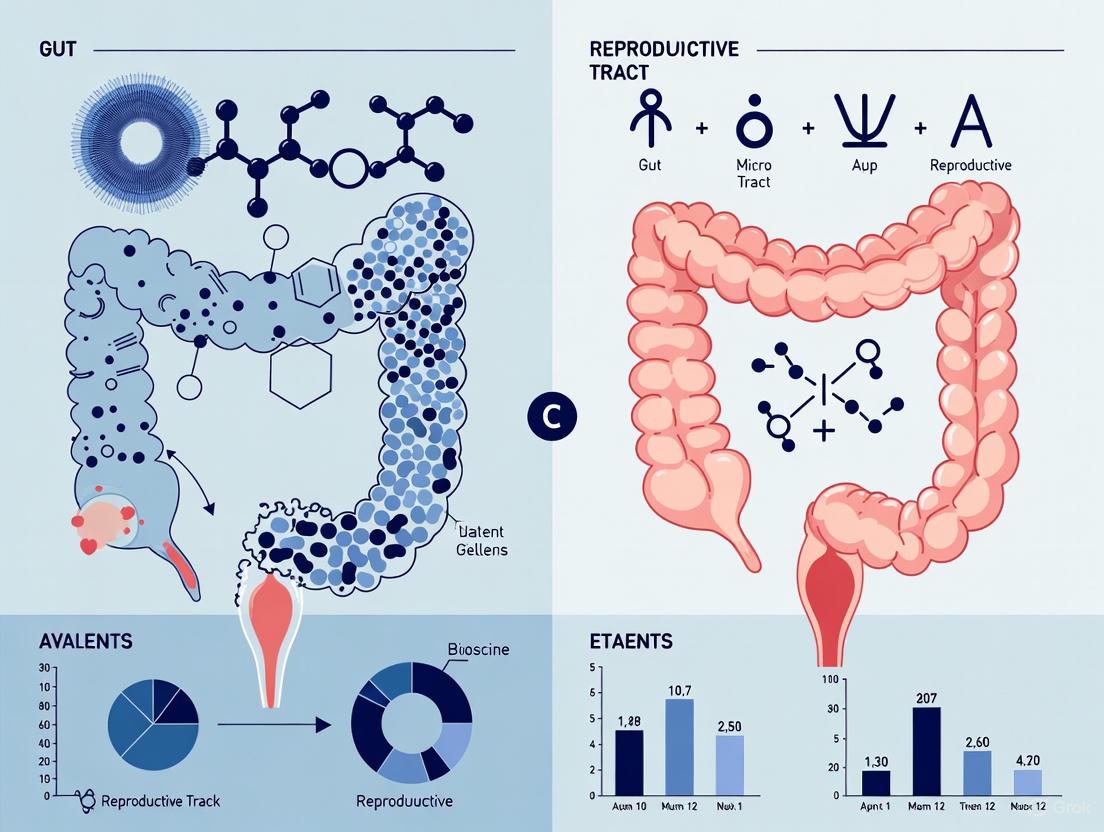
This article provides a comprehensive comparative analysis of the gut and female reproductive tract (FRT) microbiomes for researchers, scientists, and drug development professionals.
Gut vs. Reproductive Tract Microbiomes: A Comparative Analysis of Composition, Function, and Clinical Translation
Abstract
This article provides a comprehensive comparative analysis of the gut and female reproductive tract (FRT) microbiomes for researchers, scientists, and drug development professionals. It explores the foundational biology and distinct compositional profiles of these microbial communities, detailing the methodological approaches and tools used to study them. The content examines the role of dysbiosis in gynecological and reproductive diseases, reviewing current and emerging therapeutic strategies. A direct comparative evaluation synthesizes evidence on cross-talk mechanisms like the gut-reproductive axis, analyzing their collective impact on host physiology, drug efficacy, and disease. The review concludes by identifying key knowledge gaps and future directions for integrating microbiome science into personalized medicine and clinical trial design.
Defining the Ecosystems: Composition and Core Functions of Gut and Reproductive Tract Microbiomes
Anatomical Distribution and Microbial Biomass Gradients in the Female Reproductive Tract
The female reproductive tract (FRT) hosts a complex ecosystem of microorganisms, forming a dynamic microenvironment that plays a critical role in health and disease. Historically, research focused predominantly on the vaginal microbiota, with the upper reproductive tract often considered sterile. However, advanced sequencing technologies have revolutionized this view, revealing a continuous yet stratified microbial community along the entire FRT [1]. This guide provides a comparative analysis of the anatomical distribution and microbial biomass within the FRT, contextualized within the broader framework of microbiome research. Understanding these gradients is essential for developing novel diagnostic and therapeutic strategies for reproductive health conditions, from bacterial vaginosis to endometriosis and infertility [2] [3].
Anatomical Distribution of the Female Reproductive Tract Microbiome
The FRT is anatomically and microbiologically divided into the lower (vagina and cervix) and upper (uterus, fallopian tubes, and ovaries) regions. These compartments exhibit distinct microbial profiles, characterized by significant gradients in biomass, diversity, and community composition [4] [1].
The Lower Reproductive Tract: The vagina harbors the highest bacterial biomass in the FRT, with estimates of 10^10 to 10^11 bacterial cells [5]. A healthy vaginal microbiome is typically characterized by low diversity and dominance of the genus Lactobacillus [2] [5]. These bacteria ferment glycogen to produce lactic acid, creating an acidic environment (pH 3.5-4.5) that inhibits pathogens [2]. The vaginal microbiota is commonly classified into five Community State Types (CSTs). CSTs I, II, III, and V are each dominated by a single Lactobacillus species (L. crispatus, L. gasseri, L. iners, and L. jensenii, respectively), whereas CST IV is a polymicrobial community with a high abundance of facultative and obligate anaerobes, often associated with bacterial vaginosis (BV) [2] [5]. The cervical microbiome, once thought to be a simple extension of the vaginal community, is now recognized as a distinct, transitional zone with a composition that bridges the lower and upper FRT [1].
The Upper Reproductive Tract: Contrary to long-held beliefs of sterility, the uterus, fallopian tubes, and peritoneal fluid harbor unique, low-biomass microbial communities [4]. The microbial composition shifts dramatically from the lower FRT. Lactobacillus dominance decreases, and microbial diversity increases, with a higher relative abundance of Proteobacteria, Actinobacteria, and Bacteroidetes [4]. Genera such as Pseudomonas, Acinetobacter, and Sphingobium become more prevalent in the endometrium and fallopian tubes [4]. The peritoneal fluid in the pouch of Douglas generally lacks Lactobacillus and hosts a diverse microbiota [4]. This continuum of microbes from the vagina to the peritoneum suggests that the FRT is a non-sterile environment, with implications for understanding the etiology of various gynecological diseases [4].
Table 1: Microbial Biomass and Composition Across the Female Reproductive Tract
| Anatomic Site | Relative Bacterial Biomass | Dominant Phyla | Key Genera | Common Community State Types (CSTs) |
|---|---|---|---|---|
| Vagina | High (10^10 - 10^11 cells) [5] | Firmicutes [2] | Lactobacillus (>70%) [2] | CST I (L. crispatus), II (L. gasseri), III (L. iners), V (L. jensenii), IV (Polymicrobial) [2] |
| Cervix | High to Moderate [1] | Firmicutes [1] | Lactobacillus (approx. 80%) [1] | Transitional, often similar to vaginal CSTs but with increased diversity [1] |
| Endometrium | Low [4] | Proteobacteria, Actinobacteria, Firmicutes, Bacteroidetes [4] | Pseudomonas, Acinetobacter, Lactobacillus, Sphingobium, Vagococcus [4] | Not classified; highly diverse and polymicrobial [4] |
| Fallopian Tubes | Low [4] | Proteobacteria, Actinobacteria, Firmicutes, Bacteroidetes [4] | Pseudomonas, Acinetobacter, Lactobacillus (median ~1.7%) [4] | Not classified; highly diverse and polymicrobial [4] |
| Peritoneal Fluid | Low (similar to endometrium) [4] | Proteobacteria, Actinobacteria, Bacteroidetes [4] | Pseudomonas, Acinetobacter, Sphingobium; generally lacks Lactobacillus [4] | Not classified; highly diverse and polymicrobial [4] |
Quantitative Microbial Biomass Analysis
Quantitative data on absolute microbial load is crucial for interpreting sequencing results from low-biomass sites like the upper FRT, where contamination is a major concern.
A landmark study by Chen et al. (2017) used species-specific qPCR to quantify absolute abundances of major vaginal lactobacilli (L. crispatus, L. iners, L. gasseri, L. jensenii) across the FRT [4]. Their findings revealed a monotonic decrease in lactobacilli load from the vagina to the peritoneal fluid [4]. Furthermore, by combining qPCR data with 16S rRNA sequencing relative abundances, they calculated the total bacterial biomass, confirming that the vaginal sites contain several orders of magnitude more bacteria than the endometrial and peritoneal sites, which nonetheless have a biomass significantly above background negative controls [4]. This gradient is visually summarized in the diagram below.
Diagram 1: Microbial Biomass Gradient in the FRT. The biomass decreases drastically from the lower to the upper reproductive tract.
Core Experimental Protocols for FRT Microbiome Analysis
Robust methodology is paramount for accurate characterization of the FRT microbiome, especially in low-biomass environments where contamination can severely skew results.
Sample Collection and Preservation
- Minimally Invasive Sampling: For the upper FRT, transcervical collection of endometrial fluid or tissue is common in clinical settings. However, during surgical procedures (e.g., laparoscopy), samples from the endometrium, fallopian tubes, and peritoneal fluid can be collected directly to avoid potential contamination from the lower FRT [4].
- Validation of Sampling Route: Studies have compared microbial profiles from endometrial samples collected transcervically versus those collected directly from the uterus during surgery, finding high similarity between the two methods, validating transcervical sampling as a reliable approach for accessing the uterine microbiota [4].
- Immediate Processing: Samples are typically placed in sterile phosphate-buffered saline (PBS) and flash-frozen in liquid nitrogen before storage at -80°C to preserve microbial DNA integrity [6].
DNA Extraction and 16S rRNA Gene Sequencing
- Robust DNA Extraction: Protocols often combine mechanical lysis (e.g., using glass beads) with chemical lysis (e.g., phenol-chloroform extraction) to maximize DNA yield from a wide range of bacterial taxa, particularly from low-biomass samples [6].
- 16S rRNA Gene Amplification: The V4 hypervariable region of the 16R rRNA gene is frequently targeted using primers 515F (GTGYCAGCMGCCGCGGTAA) and 806R (GGACTACNVGGGTWTCTAAT), following established protocols like the Earth Microbiome Project [6].
- Sequencing and Bioinformatic Processing: Paired-end sequencing (e.g., 2x250 bp on an Illumina MiSeq) is standard. The QIIME2 pipeline is widely used for quality control, denoising (e.g., with DADA2 to generate Amplicon Sequence Variants - ASVs), and taxonomic classification against reference databases like Greengenes or SILVA [6].
Contamination Control and Validation
- Critical for Low-Biomass Sites: Rigorous contamination controls are non-negotiable for upper FRT samples. This includes:
- Negative Controls: Processing sterile saline or PBS alongside patient samples through all stages (collection, DNA extraction, PCR) [4].
- Background Subtraction: Identifying and removing contaminant sequences found in negative controls from the biological samples [4].
- Biomass Assessment: Using qPCR to confirm that bacterial DNA levels in samples are orders of magnitude above those in negative controls [4].
- Microbial Cultivation: To confirm the presence of viable bacteria, studies perform aerobic and anaerobic cultures on selective media (e.g., PYG agar with horse blood). Successful isolation of live bacteria from sites like the peritoneal fluid provides definitive evidence against the sterile site hypothesis [4].
The following diagram illustrates the core workflow for a robust FRT microbiome study.
Diagram 2: FRT Microbiome Analysis Workflow. Contamination control is a critical, parallel process throughout.
The Scientist's Toolkit: Key Research Reagents and Solutions
Table 2: Essential Reagents and Kits for FRT Microbiome Research
| Product Category/Name | Specific Example | Function in Workflow |
|---|---|---|
| DNA Extraction Kit | Phenol-Chloroform with mechanical bead beating [6] | Comprehensive lysis of Gram-positive and Gram-negative bacteria for high-yield DNA extraction. |
| 16S rRNA PCR Primers | 515F (GTGYCAGCMGCCGCGGTAA) / 806R (GGACTACNVGGGTWTCTAAT) [6] | Amplification of the V4 hypervariable region for high-throughput sequencing. |
| Sequencing Platform | Illumina MiSeq with V2/V3 reagent kit (2x250 bp) [6] | Generating paired-end reads for deep sequencing of 16S rRNA amplicons. |
| Bioinformatics Pipeline | QIIME2 (Quantitative Insights Into Microbial Ecology) [6] | An integrated platform for sequence quality control, denoising, ASV picking, and taxonomic assignment. |
| qPCR Assay Mix | Species-specific qPCR assays for Lactobacillus spp. [4] | Absolute quantification of key bacterial species and total bacterial load for biomass calculation. |
| Bacterial Culture Media | PYG Agar with 5% horse blood [4] | Cultivation and isolation of viable aerobic and anaerobic bacteria from FRT samples. |
The female reproductive tract exhibits a defined anatomical gradient in microbial biomass and composition, transitioning from a high-biomass, Lactobacillus-dominated community in the vagina to low-biomass, diverse ecosystems in the upper tract. This spatial organization is fundamental to understanding the FRT's physiological state and its role in health and disease. The comparative framework with gut microbiome research highlights shared principles—such as the importance of biomass quantification and contamination control—while underscoring the FRT's unique ecology, where low diversity is often a marker of health, contrary to the gut. Future research leveraging the standardized protocols and tools outlined here will be crucial for translating microbiome insights into clinical applications for reproductive health.
The human body harbors complex microbial communities that are vital to health, yet the defining characteristics of a "healthy" microbiome differ dramatically between body sites. Nowhere is this contrast more striking than between the female reproductive tract (FRT) and the gastrointestinal (gut) tract. The FRT ecosystem is uniquely characterized by low microbial diversity and a strong dominance of Lactobacillus species, a state associated with reproductive health and protective functions [7] [8]. In contrast, a healthy gut microbiome is defined by its high microbial diversity and richness, where a complex network of hundreds of bacterial species interacts to maintain metabolic and immune homeostasis [9] [10]. This guide provides a comparative analysis of the core taxa and community structures in these two distinct environments, synthesizing current research data to elucidate how divergent definitions of microbial health coexist within the same host.
Core Taxa and Community Structures: A Comparative Analysis
Female Reproductive Tract Microbiome: Lactobacillus Dominance and Community State Types
The healthy vaginal microbiome demonstrates remarkably low diversity and is frequently dominated by Lactobacillus species. Through genomic sequencing, microbial communities in the FRT have been classified into five main Community State Types (CSTs) [7] [8] [1].
- CST-I: Characterized by dominance of Lactobacillus crispatus.
- CST-II: Dominated by Lactobacillus gasseri.
- CST-III: Dominated by Lactobacillus iners.
- CST-V: Dominated by Lactobacillus jensenii.
- CST-IV: Distinguished by a marked decrease in Lactobacillus and a higher diversity of anaerobic bacteria, including Gardnerella, Prevotella, Atopobium, and Mobiluncus among others [7] [8].
CST-IV is often associated with bacterial vaginosis (BV) and is subcategorized into CST-IV-A (moderate Lactobacillus abundance) and CST-IV-B (high abundance of BV-associated bacteria) [7]. It is crucial to note that L. crispatus (CST-I) is consistently linked to vaginal health, whereas L. iners (CST-III) is considered more transient and is often found in states of dysbiosis [1]. The upper FRT shows a continuum, with biomass decreasing and diversity increasing from the vagina toward the uterus and fallopian tubes [11] [1].
Gut Microbiome: High Diversity and Keystone Taxa
In direct opposition to the FRT, a healthy gut microbiome is defined by its high species diversity and richness [9]. Rather than being dominated by a single genus, the gut harbors a complex network of interacting taxa from several phyla, primarily Firmicutes, Bacteroidetes, Actinobacteria, and Proteobacteria [10]. The core gut microbiota is not defined by the universal presence of specific species, but rather by functional stability maintained through intricate co-occurrence networks.
Network analysis has revealed that certain bacterial taxa act as "hubs" – highly connected genera that are critical for maintaining the microbial community's structure [9]. In healthy control subjects, key hub genera include Bacteroides, Blautia, and Clostridium clusters XIVa and XVIII [9]. During dysbiosis, as seen in Inflammatory Bowel Disease (IBD), this network structure is disrupted, and different hubs emerge, such as Faecalibacterium and Veillonella [9]. The genus Lactobacillus is generally a subdominant component of the gut microbiome, with its prevalence and abundance influenced by age, diet, and geography [12].
Table 1: Comparative Overview of Core Microbiome Features in the FRT vs. Gut
| Feature | Female Reproductive Tract (FRT) | Gut |
|---|---|---|
| Definition of Health | Low diversity; High Lactobacillus abundance [8] | High diversity and richness [9] |
| Dominant Taxa in Health | L. crispatus, L. gasseri, L. iners, L. jensenii [7] | Bacteroides, Blautia, Faecalibacterium, Clostridium clusters [9] |
| Core Community Framework | Community State Types (CSTs I-V) [8] | Co-occurrence networks with hub and terminal nodes [9] |
| Role of Lactobacillus | Dominant; protective [7] | Subdominant; modulated by diet [12] [13] |
| Dysbiotic State | CST-IV (Bacterial Vaginosis) [7] | Disrupted network structure; hub shift [9] |
Functional Roles and Host-Microbiome Interactions
The functional implications of these distinct community structures are equally divergent, reflecting the unique physiological demands of each body site.
Protective Mechanisms in the FRT
The dominance of Lactobacillus in the FRT provides a primary line of defense against pathogens through several mechanisms:
- Acidic pH: Lactobacilli metabolize glycogen-derived carbohydrates to produce lactic acid, creating a low pH environment (typically <4.5) that inhibits the growth of many other bacteria and viruses [7] [14].
- Antimicrobial Compounds: Certain Lactobacillus strains produce bacteriocins and hydrogen peroxide, which further suppress the growth of opportunistic pathogens [8] [15].
- Barrier Fortification: Lactobacilli help strengthen the mucosal epithelial barrier, preventing the invasion of pathogens and reducing the risk of ascending infections that can lead to adverse reproductive outcomes [1].
Metabolic and Immune Coordination in the Gut
The high diversity of the gut microbiome is essential for its vast metabolic capabilities and its role in educating and regulating the host immune system.
- Metabolic Contributions: The gut microbiota ferments dietary fibers to produce short-chain fatty acids (SCFAs) like butyrate, acetate, and propionate, which serve as energy sources for colonocytes and have systemic anti-inflammatory effects [10] [13].
- Immune System Modulation: Gut microbes interact with host immune cells to maintain a balanced immune response. They promote the differentiation of regulatory T-cells and the production of immunoglobulin A (IgA), thereby supporting immune tolerance and barrier defense [10].
- Systemic Effects: Through the "gut-X axis" pathways (e.g., gut-lung, gut-brain, gut-bone), gut microbial metabolites can influence immune and inflammatory responses in distant organs [10].
Essential Experimental Methodologies
Research in both fields relies on high-throughput molecular techniques but employs different analytical frameworks to interpret the data.
16S rRNA Gene Sequencing and Community Classification
This is a foundational technique for profiling microbial communities in both the FRT and gut [7] [11].
- Protocol: DNA is extracted from vaginal swabs or stool samples. The hypervariable regions of the bacterial 16S rRNA gene are amplified via PCR and sequenced. Bioinformatic processing clusters sequences into Operational Taxonomic Units (OTUs) or Amplicon Sequence Variants (ASVs) [8].
- Data Interpretation for FRT: Taxonomic profiles are typically classified into the pre-defined CSTs (I-V) using tools like VALENCIA [7] [1].
- Data Interpretation for Gut: Alpha-diversity (within-sample diversity) and beta-diversity (between-sample diversity) metrics are calculated. The focus is on shifts in overall community structure and the identification of differentially abundant taxa between health and disease states [9].
Microbial Co-occurrence Network Analysis
This method is particularly powerful for understanding the complex interactions in the gut microbiome but is also applied to the FRT to understand BV [9].
- Protocol: After generating taxonomic abundance data, pairwise correlations (e.g., Spearman) between the abundances of all microbial taxa are computed. A network is constructed where nodes represent taxa and edges represent significant correlations [9].
- Centrality Measures: Nodes are analyzed using centrality measures (e.g., degree, betweenness centrality) to identify "hub" taxa that are disproportionately important to the network's stability [9].
- Graphlet Analysis: This advanced method compares the local topology of networks to understand how the roles of individual nodes (taxa) change between conditions, such as health versus IBD [9].
Diagram 1: Framework for Classifying the Female Reproductive Tract (FRT) Microbiome. The FRT microbiome is categorized into five main Community State Types (CSTs). CSTs I, II, and V are strongly associated with health, while CST-III is more ambivalent, and CST-IV, characterized by high diversity and low Lactobacillus, is linked to dysbiosis and bacterial vaginosis (BV).
Diagram 2: Network-Based Analysis of the Gut Microbiome. In a healthy gut, the microbial community forms a complex network where highly connected "hub" taxa (e.g., Bacteroides, Blautia) are critical for stability. In dysbiotic states like IBD, the network structure is disrupted, and the identity of these key hubs changes (e.g., to Faecalibacterium, Veillonella), reflecting a loss of stability.
The Scientist's Toolkit: Key Research Reagents and Solutions
Table 2: Essential Reagents and Kits for Microbiome Research
| Product / Category | Function in Research | Specific Application Notes |
|---|---|---|
| DNA Extraction Kits (e.g., Mo Bio PowerSoil Kit) | Isolation of high-quality microbial DNA from complex samples. | Critical for both FRT (swabs) and gut (stool) samples. Must efficiently lyse Gram-positive bacteria like Lactobacillus. |
| 16S rRNA Gene Primers (e.g., 27F/338R, V4 primers) | Amplification of the target gene for sequencing. | Choice of hypervariable region (e.g., V4 for FRT, V3-V4 for gut) can influence taxonomic resolution. |
| PCR Reagents | Amplification of the 16S rRNA gene post-DNA extraction. | Requires high-fidelity polymerases to minimize amplification errors for downstream sequencing. |
| Next-Generation Sequencing Platforms (Illumina MiSeq/HiSeq) | High-throughput sequencing of amplified gene libraries. | MiSeq is common for 16S studies due to read length; HiSeq/Novaseq used for larger shotgun metagenomic studies. |
| Bioinformatic Software (QIIME 2, MOTHUR, DADA2) | Processing raw sequence data into taxonomic units and diversity metrics. | QIIME 2 is a widely used, integrated pipeline for quality control, OTU/ASV picking, and diversity analysis. |
| Network Analysis Tools (R packages: igraph, SpiecEasi) | Construction and analysis of microbial co-occurrence networks. | Essential for identifying hub taxa and understanding community interactions in gut microbiome studies. |
The comparative analysis between the FRT and gut microbiomes reveals a fundamental principle of human microbiology: there is no universal definition of a "healthy" microbiome. Health is instead defined by an ecosystem's optimal state for its specific anatomical location and physiological functions. The FRT favors a simple, robust ecosystem dominated by Lactobacillus that provides direct, chemical-based protection against pathogens. In contrast, the gut thrives on complexity and diversity, where functional redundancy and a networked community structure provide resilience and multifaceted metabolic capabilities. For researchers and drug developers, this dichotomy is paramount. Therapeutic strategies aimed at modulating the microbiome must be context-specific. Restoring Lactobacillus dominance is a valid goal for FRT dysbiosis, whereas interventions for gut disorders should focus on restoring a diverse, stable network of interacting species rather than targeting single taxa. Future research exploring the crosstalk between these two microbiomes, and their collective impact on host health, represents a promising and evolving frontier.
The human microbiome comprises diverse communities of microorganisms that play indispensable roles in health and disease. Among these, the gut and female reproductive tract (FRT) microbiomes represent two critically important, yet functionally distinct, ecosystems. The gut microbiome operates as a extensive metabolic organ, responsible for breaking down complex dietary components and educating the immune system. In contrast, the FRT microbiome functions primarily as a defensive frontier, specializing in maintaining a protective mucosal barrier and a hostile acidic environment to exclude pathogens. Understanding this functional division is paramount for researchers and drug development professionals aiming to develop targeted microbial-based therapeutics. This guide provides a comparative analysis of these systems, supported by experimental data and methodologies, to inform research strategies and therapeutic development.
Functional Specializations: A Comparative Analysis
The gut and FRT microbiomes have evolved distinct functional profiles tailored to their anatomical locations and physiological roles. The table below summarizes their core functional specializations.
Table 1: Core Functional Comparison of Gut and FRT Microbiomes
| Functional Aspect | Gut Microbiome | Female Reproductive Tract (FRT) Microbiome |
|---|---|---|
| Primary Role | Nutrient metabolism and immune education [16] | Mucosal barrier integrity and pathogen exclusion [17] [2] |
| Key Metabolic Outputs | Short-chain fatty acids (SCFAs: acetate, propionate, butyrate) [16] | Lactic acid (both L- and D-isomers) [17] [2] |
| Impact on Local Environment | Influences systemic metabolism and energy harvest [16] | Maintains low pH (3.5-4.5) [2] |
| Immune Interaction | Educates systemic immunity; promotes T-reg differentiation [18] | Maintains immunologic barrier; modulates local inflammation [17] [19] |
| Dominant Taxa | High diversity; Bacteroidetes, Firmicutes, Akkermansia [16] [18] | Low diversity; Lactobacillus spp. (e.g., L. crispatus, L. iners) [17] [4] |
| Dysbiosis Consequences | Linked to IBD, IBS, obesity, diabetes [16] | Associated with BV, STI risk, endometriosis, preterm birth [17] [2] [19] |
The Gut Microbiome: Master Metabolizer and Immune Tutor
The gut microbiome's core function is the fermentation of otherwise indigestible dietary substrates, primarily dietary fibers and plant polysaccharides [16]. This saccharolytic fermentation produces short-chain fatty acids (SCFAs), notably acetate, propionate, and butyrate, which perform critical systemic functions. Butyrate serves as the primary energy source for colonocytes and has anti-cancer and anti-inflammatory activities, while propionate is involved in liver gluconeogenesis and satiety signaling. Acetate is a ubiquitous metabolite used in cholesterol metabolism and lipogenesis [16]. These SCFAs are not produced indiscriminately; specific bacterial groups are responsible for their production. Butyrate is predominantly produced by Firmicutes like Faecalibacterium prausnitzii and members of the Lachnospiraceae, whereas propionate is mainly produced by Bacteroides species and Negativicutes [16].
Beyond metabolism, the gut microbiome is essential for immune system education. It achieves this through direct interaction with immune cells and via its metabolic products. SCFAs, particularly butyrate, inhibit histone deacetylases, thereby regulating gene expression in immune cells and promoting the differentiation of regulatory T-cells (T-regs), which are crucial for maintaining immune tolerance and preventing autoimmunity [16] [18]. The gut microbiome also regulates estrogen levels via the "estrobolome"—a collection of bacterial genes encoding enzymes like β-glucuronidase. This enzyme deconjugates estrogens in the gut, allowing them to be reabsorbed, thereby influencing systemic estrogen levels and, consequently, endometrial function and reproductive health [18].
The FRT Microbiome: Guardian of the Mucosal Barrier
The functional paradigm of the FRT microbiome, particularly the vaginal microbiome, is defense. A healthy vaginal microbiome is characterized by low diversity and dominance by Lactobacillus species [17] [4]. These lactobacilli are not merely passive residents; they are active defenders that provide mucosal barrier fortification and pH control. They metabolize glycogen derived from vaginal epithelial cells to produce lactic acid, creating and maintaining a profoundly acidic environment (pH 3.5-4.5) that inhibits the growth of many pathogens [17] [2]. Some lactobacilli, such as L. crispatus, also produce hydrogen peroxide (H₂O₂) and bacteriocins, further contributing to the antimicrobial defense [2].
The concept of a sterile upper reproductive tract has been challenged by evidence of a microbiota continuum from the vagina to the endometrium, fallopian tubes, and peritoneal fluid, though bacterial biomass decreases dramatically in the upper tract [4]. The FRT microbiome also interacts with the host immune system to maintain a balanced state. A Lactobacillus-dominated community is associated with a controlled inflammatory environment, whereas a dysbiotic state (e.g., bacterial vaginosis, BV) characterized by high microbial diversity and a decline in lactobacilli leads to a pro-inflammatory state. This inflammation is driven by bacterial products like lipopolysaccharide (LPS) activating Toll-like receptors (TLRs) on epithelial and immune cells, triggering NF-κB signaling and the production of pro-inflammatory cytokines [2] [19]. This breakdown of the physical and immunologic barrier increases susceptibility to sexually transmitted infections and adverse reproductive outcomes [17].
Experimental Models and Methodologies
Investigating these distinct microbiomes requires specialized experimental models that recapitulate their unique physiological environments. The following section details key protocols and workflows.
Key Experimental Models for FRT and Gut Microbiome Research
Table 2: Overview of Key Experimental Models
| Model System | Brief Description | Applications | Advantages | Limitations |
|---|---|---|---|---|
| In Vitro 3D Dual-Chamber (FRT) | Vaginal/ectocervical epithelial cells grown on semipermeable membranes at an air-liquid interface (ALI) [17] | Study of cell permeability, junction formation, differentiation, and pathogen transmigration [17] | Reproduces a differentiated, multi-layered epithelium with functional cell junctions [17] | May not fully capture the complexity of the in vivo microenvironment, including immune cell interactions [17] |
| Gut Microbial Fermentation Models | In vitro continuous culture systems (e.g., chemostats) simulating the colonic environment [16] | Study of microbial metabolism, SCFA production, substrate utilization, and cross-feeding [16] | Allows for controlled manipulation of nutrients and sampling over time; high throughput [16] | Lack host cells, immune factors, and peristalsis, simplifying the true gut ecosystem [16] |
| Animal Models (Gnotobiotic) | Germ-free animals colonized with defined microbial communities [16] [18] | Causal studies of microbiome impact on host physiology, immunity, and disease [16] | Enables study of host-microbe interactions in a living system with a controlled microbiome [16] | Genetic and physiological differences from humans; high cost and technical expertise required [16] |
| Tissue Explants (FRT) | Ex vivo cultures of human cervicovaginal or endometrial tissue [17] | Study of host-pathogen interactions, drug permeability, and immune responses in native tissue architecture [17] | Preserves the native tissue structure, including resident immune cells [17] | Limited viability; donor-to-donor variability; cannot be used for long-term studies [17] |
Detailed Protocol: In Vitro SCFA Analysis from Gut Microbiota
This protocol is used to quantify the production of SCFAs, key functional metabolites of the gut microbiome [16].
- Sample Preparation: Anaerobically collect fecal or cecal content from an animal model or human donor, or harvest culture from an in vitro fermentation model. Immediately snap-freeze in liquid nitrogen and store at -80°C to preserve metabolite integrity.
- Metabolite Extraction: Thaw samples on ice. Homogenize a precise weight of material in a solution of acidified water (e.g., 0.1% formic acid) or a mixture of water and organic solvent (e.g., acetonitrile) to precipitate proteins and extract SCFAs. Centrifuge at high speed (e.g., 14,000 x g for 15 minutes at 4°C) to remove particulate matter.
- Derivatization (Optional): For Gas Chromatography (GC) analysis, derivatize the cleared supernatant to increase the volatility of SCFAs. A common method involves mixing the sample with a reagent like N-tert-butyldimethylsilyl-N-methyltrifluoroacetamide (MTBSTFA).
- Instrumental Analysis:
- Gas Chromatography-Mass Spectrometry (GC-MS): This is a gold-standard method. The derivatized or underivatized extract is injected into a GC system equipped with a polar capillary column for separation. The separated compounds are then identified and quantified by a mass spectrometer. Acetate, propionate, and butyrate are identified by their characteristic retention times and mass spectra.
- High-Performance Liquid Chromatography (HPLC): Alternative methods use HPLC with UV or refractive index detection, often requiring prior derivatization for sensitivity.
- Quantification: Quantify SCFA concentrations by comparing peak areas from the sample to a standard curve generated from known concentrations of pure acetate, propionate, and butyrate.
Detailed Protocol: Vaginal Microbiome Community State Typing (CST)
This protocol classifies the vaginal microbiome into functional groups based on bacterial composition, which is directly linked to its barrier and pH control functions [17] [2] [4].
- Sample Collection: Using a sterile swab, collect a sample from the posterior fornix of the vagina. The swab should be immediately placed in a stabilizing transport medium (e.g., DNA/RNA Shield) and stored at -80°C until processing.
- DNA Extraction and 16S rRNA Gene Amplification: Extract total genomic DNA from the sample using a commercial kit designed for microbial DNA. Amplify the hypervariable regions (e.g., V4) of the bacterial 16S rRNA gene using universal primers in a polymerase chain reaction (PCR).
- Sequencing and Bioinformatic Analysis: Purify the PCR amplicons and perform high-throughput sequencing (e.g., Illumina MiSeq). Process the raw sequence data through a bioinformatics pipeline (e.g., QIIME 2, mothur) to quality-filter sequences, remove chimeras, and cluster them into Operational Taxonomic Units (OTUs) or Amplicon Sequence Variants (ASVs).
- Taxonomic Assignment and CST Classification: Assign taxonomy to the OTUs/ASVs using a reference database (e.g., SILVA, Greengenes). The microbial community is then classified into one of five Community State Types (CSTs) based on dominant taxa:
Signaling Pathways in Host-Microbiome Crosstalk
The functional roles of these microbiomes are mediated through complex molecular signaling pathways that engage with host systems.
Gut Microbiome Immune Education via SCFA Signaling
The diagram below illustrates how microbial SCFAs from the gut lumen exert immunomodulatory effects on host cells, particularly in promoting regulatory T-cell (T-reg) differentiation, which is crucial for systemic immune tolerance [16] [18].
FRT Mucosal Barrier Defense and Inflammation
This pathway depicts the dual role of the FRT microbiome in either maintaining barrier integrity and immune homeostasis via lactobacilli, or triggering inflammation through dysbiotic communities [17] [2] [19].
The Scientist's Toolkit: Essential Research Reagents
Table 3: Key Reagents for Gut and FRT Microbiome Research
| Reagent / Material | Function in Research | Specific Application Example |
|---|---|---|
| Semipermeable Membrane Inserts | Support the growth of polarized, differentiated epithelial cell layers at an air-liquid interface [17] | Creating 3D dual-chamber models of vaginal/cervical epithelium for barrier function studies [17] |
| Anaerobic Chamber/Workstation | Provides an oxygen-free environment for the cultivation and manipulation of obligate anaerobic gut bacteria [16] | Culturing saccharolytic bacteria like Faecalibacterium prausnitzii from fecal samples for SCFA production assays [16] |
| 16S rRNA Gene Primers | Amplify conserved bacterial gene regions for taxonomic identification and community profiling via sequencing [4] | Determining the Community State Type (CST) of a vaginal microbiome sample [4] |
| SCFA Standards | Pure chemical standards used for calibration and quantification in analytical assays like GC-MS [16] | Generating a standard curve to quantify acetate, propionate, and butyrate concentrations in fecal or culture supernatants [16] |
| Toll-like Receptor (TLR) Agonists/Antagonists | Pharmacological tools to activate or inhibit specific pattern-recognition receptors on host cells [2] | Investigating the role of TLR4 signaling in the pro-inflammatory response to dysbiotic FRT bacteria [2] |
| Retinol-Binding Protein (RBP) Antibodies | Detect and quantify RBP expression in tissues and serum via immunohistochemistry or ELISA [20] | Evaluating trophoblastic retinol transport in models of maternal-fetal nutrient transfer [20] |
The human microbiome, particularly the communities residing in the gut and reproductive tract, functions as a sophisticated endocrine regulator that profoundly influences systemic hormone homeostasis. The estrobolome, defined as the collection of gut bacteria capable of metabolizing estrogens, represents a pivotal discovery in understanding how microbial communities exert systemic endocrine effects [21]. This comparative analysis examines the distinct yet interconnected roles of the gut and reproductive tract microbiomes in modulating reproductive hormones, with specific emphasis on mechanistic pathways, experimental approaches, and translational implications for drug development. While the gut microbiota operates as a systemic regulator of hormone metabolism through enterohepatic circulation and immune signaling, the reproductive tract microbiota functions primarily as a local modulator of tissue microenvironment and barrier integrity [21] [2]. Understanding this distributed endocrine network provides novel insights for therapeutic interventions targeting hormone-driven conditions including breast cancer, endometriosis, and polycystic ovary syndrome (PCOS).
Comparative Anatomy and Functional Specialization
Gut Microbiome: The Systemic Metabolic Bioreactor
The gut microbiome functions as a biochemical reactor that systematically modulates hormone bioavailability throughout the body. Through the entrohepatic circulation pathway, estrogens conjugated in the liver are excreted into bile and subsequently deconjugated in the gut by microbial enzymes, particularly β-glucuronidase [21] [22]. This process regenerates active estrogens that can be reabsorbed into systemic circulation, directly influencing estrogen receptor activation in distal tissues including breast, endometrium, and bone [21]. The estrobolome encompasses bacterial taxa from the Clostridium, Bacteroides, Eubacterium, Lactobacillus, and Ruminococcus genera, which harbor genes encoding estrogen-metabolizing enzymes [21]. Dysbiosis of the gut microbiome reduces microbial diversity and β-glucuronidase activity, altering the balance between conjugated and unconjugated estrogens and potentially promoting hormone-driven pathologies [21] [23].
Reproductive Tract Microbiome: Localized Microenvironment Control
The reproductive tract microbiota, particularly in the lower genital tract, is characterized by low diversity and dominance of Lactobacillus species that maintain a protective acidic environment through lactic acid production [2]. This community exists in specific Community State Types (CSTs), with CSTs I, II, III, and V each dominated by different Lactobacillus species (L. crispatus, L. gasseri, L. iners, and L. jensenii), while CST IV exhibits high diversity with facultative and obligate anaerobes [2]. The reproductive tract microbiota functions primarily as a local ecosystem modulator through three key mechanisms: (1) maintenance of epithelial barrier integrity; (2) regulation of local immune responses; and (3) direct microbial antagonism through acidification and bacteriocin production [2] [3]. Unlike the gut microbiome, its effects are largely confined to the reproductive tract, though ascending infections or systemic immune activation can produce broader consequences.
Table 1: Functional Comparison of Gut and Reproductive Tract Microbiomes in Hormone Modulation
| Parameter | Gut Microbiome | Reproductive Tract Microbiome |
|---|---|---|
| Primary Mechanism | Enzyme production (β-glucuronidase, β-glucosidase, sulfatase) for estrogen deconjugation | Local acidification, competitive exclusion, immune modulation |
| Key Taxa | Clostridium, Bacteroides, Eubacterium, Ruminococcus, Lactobacillus [21] | Lactobacillus crispatus, L. gasseri, L. iners, L. jensenii [2] |
| Systemic Impact | High - regulates circulating estrogen levels throughout body [21] | Low-Medium - primarily local tissue effects with potential immune-mediated systemic effects [2] |
| Dysbiosis Consequences | Altered estrogen metabolism, increased breast cancer risk, metabolic syndrome [21] [23] | Bacterial vaginosis, increased susceptibility to STIs, reproductive complications [2] |
| Therapeutic Approaches | Probiotics, prebiotics, fecal microbiota transplantation, dietary interventions [21] | Local probiotics, antimicrobials, pH modulators [2] |
Quantitative Experimental Data: Microbial Influence on Hormone Levels
Estrobolome Activity and Hormone Correlations
Recent clinical studies have quantified relationships between specific bacterial taxa, enzymatic activities, and hormone levels. Postmenopausal women with breast cancer demonstrate reduced gut microbial diversity and altered composition compared to healthy controls, with specific decreases in β-glucuronidase-producing bacteria [21]. Research has identified positive correlations between members of the Clostridiaceae and Ruminococcaceae families (both rich in β-glucuronidase encoding genes) and urinary estrogen levels [21]. So-called "estrobolome capacity" can be quantified by measuring the abundance of bacterial genes encoding estrogen-metabolizing enzymes, providing a potential biomarker for hormone-related disease risk [22].
Table 2: Experimentally Measured Microbial Influences on Reproductive Hormones
| Microbial Factor | Experimental Model | Measured Effect | Mechanistic Insight |
|---|---|---|---|
| β-glucuronidase activity | Human cohort studies | Direct correlation with circulating estrogen levels [21] | Deconjugation of estrogen glucuronides increases bioavailable estrogen |
| Gut microbial diversity | Case-control studies | Inverse association with breast cancer risk [21] | Reduced diversity diminishes estrobolome functional capacity |
| Lactobacillus dominance | Clinical studies of reproductive tract | Maintenance of vaginal pH <4.5 [2] | Lactic acid production inhibits pathogens and maintains epithelial integrity |
| CST IV community | Cross-sectional studies | Association with bacterial vaginosis (Nugent score >7) [2] | Polymicrobial consortium produces biogenic amines and elevates pH |
| Clostridiaceae abundance | 16S rRNA sequencing with hormone profiling | Positive correlation with urinary estrogens [21] | β-glucuronidase production enhances estrogen recirculation |
Methodological Approaches: Experimental Protocols for Microbiome-Endocrine Research
Estrobolome Functional Characterization
Objective: To quantify the estrogen-metabolizing capacity of gut microbiota through enzymatic activity and metagenomic analysis.
Sample Collection and Processing:
- Collect fresh stool samples in anaerobic containers with appropriate stabilizers (e.g., RNA later for metatranscriptomics)
- For enzyme activity: process samples within 30 minutes of collection under anaerobic conditions
- For metagenomics: freeze immediately at -80°C until DNA extraction [22]
β-Glucuronidase Activity Assay:
- Prepare fecal supernatants by centrifugation at 12,000×g for 15 minutes at 4°C
- Incubate supernatant with 4-methylumbelliferyl-β-D-glucuronide (1 mM) in appropriate buffer
- Measure fluorescence (excitation 365 nm, emission 445 nm) at 0, 15, 30, and 60 minutes
- Calculate enzyme activity as nmol 4-methylumbelliferone produced per hour per mg protein [22]
Metagenomic Sequencing and Analysis:
- Extract genomic DNA using validated kits (e.g., QIAamp PowerFecal Pro DNA Kit)
- Perform shotgun metagenomic sequencing (Illumina NovaSeq, 150 bp paired-end)
- Map sequences to reference databases (KEGG, MetaCyc) to identify estrogen-metabolism genes
- Quantify abundance of key taxa with estrogen-metabolizing capabilities [22]
Reproductive Tract Microbiome Profiling
Objective: To characterize community structure and functional potential of reproductive tract microbiota and correlate with hormonal parameters.
Sample Collection:
- Collect vaginal swabs using standardized collection kits (e.g., Copan FLOQSwabs)
- For hormonal correlation, collect matched blood samples for serum hormone quantification (estradiol, progesterone)
- Document menstrual cycle phase and relevant clinical metadata [2]
16S rRNA Gene Sequencing:
- Amplify V3-V4 hypervariable regions using 341F/805R primers
- Sequence on Illumina MiSeq platform (2×250 bp)
- Process sequences using QIIME2 or mothur pipelines
- Assign Community State Types based on taxonomic profiles [2]
Metabolomic Profiling:
- Extract metabolites from vaginal swabs using methanol:water (1:1) solution
- Analyze using LC-MS/MS with targeted analysis for organic acids (lactic acid, short-chain fatty acids) and biogenic amines
- Correlate metabolite abundances with taxonomic profiles and clinical outcomes [2]
Signaling Pathways: Microbial-Endocrine Crosstalk
The interplay between microbial communities and host endocrine signaling occurs through multiple interconnected pathways. The following diagram illustrates the key mechanisms by which gut and reproductive tract microbiomes systemically influence reproductive hormone homeostasis:
Microbial-Endocrine Signaling Network: This diagram illustrates the bidirectional communication between gut and reproductive tract microbiomes and host endocrine systems. The gut microbiome (yellow) primarily influences systemic hormone balance through estrogen deconjugation and immune signaling, while the reproductive tract microbiome (red) exerts local effects that can indirectly influence systemic homeostasis. Key interactions include microbial enzyme production, immune modulation, and metabolite signaling that collectively regulate hormone-sensitive tissues.
The Scientist's Toolkit: Essential Research Reagents and Platforms
Table 3: Essential Research Tools for Microbiome-Endocrine Investigations
| Tool Category | Specific Products/Platforms | Research Application | Key Features |
|---|---|---|---|
| DNA Extraction Kits | QIAamp PowerFecal Pro DNA Kit, DNeasy PowerLyzer PowerSoil Kit | Microbial community profiling | Effective lysis of Gram-positive bacteria, removal of PCR inhibitors |
| Sequencing Platforms | Illumina MiSeq/NovaSeq, PacBio Sequel II, Oxford Nanopore | Metagenomic and metatranscriptomic analysis | High-throughput, long-read capabilities for strain-level resolution |
| Enzyme Activity Assays | β-Glucuronidase Activity Assay Kit (Sigma-Aldrich), custom fluorescence-based assays | Functional estrobolome characterization | Quantitative measurement of key estrogen-metabolizing enzymes |
| Hormone Measurement | LC-MS/MS systems, ELISA kits (Estradiol, Progesterone) | Correlation of microbial features with hormone levels | High sensitivity and specificity for steroid hormone quantification |
| Anaerobic Chambers | Coy Laboratory Products, Baker Ruskinn | Culture of obligate anaerobic bacteria | Maintenance of strict anaerobic conditions for microbial cultivation |
| Bioinformatics Tools | QIIME2, mothur, HUMAnN2, MetaPhlAn | Microbiome data analysis | Pipeline integration, functional profiling, phylogenetic analysis |
| Gnotobiotic Animal Models | Germ-free mice (Taconic Biosciences), flexible isolators | Mechanistic studies of microbial causality | Controlled colonization experiments to establish causal relationships |
The comparative analysis of gut and reproductive tract microbiomes reveals both specialized functions and convergent pathways in endocrine regulation. The gut microbiome, through the estrobolome, functions as a systemic endocrine organ that modulates hormone bioavailability via enzymatic transformation, while the reproductive tract microbiome operates as a local ecosystem that influences tissue responsiveness through immune and metabolic signaling. Both systems exhibit bidirectional communication with host hormone systems, creating complex feedback loops that maintain homeostasis or drive pathology when disrupted.
Therapeutic targeting of these microbial communities presents promising avenues for managing hormone-driven conditions. Precision microbiome modulation through specific probiotics (e.g., Lactobacillus strains for reproductive health), prebiotics to support estrobolome function, and dietary interventions to modulate microbial metabolism offer complementary approaches to conventional endocrine therapies [21] [2] [24]. For drug development professionals, understanding these microbial-endocrine interfaces provides opportunities for novel biomarker development, patient stratification strategies, and combination therapies that address both microbial and hormonal components of disease. Future research integrating multi-omics approaches with controlled intervention studies will further elucidate causal mechanisms and optimize therapeutic targeting of these distributed endocrine networks.
The human body harbors complex microbial communities that are critical to health and disease. This guide provides a comparative analysis of two core microbial ecosystems: the gut microbiome and the female reproductive tract (FRT) microbiome. Understanding the sources that seed these niches and the host and environmental factors that determine their composition is essential for developing targeted therapeutic interventions. While the gut microbiome is characterized by its immense diversity and metabolic capacity, the FRT microbiome is notable for its stability and dominance by specific Lactobacillus species, which are crucial for maintaining a healthy physiological state [1]. This analysis objectively compares the colonization, composition, and determinants of these systems, framing the discussion within the context of comparative microbiome research for a scientific audience.
Comparative Analysis of Gut vs. Reproductive Tract Microbiomes
Table 1: Fundamental Comparison of Gut and Reproductive Tract Microbiomes
| Characteristic | Gut Microbiome | Reproductive Tract Microbiome (Healthy State) |
|---|---|---|
| Primary Colonization Sources | Maternal birth canal, diet, environment post-birth [25] [26] | Ascension from lower to upper tract, controversial in-utero sources [27] [1] |
| Typical Diversity | High diversity, stable adult profile dominated by Firmicutes & Bacteroidetes [25] [28] | Low diversity, dominated by Lactobacillus spp. [2] [27] [1] |
| Key Determinants: Host Genetics | ABO blood group, FUT2 genotype influence specific microbial genes [29] | Limited evidence for direct genetic control; HLA & immune gene variants implicated [2] |
| Key Determinants: Diet/Nutrition | Major driver; fiber, HMOs (in infants) shape composition & SCFA production [26] [30] | Indirect link via systemic metabolism; local glycogen availability crucial [2] [1] |
| Lifespan Trajectory | Dynamic from birth to old age; Bifidobacterium declines, pathobionts may increase [28] | Relatively stable in adulthood; increases in stability during pregnancy [27] |
| Dysbiosis Consequences | Necrotizing enterocolitis (in preterm), metabolic diseases, inflammation [25] [28] | Bacterial vaginosis, infertility, preterm birth, ascending infections [2] [27] [30] |
Host Genetic Regulation of Microbial Colonization
Host genetics provides a foundational layer of control over microbial colonization, though its influence varies significantly between the gut and the reproductive tract.
Genetic Regulation of the Gut Microbiome
Host genetics regulates both the abundance of gut microbial species and their genetic makeup. A landmark meta-analysis associated human genetic variation with gut microbial structural variations (SVs)—highly variable genomic segments that affect microbial functionality [29].
- ABO Blood Group and FUT2 Locus: The most significant association identified was between the ABO gene locus and SVs in Faecalibacterium prausnitzii [29]. A specific SV harboring an N-acetylgalactosamine (GalNAc) utilization gene cluster was more prevalent in individuals who secrete the type A oligosaccharide antigen, which terminates in GalNAc. This association is jointly determined by human ABO and FUT2 genotypes [29].
- Mechanism of Interaction: This finding demonstrates a direct symbiotic relationship where the host provides a specific carbohydrate (GalNAc) in the mucosal environment, and gut bacteria adapt by possessing the genetic machinery to utilize it as a nutrient source [29]. This genetic association has further been linked to the host's cardiometabolic health [29].
- Heritability Estimates: While host genetics exerts a measurable effect, its overall contribution is nuanced. Family-based heritability estimates for microbial SVs are significant for specific loci but generally account for a smaller proportion of variation compared to environmental factors like diet [29] [31]. In mice, the host genotype has been shown to be the dominant factor in shaping the microbiome over multiple generations in controlled environments, overcoming the initial influence of maternal legacy [32].
Genetic and Non-Genetic Regulation of the FRT Microbiome
In contrast to the gut, evidence for direct host genetic control of the FRT microbiome composition is less established. The dominant factor appears to be the host's hormonal status, which influences the local environment.
- Community State Types (CSTs): The healthy vaginal microbiome is categorized into five CSTs. CSTs I, II, III, and V are each dominated by a single Lactobacillus species (L. crispatus, L. gasseri, L. iners, and L. jensenii), while CST IV is a diverse mixture of anaerobes associated with dysbiosis [2] [1].
- Role of Lactobacilli: Under estrogen stimulation, vaginal epithelial cells accumulate glycogen, which is metabolized by Lactobacillus species to produce lactic acid [2]. This creates an acidic environment (pH 3.5-4.5) that inhibits pathogens and maintains homeostasis [2] [27].
- Host Genetic Associations: Some genome-wide association studies (GWAS) have identified loci related to immune signaling and epithelial barrier function that are associated with particular vaginal microbial features [2]. Polymorphisms in HLA genes and innate immune receptors like TLR2 and TLR4 have been linked to susceptibility to infections and may shape the inflammatory milieu of the reproductive tract [2].
Dietary and Nutritional Determinants Across the Lifespan
Diet is a powerful modulator of the gut microbiome, with effects that reverberate from infancy to old age. Its impact on the FRT microbiome is more indirect.
Dietary Impact on the Gut Microbiome
- Early Life: Human Milk Oligosaccharides (HMOs): In infants, breast milk is a key determinant. HMOs are the third-largest solid component of breast milk and have a strong bifidogenic effect [26]. They serve as decoy receptors to prevent pathogen binding and are selectively utilized by beneficial Bifidobacterium species, supporting a healthy early microbiome [26].
- Adulthood and Aging: The adult gut microbiome is stable but remains responsive to diet. Dietary restriction (caloric restriction and fasting) in mice induces significant microbiome changes, with the intensity of the intervention correlating with the magnitude of microbial shift [31]. With aging, microbial signatures shift, including a decrease in families like Bacteroidaceae and an increase in genera like Akkermansia and Christensenellaceae [28]. The latter appears to be influenced by host genetics, suggesting a genotype-longevity link mediated by the microbiome [28].
Systemic and Local Nutrition in the FRT
The FRT microbiome is less directly influenced by diet than the gut. The primary nutritional determinant is local glycogen driven by host hormones [2]. However, systemic metabolic health, which is influenced by diet, can have indirect effects. Western dietary patterns that disrupt the gut microbiome can induce low-grade inflammation and metabolic dysfunction, which are associated with reproductive disorders like polycystic ovarian syndrome (PCOS) and endometriosis [30].
Experimental Protocols for Microbiome Research
Protocol 1: Dissecting Host Genotype vs. Maternal Legacy
Objective: To determine the contribution of host genotype versus maternal microbial legacy in shaping the adult microbiome [32].
Workflow:
- Embryo Collection: Obtain two-cell stage embryos from two inbred mouse strains (e.g., C57BL/6J and BALB/c).
- Embryo Transfer: Transfer a mixture of embryos from both strains into the oviducts of genetically hybrid pseudopregnant recipient mice. This ensures all offspring are inoculated with an identical microbiome at birth from the foster mother.
- Cross-Fostering and Breeding: House the offspring (Generation 0) in a controlled, standardized environment. Establish separate, strict inbred breeding lineages for each genotype over multiple generations (e.g., 5 generations).
- Sample Collection: longitudinally collect microbiome samples (e.g., fecal pellets for gut, swabs for skin/reproductive tract) from mice across generations.
- Sequencing and Analysis: Perform 16S rRNA gene sequencing on samples. Analyze data to track how the microbiome of each genotype diverges from the common starting point and stabilizes over generations.
Diagram: Experimental workflow for dissecting host genotype versus maternal legacy effects on microbiome composition. IVC = Individually Ventilated Cages.
Protocol 2: Identifying Host Gene-Microbe Genetic Interactions
Objective: To discover associations between human host genetic variation and bacterial genetic variants (e.g., Structural Variations) in the gut microbiome [29].
Workflow:
- Cohort Establishment: Recruit a large cohort of individuals (e.g., >9,000) with deep phenotyping data, including host genotype and metagenomic sequencing of stool samples.
- Metagenomic Data Processing: Map metagenomic sequencing reads to microbial reference genomes. Use specialized tools (e.g., SGV-Finder) to identify Structural Variations (SVs)—genomic regions that are either absent (deletion SVs) or show highly variable abundance (variable SVs) across samples.
- Host Genotyping: Perform genome-wide genotyping of participants.
- Association Analysis: Conduct a meta-analysis of associations between millions of human single-nucleotide polymorphisms (SNPs) and the presence/abundance of thousands of microbial SVs.
- Replication and Validation: Replicate significant associations in an independent cohort with a different genetic background and lifestyle. Validate findings through in vitro bacterial culture experiments with the specific nutrient of interest.
The Scientist's Toolkit: Key Research Reagent Solutions
Table 2: Essential Reagents and Resources for Microbiome Research
| Reagent / Resource | Function / Application | Examples / Notes |
|---|---|---|
| Reference Databases | Taxonomic and functional profiling of metagenomic data. | MetaPhlAn, HUMAnN, SILVA, curatedMetagenomicData [31] |
| SV Detection Tools | Identifying structural variations in bacterial genomes from metagenomic data. | SGV-Finder [29] |
| Gnotobiotic Mice | Studying host-microbe interactions in a defined microbial context. | Germ-free mice, mice colonized with defined microbial communities (e.g., OMM12) [32] [30] |
| Standardized Sampling Kits | Ensuring consistent and uncontaminated sample collection for microbiome analysis, especially for low-biomass sites (e.g., endometrium). | Kits with stabilizing buffers for DNA/RNA; critical for FRT studies [27] |
| Bacterial Culture Media | In vitro validation of host-microbe nutrient interactions. | Custom media using specific carbohydrates (e.g., GalNAc) as sole carbon source [29] |
The comparative analysis of gut and reproductive tract microbiomes reveals a complex picture of microbial colonization governed by distinct yet occasionally overlapping principles. The gut microbiome is profoundly shaped by a continuous dialogue between host genetics (e.g., ABO locus) and powerful environmental factors like diet across the entire lifespan. In contrast, the reproductive tract microbiome is primarily maintained by local host physiology (hormonally driven glycogen production) and exhibits remarkable stability, with dysbiosis often linked to a breakdown of this localized equilibrium. For researchers and drug development professionals, this comparative framework highlights that successful microbiome-based therapeutics will need to be highly context-specific. Interventions targeting the gut may leverage dietary modulators and broad-spectrum microbial consortia, while strategies for reproductive health may require precise interventions that restore a specific, low-diversity community dominated by protective Lactobacillus species. Future research dissecting the mechanistic pathways, particularly the role of specific microbial metabolites in both systems, will be crucial for translating this knowledge into novel therapies.
Tools and Translation: Research Methods and Therapeutic Targeting of Microbiome-Disease Pathways
Advanced Sequencing and 'Omics' Technologies for Microbial Community Profiling
The study of microbial communities has been revolutionized by high-throughput sequencing technologies, enabling researchers to decipher the complex relationships between microorganisms and their hosts. This guide provides a comparative analysis of advanced sequencing and 'omics' methodologies, framed within the context of a broader thesis examining the parallel and divergent aspects of gut versus reproductive tract microbiome research. While the gut microbiome represents an exceptionally dense and diverse community with profound implications for systemic health, the reproductive tract microbiome, particularly the female upper reproductive tract, has more recently been recognized as a dynamic ecosystem with distinct compositional features and clinical significance [4]. For researchers and drug development professionals, selecting appropriate profiling technologies is paramount, as the choice influences resolution, accuracy, and the biological insights that can be garnered. This article objectively compares the performance of current sequencing platforms and analytical approaches, supported by experimental data, to inform strategic decisions in microbial community studies across these critical body sites.
Sequencing Platforms: A Technical Comparison
The evolution of sequencing technologies from short-read to long-read platforms has expanded the toolbox available for microbiome profiling. Below, we compare the performance characteristics of the most widely used platforms.
Table 1: Comparison of High-Throughput Sequencing Platforms for Microbiome Profiling
| Platform | Technology Generation | Typical Read Length | Key Strengths | Key Limitations | Optimal Application in Microbiome Studies |
|---|---|---|---|---|---|
| Illumina | Second-Generation | 50-300 bp (short) | High accuracy (<0.1% error rate); High throughput; Cost-effective for large cohorts [33] | Short reads limit strain-level resolution and assembly of complex genomic regions [34] | 16S rRNA gene amplicon studies (e.g., V4 region); High-depth shotgun metagenomics for taxonomic and functional profiling [35] [36] |
| Pacific Biosciences (PacBio) | Third-Generation | 1,000-20,000+ bp (long) | Full-length 16S rRNA gene sequencing; High consensus accuracy (>99.9%) with circular consensus sequencing (CCS) [34] [33] | Higher per-sample cost than Illumina; Lower throughput | Superior taxonomic resolution to species level; Detecting low-abundance taxa in complex communities [34] |
| Oxford Nanopore (ONT) | Third-Generation | 1,000-100,000+ bp (long) | Very long reads; Real-time sequencing; Portability (MinION) [33] | Higher raw read error rate than Illumina or PacBio (though improved with latest chemistry) [34] | Metagenome assembly; Hybrid sequencing approaches; Situations requiring rapid turnaround [33] |
The selection of a sequencing platform often involves trade-offs. A 2025 comparative evaluation of soil microbiomes—a environment with complexity rivaling the gut—found that PacBio and ONT provided comparable assessments of bacterial diversity, with PacBio showing a slight edge in detecting low-abundance taxa. Notably, despite ONT's inherent higher error rate, its results closely matched those of PacBio for well-represented taxa, and both long-read platforms enabled clear sample clustering based on environmental origin, unlike the shorter V4 region sequenced by Illumina [34]. This underscores that for ecological studies where differentiation between sample types is key, long-read technologies offer distinct advantages. Furthermore, a hybrid approach, leveraging the high accuracy of Illumina's short reads to correct errors in long reads from PacBio or ONT, is increasingly used to generate complete and accurate microbial genomes from complex samples like the gut [33].
Profiling Methodologies: 16S rRNA Amplicon vs. Shotgun Metagenomics
Beyond the sequencing platform, the choice between 16S rRNA amplicon sequencing and shotgun metagenomics is fundamental and depends on the research question, budget, and desired resolution.
Table 2: Comparison of Primary Microbiome Profiling Methodologies
| Feature | 16S rRNA Amplicon Sequencing | Shotgun Metagenomics |
|---|---|---|
| Target | Amplification and sequencing of specific hypervariable regions of the 16S rRNA gene [37] | Sequencing all DNA fragments in a sample [33] |
| Taxonomic Resolution | Good for genus-level, limited at species and strain levels [37] | High resolution to species and strain level [38] [33] |
| Functional Insight | Indirect, inferred from taxonomic identity | Direct, by profiling microbial genes and metabolic pathways [38] [33] |
| Cost | Lower cost per sample | Higher cost per sample |
| Bioinformatic Complexity | Established pipelines (e.g., QIIME2, mothur) [36] [37] | More complex; requires large reference databases and robust computing |
| Host DNA Contamination | Minimal due to targeted amplification | Can be significant, especially in low-microbial-biomass samples |
| Primer Bias | Yes, amplification efficiency varies by primer set and taxon [35] | No |
The selection of the 16S rRNA variable region is critical for amplicon studies. An in-silico evaluation predicted that the V3/V4 and V4/V5 regions would provide the highest classification accuracy. However, experimental sequencing revealed significant amplification bias in the V3/V4 region, highlighting the necessity for empirical validation of primer pairs [35]. For reproductive tract microbiomes, which often have lower biomass than gut samples, this bias and the risk of host DNA contamination are key considerations.
For shotgun metagenomics, advanced computational tools like Meteor2 have been developed to deliver comprehensive taxonomic, functional, and strain-level profiling (TFSP). Meteor2 leverages environment-specific microbial gene catalogs and has demonstrated improved sensitivity in detecting low-abundance species and accuracy in functional abundance estimation compared to other established tools like MetaPhlAn4 and HUMAnN3 [38]. This is particularly valuable for tracking specific bacterial strains in intervention studies, such as fecal microbiota transplantation (FMT).
Experimental Protocols and Data Analysis Workflows
A Representative 16S rRNA Amplicon Sequencing Protocol
The following protocol, adapted from studies of both gut and reproductive tract microbiomes [36] [34], outlines the standard workflow for Illumina-based 16S rRNA gene sequencing:
- DNA Extraction: Use a dedicated kit for microbial DNA (e.g., Quick-DNA Fecal/Soil Microbe Microprep Kit). Homogenize samples and include negative extraction controls to monitor contamination. For low-biomass sites like the endometrium, this step is critical [4].
- PCR Amplification: Amplify the target hypervariable region (e.g., V4) using universal primers (e.g., 515F/806R) tailed with Illumina adapter sequences. Include sample-specific barcodes to enable multiplexing. Use a high-fidelity polymerase and minimize PCR cycles to reduce chimera formation.
- Library Preparation and Sequencing: Pool purified amplicons in equimolar ratios. Prepare the library following Illumina's guidelines and sequence on a MiSeq, HiSeq, or NovaSeq platform to generate paired-end reads (e.g., 2x250 bp).
- Bioinformatic Analysis:
- Quality Control & Denoising: Use tools like DADA2 or Deblur within the QIIME2 platform to filter reads, correct errors, and infer exact amplicon sequence variants (ASVs), which offer higher resolution than traditional OTU clustering [36].
- Taxonomic Assignment: Classify ASVs against a reference database (e.g., Greengenes, SILVA) using a naive-Bayes classifier [36].
- Downstream Analysis: Calculate alpha and beta diversity metrics, perform differential abundance testing with methods that account for compositionality and sparsity (e.g., ANCOM, DESeq2), and construct phylogenetic trees [37].
A Representative Shotgun Metagenomics Protocol
This protocol provides a generalized workflow for whole-genome shotgun sequencing, applicable to diverse sample types [38] [33]:
- DNA Extraction & Quality Control: Extract high-molecular-weight DNA. Quantify using fluorometry and assess quality via agarose gel electrophoresis or Fragment Analyzer.
- Library Preparation: Fragment DNA (if necessary) and build sequencing libraries with platform-specific kits (e.g., Illumina Nextera, PacBio SMRTbell). This step does not involve PCR amplification of a specific gene.
- Sequencing: Sequence on the chosen platform (Illumina, PacBio, or ONT) at an appropriate depth (e.g., 10-20 million reads per sample for Illumina).
- Bioinformatic Analysis:
- Pre-processing: Remove host DNA (if any) and low-quality reads using tools like KneadData or Trimmomatic.
- Taxonomic Profiling: Use tools like Meteor2, MetaPhlAn4, or Kraken2 to determine the taxonomic composition of the community [38] [33].
- Functional Profiling: Use tools like HUMAnN3 or Meteor2 to align reads to databases of functional genes (e.g., KEGG, CAZy) to reconstruct metabolic pathways [38].
- Strain-Level Analysis: Tools like StrainPhlAn or Meteor2 can track strain-level variants across samples or time points [38].
The Scientist's Toolkit: Essential Research Reagents and Solutions
Successful microbiome research relies on a suite of wet-lab and computational tools. The following table details key reagents and their functions in a typical sequencing study.
Table 3: Essential Reagents and Tools for Microbiome Profiling Experiments
| Category | Item | Function/Description |
|---|---|---|
| Wet-Lab Reagents | ZymoBIOMICS Gut Microbiome Standard (D6331) | A defined microbial community used as a positive control to evaluate DNA extraction, library prep, and sequencing performance [34]. |
| DNA Extraction Kits (e.g., Quick-DNA Fecal/Soil Microprep Kit) | Designed to efficiently lyse diverse microbial cell walls and recover high-quality, inhibitor-free DNA from complex samples [36] [34]. | |
| High-Fidelity DNA Polymerase | Essential for accurate amplification in 16S rRNA PCR to minimize errors and chimeric sequence formation. | |
| Library Prep Kits (e.g., Illumina Nextera XT, PacBio SMRTbell) | Platform-specific kits for preparing DNA fragments for sequencing adapter ligation and library amplification. | |
| Bioinformatic Tools | QIIME2 [36] [37] | A powerful, extensible, and decentralized platform for interactive microbiome analysis from raw sequences to publication-quality figures. |
| Meteor2 [38] | A tool for comprehensive taxonomic, functional, and strain-level profiling (TFSP) from shotgun metagenomic data using environment-specific gene catalogs. | |
| MetaPhlAn4 [38] | A tool for profiling the composition of microbial communities from metagenomic shotgun sequencing data using unique clade-specific marker genes. | |
| DADA2 [36] | A method within QIIME2 that models and corrects Illumina-sequenced amplicon errors to resolve exact amplicon sequence variants (ASVs). | |
| Reference Databases | Greengenes [36] [37] | A 16S rRNA gene database providing a curated taxonomy for phylogenetic placement of bacterial and archaeal sequences. |
| GTDB (Genome Taxonomy Database) [38] | A standardized bacterial and archaeal taxonomy based on genome phylogeny, used for classifying genomes and metagenome-assembled genomes (MAGs). | |
| KEGG, CAZy [38] | Functional databases used to annotate genes involved in metabolic pathways (KEGG) and carbohydrate metabolism (CAZy) in shotgun metagenomics. |
Comparative Insights from Gut and Reproductive Tract Microbiome Studies
Applying these technologies to different body sites reveals distinct ecological and methodological considerations. The gut microbiome is characterized by immense cellular density and diversity, dominated by the phyla Bacteroidetes and Firmicutes, though with high inter-individual variability [39]. In contrast, the female reproductive tract demonstrates a microbiota continuum, with a transition from a Lactobacillus-dominated vagina and cervix to a more diverse community in the uterus and fallopian tubes, featuring higher proportions of Proteobacteria, Actinobacteria, and Bacteroidetes [4]. This spatial variation has implications for study design, as surveying the vaginal microbiota alone may not reflect the state of the upper reproductive tract [4].
Technological choice directly impacts biological insight. In poultry research, 16S rRNA sequencing (V4 region) of the hen reproductive tract revealed that modern Cobb breeding dams and a Legacy line had distinct microbiomes, with differences in orders like Lactobacillales and Verrucomicrobiales, linking genetics and reproductive physiology to microbial composition [36]. Such amplicon-based studies are powerful for cost-effective surveys of taxonomic composition across many samples. Conversely, shotgun metagenomics is indispensable for uncovering functional potential. Tools like Meteor2 can identify not just which microbes are present, but also the abundance of genes related to antibiotic resistance, carbohydrate metabolism, and other functions, providing a deeper understanding of the community's metabolic impact on the host [38]. This is crucial in gut microbiome studies exploring conditions like inflammatory bowel disease or obesity, where functional changes are more informative than taxonomic shifts alone [39] [33].
The future of microbiome research in both gut and reproductive health lies in multi-omics integration—combining metagenomics with metatranscriptomics, metaproteomics, and metabolomics to build a comprehensive picture of community function and host interaction [33] [40]. This generates robust hypotheses about causative mechanisms, which must then be rigorously tested in experimental models before translation into clinical trials [40]. Furthermore, the application of machine learning to these complex, multi-layered datasets is proving powerful for identifying microbial signatures for disease diagnosis, prognosis, and personalized therapeutic interventions [33].
The advancement of microbiome science hinges on robust preclinical models that enable causal inference from microbial composition to host phenotype. Gnotobiotic systems, involving animals colonized with known microbial strains, and microbial culture collection screens, which systematically test defined communities, provide two powerful, complementary approaches for moving beyond correlation to mechanism. Within the broader thesis of comparing gut and reproductive tract microbiome research, these models reveal a striking contrast: while gut microbiome studies frequently employ complex, defined bacterial communities and gnotobiotic animals, reproductive tract research often relies on more observational approaches or emerging in vitro models, creating a methodological gap in causal understanding [41] [3]. This guide objectively compares the performance, applications, and experimental requirements of these foundational systems, providing researchers with the data needed to select appropriate models for specific investigative goals.
Experimental Models and Their Core Methodologies
Gnotobiotic Animal Models
Gnotobiotic models use germ-free animals colonized with defined microbial communities to study host-microbiota interactions in a controlled environment. The core principle involves maintaining these animals in sterile isolators and introducing known bacterial consortia to establish a simplified, reproducible microbiome [42].
Table 1: Standardized Gnotobiotic Mouse Models for Microbiome Research
| Model Name | Number of Bacterial Strains | Bacterial Families Represented | Key Features and Representative Status | Reported Phenotypic Similarity to SPF/SOPF Mice |
|---|---|---|---|---|
| GM15 [42] | 15 | 7 (Bacteroidaceae, Tannerellaceae, Lachnospiraceae, Lactobacillaceae, Erysipelotrichaceae, Ruminococcaceae, Enterobacteriaceae) | Covers ~63% of SOPF microbiota at the family level; designed for increased reproducibility. | High phenotypic similarity in standard conditions; improved buffering against post-weaning malnutrition. |
| Oligo-MM12 [42] | 12 | Major bacterial phyla of mouse gut | Transmissible and stable over generations; offers colonization resistance against Salmonella. | Functional, but lower putative coverage (48%) of SOPF consortium at family level. |
| Altered Schaedler Flora (ASF) [42] | 8 | Limited phylogenetic diversity | Used for immunocompromised mouse models; not all strains publicly available. | Differs substantially in intestinal microbial biochemical activities; lower coverage (58%). |
Microbial Culture Collection Screening Approaches
This methodology involves creating clonally arrayed collections of bacterial isolates from a donor sample, which are then assembled into synthetic communities (SynComs) of varying composition and complexity to screen for specific functional impacts on the host [43] [44] [45].
Table 2: Representative Microbial Culture Collection Screening Studies
| Study System | Culture Collection Size | Synthetic Community (SynCom) Size Screened | Primary Host Phenotype Screened | Key Finding |
|---|---|---|---|---|
| Human Gut Microbiota [43] | 17 unique strains from a human donor | 94 consortia of diverse sizes (randomly drawn from collection) | Colonic regulatory T cell (Treg) accumulation; adiposity | Identified specific bacterial strains that promote Treg accumulation and modulate adiposity. |
| Plant Microbiota (A. thaliana) [45] | 35-strain pool (At-LSPHERE) | 136 randomly assembled SynComs of 5 strains each | Plant protection against pathogen (P. syringae) | Machine learning identified strain identity as the most important predictor of pathogen reduction. |
| Human Gut Microbiota [44] | ~30,000 colonies from donor samples | Complete vs. cultured community transplantation | General community colonization dynamics and functional representation | 56% of species-level taxa and 90% of metabolic functions in complete microbiota were represented in cultured communities. |
Detailed Experimental Protocols
Protocol for Establishing a Gnotobiotic Mouse Model
The development of the GM15 model provides a representative protocol for creating a standardized gnotobiotic system [42]:
- Microbiota Composition Analysis: Begin with metagenomic whole-genome sequencing of fecal pellets from donor SPF/SOPF mice to identify the dominant and prevalent bacterial families. This in-silico analysis guides the isolation strategy.
- Strain Isolation and Selection: Employ multiple cultivation strategies:
- Isolate strains from fecal pellets using non-selective agar media under anaerobic conditions.
- Use antibiotic selection and rumen enrichment techniques to isolate resistant or fastidious strains.
- Source additional representative strains from existing collections (e.g., the DSMZ miBC collection).
- Taxonomic Characterization: Prescreen isolates using Matrix-Assisted Laser Desorption/Ionization Time-of-Flight Mass Spectrometry (MALDI-TOF MS) for dereplication. Perform definitive taxonomic identification via 16S ribosomal RNA (rRNA) gene Sanger sequencing.
- Consortium Assembly: Select a final consortium of strains that collectively cover the majority of the dominant bacterial families identified in Step 1.
- Animal Colonization: Introduce the defined bacterial consortium into adult germ-free C57BL/6J mice via oral gavage.
- Phenotypic Validation: Monitor the colonization dynamics and stability of the consortium. Systematically compare the phenotype of the gnotobiotic mice (GM15) to SOPF/SPF controls under standard and challenged conditions (e.g., dietary stress).
Protocol for a Synthetic Community Screening Pipeline
The combinatorial screening approach used in gut microbiota studies can be adapted for various body sites [43] [45]:
- Donor Sample and Culture Collection: Select a donor based on a transmissible phenotype of interest. Generate a clonally arrayed, sequenced collection of anaerobic bacterial isolates from the sample.
- Randomized SynCom Assembly: Robotically fractionate the master culture collection into random subsets of a defined size (e.g., 5 strains each). This sparsely samples the vast combinatorial space.
- Gnotobiotic Host Inoculation: Introduce each SynCom into multiple germ-free recipient animals, housed individually to prevent cross-contamination.
- Phenotypic Assessment: After a set colonization period, measure the host phenotype(s) of interest (e.g., immune cell populations, pathogen load, metabolite concentrations).
- Computational Analysis and Feature Selection: Use machine learning algorithms (e.g., classification and regression) to identify which microbial community features (e.g., strain identity, phylogenetic diversity, evenness) best predict the phenotypic outcome.
- Empirical Validation: Perform follow-up experiments, such as mono-colonization or reassembly of predicted effector strains, to confirm their causal role in the phenotype.
- SynCom Screening Workflow: This diagram illustrates the key steps in a high-throughput screen using synthetic microbial communities to identify bacterial strains that influence a specific host phenotype.
Comparative Performance and Experimental Data
Quantitative Outcomes of Model Systems
Table 3: Experimental Data and Performance Metrics from Key Studies
| Model / Study | Key Quantitative Result | Experimental Readout | Scale / Throughput |
|---|---|---|---|
| GM15 Gnotobiotic Model [42] | Covers 63% of SOPF consortium at family level. | Metagenomic functional comparison. | 15 strains, stable over generations. |
| Gut SynCom Screen (17 strains) [43] | 29.8% Tregs in colon (vs. 19.5% in germ-free). | Flow cytometry for FoxP3+ CD4+ T cells. | 94 bacterial consortia tested. |
| Plant SynCom Screen (35 strains) [45] | Machine learning recall: 94-100% (vs. 32% random). | Pathogen colonization (CFU/g plant). | 136 SynComs of 5 strains each. |
| Human Culture Collection [44] | 56% of species-level reads from complete sample were cultured. | 16S rRNA sequencing and culture. | ~30,000 colonies per sample. |
Functional Validation and Phenotypic Recapitulation
The success of a model is ultimately determined by its ability to recapitulate relevant biology. Gnotobiotic models like GM15 demonstrate extensive functional overlap with the native SOPF microbiota metagenome and confer phenotypic similarity to SOPF animals under standard housing conditions [42]. Furthermore, they can exhibit enhanced functionality, such as providing better resistance to the deleterious effects of post-weaning malnutrition compared to a conventional SOPF microbiota. In synthetic community screens, the functional validation is demonstrated by the recapitulation of the donor phenotype (e.g., increased colonic Tregs) when the complete culture collection is transplanted into germ-free hosts [43]. This confirms that the cultured bacteria capture key functional players.
The Scientist's Toolkit: Essential Research Reagents
Table 4: Key Research Reagents for Gnotobiotic and Culture Collection Studies
| Reagent / Material | Function and Application | Representative Examples / Notes |
|---|---|---|
| Gnotobiotic Isolators | Provides a sterile physical barrier for housing germ-free and defined-flora animals. | Flexible film or rigid isolators; maintained under positive pressure with HEPA-filtered air. |
| Anaerobic Workstation | Creates an oxygen-free environment for the cultivation, manipulation, and processing of obligate anaerobic bacteria. | Essential for maintaining the viability of many gut and reproductive tract commensals. |
| Rich Gut Microbiota Medium (GMM) | A complex culture medium designed to support the growth of a wide diversity of fastidious gut bacteria. | Composed of commercially available ingredients; recipe detailed in [44]. |
| Defined Polysaccharide Diet | A standardized mouse diet used to control a major environmental variable that shapes gut microbiota composition and function. | Used to reduce dietary noise and improve experimental reproducibility [43]. |
| 16S rRNA Gene Primers | For amplifying and sequencing the bacterial 16S rRNA gene to identify and profile microbial communities. | Primers 515F/806R target the V4 region for Illumina MiSeq sequencing [36]. |
| Clonally Arrayed Culture Collection | An archived library of bacterial isolates, each with a sequenced genome, stored in multiwell plates. | Serves as a renewable resource for assembling synthetic communities [43] [44]. |
The choice between using a standardized gnotobiotic model and conducting a synthetic community screen depends on the research objective. Standardized gnotobiotic models (e.g., GM15) are powerful tools for increasing reproducibility in preclinical studies, investigating host physiology in a controlled setting, and understanding how a defined, stable community responds to environmental or genetic perturbations [42]. In contrast, microbial culture collection screens are discovery-oriented pipelines designed to identify previously unknown bacterial effector strains and community patterns that underlie specific host phenotypes from a complex starting inoculum [43] [45].
Within the comparative context of gut versus reproductive tract research, the gut microbiome field has demonstrably advanced further in applying these reductionist, causal models. A significant opportunity exists for reproductive tract microbiome research to adopt these established approaches, moving from correlational observations to mechanistic studies using defined bacterial communities in gnotobiotic animals or advanced in vitro organoid systems [41] [46]. This methodological convergence will be crucial for deepening our understanding of how commensal microbes influence health and disease across different body sites.
Pharmacomicrobiomics is an emerging field that investigates how variations in the microbiome influence the disposition, action, and toxicity of drugs [47]. This discipline has gained significant traction since the term was formally coined in 2010, representing a paradigm shift in understanding inter-individual variability in drug response [47] [48]. While genetic factors explain 20-95% of drug response variability, a substantial portion remains unaccounted for, prompting investigation into the role of microbial communities as the "second genome" [48]. The field now encompasses several specialized domains: toxicomicrobiomics (microbial influence on drug toxicity), pharmacoecology (drug-induced modifications to microbial communities), and the newly proposed "drug-infection interaction" concept describing how pathogenic microorganisms affect drug response [47].
This review provides a comparative analysis of two major research fronts in pharmacomicrobiomics: the well-established gut microbiome and the emerging reproductive tract microbiome. Understanding the distinct mechanisms, methodologies, and clinical implications of microbial-drug interactions across these sites is crucial for researchers and drug development professionals aiming to advance personalized medicine approaches through microbial modulation.
Comparative Anatomical and Functional Contexts
The gut and reproductive tract represent fundamentally different environments for microbial colonization and drug interaction. The gut microbiome is characterized by exceptionally high diversity, hosting between 30-400 trillion microorganisms from thousands of species [47] [48]. This complex ecosystem demonstrates extensive metabolic capabilities, particularly for orally administered drugs which comprise approximately 90% of pharmaceuticals globally [47]. In contrast, the reproductive tract microbiome exhibits comparatively lower diversity, with healthy states typically dominated by Lactobacillus species that maintain a protective acidic environment through lactic acid production [49] [2]. The table below summarizes key comparative characteristics.
Table 1: Anatomical and Functional Comparison of Gut and Reproductive Tract Microbiomes
| Characteristic | Gut Microbiome | Reproductive Tract Microbiome |
|---|---|---|
| Microbial Diversity | High (30-400 trillion microbes, thousands of species) [47] [48] | Low (Lactobacillus-dominated in health) [49] [2] |
| Primary Functions in Drug Metabolism | Drug bioaccumulation, biotransformation, direct chemical modification [47] [48] | Limited evidence, potential for local drug modification and interaction |
| Key Metabolic Processes | Hydrolytic and reductive reactions; CYP enzyme activity [47] [48] | Lactic acid production; maintenance of acidic environment [49] [2] |
| Environmental pH | Varies along tract (stomach: 1.5-3.5; colon: 5.5-7) | 3.5-4.5 in healthy vagina [49] [2] |
| Research Focus in Pharmacomicrobiomics | Extensive, with 30+ drugs identified as microbial substrates [48] | Emerging, with focus on hormonal therapies and local drug efficacy |
Key Mechanisms of Microbial Influence on Drug Response
Gut-Specific Mechanisms
The gut microbiome employs two primary mechanisms to influence drug response: bioaccumulation and biotransformation. Bioaccumulation refers to the ability of gut bacteria to intracellularly store drugs without chemical modification, effectively reducing drug availability [47]. A seminal study examining 29 drug-bacteria interactions found that 17 involved bioaccumulation while only 12 involved biotransformation, suggesting bioaccumulation may be the predominant process [47]. The molecular mechanisms governing bacterial drug transport remain incompletely characterized, though outer membrane proteins (e.g., OmpA) in Gram-negative bacteria may facilitate passive transport of small molecules (<600 Da) like metformin [47].
Biotransformation involves enzymatic modification of drug compounds through oxidation, reduction, hydrolysis, deamination, and acetylation reactions [47]. Unlike hepatic metabolism which primarily utilizes oxidative and conjugative pathways, gut bacteria predominantly conduct hydrolytic and reductive reactions [48]. Notably, bacteria possess an extensive repertoire of 2,979 cytochrome P450 (CYP) enzymes compared to 57 in humans, though distribution varies significantly between species (e.g., E. coli lacks CYPs entirely) [47]. These bacterial CYP enzymes are soluble and lack membrane-anchoring regions, distinguishing them from their membrane-bound human counterparts and presenting unique opportunities for enzyme engineering in drug development [47].
Reproductive Tract-Specific Mechanisms
In the reproductive tract, microbial influence on drug response operates through distinct mechanisms related to its unique ecosystem. The healthy vaginal microbiome is categorized into five Community State Types (CSTs), with CSTs I, II, III, and V dominated by specific Lactobacillus species (L. crispatus, L. gasseri, L. iners, and L. jensenii, respectively), while CST IV exhibits higher diversity with reduced Lactobacillus and increased anaerobic genera [49] [2]. This compositional profile directly impacts local drug efficacy through multiple pathways.
Lactobacillus species metabolize glycogen into lactic acid, maintaining an acidic environment (pH 3.5-4.5) that potentially influences drug stability, ionization, and absorption [49] [2]. Notably, not all Lactobacillus species provide equal protection; L. iners possesses a reduced genome (~1.3 Mb) lacking genes for D-lactic acid and hydrogen peroxide production, instead encoding virulence factors like inerolysin that may compromise mucosal integrity [2]. During dysbiosis (characteristically CST IV), anaerobic bacteria including Gardnerella, Prevotella, and Atopobium produce biogenic amines (putrescine, cadaverine) and sialidases that elevate pH and degrade mucins, potentially altering drug transport across the epithelial barrier [2]. This dysbiotic state also triggers inflammation via TLR4 recognition of bacterial LPS, activating NF-κB signaling and pro-inflammatory cytokine production [2], which may indirectly influence drug response through tissue inflammation and immune activation.
Table 2: Experimentally Documented Drug-Microbiome Interactions
| Drug Category | Specific Drug | Microbial Interaction | Consequence | Site of Action |
|---|---|---|---|---|
| Antidiabetic | Metformin | Increases Akkermansia muciniphila and butyrate-producing bacteria [47] [48] | Improved glucose tolerance; mediates therapeutic effect [48] | Gut |
| Immunotherapy | Anti-PD-1/PD-L1 | Associated with favorable L. mucosae and L. salivarius [47] | Enhanced treatment response [47] [50] | Gut |
| Antibacterial | Prontosil | Bacterial azoreductase cleavage releases active sulphanilamide [48] | Activation of prodrug to therapeutic form [48] | Gut |
| Psychotropic | Duloxetine | Binds to proteins in intestinal microbiota [47] | Reduced drug availability via bioaccumulation [47] | Gut |
| Proton Pump Inhibitors | Various PPIs | Reduces gastric acidity, permits oral microbiome colonization of gut [48] | Increased risk of enteric infections [48] | Gut |
Experimental Models and Methodologies
Gut Microbiome Research Protocols
Research into gut pharmacomicrobiomics employs sophisticated models ranging from in vitro culture systems to gnotobiotic animal models. A groundbreaking approach published in Cell Press systematically cultured microbial communities from nine donor fecal samples and tested them against 707 clinically relevant drugs, identifying 141 that significantly altered microbiome composition [51]. This methodology revealed that even short-term drug exposures could permanently eliminate some microbial species, highlighting the enduring impact of pharmaceutical interventions [51].
The gnotobiotic mouse model represents another cornerstone methodology in gut pharmacomicrobiomics research. The standard protocol involves transferring human fecal samples from drug-treated donors to germ-free mice, then evaluating drug response in the recipient animals [48]. For instance, transplantation of microbiota from metformin-treated humans to germ-free mice reproduced the improved glucose tolerance observed in human patients, demonstrating causal relationship between microbial changes and drug efficacy [48]. This model system allows researchers to isolate microbial contributions from host genetic factors, providing powerful evidence for microbiome-mediated drug effects.
Reproductive Tract Microbiome Research Protocols
Reproductive tract microbiome research employs distinct sampling and analysis methodologies tailored to its anatomical context. A comprehensive protocol for characterizing the avian reproductive tract microbiome (with relevance to human studies) involves dissecting specific reproductive regions (infundibulum, magnum, isthmus, uterus, vagina), followed by mucosal scraping or tissue placement in sterile PBS [6]. DNA extraction utilizes Tris-saturated phenol and SDS disruption, followed by phenol-chloroform extraction and isopropanol precipitation [6].
16S rRNA gene sequencing follows Earth Microbiome Project protocols using V4 primers (515F/806R) with 250bp paired-end sequencing on Illumina platforms [6]. Bioinformatic processing typically employs QIIME2 with DADA2 for amplicon sequence variant (ASV) determination, truncating reads at position 200, excluding ASVs with <5 reads, and normalizing to 4,000 reads per sample [6]. Taxonomy assignment uses a naive-bayes classifier trained on the Greengenes database, enabling comparative analysis between anatomical regions and experimental conditions [6].
Visualization of Key Concepts and Workflows
Gut Microbiome Drug Interaction Pathways
The following diagram illustrates the primary mechanisms by which the gut microbiome influences drug response, including bioaccumulation, metabolism, and indirect immune modulation.
Reproductive Tract Microbiome Dynamics
The diagram below illustrates the compositional dynamics of the reproductive tract microbiome across healthy and dysbiotic states, highlighting key functional consequences for drug disposition.
Essential Research Tools and Reagents
The table below outlines critical reagents and methodologies employed in pharmacomicrobiomics research, providing researchers with a practical resource for experimental design.
Table 3: Essential Research Reagent Solutions for Pharmacomicrobiomics
| Research Tool/Reagent | Specific Application | Function and Importance |
|---|---|---|
| 16S rRNA Gene Sequencing | Microbial community profiling [6] | Taxonomic classification and comparative analysis of microbiome composition between experimental groups |
| V4 Primers (515F/806R) | 16S rRNA amplification [6] | Targets hypervariable V4 region for high-resolution microbial community analysis |
| Phenol-Chloroform DNA Extraction | DNA isolation from complex samples [6] | Efficient nucleic acid purification from low-biomass microbiomes (e.g., reproductive tract) |
| Gnotobiotic Mouse Models | Causal inference studies [48] | Enables determination of microbiome contribution to drug response independent of host genetics |
| DADA2 Algorithm | Amplicon sequence variant analysis [6] | Provides higher resolution than OTU-based methods by modeling and correcting sequencing errors |
| Cell Culture Systems | In vitro drug-microbiome screening [51] | High-throughput screening of drug effects on defined microbial communities |
| QIIME2 Platform | Microbiome data analysis [6] | Integrated pipeline for quality control, diversity analysis, and statistical comparison |
| GC/MS Chromatography | Short-chain fatty acid quantification [48] | Measures microbial metabolites that mediate drug response (e.g., butyrate, acetate) |
Clinical Implications and Future Directions
The translational potential of pharmacomicrobiomics spans multiple therapeutic areas, with particularly promising applications in oncology and metabolic diseases. In cancer immunotherapy, gut microbiome composition significantly predicts response to immune checkpoint inhibitors (anti-PD-1/PD-L1), with specific species like L. mucosae and L. salivarius associated with favorable outcomes [47] [50]. For metabolic disorders, metformin's therapeutic efficacy appears partially mediated through microbial mechanisms, including increased abundance of Akkermansia muciniphila and butyrate-producing bacteria [47] [48]. These findings underscore the potential for microbiome-based biomarkers to predict drug response and guide therapeutic selection.
Future research directions should address critical knowledge gaps, particularly regarding the reproductive tract microbiome's pharmacomicrobiomics potential. While substantial evidence exists for the gut microbiome's role in drug metabolism, investigation of reproductive tract microbial influences remains nascent [49] [2]. Promising research avenues include exploring microbial metabolism of hormonal contraceptives, local antimicrobial agents, and drugs administered for gynecological conditions. Additionally, the emerging concept of "drug-infection interactions" warrants expanded investigation into how pathogenic microorganisms alter drug pharmacokinetics and pharmacodynamics [47].
The growing understanding of pharmacomicrobiomics principles enables development of novel intervention strategies. Fecal microbiota transplantation (FMT) has demonstrated potential for restoring microbial communities to enhance drug efficacy, particularly in immunotherapy-resistant patients [50]. Similarly, targeted probiotic administration and dietary interventions represent promising approaches for modulating microbial functions to improve therapeutic outcomes [48] [51]. As the field advances, integration of pharmacogenomic and pharmacomicrobiomic data will provide a more comprehensive framework for personalized medicine, enabling clinicians to optimize drug selection and dosing based on both human and microbial genetic factors [48].
The human microbiome, particularly the gut and reproductive tract ecosystems, has emerged as a critical therapeutic target for a range of diseases. This comparative analysis examines three principal microbiome-based therapeutic modalities: traditional Probiotics, Fecal Microbiota Transplantation (FMT), and Live Biotherapeutic Products (LBPs). These interventions represent a spectrum of complexity from defined microbial consortia to entire microbial communities, each with distinct mechanisms, applications, and regulatory considerations. Within the context of comparative microbiome research, significant parallels exist between gut and reproductive tract ecosystems, particularly the dominance of Lactobacillus species in maintaining vaginal health compared to the diverse Bacteroides-dominated gut environment. Understanding these distinct ecological landscapes is essential for developing targeted therapeutic approaches for conditions ranging from recurrent Clostridioides difficile infection to bacterial vaginosis and beyond.
Comparative Analysis of Therapeutic Modalities
Table 1: Key Characteristics of Microbiome-Based Therapeutics
| Characteristic | Probiotics | Fecal Microbiota Transplantation (FMT) | Live Biotherapeutic Products (LBPs) |
|---|---|---|---|
| Definition | Live microorganisms conferring health benefits when administered in adequate amounts [52] [53] | Transplantation of processed fecal material from a healthy donor into a recipient [54] | Defined, pharmaceutical-grade live organisms for disease treatment or prevention [55] |
| Composition | Single or multiple strains (e.g., Lactobacillus, Bifidobacterium) [52] [53] | Complex, undefined consortium of entire fecal microbiota [54] [56] | Defined microbial consortia or single strains [55] [54] |
| Key Mechanisms | Microbiota modulation, immune enhancement, pathogen inhibition [52] [53] | Restoration of microbial diversity, niche competition, bile acid metabolism [54] [56] | Targeted restoration of specific functions, enzyme production, pathogen exclusion [55] |
| Primary Applications | Gastrointestinal health, immune support, metabolic conditions [52] [53] | Recurrent C. difficile infection, investigational: IBD, IBS, metabolic disorders [54] [56] | Recurrent C. difficile infection (Rebyota, Vowst), investigational for other conditions [55] [54] |
| Regulatory Status | Dietary supplements (varies by region) [52] | FDA-approved products (Rebyota, Vowst); enforcement discretion for conventional FMT [54] | Regulated as biological drugs/biotherapeutics [55] [57] |
| Administration Routes | Oral, vaginal [58] | Oral capsules, colonoscopy, enema [54] [56] | Oral, rectal [54] |
Modality-Specific Mechanisms and Applications
Probiotics: Established Supplements with Expanding Clinical Applications
Probiotics represent the longest-standing and most accessible microbiome-based intervention, with origins dating to Metchnikoff's observations in 1907 [52] [53]. The global research landscape for probiotic clinical applications has grown exponentially, with 3,674 publications between 2000-2025, led by the United States (714 publications) and China (699 publications) [52] [53].
Experimental Evidence and Protocols: Clinical trials investigating probiotics employ standardized protocols for assessing efficacy. Typical methodologies include randomized, double-blind, placebo-controlled designs with primary endpoints specific to the condition being studied. For gastrointestinal applications, outcomes commonly include symptom resolution, pathogen clearance, or inflammatory marker reduction. In vaginal health applications, efficacy endpoints include normalization of Nugent scores, restoration of lactobacillus dominance, and symptom improvement [58]. Dosing regimens typically range from 10⁹ to 10¹¹ CFU daily for periods of 4-12 weeks, with follow-up assessments to determine durability of effects [52].
The research focus has expanded beyond traditional gastrointestinal applications to include "inflammation", "obesity", "insulin resistance", "depression", "hyperlipidemia", and "cancer" [52] [53]. In reproductive health, probiotics primarily involving Lactobacillus strains are investigated for maintaining vaginal homeostasis by producing lactic acid, hydrogen peroxide, and bacteriocins that inhibit pathogens [55] [58].
Fecal Microbiota Transplantation: Ecosystem Restoration Therapy
FMT has evolved from a niche therapy to a validated treatment for recurrent Clostridioides difficile infection (rCDI), with sustained response rates exceeding 80% in selected populations [54]. The therapeutic mechanism involves restoring colonization resistance against C. difficile through multiple pathways: direct competition for nutrients and adhesion sites, restoration of secondary bile acid metabolism, and modulation of gut antimicrobial peptide expression [54] [56].
Experimental Evidence and Protocols: PUNCH CD3, a pivotal Phase 3 randomized, double-blind, placebo-controlled trial for FMT product RBX2660 (now Rebyota), established standardized protocols for FMT efficacy assessment [54]. The trial enrolled patients with recurrent CDI (≥1 recurrence or ≥2 severe episodes requiring hospitalization) who had completed standard antibiotic therapy. Exclusion criteria included refractory CDI, inflammatory bowel disease, chronic diarrhea, immunocompromised status, and previous FMT within 6 months [54]. The primary endpoint was prevention of recurrent CDI within 8 weeks post-treatment, with sustained clinical response assessed at 6 months. Microbiome analysis included sequencing of 16S rRNA genes and metagenomic shotgun sequencing to evaluate engraftment and diversity changes [54].
Beyond rCDI, FMT is being investigated for over 80 conditions including inflammatory bowel disease (IBD), irritable bowel syndrome (IBS), metabolic diseases, and neurological disorders [56]. Efficacy in these conditions is more variable, reflecting complex, multifactorial disease pathogenesis where microbiota acts as a disease modifier rather than primary cause [54].
Live Biotherapeutic Products: Precision Microbiome Therapeutics
LBPs represent the pharmaceuticalization of microbiome therapeutics, bridging the gap between traditional probiotics and complex FMT. These products are defined biological drugs manufactured under Good Manufacturing Practice (GMP) conditions [55]. The FDA approval of Rebyota (fecal microbiota, live-jslm) in 2022 and Vowst (fecal microbiota spores, live-brpk) in 2023 marked a turning point for LBPs, establishing a regulatory pathway for microbiome-based drugs [55] [54].
Experimental Evidence and Protocols: LBP development follows rigorous pharmaceutical drug development pathways. For example, the manufacturing process for Rebyota involves comprehensive donor screening for 29 pathogens, standardized fermentation, and quality control testing for composition and potency [55] [54]. Clinical trials for LBPs employ sophisticated endpoints including metabolic profiling, immune marker analysis, and advanced microbiome sequencing beyond simple taxonomic classification to functional capacity assessment [55].
The PUNCH CD clinical program demonstrated a success rate of approximately 70% for preventing rCDI recurrence at 8 weeks, with sustained clinical response of approximately 90% at 6 months among initial responders [54]. Stool studies of responders exhibited increased microbial diversity that was maintained at 24-month follow-up [54].
Research Landscape and Methodological Approaches
Table 2: Analysis of Global Research Trends in Probiotic Clinical Applications (2000-2025)
| Metric | Findings | Implications |
|---|---|---|
| Publication Volume | 3,674 papers with continuous growth trend; peaked at 476 articles in 2024 [52] [53] | Rapidly expanding research field with increasing scientific interest |
| Geographical Distribution | United States (714 papers, H-index 107), China (699 papers), Italy (355 papers) [52] [53] | North America, Western Europe, and East Asia as dominant research regions |
| Research Focus Areas | "Inflammation", "obesity", "insulin resistance", "depression", "hyperlipidemia", "cancer" [52] [53] | Expansion beyond gastrointestinal health to metabolic and systemic conditions |
| Collaboration Networks | United States demonstrates strongest international collaborations with China (59), Canada (57), Italy (52) [52] | Globalized research efforts with extensive cross-border cooperation |
The methodological approaches in microbiome research employ sophisticated bioinformatic and visualization tools. Bibliometric analyses utilize software such as VOS viewer for co-occurrence knowledge mapping and Cite Space for examining co-citation bursts and emerging trends [52] [53]. These tools enable researchers to identify developmental trajectories, research hotspots, and collaborative networks within the field.
Comparative Mechanistic Pathways
The therapeutic mechanisms of microbiome-based interventions operate through complex, interconnected pathways that differ significantly between gut and reproductive tract applications. The following diagram illustrates key mechanistic pathways for FMT, Probiotics, and LBPs in modulating host physiology:
Experimental Workflows in Microbiome Research
Microbiome therapeutic development employs standardized experimental workflows that integrate microbiology, molecular biology, and clinical research methodologies. The following diagram illustrates a generalized workflow for developing and evaluating microbiome-based therapies:
The Scientist's Toolkit: Essential Research Reagents and Materials
Table 3: Key Research Reagent Solutions for Microbiome Studies
| Reagent/Material | Function/Application | Examples/Specifications |
|---|---|---|
| Anaerobic Culture Systems | Maintenance and expansion of oxygen-sensitive microorganisms | Anaerobic chambers, gas packs, pre-reduced media [54] |
| DNA Extraction Kits | Isolation of high-quality microbial DNA from complex samples | Kits optimized for Gram-positive/Gram-negative bacteria, inhibitor removal [52] |
| 16S rRNA Sequencing Reagents | Taxonomic profiling of microbial communities | Primers targeting V3-V4 regions, sequencing libraries, controls [52] [53] |
| Shotgun Metagenomics Kits | Comprehensive analysis of microbial functional potential | Fragmentation enzymes, library preparation, host DNA depletion [54] |
| Metabolomics Platforms | Analysis of microbial metabolites (SCFAs, bile acids) | LC-MS/MS systems, standardized metabolite libraries [59] |
| Cell Culture Models | Host-microbe interaction studies | Caco-2, HT-29, vaginal epithelial cell lines [55] [58] |
| Cryopreservation Media | Long-term storage of microbial strains and consortia | Glycerol-based media, specialized freezing protocols [54] |
| GMP Manufacturing Supplies | Production of clinical-grade LBPs | Qualified cell banks, endotoxin testing, sterile filtration [55] |
Future Directions and Regulatory Considerations
The microbiome therapeutics field is rapidly evolving, with several key trends shaping its future. The 2025 CHINAGUT Conference assembled 63 experts who developed 30 scientific recommendations to advance probiotics, LBPs, and FMT, addressing standardization, translation, supervision, and regulatory harmonization [57]. These interdisciplinary guidelines aim to transform microbiota-based treatments from applications into precision-driven medical solutions.
Regulatory pathways for microbiota-derived biologics continue to evolve globally. Current FDA guidelines require screening for 29 pathogens to be absent from approved LBPs, with this list updated as necessary [55]. Significant challenges remain in establishing appropriate analytical frameworks for microbial identification, potency, and bioburden assessment [55]. The Microbiome Therapeutics Innovation Group has led collaborative efforts to engage experts in discussions with regulatory agencies to catalyze improvements in LBP analytics and refresh the regulatory landscape [55].
Emerging research directions include the development of vaginal microbiome therapy (VMT) using consortia of specific organisms to remedy dysbiosis characterized by loss of lactobacillus species [55]. Similarly, research into next-generation probiotics (NGPs) defined as living biological therapeutic drugs shows promise across multiple domains including food science, medical therapeutics, and health management [52] [53]. As these fields advance, personalized therapies and novel formulation strategies are emerging as key research priorities that will shape the next generation of microbiome-based therapeutics.
The human microbiome has evolved from a scientific curiosity into a pivotal frontier in biotherapeutic development. By 2025, this field has achieved critical validation through regulatory milestones while confronting the complex challenges of translating microbial ecology into reproducible drugs. The global human microbiome market is projected to grow from approximately $990 million in 2024 to $5.1 billion by 2030, representing a blistering 31% compound annual growth rate (CAGR) [60]. This growth is catalyzed by the first market authorizations for microbiome-based drugs and an expanding pipeline that now exceeds 240 candidates across more than 100 companies [60]. This analysis examines the microbiome drug development pipeline through a comparative lens, assessing success rates across therapeutic areas and drug modalities, with particular attention to the distinct developmental pathways for gut versus reproductive tract microbiome interventions. Understanding these differential success patterns provides crucial insights for researchers, investors, and drug development professionals navigating this promising but complex landscape.
Methodology for Pipeline Analysis
Data Collection and Validation Framework
This analysis employs a comprehensive methodology to evaluate the microbiome therapeutic pipeline, leveraging data systematically tracked since 2016 encompassing 2,020 development programs from 365 companies, 65% of which remain active or have reached market approval [61]. The analysis applied the following rigorous framework:
- Pipeline Categorization: Programs were stratified by therapeutic application (e.g., gastrointestinal, infectious disease), modality (e.g., live biotherapeutic products [LBPs], fecal microbiota transplantation [FMT], bacteriophages), and development stage [61].
- Success Rate Calculation: Phase transition success rates were calculated by comparing the number of programs progressing to the next phase against the total number of programs (including those progressing and being discontinued) at each development stage [61].
- Benchmarking: Microbiome drug success rates were benchmarked against established metrics for the broader biotherapeutics sector using data from published industry analyses [61] [60].
- Therapeutic Area Classification: Indications were grouped into application clusters (e.g., gastrointestinal diseases, infectious diseases, oncology) to identify patterns in developmental success [61].
Analytical Limitations and Considerations
Several important limitations must be acknowledged in interpreting these results. The field's relative infancy means preclinical programs dominate (approximately 60% of candidates), with fewer programs reaching later stages (Phase I: ~20%, Phase II: ~15%, Phase III: <5%) [60]. This distribution limits statistical power for late-stage success rate calculations. Additionally, data transparency is often limited in early development stages, potentially leading to overestimated success rates in discovery and preclinical phases [61]. The extreme heterogeneity of microbiome therapeutics—ranging from complex undefined consortia to single engineered strains—also creates challenges for direct comparison across modalities.
Comparative Analysis of Pipeline Success Rates
Success Rates by Therapeutic Area
Therapeutic application emerges as a significant determinant of developmental success, with gastrointestinal diseases demonstrating particularly promising transition rates.
Table 1: Microbiome Drug Success Rates by Therapeutic Application
| Therapeutic Application | Phase 1 Success Rate | Phase 2 Success Rate | Notable Indications |
|---|---|---|---|
| Gastrointestinal Diseases | ~80% (approximately double other applications) [61] | Aligns with gastrointestinal drugs acting through microbiome-independent mechanisms [61] | Irritable Bowel Syndrome (IBS), Celiac Disease, Small Intestinal Bacterial Overgrowth (SIBO) [61] |
| Infectious Diseases | Information missing | ~20% higher than microbiome-independent modalities [61] | Recurrent Clostridioides difficile infection (rCDI), antibiotic-resistant bacteria [61] |
| Autoimmunity | Exceptionally high transition rates [61] | Significantly more modest outcomes [61] | Graft-versus-host disease (GvHD), Inflammatory Bowel Disease (IBD) [61] [62] |
| Oncology | Exceptionally high transition rates [61] | Significantly more modest outcomes [61] | Solid tumors, enhancement of checkpoint inhibitors [61] [60] |
The remarkable Phase 1 success rate for gastrointestinal microbiome drugs is particularly noteworthy as gastroenterology holds a top-three position in Phase 1 attrition rate in conventional drug development [61]. The robust performance of infectious disease applications in Phase 2 highlights the particular efficacy of microbiome-based strategies in combating pathogenic organisms, potentially through mechanisms like colonization resistance and direct bacterial antagonism [61] [60].
Success Rates by Drug Modality
Drug modality significantly influences developmental trajectories, with defined consortia and engineered approaches gaining prominence.
Table 2: Microbiome Drug Success Rates by Modality
| Drug Modality | Phase 1 Success Rate | Phase 2 Success Rate | Representative Candidates |
|---|---|---|---|
| Live Biotherapeutic Products (LBPs) | High (>80%) [61] [60] | Information missing | VE303 (Vedanta), VE202 (Vedanta), MRx0518 (4D Pharma) [60] |
| Fecal Microbiota Transplantation (FMT) | High (many programs waived from Phase 1) [61] | Information missing | Rebyota (Ferring/Rebiotix), MaaT013 (MaaT Pharma) [61] [62] |
| Molecules from Microbiome | Sky-high transition rates [61] | Extremely low (~70-75% lower than other classes) [61] | Not specified in search results |
| Bacteriophages | Relatively low success rate [61] | Aligned with overall pharmaceutical market [61] | Eligobiotics (Eligo Bioscience), SNIPR001 (SNIPR Biome) [60] |
The exceptionally low Phase 2 success rate for "Molecules from the microbiome" suggests particular challenges in translating microbial metabolite discoveries into clinically effective therapeutics, potentially due to complexities in pharmacokinetics, delivery, or mechanistic redundancy [61]. Conversely, the strong performance of LBPs and FMTs reflects their alignment with the ecological nature of microbiome therapeutics, leveraging multi-strain communities to restore microbial homeostasis [60].
Promising Therapeutic Indications in Microbiome Drug Development
Established Indications with Validated Pathways
Recurrent Clostridioides difficile Infection (rCDI): rCDI remains the foundational success story for microbiome therapeutics, with multiple approved products including Rebyota (Ferring/Rebiotix), VOWST (Seres Therapeutics), and Biomictra (BiomeBank) [61] [60]. These approvals have de-risked the regulatory pathway for microbiome drugs and demonstrated cure rates exceeding 80% with FMT approaches [60]. The rCDI success has established regulatory recognition of LBPs as a distinct drug class, simplifying clinical trial design and manufacturing guidelines for subsequent candidates [60].
Gastrointestinal Diseases: Building on the rCDI foundation, drug developers are advancing candidates for other gastrointestinal conditions. Inflammatory Bowel Disease (IBD) represents a major focus, with multiple candidates in development including VE202 (Vedanta) for ulcerative colitis and Microbiotica's MB097 [60]. The robust success rates for gastrointestinal applications reflect the direct access of orally or rectally administered therapeutics to the site of action and the well-established role of gut microbiome dysbiosis in intestinal pathophysiology [61].
Emerging Indications with Strong Rationale
Graft-versus-Host Disease (GvHD): GvHD has emerged as a promising oncology-adjacent indication for microbiome therapeutics. MaaT Pharma's MaaT013 has demonstrated 62% gastrointestinal overall response rate at Day 28 in Phase 3 trials for acute GvHD, with marketing authorization application submitted to the European Medicines Agency in June 2025 [62]. This candidate represents a pooled-donor, full-ecosystem microbiota therapy designed to restore immune homeostasis after stem-cell transplantation [62] [60].
Oncology and Immuno-oncology: Microbiome therapeutics are being investigated both for direct anti-tumor effects and as modifiers of immunotherapy response. 4D Pharma's MRx0518 (a single-strain Bifidobacterium longum) is in Phase I/II trials for solid tumors, designed to activate innate and adaptive immunity and augment checkpoint inhibitors [60]. Similarly, MaaT034, a next-generation candidate, has shown compelling preclinical results, achieving 83.7% tumor growth reduction in combination with anti-PD1 therapy versus 10% with anti-PD1 alone in germ-free mice [62].
Metabolic and Rare Diseases: Beyond infectious and immune-mediated conditions, microbiome therapeutics are expanding into metabolic disorders and rare diseases. Akkermansia Therapeutics is developing pasteurized Akkermansia muciniphila (Ak02) for metabolic disorders, while Synlogic's SYNB1934 employs engineered E. coli Nissle for phenylketonuria (PKU) [60]. These candidates highlight the diversification of the microbiome pipeline beyond its initial gastrointestinal focus.
Comparative Analysis: Gut vs. Reproductive Tract Microbiome Research
Differential Development Challenges and Opportunities
The gut microbiome has dominated therapeutic development, while reproductive tract microbiome applications remain predominantly in research and diagnostic stages.
Table 3: Gut vs. Reproductive Tract Microbiome Therapeutic Development
| Characteristic | Gut Microbiome Therapeutics | Reproductive Tract Microbiome Applications |
|---|---|---|
| Therapeutic Modalities | Live Biotherapeutic Products (LBPs), Fecal Microbiota Transplantation (FMT), engineered microbes, bacteriophages [60] | Probiotics, microbiome-informed diagnostics, potential live biotherapeutics [2] |
| Development Stage | Multiple market-approved products; robust pipeline (~240 candidates) [60] | Primarily research phase; limited therapeutic development [2] [63] |
| Key Challenges | Manufacturing complexity, donor variability (for FMT), engraftment control [61] [60] | Limited understanding of causal mechanisms, complex hormonal influences, ethical considerations [30] [2] |
| Mechanistic Insights | Metabolite production (SCFAs), barrier integrity, immune modulation, enzyme activity [30] [64] | Local pH control, immune environment shaping, hormonal cross-talk [2] |
| Representative Targets | C. difficile, IBD, GvHD, metabolic diseases [61] [60] | Bacterial vaginosis, endometriosis, infertility, pregnancy outcomes [30] [2] |
Technical and Methodological Considerations
Reproductive tract microbiome research faces distinct technical challenges compared to gut microbiome studies. The lower microbial biomass in reproductive tissues requires specialized sampling and sequencing approaches to avoid contamination [2]. Furthermore, the dynamic nature of reproductive tract microbiomes across menstrual cycles and life stages necessitates careful timing in study design [2]. In contrast, gut microbiome sampling, while complex, has become more standardized through numerous large-scale studies and benefits from higher microbial biomass.
The functional characterization of reproductive tract microbes also presents unique challenges. While gut microbiome research can leverage gnotobiotic mouse models and fecal microbiota transplantation, studying reproductive tract microbiomes requires more complex models that account for hormonal cycles, tissue-specific immunity, and anatomical considerations [2]. However, emerging technologies like strain-level sequencing are enabling deeper insights into both gut and reproductive tract microbial communities [65].
Experimental Models and Methodologies
Essential Research Workflow
The following diagram illustrates the core experimental workflow for developing microbiome-based therapeutics, from initial discovery through clinical validation:
The Scientist's Toolkit: Essential Research Reagents and Platforms
Table 4: Key Research Reagents and Platforms for Microbiome Therapeutic Development
| Category | Specific Tools/Platforms | Research Application |
|---|---|---|
| Sequencing Technologies | Full-length 16S rRNA sequencing (PacBio), Shotgun metagenomics, HiFi sequencing [65] | High-resolution taxonomic classification and functional profiling of microbial communities [65] |
| Bioinformatic Tools | QIIME2, DADA2, Greengenes database [6] | Processing and analysis of sequencing data, amplicon sequence variant determination [6] |
| Animal Models | Germ-free mice, gnotobiotic models, humanized microbiota mice [30] [64] | Mechanistic studies of host-microbe interactions and therapeutic efficacy validation [30] |
| Bacterial Culturing Systems | Culturomics, anaerobic chambers, specialized media [60] | Isolation and expansion of specific bacterial strains for defined consortia [60] |
| Analytical Platforms | MALDI-TOF MS, metabolomics (LC-MS), flow cytometry [63] | Functional characterization of microbial communities and host responses [63] |
Key Mechanistic Insights from Preclinical Models
Animal studies, particularly using germ-free models, have been instrumental in elucidating microbiome-host interactions. Research has demonstrated that germ-free female mice exhibit hallmarks of accelerated reproductive aging, including depletion of the primordial follicle pool and shortened reproductive lifespan [30]. This phenotype was rescued by both microbial colonization and treatment with microbial-derived short-chain fatty acids (SCFAs), pointing to a direct, metabolite-mediated pathway through which the intestinal microbiota influences ovarian function [30].
In pain research, studies comparing regular Bacteroides fragilis bacteria and a modified version lacking a specific protease enzyme demonstrated that bacterial protease production directly excited pain-sensing neurons, disrupted the intestinal barrier, and triggered inflammation and pain in the colon [64]. This research identified a previously unknown bacterial enzyme as a key regulator of pain signaling, highlighting the potential for targeting specific bacterial enzymes in therapeutic development [64].
The microbiome drug development pipeline reflects a field in rapid transition from proof-of-concept to diversified therapeutic applications. The established success in gastrointestinal diseases, particularly rCDI, has validated the entire sector while creating regulatory pathways and investment interest for more complex indications. The differential success rates across therapeutic areas and modalities highlight the importance of matching mechanistic understanding with appropriate therapeutic approaches.
Future development will likely be shaped by several key trends. First, defined consortia and engineered strains are gradually supplanting undefined FMT products due to their improved reproducibility and regulatory acceptance [60]. Second, strain-level sequencing and functional characterization are enabling more precise targeting of specific microbial functions rather than broad ecological shifts [65]. Third, the integration of artificial intelligence and machine learning platforms is enhancing patient stratification and therapeutic prediction [60].
For reproductive tract microbiome therapeutics, the path to clinical translation remains earlier-stage but promising. The established associations between reproductive tract dysbiosis and conditions like bacterial vaginosis, infertility, and adverse pregnancy outcomes provide strong rationale for therapeutic development [2]. However, moving from association to causation requires adopting rigorous frameworks that establish sufficiency, necessity, specificity, and timing in microbial effects on reproductive outcomes [30].
As the field advances, the convergence of gut and reproductive tract microbiome research may yield novel insights, particularly given the emerging understanding of gut-reproductive axis communication [30] [2]. This integrative approach, combining deep mechanistic understanding with sophisticated microbial engineering, promises to unlock the full therapeutic potential of the human microbiome across both established and emerging indications.
Dysbiosis and Disease: Diagnostic Biomarkers and Intervention Strategies for Microbiome-Related Pathologies
Dysbiosis, a state of microbial imbalance, manifests distinctly across different human ecosystems, with the gut and female reproductive tract representing two of the most critically studied environments. In both locales, a departure from a healthy, homeostatic microbial community is strongly associated with disease pathogenesis, yet the defining characteristics of this imbalance differ fundamentally. The gut microbiome, characterized by high diversity and functional redundancy, typically experiences dysbiosis as a reduction in diversity and loss of beneficial taxa [66]. In stark contrast, a healthy vaginal microbiome is defined by low diversity and dominance of Lactobacillus species, where dysbiosis (as observed in bacterial vaginosis, BV) manifests as a significant increase in diversity and the loss of lactic acid-producing lactobacilli [66] [67]. This comparative analysis delineates the defining features of dysbiosis in these two systems, examining underlying mechanisms, methodological approaches for characterization, and the advanced toolkit required for rigorous investigation. By placing bacterial vaginosis and gut microbial imbalance side-by-side, this guide provides a framework for researchers and drug development professionals to contextualize findings and develop targeted interventions across microbial niches.
Defining Characteristics of Dysbiosis Across Systems
The table below summarizes the core differentiating features between a state of health and dysbiosis in the gut and vaginal environments.
Table 1: Comparative Features of Dysbiosis in the Gut vs. Vaginal Microbiome
| Feature | Healthy State | Dysbiotic State (Gut) | Dysbiotic State (Vaginal - BV) |
|---|---|---|---|
| Microbial Diversity | High diversity & stability [66] | Reduced diversity & loss of beneficial taxa [66] | Sharply increased diversity; loss of Lactobacillus dominance [66] [67] |
| Key Microbes | Beneficial Firmicutes, Bacteroidetes, etc. [66] | Depletion of SCFA-producers (e.g., Faecalibacterium); expansion of pathobionts [18] | Depletion of L. crispatus; overgrowth of anaerobes (e.g., G. vaginalis, Prevotella, Atopobium) [66] [2] [67] |
| Community Structure | Balanced and complex | Simplified structure; altered functional capacity | Shift from CSTs I, II, III, V to CST IV (polymicrobial) [2] |
| Primary Metabolic Output | SCFAs (butyrate, acetate, propionate) [18] | Reduced SCFAs; altered bile acid metabolism [18] | Lactic acid (D & L isoforms) [66] [2] |
| Environmental pH | Variable, compartment-specific | Can become dysregulated | > 4.5 due to loss of lactic acid and production of biogenic amines [2] |
| Host Interaction | Immune education, barrier integrity | Pro-inflammatory state; barrier disruption [18] | Pro-inflammatory state; degradation of mucosal barrier [2] |
A critical nuance in vaginal health is the role of specific Lactobacillus species. Not all lactobacilli are equally protective. L. crispatus, associated with stability and health, produces both D- and L-lactic acid, maintaining a low pH [66] [2]. In contrast, L. iners, often a transitional species, has a reduced genome, cannot produce D-lactic acid, and produces the toxin inerolysin, making it a less robust colonizer and a potential "traitor" to vaginal health [2]. The gut microbiome's health is more complexly defined by functional metagenomic capacity and metabolic output, such as the production of short-chain fatty acids (SCFAs) like butyrate that maintain barrier integrity and immune tolerance [18].
Methodologies for Microbiome Analysis
The accurate characterization of dysbiosis relies on a suite of omics technologies. The choice of method dictates the resolution of the analysis, from "who is there?" to "what are they doing?".
Table 2: Core Methodologies for Characterizing Dysbiosis
| Methodology | Target | Key Technology | Bioinformatic Tools | Primary Output |
|---|---|---|---|---|
| Marker Gene Analysis | 16S rRNA (bacteria), ITS (fungi) | Illumina MiSeq (e.g., 2x300 for V3-V4) [68] | QIIME, DADA2, Mothur, SILVA/Greengenes databases [69] [68] | Taxonomic profile, relative abundance, alpha/beta diversity |
| Shotgun Metagenomics | All microbial genomic DNA | Illumina HiSeq/NovaSeq; PacBio/Oxford Nanopore [68] | MetaPhlAn2, Kraken, MEGAHIT, metaSPAdes [69] [68] | Taxonomic profile at strain level, functional gene potential |
| Metatranscriptomics | Microbial mRNA (total RNA) | Illumina HiSeq/NovaSeq [68] | SOAPdenovo, alignment to KEGG pathways [68] | Gene expression profile of active community members |
| Metabolomics | Metabolites (small molecules) | Mass Spectrometry (MS), 1H-NMR [67] | Spectral databases, quantitative analysis | Snapshot of metabolic activity (e.g., SCFAs, biogenic amines) |
| Metaproteomics | Microbial proteins | Mass Spectrometry (MS) [68] | Protein databases, quantification algorithms | Identification and quantification of expressed proteins |
A standard analytical workflow for a dysbiosis study, integrating multiple of these methods, is visualized below.
Diagram 1: Multi-omics workflow for dysbiosis analysis.
Signaling Pathways in Health and Dysbiosis
The systemic consequences of dysbiosis are mediated through specific host-microbe interactions. In the gut, a key pathway involves the estrobolome, a consortium of microbes producing β-glucuronidase, which deconjugates estrogen, allowing it to re-enter circulation and influence endometrial receptivity and other hormonal processes [18]. Dysbiosis disrupts this pathway, leading to hormonal dysregulation. Both gut and vaginal dysbiosis trigger inflammation via Pathogen-Associated Molecular Patterns (PAMPs). In BV, bacteria like Gardnerella and Prevotella produce ligands that activate Toll-like Receptors (TLR2/TLR4), initiating an NF-κB signaling cascade and production of pro-inflammatory cytokines [2]. The gut follows a similar pattern, where microbial translocation due to a leaky barrier triggers systemic inflammation via TLR signaling [18].
Diagram 2: TLR-NF-κB inflammation pathway in dysbiosis.
The Researcher's Toolkit for Dysbiosis Investigation
A robust experimental pipeline for studying dysbiosis requires specialized reagents and computational resources. The table below catalogs essential solutions for a comprehensive research program.
Table 3: Essential Research Reagents and Tools for Microbiome Dysbiosis Studies
| Category | Item / Tool Name | Specific Function / Application |
|---|---|---|
| Wet-Lab Reagents | DNA Extraction Kits (e.g., MoBio PowerSoil) | Isolation of high-quality microbial genomic DNA from complex samples [68] |
| 16S rRNA Gene Primers (e.g., V3-V4) | Amplification of taxonomic "barcode" regions for sequencing [68] [67] | |
| PCR Enzyme Master Mixes | Robust amplification of target genes for library preparation [68] | |
| Metabolomic Standards (e.g., SCFAs) | Quantification of absolute metabolite concentrations via MS or NMR [67] | |
| Bioinformatic Tools | QIIME 2 / DADA2 | Processing and denoising of 16S amplicon sequences into ASVs/OTUs [69] [68] |
| MetaPhlAn2 / Kraken2 | Taxonomic profiling from shotgun metagenomic sequencing data [69] [68] | |
| HUMAnN2 | Profiling of metabolic pathways and gene families from metagenomic data [69] | |
| phyloseq / microbiome (R packages) | Comprehensive statistical analysis and visualization of microbiome data [69] | |
| Reference Databases | SILVA / Greengenes | Curated 16S rRNA databases for taxonomic assignment [68] |
| KEGG / MetaCyc | Databases of biological pathways for functional annotation [68] | |
| HMP / iHMP | Reference data from the Human Microbiome Project for comparative analysis [68] |
This comparative guide underscores that dysbiosis is not a monolithic concept but a context-dependent state defined by the collapse of a beneficial host-microbe symbiosis. The defining characteristic—diversity loss in the gut versus diversity gain in the vagina—highlights the importance of a niche-specific understanding for accurate diagnosis and therapeutic development. The experimental and computational toolkit, now matured beyond simple census-taking to functional and causal assessment, provides the means to dissect these complex relationships. For drug developers and clinical researchers, this integrated view is paramount. Successful intervention in gut dysbiosis may aim to restore diversity and SCFA production, whereas a winning strategy for BV must focus on re-establishing lactic acid-dominated Lactobacillus supremacy. Future therapies will likely be informed by multi-omics profiles and targeted at specific mechanistic pathways, moving from broad-spectrum antibiotics towards prebiotics, probiotics, and postbiotics designed to correct the precise imbalances defining dysbiosis in each unique human habitat.
Comparative Analysis of Microbial Alterations Across Gynecological Disorders
This section provides a comparative overview of the characteristic dysbiotic patterns found in the gut and female reproductive tract (FRT) across endometriosis, Polycystic Ovary Syndrome (PCOS), and infertility-related conditions.
Table 1: Comparative Gut and Reproductive Tract Microbiome Alterations in Gynecological Disorders
| Disorder | Key Gut Microbiome Alterations | Key Reproductive Tract Microbiome Alterations | Associated Functional Consequences |
|---|---|---|---|
| Endometriosis | Alpha Diversity: Inconsistent findings; some studies report increased Shannon Index [70].Taxonomic Shifts: Potential enrichment of Streptococcus; depletion of Lachnospira [71] [72]. | Cervical Fluid: Possible enrichment of Streptococcus [71].Peritoneal Fluid: Potential enrichment of Pseudomonas [71].Endometrial Tissue: Increased abundance of Fusobacterium linked to lesion progression [73]. | Chronic inflammation; altered immune response; potential involvement in lesion establishment and pain [73] [71]. |
| PCOS | Alpha Diversity: Inconsistent patterns (increased, decreased, or unchanged) reported [74].Taxonomic Shifts: ↓ Microbial diversity; ↑ Firmicutes/Bacteroidetes ratio; ↑ Bacteroides, Escherichia/Shigella; ↓ Lactobacillus, Bifidobacterium, Prevotellaceae [75] [76]. | Vaginal/Cervical Microbiome: Distinct microbial signatures observed, though research is less extensive than on the gut [74]. | Hormonal imbalance (hyperandrogenism); insulin resistance; systemic inflammation via increased LPS (metabolic endotoxemia) [75] [76]. |
| Uterine Fibroids | Information not prominent in search results. | Vaginal/Cervix: ↓ Lactobacillus sp.; ↑ L. iners (cervix) [73].Microbial Networks: Lower connectivity and complexity, suggesting reduced ecological stability [73]. | Activation of inflammatory pathways (e.g., TLR4/MyD88/NFκB); potential promotion of cell proliferation [73]. |
| Endometrial Polyps | Information not prominent in search results. | Intrauterine Microbiome: ↑ Microbial diversity; ↑ Firmicutes; ↓ Proteobacteria; ↑ Lactobacillus, Gardnerella, Streptococcus [73]. | Associated with chronic endometrial inflammation [73]. |
Detailed Experimental Protocols for Microbiome Research
Understanding the evidence base requires a clear overview of the methodologies employed in this field. The following table summarizes common protocols for studying microbiome-disease associations.
Table 2: Key Experimental Methodologies in Microbiome-Gynecological Disorder Research
| Methodological Stage | Protocol Description | Key Considerations & Applications |
|---|---|---|
| Study Design & Subject Selection | Systematic Reviews & Meta-analyses: Follow PRISMA guidelines. Involve systematic database searches (e.g., PubMed, Scopus), strict inclusion/exclusion criteria, and quality assessment (e.g., Newcastle-Ottawa Scale) [70] [74].Primary Human Studies: Case-control or cohort designs with participants diagnosed via gold-standard methods (e.g., laparoscopy for endometriosis, Rotterdam criteria for PCOS) and matched healthy controls [70] [73]. | Controls for confounders like diet, menstrual cycle phase, and antibiotic use are critical but often overlooked [71] [72]. |
| Sample Collection & Storage | Gut Microbiome: Fecal samples collected using home kits or in-clinic, immediately frozen at -80°C [70].Reproductive Tract: Samples (vaginal, cervical, endometrial fluid, tissue, peritoneal fluid) collected during clinical procedures using sterile swabs or brushes. Tissue samples from ectopic/eutopic endometrium [73] [71]. | Sampling method standardization is essential for reproducibility. Ethical considerations limit healthy endometrial sampling [73]. |
| DNA Extraction & Sequencing | 16S rRNA Gene Sequencing: Amplifies hypervariable regions of the bacterial 16S rRNA gene. Common platforms: Illumina MiSeq/HiSeq, Ion PGM. Provides taxonomic profile (genus, sometimes species level) [70] [71].Shotgun Metagenomics: Sequences all DNA in a sample. Provides information on taxonomic composition and functional potential (genes and pathways) [71] [72]. | 16S is cost-effective for community profiling. Shotgun provides deeper functional insights but is more expensive and computationally intensive [71]. |
| Bioinformatic & Statistical Analysis | Quality Filtering & ASV/OTU Picking: Use of tools like QIIME2, Mothur for processing raw sequences into Amplicon Sequence Variants (ASVs) or Operational Taxonomic Units (OTUs) [70].Diversity Analysis: Alpha diversity (within-sample richness/evenness, e.g., Shannon, Chao1). Beta diversity (between-sample differences, e.g., PCoA using Bray-Curtis dissimilarity) [70] [74].Differential Abundance Testing: Statistical models (e.g., LEfSe, DESeq2) to identify taxa significantly different between case/control groups [74] [76]. | Multivariate statistics account for confounders. Multiple hypothesis testing correction is crucial to avoid false discoveries [71]. |
Key Mechanistic Pathways Linking Microbiome Dysbiosis to Disease
The gut and reproductive tract microbiomes influence host physiology through integrated hormonal, immune, and metabolic pathways. The following diagrams illustrate the primary mechanisms involved.
The Gut-Reproductive Axis Signaling Pathway
Estrobolome-Mediated Hormone Regulation
PCOS Pathophysiology via Gut Dysbiosis
The Scientist's Toolkit: Essential Research Reagents and Solutions
This table details key reagents, tools, and kits essential for conducting research in the microbiome-gynecological disorder field.
Table 3: Essential Research Reagents and Solutions for Microbiome Studies
| Category | Specific Item Examples | Research Function & Application |
|---|---|---|
| Sample Collection & Storage | Sterile swabs (vaginal, cervical), Fecal collection kits with DNA/RNA stabilizers (e.g., OMNIgene•GUT), Cryovials, Liquid nitrogen or -80°C freezers. | Standardized and sterile collection of FRT and gut samples; preservation of microbial integrity and nucleic acids for downstream analysis [70] [73]. |
| DNA/RNA Extraction Kits | Kits optimized for microbial lysis (e.g., QIAamp PowerFecal Pro DNA Kit, DNeasy PowerLyzer PowerSoil Kit, MagMAX Microbiome Ultra Nucleic Acid Isolation Kit). | Efficient breaking of tough microbial cell walls; isolation of high-purity, inhibitor-free DNA suitable for PCR and NGS [70] [71]. |
| Sequencing & Library Prep | 16S rRNA gene primers (e.g., 515F/806R for V4 region), Shotgun metagenomics library prep kits (e.g., Illumina Nextera XT), NGS platforms (Illumina MiSeq/NovaSeq, Ion PGM). | Targeted amplification of bacterial communities or comprehensive profiling of all genetic material in a sample [70] [71] [72]. |
| Bioinformatics Tools | QIIME 2, Mothur, DADA2, PICRUSt2, HUMAnN, STAMP, R packages (phyloseq, vegan). | Processing raw sequence data; quality control; taxonomic assignment; diversity analysis; functional prediction; statistical comparison [70] [74]. |
| Immunoassays & Molecular Probes | ELISA kits for cytokines (TNF-α, IL-6, IL-22), LPS (LAL assay), Hormones (Testosterone, Estradiol); Antibodies for immune cell markers (e.g., for flow cytometry). | Quantifying systemic and local inflammatory responses and hormonal levels to correlate with microbial findings [75] [76]. |
Impact of Dysbiosis on Assisted Reproductive Technologies (ART) and Pregnancy Outcomes
The human microbiome, comprising trillions of symbiotic microorganisms, is now recognized as a critical regulator of systemic health, with profound implications for reproductive physiology. Emerging research has illuminated the existence of intricate bidirectional communication networks between microbial communities and the reproductive system, particularly along the gut-endometrial axis [18]. Dysbiosis—defined as an imbalance in microbial community structure and function—at various bodily sites has been increasingly associated with adverse reproductive outcomes, including impaired fertility and pregnancy complications [77] [18]. Within the context of Assisted Reproductive Technologies (ART), the composition of both the reproductive tract and gut microbiomes appears to significantly influence key success metrics, from embryo implantation to live birth rates [78] [79]. This review provides a comparative analysis of how dysbiosis in the gut versus the reproductive tract impacts ART efficacy and pregnancy outcomes, synthesizing current clinical data, experimental methodologies, and mechanistic insights to inform researchers and drug development professionals in this rapidly advancing field.
Comparative Microbial Niches: Gut vs. Reproductive Tract
The gut and reproductive tract represent two distinct microbial niches with unique compositional profiles and functional relationships to host reproduction. Understanding their fundamental differences is essential for contextualizing their respective impacts on ART outcomes.
Gut Microbiome: The gastrointestinal tract hosts the body's most diverse and numerically abundant microbial community, with composition shaped by diet, genetics, and environmental exposures [18]. Its influence on reproduction is primarily systemic, mediated through immunological, metabolic, and neuroendocrine pathways. Key mechanisms include bacterial production of short-chain fatty acids (SCFAs) with anti-inflammatory properties, modulation of the estrobolome (governing estrogen recycling), and regulation of immune tolerance [18] [80]. Dysbiosis in the gut, characterized by reduced microbial diversity and expansion of pro-inflammatory taxa, can disrupt hormonal balance and promote systemic inflammation that negatively impacts distant reproductive tissues [80].
Reproductive Tract Microbiome: The female reproductive tract, particularly the uterus and endometrium, hosts a less diverse but functionally specialized microbial community. A healthy uterine environment is typically characterized by Lactobacillus dominance, which maintains a protective acidic environment through lactic acid production and suppresses pathogen growth [78] [79] [2]. In contrast to the gut's systemic effects, the reproductive tract microbiome exerts localized influence on endometrial receptivity, embryo implantation, and immune tolerance at the maternal-fetal interface [78] [79]. Dysbiosis in this niche, marked by decreased Lactobacillus abundance and increased microbial diversity with pathogenic bacteria, is directly associated with compromised endometrial function and failed embryo implantation [78] [79].
Table 1: Comparative Features of Gut and Reproductive Tract Microbiomes in Reproduction
| Feature | Gut Microbiome | Reproductive Tract Microbiome |
|---|---|---|
| Primary Influence | Systemic (endocrine, immune, metabolic) | Local (endometrial receptivity, implantation) |
| Dominant Taxa in Health | Diverse; Bacteroidetes, Firmicutes, Akkermansia [18] | Low diversity; Lactobacillus spp. dominant [78] [79] |
| Dysbiosis Indicator | ↓ Diversity, ↑ Firmicutes/Bacteroidetes ratio [80] | ↓ Lactobacillus, ↑ Diversity, ↑ Pathobionts [78] [79] |
| Key Metabolites | SCFAs (Butyrate, Propionate, Acetate) [18] | Lactic Acid [2] |
| Main Research Model | Metagenomics, Metabolomics, FMT in animal models [18] | 16S rRNA sequencing of endometrial/fluid samples [78] [79] |
Impact of Dysbiosis on ART Outcomes: Clinical Data Synthesis
Clinical studies have consistently demonstrated that dysbiosis in either the gut or reproductive tract correlates with diminished success rates across various ART stages. The quantitative data below summarize key findings from recent clinical investigations.
Table 2: Impact of Specific Dysbiotic Profiles on Documented ART Outcomes
| Dysbiotic Profile / Biomarker | Associated ART/Pregnancy Outcome | Study Details | Citation |
|---|---|---|---|
| Endometrial Lactobacillus Abundance < ~90% | ↓ Implantation rate, ↓ Pregnancy rate, ↑ Miscarriage rate | Observational study of infertile women undergoing IVF-ET | [78] |
| Elevated Vaginal pH (>4.5) + Pathobionts (e.g., Gardnerella, Prevotella) | ↑ Risk of implantation failure, particularly after multiple IVF cycles | Case-control study; ROC model for diagnosis (AUC=0.784) | [78] |
| Overweight/Obesity (BMI >23.9) + Uterine Dysbiosis | ↓ β-hCG positivity rate, ↓ Clinical pregnancy rate | Cohort study (n=45); Lactobacillus abundance 2.2x lower in OwOb group | [79] |
| Maternal Immune Activation (MIA) & Gut Dysbiosis | ↑ Risk of neurodevelopmental disorders (ASD, ADHD) in offspring | Animal models and human observational studies | [77] |
| Gut Dysbiosis in PCOS (↑ F/B ratio, ↓ SCFA producers) | ↓ Ovarian response, ↓ Embryo quality, ↑ Miscarriage rate | Clinical studies linking metabolic dysfunction to ART outcomes | [80] |
The data reveal that uterine Lactobacillus dominance is a robust biomarker for receptivity. One study established a diagnostic model based on microbial composition that could discriminate between women with implantation success and those with multiple implantation failures with an Area Under the Curve (AUC) of 0.913, verified at AUC=0.784 [78]. Furthermore, host factors like obesity exacerbate dysbiosis; overweight and obese women (BMI >23.9 kg/m²) exhibit a uterine microbiome with significantly reduced Lactobacillus and enriched pathogenic genera like Klebsiella and Gardnerella, directly correlating with lower β-hCG positivity and clinical pregnancy rates [79].
Mechanistic Insights: How Dysbiosis Disrupts Reproductive Success
Dysbiosis interferes with reproduction through multiple interconnected mechanistic pathways, which can be categorized into local (reproductive tract) and systemic (gut-driven) effects.
Local Mechanisms: Uterine Receptivity and Immune Balance
The local uterine environment is crucial for embryo implantation. A Lactobacillus-dominant microbiome fosters this via lactic acid production, maintaining a low pH that inhibits pathogens [2]. Furthermore, lactobacilli support epithelial barrier integrity. Dysbiosis disrupts this equilibrium: a rise in pathobionts like Gardnerella and Prevotella leads to the production of biogenic amines (e.g., putrescine, cadaverine) and inflammatory cytokines, creating a hostile environment for the embryo [2]. This dysregulated immune activation can prevent successful implantation or lead to early pregnancy loss [77] [78].
Systemic Mechanisms: The Gut-Endometrial Axis
The gut microbiome influences reproductive outcomes distally through complex crosstalk. A key pathway is immune modulation. Dysbiosis can impair gut barrier function, leading to metabolic endotoxemia—the translocation of bacterial lipopolysaccharide (LPS) into circulation. This triggers a state of chronic low-grade systemic inflammation, characterized by elevated pro-inflammatory cytokines (e.g., TNF-α, IL-6) that can negatively impact ovarian function, endometrial receptivity, and placental development [77] [80].
A second major pathway is hormonal regulation via the estrobolome. This collection of gut bacterial genes, encoding enzymes like β-glucuronidase, modulates the enterohepatic circulation of estrogens. Dysbiosis can alter β-glucuronidase activity, leading to either excessive estrogen reabsorption (linked to endometriosis) or inadequate recycling (potentially contributing to subfertility), thereby disrupting the delicate hormonal balance required for ovulation and implantation [18] [80].
The following diagram synthesizes these primary mechanistic pathways linking dysbiosis to adverse ART and pregnancy outcomes.
Essential Methodologies for Microbiome-ART Research
Standardized and rigorous experimental protocols are fundamental for generating comparable and reliable data in microbiome research. Below are detailed methodologies for key experiments cited in this field.
16S rRNA Gene Sequencing of Reproductive Tract Samples
This is the most common method for characterizing the microbial community composition in endometrial fluid or catheter tip samples [78] [79].
- Sample Collection: Under strict sterile conditions and visualization, endometrial fluid is aspirated using a double-lumen embryo transfer catheter (e.g., Cook) during the embryo transfer procedure. For catheter tips, the anterior 5 mm is aseptically cut after embryo transfer [78] [79]. Vaginal and cervical samples are collected using swabs (e.g., ClassicSwabs, Copan). Samples are immediately frozen in liquid nitrogen and stored at -80°C.
- DNA Extraction: Total genomic DNA is extracted from samples using commercial kits (e.g., TIANGEN DP316 kit or MagPure Soil DNA LQ Kit), following the manufacturer's protocol [78] [79]. DNA concentration and integrity are checked via NanoDrop and agarose gel electrophoresis.
- Library Preparation and Sequencing: The hypervariable V3-V4 regions of the bacterial 16S rRNA gene are amplified using primers 341F (5'-CCTAYGGGRBGCASCAG-3') and 806R (5'-GGACTACNNGGGTATCTAAT-3'). PCR conditions typically involve an initial denaturation (95°C for 3 min), followed by 25-30 cycles of denaturation, annealing, and extension, with a final extension (72°C for 5 min) [78]. Purified amplicons are sequenced on an Illumina MiSeq platform (e.g., PE300).
- Bioinformatic Analysis: Raw sequences are processed using QIIME2 (version 2020.1 or later). The DADA2 plugin is used for quality filtering, denoising, and Amplicon Sequence Variant (ASV) calling. Taxonomy is assigned using a naive Bayes classifier trained on reference databases like Greengenes or SILVA [78] [79]. Alpha diversity (Shannon index, Observed ASVs) and Beta diversity (PCoA, PERMANOVA) are calculated to assess within-sample and between-sample diversity.
Functional Metagenomic and Metabolomic Analysis
To move beyond taxonomy and understand microbial function, shotgun metagenomics and metabolomics are employed.
- Metagenomic Sequencing: Instead of amplifying the 16S gene, total DNA is randomly fragmented and sequenced using Illumina platforms (e.g., NovaSeq). This allows for strain-level identification and functional profiling by aligning sequences to databases like KEGG and MetaCyT to identify enriched pathways (e.g., L-lysine synthesis was found enriched in the vaginal samples of implantation failure patients) [78].
- Metabolomic Profiling: Liquid Chromatography-Mass Spectrometry (LC-MS) is used to profile metabolites in serum, urine, or reproductive tract secretions. This identifies differentially abundant metabolites (e.g., SCFAs, bile acids, tryptophan catabolites) that serve as functional readouts of host-microbiome interactions [18] [80].
The following diagram illustrates the core workflow for microbiome analysis in ART studies.
Table 3: Essential Research Reagents and Kits for Microbiome-ART Investigations
| Item / Reagent | Specific Example (from search results) | Primary Function in Research Context |
|---|---|---|
| Double-Lumen Embryo Transfer Catheter | Cook Embryo Transfer Catheter (G24216) [79] | Sterile collection of endometrial fluid and microbial samples during embryo transfer without vaginal contamination. |
| DNA Extraction Kit | TIANGEN Kit (DP316) [78]; MagPure Soil DNA LQ Kit [79] | Isolation of high-quality total genomic DNA from low-biomass reproductive tract samples for downstream sequencing. |
| 16S rRNA Primers | 341F / 805R targeting V3-V4 region [78] | Amplification of specific bacterial gene regions for taxonomic identification and community profiling via NGS. |
| Sequencing Platform | Illumina MiSeq PE300 [78] | High-throughput sequencing of amplified 16S libraries or metagenomic DNA for microbiome characterization. |
| Bioinformatics Software | QIIME2 (v2020.1+) with DADA2 plugin [78] [79] | Processing raw sequence data, denoising, assigning taxonomy, and conducting diversity analyses. |
| Probiotic Strains (for interventional studies) | Lactobacillus rhamnosus [77] | Used in animal models and clinical trials to test the hypothesis of restoring microbial balance to improve outcomes. |
The evidence unequivocally demonstrates that dysbiosis in both the gut and reproductive tract microbiomes is a significant, modifiable factor influencing the success of ART and the health of subsequent pregnancies. The reproductive tract microbiome acts as a local gatekeeper for implantation, while the gut microbiome exerts systemic effects on immunology and endocrinology. The future of microbiome research in reproduction lies in moving beyond correlation to causation and therapeutic application. This will require standardized protocols for sample collection and analysis, validated diagnostic thresholds for clinical dysbiosis, and robust, randomized controlled trials to confirm the efficacy of interventions like targeted probiotics and FMT. For drug developers, the microbiome presents a novel frontier for therapeutic innovation, offering the potential to develop live biotherapeutic products (LBPs) and small-molecule drugs targeting microbial pathways to ultimately improve outcomes for millions of individuals undergoing ART.
The human microbiome, a complex ecosystem of microorganisms inhabiting various body sites, plays a critical role in maintaining physiological homeostasis. Research has increasingly focused on two distinct yet interconnected microbial communities: the gut microbiome and the reproductive tract microbiome. While the gut microbiome regulates systemic functions including metabolism, immunity, and even neurological signaling through the gut-brain axis, the reproductive tract microbiome is crucial for local immune defense, hormonal regulation, and reproductive outcomes [2] [30]. The delicate balance of these communities can be disrupted by multiple factors, necessitating interventions to restore ecological balance and function.
This comparative analysis examines three primary modulation strategies—antibiotics, probiotics, and dietary interventions—evaluating their efficacy, challenges, and applications across gut and reproductive health contexts. Antibiotics, while powerful against pathogens, cause collateral damage to commensal communities, leading to long-term dysbiosis [81]. Probiotics offer a restorative approach, with strain-specific effects influencing both local and distant microbial niches [82] [83]. Dietary interventions provide a foundational strategy, shaping microbial composition and function through the provision of substrates for beneficial taxa [84]. Understanding the relative strengths, limitations, and appropriate applications of each approach is essential for researchers and clinicians developing targeted microbiome-based therapies.
Comparative Analysis of Modulation Strategies
The table below summarizes the core mechanisms, efficacies, and challenges associated with antibiotics, probiotics, and dietary interventions for microbiome modulation.
Table 1: Comparative Analysis of Microbiome Modulation Strategies
| Intervention | Primary Mechanisms | Key Efficacy Findings | Major Challenges |
|---|---|---|---|
| Antibiotics | Direct killing of susceptible bacteria; reduction of microbial diversity. | - 25-50% reduction in gut microbial diversity [81]- ~30% of bacterial taxa altered by ciprofloxacin; some taxa fail to recover after 6 months [81]- Increased antibiotic resistance gene (ARG) prevalence in infants [83] | Indiscriminate antimicrobial activity; long-term dysbiosis; enrichment of antibiotic-resistant pathobionts; increased susceptibility to opportunistic infections [81] [83] |
| Probiotics | Competitive exclusion of pathogens; production of antimicrobial compounds; enhancement of gut barrier function; immune modulation. | - L. rhamnosus CNCM I-3690 reduced stress-induced gut microbiota changes and lowered anxiety [82]- Probiotic mixture (B. bifidum + L. acidophilus) in preterm infants reduced ARG prevalence and multidrug-resistant pathogen load [83]- Increased abundance of beneficial bacteria (e.g., Bifidobacterium, Faecalibacterium) [82] [83] | Strain-specific effects; variable colonization efficiency; limited persistence; context-dependent efficacy (e.g., influenced by host diet and baseline microbiota) [82] [85] [86] |
| Dietary Interventions | Provision of substrates for beneficial microbes (e.g., fiber, polyphenols); modulation of microbial metabolite production (e.g., SCFAs). | - Fiber-rich diets enrich SCFA-producing taxa (Faecalibacterium, Roseburia, Blautia) [84]- Polyphenol-rich patterns (e.g., Green-Mediterranean diet) reduce intestinal permeability and pro-inflammatory mediators [84]- Psyllium and inulin-type fructans improve chronic constipation symptoms [87] | Efficacy depends on individual's baseline microbiota composition; requires sustained adherence; complex interplay between multiple dietary components [87] [84] |
Experimental Data and Methodologies
Quantifying Intervention Impacts
Robust experimental data is crucial for evaluating the real-world effects of microbiome interventions. The following table consolidates key quantitative findings from recent clinical studies.
Table 2: Quantitative Outcomes from Microbiome Intervention Studies
| Study Focus | Population | Intervention | Key Microbiome & Health Outcomes |
|---|---|---|---|
| Antibiotic Impact [81] | Healthy adults | Ciprofloxacin (500 mg twice daily, 5 days) | Altered ~30% of bacterial taxa; reduced richness/diversity; largely recovered within 4 weeks but some taxa failed to recover after 6 months |
| Maternal Antibiotics [81] | Infants | Maternal intrapartum antibiotic prophylaxis | Lower Bacteroides & Parabacteroides; higher Enterococcus & Clostridium at 3 months; some changes persisted up to 12 months |
| Probiotic for Stress [82] | Students | L. rhamnosus CNCM I-3690 (~2×10^11 CFU/day) for 4 weeks | Lower stress-induced microbiota changes; higher F. prausnitzii linked to lowered self-reported anxiety; reduced perceived stress |
| Probiotic in Preterm Infants [83] | VLBW preterm infants | B. bifidum + L. acidophilus | Significantly reduced ARG prevalence and diversity; suppressed multidrug-resistant pathogens (Klebsiella, Escherichia); increased beneficial Bifidobacterium |
| Diet & Microbiome [84] | Adults (various) | Fiber- and polyphenol-rich foods | Consistently enriched SCFA producers (Faecalibacterium, Eubacterium, Roseburia, Blautia); increased plasma and fecal beneficial metabolites (e.g., propionic acid, urolithins) |
Detailed Experimental Protocols
To facilitate replication and further research, this section outlines standardized protocols for key methodologies referenced in the comparative studies.
Protocol 1: Gut Microbiome Profiling in a Probiotic Stress Trial [82]
- Study Design: Randomized, double-blind, placebo-controlled trial in students exposed to academic exam stress.
- Intervention: Consume a fermented milk product with Lacticaseibacillus rhamnosus CNCM I-3690 or a control acidified milk product twice daily for 4 weeks.
- Sample Collection: Collect fecal samples at baseline (V1), 2 weeks (V2), and 4 weeks (V3/exam day).
- Microbiome Analysis:
- Quantitative Microbiome Profiling: Combine flow cytometry with 16S rRNA gene amplicon and shotgun metagenomic sequencing to obtain absolute microbial abundances.
- Sequencing: Perform 16S rRNA gene sequencing (V3-V4 hypervariable regions) and shotgun metagenomic sequencing on Illumina platforms.
- Bioinformatic Analysis: Process sequences for amplicon sequence variant (ASV) identification, taxonomic assignment using Silva database, and functional profiling via gut-brain modules (GBMs).
- Stress Markers: Assess psychological stress using State-Trait Anxiety Inventory (STAI) and Perceived Stress Scale (PSS); measure salivary cortisol, alpha-amylase, and secretory IgA.
Protocol 2: Probiotic and Antibiotic Impact in Preterm Infants [83]
- Cohorts: Very-low-birth-weight (VLBW) preterm infants divided into Probiotic-Supplemented (PS) and Non-Probiotic-Supplemented (NPS) cohorts.
- Intervention: PS infants receive probiotics (Bifidobacterium bifidum and Lactobacillus acidophilus); NPS infants receive no probiotics. Subgroups within each cohort receive empirical antibiotics (benzylpenicillin/gentamicin) or no antibiotics.
- Sample Collection: Collect weekly fecal samples during the first three weeks of life.
- Microbiome & Resistome Analysis:
- Shotgun Metagenomic Sequencing: Sequence fecal samples on Illumina platform for high-resolution taxonomic and functional analysis.
- Metagenome-Assembled Genomes (MAGs): Reconstruct MAGs from sequencing data for strain-level analysis.
- Resistome Profiling: Identify and quantify Antibiotic Resistance Genes (ARGs) using curated databases (e.g., CARD).
- Horizontal Gene Transfer (HGT) Assessment: Use infant gut models to evaluate plasmid transfer potential of multidrug-resistant Enterococcus.
Protocol 3: Dietary Intervention Microbiome Analysis [84]
- Intervention Designs: Implement various dietary modifications, from simple (adding herbs/spices, nuts, beans) to whole-diet patterns (Green-Mediterranean diet).
- Population Focus: Include elderly and metabolically compromised individuals for heightened responsiveness.
- Sample Collection: Collect fecal and blood samples pre- and post-intervention.
- Multi-Omics Analysis:
- Microbiome Sequencing: Perform 16S rRNA gene sequencing and/or shotgun metagenomics to assess taxonomic shifts.
- Metabolomic Profiling: Apply LC-MS/MS to quantify microbial metabolites (SCFAs, phenolic acids, urolithins) in fecal and plasma samples.
- Functional Assessment: Correlate microbial taxa with metabolite shifts and clinical outcomes (e.g., inflammatory markers, visceral fat loss).
Mechanistic Insights and Pathways
Gut Microbiome Signaling Pathways
The following diagram illustrates the key mechanistic pathways through which gut microbiome interventions, particularly probiotics and dietary components, exert their systemic effects.
Gut Microbiome Signaling Pathways
Reproductive Tract Microbiome Homeostasis
The vaginal microbiome maintains health through specific compositional and functional characteristics, as shown in the following diagram contrasting healthy and dysbiotic states.
Reproductive Tract Microbiome Homeostasis
The Scientist's Toolkit: Research Reagent Solutions
Table 3: Essential Research Reagents and Platforms for Microbiome Studies
| Reagent/Platform | Specific Examples | Research Application |
|---|---|---|
| Sequencing Technologies | Illumina 16S rRNA amplicon (V3-V4), shotgun metagenomics, pyrosequencing (V6, V3) | Taxonomic profiling, functional potential analysis, strain-level resolution [81] [82] |
| Bioinformatic Tools & Databases | Silva database, Gut Metabolic Modules (GMMs), Gut-Brain Modules (GBMs), CARD (ARGs) | Functional annotation, pathway analysis, resistome profiling [82] [83] |
| Culture Media & Culturomics | Targeted culturomics for Bifidobacterium, Lactobacillus, Enterococcus | Strain isolation, validation of metagenomic findings, functional characterization [83] |
| Probiotic Strains | Lacticaseibacillus rhamnosus CNCM I-3690, Bifidobacterium bifidum, Lactobacillus acidophilus | Intervention studies, mechanism investigation, efficacy testing [82] [83] |
| Metabolomic Platforms | LC-MS/MS for SCFAs, phenolic acids, urolithins | Quantification of microbial metabolites, functional output assessment [84] |
| Physiological Assays | Salivary cortisol/alpha-amylase/sIgA, STAI, PSS questionnaires | Measuring host stress, immune, and psychological responses [82] |
This comparative analysis reveals that antibiotics, probiotics, and dietary interventions each possess distinct profiles of efficacy and challenge for modulating the gut and reproductive tract microbiomes. Antibiotics remain indispensable for treating pathogenic infections but incur substantial ecological costs through collateral damage and resistance selection. Probiotics demonstrate promising, strain-specific capacities to restore microbial balance and counteract dysbiosis, though their effects are influenced by host factors and delivery formulations. Dietary interventions provide a foundational, sustainable approach to shaping microbial communities through substrate provision, with particular relevance for chronic disease prevention and management.
The field is advancing toward personalized microbiome therapeutics, informed by individual microbial baselines, targeted delivery systems, and multi-modal intervention strategies. Future research priorities should include standardized protocols for microbiome assessment, rigorous causal validation of microbial mechanisms, and clinical trials that directly compare these approaches in specific patient populations. Such efforts will ultimately translate our growing understanding of microbial ecology into effective interventions for promoting human health across the lifespan.
The field of microbiome-based therapeutics has evolved from a scientific curiosity to a frontier of biotech innovation, fueled by growing understanding of how microbial communities influence human health. This progression reached a pivotal milestone in 2022-2023 with the first regulatory approvals for microbiome drugs targeting recurrent Clostridioides difficile infection (rCDI), validating the entire field and spurring increased investment [61]. The global human microbiome market is projected to grow from approximately $990 million in 2024 to $5.1 billion by 2030, reflecting a compound annual growth rate of 31% [60]. This remarkable growth occurs despite significant scientific and development challenges that continue to impact pipeline progression.
Microbiome therapeutics represent a highly heterogeneous category encompassing diverse modalities—from fecal microbiota transplantation (FMT) and defined bacterial consortia to bacteriophage cocktails and microbiome-derived molecules [61]. This diversity creates unique challenges for drug development, particularly when compared to traditional small molecules or biologics. Development hurdles span from fundamental scientific understanding of mechanisms to technical manufacturing constraints and clinical trial design complexities. Understanding these challenges—and the differential attrition rates across therapeutic applications and modalities—is crucial for researchers and drug development professionals navigating this promising but complex landscape [61].
Quantitative Analysis of Attrition Rates in Microbiome Drug Development
Phase Transition Success Rates Across Development Stages
Analysis of the historical microbiome drug pipeline reveals distinct patterns of success and attrition across development phases. The data, drawn from systematic tracking of 2,020 programs across 365 companies, indicates that microbiome drugs demonstrate exceptional performance in early-stage development but face significant challenges in later stages [61].
Table 1: Phase Transition Success Rates for Microbiome Drugs Versus General Biotherapeutics
| Development Phase | Microbiome Drugs Success Rate | General Biotherapeutics Success Rate | Key Contributing Factors |
|---|---|---|---|
| Discovery to Preclinical | ~85-90% (estimated) | ~70-75% [88] | High safety perception of microbiome-derived interventions |
| Phase 1 Completion | >80% | ~50% [89] | Favorable safety profile; some programs waive Phase 1 |
| Phase 1 to Phase 2 | >80% | ~60% | Strong safety data supporting transition |
| Phase 2 Success | ~15-25% (varies by modality) | ~30% [89] | Efficacy challenges in heterogeneous patient populations |
The extraordinarily high success rates observed in discovery and preclinical stages likely reflect both the perceived safety of microbiome-based interventions and limited public data transparency in early development [61]. The Phase 1 success rate of over 80% for microbiome drugs significantly outperforms the broader biotherapeutics sector, with approximately half of gastrointestinal-focused microbiome drugs successfully completing this stage—roughly double the success rate of non-microbiome gastrointestinal drugs [61].
Attrition Rates by Therapeutic Application
Success rates vary substantially across therapeutic areas, reflecting differential understanding of mechanism of action and pathway biology.
Table 2: Success Rates by Therapeutic Application Area
| Therapeutic Application | Phase 1 Success Rate | Phase 2 Success Rate | Prominent Indications |
|---|---|---|---|
| Gastrointestinal Diseases | ~80% | ~25-30% | IBS, Celiac Disease, SIBO, GERD [61] |
| Infectious Diseases | ~75% | ~20% higher than non-microbiome anti-infectives [61] | rCDI, antibiotic-resistant bacteria |
| Oncology | High transition rates | Significantly more modest outcomes | Solid tumors, immuno-oncology combinations [61] |
| Autoimmunity | High transition rates | Significantly more modest outcomes | IBD, graft-versus-host disease [61] |
Gastrointestinal diseases represent the application area where microbiome drugs demonstrate the highest probability of success from discovery through Phase 3, outperforming all other classes of microbiome drugs across all development stages [61]. This likely reflects the direct access to the target site and more extensive understanding of gut microbiome mechanisms compared to other applications. The infectious disease segment, particularly treatments for rCDI, shows a 20% higher probability of success in Phase 2 compared to microbiome-independent anti-infective modalities [61].
Attrition by Drug Modality
The mechanistic approach to manipulating the microbiome significantly influences development success rates, with pronounced differences emerging in Phase 2.
Table 3: Success Rates by Drug Modality
| Drug Modality | Phase 1 Success Rate | Phase 2 Success Rate | Notable Characteristics |
|---|---|---|---|
| Fecal Microbiota Transplantation (FMT) | High (>80%) | Moderate | Gold standard for rCDI; donor variability challenges [61] |
| Defined Bacterial Consortia | High (>80%) | Moderate to high | Reproducible manufacturing; 15+ in Phase II/III [60] |
| Bacteriophages | Relatively low | Aligned with overall pharmaceutical market | Safety concerns regarding bacterial toxins from manufacturing [61] |
| Molecules from Microbiome | Sky-high transition rates | ~70-75% lower than other classes | High initial promise followed by efficacy challenges [61] |
| Molecules for Microbiome | High | Moderate | Non-microbiome molecules targeting microbiome function [61] |
The extremely low Phase 2 success rate of "molecules from the microbiome" approach (approximately 70-75% lower than other modalities) represents a particularly notable finding, suggesting that promising early-stage results for these compounds frequently fail to translate to clinical efficacy [61]. Conversely, bacteriophages show surprisingly low success rates in Phase 1 despite being generally regarded as safe, potentially due to challenges in defining appropriate dosage levels or previously unrecognized safety concerns that only emerge in larger trials [61].
Formulation and Manufacturing Challenges Across Modalities
Live Biotherapeutic Products (LBPs) and FMT
Formulation challenges vary significantly across microbiome therapeutic modalities. For Live Biotherapeutic Products (LBPs), maintaining viability and stability through manufacturing, storage, and administration presents distinct obstacles. Defined bacterial consortia require precise control over composition and ratios, while ensuring consistent potency across manufacturing batches [60]. These products must survive gastrointestinal transit when administered orally, necessitating sophisticated encapsulation technologies that protect viable microorganisms from gastric acidity while allowing release in the intestinal environment.
Fecal microbiota transplantation faces different challenges, primarily related to donor variability and screening complexity. The inherent biological variation between donors creates consistency challenges, while comprehensive pathogen screening is essential to ensure safety [60]. Manufacturing processes must preserve microbial diversity while eliminating potential pathogens, creating a delicate balance between maintaining therapeutic efficacy and ensuring patient safety. The transition from FMT to defined consortia represents an effort to address these challenges through controlled composition and reproducible manufacturing [60].
Bacteriophages and Molecular Modalities
Bacteriophage therapies face formulation challenges related to purification and potential contamination with bacterial toxins from the manufacturing process [61]. Phage cocktails must maintain precise ratios of component phages, with careful attention to host range and resistance development. Molecular approaches derived from or targeting the microbiome encounter more traditional pharmaceutical development challenges, including compound stability, bioavailability, and tissue penetration, with the added complexity of acting within the context of a complex microbial community.
Experimental Approaches and Methodologies
Standardized Protocols for Microbiome Drug Evaluation
Robust assessment of microbiome-based therapeutics requires specialized methodologies that account for unique characteristics of living medicines. The following experimental workflow represents best practices for evaluating microbiome therapeutics:
Microbiome Drug Evaluation Workflow
This workflow begins with standardized sample collection methods that preserve microbial viability and nucleic acid integrity. DNA extraction follows optimized protocols for diverse sample types (stool, mucosal, tissue), incorporating controls for contamination and inhibition [89]. Sequencing approaches typically employ 16S rRNA gene sequencing for community profiling or whole-genome shotgun metagenomics for functional potential assessment, with RNA sequencing for transcriptional activity [89].
Bioinformatic analysis pipelines process sequencing data through quality filtering, clustering into operational taxonomic units or amplicon sequence variants, taxonomic assignment, and functional prediction [89]. Metabolomic profiling complements genomic analyses by measuring microbial metabolites (SCFAs, bile acids, neurotransmitters) that mediate host-microbe interactions [30]. In vitro models including gut-on-a-chip systems, batch cultures, and chemostats enable mechanistic studies under controlled conditions, while animal models (conventional, gnotobiotic, humanized) provide insights into host responses [30]. Clinical endpoints must be carefully selected to capture both microbial changes (engraftment, diversity, metabolite production) and host outcomes (symptom improvement, biomarker normalization) [61].
Essential Research Reagents and Platforms
Table 4: Key Research Reagent Solutions for Microbiome Drug Development
| Reagent/Platform Category | Specific Examples | Research Application |
|---|---|---|
| DNA Extraction Kits | MoBio PowerSoil Kit, DNeasy PowerLyzer | Standardized microbial DNA isolation from complex samples [89] |
| Sequencing Platforms | Illumina MiSeq, NovaSeq; PacBio Sequel | 16S rRNA sequencing, shotgun metagenomics, strain-level resolution [60] |
| Bioinformatic Tools | QIIME 2, MOTHUR, MetaPhlAn, HUMAnN | Microbiome analysis from raw sequences to statistical comparisons [89] |
| Cell Culture Systems | Gut-on-a-chip, transwell models, batch/continuous cultures | Mechanistic studies of host-microbe interactions [30] |
| Gnotobiotic Facilities | Germ-free mouse isolators, flexible film isolators | Causality studies using microbiome-defined models [30] |
| Anaerobic Chambers | Coy Laboratory, Baker Ruskinn | Culturing of oxygen-sensitive microorganisms [60] |
| Metabolomics Platforms | LC-MS, GC-MS, NMR spectroscopy | Measurement of microbial metabolites in biofluids [30] |
Mechanistic Insights: Microbial Signaling Pathways in Health and Disease
Understanding the mechanistic pathways through which microbiome-based therapeutics exert their effects is essential for rational drug design and overcoming efficacy challenges. The following diagram illustrates key signaling pathways connecting microbial communities to host physiological responses:
Microbial Signaling Pathway Mechanisms
Microbial metabolites including short-chain fatty acids (SCFAs), bile acids, and neuroactive compounds activate host receptors including G-protein coupled receptors (GPR41/43), Toll-like receptors (TLR4), and aryl hydrocarbon receptors (AHR) [30] [2]. These interactions trigger intracellular signaling cascades (NF-κB, MAPK, STAT) that modulate physiological responses including immune function, epithelial barrier integrity, and hormonal signaling [2].
In the reproductive tract, lactobacilli dominance maintains a protective acidic environment through lactic acid production, while dysbiotic states characterized by diverse anaerobic bacteria produce biogenic amines that elevate pH and trigger inflammatory responses through TLR4/NF-κB signaling [2]. The gut microbiome influences distant sites including the reproductive tract through immune modulation and metabolic pathways, with gut microbial signatures distinguishing women with reproductive disorders such as PCOS, endometriosis, and primary ovarian insufficiency [30].
Comparative Analysis: Gut vs. Reproductive Tract Microbiome Research
Differential Challenges and Opportunities
The gut and reproductive tract microbiomes present distinct research and development challenges, requiring different approaches for therapeutic intervention.
Table 5: Comparative Challenges in Gut vs. Reproductive Tract Microbiome Drug Development
| Development Consideration | Gut Microbiome Therapeutics | Reproductive Tract Microbiome Therapeutics |
|---|---|---|
| Access and Distribution | Oral/rectal administration; survival through GI tract | Local/topical administration; mucosal adherence |
| Microbial Complexity | High diversity; thousands of taxa | Lower diversity; lactobacilli-dominated [2] |
| Community Stability | Dynamic; diet-responsive | Cyclical; hormone-responsive [2] |
| Mechanistic Understanding | Extensive for GI indications | Emerging for reproductive indications [30] |
| Manufacturing Challenges | Scale-up of complex communities | Maintenance of oxygen-sensitive species [60] |
| Clinical Trial Endpoints | Composite GI symptoms, microbial engraftment | Nugent score, pregnancy rates, local immune markers [2] |
| Regulatory Precedents | Multiple approvals for rCDI | Limited precedent for therapeutics [61] |
Gut microbiome research benefits from greater mechanistic understanding, particularly for gastrointestinal indications, and has established regulatory pathways with multiple approved products for rCDI [61]. In contrast, reproductive tract microbiome research is advancing rapidly but faces challenges related to hormonal influences on microbial communities and limited regulatory precedent for therapeutics beyond vaginal health maintenance [2].
Shared Development Hurdles
Despite their differences, both fields face common challenges including the need for biomarkers to identify responsive patient populations, manufacturing complexities for live biotherapeutics, and standardization of outcome measures across clinical trials. Both areas also struggle with the translation from promising microbial associations to demonstrated causal mechanisms, requiring sophisticated experimental approaches to establish therapeutic rationale [30].
Microbiome drug development presents a complex landscape of opportunities and challenges, with differential attrition rates across therapeutic areas and drug modalities. The high early-stage success rates reflect general enthusiasm and favorable safety profiles, while Phase 2 efficacy challenges highlight the need for better mechanistic understanding and patient stratification strategies.
Future progress will depend on overcoming key hurdles including the development of biomarkers for patient selection, manufacturing standardization across diverse therapeutic modalities, and design of clinical trials that account for the unique characteristics of microbiome therapeutics. Advances in bioinformatics, synthetic biology, and microbiome engineering promise to address some current limitations, potentially improving success rates in later development stages.
The contrasting landscapes of gut and reproductive microbiome therapeutics illustrate how fundamental biological differences influence development pathways. While gut microbiome therapeutics have established a foothold with approved products, reproductive microbiome therapeutics represent an emerging frontier with distinct challenges and opportunities. Both areas will benefit from continued elucidation of microbial mechanisms and refined approaches to therapeutic intervention, potentially leading to improved success rates across the development pipeline.
The Integrated Axis: Cross-Talk, Comparative Analyses, and Collective Impact on Host Physiology
The human body hosts complex ecosystems of microorganisms that are integral to health and disease. Recent research has revolutionized our understanding of how these microbial communities communicate across organ systems, particularly revealing a dynamic, bidirectional network connecting the gut and the female reproductive tract. This intricate communication occurs through immune, metabolic, and neural pathways, forming the gut-reproductive axis [49] [2]. Dysbiosis, or an imbalance in these microbial populations, in either the gut or the reproductive tract has been linked to a range of gynecological conditions, including endometriosis, uterine fibroids, polycystic ovary syndrome (PCOS), and endometrial cancer [73] [49]. This comparative analysis examines the mechanisms of this cross-talk, framing the gut and reproductive tract as two interconnected, yet distinct, microbial environments that jointly regulate physiological and reproductive health. By synthesizing current evidence, this guide provides a foundational comparison for researchers and drug development professionals aiming to decipher this complex physiological network.
Comparative Analysis of Gut and Reproductive Tract Microbiomes
The gut and reproductive tract represent two unique microbiomes that collaborate to maintain systemic and local homeostasis. The table below summarizes their core characteristics and functional differences.
Table 1: Core Characteristics of the Gut and Reproductive Tract Microbiomes
| Feature | Gut Microbiome | Reproductive Tract Microbiome |
|---|---|---|
| Primary Anatomic Sites | Small intestine, colon (highest density) [90] | Vagina, cervix, endometrium, fallopian tubes [49] [2] |
| Dominant Taxa in Health | High diversity; Bacteroidetes, Firmicutes, Actinobacteria [91] [90] | Low diversity; dominated by Lactobacillus spp. (e.g., L. crispatus, L. gasseri, L. jensenii) [73] [49] [2] |
| Key Metabolites | Short-chain fatty acids (SCFAs), Tryptophan derivatives, Bile acids [91] [90] | L-lactic acid, D-lactic acid, Hydrogen peroxide (H₂O₂) [2] |
| Primary Local Function | Metabolic fermentation, immune education, barrier integrity [91] | Colonization resistance, mucosal immunity, maintenance of low pH [49] [2] |
| Influence of Host Genetics | Strongly modulated by host breeding and genetics in animal models [6] | Composition and stability influenced by host genetic variation (e.g., HLA genes) [2] |
A critical distinction lies in their fundamental structures. The healthy gut microbiome is characterized by high phylogenetic diversity, which is essential for its metabolic and immunoregulatory functions [90]. In contrast, a healthy female reproductive tract, particularly the vagina and cervix, is characterized by low diversity and a dominance of Lactobacillus species, which maintain a protective acidic environment [49] [2]. However, not all lactobacilli are equal; L. iners is considered a transitional species with a reduced genome and lack of D-lactic acid production, making it less stable and potentially permissive of dysbiosis compared to other lactobacilli like L. crispatus [2].
Core Communication Pathways of the Gut-Reproductive Axis
The gut and reproductive tract communicate via a continuous dialogue mediated by immune, metabolic, and neural pathways. These systems do not operate in isolation but are highly interconnected.
Immune Pathways
The immune system acts as a primary signaling route between the gut and the reproductive tract. Gut microbiota are essential for the development and regulation of both mucosal and systemic immunity [91]. Microbial metabolites such as short-chain fatty acids (SCFAs) promote the differentiation of anti-inflammatory regulatory T cells (Tregs), which can circulate systemically and influence the immune environment in distant tissues, including the reproductive tract [91] [90]. Conversely, gut dysbiosis can drive the expansion of pro-inflammatory T helper 17 (Th17) cells, elevating systemic levels of inflammatory cytokines like IL-17 [91] [90]. This systemic inflammation can compromise barriers, including in the reproductive tract. Locally, reproductive tract dysbiosis (e.g., bacterial vaginosis) involves a shift from Lactobacillus dominance to a polymicrobial community of anaerobes like Gardnerella vaginalis and Prevotella [2]. These bacteria can degrade the mucosal barrier and activate Toll-like receptors (TLRs) on epithelial and immune cells, triggering a local pro-inflammatory response through the NF-κB signaling pathway [73] [2].
Diagram 1: Immune Pathway in the Gut-Reproductive Axis
Metabolic and Endocrine Pathways
Microbial metabolites serve as key messengers in the gut-reproductive axis. The gut microbiota produces a wide array of metabolites from dietary components. SCFAs (e.g., acetate, propionate, butyrate) are not only immunomodulatory but also influence host metabolism and endocrine function [91] [90]. Furthermore, the gut microbiome regulates the metabolism of bile acids and estrogens [49]. An enzyme produced by certain gut bacteria, β-glucuronidase, can deconjugate estrogen metabolites, allowing them to be reabsorbed into the bloodstream. This process, part of the estrogen-gut microbiome axis, modulates circulating estrogen levels, which can drive estrogen-dependent conditions like endometrial cancer, endometriosis, and uterine fibroids [49]. In the reproductive tract, the dominant metabolite is lactic acid, produced by Lactobacillus species from the glycogen in vaginal epithelial cells [49] [2]. This lactic acid maintains a low vaginal pH (3.5-4.5), which is critical for inhibiting pathogens and maintaining microbial homeostasis.
Diagram 2: Metabolic Pathway in the Gut-Reproductive Axis
Neural Pathways
The nervous system provides a direct communication line between the gut and the brain, which in turn regulates reproductive function. The vagus nerve is a major neural highway, transmitting signals from the gut to the brainstem and back [91] [90]. Gut microbes and their metabolites can influence this communication. Furthermore, psychological stress activates the hypothalamic-pituitary-adrenal (HPA) axis, leading to the release of cortisol [90]. This stress hormone can directly impact gut barrier integrity and alter gut microbial composition, potentially initiating a cycle of gut dysbiosis and systemic inflammation that may affect reproductive health [90]. While the direct neural connection from the gut to the reproductive tract is less characterized than the gut-brain axis, the brain's central control over reproductive hormones (via the hypothalamic-pituitary-gonadal axis) means that neural signals originating from the gut can indirectly, but profoundly, influence reproductive physiology.
Diagram 3: Neural Pathway in the Gut-Reproductive Axis
Experimental Models and Methodologies
Deciphering the mechanisms of the gut-reproductive axis requires a multi-faceted experimental approach, combining animal models, human clinical studies, and advanced molecular techniques.
Key Experimental Protocols
Table 2: Summary of Key Experimental Methodologies
| Methodology | Core Function | Application in Gut-Reproductive Axis Research |
|---|---|---|
| Germ-Free (GF) / Gnotobiotic Models | Establishing causal relationships between microbes and host physiology [91] | GF animals are colonized with specific microbial strains to study their direct impact on reproductive outcomes and immune function. |
| 16S rRNA Gene Sequencing | Profiling microbial community composition and structure [6] | Used to characterize dysbiosis in both gut and reproductive tract samples from patients with conditions like endometriosis or PCOS [73] [49]. |
| Multi-omics Integration | Comprehensive analysis of microbial and host functional activity [90] | Correlates metagenomic (microbial genes), metabolomic (metabolites), and host transcriptomic/proteomic data from paired samples. |
| Fecal Microbiota Transplantation (FMT) | Transfer of a total microbial community from a donor to a recipient [90] | Used in animal models to test if a disease phenotype (e.g., from a model of PCOS) can be transferred via the gut microbiota. |
Protocol: 16S rRNA Sequencing for Microbiome Profiling
- Sample Collection: Microbial DNA is extracted from specific niches (e.g., fecal samples for gut, vaginal swabs or endometrial fluid for reproductive tract) using standardized kits, with care taken to avoid cross-contamination [6].
- Library Preparation: The hypervariable regions of the 16S rRNA gene (e.g., V4) are amplified using universal primers (e.g., 515F/806R) and prepared for sequencing on platforms like Illumina MiSeq [6].
- Bioinformatic Analysis: Sequences are processed (e.g., using QIIME2) to denoise, cluster into Amplicon Sequence Variants (ASVs), and assign taxonomy against reference databases (e.g., Greengenes) [6].
- Statistical and Ecological Analysis: Alpha-diversity (within-sample richness) and beta-diversity (between-sample dissimilarity) are calculated. Differential abundance analysis identifies taxa significantly associated with health or disease states [73] [6].
Protocol: Assessing Host Immune Responses
- Cell Culture Models: Primary human fibroblasts or epithelial cells from reproductive tissues (e.g., leiomyomas) are treated with bacterial components like Lipopolysaccharide (LPS) [73].
- Immune Activation Assay: Activation of signaling pathways (e.g., TLR4/MyD88/NF-κB) is measured via western blot or reporter assays. Pro-inflammatory cytokine production (e.g., IL-6, TNF-α) is quantified using ELISA or multiplex immunoassays [73].
- Flow Cytometry: Immune cells from mucosal tissues or blood are stained for specific markers (e.g., FoxP3 for Tregs, CD4/IL-17A for Th17 cells) to characterize population shifts in response to microbial changes [91] [90].
The Scientist's Toolkit: Essential Research Reagents
The following table details key reagents and materials essential for conducting research on the gut-reproductive axis.
Table 3: Essential Research Reagents and Materials
| Reagent / Material | Function and Application |
|---|---|
| Germ-Free (Gnotobiotic) Mice | A foundational model for establishing causality, allowing researchers to colonize animals with defined microbial communities to study their specific effects on reproductive and immune physiology [91]. |
| Toll-like Receptor (TLR) Agonists/Antagonists | Pharmacological tools (e.g., ultrapure LPS for TLR4) used to dissect the role of specific innate immune signaling pathways in cell culture and animal models of gynecological diseases [73]. |
| Short-Chain Fatty Acids (SCFAs) | Sodium salts of SCFAs (Butyrate, Propionate, Acetate) are used in in vitro and in vivo experiments to directly test the anti-inflammatory and immunomodulatory effects of these critical microbial metabolites [91] [90]. |
| DNA/RNA Shield Kit | A crucial reagent for the stabilization of nucleic acids in microbial samples during collection and transport, preserving an accurate snapshot of the microbial community and preventing degradation. |
| Cytokine Multiplex Assay Panels | Pre-configured immunoassay kits (e.g., Luminex-based) that enable the simultaneous quantification of dozens of pro- and anti-inflammatory cytokines from a single small volume of serum, tissue homogenate, or cell culture supernatant. |
| Vagus Nerve Stimulation (VNS) Apparatus | Devices for electrical or chemical stimulation/inhibition of the vagus nerve in animal models, used to probe the direct neural connections between the gut and the brain in the context of reproductive function [90]. |
The gut-reproductive axis represents a paradigm shift in women's health, framing gynecological physiology and pathology as influenced by a dynamic network of microbial communities communicating via immune, metabolic, and neural pathways. This comparative analysis underscores that the gut and reproductive tract, while functionally distinct, are deeply interconnected. The evidence shows that gut dysbiosis can manifest as reproductive tract disorders through systemic inflammation and endocrine disruption, and vice-versa. The translational potential of this knowledge is immense, pointing toward novel diagnostic biomarkers and therapeutic strategies. Future research must focus on elucidating the precise molecular signals, integrating multi-omics data from both niches, and developing targeted interventions like next-generation probiotics or metabolite-based treatments to restore healthy cross-talk along this critical axis.
The human microbiome is a critical regulator of health, but its characteristics vary significantly across different anatomical sites. For researchers and drug development professionals, understanding these nuances is paramount for designing effective studies and interventions. This guide provides a direct, data-driven comparison of two critical microbial communities: the gut microbiome, known for its immense diversity and metabolic functions, and the female reproductive tract (FRT) microbiome, characterized by its stability and protective role. Framed within a broader thesis on comparative microbiome analysis, this article objectively compares these niches across key parameters of microbial richness, stability, and resilience, synthesizing current scientific evidence to highlight their distinct ecological strategies and implications for health.
Defining the Ecosystems: Gut vs. Reproductive Tract Niches
The gut and the female reproductive tract represent two fundamentally different environments for microbial colonization, each with unique structures, functions, and community compositions.
Gut Microbiome: The gastrointestinal tract is a complex and extensive ecosystem, harboring the highest density and diversity of microbes in the human body. It functions primarily as a metabolic organ, essential for nutrient extraction, vitamin synthesis, and immune system maturation. The colonic environment is anaerobic and offers a vast surface area for microbial adhesion and complex food substrate breakdown. Its community is characterized by high phylogenetic diversity and functional redundancy, with key phyla including Bacteroidetes and Firmicutes [49] [92].
Reproductive Tract Microbiome: The female reproductive tract is a series of interconnected organs, including the vagina, cervix, endometrium, and fallopian tubes. Its microbiome is starkly simpler and exhibits a distinct compositional gradient. The lower tract (vagina and cervix) has a bacterial burden 100–10,000-fold higher than the upper tract (uterus, fallopian tubes) [49]. A healthy FRT microbiome, particularly in the vagina, is typically dominated by a single genus, Lactobacillus, which plays a crucial protective role. The core function of this ecosystem is to maintain a healthy mucosal barrier and prevent the overgrowth of pathogenic microorganisms [49] [27] [2].
Comparative Analysis of Microbial Richness
Microbial richness refers to the number of different taxonomic units within a community. The contrast between the gut and reproductive tract in this regard is profound.
Table 1: Comparison of Microbial Richness and Community Structure
| Parameter | Gut Microbiome | Reproductive Tract Microbiome |
|---|---|---|
| General Richness | High diversity; hundreds of species [92]. | Low diversity; simple communities, often Lactobacillus-dominated [27]. |
| Typical Richness Metric | 200-300 bacterial species per individual [92]. | Categorized into a few Community State Types (CSTs) [49] [2]. |
| Dominant Taxa | Bacteroidetes, Firmicutes, Proteobacteria, Actinobacteria [92]. | In healthy state: Lactobacillus crispatus, L. iners, L. jensenii, L. gasseri [49] [27]. |
| Impact of State/Health | Decreased diversity often linked to disease states (e.g., IBD, obesity) [92]. | A non-Lactobacillus-dominant state (CST-IV) is associated with dysbiosis (e.g., bacterial vaginosis) [49] [2]. |
| Stability & Dynamics | Relatively stable in adulthood but influenced by diet, medication [93] [92]. | Dynamic in non-pregnant state; becomes more stable and rich in Lactobacillus during pregnancy [27]. |
The gut microbiome is classified as a high-richness ecosystem. This diversity provides functional redundancy, where multiple species can perform similar metabolic roles, contributing to ecosystem stability [92]. In contrast, the reproductive tract microbiome is a low-richness ecosystem. Health is not defined by high species diversity but by a specific community structure, namely dominance by protective Lactobacillus species. A shift to a higher-diversity state with anaerobic bacteria like Gardnerella, Prevotella, and Atopobium is a hallmark of dysbiosis, known as bacterial vaginosis (BV) [49] [2].
Comparative Analysis of Stability and Resilience
Stability and resilience, though related, are distinct concepts. Stability is the capacity of a system to resist change, while resilience is its ability to return to a baseline state after a perturbation [93] [92]. The gut and FRT microbiomes exhibit different strategies and capacities in this regard.
Mechanisms of Stability and Resilience
Gut Microbiome Resilience: The gut ecosystem's resilience is a product of its high microbial diversity, metabolic flexibility, and functional redundancy [93]. A diverse community with multiple species capable of similar functions can maintain overall ecosystem function even if some members are lost. The gut microbiota's stability is also influenced by host-microbe interactions, including the host immune system. For instance, genetic deficiencies in bacterial sensing pathways (e.g., Nod2) can impair recovery from antibiotic perturbation [92]. High pre-perturbation diversity is linked to better resistance and recovery, for example, after antibiotic treatment [92].
Reproductive Tract Microbiome Stability: The FRT microbiome's stability is heavily reliant on the dominance of Lactobacillus species and environmental control. These bacteria ferment glycogen to produce lactic acid, creating a highly acidic environment (pH ~3.5-4.5) that inhibits the growth of pathogenic and opportunistic bacteria [49] [27] [2]. Not all lactobacilli confer equal stability; communities dominated by L. crispatus are more stable and less likely to transition to a dysbiotic state than those dominated by L. iners, which is considered a transitional species with reduced genomic and metabolic capacity [27] [2].
Response to Perturbations
Both ecosystems face perturbations, but the nature and consequences differ.
Gut Microbiome: Major perturbations include antibiotics, extreme dietary changes, and infections. These can cause significant decreases in diversity and functional richness. A resilient gut microbiota will return to its pre-perturbation baseline, while a non-resilient one may shift to an alternative, potentially dysbiotic, stable state associated with disease [93] [92]. Recovery can be slow and sometimes incomplete, particularly after broad-spectrum antibiotics [92].
Reproductive Tract Microbiome: Perturbations include hormonal changes (menstrual cycle, menopause), sexual activity, and hygiene practices. The concept of "community resilience" is key, where a stable Lactobacillus-dominant community can resist transitions. However, if a perturbation leads to a shift to CST-IV (high diversity, low Lactobacillus), the new state can be stable and self-reinforcing. Bacteria associated with BV produce biogenic amines that raise pH and further inhibit Lactobacillus growth, making it difficult to revert to the healthy state without intervention [27] [2].
Table 2: Comparison of Stability and Resilience Features
| Feature | Gut Microbiome | Reproductive Tract Microbiome |
|---|---|---|
| Primary Stability Mechanism | Functional redundancy & high diversity [93]. | Environmental control (low pH) via Lactobacillus metabolites [49] [2]. |
| Resilience Definition | Capacity to return to pre-perturbation baseline after a challenge [93] [92]. | Resistance to transition from a Lactobacillus-dominant state (CST I, II, III, V) to a dysbiotic state (CST-IV) [27] [2]. |
| Key Resilience Metric | Recovery of diversity and specific functions post-perturbation [92]. | Stability of the Community State Type (CST) over time [27]. |
| Impact of High Diversity | Generally positive; associated with greater resilience [92]. | In the FRT, high diversity (CST-IV) is a marker of dysbiosis and poor stability [49] [2]. |
| Role of Host Immunity | Critical; immune signaling (e.g., Nod2) aids recovery from perturbation [92]. | Critical; local immune responses to dysbiotic bacteria can exacerbate inflammation [2]. |
Diagram: Stability and Resilience Pathways. The gut microbiome's resilience is a dynamic recovery process, while reproductive tract stability is about resisting a state transition, influenced by the specific dominant Lactobacillus species.
Experimental Data & Methodologies for Comparison
Robust comparative analysis relies on standardized yet niche-appropriate experimental protocols. The following section details key methodologies for assessing richness, stability, and resilience.
Standardized Experimental Protocols
Protocol 1: 16S rRNA Gene Sequencing for Composition and Richness
This is the cornerstone method for profiling microbial communities in both gut and FRT research [27] [6] [94].
- Sample Collection:
- Gut: Fecal samples are collected non-invasively and are considered a proxy for the distal gut microbiota.
- Reproductive Tract: Vaginal swabs are most common. Endometrial fluid or tissue biopsies require invasive procedures and carry a higher contamination risk [27].
- DNA Extraction: Protocols must be optimized for the sample type. For example, reproductive tract samples may have lower biomass than fecal samples, requiring kits designed for low-biomass inputs [6].
- Library Preparation: Amplification of the 16S rRNA gene (e.g., V4 region using 515F/806R primers) is standard [6]. The Earth Microbiome Project protocol is widely used.
- Sequencing: Illumina MiSeq platform for paired-end sequencing (e.g., 2x250 bp) [6].
- Bioinformatic Analysis:
- Processing: Use QIIME2 or similar pipelines with DADA2 for denoising and generating Amplicon Sequence Variants (ASVs) [6].
- Filtering: Apply prevalence and abundance filters (e.g., remove ASVs with <5 total reads) [6] [94].
- Normalization: Data is often rarefied (subsampled to an even depth, e.g., 4,000 reads/sample) to correct for differing sequencing depths, though this is a debated practice [6] [94].
- Diversity Metrics:
- Alpha Diversity: Within-sample richness (Observed ASVs, Chao1) and evenness (Shannon, Simpson). High values are healthy in gut; low values (Lactobacillus-dominated) are healthy in FRT.
- Beta Diversity: Between-sample dissimilarity (Bray-Curtis, Unweighted UniFrac). Used to visualize clustering by sample group (e.g., PCoA plots) [95].
Protocol 2: Assessing Resilience with a Dietary Challenge Model
This experimental model is used to quantify gut microbiome resilience in humans [92].
- Baseline Phase: Subjects consume a standardized diet, and baseline fecal samples are collected.
- Challenge Phase: Subjects are switched to a high-fat, low-fiber "challenge" diet for a defined period (e.g., 1-2 weeks), with continued sample collection.
- Recovery Phase: Subjects return to their normal or a standardized diet. Sample collection continues for several weeks.
- Data Analysis:
- 16S sequencing is performed on all samples.
- Resilience Quantification: For each subject, the similarity of their microbiome during the recovery phase to their own baseline is calculated (e.g., using Bray-Curtis dissimilarity). A rapid return to a low dissimilarity score indicates high resilience [92].
- Identification of resilient vs. non-resilient phenotypes based on recovery trajectories.
Key Analytical Considerations and Challenges
- Differential Abundance Testing: A critical step for identifying specific taxa that change between conditions (e.g., healthy vs. diseased). A wide array of statistical methods exists (e.g., ANCOM-II, ALDEx2, DESeq2, LEfSe), and they can produce vastly different results [94]. Using a consensus approach from multiple methods is recommended for robust biological interpretation [94].
- Compositional Data Analysis: Microbiome sequencing data is compositional (relative abundances sum to 1). Methods like ALDEx2 (centered log-ratio transformation) and ANCOM are specifically designed to address this challenge and are often more robust [94].
The Scientist's Toolkit: Research Reagent Solutions
Table 3: Essential Reagents and Materials for Comparative Microbiome Studies
| Item | Function/Description | Application Notes |
|---|---|---|
| DNA Extraction Kits | Isolation of high-quality microbial DNA from complex samples. | Choose kits validated for soil/stool (gut) or low-biomass (reproductive tract) samples [6]. |
| 16S rRNA Primers (e.g., 515F/806R) | Amplification of the V4 hypervariable region for taxonomic profiling. | Standardized primers allow for cross-study comparisons (e.g., Earth Microbiome Project) [6]. |
| Illumina MiSeq Reagent Kits (v2/v3) | High-throughput sequencing of amplicon libraries. | Provides the required read length and depth for 16S rRNA gene sequencing [6]. |
| Positive Control Mock Communities | Defined mixes of microbial DNA from known species. | Essential for identifying and correcting for batch effects and technical biases in sequencing [94]. |
| Bioinformatics Pipelines (QIIME2) | Integrated suite for processing raw sequences into ASVs, assigning taxonomy, and diversity analysis. | The current standard for reproducible microbiome analysis [6]. |
| Differential Abundance Tools (ALDEx2, ANCOM-II) | Statistical software/packages to identify taxa with significant abundance changes between groups. | Recommended for their handling of compositional data and consistent performance [94]. |
The gut and female reproductive tract microbiomes represent two contrasting ecological paradigms. The gut is a high-richness, high-functional-redundancy system whose resilience is rooted in its diversity. In contrast, the healthy reproductive tract is a low-richness, high-stability system whose health is maintained by a dominant, keystone taxon (Lactobacillus) that controls the environment. These fundamental differences necessitate distinct methodological and analytical approaches in research. For drug development, this implies that strategies aiming to manipulate these ecosystems must be niche-specific: promoting diversity and functional redundancy may be the goal in the gut, while precisely maintaining or restoring a specific, low-diversity community is the objective in the reproductive tract. Understanding these head-to-head differences is critical for advancing microbiome-based therapeutics and diagnostics.
Microbial metabolites have emerged as pivotal signaling molecules in inter-organ communication, orchestrating physiological and pathological processes across local and systemic environments. This comparative analysis examines the production, signaling pathways, and functional roles of three principal classes of microbial metabolites—short-chain fatty acids (SCFAs), bile acids (BAs), and tryptophan catabolites—across the gut and female reproductive tract. We synthesize current evidence from metagenomic, metabolomic, and mechanistic studies to delineate how these metabolites influence host physiology through endocrine, immune, and neuromodulatory pathways. The review highlights conserved and specialized mechanisms of microbial metabolite action, with particular emphasis on their integrated functions in the gut-reproductive axis. Experimental protocols for metabolite quantification and pathway analysis are detailed to facilitate standardized research. Emerging technologies and translational applications are discussed, providing a framework for targeting microbial metabolites in diagnostic and therapeutic strategies for inflammatory, metabolic, and reproductive disorders.
The human microbiome functions as a virtual endocrine organ, producing and modifying bioactive metabolites that regulate host physiology across local and systemic environments [18] [96]. These microbiota-dependent metabolites (MDMs) constitute a fundamental mechanism of microbial influence on host health and disease, mediating crosstalk between prokaryotic communities and eukaryotic cells through shared and specialized signaling pathways [97]. Among the diverse array of MDMs, short-chain fatty acids (SCFAs), bile acids (BAs), and tryptophan catabolites have garnered significant research attention due to their pleiotropic effects on immune, metabolic, and reproductive processes [18] [97] [96].
The conceptual framework of this review posits that these three metabolite classes function as key regulators in both gut and reproductive tract microenvironments, with conserved molecular mechanisms adapted to tissue-specific contexts. Understanding their shared and unique signaling properties provides critical insights for deciphering the complex language of host-microbe interactions across anatomical niches [2] [98]. This knowledge is rapidly advancing therapeutic applications, with microbiota-targeted interventions emerging as promising strategies for manipulating metabolite signaling to restore physiological homeostasis [98] [96].
Metabolic Pathways and Production Networks
Biosynthetic Origins and Microbial Producers
Microbial metabolites derive from three primary origins: direct production from dietary components, modification of host-derived molecules, and de novo synthesis [96]. The gut microbiota transforms indigestible dietary compounds and host secretions into bioactive metabolites through specialized enzymatic capabilities that vary across microbial taxa [18] [96].
Table 1: Primary Microbial Producers of Key Metabolite Classes
| Metabolite Class | Key Microbial Producers | Biosynthetic Pathways | Primary Substrates |
|---|---|---|---|
| SCFAs | Faecalibacterium prausnitzii, Roseburia spp., Akkermansia muciniphila, Bacteroides spp., Bifidobacterium spp. | Glycolysis, Wood-Ljungdahl pathway, succinate, acrylate, and propanediol pathways | Dietary fiber, resistant starch |
| Bile Acids | Bacteroides spp., Clostridium spp., Bifidobacterium, Lactobacillus | Deconjugation (BSH), dehydroxylation, oxidation, epimerization | Primary bile acids (CA, CDCA) |
| Tryptophan Catabolites | Clostridium sporogenes, Peptostreptococcus spp., Lactobacillus spp., Ruminococcus gnavus, Bacteroides spp. | Indole, kynurenine, serotonin pathways | Dietary tryptophan |
SCFAs, primarily acetate, propionate, and butyrate, are generated through microbial fermentation of indigestible dietary fibers in the colon and cecum [97] [96]. Butyrate production occurs primarily through the condensation of two acetyl-CoA molecules by bacteria such as Roseburia spp. and Faecalibacterium prausnitzii [97]. Propionate synthesis proceeds through succinate, acrylate, or propanediol pathways in species including Bacteroides and Salmonella [97]. Acetate is produced most abundantly via acetyl-CoA or through the Wood-Ljungdahl pathway by various commensals including Bifidobacterium spp. and Akkermansia muciniphila [97].
Bile acid metabolism involves a complex interplay between host synthesis and microbial transformation [97]. Primary BAs (cholate and chenodeoxycholate) are synthesized from cholesterol in the liver, conjugated to glycine or taurine, and secreted into the intestine [97]. Gut microbiota expressing bile salt hydrolases (BSHs) deconjugate these primary BAs, while subsequent microbial modifications including dehydroxylation (primarily by Clostridium spp.), oxidation, and epimerization generate diverse secondary BAs such as deoxycholic acid (DCA) and lithocholic acid (LCA) [97]. A fifth type of microbial modification—re-conjugation with alternative amino acids—has been recently identified, producing novel BA amidates such as phenylalanocholic acid and tyrosocholic acid [97].
Tryptophan catabolism proceeds through multiple parallel pathways yielding distinct metabolite profiles [97] [99]. The indole pathway represents the primary route of microbial tryptophan metabolism, generating various indole derivatives including indole-3-propionic acid (IPA), indole lactic acid (ILA), and indole acetic acid (IAA) [97] [99]. Specific bacterial clusters containing phenyllactate dehydratase homologues (e.g., in Clostridium sporogenes and Peptostreptococcus spp.) convert tryptophan to ILA and IPA [97]. Lactobacillus species utilize aromatic amino acid aminotransferase (ArAT) and indolelactic acid dehydrogenase (ILDH) to produce indolealdehyde (IAld) and ILA [99]. Additional pathways include decarboxylation to tryptamine (e.g., by Ruminococcus gnavus) and conversion to indole by tryptophanase (TnaA)-expressing species including Escherichia coli and Bacteroides spp. [99].
Quantitative Distribution Across Physiological Compartments
The concentration and composition of microbial metabolites vary significantly across physiological compartments, reflecting localized production, absorption, and systemic distribution patterns.
Table 2: Physiological Concentrations of Microbial Metabolites
| Metabolite | Colonic Concentration | Systemic Circulation | Physiological Compartments |
|---|---|---|---|
| SCFAs (Total) | 80-131 mmol/kg [97] | 19-146 μM (acetate), 1-13 μM (propionate), 1-12 μM (butyrate) [97] | Highest in proximal colon, declining distally |
| Acetate | Most abundant SCFA in colon [97] | 19-146 μM [97] | Primary circulating SCFA |
| Butyrate | Major energy source for colonocytes [97] | 1-12 μM [97] | Rapidly metabolized locally |
| Tryptophan Catabolites | Indole: ~2.6 mM; IAA: ~5 μM [99] | IAA: ~1.3 μM; IPA: ~1.0 μM; ILA: ~0.15 μM [99] | Serum concentrations vary widely |
| Secondary Bile Acids | Higher in distal colon [97] | Varies by specific BA | Extensive enterohepatic recycling |
The spatial distribution of these metabolites is influenced by regional microbial ecology, substrate availability, and host absorption capacity. SCFA concentrations are substantially higher in the colon (particularly the proximal colon) than in the small intestine, with only a small fraction reaching systemic circulation due to significant hepatic metabolism [97]. Similarly, tryptophan catabolites exhibit compartment-specific gradients, with indole concentrations highest in the gut lumen and substantially lower levels systemically [99]. The enterohepatic circulation tightly regulates BA distribution, with approximately 95% of intestinal BAs reabsorbed in the terminal ileum and returned to the liver [97].
Signaling Mechanisms and Molecular Targets
Receptor Systems and Signal Transduction
Microbial metabolites regulate host physiology through engagement with specific receptor systems, triggering downstream signaling cascades that modulate gene expression, cellular metabolism, and immune function.
Figure 1: Microbial Metabolite Signaling Pathways. SCFAs, BAs, and tryptophan catabolites (TrypCats) engage specific receptor systems to regulate diverse physiological processes.
SCFAs signal primarily through G-protein coupled receptors (GPCRs), including GPR41, GPR43, and GPR109A, which are expressed on various immune and epithelial cells [97]. SCFA-receptor engagement triggers intracellular signaling cascades that modulate immune cell function, hormone secretion, and inflammatory responses [97]. Additionally, SCFAs (particularly butyrate) function as histone deacetylase (HDAC) inhibitors, linking microbial metabolism to epigenetic regulation of gene expression [97] [100].
BAs interact with multiple nuclear and membrane-bound receptors, functioning as integrated signaling molecules that coordinate metabolic and immune responses [97]. The farnesoid X receptor (FXR) serves as the primary BA sensor, regulating BA homeostasis, glucose metabolism, and lipid metabolism [97] [96]. The G protein-coupled bile acid receptor 1 (GPBAR1, also known as TGR5) modulates energy expenditure, GLP-1 secretion, and immune function [97]. Additional BA receptors include the pregnane X receptor (PXR) and vitamin D receptor (VDR), which contribute to xenobiotic metabolism and immune regulation, respectively [97] [96].
Tryptophan catabolites exert their effects primarily through the aryl hydrocarbon receptor (AhR), a ligand-activated transcription factor that regulates immune tolerance, barrier function, and xenobiotic metabolism [97] [99]. Specific indole derivatives including IAA, IA, IAld, and ILA function as AhR ligands, modulating the differentiation of T helper 17 (Th17) and regulatory T (Treg) cells [97] [99]. Additional receptors for tryptophan metabolites include PXR, which interacts with indole derivatives such as IPA [97].
Immune Regulation and Barrier Function
All three metabolite classes coordinate immune homeostasis and barrier integrity through shared and specialized mechanisms, with particular relevance to mucosal surfaces in the gut and reproductive tract.
SCFAs reinforce epithelial barrier function through multiple mechanisms, including enhanced mucus production, tight junction assembly, and cellular differentiation [97] [96]. Butyrate serves as the primary energy source for colonocytes, supporting epithelial integrity while simultaneously modulating immune cell function through HDAC inhibition [97]. SCFAs promote the differentiation of regulatory T cells (Tregs) and suppress inflammatory responses, thereby maintaining immune tolerance to commensal microbiota [97].
BAs influence immune function through receptor-dependent mechanisms, with TGR5 activation suppressing NLRP3 inflammasome activation and FXR signaling modulating macrophage polarization [97]. Additionally, BAS shape the composition of the gut microbiota through their antimicrobial properties, indirectly influencing immune responses [97].
Tryptophan catabolites, particularly through AhR activation, play essential roles in maintaining barrier function and immune homeostasis [99]. AhR signaling promotes the production of antimicrobial peptides and regulates the balance between inflammatory Th17 cells and anti-inflammatory Tregs [97] [99]. This immunomodulatory function is crucial for preventing excessive inflammation while maintaining protective immunity at mucosal interfaces.
Local versus Systemic Signaling Paradigms
Gut Microenvironment
In the intestinal lumen, high concentrations of microbial metabolites exert potent local effects on epithelial cells, immune populations, and the commensal microbiota itself. SCFAs reach millimolar concentrations in the colon, where they serve as the primary energy source for colonocytes, maintain hypoxia to limit expansion of facultative anaerobes, and directly inhibit HDACs in local immune and epithelial cells [97] [96]. The high local concentrations of SCFAs in the gut microenvironment are sufficient to activate low-affinity GPCRs such as GPR43 that may not be engaged at systemic concentrations [97].
Similarly, BAS achieve high local concentrations in the intestinal lumen, where they exert direct antimicrobial effects and shape microbial community composition through their detergent properties [97]. The spatial distribution of BA transformation varies along the intestinal tract, with primary BAS dominating in the proximal gut and secondary BAS increasing distally, creating metabolic gradients that influence regional microbial ecology [97].
Tryptophan catabolites function as important interkingdom signaling molecules within the gut microenvironment, regulating microbial community structure through quorum sensing, antibiotic effects, and modulation of virulence factor expression [99]. Indole and its derivatives influence sporulation, plasmid stability, drug resistance, biofilm formation, and virulence in various bacterial species [99].
Systemic Signaling and Cross-Talk
Despite significant hepatic and intestinal metabolism, microbial metabolites reach systemic circulation where they engage receptors in distant organs and coordinate inter-organ communication.
SCFAs that escape colonic and hepatic metabolism enter peripheral circulation at micromolar concentrations, sufficient to activate high-affinity receptors such as GPR109A on immune cells and adipocytes [97]. Circulating SCFAs influence neuroinflammation, adipose tissue function, and cardiovascular health through receptor-dependent and independent mechanisms [97] [96].
BAS undergo extensive enterohepatic circulation, creating dynamic systemic pools that signal to diverse tissues including brown adipose tissue, muscle, and the central nervous system [97]. TGR5-mediated BA signaling in muscle and brown adipose tissue promotes energy expenditure and thermogenesis, illustrating the systemic metabolic influence of microbial-metabolite complexes [97].
Tryptophan catabolites reaching systemic circulation function as important modulators of neuroinflammation, behavior, and systemic immunity [99]. The kynurenine pathway of tryptophan metabolism, influenced by gut microbial composition, generates metabolites that can cross the blood-brain barrier and influence neuroinflammation, neurotransmission, and behavior [99] [101].
Specialized Roles in Reproductive Tract Physiology
Vaginal and Endometrial Microenvironments
The female reproductive tract harbors its own microbiome, with Lactobacillus species dominating the vaginal ecosystem of healthy women [2]. These local microbial communities produce metabolites that influence reproductive physiology through mechanisms parallel to those observed in the gut.
Lactic acid represents the predominant microbial metabolite in the reproductive tract, produced by Lactobacillus species through glycogen fermentation [2]. This lactic acid production acidifies the vaginal environment (pH 3.5-4.5), inhibiting pathogen growth and maintaining microbial homeostasis [2]. Beyond its pH-modulating effects, lactic acid directly influences immune function, enhancing anti-HIV activity and modulating cytokine production [2].
SCFAs also play important roles in reproductive tract health, though with different functional implications than in the gut [100]. In the vaginal microenvironment, elevated SCFA levels (particularly acetate) are associated with bacterial vaginosis (BV) and represent a shift from Lactobacillus-dominated communities to polymicrobial anaerobic consortia [100]. Unlike in the gut, where SCFAs generally promote barrier function and immune tolerance, SCFAs in the reproductive tract may contribute to the characteristic elevated pH and malodor of BV [100].
Gut-Reproductive Axis Signaling
The gut microbiota influences reproductive physiology through microbial metabolite signaling along the gut-endometrial axis [18] [2]. This cross-talk represents a key mechanism whereby dietary and environmental factors can modulate reproductive function.
The estrobolome—defined as the collection of gut microbial genes capable of metabolizing estrogen—plays a particularly important role in gut-reproductive signaling [18]. Gut bacteria expressing β-glucuronidase (including Clostridium, Escherichia, Bacteroides, and Lactobacillus) deconjugate estrogen metabolites in the gut, enabling their reabsorption and influencing systemic estrogen levels [18]. This microbial estrogen recycling directly impacts endometrial receptivity, implantation, and the pathogenesis of estrogen-driven gynecological disorders including endometriosis and polycystic ovary syndrome (PCOS) [18].
Microbial metabolites also influence reproductive function through immunomodulatory mechanisms. SCFAs and tryptophan catabolites shape the systemic immune milieu, influencing Treg/Th17 balance and inflammatory tone at the uterine interface [18] [97]. These immunomodulatory effects have implications for implantation success, pregnancy maintenance, and the timing of parturition [18].
Experimental Methodologies and Research Tools
Metabolite Quantification Protocols
Accurate measurement of microbial metabolites requires specialized analytical approaches tailored to their chemical properties and physiological concentrations.
SCFA Quantification Protocol:
- Sample Collection: Collect fecal samples in anaerobic conditions or intestinal contents snap-frozen in liquid nitrogen. For plasma, use EDTA tubes and separate plasma within 30 minutes.
- Extraction: Homogenize samples in acidified water (pH 2-3) with internal standards (e.g., deuterated SCFAs). For fecal samples, use approximately 50-100 mg material in 1 mL extraction solvent.
- Analysis: Utilize gas chromatography-mass spectrometry (GC-MS) with a polar column (e.g., DB-FFAP) or liquid chromatography-mass spectrometry (LC-MS) with reverse-phase or HILIC columns.
- Quantification: Employ stable isotope-labeled internal standards for accurate quantification. Typical calibration ranges: 0.1-1000 μM for biological fluids [97] [102].
Bile Acid Profiling Protocol:
- Sample Preparation: Extract BAs from feces, serum, or intestinal contents using methanolic extraction (80% methanol) with deuterated internal standards.
- LC-MS Analysis: Utilize reverse-phase C18 columns with methanol/water/ammonium acetate gradients. Both negative and positive ionization modes may be required for comprehensive profiling.
- Identification: Identify specific BA species using authentic standards and characteristic fragmentation patterns [97] [102].
Tryptophan Catabolite Analysis:
- Extraction: Use acetonitrile:methanol:water (2:2:1) extraction for fecal samples or acidified acetonitrile for plasma/serum.
- LC-MS/MS: Employ reverse-phase chromatography with tandem mass spectrometry detection. Multiple reaction monitoring (MRM) transitions specific to each catabolite enhances sensitivity.
- Quantification: Use stable isotope-labeled internal standards (e.g., d5-tryptophan, d4-kynurenine) for accurate quantification across expected concentration ranges [99] [102].
Functional Assays for Signaling Pathways
Determining the functional activity of microbial metabolites requires specialized assays for receptor engagement and downstream signaling.
AhR Activation Assay:
- Cell Models: Utilize reporter cell lines (e.g., HepG2 or HaCaT cells stably transfected with AhR-responsive luciferase constructs).
- Exposure: Treat cells with physiological concentrations of tryptophan catabolites (0.1-100 μM) or biological samples for 6-24 hours.
- Detection: Measure luciferase activity as an indicator of AhR activation. Include known AhR ligands (e.g., FICZ) as positive controls and AhR antagonists (e.g., CH223191) as specificity controls [99].
GPCR Activation Assays:
- Calcium Flux: Use FLIPR or similar systems to measure intracellular calcium mobilization in cells expressing SCFA-responsive GPCRs (GPR41, GPR43).
- cAMP Accumulation: For Gs-coupled receptors like TGR5, measure cAMP production using ELISA or reporter assays.
- β-Arrestin Recruitment: Employ PathHunter or similar systems to monitor GPCR activation through β-arrestin recruitment [97].
HDAC Inhibition Assay:
- Nuclear Extracts: Prepare nuclear extracts from target cells or tissues.
- Fluorometric Assay: Incubate extracts with fluorogenic HDAC substrates (e.g., Boc-Lys(Ac)-AMC) in the presence of microbial metabolites or reference inhibitors.
- Activity Calculation: Measure fluorescence release and calculate HDAC inhibitory activity relative to controls [97].
The Scientist's Toolkit: Essential Research Reagents
Table 3: Essential Research Reagents for Microbial Metabolite Studies
| Category | Specific Reagents | Applications | Key Considerations |
|---|---|---|---|
| Analytical Standards | Deuterated SCFAs (d3-acetate, d5-butyrate), stable isotope-labeled BAs (d4-CA, d4-CDCA), labeled tryptophan catabolites (d5-tryptophan, d4-kynurenine) | Metabolite quantification, internal standards for MS | Purity >98%, verify stability in storage |
| Receptor Agonists/Antagonists | GPR43 agonists (CFMB), TGR5 agonists (INT-777), FXR agonists (GW4064), AhR antagonists (CH223191) | Pathway validation, mechanistic studies | Specificity validation, dose-response characterization |
| Enzyme Inhibitors | HDAC inhibitors (TSA, sodium butyrate), BSH inhibitors (caprate, iCap), tryptophanase inhibitors | Pathway modulation, functional studies | Off-target effects assessment |
| Cell Culture Models | Caco-2 (intestinal barrier), HT-29 (mucus-producing), HepG2 (hepatocyte), primary immune cells | In vitro signaling studies | Authentication, microbiome-free validation |
| Animal Models | Germ-free mice, gnotobiotic models, humanized microbiota mice | In vivo functional validation | Microbial status monitoring, controlled environments |
The comparative analysis of SCFAs, BAs, and tryptophan catabolites reveals conserved principles of microbial metabolite signaling across physiological systems, while highlighting specialized functions in tissue-specific contexts. These metabolite classes function as key mediators of host-microbe communication, integrating environmental signals (particularly diet) with host physiology through shared receptor systems and signaling pathways. Their dual roles in local microenvironments and systemic regulation underscore the microbiome's influence as a virtual endocrine organ.
Future research directions should prioritize the development of spatially-resolved metabolomics to precisely map metabolite distributions across physiological compartments, and single-cell analyses to elucidate cell-type-specific responses to microbial metabolites. Additionally, longitudinal studies examining dynamic changes in microbial metabolite profiles during physiological transitions (e.g., pregnancy, aging) and disease progression will provide critical insights into their functional roles. The translational potential of microbial metabolite research is substantial, with opportunities for diagnostic applications (metabolite-based biomarkers), therapeutic interventions (metabolite-based drugs, prebiotics), and personalized nutrition strategies targeting specific metabolite pathways.
As methodological advances continue to enhance our understanding of microbial metabolite signaling, these fundamental insights will undoubtedly yield novel approaches for modulating host-microbe interactions to maintain health and treat disease across organ systems and physiological contexts.
The human microbiome, particularly the gut microbiota, has emerged as a pivotal factor influencing the efficacy and toxicity of cancer therapies. Comprising trillions of bacteria, viruses, fungi, and archaea, the gut microbiome contains over 100 times as many genes as the human genome, creating a complex ecosystem that profoundly interacts with the host immune system [103]. In recent years, research has revealed that the composition and function of an individual's gut microbiome can significantly predict their response to both chemotherapy and immunotherapy, opening new avenues for predictive biomarkers and microbiome-modulating interventions to improve cancer treatment outcomes [104] [105] [103]. This stands in contrast to the developing field of reproductive tract microbiomes, where research has primarily focused on understanding its role in carcinogenesis and maintaining genital tract health rather than direct modulation of cancer therapeutics [49] [106].
The following comparative analysis examines the distinct roles of these microbial communities in cancer treatment, with a focus on mechanistic insights, clinical evidence, and experimental approaches that define the gut microbiome's influence on therapeutic efficacy.
Comparative Analysis of Microbial Niches: Gut versus Reproductive Tract
Table 1: Fundamental Characteristics of Gut and Reproductive Tract Microbiomes in Cancer Biology
| Characteristic | Gut Microbiome | Reproductive Tract Microbiome |
|---|---|---|
| Primary Microbial Composition | High diversity; Bacteroidetes, Firmicutes, Actinobacteria, Proteobacteria [103] | Low diversity; Dominated by Lactobacillus spp. in healthy state [49] [106] |
| Key Environmental Factors | Diet, antibiotics, stress, exercise, medications [49] | Estrogen levels, pH, glycogen content [49] [106] |
| Primary Research Focus in Cancer | Modulating therapy efficacy and toxicity [104] [105] [103] | Understanding roles in carcinogenesis and disease risk [49] [106] [107] |
| Mechanisms in Cancer Biology | Immunomodulation, metabolite production, drug metabolism, enzyme activity [104] [105] | Maintaining epithelial integrity, influencing inflammation, controlling pathogen ascent [49] [106] |
| Therapeutic Modulation Potential | High (FMT, probiotics, prebiotics, antibiotics, dietary interventions) [105] [103] | Emerging (Probiotics, pH modulation) [49] [106] |
The Gut Microbiome's Influence on Chemotherapy
Bacterial Taxa Associated with Chemotherapy Response and Toxicity
Table 2: Gut Microbiota Associated with Chemotherapy Outcomes Across Cancer Types
| Cancer Type | Therapy | Bacteria Associated with Positive Response | Bacteria Associated with Negative Response/Toxicity |
|---|---|---|---|
| Lung Tumors | Platinum-based chemotherapy | Streptococcus mutans, Enterococcus casseliflavus, Bacteroides spp. (B. coprocola, B. intestinalis, B. fluxus) [104] | Leuconostoc lactis, Eubacterium siraeum, Rothia dentocariosa [104] |
| Gastrointestinal Tumors | 5-FU, capecitabine, irinotecan, oxaliplatin | Lactobacillaceae, Bacteroides fragilis, Roseburia faecis [104] | Burkholderiaceae [104] |
| Multiple Cancer Types | Various chemotherapies | Higher microbial diversity [104] | Reduced diversity (dysbiosis) [104] |
Experimental Protocols for Studying Microbiome-Chemotherapy Interactions
Research investigating gut microbiota effects on chemotherapy typically follows a structured approach:
Sample Collection: Fecal samples are collected from patients prior to, during, and after chemotherapy cycles. Studies exclusively using pretreatment samples can identify predictive biomarkers, while longitudinal sampling tracks dynamic changes [104].
Microbiome Analysis: DNA extraction using standardized protocols (e.g., phenol-chloroform extraction with mechanical disruption using glass beads). 16S rRNA gene sequencing (V4 region with 515F/806R primers) via Illumina platforms is most common, though some studies employ metagenomic shotgun sequencing for higher resolution [104] [6]. Quality control typically involves truncating reads (e.g., at position 200) and removing amplicon sequence variants (ASVs) with low representation (<5 reads across entire dataset) [6].
Bioinformatic Processing: Using QIIME2 pipelines with DADA2 for denoising and determination of ASVs. Taxonomy assignment employs naive-bayes classifiers trained on reference databases (Greengenes or SILVA) [6]. Samples are often normalized to even sequencing depth (e.g., 4,000 reads per sample) to enable comparative analysis [6].
Clinical Correlation: Treatment response assessed using RECIST criteria, while toxicity is typically graded using CTCAE criteria (versions 3.0-5.0). Statistical analyses identify correlations between microbial features (diversity, specific taxa) and clinical outcomes [104].
Mechanistic Insights: How Gut Microbiota Influence Chemotherapy
The gut microbiota impacts chemotherapy through several established mechanisms:
Diagram: Mechanisms of Gut Microbiota in Chemotherapy Efficacy and Toxicity. Bacterial enzymes like β-glucuronidase can reactivate drugs, causing toxicity, while immunomodulation enhances anti-tumor efficacy.
The diagram illustrates the dual role of gut microbiota, where bacterial enzymes such as β-glucuronidase can reactivate inactive drug metabolites into their toxic forms (e.g., SN-38 from irinotecan), causing gastrointestinal toxicity [104]. Simultaneously, microbiota-driven immunomodulation enhances anti-tumor immune responses, improving chemotherapy efficacy.
The Gut Microbiome's Role in Immunotherapy
Microbial Signatures of Immunotherapy Response
Table 3: Gut Microbiota Associations with Immunotherapy Response Across Cancer Types
| Cancer Type | Immunotherapy | Bacteria Enriched in Responders | Bacteria Enriched in Non-Responders |
|---|---|---|---|
| Melanoma | Anti-PD-1/PD-L1 | Bifidobacterium longum, Collinsella aerofaciens, Enterococcus faecium, Faecalibacterium, Ruminococcaceae, Clostridiales [105] [103] | Bacteroidales [105] |
| NSCLC & RCC | Anti-PD-1 | Higher microbial diversity, Akkermansia muciniphila [103] | Reduced diversity |
| Multiple Cancers | Anti-CTLA-4 | Bacteroides thetaiotaomicron, Bacteroides fragilis [105] [103] | - |
| GI Cancers | Anti-PD-1/PD-L1 | Eubacterium, Lactobacillus, Streptococcus [105] | - |
Experimental Workflow for Microbiome-Immunotherapy Studies
Diagram: Experimental Workflow for Microbiome-Immunotherapy Research. Process begins with sample collection and progresses to mechanistic validation.
The standardized workflow begins with baseline fecal sample collection before immunotherapy initiation. DNA extraction follows standardized protocols, with sequencing primarily using 16S rRNA gene amplicon sequencing or metagenomic shotgun sequencing [104] [105]. Bioinformatic processing identifies microbial features that are then correlated with clinical response (assessed via RECIST criteria) [104]. Significant associations are validated preclinically using germ-free or antibiotic-treated mouse models receiving fecal transplants from human responders/non-responders [103].
Molecular Mechanisms of Microbiome-Mediated Immunomodulation
Diagram: Mechanisms of Microbiome-Enhanced Immunotherapy. Gut microbiota influence host immunity via metabolites and antigen cross-reactivity.
The gut microbiome enhances immunotherapy efficacy through multiple interconnected mechanisms. Microbial metabolites including short-chain fatty acids (SCFAs) and inosine improve dendritic cell function and directly enhance CD8+ T cell activity, preventing T cell exhaustion [108] [105]. Additionally, bacterial antigens can cross-react with tumor antigens, generating T cell responses that simultaneously target both microbial and tumor cells [105]. Specific bacteria such as Coprobacillus cateniformis downregulate PD-L2 expression on dendritic cells, thereby increasing the efficacy of PD-1 inhibitors [105].
The Scientist's Toolkit: Essential Research Reagents and Materials
Table 4: Essential Research Reagents and Materials for Microbiome-Cancer Studies
| Reagent/Material | Function/Application | Examples/Specifications |
|---|---|---|
| Fecal Collection Kits | Standardized sample collection and preservation for DNA stability | Commercially available kits with DNA/RNA stabilizers |
| DNA Extraction Kits | Microbial DNA isolation from complex samples | Phenol-chloroform extraction with mechanical disruption (glass beads) [6] |
| 16S rRNA Primers | Amplification of target regions for microbial community analysis | V4 region primers 515F (GTGYCAGCMGCCGCGGTAA) and 806R (GGACTACNVGGGTWTCTAAT) [6] |
| Sequencing Platforms | High-throughput sequencing of microbiome samples | Illumina MiSeq with V2-V3 reagent kits [6] |
| Bioinformatic Tools | Processing, analyzing, and visualizing sequencing data | QIIME2, DADA2, Greengenes/SILVA databases [6] |
| Germ-Free Mice | In vivo validation of microbiome-tumor interactions | Gnotobiotic mouse models for FMT experiments [103] |
| Cell Culture Media | Immune cell functional assays | Media for dendritic cell and T cell culture and functional assays |
The gut microbiome represents a master regulator of chemotherapy and immunotherapy efficacy, with compelling clinical evidence demonstrating its power to predict and modulate treatment outcomes. Through diverse mechanisms including drug metabolism, immunomodulation, and metabolite production, gut microorganisms significantly impact therapeutic success across multiple cancer types. The reproductive tract microbiome, while crucial for understanding gynecologic cancer pathogenesis and prevention, currently plays a less defined role in direct treatment modulation compared to the gut ecosystem [49] [106] [107].
Future research directions should focus on standardized methodologies, strain-level analyses, and developing targeted interventions such as precision probiotics, FMT protocols, and dietary strategies tailored to specific cancer treatments. As evidence matures, microbiome profiling may become an integral component of personalized oncology, enabling clinicians to optimize therapeutic regimens based on an individual's microbial fingerprints to maximize efficacy and minimize adverse effects.
Evidence from Comparative Host Genetics and Animal Model Studies
The study of host-associated microbiomes has revealed complex ecosystems that are critical to host physiology. A key challenge in this field is disentangling the effects of host genetics from those of the microbiome on phenotypic outcomes. While it is well-established that the microbiome influences traits ranging from metabolism to behavior, a fundamental question remains: can host traits under natural selection be transmitted solely through the microbiome, without changes to the host genome? [109] Comparative analyses using controlled animal models and precise genetic tools provide a powerful approach to address this question, offering insights into the active mechanisms by which host systems, particularly intestinal components, affect their microbial residents [110]. This review synthesizes evidence from host genetics and animal model studies to compare the mechanistic pathways and experimental findings in gut and reproductive tract microbiome research.
Comparative Quantitative Findings from Animal Models
Studies utilizing animal models have generated quantitative data linking microbial composition to host physiological and reproductive traits. The table below summarizes key findings from recent experimental investigations.
Table 1: Summary of Quantitative Findings from Animal Model Studies
| Experimental Model | Key Microbial Taxa/Pathways Altered | Impact on Host Phenotype | Primary Mechanism Identified | Reference |
|---|---|---|---|---|
| Laying Hens (Different Laying Levels) | ↑ Firmicutes, Faecalibacterium, Lactobacillus↓ Proteobacteria, Actinobacteriota↑ Nrf2 antioxidant pathway↑ Intestinal CLDN1, MUC-2 | Enhanced egg production, egg mass, feed efficiency, and egg quality (Haugh units, eggshell strength) | Improved intestinal barrier function & ovarian antioxidant capacity | [111] |
| Mouse Microbiome Selection (Locomotion) | Enrichment of Lactobacillus and metabolite indolelactic acid | Significant reduction in locomotor activity | Microbiome transmission sufficient to alter host behavior independently of host genomic evolution | [109] |
| Germ-Free Female Mice | Depletion of commensal bacteria & SCFAs | Accelerated ovarian aging, depleted primordial follicle pool, shortened reproductive lifespan | Microbiota and SCFAs are necessary for maintaining ovarian reserve | [30] |
| Intestine-Specific Conditional Knockouts (cKO) | ↑ Pathobionts (e.g., Escherichia, Proteobacteria)Dysbiosis with decreased microbial diversity | Inflammatory and metabolic disorders (e.g., IBD, obesity) | Disrupted host barrier integrity, immune defenses, and metabolic signaling | [110] |
| Drug Modulation in Metabolic Disorder Mice (BBR, MET) | Upregulation of Akkermansia (confirmed by both relative & absolute quantification) | Amelioration of high-fat diet-induced metabolic syndrome | Modulation of gut microbiota and associated metabolic pathways | [112] |
Detailed Experimental Protocols and Methodologies
One-Sided Host-Microbiome Selection in Mice
This protocol tests whether selection on a host trait can shift the phenotype through microbiome transmission alone, without host genetic change [109].
- Donor and Recipient Lines: Wild-derived inbred mouse lines (SAR and MAN) served as microbiome donors. The highly inbred C57BL/6NTac line was used as germ-free recipients to control for host genetic variability.
- Trait Selection: "Distance traveled" (locomotor activity) was identified as a strongly transmissible trait via initial fecal microbiome transfers.
- Selection Experiment Setup:
- Selection Line: Microbiomes from the two male mice with the least distance traveled were serially transferred to new germ-free recipients over four rounds (N0 to N4).
- Control Line: Microbiomes from randomly chosen mouse donors were transferred over the same rounds.
- Microbiome Transfer: Recipient mice (3-4 weeks old) were inoculated via coprophagy, with each round lasting 2 weeks.
- Analysis: Locomotor activity was measured, and cecal microbiota was analyzed to identify associated microbial communities and metabolites.
Analysis of Intestinal Function in Laying Hens with Different Egg Production
This experiment compared intestinal and reproductive tract health between high- and low-productivity hens from the same genetic background [111].
- Animal Grouping: After a 6-week pre-feeding period of 1,000 hens, 120 healthy hens (66 weeks old) were selected and divided into three groups based on their individual egg-laying rate: Low (LR, 76.89%), Medium (MR, 84.96%), and High (HR, 93.12%).
- Performance Monitoring: Over a 12-week period, egg production, egg mass, feed efficiency, and qualified egg rate were recorded.
- Sample Collection: After the trial, blood, ovarian tissue, oviduct (uterus and magnum), intestinal segments (jejunal mucosa), and cecal chyme were collected.
- Laboratory Analysis:
- Molecular Biology: mRNA expression of antioxidant genes (Nrf2), pro-apoptotic genes (Caspase 3), and intestinal barrier genes (CLDN1, MUC-2).
- Biochemistry: Activities of antioxidant enzymes (CAT, T-AOC, GSH) in ovarian tissue.
- Microbiology: 16S rRNA sequencing of cecal chyme for microbiota analysis.
Intestine-Specific Conditional Knockout (cKO) Models
This methodology isolates the localized effect of host genes on the gut microbiome, avoiding confounding systemic effects of whole-body knockouts [110].
- Genetic Engineering: The Cre-loxP recombination system is used. This involves mating a mouse with a target gene flanked by loxP sites ("floxed") with a mouse expressing the Cre recombinase enzyme under an intestine-specific promoter.
- Gene Deletion: In the resulting offspring, Cre excises the floxed gene exclusively in intestinal cells, creating a tissue-specific knockout. Inducible systems (e.g., CreERT2) allow for temporal control of gene deletion via tamoxifen administration.
- Microbiome Analysis: The gut microbiota of cKO mice is compared to control littermates using 16S rRNA sequencing or metagenomics to identify compositional and functional shifts resulting from the specific host gene deletion.
- Phenotypic Correlation: The observed microbial dysbiosis is linked to host physiological outcomes, such as inflammation or metabolic changes, to establish mechanism.
Signaling Pathways and Mechanistic Insights
Host Genetic Control of the Gut Microenvironment
Intestine-specific cKO studies reveal that host genes actively shape the gut microbiota through three primary mechanisms. The following diagram synthesizes these host-driven regulatory pathways and their consequences.
Figure 1: Host genetic control of the gut microenvironment. Intestine-specific conditional knockout (cKO) models reveal that host genes actively regulate the gut microbiota through three core pathways: barrier integrity, immune defenses, and metabolic signaling. Disruption of these pathways leads to dysbiosis and disease.
Gut-Ovary Axis in Reproductive Aging
Research in germ-free models demonstrates a direct link between gut microbiota, its metabolites, and ovarian function, forming a critical gut-ovary axis.
Figure 2: The gut-ovary axis in reproductive aging. The gut microbiome produces metabolites like short-chain fatty acids (SCFAs) that are critical for maintaining the ovarian reserve. Their absence, as in germ-free mice, accelerates ovarian aging.
The Scientist's Toolkit: Key Research Reagents and Models
The following table catalogues essential reagents, model systems, and methodological approaches critical for research in host genetics and microbiome interactions.
Table 2: Essential Research Reagents and Models for Host-Microbiome Studies
| Category | Item/Model | Key Function/Application | Representative Use Case |
|---|---|---|---|
| Animal Models | Germ-Free (GF) Mice | Isolate microbiome's role by eliminating living microbes; reveal microbiota's necessity for immune/metabolic/reproductive maturation. | Demonstrating accelerated ovarian aging in GF females [30]. |
| Conditionally Specific cKO Mice (Cre-loxP) | Define localized function of host genes in intestinal cells without systemic confounding effects. | Elucidating how host genes regulate gut microbial ecology via barrier, immune, and metabolic pathways [110]. | |
| Wild-Derived Inbred Mouse Lines (e.g., SAR, MAN) | Provide diverse, wild-like microbiomes as donor material for transfer experiments. | Serving as microbiome donors in one-sided selection experiments [109]. | |
| Methodological Approaches | One-Sided Host-Microbiome Selection | Tests if host traits can be shifted via microbiome transmission alone, independent of host genome. | Selecting for reduced locomotor activity via serial microbiome transfer [109]. |
| Absolute Quantitative Metagenomic Sequencing | Quantifies absolute microbial abundance using spike-in standards, providing more accurate data than relative sequencing. | Accurately evaluating drug (Berberine, Metformin) effects on gut microbial loads [112]. | |
| Culture-Enriched Metagenomic Sequencing (CEMS) | Combines microbial culture with metagenomic sequencing to isolate live strains and explore "microbial dark matter." | Revealing a large proportion of culturable gut microbes missed by culture-independent methods [113]. | |
| 'Biotics' & Reagents | Probiotics (e.g., Bifidobacterium longum APC1472) | Live microorganisms conferring health benefits; used to modulate host microbiota. | Showing anti-obesity effects and attenuation of early-life diet effects in mice [87]. |
| Prebiotics (e.g., Fructooligosaccharides, Galactooligosaccharides) | Substrates selectively utilized by host microorganisms, conferring health benefit. | Used with probiotics to attenuate enduring effects of early-life high-fat high-sugar diet [87]. | |
| Short-Chain Fatty Acids (SCFAs) | Microbial metabolites (e.g., from fiber fermentation) with systemic health effects. | Rescuing premature ovarian aging phenotype in germ-free mice [30]. |
Discussion and Future Perspectives
The integration of comparative host genetics and animal models has been instrumental in moving from correlation to causation in microbiome research. Studies employing germ-free animals and intestine-specific conditional knockouts have proven particularly powerful, demonstrating that the host actively regulates its microbial environment through defined genetic pathways controlling barrier function, immune responses, and metabolic signaling [110]. Furthermore, one-sided microbiome selection experiments provide compelling evidence that microbiome transmission alone can shape mammalian behavior, independent of host genomic evolution [109].
Future research must continue to refine methodological approaches. The development of absolute quantitative sequencing addresses critical limitations of relative abundance data, providing more accurate assessments of microbial load changes under experimental conditions [112]. Similarly, the combination of culture-based and culture-independent methods through culture-enriched metagenomic sequencing helps overcome the constraints of either method alone, enabling deeper exploration of the gut microbiome's functional potential [113].
Finally, as the field progresses, establishing causality requires careful attention to the criteria of sufficiency, necessity, specificity, and timing of microbial effects [30]. Integrating these principles with the sophisticated tools and models outlined in this review will enable a more comprehensive understanding of how host genetics and microbiomes jointly shape physiology and disease across body sites.
Conclusion
This comparative analysis underscores that the gut and reproductive tract microbiomes, while distinct in composition and primary functions, are deeply interconnected through the gut-reproductive axis. Their collective influence on hormonal regulation, immune response, and systemic health is profound, with dysbiosis in either community being a significant factor in the pathogenesis of a wide range of diseases. The translation of this knowledge into clinical applications is advancing, with microbiome-based therapeutics showing promise, particularly for gastrointestinal and infectious diseases. Future research must prioritize elucidating the precise molecular mechanisms of host-microbe interactions, validating microbial biomarkers for diagnosis and patient stratification, and conducting robust clinical trials to establish causality and therapeutic efficacy. For drug development professionals, integrating microbiome considerations into pharmacokinetic studies and clinical trial design is no longer optional but essential for advancing personalized medicine and improving therapeutic outcomes in oncology, reproductive health, and beyond.
References
- 1. Deciphering the role of female reproductive tract ... [https://www.frontiersin.org/journals/cellular-and-infection-microbiology/articles/10.3389/fcimb.2024.1351540/full]
- 2. Microbial regulators of physiological and reproductive ... [https://www.nature.com/articles/s41522-025-00839-y]
- 3. Gut and reproductive tract microbiota - PubMed Central - NIH [https://pmc.ncbi.nlm.nih.gov/articles/PMC10265574/]
- 4. The microbiota continuum along the female reproductive ... [https://www.nature.com/articles/s41467-017-00901-0]
- 5. The female reproductive tract microbiotas, inflammation, and ... [https://pmc.ncbi.nlm.nih.gov/articles/PMC9580710/]
- 6. Comparative analysis of reproductive tract microbiomes in ... [https://www.frontiersin.org/journals/veterinary-science/articles/10.3389/fvets.2024.1386410/full]
- 7. Host and Microbiome Interplay Shapes the Vaginal ... [https://pmc.ncbi.nlm.nih.gov/articles/PMC9273862/]
- 8. Healthy Vaginal Microbiota and Influence of Probiotics ... [https://www.frontiersin.org/journals/microbiology/articles/10.3389/fmicb.2022.819958/full]
- 9. The human gut microbiota in IBD, characterizing hubs, the ... [https://pmc.ncbi.nlm.nih.gov/articles/PMC12199529/]
- 10. Gut microbiome and human health: Exploring how the ... [https://pmc.ncbi.nlm.nih.gov/articles/PMC9638459/]
- 11. The Female Reproductive Tract Microbiome—Implications ... [https://pmc.ncbi.nlm.nih.gov/articles/PMC8231212/]
- 12. Large-scale genome-wide analysis links lactic acid ... [https://www.nature.com/articles/s41467-020-16438-8]
- 13. Dietary fiber intervention on gut microbiota composition in ... [https://www.sciencedirect.com/science/article/pii/S0002916522028726]
- 14. Lactobacilli Dominance and Vaginal pH: Why Is the Human ... [https://pmc.ncbi.nlm.nih.gov/articles/PMC5143676/]
- 15. How were Lactobacillus species selected as single ... [https://www.sciencedirect.com/science/article/abs/pii/S0306987722000986]
- 16. Gut microbiota functions: metabolism of nutrients and other ... [https://pmc.ncbi.nlm.nih.gov/articles/PMC5847071/]
- 17. The Microbiome as a Key Regulator of Female Genital ... [https://pmc.ncbi.nlm.nih.gov/articles/PMC8719631/]
- 18. The Role of the Gut Microbiota in Female Reproductive and ... [https://pmc.ncbi.nlm.nih.gov/articles/PMC12113314/]
- 19. The Interplay Between Reproductive Tract Microbiota and ... [https://www.frontiersin.org/journals/immunology/articles/10.3389/fimmu.2020.00378/full]
- 20. Antenatal retinoic acid administration increases ... [https://www.nature.com/articles/pr2015256]
- 21. How the Gut Microbiome Influences Breast Cancer [https://asm.org/articles/2025/october/how-estrobolome-infuences-breast-cancer]
- 22. The estrobolome: Estrogen‐metabolizing pathways of ... [https://pmc.ncbi.nlm.nih.gov/articles/PMC12178105/]
- 23. Estrogen-gut microbiome axis: Physiological and clinical ... [https://pubmed.ncbi.nlm.nih.gov/28778332/]
- 24. Modulating Metabolism and Reproductive Health through ... [https://www.sciencedirect.com/science/article/abs/pii/S0882401025008381]
- 25. Determinants of microbial colonization in the premature gut [https://molmed.biomedcentral.com/articles/10.1186/s10020-023-00689-4]
- 26. Host Factors of Favorable Intestinal Microbial Colonization [https://pmc.ncbi.nlm.nih.gov/articles/PMC7576995/]
- 27. The Interplay Between Reproductive Tract Microbiota and ... [https://pmc.ncbi.nlm.nih.gov/articles/PMC7087453/]
- 28. Microbiome-based therapeutics towards healthier aging ... [https://pmc.ncbi.nlm.nih.gov/articles/PMC12220006/]
- 29. Host genetic regulation of human gut microbial structural ... [https://www.nature.com/articles/s41586-023-06893-w]
- 30. From gut to gamete: how the microbiome influences fertility ... [https://pmc.ncbi.nlm.nih.gov/articles/PMC12465865/]
- 31. Gut metagenomes reveal interactions between dietary ... [https://www.nature.com/articles/s41564-025-01963-3]
- 32. The host genotype actively shapes its microbiome across ... [https://pmc.ncbi.nlm.nih.gov/articles/PMC11619136/]
- 33. Multi-omics approaches to studying gastrointestinal ... [https://pmc.ncbi.nlm.nih.gov/articles/PMC10834744/]
- 34. Frontiers | Comparative evaluation of sequencing platforms: Pacific Biosciences, Oxford Nanopore Technologies, and Illumina for 16S rRNA-based soil microbiome profiling [https://www.frontiersin.org/journals/microbiology/articles/10.3389/fmicb.2025.1633360/full]
- 35. Comparison of two next-generation sequencing technologies for resolving highly complex microbiota composition using tandem variable 16S rRNA gene regions - PubMed [https://pubmed.ncbi.nlm.nih.gov/20880993/]
- 36. Comparative analysis of reproductive tract microbiomes in ... [https://pmc.ncbi.nlm.nih.gov/articles/PMC11039882/]
- 37. A Survey of Statistical Methods for Microbiome Data Analysis [https://www.frontiersin.org/journals/applied-mathematics-and-statistics/articles/10.3389/fams.2022.884810/full]
- 38. Accurate profiling of microbial communities for shotgun ... [https://pmc.ncbi.nlm.nih.gov/articles/PMC12590682/]
- 39. Microbiome 101: Studying, Analyzing, and Interpreting Gut ... [https://pmc.ncbi.nlm.nih.gov/articles/PMC6391518/]
- 40. From big data and experimental models to clinical trials [https://www.sciencedirect.com/science/article/pii/S0092867425001072]
- 41. Reproductive tract microbiome dysbiosis associated with ... [https://pmc.ncbi.nlm.nih.gov/articles/PMC11876126/]
- 42. A standardized gnotobiotic mouse model harboring ... [https://www.nature.com/articles/s41467-021-26963-9]
- 43. Identifying Gut Microbe-Host Phenotype Relationships ... [https://pmc.ncbi.nlm.nih.gov/articles/PMC3973144/]
- 44. Extensive personal human gut microbiota culture collections ... [https://pmc.ncbi.nlm.nih.gov/articles/PMC3076821/]
- 45. Identifying microbiota community patterns important for ... [https://www.nature.com/articles/s41467-023-43793-z]
- 46. Advanced Technologies for Studying Microbiome–Female ... [https://pmc.ncbi.nlm.nih.gov/articles/PMC11444813/]
- 47. Pharmacomicrobiomics and Drug–Infection Interactions [https://pmc.ncbi.nlm.nih.gov/articles/PMC10707377/]
- 48. Pharmacomicrobiomics: a novel route towards personalized ... [https://pmc.ncbi.nlm.nih.gov/articles/PMC5960471/]
- 49. Gut and genital tract microbiomes: Dysbiosis and link to ... [https://pmc.ncbi.nlm.nih.gov/articles/PMC9800796/]
- 50. Pharmacomicrobiomics: The Role of the Gut Microbiome in ... [https://www.sciencedirect.com/science/article/pii/S0016508525007553]
- 51. Medication detrimental to gut microbiome, research finds [https://www.ddw-online.com/medication-detrimental-to-gut-microbiome-research-finds-39064-202511/]
- 52. Research status and development trends of probiotics in ... [https://www.frontiersin.org/journals/nutrition/articles/10.3389/fnut.2025.1650883/full]
- 53. Research status and development trends of probiotics in ... [https://pmc.ncbi.nlm.nih.gov/articles/PMC12456187/]
- 54. What's New and What's Next in Fecal Microbiota ... [https://pmc.ncbi.nlm.nih.gov/articles/PMC12377394/]
- 55. Editorial: Live Biotherapeutic Products: where are we? [https://www.frontiersin.org/journals/microbiomes/articles/10.3389/frmbi.2025.1664282/full]
- 56. Fecal microbiota transplantation: application scenarios ... [https://www.frontiersin.org/journals/microbiology/articles/10.3389/fmicb.2025.1556827/full]
- 57. Shaping the future of probiotics, live biotherapeutic ... [https://pubmed.ncbi.nlm.nih.gov/41112050/]
- 58. Vaginal microbiome as a target for innovative drug delivery ... [https://www.sciencedirect.com/science/article/abs/pii/S0939641125002085]
- 59. The Gut Microbiome's Role in Women's Reproductive Health [https://www.rheumatologyadvisor.com/features/gut-microbiota-and-fertility/]
- 60. Human Microbiome Market & Therapeutic Pipeline 2025 [https://www.strategicmarketresearch.com/blogs/human-microbiome-market-clinical-trials-pipeline]
- 61. Analysis of the historical pipeline reveals promising areas ... [https://www.microbiometimes.com/microbiome-drug-development-analysis-of-the-historical-pipeline-reveals-promising-areas-and-bottlenecks/]
- 62. September 17, 2025: MaaT Pharma Publishes its Half Year ... [https://www.maatpharma.com/september-17-2025-maat-pharma-publishes-its-half-year-2025-results-and-provides-a-business-update/]
- 63. How deciphering the reproductive microbiomes can ... [https://www.sciencedirect.com/science/article/abs/pii/S0378432025002209]
- 64. Microbiome and Nanoparticle Discoveries Hold Promise ... [https://www.nyu.edu/about/news-publications/news/2025/october/gut-pain-microbiome-nanoparticles.html]
- 65. Four therapeutic frontiers opened up by strain-level ... [https://www.ddw-online.com/four-therapeutic-frontiers-opened-up-by-strain-level-microbiome-sequencing-37596-202510/]
- 66. The Female Vaginal Microbiome in Health and Bacterial ... [https://pmc.ncbi.nlm.nih.gov/articles/PMC8058480/]
- 67. Diversity of vaginal microbiome and metabolome during ... [https://www.nature.com/articles/s41598-019-50410-x]
- 68. Tools for Analysis of the Microbiome - PMC [https://pmc.ncbi.nlm.nih.gov/articles/PMC7598837/]
- 69. Tools for microbiome anlaysis - Sudarshan [https://microsud.github.io/Tools-Microbiome-Analysis/]
- 70. Association between endometriosis and gut microbiota [https://www.frontiersin.org/journals/microbiology/articles/10.3389/fmicb.2025.1552134/full]
- 71. Microbiome dysbiosis and endometriosis: a systematic ... [https://pmc.ncbi.nlm.nih.gov/articles/PMC12596503/]
- 72. Microbiome dysbiosis and endometriosis: a systematic ... [https://pubmed.ncbi.nlm.nih.gov/41216332/?utm_source=FeedFetcher&utm_medium=rss&utm_campaign=None&utm_content=1JGmIQAFk1rxWC3KXIbgg6SYKM5vdgNLGiT-QU5JPXSd2sSA-L&fc=None&ff=20251111134359&v=2.18.0.post22+67771e2]
- 73. Reproductive tract microbiome dysbiosis associated with ... [https://www.frontiersin.org/journals/cellular-and-infection-microbiology/articles/10.3389/fcimb.2025.1519690/full]
- 74. Dysbiosis in PCOS: A Systematic Review of Microbiome ... [https://pubmed.ncbi.nlm.nih.gov/41032469/]
- 75. Gut Microbiome Dysbiosis and Its Impact on Reproductive ... [https://pmc.ncbi.nlm.nih.gov/articles/PMC12195147/]
- 76. Gut microbiota: a hidden player in polycystic ovary syndrome [https://translational-medicine.biomedcentral.com/articles/10.1186/s12967-025-06315-7]
- 77. Microbiome and Pregnancy Dysbiosis: A Narrative Review on ... [https://pmc.ncbi.nlm.nih.gov/articles/PMC11945006/]
- 78. Vaginal and endometrial microbiome dysbiosis associated ... [https://pmc.ncbi.nlm.nih.gov/articles/PMC11351450/]
- 79. Correlation between uterine microbiota and pregnancy ... [https://www.frontiersin.org/journals/cellular-and-infection-microbiology/articles/10.3389/fcimb.2025.1515563/full]
- 80. Gut Microbiome Dysbiosis and Its Impact on Reproductive ... [https://www.mdpi.com/2218-1989/15/6/390]
- 81. The Lasting Imprint of Antibiotics on Gut Microbiota [https://pmc.ncbi.nlm.nih.gov/articles/PMC12165447/]
- 82. Probiotic-mediated modulation of gut microbiome in ... [https://www.nature.com/articles/s41522-025-00776-w]
- 83. Impact of early life antibiotic and probiotic treatment on gut ... [https://www.nature.com/articles/s41467-025-62584-2]
- 84. Gut microbiome-mediated health effects of fiber and ... [https://pmc.ncbi.nlm.nih.gov/articles/PMC12425962/]
- 85. The role of probiotics in personalized therapeutics [https://www.sciencedirect.com/science/article/pii/S2950194625002651]
- 86. Gut microbiome engineering with probiotics: current trends ... [https://link.springer.com/article/10.1007/s42452-025-07622-w]
- 87. Nutrition & microbiome research highlights NeuroGASTRO ... [https://www.gutmicrobiotaforhealth.com/nutrition-and-microbiome-research-highlights-from-neurogastro-2025/]
- 88. Trends to watch: What's set to shape gut health innovation ... [https://clasado.com/trends-to-watch-whats-set-to-shape-gut-health-innovation-in-2025/]
- 89. Choosing the Perfect Way to Visualize Your Microbiome Data [https://bitesizebio.com/78637/visualize-microbiome-data/]
- 90. Microbiota–gut–brain axis in neurodegenerative diseases [https://pmc.ncbi.nlm.nih.gov/articles/PMC12436269/]
- 91. decoding the gut–immune–brain axis in health and disease [https://www.nature.com/articles/s41423-025-01333-3]
- 92. Gut Microbiota Resilience: Definition, Link to Health and ... [https://www.frontiersin.org/journals/microbiology/articles/10.3389/fmicb.2020.572921/full]
- 93. Gut microbiome stability and resilience: elucidating the ... [https://pubmed.ncbi.nlm.nih.gov/33051190/]
- 94. Microbiome differential abundance methods produce ... [https://www.nature.com/articles/s41467-022-28034-z]
- 95. Exploring the Microbiome Analysis and Visualization Landscape [https://pmc.ncbi.nlm.nih.gov/articles/PMC9580862/]
- 96. Functions of Gut Microbiota Metabolites, Current Status and ... [https://pmc.ncbi.nlm.nih.gov/articles/PMC9286904/]
- 97. Microbiota-dependent metabolites – New engine for T cell ... [https://pmc.ncbi.nlm.nih.gov/articles/PMC12218545/]
- 98. The human microbiome in clinical translation: from bench ... [https://www.frontiersin.org/journals/microbiology/articles/10.3389/fmicb.2025.1632435/full]
- 99. Microbial tryptophan catabolites in health and disease [https://www.nature.com/articles/s41467-018-05470-4]
- 100. Microbiota metabolites in the female reproductive system [https://www.sciencedirect.com/science/article/pii/S2405844023017693]
- 101. Gut feelings–the gut microbiome as a regulator of mental ... [https://www.sciencedirect.com/science/article/pii/S0015028225019119]
- 102. Recent Trends of Microbiota-Based Microbial Metabolites ... [https://www.frontiersin.org/journals/medicine/articles/10.3389/fmed.2022.841281/full]
- 103. Gut microbiota shapes cancer immunotherapy responses [https://www.nature.com/articles/s41522-025-00786-8]
- 104. The role of the gut microbiota in chemotherapy response ... [https://www.nature.com/articles/s41698-025-01034-0]
- 105. Role of gut microbiome in cancer immunotherapy [https://pmc.ncbi.nlm.nih.gov/articles/PMC10537950/]
- 106. The Female Reproductive Tract Microbiome and ... [https://pmc.ncbi.nlm.nih.gov/articles/PMC10000484/]
- 107. Review The microbiome and gynecologic cancer [https://www.sciencedirect.com/science/article/pii/S1048891X24012969]
- 108. New research uncovers how the microbiome helps fight ... [https://www.doherty.edu.au/news-events/news/new-research-uncovers-how-the-microbiome-helps-fight-melanoma]
- 109. Selection and transmission of the gut microbiome alone ... [https://www.nature.com/articles/s41467-025-65368-w]
- 110. Genes, guts, and microbes: decoding host-driven microbial ... [https://pmc.ncbi.nlm.nih.gov/articles/PMC12611911/]
- 111. Comparative analysis of intestinal and reproductive ... [https://www.frontiersin.org/journals/microbiology/articles/10.3389/fmicb.2025.1582516/full]
- 112. Absolute quantitative metagenomic analysis reveals ... [https://pmc.ncbi.nlm.nih.gov/articles/PMC12403899/]
- 113. Comparative analysis of three experimental methods for ... [https://pmc.ncbi.nlm.nih.gov/articles/PMC12039119/]