Isolating Purity: A Complete Guide to FACS Sorting Endometrial Epithelial and Stromal Cells for RNA-seq Analysis
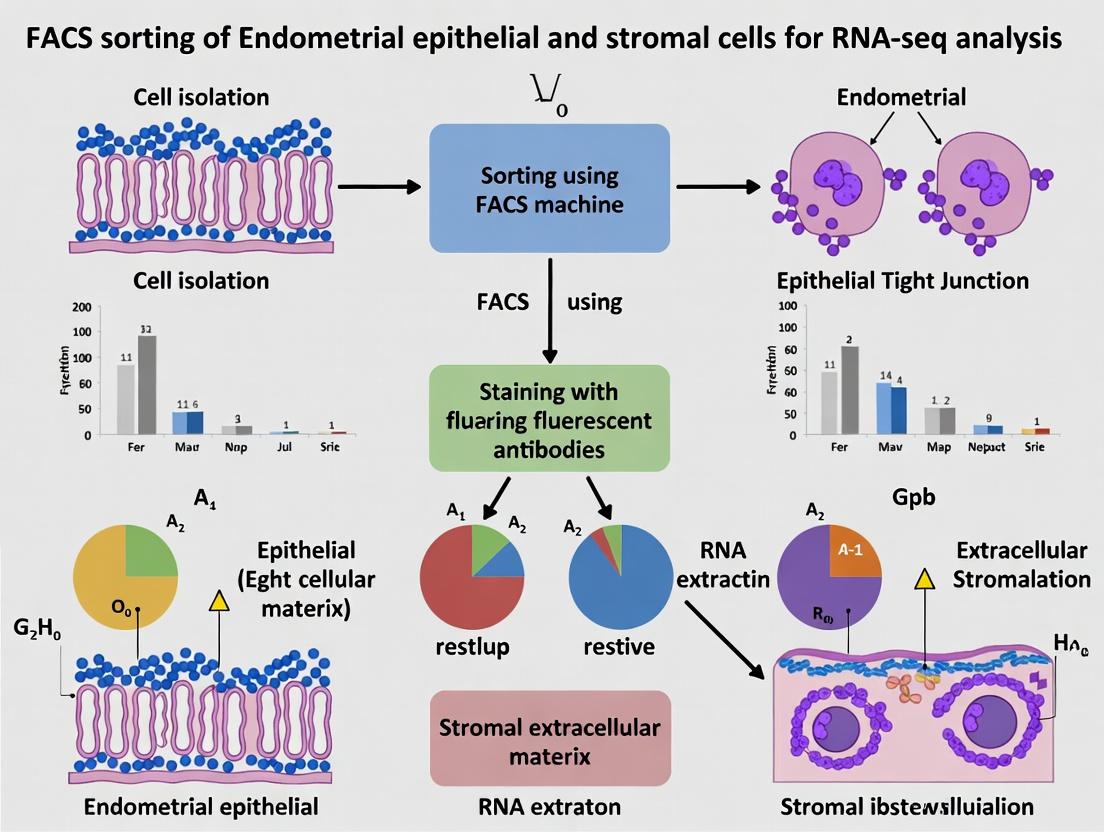
This comprehensive guide details the workflow for fluorescence-activated cell sorting (FACS) of primary human endometrial epithelial and stromal cells for downstream RNA sequencing (RNA-seq).
Isolating Purity: A Complete Guide to FACS Sorting Endometrial Epithelial and Stromal Cells for RNA-seq Analysis
Abstract
This comprehensive guide details the workflow for fluorescence-activated cell sorting (FACS) of primary human endometrial epithelial and stromal cells for downstream RNA sequencing (RNA-seq). It covers the foundational biology and rationale for cell-type-specific isolation, provides a step-by-step methodological protocol from tissue dissociation to post-sort QC, addresses common troubleshooting and optimization strategies to maximize cell viability and RNA integrity, and discusses validation techniques and comparative analysis of resulting sequencing data. Designed for researchers and drug developers in reproductive biology, this resource aims to enable robust generation of high-quality, cell-type-specific transcriptomic datasets to advance the study of endometriosis, infertility, and endometrial cancer.
The Why and What: Rationale and Markers for Endometrial Cell Isolation
Application Notes
Endometrial cellular heterogeneity, specifically the functional dichotomy between epithelial and stromal compartments, is foundational to understanding uterine physiology and pathology. Within the context of a thesis on FACS sorting endometrial cells for RNA-seq research, precise isolation and molecular profiling of these distinct populations are critical. The epithelium, consisting primarily of luminal and glandular cells, is responsible for secretion and receptivity, while the stroma, a connective tissue framework, provides structural support and undergoes decidualization. Dysregulation in their crosstalk is implicated in disorders such as endometriosis, infertility, and endometrial cancer. Contemporary single-cell RNA sequencing (scRNA-seq) studies have further revealed subpopulations within these broad categories, emphasizing the need for high-purity cell isolation techniques like Fluorescence-Activated Cell Sorting (FACS) for downstream transcriptomic analysis.
Key Quantitative Findings from Recent Studies
Table 1: Comparative Gene Expression Markers in Human Endometrial Cell Types
| Cell Type | Canonical Marker Genes | Average Expression (TPM*) | Key Function |
|---|---|---|---|
| Luminal Epithelium | PAEP, GP2, SLC1A1 | PAEP: 150-300 | Embryo attachment, barrier function |
| Glandular Epithelium | SLPI, MSX1, ALDH1A1 | SLPI: 400-600 | Secretion, gland formation |
| Stromal Fibroblasts | PRL, IGFBP1, DECORIN | PRL: 50-200 (decidualized) | Structural support, decidualization |
| Endothelial Cells | PECAM1, VWF, CD34 | PECAM1: 200-400 | Vasculature formation |
| Immune Cells (uNK) | CD56, KIR, XCL1 | CD56: 100-250 | Immune regulation, tissue remodeling |
*TPM: Transcripts Per Million estimates based on bulk RNA-seq of sorted populations. Values are illustrative ranges.
Table 2: scRNA-seq Cluster Proportions in Mid-Secretory Endometrium
| Identified Cluster | Approximate % of Total Cells | Proposed Identity |
|---|---|---|
| Cluster 1 | 35-40% | Ciliated Epithelial Cells |
| Cluster 2 | 25-30% | Secretory Epithelial Cells |
| Cluster 3 | 20-25% | Pre-decidual Stromal Cells |
| Cluster 4 | 5-10% | Endothelial Cells |
| Cluster 5 | 3-7% | Uterine Natural Killer (uNK) Cells |
Protocols
Protocol 1: FACS Sorting of Human Endometrial Epithelial and Stromal Cells for RNA-seq
Objective: To obtain high-purity, viable epithelial and stromal cell fractions from human endometrial tissue for subsequent RNA extraction and sequencing.
Materials:
- Research Reagent Solutions:
- Collagenase Type IV (1-2 mg/mL): Digests extracellular matrix to dissociate tissue.
- DNase I (10-20 µg/mL): Prevents cell clumping by digesting free DNA.
- RBC Lysis Buffer: Removes contaminating red blood cells.
- Fluorescence-conjugated Antibodies: Anti-human CD9 (Epithelial), Anti-human CD13 (Stromal), Anti-human CD45 (Leukocyte depletion), Viability dye (e.g., DAPI).
- FACS Buffer: PBS + 2% FBS + 1mM EDTA.
- RNA Stabilization Buffer (e.g., RNAlater): Preserves RNA integrity post-sort.
Method:
- Tissue Collection & Dissociation: Obtain endometrial biopsy under IRB approval. Mince tissue finely with scalpels in a petri dish. Transfer to a tube containing 5-10 mL of pre-warmed digestion medium (Collagenase IV + DNase I in DMEM/F12). Incubate at 37°C for 60-90 minutes with gentle agitation.
- Cell Suspension Preparation: Filter digested suspension through a 40µm cell strainer. Wash cells with complete medium. Pellet cells (300 x g, 5 min). Resuspend in RBC lysis buffer for 5 min at RT to remove red blood cells. Wash twice with FACS buffer.
- Antibody Staining: Resuspend cell pellet in FACS buffer. Incubate with antibody cocktail (e.g., CD9-FITC, CD13-APC, CD45-PE/Cy7, DAPI) for 30 minutes on ice in the dark. Wash twice with FACS buffer and resuspend in a small volume for sorting.
- FACS Gating Strategy: Use a high-speed cell sorter (e.g., BD FACSAria).
- Gate single cells using FSC-A vs. FSC-H.
- Exclude dead cells (DAPI-positive).
- Exclude hematopoietic lineage cells (CD45+).
- Sort Epithelial Fraction: CD9+ / CD13- cells.
- Sort Stromal Fraction: CD9- / CD13+ cells.
- Collect sorted cells directly into microcentrifuge tubes containing RNA stabilization buffer.
- Post-Sort Processing: Pellet sorted cells, extract total RNA using a kit with high sensitivity (e.g., RNeasy Micro Kit). Assess RNA quality (RIN > 8.0) via Bioanalyzer before library preparation for RNA-seq.
Protocol 2: Bulk RNA-seq Library Preparation from Sorted Cell Populations
Objective: To prepare strand-specific, poly-A selected RNA-seq libraries from low-input sorted cell RNA.
Method:
- RNA Quantification and QC: Use a fluorometric assay (e.g., Qubit) for accurate low-concentration RNA quantification. Verify integrity via TapeStation or Bioanalyzer.
- Poly-A Selection and cDNA Synthesis: Using 10-100 ng of total RNA, perform poly-A mRNA selection using oligo-dT beads. Synthesize first and second-strand cDNA.
- Library Construction: Perform end-repair, A-tailing, and adapter ligation using a compatible stranded library prep kit (e.g., Illumina TruSeq Stranded mRNA). Use unique dual indexes for sample multiplexing.
- Library Amplification and QC: Amplify the library via PCR (12-15 cycles). Purify with magnetic beads. Quantify library yield by qPCR and confirm size distribution (∼300 bp insert) by Bioanalyzer.
- Sequencing: Pool libraries at equimolar ratios and sequence on an Illumina platform (e.g., NovaSeq) for a minimum of 30 million paired-end 150 bp reads per sample.
Diagrams
Workflow for FACS and RNA-seq of Endometrial Cells
Paracrine Crosstalk in Endometrium
The Scientist's Toolkit
Table 3: Essential Research Reagents for Endometrial Cell Sorting and Analysis
| Reagent/Material | Function/Application | Example Product/Catalog |
|---|---|---|
| Collagenase, Type IV | Gentle enzymatic dissociation of endometrial tissue while preserving cell surface epitopes. | Worthington Biochemical, CLS-4 |
| Fluorochrome-conjugated Anti-human CD9 | Primary surface marker for identifying endometrial epithelial cells during FACS. | BioLegend, 312104 (FITC) |
| Fluorochrome-conjugated Anti-human CD13 | Primary surface marker for identifying endometrial stromal fibroblasts. | BioLegend, 301706 (APC) |
| Lineage Depletion Cocktail (CD45) | Critical for removing hematopoietic immune cell contaminants from epithelial/stromal fractions. | BD Biosciences, 560777 (PE-Cy7) |
| Viability Stain (DAPI or similar) | Distinguishes live from dead cells; essential for sorting high-quality RNA-seq samples. | Thermo Fisher, D1306 |
| RNAlater Stabilization Solution | Immediately stabilizes and protects RNA integrity in sorted cell pellets prior to extraction. | Thermo Fisher, AM7020 |
| RNeasy Micro Kit | RNA extraction kit optimized for low cell numbers (as low as 10) with high RIN yields. | Qiagen, 74004 |
| TruSeq Stranded mRNA Library Prep Kit | Gold-standard for generating Illumina-compatible, strand-specific RNA-seq libraries from poly-A RNA. | Illumina, 20020594 |
The Critical Need for Cell-Type-Specific Transcriptomics in Endometrial Research
Endometrial tissue is a complex, dynamic structure composed of heterogeneous cell populations, primarily epithelial and stromal cells, which interact intricately to regulate menstrual cycles, implantation, and pathological states. Bulk RNA-seq analysis of whole endometrial tissue averages gene expression across all cell types, obscuring critical, cell-specific transcriptional programs. This Application Note underscores the imperative for cell-type-specific transcriptomics via Fluorescence-Activated Cell Sorting (FACS) coupled with RNA-seq, framed within a thesis investigating endometrial epithelial-stromal crosstalk. This approach is fundamental for elucidating mechanisms in disorders like endometriosis, endometrial cancer, and infertility, and for identifying precise therapeutic targets.
Key Rationale and Supporting Data
Bulk tissue analysis masks significant biological signals. Recent studies demonstrate that cell-type-specific resolution reveals differentially expressed genes (DEGs) critical for understanding endometrial function and dysfunction.
Table 1: Comparative Analysis of Bulk vs. FACS-Sorted Endometrial Cell RNA-Seq Findings
| Study Focus | Bulk RNA-Seq Key Finding | FACS-Sorted Epithelial/Stromal RNA-Seq Key Finding | Implication |
|---|---|---|---|
| Endometriosis | Upregulation of ESR1 and PGR in ectopic lesions. | Stromal-specific dysregulation of HOXA10 and GREB1; Epithelial-specific overexpression of SFRP4. | Reveals compartment-specific progesterone resistance pathways. |
| Receptive Endometrium | Increased expression of IGFBP1 and DKK1 in secretory phase. | IGFBP1 exclusive to stroma; DKK1 exclusive to epithelium during window of implantation. | Clarifies distinct cellular contributions to embryo attachment. |
| Endometrial Cancer | General downregulation of PAEP in Type I carcinomas. | Complete loss of PAEP specifically in malignant epithelium, with stromal PAEP intact. | Identifies epithelium-specific diagnostic biomarkers. |
| Decidualization | Upregulation of PRL and IGFBP1 in vitro. | PRL expression confined to decidualized stromal cells; epithelial cells show distinct metabolic shift. | Validates in vitro models and uncovers epithelial response. |
Detailed Protocols
Protocol 1: FACS Isolation of Viable Human Endometrial Epithelial and Stromal Cells for RNA-seq
Objective: To obtain high-purity, viable single-cell suspensions of epithelial and stromal cells from human endometrial biopsies for downstream RNA extraction and sequencing.
Materials:
- Endometrial tissue biopsy (Pipelle or curettage).
- Digestion Solution: HBSS with 3 mg/mL Collagenase IV, 0.5 mg/mL DNase I, 1% BSA.
- FACS Staining Buffer: PBS, 2% FBS, 1mM EDTA.
- Antibodies: Anti-human CD9-FITC (epithelial marker), Anti-human CD13-APC (stromal marker), DAPI or 7-AAD (viability dye).
- Cell Strainers: 100µm, 40µm.
- FACS sorter equipped with 488nm and 640nm lasers.
Procedure:
- Tissue Processing: Mince endometrial tissue finely with sterile scalpels in a Petri dish. Transfer to digestion solution (1mL per 100mg tissue). Incubate at 37°C for 60-90 minutes with gentle agitation.
- Single-Cell Suspension: Triturate digest every 20 minutes. Pass the digest through a 100µm strainer, then a 40µm strainer to remove debris and undigested fragments. Wash cells with 10mL FACS buffer, centrifuge at 400xg for 5 min.
- Antibody Staining: Resuspend cell pellet in FACS buffer (~1x10^7 cells/mL). Add optimized concentrations of CD9-FITC and CD13-APC antibodies. Incubate for 20-25 minutes at 4°C in the dark. Wash twice with FACS buffer. Resuspend in buffer containing DAPI (1µg/mL) for live/dead discrimination.
- FACS Sorting: Using a 100µm nozzle and low pressure, gate cells as follows:
- Gate P1: FSC-A vs. SSC-A to select intact cells.
- Gate P2: FSC-H vs. FSC-A to select singlets.
- Gate P3: DAPI-negative (viable) population.
- Sorting Gates: Sort CD9+ CD13- as Epithelial Cells; sort CD9- CD13+ as Stromal Cells. Collect cells into tubes containing RNA stabilization buffer (e.g., RLT Plus buffer with β-mercaptoethanol).
- Post-Sort QC: Assess purity by re-analyzing a small fraction of sorted cells (>95% purity expected). Proceed immediately to RNA extraction.
Protocol 2: Library Preparation and RNA-seq of Low-Input FACS-Sorted Cells
Objective: To generate high-quality RNA-seq libraries from low numbers (500-5,000 cells) of FACS-sorted endometrial cells.
Materials:
- Sorted cells in lysis buffer.
- RNA Extraction Kit: e.g., Qiagen RNeasy Plus Micro Kit.
- RNA QC: Agilent Bioanalyzer RNA Pico Kit.
- Library Prep Kit: e.g., Takara Bio SMART-Seq v4 Ultra Low Input Kit (for full-length cDNA) or 10x Genomics Chromium Single Cell 3' Kit (for single-cell applications).
- Sequencing Platform: Illumina NovaSeq, 150bp paired-end, aiming for >25 million reads per sample.
Procedure:
- RNA Extraction & QC: Extract total RNA following kit protocol, including genomic DNA elimination. Quantify RNA using a fluorometric assay (e.g., Qubit RNA HS). Assess integrity via Bioanalyzer; RIN >7.5 is ideal for bulk sequencing.
- cDNA Synthesis & Amplification: Using the SMART-Seq v4 kit, perform first-strand synthesis with template switching oligo (TSO) to create full-length cDNA. Amplify cDNA via LD PCR (12-16 cycles). Purify cDNA.
- Library Construction: Fragment amplified cDNA via sonication or enzymatic digestion. Perform end-repair, A-tailing, and adapter ligation using a standard library prep kit (e.g., Illumina Nextera XT). Enrich adapter-ligated DNA via PCR (8-12 cycles).
- Library QC & Sequencing: Validate library size distribution on Bioanalyzer (Agilent DNA High Sensitivity Kit). Quantify by qPCR. Pool libraries at equimolar ratios and sequence on the appropriate Illumina platform.
- Bioinformatics Analysis: Align reads to the human reference genome (GRCh38) using STAR aligner. Quantify gene expression with featureCounts. Perform differential expression analysis (e.g., DESeq2, edgeR) comparing epithelial vs. stromal cells across conditions.
The Scientist's Toolkit: Essential Research Reagents
Table 2: Key Research Reagent Solutions for Endometrial FACS-RNA-seq
| Item | Function & Rationale |
|---|---|
| Collagenase IV | Enzyme for gentle tissue dissociation; preserves cell surface epitopes critical for FACS antibody binding. |
| DNase I | Prevents cell clumping by digesting free DNA released from damaged cells during digestion. |
| Anti-human CD9 Antibody | Robust surface marker for endometrial epithelial cells; used for positive selection during FACS. |
| Anti-human CD13 Antibody | Reliable surface marker for endometrial stromal fibroblasts; used for positive selection. |
| SMART-Seq v4 Ultra Low Input Kit | Enables robust whole-transcriptome amplification from picogram quantities of RNA from sorted cells. |
| RNAstable Tubes | For long-term storage of sorted cell lysates or RNA at room temperature, stabilizing nucleic acids. |
| Human Endometrial Cell Culture Media (e.g., EGM2) | For functional validation experiments on sorted primary cells post-RNA-seq analysis. |
Visualizations
Title: Workflow for FACS & RNA-seq of Endometrial Cells
Title: Epithelial-Stromal Crosstalk in Endometrial Receptivity
Key Biological and Clinical Questions Addressed by Sorted Cell RNA-seq
Application Notes Sorted cell RNA-seq, particularly following Fluorescence-Activated Cell Sorting (FACS), has become indispensable for dissecting the cellular heterogeneity of complex tissues like the endometrium. Within the context of a thesis focusing on FACS-sorted endometrial epithelial and stromal cells for RNA-seq research, this approach directly addresses pivotal biological and clinical questions. By isolating pure cellular populations, researchers can move beyond bulk tissue averages to uncover cell-type-specific gene expression networks, driving advances in understanding endometrial biology, disorders like endometriosis and infertility, and therapeutic development.
1. Key Biological and Clinical Questions The application of sorted cell RNA-seq to endometrial research is designed to answer the following core questions:
- Question 1: What are the definitive transcriptional signatures that distinguish epithelial (luminal and glandular) from stromal cell populations in the human endometrium across the menstrual cycle?
- Question 2: How do these cell-type-specific transcriptional profiles and the associated intercellular communication networks become dysregulated in endometrial disorders (e.g., endometriosis, endometrial cancer, implantation failure)?
- Question 3: Which specific signaling pathways and downstream effector genes in epithelial versus stromal cells are primary targets of ovarian steroid hormones (estradiol and progesterone) and their perturbations?
- Question 4: Can we identify novel, rare, or transient cell subpopulations (e.g., progenitor cells, ciliated epithelial cells, unique fibroblast subsets) within the sorted epithelial and stromal compartments that have distinct functional roles?
- Question 5: How do epithelial-stromal interactions, as inferred from ligand-receptor pair expression in sorted cell data, contribute to healthy endometrial receptivity and pathological microenvironments?
2. Summarized Quantitative Data from Recent Studies Table 1: Representative Findings from Sorted Endometrial Cell RNA-seq Studies
| Study Focus (Year) | Sorted Populations | Key Quantitative Finding (DEGs = Differentially Expressed Genes) | Clinical/Biological Insight |
|---|---|---|---|
| Endometriosis (2023) | E-Cadherin+ epithelial vs CD13+ stromal from ectopic lesions | 2,345 DEGs identified in ectopic epithelium vs eutopic control. | Ectopic epithelial cells show a persistent proliferative and inflammatory phenotype independent of the menstrual cycle phase. |
| Decidualization (2024) | PDGFRβ+ stromal cells pre- and post-in vitro decidualization | Upregulation of 1,102 genes, including IGFBP1 (log2FC=8.5) and PRL (log2FC=7.8). | Defines a core transcriptional program of human stromal fibroblast differentiation into decidual cells. |
| Receptivity (2023) | CD9+ epithelial cells from receptive vs. pre-receptive phase | 488 DEGs pinpointed; PAEP (Glycodelin) showed 12-fold increase in receptive phase. | Identifies a specific epithelial biomarker signature for the window of implantation. |
| Cell Atlas (2022) | Multiple (EpCAM+ epithelial, CD13+ stromal, CD45+ immune) | Unsupervised clustering revealed 12 distinct cellular subtypes within broad sorted gates. | Discovered previously unappreciated heterogeneity, including 3 subsets of stromal fibroblasts with unique functions. |
3. Detailed Experimental Protocol for FACS-sorting Endometrial Cells for RNA-seq
A. Tissue Dissociation & Single-Cell Suspension Preparation
- Sample: Collect endometrial biopsy (e.g., Pipelle) in cold PBS/antibiotics.
- Wash: Rinse tissue 3x in PBS to remove blood and mucus.
- Digest: Mince tissue finely with scalpel and digest in 5 mL of digestion medium (DMEM/F-12 containing 2 mg/mL collagenase IV, 1 mg/mL dispase II, and 0.1 mg/mL DNase I) for 60-90 minutes at 37°C with gentle agitation.
- Filter & Lyse RBC: Pass digest through 70μm then 40μm cell strainers. Lyse red blood cells using ACK lysis buffer for 2 minutes on ice.
- Viability Stain: Resuspend pellet in PBS with 0.04% BSA. Add a live/dead viability dye (e.g., 1:1000 DAPI or Zombie NIR) and incubate for 10 minutes on ice.
B. Fluorescence-Activated Cell Sorting (FACS)
- Antibody Staining: Incubate single-cell suspension with conjugated antibodies for 30 minutes on ice in the dark. Typical Panel: Anti-EpCAM-FITC (epithelial), Anti-CD13-APC (stromal), Anti-CD45-PE/Cy7 (hematopoietic lineage exclusion). Include appropriate isotype controls.
- Wash: Pellet cells, wash with PBS/0.04% BSA, and resuspend in sorting buffer (PBS, 0.04% BSA, 25mM HEPES, optional 1μM Y-27632 ROCK inhibitor).
- Sorting: Using a sorter equipped with a 100μm nozzle and low pressure (20-25 PSI), sort live (DAPI-negative), CD45-negative, EpCAM+ epithelial cells and live, CD45-negative, CD13+ stromal cells into separate collection tubes containing 500μL of RNA stabilization buffer (e.g., RLT Plus buffer with β-mercaptoethanol). Keep samples on ice.
- QC: Assess sorted population purity by re-analyzing a small aliquot.
C. RNA Extraction, Library Prep & Sequencing
- Extraction: Process sorted cells immediately. Use a silica-membrane-based micro-column kit (e.g., RNeasy Micro Plus Kit) including on-column DNase digestion. Elute in 14μL nuclease-free water. Assess RNA integrity (RIN) using a Bioanalyzer (aim for RIN > 8.0).
- Library Preparation: Use a ultra-low input or single-cell compatible SMART-seq-based kit (e.g., SMART-Seq v4, Takara) for full-length cDNA amplification. Follow with a tagmentation-based library prep kit (e.g., Nextera XT).
- Sequencing: Pool libraries and sequence on an Illumina platform (e.g., NovaSeq 6000) for a minimum of 25-30 million paired-end (2x150 bp) reads per sample.
4. Visualizations
5. The Scientist's Toolkit: Essential Research Reagents & Materials
Table 2: Key Reagent Solutions for FACS-sorted Endometrial RNA-seq
| Item | Function / Role in Protocol |
|---|---|
| Collagenase IV & Dispase II | Enzyme blend for effective tissue dissociation while preserving cell surface epitopes for FACS. |
| DNase I | Prevents cell clumping by digesting free DNA released during tissue digestion. |
| ROCK Inhibitor (Y-27632) | Improves viability of sorted epithelial cells by inhibiting apoptosis associated with anoikis. |
| Fluorophore-conjugated Antibodies (Anti-human EpCAM, CD13, CD45) | Primary tool for specific identification and isolation of target endometrial cell populations. |
| Live/Dead Viability Dye (e.g., DAPI, Zombie dyes) | Critical for gating and sorting only live cells, ensuring high-quality RNA. |
| RNA Stabilization Buffer (e.g., RLT Plus with β-ME) | Immediately lyses sorted cells and inactivates RNases, preserving the transcriptome. |
| RNeasy Micro Plus Kit (Qiagen) | Optimized for low-cell-number RNA extraction, includes gDNA eliminator column. |
| SMART-Seq v4 Ultra Low Input RNA Kit | Enables robust full-length cDNA synthesis and amplification from the low RNA yields of sorted cells. |
| Bioanalyzer High Sensitivity RNA/DNA Chips | Gold-standard for assessing RNA integrity (RIN) and final library fragment size distribution. |
In endometrial research, isolating pure populations of epithelial and stromal cells is critical for downstream transcriptomic analysis (e.g., RNA-seq) to understand mechanisms of receptivity, disease, and treatment effects. Fluorescence-Activated Cell Sorting (FACS) remains the gold standard for this separation, relying on highly specific cell surface markers. This protocol details the use of EpCAM for epithelial cells and a combination of CD10 and THY1 (CD90) for stromal cells. Recent studies (2023-2024) emphasize dual-positive selection for stromal cells (CD10+THY1+) to exclude endothelial and immune cell contaminants, ensuring high-purity RNA-seq data.
Key Surface Marker Profiles
Table 1: Primary Surface Markers for Human Endometrial Cell Isolation
| Marker | Cell Type Specificity | Function & Rationale | Common Fluorochrome Conjugates |
|---|---|---|---|
| EpCAM (CD326) | Epithelial cells | Cell adhesion molecule; highly expressed on luminal and glandular epithelium. | FITC, PE, APC, BV421 |
| CD10 (MME) | Stromal cells (Decidualized) | Neutral endopeptidase; robust marker for endometrial stromal fibroblasts. | PE, APC, PerCP-Cy5.5 |
| THY1 (CD90) | Stromal cells (Mesenchymal) | GPI-anchored glycoprotein; identifies mesenchymal stromal cells, excludes CD90- endothelial cells. | FITC, PE-Cy7, APC-Cy7 |
| CD45 (PTPRC) | Pan-Hematopoietic | Exclusion marker to remove immune cells (leukocytes) from both epithelial and stromal gates. | PerCP-Cy5.5, APC-Cy7, BV510 |
| CD31 (PECAM-1) | Endothelial | Exclusion marker to remove endothelial cells from the stromal fraction. | PE-Cy7, APC |
Table 2: Typical FACS Gating Strategy and Expected Yield
| Population | Gating Logic | Typical Purity Post-Sort | Approx. Yield from 1g Tissue |
|---|---|---|---|
| Epithelial | EpCAM+, CD45-, CD31- | >98% | 0.5 - 2.0 x 10^6 cells |
| Stromal | CD10+, THY1+, CD45-, CD31- | >95% | 2.0 - 8.0 x 10^6 cells |
| Contaminants | CD45+ and/or CD31+ | N/A | Variable |
Detailed Protocol: FACS Sorting for RNA-seq
A. Tissue Dissociation and Single-Cell Suspension Preparation
- Reagent Preparation: Prepare digestion medium: DMEM/F-12 with 1 mg/mL Collagenase IV, 0.1 mg/mL DNase I, and 1% Penicillin-Streptomycin.
- Mechanical Dissociation: Mince fresh endometrial biopsy tissue (100-200 mg) finely with sterile scalpels in a small volume of digestion medium.
- Enzymatic Digestion: Transfer tissue and 5 mL digestion medium to a 15 mL conical tube. Incubate at 37°C for 60-90 minutes with gentle agitation.
- Filtration & Washing: Pass the digest through a 70μm cell strainer. Quench with 10 mL of FACS Buffer (PBS + 2% FBS + 1mM EDTA). Centrifuge at 300 x g for 5 min.
- Red Blood Cell Lysis: Resuspend pellet in 2 mL of RBC Lysis Buffer for 5 min at RT. Add 10 mL FACS Buffer and centrifuge.
- Viability Staining: Resuspend in 1 mL PBS. Add 1 μL of DAPI (1mg/mL stock) or a viability dye (e.g., Fixable Viability Dye eFluor 780) per manufacturer's protocol. Incubate for 10 min in the dark. Wash with 10 mL FACS Buffer.
B. Antibody Staining for FACS
- Antibody Cocktail: Prepare antibody master mix in FACS Buffer. For 100 μL per sample:
- Anti-EpCAM-APC (1:100)
- Anti-CD10-PE (1:50)
- Anti-THY1-FITC (1:100)
- Anti-CD45-PerCP-Cy5.5 (1:50)
- Anti-CD31-PE-Cy7 (1:100)
- Staining: Resuspend the single-cell pellet in 100 μL of antibody cocktail. Vortex gently. Incubate for 30 minutes at 4°C in the dark.
- Washing: Add 2 mL FACS Buffer, centrifuge at 300 x g for 5 min. Aspirate supernatant. Repeat wash once.
- Resuspension: Finally, resuspend cells in 0.5 - 1 mL of FACS Buffer containing 1 μM DAPI (if not using a fixable dye). Pass through a 35μm cell strainer cap into a FACS tube.
C. FACS Sorting and RNA Integrity Preservation
- Instrument Setup: Calibrate sorter with appropriate bead standards. Use a 100μm nozzle and a low pressure (20-25 PSI) to maximize cell viability.
- Gating Strategy (Sequential):
- Gate P1 (Singlets): FSC-A vs. FSC-H to exclude doublets.
- Gate P2 (Live Cells): From P1, gate DAPI-negative (or viability dye-negative) cells.
- Gate P3 (Lineage Negative): From P2, gate CD45-negative and CD31-negative cells.
- Gate P4 (Epithelial): From P3, select EpCAM+ cells (CD10-/THY1-). Sort into 1.5 mL tube with 500 μL of RNA stabilization buffer (e.g., RLT Plus buffer with β-mercaptoethanol).
- Gate P5 (Stromal): From P3, select CD10+ and THY1+ double-positive cells. Sort into separate RNA stabilization buffer.
- Post-Sort Processing: Immediately vortex sorted cell lysates, snap-freeze in liquid nitrogen, and store at -80°C until RNA extraction. Use a column-based or magnetic bead RNA extraction kit with on-column DNase treatment. Assess RNA Integrity Number (RIN) via Bioanalyzer; aim for RIN > 8.5.
Visualizations
Title: FACS Gating Workflow for Endometrial Cell Sorting
Title: Surface Marker Expression on Endometrial Cell Types
The Scientist's Toolkit: Research Reagent Solutions
Table 3: Essential Materials for Endometrial Cell FACS and RNA-seq
| Item | Function & Rationale | Example Product/Catalog |
|---|---|---|
| Collagenase IV | High specificity for tissue dissociation; minimizes cell surface antigen damage. | Worthington CLS-4 |
| DNase I | Prevents cell clumping by digesting free DNA released from damaged cells. | Roche, 10104159001 |
| Fetal Bovine Serum (FBS) | Used in FACS buffer to block non-specific antibody binding and maintain cell viability. | Qualified, heat-inactivated. |
| Fixable Viability Dye | Distinguishes live from dead cells; compatible with intracellular staining if needed. | eBioscience Fixable Viability Dye eFluor 780 |
| Fluorochrome-conjugated Antibodies | Primary detection tools for cell surface markers. Must be titrated. | BioLegend, BD Biosciences |
| RNA Stabilization Buffer | Immediately lyses cells and inactivates RNases, preserving transcriptome integrity post-sort. | Qiagen RLT Plus Buffer |
| High-Sensitivity RNA Extraction Kit | Recovers high-quality, low-concentration RNA from sorted cell populations (10^3-10^5 cells). | Zymo Quick-RNA Microprep Kit |
| RNA QC System | Accurately assesses RNA quantity and integrity (RIN) from small samples. | Agilent 2100 Bioanalyzer with RNA Pico chips |
Considerations for Fresh vs. Frozen Tissue Starting Material
Within the context of a broader thesis on FACS sorting of endometrial epithelial and stromal cells for RNA-seq research, the choice between fresh and frozen tissue starting material is a critical, foundational decision. This choice impacts downstream applications, including cell viability, RNA integrity, transcriptomic profiles, and ultimately, the biological interpretation of data. This application note details the key considerations, quantitative comparisons, and protocols for both approaches, tailored for researchers, scientists, and drug development professionals in reproductive biology and oncology.
Comparative Analysis: Key Parameters
Table 1: Quantitative Comparison of Fresh vs. Frozen Tissue for Endometrial Cell Isolation & RNA-seq
| Parameter | Fresh Tissue | Frozen Tissue (Optimal Cutting Temperature - OCT) | Frozen Tissue (Snap-frozen, no OCT) |
|---|---|---|---|
| Primary Cell Viability Post-Dissociation | High (70-90%) | Low-Moderate (30-60%)* | Moderate (50-75%)* |
| Epithelial/Stromal Yield Post-FACS | Optimal | Reduced (~40-60% of fresh) | Moderately Reduced (~60-80% of fresh) |
| RNA Integrity Number (RIN) | High (≥8.5) | Variable (7.0-9.0) | High (8.0-9.5) |
| Detection of Labile Transcripts | Optimal | Potentially Compromised | Good with rapid processing |
| Turnaround Time for Processing | Immediate (Critical) | Flexible | Flexible |
| Spatial Context Preservation | Lost in dissociation | Preserved for sectioning (IF, LCM) | Preserved for sectioning |
| Inter-patient Batch Logistics | Challenging | Feasible | Feasible |
| Major Risk Factor | Immediate access & processing delay | Ice crystal damage, OCT contamination | Ice crystal damage, freeze-thaw cycles |
Viability highly dependent on freeze/thaw protocol and cryoprotectant use. *OCT can inhibit enzymatic reactions and lower RIN if not thoroughly removed.
Experimental Protocols
Protocol 1: Processing Fresh Endometrial Tissue for FACS and RNA-seq
Objective: To isolate viable single-cell suspensions from fresh endometrial biopsies for FACS sorting of epithelial (CD9+/EpCAM+) and stromal (CD13+/CD90+) cells, followed by RNA extraction.
- Tissue Collection & Transport: Collect biopsy in cold, sterile PBS or DMEM/F12 with 1% Antibiotic-Antimycotic. Process within 1 hour.
- Mechanical & Enzymatic Dissociation:
- Mince tissue with sterile scalpels in a Petri dish.
- Transfer fragments to 15mL tube with 5-10mL of digestion medium: DMEM/F12, 2 mg/mL Collagenase IV, 0.25 mg/mL DNase I, 2% FBS.
- Incubate at 37°C with gentle agitation for 60-90 minutes.
- Quench with 10% FBS. Filter through 70µm then 40µm cell strainers.
- Erythrocyte Lysis: Resuspend pellet in 5mL of RBC Lysis Buffer for 5 min at RT. Wash with PBS/2% FBS.
- FACS Staining & Sorting:
- Count cells and aliquot up to 10^7 cells per tube.
- Stain with viability dye (e.g., DAPI or Propidium Iodide).
- Stain with antibody cocktail: Anti-human EpCAM-FITC, CD9-PE, CD13-APC, CD90-PerCP/Cy5.5. Incubate 30 min on ice in dark.
- Wash, resuspend in PBS/2% FBS with 1mM EDTA. Sort using a 100µm nozzle.
- Gates: Live cells -> EpCAM+CD9+ (Epithelial), CD13+CD90+ (Stromal). Collect into RLT Plus buffer (Qiagen) with 1% β-mercaptoethanol.
- RNA Extraction & QC: Extract using a micro-scale kit (e.g., Qiagen RNeasy Micro). Assess concentration (Bioanalyzer/TapeStation) and RIN. Proceed to library prep (e.g., SMART-Seq v4).
Protocol 2: Processing Frozen Endometrial Tissue Sections for LCM-RNA-seq
Objective: To obtain region-specific epithelial and stromal cell populations from frozen tissue via Laser Capture Microdissection (LCM) for RNA-seq, bypassing cell culture.
- Tissue Freezing: Embed fresh tissue in OCT or snap-freeze in isopentane chilled by liquid nitrogen. Store at -80°C.
- Cryosectioning & Staining:
- Cut 5-10µm sections onto PEN membrane slides. Store at -80°C until use.
- Rapidly stain with Hematoxylin (30 sec) and Eosin (15 sec) or RNA-stable immunohistochemistry.
- Dehydrate in graded ethanols (70%, 95%, 100%) and xylene. Air-dry.
- Laser Capture Microdissection:
- Use LCM system (e.g., ArcturusXT). Visually identify epithelial glands and stromal areas.
- Capture sufficient area (>10mm^2 total) into extraction buffer caps.
- RNA Extraction & Amplification: Extract using a picoscale RNA kit. Perform two rounds of linear amplification (e.g., Arcturus RiboAmp HS Plus). Quality check amplified cRNA/cDNA before library construction.
Visualization of Experimental Workflows
Title: Experimental Pathways for Endometrial RNA-seq
Title: Material Choice Impacts on RNA-seq Results
The Scientist's Toolkit: Research Reagent Solutions
Table 2: Essential Materials for Endometrial Cell FACS-RNA-seq Workflows
| Item | Function & Rationale | Example Product/Catalog |
|---|---|---|
| Collagenase IV | Digests extracellular matrix to liberate epithelial glands and stromal cells with high specificity and preserved viability. | Worthington CLS-4 |
| DNase I | Prevents cell clumping by digesting DNA released from damaged cells during tissue dissociation. | Roche, 10104159001 |
| FACS Antibody Cocktail | Enables positive selection of target populations: EpCAM/CD9 for epithelial, CD13/CD90 for stromal cells. | BioLegend: 324204 (EpCAM), 312102 (CD9), 301708 (CD13), 328112 (CD90) |
| Viability Dye | Critical for excluding dead cells during sorting to prevent RNA degradation and sequencing artifacts. | BioLegend: 422301 (DAPI) or 420403 (Propidium Iodide) |
| RNA Stabilization Buffer | Immediate lysis and stabilization of RNA post-sort is essential to preserve transcriptome integrity. | Qiagen RLT Plus Buffer with β-ME |
| OCT Compound (for frozen) | Optimal Cutting Temperature medium preserves tissue morphology for sectioning. Must be RNA-stable. | Fisher Scientific: 23-730-571 (Tissue-Plus) |
| LCM Membrane Slides | Polyethylene naphthalate (PEN) membrane allows precise laser cutting and capture of cells. | Thermo Fisher: LCM0522 |
| Single-Cell/Small-RNA Kit | For picogram quantities of RNA from FACS-sorted cells or LCM-captured material; includes amplification. | Takara Bio SMART-Seq v4 Ultra Low Input |
From Tissue to Tube: A Step-by-Step FACS Protocol for RNA-seq Prep
Application Notes
This protocol initiates the workflow for generating high-quality single-cell suspensions from human endometrial biopsies, a critical precursor for fluorescence-activated cell sorting (FACS) of epithelial and stromal cells and subsequent RNA-seq analysis. Efficient dissociation is paramount for cell viability, purity, and unbiased transcriptomic representation. This integrated enzymatic-mechanical approach maximizes yield while minimizing stress-induced gene expression artifacts.
Detailed Protocol
I. Pre-Dissection Processing & Tissue Stabilization
- Biopsy Collection: Obtain endometrial tissue via Pipelle or curettage. Place tissue immediately into 5-10 mL of cold (4°C) Hanks' Balanced Salt Solution (HBSS) supplemented with 5% Fetal Bovine Serum (FBS) and 1% Antibiotic-Antimycotic.
- Transport: Keep samples on ice and process within 2 hours of collection.
- Initial Wash: Under a sterile laminar flow hood, transfer tissue to a 60 mm Petri dish containing 5 mL of fresh, cold wash medium (HBSS + 2% FBS). Rinse gently to remove blood and mucus.
- Macro-Dissection: Using sterile forceps and a scalpel, mince the tissue into fragments approximately 1-2 mm³ in size.
II. Enzymatic Dissociation
- Enzyme Preparation: Prepare 10 mL of enzymatic dissociation medium per 0.5 g of tissue. Filter sterilize (0.22 µm) before use.
- Composition: HBSS (Ca²⁺/Mg²⁺ free) with:
- 2 mg/mL Collagenase IV
- 0.25 mg/mL DNase I
- 2% FBS
- Composition: HBSS (Ca²⁺/Mg²⁺ free) with:
- Incubation: Transfer minced tissue and enzyme solution into a 50 mL conical tube. Cap tightly.
- Digestion: Place the tube in a shaking (80-100 rpm) incubator or thermomixer at 37°C for 60-90 minutes.
- Mechanical Agitation: Every 20 minutes, remove the tube and vortex vigorously for 15-20 seconds. Alternatively, pipette up and down 20 times with a 10 mL serological pipette to aid dissociation.
III. Mechanical Dissociation & Filtration
- Termination: After digestion, add an equal volume (10 mL) of cold complete culture medium (e.g., DMEM/F-12 + 10% FBS) to neutralize the enzymes.
- Primary Filtration: Pass the cell suspension through a sterile 100 µm cell strainer into a new 50 mL tube. Use a plunger from a 5 mL syringe to gently mash any remaining tissue fragments.
- Secondary Filtration: Pass the filtrate through a sterile 40 µm cell strainer to remove small aggregates and debris.
- Wash: Centrifuge the filtered suspension at 300 x g for 5 minutes at 4°C. Carefully aspirate the supernatant.
- Red Blood Cell Lysis (Optional): If the pellet is red, resuspend in 5 mL of RBC Lysis Buffer (e.g., ACK). Incubate for 5 minutes on ice. Quench with 20 mL of wash medium and centrifuge at 300 x g for 5 minutes.
- Final Resuspension: Resuspend the final cell pellet in 1-2 mL of FACS buffer (PBS, 2 mM EDTA, 0.5% BSA). Keep on ice.
IV. Yield and Viability Assessment
- Perform a cell count using a hemocytometer or automated cell counter.
- Assess viability using Trypan Blue exclusion or a fluorescent viability dye (e.g., propidium iodide).
- Typical Yields: Expect 1-5 x 10⁶ viable cells per 100 mg of wet tissue, with viability >85%.
Quantitative Data Summary
Table 1: Enzymatic Dissociation Reagent Comparison
| Enzyme | Concentration | Incubation Time | Primary Target | Impact on Viability |
|---|---|---|---|---|
| Collagenase IV | 2 mg/mL | 60-90 min | Collagen I, IV, & other ECM proteins | High (>85%) when combined with DNase |
| DNase I | 0.25 mg/mL | 60-90 min | Extracellular DNA (reduces clumping) | Critical for maintaining single-cell suspension |
| Trypsin-EDTA | 0.25% | Not recommended alone | Broad-spectrum protease | Can damage epithelial cell surface antigens |
Table 2: Expected Post-Dissociation Metrics for FACS
| Metric | Target Range | Method of Assessment |
|---|---|---|
| Total Viable Cell Yield | 1-5 x 10⁶ cells / 100mg tissue | Trypan Blue exclusion |
| Viability | >85% | Trypan Blue or PI/Flow Cytometry |
| Single-Cell Ratio | >70% | Flow cytometry (FSC-A vs FSC-H) |
| Epithelial (EpCAM+) Content | 20-40% of live cells | Post-FACS analysis |
The Scientist's Toolkit: Research Reagent Solutions
Table 3: Essential Materials for Endometrial Tissue Dissociation
| Item | Function | Example/Key Property |
|---|---|---|
| Collagenase IV | Digests the endometrial extracellular matrix (ECL), primarily collagen. | ThermoFisher, 17104019; Low tryptic activity preserves receptors. |
| DNase I | Degrades neutrophil extracellular traps (NETs) and released DNA, preventing cell clumping. | Roche, 10104159001; Essential for single-cell suspension. |
| HBSS (Ca²⁺/Mg²⁺ free) | Base solution for enzyme digestion; absence of divalent cations enhances enzyme activity. | Gibco, 14175095. |
| Fetal Bovine Serum (FBS) | Inactivates enzymes, provides nutrients, and protects cells during processing. | Heat-inactivated recommended. |
| 40µm & 100µm Cell Strainers | Sequential filtration to remove tissue aggregates and debris. | Pluriselect or Falcon brands. |
| FACS Buffer (PBS/EDTA/BSA) | Maintains cell viability, prevents clumping, and provides a compatible medium for antibody staining. | 0.5% BSA is preferable to FBS for antibody compatibility. |
Visualization: Experimental Workflow Diagram
Title: Endometrial Tissue Dissociation Workflow for FACS
Visualization: Downstream Application in RNA-seq Thesis
Title: Dissociation Role in Endometrial RNA-seq Thesis
Within a thesis focused on isolating pure endometrial epithelial and stromal cell populations via Fluorescence-Activated Cell Sorting (FACS) for downstream RNA-seq analysis, robust staining strategies are critical. This protocol details the design and execution of antibody panels, the application of viability dyes, and the implementation of essential controls to ensure the specificity and viability of sorted cells, thereby guaranteeing high-quality transcriptional data.
Antibody Panel Design for Endometrial Cell Isolation
Key Surface Markers
The isolation of human endometrial cells relies on well-characterized surface markers. The table below summarizes the primary targets, their cellular specificity, and common fluorochrome conjugates suitable for panel design.
Table 1: Primary Antibody Panel for Human Endometrial Cell Sorting
| Target Antigen | Cell Type Specificity | Common Clone(s) | Recommended Fluorochrome | Purpose in Panel |
|---|---|---|---|---|
| CD9 | Epithelial (Glandular) | HI9a, M-L13 | BV421, FITC | Positive selection for epithelial cells. |
| EpCAM (CD326) | Epithelial (Luminal) | 9C4, VU-1D9 | APC, PE-Cy7 | Positive selection for epithelial cells. |
| CD10 (MME) | Stromal | HI10a, SN5c | PE, BV605 | Positive selection for stromal cells. |
| CD13 (ANPEP) | Stromal & Vascular | WM15, 452 | APC-Cy7, BV711 | Secondary stromal marker. |
| CD45 (PTPRC) | Hematopoietic | HI30, 5B1 | PerCP-Cy5.5, BV510 | Lineage exclusion; remove immune cells. |
| CD31 (PECAM1) | Endothelial | WM59, JC70A | PE-Cy5, APC-R700 | Lineage exclusion; remove endothelial cells. |
| HLA-DR | Antigen-Presenting Cells | L243, G46-6 | BV650 | Lineage exclusion; remove dendritic cells/macrophages. |
Panel Design and Spectral Overlap Management
A successful panel for simultaneous isolation of epithelial and stromal cells must account for spectral overlap. The following protocol uses a 4-laser (405nm, 488nm, 561nm, 640nm) configuration.
- Epithelial Gate: CD9-BV421 + EpCAM-APC.
- Stromal Gate: CD10-PE + CD13-APC-Cy7.
- Exclusion Gate: CD45-BV510 + CD31-APC-R700 + HLA-DR-BV650.
- Viability Stain: Fixable Viability Dye eFluor 780 (near-IR, excited by 635nm laser).
Protocol 2.1: Titration and Panel Validation
- Titration: For each antibody, perform a titration experiment on a small aliquot of dissociated endometrial single-cell suspension. Use a serial dilution (e.g., 1:50, 1:100, 1:200, 1:400) to determine the optimal concentration providing the best signal-to-noise ratio (Stain Index).
- Single-Color Controls: Prepare single-stained samples for each antibody using compensation beads (e.g., UltraComp eBeads) or a small aliquot of cells. This is critical for calculating compensation matrices.
- FMO Controls: For each fluorochrome in the panel, prepare a "Fluorescence Minus One" control sample. This sample contains all antibodies except the one being tested. It defines positive/negative gates, particularly for dim markers or those with spread-negative populations.
- Acquisition: Acquire all controls and the full stained sample on the sorter. Apply the compensation matrix generated from single-color controls before analysis.
Viability Staining for RNA-seq Applications
Sorting non-viable cells leads to RNA degradation and biases RNA-seq results. Fixable viability dyes (FVDs) are covalent amine-reactive dyes that penetrate compromised membranes and are essential pre-sort.
Table 2: Comparison of Fixable Viability Dyes
| Dye Name (Example) | Excitation Laser (nm) | Emission Peak (nm) | Compatible with Intracellular Staining? | Key Consideration for Panel Design |
|---|---|---|---|---|
| Zombie NIR | 633 / 640 | 780 | No (requires fixation/permeabilization after) | Ideal for near-IR channel, minimal spillover. |
| Fixable Viability Dye eFluor 780 | 635 | 780 | Yes (after fixation) | Compatible with surface & intracellular targets post-fix. |
| DAPI | 355 / 405 | 450 | No (live-cell impermeant) | Must be used post-fixation; cannot be used as a live/dead discriminator before sorting live cells. |
| Propidium Iodide (PI) | 488, 532, 561 | 617 | No | Not fixable; requires immediate analysis. Not recommended for complex, lengthy sorts. |
Protocol 3.1: Staining with Fixable Viability Dye
- Cell Preparation: After tissue dissociation and washing, resuspend the single-cell pellet in 1 mL of ice-cold, protein-free PBS (e.g., Dulbecco's PBS).
- Dye Dilution: Dilute the FVD (e.g., eFluor 780) to a 1:1000 working concentration in PBS.
- Staining: Add 100 µL of the diluted dye to the cell pellet. Mix gently but thoroughly.
- Incubation: Incubate for 30 minutes on ice, in the dark.
- Quenching & Washing: Add 2 mL of complete FACS buffer (PBS + 2% FBS + 1mM EDTA). Centrifuge at 300 x g for 5 min. Decant supernatant.
- Proceed to Antibody Staining: Resuspend cells in FACS buffer for subsequent antibody staining steps. Note: FVD-stained cells must be protected from light.
Critical Controls for FACS Sorting
Controls are non-negotiable for validating sort purity and RNA integrity.
Table 3: Essential Controls for Endometrial Cell Sorting for RNA-seq
| Control Type | Purpose | Protocol |
|---|---|---|
| Unstained Cells | Assesss autofluorescence and set PMT voltages. | Process an aliquot of cells identically but without adding any antibody or viability dye. |
| Isotype Controls | Determine non-specific antibody binding. | Use antibodies of the same isotype, fluorochrome, and concentration as the test antibodies. Run in parallel. |
| FMO Controls | Precisely set gates for positive populations and identify spreading error. | As detailed in Protocol 2.1. |
| Biological Negative Control | Confirm marker specificity. | Include a cell type known not to express the target antigen (e.g., peripheral blood mononuclear cells for EpCAM). |
| Sort Purity Check | Confirm the accuracy of the sorted population. | After sorting, re-analyze a small fraction (e.g., 10,000 events) of the collected "pure" population on the sorter. Target >98% purity. |
| RNA Integrity Check (Post-Sort) | Ensure sorted cells yield high-quality RNA. | Use a bioanalyzer (e.g., Agilent Bioanalyzer) or fragment analyzer to assess RNA Integrity Number (RIN). Target RIN > 8.0 for epithelial/stromal cells. |
The Scientist's Toolkit: Research Reagent Solutions
Table 4: Essential Materials for Endometrial Cell Staining and Sorting
| Item | Product Example (Vendor Non-Specific) | Function |
|---|---|---|
| Tissue Dissociation Kit | Human Tissue Dissociation Kit (gentleMACS) | Enzymatic digestion of endometrial biopsies to a single-cell suspension. |
| Cell Strainer | 40 µm and 70 µm nylon mesh strainers | Removal of cell clumps and debris post-dissociation. |
| RBC Lysis Buffer | Ammonium-Chloride-Potassium (ACK) Lysing Buffer | Lyses contaminating red blood cells from the biopsy. |
| FACS Buffer | DPBS, 2% Fetal Bovine Serum (FBS), 1 mM EDTA | Preserves cell viability, reduces non-specific binding, and prevents clumping during staining/sorting. |
| Fc Receptor Block | Human TruStain FcX | Blocks non-specific binding of antibodies via Fc receptors on immune cells and others. |
| Fixable Viability Dye | eFluor 780, Zombie NIR | Distinguishes live from dead cells based on membrane integrity. |
| Compensation Beads | UltraComp eBeads Plus | Capture antibodies to create perfect single-color controls for accurate spectral compensation. |
| Collection Tube Medium | Collection buffer: FACS buffer + 10% FBS or RNase inhibitor-supplemented medium | Maintains cell viability and RNA integrity during and after sorting. |
| RNase Inhibitor | Recombinant RNase Inhibitor (e.g., RiboGuard) | Added to collection tubes to prevent RNA degradation post-sort, prior to lysis. |
Visualizing the Experimental Workflow and Gating Strategy
Diagram 1: Endometrial Cell Sorting Workflow for RNA-seq
Diagram 2: Sequential Gating Strategy for Cell Sorting
Within the context of a thesis on transcriptional profiling of human endometrial cell subsets via RNA-seq, the isolation of pure, single epithelial and stromal cells is paramount. Fluorescence-Activated Cell Sorting (FACS) is the critical preparatory step. A rigorous gating strategy to exclude doublets and debris is essential to prevent artifactual gene expression data and ensure the biological fidelity of subsequent RNA-seq analysis. This protocol details the sequential gating steps for optimal purification of endometrial epithelial and stromal cells.
Key Research Reagent Solutions
| Reagent/Material | Function in Protocol |
|---|---|
| Collagenase IV/Dispase | Enzymatic digestion of endometrial tissue into a single-cell suspension. |
| DNase I | Prevents cell clumping by digesting free DNA released from damaged cells. |
| PBS with 2% FBS | Sorting buffer; maintains cell viability and prevents non-specific binding. |
| Viability Dye (e.g., DAPI or Propidium Iodide) | Live/Dead discrimination; excludes dead cells which cause RNA degradation. |
| Epithelial Marker Antibody (e.g., anti-EpCAM-FITC) | Positive selection for epithelial cells. |
| Stromal Marker Antibody (e.g., anti-CD10-APC) | Positive selection for stromal fibroblasts. |
| Lineage Exclusion Cocktail (e.g., anti-CD45, CD31) | Removes immune (CD45+) and endothelial (CD31+) cell contamination. |
| 40 µm Cell Strainer | Removal of residual tissue aggregates prior to sorting. |
| RNase-free Collection Tubes with Lysis Buffer | Preserves RNA integrity immediately post-sort for RNA-seq. |
Quantitative Gating Metrics
Table 1: Expected yield and purity metrics from a typical endometrial digestion and sort.
| Gating Step | Target Population | Typical % of Live, Singlets | Acceptable Purity Post-Sort |
|---|---|---|---|
| Post-digestion | Total Nucleated Cells | 100% (Reference) | N/A |
| Viability Gate | Live Cells | 70-85% | >99% Viable |
| Singlet Gate | Single Cells | 60-75% of Live | >99% Single |
| Epithelial Gate | EpCAM+ / CD10- / Lin- | 10-25% of Singlets | >95% EpCAM+ |
| Stromal Gate | CD10+ / EpCAM- / Lin- | 20-40% of Singlets | >95% CD10+ |
Detailed FACS Gating Protocol
A. Sample Preparation
- Mince endometrial biopsy tissue finely in a Petri dish.
- Digest in 5 mL of RPMI-1640 containing 1 mg/mL Collagenase IV and 0.5 mg/mL Dispase, with 10 µg/mL DNase I, for 45-60 minutes at 37°C with gentle agitation.
- Quench digestion with PBS/2% FBS. Filter through a 40 µm cell strainer.
- Centrifuge at 400 x g for 5 min. Resuspend in 1 mL PBS/2% FBS.
- Stain with viability dye (1:1000) and fluorophore-conjugated antibodies (anti-EpCAM, anti-CD10, anti-CD45, anti-CD31) for 30 min on ice in the dark.
- Wash twice, resuspend in 500 µL PBS/2% FBS with DNase I (1 µg/mL). Keep on ice.
B. Instrument Setup & Calibration
- Startup and calibrate the cell sorter using appropriate alignment beads.
- Create a scatter plot of FSC-A vs. SSC-A to visualize all events.
C. Sequential Gating Strategy
- Gate 1: Debris Exclusion. Draw a loose gate (P1) around the population with higher FSC-A/SSC-A to exclude small debris and fragments.
- Gate 2: Viability Gate. From P1, plot the viability dye channel vs. FSC-A. Gate on the viability dye-negative population (P2, Live Cells).
- Gate 3: Doublet Exclusion (Critical). a. From P2 (Live), plot FSC-A vs. FSC-H. Gate on the population where signal intensity in Area (A) correlates linearly with Height (H) (P3, Single Cells by FSC). b. From P3, plot SSC-A vs. SSC-H. Apply the same logic to gate the final singlet population (P4, True Single Cells).
- Gate 4: Lineage-Negative Gate. From P4, plot the lineage markers (e.g., CD45 vs. CD31). Gate on the double-negative population (P5, Lin- Cells).
- Gate 5: Target Population Isolation. a. For Epithelial Cells: From P5, plot EpCAM vs. CD10. Gate on EpCAM+ / CD10- population (P6, Epithelial). b. For Stromal Cells: From P5, plot EpCAM vs. CD10. Gate on EpCAM- / CD10+ population (P7, Stromal).
- Sorting Parameters: Sort P6 and P7 directly into RNase-free tubes containing 300 µL of appropriate RNA lysis/stabilization buffer. Use a 100 µm nozzle, low pressure (20-25 psi), and a "Purity" sort mode. Collect at 4°C.
D. Post-Sort Validation
- Re-analyze a small aliquot (~10%) of each sorted population to confirm purity (>95%).
- Immediately proceed to RNA extraction or freeze lysates at -80°C.
Gating Strategy and Experimental Workflow Visualizations
Title: Sequential FACS Gating Strategy for Endometrial Cells
Title: Endometrial Cell RNA-seq Experimental Workflow
Within a broader thesis investigating endometrial epithelial and stromal cell heterogeneity and cell-type-specific gene expression dynamics via FACS-RNA-seq, sample collection methodology is paramount. The transition from a viable, sorted cell to a stabilized RNA extract is the most critical juncture for data integrity. Immediate collection of sorted cells directly into a denaturing lysis buffer is the gold standard to preserve the in vivo transcriptional state, arrest RNase activity, and ensure high-quality RNA for downstream sequencing library preparation.
Application Notes: Rationale for Direct Lysis Collection
- RNase Inactivation: Cellular RNases are released immediately upon membrane disruption. Guanidinium thiocyanate-based buffers denature RNases within seconds.
- Transcriptional Arrest: The rapid denaturation "freezes" the RNA profile, preventing stress-induced gene expression artifacts that can occur during post-sort centrifugation and washing steps.
- Yield and Integrity: Direct lysis maximizes RNA yield by preventing loss during transfer steps and preserves RNA Integrity Numbers (RIN) typically >8.5 for sorted populations >10,000 cells.
- Thesis Relevance: For precise profiling of endometrial cell subtypes, this method minimizes technical bias, allowing accurate detection of low-abundance transcripts and subtle inter-population differences.
Detailed Protocol
Title: Collection of FACS-Sorted Endometrial Cells Directly into Lysis Buffer
Principle: Sorted cells are deposited directly into a tube pre-filled with a calculated volume of a commercial, phenol-guanidinium monophasic lysis reagent (e.g., QIAzol, TRIzol, TRI Reagent).
Materials & Reagent Solutions:
| Reagent/Material | Function & Specification |
|---|---|
| Denaturing Lysis Buffer (e.g., QIAzol) | Monophasic solution of phenol and guanidinium thiocyanate. Rapidly lyses cells, inactivates RNases, and stabilizes RNA, DNA, and proteins. |
| RNase-free 1.5 mL Microcentrifuge Tubes | Collection tubes. Pre-filled with lysis buffer. |
| RNase-free Collection Tubes (e.g., 5mL Polystyrene) | Optional intermediary tube for high-cell-number sorts. Must contain a small volume of lysis buffer or PBS with RNase inhibitor. |
| RNase-free Phosphate-Buffered Saline (PBS) | Used for system flush and optional collection medium (with inhibitors). |
| Molecular Grade Carrier (e.g., Glycogen) | Enhances precipitation recovery of low-concentration RNA samples (<1μg). Added during phase separation. |
| RNase Inhibitor (optional) | Added to PBS for collection if using intermediary tubes. Provides additional protection. |
| Fluorescence-Activated Cell Sorter | Calibrated for single-cell sorting purity, using a 100μm nozzle and appropriate biocontainment. |
Procedure:
- Pre-Sort Setup:
- Aliquot the denaturing lysis buffer into 1.5 mL RNase-free microcentrifuge tubes. A minimum of 300μL is required, but 500μL is recommended for robust phase separation. Keep tubes on ice or at 4°C.
- For high-purity sorting, attach the tube directly to the sort collection port. Secure firmly.
- (Alternative) For bulk collection into a 5mL tube, pre-add 500μL of lysis buffer or 1mL of PBS containing 1% RNase inhibitor.
Sort Collection:
- Begin the sort, gating on the target endometrial epithelial (e.g., EPCAM+/CD9+) or stromal (e.g., CD13+/PDGFRβ+) populations.
- Direct the sorted stream directly into the lysis buffer. Ensure the stream hits the buffer meniscus to prevent aerosolization and cell adhesion to dry tube walls.
- For low cell numbers (<10,000), sort directly into the final lysis tube. For high cell numbers (>100,000), sort into a larger tube with lysis buffer, then transfer an aliquot to a 1.5mL tube for processing, adjusting lysis buffer volume proportionally (≥300μL per 100,000 cells).
Immediate Post-Sort Processing:
- Cap the tube containing lysate and vortex vigorously for 15-30 seconds immediately after sort completion.
- At this stage, the lysate can be stored at -80°C for several weeks or processed immediately for RNA extraction.
RNA Extraction (Brief Overview):
- Thaw lysate on ice.
- Add 0.2 volumes of molecular-grade chloroform. Vortex for 15 sec.
- Centrifuge at 12,000 x g, 15 min, 4°C.
- Transfer the colorless upper aqueous phase (containing RNA) to a new tube.
- Add 1.5 volumes of 100% ethanol. Mix.
- Proceed with silica-membrane column purification (e.g., RNeasy Micro/Mini Kit), including DNase I on-column digestion.
- Elute RNA in 14-30μL RNase-free water. Quantify via fluorometry (e.g., Qubit RNA HS Assay) and assess integrity (e.g., TapeStation).
Data Presentation
Table 1: Impact of Collection Method on RNA Quality from Sorted Endometrial Cells
| Collection Method | Cell Number Sorted | Average RIN | Average Yield (pg/cell) | Key Advantage/Limitation |
|---|---|---|---|---|
| Direct into Lysis Buffer | 10,000 | 9.2 ± 0.3 | 12.5 ± 2.1 | Optimal preservation, no post-sort bias. Gold standard. |
| Into PBS (on ice) | 10,000 | 7.1 ± 0.8 | 10.1 ± 3.0 | Risk of degradation during wash steps. Not recommended. |
| Into Culture Medium | 10,000 | 6.5 ± 1.2 | 8.5 ± 2.5 | High risk of transcriptional change. Avoid for RNA-seq. |
| Direct into Lysis Buffer | 5,000 | 8.8 ± 0.5 | 11.0 ± 2.5 | Reliable for low-input applications with carrier. |
Visualized Workflow & Pathway
Title: Workflow for Optimal RNA Preservation Post-FACS Sort
Title: Consequences of RNA Collection Method Choice
In single-cell and population RNA-seq studies of FACS-sorted endometrial epithelial and stromal cells, the immediate post-sort steps are critical for preserving transcriptomic integrity. This protocol details the rapid processing required to minimize RNA degradation and ensure high-quality input for downstream library preparation. The quality of RNA extracted directly influences sequencing depth, gene detection rates, and the biological validity of conclusions drawn regarding endometrial function, receptivity, and pathology.
Materials & Research Reagent Solutions
Table 1: Essential Reagents and Kits for Post-Sort RNA Processing
| Item Name | Function/Application | Example Product/Brand | Critical Notes |
|---|---|---|---|
| RNase Inhibitor | Inactivates RNases contaminating sort collection tubes. | Protector RNase Inhibitor | Add directly to collection buffer prior to sort. |
| Lysis/Binding Buffer | Immediately lyses cells and stabilizes RNA. | Qiagen RLT Plus Buffer | Contains guanidine thiocyanate; inactivates RNases. |
| β-Mercaptoethanol | Reducing agent added to lysis buffer; denatures proteins. | Sigma-Aldrich | Add fresh (1:100) to RLT Plus Buffer. |
| RNA Clean-up Kit | Isolates high-purity total RNA from lysate. | Zymo RNA Clean & Concentrator-5 | Effective for small cell numbers (<10,000). |
| RNA Integrity Number (RIN) Assay Kit | Assesses RNA quality via microfluidics. | Agilent RNA 6000 Pico Kit | Essential for low-input samples. |
| Fluorescent RNA Quantitation Kit | Accurate quantification of dilute RNA. | Invitrogen Qubit RNA HS Assay | More accurate than absorbance for low concentration. |
| Nuclease-Free Collection Tubes | Low-bind tubes for sorted cell collection. | Eppendorf DNA LoBind Tubes | Prevents cell/RNA adhesion to tube walls. |
| Pre-Sort Coating Solution | Conditions tubes to prevent cell stress/death. | 0.5-1% BSA in PBS, 0.1 U/µL RNase Inhibitor | Fill tubes prior to sort; aspirate excess just before collection. |
Detailed Protocol: RNA Extraction from Sorted Cells
Pre-Sort Preparation
- Collection Tube Preparation: Coat low-bind 1.5 mL tubes with 200 µL of pre-sort coating solution (PBS + 0.5% BSA + 0.1 U/µL RNase Inhibitor). Incubate at 4°C for at least 15 minutes. Aspirate solution immediately before placing tube in the sorter collection holder.
- Lysis Buffer Preparation: Add β-mercaptoethanol to RLT Plus Buffer at a ratio of 1:100 (e.g., 10 µL to 1 mL buffer). Mix thoroughly. Prepare 100 µL aliquots per expected sample in separate pre-labeled tubes.
Immediate Post-Sort Processing (CRITICAL: Begin within 10 minutes of sort completion)
- Transfer: Immediately after sorting, briefly centrifuge the collection tube (300 x g, 1 min, 4°C) to pellet cells. Carefully aspirate the supernatant, leaving ~10-20 µL and the cell pellet.
- Lysis: Add 100 µL of prepared RLT Plus buffer directly to the pellet. Pipette mix vigorously at least 20 times to ensure complete lysis. Incubate at room temperature for 2 minutes.
- Storage or Proceed: Lysates can be stored at -80°C for several weeks or processed immediately.
RNA Purification (Using Zymo RNA Clean & Concentrator-5)
- Add 100 µL of 100% ethanol to the 100 µL lysate. Mix thoroughly by pipetting.
- Transfer the entire mixture (200 µL) to a Zymo-Spin IC Column in a collection tube. Centrifuge at 12,000 x g for 30 seconds. Discard flow-through.
- Add 400 µL of RNA Wash Buffer to the column. Centrifuge at 12,000 x g for 30 seconds. Discard flow-through.
- Add 20 µL of DNase I (provided) directly to the column matrix. Incubate at room temperature for 15 minutes.
- Add 400 µL of RNA Prep Buffer to the column. Centrifuge at 12,000 x g for 30 seconds. Discard flow-through.
- Add 700 µL of RNA Wash Buffer. Centrifuge at 12,000 x g for 30 seconds. Discard flow-through. Repeat with 400 µL of RNA Wash Buffer, centrifuging for 2 minutes to dry the membrane.
- Transfer column to a clean, labeled 1.5 mL microcentrifuge tube. Elute RNA by applying 12 µL of Nuclease-Free Water directly to the matrix. Centrifuge at 12,000 x g for 1 minute.
- Store eluted RNA at -80°C.
RNA Quality Assessment
- Quantification: Use 1 µL of eluate for Qubit RNA HS assay following manufacturer's instructions. Expect yields of 5-50 ng total RNA per 10,000 sorted cells.
- Integrity Analysis: Use 1 µL of eluate for Agilent RNA 6000 Pico Chip analysis.
- Load 1 µL of RNA sample with 1 µL of marker onto well.
- Run on Agilent 2100 Bioanalyzer.
- Acceptance Criteria: For bulk RNA-seq from sorted populations, a RIN (RNA Integrity Number) ≥ 8.0 is ideal. For single-cell or ultra-low-input protocols, a DV200 (percentage of RNA fragments > 200 nucleotides) ≥ 70% is often used as a more sensitive metric.
Data Presentation
Table 2: Expected RNA Yield and Quality Metrics from Sorted Endometrial Cells
| Cell Type | Approx. Cell Number Sorted | Expected Total RNA Yield (ng) | Minimum Acceptable RIN | Optimal DV200 |
|---|---|---|---|---|
| Endometrial Epithelial | 10,000 | 20 - 80 | 7.5 | ≥ 85% |
| Endometrial Stromal | 10,000 | 15 - 60 | 8.0 | ≥ 80% |
| Immune Population (e.g., uNK) | 5,000 | 5 - 20 | 7.0 | ≥ 75% |
Table 3: Troubleshooting Common Post-Sort RNA Issues
| Problem | Potential Cause | Solution |
|---|---|---|
| Low RNA Yield | Cell loss during sort collection or pellet aspiration. | Verify sort efficiency; do not completely aspirate supernatant; use low-bind tubes. |
| Low RIN/DV200 | Delay between sort end and lysis; RNase contamination. | Begin lysis within 10 min; ensure RNase inhibitor is in collection buffer; fresh β-ME in lysis buffer. |
| DNA Contamination | Incomplete DNase I digestion. | Ensure DNase I is at room temp before use; extend incubation to 20 min. |
| Degraded Bioanalyzer Profile | RNA degraded during storage or handling. | Aliquot RNA; avoid freeze-thaw cycles; store at -80°C in nuclease-free buffers. |
Visualizations
Diagram Title: Post-Sort RNA Processing and QC Workflow
Diagram Title: Protocol Role in Endometrial RNA-seq Thesis
Maximizing Yield and Quality: Troubleshooting Common FACS-RNA-seq Pitfalls
Optimizing Dissection to Balance Yield, Viability, and Marker Preservation.
Within the broader thesis on using FACS-sorted endometrial epithelial and stromal cells for RNA-seq to understand endometrial biology and pathology, the initial tissue dissociation step is a critical, yet often bottleneck, stage. The chosen dissociation protocol directly dictates the quantity, quality, and transcriptional fidelity of the resulting single-cell suspension. A harsh enzymatic digestion may maximize cellular yield but can severely compromise cell viability and strip essential surface markers, impeding accurate FACS isolation. Conversely, a gentle digestion preserves markers and viability but may yield insufficient cells for downstream RNA-seq. This application note details optimized protocols and strategies to balance these competing demands, ensuring high-quality input for sorting and sequencing.
The following table summarizes the impact of different dissociation parameters on key outcomes, based on current literature and standardized tissue dissociation studies.
Table 1: Impact of Dissociation Parameters on Outcome Metrics
| Parameter | High Yield (Risk) | High Viability (Risk) | Marker Preservation (Risk) | Optimal Compromise Strategy |
|---|---|---|---|---|
| Enzyme Type | Collagenase IV (High activity) | Liberase TL (High purity) | TrypLE (Gentle, xeno-free) | Enzyme Cocktail: Collagenase IV + Dispase II |
| Concentration | >2 mg/mL (Cytotoxic) | 0.5-1 mg/mL (Slow) | Low concentration (Incomplete) | Titrated: 1.5 mg/mL collagenase, 0.5 mg/mL dispase |
| Incubation Time | >60 min (High debris) | 30 min (Low yield) | ≤45 min (Optimal) | Staged Digestion: 45 min with mechanical agitation |
| Temperature | 37°C (Fast, harsh) | 4°C (Negligible) | Room Temp (Slow, gentle) | Controlled 37°C in water bath with frequent monitoring |
| Mechanical | Vigorous pipetting (Lysis) | Minimal (Clumps) | Gentle swirling (Best) | Combined: Gentle orbital shaking + blunt pipetting at end |
| Inhibitors | None (Proteolysis) | RNase & Protease inhibitors (Essential) | EDTA (Checks clumping) | Include: RNase inhibitor, EDTA, BSA in buffer |
Detailed Experimental Protocol: Optimized Endometrial Tissue Dissociation
A. Reagents & Materials (The Scientist's Toolkit)
Table 2: Research Reagent Solutions for Endometrial Dissociation
| Item | Function & Rationale |
|---|---|
| Hank's Balanced Salt Solution (HBSS), Ca2+/Mg2+ free | Base dissection buffer; absence of divalent cations weakens cell-cell adhesions. |
| Collagenase IV (e.g., Worthington) | Cleaves native collagen in the extracellular matrix. Purified grade minimizes harmful contaminants. |
| Dispase II (Neutral protease) | Cleaves fibronectin and collagen IV, synergizes with collagenase for gentler dissociation. |
| Deoxyribonuclease I (DNase I) | Degrades extracellular DNA released by damaged cells, reducing sticky clumps. |
| Bovine Serum Albumin (BSA), Fraction V | Acts as a carrier protein, reduces non-specific cell adhesion and enzyme toxicity. |
| Ethylenediaminetetraacetic acid (EDTA) | Chelates divalent cations, further disrupting cell adhesions (integrins). |
| RNase Inhibitor (e.g., Recombinant RNasin) | Crucial for RNA-seq prep; inactivates RNases released during tissue disruption. |
| Liberase TL Research Grade | Alternative, highly purified enzyme blend (collagenase I/II + thermolysin) for high viability. |
| Trypan Blue or AO/PI Staining Solution | For viability assessment via hemocytometer or automated cell counter. |
| Fluorescence-Activated Cell Sorter (FACS) with 100µm nozzle | For sorting based on epithelial (EPCAM+/CD9+) and stromal (CD10+/PDGFRβ+) markers. |
B. Step-by-Step Protocol
- Tissue Collection & Transport: Collect endometrial biopsy in cold (4°C) transport medium (e.g., HBSS + 5% BSA + 1x Pen/Strep). Process within 1-2 hours.
- Washing & Mincing:
- Wash tissue 3x in cold HBSS.
- Place in a sterile Petri dish with 2mL of cold HBSS.
- Using two sterile surgical scalpels, mince tissue into <1 mm³ fragments.
- Enzyme Solution Preparation: Prepare digestion medium fresh. For 10mL:
- HBSS (Ca2+/Mg2+ free): 9.2 mL
- Collagenase IV (15 mg/mL stock): 1.0 mL → Final 1.5 mg/mL
- Dispase II (5 mg/mL stock): 1.0 mL → Final 0.5 mg/mL
- DNase I (1 mg/mL stock): 100 µL → Final 10 µg/mL
- RNase Inhibitor: 40 U/mL final concentration
- BSA: 2% (w/v) final concentration
- Enzymatic Digestion:
- Transfer minced tissue and digestion medium to a 15mL conical tube.
- Incubate at 37°C in a shaking water bath or orbital shaker (80-100 rpm) for 45 minutes.
- Mechanical Dissociation & Quenching:
- At 10, 25, and 40-minute intervals, gently triturate 10-15 times using a 10mL serological pipette with a wide bore.
- After 45 minutes, add 10mL of cold FACS Buffer (PBS + 2% BSA + 2mM EDTA + RNase Inhibitor) to quench the enzymes.
- Filtration & Washing:
- Filter the cell suspension through a 100µm cell strainer into a 50mL tube.
- Rinse the strainer with 10mL cold FACS Buffer.
- Pass the filtered suspension through a 40µm cell strainer.
- Centrifuge at 300 x g for 5 minutes at 4°C.
- Resuspend pellet in 10mL cold FACS Buffer and repeat centrifugation.
- Red Blood Cell Lysis (If needed): Resuspend pellet in 2mL RBC lysis buffer (e.g., ACK). Incubate for 2 minutes at RT. Quench with 10mL FACS Buffer and centrifuge.
- Viability & Yield Assessment: Resuspend final pellet in 1mL FACS Buffer. Mix 10µL cell suspension with 10µL Trypan Blue. Count using a hemocytometer or automated counter. Calculate viability (%) and total live cell yield.
- Staining for FACS: Proceed with antibody staining for epithelial (e.g., anti-EPCAM-FITC, anti-CD9-APC) and stromal (e.g., anti-CD10-PE, anti-PDGFRβ-PerCP) markers in FACS Buffer for 30 minutes on ice, protected from light. Include viability dye (e.g., DAPI or 7-AAD). Filter through a 35µm cell strainer cap tube immediately before sorting.
Visualizations
Diagram 1: Dissociation Optimization Workflow
Diagram 2: Impact of Digestion on Downstream RNA-seq
Mitigating Stress-Induced Gene Expression During the Sorting Process
In single-cell and population RNA-seq studies of human endometrial epithelial and stromal cells, fluorescence-activated cell sorting (FACS) is a critical pre-analytical step. However, the sorting process itself—involving shear stress, pressure changes, and time outside incubators—induces significant artifactual gene expression changes. These include immediate early gene (IEG) activation (e.g., FOS, JUN), heat shock protein (HSP) upregulation, and stress-related pathway signaling, which confound the accurate transcriptional profiling of physiological states. This application note provides validated protocols to mitigate these effects, ensuring data integrity for downstream drug discovery and biomarker identification.
Key Stress Pathways Activated During FACS
The primary cellular stress response pathways triggered during mechanical and environmental sorting stress are summarized below.
Table 1: Major Stress-Induced Pathways and Marker Genes
| Pathway | Key Inducers During FACS | Core Marker Genes | Typical Fold-Change Post-Sort* |
|---|---|---|---|
| Heat Shock Response | Temperature fluctuation, Pressure | HSPA1A, HSPA1B, DNAJA1 | 5-25x |
| Oxidative Stress | Shearing, Nozzle interaction | HMOX1, SOD2, TXNIP | 3-15x |
| Immediate Early Gene (IEG) Response | Mechanical perturbation, Signaling cascade | FOS, JUN, EGR1, NR4A1 | 10-50x |
| Inflammatory Response | Cytokine release from damaged cells | IL6, IL8, NFKBIA | 4-20x |
| Apoptosis Signaling | Prolonged sorting time, Loss of adhesion | DDIT3, BBC3, PMAIP1 | 2-10x |
*Fold-change estimates based on unsuppressed vs. inhibited protocols in primary endometrial cells.
Detailed Mitigation Protocols
Protocol 3.1: Pre-Sort Cell Handling & Medium Formulation
Objective: To stabilize cells and inhibit stress pathway initiation prior to sorting.
- Reagent Preparation: Prepare "Sort-Stabilization Medium" (SSM). For endometrial tissue-derived primary epithelial/stromal cells, use phenol red-free DMEM/F-12, supplemented with:
- 10 mM HEPES (pH 7.4, for pH buffering).
- 5 μM Actinomycin D (transcriptional inhibitor) OR 100 μM transcriptional inhibitor KIN-140 (see Toolkit).
- 2.5 μM Inhibitor of JNK/ p38 MAPK (e.g., SP600125 + SB203580 cocktail).
- 10 μM Antioxidant (e.g., N-Acetyl Cysteine).
- 0.1% BSA (prevents adhesion-related stress).
- Procedure:
- Dissociate endometrial tissue to single cells using a gentle enzymatic protocol (Collagenase IV/Dispase, 37°C for 45-60 min).
- Immediately resuspend the cell pellet in ice-cold SSM. Keep samples on ice or at 4°C from this point forward.
- Stain with fluorescent antibodies or viability dye (e.g., Fixable Viability Dye eFluor 780) in SSM for 30 min on ice, protected from light.
- Wash cells twice with large volumes (10x pellet volume) of ice-cold SSM.
- Filter through a 35-μm cell strainer cap into a FACS tube kept on ice.
- Transport to sorter on ice.
Protocol 3.2: Optimized FACS Instrument Configuration
Objective: Minimize mechanical and environmental stress during sort.
- Sorter Setup:
- Temperature: Maintain sample chamber at 4°C using a pre-cooled unit or ice jacket. Use a chilled collection tube holder (4°C).
- Nozzle & Pressure: Use the largest nozzle diameter compatible with purity (e.g., 100 μm for endometrial cell clusters, 70 μm for single cells). Use the lowest possible pressure (e.g., 20-25 psi for a 100 μm nozzle).
- Sheath Fluid: Use sterile, nuclease-free, and ice-cold phosphate-buffered saline (PBS) with 1-2% BSA or FBS, and 10 mM HEPES. Pre-chill the sheath tank.
- Collection Tube: Pre-fill collection tube with 500 μL of "RNA Stabilization Buffer" (e.g., Qiagen RLT Plus buffer with 1% β-mercaptoethanol) or chilled, serum-rich culture medium if cells are to be cultured post-sort. Keep on ice or at 4°C.
- Sort Speed: Prioritize "Purity" over "Yield" or "Speed" modes to reduce abort rates and re-circulation events.
- Time Limit: Complete the sort for a given sample within 45 minutes of loading it onto the sorter.
Protocol 3.3: Post-Sort RNA Stabilization & Processing
Objective: Immediately halt biological activity upon sort completion to capture the authentic pre-stress transcriptome.
- Procedure for Direct RNA Lysis:
- Immediately after sort completion, vortex the collection tube containing cells in RNA Stabilization Buffer for 10 seconds.
- Either proceed directly to RNA extraction or flash-freeze the lysate in liquid nitrogen and store at -80°C.
- Procedure for Viable Cell Culture Post-Sort:
- Sort directly into pre-warmed (37°C) complete culture medium.
- Immediately place the collection tube in a 37°C, 5% CO₂ incubator.
- Allow cells to recover for a minimum of 45-60 minutes before harvesting for RNA, to allow degradation of pre-existing stress transcripts.
Pathway and Workflow Diagrams
Diagram Title: FACS Stress Pathways & Mitigation Targets
Diagram Title: Optimized FACS Workflow for RNA-seq
The Scientist's Toolkit: Research Reagent Solutions
Table 2: Essential Reagents for Mitigating Sort-Induced Stress
| Reagent / Kit Name | Supplier (Example) | Function in Protocol | Critical Parameter |
|---|---|---|---|
| Actinomycin D | Sigma-Aldrich | Transcriptional inhibitor. Blocks de novo mRNA synthesis during sort. | Use at low dose (5 μM) for short-term (<2 hr) inhibition. |
| KIN-140 (Translational/Transcriptional Blocker) | MedChemExpress | Novel inhibitor of elF2α kinase & IEG transcription. More specific than Actinomycin D. | 100 μM in pre-sort medium. |
| SP600125 (JNK Inhibitor) & SB203580 (p38 Inhibitor) | Tocris Bioscience | Cocktail inhibits MAPK stress signaling pathways upstream of IEG activation. | Use at 2.5-5 μM each in pre-sort medium. |
| N-Acetyl Cysteine (NAC) | Thermo Fisher | Antioxidant scavenges reactive oxygen species (ROS) generated during shear stress. | 10 mM in pre-sort medium. |
| HEPES Buffer (1M) | Gibco | Maintains physiological pH outside CO₂ incubator during sorting. | Final concentration 10-25 mM. |
| RNAprotect Cell Reagent | Qiagen | Stabilizes cellular RNA immediately upon contact, halting degradation and induction. | Can be used as a post-sort collection fluid. |
| RNeasy Plus Micro Kit | Qiagen | RNA extraction from low cell numbers (1,000 - 100,000 cells) with gDNA elimination. | Ideal for sorted endometrial cell populations. |
| SMART-Seq v4 Ultra Low Input RNA Kit | Takara Bio | cDNA amplification for high-quality library prep from low-input sorted cell RNA. | Recommended for <1000 cells. |
| Fixable Viability Dye eFluor 780 | eBioscience | Distinguishes live/dead cells without interfering with RNA (fixable, permeant). | Stain on ice; superior to PI for downstream RNA-seq. |
Within the broader thesis focusing on FACS sorting endometrial epithelial and stromal cells for downstream RNA-seq analysis, addressing low cell yield is a critical bottleneck. This application note systematically examines the three primary determinants—tissue source quality, gating strategy, and instrument configuration—providing protocols and data to optimize viable cell recovery for single-cell sequencing.
Tissue Source: Procurement and Processing
The integrity of the initial biopsy and subsequent dissociation dictate the maximum achievable yield.
Protocol 1.1: Optimal Endometrial Tissue Collection & Dissociation
Objective: Maximize viability and minimize stress during tissue processing. Materials: Cold PBS with 1% Antibiotic-Antimycotic, Hanks' Balanced Salt Solution (HBSS), Collagenase IV (Worthington), DNase I (Roche), HBSS with 2% FBS (staining buffer), 40µm cell strainer, 37°C shaking water bath. Procedure:
- Collection: Place endometrial biopsy immediately into 10mL of cold PBS with 1% Antibiotic-Antimycotic. Process within 1 hour.
- Washing: Mince tissue with sterile scalpels into <1 mm³ fragments in a Petri dish. Wash fragments 3x with 10mL HBSS.
- Enzymatic Digestion: Transfer fragments to 15mL conical tube with 5mL of pre-warmed digestion medium: HBSS containing 1.5 mg/mL Collagenase IV and 0.1 mg/mL DNase I.
- Incubation: Digest in a 37°C shaking water bath (100 rpm) for 60 minutes.
- Termination & Filtration: Add 5mL of cold staining buffer (HBSS + 2% FBS) to stop digestion. Pipette vigorously. Pass through a 40µm cell strainer.
- Washing: Centrifuge filtrate at 400 x g for 5 min at 4°C. Resuspend pellet in 10mL staining buffer. Repeat wash twice.
- Viability Staining: Resuspend final pellet in staining buffer with 1:1000 DAPI (4',6-diamidino-2-phenylindole) or equivalent viability dye for 5 min on ice before sorting.
Table 1: Cell Viability and Yield from Endometrial Biopsies (n=10 donors).
| Processing Delay (minutes post-biopsy) | Average Viability (%) (DAPI-) | Average Total Live Cells Recovered (x10⁵) |
|---|---|---|
| < 60 | 92.3 ± 4.1 | 8.7 ± 2.1 |
| 60-120 | 85.1 ± 6.7 | 6.2 ± 1.8 |
| > 120 | 72.4 ± 9.5 | 3.9 ± 1.4 |
Gating Strategy: Purity vs. Yield
Precise gating is essential to isolate target epithelial (EPCAM+) and stromal (CD10+) populations while excluding dead cells, doublets, and hematopoietic lineages (CD45+).
Protocol 2.1: Fluorescence-Activated Cell Sorting (FACS) Panel for Endometrial Cells
Objective: Sort high-purity, viable epithelial and stromal cells. Instrument: BD FACSAria Fusion or equivalent. Staining Protocol:
- Antibody Cocktail: Prepare master mix in staining buffer. Use titrated, directly conjugated antibodies:
- Viability: DAPI (0.5 µg/mL) or Zombie NIR (1:1000).
- Epithelial: anti-EPCAM (clone 9C4) - FITC, 1:100.
- Stromal: anti-CD10 (clone HI10a) - PE, 1:50.
- Hematopoietic Exclusion: anti-CD45 (clone HI30) - APC, 1:100.
- Staining: Incubate 1x10⁶ cells in 100µL antibody cocktail for 30 min on ice, protected from light.
- Wash: Add 2mL staining buffer, centrifuge (400 x g, 5 min, 4°C). Resuspend in 500µL staining buffer with 1µM DAPI (if not using viability dye).
- Filter: Pass through a 35µm cell strainer cap into a FACS tube.
Logical Gating Workflow
Title: Sequential Gating Strategy for Endometrial Cell Sorting
Table 2: Typical Cumulative Yield Loss at Each Gating Step.
| Gating Step | Median % of Parent Population Retained | Key Mitigation Action |
|---|---|---|
| Singlets (FSC-A/H) | 65% | Optimize pressure; use lower sample input |
| Viable (DAPI-/Zombie NIR-) | 90% | Minimize processing delay; gentle digest |
| Lineage Negative (CD45-) | 95% | Thorough washing to reduce non-specific |
| Target Population (EPCAM+ or CD10+) | 20-60% (donor/tissue dependent) | Validate antibody clones/titration |
Instrument Settings: Optimizing the Sorter
Proper configuration of the flow cytometer is paramount for maintaining cell viability and ensuring efficiency.
Protocol 3.1: FACS Configuration for High-Viability RNA-seq Samples
Objective: Configure sorter for maximal recovery of intact cells. Critical Settings (BD FACSAria Fusion):
- Nozzle & Pressure: Use a 100µm nozzle at 20-22 PSI. Lower pressure reduces shear stress.
- Sort Mode: Purity (16-32 drops) for RNA-seq. Consider "Yield" mode if purity is less critical.
- Sample Temperature: Maintain sample at 4°C using a chilled sample holder or ice bath.
- Collection Tube: Pre-fill collection tube (e.g., 1.5mL LoBind microcentrifuge) with 300µL of collection medium (e.g., HBSS + 20% FBS + 1U/µL RNase inhibitor).
- Stream Stability: Periodically check and adjust drop delay. Use Accudrops or equivalent.
- Sort Speed: Limit event rate to <10,000 events/second to ensure sorting efficiency and purity.
Table 3: Effect of Nozzle Size and Pressure on Post-Sort Viability (n=6 sorts).
| Nozzle Size (µm) | Sheath Pressure (PSI) | Post-Sort Viability (%) (7-AAD-) | Mean RNA Integrity Number (RIN) |
|---|---|---|---|
| 70 | 35 | 78.2 ± 5.6 | 7.8 ± 0.4 |
| 100 | 22 | 94.5 ± 2.1 | 9.2 ± 0.3 |
| 130 | 12 | 95.1 ± 1.8 | 9.3 ± 0.2 |
The Scientist's Toolkit: Essential Reagents & Materials
Table 4: Key Research Reagent Solutions for Endometrial Cell FACS-RNAseq.
| Item | Manufacturer Example | Function / Role in Protocol |
|---|---|---|
| Collagenase IV | Worthington Biochemical | Gentle enzymatic dissociation of endometrial tissue. |
| DNase I (Ribonuclease-free) | Roche, Sigma-Aldrich | Degrades DNA from lysed cells, preventing clumping. |
| HBSS, no calcium, no magnesium | Gibco | Base solution for digestion and washing; maintains osmolarity. |
| DAPI or Zombie NIR Viability Dye | BioLegend | Distinguishes live (membrane-impermeant) from dead cells. |
| anti-human EPCAM (clone 9C4), FITC | BioLegend | Positive selection marker for endometrial epithelial cells. |
| anti-human CD10 (clone HI10a), PE | BioLegend | Positive selection marker for endometrial stromal cells. |
| anti-human CD45 (clone HI30), APC | BioLegend | Lineage depletion marker to exclude immune cells. |
| RNase Inhibitor (e.g., Protector RNase Inhibitor) | Roche | Added to collection tubes to preserve RNA integrity post-sort. |
| Bovine Serum Albumin (BSA), Fraction V | Sigma-Aldrich | Used in staining buffer (0.5-2%) to reduce non-specific antibody binding. |
| 35µm or 40µm Cell Strainer | Falcon, pluriSelect | Removal of cell clumps and tissue debris prior to sorting. |
| Low-Binding Microcentrifuge Tubes (1.5mL) | Eppendorf Protein LoBind | Collection tubes to minimize cell and RNA adhesion to plastic walls. |
Integrated Workflow Diagram
Title: Integrated Workflow from Biopsy to RNA-seq Library
Optimizing cell yield for endometrial epithelial and stromal cell RNA-seq requires a holistic approach addressing tissue source, gating strategy, and instrument settings in tandem. Implementing the protocols and settings detailed herein, validated by the accompanying quantitative data, will significantly improve viable cell recovery, ensuring robust input for downstream single-cell or bulk transcriptional analyses.
This application note provides optimized protocols for the preservation of high-quality RNA (RIN > 8.0) from fluorescence-activated cell sorted (FACS) endometrial epithelial and stromal cells. The protocols are framed within a broader thesis research program utilizing single-population RNA sequencing to delineate cell-type-specific gene expression profiles in endometrial biology, endometrial pathologies (e.g., endometriosis, endometrial cancer), and response to pharmacological agents. Maintaining RNA integrity from these sensitive primary cells is paramount for accurate transcriptomic data.
The Scientist's Toolkit: Essential Reagent Solutions
Table 1: Key Research Reagent Solutions for RNA Integrity Preservation
| Item | Function & Rationale |
|---|---|
| Guanidine-Thiocyanate-Based Lysis Buffer (e.g., QIAzol, TRIzol) | Immediate denaturation of RNases upon contact with cells, stabilizing RNA. Compatible with direct addition to FACS collection tubes. |
| RNA Stabilization Buffer (e.g., RNAprotect Cell Reagent) | Pre-lyses stabilization, particularly useful if immediate lysis post-sort is not feasible. |
| RNase-Free, Non-Sticky Microcentrifuge Tubes (1.5-2.0 mL) | Minimize cell/lysate adhesion to tube walls, maximizing recovery. Must be certified RNase-free. |
| Buffer RLT Plus (Qiagen) | A high-capacity, guanidine-thiocyanate lysis buffer optimized for membrane disruption and RNA stabilization in spin-column protocols. |
| β-Mercaptoethanol (BME) or 1-Thioglycerol | Reducing agent added to lysis buffers to disrupt disulfide bonds in proteins/Rnases and improve lysis efficiency. |
| RNase Inhibitors (e.g., recombinant RNasin) | Added to collection tubes prior to sorting for an extra layer of protection, especially during prolonged sorts. |
| DNase I, RNase-Free | For on-column or in-solution genomic DNA removal post-RNA isolation, crucial for RNA-seq. |
| RNA Binding Beads/Magnetic Beads (Silica-based) | For high-efficiency, automatable RNA purification with effective contaminant removal. |
| RNase-Free Water or TE Buffer (pH 7.0) | For final RNA elution/resuspension. TE chelates Mg2+, inhibiting potential residual RNase activity. |
Table 2: Impact of Collection Tube Pre-Treatment and Time-to-Lysis on RNA Integrity (RIN)
| Collection Tube Condition | Time-to-Lysis (Post-Sort) | Mean RIN (Epithelial Cells) | Mean RIN (Stromal Cells) | RNA Yield (ng/10,000 cells) |
|---|---|---|---|---|
| Dry, RNase-free tube | Immediate (<2 min) | 9.2 ± 0.3 | 9.1 ± 0.4 | 450 ± 50 |
| Tube with 500 µL Lysis Buffer | Immediate (in-buffer) | 9.5 ± 0.2 | 9.4 ± 0.3 | 480 ± 40 |
| Tube with 200 µL RNase Inhibitor (1U/µL) | 10 minutes | 8.5 ± 0.6 | 8.3 ± 0.7 | 420 ± 60 |
| Tube with 500 µL PBS (Suboptimal Control) | 10 minutes | 6.1 ± 1.2 | 5.8 ± 1.5 | 350 ± 80 |
| Tube with 500 µL Lysis Buffer | 30 minutes (on ice) | 9.3 ± 0.3 | 9.2 ± 0.3 | 475 ± 45 |
Detailed Experimental Protocols
Protocol 4.1: Pre-FACS Setup for Optimal RNA Recovery
Goal: Prepare the collection environment to immediately stabilize RNA upon cell deposition.
- Lysis Buffer Preparation: Aliquot a guanidine-thiocyanate-based lysis buffer (e.g., QIAzol, TRIzol, or Buffer RLT Plus supplemented with 1% β-mercaptoethanol) into 1.5 mL RNase-free tubes. Use 500-1000 µL per tube.
- Tube Labeling and Chilling: Label tubes and place them in a chilled rack (on ice or 4°C) at the FACS collection port.
- (Optional) RNase Inhibitor Pre-Treatment: For sorts expected to last >1 hour or if immediate lysis is logistically challenging, pre-load tubes with 200 µL of PBS containing 20 U/µL recombinant RNase inhibitor.
- FACS Stream Alignment: Align the cell stream to deposit directly into the liquid buffer in the tube. Avoid dry collection.
Protocol 4.2: Post-Sort RNA Isolation Using a Combined Organic-Magnetic Bead Workflow
Goal: Isolate high-integrity total RNA from FACS-collected endometrial cells.
- Immediate Lysis: Upon sort completion, briefly vortex tubes containing cells in lysis buffer for 15 seconds.
- Incubation: Incubate at room temperature for 5 minutes to ensure complete dissociation.
- Phase Separation (if using QIAzol/TRIzol): Add 0.2 volumes of chloroform, shake vigorously for 15 sec, incubate 3 min at RT. Centrifuge at 12,000 x g, 15 min, 4°C. The upper aqueous phase contains RNA.
- RNA Binding: Transfer the aqueous phase (or the entire RLT Plus lysate) to a new tube. Add 1.5 volumes of 100% ethanol. Mix thoroughly.
- Magnetic Bead Purification: Add RNA binding magnetic beads (e.g., SPRI beads) at a recommended sample:bead ratio (typically 1:1.8). Mix and incubate for 10 min at RT.
- Washes: Place tube on a magnetic stand. After clearing, discard supernatant. Wash beads twice with 80% ethanol (prepared with RNase-free water) while on the magnet.
- DNase Treatment (On-Bead): Resuspend bead pellet in a DNase I digestion mix (e.g., 10 µL DNase I, 70 µL RDD buffer - Qiagen). Incubate at RT for 15 min.
- Final Washes & Elution: Perform two additional 80% ethanol washes. Air-dry bead pellet for 5-10 min. Elute RNA in 20-30 µL RNase-free water or TE buffer (pH 7.0) by incubating at 55°C for 2 min and pelleting on the magnet. Transfer eluate to a new tube.
- Quality Control: Quantify RNA using a fluorometric assay (e.g., Qubit RNA HS Assay). Assess integrity on an Agilent Bioanalyzer 2100 (RNA Nano or Pico Chip) or TapeStation. Proceed only if RIN > 8.0.
Visualizations
Title: FACS to RNA-seq Workflow for Endometrial Cells
Title: Key Factors Determining RNA Integrity (RIN)
In a broader thesis investigating endometrial biology using FACS-sorted epithelial and stromal cells for RNA-seq, data integrity is paramount. The heterogeneity of endometrial tissue and the sensitivity of downstream transcriptomic assays necessitate rigorous quality control (QC) at three critical junctures: prior to sorting (cell integrity and phenotype), after sorting (purity and viability), and after nucleic acid extraction (yield and quality). Failure at any point compromises the validity of differential gene expression findings. These application notes provide detailed protocols and benchmarks to ensure robust, reproducible cell preparation for sequencing.
QC Checkpoint 1: Pre-sort
Objective: To ensure a single-cell suspension of viable, phenotypically definable cells suitable for precise FACS gating.
Key Parameters & Quantitative Benchmarks: Table 1: Pre-sort QC Parameters and Acceptance Criteria
| Parameter | Assessment Method | Optimal Benchmark (Endometrial Cells) | Corrective Action |
|---|---|---|---|
| Viability | Trypan Blue or DAPI | >85% | Optimize digestion time/temperature; use fresh collagenase/DNase. |
| Cell Yield | Hemocytometer | Tissue-dependent (e.g., 0.5-2 x 10⁶ cells / 1g biopsy) | Review dissection and enzymatic protocol. |
| Singlet Status | Flow Cytometry (FSC-A vs FSC-H) | >90% of live events as singlets | Filter through 35-40µm cell strainer; optimize pipetting. |
| Target Antigen Presence | Flow Cytometry (unstained/Isotype control) | Clear positive population shift vs control | Validate antibody specificity and titration; check epitope sensitivity to digestion. |
| Debris/Doublet Level | Flow Cytometry (SSC-A vs FSC-A) | Minimal low-SSC/FSC events | Increase washing steps post-digestion; use Percoll gradient centrifugation. |
Detailed Protocol: Pre-sort Viability and Singlet Assessment
- Sample Preparation: Following enzymatic digestion of endometrial tissue (e.g., Collagenase IV/Dispase + DNase I) and RBC lysis, resuspend pellet in 1mL of PBS + 2% FBS.
- Staining: Mix 10µL of cell suspension with 10µL of 0.4% Trypan Blue. Alternatively, add DAPI to final concentration (1-2 µg/mL) for flow-based viability.
- Analysis:
- Hemocytometer: Load 10µL onto a chamber. Count live (unstained) and dead (blue) cells in all four quadrants. Calculate viability: % Viability = (Live Cells / Total Cells) x 100.
- Flow Cytometry: Acquire sample on cytometer. Gate live cells as DAPI-negative (or using a viability dye). Plot FSC-Area (FSC-A) vs FSC-Height (FSC-H) on live cells. Gate the tight diagonal population as singlets.
Diagram: Pre-sort QC Workflow
Title: Workflow for Pre-sort Cell Quality Control
QC Checkpoint 2: Post-sort
Objective: To validate the purity, viability, and yield of the sorted epithelial (e.g., EPCAM+) and stromal (e.g., EPCAM-/CD13+) cell populations.
Key Parameters & Quantitative Benchmarks: Table 2: Post-sort QC Parameters and Acceptance Criteria
| Parameter | Assessment Method | Optimal Benchmark | Implication for RNA-seq |
|---|---|---|---|
| Purity | Re-analysis of sorted fraction | >95% for each population | Contamination >5% can confound cell-type-specific signatures. |
| Viability (Post-sort) | Propidium Iodide (PI) or DAPI | >90% | Low viability increases ribosomal RNA degradation. |
| Cell Yield | Cell counter or volumetric calculation | Minimum required for extraction (e.g., >10,000 cells) | Insufficient yield leads to RNA amplification bias. |
| Sorting Rate | Instrument Log File | <10,000 events/second | High speed compromises purity and cell integrity. |
| Collection Medium | Visual inspection/Log file | Ice-cold, RNase-inhibited (e.g., PBS + 40% FBS + RNasin) | Prevents RNA degradation during collection. |
Detailed Protocol: Post-sort Purity Re-analysis
- Sample Setup: Reserve a small aliquot (~500-1000 events/µL) of the sorted cell population in collection tube.
- Acquisition: Without any additional staining, run the aliquot on the sorter or analyzer using the identical gating strategy used for the original sort.
- Analysis: Create a dot plot of the key sorting parameters (e.g., EPCAM vs CD13). The percentage of events falling within the original sort gate quantifies purity.
- Viability Check: Add PI (1 µg/mL final) or DAPI to the aliquot and re-acquire. The percentage of positive events in the purity-gated population gives post-sort viability.
QC Checkpoint 3: Post-extraction
Objective: To verify the quantity, quality, and integrity of RNA prior to library preparation for RNA-seq.
Key Parameters & Quantitative Benchmarks: Table 3: Post-extraction QC Parameters and Acceptance Criteria
| Parameter | Assessment Method | Optimal Benchmark (for Bulk RNA-seq) | Corrective Action |
|---|---|---|---|
| RNA Concentration | Fluorometric (Qubit RNA HS) | >2.5 ng/µL (minimum input) | Concentrate using ethanol precipitation; pool replicates if low yield. |
| RNA Integrity Number (RIN) | Bioanalyzer/TapeStation | ≥8.0 (sorted primary cells) | RIN <7 may require ribosomal RNA depletion over poly-A selection. |
| 260/280 Ratio | Spectrophotometer (NanoDrop) | 1.9 - 2.1 | Low ratio indicates protein/phenol contamination; re-purify. |
| 260/230 Ratio | Spectrophotometer (NanoDrop) | >1.8 | Low ratio indicates salt/carrier contamination; re-purify. |
| Fragment Profile | Bioanalyzer | Clear 18S/28S peaks (eukaryotic) | Degraded profile shows low RIN and smearing; discard sample. |
Detailed Protocol: RNA Integrity Assessment via Bioanalyzer
- Prepare Equipment: Prime the 2100 Bioanalyzer instrument with the appropriate gel-dye mix and RNA Nano chip.
- Prepare Ladder and Samples: Load 1µL of RNA Nano ladder into the assigned well. For each sample, add 1µL of RNA to 2µL of marker in a separate tube, heat at 70°C for 2 minutes, then place on ice.
- Load Chip: Load 9µL of gel into the chip priming station. Load 5µL of each prepared sample into the sample wells.
- Run Analysis: Place chip in the instrument and run the "RNA Nano" assay. The software generates an electropherogram, RIN, and concentration.
Diagram: Three-Point QC Strategy for RNA-seq
Title: Three Critical QC Checkpoints for FACS RNA-seq
The Scientist's Toolkit: Research Reagent Solutions
Table 4: Essential Materials for FACS Sorting of Endometrial Cells for RNA-seq
| Item | Function/Benefit | Example Product/Brand |
|---|---|---|
| Collagenase IV/Dispase Blend | Gentle enzymatic digestion of endometrial tissue to release single cells while preserving surface epitopes. | Liberase TM Research Grade |
| DNase I | Degrades free DNA released by damaged cells, reducing clumping and improving single-cell yield. | Roche DNase I, RNase-free |
| Viability Dye (Fixable) | Distinguishes live/dead cells for exclusion during sorting; critical for accurate RNA profiles. | Zombie UV Fixable Viability Kit |
| Fluorophore-conjugated Antibodies | Cell-type-specific sorting (e.g., anti-EPCAM-FITC, anti-CD13-APC). | BioLegend, BD Biosciences |
| RNase Inhibitor | Inactivates RNases in collection tubes and lysis buffers to preserve RNA integrity. | Protector RNase Inhibitor |
| FBS | Used in collection medium (30-40%) to protect cells from shear stress and stabilize RNA. | Qualified, RNase/DNase-free FBS |
| Microfluidic QC Instrument | Assesses RNA integrity (RIN) and concentration with high sensitivity from low cell inputs. | Agilent 2100 Bioanalyzer |
| Fluorometric RNA Assay Kit | Accurate quantification of low-concentration RNA samples without contamination interference. | Qubit RNA High Sensitivity (HS) Assay |
Confirming Purity and Interpreting Data: Validation & Bioinformatics
Within the context of a broader thesis investigating endometrial epithelial and stromal cell biology using FACS-sorted RNA-seq, rigorous post-sort validation is paramount. This ensures the purity of isolated populations and the subsequent reliability of transcriptomic data. This application note details two orthogonal validation methods: quantitative PCR (qPCR) for cell-type-specific gene expression and immunocytochemistry (ICC) for protein-level confirmation.
Application Notes
The success of single-cell or population RNA-seq from sorted endometrial cells hinges on initial sample purity. Epithelial (EPCAM+, CD9+) and stromal (CD13+, CD34-) cells require distinct validation.
- qPCR Validation: Provides a rapid, quantitative assessment of gene expression purity post-sort. It confirms the enrichment of target-cell-specific transcripts and the depletion of contaminating cell-type markers.
- ICC Validation: Offers direct visual confirmation of cell identity and morphological assessment at the protein level on a subset of sorted cells plated on chamber slides. It is crucial for confirming the specificity of surface markers used for sorting.
Protocols
Protocol 1: qPCR for Cell-Type-Specific Gene Expression
Objective: To quantify the relative expression of epithelial and stromal marker genes in sorted cell populations.
Key Research Reagent Solutions:
- Cell Lysis/RNA Buffer (e.g., RLT Plus): Stabilizes RNA and lyses cells immediately post-sort.
- RNA Purification Kit (SPRI bead-based): For high-quality total RNA extraction from low cell counts.
- Reverse Transcription Supermix: Converts purified RNA into cDNA, often with integrated genomic DNA removal.
- TaqMan Gene Expression Assays/qPCR Master Mix: Provides probe-based, highly specific quantification of low-abundance targets. SYBR Green assays require rigorous optimization.
- Nuclease-free Water and Tubes: Essential for preventing RNA degradation and assay contamination.
Methodology:
- Cell Collection: Sort a minimum of 10,000 target cells directly into a tube containing 350 µL of lysis buffer. Keep on dry ice.
- RNA Extraction: Purify total RNA using a micro-elution column or SPRI bead kit. Elute in 12-14 µL of nuclease-free water. Measure concentration (Bioanalyzer/TapeStation recommended for quality).
- cDNA Synthesis: Perform reverse transcription on 100-500 ng total RNA using a random hexamer/TaqMan kit. Include a no-reverse transcriptase (-RT) control.
- qPCR Setup: Dilute cDNA 1:5. Prepare reactions in triplicate using 2-5 µL cDNA, 1X TaqMan Master Mix, and 1X Gene Expression Assay. Use a 384-well plate format.
- Run & Analyze: Use standard cycling conditions. Calculate ∆Ct relative to a housekeeping gene (e.g., GAPDH, PPIA). Use the 2^(-∆∆Ct) method to determine fold-change enrichment vs. unsorted or counter-population.
Table 1: Example qPCR Validation Results from Sorted Endometrial Cells
| Cell Population Sorted | Target Gene | Marker Type | Avg. Cq (Sorted) | Avg. Cq (Unsorted) | Fold Enrichment |
|---|---|---|---|---|---|
| Epithelial (EPCAM+) | KRT18 | Epithelial | 22.1 | 28.5 | 80.5 |
| Epithelial (EPCAM+) | VIM | Stromal | 32.8 | 25.9 | 0.01 |
| Stromal (CD13+) | VIM | Stromal | 21.8 | 25.9 | 16.4 |
| Stromal (CD13+) | KRT18 | Epithelial | 35.0 | 28.5 | 0.001 |
Protocol 2: Immunocytochemistry (ICC) on Sorted Cells
Objective: To visually confirm the protein expression of sorting markers and assess cell morphology.
Key Research Reagent Solutions:
- Poly-D-Lysine/Laminin Coated Chamber Slides: Enhances adhesion of fragile sorted cells.
- Cell Culture Medium: Appropriate medium (e.g., DMEM/F-12 + 10% FBS) for short-term plating.
- Fixative (4% PFA): Preserves cellular architecture and antigenicity.
- Permeabilization Buffer (0.1-0.5% Triton X-100): Allows intracellular antibody access.
- Blocking Solution (e.g., 5% BSA/Serum): Reduces non-specific antibody binding.
- Primary & Fluorescent Secondary Antibodies: Validated for ICC. Include isotype controls.
- Nuclear Counterstain (DAPI/ Hoechst): Identifies all nuclei.
- Mounting Medium (Antifade): Preserves fluorescence.
Methodology:
- Cell Plating: Sort 5,000-20,000 cells directly into each well of a coated 8-well chamber slide containing warm medium. Incubate at 37°C, 5% CO₂ for 4-6 hours to allow adhesion.
- Fixation: Aspirate medium. Wash with PBS. Fix with 4% PFA for 15 min at RT. Wash 3x with PBS.
- Permeabilization & Blocking: Permeabilize with 0.2% Triton X-100 for 10 min. Wash. Block with 5% normal donkey serum for 1 hour.
- Primary Antibody Incubation: Incubate with primary antibody diluted in blocking solution overnight at 4°C. Use anti-EPCAM (1:200) for epithelial, anti-Vimentin (1:400) for stromal cells. Include control wells.
- Secondary Antibody Incubation: Wash 3x. Incubate with species-specific Alexa Fluor-conjugated secondary antibody (1:500) for 1 hour at RT in the dark.
- Mounting & Imaging: Wash. Incubate with DAPI (1 µg/mL) for 5 min. Wash. Remove chamber, add mounting medium, and apply a coverslip. Image using a fluorescence microscope with appropriate filter sets.
Table 2: Essential Antibodies and Reagents for ICC Validation
| Reagent | Target/Specificity | Function in Experiment | Example Product/Cat. No. |
|---|---|---|---|
| Anti-EPCAM, recombinant | Human Epithelial Cell Adhesion Molecule | Primary Ab for epithelial validation | [Abcam, ab223582] |
| Anti-Vimentin, monoclonal | Intermediate filament protein in stromal cells | Primary Ab for stromal validation | [Cell Signaling, 5741S] |
| Alexa Fluor 488 Donkey anti-Rabbit IgG | Rabbit primary antibodies | Secondary detection antibody | [Invitrogen, A-21206] |
| Alexa Fluor 594 Donkey anti-Mouse IgG | Mouse primary antibodies | Secondary detection antibody | [Invitrogen, A-21203] |
| ProLong Gold Antifade Mountant | N/A | Preserves fluorescence, contains DAPI | [Invitrogen, P36935] |
Workflow and Pathway Diagrams
Title: Post-Sort Validation Workflow for Endometrial Cell Types
Title: Logical Flow of FACS Sorting with Mandatory Validation Gate
Application Notes
Within the context of a thesis on FACS-sorted endometrial epithelial and stromal cell RNA-seq, a robust bioinformatics pipeline is critical for deriving accurate biological insights. The following notes outline a standardized workflow for processing single-end or paired-end reads from sorted cell populations, emphasizing alignment and quantification for differential expression analysis.
Table 1: Key Bioinformatics Tools and Quantitative Performance Metrics
| Tool Name | Primary Function | Key Metric (Typical Range) | Relevance to Endometrial Cell Research |
|---|---|---|---|
| FastQC | Raw read quality control | Per base sequence quality (Q-score >30) | Identifies low-quality sorts or sample degradation. |
| Trimmomatic/ Cutadapt | Adapter trimming & quality filtering | % of reads retained (>90%) | Ensures clean input for alignment, critical for limited FACS-sorted cell RNA. |
| STAR | Spliced alignment to genome | Uniquely mapped reads (% >85%) | Accurate mapping of transcripts from epithelial/stromal gene models. |
| HISAT2 | Spliced alignment to genome | Uniquely mapped reads (% >85%) | Efficient alternative for alignment. |
| Salmon | Alignment-free transcript quantification | Mapping rate (% >80%) | Enables rapid, accurate quantification for differential expression. |
| featureCounts | Read summarization to genes | Assigned read count (% >70% of mapped) | Generates count matrix for DESeq2/edgeR analysis. |
| StringTie | Transcript assembly & quantification | Assembled transcripts per sample | Useful for discovering isoform differences between cell types. |
| RSEM | Transcript quantification from BAM | Transcripts per million (TPM) | Provides expectation-maximization based accurate estimates. |
| DESeq2 | Differential expression analysis | False Discovery Rate (FDR < 0.05) | Statistically identifies genes differentially expressed between epithelial and stromal compartments. |
| RSeQC | Post-alignment QC | Exonic rate (>60%) | Confirms RNA-seq library integrity from sorted cells. |
Experimental Protocols
Protocol 1: Raw Read Quality Assessment and Preprocessing
- Quality Check: Run FastQC v0.12.1 on raw FASTQ files:
fastqc sample_R1.fastq.gz -o ./qc_report/. - Trimming: Execute Trimmomatic v0.39 to remove adapters and low-quality bases:
- Post-trimming QC: Re-run FastQC on the trimmed FASTQ files to confirm quality improvement.
Protocol 2: Spliced Transcript Alignment to Reference Genome (STAR)
- Generate Genome Index (once per genome/annotation):
- Align Reads:
- Sort and Index BAM File (if not done by STAR): Use
samtools sortandsamtools index.
Protocol 3: Expression Quantification and Count Matrix Generation
- Quantification with featureCounts: Generate gene-level counts for differential expression.
- Alternative Quantification with Salmon (Pseudoalignment):
a. Build a decoy-aware transcriptome index.
b. Quantify samples directly from trimmed FASTQs:
c. Use
tximportin R to summarize transcript abundances to the gene level for DESeq2.
Protocol 4: Differential Expression Analysis (DESeq2 in R)
Mandatory Visualization
Diagram 1: RNA-seq Analysis Workflow for Sorted Cells
Diagram 2: DESeq2 Differential Expression Logic
The Scientist's Toolkit
Table 2: Key Research Reagent Solutions for FACS-sorted RNA-seq
| Item | Function in Protocol |
|---|---|
| RNase Inhibitor | Added to cell lysis and sorting buffers to preserve RNA integrity during FACS. |
| Single-Cell/Low-Input RNA Library Prep Kit (e.g., SMART-Seq) | Amplifies minute amounts of RNA from limited FACS-sorted cell populations for sequencing. |
| Dual Index UDIs (Unique Dual Indexes) | Enables multiplexing of many samples without index hopping, crucial for pooling sorted cell replicates. |
| ERCC RNA Spike-In Mix | Added pre-extraction to monitor technical variability and assay sensitivity across sorted samples. |
| RiboZero/RiboCop Kit | Depletes ribosomal RNA from total RNA, enriching for mRNA, especially useful for cytoplasmic RNAs. |
| DNA/RNA Shield | Preservation buffer for sorted cells to immediately stabilize nucleic acids post-sort. |
| High Sensitivity DNA/RNA Assay Kits (Bioanalyzer/TapeStation) | Accurately assesses quality and quantity of input RNA and final libraries from sorted cells. |
| TruSeq Stranded mRNA LT Kit | Standard for generating strand-specific libraries from poly-A enriched RNA. |
| Phusion High-Fidelity DNA Polymerase | Used in library amplification steps for high-fidelity, low-bias PCR. |
| AMPure XP Beads | For clean-up and size selection of cDNA and final sequencing libraries. |
This application note details a framework for the comparative transcriptomic analysis of fluorescence-activated cell sorted (FACS) endometrial epithelial and stromal cells. Within the broader thesis on endometrial biology, precise isolation of these distinct cellular compartments is critical to dissect their unique and collaborative roles in menstrual cycle dynamics, implantation, and pathologies like endometriosis or endometrial cancer. Bulk tissue RNA-seq obscures these critical cell-type-specific signatures. This protocol outlines a complete workflow from cell sorting to bioinformatic differential expression (DE) analysis, enabling the identification of key genes and pathways driving physiological and disease states in a cell-type-resolved manner.
Experimental Workflow Protocol
2.1 Tissue Dissociation & Single-Cell Suspension Preparation
- Sample: Human endometrial biopsy (proliferative/secretory phase) or murine uterine horn.
- Reagents: Collagenase IV (1-2 mg/mL), DNase I (10 U/mL), in HBSS with 10 mM HEPES.
- Protocol:
- Mince tissue finely with scalpel in digestion medium.
- Incubate at 37°C for 60-90 mins with gentle agitation.
- Pipette triturate every 20 mins.
- Pass slurry through a 70 µm cell strainer.
- Quench with complete medium (FBS).
- Pellet cells (400 x g, 5 mins).
- Perform RBC lysis if needed.
- Resuspend in FACS buffer (PBS + 2% FBS + 1 mM EDTA). Filter through a 40 µm strainer.
2.2 Fluorescence-Activated Cell Sorting (FACS)
- Instrument: High-speed sorter (e.g., BD FACSAria, Sony SH800).
- Staining Panel: Critical: Include viability dye (DAPI or PI).
- Epithelial Enrichment: CD9+ or EPCAM+.
- Stromal Enrichment: CD10+ or PDGFRβ+. Negative for epithelial markers.
- Protocol:
- Stain single-cell suspension with titrated antibodies (30 mins, 4°C).
- Wash twice with FACS buffer.
- Resuspend in buffer with viability dye.
- Sort using a 100 µm nozzle, low pressure (20-25 psi).
- Gating Strategy: Single cells (FSC-A vs FSC-H) → Live cells (DAPI-) → Epithelial (EPCAM+/CD10-) vs Stromal (EPCAM-/CD10+).
- Collect directly into lysis buffer (e.g., QIAzol or RLT Plus).
2.3 RNA Extraction & Library Preparation
- Post-Sort Processing: Immediately vortex sorted lysates.
- RNA Extraction: Use column-based kits with on-column DNase treatment (e.g., RNeasy Micro Kit). Assess integrity with Bioanalyzer (RIN > 8.0 required).
- Library Prep: Use ultra-low input or single-cell-oriented SMART-seq protocols for full-length cDNA amplification, followed by tagmentation (e.g., Nextera XT). Sequence on Illumina platform (PE 150 bp), targeting 30-50 million reads per sample.
Bioinformatics Analysis Pipeline
3.1 Primary Processing & Alignment
- Quality Control: FastQC on raw reads.
- Trimming & Filtering: Trim Galore! (adapters, low-quality ends).
- Alignment: HISAT2 or STAR to reference genome (GRCh38/hg38).
- Quantification: FeatureCounts (Subread package) against GENCODE annotations.
3.2 Differential Expression Analysis
- Software: R/Bioconductor, DESeq2 (recommended for robustness with small replicates).
- Key Steps:
- Read count matrix import.
- Pre-filtering (remove genes with < 10 counts total).
- Create DESeqDataSet object specifying design (
~ Cell_Type). - Normalization (median of ratios method).
- Model fitting and DE testing:
DESeq(). - Extract results: Epithelial vs Stromal. Apply independent filtering and multiple testing correction (Benjamini-Hochberg). Significant threshold:
|log2FoldChange| > 1 & padj < 0.05.
3.3 Downstream Interpretation
- Pathway Analysis: g:Profiler, GSEA (MSigDB Hallmarks).
- Visualization: EnhancedVolcano (volcano plots), pheatmap (clustered heatmaps), ggplot2 (PCA plots).
Data Presentation & Key Outcomes
Table 1: Representative Differential Expression Summary (Simulated Data)
| Gene Symbol | Epithelial Mean (FPKM) | Stromal Mean (FPKM) | log2FoldChange | p-value | padj | Function |
|---|---|---|---|---|---|---|
| PAEP | 150.2 | 5.1 | 4.88 | 2.1E-22 | 5.3E-19 | Progestagen-associated Endometrial Protein |
| HOXA11 | 85.7 | 1.3 | 6.04 | 4.5E-18 | 6.1E-15 | Transcriptional Regulator, Implantation |
| WNT7A | 62.4 | 3.8 | 4.04 | 3.2E-14 | 2.8E-11 | Epithelial Signaling to Stroma |
| C3 | 8.5 | 105.6 | -3.63 | 9.8E-12 | 5.9E-09 | Complement Component, Stromal Response |
| PRL | 2.1 | 78.9 | -5.23 | 1.4E-19 | 1.1E-16 | Decidualization Marker |
| MMP11 | 5.5 | 45.2 | -3.04 | 6.7E-10 | 2.5E-07 | Extracellular Matrix Remodeling |
Table 2: Enriched Pathways in Epithelial vs Stromal Populations
| Cell Type | Enriched Pathway (Hallmark) | NES* | FDR q-val | Key Driver Genes |
|---|---|---|---|---|
| Epithelial | Estrogen Response Early | 2.45 | 0.002 | GREB1, PGR, AREG |
| Epithelial | Wnt/β-catenin Signaling | 2.12 | 0.008 | WNT7A, LEF1, AXIN2 |
| Stromal | TGF-β Signaling | 2.38 | 0.001 | INHBA, TGFBI, COL1A1 |
| Stromal | Inflammatory Response | 2.15 | 0.005 | IL6, CXCL12, C3 |
*NES: Normalized Enrichment Score from GSEA.
Mandatory Visualizations
Diagram Title: Endometrial Cell RNA-Seq Workflow from FACS to Analysis
Diagram Title: Paracrine WNT7A Signaling from Epithelium to Stroma
The Scientist's Toolkit: Research Reagent Solutions
| Item/Category | Specific Example | Function in Protocol |
|---|---|---|
| Tissue Dissociation Kit | Miltenyi Biotec Human Tumor Dissociation Kit | Gentle, standardized enzymatic mix for viable single-cell suspension from endometrium. |
| Viability Stain | DAPI (4',6-diamidino-2-phenylindole) | DNA dye excluded by live cells; critical for gating out dead cells during FACS to preserve RNA quality. |
| Epithelial Marker Antibody | Anti-human CD326 (EPCAM) APC, clone 9C4 | Primary surface antigen for positive selection of endometrial epithelial cells. |
| Stromal Marker Antibody | Anti-human CD10 PE, clone HI10a | Surface marker for positive selection of endometrial stromal fibroblasts. |
| RNA Stabilization Buffer | QIAzol Lysis Reagent | Immediately lyse sorted cells, inactivate RNases, and preserve RNA integrity post-sort. |
| Ultra-Low Input RNA Kit | SMART-Seq v4 Ultra Low Input RNA Kit | Enables high-quality cDNA synthesis and amplification from the low RNA yields typical of sorted populations. |
| Dual-Index Library Kit | Nextera XT DNA Library Preparation Kit | Efficient tagmentation and indexing for multiplexed sequencing of many samples. |
| Bioinformatics Tool | DESeq2 R Package | Statistical framework for determining differential expression from count data, robust to technical variability. |
Benchmarking Against Bulk Tissue RNA-seq and Single-Cell RNA-seq (scRNA-seq)
The precise molecular characterization of endometrial cell types is critical for understanding reproductive health, diseases like endometriosis, and developing targeted therapies. Flow-assisted cell sorting (FACS) enables the purification of specific epithelial and stromal cell populations from heterogeneous endometrial tissue. Benchmarking the RNA-seq data derived from these sorted populations against both bulk tissue and single-cell atlases is essential to validate purity, identify population-specific markers, and contextualize findings within the broader tissue microenvironment. This protocol details the integrated analysis workflow.
Table 1: Benchmarking Metrics for RNA-seq Approaches in Endometrial Research
| Metric | Bulk Tissue RNA-seq (Unsorted) | FACS-Sorted Population RNA-seq | scRNA-seq (Reference Atlas) |
|---|---|---|---|
| Primary Resolution | Tissue-average gene expression | Population-average gene expression | Single-cell resolution |
| Input Material | Heterogeneous tissue lysate | ~10,000-50,000 purified cells | Thousands of individual cells |
| Key Strength | Detects global expression shifts; cost-effective | Links expression to defined cell types; higher specificity | Unbiased cell type discovery; reveals heterogeneity |
| Major Limitation | Cannot resolve cell-type-specific signals | May miss intra-population heterogeneity; sorting stress | High cost per cell; sparse data; technical noise |
| Typical Depth | 30-50 million reads/sample | 20-40 million reads/sample | 50,000-100,000 reads/cell |
| Key Validation Use | Benchmark for overall transcriptional change | Confirm purity and identify definitive markers | Reference for cluster identity and rare cell detection |
| Cost per Sample | $ | $$ | $$$ |
Table 2: Expected Gene Detection in Endometrial Cell Sorting (Typical Values)
| Cell Population | Approx. Cells Sorted | Mean Genes Detected (RNA-seq) | Key Marker Genes (Human) |
|---|---|---|---|
| Epithelial (E-cadherin+/CD9+) | 20,000 | 12,000-15,000 | EPCAM, KRTL8, PAEP, SPRY2 |
| Stromal (CD10+/CD13+) | 15,000 | 11,000-14,000 | PDGFRA, MMP11, PRL, C7 |
| Endothelial (CD31+) | 10,000 | 10,000-13,000 | PECAM1, VWF, CDH5 |
| Immune (CD45+) | 10,000 | 9,000-12,000 | PTPRC, CD52, CD68 (macrophages) |
Experimental Protocols
Protocol 3.1: FACS Sorting of Endometrial Epithelial and Stromal Cells for RNA-seq
Objective: To obtain high-quality RNA from purified endometrial epithelial and stromal cell populations.
Materials: See "The Scientist's Toolkit" below. Procedure:
- Tissue Dissociation: Process endometrial biopsy (~100-200mg) immediately in cold PBS. Mince finely with scalpels. Digest in 5 mL of pre-warmed Enzyme Solution (see Toolkit) for 45-60 minutes at 37°C with gentle agitation.
- Single-Cell Suspension: Filter through a 70μm then 40μm cell strainer. Quench digestion with 10 mL of cold FACS Buffer. Centrifuge at 400xg for 5 min at 4°C.
- Staining for FACS: Resuspend cell pellet in 1 mL of RBC Lysis Buffer for 2 min. Wash with 10 mL FACS Buffer. Count cells. Aliquot up to 5x10^6 cells per staining tube. Centrifuge and resuspend in 100 μL FACS Buffer containing pre-titrated antibodies (e.g., anti-EpCAM-FITC, anti-CD10-APC, anti-CD45-PE, anti-CD31-PE, Live/Dead dye eFluor 780). Incubate for 20 min on ice in the dark.
- Wash & Resuspend: Add 2 mL FACS Buffer, centrifuge. Resuspend in 500 μL FACS Buffer + 1μg/mL DAPI. Keep on ice.
- Cell Sorting: Using a sorter (e.g., BD FACSAria III), set gates. First, gate single cells (FSC-A vs FSC-H). Exclude DAPI+ dead cells. Exclude CD45+ and CD31+ cells to remove immune/endothelial cells. Sort EpCAM+ (Epithelial) and CD10+ (Stromal) populations into collection tubes containing 500 μL of RNA stabilization buffer (e.g., RLT Plus buffer with β-mercaptoethanol).
- Post-Sort Processing: Centrifuge collection tubes. Immediately proceed to RNA extraction or store pellet at -80°C.
Protocol 3.2: Integrated Bioinformatics Benchmarking Workflow
Objective: To compare FACS-sorted population data against bulk and scRNA-seq datasets.
Procedure:
- Data Processing:
- Bulk & FACS-sorted RNA-seq: Align reads (STAR) to reference genome (GRCh38). Generate gene count matrices (featureCounts). Perform normalization (TPM, DESeq2's median of ratios).
- scRNA-seq Reference: Download processed public endometrial atlas data (e.g., from GEO). If processing raw data, use Cell Ranger -> Seurat pipeline.
- Benchmarking Purity (FACS vs. scRNA-seq):
- Extract expression of canonical cell-type markers from the scRNA-seq atlas.
- In your FACS-sorted data, calculate the average expression (TPM) of epithelial-specific (EPCAM, KRTL8) and stromal-specific (PDGFRA, MMP11) gene sets.
- High expression of the target gene set and minimal expression of off-target markers indicates high sort purity.
- Differential Expression Concordance:
- Identify differentially expressed genes (DEGs) between disease vs. control in your FACS-sorted epithelial data (e.g., using DESeq2, adj. p-value <0.05).
- Check the expression pattern of these DEGs in public bulk endometrial RNA-seq studies of the same condition. High concordance validates biological relevance.
- Project the FACS-derived DEGs onto the scRNA-seq atlas to verify they are specifically expressed in the analogous cell cluster.
- Pathway Analysis Integration: Perform Gene Set Enrichment Analysis (GSEA) on DEG lists from FACS-sorted populations. Compare enriched pathways (e.g., hormone response, fibrosis, inflammation) with those from bulk tissue analyses to deconvolve which pathways originate from which cell type.
Visualizations
Title: Integrated Benchmarking Workflow for FACS-sorted RNA-seq
Title: Hormone Pathway Resolution Across RNA-seq Methods
The Scientist's Toolkit
Table 3: Key Research Reagent Solutions for Endometrial Cell FACS & RNA-seq
| Item | Function & Rationale | Example Product/Catalog |
|---|---|---|
| Liberase DH | Enzyme blend for gentle endometrial tissue dissociation, preserving surface epitopes for FACS. | Sigma-Aldrich, 05401154001 |
| FACS Buffer (PBS-based) | Ice-cold buffer with EDTA and BSA/FBS to maintain cell viability and prevent clumping during sorting. | Home-made: PBS, 2mM EDTA, 0.5% BSA. |
| Viability Dye | Distinguishes live from dead cells (DAPI for UV laser; propidium iodide or eFluor 780 for blue/red lasers). | Thermo Fisher, 65-0865-14 (eFluor 780) |
| Anti-human EpCAM (FITC) | Primary marker for isolating endometrial luminal and glandular epithelial cells. | BioLegend, 324204 |
| Anti-human CD10 (APC) | Primary marker for isolating endometrial stromal fibroblasts. | BioLegend, 312208 |
| Lineage Depletion Cocktail | Antibodies against CD45 (immune) and CD31 (endothelial) for negative selection to enrich target populations. | BioLegend, 304002 & 303106 |
| RNA Stabilization Buffer | Immediately lyses sorted cells and inactivates RNases, preserving RNA integrity. | Qiagen, RLT Plus Buffer (79216) |
| Smart-seq3/4 Kit | For generating sequencing libraries from low-input FACS-sorted cells (100-10,000 cells). | Takara Bio, 634485 |
| Cell Hashing Antibodies | For multiplexing samples during scRNA-seq, allowing downstream demultiplexing and cost reduction. | BioLegend, TotalSeq-C antibodies |
Data Reproducibility and Public Dataset Integration (e.g., GEO)
1. Application Notes
Integrating novel RNA-seq data from fluorescence-activated cell sorting (FACS) of human endometrial cells with public repositories like the Gene Expression Omnibus (GEO) is critical for validation, meta-analysis, and enhancing reproducibility. The inherent heterogeneity of endometrial tissue and variations in FACS protocols necessitate rigorous metadata annotation.
Table 1: Key Metadata for Reproducible Submission of Endometrial FACS RNA-seq Data to GEO
| Metadata Category | Specific Descriptor | Example/Format | Purpose for Reproducibility |
|---|---|---|---|
| Sample Characteristics | Tissue Origin | Endometrial biopsy (e.g., proliferative phase) | Contextualizes biological state. |
| Cell Type Sorted | Epithelial (CD9+), Stromal (CD13+), Immune (CD45+) | Defines population purity. | |
| Patient Demographics | Age, BMI, Parity, Pathology (e.g., endometriosis) | Identifies covariates. | |
| FACS Protocol | Dissociation Method | Enzymatic (Collagenase III/DNase I), duration | Impacts RNA integrity & profile. |
| Gating Strategy | Live/Dead dye (DAPI-), Lineage markers, Sort purity | Central to cell identity. | |
| Instrument & Nozzle | BD FACSAria III, 100µm nozzle | Affects cell stress & recovery. | |
| RNA-seq Library | RNA Integrity (RIN) | RIN > 8.0 (Agilent Bioanalyzer) | Indicates sample quality. |
| Library Kit | SMART-Seq v4 Ultra Low Input RNA Kit | Informs on 3’ vs. full-length bias. | |
| Sequencing Platform | Illumina NovaSeq 6000, PE 150bp | Specifies read depth & length. | |
| Data Processing Pipeline | FastQC, STAR, DESeq2, version numbers | Enables exact computational replication. |
2. Experimental Protocols
Protocol 2.1: FACS Sorting of Endometrial Epithelial and Stromal Cells for RNA-seq Objective: To isolate pure populations of epithelial and stromal cells from human endometrial tissue for downstream RNA-seq analysis. Reagents: Collagenase Type III, DNase I, PBS (Ca2+/Mg2+-free), FBS, DAPI, FITC anti-human CD9, PE anti-human CD13, APC anti-human CD45. Procedure:
- Tissue Dissociation: Mince endometrial biopsy with scalpel. Digest in 2 mg/mL Collagenase III and 0.1 mg/mL DNase I in PBS for 45-60 min at 37°C with agitation.
- Single-Cell Suspension: Filter through 70µm then 40µm cell strainers. Wash with PBS + 2% FBS.
- Staining: Incubate cells with antibody cocktail (CD9-FITC, CD13-PE, CD45-APC) and DAPI (1 µg/mL) for 20 min on ice in the dark.
- FACS Gating: Using a 100µm nozzle:
- Gate single cells using FSC-A vs. FSC-H.
- Gate live cells as DAPI-negative.
- Gate lineage-negative cells as CD45-APC negative.
- Sort epithelial cells as CD9-FITC+/CD13-PE-.
- Sort stromal cells as CD9-FITC-/CD13-PE+.
- Collect >10,000 cells per population into RNA lysis buffer.
- Quality Control: Assess sort purity by re-analyzing a small fraction of sorted cells (>95% purity required).
Protocol 2.2: Integration and Validation Using Public GEO Datasets Objective: To validate novel FACS-sorted RNA-seq findings against publicly available endometrial datasets. Procedure:
- GEO Dataset Identification: Use search terms: ("endometrium"[Organism] OR "endometrial"[All Fields]) AND ("RNA-seq"[All Fields] OR "expression profiling by high throughput sequencing"[Dataset Type]).
- Metadata Screening: Select studies with comparable cell types, pathology (e.g., healthy proliferative phase), and library preparation (e.g., poly-A selection).
- Data Download & Processing: Download raw FASTQ or processed count matrices. Re-process all data through a unified pipeline (e.g.,
nf-core/rnaseq) to normalize technical batch effects. - Differential Expression Meta-Analysis: Apply a random-effects model to aggregate effect sizes for key marker genes (e.g., PAEP, SOX17 for epithelium; PRL, IGFBP1 for decidualized stroma) across studies.
- Validation: Compare the direction and magnitude of differential expression from your novel data with the aggregated public data. Consistency across datasets strengthens reproducibility.
3. Mandatory Visualizations
Title: Workflow for FACS RNA-seq and GEO Integration
Title: FACS Gating Strategy for Endometrial Cells
4. The Scientist's Toolkit
Table 2: Research Reagent Solutions for Endometrial Cell FACS RNA-seq
| Item | Function & Rationale |
|---|---|
| Collagenase Type III | Gentle tissue dissociation preserving surface epitopes critical for FACS. |
| DNase I | Prevents cell clumping by digesting free DNA released during dissociation. |
| DAPI (Viability Dye) | Membrane-impermeant dye to exclude dead cells, improving RNA quality. |
| Anti-human CD9 (FITC) | Surface marker for endometrial epithelial cell isolation. |
| Anti-human CD13 (PE) | Surface marker for endometrial stromal cell isolation. |
| Anti-human CD45 (APC) | Pan-immune cell marker for lineage depletion. |
| SMART-Seq v4 Ultra Low Input Kit | Amplifies full-length cDNA from low cell numbers (100-10,000 cells). |
| RNase Inhibitor | Protects RNA integrity during cell sorting and lysis. |
| BSA (0.1% in PBS) | Used in sort collection tubes to coat surfaces and improve cell recovery. |
Conclusion
Successful FACS sorting of endometrial epithelial and stromal cells, followed by high-quality RNA-seq, is a powerful but technically demanding approach that unlocks precise, cell-type-specific mechanistic insights. Mastering the foundational rationale, meticulous methodology, proactive troubleshooting, and rigorous validation outlined here is paramount for generating reliable data. This workflow directly fuels advancements in understanding endometrial physiology and pathology, with significant implications for developing targeted diagnostics and therapeutics for conditions like endometriosis and endometrial cancer. Future directions include integrating sorted-cell omics with spatial transcriptomics and leveraging these pure populations for advanced functional co-culture assays and organoid development.