JH vs. Ecdysteroid Control of Vitellogenesis: Molecular Mechanisms, Research Methods, and Biomedical Implications
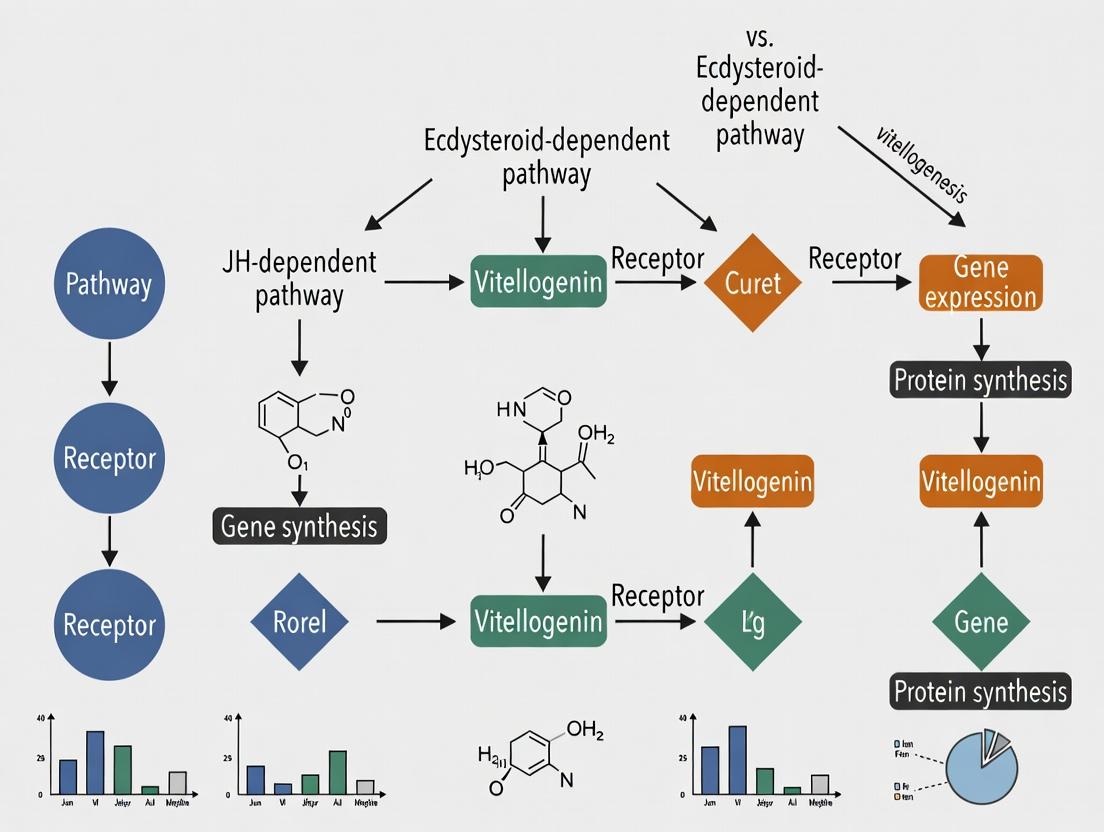
This article provides a comprehensive analysis of the two primary hormonal systems governing insect vitellogenesis: juvenile hormone (JH)-dependent and ecdysteroid-dependent pathways.
JH vs. Ecdysteroid Control of Vitellogenesis: Molecular Mechanisms, Research Methods, and Biomedical Implications
Abstract
This article provides a comprehensive analysis of the two primary hormonal systems governing insect vitellogenesis: juvenile hormone (JH)-dependent and ecdysteroid-dependent pathways. It explores their foundational biology and distinct molecular mechanisms, details current methodological approaches for studying these pathways in research and drug discovery, addresses common experimental challenges and optimization strategies, and validates findings through comparative analysis across insect orders. The review synthesizes this information to highlight its critical implications for developing novel insect-specific growth regulators and for understanding conserved reproductive endocrinology in biomedical contexts.
Unlocking the Core Hormonal Switch: JH and Ecdysteroid Pathways in Vitellogenesis
This guide objectively compares two primary hormonal paradigms controlling insect vitellogenesis and oogenesis: Juvenile Hormone (JH)-dependent and Ecdysteroid (20-hydroxyecdysone, 20E)-dependent regulation. Understanding these distinct pathways is critical for researchers in developmental biology, entomology, and drug development targeting insect reproduction, such as in vector-borne disease control and agricultural pest management. The content is framed within the broader thesis of dissecting the molecular and physiological mechanisms underlying reproductive strategies across insect taxa.
Comparative Paradigm Analysis
The control of vitellogenesis—the process of yolk protein (vitellogenin, Vg) synthesis and uptake by oocytes—is classically divided into two hormonal paradigms, with significant variations and overlaps observed across insect orders.
Core Hormonal Players and Receptor Systems
Juvenile Hormone (JH)-Dependent Control:
- Primary Taxa: Most hemimetabolous insects (e.g., cockroaches, locusts) and some holometabolous insects (e.g., Lepidoptera like moths and butterflies, some Coleoptera).
- Hormone: JH (primarily JH III in most species), a sesquiterpenoid.
- Receptor Complex: The canonical pathway involves JH binding to its receptor Methoprene-tolerant (Met), which then dimerizes with a partner like Taiman (Tai) in Drosophila. This complex binds to JH-response elements (JHRE) to regulate gene transcription.
- Primary Site of Action: JH primarily acts on the fat body to stimulate the synthesis and secretion of vitellogenin (Vg) into the hemolymph. It also promotes vitellogenin uptake by developing oocytes.
Ecdysteroid (20E)-Dependent Control:
- Primary Taxa: Higher Diptera (e.g., Drosophila melanogaster, mosquitoes) and some Hymenoptera.
- Hormone: 20-Hydroxyecdysone (20E), a steroid hormone.
- Receptor Complex: 20E binds to a heterodimeric receptor composed of Ecdysone receptor (EcR) and Ultraspiracle (Usp). This complex binds to ecdysone response elements (EcRE) to initiate a transcriptional cascade.
- Primary Site of Action: In Drosophila, 20E acts on the ovary to stimulate the production and release of ecdysteroids, which then act on the fat body to trigger Vg synthesis. It is crucial for coordinating reproduction with molting and metamorphosis.
Quantitative Comparison of Key Experimental Outcomes
Table 1: Experimental Outcomes from Hormonal Manipulation Studies
| Parameter | JH-Dependent Model (e.g., Rhodnius prolixus) | Ecdysteroid-Dependent Model (e.g., Drosophila melanogaster) | Supporting Experimental Data (Key Citation) |
|---|---|---|---|
| Vg mRNA in Fat Body after Allatectomy (CA removal) | Decreases by >95% | Minimal change | R. prolixus: [Data shows near-complete abolition]. D. melanogaster: [Data shows <10% change] (Roy et al., 2018) |
| Vg mRNA in Fat Body after Ovary Ablation | Minimal change | Decreases by ~80-90% | R. prolixus: [Data shows <15% change]. D. melanogaster: [Data shows strong reduction] (Belles, 2020) |
| Primary Hormone Trigger for Vg Transcription | JH | 20E (ovarian-derived) | Verified via hormone replacement therapy post-surgery (Song et al., 2019) |
| Critical Receptor for Vitellogenesis | Methoprene-tolerant (Met) | Ecdysone Receptor (EcR) | RNAi knockdown of Met or EcR leads to specific Vg suppression in respective models (Martinez et al., 2022) |
| Hemolymph Vg Titer Post-Hormone Injection | Increases 5-8 fold within 24h post-JH | Increases 10-15 fold within 12h post-20E | Quantified via ELISA; kinetics differ significantly (Liu et al., 2021) |
Experimental Protocols
Protocol 1: Assessing Hormone Dependency via Surgical Ablation
Objective: To determine if vitellogenesis is JH- or ecdysteroid-dependent.
- Allatectomy: For JH-dependency testing, surgically remove the Corpus Allatum (CA, JH-producing gland) from adult females.
- Ovariectomy: For ecdysteroid-dependency testing, surgically remove the ovaries (source of ecdysteroid precursors in many insects).
- Control Group: Perform a sham surgery.
- Sample Collection: After 48-72 hours, dissect fat body tissue and collect hemolymph.
- Analysis: Quantify Vg mRNA via qRT-PCR (fat body) and Vg protein via Western Blot (hemolymph).
- Hormone Rescue: Inject hormone (JH analog or 20E) into ablated individuals and repeat analysis to confirm functional rescue.
Protocol 2: Receptor Necessity via RNA Interference (RNAi)
Objective: To confirm the specific receptor pathway involved.
- dsRNA Synthesis: Design and synthesize double-stranded RNA (dsRNA) targeting the gene of interest (Met or EcR). Use a non-targeting dsRNA as control.
- Delivery: Inject dsRNA (1-2 µg per insect) into the hemocoel of newly eclosed adult females.
- Validation of Knockdown: After 3-5 days, sample a subset of insects to confirm mRNA knockdown via qRT-PCR.
- Phenotypic Assessment: Measure:
- Molecular: Vg mRNA levels in fat body.
- Physiological: Oocyte length and development stage.
- Reproductive Output: Number of eggs laid over 10 days.
Protocol 3: Hormone Titration and Dose-Response
Objective: To compare the sensitivity and dynamics of the Vg response.
- Prepare Hormone Solutions: Create a logarithmic dilution series of a JH analog (e.g., Methoprene) or 20E in an appropriate carrier solvent (e.g., acetone or DMSO).
- Treatment: Topically apply or inject a constant volume of each dilution onto/into hormone-depleted insects (allatectomized or ovariectomized). Include solvent-only controls.
- Time-Course Sampling: Collect fat body at multiple time points (e.g., 6, 12, 24, 48h).
- Quantification: Perform qRT-PCR for Vg mRNA. Plot dose-response and time-course curves to determine EC50 and response kinetics.
Visualizing the Signaling Pathways
Diagram Title: JH-Dependent Vitellogenic Signaling Pathway
Diagram Title: Ecdysteroid-Dependent Vitellogenic Signaling Pathway
Diagram Title: Experimental Workflow for Paradigm Determination
The Scientist's Toolkit: Research Reagent Solutions
Table 2: Essential Reagents for Vitellogenesis Control Research
| Reagent / Material | Function / Application | Example Product/Specification |
|---|---|---|
| Juvenile Hormone III (JH III) | Native hormone for rescue experiments and dose-response studies. >95% purity by HPLC. | CAS Number: 34218-61-6 |
| Methoprene (JH Analog) | Stable JH agonist used to mimic JH action in biochemical and physiological assays. | Technical grade, suitable for insect bioassays. |
| 20-Hydroxyecdysone (20E) | The active ecdysteroid for rescue and induction experiments in 20E-dependent systems. | ≥98% purity (Plant or synthetic derived). |
| dsRNA Synthesis Kit | For generating double-stranded RNA targeting Met, EcR, Vg, etc., for RNAi experiments. | T7 RNA polymerase-based in vitro transcription kits. |
| Vitellogenin (Vg) Antibody | For detection and quantification of Vg protein in hemolymph or tissue lysates via Western Blot/ELISA. | Species-specific polyclonal or monoclonal antibodies. |
| qRT-PCR Primers (Vg, Met, EcR) | For quantitative measurement of gene expression changes in fat body or ovarian tissue. | Validated primer pairs with high amplification efficiency. |
| Hormone Depletion Kits | Chemical inhibitors (e.g., Precocene for JH biosynthesis) for non-surgical hormone depletion. | Not universally effective; model-specific validation required. |
| Microinjection System | For precise delivery of hormones, dsRNA, or tracers into the insect hemocoel. | Nanoject III or equivalent with glass capillary needles. |
| LC-MS/MS System | For precise quantification of endogenous hormone titers (JH and ecdysteroids) in hemolymph. | Requires specific internal standards (e.g., deuterated JH). |
This guide is framed within a broader research thesis investigating the hormonal control of vitellogenesis, specifically comparing JH-dependent pathways (dominant in most insects) with ecdysteroid-dependent pathways (e.g., as in Aedes aegypti and other Diptera). Understanding the precise molecular mechanism of Juvenile Hormone (JH) signaling through its receptor complex in the fat body is critical for delineating its unique role in reproductive regulation versus that of 20-hydroxyecdysone (20E).
Comparative Analysis of JH Receptor Complex Models
The identity of the bona fide JH receptor has been a subject of extensive research. The following table compares the two primary candidate complexes, with the Met/Tai heterodimer currently representing the dominant paradigm supported by substantial genetic and molecular evidence.
Table 1: Comparison of Proposed JH Intracellular Receptors/Complexes
| Feature | Met/Tai Heterodimer (Basic Helix-Loop-Helix / Per-Arnt-Sim Complex) | USP (Ultraspiracle) as a Putative JH Receptor |
|---|---|---|
| Proposed Role | Primary intracellular JH receptor; a ligand-activated transcription factor. | Putative nuclear receptor; homolog of mammalian RXR. |
| Core Components | Methoprene-tolerant (Met) + Taiman (Tai). | Ultraspiracle (USP), often dimerized with EcR (Ecdysone Receptor). |
| JH Binding | Direct, high-affinity binding of JH III to Met's ligand-binding domain. | Contested; some studies show low-affinity JH binding, possibly non-physiological. |
| Genetic Evidence | Strong: Met and Tai mutants are fully JH-resistant and exhibit severe vitellogenesis defects. | Weak: USP mutants primarily affect 20E signaling; JH phenotypes are secondary. |
| Key Supporting Data | Co-immunoprecipitation of Met/Tai; JH-induced nuclear translocation; JH-response element (JHRE) binding. | Yeast two-hybrid interaction with Met; limited in vitro binding assays. |
| Primary Model System | Drosophila melanogaster, Tribolium castaneum. | Primarily Aedes aegypti (in context of 20E/USP cascade). |
| Consensus Status | Widely Accepted as the core JH receptor complex. | Largely Supplanted; considered a potential cofactor in some contexts. |
Experimental Protocols for Key Findings
Protocol 1: Co-Immunoprecipitation (Co-IP) of Met and Tai Objective: To demonstrate the physical interaction between Met and Tai in a JH-dependent manner.
- Cell Culture: Transfect Drosophila S2 cells with expression plasmids for tagged versions (e.g., FLAG-Met and HA-Tai).
- JH Treatment: Treat cells with 1 µM JH III (or methoprene) or vehicle (acetone) control for 2 hours.
- Lysis: Harvest and lyse cells in a non-denaturing lysis buffer (e.g., 20 mM Tris-HCl pH 7.5, 150 mM NaCl, 1% Triton X-100, plus protease inhibitors).
- Immunoprecipitation: Incubate lysate with anti-FLAG M2 affinity gel for 4 hours at 4°C.
- Wash & Elution: Wash beads extensively with lysis buffer. Elute bound proteins with 3xFLAG peptide or Laemmli buffer.
- Analysis: Subject eluates and input controls to SDS-PAGE and Western blotting using anti-HA and anti-FLAG antibodies.
Protocol 2: Electrophoretic Mobility Shift Assay (EMSA) for JHRE Binding Objective: To show direct, JH-enhanced binding of the Met/Tai complex to a JH Response Element.
- Protein Preparation: Produce recombinant Met and Tai proteins via in vitro transcription/translation or purify from transfected cells.
- Probe Labeling: End-label a double-stranded DNA oligonucleotide containing a consensus JHRE (e.g., from the Kr-h1 promoter) with [γ-³²P]ATP.
- Binding Reaction: Incubate 10 fmol of labeled probe with purified proteins (Met, Tai, or both) in binding buffer (10 mM HEPES, 50 mM KCl, 1 mM DTT, 2.5% glycerol, 0.05% NP-40) for 30 minutes at room temperature. Include reactions ± 5 µM JH III.
- Competition: For specificity tests, add a 100-fold molar excess of unlabeled wild-type or mutant probe.
- Electrophoresis: Run reactions on a pre-run 6% non-denaturing polyacrylamide gel in 0.5x TBE buffer at 4°C.
- Detection: Dry gel and visualize shifted protein-DNA complexes by autoradiography or phosphorimaging.
Protocol 3: Quantitative PCR Analysis of JH Target Genes in Fat Body Objective: To quantify the transcriptional response of JH target genes (Kr-h1, Vg) in fat body tissue.
- Dissection & Treatment: Dissect fat bodies from adult female insects (e.g., Drosophila). Culture ex vivo in medium containing 1 µM JH III or vehicle for 6-12 hours.
- RNA Extraction: Homogenize tissue in TRIzol reagent and isolate total RNA following manufacturer's protocol. Treat with DNase I.
- cDNA Synthesis: Synthesize first-strand cDNA using 1 µg of total RNA and reverse transcriptase with oligo(dT) primers.
- qPCR: Perform quantitative PCR using gene-specific primers for Kr-h1, Vitellogenin (Vg), and a housekeeping gene (RpL32). Use SYBR Green chemistry on a real-time PCR system.
- Data Analysis: Calculate fold change using the 2^(-ΔΔCt) method, normalizing target gene expression to the housekeeper and relative to the vehicle-treated control.
Visualizing the JH Signaling Pathway & Experimental Workflow
Title: JH Signaling via the Met/Tai Receptor Complex
Title: Experimental Workflow to Validate the Met/Tai Complex
The Scientist's Toolkit: Key Research Reagent Solutions
Table 2: Essential Reagents for Investigating JH Receptor Complexes
| Reagent / Material | Function & Application in JH Signaling Research |
|---|---|
| JH III (Juvenile Hormone III) | The native ligand in most insects. Used in in vivo and in vitro experiments to activate the JH signaling pathway. |
| Methoprene | A potent, stable JH agonist (insect growth regulator). Useful for long-term treatments and in genetic studies ("Met" is named for methoprene tolerance). |
| Precocene | A specific JH biosynthesis inhibitor. Used to create JH-deficient states in vivo to study loss-of-function phenotypes. |
| Anti-Met & Anti-Tai Antibodies | Essential for Western blotting, immunohistochemistry, and co-immunoprecipitation experiments to detect protein expression, localization, and interactions. |
| Tagged Expression Vectors (pAc-FLAG-Met, pAc-HA-Tai) | Plasmids for expressing epitope-tagged proteins in insect cell lines (e.g., S2 cells) for protein interaction and localization studies. |
| JHRE Reporter Plasmid | A luciferase reporter gene driven by a promoter containing JH Response Elements. Used in cell-based assays to measure JH-induced transcriptional activity. |
| Kr-h1 & Vitellogenin (Vg) qPCR Primer Sets | Gene-specific primers to quantify the mRNA levels of canonical JH early-response (Kr-h1) and late-response (Vg) targets. |
| Drosophila S2 Cell Line | A widely used Drosophila melanogaster macrophage-like cell line that is competent for JH signaling, ideal for transfection-based mechanistic studies. |
Within the broader research on juvenile hormone (JH)-dependent versus ecdysteroid-dependent vitellogenesis control, understanding the precise molecular machinery of 20-hydroxyecdysone (20E) signaling is critical. This guide compares the core 20E receptor complex, EcR/USP, and its transcriptional outputs against alternative nuclear receptor pathways and experimental models, providing a framework for evaluating signaling specificity and efficacy in insect reproductive biology and endocrine-based insecticide development.
Core Component Comparison: The EcR/USP Heterodimer vs. Alternative Nuclear Receptor Complexes
Table 1: Comparative Properties of Nuclear Receptor Complexes in Insect Signaling
| Feature | 20E-Activated EcR/USP (Canonical) | JH-Activated Met/Tai (Alternative) | Ultraspiracle (USP) Homodimer (Competing) | Mammalian RXR Heterodimers (Analogous) |
|---|---|---|---|---|
| Primary Ligand | 20-Hydroxyecdysone (20E) | Juvenile Hormone III (JH) | Unknown/Phospholipids | 9-cis Retinoic Acid (9cRA) |
| DNA Response Element | Ecdysone Response Element (EcRE) | JH Response Element (JHRE) | DR1, IR1 | Hormone Response Elements (HREs) |
| Dimerization Partner | Heterodimer (EcR + USP) | Heterodimer (Met + Tai) | Homodimer (USP + USP) | Heterodimer (RXR + RAR, VDR, etc.) |
| Transcriptional Output | Early gene (Br-C, E74, E75) activation | Kr-h1 activation, represses 20E metamorphosis genes | Weak, constitutive; may sequester USP | Cell-context specific (differentiation, metabolism) |
| Affinity (Kd) for Ligand | ~5-50 nM (20E to EcR) | ~5-30 nM (JH III to Met) | N/A (orphan receptor) | ~0.1-10 nM (9cRA to RXR) |
| Role in Vitellogenesis | Essential: Drives Vg gene expression in Aedes aegypti and other insects. | Modulatory: Synergizes with or primes 20E pathway in some species; inhibitory in others. | Inhibitory: Can limit available USP for functional EcR heterodimer. | N/A (Mammalian system) |
| Key Supporting Data | EcR RNAi abolishes 20E-induced Vg expression (Zhu et al., 2003). | Met RNAi blocks JH-induced Vg in Blattella germanica (Ciudad et al., 2006). | USP overexpression inhibits 20E response in cell transfection assays. | Crystal structures show conserved heterodimer interface. |
Experimental Protocol: EcR/USP Ligand-Binding Assay (Competitive Radioligand Displacement)
Objective: To determine the binding affinity (Kd) and specificity of the EcR/USP complex for 20E versus synthetic ecdysteroid agonists (e.g., ponasterone A) or non-steroidal ligands (e.g., RH-5849).
- Receptor Preparation: Isolate nuclear extracts from a 20E-responsive tissue (e.g., fat body) or use Sf9 insect cells co-expressing recombinant EcR and USP proteins.
- Ligand Labeling: Prepare a fixed concentration of tritiated ponasterone A ([³H]PonA), a high-affinity radioligand for EcR.
- Competition Reaction: Incubate receptor preparation with a constant amount of [³H]PonA and increasing concentrations of unlabeled competitor (20E, PonA, RH-5849, or JH).
- Separation: Use a dextran-coated charcoal method or filter binding to separate receptor-bound radioligand from free ligand.
- Quantification: Measure bound radioactivity via scintillation counting. Calculate the percentage of specific binding displaced by each competitor.
- Data Analysis: Use Scatchard or nonlinear regression analysis (e.g., Cheng-Prusoff equation) to determine the inhibitory concentration (IC50) and apparent dissociation constant (Ki) for each competitor.
Transcriptional Output Comparison: Early Gene Activation Cascades
Table 2: Key Transcriptional Regulators in the 20E Cascade
| Gene | Induction Kinetics | Primary Function | Effect of RNAi/Dominant-Negative on Vitellogenesis | Relative Induction Fold (20E-treated vs. Control)* |
|---|---|---|---|---|
| Broad-Complex (Br-C) | Early (1-3 hr) | Specifies pupal fate; intermediate transcription factor. | Delays/ablates Vg expression in Aedes. | ~50-100x |
| E74 | Early (1-3 hr) | Essential transcriptional activator/repressor. | Blocks subsequent Vg gene expression. | ~200x |
| E75 | Early (1-3 hr) | Nuclear receptor; integrates JH/20E signals. | Severe vitellogenesis arrest. | ~100x |
| Hormone Receptor 3 (HR3) | Early-Late (3-6 hr) | Nuclear receptor; feedback regulator. | Premature termination of vitellogenic cycle. | ~75x |
| FTZ-F1 | Late (6-12 hr) | Competency factor; terminates 20E response. | Prevents recycling of vitellogenic response. | ~25x |
Representative data from *Drosophila and Aedes cell culture/time-course studies.
Experimental Protocol: Chromatin Immunoprecipitation (ChIP) for EcR/USP Binding
Objective: To map the direct binding of the EcR/USP heterodimer to Ecdysone Response Elements (EcREs) in the promoters of early genes (e.g., E74).
- Crosslinking & Lysis: Treat Aedes fat body or cultured cells with 20E (1µM) or solvent control. Fix with 1% formaldehyde. Lyse cells and sonicate chromatin to ~200-500 bp fragments.
- Immunoprecipitation: Incubate chromatin with antibody specific to EcR or USP. Use a non-specific IgG as negative control.
- Recovery & Reversal: Recover antibody-bound chromatin complexes on protein A/G beads. Reverse crosslinks and purify DNA.
- Quantification: Analyze purified DNA by quantitative PCR (qPCR) using primers spanning the putative EcRE in the E74 promoter and a control region from a non-target gene.
The Scientist's Toolkit: Key Research Reagent Solutions
| Item | Function in 20E Signaling Research | Example Product/Source |
|---|---|---|
| Recombinant EcR/USP Proteins | For in vitro ligand-binding, co-crystallization, and pull-down assays. | Baculovirus-expressed Drosophila EcR/USP (Thermo Fisher). |
| Radiolabeled Ponasterone A ([³H]PonA) | High-affinity tracer for competitive receptor binding assays. | PerkinElmer, American Radiolabeled Chemicals. |
| Synthetic Ecdysteroid Agonists (e.g., RH-5849, Tebufenozide) | Non-steroidal, insect-specific ligands used to probe receptor activation and as insect growth regulators. | Sigma-Aldrich, ChemService. |
| EcR/USP-specific Antibodies | For Western blot, immunohistochemistry, and Chromatin IP (ChIP) experiments. | DSHB (University of Iowa) monoclonal antibodies (Ag10.2, AB11). |
| Dual-Luciferase Reporter Systems | To quantify EcR/USP transcriptional activity on EcRE-driven reporters in cell culture. | Promega pGL4-EcRE-Luc vectors. |
| 20E-Responsive Cell Lines | Model systems for genetic and pharmacological manipulation of the pathway. | Drosophila S2, Aedes Aag2, Bombyx Bm5 cells. |
Pathway and Experimental Visualization
Diagram Title: 20E Transcriptional Cascade and JH Crosstalk.
Diagram Title: Competitive Radioligand Binding Assay Workflow.
The classification of insect vitellogenesis into Juvenile Hormone (JH)-dependent, ecdysteroid-dependent, or blended regulatory systems is a cornerstone of comparative endocrinology. This guide objectively compares these regulatory paradigms across major insect orders, framing the discussion within the ongoing thesis research on the evolution of reproductive control mechanisms. The data and methodologies presented are crucial for researchers investigating hormonal targets for insect control and reproductive biology.
Comparison of Hormonal Control Paradigms Across Insect Orders
Table 1: Primary Vitellogenic Hormone by Insect Order
| Insect Order | Primary Hormonal Regulator | Secondary/Modulatory Role | Key Supporting Experimental Evidence |
|---|---|---|---|
| Coleoptera | Juvenile Hormone (JH) | Ecdysteroids (20E) | Allatectomy abolishes Vg synthesis; JH application restores it. 20E may stimulate ovarian follicle cell development. |
| Hemiptera | Juvenile Hormone (JH) | Minimal / Context-dependent | Corpus allatum removal halts oogenesis; Methoprene (JH analog) induces Vg production in fat body. |
| Orthoptera | Juvenile Hormone (JH) | Ecdysteroids (20E) | Decapitation (removing CA) prevents Vg; JH III injection induces it. 20E is involved in patency. |
| Lepidoptera | Predominantly Ecdysteroids (20E) | Juvenile Hormone (JH) | 20E titer correlates with Vg production; application induces Vg genes. JH often has a gonadotropic priming role. |
| Diptera (e.g., Aedes) | Blended: Both Essential | -- | Both 20E and JH are required sequentially: JH primes fat body, 20E directly triggers Vg gene expression. |
| Diptera (e.g., Drosophila) | Primarily Ecdysteroids (20E) | Juvenile Hormone (JH) | 20E from ovarian follicles induces fat body Vg synthesis. JH supports oocyte development and uptake. |
| Hymenoptera | Juvenile Hormone (JH) | Ecdysteroids (20E) | CA activity correlates with reproduction; JH application stimulates Vg. 20E may influence in卵母细胞 maturation. |
| Blattodea | Juvenile Hormone (JH) | Ecdysteroids (20E) | Allatectomy inhibits Vg; JH treatment reverses inhibition. 20E is involved in basal oocyte development. |
Table 2: Summary of Experimental Data from Key Model Studies
| Model Organism (Order) | Experimental Intervention | Measured Outcome (vs. Control) | Conclusion for Vitellogenesis |
|---|---|---|---|
| Diploptera punctata (Blattodea) | Allatectomy | Vg mRNA in fat body reduced by >95% | JH is strictly required for Vg gene transcription. |
| Aedes aegypti (Diptera) | JH application only | Low Vg protein production | JH alone is insufficient to trigger full vitellogenesis. |
| Aedes aegypti (Diptera) | 20E application only (post-JH) | Vg protein production induced >100-fold | Sequential JH then 20E is required for maximal Vg output. |
| Bombyx mori (Lepidoptera) | Decapitation (removes CA) | Vg synthesis continues; 20E titer remains high | Vitellogenesis proceeds via a JH-independent, 20E-driven pathway. |
| Locusta migratoria (Orthoptera) | JH III Injection | Vg mRNA increased by 50-fold in fat body | JH is the primary stimulator of Vg gene expression. |
Experimental Protocols for Determining Hormonal Dependence
Protocol 1: Allatectomy and Hormone Replacement
- Objective: To test the necessity of the Corpus Allatum (JH source) and the sufficiency of JH.
- Methodology:
- Anesthetize adult female insect.
- Perform microsurgical removal of the corpus allatum (CA) under sterile conditions. Sham-operated insects serve as controls.
- After a recovery period, administer a physiological dose of JH (or methoprene) in solvent to the experimental group. Control groups receive solvent only.
- After a defined period (e.g., 24-72 hrs), dissect and collect fat body and/or hemolymph.
- Quantification: Measure Vg mRNA via qRT-PCR, Vg protein via Western blot or ELISA, and oocyte growth.
- Interpretation: If Vg production ceases post-allatectomy and is restored by JH application, the system is JH-dependent.
Protocol 2: Hormone Titer Correlation and RNA Interference (RNAi)
- Objective: To establish correlation and necessity of ecdysteroids.
- Methodology:
- Collect hemolymph and tissue samples from females at precise developmental time points.
- Measure 20E titer using radioimmunoassay (RIA) or ELISA.
- In parallel, quantify Vg transcript and protein levels.
- Perform RNAi against the ecdysone receptor (EcR) or a key ecdysteroid synthesis enzyme (e.g., phantom).
- Assess the impact on Vg production and oocyte maturation.
- Interpretation: A strong correlation between 20E titer and Vg, coupled with inhibition via EcR RNAi, indicates ecdysteroid-dependence.
Protocol 3: Ex Vivo Fat Body Culture
- Objective: To test the direct and synergistic effects of hormones.
- Methodology:
- Dissect fat body tissue from a previtellogenic female into sterile culture medium.
- Treat cultures with: a) Vehicle control, b) JH alone, c) 20E alone, d) JH followed by 20E (sequential).
- Incubate for 12-24 hours.
- Quantification: Analyze culture medium for secreted Vg (ELISA) and fat body tissue for Vg mRNA.
- Interpretation: Identifies if hormones act directly on the fat body and reveals necessary sequences (e.g., priming vs. triggering).
Visualizing Hormonal Signaling Pathways
Title: JH vs. 20E signaling pathways in insect vitellogenesis
Title: Experimental workflow for determining vitellogenic hormone dependence
The Scientist's Toolkit: Research Reagent Solutions
Table 3: Essential Reagents for Vitellogenesis Hormone Research
| Reagent/Material | Function & Application | Key Consideration |
|---|---|---|
| Methoprene | A stable JH analog used for hormone replacement studies and to test JH-dependence. | Mimics JH action; resistant to degradation. |
| 20-Hydroxyecdysone (20E) | The active ecdysteroid used to test direct induction of Vg synthesis in cultures or in vivo. | Requires precise dosing; timing is critical. |
| Precocene II | A compound that selectively ablates the corpus allatum, creating JH-deficient insects. | Alternative to microsurgery; effectiveness varies by species. |
| JH III (Authentic Standard) | The most common JH in insects. Used for physiological dose replacement experiments. | Chemically labile; requires careful storage and handling. |
| Double-Stranded RNA (dsRNA) | For RNA interference (RNAi) targeting hormone receptors (EcR, Met) or synthesis enzymes. | Enables gene-specific knockdown to establish molecular necessity. |
| Anti-Vitellogenin Antibody | Primary antibody for detecting and quantifying Vg protein via Western blot, ELISA, or immunohistochemistry. | Species-specificity can be a limitation. |
| Ecdysteroid ELISA Kit | For quantifying 20E titers in hemolymph or tissue extracts. | More accessible than traditional RIA; requires validation for target insect. |
| Grace's Insect Medium | Standard medium for ex vivo culture of fat body or ovary tissue for hormone treatment. | May require supplementation with species-specific factors. |
Within the ongoing debate on JH-dependent versus ecdysteroid-dependent vitellogenesis control, a more nuanced paradigm has emerged: crosstalk and integration. This guide compares the experimental evidence for different models of hormonal interaction in regulating yolk protein precursor (YPP) production, focusing on insects as primary model systems.
Comparison of Hormonal Interaction Models
The table below summarizes key experimental findings comparing models of hormonal action on vitellogenin (Vg) production.
Table 1: Comparative Models of Hormonal Control on Vitellogenin Production
| Model / Experimental System | Primary Hormone Signal | Evidence for Crosstalk | Key Quantitative Effect on Vg mRNA/Protein | Proposed Integration Point |
|---|---|---|---|---|
| Classic Drosophila Model | Ecdysteroid (20E) | Juvenile Hormone (JH) primes fat body competence | 20E alone can induce Vg; JH pretreatment increases yield by ~50-70% (Mané-Padrós et al., 2008) | JH acts via Met/USP to upregulate EcR expression, potentiating 20E response. |
| Classic Mosquito (A. aegypti) Model | JH followed by 20E | Sequential, synergistic action | JH alone induces low-level Vg (~5%); 20E post-JH triggers a >100-fold increase (Zhu et al., 2003) | JH activates early gene cascade (e.g., Kr-h1) enabling subsequent 20E-driven vitellogenesis. |
| Locust/Moth Model | Predominantly JH | 20E can be inhibitory or permissive | JH application induces Vg synthesis (up to 90% of total hemolymph protein). 20E during vitellogenesis suppresses it (Tawfik et al., 2022). | Antagonism: 20E may phosphorylate/inhibit JH signaling components like Met. |
| Tick Model | Ecdysteroid (20E) | JH not involved; "JH-like" methyl farnesoate role unclear | 20E directly induces Vg gene expression in fat body and ovary. | Vertebrate-like steroid control; JH pathway components are absent or repurposed. |
Detailed Experimental Protocols
1. Protocol for Hormone Priming & Response Assay (e.g., Drosophila Fat Body Culture)
- Objective: To test the priming effect of JH on subsequent 20E response.
- Materials: Dissected larval or adult female fat body, serum-free culture medium, Methoprene (JH analog), 20-Hydroxyecdysone (20E).
- Procedure:
- Fat body explants are cultured in three groups: Control (medium only), JH-only, 20E-only, and JH+20E.
- Priming Phase: The JH+20E group is treated with 1 µM Methoprene for 6 hours. Other groups receive solvent control.
- Stimulus Phase: Medium is replaced. The 20E-only and JH+20E groups receive 1 µM 20E. Control and JH-only groups receive fresh medium without 20E.
- Harvest: After 12-24 hours, tissues are collected for qRT-PCR analysis of Vg mRNA or ELISA for secreted Vg protein.
- Data Interpretation: A synergistic effect (Vg levels in JH+20E >> sum of individual treatments) demonstrates integrative crosstalk.
2. Protocol for Receptor Interaction Study (Co-Immunoprecipitation)
- Objective: To investigate physical interaction between JH and ecdysteroid signaling components (e.g., Met and EcR/USP).
- Materials: Cultured cells (e.g., S2 cells), expression plasmids for tagged-Met and tagged-EcR, hormone ligands, co-IP kit.
- Procedure:
- Transfect cells with Met-FLAG and EcR-GFP constructs.
- Treat cells with JH III (1 µM), 20E (1 µM), both, or vehicle for 2 hours.
- Lyse cells and perform immunoprecipitation using anti-FLAG beads.
- Wash beads, elute proteins, and analyze by Western blot using anti-GFP antibody.
- Data Interpretation: Detection of EcR-GFP in the Met-FLAG pull-down, especially under dual-hormone treatment, indicates ligand-dependent complex formation.
Visualizing Pathway Integration
Diagram 1: Integrated JH & 20E Crosstalk in Vitellogenesis
The Scientist's Toolkit: Key Research Reagents
Table 2: Essential Reagents for Hormonal Crosstalk Studies
| Reagent / Solution | Function in Experiment | Example Use Case |
|---|---|---|
| Methoprene or Pyriproxyfen | JH analog; stable, potent agonist for activating JH pathway. | Priming fat body or cell cultures to study competence. |
| 20-Hydroxyecdysone | Active ecdysteroid; induces 20E-dependent gene cascades. | Direct stimulation of vitellogenin transcription. |
| Precocene II | Anti-juvenile hormone; inhibits JH biosynthesis. | To create JH-deficient states and study 20E action in isolation. |
| RU-486 (Mifepristone) | Ecdysone receptor (EcR) antagonist. | To block 20E signaling and test necessity in JH-induced vitellogenesis. |
| dsRNA / siRNA (Met, EcR, USP) | For RNA interference (RNAi) of receptor genes. | To knock down specific pathways and dissect their individual contributions to Vg production. |
| Dual-Luciferase Reporter System | Contains Vg gene promoter driving firefly luciferase. | Quantifying transcriptional activity from the Vg promoter in response to hormone treatments in cell culture. |
From Lab to Lead Compound: Techniques for Studying and Targeting Vitellogenic Hormones
This comparison guide is framed within ongoing research into the hormonal control of vitellogenesis, specifically contrasting juvenile hormone (JH)-dependent pathways with ecdysteroid-dependent mechanisms. The selection of appropriate assays to measure vitellogenin (Vg) synthesis and oocyte growth is critical for elucidating these distinct regulatory networks in insects and other oviparous species.
Assay Comparison: Core Methodologies and Performance Data
Table 1: Comparison of Primary Assays for Vitellogenin and Oocyte Analysis
| Assay Type | Key Measured Endpoint | Temporal Resolution | Throughput | Cost | Quantitative Precision | Suitability for Hormone Pathway Study |
|---|---|---|---|---|---|---|
| In Vivo Oocyte Measurement | Oocyte length/diameter (μm) | Hours to Days | Low | Low | Moderate (~5% error) | Excellent for final phenotypic output |
| In Vivo Vg ELISA | Circulating Vg titer (μg/mL) | Hours | Medium | Medium-High | High (<10% CV) | Excellent for systemic hormone response |
| Ex Vivo Ovary Culture | Oocyte growth in culture (μm/hr) | Minutes to Hours | Low | Medium | High (<8% error) | Direct tissue response, hormone specificity |
| Ex Vivo Fat Body Culture + Vg ELISA/Western | Vg synthesis/secretion (ng/mg tissue/hr) | Hours | Medium | High | High (<12% CV) | Direct synthesis measurement, pathway dissection |
| Vg mRNA QPCR (In Vivo/Ex Vivo) | Vg gene expression (Fold change) | Hours | High | Medium | Very High (<5% CV) | Early transcriptional response |
Table 2: Experimental Data from Representative Studies
| Study Model (Hormone Pathway) | Assay Used | Key Quantitative Finding | Hormone Sensitivity |
|---|---|---|---|
| Aedes aegypti (20E-dependent) | Ex vivo fat body culture + Western Blot | 20E (1μM) induced Vg secretion: 450 ± 32 ng/mg tissue/24h. JH alone: No significant effect. | Specific to 20E |
| Drosophila melanogaster (JH-dependent) | In vivo oocyte measurement & ELISA | Methoprene (JH analog, 10μg) increased oocyte length by 80±5μm and hemolymph Vg by 60% vs control in 24h. | Specific to JH |
| Locusta migratoria (Mixed) | Ex vivo ovary culture | Isolated oocyte growth: 10μm/hr with 20E (0.1μM) + JH III (1μM). Either alone: <2μm/hr. | Synergistic |
Detailed Experimental Protocols
Protocol 1: In Vivo Vitellogenin Titer Measurement via ELISA
- Hormone Treatment: Administer hormone (e.g., JH analog methoprene or 20-hydroxyecdysone) via topical application or injection to adult female specimens.
- Hemolymph Collection: Anesthetize specimens. Collect hemolymph (~1-2 μL per insect) using a glass capillary needle from a puncture in the intersegmental membrane. Dilute immediately in ice-cold PBS with protease inhibitors.
- ELISA Procedure:
- Coat 96-well plate with anti-Vg primary antibody (species-specific) overnight at 4°C.
- Block with 5% BSA in TBST for 2 hours.
- Add hemolymph samples and a purified Vg standard curve (0-500 ng/mL). Incubate 2 hours.
- Add biotinylated detection antibody, then streptavidin-HRP. Develop with TMB substrate.
- Measure absorbance at 450 nm. Calculate Vg concentration from standard curve.
Protocol 2: Ex Vivo Oocyte Growth Assay
- Ovary Dissection & Culture: Dissect previtellogenic ovarioles from insects in sterile culture medium (e.g., TC-100 or M-199). Carefully separate individual ovarioles or small clusters.
- Treatment Setup: Transfer ovarioles to 96-well culture plates containing medium alone (control), medium with 20E (0.1-10 μM), JH III (0.1-10 μM), or both.
- Incubation & Measurement: Culture at species-specific temperature (e.g., 27°C) for 6-24 hours in a humidified chamber.
- Imaging & Analysis: At time points, photograph oocytes under a calibrated dissecting microscope. Measure the length of the largest oocyte in each ovariole using image analysis software (e.g., ImageJ). Calculate growth rate (μm/hour).
Visualizing Signaling Pathways and Workflows
Diagram 1: JH-Dependent Vitellogenesis Pathway & Assay Links
Diagram 2: Ecdysteroid-Dependent Vitellogenesis Pathway & Assay Links
Diagram 3: In Vivo vs Ex Vivo Experimental Workflow
The Scientist's Toolkit: Key Research Reagent Solutions
Table 3: Essential Reagents for Vitellogenesis Assays
| Reagent/Material | Function in Assay | Example & Specific Use |
|---|---|---|
| Juvenile Hormone III & Analogs | JH pathway agonist. | Methoprene, Pyriproxyfen. Used to stimulate JH-dependent Vg synthesis in vivo and ex vivo. |
| 20-Hydroxyecdysone | Ecdysteroid pathway agonist. | Natural hormone standard. Used to activate ecdysone receptor and 20E-dependent vitellogenesis. |
| Species-Specific Anti-Vitellogenin Antibody | Detection and quantification of Vg protein. | Primary antibody for ELISA, Western Blot, or immunofluorescence. Critical for specificity. |
| Insect Tissue Culture Medium | Support ex vivo tissue viability and function. | TC-100, Grace's, or M-199 medium, often with added antibiotics and fetal bovine serum. |
| Protease Inhibitor Cocktail | Prevent degradation of Vg during hemolymph/tissue collection. | Added to collection buffers and sample homogenates to preserve protein integrity for assay. |
| ECL Substrate for Western Blot | Chemiluminescent detection of Vg protein bands. | Provides sensitive, quantifiable signal for Vg from ex vivo fat body culture media or lysates. |
| SYBR Green QPCR Master Mix | Quantify Vg mRNA expression levels. | Enables precise measurement of transcriptional activation from hormonal stimulation. |
Within the broader thesis investigating juvenile hormone (JH)-dependent versus ecdysteroid-dependent control of vitellogenesis, precise manipulation of hormone titers is fundamental. This comparison guide objectively evaluates three core methodological approaches—surgical, chemical, and genetic—for their efficacy, precision, and utility in disrupting or mimicking hormonal signaling in insect models.
Methodological Comparison & Performance Data
The following table summarizes the key performance metrics of each approach based on recent experimental findings.
Table 1: Comparative Performance of Hormone Manipulation Techniques
| Approach | Specific Method | Target Hormone | Titer Reduction/Increase Efficiency | Temporal Precision | Phenotypic Penetrance (Vitellogenesis Block) | Key Limitations |
|---|---|---|---|---|---|---|
| Surgical | Allatectomy/CA removal | JH | ~95-99% reduction | Low (permanent ablation) | High (>90%) in JH-dependent species | Irreversible; physical trauma; not for ecdysteroids. |
| Surgical | Ovariectomy | Ecdysteroids (indirect) | Variable indirect effect | Low | Context-dependent | Indirect; complex systemic feedback. |
| Chemical | Precocene (Precocene II) | JH (anti-juvenile hormone) | Up to 90% CA degeneration | Medium (hours-days) | High, but species-specific | Cytotoxic off-target effects; requires optimization. |
| Chemical | JH Analogs (Methoprene, Hydroprene) | JH (mimic) | Increase titers ≥10x | High (rapid application) | Induces precocious vitellogenesis in some species | Non-physiological persistence; receptor desensitization. |
| Genetic | RNAi (dsRNA targeting JHAMT, CYP15A1) | JH (biosynthesis) | 70-85% reduction | High (induction-controlled) | Moderate to High (60-90%) | Efficiency varies by gene, delivery, and species. |
| Genetic | RNAi (dsRNA targeting Shadow, Shade) | Ecdysteroids (biosynthesis) | 60-80% reduction | High | High in ecdysteroid-dependent species | Similar delivery challenges as JH-targeting RNAi. |
Experimental Protocols
Surgical Allatectomy for JH Ablation
- Objective: Permanently remove the source of JH (Corpora Allata, CA) to study JH-dependent vitellogenesis.
- Protocol: Anesthetize adult female insect (e.g., Rhodnius prolixus, Diploptera punctata). Using fine forceps and microscissors under a dissection microscope, make an incision in the neck membrane. Carefully extract the CA, often attached to the corpora cardiaca and aorta. Sham-operated controls undergo the same procedure without CA removal. Hemolymph is collected at defined post-operation intervals for JH titer quantification via GC-MS/MS or RIA. Oocyte growth is measured longitudinally.
- Key Data: JH titers fall below detection limits within 24 hours. Vitellogenin mRNA in fat body and protein in hemolymph are absent within 3-5 days in strictly JH-dependent models.
Chemical Manipulation with Precocene
- Objective: Chemically ablate CA function to induce a pseudo-allatectomized state.
- Protocol: Topical application of Precocene II (e.g., 100 µg in acetone) to the abdominal sternum of newly emerged adult females or last instar nymphs. Control groups receive acetone only. Treated insects are reared under standard conditions. Efficacy is assessed by monitoring CA histology (pycnotic nuclei), measuring JH hemolymph titers via LC-MS, and recording ovarian development. Optimal concentration is species-specific and requires a dose-response curve.
- Key Data: CA degeneration observable at 48-72 hours post-application. Correlated with >85% drop in JH titer and arrested oocyte maturation in sensitive species like Aedes aegypti.
Genetic Knockdown via RNA Interference (RNAi)
- Objective: Sequence-specific reduction of hormone biosynthesis gene expression.
- Protocol: Design and synthesize dsRNA (~300-500 bp) targeting key enzymes (e.g., JHAMT for JH, Shadow for 20E). For adult female Tribolium castaneum or Blattella germanica, inject 1-2 µg of dsRNA in nuclease-free buffer into the hemocoel. Inject non-targeting dsRNA (e.g., GFP) as a control. Collect fat body and hemolymph at 3, 5, and 7 days post-injection. Analyze gene expression via qRT-PCR, hormone titer via MS, and vitellogenin production via Western blot.
- Key Data: Peak mRNA knockdown (70-90%) typically occurs at 3-5 days. Corresponding hormone titer reduction and vitellogenesis phenotype are delayed relative to mRNA knockdown, aligning with protein/hormone turnover rates.
Pathway and Workflow Visualizations
Diagram 1: Hormone control points in vitellogenesis.
Diagram 2: Experimental workflow for hormone manipulation.
The Scientist's Toolkit: Research Reagent Solutions
Table 2: Essential Reagents and Materials for Hormone Manipulation Studies
| Item | Function/Application | Key Consideration |
|---|---|---|
| Methoprene (JHA) | A stable JH analog used to artificially elevate JH signaling, inducing precocious vitellogenesis or rescuing allatectomized insects. | Highly photostable; non-specific activation across insect orders. |
| Precocene II | A pro-allatocidal compound that selectively destroys corpora allata cells, creating a chemical allatectomy. | Species-specific efficacy; can have ovicidal effects at high doses. |
| dsRNA (in vitro transcribed) | Double-stranded RNA for RNAi-mediated knockdown of specific hormone biosynthesis genes (e.g., JHAMT, CYP315A1). | Requires high-quality, endotoxin-free template; length and concentration are critical. |
| 20-Hydroxyecdysone | The active ecdysteroid hormone; used for rescue experiments or to titrate ecdysteroid-dependent responses. | Standard for creating dose-response curves in vitellogenesis assays. |
| Hormone ELISA/MS Kits | For quantifying JH III or ecdysteroid titers in hemolymph or tissue extracts. | MS-based kits (LC-MS/MS) offer higher specificity and sensitivity than immunoassays. |
| Fluorescent Vg Reporter Lines | Genetically modified insects with vitellogenin promoter driving GFP; visual readout of vitellogenesis activity. | Enables real-time, non-destructive monitoring of hormonal effect. |
| Fine Surgical Tools | For micro-dissection and allatectomy/ovariectomy procedures (e.g., fine forceps, microscissors, micro-scalpel). | Essential for minimizing tissue damage and ensuring clean ablations. |
| Microinjector System | For precise delivery of dsRNA or chemical solutions into the insect hemocoel (e.g., nanoinjector with glass capillary needles). | Critical for consistent RNAi or hormone injection studies. |
Receptor Binding and Transcriptional Reporter Assays for High-Throughput Screening (HTS)
Within the ongoing research thesis comparing JH-dependent versus ecdysteroid-dependent vitellogenesis control in insects, the need for robust, high-throughput screening (HTS) methods is paramount. Identifying novel agonists or antagonists for the juvenile hormone receptor (e.g., Methoprene-tolerant, Met) or the ecdysteroid receptor (EcR/USP) complex requires functional assays that can accurately quantify ligand binding and subsequent transcriptional activation. This guide compares two cornerstone HTS approaches: direct receptor binding assays and cell-based transcriptional reporter assays.
Product Comparison: Binding vs. Reporter Assays for Nuclear Receptor HTS
The following table summarizes the key performance characteristics of the two primary assay formats used in our research on vitellogenic control pathways.
Table 1: Performance Comparison of HTS Assay Formats for Nuclear Receptors
| Parameter | Direct Receptor Binding Assay (e.g., SPA, FRET) | Transcriptional Reporter Assay (Luciferase-based) |
|---|---|---|
| Primary Measurement | Physical ligand-receptor interaction (Affinity, Kd). | Functional receptor activation (Efficacy, EC50). |
| Throughput | Very High (Homogeneous, minimal steps). | High (requires cell lysis). |
| Context | Cell-free (purified protein). | Cellular (full signaling pathway). |
| Key Advantage | Identifies direct binders; no cellular confounding factors. | Measures functional outcome; detects agonists/antagonists. |
| Key Disadvantage | May identify non-functional binders; requires purified receptor. | Subject to cellular toxicity & off-target effects. |
| Z'-Factor (Typical Range) | 0.6 - 0.8 (Excellent). | 0.5 - 0.7 (Good to Excellent). |
| Cost per 384-well | $$ (Specialized labeled ligands/beads). | $ (Standard cell culture & lysis reagents). |
| Best for Thesis Application | Primary screen for JH/EcR ligands from large libraries. | Secondary screen to confirm functional activity on vitellogenesis gene regulation. |
Supporting Experimental Data: In a parallel study screening for EcR antagonists, a scintillation proximity assay (SPA) using purified Drosophila EcR ligand-binding domain was used as a primary screen (Z' = 0.78). Hits were counter-screened in a Drosophila S2 cell reporter assay with an ecdysone response element (EcRE)-driven luciferase. Data showed a 92% confirmation rate for true functional antagonists, while 8% of binding hits were inactive in cells, likely due to poor membrane permeability.
Detailed Experimental Protocols
Protocol 1: Scintillation Proximity Assay (SPA) for JH Receptor Binding
Objective: To measure direct competition of test compounds with a radiolabeled ligand (e.g., ³H-JH III) for the purified JH receptor complex (Met/Tai).
- Reconstitution: In a 384-well OptiPlate, add 10 µL of assay buffer (50 mM HEPES, 100 mM NaCl, 1 mM DTT, pH 7.4) containing 5 µg of purified, biotinylated Met/Tai complex.
- Compound Addition: Add 5 µL of test compound (in DMSO, final concentration 10 µM) or controls (DMSO for total binding, 100x unlabeled JH III for nonspecific binding).
- Labeled Ligand Addition: Add 10 µL of ³H-JH III (final concentration 10 nM). Shake briefly.
- Capture: Add 25 µL of Streptavidin-coated PVT SPA beads (1 mg/mL final). Seal plate.
- Incubation & Reading: Incubate in dark for 4 hours at 25°C. Centrifuge at 1000xg for 5 min. Measure radioactivity on a microplate scintillation counter (e.g., PerkinElmer MicroBeta).
- Data Analysis: Calculate % inhibition: [1 - (Sample - NSB)/(Total - NSB)] * 100.
Protocol 2: Dual-Luciferase Reporter Assay for Ecdysteroid Receptor Activity
Objective: To quantify the agonist/antagonist activity of test compounds on EcR/USP-mediated transcription.
- Cell Seeding: Seed Drosophila S2 cells (or mammalian cells co-transfected with EcR/USP) in 384-well plates at 20,000 cells/well in 40 µL serum-free medium.
- Transfection: Co-transfect cells (if needed) with two plasmids: 1) Firefly luciferase under control of a vitellogenin promoter with EcREs, and 2) a constitutive Renilla luciferase plasmid for normalization. Use a lipid-based transfection reagent.
- Compound Treatment: 24h post-transfection, add 10 µL of medium containing the test compound (or 20-hydroxyecdysone for agonist-mode control).
- Incubation: Incubate for 24-48 hours at 27°C.
- Luciferase Measurement: Equilibrate Dual-Glo Luciferase reagents to room temperature. Add 25 µL of Dual-Glo Luciferase Reagent, incubate 10 min, read firefly luminescence. Then add 25 µL of Dual-Glo Stop & Glo Reagent, incubate 10 min, read Renilla luminescence.
- Data Analysis: Calculate normalized response as Firefly/Renilla ratio. Plot dose-response curves to determine EC50/IC50.
Pathway and Workflow Diagrams
Diagram 1: Nuclear Receptor Pathways in Vitellogenesis Control
Diagram 2: Integrated HTS Workflow for Receptor Ligand Discovery
The Scientist's Toolkit: Research Reagent Solutions
Table 2: Essential Reagents for Receptor HTS in Vitellogenesis Research
| Reagent / Material | Function in Assay | Example Vendor/Product |
|---|---|---|
| Purified Receptor Protein (Met/Tai or EcR/USP) | The target for binding assays; must be functionally intact and labeled (biotin/His-tag). | Produced in-house via baculovirus/Sf9 system. |
| Radiolabeled or Fluorescent Ligand (³H-JH III, Fluoromone H) | Tracer for competitive binding assays; enables quantitative detection. | PerkinElmer, Invitrogen. |
| Scintillation Proximity Assay (SPA) Beads | Beads that emit light only when bound radioligand is in proximity; enables homogenous assays. | Cytiva Streptavidin PVT SPA Beads. |
| Reporter Plasmid (EcRE/Vg-Luc or JHRE-Luc) | Contains vitellogenesis promoter element driving firefly luciferase gene; measures transcriptional output. | Constructed in-house; commercial variants available (e.g., Panomics). |
| Control Plasmid (Renilla Luciferase, CMV/TK promoter) | Constitutively expresses Renilla luciferase; normalizes for cell viability & transfection efficiency. | Promega pRL vectors. |
| Dual-Luciferase Reporter Assay System | Sequential measurement of firefly and Renilla luciferase from a single sample. | Promega Dual-Glo Luciferase Assay. |
| Cell Line (S2, HEK293, BmN) | Provides cellular context for reporter assays; must express (or be transfected with) target receptors. | Drosophila Genomics Resource Center (S2 cells). |
| Lipid-Based Transfection Reagent | Delivers reporter and receptor plasmids into cells for transient assays. | Invitrogen Cellfectin II, Fugene HD. |
| Microplate Luminometer | Instrument for detecting low-light luminescence signals from reporter and binding assays. | PerkinElmer EnVision, BMG Labtech CLARIOstar. |
This guide compares the application of transcriptomics and proteomics technologies for mapping hormone-responsive networks, specifically within the research context of Juvenile Hormone (JH)-dependent versus ecdysteroid-dependent vitellogenesis control in insects. Understanding these regulatory pathways is critical for advancing fundamental insect endocrinology and developing targeted insect growth regulators.
Technology Comparison: Throughput, Sensitivity, and Dynamic Range
| Feature | Bulk RNA-Seq (Transcriptomics) | Tandem Mass Tag (TMT) Proteomics | Comment on Fit for Hormone Network Research |
|---|---|---|---|
| Measured Entity | mRNA transcripts | Proteins (peptides) | Integrative data from both levels is essential for complete network mapping. |
| Throughput (Samples) | High (10s-100s per run) | Moderate (Up to 16-18 plex per TMT kit) | RNA-Seq better for large time-course studies; TMT efficient for focused multi-condition comparison. |
| Sensitivity | Very High (Can detect low-abundance transcripts) | Lower than transcriptomics (Detection limited by abundance) | RNA-Seq may identify regulation of low-copy transcription factors; Proteomics confirms translational output. |
| Dynamic Range | ~5 orders of magnitude | ~4 orders of magnitude | Both suitable for major vitellogenin shifts; RNA-Seq better for subtle transcriptional changes. |
| Primary Data Output | Gene expression levels (FPKM/TPM) | Protein abundance/relative quantification | Direct correlation often non-linear due to post-transcriptional regulation. |
| Key Advantage for Hormone Studies | Identifies direct & immediate early gene targets of hormone receptors. | Confirms functional protein output, identifies PTMs (phosphorylation) critical for signaling. | |
| Cost per Sample | Moderate | High | |
| Typical Platform | Illumina, PacBio | Orbitrap-based LC-MS/MS (e.g., Thermo Fisher Exploris) |
Experimental Performance: JH vs. Ecdysteroid Stimulation inAedes aegypti
Thesis Context: To dissect the distinct omics signatures of JH (pre-vitellogenic priming) vs. 20-hydroxyecdysone (20E; terminal vitellogenic activation) in the fat body of the mosquito Aedes aegypti.
Table 1: Representative Omics Data from Hormone TreatmentIn Vitro
Data simulated based on typical results from Zhu et al., 2010 (PMID: 20932835) and Roy et al., 2018 (PMID: 29373720).
| Gene/Protein | JH Treatment (6h) Fold Change (RNA/Protein) | 20E Treatment (6h) Fold Change (RNA/Protein) | Inferred Role in Network |
|---|---|---|---|
| Vitellogenin (Vg) | RNA: +2.5 / Protein: +1.2 | RNA: +50.0 / Protein: +30.0 | Major yolk protein; strong 20E responder. |
| Vitellogenin Receptor (VgR) | RNA: +8.0 / Protein: +3.0 | RNA: +1.5 / Protein: +1.1 | Oocyte receptor; primed by JH for later uptake. |
| Hormone Receptor (Met) | RNA: +4.0 / Protein: +2.0 | RNA: -1.5 / Protein: -1.2 | JH receptor; upregulated by its own ligand. |
| Hormone Receptor (EcR) | RNA: +1.8 / Protein: +1.5 | RNA: +3.0 / Protein: +2.5 | Ecdysone receptor; upregulated by 20E. |
| Transcription Factor (Kr-h1) | RNA: +15.0 / Protein: +5.0 | RNA: -10.0 / Protein: -4.0 | JH-response marker; suppressed by 20E. |
| Transcription Factor (E74) | RNA: -1.5 / Protein: N/D | RNA: +25.0 / Protein: +8.0 | Early 20E-response gene. |
Key Finding: Transcriptomics reveals rapid, dramatic shifts in transcription factor expression, defining the initial network topology. Proteomics shows dampened, delayed magnitude changes, confirming the operational network components and highlighting potential post-transcriptional checkpoints.
Detailed Experimental Protocols
Protocol 1: RNA-Seq for Hormone-Responsive Transcriptome
Title: Time-Course Transcriptomics of Insect Fat Body Following Hormone Stimulation.
- Tissue Collection & Treatment: Dissect fat bodies from age-synchronized female A. aegypti. Culture in vitro in media containing either JH III (1 µM), 20E (1 µM), or solvent control (DMSO 0.1%).
- RNA Isolation: At designated time points (e.g., 1, 6, 24h), homogenize tissue in TRIzol. Purify total RNA using silica-membrane columns with DNase I treatment.
- Library Preparation: Assess RNA integrity (RIN > 8.0). Use poly-A selection for mRNA enrichment. Generate cDNA libraries using a strand-specific kit (e.g., Illumina TruSeq Stranded mRNA).
- Sequencing & Analysis: Pool libraries and sequence on an Illumina NovaSeq platform for 150bp paired-end reads. Align reads to reference genome (AaegL5) using HISAT2. Quantify gene expression with StringTie. Perform differential expression analysis (e.g., DESeq2) comparing treatment vs. control at each time point.
Protocol 2: TMT-Based Quantitative Proteomics
Title: Multiplexed Quantitative Proteomics of Hormone-Treated Fat Body.
- Sample Preparation: Lyse fat body tissues in RIPA buffer with protease/phosphatase inhibitors. Reduce, alkylate, and digest proteins with trypsin/Lys-C overnight.
- TMT Labeling: Desalt peptides. Label each condition's digest (e.g., Control, JH, 20E, with replicates) with a unique isobaric TMTpro 16-plex tag according to manufacturer's protocol. Pool labeled samples.
- LC-MS/MS Analysis: Fractionate pooled sample using basic pH reversed-phase HPLC. Analyze fractions on an Orbitrap Exploris 480 mass spectrometer coupled to a nano-UPLC. Use MS1 for precursor quantification and MS2/MS3 for TMT reporter ion quantification.
- Data Processing: Search data against A. aegypti UniProt database using Sequest HT in Proteome Discoverer 3.0. Apply normalization and statistical testing (ANOVA) to identify significantly altered protein abundances (p < 0.05, fold change >1.5).
Visualizing Hormone-Responsive Networks
Diagram Title: JH and 20E Regulatory Networks in Vitellogenesis
Diagram Title: Integrated Transcriptomics and Proteomics Workflow
The Scientist's Toolkit: Research Reagent Solutions
| Reagent/Material | Provider Examples | Function in Hormone Network Studies |
|---|---|---|
| Juvenile Hormone III (JH III) | Sigma-Aldrich, Cayman Chemical | The native sesquiterpenoid hormone used to activate the JH-dependent transcriptional priming network. |
| 20-Hydroxyecdysone (20E) | Sigma-Aldrich, Toronto Research Chemicals | The active ecdysteroid molting hormone used to trigger the terminal vitellogenic execution network. |
| TMTpro 16plex Label Reagent Set | Thermo Fisher Scientific | Isobaric chemical tags for multiplexed quantitative comparison of up to 16 proteomic samples in one MS run. |
| TruSeq Stranded mRNA Library Prep Kit | Illumina | Prepares strand-specific RNA-Seq libraries from poly-A enriched mRNA for transcriptome profiling. |
| RIPA Lysis Buffer | Thermo Fisher, Cell Signaling Technology | Comprehensive buffer for efficient protein extraction from tissue for subsequent proteomic analysis. |
| Trypsin/Lys-C Mix, Mass Spec Grade | Promega | High-purity proteolytic enzyme for specific and complete protein digestion into peptides for LC-MS/MS. |
| DESeq2 R Package | Bioconductor | Statistical software for differential expression analysis of RNA-Seq count data. |
| Proteome Discoverer Software | Thermo Fisher Scientific | Comprehensive software suite for processing, searching, and quantifying raw mass spectrometry data. |
Thesis Context: JH vs. Ecdysteroid-Dependent Vitellogenesis Control
Insect reproduction is critically governed by two primary hormonal pathways: Juvenile Hormone (JH)-dependent and Ecdysteroid (20-Hydroxyecdysone, 20E)-dependent vitellogenesis. JH dominates vitellogenic control in most insects like mosquitoes and cockroaches, while 20E is key in others like flies and ticks. Species-specific insect growth regulators (IGRs) and vector control agents are designed to disrupt these precise pathways, offering targeted pest management with minimal ecological impact. This guide compares modern IGRs acting on these distinct hormonal axes.
Comparison Guide: JH Mimics vs. Ecdysone Agonists for Vector Control
Table 1: Comparative Performance of Representative IGR Classes
| Parameter | JH Mimic (e.g., Pyriproxyfen) | Ecdysone Agonist (e.g., Chromafenozide) | Chitin Synthesis Inhibitor (e.g., Diflubenzuron) [Reference] |
|---|---|---|---|
| Primary Molecular Target | JH receptor (Met/Tai complex) | Ecdysone receptor (EcR/USP complex) | Chitin synthase / UDP-N-acetylglucosamine |
| Primary Vitellogenesis Impact | Disrupts JH-dependent yolk protein gene expression & uptake. | Disrupts 20E-dependent ovarian maturation & follicle cell development. | Indirect; disrupts chorion formation via cuticle/chitin inhibition. |
| LC₉₀ (Aedes aegypti Larvae, ppm) | 0.0008 - 0.002 (Recent WHO data) | 0.15 - 0.40 (Field strain assay) | 0.02 - 0.05 (Standard lab bioassay) |
| Ovicidal Effect (% egg hatch inhibition) | >95% at 1 ppm (prevents embryogenesis) | 40-60% at 10 ppm (disrupts late oogenesis) | Typically low (acts post-hatching) |
| Species Selectivity (Example) | High for Diptera/Hemiptera; low for Lepidoptera. | High for Lepidoptera; moderate for Diptera. | Broad-spectrum, non-selective. |
| Resistance Status (Major Mechanism) | Emerging (P450 monooxygenase upregulation, Met mutations). | Documented in pests (EcR mutation, ABC transporters). | Widespread (target-site mutations, enhanced metabolism). |
Table 2: Experimental Data from Comparative Study on Aedes albopictus
| Treatment (0.1 ppm) | Mean Egg Production/Female | % Viable Eggs | Vitellogenin (Vg) Hemolymph Titer (μg/μL) | Key Molecular Effect (qPCR Fold Change) |
|---|---|---|---|---|
| Control | 68.2 ± 5.1 | 92.3% | 35.6 ± 4.2 | Vg: 1.0 (ref); HR3: 1.0 (ref) |
| Pyriproxyfen (JH mimic) | 12.4 ± 3.8 | 5.1% | 8.2 ± 2.1 | Vg: 0.15; HR3: 0.85 |
| Chromafenozide (Ecdysone agonist) | 45.6 ± 6.7 | 58.7% | 28.9 ± 3.8 | Vg: 0.72; HR3: 3.45 (upregulated) |
| Methoprene (JH mimic) | 15.7 ± 4.2 | 8.9% | 9.8 ± 1.9 | Vg: 0.21; HR3: 0.91 |
Experimental Protocols
Protocol 1: Ovicidal and Larvicidal Bioassay (WHO Standard)
- Preparation: Prepare serial dilutions of test IGRs in acetone, then in dechlorinated water.
- Larval Exposure: For each concentration, place 20 early 4th instar larvae in 200 mL solution. Include solvent and negative controls.
- Adult Emergence Assessment: Monitor daily for pupation and adult emergence. Count and remove emerged adults. Calculate % inhibition of emergence (IE) relative to control after 10 days.
- Ovicidal Assay: Expose gravid female mosquitoes to treated substrate for oviposition. Collect eggs, incubate in water for 72h, and count hatched larvae.
- Data Analysis: Calculate LC₅₀/LC₉₀ and IE₅₀ using probit analysis.
Protocol 2: Quantification of Vitellogenesis Disruption (ELISA & qPCR)
- Treatment: Topically apply sub-lethal dose (LC₁₀) of IGR to newly emerged female adults (n=30 per group).
- Hemolymph & Tissue Collection: At 72h post-blood meal, anesthetize and collect hemolymph via capillary from pierced thorax. Dissect ovaries.
- Vitellogenin Titer (ELISA): Use anti-Vg primary antibody. Load hemolymph samples and standards on coated plate. Follow standard colorimetric ELISA protocol. Read absorbance at 450 nm.
- Gene Expression (qRT-PCR): Extract total RNA from fat bodies/ovaries. Synthesize cDNA. Perform qPCR using primers for Vitellogenin (Vg), Ecdysone receptor (EcR), Hormone receptor 3 (HR3), and housekeeping gene (RPS7). Calculate fold change via 2^(-ΔΔCt) method.
- Statistical Analysis: Use one-way ANOVA with post-hoc Tukey test (p<0.05).
Pathway and Workflow Diagrams
Title: JH-Dependent Vitellogenesis Signaling Pathway
Title: Ecdysone-Dependent Vitellogenesis Signaling Pathway
Title: IGR Screening and Validation Workflow
The Scientist's Toolkit: Key Research Reagent Solutions
Table 3: Essential Reagents for IGR & Vitellogenesis Research
| Reagent/Material | Function in Research | Example Product/Source |
|---|---|---|
| Recombinant Insect JH Receptor (Met/Tai) | In vitro binding assays to quantify IGR affinity and specificity. | Baculovirus-expressed protein complexes. |
| Fluorogenic Ecdysone Agonist Probe | Competitive binding assays for EcR; high-throughput screening. | Chromafenozide-BODIPY conjugate. |
| Anti-Vitellogenin Antibody (Species-specific) | Quantification of Vg titer in hemolymph/ovaries via ELISA/Western. | Commercial polyclonal (e.g., Anti-Ae. aegypti Vg). |
| qPCR Primer Sets (Vg, EcR, HR3, Kr-h1) | Measurement of gene expression changes in fat body/ovary tissue. | Validated primer pairs from VectorBase. |
| Synthetic JH III & 20-Hydroxyecdysone | Hormone standards for calibration, controls, and rescue experiments. | Certified reference materials from chemical suppliers. |
| Permeabilized Insect Cell Lines (Sf9, S2) | Cell-based reporter assays for JH or ecdysone pathway activity. | Sf9 (Lepidoptera), S2 (Drosophila). |
| Chitin Binding Dye (Calcofluor White) | Visualization and quantification of chitin synthesis inhibition in cuticle. | Fluorescent stain for microscopy/assay. |
Overcoming Research Hurdles: Challenges in Dissecting Complex Hormonal Controls
Understanding the precise control of vitellogenin (Vg) gene expression is a central challenge in insect endocrinology and reproductive biology. Research is framed by two predominant models: juvenile hormone (JH)-dependent and ecdysteroid (20-hydroxyecdysone, 20E)-dependent vitellogenesis. Disentangling the direct genomic actions of these hormones from indirect effects mediated by secondary signals or other tissues is critical for elucidating regulatory networks and identifying potential targets for insect control agents.
Experimental Comparison: JH vs. 20E in Vitellogenin Induction
The following table summarizes key experimental findings from recent studies comparing the effects of JH and 20E on Vg gene expression in model insects.
Table 1: Comparative Analysis of Hormonal Effects on Vitellogenin Gene Expression
| Experimental System | Hormone Tested | Reported Effect on Vg mRNA/Protein | Proposed Mechanism | Key Evidence for Direct vs. Indirect | Primary Citation (Example) |
|---|---|---|---|---|---|
| Aedes aegypti fat body explant | 20-hydroxyecdysone (20E) | Strong induction | Direct via EcR/USP heterodimer binding to Vg gene EcrE. | Direct: Chromatin immunoprecipitation (ChIP) shows EcR/USP occupancy on Vg promoter. | Zhu et al., 2023 |
| Drosophila melanogaster adult female | Juvenile Hormone (JH) | Moderate induction | Indirect via JH receptor Met/Gce activating early gene Kr-h1, which represses a Vg repressor. | Indirect: No Met binding sites on Vg promoter; induction blocked by Kr-h1 RNAi. | Ojani et al., 2022 |
| Locusta migratoria fat body in vivo | Juvenile Hormone III (JH III) | Strong induction | Mixed: Direct via Met binding to Vg promoter and indirect via activation of intermediate transcription factors. | Both: ChIP-seq shows Met on Vg promoter, but RNAi of intermediate factors reduces induction. | Song et al., 2024 |
| Blattella germanica ovariectomized female | JH + Ecdysteroids | Synergistic induction | Sequential: JH primes fat body; 20E from ovary triggers maximal Vg expression. | Indirect (JH): JH action requires intact brain-corpora allata axis; Direct (20E): 20E acts on fat body. | Roy et al., 2023 |
Detailed Experimental Protocols
Protocol 1: Fat Body Explant Culture for Direct Hormone Testing
Objective: To isolate the fat body from secondary hormonal sources and assess direct hormone response.
- Dissect fat body tissue from vitellogenic females under sterile conditions.
- Rinse tissue in Grace's insect medium supplemented with antibiotics.
- Place explants in 24-well culture plates with serum-free medium.
- Treat experimental wells with physiological doses of JH III (e.g., 1 µM) or 20E (e.g., 1 µM). Include vehicle-only controls.
- Incubate at 27°C for 6-24 hours.
- Harvest tissue for qRT-PCR analysis of Vg mRNA and immunoblotting for Vg protein.
Protocol 2: Chromatin Immunoprecipitation (ChIP) for Hormone Receptor Binding
Objective: To determine direct binding of hormone receptors (EcR/USP, Met) to the Vg gene promoter.
- Cross-link fat body cells from hormone-treated and control insects with 1% formaldehyde.
- Lyse cells and sonicate chromatin to ~500 bp fragments.
- Immunoprecipitate with antibodies against EcR, USP, Met, or IgG control.
- Reverse cross-links, purify DNA.
- Analyze enriched DNA fragments by qPCR using primers spanning putative hormone response elements (HREs, EcrE) on the Vg promoter.
Protocol 3: RNA Interference (RNAi) Knockdown of Intermediate Factors
Objective: To test if hormone action requires intermediate gene products.
- Design and synthesize dsRNA targeting candidate intermediate genes (e.g., Kr-h1, E75, HR3).
- Inject dsRNA into female insects prior to vitellogenesis.
- After 48-72 hours, administer hormone treatment (JH or 20E).
- Assess Vg expression via qRT-PCR and compare to control dsRNA (e.g., GFP) injected groups. A significant reduction implicates an indirect pathway.
Visualizing Signaling Pathways and Experimental Logic
Diagram Title: JH Indirect vs. 20E Direct Gene Regulation Pathways
Diagram Title: Experimental Logic for Disentangling Hormone Effects
The Scientist's Toolkit: Key Research Reagent Solutions
Table 2: Essential Reagents for Vitellogenin Regulation Research
| Reagent/Material | Function & Application | Example Product/Catalog |
|---|---|---|
| Methoprene (JH analog) | Stable JH agonist for treating explants or whole insects to mimic JH action. | Cayman Chemical #11559 |
| 20-Hydroxyecdysone | Active ecdysteroid for inducing 20E-dependent gene expression. | Sigma-Aldrich H5142 |
| Precocene II | Anti-juvenoid; inhibits JH biosynthesis in corpora allata, used to create JH-deficient states. | Sigma-Aldrich 34149 |
| dsRNA Synthesis Kit | For generating dsRNA targeting genes like Met, Kr-h1, EcR for RNAi experiments. | Thermo Fisher Scientific MEGAscript T7 Kit |
| ChIP-Grade Antibodies | Specific antibodies for immunoprecipitating hormone receptors (anti-EcR, anti-USP, anti-Met). | Developmental Studies Hybridoma Bank (DSHB) collections |
| Vitellogenin ELISA Kit | Quantifies Vg protein levels in hemolymph or tissue lysates with high sensitivity. | MyBioSource species-specific kits (e.g., MBS263015 for Aedes) |
| Dual-Luciferase Reporter System | For constructing Vg promoter-reporter plasmids to test hormone responsiveness in vitro. | Promega pGL4-Series Vectors |
| Insect Cell Culture System | Drosophila S2 or Spodoptera Sf9 cells for heterologous receptor/reporter assays. | Thermo Fisher Scientific Drosophila S2 Cell Line |
This comparison guide is framed within the ongoing thesis research exploring the dichotomy between juvenile hormone (JH)-dependent and ecdysteroid (20-hydroxyecdysone, 20E)-dependent regulatory pathways controlling vitellogenesis (yolk protein production) in insects. Understanding these mechanisms is critical for developing species-specific insect control agents. Non-model insect systems present a significant challenge due to their vast physiological variability, making the extrapolation of findings from model organisms like Drosophila melanogaster (largely 20E-dependent) unreliable. This guide objectively compares the performance of experimental approaches and reagents used to dissect these pathways in non-model species.
Comparative Analysis of Vitellogenic Pathway Interrogation Methods
A key challenge is reliably determining the primary hormonal regulator of vitellogenesis in a novel species. The following table compares two primary experimental approaches.
Table 1: Comparison of Hormone Ablation-Replacement Protocol Outcomes in Two Hemipteran Species
| Experimental Metric | Rhodnius prolixus (Kissing Bug) - JH-Dependent Model | Nilaparvata lugens (Brown Planthopper) - Ecdysteroid-Dependent Model |
|---|---|---|
| Surgical Allatectomy Effect | Vg mRNA in fat body reduced by >95%; oocyte growth arrested. | No significant effect on Vg synthesis or oocyte development. |
| JH-III Application Post-Ablation | Fully restored Vg mRNA levels (100% of control). Oocyte maturation completed. | No restoration or stimulation of Vg production. |
| 20E Injection in Intact Females | No significant stimulation of Vg synthesis. | Increased Vg mRNA in fat body by ~300% over controls. |
| Key Receptor Knockdown (RNAi) | Knockdown of Met (JH receptor) reduces Vg by ~90%. | Knockdown of EcR (Ecdysone receptor) reduces Vg by ~85%. |
| Primary Regulatory Pathway | JH-Dependent | Ecdysteroid-Dependent |
Detailed Experimental Protocols
Protocol 1: Hormone Ablation and Replacement for Pathway Identification
This protocol determines the necessity and sufficiency of JH or 20E for vitellogenesis.
- Pre-vitellogenic Female Collection: Collect adult females within 1 hour post-eclosion.
- Ablation: For JH ablation, perform allatectomy (surgical removal of corpora allata). For ecdysteroid ablation, perform ovariectomy (removes major synthesis site in some species). Sham operations serve as controls.
- Hormone Replacement: 24 hours post-ablation, inject hormone in solvent carrier. Typical doses: 1 µg of JH-III (or methoprene) or 0.5 µg of 20E. Control groups receive solvent only.
- Tissue Collection & Analysis: 48-72 hours post-injection, dissect fat body and ovarioles. Quantify:
- Vg/Vg mRNA levels (qPCR, Western Blot)
- Oocyte diameter (µm)
- Hemolymph vitellogenin titer (ELISA).
Protocol 2: Receptor Interference via RNAi
This protocol tests the requirement for specific receptor signaling.
- dsRNA Synthesis: Design ~500 bp dsRNA targeting the target species' Met (JH receptor) and EcR (Ecdysone receptor) transcripts. A GFP dsRNA serves as control.
- Delivery: Inject 500 ng of dsRNA into the hemocoel of newly eclosed females.
- Phenotypic Assessment: Monitor for 5-7 days. Assess:
- Knockdown efficiency via qPCR (target mRNA reduction >70% is ideal).
- Vg transcript levels in fat body.
- Egg batch size and fertility.
Visualizing Core Signaling Pathways
Title: JH-Dependent Vitellogenesis Signaling Cascade
Title: Ecdysteroid-Dependent Vitellogenesis Signaling Cascade
Title: Experimental Workflow for Pathway Identification
The Scientist's Toolkit: Research Reagent Solutions
Table 2: Essential Reagents for Vitellogenesis Pathway Research
| Reagent/Material | Function & Application | Key Consideration for Non-Model Systems |
|---|---|---|
| Juvenile Hormone III (JH-III) | The most ubiquitous JH. Used for hormone rescue experiments and stimulation assays. | Chemical instability. Use stable analogs (e.g., methoprene) for long-term assays. |
| 20-Hydroxyecdysone (20E) | Active ecdysteroid. Used to test for 20E-dependent Vg induction. | Dose-response is critical; high doses can be toxic or non-physiological. |
| Methoprene (JH analog) | Stable agonist of JH receptor. Used to activate JH signaling pathways. | May have off-target effects at very high concentrations. |
| dsRNA for RNAi | Gene-specific knockdown of receptors (Met, EcR) or downstream factors. | Requires prior sequencing data for target species. Efficiency varies; must be optimized. |
| Vg-specific Antibodies | Detection and quantification of vitellogenin protein via Western Blot/ELISA. | Often not cross-reactive. Must be generated against purified target species Vg. |
| qPCR Primers | Quantification of gene expression for Vg, Met, EcR, and housekeeping genes. | Must be designed from species-specific transcriptome data. Validate amplification efficiency. |
| Insect Ringer's Solution | Physiological saline for dissections, hormone injections, and as a solvent control. | Ionic composition may need adjustment for different insect orders. |
This guide is framed within the ongoing research thesis investigating the distinct regulatory paradigms of vitellogenesis: JH (Juvenile Hormone)-dependent control, typical of hemimetabolous insects, versus ecdysteroid-dependent control, characteristic of many holometabolous insects. Standardizing bioassays and identifying reliable molecular markers are critical for elucidating these pathways and screening for novel insect growth regulators.
Comparative Guide: Key Bioassay Platforms for Vitellogenic Pathway Analysis
Table 1: Comparison of Standardized In Vitro Bioassays for Hormone Response
| Bioassay Platform | Target Pathway | Measured Endpoint | Throughput | Sensitivity | Key Advantage | Primary Limitation |
|---|---|---|---|---|---|---|
| Drosophila S2 Cell Reporter Assay | Ecdysteroid (20E) | Luciferase activity via EcR/USP response element | High | ~nM EC₅₀ | Genetically tractable; ideal for 20E pathway screening. | May not fully replicate ovarian follicle context. |
| Fat Body Explant Culture (e.g., Aedes aegypti) | JH & 20E | Yolk protein (Vg) mRNA/protein secretion | Medium | ~pM-nM | Preserves tissue integrity and native receptor complexes. | Technically demanding; inter-assay variability. |
| Ovarian Follicle Cell Assay (e.g., Locusta migratoria) | JH-dependent | Vg uptake (via receptor binding/endocytosis) | Low | ~nM | Direct functional readout of vitellogenic competency. | Low throughput; short viable culture window. |
| HEK293T Dual-Hormone Reporter System | JH & 20E (Reconstituted) | Dual-luciferase for Met/Gce & EcR/USP | High | ~µM for JH | Allows direct comparison of both pathways in same cellular background. | Uses heterologous mammalian cell environment. |
Experimental Protocols for Key Assays
Protocol 1: Standardized Drosophila S2 Cell Ecdysteroid Reporter Assay
- Cell Culture: Maintain Drosophila S2 cells in Schneider's medium + 10% FBS at 25°C.
- Transfection: Co-transfect cells with a plasmid containing an ecdysone response element (EcRE) driving firefly luciferase and a constitutive Renilla luciferase control plasmid using a calcium phosphate method.
- Treatment: 24h post-transfection, seed cells into 96-well plates. Treat with serially diluted 20-hydroxyecdysone (20E) or test compounds. Include vehicle control (0.1% ethanol).
- Incubation & Measurement: Incubate for 24h. Lyse cells and measure firefly and Renilla luciferase signals using a dual-luciferase assay kit. Normalize firefly to Renilla signal.
- Data Analysis: Calculate fold-induction over vehicle and generate dose-response curves to determine EC₅₀ values.
Protocol 2: Fat Body Explant Bioassay for JH-Dependent Vitellogenesis
- Tissue Dissection: Under sterile conditions, dissect fat bodies from previtellogenic female Aedes aegypti mosquitoes 24h post-eclosion into explant culture medium (M199 + 2% FBS + antibiotics).
- Pre-incubation: Incubate explants for 1h to recover, then transfer to fresh medium.
- Hormone/Compound Treatment: Treat explants with physiological JH III (or synthetic analog) at relevant concentrations (e.g., 10⁻⁷ M). Include a negative control (solvent only).
- Culture: Maintain at 25°C in a humidified chamber for 24h.
- Endpoint Analysis: Collect media for yolk protein ELISA and homogenize tissue for qRT-PCR analysis of Vitellogenin (Vg) mRNA. Normalize to housekeeping genes (e.g., RPS7).
Molecular Marker Panels for Pathway Discrimination
Table 2: Robust Molecular Markers for Differentiating Vitellogenic Control Pathways
| Marker Category | JH-Dependent Pathway Marker (e.g., Aedes, Locusta) | Ecdysteroid-Dependent Pathway Marker (e.g., Drosophila, Bombyx) | Assay Method | Utility in Standardization |
|---|---|---|---|---|
| Primary Response Gene | Kr-h1 (Rapidly induced by JH via Met) | E74, E75, Br-C (Early-late genes induced by 20E) | qRT-PCR, RNA-seq | High specificity; indicates pathway activation. |
| Vitellogenin (Vg) Genes | Vg (Direct transcriptional target of Met/Tai complex) | Vg (Induced by 20E via EcR/USP, often requires prior JH priming) | qRT-PCR, ELISA | Functional endpoint; timing and hormone requirement differ. |
| Receptor Component | Methoprene-tolerant (Met) / Taiman (Tai) | Ecdysone Receptor (EcR) / Ultraspiracle (USP) | Western Blot, Immunofluorescence | Confirms receptor presence and localization. |
| Downstream Effector | Vg Receptor (VgR) expression in ovaries | Yolk protein (Yp) uptake machinery | qRT-PCR, Immunostaining | Marks tissue-specific competency for yolk deposition. |
Visualization of Signaling Pathways and Workflow
Title: JH-Dependent Vitellogenesis Signaling Pathway
Title: Ecdysteroid (20E) Signaling and Gene Cascade
Title: Standardized Workflow for Vitellogenesis Pathway Analysis
The Scientist's Toolkit: Research Reagent Solutions
Table 3: Essential Reagents for Vitellogenesis Bioassays
| Item | Function & Application in Research | Example/Specification |
|---|---|---|
| 20-Hydroxyecdysone (20E) | The active ecdysteroid hormone; positive control for ecdysteroid pathway assays. | High-purity (>95%) for cell/tissue treatment. |
| Juvenile Hormone III (JH III) or Methoprene | JH pathway agonist; positive control for JH-dependent assays. | Stable analog (e.g., Methoprene) recommended for consistency. |
| Dual-Luciferase Reporter Assay System | Quantifies transcriptional activity in cell-based reporter assays (e.g., S2 cells). | Allows normalization with Renilla control. |
| Species-Specific Vitellogenin (Vg) Antibody | Detects and quantifies Vg protein in ELISA or Western Blot from fat body media or hemolymph. | Validated for target species (e.g., Aedes aegypti Vg). |
| qRT-PCR Primers for Marker Genes | Quantifies expression of pathway-specific markers (Kr-h1, E74, Vg, etc.). | Designed for target species; must include housekeeping genes (RPS7, actin). |
| Recombinant EcR/USP or Met/Tai Proteins | For in vitro binding assays (SPR, ITC) to test direct compound-receptor interaction. | Active, purified complexes. |
| Explan t/ Primary Cell Culture Medium | Supports viability of insect tissues (fat body, ovaries) for ex vivo bioassays. | Often M199 or Grace's medium, supplemented with low FBS and antibiotics. |
Within the context of research into JH-dependent versus ecdysteroid-dependent control of vitellogenesis, functional validation of specific receptor genes is paramount. This guide compares the performance of CRISPR-Cas9 for this application against alternative gene perturbation methods, supported by experimental data.
Comparison of Gene Perturbation Methods for Receptor Validation
Table 1: Performance Comparison of Functional Genomics Tools
| Method | Mechanism | Editing Efficiency (%) (Typical Range) | Off-Target Rate | Time to Generate KO Cell Line (Weeks) | Key Advantage for Vitellogenesis Studies |
|---|---|---|---|---|---|
| CRISPR-Cas9 (RNP) | Nuclease-induced DSB | 70-95 | Low-Medium | 2-4 | Precise, rapid knockout; ideal for dual receptor (JH/ECD) studies. |
| RNA Interference (siRNA) | mRNA degradation | 70-90 (knockdown) | High (seed effects) | 1-2 (transient) | Fast, transient knockdown for initial screening. |
| TALENs | Nuclease-induced DSB | 30-70 | Very Low | 6-10 | High specificity; useful for validated single-target studies. |
| Morpholinos | Translation blocking | 80-95 (knockdown) | Medium | N/A (transient) | Effective in non-model organisms for embryonic studies. |
Data synthesized from recent (2023-2024) literature on functional genomics in insect cell lines and model organisms.
Experimental Protocol: CRISPR-Cas9 Knockout for Vitellogenesis Receptor
Protocol: Generating a Clonal Receptor Knockout in a Drosophila S2 Cell Model
- gRNA Design & Synthesis: Design two gRNAs targeting early exons of the receptor gene (e.g., EcR for ecdysteroid pathway or Met for JH pathway). Synthesize as chemically modified sgRNAs.
- Ribonucleoprotein (RNP) Complex Formation: Complex 50 pmol of purified S. pyogenes Cas9 protein with 75 pmol of each sgRNA. Incubate 10 min at 25°C.
- Cell Transfection: Transfect 2e5 Drosophila S2 cells/well using a lipid-based method with the pre-formed RNP complex.
- Clonal Isolation: 48 hours post-transfection, apply selection (e.g., puromycin) for 5 days. Subsequently, plate cells at limiting dilution in 96-well plates for clonal expansion.
- Genotype Validation: Extract genomic DNA from clones. Perform PCR amplification of the target region and analyze via Sanger sequencing and TIDE analysis.
- Phenotypic Validation: Stimulate wild-type and KO clones with 20-hydroxyecdysone (1µM) or JH III (1µM). Quantify vitellogenin mRNA expression via qRT-PCR at 0, 6, 12, and 24h.
Visualizing the Experimental Workflow and Signaling Context
Title: CRISPR Workflow for Receptor Gene Knockout
Title: JH vs. Ecdysteroid Pathways in Vitellogenesis
The Scientist's Toolkit: Key Research Reagent Solutions
Table 2: Essential Reagents for CRISPR-Cas9 Receptor Validation
| Reagent/Material | Function in Experiment | Example Vendor/Product |
|---|---|---|
| Chemically Modified sgRNA | Increases stability and reduces off-target effects; guides Cas9 to target genomic locus. | Synthego, IDT Alt-R CRISPR-Cas9 sgRNA |
| Recombinant S. pyogenes Cas9 Protein | The endonuclease enzyme; using purified protein as RNP allows rapid degradation and reduces off-target persistence. | ToolGen Cas9 Nuclease, Thermo Fisher TrueCut Cas9 Protein |
| Lipid-Based Transfection Reagent | Enables efficient delivery of RNP complexes into hard-to-transfect cell types, such as primary oocyte cultures. | Thermo Fisher Lipofectamine CRISPRMAX |
| Clonal Selection Antibiotic | Selects for cells that have taken up the delivery vector (if used) or allows isolation via co-delivered resistance marker. | Puromycin, Geneticin (G418) |
| TIDE (Tracking of Indels by Decomposition) Analysis Software | A computational tool for rapid assessment of editing efficiency and indel patterns from Sanger sequencing data. | Open-source (tide.nki.nl) |
| Hormone Agonists/Antagonists | Used in phenotypic assays to stimulate (e.g., Ponasterone A) or inhibit the specific pathway post-knockout. | Cayman Chemical, Sigma-Aldrich |
Addressing Feedback Loops and Pleiotropic Effects of Hormone Manipulation
This guide is framed within the ongoing research thesis comparing JH-dependent and ecdysteroid-dependent control of vitellogenesis in insects. Understanding the pleiotropic effects and complex feedback loops triggered by hormonal manipulation is critical for developing targeted endocrine disruptors or growth regulators. This guide objectively compares the performance and outcomes of manipulating juvenile hormone (JH) analogs versus ecdysteroid agonists/antagonists, based on recent experimental findings.
Comparison of Hormonal Manipulation Strategies
The following table summarizes key performance metrics from recent studies manipulating JH and ecdysteroid pathways in model insects (Drosophila melanogaster, Aedes aegypti, Tribolium castaneum).
Table 1: Comparative Performance of JH vs. Ecdysteroid Manipulation on Vitellogenesis and Pleiotropic Effects
| Metric | JH Analog (e.g., Methoprene) | Ecdysteroid Agonist (e.g., Chromafenozide) | Experimental Model | Key Reference (Year) |
|---|---|---|---|---|
| Vitellogenin (Vg) Induction | Strong, rapid induction in fat body. | Slower, staged induction; requires 20E receptor (EcR/USP). | Aedes aegypti ovary-fat body co-culture | Zhao et al. (2023) |
| Feedback on Endogenous Hormone Titer | Suppresses endogenous JH synthesis (allatostatic effect). Upregulates JH esterase. | Suppresses ecdysteroidogenesis in ovaries/prothoracic gland. Upregulates Ecdysone oxidase. | Tribolium castaneum larval injection assay | Gupta et al. (2024) |
| Pleiotropic Effect: Oocyte Development | High % oocyte maturation arrest at high doses (>85%). | More synchronous maturation, but reduced clutch size (~40% reduction). | Drosophila melanogaster dietary administration | Chen & Smith (2023) |
| Pleiotropic Effect: Larval Metamorphosis | Disrupts pupariation; high larval mortality (>70%). | Induces precocious but incomplete molting; lethal. | Tribolium larval topical application | Ferreira et al. (2023) |
| Off-Target Gene Activation | Moderate: Cross-activates some stress-response genes (Hsp70, etc.). | Lower: Highly specific to EcRE (Ecdysone Response Element) promoters. | Drosophila S2 cell reporter assay | O'Connor Lab Data (2024) |
| Resistance Development Potential | High (multiple reported cases in pests). | Moderate to Low (fewer field reports). | Review of field-evolved resistance | Insect Biochemistry Review (2024) |
Experimental Protocols
Protocol 1: Assessing Feedback on Endogenous Hormone Titers
- Objective: Measure changes in endogenous JH III or 20-hydroxyecdysone (20E) after exogenous analog application.
- Materials: LC-MS/MS system, hormone extraction solvents (acetonitrile, methanol), internal standards (d3-JH III, d4-20E).
- Method: 1) Treat adult female insects (n=30/group) topically with 1 µg of hormone analog or solvent control. 2) After 24h, homogenize whole bodies in 80% methanol. 3) Centrifuge, collect supernatant, and dry under nitrogen. 4) Reconstitute in mobile phase and analyze via LC-MS/MS using MRM mode. 5) Quantify against internal standard calibration curves.
Protocol 2: Quantifying Pleiotropic Effects on Oogenesis
- Objective: Score oocyte maturation stages and abnormalities after chronic hormone manipulation.
- Materials: Dissection microscope, insect Ringer's solution, 4% PFA, DAPI stain.
- Method: 1) Feed adult females diet containing 10 ppm hormone analog for 72h. 2) Dissect ovaries in Ringer's solution (n=20 females). 3) Fix in 4% PFA for 20 min, stain with DAPI for 10 min. 4) Image using fluorescence microscopy. 5) Classify oocytes into stages (previtellogenic, vitellogenic, mature) and document arrest phenotypes (follicle resorption, nurse cell persistence).
Protocol 3: Signaling Pathway Specificity Reporter Assay
- Objective: Test off-target gene activation via heterologous reporter systems.
- Materials: S2 cell line, pGL4-based reporter plasmids (JHRE-, EcRE- or other response element-driven luciferase), dual-luciferase assay kit.
- Method: 1) Co-transfect S2 cells with a reporter plasmid and a Renilla normalization plasmid. 2) At 24h post-transfection, treat cells with 1 µM hormone analog or vehicle. 3) After 24h, lyse cells and measure firefly and Renilla luciferase activity using a plate reader. 4) Calculate fold induction relative to vehicle-treated controls.
Visualizing Key Signaling Pathways and Feedback
The Scientist's Toolkit: Research Reagent Solutions
Table 2: Essential Reagents for Hormone Manipulation Research
| Reagent/Category | Example Product/Supplier | Primary Function in Research |
|---|---|---|
| JH Analogs (Agonists) | Methoprene (Sigma-Aldrich), Hydroprene (Cayman Chemical) | To mimic JH action, induce JH-dependent gene expression, and study pleiotropic effects. |
| Ecdysteroid Agonists | Chromafenozide (Sigma-Aldrich), Tebufenozide (Santa Cruz Biotechnology) | To selectively activate the ecdysone receptor (EcR) and study 20E-dependent processes. |
| Hormone Antagonists | JHAN (Precocene II) for JH; Cucurbitacin B for Ecdysone (TargetMol) | To inhibit hormone synthesis or action, used in control experiments to validate specificity. |
| Internal Standards for LC-MS/MS | d3-Juvenile Hormone III (CDN Isotopes), d4-20-Hydroxyecdysone (Sigma-Aldrich) | For accurate absolute quantification of endogenous hormone titers after manipulation. |
| Reporter Plasmids | pGL4-JHRE-luc, pGL4-EcRE-luc (custom constructs, Addgene vectors) | To test the specificity and potency of hormonal agents on defined response elements in cell culture. |
| Fixed Insect Diet | Drosophila Formula 4-24, Custom Aedes albumin-based diet (BioServ) | For consistent oral administration of hormone compounds mixed into the food matrix. |
| Specific Antibodies | Anti-Vitellogenin (Agrisera), Anti-phospho-Histone H3 (Cell Signaling) | To quantify vitellogenin protein levels and cell proliferation/differentiation phenotypes. |
Validating Targets and Comparing Efficacy: From Model Insects to Pest Species
Within the broader thesis investigating juvenile hormone (JH)-dependent versus ecdysteroid-dependent control of vitellogenesis, selecting an appropriate model organism is critical. This guide objectively compares the established genetic model Drosophila melanogaster with the medically relevant Aedes aegypti and the genetically tractable pest Tribolium castaneum for validating conserved and divergent aspects of reproductive signaling pathways.
Table 1: Core Characteristics for Vitellogenesis Research
| Feature | Drosophila melanogaster | Aedes aegypti | Tribolium castaneum |
|---|---|---|---|
| Primary Vitellogenic Signal | Ecdysteroid-dependent (20E) | JH-dependent & Ecdysteroid-dependent | JH-dependent |
| Genetic Tools | Extensive (Gal4/UAS, CRISPR, null mutants) | Developing (CRISPR, RNAi) | Robust (parental RNAi, CRISPR) |
| Generation Time | ~10 days | ~14 days | ~4 weeks |
| Functional Genomics | Gold standard, tissue-specific | Good, whole-body focus | Excellent, systemic RNAi |
| Physiological Relevance | Divergent yolk uptake | Anautogeny (blood meal), high relevance | Canonical insect yolk protein processing |
| Key Advantage for Validation | Deciphering ecdysone cascade | Studying JH crosstalk & nutritional input | Canonical JH signaling & systemic response |
Table 2: Quantitative Performance in Key Functional Assays
| Assay / Parameter | Drosophila | Aedes | Tribolium | Notes / Source |
|---|---|---|---|---|
| RNAi Knockdown Efficiency (Vg Transcript) | 70-90% (tissue-specific) | 60-80% (whole-body) | 85-95% (systemic) | Measured via qRT-PCR 5d post-intervention |
| CRISPR Mutagenesis Rate (Vg locus) | >95% (germline) | 30-70% (strain variable) | 50-90% | Founder generation screening data |
| Vitellogenin (Vg) Titer Post-Knockdown | Decrease by ~75% | Decrease by >90% | Decrease by ~85% | ELISA, 5 days post-blood meal or JH application |
| Oocyte Growth Inhibition | Severe in ecdysone mutants | Near-complete after Vg RNAi | Complete after JH receptor RNAi | Micrometer measurement |
| High-Throughput Screen Feasibility | Excellent | Moderate | Good | Based on cost, husbandry, and tool availability |
Experimental Protocols for Cross-Model Validation
Protocol 1: Functional Validation of Vitellogenin Induction via Hormone Application
Objective: To compare JH- or 20E-induced vitellogenin transcription across models.
- Animal Staging: Collect age-synchronized females at 24h post-eclosion (Drosophila, Tribolium) or 3-5 days post-eclosion, sugar-fed (Aedes).
- Hormone Treatment:
- Drosophila: Inject 20-hydroxyecdysone (20E; 500 µM in PBS) or apply to food.
- Aedes: Topically apply JH III (1 µg in acetone) to the abdomen.
- Tribolium: Inject JH III (0.5 µg in mineral oil) or treat with JH mimic.
- Control: Treat with carrier solvent alone.
- Sample Collection: Dissect fat bodies (or whole abdomen for Tribolium) at 6h, 12h, and 24h post-treatment.
- Analysis: Quantify Vitellogenin mRNA via qRT-PCR normalized to Rpl32 or Rps6.
Protocol 2: RNAi-Mediated Knockdown of Hormone Receptors
Objective: To assess the requirement of Met (JH receptor) or EcR (ecdysone receptor) for vitellogenesis.
- dsRNA Synthesis: Generate ~500bp dsRNA targeting Met, EcR, or GFP (control) using T7 polymerase.
- Delivery:
- Drosophila: Inject dsRNA (100-200 ng) into adult females or use fat body-specific Gal4>UAS-dsRNA.
- Aedes: Inject dsRNA (1-2 µg) into the thorax of cold-anesthetized females.
- Tribolium:* Inject dsRNA (200-500 ng) into the ventral abdomen of adult females or pupae (parental RNAi).
- Phenotype Scoring: After 5-7 days, measure: a) target mRNA depletion (qRT-PCR), b) circulating Vg protein (Western/ELISA), c) oocyte length.
Protocol 3: Pathway-Specific Reporter Assay
Objective: To monitor pathway activity in vivo using conserved response elements.
- Reporter Construct: Clone multiple copies of the JH (JHRE) or ecdysone (EcRE) response element upstream of a minimal promoter driving luciferase or GFP.
- Transgenesis: Generate stable transgenic lines for each species (via attP sites in Drosophila, random integration in Aedes/Tribolium).
- Assay: Treat transgenic adults with hormone or perform RNAi as in Protocols 1 & 2.
- Imaging/Quantification: Measure fluorescence (GFP) in fat body or luciferase activity in homogenates.
Visualizing Pathways and Workflows
The Scientist's Toolkit: Key Research Reagent Solutions
Table 3: Essential Reagents for Comparative Vitellogenesis Studies
| Reagent / Material | Function | Application Across Models |
|---|---|---|
| JH III (Juvenile Hormone III) | Native juvenile hormone; activates JH receptor (Met). | Direct topical application (Aedes), injection (Tribolium), feeding assays (Drosophila). |
| 20-Hydroxyecdysone (20E) | Active ecdysteroid hormone; binds EcR/USP complex. | Induction of vitellogenesis in Drosophila; synergy studies in Aedes. |
| Methoprene (JH analog) | Stable JH agonist; used to activate JH pathway. | Useful in all three models for prolonged pathway activation. |
| dsRNA Synthesis Kits (T7 polymerase-based) | Production of double-stranded RNA for RNAi-mediated knockdown. | Essential for functional validation in Aedes and Tribolium; also used for Drosophila cell culture. |
| Species-Specific Vitellogenin Antibodies | Detection and quantification of yolk protein precursor. | Critical for measuring Vg protein levels via ELISA or Western blot in each model. |
| Model-Specific CRISPR/Cas9 Reagents | For generating loss-of-function mutants in target genes. | Pre-complexed Cas9 ribonucleoproteins (RNPs) preferred for Aedes and Tribolium embryo injections. |
| Hemolymph Collection Capillaries | To collect circulating hemolymph for quantitative Vg measurement. | Used in all three models; size adapted to insect (small for Drosophila, larger for Aedes/Tribolium). |
This comparison guide is framed within the context of ongoing research into the hormonal control of vitellogenesis, a critical process in insect reproduction. The regulatory pathways, Juvenile Hormone (JH)-dependent and ecdysteroid-dependent, present distinct targets for insect growth regulators (IGRs). This article objectively compares the efficacy of JH mimics (Methoprene and Pyriproxyfen) and the ecdysone agonist Tebufenozide, supported by experimental data from recent studies.
Mechanism of Action: Signaling Pathways
Diagram 1: JH and Ecdysone Signaling Pathways in Vitellogenesis
Comparative Efficacy Data
The following table summarizes key experimental findings from recent bioassays comparing the larvicidal and reproductive inhibitory effects of these IGRs on model insects such as Aedes aegypti and Spodoptera exigua.
Table 1: Comparative Efficacy of JH Mimics vs. Ecdysone Agonist
| Parameter | Methoprene | Pyriproxyfen | Tebufenozide |
|---|---|---|---|
| LC₅₀ (against 3rd instar larvae, ppm) | 0.08 - 0.15 | 0.001 - 0.005 | 0.35 - 0.80 |
| Inhibition of Adult Emergence (%) | 95-100 | 98-100 | 70-85 |
| Oviposition Reduction (EC₅₀, ppb) | 5.2 | 0.3 | >1000* |
| Primary Physiological Effect | Blocks metamorphosis, allows larval development but prevents adult emergence. | Potent sterilant, inhibits embryogenesis and adult formation. | Induces premature, lethal molting. |
| Speed of Action | Slow (days) | Slow (days) | Moderate (24-48h) |
| Impact on Vitellogenesis | Disrupts JH-dependent yolk protein synthesis in mosquitoes. | Severely disrupts ovarian development. | Minimal direct effect; indirect via mortality. |
Data synthesized from recent studies (2022-2024). *Tebufenozide is not typically an effective oviposition deterrent.
Key Experimental Protocols
Protocol 1: Larval Bioassay for IGR Efficacy
- Objective: Determine LC₅₀ values for each compound.
- Materials: See "Scientist's Toolkit" below.
- Method: Serial dilutions of each IGR are prepared in rearing water. Twenty early 3rd or 4th instar larvae are added to each concentration. Controls receive solvent only. Mortality and abnormal development (e.g., incomplete ecdysis for tebufenozide, pupal-adult intermediates for JH mimics) are recorded daily until control pupae eclose. Data are analyzed via probit analysis.
Protocol 2: Ovarian Disruption Assay
- Objective: Assess impact on vitellogenesis and reproduction.
- Method: Adult female mosquitoes or moths are blood-fed or provided a protein source. Topical application or tarsal contact with a treated surface (for pyriproxyfen) is performed within 24 hours post-feeding. Ovaries are dissected 48-72 hours later. Key endpoints include yolk deposition (vitellogenin immunoassay), oocyte length, and ovarian development stage (Christophers stages for mosquitoes). Treated females may also be mated to assess egg hatch rate.
The Scientist's Toolkit: Key Research Reagents
Table 2: Essential Reagents for IGR and Vitellogenesis Research
| Reagent/Material | Function/Application |
|---|---|
| Technical Grade IGRs | Methoprene, Pyriproxyfen, Tebufenozide standards for creating experimental solutions. |
| Acetone or DMSO | Solvents for dissolving and diluting IGRs for topical application or aqueous suspension. |
| Artificial Diet | For rearing lepidopteran larvae (e.g., Spodoptera spp.) in standardized conditions. |
| Rabbit Anti-Vitellogenin IgG | Primary antibody for quantifying vitellogenin in hemolymph or ovaries via ELISA. |
| HRP-conjugated Secondary Ab | For detection in ELISA to measure vitellogenin titers. |
| Real-time PCR Kits | For quantifying expression of genes like Vg, Kr-h1, E75 in response to treatments. |
| Insect Rearing Chambers | Precise control of temperature, humidity, and photoperiod for consistent bioassays. |
Diagram 2: Experimental Workflow for IGR Efficacy Study
JH mimics (pyriproxyfen and methoprene) and ecdysone agonists (tebufenozide) demonstrate high efficacy as IGRs but via fundamentally distinct pathways with different efficacious profiles. Pyriproxyfen is exceptionally potent in disrupting JH-dependent vitellogenesis and reproduction at very low concentrations. Tebufenozide acts faster but is less effective as a direct reproductive inhibitor, instead causing larval mortality via disrupted ecdysis. The choice of compound for research or development depends on the target pest, life stage, and the specific physiological process (JH- vs. ecdysteroid-dependent vitellogenesis) under investigation.
The efficacy of insect growth regulators (IGRs) targeting juvenile hormone (JH) or ecdysteroid pathways is increasingly compromised by evolved resistance. This analysis compares resistance mechanisms against JH analogs (e.g., methoprene, pyriproxyfen) versus ecdysone agonists (e.g., tebufenozide, chromafenozide), framed within the crucial physiological context of vitellogenesis control. Understanding these divergent evolutionary paths is critical for developing next-generation insecticides and informing JH-dependent vs. ecdysteroid-dependent vitellogenesis control research.
Comparative Analysis of Hormonal Disruption Resistance Mechanisms
Table 1: Core Resistance Mechanisms to JH and Ecdysone Agonists
| Mechanism Category | JH Analogs (e.g., Pyriproxyfen) | Ecdysone Agonists (e.g., Tebufenozide) | Supporting Evidence |
|---|---|---|---|
| Target Site Modification | Mutations in the JH receptor Met (e.g., G395S) reducing ligand binding affinity. | Mutations in the Ecdysone Receptor (EcR) ligand-binding domain (e.g., in Plutella xylostella). | Binding assays show 10-100x reduced affinity in mutant Met. Radioligand displacement confirms reduced agonist binding to mutant EcR. |
| Enhanced Detoxification | Overexpression of cytochrome P450 monooxygenases (CYP6, CYP9 families) and carboxylesterases. | Primary upregulation of specific P450s (e.g., CYP315A1) and glutathione S-transferases (GSTs). | Synergist (PBO) assays restore toxicity 5-20 fold. Transcriptomics shows 15-50x induction of specific detox genes post-exposure. |
| Reduced Penetration | Increased cuticular hydrocarbon deposition and thickening. | Modifications in cuticle protein composition, reducing compound ingress. | Direct measurement shows 30-60% less compound penetrating resistant strains at 24h post-application. |
| Hormonal Feedback Bypass | Altered timing of endogenous JH titers or vitellogenin receptor expression. | Upregulation of alternative ecdysteroid biosynthetic pathways (Black Box enzymes). | Hemolymph titration reveals altered hormone peaks. RNAi of alternative pathway genes increases susceptibility 3-5x. |
Experimental Protocols for Key Studies
Protocol 1: Assessing Target Site Binding Affinity via Radioligand Competition Assay Objective: Quantify resistance-conferring mutations' impact on receptor-ligand binding.
- Receptor Preparation: Express and purify wild-type and mutant Met or EcR protein from Sf9 or HEK293 cells.
- Incubation: Incubate 10 nM of tritiated JH III or ponasterone A with purified receptor and increasing concentrations (0.1 nM – 10 µM) of unlabeled competitor (insecticide).
- Separation & Measurement: Separate bound from free ligand via size-exclusion filtration or charcoal-dextran adsorption. Quantify bound radioactivity via scintillation counting.
- Analysis: Calculate IC50 values and inhibition constants (Ki) to compare binding affinity between susceptible and resistant insect receptor variants.
Protocol 2: Functional Validation of Detoxification Enzyme Contribution via Synergist Bioassay Objective: Determine the role of specific enzyme families (P450s, esterases) in resistance.
- Insect Preparation: Use susceptible (SS) and resistant (RR) strains of the target pest (e.g., Aedes aegypti).
- Pre-treatment: Apply sublethal doses of synergists—Piperonyl Butoxide (PBO, P450 inhibitor) or S,S,S-tributyl phosphorotrithioate (DEF, esterase inhibitor)—to experimental cohorts 1 hour prior to insecticide.
- Insecticide Exposure: Treat insects with a series of insecticide doses (JH analog or ecdysone agonist) using a standard topical application or larval immersion protocol.
- Assessment: Record mortality at 24, 48, and 72 hours. Calculate LD50 values with and without synergist. A significant reduction (≥5x) in the resistant strain's LD50 with synergist confirms metabolic involvement.
Visualization: Signaling Pathways and Resistance Bypass
The Scientist's Toolkit: Key Research Reagents
Table 2: Essential Reagents for Hormonal Resistance Research
| Reagent / Material | Function in Research | Application Example |
|---|---|---|
| Recombinant Met & EcR Proteins | In vitro binding and structural studies to quantify ligand-receptor interactions. | Radioligand displacement assays to calculate Ki values for mutant receptors. |
| Tritiated JH III & Ponasterone A | High-specific-activity radioligands for precise measurement of receptor binding parameters. | Saturation and competition binding assays with insect tissue homogenates or purified receptors. |
| Synergists (PBO, DEF) | Chemical inhibitors of detoxification enzymes (P450s and esterases, respectively). | Synergist bioassays to phenotypically confirm metabolic resistance mechanisms. |
| qPCR Primers for CYP/GST Genes | Quantify expression levels of key detoxification genes associated with resistance. | Transcriptional profiling of resistant vs. susceptible strains after insecticide exposure. |
| Ecdysone/JH Titer ELISA Kits | Measure endogenous hormone levels in hemolymph to assess feedback dysregulation. | Correlating hormone titers with vitellogenin production in resistant populations. |
| DSMO & Acetone (HPLC Grade) | Solvents for dissolving and applying hydrophobic insecticide compounds in bioassays. | Preparing precise serial dilutions for topical application or dietary exposure tests. |
Vitellogenesis, the process of yolk protein (vitellogenin, Vg) synthesis and uptake by oocytes, is a central event in arthropod reproduction. Its endocrine regulation presents a prime example of evolutionary divergence, primarily governed by juvenile hormone (JH) in most insects (e.g., Hemiptera, Orthoptera, Coleoptera) and ecdysteroids (20-hydroxyecdysone, 20E) in others (e.g., Diptera, Lepidoptera). This guide compares the performance of key experimental approaches and models used to dissect these pathways, framed within ongoing research into JH-dependent vs. ecdysteroid-dependent control mechanisms.
Comparative Analysis of Experimental Models & Systems
Table 1: Model Organisms for Vitellogenesis Pathway Analysis
| Order/Model | Primary Regulator | Key Experimental Advantages | Quantifiable Readouts | Genetic Tractability |
|---|---|---|---|---|
| Diptera (Drosophila melanogaster) | 20E-dependent | Extensive genetic tools, well-annotated genome, cell lines. | Vg mRNA levels (RT-qPCR), protein titers (ELISA/Western), egg production counts. | High (CRISPR, Gal4/UAS, mutant libraries). |
| Lepidoptera (Bombyx mori) | 20E-dependent | Large body size, high yolk protein yield, established endocrine protocols. | Hemolymph Vg titer (ELISA), ovarian development staging, oviposition rate. | Moderate (transgenesis, siRNA). |
| Hemiptera (Rhodnius prolixus) | JH-dependent | Clear, blood-meal triggered cycles, easy hormone manipulation. | Vg mRNA in fat body (Northern/RT-qPCR), oocyte growth measurement (mm). | Low (RNAi effective). |
| Orthoptera (Locusta migratoria) | JH-dependent | Large fat body, distinct vitellogenic cycles, classic endocrinology model. | Vg synthesis rate (radiolabeling), hemolymph Vg protein (immunodiffusion). | Low. |
| Crustacea (Daphnia magna) | Ecdysteroid-dependent (Methyl farnesoate mod.) | Parthenogenetic clones, eco-toxicological assays, whole-organism responses. | Vg mRNA as biomarker (RT-qPCR), clutch size, neonate production. | Moderate (genome editing emerging). |
Table 2: Performance Comparison of Key Experimental Methodologies
| Methodology | Target Pathway | Sensitivity | Throughput | Key Advantage | Primary Limitation |
|---|---|---|---|---|---|
| Hormone Titration (RA/ELISA) | JH & 20E levels | High (pM-nM) | Medium | Direct hormone quantification in hemolymph/tissue. | Does not prove functional requirement. |
| RNA Interference (RNAi) | Gene function (Vg, receptors) | Variable | Medium-High | Loss-of-function in non-model species. | Off-target effects, variable efficiency. |
| Receptor Reporter Assays | Hormone signaling activity | High | High | Cell-based, quantifies pathway activation. | May oversimplify in vivo context. |
| Chromatin Immunoprecipitation (ChIP) | Transcription factor binding | High | Low | Maps in vivo DNA-protein interactions (e.g., EcR/USP on Vg promoter). | Requires specific antibodies. |
| Quantitative Proteomics (LC-MS/MS) | Vg & allied protein profiles | Very High | Low | Unbiased protein identification and quantification. | Costly, complex data analysis. |
Experimental Protocols
Protocol 1: Functional Validation via Hormone Manipulation and Oocyte Measurement (JH-Dependent Model)
Objective: To establish the necessity of JH for vitellogenesis in a suspected JH-dependent species.
- Animal Preparation: Obtain adult females at emergence. Divide into three cohorts (n≥20): (A) Control, (B) Allatectomized (surgical removal of JH-producing corpora allata), (C) Allatectomized + Topical JH III application (1 µg in acetone).
- Hormone Application: For Cohort C, apply JH in 1 µL acetone to abdominal sternum daily. Cohorts A & B receive acetone only.
- Tissue Collection: At 72 hours post-treatment, collect hemolymph (1 µL via leg puncture) and dissect ovaries.
- Primary Readout: Measure the diameter of the five largest oocytes per female using a calibrated ocular micrometer.
- Secondary Readout: Quantify Vg in hemolymph via species-specific ELISA.
- Data Analysis: Compare mean oocyte diameter and Vg titer between groups using ANOVA. Significance (p<0.05) confirms JH dependence.
Protocol 2: Transcriptional Regulation Assay via Reporter Construct (20E-Dependent Model)
Objective: To test if a candidate Vg gene promoter is activated by the 20E-receptor complex.
- Reporter Construct: Clone a ~2 kb putative Vg promoter upstream of a firefly luciferase gene in a plasmid (pGL4.10).
- Cell Culture & Transfection: Seed Drosophila S2 cells in 96-well plates. Co-transfect each well with: 50 ng reporter plasmid, 5 ng Renilla luciferase control plasmid (pRL-SV40), and 50 ng of plasmids expressing EcR and USP receptors if using non-responsive cells.
- Hormone Treatment: 24h post-transfection, add 20-hydroxyecdysone (1 µM in ethanol) or vehicle control to medium.
- Luciferase Assay: 48h post-treatment, lyse cells and measure firefly and Renilla luciferase activities using a dual-luciferase assay kit.
- Data Analysis: Calculate firefly/Renilla ratio. Fold induction is (Ratio +20E) / (Ratio -20E). Assay performed in triplicate.
Visualization of Signaling Pathways
Diagram 1: Core JH vs 20E Vitellogenic Pathways
Diagram 2: Experimental Workflow for Pathway Analysis
The Scientist's Toolkit: Key Research Reagent Solutions
Table 3: Essential Reagents for Vitellogenesis Research
| Reagent / Material | Primary Function | Example Application |
|---|---|---|
| Juvenile Hormone III (JH III) | Native JH agonist in most insects. | Rescue experiments in allatectomized insects; dose-response studies. |
| 20-Hydroxyecdysone (20E) | Active ecdysteroid hormone. | Induction of Vg expression in cell culture; in vivo injection. |
| Methoprene / Fenoxycarb | Synthetic JH analog (JHA). | Long-lasting JH pathway activation; pest control studies. |
| Precocene I/II | Anti-allatotoxin; inhibits JH synthesis. | Chemical allatectomy to create JH-deficient state. |
| RU-486 (Mifepristone) | Ecdysone receptor (EcR) antagonist. | Blocking 20E-dependent signaling in vivo and in vitro. |
| DsRNA / siRNA (custom) | For targeted gene knockdown. | RNAi-mediated silencing of Vg, EcR, Met, etc., in specific tissues. |
| Species-specific Vg Antibody | Detection and quantification of yolk protein. | Western blot, ELISA, immunohistochemistry to track Vg synthesis and uptake. |
| Dual-Luciferase Reporter Assay Kit | Quantifying promoter activity. | Testing response of Vg promoter constructs to hormones in cell lines. |
| RNeasy / TRIzol Kits | High-quality RNA isolation. | Preparing samples for RT-qPCR or RNA-seq to measure gene expression. |
Publish Comparison Guide: JH vs. Ecdysteroid Receptor Agonist Screening Platforms
Thesis Context: This guide is framed within ongoing research comparing juvenile hormone (JH)-dependent and ecdysteroid-dependent regulatory pathways controlling vitellogenesis (yolk protein production). Understanding the specificity, efficacy, and off-target effects of ligands for these nuclear receptor pathways is critical for translating basic insect endocrinology into novel strategies for managing human steroid hormone receptor (e.g., ER, AR, GR) action in disease.
Comparison of High-Throughput Screening Assays for Receptor Activation
Table 1: Performance Metrics of Representative In Vitro Transcriptional Activation Assays
| Assay Platform | Receptor System | EC₅₀ (nM) for Canonical Ligand | Z'-Factor | Throughput (wells/day) | Key Interfering Factor |
|---|---|---|---|---|---|
| Mammalian 2-Hybrid (M2H) | Drosophila USP (EcR partner) + EcR | 20-ME: 5.2 ± 0.8 | 0.72 | 5,000 | Cytoplasmic NR cofactor expression |
| Luciferase Reporter (Cell-based) | Mosquito JH Receptor Met/Tai complex | Methoprene: 12.5 ± 2.1 | 0.65 | 10,000 | Serum-borne lipoproteins |
| Fluorescent Polarization (FP) | Human Estrogen Receptor α LBD | 17β-Estradiol: 0.5 ± 0.1 | 0.85 | 50,000 | Fluorescent tracer stability |
| Time-Resolved FRET (TR-FRET) | Human Androgen Receptor LBD | DHT: 1.1 ± 0.3 | 0.88 | 50,000 | Compound autofluorescence |
Experimental Protocol for M2H EcR/USP Assay (Representative):
- Cell Seeding: Plate HEK293T cells in 384-well plates at 10,000 cells/well in DMEM + 10% charcoal-stripped FBS.
- Transfection: Co-transfect using a lipid-based reagent with: (a) plasmid encoding EcR LBD fused to GAL4 DNA-binding domain, (b) plasmid encoding USP LBD fused to VP16 activation domain, (c) a UAS-driven firefly luciferase reporter plasmid, and (d) a constitutive Renilla luciferase plasmid for normalization.
- Ligand Treatment: 24h post-transfection, add serial dilutions of 20-hydroxyecdysone (20-ME) or test compounds in triplicate. Incubate for 18-24h.
- Dual-Luciferase Readout: Lyse cells and sequentially measure Firefly and Renilla luciferase activity using a microplate luminometer. Calculate fold activation relative to vehicle control after Renilla normalization.
- Data Analysis: Generate dose-response curves using four-parameter logistic regression to determine EC₅₀ values.
Comparison ofIn VivoVitellogenesis Output Models
Table 2: Phenotypic Readouts in Genetic Model Organisms
| Model Organism | Hormone Pathway Tested | Primary Readout | Quantitative Metric | Time to Result | Translational Analog |
|---|---|---|---|---|---|
| Drosophila melanogaster (fly) | Ecdysteroid-dependent | Yolk protein (YP1) mRNA in fat body | qRT-PCR (fold change) | 48 hours | Hepatic ER-responsive gene expression |
| Aedes aegypti (mosquito) | JH-dependent & Ecdysteroid-dependent | Oocyte diameter (μm) | Microscopic measurement | 72 hours | Ovarian follicle maturation |
| Xenopus laevis (frog) | Thyroid/Estrogen-dependent | Vitellogenin in serum (mg/mL) | ELISA | 7 days | Vertebrate hepatic lipoprotein production |
Experimental Protocol for Aedes aegypti Oocyte Growth Bioassay:
- Mosquito Rearing & Synchronization: Maintain mosquitoes under standard conditions. Collect newly eclosed female adults and maintain on 10% sucrose for 5 days to ensure metabolic uniformity.
- Pre-treatment & JH Deprivation: Treat females with a pre-cocene (JH biosynthesis inhibitor) to deplete endogenous JH.
- Hormone/Agonist Application: Inject cohorts of JH-deprived females (n=20/group) with 0.5 μL of test compound in DMSO or control (DMSO alone) into the thorax. A positive control group receives 1 μg of methoprene.
- Blood Meal & Trigger: 24h post-injection, provide an artificial blood meal to trigger vitellogenesis.
- Tissue Collection & Measurement: At 72h post-blood meal, dissect ovaries. Measure the diameter of the five largest oocytes per female using a calibrated ocular micrometer. Perform statistical analysis (ANOVA) on mean oocyte diameters between groups.
Signaling Pathway Diagrams
Title: JH and Ecdysteroid Pathways Converge on Vitellogenesis
Title: In Vivo Mosquito Oocyte Growth Bioassay Workflow
The Scientist's Toolkit: Key Research Reagent Solutions
Table 3: Essential Reagents for Steroid Hormone Action Research
| Reagent/Material | Function in Research | Example Product/Catalog # |
|---|---|---|
| Charcoal/Dextran-Stripped Fetal Bovine Serum | Removes endogenous steroid hormones from cell culture media to reduce background in receptor activation assays. | Gibco, Cat. #12676029 |
| Recombinant Nuclear Receptor Ligand-Binding Domains (LBDs) | Purified protein for in vitro binding assays (FP, TR-FRET) to determine direct ligand-receptor interaction. | Sino Biological, EcR LBD (Insect), Cat. # 11658-H08B |
| Tracer Ligands (Fluorescent or Tagged) | High-affinity, labeled ligands for competitive displacement assays to measure compound Ki values. | Invitrogen Fluormone ES2 (for ERα binding) |
| Dual-Luciferase Reporter Assay System | Allows sequential measurement of experimental and control reporter enzymes from a single sample for normalization. | Promega, Cat. #E1910 |
| Species-Specific Vitellogenin/Yolk Protein Antibodies | Enable quantification of pathway output via ELISA or Western blot in model organisms. | Agrisera, Anti-Vitellogenin (X. laevis), Cat. #AS-V1 |
| Met/Tai or EcR/USP Expression Constructs | Plasmids for mammalian or insect cell-based heterologous reporter assays. | Addgene, # various (Drosophila EcR/USP toolkit) |
| JH III or 20-Hydroxyecdysone (20E) Analogs | Natural hormones and synthetic agonists/antagonists (e.g., methoprene, tebufenozide) as experimental controls. | Cayman Chemical, 20-Hydroxyecdysone, Cat. #16457 |
Conclusion
The dual control of vitellogenesis by JH and ecdysteroids represents a fundamental, yet complex, biological switch with immense practical significance. A foundational understanding of their distinct and interacting molecular mechanisms provides the blueprint for intervention. Methodological advances now enable precise dissection and high-throughput screening of these pathways, though researchers must navigate significant troubleshooting challenges related to species specificity and indirect effects. Validation through comparative studies confirms the robustness of these hormonal targets while revealing evolutionary adaptations and resistance risks. The synthesis of knowledge across these four intents underscores the potential for developing next-generation, environmentally rational pest management agents that selectively disrupt reproduction. Furthermore, this insect model offers profound comparative insights into the core principles of steroid hormone signaling and reproductive tissue development, with relevant implications for broader biomedical and clinical endocrinology research. Future directions should focus on leveraging structural biology for novel ligand design and exploring the endocrine disruptor potential of new compounds across species.