Microinjection of dsRNA in Preblastoderm Eggs: A Comprehensive Guide for Functional Genomics and Therapeutic Development
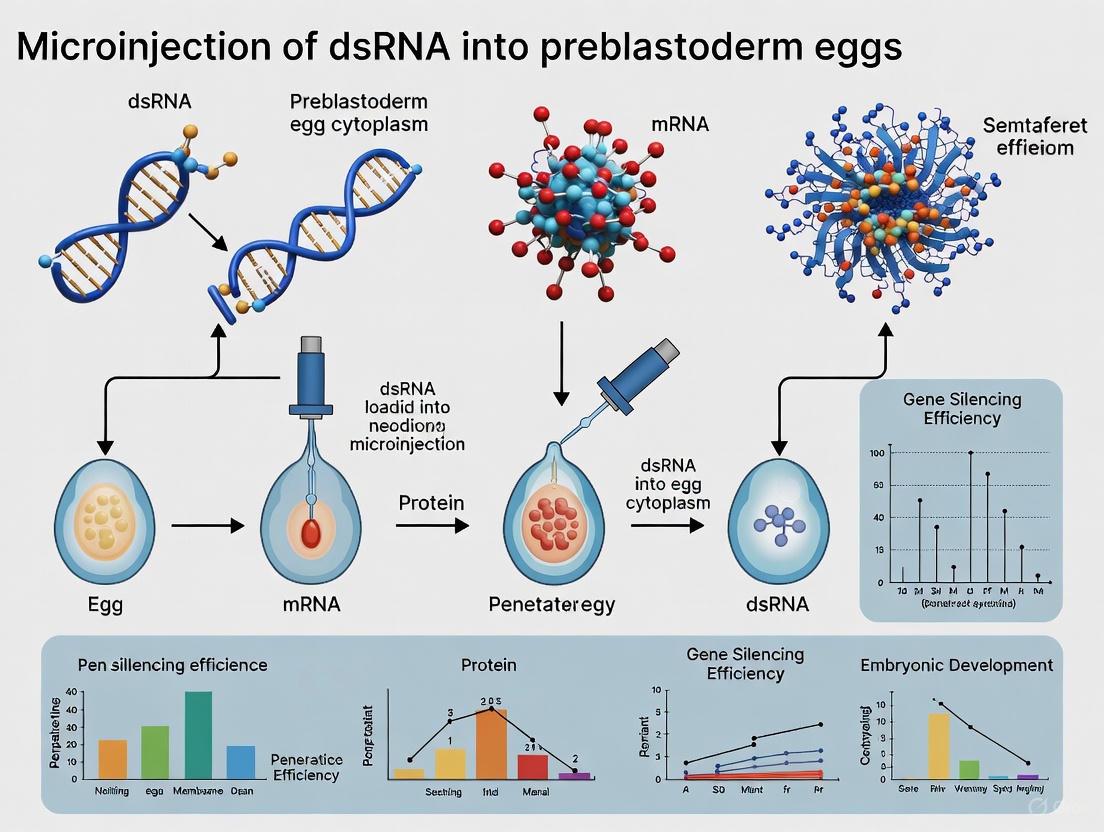
This article provides a comprehensive resource for researchers and drug development professionals on the technique of double-stranded RNA (dsRNA) microinjection into preblastoderm eggs for gene silencing.
Microinjection of dsRNA in Preblastoderm Eggs: A Comprehensive Guide for Functional Genomics and Therapeutic Development
Abstract
This article provides a comprehensive resource for researchers and drug development professionals on the technique of double-stranded RNA (dsRNA) microinjection into preblastoderm eggs for gene silencing. It covers the foundational principles of RNA interference (RNAi) and the unique advantages of targeting this early embryonic stage. The guide details a step-by-step methodological workflow, from dsRNA design and production to microinjection protocols and post-injection culture. It addresses common challenges and offers troubleshooting strategies to optimize efficiency and specificity. Finally, the article outlines rigorous validation techniques and compares this approach with alternative gene-silencing technologies, highlighting its critical applications in functional genomics and the development of novel RNA-based therapeutics.
Understanding RNAi and the Preblastoderm Advantage for Gene Silencing
RNA interference (RNAi) is a conserved biological mechanism for sequence-specific suppression of gene expression, empowered by double-stranded RNA (dsRNA) molecules [1]. This process, central to defense against viral infections and the regulation of developmental genes, has been harnessed as a powerful tool for reverse genetics [2]. In the context of a broader thesis on microinjection of dsRNA in preblastoderm eggs, RNAi presents a formidable method for probing gene function across developmental stages. The introduction of dsRNA at the preblastoderm stage can lead to systemic and heritable gene knockdown, allowing for the functional analysis of genes essential for embryogenesis and adult phenotypes [3] [4]. This application note details the core mechanism of dsRNA processing, provides quantitative data on its efficacy, and outlines established microinjection protocols for researchers and drug development professionals.
The Core Mechanism of dsRNA Processing in RNAi
The RNAi pathway is a finely-tuned sequence of molecular events that begins with the introduction of dsRNA into the cell and culminates in the silencing of complementary mRNA targets. The process can be broken down into three key stages: Initiation, Effector Complex Assembly, and Target Silencing [2] [1].
Initiation: dsRNA Recognition and Dicing
The pathway is initiated by the presence of long dsRNA in the cell cytoplasm. This dsRNA is recognized by Dicer, a ribonuclease III-like enzyme. Dicer cleaves the dsRNA into smaller fragments, typically 21-25 base pairs in length, known as small interfering RNAs (siRNAs). This process also generates molecules with characteristic 2-nucleotide 3' overhangs, which are critical for the next step in the pathway [2] [1].
Effector Complex Assembly: RISC Loading and Activation
The double-stranded siRNAs produced by Dicer are then loaded into the RNA-induced silencing complex (RISC). Within RISC, the siRNA duplex is unwound, and the passenger strand is degraded. The retained guide strand directs the complex to its target mRNA through perfect Watson-Crick base pairing. The core component of RISC is the Argonaute (Ago) protein, which possesses the catalytic "Slicer" activity responsible for cleaving the target mRNA [1]. In many organisms, including Drosophila melanogaster, distinct Dicer paralogs specialize in processing long dsRNA into siRNA (Dicer-2) versus microRNA precursors (Dicer-1) [1].
Target Silencing: mRNA Cleavage and Degradation
The activated RISC, guided by the siRNA, binds to complementary messenger RNA (mRNA) sequences. Upon binding, the Ago protein within RISC cleaves the target mRNA. The resulting mRNA fragments are subsequently degraded by cellular exonucleases, preventing their translation into protein and thus achieving gene knockdown [1]. This mechanism is highly specific due to the requirement for perfect or near-perfect sequence complementarity between the siRNA guide strand and its target mRNA [1].
Table 1: Core Biochemical Components of the RNAi Pathway
| Component | Type | Primary Function in RNAi |
|---|---|---|
| Dicer | Ribonuclease III enzyme | Initiates RNAi by cleaving long dsRNA into siRNAs. |
| siRNA | 21-23 nt double-stranded RNA | Serves as the sequence-specific guide for target recognition. |
| RISC | Multi-protein complex | Hosts the siRNA and executes the mRNA cleavage process. |
| Argonaute (Ago) | Protein (core RISC subunit) | Catalyzes the endonucleolytic cleavage ("Slicing") of the target mRNA. |
The following diagram illustrates this sequence of events, from the introduction of dsRNA to the degradation of the target mRNA.
Diagram 1: The core RNAi mechanism and dsRNA processing pathway.
Quantitative Data on dsRNA-Induced Gene Silencing
The efficacy of RNAi is influenced by factors such as the delivery method, the target gene, and the organism. Quantitative data from various studies provide critical insights for experimental design.
Efficacy Across Delivery Methods and Organisms
In honeybees, intra-abdominal injection of dsRNA in newly emerged bees resulted in a 96% rate of mutant phenotype for the vitellogenin gene, a significantly higher penetrance than the 15% achieved by injecting preblastoderm eggs [3]. A 2022 study on honey bees compared feeding versus injection of siRNA for knocking down brain genes. Both methods were effective, though feeding required a higher quantity of siRNA to achieve knockdown comparable to direct injection [5]. Research in Aedes aegypti mosquitoes demonstrated that gene silencing persistence is target-dependent. Effective silencing of the Nfs1 gene lasted up to 21 days post-injection (d.p.i.) with 500 ng of dsRNA, whereas silencing of the SDH gene was less effective, with knockdown lasting only up to 9 d.p.i. even with 1000 ng of dsRNA [6].
Table 2: Summary of RNAi Efficacy in Different Experimental Systems
| Organism | Delivery Method | Target Gene | Key Quantitative Finding | Source |
|---|---|---|---|---|
| Honeybee (Apis mellifera) | Intra-abdominal injection | Vitellogenin | 96% of individuals showed mutant phenotype. | [3] |
| Honeybee (Apis mellifera) | Preblastoderm egg injection | Vitellogenin | 15% of adult bees had strongly reduced mRNA levels. | [3] [4] |
| Honeybee (Apis mellifera) | Brain injection vs. Feeding | ALDH7A1, 4CL, HSP70 | Both methods effective; feeding required more siRNA than injection. | [5] |
| Mosquito (Aedes aegypti) | Intrathoracic injection | Nfs1 | Significant silencing lasted up to 21 d.p.i. with 500 ng dsRNA. | [6] |
| Mosquito (Aedes aegypti) | Intrathoracic injection | SDH | Knockdown lasted up to 9 d.p.i. only when 1000 ng dsRNA was used. | [6] |
| Nematode (Heterorhabditis bacteriophora) | Gonadal microinjection | cct-2, nol-5, dpy-7, dpy-13 | Significant decrease in target transcripts to varying degrees in F1 progeny. | [7] |
Established Microinjection Protocols for dsRNA Delivery
Microinjection is a direct and reliable method for delivering dsRNA, particularly for organisms where feeding or soaking protocols are ineffective. The following protocols are adapted from established techniques in model organisms.
Protocol 1: Microinjection into Preblastoderm Honeybee Eggs
This protocol, based on the work of Amdam et al. (2003), is used for gene disruption in all developmental stages [3].
- dsRNA Preparation: Synthesize dsRNA in vitro, targeting a 500+ base pair region of the gene of interest. Purify and elute the dsRNA in nuclease-free water. Determine concentration via spectrophotometry.
- Egg Preparation: Collect honeybee eggs and align them on a microscope slide or agar plate for injection.
- Microinjection Setup: Use a microinjector unit (e.g., Eppendorf FemtoJet) and a micromanipulator. Load a microinjection capillary with the dsRNA solution.
- Injection: Under a stereomicroscope, carefully pierce the egg chorion at the preblastoderm stage. Deliver a nanoliter-scale volume of dsRNA solution directly into the egg cytoplasm.
- Post-injection Care: After injection, transfer the eggs to a humidified chamber and maintain at appropriate temperature until hatching. Rear the resulting larvae to the desired developmental stage for analysis.
Protocol 2: Gonadal Microinjection in Nematodes
This protocol, adapted for Heterorhabditis bacteriophora [7] and based on the standard C. elegans technique [8], enables heritable RNAi.
- Animal Preparation: Mount young adult hermaphrodite nematodes on a 2% agarose pad on a microscope slide. Immobilize the animals under a coverslip.
- Needle Positioning: Using a microscope with DIC optics and a micromanipulator, insert the injection capillary filled with dsRNA (typically at 100-1000 ng/μL) into the syncytial gonad arm.
- Injection: Apply a brief pulse of pressure to deliver the dsRNA solution into the gonad. A successful injection is often visible by a slight expansion in the gonad.
- Recovery: Carefully recover the injected animals and transfer them to a fresh culture plate with food.
- Phenotypic Analysis: Score for gene knockdown in the F1 progeny, typically 3-5 days post-injection. Knockdown can be assessed by visible phenotypes (e.g., larval lethality, morphological defects) and confirmed by qRT-PCR.
The Scientist's Toolkit: Essential Reagents and Materials
Successful execution of dsRNA microinjection experiments requires a suite of specific reagents and equipment.
Table 3: Key Research Reagent Solutions for dsRNA Microinjection
| Item | Function/Application | Example/Note |
|---|---|---|
| Template DNA | A 500-700 bp PCR product or plasmid containing the target sequence, flanked by T7 promoter sequences. | Used for in vitro transcription of dsRNA. |
| In Vitro Transcription Kit | Generates high yields of dsRNA from a DNA template. | Kits often include T7 RNA polymerase and RNase inhibitors. |
| Microinjector & Micromanipulator | Provides precise control for delivering nanoliter volumes of dsRNA into the target. | E.g., Eppendorf FemtoJet 4i and InjectMan 4 [5] [8]. |
| Microinjection Capillaries | Fine, hollow needles for piercing cell membranes or tissues without excessive damage. | E.g., Eppendorf Femtotips II [8]. |
| Co-injection Marker | A visible indicator of successful injection and transformation. | Pharyngeal GFP or mCherry fluorescence in nematodes [8]; the dominant rol-6(su1006) allele causing a rolling phenotype [8]. |
| Agarose Pads | Provide a stable, cushioned surface for immobilizing small organisms like nematodes for injection [8]. | Typically a 2% agarose solution. |
Why Preblastoderm? Exploring the Unique Permissiveness of Early Embryos
Within the field of insect genetic engineering and RNA interference (RNAi), the preblastoderm embryo represents a critical and uniquely permissive window for experimental intervention. This early developmental stage, occurring immediately after oviposition and before the formation of the blastoderm, provides researchers with a transient opportunity to introduce macromolecules such as double-stranded RNA (dsRNA) or CRISPR/Cas9 ribonucleoprotein (RNP) complexes with high efficacy. The permissiveness of this stage is not arbitrary but stems from specific biological and physiological conditions that favor the uptake, stability, and systemic distribution of introduced materials. Framed within broader thesis research on microinjection of dsRNA in insect eggs, this protocol explores the scientific rationale for targeting preblastoderm embryos and provides detailed methodologies for exploiting this permissive phase to achieve efficient gene silencing or genome editing.
The Scientific Rationale for Preblastoderm Targeting
Developmental and Cellular Basis of Permissiveness
The preblastoderm stage encompasses the earliest phases of embryonic development, prior to cellularization. During this period, the embryo exists as a syncytium, where nuclei undergo rapid division without immediate formation of cell membranes. This syncytial architecture is a fundamental determinant of permissiveness.
- Syncytial State and Free Diffusion: In the absence of plasma membranes separating nuclei, macromolecules introduced via microinjection can diffuse freely throughout the embryonic cytoplasm. This unrestricted movement allows dsRNA or RNPs to access a vast majority of nuclei simultaneously, ensuring widespread distribution and uniform effect, which is crucial for achieving potent and systemic gene silencing or editing [9].
- Undermined Innimmune Recognition: Recent transcriptomic studies on preblastoderm embryos of Bactrocera dorsalis microinjected with CRISPR/Cas9 RNP complexes revealed specific innate immune responses. While genes related to stress and intron removal were overexpressed, the core machinery for recognizing and degrading foreign nucleic acids may not be fully operational at this nascent stage, potentially enhancing the stability and persistence of delivered dsRNA [9].
- Developmental Competence for RNAi: The RNAi machinery components, including Dicer-2 and Argonaute-2, are present and functional. Introducing dsRNA at this stage allows for its processing into siRNAs and loading into the RNA-induced silencing complex (RISC) before the onset of robust zygotic transcription, enabling pre-emptive silencing of essential genes that could disrupt early development [10].
Quantitative Evidence of Embryonic Responsiveness
Gene expression analysis following microinjection provides concrete evidence of the embryo's active response to intervention.
Table 1: Differential Gene Expression in Preblastoderm Embryos of Bactrocera dorsalis Post Microinjection
| Gene Category | Regulation Direction | Number of Genes | Potential Impact on Editing Outcomes |
|---|---|---|---|
| Stress Response | Up-regulated | 33 | May indicate activation of cellular repair or defense mechanisms |
| Intron Removal & Splicing | Up-regulated | Included in up-regulated | Could affect processing of endogenous or exogenous RNA |
| Effector Recognition | Up-regulated | Included in up-regulated | Might influence the stability of the RNP complex |
| Growth & Development | Down-regulated | 67 | Suggests a reallocation of resources, potentially reducing fitness |
Data derived from RNA-Seq analysis of oriental fruit fly embryos microinjected with white locus CRISPR/Cas9 RNP complex [9]. The strong correlation between RT-qPCR and RNA-Seq data (R² = 0.984) validates the reliability of these findings, illustrating the significant transcriptional upheaval that can influence experimental outcomes.
Experimental Protocols for Preblastoderm Embryo Manipulation
Rearing and Embryo Collection System
A specialized rearing system is a prerequisite for obtaining high-quality, age-synchronized preblastoderm embryos. The following protocol, optimized for the Western Corn Rootworm (Diabrotica virgifera virgifera), provides a model that can be adapted for other insect pest species [11].
Insect Strain and Rearing Conditions:
- Utilize a non-diapausing insect strain to ensure continuous and synchronous generation cycles.
- Maintain adults and embryos under controlled conditions: 26°C (±1°C), 60% relative humidity (±10%), and a 14:10 light/dark cycle.
- Provide adults with a specialized diet and a water source, such as a flask with a cotton wick.
Oviposition and Embryo Collection:
- Oviposition Substrate: Prepare 1% agar plates in 100 mm x 15 mm Petri dishes. Upon solidification, cover with a layer of filter paper and four layers of cheesecloth.
- Egg Collection: For colony-level collection, place the oviposition plate inside a cage housing 500-1000 adults for a defined period (e.g., 24 hours). For single-pair crosses, use smaller chambers with an adult diet dish.
- Embryo Harvesting: Gently wash eggs off the cheesecloth into distilled water. Use a fine brush or pipette to collect embryos under a stereomicroscope.
Microinjection of Preblastoderm Embryos
This protocol details the microinjection of dsRNA into preblastoderm embryos, a critical step for inducing RNAi.
dsRNA Preparation:
- Design and Production: Design dsRNA targeting an essential gene (e.g., a subunit of v-ATPase). The length should typically be >200 bp for improved efficiency [10]. dsRNA can be produced in vitro using T7 polymerase systems or in vivo using engineered E. coli HT115(DE3) deficient in RNase III [12].
- Purification and Quantification: Purify dsRNA using standard phenol-chloroform extraction or commercial kits. Resuspend in nuclease-free microinjection buffer (e.g., 0.1 mM sodium phosphate buffer, pH 6.8) and quantify spectrophotometrically. A working concentration of 500-1000 ng/µL is recommended.
Microinjection Procedure:
- Equipment Setup: Use a microinjection apparatus comprising a micromanipulator, a pneumatic microinjector, and a stereomicroscope. Prepare injection needles using a capillary puller.
- Embryo Alignment: Transfer collected embryos (0-2 hours old) onto a double-sided adhesive tape on a microscope slide. Align them carefully to ensure the posterior pole (the future germline) or the ventral side is accessible.
- Injection: Under 40-100x magnification, pierce the chorion at the posterior end of the embryo using the injection needle. Deliver a nanoliter-scale volume of dsRNA solution into the perivitelline space or the yolk. The delivery of the RNP complex in this manner enables fast, DNA-free editing [9].
- Post-Injection Care: Gently remove the embryos from the tape and transfer them to a fresh agar plate or suitable diet. Incubate under standard rearing conditions until hatching or further phenotypic analysis.
Downstream Phenotypic Screening
- Molecular Validation of Silencing: For G0 embryos, use RNA extraction and RT-qPCR on pooled embryos 24-48 hours post-injection to confirm knockdown of the target gene.
- Phenotypic Screening: Monitor embryonic development, hatching rates, and larval phenotypes. For heritable edits, establish single-pair crosses (as described in [11]) and screen subsequent generations (G1 or beyond) for stable phenotypic or genotypic changes.
The Scientist's Toolkit: Essential Research Reagents
Table 2: Key Reagents and Materials for Preblastoderm Embryo Microinjection
| Item | Function/Description | Example/Reference |
|---|---|---|
| Non-Diapausing Insect Strain | Ensures continuous, synchronous embryo production for research. | Diabrotica virgifera virgifera wild-type strain [11] |
| dsRNA Production System | Generates high yields of target-specific dsRNA. | E. coli HT115(DE3) with L4440 vector [12] |
| Microinjection Apparatus | Precisely delivers dsRNA/RNP into micron-scale embryos. | Micromanipulator, Microinjector, Capillary Puller |
| Oviposition Substrate | Provides a medium for adults to lay eggs for easy collection. | 1% Agar Plate with Cheesecloth [11] |
| Agar Plates | Serve as a substrate for egg collection and post-injection embryo development. | 1% Drosophila agar, Type II [11] |
| CRISPR/Cas9 RNP Complex | Enables DNA-free genome editing for precise genetic manipulation. | Preassembled Cas9 protein and sgRNA complex [9] |
Visualizing Workflows and Biological Processes
The following diagrams, created using the specified color palette, illustrate the core experimental workflow and the underlying biological process of RNAi.
Diagram 1: Experimental workflow for preblastoderm microinjection and analysis.
Diagram 2: Core RNAi mechanism triggered by introduced dsRNA.
Systemic Silencing, High Efficiency, and Absence of Interferon Response
The induction of RNA interference (RNAi) using long double-stranded RNA (dsRNA) in zebrafish embryos represents a powerful tool for functional genomics. Unlike in mammalian somatic cells, the microinjection of dsRNA into preblastoderm eggs capitalizes on the organism's underdeveloped antiviral defense mechanisms, enabling highly efficient and specific gene silencing without triggering a nonspecific interferon response. This application note details the experimental protocols, mechanistic basis, and key advantages of this technique, positioning it as an indispensable method for large-scale reverse genetic screening in vertebrate research and drug discovery.
The use of long dsRNA (typically >200 bp) for RNAi is highly effective in invertebrates but is generally problematic in mammalian systems. Introduction of dsRNA into most mammalian somatic cells activates the innate immune system, leading to a global shutdown of protein synthesis and cell death through the dsRNA-dependent protein kinase (PKR) and the 2'-5'-oligoadenylate synthetase/RNase L pathway [13]. However, the zebrafish (Danio rerio) embryo presents a unique and permissive environment. Research has demonstrated that undifferentiated cells, such as those in early embryos and certain cell lines, can process long dsRNA into small interfering RNAs (siRNAs) without eliciting a nonspecific interferon response, enabling sequence-specific gene knockdown [13] [14]. This protocol outlines the methodology for leveraging this biological niche to achieve systemic and highly efficient gene silencing.
Key Advantages of the dsRNA Approach
Systemic Silencing
Microinjection of dsRNA into the yolk or cytoplasm of one-cell stage embryos ensures the widespread distribution of the silencing trigger throughout the developing organism. As the dsRNA is processed and amplified, it leads to a systemic knockdown of the target gene, affecting multiple tissues and organs.
High Efficiency
The use of long dsRNA, which is processed by the enzyme Dicer into a complex pool of siRNAs, simultaneously targets multiple epitopes of a single mRNA transcript. This multi-site attack often results in a more potent and reliable knockdown compared to the use of a single, defined siRNA sequence.
Absence of Interferon Response
A critical advantage in zebrafish embryos is the lack of a robust interferon response to long dsRNA during early development. Studies have confirmed that the nonspecific effects observed in some early zebrafish RNAi experiments were due to off-target effects on the microRNA pathway, not a generalized interferon response [14]. This allows for the specific silencing of the target gene without the confounding effects of global translational inhibition.
Table 1: Comparative Analysis of Gene Silencing Methods in Zebrafish
| Feature | Long dsRNA (in embryos) | siRNA (in cell lines) | Morpholino |
|---|---|---|---|
| Silencing Trigger | Long dsRNA (>200 bp) | 21-23 nt siRNA duplex | 25-base morpholino oligo |
| Mechanism | Dicer-dependent processing to siRNAs, leading to mRNA degradation | RISC-mediated mRNA degradation | Blockage of translation initiation or mRNA splicing |
| Efficiency | High, due to multi-epitope targeting | High in cell lines (e.g., ~100% with microinjection) [15] | High for translational blockade |
| Specificity | High in embryos; confirmed with rigorous controls | High in established cell lines [15] | High, but sequence-dependent off-targets possible |
| Systemic Effect | Yes, in whole embryos | Within a transfected cell population | Yes, in whole embryos |
| Interferon Response | Absent in early embryos | Absent in zebrafish cell lines [15] | Not applicable |
| Duration of Effect | Transient, several days | Transient, 3-5 days | Transient, several days |
| Primary Application | Functional knockdown in early development | Reverse genetics in cultured cells | Knockdown of maternal and zygotic transcripts |
Experimental Protocols
Protocol 1: Synthesis of Target-Specific dsRNA
This protocol describes the generation of dsRNA using in vitro transcription from a PCR-derived template.
Research Reagent Solutions & Materials
- Template DNA: A PCR product containing the target gene cDNA (500-800 bp) flanked by T7 RNA polymerase promoter sequences.
- T7 RNA Polymerase Kit: For in vitro transcription (e.g., Ambion T7 MegaScript kit).
- DNase I (RNase-free): To remove the DNA template post-transcription.
- Phenol:Chloroform:Isoamyl Alcohol: For RNA purification.
- 3M Sodium Acetate (pH 5.2) and 100% Ethanol: For RNA precipitation.
- Nuclease-Free Water.
Methodology
- Template Preparation: Amplify the target sequence from a cDNA source using gene-specific primers that have the T7 promoter sequence (5'-TAATACGACTCACTATAGGG-3') appended to their 5' ends.
- In Vitro Transcription: Set up the transcription reaction according to the kit instructions, using the purified PCR product as a template. Incubate at 37°C for 4-6 hours.
- DNase Treatment: Add DNase I to the reaction and incubate for 15 minutes at 37°C to digest the DNA template.
- dsRNA Purification: Purify the dsRNA by phenol:chloroform extraction and ethanol precipitation.
- Annealing: Resuspend the purified RNA in nuclease-free buffer (e.g., 20 mM Tris-HCl, pH 7.5, 50 mM NaCl). Heat the sample to 95°C for 3 minutes and then allow it to cool slowly to room temperature over 4 hours to facilitate dsRNA formation.
- Quality Control: Analyze the integrity and double-stranded nature of the product on a 1.5% agarose gel and test its resistance to RNase A and T1 digestion [13]. Quantify by spectrophotometry.
Protocol 2: Microinjection into Zebrafish Preblastoderm Embryos
This protocol covers the delivery of synthesized dsRNA into one-cell stage embryos.
Research Reagent Solutions & Materials
- dsRNA Solution: Purified and annealed dsRNA from Protocol 1, diluted in nuclease-free water or injection buffer (e.g., 0.5x Danieau buffer) to a working concentration of 1-5 µg/µL.
- Wild-type AB Zebrafish: For embryo production.
- Microinjection Apparatus: Includes a micromanipulator, pneumatic picopump, and pulled glass capillary needles.
- Petri Dishes & Mold: For embryo alignment and injection.
Methodology
- Needle Preparation: Back-load 2-3 µL of the dsRNA solution into a glass capillary needle.
- Embryo Collection: Collect freshly laid one-cell stage embryos and align them on an agarose injection ramp.
- Microinjection: Calibrate the injection volume (typically 1-2 nL) by measuring the diameter of the droplet in mineral oil. Inject the dsRNA solution directly into the yolk or cytoplasm of the embryo.
- Post-injection Care: After injection, transfer the embryos to egg water and incubate at 28.5°C. Monitor for phenotypic changes and harvest at desired developmental stages for downstream analysis.
Protocol 3: Validation of Knockdown and Specificity
Confirming the specificity and efficacy of silencing is crucial.
Materials
- Total RNA Extraction Kit (e.g., TRIzol-based method).
- Reverse Transcription Kit and qPCR Reagents.
- Whole-mount In Situ Hybridization (WISH) reagents.
Methodology
- Quantitative RT-PCR (qRT-PCR): Extract total RNA from pools of injected embryos at the desired stage. Perform reverse transcription and qPCR with primers specific to the target gene and housekeeping control genes (e.g., β-actin). A significant reduction in target mRNA levels (e.g., >70%) indicates successful knockdown [14].
- Phenotypic Rescue: Co-inject in vitro transcribed, dsRNA-resistant mRNA of the target gene to confirm that the observed phenotype is specific to the loss of that gene.
- Whole-mount In Situ Hybridization (WISH): Use WISH to visualize the spatial pattern of mRNA depletion, confirming systemic silencing across tissues [14].
The Scientist's Toolkit: Essential Research Reagents
Table 2: Key Research Reagent Solutions for dsRNA-mediated Knockdown
| Reagent / Material | Function in the Protocol | Key Considerations |
|---|---|---|
| T7 High-Yield RNA Synthesis Kit | Enzymatic synthesis of single-stranded RNA strands from a DNA template. | Ensure high yield and purity; use RNase-free reagents. |
| Nuclease-Free Water | Dilution and resuspension of all RNA samples. | Critical for preventing RNase degradation of dsRNA. |
| Phenol:Chloroform:Isoamyl Alcohol | Purification of transcribed RNA by liquid-phase separation. | Removes proteins and enzymes from the transcription reaction. |
| Agarose Gel Electrophoresis System | Quality control to check dsRNA integrity and confirm double-stranded nature. | A single, sharp band at the expected size indicates successful synthesis. |
| Microinjection System | Precise mechanical delivery of dsRNA into the one-cell stage embryo. | Consistent injection volume is key for experimental reproducibility. |
| Danieau Buffer | Isotonic buffer for preparing embryos and diluting injection samples. | Maintains embryo health during the injection process. |
| qPCR Master Mix with SYBR Green | Quantitative measurement of target mRNA levels to validate knockdown efficiency. | Primers should be designed to amplify a region within the dsRNA target sequence. |
Signaling Pathways and Workflow Visualization
The following diagrams, generated using DOT language, illustrate the core mechanistic principles and the experimental workflow.
dsRNA Knockdown Experimental Workflow
Mechanism of Specific RNAi in Zebrafish Embryos
The microinjection of long dsRNA into zebrafish preblastoderm eggs remains a uniquely powerful technique for systemic and efficient gene silencing. Its principal advantage lies in the permissive nature of the early embryo, which allows for the specific RNAi machinery to be engaged without the activation of nonspecific antiviral defenses that plague similar experiments in mammalian systems [13] [14]. When integrated with modern genome editing technologies like CRISPR/Cas9 for validation, this method provides a robust, cost-effective platform for high-throughput functional genomics, toxicology screening, and modeling human diseases in a vertebrate system [16]. By following the detailed protocols and utilizing the essential reagents outlined in this application note, researchers can reliably deplete gene function to investigate the genetic underpinnings of development and disease.
The microinjection of double-stranded RNA (dsRNA) into preblastoderm eggs represents a cornerstone technique in functional genomics. By enabling targeted gene silencing via RNA interference (RNAi) at the earliest embryonic stage, this method allows for the systemic disruption of gene function throughout the organism's development [17]. This protocol details the application of this technology for large-scale genetic screens and the creation of models for human disease, providing researchers with a robust framework for reverse genetics in a whole-organism context.
Experimental Principles and Workflow
The foundational principle of this protocol is the introduction of dsRNA into the embryo prior to cellularization. During the preblastoderm stage, the embryo is a syncytium, and injected dsRNA can freely diffuse and be incorporated into the nascent nuclei that will form the entire organism, including the germline [18] [17]. This allows for potent, systemic gene knockdown. The general workflow, from embryo preparation to phenotypic analysis, is outlined in the following diagram.
Experimental Workflow for dsRNA Microinjection
Key Research Reagent Solutions
The following table catalogues the essential materials and reagents required for the successful execution of dsRNA microinjection protocols.
Table 1: Essential Reagents and Materials for dsRNA Microinjection
| Item | Function/Description | Example/Specification |
|---|---|---|
| dsRNA Template | Target gene sequence for RNAi. A 500-600 bp fragment is commonly used for high efficacy [17]. | In vitro transcribed dsRNA; ~504 bp fragment of the vitellogenin gene. |
| Injection Buffer | Solvent for nucleic acids, maintaining pH and stability during microinjection [18]. | 0.1 mM phosphate buffer (pH 7.4), 5 mM KCl [18]. |
| Microinjection Apparatus | System for precise delivery of nanoliter volumes into embryos. | Capillary needle, micromanipulator, and pneumatic microinjector. |
| Oviposition Substrate | Medium to encourage egg-laying by adult females for embryo collection [11]. | Agar plates (1%) with cheesecloth or soil dishes [18] [11]. |
| Dechorionation Agent | Chemical for removing the hard, proteinaceous outer chorion of the embryo [18]. | Commercial bleach solution (50%), applied for 5 seconds [18]. |
| Specialized Larval Diet | Nutrient-rich, controlled food source for rearing microinjected larvae [11]. | Diet containing agar, yeast extract, carrot powder, and antimicrobial agents [18] [11]. |
The efficacy of dsRNA microinjection is quantified through survival rates and phenotypic penetrance. The following table summarizes key performance metrics from established protocols.
Table 2: Quantitative Outcomes of dsRNA Microinjection in Insect Models
| Parameter | Value | Experimental Context |
|---|---|---|
| Overall Rearing Survival Rate | 67% (over one year) | Wild-type Western Corn Rootworm (WCR) reared under optimized small-scale conditions [11]. |
| Time to Adult Eclosion | ~42 days (range: 41-45 days) | WCR life cycle under standardized rearing at 26°C [11]. |
| Knockdown Efficacy (Egg Injection) | 15% of adults showed strongly reduced target mRNA | Honeybee embryos injected with vitellogenin-targeting dsRNA at the preblastoderm stage [17]. |
| Knockdown Efficacy (Adult Injection) | 96% of adults showed mutant phenotype | Honeybee adults receiving intra-abdominal injection of vitellogenin-targeting dsRNA [17]. |
| dsRNA Persistence | ~15 days post-injection | Full-length dsRNA template detected in adult honeybees after intra-abdominal injection [17]. |
Detailed Methodologies
Protocol: Embryo Preparation and Microinjection
This protocol is adapted from established methods in Ceratitis capitata (medfly) and Drosophila [18] [19].
Embryo Collection:
- Maintain adult insects in cages at 25-26°C and 60-65% humidity with a 12/14-hour light/dark cycle [18] [11].
- Provide an oviposition substrate, such as a 1% agar plate covered with cheesecloth, beneath the cage [18] [11].
- Collect embryos within a narrow time window (e.g., 30 minutes) to ensure a synchronized cohort of preblastoderm embryos. Cellularization in Drosophila begins ~90 minutes post-fertilization at 25°C, providing a critical window for injection [18].
Dechorionation and Preparation:
- Transfer collected embryos from the strainer into a commercial 50% bleach solution for approximately 5 seconds to dissolve the chorion [18].
- Immediately and meticulously wash the embryos by repeatedly immersing the strainer in clean ultrapure water (4-5 times) to remove all traces of bleach [18].
- Align the dechorionated embryos on a microscope slide prepared with double-sided tape, ensuring they are oriented for optimal needle penetration [18].
dsRNA Preparation and Microinjection:
- Resuspend the purified dsRNA in injection buffer (0.1 mM phosphate buffer pH 7.4, 5 mM KCl) to the desired concentration [18].
- Load a fine capillary needle with the dsRNA solution.
- Using a micromanipulator, penetrate the vitelline membrane of the embryo and deliver a nanoliter-scale volume of dsRNA into the posterior cytoplasm, aiming for the preblastoderm syncytium [18] [17].
Protocol: Post-Injection Rearing and Phenotypic Screening
Post-Injection Care:
Rearing and Screening:
- Rear surviving larvae to adulthood. For WCR, this involves transferring late-stage larvae to a soil-only environment to facilitate pupation [11].
- Screen adult progeny (G0) or subsequent generations for phenotypic alterations. In the case of vitellogenin knockdown, this was assessed via Northern blotting to measure mRNA levels and protein titer in hemolymph [17].
- For stable genetic studies, single-pair crosses can be established in small chambers with fresh adult diet provided every 2-3 days to monitor inheritance [11].
Molecular Mechanism of RNAi
The intracellular mechanism by which the injected dsRNA leads to targeted gene silencing is a key component of the technique's success. The following diagram illustrates this pathway.
Intracellular RNAi Pathway
A Step-by-Step Protocol: From dsRNA Design to Embryo Microinjection
Double-stranded RNA (dsRNA) is a critical reagent for triggering RNA interference (RNAi), a conserved biological mechanism for sequence-specific gene silencing. In the context of research involving the microinjection of dsRNA into preblastoderm eggs, the quality and integrity of the synthesized dsRNA are paramount for achieving efficient and reproducible gene knockdown. This application note provides detailed protocols and design considerations for the production of high-quality dsRNA, from initial template amplification to final in vitro transcription (IVT), specifically tailored for microinjection-based functional genomics studies in insect models and other organisms.
DNA Template Design and Preparation
The foundation of successful dsRNA synthesis lies in the quality and design of the DNA template. The template must contain a bacteriophage promoter (e.g., T7, T3, or SP6) upstream of the target sequence to direct the RNA polymerase during the IVT reaction [20].
Template Design Considerations
- Target Sequence Selection: For RNAi, dsRNA sequences should typically correspond to exons and be between 300-600 base pairs (bp) in length, although fragments from 150-3000 bp have been shown to be effective [20]. The target sequence should be analyzed to avoid complete 19-nucleotide homology with other genes to minimize off-target effects [20].
- Promoter Addition: The T7 promoter sequence (
TAATACGACTCACTATAGGG) must be appended to the 5' end of both the forward and reverse primers during PCR amplification to generate a template for dsRNA synthesis [20]. This allows for the transcription of both strands simultaneously.
Template Generation Methods
Two primary methods exist for generating linear DNA templates for IVT: PCR amplification and plasmid DNA linearization. The choice depends on the required scale, throughput, and application needs.
Table 1: Comparison of DNA Template Generation Methods for dsRNA Production
| Feature | PCR-Generated Template | Linearized Plasmid DNA | Synthetic DNA (e.g., opDNA) |
|---|---|---|---|
| Primary Use Case | High-throughput synthesis of multiple constructs; rapid production [21] [22] | Large-scale production of a few templates [22] | GMP-grade manufacturing; sequences difficult to clone in bacteria [23] |
| Speed | Significantly faster (hours vs. days) [21] | Time-consuming (requires bacterial culture, purification, linearization) [21] [23] | Rapid, cell-free enzymatic synthesis [23] |
| Throughput | High (suitable for 96-well formats) [20] | Low to moderate | Flexible, from small to large scale [23] |
| Key Advantages | Bacteria-free; no need for enzymatic linearization; accommodates stable poly-A tails [21] | Ease of producing large quantities; fully characterized plasmids [22] | No bacterial backbone/endotoxins; enhanced safety; stable long poly-A tails; high mRNA yield [23] |
| Potential Limitations | Risk of PCR-introduced mutations (mitigated by high-fidelity polymerases) [22] | Risk of bacterial contamination; inefficient poly-A tail maintenance; requires linearization [23] | Relatively newer technology |
For microinjection applications where multiple genes or target sites are being screened, the PCR-based method is highly recommended due to its speed and throughput [20] [22]. The use of a high-fidelity DNA polymerase (e.g., Phusion Hot Start High-Fidelity DNA Polymerase, Q5 High-Fidelity DNA Polymerase) is critical to minimize PCR-generated mutations that could compromise dsRNA efficacy [20] [22].
Diagram 1: DNA Template Preparation Workflow. Templates for IVT can be generated via PCR amplification with T7-promoter primers or through enzymatic linearization of plasmid DNA propagated in bacteria.
In Vitro Transcription (IVT) and dsRNA Synthesis
The IVT reaction utilizes a phage RNA polymerase (T7, T3, or SP6) to synthesize RNA from the DNA template. For dsRNA production, the goal is to transcribe both strands of the template simultaneously.
Standard IVT Protocol
The following protocol is adapted for a 96-well plate format, suitable for high-throughput dsRNA production [20].
IVT Reaction Setup:
- Use a commercial IVT kit (e.g., Ambion T7 MEGASCRIPT Kit).
- Prepare a master mix containing buffer, ATP, CTP, GTP, UTP, and T7 RNA Polymerase.
- Dispense 6 µL of master mix into each well of a 96-well PCR plate.
- Transfer 4 µL of purified PCR product (the DNA template) to the corresponding wells.
- Seal the plate, mix thoroughly by inverting, and centrifuge briefly.
- Incubate the reaction overnight (~16 hours) at 37°C [20].
DNase I Treatment and Purification:
- Following incubation, add 1 µL of Turbo DNase (or a 1:5 dilution, adding 2.5 µL) to each well to digest the DNA template.
- Incubate at 37°C for 45 minutes [20].
- Add nuclease-free water to each well to a total volume of 175 µL.
- Transfer samples to a Millipore filter plate and vacuum filter for 45 minutes at 10-15 PSI until dry.
- Elute the dsRNA by adding 75 µL of nuclease-free water to each well, sealing the plate, and shaking for 45 minutes.
- Transfer the purified dsRNA to a fresh storage plate [20].
Quality Control:
- Analyze 0.5 µL of the dsRNA product on a 0.7% agarose gel to confirm integrity, size, and the absence of degradation.
- Determine the dsRNA concentration using a spectrophotometer (e.g., Nanodrop) and dilute to the desired working concentration for microinjection [20]. Aliquoting and storage at -80°C is recommended for long-term stability.
Diagram 2: dsRNA Synthesis and Purification Workflow. The core process involves transcribing RNA from a DNA template, removing the template, and purifying the final dsRNA product.
Optimizing dsRNA for RNAi Efficacy in Microinjection
For microinjection into preblastoderm embryos, where the dsRNA must be distributed among many rapidly dividing cells, optimization of the dsRNA sequence itself is critical for achieving potent and specific gene silencing.
Sequence Features for Enhanced Insecticidal Efficacy
Recent systematic studies in insects, particularly beetles, have identified key sequence features in the siRNA (the processed product of dsRNA) that correlate with high RNAi efficacy. These features should be considered when designing the dsRNA target region [24].
Table 2: Key siRNA Sequence Features for Optimizing dsRNA Insecticidal Efficacy
| Sequence Feature | Impact on Efficacy | Design Recommendation |
|---|---|---|
| Thermodynamic Asymmetry | The strand with the weaker paired 5' end in the siRNA duplex is preferentially loaded into the RISC complex as the guide strand [24]. | Design the dsRNA so that the antisense siRNAs have a weaker 5' end stability compared to the sense strand. This biases RISC loading towards the antisense strand, which is complementary to the target mRNA. |
| GC Content (nt 9-14 of antisense) | High GC content in this region is associated with high efficacy in insects, which is the opposite of the finding in human cells [24]. | Select target regions within the gene where the corresponding antisense siRNA would have a higher GC content in positions 9-14. |
| Nucleotide Preference (Position 10) | Presence of an Adenine (A) at the 10th position of the antisense siRNA is predictive of high efficacy [24]. | Favor target sequences that result in an 'A' at this critical position in the processed antisense siRNA. |
| Secondary Structure | The absence of strong secondary structures in the dsRNA region is predictive of high efficacy [24]. | Avoid target sequences with high self-complementarity that could form stable internal hairpins, as this may impede processing by Dicer. |
These features can be used to screen potential target regions within a gene of interest to select the most effective one for dsRNA synthesis. Web platforms like dsRIP (Designer for RNA Interference-based Pest Management) incorporate these insect-specific parameters to aid in the design and optimization of dsRNA sequences [24].
The Scientist's Toolkit: Essential Reagents and Materials
Table 3: Key Research Reagent Solutions for dsRNA Production and Microinjection
| Item | Function/Application | Example Products / Notes |
|---|---|---|
| High-Fidelity DNA Polymerase | Amplification of DNA template with minimal errors. | Phusion Hot Start High-Fidelity (NEB #M0535), Q5 High-Fidelity (NEB #M0491) [20] [22]. |
| In Vitro Transcription Kit | One-tube system for efficient RNA synthesis. | Ambion T7 MEGASCRIPT Kit (AMB 1334-5) [20]. |
| RNA Cleanup Kit / Filter Plates | Purification of synthesized dsRNA from IVT reaction components. | Qiagen RNeasy columns; Millipore Filter Plates (MSNU 03050) for high-throughput [20]. |
| Microinjection Setup | Precise delivery of dsRNA into preblastoderm embryos. | Micromanipulator, microinjector, injection needles, halocarbon oil [25]. |
| dsRNA Design Web Tool | Optimizing dsRNA sequences for maximum efficacy in insects. | dsRIP platform (identifies effective targets and minimizes off-target effects) [24]. |
The microinjection of double-stranded RNA (dsRNA) into preblastoderm eggs is a powerful technique for functional genomics research, enabling the systematic knockdown of gene expression to investigate gene function during early development. The successful application of this technology is critically dependent on the precise handling, collection, and stabilization of preblastoderm embryos, stages characterized by rapid nuclear divisions prior to cellularization. This protocol details robust methodologies for preparing high-quality preblastoderm Drosophila melanogaster embryos, providing a foundational preparation for subsequent dsRNA microinjection experiments. The procedures outlined are designed to ensure embryonic viability, support normal developmental progression, and maximize experimental reproducibility for researchers in developmental biology and drug discovery.
Materials and Reagents
Research Reagent Solutions
The following table catalogues the essential materials and reagents required for the collection and stabilization of preblastoderm eggs.
Table 1: Essential Research Reagents for Embryo Handling and Preparation
| Item Name | Function/Application |
|---|---|
| Standard Fly Food | Maintenance of fly stocks; egg collection substrate [26]. |
| Yeast Paste | Nutrient-rich diet to stimulate oogenesis and egg production in female flies [27]. |
| Halocarbon Oil | Prevents dehydration of embryo explants and cytoplasmic extracts during micromanipulation [26]. |
| Holfreter's Solution | A balanced salt solution used for culturing and rinsing amphibian embryos; adaptable for certain aquatic organism egg capsules [28]. |
| Gentamicin Sulfate | Antibiotic added to solutions to minimize microbial contamination during embryo handling [28]. |
| Low Melt Agarose | Used to create coated Petri dishes, providing a non-stick, non-injurious surface for delicate embryos [28]. |
| Sodium Hypochlorite (Bleach) | Solution for surface sterilization of egg capsules to decontaminate and clean the exterior [28]. |
| DREX (Drosophila Preblastoderm Embryo Extract) | A cell-free system used to study chromatin remodeling and other nuclear events, demonstrating the biochemical activity of preblastoderm cytoplasm [29]. |
Methods
Fly Husbandry and Egg Collection
- Stock Maintenance: Maintain Drosophila melanogaster fly stocks at 25°C in vials containing standard fly food. Avoid overcrowding; a recommended density is no more than 20 adult flies per vial (10 cm height, 2 cm diameter) [26].
- Population Expansion: To ensure a sufficient supply of embryos, expand the population of working stock flies 12 days prior to the planned experiment [26].
- Egg Collection Synchronization: To obtain a synchronous population of embryos, place adult flies in an egg-laying cage. Provide a petri dish filled with a grape or apple juice agar medium supplemented with a smear of fresh yeast paste. The yeast paste provides a protein-rich diet that stimulates egg laying [27].
- Collection Timing: Replace the collection plate every 60-90 minutes to gather embryos of a tightly defined developmental window. Preblastoderm stages occur within the first 90-120 minutes after egg laying at 25°C.
Embryo Preparation and Dechorionation
- Transfer and Selection: Gently transfer the collected eggs to a clean petri dish using a soft transfer pipette. Under a dissecting microscope, remove any damaged, unfertilized (yellow), or irregularly shaped eggs [28].
- Surface Sterilization: Submerge the embryos in a 10% sodium hypochlorite (bleach) solution for approximately 3 minutes to degrade the outer chorion and sterilize the surface. Critical: Thoroughly rinse the embryos with at least four quick exchanges of a suitable buffer (e.g., 1x Phosphate Buffered Saline) to completely remove any residual bleach, which is toxic to the embryos [28].
- Alignment for Microinjection: After dechorionation and rinsing, carefully align the sterilized embryos on a microscope slide or an agar-coated dish. Proper alignment is crucial for consistent microinjection into the posterior end, where the blastoderm nuclei are located.
Preparation of Embryo Explants for Advanced Manipulation
For specialized applications such as the creation of cell-free explants, a more complex micromanipulation procedure is employed. The following workflow visualizes this process.
Diagram 1: Workflow for embryo explant preparation.
This cell-free assay exploits the syncytial nature of the early Drosophila embryo [26]. The explants retain the native characteristics of the embryo cytoplasm, including the ability to undergo mitotic cycles, making them an excellent open system for introducing dsRNA and other molecules.
Expected Results and Data Interpretation
Quantitative Characterization of Embryo Quality
Successful preparation will yield a high proportion of viable, developmentally synchronized preblastoderm embryos. The quality of the embryo preparation can be assessed by tracking the progression of nuclear divisions and subsequent developmental milestones.
Table 2: Expected Outcomes for Properly Stabilized Preblastoderm Embryos
| Parameter | Expected Result | Notes |
|---|---|---|
| Viability Rate | > 95% | Percentage of embryos that continue development after handling and preparation. |
| Synchronization | > 90% within one mitotic cycle | Consistency of developmental stage across the prepared embryo batch. |
| Nuclear Division | Normal mitotic progression | Observed in explants as sequential, synchronous nuclear divisions [26]. |
| Chromatin Remodeling | dBigH1 histone incorporation | In explant systems (DREX), somatic chromatin shows rapid binding of germline histone variants [29]. |
| Cytoplasmic Integrity | No leakage or granulation | Cytoplasm should appear uniform and intact under brightfield microscopy. |
Troubleshooting Common Issues
The following table addresses common problems encountered during embryo preparation and offers potential solutions.
Table 3: Troubleshooting Guide for Embryo Handling
| Problem | Potential Cause | Solution |
|---|---|---|
| Low Embryo Viability | Over-bleaching, physical damage, dehydration. | Strictly limit bleach exposure time; use agar-coated dishes; perform procedures under oil if necessary [28] [26]. |
| Poor Developmental Synchronization | Extended or inconsistent egg collection window. | Reduce egg collection time to 60-minute intervals; ensure health and density of parent flies. |
| Microbial Contamination | Inadequate sterilization or non-sterile tools. | Use filter-sterilized solutions and antibiotics (e.g., gentamicin); properly sterilize tools [28]. |
| Failure in Explant Formation | Incorrect pipette size or damaged embryos. | Use a microfluidics pumping system with a properly sized glass pipette; select only pristine embryos [26]. |
Applications in dsRNA Microinjection Research
The primary application of this protocol is to provide optimally prepared preblastoderm embryos for dsRNA microinjection. The open system of embryo explants is particularly advantageous, as it allows for straightforward manipulation of intracellular components. dsRNA can be introduced directly into the explant cytoplasm, where the native biochemical environment supports robust gene knockdown, enabling the study of gene function in mitotic control, cytoskeletal dynamics, and early patterning events [26]. The precision of quantitative microinjection techniques ensures controlled delivery of dsRNA, which is critical for achieving predictable and interpretable knockdown phenotypes [30].
Microinjection of double-stranded RNA (dsRNA) into preblastoderm eggs is a foundational technique for functional genomics research, enabling targeted gene silencing via RNA interference (RNAi) at the earliest stages of embryonic development. The success of this method hinges on a meticulously configured setup, precisely fabricated needles, and optimized delivery parameters to ensure high embryo viability and efficient gene silencing. This application note provides a detailed protocol covering the essential equipment, step-by-step needle preparation, and critical delivery parameters required for reproducible dsRNA microinjection in preblastoderm eggs, framing the methodology within the broader context of dsRNA-based functional genetics research.
The Scientist's Toolkit: Essential Equipment and Reagents
A reliable microinjection system integrates several key components. The following table lists the essential equipment and their specific functions in establishing a robust microinjection platform.
Table 1: Core Components of a Microinjection System
| Component | Example Models/Types | Function in Microinjection Setup |
|---|---|---|
| Stereo Microscope | PZMIII, PZMIV [31]; SMZ25, SMZ18 [32] | Provides magnification and a clear, three-dimensional view of the embryos and injection needle for precise manipulation. |
| Micromanipulator | M3301 (Left/Right), KITE-R/KITE-L [31] | Allows for fine, controlled movement of the injection needle in three dimensions. |
| Microinjection System | Nanoliter 2010, UMPIII [31] | Generates and controls the air pressure required to expel a precise nanoliter-volume of dsRNA solution. |
| Capillary Glass Tubes | Outer diameter: 1.0 mm, Inner diameter: 0.8 mm [33] | The raw material from which microinjection needles are pulled. |
| Micropipette Puller | P-97 (Sutter Instrument) [33] | Heats and pulls capillary glass to create two fine-tipped microinjection needles with a consistent, reproducible geometry. |
| Microforge | MF-900 (Narishige) [33] | Used to cut and shape the pulled needle to the final desired tip diameter and angle. |
| Thermal Control Plate | Stage-top incubators [32] | Maintains the injected embryos at an optimal temperature to preserve their physiological integrity and viability. |
Experimental Protocol: A Step-by-Step Workflow
The following diagram and detailed protocol outline the complete workflow for dsRNA microinjection, from needle preparation to post-injection care.
Diagram 1: Workflow for dsRNA microinjection into preblastoderm eggs.
Needle Fabrication and Preparation
The microinjection pipette is the most critical factor determining the success of the microinjection [33]. Precise fabrication is required to balance needle sharpness for easy penetration with structural integrity to prevent breakage.
- Pulling: Fix a capillary glass tube (e.g., outer diameter 1 mm, inner diameter 0.8 mm) onto a micropipette puller (e.g., Sutter Instrument P-97). The goal is to produce a needle with a symmetrical tail and a small, sharp tip [33]. Optimal parameters must be empirically determined for each puller and capillary type.
- Shaping: Use a microforge (e.g., Narishige MF-900) to carefully cut the needle tip to the desired diameter. For holding pipettes, a cut diameter of 30–70 µm is recommended [33]. For the injection needle, a light tap with the microforge's glass ball can create a clean opening.
- Bending: To improve ergonomics and access to the embryo, bend the needle approximately 15–20° at a position 2.5 mm from the end of the pipette using the microforge [33]. This angle facilitates easier penetration of the embryo chorion.
dsRNA Sample Preparation
Sample quality is paramount for both injectability and embryo survival. Viscous samples or those containing particulate matter will clog the injection needle, while impure samples can be toxic to the embryo [34].
- Synthesis and Purification: Synthesize dsRNA from a purified DNA template using a high-yield RNA transcription kit. For plasmid DNA, use a high-purity preparation method like a Qiagen kit, including all optional wash steps (e.g., PB buffer wash) to remove contaminants. The OD260/280 ratio should be between 1.80 and 1.90 [34].
- Resuspension: Resuspend the final dsRNA product in pure, nuclease-free water. Avoid buffers like TE, as they can be toxic to embryos [34].
- Concentration and Volume: Prepare a sufficient volume of sample (at least 20 µL is recommended for ease of handling [34]) at an appropriate concentration. While concentration depends on the target and organism, a final injection concentration between 0.1 µg/µL and 1.0 µg/µL is commonly effective, with higher concentrations potentially compromising embryo survival [34] [24] [35].
Microinjection and Post-Injection Care
- System Setup: Assemble the microinjection system under a stereo microscope. Mount the prepared needle onto the micromanipulator and connect it to the microinjector. Ensure the system is stable and free from vibrations, as sub-micrometer stability is critical for success [32].
- Loading and Injection: Load a few microliters of the prepared dsRNA sample into the back of the microinjection needle. Carefully position the preblastoderm egg and use the micromanipulator to guide the needle through the chorion. Expel the dsRNA using a brief pulse of air pressure. The injected volume is typically in the nanoliter range.
- Post-Injection Care: Following injection, carefully seal the puncture site in the eggshell to prevent desiccation. Transfer the embryos to a controlled environment (e.g., a humidified chamber at the correct temperature) to continue development [32]. Monitor viability and proceed with downstream phenotypic analysis or efficiency evaluation via quantitative reverse-transcription PCR (RT-qPCR) [36] [37].
Critical Delivery Parameters for Success
Optimizing the physical and molecular delivery parameters is essential for achieving high rates of gene silencing while maintaining embryo health. The key quantitative parameters are summarized in the table below.
Table 2: Key Quantitative Parameters for dsRNA Microinjection
| Parameter | Recommended Value | Rationale & Impact |
|---|---|---|
| dsRNA Concentration | 0.1 - 1.0 µg/µL [34] [24] [35] | Concentrations >1.0 µg/µL can be toxic to embryos and reduce survival [34]. |
| Injection Volume | ~10 nL (e.g., 10 µL at 5 µg/µL in larger insects) [35] | Must be precisely controlled to avoid physical damage to the embryo; varies with embryo size. |
| Needle Tip Diameter | 30 - 70 µm (for holding pipette) [33] | A small, sharp tip is crucial for penetration, but must be large enough to avoid clogging. |
| Needle Bend Angle | 15 - 20° [33] | Improves the angle of approach and ergonomics, reducing the risk of damaging the embryo. |
| Sample Purity (OD260/280) | 1.80 - 1.90 [34] | Indicates pure nucleic acids; lower ratios suggest contaminants that are toxic to embryos. |
Beyond these quantitative metrics, dsRNA sequence design is a critical factor for effective RNAi. Features such as thermodynamic asymmetry of the siRNA duplex and a relatively high GC content in the central region of the antisense siRNA are associated with higher efficacy in insects, which differs from design rules for mammalian systems [24]. Tools like the dsRIP web platform can help design optimized dsRNA sequences for pest control and research [24].
Mastering the microinjection of dsRNA into preblastoderm eggs is a powerful skill for developmental geneticists. This detailed protocol emphasizes that success relies on the integrated optimization of hardware, consumables, and biochemical reagents. By carefully setting up a stable injection system, meticulously preparing needles and high-quality dsRNA samples, and adhering to critical delivery parameters, researchers can achieve consistent and effective gene silencing. This technique not only facilitates the functional annotation of genes in non-model organisms but also serves as a critical component in the development of advanced genetic control strategies, bridging basic research and applied biotechnology.
The microinjection of double-stranded RNA (dsRNA) into preblastoderm eggs is a cornerstone technique in functional genetics, enabling researchers to interrogate gene function through RNA interference (RNAi). The success of this approach, however, is critically dependent not just on the injection procedure itself, but on the post-injection culture conditions that support embryonic development until phenotypic analysis. Suboptimal culture can lead to significant experimental attrition, confounding results with high mortality rates and masking genuine loss-of-function phenotypes. This protocol details the establishment of robust post-injection culture systems, synthesized from successful models in diverse research organisms, including planarians, water fleas, and insects. By providing a standardized framework for maintaining embryo viability, this application note aims to enhance the reproducibility and efficacy of dsRNA microinjection experiments within the broader context of gene function discovery.
The Scientist's Toolkit: Essential Reagents for Post-Injection Culture
The table below catalogues the essential materials and reagents required for establishing an effective post-injection culture system, as derived from validated protocols [28] [38] [11].
Table 1: Key Research Reagent Solutions for Post-Injection Embryo Culture
| Reagent/Material | Function/Application | Example Specifications & Notes |
|---|---|---|
| Culture Media | Provides an isotonic, nutrient-rich environment to sustain embryonic development. | Holfreter's Solution [28]; M4 Culture Medium [38]. |
| Osmotic Regulator | Adjusts the osmolarity of the culture medium to match the internal pressure of the embryo, preventing leakage of cytoplasmic contents after needle withdrawal. | Sucrose, used at 60 mM for Daphnia pulex embryos [38]. |
| Antibiotics | Prevents microbial contamination in ex vivo culture setups. | Gentamicin Sulfate (100 μg/mL) [28]. |
| Low-Melt Agarose | Creates a non-adhesive, biocompatible surface for culturing delicate embryos, preventing physical damage. | 1% coating in Petri dishes [28]. |
| Agar Plates | Serves as an oviposition substrate and a stable base for ex vivo embryo culture. | 1% agar for planarian embryo culture [28]. |
Establishing the Foundation: Standardized Post-Injection Workflow
The following diagram synthesizes the core procedural workflow from multiple established protocols, outlining the critical path from embryo collection to post-injection analysis [28] [38] [39].
Diagram 1: Embryonic microinjection and culture workflow.
Detailed Experimental Protocol & Methodologies
Embryo Preparation and Sterilization
Proper handling prior to injection is crucial for ensuring a healthy starting population of embryos.
- Dissection and Staging: For organisms like the planarian S. polychroa, carefully dissect egg capsules using fine forceps and an insect pin under a stereomicroscope. Transfer released embryos to a dish with a 1% low-melt agarose bed to prevent sticking and injury. Systematically stage embryos based on established morphological criteria (e.g., Stage 7 for S. polychroa: elongated body, defined head and tail, visible eyes) [28].
- Surface Sterilization: To minimize microbial contamination, submerge embryos or egg capsules in a 10% bleach solution for 3 minutes. Following this, perform a minimum of four rapid washes with a sterile culture medium (e.g., 1x Holfreter's solution) to ensure complete removal of the bleach [28].
- Alignment for Injection: Line up sterilized embryos on a stable surface such as double-sided tape on a microscope slide. This organization is critical for efficient and consistent microinjection [39].
Microinjection Procedure
- Needle Preparation and Loading: Pull fine glass capillary needles to a fine point suitable for piercing the embryonic membrane without causing excessive damage. Load the needle with your dsRNA solution, which can be mixed with a visible tracer dye (e.g., a red fluorescent dye) to confirm successful delivery [38].
- Injection Execution: Under high magnification, carefully penetrate the egg membrane of preblastoderm embryos. Deliver a small, calibrated volume of dsRNA. The injection should be performed within a strict time window—for example, within 30-60 minutes of ovulation for Daphnia pulex—to ensure the dsRNA diffuses throughout the single-cell embryo before cytokinesis [38].
Post-Injection Culture Conditions
The specific conditions for nurturing embryos after injection vary by model organism but share common principles of osmoregulation and asepsis.
Table 2: Quantitative Data on Post-Injection Culture Conditions and Outcomes
| Model Organism | Optimal Culture Medium | Temperature & Humidity | Supporting Substrate | Reported Survival Rate | Key Study |
|---|---|---|---|---|---|
| Planarian(S. polychroa) | 1x Holfreter's + 100 μg/mL Gentamicin [28] | 20°C (unhumidified incubator for egg storage) [28] | 1% Low Melt Agarose Plate [28] | Not explicitly quantified | [28] |
| Water Flea(D. pulex) | M4 Medium + 60 mM Sucrose [38] | Not Specified | 2% Agar Plate [38] | 57% (Dll-dsRNA injected) [38] | [38] |
| Jewel Wasp(N. vitripennis) | In vivo within host pupa [39] | ~70% Relative Humidity [39] | Host Pupae (Sarcophaga bullata) [39] | 76% (water-injected control) [39] | [39] |
| Western Corn Rootworm | In vivo on corn roots in soil [11] | 26°C ± 1°C, 60% ± 10% RH [11] | Soil and Corn Roots [11] | 67% (overall life cycle) [11] | [11] |
Phenotypic Screening and Analysis
- Incubation and Hatching: Maintain cultured or parasitized hosts under stable environmental conditions until embryos complete development and hatch. The duration is species-specific (e.g., ~14 days for N. vitripennis, ~42 days for Western Corn Rootworm) [11] [39].
- Functional Knockdown Validation:
- Molecular Validation: To confirm RNAi efficacy, use quantitative PCR (qPCR) to measure the transcript levels of the target gene in injected embryos compared to controls. A successful knockdown should show a significant reduction (e.g., ~56% reduction in Dll mRNA in D. pulex) [38].
- Phenotypic Scoring: Screen hatched individuals for expected morphological or developmental abnormalities resulting from the gene knockdown. In the case of D. pulex Dll-RNAi, this included truncation of antenna segments and appendages [38]. For N. vitripennis with CRISPR/Cas9-mediated mutation of the cinnabar gene, the phenotype was a distinct red-eye color [39].
Concluding Remarks and Applications
The meticulous application of optimized post-injection culture protocols is not merely a technical step, but a fundamental determinant of success in functional genomics research. The methodologies outlined here, encompassing precise osmotic control, sterility, and species-specific environmental support, provide a validated framework to maximize embryo viability and the penetrance of RNAi phenotypes. By adopting these standardized procedures, researchers can significantly enhance the reliability and reproducibility of dsRNA microinjection experiments, thereby accelerating the discovery of gene function in a wide array of model organisms.
The application of high-throughput screening (HTS) methodologies to RNA interference (RNAi) represents a transformative approach for functional genomics in insect systems, particularly within the context of microinjection of dsRNA in preblastoderm eggs. Phytophagous hemipteran insects, including brown planthoppers (Nilaparvata lugens), whiteflies (Bemisia tabaci), and aphids (Myzus persicae), rank among the most devastating agricultural pests worldwide, causing estimated annual crop losses of 20-40% of global production [40]. Traditional control methods relying on chemical insecticides have diminishing efficacy due to evolved resistance, creating an urgent need for species-specific genetic control strategies [40].
The RNAi pathway offers a powerful mechanism for gene silencing that can be exploited for both basic research and pest control. When designed within a high-throughput framework, pooled dsRNA screens enable the systematic functional annotation of insect genomes by simultaneously assessing the phenotypic consequences of silencing hundreds to thousands of genes. This approach is particularly valuable in non-model hemipteran species where established reverse genetic tools may be limited. The microinjection of dsRNA directly into preblastoderm embryos ensures efficient systemic delivery and heritable silencing effects, making it an ideal platform for large-scale genetic screens [41] [42]. Recent advances in quantitative HTS (qHTS) methodologies now allow for the testing of dsRNA libraries across multiple concentrations, generating rich concentration-response data that improves hit identification and reduces false positives [43] [44].
Theoretical Foundation of Pooling Strategies
Quantitative High-Through Screening (qHTS) Fundamentals
The transition from traditional single-concentration HTS to quantitative HTS (qHTS) represents a significant methodological advancement for dsRNA screening. In qHTS, dsRNA samples are tested across a range of concentrations, enabling the generation of concentration-response curves (CRCs) for every pooled sample in the library [44]. This approach provides several critical advantages for dsRNA screening: First, it allows for the assessment of silencing efficacy and potency through derived parameters such as AC50 (the concentration that produces 50% of the maximal activity). Second, it helps distinguish specific gene silencing effects from non-specific toxicity, as specific RNAi responses typically demonstrate characteristic sigmoidal concentration-response relationships [43].
The Hill equation (Equation 1) serves as the fundamental model for analyzing qHTS data in dsRNA screens:
Equation 1: Hill Equation for dsRNA Concentration-Response Modeling
Where:
Ri= Measured response (e.g., % lethality, developmental defect score) at concentration iE0= Baseline response (negative control level)E∞= Maximal response (positive control level)h= Hill slope parameter (reflects cooperativity of silencing)Ci= dsRNA concentrationAC50= Concentration producing 50% of maximal effect [43]
The parameter estimates derived from this model, particularly AC50 and Emax (efficacy, calculated as E∞ - E0), provide the quantitative basis for prioritizing candidate genes for further validation [43] [44].
Pooling Design Considerations
Orthogonality-Based Pooling
Orthogonal pooling designs represent an efficient strategy for deconvoluting individual gene effects from pooled screens. In this approach, each dsRNA reagent is allocated to multiple pools according to a predefined matrix, enabling the identification of specific hits through pattern recognition across different pools. The mathematical foundation relies on combinatorial optimization to ensure that each dsRNA reagent follows a unique pooling pattern. This method significantly reduces the number of experimental samples required while maintaining the ability to identify individual hits. For example, screening 1,000 individual dsRNAs using a 10×10 orthogonal matrix (10 row pools + 10 column pools = 20 total samples) reduces the experimental workload by 98% compared to individual screening [44].
Functional Group Pooling
Functional grouping strategies pool dsRNAs targeting genes within related biological pathways or processes. This approach is particularly valuable for identifying pathway-specific phenotypes and detecting functional redundancies. Groups can be established based on:
- Gene ontology (GO) term enrichment
- KEGG pathway membership
- Protein-protein interaction network proximity
- Temporal expression patterns during development
The major advantage of this approach is its inherent biological interpretability—when a phenotype emerges from a functional pool, it immediately implicates a specific biological process. However, this method may miss novel gene functions that fall outside established annotation categories [40] [42].
Random Matrix Pooling
Random matrix pooling offers an unbiased alternative to functional grouping, distributing dsRNAs randomly across pools without prior biological knowledge. This approach is particularly valuable for discovery-based screens where comprehensive functional annotations may be incomplete. Advanced algorithms can optimize random pool assignments to maximize detection probability while minimizing false positives. The statistical power of random pooling depends critically on pool size, with empirical evidence suggesting optimal pool sizes of 5-10 dsRNAs for most insect RNAi applications [43] [44].
Experimental Design and Workflow
dsRNA Library Design and Pool Construction
The success of a pooled dsRNA screen begins with meticulous library design and pool construction. Table 1 summarizes the key parameters for dsRNA library design in high-throughput insect RNAi screens.
Table 1: dsRNA Library Design Parameters for Insect RNAi Screens
| Parameter | Recommendation | Rationale |
|---|---|---|
| dsRNA Length | 300-500 bp | Balances silencing efficacy and specificity; minimizes off-target effects |
| GC Content | 40-60% | Ensures efficient dsRNA synthesis and stability while maintaining optimal silencing activity |
| Specificity Check | BLAST against transcriptome | Confirms target specificity; minimizes cross-hybridization with non-target genes |
| Pool Size | 5-10 dsRNAs per pool | Optimizes detection sensitivity while maintaining reasonable deconvolution complexity |
| Positive Controls | Essential genes per pool | Provides internal QC for silencing efficiency (e.g., actin, ribosomal proteins) |
| Negative Controls | Non-insect genes (GFP, LacZ) | Distinguishes sequence-specific silencing from non-specific effects |
The practical construction of dsRNA pools follows a standardized workflow: First, target-specific dsRNAs are synthesized using T7 polymerase-based in vitro transcription with template DNA derived from PCR amplification of target gene fragments. Second, dsRNA concentrations are quantified spectrophotometrically and normalized to a standard concentration (typically 100-500 ng/μL). Third, normalized dsRNA solutions are combined according to the pooling matrix into master pool plates. Finally, pool quality is verified through analytical gel electrophoresis and quantitative PCR to confirm equimolar representation [41] [42].
Microinjection Protocol for Preblastoderm Eggs
The delivery of pooled dsRNAs into preblastoderm insect embryos requires precise execution of the following protocol, adapted from established insect embryo microinjection methodologies [41] [25]:
Day 1: Embryo Collection and Preparation
- Egg Collection: Place adult insects on fresh host plants or artificial oviposition substrate for a synchronized 2-hour egg-laying period.
- Embryo Selection: Collect newly laid embryos (0-2 hours post-oviposition) using a fine brush, selecting those at the preblastoderm stage.
- Surface Sterilization: Rinse embryos in 0.1% bleach solution for 30 seconds, followed by three rinses in sterile distilled water.
- Embryo Alignment: Transfer dechorionated embryos onto a strip of double-sided tape attached to a microscope coverslip, aligning with posterior ends oriented toward the injection needle.
- Desiccation: Place coverslip with aligned embryos in a sealed chamber containing desiccant for 5-10 minutes until slight deformation is visible. Monitor carefully to avoid over-drying.
Day 1: Microinjection Procedure
- Needle Preparation: Pull injection needles from borosilicate glass capillaries and bevel to 35° angle using a needle grinder. Prevent grinding solution entry using positive air pressure (40 PSI) during grinding [25].
- Sample Loading: Load 2 μL of pooled dsRNA solution (concentration range: 100-500 ng/μL per dsRNA) into the injection needle using a stretched pipette tip.
- Microinjection: Using a micromanipulator and inverted microscope, insert the needle into the posterior end of each embryo and deliver approximately 1 nL of dsRNA solution using a foot-pedal controlled injection system.
- Post-injection Care: Transfer injected embryos to fresh agar plates supplemented with antifungal agents and maintain at appropriate temperature and humidity (e.g., 26°C, 60% humidity for most hemipteran species) [41].
Days 2-30: Phenotypic Assessment
- Hatching Rate: Quantify larval hatching rates at 48-96 hours post-injection.
- Developmental Scoring: Monitor developmental progression, morphological defects, and mortality daily.
- Adult Phenotyping: For surviving adults, assess wing morphology, reproductive capacity, and feeding behavior using standardized scoring systems.
Workflow Visualization
Figure 1: Experimental workflow for pooled dsRNA screening in insect systems, highlighting key stages from library design to hit validation.
Data Analysis and Hit Identification
Concentration-Response Modeling
The analysis of qHTS data from pooled dsRNA screens requires specialized statistical approaches to reliably identify true positive hits. The four-parameter logistic model (Hill equation) serves as the foundation for quantifying RNAi efficacy and potency [43]. Implementation involves:
- Curve Fitting: Each pool's concentration-response data is fitted to the Hill equation using nonlinear regression.
- Parameter Estimation: Extract AC50, Emax (efficacy), and Hill slope parameters with associated confidence intervals.
- Quality Filtering: Apply quality thresholds based on curve fit goodness-of-fit (R² > 0.8) and parameter estimate precision.
Advanced analysis platforms such as qHTSWaterfall enable efficient processing and three-dimensional visualization of large-scale qHTS datasets, facilitating pattern recognition across thousands of concentration-response profiles [44]. This software, implemented in R, provides specialized functionality for organizing, analyzing, and visualizing qHTS data from dsRNA screens.
Pool Deconvolution Strategies
Following the identification of active pools, several deconvolution strategies can be employed to identify individual active dsRNAs:
Orthogonal Deconvolution: For orthogonal pooling designs, active dsRNAs are identified through pattern recognition across multiple pools. A true positive hit will produce consistent phenotypes across all pools containing that particular dsRNA, creating a recognizable signature pattern in the data matrix.
Iterative Retesting: Active pools are systematically subdivided and retested in subsequent rounds of screening, progressively narrowing the candidate list until individual active dsRNAs are identified. This binary search approach typically requires 3-4 iterative rounds for pools of 5-10 dsRNAs.
Barcode-Based Deconvolution: Each dsRNA includes a unique molecular barcode sequence that is co-amplified with the target sequence. Following phenotypic screening, barcode sequencing of pooled samples from each phenotype class enables the identification of enriched or depleted dsRNAs through next-generation sequencing.
Table 2 compares the performance characteristics of these deconvolution methods.
Table 2: Comparison of Pool Deconvolution Methods for dsRNA Screens
| Method | Throughput | Cost Efficiency | False Positive Rate | Implementation Complexity |
|---|---|---|---|---|
| Orthogonal Deconvolution | High | Medium | Low | High |
| Iterative Retesting | Medium | High | Very Low | Low |
| Barcode Sequencing | Very High | Low | Medium | High |
| Hybrid Approach | High | Medium | Low | Medium |
The Scientist's Toolkit: Essential Reagents and Materials
Table 3: Research Reagent Solutions for Pooled dsRNA Screening
| Category | Specific Reagent/Equipment | Function | Application Notes |
|---|---|---|---|
| dsRNA Synthesis | T7 RiboMAX Express RNAi System | In vitro dsRNA synthesis | High-yield production of target-specific dsRNAs |
| Embryo Handling | Fine Forceps (Dumont #5) | Embryo manipulation and alignment | Essential for precise embryo positioning pre-injection |
| Microinjection | Pneumatic PicoPump (PV820) | Precise fluid delivery | Programmable injection parameters for consistent delivery |
| Needle Preparation | Micropipette Puller (P-97) | Injection needle fabrication | Consistent needle geometry for embryo penetration |
| Egg Collection | Agar-based Oviposition Plates | Synchronized embryo collection | Standardized 1% agar plates with cheesecloth overlay [41] |
| Embryo Desiccation | Anhydrous Calcium Chloride | Controlled embryo desiccation | Prevents cytoplasmic leakage during injection [25] |
| Post-injection Care | Halocarbon Oil 27 | Embryo hydration maintenance | Creates protective barrier after microinjection |
| Quality Control | Agilent Bioanalyzer | dsRNA quality assessment | Verifies integrity and size distribution of pooled dsRNAs |
| Data Analysis | qHTSWaterfall R Package | 3D visualization of screening data | Enables pattern recognition across concentration-response space [44] |
Pathway Visualization and Mechanistic Insights
The mechanistic basis of RNAi and its integration with critical insect signaling pathways provides context for interpreting screening results. Figure 2 illustrates the core RNAi machinery and its intersection with key developmental and metabolic pathways.
Figure 2: Molecular machinery of RNAi and key insect pathways interrogated in pooled dsRNA screens. The core RNAi pathway (center) processes injected dsRNAs into siRNAs that mediate sequence-specific silencing, producing phenotypic outputs across multiple biological processes (bottom). Feedback regulation (dashed lines) illustrates how insect physiological state can influence RNAi efficiency.
Notably, recent research in hemipteran insects has revealed fascinating complexities in signaling pathway organization. For example, the brown planthopper (Nilaparvata lugens) possesses two insulin receptor genes (NlInR1 and NlInR2) that have undergone functional diversification [42]. While NlInR1 regulates development and reproduction similarly to canonical insect insulin receptors, NlInR2 has acquired specialized functions in wing morph determination, fuel metabolism, and lifespan regulation. This pathway specialization highlights both the value of pooled screening approaches for discovering novel gene functions and the importance of considering gene family evolution when designing and interpreting insect RNAi screens [42].
Pooled dsRNA screening in insect systems represents a powerful methodology for functional genomics and genetic control strategy development. The integration of quantitative HTS frameworks with orthogonal pooling designs enables comprehensive genetic interrogation while conserving resources. The critical importance of embryo handling techniques and precise microinjection cannot be overstated, as these technical elements directly determine screening quality and reproducibility.
Future methodological developments will likely focus on increased multiplexing capacity through molecular barcoding strategies, single-cell phenotypic readouts to enhance resolution, and computational integration of screening data with evolutionary genomics. As these technologies mature, pooled dsRNA screening will continue to accelerate both basic research in insect biology and the development of targeted genetic control strategies for agriculturally important pest species.
Solving Common Problems and Enhancing Microinjection Efficiency
Within the context of a broader thesis on microinjection of double-stranded RNA (dsRNA) into preblastoderm eggs, addressing embryo viability is a foundational challenge. The physical process of microinjection and the introduction of foreign nucleic acids can induce significant lethality and physical damage, compromising experimental outcomes. This application note synthesizes current research to provide detailed protocols and data-driven strategies for minimizing these adverse effects. The focus is on practical methodologies that enhance survival rates by mitigating injection-induced trauma and managing the molecular stress responses triggered by dsRNA delivery, thereby supporting the advancement of functional genomics research in non-model insect species.
Quantitative Data on Embryo Stress Responses
Microinjection of CRISPR/Cas9 Ribonucleoprotein (RNP) complexes into pre-blastoderm embryos triggers significant molecular stress responses that can impact viability. A transcriptome sequencing study on Bactrocera dorsalis (oriental fruit fly) embryos revealed extensive differential gene expression following RNP injection [45].
Table 1: Differential Gene Expression in B. dorsalis Embryos Post-RNP Microinjection
| Gene Category | Regulation Direction | Number of Genes | Key Examples & Proposed Impact on Viability |
|---|---|---|---|
| Stress-Related Genes | Up-regulated | Key genes identified | Effector recognition genes; potential for cellular damage and apoptosis [45]. |
| Metabolic Process Genes | Up-regulated | Key genes identified | Intron removal genes; disruption of essential metabolic pathways [45]. |
| Growth & Development Genes | Down-regulated | Key genes identified | Critical developmental pathway genes; arrested growth and development [45]. |
The correlation between this transcriptomic data and subsequent phenotypic survival rates was strong. The study reported a specific embryo survival rate and a specific hatch rate among the survivors, confirming the physiological impact of the observed gene expression changes [45].
Detailed Experimental Protocols
Simplified Microinjection Protocol for Delicate Embryos
A streamlined protocol for microinjecting insects with thick eggshells, such as the silkworm Bombyx mori, has been developed to minimize handling and physical damage [46].
Key Features for Minimizing Damage:
- Injection Substrate: Eggs are injected directly while attached to the egg-laying sheet. This eliminates the need for removal and alignment, reducing physical stress and deformation [46].
- Capillary & Penetration: A handheld, thick-walled glass capillary is used to directly pierce the rigid eggshell, bypassing the need for a separate pre-piercing step with a tungsten needle. This reduces one major physical trauma event [46].
- Equipment Simplification: The procedure is performed without a micromanipulator, allowing for faster injection and ensuring embryos are processed within the critical syncytial blastoderm stage window, which is vital for gene editing success [46].
Materials and Reagents:
- Biological Material: Bombyx mori eggs on egg-laying sheet (e.g., from National BioResource Project) [46].
- Capillary: Glass capillary (e.g., Daiwa Union, uMPm-02; outer diameter: 1.5 mm, inner diameter: 0.6 mm, tip OD: ~35 μm) [46].
- Microinjector: FemtoJet 4i (Eppendorf) with foot pedal switch [46].
- Capillary Holder: Narishige HI-7 with HIC-1.5 grip head for stable handling [46].
- Visualization Aid: Stereomicroscope (e.g., Olympus SZX16) [46].
Procedure:
- Egg Collection: Collect eggs from mated females at 30-minute intervals to obtain sparsely laid eggs, which are easier to inject without damaging clustered neighbors [46].
- Preparation: Cut the egg-laying sheet into manageable pieces containing sparsely laid eggs. Do not remove eggs from the sheet [46].
- Loading: Load the injection mixture (e.g., dsRNA with a visible dye like 0.1% Fast Green FCF) into the glass capillary using a micro-loading tip [46].
- Injection: Under the stereomicroscope, hold the capillary holder and gently but firmly pierce the eggshell at the desired location. Use the foot pedal to deliver a pulse of the solution. The dye allows for visual confirmation of delivery [46].
- Post-injection Handling: After injection, carefully transfer the egg sheet to a humidified chamber for incubation under appropriate conditions [46].
Workflow for Viability-Focused Microinjection
The following diagram illustrates the optimized workflow designed to minimize embryo lethality, from preparation to post-injection analysis.
The Scientist's Toolkit: Research Reagent Solutions
The effectiveness of dsRNA microinjection is highly dependent on the quality and design of the reagents used. The following table details key components and their roles in ensuring successful gene silencing while managing impacts on viability.
Table 2: Essential Reagents for dsRNA Microinjection in Preblastoderm Embryos
| Reagent / Tool | Function & Rationale | Critical Parameters for Viability |
|---|---|---|
| dsRNA Design | Triggers RNAi pathway to silence target genes [47]. | Length: Long dsRNAs (>60 bp) are more effective and can improve uptake, but optimal length is species- and gene-dependent (e.g., 189-220 bp successful in some pests) [47]. |
| Target Gene Selection | Determines the biological impact of silencing [47]. | Function: Target essential genes (e.g., V-ATPase, actin) for clear phenotypes, but consider that silencing critical development genes may inherently reduce viability [47]. |
| Microinjection Capillary | Physical delivery of dsRNA into the embryo [46]. | Tip Diameter: A fine tip (~35 μm) minimizes cytoplasmic leakage and physical damage during penetration of the vitelline membrane and eggshell [46]. |
| Visualization Dye (Fast Green) | Allows real-time visual confirmation of successful delivery [46]. | Concentration: Low concentration (e.g., 0.1%) ensures visibility without introducing significant chemical stress to the embryo [46]. |
| Delivery Format (RNP vs DNA) | CRISPR/Cas9 editing format. RNP is a DNA-free, rapid-acting complex [45]. | Innate Immunity: RNP delivery avoids triggering cyclic GMP-AMP synthase (cGAS) activation, an innate immune response to foreign DNA, potentially reducing immune-related stress [45]. |
Molecular Pathways Impacting Embryo Viability
The introduction of dsRNA or RNP complexes triggers a network of molecular pathways that ultimately determine the survival and developmental success of the injected embryo. Understanding this network is key to developing strategies to improve viability.
As illustrated, the injection event simultaneously inflicts physical trauma and introduces foreign molecules, both converging on cellular stress. The transcriptomic study in B. dorsalis showed that this stress manifests in the overexpression of genes related to effector recognition and the significant downregulation of genes responsible for growth and ribosomal function, directly leading to developmental failure [45]. The Cas9 protein itself, being bacterial in origin, may also be recognized as an immunogen [45]. Therefore, viability-focused protocols must address both the physical integrity of the embryo and the molecular perturbations caused by the delivered cargo.
The microinjection of double-stranded RNA (dsRNA) into preblastoderm eggs is a foundational technique in functional genomics, enabling systemic and heritable gene silencing for probing gene function across developmental stages. The efficacy of this approach, however, is not guaranteed and hinges on two critical factors: the efficient cellular uptake of the delivered dsRNA and its inherent silencing potency once inside the cell. This application note provides a detailed framework for optimizing these parameters, drawing on recent advances in dsRNA design and delivery. By integrating these protocols, researchers can significantly enhance the penetrance and reliability of RNA interference (RNAi) phenotypes in their experimental models, thereby accelerating the pace of discovery in gene function and drug target validation.
Optimizing dsRNA Sequence for Enhanced Potency
The sequence of a dsRNA molecule is a primary determinant of its silencing efficacy, influencing its processing into small interfering RNAs (siRNAs) and the subsequent loading into the RNA-induced silencing complex (RISC).
Key Sequence Features for Insect Systems
While early siRNA design algorithms were based on human data, recent research has identified species-specific features that correlate with high RNAi efficacy in insects. When designing dsRNA for microinjection in insect models, the following parameters should be prioritized [48]:
- Thermodynamic Asymmetry: The siRNA duplex should exhibit asymmetric stability at its ends. The guide (antisense) strand should have a relatively weaker base-paired 5' end compared to its 3' end and the passenger (sense) strand. This asymmetry promotes preferential loading of the guide strand into RISC.
- Nucleotide Composition: The presence of an adenine at the 10th position in the antisense siRNA strand is predictive of high efficacy.
- GC Content: In contrast to human systems, a higher GC content from the 9th to 14th nucleotides of the antisense strand is associated with improved silencing in insects.
- Secondary Structures: The target mRNA region and the dsRNA itself should be assessed for strong secondary structures, as the absence of such structures is correlated with higher efficacy.
The dsRIP Web Platform
To facilitate the design of highly effective dsRNA, researchers can utilize the dsRIP (Designer for RNA Interference-based Pest Management) web platform [48]. This tool incorporates the insect-specific parameters listed above and offers additional functionalities for identifying effective target genes and minimizing off-target effects in non-target species, which is crucial for both basic research and drug development.
Table 1: Key Sequence Features for Optimizing Insecticidal dsRNA
| Feature | Description | Optimal Characteristic |
|---|---|---|
| Thermodynamic Asymmetry | Difference in stability between the 5' ends of the siRNA strands [48] | Weaker 5' end on the antisense (guide) strand |
| 10th Nucleotide (Antisense) | Nucleotide identity at a specific position on the guide strand [48] | Adenine (A) |
| GC Content (nt 9-14) | Guanine-Cytosine content in a central region of the guide strand [48] | High GC content (Insect-specific) |
| Secondary Structure | Intramolecular base-pairing of the dsRNA or target mRNA [48] | Absence of strong secondary structures |
dsRNA Uptake and Intracellular Processing
The journey of exogenously delivered dsRNA from uptake to target mRNA cleavage involves a defined pathway. The following diagram illustrates the core mechanism of RNAi triggered by microinjected dsRNA.
Diagram 1: The Core RNAi Mechanism. This pathway shows the processing of microinjected dsRNA into siRNAs and the activation of RISC to silence target genes.
The Critical Role of Dicer-2 and dsRNA Stability
A key bottleneck in RNAi efficacy, particularly in some lepidopteran species, is the inefficient conversion of long dsRNA into functional siRNAs. This is often due to low expression levels of the Dicer-2 enzyme and/or the rapid degradation of dsRNA within the cellular or extracellular environment [49]. Successful optimization must therefore ensure that the dsRNA is not only well-designed but also stable enough to reach the cytoplasm and be processed by Dicer-2. The use of chemically modified siRNAs can improve metabolic stability and specificity, though the nature and position of these modifications must be carefully considered to avoid compromising potency [50].
Experimental Protocols
Protocol: Microinjection of Preblastoderm Eggs
This protocol is adapted from established methods in honeybee and Drosophila research [17] [51].
I. Reagents and Equipment
- Purified dsRNA (200-500 ng/µL in injection buffer)
- Injection buffer (5 mM KCl, 0.1 mM NaH₂PO₄, pH 7.8)
- Freshly laid fertilized eggs (0-60 minutes post-laying)
- Agar-juice plates for egg collection
- Halocarbon oil 27
- Microinjection apparatus (e.g., FemtoJet, Eppendorf)
- Micropipette puller and microgrinder
- Capillaries for microinjection
- Microscope slides
II. Procedure
- dsRNA Preparation: Synthesize and purify dsRNA via standard methods (e.g., T7 MegaScript). Resuspend the final dsRNA pellet in injection buffer to a concentration of 1-3 µg/µL. Confirm integrity and concentration by spectrophotometry and agarose gel electrophoresis.
- Egg Collection and Preparation: Collect freshly laid eggs on agar plates over a 40-60 minute window. Wash eggs gently with water to remove debris.
- Alignment and Desiccation: Align the eggs on a microscope slide. Allow them to dry briefly at room temperature until they just begin to stick to the slide surface. Avoid over-drying.
- Covering with Oil: Carefully cover the aligned eggs with a thin layer of halocarbon oil 27 to prevent desiccation during injection.
- Microinjection: Load a prepared capillary with dsRNA solution. Using a microinjector, inject approximately 100 picoliters of dsRNA solution (containing ~0.1-0.3 ng of dsRNA) into each egg at the preblastoderm stage. Target the posterior end of the egg.
- Post-Injection Incubation: Transfer the injected slides to a humidified chamber and incubate at the appropriate temperature (e.g., 18°C for Drosophila) for 24 hours to allow embryonic development to proceed.
- Phenotypic Analysis: Assess silencing efficacy through molecular (qRT-PCR for target mRNA reduction) and phenotypic (lethality, developmental defects) analyses.
Protocol: Empirical Testing of siRNA Efficacy
To empirically validate the potency of different siRNA sequences embedded within a dsRNA, follow this quantitative bioassay protocol [48].
I. Reagent Setup
- dsRNA constructs (231 bp) each containing a single, unique 21-nt siRNA sequence targeting an essential gene, cloned within a non-targeting dsRNA backbone (e.g., mGFP).
- Control dsRNA (non-targeting).
- Experimental organisms (e.g., fifth-instar Tribolium castaneum larvae, n=20 per group).
II. Experimental Steps
- Delivery: Microinject each dsRNA construct (at a standardized concentration, e.g., 1 µg/µL) into the target organism.
- Bioassay: Maintain injected organisms under optimal conditions and monitor larval survival daily for 6-8 days.
- Data Collection: Record mortality rates and any sub-lethal phenotypic changes.
- Efficacy Correlation: Analyze the resulting efficacy data (e.g., % lethality at day 6) against the sequence features of the tested siRNAs to identify predictive parameters for your specific model system.
Table 2: Quantitative Bioassay Data for dsRNA Optimization
| dsRNA Construct | Key siRNA Feature Tested | Larval Mortality at 6 Days (Mean ± SD) | Inferred Silencing Potency |
|---|---|---|---|
| dsRNA-1 | Optimal asymmetry, A at 10th | 100% | High |
| dsRNA-2 | Low GC (9th-14th nt) | 45% ± 5% | Moderate |
| dsRNA-3 | Strong secondary structure | 15% ± 3% | Low |
| dsRNA-4 (Control) | Non-targeting sequence | 0% | None |
The Scientist's Toolkit: Research Reagent Solutions
Table 3: Essential Reagents and Materials for dsRNA Microinjection
| Item | Function/Description | Example Use Case |
|---|---|---|
| T7 High-Yield RNA Synthesis Kit | In vitro transcription of sense and antisense RNA strands for dsRNA synthesis. | Large-scale production of pure, sequence-specific dsRNA. |
| Halocarbon Oil 27 | A permeable oil that prevents desiccation of embryos during microinjection without gas exchange. | Covering aligned Drosophila or honeybee eggs on a slide during injection [51]. |
| dsRIP Web Platform | Online tool for designing optimized dsRNA sequences based on insect-specific parameters. | Selecting the most potent target region within an mRNA and checking for off-target effects [48]. |
| FemtoJet Microinjection System | A precision apparatus for consistent, low-volume injection into small cells and embryos. | Delivering ~100 pL of dsRNA solution into preblastoderm honeybee or fly eggs [17] [51]. |
| Anti-sense RNA Probes | Labeled probes for Northern blot analysis to detect the presence and persistence of dsRNA. | Confirming the stability and presence of injected dsRNA template in adult honeybees 15 days post-injection [17]. |
Optimizing dsRNA-mediated knockdown requires a multifaceted strategy that integrates rational sequence design with robust delivery techniques. By adhering to the insect-specific parameters outlined here—namely, prioritizing thermodynamic asymmetry, specific nucleotide composition, and higher localized GC content—researchers can significantly enhance the intrinsic silencing potency of their dsRNA constructs. When combined with the precise microinjection protocol for preblastoderm eggs, this approach ensures systemic and persistent gene silencing. The tools and data tables provided in this application note offer a practical roadmap for researchers to implement these optimized strategies, thereby increasing the reliability and reproducibility of RNAi experiments in functional genomics and drug discovery pipelines.
In the field of functional genomics, particularly in research involving the microinjection of double-stranded RNA (dsRNA) into preblastoderm eggs, ensuring the specificity of gene silencing is paramount. Off-target effects (OTEs) represent a significant challenge, potentially leading to the misinterpretation of experimental results and flawed scientific conclusions. These effects occur when RNA interference (RNAi) reagents silence genes beyond the intended target, often due to partial sequence complementarity with non-target mRNAs [52] [53]. Within the context of a broader thesis on dsRNA microinjection, this application note details the sources of such non-specificity and provides validated protocols and strategic controls to mitigate these risks, thereby enhancing the reliability and reproducibility of loss-of-function studies in model and non-model organisms.
Understanding Off-Target Effects in RNAi Experiments
The RNAi pathway is a conserved gene-silencing mechanism initiated by dsRNA, which is processed by the enzyme Dicer into small interfering RNAs (siRNAs) of approximately 21-23 nucleotides [52] [54]. These siRNAs are loaded into the RNA-induced silencing complex (RISC), which uses the siRNA's antisense (guide) strand to identify and cleave complementary messenger RNA (mRNA) targets [54]. However, a critical vulnerability in this process is its dependency on a short "seed sequence" (nucleotides 2-8 of the guide strand), which can bind to and repress mRNAs with only partial complementarity, leading to OTEs [52].
The sense (passenger) strand of the siRNA duplex can also be inadvertently loaded into RISC and function as a guide strand, silencing a completely different set of genes [53]. One study demonstrated that an siRNA designed to target Intercellular Adhesion Molecule-1 (ICAM-1) also unexpectedly silenced Tumor Necrosis Factor Receptor-1 (TNFR-1) through its sense strand, confounding the interpretation of the biological pathway being studied [53]. Furthermore, dsRNA reagents can sometimes induce sequence-independent OTEs by activating innate immune pathways, such as the interferon response, leading to global changes in gene expression [54].
Strategic Framework and Reagent Design for Specificity
A methodical approach to reagent design and experimental planning is the first and most effective defense against OTEs.
Core Strategies for Specific RNAi
Table 1: Strategic Comparison of Specificity Controls
| Strategy | Principle | Key Implementation Steps | Advantages |
|---|---|---|---|
| Asymmetric siRNA Design | Favors RISC loading of the antisense guide strand by modulating thermodynamic stability. | Design duplexes with lower base-pairing stability at the 5'-end of the antisense strand [53]. | Exploits natural RISC biochemistry; requires only in silico design. |
| Chemical Modification | Blocks RISC uptake of the sense strand by increasing its 5'-end thermodynamic stability. | Add 4 guanine (G) residues to the 5'-end of the sense strand, complemented by 4 cytosine (C) residues on the 3'-end of the antisense strand [53]. | Highly effective at eliminating sense-strand mediated OTEs; applicable to pre-validated siRNAs. |
| Bioinformatic Screening | Identifies and disqualifies sequences with high risk for off-target binding. | Use design tools (e.g., CHOPCHOP) and BLAST against the relevant transcriptome to check for seed region matches in non-target genes [55]. | Proactive risk reduction; integral to the design phase. |
| CRISPR as an Alternative | Creates permanent gene knockouts at the DNA level, bypassing the mRNA-based OTE mechanisms of RNAi. | Use Cas9 nuclease with specifically designed guide RNAs to disrupt the target gene [54]. | Fundamentally different mechanism with demonstrably fewer OTEs than RNAi [54]. |
The Scientist's Toolkit: Essential Reagents for Specific RNAi
Table 2: Key Research Reagent Solutions
| Reagent / Solution | Function in Mitigating OTEs |
|---|---|
| T7 RiboMAX Express RNAi System | A high-yield in vitro transcription system for producing large quantities of dsRNA with consistent sequence fidelity, reducing batch-to-batch variability [56]. |
| Strand-Modified siRNAs | Custom siRNA duplexes with chemical modifications (e.g., 5'-GGGG-sense strand) to thermodynamically bias RISC loading towards the intended antisense guide strand [53]. |
| CHOPCHOP Software | A web-based tool for target sequence selection that helps identify unique target sites with minimal homology to other genes in the genome, thereby reducing sequence-based OTEs [55]. |
| Validated Negative Control siRNAs | Non-targeting siRNAs with scrambled sequences that have been bioinformatically verified to lack significant complementarity to the host transcriptome, serving as a baseline for non-specific effects [57]. |
| RNase-Free Microinjection Setup | Critical for ensuring reagent integrity. Includes pulled glass capillaries, microloaders, and microinjectors (e.g., Eppendorf FemtoJet) to deliver precise dsRNA doses without degradation [56] [25]. |
The following diagram illustrates the logical workflow for designing a specific RNAi experiment, integrating the strategies and tools outlined above to minimize off-target risks at every stage.
Detailed Experimental Protocol for dsRNA Microinjection
This protocol is adapted from established methods in Bombyx mori and Drosophila, providing a robust pipeline from dsRNA preparation to embryonic microinjection and validation [56] [25].
Preparation of Target-Specific dsRNA
The initial steps focus on generating high-purity, specific dsRNA.
Template Design and Amplification:
- Identify a 300-400 bp unique fragment within the open reading frame (ORF) of your target gene.
- Design PCR primers that append the T7 RNA polymerase promoter sequence (
TAATACGACTCACTATAGGG) to both ends of the amplicon. This allows for bidirectional transcription [56]. - Perform PCR amplification using a high-fidelity DNA polymerase. Verify the product's size and purity via agarose gel electrophoresis.
In Vitro Transcription and dsRNA Synthesis:
- Use the purified PCR product as a template in the T7 RiboMAX Express RNAi System according to the manufacturer's instructions.
- Incubate the reaction at 37°C for 30-60 minutes to allow for simultaneous synthesis of both RNA strands, which will anneal to form dsRNA.
- Purify the dsRNA using phenol-chloroform extraction and isopropanol precipitation to remove enzymes and unincorporated nucleotides [56].
- Resuspend the final dsRNA pellet in nuclease-free injection buffer (e.g., 0.1 mM phosphate buffer pH 7.4, 5 mM KCl) [18]. Quantify the concentration spectrophotometrically and confirm integrity on a gel. Store at -80°C.
Embryo Microinjection for Preblastoderm Delivery
Microinjection into pre-cellularized embryos ensures that the dsRNA is incorporated into the future germline and a high proportion of somatic cells.
Embryo Collection and Preparation:
- Collect embryos from appropriately aged adults on grape juice agar plates (for Drosophila) or by other species-specific methods within a narrow time window (e.g., 30 minutes) to ensure developmental synchrony [18] [25].
- Dechorionate embryos manually or chemically (e.g., with a 50% commercial bleach solution for 30-60 seconds) [18] [25].
- Thoroughly rinse dechorionated embryos with ultrapure water to remove all traces of bleach.
Alignment and Desiccation:
- Using a fine paintbrush, align approximately 50-60 dechorionated embryos along the edge of a double-sided tape affixed to a microscope cover slip. Orient their posterior ends outward [25].
- Transfer the cover slip with aligned embryos into a desiccation chamber containing desiccant. Desiccate for 5-12 minutes, depending on species and ambient humidity. Monitor carefully: under-dried embryos will lyse upon puncture, while over-dried embryos will not develop [25].
Microinjection Process:
- Back-load 2-3 µL of purified dsRNA solution (typically 1-3 µg/µL) into a sharp, beveled glass needle using a microloader tip [56] [25].
- Cover the aligned and desiccated embryos with halocarbon oil to prevent further desiccation.
- Using a micromanipulator and an automated microinjector (e.g., Eppendorf FemtoJet), carefully insert the needle into the posterior end of each embryo and deliver a precise nanoliter-volume bolus. The injection should be rapid to minimize cytoplasmic leakage [25].
- After injection, carefully transfer the cover slip to a humidified chamber and incubate at the appropriate temperature for embryonic development (e.g., 25°C for Drosophila).
Validation and Analysis: Confirming On-Target Activity
Post-injection analysis is critical to confirm that the observed phenotype is due to specific on-target knockdown.
Phenotypic Scoring: Monitor the injected embryos (G0) for hatching rates and any visible morphological phenotypes. In a successful experiment with high specificity, the phenotype should be consistent and reproducible across injected individuals.
Molecular Validation of Knockdown:
- Extract total RNA from a pool of injected embryos or larvae and synthesize cDNA.
- Use Quantitative RT-PCR (qRT-PCR) to measure the transcript levels of the target gene. A successful, specific knockdown should show a significant reduction (e.g., >70%) compared to controls injected with non-targeting dsRNA [56].
- If possible, assess the protein level using immunoblotting or immunofluorescence, as this is the ultimate functional output.
Critical Control for Off-Target Effects:
- Rescue Experiment: Co-inject the dsRNA with a synthetic, codon-optimized version of the target mRNA that is resistant to RNAi (due to silent mutations in the target sequence). Restoration of the wild-type phenotype strongly indicates on-target activity [54].
- Off-Target Gene Analysis: Use qRT-PCR to check the expression levels of 2-3 of the most likely off-target genes predicted during the bioinformatic screening step. No significant reduction should be detected [53].
The following diagram summarizes the key validation steps and the logical decision-making process following microinjection.
The microinjection of dsRNA into preblastoderm eggs is a powerful technique for functional gene analysis. However, its utility is entirely dependent on the specificity of the resulting knockdown. By integrating careful bioinformatic design, strategic reagent modifications (such asymmetric design and chemical modifications), and rigorous validation controls including rescue experiments, researchers can significantly mitigate the risk of off-target effects. The protocols and strategies detailed in this application note provide a comprehensive framework for conducting dsRNA microinjection experiments with the high level of specificity required for robust and conclusive scientific discovery.
This application note provides a detailed protocol for the microinjection of double-stranded RNA (dsRNA) into preblastoderm insect eggs, a core technique for functional genomics research in non-model insects. Within the broader thesis context of studying wing polyphenism in planthoppers, this method enables precise perturbation of gene networks, such as the insulin/insulin-like growth factor signaling (IIS) pathway [42] [58]. The procedure addresses significant technical hurdles, including the physical manipulation of microscale objects (eggs ~1 mm in length), the maintenance of dsRNA integrity, and the precise control of material flow during injection to ensure embryonic viability and high mutagenic or silencing efficiency.
Theoretical Framework: dsRNA Design and Mechanism of Action
The efficacy of RNA interference (RNAi) initiated by microinjected dsRNA hinges on the conserved RNAi pathway. Upon introduction into the cell, long dsRNA molecules are recognized and cleaved by the enzyme Dicer-2 into small interfering RNAs (siRNAs) approximately 21–25 nucleotides in length [47] [59]. These siRNAs are loaded into the RNA-induced silencing complex (RISC), where the Argonaute-2 protein guides the complex to complementary messenger RNA (mRNA) sequences, leading to their degradation and subsequent suppression of the target gene's expression [47] [60].
Table 1: Key Considerations for dsRNA Design
| Factor | Consideration | Empirical Guidance |
|---|---|---|
| dsRNA Length | Longer dsRNAs (>60 nt) are typically more effective, generating more siRNAs and often showing better cellular uptake [47]. | Fragments of 150-600 bp are commonly used and effective [42] [47] [59]. |
| Target Gene Selection | Genes essential for development, metabolism, or reproduction yield more observable phenotypic effects [47]. | In planthoppers, genes like InR, FoxO, and Zfh1 are validated targets affecting wing morph determination [42] [61] [58]. |
| Target Sequence Region | Silencing efficiency can vary based on the mRNA region targeted [47]. | It is advisable to design multiple dsRNAs targeting different regions of the same gene and to test their efficacy [62]. |
| Specificity and Off-Targets | Bioinformatic tools should be used to ensure minimal sequence similarity to non-target genes in the studied organism [59]. | The siRNA-Finder (siFi21) tool can assist in selecting specific target regions [59]. |
The following diagram illustrates the core RNAi mechanism triggered by microinjected dsRNA.
Experimental Protocol: dsRNA Microinjection in Preblastoderm Eggs
Reagent and Material Preparation
Research Reagent Solutions and Essential Materials
| Item | Function/Description | Specific Examples |
|---|---|---|
| Template DNA | A plasmid or PCR product containing the target sequence flanked by T7 promoter sequences. | Target genes such as NlInR2, FoxO, or Zfh1 [42] [58]. |
| In Vitro Transcription Kit | For synthesizing dsRNA from the DNA template. | Kits such as the OneTaq One-Step RT-PCR Kit [59]. |
| dsRNA Purification Kit | To remove enzymes, salts, and unincorporated NTPs from the transcription reaction. | NucleoSpin Gel and PCR Clean-up Kit [59]. |
| Microinjection Apparatus | A system for precise delivery of dsRNA into eggs, including a micromanipulator and a microinjector. | Capillaries are pulled from glass micropipettes to a fine tip (~1 µm) [42]. |
| Microinjection Buffer | A buffer to dilute and stabilize the dsRNA for injection. | Typically a low-salt buffer with RNase inhibitors. |
| Egg Collection Substrate | A medium for egg-laying and subsequent collection. | Rice seedlings for brown planthoppers [42]. |
| Double-Sided Tape | For immobilizing eggs on a microscope slide during the injection process. | - |
Procedure:
- dsRNA Synthesis: Design primers with T7 promoter sequences appended to the 5' end for a target gene region of 150-500 bp. Amplify the template via PCR and purify the product. Perform in vitro transcription using a commercial kit. Anneal the single-stranded RNA products to form dsRNA and purify it [59]. Verify integrity and concentration via spectrophotometry and agarose gel electrophoresis.
- Sample Preparation: Dilute the purified dsRNA to a working concentration (typically 1000-5000 ng/µL) in nuclease-free microinjection buffer. Centrifuge briefly before loading into the injection needle to remove any particulates.
Microinjection Procedure
Workflow Overview:
Detailed Steps:
- Egg Collection and Preparation: Collect preblastoderm eggs (0-2 hours old) from the oviposition substrate. Gently dechorionate the eggs if necessary, using fine forceps or a chemical agent, to facilitate needle penetration.
- Egg Alignment: Affix a strip of double-sided tape to a microscope slide. Align the dechorionated eggs on the tape, ensuring the posterior end (where the micropyle is located) is accessible for injection.
- Needle Loading and Calibration: Back-fill the glass needle with 1-2 µL of the prepared dsRNA solution. Mount the needle onto the injector and micromanipulator. Use a microscope to carefully break the needle tip against an empty egg to achieve an optimal opening. Calibrate the injection pressure and pulse duration to deliver a volume of ~1 nL, which is typically non-lethal to the embryo.
- Microinjection: Carefully penetrate the egg's vitelline membrane at the posterior pole. Deliver the calibrated volume of dsRNA solution. Withdraw the needle smoothly to minimize cytoplasmic leakage.
- Post-injection Recovery and Rearing: Gently transfer the injected eggs to a fresh, moist substrate in a controlled environment (e.g., 28°C, 75% humidity). Allow eggs to develop and hatch. Rear the resulting nymphs to the desired stage for phenotypic analysis.
Phenotypic and Molecular Validation
Table 2: Quantitative Data from Representative Studies
| Study Organism | Target Gene | dsRNA Length | Concentration | Phenotypic Penetrance | Key Phenotype |
|---|---|---|---|---|---|
| Nilaparvata lugens (BPH) [42] | NlInR2 | N/A (CRISPR) | N/A | Viable long-winged mutants | Redirected short-winged destined BPHs to long-winged morphs. |
| Nilaparvata lugens (BPH) [58] | Zfh1 | N/A | ~40-50% mRNA knockdown | Strong bias to LW morphs | ~80% of SW-destined nymphs developed into LW adults after knockdown. |
| Laodelphax striatellus [58] | LsZfh1 | N/A | Significant knockdown | Significantly increased LW ratio | Phenotype conserved in related planthopper. |
| Aedes albopictus Cells [59] | IAP | 400 bp / 500 bp | Not specified | 65% / 13% cell viability | Demonstrated efficacy of dsRNA in inducing mortality in cell assays. |
Validation Methods:
- Molecular: Extract total RNA from injected individuals and perform RT-qPCR to quantify the knockdown efficiency of the target mRNA relative to control genes [59] [58].
- Phenotypic: Document morphological changes (e.g., wing length, wing venation patterns, body size) using microscopy and image analysis software. In the context of wing dimorphism, assess the ratio of long-winged (LW) to short-winged (SW) adults [42] [58].
The Scientist's Toolkit: Key Signaling Pathways in Wing Morph Determination
Research in the brown planthopper (Nilaparvata lugens) has revealed a complex regulatory network controlling wing polyphenism, with the Insulin/IGF Signaling (IIS) pathway as a central player. The following diagram integrates key regulatory relationships based on functional genetic studies.
This pathway illustrates how microinjection of dsRNA targeting key nodes like NlInR2, Zfh1, or FoxO can systematically perturb the network to test hypotheses about wing morph determination [42] [61] [58].
Confirming Knockdown Efficacy and Comparing Gene-Silencing Platforms
In the context of thesis research involving microinjection of double-stranded RNA (dsRNA) into preblastoderm eggs, robust validation of gene expression changes is paramount. This experimental approach, used to initiate RNA interference (RNAi), requires precise methodologies to confirm successful gene knockdown and to understand subsequent molecular consequences. Two powerful techniques, Real-Time Quantitative Polymerase Chain Reaction (RT-qPCR) and RNA Sequencing (RNA-Seq), form the cornerstone of reliable gene expression analysis. This document provides detailed application notes and protocols for employing these techniques to validate gene expression changes in dsRNA microinjection studies, ensuring accurate and reproducible data for researchers, scientists, and drug development professionals.
Principles of Gene Expression Analysis in dsRNA Experiments
The microinjection of dsRNA into preblastoderm eggs is a established method for inducing gene silencing via the RNAi pathway. Following the introduction of dsRNA, the cellular machinery processes it into small interfering RNAs (siRNAs) which guide the degradation of complementary messenger RNA (mRNA) transcripts. This leads to a reduction in the expression of the target gene, a phenomenon known as gene knockdown.
Validating the efficacy and specificity of this knockdown is a critical step. RT-qPCR is ideal for the sensitive and accurate quantification of the expression levels of a limited number of pre-selected target genes. In contrast, RNA-Seq provides a comprehensive, unbiased profile of the entire transcriptome, allowing for the confirmation of the intended knockdown and the identification of potential off-target effects. The two methods are often used in tandem; RNA-Seq can identify a broad set of differentially expressed genes, and RT-qPCR is then used to validate key findings on a larger set of biological replicates.
Real-Time Quantitative PCR (RT-qPCR)
Core Principles and Workflow
RT-qPCR is a highly sensitive technique used to quantify the abundance of specific mRNA transcripts. The process involves the reverse transcription (RT) of RNA into complementary DNA (cDNA), followed by the quantitative amplification of the cDNA using sequence-specific primers. The quantification is based on the fluorescence detected during the amplification reaction, allowing for the measurement of the initial concentration of the target transcript.
Table 1: Key Reagents for RT-qPCR in dsRNA Studies
| Reagent | Function in the Protocol |
|---|---|
| Total RNA | The starting material, extracted from microinjected embryos or tissues. Quality (e.g., RIN > 8.0) is critical. |
| Reverse Transcriptase | Enzyme that synthesizes cDNA from the RNA template. |
| Sequence-Specific Primers | Oligonucleotides designed to anneal to the target cDNA for amplification. |
| Fluorescent DNA-binding Dye (e.g., SYBR Green) | Intercalates with double-stranded DNA PCR products, providing the fluorescence signal for quantification. |
| Reference Gene Primers | Used to amplify stably expressed internal control genes (e.g., arf1, rpL32) for data normalization [63]. |
Detailed Protocol: RT-qPCR for Gene Knockdown Validation
Step 1: RNA Extraction
- Procedure: Homogenize pooled microinjected embryos or dissected tissues. Use a commercial RNA purification kit (e.g., Norgen Plant/Fungi RNA kit or TRIzol reagent) following the manufacturer's instructions [63] [64].
- Quality Control: Determine RNA concentration and purity using a spectrophotometer (e.g., NanoDrop). Acceptable samples have an A260/A280 ratio of ~2.0. Assess RNA integrity using a bioanalyzer; an RNA Integrity Number (RIN) > 8.0 is recommended.
Step 2: cDNA Synthesis
- Procedure: Use 1 μg of total RNA for reverse transcription in a 20 μL reaction volume. Employ a PrimeScript RT reagent Kit with oligo(dT) and/or random hexamer primers to ensure comprehensive cDNA representation [63].
- Conditions: Incubate at 37°C for 15 minutes (reverse transcription), followed by 85°C for 5 seconds (enzyme inactivation).
Step 3: qPCR Reaction Setup
- Reaction Mix: Prepare a 10-20 μL reaction containing 1X TB Green Premix Ex Taq II, forward and reverse primers (typically 0.2-0.4 μM each), and a diluted cDNA template [63].
- Primer Design: Design primers with the following criteria:
- Amplicon length: 80-150 bp.
- Exon-exon junction spanning to avoid genomic DNA amplification.
- Primer melting temperature (Tm): 58-60°C.
- Primer Validation: Validate primer efficiency using a standard curve from a serial dilution of cDNA. The correlation coefficient (R²) should be >0.99, and amplification efficiency (E) should be 90-110% [63].
Step 4: qPCR Run and Data Collection
- Thermal Cycling Conditions:
- Initial Denaturation: 95°C for 30 seconds.
- 40 Cycles of:
- Denaturation: 95°C for 5 seconds.
- Annealing/Extension: 60°C for 30 seconds (acquire fluorescence).
- (Optional) Melt Curve Analysis: 65°C to 95°C, increment 0.5°C.
- Output: The cycle quantification (Cq) value for each reaction is recorded.
Step 5: Data Normalization and Analysis
- Reference Gene Selection: Select stable reference genes (e.g., arf1, rpL32) validated for your specific experimental conditions (e.g., post-dsRNA injection, tissue type) [63]. Avoid commonly used but unstable genes like β-actin or gapdh without validation [63].
- Calculation:
- Calculate the ΔCq for each sample: ΔCq = Cq(target gene) - Cq(reference gene).
- Calculate the ΔΔCq: ΔΔCq = ΔCq(treated) - ΔCq(control).
- Calculate the fold-change in gene expression: Fold-change = 2^(-ΔΔCq).
RNA Sequencing (RNA-Seq)
Core Principles and Workflow
RNA-Seq involves the high-throughput sequencing of cDNA fragments derived from an RNA sample. This provides a digital count of the number of transcripts present, allowing for the identification and quantification of known and novel genes, splice variants, and non-coding RNAs. In dsRNA microinjection studies, it is invaluable for assessing the global transcriptomic impact.
Table 2: Key Reagents and Platforms for RNA-Seq
| Reagent/Platform | Function in the Protocol |
|---|---|
| Poly(A) Selection or rRNA Depletion Kits | To enrich for messenger RNA (mRNA) from total RNA. |
| Library Preparation Kit | For fragmenting RNA/cDNA and adding sequencing adapters. |
| High-Throughput Sequencer (e.g., Illumina) | Platform to perform the massive parallel sequencing of the library. |
| Bioinformatic Software (e.g., STAR, DESeq2) | Tools for aligning sequences to a genome and performing differential expression analysis. |
Detailed Protocol: RNA-Seq for Transcriptome Profiling
Step 1: Library Preparation
- Input: Use 100 ng - 1 μg of high-quality total RNA (RIN > 8.0).
- mRNA Enrichment: Enrich for mRNA using poly-dT magnetic beads (for eukaryotic mRNA) or perform ribosomal RNA depletion.
- Library Construction: Fragment the purified mRNA, synthesize cDNA, and ligate sequencing adapters following a standard library prep kit protocol (e.g., Illumina). Include unique molecular indices (UMIs) to correct for PCR duplicates.
Step 2: Sequencing
- Platform: Use an Illumina platform (e.g., NovaSeq) for high-throughput sequencing.
- Depth: Aim for a sequencing depth of 20-40 million paired-end reads per sample to ensure sufficient coverage for accurate quantification.
Step 3: Bioinformatic Analysis
- Quality Control: Use FastQC to assess read quality. Trim adapters and low-quality bases with tools like Trimmomatic or Cutadapt.
- Alignment: Map the cleaned reads to the reference genome of your organism using a splice-aware aligner such as STAR or HISAT2.
- Quantification: Count the number of reads mapped to each gene feature using software like featureCounts or HTSeq.
- Differential Expression: Perform statistical analysis to identify genes with significant expression changes between dsRNA-injected and control groups using tools like DESeq2 or edgeR. A typical significance threshold is an adjusted p-value (FDR) < 0.05 and an absolute log2 fold-change > 1.
Validation and Integration of Techniques
Using RT-qPCR to Validate RNA-Seq Results
A standard practice is to use RT-qPCR to technically validate the differential expression of a subset of genes identified by RNA-Seq. This confirms the accuracy of the sequencing data.
- Gene Selection: Select 5-10 genes from the RNA-Seq results, including up-regulated, down-regulated, and non-changing genes.
- Correlation: Perform RT-qPCR on the same RNA samples used for RNA-Seq. The fold-change values from RT-qPCR and RNA-Seq should show a strong positive correlation (e.g., Pearson correlation > 0.85).
Specialized Protocol: Quantification of dsRNA Molecules
In dsRNA microinjection studies, it is often necessary to quantify the amount of dsRNA present in the egg or embryo, distinguishing it from single-stranded RNA (ssRNA) intermediates.
RNase If - qPCR for dsRNA Quantitation [64]
- Principle: RNase If is an endonuclease that preferentially digests ssRNA but leaves dsRNA largely intact.
- Procedure:
- Divide RNA Sample: Split the extracted RNA into two aliquots.
- Treat One Aliquot: Incubate one aliquot with RNase If enzyme.
- Run Parallel qPCR: Perform qPCR on both treated and untreated samples using primers for the dsRNA sequence.
- Calculation: The Cq value from the RNase If-treated sample represents the dsRNA fraction, as the ssRNA has been degraded. The difference in Cq values between treated and untreated samples allows for the precise quantification of dsRNA.
Table 3: Comparison of RT-qPCR and RNA-Seq Techniques
| Feature | RT-qPCR | RNA-Seq |
|---|---|---|
| Throughput | Low (tens of genes) | High (entire transcriptome) |
| Sensitivity | Very High | High |
| Dynamic Range | > 7-log range | ~5-log range |
| Prior Knowledge | Required (primer design) | Not required (discovery tool) |
| Quantification | Relative or Absolute | Relative (count-based) |
| Primary Application | Targeted validation, high-throughput screening | Discovery, splice variants, novel transcripts |
| Cost per Sample | Low | High |
| Data Analysis | Simple (ΔΔCq) | Complex (bioinformatic pipeline) |
The combined application of RT-qPCR and RNA-Seq provides a powerful framework for validating gene expression changes in dsRNA microinjection experiments. RT-qPCR offers a cost-effective, highly sensitive, and accurate method for validating the knockdown of target genes and confirming RNA-Seq hits. RNA-Seq delivers an unbiased, system-level view of the transcriptome, enabling the confirmation of on-target effects and the critical assessment of potential off-target consequences. By following the detailed protocols and considerations outlined in this document, researchers can ensure the generation of robust, reliable, and interpretable data to support their scientific conclusions.
In functional genomics, a core challenge is moving beyond successful gene knockdown to definitively linking the loss of gene function to specific, measurable phenotypic outcomes. For researchers employing microinjection of dsRNA in preblastoderm eggs, this establishes a heritable knockdown throughout the organism, enabling the assessment of gene function across its entire developmental timeline [42] [40]. This protocol details a comprehensive framework for this critical phenotypic assessment, providing methodologies to quantitatively connect gene silencing to defects in development, morphology, and physiology. We frame this within the study of insects, such as the brown planthopper (Nilaparvata lugens), a established model for which preblastoderm dsRNA microinjection and precise phenotypic assessment have proven powerful for elucidating gene function [42].
Experimental Principles and Signaling Pathways
The microinjection of dsRNA into preblastoderm eggs facilitates the systemic and heritable knockdown of target genes. The introduced dsRNA is processed by the insect's RNAi machinery, leading to the degradation of complementary mRNA transcripts. This knockdown can be quantified using RT-qPCR, and the consequent biological effects are assessed through a suite of phenotypic assays. A critical pathway frequently examined in such studies is the Insulin/Insulin-like growth factor (IGF) signaling (IIS) pathway, a highly conserved regulator of growth, development, metabolism, and lifespan [42].
The following diagram illustrates the core logic of the experimental workflow and the key components of the IIS pathway, disruption of which leads to measurable phenotypic defects:
Quantitative Phenotypic Data from Gene Knockdown
Systematic phenotypic profiling following gene knockdown reveals the diverse roles of specific genes. The table below summarizes quantitative data from a study on Nilaparvata lugens where two insulin receptor paralogues (NlInR1 and NlInR2) were knocked down, demonstrating distinct and overlapping functions [42].
Table 1: Quantitative Phenotypic Outcomes of Insulin Receptor Knockdown in Nilaparvata lugens
| Phenotypic Category | Measured Parameter | NlInR1 Knockdown Effect | NlInR2 Knockdown Effect | Measurement Technique |
|---|---|---|---|---|
| Viability & Development | Nymphal Development | Lethal (null mutant) | Viable (null mutant) | Survival assay, observation |
| Wing Morph Fate | Short-winged (SW) morph | Long-winged (LW) morph | Visual scoring, morphometry | |
| Wing Vein Patterning | Not reported | Disrupted symmetry | Microscopy | |
| Metabolism & Physiology | Fuel Metabolism | Altered (analogous to dInR) | Distinctly altered | Biochemical assays |
| Adult Lifespan | Reduced | Altered (context-dependent) | Survival analysis | |
| Starvation Tolerance | Impaired | Impaired but distinct | Time-to-death assay | |
| Reproduction | Fecundity | Impaired | Similar to NlInR1 | Egg count/viability assay |
Detailed Experimental Protocol
Stage 1: dsRNA Preparation and Microinjection
This stage covers the generation of the dsRNA trigger and its delivery into the embryo.
Materials:
- Template DNA: cDNA or gDNA fragment of target gene (300-500 bp).
- Primers with T7 Promoter: Forward and reverse primers with T7 promoter sequences.
- dsRNA Synthesis Kit: e.g., Megascript RNAi Kit.
- Microinjection System: Micromanipulator, microinjector, and capillary needles.
- Preblastoderm Eggs: Collected from timed egg-laying chambers.
Procedure:
- Amplify Target Sequence: Using T7-tailed primers, PCR-amplify the target sequence from your DNA template.
- Synthesize dsRNA: Perform in vitro transcription using the PCR product as template. Purify the resulting dsRNA and confirm its integrity and concentration via spectrophotometry and agarose gel electrophoresis [65].
- Prepare Eggs: Align preblastoderm eggs (0-2 hours post-laying) on a microscope slide using double-sided tape.
- Microinject: Back-load the dsRNA solution (typically 500-2000 ng/µL) into a capillary needle. Using a micromanipulator, pierce the chorion at the posterior end and deliver a calibrated volume (nL range) into the cytoplasm. Allow eggs to recover and develop under standard conditions [42] [40].
Stage 2: Validation of Knockdown
Confirm the efficacy of the RNAi intervention before proceeding to phenotypic assays.
- Extract total RNA from a subset of injected individuals.
- Synthesize cDNA and perform RT-qPCR using gene-specific primers.
- Normalize Ct values to a stable housekeeping gene (e.g., rps18 or actin). A successful knockdown should show a significant reduction (e.g., >70%) in target mRNA levels compared to controls injected with an irrelevant dsRNA [42] [65].
Stage 3: Phenotypic Assessment Workflow
This multi-tiered assessment quantifies defects across development and morphology. The following diagram outlines the key steps and decision points:
Detailed Procedures for Each Tier:
Tier 1: Gross Morphological Analysis
- Wing Morphometry: Score adults as short-winged (SW) or long-winged (LW). For quantitative data, dissect wings and capture high-resolution images. Use image analysis software (e.g., ImageJ) to measure wing area, length, and analyze vein patterning symmetry [42].
- Body Size Measurement: Anesthetize adults and image them under a microscope. Measure body length, width, or tibia length as a proxy for overall size.
Tier 2: Developmental Timing and Viability
- Development Rate: Track individual nymphs from hatching to adulthood. Record the duration of each nymphal instar and the total development time.
- Survival Analysis: Record daily survival from the egg stage to adulthood. Use Kaplan-Meier survival analysis to compare treated and control groups.
Tier 3: Cellular and Tissue Phenotyping
- Histology: Fix specimens in 4% paraformaldehyde, embed in paraffin, and section. Stain with Hematoxylin and Eosin (H&E) to visualize general tissue and organ architecture [65].
- Immunofluorescence: For specific protein localization, perform immunofluorescence on whole-mount tissues or sections. For example, staining for α-Smooth Muscle Actin (α-SMA) can visualize muscle attachment and organization [66].
- Electron Microscopy: To examine ultrastructural defects, such as tegumental damage in parasites or microtriches impairments, process samples for Scanning or Transmission Electron Microscopy (SEM/TEM) [65].
Tier 4: Physiological Profiling
- Starvation Tolerance: Transfer newly emerged adults to containers with water but no food. Record survival times to assess energy reserve utilization and metabolic adaptation [42].
- Fecundity Assay: House individual mated pairs and collect eggs daily. Count the total number of eggs laid per female and assess the hatch rate to determine fertility.
The Scientist's Toolkit: Research Reagent Solutions
Table 2: Essential Reagents and Materials for dsRNA Microinjection and Phenotyping
| Item | Function/Application | Example/Notes |
|---|---|---|
| dsRNA Synthesis Kit | Generation of high-quality, nuclease-free dsRNA | Megascript RNAi Kit; includes T7 polymerase, NTPs, buffers [65]. |
| Microinjection System | Precise delivery of dsRNA into preblastoderm eggs | Comprises micromanipulator, pneumatic or hydraulic microinjector, and capillary puller. |
| qPCR Master Mix | Validation of gene knockdown efficiency | SYBR Green-based mixes are standard; requires primers for target and reference genes. |
| Cell Phenotyping Assays | Multiplexed, high-content morphological profiling | Cell Painting assay; uses multiple fluorescent dyes to mark organelles [67] [68]. |
| Image Analysis Software | Quantification of morphological features from images | Open-source (e.g., CellProfiler, ImageJ) or commercial platforms for high-content analysis [67]. |
| Primary Antibodies | Detection of specific protein targets in tissues | e.g., Anti-α-SMA for muscle visualization; validation for target species is critical [66]. |
The microinjection of genetic material into preblastoderm eggs and embryos is a foundational technique for probing gene function. Within this specific experimental context, researchers can choose from several powerful technologies, primarily double-stranded RNA (dsRNA) for RNA interference (RNAi), small interfering RNA (siRNA), and the CRISPR-Cas9 ribonucleoprotein (RNP) complex. Each method operates via a distinct mechanism—translational knockdown for RNAi/siRNA versus permanent genetic knockout for CRISPR—leading to significant differences in editing outcomes, durability, and specificity [54]. The choice of delivery format, particularly the move towards DNA-free RNP complexes for CRISPR, is crucial for minimizing off-target effects and cellular toxicity [69] [70]. This application note provides a comparative analysis of these three technologies, focusing on their delivery and performance in the context of microinjection in early embryos.
Technology Comparison and Quantitative Outcomes
The table below summarizes the core characteristics, delivery considerations, and performance metrics of dsRNA, siRNA, and CRISPR RNP.
Table 1: Comparative Analysis of dsRNA, siRNA, and CRISPR RNP for Gene Silencing and Editing
| Feature | dsRNA (RNAi) | siRNA (RNAi) | CRISPR RNP |
|---|---|---|---|
| Mechanism of Action | mRNA knockdown (post-transcriptional) [54] | mRNA knockdown (post-transcriptional) [54] | DNA knockout (permanent double-strand break) [54] [69] |
| Primary Cargo for Delivery | Long dsRNA molecule (300-500 bp) [71] | Synthetic 21-23 nt siRNA duplex [54] | Pre-complexed Cas9 protein and sgRNA [69] |
| Typical Delivery Method | Microinjection into embryo or abdomen [17] [71] | Microinjection or transfection | Microinjection or electroporation [72] [69] |
| Editing Efficiency (Representative Values) | ~96% mRNA reduction (adult honeybee, intra-abdominal) [17] | Varies; often high but context-dependent | Up to 60% knockout in mouse hepatocytes (mRNA/sgRNA LNP); RNP can achieve high efficiency ex vivo [73] [70] |
| Duration of Effect | Transient (dsRNA fragment persistent for 15+ days in honeybee) [17] | Transient | Permanent (but editing is limited to one cell cycle after delivery) |
| Key Advantage | Effective in diverse organisms; lower cost | Defined sequence; can be chemically modified | High specificity; rapid activity; minimal off-targets; DNA-free [69] [70] |
| Key Limitation | High off-target potential; incomplete knockdown | Can trigger interferon response; off-target effects [54] | Potential immunogenicity to Cas9; can trigger stress responses in embryos [72] |
Detailed Experimental Protocols
The following sections outline standardized protocols for delivering each of the three technologies via microinjection into preblastoderm eggs, a critical window for achieving germline transmission of genetic changes.
Protocol 1: dsRNA Microinjection for RNAi
This protocol is adapted from successful RNAi experiments in honeybees and mouse embryos [17] [71].
Step 1: dsRNA Preparation
- Template Design: Design PCR primers with T7 promoter sequences on both ends to amplify a 300-500 bp fragment from the target gene's longest exon [71].
- In Vitro Transcription (IVT): Use a bacteria-free IVT system (e.g., T7 polymerase) with the purified PCR product as a template to produce high-quality, concentrated dsRNA.
- Purification and Quality Control: Purify the synthesized dsRNA using phenol-chloroform extraction or a commercial kit. Verify integrity and concentration via spectrophotometry and agarose gel electrophoresis.
Step 2: Embryo Collection and Preparation
- Collect preblastoderm stage eggs (0-2 hours post-oviposition) from appropriately maintained insect colonies [11] or mouse zygotes [71].
- For insects, arrange eggs on a microscope slide using double-sided tape. For mouse embryos, use a standard embryo handling medium.
- To weaken the chorion or zona pellucida for easier needle penetration, a brief enzymatic or acidic tyrode's treatment can be applied, as optimized for the species [74].
Step 3: Microinjection
- Load the purified dsRNA (typically 1-5 µg/µL) into a glass capillary needle.
- Using a micromanipulator and a picopump, inject a few nanoliters of dsRNA solution directly into the cytoplasm of the preblastoderm embryo.
- After injection, transfer the embryos to a suitable recovery medium and culture them under standard conditions until further analysis [71].
Step 4: Phenotypic Validation
Protocol 2: CRISPR RNP Complex Microinjection
This protocol leverages the advantages of DNA-free editing, as demonstrated in insect and mammalian systems [72] [69].
Step 1: RNP Complex Assembly
- sgRNA Production: Chemically synthesize or produce via in vitro transcription a target-specific sgRNA. Purify it to remove impurities.
- Complex Formation: Mix purified Cas9 protein (with nuclear localization signals) and sgRNA at a molar ratio of 1:1 to 1:2 (e.g., 1 µg Cas9 with ~100-200 ng sgRNA). Incubate at 25-37°C for 10-20 minutes to allow RNP complex formation.
Step 2: Embryo Preparation
- Follow the same procedure as in the dsRNA protocol (Step 2) to collect and prepare preblastoderm embryos for microinjection.
Step 3: Microinjection and Culture
- Load the pre-assembled RNP complex into a microinjection needle.
- Inject the complex directly into the embryo cytoplasm. The RNP complex acts rapidly, with Cas9 degradation typically occurring within 24-48 hours [69].
- Culture the injected embryos and monitor for phenotypic changes or harvest for genotypic analysis.
Step 4: Genotypic Validation
- After 48-72 hours, extract genomic DNA from a pool of embryos or individual survivors.
- Amplify the target region by PCR and analyze editing efficiency using methods such as T7 Endonuclease I assay, tracking of indels by decomposition (TIDE), or by sequencing to confirm the presence of insertions or deletions (indels) [72].
The Scientist's Toolkit: Research Reagent Solutions
Table 2: Essential Reagents and Materials for Microinjection-Based Gene Editing
| Item | Function / Application | Examples / Notes |
|---|---|---|
| T7 High-Yield RNA Synthesis Kit | For in vitro transcription of long dsRNA molecules [71] | Commercial kits from suppliers like Thermo Fisher, NEB. |
| Chemically Synthetic sgRNA | For RNP complex assembly; offers high consistency and low immunogenicity risk. | Synthego, IDT. Chemical modifications can enhance stability. |
| NLS-Tagged Cas9 Protein | The core nuclease component for CRISPR RNP complexes. | Commercial suppliers: Thermo Fisher, ToolGen. Ensures nuclear localization. |
| Microinjection System | Precise delivery of reagents into preblastoderm embryos. | Comprises a micromanipulator, injector (e.g., Picopump), and inverted microscope. |
| Specialized Rearing System | Maintaining insect colonies for consistent embryo production. | Requires controlled conditions (temp, humidity, light) and optimized diets for species like Western Corn Rootworm [11]. |
Signaling Pathways and Cellular Responses
The introduction of foreign macromolecules like dsRNA or CRISPR RNP complexes can trigger innate immune and stress responses in the embryo, which may impact editing efficiency and phenotypic outcomes.
Diagram 1: Mechanisms and immune responses for dsRNA and CRISPR RNP. The diagram illustrates the primary pathways for dsRNA (leading to mRNA knockdown) and CRISPR RNP (leading to DNA cleavage). A key secondary pathway shows how the delivery of the CRISPR RNP complex can trigger innate immune and stress responses in the embryo, leading to differential gene expression that may affect development and editing efficiency [72]. PAM: Protospacer Adjacent Motif.
The selection of a gene perturbation technology is critical for experimental success in microinjection-based functional genomics. dsRNA-mediated RNAi remains a potent and accessible tool for transient gene knockdown, especially in non-model organisms. However, for achieving permanent and complete gene knockout with higher specificity and lower off-target effects, CRISPR RNP delivery is the superior technology. The DNA-free nature of RNP complexes minimizes the risk of genomic integration and reduces persistent Cas9 activity, leading to a cleaner editing profile [69] [70]. Researchers must weigh factors such as the desired permanence of the effect, the model organism, and the potential for immune activation when choosing between these powerful methods.
In the field of genetic engineering, particularly within microinjection-based research on preblastoderm eggs, selecting the appropriate intervention platform is fundamental to experimental success. Researchers are primarily equipped with two powerful yet distinct approaches: transient gene knockdown via RNA interference (RNAi) and permanent gene editing using CRISPR-Cas9 systems. The choice between these platforms extends beyond mere target selection; it dictates experimental design, timing, interpretation, and potential applications. Within embryo research, this decision carries added weight due to the limited availability of biological material, dynamic developmental windows, and the potential for compensatory mechanisms to mask true gene function.
RNAi technology, which utilizes double-stranded RNA (dsRNA) to trigger sequence-specific mRNA degradation, offers reversible suppression of gene expression. This transient nature is both an advantage for studying essential genes and a limitation for long-term functional studies. In contrast, CRISPR-Cas9 systems create permanent modifications to the DNA sequence itself, resulting in stable, heritable genetic changes. This application note provides a structured comparison of these platforms, detailed protocols for their implementation in preblastoderm egg microinjection, and analytical frameworks to guide researchers in selecting the optimal tool for their specific research objectives in embryonic development.
Platform Comparison: Mechanism, Applications, and Limitations
The decision to employ transient knockdown or permanent editing should be informed by a comprehensive understanding of each platform's technical and biological characteristics. The following table summarizes the core features of each approach, with specific considerations for microinjection in preblastoderm eggs.
Table 1: Platform Comparison for RNAi and CRISPR-Cas9
| Feature | RNAi (Transient Knockdown) | CRISPR-Cas9 (Permanent Editing) |
|---|---|---|
| Molecular Target | mRNA transcripts | Genomic DNA sequence |
| Mechanism of Action | dsRNA triggers sequence-specific mRNA degradation via the RNAi pathway [75] | Cas9 nuclease creates double-strand breaks repaired via NHEJ, MMEJ, or HDR pathways [76] |
| Nature of Effect | Reversible, transient knockdown | Permanent, heritable mutation |
| Onset of Phenotype | Relatively rapid (hours to days), depends on protein turnover | Slower, may require turnover of wild-type protein or analysis in subsequent generations |
| Duration of Effect | Temporary (days to a week), diluted with cell divisions | Stable and permanent throughout development |
| Key Technical Challenges | Degradation by endogenous nucleases, variable efficiency across tissues [75] | Off-target effects, repair pathway competition, variable knock-in efficiency [76] |
| Optimal Application in Embryo Research | Functional analysis of essential genes, rapid screening of gene function, stage-specific knockdown | Generating stable loss-of-function mutants, studying long-term developmental processes, introducing precise mutations |
| Efficiency Optimization Strategies | Liposome complexing, co-knockdown of dsRNases [75] | sgRNA design favoring MMEJ repair, modulation of DNA repair pathways (e.g., AZD7648, Polq knockdown) [76] |
Experimental Protocols for Preblastoderm Egg Microinjection
Protocol 1: Transient Knockdown via dsRNA Microinjection
This protocol outlines the procedure for achieving transient gene knockdown in preblastoderm insect eggs (e.g., Bombyx mori) via microinjection of dsRNA, incorporating efficiency enhancements based on recent research [75] [46].
A. dsRNA Preparation
- Template Design: Design PCR primers containing T7 promoter sequences to amplify a 300-500 bp region from the target gene's longest exon [71].
- dsRNA Synthesis: Perform in vitro transcription using T7 RNA polymerase with the purified PCR product as template. Purify the resulting dsRNA using standard kits [75].
- Quality Control: Verify dsRNA integrity and concentration using spectrophotometry and agarose gel electrophoresis.
B. Microinjection Procedure for Insect Eggs
- Egg Collection & Preparation: Collect eggs on egg-laying sheets within 30-minute intervals post-oviposition to target early embryos during the syncytial blastoderm stage. Select sparsely laid eggs for easier injection [46].
- Needle Preparation: Use thick-walled glass capillaries capable of penetrating rigid eggshells without a micromanipulator. Capillaries should have an outer diameter of ~1.5 mm and a fine tip of ~35 µm [46].
- Injection: Using a handheld capillary and a microinjector (e.g., FemtoJet 4i), directly pierce the eggshell and deliver 1-10 nL of dsRNA solution (1-2 µg/µL) into the egg. Include a visible dye (e.g., 0.1% Fast Green FCF) to monitor successful delivery [46].
- Post-injection Care: Seal injection sites if necessary and incubate eggs under appropriate conditions (e.g., 25°C) for development [46].
C. Efficiency Enhancement
- Co-knockdown of Nucleases: To improve RNAi efficiency, co-inject dsRNAs targeting endogenous dsRNase transcripts (e.g., dsRNase1 and dsRNase2). This protects the target-specific dsRNA from degradation [75].
- Liposome Complexing: Complex dsRNA with liposomal reagents (e.g., Lipofectamine 3000) prior to injection to enhance cellular uptake and protect against nuclease activity [75].
Protocol 2: Permanent Editing via CRISPR-Cas9 Microinjection
This protocol describes CRISPR-Cas9-mediated genome editing in mouse zygotes, with strategies to enhance knock-in efficiency, a common challenge in embryo editing [76].
A. Reagent Preparation
- sgRNA Design and Synthesis: Design sgRNAs with high on-target efficiency. Analyze predicted repair patterns; sgRNAs biased toward MMEJ repair typically yield higher knock-in efficiency [76]. Synthesize sgRNAs using in vitro transcription.
- Donor Template Design: For knock-in, design single-stranded (ssDNA) or double-stranded (dsDNA) donor templates with homology arms flanking the desired insertion. Ensure cleavage sites are within 20 bp of the modification site for optimal efficiency [76].
B. Microinjection in Mouse Zygotes
- Zygote Collection: Collect fertilized mouse zygotes with visible pronuclei.
- Injection Mixture Preparation: Prepare a mixture containing Cas9 protein (e.g., 100 ng/µL), sgRNA (50 ng/µL), and donor DNA (if applicable, 100 ng/µL).
- Microinjection: Using a piezoelectric microinjector, inject the mixture into the pronucleus or cytoplasm of the zygote [71] [76].
- Embryo Culture: Post-injection, culture embryos in low-oxygen conditions (5%) to reduce oxidative stress and improve developmental outcomes. Transfer resulting blastocysts to surrogate mothers or analyze in vitro [71].
D. Efficiency Enhancement via ChemiCATI Strategy
- To achieve high knock-in efficiency universally across different sgRNA target sites, employ the ChemiCATI strategy:
- This combination has been validated at multiple genomic loci, achieving knock-in efficiencies up to 90% [76].
The Scientist's Toolkit: Essential Research Reagents and Materials
Successful implementation of microinjection protocols requires specific, high-quality reagents. The following table details essential materials and their functions.
Table 2: Key Research Reagent Solutions for Embryo Microinjection
| Reagent / Material | Function / Application | Specific Examples / Notes |
|---|---|---|
| T7 RNA Polymerase Kit | In vitro synthesis of high-quality, concentrated dsRNA for RNAi experiments [71]. | MEGAscript RNAi Kit (Ambion); ensures high-yield dsRNA production with reduced off-target effects. |
| Liposomal Transfection Reagents | Complexes with dsRNA to protect it from nucleases and enhance cellular uptake during RNAi [75]. | Lipofectamine 3000; significantly improves knockdown efficacy in difficult systems like Queensland fruit fly. |
| Cas9 Nuclease & sgRNAs | Core components of the CRISPR-Cas9 system for inducing targeted double-strand breaks in genomic DNA [76]. | High-purity, synthetic sgRNA improves editing consistency and reduces toxicity in embryos. |
| DNA Repair Modulators | Small molecules or reagents that manipulate cellular DNA repair pathways to favor desired knock-in outcomes [76]. | AZD7648 (DNA-PKcs inhibitor); shifting repair toward MMEJ improves HDR efficiency in mouse embryos. |
| Thick-Walled Glass Capillaries | Microinjection needles capable of penetrating the thick chorion of insect eggs without breaking [46]. | Capillaries with ~35 µm tip OD; enable direct piercing and injection without pre-piercing with a tungsten needle. |
| Microinjection Apparatus | Precision system for delivering nanoliter volumes of reagents into embryos. | FemtoJet 4i with foot pedal; allows for fine control over injection pressure and duration. |
Decision Workflow and Conceptual Diagrams
To visually summarize the core mechanisms and guide platform selection, the following diagrams were generated using Graphviz.
Mechanism of RNAi Knockdown
Mechanism of CRISPR-Cas9 Editing
Platform Selection Decision Workflow
The strategic selection between transient knockdown and permanent editing platforms is pivotal for advancing research in embryonic development via microinjection. RNAi excels in functional genomics screens and analyzing essential genes where transient, reversible suppression is desired, particularly in model insects where the technology is well-established. CRISPR-Cas9 editing is indispensable for creating stable genetic models, introducing specific mutations, and studies requiring a permanent, heritable change. The development of optimized protocols—such as nuclease co-knockdown for RNAi and DNA repair pathway manipulation for CRISPR-Cas9—has significantly elevated the efficiency and reliability of both platforms. By aligning your specific research question, model organism, and experimental requirements with the structured comparison and detailed methodologies outlined in this application note, you can make an informed decision that maximizes the impact and success of your microinjection-based research on preblastoderm eggs.
Conclusion
Microinjection of dsRNA into preblastoderm eggs remains a powerful and efficient method for achieving robust gene knockdown, particularly suited for large-scale functional screens in embryogenesis. Its success hinges on a deep understanding of the RNAi pathway, meticulous protocol execution, and rigorous validation. While techniques like CRISPR/Cas9 RNP offer permanent editing, dsRNA microinjection provides a unique advantage for transient, system-wide silencing without triggering an interferon response in these early stages. Future directions will focus on refining delivery techniques to further minimize invasiveness, expanding applications in drug target validation, and leveraging this platform to model complex human diseases, thereby accelerating the pipeline from basic research to clinical therapeutic development.
References
- 1. RNA interference: Mechanism and applications [https://www.abcam.com/en-us/knowledge-center/dna-and-rna/rna-interference]
- 2. RNA Interference: Biology, Mechanism, and Applications - PMC [https://pmc.ncbi.nlm.nih.gov/articles/PMC309050/]
- 3. Disruption of vitellogenin gene function in adult honeybees by... [https://bmcbiotechnol.biomedcentral.com/articles/10.1186/1472-6750-3-1]
- 4. Disruption of vitellogenin gene function in adult honeybees by... [https://pubmed.ncbi.nlm.nih.gov/12546706/]
- 5. A Comparison of RNA Interference via Injection and Feeding ... [https://pmc.ncbi.nlm.nih.gov/articles/PMC9604379/]
- 6. Optimization of double-stranded RNAi intrathoracic ... [https://pmc.ncbi.nlm.nih.gov/articles/PMC6261502/]
- 7. RNAi-mediated gene knockdown by microinjection in the ... [https://parasitesandvectors.biomedcentral.com/articles/10.1186/s13071-016-1442-4]
- 8. Generation of Caenorhabditis elegans Transgenic Animals by DNA... [https://bio-protocol.org/en/bpdetail?id=2565&type=0]
- 9. Differential expression of genes in pre-blastoderm embryos ... [https://pubmed.ncbi.nlm.nih.gov/41237878/]
- 10. RNAi in Pest Control: Critical Factors Affecting dsRNA ... [https://www.mdpi.com/2075-4450/16/7/737]
- 11. An Optimized Small-Scale Rearing System to Support ... [https://www.mdpi.com/2075-4450/14/8/683]
- 12. Advances in the Development of Microbial Double ... [https://www.frontiersin.org/journals/bioengineering-and-biotechnology/articles/10.3389/fbioe.2021.753790/full]
- 13. Specific interference with gene expression induced by long ... [https://pmc.ncbi.nlm.nih.gov/articles/PMC64698/]
- 14. Efficient RNA interference in zebrafish embryos using ... [https://www.semanticscholar.org/paper/Efficient-RNA-interference-in-zebrafish-embryos-SP6-Liu-Wang/816c1ee75d3c573b2159b3069ee8e4101d09084e]
- 15. Specific RNAi mediated gene knockdown in zebrafish cell ... [https://pubmed.ncbi.nlm.nih.gov/17114924/]
- 16. Emerging Frontiers in Zebrafish Embryonic and Adult-Derived ... [https://pmc.ncbi.nlm.nih.gov/articles/PMC12072986/]
- 17. Disruption of vitellogenin gene function in adult honeybees by intra-abdominal injection of double-stranded RNA - PMC [https://pmc.ncbi.nlm.nih.gov/articles/PMC149360/]
- 18. Delivery of Nucleic Acids through Embryo Microinjection in the ... [https://pmc.ncbi.nlm.nih.gov/articles/PMC5092130/]
- 19. Microinjection of Drosophila Eggs | SpringerLink [https://link.springer.com/chapter/10.1007/978-3-642-80343-7_30]
- 20. dsRNA synthesis [https://fgr.hms.harvard.edu/dsrna-synthesis]
- 21. PCR-generated DNA templates enable efficient, rapid, and ... [https://www.sciencedirect.com/science/article/abs/pii/S1046202325001811]
- 22. Strategies for synthesizing in vitro transcribed (IVT) mRNA [https://www.neb.com/en-us/tools-and-resources/feature-articles/mind-your-caps-and-poly-a-tails-strategies-for-synthesizing-in-vitro-transcribed-ivt-mrna?srsltid=AfmBOoqPl2YES7i4RwjXboY_ZhmrgVfZAMkoLFiU09C8nC6ZlDr13gjz]
- 23. The future of DNA IVT templates is synthetic [https://www.4basebio.com/blog/no-bacteria-no-bottlenecks-the-future-of-dna-ivt-templates-is-synthetic]
- 24. Optimizing dsRNA sequences for RNAi in pest control and ... [https://pmc.ncbi.nlm.nih.gov/articles/PMC12039203/]
- 25. Embryo Microinjection for Transgenesis in Drosophila [https://www.jove.com/v/66679/author-spotlight-optimizing-embryo-microinjection-for-transgenesis]
- 26. A cell-free system of Drosophila egg explants supporting ... [https://www.sciencedirect.com/science/article/abs/pii/S0091679X18300116]
- 27. Prolonged ovarian storage of mature Drosophila oocytes ... [https://pmc.ncbi.nlm.nih.gov/articles/PMC6905857/]
- 28. Protocol combining RNA interference and regeneration ... [https://pmc.ncbi.nlm.nih.gov/articles/PMC12330580/]
- 29. Chromatin remodeling in Drosophila preblastodermic ... [https://www.nature.com/articles/s41598-018-29129-8]
- 30. Single Cell Transfection through Precise Microinjection ... [https://www.nature.com/articles/srep24127]
- 31. Micro Injection Setup 101 [https://www.wpiinc.com/blog/post/micro-injection-setup-101?srsltid=AfmBOoroYt3YU2-hELmedZqA7Pbz6nRQ3CS13vRzLqr1zo3skmISmNaG]
- 32. Microinjection | Life Sciences | Solutions [https://www.microscope.healthcare.nikon.com/en_AOM/applications/life-sciences/microinjection]
- 33. Microinjection Needle Preparation [https://bio-protocol.org/exchange/minidetail?id=10671318&type=30]
- 34. Preparing samples for microinjection - Fly Facility [https://www.flyfacility.gen.cam.ac.uk/Services/Microinjectionservice/sampleprep]
- 35. 2.5. RNAi Effects [https://bio-protocol.org/exchange/minidetail?id=10752024&type=30]
- 36. Protocol for RNA interference in gene expression in adult ... [https://www.sciencedirect.com/science/article/pii/S2666166725002710]
- 37. Protocol for RNA interference in gene expression in adult ... [https://pubmed.ncbi.nlm.nih.gov/40450693/]
- 38. Development of a microinjection system for RNA interference ... [https://bmcbiotechnol.biomedcentral.com/articles/10.1186/1472-6750-13-96]
- 39. Generation of heritable germline mutations in the jewel ... [https://www.nature.com/articles/s41598-017-00990-3]
- 40. Gene Editing and Genetic Control of Hemipteran Pests [https://www.frontiersin.org/journals/bioengineering-and-biotechnology/articles/10.3389/fbioe.2022.900785/full]
- 41. An Optimized Small-Scale Rearing System to Support ... [https://pmc.ncbi.nlm.nih.gov/articles/PMC10455090/]
- 42. Neofunctionalization of a second insulin receptor gene in ... [https://pmc.ncbi.nlm.nih.gov/articles/PMC8270448/]
- 43. Quantitative high-throughput screening data analysis [https://pmc.ncbi.nlm.nih.gov/articles/PMC4375054/]
- 44. qHTSWaterfall: 3-dimensional visualization software for ... [https://jcheminf.biomedcentral.com/articles/10.1186/s13321-023-00717-9]
- 45. Differential expression of genes in pre-blastoderm embryos ... [https://www.sciencedirect.com/science/article/pii/S014181302509292X]
- 46. Egg Microinjection for the Silkworm Bombyx mori [https://bio-protocol.org/pdf/Bio-protocol5317.pdf]
- 47. RNAi in Pest Control: Critical Factors Affecting dsRNA ... [https://pmc.ncbi.nlm.nih.gov/articles/PMC12295715/]
- 48. Optimizing dsRNA sequences for RNAi in pest control and ... [https://bmcbiol.biomedcentral.com/articles/10.1186/s12915-025-02219-6]
- 49. Differential RNAi efficacy of siRNA and dsRNA targeting ... [https://www.frontiersin.org/journals/insect-science/articles/10.3389/finsc.2025.1574585/full]
- 50. Improving the potency prediction for chemically modified ... [https://www.sciencedirect.com/science/article/pii/S2162253124003020]
- 51. Genes required for Drosophila nervous system ... [https://pmc.ncbi.nlm.nih.gov/articles/PMC528945/]
- 52. Editorial focus: understanding off-target effects as the key to ... [https://pmc.ncbi.nlm.nih.gov/articles/PMC6902517/]
- 53. Modification of small interfering RNAs to prevent off-target ... [https://www.sciencedirect.com/science/article/abs/pii/S1871678412008564]
- 54. RNAi vs. CRISPR: Guide to Selecting the Best Gene ... [https://www.synthego.com/blog/rnai-vs-crispr-guide/]
- 55. Optimization of sand fly embryo microinjection for gene editing ... [https://journals.plos.org/plosntds/article?id=10.1371/journal.pntd.0006769]
- 56. Knock down of target genes by RNA interference in ... [https://pmc.ncbi.nlm.nih.gov/articles/PMC8908253/]
- 57. Statistical Methods for Analysis of High-Throughput RNA ... [https://pmc.ncbi.nlm.nih.gov/articles/PMC2789971/]
- 58. The transcription factor Zfh1 acts as a wing-morph switch in ... [https://www.nature.com/articles/s41467-022-33422-6]
- 59. RNA interference mediated mortality in Aedes albopictus [https://parasitesandvectors.biomedcentral.com/articles/10.1186/s13071-025-07113-2]
- 60. The role of polymers in enabling RNAi-based technology ... [https://www.nature.com/articles/s41467-024-53468-y]
- 61. FoxO and rotund form a binding complex governing wing ... [https://www.sciencedirect.com/science/article/pii/S2589004223012592]
- 62. CaP Nanoparticles Improve the Effect of dsRNA on Gene ... [https://www.mdpi.com/1422-0067/26/20/10021]
- 63. Selection and validation of RT-qPCR reference genes for multi ... [https://pmc.ncbi.nlm.nih.gov/articles/PMC12465390/]
- 64. RNase If -treated quantitative PCR for dsRNA quantitation of ... [https://bmcbiotechnol.biomedcentral.com/articles/10.1186/s12896-018-0413-6]
- 65. Biological and morphological consequences of dsRNA ... [https://pmc.ncbi.nlm.nih.gov/articles/PMC7146954/]
- 66. Development of a phenotypic screening assay to measure ... [https://www.frontiersin.org/journals/pharmacology/articles/10.3389/fphar.2025.1526495/full]
- 67. Morphological Profiles of RNAi-Induced Gene Knockdown Are ... [https://pmc.ncbi.nlm.nih.gov/articles/PMC4511418/]
- 68. Systematic data analysis pipeline for quantitative ... [https://www.sciencedirect.com/science/article/pii/S2001037024002460]
- 69. CRISPR/Cas9 Ribonucleoprotein-Mediated Genome and ... [https://pmc.ncbi.nlm.nih.gov/articles/PMC8844242/]
- 70. CRISPR/Cas9 Delivery Systems to Enhance Gene Editing ... [https://www.mdpi.com/1422-0067/26/9/4420]
- 71. An RNAi Screen in Mammalian Embryos | Scientific Reports [https://www.nature.com/articles/srep37396]
- 72. Differential expression of genes in pre-blastoderm embryos ... [https://www.sciencedirect.com/science/article/abs/pii/S014181302509292X]
- 73. Comparative analysis of lipid Nanoparticle-Mediated ... [https://www.sciencedirect.com/science/article/pii/S093964112400033X]
- 74. Efficient delivery of dsRNA into zona-enclosed mouse ... [https://pubmed.ncbi.nlm.nih.gov/11948914/]
- 75. Efficiency of RNA interference is improved by knockdown ... [https://pmc.ncbi.nlm.nih.gov/articles/PMC6936256/]
- 76. Refined DNA repair manipulation enables a universal ... [https://www.nature.com/articles/s41467-025-61696-z]