Multi-Omics Integration for Endometriosis Subtype Classification: Paving the Way for Precision Medicine
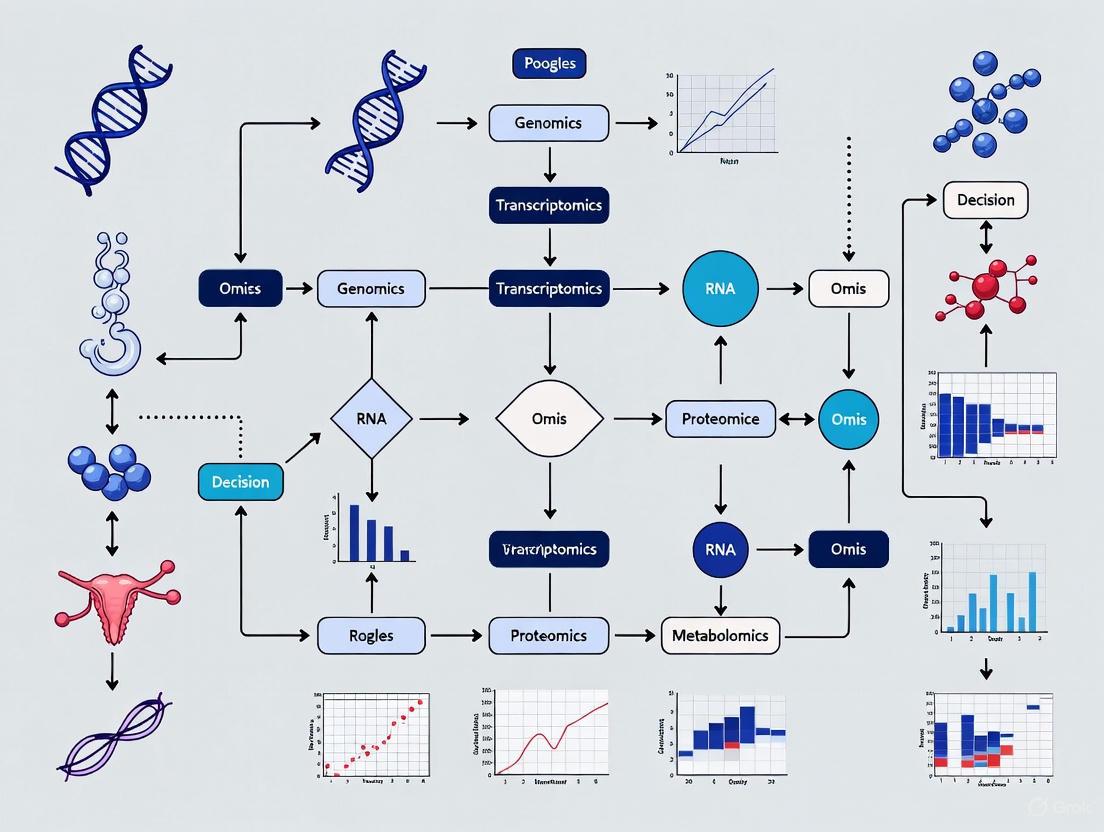
Endometriosis is a heterogeneous gynecological disorder whose diagnosis and treatment are hindered by a complex pathophysiology and a lack of robust, non-invasive diagnostic tools.
Multi-Omics Integration for Endometriosis Subtype Classification: Paving the Way for Precision Medicine
Abstract
Endometriosis is a heterogeneous gynecological disorder whose diagnosis and treatment are hindered by a complex pathophysiology and a lack of robust, non-invasive diagnostic tools. This article synthesizes the latest research on how multi-omics technologies—integrating genomics, transcriptomics, proteomics, and ubiquitylomics—are revolutionizing our understanding of endometriosis subtypes. We explore the foundational molecular mechanisms, detail methodological frameworks for data integration, address key challenges in biomarker validation, and evaluate the comparative performance of omics-driven classifications against traditional methods. For researchers and drug development professionals, this review highlights how a multi-omics approach can identify novel diagnostic biomarkers, uncover new therapeutic targets, and ultimately enable patient stratification for precision medicine, thereby improving diagnostic timelines and reproductive outcomes.
Deconstructing Heterogeneity: Foundational Molecular Mechanisms of Endometriosis Subtypes
Quantitative Data on Molecular Alterations in Endometriosis
Table 1: Key Molecular Alterations in Endometriotic Lesions
| Molecular Component | Alteration in Endometriosis | Functional Consequence | Reference |
|---|---|---|---|
| Progesterone Receptor (PR) Isoforms | Marked reduction in PR-B; Decreased PR-A levels | Impaired progesterone signaling; Progesterone resistance | [1] [2] |
| Estrogen Receptor (ER) Ratio | Elevated ERβ/ERα ratio | Amplified estrogen signaling; Estrogen dominance | [1] [2] |
| Aromatase (CYP19A1) | Overexpressed in ectopic lesions | Increased local estradiol (E2) production | [1] [2] |
| 17β-HSD Type 2 | Downregulated | Reduced E2 to less potent estrone conversion | [1] [2] |
| Epigenetic Modifications | PR promoter hypermethylation; ERβ promoter hypomethylation | Sustained progesterone resistance & estrogen dominance | [1] [2] [3] |
Table 2: Associated Somatic Mutations and Dysregulated Pathways
| Gene/Pathway | Alteration | Associated Gynecological Condition(s) | Reference |
|---|---|---|---|
| KRAS | Mutations observed | Endometriosis, Adenomyosis, Endometrial Hyperplasia | [4] |
| PIK3CA | Mutations observed | Endometriosis, Adenomyosis, Endometrial Hyperplasia | [4] |
| ARID1A | Mutations observed | Endometriosis, Endometrial Hyperplasia | [4] |
| MED12 | Mutations observed | Leiomyoma (Uterine Fibroids) | [4] |
| p53/Rb Pathway | Altered; linked to CDKN2A | Uterine Corpus Endometrial Carcinoma (UCEC) | [5] |
| NF-κB Pathway | Unsuppressed due to progesterone resistance | Chronic inflammation in endometriosis | [1] [2] |
Experimental Protocols for Investigating Hormonal Pathways
Protocol: Assessing Progesterone Resistance in Endometrial Stromal Cells
Objective: To evaluate the functional response of eutopic and ectopic endometrial stromal cells to progesterone by measuring the expression of decidualization markers.
Materials:
- Primary Cells: Human endometrial stromal cells (HESCs) isolated from eutopic endometrium of healthy controls and women with endometriosis, and from ectopic lesions.
- Culture Media: Phenol-red free DMEM/F-12, Charcoal-stripped FBS, 1% Penicillin-Streptomycin.
- Treatments: Bioidentical progesterone (P4), Medroxyprogesterone acetate (MPA), RU486 (PR antagonist).
- Reagents: RNA extraction kit, cDNA synthesis kit, qPCR reagents, antibodies for IGFBP1 and PRL.
Procedure:
- Cell Isolation and Culture: Isolate HESCs via enzymatic digestion and collagenase treatment. Culture in steroid-depleted media for 72 hours to remove endogenous hormone effects.
- Progesterone Treatment: Seed cells in 12-well plates. At 80% confluence, treat with vehicle control, 1 µM P4, or 10 nM MPA for up to 96 hours. Include a co-treatment group with RU486 to confirm PR-specific effects.
- RNA Extraction and qPCR: Harvest cells at 24, 48, 72, and 96 hours. Extract total RNA and synthesize cDNA. Perform qPCR to quantify established progesterone response genes:
- Decidualization Markers: IGFBP1 (Insulin-like growth factor-binding protein 1) and PRL (Prolactin).
- PR Isoforms: PGR (Total), PRA, PRB.
- Normalize expression to housekeeping genes (e.g., GAPDH, RPLP0).
- Data Analysis: Calculate fold changes using the 2^–ΔΔCt method. Compare the induction of IGFBP1 and PRL in patient-derived cells versus controls. Statistically significant blunted response in patient cells indicates progesterone resistance [4] [6].
Protocol: Mapping Estrogen and Progesterone Receptor Cistrome and Transcriptome
Objective: To identify genome-wide binding sites (cistrome) of ERα, ERβ, and PR and their correlated gene expression changes in response to hormone stimulation.
Materials:
- Cell Lines: Primary stromal cells or immortalized endometriotic epithelial cells (e.g., 12Z).
- Antibodies: Validated ChIP-grade antibodies for ERα, ERβ, PR, FOXO1, and H3K27ac.
- Kits: Chromatin Immunoprecipitation (ChIP) kit, Next-Generation Sequencing library prep kit, RNA sequencing library prep kit.
Procedure:
- Cell Stimulation: Culture cells in steroid-depleted media and then treat with vehicle, 10 nM E2, 1 µM P4, or E2+P4 combination for 3 hours (ChIP) or 24 hours (RNA-seq).
- Chromatin Immunoprecipitation Sequencing (ChIP-seq):
- Cross-link proteins to DNA with 1% formaldehyde for 10 minutes.
- Sonicate chromatin to an average fragment size of 200–500 bp.
- Immunoprecipitate with target-specific antibodies and corresponding IgG control.
- Reverse cross-links, purify DNA, and prepare libraries for sequencing.
- RNA Sequencing (RNA-seq): Extract total RNA from parallel treated samples. Assess RNA integrity, and prepare poly-A selected libraries for sequencing.
- Bioinformatic Integration:
- ChIP-seq Analysis: Map sequencing reads to the reference genome (e.g., hg38). Call significant peaks for each transcription factor (TF) and annotate them to genomic features (promoters, enhancers).
- RNA-seq Analysis: Perform differential gene expression analysis.
- Multi-omics Integration: Overlap the genes associated with TF binding peaks (from ChIP-seq) with differentially expressed genes (from RNA-seq) to define direct transcriptional targets. This integration reveals the functional cistrome and identifies key disrupted pathways in endometriosis, such as the failure of P4 to suppress E2-driven inflammatory genes [4] [6] [5].
Signaling Pathway and Multi-Omics Integration Diagrams
The Scientist's Toolkit: Essential Research Reagents
Table 3: Key Reagents for Investigating Hormonal Dysregulation
| Reagent / Material | Function / Application | Example Use Case |
|---|---|---|
| Charcoal-Stripped FBS | Removes endogenous steroids from cell culture media to create a hormone-depleted baseline. | Essential for all in vitro hormone stimulation assays to study specific receptor signaling. |
| Bioidentical Progesterone (P4) | Native hormone used to stimulate the progesterone receptor in functional assays. | Assessing decidualization response and transcriptional activity in stromal cells. |
| Selective PR Modulators (e.g., RU486) | PR antagonists used to block progesterone signaling and confirm receptor-specific effects. | Validating that observed cellular responses are directly mediated by the PR. |
| ChIP-Grade Antibodies (ERα, ERβ, PR, FOXO1) | High-specificity antibodies for Chromatin Immunoprecipitation to map transcription factor binding. | Defining the cistrome of steroid receptors and their co-factors genome-wide. |
| DNA Methyltransferase Inhibitors (e.g., 5-Aza-2'-deoxycytidine) | Compounds that inhibit DNA methylation, reversing epigenetic silencing. | Testing hypothesis that PR expression can be restored by demethylation of its promoter. |
| Validated siRNAs/shRNAs | For targeted knockdown of specific genes (e.g., ERβ, CDKN2A) to assess functional impact. | Determining causal roles of specific molecules in driving progesterone resistance. |
Within the context of multi-omics research for endometriosis subtype classification, understanding the specific roles of immune dysfunction and chronic inflammation is paramount. Endometriosis, a complex gynecological disorder, is characterized by a chronic inflammatory peritoneal environment that promotes the survival and growth of ectopic endometrial lesions [7] [8]. Central to this dysfunctional immune response is the aberrant polarization of macrophages and their altered cytokine secretion profiles, which contribute to disease progression, pain, and fibrosis [9] [10] [7]. This application note provides detailed protocols for investigating macrophage polarization and cytokine networks, offering a framework to integrate this immunological data with multi-omics datasets (e.g., transcriptomics, proteomics, ubiquitylomics) to elucidate distinct molecular subtypes of endometriosis and identify novel therapeutic targets.
Quantitative Profiling of Senescence-Associated Macrophage Dysregulation
Long-term in vitro culture models demonstrate that macrophages undergo profound phenotypic and functional remodeling over time, acquiring a senescent state that mirrors the chronic inflammatory environment seen in endometriosis [9] [11]. The following tables summarize key quantitative findings from a model where monocyte-derived macrophages (MDMs) were cultured for 7, 14, and 21 days.
Table 1: Temporal Expression of Canonical Senescence Markers in Human Macrophages
| Senescence Marker | Day 7 Expression | Day 14 Expression | Day 21 Expression | Measurement Method |
|---|---|---|---|---|
| β-galactosidase | Minimal | Significantly Upregulated | Significantly Upregulated | Histochemical Staining |
| H2AXpS139 (γH2AX) | Minimal | Significantly Upregulated | Significantly Upregulated | Immunofluorescence / Flow Cytometry |
| CDKN2A (p16INK4a) | Minimal | Significantly Upregulated | Significantly Upregulated | Flow Cytometry / Western Blot |
Table 2: Temporal Shifts in Macrophage Surface Marker Profiles and Cytokine Secretion
| Parameter | Day 7 Profile | Day 14 & 21 Profile | Assay |
|---|---|---|---|
| Predominant Surface Markers | Anti-inflammatory: CD163⁺, CD206⁺ | Proinflammatory: CD14⁺, CD64⁺, TLR2⁺ | High-dimensional Flow Cytometry |
| LPS-induced Cytokine Secretion | Diverse panel: IL-2, IL-12p70, IL-4, IL-5, TNF-α, GM-CSF, IFN-γ, IL-10 | Restricted profile; significant downregulation of Th1-type cytokines (e.g., IL-12p70, IFN-γ) | Multiplex Cytokine Assay (e.g., Luminex) |
Experimental Protocols
Protocol 1: Establishing a Long-Term Culture Model for Senescent Macrophages
This protocol details the generation and validation of senescent macrophages, a key cell state contributing to the chronic inflammatory milieu in endometriosis [9] [11].
Key Materials:
- Human primary monocytes (isolated from PBMCs)
- Macrophage colony-stimulating factor (M-CSF)
- Complete cell culture medium (RPMI-1640 with 10% FBS)
- Lipopolysaccharide (LPS)
- Cell viability dye (e.g., Propidium Iodide)
- Antibodies for flow cytometry: anti-CD163, anti-CD206, anti-CD14, anti-CD64, anti-TLR2
Procedure:
- Monocyte Isolation and Differentiation: Isolate CD14⁺ monocytes from human PBMCs using magnetic-activated cell sorting (MACS). Differentiate monocytes into macrophages by culturing in complete medium supplemented with M-CSF for 7 days.
- Long-Term Culture: Following differentiation, maintain the macrophages in culture for up to 21 days, refreshing the M-CSF-containing medium every 3-4 days.
- Viability Assessment: At days 7, 14, and 21, harvest cells and assess viability via flow cytometry using a viability dye. A stable viability >95% confirms system stability.
- Senescence Marker Validation: Assess canonical senescence markers.
- For β-galactosidase, use a commercial senescence-associated β-galactosidase staining kit.
- For H2AXpS139 and CDKN2A, perform intracellular staining followed by flow cytometry or Western blot analysis.
- Phenotypic Characterization by Flow Cytometry: Harvest cells and stain with antibodies against CD163, CD206, CD14, CD64, and TLR2. Use unsupervised clustering algorithms on high-dimensional flow cytometry data to identify distinct macrophage subpopulations.
- Functional Cytokine Profiling: Stimulate macrophages with LPS for 24 hours. Collect culture supernatants and analyze a broad panel of cytokines using a multiplex immunoassay.
Protocol 2: Multi-Omic Integration for Fibrosis and Ubiquitination Analysis in Endometriosis
This protocol outlines a multi-omics approach to investigate immune-related pathways in endometriosis, such as fibrosis driven by ubiquitination, which can be correlated with macrophage polarization states [10].
Key Materials:
- Endometrial tissue samples (ectopic, eutopic, and control)
- TRIzol Reagent for RNA isolation
- Protein extraction buffer (e.g., RIPA buffer)
- Antibodies for validation: anti-TGFBR1, anti-α-SMA, anti-FAP, anti-FN1, anti-Collagen1, anti-TRIM33
- TRIM33-specific siRNA
Procedure:
- Sample Preparation: Process endometrial tissues for concurrent RNA, protein, and ubiquitinated peptide extraction.
- Transcriptomic and Proteomic Profiling:
- RNA-seq: Perform total RNA sequencing on an Illumina platform. Use DEseq2 for differential expression analysis (adjusted p-value < 0.05 and fold change > 2).
- Proteomics: Digest proteins and analyze peptides using a data-independent acquisition parallel accumulation-serial fragmentation (DIA-PASEF) strategy. Use an unpaired t-test for differential protein analysis (p < 0.05 and fold change > 1.5).
- Ubiquitylome Profiling: Enrich for ubiquitinated peptides from tissue lysates using ubiquitin remnant motifs. Analyze by LC-MS/MS (label-free quantification). Identify differentially ubiquitinated proteins (p < 0.05 and fold change > 1.5).
- Bioinformatic Integration: Integrate datasets to identify genes/proteins with concurrent changes at multiple levels. Perform GO and KEGG pathway enrichment analyses to identify key biological processes, such as extracellular matrix (ECM) production and fibrosis.
- Functional Validation:
- Validate the protein expression of key ubiquitination and fibrosis-related targets (e.g., TGFBR1, α-SMA, FAP, FN1, Collagen1, TRIM33) by Western blot.
- Transfert human endometrial stromal cells (hESCs) with TRIM33 siRNA to investigate the functional role of this E3 ligase in regulating TGF-β signaling and the expression of fibrosis-related proteins.
Signaling Pathways and Workflows
Macrophage Polarization Signaling Pathways
The following diagram illustrates the key signaling pathways that drive macrophage polarization toward the M1 phenotype, a state implicated in chronic inflammation.
Diagram 1: Key signaling pathways driving M1 macrophage polarization.
Multi-Omic Integration Workflow
This diagram outlines the logical workflow for integrating multi-omics data to investigate immune-fibrosis interactions in endometriosis.
Diagram 2: Multi-omics integration workflow for target identification.
The Scientist's Toolkit: Research Reagent Solutions
Table 3: Essential Research Reagents for Macrophage and Multi-Omics Studies
| Reagent / Tool | Function / Application |
|---|---|
| M-CSF (Macrophage Colony-Stimulating Factor) | Differentiates human monocytes into macrophages for long-term culture models [9]. |
| Lipopolysaccharide (LPS) | TLR4 agonist used to stimulate macrophages and assess their functional cytokine response [9]. |
| β-galactosidase Staining Kit | Histochemical detection of senescence-associated β-galactosidase activity, a canonical senescence marker [9] [11]. |
| High-Parameter Flow Cytometry Panels | Phenotypic characterization of macrophage subpopulations using surface markers (e.g., CD163, CD206, CD14, CD64) [9] [11]. |
| Multiplex Cytokine Assay (e.g., Luminex) | Simultaneous quantification of a broad panel of cytokines (e.g., IL-6, TNF-α, IL-10, IL-12) from culture supernatants [9]. |
| DIA-PASEF Mass Spectrometry | High-throughput, data-independent acquisition proteomics for deep and reproducible protein quantification [10]. |
| Ubiquitin Remnant Motif Antibodies | Immunoaffinity enrichment of ubiquitinated peptides from complex lysates for ubiquitylome profiling [10]. |
| TRIM33-specific siRNA | Knockdown tool to investigate the functional role of the E3 ubiquitin ligase TRIM33 in fibrosis pathways [10]. |
Oxidative Stress and Iron-Driven Ferroptosis in Granulosa Cells
Within the framework of multi-omics research for endometriosis classification, understanding specific cell death pathways in granulosa cells (GCs) provides crucial insights into the disease's pathophysiology. Oxidative stress and the newly characterized process of iron-dependent ferroptosis are emerging as key contributors to GC dysfunction, follicular atresia, and subsequent reproductive pathologies, including endometriosis and polycystic ovary syndrome (PCOS) [12] [13] [14]. These pathways represent a convergence point where genetic, proteomic, and metabolic disturbances, identified through multi-omics platforms, manifest as functional cellular defects. This application note details the molecular mechanisms and provides standardized protocols for investigating these pathways, aiming to facilitate their integration into a broader endometriosis subtyping paradigm.
Key Mechanisms and Pathways
The dysfunction of granulosa cells under oxidative stress involves several interconnected signaling pathways and a specific form of regulated cell death.
Oxidative Stress-Induced Apoptosis in Granulosa Cells
Reactive oxygen species (ROS) play a dual role in follicular development and atresia. Excessive ROS induces GC apoptosis through the ROS-JNK-p53 pathway [15]. Hydrogen peroxide (H₂O₂) treatment in human granulosa cells (COV434) leads to a time- and dose-dependent increase in cell death, characterized by the cleavage of caspase-3 and PARP [15]. This process is mediated by an increase in pro-apoptotic Bcl-2 family members (Bax, Bak, Puma) and a decrease in anti-apoptotic members (Bcl-2, Bcl-xL, Mcl-1) [15]. The antioxidant N-acetylcysteine (NAC) can prevent H₂O₂-induced phosphorylation of JNK and p53, thereby mitigating cell death [15].
Iron-Driven Ferroptosis in Granulosa Cells
Ferroptosis is a distinct form of regulated cell death characterized by iron-dependent lipid peroxidation [12] [13]. Its core machinery involves two primary pathways:
- Extrinsic/Transporter-dependent Pathway: Reduced cysteine uptake via the system Xc- antiporter (composed of SLC7A11 and SLC3A2) leads to depleted glutathione (GSH) synthesis [13].
- Intrinsic/Enzyme-regulated Pathway: Direct inhibition of the antioxidant enzyme Glutathione Peroxidase 4 (GPX4), which normally converts toxic lipid hydroperoxides into non-toxic lipid alcohols [12] [13].
GPX4 activity is dependent on GSH and the trace element selenium [12] [13]. In endometriosis patients, a high-iron environment in the peritoneal and follicular fluid creates a permissive context for ferroptosis, potentially damaging GCs, oocytes, and embryos [13] [16].
Table 1: Key Proteins in Granulosa Cell Death Pathways
| Protein | Function | Role in Pathway |
|---|---|---|
| JNK | Kinase | Phosphorylated under oxidative stress; promotes apoptosis [15] |
| p53 | Transcription Factor | Phosphorylated by JNK; upregulates pro-apoptotic proteins [15] |
| PUMA | Pro-apoptotic Protein | Critical for H₂O₂-induced granulosa cell death; knockdown inhibits apoptosis [15] |
| GPX4 | Antioxidant Enzyme | Key inhibitor of ferroptosis; reduces phospholipid hydroperoxides [12] [13] |
| SLC7A11 | Cystine/Glutamate Transporter | Component of system Xc-; critical for glutathione synthesis [13] |
| Nrf2 | Transcription Factor | Regulates antioxidant response, including SLC7A11 and GPX4 expression [12] |
The following diagram illustrates the core signaling pathways in oxidative stress-induced apoptosis and ferroptosis in granulosa cells:
Data from key studies quantifying oxidative stress and ferroptosis endpoints in granulosa cells are summarized below.
Table 2: Quantitative Effects of H₂O₂ on Human Granulosa Cell Apoptosis (COV434 cells) [15]
| Treatment | Exposure Time | Key Measurement | Change vs. Control | Method |
|---|---|---|---|---|
| 1.0 mM H₂O₂ | 4 hours | Cleaved Caspase-3 | ~6-fold increase | Immunoblot |
| 1.5 mM H₂O₂ | 4 hours | PARP Cleavage | ~9-fold increase | Immunoblot |
| 1.5 mM H₂O₂ | 6 hours | Apoptotic Ratio | 7.5% to 58.2% | Propidium Iodide |
| 1.0 mM H₂O₂ | 6 hours | Bak Protein | ~90% increase | Immunoblot |
| 1.5 mM H₂O₂ | 4 hours | Mcl-1 Protein | ~90% decrease | Immunoblot |
Table 3: Markers of Oxidative Stress and Ferroptosis in Patient Studies
| Condition | Sample Type | Marker | Change vs. Control | Citation |
|---|---|---|---|---|
| PCOS | Serum | Malondialdehyde (MDA) | 47% increase | [17] |
| PCOS | Erythrocytes | Malondialdehyde (MDA) | Significantly higher | [17] |
| Endometriosis | Peritoneal Fluid | Iron, Ferritin, Hemoglobin | Higher levels | [18] |
| Ovarian Endometriosis | Ectopic Stromal Tissue | Total Iron Content | Significantly increased | [16] |
Detailed Experimental Protocols
Protocol: Inducing and Assessing H₂O₂-Mediated Apoptosis in Granulosa Cells
This protocol is adapted from studies using the COV434 human granulosa cell line [15].
Key Reagents:
- COV434 cells (or other primary/user granulosa cells)
- Hydrogen Peroxide (H₂O₂), stock solution
- N-acetylcysteine (NAC), antioxidant inhibitor
- SP600125, JNK inhibitor
- Z-VAD-FMK, pan-caspase inhibitor
- Cell culture medium and supplements
- Antibodies for: Cleaved Caspase-3, PARP, p-JNK, p-p53, Bax, Bak, Puma, Bcl-2, Bcl-xL, Mcl-1
Procedure:
- Cell Culture and Pretreatment: Maintain COV434 cells in recommended medium. For inhibitor studies, pre-treat cells for 2 hours with NAC (e.g., 5-20 mM), SP600125 (e.g., 10-25 µM), or Z-VAD (e.g., 20 µM).
- H₂O₂ Treatment: Prepare fresh H₂O₂ dilutions in serum-free medium. Treat cells at a range of concentrations (e.g., 0.5 mM to 1.5 mM) for varying durations (2-12 hours) to establish a dose- and time-response curve.
- Cell Death Analysis (Propidium Iodide Staining):
- Harvest both adherent and floating cells by trypsinization and combine.
- Wash cells with cold PBS and resuspend in a staining solution containing Propidium Iodide (PI).
- Incubate for 15-30 minutes in the dark.
- Analyze by flow cytometry. The percentage of PI-positive cells indicates the apoptotic ratio.
- TUNEL Assay: Follow manufacturer's instructions for the TUNEL assay kit to label DNA strand breaks for fluorescence microscopy or flow cytometry analysis.
- Immunoblot Analysis:
- Lyse cells in RIPA buffer containing protease and phosphatase inhibitors.
- Separate proteins by SDS-PAGE and transfer to a PVDF membrane.
- Block membrane and incubate overnight with primary antibodies at 4°C.
- Incubate with HRP-conjugated secondary antibodies and develop using enhanced chemiluminescence.
- Quantify band intensities to assess changes in protein levels and cleavage.
Protocol: Investigating Ferroptosis in Granulosa Cells
This protocol outlines methods to induce and inhibit ferroptosis, based on general ferroptosis research and studies in endometrial cells [13] [16].
Key Reagents:
- Erastin (system Xc- inhibitor)
- RSL3 (direct GPX4 inhibitor)
- Ferrostatin-1 (Fer-1, ferroptosis inhibitor)
- Deferoxamine Mesylate (DFO, iron chelator)
- Ferric Ammonium Citrate (FAC, iron source)
- Antibodies for: GPX4, SLC7A11, 4-HNE (lipid peroxidation marker), Transferrin Receptor 1 (TfR1)
Procedure:
- Induction of Ferroptosis:
- Treat granulosa cells with Erastin (e.g., 0.5-2.5 µM) or RSL3 (e.g., 0.1-1 µM) for 12-24 hours.
- To model iron overload, treat cells with FAC (e.g., 50-100 mg/L) for 24 hours.
- Inhibition of Ferroptosis:
- Co-treat cells with the inducer (Erastin/RSL3/FAC) and Ferrostatin-1 (e.g., 1-4 µM) or DFO (e.g., 100 µM).
- Viability Assay: Measure cell viability using a CCK-8 kit or similar MTT assay after treatments.
- Assessment of Lipid Peroxidation:
- MDA Assay: Use a commercial Malondialdehyde (MDA) assay kit to quantify lipid peroxidation in cell lysates. MDA is a terminal product of lipid peroxidation.
- 4-HNE Immunoblotting: Detect 4-Hydroxynonenal (4-HNE) protein adducts via immunoblotting as a direct marker of lipid peroxidation.
- Iron Quantification: Use a colorimetric Iron Assay Kit to measure total iron content in cell lysates or tissue homogenates.
- GPX4 Activity Assay: Determine GPX4 enzymatic activity in cell lysates using a commercially available GPX4 activity assay kit.
The following workflow diagram provides a visual summary of the key experimental steps for investigating these pathways:
The Scientist's Toolkit: Essential Research Reagents
Table 4: Key Reagents for Studying Oxidative Stress and Ferroptosis
| Reagent | Category | Function/Application | Example Use |
|---|---|---|---|
| H₂O₂ | Oxidative Stress Inducer | Directly generates ROS; induces apoptosis [15] | 0.5-1.5 mM for 4-6h in COV434 cells [15] |
| N-Acetylcysteine (NAC) | Antioxidant | Scavenges ROS; prevents JNK/p53 activation [15] | 5-20 mM pre-treatment for 2h [15] |
| Erastin | Ferroptosis Inducer | Inhibits system Xc-; depletes GSH [13] | 0.5-2.5 µM for 12-24h [16] |
| RSL3 | Ferroptosis Inducer | Directly inhibits GPX4 activity [13] | 0.1-1 µM for 12-24h [13] |
| Ferrostatin-1 (Fer-1) | Ferroptosis Inhibitor | Radical-trapping antioxidant; blocks lipid peroxidation [13] [16] | 1-4 µM co-treatment with inducers [16] |
| Deferoxamine (DFO) | Iron Chelator | Binds intracellular iron; inhibits ferroptosis [16] | 100 µM co-treatment with FAC [16] |
| Ferric Ammonium Citrate (FAC) | Iron Source | Creates iron overload conditions to promote ferroptosis [16] | 50-100 mg/L for 24h [16] |
| SP600125 | JNK Inhibitor | Inhibits JNK phosphorylation; blocks ROS-JNK-p53 axis [15] | 10-25 µM pre-treatment for 2h [15] |
| Z-VAD-FMK | Pan-Caspase Inhibitor | Inhibits caspase activity; confirms apoptosis [15] | 20 µM pre-treatment for 2h [15] |
Integration with Multi-Omics Endometriosis Research
The molecular pathways detailed herein provide a functional context for data derived from multi-omics platforms. For instance:
- Transcriptomics/Proteomics: Differential expression of genes/proteins like GPX4, SLC7A11, and Nrf2, identified in endometriosis lesions, can be functionally validated using these protocols to define a "ferroptosis-sensitive" disease subtype [12] [10].
- Ubiquitylomics: The identification of ubiquitinated fibrosis-related proteins (e.g., TRIM33 targets) in ectopic lesions connects post-translational modification to fibrotic outcomes, which may be exacerbated by iron overload and ferroptosis [10] [16].
- Metabolomics: Shifts in glutathione, glutamine, and lipid species in patient follicular fluid or peritoneal fluid can serve as biomarkers, linking metabolic profiles to the susceptibility of GCs to oxidative damage and ferroptosis [13] [17].
Standardized application of the protocols above will allow for the systematic characterization of oxidative stress and ferroptosis across different endometriosis subtypes, ultimately contributing to a refined molecular classification and the identification of novel, targeted therapeutic strategies.
Endometriosis is a complex, chronic inflammatory disease characterized by the presence of endometrial-like tissue outside the uterine cavity, affecting approximately 10% of reproductive-aged women globally [1]. The disease represents a significant challenge in reproductive medicine, particularly due to its strong association with infertility, which is present in 30-50% of women seeking infertility evaluation [1]. Despite its prevalence, the diagnosis of endometriosis is often delayed by an average of 7-12 years from symptom onset, highlighting the critical need for improved understanding of its molecular foundations [19].
The integration of multi-omics approaches has revolutionized our understanding of endometriosis pathogenesis, revealing intricate interactions between genetic predisposition, epigenetic regulation, and environmental factors. Genome-wide association studies (GWAS) have identified numerous susceptibility loci, while methylation studies have uncovered profound epigenetic alterations that contribute to the disease phenotype without changing the underlying DNA sequence [20]. This application note provides a comprehensive framework for investigating the genetic and epigenetic landscapes of endometriosis, with specific protocols and analytical workflows designed to advance subtype classification and personalized therapeutic strategies.
Background & Significance
Genetic Architecture of Endometriosis
Large-scale genetic studies have established that endometriosis has a substantial heritable component, with GWAS identifying multiple risk loci across the genome. A recent study of unprecedented scale integrating clinical and genetic data from the UK Biobank revealed significant genetic correlations between endometriosis and several immune-mediated conditions, including osteoarthritis (rg = 0.28), rheumatoid arthritis (rg = 0.27), and multiple sclerosis (rg = 0.09) [21]. These findings suggest shared biological mechanisms between endometriosis and immunological diseases, opening new avenues for therapeutic repurposing.
The functional characterization of endometriosis-associated genetic variants through expression quantitative trait loci (eQTL) analysis has provided crucial insights into their tissue-specific regulatory effects. A multi-tissue eQTL analysis examining six physiologically relevant tissues (uterus, ovary, vagina, colon, ileum, and peripheral blood) demonstrated distinct regulatory profiles, with immune and epithelial signaling genes predominating in intestinal tissues and peripheral blood, while reproductive tissues showed enrichment of genes involved in hormonal response, tissue remodeling, and adhesion [22].
Epigenetic Dysregulation in Endometriosis
Epigenetic modifications, particularly DNA methylation, have emerged as critical factors in endometriosis pathogenesis. Comprehensive methylation analysis of endometrial samples from 984 deeply-phenotyped participants revealed that DNA methylation captures approximately 15.4% of the variation in endometriosis, with menstrual cycle phase being a major source of methylation variation [23]. This study identified significant differences in DNA methylation profiles associated with stage III/IV endometriosis, endometriosis sub-phenotypes, and menstrual cycle phase, including dynamic changes associated with the opening of the window for embryo implantation.
Systematic reviews of epigenetic alterations in endometriosis have consistently identified hypermethylated genes including PGR-B, SF-1, and RASSF1A, and hypomethylated genes including HOXA10, COX-2, IL-12B, and GATA6 in endometriotic tissue [20]. These epigenetic modifications directly impact cell cycle growth, cell cycle arrest, and apoptosis, contributing to the pathogenesis of endometriosis. The reversible nature of epigenetic changes makes them promising targets for disease modification and treatment.
Table 1: Key Genetic Associations in Endometriosis
| Genetic Factor | Association | Effect Size/Correlation | Functional Role |
|---|---|---|---|
| Osteoarthritis genetic correlation | Shared genetic basis | rg = 0.28, P = 3.25 × 10⁻¹⁵ | Extracellular matrix organization, inflammatory pathways |
| Rheumatoid arthritis genetic correlation | Shared genetic basis | rg = 0.27, P = 1.5 × 10⁻⁵ | Immune dysregulation, autoimmunity pathways |
| Multiple sclerosis genetic correlation | Shared genetic basis | rg = 0.09, P = 4.00 × 10⁻³ | Neuroinflammatory pathways, immune cell function |
| IL-6 regulatory variants | Altered immune response | Neandertal-derived methylation site | Immune dysregulation, chronic inflammation |
| CNR1 variants | Endocannabinoid signaling | Denisovan origin | Pain perception, inflammatory modulation |
Application Note: Integrated GWAS and Methylation Analysis
Study Design and Participant Recruitment
For comprehensive genetic and epigenetic profiling, we recommend a case-control design with minimum sample size of 500 cases and 500 controls to achieve adequate statistical power. Participants should be recruited with strict inclusion criteria: premenopausal women aged 18-45 years with surgically confirmed endometriosis (cases) or without laparoscopic evidence of endometriosis (controls). Exclusion criteria should include hormonal treatment within three months prior to sample collection, presence of other inflammatory or autoimmune conditions, and previous diagnosis of cancer.
Phenotypic data collection must be extensive and standardized, including: detailed surgical findings using rASRM classification, pain symptoms assessment via visual analog scales, reproductive history, infertility status, and quality of life metrics. Menstrual cycle phase should be precisely determined through histological dating according to Noyes' criteria, combined with serum hormone measurements (estradiol, progesterone, LH).
Biospecimen collection should include: peripheral blood for DNA extraction, eutopic endometrial biopsies (collected using Pipelle catheter), and when possible, ectopic lesion tissues collected during laparoscopic surgery. All samples should be immediately processed and stored at -80°C to preserve nucleic acid integrity.
Laboratory Methods and Quality Control
DNA Extraction and Quality Assessment: Use standardized DNA extraction kits (e.g., QIAamp DNA Mini Kit) with rigorous quality control. Assess DNA concentration using fluorometric methods (e.g., Qubit dsDNA HS Assay) and purity via spectrophotometry (A260/280 ratio ≥1.8). Confirm DNA integrity through gel electrophoresis or genomic quality number (GQN) ≥7.0.
Genotyping Protocol: Perform genome-wide genotyping using Illumina Global Screening Array or similar platforms. Apply strict quality control filters: sample call rate >98%, variant call rate >95%, Hardy-Weinberg equilibrium P > 1×10⁻⁶, minor allele frequency >1%. Impute genotypes using reference panels (1000 Genomes Phase 3 or HRC) with imputation quality score R² > 0.8 for inclusion in analysis.
DNA Methylation Profiling: Conduct genome-wide methylation analysis using Illumina Infinium MethylationEPIC BeadChip, covering approximately 850,000 CpG sites. Include technical replicates (5% of samples) to assess batch effects. Perform normalization using functional normalization or Noob background correction with dye bias correction.
Table 2: Essential Research Reagents and Solutions
| Reagent/Solution | Manufacturer/Catalog | Function | Quality Control Parameters |
|---|---|---|---|
| QIAamp DNA Mini Kit | Qiagen (51304) | High-quality DNA extraction from tissue and blood | A260/280 ratio: 1.8-2.0; DNA integrity number >7 |
| Infinium MethylationEPIC Kit | Illumina (WG-317-1001) | Genome-wide DNA methylation profiling | Bisulfite conversion efficiency >99%; detection P-value <0.01 |
| Global Screening Array-24 v3.0 | Illumina (20031816) | High-density genome-wide genotyping | Call rate >98%; reproducibility >99.9% |
| EZ-96 DNA Methylation MagPrep | Zymo Research (D5045) | Bisulfite conversion of genomic DNA | Conversion efficiency >99.5% |
| RNase A Solution | Qiagen (19101) | RNA contamination removal during DNA extraction | Confirm RNA-free via electrophoresis |
| Proteinase K | Qiagen (19131) | Protein digestion during nucleic acid extraction | Activity >600 U/mL |
Data Analysis Workflow
Genetic Data Analysis:
- Quality Control: Remove samples with heterozygosity outliers, mismatched sex information, or relatedness (pi-hat > 0.2).
- Population Stratification: Perform principal component analysis and genetic ancestry determination using reference populations.
- Association Testing: Conduct using logistic regression models adjusted for age, genetic ancestry principal components, and other relevant covariates.
- Genetic Correlation Analysis: Estimate genetic correlations between endometriosis and related traits using LD Score regression.
- Mendelian Randomization: Perform to assess potential causal relationships using inverse-variance weighted methods and sensitivity analyses.
Methylation Data Analysis:
- Preprocessing: Normalize data using stratified quantile normalization, probe filtering based on detection P-values, and removal of cross-reactive probes.
- Cell Type Composition: Estimate and adjust for epithelial, stromal, and immune cell proportions using reference-based methods.
- Differential Methylation: Identify using linear models with robust empirical Bayes moderation, controlling for batch effects, age, and cell type composition.
- Integration with Genetic Data: Conduct methylation quantitative trait loci (mQTL) analysis to identify genetic variants influencing methylation patterns.
Multi-Omics Integration:
- Functional Annotation: Annotate significant variants and CpG sites using resources such as ENSEMBL VEP and IlluminaHumanMethylationEPICanno.ilm10b4.hg19.
- Pathway Enrichment: Perform using MSigDB Hallmark gene sets and KEGG pathways with false discovery rate correction.
- Network Analysis: Construct co-methylation networks and protein-protein interaction networks to identify functionally related modules.
Figure 1: Integrated GWAS and Methylation Analysis Workflow. This comprehensive pipeline outlines the key steps from participant recruitment through multi-omics integration and functional validation for endometriosis subtype classification.
Protocol: Multi-Tissue eQTL Analysis for Functional Validation
Expression quantitative trait loci (eQTL) analysis represents a powerful approach for functionally characterizing endometriosis-associated genetic variants by identifying their effects on gene expression across relevant tissues. This protocol outlines a systematic framework for conducting multi-tissue eQTL analysis to bridge the gap between genetic associations and biological mechanisms in endometriosis.
Step-by-Step Procedure
Step 1: Variant Selection and Functional Annotation
- Curate endometriosis-associated variants from GWAS Catalog (EFO_0001065) with genome-wide significance (P < 5×10⁻⁸)
- Annotate variants using Ensembl Variant Effect Predictor to determine genomic location and predicted functional impact
- Filter to retain unique variants with valid rsIDs, prioritizing those in regulatory regions
Step 2: Tissue Selection and eQTL Mapping
- Select physiologically relevant tissues: uterus, ovary, vagina, sigmoid colon, ileum, and peripheral blood
- Access tissue-specific eQTL data from GTEx Portal (version 8 or later)
- Extract significant eQTL associations (FDR < 0.05) for curated variants
- Document regulated genes, effect sizes (slope), and statistical significance for each tissue
Step 3: Tissue-Specific Functional Analysis
- For each tissue, identify: (1) genes regulated by the highest number of eQTL variants, and (2) genes with the strongest regulatory effects (largest absolute slope values)
- Perform functional enrichment analysis using MSigDB Hallmark gene sets and Cancer Hallmarks collections
- Categorize genes into biological pathways: immune response, hormone signaling, tissue remodeling, angiogenesis
Step 4: Data Integration and Interpretation
- Compare eQTL effects across tissues to identify tissue-specific versus shared regulatory patterns
- Integrate with methylation data to identify methylation-mediated regulatory effects
- Prioritize candidate genes based on consistent effects across multiple tissues and functional relevance to endometriosis pathogenesis
Expected Results and Interpretation
A comprehensive multi-tissue eQTL analysis is expected to reveal substantial tissue specificity in the regulatory profiles of endometriosis-associated variants. Key regulators such as MICB, CLDN23, and GATA4 are anticipated to show consistent associations with hallmark pathways including immune evasion, angiogenesis, and proliferative signaling [22]. A significant subset of regulated genes may not associate with known pathways, indicating potential novel regulatory mechanisms in endometriosis pathogenesis.
Figure 2: Multi-Tissue eQTL Analysis Framework. This diagram illustrates how endometriosis-associated genetic variants exert tissue-specific regulatory effects that converge on key biological pathways, ultimately informing molecular subtype classification.
Protocol: Endometrial DNA Methylation Analysis
Experimental Design Considerations
Comprehensive DNA methylation analysis requires careful consideration of multiple biological and technical factors. Menstrual cycle phase accounts for approximately 4.30% of overall methylation variation in endometrial tissue, making precise cycle phase determination critical [23]. We recommend histological dating according to Noyes' criteria combined with serum hormone measurements for optimal phase classification.
Sample size calculations should account for the nested structure of data (multiple samples per participant when possible) and the need to stratify by disease stage. For differential methylation analysis between stage III/IV endometriosis cases and controls, a minimum of 100 samples per group provides 80% power to detect mean methylation differences of 10% at a genome-wide significance level.
Step-by-Step Methylation Protocol
Step 1: Sample Processing and Bisulfite Conversion
- Extract genomic DNA from endometrial biopsies using column-based methods
- Assess DNA quality and quantity as described in Section 3.2
- Perform bisulfite conversion using EZ-96 DNA Methylation MagPrep kit with the following cycling conditions: 98°C for 10 minutes, 64°C for 2.5 hours, hold at 4°C
- Purify bisulfite-converted DNA and elute in 20 μL TE buffer
Step 2: Methylation Array Processing
- Hybridize bisulfite-converted DNA to Illumina Infinium MethylationEPIC BeadChip according to manufacturer's protocol
- Stain arrays and image using iScan or similar system
- Extract intensity data using Illumina GenomeStudio software
Step 3: Quality Control and Preprocessing
- Process raw intensity data using R package minfi or similar tools
- Exclude probes with detection P-value > 0.01 in >5% of samples
- Remove cross-reactive probes and those containing SNPs at CpG sites
- Normalize data using functional normalization or stratified quantile normalization
- Estimate and adjust for cell type composition using reference-based methods
Step 4: Differential Methylation Analysis
- Conduct differential methylation analysis using limma or similar packages with empirical Bayes moderation
- Include covariates: batch effects, age, BMI, menstrual cycle phase, cell type proportions
- Apply multiple testing correction using false discovery rate (FDR < 0.05)
- Identify differentially methylated regions using DMRcate or similar methods
Step 5: Integration with Genetic Data
- Perform methylation quantitative trait loci (mQTL) analysis to identify genetic variants influencing methylation patterns
- Test for cis-mQTLs (within 1 Mb of CpG site) using linear models
- Conduct Mendelian randomization to assess potential causal relationships
Data Interpretation Guidelines
Interpret significant methylation differences in the context of genomic location: promoter methylation typically associates with gene silencing, while gene body methylation may correlate with transcriptional activation. Consider the magnitude of methylation differences, with changes as small as 5% potentially biologically significant when consistent across multiple CpG sites in regulatory regions.
Integrate methylation findings with gene expression data when available, recognizing that the relationship between methylation and expression is context-dependent. Prioritize genes with coordinated methylation and expression changes in biologically relevant pathways for functional validation.
Table 3: Key Epigenetic Alterations in Endometriosis
| Epigenetic Modification | Associated Genes | Direction of Change | Functional Consequence |
|---|---|---|---|
| DNA Methylation | PGR-B, SF-1, RASSF1A | Hypermethylation | Gene silencing, progesterone resistance |
| DNA Methylation | HOXA10, COX-2, IL-12B, GATA6 | Hypomethylation | Gene activation, inflammation |
| Histone Modification | Histones H3, H4 | Altered acetylation | Chromatin remodeling, transcriptional changes |
| Histone Modification | HDAC2 | Increased expression | Transcriptional repression |
| Regulatory Variants | IL-6, CNR1, IDO1 | Neandertal/Denisovan origin | Altered immune response, pain perception |
The integration of GWAS and methylation studies provides unprecedented insights into the genetic and epigenetic architecture of endometriosis, revealing complex interactions between inherited variants, dynamic epigenetic modifications, and environmental influences. The protocols outlined in this application note establish a robust framework for comprehensive molecular profiling that can advance endometriosis subtype classification and personalized treatment approaches.
Future research directions should include: longitudinal studies to track epigenetic changes throughout disease progression; single-cell multi-omics approaches to resolve cellular heterogeneity; investigation of transgenerational epigenetic inheritance; and clinical translation of epigenetic biomarkers for early detection and treatment monitoring. The reversible nature of epigenetic modifications presents particularly promising opportunities for therapeutic intervention, with several epigenetic-targeting drugs already in clinical use for other conditions that may be repurposed for endometriosis management.
As we continue to unravel the intricate genetic and epigenetic landscapes of endometriosis, the integration of these multi-omics datasets will be essential for developing a precision medicine approach to this complex disease, ultimately improving diagnostic accuracy, prognostic stratification, and therapeutic outcomes for the millions of women affected worldwide.
The gut-reproductive axis represents a critical bidirectional communication network between the gastrointestinal microbiome and the reproductive system, mediated through complex neuroendocrine, immune, and metabolic pathways. This axis has emerged as a significant regulator of reproductive homeostasis, with dysbiosis – an imbalance in gut microbial communities – being implicated in the pathogenesis of various gynecological disorders, particularly endometriosis [24] [25]. The gut microbiota influences reproductive physiology through multiple interconnected mechanisms, including modulation of steroid hormone metabolism, regulation of systemic inflammation, maintenance of intestinal barrier integrity, and production of microbial metabolites that can directly or indirectly affect distant reproductive tissues [26] [25].
Within the context of endometriosis, an estrogen-dependent condition characterized by ectopic growth of endometrial-like tissue, the gut-reproductive axis provides a novel framework for understanding the systemic dimensions of this complex disease. Emerging evidence suggests that microbial dysbiosis may drive chronic inflammation, immune dysfunction, and altered estrogen metabolism, creating a permissive environment for the establishment and progression of endometriotic lesions [26]. This application note details experimental protocols and analytical frameworks for investigating the gut-reproductive axis, with specific application to multi-omics integration for endometriosis subtype classification research.
Experimental Protocols for Gut-Reproductive Axis Investigation
Protocol for Multi-omics Sample Collection and Processing
Objective: To systematically collect and process biological samples for integrated microbiome, metabolome, and host immune profiling in endometriosis research.
Materials:
- Sterile fecal collection tubes with DNA/RNA stabilizer
- EDTA blood collection tubes (plasma separation)
- Serum separation tubes
- Cervical swabs with Amies transport medium
- Peritoneal fluid aspiration kit (laparoscopy)
- Urine collection cups (sterile)
- Endometrial biopsy device (pipelle)
- Cryovials for long-term storage at -80°C
- Automated nucleic acid extractor
- Metabolite quenching solution (methanol:acetonitrile:water, 4:4:2)
Procedure:
- Participant Preparation: Instruct participants to avoid probiotics, antibiotics, and vaginal medications for 4 weeks prior to sample collection. Schedule sample collection during mid-luteal phase (days 19-23) for cycling women.
- Fecal Sample Collection:
- Collect fresh fecal sample in sterile container with DNA stabilizer.
- Aliquot 200 mg into cryovials for DNA extraction and 100 mg for metabolomics.
- Store immediately at -80°C.
- Blood Collection and Processing:
- Collect 20 mL venous blood (10 mL EDTA, 10 mL serum tube).
- Centrifuge EDTA blood at 2,500 × g for 15 min at 4°C for plasma separation.
- Allow serum tubes to clot for 30 min, then centrifuge at 2,000 × g for 10 min.
- Aliquot plasma and serum into 500 μL portions in cryovials.
- Store at -80°C.
- Reproductive Tract Sampling:
- Collect vaginal and cervical swabs during speculum examination.
- Obtain endometrial biopsy using pipelle device.
- Collect peritoneal fluid during laparoscopic procedure.
- Divide each sample into aliquots for DNA, RNA, and metabolomic analysis.
- Flash-freeze in liquid nitrogen and transfer to -80°C.
Quality Control:
- Include extraction blanks as negative controls for microbiome analysis
- Use pooled quality control samples for metabolomics
- Document sample processing time (should be <2 hours from collection to freezing)
Protocol for 16S rRNA Gene Sequencing and Microbiome Analysis
Objective: To characterize microbial community structure and identify dysbiosis patterns in endometriosis subtypes.
Materials:
- DNeasy PowerSoil Pro Kit (Qiagen)
- 16S rRNA gene primers (V3-V4 region: 341F/806R)
- High-Fidelity DNA Polymerase
- AMPure XP beads for purification
- Illumina MiSeq sequencer
- QIIME2 software package
- SILVA or Greengenes reference database
Procedure:
- DNA Extraction:
- Extract genomic DNA from 250 mg fecal samples using PowerSoil Pro Kit.
- Quantify DNA using fluorometric method (Qubit).
- Verify quality by agarose gel electrophoresis (sharp band >10 kb).
- 16S rRNA Gene Amplification:
- Perform PCR amplification with barcoded primers.
- Cycling conditions: 95°C for 3 min; 25 cycles of 95°C for 30s, 55°C for 30s, 72°C for 30s; final extension 72°C for 5 min.
- Clean amplicons with AMPure XP beads (0.8X ratio).
- Library Preparation and Sequencing:
- Pool purified amplicons in equimolar ratios.
- Load onto Illumina MiSeq using v3 chemistry (2×300 bp).
- Target 50,000 reads per sample after quality filtering.
- Bioinformatic Analysis:
- Demultiplex sequences and perform quality filtering in QIIME2.
- Cluster sequences into amplicon sequence variants (ASVs) using DADA2.
- Assign taxonomy using SILVA database v138.
- Calculate alpha diversity (Shannon, Faith's PD) and beta diversity (Bray-Curtis, Unweighted UniFrac).
- Perform differential abundance analysis with ANCOM-BC or DESeq2.
Quality Control:
- Include positive control (mock community) in each extraction batch
- Monitor PCR amplification efficiency
- Maintain minimum sequencing depth of 10,000 reads per sample
Protocol for Metabolomic Profiling of Microbial-Related Metabolites
Objective: To quantify microbial-derived metabolites potentially involved in endometriosis pathogenesis.
Materials:
- Liquid chromatography-mass spectrometry system (UHPLC-QTOF)
- GC-MS system with electron impact ionization
- Short-chain fatty acid standards (acetate, propionate, butyrate, etc.)
- Bile acid standards (cholic acid, deoxycholic acid, lithocholic acid, etc.)
- Stable isotope-labeled internal standards
- C18 reverse-phase column (2.1 × 100 mm, 1.7 μm) for LC-MS
- DB-5MS capillary column (30 m × 0.25 mm, 0.25 μm) for GC-MS
Procedure for Short-Chain Fatty Acid Analysis (GC-MS):
- Sample Preparation:
- Thaw fecal samples on ice.
- Weigh 50 mg feces into 2 mL tube.
- Add 1 mL acidified water (0.5% phosphoric acid) and 0.5 mL diethyl ether.
- Homogenize for 10 min, centrifuge at 14,000 × g for 15 min.
- Transfer organic phase to GC vial.
- GC-MS Conditions:
- Injector temperature: 250°C
- Oven program: 60°C for 1 min, ramp to 120°C at 10°C/min, then to 240°C at 20°C/min, hold 5 min
- Carrier gas: Helium, constant flow 1.0 mL/min
- Transfer line temperature: 250°C
- Ion source temperature: 230°C
- Acquisition mode: Selected ion monitoring (SIM)
- Quantification:
- Prepare calibration curves for each SCFA (0.1-100 μg/mL)
- Use 2-ethylbutyric acid as internal standard
- Quantify using peak area ratios relative to internal standard
Procedure for Bile Acid Profiling (LC-MS):
- Sample Preparation:
- Thaw plasma samples on ice.
- Aliquot 100 μL plasma into 1.5 mL tube.
- Add 300 μL methanol with deuterated internal standards.
- Vortex 1 min, incubate at -20°C for 1 hour.
- Centrifuge at 14,000 × g for 15 min at 4°C.
- Transfer supernatant to LC vial.
- LC-MS Conditions:
- Column temperature: 45°C
- Mobile phase A: 0.1% formic acid in water
- Mobile phase B: 0.1% formic acid in acetonitrile
- Gradient: 20% B to 95% B over 15 min, hold 3 min
- Flow rate: 0.3 mL/min
- ESI negative mode
- Mass range: m/z 100-800
Data Analysis:
- Process raw data using XCMS or Progenesis QI
- Annotate metabolites using in-house database and public databases (HMDB, METLIN)
- Perform multivariate statistical analysis (PCA, PLS-DA)
- Integrate with microbiome data using multi-omics integration tools (MixOmics, MOFA)
Quantitative Findings in Gut-Reproductive Axis Research
Microbial Diversity and Taxonomic Alterations in Endometriosis
Table 1: Gut Microbiome Alterations in Endometriosis Patients
| Parameter | Endometriosis Group | Control Group | P-value | Assessment Method |
|---|---|---|---|---|
| Alpha Diversity | ||||
| Shannon Index | 4.2 ± 0.3 | 5.1 ± 0.4 | 4.9 × 10⁻⁵ | 16S rRNA sequencing [26] |
| Simpson Index | 0.82 ± 0.05 | 0.87 ± 0.04 | 0.013 | 16S rRNA sequencing [26] |
| Taxonomic Abundance | ||||
| Lactobacillus spp. | Decreased | Reference | <0.05 | 16S rRNA sequencing [26] |
| Escherichia/Shigella | Increased | Reference | <0.05 | 16S rRNA sequencing [26] |
| Firmicutes/Bacteroidetes ratio | Altered | Reference | <0.05 | 16S rRNA sequencing [26] |
| SCFA Producers | ||||
| Faecalibacterium | Decreased | Reference | <0.05 | 16S rRNA sequencing [26] |
| Roseburia | Decreased | Reference | <0.05 | 16S rRNA sequencing [26] |
Metabolic Perturbations in Endometriosis
Table 2: Metabolic Biomarkers Associated with Endometriosis
| Metabolite Class | Specific Metabolites | Direction of Change in EMS | Biological Significance | Detection Method |
|---|---|---|---|---|
| Short-Chain Fatty Acids | Butyrate, Acetate, Propionate | Decreased | Anti-inflammatory; regulate macrophage polarization [26] | GC-MS [26] |
| Amino Acids | L-Arginine, L-Tryptophan, L-Threonine | Decreased | Immune regulation; neurotransmitter synthesis [27] | LC-MS [27] |
| Keto Acids | 3-Hydroxybutyric Acid | Increased | Energy metabolism alteration [27] | LC-MS [27] |
| Bile Acids | Cholic Acid, Deoxycholic Acid | Increased | Inflammation; estrogen metabolism [25] | LC-MS [25] |
| Carbohydrates | Succinate, Citrate, Lactate | Increased | Mitochondrial dysfunction; glycolysis [27] | LC-MS [27] |
| Lipid Mediators | PGE2, Thromboxane B3 | Decreased | Eicosanoid signaling; inflammation [27] | LC-MS [27] |
Signaling Pathways in the Gut-Reproductive Axis
Figure 1: Gut-Reproductive Axis Signaling Pathways in Endometriosis. This diagram illustrates the key mechanistic pathways linking gut microbiome dysbiosis to endometriosis pathogenesis through immune, endocrine, and metabolic alterations.
Experimental Workflow for Multi-omics Integration
Figure 2: Multi-omics Workflow for Endometriosis Subtype Classification. This diagram outlines the integrated experimental and computational pipeline for combining microbiome, metabolome, and immunome data to identify molecular subtypes of endometriosis.
The Scientist's Toolkit: Research Reagent Solutions
Table 3: Essential Research Reagents for Gut-Reproductive Axis Studies
| Category | Reagent/Kit | Specific Function | Application in Protocol |
|---|---|---|---|
| Nucleic Acid Extraction | DNeasy PowerSoil Pro Kit | Inhibitor removal for complex samples | Fecal DNA extraction for 16S sequencing [26] |
| 16S rRNA Amplification | 341F/806R Primers | Amplification of V3-V4 hypervariable region | Microbial community profiling [26] |
| Sequencing | Illumina MiSeq v3 Reagents | 2×300 bp paired-end sequencing | High-resolution microbiome analysis [26] |
| Metabolite Extraction | Methanol:Acetonitrile:Water (4:4:2) | Metabolite quenching and extraction | Plasma/feces metabolomics [27] |
| SCFA Analysis | Acidified Water + Diethyl Ether | SCFA extraction and concentration | GC-MS analysis of microbial metabolites [26] |
| Bile Acid Analysis | C18 Reverse-Phase Columns | Separation of bile acid isomers | LC-MS profiling of estrobolome metabolites [25] |
| Cytokine Analysis | Multiplex Immunoassay Panels | Simultaneous quantification of cytokines | Immune profiling in plasma samples [26] |
| Data Analysis | QIIME2 + MOFA | Integrated multi-omics analysis | Microbiome-metabolome integration [26] [25] |
From Data to Insights: Methodological Frameworks for Multi-Omics Integration
Multi-omics technologies provide a powerful, integrated framework for investigating complex diseases by combining data from various molecular layers. In endometriosis research, these approaches are revolutionizing our understanding of disease pathogenesis, heterogeneity, and potential therapeutic targets. This application note details practical protocols and workflows for genomics, transcriptomics, proteomics, and ubiquitylomics, specifically tailored for endometriosis subtype classification research. We present standardized methodologies, analytical pipelines, and reagent solutions to enable robust, reproducible multi-omics investigations in this field.
Multi-Omics Workflows for Endometriosis Research
Integrated Multi-Omic Analysis Workflow
The following diagram illustrates a comprehensive serial multi-omics workflow adapted for endometriosis research, enabling deep-scale molecular profiling from limited tissue samples.
Key Quantitative Findings from Endometriosis Multi-Omics Studies
Table 1: Summary of Multi-Omics Findings in Endometriosis Research
| Omics Type | Sample Details | Key Findings | Statistical Significance | Reference |
|---|---|---|---|---|
| Ubiquitylomics | 39 patient samples; ectopic (EC) vs. eutopic (EU) vs. normal (NC) | 1,647 ubiquitinated lysine sites differentially regulated in EC vs. NC; 41 fibrosis-related proteins showed ubiquitination | Correlation coefficients: 0.32 (EC/NC) & 0.36 (EC/EU) for fibrosis proteins | [10] |
| Proteomics & Transcriptomics | 22 samples (6 NC, 6 EU, 10 EC); DIA-PASEF proteomics & RNA-seq | Identified concurrent mRNA-protein changes in ECM production pathways in ectopic endometria | FDR < 0.05, FC > 2 (transcriptome); p < 0.05, FC > 1.5 (proteome) | [10] |
| Genomics & Epigenomics | 21,779 cases vs. 449,087 controls; SMR analysis of GWAS, eQTLs, mQTLs, pQTLs | 196 CpG sites in 78 genes, 18 eQTL-associated genes, 7 pQTL-associated proteins linked to endometriosis risk | P-SMR < 0.05, P-HEIDI > 0.05 | [28] |
| Multi-Omic Integration | MONTE workflow; 50mg patient tissue | Serial immunopeptidome, ubiquitylome, proteome, phosphoproteome, acetylome from single sample | 5-10x increased coverage from limited samples | [29] |
Detailed Experimental Protocols
Integrated Ubiquitylome and Proteome Analysis for Fibrosis Studies
Application: Investigating ubiquitination-mediated regulation of fibrosis in endometriosis [10]
Sample Preparation:
- Tissue Collection: Collect ectopic (EC), eutopic (EU), and control endometria (NC) from patients with confirmed ovarian endometriosis and control patients without endometriosis. Wash tissues twice with pre-cooled PBS and flash-freeze in liquid nitrogen.
- Protein Extraction: Homogenize 20-30 mg tissue in SDS lysis buffer (4% SDS, 100 mM Tris/HCl pH 7.6, 100 mM DTT) with protease and phosphatase inhibitors.
- Protein Digestion: Digest proteins using trypsin/Lys-C mix (1:50 enzyme:protein ratio) at 37°C for 16 hours following filter-aided sample preparation (FASP) or S-Trap protocol.
Ubiquitylome Enrichment:
- K-ε-GG Peptide Immunoprecipitation: Use anti-K-ε-GG antibody-conjugated beads (PTMScan Ubiquitin Remnant Motif Kit). Incubate 2-4 mg peptide digest with antibody beads for 2 hours at 4°C with gentle rotation.
- Wash and Elution: Wash beads sequentially with IAP buffer (50 mM MOPS/NaOH pH 7.2, 10 mM Na2HPO4, 50 mM NaCl) and HPLC-grade water. Elute ubiquitinated peptides with 0.15% TFA.
- Desalting: Use C18 StageTips for sample desalting per manufacturer's protocol.
LC-MS/MS Analysis:
- Chromatography: Use nanoflow HPLC system with C18 column (75 μm × 25 cm, 2 μm particle size). Employ 120-minute gradient from 5% to 30% acetonitrile in 0.1% formic acid.
- Mass Spectrometry: Operate Q-Exactive HF or similar instrument in data-dependent acquisition mode. Full MS scans at 60,000 resolution, MS/MS at 15,000 resolution.
Data Analysis:
- Database Search: Use MaxQuant or similar with UniProt human database. Set ubiquitination (K-ε-GG) as variable modification.
- Quantification: Apply label-free quantification or TMT-based quantification. Use Perseus for statistical analysis with significance thresholds: p < 0.05, fold change > 1.5.
Application: Identifying causal relationships between cell aging-related genes and endometriosis risk [28]
Data Collection:
- GWAS Summary Statistics: Obtain from large-scale endometriosis GWAS (21,779 cases, 449,087 controls).
- QTL Data Sources:
- eQTLs: Blood eQTL summary data from eQTLGen (31,684 individuals)
- mQTLs: Blood methylation QTL from meta-analysis (1,980 individuals)
- pQTLs: Blood protein QTL from UK Biobank (54,219 participants)
- Cell Aging Genes: Curate 949 cell aging-related genes from CellAge database.
SMR and HEIDI Analysis:
- Summary-data-based Mendelian Randomization: Use SMR software (v1.3.1) with ±1000 kb window around genes and P-value threshold of 5.0 × 10⁻⁸ for top cis-QTLs.
- Heterogeneity Test: Apply HEIDI test to distinguish pleiotropy from linkage. Exclude variants with P-HEIDI < 0.05.
- Multi-SNP SMR: Include all SNPs within QTL probe window with P < 5E-8 and LD r² < 0.9 with top associated SNPs.
Colocalization Analysis:
- Posterior Probability Calculation: Use R package 'coloc' to test five hypotheses regarding shared genetic variants.
- Region Windows: Set mQTL-GWAS (±500 kb), eQTL-GWAS (±1000 kb), pQTL-GWAS (±1000 kb).
- Significance Threshold: Consider successful colocalization when PPH4 > 0.5 with prior probability P12 = 5 × 10⁻⁵.
Validation:
- Cohort Replication: Validate findings in FinnGen R10 (16,588 cases, 111,583 controls) and UK Biobank (4,036 cases, 210,927 controls).
- Tissue-Specific Analysis: Use GTEx v8 dataset (838 donors, 52 tissues) for uterus-specific eQTL analysis.
MONTE Workflow for Serial Multi-Omic Profiling
Application: Comprehensive immunopeptidome, ubiquitylome, proteome, phosphoproteome, and acetylome from single limited tissue sample [29]
Sample Preparation:
- Native Lysis for Immunopeptidomics: Lyse 50-100 mg wet weight tissue in native lysis buffer (0.5% IGEPAL CA-630, protease inhibitors) to preserve HLA-peptide complexes.
- Serial HLA Immunopurification:
- HLA-II IP: Incubate lysate with pan anti-HLA-DR, -DP, -DQ antibody mixture for 4 hours at 4°C.
- HLA-I IP: Take flow-through from HLA-II IP and incubate with anti-HLA-I antibody (W6/32) overnight at 4°C.
- HLA Peptide Elution: Elute bound peptides from both IPs with 0.1% TFA.
- Automated Desalting: Use 96-well plate-based desalting platform for high-throughput processing.
Downstream Proteome and PTM-ome Processing:
- SDS Denaturation: Add SDS to post-HLA flow-through to 1% final concentration.
- S-Trap Digestion: Use S-Trap micro spin columns for detergent removal and tryptic digestion per manufacturer's protocol.
- UbiFast Workflow:
- Enrich K-ε-GG peptides with anti-K-ε-GG antibody beads
- Perform on-antibody TMT labeling
- Elute labeled ubiquitinated peptides
- Proteome, Phosphoproteome, Acetylome Processing:
- Take flow-through from UbiFast for TMT labeling
- Enrich phosphopeptides using TiO₂ or IMAC in 96-well format
- Use remaining material for anti-acetyl-lysine immunoprecipitation
LC-MS/MS Analysis:
- Fractionation: Use basic pH reversed-phase HPLC for peptide fractionation (12-24 fractions).
- Mass Spectrometry: Employ Orbitrap Fusion Lumos or similar with FAIMS Pro interface. Use data-independent acquisition (DIA) or data-dependent acquisition (DDA) modes.
Signaling Pathways in Endometriosis Pathogenesis
The following diagram summarizes key molecular pathways identified through multi-omics studies in endometriosis, highlighting potential therapeutic targets.
The Scientist's Toolkit: Research Reagent Solutions
Table 2: Essential Research Reagents for Endometriosis Multi-Omics Studies
| Reagent/Category | Specific Examples | Function/Application | Key Considerations |
|---|---|---|---|
| Antibodies for Enrichment | Anti-K-ε-GG (Ubiquitin Remnant Motif); Pan anti-HLA-DR/DP/DQ; Anti-HLA-I (W6/32); Anti-acetyl-lysine; Phospho-specific (pTyr/pSer/pThr) | Immunoaffinity enrichment of post-translationally modified peptides; HLA-peptide complex isolation | Validate cross-reactivity; optimize IP conditions for specific tissue types; consider species compatibility |
| Mass Spectrometry Reagents | TMTpro 16-plex; iTRAQ 4-8plex; DIA/SWATH libraries; Formic Acid; Acetonitrile (HPLC grade); C18 StageTips | Multiplexed quantification; peptide separation; sample preparation | Batch-to-batch consistency; storage conditions (-80°C for labels); purity requirements |
| Enzymes & Digestion Kits | Trypsin/Lys-C mix; S-Trap mini/micro columns; FASP filters; RNasin Plus; DNase I | Protein digestion; nucleic acid protection; sample cleanup | Activity validation; optimize enzyme:substrate ratio; prevent contamination |
| Lysis Buffers | Native IP lysis (mild detergents); SDS lysis (denaturing); Urea/thiourea buffer; RIPA buffer; TRIzol (multi-omic) | Cell/tissue disruption while preserving molecular interactions or complete denaturation | Compatibility with downstream applications; protease/phosphatase inhibition |
| Bioinformatics Tools | MaxQuant; Perseus; SMR software; R packages (coloc, ggplot2); DEseq2; Spectronaut | Data processing; statistical analysis; visualization; multi-omic integration | Computational resources; expertise requirements; reproducibility |
Data Integration and Analytical Considerations
Multi-Omic Data Integration Strategies
Effective integration of multi-omics data requires specialized computational approaches:
Correlation Analysis:
- Calculate Pearson correlation coefficients between proteome and ubiquitylome datasets to identify positive regulation patterns (e.g., correlation coefficients of 0.32-0.36 for fibrosis proteins in endometriosis) [10]
- Implement cross-omic quantitative trait locus (xQTL) analysis to identify genetic variants influencing multiple molecular layers
Concordance Assessment:
- Evaluate agreement between mRNA and protein levels for ECM production genes using significance thresholds (FDR < 0.05 for transcriptomics; p < 0.05 for proteomics) [10]
- Apply hierarchical clustering to identify samples with consistent multi-omic profiles
Pathway Integration:
- Map ubiquitination sites to fibrosis-related pathways (41 pivotal proteins in endometriosis fibrosis) [10]
- Integrate mQTL, eQTL and pQTL data to establish causal pathways from methylation to gene expression to protein function [28]
Quality Control Metrics
Table 3: Quality Control Parameters for Multi-Omics Experiments
| Omics Type | QC Parameter | Target Value | Assessment Method |
|---|---|---|---|
| Proteomics | Protein Identifications | >8,000 proteins (human) | Database search (FDR < 1%) |
| Ubiquitylomics | Ubiquitination Sites | >1,600 sites per comparison | Anti-K-ε-GG enrichment efficiency |
| Transcriptomics | RNA Integrity Number | RIN > 8.0 | Bioanalyzer/ TapeStation |
| Phosphoproteomics | Phosphosite Identifications | >10,000 sites | TiO₂/IMAC enrichment depth |
| Genomics | Sequencing Depth | >30x coverage | FastQC/MultiQC reports |
| All MS-Based | Missing Values | <20% across samples | Data completeness analysis |
The multi-omics technologies and protocols detailed herein provide researchers with comprehensive tools for advancing endometriosis subtype classification. The integrated workflows enable deep molecular characterization from limited clinical samples, revealing novel insights into disease mechanisms through ubiquitination profiling, epigenetic regulation, and pathway analysis. Standardization of these methodologies across research institutions will facilitate data comparison and collaboration, ultimately accelerating the development of personalized diagnostic and therapeutic strategies for endometriosis.
Bioinformatics Pipelines for Multi-Omics Data Integration and Pathway Analysis
Endometriosis is a complex inflammatory estrogen-dependent gynecological disorder affecting approximately 10% of reproductive-age women worldwide, with a particularly high prevalence (30-50%) among women undergoing infertility evaluation [2]. This heterogeneous disease demonstrates multiple proposed pathogeneses and as-yet-undefined subtypes, creating significant challenges for diagnosis and treatment [30]. Multi-omics approaches have emerged as powerful tools for unraveling the molecular complexity of endometriosis by integrating complementary data types including genomics, transcriptomics, epigenomics, proteomics, and metabolomics.
The integration of diverse omics layers enables researchers to obtain a more comprehensive picture of biological systems by examining multiple molecular levels simultaneously. This approach helps cross-validate findings from different omics layers, increasing the reliability and accuracy of results while improving the identification of robust biomarkers for disease diagnosis, prognosis, and treatment monitoring [31]. For endometriosis research, multi-omics integration is particularly valuable for identifying molecular subtypes, uncovering pathogenic mechanisms, and discovering novel therapeutic targets that may not be evident from single-omics approaches.
However, endometriosis research faces unique biological and methodological challenges. A critical analysis of publicly available datasets reveals that eutopic endometrium is significantly over-represented, constituting 36.89% of all datasets labeled as 'endometriosis' despite fundamental biological differences between eutopic endometrium and ectopic lesions [30]. This over-reliance on endometrial tissue rather than actual endometriotic lesions may limit the biological relevance of findings. Furthermore, existing endometriotic cell models show significant biases, with primary cultures predominantly being stromal cells (16/16, 100%) and immortalized lines exclusively epithelial (13/13, 100%), highlighting the need for more diverse and physiologically relevant models [30].
Key Analytical Frameworks and Methodologies
Data Fusion and Pathway Analysis Methods
Multi-omics data integration employs several computational approaches that can be broadly categorized into statistical and enrichment methods, machine learning approaches, and network-based methods [31]. Directional P-value merging (DPM) represents a significant advancement in data fusion methodology by incorporating directional constraints based on biological relationships between datasets [32]. This method allows researchers to prioritize genes and pathways that change consistently across datasets while penalizing those with inconsistent directionality, thereby reducing false-positive findings and providing more mechanistic insights.
The DPM framework processes upstream omics datasets into matrices of gene P-values and directional changes, then applies user-defined constraint vectors to merge these into a unified gene list [32]. For endometriosis research, this approach could be particularly valuable for integrating data types with known directional relationships, such as the negative correlation between DNA methylation of gene promoters and gene expression levels, or the positive correlation between mRNA and protein expression for most genes.
Topology-based pathway analysis methods have demonstrated superior performance compared to enrichment-only approaches because they incorporate biological reality of pathways by considering the type and direction of molecular interactions [31]. Methods such as Signaling Pathway Impact Analysis (SPIA), Pathway Express, and Drug Efficiency Index (DEI) utilize high-throughput gene expression or mutation profiles to calculate pathway activation levels, providing more biologically meaningful interpretations of multi-omics data [31].
Multi-Omics Study Design Considerations
Robust multi-omics study design requires careful consideration of several computational and biological factors. Evidence-based recommendations suggest that studies should include 26 or more samples per class to ensure reliable clustering of disease subtypes [33]. Feature selection is particularly critical, with selection of less than 10% of omics features improving clustering performance by 34% [33]. Additional factors including maintaining sample balance under a 3:1 ratio, keeping noise levels below 30%, and careful consideration of omics combinations significantly impact analytical outcomes.
For endometriosis research specifically, sample selection requires special attention to disease heterogeneity. Studies should clearly document the phenotype of lesions (superficial peritoneal, deep infiltrating, or ovarian endometriomas) and consider that molecular signatures may differ across these phenotypes [30]. The over-representation of endometriomas in existing datasets (70.59% of primary cell samples and 72.22% of tissue datasets) despite an overall prevalence of approximately 30% underscores the need for more balanced sample collection [30].
Table 1: Key Computational Factors in Multi-Omics Study Design for Endometriosis Research
| Factor | Recommendation | Impact on Analysis |
|---|---|---|
| Sample Size | ≥26 samples per class | Ensures robust clustering of endometriosis subtypes |
| Feature Selection | <10% of omics features | Improves clustering performance by 34% |
| Class Balance | <3:1 ratio between smallest and largest class | Prevents bias toward majority class |
| Noise Level | <30% noise | Maintains biological signal integrity |
| Omics Combinations | mRNA + miRNA + methylation | Complementary regulation information |
Application Notes: Endometriosis Subtype Classification
Protocol for Molecular Subtyping of Endometriosis
This protocol describes an integrated bioinformatics pipeline for molecular subtyping of endometriosis using multi-omics data, adapted from validated approaches in cancer research [33] [32] and recently applied to endometriosis [34].
Data Acquisition and Preprocessing
Materials and Reagents:
- Publicly available endometriosis datasets from GEO (accession numbers: GSE7305, GSE11691, GSE23339, GSE25628)
- Clinical annotation data including disease phenotype, patient age, symptom severity
- R statistical environment (v4.1.0 or higher) with packages: sva, limma, affy, simpleaffy
Procedure:
- Data Collection: Download raw .CEL files from GEO datasets representing multiple endometriosis phenotypes and control endometrium samples.
- Batch Effect Correction: Normalize data using Robust Multi-array Average (RMA) and remove batch effects using the sva package [34]. Validate batch effect removal using principal component analysis.
- Quality Control: Apply filtering to remove low-expression genes and outliers. For RNA-seq data, use counts per million (CPM) > 1 in at least 50% of samples as cutoff.
- Differential Expression Analysis: Identify differentially expressed genes using limma package with false discovery rate (FDR) < 0.05 and |log2FC| > 1 [35].
Multi-Omics Data Integration and Subtype Discovery
Materials and Reagents:
- Multi-omics data matrix (transcriptomics, epigenomics, proteomics)
- Pathway databases: GO, KEGG, Reactome
- Software: ActivePathways R package, Cytoscape (v3.8.2+)
Procedure:
- Data Integration: Apply Directional P-value Merging (DPM) using the ActivePathways package to integrate significance estimates across omics layers [32]. For endometriosis, use constraint vector [1, -1, 1] for [expression, methylation, protein] to account for expected negative correlation between methylation and expression/protein levels.
- Pathway Enrichment Analysis: Perform ranked hypergeometric tests on merged gene lists to identify enriched pathways with contributions from individual omics datasets.
- Molecular Subtyping: Implement non-negative matrix factorization (NMF) clustering using the NMF R package to identify molecular subtypes [34]. Select optimal k based on cophenetic correlation coefficient stability.
- Subtype Validation: Validate subtypes using survival analysis (pain recurrence, fertility outcomes) and correlation with clinical features.
Bioinformatics Tool Integration
Table 2: Essential Bioinformatics Tools for Endometriosis Multi-Omics Analysis
| Tool Category | Specific Tools | Application in Endometriosis Research |
|---|---|---|
| Data Preprocessing | sva, limma, DESeq2 | Batch effect correction, normalization, differential expression |
| Network Analysis | WGCNA, Cytoscape | Co-expression network construction, protein-protein interaction visualization |
| Pathway Analysis | ActivePathways, GSEA, SPIA | Pathway enrichment, topology-based activation assessment |
| Multi-omics Integration | DPM, iClusterPlus, MOFA | Data fusion, subtype discovery, factor analysis |
| Visualization | ggplot2, ComplexHeatmap, Pathview | Data visualization, heatmaps, pathway diagrams |
Protocol for Pathway Activation Analysis in Endometriosis
This protocol describes how to assess pathway activation levels using topology-based methods, which have been shown to outperform enrichment-only approaches [31].
Signaling Pathway Impact Analysis (SPIA)
Materials and Reagents:
- Processed gene expression data from endometriosis and control samples
- Pathway topology information from OncoboxPD or Reactome databases
- R packages: SPIA, graphite
Procedure:
- Pathway Database Preparation: Download and curate pathway topology information including activation/repressor role annotations for genes [31].
- Perturbation Factor Calculation: Compute perturbation factors for each gene in a pathway using the formula: PF(g) = ΔE(g) + Σβ(g→g') * PF(g') / NDE(g'), where ΔE(g) is the normalized expression change, β represents the interaction type, and NDE is the number of downstream genes [31].
- Pathway Activation Score: Calculate overall pathway activation using the accumulated perturbation factors of all genes in the pathway.
- Statistical Significance: Determine statistical significance using bootstrap methods or theoretical distributions.
Integration of Non-Coding RNA Data
Procedure:
- miRNA and lncRNA Integration: For miRNA expression data, calculate SPIA values with negative sign compared to standard mRNA-based values (SPIAmiRNA = -SPIAmRNA) to account for their repressive function [31].
- DNA Methylation Integration: Similarly, apply negative sign for DNA methylation data (SPIAmethyl = -SPIAmRNA) due to its generally repressive effect on gene expression.
- Multi-omics Consensus: Integrate pathway activation scores across all omics layers using weighted averaging based on data quality and biological relevance.
Visualization and Data Interpretation
Workflow Visualization
The following DOT script defines the complete multi-omics integration workflow for endometriosis subtype classification:
Workflow Diagram Title: Multi-omics Integration Pipeline for Endometriosis
Pathway Activation Visualization
The following DOT script illustrates the directional integration of multi-omics data for pathway analysis:
Pathway Diagram Title: Directional Multi-omics Integration Framework
Research Reagent Solutions
Table 3: Essential Research Reagents and Computational Tools for Endometriosis Multi-Omics Research
| Reagent/Tool Category | Specific Examples | Function in Endometriosis Research |
|---|---|---|
| Cell and Tissue Models | Primary endometriotic stromal cells, Endometriosis organoids, Immortalized epithelial lines | Disease modeling, therapeutic screening, mechanistic studies |
| Omics Assay Platforms | RNA-seq kits, Methylation arrays, Mass spectrometry proteomics | Molecular profiling, biomarker discovery, pathway analysis |
| Bioinformatics Software | R/Bioconductor packages (limma, DESeq2, sva), Python (scanpy, scikit-learn) | Statistical analysis, data integration, visualization |
| Pathway Databases | Gene Ontology, KEGG, Reactome, OncoboxPD | Functional annotation, pathway enrichment, network analysis |
| Data Repositories | Gene Expression Omnibus, ArrayExpress, TCGA | Data access, validation studies, meta-analysis |
Discussion and Future Perspectives
The integration of multi-omics data represents a paradigm shift in endometriosis research, enabling the move from phenomenological descriptions to mechanistic understanding of disease subtypes. The protocols outlined here provide a framework for identifying molecular subtypes with potential clinical relevance for personalized treatment approaches. Future directions should address current limitations in endometriosis research, including the development of more physiologically relevant models that better represent the diversity of endometriotic lesions, improved sample annotation to capture disease heterogeneity, and the integration of spatial omics technologies to understand microenvironmental contributions to disease pathogenesis.
As multi-omics technologies continue to evolve, bioinformatics pipelines must adapt to incorporate emerging data types including single-cell multi-omics, spatial transcriptomics, and digital pathology. The integration of these diverse data modalities will require continued development of sophisticated computational methods that can handle increasing data complexity while providing biologically interpretable results. For endometriosis research specifically, future efforts should focus on validating proposed molecular subtypes in well-characterized patient cohorts and translating these findings into clinical applications for improved diagnosis and treatment stratification.
Application Note
Multi-Omics Integration Reveals Ubiquitination-Mediated Regulation of Fibrosis in Endometriosis
This application note details how the integrated analysis of proteomics and ubiquitylomics data can elucidate critical molecular pathways driving fibrosis in endometriosis, providing a framework for subtype classification and therapeutic targeting. Fibrosis, characterized by excessive deposition of extracellular matrix (ECM) proteins, is a hallmark of endometriosis that contributes to its primary symptoms, including dysmenorrhea and infertility [10]. The pathogenesis of endometriosis involves enhanced estrogen signaling, inflammation, and fibrosis in ectopic sites, but the specific molecular drivers remain incompletely understood [36]. By employing parallel multi-omics approaches on well-characterized patient tissues, this study demonstrates how ubiquitination, a key post-translational modification, positively regulates key fibrosis mediators in ectopic lesions [10]. This integrated molecular profiling is essential for deciphering the heterogeneity of endometriosis and moving towards a molecularly-defined classification system that can inform personalized treatment strategies [36] [37].
Table 1: Summary of Quantitative Omics Data from Endometriosis Tissues
| Omics Data Type | Comparison Groups | Key Quantitative Findings | Statistical Threshold |
|---|---|---|---|
| Proteomics [10] | Ectopic (EC) vs. Normal (NC) and Eutopic (EU) | Quantified 8,032 unique proteins from 73,218 tryptic peptides | p < 0.05, Fold Change > 1.5 |
| Transcriptomics [10] | Ectopic (EC) vs. Normal (NC) and Eutopic (EU) | Identified genes with concurrent mRNA and protein-level changes involved in ECM production | Adjusted p < 0.05, Fold Change > 2 |
| Ubiquitylomics [10] | Ectopic (EC) vs. Normal (NC) | 1,647 differentially ubiquitinated lysine sites | p < 0.05, Fold Change > 1.5 |
| Ubiquitylomics [10] | Ectopic (EC) vs. Eutopic (EU) | 1,698 differentially ubiquitinated lysine sites | p < 0.05, Fold Change > 1.5 |
| Integrated Analysis [10] | Correlation between proteome and ubiquitylome in ectopic lesions | Positive correlation for fibrosis-related proteins (EC/NC: r=0.32; EC/EU: r=0.36) | Pearson's Correlation |
Key Findings and Pathophysiological Context
The integration of proteomic and ubiquitylomic data highlighted the central role of ubiquitination in regulating fibrosis pathways. The analysis identified ubiquitination on 41 pivotal proteins within fibrosis-related pathways, suggesting a widespread mechanism for controlling their stability and function [10]. This is particularly relevant given that endometriosis is now recognized as a systemic, fibrosis-associated disorder [36]. Independent validation confirmed elevated expression of key fibrosis-related proteins—TGFBR1, α-SMA, FAP, FN1, and Collagen1—in ectopic tissues [10]. Furthermore, the E3 ubiquitin-protein ligase TRIM33 was identified as a critical regulatory node, with its mRNA and protein levels significantly reduced in endometriotic tissues. Functional studies demonstrated that knockdown of TRIM33 in human endometrial stromal cells (hESCs) promoted the expression of TGFBR1, p-SMAD2, α-SMA, and FN1, indicating an inhibitory role for TRIM33 in the fibrotic process [10]. This aligns with other proteomic findings that implicate dysregulation of the TGF-β signaling pathway and proteins like DHX9 in endometriosis-associated fibrogenesis [38].
Protocols
Detailed Experimental Workflow for Multi-Omics Analysis
The following protocol outlines the steps for tissue processing, multi-omics data acquisition, and integrated analysis to investigate fibrosis pathways in endometriosis.
Table 2: Key Research Reagent Solutions for Multi-Omics Analysis
| Reagent/Material | Function/Application | Example Specification |
|---|---|---|
| TRIzol Reagent [10] | Total RNA extraction from endometrial tissues for transcriptomics. | Manufacturer: Magen Biotech, China. |
| ABclonal mRNA-seq Lib Prep Kit [10] | Preparation of paired-end sequencing libraries for RNA-seq. | - |
| DIA-PASEF Mass Spectrometry [10] | High-throughput, label-free quantitative proteomic analysis. | Platform: timsTOF Pro (Bruker). |
| Antibodies for Western Blot [10] | Validation of protein expression (e.g., TGFBR1, α-SMA, FAP, FN1, Collagen1, TRIM33). | Specific, validated antibodies for each target. |
| TRIM33 siRNA [10] | Knockdown of target gene in human endometrial stromal cells (hESCs) for functional validation. | Small interfering RNA targeting TRIM33 mRNA. |
Sample Preparation and Cohort Design
- Cohort Design: Utilize multiple, independent patient cohorts.
- Cohort 1 (Transcriptomics & Proteomics): Includes control endometria (NC) from non-endometriosis patients, and paired eutopic (EU) and ectopic (EC) endometria from ovarian endometriosis patients. Tissues are snap-frozen in liquid nitrogen and stored at -80°C [10].
- Cohort 2 (Ubiquitylomics): Comprises control endometria (NC) and paired EU and EC samples from a separate set of ovarian endometriosis patients [10].
- Tissue Processing: Wash tissue specimens twice with pre-cooled phosphate-buffered saline (PBS) immediately after collection. Flash-freeze in liquid nitrogen for at least 30 minutes and maintain at -80°C until analysis [10].
- RNA Extraction and QC for Transcriptomics: Extract total RNA using TRIzol Reagent according to the manufacturer's instructions. Assess RNA quality based on the A260/A280 absorbance ratio using a Nanodrop ND-2000 system and determine the RNA Integrity Number (RIN) with an Agilent Bioanalyzer 4150 system. Proceed only with qualified samples (RIN > 7.0 is often a standard threshold) for library preparation [10].
Omics Data Generation
- Transcriptomic Profiling (RNA-seq):
- Library Preparation: Use the ABclonal mRNA-seq Lib Prep Kit. Purify mRNA from 1 μg of total RNA using oligo(dT) magnetic beads. Fragment the mRNA using divalent cations at elevated temperatures.
- cDNA Synthesis: Synthesize first-strand cDNA with random hexamer primers and Reverse Transcriptase. Synthesize the second strand using DNA polymerase I.
- Sequencing: Perform paired-end sequencing on an appropriate platform (e.g., Illumina) [10].
- Proteomic Profiling (DIA-PASEF):
- Protein Digestion: Digest tissue protein extracts using trypsin to generate peptides.
- Liquid Chromatography-Mass Spectrometry (LC-MS/MS): Analyze the resulting tryptic peptides using the parallel accumulation-serial fragmentation combined with data-independent acquisition (DIA-PASEF) strategy on a timsTOF Pro mass spectrometer. This method quantifies 8,032 unique proteins from 73,218 tryptic peptides [10].
- Ubiquitylomic Profiling (Label-Free Quantification):
- Enrichment of Ubiquitinated Peptides: Use specific antibodies to enrich for ubiquitinated (Kub) peptides from digested tissue lysates.
- LC-MS/MS Analysis: Perform label-free quantitative ubiquitylomics analysis on the enriched Kub peptides. The study identified 8,407 Kub peptides and 2,678 Kub proteins across the tissues [10].
Data Integration and Functional Analysis
- Bioinformatic Analysis:
- Differential Expression: For transcriptomics, use DEseq2 with Benjamini-Hochberg FDR correction; significant differentially expressed genes (DEGs) are defined as adjusted p < 0.05 and FC > 2. For proteomics and ubiquitylomics, use an unpaired t-test; significant differentially expressed proteins (DEPs) and differentially ubiquitinated proteins (DUPs) are defined as p < 0.05 and FC > 1.5 [10].
- Functional Enrichment: Perform Gene Ontology (GO) terms and Kyoto Encyclopedia of Genes and Genomes (KEGG) pathways enrichment analyses on the identified DEGs, DEPs, and DUPs to investigate functional changes [10] [39].
- Correlation Analysis: Conduct Pearson’s correlation coefficient analysis to explore the relationship between the global proteome and ubiquitylome, specifically focusing on fibrosis-related proteins [10].
- Multi-Omics Integration: Overlay the datasets to identify genes and proteins with concurrent changes at the mRNA, protein, and ubiquitination levels, highlighting key regulators and pathways like ECM production and TGF-β signaling [10] [38].
- Independent Validation:
- Western Blot: Validate the protein expression levels of key targets (e.g., ubiquitin-related proteins, fibrosis-related proteins, TRIM33) in an independent sample set (Cohort 3) using specific antibodies [10].
- Functional In Vitro Assays: Transfert human endometrial stromal cells (hESCs) with TRIM33-specific small interfering RNA (siRNA) to knock down its expression. Assess the resulting impact on fibrosis-related protein expression (e.g., TGFBR1, p-SMAD2, α-SMA, FN1, Collagen1) via Western blot to elucidate functional roles [10].
Visualization of Signaling Pathways and Molecular Relationships
Ubiquitin-Mediated Regulation of Fibrosis in Endometriosis
The following diagram summarizes the molecular relationship and signaling pathway involving TRIM33 and ubiquitination in the context of endometriosis fibrosis, as revealed by the integrated omics approach.
Leveraging Machine Learning for Subtype Classification and Pattern Recognition
Endometriosis is a complex, heterogeneous gynecological disorder affecting approximately 10% of women of reproductive age worldwide, with diagnosis often delayed by 7 to 11 years due to variable clinical presentation and reliance on invasive laparoscopic confirmation [40] [41]. This diagnostic challenge is compounded by the disease's diverse manifestations, including superficial peritoneal endometriosis, ovarian endometriomas, and deep infiltrating endometriosis [8]. The integration of machine learning (ML) with multi-omics data offers transformative potential for deciphering this heterogeneity, enabling precise subtype classification and pattern recognition that can accelerate diagnosis and personalize therapeutic strategies [42] [43].
Machine learning algorithms excel at identifying subtle, multidimensional patterns in complex datasets that may elude conventional analysis. When applied to endometriosis, these techniques can integrate genomic, transcriptomic, epigenomic, and metabolomic data to delineate distinct disease subtypes with implications for prognosis and treatment response [43] [44]. This document outlines specific applications, protocols, and computational frameworks for leveraging ML in endometriosis research, providing a structured approach for researchers and drug development professionals.
Machine Learning Applications in Endometriosis Classification
Transcriptomic and Methylomic Subtyping
Several studies have demonstrated the efficacy of ML classifiers in distinguishing endometriosis from control samples using molecular data. Table 1 summarizes performance metrics of various algorithms applied to transcriptomics and methylomics data.
Table 1: Performance of Machine Learning Classifiers for Endometriosis Detection
| Data Type | ML Algorithm | Performance Metrics | Key Biomarkers Identified | Reference |
|---|---|---|---|---|
| Transcriptomics (RNA-seq) | Random Forest, SVM, PLSDA | High accuracy (specific metrics not provided in source) | NOTCH3, SNAPC2, B4GALNT1, SMAP2, DDB2, GTF3C5, PTOV1 | [41] |
| Methylomics (MBD-seq) | Random Forest, SVM, PLSDA | High accuracy (specific metrics not provided in source) | TRPM6, RASSF2, TNIP2, RP3-522J7.6, FGD3, MFSD14B | [41] |
| Transcriptomics (Microarray) | Stepglm [Both], plsRglm | AUC: 0.836 (5-gene combination) | FOS, EPHX1, DLGAP5, PCSK5, ADAT1 | [43] |
| Transcriptomics (Microarray) | LASSO, RF, SVM-RFE | AUC: 0.785 (single gene) | ADAT1 (single gene performance) | [43] |
| Cuproptosis-related genes | LASSO, RF, SVM-RFE | Diagnostic validation in independent cohorts | GLS, NFE2L2, PDHA1 | [45] |
Optimal bioinformatic pipelines have been identified through systematic comparison of ML approaches. For transcriptomics data, TMM normalization followed by differential analysis using a generalized linear model (GLM) maximizes classification performance. For methylomics data, quantile or voom normalization with GLM-based feature selection is recommended [41]. These preprocessing strategies enhance model accuracy by reducing technical variability while preserving biological signals.
Multi-Omics Integration for Enhanced Classification
Integrating multiple data types significantly improves classification accuracy and biological insight. A combined biomarker approach identified through ML demonstrated superior performance compared to single biomarkers. The combination of FOS, EPHX1, DLGAP5, PCSK5, and ADAT1 achieved an AUC of 0.836 in the test dataset and maintained AUC >0.78 across all validation datasets [43]. These genes also correlated with immune infiltration patterns, suggesting functional relevance to disease mechanisms.
Beyond genomic and transcriptomic data, metabolomic profiling presents promising avenues for ML-based classification. Studies analyzing plasma and peritoneal fluid have identified distinct metabolic signatures in endometriosis patients. When combined with proteomic data (autoantibody profiles), integrated models achieved exceptional performance with sensitivity/specificity of 0.98/0.86 for plasma and 0.92/0.82 for peritoneal fluid [44].
Table 2: Multi-Omics Data Types for Endometriosis Subtyping
| Data Type | Sample Source | Analytical Method | Key Findings | ML Integration Potential |
|---|---|---|---|---|
| Transcriptomics | Endometrial tissue | RNA-seq, Microarrays | 62 differentially expressed genes; immune correlation | Primary classification features; subtype discrimination |
| Methylomics | Endometrial tissue | MBD-seq | Epigenetic regulation of disease pathways | Integration with transcriptomics for mechanistic insight |
| Metabolomics | Plasma, Peritoneal fluid | Mass spectrometry | 20+ differential metabolites in PF, 26+ in plasma | Non-invasive diagnostic panels; treatment monitoring |
| Proteomics | Plasma, Peritoneal fluid | Protein microarrays | Autoantibody profiles; stage-specific variations | Multi-omics model enhancement; immune response characterization |
| Cuproptosis-related | Endometrial tissue | qRT-PCR, Western Blot | GLS, NFE2L2, PDHA1 associated with severity | Novel therapeutic targeting; immune infiltration modulation |
Phenotype Discovery through Symptom Clustering
Unsupervised ML algorithms have successfully identified clinically distinct endometriosis phenotypes from patient-reported symptoms and electronic health records. Techniques such as k-means clustering, partitioning around medoids, and Bayesian networks have revealed symptom patterns that correlate with disease manifestations and treatment responses [40]. These data-driven phenotypes transcend traditional staging systems (rASRM, ENZIAN), potentially offering more clinically relevant classification schemas for personalized management.
Experimental Protocols
Protocol 1: ML-Based Biomarker Discovery from Transcriptomic Data
This protocol outlines the identification of diagnostic biomarker combinations from gene expression data using multiple machine learning algorithms, based on the methodology from [43].
Sample Preparation and Data Acquisition
- Sample Collection: Obtain endometrial tissue samples via suction pipelle biopsy (e.g., Cooper Surgical Uterine Explora Model I) from patients undergoing laparoscopy. Ensure samples yield ≥250 mg of tissue.
- Patient Stratification: Include confirmed endometriosis cases (visual and histological confirmation) and controls without endometriosis, matched for age, menstrual phase, and hormonal medication status.
- RNA Extraction and Processing: Extract total RNA using standardized protocols. Perform gene expression profiling using microarray (e.g., Affymetrix Human Genome U133 Plus 2.0 Array) or RNA-seq (Illumina platforms).
Data Preprocessing and Differential Expression Analysis
- Quality Control: Assess raw data quality using FastQC. Remove low-quality bases and adapter sequences with Cutadapt.
- Normalization: Apply appropriate normalization for your platform (e.g., RMA for microarray, TMM for RNA-seq).
- Differential Expression: Identify differentially expressed genes (DEGs) using the limma package in R with criteria of |log2FC| > 1 and p < 0.05.
Machine Learning Model Construction and Validation
- Algorithm Selection: Implement multiple ML algorithms including Lasso, Stepglm, glmBoost, Support Vector Machine (SVM), Ridge, Enet, plsRglm, Random Forest, LDA, XGBoost, and NaiveBayes.
- Feature Selection: Apply recursive feature elimination to identify optimal gene combinations. Use generalized linear models (GLM) for feature space reduction.
- Model Training: Split data into training (e.g., GSE51981) and validation sets (e.g., GSE7305, GSE11691, GSE120103). Train models on the training set.
- Performance Validation: Assess model performance on independent validation datasets using AUC values, calibration curves, and decision curve analysis.
Protocol 2: Multi-Omics Integration for Subtype Classification
This protocol describes the integration of transcriptomic, methylomic, and metabolomic data for comprehensive endometriosis subtyping.
Data Collection and Preprocessing
Multi-Omic Profiling:
- Transcriptomics: Process as described in Protocol 3.1.
- Methylomics: Perform enrichment-based DNA methylation sequencing (MBD-seq) or bisulfite sequencing. Align to reference genome (hg38) using Bowtie2.
- Metabolomics: Analyze plasma and peritoneal fluid using mass spectrometry (e.g., LC-MS/MS, FIA-MS/MS) with AbsoluteIDQ p180 kit targeting 188 metabolites.
Data Normalization:
- Apply TMM normalization for transcriptomics data.
- Use quantile or voom normalization for methylomics data.
- Normalize metabolomics data using probabilistic quotient normalization or similar approaches.
Data Integration and Subtype Discovery
- Concatenation-Based Integration: Merge features from different omics layers after appropriate normalization and scaling.
- Unsupervised Clustering: Apply k-means clustering, partitioning around medoids, or hierarchical clustering to identify molecular subtypes.
- Multi-Omic Feature Selection: Use regularized ML methods (e.g., multi-omic Random Forest, MOFA+) to select informative features across data types.
Clinical Validation and Interpretation
- Subtype Characterization: Correlate molecular subtypes with clinical presentations (pain patterns, infertility), surgical findings (lesion location, severity), and treatment outcomes.
- Pathway Analysis: Perform functional enrichment analysis (GO, KEGG) to identify biological processes dysregulated in each subtype.
- Biomarker Panel Refinement: Select minimal feature sets that maintain classification accuracy for clinical translation.
Computational Implementation
Machine Learning Workflow for Subtype Classification
The computational framework for endometriosis subtype classification involves sequential steps from data preprocessing to model interpretation, as visualized in the workflow diagram below.
The Scientist's Toolkit: Research Reagent Solutions
Table 3: Essential Research Reagents and Computational Tools for Endometriosis ML Research
| Category | Item/Resource | Specification/Version | Application | Key Considerations |
|---|---|---|---|---|
| Wet Lab Reagents | AbsoluteIDQ p180 Kit | Biocrates Life Sciences | Targeted metabolomics of 188 metabolites | Covers amino acids, acylcarnitines, lipids |
| TRIzol Reagent | Thermo Fisher Scientific | RNA isolation from tissue samples | Maintain RNA integrity for sequencing | |
| MBD-Seq Kit | Diagenode or equivalent | Methylome enrichment sequencing | Optimize fragment size for enrichment | |
| Bioinformatics Tools | FastQC | v0.11.9 | Quality control of sequencing data | Check per base sequencing quality |
| Bowtie2/TopHat2 | v2.4.2 | Read alignment to reference genome | Use hg38 reference genome | |
| limma package | R v3.40+ | Differential expression analysis | Apply voom transformation for RNA-seq | |
| ML Libraries | caret | R v6.0-90+ | Unified interface for ML algorithms | Streamlines model training and tuning |
| XGBoost | v1.5.0+ | Gradient boosting framework | Handles missing data effectively | |
| randomForest | R v4.6-14+ | Random Forest implementation | Provides variable importance measures | |
| Validation Resources | CIBERSORTx | web tool | Immune cell infiltration estimation | Use LM22 signature matrix |
| ClusterProfiler | R v4.0+ | Functional enrichment analysis | Supports DO, GO, KEGG ontologies |
Discussion and Future Directions
Machine learning approaches for endometriosis subtype classification face several implementation challenges that require careful consideration. Data heterogeneity remains a significant hurdle, as variations in sample collection, processing protocols, and platform technologies can introduce batch effects that confound analysis [41] [44]. Model interpretability is another critical concern, as complex ML models often function as "black boxes," limiting clinical adoption. Emerging explainable AI (XAI) techniques should be incorporated to enhance transparency and build clinical trust [40].
Future research should prioritize prospective validation of identified subtypes across diverse populations and healthcare settings. The integration of digital pathology and medical imaging with molecular data through convolutional neural networks represents a promising frontier for comprehensive phenotyping [42] [40]. Furthermore, longitudinal sampling designs would enable tracking of subtype stability and progression over time, providing insights into disease evolution and treatment response dynamics.
As these technologies mature, ML-driven subtype classification has potential to transform endometriosis management by enabling non-invasive diagnosis through circulating biomarkers, informing personalized treatment selection, and identifying novel therapeutic targets for drug development. The protocols and frameworks outlined herein provide a foundation for advancing these applications through rigorous, reproducible research.
Endometriosis is a complex, estrogen-dependent, inflammatory gynecological condition affecting approximately 10% of women of reproductive age worldwide [2] [46]. The disease is characterized by the presence of endometrial-like tissue outside the uterine cavity, leading to chronic pelvic pain, dysmenorrhea, and infertility [2]. A significant challenge in endometriosis management is the substantial diagnostic delay, which averages 7 to 11 years from symptom onset [46] [36]. This delay is largely attributable to the reliance on invasive laparoscopic surgery with histological confirmation as the diagnostic gold standard [44] [46]. The development of non-invasive diagnostic methods represents a critical unmet clinical need in endometriosis care.
Biomarker research has emerged as a promising avenue for addressing this diagnostic challenge. Despite extensive investigation, no single biomarker or combination has reached clinical validation for endometriosis diagnosis [47] [48]. The pathophysiology of endometriosis involves complex interactions across multiple biological compartments, suggesting that an integrative, multi-compartment approach may be necessary to identify robust biomarker signatures [47]. This Application Note focuses on candidate biomarkers across three key biological compartments—peripheral blood, eutopic endometrium, and peritoneal fluid—and provides detailed protocols for their investigation in the context of multi-omics integration for endometriosis subtype classification.
Current Landscape of Endometriosis Biomarkers
Compartment-Specific Biomarker Investigations
Research into endometriosis biomarkers has explored numerous biological compartments, with investigations prioritizing peripheral blood, eutopic endometrium, and peritoneal fluid due to their accessibility and biological relevance [47] [48]. A systematic review analyzing 447 studies on endometriosis biomarkers identified 1,107 significantly deregulated biomarkers across nine biological compartments, with the distribution and frequency of studies illustrated in Table 1 [47].
Table 1: Biological Compartments Studied in Endometriosis Biomarker Research
| Biological Compartment | Study Frequency | Key Advantages | Limitations |
|---|---|---|---|
| Peripheral blood | Highest | Minimally invasive collection; suitable for serial monitoring | Diluted biomarkers; systemic influences |
| Eutopic endometrium | High | Direct relevance to disease pathogenesis; reflects local microenvironment | Invasive collection procedure; cycle phase dependence |
| Peritoneal fluid | High | Proximity to lesions; concentrated local factors | Requires invasive procedure; sample variability |
| Urine | Moderate | Completely non-invasive; suitable for repeated sampling | Dilute biomarkers; variable composition |
| Menstrual blood | Moderate | Rich source of endometrial tissue; non-invasive | Limited collection window; sample processing challenges |
| Ovaries | Moderate | Direct access to endometriomas | Limited to surgical access; ethical considerations |
| Saliva | Low | Completely non-invasive; easy collection | Dilute biomarkers; limited evidence |
| Feces | Low | Non-invasive; potential gut microbiome insights | Indirect pathway; limited studies |
| Cervical mucus | Low | Accessible gynecological specimen | Limited studies; collection technique sensitivity |
A critical finding from this comprehensive review was that only 74 biomarkers were identified across multiple biological compartments by at least two independent research teams, and merely four biomarkers—TNF-α, MMP-9, TIMP-1, and miR-451—were consistently detected in at least three different tissues in studies with cohorts of 30 women or more [47] [48]. This highlights both the challenge of biomarker validation and the potential importance of multi-compartment assessment.
Methodological Considerations in Biomarker Studies
The interpretation of endometriosis biomarker studies requires careful consideration of methodological factors that significantly influence results. Analysis of the literature reveals that while 73% of studies account for endometriosis phenotypes (superficial peritoneal, ovarian endometrioma, or deep infiltrating), only 29% adjust for menstrual cycle phase, 3% for treatments, and 6% for symptoms [47]. These methodological gaps contribute to the challenges in biomarker validation and clinical translation.
The complex pathophysiology of endometriosis involves hormonal dysregulation, immune dysfunction, chronic inflammation, oxidative stress, and epigenetic alterations [2]. Estrogen dominance coupled with progesterone resistance creates a permissive environment for ectopic lesion establishment and persistence [2]. Concurrent immune dysfunction features altered macrophage polarization, impaired natural killer cell cytotoxicity, and T-cell subset dysregulation, fostering a chronic inflammatory state [2]. These interconnected pathways leave molecular signatures across biological compartments that can be leveraged for biomarker discovery.
Candidate Biomarkers Across Biological Compartments
Peripheral Blood Biomarkers
Peripheral blood represents the most extensively studied compartment for minimally invasive endometriosis biomarker discovery. Recent advances in multi-omics approaches have identified numerous candidate blood biomarkers with diagnostic potential.
Table 2: Candidate Blood Biomarkers for Endometriosis
| Biomarker Category | Specific Candidates | Direction of Change | Diagnostic Performance | Notes |
|---|---|---|---|---|
| Inflammatory Mediators | TNF-α, IL-6, MIF | Increased | Variable across studies | Detected across multiple compartments; inconsistent due to systemic inflammation |
| Matrix Metalloproteinases | MMP-9 | Increased | Requires validation | Associated with tissue remodeling; also found in peritoneal fluid and endometrium |
| TIMP Proteins | TIMP-1 | Increased | Requires validation | Regulatory role in ECM degradation; multi-compartment detection |
| microRNAs | miR-451 | Deregulated | Promising in panels | Consistently detected across ≥3 tissues; potential multi-compartment biomarker |
| Hormonal Factors | Aromatase (CYP19A1) | Increased | Sensitivity 79%, Specificity 89% | Meta-analysis of 17 studies; key enzyme in local estrogen production |
| Metabolites | Specific lipid profiles | Altered | Sensitivity 0.98, Specificity 0.86 (in panel) | Identified via MS-based metabolomics; best in multi-analyte panels |
| Cell Death & Mitochondrial | PDK4 | Increased | AUC >0.7 | Associated with programmed cell death and mitochondrial function |
| Cell Death & Mitochondrial | AIFM1 | Decreased | AUC >0.7 | Associated with programmed cell death and mitochondrial function |
Metabolomic profiling using mass spectrometry techniques has revealed significant alterations in plasma lipid profiles in endometriosis patients compared to controls [44]. Chemometric analyses identified 26 plasma metabolites that serve as potential diagnostic tools, with classification models combining metabolomic and proteomic data achieving high diagnostic accuracy (sensitivity 0.98, specificity 0.86) [44].
Transcriptomic approaches have identified additional candidate blood biomarkers, including AIFM1 and PDK4, which are associated with programmed cell death and mitochondrial functions [49]. These biomarkers demonstrate strong diagnostic potential with area under the curve (AUC) values exceeding 0.7, and their expression patterns correlate with immune cell populations, suggesting connections to the inflammatory features of endometriosis [49].
Eutopic Endometrium Biomarkers
The eutopic endometrium of women with endometriosis exhibits fundamental molecular differences compared to healthy controls, reflecting the concept that endometriosis involves systemic alterations beyond ectopic lesions.
Table 3: Eutopic Endometrium Biomarkers in Endometriosis
| Biomarker Category | Specific Candidates | Direction of Change | Functional Role | Validation Status |
|---|---|---|---|---|
| Hormonal Regulation | Aromatase (CYP19A1) | Increased | Local estrogen synthesis | Confirmed in multiple studies |
| Hormonal Regulation | ERβ/ERα ratio | Increased | Enhanced estrogen signaling | Epigenetic regulation |
| Hormonal Regulation | Progesterone receptors | Decreased | Progesterone resistance | PR-B reduction hallmark |
| Hormonal Regulation | FKBP4 | Decreased | Impaired progesterone responsiveness | Affects receptor signaling |
| Extracellular Matrix | MMP-9, TIMP-1 | Altered | Tissue remodeling | Multi-compartment biomarkers |
| Ubiquitination Pathway | Multiple Kub-proteins | Altered | Protein regulation | 2678 Kub-proteins identified |
| Epigenetic Regulators | miR-29c, miR-26a, miR-181 | Altered | Post-transcriptional regulation | Affects progesterone resistance |
| Decidualization Markers | IGFBP1, TIMP3 | Altered | Impaired stromal transformation | Associated with infertility |
Multi-omics integration of proteomic and transcriptomic data from eutopic endometrium has revealed significant involvement in extracellular matrix (ECM) production and tissue remodeling pathways [50]. Ubiquitylomics analyses further identified 2,678 ubiquitinated proteins across endometrial tissues, with significant alterations in ubiquitination patterns between eutopic endometrium from endometriosis patients versus controls [50]. These findings highlight the importance of post-translational modifications in endometriosis pathophysiology.
The eutopic endometrium in endometriosis also displays markers of decidualization resistance, characterized by a mosaic state where proliferative stromal cells (expressing MMP11 and SFRP4) coexist with IGFBP1+ decidualized cells [51]. This aberrant cellular composition contributes to impaired endometrial receptivity and infertility in endometriosis patients [2] [51].
Peritoneal Fluid Biomarkers
Peritoneal fluid provides a unique window into the pelvic microenvironment where endometriosis lesions exist, containing concentrated local factors that reflect disease activity.
Table 4: Peritoneal Fluid Biomarkers in Endometriosis
| Biomarker Category | Specific Candidates | Direction of Change | Proposed Role in Pathophysiology | Detection Methods |
|---|---|---|---|---|
| Immune Cells | Macrophages | Increased recruitment & altered polarization | Creates pro-endometriosis niche; supports lesion survival | Flow cytometry, scRNA-seq |
| Immke Cells | Natural Killer (NK) cells | Reduced cytotoxicity | Enables immune escape of ectopic cells | Functional assays, scRNA-seq |
| Cytokines & Chemokines | IL-1β, IL-6, CCL5 | Increased | Chronic inflammation; neuroimmune crosstalk | Multiplex immunoassays, MS |
| Oxidative Stress | ROS, lipid peroxides | Increased | Oxidative stress; ferroptosis | Metabolomic platforms |
| Metabolites | Specific lipid species | Altered | Sensitivity 0.92, Specificity 0.82 (in panel) | Mass spectrometry |
| Matrix Remodeling | MMP-9, TIMP-1 | Altered | Tissue invasion and lesion establishment | Immunoassays, MS |
| Neuroimmune Factors | CGRP-RAMP1 | Increased | Macrophage recruitment and activation | scRNA-seq, immunoassays |
Metabolomic profiling of peritoneal fluid has identified 20 metabolites that effectively distinguish endometriosis patients from controls [44]. When combined with proteomic markers, these metabolic signatures achieve high diagnostic accuracy (sensitivity 0.92, specificity 0.82), underscoring the value of multi-analyte approaches [44].
Single-cell RNA sequencing analyses of peritoneal fluid immune cells reveal significant alterations in cell populations and communication networks [51]. Endometriosis is associated with increased macrophage recruitment mediated by neuroimmune communication involving calcitonin gene-related peptide (CGRP) and its coreceptor RAMP1, fostering a "pro-endometriosis" state [2]. Concurrently, impaired NK cell cytotoxicity and T-cell subset dysregulation contribute to immune tolerance of ectopic lesions [2].
Integrated Multi-Omics Analysis Framework
The complexity of endometriosis necessitates an integrated multi-omics approach to identify robust biomarker signatures that capture the systemic nature of the disease. Figure 1 illustrates a comprehensive workflow for multi-omics integration in endometriosis biomarker discovery.
Figure 1: Integrated Multi-Omics Workflow for Endometriosis Biomarker Discovery
This workflow emphasizes the importance of analyzing multiple biological compartments simultaneously and integrating diverse molecular data types to identify consensus biomarker signatures. The integration of proteomic and transcriptomic data has revealed genes involved in extracellular matrix production with concurrent changes at both mRNA and protein levels in ectopic endometria [50]. Further incorporation of ubiquitylomic data has highlighted the crucial role of ubiquitination in regulating key fibrosis mediators in endometriosis [50].
Correlation analysis between the proteome and ubiquitylome shows positive regulation of fibrosis-related protein expression by ubiquitination in ectopic lesions, with correlation coefficients of 0.32 and 0.36 for EC/NC and EC/EU comparisons, respectively [50]. This integrated approach has identified ubiquitination in 41 pivotal proteins within fibrosis-related pathways, providing novel insights into potential therapeutic targets [50].
Detailed Experimental Protocols
Sample Collection and Processing Protocol
Standardized Sample Collection for Multi-Compartment Biomarker Studies
Materials Required:
- EDTA blood collection tubes (10 mL)
- Veress needle for peritoneal fluid aspiration
- Endometrial biopsy catheter (e.g., Pipelle)
- Centrifuge capable of 4°C operation
- Aliquot tubes (500 μL capacity)
- -80°C freezer for storage
- Clinical data collection forms
Procedure:
Patient Preparation and Eligibility
- Confirm informed consent obtained according to institutional ethics committee approval
- Verify absence of hormonal therapy for ≥3 months prior to sampling
- Document menstrual cycle phase based on last menstrual period and cycle length
- Record detailed clinical metadata including symptoms, disease history, and prior treatments
Peripheral Blood Collection and Processing
- Collect venous blood into EDTA tubes before anesthesia administration
- Process samples within 45 minutes of collection
- Centrifuge at 2,500 × g for 10 minutes at 4°C
- Transfer plasma to fresh aliquot tubes in 500 μL portions
- Store immediately at -80°C until analysis
Peritoneal Fluid Collection and Processing
- Perform aspiration using Veress needle under direct visualization upon laparoscope introduction
- Centrifuge at 1,000 × g for 10 minutes at 4°C
- Transfer supernatant to fresh aliquot tubes in 500 μL portions
- Store immediately at -80°C until analysis
Eutopic Endometrium Collection and Processing
- Obtain endometrial biopsies via hysteroscopy using standard biopsy instruments
- Rinse tissue twice with pre-cooled phosphate buffer saline
- Flash-freeze in liquid nitrogen for ≥30 minutes
- Store at -80°C for omics analyses
- Alternatively, preserve in appropriate fixative for histological validation
Quality Control Considerations:
- Document time lapse between collection and processing for all samples
- Avoid repeated freeze-thaw cycles
- Use standardized operating procedures based on Endometriosis Phenome and Biobanking Harmonisation Project guidelines [44]
Metabolomic Profiling Protocol
LC-MS/MS-Based Metabolite Analysis from Plasma and Peritoneal Fluid
Materials Required:
- AbsoluteIDQ p180 Kit (Biocrates)
- Waters Acquity UPLC system coupled to TQ-S mass spectrometer
- Positive Pressure-96 Processor (Waters)
- LC-MS grade solvents and reagents
- Internal standards provided in kit
Procedure:
Sample Preparation
- Thaw samples on ice and centrifuge at 2,750 × g, 4°C for 5 minutes
- Pipette 10 μL of internal standard into designated wells of 96-well plate
- Add 10 μL of sample to assigned wells
- Dry under nitrogen stream for 30 minutes using Positive Pressure-96 Processor
Derivatization
- Add 50 μL of derivatization mix to each well
- Incubate for 25 minutes at room temperature
- Dry under nitrogen for 60 minutes
- Add 300 μL extraction solvent to each well
- Vortex at 450 RPM for 30 minutes
- Centrifuge at 500 × g for 2 minutes
LC-MS/MS Analysis
- Transfer 150 μL of extracted sample to LC plate, dilute with 150 μL water
- Transfer 10 μL to FIA plate, dilute with 490 μL FIA solvent
- Centrifuge plates at 600 RPM for 5-10 minutes before injection
- Analyze amino acids and biogenic amines using LC-MS in positive mode
- Use Waters BEH C18 column (1.7 μm, 2.1 mm × 50 mm) with guard column
- Analyze acylcarnitines, glycerophospholipids, and sphingolipids via FIA-MS in positive mode
- Analyze hexoses in subsequent FIA-MS run in negative mode
Data Processing
- Use MassLynx 4.1 and TargetLynx XS 4.1 for data acquisition
- Process and quantify metabolites using MetIDQ Oxygen-DB110-3005 software
- Replace values below limit of quantification with 0.5*LOQ for each variable
- Perform statistical analysis using appropriate software (e.g., STATISTICA)
Ubiquitylomics Profiling Protocol
Ubiquitination Profiling in Endometrial Tissues
Materials Required:
- Lysis buffer (8 M urea, 100 mM NH₄HCO₃, protease inhibitors)
- Anti-K-ε-GG antibody for ubiquitinated peptide enrichment
- C18 desalting columns
- High-pH reverse-phase fractionation kit
- LC-MS/MS system with DIA-PASEF capability
Procedure:
Protein Extraction and Digestion
- Homogenize frozen endometrial tissues in lysis buffer
- Centrifuge at 12,000 × g for 15 minutes at 4°C
- Collect supernatant and determine protein concentration
- Reduce proteins with 5 mM DTT at 56°C for 30 minutes
- Alkylate with 11 mM iodoacetamide at room temperature for 15 minutes in darkness
- Digest with trypsin (1:50 enzyme-to-protein ratio) overnight at 37°C
Ubiquitinated Peptide Enrichment
- Acidify digested peptides with trifluoroacetic acid to pH <3
- Desalt using C18 columns according to manufacturer's instructions
- Resuspend peptides in immunoaffinity purification buffer
- Incubate with anti-K-ε-GG antibody overnight at 4°C with rotation
- Wash beads extensively with buffer followed by water
- Elute ubiquitinated peptides with 0.15% trifluoroacetic acid
LC-MS/MS Analysis
- Fractionate peptides using high-pH reverse-phase fractionation
- Analyze fractions using LC-MS/MS with DIA-PASEF acquisition
- Use 120-minute gradient for peptide separation
- Acquire data in positive ion mode with mass range 100-1700 m/z
Data Analysis
- Process raw data using appropriate software (e.g., MaxQuant, Spectronaut)
- Search data against human reference database
- Apply false discovery rate threshold of <1% at peptide and protein levels
- Identify significantly differentially ubiquitinated proteins (p<0.05, FC>1.5)
The Scientist's Toolkit: Research Reagent Solutions
Table 5: Essential Research Reagents for Endometriosis Biomarker Studies
| Reagent Category | Specific Product Examples | Application in Endometriosis Research | Key Considerations |
|---|---|---|---|
| Sample Collection | EDTA blood collection tubes (Sarstedt) | Plasma preparation for metabolomics/proteomics | Maintain cold chain; process within 45 minutes |
| Sample Collection | Veress needle | Peritoneal fluid aspiration during laparoscopy | Avoid blood contamination; collect under direct visualization |
| Metabolomics | AbsoluteIDQ p180 Kit (Biocrates) | Targeted metabolomics covering 188 metabolites | Includes amino acids, acylcarnitines, lipids, sugars |
| Proteomics | Anti-K-ε-GG antibody (Cell Signaling) | Enrichment of ubiquitinated peptides for ubiquitylomics | Specificity verification required; optimize binding conditions |
| Transcriptomics | TRIzol Reagent (ThermoFisher) | RNA extraction from endometrial tissues | Assess RNA integrity number (RIN) before sequencing |
| Single-Cell Analysis | 10x Genomics Single Cell RNA-seq kits | Single-cell transcriptomics of endometrial tissues | Cell viability >90% recommended for optimal results |
| Mass Spectrometry | Waters Acquity UPLC with TQ-S MS | LC-MS/MS analysis of metabolites and proteins | System calibration and quality control standards essential |
| Data Analysis | MassLynx, MetIDQ, Seurat, MaxQuant | Multi-omics data processing and integration | Standardized computational pipelines for reproducibility |
Signaling Pathways in Endometriosis Biomarker Discovery
Understanding the molecular pathways dysregulated in endometriosis provides context for biomarker interpretation and validation. Figure 2 illustrates key signaling pathways implicated in endometriosis pathophysiology and their relationship to candidate biomarkers.
Figure 2: Key Signaling Pathways in Endometriosis Pathophysiology
This pathway analysis highlights the interconnected nature of endocrine, inflammatory, and immune processes in endometriosis. The central role of estrogen signaling, mediated through aromatase overexpression and altered estrogen receptor ratios, creates a permissive environment for lesion establishment [2]. This hormonal dysregulation intersects with chronic inflammation characterized by elevated TNF-α and IL-6, which promotes immune cell recruitment and activation [2] [46].
Concurrent immune dysfunction features impaired NK cell cytotoxicity and T-cell dysregulation, enabling ectopic cell survival [2]. These processes collectively drive fibrosis through altered MMP-9/TIMP-1 balance and TGF-β signaling [50]. Recent ubiquitylomics data further reveals the importance of ubiquitination dysregulation, including decreased TRIM33 expression, in modulating fibrosis pathways [50]. This integrated pathway understanding contextualizes multi-compartment biomarker findings and suggests points for therapeutic intervention.
The identification of robust biomarkers for endometriosis requires an integrated approach across multiple biological compartments. Current evidence suggests that combinations of biomarkers from peripheral blood, eutopic endometrium, and peritoneal fluid—analyzed through multi-omics methodologies—hold promise for developing non-invasive diagnostic tests. The candidate biomarkers and detailed protocols outlined in this Application Note provide researchers with a framework for advancing endometriosis biomarker discovery and validation.
Future directions should focus on standardizing methodologies across studies, incorporating clinical metadata into analytical models, and validating biomarker panels in large, well-characterized cohorts. The integration of artificial intelligence and machine learning approaches offers promising opportunities for analyzing complex multi-omics datasets and identifying subtle biomarker patterns that may escape conventional statistical methods [46]. Through coordinated multi-compartment biomarker investigation, the field moves closer to addressing the critical diagnostic delay that currently impedes effective endometriosis management.
Navigating Complexities: Troubleshooting Multi-Omics Data and Study Design
Endometriosis is a chronic, inflammatory gynecological disease characterized by substantial clinical and molecular heterogeneity, which presents a significant challenge for research and therapeutic development [2]. This heterogeneity manifests as diverse disease phenotypes, varying symptoms, and distinct molecular profiles, complicating the identification of consistent biomarkers and effective treatments. The integration of multi-omics technologies—including genomics, transcriptomics, proteomics, and metabolomics—offers unprecedented opportunities to deconstruct this complexity [2] [52]. However, the full potential of these approaches can only be realized through rigorous experimental designs that systematically account for major sources of variation, particularly disease phenotypes and menstrual cycle phase. This application note provides detailed protocols for standardizing cohort stratification and sample collection to enhance the reproducibility and biological relevance of multi-omics studies in endometriosis subtype classification.
Defining Cohort Stratification Parameters
Disease Phenotype Classification
Endometriosis encompasses multiple distinct phenotypes with characteristic molecular profiles. Research indicates that hormonal imbalances, particularly estrogen dominance and progesterone resistance, manifest differently across these phenotypes [2]. The table below outlines the primary stratification parameters for endometriosis studies.
Table 1: Endometriosis Phenotype Classification System
| Stratification Parameter | Categories | Key Molecular Characteristics | Recommended Validation Methods |
|---|---|---|---|
| Anatomic Phenotype | Peritoneal, Ovarian Endometrioma, Deep Infiltrating Endometriosis (DIE) | Distinct lesion microenvironments; Differential WNT5A signaling in endometriomas [53] | Laparoscopic visualization with histological confirmation |
| Symptom Profile | Pain-dominant, Infertility-dominant, Asymptomatic | Varying immune cell infiltration patterns; Differential apoptosis-related gene expression (FAS, CSF2RB) [54] | Standardized pain inventories (e.g., VAS), fertility history |
| Molecular Subtype | Immunoinflammatory, Fibrotic, Oxidative Stress-associated | Pervasive immune dysregulation; Oxidative stress/ferroptosis patterns [2] | Transcriptomic clustering; Immune profiling; ROS detection assays |
| Comorbidity Status | Isolated endometriosis, Endometriosis with adenomyosis | Shared genetic loci with adenomyosis; Altered neuroimmune crosstalk [2] [55] | Imaging (TVUS/MRI), genetic profiling |
Menstrual Cycle Phase Determination
The endometrial tissue undergoes dramatic molecular changes throughout the menstrual cycle, which can confound omics analyses if not properly controlled. Cycle phase tracking is essential for accurate data interpretation, particularly for studies investigating endometrial receptivity [2].
Table 2: Menstrual Cycle Phase Specification Protocol
| Cycle Phase | Timing (LH Peak Reference) | Key Molecular Markers | Tissue Collection Guidelines |
|---|---|---|---|
| Proliferative | Days 1-14 (LH -14 to -1) | Estrogen receptor dominance; Cyclin expression | Document last menstrual period (LMP); Collect mid-proliferative (days 8-10) for stability |
| LH Peak | Day 0 (surge detection) | Maximum LH receptor expression | Urinary LH kit confirmation; Optimal for implantation window studies |
| Early Secretory | LH +1 to +5 | Rising progesterone receptor expression; Histological changes | Precise LH dating critical; Collect LH +2 for early secretory establishment |
| Mid-Secretory (Window of Implantation) | LH +6 to +9 | Maximum LIF, integrin αVβ3 expression; Optimal endometrial receptivity [56] | Critical for implantation studies; Collect LH +7 for receptivity marker analysis |
| Late Secretary | LH +10 to +14 | MMP expression; Tissue breakdown initiation | Document cycle regularity; Collect before overt menstrual bleeding begins |
Experimental Protocols for Multi-Omics Integration
Integrated Workflow for Stratified Multi-Omics Analysis
The following diagram illustrates the comprehensive experimental workflow for addressing cohort heterogeneity in endometriosis multi-omics studies:
Protocol 1: Phenotype-Specific Sample Collection and Processing
Objective: To collect and process endometriosis tissue samples with comprehensive phenotype annotation for multi-omics analysis.
Materials:
- RNAlater stabilization solution
- Cryovials for flash freezing
- OCT compound for cryosectioning
- Multiplex immunofluorescence staining kits
- Single-cell RNA sequencing kits (10x Genomics)
- Spatial transcriptomics slides (Visium)
Procedure:
- Pre-collection documentation: Complete standardized case report forms capturing:
- Symptom profile (pain mapping, infertility history)
- Surgical phenotype (rASRM stage, lesion locations)
- Imaging findings (ultrasound/MRI characteristics)
- Comorbid conditions (particularly adenomyosis) [2]
Intraoperative tissue collection:
- Collect matched ectopic (lesion) and eutopic endometrial tissues
- Divide each sample into aliquots for:
- Flash freezing in liquid N₂ (RNA/protein)
- RNAlater stabilization (transcriptomics)
- OCT embedding (spatial analysis)
- Fresh tissue digestion (single-cell studies)
Histological validation:
- Perform H&E staining of adjacent tissue sections
- Confirm endometrial content and lesion type
- Document immune cell infiltration patterns
Sample processing:
- Process samples within 30 minutes of collection
- For single-cell studies: immediately digest tissue to single-cell suspension
- For spatial transcriptomics: flash freeze in OCT compound
- Store at -80°C until omics processing
Quality Control:
- RNA Integrity Number (RIN) >8.0 for transcriptomics
- Viability >90% for single-cell protocols
- Histological confirmation of tissue identity
Protocol 2: Menstrual Cycle-Phase Matched Study Design
Objective: To control for menstrual cycle phase variations in endometriosis multi-omics studies.
Materials:
- Urinary LH prediction kits
- Serum progesterone ELISA kits
- Standardized tissue collection reagents
- Cycle tracking software
Procedure:
- Participant screening and enrollment:
- Recruit participants with regular menstrual cycles (25-35 days)
- Exclude those using hormonal contraception within 3 months
- Document cycle characteristics for ≥2 preceding cycles
Cycle phase determination:
- LH surge detection: Provide urinary LH kits for home testing
- Serum hormone validation: For surgical studies, draw blood for:
- Progesterone (confirm luteal phase >3 ng/mL)
- Estradiol (cycle phase appropriate levels)
- Endometrial dating: Histological assessment per Noyes criteria
Stratified sample collection:
- Group participants by cycle phase (see Table 2)
- Target mid-secretory phase (LH+7 to LH+9) for endometrial receptivity studies [56]
- Include cycle phase as a covariate in all analyses
Cycle phase-specific processing:
- Adjust digestion protocols for secretory phase tissues (increased stromal content)
- Account for hormone-induced gene expression in analysis
Quality Control:
- Hormone levels consistent with reported cycle phase
- Histological dating within ±2 days of predicted phase
- Exclusion of anovulatory cycles
Molecular Pathways in Endometriosis Heterogeneity
Signaling Pathways Across Endometriosis Phenotypes
The following diagram illustrates key molecular pathways that vary across endometriosis phenotypes and menstrual cycle phases:
The Scientist's Toolkit: Research Reagent Solutions
Table 3: Essential Research Reagents for Endometriosis Multi-Omics Studies
| Reagent/Category | Specific Examples | Function in Endometriosis Research | Application Notes |
|---|---|---|---|
| Single-Cell RNA Sequencing Platforms | 10x Genomics Chromium, Parse Biosciences | Unravel cellular heterogeneity in lesions [53] | Preserve tissue viability; target 10,000 cells/sample |
| Spatial Transcriptomics | 10x Visium, Nanostring GeoMx | Map molecular gradients in lesion microenvironment [53] | Optimal for fibrotic regions; OCT embedding critical |
| Multiplex Immunofluorescence | Akoya Phenocycler, Standard multiplex IHC panels | Simultaneous visualization of immune populations | Validate WNT5A+ stromal cell niches [53] |
| Olink Proteomics Panels | Inflammation, Oncology, Immune Response panels | High-sensitivity plasma protein quantification | Identify IL6R as causal biomarker [56] |
| Metabolomics Platforms | LC-MS, GC-MS platforms | Characterize oxidative stress and ferroptosis signatures [2] | Fast processing to preserve metabolome |
| Hormone Assays | ELISA for estradiol, progesterone, LH | Confirm menstrual cycle phase | Essential for secretory phase classification |
| Cell Isolation Kits | Magnetic/fluorescence-activated cell sorting | Purify specific immune populations | Isolve MDSCs linked to FAS expression [54] |
Data Integration and Computational Analysis
Multi-Omics Data Integration Workflow
Objective: To integrate diverse omics datasets while accounting for phenotypic and cycle-phase stratification.
Computational Tools:
- MOFA+ for multi-omics factor analysis
- Seurat/SingleCellExperiment for single-cell data
- Harmony for batch effect correction
- CellPhoneDB for cell-cell communication inference
Procedure:
- Data preprocessing and quality control:
- Remove low-quality cells/features (scRNA-seq)
- Perform normalization appropriate for each data type
- Regress out technical covariates (sequencing depth, batch effects)
Stratification-aware integration:
- Include disease phenotype and cycle phase as covariates
- Use harmony integration to align datasets while preserving biological variation
- Perform differential analysis within stratified subgroups
Multi-omics factor analysis:
- Identify latent factors driving molecular variation
- Assess factor associations with clinical metadata
- Validate factors using hold-out datasets
Network biology analysis:
- Construct phenotype-specific molecular networks
- Identify master regulator genes using VIPER
- Perform drug repurposing analyses using LINCS connectivity mapping [55]
Rigorous attention to cohort heterogeneity is not merely a methodological consideration but a fundamental requirement for advancing endometriosis research. By implementing the detailed protocols outlined in this application note—systematic phenotype classification, menstrual cycle phase tracking, and stratified multi-omics integration—researchers can transform heterogeneity from a confounding variable into a source of biological insight. The standardized approaches described here will enhance reproducibility across studies, accelerate the discovery of molecular subtypes, and ultimately pave the way for personalized therapeutic strategies for this complex and heterogeneous disease.
Overcoming Technical Noise and Data Integration Challenges in Multi-Omics Datasets
The integration of multi-omics data represents a powerful approach for unraveling the complex molecular underpinnings of endometriosis subtypes. However, this integration faces significant technical hurdles, primarily stemming from systematic technical variations inherent in different analytical platforms and the * inherent heterogeneity* of the data structures themselves. In endometriosis research, where patient stratification is crucial for developing personalized therapeutic strategies, overcoming these challenges is paramount. Technical noise arising from discrepancies in sample preparation, extraction, digestion, and instrumental analysis can obscure genuine biological signals, leading to inaccurate subtype classification and flawed biological interpretations [57]. The high-dimensional nature of omics data, where the number of features vastly exceeds sample sizes, further complicates analysis and increases the risk of model overfitting [58]. This application note provides a structured framework and detailed protocols to address these challenges, with a specific focus on applications in endometriosis subtype classification research.
Critical Challenges in Multi-Omics Data Integration
Mass spectrometry-based omics platforms, commonly used in endometriosis research, introduce specific technical variations that must be addressed prior to integration. These include batch effects, ion suppression, instrumental drift, and variation in ionization efficiency [57]. In time-course studies relevant for monitoring endometriosis progression, normalization must carefully preserve true biological variance related to temporal dynamics while removing these technical artifacts [57]. Missing values present another significant challenge, particularly in proteomics and metabolomics datasets, requiring sophisticated imputation approaches to avoid biasing downstream integration [58].
Data Heterogeneity and Integration Complexities
Multi-omics data integration must reconcile fundamentally different data structures, statistical distributions, and noise profiles across omics layers [59]. For instance, transcript expression often follows a binomial distribution, while methylation data displays bimodal distributions [33]. This heterogeneity is particularly evident in endometriosis research, where studies may combine genomic, epigenomic, transcriptomic, proteomic, and metabolomic data from the same patient cohort [50]. The choice of integration strategy—early, intermediate, or late integration—carries significant implications for how these heterogeneous data types are reconciled and what types of biological relationships can be discovered [58].
Table 1: Key Challenges in Multi-Omics Data Integration for Endometriosis Research
| Challenge Category | Specific Challenges | Impact on Endometriosis Research |
|---|---|---|
| Technical Noise | Batch effects, Instrumental drift, Missing values, Ion suppression | Obscures true molecular signatures of subtypes, Reduces reproducibility |
| Data Heterogeneity | Different statistical distributions, Varying measurement units, Diverse data structures | Complicates direct data comparison, May mask cross-omics relationships |
| Computational Complexity | High dimensionality, Small sample sizes, Complex regulatory relationships | Increases overfitting risk, Challenges biomarker discovery |
| Biological Interpretation | Poor correlation between omics layers, Complex molecular pathways | Difficulties linking molecular profiles to clinical phenotypes |
Normalization Strategies for Technical Noise Reduction
Platform-Specific Normalization Methods
Effective normalization is the critical first step in mitigating technical noise. Based on comprehensive evaluations of mass spectrometry-based omics data, platform-specific normalization approaches have demonstrated superior performance:
For metabolomics and lipidomics data, Probabilistic Quotient Normalization (PQN) and Locally Estimated Scatterplot Smoothing (LOESS) using quality control (QC) samples have been identified as optimal methods. These techniques effectively reduce systematic technical variation while preserving biological variance, particularly crucial for capturing subtle differences between endometriosis subtypes [57].
For proteomics data, PQN, Median normalization, and LOESS normalization show robust performance. These methods enhance QC feature consistency while maintaining treatment and time-related variance essential for longitudinal studies of endometriosis progression [57].
Advanced machine learning approaches such as Systematic Error Removal using Random Forest (SERRF) can outperform traditional methods in some scenarios but require careful validation, as they may inadvertently mask biological variance in certain datasets [57].
Normalization Protocol for Mass Spectrometry-Based Omics Data
Protocol: Quality Control-Based Normalization for Metabolomics/Lipidomics Data
Principle: Utilize pooled QC samples injected at regular intervals throughout the analytical sequence to correct for instrumental drift and systematic errors.
Reagents and Materials:
- Pooled QC samples (aliquots from all study samples)
- Solvent blanks
- Internal standards
Procedure:
- Sample Preparation: Prepare pooled QC samples by combining equal aliquots from all study samples, including endometriosis and control tissues.
- Instrumental Analysis: Inject pooled QC samples at the beginning of the sequence and after every 4-6 experimental samples throughout the analytical run.
- Data Preprocessing: Perform peak picking, alignment, and integration using appropriate software (e.g., Compound Discoverer for metabolomics, MS-DIAL for lipidomics).
- LOESS Normalization:
- Calculate the coefficient of variation (CV) for each feature in QC samples.
- Filter features with CV > 30% in QC samples.
- Apply LOESS regression to the QC samples based on injection order.
- Use the LOESS model to correct all experimental samples.
- PQN Normalization:
- Calculate the median spectrum from all QC samples as a reference.
- Compute the quotient between each sample and the reference median.
- Determine the median quotient for each sample.
- Normalize each sample by its median quotient.
- Quality Assessment:
- Assess normalization effectiveness by examining the reduction in CV of features in QC samples.
- Visualize clustering of QC samples in Principal Component Analysis (PCA) pre- and post-normalization.
Technical Notes: For endometriosis tissue samples with significant heterogeneity, consider applying PQN normalization within sample groups before integrating datasets. Always validate that normalization preserves biological variance by confirming that known endometriosis biomarkers remain significantly different between case and control groups [57].
Multi-Omics Integration Frameworks and Methodologies
Integration Strategies and Computational Approaches
Multi-omics integration methods can be categorized into three primary frameworks, each with distinct advantages and limitations for endometriosis research:
Early Integration combines all omics data into a single concatenated matrix before analysis. While computationally straightforward, this approach can increase dimensionality and noise without carefully accounting for the distinct statistical properties of each data type [58].
Intermediate Integration incorporates relationships between omics layers during the modeling process. Methods such as Multi-Omics Factor Analysis (MOFA) infer latent factors that capture shared and specific variations across omics modalities, making them particularly valuable for identifying coordinated molecular programs in endometriosis subtypes [59].
Late Integration analyzes each omics dataset separately and combines the results at the decision level. While this approach avoids challenges of direct data integration, it may miss important inter-omics relationships crucial for understanding endometriosis pathophysiology [58].
Table 2: Computational Tools for Multi-Omics Integration in Endometriosis Research
| Tool/Method | Integration Type | Key Features | Applicability to Endometriosis |
|---|---|---|---|
| MOFA | Intermediate, Unsupervised | Bayesian factor analysis, Identifies latent factors | Ideal for exploratory analysis of endometriosis subtypes |
| DIABLO | Intermediate, Supervised | Multi-block sPLS-DA, Uses phenotype labels | Suitable for classification of known endometriosis subtypes |
| Similarity Network Fusion (SNF) | Intermediate, Unsupervised | Network-based integration, Fuses sample similarities | Effective for identifying novel endometriosis subgroups |
| mmMOI | Intermediate, Supervised | Graph neural networks, Multi-scale attention | Handles high-dimensional endometriosis data with complex interactions |
| Flexynesis | Early/Intermediate | Deep learning toolkit, Multiple task support | Adaptable for various prediction tasks in endometriosis |
Protocol for Intermediate Integration Using MOFA
Protocol: Multi-Omics Factor Analysis for Endometriosis Subtype Identification
Principle: MOFA is an unsupervised Bayesian framework that decomposes multiple omics datasets into a set of latent factors that capture the primary sources of variation across and within omics layers.
Input Data Requirements:
- Matched multi-omics data from the same endometriosis patient samples
- Minimum sample size: 26 samples per class for robust performance [33]
- Recommended feature selection: <10% of top variable features per omics type [33]
Procedure:
- Data Preprocessing:
- Normalize each omics dataset individually using platform-specific methods.
- Perform feature selection based on coefficient of variation or association with clinical phenotypes.
- Impute missing values using appropriate methods (e.g., k-nearest neighbors for transcriptomics, minimum value for proteomics).
- MOFA Model Setup:
- Format data into a MultiAssayExperiment object with matched samples across omics layers.
- Specify model options: number of factors (start with 5-15), likelihoods per view (Gaussian for continuous, Bernoulli for binary).
- Model Training:
- Train the model using stochastic variational inference.
- Monitor convergence using the evidence lower bound (ELBO).
- Factor Interpretation:
- Examine factor values in relation to clinical annotations of endometriosis (e.g., disease stage, pain scores, infertility status).
- Identify features with strong weights for each factor to interpret biological processes.
- Downstream Analysis:
- Use factors as input for clustering to identify endometriosis subtypes.
- Perform pathway enrichment analysis on factor-specific feature sets.
Technical Notes: For endometriosis datasets with known clinical groups, compare the variance explained by factors when trained with and without the clinical labels as covariates. This helps distinguish technical from biological variation. Always validate identified subtypes in an independent cohort when possible [59].
Figure 1: MOFA Workflow for Endometriosis Subtype Identification. This diagram illustrates the step-by-step process for applying Multi-Omics Factor Analysis to identify molecular subtypes in endometriosis.
Experimental Design Considerations for Endometriosis Studies
Optimized Study Design Parameters
Robust multi-omics integration requires careful experimental design with specific consideration of statistical parameters:
Sample Size and Class Balance: Maintain a minimum of 26 samples per class with a class balance ratio not exceeding 3:1. This ensures sufficient statistical power for identifying endometriosis subtypes without significant bias toward majority classes [33].
Feature Selection: Implement rigorous feature selection, retaining less than 10% of top variable features from each omics dataset. This reduces dimensionality while preserving biologically relevant features for endometriosis classification [33].
Noise Management: Control technical noise levels below 30% variance introduced by experimental procedures. Monitor this through QC samples and technical replicates [33].
Omics Combinations: Prioritize omics combinations that provide complementary biological information. For endometriosis fibrosis research, the integration of transcriptomics, proteomics, and ubiquitylomics has proven particularly informative for understanding post-translational modifications relevant to disease mechanisms [50].
Protocol for Multi-Omics Sample Preparation from Endometriosis Tissues
Protocol: Integrated Sample Processing for Transcriptomics, Proteomics, and Ubiquitylomics
Principle: Simultaneous extraction of high-quality RNA, protein, and ubiquitinated protein fractions from the same endometrial tissue specimen maximizes molecular correlation and minimizes inter-sample variation.
Reagents and Materials:
- TRIzol Reagent for RNA stabilization
- RIPA lysis buffer with protease and deubiquitinase inhibitors
- Immunoprecipitation-grade anti-ubiquitin antibodies
- Magnetic protein A/G beads
- DNase/RNase-free water and consumables
Procedure:
- Tissue Processing:
- Snap-freeze endometrial biopsies immediately after collection in liquid nitrogen.
- Pulverize frozen tissue using a cryogenic grinder.
- Divide powder into aliquots for parallel extraction.
- RNA Extraction (Transcriptomics):
- Add TRIzol to tissue powder, isolate RNA following manufacturer's protocol.
- Assess RNA quality using Agilent Bioanalyzer (RIN > 8.0 required).
- Proceed with library preparation for RNA sequencing.
- Protein Extraction (Proteomics/Ubiquitylomics):
- Lyse tissue powder in RIPA buffer with inhibitors.
- Centrifuge at 14,000 × g for 15 minutes at 4°C.
- Collect supernatant for protein quantification.
- Ubiquitinated Protein Enrichment:
- Incubate protein lysate with anti-ubiquitin antibodies overnight at 4°C.
- Add magnetic beads, incubate for 2 hours with rotation.
- Wash beads extensively with cold PBS.
- Elute ubiquitinated proteins using low-pH glycine solution.
- Quality Control:
- Verify protein integrity by SDS-PAGE.
- Confirm ubiquitin enrichment by western blotting.
- Assess sample purity and concentration.
Technical Notes: Process all samples in randomized batches to avoid introducing batch effects. Include pooled quality control samples created from small aliquots of all samples to monitor technical variation throughout the analytical pipeline. For endometriosis studies, ensure balanced processing of eutopic, ectopic, and control endometrial tissues across processing batches [50].
Signaling Pathways and Molecular Interactions in Endometriosis
Ubiquitination Signaling in Endometriosis Fibrosis
Recent multi-omics studies have highlighted the crucial role of ubiquitination in endometriosis-associated fibrosis. The integration of proteomics and ubiquitylomics has identified 41 pivotal proteins within fibrosis-related pathways that show significant ubiquitination alterations in ectopic endometria [50]. Key findings include:
TRIM33 Regulation: The E3 ubiquitin ligase TRIM33 demonstrates significantly reduced expression in endometriotic tissues. Functional validation through siRNA knockdown experiments confirmed that TRIM33 suppression promotes expression of key fibrosis-related proteins including TGFBR1, p-SMAD2, α-SMA, and FN1 [50].
TGF-β Pathway Alterations: Multi-omics integration revealed extensive ubiquitination-mediated regulation of TGF-β signaling components, creating a pro-fibrotic environment in endometriosis lesions through increased extracellular matrix deposition [50].
Figure 2: Ubiquitination Signaling in Endometriosis Fibrosis. This diagram illustrates the molecular pathway through which reduced TRIM33-mediated ubiquitination contributes to fibrosis progression in endometriosis via TGF-β signaling activation.
Research Reagent Solutions for Endometriosis Multi-Omics Studies
Table 3: Essential Research Reagents for Multi-Omics Studies in Endometriosis
| Reagent/Category | Specific Examples | Function in Multi-Omics Workflow |
|---|---|---|
| Sample Stabilization | TRIzol Reagent, RNAlater, Protease Inhibitors | Preserves molecular integrity during tissue processing |
| Ubiquitin Enrichment | Anti-ubiquitin Antibodies, Protein A/G Magnetic Beads | Isolation of ubiquitinated proteins for ubiquitylomics |
| Library Preparation | ABclonal mRNA-seq Lib Prep Kit, Illumina Kits | Preparation of sequencing libraries for transcriptomics |
| Mass Spectrometry | Trypsin/Lys-C Digestion Kits, TMT Labeling Kits | Protein digestion and labeling for proteomics |
| Validation Reagents | TRIM33 siRNA, TGFBR1 Antibodies, ECM Protein Assays | Functional validation of multi-omics findings |
Effective management of technical noise and robust data integration strategies are fundamental for advancing endometriosis subtype classification through multi-omics approaches. The protocols and frameworks presented here provide a structured pathway for addressing key challenges, from initial sample processing through advanced computational integration. As the field evolves, emerging technologies in single-cell multi-omics and spatial transcriptomics will likely introduce new dimensions of complexity but also unprecedented opportunities for understanding endometriosis heterogeneity. The continuous refinement of normalization methods, integration algorithms, and experimental design principles will be essential for translating multi-omics discoveries into clinically actionable insights for endometriosis diagnosis and treatment.
In the field of endometriosis research, multi-omics strategies have revolutionized biomarker discovery by enabling comprehensive molecular profiling across genomic, transcriptomic, proteomic, and metabolomic layers [60]. These approaches have identified numerous promising biomarker candidates with potential to address the significant diagnostic delay of 6-7 years currently experienced by patients [61] [54]. However, the transition from discovery to clinically applicable tests represents a critical bottleneck in translational research. The complexity of endometriosis pathogenesis—involving hormonal dysregulation, immune dysfunction, oxidative stress, genetic and epigenetic alterations, and microbiome imbalance—necessitates robust validation frameworks to ensure biomarker reliability and clinical utility [62]. This application note addresses this validation bottleneck by providing detailed protocols and analytical frameworks for advancing multi-omics biomarker candidates toward clinical application in endometriosis subtype classification.
Multi-Omics Biomarker Discovery Landscape in Endometriosis
Recent studies have employed integrated multi-omics approaches to identify biomarker panels with improved diagnostic performance over single-analyte tests. The heterogeneity of endometriosis manifestations requires biomarkers that capture the complexity of the disease across its various subtypes.
Table 1: Promising Multi-Omics Biomarker Candidates in Endometriosis
| Biomarker Candidates | Omics Layer | Biological Function | Reported Performance | Study |
|---|---|---|---|---|
| CXCL12, PDGFRL, AGTR1, PTGER3, S1PR1 | Transcriptomics/Immunomics | Immune cell regulation and signaling | SVM model prediction accuracy | [61] |
| FAS, PRKAR2B, CSF2RB | Apoptosis-related transcriptomics | Programmed cell death regulation | AUC = 0.988 (FAS), 0.802 (CSF2RB), 0.719 (PRKAR2B) | [54] |
| 20 Metabolites in PF, 26 in Plasma | Metabolomics | Lipid metabolism and signaling | Sensitivity 0.98/Specificity 0.86 (plasma); 0.92/0.82 (PF) when combined with proteomics | [44] |
| TRIM33 | Ubiquitylomics/Proteomics | TGFBR1 regulation and fibrosis | Correlation coefficient 0.36 for ubiquitinated fibrosis proteins | [50] |
| C7, CFH, FZD7, LY96, PDLIM3, PTGIS, WISP2 | Transcriptomics/Proteomics | Inflammation, complement activation, cell adhesion | Enriched in TLR4/NF-κB and Wnt/frizzled signaling | [63] |
| MAP3K5, THRB, ENG | Epigenomics/Proteomics | Cell aging and senescence regulation | Identified via SMR analysis of mQTLs, eQTLs, and pQTLs | [28] |
The integration of these multi-omics biomarkers has demonstrated improved diagnostic performance over single-analyte approaches. For instance, combining metabolomic and proteomic biomarkers achieved sensitivity of 0.98 and specificity of 0.86 in plasma samples, significantly outperforming individual markers [44].
Experimental Protocols for Biomarker Verification
Transcriptomic Biomarker Verification via qRT-PCR
Purpose: To verify differential expression of identified mRNA biomarkers in patient tissues.
Reagents and Equipment:
- RNA extraction kit (e.g., TRIzol)
- Reverse transcription kit
- Quantitative PCR system
- Gene-specific primers
- SYBR Green master mix
Procedure:
- Extract total RNA from eutopic and ectopic endometrial tissues (30-50 mg) using TRIzol reagent [61]
- Determine RNA concentration and purity (A260/A280 ratio ≥1.8)
- Perform reverse transcription with 1 μg total RNA using oligo(dT) primers
- Prepare qPCR reactions with SYBR Green master mix and gene-specific primers
- Run qPCR with the following conditions: 95°C for 10 min, followed by 40 cycles of 95°C for 15 sec and 60°C for 1 min
- Calculate relative expression using the 2^(-ΔΔCt) method with GAPDH as reference gene
Validation Notes: This protocol successfully validated decreased expression of FAS and CSF2RB in endometriosis tissues compared to controls [54].
Ubiquitylomics Workflow for Fibrosis-Related Biomarkers
Purpose: To identify and validate ubiquitination patterns in fibrosis-related proteins in endometriosis.
Reagents and Equipment:
- Liquid chromatography with tandem mass spectrometry (LC-MS/MS)
- Ubiquitin remnant motif antibody
- Trypsin/Lys-C mix
- C18 desalting columns
- High-pH reverse-phase fractionation kit
Procedure:
- Homogenize frozen tissue samples (30 mg) in lysis buffer
- Digest proteins with trypsin/Lys-C mix (1:50 w/w) at 37°C for 16 hours [50]
- Enrich ubiquitinated peptides using ubiquitin remnant motif antibody
- Fractionate peptides using high-pH reverse-phase chromatography
- Analyze peptides via LC-MS/MS with DIA-PASEF strategy
- Identify ubiquitination sites using MaxQuant software against UniProt database
- Validate findings via Western blot for specific targets (e.g., TRIM33, TGFBR1)
Validation Notes: This approach identified ubiquitination in 41 pivotal proteins within fibrosis-related pathways and demonstrated positive regulation of fibrosis-related protein expression by ubiquitination (correlation coefficients: 0.32-0.36) [50].
Integrated Metabolomic and Proteomic Biomarker Panel Validation
Purpose: To validate combined metabolomic and proteomic biomarker panels in plasma and peritoneal fluid.
Reagents and Equipment:
- AbsoluteIDQ p180 kit
- Waters Acquity UPLC-TQ-S system
- Protein microarray platform
- Positive Pressure-96 Processor
Procedure:
- Prepare plasma and peritoneal fluid samples by centrifugation at 2,500 × g for 10 min at 4°C [44]
- Derivatize and extract metabolites using AbsoluteIDQ p180 kit protocol
- Analyze amino acids and biogenic amines via LC-MS/MS in positive mode
- Analyze lipids via FIA-MS/MS in positive and negative modes
- Process data using MetIDQ software and statistical analysis
- Integrate with autoantibody data from protein microarrays [44]
- Build classification models using multivariate statistical methods
Validation Notes: This integrated approach achieved superior classification performance (sensitivity/specificity: 0.98/0.86 for plasma) compared to single-omics approaches [44].
Computational and Bioinformatic Validation Pipelines
Machine Learning Model Development for Biomarker Panels
Purpose: To develop and validate diagnostic models using multi-omics biomarker panels.
Workflow:
- Perform differential expression analysis (|log2FC| > 1, adjusted p < 0.05)
- Conduct immune infiltration analysis using CIBERSORT algorithm [61]
- Apply weighted gene co-expression network analysis (WGCNA) to identify gene modules
- Train multiple machine learning models (SVM, RF, GLM)
- Evaluate model performance using 10-fold cross-validation
- Compare models using cumulative residual distribution in DALEX R package [61]
Validation Framework: The optimal model (SVM with five biomarkers) demonstrated high diagnostic accuracy for endometriosis [61].
Multi-Omic Mendelian Randomization for Causal Biomarker Identification
Purpose: To identify causal biomarkers using genetic instruments.
Workflow:
- Obtain summary statistics from GWAS (21,779 cases, 449,087 controls) [28]
- Integrate with QTL data (eQTLs, mQTLs, pQTLs)
- Perform summary-based Mendelian randomization (SMR)
- Conduct heterogeneity in dependent instruments (HEIDI) test to exclude pleiotropy
- Validate findings in independent cohorts (FinnGen R10, UK Biobank)
Validation Framework: This approach identified causal associations for cell aging-related genes (MAP3K5, THRB, ENG) with endometriosis risk [28].
Visualization of Experimental Workflows and Signaling Pathways
Multi-Omics Biomarker Discovery Workflow
Ubiquitination Signaling in Endometriosis Fibrosis
Research Reagent Solutions for Biomarker Validation
Table 2: Essential Research Reagents for Endometriosis Biomarker Validation
| Reagent/Category | Specific Examples | Application | Key Features |
|---|---|---|---|
| Sample Collection | EDTA tubes, Pipelle cannula, Veress needle | Standardized bio-specimen collection | Maintain sample integrity, prevent contamination [64] [44] |
| Protein Analysis | AbsoluteIDQ p180 kit, LC-MS/MS systems, Ubiquitin remnant antibody | Metabolomics, Ubiquitylomics | Quantitative analysis of 188 metabolites, ubiquitination site mapping [50] [44] |
| Transcriptomics | TRIzol, SYBR Green kits, CIBERSORT algorithm, WGCNA | Gene expression, Immune cell profiling | RNA preservation, qPCR quantification, digital cell fractionation [61] [54] |
| Computational Tools | SVM-RFE, LASSO, SMR software, COLOC package | Biomarker selection, Causal inference | Feature selection, Pleiotropy-resistant analysis [61] [28] |
| Validation Assays | ELISA kits, Western blot reagents, IHC antibodies | Protein verification, Spatial localization | Quantitative protein measurement, Tissue localization [63] [64] |
Overcoming the biomarker validation bottleneck in endometriosis research requires standardized, rigorous experimental protocols and integrative computational approaches. The frameworks presented in this application note provide structured pathways for advancing multi-omics biomarker candidates from discovery to clinical application. By implementing these detailed protocols for transcriptomic verification, ubiquitylomics profiling, and integrated multi-omics validation, researchers can enhance the reproducibility and translational potential of their findings. The ongoing challenge remains in establishing standardized operating procedures across research centers and validating these biomarker panels in large, diverse patient cohorts to ensure broad clinical utility across endometriosis subtypes.
Strategies for Improving Statistical Power and Reproducibility in Omics Studies
The application of high-throughput 'omics' technologies—including genomics, transcriptomics, proteomics, and epigenomics—has revolutionized the study of complex diseases such as endometriosis [65]. However, the unique biological characteristics of endometrial tissue and the inherent challenges of multi-omics data integration have resulted in concerning issues with reproducibility and statistical power across numerous studies [66]. Systematic reviews have revealed a striking lack of consensus in candidate gene identification, with minimal overlap between studies investigating the same endometrial pathology [66]. This application note outlines evidence-based strategies to enhance methodological rigor in endometriosis omics research, with a specific focus on subtype classification.
Key Challenges in Endometrial Omics Research
The dynamic nature of human endometrial tissue presents unique analytical challenges not encountered in most other tissues. The endometrium undergoes cyclical processes of rapid growth, breakdown, and shedding in response to hormonal changes, resulting in widespread molecular fluctuations across the menstrual cycle [66]. This biological variation, combined with technical artifacts from high-throughput platforms, creates formidable obstacles for reproducible biomarker discovery.
Table 1: Major Sources of Variation in Endometrial Omics Studies
| Variation Type | Impact on Data | Proposed Mitigation Strategy |
|---|---|---|
| Menstrual cycle effects | Dominant source of transcriptomic variation; explains ~44% of variance [66] | Molecular dating methods; cycle phase correction in statistical models |
| Disease heterogeneity | Multiple lesion types (SPE, ovarian, DIE) with distinct molecular profiles [8] | Precise phenotyping; lesion-specific analyses; stratified sampling |
| Technical batch effects | Platform-specific artifacts; processing variability | Randomized processing; batch correction algorithms; standardized protocols |
| Sample quality | Varying tissue composition; stromal:epithelial ratios | Pathological review; single-cell approaches; microdissection |
Statistical Power Considerations
Many omics studies in endometriosis research remain underpowered due to several interconnected factors. Small sample sizes, often resulting from the challenges of collecting well-characterized surgical specimens, combined with high-dimensional data (where the number of features far exceeds the number of samples) dramatically increase the risk of false discoveries and overfitting [66] [67]. Furthermore, inappropriate statistical corrections and failure to account for major sources of variation like menstrual cycle timing further diminish true statistical power [66].
Experimental Design Strategies
Sample Size Planning and Cohort Characterization
Adequate sample sizing is fundamental for ensuring robust and reproducible findings. While traditional power calculations may be challenging in exploratory omics studies, researchers should employ simulation-based approaches that account for effect sizes, multiple testing burden, and expected technical variability.
Table 2: Minimum Sample Size Recommendations for Endometriosis Omics Studies
| Study Type | Minimum Group Size | Key Considerations |
|---|---|---|
| Discovery transcriptomics | 15-20 per group [66] | Increased n needed for rare subtypes; effect size estimates from prior studies |
| Validation cohort | 30-50 per group | Independent recruitment; multi-center collaboration recommended |
| Proteomics | 12-15 per group [50] | Higher technical variability; lower analyte abundance |
| Multi-omics integration | 20-25 per group [50] [28] | Power for correlation analyses between omics layers |
Comprehensive clinical metadata collection is equally critical, including:
- Detailed menstrual cycle history and timing
- Surgical phenotype classification (rASRM, ENZIAN, AAGL) [8]
- Infertility status and pain symptoms
- Treatment history (hormonal medications, prior surgeries)
- Comorbidities (adenomyosis, fibroids) [8]
Sample Collection and Processing Protocols
Endometrial Tissue Biopsy Protocol
- Timing Coordination: Schedule biopsies with precise cycle tracking using luteinizing hormone (LH) surge detection or histological dating confirmation
- Sample Processing: Immediate preservation in appropriate stabilizing solutions (RNAlater for transcriptomics, specific protease inhibitors for proteomics)
- Fractionation: Consider mechanical or enzymatic dissociation for epithelial/stromal separation when studying compartment-specific effects
- Quality Assessment: RNA Integrity Number (RIN) >8.0 for transcriptomics; pathological confirmation of tissue composition
- Storage: Rapid freezing in liquid nitrogen with storage at -80°C or lower
Multi-omics Sample Allocation Workflow:
Computational and Statistical Methods
Menstrual Cycle Correction Strategies
The menstrual cycle represents the dominant source of variation in endometrial transcriptomic studies, accounting for approximately 44% of variance in gene expression data [66]. Failure to adequately account for cycle timing dramatically reduces statistical power and introduces spurious findings.
Molecular Dating Protocol:
- Reference Dataset: Utilize established temporal gene expression datasets (e.g., GSE234354) as reference standards [66]
- Cycle Phase Prediction: Apply machine learning classifiers (random forest, SVM) trained on cycle-phase specific gene signatures
- Continuous Timing Estimation: Model cycle time as a continuous variable using sinusoidal regression when precise LH dating is available
- Statistical Adjustment: Include predicted cycle time as a covariate in linear models for differential expression
Multi-Omics Data Integration Approaches
Integrating multiple omics layers requires specialized computational methods that can handle heterogeneous data types and dimensions while preserving biological signals.
Table 3: Multi-Omics Integration Methods for Endometriosis Research
| Method | Algorithm Type | Application Context | Key Features |
|---|---|---|---|
| MOFA+ [59] | Unsupervised factorization | Exploratory analysis; identifying latent factors | Bayesian framework; handles missing data; reveals shared and specific variation |
| DIABLO [59] | Supervised integration | Biomarker discovery; subtype classification | Multiblock sPLS-DA; discriminative feature selection |
| Similarity Network Fusion (SNF) [59] | Network-based | Subtype identification; data fusion | Constructs sample similarity networks; non-linear integration |
| Multi-omics SMR [28] | Causal inference | Prioritizing causal genes and pathways | Integrates GWAS with QTL data (eQTL, mQTL, pQTL) |
Multi-Omics Integration Protocol:
- Data Preprocessing: Normalize each omics layer independently using modality-specific methods (e.g., DESeq2 for RNA-seq, Combat for batch correction)
- Feature Selection: Filter low-abundance features; retain top variable features per platform to reduce dimensionality
- Method Selection: Choose integration method based on research question (unsupervised discovery vs. supervised classification)
- Validation: Perform cross-validation and independent cohort validation when possible
Research Reagent Solutions
Table 4: Essential Research Reagents for Endometriosis Multi-Omics Studies
| Reagent/Category | Specific Examples | Application in Endometriosis Research |
|---|---|---|
| RNA Stabilization | RNAlater, PAXgene Tissue Systems | Preserves transcriptomic profiles during tissue processing and storage |
| Protein Preservation | Protease inhibitor cocktails, RIPA buffer | Maintains protein integrity for proteomic and ubiquitylomic analyses [50] |
| Single-Cell Isolation | Collagenase/hyaluronidase mixes, gentleMACS Dissociator | Tissue dissociation for single-cell RNA sequencing applications |
| Immunoassays | Multiplex cytokine panels, Luminex assays | Validation of inflammatory markers in plasma/peritoneal fluid |
| Library Preparation | Illumina TruSeq, SMARTer kits | RNA/DNA library construction for next-generation sequencing |
| Antibodies | Anti-TRIM33, TGFBR1, α-SMA [50] | Validation of proteomic findings via Western blot or immunohistochemistry |
Validation and Reproducibility Framework
Experimental Validation Workflow
Ubiquitylomics Validation Protocol (adapted from [50]):
- Hypothesis Generation: Identify candidate proteins from discovery ubiquitylomics (e.g., TRIM33, TGFBR1 pathway components)
- Target Validation: Perform Western blotting on independent sample cohort using specific antibodies
- Functional Characterization: Implement siRNA knockdown in human endometrial stromal cells (hESCs)
- Phenotypic Assessment: Evaluate fibrosis markers (α-SMA, FN1, Collagen1) post-knockdown
- Pathway Analysis: Assess downstream signaling (TGFBR1/p-SMAD2) to confirm mechanistic insights
Statistical Reproducibility Measures
- Pre-registration: Document analytical plans prior to data exploration
- Cross-validation: Implement leave-one-out or k-fold cross-validation for predictive models
- Multiple Testing Correction: Apply Benjamini-Hochberg FDR control with threshold of <0.05 for omics-wide significance [50]
- Effect Size Reporting: Include confidence intervals and magnitude estimates alongside p-values
- Code Sharing: Provide reproducible analysis scripts using containerized environments (Docker, Singularity)
Enhancing statistical power and reproducibility in endometriosis omics studies requires a multifaceted approach addressing biological, technical, and analytical challenges. By implementing rigorous experimental designs, accounting for menstrual cycle variability, employing appropriate multi-omics integration methods, and adhering to robust validation frameworks, researchers can generate more reliable and translatable findings for endometriosis subtype classification and therapeutic development.
Ethical and Analytical Considerations for Rare Variant and Somatic Mutation Analysis
The integration of multi-omics data is revolutionizing the molecular classification of complex diseases like endometriosis. Research has revealed that somatic mutations in the eutopic endometrium are shared with, and likely drive the formation of, ectopic endometriosis lesions [36]. The analysis of these rare variants and somatic mutations presents a unique set of ethical obligations and analytical challenges for researchers. As the field moves toward a more precise, omics-driven understanding of endometriosis subtypes [50] [36], establishing robust, reproducible, and ethically sound protocols for genetic analysis becomes paramount. This document outlines the critical ethical frameworks and provides detailed analytical protocols for variant analysis within the context of multi-omics integration for endometriosis research.
Ethical and Legal Framework for Variant Reinterpretation
The dynamic nature of genomic knowledge means that variant classification is inherently fluid. As such, the reanalysis and reinterpretation of genetic data is an ethical imperative to ensure that research findings remain current and that potential clinical implications are accurately assessed [68] [69].
Core Ethical Principles
- Beneficence and Non-maleficence: There is a moral obligation to act in the best interest of research participants and future patients by updating genetic interpretations as knowledge evolves. Failing to do so may prevent opportunities for improved care or lead to the perpetuation of inaccurate information [68] [69].
- Duty of Care: While debated, a strong ethical argument exists that initiating genetic research creates a continuing responsibility to reassess variants as new evidence emerges, even in the face of logistical and resource constraints [68].
Legal and Logistical Landscape
Currently, no laws explicitly mandate the routine reinterpretation of genetic data in a research context, and legal liability for failing to reclassify variants remains ambiguous [68] [69]. This lack of legal clarity, combined with significant resource constraints, has led to a predominantly reactive approach to reinterpretation. To address these challenges, a shared-responsibility framework is proposed, aligning duties with expertise [68]. The following table summarizes the key considerations:
Table 1: Key Quantitative Findings on Variant Reclassification
| Metric | Finding | Relevance to Endometriosis Research |
|---|---|---|
| Overall Reclassification Rate | 3.6% - 58.8% (most within 2 years) [68] | Highlights the fluidity of genomic data and the need for periodic review. |
| Diagnostic Yield from Reanalysis | Provides diagnoses for an additional 13% - 22% of unsolved cases [68] | Suggests reanalysis can resolve previously ambiguous findings in patient cohorts. |
| Reclassification Impact on Care | ~12% of reclassified variants in hereditary cancer have significant clinical care implications [68] | Analogous to the potential for reclassification to alter understanding of disease mechanisms or risk. |
| VUS Reclassification Rate | Proactive reinterpretation changed classifications for an average of 31% of variants [68] | Emphasizes the importance of re-evaluating Variants of Uncertain Significance (VUS). |
Table 2: Stakeholder Responsibilities in a Shared-Responsibility Framework
| Stakeholder | Proposed Responsibility |
|---|---|
| Research Laboratories | Monitor new genomic evidence; initiate updates to variant interpretations; provide infrastructure for data management and evidence synthesis [68]. |
| Principal Investigators / Clinician-Scientists | Initiate case-level reanalysis based on new clinical or phenotypic data from cohorts; manage recontact procedures if applicable under research protocols [68]. |
| Institutions & Funders | Provide necessary policy support and infrastructure funding to enable systematic reinterpretation practices within research programs [68]. |
Diagram 1: Ethical Reinterpretation Workflow. This diagram outlines the proposed shared-responsibility framework for the ethical reinterpretation of genetic variants as new evidence emerges.
Analytical Protocols for Somatic Mutation and Rare Variant Analysis in Endometriosis
The following protocols are adapted for the study of somatic mutations in endometriosis lesions, leveraging multi-omics integration for comprehensive subtype classification.
Protocol 1: Tissue Processing and Multi-Omics Sample Preparation
Objective: To obtain high-quality DNA, RNA, and protein from matched ectopic (EC), eutopic (EU), and control endometrial (NC) tissues for integrated omics analysis [50].
Materials:
- Fresh endometriosis and control tissue biopsies (e.g., Cohort: 5 NC, 6 paired EU and EC) [50].
- TRIzol Reagent or equivalent for simultaneous RNA/protein extraction.
- DPBS, pre-cooled.
- Liquid nitrogen and -80°C freezer.
Method:
- Immediately after surgical resection, wash tissue biopsies twice in pre-cooled DPBS.
- For RNA/DNA extraction: Snap-freeze a portion of the tissue (≥30 mg) in liquid nitrogen for at least 30 minutes. Store at -80°C until nucleic acid extraction.
- For proteomic/ubiquitylomic analysis: Snap-freeze a separate portion of tissue as above. Subsequent processing involves protein extraction, tryptic digestion, and peptide clean-up for mass spectrometry [50].
- For RNA sequencing: Extract total RNA and assess quality (e.g., using an Agilent Bioanalyzer; RIN >8.0 recommended). Prepare libraries (e.g., using ABclonal mRNA-seq Lib Prep Kit) for paired-end sequencing [50].
Protocol 2: Somatic Mutation Detection and Rare Variant Calling from Sequencing Data
Objective: To identify somatic single nucleotide variants (SNVs) and small indels present in ectopic lesions but absent from matched eutopic tissue or control DNA.
Materials:
- Whole-genome or whole-exome sequencing data from matched EC/EU/NC samples.
- High-performance computing cluster.
- Bioinformatic tools: BWA-MEM (alignment), GATK (variant calling), Mutect2 (somatic variant calling), VarScan2.
Method:
- Data Preprocessing:
- Perform quality control on raw FASTQ files using FastQC.
- Align reads to a reference genome (e.g., GRCh38) using BWA-MEM.
- Process BAM files: sort, mark duplicates, and perform base quality score recalibration using GATK.
- Variant Calling:
- Call somatic variants using at least two independent callers (e.g., Mutect2 and VarScan2) to increase confidence.
- Input: Tumor (EC) and Normal (EU) BAM files.
- Use a panel of normals (PoN) from multiple control samples to filter out common sequencing artifacts.
- Variant Filtering and Annotation:
- Apply hard filters: e.g., minimum read depth (≥50x), allele frequency (≥5%), and distance from indels.
- Annotate variants using tools like ANNOVAR or SnpEff, incorporating databases like gnomAD (for rarity), ClinVar, and COSMIC.
- Validation:
- Technically validate putative somatic mutations using an orthogonal method such as droplet digital PCR (ddPCR) or Sanger sequencing on original DNA.
Table 3: Key Reagents and Solutions for Somatic Mutation Analysis
| Research Reagent / Solution | Function in the Protocol |
|---|---|
| TRIzol Reagent | Simultaneous extraction of high-quality RNA, DNA, and proteins from a single tissue sample. |
| BWA-MEM Aligner | Maps sequencing reads to the reference genome with high accuracy and speed, critical for subsequent variant identification. |
| GATK Mutect2 | A specialized tool for calling somatic SNVs and indels with high precision and sensitivity, using matched normal samples. |
| ANNOVAR | Functional annotation of genetic variants detected from sequencing data, crucial for interpreting pathogenicity and frequency. |
| ddPCR System | Provides absolute quantification and validation of specific somatic mutations with high precision, independent of NGS. |
Protocol 3: Integrated Multi-Omics Analysis for Pathway Identification
Objective: To integrate genomic variant data with transcriptomic and proteomic/ubiquitylomic data to identify dysregulated pathways in endometriosis subtypes.
Materials:
- Processed and annotated somatic variant lists.
- Transcriptomics (RNA-seq) data: Differentially Expressed Genes (DEGs).
- Proteomics/Ubiquitylomics data: Differentially Expressed Proteins (DEPs) and Differentially Ubiquitinated Proteins (DUPs).
- Bioinformatics software for pathway analysis (e.g., clusterProfiler, Metascape).
Method:
- Data Integration:
- Identify genes that show concurrent changes at the genomic (mutation), transcriptomic (DEGs), and proteomic (DEPs) levels.
- As performed in a recent multi-omics study, calculate correlation coefficients (e.g., Pearson's) between proteomic and ubiquitylome data to infer regulatory relationships (e.g., positive regulation of fibrosis-related protein expression by ubiquitination was indicated by correlation coefficients of 0.32-0.36) [50].
- Pathway Enrichment Analysis:
- Perform Gene Ontology (GO) and KEGG pathway enrichment analyses on the integrated gene lists.
- Use tools like clusterProfiler with a significance threshold of adjusted p-value < 0.05 [50].
- Focus on pathways relevant to endometriosis, such as extracellular matrix (ECM) organization, inflammation, and fibrosis (e.g., TGF-β signaling).
- Validation in Model Systems:
- Select key candidate genes/proteins from integrated analysis (e.g., TRIM33, an E3 ubiquitin ligase found to be aberrantly expressed in endometriotic tissues) [50].
- Functionally validate findings in vitro by transfecting human endometrial stromal cells (hESCs) with siRNA to knock down target gene expression and assess the effect on relevant pathways (e.g., TGFBR1/p-SMAD2/α-SMA/FN1 for fibrosis) via Western blot [50].
Diagram 2: Multi-Omics Analysis Workflow. This diagram illustrates the integrated workflow from sample collection through multi-omics data generation and integration to functional validation.
The Scientist's Toolkit: Essential Reagents and Materials
Table 4: Essential Research Reagent Solutions for Endometriosis Multi-Omics Studies
| Item | Function / Application |
|---|---|
| RNAlater Stabilization Solution | Stabilizes and protects RNA integrity in fresh tissue samples prior to DNA/RNA extraction. |
| RNeasy Mini Kit | Silica-membrane-based purification of high-quality total RNA from tissue lysates. |
| Illumina DNA PCR-Free Library Prep Kit | Preparation of whole-genome sequencing libraries without PCR bias, ideal for variant discovery. |
| Anti-TGFBR1 Antibody | Western blot validation of TGF-β receptor I protein expression in ectopic vs. control tissues. |
| TRIM33 siRNA | Small interfering RNA for knock-down of TRIM33 expression in human endometrial stromal cells (hESCs) for functional validation of its role in fibrosis [50]. |
| DIA Mass Spectrometry Kit | Kit for data-independent acquisition mass spectrometry, enabling comprehensive proteomic and ubiquitylomic profiling [50]. |
| Recombinant Human TGF-β1 | To stimulate fibrotic pathways in vitro in hESC cultures to model endometriosis microenvironment. |
Benchmarking Progress: Validation and Comparative Analysis of Omics Classifiers
The pursuit of reliable biomarkers for endometriosis has been hampered by the disease's complex pathophysiology and heterogeneity. A transformative approach involves validating biomarker signatures across multiple biological compartments, moving beyond single-tissue analyses to capture the systemic nature of this condition. This systematic review synthesizes evidence on cross-compartment biomarker validation, providing a critical framework for advancing multi-omics integration in endometriosis subtype classification. By analyzing patterns of biomarker consistency and divergence across tissues, researchers can distinguish locally regulated molecules from systemically relevant pathways, ultimately enabling more precise diagnostic and stratification tools.
Methodology
Search Strategy and Selection Criteria
This systematic review was conducted following PRISMA (Preferred Reporting Items for Systematic Reviews and Meta-Analyses) guidelines. We performed comprehensive searches of PubMed/MEDLINE and Embase databases for articles published between 1 January 2005 and 1 September 2022, using the term "endometriosis" in the title combined with "biomarkers" as Medical Subject Headings (MeSH) terms or in all fields [70]. The search was restricted to English-language publications on human populations.
Studies were included if they met the following criteria:
- Presence of a control group without endometriosis
- Provided specific information on endometriosis phenotypes (superficial peritoneal, ovarian endometrioma, or deep infiltrating endometriosis)
- Reported statistically significant biomarker alterations in endometriosis patients compared to controls
- Investigated biomarkers in at least one biological compartment
Of 879 initially identified publications, 447 met the inclusion criteria after rigorous screening, of which 387 identified at least one significantly deregulated biomarker [70].
Data Extraction and Quality Assessment
Data extraction was performed using a standardized form capturing study characteristics, biomarker information, biological compartments, methodological approaches, and adjustments for clinical variables. Quality assessment focused on the reporting of endometriosis phenotypes, menstrual cycle phase, treatments, and symptoms. The risk of bias was evaluated by considering cohort sizes, with a minimum of 30 individuals per group required for robust biomarker validation [70].
Table 1: Biological Compartments Investigated in Endometriosis Biomarker Research
| Biological Compartment | Frequency of Investigation | Key Advantages | Limitations |
|---|---|---|---|
| Peripheral Blood | Most frequent | Minimally invasive; reflects systemic changes | May not capture local tissue microenvironment |
| Eutopic Endometrium | High | Directly involved in disease pathogenesis | Invasive collection procedure |
| Peritoneal Fluid | High | Proximal to lesions; reflects local environment | Requires invasive collection during surgery |
| Ovarian Tissue | Moderate | Direct analysis of endometriomas | Limited to specific endometriosis phenotype |
| Urine | Moderate | Completely non-invasive | Dilution effects; variable concentration |
| Menstrual Blood | Low | Non-invasive; rich in endometrial cells | Standardization challenges |
| Saliva | Low | Completely non-invasive | Mechanism of biomarker presence unclear |
| Feces | Low | Potential gut microbiome interactions | Indirect relationship to pathology |
| Cervical Mucus | Low | Proximal to uterine environment | Limited exploration in literature |
Results
Cross-Compartment Biomarker Consistency Analysis
Analysis of 447 studies identified 1,107 significantly deregulated biomarkers across nine biological compartments. However, only 74 biomarkers were replicated in multiple compartments by at least two independent research teams, and merely four biomarkers (TNF-α, MMP-9, TIMP-1, and miR-451) were consistently detected in at least three compartments in cohorts of 30 women or more [70]. This dramatic attrition highlights the critical importance of cross-compartment validation for biomarker prioritization.
The distribution of biomarker investigations across compartments revealed significant research disparities. Peripheral blood was the most frequently studied compartment, followed by eutopic endometrium and peritoneal fluid. Less invasive compartments such as urine, menstrual blood, saliva, feces, and cervical mucus remained substantially underexplored despite their clinical appeal for non-invasive diagnostics [70].
Methodological Considerations in Multi-Tissue Studies
Critical analysis of methodological reporting revealed significant gaps in the literature. While 73% of studies accounted for endometriosis phenotypes, only 29% adjusted for menstrual cycle phases, 3% for treatments, and 6% for symptoms [70]. This lack of standardization complicates cross-study comparisons and biomarker validation.
Recent apoptosis-focused research identified three promising diagnostic biomarkers through integrated bioinformatics and machine learning approaches. FAS, CSF2RB, and PRKAR2B were consistently downregulated in endometriosis and showed excellent diagnostic performance in nomogram models (AUC > 0.7) [54]. These biomarkers also demonstrated significant correlations with specific immune cell populations, including activated B cells, immature dendritic cells, and myeloid-derived suppressor cells, suggesting their involvement in the immune dysregulation characteristic of endometriosis [54].
Table 2: Consistently Identified Cross-Compartment Biomarkers in Endometriosis
| Biomarker | Full Name | Compartments Identified | Direction of Change | Proposed Biological Role in Endometriosis |
|---|---|---|---|---|
| TNF-α | Tumor Necrosis Factor Alpha | ≥3 compartments | Upregulated | Pro-inflammatory signaling; promotes lesion establishment |
| MMP-9 | Matrix Metalloproteinase-9 | ≥3 compartments | Upregulated | Tissue remodeling; extracellular matrix degradation |
| TIMP-1 | Tissue Inhibitor of Metalloproteinase-1 | ≥3 compartments | Upregulated | MMP regulation; imbalance promotes invasion |
| miR-451 | MicroRNA-451 | ≥3 compartments | Dysregulated | Cellular proliferation; angiogenesis regulation |
| FAS | Fas Cell Surface Death Receptor | Blood/Eutopic Endometrium | Downregulated | Reduced apoptosis; enhanced ectopic cell survival |
| CSF2RB | Colony-Stimulating Factor 2 Receptor Beta | Blood/Eutopic Endometrium | Downregulated | Immune cell modulation; granulocyte-macrophage signaling |
| PRKAR2B | Protein Kinase cAMP-Dependent Type II Regulatory Subunit Beta | Blood/Eutopic Endometrium | Downregulated | cAMP signaling; cellular proliferation dysregulation |
Multi-Omics Integration Approaches
Advanced computational methods like Multi-Omics Factor Analysis (MOFA) have demonstrated powerful capabilities for integrating diverse data types across compartments. In transplantation medicine, MOFA successfully delineated eight hidden factors from six omics datasets across blood, urine, and allograft tissues, identifying specific factors reflecting rejection and immune activation [71]. Similar approaches could be adapted to endometriosis to unravel the complex interplay between genetic, epigenetic, transcriptomic, and proteomic factors across tissues.
Visualization and quality control tools have emerged as essential components for validating multi-tissue analyses. Plugins for staining quality assessment, cell classification verification, and cell-cell interaction analysis enable researchers to identify technical artifacts and confirm biological findings [72]. These tools are particularly valuable for building confidence in automated analysis pipelines and ensuring robust, reproducible results across compartments.
Experimental Protocols
Protocol for Cross-Compartment Biomarker Validation
Objective: To validate candidate biomarker signatures across multiple biological compartments using standardized collection, processing, and analysis procedures.
Sample Collection:
- Collect matched samples from at least three compartments (e.g., blood, eutopic endometrium, peritoneal fluid) during surgical procedures
- Process samples within 2 hours of collection using standardized protocols
- Record detailed phenotype information (ASRM stage, lesion locations), menstrual cycle phase, symptoms, and current treatments
- Store aliquots at -80°C in dedicated low-protein-binding tubes to prevent adsorption
Biomarker Analysis:
- For protein biomarkers (TNF-α, MMP-9, TIMP-1): Use multiplex immunoassays (Luminex) with validated antibody pairs
- For gene expression biomarkers (FAS, PRKAR2B, CSF2RB): Extract RNA using column-based kits with DNase treatment; perform RT-qPCR using TaqMan assays with at least three reference genes (e.g., GAPDH, ACTB, RPLP0)
- For miRNA biomarkers (miR-451): Use specific miRNA isolation protocols and stem-loop RT-qPCR methodologies
- Include quality controls: sample replicates, spike-in controls for extraction efficiency, and standard curves for quantification
Data Integration:
- Normalize data using compartment-specific approaches (e.g., creatinine correction for urine, total protein for peritoneal fluid)
- Apply batch correction algorithms to account for processing variations
- Use multi-omics factor analysis (MOFA) to identify latent factors driving variation across compartments
- Validate findings in an independent cohort with sufficient statistical power
Protocol for Spatial Mapping of Biomarkers in Tissues
Objective: To visualize and quantify biomarker expression patterns in endometrial and endometriotic tissues while preserving spatial context.
Tissue Processing:
- Collect tissue specimens during laparoscopic procedures
- For formalin-fixed paraffin-embedded (FFPE) blocks: Section at 4μm thickness using microtome
- For frozen sections: Flash-freeze in OCT compound using liquid nitrogen-cooled isopentane; section at 6-8μm using cryostat
- Perform hematoxylin and eosin staining for histological assessment
Multiplex Immunofluorescence:
- Deparaffinize and rehydrate FFPE sections following standard protocols
- Perform antigen retrieval using citrate buffer (pH 6.0) or EDTA buffer (pH 9.0) in a pressure cooker
- Implement sequential immunohistochemical staining using tyramide signal amplification (TSA) with antibody stripping between rounds
- Use validated primary antibodies against target biomarkers with appropriate positive and negative controls
- Counterstain with DAPI for nuclear visualization
- Image using multispectral microscopy systems (e.g., Vectra, Mantra) at 20x magnification
Image and Data Analysis:
- Develop spectral libraries for unmixing fluorophore signals using single-stained controls
- Segment cells based on DAPI staining and membrane/cytoplasmic markers
- Classify cells into types using marker combinations (e.g., CD45+ for immune cells, CK+ for epithelial cells)
- Quantify biomarker expression levels in different cell types and tissue regions
- Analyze spatial relationships using neighborhood analysis and interaction scoring algorithms
- Validate classification results using quality control plugins (e.g., ClassV&QC) [72]
Diagram Title: Cross-Compartment Biomarker Validation Workflow
The Scientist's Toolkit
Table 3: Essential Research Reagent Solutions for Multi-Tissue Biomarker Studies
| Category | Specific Product/Technology | Application in Endometriosis Research | Key Considerations |
|---|---|---|---|
| Sample Collection & Storage | PAXgene Blood RNA Tubes | Stabilization of blood RNA profiles | Enables longitudinal gene expression studies |
| RNAlater Stabilization Solution | Preservation of tissue RNA integrity | Critical for surgical samples with processing delays | |
| Protease Inhibitor Cocktails | Prevention of protein degradation | Essential for peritoneal fluid and tissue lysates | |
| Protein Analysis | Luminex Multiplex Assays | Simultaneous quantification of multiple cytokines | Efficient for limited sample volumes across compartments |
| Olink Proximity Extension Assay | High-sensitivity protein detection | Detects low-abundance biomarkers in blood | |
| Multiplex IHC/IF Kits (e.g., Akoya) | Spatial profiling of protein markers | Reveals tissue microenvironment heterogeneity | |
| Nucleic Acid Analysis | Qiagen miRNeasy Kits | Co-purification of miRNA and total RNA | Enables multi-analyte profiling from single samples |
| SMARTer RNA-seq Kits | Full-length transcriptome analysis | Ideal for limited tissue samples | |
| TaqMan Advanced miRNA assays | Sensitive miRNA quantification | Standardized for cross-compartment comparisons | |
| Spatial Analysis | Visium Spatial Gene Expression | Transcriptome-wide spatial mapping | Captures gene expression in histological context |
| CODEX Multiplexed Protein Imaging | Ultra-high-plex protein spatial analysis | Enables comprehensive cellular neighborhood mapping | |
| TissUUmaps Plugins [72] | Quality control for spatial analysis | Validates cell classification and interaction patterns | |
| Data Integration | MOFA+ (Multi-Omics Factor Analysis) | Integration of diverse data types | Identifies latent factors across compartments |
| Cell2Location | Spatial mapping of cell types | Integrates scRNA-seq with spatial transcriptomics | |
| Squidpy [72] | Spatial omics data analysis | Quantifies cell-cell interactions and patterns |
Signaling Pathways and Molecular Interactions
Diagram Title: Multi-Tissue Biomarker Network in Endometriosis
Discussion and Future Directions
The systematic validation of biomarkers across multiple biological compartments represents a paradigm shift in endometriosis research. By moving beyond single-compartment analyses, researchers can distinguish locally regulated processes from systemic manifestations of the disease. The identification of TNF-α, MMP-9, TIMP-1, and miR-451 as consistently dysregulated across compartments highlights these as core pathway components in endometriosis pathogenesis, worthy of prioritization in diagnostic and therapeutic development.
Future research must address critical methodological gaps, particularly the inconsistent reporting of menstrual cycle phase, treatments, and symptoms across studies. Standardization of these clinical covariates is essential for robust biomarker validation. Additionally, intentional multi-compartment sampling within well-phenotyped cohorts will accelerate the discovery of biomarkers with true clinical utility.
The integration of multi-omics technologies across compartments offers unprecedented opportunities to unravel the complex pathophysiology of endometriosis subtypes. Approaches like MOFA can identify latent biological factors that transcend individual omics layers and tissue boundaries, potentially revealing novel endometriosis endotypes with distinct molecular drivers. Similarly, spatial omics technologies can elucidate the cellular ecosystems within endometriotic lesions and their relationship to systemic biomarker changes.
As we advance toward clinical application, cross-compartment biomarker signatures offer the potential for non-invasive diagnostic tests based on easily accessible compartments like blood or urine, while simultaneously providing insights into pathological processes occurring in less accessible tissues. This multi-tiered approach will be essential for developing the precision medicine strategies needed to address the heterogeneity of endometriosis and improve patient outcomes through early diagnosis and subtype-specific management.
The revised American Society for Reproductive Medicine (rASRM) surgical staging system has served as the cornerstone for endometriosis classification for decades, yet it demonstrates significant limitations in predicting pain symptoms, infertility outcomes, and disease recurrence. This application note systematically evaluates the emerging paradigm of multi-omics technologies against traditional rASRM staging for prognostic accuracy in endometriosis. We synthesize quantitative performance data across multiple studies, provide detailed experimental protocols for multi-omics approaches, and visualize integrative analysis workflows. Our analysis indicates that multi-omics strategies significantly enhance prognostic capability for infertility outcomes and disease stratification, achieving diagnostic sensitivity/specificity up to 0.98/0.86 in integrated models, substantially outperforming rASRM staging alone. These findings support the integration of multi-omics profiling into next-generation endometriosis classification systems for improved personalized management and drug development.
Endometriosis affects approximately 10% of women of reproductive age worldwide, with an estimated 190 million individuals impacted globally [1] [2]. The traditional gold standard for diagnosis and classification remains laparoscopic visualization with histological confirmation, classified according to the rASRM system which stages disease from minimal (Stage I) to severe (Stage IV) based on surgical findings [36] [73]. However, substantial evidence now indicates that rASRM staging correlates poorly with key clinical outcomes, including pain symptoms, infertility, and disease recurrence [36] [73] [74].
The rASRM classification system suffers from several well-documented limitations: poor interobserver reproducibility (changing stages in 38-52% of cases), lack of correlation with pain symptoms, and minimal predictive value for fertility outcomes [73]. Approximately 30% of endometriosis patients do not experience dysmenorrhea, yet may still have significant disease burden, while those with dysmenorrhea tend to present with more advanced surgical staging, higher CA125 levels, and greater prevalence of infertility [75]. This disconnect between surgical appearance and clinical manifestation has driven the search for more biologically relevant classification methods.
Multi-omics technologies—including genomics, transcriptomics, proteomics, metabolomics, and epigenomics—offer unprecedented resolution for characterizing the molecular heterogeneity of endometriosis [60] [46]. By integrating multiple layers of biological information, these approaches can identify disease subtypes with distinct clinical trajectories and therapeutic responses, potentially revolutionizing both prognosis and treatment selection [36] [1] [2].
Performance Comparison: Quantitative Analysis
Limitations of rASRM Staging
Table 1: Documented Limitations of rASRM Staging System
| Limitation Category | Specific Findings | Clinical Impact |
|---|---|---|
| Pain Symptom Correlation | No consistent relationship between rASRM stage and pain severity [73] | Inability to guide pain management strategies based on stage |
| Infertility Prediction | Minimal difference in pregnancy rates across stages; only slight decrease in Stage IV [73] | Poor prognostic value for reproductive counseling |
| Interobserver Reliability | 52% stage change between different observers; 38% change with same observer [73] | Compromised reproducibility in clinical trials and practice |
| Deep Infiltrating Endometriosis | Inadequate description of retroperitoneal structures and deep lesions [73] | Limited surgical planning value for complex cases |
| Lesion Type Consideration | Does not account for molecular differences between superficial peritoneal, ovarian, and deep infiltrating lesions [36] | Inability to predict treatment response across lesion types |
The rASRM system demonstrates particularly poor performance in predicting fertility outcomes. The Endometriosis Fertility Index (EFI) was developed specifically to address this limitation, as it remains the only system that predicts non-IVF fertility outcomes in patients undergoing endometriosis surgery [73]. Additionally, rASRM staging shows weak correlation with biomarker profiles, with one study finding only 49.7% concordance between visual diagnosis and histological confirmation in Stage I disease [73].
Multi-omics Prognostic Performance
Table 2: Multi-omics Biomarker Performance in Endometriosis
| Omics Layer | Biomarker Candidates | Prognostic/Diagnostic Utility | Performance Metrics |
|---|---|---|---|
| Metabolomics | 20 peritoneal fluid metabolites; 26 plasma compounds [44] | Disease detection and stratification | Integrated model sensitivity: 0.98, specificity: 0.86 (plasma); sensitivity: 0.92, specificity: 0.82 (peritoneal fluid) |
| Proteomics | Aromatase (CYP19A1) [46] | Hormonal dysregulation indicator | Sensitivity: 79%, specificity: 89% |
| Epigenomics | DNA methylation patterns; miRNA dysregulation [46] | Disease onset and progression monitoring | Identified in eutopic endometrium and lesions; associated with hormonal resistance |
| Transcriptomics | ERβ/ERα ratio; PR-B reduction [1] [2] | Prediction of progesterone resistance and implantation failure | Correlates with impaired decidualization and reduced endometrial receptivity |
| Multi-omics Integration | Combined metabolomic-proteomic panels [44] | Comprehensive disease subtyping | Superior to single-omics approaches for lesion classification and prognosis |
Multi-omics approaches demonstrate particular strength in elucidating the molecular mechanisms underlying endometriosis-associated infertility. These include identifying local estrogen dominance with progesterone resistance, pervasive immune dysregulation, oxidative stress with iron-driven ferroptosis injuring granulosa cells, and reproductive tract microbiome dysbiosis [1] [2]. The integrated analysis of these pathways provides superior prognostic information compared to surgical staging alone.
Direct Comparative Performance
Table 3: Head-to-Head Comparison of Prognostic Accuracy
| Parameter | rASRM Staging | Multi-omics Approach |
|---|---|---|
| Pain Prediction | No correlation with pain severity [73] | Neuroimmune crosstalk markers correlate with pain mechanisms [1] |
| Infertility Prognosis | Limited predictive value; EFI required for fertility prediction [73] | Multi-factorial assessment of ovarian reserve, implantation failure, and inflammatory environment [1] [2] |
| Disease Recurrence | 40-50% recurrence within 2-5 years regardless of stage [36] | Molecular signatures of persistent disease pathways enable recurrence risk stratification |
| Treatment Response Prediction | No correlation with medical therapy outcomes [36] | Hormonal receptor patterns predict progestin response; immune profiles suggest immunotherapy targets [1] [2] |
| Lesion Progression | Static anatomical assessment | Dynamic monitoring of inflammatory, fibrotic, and angiogenic pathways |
The integrated analysis of multi-omics data enables a shift from anatomical description to functional classification of endometriosis. By capturing the molecular heterogeneity across patients, multi-omics approaches can stratify patients into subgroups with distinct clinical trajectories and therapeutic vulnerabilities, addressing fundamental limitations of the rASRM system [36] [60].
Multi-omics Experimental Protocols
Integrated Metabolomic and Proteomic Profiling Protocol
This protocol details the methodology for simultaneous metabolomic and proteomic analysis of plasma and peritoneal fluid specimens for endometriosis classification and prognosis, adapted from validated approaches [44].
Sample Collection and Preparation
- Patient Preparation: Participants should refrain from hormonal medications for ≥3 months prior to sample collection. Document menstrual cycle phase (proliferative/secretory) based on last menstrual period and average cycle length.
- Blood Collection: Draw peripheral blood into 10mL EDTA tubes prior to anesthesia administration. Process within 45 minutes of collection by centrifugation at 2,500 × g for 10 minutes at 4°C. Aliquot plasma into 500μL cryovials.
- Peritoneal Fluid Collection: Aspirate peritoneal fluid using a Veress needle under direct visualization immediately upon laparoscope insertion to prevent blood contamination. Centrifuge at 1,000 × g for 10 minutes at 4°C. Aliquot supernatant into 500μL portions.
- Storage: Maintain samples at -80°C until analysis. Avoid freeze-thaw cycles.
Metabolomic Profiling Using Mass Spectrometry
- Sample Preparation: Thaw samples on ice. Centrifuge at 2,750 × g at 4°C for 5 minutes, then at 1,200 RPM for 15 minutes. Employ the AbsoluteIDQ p180 kit for targeted metabolomics.
- Metabolite Extraction: Pipette 10μL internal standard into 96-well plate. Add 10μL sample to designated wells. Dry under nitrogen stream for 30 minutes using Positive Pressure-96 Processor.
- Derivatization: Add 50μL derivatization mixture to each well. Incubate 25 minutes at room temperature. Dry for 60 minutes.
- Metabolite Elution: Add 300μL extraction solvent to each well. Vortex at 450 RPM for 30 minutes. Centrifuge at 500 × g for 2 minutes.
- LC-MS/MS Analysis: Transfer 150μL eluted sample to LC plate, dilute with 150μL water. For FIA-MS/MS, transfer 10μL to FIA plate, dilute with 490μL FIA solvent. Analyze using Waters Acquity UPLC coupled with TQ-S mass spectrometer.
- Data Processing: Use MassLynx 4.1, TargetLynx XS 4.1, and MetIDQ software. Replace values below LOQ with 0.5*LOQ for each variable.
Proteomic Autoantibody Profiling
- Autoantibody Detection: Utilize protein microarrays as described in previous studies [44]. Incubate samples with microarray slides.
- Signal Detection: Employ appropriate fluorescently-labeled secondary antibodies.
- Image Analysis: Scan slides using microarray scanner. Extract signal intensities with feature extraction software.
- Data Analysis: Identify differentially expressed autoantibodies with p<0.01. Prioritize proteins showing signals in both plasma and peritoneal fluid.
Data Integration and Statistical Analysis
- Data Integration: Combine metabolomic and proteomic feature sets using multi-omics integration algorithms.
- Statistical Analysis: Perform univariate tests (Student's t-test for normally distributed variables, Mann-Whitney U test for non-normal distributions). Apply false discovery rate correction for multiple comparisons.
- Classification Modeling: Employ machine learning algorithms (support vector machines, random forests) to build predictive models using integrated metabolomic-proteomic features.
- Validation: Use k-fold cross-validation or independent validation cohorts to assess model performance.
Transcriptomic Profiling for Hormonal Resistance Assessment
This protocol details the assessment of transcriptomic markers associated with progesterone resistance and estrogen dominance in endometrial tissues.
Tissue Collection and RNA Extraction
- Tissue Sampling: Collect eutopic endometrial biopsies and ectopic lesions during laparoscopic procedures. Immediately stabilize tissue in RNAlater or similar preservation solution.
- RNA Extraction: Use column-based RNA extraction kits with DNase treatment. Assess RNA quality using Bioanalyzer or similar (RIN ≥7 required).
- Library Preparation: Employ poly-A selection for mRNA enrichment. Prepare sequencing libraries using standardized kits.
Sequencing and Data Analysis
- Sequencing: Perform paired-end RNA sequencing on Illumina platform (minimum 30 million reads per sample).
- Differential Expression: Map reads to reference genome using STAR or HISAT2. Quantify gene expression with featureCounts. Identify differentially expressed genes using DESeq2 or edgeR.
- Pathway Analysis: Conduct gene set enrichment analysis (GSEA) for hormone response pathways, immune pathways, and oxidative stress response.
- Key Targets: Specifically assess ERβ/ERα ratio, PR-A/PR-B isoform expression, aromatase (CYP19A1), 17β-hydroxysteroid dehydrogenase type 2, and FKBP4 levels [1] [2] [46].
Visualization of Multi-omics Integration
Multi-omics Data Integration Workflow
Endometriosis-Associated Infertility Mechanisms
The Scientist's Toolkit: Research Reagent Solutions
Table 4: Essential Research Reagents for Endometriosis Multi-omics Studies
| Category | Specific Reagents/Kits | Application in Endometriosis Research |
|---|---|---|
| Sample Collection & Biobanking | EDTA tubes, RNAlater, standardized SOPs based on Endometriosis Phenome and Biobanking Harmonisation Project [44] | Ensure sample quality and reproducibility across multi-center studies |
| Metabolomic Profiling | AbsoluteIDQ p180 Kit (Biocrates) [44], Waters Acquity UPLC with TQ-S MS | Targeted analysis of 188 metabolites including amino acids, biogenic amines, lipids |
| Proteomic Analysis | Protein microarray platforms, LC-MS/MS systems, antibody arrays | Autoantibody profiling, inflammatory cytokine quantification, CA125 measurement |
| Transcriptomic Sequencing | RNA extraction kits (RIN ≥7), Illumina RNA-seq platforms, poly-A selection kits | Hormone receptor isoform expression, pathway analysis, miRNA profiling |
| Epigenomic Analysis | Whole genome bisulfite sequencing kits, ChIP-seq reagents, methylation arrays | DNA methylation profiling in eutopic endometrium and lesions |
| Data Integration | Multi-omics databases (DriverDBv4, HCCDBv2), machine learning algorithms (support vector machines, random forests) | Integration of genomic, transcriptomic, proteomic, and metabolomic data |
Discussion and Future Directions
The comparative analysis presented in this application note demonstrates the superior prognostic capability of multi-omics approaches compared to traditional rASRM staging for endometriosis classification. While rASRM provides valuable anatomical assessment, it fails to capture the molecular heterogeneity that underlies clinical variability in symptoms, infertility, and treatment response.
The integration of metabolomic, proteomic, transcriptomic, and epigenomic data enables a fundamental shift from anatomical to biological classification of endometriosis. This paradigm is particularly relevant for predicting infertility outcomes, where multi-omics approaches can simultaneously evaluate ovarian reserve, endometrial receptivity, and pelvic environment factors—addressing key limitations of the rASRM system [1] [2].
Future developments in endometriosis classification should focus on integrating surgical findings with molecular profiling to create composite classification systems. The emerging #ENZIAN classification, which better characterizes deep infiltrating endometriosis, represents a step in this direction [73]. However, truly personalized management will require the integration of multi-omics data into clinical decision support systems that can predict individual patient trajectories and optimize therapeutic strategies.
For drug development professionals, multi-omics stratification offers unprecedented opportunities for patient enrichment in clinical trials and targeted therapeutic development. By identifying molecular subtypes with distinct pathogenic mechanisms, clinical trials can focus on patients most likely to respond to specific interventions, accelerating the development of much-needed novel therapeutics for this complex condition.
Multi-omics technologies represent a transformative approach to endometriosis classification and prognosis, substantially outperforming traditional rASRM staging for predicting clinically relevant outcomes. The experimental protocols and analytical frameworks presented in this application note provide researchers with validated methodologies for implementing these approaches in both basic research and clinical translation settings. As multi-omics technologies continue to evolve and become more accessible, their integration into standard endometriosis classification promises to enable truly personalized management strategies tailored to individual molecular profiles rather than anatomical appearance alone.
Polygenic Risk Scores (PRS) and Their Potential in Risk Prediction and Early Diagnosis
Endometriosis is a complex, inflammatory gynecological condition affecting 1 in 9 women, characterized by a substantial diagnostic delay of 7 to 11 years [76] [77]. Its heritability is estimated at 47-51%, underscoring a significant genetic component amenable to investigation via polygenic risk scores (PRS) [76]. A PRS aggregates the effects of numerous genetic risk variants into a single quantitative measure, providing an estimate of an individual's genetic liability to a disease [78] [79].
Integrating PRS with other molecular data types—such as transcriptomics, proteomics, and metabolomics—within a multi-omics framework is a powerful emerging strategy. This integration is crucial for deciphering the heterogeneity of endometriosis and moving beyond descriptive disease classifications towards a molecular, subtype-driven understanding [36]. Such an approach can uncover the functional mechanisms underlying genetic associations, identify novel biomarkers, and ultimately lead to more precise diagnostic and therapeutic strategies.
Current Performance and Utility of Endometriosis PRS
Predictive Performance Across Cohorts
Genome-wide association studies (GWAS) have identified multiple genetic loci associated with endometriosis, enabling the development of PRS [77]. The predictive utility of these scores has been consistently demonstrated across independent, geographically distinct populations, confirming their robustness.
Table 1: Performance of Endometriosis Polygenic Risk Scores in Various Populations
| Cohort / Biobank | Cohort Description | Odds Ratio (OR) per SD increase in PRS | Key Findings |
|---|---|---|---|
| Combined Danish Cohorts [78] | 389 cases; 664 controls | OR = 1.57 (p = 2.5×10⁻¹¹) | Association held for major subtypes: Ovarian (OR=1.72), Infiltrating (OR=1.66), Peritoneal (OR=1.51) |
| UK Biobank [78] | 2,967 cases; 256,222 controls | OR = 1.28 (p < 2.2×10⁻¹⁶) | Successful replication in a large, independent sample. |
| Surgically Confirmed Danish Cases [78] | 249 cases; 348 controls | OR = 1.59 (p = 2.57×10⁻⁷) | Demonstrated predictive value in a rigorously phenotyped clinical cohort. |
While PRS alone are not yet sufficient for standalone clinical diagnosis, they add significant discriminatory value. For instance, one study showed that a model combining a 19-variant PRS with age and body mass index improved the area under the curve (AUC) for risk prediction compared to models using age and BMI alone [80].
Pleiotropic Effects and Genetic Correlations
PRS-phenome-wide association studies (PheWAS) have illuminated the pleiotropic effects of genetic liability to endometriosis, revealing associations with other conditions and biomarkers irrespective of a clinical endometriosis diagnosis [76]. A key finding from such analyses is the association between a higher endometriosis PRS and lower testosterone levels, with Mendelian randomization analyses suggesting that lower testosterone may have a causal effect on endometriosis risk [76]. Furthermore, the genetic risk for endometriosis interacts with diagnosed comorbidities. The absolute increase in endometriosis prevalence conveyed by conditions like uterine fibroids, heavy menstrual bleeding, and dysmenorrhea is greater in individuals with a high endometriosis PRS compared to those with a low PRS [81].
Integrated Multi-Omics Insights into Endometriosis Pathogenesis
The integration of PRS with functional omics data is vital for translating genetic risk signals into a pathophysiological context. Multi-omics studies have begun to delineate the complex molecular networks involved in endometriosis, particularly its hallmark fibrotic processes.
Ubiquitination and Fibrosis
A multi-omics study integrating transcriptomics, proteomics, and ubiquitylomics on endometriosis patient tissues revealed the critical role of ubiquitination in regulating fibrosis. The study quantified widespread molecular changes, identifying 8,032 unique proteins and 2,678 ubiquitinated proteins across tissues [50]. Correlation analysis between the proteome and ubiquitylome showed positive regulation of fibrosis-related protein expression by ubiquitination in ectopic lesions. The research further identified 41 pivotal proteins within the fibrosis-related pathway that were ubiquitinated and demonstrated that the E3 ubiquitin ligase TRIM33 has reduced expression in endometriotic tissues, where it acts as an inhibitor of fibrosis in vitro [50].
The PI3K/AKT Signaling Pathway
Another integrated proteomic and metabolomic analysis of adenomyosis (a condition sharing features with endometriosis) highlighted the central role of the PI3K/AKT signaling pathway in myometrial fibrogenesis [82]. This finding is relevant to endometriosis fibrosis and points to a potential common therapeutic target. The activation of this pathway is associated with myometrial stromal cells metaplasia into myofibroblasts, and PI3K/AKT inhibitors show potential for alleviating this fibrosis [82].
Table 2: Key Molecular Pathways and Targets Identified by Multi-Omics in Endometriosis-Related Fibrosis
| Molecular Pathway / Process | Omics Data Integrated | Key Findings | Potential Therapeutic Implication |
|---|---|---|---|
| Ubiquitination Proteostasis [50] | Transcriptomics, Proteomics, Ubiquitylomics | Identification of 41 ubiquitinated fibrosis-related proteins; TRIM33 (E3 ligase) is downregulated and inhibits fibrosis. | TRIM33 mimetics or ubiquitination-pathway modulators. |
| PI3K/AKT Signaling [82] | Proteomics, Metabolomics | Pathway critically activated in myometrial fibrogenesis; associated with myofibroblast activation. | PI3K/AKT inhibitors (e.g., Icariside II) as anti-fibrotic agents. |
| Extracellular Matrix (ECM) Production [50] | Transcriptomics, Proteomics | Genes/proteins with concurrent mRNA and protein level changes involved in ECM accumulation in ectopic endometria. | Targets to reduce aberrant ECM deposition. |
Experimental Protocols for PRS and Multi-Omics Integration
Protocol: Development and Validation of a Polygenic Risk Score
This protocol outlines the key steps for generating and testing a PRS for endometriosis, derived from established methodologies [78] [76].
- GWAS Summary Statistics Acquisition: Obtain summary statistics (SNP, effect allele, effect size, p-value) from a large-scale endometriosis GWAS meta-analysis. Example: Sapkota et al. (2017) is a commonly used foundational study [78].
- Quality Control (QC) and Clumping: Perform stringent QC on the target genotype data (e.g., from a biobank). Remove SNPs with high missingness, low minor allele frequency, and deviations from Hardy-Weinberg equilibrium. Prune SNPs in linkage disequilibrium to select independent variants.
- Effect Size Adjustment (Optional): Use advanced methods like SBayesR to adjust SNP effect sizes, accounting for linkage disequilibrium and assuming a non-infinitesimal genetic architecture [76].
- PRS Calculation: Calculate the score for each individual in the target cohort using PLINK's
--scorefunction. This generates a weighted sum of an individual's risk alleles. Formula: ( PRSi = \sum{j=1}^{n} (\betaj \times G{ij}) ), where ( \betaj ) is the effect size of SNP *j*, and ( G{ij} ) is the genotype of individual i for SNP j. - Association Testing: Test the association between the standardized PRS and endometriosis case-control status using logistic regression, adjusting for age and the first 10 genetic principal components to account for population stratification.
- Validation: Validate the PRS performance in one or more independent cohorts (e.g., UK Biobank, Estonian Biobank) to ensure generalizability [81] [78].
Protocol: Integrated Multi-Omics Workflow for Fibrosis Characterization
This protocol describes a workflow for integrating multiple omics layers to investigate fibrosis in endometriosis lesions, based on published research [50].
- Sample Collection: Collect matched tissue samples from patients: ectopic (EC) lesions, eutopic (EU) endometrium, and normal control (NC) endometrium from healthy individuals. Immediately flash-freeze in liquid nitrogen and store at -80°C.
- Multi-Omics Data Generation:
- Transcriptomics: Perform total RNA extraction, quality control (RIN > 8), and library preparation for RNA-sequencing. Align sequences and generate count data for differential expression analysis (e.g., using DEseq2, adjusted p < 0.05 and FC > 2) [50].
- Proteomics & Ubiquitylomics: Extract proteins from tissue pulverates. Digest proteins with trypsin. For ubiquitylomics, enrich for ubiquitinated peptides using specific antibodies. Analyze peptides using liquid chromatography-tandem mass spectrometry (LC-MS/MS) with a data-independent acquisition (DIA) strategy. Identify and quantify proteins/ubiquitination sites using search engines (e.g., MaxQuant) against human databases [50].
- Differential Analysis: Identify significantly altered molecules in ectopic lesions compared to controls for each omics layer (Differentially Expressed Genes (DEGs), Proteins (DEPs), and Ubiquitinated Proteins (DUPs)). Common thresholds: p < 0.05 and fold change > 1.5 for proteins.
- Functional Integration: Conduct integrative bioinformatics analyses.
- Pathway Enrichment: Use GO and KEGG enrichment analyses on DEGs and DEPs to identify dysregulated biological pathways (e.g., ECM-receptor interaction, PI3K-Akt signaling) [50] [82].
- Correlation Analysis: Calculate Pearson's correlation coefficients between global proteome and ubiquitylome abundances to assess the regulatory relationship between protein abundance and ubiquitination [50].
- Data Intersection: Overlap candidate lists (e.g., identify ubiquitinated proteins that are also key regulators in fibrosis-related pathways).
- Experimental Validation:
- Western Blot: Validate the expression of key proteins (e.g., TGFBR1, α-SMA, FAP, FN1, Collagen1, TRIM33) in an independent sample set.
- In Vitro Functional Assays: Transfert human endometrial stromal cells (hESCs) with siRNA targeting a candidate gene (e.g., TRIM33). Assess the impact on fibrosis-related protein levels (e.g., TGFBR1, p-SMAD2, α-SMA) via Western blot to establish a functional role [50].
Diagram 1: Integrated workflow for combining PRS and multi-omics data in endometriosis research. The pathway illustrates how genetic, transcriptomic, proteomic, and post-translational modification data can be synergized to identify mechanisms, classify subtypes, and prioritize targets for experimental validation.
The Scientist's Toolkit: Essential Research Reagents and Solutions
Table 3: Key Reagents and Kits for PRS and Multi-Omics Endometriosis Research
| Item / Assay | Function / Application | Example Use Case |
|---|---|---|
| Olink Target 96 [83] | Multiplex immunoassay for high-sensitivity protein quantification in serum/plasma. | Profiling 92 inflammatory proteins (e.g., OSM, MCP-1) in endometriosis patient serum for biomarker discovery. |
| Proseek Multiplex Inflammation I Kit [79] | Proximity extension assay (PEA) technology for simultaneous measurement of 92 inflammatory biomarkers. | Validation of inflammatory signatures associated with endometriosis symptoms and PRS. |
| LC-MS/MS System (Orbitrap Exploris 480) [50] | High-resolution mass spectrometry for global proteomic and ubiquitylomic profiling. | Identification and quantification of differentially expressed and ubiquitinated proteins in ectopic lesions. |
| Proteomics Lysis Buffer [50] | Efficient extraction of proteins from tough fibrous tissue for downstream analysis. | Protein extraction from frozen endometriotic and myometrial tissue specimens prior to LC-MS/MS. |
| siRNA for TRIM33 [50] | Targeted knockdown of specific gene in vitro to elucidate functional role. | Investigating the effect of TRIM33 loss on TGF-β signaling and fibrotic protein expression in human endometrial stromal cells. |
| Illumina Global Screening Array [79] | Genome-wide genotyping platform for generating SNP data. | Genotyping of study participants to calculate individual polygenic risk scores. |
Polygenic risk scores represent a powerful tool for quantifying genetic predisposition to endometriosis, demonstrating significant, replicable associations with disease risk across populations. However, their full potential is unlocked through integration with multi-omics datasets. This combined approach bridges the gap between genetic association and biological function, revealing critical disease mechanisms like ubiquitin-mediated regulation of fibrosis and PI3K/AKT pathway activation. For researchers and drug developers, this integrated framework provides a roadmap for identifying druggable targets, stratifying patients based on molecular subtypes rather than mere surgical appearance, and developing much-needed personalized therapeutic strategies for this heterogeneous condition.
Application Note: Molecular Subtyping of Endometriosis and Clinical Correlations
Endometriosis affects approximately 10% (190 million) of women of reproductive age worldwide and presents with significant clinical heterogeneity, complicating diagnosis and treatment [84]. Traditional anatomical classifications (rASRM, ENZIAN) fail to predict symptoms, disease progression, or therapeutic responses [85]. Molecular profiling has revealed distinct endometriosis subtypes with characteristic clinical presentations, enabling more precise correlation between molecular features and patient outcomes.
Identified Molecular Subtypes and Clinical Manifestations
Recent transcriptomic analyses have consistently identified two major molecular subtypes across multiple studies and datasets:
Table 1: Molecular Subtypes of Endometriosis and Clinical Correlations
| Subtype Feature | Stroma-Enriched Subtype (S1) | Immune-Enriched Subtype (S2) |
|---|---|---|
| Molecular Signature | Fibroblast activation, extracellular matrix remodeling [86] | Immune pathway upregulation, inflammatory mediators [86] |
| Microenvironment | Stromal dominance, fibrotic processes [86] | Immune cell infiltration, cytokine production [86] |
| Hormone Therapy Response | Better response to conventional hormone therapies [86] | Higher rates of failure/intolerance to hormone therapy [86] |
| Immunotherapy Potential | Lower predicted response [86] | Stronger positive correlation with immunotherapy response [86] |
| Pain Association | Lower frequency and intensity of pelvic pain [85] | Higher frequency of dyschezia; mixed pain patterns [85] |
Multi-Omics Insights into Clinical Presentations
The integration of transcriptomic, proteomic, and ubiquitylomic data provides mechanistic explanations for clinical variations:
Pain Patterns: Phenotype-based clinical characterization demonstrates that superficial endometriosis (SE) alone shows the lowest pain frequency and pelvic pain intensity, while adenomyosis (AM), especially with other subtypes, associates with higher frequency and intensity of pelvic pain, dyspareunia, and dysuria [85]. Deep infiltrating endometriosis (DIE) mainly correlates with more frequent dyschezia but not necessarily increased pelvic pain intensity [85].
Infertility Mechanisms: Endometriosis-associated infertility involves multifactorial mechanisms including hormonal dysregulation (estrogen dominance, progesterone resistance), immune dysfunction, oxidative stress with iron-driven ferroptosis injuring granulosa cells, genetic/epigenetic alterations, and microbiome imbalances [2]. These processes collectively impair ovarian reserve, oocyte competence, and endometrial receptivity [2].
Treatment Response Variations: The immune-enriched subtype (S2) demonstrates strong association with failure/intolerance to hormone therapy, highlighting the importance of molecular subtyping for treatment selection [86]. First-line medical therapy (oral contraceptives and progestogens) proves effective in only approximately 40% of patients, necessitating better predictive biomarkers [86].
Experimental Protocols for Molecular Subtyping
Transcriptomic Profiling and Subtype Classification
Protocol 1: Consensus Clustering for Molecular Subtyping
Purpose: To identify distinct molecular subtypes of endometriosis from transcriptomic data.
Materials:
- Endometriosis lesion samples (minimum n=30 recommended)
- RNA extraction kit (e.g., TRIzol Reagent)
- RNA quality control tools (Nanodrop, Agilent Bioanalyzer)
- Library preparation kit (e.g., ABclonal mRNA-seq Lib Prep Kit)
- Sequencing platform (Illumina recommended)
- R software environment with ConsensusClusterPlus package
Procedure:
- Sample Collection and Preparation: Obtain ectopic endometriosis lesions via laparoscopic surgery, snap-freeze in liquid nitrogen, and store at -80°C until RNA extraction.
- RNA Extraction and QC: Extract total RNA following manufacturer protocols. Assess RNA quality using A260/A280 ratio (target: 1.8-2.1) and RNA Integrity Number (RIN >7.0).
- Library Preparation and Sequencing: Prepare paired-end libraries using poly-A selection. Sequence on Illumina platform to minimum depth of 30 million reads per sample.
- Data Preprocessing: Perform quality control (FastQC), adapter trimming (Trimmomatic), and alignment to reference genome (STAR aligner).
- Batch Effect Correction: Apply ComBat function from SVA package in R to remove batch effects when integrating multiple datasets.
- Consensus Clustering:
- Input normalized expression values for endometriosis lesions
- Set parameters: maxK=10, reps=10,000, pItem=0.8, pFeature=1, clusterAlg="km", distance="Euclidean"
- Determine optimal cluster number based on consensus matrix and cluster consensus score
- Validate classification with principal component analysis (PCA)
Expected Results: Identification of 2 stable molecular subtypes - stroma-enriched (S1) and immune-enriched (S2) with distinct gene expression patterns.
Immune Infiltration Analysis
Protocol 2: Immune Microenvironment Characterization
Purpose: To quantify immune cell infiltration patterns across endometriosis subtypes.
Materials:
- Normalized gene expression matrix from Protocol 1
- R software with CIBERSORT or xCell packages
- Reference leukocyte gene signature matrix (LM22)
Procedure:
- Prepare Expression Matrix: Input normalized gene expression data with gene symbols in rows and samples in columns.
- CIBERSORT Analysis:
- Upload expression matrix to CIBERSORT web portal or use R implementation
- Use LM22 signature matrix and 100 permutations
- Filter samples with p-value < 0.05 for deconvolution accuracy
- xCell Analysis:
- Run xCellAnalysis function in R environment
- Calculate enrichment scores for 64 immune and stromal cell types
- Apply spillover compensation for closely related cell types
- Differential Immune Analysis: Compare immune cell fractions between S1 and S2 subtypes using Wilcoxon rank-sum test with FDR correction.
- Correlation with Clinical Features: Calculate Pearson correlation coefficients between immune cell abundances and clinical parameters (pain scores, infertility duration, treatment response).
Expected Results: S2 subtype shows significantly higher abundances of M2 macrophages, CD8+ T cells, and dendritic cells compared to S1 subtype.
Multi-Omics Integration for Pathway Analysis
Protocol 3: Integrative Analysis of Transcriptomic and Proteomic Data
Purpose: To identify conserved molecular pathways across molecular levels in endometriosis subtypes.
Materials:
- Transcriptomic data from RNA-seq
- Proteomic data from DIA-PASEF mass spectrometry
- Ubiquitylomic data from label-free quantification
- R software with clusterProfiler, pathview, and custom integration scripts
Procedure:
- Differential Expression Analysis:
- Identify differentially expressed genes (DEGs) with adjusted p<0.05 and FC>2
- Identify differentially expressed proteins (DEPs) with p<0.05 and FC>1.5
- Concordance Analysis:
- Select genes with consistent regulation at both transcript and protein levels
- Calculate Pearson correlation coefficients between transcript and protein abundances
- Pathway Enrichment:
- Perform GO and KEGG enrichment analysis using clusterProfiler
- Set FDR cutoff < 0.05 for significant pathways
- Visualize top pathways using pathview package
- Ubiquitination Profiling:
- Identify differentially ubiquitinated proteins (DUPs) with p<0.05 and FC>1.5
- Integrate with fibrosis-related pathway components
- Multi-Omics Network Construction:
- Build protein-protein interaction networks using STRING database
- Identify hub genes with connectivity degree >10 using Cytohubba
Expected Results: Identification of ubiquitination-mediated regulation of fibrosis pathways in endometriosis, with TRIM33 as potential key regulator.
The Scientist's Toolkit: Research Reagent Solutions
Table 2: Essential Research Reagents for Endometriosis Molecular Subtyping
| Reagent/Category | Specific Examples | Function/Application |
|---|---|---|
| RNA Extraction & QC | TRIzol Reagent, MagMax RNA kits | High-quality RNA isolation from endometriosis tissues [50] |
| Library Preparation | ABclonal mRNA-seq Lib Prep Kit, Illumina Stranded mRNA Prep | RNA-seq library construction for transcriptomic profiling [50] |
| Sequencing Platforms | Illumina NovaSeq, HiSeq, NextSeq | High-throughput sequencing for transcriptome analysis [86] [50] |
| Bioinformatics Tools | CIBERSORT, xCell, ConsensusClusterPlus | Immune deconvolution and molecular subtyping [86] [87] |
| Proteomics | DIA-PASEF mass spectrometry, Trypsin digestion | Protein identification and quantification [50] |
| Ubiquitylomics | Anti-diGly antibody enrichment, LC-MS/MS | Ubiquitination site mapping [50] |
| Validation Reagents | TRIM33 antibodies, TGFBR1 inhibitors | Target validation through Western blot, functional assays [50] |
Data Integration and Visualization Framework
Quantitative Data Synthesis
Table 3: Multi-Omics Biomarkers Across Endometriosis Subtypes
| Biomarker Category | S1 Stroma-Enriched | S2 Immune-Enriched | Detection Method | Clinical Utility |
|---|---|---|---|---|
| Gene Expression | FHL1, SORBS1 [86] | GZMB, PRF1, KIR family [87] | RNA-seq, qRT-PCR | Subtype classification |
| Immune Cells | Reduced CD8+ T cells, M2 macrophages [87] | Elevated CD8+ T cells, M2 macrophages, NK cells [87] | CIBERSORT, xCell | Immunotherapy prediction |
| Ubiquitination | ECM component ubiquitination [50] | Immune regulator ubiquitination [50] | LC-MS/MS ubiquitylomics | Fibrosis pathway targeting |
| Circulating Markers | Lower IL-8, MCP-1 [88] | Elevated IL-8, MCP-1, IL-6 [88] | Multiplex immunoassays | Non-invasive diagnosis |
| Treatment Response | 70% response to progestins [86] | 30% response to progestins [86] | Clinical outcome tracking | Personalized therapy selection |
Signaling Pathway Mapping
Fibrosis and Ubiquitination Signaling in Endometriosis Subtypes
Clinical Translation Protocol
Molecular Subtyping for Treatment Stratification
Protocol 4: Clinical Implementation of Molecular Subtyping
Purpose: To guide personalized treatment decisions based on molecular subtypes.
Materials:
- Endometriosis biopsy samples (laparoscopic or imaging-guided)
- RNA preservation solution (RNAlater)
- Point-of-care molecular profiling platform
- Validated subtype classifier algorithm
- Clinical decision support toolkit
Procedure:
- Sample Acquisition: Obtain endometriosis lesions during diagnostic laparoscopy or via image-guided biopsy.
- Rapid Molecular Profiling: Process samples for targeted RNA-seq focusing on subtype signature genes (FHL1, SORBS1 for S1; GZMB, PRF1 for S2).
- Subtype Classification: Input expression data into validated classifier algorithm to assign S1 or S2 subtype.
- Treatment Recommendations:
- S1 Stroma-Enriched: First-line hormone therapy (progestins, oral contraceptives)
- S2 Immune-Enriched: Consider alternative approaches (GnRH antagonists, immunomodulators) due to likely hormone resistance
- Outcome Monitoring: Track pain scores (NRS), quality of life metrics, and treatment adherence at 3, 6, and 12 months.
Expected Outcomes: Improved treatment response rates from current ~40% to >70% through appropriate subtype-matched therapies.
The integration of molecular subtyping with clinical presentation data enables unprecedented personalization of endometriosis management, moving beyond anatomical classification to address the fundamental biological drivers of pain, infertility, and treatment resistance.
Endometriosis, a chronic inflammatory condition characterized by the presence of endometrial-like tissue outside the uterus, affects approximately 10% of women of reproductive age globally and represents a leading cause of gynecological disability and infertility [1]. The diagnostic journey for endometriosis patients has historically been challenging, typically delayed by an average of 7-9 years from symptom onset due to reliance on invasive laparoscopic confirmation [1] [89]. This prolonged delay allows disease progression, increases therapeutic challenges, and contributes to the substantial economic burden estimated at $22 billion annually in the United States alone [90] [1].
The emergence of non-invasive diagnostic tools represents a paradigm shift in endometriosis management, aiming to replace or supplement surgical diagnosis with safer, more accessible, and cost-effective alternatives. These innovations span multiple technological domains, including advanced imaging protocols, blood-based biomarker tests, and artificial intelligence (AI)-enhanced analytical platforms [90] [91] [92]. Furthermore, the integration of multi-omics approaches—encompassing proteomics, transcriptomics, metabolomics, and ubiquitylomics—provides unprecedented insights into the molecular underpinnings of different endometriosis subtypes, facilitating the development of precision diagnostic tools [1] [82] [50].
This application note provides a comprehensive technical overview of emerging non-invasive diagnostic technologies for endometriosis, with specific focus on their implementation within research settings aimed at multi-omics-based subtype classification. We detail experimental protocols, analytical workflows, and practical considerations for researchers and drug development professionals working to validate, refine, and apply these tools in both basic science and translational contexts.
Blood-Based Biomarker Discovery and Validation
Proteomic Biomarker Panels
Blood-based biomarker discovery has accelerated significantly with advances in high-throughput proteomic technologies. Recent large-scale validation studies have demonstrated the feasibility of plasma protein signatures for endometriosis detection [89].
Table 1: Performance Characteristics of Emerging Blood-Based Biomarker Tests
| Biomarker Type | Sensitivity (%) | Specificity (%) | Sample Size | Stage Detection | Reference |
|---|---|---|---|---|---|
| Plasma Protein Panel | 87 | 72 | 805 participants | Stage I-IV | [89] |
| Plasma Protein Panel (Stage III-IV only) | 90 | 88 | 805 participants | Stage III-IV | [92] |
| Salivary miRNA Signature | 96.2 | 95.1 | 153 patients | Stage I-IV | [92] |
Application Notes for Research Use
The plasma protein biomarkers identified through proteomic profiling primarily involve proteins in the coagulation cascade, complement system, and protein-lipid complexes [92]. For researchers implementing these biomarkers in subtype classification algorithms, the following considerations apply:
- Stage-Specific Performance: The diagnostic accuracy varies significantly by disease stage, with enhanced performance for advanced stages (III-IV), suggesting these biomarkers may reflect disease burden or specific pathophysiological processes more active in later stages [92] [89].
- Multi-Modal Integration: For comprehensive subtype classification, plasma biomarkers should be integrated with clinical presentation and imaging findings to account for phenotypic heterogeneity.
- Pre-Analytical Variables: Standardization of sample collection (fasting status, time during menstrual cycle, tube type) is critical for reproducible results across research cohorts.
Protocol: LC-MS/MS-Based Proteomic Profiling for Biomarker Discovery
Purpose: To identify and validate plasma protein biomarkers for endometriosis detection and subtype classification using liquid chromatography-tandem mass spectrometry (LC-MS/MS).
Materials:
- EDTA plasma samples from confirmed endometriosis patients and controls
- Proteomics-grade solvents (water, acetonitrile) and reagents (TFA, ammonium bicarbonate)
- Strata X solid-phase extraction columns
- nanoElute UHPLC system coupled to Orbitrap Exploris 480 mass spectrometer
- MaxQuant software (v.1.6.15.0) for data processing
- Human SwissProt database for protein identification
Procedure:
- Sample Preparation:
- Deplete high-abundance proteins using immunoaffinity columns
- Reduce proteins with 5mM dithiothreitol at 37°C for 60 minutes
- Alkylate with 11mM iodoacetamide at room temperature for 45 minutes in darkness
- Digest with trypsin (1:50 ratio) overnight at 37°C
LC-MS/MS Analysis:
- Load peptides onto reversed-phase C18 column (1.9μm particles, 25cm length)
- Implement 90-minute linear gradient from 2% to 35% acetonitrile in 0.1% formic acid
- Operate mass spectrometer in data-independent acquisition (DIA) mode
- Set MS1 resolution to 120,000; MS2 resolution to 30,000
- Use stepped collision energy (25-35%) for fragmentation
Data Processing:
- Search MS/MS data against human SwissProt database using MaxQuant
- Apply false discovery rate (FDR) threshold of 1% at both protein and peptide levels
- Normalize protein intensities using variance-stabilizing normalization
- Perform differential expression analysis with linear models accounting for clinical covariates
Validation:
- Verify candidate biomarkers using independent cohort
- Confirm technical reproducibility with triplicate measurements
- Assess clinical performance via ROC curve analysis in intended-use population
Multi-Omics Integration for Subtype Classification
The integration of proteomic data with other molecular profiling approaches significantly enhances subtype classification accuracy. A multi-omics framework combining proteomic, transcriptomic, and metabolomic data can identify convergent molecular networks that define endometriosis subtypes with distinct clinical presentations and treatment responses [1] [82] [50].
Figure 1: Multi-Omics Integration Workflow for Endometriosis Subtype Classification
Advanced Imaging Technologies
Enhanced Ultrasonography Protocols
Transvaginal sonography (TVS) remains the first-line imaging modality for endometriosis assessment, with recent standardization through the International Deep Endometriosis Analysis (IDEA) consensus guidelines significantly improving detection capabilities [42] [92].
Table 2: Performance Characteristics of Ultrasound for Endometriosis Detection by Location
| Lesion Location | Sensitivity (%) | Specificity (%) | Key Sonographic Features |
|---|---|---|---|
| Ovarian Endometriomas | 91 | 96 | Unilocular cyst with ground-glass echogenicity |
| Bladder Endometriosis | 62 | 100 | Hypoechoic lesions involving muscularis/mucosa |
| Uterosacral Ligaments | 53 | 93 | Nodules with regular/irregular margins, hyperechoic points |
| Rectosigmoid Colon | 91 | 97 | Irregular hypoechoic nodule within bowel wall |
| Vaginal Endometriosis | 52 | 98 | Thickened posterior fornix or hypoechoic nodule |
| Ureteral Endometriosis | 92 | 100 | Hydroureter/nephrosis, periureteral nodules |
IDEA Protocol Application Notes
The four-step IDEA protocol provides systematic evaluation of the pelvis for endometriosis involvement [42]:
- Uterine Position and Mobility Assessment: Evaluate uterine morphology and mobility using the "sliding sign" technique to detect posterior compartment obliteration.
- Adnexal Evaluation: Assess ovaries for endometriomas (characteristic homogeneous, hypoechoic "ground glass" appearance) and mobility.
- Anterior Compartment Assessment: Systematically scan bladder, ureters, and vesicouterine space for nodules and ureteral dilation.
- Posterior Compartment Evaluation: Methodically examine uterosacral ligaments, rectovaginal septum, and bowel using both static and dynamic assessment.
For research applications, particularly when correlating imaging findings with multi-omics signatures, the following protocol enhancements are recommended:
- Standardized Documentation: Document lesion size, location (using standardized coordinate systems), and sonographic characteristics in a structured report.
- Image Archiving: Capture cine loops of key anatomical regions to enable retrospective analysis and AI training.
- Correlation with Biomarkers: Schedule imaging and blood collection within close temporal proximity (ideally same menstrual cycle phase) to strengthen multimodal correlation analyses.
Protocol: Standardized TVS with IDEA Protocol for Deep Infiltrating Endometriosis
Purpose: To systematically evaluate the pelvis for deep infiltrating endometriosis using standardized sonographic approach.
Equipment:
- High-resolution ultrasound system with high-frequency endovaginal transducer (≥8MHz)
- Structured reporting template incorporating IDEA framework
- Capacity for cine loop acquisition and storage
Procedure:
- Patient Preparation:
- Perform scan with empty bladder for optimal pelvic visualization
- Document menstrual cycle phase and symptom status
- Obtain informed consent for comprehensive examination
Uterine Assessment:
- Evaluate uterine position (anteverted, retroverted, midline)
- Assess uterine mobility using "sliding sign" technique
- Document any adenomyosis features (myometrial cysts, asymmetric wall thickening)
Adnexal Evaluation:
- Systematically scan both ovaries in orthogonal planes
- Characterize any cystic lesions (size, echogenicity, wall features, vascularity)
- Assess ovarian mobility relative to pelvic sidewall and uterus
Anterior Compartment Assessment:
- Evaluate bladder wall in filled and empty states
- Scan along ureteral courses to identify dilatation or periureteral nodules
- Assess vesicouterine space for obliteration or nodules
Posterior Compartment Evaluation:
- Examine uterosacral ligaments for thickening, nodularity, or hypoechoic foci
- Assess rectovaginal septum for infiltration or nodules
- Evaluate bowel wall using high-frequency linear transducer if available
- Document relationship of any lesions to critical anatomical structures
Dynamic Assessment:
- Apply gentle transducer pressure to assess tissue mobility and tenderness
- Use real-time imaging during organ movement to detect adhesions
Data Recording:
- Document all findings using standardized terminology and measurements
- Capture representative still images and cine loops of key anatomical regions
- Record patient pain response during examination using standardized scale
Advanced MRI Techniques
Magnetic resonance imaging (MRI) serves as a valuable second-line modality, particularly for complex disease, extra-pelvic involvement, or preoperative planning. Recent technical advances have significantly improved MRI detection capabilities for various endometriosis manifestations [42] [92].
Advanced MRI Protocol Application Notes
Sequence Optimization:
- T2-weighted Imaging: Acquire in three planes (axial, sagittal, coronal) with thin slices (3-4mm) for anatomical detail
- T1-weighted with Fat Saturation: Essential for detecting hemorrhagic foci in lesions and distinguishing endometriomas from other adnexal masses
- Diffusion-Weighted Imaging (DWI): May provide complementary information for detecting non-hemorrhagic lesions and assessing cellularity
Characteristic MRI Findings:
- Endometriomas: Typically demonstrate T1 hyperintensity and T2 "shading" (variable signal loss)
- Deep Infiltrating Endometriosis: Appears as hypointense infiltrative tissue on T2-weighted images, often with spiculated margins
- Superficial Implants: May appear as microcystic or micronodular lesions with T1 hyperintensity if hemorrhagic
For research applications focused on subtype classification, consider these enhancements:
- Quantitative Mapping: Incorporate T2* mapping for fibrosis assessment and intravoxel incoherent motion (IVIM) for perfusion characterization
- Radiomic Analysis: Extract high-dimensional imaging features for integration with molecular data
- Molecular Imaging: Investigate targeted contrast agents (e.g., αvβ3 integrin-targeted agents) for specific molecular pathway visualization [92]
Artificial Intelligence and Computational Integration
Machine Learning Applications in Endometriosis Diagnosis
Artificial intelligence, particularly machine learning (ML) and deep learning (DL), is transforming endometriosis diagnosis through enhanced image analysis, predictive modeling, and multi-omics data integration [91] [42].
Table 3: Artificial Intelligence Approaches in Endometriosis Diagnosis
| AI Approach | Application | Performance (AUC Range) | Data Sources |
|---|---|---|---|
| Deep Learning Ensembles | Lesion segmentation from TVUS/MRI | 0.85-0.92 | Multi-scale imaging data |
| Random Forest Models | Salivary miRNA classification | 0.95-0.97 | MicroRNA expression profiles |
| Support Vector Machines | Proteomic biomarker analysis | 0.87-0.93 | Plasma protein concentrations |
| Neural Networks | Laparoscopic image classification | 0.89-0.94 | Surgical video and images |
| Multi-Modal Integration | Subtype prediction | 0.91-0.96 | Combined imaging, clinical, molecular data |
Protocol: Development of ML Models for Multi-Modal Endometriosis Classification
Purpose: To develop and validate machine learning models for endometriosis detection and subtype classification using integrated clinical, imaging, and molecular data.
Computational Environment:
- Python (v3.8+) with scikit-learn, TensorFlow, PyTorch libraries
- High-performance computing resources with GPU acceleration
- Structured database for clinical, imaging, and molecular data
Procedure:
- Data Curation:
- Establish harmonized data dictionary across all data types
- Implement quality control checks for each data modality
- Handle missing data using appropriate imputation strategies
- Partition data into training (70%), validation (15%), and test (15%) sets
Feature Engineering:
- Extract radiomic features from standardized imaging regions
- Perform normalization and batch correction for molecular data
- Select clinically relevant features from electronic health records
- Apply dimensionality reduction techniques (PCA, UMAP) for visualization
Model Development:
- Implement multiple algorithm architectures (random forest, SVM, neural networks)
- Optimize hyperparameters using cross-validation and grid search
- Employ ensemble methods to combine predictions from multiple models
- Address class imbalance using sampling techniques or weighted loss functions
Model Validation:
- Assess performance on held-out test set using AUC, accuracy, F1-score
- Evaluate calibration and clinical utility via decision curve analysis
- Perform external validation in independent cohort when available
- Implement interpretability methods (SHAP, LIME) to explain predictions
Implementation Considerations:
- Ensure reproducible computational environment through containerization
- Address potential bias in training data through careful cohort design
- Plan for ongoing model monitoring and updating as new data accrues
Multi-Omics Data Integration Framework
The integration of diverse molecular data types provides unprecedented opportunities for understanding endometriosis heterogeneity and developing molecular subtype classifications [1] [82] [50].
Figure 2: Multi-Omics Integration Framework for Endometriosis Subtype Discovery
Research Reagent Solutions
Table 4: Essential Research Reagents for Non-Invasive Endometriosis Diagnostic Development
| Reagent Category | Specific Examples | Research Application | Technical Considerations |
|---|---|---|---|
| Protein Assay Kits | ELISA kits for CA-125, VEGF, glycodelin | Biomarker validation | Standardize against reference materials; determine optimal cut-offs |
| RNA Isolation Kits | Salivary miRNA isolation kits | Non-invasive biomarker discovery | Preserve RNA integrity; address inhibitors in saliva |
| Mass Spectrometry Standards | Isotope-labeled peptide standards | Quantitative proteomics | Use heavy-labeled analogs of target peptides for precise quantification |
| Immunohistochemistry Antibodies | Anti-TGFBR1, anti-α-SMA, anti-TRIM33 | Tissue validation studies | Optimize antigen retrieval for fibrotic tissues |
| Cell Culture Models | Primary human endometrial stromal cells (hESCs) | Functional validation | Maintain hormonal responsiveness in culture |
| Molecular Imaging Probes | 99mTc-maraciclatide (αvβ3 integrin binder) | Novel imaging agent development | Validate target specificity in relevant disease models |
The landscape of non-invasive endometriosis diagnosis is rapidly evolving, propelled by advances in biomarker discovery, imaging technologies, and computational analysis methods. These emerging tools offer unprecedented opportunities for early detection, subtype classification, and personalized management approaches. The integration of multi-omics data dimensions—from proteomic and transcriptomic profiles to advanced imaging phenotypes—provides a powerful framework for deciphering the complex heterogeneity of endometriosis and developing precision diagnostic strategies.
For researchers and drug development professionals, the protocols and application notes detailed herein provide practical guidance for implementing these technologies in both basic and translational research settings. As validation studies continue to refine these approaches, the vision of comprehensive, non-invasive endometriosis diagnosis integrated with personalized treatment strategies moves increasingly closer to clinical reality.
Conclusion
The integration of multi-omics data is fundamentally reshaping the endometriosis landscape, moving the field from a singular disease model toward a nuanced understanding of distinct molecular subtypes. This paradigm shift, grounded in the detailed characterization of hormonal, immune, genetic, and microbiome pathways, is critical for overcoming the longstanding challenges of diagnostic delay and heterogeneous treatment responses. Future research must focus on standardizing multi-omics methodologies, validating robust biomarker panels in large, diverse cohorts, and fostering interdisciplinary collaboration. The ultimate goal is to translate these molecular insights into clinically actionable tools—non-invasive diagnostics, personalized therapeutic strategies, and disease-modifying agents—that will finally deliver on the promise of precision medicine for the millions of individuals affected by endometriosis.
References
- 1. Endometriosis-associated infertility: Multi-omics insights ... [https://www.frontiersin.org/journals/endocrinology/articles/10.3389/fendo.2025.1613334/full]
- 2. Endometriosis-associated infertility: Multi-omics insights into ... [https://pmc.ncbi.nlm.nih.gov/articles/PMC12527851/]
- 3. Potential Therapeutic Options and Perspectives for Alleviation of Endometrial Estrogen Dominance and Progesterone Resistance in Endometriosis | IntechOpen [https://www.intechopen.com/chapters/78690]
- 4. Progesterone Actions and Resistance in Gynecological Disorders - PMC [https://pmc.ncbi.nlm.nih.gov/articles/PMC8870180/]
- 5. Bioinformatics approaches to multi-omics analysis of the ... [https://www.nature.com/articles/s41598-025-85364-w]
- 6. Progesterone and Estrogen Signaling in the Endometrium: What Goes Wrong in Endometriosis? - PMC [https://pmc.ncbi.nlm.nih.gov/articles/PMC6695957/]
- 7. Exploring the Immune System's Role in Endometriosis [https://pubmed.ncbi.nlm.nih.gov/40747182/]
- 8. Real world perspectives on endometriosis disease ... [https://www.nature.com/articles/s44294-024-00052-w]
- 9. A long-term culture model for investigating senescence ... [https://pubmed.ncbi.nlm.nih.gov/41112286/]
- 10. Multi-omics integration highlights the role of ubiquitination ... [https://pmc.ncbi.nlm.nih.gov/articles/PMC11089738/]
- 11. A Long-Term Culture Model for Investigating Senescence ... [https://www.frontiersin.org/journals/immunology/articles/10.3389/fimmu.2025.1661497/full]
- 12. The mechanisms crosstalk and therapeutic opportunities ... [https://pmc.ncbi.nlm.nih.gov/articles/PMC10411981/]
- 13. Double-edged roles of ferroptosis in endometriosis and ... [https://www.nature.com/articles/s41420-023-01606-8]
- 14. Mechanisms of and Potential Medications for Oxidative ... [https://www.mdpi.com/1422-0067/24/11/9205]
- 15. Oxidative stress-induced apoptosis in granulosa cells ... [https://pmc.ncbi.nlm.nih.gov/articles/PMC5421932/]
- 16. Ferroptosis induced by iron overload promotes fibrosis in ... [https://pmc.ncbi.nlm.nih.gov/articles/PMC9478936/]
- 17. Oxidative stress and mitochondrial dysfunction of ... [https://www.frontiersin.org/journals/medicine/articles/10.3389/fmed.2023.1193749/full]
- 18. Oxidative Stress and Endometriosis: A Systematic Review ... [https://pmc.ncbi.nlm.nih.gov/articles/PMC5625949/]
- 19. Leveraging epigenetic aberrations in the pathogenesis of ... [https://www.frontiersin.org/journals/genetics/articles/10.3389/fgene.2025.1597287/full]
- 20. A Systematic Review of Epigenetics of Endometriosis - PMC [https://pmc.ncbi.nlm.nih.gov/articles/PMC10956470/]
- 21. The phenotypic and genetic association between ... [https://pubmed.ncbi.nlm.nih.gov/40262193/]
- 22. Regulatory Effects of Endometriosis-Associated Genetic ... [https://www.mdpi.com/2079-9721/13/8/248]
- 23. Global endometrial DNA methylation analysis reveals ... [https://www.nature.com/articles/s42003-023-05070-z]
- 24. The gut-reproductive axis: Bridging microbiota balances to ... [https://pubmed.ncbi.nlm.nih.gov/39579544/]
- 25. Gut Microbiome Dysbiosis and Its Impact on Reproductive ... [https://pmc.ncbi.nlm.nih.gov/articles/PMC12195147/]
- 26. Leveraging the role of the microbiome in endometriosis [https://pmc.ncbi.nlm.nih.gov/articles/PMC12479540/]
- 27. Review Metabolomic biomarkers of endometriosis [https://www.sciencedirect.com/science/article/pii/S2949838424000197]
- 28. Multiomic insight into the involvement of cell aging related ... [https://www.nature.com/articles/s41598-025-96711-2]
- 29. Workflow enabling deepscale immunopeptidome ... [https://www.nature.com/articles/s41467-023-37547-0]
- 30. Endometriosis is not the endometrium: Reviewing the over- ... [https://elifesciences.org/articles/103825]
- 31. Multi-omics data integration for topology-based pathway ... [https://pubs.rsc.org/en/content/articlehtml/2025/mo/d5mo00151j]
- 32. Directional integration and pathway enrichment analysis ... [https://www.nature.com/articles/s41467-024-49986-4]
- 33. A review on multi-omics integration for aiding study design of ... [https://bmcgenomics.biomedcentral.com/articles/10.1186/s12864-025-11925-y]
- 34. Integrated bioinformatics analysis uncovers characteristic ... [https://www.frontiersin.org/journals/pharmacology/articles/10.3389/fphar.2022.932526/full]
- 35. Bioinformatic analysis and validation of candidate genes in ... [https://pmc.ncbi.nlm.nih.gov/articles/PMC12639679/]
- 36. Real world perspectives on endometriosis disease ... [https://pmc.ncbi.nlm.nih.gov/articles/PMC11802455/]
- 37. Multiplatform-based molecular subtypes of endometrial ... [https://www.sciencedirect.com/science/article/pii/S016503782300284X]
- 38. Integrated Proteomics Reveals Spliceosome Dysregulation ... [https://pubmed.ncbi.nlm.nih.gov/40638910/]
- 39. Proteomics approach to discovering non-invasive diagnostic ... [https://translational-medicine.biomedcentral.com/articles/10.1186/s12967-024-05474-3]
- 40. Machine learning in the early detection of endometriosis [https://www.pfmjournal.org/journal/view.php?number=190&viewtype=pubreader]
- 41. Machine Learning Classifiers for Endometriosis Using ... [https://www.frontiersin.org/journals/genetics/articles/10.3389/fgene.2019.00766/full]
- 42. Current Status and Future Potential of Machine Learning in ... [https://pmc.ncbi.nlm.nih.gov/articles/PMC12122278/]
- 43. Machine learning-based integrated identification of ... [https://pmc.ncbi.nlm.nih.gov/articles/PMC10720908/]
- 44. Metabolome analysis as a potential source of ... [https://www.nature.com/articles/s41598-025-22598-8]
- 45. Machine learning algorithms for a novel cuproptosis ... [https://www.nature.com/articles/s41598-023-48990-w]
- 46. Potential biomarkers for early detection of endometriosis [https://link.springer.com/article/10.1007/s13353-025-01021-y]
- 47. An integrated multi-tissue approach for endometriosis ... [https://rbej.biomedcentral.com/articles/10.1186/s12958-023-01181-8]
- 48. An integrated multi-tissue approach for endometriosis ... [https://pubmed.ncbi.nlm.nih.gov/38341605/]
- 49. Uncovering potential biomarkers of endometriosis [https://www.frontiersin.org/journals/medicine/articles/10.3389/fmed.2025.1528434/full]
- 50. Multi-omics integration highlights the role of ubiquitination in ... [https://translational-medicine.biomedcentral.com/articles/10.1186/s12967-024-05245-0]
- 51. Multi-omics-based mapping of decidualization resistance ... [https://www.nature.com/articles/s41591-024-03407-7]
- 52. Multiomics insights into the female reproductive aging [https://www.sciencedirect.com/science/article/pii/S1568163724000631]
- 53. Single-cell and spatial transcriptomic profiling revealed ... [https://www.sciencedirect.com/science/article/pii/S2666979X24003665]
- 54. Analysis of diagnostic apoptosis-related biomarkers and ... [https://www.nature.com/articles/s41598-025-19007-5]
- 55. Multi-ancestry genome-wide association study of ... [https://www.medrxiv.org/content/10.1101/2025.09.03.25335012v1.full-text]
- 56. Integrative genetic and multi-omics analysis reveals the ... [https://www.frontiersin.org/journals/immunology/articles/10.3389/fimmu.2025.1659251/full]
- 57. Evaluation of normalization strategies for mass spectrometry ... [https://pmc.ncbi.nlm.nih.gov/articles/PMC12214035/]
- 58. Challenges in multi-omics data integration [https://www.mindwalkai.com/blog/challenges-in-multi-omics-data-integration]
- 59. Multi-Omics: Challenges and Solutions [https://bigomics.ch/blog/key-challenges-in-multi-omics-data-integration/]
- 60. Multi-omics strategies for biomarker discovery and application ... [https://pmc.ncbi.nlm.nih.gov/articles/PMC12638490/]
- 61. Bioinformatics identification and validation of biomarkers and ... [https://pmc.ncbi.nlm.nih.gov/articles/PMC9745028/]
- 62. Endometriosis-associated infertility: Multi-omics insights ... [https://pubmed.ncbi.nlm.nih.gov/41113721/]
- 63. Identification and analysis of novel endometriosis ... [https://www.frontiersin.org/journals/endocrinology/articles/10.3389/fendo.2022.942368/full]
- 64. Discovery of non-invasive biomarkers for the diagnosis ... [https://pmc.ncbi.nlm.nih.gov/articles/PMC6451201/]
- 65. Guidelines for the design, analysis and interpretation of 'omics ... [https://pmc.ncbi.nlm.nih.gov/articles/PMC3845681/]
- 66. Improving Replication in Endometrial Omics [https://www.mdpi.com/1422-0067/26/2/857]
- 67. AI-driven multi-omics integration in precision oncology [https://pmc.ncbi.nlm.nih.gov/articles/PMC12634751/]
- 68. Ethical, legal, and policy dimensions and contentions for ... [https://www.frontiersin.org/journals/genetics/articles/10.3389/fgene.2025.1685854/full]
- 69. Ethical, legal, and policy dimensions and contentions for ... [https://pmc.ncbi.nlm.nih.gov/articles/PMC12542829/]
- 70. An integrated multi-tissue approach for endometriosis ... [https://pmc.ncbi.nlm.nih.gov/articles/PMC10858544/]
- 71. Multi-omic factor analyses uncovered cross-compartment ... [https://www.sciencedirect.com/science/article/pii/S0085253825005125]
- 72. Visualization and quality control tools for large-scale ... [https://pmc.ncbi.nlm.nih.gov/articles/PMC10936381/]
- 73. Classification of endometriosis [https://www.e-jyms.org/journal/view.php?doi=10.12701/yujm.2020.00444]
- 74. Evaluating quality of life improvements in endometriosis ... [https://www.nature.com/articles/s41598-024-84370-8]
- 75. Clinical characteristics of endometriosis with and without ... [https://pmc.ncbi.nlm.nih.gov/articles/PMC12462631/]
- 76. Polygenic risk score phenome-wide association study reveals ... [https://bmcmedicine.biomedcentral.com/articles/10.1186/s12916-023-03184-z]
- 77. New Insights into Genetics of Endometriosis—A ... [https://www.mdpi.com/2075-4418/13/13/2265]
- 78. Polygenic Risk Score Prediction for Endometriosis - PMC [https://pmc.ncbi.nlm.nih.gov/articles/PMC9580817/]
- 79. Applicability of polygenic risk scores in endometriosis clinical ... [https://bmcwomenshealth.biomedcentral.com/articles/10.1186/s12905-022-01788-w]
- 80. Development and evaluation of polygenic risk scores for ... [https://www.sciencedirect.com/science/article/pii/S1098360022007869]
- 81. Interaction between genetic risk and comorbid conditions ... [https://www.sciencedirect.com/science/article/pii/S2666247725000594]
- 82. Integrated multi-omics analysis and experimental ... [https://www.nature.com/articles/s41598-025-98369-2]
- 83. Applicability of polygenic risk scores in endometriosis ... [https://olink.com/publication/applicability-of-polygenic-risk-scores-in-endometriosis-clinical-presentation]
- 84. Endometriosis: Challenges in Clinical Molecular ... [https://pmc.ncbi.nlm.nih.gov/articles/PMC12072088/]
- 85. Clinical characterization of endometriosis phenotypes [https://link.springer.com/article/10.1007/s00404-025-08191-4]
- 86. Distinct subtypes of endometriosis identified based on ... [https://pmc.ncbi.nlm.nih.gov/articles/PMC10324653/]
- 87. Identification of molecular subtypes and immune infiltration ... [https://www.frontiersin.org/journals/immunology/articles/10.3389/fimmu.2023.1130738/full]
- 88. Circulating inflammatory biomarkers and endometriosis ... [https://www.nature.com/articles/s44294-025-00110-x]
- 89. 'Breakthrough' blood test for endometriosis: Study [https://www1.racgp.org.au/newsgp/clinical/breakthrough-blood-test-for-endometriosis-study]
- 90. Advances in non-invasive diagnostic tools for endometriosis [https://pubmed.ncbi.nlm.nih.gov/40728311/]
- 91. Advancements in Endometriosis Diagnosis Through Technology [https://endoexcellencecenter.com/advancements-in-endometriosis-diagnosis-through-technology/]
- 92. New Frontiers in Endometriosis: Imaging and Beyond [https://www.emjreviews.com/reproductive-health/congress-review/new-frontiers-in-endometriosis-imaging-and-beyond-j150125/]