Navigating Batch Effects in Multi-Platform Methylation Studies: From Detection to Cross-Platform Harmonization
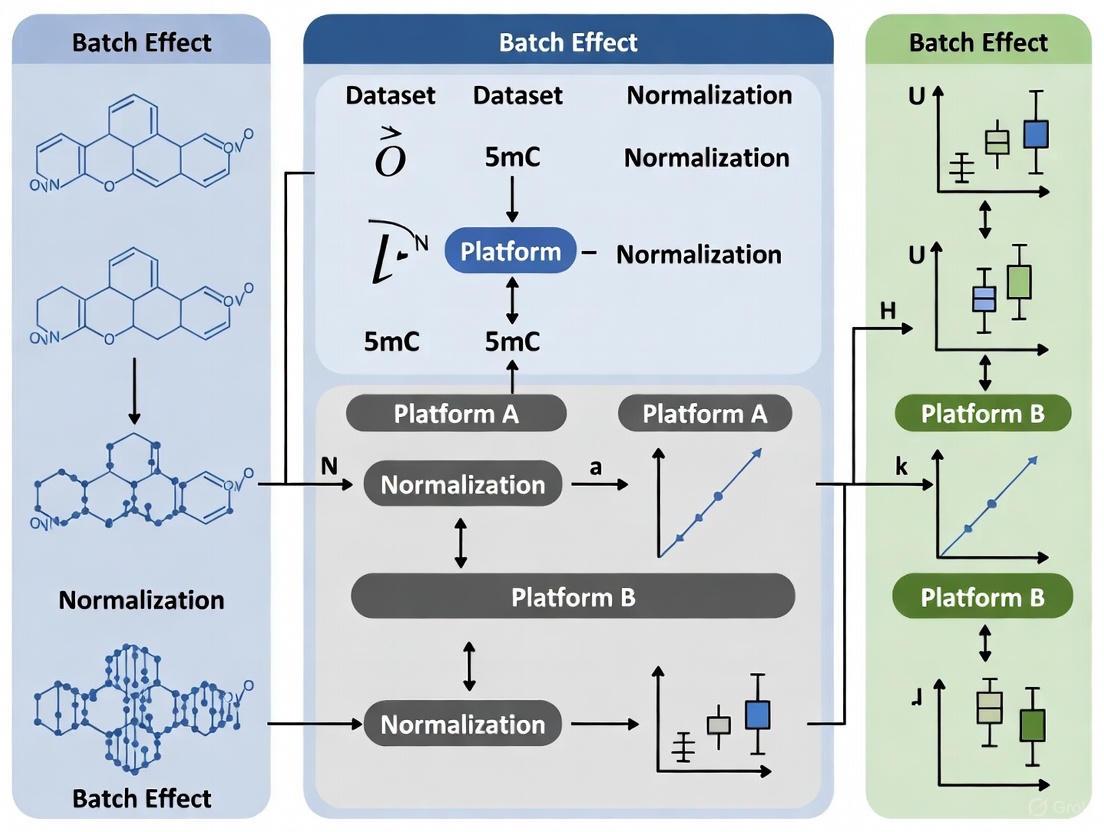
Integrating DNA methylation data from diverse platforms like microarrays, bisulfite sequencing, and nanopore sequencing is essential for large-scale epigenomic studies but introduces significant technical batch effects that can compromise data...
Navigating Batch Effects in Multi-Platform Methylation Studies: From Detection to Cross-Platform Harmonization
Abstract
Integrating DNA methylation data from diverse platforms like microarrays, bisulfite sequencing, and nanopore sequencing is essential for large-scale epigenomic studies but introduces significant technical batch effects that can compromise data integrity and biological discovery. This article provides a comprehensive framework for researchers and drug development professionals to address these challenges. We explore the foundational sources of batch effects across major profiling technologies, evaluate established and novel correction methodologies including ComBat variants and machine learning approaches, and present optimization strategies for robust multi-platform analysis. Furthermore, we examine validation techniques and comparative performance of harmonization methods, highlighting emerging solutions for cross-platform classification to enhance reproducibility in clinical and translational research.
Understanding Batch Effect Origins in Diverse Methylation Platforms
Troubleshooting Guides and FAQs
Technical variation arises from multiple sources throughout the experimental workflow. Key sources include:
- Sample processing batches: Samples processed at different times or by different personnel [1]
- Array positional effects: Physical position of samples on the Illumina BeadChip array [2]
- Bisulfite conversion efficiency: Variations in the chemical conversion of unmethylated cytosines [3] [4]
- Platform differences: Technical variability when using different array generations (450K, EPICv1, EPICv2) [5]
How can I identify if my dataset has significant batch effects?
Several assessment methods can reveal batch effects:
- Principal Component Analysis (PCA): Visualize clustering by batch rather than biological group [1]
- Association testing: Calculate proportion of CpGs significantly associated with batch (p < 0.01) [1]
- Technical replicate analysis: Evaluate variation between replicate samples [2]
- Unsupervised hierarchical clustering: Check if samples cluster by technical rather than biological factors [1]
Which batch effect correction method is most effective for DNA methylation data?
The optimal method depends on your data characteristics:
| Method | Best For | Key Considerations |
|---|---|---|
| ComBat-met | DNA methylation β-values specifically | Uses beta regression framework for [0,1]-constrained data [3] |
| ComBat | Known batch effects with normal distribution assumptions | Requires M-value transformation; effective for positional effects [2] |
| Functional Normalization | Leveraging control probes | Removes technical variation using control probe data [5] |
| Empirical Bayes (EB) | Datasets with obvious batch effects | Works well following normalization [1] |
How does array type affect data comparability in longitudinal studies?
Array differences introduce technical variability:
| Array Type | CpG Coverage | Key Considerations for Cross-Platform Studies |
|---|---|---|
| 450K | 485,577 probes | Baseline for many historical datasets [5] |
| EPICv1 | 866,552 probes | 93.5% probe overlap with 450K [5] |
| EPICv2 | 937,690 probes | Additional cancer-informed CpGs; careful probe filtering needed [5] |
Recent studies show that 17.5% of CpGs demonstrate significant array bias, and epigenetic age estimates are more stable when using principal component versions of epigenetic clocks across platforms [5].
Experimental Protocols
Protocol 1: Assessing Batch Effects with Principal Variance Component Analysis (PVCA)
Purpose: Quantify the proportion of variance attributable to batch effects versus biological factors [2].
Methodology:
- Data Preparation: Normalize β-values using your preferred method (e.g., functional normalization)
- Variance Components Analysis: Apply PVCA to partition variance among factors
- Interpretation: Calculate the percentage of variance explained by batch versus biological variables
- Decision Point: If batch explains >10% of variance, correction is recommended
Expected Outcomes: One study found batch effects explained substantial variation across multiple datasets, with 52,988 CpG loci significantly associated with sample positions in the primary dataset [2].
Protocol 2: ComBat-met Batch Effect Correction
Purpose: Remove batch effects while preserving the statistical properties of DNA methylation β-values [3].
Methodology:
- Model Fitting: Fit beta regression models to the data accounting for batch effects
- Parameter Estimation: Calculate batch-free distributions using maximum likelihood estimation
- Quantile Matching: Map quantiles of estimated distributions to batch-free counterparts
- Validation: Verify biological signals are maintained while batch effects are reduced
Implementation:
The Scientist's Toolkit: Research Reagent Solutions
| Reagent/Resource | Function | Application Notes |
|---|---|---|
| Illumina DNA Methylation BeadChips | Genome-wide methylation profiling | Choose appropriate platform (450K/EPICv1/EPICv2) based on study needs [2] [5] |
| Bisulfite Conversion Kits | Convert unmethylated cytosines to uracils | Ensure DNA purity; particulate matter affects conversion efficiency [4] |
| Zymo EZDNA Bisulfite Conversion Kit | Bisulfite treatment of DNA | Follow manufacturer's protocols for different DNA input amounts [5] |
| Qiagen DNeasy DNA Blood & Tissue Kit | DNA extraction from samples | Standardized extraction minimizes technical variation [5] |
| Platinum Taq DNA Polymerase | Amplification of bisulfite-converted DNA | Proof-reading polymerases not recommended for uracil-containing templates [4] |
Workflow Diagrams
Batch Effect Assessment and Correction Workflow
Methylation Data Processing Pipeline
Cross-Platform Methylation Analysis Strategy
FAQ: Understanding Platform-Specific Biases
Q: What are the fundamental differences in how microarrays and sequencing technologies measure DNA methylation?
A: The core difference lies in their detection principles. Microarrays, like the Illumina Infinium MethylationEPIC BeadChip, use hybridization. Fluorescently labeled bisulfite-converted DNA binds to complementary probes on a solid surface, with methylation status (reported as a β-value from 0 to 1) determined by the ratio of fluorescent signals from methylated vs. unmethylated probes [6] [7]. In contrast, sequencing methods like Whole-Genome Bisulfite Sequencing (WGBS) or Enzymatic Methyl-Sequencing (EM-seq) use chemical or enzymatic conversion, followed by high-throughput sequencing to provide a digital count of reads at single-base resolution [8] [6] [7].
Q: My multi-platform study shows inconsistent results for the same samples. Is this due to batch effects or fundamental platform biases?
A: It could be both. True platform-specific biases exist because each technology interrogates DNA differently. For instance, microarrays have predefined genomic coverage, while sequencing can discover novel sites [6]. Separate from this, batch effects are technical variations introduced by factors like different processing dates, reagent lots, or laboratories [3]. Batch effects can occur within a single platform and are compounded when integrating data from different platforms. It is crucial to apply batch-effect correction methods like ComBat-met designed for multi-platform methylation data after accounting for the known biological and technical differences between the platforms [3].
Q: For DNA methylation analysis, which platform is more sensitive for detecting differential methylation in low-input samples?
A: Microarrays are generally robust for low-input DNA, routinely working with 500 ng or less [6]. However, newer sequencing library preparation methods for EM-seq are also advancing and can handle lower input amounts while preserving DNA integrity better than traditional bisulfite sequencing [6]. The choice depends on your need for genome-wide coverage versus the ability to work with degraded samples.
Q: I am observing a high number of sequencing reads that do not perfectly match my reference. Is this a technical artifact?
A: Yes, this is a known technical bias in some NGS platforms. Studies using synthetic RNA samples with known sequences have identified significant "sequence variation" in Illumina sequencing data, where a large proportion of reads contain errors, length variants, or mismatches compared to the original synthetic template [9]. This "cross-sequencing" issue can make it difficult to distinguish between closely related sequences. Pre-processing with quality-aware alignment tools can help, but may reduce sensitivity [9]. This is a platform-specific bias less commonly associated with microarray hybridization.
Troubleshooting Guides
Issue 1: High Discrepancy in Methylation Calls Between Microarray and Sequencing
Symptoms: β-values from microarray data and methylation proportions from sequencing data for the same genomic region and sample show poor correlation.
Diagnosis and Solutions:
- Step 1: Verify Genomic Coordinate Alignment. Ensure you are comparing precisely the same CpG sites. Microarray probes can sometimes cross-hybridize to regions with high sequence similarity, while sequencing reads might misalign in repetitive regions [9] [6].
- Step 2: Check for Probe-Type Bias. On Illumina arrays, two different probe chemistries (Infinium I and II) are used, which can introduce bias. Ensure proper normalization has been applied to the array data [6].
- Step 3: Assess Coverage Depth. For sequencing, low read depth at a CpG site leads to unreliable methylation estimates. Filter out sites with coverage below a minimum threshold (e.g., 10x) [7].
- Step 4: Investigate Regional Context. Biases are more pronounced in specific genomic contexts. Check if discrepancies are concentrated in regions with high GC-content, repetitive elements, or known structural variations, where both technologies can struggle [6].
Issue 2: Severe Batch Effects When Merging Datasets from Different Platforms
Symptoms: Principal Component Analysis (PCA) or other unsupervised clustering methods show samples grouping strongly by technology platform (e.g., all microarray samples cluster together, separate from all sequencing samples), obscuring the biological signal of interest.
Diagnosis and Solutions:
- Step 1: Do NOT Correct by Platform. Treating the platform itself as a "batch" to be corrected can remove genuine biological signals along with technical bias. The platform is a known and wanted technical variable that must be handled differently from unknown, unwanted batch effects [3].
- Step 2: Use Cross-Platform Normalization Methods. Apply batch-effect correction frameworks specifically designed for methylation data that can handle its bounded distribution (β-values between 0-1). The standard ComBat tool assumes a normal distribution and is not ideal.
- Recommended Tool: Use ComBat-met, a beta regression framework that models the specific characteristics of β-values and maps quantiles to a batch-free distribution without assuming normality [3].
- Step 3: Validate with Negative Controls. Use known negative control samples or regions that should not be differentially methylated between platforms to assess the success of the correction. The correlation should improve post-correction.
Issue 3: Poor Concordance in Copy Number Variation (CNV) Calls
Symptoms: CNV assessments for genes like EGFR or CDKN2A/B in gliomas show different results when using FISH, NGS, or DNA Methylation Microarray (DMM) [10].
Diagnosis and Solutions:
- Step 1: Understand Platform Strengths. FISH is targeted and has lower resolution, while NGS and DMM provide genome-wide profiles. DMM infers CNV from methylation array intensity data and shows high concordance with NGS for specific CNV markers [10]. Discordance with FISH is expected in high-grade gliomas with high genomic instability.
- Step 2: Implement an Integrated Diagnostic Approach. Do not rely on a single platform. For critical clinical diagnostics, use a multi-platform strategy where CNV calls from one platform (e.g., NGS) are validated by another (e.g., DMM) [10].
- Step 3: Manually Review Problematic Regions. For cases with known genomic instability or complex rearrangements, manually inspect the raw data (e.g., B-allele frequency and log R ratio for arrays, read depth and paired-end reads for NGS) instead of relying solely on automated calling algorithms.
Experimental Protocols for Bias Assessment
Protocol 1: Cross-Platform Validation Using Orthogonal Methods
Objective: To validate findings from one platform (e.g., microarray) using another technology (e.g., sequencing) or a gold-standard method like pyrosequencing.
Materials:
- High-quality genomic DNA sample(s).
- Microarray platform (e.g., Illumina EPIC v2).
- Sequencing platform (e.g., for WGBS or EM-seq).
- Reagents for bisulfite conversion (e.g., EZ DNA Methylation Kit).
- Key Reagent: Pyrosequencing assay for target regions.
Methodology:
- Split the same DNA sample and process it in parallel for the microarray and sequencing assays, following manufacturers' protocols.
- For both platforms, perform standard data processing and normalization.
- Identify a set of CpG sites common to both platforms.
- For a subset of significantly discordant sites, design and run pyrosequencing assays as an orthogonal validation.
- Calculate correlation coefficients (Pearson or Spearman) between the β-values from the initial platform and the pyrosequencing results, and again with the second platform.
Protocol 2: Evaluating Technical Performance with Synthetic Controls
Objective: To assess the absolute quantification accuracy, sensitivity, and specificity of a platform using synthetic RNA/DNA samples with known concentrations.
Materials:
- Synthetic RNA oligo pools with precisely known concentrations (e.g., 744 oligos mimicking microRNA diversity) [9].
- The platform(s) under investigation (e.g., Microarray and NGS sequencer).
Methodology:
- Create two or more synthetic samples by mixing the oligo pools in different, predefined ratios. This creates known absolute concentrations and expected log2 ratios [9].
- Process these synthetic samples on the microarray and sequencing platforms.
- Data Analysis:
- Calculate the correlation (r) between the measured expression/intensity and the known RNA concentration for absolute quantification.
- Calculate the correlation between the observed log2 ratios and the expected log2 ratios for relative quantification.
- Compare the sensitivity (detection rate at low concentrations) and reproducibility between technical replicates for each platform [9].
Data Presentation: Platform Comparison Tables
Table 1: Technical Comparison of Major DNA Methylation Profiling Methods
| Feature | Illumina Methylation EPIC Array | Whole-Genome Bisulfite Sequencing (WGBS) | Enzymatic Methyl-Sequencing (EM-seq) | Oxford Nanopore (ONT) |
|---|---|---|---|---|
| Resolution | Pre-defined CpG sites (~935,000) | Single-base (theoretical full genome) | Single-base (theoretical full genome) | Single-base (direct detection) |
| DNA Input | ~500 ng [6] | ~1 μg [6] | Lower than WGBS [6] | ~1 μg (8 kb fragments) [6] |
| DNA Degradation | Subject to bisulfite degradation [6] | Subject to bisulfite degradation [6] | Preserves DNA integrity [6] | No conversion needed [7] |
| Key Strengths | Cost-effective, standardized analysis, high throughput [6] [7] | Gold standard for comprehensive coverage [8] | Better coverage uniformity than WGBS, less DNA damage [8] [6] | Long reads, detects modifications directly [6] [7] |
| Key Limitations | Limited to pre-designed probes, cross-hybridization risk [9] [6] | High cost, computational burden, bisulfite-induced bias [6] | Still relies on conversion (enzymatic) | Higher raw error rate [6] |
Table 2: Quantitative Performance Comparison of Microarray and RNA-Seq from a Representative Study [11]
| Performance Metric | Microarray | RNA-Seq |
|---|---|---|
| Genes Detected (after filtering) | 15,828 | 22,323 |
| Differentially Expressed Genes (DEGs) Identified | 427 | 2395 |
| Shared DEGs | 223 (shared between both) | 223 (shared between both) |
| Perturbed Pathways Identified | 47 | 205 |
| Median Pearson Correlation with shared genes | 0.76 | 0.76 |
The Scientist's Toolkit: Research Reagent Solutions
Table 3: Essential Reagents for Methylation and Transcriptomics Studies
| Reagent / Kit | Function | Application Notes |
|---|---|---|
| EZ DNA Methylation Kit (Zymo Research) | Bisulfite conversion of unmethylated cytosines to uracils. | Standard for pre-processing DNA for both microarray and bisulfite sequencing methods [6]. |
| NEBNext Ultra II RNA Library Prep Kit (Illumina) | Prepares RNA sequencing libraries for next-generation sequencing. | Used for transcriptome analysis via RNA-Seq [11]. |
| PAXgene Blood RNA Kit | Stabilizes and purifies intracellular RNA from whole blood. | Critical for preserving accurate gene expression profiles from clinical blood samples [11]. |
| GLOBINclear Kit (Ambion) | Depletes globin mRNA from whole blood RNA samples. | Reduces background noise and improves detection of non-globin transcripts in blood samples [11]. |
| Nanobind Tissue Big DNA Kit (Circulomics) | Extracts high-molecular-weight DNA from tissue. | Suitable for long-read sequencing technologies like Nanopore that require long, intact DNA strands [6]. |
Experimental Workflow and Decision Diagrams
Diagram 1: Platform Bias Troubleshooting Flowchart
Diagram 2: ComBat-met Batch Effect Correction Workflow [3]
A technical guide for researchers navigating the impact of probe chemistry on data reliability in methylation studies.
This guide addresses the critical technical differences between Infinium I and Infinium II probe designs on Illumina Methylation BeadChips (e.g., 450K, EPIC). Understanding these differences is essential for effective experimental design, data preprocessing, and accurate interpretation of results, particularly in the context of multi-platform studies where batch effects are a major concern [12].
FAQ: Why Do Probe Design Differences Matter?
Q: What is the fundamental technical difference between Infinium I and II probes?
A: The core difference lies in the number of probes and color channels used to interrogate a single CpG site [13] [14].
- Infinium I Probes use two separate probe sequences (beads)—one for the methylated allele (M) and one for the unmethylated allele (U). Base extension is the same for both, and the color channel (red or green) is determined by the nucleotide adjacent to the target cytosine [12].
- Infinium II Probes use a single probe sequence for both alleles. The methylation state is determined at the single-base extension step, which incorporates a dye-labeled nucleotide. This design confounds the red/green channel signal with the methylation measurement itself; typically, the green channel (Cy3) signal corresponds to methylated bases, and the red channel (Cy5) corresponds to unmethylated bases [12] [14].
Q: How does this design difference impact data quality and susceptibility to batch effects?
A: The Infinium II design, while more economical and allowing for higher density on the array, introduces specific technical vulnerabilities:
- Reduced Dynamic Range: Infinium II probes consistently show a reduced dynamic range of measured methylation values (β-values) compared to Infinium I probes [13] [12]. This is presumed to be because the single bead for both alleles is prone to residual emission from the other dye, compressing the signal [12].
- Dye Bias Susceptibility: Because the methylation measurement is directly tied to the ratio of two different dye signals (Cy3 and Cy5), Infinium II probes are inherently more susceptible to technical artifacts like dye bias and photodegradation [12]. Cy5 is known to be more prone to ozone degradation than Cy3, which can systematically affect Infinium II measurements [12].
- Probe-Type Bias: The two chemistries produce distinct β-value distributions. This is a major source of within-array bias that must be corrected through normalization during preprocessing [15].
The table below summarizes the key comparative characteristics of the two probe types.
| Feature | Infinium I Probes | Infinium II Probes |
|---|---|---|
| Probes per CpG | Two (M & U) [13] [14] | One [13] [14] |
| Color Channel | M and U signals in the same channel [12] | M and U signals in different channels (confounded) [12] |
| Dynamic Range | Wider [13] | Reduced [13] [12] |
| Susceptibility to Dye Bias | Lower | Higher [12] |
| Abundance on EPIC array | ~15% | ~85% [16] |
| Normalization Need | High (to correct for different distributions vs. Type II) [15] | High (to correct for different distributions vs. Type I) [15] |
Troubleshooting Guide: Addressing Probe-Related Issues
Issue 1: High Technical Variance and Unreliable Probes
Problem: Data shows high variability between technical replicates, potentially driven by low-reliability probes.
Solutions:
- Identify Probes with Low Mean Intensity: Probes with low signal intensity (the average of methylated and unmethylated signals) exhibit higher β-value variability between replicates and are more likely to provide unreliable measurements [16] [13]. Mean intensity is negatively correlated with proposed "unreliability scores" [16].
- Use Dynamic Thresholds for Filtering: Instead of relying on a fixed list of "bad" probes, implement a data-driven method that calculates mean intensity and unreliability scores for your specific dataset. Filter out probes that fall below a dynamic threshold for these metrics [16]. An R package is available to facilitate this [16].
- Leverage ICC for Probe Reliability: Assess probe reliability using Intraclass Correlation Coefficients (ICCs) on replicate samples. A significant proportion of probes on the EPIC array show poor reproducibility (ICC < 0.50) [15]. Normalization, particularly with the SeSAMe 2 pipeline, has been shown to dramatically improve ICC estimates [15].
Issue 2: Persistent Batch Effects After Standard Normalization
Problem: Batch effects related to processing day, slide, or array position persist despite standard preprocessing.
Solutions:
- Apply Probe-Type Specific Normalization: Ensure your preprocessing pipeline includes a step specifically designed to correct the different β-value distributions between Infinium I and II probes. Methods like BMIQ (Beta-Mixture Quantile Normalization) are widely used for this purpose [15].
- Filter Known Problematic Probes: Prior to normalization and batch correction, aggressively filter out probes known to be problematic. This includes:
- Cross-reactive probes that map to multiple locations in the genome [13] [12].
- Probes containing SNPs (especially at the targeted CpG site) that can confound methylation measurement with genotype information [13] [12].
- Probes with very high average intensity, as they may artifactually report β-values close to 0.5 [13].
- Use Appropriate Batch Correction Tools: When applying batch correction methods like ComBat, always use M-values for the adjustment, as their unbounded nature is more statistically valid for such procedures. After correction, convert the data back to β-values for interpretation [12] [17]. Newer methods like ComBat-met, which uses a beta regression framework tailored for β-values, may offer improved performance [3].
Issue 3: Integrating Data from Different Array Platforms or Batches
Problem: Combining datasets from 450K and EPIC arrays, or from multiple processing batches, introduces strong technical variation that can obscure biological signals.
Solutions:
- Prioritize Balanced Study Design: The ultimate antidote to confounded batch effects is a balanced design where biological groups are distributed evenly across arrays and processing batches [17]. If this is not possible, extreme caution is required during batch correction.
- Implement Incremental Batch Correction: For longitudinal studies where data is added over time, use an incremental framework like iComBat. This allows new batches to be adjusted to a reference without altering previously corrected data, ensuring consistency across the project timeline [18].
- Leverage Conserved Probes for Cross-Species/Species-Specific Studies: For non-human mammalian studies, the Mammalian Methylation Array uses a design that tolerates cross-species mutations via degenerate bases, facilitating more reliable comparisons across species [19].
Experimental Protocols for Assessing Probe Reliability
Protocol 1: Evaluating Probe Performance Using Technical Replicates
Objective: To identify unreliable CpG probes by assessing their reproducibility across technical replicate samples.
Materials:
- Technical replicate samples (from the same DNA source) [16] [15].
- Standard Illumina Methylation BeadChip processing reagents and equipment [16].
- R/Bioconductor packages (e.g.,
minfi,meffil) [14] [15].
Methodology:
- Profile Technical Replicates: Process technical replicate samples across different arrays or batches to capture technical variance [16].
- Calculate Reliability Metrics:
- Mean Intensity (MI): Compute the average of the methylated and unmethylated signal intensities for each probe in each sample [16].
- Unreliability Score: Simulate the influence of technical noise on β-values using the background intensities of negative control probes to generate a probe-specific unreliability score [16].
- Intraclass Correlation Coefficient (ICC): Calculate ICC for each probe across the technical replicates to quantify reproducibility [15].
- Establish Dynamic Thresholds: Determine optimal thresholds for MI and unreliability scores specific to your dataset. Probes falling below the MI threshold or above the unreliability threshold should be flagged for exclusion [16].
- Validate with Biological Replicates: Use paired longitudinal samples (e.g., blood samples from the same individual taken weeks apart) to distinguish technical variability from true biological intra-individual variation [16].
Protocol 2: Systematic Normalization Method Comparison
Objective: To identify the optimal normalization method for a given dataset that best corrects for probe-type bias and other technical artifacts.
Materials:
- A methylation dataset including technical replicates [15].
- R/Bioconductor packages with multiple normalization methods (e.g.,
minfi,wateRmelon,SeSAMe) [15].
Methodology:
- Apply Multiple Normalizations: Process the raw data using several common normalization methods, such as:
- Evaluate Performance Metrics: For each normalized dataset, calculate:
- Select Best-Performing Method: Choose the normalization method that minimizes technical variance between replicates while preserving expected biological signals. Recent systematic evaluations have found SeSAMe 2 to be a top-performing method, while quantile-based methods often perform poorly [15].
Analytical Workflow for Probe Susceptibility
The following diagram outlines a logical workflow for diagnosing and addressing probe-level susceptibility issues in methylation data analysis.
| Item / Resource | Function / Application |
|---|---|
| R/Bioconductor Packages | Open-source software for comprehensive methylation data analysis (e.g., minfi, ChAMP, SeSAMe, ENmix) [16]. |
| Unreliability Score R Package | Calculates data-driven metrics (Mean Intensity & Unreliability Scores) to flag problematic probes for a given dataset [16]. |
| List of Cross-Reactive Probes | A predefined list of probes that non-specifically bind to multiple genomic locations; used for filtering [13] [15]. |
| List of SNP-Containing Probes | A predefined list of probes where a Single Nucleotide Polymorphism overlaps the probe sequence or target CpG; used for filtering [13] [15]. |
| Technical Replicate Samples | Aliquots from the same DNA source used to assess technical variance and probe reliability [16] [15]. |
| Reference-Based Batch Correction | Methods like ComBat-met that adjust all batches to a designated reference batch, improving data integration [3]. |
Frequently Asked Questions
1. What are biological confounders in DNA methylation studies? Biological confounders are inherent biological variables that can create systematic variations in your data, which may be mistaken for or obscure the biological signal of interest. The two primary types are cellular heterogeneity (the presence of multiple cell types in a sample) and genetic variation (individual genetic differences that influence methylation patterns) [20] [21]. Failure to account for these can lead to false positives or false negatives in differential methylation analysis.
2. How does cellular heterogeneity differ from a technical batch effect? While both introduce unwanted variation, they originate from different sources. Batch effects are technical artifacts arising from experimental procedures, such as differences in reagent lots, sequencing runs, or personnel [22]. Cellular heterogeneity is a biological reality, reflecting the diversity of cell types within a tissue sample [20]. If the composition of cell types differs between your case and control groups, this biological difference can confound the analysis.
3. My study uses whole blood. How critical is it to account for cellular heterogeneity? It is highly critical. Whole blood is a mixture of various cell types (e.g., neutrophils, lymphocytes, monocytes), each with a distinct methylation profile [21]. If your compared groups (e.g., disease vs. healthy) have different underlying cell type compositions, any observed methylation differences are likely confounded by this heterogeneity. Methods to adjust for this include using a reference dataset to estimate cell counts or including cell type composition as a covariate in statistical models.
4. Can genetic variation really impact DNA methylation analysis? Yes, significantly. Genetic variants, such as Single Nucleotide Polymorphisms (SNPs), can create or destroy CpG sites and influence local methylation patterns via mechanisms known as methylation quantitative trait loci (mQTLs) [21]. Probes on microarray platforms like the Illumina EPIC array can also hybridize less efficiently in the presence of a genetic variant, leading to technically biased measurements that are misinterpreted as biological methylation differences.
5. What are the signs that my data may be affected by these confounders?
- Cellular Heterogeneity: Your data shows strong clustering or association with known demographic variables (e.g., age, sex) that are also linked to immune cell composition [20] [21].
- Genetic Variation: You notice that significant hits are enriched near known genetic risk loci for the disease you are studying, suggesting the signal may be genetically driven rather than purely epigenetic [21].
- General Confounding: Uncontrolled confounding often manifests as inflation of test statistics (e.g., a high lambda value in an EWAS) even when no true associations are present [21].
Troubleshooting Guides
Issue 1: Suspected Cellular Heterogeneity Confounding
Detection and Diagnosis:
- Visualization: Perform a Principal Component Analysis (PCA) on your methylation data and color the samples by key demographic variables (age, sex, BMI). Strong clustering by these variables can indicate underlying cellular heterogeneity is a major source of variation [20].
- Association Testing: Statistically test the association between the first few principal components of your methylation data and variables like age and sex. A significant association is a red flag [1].
Solutions and Methodologies:
- Estimate Cell Counts: For blood samples, use established reference-based algorithms (e.g., Houseman's method) to estimate the proportions of specific leukocyte subsets from your methylation data.
- Incorporate as Covariates: Include the estimated cell proportions as covariates in your linear regression model for differential methylation analysis.
- Use a Custom Reference: For tissues other than blood, if a cell-type-specific methylome reference is available, you can adapt reference-based estimation methods.
Table 1: Statistical Power Guidelines for EPIC Array Studies. Adapted from [21].
| Sample Size | Minimum Detectable Effect Size (Δβ) | Use Case Scenario |
|---|---|---|
| ~ 100 samples | ~ 0.10 | Pilot studies, large expected effects |
| ~ 500 samples | ~ 0.04 | Moderately powered EWAS |
| ~ 1000 samples | ~ 0.02 | Well-powered to detect small differences at most sites |
Issue 2: Suspected Genetic Variation Confounding
Detection and Diagnosis:
- Probe Filtering: Prior to analysis, rigorously filter your probe list. Remove probes known to (a) contain SNPs at the CpG site or at the single-base extension site, (b) cross-hybridize to multiple genomic locations, or (c) be located on sex chromosomes if not relevant to the study [21]. This pre-emptive step is crucial.
- Post-hoc Colocalization Analysis: If you identify significant hits, check if they are in linkage disequilibrium with known GWAS hits for your trait of interest using tools like GWAS catalog overlaps.
Solutions and Methodologies:
- Employ Robust Normalization: Use normalization methods that are less sensitive to extreme values caused by genetic artifacts.
- Condition on Genotype: In studies where genetic data is also available, the strongest approach is to include the genotype at the specific SNP as a covariate in the methylation model to isolate the epigenetic effect.
- Apply Appropriate Significance Thresholding: Always use a multiple testing correction threshold that accounts for the number of probes tested. For Illumina EPIC arrays, a family-wise error rate (FWER) significance threshold of P < 9 × 10⁻⁸ is recommended [21].
Table 2: Common Methods for Addressing Biological Confounders.
| Method Category | Example Methods | Brief Description | Best for Addressing |
|---|---|---|---|
| Reference-based Deconvolution | Houseman method, EpiDISH | Estimates cell type proportions from bulk tissue data using a reference methylome. | Cellular Heterogeneity |
| Surrogate Variable Analysis | SVA, RUVm | Identifies unmeasured sources of variation (like unknown confounders) from the data itself. | Unknown Confounders, Cellular Heterogeneity |
| Covariate Adjustment | Linear Model Covariates | Directly includes variables like age, sex, or estimated cell counts in the statistical model. | All Known Confounders |
| Probe Filtering | Custom SNP/Cross-hybridization Lists | Removes technically unreliable probes from the analysis. | Genetic Variation |
The following workflow diagram outlines a systematic approach to diagnosing and correcting for these confounders in your data analysis pipeline.
Experimental Protocol: A Combined Workflow for Confounder Adjustment
This protocol provides a detailed methodology for an EWAS that proactively addresses both cellular heterogeneity and genetic variation, suitable for analysis in R.
Step 1: Preprocessing and Quality Control
- Load your beta-value or idat files using a package like
minfi. - Perform standard QC: remove samples with low signal, high detection P-values, or outlier status.
- Normalize the data using an appropriate method (e.g., Functional normalization, Dasen).
Step 2: Probe Filtering for Genetic Confounders
- Obtain a list of problematic probes (SNP-associated, cross-hybridizing). These are publicly available for Illumina arrays.
- Remove these probes from your dataset. This step can eliminate a significant source of false positives [21].
Step 3: Diagnosing Cellular Heterogeneity
- Perform PCA on the filtered and normalized methylation data.
- Correlate the top principal components with biological and technical variables (age, sex, batch, sample group).
- For blood samples, estimate cell counts using a package like
minfiorEpiDISH.
Step 4: Statistical Modeling for Differential Methylation
- Fit a linear model for each CpG probe. Using R-like notation, a robust model would be:
lm(Methylation ~ Disease_Status + CD8T + CD4T + Neutrophils + Bcell + Mono + Age + Sex + Batch) - Where
Disease_Statusis your variable of interest, and the other terms are confounder covariates. - Use the
limmapackage for improved power and stability in this genome-wide testing context.
Step 5: Interpretation and Validation
- Apply the experiment-wide significance threshold of P < 9 × 10⁻⁸ [21].
- Interpret significant hits in the context of your hypothesis, noting that the model has attempted to isolate the effect of disease from other sources of variation.
The Scientist's Toolkit
Table 3: Essential Reagents and Computational Tools for Managing Biological Confounders.
| Item / Resource | Type | Function / Application |
|---|---|---|
| Illumina EPIC/850k Array | Platform | Genome-wide methylation profiling at >850,000 CpG sites. The primary data generation tool. |
| Reference Methylome Database | Computational | A dataset of cell-type-specific methylation profiles (e.g., for blood cells). Essential for estimating cell proportions from bulk tissue data. |
| Curated Probe Filter List | Computational | A pre-compiled list of probes to exclude due to SNPs or cross-hybridization issues. Critical for mitigating genetic variation confounding [21]. |
| R/Bioconductor Packages | Computational | Software tools like minfi (QC & normalization), limma (differential analysis), and EpiDISH (cell type deconvolution). Form the core of the analysis pipeline. |
| SVA / RUVm Package | Computational | Implements Surrogate Variable Analysis (SVA) or Remove Unwanted Variation (RUV) methods to capture and adjust for unknown sources of confounding [3]. |
Troubleshooting Guides and FAQs
FAQ: Why is detecting batch effects so critical in DNA methylation studies?
Batch effects are technical variations introduced during different experimental runs, by different technicians, or on different platforms. They are not related to the biological question you are studying. If left undetected and uncorrected, these non-biological variations can obscure true biological signals, reduce statistical power, and lead to misleading or irreproducible conclusions. In clinical settings, batch effects have even been known to cause incorrect patient classifications, potentially affecting treatment decisions [23].
FAQ: What are the primary visual signs of batch effects in PCA plots?
In a PCA plot, which reduces high-dimensional data to its principal components, batch effects often manifest as a clear separation of samples by experimental batch rather than by the biological groups you are comparing (e.g., disease vs. control). If samples cluster tightly by their processing date, sequencing lane, or array chip, rather than by phenotype, it is a strong indicator that technical variation is dominating your data [24] [23].
FAQ: We see a batch effect in our hierarchical clustering results. What should we do next?
Observing batches clustering together in a dendrogram confirms the presence of a batch effect. The next step is to apply a statistical batch effect correction method. Popular and effective methods include ComBat and its variants (e.g., ComBat-met for methylation beta-values), which use empirical Bayes frameworks to adjust for batch-specific location and scale parameters. For studies where data is collected incrementally, the newer iComBat method allows for correcting new batches without reprocessing existing data, which is ideal for longitudinal studies [25] [18] [3].
FAQ: Our PCA shows no clear batch separation. Does this mean our data is free of batch effects?
Not necessarily. While a clear batch cluster is a obvious sign, more subtle batch effects can still be present and confound your analysis. These can occur if the batch effect is correlated with a biological variable of interest. It is essential to use statistical tests, such as the Pearson’s Chi-squared test, to formally check for an association between the principal components that explain the most variance in your dataset and your known batch variables. A significant p-value indicates that the major sources of variation in your data are linked to batch, even if the visual separation is not stark [24].
FAQ: Are there specific challenges with batch effects in DNA methylation data from different platforms?
Yes. Integrating data from different platforms, such as Illumina Methylation BeadChips (arrays), whole-genome bisulfite sequencing (WGBS), or enzymatic methylation sequencing (EM-seq), is particularly challenging. Each platform has different technical characteristics and covers a different set of CpG sites. Batch effects arising from platform differences can be severe. The first step is often to harmonize the data, keeping only the CpG sites common to all platforms before applying correction methods designed for the specific data type (e.g., beta regression for array beta-values) [26] [3] [24].
Experimental Protocols for Detection
Protocol 1: Principal Component Analysis (PCA) for Batch Effect Detection
This protocol outlines the steps to perform PCA on DNA methylation data to visually and statistically assess batch effects.
Step 1: Data Preparation and Normalization Begin with a normalized matrix of methylation values. For Illumina BeadChip arrays, this is typically the Beta-value matrix (ranging from 0 to 1). Standard preprocessing includes background correction and dye-bias normalization using packages like
minfiin R [14]. Ensure your sample sheet includes both your biological conditions and technical batch variables (e.g., processing date, chip row).Step 2: Perform PCA Filter for the most variable CpG sites (e.g., the top 32,000 sites by standard deviation) to reduce noise and computational load [24]. Use the
prcomp()function in R on the transposed matrix (so samples are rows and CpGs are columns) to perform PCA.Step 3: Visual Inspection Create a scatter plot of the first principal component (PC1) against the second principal component (PC2). Color the data points by their known batch identifier (e.g., array chip) and, on the same plot, use different shapes to represent the biological groups. Look for clear clustering of points by color, which indicates a dominant batch effect.
Step 4: Statistical Validation To quantify the visual observation, perform a statistical test. Use Pearson’s Chi-squared test to check for an association between the top N principal components (e.g., the first 10 PCs) that capture significant variance and the batch variable. A significant p-value (< 0.05) confirms that the major source of variation is technically driven [24].
Protocol 2: Hierarchical Clustering for Batch Effect Detection
This protocol uses unsupervised clustering to reveal sample relationships driven by technical artifacts.
Step 1: Data Preparation Similar to the PCA protocol, start with a normalized Beta-value matrix. Calculate a distance matrix between all samples. The Euclidean distance is a common and effective metric for this purpose when working with methylation values [24].
Step 2: Construct the Dendrogram Perform hierarchical clustering on the distance matrix using Ward's method (Ward.D2 in R) as the agglomeration rule. This method tends to create compact, spherical clusters and is effective at revealing batch-driven groupings [24]. Plot the resulting dendrogram.
Step 3: Interpret the Clustering Annotate the branches of the dendrogram with colored bars representing the batch and biological group for each sample. If the primary splits in the tree correspond to technical batches rather than biological conditions, it is strong evidence of a pervasive batch effect that must be addressed before any downstream biological analysis.
Table 1: Key Statistical Results from a TEEM-Seq Validation Study Demonstrating Data Concordance [24]
| Analysis Type | Metric | Value | Interpretation |
|---|---|---|---|
| Replicate Concordance | Correlation Coefficient (FFPE) | > 0.98 | Very high technical reproducibility between sample replicates. |
| Tumor Classification | Classifier Prediction Score | > 0.82 | Successful and confident classification of tumors into molecular classes. |
| Sequencing Depth | Minimum Depth for FFPE | 35x | Required depth for reliable prediction scores in FFPE samples. |
Table 2: Performance Comparison of Regional Methylation Summary Methods in Simulation [27]
| Simulation Scenario | Detection Rate (Averaging) | Detection Rate (rPCs) | Improvement with rPCs |
|---|---|---|---|
| 25% of CpGs are DM | 19.1% | 73.1% | +54.0% (absolute) |
| 75% of CpGs are DM | 57.4% | 99.0% | +41.6% (absolute) |
| 1% Methylation Difference | 8.4% | 18.8% | +10.4% (absolute) |
| 9% Methylation Difference | 50.1% | 99.7% | +49.6% (absolute) |
Diagnostic Workflows and Relationships
Batch Effect Diagnostic Workflow
Research Reagent Solutions
Table 3: Essential Materials and Tools for Methylation Analysis and Batch Effect Diagnostics
| Item | Function / Description | Example / Note |
|---|---|---|
| Illumina Methylation BeadChip | A microarray platform for genome-wide methylation profiling. Covers over 850,000 CpG sites. | Infinium MethylationEPIC v1.0 BeadChip is a common platform for EWAS [24] [14]. |
| Enzymatic Methyl-Seq (EM-seq) Kit | A library prep method for methylation sequencing that uses enzymes instead of harsh bisulfite chemicals. | Less DNA fragmentation than bisulfite methods; used in TEEM-seq workflows [24]. |
| Twist Human Methylome Panel | A targeted enrichment panel for sequencing-based methylation studies. Covers ~3.98 million CpG sites. | Used in TEEM-seq for focused, cost-effective profiling [24]. |
| R/Bioconductor Packages | Open-source software for statistical analysis and visualization of methylation data. | Essential packages include minfi for preprocessing, limma for differential analysis, and regionalpcs for advanced summaries [27] [14]. |
| Batch Effect Correction Algorithms | Statistical methods to remove technical variation from data. | ComBat-met (for beta-values), iComBat (for incremental data), and ComBat-ref (for RNA-seq) are advanced methods [25] [18] [3]. |
Batch Effect Correction Strategies: From Traditional to AI-Driven Methods
In high-throughput DNA methylation studies, batch effects are systematic technical variations introduced during sample processing by factors such as different experimental dates, reagent lots, or personnel. These non-biological signals can obscure true biological findings, reduce statistical power, and if confounded with the variable of interest, lead to false positive results and irreproducible conclusions [17] [23]. The empirical Bayes framework ComBat (Combating Batch Effects When Combining Batches of Gene Expression Microarray Data) was developed to address this pervasive issue.
ComBat has become a widely adopted tool for batch effect correction because of its ability to borrow information across features (e.g., genes, CpG sites), making it particularly robust even for studies with small sample sizes per batch. Its core methodology uses an empirical Bayes approach to stabilize the estimates of location (mean) and scale (variance) batch effects, thereby preventing overfitting [3] [17].
However, the direct application of the original ComBat, which assumes normally distributed data, to DNA methylation data is problematic. DNA methylation data consists of β-values (methylation proportions ranging from 0 to 1), whose distribution is naturally bounded and often skewed. While a common workaround involves logit-transforming β-values to M-values for ComBat correction, this does not fully respect the inherent characteristics of proportional data [3]. This limitation spurred the development of methylation-specific variants like ComBat-met and iComBat, which are tailored to the unique properties of epigenetic data and modern research needs, such as longitudinal study designs [3] [18].
Methodological Deep Dive: From ComBat to ComBat-met
Core Empirical Bayes Principles
The foundational ComBat algorithm operates through a two-stage empirical Bayes adjustment:
- Model Fitting: It fits a linear model to the data that includes both biological covariates of interest and the batch factors. For each feature, it estimates batch-specific location (additive) and scale (multiplicative) adjustment parameters.
- Parameter Shrinkage: It then shrinks these batch effect parameters towards the overall mean of all features. This crucial step pools information across features, making the adjustment more robust, especially for small sample sizes and batches with limited data [3] [17].
The ComBat-met Framework: A Beta Regression Model
ComBat-met addresses the key limitation of traditional ComBat by modeling β-values directly using a beta regression framework, which is naturally suited for proportional data bounded between 0 and 1 [3].
The methodology can be broken down into three key steps:
Model Fitting: For each CpG site, a beta regression model is fitted where the β-value is assumed to follow a beta distribution. The model is parameterized in terms of a mean (μ) and a precision (φ). The model structure is:
- ( g(\mu{ij}) = \alpha + Xi^T \beta + \gamma_j )
- ( \log(\phi{ij}) = \eta + Zi^T \delta + \lambdaj ) Here, (g(\cdot)) is a logit link function, (\alpha) is the common cross-batch average, (Xi) are covariate vectors, (\gammaj) is the batch-associated additive effect, (\eta) is the log of the common precision, and (\lambdaj) is the batch effect on precision [3].
Calculating Batch-Free Distributions: Using the maximum likelihood estimates from the fitted model, ComBat-met calculates the parameters of a batch-free distribution for each feature. This represents the expected distribution of the data in the absence of batch effects [3].
Quantile-Matching Adjustment: The adjusted value for each original β-value is computed by mapping its quantile from the estimated batch-affected distribution to the corresponding quantile of the calculated batch-free distribution. This non-parametric step ensures the adjusted data follows the desired batch-free distribution [3].
iComBat: An Incremental Extension
For longitudinal studies or clinical trials where new data batches are acquired over time, the requirement to re-correct the entire dataset whenever a new batch is added is computationally inefficient. iComBat was developed to address this. It is an incremental framework based on ComBat that allows newly added batches to be adjusted to previous data without the need to re-process the entire historical dataset. This preserves the original corrected data and is particularly valuable for long-term epigenetic studies of aging or disease progression [18].
Performance Comparison and Experimental Insights
Simulation-Based Performance
Evaluations using simulated data have demonstrated that ComBat-met, when followed by differential methylation analysis, achieves a superior balance of statistical power and false positive control compared to other methods.
Table 1: Comparative Performance of Batch Correction Methods in Simulated Data [3]
| Method | Core Model Assumption | Key Advantage | Reported Performance |
|---|---|---|---|
| ComBat-met | Beta regression | Models bounded nature of β-values | Superior statistical power while controlling false positive rates |
| M-value ComBat | Gaussian (on logit-transformed data) | Widely used, familiar framework | Improved over naïve application, but suboptimal vs. beta regression |
| Naïve ComBat | Gaussian (on raw β-values) | - | Not recommended; violates core model assumptions |
| One-step approach | Gaussian (in linear model) | Simple implementation | Less powerful than dedicated batch correction methods |
| RUVm | Gaussian (on logit-transformed data) | Uses control features | Performance varies based on control feature selection |
A Critical Caveat: Risk of False Positives
A significant body of research highlights a critical caveat when using ComBat and its variants: the potential to systematically introduce false positive findings under certain conditions. This risk is most acute in unbalanced study designs, where the variable of interest (e.g., disease status) is confounded with batch (e.g., all cases processed on one chip, all controls on another) [28] [17].
One simulation study demonstrated that applying ComBat to randomly generated data with no true biological signal produced alarming numbers of false positives after correction, particularly when correcting for multiple batch factors (e.g., chip and row). This effect was exacerbated by smaller sample sizes but was not entirely eliminated even in larger samples [28]. These findings underscore that a balanced study design, where samples from different biological groups are distributed evenly across technical batches, remains the most effective first line of defense against batch effects [17].
Table 2: Key Research Reagent Solutions for DNA Methylation Analysis
| Item / Resource | Function / Description | Relevance to ComBat Workflows |
|---|---|---|
| Bisulfite Conversion Kits | Chemically converts unmethylated cytosines to uracils, preserving methylation marks for PCR-based analysis. | A key source of batch effects; conversion efficiency variations across batches must be corrected [3] [29]. |
| Infinium Methylation BeadChips | Microarray platforms (e.g., 450K, EPIC) for genome-wide methylation profiling at specific CpG sites. | The primary data source for ComBat corrections; effects from chip, row, and sample plate are common targets [28] [17]. |
| Reference Methylated/Unmethylated DNA | Artificially prepared standards with known methylation status. | Used to create standard curves for absolute quantification (e.g., in MethyLight) and can help monitor technical performance [29]. |
The sva R Package |
Contains the ComBat function for applying the original empirical Bayes correction. |
The standard implementation for correcting M-value transformed methylation data [28]. |
The ChAMP R Pipeline |
A comprehensive analysis pipeline for methylation BeadChip data that integrates ComBat. | Automates many preprocessing steps; users must carefully inspect its application of ComBat to avoid false positives [28]. |
Troubleshooting Guides and FAQs
FAQ 1: My analysis pipeline produced thousands of significant CpG sites after using ComBat, but none before. What is happening?
This is a classic symptom of the false positive induction problem associated with ComBat, often stemming from an unbalanced study design [17].
- Problem Diagnosis: If your biological groups are perfectly or highly confounded with batch (e.g., all Group A samples were run on Chip 1, all Group B on Chip 2), ComBat may over-correct the data, artificially creating group differences that are not biologically real. This is especially likely in pilot studies with small sample sizes [28] [17].
- Solution Pathway:
- Inspect Your Design: Create a table cross-tabulating your biological groups against technical batches (chips, rows, processing dates). Look for perfect confounders.
- Re-run with a Balanced Subset: If possible, re-process a subset of your samples using a balanced design across batches. This is the most robust solution.
- Use a Reference Batch: If re-processing is impossible, consider using ComBat's reference batch option, where all batches are adjusted to the parameters of a single, designated batch [3].
- Leverage Control Features: If available, use methods like RUVm that leverage control features (e.g., invariant CpGs) to estimate unwanted variation, which can be less prone to this issue [3].
FAQ 2: When should I use ComBat-met over the standard ComBat function for my methylation data?
The choice hinges on the data format and your focus on statistical rigor versus convenience.
- Use ComBat-met when:
- You are working directly with β-values and wish to model their inherent distribution properly.
- Your primary goal is to maximize statistical power for differential methylation analysis while rigorously controlling false positives, as simulations support its superior performance [3].
- You require the option for reference-based adjustment.
- Use Standard ComBat (on M-values) when:
- You are following an established pipeline (e.g., the standard
ChAMPpipeline) that operates on M-values. - Computational efficiency is a major concern and your study design is well-balanced.
- ComBat-met is not available or practical for your workflow.
- You are following an established pipeline (e.g., the standard
FAQ 3: How can I handle new batches of data without re-processing my entire existing dataset?
This is a common challenge in longitudinal studies. The recommended solution is to use an incremental batch correction method like iComBat [18].
- Standard Workflow Problem: Traditionally, adding a new batch (e.g., a new time point in a clinical trial) requires combining the new raw data with all previous raw data and running ComBat on the entire dataset again. This changes the previously corrected values, causing inconsistency.
- iComBat Solution: iComBat allows you to correct the new batch of data by aligning it to the already-corrected parameters of the existing dataset. This preserves the original corrected data and ensures consistency across the entire study timeline without the need for full reprocessing [18].
FAQ 4: What are the best practices for diagnosing batch effects before and after correction?
A robust diagnostic approach relies on visualization and statistical testing.
- Before Correction:
- Principal Component Analysis (PCA): Create a PCA plot colored by batch and by biological group. If samples cluster strongly by batch, a batch effect is present. If the batch and group variables are confounded, this signals danger [17].
- Association Testing: Statistically test the association between top principal components and both technical (batch, chip, row) and biological variables. Significant associations with technical variables indicate batch effects [17].
- After Correction:
- Repeat PCA: Generate a new PCA plot after correction. Successful correction is indicated by the loss of batch-related clustering, while biological group differences should remain or become more apparent.
- Monitor p-value Distributions: Be wary of a dramatic inflation in the number of significant findings after correction that was not present before, as this can indicate over-correction and false positive induction [28].
Welcome to the iComBat Technical Support Center
This support portal is designed for researchers, scientists, and drug development professionals working with DNA methylation data in longitudinal studies. Below you will find comprehensive troubleshooting guides, FAQs, and detailed methodologies to address common challenges when implementing iComBat for batch effect correction in multi-platform methylation studies.
Understanding iComBat: Core Concepts
What is iComBat and how does it differ from standard ComBat?
iComBat is an incremental framework for batch effect correction in DNA methylation array data, specifically designed for longitudinal studies where new batches are continuously added over time. Unlike conventional ComBat, which requires simultaneous correction of all samples, iComBat allows adjustment of newly added data without reprocessing previously corrected data, maintaining consistency across the entire dataset [25] [18].
What specific problem does iComBat solve in longitudinal methylation studies?
In long-term studies involving repeated DNA methylation measurements, traditional batch correction methods face significant limitations. When new data batches are added and corrected alongside existing data, the correction parameters change, potentially altering previously corrected data and complicating longitudinal interpretation. iComBat addresses this by providing a stable framework where new batches can be integrated without modifying already-corrected historical data [25] [30].
How does the incremental correction capability of iComBat benefit clinical trials?
iComBat is particularly valuable for clinical trials of anti-aging interventions based on DNA methylation or epigenetic clocks, where repeated measurements are taken over extended periods. It enables consistent evaluation of intervention effects across timepoints without the need for complete reprocessing with each new data collection wave, thus enhancing result reliability and interpretation [18].
Technical Specifications & System Requirements
What are the mathematical foundations of iComBat?
iComBat extends the ComBat methodology, which employs a location/scale adjustment model with empirical Bayes estimation. The model accounts for both additive and multiplicative batch effects:
Model Formulation: The basic model for M-values is:
Yijg = αg + Xij⊤βg + γig + δigεijgwhere γig and δig represent additive and multiplicative batch effects respectively [25].Empirical Bayes Framework: The method borrows information across methylation sites within each batch using a Bayesian hierarchical model, providing stable performance even with small sample sizes [25].
What data formats and preprocessing steps does iComBat require?
iComBat is designed for DNA methylation array data and utilizes either Beta-values or M-values:
- Beta-values: Represent methylation proportions ranging from 0 (completely unmethylated) to 1 (completely methylated)
- M-values: Logit-transformed Beta-values providing better statistical properties for analysis [25]
The method assumes data has undergone standard preprocessing specific to your methylation platform (e.g., background correction, normalization) before batch effect correction.
Troubleshooting Common Implementation Issues
Problem: Inconsistent results when adding new batches
Solution:
- Ensure the reference batch parameters are properly saved and loaded when processing new batches
- Verify that covariate information for new batches follows the same structure and coding as previous batches
- Check that the number of methylation sites matches exactly between old and new datasets
Problem: Excessive computation time with large datasets
Solution:
- Utilize the parallel processing capabilities implemented in iComBat
- Consider processing chromosomes separately for genome-wide data
- Ensure sufficient memory allocation for large methylation datasets
Problem: Batch effects persist after correction
Solution:
- Verify that all technical batches are properly documented in the batch covariate
- Check for confounding between biological conditions and batches
- Consider including additional relevant covariates in the model specification
- Validate correction using positive control samples if available
Frequently Asked Questions (FAQs)
Q: Can iComBat handle very small batch sizes (e.g., n=1-3 samples per batch)? A: Yes, iComBat inherits the robustness of traditional ComBat for small sample sizes within batches by borrowing information across methylation sites through its empirical Bayes framework [18].
Q: How does iComBat perform with different methylation measurement technologies? A: While initially validated for microarray data, the methodological framework can potentially be adapted for bisulfite sequencing, enzymatic conversion techniques, and nanopore sequencing data, though platform-specific characteristics should be considered [3].
Q: Is it possible to use iComBat for cross-platform methylation data integration? A: The incremental framework is particularly suited for this application, as new platforms can be treated as additional batches. However, careful validation is recommended using overlapping samples or positive controls to ensure biological signals are preserved [25] [3].
Q: What quality control measures should accompany iComBat implementation? A: We recommend:
- Visual assessment of data before and after correction using PCA
- Monitoring of variance stabilization across batches
- Validation using control samples when available
- Assessment of biological signal preservation through known biomarkers [31]
Experimental Protocols & Workflows
Standard iComBat Implementation Workflow:
Detailed Protocol for Initial iComBat Implementation:
Data Preparation:
- Compile Beta-values or M-values from all available batches
- Create comprehensive batch annotation file specifying batch membership for each sample
- Prepare covariate matrix including biological variables of interest
Initial Model Fitting:
- Estimate global parameters (αg, βg, σg) for each methylation site
- Standardize observed data using these parameter estimates
- Estimate batch effect parameters using empirical Bayes framework
- Apply location/scale adjustment to remove batch effects
Parameter Storage:
- Save all model parameters, hyperparameters, and reference distributions
- Document preprocessing steps and normalization parameters
- Retain covariate model specifications for consistent future application
Protocol for Adding New Batches:
New Data Quality Control:
- Perform standard quality checks on new methylation data
- Ensure compatibility with previously processed data (same probe sets, similar distributions)
Incremental Correction:
- Load previously saved model parameters and reference distributions
- Apply correction to new batches using stored parameters without modifying original data
- Integrate corrected new data with previously corrected datasets
Validation:
- Assess integration quality using visualization methods (PCA, UMAP)
- Verify preservation of biological signals using control features
- Document any deviations or special handling requirements
Comparative Methodologies
Table 1: Comparison of Batch Effect Correction Methods for DNA Methylation Data
| Method | Primary Approach | Incremental Capability | Optimal Use Case |
|---|---|---|---|
| iComBat | Location/scale adjustment with empirical Bayes | Yes | Longitudinal studies with sequential data collection |
| Standard ComBat | Location/scale adjustment with empirical Bayes | No | Cross-sectional studies with complete data |
| ComBat-met | Beta regression framework | No | Methylation data with strong beta distribution characteristics |
| SVA/RUV | Latent factor estimation | Limited | Studies with unknown sources of variation |
| Quantile Normalization | Distribution alignment | No | Technical replication studies |
Table 2: Key Parameters in iComBat Empirical Bayes Estimation
| Parameter | Symbol | Estimation Method | Role in Correction |
|---|---|---|---|
| Additive batch effect | γig | Empirical Bayes | Corrects mean shifts between batches |
| Multiplicative batch effect | δig | Empirical Bayes | Corrects variance differences between batches |
| Cross-batch average | αg | Method of moments | Establishes reference level for correction |
| Regression coefficients | βg | Ordinary least squares | Preserves biological signal during correction |
| Hyperparameters | γi, τi², ζi, θi | Method of moments | Enables information sharing across features |
Research Reagent Solutions
Table 3: Essential Materials for iComBat Implementation in Methylation Studies
| Reagent/Resource | Function | Implementation Notes |
|---|---|---|
| Reference control samples | Batch effect monitoring | Include in each batch to track technical variation |
| DNA methylation reference standards | Quality control | Commercial standards for platform performance validation |
| Bridging samples | Longitudinal consistency | Aliquots from same source processed across multiple batches |
| Epigenetic control materials | Biological validation | Verify preservation of known methylation patterns post-correction |
| iComBat R package | Primary analysis tool | Available through scientific repositories |
| Parallel computing resources | Computational efficiency | Essential for large-scale epigenome-wide analyses |
Advanced Technical Diagrams
For additional technical support or specific implementation challenges not addressed in this guide, please consult the primary iComBat literature [25] [18] or statistical software documentation. Remember that proper experimental design, including randomized processing of samples across batches and inclusion of reference samples, significantly enhances the performance of any batch correction method, including iComBat [31].
Batch effects are technical variations introduced during high-throughput experiments due to differences in experimental conditions, reagent lots, processing times, or laboratory personnel [23]. In DNA methylation studies, these artifacts are particularly problematic as they can obscure true biological signals, reduce statistical power, and potentially lead to incorrect conclusions in downstream analyses [3] [17]. The profound negative impact of batch effects includes increased variability, decreased power to detect real biological signals, and in severe cases, retracted scientific publications when key results cannot be reproduced due to technical artifacts [23].
DNA methylation data presents unique challenges for batch correction as it consists of β-values representing methylation percentages constrained between 0 and 1 [3]. Traditional batch correction methods like ComBat and ComBat-seq, while successful for microarray and RNA-seq data respectively, assume normally distributed or count-based data and are suboptimal for proportion-based methylation values [3]. The distribution of β-values often exhibits skewness and over-dispersion, violating the assumptions of these general-purpose methods [3].
ComBat-met represents a specialized solution to this problem—a beta regression framework specifically designed to adjust batch effects in DNA methylation data while respecting the unique properties of β-values [3] [32]. By employing a beta regression model to estimate batch-free distributions and mapping quantiles of the estimated distributions to their batch-free counterparts, ComBat-met effectively removes technical variations while preserving biological signals of interest [3].
Frequently Asked Questions (FAQs)
Q1: What distinguishes ComBat-met from other batch effect correction methods for methylation data?
ComBat-met fundamentally differs from other methods through its use of beta regression specifically designed for proportion-based β-values. Unlike M-value ComBat which requires logit transformation of β-values to assume normality, or methods like SVA and RUVm that also operate on transformed data, ComBat-met directly models the bounded nature of β-values using beta distribution [3] [32]. This approach better captures the inherent characteristics of DNA methylation data, including potential skewness and over-dispersion [3].
Q2: In what scenarios would ComBat-met be particularly advantageous over other methods?
ComBat-met provides particular advantages in:
- Studies with severe batch effects where normalization alone is insufficient [33]
- Datasets with明显的不平衡分布β-values
- Multi-platform methylation studies integrating data from different technologies
- Situations where preserving true biological signals is critical
- Analyses requiring high statistical power for differential methylation detection [3]
Benchmarking analyses demonstrate that ComBat-met followed by differential methylation analysis achieves superior statistical power compared to traditional approaches while correctly controlling Type I error rates in nearly all cases [3].
Q3: What are the common pitfalls when applying ComBat-met, and how can they be avoided?
A critical pitfall involves applying batch correction to studies with unbalanced designs where biological variables of interest are confounded with batch variables [17]. This can introduce false biological signal rather than remove technical noise. One documented case showed that applying ComBat to an unbalanced study design resulted in 9,612 significant DNA methylation differences despite none being present prior to correction [17].
Prevention strategies include:
- Implementing stratified randomization during study design to distribute biological groups equally across batches
- Thoroughly testing for batch effects using PCA before and after correction
- Maintaining communication between laboratory technicians and data analysts to understand potential confounding factors [17]
Q4: How computationally intensive is ComBat-met, and what optimization options are available?
While beta regression models can be computationally demanding, especially with large datasets [34], ComBat-met implements parallelization using the parLapply() function from the parallel R package to improve computational efficiency [3]. The model fitting is highly parallelizable as it is applied independently to each feature, enabling concurrent processing across multiple threads [3]. For extremely large datasets, the developers also provide an optional empirical Bayes shrinkage method, though the standard approach without shrinkage is generally recommended [3].
Performance Comparison of Batch Effect Correction Methods
Table 1: Comparative performance of batch effect correction methods based on simulation studies
| Method | Underlying Approach | Data Transformation | True Positive Rate | False Positive Rate | Key Strengths |
|---|---|---|---|---|---|
| ComBat-met | Beta regression | Direct modeling of β-values | Highest | Properly controlled | Specifically designed for β-value characteristics |
| M-value ComBat | Empirical Bayes | Logit transformation to M-values | Moderate | Properly controlled | Established method, widely used |
| SVA | Surrogate variable analysis | Logit transformation to M-values | Moderate | Properly controlled | Does not require predefined batch information |
| Including Batch as Covariate | Linear modeling | Logit transformation to M-values | Lower | Properly controlled | Simple implementation |
| BEclear | Latent factor models | Direct modeling of β-values | Moderate | Properly controlled | Specifically for methylation data |
| RUVm | Remove unwanted variation | Logit transformation to M-values | Moderate | Properly controlled | Uses control features |
Table 2: Percentage of variation explained by batch effects in TCGA data after different correction methods
| Method | Normal Samples | Tumor Samples | Interpretation |
|---|---|---|---|
| Uncorrected Data | Highest percentage | Highest percentage | Batch effects dominate biological signal |
| M-value ComBat | Moderate percentage | Moderate percentage | Substantial batch effects remain |
| SVA | Moderate percentage | Moderate percentage | Substantial batch effects remain |
| BEclear | Low percentage | Low percentage | Effective batch effect removal |
| RUVm | Low percentage | Low percentage | Effective batch effect removal |
| ComBat-met | Lowest percentage | Lowest percentage | Most effective batch effect removal |
Step-by-Step Experimental Protocols
Protocol 1: Basic ComBat-met Implementation for DNA Methylation Data
Purpose: Remove batch effects from DNA methylation β-values while preserving biological signals.
Materials and Reagents:
- DNA methylation dataset (β-values matrix)
- R statistical environment (version 4.0 or higher)
- ComBat-met R package (available from GitHub: JmWangBio/ComBatMet)
Procedure:
- Data Preparation: Format your DNA methylation data as a matrix where rows represent CpG sites/features and columns represent samples.
- Batch Information: Create a batch vector indicating the batch membership for each sample.
- Biological Conditions: Specify biological groups if available.
- Execute ComBat-met:
- Quality Assessment: Perform PCA and visualize data before and after correction to assess batch effect removal [32].
Troubleshooting Tips:
- If convergence issues occur, verify that batch groups have sufficient sample size
- For large datasets, utilize parallelization to improve computational efficiency
- Always compare pre- and post-correction PCA plots to ensure biological signals are preserved
Protocol 2: Reference-Based Batch Correction
Purpose: Adjust all batches to align with a specific reference batch.
Procedure:
- Identify Reference Batch: Select a batch with high data quality as reference.
- Execute Reference-Based Correction:
- Validation: Compare distributions of β-values across batches before and after correction.
Protocol 3: Comprehensive Performance Validation
Purpose: Evaluate the effectiveness of batch correction using multiple metrics.
Procedure:
- Percentage of Variation Explained: Calculate the proportion of variation explained by batch before and after correction [32].
- Classification Accuracy: Train a neural network classifier on minimal random probe sets before and after correction and compare accuracy [32].
- Differential Methylation Analysis: Perform differential methylation analysis and compare the number of significant sites and biological consistency of results.
Table 3: Essential resources for implementing ComBat-met in methylation studies
| Resource Type | Specific Tool/Resource | Purpose/Function | Availability |
|---|---|---|---|
| Primary Software | ComBat-met R package | Beta regression-based batch effect correction | GitHub: JmWangBio/ComBatMet |
| Data Repository | GDC Data Portal | Access to standardized methylation data (e.g., TCGA) | https://gdc.cancer.gov/ |
| Alternative Methods | RUVm, BEclear | Comparison methods for batch effect correction | Bioconductor |
| Visualization | Custom R scripts (provided in package) | PCA plots, variation assessment | Included in ComBatMet repository |
| Benchmarking Tools | Simulation scripts | Generate synthetic methylation data with known batch effects | Included in package "inst" folder |
| Data Transfer | GDC Data Transfer Tool | Download large methylation datasets | https://gdc.cancer.gov/ |
Workflow Visualization
ComBat-met Analytical Workflow
Advanced Applications and Validation Strategies
Neural Network Validation Approach
A sophisticated validation method involves training neural network classifiers on minimal random probe sets before and after batch correction:
Protocol:
- Probe Selection: Randomly select three methylation probes in each iteration to simulate minimal, unbiased probe sets.
- Classifier Architecture: Implement a feed-forward, fully connected neural network with two hidden layers.
- Training: Train the network to classify normal versus cancerous samples.
- Evaluation: Calculate accuracy for models trained on unadjusted versus batch-adjusted data.
- Iteration: Repeat this process across multiple iterations with different random probe sets.
Expected Outcome: Effective batch adjustment should consistently improve classification accuracy across iterations, demonstrating that ComBat-met enhances biological signal detection rather than introducing artifacts [32].
Multi-Platform Considerations
For studies integrating methylation data from multiple platforms (bisulfite sequencing, methylation microarrays, enzymatic conversion, nanopore sequencing), ComBat-met's beta regression framework provides a unified approach to address batch effects across technologies [3]. While different profiling techniques introduce distinct technical variations, the fundamental nature of β-values as proportional data remains consistent, making ComBat-met particularly suitable for such integrative analyses.
In multi-platform DNA methylation studies, batch effects—unwanted technical variations arising from processing samples on different days, across multiple chips, or using different reagent lots—routinely confound true biological signals. Normalization is a critical preprocessing step to remove these non-biological variations, making data from different experimental batches comparable. Among the various techniques, quantile normalization and its advanced variant, subset quantile normalization, are widely used. This guide provides troubleshooting and FAQs to help researchers successfully apply these methods to mitigate batch effects in their methylation data.
Frequently Asked Questions (FAQs)
Q1: What is the fundamental difference between standard Quantile Normalization (QN) and Subset Quantile Normalization (SQN)?
A1: Standard QN makes the strong assumption that the overall distribution of probe intensities is nearly identical across all samples. It works by forcing the distribution of intensities in each sample to be identical [35]. In contrast, SQN does not make assumptions about the behavior of the biological signal. Instead, it normalizes the data based on the distribution of a predefined subset of features—such as negative control probes—that are expected to remain constant across samples, thus preserving a greater degree of true biological variation [36].
Q2: When analyzing DNA methylation data from the Illumina 450K or EPIC array, why can't I apply standard quantile normalization directly?
A2: The Illumina Infinium Methylation BeadChips use two different probe chemistries (Infinium I and Infinium II). These probe types have inherently different technical characteristics and β-value distributions; Infinium II probes typically show a narrower dynamic range [37]. Standard QN, which assumes identical distributions, would incorrectly normalize these technically different probes against each other, potentially introducing significant artifacts. Methods like SWAN (Subset-quantile Within Array Normalization) are specifically designed to handle this by normalizing within groups of probes that have similar underlying CpG content [37].
Q3: I applied quantile normalization to my dataset, but my differential analysis results seem to have lost a known biological signal. What might have gone wrong?
A3: This is a classic symptom of applying standard "all-in-one" QN to a dataset where the sample classes have fundamentally different expressional profiles. If one class (e.g., cancer cells) has a globally different methylation profile from another (e.g., normal cells), forcing all distributions to be identical can average out these true class-specific differences, leading to false negatives [38]. A recommended strategy is "Class-specific" QN, where you split your data by phenotype class, perform QN independently on each split, and then recombine the normalized splits for downstream analysis [38].
Q4: What are the common sources of batch effects in DNA methylation microarray data that normalization must address?
A4: Batch effects are pervasive and can arise from multiple sources [12] [17]:
- Processing Batches: Samples processed on different days, by different technicians, or using different reagent lots.
- Positional Effects: The row or column position of a sample on the physical array chip.
- Slide Effects: Variations between entire glass slides, each holding multiple arrays.
- Technical Biases: Differences in bisulfite conversion efficiency, DNA input quality, hybridization conditions, scanner settings, and ambient factors like ozone levels.
Q5: After normalization, how can I diagnose if my data still has significant batch effects?
A5: Principal Components Analysis (PCA) is a standard diagnostic tool. After normalization, you plot the top principal components and color the samples by known batch variables (e.g., processing date, chip ID) and biological variables (e.g., phenotype, sex). A successful normalization will show a reduction in the association between the top PCs and the batch variables, while preserving the association with the key biological variables [17]. Tools like gPCA can also quantify the proportion of variance due to batch effects [38].
Troubleshooting Guides
Problem 1: Poor Differential Methylation Results After Normalization
Symptoms:
- An unexpectedly low number of significant differentially methylated positions (DMPs).
- Loss of signal for DMPs previously validated by other methods.
Potential Causes and Solutions:
| Cause | Solution |
|---|---|
| Class-effect proportion (CEP) is high. The assumption that most features are non-differential is violated. | Use "Class-specific" quantile normalization. Split data by class, normalize each class independently, then recombine [38]. |
| Standard QN is over-aggressive. It is erasing true biological differences between distinct sample types. | Switch to a subset-based method like SQN or SWAN, which preserves more biological variation by normalizing against a stable subset of features [36] [37]. |
| Confounding between batch and class. The biological groups of interest are completely confounded with processing batches. | This is primarily a study design issue. If possible, re-randomize samples across batches. For analysis, use a reference-based correction method like ComBat-met, which adjusts all batches to a common reference, but be aware of the risk of introducing false positives if the design is severely unbalanced [3] [17]. |
Symptoms:
- An implausibly high number of significant DMPs.
- DMPs that do not make biological sense and cannot be validated.
Potential Causes and Solutions:
| Cause | Solution |
|---|---|
| Severely unbalanced study design. The variable of interest (e.g., disease state) is completely confounded with a batch variable (e.g., all controls on one chip). | Apply batch-effect correction methods like ComBat with extreme caution in unbalanced designs. The ultimate solution is a balanced design where samples from all groups are distributed across all batches [17]. |
| Incorrect application of QN to diverse probe types. Applying standard QN to 450K/EPIC data without accounting for Infinium I/II differences creates artifacts. | Use a method specifically designed for the platform, such as SWAN, which normalizes within arrays based on probe type and CpG content [37]. |
| Over-correction by the algorithm. The batch correction method mistakes strong, prevalent biological signal for technical noise and removes it. | For methods like ComBat, declare known biological covariates (e.g., sex, age) to the algorithm to protect them from being "corrected away." Always perform diagnostic checks (e.g., PCA) post-correction [17]. |
Problem 3: Normalization Failure on Specific Data Types
Symptoms:
- The normalized data has a distorted distribution (e.g., β-values outside the 0-1 range).
- The normalization algorithm fails to run or produces errors.
Potential Causes and Solutions:
| Cause | Solution |
|---|---|
| Using β-values with methods assuming normality. Many advanced batch-effect tools assume an unbounded distribution. | Convert β-values to M-values (logit transformation) before applying normalization or batch correction, then convert back to β-values for interpretation [12] [3] [17]. |
| Missing control probes. Attempting to run an SQN method without the required set of control probes. | Ensure your dataset includes the necessary control features. If not available, choose an alternative method like SWAN that uses a biologically defined subset (e.g., probes grouped by CpG count) rather than control probes [37]. |
Experimental Protocols
Protocol 1: Standard Quantile Normalization
This is the foundational algorithm for making distributions identical [35].
- Input: A dataset with
nsamples (columns) andpfeatures (rows). - Sort: For each sample, sort the feature values from smallest to largest.
- Average: Calculate the average value across all samples for each rank (i.e., the first-ranked values are averaged, then the second-ranked, etc.). This creates an "average" distribution.
- Replace: Assign this average value to each corresponding rank in all samples.
- Reconstruct: Rearrange the features in each sample back to their original order.
The following diagram illustrates this workflow:
Protocol 2: Subset-quantile Within Array Normalization (SWAN) for Illumina Methylation Arrays
SWAN is designed to normalize between the two probe types (Infinium I and II) on a single 450K or EPIC array [37].
- Input: Raw intensity data (methylated and unmethylated channels) from a single array.
- Subset Creation: For both Infinium I and II probes, randomly select a subset of probes that are biologically similar. This is done by selecting equal numbers of Infinium I and II probes that contain 1, 2, or 3 underlying CpGs in their probe body.
- Create Reference Distribution: For this subset of probes, perform standard quantile normalization within each channel (methylated and unmethylated) to create a single reference distribution for the subset.
- Interpolate: Adjust the intensities of all remaining probes (not in the subset) by using linear interpolation to map them onto the reference distribution created in the previous step. This is done separately for each probe type and for each color channel.
- Output: The fully normalized intensity values for the entire array, which can then be used to calculate β-values.
The workflow for SWAN normalization is as follows:
The Scientist's Toolkit: Essential Research Reagents and Materials
The following table lists key resources used in the experiments and methods cited in this guide.
| Item | Function in Context | Example / Note |
|---|---|---|
| Illumina Infinium Methylation BeadChip | Platform for genome-wide DNA methylation profiling. | HumanMethylation450K or MethylationEPIC arrays [12] [37]. |
| Negative Control Probes | A set of probes designed to measure non-specific binding, used as a stable basis for Subset Quantile Normalization (SQN). | Found on platforms like Affymetrix Exon arrays and Illumina arrays [36]. |
| Bisulfite Conversion Reagents | Chemicals (e.g., sodium bisulfite) that convert unmethylated cytosines to uracils, enabling methylation status detection. | Efficiency of conversion is a major source of batch effects [12]. |
| ComBat / ComBat-met Software | Statistical tools for batch-effect correction using an empirical Bayes framework. | Standard ComBat is for microarray data; ComBat-met is tailored for methylation β-values [3] [17]. |
| SWAN Algorithm | A normalization method within the minfi R/Bioconductor package for Illumina methylation arrays. |
Corrects for technical differences between Infinium I and II probe types [37]. |
| Reference Methylation Dataset | A high-quality dataset from a standardized sample (e.g., a control cell line) processed across multiple batches. | Serves as a gold standard for benchmarking normalization performance [38]. |
In multi-platform DNA methylation studies, batch effects are a significant source of technical variation that can obscure biological signals and lead to irreproducible results [23]. These unwanted variations arise from differences in experimental conditions, profiling platforms, or reagent batches, and are notoriously common in omics data [3] [23]. For DNA methylation-based tumor classification, this presents a particular challenge as most classifiers rely on a fixed methylation feature space, making them incompatible across different measurement platforms [39] [40].
crossNN is an explainable neural network framework designed specifically for cross-platform DNA methylation-based classification of tumors. This framework accurately classifies tumors using sparse methylomes obtained from different platforms with varying epigenome coverage and sequencing depths, effectively circumventing the batch effect problem through its unique architecture and training methodology [39] [40]. crossNN outperforms other deep and conventional machine learning models in accuracy and computational requirements while maintaining explainability, achieving 99.1% and 97.8% precision for brain tumor and pan-cancer models, respectively, in validation across more than 5,000 tumors profiled on different platforms [39] [41].
Frequently Asked Questions (FAQs)
1. What is crossNN and how does it address cross-platform compatibility? crossNN is a neural network-based machine learning framework that enables accurate DNA methylation-based tumor classification across different experimental platforms. It handles platform compatibility issues through a specialized training approach that uses randomly masked input data, allowing it to function effectively with variable and sparse methylation feature sets encountered in nanopore sequencing, targeted bisulfite sequencing, and various microarray technologies [39] [40].
2. How does crossNN's performance compare to other classification methods? crossNN demonstrates superior performance compared to both traditional random forest models and other deep neural network approaches. In validation studies, it achieved higher accuracy and precision while maintaining lower computational requirements. Specifically, it reached 96.11% accuracy at the methylation class level compared to 94.93% for ad-hoc random forest models in cross-validation [39] [40].
3. What types of methylation profiling platforms are compatible with crossNN? The framework supports classification from multiple methylation profiling platforms including:
- Microarray platforms: Illumina 450K, EPIC, and EPICv2
- Sequencing platforms: Low-coverage whole-genome nanopore sequencing, targeted methyl-seq, and whole-genome bisulfite sequencing (WGBS) [39]
4. Can crossNN be applied to pan-cancer classification beyond brain tumors? Yes, while initially developed and validated for brain tumor classification, crossNN has been extended to pan-cancer applications. The pan-cancer model can discriminate more than 170 tumor types across all organ sites, demonstrating the framework's scalability and robustness across diverse cancer types [39] [41].
5. How does crossNN maintain explainability despite using neural networks? crossNN maintains explainability through its simple single-layer neural network architecture (perceptron) that captures linear relationships between input CpG sites and methylation classes. This simple architecture, with full connectivity between input and output layers without hidden layers, allows for direct interpretation of feature contributions to classification outcomes [39] [40].
Troubleshooting Common crossNN Implementation Issues
Low Classification Confidence Scores
Problem: Users report consistently low confidence scores across predictions from sequencing data.
Solution:
- Verify platform-specific cutoff values: crossNN uses different confidence score cutoffs for microarray (>0.4) and sequencing platforms (>0.2) [39].
- Check data preprocessing: Ensure proper binarization of methylation values using the 0.6 beta value threshold as implemented in the crossNN workflow [39] [40].
- Assess coverage depth: For sequencing platforms, verify that coverage meets minimum requirements. crossNN is optimized for sparse data, but extremely low coverage (<0.5% of CpG sites) may affect performance [39].
- Confirm feature encoding: Validate that methylated sites are encoded as 1, unmethylated as -1, and missing features as 0 during input preparation [40].
Performance Discrepancies Between Platforms
Problem: Classification accuracy varies significantly between different experimental platforms.
Solution:
- Implement cross-platform normalization: Ensure proper binarization of beta values (threshold of 0.6) across all platforms to maintain consistency [39] [40].
- Validate feature selection: Verify that uninformative probes have been removed, retaining the 366,263 binary features used in crossNN training [39].
- Apply platform-specific batch correction: For severe batch effects, consider using specialized methods like ComBat-met, a beta regression framework designed for DNA methylation data, before crossNN classification [3].
- Check platform-specific performance benchmarks: Consult expected accuracy ranges for your specific platform (provided in the performance tables section) to set realistic expectations [39].
Model Interpretation Challenges
Problem: Difficulty interpreting classification results and feature contributions.
Solution:
- Leverage built-in explainability: Utilize crossNN's simple architecture where feature weights directly indicate contribution to classification decisions [39].
- Analyze methylation class families: When precise class identification is challenging, examine results at the methylation class family (MCF) level where accuracy is typically higher (99.07% vs 96.11% at MC level) [39] [40].
- Implement feature importance analysis: Extract and visualize weights connecting specific CpG sites to class predictions to identify driving methylation markers [39].
Experimental Protocols and Workflows
crossNN Model Architecture and Training Protocol
The crossNN framework employs a specifically designed neural network architecture and training protocol optimized for cross-platform methylation data:
Architecture Specifications:
- Network Type: Single-layer neural network (perceptron)
- Connectivity: Fully connected between input and output layers
- Bias: No bias terms included
- Activation: Linear relationship between inputs and outputs [39] [40]
Training Protocol:
- Data Preparation:
- Use Heidelberg brain tumor classifier v11b4 reference dataset (2,801 samples, 82 tumor types/subtypes, 9 non-tumor controls)
- Binarize CpG sites using beta value threshold of 0.6
- Remove uninformative probes, resulting in 366,263 binary features
- Encode unmethylated sites as -1, methylated as 1, masked sites as 0 [39] [40]
Training with Masking:
- Apply random masking of input data during training (99.75% masking rate)
- Train for 1,000 epochs to ensure sufficient resampling of each sample
- Use PyTorch implementation for model optimization [39]
Hyperparameter Optimization:
- Determine optimal masking rate (99.75%) and epochs (1,000) via grid search
- Implement fivefold cross-validation for performance validation [39]
crossNN Classification Workflow
The following diagram illustrates the complete crossNN classification workflow from data preparation to tumor classification:
Platform Compatibility and Data Integration
This diagram illustrates how crossNN integrates data from multiple platforms and handles platform-specific variations:
Performance Benchmarks and Validation
crossNN Classification Accuracy Across Platforms
Table 1: crossNN performance across different methylation profiling platforms
| Platform | Sample Size | MC Level Accuracy | MCF Level Accuracy | Precision |
|---|---|---|---|---|
| Illumina 450K | 610 | 0.95 | 0.98 | 0.98 |
| EPIC microarray | 554 | 0.94 | 0.97 | 0.98 |
| EPICv2 microarray | 133 | 0.93 | 0.96 | 0.97 |
| Nanopore (R9 chemistry) | 415 | 0.90 | 0.95 | 0.97 |
| Nanopore (R10 chemistry) | 129 | 0.91 | 0.95 | 0.97 |
| Targeted methyl-seq | 124 | 0.92 | 0.96 | 0.98 |
| Whole-genome bisulfite sequencing | 125 | 0.93 | 0.97 | 0.98 |
| Overall | 2,090 | 0.91 | 0.96 | 0.98 |
MC: Methylation Class, MCF: Methylation Class Family [39]
crossNN Compared to Alternative Algorithms
Table 2: crossNN performance compared to other classification algorithms
| Algorithm | MC Level Accuracy | MCF Level Accuracy | Precision | Computational Requirements | Explainability |
|---|---|---|---|---|---|
| crossNN | 96.11% | 99.07% | 0.98 | Low | High |
| Ad-hoc Random Forest | 94.93% | 97.89% | 0.95 | High | Medium |
| Sturgeon DNN | 95.20% | 98.30% | 0.96 | Medium | Low |
| Traditional Random Forest | 92.80% | 96.50% | 0.94 | Medium | Medium |
Performance metrics based on fivefold cross-validation [39] [40]
Key Research Reagents and Computational Tools
Table 3: Essential reagents and computational tools for crossNN implementation
| Resource | Type | Function | Specifications |
|---|---|---|---|
| Heidelberg brain tumor classifier v11b4 | Reference dataset | Training and benchmark | 2,801 samples, 82 tumor types, 9 non-tumor controls [39] [40] |
| Illumina MethylationEPIC v2 | Microarray platform | Methylation profiling | ~900,000 CpG sites, promoter and enhancer coverage [39] |
| Nanopore sequencing | Sequencing platform | Methylation profiling | Low-coverage whole-genome, R9/R10 chemistry [39] |
| Targeted methyl-seq | Sequencing platform | Methylation profiling | Hybridization capture-based, cost-efficient [39] |
| PyTorch | Computational framework | Model implementation | crossNN architecture, training, and inference [39] |
| ComBat-met | Batch effect tool | Methylation-specific correction | Beta regression framework for batch effects [3] |
| crossNN software | Classification tool | Tumor classification | Cross-platform compatible, open-source implementation [39] [40] |
Troubleshooting Decision Framework
The following flowchart provides a systematic approach to diagnosing and resolving common crossNN implementation issues:
crossNN represents a significant advancement in cross-platform DNA methylation-based tumor classification, effectively addressing the critical challenge of batch effects in multi-platform studies. Its robust performance across diverse methylation profiling technologies, combined with computational efficiency and explainability, makes it particularly valuable for researchers and clinicians requiring accurate tumor classification regardless of experimental platform. The troubleshooting guides and implementation protocols provided in this technical support center will enable researchers to effectively deploy crossNN in their methylation studies, advancing precision oncology through reliable cross-platform biomarker implementation.
Optimizing Correction Pipelines and Avoiding False Discoveries
Frequently Asked Questions
Q1: Why is careful quality control and probe filtering especially critical in DNA methylation studies compared to other data types? DNA methylation data, often represented as β-values (methylation proportions between 0 and 1), have unique characteristics that complicate analysis. The distribution of β-values is naturally bounded, often skewed, and can be over-dispersed. Applying standard correction methods designed for unbounded data (like Gaussian-distributed data) without appropriate preprocessing can lead to inaccurate results. Proper QC and filtering are essential to handle these inherent data properties [3].
Q2: What is a major pitfall when correcting for batch effects, and how can it be avoided? A major pitfall is applying batch correction methods like ComBat to an unbalanced study design, where the biological variable of interest is completely confounded with a technical batch variable. This can introduce thousands of false positives. The antidote is a thoughtful, balanced study design that distributes biological conditions of interest equally across all technical batches [17].
Q3: What are the key cell quality control (QC) metrics for single-cell data, and how are thresholds set? For single-cell RNA-seq data, the three key QC covariates are:
- The number of counts per barcode (count depth)
- The number of genes per barcode
- The fraction of counts from mitochondrial genes per barcode While thresholds can be set manually by inspecting distributions, for large datasets an automatic method like the Median Absolute Deviations (MAD) is recommended. A common practice is to mark cells as outliers if they deviate by more than 5 MADs from the median, which is a relatively permissive filtering strategy [42].
Q4: My data has passed initial QC. What are the recommended steps for preprocessing methylation microarray data? A standard preprocessing pipeline includes several key steps after initial quality checks. The workflow below outlines the general process for microarray data, which also applies to methylation data with technology-specific adjustments [43]:
Q5: What is the difference between reference-based and cross-batch average adjustment in ComBat-met?
- Common Cross-Batch Average: This method adjusts all batches towards a common mean, effectively creating a new, combined distribution. It's the standard approach when no single batch is designated as a baseline [3].
- Reference-Based Adjustment: This method adjusts all batches to align with the characteristics (mean and precision) of a single, user-specified reference batch. This is useful when one wants to harmonize new data with a previously run or control dataset [3].
Troubleshooting Guides
Problem: Inflated False Discoveries After Batch Correction
Description: After applying a batch correction method (e.g., ComBat), an unexpectedly high number of significant differentially methylated positions (DMPs) are found, which cannot be biologically explained.
Investigation and Solution:
- Diagnose: Check your study design. Create a table or plot to visualize how your biological groups are distributed across technical batches (e.g., chips, rows, processing dates).
- Root Cause: This problem almost always stems from a confounded or severely unbalanced design. For example, if all samples from 'Condition A' were processed on 'Chip 1' and all from 'Condition B' on 'Chip 2', the technical variation between chips is indistinguishable from the biological signal [17].
- Solution:
- Ideal: Re-analyze the samples using a balanced design where conditions are randomized across batches. In one case study, this approach reduced the number of significant DMPs from over 90,000 to zero, confirming the initial findings were batch artifacts [17].
- If Re-analysis is Not Possible: Be extremely cautious in interpreting the results. Use negative controls or validation techniques to confirm any findings. Consider alternative statistical models that include batch as a covariate rather than aggressive empirical Bayes correction.
Problem: Low-Quality Cells or Poor Bisulfite Conversion
Description: Data shows low signal, excessive zeros, or unexpected methylation patterns.
Investigation and Solution:
- Assess QC Metrics: Systematically calculate and review key metrics. The table below summarizes critical thresholds for both general single-cell RNA-seq and specific DNA methylation analysis:
| Data Type | Metric | Description | Typical Threshold / Advice |
|---|---|---|---|
| scRNA-seq | Total Counts | Total molecules per barcode | Filter extremes (e.g., < 5 MADs) [42] |
| Genes per Cell | Number of genes detected per barcode | Filter extremes (e.g., < 5 MADs) [42] | |
| Mitochondrial Count % | Fraction of reads from mitochondrial genes | High % indicates dying cells; threshold via MAD [42] | |
| DNA Methylation | Bisulfite Conversion | Purity of DNA before conversion | Ensure DNA is pure, no particulate matter [4] |
| Amplification | PCR of converted DNA | Use 24-32nt primers, hot-start polymerase, <500ng DNA [4] |
{:.pass-caption}
Table: Key Quality Control Metrics for Sequencing and Methylation Data.
- Specific Actions for Methylation:
- Bisulfite Conversion: Ensure the input DNA is pure. If particulate matter is present after adding the conversion reagent, centrifuge and use only the clear supernatant [4].
- Amplification: Follow a optimized protocol for bisulfite-converted DNA. Recommendations include:
- Primers: 24-32 nucleotides in length, with no more than 2-3 mixed bases (C/T). The 3' end should not be a mixed base [4].
- Polymerase: Use a hot-start Taq polymerase (e.g., Platinum Taq). Proof-reading polymerases are not recommended as they cannot read through uracil [4].
- Template: Use 2-4 µl of eluted DNA per PCR, ensuring the total is less than 500 ng [4].
The Scientist's Toolkit: Research Reagent Solutions
| Item | Function in Experiment |
|---|---|
| Platinum Taq DNA Polymerase | A hot-start polymerase recommended for the robust amplification of bisulfite-converted DNA, which contains uracils [4]. |
| Spike-in Control Kits | Mixtures of positive control transcripts at known concentrations used in microarray workflows to account for technical variation during labeling and hybridization, crucial for toxicological applications [43]. |
| MBD Protein | Used for the enrichment of methylated DNA. Critical to follow the specific protocol for low DNA input to prevent binding to non-methylated DNA [4]. |
| CT Conversion Reagent | Used for the bisulfite conversion of unmethylated cytosines to uracils. Requires pure DNA input for efficient conversion [4]. |
{:.pass-caption}
In multi-platform DNA methylation studies, batch effects introduce unwanted technical variation from factors like different processing machines, reagent lots, handling personnel, or sequencing platforms [44]. While correcting these effects is crucial for data integrity, over-correction occurs when batch effect correction algorithms (BECAs) mistakenly remove true biological signal along with technical noise, potentially leading to false conclusions and reduced statistical power [44].
This technical support guide provides methodologies and troubleshooting advice to help researchers achieve optimal balance in their methylation studies, preserving valuable biological variance while effectively removing technical artifacts.
FAQs on Batch Effect Correction
What are the primary causes of batch effects in DNA methylation studies? Batch effects in methylation data arise from technical variations during experimental processing. Key sources include differences in bisulfite treatment conditions, efficiency of cytosine-to-thymine conversion, DNA input quality, enzymatic reaction conditions, sequencing platform differences, and variations in personnel or reagent lots [3] [44].
Why is over-correction particularly problematic in pharmaceutical development? Over-correction can remove biologically relevant signals crucial for identifying valid drug targets and biomarkers. This may lead to missed therapeutic opportunities or inaccurate diagnostic/prognostic models, ultimately affecting drug discovery timelines and decisions. In a notable case, a retracted ovarian cancer study falsely identified gene expression signatures due to uncorrected batch effects [44].
How can I determine if my data suffers from over-correction? Signs of over-correction include loss of known biological group separation in visualizations, elimination of established differential methylation signals, and excessive similarity between distinct sample types post-correction. Use downstream sensitivity analysis by comparing differential features before and after correction [44].
What are the key differences between reference-based and cross-batch average adjustment? Reference-based adjustment aligns all batches to the mean and precision of a specific reference batch, preserving that batch's characteristics. Cross-batch average adjustment creates a common average across all batches, which may better represent the overall dataset [3].
Which methylation data characteristics pose unique challenges for batch correction? DNA methylation data consists of β-values (methylation percentages) constrained between 0-1, often exhibiting skewness and over-dispersion. These properties deviate from Gaussian distribution assumptions in many standard correction methods, requiring specialized approaches like beta regression [3].
Troubleshooting Guides
Problem: Loss of Biological Signal After Batch Correction
Potential Causes and Solutions:
Cause: Overly aggressive correction parameters removing biological variance along with technical noise.
- Solution: Apply less stringent parameter settings in your BECA. For ComBat-met, disable parameter shrinkage, which has been shown to improve performance in some scenarios [3].
Cause: Incorrect model assumptions about batch effect characteristics.
- Solution: Understand that batch effects can have additive, multiplicative, or mixed loading patterns [44]. Choose correction methods aligned with your data's characteristics.
Cause: Simultaneous correction of multiple batch effect sources without considering their interactions.
- Solution: Address batch effects sequentially rather than collectively when multiple sources are present, or use methods designed for complex batch effect structures [44].
Problem: Inconsistent Correction Performance Across Genomic Features
Potential Causes and Solutions:
Cause: Uniform application of correction to features with varying susceptibility to batch effects.
- Solution: Utilize methods that account for semi-stochastic or random batch effect distributions across features, where certain genomic regions are more affected than others [44].
Cause: Failure to consider feature-specific properties like signal intensity or magnitude.
- Solution: Implement methods that incorporate feature-specific characteristics into the correction model, as with ComBat-met's beta regression framework [3].
Problem: Integration of New Batches Affects Previously Corrected Data
Potential Causes and Solutions:
- Cause: Traditional batch correction methods require complete reprocessing when new data arrives.
- Solution: For longitudinal studies, use incremental correction methods like iComBat, which allows newly added batches to be adjusted without reprocessing previously corrected data [18].
Problem: Poor Performance After Converting β-values to M-values
Potential Causes and Solutions:
- Cause: Inappropriate distributional assumptions during transformation and correction.
- Solution: Use methods specifically designed for β-value characteristics, such as ComBat-met with its beta regression framework, which models the constrained nature of methylation percentages directly [3].
Methodologies and Experimental Protocols
Workflow for Balanced Batch Effect Correction
Comparative Analysis of Batch Effect Correction Methods
The table below summarizes key batch effect correction approaches and their applications in DNA methylation studies:
| Method | Underlying Approach | Best Use Cases | Over-Correction Risk |
|---|---|---|---|
| ComBat-met | Beta regression framework for β-values | Methylation-specific studies with known batch factors | Low (preserves biological variance through quantile matching) [3] |
| ComBat | Empirical Bayes with Gaussian assumptions | General genomic data with known batches | Medium (may over-correct with improper assumptions) [3] |
| iComBat | Incremental empirical Bayes framework | Longitudinal studies with sequential data collection | Low (maintains previous corrections) [18] |
| SVA | Surrogate variable analysis | Studies with unknown batch sources | Variable (depends on surrogate variable identification) [3] |
| RUVm | Remove unwanted variation with controls | Studies with reliable control features | Medium (depends on control feature selection) [3] |
| BEclear | Latent factor models | Methylation data with complex batch structures | Medium to high (aggressive with strong batch effects) [3] |
Protocol for Systematic Batch Effect Evaluation
Pre-correction Assessment
- Visualize data using PCA plots colored by batch and biological groups
- Calculate batch metrics and compare interquartile ranges across batches [44]
- Document known biological signals to monitor during correction
Method Selection and Application
Post-correction Validation
- Verify retention of known biological group separation
- Confirm reduction of batch-associated clustering in visualizations
- Check preservation of established differential methylation signals
- Use negative controls (features that shouldn't change) to detect over-correction
Downstream Sensitivity Analysis
- Perform differential expression analysis on individual batches before correction
- Compare union and intersect of differential features across batches [44]
- Calculate recall and false positive rates for each BECA to identify optimal performance
Workflow for Batch Effect Risk Assessment
The Scientist's Toolkit: Research Reagent Solutions
| Reagent/Kit | Primary Function | Considerations for Batch Effects |
|---|---|---|
| Bisulfite Conversion Kits | Converts unmethylated cytosines to uracils | Efficiency variations cause batch effects; ensure pure DNA input and consistent protocol [45] |
| Enzymatic Methyl-seq Kits | Less destructive alternative to bisulfite conversion | Maintain fresh Fe(II) solution; avoid EDTA contamination in DNA [46] |
| MBD Protein-Based Enrichment Kits | Enriches methylated DNA regions | Follow protocol specific to DNA input amount; low input may bind non-methylated DNA [45] |
| Bisulfite-Converted DNA Amplification Reagents | Amplifies converted DNA for analysis | Use recommended polymerases (Platinum Taq); avoid proof-reading enzymes [45] |
| EM-seq Adaptors | Library preparation for enzymatic methylation sequencing | Use kit-specific adaptors; EM-seq and 5hmC-seq adaptors are not interchangeable [46] |
| TET2 Reaction Buffer | Oxidation step in enzymatic conversion | Use fresh buffer (≤4 months after resuspension); accurate pipetting critical [46] |
Advanced Considerations for Multi-Platform Studies
Workflow Compatibility
Batch effect correction does not work in isolation but is influenced by other steps in your data processing workflow, including normalization, missing value imputation, and feature selection. Ensure your chosen BECA is compatible with your entire analytical pipeline rather than selecting methods based solely on popularity [44].
Batch Effect Characteristics
Understand that batch effects can manifest with different loading patterns (additive, multiplicative, or mixed) and distributions (uniform, semi-stochastic, or random) across your features. These characteristics should inform your choice of correction method and parameters [44].
Evaluation Metrics and Visualization
While visualization tools like PCA plots are valuable for assessing batch effects, they primarily capture batch effects correlated with the first two principal components. Subtle batch effects may not be visible in these visualizations, so complement them with quantitative metrics and downstream sensitivity analyses [44].
Frequently Asked Questions
What is the most common source of batch effects in DNA methylation studies? Technical variations are common in methylation profiling, whether from bisulfite conversion efficiency, differences in enzymatic conversion techniques, or sequencing platform variations. These can occur across different processing times, reagent lots, laboratory personnel, or individual chips on the same platform [3] [1].
Can't I just use a statistical tool to remove batch effects after my experiment? While post-experiment correction methods like ComBat-met are valuable, they cannot always fully compensate for a poor initial design [47]. If batch effects are completely confounded with your biological groups of interest (e.g., all cases processed on one chip and all controls on another), statistical correction is unreliable. Proper randomization and balanced sample plating during the design phase are essential for robust results [47] [1].
My sample size is small. What is the best randomization technique to use? For small sample sizes, Simple Randomization is not recommended as it can lead to imbalanced groups. Block Randomization is preferred as it maintains balanced group sizes throughout the recruitment process. For even greater control over specific covariates (e.g., age, sex), Stratified Randomization should be used [48].
What is the practical difference between random sampling and random assignment?
- Random Sampling is about how you select participants from a broader population, which helps generalize your findings.
- Random Assignment is about how you allocate already-selected participants into different experimental groups, which ensures groups are comparable and helps establish cause-and-effect relationships [49].
Troubleshooting Common Experimental Design Issues
| Problem | Symptom | Root Cause | Solution |
|---|---|---|---|
| Confounded Batch Effects | After batch correction, an unrealistically high number of significant differentially methylated positions are found [47]. | The experimental layout completely confounds batch with the primary biological variable (e.g., all cases on one chip, all controls on another) [47]. | Re-design the experiment using Stratified Randomization to balance biological groups across all batches. Statistical correction is unlikely to salvage a confounded design. |
| Imbalanced Covariates | Groups differ significantly on known confounding variables (e.g., age, BMI), making it difficult to attribute findings to the intervention. | Inadequate randomization in a small study failed to balance these known factors across groups [48]. | Use Stratified Randomization or Covariate Adaptive Randomization during the participant assignment phase to ensure groups are comparable on key covariates [48]. |
| Uncontrolled Placebo Effect | A strong effect is observed in both the treatment and control groups, masking the true effect of the treatment. | The psychological expectation of improvement from receiving any form of treatment [50]. | Incorporate a control group that receives a placebo. Use a double-blind design where neither the participant nor the experimenter knows who receives the active treatment [50]. |
Quantitative Data on Design Impact
The critical importance of study design is demonstrated by a direct comparison of two pilot studies investigating DNA methylation in obese and lean individuals [47].
| Design Characteristic | Sample One (Poor Design) | Sample Two (Good Design) |
|---|---|---|
| Layout of 92 samples | 46 obese and 46 lean samples on separate chips [47]. | 46 obese and 46 lean samples balanced across chips by status, age, and region [47]. |
| Confounding | Complete confounding of lean/obese status with chip [47]. | No confounding of primary variable with technical batches [47]. |
| Differentially Methylated Probes (q<0.05) after ComBat Correction | 94,191 probes [47]. | 0 probes [47]. |
Experimental Protocols for Effective Design
Protocol for Stratified Randomization
This method ensures that known confounding factors (e.g., age, sex, disease severity) are evenly distributed across your experimental groups [48] [50].
- Step 1: Identify Covariates. Select the key patient or subject characteristics that are known or suspected to influence the outcome variable (e.g., age groups, BMI categories, clinical stage).
- Step 2: Create Strata. Divide the entire pool of study participants into homogeneous groups ("strata") based on every combination of the chosen covariates.
- Step 3: Randomize Within Strata. Within each stratum, use a simple or block randomization method to assign participants to the different experimental groups. This ensures balance within each stratum and across the entire study [48].
Protocol for Balanced Sample Plating
This protocol ensures technical batches (e.g., methylation chips) do not correlate with biological groups.
- Step 1: Annotate Samples. List all samples with their biological group (Case/Control), and any other relevant stratifying variables.
- Step 2: Assign to Batches. Systemically assign samples from each biological group to each batch (e.g., chip). For example, if you have 8 chips and 46 cases and 46 controls, assign 5-6 cases and 5-6 controls to each chip to achieve balance [47].
- Step 3: Verify Balance. Check that the distribution of biological groups and key covariates is approximately equal across all batches before proceeding with the experiment.
Experimental Workflow: From Poor Design to Proper Correction
The diagram below contrasts a confounded experimental design with a properly randomized one and outlines the subsequent analytical steps for reliable results.
The Scientist's Toolkit: Research Reagent Solutions
| Item | Function in Context |
|---|---|
| ComBat-met | A specialized beta regression framework for adjusting batch effects in DNA methylation β-values, accounting for their bounded (0-1), non-Gaussian distribution [3]. |
| Illumina Infinium Methylation BeadChip | A high-throughput platform for genome-wide methylation profiling. Each chip is a potential batch, requiring careful sample balancing across multiple chips [47] [1]. |
| Block Randomization Schedule | A pre-generated allocation sequence, often created with statistical software (R) or online tools (GraphPad), to ensure equal group sizes over time in a study [48]. |
| Empirical Bayes (EB) Correction | A statistical method used by tools like ComBat and ComBat-met that "shrinks" batch effect estimates towards the overall mean, improving stability, particularly for small batches [3] [1]. |
| Quality Control (QC) Probes | Probes embedded on platforms like the Illumina BeadChip to monitor assay performance, including staining, hybridization, and bisulfite conversion efficiency, helping to identify problematic batches [1]. |
A technical guide for researchers navigating the complexities of DNA methylation data processing
Frequently Asked Questions
What are β-values and M-values, and how are they calculated?
β-values represent the proportion of methylated cells at a specific CpG site, providing a biologically intuitive measure of methylation level. They are calculated as the ratio of the methylated probe intensity to the total intensity from both methylated and unmethylated probes [51] [52] [53].
Formula: ( \beta = \frac{max(M, 0)}{max(M, 0) + max(U, 0) + \alpha} )
M-values are the log2 ratio of methylated to unmethylated probe intensities, offering superior statistical properties for differential analysis [54] [52] [55].
Formula: ( M = log_2(\frac{max(M, 0) + \alpha}{max(U, 0) + \alpha}) )
In both formulas, (M) represents the methylated probe intensity, (U) represents the unmethylated probe intensity, and (\alpha) is a constant offset (typically 100 for β-values and 1 for M-values) to stabilize the measure when both intensities are low [52] [55].
Table: Key Characteristics of β-values and M-values
| Characteristic | β-value | M-value |
|---|---|---|
| Range | 0 to 1 | -∞ to +∞ |
| Biological Interpretation | Intuitive (approximate % methylation) | Less intuitive |
| Statistical Distribution | Heteroscedastic (variance depends on mean) | Approximately homoscedastic |
| Optimal For | Reporting results, visualization | Differential analysis, statistical testing |
| Ideal Range | 0.2 to 0.8 for reliable analysis | -2 to 2 for reliable analysis |
Why can't I use standard batch correction methods directly on β-values?
Standard batch correction methods like ComBat assume normally distributed data with constant variance, but β-values violate these assumptions due to their bounded nature (0-1 range) and severe heteroscedasticity outside the middle methylation range [3] [52]. β-values exhibit compressed variance at the extremes (near 0 and 1), which can lead to unreliable correction and inaccurate downstream analysis [3] [52].
The underlying distribution of β-values often deviates from Gaussian distribution, exhibiting skewness and over-dispersion [3]. Direct application of methods designed for microarray or RNA-seq data to β-values remains challenging because these methods don't account for the unique distributional characteristics of methylation data [3].
Which value should I use for differential methylation analysis?
For differential methylation analysis, M-values are generally recommended because they provide approximately homoscedastic variance across the entire methylation range, satisfying the assumptions of most statistical models used in high-throughput data analysis [54] [52].
The severe heteroscedasticity of β-values for highly methylated or unmethylated CpG sites imposes serious challenges in applying many statistical models [54]. Research has demonstrated that the M-value method provides much better performance in terms of detection rate and true positive rate for both highly methylated and unmethylated CpG sites [52].
However, when reporting final results to investigators, including β-value statistics is recommended because of their more intuitive biological interpretation [54] [52].
Are there specialized batch correction methods for DNA methylation data?
Yes, specialized methods have been developed specifically for DNA methylation data that account for its unique distributional characteristics:
ComBat-met is a beta regression framework designed specifically for adjusting batch effects in DNA methylation studies [3]. It fits beta regression models to the data, calculates batch-free distributions, and maps the quantiles of the estimated distributions to their batch-free counterparts [3]. Compared to traditional methods, ComBat-met followed by differential methylation analysis shows improved statistical power without compromising false positive rates [3].
iComBat is an incremental framework for batch effect correction that allows newly added batches to be adjusted without reprocessing previously corrected data, making it particularly useful for longitudinal studies involving repeated measurements [18].
Other approaches include two-stage RUVm (a variant of Remove Unwanted Variation) and BEclear, which apply latent factor models to identify and correct for batch effects in methylation data [3].
What is the recommended workflow for batch correction in methylation studies?
The following workflow represents best practices for batch correction in DNA methylation studies:
How do I convert between β-values and M-values?
The conversion between β-values and M-values follows a logit transformation [54] [51] [52]:
β-value to M-value: ( M = log_2(\frac{\beta}{1-\beta}) )
M-value to β-value: ( \beta = \frac{2^M}{1+2^M} )
These transformations assume the offset α is negligible, which is valid for most interrogated CpG sites as typically more than 95% have intensities large enough to make the offset irrelevant [52].
Table: Equivalent Values Across Measurement Scales
| β-value | M-value | Interpretation |
|---|---|---|
| 0.2 | -2.0 | Low methylation |
| 0.5 | 0.0 | Half methylated |
| 0.8 | 2.0 | High methylation |
What are the practical implications of choosing the wrong transformation?
Choosing an inappropriate transformation can significantly impact your results:
Using β-values directly in statistical models that assume homoscedasticity can lead to increased false positives or false negatives, particularly for sites with extreme methylation values [52]. The severe heteroscedasticity of β-values outside the middle range means that statistical tests may be overpowered for mid-range values and underpowered for extreme values [54].
Incorrect batch correction approaches can either leave technical artifacts in the data or remove genuine biological signals [3] [23]. Batch effects have been shown to lead to incorrect conclusions in some cases, and they represent a paramount factor contributing to irreproducibility in omics studies [23].
Proper transformation choice is particularly crucial in multi-platform methylation studies where technical variations can obscure true biological signals if not appropriately addressed [3] [23].
The Scientist's Toolkit: Research Reagent Solutions
Table: Essential Tools for Methylation Data Analysis
| Tool/Resource | Function | Application Context |
|---|---|---|
| ComBat-met | Beta regression framework for batch effect correction | Specifically designed for DNA methylation β-values |
| SeSAMe | Processing raw methylation array data | Improved detection calling and quality control |
| methylprep | Preprocessing pipeline for methylation data | Handles background correction, dye-bias correction |
| iComBat | Incremental batch effect correction | Longitudinal studies with repeated measurements |
| RUVm | Remove unwanted variation using control features | When control features are available |
| BEclear | Latent factor models for batch effect correction | Identifying and correcting batch-affected CpG sites |
Troubleshooting Common Issues
Problem: Inconsistent results after batch correction
Solution: Ensure you're using appropriate methods for your data type. For β-values, consider specialized methods like ComBat-met that use beta regression instead of standard ComBat [3]. Validate that batch effects have been sufficiently removed without over-correction by examining PCA plots before and after correction and assessing whether technical replicates cluster more closely post-correction [1].
Problem: Differential analysis yielding unexpected results for extreme methylation values
Solution: This often indicates heteroscedasticity issues. Transform your β-values to M-values before conducting differential analysis, as M-values provide approximately homoscedastic variance across the entire methylation range [54] [52]. Report significant results back in β-values for biological interpretation [52].
Problem: New batches of data affecting previously corrected results
Solution: Consider using incremental batch correction methods like iComBat, which allows newly added batches to be adjusted without reprocessing previously corrected data [18]. This is particularly valuable for longitudinal studies and clinical trials with ongoing data collection.
By understanding the distinct properties of β-values and M-values, and implementing appropriate batch correction strategies, researchers can significantly improve the reliability and reproducibility of their DNA methylation studies.
Frequently Asked Questions (FAQs)
1. What are the primary sources of batch effects when integrating microarray and sequencing data? Batch effects are systematic technical variations that arise from differences in experimental conditions. When integrating microarray and sequencing data, key sources include:
- Platform-Specific Biases: Fundamental differences in technology, such as the dynamic range and data distribution (microarray data often benefits from intensity-dependent normalization, while RNA-seq data is based on count distributions). [56]
- Processing Variables: Differences in sample processing dates, reagent lots, personnel, and specific protocols (e.g., bisulfite conversion efficiency for methylation data). [3] [12]
- Sample Placement: For microarray data, technical artifacts can be associated with the specific chip, row, or column on which a sample was processed. [17] [12]
2. Which normalization methods are most effective for combining microarray and RNA-seq data for machine learning? Supervised and unsupervised machine learning benchmarks have identified several effective normalization methods for cross-platform integration. The performance can depend on the specific downstream application, as summarized below: [56]
Table: Evaluation of Cross-Platform Normalization Methods for Machine Learning
| Normalization Method | Best For | Key Consideration |
|---|---|---|
| Quantile Normalization (QN) | Supervised model training (e.g., subtype prediction) | Requires a reference distribution (e.g., a microarray dataset) for the RNA-seq data to be normalized to. [56] |
| Training Distribution Matching (TDM) | Supervised model training | Specifically designed to make RNA-seq data comparable to a microarray training set. [56] |
| Nonparanormal Normalization (NPN) | Supervised model training & Pathway analysis | Shows good performance in supervised learning and high efficacy in unsupervised pathway analysis with tools like PLIER. [56] |
| Z-Score Standardization | Some applications | Performance can be highly variable and dependent on the sample selection for calculating the mean and standard deviation. [56] |
3. Can I use standard batch-effect tools like ComBat for DNA methylation data? While tools like ComBat are widely used, they assume a Gaussian distribution, which is not ideal for DNA methylation β-values (which are proportions bounded between 0 and 1). A recommended best practice is to convert β-values to M-values via a logit transformation before applying ComBat, as M-values are more mathematically suitable for linear models. [3] [12] For better performance, consider methods specifically designed for methylation data, such as ComBat-met, which uses a beta regression framework tailored for β-values. [3]
4. What is the biggest pitfall in batch-effect correction, and how can I avoid it? The most critical pitfall is applying batch-effect correction to an unbalanced study design, where the biological variable of interest is completely confounded with batch. For example, if all control samples are processed on one chip and all experimental samples on another, batch correction methods may "over-correct" and create false positive findings. [17] The ultimate antidote is a balanced study design where samples from different biological groups are distributed evenly across processing batches. [17]
Troubleshooting Guides
Issue 1: Persistent Batch Effects After Correction
Problem: Principal Component Analysis (PCA) or other diagnostic plots still show strong clustering by batch after correction has been applied.
Solutions:
- Verify Data Metrics: Ensure you are using the correct data metric for the correction algorithm. For DNA methylation data, most batch-effect methods require M-values instead of β-values. After correction, M-values can be converted back to the more interpretable β-values. [12]
- Check for Confounding: Investigate if your study design is unbalanced. If batch and biological group are confounded, no statistical method can reliably separate the effects. The solution may require re-processing samples with a balanced design. [17]
- Diagnose Problematic Probes: In methylation analyses, a subset of probes is notoriously prone to batch effects. It may be necessary to use established workflows to identify and filter out these persistently problematic probes before downstream analysis. [12]
- Try an Alternative Method: If one method fails, try another. For instance, if empirical Bayes methods (e.g., ComBat) are not effective, consider factor-based methods like Surrogate Variable Analysis (SVA) or Removing Unwanted Variation (RUV), which can account for unknown sources of variation. [3] [57]
Issue 2: Integration Fails Between Microarray and RNA-seq Data
Problem: Machine learning models or clustering algorithms fail to perform well when trained on a mixed dataset of microarray and RNA-seq data.
Solutions:
- Re-evaluate Normalization: Apply a cross-platform normalization method. Do not assume that log-transforming RNA-seq data is sufficient. Implement methods like Quantile Normalization or Training Distribution Matching (TDM) to make the data distributions from the two platforms more comparable. [56]
- Titrate Data: When adding RNA-seq data to a microarray-based training set, start with a small proportion and monitor performance. Benchmarking shows that model performance can degrade if the platform ratio is too extreme (e.g., 100% RNA-seq in a workflow designed for a microarray reference). [56]
- Validate on Both Platforms: After training a model on mixed data, always validate its performance on holdout test sets from both microarray and RNA-seq platforms to ensure generalizability. [56]
Experimental Protocols
Protocol: Cross-Platform Normalization for Machine Learning
This protocol is adapted from benchmarking studies that successfully trained classifiers on mixed microarray and RNA-seq data. [56]
Objective: To normalize gene expression data from microarray and RNA-seq platforms to create a unified dataset for machine learning model training.
Materials:
- Microarray Dataset: A pre-processed and cleaned gene expression matrix from microarray experiments.
- RNA-seq Dataset: A pre-processed gene expression matrix (e.g., counts, FPKM, TPM) from RNA sequencing.
- Software: R or Python environment with necessary packages (e.g.,
preprocessCorefor QN in R).
Methodology:
- Preprocessing: Independently preprocess each platform's data according to standard best practices (e.g., background correction for arrays, gene length normalization for RNA-seq).
- Gene Matching: Match genes or probes between the two platforms to create a common feature set.
- Create Reference Set: Designate the microarray dataset as the reference distribution.
- Apply Normalization: Choose and apply one of the following normalization methods to the RNA-seq data, using the microarray data as the target/reference:
- Merge Datasets: Combine the normalized RNA-seq data with the original microarray data into a single matrix.
- Model Training and Validation: Train your machine learning model on the merged dataset. Critically, validate model performance on separate, platform-specific holdout sets to ensure robustness.
The following workflow diagram illustrates the key decision points in the data harmonization process:
The Scientist's Toolkit: Research Reagent Solutions
Table: Essential Computational Tools for Multi-Omics Integration
| Tool / Resource | Function | Applicable Context |
|---|---|---|
| ComBat & ComBat-met | Empirical Bayes framework for batch-effect adjustment. ComBat-met is specialized for DNA methylation β-values. [3] | General genomics; DNA methylation studies. |
| Harmony | Fast, iterative batch integration method that works in a reduced dimension space (e.g., PCA). | Single-cell RNA-seq; large dataset integration. [58] |
| Quantile Normalization | Non-parametric method that makes the distribution of values identical across samples or platforms. | Cross-platform normalization (microarray & RNA-seq). [56] |
| Surrogate Variable Analysis (SVA) | Identifies and adjusts for unknown sources of variation, including batch effects, without needing batch labels. [3] [57] | Studies with unmodeled or latent technical and biological factors. |
| Remove Unwanted Variation (RUV) | Uses control genes (e.g., housekeeping genes) or factors to estimate and remove unwanted technical variation. [3] [57] | Studies where a set of invariant features can be reliably identified. |
Evaluating Correction Efficacy Across Platforms and Applications
Frequently Asked Questions
What is the minimum number of technical replicates required for RT-qPCR? Our analysis of 71,142 cycle threshold (Ct) values from 1,113 RT-qPCR runs reveals that moving from technical triplicates to duplicates or even single replicates can be sufficient in many scenarios [59]. The data demonstrates that duplicates or single replicates sufficiently approximated triplicate means, offering potential resource savings of 33-66% without substantially compromising data quality [59]. The following table summarizes the variability observed across different experimental conditions:
Table: Technical Replicate Variability in RT-qPCR Experiments
| Experimental Condition | Coefficient of Variation (CV) Range | Performance of Duplicates vs. Triplicates |
|---|---|---|
| All Data Combined (71,142 Ct values) | Consistent across concentrations | Approximated triplicate means effectively |
| Operator Experience | Slightly higher with inexperienced operators | Still within acceptable precision limits |
| Detection Chemistry | Greater variability with dye-based vs. probe-based | Performance maintained across chemistry types |
| Template Concentration | No correlation between Ct values and CV | Consistent approximation across concentrations |
How do I determine if my batch effect correction for methylation data has been successful? Successful batch effect correction in methylation data should eliminate technical variations while preserving biological signals. After correction, we recommend these verification steps: (1) Principal Component Analysis (PCA) should show batch clustering resolved while biological groups remain distinct; (2) The proportion of CpGs significantly associated with batch effects should dramatically decrease (e.g., from 50-66% to less than 25% in severe cases); and (3) Differential methylation analysis should yield biologically meaningful results with improved statistical power [3] [1]. For Illumina Methylation BeadChip data, the combination of normalization followed by Empirical Bayes (EB) correction has been shown to almost triple the numbers of CpGs associated with the true outcome of interest [1].
When might a single technical replicate be scientifically justified? A single replicate may be sufficient in these specific scenarios: (1) Proof-of-concept experiments testing new methods or systems; (2) Exploratory studies aimed at hypothesis generation rather than formal testing; (3) Negative control confirmation to verify expected baseline behavior; and (4) Resource-constrained situations where opportunity costs of additional replicates would prevent other valuable experiments from proceeding [60]. However, single replicates would not be appropriate for definitive studies intended for publication, which require sufficient replicates to meet statistical standards for peer review [60].
Why are positive controls particularly important in methylation studies? Positive controls are essential in methylation studies because they help distinguish true biological signals from technical artifacts introduced by platform-specific differences or batch effects. In multi-platform methylation studies, positive controls can monitor the efficiency of bisulfite conversion, a critical technical variable that can introduce systematic biases if inconsistent across batches [3]. Newer methods like enzymatic conversion techniques and nanopore sequencing also require controls for variations in DNA input quality, enzymatic reaction conditions, or sequencing platform differences [3].
Troubleshooting Guides
Problem: Persistent Batch Effects After Correction
Issue: Technical batch effects remain in methylation data after initial correction attempts, potentially obscuring biological signals in multi-platform studies.
Solution: Implement a specialized beta regression framework designed for methylation data [3].
Table: Batch Effect Correction Methods for Methylation Data
| Method | Best For | Key Advantage | Considerations |
|---|---|---|---|
| ComBat-met (Recommended) | DNA methylation β-values (0-1 range) | Uses beta regression specifically for methylation data distribution | Requires explicit batch information; outperforms traditional methods [3] |
| Empirical Bayes (EB) | Illumina Methylation BeadChip data | Effective when combined with normalization | Shown to triple numbers of significant CpGs after correction [1] |
| M-value ComBat | Logit-transformed M-values | Borrows information across features | Assumes normal distribution after transformation [3] |
| Quantile Normalization | Minor batch effects | Simple, fast implementation | Leaves substantial batch effects intact in severe cases [1] |
Implementation Protocol:
- Format Data: Organize your β-values (methylation proportions ranging 0-1) with samples as columns and CpG sites as rows [3].
- Apply ComBat-met: Use the ComBat-met algorithm which fits beta regression models to the data, calculates batch-free distributions, and maps quantiles [3].
- Validate: Check PCA plots pre- and post-correction. Batch clustering should diminish while biological group separation persists [1].
- Downstream Analysis: Proceed with differential methylation analysis. ComBat-met has shown superior statistical power while controlling false positive rates in benchmarking [3].
Problem: Inconsistent Results Across Technical Replicates
Issue: High variability between technical replicates in molecular assays such as RT-qPCR, creating uncertainty in data interpretation.
Solution: Systematically identify and address sources of technical variability.
Troubleshooting Protocol:
- Repeat the Experiment: Unless cost or time prohibitive, repeat the experiment to rule out simple mistakes in reagent volumes or procedural errors [61].
- Verify Expected Results: Consult literature to determine if your results might reflect biology rather than technical failure (e.g., genuinely low expression rather than assay failure) [61].
- Check Controls: Ensure you have appropriate positive controls to validate your assay performance [61].
- Inspect Equipment and Reagents: Verify proper storage conditions and check for signs of degradation. Visually inspect solutions for cloudiness or precipitation [61].
- Change Variables Systematically: Isolate and test one variable at a time. Begin with the easiest to adjust (e.g., instrument settings) before progressing to more complex factors like antibody concentrations or fixation times [61].
- Document Everything: Maintain detailed records of all changes and outcomes to identify patterns and solutions [61].
Problem: Weak or No Signal in Positive Controls
Issue: Positive controls that should show expected signals are producing weak or no detection, questioning the entire experimental run.
Solution: Methodically verify each component of your experimental system.
Implementation Protocol:
- Confirm Control Identity: Verify the positive control material is correct and properly stored.
- Check Reagent Integrity: Ensure all reagents are within expiration dates and have been stored according to manufacturer specifications [61].
- Validate Instrument Function: Run instrument diagnostics and confirm proper calibration. Our data shows time since calibration had negligible effects on replicate consistency, but sudden changes may indicate instrument failure [59].
- Review Protocol Execution: Carefully retrace all preparation and processing steps to identify any deviations from established protocols.
- Test Individual Components: Substitute one component at a time with known viable alternatives to isolate the failing element [61].
- Consult Vendor Documentation: Refer to manufacturer troubleshooting guides specific to your assay system [62].
The Scientist's Toolkit
Table: Essential Research Reagent Solutions for Methylation Studies
| Reagent/Kit | Function in Methylation Research |
|---|---|
| Bisulfite Conversion Kits | Converts unmethylated cytosines to uracils while leaving methylated cytosines unchanged, enabling methylation detection [3] |
| Enzymatic Conversion Kits | Alternative to bisulfite conversion that avoids DNA damage; includes TET-assisted pyridine borane sequencing and APOBEC-coupled approaches [3] |
| DNA Methylation Standards | Positive controls with known methylation patterns to monitor conversion efficiency and technical performance across batches [3] |
| Probe-Based Detection Chemistry | Provides more consistent results than dye-based detection; reduces technical variability in quantification assays [59] |
| Beta Regression Software (ComBat-met) | Specialized tool for batch effect correction of DNA methylation β-values that accounts for their bounded 0-1 distribution [3] |
| Empirical Bayes Correction Tools | Effectively removes refractory batch effects remaining after normalization in Illumina BeadChip data [1] |
| Quantile Normalization Tools | Reduces distributional differences between batches; most effective for minor batch effects [1] |
Comprehensive Method Comparison Table
The table below summarizes the key differences between ComBat-met and traditional batch effect correction methods, based on benchmarking results from simulated and real-world data [3] [32].
| Method | Underlying Model | Data Input | Key Advantages | Performance Highlights |
|---|---|---|---|---|
| ComBat-met | Beta regression | Beta-values (β) | Models the bounded nature of β-values directly; no transformation needed [3]. | Superior statistical power while controlling false positives; smallest % of variation explained by batch in TCGA data [3] [32]. |
| M-value ComBat | Empirical Bayes (Gaussian) | M-values | A well-established, widely adopted method [3]. | Lower true positive rates compared to ComBat-met in simulations [3] [32]. |
| SVA | Surrogate variable analysis | M-values | Does not require pre-specified batch information; models unknown technical factors [3]. | Performance varies; may not fully capture batch-specific variations [3]. |
| RUVm | Remove Unwanted Variation | M-values | Uses control features (e.g., negative controls) to estimate unwanted variation [3]. | Performance depends on the choice of control features [3]. |
| BEclear | Latent factor models | Beta-values | Designed specifically for methylation data; can impute missing values [3] [32]. | Was included in benchmarking studies [32]. |
| Including Batch as Covariate | Linear model | M-values | Simple to implement directly in differential analysis pipelines [3] [32]. | Often less effective at removing complex batch effects compared to specialized methods [3]. |
Experimental Protocols for Benchmarking
Protocol 1: Benchmarking with Simulated Data
This protocol outlines the steps used to generate and evaluate batch correction methods in the ComBat-met paper [3].
- Data Simulation: Simulate DNA methylation data for 1000 features (probes/CpG sites) across 20 samples. The design includes two biological conditions and two batches.
- Spike-in Truth: Define 100 out of the 1000 features as truly differentially methylated between the two conditions.
- Introduce Batch Effects: Systematically introduce both mean (additive) and precision (dispersion) batch effects. The methylation percentage in one batch can be set to be 2%, 5%, or 10% higher/lower than the other.
- Apply Correction Methods: Run each batch correction method (ComBat-met, M-value ComBat, SVA, etc.) on the simulated dataset.
- Differential Methylation Analysis: Perform a differential analysis between the two biological conditions on the corrected data.
- Performance Calculation: Calculate the True Positive Rate (TPR) and False Positive Rate (FPR) over 1000 simulation repetitions. A feature is deemed significant if its p-value < 0.05.
Protocol 2: Validation with Real-World TCGA Data
This protocol describes the application to public data from The Cancer Genome Atlas to demonstrate practical utility [3] [32].
- Data Acquisition: Download DNA methylation data (e.g., from breast cancer patients) from TCGA.
- Data Preprocessing: Perform standard quality control and normalization.
- Batch Correction: Apply ComBat-met and other methods to adjust for known batch effects.
- Evaluation Metric 1 - Variation Explained: Calculate the percentage of variation in the data explained by the batch variable before and after correction. A successful method minimizes this percentage.
- Evaluation Metric 2 - Biological Signal Recovery: Train a machine learning classifier (e.g., a neural network) using randomly selected probes to distinguish between tumor and normal samples. Compare the classification accuracy before and after batch correction. Improved accuracy indicates better recovery of the biological signal [32].
Troubleshooting Guides & FAQs
Problem 1: Inflated False Discoveries After Batch Correction
Observed Issue: After running a batch correction tool like ComBat, you find an unexpectedly high number of statistically significant differentially methylated positions (DMPs), even in the absence of a strong biological signal.
- Potential Cause: Unbalanced Study Design. This occurs when your variable of interest (e.g., disease status) is completely confounded with a batch variable (e.g., all controls on one chip and all cases on another) [17] [28]. In this situation, the correction method cannot distinguish the biological signal from the batch signal and may over-correct or introduce artificial findings.
- Solution:
- Prevention: The best solution is a balanced experimental design from the start. Randomize your samples across processing batches to ensure that biological groups are distributed as evenly as possible across all technical batches [17].
- Post-hoc Analysis: If a confounded design is unavoidable, be extremely cautious when interpreting results. Use negative controls if available. Consider using the
ref.batchparameter in ComBat-met to adjust all samples to a reference batch, which can be more stable [3].
Problem 2: Poor Correction Performance or Data Distortion
Observed Issue: The batch correction method does not effectively remove technical variation, or it appears to distort the underlying biological signal.
- Potential Cause: Using a Model Inappropriate for Methylation Data. Applying methods designed for unbounded, normally distributed data (like Gaussian-based ComBat on raw β-values) to proportional β-values can yield poor results [3].
- Solution:
- Use a method specifically designed for the statistical properties of DNA methylation data. ComBat-met is explicitly built for beta-value distributions and is often a superior choice [3].
- If using traditional ComBat, ensure you are applying it to M-values, not β-values, as the logit transformation makes the data more normally distributed [3] [17].
Problem 3: Handling Incremental Data Addition
Observed Issue: You have an existing, batch-corrected dataset and need to add new samples from a new batch without re-processing the entire dataset from scratch.
- Potential Cause: Most batch correction methods are designed to process all samples simultaneously. Adding new samples and re-running the correction will change the values of the previously corrected data, which is undesirable in longitudinal studies [18].
- Solution: Use an incremental correction framework like iComBat, a modification of the ComBat method that allows newly added batches to be adjusted to a pre-existing, fixed reference without altering the original corrected data [18].
Workflow Visualization
Diagram: ComBat-met vs. Traditional Workflow. ComBat-met operates directly on β-values using a beta regression model, while the traditional approach requires a logit transformation to M-values before applying a Gaussian-model-based correction [3].
The table below lists key computational "reagents" and resources essential for implementing ComBat-met and related analyses.
| Tool / Resource | Function / Purpose | Availability / Installation |
|---|---|---|
| ComBat-met R Package | Implements the core beta regression and quantile-matching algorithm for batch effect correction [3] [32]. | Available via GitHub: JmWangBio/ComBatMet [32]. |
| The Cancer Genome Atlas (TCGA) | A public repository of multi-omics data, including DNA methylation, used for validation and real-world benchmarking [3]. | Publicly available from the National Cancer Institute. |
| methylKit R Package | Provides tools for DNA methylation analysis and visualization. Includes the dataSim() function used to generate simulated data for benchmarking [3]. |
Available via Bioconductor. |
| Reference Batch | A specific batch chosen as the technical baseline. ComBat-met can adjust all other batches to this reference, which is useful for standardizing to a control group or gold-standard dataset [3]. | Defined by the user within the ComBat-met function call. |
| Simulated Datasets | In-silico generated data with known ground truth (e.g., pre-defined differentially methylated features). Critical for objectively evaluating a method's true positive and false positive rates [3] [28]. | Can be generated using the dataSim() function in the methylKit package [3]. |
What are batch effects in multi-platform methylation studies?
Batch effects are technical variations introduced during different experimental procedures that are not related to the underlying biological signals. In cross-platform methylation studies, these artifacts arise from differences in laboratory conditions, reagent lots, personnel, processing times, and fundamental technological approaches between platforms like microarrays, WGBS, EM-seq, and Nanopore sequencing [3] [1]. These non-biological variations can profoundly impact data quality, potentially leading to inaccurate conclusions if not properly addressed [1]. Batch effects manifest as systematic differences in methylation measurements that can obscure true biological signals and reduce statistical power in downstream analyses.
Why is cross-platform validation particularly challenging for methylation data?
Cross-platform validation presents unique challenges for methylation data due to fundamental methodological differences and specific data characteristics. First, each technology operates on distinct biochemical principles: bisulfite conversion (microarrays, WGBS), enzymatic conversion (EM-seq), or direct detection (Nanopore) [63] [64]. Second, methylation data consists of β-values representing methylation proportions constrained between 0-1, often exhibiting skewness and over-dispersion that complicate statistical analysis [3]. Additionally, platforms differ significantly in genomic coverage, resolution, and sensitivity to specific genomic regions like CpG islands or repetitive elements [63] [65]. These technical variations create platform-specific biases that must be reconciled to generate biologically meaningful insights from integrated datasets.
Platform-Specific Troubleshooting Guides
Illumina Methylation Microarrays
FAQ: How can I address chip-to-chip variation in my microarray data?
Answer: Chip-to-chip variation can be mitigated through a combination of normalization and specialized batch correction methods. Implement quantile normalization approaches followed by Empirical Bayes (EB) correction, which has been shown to effectively remove persistent batch effects that normalization alone cannot eliminate [1]. For longitudinal studies with incremental data collection, consider iComBat, which allows adjustment of new batches without reprocessing previously corrected data [18].
FAQ: What are the best practices for handling incomplete bisulfite conversion in microarray samples?
Answer: To ensure complete bisulfite conversion:
- Use highly pure DNA (260/280 ratio ~1.8) and avoid cross-linked or damaged DNA [66]
- For GC-rich regions, use sample amounts ≤500ng to prevent incomplete conversion [66]
- Verify conversion efficiency using embedded control probes in the BeadChip platform [1]
- Store dissolved CT Conversion Reagent appropriately: up to 1 month at -20°C or 6 months at -80°C [66]
Table 1: Troubleshooting Common Microarray Issues
| Problem | Potential Cause | Solution |
|---|---|---|
| Poor signal intensity | Impure DNA sample | Repurify DNA using commercial kits designed for bisulfite conversion [66] |
| High background noise | Incomplete bisulfite conversion | Optimize conversion temperature and time; verify reagent freshness [66] |
| Chip-to-chip variation | Batch effects | Apply quantile normalization + Empirical Bayes correction [1] |
| Inconsistent replicate results | Position effects on chip | Randomize sample placement across chips; include technical replicates |
Whole-Genome Bisulfite Sequencing (WGBS)
FAQ: How can I minimize DNA degradation during bisulfite conversion?
Answer: Bisulfite treatment causes substantial DNA fragmentation through harsh chemical conditions involving extreme temperatures and strong basic solutions [63] [64]. To minimize degradation:
- Use high-quality, high-molecular-weight DNA as starting material
- Consider alternative conversion kits with milder conditions
- Limit conversion time while ensuring complete conversion
- For precious samples, use EM-seq instead as it preserves DNA integrity through enzymatic conversion [63] [65]
FAQ: How do I handle false positives from incomplete conversion?
Answer: Incomplete conversion of unmethylated cytosines to uracils leads to false positive methylation calls [63]. Address this by:
- Including conversion controls in your experiment
- Using bioinformatic tools that estimate and account for non-conversion rates
- Being particularly cautious when interpreting GC-rich regions where conversion is often incomplete [63]
- Considering enzymatic conversion methods (EM-seq) that provide more uniform conversion [65]
Diagram 1: WGBS workflow with critical quality checkpoints
Enzymatic Methylation Sequencing (EM-seq)
FAQ: When should I choose EM-seq over WGBS?
Answer: Select EM-seq over WGBS when working with low-input samples (pg-ng range), degraded DNA, or when analyzing GC-rich regions [65]. EM-seq's enzymatic conversion is gentler than bisulfite treatment, preserving DNA integrity and providing more uniform coverage across various genomic contexts [63] [65]. Studies show EM-seq detects 32% more methylation sites than WGBS in low-input DNA samples (10ng) while maintaining higher technical reproducibility [65].
FAQ: What are the limitations of EM-seq technology?
Answer: While EM-seq offers superior DNA preservation, consider that:
- The experimental process requires 2-4 days, longer than standard WGBS
- Costs are currently higher than traditional WGBS
- The method still requires fairly deep sequencing similar to WGBS
- Bioinformatics pipelines are less established compared to bisulfite-based methods [65]
Table 2: EM-seq vs. WGBS Performance Comparison
| Parameter | EM-seq | WGBS |
|---|---|---|
| DNA input requirement | Low (pg-ng) | High (100ng+) |
| DNA degradation | Minimal | Substantial |
| GC-rich region coverage | Uniform | Biased |
| Conversion consistency | High | Variable |
| CG site detection (10ng input) | 32% higher | Baseline |
| Technical reproducibility (CV) | Stable across inputs | Decreases with lower input |
| Cost | Higher | Lower |
| Protocol duration | 2-4 days | 1-2 days |
Oxford Nanopore Sequencing
FAQ: How does direct methylation detection differ from conversion-based methods?
Answer: Oxford Nanopore Technologies (ONT) detects DNA methylation directly from native DNA without chemical conversion by measuring electrical signal deviations as DNA passes through protein nanopores [63] [64]. This approach preserves DNA length and integrity while enabling real-time methylation analysis. Modified bases (5mC, 5hmC) produce distinct current signatures compared to unmodified cytosines, allowing direct discrimination without pre-treatment [63].
FAQ: What are the key considerations for methylation analysis with Nanopore?
Answer: Successful Nanopore methylation analysis requires:
- High-quality, high-molecular-weight DNA (approximately 1μg of 8kb fragments)
- Understanding that the technology cannot incorporate amplification steps for methylation detection
- Awareness of current higher error rates compared to short-read sequencing
- Specialized bioinformatics pipelines for base calling and methylation calling [63]
- Consideration of the technology's strength in analyzing repetitive regions and structural variants [64]
Diagram 2: Nanopore sequencing workflow highlighting direct detection
Cross-Platform Integration and Batch Effect Correction
What is the optimal strategy for integrating data from multiple platforms?
Answer: Successful cross-platform integration requires a systematic approach:
Platform Selection: Choose technologies with complementary strengths based on your research goals. Microarrays offer cost-effectiveness for large cohorts, WGBS provides established whole-genome coverage, EM-seq excels with challenging samples, and Nanopore enables long-range methylation phasing [63] [64] [65].
Experimental Design: Include overlapping samples across platforms to assess technical variation and enable batch effect correction.
Batch Correction: Apply specialized methods like ComBat-met, specifically designed for methylation data's unique distributional characteristics [3]. ComBat-met uses a beta regression framework to account for the bounded nature of β-values and maps quantiles of estimated distributions to their batch-free counterparts [3].
Validation: Verify that biological signals persist after correction using known positive controls.
How do I choose the right batch correction method for my multi-platform study?
Answer: Selection depends on your data characteristics and study design:
ComBat-met: Ideal for β-values from microarrays or converted sequencing data; uses beta regression specifically designed for methylation proportions [3]
Empirical Bayes (EB) Methods: Effective for chip-based data; works well following quantile normalization [1]
iComBat: Suitable for longitudinal studies with incremental data collection; allows correction of new batches without reprocessing existing data [18]
Reference-based Adjustment: Useful when aligning multiple batches to a standardized reference [3]
Table 3: Batch Effect Correction Methods for Methylation Data
| Method | Input Data Type | Key Features | Best For |
|---|---|---|---|
| ComBat-met | β-values (0-1) | Beta regression framework, quantile matching | Multi-platform studies with different technologies |
| Empirical Bayes (EB) | M-values or β-values | Borrows information across features, robust to small batches | Microarray data with chip effects |
| iComBat | β-values | Incremental correction without reprocessing | Longitudinal studies, ongoing data collection |
| Reference-based Adjustment | β-values | Aligns all batches to reference batch | Studies with gold standard reference dataset |
Diagram 3: Batch effect correction workflow for multi-platform data
Research Reagent Solutions
Table 4: Essential Research Reagents for Methylation Analysis
| Reagent Category | Specific Examples | Function | Considerations |
|---|---|---|---|
| Bisulfite Conversion Kits | MethylCode Bisulfite Conversion Kit, EZ DNA Methylation Kit | Converts unmethylated C to U | Storage stability varies; dissolved reagent stable 6 months at -80°C [66] |
| Enzymatic Conversion Kits | EM-seq Kits | Enzymatic conversion preserving DNA integrity | Gentler on DNA but longer protocol (2-4 days) [65] |
| DNA Purification Kits | PureLink Genomic DNA Purification Kit, DNeasy Blood & Tissue Kit | High-quality DNA isolation | Purity critical for conversion efficiency [66] [63] |
| DNA Quantification | Qubit fluorometer, NanoDrop | Accurate DNA concentration measurement | Fluorometry preferred over spectrophotometry for precision |
| PCR Reagents | Platinum Taq DNA Polymerase, AccuPrime Taq | Amplification of bisulfite-converted DNA | Hot-start polymerases recommended for specificity [66] |
| Quality Control | Bioanalyzer, Agarose Gel Electrophoresis | DNA integrity assessment | RIN >7 recommended for sequencing approaches |
Experimental Protocols for Cross-Platform Validation
Reference Sample Protocol for Platform Comparison
For systematic comparison of methylation platforms, include shared reference samples across all technologies:
- Sample Selection: Use well-characterized cell lines (e.g., MCF7 breast cancer line) or commercial reference DNA [63]
- Replicate Design: Include at least 3 technical replicates per platform
- DNA Quality Control: Verify DNA integrity (RIN >8), purity (260/280 ~1.8), and quantity
- Parallel Processing: Process all samples within a narrow timeframe to minimize batch effects
- Data Integration: Apply cross-platform batch correction methods like ComBat-met [3]
Spike-in Controls for Technical Variation Assessment
Incorporate synthetic spike-in controls with known methylation patterns:
- Design controls covering a range of methylation levels (0%, 25%, 50%, 75%, 100%)
- Include sequences with varying GC content to assess bias
- Use across all platforms to quantify technical variability
- Enable normalization of platform-specific biases
This comprehensive technical support resource addresses the most critical challenges in cross-platform methylation validation while providing practical solutions for researchers navigating multi-platform studies. By implementing these troubleshooting guides, experimental protocols, and batch correction strategies, scientists can enhance the reliability and reproducibility of their epigenetic research across microarray, WGBS, EM-seq, and Nanopore platforms.
Troubleshooting Guide: Batch Effects in Multi-Platform Methylation Studies
Frequently Asked Questions
Q1: Why do I get distorted results when applying standard batch correction tools like ComBat directly to DNA methylation β-values? DNA methylation data consists of β-values ranging from 0 to 1, representing methylation proportions. These values follow a beta distribution rather than a normal distribution. Applying methods designed for normally distributed data can violate statistical assumptions. Use specialized methods like ComBat-met that employ beta regression specifically designed for β-value characteristics [3].
Q2: How should I handle batch effects when new data batches arrive periodically in my longitudinal study? Recorrecting all data from scratch when new batches arrive can alter previous results and disrupt longitudinal consistency. Implement incremental correction frameworks like iComBat, which allows adjustment of new batches without reprocessing previously corrected data, maintaining consistency across time points [18].
Q3: What is the practical difference between using β-values versus M-values for batch correction? β-values (methylation proportions) provide more intuitive biological interpretation as they represent percentage methylation, while M-values (log2 ratios of methylated to unmethylated intensities) offer better statistical properties for differential analysis. For batch correction, β-values should be used with specialized beta regression methods, while M-values can be used with methods assuming normal distributions after logit transformation [3] [14].
Q4: How can I determine whether batch correction has successfully preserved biological signals while removing technical artifacts? Validate using positive controls with known biological differences. After applying batch correction methods, biological replicates should cluster together in dimensionality reduction plots, while known biological groups (e.g., tumor vs. normal) should remain separated. Additionally, negative controls should show reduced batch-associated variation [3].
Troubleshooting Common Experimental Issues
Problem: Poor clustering of biological replicates in PCA plots after batch correction
- Potential Cause: Over-correction removing biological signals along with batch effects
- Solution: Use reference-based correction adjusting all batches to a carefully chosen reference batch with known biological characteristics. This preserves biological signals while removing technical variation [3]
Problem: Inconsistent results between methylation array platforms
- Potential Cause: Platform-specific technical variations and probe design differences
- Solution: Implement cross-platform normalization methods and utilize overlapping probes between platforms for harmonization. Consider using ensemble machine learning approaches that integrate predictions from multiple platform-specific models [7]
Problem: Decreased statistical power in differential methylation analysis after batch correction
- Potential Cause: Excessive shrinkage of batch effect parameters in empirical Bayes approaches
- Solution: Use ComBat-met without parameter shrinkage, as this approach has demonstrated superior statistical power while controlling false positive rates in simulation studies [3]
Batch Effect Correction Methods Comparison
Table 1: Comparison of Batch Effect Correction Methods for DNA Methylation Data
| Method | Data Type | Statistical Approach | Strengths | Limitations |
|---|---|---|---|---|
| ComBat-met [3] | β-values | Beta regression with quantile matching | - Specifically designed for β-value distribution- Maintains biological signals- Controls false positive rates | - Computationally intensive for very large datasets- Requires sufficient sample size per batch |
| iComBat [18] | M-values | Empirical Bayes with incremental framework | - No reprocessing of existing data- Suitable for longitudinal studies- Robust to small batch sizes | - Potential cumulative drift over many batches- Requires careful reference batch selection |
| M-value ComBat [3] | M-values | Empirical Bayes on logit-transformed data | - Established methodology- Widely adopted- Fast computation | - May not optimally handle β-value distribution characteristics |
| RUVm [3] | M-values | Remove unwanted variation using control features | - Utilizes negative controls- No prior batch information needed- Handles unknown technical factors | - Requires appropriate control features- Complex parameter tuning |
| BEclear [3] | β-values | Latent factor models | - Identifies batch-affected features- Imputes corrected values | - Limited validation in complex study designs |
Table 2: Performance Metrics of Batch Correction Methods Based on Simulation Studies
| Method | True Positive Rate | False Positive Rate | Preservation of Biological Variation | Computation Time |
|---|---|---|---|---|
| ComBat-met | Highest (0.85-0.92) | Controlled (<0.05) | Excellent | Moderate |
| M-value ComBat | Moderate (0.78-0.85) | Controlled (<0.05) | Good | Fast |
| RUVm | Variable (0.70-0.88) | Slightly elevated (<0.07) | Good | Moderate to Slow |
| One-step approach | Lowest (0.65-0.75) | Well-controlled (<0.05) | Good | Fastest |
| BEclear | Moderate (0.75-0.82) | Variable (0.04-0.08) | Fair | Slow |
Experimental Protocols
Protocol 1: ComBat-met Batch Correction for Methylation Arrays
Purpose: Remove batch effects from Illumina Infinium Methylation BeadChip data while preserving biological signals [3]
Materials:
- Raw methylation β-values or intensity data
- Batch information for all samples
- Biological covariates of interest
- R statistical environment with ComBat-met package
Procedure:
- Data Preparation: Import β-values matrix with features as rows and samples as columns. Ensure β-values range between 0 and 1.
- Model Specification: Define batch variable and biological covariates to preserve.
- Parameter Estimation: Fit beta regression model for each feature using maximum likelihood estimation:
- Model: g(μij) = α + Xβ + γbatch
- Where μ_ij represents mean methylation, X represents biological covariates
- Batch-free Distribution Calculation: Compute expected distribution parameters without batch effects:
- μ'j = inverselogit(α + Xβ)
- φ'_j = overall precision
- Quantile Matching: Map quantiles of original distribution to batch-free distribution
- Validation: Assess correction effectiveness using PCA visualization and positive controls
Expected Results: Reduced batch clustering in dimensionality reduction while maintaining separation of biological groups.
Protocol 2: Incremental Batch Correction with iComBat for Longitudinal Studies
Purpose: Correct batch effects in newly arriving data without altering previously processed datasets [18]
Materials:
- Previously batch-corrected reference dataset
- New uncorrected methylation data (M-values recommended)
- Batch information for new samples
- iComBat implementation
Procedure:
- Reference Alignment: Establish mapping parameters between new batches and reference-corrected data
- Empirical Bayes Estimation: Shrink batch effect parameters using hierarchical model
- Location and Scale Adjustment: Apply additive and multiplicative adjustments to new batches only:
- X'ij = (Xij - αbatch)/γbatch + α_ref
- Consistency Validation: Check overlap samples if available to ensure comparable correction
- Database Integration: Merge newly corrected data with existing corrected dataset
Expected Results: Seamless integration of new batches with existing corrected data without recalculation of previous corrections.
Experimental Workflow Visualization
Batch Effect Correction Workflow: Systematic approach for identifying and correcting batch effects in methylation studies.
Multi-Platform Data Integration: Workflow for harmonizing methylation data from different technological platforms.
Research Reagent Solutions
Table 3: Essential Research Reagents and Computational Tools for Methylation Batch Correction Studies
| Resource Type | Specific Tool/Reagent | Application Purpose | Key Features |
|---|---|---|---|
| Experimental Platforms | Illumina Infinium MethylationEPIC v2.0 | Genome-wide methylation profiling | ~935,000 CpG sites, enhanced coverage of enhancer regions |
| Oxford Nanopore PromethION | Direct methylation detection | Long-read sequencing, real-time analysis, no bisulfite conversion | |
| ELSA-seq Library Prep Kit | Liquid biopsy methylation analysis | High sensitivity for circulating tumor DNA, minimal residual disease monitoring | |
| Computational Tools | ComBat-met R Package | β-value batch correction | Beta regression framework, quantile matching, reference-based adjustment |
| iComBat Algorithm | Incremental batch correction | Empirical Bayes, no reprocessing of existing data, longitudinal support | |
| MethylGPT | Foundation model for methylation | Pretrained on 150,000 methylomes, imputation capabilities, interpretable attention | |
| Reference Resources | IlluminaHumanMethylation450kanno.ilmn12.hg19 | Probe annotation | Genomic coordinates, gene context, regulatory information [14] |
| TCGA Methylation Datasets | Validation data | Large-scale cancer methylation data, multiple tumor types [3] |
In multi-platform methylation studies, problematic genomic regions present significant challenges for data accuracy and biological interpretation. These regions are characterized by technical artifacts that can obscure true biological signals, leading to batch effects and irreproducible findings if not properly characterized and addressed [22]. The identification of these regions is particularly crucial in drug development and clinical research, where accurate genomic profiling can influence diagnostic classifications and treatment decisions [67] [22].
Systematic technical variations unrelated to study objectives can introduce non-biological variance that correlates with experimental batches, platforms, or processing times [3] [22]. In methylation studies, problematic regions often arise from platform-specific hybridization biases, cross-reactive probes, and regions with inherent technical variability [3]. Without proper characterization, these effects can lead to misleading outcomes in differential methylation analysis, clustering algorithms, and pathway enrichment studies [68] [22].
Frequently Asked Questions (FAQs)
What defines a "problematic" genomic region in methylation studies?
A genomic region is considered "problematic" when it consistently exhibits technical artifacts rather than biological signals. These regions are characterized by:
- Systematic biases correlated with experimental batches rather than biological groups [22]
- Poor hybridization performance due to probe design issues in specific genomic contexts [69]
- Low signal-to-noise ratios where technical variation exceeds biological variation [67]
- Platform-specific inconsistencies when the same region shows different results across different technologies [3] [22]
How can I detect problematic regions in my methylation dataset?
Problematic regions can be detected through multiple complementary approaches:
Visualization Methods:
- Principal Component Analysis (PCA) to identify clusters driven by batch rather than biology [70] [68]
- t-SNE/UMAP plots examining whether samples group by technical factors [70]
Quantitative Metrics:
- Batch effect statistics such as the k-nearest neighbor batch effect test (kBET) [70]
- Probe failure rates across multiple samples and batches [69]
- Differential methylation analysis with batch as a primary variable [3]
Experimental Validation:
- Cross-platform comparison of the same samples [22]
- Spike-in controls to assess technical performance [69]
What are the most common types of problematic regions?
The table below summarizes common types of problematic regions and their characteristics:
Table 1: Common Types of Problematic Genomic Regions in Methylation Studies
| Region Type | Primary Cause | Impact on Data | Detection Method |
|---|---|---|---|
| Hypermutable regions | High natural genetic variation [69] | Inconsistent probe binding | Reference sequence alignment [69] |
| Structurally complex regions | Repetitive sequences, paralogous genes [69] | Cross-hybridization artifacts | Specificity checking against genome [69] |
| GC-extreme regions | Unbalanced nucleotide composition [69] | Hybridization efficiency issues | GC-content analysis [69] |
| Platform-specific regions | Probe design differences across arrays | Inconsistent results across platforms | Cross-platform comparison [3] [22] |
| Batch-sensitive regions | Technical variations in processing [22] | Artificial differential methylation | Batch effect analysis [3] [22] |
How do problematic regions contribute to batch effects?
Problematic regions amplify batch effects through several mechanisms:
- Differential sensitivity: Some genomic regions are more susceptible to technical variations in sample processing, reagent lots, or personnel [68] [22]
- Non-random distribution: When problematic regions are enriched for biologically relevant features (e.g., gene promoters), they can create spurious associations [67]
- Cumulative technical bias: Multiple minor technical issues can compound in specific genomic regions, creating major artifacts [22]
In one documented case, a change in RNA-extraction solution batch resulted in incorrect classification outcomes for 162 patients, with 28 receiving incorrect or unnecessary chemotherapy regimens due to batch-effect-driven errors in genomic analysis [22].
Experimental Protocols for Region Characterization
Protocol 1: Systematic Identification of Problematic Regions
Purpose: To identify genomic regions most susceptible to technical variation in multi-platform methylation studies.
Materials and Reagents: Table 2: Essential Research Reagents for Region Characterization
| Reagent/Tool | Function | Specifications |
|---|---|---|
| Reference DNA samples | Cross-platform calibration | Commercially available standardized materials (e.g., NIST standard reference materials) |
| Bisulfite conversion kits | DNA methylation processing | Multiple lots from the same manufacturer to assess lot-to-lot variation |
| Hybridization arrays/sequencing kits | Methylation profiling | Platform-specific reagents with different lot numbers |
| ProbeTools software | Probe performance assessment [69] | Custom or commercial implementation for in silico probe coverage analysis |
| ComBat-met | Batch effect correction for methylation data [3] | Beta regression framework for β-values |
Methodology:
Sample Selection and Design:
- Select 10-15 reference samples representing biological diversity relevant to your study
- Split each sample across multiple experimental batches, platforms, and processing dates
- Include technical replicates to distinguish technical from biological variation [22]
Cross-Platform Profiling:
- Process each sample aliquot across different methylation platforms (e.g., Illumina EPIC, whole-genome bisulfite sequencing)
- Maintain consistent sample processing protocols except for intentionally varied batch conditions [3]
Data Integration and Analysis:
- Generate methylation values (β-values) for all platforms
- Apply ComBat-met for initial batch effect adjustment using beta regression framework [3]
- Identify regions with persistently high cross-platform variance
Probe-Level Characterization:
- Use ProbeTools to assess probe coverage and specificity in problematic regions [69]
- Calculate per-probe failure rates across batches
- Identify sequences prone to cross-hybridization through alignment analysis
Figure 1: Workflow for identifying problematic genomic regions in methylation studies
Protocol 2: Validation of Problematic Regions
Purpose: To confirm technical artifacts in suspected problematic regions through orthogonal validation.
Methodology:
Targeted Sequencing:
- Design custom capture panels for suspected problematic regions
- Use tools like ProbeTools with incremental design strategy to maximize coverage of hypervariable regions [69]
- Perform hybrid capture followed by high-depth sequencing
Orthogonal Methylation Assessment:
- Apply bisulfite pyrosequencing to problematic regions identified through array analysis
- Compare results across technical replicates and batches
Spike-In Controls:
- Incorporate synthetic methylated and unmethylated controls
- Spike controls at different concentrations to assess linearity and limit of detection
Statistical Validation:
- Calculate intra-class correlation coefficients (ICCs) for region reliability
- Apply linear mixed models to partition biological vs. technical variance [68]
Table 3: Computational Tools for Probe-Level Characterization
| Tool Name | Primary Function | Applicability to Methylation Studies |
|---|---|---|
| ProbeTools | Probe design and coverage assessment [69] | Evaluating probe performance in hypervariable regions; in silico coverage analysis |
| ComBat-met | Batch effect correction for methylation data [3] | Adjusting β-values using beta regression framework specifically designed for methylation data |
| Rendersome | Segmentation of genomic regions with altered signal [67] | Identifying regions with consistent methylation changes using total variation minimization |
| Harmony | Batch integration for high-dimensional data [70] | Integrating single-cell methylation data or other high-dimensional genomic data |
| limma/removeBatchEffect | Linear model-based batch correction [68] | Adjusting normalized methylation values when included in statistical models |
Advanced Troubleshooting Guide
Addressing Persistent Batch Effects in Specific Genomic Regions
When standard batch correction methods fail for specific genomic regions:
Solution 1: Region-Specific Batch Adjustment
Figure 2: Strategy for addressing persistent batch effects in specific regions
- Apply different correction parameters to different genomic regions based on their technical characteristics [67]
- Implement region-specific normalization approaches rather than global methods [3]
Solution 2: Experimental Redesign
- Balance biological groups across technical batches to avoid confounding [22]
- Include batch control samples in each processing run to monitor technical variation [68]
Handling Platform-Specific Discrepancies
When the same region shows different results across platforms:
Validation Framework:
- Determine the consensus signal across multiple platforms
- Prioritize platforms with demonstrated accuracy in specific genomic contexts
- Implement platform-specific filtering thresholds based on validation studies
Quantitative Assessment Metrics
Table 4: Metrics for Assessing Region Reliability in Methylation Studies
| Metric | Calculation Method | Interpretation Guidelines | Optimal Range |
|---|---|---|---|
| Batch Effect Index | Proportion of variance explained by batch in ANOVA [22] | Higher values indicate stronger batch effects | < 5% of total variance |
| Probe Failure Rate | Percentage of samples with detection p-value > threshold [69] | Indicates problematic probe performance | < 5% of samples |
| Inter-Batch Correlation | Mean correlation of replicates across batches [68] | Measures batch effect magnitude | > 0.9 for technical replicates |
| Differential Methylation Concordance | Overlap of significant hits across batches [3] | Assesses reproducibility of findings | > 80% overlap in top hits |
| Signal-to-Noise Ratio | Biological variance / technical variance [67] | Measures ability to detect true signals | > 3:1 for confident detection |
Effective probe-level characterization requires systematic assessment, appropriate statistical methods, and orthogonal validation. By implementing these protocols and utilizing the provided toolkit, researchers can identify and mitigate the impact of problematic genomic regions, ensuring more reliable and reproducible results in multi-platform methylation studies.
Conclusion
Effective management of batch effects is not merely a preprocessing step but a fundamental requirement for reliable multi-platform methylation studies. The integration of method-specific correction approaches like ComBat-met for beta-value characteristics and crossNN for cross-platform classification, combined with rigorous study design and validation, enables meaningful data integration across diverse technologies. Future directions should focus on developing more robust incremental correction methods for longitudinal studies, enhancing AI-driven harmonization tools for emerging sequencing platforms, and establishing standardized benchmarking frameworks for clinical implementation. As methylation profiling becomes increasingly integral to biomarker discovery and diagnostic applications, mastering these batch effect challenges will be crucial for advancing precision medicine and therapeutic development.
References
- 1. Batch effect correction for genome-wide methylation data with ... [https://bmcmedgenomics.biomedcentral.com/articles/10.1186/1755-8794-4-84]
- 2. Positional effects revealed in Illumina methylation array and ... [https://pmc.ncbi.nlm.nih.gov/articles/PMC6021926/]
- 3. ComBat-met: adjusting batch effects in DNA methylation data [https://pmc.ncbi.nlm.nih.gov/articles/PMC12086544/]
- 4. DNA Methylation Analysis Support—Troubleshooting [https://www.thermofisher.com/us/en/home/technical-resources/technical-reference-library/epigenetics-support-center/dna-methylation-analysis-support/dna-methylation-analysis-support-troubleshooting.html]
- 5. Technical variability across the 450K, EPICv1, and EPICv2 ... [https://clinicalepigeneticsjournal.biomedcentral.com/articles/10.1186/s13148-024-01761-4]
- 6. Comparison of current methods for genome-wide DNA ... [https://epigeneticsandchromatin.biomedcentral.com/articles/10.1186/s13072-025-00616-3]
- 7. DNA methylation and machine learning - Clinical Epigenetics [https://clinicalepigeneticsjournal.biomedcentral.com/articles/10.1186/s13148-025-01967-0]
- 8. Comparison of current methods for genome-wide DNA ... [https://pubmed.ncbi.nlm.nih.gov/40855329/]
- 9. Comparing microarrays with next-generation sequencing [https://pmc.ncbi.nlm.nih.gov/articles/PMC2764476/]
- 10. Comparison of Fluorescence In Situ Hybridization, Next- ... [https://www.sciencedirect.com/science/article/pii/S0023683725000789]
- 11. The Role of Microarray in Modern Sequencing [https://www.mdpi.com/2673-6284/14/3/55]
- 12. Batch-effect detection, correction and characterisation in ... [https://clinicalepigeneticsjournal.biomedcentral.com/articles/10.1186/s13148-022-01277-9]
- 13. A comprehensive overview of Infinium ... [https://pmc.ncbi.nlm.nih.gov/articles/PMC4239800/]
- 14. DNA Methylation: Array Workflow [https://nbis-workshop-epigenomics.readthedocs.io/en/latest/content/tutorials/methylationArray/Array_Tutorial.html]
- 15. A systematic evaluation of normalization methods and probe ... [https://clinicalepigeneticsjournal.biomedcentral.com/articles/10.1186/s13148-023-01459-z]
- 16. Technical and biological sources of unreliability of Infinium ... [https://pmc.ncbi.nlm.nih.gov/articles/PMC11409515/]
- 17. Adjusting for Batch Effects in DNA Methylation Microarray ... [https://www.frontiersin.org/journals/genetics/articles/10.3389/fgene.2018.00083/full]
- 18. iComBat: An incremental framework for batch effect ... [https://www.sciencedirect.com/science/article/pii/S2001037025003745]
- 19. A mammalian methylation array for profiling ... [https://www.nature.com/articles/s41467-022-28355-z]
- 20. Biologically Relevant Heterogeneity: Metrics and Practical ... [https://pmc.ncbi.nlm.nih.gov/articles/PMC5464733/]
- 21. Guidance for DNA methylation studies: statistical insights from ... [https://bmcgenomics.biomedcentral.com/articles/10.1186/s12864-019-5761-7]
- 22. Assessing and mitigating batch effects in large-scale omics ... [https://pmc.ncbi.nlm.nih.gov/articles/PMC11447944/]
- 23. Assessing and mitigating batch effects in large-scale omics ... [https://genomebiology.biomedcentral.com/articles/10.1186/s13059-024-03401-9]
- 24. Validation of target‐enriched enzymatic methylation ... [https://pmc.ncbi.nlm.nih.gov/articles/PMC12352923/]
- 25. An incremental framework for batch effect correction in DNA ... [https://pmc.ncbi.nlm.nih.gov/articles/PMC12495439/]
- 26. DNA methylation and machine learning - PubMed Central - NIH [https://pmc.ncbi.nlm.nih.gov/articles/PMC12512482/]
- 27. regionalpcs improve discovery of DNA methylation ... [https://www.nature.com/articles/s41467-024-55698-6]
- 28. Simulating ComBat: how batch correction can lead to the ... [https://bmcbioinformatics.biomedcentral.com/articles/10.1186/s12859-020-03559-6]
- 29. The Limitations of Locus Specific Methylation Qualification ... [https://pmc.ncbi.nlm.nih.gov/articles/PMC3288818/]
- 30. An incremental framework for batch effect correction in ... [https://pubmed.ncbi.nlm.nih.gov/41050465/]
- 31. How to Identify and Prevent Batch Effects in Longitudinal ... [https://cytekbio.com/blogs/blog/how-to-identify-and-prevent-batch-effects-in-longitudinal-flow-cytometry-research-studies]
- 32. JmWangBio/ComBatMet [https://github.com/JmWangBio/ComBatMet]
- 33. Batch effect correction for genome-wide methylation data with ... [https://pmc.ncbi.nlm.nih.gov/articles/PMC3265417/]
- 34. Beta regression taking too long - Modeling - The Stan Forums [https://discourse.mc-stan.org/t/beta-regression-taking-too-long/6174]
- 35. - Wikipedia Quantile normalization [https://en.wikipedia.org/wiki/Quantile_normalization]
- 36. Subset Quantile Normalization Using Negative Control ... [https://pmc.ncbi.nlm.nih.gov/articles/PMC3122888/]
- 37. SWAN: Subset-quantile Within Array Normalization for ... [https://genomebiology.biomedcentral.com/articles/10.1186/gb-2012-13-6-r44]
- 38. How to do quantile correctly for gene expression data... normalization [https://pmc.ncbi.nlm.nih.gov/articles/PMC7511327/]
- 39. crossNN is an explainable framework for cross-platform ... [https://www.nature.com/articles/s43018-025-00976-5]
- 40. crossNN: an explainable framework for cross-platform DNA ... [https://www.medrxiv.org/content/10.1101/2024.01.22.24301523v1.full-text]
- 41. crossNN is an explainable framework for cross-platform ... [https://pubmed.ncbi.nlm.nih.gov/40481322/]
- 42. 6. Quality Control [https://www.sc-best-practices.org/preprocessing_visualization/quality_control.html]
- 43. Transcriptomics in Toxicogenomics, Part II: Preprocessing and ... [https://pmc.ncbi.nlm.nih.gov/articles/PMC7279140/]
- 44. Thinking points for effective batch correction on biomedical ... [https://pmc.ncbi.nlm.nih.gov/articles/PMC11471903/]
- 45. DNA Methylation Analysis Support—Troubleshooting [https://www.thermofisher.com/in/en/home/technical-resources/technical-reference-library/epigenetics-support-center/dna-methylation-analysis-support/dna-methylation-analysis-support-troubleshooting.html]
- 46. EM-seq Troubleshooting Guide [https://www.neb.com/en/tools-and-resources/troubleshooting-guides/em-seq-troubleshooting-guide?srsltid=AfmBOopa2L0sL2dJqFT9GZr8Yz4S4lbViJ79J36fKc4nf4B5Ec77Aou9]
- 47. Stratified randomization controls better for batch effects in ... [https://pmc.ncbi.nlm.nih.gov/articles/PMC4195366/]
- 48. An overview of randomization techniques [https://pmc.ncbi.nlm.nih.gov/articles/PMC3136079/]
- 49. Impact of Randomization in Experimental Design ... [https://sawtoothsoftware.com/resources/blog/posts/randomization-in-experimental-designs]
- 50. Experimental Design [http://www.stat.yale.edu/Courses/1997-98/101/expdes.htm]
- 51. Definition of β-value and M-value [https://bio-protocol.org/exchange/minidetail?id=6754048&type=30]
- 52. Comparison of Beta-value and M-value methods for ... [https://bmcbioinformatics.biomedcentral.com/articles/10.1186/1471-2105-11-587]
- 53. Methylation Analysis Pipeline - GDC Docs [https://docs.gdc.cancer.gov/Data/Bioinformatics_Pipelines/Methylation_Pipeline/]
- 54. Differential methylation values in differential ... [https://pmc.ncbi.nlm.nih.gov/articles/PMC6449748/]
- 55. Introduction to DNA Methylation Analysis - methylprep [https://life-epigenetics-methylprep.readthedocs-hosted.com/en/latest/docs/introduction/introduction.html]
- 56. Cross-platform normalization enables machine learning ... [https://www.nature.com/articles/s42003-023-04588-6]
- 57. Blind estimation and correction of microarray | PLOS One batch effect [https://journals.plos.org/plosone/article?id=10.1371/journal.pone.0231446]
- 58. A benchmark of batch - effect methods for single-cell RNA... correction [https://genomebiology.biomedcentral.com/articles/10.1186/s13059-019-1850-9]
- 59. Assessing the necessity of technical replicates in reverse ... [https://pmc.ncbi.nlm.nih.gov/articles/PMC12315840/]
- 60. Death by statistics — When one replicate is enough [https://kamounlab.medium.com/death-by-statistics-when-one-replicate-is-enough-73605add1b16]
- 61. Troubleshooting Protocols - Biological Sciences: Summer ... [https://guides.library.cmu.edu/biologicalsciencesSRI/troubleshooting]
- 62. Protocols & Troubleshooting Guides [https://www.rndsystems.com/resources/protocols-troubleshooting-guides]
- 63. Comparison of current methods for genome-wide DNA ... [https://pmc.ncbi.nlm.nih.gov/articles/PMC12376410/]
- 64. A Comprehensive Guide to DNA Methylation Sequencing ... [https://www.epicypher.com/resources/blog/a-comprehensive-guide-to-dna-methylation-sequencing-methods/]
- 65. Practical Case Studies for Comparison Between EM-seq ... [https://www.cd-genomics.com/resource-em-seq-comparison-wgbs-pbat-case.html]
- 66. Methylation FAQ | Thermo Fisher Scientific - ES [https://www.thermofisher.com/us/en/home/life-science/epigenetics-noncoding-rna-research/methylation-analysis-/methylation-faq.html]
- 67. An improved method for detecting and delineating genomic ... [https://pmc.ncbi.nlm.nih.gov/articles/PMC2395254/]
- 68. How to Analyze RNAseq Data for Absolute Beginners 21 [https://ngs101.com/how-to-analyze-rnaseq-data-for-absolute-beginners-21-a-comprehensive-guide-to-batch-effects-covariates-adjustment/]
- 69. ProbeTools: designing hybridization probes for targeted ... [https://bmcgenomics.biomedcentral.com/articles/10.1186/s12864-022-08790-4]
- 70. Batch Effect in Single-cell RNA-seq: Frequently Asked ... [https://www.elucidata.io/blog/batch-effect-in-single-cell-rna-seq-frequently-asked-questions-and-answers]