Overcoming Sperm Morphology Assessment Standardization Challenges: From Human Bias to AI Solutions
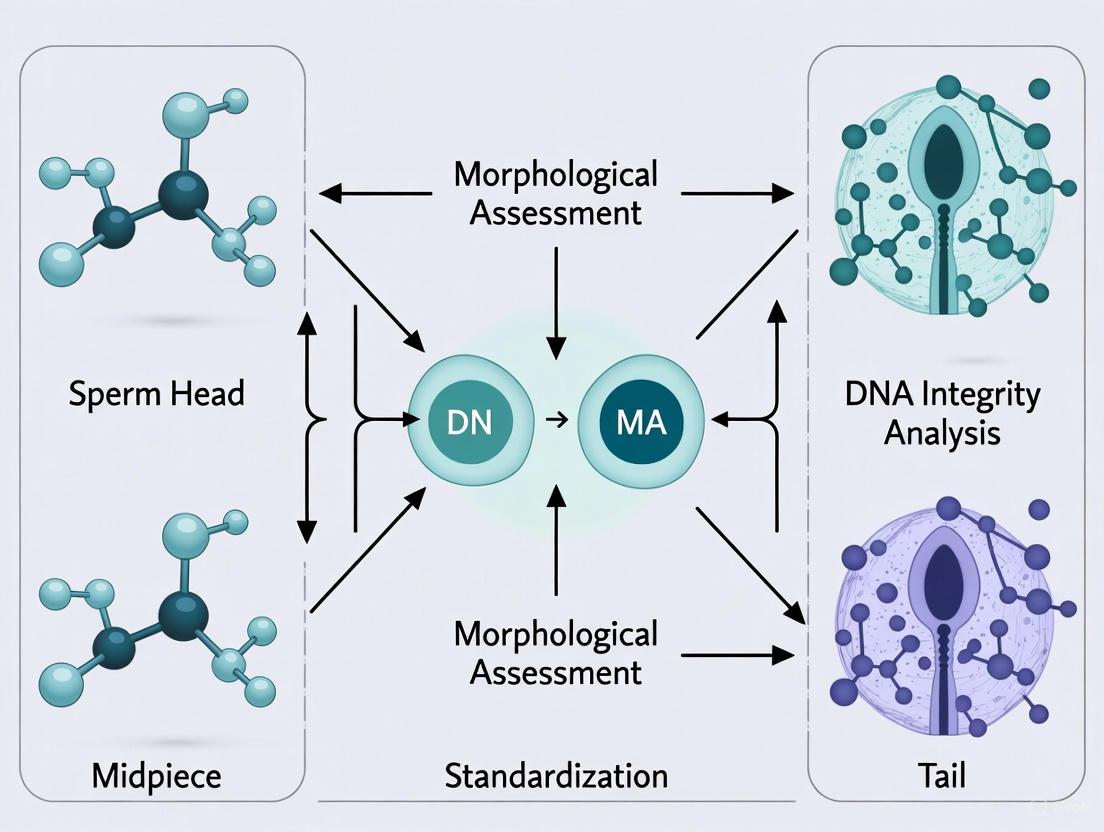
This article examines the critical challenges in standardizing sperm morphology assessment, a cornerstone of male fertility evaluation that remains plagued by significant subjectivity and inter-observer variability.
Overcoming Sperm Morphology Assessment Standardization Challenges: From Human Bias to AI Solutions
Abstract
This article examines the critical challenges in standardizing sperm morphology assessment, a cornerstone of male fertility evaluation that remains plagued by significant subjectivity and inter-observer variability. We explore the foundational causes of this variability, including the lack of robust training protocols and inconsistent methodology. The content delves into emerging technological solutions, including standardized training tools validated by expert consensus and advanced deep learning algorithms for automated classification. For researchers and drug development professionals, we provide a comparative analysis of troubleshooting strategies and validation metrics, highlighting how standardization improves diagnostic accuracy, reproducibility, and clinical correlation. The synthesis of these areas underscores a pivotal shift toward data-driven, objective assessment methods that promise to enhance reliability in both research and clinical andrology.
The Root of Variability: Understanding Foundational Challenges in Sperm Morphology Assessment
Troubleshooting Guides & FAQs
Frequently Asked Questions
Q1: What is the evidence that sperm morphology assessment is highly subjective? Multiple studies document significant inter-observer variability in sperm morphology assessment. A 2023 quality control initiative found that when three different assessors examined the same semen samples, the mean coefficient of variation (CV) was 6.24% for sperm concentration and 10.14% for sperm vitality [1]. While morphology showed lower variability (CV 2.66%) in this specific study, other research highlights substantial disagreement, particularly with complex classification systems. One study found that expert morphologists only agreed on normal/abnormal classification for 73% of sperm images, demonstrating fundamental subjectivity in even basic assessments [2].
Q2: How does the complexity of the classification system affect assessment variability? The number of categories in a classification system directly impacts accuracy and variability. A 2025 training study demonstrated that as classification systems become more complex, accuracy decreases and variation increases [2]. The table below summarizes these findings:
Table 1: Impact of Classification System Complexity on Assessment Accuracy
| Classification System | Untrained User Accuracy | Trained User Accuracy | Key Finding |
|---|---|---|---|
| 2-category (Normal/Abnormal) | 81.0 ± 2.5% | 98.0 ± 0.4% | Highest accuracy and lowest variation |
| 5-category (by defect location) | 68.0 ± 3.6% | 97.0 ± 0.6% | Moderate impact on untrained users |
| 8-category (specific defects) | 64.0 ± 3.5% | 96.0 ± 0.8% | Significant complexity challenge |
| 25-category (individual defects) | 53.0 ± 3.7% | 90.0 ± 1.4% | Lowest accuracy and highest variation |
Q3: What are the clinical implications of this variability in morphology assessment? The variability in sperm morphology assessment can directly impact patient management and clinical outcomes. This "classification drift" over time can alter the diagnostic criteria for teratozoospermia, potentially affecting treatment recommendations [3]. Studies show that the predictive value of sperm morphology for fertility outcomes like intrauterine insemination (IUI) success has diminished in some eras, likely due to such drift and standardization issues [4] [3]. Consequently, treatment decisions based on morphology alone may be unreliable without proper laboratory quality controls.
Q4: What methodologies can reduce inter-observer variability? Implementing standardized training tools based on expert consensus is highly effective. A 2025 study utilized a "Sperm Morphology Assessment Standardisation Training Tool" that applied machine learning principles, using images with 100% expert consensus as "ground truth" [2] [5]. After four weeks of repeated training with this tool, novice morphologists significantly improved their accuracy (from 82% to 90%) and diagnostic speed (from 7.0 to 4.9 seconds per image) while reducing variation [2]. This demonstrates that structured, consistent training with validated reference images can markedly improve standardization.
Experimental Protocol: Validating a Sperm Morphology Training Tool
Objective: To assess and improve the accuracy and consistency of sperm morphologists using a standardized training tool.
Methodology Summary (Based on Seymour et al., 2025 [2]):
Image Database Creation:
- Source: Collect semen samples from 72 rams (applicable to human samples).
- Imaging: Use an Olympus BX53 microscope with DIC optics at 40x magnification.
- Processing: Capture 50 fields of view per sire (3,600 total). Use a machine-learning algorithm to crop images to individual sperm, yielding 9,365 single-sperm images.
Establishing Ground Truth:
- Three experienced assessors independently classify all single-sperm images.
- Only images with 100% consensus on all labels (4,821 images) are integrated into the training tool as validated "ground truth."
Training and Assessment Protocol:
- Experiment 1 (Initial Accuracy): Novice morphologists (n=22) classify images using 2-, 5-, 8-, and 25-category systems without training to establish baseline accuracy.
- Experiment 2 (Training Efficacy): A second cohort (n=16) undergoes repeated training over four weeks using the tool, which provides instant feedback on classification accuracy.
- Metrics: Track accuracy (%) and time spent per image (seconds) across tests.
Key Resources: High-resolution microscope with DIC or phase contrast optics, web-based training interface, database of consensus-classified sperm images.
Workflow Diagram: Standardized Training Tool Development
Research Reagent Solutions
Table 2: Essential Materials for Standardized Sperm Morphology Assessment
| Item | Function | Specification / Example |
|---|---|---|
| Research Microscope | High-resolution imaging of sperm cells | Olympus BX53 with DIC or phase contrast objectives [5] |
| High-Performance Camera | Capture detailed digital images for analysis | Olympus DP28 camera (8.9-megapixel CMOS sensor) [5] |
| Standardized Staining Reagents | Prepare semen slides for consistent morphology evaluation | As per WHO Laboratory Manual recommendations [1] |
| Consensus Image Database | Provides "ground truth" for training and validation | Database of 4,821 sperm images with 100% expert consensus [2] |
| Web-Based Training Interface | Platform for delivering standardized training and assessment | Custom tool providing instant feedback on classification accuracy [2] |
| Quality Control Materials | For regular equipment and procedure calibration | Used in internal quality control programs per WHO guidelines [1] |
Historical Lack of Standardized Training and Proficiency Testing
The subjective assessment of sperm morphology has long been a critical, yet highly variable, test in male fertility evaluation. This variability stems fundamentally from a historical lack of standardized training and proficiency testing for morphologists [2]. Without robust, universally adopted standardization protocols, this subjective test remains prone to human bias and error, compromising the reliability of results across different laboratories and practitioners [5]. This FAQ guide addresses the specific challenges researchers face due to this lack of standardization and provides evidence-based troubleshooting strategies.
Frequently Asked Questions (FAQs)
FAQ 1: What is the primary evidence that training improves sperm morphology assessment accuracy?
Multiple studies demonstrate that structured training significantly improves the accuracy and reduces the variation in sperm morphology classification. The data below summarizes the performance improvement observed in novice morphologists after using a standardized training tool.
Table: Impact of Standardized Training on Morphology Assessment Accuracy
| Classification System Complexity | Untrained User Accuracy (%) | Trained User Accuracy (%) | Statistical Significance (p-value) |
|---|---|---|---|
| 2-category (Normal/Abnormal) | 81.0 ± 2.5 | 98.0 ± 0.4 | < 0.001 |
| 5-category (Head, Midpiece, etc.) | 68.0 ± 3.6 | 97.0 ± 0.6 | < 0.001 |
| 8-category (Specific defects) | 64.0 ± 3.5 | 96.0 ± 0.8 | < 0.001 |
| 25-category (Individual defects) | 53.0 ± 3.7 | 90.0 ± 1.4 | < 0.001 |
Furthermore, training significantly increased diagnostic speed, reducing the time taken to classify an image from 7.0 ± 0.4 seconds to 4.9 ± 0.3 seconds [2].
FAQ 2: How was "ground truth" established for training in a subjective field?
Establishing a reliable "ground truth" dataset is a major challenge. The recommended methodology, adapted from machine learning principles, involves a consensus-based approach among multiple experts [2] [5].
- Image Sourcing: Collect high-resolution field-of-view images from numerous samples (e.g., 50 FOVs from each of 72 rams = 3,600 FOVs) [5].
- Image Cropping: Use a machine-learning algorithm to crop fields of view into images containing a single spermatozoon for unambiguous assessment [5].
- Expert Labelling: Have multiple experienced assessors (e.g., three) independently classify each individual sperm image using a comprehensive classification system [5].
- Consensus Validation: Include in the final training set only those sperm images where all experts demonstrate 100% consensus on the classification. In one study, this resulted in 4,821 out of 9,365 images (51.5%) being validated for the training tool [5].
FAQ 3: What are the current expert recommendations regarding sperm morphology assessment?
Recent guidelines significantly simplify the role of sperm morphology assessment. The 2025 expert review from the French BLEFCO Group provides the following key recommendations [6] [7]:
- R1: Do not recommend systematic detailed analysis of all abnormality groups during routine assessment.
- R2: Do recommend that laboratories use qualitative or quantitative methods to detect specific monomorphic abnormalities (e.g., globozoospermia, macrocephalic spermatozoa syndrome).
- R3: Do not recommend the use of sperm abnormality indexes (TZI, SDI, MAI) for infertility investigation and ART, due to insufficient evidence of clinical value.
- R5: Do not recommend using the percentage of normal-form spermatozoa as a prognostic criterion for selecting IUI, IVF, or ICSI procedures.
FAQ 4: What modern technological solutions are emerging to address standardization challenges?
Artificial Intelligence (AI) and deep learning models are being developed to automate sperm morphology classification, thereby reducing reliance on human subjective judgment. One study created a convolutional neural network (CNN) model trained on an expert-validated dataset of 1,000 sperm images, which was augmented to 6,035 images [8]. This model achieved classification accuracies ranging from 55% to 92%, demonstrating the potential for AI to standardize and accelerate semen analysis [8].
Experimental Protocols & Workflows
Protocol for Implementing a Standardized Training Program
This protocol is based on the validation of a "Sperm Morphology Assessment Standardisation Training Tool" [2].
- Tool Setup: Implement a web-based training tool that provides instant feedback on user classifications.
- Baseline Testing: Have novice morphologists complete an initial assessment on a validated image set to establish baseline accuracy and speed.
- Structured Training: Expose trainees to visual aids, instructional videos, and repeated practice sessions using the tool. One effective regimen involved repeated training and testing over a four-week period.
- Progressive Complexity: Start training with a simple 2-category system (Normal/Abnormal) before progressing to more complex classification systems (5, 8, or 25 categories).
- Proficiency Evaluation: Conduct final proficiency tests to confirm that morphologists have achieved the required accuracy levels (e.g., >90% for complex systems) and reduced their classification time.
Workflow Diagram: Traditional vs. Modern Assessment
The following diagram contrasts the traditional, highly variable workflow with a modern approach incorporating standardized training and technology.
The Scientist's Toolkit: Key Research Reagents & Materials
Table: Essential Materials for Standardized Sperm Morphology Research
| Item | Function/Description | Key Consideration |
|---|---|---|
| High-Resolution Microscope | For detailed visualization of sperm structures. | Equip with high Numerical Aperture (NA) objectives (e.g., 0.95 for DIC) and a high-megapixel camera [5]. |
| DIC/Phase Contrast Optics | Enhances contrast for viewing unstained or live sperm without artifacts. | Superior to bright-field for assessing subtle morphological details [5]. |
| Standardized Staining Kits | Provides consistent staining for cytological analysis. | Required for detailed assessment after staining; must be validated within the lab [6]. |
| "Ground Truth" Image Dataset | A consensus-validated library of sperm images for training and calibration. | The cornerstone for standardized training and tool validation [2] [5]. |
| Classification System Guide | A detailed reference defining normal and abnormal sperm categories. | Can range from simple (2-category) to complex (25+ categories); must be consistently applied [2]. |
| Automated/AI Analysis Software | For objective, high-throughput morphology assessment. | Deep-learning models (CNNs) can standardize and accelerate analysis [8]. |
| Proficiency Testing (PT) Scheme | External quality control program to monitor morphologist performance. | e.g., CAP's SPERM MORPHOLOGY ONLINE-SM1CD program [9]. |
In the field of male fertility assessment, sperm morphology analysis remains a cornerstone diagnostic test. However, its clinical value is critically undermined by a lack of standardization, leading to data of questionable reliability. This technical support document outlines the specific challenges posed by non-standardized data collection and analysis, provides evidence-based troubleshooting guidance, and details standardized protocols to enhance the accuracy, reproducibility, and clinical utility of sperm morphology assessment in research and development.
Troubleshooting Guides & FAQs
FAQ 1: Why do our sperm morphology results show high variability, even when repeated on the same sample?
- Problem: High intra- and inter-laboratory variation in morphology assessment.
- Solution:
- Primary Cause: The subjective nature of the test and lack of standardized training for morphologists are the most significant contributors [10] [2]. Without a traceable standard, individual perception and bias lead to inconsistent scoring.
- Actionable Steps:
- Implement a structured, ongoing training program for all morphologists using validated tools. Studies show that using a "Sperm Morphology Assessment Standardisation Training Tool" based on expert consensus labels can significantly improve novice accuracy and reduce variation [2].
- Establish and adhere to a single, clearly defined classification system (e.g., 2-category: normal/abnormal) as more complex systems increase diagnostic error [2].
- Introduce regular internal quality control (QC) and participate in external quality assurance (QA) schemes [10].
FAQ 2: How should we handle viscous semen samples for morphology smears without damaging sperm?
- Problem: Sample viscosity prevents the creation of even, interpretable smears.
- Solution:
- Primary Cause: Incomplete liquefaction of the semen sample.
- Actionable Steps:
- After initial incubation at 37°C for 30 minutes, if viscosity persists, add proteolytic enzymes such as α-chymotrypsin or bromelain to the sample.
- Incubate at 37°C for an additional 10 minutes [10].
- Gently vortex the sample for 10 seconds before preparing the smear. Avoid vigorous pipetting or shaking, which can mechanically damage sperm.
FAQ 3: Is the percentage of normal sperm forms a reliable prognostic criterion for selecting ART procedures like IUI, IVF, or ICSI?
- Problem: Conflicting evidence on the predictive value of sperm morphology for ART outcomes.
- Solution:
- Evidence-Based Guidance: Recent 2025 clinical guidelines from the French BLEFCO Group state that the percentage of spermatozoa with normal morphology should not be used as a prognostic criterion for selecting the ART procedure (IUI, IVF, or ICSI) [11]. The overall level of evidence supporting its predictive value is low. The focus should shift to detecting specific, clinically relevant monomorphic abnormalities (e.g., globozoospermia) rather than relying on a single percentage threshold [11].
FAQ 4: What is the most critical step in staining to ensure accurate sperm head measurement?
- Problem: Inconsistent staining leads to inaccurate identification of normal sperm heads.
- Solution:
- Critical Step: The use of an ocular micrometer is essential for precise measurement of sperm dimensions [10]. Without it, a precise evaluation of morphology cannot be performed.
- Protocol Adherence: Follow the staining protocol (e.g., Diff-Quik, Papanicolaou) meticulously, including exact immersion times and proper drying, to ensure consistent staining of the acrosomal and post-acrosomal regions, which is critical for head assessment [10].
Quantitative Data on Standardization Impact
The tables below summarize quantitative evidence demonstrating the effect of standardization and training on the accuracy of sperm morphology assessment.
Table 1: Impact of Training on Morphology Assessment Accuracy (Experiment 2) [2]
| Training Stage | 2-Category System Accuracy (%) | 5-Category System Accuracy (%) | 8-Category System Accuracy (%) | 25-Category System Accuracy (%) | Average Speed per Image (seconds) |
|---|---|---|---|---|---|
| Test 1 (Untrained) | 82.0 ± 1.05 | 79.0* | 76.0* | 70.0* | 7.0 ± 0.4 |
| Test 14 (Trained) | 98.0 ± 0.43 | 97.0 ± 0.58 | 96.0 ± 0.81 | 90.0 ± 1.38 | 4.9 ± 0.3 |
Note: Data for 5, 8, and 25-category systems at Test 1 are approximated from graphical data in [2] for comparison purposes.
Table 2: Initial Accuracy of Novice Morphologists Using Different Classification Systems (Experiment 1) [2]
| Classification System | Untrained User Accuracy (%) | Trained User Accuracy (with visual aid) (%) |
|---|---|---|
| 2-Category (Normal/Abnormal) | 81.0 ± 2.5 | 94.9 ± 0.66 |
| 5-Category (by defect location) | 68.0 ± 3.59 | 92.9 ± 0.81 |
| 8-Category (specific defects) | 64.0 ± 3.5 | 90.0 ± 0.91 |
| 25-Category (individual defects) | 53.0 ± 3.69 | 82.7 ± 1.05 |
Experimental Protocols for Standardized Morphology Assessment
Protocol 1: Standardized Smear Preparation and Staining (Diff-Quik)
This protocol is adapted from established WHO guidelines and relevant literature [10].
- Sample Preparation: Collect semen in a sterile container and incubate at 37°C for 30 minutes to allow liquefaction. For viscous samples, add enzymes like α-chymotrypsin and incubate for a further 10 minutes at 37°C [10].
- Smear Creation:
- Vortex the liquefied sample for 10 seconds.
- Place a 10 µL aliquot on one end of a clean, frosted slide.
- Use a second slide at a 45° angle to swiftly and smoothly spread the drop, creating a thin, even smear.
- Prepare duplicate slides and air-dry completely [10].
- Staining (Diff-Quik):
- Immerse the dry smear slide in fixative five times. Allow to dry completely for 15 minutes.
- Immerse the slide three times in Solution I (xanthene dye) for 10 seconds each. Drain excess stain.
- Immerse the slide five times in Solution II (thiazine dye) for 10 seconds each.
- Rinse the slide gently but thoroughly in sterile water to remove excess stain.
- Place the slide vertically on absorbent paper to air-dry.
- Mounting:
- Once dry, apply a few drops of mounting medium (e.g., Cytoseal) and carefully lower a coverslip onto the slide, avoiding air bubbles.
- Allow the mounted slide to dry completely before examination [10].
Protocol 2: Microscopy and Evaluation Based on Strict Criteria
- Microscopy Setup: Examine the stained smear using a bright-field microscope with a 100x oil immersion objective and 10x eyepieces. Use immersion oil with a refractive index (RI) of 1.52. An ocular micrometer must be placed in one of the eyepieces for accurate measurement [10].
- Evaluation of Morphology:
- Head: Must be smooth, regularly contoured, and oval. Length: 5–6 µm; Width: 2.5–3.5 µm. The acrosome should cover 40–70% of the head area and contain no more than two small vacuoles (<20% of head area) [10].
- Mid-piece: Should be slender, regular, approximately the same length as the head, and aligned with its axis. The presence of excess residual cytoplasm (>one-third of the head area) is considered abnormal [10].
- Tail: Should be approximately 45 µm long, uniform, thinner than the mid-piece, and without sharp bends [10].
- Scoring:
- Score at least 200 spermatozoa (in replicates of 100) per sample.
- Classify all borderline forms as abnormal.
- The reference threshold for morphologically normal forms is ≥4% according to the WHO 5th edition strict criteria [10].
Process Visualization: Pathways and Workflows
Standardization Deficit Pathway
Standardized Assessment Workflow
The Scientist's Toolkit: Research Reagent Solutions
Table 3: Essential Materials for Standardized Sperm Morphology Assessment
| Item | Function / Purpose | Key Considerations |
|---|---|---|
| Diff-Quik Stain | A rapid, standardized stain for sperm morphology. Allows differentiation of acrosome (light blue) and post-acrosomal region (dark blue) [10]. | Consistent immersion times are critical for staining quality and result reproducibility. |
| Ocular Micrometer | A calibrated graticule placed in the microscope eyepiece. Essential for accurately measuring sperm head dimensions (5-6 µm long, 2.5-3.5 µm wide) against strict criteria [10]. | Without this tool, precise morphology classification is impossible, leading to subjective and variable results. |
| Mounting Medium (e.g., Cytoseal) | A clear resin used to preserve the stained smear under a coverslip for microscopy. | Prevents damage to the smear and allows for clear, high-resolution imaging under oil immersion. |
| Proteolytic Enzymes (α-chymotrypsin/bromelain) | Used to reduce viscosity in semen samples that have not fully liquefied, enabling the creation of even smears [10]. | Incubation time should be controlled (e.g., 10 mins) to avoid potential damage to sperm morphology. |
| Sperm Morphology Training Tool | Software or image sets using expert consensus labels ("ground truth") to train and standardize morphologists, applying machine learning principles to human training [2]. | Shown to significantly improve accuracy and reduce variation among novice and experienced staff. |
FAQs: Core Challenges in Sperm Morphology Assessment
Q1: What is the primary source of variability in sperm morphology assessment? The primary source is the inherent subjectivity in interpreting morphological criteria. Studies highlight significant inter-observer variability, even among experienced technicians. Key morphological criteria related to the head ovality, regularity of head and midpiece contours, and alignment of the midpiece and head consistently show the highest variability in outcomes [12] [13]. In external quality control programs, agreement on these specific criteria can be as low as <60%, classifying them as having "poor" consensus [12].
Q2: Why is establishing a "ground truth" for sperm morphology so difficult? Establishing "ground truth" is challenging due to the lack of a traceable standard and reliance on subjective human judgment. Without robust, standardized training, each morphologist may apply slightly different interpretations to the same sperm image. Research indicates that untrained users classifying sperm into 25 different abnormality categories showed initial accuracies as low as 53% and high variation (CV=0.28) [2]. This underscores that expert consensus, rather than a single opinion, is required to establish a reliable baseline [2].
Q3: Which specific sperm parts are most prone to inconsistent classification? Based on analyses from multi-year external quality control schemes, the most problematic criteria are [12] [13]:
- Head: Oval shape and smooth, regularly contoured.
- Midpiece: Slender and regular contour, and alignment of its major axis with the head's axis. In contrast, criteria related to acrosomal vacuoles, excessive residual cytoplasm, and tail metrics show significantly higher agreement among evaluators [12].
Q4: How does the complexity of the classification system impact accuracy and reliability? The complexity of the classification system is inversely related to accuracy and reliability. Studies demonstrate that as the number of categories increases, accuracy drops and variability rises [2]. The table below summarizes the performance of trained morphologists across different systems:
Table 1: Impact of Classification System Complexity on Assessment Accuracy
| Classification System | Reported Final Accuracy (after training) | Key Characteristics |
|---|---|---|
| 2-category (Normal/Abnormal) | 98 ± 0.43% [2] | Highest accuracy and lowest variability. |
| 5-category (by defect location) | 97 ± 0.58% [2] | Moderate complexity, based on head, midpiece, tail, and droplet. |
| 8-category (specific defects) | 96 ± 0.81% [2] | Common in veterinary medicine (e.g., cattle). |
| 25-category (individual defects) | 90 ± 1.38% [2] | Highest complexity, leads to lowest accuracy and highest variability. |
Q5: What are the proven methods to reduce variability and standardize assessment? Structured, repeated training is the most effective method. Utilizing a standardized training tool with an expert-validated image dataset ("ground truth") has been shown to significantly improve performance. One study showed that novice morphologists who underwent such training improved their accuracy from 82% to 90% in a 25-category system and increased their diagnostic speed by over 30% [2]. Furthermore, e-learning modules have proven successful in standardizing analysis across multiple laboratories, significantly improving agreement with expert consensus [14].
Troubleshooting Guides
Issue 1: High Inter-Technician Variability
Problem: Different technicians in the same lab produce significantly different morphology reports for the same sample.
Solution:
- Implement a Standardized Training Tool: Use a training tool based on machine learning principles, which provides a large set of pre-classified sperm images validated by expert consensus (the "ground truth"). This creates a consistent and traceable training standard [2].
- Schedule Regular Proficiency Testing (PT): Conduct frequent internal and participate in external quality control (EQC) schemes. Regular testing ensures technicians maintain their skills and allows for early identification of deviations [12] [14].
- Simplify the Reporting System: If high precision for specific defects is not clinically critical, consider collapsing complex classification systems (e.g., 25 categories) into a simpler one (e.g., 5 or 8 categories). This directly improves inter-observer agreement [2].
Issue 2: Discrepancies with External Quality Control (EQC) Results
Problem: Your laboratory's results consistently fall outside the acceptable range in EQC programs.
Solution:
- Re-train on High-Variability Criteria: Focus retraining efforts on the specific morphological criteria known to have the highest variability. Use EQC report feedback to identify weak spots, paying particular attention to the assessment of head shape and midpiece contour/alignment [12].
- Blinded Re-assessment: Have technicians re-assess the EQC samples blindly after a cooling-off period. Compare the results internally to identify inconsistent application of criteria.
- Adopt a Consensus-Based "Ground Truth": Do not rely on a single expert for internal standards. Establish your laboratory's reference values and "ground truth" image library through the consensus of multiple senior morphologists to minimize individual bias [2] [15].
Issue 3: Inefficient and Time-Consistent Analysis
Problem: Manual morphology assessment is too slow, causing workflow bottlenecks and technician fatigue, which can increase error rates.
Solution:
- Invest in Automated Systems: Implement qualified computer-assisted sperm analysis (CASA) systems or AI-based models for morphology. Deep learning models can now analyze a sample in under one minute with accuracies exceeding 96%, matching expert-level performance and providing complete standardization [8] [16].
- Validate Automated Systems Rigorously: Any automated system must be validated within your own laboratory using your specific protocols and reagents. The system's analytical performance must be qualified against manual assessments based on expert consensus [6] [15].
- Continuous Training for Speed and Accuracy: Use training tools that track both accuracy and time. Studies show that with repeated training, technicians not only become more accurate but also significantly faster, reducing the time spent per image from 7.0 seconds to 4.9 seconds [2].
Experimental Protocols
Protocol 1: Establishing Expert Consensus for "Ground Truth" Image Labeling
Objective: To create a validated dataset of sperm images for use in training and quality control.
Methodology:
- Image Acquisition: Capture high-quality images of stained spermatozoa (Papanicolaou is the reference stain [12]) using a standardized microscope and camera setup. Ensure images are in focus, with multiple focal planes if necessary [15].
- Independent Expert Review: A panel of at least three experienced morphologists independently classifies each sperm image. Experts should have a proven record of reliability, such as publications in the field or leadership in EQC programs [12].
- Consensus Meeting: For images where there is initial disagreement, experts review them together in a consensus meeting. The goal is to discuss and resolve discrepancies based on strict morphological criteria definitions.
- Final Labeling: The agreed-upon classification for each image is recorded as the "ground truth" label. This curated dataset becomes the gold standard for all subsequent training and proficiency testing [2].
Protocol 2: Validating a New Training or Automated System
Objective: To evaluate the performance of a new training tool or an AI-based sperm morphology analysis system against the established "ground truth."
Methodology:
- Baseline Assessment: A cohort of novice or trained morphologists (or the AI system) performs an initial classification test on the validated image dataset. Accuracy and time per image are recorded [2].
- Intervention: The participants undergo training using the new tool, or the AI model is trained on the "ground truth" dataset. For AI, this involves using a Convolutional Neural Network (CNN) architecture, often enhanced with attention mechanisms (e.g., CBAM-enhanced ResNet50), and a large dataset potentially augmented to improve learning [8] [16].
- Post-Intervention Testing: After the training period, participants are tested again on a different set of images from the validated dataset.
- Data Analysis: Compare pre- and post-training scores for accuracy, variability (e.g., coefficient of variation), and speed. Statistical tests (e.g., McNemar's test for AI models [16]) are used to determine if improvements are significant. Successful validation is indicated by a significant increase in accuracy and a decrease in inter-observer variation [2] [14].
Workflow and Relationship Diagrams
Diagram 1: Ground Truth Establishment Workflow
This diagram illustrates the multi-step process for creating a consensus-driven "ground truth" dataset.
Diagram 2: Classification Complexity vs. Performance
This diagram shows the inverse relationship between the number of classification categories and key performance metrics.
Research Reagent Solutions
Table 2: Essential Materials for Standardized Sperm Morphology Analysis
| Item | Function / Application | Key Considerations |
|---|---|---|
| Papanicolaou (PAP) Stain | Reference staining method for sperm morphology. Provides clear differentiation of sperm structures (head, acrosome, midpiece) [12] [15]. | Adherence to standardized staining protocols is critical for consistency. |
| Standardized Staining Kits | Commercial kits ensure reagent consistency, reducing technical variability in sample preparation. | Must be validated against laboratory's established reference ranges. |
| Computer-Assisted Sperm Analysis (CASA) System | Automated system for objective analysis of sperm concentration, motility, and morphometry (head dimensions) [15]. | Requires rigorous internal validation; morphology modules may still need expert verification. |
| Validated "Ground Truth" Image Datasets | Serves as the primary reference for training, proficiency testing, and validating new methods (e.g., AI models) [2] [16]. | Quality is paramount; must be built on multi-expert consensus. Public datasets are available but may have limitations. |
| E-Learning & Proficiency Testing Platforms | Digital tools for standardized training, continuous skill assessment, and participation in external quality control schemes [2] [14]. | Effective for scaling standardized training across multiple laboratories and technicians. |
Standardization in Practice: Methodological Advances and Training Applications
Sperm morphology assessment serves as a fundamental diagnostic tool in male fertility evaluation, yet it remains plagued by significant subjectivity and inter-observer variability. This inconsistency stems from the lack of robust, standardized training protocols for morphologists, leading to diagnostic inaccuracies that can directly impact clinical decision-making and patient management. Traditional training methods often rely on side-by-side assessment with a senior morphologist, an approach that is not only time-consuming but also inherently propagates existing biases [5]. Within clinical and research settings, this variability translates to unreliable data, compromised diagnostic accuracy, and ultimately, suboptimal patient care. The emergence of sperm-by-sperm standardization platforms represents a paradigm shift, leveraging digital technologies and expert-validated "ground truth" to fundamentally address these long-standing challenges in reproductive science [2].
Frequently Asked Questions (FAQs)
1. What is the primary source of variability in traditional sperm morphology assessment? The primary source is human subjectivity. Without standardized training, different morphologists can classify the same sperm differently. Studies show that even expert morphologists only achieved 73% consensus on a simple normal/abnormal classification for ram sperm images, highlighting the inherent subjectivity of the test [2].
2. How does a "sperm-by-sperm" training tool improve accuracy? These tools utilize principles from machine learning, specifically the concept of "ground truth." Each sperm image in the platform is pre-classified with 100% consensus by multiple expert morphologists. When a trainee classifies a sperm, they receive instant feedback on its correct/incorrect label, enabling supervised, self-paced learning based on validated data rather than a single opinion [5] [2].
3. What is the impact of using a more complex classification system? Research demonstrates that accuracy decreases as the number of classification categories increases. One study found that untrained users had an accuracy of 81% with a 2-category system (normal/abnormal), which dropped to 53% with a 25-category system. However, with training, final accuracy rates improved to 98% and 90% for the 2- and 25-category systems, respectively [2].
4. Can these platforms be adapted for different research needs? Yes, a key design feature of modern training tools is their adaptability. They can be configured for various species (e.g., human, ram, cattle), different microscope optics, and multiple morphological classification systems, making them a versatile resource for diverse research environments [5] [2].
5. What quantitative improvements can be expected after training? Structured training leads to significant gains in both accuracy and efficiency. One validation study showed trainee accuracy improved from 82% to 90% over a four-week period, while the time taken to classify a single sperm image decreased from 7.0 seconds to 4.9 seconds [2].
Troubleshooting Common Experimental Issues
Issue 1: High Inter-Operator Variability in Results
Problem: Different technicians in the same lab produce significantly different morphology reports for the same sample, leading to unreliable data.
Solution:
- Implement a Standardized Training Regimen: Utilize a sperm-by-sperm training tool for all new and existing staff. In one study, this approach significantly reduced variation among users, with the greatest improvement observed after the first intensive day of training [2].
- Establish a Validation Workflow: Follow a protocol where trainees must achieve a predefined accuracy score (e.g., >95% for a 2-category system) against the expert-consensus "ground truth" before analyzing patient samples.
- Conduct Regular Proficiency Testing: Schedule periodic re-testing using the platform's assessment mode to monitor for drift in classification accuracy and ensure long-term standardization.
Issue 2: Low Accuracy with Complex Classification Systems
Problem: Technicians struggle to correctly identify and categorize sperm using detailed, multi-category classification systems (e.g., systems with 8 or 25 categories).
Solution:
- Adopt a Phased Training Approach: Begin training with a simple 2-category system (normal/abnormal). Once high proficiency is achieved, progressively introduce more complex categories. This builds a solid foundational understanding before tackling finer distinctions [2].
- Leverage Visual Aids and Feedback: The training tool's instant feedback is crucial. It corrects misclassifications in real-time, reinforcing correct identification. Studies show that cohorts using visual aids and video instruction achieved significantly higher first-test accuracy (94.9%) compared to untrained users (81%) [2].
Issue 3: Integrating New Technology with Existing Workflows
Problem: Resistance to adopting new digital tools due to perceived complexity, cost, or disruption to established laboratory routines.
Solution:
- Demonstrate Efficiency Gains: Emphasize data showing that trained users not only become more accurate but also faster, reducing the time spent per analysis [2].
- Highlight Versatility: Showcase the platform's adaptability to the specific classification system and species already in use within your lab, ensuring it complements rather than replaces existing protocols [5].
- Start with a Pilot Program: Implement the platform initially for training and quality control of a small group or for a specific project to demonstrate its value before a lab-wide rollout.
Data Presentation: Quantitative Evidence for Standardization
Table 1: Impact of Standardized Training on Morphology Assessment Accuracy
| Classification System | Untrained User Accuracy | Trained User Accuracy (Final Test) | Improvement | Source |
|---|---|---|---|---|
| 2-Category (Normal/Abnormal) | 81.0% ± 2.5% | 98.0% ± 0.43% | +17.0% | [2] |
| 5-Category (Head, Midpiece, etc.) | 68.0% ± 3.59% | 97.0% ± 0.58% | +29.0% | [2] |
| 8-Category (Industry Standard) | 64.0% ± 3.5% | 96.0% ± 0.81% | +32.0% | [2] |
| 25-Category (Detailed) | 53.0% ± 3.69% | 90.0% ± 1.38% | +37.0% | [2] |
Table 2: Technical Comparison of Sperm Analysis Modalities
| Parameter | Manual Analysis | Traditional CASA | AI-Guided & Standardized Platforms |
|---|---|---|---|
| Inter-Operator Variability | High (20-30% CV) [17] | Moderate | Low (CV < 0.14 after training) [2] |
| Statistical Basis | Limited fields of view | Standard FOV (~1x1mm) | Expanded FOV (~13x larger) [17] |
| Training Methodology | Apprenticeship, subjective | System operation | "Ground truth" consensus, objective [5] |
| Key Innovation | - | Automation | Standardization and validation |
Experimental Protocols for Validation
Protocol 1: Validating a Sperm Morphology Training Tool
This protocol is adapted from studies that developed and tested a standardized sperm morphology assessment training tool [5] [2].
1. Image Database Creation:
- Sample Collection: Collect semen samples from a relevant cohort (e.g., 72 rams was used in one study).
- Image Acquisition: Use a high-resolution microscope (e.g., Olympus BX53 with DIC optics, 40x magnification, high NA objectives) to capture thousands of field-of-view (FOV) images.
- Single-Cell Isolation: Employ a machine-learning algorithm to automatically crop FOV images, generating thousands of images containing a single sperm cell.
2. Establishing "Ground Truth" Labels:
- Expert Consensus: Have multiple experienced morphologists independently classify each single-sperm image.
- Data Validation: Use only images where classifiers achieve 100% consensus on all morphological labels for integration into the training tool. In one study, this resulted in 4,821 consensus-classified images from an initial set of 9,365 [5].
3. Tool Development and Testing:
- Web Interface: Develop an interactive platform that presents users with randomized sperm images from the validated dataset.
- Training Mode: Provide instant feedback on classification accuracy.
- Assessment Mode: Test user proficiency without feedback to establish baseline and post-training accuracy.
- Validation Experiment: Train a cohort of novice morphologists over several weeks (e.g., 14 tests over 4 weeks), recording their accuracy and speed for different classification systems [2].
Protocol 2: Assessing an Expanded Field-of-View (FOV) System
This protocol is based on the evaluation of the LuceDX system, which uses an expanded FOV to improve statistical accuracy [17].
1. System Setup:
- Utilize an imaging system with an expanded FOV (e.g., 3x4.2 mm, approximately 13 times larger than a standard 1x1 mm FOV).
- Ensure the system maintains resolution comparable to standard Computer-Assisted Semen Analysis (CASA) systems.
2. Sample Analysis:
- Prepare semen samples according to standard laboratory protocols (e.g., WHO guidelines).
- Load samples into the system for analysis. The large FOV captures a substantially larger portion of the sample in a single frame.
3. Data Comparison and Analysis:
- Precision Measurement: Compare the measurement precision of the expanded-FOV system against conventional CASA or manual analysis. Pilot data for LuceDX indicated a 3.6-fold improvement in precision [17].
- Statistical Reliability: Evaluate the system's performance, particularly in oligospermic samples, by its ability to mitigate biases from non-uniform sperm distribution and clustering effects, reducing false negatives in low-concentration specimens.
Visualization of Workflows and Systems
Diagram 1: Ground Truth Training Workflow
This diagram illustrates the process of creating a validated image dataset and using it for standardized training.
Diagram 2: Expanded FOV vs. Standard Analysis
This diagram contrasts the statistical basis of traditional analysis with expanded FOV technology.
The Scientist's Toolkit: Research Reagent Solutions
Table 3: Essential Materials for Sperm Morphology Standardization Research
| Item | Function/Description | Example/Note |
|---|---|---|
| High-Resolution Microscope | Capturing clear, detailed images for classification and analysis. | Microscope with DIC optics and 40x high NA objective (e.g., Olympus BX53) [5]. |
| Digital Camera & Sensor | High-resolution image acquisition for single-sperm analysis. | 8.9-megapixel CMOS sensor camera [5]. |
| Sperm Morphology Training Tool | Web-based platform for standardized training and proficiency testing. | Platform populated with expert-consensus "ground truth" images [5] [2]. |
| Expanded FOV Imaging System | Increases analyzed sample volume to improve statistical accuracy. | System like LuceDX with a 13x larger FOV than standard CASA [17]. |
| Stained Slides & Cytology Kits | For automated morphology analysis systems requiring stained samples. | Used by AI-CASA systems for cytological analysis after staining [6]. |
| AI-Enabled CASA System | Provides automated, objective assessment of concentration, motility, and morphology. | Systems like LensHooke X1 PRO or SCA [18] [19]. |
The Role of Expert Consensus in Creating Validated Image Datasets
Frequently Asked Questions
Q1: What is the primary challenge in creating a ground truth for sperm image datasets, and how is it addressed? The primary challenge is the inherent subjectivity of manual sperm morphology assessment, which can lead to inconsistent labels. This is addressed by employing a multi-expert consensus model. In practice, each sperm image is independently classified by multiple experts [20]. A ground truth file is then compiled, detailing the classification from each expert. The level of agreement among them is analyzed, categorizing results into "Total Agreement," "Partial Agreement," or "No Agreement," which helps quantify the subjectivity of the task and establish a more reliable reference standard [20].
Q2: Our model performs well on the training data but fails on external datasets. What might be the cause? This is typically a problem of dataset representativeness. Your training dataset may not reflect the diversity of the target population or real-world clinical settings. To ensure robustness, a benchmark dataset must encompass a broad spectrum of disease severity, demographic diversity (e.g., age, ethnicity), and variations in data collection systems (e.g., different microscope vendors, staining protocols) [21]. Failure to include this heterogeneity can lead to biased models that do not generalize effectively [21].
Q3: How do we handle cases where experts disagree on an image label? Establish a pre-defined protocol for managing discordant expert opinions. One method is to use a consensus meeting where experts review disagreed-upon cases and deliberate to reach a common conclusion. Alternatively, a majority vote (e.g., 2 out of 3 experts) can be used as the final label. It is also critical to document the level of inter-expert agreement, as cases with persistent disagreement might indicate particularly challenging or ambiguous morphological features that require special attention [20].
Q4: What are the key considerations for properly labeling medical images? Proper labeling requires involvement from domain experts, whose years of experience should be considered and reported [21]. Key considerations include:
- Label Type and Instructions: Use clear, standardized instructions to ensure homogeneous labeling across different experts or institutions [21].
- Annotation Format: Decide on a consistent format for annotations (e.g., DICOM-SEG, NIfTI) [21].
- Metadata: Include relevant, de-identified metadata such as patient demographics and clinical history to provide context for the labeled data [21].
Troubleshooting Guides
Problem: Low Inter-Expert Agreement on Image Labels
Description: A high rate of disagreement among experts during the image labeling phase threatens the reliability of the ground truth.
Solution:
- Standardize Classification Criteria: Provide all experts with detailed, written guidelines based on a recognized classification system (e.g., the modified David classification for sperm morphology) [20].
- Conduct Training Sessions: Before formal labeling, hold joint sessions where experts label a sample set of images and discuss discrepancies to align their understanding.
- Implement a Structured Agreement Framework: Categorize agreement levels as Total (3/3 experts agree), Partial (2/3 agree), or None. Statistically analyze agreement using tools like IBM SPSS Statistics with Fisher’s exact test to identify significant discrepancies [20].
- Escalate to Consensus Panel: For cases with persistent disagreement (No Agreement), escalate them to a panel of senior experts for a final, consensus-based decision [20].
Problem: Creating a Representative and Unbiased Dataset
Description: The curated dataset is too homogenous, leading to an AI model that fails when applied to data from different sources or populations.
Solution:
- Define the Use Case: Clearly identify the clinical context, target population, and healthcare setting for which the AI is intended [21].
- Ensure Population Diversity: Actively gather data that reflects diversity in demographics, disease prevalence, and imaging equipment vendors [21].
- Address Rare Findings: For rare diseases or morphological anomalies, consider data augmentation techniques or generating synthetic data to ensure the model has sufficient examples to learn from [21].
- External Validation: Always validate your model's performance on a completely independent, well-curated benchmark dataset from a different source to test its true generalizability [21].
Problem: Integrating Expert Consensus at Scale
Description: The process of having experts manually validate a large number of AI-generated labels is prohibitively time-consuming and not scalable.
Solution: Implement a Human-AI Hybrid Pipeline. This multi-stage process efficiently leverages both AI scalability and expert knowledge [22].
- AI Initial Labeling: Use a large language model (LLM) or deep learning system to generate initial labels and chain-of-thought explanations for dataset items [22].
- Initial Human Review: Have experts review the AI-generated outputs against a structured rubric, scoring them for correctness and sufficiency [22].
- AI Re-verification: Re-process the human-reviewed questions through the AI to check for consistency and identify persistently problematic items [22].
- Expert Panel Refinement: Escalate items that fail AI re-verification (e.g., using a "five-strike" rule where the AI fails five times) to a senior expert panel for final refinement and correction [22].
Experimental Protocols & Data
Protocol 1: Multi-Expert Consensus for Sperm Morphology Labeling
This protocol is adapted from the methodology used to create the Sperm Morphology Dataset (SMD/MSS) [20].
- Sample Preparation: Prepare semen smears from patient samples, stained with a RAL Diagnostics kit following WHO guidelines [20].
- Image Acquisition: Capture images of individual spermatozoa using a CASA system with a x100 oil immersion objective in bright field mode [20].
- Expert Classification: Three independent experts, each with extensive experience in semen analysis, classify every spermatozoon based on the modified David classification (covering 12 classes of defects across the head, midpiece, and tail) [20].
- Data Compilation: Record all classifications in a shared ground truth file. Each image is assigned a filename that encodes the identified anomaly type [20].
- Agreement Analysis: Use statistical software (e.g., IBM SPSS Statistics 23) to analyze inter-expert agreement. Categorize outcomes as Total Agreement (3/3), Partial Agreement (2/3), or No Agreement.
Table 1: Sperm Morphology Dataset Composition and Expert Agreement [20]
| Category | Description | Quantity / Metric |
|---|---|---|
| Initial Image Count | Individual spermatozoa images acquired | 1,000 |
| Final Image Count | After data augmentation techniques | 6,035 |
| Expert Count | Number of classifying experts | 3 |
| Agreement Scenarios | Total, Partial, No Agreement | 3 |
| Statistical Test | Software used for agreement analysis | IBM SPSS Statistics 23 |
Protocol 2: Human-AI Hybrid Validation Pipeline
This protocol is designed for scalable, expert-driven validation of large datasets, as demonstrated in clinical reasoning datasets [22].
- Initial AI Generation: Use an LLM to generate initial answers and reasoning chains (e.g., Chain-of-Thought) for a set of questions [22].
- Structured Human Review: Medical experts independently review each AI-generated item against a multi-dimensional rubric (e.g., medical correctness, reasoning structure, information sufficiency) and provide a binary score (pass/fail) [22].
- AI Re-Answering and Verification: The reviewed questions are fed back into the AI to see if it can now answer them correctly based on the refined data. This step helps identify ambiguous or flawed questions [22].
- Five-Strike Escalation Rule: If the AI fails to answer a question correctly after five attempts, the item is automatically flagged and escalated to a panel of senior medical experts for in-depth review and final correction [22].
Table 2: Key Reagents and Materials for Dataset Creation [20] [21]
| Research Reagent / Material | Function in Experiment |
|---|---|
| RAL Diagnostics Staining Kit | Stains semen smears to visualize spermatozoa morphology for analysis [20]. |
| Computer-Assisted Semen Analysis (CASA) System | Microscope-based system with a digital camera for automated acquisition and storage of sperm images [20]. |
| Modified David Classification Guide | A standardized framework of 12 defect classes used by experts to ensure consistent morphological labeling [20]. |
| Benchmark Dataset | A well-curated, expert-labeled collection of data representing the full spectrum of target diseases and population diversity, used for robust AI validation [21]. |
| DICOM-SEG or NIfTI Format | Standardized file formats for storing medical images and their associated annotations, ensuring compatibility and consistency [21]. |
Workflow Visualization
Multi-Expert Consensus Workflow for Image Labeling
Human-AI Hybrid Pipeline for Dataset Validation
Within the broader thesis on standardizing sperm morphology assessment, this technical support guide addresses a critical and practical bottleneck: the variability introduced by staining protocols and microscope optics. Recent expert reviews highlight that "there is a huge variability in the performance and interpretation of this test," challenging its clinical relevance [6]. This variability stems directly from methodological choices in the laboratory. This resource provides targeted troubleshooting guides and FAQs to help researchers and drug development professionals overcome these specific challenges, ensuring their data is both reliable and reproducible.
Staining Technique Comparison and Selection Guide
The choice of staining technique directly impacts morphological clarity, measurement accuracy, and the reliability of diagnostic outcomes. Different stains offer varying levels of contrast, detail for specific organelles, and stability over time.
Comparative Analysis of Common Staining Techniques
| Staining Method | Key Advantages | Key Limitations | Best Use Cases |
|---|---|---|---|
| Eosin & Eosin-Nigrosin | Fastest; most cost-effective; provides strong contrast [23]. | Causes structural alterations; eosin-nigrosin forms colored crystals over time [23]. | Routine, high-throughput morphological evaluation where cost and speed are priorities [23]. |
| Diff-Quick | Quick, standardized analysis; good initial performance [23]. | Performance may vary with storage; part of a commercial kit. | Rapid clinical assessment and automated sperm cell analysis [23]. |
| Spermac | Delivers high contrast; valuable for acrosomal integrity assessment [23]. | Time-consuming procedure [23]. | Detailed evaluation of acrosome status, particularly post-cryopreservation [23]. |
| Papanicolaou | Recommended by WHO manuals; widely used in clinical settings [15]. | Procedure is complex and requires multiple steps. | Gold-standard clinical diagnosis; establishing reference values for CASA systems [15]. |
| Formol-Citrate-Rose Bengal | Detailed morphology analysis [23]. | Requires extensive preparation; significant post-storage changes [23]. | Specialized morphological studies when immediate analysis is guaranteed. |
| Methyl Violet | Simple protocol. | Lacks sufficient resolution; highly unstable over time; significantly lower interpretability [23]. | Limited to basic, immediate assessments where no other stains are available. |
Staining Techniques FAQ
Q: Which stain is the most practical for routine morphological evaluation of semen?
- A: Based on recent comparative studies, Eosin emerges as the most practical and economical option for routine evaluation, offering a strong balance of speed, cost, and contrast. However, users should be aware that it may increase the detection of structural alterations [23].
Q: Why do my stained slides become difficult to interpret after a few weeks of storage?
- A: Storage instability is a known issue with several stains. Eosin-nigrosin is prone to colored crystal formation, and Hemacolor can lose pigment clarity over months. For long-term archival stability, Diff-Quick or Spermac may offer better performance, though all slides should be analyzed as soon as possible after staining [23].
Q: Our lab is implementing a CASA system. How does stain choice affect this?
- A: Stain choice is critical for CASA. The stain must provide consistent, high-contrast images for the software to analyze accurately. Papanicolaou staining is commonly used to establish reference values for CASA systems. It is essential to validate your CASA system's performance with the specific staining protocol you adopt [15].
Microscope Optics and Calibration for Reproducible Imaging
Quantitative sperm morphology analysis, especially with advanced techniques like AI, demands rigorous calibration of microscope optics. Inconsistent illumination, uncalibrated detectors, and poor resolution directly undermine measurement reproducibility.
Essential Microscope Calibration Parameters
| Parameter | Importance | Calibration Method & Troubleshooting Tips |
|---|---|---|
| Illumination Power | Critical for fluorescence intensity, signal-to-noise ratio, and photobleaching. Inconsistent power causes non-comparable results. | Use a calibrated power meter. Follow protocols to estimate power density at the focal plane. Troubleshooting Tip: If fluorescence intensity is inconsistently low, check laser alignment and stability, and ensure no oil or dust is on the objective lens [24]. |
| Spatial Resolution | Determines the level of morphological detail resolvable. Essential for detecting head vacuoles or tail defects. | Monitor with patterned glass slides or sub-diffraction-sized fluorescent beads (100 nm) to determine the Point Spread Function (PSF). Troubleshooting Tip: Blurry images may indicate a misaligned pinhole (in confocal systems) or an incorrect coverglass thickness for the objective lens [24]. |
| Detector Sensitivity & Linearity | The quantum efficiency and linear response of the camera/PMT affect the accuracy of intensity measurements. | Evaluate using calibration slides or a calibrated external light source (e.g., reference standard LED). Troubleshooting Tip: If image data appears saturated or "clipped," even with low laser power, check the detector's dynamic range settings and ensure it is operating within its linear range [24]. |
| Field Uniformity | Ensures even illumination and detection across the entire field of view, preventing location-based bias. | Use fluorescent slides designed for flat-field correction. Troubleshooting Tip: If one edge of the image is consistently darker, perform a flat-field correction and check the alignment of the light source and condenser [24]. |
Microscope Optics FAQ
Q: How often should I calibrate my microscope for quantitative sperm morphology work?
- A: A full calibration should be performed at least quarterly, or whenever you change a critical component (e.g., objective lens, laser, or camera). It is good practice to perform a quick check of illumination uniformity and intensity using a reference slide at the beginning of each imaging session [24].
Q: Our AI model for sperm morphology performs well in our lab but fails in a collaborator's lab. Could microscope optics be the cause?
- A: Absolutely. Differences in microscope components, calibration status, and imaging parameters (e.g., illumination power, camera gain) can create a "domain shift" that severely degrades AI model performance. This highlights the need for standardized imaging protocols and the use of reference materials to ensure cross-instrument reproducibility [24].
Q: What is the most overlooked aspect of microscope maintenance that affects image quality?
- A: The cleanliness of optical components, particularly the objective lens front element. Accumulated oil, dust, and dirt significantly reduce light throughput and image contrast. Always clean the objective lens carefully before and after use with immersion oil [24].
Emerging Methodologies: Artificial Intelligence and Standardized Training
To overcome the subjectivity of manual assessment, laboratories are turning to Artificial Intelligence (AI) and standardized training tools. These approaches promise greater objectivity and reproducibility in sperm morphology analysis.
AI Model Development Workflow for Sperm Morphology
Recent studies demonstrate that AI models can be trained to assess sperm morphology from high-resolution images captured at lower magnifications, even on unstained, living sperm [25]. This is a significant advancement for Assisted Reproductive Technology (ART), as it allows for the selection of high-quality sperm without the damaging effects of staining. One in-house AI model showed a stronger correlation with CASA (r=0.88) than the correlation between CASA and conventional semen analysis (r=0.57) [25].
Standardized Training Tools for Morphologists
For manual assessment, standardized training is crucial. Research shows that novice morphologists using a "Sperm Morphology Assessment Standardisation Training Tool"—built on machine learning principles with expert-validated "ground truth" images—significantly improved their accuracy and reduced variation.
- Without training, novice accuracy for a 2-category (normal/abnormal) system was 81.0% ± 2.5%, which dropped to 53% ± 3.69% for a complex 25-category system [2].
- With standardized training, final accuracy rates improved dramatically to 98% ± 0.43% for the 2-category system and 90% ± 1.38% for the 25-category system [2].
AI and Training FAQ
Q: What is the main challenge in developing a robust AI model for sperm morphology?
- A: The primary challenge is the lack of large, standardized, and high-quality annotated datasets. Models require thousands of sperm images with accurate "ground truth" labels, agreed upon by multiple experts, to learn effectively and generalize to new data [26].
Q: Can AI completely replace manual assessment by a trained morphologist?
- A: Not yet. Current guidelines caution against using normal morphology percentages alone for ART procedure selection [6]. AI is best used as a powerful tool to augment and standardize the analysis, reducing subjectivity and workload. The detection of specific monomorphic abnormalities (e.g., globozoospermia) still requires expert verification [6] [26].
Q: How can our lab quickly improve the consistency of our manual morphology assessments?
- A: Implement a standardized training and re-training protocol using a tool with validated image sets. Studies show that even a single day of intensive, standardized training can lead to significant improvements in accuracy and reductions in inter-technician variation [2].
The Scientist's Toolkit: Essential Research Reagent Solutions
| Item Name | Function/Benefit | Application Note |
|---|---|---|
| Papanicolaou Stain | Provides detailed staining of sperm head (pink), acrosome (blue), and nucleus (purple) as per WHO guidelines. | Essential for establishing reference values and gold-standard clinical diagnosis [15]. |
| Computer-Assisted Sperm Analysis (CASA) System | Automates sperm analysis, reducing subjective errors and providing high repeatability for concentration, motility, and morphometry. | Systems like SSA-II Plus can measure over 10 head, neck, and acrosome parameters; requires validation for each lab [15]. |
| Sperm Morphology Training Tool | Software-based tool using expert-consensus images to train and standardize morphologists, improving accuracy and reducing variability. | A study showed training improved novice accuracy in a 2-category system from ~81% to over 98% [2]. |
| Reference Material Slides (e.g., Fluorescent Beads, Patterned Slides) | Used to benchmark microscope performance for parameters like spatial resolution, illumination uniformity, and detector sensitivity. | Critical for ensuring quantitative and reproducible imaging, especially for cross-instrument comparisons [24]. |
| Diff-Quik Stain | A rapid, standardized Romanowsky stain variant used for quick assessment of sperm morphology. | Provides good initial performance and is suitable for routine analysis [23]. |
| Confocal Laser Scanning Microscope | Enables high-resolution Z-stack imaging of sperm, capturing subcellular features without the need for staining. | Key for creating high-quality datasets to train AI models for unstained sperm analysis [25]. |
Troubleshooting Guides & FAQs
Frequently Asked Questions
Q1: What is the primary source of variability in sperm morphology assessment, and how can it be mitigated? The primary source of variability is the subjective nature of the test and the lack of standardized training for morphologists. This human bias leads to unreliable assessments, as different experts may classify the same sperm differently. A key mitigation strategy is the use of a standardized training tool developed using principles from machine learning. This tool trains novices using a robust dataset of sperm images that have been classified with high confidence via expert consensus, establishing a reliable "ground truth" for learning [5] [2].
Q2: How does the complexity of a classification system impact assessment accuracy? The complexity of the classification system has a direct and significant inverse relationship with assessment accuracy. Research shows that untrained users have higher accuracy and lower variation with simpler systems. Performance degrades as the number of categories increases [2]. The table below summarizes the quantitative data from training tool experiments.
| Classification System Complexity | Untrained User Accuracy (Mean ± Variation) | Final Trained User Accuracy (Mean ± Variation) |
|---|---|---|
| 2-Category (Normal/Abnormal) | 81.0% ± 2.5% | 98.0% ± 0.43% |
| 5-Category (by sperm part) | 68.0% ± 3.59% | 97.0% ± 0.58% |
| 8-Category (e.g., Cattle Vets) | 64.0% ± 3.5% | 96.0% ± 0.81% |
| 25-Category (Individual defects) | 53.0% ± 3.69% | 90.0% ± 1.38% |
Table 1: Impact of classification system complexity on assessment accuracy. Source: [2]
Q3: Are there any clinical guidelines for sperm morphology assessment in human infertility workups? Recent expert reviews, such as the 2025 guidelines from the French BLEFCO Group, suggest a significant simplification of sperm morphology assessment in clinical practice. They do not recommend using the percentage of normal forms as a prognostic criterion before Assisted Reproductive Technology (ART) procedures like IUI, IVF, or ICSI. The guidelines emphasize that the test's clinical value lies primarily in detecting specific monomorphic abnormalities (e.g., globozoospermia) rather than providing a general percentage of normal sperm [6] [7].
Q4: What is the role of "ground truth" in standardizing sperm morphology training? In machine learning, "ground truth" refers to data that has been accurately classified, typically through consensus among multiple experts. Applying this principle to human training is crucial for standardization. For sperm morphology, this involves having multiple experienced assessors label individual sperm images, and only those images with 100% consensus are integrated into the training tool. This ensures that trainees learn from a validated, unbiased dataset, which is foundational for improving and maintaining accuracy across different morphologists [5] [2].
Experimental Protocol: Validating a Sperm Morphology Training Tool
The following methodology details the development and validation of a standardized training tool as described in recent scientific literature [5] [2].
1. Objective: To develop and validate an interactive web-based training tool that improves the accuracy and reduces the variability of sperm morphology assessments across different classification systems.
2. Materials and Reagents:
- Semen Samples: Source from 72 rams (applicable to other species).
- Microscopy: Olympus BX53 microscope with DIC and phase contrast objectives (40x magnification, high numerical aperture).
- Camera: Olympus DP28 camera (8.9-megapixel CMOS sensor).
- Software: A novel machine-learning algorithm for cropping single sperm from field-of-view images; a web interface for user interaction.
3. Image Database Creation:
- Image Collection: Capture 50 fields of view (FOV) per sire, totaling 3,600 FOV images.
- Single-Sperm Cropping: Use a custom machine-learning algorithm to crop FOV images, resulting in 9,365 individual sperm images.
- Expert Labelling: Three experienced assessors label all individual sperm images according to a comprehensive 30-category classification system.
- Establishing Ground Truth: Only images with 100% consensus from all assessors (4,821 out of 9,365) are integrated into the training tool as the validated dataset.
4. Training Tool Application:
- User Testing: Novice morphologists (n=22 in Experiment 1; n=16 in a second cohort) use the web interface.
- Functionality: The tool provides instant feedback on classification choices and assesses user proficiency.
- Training Regimen: Experiment 2 involved repeated training and testing over four weeks (14 tests total) to measure improvement in accuracy and diagnostic speed.
5. Outcome Measures:
- Primary: Accuracy of classification against the expert consensus "ground truth."
- Secondary: Time taken to classify each image (speed) and coefficient of variation between users.
The Scientist's Toolkit: Essential Research Reagents & Materials
| Item Name & Specification | Function in Experiment |
|---|---|
| High-Resolution Microscope (e.g., Olympus BX53 with DIC) | Provides high-resolution, clear images of sperm for accurate morphological analysis. |
| Machine Learning Cropping Algorithm | Automates the extraction of individual sperm from field-of-view images, ensuring consistency and saving time. |
| Expert-Validated Image Database ("Ground Truth") | Serves as the standardized reference for training and testing morphologists, reducing human bias. |
| Web-Based Training Interface | Delivers self-paced, accessible training and instantaneous feedback to users, facilitating independent standardization. |
| Multi-Category Classification System Framework | Allows the training tool to be adapted for various existing classification systems (e.g., 2, 5, 8, or 25 categories). |
Table 2: Key materials and reagents for developing a sperm morphology standardization tool.
Workflow and Relationship Diagrams
Training Tool Development Workflow
System Complexity vs. Accuracy
Troubleshooting Laboratory Practice and Optimizing Assessment Workflows
A technical guide for researchers navigating the practical challenges of sperm morphology assessment.
Frequently Asked Questions
FAQ 1: With limited funding for expensive stains, what is a cost-effective alternative that provides good morphological detail?
Rapid Papanicolau stain is identified as the most ideal, simple, and cost-effective stain for the overall assessment of sperm morphology, providing very clear visualization of the acrosome, head, and clear views of the middle piece and tail [27]. For a specific and excellent assessment of the sperm head, Haematoxylin and Eosin (H&E) is the best option [27]. These basic stains are recommended for settings where commercial stains like Shorr, Janus Green, or Sperm Blue are too expensive [27].
FAQ 2: Does the choice of fixative affect the long-term stability of sperm samples for morphological studies?
Yes, the fixative choice significantly impacts morphological integrity over time. A study on avian sperm found that formalin is superior to ethanol for long-term preservation [28]. While sperm cell length remained relatively stable in both fixatives over periods of 227 days and even three years, the proportion of sperm cells with head damage was much higher in ethanol (70%) compared to formalin (3%) [28]. Sperm cells initially fixed in formalin also remained quite stable in dry storage on glass slides for at least six months [28].
FAQ 3: We observe high variability in morphology assessments between technicians. How can this be improved?
The lack of standardization is a well-documented challenge. A 2025 proof-of-concept study highlighted the development of a standardized sperm morphology assessment training tool to address this exact issue [5]. Unlike traditional methods, this tool uses a large dataset of sperm images that have been classified with 100% consensus by multiple expert assessors, establishing a reliable "ground truth." It provides instant feedback to users, enabling self-paced, independent training to reduce human bias and improve assessment reliability [5].
FAQ 4: For a basic viability assessment, which stain is most appropriate?
Eosin-Nigrosin stain is commonly used for distinguishing between live and dead sperm [27]. Viable sperm with intact cell membranes exclude the dye and appear white, while non-viable sperm with damaged membranes take up the eosin dye and stain pink [27]. This stain is commercially available and is a standard component for a male fertility exam [29].
Staining Method Comparison and Protocols
The table below summarizes the performance of four common staining techniques for assessing different parts of the spermatozoon, as evaluated by independent observers [27].
Table: Clarity of Sperm Morphology Assessment Using Different Staining Techniques
| Staining Technique | Acrosome | Head | Middle Piece | Tail |
|---|---|---|---|---|
| Haematoxylin & Eosin | Very clear | Very clear | Not clear | Clear |
| Giemsa | Very clear | Clear | Not clear | Not clear |
| Eosin-Nigrosin | Clear | Clear | Pale | Pale |
| Rapid Papanicolau | Very clear | Very clear | Clear | Clear |
Detailed Staining Protocols
Based on the research, here are the methodologies for the two most effective stains:
Protocol for Rapid Papanicolau Staining [27]
- Smear Preparation: Prepare a thin smear of the liquefied semen sample.
- Fixation: Immediately fix the smear in ethyl alcohol. Note: This is a key difference from air-dried smears.
- Staining: Follow the standard rapid Papanicolau staining procedure.
- Analysis: Examine under a light microscope. This method provides very clear acrosomal condensation and head morphology, clearly appreciable middle piece and tail, and additionally helps in the separation of immature germ cells.
Protocol for Haematoxylin and Eosin (H&E) Staining [27]
- Smear Preparation: Prepare a thin smear of the liquefied semen sample.
- Fixation: Air-dry the smear at room temperature.
- Staining: Stain using Harris’ Haematoxylin and Eosin Y.
- Analysis: Examine under a light microscope. The stain is uniformly distributed on the head with dark purple condensation, making it extremely clear for assessing the acrosome and head. The middle piece and tail morphology are also identifiable but were graded as less clear than with Papanicolau.
Research Reagent Solutions
Table: Essential Materials for Sperm Morphology Assessment
| Item | Function/Benefit | Example Product/Note |
|---|---|---|
| Papanicolau Stain | Cost-effective stain for overall sperm morphology | Recommended as the ideal balance of cost and clarity [27] |
| Haematoxylin & Eosin | Best stain for detailed sperm head morphology | A standard, widely available histological stain [27] |
| Eosin-Nigrosin Stain | Distinguishes between live and dead sperm for viability assessment | Available as a pre-made kit [29] |
| Formalin (10%) | Fixative for long-term preservation of sperm morphological integrity | Superior to ethanol for preventing acrosome damage during storage [28] |
| Pre-stained Morphology Slides | Quality control and saving preparation time | e.g., Testsimplets, Cell-Vu [30] |
| Sperm Cryopreservation Media | Long-term storage of semen samples for future analysis | e.g., Test yolk buffer with a programmable freezer [31] |
Experimental Workflow Guide
The following diagram illustrates a decision-making workflow for planning a sperm morphology study, integrating considerations for staining, fixation, and storage to mitigate common trade-offs.
Decision Workflow for Sperm Morphology Assessment
Key Troubleshooting Tips
- Storage Temperature for Cryopreservation: For short-term storage (7 days), sperm can be stored at -70°C with a modest loss of motility. For long-term preservation, storage in liquid nitrogen (-196°C) is superior, showing a significantly smaller decrease in motility (39% vs 72% decrease after 3 months) [31].
- Addressing Lack of Standardization: Be aware that a significant lack of standardization in semen analysis performance and reporting exists among laboratories [32]. Proactively implementing internal quality control and standardized training is essential for reliable results.
Troubleshooting Guides
Poor Classification Accuracy
Problem: Unacceptably high rates of misclassification during sperm morphology assessment. Question: Is the low accuracy consistent across all defect categories, or is it isolated to specific morphological classes?
- Explanation: Low accuracy is frequently linked to the complexity of the classification system being used. A system with more categories is inherently more challenging and results in lower baseline accuracy [2].
- Solution:
- Validate with a simpler system: Begin by testing your proficiency with a basic 2-category (normal/abnormal) system. If accuracy is high, this confirms that the issue lies with the complexity of the desired system rather than fundamental skills [2].
- Implement progressive training: Use a standardized training tool that employs expert-consensus "ground truth" data. Training should start with a simple 2-category system and gradually progress to systems with 5, 8, and finally 25 categories. Research shows this method significantly improves accuracy and reduces user variation [2] [5].
- Review "ground truth" references: Ensure that the reference images or data used for training and validation are based on a consensus of multiple expert morphologists, not a single individual, to avoid learning from a biased standard [5].
High Inter-Observer Variation
Problem: Significant disagreement in results between different technicians in the same laboratory. Question: Are the laboratory's internal quality control results showing a coefficient of variation (CV) higher than 0.28?
- Explanation: High variation is a well-documented challenge in subjective assessments like sperm morphology and indicates a lack of standardization. One study reported a CV of 0.28 among untrained users [2].
- Solution:
- Adopt a standardized training tool: Implement a web-based training tool that provides immediate feedback on a sperm-by-sperm basis. This allows technicians to independently calibrate their assessments against a validated standard [2] [5].
- Schedule repeated training: Proficiency is not achieved in a single session. Studies show that repeated training over a period, such as four weeks, leads to significant improvements in both accuracy and diagnostic speed, while also reducing variation between technicians [2].
- Establish a consensus protocol: Clearly define and adhere to a single classification system and staining method across the laboratory. The use of an ocular micrometer is essential for consistent measurement of sperm dimensions [10].
Loss of Predictive Value in Clinical Outcomes
Problem: Sperm morphology results no longer correlate with assisted reproductive technology (ART) outcomes like fertilization rates. Question: Has the laboratory observed a "classification drift" over time, where the threshold for what is considered "normal" has subtly changed?
- Explanation: Classification drift is a known phenomenon where the application of strict criteria can change over time, increasing the percentage of sperm diagnosed as abnormal and diminishing the clinical predictive value of the test [3].
- Solution:
- Implement rigorous quality control (QC): Establish robust internal and external QC programs. This includes regular proficiency testing and the use of standardized staining methods like Papanicolaou, Shorr, or Diff-Quik to ensure consistency [10].
- Regular re-standardization: Schedule periodic re-training for all staff, including senior morphologists, using a standardized tool to prevent drift and maintain alignment with the original classification criteria [2] [3].
- Validate against outcomes: Periodically review and correlate morphology data with clinical ART outcomes to ensure the assessment remains a relevant predictor [3].
Frequently Asked Questions (FAQs)
Q1: What is the direct quantitative impact of choosing a more complex classification system? A1: The impact is significant and quantifiable. Research demonstrates that untrained users show a clear decline in accuracy as the number of categories increases. On average, accuracy drops from 81% with a 2-category system to 53% with a 25-category system. After standardized training, while overall accuracy improves, the performance gap remains, with final accuracies at 98% (2-category) and 90% (25-category) [2]. The table below summarizes this data.
Table 1: Classification Accuracy vs. System Complexity
| Number of Categories | Untrained User Accuracy (%) | Trained User Accuracy (%) |
|---|---|---|
| 2 (Normal/Abnormal) | 81.0 ± 2.5 | 98.0 ± 0.4 |
| 5 (Head, Midpiece, etc.) | 68.0 ± 3.6 | 97.0 ± 0.6 |
| 8 (Cattle Vet System) | 64.0 ± 3.5 | 96.0 ± 0.8 |
| 25 (Individual Defects) | 53.0 ± 3.7 | 90.0 ± 1.4 |
Q2: Besides accuracy, how does system complexity affect other metrics like assessment speed and user consistency? A2: Complexity affects both speed and consistency. Training studies show that the time taken to classify a single image significantly decreases with practice, from about 7.0 seconds to 4.9 seconds on average [2]. Furthermore, user variation (the coefficient of variation) is highest with more complex systems and improves most dramatically after the initial intensive training period [2].
Q3: What is "ground truth" and why is it critical for standardization? A3: "Ground truth" refers to a dataset where each sperm image has been classified with 100% consensus by multiple expert morphologists [5]. This concept, borrowed from machine learning, is crucial because it provides an objective, traceable standard for training and validation. Without it, trainees may learn from a single expert's potentially biased classifications, perpetuating inaccuracies and variability [2] [5].
Q4: Are automated systems a viable solution to the challenges of subjective morphology assessment? A4: Yes, recent advances in deep learning show great promise for automating morphology assessment and overcoming human subjectivity. These systems can achieve high accuracy (e.g., 96.08% on benchmark datasets), standardize results, and reduce analysis time from 30-45 minutes to under one minute per sample [16]. However, their performance is dependent on being trained with high-quality, "ground truth" labelled data, which underscores the continued importance of expert consensus [5] [16].
Experimental Protocols
Protocol: Validating the Impact of Classification Systems on Assessment Accuracy
This protocol is derived from experiments that quantified how classification system complexity affects morphologist accuracy and variation [2].
1. Objective: To determine the baseline accuracy and variation of morphologists across different classification systems and to measure the improvement achieved through standardized training.
2. Materials:
- Sperm Morphology Standardization Training Tool: A web-based interface containing a dataset of sperm images with expert-consensus "ground truth" labels [5].
- Image Set: A minimum of 100 validated sperm images per classification test.
- Classification Systems: Defined criteria for 2-category, 5-category, 8-category, and 25-category systems.
3. Methodology:
- Participant Groups: Divide participants into cohorts (e.g., untrained novices and a group undergoing training).
- Baseline Testing (Experiment 1): Have all participants classify the same set of images using the different classification systems. Record accuracy and time per image.
- Training Phase (Experiment 2): Expose the training cohort to the tool, which provides instant feedback on their classifications. Conduct repeated training sessions and testing over a set period (e.g., 4 weeks).
- Data Analysis: Calculate mean accuracy and coefficient of variation (CV) for each group and classification system. Use statistical tests (e.g., t-tests) to compare performance before and after training.
4. Key Workflow: The following diagram illustrates the experimental workflow for training and evaluation.
Experimental Workflow for Training Validation
Protocol: Establishing "Ground Truth" for a Sperm Image Dataset
This protocol details the creation of a validated image dataset, which is a prerequisite for reliable training and testing [5].
1. Objective: To create a robust dataset of sperm images where every classification has been validated by multiple expert morphologists.
2. Materials:
- Microscope: High-resolution microscope with DIC or phase contrast optics (e.g., Olympus BX53 with 40x objective) [5].
- Camera: High-megapixel CMOS camera (e.g., Olympus DP28).
- Software: For image cropping and management, potentially involving machine-learning algorithms for single-sperm isolation.
3. Methodology:
- Image Collection: Capture multiple fields of view (FOV) from semen samples. One study used 50 FOVs from each of 72 rams, yielding 3,600 initial images [5].
- Image Cropping: Use software to crop FOV images to create individual sperm images.
- Expert Labelling: Have at least three experienced morphologists independently classify each sperm image using a comprehensive classification system (e.g., 30 categories).
- Establish Consensus: Only retain images where all experts have 100% consensus on all defect labels for use in the training tool. In one study, this resulted in 4,821 consensus images from an initial 9,365 [5].
Research Reagent Solutions
Table 2: Essential Materials for Sperm Morphology Standardization Research
| Item | Function / Explanation | Example / Specification |
|---|---|---|
| Standardized Training Tool | Web-based platform for training and testing morphologists using "ground truth" data; provides instant feedback and proficiency assessment. | Bespoke tool as described in Seymour et al. (2025) [2] [5]. |
| Microscope with DIC Optics | Provides high-resolution, high-contrast images of unstained sperm, crucial for accurate morphological assessment. | Olympus BX53 with 40x objective (NA 0.95) [5]. |
| High-Resolution Camera | Captures detailed field-of-view images for creating the training dataset. | Olympus DP28 (8.9-megapixel CMOS sensor) [5]. |
| Staining Kits | For preparing slides for bright-field microscopy assessment according to WHO guidelines. | Diff-Quik, Papanicolaou, or Shorr stains [10]. |
| Ocular Micrometer | Essential for accurate measurement of sperm dimensions (head length/width) to adhere to strict criteria. | Calibrated micrometer for eyepiece [10]. |
| Consensus Image Dataset | The validated "ground truth" set of sperm images used for training and as a traceable standard. | Dataset with 100% expert consensus classifications (e.g., 4,821 images) [5]. |
| Deep Learning Framework | For developing automated, objective classification systems to reduce human subjectivity and variability. | CBAM-enhanced ResNet50 with SVM classifier [16]. |
Strategies for Improving Morphologist Accuracy and Reducing Diagnostic Time
Frequently Asked Questions (FAQs)
Q1: What are the main sources of variability in sperm morphology assessment, and how can they be addressed? The primary sources of variability are the subjective nature of manual assessment and differences in technician training and expertise. Studies report up to 40% disagreement between expert evaluators [16]. This can be addressed through standardized training tools that apply machine learning principles, using expert-validated "ground truth" image datasets to train morphologists. Such tools have demonstrated significant improvements in accuracy and consistency [2].
Q2: How can diagnostic time be reduced without compromising accuracy? Integrating artificial intelligence (AI) models for automated analysis can dramatically reduce diagnostic time. Traditional manual assessment takes 30-45 minutes per sample, while AI systems can perform the same analysis in under one minute [16]. These systems provide high-throughput, objective evaluations, allowing morphologists to focus on complex cases or review AI-generated results.
Q3: Are automated systems reliable for clinical use? Yes, recent advancements demonstrate that qualified automated systems are reliable. The French BLEFCO Group gives a positive opinion on using automated systems based on cytological analysis after staining, provided operators are qualified and the system's analytical performance is validated within their own laboratory [6]. AI models now achieve expert-level accuracy, with some reports exceeding 96% in classifying sperm morphology [16].
Q4: Does the complexity of the classification system impact accuracy? Yes, research shows a direct relationship between system complexity and accuracy. One study found that final accuracy rates for trained morphologists were 98% for a simple 2-category system (normal/abnormal), but decreased to 90% for a more complex 25-category system that individualizes all defects [2]. Laboratories should balance the need for detailed information with the potential for increased diagnostic error when choosing a classification system.
Troubleshooting Guides
Problem: High Inter-Observer Variability
Symptoms:
- Significant differences in morphology reports between technicians in the same lab.
- Failing external quality control (QC) assessments.
- Inconsistent patient treatment recommendations.
Solutions:
- Implement a Standardized Training Tool: Use a training tool based on expert-consensus "ground truth" labels. One study showed such a tool improved novice morphologists' accuracy in a 2-category system from 81% to 98% after repeated training [2].
- Simplify the Classification System: If high variability persists, consider temporarily using a simpler classification system (e.g., 2-category or 5-category) until consistency improves, as these systems yield higher baseline accuracy [2].
- Schedule Regular Re-training: Continuous practice is key. Implement a schedule of repeated training sessions over several weeks to reinforce skills and reduce variation.
Problem: Long Sample Processing and Analysis Time
Symptoms:
- Backlog of samples in the laboratory.
- Technicians spending 30-45 minutes on a single morphology assessment [16].
- Delays in reporting results to clinicians and patients.
Solutions:
- Adopt an AI-Assisted Workflow: Integrate a deep learning-based system for initial screening. These systems can process thousands of sperm images in minutes, drastically reducing the manual workload [25] [16].
- Validate an Automated System: Follow expert guidelines to select and validate a Computer-Aided Sperm Analysis (CASA) system or AI software within your lab. These systems offer automated, high-throughput evaluation [6] [19].
- Use Unstained, Live Sperm Analysis: For ART settings, consider AI models that work with unstained, live sperm imaged with confocal microscopy. This eliminates staining and fixation steps, saving time and preserving sperm for clinical use [25].
The following tables summarize key experimental data from recent studies on improving accuracy and efficiency in sperm morphology assessment.
Table 1: Impact of Standardized Training on Morphologist Accuracy [2]
| Classification System | Untrained User Accuracy | Trained User Accuracy (After 4 Weeks) | Improvement |
|---|---|---|---|
| 2-category (Normal/Abnormal) | 81.0% ± 2.5% | 98.0% ± 0.4% | +17.0% |
| 5-category (by defect location) | 68.0% ± 3.6% | 97.0% ± 0.6% | +29.0% |
| 8-category (specific defects) | 64.0% ± 3.5% | 96.0% ± 0.8% | +32.0% |
| 25-category (individual defects) | 53.0% ± 3.7% | 90.0% ± 1.4% | +37.0% |
Table 2: Performance of Advanced AI Models for Automated Morphology Classification
| AI Model / Approach | Reported Accuracy | Key Advantage | Source Dataset |
|---|---|---|---|
| CBAM-enhanced ResNet50 with Deep Feature Engineering | 96.1% ± 1.2% | High accuracy & interpretability (Grad-CAM) | SMIDS [16] |
| In-house AI with Confocal Microscopy | Correlation: r=0.88 with CASA | Works with unstained, live sperm | In-house dataset [25] |
| Deep CNN with Data Augmentation | 55% to 92% (range) | Effective even with limited initial data | SMD/MSS [8] |
| YOLOv7 for Bovine Sperm | mAP@50: 0.73 | Fast, efficient object detection for various abnormalities | In-house bovine dataset [33] |
Experimental Protocols
Protocol 1: Standardized Morphologist Training Using a Ground-Truth Tool
This protocol is based on the validation of a Sperm Morphology Assessment Standardisation Training Tool [2].
Methodology:
- Tool Setup: Implement a software tool containing a large dataset of sperm images. Each image must be pre-classified using a "ground truth" label established by consensus from multiple expert morphologists.
- Baseline Assessment: Have the trainee morphologist complete an initial test on the tool, classifying a set of images using the laboratory's chosen classification system (e.g., 2, 5, 8, or 25-categories). Record accuracy and time per image.
- Training Phase: The trainee undergoes repeated, intensive training sessions using the tool. The tool provides immediate feedback on each classified image, confirming correct choices or indicating the expert-consensus classification for incorrect ones.
- Progress Evaluation: Conduct regular tests (e.g., 14 tests over 4 weeks) to monitor improvements in accuracy and the reduction in time taken to classify each image.
- Certification: Establish a target accuracy threshold (e.g., >95% for a 2-category system) that the morphologist must achieve consistently before performing clinical diagnostics.
Protocol 2: Implementing an AI Model for Sperm Morphology Assessment
This protocol outlines the workflow for developing and validating an AI model, as demonstrated in several studies [25] [16].
Methodology:
- Image Acquisition & Dataset Creation:
- Collect high-resolution sperm images using a microscope (e.g., bright-field or confocal laser scanning microscope).
- For live sperm analysis, use confocal microscopy at 40x magnification in Z-stack mode to capture subcellular features without staining [25].
- Data Annotation (Ground Truthing):
- Have multiple expert embryologists manually annotate each sperm image in the dataset using a tool like LabelImg.
- Establish a final "ground truth" classification for each sperm through expert consensus. Calculate the inter-observer correlation coefficient to ensure consistency (e.g., >0.95) [25].
- Model Selection and Training:
- Performance Validation:
- Test the trained model on a separate, unseen set of images.
- Evaluate performance using metrics like accuracy, precision, recall, and mean Average Precision (mAP) [33].
- Clinical Integration:
- Integrate the validated model into the laboratory's workflow for initial sample screening.
- Maintain a human-in-the-loop process where morphologists review and confirm the AI's results, especially for borderline cases.
Workflow and System Diagrams
AI-Assisted Sperm Analysis Workflow
Diagram 1: AI-assisted diagnostic workflow integrating automated analysis with human oversight.
Standardized Morphologist Training Process
Diagram 2: Iterative training process using a standardized tool to achieve certification.
The Scientist's Toolkit: Research Reagent Solutions
Table 3: Essential Materials and Tools for Modern Sperm Morphology Research
| Item / Reagent | Function / Application | Key Consideration |
|---|---|---|
| Confocal Laser Scanning Microscope | Enables high-resolution imaging of unstained, live sperm for AI analysis without compromising viability [25]. | Critical for labs focusing on non-destructive analysis for ART. |
| Standardized Staining Kits (e.g., Diff-Quik) | Provides consistent staining for traditional or CASA-based morphology assessment [25]. | Essential for labs following established WHO manual protocols. |
| "Ground-Truthed" Image Datasets | Serves as the gold standard for training both AI models and human morphologists [2] [16]. | Quality is determined by the level of expert consensus in labeling. |
| Deep Learning Models (e.g., ResNet50, YOLOv7) | The core algorithm for automated, high-throughput sperm detection and classification [16] [33]. | Choice depends on need for speed (YOLO) vs. high accuracy (ResNet). |
| Data Augmentation Software | Artificially expands training dataset size by creating modified versions of images, improving AI model robustness [8]. | Vital for overcoming limited sample sizes in medical imaging. |
| Sperm Morphology Training Software | Provides a platform for standardized, repeatable training and assessment of human morphologists [2]. | Should be adaptable to different classification systems and species. |
For researchers and drug development professionals, consistent and reliable sperm morphology assessment is plagued by significant inter-laboratory variability. This lack of standardization directly compromises the integrity of experimental data and the reproducibility of research findings [34]. Ongoing proficiency testing (PT) serves as a critical tool to combat this, providing an external quality assessment that verifies the accuracy and reliability of your laboratory's results against established standards or peer groups [35]. This guide provides a practical framework for implementing a robust PT program to enhance data quality in your research.
The Researcher's Toolkit: Essential Materials for Morphology QC
The table below details key materials used in the quality control of sperm morphology assessment.
| Item Name | Function/Explanation | Key Considerations for Researchers |
|---|---|---|
| Stained QC Smears [36] | Pre-prepared, stained semen smears used to maintain consistent classification over time and across multiple technologists. | Ideal for daily or weekly internal quality control; allows for tracking of classification trends using Levey-Jennings charts. |
| VirtuMorph System [36] | A virtual quality control system using high-resolution printed images of stained sperm, allowing for collective and objective review by multiple analysts. | Excellent for training, calibrating new staff, and troubleshooting poor inter-analyst agreement. Includes a cell-by-cell answer key. |
| Modified Papanicolaou Stain [36] | A staining solution used to achieve crisp cellular detail and structural delineation of spermatozoa. | Consistent staining is a foundational step; the frequency of changing staining solutions impacts result quality [34]. |
| Levey-Jennings Charts [36] | Graphical tools used to plot QC results over time, helping to identify trends, shifts, or drift in classification standards. | Essential for visualizing the stability of your morphology assessment process and for identifying when corrective action is needed. |
Troubleshooting Guide: FAQs for Proficiency Testing
FAQ 1: Our laboratory's morphology scores are consistently lower than the PT provider's target value. What could be the cause?
This indicates a potential systematic bias in your assessment criteria. To address this:
- Action 1: Re-train and Re-calibrate: Organize a dedicated training session for all analysts using a known standard, such as the VirtuMorph system with its answer key [36]. Focus on achieving consensus on "borderline" cells.
- Action 2: Review Staining Quality: Poor staining can obscure sperm boundaries and details. Introduce a prepared, unstained smear in each staining batch to evaluate dyeing effect and ensure your staining solutions are fresh and protocols are followed precisely [34].
- Action 3: Verify Smear Preparation: Smears that are too thick or contain excessive debris can make analysis difficult. Ensure your smear preparation protocol produces a monolayer of cells for clear assessment [34].
FAQ 2: We are encountering high variability in morphology scores between different analysts in our lab. How can we improve agreement?
High inter-technician variability undermines data reliability. This is typically due to inconsistent application of morphological criteria.
- Action 1: Implement Collaborative Training: Use a virtual or physical set of QC slides and have all analysts score the same cells independently. Then, host a meeting to discuss discrepancies and align on the strict application of classification criteria [34]. One laboratory reported reducing mean percentage differences among technicians from 4.57% to 1.96% through such training [34].
- Action 2: Establish a Internal QC Program: Regularly use stained QC smears and track each analyst's results on a Levey-Jennings chart. This graphically depicts individual trends and highlights "shift and drift" from the established mean [36].
- Action 3: Define a Uniform Standard: Ensure everyone is using the same, up-to-date reference guidelines and standard operating procedures (SOPs) for every assessment.
FAQ 3: Our laboratory failed a morphology proficiency testing event. What are the required next steps?
Unsatisfactory PT performance triggers a mandatory corrective action process to identify and resolve the underlying issue [37].
- Action 1: Perform a Root Cause Analysis: Investigate all aspects of your process. This includes reviewing reagent lots, equipment calibration, staining procedures, smear preparation, analyst competency, and the classification guidelines used.
- Action 2: Undertake Directed Corrective Action: Regulatory bodies may require a directed plan of correction, which can include [37]:
- Undertaking additional training for involved personnel.
- Performing a special study, such as testing 10 or more patient specimens from a reference laboratory and submitting the results for review.
- Obtaining and analyzing additional PT material.
- Action 3: Document Everything: Maintain thorough records of your investigation, the corrective actions taken, and the results of follow-up testing. This is crucial for demonstrating resolution to accrediting bodies.
Experimental Protocol: Implementing a Proficiency Testing Program
This protocol outlines the steps for integrating PT into your laboratory's quality assurance system.
1. Enrollment and Sample Management:
- Enroll in a relevant PT program appropriate for the tests you perform [35] [37].
- Upon receipt, handle PT samples with the same care as patient specimens. Note that some samples may require reconstitution or specific preparation before testing [35].
2. Sample Processing and Analysis:
- Critical Rule: Process PT samples using the exact same methods and personnel used for routine research samples [35] [37].
- Test the samples over the normal course of a day and rotate testing among all qualified analysts.
- Prohibition: Do not engage in inter-laboratory communication about the PT samples until after the results submission deadline [35].
3. Results Reporting and Performance Assessment:
- Report results to the PT provider to the same level of identification used for your research specimens [37].
- The provider will grade your performance against a target or peer group. For most microbiology subspecialties, a minimum satisfactory score is 80% per testing event [35] [37].
4. Analysis and Corrective Action:
- Carefully review the graded report. Regardless of the score, use it as a learning tool.
- If performance is unsatisfactory, immediately initiate a root cause investigation and implement a corrective action plan, as detailed in the troubleshooting section above [37].
Workflow Visualization
The diagram below illustrates the continuous cycle of a proficiency testing program, from preparation to corrective action.
The Future of Morphology Assessment in Research
The field of sperm morphology assessment is evolving. A key development is the move towards significant simplification. A 2025 expert review from the French BLEFCO Group recommends against using the percentage of normal forms as a prognostic criterion for selecting assisted reproductive procedures and suggests that the clinical value of detailed abnormality indexes (TZI, SDI, MAI) is not sufficiently evidence-based [6]. The focus is shifting towards detecting specific, clinically significant monomorphic abnormalities (e.g., globozoospermia) rather than a general percentage of normal forms [6]. Furthermore, automated systems based on cytological analysis are gaining a positive opinion, provided they are properly validated by the operating laboratory [6]. Staying abreast of these conceptual shifts is as crucial as technical proficiency for driving research forward.
Validation and Comparative Analysis of Standardization Solutions
### Frequently Asked Questions (FAQs)
1. What are the key metrics for validating a sperm morphology training tool? The primary metrics are accuracy (percentage of correct classifications against expert consensus) and variation (the consistency of results between different users or repeated tests by the same user). Diagnostic speed (time taken per classification) is also a valuable secondary metric [2].
2. How much can training realistically improve user accuracy? Training can lead to substantial improvements. One study showed novice accuracy in a complex (25-category) system jumped from 53% to 90% after repeated training. In simpler (2-category) systems, accuracy can reach 98% [2].
3. Does the complexity of the classification system impact user performance? Yes, significantly. Users consistently show higher accuracy and lower variation with simpler classification systems. The more categories available, the more challenging accurate classification becomes [2].
4. What is "ground truth" and why is it critical for training tools? "Ground truth" is a dataset where each sperm image has been classified with a high degree of confidence, typically through 100% consensus among multiple experienced assessors. This validated dataset serves as the objective standard against which trainee performance is measured, ensuring they learn from correct information [5] [2].
5. Are automated systems a reliable alternative to human assessment? Advanced deep learning models have demonstrated classification accuracies exceeding 96%, suggesting they can be highly reliable. The current consensus recommends that any automated system must be rigorously qualified and validated within each individual laboratory before being used for clinical diagnostics [6] [16].
### Troubleshooting Guides
Problem: High Inter-User Variation in Morphology Assessments
- Symptoms: Different technicians produce widely different results for the same sample; inability to maintain consistent quality control standards.
- Solution: Implement a standardized, "ground-truth"-based training tool.
- Step 1: Ensure all trainees use a tool built on a dataset validated by expert consensus, not the opinion of a single assessor [5].
- Step 2: Begin training with simpler classification systems (e.g., normal/abnormal) before progressing to more complex categories [2].
- Step 3: Conduct repeated training sessions over at least several weeks, with continuous feedback on accuracy, to reinforce learning and reduce variation [2].
Problem: Low Initial Accuracy for Novice Users
- Symptoms: New trainees consistently misclassify sperm images; slow progress during the initial learning phase.
- Solution: Augment basic training with intensive, focused learning modules.
- Step 1: Prior to their first assessment, provide novices with visual aids and instructional videos that clearly illustrate morphological categories [2].
- Step 2: Structure training to provide immediate feedback on a sperm-by-sperm basis, allowing users to learn from mistakes instantly [5].
- Step 3: Analyze if the classification system is overly complex for the intended use. A study found that providing a visual aid and video before the first test significantly improved novice accuracy from ~53-81% to ~83-95%, depending on the system's complexity [2].
Problem: Inefficient or Slow Morphology Assessments
- Symptoms: Technicians take an excessively long time to evaluate each sample; laboratory throughput is low.
- Solution: Focus on building proficiency and pattern recognition through structured practice.
- Step 1: Utilize a training tool that tracks the time taken per classification. Use this data to monitor progress [2].
- Step 2: Implement repeated training sessions. Research shows that diagnostic speed can improve significantly, with one study noting a reduction from 7.0 seconds to 4.9 seconds per image after training [2].
- Step 3: For clinical settings with high throughput, consider validating a qualified automated system, which can analyze a sample in under a minute compared to 30-45 minutes manually [16].
### Experimental Protocols for Validation
Protocol 1: Validating User Proficiency Improvement This protocol measures the effectiveness of a training tool in improving the accuracy and consistency of sperm morphologists.
- Objective: To quantify the improvement in user accuracy and reduction in variation after structured training.
- Materials: Sperm morphology training tool with integrated expert-consensus "ground truth" data [5]; cohort of novice morphologists.
- Methodology:
- Baseline Assessment: Have all novices complete an initial classification test using the tool without any prior training. Record accuracy and time per image.
- Structured Training: Expose trainees to a standardized training module, which includes visual aids and provides immediate feedback on their classifications.
- Repeated Testing: Trainees undergo repeated testing and training sessions over a set period (e.g., 4 weeks).
- Final Assessment: Conduct a final proficiency test using the same system as the baseline assessment.
- Data Analysis: Compare baseline and final scores for accuracy, variation (e.g., coefficient of variation), and speed [2].
Table 1: Sample Data from a Training Validation Study
| Classification System | Baseline Accuracy (%) | Final Accuracy (%) | Time Per Image (Baseline) | Time Per Image (Final) |
|---|---|---|---|---|
| 2-Category (Normal/Abnormal) | 81.0 | 98.0 | 7.0 seconds | 4.9 seconds |
| 5-Category (by defect location) | 68.0 | 97.0 | 7.0 seconds | 4.9 seconds |
| 8-Category (Cattle Vets system) | 64.0 | 96.0 | 7.0 seconds | 4.9 seconds |
| 25-Category (Detailed defects) | 53.0 | 90.0 | 7.0 seconds | 4.9 seconds |
Source: Adapted from Scientific Reports (2025) [2]
Protocol 2: Comparing Classification System Complexities This protocol evaluates how different classification systems impact diagnostic performance.
- Objective: To determine the effect of classification system complexity on user accuracy and variation.
- Materials: A training tool capable of presenting the same sperm images under multiple classification systems (e.g., 2, 5, 8, and 25 categories) [2].
- Methodology:
- Group Testing: Have a cohort of users classify the same set of sperm images using different classification systems.
- Data Collection: For each system, record the user's accuracy (against ground truth) and the time taken to complete the assessment.
- Statistical Analysis: Perform ANOVA or similar tests to determine if significant differences in accuracy and variation exist between the different systems [2].
Table 2: Impact of Classification System on Performance
| Metric | 2-Category System | 5-Category System | 25-Category System |
|---|---|---|---|
| Typical Novice Accuracy | High (81.0%) | Moderate (68.0%) | Low (53.0%) |
| Typical Expert Accuracy | Very High (98.0%) | Very High (97.0%) | High (90.0%) |
| Inter-User Variation | Low | Moderate | High |
| Best Use Case | High-throughput screening | Routine fertility assessment | Detailed research analysis |
Source: Adapted from Scientific Reports (2025) [2]
### Research Reagent Solutions
Table 3: Essential Materials for Sperm Morphology Training & Validation
| Item | Function in Experiment | Specification |
|---|---|---|
| Microscope with DIC Optics | High-resolution imaging of sperm for creating ground truth datasets. | Olympus BX53 with 40x magnification, high NA (0.95) objectives [5]. |
| High-Resolution Camera | Capturing detailed field-of-view images for analysis. | 8.9-megapixel CMOS sensor (e.g., Olympus DP28) [5]. |
| Papanicolaou Stain | Standard staining method for visualizing sperm morphology as per WHO guidelines [15]. | Commercially available kits following WHO laboratory manual protocols. |
| Computer-Assisted Sperm Analysis (CASA) System | Automated system for obtaining objective, repeatable sperm morphometric measurements [15] [16]. | Systems like SSA-II Plus, capable of measuring head length, width, area, acrosome ratio, etc. |
| "Ground Truth" Image Dataset | The validated standard used for training and testing human assessors or AI models. | Dataset of single-sperm images with classifications confirmed by 100% consensus among multiple experts [5] [2]. |
### Experimental Workflow for Tool Validation
The diagram below outlines the key stages in developing and validating a sperm morphology training tool.
Troubleshooting Guide: Common Experimental Challenges
FAQ: Why does my deep learning model for sperm morphology show high accuracy on the test set but fails in clinical validation?
This common issue, known as poor generalization, often stems from dataset limitations and inadequate pre-processing.
- Cause 1: Limited Dataset Diversity and Size. A model trained on a homogenous dataset (e.g., from a single clinic, using one staining protocol) will not perform well on images from other sources. Initial datasets may be small; one study started with 1,000 images and expanded to 6,035 using data augmentation to balance morphological classes [20].
- Solution: Employ extensive data augmentation techniques (rotation, flipping, color variations) to improve robustness. Use deep feature engineering (DFE) strategies that combine deep learning with classical feature selection to enhance performance on smaller datasets [16].
- Cause 2: Discrepancies in Ground Truth Labels. High inter-expert variability is a fundamental challenge in sperm morphology. One analysis found that three experts showed total agreement (TA) in only a fraction of cases, with other cases showing only partial agreement (PA) or no agreement (NA) [20].
- Solution: Use a consensus-based labeling approach where multiple experts classify each image. Statistical analysis (e.g., Fisher's exact test) can assess the level of agreement. Models should be trained on labels from cases with the highest expert agreement [20].
FAQ: How can I improve the interpretability of a "black box" deep learning model for clinical adoption?
Clinical adoption requires transparency. Use techniques that show why a model made a specific classification.
- Solution 1: Integrate Attention Mechanisms. Incorporate a Convolutional Block Attention Module (CBAM) into your CNN architecture (e.g., ResNet50). This allows the model to focus on the most relevant parts of the sperm image (e.g., head shape, acrosome, tail) [16].
- Solution 2: Generate Visual Explanations. Use Grad-CAM (Gradient-weighted Class Activation Mapping) to produce heatmaps that highlight the image regions most influential in the model's decision, providing clinicians with a visual justification for the classification [16].
FAQ: My model's performance is unstable across training runs. How can I ensure reproducibility?
Reproducibility is a known challenge in deep learning; over 50% of researchers have reported difficulties reproducing their own experiments [38].
- Solution: Establish a rigorous methodology:
- Fix Random Seeds: Set seeds for all random number generators in your code.
- Version Control: Version control all code, data, and software libraries.
- Environment Replication: Use containerization (e.g., Docker) to replicate the original execution environment.
- Hyperparameter Transparency: Fully disclose all architectural designs and training hyperparameters [38].
Experimental Protocols & Performance Data
Protocol: Deep Learning Model for Sperm Classification
The following methodology is adapted from a 2025 study that developed a predictive model for sperm morphological evaluation using a Convolutional Neural Network (CNN) [20].
- Sample Preparation: Semen samples are collected and prepared as per WHO guidelines. Smears are stained (e.g., with RAL Diagnostics staining kit) [20].
- Data Acquisition: Images of individual spermatozoa are acquired using a system like an MMC CASA system, using bright field mode with an oil immersion x100 objective [20].
- Image Pre-processing:
- Data Cleaning: Handle missing values, outliers, or inconsistencies.
- Normalization: Resize images (e.g., to 80801 grayscale) using a linear interpolation strategy to bring pixel values to a common scale [20].
- Data Partitioning: The entire dataset is randomly divided into two subsets: 80% for training the model and 20% for testing. A portion (e.g., 20%) of the training set can be used for validation [20].
- Model Training & Evaluation: A CNN algorithm is implemented (e.g., in Python 3.8), trained on the training set, and its performance is evaluated on the withheld test set. Performance metrics like accuracy should be reported [20].
Protocol: Establishing Expert Consensus for Ground Truth
This protocol is critical for generating reliable labels for model training and validation [20].
- Expert Classification: Each spermatozoon image is independently classified by multiple experts (e.g., three) based on a standardized classification system like the modified David classification.
- Agreement Analysis: The level of agreement among the experts is assessed statistically (e.g., using IBM SPSS Statistics software with Fisher's exact test). Each image is categorized into one of three scenarios:
- Total Agreement (TA): All experts agree on the same label for all categories.
- Partial Agreement (PA): Two out of three experts agree on the same label for at least one category.
- No Agreement (NA): Experts do not agree.
- Ground Truth Compilation: A ground truth file is created for each image, containing the image name, classifications from all experts, and morphometric data [20].
Quantitative Performance Comparison
Table 1: Comparative Performance of Sperm Morphology Assessment Methods
| Assessment Method | Reported Accuracy/Performance | Key Advantages | Inherent Limitations |
|---|---|---|---|
| Manual Expert Assessment | Kappa values as low as 0.05–0.15, indicating significant diagnostic disagreement even among experts [16]. | Gold standard when experts agree; requires no specialized computing. | Highly subjective; time-intensive (30–45 min/sample); high inter-observer variability (up to 40% disagreement) [16]. |
| Deep Learning (Baseline CNN) | Accuracy in range of 55% to 92% [20]; ~88% baseline accuracy [16]. | Automated; faster processing time than manual methods. | Performance can be variable; requires large, high-quality datasets. |
| Advanced DL with Feature Engineering (CBAM-ResNet50 + DFE) | 96.08% on SMIDS dataset; 96.77% on HuSHeM dataset [16]. | High accuracy & objectivity; standardizes assessment; processes samples in <1 minute [16]. | "Black box" nature; requires computational resources and technical expertise. |
Table 2: Key Reagent Solutions for Sperm Morphology Analysis
| Research Reagent / Material | Function in Experiment |
|---|---|
| RAL Diagnostics Staining Kit | Stains semen smears to provide contrast for visualizing sperm structures under a microscope [20]. |
| Diff-Quik Stain | A rapid stain consisting of fixative and dye solutions used to prepare sperm smears for morphological evaluation [10]. |
| CASA System (e.g., MMC) | Computer-Assisted Semen Analysis system; an optical microscope with a camera for acquiring and storing sperm images from smears [20]. |
| Python 3.8 with Deep Learning Libraries | Programming environment for implementing, training, and testing convolutional neural network (CNN) algorithms [20]. |
| CBAM-enhanced ResNet50 | A deep learning architecture that uses attention mechanisms to help the network focus on morphologically relevant parts of the sperm image [16]. |
Workflow Visualization
Deep Learning Analysis Workflow
CBAM-enhanced DL Model Architecture
Within the context of broader research on standardizing sperm morphology assessment, a significant challenge persists: balancing the need for high-resolution morphological clarity with the practical realities of laboratory workflow. Recent expert reviews have highlighted the "huge variability in the performance and interpretation of this test," which has necessitated a critical evaluation of its true medical utility [6]. This technical support center addresses the specific experimental hurdles researchers face when implementing staining methods for sperm morphological analysis, providing troubleshooting guidance to enhance reproducibility and accuracy in this contested field.
Core Staining Methods & Performance Benchmarking
Quantitative Comparison of Staining Assessment Methods
The table below summarizes the key characteristics of different approaches to sperm morphology assessment, based on current literature and technological developments.
Table 1: Performance Comparison of Sperm Morphology Assessment Methods
| Method Category | Key Characteristics | Reported Performance/Accuracy | Practical Considerations |
|---|---|---|---|
| Traditional Manual Assessment | High inter-operator variability; subjective interpretation [6] | "Very poor sensitivity and specificity" for infertility diagnosis [6] | Low equipment cost; high expertise dependence; time-consuming |
| Deep Learning-Based Automation | Convolutional Neural Network (CNN) for classification; reduces subjectivity [8] | Accuracy range: 55% to 92% (on augmented dataset of 6,035 images) [8] | Requires initial dataset creation and model training; enables standardization |
| Advanced 3D Histology (CLARITY) | Volumetric imaging; preserves 3D architecture; hydrogel-based tissue clearing [39] [40] | Revealed intra-tumoral Ki67 heterogeneity not evident in 2D sections [40] | Methodologically complex; longer processing time; specialized imaging needed |
Experimental Protocol: Deep Learning Model for Morphology Classification
For researchers seeking to implement automated sperm morphology classification, the following methodology, adapted from the SMD/MSS dataset study, provides a reproducible experimental framework [8]:
1. Image Acquisition & Dataset Curation:
- Acquire images of individual spermatozoa using a Computer-Aided Sperm Analysis (CASA) system or similar brightfield microscope.
- A baseline of 1,000 images was used in the referenced study [8].
- Establish expert classification based on a standardized classification system (e.g., modified David classification). Having multiple experts (e.g., three) classify each image strengthens the ground truth.
2. Data Augmentation:
- Apply data augmentation techniques to increase the size and diversity of the training dataset and to balance classes. This can include rotations, flips, brightness/contrast adjustments, and slight elastic deformations.
- The reference study expanded its dataset from 1,000 to 6,035 images via augmentation [8].
3. Model Training:
- Develop a Convolutional Neural Network (CNN) architecture. The specific layers and parameters (e.g., number of convolutional layers, filter sizes, dropout rates) must be designed and optimized.
- Train the model using the augmented, expert-classified dataset. The dataset is typically split into training, validation, and testing sets (e.g., 70/15/15 split).
4. Model Testing & Validation:
- Evaluate the model's performance on the held-out test set.
- Report standard metrics such as accuracy, precision, recall, and F1-score. The benchmark accuracy can range from 55% for more challenging morphological classes to 92% for well-defined classes [8].
Troubleshooting FAQs & Technical Guidance
FAQ 1: Our laboratory observes high variability in manual sperm morphology scores between technicians. What strategies can improve consistency?
Answer: This is a widely recognized challenge. The 2025 guidelines from the French BLEFCO Group recommend the following to mitigate variability [6]:
- Simplify Reporting: Do not perform systematic detailed analysis of every abnormality. Focus on reporting the percentage of normal forms and detecting specific monomorphic syndromes (e.g., globozoospermia).
- Leverage Automation: Consider implementing qualified automated systems based on cytological analysis after staining. These systems must be validated within your own laboratory but can significantly reduce subjective bias [6] [8].
- Continuous Training: Implement regular, joint slide-reading sessions among technicians to calibrate assessment criteria against standardized images.
FAQ 2: We are implementing a new automated staining and imaging system. How do we validate its performance against our established manual methods?
Answer: Validation is critical for a smooth transition. A structured approach is recommended:
- Conduct a Method Comparison Study: Run a sufficient number of samples (e.g., 50-100) in parallel using both the old (manual) and new (automated) systems.
- Perform Statistical Analysis: Assess the correlation and agreement between the two methods for key parameters, notably the percentage of normal forms. Do not expect perfect agreement, but establish acceptable performance limits.
- Quality Control (QC) and Training: Ensure all operators receive comprehensive training on the new platform. Use an online learning portal for self-paced training to reduce errors and protocol deviations, a technique shown to reduce deviations by 35-50% in clinical trials [41].
FAQ 3: When processing fragile tissue biopsies for 3D morphology using methods like CLARITY, we encounter issues with sample shearing and poor antibody penetration. How can this be optimized?
Answer: This is a common issue when applying hydrogel-based techniques to non-solid tissues. The "biphasic CLARITY" methodology was developed specifically for such scenarios [39]:
- Optimize Hydrogel Formulation: Reduce the concentrations of acrylamide polymer and bis-acrylamide crosslinker (e.g., to A1B1P4 formulation: 1% acrylamide, 0.05% bis, 4% PFA). This creates a less rigid hydrogel composite that is gentler on fragile tissues, reduces optical aberrations, and improves antibody penetration [39].
- Control Clearing Conditions: Clearing at elevated temperatures can accelerate the process (15-30x faster), but monitor for potential antigen loss. For multiple rounds of staining, the A1B1P4 gel is preferred over fixative-free gels due to better protein retention [39].
The Researcher's Toolkit: Essential Reagent Solutions
Table 2: Key Research Reagents for Staining and Morphological Analysis
| Reagent/Material | Function/Application | Technical Notes |
|---|---|---|
| Hydrogel Matrix (for CLARITY) | Creates a 3D support matrix that crosslinks to biomolecules, enabling lipid clearing while preserving tissue architecture [39] [40]. | Formulations (e.g., A1B1P4) are critical for fragile tissues; reduces shearing and improves probe penetration [39]. |
| Lipid Clearing Reagents | Removes light-scattering lipids from tissue to achieve optical transparency for deep-layer imaging [39] [40]. | Electrophoretic or passive clearing can be used; compatibility with specific fluorophores must be verified. |
| Data Augmentation Algorithms | Artificially expands training dataset size and diversity for robust deep learning model training [8]. | Includes techniques like rotation, flipping, and scaling. Essential for mitigating overfitting in AI-based morphology classification. |
| Validated Antibody Panels | For multiplex fluorescent staining of specific cellular compartments (e.g., cytoplasmic, nuclear, membrane) [40]. | Antibody conditions must be optimized for thick or cleared tissue specimens to avoid "sandwich" staining artifacts [40]. |
Experimental Workflow Visualization
The following diagram illustrates the logical workflow for selecting and implementing a staining and assessment method, integrating both conventional and advanced approaches.
This technical support resource will be updated continuously as new staining methodologies and standardization guidelines emerge. Please check back regularly for the latest troubleshooting protocols.
Sperm morphology assessment, which evaluates the size, shape, and appearance of sperm, remains one of the most challenging and controversial parameters in semen analysis. Despite its historical role in male fertility evaluation, the parameter suffers from significant analytical variability and questionable clinical relevance. Recent expert guidelines have dramatically shifted perspective, questioning long-standing practices. The core challenge lies in standardizing assessment protocols to generate clinically meaningful data that reliably correlates with reproductive outcomes such as fertilization success, embryo development, and live birth rates. This technical guide addresses the key methodological and interpretive challenges researchers face in this domain.
Troubleshooting Guides & FAQs
Frequently Asked Questions
FAQ 1: What is the primary source of variability in sperm morphology assessment, and how can it be minimized?
The primary sources of variability are the subjective nature of microscopic evaluation and differences in staining methods and classification criteria. Studies show a coefficient of variation (CV) for morphology assessment can be as high as 80%, compared to 19.2% for sperm count and 15.1% for motility [42]. To minimize variability:
- Implement Rigorous Training: Use standardized training tools with pre-classified images to calibrate technologists. Regular follow-up training is essential, as competency can decline after just 6-9 months without reinforcement [42].
- Standardize Staining and Scoring: Adopt a single staining protocol (e.g., Papanicolaou, Diff-Quik) and strict classification criteria (e.g., Kruger strict criteria) across all assessments [10].
- Utilize Quality Control: Establish internal and external quality control programs to monitor inter- and intra-technician variability consistently [10].
FAQ 2: Does a low percentage of morphologically normal sperm predict the success of Assisted Reproductive Technology (ART)?
The predictive value of sperm morphology for ART outcomes is a major point of contention. The latest 2025 expert guidelines from the French BLEFCO Group state: "The working group does not recommend using the percentage of spermatozoa with normal morphology as a prognostic criterion before IUI, IVF, or ICSI, or as a tool for selecting the ART procedure" [6]. While some older studies and guidelines suggested that morphology <4% could indicate poor fertilization with IUI or IVF and warrant ICSI [10], more recent analyses conclude there is insufficient evidence to demonstrate its clinical value for predicting outcomes across all ART procedures [6] [7].
FAQ 3: What is the clinical significance of specific sperm defect patterns?
The 2025 guidelines recommend a simplified approach. They do not recommend the systematic detailed analysis of individual abnormalities or the use of complex multiple defect indexes (e.g., TZI, SDI, MAI) for infertility investigation [6]. The key diagnostic activity is the qualitative or quantitative detection of monomorphic abnormalities, where nearly all sperm share the same specific defect, such as:
- Globozoospermia (round head without acrosome)
- Macrocephalic spermatozoa syndrome
- Pinhead spermatozoa syndrome
- Multiple flagellar abnormalities [6]
FAQ 4: Can artificial intelligence (AI) models overcome the standardization challenges in morphology assessment?
Yes, AI and deep learning models represent a promising path toward standardization. These models are trained on large datasets of sperm images classified by multiple experts, achieving accuracy levels close to expert judgment (reported ranges from 55% to 92% in recent studies) [8]. The primary advantages are:
- Automation and Standardization: Eliminates human bias and provides consistent application of classification rules.
- Scalability: Can analyze thousands of sperm images rapidly.
- Continuous Learning: Models can be refined as new data is added [8]. However, the performance of these models is entirely dependent on the quality and size of the "ground truth" dataset used for training [5].
Troubleshooting Common Experimental Problems
Problem: Unacceptably high inter-laboratory variation in morphology scores.
- Potential Cause: Differences in staining techniques, classification criteria, and technician training.
- Solution: Adhere strictly to a single WHO manual edition protocol. Implement a standardized training tool that uses a consensus-classified image library to calibrate all technicians against a common "ground truth" [5]. Participate in external quality control (QC) schemes.
Problem: Inconsistent morphology results from the same patient sample over time.
- Potential Cause: Normal biological variation, but also inconsistent smear preparation and staining.
- Solution: Meticulously standardize the pre-analytical phase. Follow a detailed, step-by-step protocol for creating smears (e.g., using a 45° angle slide for an even spread) and a timed staining procedure. Use an ocular micrometer to ensure precise measurement of sperm dimensions, as required by strict criteria [10].
Problem: Difficulty in interpreting borderline sperm forms.
- Potential Cause: Lack of clear, objective criteria for "borderline" shapes.
- Solution: The Kruger strict criteria resolve this by classifying all borderline forms as abnormal. This simplifies decision-making and improves consistency, though it lowers the reference value for "normal" samples to ≥4% [42] [10].
Quantitative Data Synthesis
Table 1: Evolution of WHO Reference Values for Normal Sperm Morphology
| WHO Manual Edition | Publication Year | Lower Reference Limit (Normal Morphology) |
|---|---|---|
| 1st Edition | 1980 | 80.5% |
| 2nd Edition | 1987 | 50% |
| 3rd Edition | 1992 | 30% |
| 4th Edition | 1999 | 14% (Kruger Strict) |
| 5th & 6th Editions | 2010 & 2021 | 4% (Kruger Strict) |
Source: Adapted from [42] [10]
Table 2: Correlation Between Sperm Morphology and Assisted Reproductive Technology (ART) Outcomes
| ART Procedure | Reported Correlation with Sperm Morphology | Key References and Notes |
|---|---|---|
| Intrauterine Insemination (IUI) | Mixed/Weak evidence. Some studies suggest IUI is reasonable with morphology >4%, but recent guidelines question its prognostic value. | [6] [7]; French BLEFCO 2025 guidelines do not recommend its use for IUI prognosis. |
| In Vitro Fertilization (IVF) | Historically, low morphology (<4%) was linked to lower fertilization rates. Current evidence challenges this, showing low predictive value. | [6] [10]; The 2025 guidelines state there is insufficient evidence for its use in selecting IVF. |
| Intracytoplasmic Sperm Injection (ICSI) | No consistent correlation found. Fertilization, embryo quality, and pregnancy rates appear independent of sperm morphology. | [6] [7]; ICSI largely bypasses natural selection barriers, making morphology less relevant. |
Experimental Protocols
Standardized Protocol for Sperm Morphology Assessment (Based on WHO Guidelines)
Principle: To prepare and evaluate sperm morphology in a standardized, reproducible manner using strict criteria to minimize analytical variability [10].
Reagents and Materials:
- Diff-Quik stain (Fixative, Solution I, Solution II) or Papanicolaou stain
- Clean, frosted microscope slides
- Coverslips and mounting medium (e.g., Cytoseal)
- Microscope with 100x oil immersion objective and 10x eyepieces
- Ocular micrometer
Procedure:
- Sample Preparation: Collect semen sample per WHO guidelines. After liquefaction (37°C for 30-60 minutes), vortex the sample for 10 seconds. If sperm concentration is high (>50 million/mL), dilute the sample with buffer.
- Smear Preparation: Place a 10 µL aliquot of well-mixed semen near the end of a frosted slide. Use a second slide at a 45° angle to swiftly and smoothly spread the drop, creating a thin, even smear. Air-dry the smear completely [10].
- Staining (Diff-Quik method):
- Immerse the air-dried smear in fixative five times, then let it dry completely (~15 minutes).
- Immerse the slide three times in Solution I for 10 seconds. Drain excess stain.
- Immerse the slide five times in Solution II for 10 seconds. Drain excess stain.
- Rinse the slide gently but quickly in a container of sterile water to remove residual stain.
- Place the slide vertically on absorbent paper to air-dry [10].
- Mounting: Place a drop of mounting medium on the stained area and carefully lower a coverslip onto it, avoiding air bubbles. Allow the mountant to dry before examination.
- Microscopic Evaluation:
- Use a bright-field microscope with a 100x oil immersion objective.
- Systematically scan the slide. Evaluate at least 200 spermatozoa in duplicate (400 total counts).
- Use the ocular micrometer to measure sperm dimensions. A normal sperm head must be oval, smooth, 5-6 µm long and 2.5-3.5 µm wide. The acrosome should cover 40-70% of the head, with no more than two small vacuoles. The midpiece should be slender, aligned with the head, and about the same length. The tail should be uniform and ~45 µm long. Any borderline forms are classified as abnormal [10].
- Calculation and Reporting: Calculate the percentage of sperm that are perfectly normal. Report the result as "% Normal Forms (Strict Criteria)." The reference value is ≥4% [10].
Protocol for Developing an AI-Based Morphology Assessment Model
Principle: To train a convolutional neural network (CNN) to classify sperm morphology using an expert-validated image dataset, thereby automating and standardizing the assessment process [8].
Procedure:
- Image Acquisition: Capture at least 1,000 images of individual spermatozoa using a microscope with DIC or phase-contrast optics and a high-resolution camera. A 40x magnification with a high numerical aperture (e.g., 0.95 NA) is recommended for sufficient detail [5] [8].
- Expert Consensus Labeling: Have a minimum of three experienced morphologists independently classify each sperm image based on a defined classification system (e.g., a modified David classification with 30+ categories). Only images with 100% consensus among all experts should be used as the "ground truth" for training [5].
- Data Augmentation: Artificially expand the dataset to improve model robustness and balance categories. Apply techniques such as rotation, flipping, scaling, and brightness/contrast adjustments to the validated images. A dataset can be expanded from 1,000 to over 6,000 images this way [8].
- Model Training and Testing:
- Split the augmented dataset into training, validation, and test sets (e.g., 80%/10%/10%).
- Design or select a CNN architecture (e.g., ResNet, VGG).
- Train the model on the training set, using the validation set to tune hyperparameters and avoid overfitting.
- Finally, evaluate the model's performance on the held-out test set to measure its real-world accuracy [8].
Visual Workflows and Pathways
Sperm Morphology Standardization Challenge Pathway
AI-Assisted Morphology Workflow
The Scientist's Toolkit: Research Reagent Solutions
Table 3: Essential Reagents and Materials for Standardized Sperm Morphology Assessment
| Item | Function/Description | Key Considerations |
|---|---|---|
| Diff-Quik Stain | A rapid, standardized Romanowsky stain for sperm. Colors acrosome (light blue), post-acrosomal region (dark blue), mid-piece (purple-red), and tail (blue/red). | Consists of fixative, Solution I (eosin), and Solution II (methylene blue). Faster than Papanicolaou but requires strict timing [10]. |
| Papanicolaou Stain | Considered the "gold standard" for sperm morphology staining. Provides excellent nuclear and cytoplasmic detail. | A more complex, multi-step procedure. Requires expertise for consistent results but is recommended by WHO [10]. |
| Ocular Micrometer | A calibrated graticule placed in the microscope eyepiece. | Essential for accurate measurement of sperm dimensions (head: 5-6 µm long, 2.5-3.5 µm wide) as per strict criteria. Without it, precise morphology assessment is impossible [10]. |
| High-NA Objective Lens | A 100x oil immersion microscope objective with a high Numerical Aperture (NA ≥0.95). | Crucial for achieving the resolution and clarity needed to evaluate fine morphological details (e.g., vacuoles, acrosome shape) [5]. |
| Pre-Classified Image Library | A database of sperm images with expert-consensus "ground truth" classifications. | Serves as an irreplaceable tool for training and standardizing technicians, as well as for validating new methods like AI models [5] [8]. |
Conclusion
The standardization of sperm morphology assessment is undergoing a transformative shift, moving from a purely subjective art to an increasingly objective science. The integration of robust, consensus-based training tools and sophisticated AI algorithms addresses the core challenge of human variability, demonstrably improving accuracy and reducing inter-observer disagreement. For biomedical research and drug development, this enhanced reproducibility is paramount, enabling more reliable correlation of morphology with fertility outcomes and more sensitive detection of treatment effects. Future directions must focus on the widespread adoption of these standardized tools across laboratories, the continued refinement of AI models for broader abnormality classification, and the development of international protocols that bridge human expertise with computational precision. Ultimately, overcoming these standardization challenges is not merely a technical exercise but a critical step toward improving diagnostic accuracy, advancing reproductive research, and optimizing clinical outcomes for patients.
References
- 1. Interobserver Variability in Semen Analysis: Findings From ... [https://pubmed.ncbi.nlm.nih.gov/37927724/]
- 2. Use of a sperm morphology assessment standardisation ... [https://www.nature.com/articles/s41598-025-07515-3]
- 3. Sperm morphology: classification drift over time and clinical ... [https://www.sciencedirect.com/science/article/pii/S0015028211024873]
- 4. Sperm morphology: Evaluating its clinical relevance in ... [https://pmc.ncbi.nlm.nih.gov/articles/PMC11194684/]
- 5. Development of a sperm morphology assessment ... [https://pmc.ncbi.nlm.nih.gov/articles/PMC12036963/]
- 6. An Expert Review From the French BLEFCO Group [https://pubmed.ncbi.nlm.nih.gov/41185394/]
- 7. Recommendations for Human Sperm Morphology ... [https://www.semanticscholar.org/paper/Recommendations-for-Human-Sperm-Morphology-in-2025%3A-Gatimel-Barbotin/15176bd9c81643f767d6ec752a44d00afc88228e]
- 8. Deep-learning based model for sperm morphology ... [https://pubmed.ncbi.nlm.nih.gov/41203404/]
- 9. SPERM MORPHOLOGY ONLINE-SM1CD - CAP [https://estore.cap.org/OA_HTML/xxCAPibeCCtpItmDspRte.jsp?section=11084&item=860330&sitex=10020:22372:US]
- 10. Sperm Morphology Assessment in the Era of Intracytoplasmic Sperm Injection: Reliable Results Require Focus on Standardization, Quality Control, and Training - PMC [https://pmc.ncbi.nlm.nih.gov/articles/PMC9253798/]
- 11. Recommendations for Human Sperm Morphology Assessment in 2025: An Expert Review From the French BLEFCO Group [https://hal.inrae.fr/hal-05374415v1]
- 12. Evaluation of structural problems in the application of strict ... [https://pmc.ncbi.nlm.nih.gov/articles/PMC11867914/]
- 13. Evaluation of structural problems in the application of strict ... [https://research.rug.nl/en/publications/evaluation-of-structural-problems-in-the-application-of-strict-cr/]
- 14. Effect of e-learning training on technical performance for ... [https://www.sciencedirect.com/science/article/abs/pii/S0093691X25004133]
- 15. Morphological Parameters of 29994 sperm in a fertile male ... [https://www.frontiersin.org/journals/endocrinology/articles/10.3389/fendo.2025.1546290/full]
- 16. Deep feature engineering for accurate sperm morphology ... [https://journals.plos.org/plosone/article?id=10.1371/journal.pone.0330914]
- 17. Semen Analysis Accuracy and Consequences on ... [https://www.medrxiv.org/content/10.1101/2025.05.08.25327189v1.full-text]
- 18. Validation of AI-based semen analysis by urologists in training [https://pmc.ncbi.nlm.nih.gov/articles/PMC12634335/]
- 19. Revolutionizing Sperm Analysis with AI: A Review of ... [https://www.mdpi.com/2079-3197/13/6/132]
- 20. Deep-learning based model for sperm morphology ... [https://pmc.ncbi.nlm.nih.gov/articles/PMC12599357/]
- 21. Recommendations for the creation of benchmark datasets for ... [https://pmc.ncbi.nlm.nih.gov/articles/PMC11473745/]
- 22. Building a Human-Verified Clinical Reasoning Dataset via ... [https://arxiv.org/html/2505.06912v1]
- 23. Comparative Assessment of Sperm Morphology in Liquid ... [https://www.mdpi.com/2076-2615/15/18/2737]
- 24. Recent advances in the standardization of fluorescence ... [https://pmc.ncbi.nlm.nih.gov/articles/PMC8921347/]
- 25. Artificial intelligence model for the assessment of unstained ... [https://pmc.ncbi.nlm.nih.gov/articles/PMC12060770/]
- 26. Deep learning-based approach for sperm morphology analysis [https://bmcurol.biomedcentral.com/articles/10.1186/s12894-025-01946-w]
- 27. Quest for An Ideal, Simple and Cost-Effective Stain for ... [https://pmc.ncbi.nlm.nih.gov/articles/PMC4625243/]
- 28. Effects of fixatives and storage duration on avian sperm ... [https://link.springer.com/article/10.1007/s10336-022-02015-x]
- 29. Live/Dead Semen Stain [https://jorvet.com/product/live-dead-semen-stain/]
- 30. Andrology Store by Spectrum [https://andrologystore.com/andrology/]
- 31. Effect of storage temperature on sperm cryopreservation [https://pubmed.ncbi.nlm.nih.gov/9848311/]
- 32. Lack of standardization in performance of the semen ... [https://www.sciencedirect.com/science/article/pii/S001502820203296X]
- 33. Design and Implementation of a Deep Learning System to ... [https://pmc.ncbi.nlm.nih.gov/articles/PMC12567593/]
- 34. Assessment of sperm morphology without quality control ... [https://pmc.ncbi.nlm.nih.gov/articles/PMC3739369/]
- 35. Use of Proficiency Testing as a Tool to Improve Quality in ... [https://pmc.ncbi.nlm.nih.gov/articles/PMC4696484/]
- 36. Product Categories|Sperm Morphology Quality Control [https://www.fertilitysolutions.com/product-category/sperm-morphology-quality-control]
- 37. Proficiency Testing | Washington State Department of Health [https://doh.wa.gov/licenses-permits-and-certificates/facilities-z/medical-test-sites-mts/proficiency-testing]
- 38. Improving the Reproducibility of Deep Learning Software [https://arxiv.org/abs/2505.03165]
- 39. Pathways to clinical CLARITY: volumetric analysis of irregular ... [https://pmc.ncbi.nlm.nih.gov/articles/PMC5517617/]
- 40. Three-dimensional imaging and quantitative analysis in ... [https://www.nature.com/articles/s41598-019-41957-w]
- 41. 6 Ways to Reduce Protocol Deviations in Clinical Trials ... [https://www.onestudyteam.com/blog/reduce-protocol-deviations-in-clinical-trials/]
- 42. Sperm Morphology [https://www.maleinfertilityguide.com/sperm-morphology]