Overcoming the Lepidopteran RNAi Hurdle: Strategies for Enhancing Gene Silencing Efficacy in Pest Control
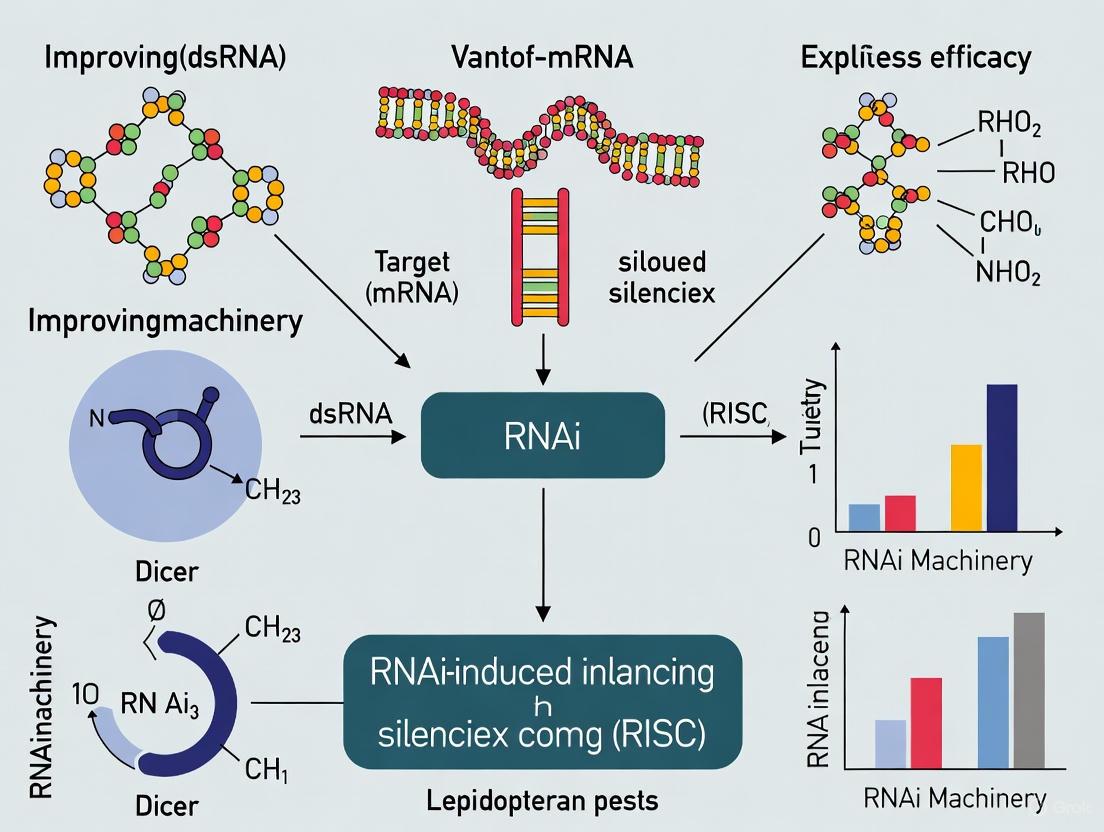
RNA interference (RNAi) presents a highly specific and environmentally sustainable alternative to chemical insecticides for managing lepidopteran pests, which are responsible for significant global crop losses.
Overcoming the Lepidopteran RNAi Hurdle: Strategies for Enhancing Gene Silencing Efficacy in Pest Control
Abstract
RNA interference (RNAi) presents a highly specific and environmentally sustainable alternative to chemical insecticides for managing lepidopteran pests, which are responsible for significant global crop losses. However, the variable and often low RNAi efficacy in Lepidoptera poses a major challenge for its practical application. This article synthesizes recent scientific advances to provide a comprehensive roadmap for improving RNAi outcomes. We explore the foundational biological barriers—including gut nucleases, inefficient cellular uptake, and core RNAi machinery deficits—that limit gene silencing. The review further details innovative methodological approaches such as nanoparticle-mediated dsRNA delivery, rational design of RNAi triggers, and Spray-Induced Gene Silencing (SIGS). We also present troubleshooting protocols for optimizing dsRNA stability and cellular entry, alongside validation frameworks for assessing efficacy across species and real-world conditions. This resource is tailored for researchers, scientists, and product development professionals seeking to translate RNAi technology into effective lepidopteran pest management solutions.
Decoding the Barriers: Why RNAi Efficiency Varies in Lepidopteran Pests
Technical Support Center
Troubleshooting Guides
Problem 1: Poor RNAi Efficacy in Lepidopteran Pests
| Potential Cause | Diagnostic Experiments | Recommended Solution |
|---|---|---|
| Low Dicer-2 expression [1] | Quantify Dicer-2 mRNA levels in target tissue (e.g., midgut) via qRT-PCR. Compare to RNAi-sensitive species. | Use pre-processed siRNA to bypass Dicer-2 dependency [1]. Consider viral vectors (VIGS) for in-situ dsRNA production [2]. |
| Rapid dsRNA degradation [1] | Incubate dsRNA with insect gut extract. Analyze integrity via gel electrophoresis over time. | Use nuclease-resistant dsRNA formulations (e.g., polymer nanoparticles) [2]. Target dsRNA to the hemocoel via injection for research purposes. |
| Inefficient systemic spread | Inject dsRNA into hemocoel and compare efficacy to oral delivery. Measure siRNA in distal tissues. | Directly target midgut-specific genes to avoid need for systemic spread [2]. Use engineered symbionts for local, continuous dsRNA production. |
Problem 2: Inconsistent Gene Silencing Across Insect Species
| Potential Cause | Diagnostic Experiments | Recommended Solution |
|---|---|---|
| Inefficient cellular uptake [2] | Use fluorescently labeled dsRNA to track uptake in gut cells via microscopy. | Use long dsRNA (>200 bp) to improve uptake [3] [4]. Utilize peptide-based delivery vehicles to enhance cellular entry [2]. |
| Suboptimal dsRNA design [4] | Test multiple dsRNA regions targeting the same gene. Use the dsRIP web platform for prediction. | Design dsRNA with high thermodynamic asymmetry and avoid secondary structures. For insects, select regions with higher GC content (nt 9-14 of siRNA antisense strand) [4]. |
| Variable RNAi machinery | Quantify expression levels of core machinery (Dicer-2, R2D2, Ago-2) in your target species via qPCR or Western blot. | For species with weak RNAi, employ CRISPR/Cas or CUADb technologies as alternatives [5]. |
Problem 3: Off-Target Effects or High Background
| Potential Cause | Diagnostic Experiments | Recommended Solution |
|---|---|---|
| Non-specific silencing | Perform RNA-seq on dsRNA-treated insects to assess transcriptome-wide changes. | Use the dsRIP platform to check for sequence homology to non-target genes, especially in related species [4]. |
| Immune activation | Assess expression of immune pathway genes (e.g., Toll, Imd) after dsRNA treatment. | Re-design dsRNA to avoid known immunostimulatory sequences. Purify dsRNA to remove contaminants. |
Core Machinery Experimental Protocols
Protocol 1: Quantifying Core RNAi Machinery Component Expression
Purpose: To diagnose low RNAi efficacy by measuring mRNA levels of Dicer-2, R2D2, and Argonaute-2.
Materials:
- TRIzol reagent for RNA extraction [1]
- PrimeScript RT Reagent Kit for cDNA synthesis [1]
- SensiFAST SYBR Hi-ROX Kit for qRT-PCR [1]
- Gene-specific primers (See Reagent Table below)
Method:
- Tissue Dissection: Dissect target tissue (e.g., midgut, fat body) from experimental insects.
- RNA Extraction: Homogenize tissue in TRIzol. Extract total RNA following manufacturer's protocol. Determine concentration and purity via spectrophotometry [1].
- cDNA Synthesis: Synthesize cDNA from 500 ng of total RNA using the PrimeScript RT Reagent Kit [1].
- qRT-PCR:
- Dilute cDNA 10-fold.
- Set up reactions with SensiFAST SYBR Hi-ROX Kit and gene-specific primers.
- Use the following cycling conditions [1]:
- Initial Denaturation: 95°C for 20 seconds
- 40 Cycles: 95°C for 3 seconds, 59°C for 30 seconds
- Melting Curve Analysis
- Data Analysis: Analyze data using the ΔΔCT method. Normalize target gene expression to stable reference genes (e.g., Actin, 18S) [1].
Protocol 2: Assessing dsRNA Stability in the Insect Gut
Purpose: To determine if rapid degradation of dsRNA in the gut environment is a limiting factor for RNAi.
Materials:
- Purified target dsRNA
- Insect gut extract
- mirVana miRNA Isolation Kit [1]
- Materials for denaturing PAGE (15% polyacrylamide gel, 8M urea) [1]
Method:
- Prepare Gut Extract: Dissect and homogenize insect midguts in a suitable buffer. Centrifuge to collect supernatant.
- Degradation Assay: Incubate a known quantity of dsRNA with gut extract at room temperature. Remove aliquots at various time points (e.g., 0, 5, 15, 30, 60 minutes).
- RNA Extraction: Stop reactions and isolate RNA using the mirVana miRNA Isolation Kit [1].
- Analysis by Northern Blot:
- Fractionate RNA samples on a 15% denaturing polyacrylamide gel.
- Transfer to a membrane and hybridize with a probe complementary to your dsRNA.
- Visualize and quantify intact dsRNA to determine half-life [1].
Research Reagent Solutions
| Item | Function / Application | Example / Specification |
|---|---|---|
| MEGAscript T7 Kit | For in vitro transcription of high-yield, capped dsRNA [1]. | Used for synthesizing dsRNA against target insect genes [1]. |
| mirVana miRNA Isolation Kit | For isolation of total small RNAs, useful for analyzing siRNA production from delivered dsRNA [1]. | Used in northern blot analysis to detect siRNAs [1]. |
| SensiFAST SYBR Hi-ROX Kit | For sensitive and specific quantification of mRNA levels via qRT-PCR [1]. | Used to measure gene expression of RNAi machinery components and target genes [1]. |
| HybEZ Hybridization System | Maintains optimum humidity and temperature during in situ hybridization assays [6]. | Critical for procedures like RNAscope to prevent sample drying. |
| One Shot Stbl3 Competent E. coli | For stabilizing lentiviral and other vectors with direct repeats during cloning [7]. | Helps prevent unwanted recombination when propagating RNAi vectors. |
| PureLink HQ Mini Plasmid Purification Kit | For preparing high-quality, sequencing-grade plasmid DNA [7]. | Essential for verifying the sequence of cloned dsRNA/hairpin inserts. |
| Lipofectamine 2000 Reagent | For transfecting nucleic acids into insect cell lines [7]. | Store at 4°C; do not freeze. Use a DNA:lipid ratio of 1:2 to 1:3 for optimal efficiency [7]. |
| Control Probes (PPIB, dapB) | Positive and negative controls for RNA in situ hybridization to assess sample RNA quality and assay performance [6]. | PPIB is a low-copy housekeeping gene; dapB is a bacterial gene negative control. |
Frequently Asked Questions (FAQs)
Q1: Why is RNAi so inefficient in my lepidopteran (moth/butterfly) pests compared to coleopterans (beetles)?
The primary reasons are biological barriers unique to or more pronounced in lepidopterans [1] [2]:
- Low Dicer-2 Expression: The midgut tissue of lepidopterans like Spodoptera litura shows significantly lower expression of Dicer-2, critical for processing ingested dsRNA into functional siRNAs [1].
- Rapid dsRNA Degradation: The gut environment of lepidopterans contains high levels of nucleases that quickly degrade dsRNA before it can be processed [1].
- Inefficient Systemic RNAi: The spread of the RNAi signal from the gut to other tissues is often limited.
Q2: Should I use long dsRNA or siRNA for my insect experiments?
The choice depends on your target insect order and experimental goal:
- Long dsRNA (>200 bp): Generally recommended for most insects, especially coleopterans. It is more efficiently taken up by cells and produces a diverse pool of siRNAs, increasing the chance of effective silencing [3] [4]. It is also more cost-effective to produce.
- siRNA (21-25 nt): Can be more effective in recalcitrant insects like lepidopterans because it bypasses the need for Dicer-2 processing, which is a major bottleneck [1]. However, it is more expensive and may require screening multiple siRNAs for efficacy.
Q3: What sequence features are critical for designing an effective dsRNA?
While optimal length is >60 bp for uptake [3], effective siRNA generation is key. Features predictive of high efficacy include [4]:
- Thermodynamic Asymmetry: The siRNA duplex should have a weakly paired 5' end on the antisense (guide) strand.
- GC Content: Contrary to human systems, higher GC content in nucleotides 9-14 of the antisense strand correlates with better efficacy in insects.
- Avoiding Secondary Structures: The target region within the mRNA should be accessible.
- Adenine at position 10 of the antisense strand is also predictive. The dsRIP web platform is a dedicated tool that incorporates these insect-specific parameters for optimal design [4].
Q4: How can I confirm that my dsRNA is being processed into siRNA in the insect?
Northern Blotting is a standard method [1]:
- Extract total small RNA from treated insects using a kit like mirVana miRNA Isolation Kit.
- Separate the RNAs on a 15% denaturing polyacrylamide gel.
- Transfer to a membrane and hybridize with a labeled probe complementary to the expected siRNA.
- Detect the signal to confirm the presence of ~21 nt siRNAs derived from your dsRNA.
Q5: What are the main alternatives if classical RNAi fails in my target pest?
- Virus-Induced Gene Silencing (VIGS): Engineered insect viruses (e.g., Flock House virus) can be modified to produce dsRNA directly inside the host cells, bypassing gut barriers [8] [2].
- CRISPR/Cas9: This technology enables direct gene knockout at the genomic level and is highly effective in many species [5].
- CUADb (Contact Unmodified Antisense DNA Biotechnology): A newer DNA-guided approach that targets ribosomal RNA (rRNA), showing promise as a pest control agent [5].
RNAi Mechanism and Experimental Diagnostics
Diagram: The core RNAi pathway and key experimental diagnostics for troubleshooting failures at each step.
Frequently Asked Questions
Why is RNAi efficacy particularly low in lepidopteran pests like Helicoverpa armigera and Spodoptera litura? RNAi efficacy is low in lepidopterans primarily due to the rapid degradation of dsRNA before it can reach its target site. This degradation is driven by robust nuclease activity in the insect's gut fluid and hemolymph [9] [1] [10]. Furthermore, a contributing factor is the low expression level of core RNAi machinery genes, such as Dicer-2, which is essential for processing dsRNA into functional siRNA [1].
What role do symbiotic microorganisms play in dsRNA degradation? Recent research identifies that symbiotic bacteria in the insect gut can secrete extracellular nucleases that degrade dsRNA. For example, in Helicoverpa armigera, specific strains of Bacillus bacteria significantly decrease RNAi efficiency by secreting ribonucleases into the gut fluid, which directly breaks down ingested dsRNA [9].
How does dsRNA degradation differ between insect orders? dsRNA degrading activity, including optimal pH and ion dependence, varies significantly among insect species [10]. A key commonality is that the gut consistently exhibits several hundred-fold higher dsRNA degrading activity compared to other tissues like hemolymph or the carcass across all species studied [10]. The table below summarizes a biochemical comparison.
Table 1: Biochemical Properties of dsRNA Degrading Nucleases in Various Insects
| Insect Species | Optimal pH | Effect of Mg²⁺ | Relative Gut Activity |
|---|---|---|---|
| Spodoptera litura (Lepidoptera) | Alkaline | Enhanced | Several hundred-fold higher than other tissues [10] |
| Locusta migratoria (Orthoptera) | Alkaline | Enhanced | Several hundred-fold higher than other tissues [10] |
| Periplaneta americana (Blattodea) | Alkaline | Enhanced | Several hundred-fold higher than other tissues [10] |
| Zophobas atratus (Coleoptera) | Alkaline | Enhanced | Several hundred-fold higher than other tissues [10] |
| Tribolium castaneum (Coleoptera) | 8.0 | Suppressed | High [11] |
What are the practical consequences of rapid dsRNA degradation? Degradation leads to reduced accumulation of intact dsRNA within the pest, which directly blocks the RNAi effect [9]. This results in a failure to effectively silence target genes, even when the dsRNA is injected directly into the insect, and diminishes any subsequent phenotypic effects, such as mortality or growth disruption [9] [1].
Troubleshooting Guides
Issue: Poor Gene Silencing After dsRNA Feeding
Potential Cause 1: Rapid dsRNA degradation in the gut lumen. The gut fluid contains high levels of secreted nucleases that quickly break down the dsRNA before it can be taken up by cells.
- Recommended Action: Co-deliver dsRNA with nuclease inhibitors. Alternatively, consider using nanoparticles to shield the dsRNA. Chitosan nanoparticles have been shown to protect dsRNA from degradation and enhance cellular uptake in insects [12].
- Verification Method: Perform an in vitro degradation assay. Incubate your dsRNA with gut fluid extracted from the target insect and analyze integrity using gel electrophoresis. Rapid degradation confirms this issue [9] [10].
Potential Cause 2: Low expression of core RNAi machinery genes. Inefficient conversion of dsRNA to siRNA due to low Dicer-2 expression can limit RNAi efficacy.
- Recommended Action: Use siRNA instead of long dsRNA. One study on Spodoptera litura found that while dsRNA did not induce significant gene silencing, siRNA exhibited clear insecticidal effects [1].
- Verification Method: Quantify the expression of Dicer-2 and Argonaute-2 (Ago-2) in your target tissue (e.g., midgut) using qRT-PCR. Compare levels to a species known to be highly susceptible to RNAi [1].
Issue: Inconsistent RNAi Efficacy Between Injection and Feeding
Potential Cause: Differential nuclease activity in body compartments. While the gut has the highest nuclease activity, the hemolymph also possesses degradative capability, though it is typically lower [10].
- Recommended Action: For injection, ensure dsRNA is purified and free of contaminants. The use of carrier nanoparticles is also beneficial for injection to protect dsRNA in the hemolymph [12].
- Verification Method: Track the stability of fluorescently labeled dsRNA (e.g., Cy3-dsRNA) in vivo. Compare the fluorescence signal over time between injected and fed insects to visualize dsRNA stability differences [9].
Experimental Protocols
Protocol 1:In VitrodsRNA Degradation Assay
This protocol assesses the dsRNA-degrading activity of insect gut fluids or other tissues.
- Sample Preparation: Dissect the insect midgut under sterile conditions. Collect the gut fluid and centrifuge at low speed (e.g., 10,000 × g for 10 min at 4°C) to remove debris and cells. Use the supernatant as the enzyme source [9].
- Reaction Setup: Co-incubate a defined amount of dsRNA (e.g., 500 ng) with the prepared gut fluid supernatant in a suitable buffer.
- Incubation: Allow the reaction to proceed at the insect's physiological temperature (e.g., 28-30°C) for a set time (e.g., 30 minutes) [10].
- Analysis: Stop the reaction and analyze the integrity of the dsRNA using standard agarose gel electrophoresis. The degradation of dsRNA will be visible as a smeared or disappeared band compared to the intact dsRNA control [9] [1].
Protocol 2: Quantifying dsRNA StabilityIn Vivo
This protocol visually tracks the stability of dsRNA inside the insect body.
- Labeling: Use fluorescently labeled dsRNA (e.g., Cy3-dsRNA) [9].
- Delivery: Introduce the Cy3-dsRNA into experimental insects via the chosen method (feeding or injection). A control group should include insects without Ba 6 colonization for comparison [9].
- Imaging: At various time points post-delivery (e.g., 1 hour, 6 hours), image the insects using a fluorescence microscope.
- Interpretation: A rapid decrease in fluorescence intensity in the test group compared to the control indicates high degradation activity within the insect [9].
Protocol 3: Evaluating the Impact of Symbiotic Bacteria on RNAi Efficiency
This protocol investigates how gut microbiota influence dsRNA stability and RNAi outcomes.
- Bacterial Colonization: Feed insects with a suspension of a nuclease-secreting bacterial strain (e.g., Bacillus cereus Ba 6). A control group should receive a sterile culture medium [9].
- Verification of Colonization: After several days, use qRT-PCR with strain-specific primers to confirm the increased abundance of the bacteria in the gut [9].
- RNAi Bioassay: Administer target-specific dsRNA (e.g., dsCarboxylesterase) to both colonized and control insects.
- Efficacy Assessment:
- Molecular Level: Use qRT-PCR to measure the expression of the target gene in both groups. Successful RNAi in the control but not the colonized group indicates bacterial interference [9].
- Phenotypic Level: Record mortality, growth defects, or other expected phenotypic changes.
Visualizing the Core Challenge: dsRNA Degradation in the Insect Gut
The following diagram illustrates the primary barriers dsRNA encounters in the lepidopteran gut, leading to inefficient RNAi.
The Scientist's Toolkit: Key Research Reagents & Solutions
Table 2: Essential Reagents for Investigating dsRNA Degradation
| Reagent / Material | Function in Experimentation | Specific Examples / Notes |
|---|---|---|
| Fluorescently Labeled dsRNA (e.g., Cy3-dsRNA) | Visualizing dsRNA uptake, distribution, and stability in vivo [9]. | Allows tracking via fluorescence microscopy. Critical for Protocol 2. |
| Chitosan Nanoparticles | A delivery vehicle that encapsulates dsRNA, shielding it from nuclease degradation and enhancing cellular uptake [12]. | A widely studied material for improving RNAi efficacy in insects. |
| Nuclease-Deficient Bacterial Strains | Used as controls to study the specific contribution of symbiotic bacteria to dsRNA degradation [9]. | Contrast with nuclease-secreting strains (e.g., Bacillus cereus Ba 6). |
| qRT-PCR Assays | Quantifying the expression of target genes (to measure silencing) and RNAi pathway genes (e.g., Dicer-2, Ago-2) [9] [1]. | Essential for validating RNAi efficacy at the molecular level. |
| dsRNA Degradation Assay Kit | Provides a optimized, quantitative method for measuring nuclease activity, often using fluorescence for continuous measurement [10]. | An alternative to the gel electrophoresis method described in Protocol 1. |
Troubleshooting Guide: Common RNAi Uptake Issues
Problem: Inefficient dsRNA Uptake in Lepidopteran Cells Many researchers observe poor RNAi efficacy in lepidopteran pests due to cellular uptake barriers. The primary issues include low expression of systemic RNAi transporters and reliance on inefficient endocytic pathways [13] [1].
Solution: Consider these experimental approaches:
- Pre-treatment Assessment: Quantify expression levels of SID-1 homologs and core RNAi machinery (Dicer-2, Ago2) before main experiments [13] [1].
- Combined Strategies: Implement dsRNA stability enhancements (nuclease inhibitors, formulation) alongside uptake-focused approaches [14].
- Alternative Molecules: Test siRNA efficacy, as some lepidopteran systems process pre-formed siRNAs more efficiently than long dsRNA [1].
Problem: Variable RNAi Efficiency Across Insect Orders Coleopterans typically show robust RNAi, while lepidopterans and hemipterans often display refractory responses [13].
Solution: Customize approaches based on target insect biology:
- For Lepidopterans/Hemipterans: Prioritize siRNA delivery or implement "RNAi-of-RNAi" strategies to knock down RNAi suppressors [14].
- For Coleopterans: Standard long dsRNA protocols are usually effective [3].
Frequently Asked Questions (FAQs)
Q: Why is RNAi efficiency so variable between insect species? A: Variability stems from differences in core RNAi machinery expression, dsRNA degradation rates, and cellular uptake mechanisms. Lepidopterans often exhibit low SID-1 homolog expression and high dsRNase activity, creating dual barriers to effective RNAi [13] [1].
Q: What is the functional difference between SID-1-mediated uptake and endocytosis? A: SID-1 proteins facilitate direct transmembrane diffusion of dsRNA, particularly favoring longer dsRNA molecules (>50 bp) [15] [16]. Endocytosis involves vesicle-mediated internalization that can trap dsRNA in endosomal compartments, limiting cytoplasmic availability [17] [18]. The table below summarizes key differences:
Table: Comparison of dsRNA Uptake Mechanisms
| Feature | SID-1-Mediated Uptake | Endocytic Uptake |
|---|---|---|
| Mechanism | Passive transmembrane channel [15] | Vesicle formation and internalization [18] |
| dsRNA Size Preference | Prefers longer dsRNA (>50 bp) [15] | Accommodates various sizes via different pathways [18] |
| Cellular Trafficking | Direct cytosolic delivery | Endosomal compartmentalization [17] |
| Tissue Distribution | Often highest in gut epithelium [15] | Ubiquitous but pathway availability varies [18] |
| Energy Dependence | Relatively energy-independent [15] | Energy-dependent [18] |
Q: How can I experimentally determine which uptake pathway my insect cells use? A: Use pharmacological inhibitors in combination with dsRNA uptake assays:
Table: Experimental Inhibitors for Pathway Identification
| Target Pathway | Inhibitor | Concentration | Mechanism of Action | Key Considerations |
|---|---|---|---|---|
| Clathrin-Mediated Endocytosis | Chlorpromazine [17] [19] | 25-30 µM [17] [19] | Sequesters clathrin and AP2 [17] | Monitor cell viability with extended exposure [19] |
| Caveolae-Mediated Endocytosis | Filipin [17] | 3 µM [17] | Binds membrane cholesterol [17] | Not all insects have caveolae [18] |
| Macropinocytosis | Amiloride [17] | 100 µM [17] | Inhibits Rac1 and cdc42 [17] | May affect multiple cellular processes [17] |
| Dynamin-Dependent Pathways | Dynasore [17] | 80 µM [17] | Noncompetitive dynamin inhibitor [17] | Affects both clathrin and caveolae pathways [17] |
| Actin Polymerization | Cytochalasin D [17] [19] | 10 µM [17] [19] | Competitive inhibitor of actin polymerization [17] | Broad effects on multiple endocytic pathways [17] |
Experimental Protocols
Protocol 1: Assessing SID-1 Homolog Expression
Principle: Determine baseline expression of putative SID-1 transporters as a predictor of direct dsRNA uptake capability.
Procedure:
- Extract RNA from target tissues (midgut, Malpighian tubules, fat body)
- Perform reverse transcription
- Quantitative PCR using degenerate primers designed from conserved SID-1 transmembrane domains
- Normalize to housekeeping genes and compare to positive control (D. melanogaster S2 cells expressing C. elegans SID-1) [15] [13]
Expected Results: Lepidopterans typically show low or undetectable SID-1 homolog expression compared to coleopterans [13].
Protocol 2: dsRNA Uptake Pathway Identification
Principle: Use pharmacological inhibitors to dissect contributions of different endocytic pathways to dsRNA internalization.
Procedure:
- Culture insect cells in 24-well plates (200,000 cells/well)
- Pre-treat with pathway-specific inhibitors for 1 hour (see Table 2 for concentrations)
- Add fluorescently-labeled dsRNA (100-200 ng/µL)
- Incubate 4 hours at relevant temperature (27°C for most insect cells)
- Wash with heparin sulfate (20 µg/mL) to remove surface-bound dsRNA
- Analyze internalized fluorescence via flow cytometry or confocal microscopy [17]
Controls:
- Positive control: Cells without inhibitors
- Viability control: MTT assay parallel plates
- Specificity control: Unrelated inhibitor to rule off-target effects
Interpretation: Compare uptake in inhibited cells to untreated controls. Pathway contribution is significant when inhibition reduces dsRNA internalization >50% [17].
Pathway Visualization
Diagram: Cellular dsRNA Uptake Pathways for RNAi
The Scientist's Toolkit: Research Reagent Solutions
Table: Essential Reagents for Studying RNAi Uptake Mechanisms
| Reagent/Category | Specific Examples | Research Application | Key Considerations |
|---|---|---|---|
| Pathway Inhibitors | Chlorpromazine, Dynasore, Cytochalasin D, Filipin, Amiloride [17] [19] | Mechanistic studies of endocytic routes | Use multiple inhibitors targeting same pathway to confirm specificity [17] |
| Detection Tools | Fluorescently-labeled dsRNA (Dy547, FAM), Anti-SID antibodies [17] [16] | Quantifying uptake and protein localization | Include heparin wash step to remove surface-bound dsRNA [17] |
| Cell Culture Models | Drosophila S2 cells, Lepidopteran cell lines (Sf9, Hi5), Species-specific primary cultures [19] [1] | Controlled uptake studies | Verify pathway conservation between cell lines and whole organisms [19] |
| Genetic Tools | RNAi constructs targeting SID homologs, endocytic machinery genes [14] | Functional validation of specific components | Account for potential compensatory mechanisms in knockdown studies [14] |
| Formulation Aids | Cationic polymers, Lipofectamine 2000, Nanocarriers [17] [18] | Enhancing delivery efficiency | Vehicle chemistry influences preferred uptake pathway [17] |
Troubleshooting Guide: Common RNAi Experimental Issues
FAQ: Why does my RNAi experiment show strong gene knockdown in beetles but fail completely in caterpillars?
This is a common problem rooted in fundamental physiological differences between insect orders. Your experiment is likely failing due to a combination of rapid dsRNA degradation and inefficient cellular uptake in lepidopteran systems.
Primary Cause: dsRNA Degradation and Poor Cellular Uptake Lepidopteran insects, such as Spodoptera species, possess a hostile gut environment with high levels of nucleases that rapidly degrade naked dsRNA before it can be processed [1] [3] [12]. Furthermore, the expression of Dicer-2, the enzyme critical for processing dsRNA into functional siRNA, is often significantly lower in lepidopteran midguts compared to coleopterans [1].
Recommended Solution: Utilize Nanoparticle-Encapsulated dsRNA To protect the dsRNA and enhance its delivery, formulate it with nanoparticle carriers. Research confirms that carriers like ZIF-8@PDA (Zeolitic Imidazolate Framework-8 with a Polydopamine coating) can shield dsRNA from enzymatic degradation in the gut and hemolymph, leading to a 12-fold increase in fluorescence intensity in gut tissues and a dramatic 358-fold increase in cellular uptake in vitro compared to naked dsRNA [20]. Chitosan-based nanoparticles are another effective option for improving dsRNA stability and cellular uptake [12].
FAQ: How can I confirm that the dsRNA I am using is being successfully processed into siRNA in my target insect?
Verifying the conversion of dsRNA to siRNA is critical for diagnosing the point of failure in the RNAi pathway.
- Experimental Protocol: Northern Blot Analysis
This method allows for the direct detection of siRNA fragments derived from your dsRNA treatment.
- Extract Total Small RNA: Use a commercial kit (e.g., mirVana miRNA isolation kit) to isolate small RNAs from the insect's midgut tissue at various time points (e.g., 2, 6, 12, and 24 hours) after dsRNA feeding or injection [1].
- Fractionate by Electrophoresis: Separate the extracted small RNAs (typically 1 µg per sample) on a 15% denaturing polyacrylamide gel containing 8 M urea [1].
- Probe for Target siRNA: Following electrophoresis, transfer the RNA to a membrane and hybridize it with a labeled probe complementary to the expected siRNA sequences from your target dsRNA. The presence of a signal at ~21-25 nucleotides confirms successful dicing of the dsRNA into functional siRNAs [1].
FAQ: My RNAi treatment knocks down mRNA but I see no corresponding effect on the target protein or phenotype. What could be wrong?
This discrepancy often relates to protein turnover rates and the timing of your analysis.
- Troubleshooting Steps:
- Check Protein Turnover Rate: Even if mRNA is successfully degraded, the existing protein may persist for some time. Perform a time-course experiment to measure protein levels at later time points (e.g., 72, 96, or 120 hours post-treatment) to account for the protein's half-life [21].
- Verify mRNA Knockdown Efficacy: Ensure the mRNA knockdown is substantial. Use qRT-PCR to confirm a reduction of at least 70% or more in target mRNA levels 48 hours post-transfection to be confident it should have a phenotypic impact [21].
- Select an Appropriate Target Gene: Choose genes whose disruption leads to rapid and clear phenotypic consequences. Essential genes related to development, cellular integrity, or osmoregulation are often reliable targets (see Table 1 for candidates) [1] [3].
Quantitative Data: Comparative RNAi Efficacy
Table 1: Key Gene Targets for RNAi Across Insect Orders
| Gene | Function | Reported Efficacy | Phenotypic Effect |
|---|---|---|---|
| V-ATPase | Ion and nutrient transport [3] | Highly effective in Coleoptera & some Hemiptera; variable in Lepidoptera [3] | Decreased survival and fertility [3] |
| CHS (Chitin Synthase) | Catalyzes chitin synthesis for exoskeleton and peritrophic membrane [20] | Effective in multiple orders; efficacy in Lepidoptera is enhanced with nanoparticles [20] | Limited larval growth, peritrophic membrane lysis, mortality [20] |
| Dicer-2 | Processes dsRNA into siRNA [1] | Low expression in Lepidoptera midgut is a major limiting factor [1] | Not a target for pest control, but its expression level is a key indicator of RNAi robustness [1] |
| IAP | Inhibits apoptosis [1] | siRNA showed insecticidal effects in Spodoptera litura; dsRNA was ineffective [1] | Disruption of intestinal osmoregulation, impaired larval fitness [1] |
Table 2: Stability and Uptake of Naked vs. Nano-Enabled dsRNA in Lepidoptera
| Parameter | Naked dsRNA | Nanoparticle-Encapsulated dsRNA (e.g., ZIF-8@PDA) |
|---|---|---|
| Stability in Gut Fluid | Rapidly degraded [1] [12] | Effectively protected from enzymatic degradation [20] |
| Cellular Uptake (in vitro) | Baseline (1x) [20] | 357.9-fold increase [20] |
| Cellular Uptake (in vivo, gut tissue) | Baseline (1x) [20] | 12.33-fold increase [20] |
| Insecticidal Effect | Often low or nonexistent [1] | Significant mortality and growth inhibition [20] |
Experimental Protocols for Overcoming Lepidopteran Refractoriness
Protocol: Assessing and Overcoming dsRNA Instability
Purpose: To evaluate the stability of your dsRNA preparation in the insect's gut environment and test protective formulations.
Materials:
- dsRNA (target gene and a control, e.g., dsGFP)
- Gut fluid or hemolymph from the target insect
- Nanoparticle of choice (e.g., ZIF-8, Chitosan)
- Electrophoresis equipment
Method:
- Incubation: Mix a fixed amount of dsRNA (both naked and nanoparticle-encapsulated) with gut fluid or hemolymph.
- Time Course: Incubate the mixture at the insect's physiological temperature (e.g., 26°C) for various durations (e.g., 0, 15, 30, 60 minutes).
- Analysis: Stop the reaction and analyze the integrity of the dsRNA using agarose gel electrophoresis.
- Expected Outcome: Naked dsRNA will show significant degradation over time, while the nanoparticle-encapsulated dsRNA should remain largely intact, as demonstrated in studies with ZIF-8@PDA [20].
Protocol: Testing siRNA Directly to Bypass Dicer-2 Limitation
Purpose: To determine if the primary barrier to RNAi in a specific lepidopteran species is the conversion of dsRNA to siRNA.
Materials:
- Synthesized siRNA targeting an essential gene (e.g., mesh or iap) [1]
- Artificial diet or feeding apparatus
- qRT-PCR reagents
Method:
- Treatment: Deliver synthesized siRNA (e.g., 3 µg per 10 larvae for 4 days) directly via feeding [1].
- Monitoring: Record larval mortality and growth daily.
- Validation: Use qRT-PCR to confirm knockdown of the target mRNA.
- Expected Outcome: If siRNA induces significant mortality and gene silencing while dsRNA does not, it strongly indicates a problem with dsRNA uptake or processing (e.g., low Dicer-2 activity), as was the case in Spodoptera litura [1].
Visualizing the RNAi Pathway and Key Barriers
The Scientist's Toolkit: Research Reagent Solutions
Table 3: Essential Reagents for RNAi Pest Control Research
| Reagent / Material | Function / Application | Key Consideration |
|---|---|---|
| MEGAscript T7 Kit | High-yield in vitro synthesis of dsRNA [1] | Ideal for producing pure, defined-length dsRNA for initial bioassays and stability tests [1]. |
| Engineered HT115 E. coli | In vivo production of dsRNA; significantly lowers cost [20] | Crucial for scalable field application, but yields may contain impure RNA mixtures [20]. |
| ZIF-8 & Polydopamine | Nanoparticle carriers for dsRNA encapsulation [20] | Protects dsRNA from degradation and dramatically enhances cellular uptake in Lepidoptera [20]. |
| Chitosan Nanoparticles | Biodegradable, cationic polymer for dsRNA delivery [12] | Effectively binds dsRNA, improves stability, and facilitates cellular uptake [12]. |
| Silencer Select/Stealth RNAi | Pre-designed, validated siRNA sequences [21] | Useful as positive controls or for direct application experiments to bypass Dicer-2 limitations [1] [21]. |
| mirVana miRNA Isolation Kit | Isolation of total small RNA, including siRNA [1] | Essential for verifying dsRNA processing into siRNA via Northern blot analysis [1]. |
Impact of the Microbiome and Environmental Conditions on RNAi Stability
Troubleshooting Guide: Frequently Asked Questions
FAQ 1: Why is my dsRNA treatment ineffective in lepidopteran larvae despite proper targeting and dosage?
Ineffective RNAi in lepidopterans is commonly due to rapid dsRNA degradation and poor cellular processing. Critical factors include:
- Low Dicer-2 Expression: The midgut of lepidopterans like Spodoptera litura often exhibits low expression levels of the Dicer-2 enzyme, which is essential for processing long dsRNA into active siRNA. This creates a bottleneck in the RNAi pathway [1].
- Host Nucleases: Digestive fluids and hemolymph in insects contain nucleases that rapidly degrade naked dsRNA before it can be taken up by cells. This is a particularly significant barrier in Lepidoptera [22] [23].
- Microbial Nucleases: Symbiotic gut bacteria can secrete extracellular nucleases that degrade ingested dsRNA. For example, specific strains of Bacillus in the gut of Helicoverpa armigera have been shown to degrade dsRNA, directly reducing RNAi efficacy [22].
FAQ 2: How does the gut microbiome influence RNAi efficiency?
The gut microbiome plays a paradoxical role, as it can either enhance or diminish RNAi effects.
- Enhancing RNAi: In some coleopterans, like the leaf beetle Plagiodera versicolora and the ladybird beetle Henosepilachna vigintioctopunctata, the gut microbiota is essential for effective RNAi. Ingestion of dsRNA causes dysbiosis, and certain bacteria, such as Pseudomonas putida, can transition from a commensal to a pathogenic state, accelerating larval mortality [24] [25].
- Inhibiting RNAi: In other cases, notably in some lepidopterans, symbiotic gut bacteria secrete nucleases that break down dsRNA. This degradation prevents the dsRNA from reaching its target, thereby protecting the host and reducing RNAi efficacy [22].
FAQ 3: What experimental controls are necessary when investigating microbiome-mediated RNAi effects?
To isolate the effect of the microbiome, you must compare results between insects with an intact microbiome and axenic (microbe-free) insects.
- Generating Axenic Larvae: Surface-sterilize egg masses (e.g., with 70% ethanol) and rear the hatched larvae on a sterile artificial diet or sterile plant leaves under aseptic conditions [24] [25].
- Confirming Axenic Status: Verify the absence of gut bacteria through:
- Interpreting Results: A significant reduction in RNAi-induced mortality in axenic larvae compared to non-axenic larvae indicates a synergistic role of the microbiota. Conversely, improved RNAi efficacy in axenic larvae suggests the microbiota is normally inhibitory [25] [22].
FAQ 4: How can I improve the stability and efficacy of dsRNA in pest control applications?
Several strategies can be employed to protect dsRNA from degradation:
- Use of Nanoparticles: Complexing or encapsulating dsRNA in cationic polymers or clay nanoparticles can shield it from nuclease degradation in the gut and environment, enhancing its stability and cellular uptake [23] [26].
- Targeting Microbial Interference: For pests where gut bacteria degrade dsRNA, co-administering dsRNA with specific antibiotics or nuclease inhibitors could neutralize this defense mechanism [22].
- Direct siRNA Application: Bypass the Dicer-2 processing step entirely by directly synthesizing and applying siRNAs. Research on Spodoptera litura showed that siRNA, but not dsRNA, induced significant insecticidal effects [1].
Table 1: Impact of Gut Microbiome on RNAi Efficacy Across Insect Species
| Insect Species | Microbiome Role | Key Microbial Agent | Observed Effect on RNAi | Citation |
|---|---|---|---|---|
| Plagiodera versicolora (Leaf beetle) | Synergistic / Enhancer | Pseudomonas putida | Gut dysbiosis; bacterium shifts to pathogen, accelerating mortality. | [24] |
| Henosepilachna vigintioctopunctata (Ladybird beetle) | Synergistic / Essential | Mixed community | Axenic larvae show significantly reduced mortality upon dsRNA feeding. | [25] |
| Helicoverpa armigera (Cotton bollworm) | Inhibitory | Bacillus spp. (e.g., B. cereus) | Bacteria secrete nucleases that degrade dsRNA, reducing its efficacy. | [22] |
| Spodoptera litura (Tobacco cutworm) | Not Profiled | Not Applicable | dsRNA is ineffective due to low host Dicer-2; siRNA is effective. | [1] |
Table 2: Stability of dsRNA in Different Environmental and Biological Conditions
| Condition / Medium | Experimental Subject | Key Finding | Implication for RNAi Application | Citation |
|---|---|---|---|---|
| Soil Environment | dsRNA molecule | dsRNA showed greater environmental stability than siRNA. | dsRNA may persist longer in soil for control of soil-dwelling pests. | [1] |
| Insect Midgut Fluid | Helicoverpa armigera | dsRNA is rapidly degraded. | A major barrier for oral RNAi; requires stabilization methods. | [22] |
| Insect Hemolymph | Helicoverpa armigera | dsRNA is rapidly degraded. | A barrier for systemic RNAi, even if dsRNA passes the gut. | [22] |
| Co-incubation with Bacteria | Bacillus supernatants | Culture supernatants degraded dsRNA in vitro. | Confirms bacterial nuclease secretion as a mechanism for reduced RNAi. | [22] |
Experimental Protocols
Protocol 1: Assessing dsRNA Degradation by Gut Symbionts In Vitro
This protocol is used to identify and characterize gut bacteria that degrade dsRNA [22].
- Isolate Gut Bacteria: Dissect insect guts under sterile conditions, homogenize, and plate the homogenate on LB agar. Incubate to obtain single colonies.
- Prepare Bacterial Supernatant: Inoculate single bacterial colonies in liquid LB medium. Grow cultures to the desired density. Pellet cells by low-speed centrifugation and filter-sterilize the supernatant.
- Incubate dsRNA with Supernatant: Mix a known quantity of dsRNA (e.g., 200-500 ng) with the bacterial supernatant. Include a control with dsRNA in sterile LB medium.
- Analyze Integrity: Incubate the mixture for a set time (e.g., 1-4 hours). Analyze dsRNA integrity using gel electrophoresis (e.g., 1% agarose gel). Intact dsRNA will appear as a clear band, while degradation will show as smearing or band disappearance.
Protocol 2: Functional Validation of Microbiome Role in RNAi In Vivo
This protocol compares RNAi efficacy in axenic versus non-axenic insects [25].
- Generate Axenic Larvae:
- Surface Sterilization: Submerge egg masses in 70% ethanol for 5 minutes, followed by rinsing in sterile water.
- Rearing: Transfer sterilized eggs to a sterile container. Feed hatched larvae with a sterile artificial diet or surface-sterilized leaves. Maintain all tools and environments under aseptic conditions.
- Verify Axenic Status:
- Molecular Check: Extract total DNA from larvae and perform PCR with universal 16S rRNA gene primers. The absence of a PCR product confirms axenic status.
- Culture Check: Plate gut homogenates from sample larvae on LB agar. No bacterial growth after incubation confirms sterility.
- Administer dsRNA: Feed both axenic and non-axenic (control) larvae an artificial diet coated with target-specific dsRNA (e.g., targeting β-Actin). Use dsRNA targeting a non-insect gene (e.g., GFP) as a negative control.
- Measure Outcomes:
- Mortality: Record larval mortality daily for up to 14 days.
- Gene Silencing: Use qRT-PCR to measure the expression level of the target gene in both groups.
- Statistical Analysis: Compare survival curves (e.g., Kaplan-Meier analysis) and gene expression levels between axenic and non-axenic groups to determine the microbiome's effect.
Signaling Pathways and Workflows
The Scientist's Toolkit: Key Research Reagents
Table 3: Essential Reagents for Investigating Microbiome-RNAi Interactions
| Reagent / Material | Function / Application | Example Use Case | Citation |
|---|---|---|---|
| T7 RiboMAX Express RNAi System | High-yield in vitro synthesis of dsRNA. | Generating dsRNA for feeding assays or in vitro stability tests. | [24] |
| mirVana miRNA Isolation Kit | Isolation of total small RNAs, including siRNAs. | Northern blot analysis to detect siRNA production from ingested dsRNA. | [1] |
| One Shot Stbl3 Chemically Competent E. coli | Stable propagation of lentiviral and other difficult DNA constructs. | Creating bacterial clones for nuclease gene analysis or shRNA vectors. | [7] |
| Lipofectamine 2000 Transfection Reagent | In vitro delivery of nucleic acids into eukaryotic cells. | Testing dsRNA/siRNA efficacy and processing in insect cell cultures. | [7] |
| 16S rRNA Universal Primers (e.g., 27F/1492R) | Amplification of bacterial 16S gene for identification and community analysis. | Confirming axenic status or profiling gut microbial composition. | [24] [25] |
| PureLink HiPure Plasmid DNA Purification Kit | Preparation of high-quality, transfection-grade plasmid DNA. | Purifying DNA for cloning, sequencing, or in vitro transcription. | [7] |
| SensiFAST SYBR Hi-ROX Kit | Sensitive and specific one-step SYBR Green-based qRT-PCR. | Quantifying target gene knockdown (mRNA levels) and RNAi pathway genes. | [1] |
Advanced Delivery and Design: Practical Methods to Enhance RNAi Application
Frequently Asked Questions (FAQs) & Troubleshooting Guides
This section addresses common challenges researchers face when developing and applying nanoparticle-based RNAi delivery systems for lepidopteran pest control.
FAQ 1: Why is nanoparticle encapsulation necessary for dsRNA delivery in lepidopteran pests?
Lepidopteran pests, such as Helicoverpa armigera, possess robust physiological defenses that rapidly degrade naked dsRNA. Nanoparticles are essential to shield the dsRNA payload.
- Primary Challenge: Rapid degradation of naked dsRNA by nucleases present in the insect gut and hemolymph, as well as instability at the variable pH conditions of the gut environment [27].
- Solution: Cationic nanoparticles, such as those made from chitosan, form stable complexes with anionic dsRNA, creating a protective shield. Chitosan nanoparticles (CNPs) have been proven to effectively protect dsRNA from nucleases and insect gut pH, significantly enhancing its stability on leaf surfaces for up to five days [27].
Troubleshooting Guide: Rapid dsRNA Degradation
| Problem | Possible Cause | Solution |
|---|---|---|
| No gene silencing observed; dsRNA degraded in bioassays. | Degradation by nucleases in diet or gut. | Encapsulate dsRNA in nanoparticles. Use Chitosan (CS) or LDH nanosheets for protection [27]. |
| Inconsistent RNAi effects between insect batches. | Unstable dsRNA on plant surface; variable ingestion. | Use nanoparticle formulations (e.g., CNPs) that enhance leaf surface stability [27]. Formulate with surfactants for even spray coverage. |
FAQ 2: How can I improve cellular uptake of dsRNA in the insect midgut?
The insect midgut epithelium is a major barrier to dsRNA uptake. Optimizing the physicochemical properties of your nanoparticle is key to overcoming this.
- Primary Challenge: The negatively charged cell membrane repels the anionic backbone of naked dsRNA, preventing efficient cellular uptake [28] [29].
- Solution: Use cationic nanocarriers. The positive surface charge of chitosan nanoparticles or lipid-based systems promotes interaction with and uptake by the negatively charged cell membranes of the insect gut. Studies with Calcofluor-tagged CNPs have visually confirmed efficient uptake in the columnar cells of the insect gut [27].
Troubleshooting Guide: Poor Cellular Uptake
| Problem | Possible Cause | Solution |
|---|---|---|
| dsRNA is stable but shows no cellular internalization. | Negative charge of dsRNA prevents membrane passage. | Formulate with cationic polymers (e.g., Chitosan) or lipids. A positive zeta potential (+30 mV) facilitates binding and uptake [27]. |
| Low transfection efficiency in cultured insect cells. | Inefficient endocytosis of the delivery vehicle. | Consider using liposomes or ethosomes, which fuse more easily with cell membranes. Optimize the N:P (nitrogen-to-phosphate) ratio for complexation [30]. |
FAQ 3: What is the "endosomal escape" problem and how can it be addressed?
A significant bottleneck in RNAi efficacy is the entrapment and degradation of the dsRNA/siRNA payload within endosomes after cellular uptake.
- Primary Challenge: Inefficient escape from endosomes, leading to lysosomal degradation of the nucleic acid payload before it can engage the RNAi machinery in the cytosol [28] [29].
- Solution: Employ nanocarriers with endosomolytic properties. Certain materials can disrupt the endosomal membrane. The "proton sponge" effect of polymers like chitosan, or the use of pH-sensitive liposomes and fusogenic lipids, can promote endosomal disruption and the release of dsRNA into the cytoplasm [29].
Troubleshooting Guide: Inefficient Endosomal Escape
| Problem | Possible Cause | Solution |
|---|---|---|
| Nanoparticles are internalized but gene silencing is weak. | Cargo trapped and degraded in endo/lysosomes. | Use nanoparticles with endosomolytic activity (e.g., CS, pH-sensitive liposomes). Incorporate cationic lipids or polymers that undergo conformational change at low pH [29]. |
FAQ 4: How can I minimize off-target effects and ensure species-specific silencing?
The goal is to silence target genes in the pest species without affecting non-target organisms.
- Primary Challenge: Sequence-specific off-target effects can occur if the siRNA guide strand has partial complementarity to non-target mRNAs [28].
- Solution: Meticulous siRNA/dsRNA design is critical. Use proprietary algorithms or rigorous BLAST analyses to ensure full complementarity only to the intended target gene in the pest species. Experimental results confirm that CNPs-dsRNA designed for Helicoverpa armigera genes did not affect non-target insects like Spodoptera litura and Drosophila melanogaster [27].
The following table summarizes key performance data for different nanoparticle platforms relevant to lepidopteran RNAi research.
Table 1: Comparison of Nanoparticle Platforms for dsRNA/siRNA Delivery
| Nanoparticle Type | Typical Size Range | Surface Charge (Zeta Potential) | Key Advantages | Documented RNAi Efficacy |
|---|---|---|---|---|
| Chitosan (CS) | ~100 nm [27] | +32 mV [27] | Biodegradable, biocompatible, protects dsRNA, enhances gut uptake, promotes endosomal escape [27]. | 100% insect mortality in H. armigera; reduced pod damage and high yield in field trials [27]. |
| Liposomes / Lipid Nanoparticles (LNPs) | 50 - 200 nm [30] | Variable (often near neutral for PEGylated) | High encapsulation efficiency, can be tuned for fusogenicity, promotes endosomal escape, clinically validated [31] [32]. | FDA-approved siRNA therapeutics (e.g., Patisiran); effective for hepatic gene silencing in humans [32]. |
| Layered Double Hydroxide (LDH) Nanosheets | Varies with composition | Anionic (structure) | High drug loading, anion exchange capacity, biocompatible, can be functionalized [33]. | Demonstrated sustained release of anionic drugs; effective intercalation and delivery of nucleic acids in biomedical studies [33]. |
| Lipid-Polymer Hybrids | 100 - 200 nm | Slightly positive or neutral | Combines polymer stability with lipid biocompatibility; tunable release kinetics [30]. | Often used in topical skin applications; potential for tailored agro-chemical delivery [30]. |
Key Experimental Protocols
Protocol 1: Synthesis of Chitosan Nanoparticles (CNPs) for dsRNA Loading
This protocol is adapted from studies demonstrating high efficacy in lepidopteran pests [27].
- Preparation of Chitosan Solution: Dissolve low molecular weight chitosan in an aqueous acetic acid solution (1% v/v) to a final concentration of 0.2% (w/v). Adjust the pH to 5.5-6.0 and filter sterilize.
- Ionotropic Gelation: Under constant magnetic stirring, add a solution of sodium tripolyphosphate (TPP) (0.1% w/v) dropwise to the chitosan solution at a defined chitosan/TPP mass ratio (e.g., 3:1).
- dsRNA Loading: Incubate the formed CNPs with dsRNA (for 30 min at room temperature) to allow complexation via electrostatic interaction. The optimal CNP:dsRNA mass ratio should be determined empirically.
- Purification: Purify the CNPs-dsRNA complexes via centrifugation and resuspend in nuclease-free water or buffer.
- Characterization: Determine the particle size (e.g., ~100 nm) and zeta potential (e.g., +32 mV) using Dynamic Light Scattering (DLS). Confirm dsRNA loading using gel retardation assays [27].
Protocol 2: Assessing Nuclease Protection and dsRNA Release
- Nuclease Protection Assay: Incubate naked dsRNA and CNPs-dsRNA complexes with RNase A or insect gut extracts. Stop the reaction at set intervals and analyze integrity by agarose gel electrophoresis. CNPs should prevent degradation [27].
- In Vitro Release Kinetics: Place the CNPs-dsRNA complex in a buffer simulating insect gut pH (e.g., pH 9.5 for lepidopteran midgut). At scheduled times, centrifuge samples and measure dsRNA concentration in the supernatant via UV spectrophotometry to generate a release profile [33].
Visualization of Workflows and Pathways
Diagram 1: Experimental RNAi Workflow
Diagram 2: Intracellular RNAi Pathway
The Scientist's Toolkit: Essential Research Reagents
Table 2: Key Reagents for Nanoparticle-mediated RNAi Research
| Reagent / Material | Function | Example Use Case |
|---|---|---|
| Chitosan (Low M.W.) | Natural cationic polymer forming nanoparticle core. | Primary material for ionotropic synthesis of CNPs to complex and protect dsRNA [27]. |
| DMPG Phospholipid | Main component for anionic liposomes. | Used for creating lipid bilayers for drug delivery; can be intercalated into LDH nanosheets [33]. |
| Mg/Al-NO3 LDH | Inorganic nanosheet with anion exchange capacity. | Base material for creating bio-hybrid delivery systems for anionic molecules [33]. |
| Sodium Tripolyphosphate (TPP) | Crosslinking agent for ionic gelation. | Used to ionically crosslink chitosan to form stable nanoparticles [27]. |
| Dimyristoyl-glycerol | Lipid component for bilayer formation. | Used in the preparation of anionic liposomes for intercalation into LDH [33]. |
FAQs: Core Principles of dsRNA Design
Q1: What is the minimum effective length for a pesticidal dsRNA? While the active siRNAs are 21-25 nucleotides, the delivered dsRNA must be longer for efficient cellular uptake and processing. dsRNA should be at least 60 base pairs to enable efficient uptake in insect cells. Longer dsRNAs (>200 bp) are generally more effective as they yield more siRNA molecules, increasing the likelihood of effective target mRNA degradation [3] [23].
Q2: How does GC content influence dsRNA efficacy in insects? Optimal GC content is a critical factor. Contrary to design rules from human data, research in Tribolium castaneum showed that higher GC content in the 9th to 14th nucleotide position of the antisense siRNA is associated with higher efficacy [34]. However, extreme GC values (very high or very low) should generally be avoided to ensure proper duplex stability and RISC loading.
Q3: What sequence features make a highly effective siRNA guide strand? Empirical testing in beetles identified that the most predictive features for high insecticidal efficacy are [34]:
- Thermodynamic asymmetry: The strand with the less stable 5' end is preferentially loaded into RISC as the guide strand.
- Adenine at the 10th position in the antisense siRNA.
- Absence of secondary structures in the dsRNA region.
- Consideration of these features biases the RISC to load the antisense (guide) strand over the sense strand, improving silencing.
Q4: Why is RNAi efficacy notoriously low in lepidopteran pests (e.g., moths and butterflies)? Two major biological barriers limit RNAi in Lepidoptera [1] [35]:
- Low Dicer-2 expression: The enzyme that processes long dsRNA into siRNAs is often expressed at low levels in the midgut, leading to inefficient conversion of dsRNA to active siRNAs.
- Rapid dsRNA degradation: The gut environment contains high nuclease activity that quickly degrades dsRNA before it can be processed. In some species, siRNA can be more effective than dsRNA because it bypasses the Dicer-2 processing step [1].
Troubleshooting Common Experimental Problems
Problem: Low Gene Silencing Efficiency Despite High-Quality dsRNA
- Potential Cause 1: Inefficient dsRNA design ignoring key sequence features.
- Solution: Redesign the dsRNA using the
dsRIPweb platform or similar tools that incorporate insect-specific parameters. Prioritize regions with thermodynamic asymmetry and high abundance of effective siRNAs [34].
- Solution: Redesign the dsRNA using the
- Potential Cause 2: Target mRNA is structurally inaccessible.
- Solution: Use mRNA folding software to predict secondary structure and select target regions with low stability, such as those near the start codon or within 5'/3' UTRs, which are often more accessible [36].
- Potential Cause 3 (Lepidoptera-specific): Poor dsRNA processing and stability.
- Solution:
- Validate Dicer-2 Expression: Check the expression level of core RNAi machinery genes (Dcr2, R2D2, Ago2) in your target tissue via qPCR [1] [35].
- Use siRNA instead of dsRNA: Since siRNA bypasses the need for Dicer-2, synthesizing and applying siRNA directly can lead to clearer insecticidal effects in species like Spodoptera litura [1].
- Apply RNase Inhibitors: Co-deliver dsRNA with a natural exoRNase inhibitor like adenosine 3', 5'-bisphosphate (PAP) to protect it from degradation [37].
- Solution:
Problem: High Non-Target Effects or Toxicity
- Potential Cause: The designed dsRNA has significant sequence similarity to genes in non-target species.
- Solution: Perform a rigorous bioinformatic assessment using tools like dsRIP to check for off-target matches in the genomes of beneficial organisms (e.g., pollinators) and ensure high specificity for the target pest [34].
Quantitative Data for Rational Design
Table 1: Optimal dsRNA Design Parameters Across Insect Orders
| Parameter | Coleoptera (e.g., Tribolium) | Lepidoptera (e.g., Spodoptera) | Key References |
|---|---|---|---|
| Effective Length Range | 200 - 500 bp | Varies widely; siRNA may be superior to long dsRNA | [34] [3] [1] |
| Key GC Consideration | High GC in nucleotides 9-14 of antisense strand is beneficial. | More data needed; follow general guidelines. | [34] |
| Critical Sequence Feature | A at position 10 (antisense); Thermodynamic asymmetry. | Target mRNA accessibility; avoid stable secondary structures. | [34] [36] |
| Major Barrier | Cellular uptake. | Low Dicer-2 expression; rapid dsRNA degradation. | [1] [35] |
Table 2: Example dsRNA Lengths Successfully Used for Gene Silencing in Various Pests
| Insect Species | Order | Target Gene | Effective dsRNA Length (bp) |
|---|---|---|---|
| Diabrotica virgifera virgifera | Coleoptera | Snf7 | 240 |
| Leptinotarsa decemlineata | Coleoptera | β-actin | 298 |
| Leptinotarsa decemlineata | Coleoptera | HR3 | 141 |
| Bemisia tabaci | Hemiptera | β-actin | 220 |
| Helicoverpa armigera | Lepidoptera | Target Gene | 189 |
Experimental Protocol: Testing and Validating dsRNA Efficacy
Protocol: Assessing RNAi Efficacy and dsRNA Processing In Vivo
This protocol is used to verify that your designed dsRNA is correctly processed and loaded into the RISC, providing a mechanistic explanation for its efficacy [34] [1].
- dsRNA Treatment: Administer the designed dsRNA to the target insect (e.g., via injection or feeding).
- Small RNA Sequencing: Isolate total small RNAs from the target tissue (e.g., midgut) at multiple time points post-treatment.
- Bioinformatic Analysis:
- Map Sequencing Reads: Align the sequenced small RNAs to the delivered dsRNA sequence to visualize the processing pattern and identify dominant siRNA regions.
- Analyze Strand Bias: Quantify the ratio of antisense to sense strands in the RISC-bound small RNA population. Optimized dsRNAs show a higher ratio of the antisense (guide) strand [34].
- Phenotypic Correlation: Correlate the abundance and strand bias of specific siRNAs with the observed phenotypic effects (e.g., mortality, gene knockdown).
Table 3: Key Research Reagent Solutions for RNAi Pest Control Research
| Reagent / Resource | Function/Description | Application in Research |
|---|---|---|
| dsRIP Web Platform | A specialized web platform for designing optimized dsRNA sequences for pest control. | Identifies effective target genes, optimizes dsRNA sequences using insect-specific parameters, and assesses risk to non-target species [34]. |
| Recombinant Dicer-2 | Purified Dicer-2 enzyme produced in a system like E. coli. | Used for in vitro digestion of dsRNA to identify the most abundant siRNA fragments generated for a given sequence, informing the design of highly effective siRNA constructs [37]. |
| 3'dTdT Overhang siRNA | Structurally modified siRNA with dTdT overhangs at the 3' ends. | Enhances stability against exonuclease degradation and can improve RNAi efficiency, especially in challenging pests [37]. |
| ExoRNase Inhibitors (e.g., PAP) | Natural inhibitors of exonuclease enzymes. | Co-delivered with dsRNA/siRNA to protect it from degradation in the insect gut, thereby improving its stability and efficacy [37]. |
| Nanoparticle Carriers | Polymer-based nanocarriers for encapsulating dsRNA/siRNA. | Facilitates cellular uptake and can promote endosomal release of the RNAi trigger, enhancing overall gene silencing potency [37] [38]. |
Spray-Induced Gene Silencing (SIGS) represents an innovative and environmentally sustainable approach to crop protection that harnesses the natural mechanism of RNA interference (RNAi). This technology utilizes the application of exogenous double-stranded RNA (dsRNA) to silence essential genes in pests and pathogens, thereby providing protection for crops without genetically modifying the host plant [38]. Rooted in the natural phenomenon of cross-kingdom RNAi, where small RNAs travel between interacting organisms to induce gene silencing, SIGS has emerged as a promising alternative to conventional chemical pesticides [38].
The core principle of SIGS involves applying dsRNA molecules directly onto plant surfaces through spraying or other delivery methods. These molecules can then be taken up by pests or pathogens, triggering their internal RNAi machinery. Once inside the target organism, the dsRNA is processed into small interfering RNAs (siRNAs) that guide the degradation of complementary messenger RNA (mRNA), leading to suppression of essential genes and ultimately causing mortality or impaired development [39]. Unlike host-induced gene silencing (HIGS), which requires transgenic plants expressing dsRNA, SIGS offers a non-transformative approach that can be rapidly adapted to target various pests and pathogens [38].
The recent approval of Ledprona as the first sprayable dsRNA biopesticide by the EPA at the end of 2023 marks a significant milestone for SIGS technology, highlighting its growing importance in both academic and industrial sectors [38]. As a novel, eco-friendly approach for managing plant pests and diseases, SIGS does not alter the host genome, making it more socially acceptable than genetic modification approaches while providing precise, targeted gene regulation [38].
Core Mechanism of SIGS
Molecular Pathway of RNA Interference
The following diagram illustrates the complete molecular pathway of Spray-Induced Gene Silencing, from application to gene silencing effects in target pests:
The SIGS mechanism begins when applied dsRNA is deposited on plant surfaces. From here, two primary uptake pathways can occur: direct uptake by pests/pathogens, or uptake by the plant followed by transport to the attacking organisms [38]. For direct uptake in insects, dsRNA typically enters through the digestive system after ingestion, while fungal pathogens often take up dsRNA through clathrin-mediated endocytosis [38] [39].
Once inside the cell, the core RNAi machinery is activated. The enzyme Dicer recognizes and cleaves the long dsRNA molecules into small interfering RNAs (siRNAs) approximately 21-25 nucleotides in length [23] [39]. These siRNAs are then loaded into the RNA-induced silencing complex (RISC), where the Argonaute protein uses the siRNA as a guide to identify complementary mRNA sequences [23]. When a match is found, the mRNA is cleaved and degraded, preventing translation into functional protein [39]. This sequence-specific silencing of essential genes ultimately leads to impaired development, reduced virulence, or mortality in the target pest or pathogen.
The entire process faces several challenges, including degradation by environmental factors (nucleases, UV light) and physical barriers (cuticle, cell walls) that must be overcome for successful gene silencing [39]. Understanding this complete pathway is essential for troubleshooting SIGS efficacy issues, particularly in challenging pests like lepidopterans.
Cellular Uptake Mechanisms
The efficiency of SIGS heavily depends on successful cellular uptake of dsRNA, which varies significantly among different organisms:
Fungal Pathogens: Efficient dsRNA uptake has been demonstrated in multiple fungal pathogens including Botrytis cinerea, Sclerotinia sclerotiorum, Rhizoctonia solani, Aspergillus niger, and Verticillium dahliae [38]. The primary mechanism involves clathrin-mediated endocytosis [38] [39]. However, uptake efficiency varies, with weak uptake observed in Trichoderma virens and no uptake in Colletotrichum gloeosporioides [38].
Insects: dsRNA uptake occurs primarily through the insect midgut after ingestion [38]. Lepidopteran species present particular challenges due to their highly alkaline gut environment (pH 9-10.5) and abundant nucleases that rapidly degrade dsRNA [39] [40]. The peritrophic matrix, composed of chitin and glycoproteins, creates an additional barrier through electrostatic repulsion that restricts dsRNA movement to gut epithelial cells [39].
Plants: For plant-mediated uptake, dsRNA must traverse multiple barriers including the waxy cuticle, cell wall, and plasma membrane [38] [39]. Once inside plant cells, dsRNA can move systemically through plasmodesmata and the phloem vasculature [38]. Plants can also package small RNAs into exosome-like extracellular vesicles for delivery into fungal pathogens [38].
Troubleshooting Common SIGS Challenges
Frequently Asked Questions
Q1: Why does SIGS show variable efficacy against different insect species, particularly lepidopterans?
Variable RNAi efficacy across insect species stems from fundamental differences in their biology. Lepidopterans (butterflies and moths) possess highly alkaline gut environments (pH 9-10.5) and abundant nucleases in their saliva, gut juice, and hemolymph that rapidly degrade dsRNA [39] [40]. Additionally, differences in cellular uptake mechanisms and the core RNAi machinery components contribute to this variability [23]. The peritrophic matrix in lepidopterans creates a significant barrier through electrostatic repulsion that limits dsRNA access to gut epithelial cells [39].
Q2: What are the major barriers to dsRNA stability in SIGS applications?
dsRNA faces multiple degradation barriers including:
- Environmental nucleases: Present on leaf surfaces and in soil [39]
- UV irradiation: Breaks down dsRNA molecules on plant surfaces [39]
- Alkaline hydrolysis: Particularly problematic in lepidopteran gut environments [39]
- Plant surface conditions: Including variations in pH and microbial activity [38]
Q3: How can I improve dsRNA uptake and persistence in target organisms?
Several strategies can enhance dsRNA delivery:
- Nanocarrier formulations: Clay nanosheets (e.g., BioClay), chitosan nanoparticles, and other polymeric complexes protect dsRNA from degradation and enhance cellular uptake [41] [39]
- Chemical modifications: 2'-O-methyl sugar or phosphorothioate modifications increase nuclease resistance [39]
- Surfactant addition: Compounds like Silwett L-77 improve leaf surface coverage and penetration [42]
- Target life stage selection: Early developmental stages (eggs, early instars) often show higher RNAi sensitivity [40]
Q4: What factors should I consider when selecting target genes for SIGS?
Effective target genes should be:
- Essential: Required for survival, development, or virulence [23] [43]
- Accessible: mRNA regions with minimal secondary structure [43]
- Specific: Unique to target organism to minimize non-target effects [23]
- Conserved: Across target pest populations for broad efficacy [23]
Q5: Why does my dsRNA preparation show poor silencing efficacy despite high quality and concentration?
Poor efficacy can result from:
- Inefficient cellular uptake: Due to biological barriers or formulation issues [39]
- Suboptimal dsRNA length: Longer dsRNAs (>60 bp) typically generate more siRNAs and show better efficacy [23]
- Target site inaccessibility: mRNA secondary structure can block siRNA access [43]
- Insufficient dsRNA persistence: Rapid degradation before cellular uptake [39]
Advanced Troubleshooting Guide
Problem: Inconsistent Results Across Replicates
Possible Causes and Solutions:
- Environmental variation: Maintain consistent temperature, humidity, and application timing [41]
- dsRNA degradation during storage: Aliquot and store at -80°C, avoid freeze-thaw cycles [42]
- Plant surface variability: Use similar leaf developmental stages, include surfactant in application buffer [42]
- Target organism health/vitality: Use standardized rearing conditions and synchronized developmental stages [40]
Problem: Strong Initial Effect Followed by Rapid Recovery of Target Pest/Pathogen
Possible Causes and Solutions:
- Incomplete silencing: Use longer dsRNA or combine multiple target genes [23]
- dsRNA instability: Formulate with nanocarriers for sustained release [41] [39]
- Application coverage issues: Optimize spray parameters and include effective adjuvants [42]
- Compensatory mechanisms: Target multiple essential genes simultaneously [23]
Problem: Off-Target Effects on Non-Target Organisms
Possible Causes and Solutions:
- Sequence similarity: Conduct thorough bioinformatics analysis of non-target organism genomes [44]
- Formulation toxicity: Test nanocarrier components separately for inherent toxicity [39]
- Application drift: Use precision application methods and consider buffer zones [44]
- Non-specific uptake: Evaluate uptake mechanisms in non-target species [44]
Experimental Protocols for SIGS Research
Workflow for Lepidopteran SIGS Experiments
The following workflow diagram outlines a comprehensive experimental approach for developing SIGS applications targeting lepidopteran pests:
Key Experimental Protocols
Protocol 1: dsRNA Production Using E. coli HT115(DE3) Materials: RNase III-deficient E. coli HT115(DE3) strain, LB medium with ampicillin and tetracycline, IPTG, TRIzol reagent, phenol:chloroform:isoamyl alcohol [42].
Procedure:
- Clone target gene fragment into L4440 or similar vector
- Transform HT115(DE3) competent cells
- Inoculate 5 mL overnight culture in LB + antibiotics
- Dilute 1:100 in fresh medium, grow to OD600 = 0.6-0.8
- Induce dsRNA expression with 0.4 mM IPTG for 4 hours
- Pellet cells and extract dsRNA using TRIzol method
- Precipitate with isopropanol, wash with ethanol
- Resuspend in nuclease-free water and quantify [42]
Troubleshooting Tips:
- Low yield: Extend induction time to 6 hours
- Degradation: Include RNAse inhibitors during extraction
- Contamination: Use additional chloroform extraction steps
Protocol 2: Nanocarrier-dsRNA Complex Formation Materials: Small layered double hydroxide (sLDH) clay nanosheets, dsRNA solution, nuclease-free water [41].
Procedure:
- Prepare sLDH suspension (concentration ~1-5 mg/mL)
- Mix dsRNA with sLDH at optimal mass ratio (typically 1:10-1:20)
- Incubate at room temperature for 30 minutes with gentle mixing
- Verify complex formation by gel retardation assay
- Use immediately or store short-term at 4°C [41]
Troubleshooting Tips:
- Incomplete complexation: Adjust mass ratio or pH
- Precipitation: Sonicate briefly before use
- Efficacy loss: Use fresh preparations for critical experiments
Protocol 3: Embryo Soaking for Lepidopteran Eggs Materials: Synchronized egg masses, dsRNA solution, PBS buffer, fine brushes [40].
Procedure:
- Collect newly laid eggs (<30 minutes old) from synchronized colonies
- Carefully separate individual eggs using fine brush
- Prepare dsRNA solution in PBS (concentration 50-250 ng/μL)
- Soak eggs in dsRNA solution for 30-120 minutes at 25°C
- Transfer to fresh diet and monitor hatching rates
- Assess gene expression 24-48 hours post-treatment by qRT-PCR [40]
Troubleshooting Tips:
- Low hatching: Reduce dsRNA concentration or soaking time
- Variable results: Improve egg synchronization
- Contamination: Include antimicrobial agents in soaking solution
Protocol 4: Foliar Application for Whole Plants Materials: dsRNA formulation, spray equipment (airbrush or precision sprayer), surfactant (Silwett L-77), phosphate buffer [41] [42].
Procedure:
- Prepare application buffer (10 mM phosphate buffer, pH 6.5 + 0.1% Silwett)
- Formulate dsRNA at desired concentration (typically 100-500 ng/μL)
- Apply using calibrated sprayer at 15 PSI pressure
- Ensure even coverage of all leaf surfaces
- Allow to dry without irrigation for 24 hours
- Inoculate with pathogen/pest at desired time points [41] [42]
Troubleshooting Tips:
- Runoff: Optimize surfactant concentration
- Inconsistent coverage: Calibrate spray equipment regularly
- Rapid degradation: Apply during cooler parts of day or use UV-protective formulations
Quantitative Data and Formulation Parameters
Effective dsRNA Parameters for Pest Control
Table 1: Optimized dsRNA parameters for different target organisms
| Target Organism | Target Genes | Effective Length (bp) | Concentration Range | Efficacy Metrics | Citation |
|---|---|---|---|---|---|
| Spodoptera littoralis (embryos) | Sl102 | 200-500 | 50-250 ng/μL | 80% reduction in hatching | [40] |
| Digitaria insularis (weed) | EPSPS | 200-400 | 100 ng/μL | 44% reduction in shoot mass | [42] |
| Botrytis cinerea (fungus) | BcBmp1, BcBmp3, BcPls1 | 200-500 | 100-200 ng/μL | Significant disease reduction | [41] |
| Leptinotarsa decemlineata | Sec23, ATPase | 141-1506 | Varies by gene | High mortality rates | [23] |
| General Lepidoptera | V-ATPase, actin | 300-600 | 100-500 ng/μL | Variable by species | [23] |
Nanocarrier Formulation Comparisons
Table 2: Performance characteristics of dsRNA delivery systems
| Delivery System | Protection Benefits | Uptake Enhancement | Persistence Extension | Target Applications | |
|---|---|---|---|---|---|
| sLDH Clay Nanosheets | High UV and nuclease protection | Moderate improvement | Up to 30 days on leaves | Fungal pathogens, foliar pests | [41] |
| Chitosan Nanoparticles | Good nuclease protection, especially in alkaline conditions | Significant enhancement in gut uptake | 2-3 times longer than naked dsRNA | Lepidopteran pests, soil applications | [39] |
| Cationic Polymers | Excellent nuclease protection, pH stability | Enhanced cellular uptake via endocytosis | Sustained release profiles | Broad-spectrum applications | [39] |
| Lipid Nanoparticles | Good biological barrier protection | Membrane fusion-mediated uptake | Moderate extension | Sensitive pests, specialized applications | [39] |
| Protein-based Carriers | Biocompatible protection | Receptor-mediated uptake potential | Variable depending on formulation | Specific target systems | [39] |
Research Reagent Solutions
Table 3: Essential research reagents for SIGS experimentation
| Reagent/Category | Specific Examples | Function/Purpose | Application Notes | |
|---|---|---|---|---|
| dsRNA Production Systems | E. coli HT115(DE3), Yarrowia lipolytica | Large-scale dsRNA synthesis | HT115 ideal for research-scale production | [42] |
| Nanocarrier Materials | sLDH clay nanosheets, chitosan, star polycations | dsRNA protection and delivery enhancement | sLDH shown to extend protection to 30 days | [41] [39] |
| Application Adjuvants | Silwett L-77, various surfactants | Improve leaf coverage and penetration | Critical for consistent foliar applications | [42] |
| Target Genes (Lepidoptera) | V-ATPase, actin, tubulin, Sl102 | Essential gene targets for silencing | Sl102 effective for embryonic targeting | [23] [40] |
| Validation Tools | qRT-PCR primers, viability assays | Efficacy assessment and mechanism confirmation | Essential for dose-response characterization | [40] |
| Stabilization Agents | 2'-O-methyl, phosphorothioate modifications | Nuclease resistance enhancement | Particularly important for lepidopteran applications | [39] |
| Buffer Systems | Phosphate buffers, nuclease-free water | Application vehicle optimization | pH and ion optimization critical for stability | [42] |
Spray-Induced Gene Silencing represents a transformative approach to crop protection that combines high specificity with environmental sustainability. While significant progress has been made, particularly with the recent approval of the first SIGS-based biopesticide, challenges remain in optimizing this technology for difficult targets like lepidopteran pests. The integration of advanced nanocarriers, optimized formulation strategies, and careful target selection continues to improve the efficacy and reliability of SIGS applications.
Future developments in SIGS technology will likely focus on several key areas: improving cost-effectiveness of dsRNA production, enhancing formulation stability under field conditions, expanding the range of targetable pests and pathogens, and addressing regulatory considerations for widespread adoption. The ongoing research into fundamental RNAi mechanisms across different species will further refine SIGS applications and contribute to its successful integration into sustainable agricultural practices.
As the field advances, the troubleshooting guides and experimental protocols provided here will help researchers navigate the technical challenges of SIGS development and contribute to the continued evolution of this promising technology.
Frequently Asked Questions (FAQs)
1. Why is RNAi efficacy so variable in lepidopteran pests, and how can I improve it? RNAi efficacy in Lepidoptera is notoriously variable due to several biological barriers. Key reasons include rapid degradation of dsRNA by nucleases in the gut and hemolymph, and inefficient cellular uptake and processing. A major factor is the presence of specific nucleases, RNAi Efficiency–related nucleases (REases), which are upregulated in response to dsRNA and digest it before it can be processed by the insect's RNAi machinery [45]. To improve efficacy:
- Target REases: Use an "RNAi-of-RNAi" strategy by co-delivering dsRNA that silences the pest's REase genes alongside your target gene dsRNA. This has been shown to significantly enhance silencing efficiency [46].
- Use siRNA instead of dsRNA: In some species like Spodoptera litura, directly applying siRNA can be more effective because it bypasses the need for the insect's Dicer-2 enzyme to process dsRNA, a step that can be inefficient [1].
- Prime the RNAi Machinery: Pre-treatment with non-specific dsRNA can upregulate core RNAi pathway components (e.g., Dicer-2, AGO2), making subsequent exposure to target-specific dsRNA more effective [46].
2. What are the characteristics of an ideal target gene for RNAi-mediated control? An ideal target gene is essential for survival, exhibits a rapid lethal or debilitating phenotype upon silencing, and is expressed in tissues accessible to the delivered dsRNA (e.g., the midgut). Efficacy is not always predictable by expression level alone. Successful targets often encode proteins critical for cellular integrity, neuronal function, or development. Using a combination of dsRNAs targeting multiple genes can have a synergistic effect, producing higher mortality than single targets [47].
3. How do I validate that my chosen target gene is being effectively silenced? Proper validation requires both phenotypic and molecular analysis.
- Phenotypic Validation: Monitor for expected changes in mortality, growth inhibition, or developmental defects.
- Molecular Validation: Use quantitative real-time PCR (qRT-PCR) to measure the reduction in target mRNA levels. It is critical to use stable reference genes for accurate normalization in qRT-PCR. For example, in the southern pine beetle, rps18 and ef1a were identified as stable reference genes for RNAi experiments [48]. Always confirm that your experimental conditions (like dsRNA ingestion) do not alter the expression of your chosen reference genes.
4. My dsRNA is not producing the expected phenotype. Is the issue with the target gene or the delivery? Troubleshoot using this logical workflow:
- Step 1: Check dsRNA Integrity: Confirm your dsRNA is intact and not degraded before administration.
- Step 2: Verify Gene Silencing: Perform qRT-PCR to determine if the target mRNA is being knocked down. If mRNA levels are reduced but there is no phenotype, the gene may not be a good lethal target.
- Step 3: If No Silencing Occurs: The issue is likely with dsRNA stability or uptake. Investigate nuclease activity in the insect's gut or hemolymph and consider strategies to inhibit these nucleases (e.g., targeting REase genes) or using nanoparticle formulations to protect dsRNA [45] [46].
Troubleshooting Guides
Guide 1: Overcoming Low RNAi Efficacy in Lepidopteran Pests
Problem: After oral delivery of dsRNA, you observe little to no gene silencing or mortality in your lepidopteran pest.
Solution: Implement a multi-faceted strategy to overcome biological barriers.
1. Diagnose the Barrier: The following table summarizes the core issues and potential diagnostic experiments.
| Potential Barrier | Description | Diagnostic Experiment |
|---|---|---|
| dsRNA Degradation | Nucleases (e.g., REase) in the gut or hemolymph rapidly destroy dsRNA [45]. | Incubate your dsRNA with insect gut fluid or hemolymph and analyze integrity on a gel over time. |
| Inefficient Processing | Low expression of core RNAi machinery genes (e.g., Dicer-2) impedes conversion of dsRNA to siRNA [1]. | Use Northern blotting to check for the presence of siRNA after dsRNA feeding [1]. |
| Inefficient Cellular Uptake | dsRNA is not efficiently absorbed into the cells [49]. | Use a fluorescently labeled dsRNA to track uptake and localization within tissues. |
2. Apply Corrective Strategies:
- If dsRNA degradation is diagnosed: Adopt an RNAi-of-RNAi approach. The diagram below illustrates this enhanced strategy.
- If inefficient processing is diagnosed: Consider using synthesized siRNA instead of long dsRNA, as it bypasses the need for Dicer-2 processing. Research on Spodoptera litura showed that while dsRNA was ineffective, siRNA targeting the same gene (mesh) caused clear insecticidal effects [1].
- Optimize Delivery: Use nanoparticles to encapsulate and protect dsRNA, or explore trunk injection for tree pests [49].
Guide 2: Selecting and Validating High-Impact Target Genes
Problem: You need to select a target gene with a high probability of causing mortality in a pest species.
Solution: Follow a systematic workflow for target screening and validation, from a pool of candidates to a confirmed lethal target.
1. Select Candidate Genes: Prioritize genes that are essential for fundamental processes. The table below lists categories of highly effective target genes supported by experimental data.
Table: Effective RNAi Target Genes for Pest Control
| Gene Name | Function | Pest Species (Order) | Reported Efficacy | Citation |
|---|---|---|---|---|
| hsp | Heat shock protein 70-kDa cognate 3 (cellular stability) | Agrilus planipennis (Coleoptera) | 93.3% larval mortality in 8 days | [47] |
| shi | Shibire (dynamin, neuronal function) | Agrilus planipennis (Coleoptera) | 80% larval mortality in 8 days | [47] |
| V-ATPase A | Vacuolar-type H+-ATPase subunit A (pH gradient) | Amphitetranychus viennensis (Acari) | ~90% mortality, >90% reduced fecundity | [50] |
| Belle (DDX3Y) | ATP-dependent RNA Helicase (development) | Amphitetranychus viennensis (Acari) | ~65% mortality, 86% reduced fecundity | [50] |
| EoACP138 | Acid phosphatase (detoxification) | Ectropis oblique (Lepidoptera) | Increased sensitivity to pesticides after silencing | [51] |
| EoCYP316 | Cytochrome P450 (detoxification) | Ectropis oblique (Lepidoptera) | Increased sensitivity to pesticides after silencing | [51] |
2. Screen for Efficacy: Use a feeding bioassay to test candidate dsRNAs. A successful example is the screening of 13 genes in emerald ash borer, which identified hsp and shi as the most effective [47].
- Protocol: Neonatal Larval Feeding Bioassay
- dsRNA Preparation: Synthesize dsRNA for each candidate gene and a control (e.g., gfp or male) using an in vitro transcription kit (e.g., MEGAscript T7 Kit) [1].
- Diet Incorporation: Mix a known concentration of dsRNA (e.g., 1-10 µg/µL) with an artificial diet [47].
- Insect Exposure: Place starved neonate larvae (n=15-20 per group) on the treated diet. Replace the diet daily to ensure fresh dsRNA intake.
- Data Collection: Record larval mortality daily for up to 14 days [1].
3. Validate Gene Knockdown: Correlate observed mortality with a reduction in target mRNA.
- Protocol: Gene Expression Analysis by qRT-PCR
- RNA Extraction: After 3-4 days of dsRNA feeding, homogenize insect tissue and extract total RNA using TRIzol reagent [1].
- cDNA Synthesis: Use 500 ng of total RNA and a reverse transcription kit (e.g., PrimeScript RT Reagent Kit) to synthesize cDNA [1].
- qPCR: Perform qPCR with gene-specific primers and a SYBR Green kit (e.g., SensiFAST SYBR Hi-ROX Kit). Normalize target gene expression levels to stable reference genes (e.g., actin, 18S, or species-specific validated genes like rps18) [1] [48].
- Analysis: Use the 2^(-ΔΔCT) method to calculate relative gene expression in dsRNA-treated groups compared to control groups [1].
The Scientist's Toolkit: Research Reagent Solutions
| Reagent / Material | Function in RNAi Experiments | Example from Literature |
|---|---|---|
| MEGAscript T7 Kit | In vitro synthesis of high-quality dsRNA | Used to synthesize dsRNA targeting mesh and iap genes in Spodoptera litura [1]. |
| TRIzol Reagent | Total RNA isolation from insect tissues | Used for RNA extraction from S. litura larvae and subsequent dsRNA recovery [1]. |
| mirVana miRNA Isolation Kit | Isolation of small RNAs (e.g., siRNA) | Used to extract small RNAs from S. litura midgut for Northern blot analysis of siRNA production [1]. |
| SensiFAST SYBR Hi-ROX Kit | Sensitive detection for qRT-PCR analysis | Used for quantitative analysis of gene expression levels in S. litura [1]. |
| PrimeScript RT Reagent Kit | High-efficiency cDNA synthesis from RNA templates | Used to generate cDNA from S. litura total RNA for downstream qPCR [1]. |
| Artificial Diet | Oral delivery of dsRNA via feeding bioassays | A defined diet is essential for consistent incorporation of dsRNA and oral delivery to larvae [1] [47]. |
Technical Support Center
Frequently Asked Questions (FAQs)
1. Why is dsRNA often ineffective in lepidopteran pests like Spodoptera litura? Research indicates that a primary reason for dsRNA inefficacy in lepidopterans is the low expression level of the Dicer-2 enzyme, which is essential for processing long dsRNA into active siRNA [1]. Furthermore, the insect's gut environment contains high nuclease activity that rapidly degrades dsRNA before it can be processed [1] [12]. Direct application of synthesized siRNA bypasses the need for Dicer-2, potentially leading to more effective gene silencing in these species [1].
2. What is the fundamental difference between using dsRNA and siRNA? The key difference lies in their role in the RNAi pathway. dsRNA is a substrate for the Dicer-2 enzyme, which must cleave it to produce 21-25 nucleotide siRNAs [3]. In contrast, siRNA is the direct effector molecule that is loaded into the RISC complex to guide mRNA cleavage [3] [52]. Using pre-synthesized siRNA bypasses the Dicer-2 processing step, which is advantageous in species where this enzyme is poorly expressed or inactive [1].
3. How does the environmental stability of dsRNA compare to siRNA? Studies show that dsRNA generally demonstrates greater environmental stability than siRNA under conditions like soil application [1]. However, this advantage is nullified if the target insect pest lacks the efficient machinery to convert dsRNA into siRNA. In such cases, the superior stability of dsRNA does not translate to better efficacy, making siRNA a more reliable choice despite its faster degradation [1].
4. What are the key considerations for designing an effective siRNA? Effective siRNA design should aim to maximize gene silencing while minimizing off-target effects. Key considerations include [53]:
- Length: Typically 21 nucleotides for standard siRNA.
- Overhangs: Using 2-nucleotide 3' overhangs (often dTdT) can enhance nuclease resistance.
- Specificity: The sequence should be unique to the target mRNA to avoid silencing non-target genes.
- Chemical Modifications: Incorporation of modifications like 2'-OMe RNA or phosphorothioate linkages can increase stability and reduce off-target effects [53].
5. How can siRNA delivery be improved in insect systems? Encapsulating siRNA in nanoparticle complexes is a promising strategy to enhance delivery [12]. Materials such as chitosan, liposomes, and branched amphiphilic peptides can protect siRNA from degradation by gut nucleases and improve cellular uptake, thereby significantly boosting RNAi efficacy in otherwise refractory species [12].
Troubleshooting Guides
Problem: Low Gene Silencing Efficacy with dsRNA
- Potential Cause 1: Insufficient Dicer-2 Activity.
- Solution: Quantify Dicer-2 expression levels in the target tissue (e.g., midgut) using qRT-PCR. If expression is low, switch to using synthetic siRNA that does not require Dicer-2 processing [1].
- Potential Cause 2: Rapid Degradation of dsRNA.
Problem: Inconsistent Phenotypic Effects After siRNA Application
- Potential Cause 1: Inefficient Cellular Uptake.
- Solution: Use nanoparticle-mediated delivery systems (e.g., guanidinium-functionalized polymers or lipid nanoparticles) to facilitate the cellular uptake of siRNA into the target cells [12].
- Potential Cause 2: Suboptimal siRNA Design.
- Solution: Redesign the siRNA sequence. Use bioinformatic tools to ensure high specificity and avoid off-target regions. Empirically test multiple siRNA sequences targeting different sites on the same mRNA to find the most effective one [53].
Problem: High Mortality in Non-Target Organisms
- Potential Cause: Lack of Sequence Specificity.
Experimental Data & Protocols
Table 1: Comparative Efficacy of dsRNA vs. siRNA in Spodoptera litura Larvae
| Parameter | dsRNA (targeting mesh) | siRNA (targeting mesh) |
|---|---|---|
| Gene Silencing (qRT-PCR) | No significant reduction | Significant reduction observed [1] |
| Larval Mortality | No significant impact | Clear insecticidal effects [1] |
| Dicer-2 Dependence | High (requires functional Dicer-2) | Bypassed (direct RISC loading) [1] |
| Stability in Gut Environment | Low (rapidly degraded) | Low, but can be enhanced with nanoparticles [1] |
| Environmental Stability in Soil | High | Lower than dsRNA [1] |
Detailed Protocol: Assessing siRNA Efficacy via Feeding in Spodoptera litura
This protocol is adapted from original research [1].
siRNA Synthesis and Preparation:
- Design: Design siRNA sequences (e.g., 21-nt) targeting your gene of interest (e.g., mesh or iap). It is recommended to design and synthesize three different siRNA sequences per gene.
- Synthesis: Obtain commercially synthesized, HPLC-purified siRNA sequences.
- Resuspension: Resuspend the dry siRNA in molecular biology-grade water to create a stock solution of 50–100 µM [53].
Insect Diet Preparation and Feeding:
- Insects: Use second-instar Spodoptera litura larvae. Starve them for 12–24 hours before the experiment.
- Diet Incorporation: For every 10 larvae, mix 3 µg of siRNA into approximately 100 mg of artificial diet. Ensure uniform distribution.
- Feeding Regimen: Replace the diet with freshly prepared siRNA-treated diet daily for 4 consecutive days. After the treatment period, provide larvae with an untreated, artificial diet ad libitum.
Efficacy Assessment:
- Mortality Monitoring: Record larval mortality daily for up to 14 days [1].
- Gene Expression Analysis:
- Extract total RNA from larval midguts using a reagent like TRIzol.
- Synthesize cDNA from 500 ng of total RNA.
- Perform quantitative RT-PCR using gene-specific primers and a SYBR Green kit. Normalize target gene expression levels to housekeeping genes (e.g., Actin or 18S rRNA) [1].
The Scientist's Toolkit
Table 2: Essential Reagents for Direct siRNA Application Experiments
| Research Reagent | Function/Benefit |
|---|---|
| Dicer-2 Knockout Cell Lines (e.g., HCT116 H2-2) | Validates the Dicer-independence of siRNA effects and confirms off-target pathways [54]. |
| Chitosan Nanoparticles | A biodegradable and non-toxic polymer that encapsulates and protects siRNA, enhancing its delivery and cellular uptake [12]. |
| MEGAscript T7 Kit | For in vitro transcription of long dsRNA, useful for comparative studies with siRNA [1]. |
| Lipid Nanoparticles (LNPs) | A highly efficient delivery system for nucleic acids, protecting siRNA and facilitating its entry into cells [55] [12]. |
| mirVana miRNA Isolation Kit | Specialized for the purification of small RNAs, including siRNA and its fragments, for downstream analysis like Northern blot [1]. |
| SensiFAST SYBR Hi-ROX Kit | For sensitive and accurate quantification of gene silencing efficacy via qRT-PCR [1]. |
Pathways and Workflows
Diagram 1: Comparing dsRNA and siRNA Pathways in RNAi.
Diagram 2: Direct siRNA Application Workflow.
Troubleshooting and Protocol Optimization for Robust Gene Silencing
Within the framework of a broader thesis on improving RNA interference (RNAi) efficacy in lepidopteran pest research, a significant challenge persists: the rapid degradation of double-stranded RNA (dsRNA) before it can reach its target. In many lepidopteran insects, a primary obstacle is the presence of potent double-stranded ribonucleases (dsRNases) in the gut and hemolymph that quickly degrade exogenous dsRNA, thereby severely limiting RNAi efficiency [56] [57]. This technical support center outlines specific, actionable strategies to shield dsRNA, addressing these experimental hurdles through chemical modifications, nanocarrier systems, and optimized protocols. The following guides and FAQs are designed to help researchers troubleshoot common issues and implement robust methods to enhance dsRNA stability and efficacy in their experiments.
Troubleshooting Guide: Common dsRNA Degradation Issues
| Problem Area | Specific Issue | Possible Cause | Recommended Solution | Key References |
|---|---|---|---|---|
| Biological Barriers | Low RNAi efficacy in lepidopteran larvae | Degradation of dsRNA by specific dsRNases in the insect gut or hemolymph [56] | Utilize nanocarriers (e.g., star polycations, chitosan) to protect dsRNA from nucleases [56] [39]. | [56] [57] |
| Rapid degradation of dsRNA in insect gut environment | Alkaline pH and high nuclease activity in the midgut of pests like Spodoptera exigua [56] [39] | Employ chemical modifications (e.g., Phosphorothioate) to the dsRNA backbone to increase nuclease resistance [58]. | [39] [58] | |
| Experimental Setup | Poor cellular uptake of dsRNA | Electrostatic repulsion by the negatively charged peritrophic matrix in the insect gut [39] | Formulate dsRNA with cationic polymers (e.g., guanylated polymers) to facilitate uptake [39]. | [39] |
| Inefficient processing of dsRNA into siRNA | Low expression levels of Dicer-2 enzyme in the midgut of pests like Spodoptera litura [1] | Consider direct application of siRNA, which may bypass the need for Dicer-2 processing and show higher efficacy in some species [1]. | [1] | |
| dsRNA Production & Handling | Mutated inserts in dsRNA-expressing vectors | May be due to inverted repeats triggering repair mechanisms in E. coli or poor-quality oligos [7] | Sequence positive transformants to verify insert sequence; use HPLC- or PAGE-purified oligos [7]. | [7] |
| Difficulties sequencing hairpin inserts | Secondary structure formation due to inverted repeats during sequencing [7] | Use high-quality plasmid DNA, add DMSO to the sequencing reaction, and/or use a sequencing kit with dGTP [7]. | [7] |
Frequently Asked Questions (FAQs)
Why is RNAi particularly inefficient in lepidopteran insects, and what is the primary defense to overcome?
RNAi is often inefficient in lepidopterans due to a multi-layered defense system against exogenous dsRNA. The primary barrier is the rapid degradation of dsRNA by specific dsRNase enzymes present in the gut and hemolymph [56] [57]. For instance, four such dsRNase genes (SeRNase1-4) have been identified in Spodoptera exigua [56]. Once degraded, the dsRNA cannot be processed into siRNAs to initiate the gene-silencing pathway. Overcoming this degradation is the first and most critical step to achieving effective RNAi in these pests.
What types of chemical modifications can protect dsRNA from nucleases?
Chemical modification of the dsRNA backbone is a direct strategy to enhance stability. Evidence from live insects and cell cultures shows:
- Phosphorothioate (PS) Modifications: Replace a non-bridging oxygen atom in the phosphate backbone with sulfur. This modification significantly increases resistance to degradation by nucleases in stink bug saliva and soil environments [58].
- 2'-Fluoro (2'F) Modifications: Replace the 2'-hydroxyl group on the ribose sugar with a fluorine atom. This also confers increased nuclease resistance and improves RNAi efficacy in cell cultures [58]. These modifications can be applied to the sense strand, antisense strand, or both, with the specific pattern influencing stability and effectiveness.
How do nanocarriers protect and deliver dsRNA?
Polymeric nanocarriers protect dsRNA through electrostatic complexation. These cationic polymers bind the negatively charged dsRNA backbone, forming stable complexes known as interpolyelectrolyte complexes (IPECs) [39]. This binding:
- Shields dsRNA: Creates a physical barrier that protects dsRNA from nuclease attack and harsh alkaline conditions in the insect gut [56] [39].
- Facilitates Uptake: The resulting nanoparticle can more easily penetrate the insect's peritrophic matrix and be internalized by gut cells via clathrin-mediated endocytosis [56] [39]. Examples include chitosan, guanylated polymers, and star polycations.
My dsRNA-based pesticide is ineffective in field trials. What strategies can improve its environmental stability?
Beyond biological degradation, dsRNA is susceptible to environmental factors like UV light and microbial nucleases in soil [39]. To improve stability for applications like spray-induced gene silencing (SIGS):
- Formulate with Nanocarriers: As noted above, polymers like chitosan can protect dsRNA from environmental nucleases [39].
- Chemical Modification: Phosphorothioate-modified dsRNA has demonstrated increased resistance to degradation by soil nucleases [58].
- Use of "effective dsRNAs" (edsRNAs): Design shorter, multivalent dsRNAs that are pre-programmed to be processed into highly effective siRNAs (esiRNAs), maximizing the impact of the applied RNA and potentially reducing the amount needed [59].
Experimental Protocols for Key Techniques
Protocol 1: Assessing dsRNA Stability Using Native Agarose Gel Electrophoresis
This protocol is used to visually confirm the integrity of dsRNA after exposure to nucleases or harsh conditions.
- Sample Preparation: Incubate your purified dsRNA (e.g., 500 ng) with the degradation agent of interest (e.g., insect gut extract, nuclease-rich saliva, or soil suspension) in an appropriate buffer for a set time [1] [58].
- Electrophoresis: Prepare a 1% agarose gel in TAE or TBE buffer. Load the following:
- Lane 1: DNA molecular weight ladder.
- Lane 2: Untreated, intact dsRNA (control).
- Lane 3: dsRNA after incubation with the degradation agent.
- Visualization: Run the gel at a constant voltage (e.g., 100 V) for 30-45 minutes. Stain the gel with an nucleic acid stain (e.g., ethidium bromide or a safer alternative) and visualize under UV light.
- Interpretation: Intact dsRNA will appear as a sharp, distinct band. Degraded dsRNA will appear as a smeared ladder or will be absent, indicating fragmentation [1].
Protocol 2: Formulating dsRNA with Star Polycation (SPc) Nanocarriers
This methodology describes the creation of nanoparticle-dsRNA complexes to enhance delivery and protection [56] [39].
- Material Preparation: Synthesize or procure a star polycation. Prepare a solution of your target dsRNA in nuclease-free water.
- Complex Formation: Mix the star polycation and dsRNA solutions at an optimal nitrogen-to-phosphate (N:P) ratio. This ratio is critical and should be determined empirically for each polymer-dsRNA combination.
- Incubation: Allow the mixture to incubate at room temperature for 20-30 minutes to enable the formation of stable electrostatic complexes.
- Verification: The success of complex formation can be confirmed through techniques such as gel retardation assay (a shift in dsRNA mobility on a gel) or by measuring the particle size and zeta potential using dynamic light scattering.
- Application: The resulting dsRNA-SPc complexes can be administered to insects via feeding or other delivery methods.
Table 1: Efficacy of Different dsRNA Modification Strategies
| Modification Type | Mechanism of Action | Tested In | Key Outcome Metrics | Efficacy Summary |
|---|---|---|---|---|
| Phosphorothioate (PS) | Replaces oxygen with sulfur in phosphate backbone, increasing nuclease resistance [58] | Southern green stink bug, Drosophila cell culture, corn rootworm | Resistance to saliva nucleases; Mortality in live insects | Induced significant mortality in stink bugs and corn rootworm; increased stability in soil [58] |
| 2'-Fluoro (2'F) | Replaces 2'-OH group on ribose with fluorine, sterically hindering nucleases [58] | Drosophila cell culture | RNAi efficacy (luciferase silencing) | Showed increased resistance to degradation and improved RNAi efficacy in cell culture [58] |
| Cationic Polymer Nanocarriers (e.g., Star Polycations) | Electrostatic complexation shields dsRNA and promotes cellular uptake [56] [39] | Spodoptera exigua larvae | RNAi efficiency of target genes | Significantly improved RNAi efficiency compared to naked dsRNA [56] |
Table 2: Comparison of dsRNA vs. siRNA Efficacy in a Lepidopteran Pest Model
| RNA Type | Target Gene | Test Organism | Key Experimental Findings | Interpretation |
|---|---|---|---|---|
| Long dsRNA | mesh, iap |
Spodoptera litura larvae | Did not induce significant gene silencing or impact larval growth [1] | Inefficient conversion to functional siRNA, likely due to low Dicer-2 expression and rapid dsRNA degradation [1] |
| siRNA | mesh, iap |
Spodoptera litura larvae | Exhibited clear insecticidal effects, disrupting osmoregulation and impairing larval fitness [1] | Bypasses the need for Dicer-2 processing, leading to more effective gene silencing in this species [1] |
The Scientist's Toolkit: Essential Research Reagents
| Reagent / Material | Function in dsRNA Shielding | Example Application |
|---|---|---|
| Cationic Polymers (e.g., Chitosan, Star Polycations) | Form protective complexes with dsRNA via electrostatic interactions, shielding it from nucleases and facilitating cellular uptake [56] [39]. | Delivery of dsRNA via feeding or injection to lepidopteran larvae to enhance RNAi efficacy [56]. |
| Chemically Modified Nucleotides (PS, 2'F) | Incorporated into dsRNA during synthesis to sterically or chemically hinder nuclease binding and cleavage, increasing stability in biological and environmental matrices [58]. | Creating nuclease-resistant dsRNA for topical spray applications (SIGS) or in insect diets [58]. |
| "Effective dsRNA" (edsRNA) Constructs | Short, designed dsRNAs that are preferentially processed into highly effective siRNAs (esiRNAs), maximizing silencing impact and potentially reducing off-target effects [59]. | Topical application for highly effective plant protection against viruses, a strategy adaptable to pest gene targets [59]. |
| Clathrin-Mediated Endocytosis Inhibitors (e.g., Chlorpromazine) | Used experimentally to confirm the cellular uptake pathway of nanocarrier-dsRNA complexes [39]. | Mechanistic studies in cell culture to validate that nanocarriers enable uptake via clathrin-mediated endocytosis [39]. |
Visualizing the Strategy: From Challenge to Solution
The following diagrams illustrate the core challenges of dsRNA degradation in lepidopterans and the protective mechanism of nanocarriers.
Enhancing Cellular Uptake and Endosomal Escape with Cationic Polymers and Peptides
Troubleshooting Guide: Common Experimental Challenges & Solutions
Problem 1: Low Transfection Efficiency in Lepidopteran Cells
Possible Cause: The primary issues are often the rapid degradation of dsRNA in the alkaline and nucleolytic gut environment of lepidopterans, combined with poor cellular uptake [60] [61] [23]. Solutions:
- Utilize Protective Nanocarriers: Formulate dsRNA with cationic polymers or nanoparticles, such as guanylated polymers or ZIF-8@PDA (Zeolitic Imidazolate Framework-8 coated with Polydopamine), to shield it from nucleases [20] [61]. Ex vivo assays show guanylated polymers can protect dsRNA in gut juice (pH 11) for up to 30 hours [61].
- Modulate Uptake Pathways: Consider the size and surface properties of your polyplexes. Larger complexes may be directed towards more productive internalization pathways. Evidence suggests that caveolae-mediated uptake can be more conducive to subsequent gene expression than the clathrin-dependent pathway for some polymers [62] [63].
Problem 2: Inefficient Endosomal Escape
Possible Cause: A critical bottleneck is the entrapment and degradation of the RNAi cargo within endosomes, with an estimated >99% of therapeutic RNA molecules failing to reach the cytoplasm [64]. Solutions:
- Employ Cationic Polymers with Proton-Sponge Effect: Use polymers like Polyethylenimine (PEI) which buffer the endosomal pH, leading to osmotic swelling and rupture of the endosome, thereby releasing the cargo [62] [65].
- Incorporate Fusogenic Peptides: Utilize peptides derived from viruses (e.g., influenza's HA2) or other membrane-disruptive agents like melittin. These can be conjugated to or co-formulated with your cargo to disrupt the endosomal membrane [64] [66]. Note: Strategies using melittin require careful packaging to mitigate cytotoxicity [66].
Problem 3: High Cytotoxicity of Transfection Reagents
Possible Cause: Many cationic polymers, especially high molecular weight variants like PEI and some cell-penetrating peptides, can be cytotoxic at effective transfection concentrations [65] [66]. Solutions:
- Optimize Polymer Characteristics: Use lower molecular weight polymers or biodegradable variants. The cytotoxicity of larger polymers can be reduced by "biodegradable cross-linking of small polymers into larger polymeric structures" [65].
- Fine-tune the Charge Ratio (N/P ratio): Systematically optimize the ratio of polymer nitrogen (N) to nucleic acid phosphate (P) during polyplex formation. Finding the right balance is crucial for complex stability and minimizing toxic effects [65].
Frequently Asked Questions (FAQs)
FAQ 1: Why is RNAi particularly inefficient in lepidopteran insects like Spodoptera exigua and Hyphantria cunea? The inefficiency stems from two major biological barriers. First, the lepidopteran gut is highly alkaline (pH > 9.0) and contains potent dsRNA-specific nucleases (dsRNases) that rapidly degrade naked dsRNA before it can be taken up by cells [60] [61]. Second, cellular uptake of dsRNA in the midgut is often inefficient, limiting the amount of intact dsRNA that reaches the intracellular RNAi machinery [23].
FAQ 2: What is the "proton-sponge effect" and which polymers utilize it? The proton-sponge effect is a hypothesized mechanism where polymers with high buffering capacity across a wide pH range (like PEI) absorb protons pumped into the endosome by the cell. This leads to an influx of chloride ions and water, causing osmotic swelling and eventual rupture of the endosomal membrane, thereby releasing the polymer-nucleic acid complex into the cytoplasm [62] [65].
FAQ 3: How can I experimentally determine the cellular uptake pathway of my delivery vector? You can use a panel of pharmacological inhibitors that selectively block specific endocytic pathways and observe the effect on transfection efficiency and cellular uptake. Common inhibitors include:
- Chlorpromazine: inhibits clathrin-mediated endocytosis.
- Genistein: inhibits caveolae-mediated endocytosis.
- Wortmannin / LY294002: inhibits macropinocytosis [62] [63]. The activity and specificity of these inhibitors should be validated for your specific cell type.
FAQ 4: Are cationic peptides safer than cationic polymers for delivery? Studies on peptide-siRNA conjugates have generally shown minimal cytotoxicity at doses up to 5-10μM in vitro, indicating a potentially favorable safety profile [66]. However, their efficacy can be limited by endosomal entrapment. The safety and efficacy of any delivery vector are highly dependent on its specific chemical structure and formulation.
Table 1: Performance of Selected Cationic Polymer and Nanoparticle Formulations for RNAi in Insects
| Delivery System | Target Insect / Cell | Key Performance Metric | Result | Reference / Source |
|---|---|---|---|---|
| Guanylated Polymers | Spodoptera exigua (larvae) | Mortality after targeting ChsB | 53% (vs. 16% with naked dsRNA) | [61] |
| ZIF-8@PDA NPs | Spodoptera frugiperda (Sf9 cells) | Cellular uptake (fluorescence intensity) | 357.9x higher vs. naked dsRNA | [20] |
| ZIF-8@PDA NPs | Spodoptera frugiperda (gut tissue) | Cellular uptake (fluorescence intensity) | 12.3x higher vs. naked dsRNA | [20] |
| PEI & pDMAEMA Polyplexes | COS-7 cells | Gene expression when caveolae route blocked | Almost complete loss | [62] |
| General RNA Therapeutics | Mammalian systems (hepatocytes) | Estimated endosomal escape rate | 1% - 2% | [64] |
Table 2: Common Inhibitors for Studying Endocytic Pathways
| Inhibitor | Primary Target Pathway | Typical Working Concentration | Mechanism of Action |
|---|---|---|---|
| Chlorpromazine | Clathrin-Mediated Endocytosis (CME) | 5–10 μg/mL [62] | Prevents clathrin-coated pit assembly by translocating clathrin and adaptors to endosomal membranes |
| Genistein | Caveolae-Mediated Endocytosis (CvME) | 100–200 μM [62] [63] | Tyrosine kinase inhibitor that disrupts caveolae formation and internalization |
| Methyl-β-Cyclodextrin (MβCD) | Caveolae-Mediated Endocytosis (CvME) | 0.5–10 mM [62] | Depletes cholesterol from the plasma membrane, disrupting lipid rafts and caveolae |
| Wortmannin / LY294002 | Macropinocytosis | 50 nM – 100 μM [62] | Inhibits phosphoinositide 3-kinase (PI3K), a key regulator of macropinocytosis |
Experimental Protocols
Protocol 1: Formulating dsRNA with Guanylated Polymers for Lepidopteran Feeding Assays
This protocol is adapted from research demonstrating enhanced RNAi efficacy in Spodoptera exigua [61].
- Polymer Synthesis: Synthesize cationic polymethacrylate derivatives (e.g., p(AEMA)) and subsequently modify them via guanylation to produce guanidine-containing polymers (e.g., p(AEMA-gu)) [61].
- Polyplex Formation: Complex the dsRNA with the guanylated polymer at a specific charge ratio (N/P ratio) in an appropriate buffer. The necessary ratio for full complexation should be determined experimentally for each new polymer.
- Ex Vivo Protection Assay: Incubate the naked dsRNA and polymer-dsRNA polyplexes in gut juice extracted from the target lepidopteran larvae. Analyze the integrity of the dsRNA over time (e.g., via gel electrophoresis) to confirm protection against nucleases.
- In Vivo Bioassay: Apply the formulated dsRNA to artificial diet or detached host plant leaves. Inoculate with early instar larvae and monitor for mortality, growth inhibition, and phenotypic changes compared to controls fed naked dsRNA.
Protocol 2: Investigating Uptake Pathways Using Pharmacological Inhibitors
This protocol is based on methods used to study polyplex uptake in COS-7 and primary cells [62] [63].
- Cell Seeding: Seed cells (e.g., COS-7, NHFF, or relevant lepidopteran cell line) in 24-well plates and allow them to adhere overnight.
- Inhibitor Pre-treatment: Prior to transfection, pre-treat cells with specific inhibitors for 60 minutes (15 minutes for MβCD) in complete medium. Include a no-inhibitor control and a vehicle control (e.g., DMSO).
- Transfection: Add polyplexes (e.g., PEI/dsRNA or pDMAEMA/dsRNA) prepared at an optimal N/P ratio to the cells and incubate for a set period (e.g., 60 min) in the continued presence of the inhibitor.
- Analysis:
- For Uptake Measurement (FACS): Use fluorescently labeled dsRNA. After transfection, thoroughly wash the cells, trypsinize, and analyze the mean fluorescence intensity of the cell population using flow cytometry.
- For Functional Efficacy (Transfection): After a longer incubation period (e.g., 24-48 hours), assay for gene expression or silencing (e.g., luciferase activity, qPCR for target mRNA).
Research Reagent Solutions
Table 3: Essential Reagents for Cationic Polymer/Peptide-Mediated Delivery
| Reagent / Material | Function / Application | Key Considerations |
|---|---|---|
| Polyethylenimine (PEI) | A synthetic cationic polymer that condenses nucleic acids and facilitates endosomal escape via the "proton-sponge effect". | High molecular weight PEI is more efficient but also more cytotoxic. Linear and branched forms exhibit different properties [62] [65]. |
| pDMAEMA | A synthetic cationic polymer (poly(2-(dimethylamino)ethyl methacrylate)) used for DNA compaction and delivery. | Similar to PEI, its transfection efficiency and cytotoxicity are influenced by molecular weight and structure [62]. |
| Chitosan | A natural cationic polysaccharide used to complex dsRNA and protect it from degradation. | Biocompatible and biodegradable. Its efficiency can be limited in highly alkaline environments like the lepidopteran gut [61] [23]. |
| ZIF-8 Nanoparticles | A metal-organic framework (MOF) nanoparticle used to encapsulate and protect dsRNA. | Provides excellent protection against enzymatic degradation. Can be further modified (e.g., with polydopamine) for enhanced stability and uptake [20]. |
| Cell-Penetrating Peptides (CPPs) | Short cationic or amphipathic peptides (e.g., TAT, penetratin, poly-arginine) that facilitate cellular uptake of cargo. | Often suffer from endosomal entrapment. Efficacy can be improved by fusion with fusogenic peptides [64] [66]. |
| Melittin | A hemolytic peptide from bee venom with innate membrane-disruptive capability. | A powerful agent for endosomal escape but highly cytotoxic. Requires sophisticated packaging (e.g., in masked, pH-activated constructs) for safe use [66]. |
| Pharmacological Inhibitors | Chemical tools (e.g., Chlorpromazine, Genistein, Wortmannin) to study specific endocytic pathways. | Critical for mechanistic studies. Concentrations must be carefully optimized to avoid off-target effects and excessive cytotoxicity [62] [63]. |
Pathway & Workflow Visualizations
Cationic Polymer Mediated RNAi Delivery
Experimental Workflow for Uptake Pathway Analysis
Frequently Asked Questions (FAQs)
Q1: Why does RNAi efficacy vary so dramatically between different insect species, particularly in lepidopteran pests? RNAi efficacy varies significantly due to differences in core biological processes across species. Key factors include the efficiency of dsRNA uptake from the gut or hemolymph, the expression levels and activity of the Dicer-2 enzyme (critical for processing long dsRNA into siRNAs), and the stability of dsRNA in the insect's gut environment [49] [1]. Lepidopterans often show low RNAi efficiency because of rapid dsRNA degradation in the gut and low Dicer-2 expression, which impedes the production of functional siRNAs [1].
Q2: What are the most critical factors to consider when designing a dsRNA molecule for gene silencing? Two of the most critical factors are dsRNA length and the choice of target sequence [3].
- Length: Longer dsRNA molecules (typically >60 base pairs) are generally more effective than shorter ones (<27 bp). Longer dsRNAs are taken up more efficiently by the midgut epithelium and are processed into a greater number of siRNAs, increasing the likelihood of successful mRNA degradation [3].
- Target Sequence: The target gene should be essential for a vital physiological process (e.g., development, reproduction, or ion transport). Furthermore, the specific region targeted on the mRNA can influence efficiency due to variables like secondary structure, GC content, and accessibility [3].
Q3: My RNAi experiment shows strong mRNA knockdown, but I see no corresponding reduction in the target protein. What could be the cause? This is a common issue often related to protein turnover rates [21]. Even if mRNA is effectively knocked down, pre-existing protein may persist for a long time if it has a slow degradation rate. It is recommended to perform a time-course experiment to measure protein levels at later time points, allowing sufficient time for the pre-existing protein to be naturally depleted [21].
Q4: How many independent siRNAs or dsRNAs should I test for a given target gene? It is considered best practice to test multiple, non-overlapping sequences targeting the same gene. This helps confirm that the observed phenotypic effect is due to silencing the intended target and not an off-target effect. Some commercial providers guarantee efficacy when using two or three independent siRNAs per target [21].
Q5: What are the primary advantages of using siRNA over dsRNA in lepidopteran research? In some lepidopteran species like Spodoptera litura, siRNA has been shown to have clearer insecticidal effects compared to dsRNA. This is because siRNAs bypass the need for processing by Dicer-2, which is often poorly expressed in lepidopterans. When dsRNA is introduced, it may not be efficiently converted into the functional siRNAs, leading to weak or no gene silencing [1].
Troubleshooting Guides
Problem: Inconsistent or Poor Gene Silencing Across Multiple Insect Species
Potential Causes and Solutions:
| Potential Cause | Diagnostic Questions | Recommended Action |
|---|---|---|
| Biological Barriers to dsRNA Uptake | Does the species have known efficient "environmental RNAi" (uptake from gut/hemolymph)? | Research if Sid-1-like genes or scavenger receptors are involved in dsRNA uptake for your species [49]. |
| Inefficient Intracellular Processing | What is the expression level of Dicer-2 in the target tissue? | For lepidopterans, consider bypassing Dicer-2 by using pre-processed siRNA instead of long dsRNA [1]. |
| Rapid dsRNA Degradation | How stable is the dsRNA in the insect's gut environment? | Use stabilized RNA molecules with chemical modifications (e.g., 2'-O-methyl, phosphorothioate) to protect against nucleases [67] [68]. |
| Suboptimal dsRNA Design | Is the dsRNA long enough? Is the target gene and mRNA region effectively chosen? | Optimize design: use long dsRNA (>200 bp) and employ bioinformatic tools to select accessible mRNA regions with favorable thermodynamics [3] [68]. |
Problem: Successful mRNA Knockdown with No Observable Phenotype
Potential Causes and Solutions:
| Potential Cause | Diagnostic Questions | Recommended Action |
|---|---|---|
| Redundant Gene Function | Does the target gene have paralogs or is the pathway functionally redundant? | Perform combinatorial RNAi to simultaneously silence multiple genes in the same pathway [67]. |
| Insufficient Knockdown for Phenotype | What is the percentage of mRNA knockdown? Is it high enough to disrupt function? | Use a time-course experiment to track phenotype; increase dsRNA/siRNA concentration or improve delivery efficiency [21]. |
| Wrong Target Gene Selected | Is the gene truly essential for the process you are studying? | Conduct a small-scale pilot screen targeting multiple genes with known essential functions (e.g., V-ATPase, actin) to validate your system [3] [49]. |
Experimental Protocols & Data Presentation
Protocol: A Workflow for Identifying Effective RNAi Target Genes
This protocol outlines a systematic approach for screening and validating effective target genes for RNAi-based control of lepidopteran pests.
Quantitative Data on Effective Target Genes for Pest Control
The table below summarizes genes that have been successfully targeted for RNAi across various insect species, demonstrating their potential for pest control.
Table 1: Effective RNAi Target Genes for Pest Control
| Target Gene | Primary Function | Target Insect Order | Maximum Knockdown Reported | Observed Phenotypic Effect |
|---|---|---|---|---|
| V-ATPase | Ion and nutrient transport; cellular homeostasis | Coleoptera, Hemiptera, Thysanoptera | Up to 80% | Reduced survival, decreased fertility, lower offspring count [3] |
| Ryanodine Receptor (RyR) | Calcium release for muscle contraction | Lepidoptera, Coleoptera | ~75% | Reduced survival and adult emergence [3] |
| Angiotensin-Converting Enzyme (ACE) | Hydrolysis of neurotransmitter acetylcholine | Lepidoptera, Coleoptera | Data not specified | Disruption of neuromuscular signaling [3] |
| Mesh | Cell-cell adhesion in septate junctions | Lepidoptera (Spodoptera litura) | Effective with siRNA | Disruption of intestinal integrity, larval mortality [1] |
| Inhibitor of Apoptosis (IAP) | Regulation of programmed cell death | Lepidoptera (Spodoptera litura) | Effective with siRNA | Increased cell death, larval mortality [1] |
Protocol: Comparing dsRNA vs. siRNA Efficacy
This protocol is adapted from a study on Spodoptera litura to determine the most effective RNAi trigger molecule [1].
Table 2: Key Findings from dsRNA vs. siRNA Efficacy Study in Spodoptera litura
| Parameter | dsRNA Treatment | siRNA Treatment |
|---|---|---|
| Gene Silencing Efficacy | Low or non-significant | Significant knockdown observed |
| Larval Mortality | No significant impact | Clear insecticidal effects |
| Conversion to Functional siRNA | Inefficient; low Dicer-2 expression | Not applicable (directly active) |
| Environmental Stability in Soil | High | Lower |
| Overall Suitability for Control | Low in Lepidopterans | High [1] |
The Scientist's Toolkit: Essential Research Reagents
Table 3: Key Reagent Solutions for RNAi Screening in Lepidopterans
| Reagent / Material | Function in Research | Application Note |
|---|---|---|
| Long dsRNA (>200 bp) | The standard RNAi trigger; processed intracellularly into siRNAs. | More effective than short dsRNAs in most species. Requires efficient Dicer-2 activity, a limitation in lepidopterans [3] [49]. |
| Synthetic siRNA (21-25 nt) | Bypasses the need for Dicer-2 processing. | Can be more effective than dsRNA in lepidopterans like Spodoptera litura where Dicer-2 activity is low [1]. |
| MEGAscript T7 Kit | In vitro transcription for high-yield dsRNA synthesis. | Commonly used to produce dsRNA for both injection and feeding bioassays [1]. |
| Lipid-Based Transfection Reagents | Facilitates the delivery of RNAi triggers into cells in culture. | Used for in vitro screening; optimization of reagent ratios and cell density is critical for efficiency [69] [68]. |
| Stable siRNA/dsRNA (Chemically Modified) | Enhances nuclease resistance and longevity in the insect gut. | Modifications like 2'-O-methyl or phosphorothioate backbones can significantly improve RNAi efficacy by preventing degradation [67] [68]. |
| Dicer-2 Antibodies | Measures Dicer-2 protein expression levels in tissues. | Crucial for diagnosing the root cause of poor RNAi efficiency in lepidopteran species [1]. |
| mirVana miRNA Isolation Kit | Isolates small RNAs, including siRNAs, from tissue. | Used for Northern Blot analysis to confirm the in vivo production of siRNAs from delivered dsRNA [1]. |
Protocols for Assessing dsRNA Stability in Hemolymph and Gut Content
A major obstacle to achieving effective RNA interference (RNAi) in lepidopteran (moth and butterfly) insects is the rapid degradation of double-stranded RNA (dsRNA) before it can be processed by the cellular RNAi machinery. The stability of dsRNA in bodily fluids like hemolymph and gut content is a critical factor determining RNAi success. This guide provides standardized protocols for assessing this stability, which is foundational for developing RNAi-based pest control strategies.
Core Experimental Protocol: Ex Vivo Incubation Assay
This is a foundational method for directly quantifying how quickly dsRNA degrades in insect-derived fluids.
The diagram below outlines the key stages of the ex vivo incubation protocol.
Detailed Step-by-Step Methodology
Step 1: Sample Collection
- Hemolymph: Puncture the insect's proleg or body segment with a fine needle. Collect the exuding hemolymph using a micropipette or a glass capillary tube. Immediately place the sample on ice to inhibit enzymatic activity. A small crystal of phenylthiourea can be added to prevent melanization.
- Gut Content: Dissect the insect to remove the entire midgut. Gently squeeze out the gut content or homogenize the entire midgut in a suitable buffer (e.g., phosphate-buffered saline). Centrifuge the homogenate at low temperature (e.g., 4°C, 10,000 x g for 10 minutes) to remove debris and collect the supernatant for the assay [70] [71].
Step 2: Incubation with dsRNA
- Prepare a master mix containing a defined amount of dsRNA (e.g., 3 µg of dsRNA targeting a reporter gene like GFP).
- Mix the dsRNA with the collected, clarified hemolymph or gut content supernatant. The sample can be used undiluted or diluted (e.g., 10x for gut content, 50x for hemolymph) to better characterize degradation kinetics.
- Incubate the reaction at a physiologically relevant temperature (e.g., 30°C) to mimic insect internal conditions [70].
Step 3: Time-Course Aliquoting
- Remove aliquots from the incubation mixture at specific time intervals. Given the rapid degradation in lepidopterans, early and frequent time points are critical.
- Example Intervals: For hemolymph, use very short intervals like 2, 5, 10, and 20 minutes. For gut content, intervals of 10 minutes, 0.5, 1, 2, 3, and 4 hours may be appropriate [70].
- Immediately stop the reaction in each aliquot by adding a stop solution (e.g., RNA stabilization reagent) or by freezing at -80°C.
Step 4: Analysis of dsRNA Integrity
- Agarose Gel Electrophoresis: Visualize the intact dsRNA band. Rapid degradation is indicated by the smearing or disappearance of the dsRNA band over time. This is a qualitative but quick method [70] [71].
- Quantitative Reverse Transcription PCR (RT-qPCR): Design primers spanning the target dsRNA sequence. The amount of intact, amplifiable dsRNA will decrease as degradation occurs, providing a quantitative measure of stability. This method is more sensitive and quantitative than gel electrophoresis [71].
Quantitative Data and Comparison
The table below summarizes key stability findings from research on various lepidopteran insects, highlighting the severity and speed of dsRNA degradation.
Table 1: Documented dsRNA Degradation Rates in Lepidopteran Insects
| Insect Species | Tissue / Fluid | Experimental Conditions | Degradation Rate Observed | Primary Citation |
|---|---|---|---|---|
| Hyphantria cunea (Fall webworm) | Hemolymph | 3 µg dsRNA, undiluted, 30°C | Complete degradation within 10 minutes | [70] |
| Hyphantria cunea (Fall webworm) | Gut Content | 3 µg dsRNA, undiluted, 30°C | Complete degradation within 2 hours | [70] |
| Ostrinia nubilalis (European corn borer) | Gut Content | Compared to coleopteran Diabrotica virgifera | Significantly less stable than in coleopteran guts | [71] |
| Heliothis virescens (Tobacco budworm) | Hemolymph | In vivo injection of labeled dsRNA | Degraded dsRNA recovered from hemolymph; no siRNA detected in tissues | [72] |
The Scientist's Toolkit: Essential Reagents and Materials
Table 2: Key Reagents for dsRNA Stability Assays
| Reagent / Material | Function / Application | Specific Examples / Notes |
|---|---|---|
| MEGAscript T7 Kit | In vitro transcription for synthesis of high-quality dsRNA. | Used to produce target-specific dsRNA (e.g., dsGFP) as a substrate for degradation assays [70] [1]. |
| Fluorescein RNA Labeling Mix | Chemical labeling for fluorescent tracking of dsRNA. | Allows for direct visualization of dsRNA uptake and localization within tissues [72]. |
| Aminoallyl-UTP & CypHer5E dye | Chemical labeling for pH-sensitive tracking of dsRNA. | CypHer5E dye fluoresces in acidic environments, useful for monitoring dsRNA trapped in acidic endosomes [72]. |
| α-32P UTP | Radioactive labeling of dsRNA for highly sensitive detection. | Enables sensitive tracking of dsRNA processing and siRNA generation in cells and tissues [72]. |
| Cationic Polymers / Nanocarriers | Formulate dsRNA to shield it from nucleases. | Chitosan nanoparticles complex with dsRNA, protecting it from degradation in the gut and improving cellular uptake [73]. |
Troubleshooting Guide: FAQs on dsRNA Stability
Q1: The dsRNA is degraded extremely rapidly in our ex vivo assays, leaving little time to analyze. What can we do?
- A: This is a common challenge in lepidopterans. You can:
- Dilute the Sample: Diluting the hemolymph or gut content (e.g., 10-50 fold) can slow the reaction enough to capture meaningful kinetic data while still demonstrating high intrinsic nuclease activity [70].
- Use Inhibitors: Experiment with adding nuclease inhibitors to the collection buffer, though this may not reflect the true physiological reality.
- Shift Focus: This result confirms that dsRNA instability is a major barrier. The solution may lie in stabilizing the dsRNA itself using nanocarriers (e.g., chitosan, lipofectamine) that complex with and protect the dsRNA from nucleases [73].
Q2: We confirmed that dsRNA is unstable. How can we directly link this to poor RNAi efficacy in our target insect?
- A: Employ an "RNAi-of-RNAi" approach.
- Identify dsRNA Nucleases (dsRNases): First, identify the specific nuclease genes (e.g., dsRNase1-4) expressed in your insect's gut and hemolymph [70].
- Silence the Nuclease: Use RNAi to knock down the expression of these specific dsRNase genes (e.g., by injecting dsdsRNase).
- Re-test Stability and Efficacy: After knocking down the nuclease, repeat the stability assay. You should observe slower dsRNA degradation. Furthermore, when you then administer dsRNA targeting a gene of interest (e.g., a lethal target), you should see a significant improvement in gene silencing and mortality compared to controls, directly linking nuclease activity to low RNAi efficacy [70].
Q3: Our data shows dsRNA is taken up by lepidopteran cells, but we do not detect siRNA and see no gene silencing. Why?
- A: This points to an intracellular barrier. Even if dsRNA enters the cell, it may be sequestered in acidic compartments (endosomes) and degraded by nucleases before it can reach the Dicer-2 enzyme in the cytoplasm. Evidence shows that in lepidopterans, dsRNA is often taken up but not processed into siRNAs [72]. Using labeled, pH-sensitive dyes can help confirm if dsRNA is trapped in acidic endosomes. Solutions include:
- Using carriers that promote endosomal escape.
- Directly using synthesized siRNA, which bypasses the need for Dicer-2 processing, though delivery remains a challenge [1].
Q4: Why is RNAi efficiency so much lower in lepidopterans compared to coleopterans like the Colorado potato beetle?
- A: The evidence points to a combination of factors, with dsRNA stability being paramount. Comparative studies show:
- Degradation: dsRNA is degraded much faster in the hemolymph and gut of lepidopterans [72] [71].
- Processing: Even when internalized, dsRNA in lepidopteran cells and tissues often fails to be processed into the siRNAs required for gene silencing, unlike in coleopterans [72].
- Dicer-2 Expression: Low expression levels of the core RNAi machinery component Dicer-2 in the midgut can further limit the conversion of dsRNA into siRNA [1].
Diagnostic Pathway for RNAI Failure
The following diagram illustrates a logical workflow to diagnose the cause of poor RNAi efficacy in lepidopteran insects, focusing on dsRNA stability.
What is the primary challenge for RNAi-based pest control in lepidopterans? A major biological obstacle in developing RNAi-based pesticides for lepidopteran pests (moths and butterflies) is their variable and often reduced RNAi efficacy compared to other insect orders like Coleoptera (beetles). This resistance is primarily attributed to two key factors: rapid degradation of the double-stranded RNA (dsRNA) trigger by gut-specific nucleases, and insufficient expression of core RNAi machinery components, particularly the Dicer-2 enzyme [1] [74] [2].
How does the simultaneous targeting strategy work? A promising strategy to overcome this limitation is the simultaneous targeting of an essential pest gene and a nuclease gene. This dual approach aims to achieve effective gene silencing of a lethal target while co-silencing a nuclease to protect the dsRNA/siRNA, thereby enhancing the overall RNAi response [3].
Troubleshooting Common Experimental Issues
FAQ 1: I am not observing mortality or gene silencing in mySpodopteramodel after dsRNA feeding. What could be wrong?
This is a common issue when working with lepidopteran species. The problem likely lies in the stability of the RNAi trigger and the insect's intrinsic cellular machinery. Please check the following:
- Inefficient dsRNA Processing: Research on Spodoptera litura indicates that dsRNA may not be efficiently converted into the functional small interfering RNAs (siRNAs) in the midgut. Northern blot analyses have confirmed this inefficient conversion, which is linked to low expression levels of Dicer-2 [1].
- Rapid dsRNA Degradation: The lepidopteran gut environment is rich in nucleases that rapidly degrade dsRNA before it can be taken up by cells. Your dsRNA might be getting destroyed before it can trigger a systemic RNAi response [1] [3].
- Solution: Consider switching from long dsRNA to synthesized siRNA for critical targets. One study found that while dsRNA targeting the mesh or iap genes did not induce significant silencing or impact larval growth in S. litura, siRNA delivered via an artificial diet exhibited clear insecticidal effects [1].
FAQ 2: My siRNA is effective, but the effect is inconsistent. How can I improve reliability?
Inconsistent results can often be traced back to delivery and stability issues.
- Confirm Uptake and Processing: Ensure that the siRNA is being taken up by the midgut cells and loaded into the RNA-induced silencing complex (RISC). The core component of RISC, Argonaute-2 (Ago2), is essential for mRNA cleavage [74].
- Optimize Delivery Formulations: Naked siRNA can be unstable. Explore formulation strategies to protect the siRNA. While environmental stability tests show dsRNA is more stable in soil than siRNA [1], advanced formulations like liposomic nanoparticles, polymer nanoparticles, or peptide-based delivery vehicles can enhance cellular uptake and stability for both dsRNA and siRNA [2].
- Validate Target Gene Selection: Not all genes are equally good targets. Ensure you are targeting a gene essential for survival, development, or reproduction. Table 1 below lists genes that have been successfully targeted across various insect species [3].
FAQ 3: Should I use long dsRNA or siRNA for my experiments?
The choice depends on the target species and your experimental goals. The table below summarizes key differences based on recent research:
Table 1: Comparison of dsRNA and siRNA for Lepidopteran Pest Control
| Feature | Long dsRNA (>60 nt) | siRNA (21-25 nt) |
|---|---|---|
| Processing | Requires intracellular Dicer-2 to generate siRNAs [74] | Pre-processed; directly loads into RISC [74] |
| Efficacy in Lepidoptera | Often low due to inefficient Dicer-2 activity and rapid degradation [1] | Can be effective, as it bypasses the Dicer-2 limitation [1] |
| Specificity | Generates a pool of siRNAs; potential for greater off-target effects | Highly sequence-specific; off-targets can be minimized with careful design [69] |
| Stability in Environment | Higher stability in soil conditions [1] | Lower environmental stability, requiring protective formulations [1] [2] |
| Production Cost | Generally lower for large-scale production | Higher for synthesis of large quantities |
For lepidopterans like Spodoptera litura, the evidence suggests that siRNA is often more reliable because it bypasses the critical bottleneck of Dicer-2 processing in the midgut [1].
FAQ 4: What are the key steps for designing an effective dual-targeting experiment?
A robust experimental workflow is crucial for success. The following diagram outlines the key phases for establishing a dual-targeting strategy to overcome RNAi resistance.
Experimental Protocols & Methodologies
Protocol 1: Diet-Based Feeding Assay for siRNA/dsRNA
This is a standard method for delivering RNAi triggers to lepidopteran larvae [1].
- Insect Rearing: Maintain larvae (e.g., Spodoptera litura) under controlled conditions (e.g., 26 ± 1°C, 12h:12h light:dark cycle) on an artificial diet.
- Starvation: Starve second-instar larvae for 12–24 hours before the experiment to ensure uniform feeding.
- Diet Preparation: Prepare an artificial diet. For every 10 larvae, add a precise amount (e.g., 3 µg) of dsRNA or siRNA to approximately 100 mg of diet. Ensure the RNA is evenly distributed.
- Feeding Regimen: Replace the diet with freshly prepared RNA-laced diet daily for 4 days.
- Post-Treatment Observation: After the 4-day feeding period, provide larvae with a sufficient amount of untreated artificial diet. Record mortality daily for up to 14 days. Monitor for phenotypic changes such as growth retardation, molting defects, or reduced size.
Protocol 2: Validating Gene Knockdown with qRT-PCR
To confirm that your RNAi treatment is working at the molecular level, quantify target gene expression [1].
- RNA Extraction: Isolate total RNA from larval midguts or whole bodies (depending on the target) using a reagent like TRIzol.
- cDNA Synthesis: Synthesize cDNA from 500 ng of total RNA using a reverse transcription kit.
- qRT-PCR Setup: Use a SensiFAST SYBR Hi-ROX Kit or equivalent. The standard protocol includes:
- Initial denaturation: 95°C for 20 seconds.
- 40 cycles of: 95°C for 3 seconds, followed by 59°C for 30 seconds.
- Perform a melting curve analysis according to the manufacturer's instructions.
- Data Analysis: Analyze data using the ΔΔCT method. Normalize the expression of your target gene (e.g., a nuclease or an essential gene) to stable reference genes like Actin or 18S rRNA [1].
The Scientist's Toolkit: Key Research Reagents
This table lists essential materials and reagents used in RNAi efficacy research for pest control.
Table 2: Essential Reagents for RNAi Pest Control Research
| Reagent / Material | Function / Application | Example Use Case |
|---|---|---|
| Dicer-2 (Dcr-2) | Key enzyme that processes long dsRNA into siRNAs [74]. | Target for expression analysis (qPCR) to assess RNAi competency in pest species [1]. |
| Argonaute-2 (Ago2) | Catalytic component of RISC that cleaves target mRNA [74]. | Verify functional RNAi machinery; its activity is crucial for siRNA efficacy. |
| TRIzol Reagent | For total RNA extraction from insect tissues [1]. | Isolate RNA from midguts for gene expression analysis after RNAi treatment. |
| MEGAscript T7 Kit | For in vitro transcription and synthesis of long dsRNA [1]. | Produce dsRNA targeting pest or nuclease genes for feeding assays. |
| SensiFAST SYBR Hi-ROX Kit | For quantitative real-time PCR (qRT-PCR) [1]. | Quantify knockdown efficiency of target genes post RNAi application. |
| Lipid-Based Nanoparticles | Formulations to enhance cellular uptake and stability of RNAi triggers [2]. | Improve delivery and efficacy of siRNA in recalcitrant lepidopteran pests. |
| mirVana miRNA Isolation Kit | For isolation of small RNAs from insect tissues [1]. | Extract and analyze the siRNA pool from treated insects via northern blot. |
| siPORT NeoFX Transfection Agent | A reagent for optimizing siRNA delivery in cell culture [75]. | In vitro screening of siRNA efficacy in insect cell lines (reverse transfection recommended). |
Visualizing the Dual-Targeting Strategy
The following diagram illustrates the core molecular strategy of simultaneously targeting a pest essential gene and a nuclease gene to enhance RNAi efficacy.
Validation, Biosafety, and Comparative Analysis of RNAi Technologies
Technical Support Center
Frequently Asked Questions
Why does my dsRNA treatment fail to induce significant mortality or gene silencing in lepidopteran larvae? This is a common challenge rooted in the insect's biology. Research on Spodoptera litura indicates that a primary cause is the inefficient conversion of dsRNA into functional siRNA in the midgut. This is due to low expression levels of the Dicer-2 enzyme and the rapid degradation of dsRNA by nucleases in the gut environment. Consequently, the RNAi machinery is not adequately activated [1]. A validation study on the codling moth, Cydia pomonella, further confirmed that dsRNA-specific nucleases (REases) in the midgut and hemolymph are strongly induced by exogenous dsRNA and play a key role in its degradation, suppressing the RNAi response [46].
I have confirmed mRNA knockdown, but why is there no corresponding effect on insect mortality or morbidity? This can occur due to several factors:
- Protein Turnover Rate: The target protein may have a slow turnover rate. Even with reduced mRNA, existing protein levels may persist for some time, delaying the phenotypic effect [21].
- Insufficient Knockdown Level or Duration: The level or duration of gene silencing might not meet the biological threshold required to impact the insect's fitness. It is crucial to perform a time-course experiment to determine the peak knockdown and its correlation with morbidity [21].
- Off-Target or Redundant Pathways: The assay might not be effectively measuring the intended morbidity endpoint, or other genes might be compensating for the silenced one [21].
How can I improve the environmental stability and cellular uptake of RNAi triggers? A promising strategy is the use of nanoparticle complexes for dsRNA delivery. These complexes protect dsRNA from degradation by nucleases in the hemolymph and gut, thereby enhancing its stability and facilitating cellular uptake. Materials such as chitosan, cationic polymers, and liposomes have shown success in improving RNAi efficacy in various insect species [12].
My laboratory bioassays show high efficacy, but this doesn't translate to the field. What could be wrong? This discrepancy often relates to the precision and accuracy of your bioassay in predicting field conditions. A study on Bemisia tabaci demonstrated that while laboratory bioassays are typically more precise due to controlled conditions, they may lack accuracy for certain insecticides. This is because field conditions introduce numerous confounding variables (e.g., environmental factors, application quality, insect behavior) that are absent in the lab. It is critical to validate your bioassay method to ensure it reliably predicts field performance [76].
Troubleshooting Guides
Problem: Low or No Gene Knockdown This is often the first sign of an inefficient RNAi process.
| Possible Cause | Investigation Steps | Potential Solution |
|---|---|---|
| Inefficient dsRNA uptake/processing | Check expression of core RNAi machinery genes (e.g., Dicer-2, AGO2) via qRT-PCR. Perform northern blot to detect siRNA generation [1]. | Switch to siRNA, which bypasses the need for Dicer-2 processing [1]. Use nanoparticles to enhance cellular delivery [12]. |
| Rapid dsRNA degradation | Incubate dsRNA with insect hemolymph or gut fluid and analyze integrity on a gel. | Knock down nuclease genes (e.g., REase) using an "RNAi-of-RNAi" strategy [46]. Formulate dsRNA with nanoparticle coatings [12]. |
| Suboptimal transfection/delivery | Use a fluorescently-labeled control dsRNA/siRNA to confirm cellular uptake. Always run a positive control siRNA to confirm system functionality [21]. | Optimize transfection conditions (cell density, siRNA concentration). For oral delivery, ensure dsRNA is protected within the diet [21]. |
Problem: High Larval Mortality in Control Groups Unexpected mortality in your control groups invalidates experimental results.
| Possible Cause | Investigation Steps | Potential Solution |
|---|---|---|
| Transfection reagent toxicity | Conduct a dose-response curve for the transfection reagent alone (without nucleic acids) [21]. | Titrate the transfection reagent to the lowest effective concentration. Try alternative delivery reagents or methods. |
| Stress from handling or starvation | Review the experimental protocol for prolonged starvation periods or harsh handling. | Minimize starvation time before bioassay. Ensure control diet is physically identical to treated diet. |
| Microbial contamination | Sterilize surfaces and equipment. Prepare fresh diet under sterile conditions if possible. | Include antibiotics like streptomycin sulfate in the artificial diet [1]. |
Problem: High Variability in Bioassay Results Inconsistent data makes it difficult to draw reliable conclusions.
| Possible Cause | Investigation Steps | Potential Solution |
|---|---|---|
| Unvalidated bioassay method | Follow a bioassay method validation framework to test precision and accuracy [77]. | Implement a formal validation process including internal and external validation stages to define performance characteristics [77]. |
| Inconsistent delivery of RNAi trigger | Measure the concentration and integrity of dsRNA/siRNA in the diet. | Use a standardized protocol for diet preparation to ensure uniform distribution of the RNAi trigger [1]. |
| Genetic heterogeneity of insect population | Use a population that has been bred under laboratory conditions for multiple generations to reduce genetic variability [1]. | Source insects from a reputable, standardized supplier. |
Experimental Protocols & Data Presentation
Detailed Protocol: Feeding Bioassay for Lepidopteran Larvae
This protocol is adapted from methods used in Spodoptera litura research [1].
- Insect Rearing: Maintain larvae on an artificial diet under controlled conditions (e.g., 26 ± 1°C, 12:12 L:D photoperiod). For S. litura, a diet containing kidney bean powder, yeast extract, wheat germ, and agar is effective [1].
- dsRNA/siRNA Preparation: Synthesize dsRNA targeting your gene of interest (e.g., mesh or iap) using a T7 RNA polymerase kit. For siRNA, design and synthesize multiple non-overlapping sequences. Purify products and confirm quality via spectrophotometry and gel electrophoresis [1].
- Diet Incorporation: For early instar larvae, starve them for 12-24 hours prior to the experiment. Incorporate a defined amount of dsRNA or siRNA (e.g., 3 µg per 100 mg of diet for 10 larvae) into the artificial diet. Replace the diet daily to ensure intake of fresh RNAi trigger [1].
- Exposure and Monitoring: Allow larvae to feed on the treated diet for a set period (e.g., 4 days). Afterwards, provide them with a normal diet. Record mortality daily for up to 14 days. Monitor morbidity metrics such as larval weight gain, pupation rates, and adult emergence [1].
- Efficacy Validation: To confirm gene silencing, collect midgut tissue at various time points post-feeding. Extract total RNA and perform qRT-PCR to quantify target gene mRNA levels, normalized to housekeeping genes (e.g., Actin) [1].
The table below summarizes key quantitative findings from recent studies on RNAi efficacy and bioassay validation.
Table 1: Efficacy and Validation Metrics from Recent Studies
| Study Subject / Metric | Laboratory Bioassay Findings | Field Trial Findings | Key Implication |
|---|---|---|---|
| dsRNA vs. siRNA in S. litura [1] | dsRNA: No significant gene silencing or impact on larval growth. siRNA: Clear insecticidal effects observed. | N/A | Direct application of siRNA is more effective than dsRNA for this species due to processing limitations. |
| Bioassay Precision (B. tabaci) [76] | Bioassays provided significantly greater precision for estimating insecticide efficacy. | Field trials showed higher variability due to environmental factors. | Lab bioassays are better for quantifying specific toxicity, but field validation remains essential. |
| Nuclease Silencing in C. pomonella [46] | Silencing CmREase1/2 reduced dsRNA degradation and significantly enhanced RNAi efficiency. | N/A | Targeting dsRNA-degrading nucleases is a viable strategy to overcome RNAi insensitivity. |
Signaling Pathways and Workflows
RNAi Mechanism and Barriers in Lepidoptera
The following diagram illustrates the core RNAi pathway and the major barriers that limit its efficacy in lepidopteran insects.
Bioassay Method Validation Framework
Implementing a rigorous validation process is crucial for generating reliable bioassay data. The following workflow outlines the key stages based on established frameworks [77].
The Scientist's Toolkit
Table 2: Essential Research Reagents and Materials
| Item | Function in RNAi Research | Example Application/Note |
|---|---|---|
| T7 MEGAscript Kit | For in vitro transcription of large quantities of dsRNA [1]. | Essential for producing the dsRNA trigger for feeding bioassays. |
| mirVana miRNA Isolation Kit | For the isolation of high-quality total small RNA, including siRNA, from tissue samples [1]. | Critical for northern blot analysis to confirm siRNA generation. |
| SensiFAST SYBR Hi-ROX Kit | A master mix for quantitative real-time PCR (qRT-PCR) to accurately measure gene expression knockdown [1]. | Used to validate the efficacy of RNAi at the mRNA level. |
| Pre-designed siRNA Libraries | Guaranteed siRNA sequences for target mRNA knockdown, useful for screening and positive controls [21]. | Providers often guarantee a minimum level of knockdown (e.g., 70%). |
| Chitosan Nanoparticles | A biocompatible polymer used to form complexes with dsRNA, protecting it from nucleases and enhancing cellular uptake [12]. | A key material for nanoparticle-mediated RNAi delivery strategies. |
| Artificial Diet Components | (e.g., kidney bean powder, yeast extract, agar) to rear insects and serve as a vehicle for oral RNAi delivery [1]. | Allows for the precise incorporation of RNAi triggers into the insect's food source. |
This technical support center provides targeted troubleshooting guides and FAQs for researchers validating RNAi experiments in lepidopteran pests. The content is designed to address common challenges in confirming gene knockdown and detecting siRNA, with a specific focus on overcoming the intrinsic low RNAi efficacy in species like Spodoptera litura.
Troubleshooting Guide: qRT-PCR for Gene Knockdown
Frequently Asked Questions
Why do my qRT-PCR results show no significant knockdown despite using shRNA/dsRNA?
Several factors could be responsible:
- Ineffective RNAi Trigger: In lepidopterans, dsRNA often fails to be processed into siRNA due to low Dicer-2 expression or rapid degradation in the gut [1]. Consider using pre-synthesized siRNA or nanoparticle-encapsulated dsRNA for better results [12].
- Inefficient shRNA Design: Not all shRNAs work effectively. Typically, only 50-70% of shRNAs show noticeable knockdown. If possible, test 3-4 different shRNAs or use a cocktail of shRNAs targeting the same gene [78].
- Suboptimal Primer Design: Primers that are not specific or do not span an exon-exon junction can lead to inaccurate measurements, including amplification from genomic DNA [79] [80].
How can I ensure my qRT-PCR data is quantitatively accurate?
- Proper Control Inclusion: Always run a No-Template Control (NTC) to rule out reagent contamination and a No-Reverse-Transcriptase control (-RT) to detect genomic DNA contamination [79] [80].
- Reaction Efficiency Validation: The PCR efficiency, calculated from a standard curve, must be between 90-110% (slope of -3.6 to -3.1) for reliable data. Efficiency outside this range requires reaction re-optimization [79] [81].
- Use of a Stable Reference Gene: Use an invariant endogenous control gene (e.g., 18S rRNA) to correct for sample-to-sample variations. The expression of the control should not vary across your samples [79].
What does an unusual amplification curve signify?
Suboptimal amplification curves can indicate various problems [82]:
- No Amplification: Could be due to degraded RNA, poor reverse transcription, or incorrect reagent concentrations.
- Late Cq Values: Suggest low abundance of the target or inefficient amplification.
- Multiple Peaks in Melt Curve: Indicate non-specific amplification or primer-dimer formation, requiring assay re-optimization.
Key Experimental Protocol: qRT-PCR for Knockdown Validation
Follow this detailed two-step protocol for reliable gene expression analysis [80].
Step 1: RNA Isolation and Quality Control (QC)
- Isolation: Use a column-based RNA isolation kit. Thoroughly decontaminate surfaces with an RNase decontamination solution before starting.
- Quantification & Purity: Use a spectrophotometer. The A260/A280 ratio should be ~2.0 for pure RNA. A lower ratio indicates protein contamination.
- Integrity Check: Run 200 ng of RNA on a denaturing agarose gel. Sharp 28S and 18S rRNA bands should be visible, with the 28S band approximately twice as intense as the 18S. Degraded RNA will appear as a smear [80].
Step 2: cDNA Synthesis (Two-Step Protocol)
- Standardize Input: Dilute all RNA samples to the same concentration (e.g., 100 ng/µL) to ensure equal starting material.
- Master Mix Preparation: Prepare a master mix on ice to minimize well-to-well variation. A 20 µL reaction can contain 4 µL of 5X RT SuperMix, 5 µL of template RNA (500 ng), and nuclease-free water to volume.
- Thermocycler Program:
- Primer Annealing: 25°C for 2 minutes
- cDNA Synthesis: 55°C for 10 minutes
- Heat Inactivation: 95°C for 1 minute
- Hold at 4°C [80]
Step 3: Quantitative PCR (qPCR) Setup
- cDNA Dilution: Dilute synthesized cDNA 1:10 or 1:20 for the qPCR reaction.
- qPCR Master Mix: For a 20 µL reaction, combine:
- 10 µL of 2X qPCR Master Mix
- 0.5 µL of Forward Primer (10 µM)
- 0.5 µL of Reverse Primer (10 µM)
- 4 µL of Nuclease-Free Water
- 5 µL of diluted cDNA template [80]
- Run qPCR: Use appropriate cycling conditions and acquire data.
Essential Reagents and Materials
Table: Key Reagents for qRT-PCR Validation
| Reagent/Material | Function | Example Products |
|---|---|---|
| RNA Stabilization Solution | Stabilizes RNA in tissue prior to isolation, preventing degradation. | RNAlater [79] |
| RNase Decontamination Solution | Destroys RNases on work surfaces and equipment to protect sample integrity. | RNaseZap [83] [80] |
| DNA Decontamination Solution | Destroys contaminating DNA amplicons to prevent false positives. | DNAzap [79] |
| Reverse Transcription Kit | Converts RNA into stable cDNA for subsequent PCR amplification. | PrimeScript RT Reagent Kit, SuperScript VILO [1] [80] |
| qPCR Master Mix | Contains polymerase, dNTPs, buffers, and fluorescent dye (e.g., SYBR Green) for real-time detection. | SensiFAST SYBR Hi-ROX Kit [1] |
| Reference Dye | Used for well-to-well normalization in real-time PCR instruments. | ROX [79] |
qRT-PCR Workflow for Knockdown Validation
Troubleshooting Guide: Northern Blot for siRNA Detection
Frequently Asked Questions
Why is my Northern blot signal for siRNA weak or absent?
- Insufficient Sensitivity: Northern blotting is generally less sensitive than other methods. To enhance sensitivity for small RNAs:
- Improper Probe Design: For siRNA detection, use a complementary oligonucleotide probe that is end-labeled for optimal hybridization [84].
- RNA Degradation: Work with intact, high-quality RNA. Use an RNA stabilization solution during sample collection and maintain RNase-free conditions throughout [84] [83].
What causes high background on my Northern blot membrane?
Different background patterns indicate different issues [84]:
- Blotchy Signal: Caused by a poor-quality membrane, a membrane that has dried out, or handling the membrane with bare hands or powdered gloves. Always use forceps and handle from the edges.
- Smear Through the Lane: Often due to suboptimal hybridization or wash conditions (e.g., temperature too low) or using too high a probe concentration.
- Speckling Across Membrane: Results from particulate matter in the probe or hybridization buffer, or from poor incorporation of the label during probe synthesis. Filter solutions and purify the probe to remove unincorporated nucleotides.
How can I optimize Northern blotting for detecting small RNAs like siRNA?
- Use the Correct Gel Matrix: For resolving small RNAs (~21-25 nt), use a 15% denaturing polyacrylamide gel instead of a standard agarose gel [84] [1].
- Efficient Transfer: Use a downward alkaline transfer method for faster and more efficient RNA elution from the gel to the membrane, which results in tighter bands [83].
- Validate with Markers: Use RNA markers (e.g., Millennium Markers) to confirm the size of detected bands and ensure complete transfer, especially for small molecules [84].
Key Experimental Protocol: Northern Blot for siRNA Detection
This protocol is adapted for the detection of small interfering RNAs (siRNAs) [84] [1] [83].
Step 1: Small RNA Extraction and Enrichment
- Extract total RNA using a specialized kit designed to enrich and retain small RNA species, such as the mirVana miRNA Isolation Kit [84].
Step 2: Denaturing Polyacrylamide Gel Electrophoresis
- Gel Preparation: Prepare a 15% denaturing polyacrylamide gel (acrylamide:bis ratio, 19:1) containing 8 M urea in 0.5X TBE buffer [1].
- Sample Preparation: Mix the RNA sample with a denaturing loading dye.
- Electrophoresis: Run the gel at an appropriate voltage until the dye front migrates sufficiently to resolve small RNAs. Include a suitable small RNA size marker.
Step 3: Transfer to Membrane
- Transfer Method: Electroblot the RNA from the gel to a positively charged nylon membrane in 1 hour [84]. Alternatively, use a rapid capillary transfer system with a specialized buffer (e.g., NorthernMax One-Hour Transfer Buffer) [84] [83].
- Immobilization: Cross-link the RNA to the membrane using ultraviolet (UV) light, which is the preferred method [83].
Step 4: Hybridization with Probe
- Prehybridization: Incubate the membrane in ULTRAhyb-Oligo Ultrasensitive Hybridization Buffer, which is optimized for use with short probes [84].
- Probe Preparation: Use a labeled oligonucleotide probe complementary to the target siRNA. Denature the probe if necessary.
- Hybridization: Dilute the denatured probe into fresh hybridization buffer and incubate with the membrane at an optimized temperature (often 37-42°C for oligonucleotide probes).
Step 5: Washing and Detection
- Washing: Perform stringency washes to remove non-specifically bound probe.
- Detection: Use appropriate methods (e.g., autoradiography for radiolabeled probes) to detect the signal.
Essential Reagents and Materials
Table: Key Reagents for Northern Blot Detection of siRNA
| Reagent/Material | Function | Example Products |
|---|---|---|
| Small RNA Enrichment Kit | Isolates the fraction of total RNA enriched with small RNAs (siRNA, miRNA). | mirVana miRNA Isolation Kit [84] |
| Denaturing PAGE System | Provides the matrix for high-resolution size separation of small RNAs. | 15% Polyacrylamide Gel, 8M Urea [1] |
| Positively Charged Nylon Membrane | Solid support for immobilizing RNA after transfer; essential for sensitivity. | BrightStar-Plus Membranes [83] |
| Ultrasensitive Hybridization Buffer (Oligo) | Accelerates probe binding and enhances signal for short oligonucleotide probes. | ULTRAhyb-Oligo Buffer [84] |
| Rapid Transfer Buffer | Enables fast and efficient capillary transfer of RNA from gel to membrane. | NorthernMax One-Hour Transfer Buffer [84] |
RNAi Mechanism and Lepidopteran Challenge
Critical Data Interpretation Tables
Table: Interpreting qRT-PCR Amplification and Melt Curve Data
| Observation | Potential Cause | Solution |
|---|---|---|
| No Amplification | Degraded RNA, failed reverse transcription, incorrect primers. | Check RNA integrity (gel), run positive control, verify primer sequences [80] [82]. |
| Amplification in No-Template Control (NTC) | Contamination of reagents with target sequence or amplicon. | Use fresh reagents, decontaminate workspaces with DNA decontamination solution [79]. |
| Amplification in No-RT Control (-RT) | Genomic DNA contamination in the RNA sample. | Treat RNA with DNase, design primers spanning exon-exon junctions [79] [78]. |
| Multiple Peaks in Melt Curve | Non-specific amplification or primer-dimer formation. | Re-design primers, optimize annealing temperature, check primer specificity [79]. |
| Low PCR Efficiency (<90% or >110%) | Poor primer design, inhibitor in reaction, suboptimal master mix. | Re-design primers, dilute template, use a different master mix [79] [81]. |
Table: Troubleshooting Northern Blot Background Issues
| Background Pattern | Common Causes | Corrective Actions |
|---|---|---|
| Blotchy Signal | Poor quality membrane, membrane dried out, handling with skin/gloves. | Use high-quality membrane, keep moist, handle with forceps from edges [84]. |
| Smear Through Lane | Low hybridization/wash stringency, high probe concentration. | Increase hybridization/wash temperature, decrease amount of probe used [84]. |
| Speckling | Particulates in probe or buffer, poor label incorporation. | Filter probe/buffer solutions, purify probe to remove unincorporated nucleotides [84]. |
FAQs: RNAi Efficacy and Biosafety in Lepidopteran Research
Why is RNAi efficacy particularly low in lepidopteran insects, and what is the primary molecular mechanism responsible? RNAi efficiency is notably low in Lepidoptera compared to other insect orders primarily due to the rapid degradation of double-stranded RNA (dsRNA) within the insect gut. A key mechanism identified is the presence of a Lepidoptera-specific nuclease, RNAi Efficiency–Related Nuclease (REase). This enzyme is upregulated in response to dsRNA and can digest dsRNA, single-stranded RNA, and dsDNA, thereby suppressing the RNAi response by degrading the trigger molecule before it can be processed by the insect's Dicer enzyme [45]. Furthermore, studies in Spodoptera litura have confirmed that low expression levels of Dicer-2, the enzyme responsible for processing dsRNA into siRNA, coupled with a gut environment that rapidly degrades dsRNA, are significant contributing factors [1].
What are the critical steps for assessing potential off-target effects in non-target organisms (NTOs)? A robust risk assessment for NTOs follows a conceptual "pathway to harm" which outlines the necessary events for an adverse effect to occur [85]. The table below summarizes the key questions for each step:
Table: Critical Steps for Assessing Off-Target Effects in Non-Target Organisms
| Step | Assessment Question | Experimental Consideration |
|---|---|---|
| 1. Exposure | Does the NTO consume plant material containing the dsRNA? | Consider feeding habits and ecological niche. |
| 2. Stability | Can the dsRNA survive degradation in the NTO's gut? | Test dsRNA stability in gut fluids or hemolymph. |
| 3. Uptake & Systemic Spread | Is the NTO's RNAi machinery competent to take up dsRNA and trigger a systemic response? | Evaluate genes like Sid-1 and conduct uptake assays. |
| 4. Sequence-Specific Silencing | Does the dsRNA sequence have sufficient complementarity to an essential gene in the NTO? | Conduct exhaustive bioinformatic sequence alignment. |
| 5. Adverse Effect | Would silencing the putative off-target gene cause a significant adverse effect on the NTO? | Assess growth, reproduction, and behavior after exposure. |
If any step in this pathway is unlikely, the risk to the NTO is considered negligible [85].
We have confirmed mRNA knockdown via qRT-PCR, but see no corresponding reduction in the target protein. What could be the cause? This is a common issue often related to the protein turnover rate. Even if the mRNA is efficiently knocked down, pre-existing protein may persist for a long time if it has a slow degradation rate. It is recommended to perform a time-course experiment to measure protein levels at later time points after dsRNA or siRNA delivery [21].
Our positive controls are working, but we see no knockdown with our target siRNA. What should we investigate? When facing a lack of knockdown with a custom siRNA, consider the following troubleshooting steps [21]:
- Test multiple siRNAs: Always test multiple (e.g., 2-3) non-overlapping siRNAs against the same target gene to account for sequence-specific inefficiencies.
- Verify assay positioning: Ensure your qRT-PCR assay target site is not located too far (e.g., >3,000 bases) from the siRNA cut site, as alternative splice transcripts could interfere with detection.
- Optimize concentration: Test a range of siRNA concentrations (e.g., from 5 nM to 100 nM) to find the optimal level for your specific experimental system.
Troubleshooting Guides
Guide 1: Enhancing RNAi Efficacy in Lepidopteran Insects
Problem: Poor gene silencing or mortality after feeding dsRNA to lepidopteran larvae.
Investigation and Solutions:
Investigate dsRNA integrity:
- Explanation: dsRNA may be degraded before cellular uptake. The gut juice of lepidopterans like Spodoptera litura contains high nuclease activity [1].
- Protocol: Isolate gut juice or prepare midgut content extracts. Incubate your target dsRNA with the extract and analyze its integrity over time (e.g., 0, 15, 30, 60 minutes) using agarose gel electrophoresis or a northern blot [1].
- Solution: If rapid degradation is observed, consider using nuclease-stable siRNA instead of long dsRNA. Research on Spodoptera litura showed that while dsRNA had no insecticidal effect, siRNA targeting the same gene (mesh) caused significant mortality [1].
Quantify Dicer-2 expression:
- Explanation: Inefficient conversion of dsRNA to siRNA due to low Dicer-2 expression is a major bottleneck [1].
- Protocol: Use qRT-PCR to measure Dicer-2 mRNA levels in the target tissue (e.g., midgut) and compare them to levels in insects known to be highly susceptible to RNAi (e.g., coleopterans). Normalize gene expression to a stable endogenous control like Actin or 18S rRNA [1].
- Solution: If Dicer-2 expression is low, direct application of pre-processed siRNA may bypass this limitation.
Target the REase nuclease:
- Explanation: The Lepidoptera-specific REase digests dsRNA and suppresses RNAi efficiency [45].
- Protocol: Knock down the REase gene in your target lepidopteran pest (e.g., Ostrinia furnacalis) using specific dsRNA. Subsequently, administer dsRNA targeting your gene of interest and assess whether RNAi efficacy is enhanced [45].
- Solution: Co-expression of dsRNA targeting both REase and your primary target gene could be a strategy to improve silencing.
Guide 2: Designing a Risk Assessment for Non-Target Organisms
Problem: Designing a biosafety experiment to evaluate the potential impact of an RNAi-based pesticide on a beneficial insect (e.g., a pollinator).
Experimental Framework:
- Problem Definition: Clearly define the NTO and the dsRNA construct used.
- Select Measurement Endpoints: Choose relevant toxicological endpoints based on the organism's biology. The following table summarizes potential endpoints informed by meta-analyses on pesticide effects [86]:
Table: Potential Endpoints for NTO Risk Assessment
Organism Group Recommended Endpoints Animals (Invertebrates/Vertebrates) Growth, Reproduction, Behavior, Biomarkers of neural function/cellular respiration. Plants Growth, Reproduction (e.g., pollen viability), Photosynthetic efficiency. Microorganisms Biomass, Enzyme activities, Metabolic function. - Exposure Regimen: Expose the NTO to the dsRNA at a field-realistic concentration (e.g., the expected environmental concentration) and via a relevant route (e.g., oral feeding for pollinators). Always include appropriate negative controls (e.g., non-targeting dsRNA) [85] [86].
- Conduct Bioinformatic Analysis: Before any in vivo testing, perform a rigorous sequence-based analysis.
- Protocol: Use the dsRNA sequence as a query in a BLAST search against the NTO's transcriptome or genome. Look for sequences with high complementarity, especially over stretches of 21 base pairs or more, which could potentially serve as off-target sites for silencing [85].
Experimental Protocols & Data
Protocol: Comparing dsRNA and siRNA Efficacy in Lepidoptera
This protocol is adapted from research on Spodoptera litura [1].
Objective: To evaluate the relative insecticidal potency and siRNA generation from dsRNA versus synthetic siRNA in a lepidopteran model.
Materials:
- Second-instar Spodoptera litura larvae.
- Purified dsRNA and siRNA targeting a lethal gene (e.g., mesh or iap).
- Artificial diet.
- reagents for total RNA and small RNA extraction (e.g., TRIzol, mirVana miRNA isolation kit).
- reagents for northern blot analysis or qRT-PCR.
Method:
- Feeding Assay:
- Starve larvae for 12-24 hours.
- Prepare an artificial diet supplemented with 3 µg of dsRNA or siRNA per 100 mg of diet for every 10 larvae.
- Feed the larvae for 4 days, replacing the diet daily.
- After 4 days, provide a normal diet and record larval mortality daily for up to 14 days [1].
- Analysis of siRNA Generation (Northern Blot):
- At various time points (e.g., 2, 6, 12, 24 hours) after feeding dsRNA, dissect the larval midguts.
- Extract total small RNA using a specialized kit (e.g., mirVana miRNA isolation kit).
- Separate 1 µg of small RNA on a 15% denaturing polyacrylamide gel.
- Transfer to a membrane and probe with a labeled sequence complementary to the expected siRNA to detect its presence and abundance [1].
Expected Outcome: In lepidopterans like S. litura, dsRNA is unlikely to induce significant mortality or generate detectable levels of siRNA, whereas synthetic siRNA should show a clear insecticidal effect [1].
Table: Summary of Experimental Findings on RNAi in Lepidoptera
| Observation | Quantitative/Specific Data | Source Organism | Citation |
|---|---|---|---|
| REase induction speed | Upregulation of REase is faster than upregulation of Dicer after dsRNA exposure. | Ostrinia furnacalis | [45] |
| Effect of REase knockdown | Knockdown of REase significantly enhanced RNAi efficiency. | Ostrinia furnacalis | [45] |
| dsRNA vs. siRNA mortality | dsRNA targeting mesh showed no significant mortality; siRNA caused clear insecticidal effects. | Spodoptera litura | [1] |
| Pesticide effects on NTOs | Meta-analysis showed pesticides overall decreased animal growth (ES = -0.091) and reproduction (ES = -0.395). | Synthesis of 1,705 studies | [86] |
The Scientist's Toolkit: Research Reagent Solutions
Table: Essential Reagents for RNAi Biosafety and Efficacy Research
| Reagent / Material | Function / Application | Example / Note |
|---|---|---|
| dsRNA & siRNA | The core effector molecules for triggering RNAi. | In Lepidoptera, synthetic siRNA may be more effective than long dsRNA [1]. |
| Dicer-2 siRNA | To knock down Dicer-2 expression and validate its role in the RNAi pathway in a target organism. | Useful for mechanistic studies [1]. |
| REase dsRNA | To knock down the REase nuclease and potentially enhance RNAi sensitivity in lepidopterans. | A strategy to overcome a key barrier to RNAi in Lepidoptera [45]. |
| mirVana miRNA Isolation Kit | For the high-quality isolation of total small RNAs, including siRNA, from tissue samples. | Critical for northern blot analysis of siRNA production [1]. |
| MEGAscript T7 Kit | For in vitro transcription and synthesis of high-quality dsRNA. | Standard method for dsRNA production [1]. |
| Positive Control siRNA/dsRNA | A validated siRNA/dsRNA known to work in your system, to control for transfection/feeding efficiency. | Essential for troubleshooting; e.g., siRNA against a housekeeping gene [21]. |
| Non-Targeting Control siRNA | A scrambled sequence with no significant homology to the target genome, used to control for off-target effects. | Critical for biosafety and specificity experiments [85]. |
Visualizations: Pathways and Workflows
RNAi Mechanism and Lepidopteran Barriers
NTO Risk Assessment Workflow
This technical support guide provides a comparative analysis of RNA interference (RNAi), chemical insecticides, and Bt crops for researchers focused on improving RNAi efficacy in lepidopteran pests. Understanding the distinct modes of action and limitations of each technology is fundamental to developing effective pest control strategies.
Mechanism of Action Overview:
- RNAi: A sequence-specific gene silencing mechanism triggered by double-stranded RNA (dsRNA). The dsRNA is processed into small interfering RNAs (siRNAs) by the Dicer-2 enzyme. These siRNAs guide the RNA-induced silencing complex (RISC) to cleave complementary messenger RNA (mRNA), preventing the production of essential proteins in the target pest [5] [3] [23].
- Chemical Insecticides: Typically neurotoxins or metabolic disruptors that act on specific proteins or enzymes, leading to rapid insect mortality through physiological disruption [3].
- Bt Crops: Genetically modified crops that express insecticidal proteins (e.g., Cry and Vip toxins) from the bacterium Bacillus thuringiensis. These proteins are ingested by pests and, upon activation in the alkaline midgut, bind to specific receptors, forming pores in the gut lining that lead to insect death [87].
The following diagram illustrates the core RNAi mechanism in an insect cell.
Diagram Title: Core RNAi Mechanism in Insect Cells
Comparative Efficacy & Key Challenges
FAQ: Why is RNAi efficacy variable in lepidopteran pests like codling moth and Spodoptera species?
RNAi efficacy is highly variable in Lepidoptera due to several biological barriers not commonly faced with Bt or chemical insecticides.
- Rapid dsRNA Degradation: The hemolymph and gut of lepidopterans contain high levels of ribonucleases (REases) that quickly degrade dsRNA before it can be processed. For example, in codling moth (Cydia pomonella), CmREase1 and CmREase2 are strongly induced by exogenous dsRNA and are key contributors to RNAi failure [46].
- Inefficient Systemic Spreading: Lepidoptera often lack robust systemic RNAi machinery, limiting the spread of the silencing signal beyond the initial site of uptake [5] [3].
- Low Dicer-2 Expression: Research on Spodoptera litura showed that low expression levels of the Dicer-2 enzyme impair the conversion of long dsRNA into functional siRNAs, which is a critical step for an effective RNAi response [1].
Quantitative Comparison of Control Technologies
The table below summarizes the key characteristics of each pest control method, highlighting their relative strengths and weaknesses.
Table 1: Comparative Analysis of Pest Control Technologies
| Feature | RNAi | Chemical Insecticides | Bt Crops |
|---|---|---|---|
| Specificity | Very High (sequence-dependent) [87] [88] | Low to Moderate (broad-spectrum) [3] | High (specific to susceptible pests) [87] |
| Environmental Impact | Low (biodegradable) [5] [3] | High (residual toxicity, pollution) [3] | Low (in planta, reduces spray drift) [87] |
| Resistance Issues | Emerging (e.g., reduced cellular uptake) [87] | Widespread (19,500+ cases) [3] [23] | Documented (e.g., in pink bollworm) [87] |
| Development Speed | Rapid (dsRNA redesign) [87] | Slow (10+ years for new chemistries) [89] | Slow (lengthy R&D and regulation) [87] |
| Key Limitation | Variable efficacy in Lepidoptera [46] [1] | Non-target effects & resistance [3] | Limited target spectrum & resistance [87] |
Troubleshooting RNAi in Lepidoptera
FAQ: What strategies can overcome dsRNA degradation and enhance RNAi efficacy?
Researchers can employ several advanced strategies to overcome the primary barriers to RNAi in lepidopterans.
Strategy 1: RNAi-of-RNAi (Knockdown of Nuclease Genes)
- Principle: Silencing genes for dsRNA-degrading nucleases (REases) to protect the administered dsRNA.
- Protocol: Pre-treat larvae with non-target dsRNA (e.g., dsEGFP) or specifically designed dsRNA targeting CmREase1/CmREase2. This pre-treatment knocks down the nuclease genes, reducing dsRNA degradation in the hemolymph and significantly enhancing the efficacy of a subsequent target-specific dsRNA application [46].
Strategy 2: Nanoparticle-Mediated Co-Delivery
- Principle: Using nanocarriers to protect dsRNA from degradation and enhance cellular uptake.
- Protocol: Utilize functionalized mesoporous organosilica nanoparticles (MON-NH2) to co-deliver dsRNA and chemical insecticides.
- Synthesis: Prepare MON-NH2 nanoparticles via a sol-gel method.
- Loading: Load the nanoparticles with insecticide (e.g., lambda-cyhalothrin) and dsRNA targeting resistance-associated genes (e.g., CpCYP9A P450 genes).
- Application: Apply the formulation orally via an artificial diet. The nanoparticles protect the payload, enhancing both RNAi and insecticide action, and have been shown to overcome resistance in codling moth [89].
Strategy 3: Using siRNA vs. Long dsRNA
- Principle: Bypassing the need for Dicer-2 processing by directly applying siRNAs.
- Protocol: For species like Spodoptera litura with low Dicer-2 activity, directly synthesize and deliver 21-23 nt siRNAs targeting essential genes (e.g., mesh). Feeding assays show that while long dsRNA may be ineffective, directly applied siRNA can induce significant mortality by disrupting intestinal osmoregulation [1].
The following workflow visualizes a strategic approach to troubleshooting low RNAi efficacy.
Diagram Title: Troubleshooting Workflow for RNAi Efficacy
The Scientist's Toolkit: Key Research Reagents
Table 2: Essential Reagents for RNAi Research in Lepidoptera
| Reagent / Material | Function in Research | Example Application |
|---|---|---|
| Long dsRNA (>200 bp) | Triggers the endogenous RNAi pathway; processed into siRNAs by Dicer. | Standard inducer of RNAi; effective in many insect orders [3] [23]. |
| siRNA (21-23 nt) | Bypasses the Dicer-2 processing step; directly loads into RISC. | Used in Spodoptera litura to overcome low Dicer-2 activity [1]. |
| dsRNA Targeting Nuclease Genes | Knocks down RNAi-suppressing enzymes (REases). | Pre-treatment to enhance stability of subsequent dsRNA in Cydia pomonella [46]. |
| Mesoporous Organosilica Nanoparticles (MON-NH2) | Nanocarrier for co-delivery, protecting dsRNA and insecticides from degradation. | Co-delivery of dsRNA and lambda-cyhalothrin in Cydia pomonella [89]. |
| Dicer-2 & REase Antibodies | Allows quantification of key RNAi pathway protein levels via Western Blot. | Diagnosing low Dicer-2 expression or high nuclease activity as a cause for poor RNAi response [46] [1]. |
Experimental Protocols & Advanced Methods
Detailed Protocol: RNAi-of-RNAi in Codling Moth
This protocol is adapted from recent research demonstrating enhanced RNAi efficacy by silencing nuclease genes [46].
- Insect Rearing: Maintain Cydia pomonella larvae on an artificial diet at 26 ± 1°C with a 12-hour light/dark cycle.
- dsRNA Synthesis:
- Template Generation: Amplify gene fragments for target nucleases (e.g., CmREase1, ~500 bp) and a control (e.g., EGFP) from cDNA using gene-specific primers with T7 promoter sequences.
- In Vitro Transcription: Use the MEGAscript T7 Kit to synthesize dsRNA. Treat the product with DNase to remove template DNA, and purify using phenol-chloroform extraction or a commercial kit. Verify integrity via agarose gel electrophoresis and quantify with a spectrophotometer.
- Primary dsRNA Application (Pre-treatment):
- Starve second-instar larvae for 12-24 hours.
- For the treatment group, incorporate 3 µg of dsCmREase1 per 100 mg of artificial diet. For the control group, use dsEGFP.
- Allow larvae to feed on this diet for 48-72 hours.
- Secondary dsRNA Application (Target Knockdown):
- Replace the diet with a new one containing dsRNA targeting your gene of interest (GOI).
- Continue feeding for another 4 days, replacing the diet daily to ensure dsRNA freshness.
- Efficacy Assessment:
- Molecular: Use qRT-PCR to monitor the transcript levels of CmREase1 and the target GOI. Normalize to housekeeping genes (e.g., Actin, 18S).
- Phenotypic: Record larval mortality and growth inhibition daily for up to 14 days.
- Biochemical: Perform a dsRNA degradation assay using hemolymph collected from pre-treated larvae to confirm reduced nuclease activity.
Detailed Protocol: Nanoparticle Co-Delivery for Resistant Pests
This protocol outlines the synthesis and use of nanoparticles to co-deliver dsRNA and insecticide [89].
- Synthesis of MON-NH2 Nanoparticles:
- Prepare a mixture of the silica precursors tetraethyl orthosilicate (TEOS) and bis[3-(triethoxysilyl)propyl] tetrasulfide (BTES) in a basic solution with the template hexadecyl trimethyl ammonium bromide (CTAB).
- Add the amino-silane coupling agent 3-(2-aminoethylamino) propyl trimethoxysilane to introduce amine functional groups (-NH2).
- Incubate with stirring, then collect the nanoparticles via centrifugation and remove the template CTAB by solvent extraction. Dry the resulting MON-NH2 powder.
- Loading of Active Ingredients:
- Insecticide Loading: Incubate MON-NH2 nanoparticles with a solution of the insecticide (e.g., lambda-cyhalothrin) to allow diffusion into the pores.
- dsRNA Adsorption: The positively charged -NH2 groups on the nanoparticle surface electrostatically adsorb the negatively charged dsRNA. Mix the insecticide-loaded nanoparticles with the dsRNA solution (targeting e.g., CpCYP9A120) by vortexing and incubation.
- Bioassay and Analysis:
- Integrate the LCT@MON-NH2@dsCpCYP9As complex into an artificial diet.
- Conduct bioassays with both susceptible and resistant insect strains.
- Assess efficacy through mortality rates, quantify target gene knockdown via qRT-PCR, and evaluate biosafety on non-target organisms (e.g., pollinators, natural enemies).
RNA interference (RNAi) is a conserved cellular mechanism for gene regulation that has been harnessed as a powerful molecular tool for insect pest management. The process is initiated when double-stranded RNA (dsRNA) is introduced into the cell and recognized by the Dicer-2 enzyme, which processes it into 21-25 nucleotide small interfering RNAs (siRNAs). These siRNAs are loaded into the RNA-induced silencing complex (RISC), where the Argonaute-2 protein guides sequence-specific cleavage of complementary messenger RNA (mRNA), preventing translation of the target protein [90] [23].
Despite its success in coleopteran pests, RNAi application in lepidopteran insects like Spodoptera frugiperda (fall armyworm) and Helicoverpa armigera (cotton bollworm) faces significant challenges. Variable RNAi efficiency in Lepidoptera stems from robust nucleolytic degradation of dsRNA in the gut, imperfect cellular uptake mechanisms, and potentially differences in core RNAi machinery components [90] [23] [91]. This case study examines successful RNAi implementations in these challenging species, providing troubleshooting guidance and experimental protocols to enhance RNAi efficacy for researchers.
RNA Interference (RNAi) Pathway
Successful RNAi Applications in Target Pests
RNAi in Spodoptera frugiperda (Fall Armyworm)
Spodoptera frugiperda has caused significant agricultural damage to maize and sorghum in newly colonized agro-ecologies, creating an urgent need for advanced control strategies [91]. Successful RNAi applications in this pest have demonstrated growth inhibition, developmental aberrations, reduced fecundity, and mortality by disrupting normal biological processes.
Key achievements include:
- Lethal phenotypic effects through silencing of essential genes involved in development and metabolism
- Successful gene knockdown using both injection and oral delivery methods
- Integration of nanoparticle technology to improve dsRNA stability and cellular uptake [91]
The variability in RNAi efficacy has prompted investigations into dsRNA design parameters, delivery techniques, and cellular uptake mechanisms to improve consistency in experimental outcomes [91].
RNAi in Helicoverpa armigera (Cotton Bollworm)
Helicoverpa armigera has been successfully targeted with RNAi, particularly through microinjection of dsRNA. A notable achievement includes the use of a 189 bp dsRNA fragment that effectively silenced the β-actin gene, demonstrating that relatively short dsRNA sequences can induce effective gene silencing in this species [23].
Research has focused on identifying highly susceptible target genes involved in essential physiological processes. The successful silencing observed in H. armigera provides a promising foundation for developing RNAi-based management strategies against this economically significant pest [23].
Quantitative Analysis of Successful RNAi Applications
Table 1: Summary of Effective RNAi Parameters in Lepidopteran Pests
| Pest Species | Target Gene | dsRNA Length | Delivery Method | Efficacy Outcome | Reference |
|---|---|---|---|---|---|
| Helicoverpa armigera | β-actin | 189 bp | Microinjection | Successful gene silencing | [23] |
| Spodoptera frugiperda | Multiple essential genes | Variable | Nanoparticle-enhanced | Growth inhibition, mortality | [91] |
| Spodoptera frugiperda | Development genes | Not specified | Oral delivery | Reduced fecundity, developmental defects | [91] |
Troubleshooting Guide: Frequently Asked Questions
dsRNA Design and Optimization
Q1: What is the optimal length for dsRNA in lepidopteran pests?
While short dsRNAs (<27 nt) show limited efficiency, longer dsRNAs (>60 bp) generally produce more effective RNAi responses. Research indicates a positive correlation between dsRNA length and silencing efficiency because longer molecules generate more siRNAs after Dicer processing, increasing the likelihood of effective target mRNA degradation [23]. For H. armigera, a 189 bp dsRNA successfully silenced the β-actin gene, demonstrating that relatively short sequences can work in some lepidopterans [23].
Q2: What sequence features enhance dsRNA efficacy in insects?
Recent research has identified key sequence features that improve dsRNA efficacy in insects:
- Thermodynamic asymmetry in the siRNA duplex
- Absence of secondary structures in the target region
- Adenine at the 10th position in antisense siRNA
- Higher GC content from the 9th to 14th nucleotides of the antisense strand (unlike mammalian systems) [4]
These features enhance efficacy by promoting a higher ratio of antisense (guide) strand incorporation into RISC, which is crucial for target recognition and cleavage [4].
Delivery and Efficiency Challenges
Q3: Why is RNAi efficiency variable in lepidopteran insects compared to coleopterans?
Variable RNAi efficiency in Lepidoptera stems from multiple biological barriers:
- Robust nucleolytic degradation of dsRNA in the gut lumen
- Inefficient cellular uptake mechanisms for dsRNA
- Differences in RNAi core machinery components and efficiency
- Potential enzymatic degradation of dsRNA before cellular uptake [90] [23] [91]
Q4: What delivery methods improve RNAi efficacy in challenging insects?
Effective delivery strategies include:
- Microinjection: Bypasses gut barriers for research applications
- Nanoparticle formulations: Protect dsRNA from degradation and enhance cellular uptake
- Bacterial and yeast expression systems: Enable cost-effective production and oral delivery
- Chemical modifications: Improve dsRNA stability against nucleases [92] [91]
Experimental Design and Validation
Q5: How can I validate successful RNAi knockdown in my experiments?
Proper validation requires multiple complementary approaches:
- qRT-PCR quantification of target mRNA levels to confirm transcriptional knockdown
- Western blot analysis or immunoassay to verify reduction in target protein
- Phenotypic documentation of morphological or behavioral changes
- Mortality and fitness assessment to quantify biological impact [23] [91]
Q6: What controls are essential for RNAi experiments in insects?
Critical experimental controls include:
- Non-targeting dsRNA (e.g., targeting GFP) to control for non-specific effects
- Buffer-only injections to control for physical manipulation stress
- Multiple target genes to confirm phenotype consistency
- Different dsRNA regions targeting the same gene to verify specificity [23]
Experimental Protocols for Enhanced RNAi Efficacy
dsRNA Design and Synthesis Workflow
Step 1: Target Gene Selection
- Prioritize essential genes involved in development, reproduction, or metabolism
- Select conserved regions with minimal off-target potential
- Use bioinformatic tools (e.g., dsRIP platform) to identify optimal target sequences [4]
Step 2: Sequence Optimization
- Incorporate efficacy-enhancing features (thermodynamic asymmetry, specific nucleotide preferences)
- Avoid secondary structures that may limit accessibility
- Target regions with higher GC content (9th-14th nucleotides in antisense strand) [4]
Step 3: dsRNA Synthesis
- Generate 200-500 bp dsRNA fragments using in vitro transcription
- Verify integrity through gel electrophoresis and spectrophotometry
- Quality control to ensure proper duplex formation [4] [23]
Nanoparticle-Mediated Delivery Protocol
Step 1: Nanoformulation Preparation
- Select appropriate nanocarrier (liposomes, polymeric NPs, magnetic NPs, nanogels, or SLNs)
- Complex dsRNA with nanocarrier at optimal N:P ratio
- Characterize nanoparticles for size, zeta potential, and encapsulation efficiency [92]
Step 2: Delivery and Assessment
- Administer formulation via oral feeding or topical application
- Include naked dsRNA controls to evaluate nano-enhancement
- Monitor phenotypic effects and mortality rates over time [92] [91]
Experimental Workflow for RNAi in Lepidopteran Pests
Research Reagent Solutions
Table 2: Essential Research Tools for RNAi Experiments in Lepidoptera
| Reagent/Tool | Function | Application Notes |
|---|---|---|
| In vitro transcription kits | dsRNA synthesis | Generate high-quality, specific dsRNA fragments |
| Nanoparticle systems (liposomes, polymeric NPs) | dsRNA delivery protection | Enhance stability and cellular uptake |
| Dicer detection assays | Mechanism validation | Confirm RNAi machinery functionality |
| qRT-PCR reagents | Knockdown validation | Quantify target mRNA reduction |
| Bioinformatic tools (e.g., dsRIP platform) | dsRNA design optimization | Predict efficacy and minimize off-target effects |
| dsRNA stability assays | Formulation testing | Evaluate environmental persistence |
RNAi technology presents a promising, environmentally friendly approach for managing challenging lepidopteran pests like S. frugiperda and H. armigera. While significant progress has been made in understanding the mechanisms and optimizing parameters for enhanced efficacy, ongoing research continues to address the biological barriers limiting consistent RNAi performance in these species.
Future research directions should focus on:
- Advanced nanoformulations for improved dsRNA stability and cellular delivery
- Synergistic combinations of RNAi with biological or chemical insecticides
- Field validation of optimized protocols under real-world conditions
- Resistance management strategies to ensure sustainable implementation [92] [23] [91]
By addressing these challenges through systematic optimization of dsRNA design, delivery methods, and experimental protocols, researchers can overcome the current limitations and unlock the full potential of RNAi for sustainable lepidopteran pest management.
Conclusion
The journey to robust RNAi efficacy in lepidopteran pests is a multi-faceted challenge that requires an integrated approach. Success hinges on simultaneously addressing the key biological barriers—nuclease degradation, poor cellular uptake, and variable core machinery activity—through a combination of advanced nanoparticle delivery, intelligent dsRNA design, and optimized application protocols like SIGS. The recent approval of the first sprayable dsRNA biopesticide, Ledprona, marks a significant milestone and validates the potential of this technology. Future efforts must focus on bridging the gap between laboratory proof-of-concept and field-scale application, reducing production costs, and establishing clear regulatory pathways. For biomedical and clinical research, the advancements in nucleic acid stability and targeted delivery developed for agricultural RNAi provide a valuable cross-disciplinary knowledge base, potentially informing new strategies for therapeutic gene silencing in humans. The continued convergence of entomology, nanomaterial science, and molecular biology is poised to unlock the full potential of RNAi as a cornerstone of next-generation, sustainable pest management.
References
- 1. Differential RNAi efficacy of siRNA and dsRNA targeting ... [https://www.frontiersin.org/journals/insect-science/articles/10.3389/finsc.2025.1574585/full]
- 2. Frontiers | Double-Stranded RNA Technology to Control Insect Pests: Current Status and Challenges [https://www.frontiersin.org/journals/plant-science/articles/10.3389/fpls.2020.00451/full]
- 3. RNAi in Pest Control: Critical Factors Affecting dsRNA Efficacy - PMC [https://pmc.ncbi.nlm.nih.gov/articles/PMC12295715/]
- 4. Optimizing dsRNA sequences for RNAi in pest control and research with the dsRIP web platform - PMC [https://pmc.ncbi.nlm.nih.gov/articles/PMC12039203/]
- 5. Perspectives of RNAi, CUADb and CRISPR/Cas as ... [https://pmc.ncbi.nlm.nih.gov/articles/PMC12296058/]
- 6. RNAscope Troubleshooting Guide and FAQ [https://acdbio.com/technical-support/solutions/faq]
- 7. Vector-Based RNAi Support—Troubleshooting [https://www.thermofisher.com/us/en/home/technical-resources/technical-reference-library/rnai-support-center/vector-based-rnai-support/vector-based-rnai-support-troubleshooting.html]
- 8. Inhibition of dicer activity in lepidopteran and dipteran cells by baculovirus-mediated expression of Flock House virus B2 | Scientific Reports [https://www.nature.com/articles/s41598-019-50851-4]
- 9. Bacillus secretes nucleases to degrade dsRNA, thereby ... [https://pmc.ncbi.nlm.nih.gov/articles/PMC12229549/]
- 10. Biochemical Comparison of dsRNA Degrading Nucleases ... [https://www.frontiersin.org/journals/physiology/articles/10.3389/fphys.2018.00624/full]
- 11. Identification of a double-stranded RNA-degrading ... [https://www.sciencedirect.com/science/article/abs/pii/S0965174820301296]
- 12. Unveiling new frontiers in pest control [https://www.sciencedirect.com/science/article/abs/pii/S0022191025001386]
- 13. Insect double-stranded RNA-binding proteins [https://www.sciencedirect.com/science/article/abs/pii/S0022191025001647]
- 14. A Targeted RNAi-of-RNAi Strategy to Overcome Nuclease- ... [https://figshare.com/collections/A_Targeted_RNAi-of-RNAi_Strategy_to_Overcome_Nuclease-Mediated_RNAi_Suppression_and_Enhance_RNAi_Efficacy_in_Lepidoptera_Pest_Cydia_Pomonella/8124406]
- 15. Spreading silence with Sid - PMC - NIH [https://pmc.ncbi.nlm.nih.gov/articles/PMC395742/]
- 16. Cryo-EM structure reveals how SID-1 recognizes dsRNA ... [https://www.nature.com/articles/s41594-024-01277-8]
- 17. Endocytosis Controls siRNA Efficiency: Implications for ... [https://pmc.ncbi.nlm.nih.gov/articles/PMC6987736/]
- 18. ENDOCYTOSIS PATHWAYS FOR NUCLEIC ACID ... [https://pmc.ncbi.nlm.nih.gov/articles/PMC3743083/]
- 19. Flavescence dorée phytoplasma enters insect cells by a ... [https://www.nature.com/articles/s41598-023-29341-1]
- 20. Increased and synergistic RNAi delivery using MOF ... [https://www.nature.com/articles/s41467-025-61604-5]
- 21. RNAi Synthetics Support—Troubleshooting [https://www.thermofisher.com/us/en/home/technical-resources/technical-reference-library/rnai-support-center/rnai-synthetics-support/rnai-synthetics-support-troubleshooting.html]
- 22. Bacillus secretes nucleases to degrade dsRNA, thereby ... [https://www.nature.com/articles/s41522-025-00757-z]
- 23. RNAi in Pest Control: Critical Factors Affecting dsRNA ... [https://www.mdpi.com/2075-4450/16/7/737]
- 24. Synergistic action of the gut microbiota in environmental ... [https://pmc.ncbi.nlm.nih.gov/articles/PMC8097945/]
- 25. The essential role of gut microbiota in dsRNA-mediated ... [https://www.nature.com/articles/s41522-025-00767-x]
- 26. Silence is not always golden: A closer look at potential ... [https://www.sciencedirect.com/science/article/abs/pii/S0048969724054615]
- 27. New Frontiers in Pest Control: Chitosan Nanoparticles-Shielded dsRNA as an Effective Topical RNAi Spray for Gram Podborer Biocontrol - PubMed [https://pubmed.ncbi.nlm.nih.gov/35006998/]
- 28. Why siRNA Delivery Fails & How Nanoparticles Fix It [https://rna.bocsci.com/support/why-sirna-delivery-fails-and-how-advanced-nanoparticle-systems-solve-the-challenge.html]
- 29. Engineering siRNA therapeutics: challenges and strategies [https://jnanobiotechnology.biomedcentral.com/articles/10.1186/s12951-023-02147-z]
- 30. Characterization Methods for Nanoparticle–Skin Interactions [https://pmc.ncbi.nlm.nih.gov/articles/PMC11122446/]
- 31. Nanoparticle-Based Delivery of RNAi Therapeutics [https://pmc.ncbi.nlm.nih.gov/articles/PMC3649006/]
- 32. The landscape of nanoparticle-based siRNA delivery and ... [https://www.sciencedirect.com/science/article/pii/S1525001624000054]
- 33. Synthesis and Properties of New Multilayer Chitosan@layered ... [https://pmc.ncbi.nlm.nih.gov/articles/PMC7476003/]
- 34. Optimizing dsRNA sequences for RNAi in pest control and ... [https://bmcbiol.biomedcentral.com/articles/10.1186/s12915-025-02219-6]
- 35. Current Scenario of Exogenously Induced RNAi for ... [https://www.mdpi.com/1422-0067/23/24/15836]
- 36. Assessment of RNA interference effectiveness mediated by ... [https://www.sciencedirect.com/science/article/abs/pii/S0965174825001626]
- 37. Rational Design of Effective RNAi for Insect Pest ... [https://portal.nifa.usda.gov/web/crisprojectpages/1029856-breaking-down-the-barrier-rational-design-of-effective-rnai-for-insect-pest-management.html]
- 38. Spray-induced gene silencing for crop protection [https://www.frontiersin.org/journals/plant-science/articles/10.3389/fpls.2025.1527944/full]
- 39. The role of polymers in enabling RNAi-based technology ... [https://www.nature.com/articles/s41467-024-53468-y]
- 40. RNAi-mediated suppression of embryos as a promising ... [https://link.springer.com/article/10.1007/s10340-025-01932-z]
- 41. Spray-Induced Gene Silencing (SIGS) [https://www.mdpi.com/2073-4395/15/1/194]
- 42. RNAi spray-induced gene silencing of EPSPS by topical ... [https://www.frontiersin.org/journals/plant-science/articles/10.3389/fpls.2025.1688755/full]
- 43. Exploring the challenges of RNAi-based strategies for crop ... [https://link.springer.com/article/10.1007/s44307-024-00031-x]
- 44. Crop protection by RNA interference: a review of recent ... [https://enveurope.springeropen.com/articles/10.1186/s12302-025-01052-6]
- 45. A nuclease specific to lepidopteran insects suppresses RNAi [https://pmc.ncbi.nlm.nih.gov/articles/PMC5912458/]
- 46. A Targeted RNAi-of-RNAi Strategy to Overcome Nuclease- ... [https://pubmed.ncbi.nlm.nih.gov/41175084/]
- 47. Identification of highly effective target genes for RNAi ... [https://www.nature.com/articles/s41598-018-23216-6]
- 48. RNA interference and validation of reference genes for ... [https://www.nature.com/articles/s41598-019-42072-6]
- 49. Establishing RNAi for basic research and pest control and ... [https://frontiersinzoology.biomedcentral.com/articles/10.1186/s12983-021-00444-7]
- 50. Target gene selection for RNAi-based biopesticides ... [https://pubmed.ncbi.nlm.nih.gov/36866409/]
- 51. RNAi Mediated Gene Silencing of Detoxification Related ... [https://pmc.ncbi.nlm.nih.gov/articles/PMC9318823/]
- 52. RNAi vs. CRISPR: Guide to Selecting the Best Gene ... [https://www.synthego.com/blog/rnai-vs-crispr-guide/]
- 53. siRNA FAQ [https://www.merckmillipore.com/CR/es/technical-documents/technical-article/genomics/gene-expression-and-silencing/mission-sup-reg]
- 54. The Effect of Dicer Knockout on RNA Interference Using ... [https://www.mdpi.com/2073-4425/13/3/436]
- 55. FAQs on the siRNA Therapeutics [https://novotech-cro.com/faq/faqs-sirna-therapeutics]
- 56. Effects of Double-Stranded RNA Degrading Nucleases on ... [https://pmc.ncbi.nlm.nih.gov/articles/PMC11857036/]
- 57. in Lepidoptera: Current Status, Impact of... | SpringerLink RNAi [https://link.springer.com/chapter/10.1007/978-3-031-81549-2_20]
- 58. Chemically modified dsRNA induces RNAi effects in ... [https://www.sciencedirect.com/science/article/pii/S0021925822007530]
- 59. A new level of RNA-based plant protection: dsRNAs designed ... [https://pmc.ncbi.nlm.nih.gov/articles/PMC11904787/]
- 60. RNAi Efficiency through dsRNA Injection Is Enhanced by ... [https://pubmed.ncbi.nlm.nih.gov/35682860/]
- 61. Increased RNAi Efficacy in Spodoptera exigua via the ... [https://www.frontiersin.org/journals/physiology/articles/10.3389/fphys.2018.00316/full]
- 62. Cellular Uptake of Cationic Polymer-DNA Complexes Via ... [https://pmc.ncbi.nlm.nih.gov/articles/PMC1915651/]
- 63. Cellular uptake pathways of lipid-modified cationic ... [https://www.sciencedirect.com/science/article/abs/pii/S0142961212007582]
- 64. Endosomal escape of RNA therapeutics: How do we solve ... [https://pmc.ncbi.nlm.nih.gov/articles/PMC10019367/]
- 65. Cationic Polymer Transfection | Thermo Fisher Scientific - US [https://www.thermofisher.com/us/en/home/references/gibco-cell-culture-basics/transfection-basics/methods/other-cationic-polymers.html]
- 66. A Role for Peptides in Overcoming Endosomal Entrapment in ... [https://pmc.ncbi.nlm.nih.gov/articles/PMC4540690/]
- 67. Achieving efficient RNAi therapy: progress and challenges [https://www.sciencedirect.com/science/article/pii/S2211383513000610]
- 68. Frequently Asked Questions (FAQ) [https://advirna.com/faq/]
- 69. RNAi screening: tips and techniques - PMC [https://pmc.ncbi.nlm.nih.gov/articles/PMC3036573/]
- 70. RNAi Efficiency through dsRNA Injection Is Enhanced by ... [https://pmc.ncbi.nlm.nih.gov/articles/PMC9181381/]
- 71. Stability of double-stranded RNA in gut contents and ... [https://pubmed.ncbi.nlm.nih.gov/32828377/]
- 72. Reduced stability and intracellular transport of dsRNA ... [https://pmc.ncbi.nlm.nih.gov/articles/PMC4962799/]
- 73. Advances in nanocarriers to improve the stability of dsRNA ... [https://www.frontiersin.org/journals/bioengineering-and-biotechnology/articles/10.3389/fbioe.2022.974646/full]
- 74. Innate and adaptive resistance to RNAi - PubMed Central [https://pmc.ncbi.nlm.nih.gov/articles/PMC8595431/]
- 75. Optimizing siRNA Transfection for RNAi [https://www.thermofisher.com/us/en/home/references/ambion-tech-support/rnai-sirna/tech-notes/optimizing-sirna-transfection-for-rnai.html]
- 76. Precision and Accuracy of Field Versus Laboratory ... [https://www.mdpi.com/2075-4450/14/7/645]
- 77. A bioassay method validation framework for laboratory and ... [https://pmc.ncbi.nlm.nih.gov/articles/PMC10540336/]
- 78. Why isn't my shRNA knocking down my gene of interest? [https://en.vectorbuilder.com/resources/faq/failed-shrna.html]
- 79. Top Ten Most Common Real-Time qRT-PCR Pitfalls [https://www.thermofisher.com/us/en/home/references/ambion-tech-support/rtpcr-analysis/general-articles/ten-most-common-real-time-qrt-pcr-pitfalls.html]
- 80. A Detailed Guide to Quantitative RT-PCR (qRT-PCR) Protocols [https://www.clyte.tech/post/a-detailed-guide-to-quantitative-rt-pcr-qrt-pcr-protocols?srsltid=AfmBOop4ujz7Eh4Kr8M33JcDLakGvYcmWPYpMdzuivcMvWELkiAe1j26]
- 81. How To Interpret RT-qPCR Results [https://www.goldbio.com/blogs/articles/how-to-interpret-rt-qpcr-results?srsltid=AfmBOoonEhMlpLR4lsEtENAlK9kbh6UvIcmWLNq8yZvwdt4rc8yT0oud]
- 82. Troubleshooting Your qPCR Data and Amplification Curves [https://eu.idtdna.com/page/support-and-education/decoded-plus/a-quick-guide-for-troubleshooting-qpcr-data/]
- 83. The Basics: Northern Analysis [https://www.thermofisher.com/us/en/home/references/ambion-tech-support/northern-analysis/general-articles/the-basics-northern-analysis.html]
- 84. Top Ten Northern Analysis Tips [https://www.thermofisher.com/us/en/home/references/ambion-tech-support/northern-analysis/general-articles/top-ten-northern-analysis-tips.html]
- 85. Biosafety research for non-target organism risk assessment ... [https://www.frontiersin.org/journals/plant-science/articles/10.3389/fpls.2015.00958/full]
- 86. Pesticides have negative effects on non-target organisms [https://www.nature.com/articles/s41467-025-56732-x]
- 87. Bt in the Spotlight: Defending Its Relevance in an RNAi-Driven ... [https://pmc.ncbi.nlm.nih.gov/articles/PMC12386963/]
- 88. RNAi-Mediated Control of Lepidopteran Pests of Important ... [https://www.intechopen.com/chapters/75386]
- 89. Nanoparticles co-delivering double-stranded RNA and ... [https://www.sciencedirect.com/science/article/abs/pii/S1385894725060243]
- 90. RNAi turns 25:contributions and challenges in insect science [https://www.frontiersin.org/journals/insect-science/articles/10.3389/finsc.2023.1209478/full]
- 91. RNA interference (RNAi) applications to the management of fall armyworm, Spodoptera frugiperda (Lepidoptera: Noctuidae): Its current trends and future prospects - PubMed [https://pubmed.ncbi.nlm.nih.gov/36158573/]
- 92. Advances in RNAi-based nanoformulations [https://pmc.ncbi.nlm.nih.gov/articles/PMC11877354/]