Revolutionizing Andrology: A Comprehensive Guide to Machine Learning Algorithms for Sperm Quality Analysis
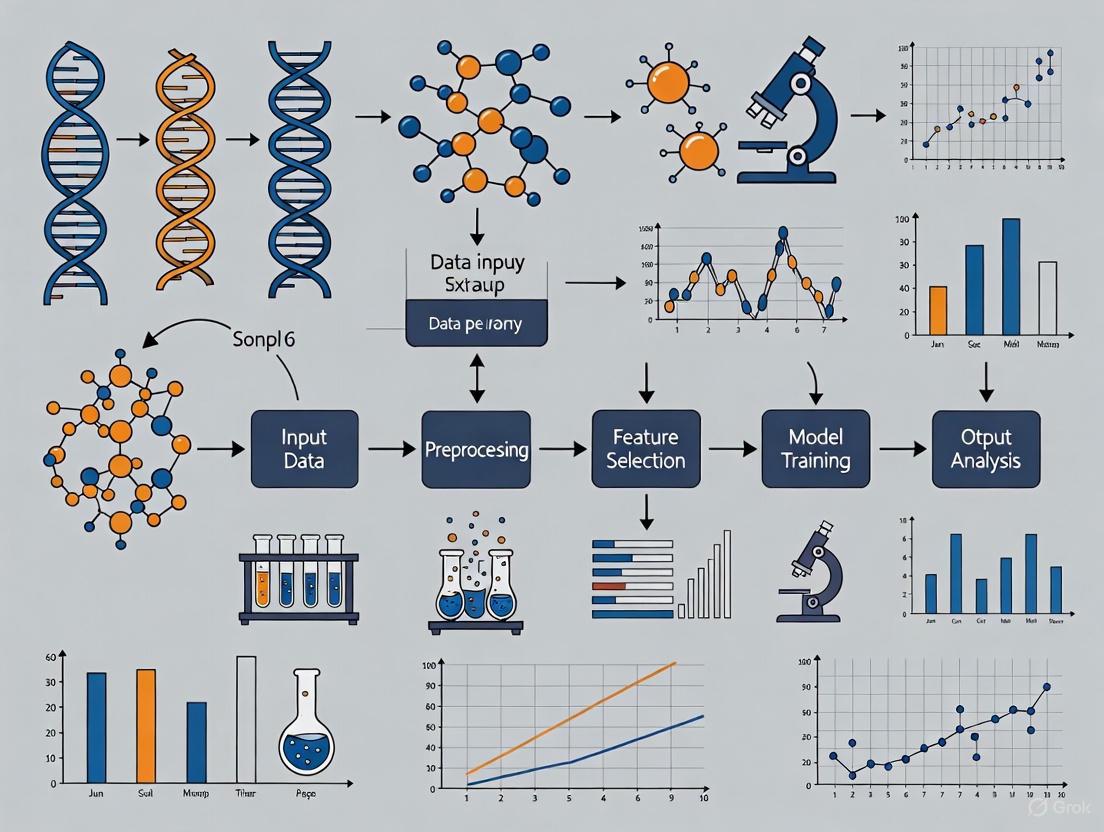
This article provides a detailed exploration of the application of machine learning (ML) and artificial intelligence (AI) in sperm quality analysis, a critical component of male infertility diagnosis.
Revolutionizing Andrology: A Comprehensive Guide to Machine Learning Algorithms for Sperm Quality Analysis
Abstract
This article provides a detailed exploration of the application of machine learning (ML) and artificial intelligence (AI) in sperm quality analysis, a critical component of male infertility diagnosis. It covers the foundational challenges of traditional semen analysis that ML aims to solve, including subjectivity and variability. The review systematically details the spectrum of ML algorithms, from conventional models like SVM and Random Forest to advanced deep learning networks, and their specific applications in assessing sperm concentration, motility, and morphology. It further addresses the methodological challenges, such as data standardization and model interpretability, and presents a comparative analysis of algorithm performance based on current validation studies. Aimed at researchers, scientists, and drug development professionals, this synthesis of current evidence highlights how AI-driven tools are paving the way for more precise, automated, and objective male fertility assessments.
The Why and Wherefore: Understanding the Need for AI in Sperm Analysis
The Global Challenge of Male Infertility and the Role of Semen Analysis
Male infertility constitutes a significant global health challenge, present in 40–50% of all infertility cases among couples [1]. The diagnosis and management of male infertility heavily rely on the standard semen analysis, which assesses key parameters such as sperm concentration, motility, and morphology. However, traditional manual semen analysis is plagued by substantial subjectivity and inter-laboratory variability [2].
The emergence of artificial intelligence (AI) and machine learning (ML) is poised to revolutionize this field. These technologies offer the potential for enhanced objectivity, consistency, and diagnostic precision in evaluating sperm quality [3]. This technical guide explores the current landscape of male infertility, details conventional and next-generation semen analysis methodologies, and examines how ML algorithms are transforming sperm quality analysis for researchers and drug development professionals.
The Clinical Landscape of Male Infertility
Infertility, defined as the failure to achieve a pregnancy after 12 months of unprotected intercourse, affects an estimated 15-20% of couples [1]. Male factor infertility is a primary cause in approximately half of these cases, with etiologies spanning genetic, endocrine, anatomical, and environmental factors [4]. The initial diagnostic cornerstone is the standard semen analysis, performed according to the World Health Organization (WHO) laboratory manual [5].
Alarmingly, temporal trend analyses suggest a decline in certain aspects of semen quality. A 20-year retrospective review of 8,990 semen samples from a single institution found statistically significant decreases in semen volume, sperm morphology, and sperm motility over time [6]. This underscores the growing importance of understanding and addressing male infertility.
Conventional Semen Analysis and Its Limitations
The conventional semen analysis provides a foundational assessment based on macroscopic and microscopic evaluation. Key parameters and their WHO reference limits are summarized in Table 1.
Table 1: Standard Semen Analysis Parameters and WHO Reference Limits
| Parameter | Description | WHO Reference Limit (6th Edition) |
|---|---|---|
| Semen Volume | Volume of entire ejaculate | ≥ 1.5 mL [5] |
| Sperm Concentration | Number of sperm per milliliter of ejaculate | ≥ 15 million/mL [5] |
| Total Sperm Count | Total number of sperm in the ejaculate | ≥ 39 million [5] |
| Total Motility | Percentage of sperm with any movement | 40-81% [5] |
| Progressive Motility | Percentage of sperm moving actively, often in a straight line | ≥ 32% [5] |
| Sperm Morphology | Percentage of sperm with normal shape | 4-48% [5] |
Despite its central role, conventional semen analysis has significant limitations. It suffers from high variability and relatively low accuracy and specificity in predicting fertility outcomes [2]. The results can be influenced by inter- and intra-observer variation and a lack of strict adherence to WHO guidelines across laboratories.
The Rise of Machine Learning in Sperm Analysis
Artificial intelligence, particularly machine learning (ML) and deep learning (DL), is addressing the critical limitations of traditional semen analysis. By leveraging large datasets, ML models can identify complex, predictive patterns that may elude human observation [3].
Ensemble Models for Predicting Clinical Outcomes
A pivotal 2024 study demonstrated the power of ensemble ML models to predict the success of assisted reproductive technology (ART) procedures, such as in vitro fertilization (IVF) and intrauterine insemination (IUI), based on sperm parameters [1]. The study utilized a retrospective dataset from 734 couples undergoing IVF/ICSI and 1,197 couples undergoing IUI.
Table 2: Performance of Ensemble Machine Learning Models in Predicting Clinical Pregnancy [1]
| Model | Procedure | Mean Accuracy | Area Under Curve (AUC) |
|---|---|---|---|
| Random Forest | IVF/ICSI | 0.72 | 0.80 |
| Bagging | IVF/ICSI | 0.74 | 0.79 |
| Random Forest | IUI | 0.85 | >0.85 (Higher than Bagging) |
| Bagging | IUI | 0.85 | <0.85 (Lower than Random Forest) |
The Random Forest model consistently achieved robust performance, making it a suitable choice for these predictive tasks. The study further employed SHapley Additive exPlanations (SHAP) analysis to interpret the models, revealing that the impact of sperm parameters on pregnancy success differs by procedure. For IUI, all key parameters had a significant negative impact on prediction, whereas for IVF/ICSI, sperm motility had a positive effect [1].
AI for Parameter-Specific Analysis and Lifestyle Prediction
ML applications extend beyond outcome prediction to the direct assessment of specific semen parameters. As summarized in Table 3, various AI models have been developed to evaluate sperm concentration, count, and motility with high accuracy, often outperforming traditional computer-assisted semen analysis (CASA) systems which can struggle with inaccurate sperm identification [2].
Table 3: AI/ML Models for Assessing Specific Semen Parameters
| Parameter | AI/ML Model(s) Used | Reported Performance | Key Finding |
|---|---|---|---|
| Sperm Concentration/Count | Full-Spectrum Neural Network (FSNN) [2], Artificial Neural Network (ANN) [2] | FSNN Accuracy: 93% [2]; ANN Accuracy: 90% [2] | AI can predict concentration with high accuracy, offering a rapid and cost-effective alternative. |
| Sperm Motility | Convolutional Neural Network (CNN) [2], Support Vector Machine (SVM) [2] | CNN Mean Absolute Error: 2.92 [2]; SVM Accuracy: 89% [2] | AI models provide reliable motility categorization and kinematic analysis at the single-sperm level. |
| Semen Quality from Lifestyle | AVG Blender, Extra Trees Classifier, Random Forest Classifier [7] | Accuracy for predicting oligozoospermia: 75.5%; Accuracy for predicting asthenozoospermia: 69.6% [7] | ML can predict semen quality categories based on lifestyle data, with age and smoking as the most significant features. |
Furthermore, ML models show promise in predicting semen quality based on non-invasive lifestyle data. A 2024 study using models like the AVG Blender and Extra Trees Classifier achieved accuracies up to 75.5% in predicting conditions like oligozoospermia, identifying age and smoking as the most significant featured factors [7].
Experimental Protocols and Research Workflows
This section details the core methodologies driving innovation in AI-based semen analysis, providing a reproducible framework for researchers.
Protocol: Developing an ML Model for ART Outcome Prediction
The following workflow, adapted from a 2024 study, outlines the process for building an ML model to predict clinical pregnancy success from sperm parameters [1].
1. Data Collection and Preprocessing:
- Patient Cohort: Collect retrospective data from couples undergoing ART (e.g., IVF, ICSI, IUI). Apply exclusion criteria such as the use of donor gametes or combined severe male and female factors.
- Semen Analysis: Perform semen analysis according to WHO guidelines to collect data on concentration, motility, and morphology.
- Outcome Definition: Define the primary outcome, for example, "clinical pregnancy" confirmed by gestational sac visualization at the 5th week or fetal heartbeat detection at the 11th week.
- Data Cleaning: Handle missing data and normalize parameter values.
2. Model Training and Evaluation:
- Algorithm Selection: Implement multiple ensemble ML models, such as Random Forest, Bagging, and Gradient Boosting, using frameworks like Scikit-learn in Python.
- Data Splitting: Split the dataset into a training set (e.g., 70%) and a testing set (e.g., 30%).
- Model Training: Train the models on the training set using features (sperm parameters) to predict the outcome (pregnancy success).
- Performance Assessment: Evaluate models on the test set using metrics including accuracy, Area Under the ROC Curve (AUC), sensitivity, and specificity.
3. Model Interpretation and Clinical Validation:
- Interpretation Analysis: Use eXplainable AI (XAI) techniques like SHAP (SHapley Additive exPlanations) to determine the direction and magnitude of each sperm parameter's impact on the model's prediction.
- Cut-off Analysis: Calculate clinically relevant cut-off values for sperm parameters (e.g., using contingency tables) to derive evidence-based decision rules for clinicians.
- Validation: Validate the model's performance and cut-off values on an external or hold-out dataset to ensure generalizability.
Protocol: Assessing Ejaculatory Abstinence Impact on Semen Parameters
A 2025 retrospective analysis of 23,527 semen samples provides a robust protocol for investigating the effect of ejaculatory abstinence (EA) duration [8].
1. Sample Collection and Grouping:
- Sample Collection: Obtain semen samples from men undergoing infertility evaluation after a recommended abstinence period of 2-7 days.
- Patient Stratification: Categorize patients into groups based on initial semen quality (e.g., normospermic vs. those with sperm abnormalities like asthenospermia or teratospermia).
- Data Grouping: Group samples based on the reported abstinence duration (e.g., from 1 to 7 days).
2. Parameter Analysis and Statistical Testing:
- Semen Analysis: Analyze standard parameters for each sample: total sperm count, concentration, morphology, motility (A+B), and pH.
- Trend Analysis: Analyze trends in these parameters across the increasing abstinence durations within each patient group.
- Statistical Comparison: Use appropriate statistical tests (e.g., for comparing medians) to determine if the changes from day 1 to day 7 of abstinence are statistically significant (p < 0.01).
3. Deriving Tailored Recommendations:
- Data Synthesis: Synthesize results to show how different patient profiles (normospermic vs. abnormal) are affected by abstinence duration.
- Clinical Guidance: Formulate tailored abstinence guidelines. For example, recommend longer abstinence for normospermic men to increase count and concentration, but shorter abstinence for men with motility impairments to preserve sperm quality [8].
The Scientist's Toolkit: Key Reagents and Materials
The following table catalogues essential reagents, materials, and analytical tools used in modern semen analysis research, as derived from the cited experimental protocols.
Table 4: Research Reagent Solutions for Semen Analysis Studies
| Item Name | Function/Application | Specific Use Case/Example |
|---|---|---|
| Python with Scikit-learn | An open-source programming language and ML library for developing, evaluating, and visualizing predictive models. | Used to implement ensemble models like Random Forest and Bagging for predicting ART success [1]. |
| SHAP (SHapley Additive exPlanations) | A game-theoretic method for interpreting the output of any ML model, explaining the contribution of each feature to a prediction. | Determined that sperm motility positively impacted IVF/ICSI success, while morphology and count had negative impacts [1]. |
| Computer-Assisted Sperm Analysis (CASA) System | An automated system that uses image analysis to provide objective assessments of sperm concentration, motility, and kinematics. | The foundational technology for acquiring high-quality, quantitative sperm motility and concentration data for ML models [3]. |
| WHO Laboratory Manual for Semen Analysis | The international standard protocol for the examination and processing of human semen. | Provides the standardized methodology for all semen sample collection and initial analysis in the cited studies [1] [8]. |
| GLP-1 Receptor Agonists (e.g., Semaglutide) | A class of medication initially for type-2 diabetes, now investigated for its effects on male fertility in overweight/obese men. | In a retrospective study, use was associated with sperm count normalization in 2.8% of overweight/obese men, an effect attributable to the drug [9]. |
Emerging Frontiers and Therapeutic Strategies
Research is uncovering novel etiologies for declining sperm quality, including environmental toxins. A 2025 study identified the bioaccumulation of polytetrafluoroethylene (PTFE/Teflon) in the male urogenital system, linking it to disrupted spermatogenesis, abnormal sperm morphology, and decreased motility. The study proposed a therapeutic strategy targeting the SKAP2 protein, which showed promise in remodeling the sperm cytoskeleton and restoring motility in both human and mouse models [10].
Furthermore, analyses of large clinical datasets reveal that common medications might be repurposed for infertility treatment. A 2025 study presented at the AUA found that GLP-1 receptor agonists were associated with improved sperm counts in overweight and obese men, with 2.8% of the study group achieving normal sperm counts attributable to the drug exposure [9].
The integration of these novel findings with advanced AI analysis paves the way for a new era of personalized, precise, and effective therapeutic interventions for male infertility.
The global challenge of male infertility is being met with a technological revolution. While semen analysis remains the diagnostic cornerstone, its limitations are being overcome by the integration of machine learning. AI and ML models are not only enhancing the objectivity and accuracy of sperm quality assessment but are also unlocking the ability to predict ART outcomes and understand complex interactions between lifestyle, environment, and fertility. For researchers and drug development professionals, these tools provide a powerful framework for discovering novel therapeutics, validating interventions, and ultimately delivering on the promise of personalized fertility care.
Semen analysis serves as the cornerstone of male fertility assessment, with male factors contributing to approximately 50% of all infertility cases worldwide [11] [12]. For decades, conventional manual semen analysis has been the standard first-line investigation, performed according to evolving World Health Organization (WHO) laboratory manuals that have grown progressively more detailed over successive editions [12]. Despite its foundational role, manual semen analysis suffers from significant limitations that compromise its diagnostic accuracy and clinical utility [13].
The inherent subjectivity and variability of manual methods present substantial challenges for both clinical decision-making and scientific research. This technical review examines these limitations within the broader context of emerging machine learning applications that aim to overcome these constraints through automated, objective sperm quality assessment. Understanding these methodological weaknesses is crucial for researchers and drug development professionals working to advance male infertility diagnostics and treatment [3].
Core Limitations of Manual Semen Analysis
Subjectivity and High Variability
The fundamental limitation of conventional semen analysis lies in its dependence on human observation and interpretation, which introduces substantial subjectivity and variability into measurement outcomes.
Table 1: Documented Variability in Manual Semen Analysis
| Parameter | Type of Variability | Reported Magnitude | Reference |
|---|---|---|---|
| Sperm Concentration | Inter-laboratory variation | CV*: ~23% to 73% | [11] |
| General Parameters | Inter-technician variability | Range: 20-30% | [11] |
| Diagnosis Consistency | Initial vs. repeat test discrepancy | ~25% of cases | [11] |
| General Assessment | Intra-/inter-observer variability | High (exact % not specified) | [11] |
*CV: Coefficient of Variation
This variability persists despite extensive training and standardized WHO protocols [11]. The diagnostic consequences are significant, with studies showing that in approximately one quarter of cases, a second semen analysis performed three months after an initial abnormal test fails to confirm the original diagnosis [11]. This inconsistency directly threatens the reliability of fertility assessments and subsequent treatment pathways.
Methodological and Statistical Constraints
Manual semen analysis faces inherent technical limitations that impact its statistical reliability:
Limited Sampling Volume: Conventional microscopy examines only a minute fraction of the total sample, potentially missing rare sperm populations in oligozoospermic specimens or misrepresenting true parameter distributions [11].
Non-Uniform Sperm Distribution: Even after homogenization, semen samples exhibit spatial clustering effects and uneven sperm distribution across slides, introducing sampling bias [11].
Insufficient Cell Counting: To achieve reliable measurements, WHO guidelines recommend counting at least 200 sperm for concentration and 400 for motility assessment. In practice, analyzing the additional sample volume required for statistical rigor is often skipped due to time constraints, particularly for low-concentration specimens [11].
These methodological constraints create a fundamental tension between statistical requirements and practical implementation in clinical laboratories.
Clinical Consequences of Analytical Limitations
The technical limitations of manual semen analysis translate directly into significant clinical consequences:
Table 2: Clinical Implications of Inaccurate Semen Analysis
| Consequence | Impact on Patient Care | Reference |
|---|---|---|
| Unnecessary Invasive Procedures | Falsely abnormal results may prompt unneeded ART* or varicocelectomy | [11] |
| Suboptimal or Delayed Treatments | Misdirected therapies prolong time to pregnancy | [11] |
| Case Mismanagement | Undetected male factors lead to wrong attribution to female partner | [11] |
| Diagnostic Uncertainty | ~25% of infertility cases have 'normal' semen parameters | [12] |
*ART: Assisted Reproductive Technologies
These diagnostic shortcomings are particularly problematic given that conventional semen parameters alone cannot reliably predict pregnancy outcomes or differentiate fertile from infertile men except in extreme cases [12]. The predictive value of semen analysis is further limited by its inability to assess sperm functional competence or the complex changes sperm undergo in the female reproductive tract before fertilization [13].
Emerging Solutions: Machine Learning and Advanced Technologies
Computer-Aided Semen Analysis (CASA) Evolution
Computer-Aided Semen Analysis (CASA) systems were developed to address the limitations of manual methods by providing automated, objective assessment. While early CASA systems showed promise, they demonstrated only marginal accuracy gains over manual analysis in many cases [11]. Traditional CASA systems still face challenges with:
- Poor agreement in oligozoospermic samples [11]
- High variability in specimens with very low or very high sperm concentrations [14]
- Technical limitations in analyzing samples with debris or non-sperm cells [14]
- Continued difficulties with accurate morphology assessment [15]
AI-Enhanced Diagnostic Approaches
Novel imaging systems and deep learning algorithms represent the next evolutionary step in semen analysis:
Expanded Field of View Systems: Technologies like the LuceDX platform utilize a 13-fold expanded field of view (approximately 3×4.2 mm vs. standard 1×1 mm) to capture more sample area, mitigating non-uniform distribution biases and clustering effects. Pilot data indicate this approach improves measurement precision by a factor of 3.6 relative to conventional techniques [11].
Deep Learning for Morphology Analysis: Conventional manual morphology assessment requires staining and high magnification (100×), rendering sperm unsuitable for clinical use. Deep learning approaches can now evaluate sperm morphology in unstained, live sperm at lower magnifications, preserving sperm viability for subsequent fertility treatments [16].
Predictive Modeling from Imaging Data: Deep learning algorithms applied to testicular ultrasonography images can predict semen analysis parameters with promising accuracy (AUC values of 0.76 for concentration, 0.89 for motility, and 0.86 for morphology), offering a completely non-invasive assessment method [17].
The following workflow illustrates how AI technologies address the core limitations of conventional semen analysis:
The Scientist's Toolkit: Research Reagent Solutions
Table 3: Essential Research Materials for Advanced Sperm Quality Analysis
| Reagent/Technology | Primary Function | Research Application | Reference |
|---|---|---|---|
| LuceDX Imaging System | Expanded FOV (3×4.2 mm) imaging | Mitigates sampling bias in oligozoospermic samples | [11] |
| Confocal Laser Scanning Microscopy | High-resolution imaging of unstained sperm | Enables live sperm morphology analysis | [16] |
| ResNet50 Transfer Learning Model | Deep learning classification | Automates sperm morphology assessment | [16] |
| VISEM-Tracking Dataset | Multi-modal video dataset with 656,334 annotations | Training and validation of AI models | [15] |
| SVIA Dataset | 125,000 annotated instances for object detection | Development of detection/segmentation algorithms | [15] |
| VGG-16 Architecture | Deep learning image classification | Predicting semen parameters from ultrasonography | [17] |
Experimental Protocols for Method Validation
Protocol for AI-Based Morphology Assessment in Unstained Sperm
This protocol enables evaluation of sperm morphology without staining, preserving sperm viability for clinical use [16]:
- Sample Preparation: Dispense 6 μL semen as a droplet on a standard two-chamber slide with 20 μm depth (Leja slides).
- Image Acquisition: Capture sperm images using confocal laser scanning microscopy (LSM 800) at 40× magnification in confocal mode (Z-stack interval: 0.5 μm, total range: 2 μm).
- Data Annotation: Manually annotate well-focused sperm images using LabelImg program. Establish inter-observer reliability (target correlation coefficient >0.95 for normal morphology detection).
- Model Training: Implement ResNet50 transfer learning model with dataset of ≥21,600 images. Use balanced training set (e.g., 4,500 normal and 4,500 abnormal sperm images).
- Validation: Evaluate model performance on separate test dataset (accuracy target: >0.90 after 150 epochs).
Protocol for Predicting Semen Parameters from Testicular Ultrasonography
This innovative approach enables non-invasive prediction of semen analysis parameters [17]:
- Image Acquisition: Perform scrotal ultrasonography using standardized parameters (testicular preset, THI mode, 13.0 MHz). Maintain constant TGC and gain settings.
- Image Preprocessing: Convert images to PNG format. Manually outline and crop testicular contours to remove patient information and irrelevant areas.
- Data Classification: Categorize images based on semen analysis results (oligospermia vs. normal, asthenozoospermia vs. normal, teratozoospermia vs. normal).
- Model Implementation: Organize right and left testicular images into corresponding folders based on laboratory parameters. Apply VGG-16 deep learning architecture with 80/20 training/test split.
- Validation: Assess model performance using AUC metrics (expected outcomes: concentration AUC=0.76, motility AUC=0.89, morphology AUC=0.86).
Conventional manual semen analysis remains hampered by significant subjectivity and variability that undermine its diagnostic reliability and clinical utility. These limitations manifest as substantial inter-laboratory and inter-technician variability, sampling biases, and inconsistent results that directly impact patient care pathways and treatment decisions. The emergence of AI-enhanced technologies—including expanded field-of-view imaging systems, deep learning algorithms for morphology assessment, and predictive models based on ultrasonography—represents a paradigm shift in male fertility assessment. These approaches directly address the fundamental limitations of conventional methods by providing objective, standardized, and statistically robust analyses. For researchers and drug development professionals, these technological advances offer new opportunities to develop more precise diagnostic tools and targeted therapeutic interventions for male factor infertility.
The Evolution of Computer-Aided Sperm Analysis (CASA) Systems
The landscape of male fertility assessment has been fundamentally transformed by the development and integration of Computer-Aided Sperm Analysis (CASA) systems. These technologies represent a paradigm shift from subjective, manual microscopic evaluations to objective, quantitative analyses of sperm parameters. Historically, semen analysis relied on labor-intensive manual examinations prone to variability and inconsistency [3]. The emergence of CASA systems over approximately 40 years has addressed these limitations through enhancements in imaging devices, computational power, and software algorithms [3]. Within the context of machine learning algorithms for sperm quality analysis research, CASA systems have evolved from basic automated counters to sophisticated platforms integrating advanced artificial intelligence (AI) and deep learning (DL) architectures. This evolution enables unprecedented analytical capabilities for assessing sperm motility, morphology, and DNA integrity, thereby refining diagnostic accuracy and providing clinicians with critical insights for tailoring personalized treatment strategies in assisted reproductive technologies (ART) [3] [2].
Historical Development and Technical Evolution
From Manual Analysis to Automated Systems
The foundation of semen analysis was established through successive editions of the World Health Organization (WHO) guidelines (1980, 1987, 1992, 1999, 2010, 2021), which created a framework for predicting conception chances based on semen quality [3]. Manual semen analysis, while considered the historical gold standard, suffered from significant limitations including inter- and intra-observer variability, labor-intensive processes, and subjective interpretation [18] [2]. These challenges necessitated rigorous training and quality control measures yet still resulted in inconsistent diagnostic outcomes [18].
The initial generation of CASA systems emerged as a revolutionary tool in andrology labs, focusing primarily on automating sperm concentration and motility assessment [3] [19]. These early systems utilized basic image processing algorithms and pattern recognition techniques to identify and track sperm cells, offering significant improvements in processing speed and standardization compared to manual methods [3]. While the foundational concepts of identifying sperm and analyzing their motility have remained consistent, the capabilities of CASA systems have expanded considerably through technological advancements in digital imaging, computational processing, and algorithmic sophistication [3].
Integration of Machine Learning and Deep Learning
The integration of machine learning (ML) into CASA systems marked a significant evolutionary milestone, enabling more sophisticated analysis of complex sperm parameters. Conventional ML algorithms, including Support Vector Machines (SVM), Random Forests (RF), and Naïve Bayes (NB), were initially applied to sperm morphology classification through manual feature extraction of shape-based descriptors, grayscale intensity, and contour analysis [3] [15]. These approaches demonstrated considerable success, with one study achieving 90% accuracy in classifying sperm heads into morphological categories using Bayesian Density Estimation [15].
The subsequent incorporation of deep learning (DL), particularly convolutional neural networks (CNNs), represented a transformative advancement by enabling automatic feature extraction directly from raw image data [3] [15]. DL architectures excel at detecting critical features in imaging data that signify underlying fertility-related problems, often revealing subtle patterns not discernible by human observation [3]. This capability has been particularly valuable for complex analysis tasks such as simultaneous evaluation of head, vacuoles, midpiece, and tail abnormalities [15]. The evolution from classical ML to DL models has thus facilitated a shift from traditional methodologies to algorithmically enhanced precision medicine in reproductive healthcare [3].
Table: Evolutionary Stages of CASA Systems
| Generation | Time Period | Key Technologies | Primary Applications | Limitations |
|---|---|---|---|---|
| First Generation | 1980s-1990s | Basic image processing, pattern recognition | Sperm concentration, basic motility analysis | Limited to fundamental parameters, required extensive manual oversight |
| Second Generation | 1990s-2010s | Conventional machine learning (SVM, RF, NB) | Morphology classification, enhanced motility parameters | Reliance on manual feature engineering, limited generalizability |
| Third Generation | 2010s-Present | Deep learning (CNN, RNN), big data analytics | Comprehensive morphology, DNA integrity, clinical outcome prediction | "Black-box" nature, requires large annotated datasets, computational intensity |
Core CASA Methodologies and Algorithmic Approaches
Sperm Motility and Kinematic Analysis
The assessment of sperm motility represents one of the most established applications of CASA systems, providing objective and quantitative evaluation of various motility parameters that surpass manual methods in consistency and repeatability [19]. Modern CASA systems utilize sophisticated computer vision and multi-object tracking algorithms to monitor individual sperm trajectories across consecutive video frames, typically captured at 50-60 frames per second using phase-contrast microscopy [20].
The algorithmic workflow for motility analysis typically involves:
- Segmentation and Localization: Identification and positioning of sperm cells within each video frame using thresholding, edge detection, or CNN-based segmentation [20].
- Tracking and Trajectory Analysis: Association of sperm positions across frames using algorithms such as Nearest Neighbor (NN), Global Nearest Neighbor (GNN), Probabilistic Data Association Filter (PDAF), or Joint Probabilistic Data Association Filter (JPDAF) [20].
- Kinematic Parameter Calculation: Computation of velocity parameters (VCL, VSL, VAP), linearity indices (LIN), and oscillation patterns from the reconstructed trajectories [19].
Research demonstrates that ML algorithms can classify sperm motility with remarkable accuracy, with one study achieving 97.37% accuracy using a specialized harmonic analysis method [2]. Deep learning approaches, particularly CNNs and Recurrent Neural Networks (RNNs), have shown strong performance in predicting overall sample motility, with studies reporting Mean Absolute Error (MAE) as low as 2.92 when evaluated on benchmark datasets like VISEM [2].
Sperm Morphology Analysis
Sperm morphology assessment presents significant challenges due to the structural complexity and subtle variations in sperm components. Traditional manual classification according to WHO criteria involves evaluating over 200 sperm cells across 26 potential abnormality types, creating a labor-intensive process susceptible to subjectivity [15].
Deep learning-based approaches have dramatically advanced morphology analysis by enabling automated segmentation and classification of complete sperm structures (head, neck, and tail) [15]. Conventional ML methods relied on handcrafted features and classifiers like k-means clustering for head segmentation, followed by SVM or decision trees for classification [15]. In contrast, modern DL implementations utilize end-to-end architectures that simultaneously segment morphological components and classify abnormalities, achieving substantial improvements in analysis efficiency and accuracy [15].
The integration of ensemble deep learning models comprising eight different architectures has shown particular promise for ranking embryo quality or predicting pregnancy outcomes in adjacent ART applications, suggesting potential for similar approaches in sperm morphology assessment [3]. However, morphology analysis remains challenging for some CASA systems, with studies reporting poor consistency with manual results (ICC: 0.160-0.261) [18], highlighting an area for continued algorithmic refinement.
Simulation-Based Algorithm Validation
A significant methodological advancement in CASA research is the development of realistic sperm simulation models for objective algorithm validation [20]. These simulations generate life-like semen images with controllable parameters, enabling precise performance quantification of segmentation, localization, and tracking algorithms against known ground truth.
Simulation frameworks typically incorporate:
- Sperm Cell Modeling: Realistic rendering of sperm heads (generally oval) and flagellum (tail) using point spread functions and image processing operations [20].
- Swimming Mode Simulation: Implementation of four primary motility patterns observed in real samples - linear mean, circular, hyperactive, and immotile [20].
- Performance Metrics: Evaluation using precision, recall, Optimal Subpattern Assignment (OSPA) metric for segmentation/localization, and Multi-Object Tracking Precision (MOTP)/Accuracy (MOTA) for tracking algorithms [20].
These simulation tools address a critical challenge in CASA development: the scarcity of high-quality annotated datasets with reliable ground truth for training and validation [20] [15]. By enabling controlled testing across diverse scenarios and parameter values, simulation platforms accelerate the development and refinement of robust CASA algorithms.
Experimental Protocols for CASA Validation
System Comparison Framework
Rigorous validation of CASA systems requires structured experimental protocols comparing automated results against manual reference methods. A comprehensive framework involves:
Sample Preparation and Ethical Considerations
- Recruit participants following institutional review board approval with obtained informed consent [18].
- Collect semen samples and process according to standardized protocols, typically following WHO laboratory manual specifications [18] [21].
- Perform internal quality control regularly and participate in external quality assessment programs to ensure manual method reliability [18].
Instrumentation and Testing Conditions
- Select multiple CASA systems for comparison (e.g., Hamilton-Thorne CEROS II, LensHooke X1 Pro, SQA-V Gold) [18].
- Prepare samples using standardized loading techniques (e.g., Leja 4 chambers for CEROS, specialized cassettes for LensHooke) [18].
- Analyze identical samples across all systems and manual methods to enable direct comparison.
Statistical Analysis Methodology
- Conduct pairwise comparisons between each CASA system and manual method using intraclass correlation coefficient (ICC) with guidelines: <0.5 (poor), 0.5-0.75 (moderate), 0.75-0.9 (good), >0.9 (excellent) [18].
- Apply Bland-Altman analysis to assess agreement between methods and identify potential biases [18].
- Utilize Cohen's kappa coefficient (κ) for categorical agreement: ≤0 (none), 0.01-0.20 (slight), 0.21-0.40 (fair), 0.41-0.60 (moderate), 0.61-0.80 (substantial), 0.81-1.00 (almost perfect) [18].
Table: Performance Comparison of Contemporary CASA Systems vs. Manual Methods
| Parameter | CASA System | ICC Value | Agreement Level | Cohen's κ | Agreement Interpretation |
|---|---|---|---|---|---|
| Concentration | Hamilton-Thorne CEROS II | 0.723 | Moderate | - | - |
| LensHooke X1 Pro | 0.842 | Good | - | - | |
| SQA-V Gold | 0.631 | Moderate | - | - | |
| Motility | Hamilton-Thorne CEROS II | 0.634 | Moderate | - | - |
| LensHooke X1 Pro | 0.417 | Poor | - | - | |
| SQA-V Gold | 0.451 | Poor | - | - | |
| Oligozoospermia Diagnosis | LensHooke X1 Pro | - | - | 0.701 | Substantial |
| CEROS II | - | - | 0.664 | Substantial | |
| SQA-V Gold | - | - | 0.588 | Moderate | |
| Asthenozoospermia Diagnosis | LensHooke X1 Pro | - | - | 0.405 | Fair |
| CEROS II | - | - | 0.249 | Fair | |
| SQA-V Gold | - | - | 0.157 | Slight |
Clinical Impact Assessment
Beyond technical validation, assessing the clinical implications of CASA utilization is essential:
Treatment Allocation Analysis
- Document how CASA morphology results influence ART treatment decisions between conventional IVF and intracytoplasmic sperm injection (ICSI) [18].
- Compare CASA-guided treatment allocations with those based on manual morphology assessment [18].
- Calculate allocation ratios (ICSI:IVF) for both methods to identify potential systematic biases [18].
Outcome Correlation Studies
- Conduct longitudinal studies correlating CASA parameters with clinical outcomes such as fertilization rates, embryo quality, and pregnancy success [3] [21].
- Apply multivariate statistical models and machine learning algorithms to identify CASA parameters with highest predictive value for treatment success [21].
- Validate predictive models through prospective studies and external datasets to ensure generalizability [21].
Research Reagent Solutions and Essential Materials
Table: Essential Research Reagents and Materials for CASA Experiments
| Item | Specification/Example | Primary Function | Application Notes |
|---|---|---|---|
| Counting Chambers | Leja 4 chambers (20μm depth) | Standardized sperm loading for imaging | Essential for consistent concentration measurements [18] |
| Staining Kits | Diff-Quik staining system | Sperm morphology visualization | Enables precise assessment of head, midpiece, and tail abnormalities [18] |
| Specialized Cassettes | LensHooke X1 Pro test cassettes | Anti-leakage sample containment | Prevents interference from external factors during analysis [18] |
| Capillary Tubes | SQA-V Gold disposable capillaries | Controlled sample loading for specific analyzers | Ensures consistent sample volume and distribution [18] |
| Phase Contrast Microscopy | Olympus BX43 with negative phase contrast | High-quality sperm imaging | Essential for motility analysis and video capture [18] |
| Stage Warmers | Hamilton Thorne MiniTherm | Maintain physiological temperature (37°C) | Preserves sperm viability during analysis [18] |
| Quality Control Materials | UK NEQAS participation materials | External quality assurance | Verifies analytical performance across laboratories [18] |
AI-Enhanced CASA Workflow
(AI-Enhanced CASA Analysis Pipeline)
Current Challenges and Future Research Directions
Limitations in Contemporary CASA Systems
Despite significant advancements, several challenges persist in CASA implementation:
Data Quality and Standardization Issues
- Inconsistent Morphology Analysis: Current CASA systems demonstrate poor to fair agreement with manual morphology assessment (ICC: 0.160-0.261), potentially leading to skewed IVF/ICSI treatment allocations [18].
- Algorithmic Variability: Different CASA systems utilize proprietary algorithms, creating challenges in standardizing results across platforms and laboratories [18] [2].
- Dataset Limitations: DL models require large, high-quality annotated datasets, but existing resources often suffer from limitations in sample size, annotation quality, and diversity of abnormality representation [3] [15].
Technical and Clinical Validation Gaps
- Generalizability Concerns: Models trained on specific populations or imaging systems may not perform optimally across diverse clinical settings and patient demographics [3].
- Black-Box Nature: The complexity of DL architectures creates interpretability challenges, limiting clinical trust and adoption in critical diagnostic applications [3].
- Regulatory and Ethical Considerations: Integration into clinical practice requires rigorous validation through controlled trials and establishment of clear regulatory frameworks for sensitive reproductive data [3].
Emerging Research Frontiers
Future CASA development focuses on several promising directions:
Advanced AI Architectures
- Hybrid AI Models: Combining conventional ML interpretability with DL feature extraction capabilities to enhance both performance and transparency [15].
- Transfer Learning Approaches: Leveraging models pre-trained on large-scale image datasets (e.g., ImageNet) to overcome limitations in annotated sperm image availability [3].
- Multi-Modal Data Integration: Incorporating clinical parameters (hormone levels, environmental factors, genetic markers) with CASA metrics to improve diagnostic and predictive accuracy [21].
Technical Innovations
- Enhanced Simulation Platforms: Developing more sophisticated sperm simulation tools for comprehensive algorithm validation across diverse scenarios and conditions [20].
- Standardized Benchmark Datasets: Creating large, diverse, and thoroughly annotated datasets to facilitate reproducible development and comparison of CASA algorithms [15].
- Edge Computing Implementation: Deploying optimized models for real-time analysis in clinical settings with limited computational resources [3].
The evolution of Computer-Aided Sperm Analysis systems represents a compelling narrative of technological advancement, from basic automated counters to sophisticated AI-powered diagnostic platforms. This journey has been characterized by increasing automation, objectivity, and analytical sophistication, fundamentally transforming male fertility assessment. The integration of machine learning and deep learning algorithms has been particularly transformative, enabling more accurate, reproducible, and comprehensive sperm analysis while revealing subtle predictive patterns not discernible by human observation.
Despite remarkable progress, the continued evolution of CASA systems depends on addressing persistent challenges related to data standardization, algorithmic reliability, and clinical validation. Future research focusing on hybrid AI models, multi-modal data integration, and sophisticated simulation platforms promises to further enhance the capabilities and clinical utility of these systems. As CASA technology continues to mature within the broader context of machine learning applications in reproductive medicine, it holds significant potential to advance personalized, efficient, and accessible fertility care, ultimately improving outcomes for couples facing infertility challenges worldwide.
The quantitative assessment of semen quality is foundational to andrology research, particularly in the development of objective, machine learning (ML)-driven diagnostic tools. The core parameters of sperm concentration, motility, and morphology provide a multidimensional profile of male fertility potential. These metrics serve as the primary ground-truth data for training and validating sophisticated algorithms aimed at classifying semen quality and predicting reproductive outcomes. This guide details the standardized methodologies, clinical relevance, and quantitative benchmarks for these parameters, providing a critical resource for researchers and drug development professionals working at the intersection of reproductive biology and computational analysis.
Quantitative Standards and Reference Ranges
The World Health Organization (WHO) establishes standardized reference limits for semen parameters, derived from fertile populations. The following tables summarize the key thresholds and classifications essential for research and clinical diagnostics.
Table 1: WHO Reference Ranges for Standard Semen Parameters (6th Edition) [5] [22]
| Parameter | Terminology | Lower Reference Limit |
|---|---|---|
| Semen Volume | - | 1.5 mL (or 2.0 mL [22] [23]) |
| Sperm Concentration | - | 15 million sperm per mL [5] |
| Total Sperm Count | - | 39 million sperm per ejaculate [5] |
| Total Motility | - | 40% [5] [24] [22] |
| Progressive Motility | - | 32% [5] [24] [22] |
| Sperm Morphology | - | 4% normal forms [5] [25] [22] |
Table 2: Classification of Semen Parameter Abnormalities [5] [22]
| Parameter | Condition | Definition |
|---|---|---|
| Sperm Concentration | Oligospermia | < 15 million sperm/mL [5] |
| Severe Oligospermia | < 5 million sperm/mL [26] | |
| Azoospermia | Complete absence of sperm in ejaculate [22] [26] | |
| Sperm Motility | Asthenozoospermia | < 40% total motile sperm [24] [22] |
| Sperm Morphology | Teratozoospermia | < 4% normal forms [25] [27] |
In-Depth Parameter Analysis
Sperm Concentration
Sperm concentration, or density, is defined as the number of spermatozoa per unit volume of semen, typically reported in millions per milliliter (mL) [26] [28]. This parameter is a primary indicator of spermatogenic efficiency.
Experimental Protocol: Hemocytometer Method
The hemocytometer (e.g., Improved Neubauer) is considered the gold standard for determining sperm concentration [28].
- Sample Dilution: A precise aliquot of well-mixed, liquefied semen is diluted in a buffered formol-saline solution to immobilize and fix the spermatozoa. The standard dilution factor is 1:20 (e.g., 50 µL semen + 950 µL diluent) [28].
- Chamber Loading: The diluted sample is carefully loaded into both chambers of the hemocytometer via capillary action, ensuring no over- or under-filling.
- Sperm Counting: After a few minutes for sperm sedimentation, the chamber is placed under a microscope. Sperm heads are counted in a predetermined grid pattern (e.g., 5 large squares of the Neubauer grid) [28].
- Calculation: The average count from the two chambers is used in the following formula to calculate concentration:
Sperm Concentration (million/mL) = (Count × Dilution Factor) / (Number of Squares × Depth × Volume per Square)For a 1:20 dilution on a Neubauer chamber (depth 0.1 mm, each large square volume 0.1 µL), the formula simplifies to:Sperm Concentration (million/mL) = (Count in 5 squares) × 1 million[28].
Research Context for ML
For ML applications, concentration provides a fundamental scalar input feature. Accurate ground-truth data is critical for regression models predicting total sperm count. Automated systems like Computer-Assisted Sperm Analysis (CASA) and flow cytometry offer high-throughput data generation but require validation against the hemocytometer method [28].
Sperm Motility
Sperm motility describes the percentage and quality of moving sperm, which is critical for the sperm's journey to the oviduct and penetration of the oocyte [24].
Motility Classification
- Progressive Motility: Sperm moving actively, either in a straight line or in large circles, regardless of speed [24]. This is the most clinically relevant sub-type.
- Non-Progressive Motility (NP): Sperm with all other patterns of movement without progression, such as swimming in very small circles or with a non-linear path [24].
- Immotility: Sperm with no movement [24].
Experimental Protocol: Manual Microscopic Assessment
- Sample Preparation: A small drop (5-10 µL) of well-mixed, liquefied semen is placed on a clean, warm microscope slide and covered with a 22x22 mm coverslip. Alternatively, a specialized chamber (e.g., Makler or disposable counting chamber) of a defined depth is used [28].
- Microscopic Evaluation: The sample is examined under a phase-contrast microscope at 200x or 400x magnification.
- Systematic Counting: At least 200 sperm are systematically classified in multiple fields into progressively motile, non-progressively motile, and immotile categories [28].
- Calculation: The percentage for each category is calculated. For example:
Total Motility (%) = ((Progressive + NP Motile Sperm) / Total Sperm Counted) × 100[24].
Total Motile Count (TMC): A Key Composite Metric
The TMC is a derived parameter that integrates volume, concentration, and total motility to provide the total number of progressively motile sperm in the entire ejaculate. It is calculated as:
TMC (million) = Ejaculate Volume (mL) × Sperm Concentration (million/mL) × (% Total Motility / 100) [22] [26].
A TMC of over 20-25 million is generally considered normal, with some evidence suggesting benefits up to a TMC of 75 million for natural conception [26].
Research Context for ML
Motility assessment is a prime target for ML and CASA systems. These systems can objectively track kinematic parameters (e.g., curvilinear velocity, straight-line velocity, amplitude of lateral head displacement) that are difficult to quantify manually [28]. ML models can use this high-dimensional data to create more robust motility classifiers and improve predictive power for fertilization success.
Sperm Morphology
Sperm morphology assesses the size and shape of spermatozoa, which can influence the ability to penetrate the zona pellucida of the egg [25].
Classification of Abnormal Forms
The WHO 6th edition emphasizes detailed characterization of defects in the head, neck/midpiece, and tail [27].
- Head Defects: Include large (macrocephaly) or small (microcephaly) heads; pinheads; tapered, round, and double heads; and vacuoles occupying >1/5th of the head area [25] [27].
- Neck/Midpiece Defects: Include bent, asymmetrical, or irregularly thick midpieces, and the presence of a large cytoplasmic droplet (>1/3 the size of the sperm head) [25] [27].
- Tail Defects: Include short, broken, coiled, bent, or multiple tails [25] [27].
A sperm is considered normal only if every part (head, midpiece, tail) is normal, with no defects [23].
Experimental Protocol: Strict (Kruger) Criteria Assessment
- Slide Preparation: A thin smear of semen is made on a glass slide, air-dried, and fixed.
- Staining: Slides are stained (e.g., using Papanicolaou, Diff-Quik, or Shorr stains) to enhance cellular detail and contrast [23].
- Microscopic Evaluation: Under oil immersion at 1000x magnification, at least 200 sperm are individually evaluated against strict morphological criteria [25] [23].
- Classification: Each sperm is classified as either normal or abnormal, with specific defects often noted. The result is reported as the percentage of sperm with perfectly normal morphology [25].
Research Context for ML
Sperm morphology is an area where ML, particularly deep learning-based image analysis, shows immense promise. Convolutional Neural Networks (CNNs) can be trained on thousands of stained sperm images to automate classification with high consistency, overcoming the significant inter-laboratory variability associated with manual assessment [27]. This automation is crucial for generating large, standardized datasets for research and drug efficacy trials.
The Scientist's Toolkit: Essential Research Reagents and Materials
Table 3: Key Reagents and Materials for Semen Analysis
| Item | Function/Application |
|---|---|
| Improved Neubauer Hemocytometer | Gold-standard chamber for manual sperm concentration counting [28]. |
| Makler or Disposable Counting Chamber | Specialized chambers of fixed depth for concurrent assessment of sperm count and motility without dilution [28]. |
| Phase-Contrast Microscope | Essential for visualizing unstained, live sperm for motility evaluation and basic concentration checks [28]. |
| Microscope with Oil Immersion (1000x) | Required for detailed morphological assessment of stained sperm smears [25] [23]. |
| Papanicolaou or Diff-Quik Staining Kits | Standard stains used to differentiate cellular components for morphology analysis [23]. |
| Buffered Formol-Saline | Diluent used to immobilize and fix sperm for accurate concentration counting via hemocytometer [28]. |
| Computer-Assisted Sperm Analysis (CASA) System | Automated system that objectively measures sperm concentration, motility kinetics, and sometimes morphology [28]. |
| Flow Cytometer | Provides high-precision measurement of sperm concentration and can assess other parameters like viability and DNA fragmentation [28]. |
Analytical Workflow and Pathway Visualizations
The following diagram illustrates the integrated experimental workflow for a standard semen analysis, from sample collection to parameter assessment, highlighting potential integration points for machine learning.
Semen Analysis Workflow
The logical pathway for diagnosing male fertility based on the core parameters and their composite results is shown below.
Fertility Diagnostic Pathway
The precise measurement of sperm concentration, motility, and morphology remains the cornerstone of male fertility assessment. For researchers pioneering machine learning applications in andrology, a deep understanding of the standardized protocols, classifications, and limitations of these manual methods is non-negotiable. These protocols generate the foundational datasets required to build accurate and clinically viable models. As ML technologies continue to evolve, their integration with these core parameters promises to revolutionize the objectivity, throughput, and predictive power of semen analysis, accelerating both diagnostic innovation and therapeutic development.
Male infertility constitutes approximately 50% of infertility cases worldwide, becoming a pressing global public health issue [15]. The assessment of sperm quality, particularly sperm morphology, is a cornerstone of male fertility evaluation, but traditional manual analysis is characterized by substantial workload, observer subjectivity, and limited reproducibility [15]. Artificial Intelligence (AI) and Machine Learning (ML) are revolutionizing the field of andrology by introducing automated, objective, and highly accurate systems for sperm analysis. These technologies offer the potential to overcome the limitations of conventional methods, providing researchers and clinicians with robust tools for assessing sperm quality and predicting reproductive outcomes. The integration of AI into andrological research and clinical practice represents a paradigm shift, enabling more precise diagnosis and personalized treatment strategies for male infertility.
Core Concepts and Definitions
In the context of andrology, understanding the hierarchy of computational techniques is crucial. Artificial Intelligence (AI) encompasses the broad capability of machines to perform tasks typically requiring human cognition. Machine Learning (ML), a subset of AI, involves algorithms that can learn patterns from data without being explicitly programmed for every scenario. Within ML, Deep Learning (DL) utilizes large-scale neural networks with multiple layers to process complex data types like images, uncovering intricate patterns often imperceptible to humans [29].
Convolutional Neural Networks (CNNs) are a particularly potent class of DL models for image analysis, making them exceptionally suitable for tasks such as sperm morphology assessment from microscopy images [15]. These technologies are nested concepts, which can be visualized as a hierarchical structure.
Machine Learning Approaches for Sperm Quality Analysis
The application of ML in sperm quality analysis can be broadly categorized into conventional machine learning and deep learning approaches, each with distinct methodologies and performance characteristics.
Conventional Machine Learning Models
Conventional ML models have demonstrated considerable success in classifying sperm morphology. These approaches typically rely on a standardized pipeline that begins with manual extraction of features from sperm images, such as shape-based descriptors, grayscale intensity, edge detection, and contour analysis [15]. Subsequently, a classifier, such as a Support Vector Machine (SVM) or a neural network, is employed to categorize sperm images based on these handcrafted features.
Typical Workflow of Conventional ML for Sperm Morphology Classification:
- Image Pre-processing: Enhancing image quality and standardizing input.
- Feature Engineering: Manual extraction of specific features (e.g., head area, perimeter, ellipticity, acrosome presence).
- Model Training: Using algorithms like SVM, k-means clustering, or decision trees to build a classification model.
- Prediction: Classifying sperms into categories such as normal, tapered, pyriform, or amorphous [15].
For instance, one study utilizing a Bayesian Density Estimation-based model achieved 90% accuracy in classifying sperm heads into four morphological categories [15]. However, the fundamental limitation of these conventional algorithms lies in their dependence on manually designed features, which can be time-consuming and may not capture the full spectrum of relevant morphological details.
Deep Learning and Advanced Models
Deep learning models have emerged as a superior alternative, capable of automatically learning relevant features directly from raw image data, thereby eliminating the need for manual feature engineering. These models, particularly CNNs, are highly effective for tasks like sperm detection, segmentation (separating the head, neck, and tail), and comprehensive morphology classification [15]. A significant advancement in this domain is the development of composite indices that integrate ML with clinical parameters. One study created a weighted sperm quality index (ElNet-SQI) using an elastic net algorithm, which incorporated eight semen parameters and sperm mitochondrial DNA copy number (mtDNAcn). This composite index demonstrated high predictive ability for pregnancy at 12 cycles (AUC 0.73) and was more strongly associated with time to pregnancy than any individual parameter [30].
Table 1: Performance Comparison of ML Models in Sperm Quality Prediction
| Model Type | Specific Model/Index | Key Parameters | Performance | Reference |
|---|---|---|---|---|
| Conventional ML | Bayesian Density Estimation | Shape-based morphological features | 90% classification accuracy | [15] |
| Deep Learning | Composite ML Index (ElNet-SQI) | 8 semen parameters + mtDNAcn | AUC 0.73 for pregnancy prediction at 12 cycles | [30] |
| Individual Biomarker | Sperm mtDNAcn | Mitochondrial DNA copy number | AUC 0.68 for pregnancy prediction at 12 cycles | [30] |
Experimental Protocols and Methodologies
Development of a Composite Sperm Quality Index
A pivotal study exemplifies the application of ML in predicting a couple's time to pregnancy (TTP) [30]. The protocol is designed to leverage both traditional semen analysis and advanced molecular biomarkers.
Objective: To examine the utility of semen parameters and sperm mitochondrial DNA copy number (mtDNAcn) in predicting time to pregnancy (TTP) using a machine learning approach [30].
Subjects: 281 men from the Longitudinal Investigation of Fertility and the Environment (LIFE) study, a preconception cohort [30].
Experimental Workflow: The research followed a structured pipeline from data collection to model validation, integrating diverse data types to predict a clinical outcome.
Exposure Measures:
- Sperm mtDNAcn.
- 34 conventional and detailed semen parameters.
- Two composite indices:
- An unweighted ranked-sperm quality index (ranked-SQI) derived solely from semen parameters.
- A weighted sperm quality index generated using machine learning via elastic net (ElNet-SQI) [30].
Outcome Measures:
- The likelihood of achieving pregnancy within 3, 6, or 12 months of trying to conceive.
- The overall time to pregnancy (TTP) [30].
Analytical Approach:
- Discrete-time proportional hazard models and logistic regression were used to evaluate the predictive ability of the indices and individual parameters.
- Receiver operating characteristic (ROC) analyses were performed to assess the prediction of pregnancy status at specific time points [30].
Deep Learning for Sperm Morphology Analysis
For deep learning-based sperm morphology analysis, the experimental protocol centers on image data.
Objective: To build an automatic sperm recognition system that accurately segments sperm structures (head, neck, tail) and improves the efficiency and accuracy of morphology analysis [15].
Data Preparation:
- Dataset Curation: Utilizing public datasets such as VISEM-Tracking (656,334 annotated objects) or SVIA (125,000 instances for detection, 26,000 segmentation masks) [15].
- Image Annotation: Precise pixel-level annotation of sperm components (head, vacuoles, midpiece, tail) according to WHO standards, which is a complex and labor-intensive process [15].
Model Training:
- A Deep Learning model (typically a CNN-based architecture) is trained on the annotated dataset.
- The model learns to perform simultaneous detection, segmentation, and classification of sperm cells and their subcellular structures from microscopy images [15].
Validation:
- Model performance is validated on a separate, unseen set of images.
- Metrics such as accuracy, precision, recall, and Dice coefficient (for segmentation) are used to quantify performance [15].
The Scientist's Toolkit: Research Reagent Solutions
Implementing AI and ML models in andrology research requires a combination of specialized datasets, computational tools, and biological reagents.
Table 2: Essential Research Resources for AI-Driven Sperm Analysis
| Item / Resource | Function / Description | Example / Specification |
|---|---|---|
| Annotated Datasets | Provides ground-truth data for training and validating AI models. | VISEM-Tracking [15], SVIA dataset [15], MHSMA [15] |
| Deep Learning Frameworks | Software libraries for building and training neural networks. | TensorFlow, PyTorch |
| Sperm Staining Kits | Enhances contrast for manual and automated morphology analysis. | Stains (e.g., Diff-Quik) for highlighting head, acrosome, and tail [15] |
| mtDNAcn Assay Kits | Enables quantification of mitochondrial DNA copy number, a biomarker for sperm fitness. | qPCR-based kits for mtDNA quantification [30] |
| Computer Vision Annotation Tools | Software for manually labeling sperm components in images to create training data. | Labeling tools for segmentation and classification tasks |
| High-Resolution Microscopy | Captures digital sperm images for analysis. | Phase-contrast or stained light microscopy systems |
Critical Evaluation and Future Directions
Current Limitations and Challenges
Despite the promising advances, the field faces several significant challenges that hinder widespread clinical adoption.
- Data Scarcity and Quality: A major bottleneck is the lack of large, standardized, high-quality annotated datasets. Many existing datasets suffer from limitations such as low resolution, small sample sizes, and insufficient morphological categories. The process of sperm morphology annotation is inherently difficult due to structural variations and the presence of intertwined or partially visible sperm [15].
- Algorithmic and Validation Hurdles: Conventional ML algorithms are fundamentally limited by their reliance on handcrafted features [15]. Furthermore, many developed models lack robust external validation, are trained on retrospective single-institution datasets, and use heterogeneous methodologies, which compromises the reproducibility and generalizability of the results [29].
- Clinical Translation Gap: There is a notable gap between the development of AI models and their integration into routine clinical workflow. Progress is constrained by a limited number of multi-institutional studies and clinical trials specifically validating these tools [31].
Emerging Trends and Future Research
Future research should focus on bridging the gap between technical innovation and clinical utility.
- Multi-modal Data Integration: The integration of diverse data types, as demonstrated by the ElNet-SQI which combined conventional semen parameters with a molecular biomarker (mtDNAcn), represents a powerful future direction for enhancing predictive power [30].
- Collaborative and Standardized Efforts: Prioritizing multicenter collaborations to create larger, more diverse datasets is essential. Furthermore, establishing standardized protocols for sperm image acquisition, staining, and annotation will improve model reliability and facilitate comparisons between studies [15] [29].
- Focus on Clinical Workflows: Future AI tools should be designed to seamlessly integrate into existing clinical and laboratory workflows, aiming to reduce technician workload, minimize inter-observer variability, and provide actionable diagnostic and prognostic information to clinicians [31] [30].
The Algorithmic Toolbox: From SVM to Deep Learning in Sperm Assessment
The application of conventional machine learning (ML) models represents a paradigm shift in andrological diagnostics, enabling high-throughput, objective analysis of complex seminal parameters. This whitepaper provides an in-depth technical examination of three foundational algorithms—Support Vector Machine (SVM), Random Forest, and Logistic Regression—within the specific context of sperm quality analysis research. In an era where male infertility affects a substantial proportion of couples worldwide and subjective assessment variability plagues traditional semen analysis, these computational approaches offer robust solutions for classification, prediction, and biomarker identification. This technical guide examines the implementation, performance, and comparative advantages of these models, supported by experimental data and methodological protocols from contemporary research, providing drug development professionals and scientists with practical frameworks for integrating machine learning into reproductive biomarker discovery and diagnostic innovation.
Performance Comparison in Sperm Quality Analysis
Table 1: Performance Metrics of Conventional ML Models in Sperm Quality Assessment
| Model | Application Context | Accuracy | AUC | Sensitivity/Specificity | Key Predictors/Features |
|---|---|---|---|---|---|
| Linear SVM | IUI Pregnancy Outcome Prediction | - | 0.78 [32] | - | Pre-wash sperm concentration, ovarian stimulation protocol, cycle length, maternal age [32] |
| SVM | Blastocyst Yield Prediction in IVF | R²: 0.673-0.676, MAE: 0.793-0.809 [33] | - | - | Number of extended culture embryos, Day 3 embryo morphology metrics [33] |
| Random Forest | Seminal Quality Classification | 78.1% (Imbalanced Data) [34] | - | Sensitivity: 66.7%, Specificity: 79.3% [34] | Age, sitting hours, alcohol consumption [34] |
| Random Forest/Extra Trees | Semen Abnormality Prediction | Best for oligozoospermia/asthenozoospermia [35] | - | - | Smoking, tight underwear, sauna usage [35] |
| AVG Blender Ensemble | Semen Abnormality Prediction | Highest for normozoospermia/teratozoospermia [35] | - | - | Lifestyle factors (smoking, alcohol, sauna) [35] |
| Logistic Regression | Boar Sperm Motility/Morphology | Identified risk factors with odds ratios [36] | - | - | Serum Cu (OR: 0.496), Serum Fe (OR: 0.463), Seminal Plasma Pb [36] |
Table 2: Data Characteristics and Preprocessing in Sperm Quality ML Studies
| Study | Sample Size | Features/Variables | Data Preprocessing | Class Balancing | ||
|---|---|---|---|---|---|---|
| IUI Outcome Prediction [32] | 9,501 IUI cycles | 21 clinical/laboratory parameters | PowerTransformer normalization, one-hot encoding for categorical variables, median/mode imputation | Stratified k-fold cross-validation | ||
| Lifestyle & Semen Quality [35] | 734 men | 8 lifestyle factors (BMI, smoking, alcohol, etc.) | Binary coding of lifestyle factors, WHO 2021 criteria for classification | Train-test split (70%-30%) | ||
| Seminal Quality Classification [34] | 100 donors | 9 demographic/lifestyle factors + diagnosis | Factor transformation for categorical variables, recoding of response variable | SMOTE for imbalanced data (88% normal vs. 12% abnormal) | ||
| Boar Semen Quality [36] | 385 boars (5,042 ejaculates) | Breed, age, serum/seminal plasma elements | Multicollinearity screening ( | r | >0.7), univariable analysis (p<0.1) for variable selection | Grade-based classification (motility: ≤85% vs >85%; morphology: ≤10%, 10-20%, >20%) |
Experimental Protocols and Methodologies
Support Vector Machine (SVM) Implementation
3.1.1 SVM for IUI Outcome Prediction The development of a Linear SVM model for predicting intrauterine insemination (IUI) success followed a rigorous protocol encompassing data collection, preprocessing, and model validation [32]. Researchers conducted a retrospective, single-center study analyzing 9,501 IUI cycles from 3,535 couples. Twenty-one clinical and laboratory parameters were extracted, including male and female age, sperm quality parameters, number of previous IUI cycles, type of ovarian stimulation protocol, and cycle length. Data preprocessing involved exclusion of cycles with three or more missing features, with median or mode imputation for cycles with one or two missing values. The PowerTransformer method was applied for normalization to better approximate Gaussian distribution. Categorical variables underwent one-hot encoding, transforming them into discrete binary variables. The dataset was split into training, validation, and test sets, with hyperparameter optimization performed using stratified four-fold cross-validation. The linear SVM model's performance was evaluated against multiple algorithms including AdaBoost, Kernel SVM, Random Forest, Extreme Forest, Bagging, and Voting classifiers, with AUC as the primary performance metric [32].
3.1.2 SVM for Sperm Morphology Classification In sperm morphology assessment, SVM classification has been implemented with distinctive preprocessing and feature engineering protocols. One study utilized stain-free interferometric phase microscopy (IPM) to acquire quantitative phase maps of individual sperm cells, which served as input features for SVM classification [37]. Another approach employed Histograms of Oriented Gradients (HOG) features extracted from sperm images as candidates for feature vectors, with selection algorithms to identify the most discriminative features [37]. The CASAnova study implemented a multiclass SVM-based decision tree to compute hyperplanes separating five motility classes (progressive, intermediate, hyperactivated, slow, and weakly motile) based on kinematic parameters from computer-aided sperm analysis (CASA) [38]. This hierarchical approach correctly classified sperm motility patterns with 89.9% overall accuracy, demonstrating sensitivity to detect capacitation-related changes in motility patterns [38].
Random Forest Implementation
3.2.1 Random Forest for Seminal Quality Classification The application of Random Forest classification for seminal quality diagnosis exemplifies the handling of imbalanced datasets in andrological research [34]. The experimental protocol utilized data from 100 sperm donors with 10 variables: season, age, childhood diseases, accident/trauma, surgical intervention, high fevers, alcohol consumption, smoking habit, sitting hours, and diagnosis (normal/abnormal). With a pronounced class imbalance (88 normal vs. 12 abnormal samples), researchers implemented specialized sampling techniques including SMOTE (Synthetic Minority Over-sampling Technique) to generate synthetic samples of the minority class. The Random Forest model was configured with key hyperparameters: m=3 (number of candidate variables at each split), ntree=1000 (number of trees), and minsplit=1 (minimum data points to attempt a split). The modeling process employed a train-test split (67%-33%) with maintainance of original class proportions in partitions. Feature importance analysis identified age as the most influential predictor, with sitting hours and alcohol consumption as secondary determinants. The model achieved 78.1% accuracy with 66.7% sensitivity and 79.3% specificity on imbalanced test data [34].
3.2.2 Tree-Based Ensembles for Lifestyle-Semen Quality Correlation A comprehensive comparison of tree-based ensemble methods for predicting semen quality based on lifestyle factors demonstrated the superiority of Random Forest and Extra Trees classifiers for specific abnormality types [35]. The study employed medical records from 734 men with complete lifestyle behavior data, coded binarily for factors including BMI ≥25, daily smoking, any alcohol consumption, >3 cups of coffee/day, lack of regular exercise, regular tight underwear use, regular sauna attendance, and mobile phone use ≥10 years. Semen analyses were categorized according to WHO 2021 criteria into normozoospermia, oligozoospermia, asthenozoospermia, and teratozoospermia. Six ML algorithms were evaluated: Extra Trees Classifier, Average (AVG) Blender, Light Gradient Boosting Machine (LGBM) Classifier, eXtreme Gradient Boosting (XGB) Classifier, Logistic Regression, and Random Forest Classifier. The AVG Blender model achieved highest accuracy for predicting normozoospermia and teratozoospermia, while Extra Trees Classifier and Random Forest performed best for oligozoospermia and asthenozoospermia prediction, respectively [35].
Logistic Regression Implementation
3.3.1 Logistic Regression for Elemental Impact on Semen Quality Logistic regression has been effectively applied to identify and quantify risk factors affecting sperm motility and morphology in boar models, with implications for human fertility research [36]. The experimental design involved 385 boars with 5,042 ejaculates, with element concentrations in serum and seminal plasma determined by inductively coupled plasma mass spectrometry. The statistical analysis employed both univariable and multivariate logistic regression models. Variables were initially screened based on multicollinearity (correlation coefficient |r| >0.7), followed by univariable analysis with p<0.1 threshold for inclusion in multivariable models. The forward stepwise selection method with p<0.05 was used for final risk factor identification. Sperm motility was classified as grade 0 (≤85%) or grade 1 (>85%), while abnormal sperm morphology was categorized as grade 0 (≤10%), grade 1 (10-20%), or grade 2 (>20%) based on distribution characteristics. The analysis expressed results as odds ratios (OR) with 95% confidence intervals, identifying serum copper ≥2.5 mg/L as associated with lower sperm motility (OR: 0.496) and higher abnormal morphology (OR: 2.003), while seminal plasma lead presence significantly increased abnormal morphology probability [36].
Workflow Visualization
SVM Model Development Workflow
Random Forest for Imbalanced Data
Logistic Regression Risk Analysis
Research Reagent Solutions
Table 3: Essential Research Reagents and Materials for Sperm Quality ML Studies
| Reagent/Material | Specification | Application in ML Research |
|---|---|---|
| Computer-Aided Semen Analysis (CASA) | MMC CASA system or equivalent with camera-equipped microscope | Automated sperm motility and kinematic parameter acquisition for feature engineering [38] [39] |
| Semen Staining Kits | RAL Diagnostics staining kit, Eosin-Nigrosin stain | Sperm morphology assessment and image dataset creation for classification models [39] [37] |
| Sperm Preparation Media | Density gradient media (40%/80%), SpermWash solution | Standardized sperm processing for consistent analytical inputs across samples [32] |
| Hormonal Stimulation Agents | Clomiphene citrate, Letrozole, Recombinant FSH (Gonal-F, Puregon) | Ovarian stimulation protocol standardization in IUI outcome prediction studies [32] |
| Element Analysis System | Inductively coupled plasma mass spectrometry (ICP-MS) | Precise quantification of trace elements (Cu, Fe, Zn, Se, Pb, Cd) in serum/seminal plasma for logistic regression models [36] |
| Image Augmentation Tools | Python libraries (TensorFlow, Keras, OpenCV) | Database expansion and balancing for deep learning and conventional ML approaches [39] |
Discussion and Future Directions
The methodological examination of conventional machine learning models in sperm quality analysis reveals distinct advantages and applications for each algorithm. SVM demonstrates particular strength in high-dimensional clinical datasets, effectively handling the complex interactions between multiple predictors of IUI success [32]. Its performance in identifying non-linear relationships through kernel transformations makes it valuable for capturing the multifactorial nature of reproductive outcomes. Random Forest classifiers excel in managing imbalanced datasets common in fertility research, where normal semen parameters typically dominate study populations [34]. The inherent feature importance analysis provided by Random Forest offers valuable biological insights, identifying age, sedentary behavior, and alcohol consumption as key determinants of seminal quality. Logistic Regression remains indispensable for risk quantification, providing clinically interpretable odds ratios that facilitate translation of statistical findings into actionable clinical guidelines [36].
The integration of these conventional ML models with emerging technologies represents the future frontier in sperm quality analysis. The development of standardized image datasets like SMD/MSS (Sperm Morphology Dataset/Medical School of Sfax) enables robust training and validation of classification models [39]. Furthermore, the combination of ML algorithms with interferometric phase microscopy and microfluidic technologies promises to overcome current limitations in subjective morphological assessment [37]. As the field progresses, hybrid approaches that leverage the strengths of multiple algorithms—such as Random Forest for feature selection and SVM for final classification—may yield superior performance. For drug development professionals, these computational approaches offer unprecedented opportunities for identifying novel therapeutic targets and biomarkers through comprehensive analysis of complex elemental, lifestyle, and clinical determinants of semen quality. The continued refinement of these models, coupled with growing datasets from multi-center collaborations, will undoubtedly enhance their predictive accuracy and clinical utility in male fertility assessment and treatment.
The integration of advanced artificial intelligence into biomedical research is revolutionizing diagnostic methodologies, particularly in the specialized field of male fertility. This technical guide provides a comprehensive analysis of three core deep learning architectures—Convolutional Neural Networks (CNNs), Recurrent Neural Networks (RNNs), and Multi-Layer Perceptrons (MLPs)—within the context of automated sperm quality analysis. We detail the operational mechanics, application paradigms, and experimental protocols for each architecture, emphasizing their unique roles in processing complex image and video data of sperm cells. The document synthesizes current research to present standardized methodologies for sperm motility and morphology assessment, supported by quantitative performance comparisons and essential reagent toolkits. By framing these architectures within the pressing need to overcome subjectivity and variability in traditional semen analysis, this review serves as a critical resource for researchers and drug development professionals aiming to implement robust, AI-driven diagnostic solutions in reproductive medicine.
Male infertility is a prevalent global health concern, contributing to approximately 50% of infertility cases among couples [15] [21]. The diagnostic cornerstone for male fertility potential is semen analysis, which traditionally relies on the manual evaluation of sperm concentration, motility, and morphology—a process notorious for its subjectivity, significant inter-observer variability, and labor-intensive nature [40] [15]. The World Health Organization (WHO) mandates the analysis of over 200 sperm cells to classify a range of abnormal morphologies, a task that is both challenging and prone to human error [15]. This diagnostic variability creates a pressing clinical need for standardized, automated, and objective assessment tools.
Deep learning (DL) architectures have emerged as transformative solutions for these challenges, capable of learning hierarchical features directly from complex data. In the context of sperm analysis, which encompasses both static images (for morphology) and time-series video data (for motility), different DL architectures offer distinct advantages. This whitepaper examines three pivotal architectures:
- Convolutional Neural Networks (CNNs): Excell in processing spatial data, making them ideal for the precise segmentation of sperm components (head, mid-piece, tail) and the classification of morphological anomalies from static images [41] [40].
- Recurrent Neural Networks (RNNs): Specialize in sequential data analysis. Their variants, such as Long Short-Term Memory (LSTM) networks, are adept at modeling the temporal dynamics of sperm movement in video recordings to assess motility [42] [43].
- Multi-Layer Perceptrons (MLPs): Often employed as powerful classifiers or components within larger hybrid systems, processing high-dimensional feature vectors extracted from sperm data for final prediction tasks [40].
The convergence of these architectures within Computer-Aided Sperm Analysis (CASA) systems is paving the way for a new era of precision in reproductive medicine [3]. This guide delves into the technical specifics of each architecture, illustrates their application with experimental protocols and performance data, and provides a foundational toolkit for researchers developing next-generation diagnostic solutions.
Core Architectural Foundations and Applications in Sperm Analysis
Convolutional Neural Networks (CNNs) for Spatial Feature Extraction
CNNs are the dominant architecture for tasks involving image data due to their innate ability to capture spatial hierarchies through convolutional layers, pooling layers, and fully connected layers [41]. This makes them exceptionally suitable for sperm morphology analysis.
- Architecture and Mechanics: CNNs apply learnable filters to input images, detecting features from simple edges to complex shapes. In sperm analysis, this translates to identifying the distinct boundaries and structures of the head, mid-piece, and tail. Common architectures like U-Net are used for precise pixel-wise segmentation of these components, while models like ResNet and EfficientNet are leveraged for classifying sperm into normal or various abnormal morphological categories [41] [40]. The automated feature extraction capability of CNNs eliminates the need for manual, hand-crafted features, which was a significant limitation of traditional machine learning approaches [15].
- Application in Sperm Morphology: The primary application is the classification of sperm cells into distinct morphological classes (e.g., normal, tapered, pyriform, amorphous) based on the shape, size, and structural integrity of the head [40]. Advanced frameworks employ ensemble methods, combining features extracted from multiple CNN models (e.g., EfficientNetV2 variants) to improve accuracy and robustness. For instance, one study fused CNN-derived features and classified them using Support Vector Machines (SVM) and Random Forest (RF), achieving a classification accuracy of 67.70% on a dataset with 18 distinct morphology classes [40].
Recurrent Neural Networks (RNNs) for Temporal Sequence Modeling
RNNs are fundamentally designed for sequential data, as they maintain an internal "memory" of previous inputs using a hidden state, making them ideal for analyzing time-series data such as sperm motility tracks from videos [42] [43].
- Architecture and Mechanics: Unlike feedforward networks, RNNs process inputs sequentially, with the output at each time step depending on the current input and the hidden state from the previous time step. However, simple RNNs suffer from the vanishing/exploding gradient problem, which limits their ability to learn long-range dependencies [42] [43]. To overcome this, advanced variants are employed:
- Long Short-Term Memory (LSTM): Incorporate a gating mechanism (input, forget, and output gates) to regulate the flow of information, allowing them to capture long-term dependencies in sequences [42] [43].
- Gated Recurrent Unit (GRU): Offer a simplified gating mechanism compared to LSTM while often achieving comparable performance, making them computationally efficient [43].
- Application in Sperm Motility: RNNs, particularly LSTMs, are used to model the movement patterns of sperm from video sequences. They can analyze the trajectory, velocity, and progression of sperm cells over time. Hybrid models that combine CNNs for spatial feature extraction from individual video frames with RNNs for temporal modeling of these features are at the forefront of motility analysis research [43] [44]. One study using a novel motion representation technique and deep neural networks achieved a Mean Absolute Error (MAE) of 6.842% for motility estimation, demonstrating state-of-the-art performance [44].
Multi-Layer Perceptrons (MLPs) for High-Dimensional Classification
MLPs, or fully connected networks, are a foundational class of neural networks consisting of multiple layers of perceptrons. They are highly effective for classification and regression tasks based on structured, high-dimensional data [40].
- Architecture and Mechanics: MLPs comprise an input layer, one or more hidden layers, and an output layer. Each neuron in a layer is connected to every neuron in the subsequent layer. They utilize non-linear activation functions to learn complex, non-linear decision boundaries. A key enhancement is the attention mechanism, which can be integrated into an MLP (MLP-Attention) to weight the importance of different features, thereby improving the model's focus on the most relevant information for the classification task [40].
- Application in Sperm Analysis: In modern sperm analysis pipelines, MLPs are rarely used to process raw images directly. Instead, they are frequently employed as the final classifier that takes as input high-level features extracted by a CNN or other deep learning models [40]. For example, in an ensemble framework, features from multiple CNNs can be fused and fed into an MLP or MLP-Attention network to make the final morphological classification, leveraging the MLP's strength in handling dense, high-dimensional feature vectors [40].
The table below summarizes the quantitative performance of these architectures as reported in recent literature.
Table 1: Performance Summary of Deep Learning Architectures in Sperm Analysis
| Architecture | Primary Task | Reported Performance | Key Dataset(s) | Citation |
|---|---|---|---|---|
| Ensemble CNN (Feature & Decision Fusion) | Morphology Classification | Accuracy: 67.70% (18-class) | Hi-LabSpermMorpho (18,456 images) | [40] |
| CNN with MLP-Attention | Morphology Classification | Part of the ensemble achieving the above accuracy | Hi-LabSpermMorpho | [40] |
| Deep Neural Networks (with transfer learning) | Motility & Morphology Estimation | Motility MAE: 6.842%; Morphology MAE: 4.148% | VISEM | [44] |
| XGBoost (Benchmark ML) | Predicting Azoospermia | AUC: 0.987 | UNIROMA (2,334 subjects) | [21] |
Experimental Protocols and Methodologies
This section outlines detailed experimental protocols for key studies applying deep learning to sperm analysis, providing a reproducible roadmap for researchers.
Protocol 1: Ensemble CNN for Sperm Morphology Classification
This protocol is based on a study that implemented a novel ensemble-based classification approach for sperm morphology [40].
- 1. Objective: To develop a robust framework for automatically classifying sperm images into 18 distinct morphological classes by combining feature-level and decision-level fusion techniques.
- 2. Dataset: The Hi-LabSpermMorpho dataset, containing 18,456 annotated sperm images across 18 classes, was used. The dataset is designed to address class imbalance and include diverse abnormalities.
- 3. Data Preprocessing: Images were resized and normalized to match the input requirements of the pre-trained CNN models. Standard data augmentation techniques (e.g., rotation, flipping) were likely applied to increase dataset diversity and prevent overfitting.
- 4. Feature Extraction:
- Multiple pre-trained EfficientNetV2 models were used as feature extractors.
- Features were extracted from the penultimate (second-to-last) layer of each network, which contains high-level, abstract representations of the input image.
- 5. Feature-Level Fusion:
- The high-dimensional feature vectors from the different EfficientNetV2 models were concatenated into a single, comprehensive feature vector.
- 6. Classification:
- The fused feature vector was then fed into multiple machine learning classifiers, including:
- Support Vector Machine (SVM)
- Random Forest (RF)
- Multi-Layer Perceptron with Attention (MLP-A)
- The fused feature vector was then fed into multiple machine learning classifiers, including:
- 7. Decision-Level Fusion:
- A soft voting mechanism was applied to aggregate the predictions from the SVM, RF, and MLP-A classifiers.
- This ensemble decision enhances the final prediction's robustness and accuracy by leveraging the collective intelligence of the individual classifiers.
- 8. Evaluation: Model performance was evaluated using classification accuracy on the test set, achieving 67.70%.
The workflow for this ensemble methodology is visualized below.
Protocol 2: Deep Learning for Sperm Motility and Morphology Estimation
This protocol details a study that introduced a novel motion representation for estimating sperm motility and morphology [44].
- 1. Objective: To enhance the accuracy of automated semen analysis by creating a new method for expressing sperm motion and constructing advanced deep neural networks for estimation.
- 2. Dataset: The VISEM dataset, a multi-modal dataset containing video recordings of sperm samples and associated data [44].
- 3. Motion and Shape Representation:
- MotionFlow: A novel technique was proposed to extract and represent motion information from sperm video tracks. This representation captures the temporal dynamics of sperm movement in a format suitable for deep learning models.
- Shape information was extracted from individual sperm images to complement the motion data.
- 4. Network Architecture and Training:
- Separate neural networks were constructed for motility estimation and morphology estimation.
- The networks ingested the MotionFlow and shape features.
- Transfer learning was utilized, where models pre-trained on tasks in other domains were adapted and fine-tuned for the sperm analysis task. This approach helps achieve good performance even with limited medical data.
- 5. Evaluation:
- A K-Fold cross-validation scheme was employed to ensure the objectivity and reliability of the results.
- Performance was reported using the Mean Absolute Error (MAE), with the proposed method achieving an MAE of 6.842% for motility and 4.148% for morphology estimation, outperforming existing state-of-the-art solutions.
The Scientist's Toolkit: Research Reagent Solutions
The development of robust deep learning models for sperm analysis relies on a foundation of high-quality data and computational resources. The following table details key resources essential for research in this field.
Table 2: Essential Research Resources for AI-Based Sperm Analysis
| Resource Name/Type | Function in Research | Specific Examples & Key Characteristics |
|---|---|---|
| Public Sperm Datasets | Serves as the fundamental benchmark for training, validating, and comparing deep learning models. | VISEM-Tracking [15]: Contains over 656,000 annotated objects with tracking details for motility analysis. Hi-LabSpermMorpho [40]: 18,456 images across 18 morphology classes, designed for classification. SVIA Dataset [15]: Includes 125,000+ annotations for detection, 26,000 segmentation masks. |
| Pre-trained CNN Models | Provides a starting point for feature extraction or transfer learning, reducing required data and training time. | EfficientNetV2 [40]: Used in ensembles for morphology classification. MobileNetV3 [45]: Demonstrated high accuracy (0.99) in cross-modality transfer learning tasks. VGG16, DenseNet [40]: Commonly used in hybrid and ensemble models. |
| ML/DL Classifiers | Acts as the final decision-making engine for classification tasks, either on raw data or extracted features. | XGBoost [21]: An ensemble ML algorithm that achieved an AUC of 0.987 for predicting azoospermia. Support Vector Machine (SVM) [40]: Used for classifying fused CNN features. Multi-Layer Perceptron (MLP) [40]: A neural network classifier, often enhanced with attention mechanisms (MLP-A). |
| Transformation Algorithms | Converts non-image data (e.g., tabular clinical parameters) into image-like formats for CNN processing. | NCTD (Novel Algorithm for Convolving Tabular Data) [46]: Uses mathematical transformations to create synthetic images with pseudo-spatial relationships from tabular data. |
Architectural Synergy and Comparative Analysis
The true power of deep learning in advanced sperm analysis is often realized through the synergistic combination of architectures. A canonical example is the CNN-RNN hybrid model for comprehensive sperm quality assessment. In this framework, a CNN acts as a powerful visual feature extractor, processing individual frames from a video to identify and segment sperm cells and their components. The spatial features from the CNN are then fed sequentially into an RNN (e.g., an LSTM), which models the temporal evolution of these features across frames. This allows the system to simultaneously evaluate morphology (via the CNN) and motility (via the RNN) from the same video sample, providing a holistic assessment that mirrors the clinical workflow [43] [44].
The following diagram illustrates this integrated architecture and the core data flow that distinguishes CNNs, RNNs, and MLPs, highlighting their complementary strengths.
Table 3: Architectural Comparison for Sperm Analysis Tasks
| Feature | CNN | RNN (LSTM/GRU) | MLP |
|---|---|---|---|
| Primary Strength | Spatial hierarchy learning | Temporal dependency modeling | Non-linear classification of dense data |
| Input Data Type | Static Images (2D/3D) | Sequential Data (Time-series) | Feature Vectors (Tabular) |
| Core Sperm Task | Morphology Classification, Segmentation | Motility Analysis, Trajectory Prediction | Final Classification, Feature Scoring |
| Key Advantage | Automated, hierarchical feature extraction from pixels. | Captures context and motion over time. | Highly flexible and can model complex decision boundaries. |
| Common Use Case | Classifying sperm head shape as normal or amorphous. | Predicting future sperm position based on past track. | Making a fertility prognosis based on combined CNN/RNN features. |
The deployment of CNNs, RNNs, and MLPs is fundamentally advancing the field of automated sperm quality analysis. CNNs provide an objective and precise tool for morphological assessment, overcoming the subjectivity of manual evaluation. RNNs, with their capacity to model time, enable a sophisticated analysis of sperm motility that was previously difficult to automate. MLPs serve as powerful components within larger systems, effectively synthesizing high-dimensional features into actionable classifications. When integrated, these architectures form hybrid models capable of a comprehensive evaluation from a single data source, such as a video.
Despite the significant progress, challenges remain. The performance of these deep learning models is contingent upon the availability of large, high-quality, and diverse annotated datasets, which are currently limited and lack standardization [15] [3]. Furthermore, the "black-box" nature of complex models can hinder clinical interpretability, and rigorous external validation is required to ensure generalizability across different patient populations and clinical settings [3]. Future research directions will likely focus on creating larger, multi-center datasets, developing more explainable AI techniques, and exploring the integration of multi-modal data (e.g., clinical hormone levels, genetic markers) with image and video analysis through advanced fusion techniques. By addressing these challenges, deep learning architectures will solidify their role as indispensable tools for personalized, efficient, and accessible fertility care.
Automated Sperm Morphology Classification and Head/Vacuole Analysis
Male infertility is a significant global health concern, contributing to approximately 50% of infertility cases among couples worldwide [15]. The analysis of sperm morphology—the size, shape, and structure of sperm cells—represents a crucial diagnostic procedure for assessing male fertility potential. According to World Health Organization (WHO) standards, this evaluation requires the meticulous examination and classification of over 200 individual sperm cells, analyzing defects in the head, neck, and tail regions across 26 possible abnormality types [15]. Traditional manual assessment through microscopy is inherently subjective, labor-intensive, and suffers from significant inter-observer variability, with reported inter-laboratory coefficients of variation ranging from 4.8% to as high as 132% [47]. These limitations in reproducibility and objectivity have driven the development of automated computer-aided sperm analysis (CASA) systems.
The application of machine learning (ML), and particularly deep learning (DL), algorithms is revolutionizing sperm morphology analysis by overcoming the limitations of conventional methods. Conventional ML approaches typically relied on handcrafted features (e.g., area, length-to-width ratio, perimeter) and classifiers like Support Vector Machines (SVM) or k-means clustering [15] [47]. While demonstrating preliminary success, these methods were fundamentally limited by their dependency on manual feature engineering, which often failed to capture the complex, hierarchical features necessary for robust morphological classification. Deep learning models, with their capacity for automatic feature extraction from raw image data, have emerged as superior solutions, enabling more accurate, efficient, and standardized analysis of sperm morphology, including subtle features like head vacuoles which are critical predictors of assisted reproductive outcomes [48] [47] [49]. This technical guide explores the current state of automated deep learning frameworks for sperm morphology classification, with a specific focus on sperm head and vacuole analysis, situating these developments within the broader thesis of ML-driven sperm quality assessment research.
Technical Approaches in Deep Learning for Morphology Analysis
Evolution from Conventional ML to Deep Learning
The transition from conventional machine learning to deep learning represents a paradigm shift in the approach to sperm image analysis. Traditional CASA systems utilized a pipeline that involved image preprocessing, segmentation based on thresholding or clustering, extraction of hand-crafted morphological and texture features, and finally, classification using algorithms like SVM or decision trees. For instance, Bijar et al. achieved 90% accuracy in classifying sperm heads into four categories using a Bayesian Density Estimation model with shape-based descriptors [15]. Similarly, Chang et al. employed a combination of k-means clustering and histogram statistical methods for segmenting stained sperm images [15]. However, these non-hierarchical structures were fundamentally limited by their dependence on manually designed features, which often proved inadequate for capturing the complex and varied manifestations of sperm abnormalities, particularly in noisy, low-resolution, or unstained images commonly encountered in clinical settings [15] [49].
Deep convolutional neural networks (CNNs) have overcome these limitations by learning relevant features directly from the data. A seminal study by Javadi and Mirroshandel proposed a deep CNN comprising 24 convolutional layers, three pooling layers, and two fully-connected layers, with 5,637,649 trainable parameters [48] [49]. This network was trained using oversampling and data augmentation to address class imbalance and limited training data, achieving a high accuracy of 94.65% in detecting sperm head vacuoles in real-time [48]. The model's ability to work with non-stained images from low-magnification microscopes makes it particularly valuable for treatment applications like Intracytoplasmic Sperm Injection (ICSI), where staining is undesirable [49].
Advanced Architectures for Segmentation and Classification
Recent research has focused on developing more sophisticated, integrated deep-learning frameworks that address specific challenges in sperm morphology analysis. A 2024 study introduced an automated deep learning model that integrates several advanced components for precise sperm head analysis [47]. The framework employs EdgeSAM for feature extraction and initial segmentation, using a single coordinate point as a prompt to locate the sperm head accurately, thereby suppressing irrelevant features from the background or overlapping cells [47].
A key innovation in this architecture is the Sperm Head Pose Correction Network, which standardizes the orientation and position of the sperm head after segmentation. This step is critical because deep learning models can be sensitive to rotational and translational variations in the input data. The network uses Rotated Region of Interest (RoI) alignment to achieve this normalization with low computational cost, significantly boosting subsequent classification performance [47].
The final component is the Classification Network, which incorporates a flip feature fusion module and deformable convolutions. This design explicitly leverages the symmetrical and asymmetrical characteristics of different sperm head morphologies (e.g., the bilateral symmetry of pyriform heads along the long axis) to enhance classification accuracy. This integrated model achieved a state-of-the-art test accuracy of 97.5% on the HuSHem and Chenwy datasets, demonstrating superior robustness to transformations compared to existing methods [47].
The following diagram illustrates the workflow of this integrated deep learning framework for sperm head segmentation, pose correction, and classification:
Critical Research Assets: Datasets and Reagents
Publicly Available Datasets for Model Training
The development of robust deep learning models is critically dependent on access to large, high-quality, and well-annotated datasets. The field has seen the emergence of several public datasets, each with distinct characteristics and annotation types. However, a persistent challenge identified in the literature is the lack of standardized, high-quality annotated datasets, which limits the generalization ability of trained models [15]. Datasets vary significantly in sample size, image resolution, staining protocols, and annotation comprehensiveness (e.g., classification labels, segmentation masks, detection bounding boxes). The following table provides a comparative summary of key publicly available datasets for sperm morphology analysis research:
Table 1: Publicly Available Datasets for Sperm Morphology Analysis
| Dataset Name | Key Characteristics | Annotation Type | Image Count | Notable Features & Limitations |
|---|---|---|---|---|
| HSMA-DS [15] | Non-stained, noisy, low resolution | Classification | 1,457 images from 235 patients | Early dataset; provides foundational images but with quality limitations. |
| MHSMA [15] [49] | Non-stained, grayscale sperm heads | Classification | 1,540 images | Modification of HSMA-DS; used for deep learning model development for acrosome, head, and vacuole analysis. |
| HuSHeM [15] [47] | Stained, higher resolution | Classification, Contour | 216 RGB images | Focused on sperm head morphology (normal, pyriform, amorphous, tapered); includes contour and vertex annotations. |
| SCIEN-MorphoSpermGS [15] | Stained, higher resolution | Classification | 1,854 sperm images | Data classified into five classes: normal, tapered, pyriform, small, and amorphous. |
| VISEM-Tracking [15] [50] | Low-resolution, unstained, videos | Detection, Tracking, Regression | 656,334 annotated objects | Multimodal dataset with video data and tracking details; suited for motility and dynamic analysis. |
| SVIA [15] | Low-resolution, unstained, grayscale, videos | Detection, Segmentation, Classification | 4,041 images/videos; 125,000 detection instances | Comprehensive dataset with extensive annotations for multiple computer vision tasks. |
| Chenwy Sperm-Dataset [47] | RGB images, high resolution (1280x1024) | Segmentation (Head, Midpiece, Tail) | 320 images (1,314 extracted heads) | Provides detailed contours of sperm compartments; used for evaluating segmentation performance. |
| 3D-SpermVid [50] | 3D + time multifocal video-microscopy | 3D Motility Analysis | 121 multifocal video-microscopy hyperstacks | Enables 3D analysis of sperm flagellar motility under non-capacitating and capacitating conditions. |
The Scientist's Toolkit: Essential Research Reagents and Materials
The experimental workflow for developing and validating deep learning models for sperm analysis relies on a suite of laboratory reagents, materials, and software tools. The following table details key components of the research toolkit, as cited in the literature.
Table 2: Research Reagent Solutions and Essential Materials
| Item Name | Function/Application | Specific Examples / Protocols |
|---|---|---|
| Microscopy Systems | Image and video acquisition at various magnifications. | Inverted microscope (e.g., Olympus IX71 [49]) with high-speed cameras (e.g., MEMRECAM Q1v [50]); 1000x magnification for vacuole assessment [48]. |
| Staining Reagents | Enhancing contrast for morphological assessment in static images. | Specific stains used in datasets like HuSHeM and SCIAN-MorphoSpermGS [15]. Toluidine Blue (TB), Aniline Blue, Chromomycin A3 (CMA3) for chromatin/protamine evaluation [48]. |
| Cell Culture Media | Maintaining sperm viability and inducing physiological states for functional analysis. | Non-capacitating Media (NaCl, KCl, CaCl2, MgCl2, etc.) and Capacitating Media (with Bovine Serum Albumin, NaHCO3) to study hyperactivation [50]. Human Tubal Fluid (HTF) medium for swim-up separation [50]. |
| Analysis Software & Libraries | Implementing, training, and deploying deep learning models. | TensorFlow and Keras for model development [48] [49]. Digital image processing tools (e.g., ImageJ) for preliminary analysis [49]. |
| Bioelectrical Impedance Analysis (BIA) | Assessing participant body composition correlates with sperm quality. | InBody score (IBS), percent body fat (PBF) as potential predictive metrics for sperm parameters in clinical studies [51]. |
Experimental Protocols and Methodologies
Protocol for Sperm Vacuole Analysis and Correlation with Fertility Outcomes
A detailed experimental study by researchers in Iran established a comprehensive protocol for examining sperm vacuole characteristics and their association with chromatin status and assisted reproduction outcomes [48]. The methodology can be summarized as follows:
- Sample Collection and Preparation: Semen samples are collected from donors after 3-7 days of sexual abstinence. Samples are processed using density gradient centrifugation or a swim-up technique to select motile sperm [48] [50].
- High-Magnification Imaging: Processed samples are examined under high magnification (up to ×1000) for real-time assessment, a technique aligned with Motile Sperm Organelle Morphology Examination (MSOME) principles [48].
- Deep Learning-Assisted Classification: Sperm images are classified in real-time using a deep convolutional neural network (as described in Section 2.1) into four grades based on Vanderzwalmen’s criteria:
- Grade I: No vacuoles.
- Grade II: ≤2 small vacuoles (occupying <4% of head area).
- Grade III: >2 small vacuoles or ≥1 large vacuole (occupying 13-50% of head area).
- Grade IV: Large vacuole with other abnormalities [48].
- Scanning Electron Microscopy (SEM) Validation: A subset of the sample is fixed for detailed structural validation. The protocol involves washing, primary fixation in Karnovsky solution, post-fixation in osmium tetroxide, dehydration in a graded ethanol series, and critical-point drying before SEM imaging [48].
- Molecular and Functional Assays:
- Chromatin Integrity & Condensation: Assessed using Toluidine Blue and Aniline Blue staining, respectively.
- Protamine Deficiency: Evaluated with Chromomycin A3 (CMA3) staining.
- Protamine Gene Expression: Analyzed via RT-qPCR to determine the PRM1/PRM2 mRNA ratio, where a deviation from the ideal 1:1 ratio is associated with infertility [48].
- Correlation with Clinical Outcomes: The fertilization rate, pregnancy rate, and live birth rate from subsequent IVF/ICSI cycles are recorded and statistically correlated with the vacuole grades [48].
The experimental workflow for this comprehensive analysis is visualized below:
Protocol for an Integrated Segmentation, Pose Correction, and Classification Model
The advanced model proposed in the 2024 study follows a multi-stage protocol [47]:
- Data Preprocessing and Augmentation:
- Resizing and Normalization: All images are resized to a consistent resolution (e.g., 201×201 pixels) to match network input requirements.
- Data Augmentation: Techniques such as rotation, translation, brightness jittering, and color jittering are applied to the training data to artificially expand the dataset and improve model robustness. In the cited work, augmentation increased the number of training images from 8,450 to 26,280 [47].
- Model Training with Cross-Validation:
- The dataset is split into training and testing sets, typically with an 80:20 ratio.
- A 5-fold cross-validation strategy is employed on the training set to tune hyperparameters and prevent overfitting. Crucially, original images and their augmented versions are kept within the same fold to prevent data leakage [47].
- Model Inference and Evaluation:
- The trained model is evaluated on the held-out test set.
- Performance metrics such as accuracy, precision, recall, and F1-score are reported. The integrated model achieved a state-of-the-art accuracy of 97.5% [47].
The integration of deep learning into sperm morphology analysis represents a significant advancement in the field of male fertility assessment. Framed within the broader thesis of machine learning for sperm quality analysis, the move from traditional, subjective methods to automated, AI-driven systems addresses critical issues of reproducibility, efficiency, and accuracy. Techniques for precise sperm head segmentation, pose correction, and the classification of subtle features like vacuoles are now achieving accuracies exceeding 97% in research settings [47]. The clinical implications are profound, as these systems can not only standardize diagnostic workflows but also uncover novel biomarkers—such as specific vacuole characteristics correlated with protamine deficiency and poor IVF outcomes—that were previously difficult to quantify consistently [48].
Future progress in this domain hinges on overcoming several key challenges. The primary bottleneck remains the lack of large, standardized, and high-quality annotated datasets [15]. Future efforts must focus on establishing consortium-level standards for sperm image acquisition, staining, and annotation to create more robust and generalizable models. Furthermore, the next frontier lies in multi-modal and functional analysis. The emergence of 3D+t datasets like 3D-SpermVid allows for the correlation of static morphology with dynamic motility patterns [50]. Similarly, integrating AI-based morphological findings with clinical, genetic, and metabolic data (e.g., protamine ratios [48] or body composition metrics [51]) will pave the way for a holistic diagnostic assessment of male fertility. As these technologies mature and validate in clinical trials, they are poised to become indispensable tools in fertility clinics, empowering clinicians with data-driven insights to improve patient counseling and treatment success rates.
Within the broader scope of machine learning (ML) algorithms for sperm quality analysis, the automated assessment of sperm motility represents a paramount application. Traditional manual semen analysis, despite being the clinical standard, is plagued by high inter- and intra-observer variability, subjectivity, and a significant time burden [2] [52] [53]. Computer-Aided Sperm Analysis (CASA) systems were developed to overcome these limitations, providing objective, high-throughput kinematic measurements [54]. However, conventional CASA systems face methodological challenges, such as inaccurate sperm identification in the presence of debris and a limited capacity to interpret the complex biological significance of kinematic data [2] [55].
The integration of artificial intelligence (AI) and ML is revolutionizing this field by addressing the core limitations of both manual and traditional CASA methods. Machine learning frameworks, particularly deep learning, are now capable of not only tracking sperm with greater accuracy but also of synthesizing the multifaceted kinematic parameters to predict sperm DNA integrity, fertility outcomes, and to deconstruct the inherent heterogeneity of sperm populations [2] [55] [56]. This technical guide explores the current state of these AI-driven methodologies, detailing the core algorithms, experimental protocols, and reagent tools that are defining the future of sperm motility analysis.
Core Kinematic Parameters and Clinical Significance
CASA systems generate a set of quantitative parameters that describe the movement characteristics of individual sperm cells. These kinematics are derived from the raw coordinate data of sperm trajectories and form the foundational data for any subsequent ML analysis [55]. The table below summarizes the key parameters and their biological and clinical relevance.
Table 1: Key Sperm Kinematic Parameters from CASA Systems
| Parameter | Abbreviation | Description | Clinical/Biological Significance |
|---|---|---|---|
| Curvilinear Velocity | VCL | The time-average velocity of the sperm head along its actual curvilinear path. | High values are associated with hyperactivated motility, a pattern essential for fertilization [54]. |
| Straight-Line Velocity | VSL | The time-average velocity of the sperm head along a straight line from its first to its last position. | Reflects the progressive efficiency of the sperm cell [54]. |
| Average Path Velocity | VAP | The time-average velocity of the sperm head along its spatially averaged path. | Used in conjunction with STR to define progressive motility [54]. |
| Linearity | LIN | A ratio of VSL/VCL, indicating the straightness of the trajectory (0-100%). | Lower values indicate more circular or chaotic movement patterns [54]. |
| Straightness | STR | A ratio of VSL/VAP, indicating the consistency of the forward progression. | A key parameter for classifying progressive motility and predicting sperm DNA integrity [54]. |
| Amplitude of Lateral Head Displacement | ALH | The mean width of the head oscillations perpendicular to the average path. | Associated with hyperactivation and has been correlated with fertility rates in some species [54] [57]. |
| Beat-Cross Frequency | BCF | The frequency at which the sperm head crosses the average path. | A measure of the flagellar beat frequency and has been linked to sperm DNA damage [54]. |
| Percentage of Progressive Motile Sperm | PPMS | The proportion of spermatozoa with VAP >25 µm/s and STR >80%. | A key clinical metric for assessing fertile potential and predicting pathological sperm DNA fragmentation [54]. |
These parameters are not merely descriptive; they hold significant predictive power. Multivariate analysis has demonstrated that sperm kinematics can complement standard semen parameters. For instance, the combination of sperm vitality with STR, BCF, and PPMS significantly increased the accuracy (AUROC 91.5%) for predicting pathological sperm DNA fragmentation (DFI ≥26%) compared to using vitality alone (AUROC 88.3%) [54]. This underscores the value of kinematic data as a non-invasive biomarker for sperm functional competence.
Machine Learning Approaches and Performance
Machine learning models are being applied to sperm motility analysis in two primary ways: first, to directly analyze raw video data for end-to-end prediction of motility classes, and second, to analyze CASA-derived kinematic data for higher-order classification and prediction.
Table 2: Machine Learning Models for Sperm Motility and Kinematic Analysis
| Study / Model | Input Data | Algorithm / Model | Key Performance Metrics |
|---|---|---|---|
| VISEM Dataset Analysis [52] | Sperm videos (85 participants) | Convolutional Neural Networks (CNN) | Mean Absolute Error (MAE) for motility prediction was significant (MAE <11). Adding participant data (age, BMI) did not improve performance. |
| Sperm Kinematic Classification [55] | CASA-derived trajectories and parameters | Supervised and Unsupervised Learning | Successfully identified kinematic subpopulations within samples, providing deeper insight into sperm dynamics and heterogeneity. |
| Motility Parameter Prediction [2] | Sperm motility videos | Bemaner AI Algorithm | Showed a strong correlation with manual analysis for motile sperm concentration (r = 0.84, p < 0.001) and total motility (r = 0.90, p < 0.001). |
| VISEM Dataset Prediction [2] | Sperm motility data | Support Vector Regression (SVR), Multi-Layer Perceptron (MLP), CNN, Recurrent Neural Network (RNN) | CNN achieved the lowest Mean Absolute Error (MAE = 9.22) for motility prediction, followed by SVR (MAE = 9.29). |
| Sperm Motility Categorization [2] | Sperm movement data | Support Vector Machine (SVM) | Achieved 89% accuracy in categorizing individual sperm motility. |
| Mojo AISA [58] | Sperm microscopy images | Deep Learning / Neural Network Classification | Provided precise concentration and motility results with 50% shorter analysis time and reduced inter-laboratory variability compared to manual methods. |
Workflow for ML-Based Motility Analysis
The following diagram illustrates a generalized workflow for developing a machine learning model for sperm motility analysis, integrating steps from data acquisition to clinical prediction.
Analyzing Sperm Heterogeneity with Unsupervised Learning
A powerful application of ML is unraveling sperm kinematic heterogeneity. A single sample contains subpopulations of sperm with distinct movement patterns. While traditional analysis provides population averages, ML clustering techniques (e.g., K-means, Gaussian Mixture Models) can identify these subpopulations in an unsupervised manner [55]. The process involves:
- Data Compilation: CASA systems output a data matrix where each row is a individual sperm track and each column is a kinematic parameter (VCL, VSL, LIN, ALH, etc.).
- Data Standardization: Parameters are normalized to ensure equal weighting in the analysis.
- Clustering Algorithm Application: An algorithm like K-means groups sperm tracks into a predefined number (k) of clusters based on the similarity of their kinematic profiles.
- Subpopulation Characterization: Each cluster is analyzed to define its unique kinematic signature (e.g., "rapid and linear," "slow and nonlinear," "hyperactivated").
- Biological Correlation: The prevalence of these subpopulations can then be correlated with clinical outcomes, such as fertilization success in IVF, offering a more nuanced fertility prognosis than overall motility alone [55] [57].
Detailed Experimental Protocol for ML-Based Motility Prediction
The following protocol is adapted from the methodology used in the VISEM dataset study [52] and other relevant publications, providing a actionable framework for researchers.
Sample Collection and Preparation
- Ethics and Consent: Obtain approval from an institutional review board and written informed consent from all participants.
- Sample Collection: Collect semen samples by masturbation after 2-7 days of sexual abstinence into a sterile container.
- Liquefaction: Allow samples to liquefy at 37°C for 20-30 minutes.
- Sample Preparation: For video recording, pipette 7-10 µL of liquefied semen onto a clean glass slide and carefully lower a 22 x 22 mm coverslip onto the sample. Avoid air bubbles, as they can interfere with analysis [52] [58].
Video Recording and Data Acquisition
- Microscope Setup: Use a phase-contrast microscope with a heated stage maintained at 37°C.
- Camera and Settings: Equip the microscope with a high-speed camera. Record videos at a magnification of 400x with a high frame rate (e.g., 50 frames per second).
- Video Length and Storage: Record videos of 2-7 minutes in length. Save videos in a lossless or high-quality format (e.g., AVI) for subsequent analysis [52].
- Ground Truth Labeling: Have an experienced andrologist evaluate the videos or fresh samples according to WHO guidelines to establish the ground truth values for total motility, progressive motility, and sperm concentration [52].
Data Preprocessing and Model Training
- Frame Extraction: Extract individual frames from the video files at a consistent sampling rate.
- Feature Extraction (Classical ML): If using classical ML models, extract handcrafted features from the frames using libraries like LIRE (Lucene Image Retrieval), which can compute color, texture, and edge-based features [52].
- Data structuring (Kinematic Analysis): If using CASA-generated data, compile kinematic parameters for each tracked sperm into a structured data matrix.
- Model Selection and Training:
- For video analysis: Implement a Convolutional Neural Network (CNN) architecture (e.g., ResNet, VGG) to process frames. Use regression layers to predict continuous motility values (e.g., % progressive motility).
- For kinematic data: Train models like Support Vector Machines (SVM) or Random Forests for classification (e.g., motile vs. immotile) or Support Vector Regression (SVR) for predicting clinical outcomes like DNA fragmentation.
- Validation: Perform rigorous k-fold cross-validation (e.g., k=3) and report performance metrics like Mean Absolute Error (MAE) or Area Under the Receiver Operating Characteristic Curve (AUROC) [2] [52].
The Scientist's Toolkit: Essential Research Reagents and Materials
Table 3: Key Reagents and Materials for AI-Driven Sperm Motility Research
| Item | Function in Research |
|---|---|
| Phase-Contrast Microscope with Heated Stage | Essential for observing live sperm without staining, maintaining physiological temperature (37°C) during video recording [52]. |
| High-Speed Microscope Camera | Captures high-frame-rate videos necessary for accurate tracking of rapid sperm movement [52] [58]. |
| Disposable Counting Chambers (e.g., Leja) | Standardized chambers of precise depth (20 µm) for consistent sample loading and reliable CASA or video analysis [54]. |
| VISEM or SVIA Dataset | Publicly available, annotated datasets containing sperm videos and associated participant data, crucial for training and benchmarking new ML models [52] [56]. |
| CASA System (e.g., IVOS II) | Provides the foundational technology for generating raw kinematic data (VCL, VSL, ALH, etc.) that serves as input for advanced machine learning analysis [54] [55]. |
| Halosperm G2 Kit (SCD Test) | A commercial kit for assessing sperm DNA fragmentation (SDF). The resulting DNA Fragmentation Index (DFI) is a key endpoint for building predictive ML models [54]. |
| VitalScreen or Eosin-Nigrosin Stains | Used for assessing sperm vitality (membrane integrity), a strong predictor of DNA damage that can be combined with kinematics in multivariate models [54]. |
The integration of machine learning with sperm motility tracking and kinematic analysis marks a significant leap forward from traditional and first-generation CASA methods. By applying sophisticated algorithms like CNNs to raw video data and using unsupervised learning to deconstruct population heterogeneity, researchers can now extract profound biological insights with enhanced speed, objectivity, and predictive power. These AI-driven tools are poised to become indispensable in clinical andrology and reproductive research, enabling more accurate fertility prognoses, improved sperm selection for assisted reproductive technologies, and a deeper fundamental understanding of sperm function. As high-quality, public datasets continue to grow and algorithms become more refined, the potential for discovery and clinical translation in this field is substantial.
Predicting Sperm Concentration and DNA Fragmentation
The diagnostic work-up of male infertility is increasingly leveraging artificial intelligence (AI) to overcome the limitations of conventional analytical methods. Sperm concentration and DNA fragmentation represent two critical parameters in male fertility assessment, with the latter gaining prominence for its suspected role in embryonic development and assisted reproductive technology (ART) outcomes. This technical guide explores the application of machine learning (ML) algorithms to predict these parameters, framing them within the broader thesis of employing computational models to enhance the objectivity, reproducibility, and predictive power of sperm quality analysis. The integration of ML is not merely an incremental improvement but a paradigm shift, enabling the discovery of latent connections between diverse clinical, lifestyle, and environmental factors that were previously imperceptible through traditional statistical approaches [21] [59]. This document provides an in-depth examination of the methodologies, experimental protocols, and reagent solutions essential for researchers and drug development professionals working at the intersection of andrology and computational biology.
Technical Foundations and Data Landscape
The robust application of ML in this domain is fundamentally constrained by the availability of high-quality, standardized, and annotated datasets. Recent reviews highlight that deep learning, in particular, relies on multidimensional data extraction from large volumes of medical images [15]. Several public datasets have been established to fuel research in this area, though they often face limitations in sample size, resolution, and morphological class representation.
Table 1: Publicly Available Datasets for Sperm Quality Analysis
| Dataset Name | Key Features | Ground Truth | Image Count | Primary Use Case |
|---|---|---|---|---|
| SVIA [15] | 125,000 annotated instances; 26,000 segmentation masks | Detection, Segmentation, Classification | 4,041 low-resolution images & videos | Object detection, instance segmentation, morphological classification |
| VISEM-Tracking [15] | Multi-modal, includes videos and biological data | Detection, Tracking, Regression | 656,334 annotated objects | Sperm motility tracking and analysis |
| MHSMA [15] | Grayscale sperm head images | Classification | 1,540 images | Sperm head morphology classification |
| SMD/MSS [39] | Based on modified David classification (12 defect classes) | Classification | 1,000 images (augmented to 6,035) | Classification of head, midpiece, and tail anomalies |
| HuSHeM [15] | Stained sperm head images with higher resolution | Classification | 725 images (216 publicly available) | Sperm head morphology analysis |
Beyond image-based datasets, structured clinical datasets are also vital. The UNIROMA and UNIMORE datasets, for instance, incorporate semen analysis parameters, sex hormones, testicular ultrasound metrics, biochemical examinations, and environmental pollution data, enabling a more holistic ML-driven investigation into the factors influencing semen quality [21].
Machine Learning Approaches for Prediction
Predictive Modeling for Sperm Concentration
Machine learning models have demonstrated exceptional capability in classifying semen analysis results, including the accurate identification of azoospermia (the absence of sperm). An analysis of the UNIROMA dataset (2,334 subjects) using the XGBoost algorithm achieved an area under the curve (AUC) of 0.987 for predicting azoospermia [21]. The analysis revealed that the most influential predictive variables were follicle-stimulating hormone (FSH) serum levels (F-score=492.0), inhibin B serum levels (F-score=261.0), and total testicular volume (F-score=253.0). This suggests that ML models can effectively leverage non-semen parameters to infer severe conditions like azoospermia, potentially reducing diagnostic reliance on invasive procedures.
Another study applied ensemble ML models, including Random Forest, to predict the success rate of clinical pregnancy from ART, which is indirectly linked to sperm quality parameters. The Random Forest model achieved a mean accuracy of 0.72 and an AUC of 0.80 in predicting clinical pregnancy for IVF/ICSI cycles [1]. SHAP (SHapley Additive exPlanations) value analysis from this model indicated that for IVF/ICSI cycles, sperm motility had a positive effect on clinical pregnancy prediction, while sperm morphology and count were negative factors. The study also identified a sperm concentration cut-off of 54 million per mL for IVF/ICSI and 35 million per mL for IUI, providing evidence-based decision rules for clinicians [1].
Predicting Sperm DNA Fragmentation
The sperm DNA fragmentation index (DFI) is a crucial metric for assessing sperm DNA integrity. However, its effectiveness in predicting ART outcomes has been debated. A large-scale retrospective study of ART cycles found that while DFI showed a negative correlation with fertilization rates, it had limited predictive efficacy and no significant link to other embryological parameters like cleavage rate or blastocyst quality [60]. ROC curve analysis from this study established a DFI cut-off value of 21.15% for predicting a high fertilization rate (≥80%), but this threshold had low sensitivity (36.7%) and specificity (28.9%), highlighting its limited clinical utility as a standalone predictor [60].
Table 2: Correlation and Predictive Power of Sperm DNA Integrity Metrics
| Parameter | Correlation with Sperm Motility & Concentration | Correlation with Fertilization Rate (IVF/ICSI) | ROC-Derived Cut-off Value | Key Limitation |
|---|---|---|---|---|
| DNA Fragmentation Index (DFI) | Negative correlation [60] [61] | Negative correlation observed [60] | 21.15% [60] | Limited predictive efficacy for embryo quality; low sensitivity/specificity |
| High DNA Stainability (HDS) | Negative correlation with normal sperm head morphology [61] | No significant correlation with fertilization or live birth rates [61] | Not established as a reliable marker | Unexplained negative correlation with age and abstinence days |
Research has also questioned the utility of High DNA Stainability (HDS), a parameter intended to reflect chromatin condensation. HDS has shown an unexplained negative correlation with male age, BMI, and abstinence days, and it does not appear to be a reliable predictive marker for ART outcomes such as implantation, pregnancy, or live birth rates [61].
Hybrid models that combine ML with nature-inspired optimization algorithms show promise for enhancing diagnostic precision. One study integrated a multilayer feedforward neural network with an Ant Colony Optimization (ACO) algorithm, achieving 99% classification accuracy for diagnosing altered seminal quality based on clinical, lifestyle, and environmental factors [59]. This underscores the potential of sophisticated ML frameworks to integrate diverse data types for highly accurate predictions.
Experimental Protocols and Workflows
Protocol for Sperm DNA Fragmentation Index (DFI) Analysis
The Sperm Chromatin Structure Assay (SCSA) is a widely used flow cytometry-based method for quantifying DFI [61].
- Sample Collection and Preparation: Semen samples are collected by masturbation after 2-7 days of sexual abstinence. After liquefaction at 37°C for 60 minutes, the sample is processed.
- Sample Dilution: The liquefied semen is diluted with a specific 4°C buffer to achieve a standardized sperm concentration of 1×10^6/mL.
- Acid Denaturation and Staining: A 500 μL aliquot of the diluted sperm suspension is treated with an acid solution for 30 seconds to partially denature the DNA in strands with fragmentation. This is immediately followed by staining with Acridine Orange (AO) dye.
- Flow Cytometry Analysis: Each stained sample is measured continuously at least twice using a flow cytometer (e.g., Beckman Coulter Navios), with a minimum of 5,000 cells recorded per measurement.
- Data Calculation: The flow cytometer data is analyzed with dedicated software (e.g., DFI View software). The DNA Fragmentation Index (DFI) is calculated as the percentage of spermatozoa with denatured DNA (red fluorescence), while High DNA Stainability (HDS) represents the percentage of spermatozoa with immature chromatin (high green fluorescence) [61].
Protocol for Deep Learning-Based Morphology Classification
The following protocol, derived from the creation of the SMD/MSS dataset, outlines the steps for developing a Convolutional Neural Network (CNN) for sperm morphology classification [39].
- Sample Preparation and Staining: Smears are prepared from semen samples according to WHO guidelines and stained using a RAL Diagnostics staining kit.
- Data Acquisition: Images of individual spermatozoa are captured using a Computer-Assisted Semen Analysis (CASA) system with a digital camera, typically using a bright field mode with an oil immersion 100x objective.
- Expert Classification and Labeling: Each sperm image is independently classified by multiple experienced experts based on a standardized classification system (e.g., modified David classification). A ground truth file is compiled, detailing the image name, expert classifications, and morphometric data.
- Image Pre-processing: Images are cleaned and normalized. This involves resizing (e.g., to 80x80 pixels), converting to grayscale, and denoising to handle signals from insufficient lighting or poor staining.
- Data Augmentation: To address limited dataset size and class imbalance, techniques such as rotation, flipping, and scaling are employed to artificially expand the dataset.
- Model Training and Evaluation: The augmented dataset is partitioned (e.g., 80% for training, 20% for testing). A CNN algorithm is then trained, optimized, and its performance is evaluated based on metrics like accuracy compared to expert classifications.
The Scientist's Toolkit: Research Reagent Solutions
The following reagents and materials are fundamental for conducting experiments in sperm quality and DNA fragmentation analysis.
Table 3: Essential Research Reagents and Materials
| Item Name | Function / Application | Technical Specification / Notes |
|---|---|---|
| RAL Diagnostics Staining Kit [39] | Staining semen smears for morphological analysis. | Used for differential staining of sperm heads to visualize acrosome and nucleus. |
| Acridine Orange (AO) Dye [61] | Fluorescent staining for Sperm Chromatin Structure Assay (SCSA). | Binds to dsDNA (green) and ssDNA (red); requires flow cytometer for analysis. |
| SCSA Kit [61] | Standardized kit for flow cytometric DFI and HDS measurement. | Includes buffers and acid solution for controlled DNA denaturation (e.g., Zhejiang Cellpro Biotech). |
| Density Gradient Centrifugation Kits [61] | Sperm preparation and optimization for ART procedures (AIH, IVF). | Used to isolate motile sperm with normal morphology (e.g., Irvine Scientific kit). |
| Papanicolaou Stain [61] | Staining for manual assessment of sperm morphology. | Allows for detailed evaluation of sperm head, midpiece, and tail according to WHO criteria. |
| MMC CASA System [39] | Computer-Assisted Semen Analysis for image acquisition and morphometry. | Comprises an optical microscope with a digital camera for capturing and storing sperm images. |
The application of machine learning for predicting sperm concentration and DNA fragmentation marks a significant advancement in male fertility diagnostics. While challenges remain—particularly regarding data standardization and the clinical validation of predictors like DFI—the integration of ML models, from XGBoost to deep learning and hybrid optimized networks, is unlocking new, data-driven insights. These approaches facilitate a more holistic understanding of male fertility by weaving together traditional semen parameters with hormonal, ultrasonographic, environmental, and lifestyle factors. As datasets grow in size and quality, and as algorithms become more sophisticated and interpretable, the future points towards highly personalized diagnostic profiles and prognostic tools, ultimately improving outcomes for couples undergoing fertility treatment.
The application of machine learning (ML) and deep learning (DL) in reproductive medicine is transforming the assessment of male fertility. Traditional manual semen analysis, while essential, is prone to subjectivity and inter-observer variability, hindering reproducible diagnostics [15] [56] [3]. Computer-Aided Sperm Analysis (CASA) systems have emerged as a technological solution, but their evolution toward greater accuracy and automation is critically dependent on large, high-quality, annotated datasets for training and validating supervised learning models [62] [3].
The scarcity of such data has been a significant bottleneck. However, the recent emergence of public datasets like VISEM-Tracking, SVIA, and MHSMA is directly addressing this gap. These datasets provide the foundational resources needed to develop robust ML algorithms for sperm analysis. This whitepaper provides an in-depth technical examination of these three key datasets, framing them within the broader context of advancing ML research for sperm quality analysis. It details their composition, experimental methodologies, and specific applications, serving as a guide for researchers and drug development professionals aiming to leverage these resources for innovation in fertility diagnostics and treatment.
The Critical Need for Standardized Data in Sperm Analysis
Sperm quality assessment is multifaceted, encompassing evaluations of motility (movement characteristics), morphology (shape and structure), and concentration. Manual assessment of these parameters, particularly morphology, is a recognized challenge. The World Health Organization (WHO) categorizes sperm defects across the head, neck, and tail, with 26 distinct types of abnormal morphology, requiring the analysis of over 200 sperm per sample for a statistically reliable assessment [15] [56]. This process is not only labor-intensive but also influenced by observer subjectivity, leading to limitations in reproducibility and objectivity [56].
Deep learning models, which excel at automatically extracting complex features from image and video data, require large volumes of diverse and accurately annotated data to generalize effectively [15]. The development of standardized, high-quality annotated datasets is therefore paramount. Key challenges in this endeavor include:
- Annotation Difficulty: Sperm can be intertwined or only partially visible at image edges. Stained samples require simultaneous evaluation of the head, vacuoles, midpiece, and tail, substantially increasing annotation complexity [15] [56].
- Data Loss: Conventional assessment methods in many clinics often fail to systematically save valuable image data [56].
- Generalization: Models trained on limited or non-diverse datasets may not perform well across different clinical settings and patient populations [3].
The introduction of VISEM-Tracking, SVIA, and MHSMA represents a concerted effort to overcome these hurdles, each contributing unique data modalities and annotations to the field.
Comparative Analysis of Key Datasets
The table below provides a quantitative summary of the core features of the VISEM-Tracking, SVIA, and MHSMA datasets, enabling a direct comparison for researchers.
Table 1: Quantitative Summary of Sperm Analysis Datasets
| Feature | VISEM-Tracking | SVIA (Sperm Videos and Images Analysis) | MHSMA (Modified Human Sperm Morphology Analysis Dataset) |
|---|---|---|---|
| Primary Data Modality | Video | Video & Images | Images |
| Core Analysis Focus | Motility & Tracking | Detection, Segmentation, Classification | Morphology (Head) |
| Total Volume | 20 videos (29,196 frames); 656,334 annotated objects [62] [15] | 101 video clips; 125,000 object instances; 26,000 segmentation masks [62] [15] | 1,540 grayscale sperm head images [15] [56] |
| Annotation Types | Bounding boxes, tracking IDs, sperm class labels [62] | Object locations, segmentation masks, classification categories [62] [15] | Classification of head features (acrosome, shape, vacuoles) [15] [56] |
| Key Annotated Classes | 0: Normal sperm, 1: Sperm clusters, 2: Small/Pinhead sperm [62] | Impurity images vs. sperm images; detailed morphological classes [62] | Normal vs. abnormal sperm heads based on specific features [15] |
| Data Source & Preparation | Unstained, fresh semen; wet preparations; 400x magnification, phase-contrast [62] | Low-resolution, unstained grayscale sperm and videos [15] | Non-stained, grayscale images; derived from HSMA-DS [15] [56] |
| Primary ML Tasks | Object detection, multi-object tracking, motility analysis [62] | Object detection, instance segmentation, classification [15] | Binary and multi-class classification of sperm head morphology [15] |
| Notable Characteristics | Includes unlabeled video clips for self-supervised learning; associated with clinical participant data [62] | Comprehensive dataset supporting multiple computer vision tasks [62] [15] | Focused specifically on sperm head morphology for detailed feature analysis [15] |
Detailed Dataset Methodologies and Applications
VISEM-Tracking: A Dataset for Sperm Motility and Tracking
Experimental Protocol: The VISEM-Tracking dataset was constructed from semen samples placed on a heated microscope stage (37°C) to maintain physiological conditions. The samples were examined under an Olympus CX31 microscope at 400x magnification, a requirement per WHO recommendations for examining unstained fresh semen. Videos were captured using a UEye UI-2210C camera and saved as AVI files [62]. A key step was the manual annotation process performed using the LabelBox tool, where data scientists drew bounding boxes. These annotations were meticulously verified by domain expert biologists to ensure accuracy. The dataset provides labels for three categories: 'normal sperm,' 'pinhead' (sperm with abnormally small heads), and 'cluster' (groups of spermatozoa) [62].
Research Applications and Insights: VISEM-Tracking is uniquely suited for research into sperm motility and kinematics. The provision of bounding boxes with unique tracking identifiers allows researchers to train models not just to detect sperm in a single frame, but to track individual sperm cells across consecutive frames in a video sequence [62]. This capability is fundamental for CASA systems, enabling the analysis of movement paths, velocity, and other kinetic parameters critical for assessing sperm function. The dataset has been successfully used to establish baseline performance for state-of-the-art deep learning models; for instance, the YOLOv5 model was trained on VISEM-Tracking, demonstrating the dataset's utility in developing complex DL models for sperm detection [62] [63]. Its structure also supports advanced ML tasks like multi-object tracking and self-supervised learning, given the additional unlabeled video clips provided [62].
MHSMA: A Dataset for Sperm Head Morphology Analysis
Experimental Protocol: The Modified Human Sperm Morphology Analysis Dataset (MHSMA) is a curated collection of 1,540 grayscale sperm head images, derived from the larger HSMA-DS dataset [15] [56]. The images are non-stained and of lower resolution, reflecting the challenges of working with raw semen sample imagery. The primary annotation effort for MHSMA focused on extracting and labeling specific features of the sperm head, which are critical for morphological assessment. Experts annotated characteristics such as the acrosome, head shape, and the presence of vacuoles, using binary notations (e.g., normal vs. abnormal) for these features [15].
Research Applications and Insights: MHSMA is specifically designed for the development of automated sperm head morphology classifiers. The binary and multi-class classification tasks supported by this dataset are central to determining the proportion of morphologically normal sperm in a sample—a key parameter in male fertility assessment [15] [56]. Researchers have used MHSMA to train deep learning models that automatically extract and analyze these fine-grained features, moving beyond traditional, manual feature extraction methods that are time-consuming and less reproducible [15]. While highly valuable, it is important to note the dataset's limitations, which include its exclusive focus on the sperm head and the challenges associated with low-resolution images, leaving room for contributions from newer, more comprehensive datasets [15] [56].
SVIA: A Multi-Task Dataset for Comprehensive Sperm Analysis
Experimental Protocol: The Sperm Videos and Images Analysis (SVIA) dataset is a multi-faceted resource designed to support several computer vision tasks. It comprises 101 short video clips (1-3 seconds) and corresponding images. The data consists of low-resolution, unstained grayscale sperm recordings [62] [15]. The annotation process for SVIA was extensive, resulting in three distinct subsets: Subset-A contains 125,000 annotated object locations for detection tasks; Subset-B provides 451 ground truth segmentation masks for precise pixel-level analysis; and Subset-C offers 125,880 cropped image objects for classification into categories such as 'impurity images' and 'sperm images' [62] [15].
Research Applications and Insights: SVIA's strength lies in its versatility. By providing annotations for detection, segmentation, and classification, it enables the development of integrated ML pipelines that can first locate sperm in a video frame, then precisely segment their morphological structure, and finally classify them as normal or abnormal [62] [15]. This is a significant step towards fully automated CASA systems. While VISEM-Tracking offers a larger number of annotated frames and objects, SVIA's inclusion of segmentation masks provides a different and complementary value, allowing for detailed shape analysis which is crucial for accurate morphology assessment beyond what bounding boxes can offer [62].
Experimental Workflow and Signaling Pathways
The journey from a raw biological sample to actionable insights using ML involves a standardized experimental and computational workflow. The following diagram visualizes this multi-stage pipeline, highlighting how datasets like VISEM-Tracking, SVIA, and MHSMA integrate into the process of building and validating models for sperm quality assessment.
Diagram 1: Integrated workflow for ML-based sperm analysis, showing the pipeline from biological sample collection to computational model deployment, and the influence of key biological processes like capacitation. BBox: Bounding Box; Mask: Segmentation Mask; Class: Classification Label.
The Scientist's Toolkit: Essential Research Reagents and Materials
The following table details key materials and reagents used in the creation and utilization of the featured datasets, providing a practical reference for researchers seeking to replicate studies or work with similar data.
Table 2: Essential Research Reagents and Materials for Sperm Analysis
| Item Name | Function/Application | Specification/Example |
|---|---|---|
| Phase-Contrast Microscope | Essential for high-contrast imaging of unstained, live sperm cells in motility analysis (e.g., VISEM-Tracking). | Olympus CX31 microscope, 400x magnification [62]. |
| High-Speed/Microscopy Camera | Captures video data at frame rates sufficient to track fast-moving spermatozoa. | UEye UI-2210C camera [62]; MEMRECAM Q1v for 3D imaging (5000-8000 fps) [50]. |
| Heated Microscope Stage | Maintains samples at physiological temperature (37°C) to preserve sperm viability and natural motility during recording. | Used in VISEM-Tracking sample preparation [62]. |
| Capacitation Media | Chemically defined medium used to induce sperm capacitation, a maturation process required for fertilization. | Contains Bovine Serum Albumin (BSA) and NaHCO₃ [50]. |
| Non-Capacitating Condition (NCC) Media | Physiological control medium that maintains sperm in a non-capacitated state for comparative studies. | Basic salt solution (e.g., NaCl, KCl, CaCl₂, Glucose, HEPES) [50]. |
| Annotation Software | Tool for manually labeling objects (sperm) in images and videos to create ground truth data for supervised learning. | LabelBox platform was used for VISEM-Tracking [62]. |
| Water Immersion Objective | High-numerical-aperture objective for high-resolution imaging, often used in 3D microscopy setups. | Olympus UIS2 LUMPLFLN 60X W, N.A. = 1.00 [50]. |
| Piezoelectric Device | Provides precise, rapid movement of the microscope objective for acquiring image stacks at different focal planes (Z-stacks) for 3D reconstruction. | Physik Instruments P-725 [50]. |
The emergence of public datasets like VISEM-Tracking, SVIA, and MHSMA marks a pivotal advancement in the field of male reproductive health research. Each dataset addresses specific facets of sperm analysis: VISEM-Tracking enables sophisticated motility and tracking studies; SVIA supports multi-task learning through detection, segmentation, and classification; and MHSMA provides a focused resource for sperm head morphology analysis. Together, they provide the essential, high-quality annotated data required to train and validate increasingly complex and accurate machine learning models.
The integration of these datasets into ML research pipelines is accelerating the development of next-generation CASA systems. These systems promise enhanced objectivity, improved consistency, and the ability to detect subtle predictive patterns of fertility that are beyond human perception. As the field progresses, future efforts will likely focus on creating even larger, multi-modal datasets that combine video, 3D imagery, and genetic or proteomic data, further pushing the boundaries of personalized, efficient, and accessible fertility care.
Navigating the Hurdles: Data, Generalization, and Explainability in ML Models
The Critical Challenge of Standardized, High-Quality Annotated Datasets
The advancement of machine learning (ML) algorithms for sperm quality analysis is fundamentally constrained by the availability of standardized, high-quality annotated datasets. This whitepaper delineates the core challenges in sperm data annotation, including subjective morphological criteria, dataset limitations, and clinical validation hurdles. We present a comprehensive analysis of current public datasets, experimental protocols for dataset creation, and a novel technical framework integrating human-in-the-loop systems with AI-assisted annotation tools. Our findings indicate that addressing these data-centric challenges is crucial for developing robust, clinically applicable ML models in reproductive medicine, ultimately enhancing diagnostic precision and treatment outcomes in assisted reproductive technologies (ART).
The integration of artificial intelligence (AI) and machine learning (ML) into reproductive medicine has catalyzed a transformative shift in fertility diagnostics and treatment [3]. Specifically, in the domain of sperm quality analysis, ML algorithms offer the potential to overcome the limitations of manual assessments, which are inherently subjective, labor-intensive, and prone to inter-observer variability [15] [3]. Computer-Aided Sperm Analysis (CASA) systems, empowered by ML, can perform automated, high-throughput evaluations of critical sperm parameters such as motility, morphology, and DNA integrity [3].
However, the performance and generalizability of these ML models are critically dependent on the quality, quantity, and standardization of the annotated datasets used for their training [15]. The "black-box" nature of many complex algorithms further necessitates rigorous clinical validation and ethical data management [3]. This whitepaper examines the pivotal challenge of creating standardized, high-quality annotated datasets within the specific context of sperm quality analysis research. It aims to provide researchers and drug development professionals with a detailed overview of the current landscape, methodological best practices, and future directions to overcome these data-related bottlenecks.
The Central Data Problem in Sperm Analysis AI
Subjectivity and Complexity of Sperm Morphology
Sperm morphology analysis (SMA) presents a significant challenge in cellular morphology due to its high recognition difficulty. According to World Health Organization (WHO) standards, sperm morphology is divided into the head, neck, and tail compartments, encompassing 26 distinct types of abnormal morphology [15]. The clinical analysis requires the examination and classification of over 200 individual sperm cells to provide a diagnostically meaningful assessment [15]. This process is inherently vulnerable to subjectivity, as manual observations by technicians can lead to inconsistent results, thereby hindering the clinical diagnosis of male infertility [15]. The transition to ML-based systems necessitates the translation of this complex, subjective visual task into a structured, machine-readable data format, which lies at the heart of the standardization challenge.
Fundamental Limitations of Existing Datasets
Current public datasets for sperm morphology analysis face several critical limitations that directly impact the development of robust ML models. The table below summarizes the key characteristics and constraints of prominent datasets referenced in the scientific literature.
Table 1: Overview of Public Sperm Morphology Analysis Datasets
| Dataset Name | Year | Image Characteristics | Annotation Type | Key Limitations |
|---|---|---|---|---|
| HSMA-DS [15] | 2015 | Non-stained, noisy, low resolution | Classification | Unstained sperm; low image quality |
| HuSHeM [15] | 2017 | Stained, higher resolution | Classification (Head only) | Limited public availability (216 images) |
| MHSMA [15] | 2019 | Non-stained, noisy, low resolution | Classification | Grayscale images only; 1,540 sperm heads |
| VISEM [15] | 2019 | Low-resolution unstained sperm & videos | Regression, Multimodal | Complex multi-modal data integration |
| SMIDS [15] | 2020 | Stained sperm images | Classification (3 classes) | Moderate size (3,000 images) |
| SVIA [15] | 2022 | Low-resolution unstained sperm & videos | Detection, Segmentation, Classification | 125,000 detection instances; addresses multiple tasks |
| VISEM-Tracking [15] | 2023 | Low-resolution unstained sperm & videos | Detection, Tracking, Regression | Over 656,000 annotated objects with tracking |
A primary issue across many datasets is the lack of standardized imaging protocols. Data is often captured from non-stained samples with low resolution and high noise levels, which complicates the development of models for clinical-grade stained imagery [15]. Furthermore, inadequate sample sizes and insufficient categorical coverage of the full spectrum of morphological abnormalities limit the models' ability to generalize [15]. For instance, the widely referenced MHSMA dataset contains only 1,540 grayscale sperm head images, while the HuSHeM dataset has only 216 sperm head images publicly available [15]. The more recent SVIA and VISEM-Tracking datasets represent significant steps forward in scale and task diversity but still face challenges related to data variability and annotation consistency [15].
Experimental Protocols for Dataset Creation
Sperm Sample Preparation and Imaging
A standardized workflow for sample preparation and imaging is the foundational step for generating high-quality datasets. The following protocol, synthesized from recent literature, ensures consistency and reproducibility:
- Sample Collection and Processing: Semen samples are collected following WHO guidelines [15]. Liquefaction is performed at room temperature for 20-30 minutes. Basic semen analysis (volume, concentration, motility) is conducted prior to morphological staining.
- Slide Preparation and Staining: A standardized volume (e.g., 5-10 µL) of well-mixed semen is smeared onto a clean glass slide. Slides are air-dried and fixed. Staining, typically using Papanicolaou, Diff-Quik, or other WHO-recommended stains, is performed to enhance the contrast of the sperm head, acrosome, and midpiece [15].
- Image Acquisition: Using a bright-field microscope with a 100x oil immersion objective, multiple fields of view are captured systematically to avoid selection bias. Consistent lighting, magnification, and camera settings (e.g., exposure, gain) are maintained across all acquisitions. Each image should be saved in a lossless format (e.g., TIFF) and include metadata regarding the staining protocol and magnification.
Annotation Workflow and Quality Assurance
The annotation process transforms raw images into structured data for ML model training. A rigorous, multi-stage protocol is essential.
- Expert-Driven Guideline Development: Annotation guidelines must be meticulously documented, incorporating WHO morphology criteria [15]. These guidelines should include clear definitions and visual examples for normal and all relevant abnormal sperm classes (e.g., amorphous, tapered, pyriform heads, neck and tail defects).
- Multi-Level Annotation Scheme: A hierarchical approach is recommended [64].
- Object Detection: Annotators draw bounding boxes around each intact sperm cell.
- Instance Segmentation: Precise pixel-level masks are created for the head, midpiece, and tail of each sperm [15]. This is particularly challenging for sperm at image edges or those that are intertwined [15].
- Classification: Each segmented sperm is classified as "normal" or "abnormal," with sub-classifications for the type of defect present.
- Human-in-the-Loop with Quality Control: The annotation pipeline should integrate human experts in a continuous feedback loop [65] [64]. This involves:
- Training and Certification: Annotators undergo rigorous training and must pass a certification test against a gold-standard set of images.
- Iterative Review and Adjudication: A subset of annotations is reviewed by a senior andrologist. Discrepancies are discussed and adjudicated to ensure consistency.
- Inter-Annotator Reliability (IAR) Metrics: Calculating metrics like Cohen's Kappa or Fleiss' Kappa for categorical labels ensures consistency across multiple annotators [64].
The following diagram illustrates this integrated experimental and annotation workflow.
Figure 1: Standardized Workflow for Sperm Image Data Creation
Technical Solutions and Research Toolkit
AI-Assisted Data Annotation
To address the scalability and consistency challenges of manual annotation, AI-assisted tools are increasingly employed. These systems leverage a human-in-the-loop (HITL) paradigm, where machine learning models pre-process data and human experts provide corrective feedback and validation, especially for edge cases and sensitive domains [65].
- Active Learning: The ML model is initially trained on a small, expertly labeled seed dataset. The model then proactively selects the most informative or uncertain samples from a large unlabeled pool for human annotation, optimizing the expert's time and improving model performance with fewer labeled examples.
- Synthetic Data Generation: Generative AI models, particularly Generative Adversarial Networks (GANs), can create realistic synthetic sperm images [65]. This approach helps augment dataset size and diversity, mitigating class imbalance for rare morphological defects and reducing dependency on large-scale manual data collection, which can be costly and privacy-sensitive.
- Pre-Trained Detection and Segmentation Models: State-of-the-art object detection architectures like YOLOv8 (You Only Look Once) are fine-tuned on existing sperm datasets to perform initial sperm detection and segmentation [66]. For example, one study developed a Deep Sperm Recognition Model (DP-YOLOv8n) based on YOLOv8, which achieved a high average precision ([email protected]) of 86.8% for sperm head detection, significantly accelerating the annotation pipeline [66].
The diagram below outlines the architecture of an AI-assisted, human-in-the-loop annotation system.
Figure 2: AI-Assisted Human-in-the-Loop Annotation
The Scientist's Toolkit: Research Reagents and Materials
The creation of high-quality annotated datasets relies on a suite of specialized reagents, materials, and software tools. The following table details key components of the research toolkit for sperm image data curation.
Table 2: Essential Research Reagents and Solutions for Sperm Data Curation
| Item / Solution | Function / Application | Specification / Notes |
|---|---|---|
| Papanicolaou Stain | Morphological staining of sperm head, acrosome, and midpiece. | Standard cytological stain per WHO laboratory manual [15]. |
| Diff-Quik Stain | Rapid staining for sperm morphology analysis. | Alternative to Papanicolaou; faster protocol. |
| Computer-Assisted Sperm Analysis (CASA) System | Automated motility, concentration, and morphology analysis. | Provides initial quantitative parameters; can be integrated with custom ML pipelines [3]. |
| YOLOv8n Network | Deep learning-based object detection for sperm. | Base architecture for building custom sperm detection models like DP-YOLOv8n [66]. |
| VISEM-Tracking Dataset | Public benchmark for sperm detection and tracking. | Contains over 656,000 annotated objects; used for training and validation [15]. |
| SVIA Dataset | Public resource for detection, segmentation, and classification. | Includes 125,000 annotated instances and 26,000 segmentation masks [15]. |
The critical challenge of standardized, high-quality annotated datasets represents a significant bottleneck in the advancement of ML applications for sperm quality analysis. Overcoming this hurdle requires a concerted effort from the research community to adopt standardized experimental and annotation protocols, leverage AI-assisted tooling within a human-in-the-loop framework, and foster collaboration for the creation of large-scale, multi-center, and ethically sourced data repositories.
Future progress will be shaped by several key trends. The expansion of unstructured data like videos will demand advanced annotation tools for real-time analysis and 3D object tracking [65]. The rise of generative AI will enable the creation of high-fidelity synthetic sperm imagery, helping to balance datasets and protect patient privacy [65]. Furthermore, a growing emphasis on ethical data annotation will necessitate fair data sourcing, bias reduction, and transparent management of sensitive reproductive information [3] [65]. By prioritizing these data-centric initiatives, the field can unlock the full potential of machine learning to deliver precise, personalized, and effective fertility care.
The evaluation of sperm quality represents a critical diagnostic component in assessing male fertility, with sperm morphology analysis serving as a cornerstone of clinical evaluation [15]. Traditional manual semen analysis, while foundational, is inherently prone to subjectivity, significant inter-observer variability, and substantial workload requirements, ultimately limiting its reproducibility and clinical reliability [67]. The emergence of computer-aided sperm analysis (CASA) systems marked a significant advancement, yet early systems relying on conventional machine learning (ML) algorithms faced fundamental constraints in performance and automation [3]. Conventional ML approaches for sperm morphology analysis typically depend on manually engineered features—such as shape descriptors, grayscale intensity, and contour analysis—requiring extensive human intervention and domain expertise [15]. These methods often struggle with the complex, high-dimensional patterns present in sperm images, particularly when dealing with subtle morphological defects across the head, neck, and tail compartments [15].
The integration of deep learning (DL) represents a paradigm shift in sperm quality assessment, overcoming the limitations of conventional ML through automated feature extraction from raw data [68]. DL architectures, particularly convolutional neural networks (CNNs) and recurrent neural networks (RNNs), demonstrate remarkable capability in learning hierarchical representations directly from images and video data, eliminating the need for manual feature engineering [3]. This technical evolution enables more accurate, objective, and high-throughput evaluation of sperm parameters, facilitating improved diagnostics and personalized treatment strategies in reproductive medicine [3]. This whitepaper examines the technical foundations of both approaches, provides quantitative performance comparisons, details experimental methodologies, and outlines essential research tools for implementing DL solutions in sperm quality analysis research.
Theoretical Foundations: Conventional ML vs. Deep Learning
Core Architectural Differences
Conventional machine learning algorithms operate on a fundamentally different architectural principle compared to deep learning systems. In traditional ML for sperm image analysis, the process requires explicit, manual design of feature extractors based on domain knowledge [15]. Techniques such as K-means clustering for sperm head localization, shape-based descriptors for morphological classification, and histogram statistical methods for acrosome and nucleus segmentation represent common approaches [15]. These handcrafted features are then fed into classifiers like support vector machines (SVM) or decision trees to categorize sperm into normal versus abnormal morphological classes [15]. The performance of these systems is heavily constrained by the quality and comprehensiveness of the human-designed features, potentially missing subtle but clinically relevant patterns in the data [15].
Deep learning architectures eliminate this manual feature engineering through hierarchical learning systems inspired by biological neural networks [68]. Convolutional Neural Networks (CNNs) automatically learn spatially hierarchical features from raw pixel data through multiple layers of convolution and pooling operations, making them particularly suited for image-based sperm morphology analysis [68] [3]. For temporal analysis of sperm motility from video data, Recurrent Neural Networks (RNNs) and Long Short-Term Memory (LSTM) networks can model sequential dependencies and motion patterns [69]. More recently, transformer-based architectures with self-attention mechanisms have demonstrated superior performance in capturing long-range dependencies in medical imaging data [69]. This fundamental architectural advantage allows DL systems to discover and leverage features that may be imperceptible to human experts or conventional feature engineering approaches [3].
Quantitative Performance Comparison
Table 1: Technical Comparison of Conventional ML vs. Deep Learning for Sperm Analysis
| Aspect | Conventional ML | Deep Learning |
|---|---|---|
| Feature Engineering | Manual extraction requiring domain expertise (e.g., shape descriptors, contour analysis) [15] | Automatic feature extraction from raw data [68] |
| Data Dependency | Performs well with small to medium-sized datasets [68] | Requires large amounts of data (thousands to millions of samples) [68] [15] |
| Performance on Structured Data | Effective for tabular, structured data with clear features [68] | Less efficient for structured data without architectural modifications [68] |
| Performance on Unstructured Data | Struggles with complex image, video, and unstructured data [68] | Excels with unstructured data (images, videos, text) [68] [3] |
| Interpretability | High interpretability; decisions can be traced through features [68] | "Black box" nature makes interpretation challenging [68] [3] |
| Hardware Requirements | Can run on standard computers [68] | Often requires GPUs/TPUs for efficient processing [68] |
| Computational Complexity | Lower computational requirements [68] | High computational costs for training [68] |
| Representative Algorithms | SVM, Decision Trees, Random Forests, K-means [68] [15] | CNN, RNN, LSTM, Transformers, U-Net [68] [69] [70] |
Table 2: Experimental Performance Comparison in Medical Applications
| Application Domain | Conventional ML Performance | Deep Learning Performance | Key Findings |
|---|---|---|---|
| Sperm Head Morphology Classification | Bayesian model achieved 90% accuracy classifying 4 sperm head types [15] | Not specified in results; DL generally superior for complex image classification [3] | Conventional ML relies exclusively on shape-based labeling, limiting detection of normal sperm [15] |
| Mental Illness Prediction from Clinical Text | SVM and Logistic Regression tested alongside DL models [69] | CB-MH (novel DL architecture) ranked best for F1 score (0.62); attention model best for F2 (0.71) [69] | DL attention models identified key influential features in clinical notes for mental health diagnosis [69] |
| CT Image Reconstruction | Filtered Back Projection (FBP) fast but produces artifacts with limited data [70] | DL methods (U-Net, RED-CNN) improved PSNR and SSIM metrics for low-dose and sparse-angle CT [70] | DL reconstructed higher quality images from limited or noisy measurements compared to classical methods [70] |
Experimental Protocols for Sperm Morphology Analysis
Conventional ML Pipeline for Sperm Morphology Classification
The conventional machine learning pipeline for sperm morphology analysis follows a structured, multi-stage process requiring significant manual intervention and domain expertise [15]. The protocol typically begins with image acquisition and preprocessing, where sperm images are captured using microscopy systems, often following specific staining protocols to enhance contrast [15]. Standard datasets used in research include the Human Sperm Morphology Analysis Dataset (HSMA-DS) with 1,457 sperm images from 235 patients, and the Modified Human Sperm Morphology Analysis Dataset (MHSMA) containing 1,540 grayscale sperm head images [15]. Preprocessing steps may include noise reduction, contrast enhancement, and image normalization to standardize input data.
The core differentiating stage of conventional ML pipelines is manual feature engineering, where domain experts extract quantitatively measurable characteristics from the preprocessed sperm images [15]. For sperm head morphology analysis, this typically involves:
- Shape-based descriptors: Including geometric features such as area, perimeter, ellipticity, and rectangularity of sperm heads [15]
- Texture features: Extracted using statistical methods like gray-level co-occurrence matrices (GLCM) to quantify intracellular patterns [15]
- Intensity-based features: Measuring density distribution across sperm compartments through histogram analysis [15]
These manually crafted features are then used to train classifiers such as Support Vector Machines (SVM), Random Forests, or Bayesian classifiers to categorize sperm into morphological classes (e.g., normal, tapered, pyriform, small, amorphous) [15]. The performance of these systems is critically limited by the comprehensiveness of the feature engineering process, with research indicating that expanding feature extraction to include texture, depth, and grayscale data could improve classification accuracy beyond the typical 90% achieved by Bayesian models [15].
Deep Learning Pipeline for Automated Sperm Analysis
Deep learning approaches implement an end-to-end learning paradigm that eliminates manual feature engineering through automated hierarchical feature extraction [3]. The experimental protocol begins with large-scale dataset curation, requiring substantially more samples than conventional ML approaches. Representative datasets for DL training include the SVIA (Sperm Videos and Images Analysis) dataset, comprising 125,000 annotated instances for object detection, 26,000 segmentation masks, and 125,880 cropped image objects for classification tasks [15]. Additional datasets like VISEM-Tracking provide 656,334 annotated objects with tracking details for motility analysis [15]. Data preprocessing typically involves image normalization, augmentation through rotations and flips, and patch extraction to increase effective dataset size.
The core architectural stage involves model selection and configuration based on the specific analysis task:
- For sperm detection and localization: Region-based CNNs (R-CNN) and You Only Look Once (YOLO) architectures are employed to identify and localize individual sperm in images [3]
- For morphology classification: CNN architectures (e.g., ResNet, VGG) process cropped sperm images to classify morphological defects [3]
- For sperm segmentation: U-Net architectures with encoder-decoder structures generate pixel-wise masks for head, neck, and tail compartments [70]
- For motility analysis: Hybrid CNN-RNN architectures process video sequences to track movement patterns and velocity parameters [69]
The training process implements supervised learning using labeled datasets, with optimization algorithms like Adam or SGD minimizing loss functions such as cross-entropy for classification or Dice loss for segmentation [3]. Advanced implementations may incorporate multi-task learning to simultaneously predict multiple sperm parameters (morphology, motility, concentration) from shared feature representations [3]. The resulting models demonstrate superior performance in clinical validation studies, with DL-based CASA systems showing strong correlation with expert morphological assessments while providing complete automation and high-throughput capabilities [3].
Deep Learning Sperm Analysis Workflow
Research Reagent Solutions and Computational Tools
Table 3: Essential Research Tools for DL-Based Sperm Analysis
| Tool Category | Specific Examples | Function/Application | Technical Specifications |
|---|---|---|---|
| Public Datasets | SVIA Dataset [15], VISEM-Tracking [15], HSMA-DS [15] | Model training and benchmarking | SVIA: 125,000 annotations, 26,000 masks; VISEM: 656,334 objects with tracking [15] |
| Deep Learning Frameworks | TensorFlow, PyTorch, Keras [69] | Model development and training | GPU-accelerated computing, automatic differentiation [69] |
| Annotation Tools | LabelImg, VGG Image Annotator, Computer Vision Annotation Tool (CVAT) [15] | Dataset preparation and labeling | Bounding box, polygon, and pixel-level annotation capabilities [15] |
| Medical Imaging Libraries | ITK, SimpleITK, OpenCV [70] | Image preprocessing and augmentation | Standardized processing for medical image formats [70] |
| Computational Hardware | NVIDIA GPUs (RTX series, Tesla), Google TPUs [68] | Accelerated model training | High-parallelism architecture for matrix operations [68] |
| Model Architectures | U-Net [70], CNN-BiLSTM [69], Transformers [69] | Task-specific sperm analysis | U-Net: encoder-decoder for segmentation; CNN-BiLSTM: spatiotemporal analysis [69] [70] |
ML vs DL Architectural Comparison
The transition from conventional machine learning to deep learning represents a fundamental paradigm shift in sperm quality analysis research, addressing critical limitations in manual feature engineering and analytical scalability. While conventional ML approaches provided initial automation capabilities, their dependence on handcrafted features and domain expertise fundamentally constrains performance and generalizability [15]. Deep learning architectures overcome these limitations through end-to-end learning systems that automatically extract relevant features from raw data, enabling discovery of subtle patterns beyond human perception [3]. This technical advancement correlates with the emergence of large-scale, annotated datasets and specialized neural architectures tailored to medical imaging applications [15] [70].
The implementation of DL-based CASA systems demonstrates significant improvements in objectivity, reproducibility, and throughput for sperm morphology, motility, and DNA integrity assessment [3]. However, this transition introduces new research challenges, including the "black-box" nature of complex models, substantial computational resource requirements, and critical needs for rigorous clinical validation across diverse patient populations [68] [3]. Future research directions should focus on developing explainable AI techniques to enhance model interpretability, federated learning approaches to address data privacy concerns while expanding training datasets, and multi-modal architectures that integrate imaging data with clinical and genetic information for comprehensive fertility assessment [3]. Through continued methodological refinement and clinical validation, DL-powered sperm analysis systems promise to advance reproductive medicine toward more personalized, efficient, and accessible fertility care.
Ensuring Model Generalizability Across Diverse Clinical Settings
The clinical deployment of deep learning models for sperm quality analysis is fundamentally challenged by the variability in imaging hardware and sample preparation protocols across different in vitro fertilization (IVF) clinics. This technical guide synthesizes recent research on methodological frameworks designed to quantify and improve model generalizability. Evidence confirms that the richness of imaging conditions and sample preprocessing protocols in training datasets is a critical determinant of successful cross-clinic application. Multicenter validations demonstrate that models trained with deliberately diversified data can achieve intraclass correlation coefficients (ICC) exceeding 0.97 for both precision and recall across disparate clinical environments. This whitepaper provides detailed experimental protocols, quantitative performance comparisons, and practical implementation toolkits to equip researchers developing robust, clinically-adoptable machine learning solutions for reproductive medicine.
In clinical andrology, deep learning models are increasingly investigated for tasks spanning sperm detection, motility analysis, morphology classification, and pregnancy outcome prediction [71] [2]. The initial technical step for many such models is the visual detection and localization of sperm, oocytes, and embryos in images [71]. However, different clinics utilize diverse image acquisition hardware (e.g., microscope brands, models, imaging modes, magnifications) and sample preprocessing protocols (e.g., raw semen versus washed samples) [71]. This variability introduces a significant domain shift between the data used for model development and the data encountered in real-world deployment, raising concerns about whether the accuracy reported in single-center retrospective studies can be reproduced in other clinical settings [71].
The generalizability of a model—its ability to maintain performance when applied to data from new populations or acquired under different conditions—is thus paramount for clinical translation [71]. This document outlines the primary factors affecting generalizability in sperm analysis models, provides evidence-based strategies to address them, and details experimental protocols for rigorous validation, all within the context of building clinically reliable machine learning algorithms for sperm quality analysis.
Quantitative Impact of Imaging and Preprocessing Factors
Ablation studies using state-of-the-art models for human sperm detection have quantitatively assessed how model precision (false-positive detection) and recall (missed detection) are affected by specific imaging and preprocessing variables [71]. These studies systematically remove subsets of data from the training set to isolate the effect of each factor.
Table 1: Impact of Training Data Composition on Model Performance (Ablation Study Results)
| Removed Data Subset | Impact on Model Precision | Impact on Model Recall | Key Implication |
|---|---|---|---|
| Raw sample images | Largest significant drop | Moderate drop | Sample preprocessing protocol is critical for minimizing false positives. |
| Images at 20x magnification | Moderate drop | Largest significant drop | Specific magnifications are crucial for comprehensive sperm detection. |
| Subsets of imaging conditions | Significant reduction | Significant reduction | Overall richness of acquisition conditions directly affects both metrics. |
The findings from these ablation experiments strongly support the hypothesis that the richness of image acquisition conditions and sample preprocessing protocols in the training dataset is a primary factor impacting model generalizability [71]. Models trained on data from a limited set of conditions showed significantly degraded performance when presented with images from unseen clinics or protocols.
Methodologies for Enhancing and Validating Generalizability
Core Experimental Workflow for Generalizability Assessment
The following diagram illustrates a systematic workflow for developing and validating a generalizable model, from initial data collection through to multi-center clinical application.
Detailed Experimental Protocols
Protocol 1: Data Collection and Curation for Generalizability
Objective: To construct a training dataset that incorporates intentional variability to combat domain shift [71] [39].
Procedures:
- Multi-Source Imaging: Actively collect images using different microscope brands and models, multiple imaging modes (Brightfield, Phase Contrast, Hoffman Modulation Contrast, DIC), and various magnifications (e.g., 10x, 20x, 40x, 60x, 100x) [71].
- Sample Protocol Variability: Include samples prepared under different clinical protocols, specifically both raw semen and washed samples, to ensure the model learns invariant features [71].
- Data Annotation: Engage multiple expert annotators (e.g., three experienced embryologists) to classify spermatozoa based on standardized classifications like the modified David classification [39]. Analyze inter-expert agreement (Total Agreement, Partial Agreement, No Agreement) to establish a robust ground truth [39].
- Data Augmentation: To balance morphological classes and increase dataset size, apply techniques such as geometric transformations (rotation, flipping), and color space adjustments to the acquired images [39]. This can extend an initial dataset of 1,000 images to over 6,000 images [39].
Protocol 2: Model Training and Ablation Analysis
Objective: To train a model on the rich dataset and quantitatively assess the contribution of each data subset to generalizability.
Procedures:
- Model Selection: Implement state-of-the-art deep learning architectures suitable for the task, such as YOLO for object detection or Convolutional Neural Networks (CNNs) for classification [71] [39].
- Ablation Training: Systematically train multiple model versions, each with a specific subset of data (e.g., a specific magnification or sample type) removed from the training set [71].
- Performance Benchmarking: Evaluate all trained models on a held-out test set containing the full spectrum of data conditions. Precisely measure the drop in precision and recall for each ablated model compared to the model trained on the full, rich dataset [71].
Protocol 3: Multi-Center Prospective Validation
Objective: To prospectively validate the model's performance in real-world, external clinical settings.
Procedures:
- Internal Blind Test: First, perform a blind test on new samples from the same institution(s) involved in development, ensuring the model was not exposed to these samples during training [71].
- External Clinical Validation: Deploy the model in at least three independent clinics that were not involved in the model development phase. These clinics should use their own standard image acquisition hardware and sample preprocessing protocols [71].
- Statistical Analysis: Calculate reproducibility metrics such as the Intraclass Correlation Coefficient (ICC) for precision and recall across the different clinical sites. An ICC > 0.9 indicates excellent reliability and generalizability [71].
Performance Outcomes and Validation Metrics
Implementing the methodologies above has yielded demonstrably generalizable models. One study that incorporated diverse imaging and preprocessing conditions into its training dataset achieved an ICC of 0.97 (95% CI: 0.94-0.99) for precision and 0.97 (95% CI: 0.93-0.99) for recall on internal blind tests [71]. Subsequent multi-center clinical validation showed no significant differences in model precision or recall across the different clinics and applications, confirming the model's robustness in the face of real-world variability [71].
Table 2: Key Reagents, Datasets, and Software for Generalizable Model Development
| Item | Function in Research | Specification / Source |
|---|---|---|
| SMD/MSS Dataset | Dataset for sperm morphology classification according to modified David criteria. | 1,000+ images, augmented to 6,035 images [39]. |
| VISEM-Tracking Dataset | Video dataset for sperm motility and tracking analysis. | 20 video recordings (29,196 frames) with bounding box and tracking annotations [62]. |
| MMC CASA System | Microscope-based system for image acquisition from sperm smears. | Typically includes an optical microscope with digital camera [39]. |
| RAL Diagnostics Staining Kit | Staining of sperm smears for morphological analysis. | Used for preparing samples for brightfield imaging [39]. |
| YOLO (You Only Look Once) | Deep learning model for real-time object detection (e.g., sperm localization). | Used in multiple studies for sperm detection tasks [71] [62]. |
| Convolutional Neural Network (CNN) | Deep learning architecture for image classification tasks (e.g., morphology). | Implemented in Python using frameworks like TensorFlow/PyTorch [39] [2]. |
The Scientist's Toolkit: Research Reagent Solutions
Building a generalizable model requires a suite of reliable tools and data. The table below details essential materials and their functions.
Table 3: Experimental Reagents and Computational Tools
| Research Reagent / Tool | Function / Purpose | Implementation Notes |
|---|---|---|
| Annotated Sperm Datasets | Provides ground-truth data for training and validating models. | Seek diverse datasets (e.g., VISEM-Tracking for motility, SMD/MSS for morphology) or create in-house multi-center sets [39] [62]. |
| Data Augmentation Algorithms | Artificially expands and diversifies training datasets, improving robustness. | Use geometric transformations, noise injection, and color variations to simulate domain shifts [39]. |
| Ablation Study Framework | Systematically quantifies the contribution of different data types to model performance. | A critical diagnostic tool for identifying and addressing generalizability weaknesses [71]. |
| Multi-Center Validation Pipeline | The gold-standard protocol for assessing real-world clinical performance. | Involves deploying the finalized model in partner clinics not involved in training for unbiased evaluation [71]. |
Achieving model generalizability across diverse clinical settings is not an incidental outcome but the result of a deliberate and systematic research strategy. The evidence underscores that reliance on retrospective, single-center datasets is insufficient for clinical deployment. Instead, researchers must prioritize the creation of richly-varied training datasets encompassing a wide spectrum of imaging conditions and sample protocols. Through rigorous ablation analysis, intentional dataset enrichment, and prospective multi-center validation, machine learning models for sperm analysis can achieve the robustness and reliability required to make a genuine impact on the standardization and efficacy of infertility treatments worldwide. Future work should focus on standardizing these practices and developing even more adaptive algorithms to further bridge the gap between laboratory development and clinical application.
Addressing the 'Black-Box' Problem with Explainable AI (XAI) and SHAP
The integration of artificial intelligence (AI) and machine learning (ML) into reproductive medicine has catalyzed a transformative shift in diagnosing and treating male infertility. These advanced algorithms, particularly deep learning models, now power Computer-Aided Sperm Analysis (CASA) systems, enabling automated, high-throughput evaluation of sperm motility, morphology, and DNA integrity with precision surpassing subjective manual assessments [3] [2]. However, this technological advancement comes with a significant challenge: the "black-box" problem, where the internal decision-making processes of complex models remain opaque, creating barriers to clinical trust and adoption [72]. This opacity is particularly problematic in healthcare, where understanding the rationale behind a diagnosis or treatment recommendation is not merely advantageous but ethically and clinically essential [73].
Explainable Artificial Intelligence (XAI) has emerged as a critical solution to this dilemma, bridging the gap between algorithmic performance and clinical interpretability. Among various XAI methodologies, SHapley Additive exPlanations (SHAP) has gained prominent adoption for its strong theoretical foundations and practical effectiveness [73] [72]. By quantifying the contribution of each input feature to individual predictions, SHAP converts opaque model reasoning into intelligible explanations that clinicians can verify and trust. Within sperm quality analysis research—where models predict fertility outcomes based on complex semen parameters—SHAP provides indispensable insights into which factors most significantly influence predictions, thereby enabling more personalized and effective treatment strategies in assisted reproductive technologies (ART) [1].
Understanding XAI and the SHAP Framework
From Black Box to Glass Box: The XAI Paradigm
Explainable Artificial Intelligence comprises techniques and models that make the outputs of AI systems understandable to human experts. In healthcare applications, XAI serves two primary functions: interpretability (the ability to comprehend the mechanics of a model) and explainability (the ability to articulate the reasoning behind specific decisions) [72]. These capabilities are particularly vital in fertility treatment contexts, where clinicians must base decisions on well-established medical principles rather than unverified algorithmic outputs [72].
XAI methods are broadly categorized as either model-specific (tied to particular algorithm architectures) or model-agnostic (applicable to any ML model). SHAP falls into the latter category, making it exceptionally versatile across diverse prediction tasks in medical research [74].
SHAP: Theoretical Foundations and Mathematical Formulation
SHAP is grounded in cooperative game theory, specifically the concept of Shapley values developed by economist Lloyd Shapley. In this framework, features are treated as "players" in a coalitional game, with the model prediction representing the "payout" [73] [74]. The Shapley value fairly distributes the contribution of each feature to the difference between a specific prediction and the average prediction across the dataset.
The computation of Shapley values involves evaluating the model with all possible subsets of features. For a given instance ( x ) with ( K ) features, the Shapley value ( \phi_k ) for feature ( k ) is calculated as:
[\phik = \sum{S \subseteq K \setminus {k}} \frac{|S|! (|K| - |S| - 1)!}{|K|!} [f(S \cup {k}) - f(S)]]
where:
- ( S ) represents a subset of features excluding ( k )
- ( f(S) ) denotes the model prediction using only the feature subset ( S )
- The weight ( \frac{|S|! (|K| - |S| - 1)!}{|K|!} ) accounts for the number of possible permutations of feature subsets
This formulation ensures that the sum of all Shapley values for a particular instance equals the difference between the model's prediction for that instance and the average model prediction:
[f(x) - E[f(X)] = \sum{k=1}^K \phik]
SHAP provides several estimation approaches to overcome the computational complexity of exact Shapley value calculation, which grows exponentially with the number of features. KernelSHAP offers a model-agnostic approximation inspired by local surrogate models, while TreeSHAP delivers efficient exact computation specifically for tree-based models [74].
SHAP Implementation in Sperm Quality Analysis Research
Experimental Design and Workflow
Implementing SHAP effectively within sperm quality analysis requires a structured methodology. The following workflow outlines the key stages in applying SHAP to interpret ML models in reproductive medicine:
A representative study demonstrating this workflow examined the influence of sperm parameters on clinical pregnancy success in assisted reproductive technologies. Researchers employed a retrospective analysis of data from 734 couples undergoing IVF/ICSI and 1,197 couples undergoing IUI across multiple infertility centers [1]. After training multiple ensemble machine learning models, including Random Forest classifiers, they applied SHAP analysis to identify the most impactful semen parameters and determine clinically relevant threshold values.
Key Sperm Parameters and Research Reagents
The table below details essential parameters and computational tools frequently employed in ML-based sperm quality research:
Table 1: Essential Research Components in ML-Based Sperm Quality Analysis
| Component | Type | Function/Role in Research | Example from Literature |
|---|---|---|---|
| Sperm Concentration | Biological Parameter | Measures sperm count per milliliter; fundamental for fertility assessment | Cut-off of 54 million/ml for IVF/ICSI prediction [1] |
| Sperm Motility | Biological Parameter | Assesses percentage of progressively motile sperm; critical for fertilization potential | Positive effect on IVF/ICSI success prediction [1] |
| Sperm Morphology | Biological Parameter | Evaluates percentage of normally shaped sperm; indicates sperm health | Cut-off of 30% normal forms significant across procedures [1] |
| Mitochondrial DNA Copy Number | Molecular Biomarker | Serves as indicator of sperm metabolic health and overall fitness | Most predictive individual biomarker for pregnancy at 12 cycles (AUC=0.68) [30] |
| Python Scikit-learn | Computational Library | Provides ML algorithms for model development and evaluation | Used to implement Random Forest, logistic regression models [1] |
| SHAP Library | Explainability Tool | Calculates Shapley values for model interpretation | Revealed differential impact of sperm parameters across ART procedures [1] |
Quantitative Insights from SHAP Analysis
SHAP provides both global model interpretations and local instance explanations. The following table summarizes key quantitative findings from SHAP analysis in recent sperm quality research:
Table 2: SHAP-Derived Quantitative Insights in Sperm Quality Research
| Study Focus | ML Model | Key SHAP Findings | Performance Metrics |
|---|---|---|---|
| Clinical Pregnancy Prediction [1] | Random Forest | IUI cycles: All sperm parameters had negative impacts on predictionIVF/ICSI cycles: Motility positive; morphology & count negative | Accuracy: 0.72AUC: 0.80 |
| Pregnancy at 12 Months [30] | Elastic Net | mtDNAcn most predictive individual feature; 8-parameter ensemble most predictive overall | mtDNAcn AUC: 0.68Ensemble AUC: 0.73 |
| Semen Quality from Lifestyle [7] | AVG Blender | Age and smoking most significant factors across all predictive models | Accuracy: 61.2%AUC: 58.4% |
Interpretation of SHAP Outputs in Clinical Context
Visual Analytics for Model Interpretation
SHAP provides multiple visualization techniques to facilitate interpretation of complex model behavior:
- Summary Plots: Combine feature importance with feature effects, showing the distribution of Shapley values for each feature across all instances [1]
- Force Plots: Visualize the explanation for an individual prediction, showing how features push the model output from the base value to the final prediction [74]
- Dependence Plots: Reveal the relationship between a feature's value and its impact on the prediction, potentially uncovering complex nonlinear relationships [74]
In sperm quality analysis, these visualizations help clinicians understand which parameters most significantly influence predictions of ART success. For example, SHAP analysis has revealed that sperm motility positively influences clinical pregnancy prediction in IVF/ICSI cycles, while morphology and count exhibit negative impacts—insights that align with known biological mechanisms [1].
Clinical Decision Support and Threshold Determination
A critical application of SHAP in reproductive medicine is the identification of clinically relevant parameter thresholds. Through analysis of SHAP value distributions across patient populations, researchers have established evidence-based decision rules for clinical practice [1]. For instance, studies have identified:
- Sperm count threshold of 54 million/ml for IVF/ICSI procedures
- Sperm count threshold of 35 million/ml for IUI procedures
- Morphology parameter threshold of 30% normal forms across all procedures
These data-driven thresholds provide valuable guidance for tailoring treatment protocols to individual patient characteristics, potentially improving success rates while reducing unnecessary interventions.
Limitations and Considerations in SHAP Implementation
Despite its significant advantages, SHAP presents important limitations that researchers must acknowledge:
- Model Dependency: SHAP explanations are highly dependent on the underlying ML model. Different models trained on the same data may yield different explanations, raising challenges for consistent clinical interpretation [73]
- Collinearity Effects: SHAP assumes feature independence, which is frequently violated in biomedical data where sperm parameters often exhibit complex correlations [73]
- Computational Complexity: Exact Shapley value calculation requires exponential time relative to feature count, necessitating approximation methods that may introduce inaccuracies [74]
- Baseline Selection: SHAP explanations are relative to a baseline prediction, and the choice of baseline significantly affects the resulting interpretations [74]
Additionally, while SHAP excellently identifies which features influence predictions, it does not establish causality or elucidate the biological mechanisms underlying these relationships. Clinical validation remains essential to translate SHAP-derived insights into improved patient care.
The integration of SHAP and other XAI methodologies into sperm quality analysis research represents a paradigm shift toward more transparent, trustworthy, and clinically actionable AI systems. As the field advances, several promising directions emerge:
- Multimodal Data Integration: Combining conventional semen parameters with emerging biomarkers like sperm mtDNAcn and proteomic profiles [30]
- Longitudinal Analysis: Applying SHAP to temporal data tracking how changes in lifestyle factors affect sperm quality over time [7]
- Standardized Evaluation: Developing consensus frameworks for quantitatively assessing and comparing XAI method performance in clinical contexts
- Causal Inference: Extending beyond correlation to establish causal relationships between identified features and fertility outcomes
In conclusion, SHAP provides a powerful framework for addressing the black-box problem in AI-driven sperm quality analysis. By translating complex model reasoning into intelligible feature contributions, SHAP enables clinicians to validate algorithmic recommendations against domain knowledge, facilitates the discovery of novel biological insights, and ultimately supports more personalized, effective infertility treatments. As these technologies continue to evolve in tandem with rigorous clinical validation, they hold immense potential to revolutionize reproductive medicine while maintaining the transparency and trust essential to therapeutic relationships.
Strategies for Data Augmentation and Handling Class Imbalance
In the field of male fertility research, the application of machine learning (ML) is often hampered by the pervasive challenge of class imbalance. Imbalanced datasets, where one class is significantly underrepresented, are a common occurrence in andrology. For instance, in studies focused on predicting clinical pregnancy success using sperm parameters, successful outcomes are often less frequent than unsuccessful ones [1]. Most standard ML algorithms, including random forests and support vector machines, assume a relatively uniform distribution of classes. When this assumption is violated, models tend to become biased toward the majority class, leading to poor predictive performance for the critical minority class—often the class of primary interest, such as successful pregnancy or the presence of rare sperm morphological defects [75]. This data imbalance can critically undermine the accuracy and clinical applicability of predictive models in sperm quality analysis. Consequently, developing effective strategies for data augmentation and handling class imbalance is paramount for advancing machine learning applications in andrology research and drug development. This technical guide provides an in-depth examination of these strategies, framed within the context of sperm quality analysis research.
The Class Imbalance Challenge in Sperm Quality Analysis
In male fertility studies, class imbalance manifests in several critical scenarios. When predicting clinical pregnancy success from sperm parameters, the number of successful cases is often substantially lower than unsuccessful ones [1]. Similarly, in diagnostic classification, datasets may contain many more samples from normospermic individuals than from those with conditions like oligospermia or teratospermia. This imbalance causes models to develop a prediction bias, achieving high overall accuracy by simply always predicting the majority class, while failing to identify the clinically crucial minority class events.
The evaluation of model performance in such scenarios requires careful metric selection. The area under the receiver operating characteristic curve (AUC) is particularly valuable, with values above 0.7 indicating reasonably good performance and above 0.8 indicating robust models for binary classification tasks common in fertility studies [1]. For threshold-dependent metrics like precision and recall, simply using the default 0.5 probability threshold is suboptimal; instead, the threshold should be optimized to reflect the clinical cost of false negatives versus false positives [76].
Resampling Techniques for Balancing Datasets
Resampling techniques directly address class imbalance by adjusting the class distribution in the training data, either by increasing minority class samples (oversampling) or decreasing majority class samples (undersampling).
Oversampling and Data Generation Methods
Oversampling techniques work by increasing the number of instances in the minority class, with varying levels of sophistication from simple duplication to synthetic data generation.
Random oversampling involves randomly duplicating minority class examples until the desired class balance is achieved. While simple to implement, this approach carries the risk of overfitting, as the model may learn from duplicate examples rather than underlying patterns [76].
SMOTE (Synthetic Minority Over-sampling Technique) generates synthetic minority class examples rather than simply duplicating existing ones. It creates new data points by interpolating between existing minority class instances in feature space, effectively creating new examples along the line segments joining k nearest neighbors [76] [75]. This approach helps the model generalize better but can introduce noisy samples when the minority class distribution is complex.
Advanced SMOTE variants have been developed to address specific limitations:
- Borderline-SMOTE focuses oversampling on the decision boundary, generating synthetic samples only for minority instances that are considered harder to learn [75].
- SVM-SMOTE uses support vector machines to identify regions in feature space where minority class examples are needed most [75].
- ADASYN adaptively generates synthetic samples based on the density distribution of minority classes, giving more weight to difficult-to-learn minority examples [76].
Table 1: Comparison of Oversampling Techniques
| Technique | Mechanism | Advantages | Limitations | Best Suited For |
|---|---|---|---|---|
| Random Oversampling | Duplicates existing minority samples | Simple, fast, no data leakage | High overfitting risk | Preliminary benchmarking, weak learners |
| SMOTE | Generates synthetic samples via interpolation | Reduces overfitting vs. random, improves generalization | Can generate noisy samples; struggles with high dimensionality | Scenarios with well-defined feature spaces |
| Borderline-SMOTE | Focuses on boundary samples | Improves decision boundary resolution | Complex implementation | Datasets with clear margin between classes |
| ADASYN | Density-based adaptive generation | Focuses on hard-to-learn examples | Can amplify noise | Scenarios with varying minority class density |
Undersampling Methods
Undersampling techniques address imbalance by reducing the number of majority class samples, which can be particularly useful when dealing with very large datasets.
Random undersampling randomly selects a subset of majority class examples to match the size of the minority class. While computationally efficient, this approach discards potentially useful majority class information [76].
Data cleaning methods such as Tomek Links and Edited Nearest Neighbors remove majority class examples that are considered "noisy" or hard to classify, typically those located close to minority class examples in feature space. These k-nearest neighbors-based approaches can improve class separation but are computationally intensive and less scalable for large datasets [76].
Instance Hardness Threshold is a fixed undersampling technique that removes majority class instances based on their classification difficulty, as measured by probability estimates from a preliminary classifier [76].
Experimental Protocol: Implementing SMOTE for Sperm Quality Prediction
For researchers implementing SMOTE in sperm quality analysis, the following protocol provides a detailed methodology:
Data Preparation: Begin with a dataset of sperm parameters (concentration, motility, morphology) with corresponding clinical outcomes (e.g., pregnancy success). Split the data into training and testing sets using an 80-20 ratio, ensuring the class distribution is preserved in both splits.
Feature Standardization: Normalize all numerical features to have zero mean and unit variance using StandardScaler from scikit-learn. This ensures that all features contribute equally to the distance calculations used in SMOTE.
SMOTE Application: Apply SMOTE exclusively to the training set using the imbalanced-learn library. Generate synthetic samples for the minority class until classes are balanced. Critical parameters to optimize include:
k_neighbors: Number of nearest neighbors used to generate synthetic samples (typically 3-5)random_state: For reproducibility
Model Training: Train your chosen classifier (e.g., Random Forest, XGBoost) on the resampled training data.
Evaluation: Evaluate model performance on the untouched test set using appropriate metrics for imbalanced data (AUC, precision-recall curves), ensuring the reported performance reflects real-world conditions.
Diagram 1: SMOTE Implementation Workflow for Sperm Data
Algorithmic Approaches for Imbalanced Data
Beyond data-level approaches, algorithmic modifications provide powerful alternatives for handling class imbalance without manipulating the dataset itself.
Ensemble Methods for Imbalanced Data
Ensemble methods combine multiple base models to improve overall performance and stability, with several variants specifically designed for imbalanced datasets.
Balanced Random Forests incorporate built-in balancing mechanisms, typically by undersampling the majority class for each tree in the ensemble. This approach maintains the diversity of the forest while reducing bias toward the majority class [76].
EasyEnsemble is a boosting technique that creates multiple balanced subsets of the training data by undersampling the majority class and trains classifiers on these subsets. The final prediction is an aggregation of all classifiers, making it particularly effective for severely imbalanced datasets [76].
RusBoost combines random undersampling with the AdaBoost algorithm, sequentially focusing on difficult-to-classify examples while maintaining a balanced perspective through undersampling [76].
In sperm quality research, ensemble methods have demonstrated notable success. One study comparing five ensemble models for predicting clinical pregnancy success found that Random Forest achieved the highest mean accuracy (0.72) and AUC (0.80) for both IVF/ICSI and IUI procedures [1].
Cost-Sensitive Learning
Cost-sensitive learning incorporates misclassification costs directly into the learning algorithm, assigning higher penalties for errors on the minority class. Most modern algorithms, including XGBoost and support vector machines, support class weighting parameters that can be inversely proportional to class frequencies. This approach effectively makes the algorithm more sensitive to minority class errors without modifying the training data [76].
Probability Threshold Tuning
For models that output probabilities, simply adjusting the classification threshold from the default 0.5 can significantly improve performance on imbalanced data. Research has shown that the benefits of oversampling techniques like SMOTE often disappear when appropriate probability thresholds are used with strong classifiers like XGBoost [76].
Table 2: Performance Comparison of Ensemble Methods in Sperm Quality Research
| Model | Accuracy (IVF/ICSI) | AUC (IVF/ICSI) | Accuracy (IUI) | AUC (IUI) | Computational Efficiency |
|---|---|---|---|---|---|
| Random Forest | 0.72 | 0.80 | 0.85 | 0.80 (higher than Bagging) | High |
| Bagging | 0.74 | 0.79 | 0.85 | Lower than Random Forest | High |
| EasyEnsemble | N/A | Outperformed AdaBoost in 10 datasets | N/A | N/A | Moderate |
| RusBoost | Good overall performance | Less clear superiority to AdaBoost | Good overall performance | Less clear superiority to AdaBoost | Low (computationally costly) |
Data Augmentation Strategies for Sperm Quality Data
Data augmentation creates new training examples through transformations and synthethic generation, particularly valuable when collecting additional real data is impractical or expensive.
Traditional Data Augmentation
In computer vision applications for sperm analysis, image-based augmentations including rotation, flipping, scaling, and brightness adjustments can artificially expand datasets. For tabular sperm parameter data (concentration, motility, morphology), adding small random noise to numerical values or using generative models like variational autoencoders can create plausible synthetic samples [77].
LLM-Assisted Data Augmentation
Large language models can generate synthetic data by paraphrasing existing samples or creating entirely new examples based on patterns in the training data. In educational ML settings, combining authentic data with chatbot-generated responses has yielded significant improvements in model performance, suggesting potential for narrative medical data in andrology [77].
Implementation Framework for Sperm Quality Studies
Experimental Protocol: Ensemble Modeling with SHAP Interpretation
For researchers implementing ensemble methods in sperm quality evaluation, the following protocol ensures rigorous methodology:
Data Collection and Preprocessing: Collect semen analysis data including concentration, motility, morphology, and clinical outcomes. Perform comprehensive data cleaning, handle missing values using appropriate imputation methods, and detect outliers using isolation forests or similar techniques.
Feature Selection: Use correlation analysis and feature importance rankings to identify the most predictive parameters. Studies have shown that sperm mitochondrial DNA copy number combined with conventional parameters significantly enhances prediction accuracy [30].
Model Training with Cross-Validation: Implement multiple ensemble methods (Random Forest, Balanced Random Forest, EasyEnsemble) using stratified k-fold cross-validation to ensure representative sampling of all classes in each fold.
Model Interpretation with SHAP: Apply SHapley Additive exPlanations (SHAP) to interpret model predictions and identify feature contributions. Research has revealed that for IUI procedures, sperm parameters (morphology, motility, count) typically have significant negative impacts on clinical pregnancy prediction, while for IVF/ICSI cycles, sperm motility often has a positive effect [1].
Diagram 2: Ensemble Model Development for Sperm Quality
The Scientist's Toolkit: Essential Research Reagents and Materials
Table 3: Essential Research Materials for Sperm Quality ML Studies
| Item | Function/Application | Implementation Example |
|---|---|---|
| Computer-Assisted Semen Analysis (CASA) System | Automated semen analysis providing quantitative motility, concentration, and morphology data | Primary data source for feature extraction; provides standardized measurements [2] |
| Python with Scikit-learn & Imbalanced-learn | Core programming environment with ML libraries | Model implementation, resampling techniques, and evaluation [1] |
| SHAP (SHapley Additive exPlanations) | Model interpretation and feature importance analysis | Explaining ensemble model predictions; identifying key sperm parameters [1] |
| Mitochondrial DNA Copy Number Assay | Assessment of sperm mitochondrial function and DNA integrity | Additional biomarker to enhance prediction accuracy of pregnancy outcomes [30] |
| Stratified Cross-Validation Scheme | Ensuring representative class distribution in training/validation splits | Maintaining original class distribution in resampled datasets to prevent bias [1] |
Addressing class imbalance is not merely a technical preprocessing step but a fundamental consideration in developing reliable machine learning models for sperm quality analysis. The strategies discussed—from resampling techniques like SMOTE to specialized ensemble methods and data augmentation—provide researchers with a comprehensive toolkit for tackling this challenge. Current evidence suggests that for many applications in andrology, using strong classifiers like XGBoost with appropriate probability threshold tuning may outperform simpler resampling approaches, while ensemble methods like Random Forest and EasyEnsemble show particular promise for complex prediction tasks. As artificial intelligence continues to transform reproductive medicine, the thoughtful application of these imbalance handling strategies will be crucial for developing models that are not only statistically sound but also clinically meaningful, ultimately advancing personalized treatment approaches for male infertility.
Benchmarking Performance: Accuracy, AUC, and Clinical Validation of AI Models
The application of machine learning (ML) to sperm quality analysis represents a paradigm shift in male fertility assessment. Traditional manual semen analysis suffers from substantial subjectivity and inter-observer variability, hindering accurate diagnosis of male infertility factors [15]. ML algorithms, particularly deep learning models, offer the potential to automate sperm morphology analysis, significantly improving the efficiency, accuracy, and objectivity of this crucial diagnostic procedure [15]. Evaluating these models requires careful selection of performance metrics that align with the clinical context and data characteristics of semen analysis.
Sperm morphology analysis presents unique challenges for machine learning applications. According to World Health Organization (WHO) standards, sperm morphology is categorized into head, neck, and tail components with 26 distinct abnormal morphology types, requiring analysis of over 200 sperm cells per sample [15]. This multidimensional classification problem, combined with typically imbalanced datasets where normal sperm populations are often outnumbered by various abnormal types, necessitates metrics that remain informative despite class imbalance [15]. This technical guide explores the core performance metrics—Accuracy, Precision, Recall, F1-Score, and AUC-ROC—within this specific research context, providing researchers with methodologies to properly evaluate and compare ML models for sperm quality assessment.
Foundational Concepts: The Confusion Matrix
All classification metrics discussed in this guide derive from the confusion matrix, which provides a complete breakdown of correct and incorrect predictions. The matrix is built upon four fundamental outcomes, particularly relevant when distinguishing between normal and abnormal sperm morphology.
- True Positive (TP): An abnormal sperm correctly identified as abnormal.
- True Negative (TN): A normal sperm correctly identified as normal.
- False Positive (FP): A normal sperm incorrectly classified as abnormal (Type I error).
- False Negative (FN): An abnormal sperm incorrectly classified as normal (Type II error) [78] [79] [80].
Table 1: Confusion Matrix for Binary Classification of Sperm Morphology
| Predicted: Abnormal | Predicted: Normal | |
|---|---|---|
| Actual: Abnormal | True Positive (TP) | False Negative (FN) |
| Actual: Normal | False Positive (FP) | True Negative (TN) |
Core Metric Definitions and Applications
Accuracy
Accuracy measures the overall proportion of correct predictions among all sperm classifications [78] [79]. It is calculated as:
[ \text{Accuracy} = \frac{TP + TN}{TP + TN + FP + FN} ]
In sperm analysis, a model classifying 900 normal and 100 abnormal sperm cells out of 1,000 with 870 correct normal classifications and 70 correct abnormal classifications would have an accuracy of (870 + 70) / 1000 = 0.94 or 94%. While intuitively appealing, accuracy becomes misleading with imbalanced datasets common in semen analysis, where normal sperm populations may be scarce [78] [81] [79]. A model that simply classifies all sperm as normal might achieve high accuracy while failing completely to detect abnormalities, making it clinically useless despite the impressive metric [80].
Precision
Precision (Positive Predictive Value) measures the reliability of positive predictions, specifically, the proportion of correctly identified abnormal sperm among all sperm classified as abnormal [78] [79]. It is calculated as:
[ \text{Precision} = \frac{TP}{TP + FP} ]
High precision is clinically crucial when the cost of false alarms is high. For instance, in selecting sperm for Intracytoplasmic Sperm Injection (ICSI), high precision ensures that sperm flagged as morphologically normal are truly normal, minimizing the risk of selecting defective sperm [15]. Low precision indicates many false alarms where normal sperm are incorrectly flagged as abnormal.
Recall (Sensitivity)
Recall (True Positive Rate) measures the model's ability to detect truly abnormal sperm, calculated as the proportion of actual abnormal sperm correctly identified [78] [79]:
[ \text{Recall} = \frac{TP}{TP + FN} ]
In infertility diagnosis, high recall is critical because missing abnormalities (false negatives) could lead to incorrect prognosis and failed treatments [78] [15]. A high recall ensures most defective sperm are captured, which is essential for comprehensive diagnostic assessment.
F1-Score
The F1-Score harmonizes precision and recall using their harmonic mean, providing a single metric that balances both concerns [78] [81] [79]:
[ \text{F1-Score} = 2 \times \frac{\text{Precision} \times \text{Recall}}{\text{Precision} + \Recall} = \frac{2TP}{2TP + FP + FN} ]
The F1-Score is particularly valuable for imbalanced datasets in sperm morphology analysis, where researchers need to ensure both reliable detection of abnormalities (high recall) and accurate positive predictions (high precision) [81] [79]. It assigns greater weight to lower values, ensuring that either poor precision or poor recall results in a substantially reduced score.
AUC-ROC
The Receiver Operating Characteristic (ROC) curve visualizes a model's performance across all possible classification thresholds, plotting True Positive Rate (Recall) against False Positive Rate (FPR = FP / (FP + TN)) at each threshold [82] [83] [84]. The Area Under the ROC Curve (AUC-ROC) summarizes this curve into a single value representing the model's ability to rank a random abnormal sperm higher than a random normal sperm [82] [83] [84].
A perfect model achieves AUC 1.0, random guessing yields AUC 0.5, and values below 0.5 indicate performance worse than chance [82] [83]. In clinical studies, AUC values provide standardized assessment of diagnostic performance, with values above 0.8 generally considered clinically useful and above 0.9 considered excellent [30] [85]. Research by S. Javadi et al. using the MHSMA dataset demonstrated deep learning models achieving high AUC values in sperm head morphology classification [15].
Comparative Analysis of Metrics
Table 2: Metric Comparison for Sperm Morphology Analysis Models
| Metric | Mathematical Formula | Clinical Interpretation | Primary Use Case in Sperm Analysis | Limitations |
|---|---|---|---|---|
| Accuracy | ((TP + TN) / (TP + TN + FP + FN)) | Overall correctness of classification | Initial assessment of balanced datasets | Misleading with imbalanced classes; a "always normal" classifier would score highly when normal sperm are prevalent [78] [81] |
| Precision | (TP / (TP + FP)) | Reliability of abnormal sperm identification | Sperm selection for ICSI where false positives are costly [15] | Does not account for false negatives; can be high even if many abnormalities are missed |
| Recall (Sensitivity) | (TP / (TP + FN)) | Ability to detect abnormal sperm | Comprehensive diagnostic assessment where missing abnormalities is critical [78] [15] | Does not penalize false positives; can be maximized by classifying all sperm as abnormal |
| F1-Score | (2TP / (2TP + FP + FN)) | Balance between precision and recall | General model evaluation for imbalanced datasets; prioritizes both false positives and false negatives [81] [79] | May not emphasize one error type enough for specific clinical contexts |
| AUC-ROC | Area under TPR vs. FPR curve | Overall ranking ability across all thresholds | Model selection and overall diagnostic performance assessment [82] [30] [85] | May be optimistic with severe class imbalance; less interpretable than threshold-specific metrics |
Experimental Protocol for Metric Evaluation
Dataset Preparation and Annotation
Standardized, high-quality annotated datasets form the foundation for reliable metric calculation. The following protocols are recommended based on current research practices:
- Dataset Selection: Utilize publicly available sperm morphology datasets such as HSMA-DS (1,457 images), MHSMA (1,540 grayscale sperm head images), or SVIA dataset (125,000 annotated instances) [15]. These datasets provide varied resolutions, staining properties, and annotation types.
- Image Annotation: Establish a standardized annotation protocol following WHO morphology guidelines [15]. Annotations should categorize sperm into normal and abnormal classes, with further sub-classification of abnormalities (head, neck, tail defects) where possible. Multiple expert annotations per image reduce subjectivity.
- Data Partitioning: Split data into training (70%), validation (15%), and test (15%) sets using stratified sampling to maintain class distribution across splits. The test set must remain completely unseen during model development to prevent data leakage and provide unbiased performance estimates.
Model Training and Evaluation Workflow
Implementation Code Example
Table 3: Essential Research Resources for ML-Based Sperm Analysis
| Resource Category | Specific Resource | Function in Research | Implementation Example |
|---|---|---|---|
| Public Datasets | HSMA-DS [15] | Provides non-stained sperm images for model training and validation | 1,457 sperm images from 235 patients; useful for initial algorithm development |
| MHSMA [15] | Offers modified human sperm morphology analysis with grayscale images | 1,540 grayscale sperm head images; enables focused head morphology studies | |
| SVIA Dataset [15] | Comprehensive resource for detection, segmentation and classification tasks | 125,000 annotated instances, 26,000 segmentation masks; supports multi-task learning | |
| Machine Learning Libraries | scikit-learn [81] [79] [83] | Provides implementations for metric calculation and model training | accuracy_score, precision_score, recall_score, f1_score, roc_auc_score functions |
| TensorFlow/PyTorch | Enables development of deep learning models for sperm image analysis | Convolutional Neural Networks for feature extraction from sperm images | |
| Evaluation Frameworks | Neptune AI [81] | Tracks experiment metrics and comparisons across multiple model runs | Logging accuracy, precision, recall across different classification thresholds |
| Evidently AI [84] | Provides model monitoring and evaluation capabilities for production systems | Continuous performance assessment of deployed sperm analysis models |
The evaluation of machine learning models for sperm quality analysis requires careful metric selection aligned with clinical objectives. Accuracy provides a general overview but proves inadequate for imbalanced datasets. Precision ensures reliable identification of abnormal sperm, while recall guarantees comprehensive detection of morphology defects. The F1-Score balances these competing objectives, and AUC-ROC offers a robust overall assessment across classification thresholds.
Future research should focus on developing standardized evaluation protocols specific to sperm morphology analysis, incorporating domain-specific considerations such as the clinical impact of different error types. As deep learning approaches continue to advance in this field [15], appropriate metric selection will remain fundamental to translating technical performance into clinically meaningful diagnostic improvements.
Comparative Analysis of Algorithm Performance on Specific Tasks
The application of machine learning (ML) in reproductive medicine represents a paradigm shift, moving from subjective manual assessments to data-driven, predictive analytics. Male infertility, a contributing factor in approximately 50% of infertility cases, has traditionally been diagnosed through semen analysis, a process prone to subjectivity and inter-observer variability [15] [21]. This whitepaper provides an in-depth technical guide, framed within the context of a broader thesis on machine learning for sperm quality analysis. It synthesizes current research to compare the performance of various ML algorithms on specific tasks related to sperm quality evaluation, detailing experimental protocols and offering visualization tools for the scientific community.
Performance Comparison of Machine Learning Algorithms
Research demonstrates that ensemble methods, which combine multiple models to improve predictive performance, consistently outperform traditional algorithms in sperm quality analysis. The following table summarizes quantitative performance metrics of key algorithms as reported in recent studies.
Table 1: Performance Metrics of Machine Learning Algorithms in Sperm Quality Analysis
| Algorithm | Task / Context | Key Performance Metric | Result | Citation |
|---|---|---|---|---|
| Random Forest (RF) | Predicting clinical pregnancy (IVF/ICSI) | Accuracy | 0.72 | [1] |
| Predicting clinical pregnancy (IVF/ICSI) | Area Under the Curve (AUC) | 0.80 | [1] | |
| Predicting clinical pregnancy (IUI) | Accuracy | 0.85 | [1] | |
| Bagging | Predicting clinical pregnancy (IVF/ICSI) | Accuracy | 0.74 | [1] |
| Predicting clinical pregnancy (IVF/ICSI) | AUC | 0.79 | [1] | |
| XGBoost | Identifying azoospermia | AUC | 0.987 | [21] |
| Predicting altered semen parameters | AUC | 0.668 | [21] | |
| Elastic Net (ElNet-SQI) | Predicting time to pregnancy (TTP) | AUC | 0.73 | [30] |
| Fecundability Odds Ratio (FOR) | 1.30 (p=6.0x10⁻⁵) | [30] |
The superior performance of ensemble methods like Random Forest and XGBoost is attributed to their ability to handle complex, non-linear interactions between features and their robustness to overfitting [1] [86]. For instance, Shapley Additive Explanations (SHAP) analysis with a Random Forest model revealed that sperm parameters (morphology, motility, and count) had significant negative impacts on predicting clinical pregnancy success in Intrauterine Insemination (IUI) cycles, whereas in IVF/ICSI cycles, sperm motility had a positive effect [1].
Detailed Experimental Protocols
To ensure reproducibility and provide a clear framework for future research, this section outlines the methodologies from key studies cited in this analysis.
Protocol 1: Ensemble Models for Clinical Pregnancy Prediction
This protocol is derived from the study that evaluated ensemble models to predict the success rate of clinical pregnancy in Assisted Reproductive Technologies (ART) [1].
- Objective: To predict the success of clinical pregnancy (confirmed by gestational sac at 5 weeks and fetal heartbeat at 11 weeks) based on sperm parameters for IVF/ICSI and IUI procedures.
- Data Collection: A retrospective analysis of data from 734 couples undergoing IVF/ICSI and 1,197 couples undergoing IUI was conducted. Exclusion criteria included the use of donated gametes or surrogate uteri.
- Feature Set: The primary input features were three conventional sperm parameters: morphology (%), motility (%), and count (million/mL).
- Model Training and Evaluation:
- Implementation: Python frameworks, including Scikit-learn, Pandas, and NumPy, were used in a Google Collaboratory environment.
- Models: Five ensemble models were trained and compared: Bagging, Random Forest, Adaptive Boosting (AdaBoost), Gradient Boosting (GB), and Extreme Gradient Boosting (XGBoost).
- Performance Metrics: Models were evaluated based on Accuracy and the Area Under the Receiver Operating Characteristic Curve (AUC-ROC).
- Interpretability: SHAP (Shapley Additive Explanations) values were computed for the best-performing model (Random Forest) to interpret the impact and directionality of each sperm parameter on the prediction.
Protocol 2: XGBoost for Semen Analysis Classification
This protocol details the methodology used to apply the XGBoost algorithm for classifying semen analysis outcomes based on a multi-source dataset [21].
- Objective: To evaluate whether machine learning can improve the diagnostic work-up of male infertility by identifying key predictive variables from diverse clinical data.
- Data Collection: Two distinct Italian datasets were used:
- UNIROMA: Contained 2,334 subjects with variables from semen analysis, sex hormones, and testicular ultrasound.
- UNIMORE: Contained 11,981 records with variables from semen analysis, sex hormones, biochemical examinations, and environmental pollution parameters (PM10, NO2).
- Data Preprocessing:
- Class Definition: Subjects were classified into three categories: normozoospermia, altered semen parameters, and azoospermia, based on WHO 5th centile references.
- Handling Missing Data: An imputer was used to fill missing numerical values with the closest neighbor value and categorical values with the most frequent value.
- Normalization: Numerical variables were normalized, and categorical variables were encoded.
- Model Training and Evaluation:
- Algorithm: The XGBoost classifier was selected for its ability to handle large datasets, varied feature types, and unbalanced classes.
- Training Pipeline: A 5-fold cross-validation with randomized hyperparameter tuning was employed.
- Multi-class Strategy: Both One versus Rest (OvR) and One versus One (OvO) approaches were used to address the three-class classification problem.
Protocol 3: Predictive Modeling for Time to Pregnancy
This protocol outlines the approach for developing a composite machine learning index to predict a couple's time to pregnancy (TTP) [30].
- Objective: To examine the utility of semen parameters and sperm mitochondrial DNA copy number (mtDNAcn) in predicting a couple's time to pregnancy.
- Cohort: The study included 281 men from the Longitudinal Investigation of Fertility and the Environment (LIFE) study, a preconception cohort.
- Exposure Variables: A total of 34 conventional semen parameters and sperm mtDNAcn were assessed.
- Index Development and Analysis:
- Composite Indices: Two sperm quality indices (SQIs) were developed: an unweighted ranked-SQI and a weighted SQI generated using machine learning via Elastic Net (ElNet-SQI).
- Modeling: Discrete-time proportional hazard models and logistic regression were used.
- Evaluation: The predictive ability for achieving pregnancy at 3, 6, and 12 months was evaluated using Receiver Operating Characteristic (ROC) analysis, with the Area Under the Curve (AUC) as the primary metric.
Visualizing Experimental Workflows
The following diagrams, generated using Graphviz, illustrate the logical workflows of the key experimental protocols described above.
Ensemble Model Analysis Workflow
Multi-Dataset XGBoost Classification
The Scientist's Toolkit: Essential Research Reagents and Materials
The following table catalogs key reagents, datasets, and computational tools essential for conducting research in machine learning for sperm quality analysis.
Table 2: Key Research Reagents and Computational Tools for ML in Sperm Analysis
| Item Name | Function / Application | Specifications / Notes | Citation |
|---|---|---|---|
| VISEM-Tracking Dataset | Public dataset for sperm detection, tracking, and motility analysis. | Contains 656,334 annotated objects with tracking details; low-resolution, unstained grayscale videos. | [15] |
| SVIA Dataset | Public dataset for sperm detection, segmentation, and classification. | Comprises 125,000 annotated instances for detection; 26,000 segmentation masks; 125,880 cropped images. | [15] |
| Sperm mtDNAcn Assay | Biomarker for sperm fitness and oxidative stress; predictive of time to pregnancy. | Used as a key variable in composite sperm quality indices (e.g., ElNet-SQI). | [30] |
| LensHooke X1 PRO | AI-enabled Computer-Assisted Semen Analyzer (CASA) for clinical use. | AI algorithms with autofocus optical tech; assesses concentration, motility, morphology per WHO. | [87] |
| Scikit-learn Library | Open-source Python library for implementing machine learning algorithms. | Used for building, evaluating, and comparing models like Random Forest and Logistic Regression. | [1] |
| XGBoost Library | Optimized open-source library for gradient boosting framework. | Used for high-performance classification and regression tasks; handles large datasets efficiently. | [21] |
| SHAP (SHapley Additive exPlanations) | Python library for interpreting output of machine learning models. | Explains the impact of individual features on model predictions, enhancing interpretability. | [1] |
The comparative analysis presented in this whitepaper unequivocally demonstrates the transformative potential of machine learning, particularly ensemble methods like Random Forest and XGBoost, in the domain of sperm quality analysis. These algorithms have consistently shown superior performance in critical tasks such as predicting clinical pregnancy success and classifying semen quality, outperforming traditional statistical approaches. The integration of interpretability frameworks like SHAP allows researchers to move beyond black-box predictions, yielding valuable insights into the biological significance of different sperm parameters. Future progress in this field hinges on addressing challenges related to data standardization, model generalizability, and the creation of larger, high-quality annotated datasets. As these computational tools become more refined and accessible, they are poised to fundamentally enhance the precision, personalization, and efficacy of male infertility diagnostics and treatment strategies in clinical andrology.
The Importance of Rigorous Clinical Validation and Population Selection
The integration of machine learning (ML) into andrology, particularly for sperm quality analysis, represents a paradigm shift in diagnosing and treating male infertility. While traditional semen analysis provides foundational parameters like concentration, motility, and morphology, its subjective nature and limited predictive power for fertilization success are well-documented challenges [88]. ML algorithms offer the potential to overcome these limitations by extracting complex, non-linear patterns from high-dimensional data, including kinematic sperm parameters [87], hormonal profiles, and environmental factors [21]. However, the clinical utility and reliability of these sophisticated models are entirely dependent on two foundational pillars: rigorous clinical validation and meticulous population selection. This guide details the technical protocols and strategic considerations necessary to ensure that ML-based sperm analysis tools are both scientifically valid and clinically impactful.
The Critical Role of Validation in ML-Based Sperm Analysis
Clinical validation ensures that an ML model's predictions are accurate, reliable, and generalizable to real-world patient populations. Without robust validation, even the most complex algorithm is of little clinical value.
Key Validation Metrics and Performance Standards
For an ML model analyzing sperm quality, validation must go beyond simple accuracy. The model's performance should be evaluated against a comprehensive set of metrics, each providing unique insights into its clinical readiness.
Table 1: Key Performance Metrics for Validating ML Models in Sperm Analysis
| Metric Category | Specific Metric | Clinical/Technical Significance |
|---|---|---|
| Overall Performance | Area Under the Curve (AUC) | Measures the model's ability to distinguish between classes (e.g., normozoospermia vs. azoospermia). An AUC of 0.987 for azoospermia prediction signifies excellent discriminative power [21]. |
| Feature Importance | F-Score | Quantifies the predictive value of individual variables (e.g., FSH levels, F-score=492; PM10 pollution, F-score=361), guiding model interpretation and feature selection [21]. |
| Reliability & Reproducibility | Intra-class Correlation Coefficient (ICC) | Assesses operator consistency; excellent inter-operator (ICC=0.89) and intra-operator (ICC=0.92) reliability is achievable with standardized training [87]. |
| Statistical Significance | p-value | Determines if observed improvements (e.g., post-varicocelectomy sperm parameter changes) are statistically significant (p < 0.05) and not due to random chance [87]. |
Methodologies for Clinical Validation
A robust validation pipeline incorporates multiple experimental and statistical techniques.
- Prospective Clinical Studies: These studies represent the gold standard. For example, a prospective study can validate an AI-based semen analyzer by having trained urology residents operate the device to assess patients before and after a surgical intervention like varicocelectomy. The pre-defined statistical analysis, powered to detect specific changes in progressive motility, confirms the device's concordance with clinical outcomes [87].
- Correlation with Established Functional Assays: ML predictions should be correlated with gold-standard functional biological assays. The MTT assay, which quantifies mitochondrial activity in sperm by measuring the conversion of a yellow tetrazolium salt (MTT) to purple formazan crystals, serves as a reliable benchmark for sperm viability. A significant correlation (e.g., Pearson's r = 0.767) between an ML-predicted viability score and the MTT assay's optical density measurements validates the model's biological relevance [88].
- Retrospective Evaluation on Large Datasets: Applying ML algorithms to large, real-world datasets allows for the validation of models against a broad spectrum of clinical presentations. The XGBoost algorithm, for instance, has been applied to datasets encompassing tens of thousands of records, validating its ability to identify key predictive variables for conditions like azoospermia [21]. This approach also helps in identifying and mitigating biases inherent in smaller, more homogenous datasets.
Strategic Population Selection and Dataset Construction
The performance of any ML model is intrinsically linked to the data on which it is trained. Biased or non-representative population selection will inevitably lead to a model that fails in broader clinical practice.
Principles of Robust Dataset Creation
- Inclusivity Over Exclusion: To avoid false positives and selection bias, study designs should minimize exclusion criteria. Including men with a wide range of fertility statuses (infertile, fertile, and unknown) ensures the resulting model is robust and generalizable [21].
- Multimodal Data Integration: Modern ML models thrive on diverse data. Population datasets should extend beyond basic semen parameters to include:
- Sex Hormones: Follicle-stimulating hormone (FSH) and inhibin B levels are critical predictors, with high F-scores in models for azoospermia [21].
- Anatomical Data: Testicular volume, as measured by ultrasound, is a key feature for predicting semen analysis categories [21].
- Biochemical and Hematological Parameters: White and red blood cell counts have been identified as significant predictive variables, revealing hidden connections between systemic health and sperm quality [21].
- Environmental Factors: Parameters like air pollution (PM10, NO2) have emerged as highly influential features (F-scores of 361 and 299, respectively), underscoring the importance of incorporating external environmental data [21].
- Standardized Data Acquisition: All data, particularly semen samples, must be collected and processed according to the latest World Health Organization (WHO) laboratory manuals to ensure consistency and comparability across studies [87] [21]. Variations in protocols (e.g., different WHO editions) must be documented and accounted for in the model.
Table 2: Essential Components for a Comprehensive Sperm Quality Research Dataset
| Data Category | Specific Parameters | Function & Relevance in ML Analysis |
|---|---|---|
| Core Semen Analysis | Concentration, Total/Progressive Motility, Normal Morphology, pH, Volume [87] | The foundational ground truth for model training and validation. |
| Advanced Kinematic Parameters | VCL (Curvilinear Velocity), VSL (Straight-Line Velocity), VAP (Average Path Velocity), ALH (Lateral Head Displacement), LIN (Linearity), STR (Straightness) [87] | Provide a quantitative, high-resolution view of sperm motility and function, ideal for ML pattern recognition. |
| Hormonal Profile | Follicle-Stimulating Hormone (FSH), Inhibin B, Testosterone [21] | Powerful predictors of spermatogenic function; high F-scores for FSH and Inhibin B are observed in azoospermia prediction. |
| Anatomical & Ultrasonographic | Testicular Volume (Left/Right) [21] | A direct indicator of spermatogenic capacity and a key feature in ML models. |
| Environmental & Lifestyle | PM10, NO2 Pollution Levels, Smoking Status [21] | External factors that significantly impact sperm quality; ML can uncover their complex interactions with biological parameters. |
| Functional Assay Data | Viability (e.g., MTT Assay OD), Vitality, Osmotic Tolerance [88] [89] | Provides a biochemical ground truth for cellular health and mitochondrial function, crucial for validating ML predictions. |
Practical Experimental Protocols for Validation
Protocol: Validating an AI-Based Semen Analyzer with Trained Operators
This protocol is adapted from a prospective study validating the use of an AI-CASA system by urology residents [87].
Operator Training:
- Didactic Module: Complete a structured 8-hour course on semen analysis principles and WHO guidelines.
- Hands-on Training: Undergo 10 hours of supervised, hands-on sessions with the specific AI-CASA device.
- Competency Verification: Pass two observed assessments, achieving an Intra-class Correlation Coefficient (ICC) > 0.85 against a gold standard.
Device Calibration & Setup:
- Calibrate the analyzer (e.g., LensHooke X1 PRO) for every 50 samples.
- Configure optical settings: 40× objective, 60 fps frame rate, and a defined field of view (e.g., 500 × 500 µm).
- Ensure algorithmic parameters are set to track sperm trajectories over ≥30 consecutive frames, discarding non-sperm objects.
Sample Processing & Data Acquisition:
- Collect semen samples from a defined patient population (e.g., men undergoing varicocelectomy) after a standardized abstinence period.
- Allow samples to liquefy for 30 minutes at room temperature.
- Load the sample into the AI-CASA device and initiate analysis. Results are typically available within approximately 1 minute post-liquefaction.
- Export raw data for all conventional and kinematic parameters.
Statistical Validation & Analysis:
- Perform a paired, within-subject analysis (e.g., pre- vs. post-surgery) using Student's t-test or Mann-Whitney U test, depending on data distribution.
- Control the False Discovery Rate (FDR) for multiple comparisons using the Benjamini-Hochberg method.
- Report key metrics: ICC for operator reliability, p-values for parameter changes, and effect sizes.
Protocol: MTT Assay for Quantitative Sperm Viability Assessment
This colorimetric assay serves as an excellent functional validation for ML models predicting sperm health [88].
Sample Preparation:
- Wash high-quality semen samples thrice with a culture medium (e.g., Ham's F10 with HEPES) and centrifuge.
- Resuspend the sperm pellet in medium to a concentration of 3×10^6 spermatozoa/mL.
MTT Staining and Incubation:
- Prepare a 5 mg/ml MTT stock solution in phosphate-buffered saline (PBS), filter sterilize, and store at 4°C in the dark.
- Add 10 μl of the warmed MTT stock solution to the sperm suspension in an Eppendorf tube.
- Incubate the tubes at 37°C for 1 hour.
Formazan Crystal Solubilization:
- Centrifuge the tubes at 10,000 rpm for 10 minutes and carefully remove the supernatant.
- Resuspend the pellet in 200 μl of Dimethyl Sulfoxide (DMSO) to dissolve the formed purple formazan crystals.
- Centrifuge again at 4,000 rpm for 4 minutes to pellet any insoluble debris.
Quantification and Analysis:
- Transfer the supernatant to a 96-well microplate.
- Measure the Optical Density (OD) of each well using an ELISA reader at a wavelength of 505 nm.
- Calculate the percentage of viable spermatozoa using a pre-established standard curve and linear regression equation (e.g., Y = 239.4X - 22.935, where Y is viability % and X is the measured OD) [88].
The Scientist's Toolkit: Essential Reagents and Materials
Table 3: Key Research Reagent Solutions for Sperm Quality and ML Research
| Item | Function / Application | Example / Specification |
|---|---|---|
| AI-CASA System | Automated, standardized semen analysis capturing concentration, motility, and advanced kinematic parameters. | LensHooke X1 PRO (Bonraybio) [87]; Sperm Class Analyzer (SCA) [87]. |
| Cell Viability Assay Kit | Quantitative assessment of sperm mitochondrial activity and viability for functional validation. | MTT Assay Kit (e.g., containing MTT salt, DMSO) [88]. |
| Culture Media | For washing, resuspending, and maintaining sperm cells during experimental procedures. | Ham's F10 medium supplemented with HEPES [88]. |
| Machine Learning Framework | Software environment for developing, training, and validating predictive models. | XGBoost (eXtreme Gradient Boosting) for handling structured/tabular data [21]. |
| Hormone Assay Kits | Quantification of serum hormone levels (FSH, Inhibin B) for feature integration in ML models. | ELISA-based or chemiluminescent immunoassay kits [21]. |
| Standardized Datasets | Curated, multimodal data for training and benchmarking ML models in andrology. | Datasets incorporating semen analysis, hormones, ultrasound, and environmental data [21]. |
The path to developing clinically impactful machine learning tools for sperm quality analysis is both technically complex and methodologically rigorous. It requires a steadfast commitment to robust clinical validation through prospective studies, correlation with functional assays, and comprehensive performance metrics. Simultaneously, it demands strategic and inclusive population selection to build datasets that are representative, multimodal, and unbiased. By adhering to the detailed protocols and principles outlined in this guide—from rigorous operator training and standardized MTT assays to the strategic application of ML frameworks like XGBoost on rich datasets—researchers can ensure their models are not only statistically sound but also genuinely capable of advancing the diagnosis and treatment of male infertility. The future of andrology lies in the synergy of high-quality data, rigorously validated algorithms, and thoughtful clinical integration.
This case study investigates the application of two advanced machine learning algorithms—Random Forest and XGBoost—in predicting azoospermia, a severe form of male infertility characterized by the absence of sperm in the ejaculate. Within the broader context of machine learning applications for sperm quality analysis, we demonstrate how these ensemble methods can leverage clinical, hormonal, and environmental parameters to achieve high diagnostic accuracy. Our analysis reveals that XGBoost achieves exceptional performance (AUC=0.987) in identifying azoospermia cases, while Random Forest shows robust capabilities (AUC=0.80) in related reproductive outcomes. These findings highlight the transformative potential of machine learning in enhancing diagnostic precision and developing personalized treatment strategies in andrology.
Male factor infertility contributes to approximately 50% of all infertility cases, with azoospermia representing one of the most severe diagnoses, affecting about 1% of the male population [90] [2]. Traditional diagnostic approaches for azoospermia and other semen parameter abnormalities rely on standardized semen analysis according to World Health Organization (WHO) guidelines, but these methods are subject to inter-observer variability and limited predictive capability for underlying etiology [2] [58].
The integration of artificial intelligence and machine learning in reproductive medicine offers promising solutions to these challenges by identifying complex, non-linear relationships in multidimensional clinical data [21] [2]. Among various ML algorithms, Random Forest and XGBoost have emerged as particularly effective for medical classification tasks due to their robustness against overfitting and ability to handle diverse feature types [21] [1].
This case study examines the performance of these two algorithms in predicting azoospermia within the broader framework of ML applications for sperm quality analysis. We evaluate their respective accuracy, identify the most influential predictive features, and discuss their clinical applicability for researchers, scientists, and drug development professionals working in reproductive medicine.
Methodology
Algorithm Selection and Theoretical Foundation
Random Forest Classifier
Random Forest is an ensemble learning method that constructs multiple decision trees during training and outputs the mode of the classes for classification tasks. Its effectiveness stems from two key mechanisms: bootstrap aggregating (bagging) and feature randomness. When training each tree, the algorithm uses a random sample of the data with replacement, and at each candidate split in the learning process, a random subset of features is considered. This approach increases the overall model's variance while reducing correlation between trees, resulting in improved generalization and robustness against overfitting [1] [91]. The Random Forest algorithm also provides native feature importance measurements based on the mean decrease in impurity (Gini importance) across all trees in the forest.
XGBoost (Extreme Gradient Boosting)
XGBoost is an advanced implementation of gradient boosting machines that sequentially builds decision trees, where each new tree corrects the errors of the previous ones. Unlike Random Forest's bagging approach, XGBoist utilizes boosting, which focuses on difficult-to-predict instances through iterative optimization. Key advantages include: (1) handling missing values through automatic imputation, (2) incorporating L1 and L2 regularization to prevent overfitting, and (3) employing parallel processing for computational efficiency [21]. The algorithm's objective function includes both a loss function and a regularization term, making it particularly effective for datasets with heterogeneous features and unbalanced classes.
Experimental Datasets and Preprocessing
The performance evaluation draws from multiple research studies utilizing distinct clinical datasets:
- UNIROMA Dataset: Comprised 2,334 male subjects evaluated at tertiary Italian centers, featuring three variable categories: semen analysis parameters, sex hormone levels (FSH, inhibin B), and testicular ultrasound characteristics (including bitesticular volume) [21].
- UNIMORE Dataset: Included 11,981 records incorporating semen analysis, sex hormones, biochemical examinations, and parameters related to environmental pollution (PM10, NO2) [21].
- Azoospermia Differentiation Dataset: Consisted of 352 azoospermia patients (152 obstructive, 200 non-obstructive) with measurements of semen pH, FSH, inhibin B, and mean testicular volume [90].
Preprocessing pipelines typically included normalization of numerical variables, encoding of categorical features, and imputation of missing values using nearest-neighbor approaches for numerical features and mode replacement for categorical features [21].
Model Training and Validation Framework
Studies employed rigorous validation approaches to ensure robust performance assessment:
- Data Partitioning: Datasets were typically divided into training (70-80%) and testing (20-30%) sets [1] [90] [91].
- Cross-Validation: Most implementations used 5-fold cross-validation to hyperparameter tuning and mitigate overfitting [21].
- Performance Metrics: Models were evaluated using accuracy, sensitivity, specificity, and Area Under the Receiver Operating Characteristic Curve (AUC-ROC) [21] [1] [90].
- Class Balancing: For multi-class problems involving normozoospermia, altered semen parameters, and azoospermia, both One versus Rest (OvR) and One versus One (OvO) approaches were employed [21].
The following workflow diagram illustrates the experimental process from data collection to model deployment:
Results
Performance Comparison in Azoospermia Prediction
The evaluated machine learning algorithms demonstrated varying levels of efficacy in predicting azoospermia and related semen parameter abnormalities:
Table 1: Performance Metrics of Random Forest and XGBoost in Semen Quality Prediction
| Algorithm | Application Context | Dataset | Accuracy | AUC | Key Predictive Features |
|---|---|---|---|---|---|
| XGBoost | Azoospermia prediction | UNIROMA (n=2,334) | - | 0.987 | FSH (F-score=492), Inhibin B (F-score=261), Bitesticular Volume (F-score=253) |
| XGBoost | Azoospermia prediction | UNIMORE (n=11,981) | - | 0.668 | Environmental factors (PM10 F-score=361, NO2 F-score=299) |
| Random Forest | Clinical pregnancy prediction (IVF/ICSI) | Multi-center (n=734) | 0.72 | 0.80 | Sperm motility, morphology, count |
| Random Forest | Semen quality prediction | Single-center (n=734) | 0.755 (oligo) 0.696 (astheno) | 0.80 (oligo) 0.74 (astheno) | Age, smoking status |
| Gradient Boosting Decision Trees | NOA prediction | Azoospermia cohort (n=352) | - | 0.974 | FSH, Inhibin B, Mean Testicular Volume, Semen pH |
The exceptional performance of XGBoost (AUC=0.987) on the UNIROMA dataset highlights its capability to accurately identify azoospermia cases when trained on comprehensive andrological profiles [21]. Random Forest demonstrated more variable performance, achieving strong results in predicting oligozoospermia (AUC=0.80) but moderate performance for other semen parameter abnormalities [1] [7].
Feature Importance Analysis
Both algorithms provided insights into the relative importance of different clinical parameters in predicting azoospermia:
Table 2: Key Predictive Features for Azoospermia Identification
| Feature Category | Specific Parameters | Relative Importance | Clinical Relevance |
|---|---|---|---|
| Hormonal Markers | FSH, Inhibin B | Highest (XGBoost F-scores: 492, 261) | Direct indicators of spermatogenic function |
| Testicular Characteristics | Bitesticular Volume, Mean Testicular Volume | High (XGBoost F-score: 253) | Correlated with sperm production capacity |
| Environmental Factors | PM10, NO2 | Moderate-High (XGBoost F-scores: 361, 299) | Potential environmental toxins affecting spermatogenesis |
| Lifestyle Factors | Smoking, Age | Moderate (Random Forest) | Modifiable risk factors |
| Semen Parameters | pH | Moderate (Gradient Boosting) | Differential diagnosis of OA vs NOA |
XGBoost's F-score metric provided quantifiable measures of feature importance, with follicle-stimulating hormone (FSH) emerging as the most powerful predictor (F-score=492.0), followed by inhibin B (F-score=261) and bitesticular volume (F-score=253.0) [21]. Environmental pollution parameters, particularly PM10 (F-score=361) and NO2 (F-score=299), demonstrated surprisingly high predictive value in the UNIMORE dataset, suggesting potential environmental influences on spermatogenesis [21].
For non-obstructive azoospermia (NOA) prediction specifically, a multimodal approach incorporating FSH, inhibin B, mean testicular volume, and semen pH achieved exceptional performance (AUC=0.976) in validation cohorts [90].
Comparative Algorithm Performance
The relationship between different machine learning models and their performance characteristics can be visualized as follows:
Discussion
Clinical Implications of Feature Importance
The machine learning models identified several key biomarkers with strong predictive value for azoospermia. The prominence of FSH and inhibin B aligns with established knowledge of testicular-pituitary axis regulation in spermatogenesis. FSH stimulates Sertoli cells to support sperm development, while inhibin B provides negative feedback to pituitary FSH secretion. In non-obstructive azoospermia, disrupted spermatogenesis typically leads to elevated FSH and reduced inhibin B levels, explaining their strong predictive power [21] [90].
Testicular volume measurement, another high-ranking feature, reflects the mass of seminiferous tubules available for sperm production. The significantly reduced volume in NOA patients (cut-off value of 9.92 ml identified [90]) corresponds to diminished spermatogenic capacity, making it a valuable clinical parameter easily obtainable during physical examination or ultrasound.
Unexpectedly, environmental pollution parameters (PM10 and NO2) emerged as significant predictors in the UNIMORE dataset. This finding suggests potential environmental influences on spermatogenesis that warrant further investigation, particularly given the increasing global concerns about environmental impacts on reproductive health [21].
Algorithm Selection Considerations
The superior performance of XGBoost in azoospermia prediction can be attributed to several algorithmic advantages:
- Handling of Heterogeneous Data: XGBoost effectively manages diverse feature types, including clinical measurements, hormonal values, and environmental factors [21].
- Regularization Techniques: Built-in L1 and L2 regularization prevents overfitting, particularly valuable with medical datasets that may have limited samples [21].
- Missing Value Imputation: Native handling of missing data through automatic imputation reduces preprocessing requirements [21].
Random Forest, while slightly less accurate in direct comparison, offers advantages in interpretability and robustness against noisy data. Its ensemble approach using multiple decorrelated trees provides stable performance across different data distributions [1] [91].
For clinical implementation, the choice between algorithms may depend on specific use cases: XGBoost for maximal predictive accuracy when comprehensive andrological data is available, and Random Forest for more limited datasets or when feature interpretability is prioritized.
Integration with Existing Diagnostic Frameworks
Machine learning algorithms do not replace traditional diagnostic methods but rather augment them by identifying complex patterns across multiple parameters. The proposed diagnostic pathway integrates ML with current clinical practice:
This integrated approach allows for personalized patient management, where men with high probability of NOA based on ML prediction can proceed directly to genetic testing and microTESE counseling, while those with low probability can undergo obstructive azoospermia workup, potentially avoiding unnecessary invasive procedures [90] [92].
Limitations and Research Directions
Despite promising results, several limitations merit consideration:
- Dataset Specificity: Model performance varied significantly between datasets (e.g., XGBoost AUC=0.987 on UNIROMA vs. 0.668 on UNIMORE), highlighting potential population-specific factors and the need for local validation [21].
- Sample Size Constraints: Some studies utilized relatively small datasets (e.g., n=47 for microTESE prediction [93]), limiting generalizability.
- Prospective Validation: Most studies employed retrospective designs; prospective validation is essential before clinical implementation.
- Ethnic Diversity: Existing research predominantly features European populations; performance across diverse ethnic groups requires verification.
Future research should focus on: (1) multi-center prospective validation studies, (2) integration of genomic and proteomic biomarkers to enhance predictive power, (3) development of real-time clinical decision support systems, and (4) exploration of deep learning approaches for image-based semen analysis [2] [58].
Table 3: Key Research Reagent Solutions for ML-Based Semen Analysis
| Resource Category | Specific Tools | Application in Research | Key Features |
|---|---|---|---|
| ML Frameworks | Scikit-learn, XGBoost, Random Forest | Model development and training | Pre-built algorithms, hyperparameter tuning, cross-validation |
| Data Visualization | Matplotlib, SHAP | Model interpretation and feature analysis | Model explainability, feature importance plots |
| Semen Analysis Systems | Mojo AISA, CASA | Automated semen parameter quantification | AI-driven analysis, reduced inter-observer variability |
| Clinical Assessment | Prader Orchidometer, Hormonal Assays | Feature data collection | Testicular volume measurement, FSH/Inhibin B levels |
| Statistical Analysis | SPSS, R | Data preprocessing and statistical validation | Multivariate analysis, result verification |
This case study demonstrates that both Random Forest and XGBoost machine learning algorithms offer substantial potential for improving azoospermia prediction and diagnosis. XGBoost achieved exceptional performance (AUC=0.987) when applied to comprehensive andrological datasets, identifying FSH, inhibin B, and testicular volume as key predictive features. Random Forest provided strong, interpretable results across various semen parameter abnormalities.
The integration of these algorithms into clinical and research workflows enables data-driven approaches to male infertility assessment, moving beyond traditional single-parameter thresholds to multidimensional predictive models. As artificial intelligence continues to transform biomedical research, these methodologies offer promising avenues for enhancing diagnostic precision, personalizing treatment strategies, and ultimately improving outcomes for couples facing infertility.
Future work should focus on prospective validation, ethical implementation frameworks, and integration of emerging biomarker technologies to further advance the field of AI-assisted reproductive medicine.
Male infertility is a significant global health concern, contributing to approximately 50% of all infertility cases [56]. The analysis of sperm morphology (SMA) is a cornerstone of male fertility assessment, providing critical diagnostic information about testicular and epididymal function [56]. However, traditional manual morphology assessment is characterized by substantial workload, subjectivity, and limited reproducibility, hindering consistent clinical diagnosis [56]. These challenges have catalyzed the adoption of artificial intelligence (AI) to automate and standardize the process.
This case study provides an in-depth technical comparison between conventional machine learning (ML) and deep learning (DL) methodologies for sperm morphology analysis. Framed within broader research on machine learning algorithms for sperm quality analysis, we examine the core technical principles, experimental protocols, and performance metrics of each approach. The analysis highlights how the evolution from feature-engineered models to end-to-end deep learning systems is addressing the complex challenges of segmenting and classifying sperm structures, ultimately enhancing the accuracy and efficiency of male fertility diagnostics.
The Challenge of Sperm Morphology Analysis
Sperm morphology analysis is a complex task with high recognition difficulty. According to the World Health Organization (WHO) standards, sperm morphology is categorized into the head, neck, and tail, encompassing 26 distinct types of abnormal morphology [56]. A clinically meaningful assessment requires the analysis and classification of over 200 individual sperm cells per sample [56]. This detailed evaluation must simultaneously consider defects in the head, vacuoles, midpiece, and tail, which significantly increases the complexity of annotation and analysis [56]. The primary challenges of manual analysis are its subjectivity, substantial workload, and resulting limitations in reproducibility and objectivity [56].
Conventional Machine Learning Approaches
Core Methodology and Technical Pipeline
Conventional machine learning approaches for SMA rely on a predefined, multi-stage pipeline centered on handcrafted feature extraction. The process typically follows these steps:
- Image Preprocessing: Initial processing of sperm images to enhance quality, which may include noise reduction and contrast adjustment.
- Manual Feature Engineering: Experts manually identify and extract relevant morphological features from individual sperm images. This involves using shape-based descriptors (e.g., Hu moments, Zernike moments, Fourier descriptors) and other features related to texture, grayscale intensity, and contour [56].
- Model Training and Classification: The extracted features are used to train a classifier—such as a Support Vector Machine (SVM), decision tree, or Bayesian model—to categorize sperm into normal or abnormal morphological types [56].
Table 1: Common Conventional ML Algorithms in Sperm Morphology Analysis
| Algorithm | Primary Application in SMA | Key Strengths | Reported Performance |
|---|---|---|---|
| Support Vector Machine (SVM) | Classification of sperm heads (e.g., normal vs. abnormal) [56] | Strong discriminatory power for structured data | AUC-ROC of 88.59%, Precision >90% [56] |
| K-means Clustering | Segmentation and location of sperm heads [56] | Simplicity and efficiency in segmentation | Used in a two-stage framework for segmentation [56] |
| Bayesian Density Estimation | Classification of sperm heads into morphological categories [56] | Probabilistic classification | 90% accuracy in classifying four head types [56] |
| Decision Trees | Classification based on extracted features [56] | Interpretability of model decisions | -- |
Experimental Protocols in Conventional ML
A typical conventional ML experiment for sperm head classification, as detailed in studies like Bijar et al., involves several key stages [56]:
- Dataset Preparation: A dataset of stained sperm images is collected. Each sperm head is isolated and categorized by experts into classes such as normal, tapered, pyriform, and small/amorphous.
- Feature Extraction: For every sperm head image, a set of handcrafted features is extracted. This commonly includes:
- Shape Descriptors: Hu moments and Zernike moments for capturing shape characteristics.
- Spectral Descriptors: Fourier descriptors to model the contour of the sperm head.
- Model Training and Validation: The dataset, now composed of feature vectors and their corresponding class labels, is split into training and testing sets. Classifiers like SVM or Bayesian models are trained on the feature vectors. Performance is validated using metrics such as accuracy, area under the curve (AUC), and precision.
Limitations of Conventional ML
The performance of conventional ML models is fundamentally constrained by their reliance on manual feature engineering [56]. This dependency introduces several critical limitations:
- Limited Scope: Most conventional models focus exclusively on classifying the sperm head as normal or abnormal, lacking the capability to detect and analyze complete sperm structures, including the neck and tail [56].
- Segmentation Challenges: Algorithms that depend on thresholds and texture features often struggle with accuracy, leading to over-segmentation or under-segmentation, and find it difficult to distinguish sperm heads from impurities and semen fragments [56].
- Poor Generalization: The manual feature extraction process is not only cumbersome and time-consuming but also often reduces the algorithm's generalization ability, resulting in highly variable performance across different datasets [56]. One study highlighted that a Fourier descriptor and SVM approach achieved a classification accuracy of only 49% for non-normal sperm heads, underscoring the inconsistency of these methods [56].
Deep Learning-Based Approaches
Core Methodology and Technical Advancements
Deep learning represents a paradigm shift in sperm morphology analysis by utilizing end-to-end learning. DL models, particularly Convolutional Neural Networks (CNNs), automatically and hierarchically learn relevant features directly from raw pixel data, eliminating the need for manual feature engineering [56] [94]. This approach is especially suited for complex tasks such as the simultaneous detection, segmentation, and classification of multiple sperm components.
A significant application of DL in SMA is the use of object detection frameworks like YOLO (You Only Look Once). For instance, one study implemented YOLOv7 to automatically identify and classify bull sperm abnormalities into categories such as normal, head defects, neck/midpiece defects, tail defects, and excess residual cytoplasm [94]. The model demonstrated a balanced trade-off between accuracy and efficiency, achieving a global mAP@50 of 0.73, precision of 0.75, and recall of 0.71 [94].
Table 2: Performance Comparison: Conventional ML vs. Deep Learning
| Metric | Conventional ML | Deep Learning (YOLOv7 Example) |
|---|---|---|
| Feature Extraction | Manual, handcrafted | Automatic, learned from data |
| Scope of Analysis | Primarily sperm head | Whole sperm (head, neck, tail) |
| Reported Accuracy/Precision | Up to 90% (head classification) [56] | Precision: 0.75 [94] |
| Segmentation Capability | Limited, prone to error [56] | Robust (mAP@50: 0.73) [94] |
| Key Advantage | Interpretability of features | End-to-end learning, superior accuracy on complex tasks |
Experimental Protocols in Deep Learning
The development of a deep learning system for bovine sperm morphology analysis, as described by [94], provides a clear experimental framework:
- Sample Collection and Preparation: Bull semen samples are collected via electroejaculation. An aliquot of semen is diluted with an extender (e.g., Optixcell) and maintained at 37°C to prevent thermal shock.
- Slide Preparation and Image Acquisition: A small volume (e.g., 10 μL) of the diluted sample is placed on a slide, covered with a coverslip, and fixed using a system like Trumorph, which applies heat and pressure for dye-free fixation. Spermatozoa are then observed under a microscope (e.g., Optika B-383Phi) with a 40x negative phase contrast objective. Images are captured and stored using associated software.
- Data Annotation and Preprocessing: Experts annotate the captured images, labeling sperm cells and their defects into predefined morphological categories. The dataset is split into training, validation, and testing sets. Techniques such as data augmentation may be applied to increase dataset size and diversity and to address class imbalance.
- Model Training and Evaluation: A deep learning model, such as YOLOv7, is trained on the annotated dataset. The model learns to directly predict bounding boxes and class probabilities for sperm cells and their defects. Performance is rigorously evaluated on the held-out test set using metrics like mean Average Precision (mAP), precision, and recall.
The Critical Role of Datasets
The performance and generalizability of both conventional ML and DL models are heavily dependent on the quality, size, and diversity of the underlying datasets. Deep learning models, in particular, rely on large-scale, annotated datasets for effective training [56].
A significant challenge in the field is the lack of standardized, high-quality annotated datasets [56]. While several public datasets exist—such as the HSMA-DS, MHSMA, and VISEM-Tracking—they often face limitations including low resolution, small sample sizes, and insufficient categorical coverage [56]. The annotation process itself is exceptionally difficult due to factors like sperm being intertwined or partially displayed, and the requirement to simultaneously evaluate multiple defect types across the head, midpiece, and tail [56].
Recent efforts aim to address these gaps. For example, the SVIA (Sperm Videos and Images Analysis) dataset provides a substantial resource with 125,000 annotated instances for object detection and 26,000 segmentation masks [56]. Establishing standardized processes for slide preparation, staining, image acquisition, and annotation is crucial for advancing the development of robust, automated sperm recognition systems [56].
The Scientist's Toolkit: Research Reagent Solutions
Table 3: Essential Research Reagents and Materials for Sperm Morphology Analysis
| Item Name | Function/Application | Specific Example / Note |
|---|---|---|
| Semen Extender | Dilutes and preserves semen post-collection; maintains sperm viability during transport and storage. | Optixcell [94] |
| Fixation System | Immobilizes spermatozoa for clear morphological analysis without dye-induced artifacts. | Trumorph system (uses pressure & temperature) [94] |
| Microscope System | High-resolution imaging of sperm cells for both manual assessment and digital image capture. | Optika B-383Phi microscope [94] |
| Annotation Software | Tools for labeling sperm components and defects in images to create ground-truth datasets for AI training. | Roboflow [94] |
| Public Datasets | Benchmarks for training and validating machine learning models. | VISEM-Tracking, SVIA dataset, MHSMA [56] |
This case study delineates a clear technological evolution in sperm morphology analysis, from conventional machine learning to deep learning. Conventional ML models, while foundational and offering a degree of interpretability, are inherently limited by their dependence on handcrafted features, resulting in restricted analytical scope and challenges in generalization.
In contrast, deep learning approaches leverage end-to-end learning to automatically extract features and manage the complete segmentation and classification of sperm structures. This capability, demonstrated by models like YOLOv7 achieving high precision in detecting defects across the entire sperm cell, signifies a substantial advancement towards automated, accurate, and reproducible sperm morphology analysis. The continued growth of high-quality, annotated datasets and the refinement of deep learning algorithms will be pivotal in fully realizing the potential of AI to enhance diagnostic efficiency in male infertility.
The integration of machine learning (ML) into male fertility research, particularly for sperm quality analysis, represents a paradigm shift in diagnostic and prognostic capabilities. These technologies promise to overcome long-standing challenges in the standardization and predictive accuracy of semen analysis [2] [95]. However, the translation of research-grade ML algorithms into validated clinical tools requires navigating complex regulatory pathways and demonstrating efficacy through robust, multicenter clinical trials. This guide examines the future directions for this field, focusing on the integration of modern regulatory frameworks with advanced trial methodologies to accelerate clinical adoption. The evolving regulatory landscape in 2025, characterized by the adoption of new international standards and tailored frameworks for artificial intelligence (AI), provides both a challenge and an opportunity for developers in this space [96] [97].
Global Regulatory Frameworks for Clinical Trials
Core Principles of ICH E6(R3) Good Clinical Practice
The January 2025 adoption of the ICH E6(R3) guideline marks a fundamental modernization of global clinical trial standards, moving away from one-size-fits-all oversight toward a more flexible, risk-based approach [96] [97]. For developers of ML-based sperm analysis tools, understanding three foundational principles is critical:
- Quality by Design (QbD): Quality must be built into the trial design from the outset, rather than relying on retrospective inspection. This means prospectively identifying how the ML algorithm will be validated within the clinical workflow and what constitutes a critical-to-quality (CTQ) factor [97].
- Risk Proportionality: Oversight activities and resources should be commensurate with the identified risks to participant safety and data integrity. For an algorithm analyzing sperm motility, this might mean more rigorous validation for aspects that directly influence clinical decisions, such as the classification of sperm as "progressive" versus "non-progressive" [97].
- Fit-for-Purpose Quality: The focus is on whether the trial meets its objectives while protecting participants and generating reliable results. The clinical trial must demonstrate that the ML tool is fit for its specific intended use in the diagnosis or prognosis of male infertility [97].
Regulators now explicitly connect this QbD framework to the criteria for an "Adequate and Well-Controlled (AWC)" study. This means that a trial protocol for an ML tool must clearly articulate how the design elements—such as patient population, comparator, and endpoints—will collectively provide the substantial evidence required for regulatory approval [97].
Regulatory Pathways for Advanced Technologies
Cell and gene therapy (CGT) pathways offer a relevant blueprint for innovative ML-based diagnostics. While not identical, the challenges of novel endpoints, complex manufacturing (in this case, software development), and small populations are analogous.
Table 1: Key Expedited Regulatory Pathways for Innovative Products
| Pathway (Agency) | Description | Key Criteria | Relevance to ML Sperm Analysis |
|---|---|---|---|
| Breakthrough Therapy (FDA) | Intensive guidance on efficient drug development | Preliminary clinical evidence indicates substantial improvement over available therapies | For ML tools that demonstrably outperform standard semen analysis [98]. |
| RMAT (FDA) | Expedited program for regenerative medicine therapies | Intended to treat serious conditions; preliminary evidence indicates potential | Potential analogy for transformative diagnostic tools addressing serious infertility. |
| PRIME (EMA) | EMA's equivalent to priority support for medicines | Promising early data on a product that may offer a major therapeutic advantage | For ML tools that could significantly change patient management [98]. |
| FDA AI Draft Guidance | Framework for AI in drug/biological product development | Risk-based approach focused on establishing model credibility for a Context of Use (COU) | Directly applicable to any ML model used in a clinical trial or as a medical device [97]. |
Real-world examples, such as the development of Luxturna and Yescarta, highlight the success of early and continuous regulatory engagement. Sponsors engaged regulators pre-IND to validate novel endpoints and manufacturing controls, a strategy equally vital for validating a novel ML algorithm and its software development lifecycle [98].
Designing Robust Multicenter Trials
Implementing Modernized Trial Protocols
The updated SPIRIT 2025 statement provides a critical checklist for designing trial protocols that meet contemporary standards. For multicenter trials of ML sperm analysis tools, several new items are particularly relevant [99]:
- Open Science Practices: The protocol should detail plans for trial registration, sharing of the full protocol, statistical analysis plan, and—where feasible—de-identified data.
- Patient and Public Involvement: A new item requires describing how patients and the public were involved in the trial's design, conduct, and reporting. For male infertility, this could involve patient input on the acceptability of the ML tool or the burden of testing.
- Enhanced Harms Reporting: There is additional emphasis on the planned assessment, collection, and reporting of adverse events, which for a diagnostic tool might include the consequences of misclassification.
- Detailed Intervention Description: The description of the ML-based intervention and the comparator (e.g., manual analysis per WHO guidelines) must be sufficiently detailed to allow for replication.
Operationalizing Multicenter Studies
Multicenter trials are essential for demonstrating the generalizability of ML algorithms across diverse populations and laboratory conditions. Key operational trends for 2025 include:
- Single IRB (sIRB) Review: The FDA's move to harmonize guidance on using a single IRB for multicenter studies aims to reduce duplication, streamline ethical review, and accelerate study initiation. This is a significant operational efficiency for trials involving multiple andrology labs [100] [101].
- Focus on Diversity and Data Equity: Regulatory agencies are increasing focus on diverse participant enrollment. Trials must be designed to account for genetic, lifestyle, and environmental factors unique to different demographic groups to ensure the ML algorithm performs equitably [101]. WCG data indicates that trials with inclusive designs report a 30% higher retention rate among diverse populations [101].
- Risk-Based Monitoring and Site Preparedness: ICH E6(R3) encourages risk-proportionate monitoring, focusing resources on high-risk data and processes. Effective site management is crucial; 78% of sites report delays due to poor communication with sponsors. Ensuring sites are equipped and trained on the specific ML technology is a key success factor [97] [101].
Artificial Intelligence: From Algorithm to Regulatory Submission
The FDA's Regulatory Framework for AI
The FDA's 2025 draft guidance, "Considerations for the Use of Artificial Intelligence to Support Regulatory Decision-Making for Drug and Biological Products," provides the first global regulatory framework for AI. Its core principles are Adaptive, Risk-Based, and Collaborative regulation [97]. The guidance introduces a structured, seven-step framework to establish and evaluate the credibility of an AI model for a specific Context of Use (COU) [97].
Table 2: Key Concepts from the FDA's AI Draft Guidance
| Concept | Definition | Application to ML Sperm Analysis |
|---|---|---|
| Context of Use (COU) | The specific role and scope of the AI model to address a question of interest. | e.g., "To classify sperm motility as progressive, non-progressive, or immotile from fresh semen samples as an aid to diagnosis." |
| Credibility | Trust, established through evidence, in the performance of an AI model for a particular COU. | Built through validation studies, analytical performance metrics, and clinical validation. |
| Risk-Based Approach | Regulatory scrutiny commensurate with the model's risk, based on the impact of an erroneous output. | A model used for final diagnosis would be higher risk than one used for initial screening. |
The guidance strongly encourages early engagement with the agency through existing pathways (e.g., the Model-Informed Drug Development Program) to discuss planned AI uses before implementation in a pivotal trial [97].
Experimental and Methodological Foundations
The validation of ML models for sperm analysis is built on a foundation of robust experimental methodologies. The following workflow outlines the key stages from data acquisition to clinical validation, integrating both technical and regulatory considerations.
Figure 1. An integrated workflow for the development and validation of ML-based sperm analysis tools, highlighting the stages from data acquisition to regulatory submission and continuous post-market monitoring.
Data Acquisition and Preprocessing
The foundation of any robust ML model is high-quality, well-annotated data. Research indicates the use of publicly available datasets and custom datasets collected under standardized protocols [2] [102]. Key methodologies include:
- Sample Collection and Preparation: Semen samples are collected and processed according to WHO laboratory manual standards to ensure consistency [2] [95].
- Image and Video Acquisition: Using digital holographic microscopy or standard optical microscopes to capture sperm images and videos for analysis [2].
- Data Annotation and Ground Truthing: Experienced andrologists manually annotate datasets, classifying sperm concentration, motility, and morphology. This annotated data serves as the ground truth for training supervised ML models [2] [1].
Model Development and Analytical Validation
This stage involves selecting and training appropriate algorithms and establishing their baseline performance.
- Algorithm Selection: Commonly used models include Random Forest (RF), Support Vector Machines (SVM), Convolutional Neural Networks (CNN), and Recurrent Neural Networks (RNN) [2] [1]. Ensemble methods like Random Forest have demonstrated high performance, with one study reporting an accuracy of 0.72 and an Area Under the Curve (AUC) of 0.80 for predicting clinical pregnancy success based on sperm parameters [1].
- Model Training and Testing: Data is typically split into training and testing sets (e.g., 80/20 split) to train the model and evaluate its performance, ensuring it can generalize to unseen data [1].
- Performance Metrics: Standard metrics include Accuracy, Area Under the ROC Curve (AUC), Sensitivity, and Specificity [2] [1]. For example, an artificial neural network (ANN) model demonstrated 90% accuracy in predicting sperm concentration [2].
Table 3: Essential Research Reagents and Computational Tools for ML in Sperm Analysis
| Item / Solution | Function / Application | Specific Examples / Notes |
|---|---|---|
| WHO Laboratory Manual | Standardized protocol for semen sample collection, processing, and basic analysis. | Provides the foundational "gold standard" against which ML models are often validated [2] [95]. |
| Computer-Assisted Semen Analysis (CASA) System | Provides semi-automated analysis data; can be used for comparison or as part of a hybrid system. | Despite automation, challenges remain in accurate sperm identification, which ML aims to address [2]. |
| Python with ML Libraries (Scikit-learn, Pandas, NumPy) | Core programming environment for developing, training, and evaluating machine learning models. | Used in implemented research for model development and data analysis [1]. |
| Digital Holographic Microscopy | Advanced imaging to capture 3D sperm motility and morphology data. | Used in conjunction with ML algorithms to assess oxidative damage impact on sperm [2]. |
| Validated Patient-Reported Outcome (PRO) Tools | Gathers data on patient experience, treatment satisfaction, and quality of life. | Can be integrated as input features or outcome measures in clinical trials [98]. |
The successful clinical adoption of ML algorithms for sperm quality analysis hinges on a synergistic strategy that integrates modern regulatory science with robust clinical trial design. The updated frameworks of ICH E6(R3), SPIRIT 2025, and the FDA's AI guidance provide a clear, albeit demanding, roadmap. Developers must embrace Quality by Design, engage regulators early, and leverage expedited pathways where appropriate. Furthermore, conducting rigorous multicenter trials that demonstrate generalizability across diverse populations and operationalizing them through efficient models like sIRB review are non-negotiable. By systematically addressing these regulatory and methodological challenges, researchers and drug development professionals can translate the promise of AI in andrology into reliable, clinically impactful tools that improve diagnostic precision and patient outcomes in the field of male reproductive health.
Conclusion
The integration of machine learning into sperm quality analysis represents a paradigm shift, moving andrology towards a future of enhanced objectivity, precision, and efficiency. This review has synthesized evidence demonstrating that AI models, particularly deep learning, significantly outperform conventional methods in segmenting sperm structures, classifying morphological defects, and predicting clinical outcomes. However, the transition from research to routine clinical practice hinges on overcoming persistent challenges. Future efforts must prioritize the creation of large, diverse, and standardized datasets, rigorous multicenter validation trials to ensure generalizability, and the development of explainable AI frameworks to build clinical trust. The continued collaboration between data scientists and clinical andrologists will be crucial in refining these algorithms, ultimately leading to personalized diagnostic tools and improved success rates in assisted reproductive technologies, thereby transforming the landscape of male infertility care.
References
- 1. Ensemble machine learning models for sperm quality ... [https://www.nature.com/articles/s41598-024-73326-7]
- 2. Current Updates on Involvement of Artificial Intelligence ... [https://pmc.ncbi.nlm.nih.gov/articles/PMC10890589/]
- 3. Revolutionizing Sperm Analysis with AI: A Review of ... [https://www.mdpi.com/2079-3197/13/6/132]
- 4. Diagnosis and treatment of infertility in men: AUA ... [https://www.asrm.org/practice-guidance/practice-committee-documents/diagnosis-and-treatment-of-infertility-in-men-auaasrm-guideline-part-i-2020/]
- 5. Normal Sperm Count: Understanding Your Semen Analysis [https://www.healthline.com/health/mens-health/normal-sperm-count]
- 6. Changes in Semen Analysis over Time: A Temporal Trend ... [https://pmc.ncbi.nlm.nih.gov/articles/PMC10042654/]
- 7. The prediction of semen quality based on lifestyle behaviours ... [https://rbej.biomedcentral.com/articles/10.1186/s12958-024-01268-w]
- 8. Ejaculatory abstinence duration impacts semen parameters [https://pubmed.ncbi.nlm.nih.gov/39996054/]
- 9. AUA 2025: GLP-1 RAs could improve sperm count in ... [https://www.urologytimes.com/view/aua-2025-glp-1-ras-could-improve-sperm-count-in-overweight-men]
- 10. Therapeutic Repair of Sperm Quality Decline Caused by ... [https://pubmed.ncbi.nlm.nih.gov/40709753/]
- 11. Semen Analysis Accuracy and Consequences on ... [https://www.medrxiv.org/content/10.1101/2025.05.08.25327189v1.full-text]
- 12. Still counting sperm? Why novel, truly informative ... [https://link.springer.com/article/10.1007/s12020-025-04453-y]
- 13. Limitations of Semen Analysis as a Test of Male Fertility ... [https://pmc.ncbi.nlm.nih.gov/articles/PMC4254491/]
- 14. The validity and reliability of computer-aided semen analyzers ... [https://tau.amegroups.org/article/view/73822/html]
- 15. Deep learning-based approach for sperm morphology analysis [https://pmc.ncbi.nlm.nih.gov/articles/PMC12538767/]
- 16. Artificial intelligence model for the assessment of unstained ... [https://pmc.ncbi.nlm.nih.gov/articles/PMC12060770/]
- 17. Predicting Semen Analysis Parameters from Testicular ... [https://www.mdpi.com/2077-0383/14/2/516]
- 18. ICSI/IVF treatments allocation using CASAs compared to ... [https://pmc.ncbi.nlm.nih.gov/articles/PMC11813069/]
- 19. Assessment of Sperm Motility with the Use of Computer- ... [https://pubmed.ncbi.nlm.nih.gov/40202639/]
- 20. An assessment tool for computer-assisted semen analysis ... [https://www.nature.com/articles/s41598-022-20943-9]
- 21. Machine Learning Evaluation of Semen Analysis Could ... [https://wjmh.org/DOIx.php?id=10.5534/wjmh.250096]
- 22. Semen Analysis, Male Fertility Test ... [https://healthcare.utah.edu/fertility/treatments/diagnostic-testing/semen-analysis]
- 23. Understanding Semen Analysis [https://www.stonybrookmedicine.edu/patientcare/urology/SemenAnalysis]
- 24. Sperm motility: normal and low motility explained - Clearblue [https://www.clearblue.com/how-to-get-pregnant/sperm-motility]
- 25. Sperm Morphology (Size and Shape) [https://lomalindafertility.com/infertility/men/sperm-morphology/]
- 26. Sperm Density, Sperm Motility, and Total Motile Sperm Count [https://www.maleinfertilityguide.com/density-motility-and-total-motile-count]
- 27. Sperm morphology: Evaluating its clinical relevance in ... [https://pmc.ncbi.nlm.nih.gov/articles/PMC11194684/]
- 28. Sperm Concentration - an overview [https://www.sciencedirect.com/topics/agricultural-and-biological-sciences/sperm-concentration]
- 29. The Use of Artificial Intelligence in Urologic Oncology [https://pmc.ncbi.nlm.nih.gov/articles/PMC12377376/]
- 30. A machine learning approach using semen parameters ... [https://www.sciencedirect.com/science/article/pii/S2666334125000716]
- 31. The 2025 Update on Artificial Intelligence Models in ... [https://www.sciencedirect.com/science/article/abs/pii/S1477513125005753]
- 32. An Artificial Intelligence-Based Model to Predict Pregnancy ... [https://pmc.ncbi.nlm.nih.gov/articles/PMC12300755/]
- 33. Development and validation of machine learning models ... [https://www.nature.com/articles/s41598-025-06998-4]
- 34. Predicting Seminal Quality with Random Forest Classification [https://racheloaktree.github.io/randomforest_unbalanced_data/]
- 35. The prediction of semen quality based on lifestyle ... [https://pmc.ncbi.nlm.nih.gov/articles/PMC11360792/]
- 36. Logistic Regression Analysis Factors Affecting Sperm ... [https://pmc.ncbi.nlm.nih.gov/articles/PMC6941152/]
- 37. Detection of Abnormal Human Sperm Morphology Using ... [https://www.semanticscholar.org/paper/Detection-of-Abnormal-Human-Sperm-Morphology-Using-Diyasa-Prasetya/4bbb7419f04b659d24ce7f176b1c33cfd37c8e42]
- 38. CASAnova: a multiclass support vector machine model for the ... [https://pubmed.ncbi.nlm.nih.gov/29036474/]
- 39. Deep-learning based model for sperm morphology ... [https://pmc.ncbi.nlm.nih.gov/articles/PMC12599357/]
- 40. Advanced Multi-Level Ensemble Learning Approaches for ... [https://pmc.ncbi.nlm.nih.gov/articles/PMC12192502/]
- 41. Deep Convolutional Neural Networks in Medical Image ... [https://www.mdpi.com/2078-2489/16/3/195]
- 42. Recurrent Neural Networks: A Deep Dive in 2025 [https://www.linkedin.com/pulse/recurrent-neural-networks-deep-dive-2025-wininlifeacademy-r2nle]
- 43. Recurrent Neural Networks: A Comprehensive Review of ... [https://www.mdpi.com/2078-2489/15/9/517]
- 44. Deep learning-based sperm motility and morphology ... [https://www.sciencedirect.com/science/article/pii/S2352914824000157]
- 45. Optimizing CNN performance in medical imaging with ... [https://www.sciencedirect.com/science/article/pii/S2666521225000857]
- 46. Transforming tabular data into images via enhanced ... [https://www.nature.com/articles/s41598-025-01568-0]
- 47. Automated Deep Learning Model for Sperm Head ... [https://www.mdpi.com/2076-3417/14/23/11303]
- 48. Using Deep Learning Algorithm: The Study of Sperm Head ... [https://pmc.ncbi.nlm.nih.gov/articles/PMC8876261/]
- 49. A novel deep learning method for automatic assessment of ... [https://www.sciencedirect.com/science/article/abs/pii/S0010482519301386]
- 50. 3D+t Multifocal Imaging Dataset of Human Sperm [https://www.nature.com/articles/s41597-025-05177-4]
- 51. Does abnormal weight affect sperm quality? A case-control ... [https://www.frontiersin.org/journals/nutrition/articles/10.3389/fnut.2025.1642836/full]
- 52. Machine Learning-Based Analysis of Sperm Videos and ... [https://www.nature.com/articles/s41598-019-53217-y]
- 53. A Review of Semen Analysis: Updates From the WHO Sixth ... [https://pmc.ncbi.nlm.nih.gov/articles/PMC11286598/]
- 54. Standard Semen Parameters vs. Sperm Kinematics to ... [https://pmc.ncbi.nlm.nih.gov/articles/PMC7752507/]
- 55. Unraveling sperm kinematic heterogeneity with machine ... [https://pubmed.ncbi.nlm.nih.gov/40791002/]
- 56. Deep learning-based approach for sperm morphology analysis [https://bmcurol.biomedcentral.com/articles/10.1186/s12894-025-01946-w]
- 57. Comparative studies of semen quality traits and sperm ... [https://www.sciencedirect.com/science/article/pii/S0032579120305319]
- 58. Revolutionizing semen analysis: introducing Mojo AISA, ... [https://www.frontiersin.org/journals/cell-and-developmental-biology/articles/10.3389/fcell.2023.1203708/full]
- 59. Enhancing the precision of male fertility diagnostics ... [https://www.nature.com/articles/s41598-025-25052-x]
- 60. Sperm DNA fragmentation index: limited effectiveness on ... [https://pubmed.ncbi.nlm.nih.gov/39863907/]
- 61. High sperm DNA stainability might not be an accurate ... [https://www.frontiersin.org/journals/endocrinology/articles/10.3389/fendo.2025.1510114/full]
- 62. VISEM-Tracking, a human spermatozoa tracking dataset [https://www.nature.com/articles/s41597-023-02173-4]
- 63. VISEM-Tracking, a human spermatozoa tracking dataset [http://researchdata.springernature.com/posts/visem-tracking-a-human-spermatozoa-tracking-dataset]
- 64. Guide to LLM Data Annotation: Best Practices 2025 [https://keymakr.com/blog/complete-guide-to-llm-data-annotation-best-practices-for-2025/]
- 65. 5 Data Annotation Trends to keep an eye on in 2025 [https://humansintheloop.org/5-data-annotation-trends-to-keep-an-eye-on-in-2025/]
- 66. A multi-sperm dynamic tracking algorithm based on ... [https://www.sciencedirect.com/science/article/abs/pii/S1746809425006834]
- 67. Semen evaluation: methodological advancements in ... [https://pmc.ncbi.nlm.nih.gov/articles/PMC8255896/]
- 68. Deep Learning vs. Traditional Machine Learning: Which is ... [https://www.alliancetek.com/blog/post/2025/03/11/deep-learning-vs-traditional-ml.aspx]
- 69. Comparing Deep Learning and Conventional Machine ... [https://pmc.ncbi.nlm.nih.gov/articles/PMC8861709/]
- 70. Quantitative Comparison of Deep Learning-Based Image ... [https://www.mdpi.com/2313-433X/7/3/44]
- 71. Testing the generalizability and effectiveness of deep learning ... [https://pmc.ncbi.nlm.nih.gov/articles/PMC11110326/]
- 72. Explainable Artificial Intelligence: A Perspective on Drug ... [https://www.mdpi.com/1999-4923/17/9/1119]
- 73. A Perspective on Explainable Artificial Intelligence Methods [https://arxiv.org/html/2305.02012v3]
- 74. Introduction to SHapley Additive exPlanations (SHAP) [https://xai-tutorials.readthedocs.io/en/latest/_model_agnostic_xai/shap.html]
- 75. A review of machine learning methods for imbalanced data ... [https://pubs.rsc.org/en/content/articlehtml/2025/sc/d5sc00270b]
- 76. Should You Use Imbalanced-Learn in 2025? [https://www.blog.trainindata.com/should-you-use-imbalanced-learn-in-2025/]
- 77. Advancing data augmentation strategies for machine ... [https://www.sciencedirect.com/science/article/pii/S2666920X24000687]
- 78. Classification: Accuracy, recall, precision, and related metrics [https://developers.google.com/machine-learning/crash-course/classification/accuracy-precision-recall]
- 79. Understanding F1 Score, Accuracy, ROC-AUC & PR- ... [https://www.deepchecks.com/f1-score-accuracy-roc-auc-and-pr-auc-metrics-for-models/]
- 80. Recall, Precision, F1, ROC, AUC, and everything [https://medium.com/swlh/recall-precision-f1-roc-auc-and-everything-542aedf322b9]
- 81. F1 Score vs ROC AUC vs Accuracy vs PR AUC [https://neptune.ai/blog/f1-score-accuracy-roc-auc-pr-auc]
- 82. Classification: ROC and AUC | Machine Learning [https://developers.google.com/machine-learning/crash-course/classification/roc-and-auc]
- 83. AUC ROC Curve in Machine Learning [https://www.geeksforgeeks.org/machine-learning/auc-roc-curve/]
- 84. How to explain the ROC curve and ROC AUC score? [https://www.evidentlyai.com/classification-metrics/explain-roc-curve]
- 85. A guide to interpreting the area under the curve value - PMC [https://pmc.ncbi.nlm.nih.gov/articles/PMC10664195/]
- 86. Top 15 Machine Learning Algorithms in 2025: The Future ... [https://www.a3logics.com/blog/top-machine-learning-algorithms/]
- 87. Validation of AI-based semen analysis by urologists in training [https://pmc.ncbi.nlm.nih.gov/articles/PMC12634335/]
- 88. Quantitative evaluation of human sperm viability using MTT ... [https://pmc.ncbi.nlm.nih.gov/articles/PMC7749972/]
- 89. Dataset on sperm quality parameters and NMR-detected ... [https://www.sciencedirect.com/science/article/pii/S2352340924005948]
- 90. Developing a nomogram model for predicting non- ... [https://www.nature.com/articles/s41598-025-88387-5]
- 91. A Novel Machine Learning Model for Predicting Natural ... [https://pmc.ncbi.nlm.nih.gov/articles/PMC12361258/]
- 92. Clinical parameters as predictors for sperm retrieval ... [https://pmc.ncbi.nlm.nih.gov/articles/PMC10905114/]
- 93. A machine learning algorithm to predict the success of a ... [https://pmc.ncbi.nlm.nih.gov/articles/PMC12401292/]
- 94. Design and Implementation of a Deep Learning System to ... [https://www.mdpi.com/2306-7381/12/10/1015]
- 95. What advances may the future bring to the diagnosis ... [https://pmc.ncbi.nlm.nih.gov/articles/PMC8877074/]
- 96. Regulatory Updates, September 2025 [https://www.caidya.com/resources/regulatory-updates-sept-2025/]
- 97. SCDM 2025 Regulatory Town Hall: Aligning Global ... [https://clinicalresearch.io/blog/scdm-2025-regulatory-town-hall-aligning-global-standards-for-ich-e6r3-and-artificial-intelligence/]
- 98. Regulatory Pathways — With Real-Life Examples [https://www.clinicalleader.com/doc/regulatory-pathways-with-real-life-examples-for-successful-cgt-clinical-trials-0001]
- 99. SPIRIT 2025 statement: updated guideline for protocols of ... [https://www.nature.com/articles/s41591-025-03668-w]
- 100. 10 Clinical Trial Regulatory Changes Coming in 2025 [https://en.ennov.com/blog/clinical-blog/trial-regulatory-changes-coming-2025/]
- 101. Clinical Trial Trends & Insights for 2025 [https://www.centerwatch.com/insights/clinical-trial-trends-insights-2025/]
- 102. A machine learning framework for automatic prediction of ... [https://www.sciencedirect.com/science/article/pii/S2589004222009166]