Shotgun Metagenomics for Reproductive Microbiome Profiling: A Comprehensive Guide for Researchers and Developers
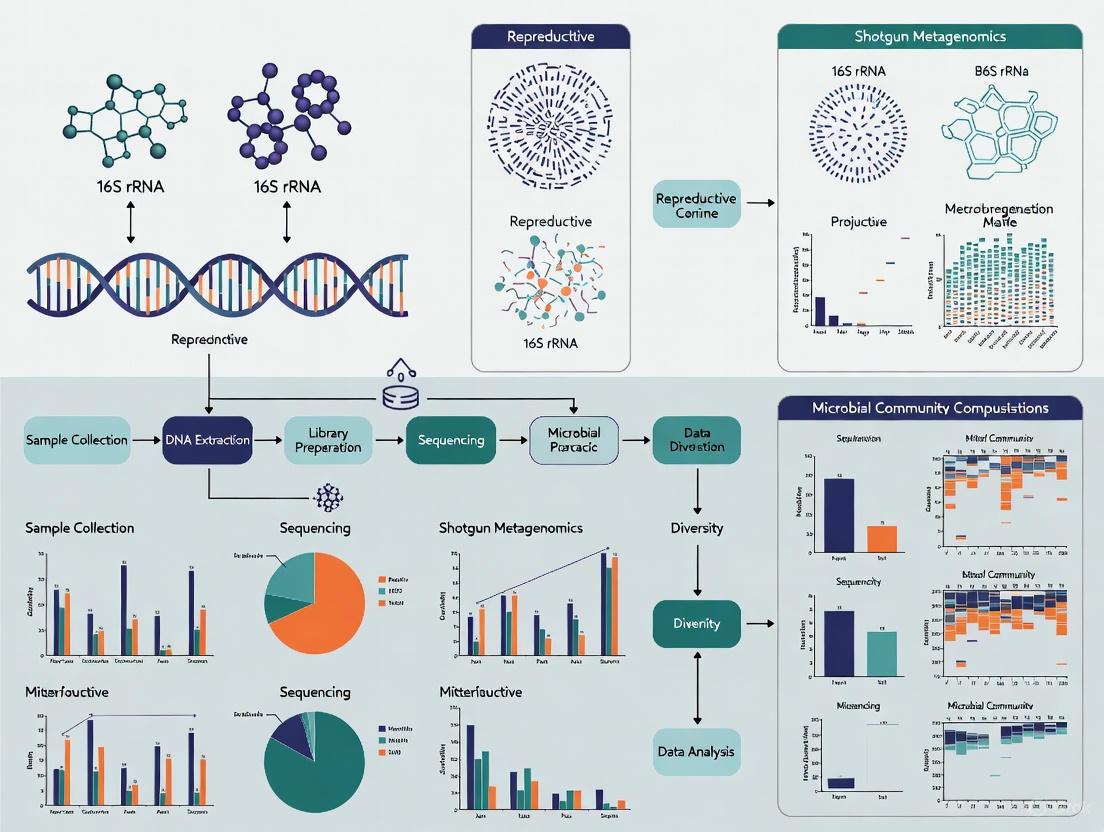
This article provides a comprehensive overview of shotgun metagenomics for profiling the reproductive microbiome, tailored for researchers, scientists, and drug development professionals.
Shotgun Metagenomics for Reproductive Microbiome Profiling: A Comprehensive Guide for Researchers and Developers
Abstract
This article provides a comprehensive overview of shotgun metagenomics for profiling the reproductive microbiome, tailored for researchers, scientists, and drug development professionals. It covers foundational concepts of reproductive microbial communities and their impact on fertility and pregnancy outcomes. The scope extends to detailed methodological workflows, from sample preparation to advanced bioinformatic tools like Meteor2 for integrated taxonomic, functional, and strain-level profiling. It addresses critical troubleshooting steps for host DNA depletion and data optimization, and concludes with a validation of clinical utility, comparing metagenomics with traditional diagnostics. The article synthesizes these intents to present a state-of-the-art framework for applying shotgun metagenomics in reproductive health research and therapeutic development.
The Reproductive Microbiome: Foundations, Ecological Dynamics, and Clinical Significance
The female reproductive tract (FRT) harbors distinct microbial communities that are critical for maintaining physiological and reproductive health. The vaginal and endometrial microbiomes represent two key niches, each with unique compositional and functional characteristics. Historically, the endometrium was considered sterile; however, advanced sequencing technologies have revealed it as a low-biomass, biologically active microbial site [1]. Understanding the landscape of these niches—marked by differences in microbial biomass, diversity, and host interaction—is fundamental for researching their collective impact on reproductive outcomes. This Application Note details the protocols for profiling these niches using shotgun metagenomics, providing a framework for high-resolution taxonomic and functional analysis to advance research in reproductive medicine and drug development.
Comparative Landscape of Vaginal and Endometrial Niches
The vaginal and endometrial microbiomes constitute interconnected yet distinct ecological niches. The vaginal microbiome is a relatively high-biomass environment, typically dominated by Lactobacillus species which acidify the environment and inhibit pathogens [2]. In contrast, the endometrial microbiome is a low-biomass environment, with a bacterial presence estimated to be 100 to 10,000 times less than that of the vagina [1].
Community state types (CSTs) provide a framework for classifying these microbial communities. A Lactobacillus-dominated state (CSTs I, II, III, or V) is associated with health in both niches, whereas CST IV, characterized by a high diversity of facultative and obligate anaerobes, is often linked to dysbiosis and adverse outcomes [3] [2]. Table 1 summarizes the core characteristics of these two niches.
Table 1: Core Characteristics of Vaginal and Endometrial Microbial Niches
| Characteristic | Vaginal Microbiome | Endometrial Microbiome |
|---|---|---|
| Biomass Status | High-biomass environment | Low-biomass environment (100-10,000x less than vagina) [1] |
| Dominant Taxa in Health | Lactobacillus crispatus, L. gasseri, L. jensenii [2] | Lactobacillus-dominated community [1] |
| Dysbiotic State (CST IV) | Enriched with Gardnerella vaginalis, Prevotella, Atopobium, Sneathia [2] | Enriched with Gardnerella, Atopobium, Prevotella, Streptococcus [1] |
| Typical pH in Health | Acidic (pH 3.5-4.5) [2] | Not definitively established |
| Primary Functional Role | Barrier protection, pathogen exclusion [2] | Immunological modulation, support of embryo implantation [1] |
Microbial Signatures and Reproductive Outcomes
Dysbiosis in these niches is linked to specific reproductive failures. In the vagina, CST IV is a hallmark of bacterial vaginosis and is associated with an elevated risk of spontaneous preterm birth (sPTB), particularly in women with mid-pregnancy cervical shortening [3]. Shotgun metagenomic studies reveal that a short cervix is associated with reduced Lactobacillus dominance, increased microbial diversity, and enrichment of species like Fannyhessea vaginae, Bifidobacterium breve, and Mycobacterium canetti [3]. Furthermore, among women with a short cervix, those who delivered preterm had vaginal microbiomes enriched with opportunistic pathogens such as Peptoniphilus equinus, Treponema spp., and Staphylococcus hominis [3].
Similarly, endometrial dysbiosis is linked to chronic endometritis, implantation failure, and adverse in vitro fertilization (IVF) outcomes [1]. Beyond taxonomic shifts, functional profiling provides deeper insights. In the vaginal niche, pathways related to folate biosynthesis, carbohydrate metabolism, and epithelial barrier regulation are differentially abundant in women with a short cervix, while functions related to glycosylation and degradation of cervical mucin are enriched in those who deliver preterm [3].
Shotgun Metagenomic Sequencing Workflow
Shotgun metagenomics, unlike 16S rRNA amplicon sequencing, provides unparalleled species- and strain-level taxonomic resolution while simultaneously enabling the reconstruction of the functional potential of the microbial community [3] [4]. The following section outlines a standardized workflow for the shallow shotgun metagenomic sequencing of reproductive samples, leveraging the Oxford Nanopore Technology (ONT) platform for its cost-effectiveness, rapid data generation, and flexible multiplexing [4].
Diagram 1: Shotgun metagenomic workflow for reproductive microbiome profiling, from sample collection to bioinformatic analysis.
Detailed Experimental Protocols
Patient Preparation and Sample Collection
Critical Pre-analytical Considerations:
- Patient Timing: Schedule endometrial sampling in the mid-luteal phase for receptivity studies or as per research protocol. Vaginal sampling is less cycle-dependent.
- Contamination Mitigation: Use a sterile speculum. For endometrial sampling, bypass the cervical canal carefully to minimize contamination from the vaginal and cervical microbiota [1].
Protocol:
- Vaginal Sample: Insert a sterile foam-tipped swab approximately 5 cm into the vaginal canal. Rotate the swab against the vaginal wall for 15-30 seconds to collect epithelial cells and secretions [5].
- Endometrial Sample:
- Biopsy: Use a disposable endometrial pipelle under sterile technique to obtain a tissue biopsy from the uterine wall.
- Aspirate: Alternatively, use a vacuum aspiration device with a cervical brush to collect luminal fluid and cells.
- Storage: Immediately place the swab or biopsy into a tube containing a DNA/RNA stabilization solution (e.g., ZymoBIOMICS DNA/RNA Shield). Invert several times to ensure proper mixing. Samples can be stored at 4°C for short-term (up to 30 days) or at -80°C for long-term preservation.
DNA Extraction and Library Preparation
Reagent Solution:
- Lysis Buffer: ZymoBIOMICS DNA/RNA Miniprep Kit (Cat. R2002) or equivalent.
- Bead Beating Tubes: Included in the kit; essential for mechanical disruption of Gram-positive bacterial cell walls (e.g., Lactobacilli).
Protocol:
- Nucleic Acid Extraction: Follow the manufacturer's protocol with modifications for low-biomass endometrial samples [4]:
- Transfer 200 µL of sample suspension to a bead beating tube.
- Add 350 µL of DNA/RNA Shield buffer to facilitate liquid transfer.
- Perform bead beating on a vortex with a multi-tube adapter at maximal speed for 40 minutes to ensure complete cell lysis.
- Elute DNA in 100 µL of nuclease-free water.
- DNA Quantification: Use a fluorescence-based assay (e.g., Qubit dsDNA HS Assay). For endometrial samples, yields may be low (<1 ng/µL); a minimum of 1 ng/µL is recommended for sequencing.
- Library Preparation (ONT):
- Use the Ligation Sequencing Kit (SQK-LSK109).
- Utilize the Native Barcoding Expansion Kit (EXP-NBD196) to multiplex 12-16 samples per flow cell.
- Include the Short Fragment Buffer (SFB) during adapter ligation to ensure equal representation of short and long DNA fragments, which is crucial for unbiased microbial representation.
Sequencing and Bioinformatic Analysis
Protocol:
- Sequencing: Load the prepared library onto a Nanopore GridION sequencer with an R9.4.1 flow cell. Perform basecalling and demultiplexing in real-time using MinKNOW software (v. 21.11.6) with Guppy (v. 5.1.12).
- Bioinformatic Processing:
- Quality Control: Trim adapters and filter low-quality reads (Q-score < 7) using Porechop.
- Host DNA Depletion: Align reads to the human reference genome (e.g., GRCh38) using Minimap2 and remove matching sequences.
- Taxonomic Profiling: Classify reads against a curated microbial database (e.g., RefSeq) using tools like Kraken2 or NanoCLUST for species-level assignment [4].
- Functional Profiling: Assemble quality-filtered reads and annotate open reading frames (ORFs) against functional databases (e.g., KEGG, eggNOG) to infer metabolic pathways.
The Scientist's Toolkit: Research Reagent Solutions
Successful profiling of the reproductive microbiome depends on specialized reagents and tools designed to handle challenges from low biomass to complex data integration. Table 2 details the essential components of the research toolkit.
Table 2: Key Research Reagent Solutions for Shotgun Metagenomic Profiling
| Item/Category | Function/Application | Specific Examples & Notes |
|---|---|---|
| Nucleic Acid Stabilizer | Preserves microbial community integrity at room temperature post-collection, preventing overgrowth and degradation. | ZymoBIOMICS DNA/RNA Shield; critical for preserving true community structure, especially during transport [4]. |
| Mechanical Lysis Kit | Efficiently breaks open tough bacterial cell walls (e.g., Gram-positive Lactobacilli) for unbiased DNA extraction. | ZymoBIOMICS DNA/RNA Miniprep Kit with included bead beating tubes; extended bead beating (40 min) is recommended [4]. |
| Long-read Sequencing Kit | Enables library preparation for Nanopore sequencing, offering flexible multiplexing and real-time data generation. | Oxford Nanopore Ligation Sequencing Kit SQK-LSK109 with Native Barcoding Expansion Kit EXP-NBD196 [4]. |
| Bioinformatic Pipelines | Tools for species-level taxonomic classification and functional pathway analysis from raw sequencing reads. | NanoCLUST for taxonomic profiling [5]; HUMAnN3 for functional pathway analysis [3]. |
| Data Integration Tools | Statistical methods to integrate microbiome data with other omics layers (e.g., metabolomics) for holistic insights. | Sparse Canonical Correlation Analysis (sCCA), Sparse Partial Least Squares (sPLS); benchmarked for robust integration [6]. |
Advanced Analytical and Visualization Techniques
Navigating Data Integration and Analysis
The complexity of shotgun metagenomic data requires robust analytical strategies. A key challenge is integrating microbiome data with other omics layers, such as metabolomics. A recent benchmark of 19 integrative methods identified top-performing strategies for different research aims [6]:
- For Global Associations: MMiRKNT is powerful for testing overall correlations between microbiome and metabolome datasets.
- For Feature Selection: Sparse Canonical Correlation Analysis (sCCA) and Sparse Partial Least Squares (sPLS) are effective for identifying the most relevant microbial and metabolic features associated with a condition.
Furthermore, accounting for the compositional nature of microbiome data is crucial. Transformations like the centered log-ratio (CLR) should be applied before analysis to avoid spurious correlations [6].
Visualizing Microbial Communities and Interactions
Beyond standard bar plots and PCoA, advanced visualization techniques can reveal deeper ecological insights.
- Network Analysis: Visualizing co-occurrence networks can identify core microbial interactions and potential keystone species. For instance, distinct microbial interactions have been observed between Lactobacillus-dominated clusters and CST IV-associated taxa in women with cervical shortening [3]. When creating these maps, use high-contrast, categorical color palettes to differentiate microbial taxa or network modules effectively [7].
- GIMIC (Smoothed Graph IMages of the MICrobiome): This novel method represents a microbiome sample as a smoothed image based on phylogenetic structure and taxon abundance. The differences between these images create a powerful, interpretable distance metric that outperforms state-of-the-art methods like UniFrac and Bray-Curtis in associating microbiome composition with host phenotypes [8].
Diagram 2: Microbial dynamics in the reproductive tract, showing the transition from a health-associated state to a dysbiotic state.
The vaginal microbiome plays a critical role in female reproductive health, serving as a key indicator of physiological status and disease risk. Community State Types (CSTs) provide a standardized framework for classifying vaginal microbial communities based on their predominant bacterial composition [3] [4]. This classification system has become fundamental for understanding transitions between healthy and dysbiotic states, with significant implications for clinical outcomes including susceptibility to infections, reproductive success, and pregnancy complications [3] [2].
Traditionally, the healthy vaginal microbiome is characterized by low diversity and dominance of Lactobacillus species, which maintain a protective acidic environment through lactic acid production [2]. In contrast, dysbiotic states typically demonstrate increased microbial diversity with reduced Lactobacillus abundance and elevated pH [9] [2]. The CST framework specifically categorizes vaginal communities into five main types: CST I (dominated by Lactobacillus crispatus), CST II (L. gasseri), CST III (L. iners), CST V (L. jensenii), and CST IV (characterized by diverse anaerobic bacteria with reduced Lactobacillus abundance) [4] [2].
Shotgun metagenomic sequencing has revolutionized CST characterization by enabling comprehensive taxonomic profiling at species and strain levels, while also facilitating functional potential analysis of microbial communities [3] [10]. This approach provides significant advantages over 16S rRNA gene sequencing, including enhanced taxonomic resolution and the ability to detect non-bacterial microorganisms and functional pathways relevant to host-microbe interactions [10] [4].
Characteristics and Clinical Significance of CSTs
Lactobacillus-Dominated CSTs (I, II, III, and V)
Lactobacillus-dominated CSTs are generally associated with vaginal health, though important functional differences exist between specific Lactobacillus species. CST I (L. crispatus dominance) represents the most optimal state, characterized by stable communities, strong barrier function, and the lowest risk of adverse health outcomes [9] [2]. L. crispatus produces both D- and L-lactic acid isomers, creating a profoundly acidic environment (pH 3.5-4.5) that inhibits pathogen growth [2]. This species also generates hydrogen peroxide (H₂O₂), providing additional antimicrobial protection [2].
CST III (L. iners dominance) presents a more complex profile. While technically a Lactobacillus-dominated state, CST III exhibits distinct functional characteristics that differentiate it from other lactobacilli-dominated communities [2]. L. iners possesses a significantly reduced genome (approximately 1.3 Mb compared to 1.5-2.0 Mb for other vaginal lactobacilli) indicative of an evolutionary shift toward host-dependency [2]. This genome reduction corresponds with limited metabolic capacity, including an inability to produce D-lactic acid and hydrogen peroxide [2]. Furthermore, L. iners encodes potential virulence factors such as inerolysin, a pore-forming toxin that may compromise vaginal epithelial integrity [2]. These characteristics position L. iners as a transitional species with higher susceptibility to community shifts toward dysbiosis [9] [2].
Dysbiotic CST IV and Subtypes
CST IV represents a dysbiotic state characterized by reduced Lactobacillus abundance and increased microbial diversity dominated by facultative and obligate anaerobic bacteria [4] [2]. This state is strongly associated with bacterial vaginosis (BV) and elevated risk for adverse reproductive outcomes, including preterm birth and sexually transmitted infections [3] [2]. CST IV is further categorized into three subtypes based on specific bacterial abundances:
- CST IV-A: Dominated by Candidatus Lachnocurva vaginae (formerly Atopobium vaginae) and Gardnerella vaginalis [2]
- CST IV-B: Enriched in Atopobium vaginae and Gardnerella vaginalis [2]
- CST IV-C: Characterized by low abundances of Lactobacillus spp., G. vaginalis, and A. vaginae, with predominance of diverse facultative and obligate anaerobes [2]
CST IV communities typically display elevated vaginal pH (>4.5) due to reduced lactic acid production and increased generation of biogenic amines (putrescine, cadaverine) by bacteria such as Dialister spp., Megasphaera, Mobiluncus, and Prevotella species [2]. These amines contribute to the characteristic malodor of BV and negatively impact Lactobacillus growth dynamics, potentially perpetuating the dysbiotic state [2]. CST IV-associated bacteria also secrete hydrolytic enzymes including sialidases that degrade protective mucins, compromising cervicovaginal barrier integrity and facilitating ascending infections [2].
Table 1: Characteristics of Vaginal Community State Types
| CST | Dominant Taxa | pH Range | Clinical Association | Key Functional Attributes |
|---|---|---|---|---|
| I | Lactobacillus crispatus | 3.5-4.5 | Optimal health state | Produces D/L-lactic acid, H₂O₂; stable community |
| II | Lactobacillus gasseri | 3.5-4.5 | Healthy state | Lactic acid production; antimicrobial activity |
| III | Lactobacillus iners | 4.0-4.5 | Transitional state | Limited metabolism; encodes inerolysin; unstable |
| IV | Diverse anaerobes | >4.5 | Bacterial vaginosis | High diversity; biogenic amine production; mucin degradation |
| V | Lactobacillus jensenii | 3.5-4.5 | Healthy state | Lactic acid production; epithelial adherence |
Host and Environmental Factors Influencing CST Dynamics
Hormonal Regulation
The vaginal ecosystem undergoes significant fluctuations throughout various life stages and menstrual cycles, largely driven by hormonal changes [9]. Estrogen plays a particularly crucial role in shaping the vaginal environment by promoting vaginal epithelial proliferation and glycogen accumulation [9] [2]. This glycogen serves as a primary nutrient source for lactobacilli, which metabolize it to produce lactic acid [9] [2]. During menstruation, the influx of blood products introduces heme-bound iron and raises vaginal pH, potentially favoring the growth of CST IV-associated bacteria such as Gardnerella vaginalis, Prevotella spp., and Sneathia amnii over lactobacilli [9]. These cyclical changes demonstrate the intricate feedback loops between host physiology and microbial community structure.
Ethnic and Genetic Influences
CST distribution patterns show significant variation across ethnic groups, suggesting important host genetic influences on vaginal microbiome composition [2]. Women of African, Hispanic, and certain Asian ancestries demonstrate higher prevalence of CST IV, which may represent a stable, non-pathogenic state in these populations rather than dysbiosis [2]. Genome-wide association studies have identified multiple genetic loci related to immune signaling and epithelial barrier function that associate with specific vaginal microbial features [2]. Particularly, polymorphisms in human leukocyte antigen (HLA) genes and innate immune receptors (TLR2, TLR4) appear to influence vaginal bacterial composition and inflammatory responses to pathogens [2].
Shotgun Metagenomics for CST Characterization
Shotgun metagenomic sequencing provides a comprehensive approach for analyzing vaginal microbiomes by sequencing all microbial DNA in a sample without target-specific amplification [3] [4]. This method enables simultaneous taxonomic profiling at species or strain level and functional potential analysis based on identified gene content [3] [10]. Compared to 16S rRNA gene sequencing, shotgun metagenomics offers superior taxonomic resolution and eliminates amplification biases, though it requires higher sequencing depth and more complex bioinformatic analysis [4] [11].
Recent advancements include shallow shotgun metagenomic sequencing, which provides a cost-effective alternative while maintaining high discriminatory power for CST classification [4]. Additionally, long-read technologies such as Oxford Nanopore sequencing enable real-time data generation and flexible multiplexing schemes, while also allowing detection of epigenetic modifications [4].
Diagram 1: Shotgun metagenomic sequencing enables comprehensive CST characterization through untargeted sequencing and bioinformatic analysis.
Analytical Approaches
Taxonomic profiling from shotgun metagenomic data typically involves aligning sequencing reads to reference databases or employing de novo assembly methods [3] [4]. Functional analysis utilizes pathway databases such as the Kyoto Encyclopedia of Genes and Genomes (KEGG) to interpret the metabolic potential of microbial communities [3] [10]. Studies comparing vaginal microbiomes from different physiological states or clinical outcomes often incorporate diversity metrics (alpha and beta diversity), differential abundance testing, and multivariate association models to identify significant taxonomic and functional features [3].
Table 2: Key Analytical Metrics for CST Characterization Using Shotgun Metagenomics
| Analysis Type | Key Metrics | Tools & Approaches | CST Application |
|---|---|---|---|
| Taxonomic Profiling | Relative abundance, Species richness | Kraken, MetaPhlAn, GTDB | CST classification, Detection of pathobionts |
| Alpha Diversity | Shannon index, Species richness | QIIME 2, Phyloseq | Discrimination of CST IV (high diversity) from Lactobacillus-dominated CSTs (low diversity) |
| Beta Diversity | Bray-Curtis dissimilarity, Jaccard index | PCoA, NMDS, PERMANOVA | Visualization of community differences between CSTs |
| Functional Analysis | KEGG pathways, Enzyme commissions | HUMAnN 3, MetaCyc | Identification of metabolic pathways (e.g., glycogen degradation, lactic acid production) |
| Multivariate Analysis | Linear models, Machine learning | MaAsLin 2, LEfSe | Identification of taxa/features associated with clinical outcomes (e.g., preterm birth) |
CSTs in Clinical Research and Health Outcomes
Association with Preterm Birth
Vaginal microbiome composition, particularly CST classification, has emerged as a significant factor in pregnancy outcomes. Research using shotgun metagenomics has identified specific microbial signatures associated with cervical shortening and spontaneous preterm birth (sPTB) risk [3]. Pregnant women with a short cervix exhibit reduced Lactobacillus dominance, increased microbial diversity, and enrichment of CST IV species including Fannyhessea vaginae, Bifidobacterium breve, and Mycobacterium canetti [3]. Functional analysis reveals that women who deliver preterm show enrichment in pathways related to glycosylation, structural stability, and degradation of cervical mucin, suggesting mechanisms through which the microbiome might influence cervical integrity [3].
Among women with cervical shortening, those who delivered preterm had vaginal microbiomes enriched in opportunistic pathogens including Peptoniphilus equinus, Treponema spp., and Staphylococcus hominis, while B. breve, Lactobacillus gasseri, and Lactobacillus paragasseri were associated with full-term delivery [3]. These findings highlight the potential of CST assessment and specific taxonomic markers for improving risk stratification in pregnancy.
Therapeutic Implications and Intervention Strategies
Understanding CST dynamics opens avenues for targeted therapeutic interventions aimed at restoring and maintaining optimal vaginal microbiota [2]. Probiotic supplementation with specific Lactobacillus strains represents a promising approach for promoting transitions from dysbiotic CST IV to lactobacilli-dominated CSTs [2]. Additionally, monitoring CST transitions during menstrual cycles may inform timing of interventions, with the proliferative phase potentially offering a more favorable environment for Lactobacillus establishment due to elevated estrogen levels and glycogen availability [9].
The functional insights gained from shotgun metagenomics, particularly regarding metabolic pathways such as glycogen degradation, lactic acid production, and biogenic amine synthesis, provide potential targets for novel therapeutics that manipulate microbial community function rather than composition [9] [2].
Essential Research Reagents and Protocols
Sample Collection and DNA Extraction
Proper sample collection and processing are critical for reliable CST characterization. Vaginal swabs should be collected using standardized methods and preserved in appropriate stabilization buffers such as ZymoBIOMICS DNA/RNA Shield to maintain nucleic acid integrity [4]. DNA extraction protocols must be optimized for bacterial lysis while minimizing host DNA contamination, which typically constitutes >99% of sequencing reads in vaginal samples [10] [4]. The ZymoBIOMICS DNA/RNA Miniprep Kit with extended bead-beating (40 minutes) has demonstrated effectiveness for vaginal microbiome samples [4].
Sequencing and Bioinformatics Pipeline
For shotgun metagenomic sequencing, library preparation can be performed using standard kits such as the Illumina DNA Prep or Nanopore Ligation Sequencing Kit (SQK-LSK109) [4] [11]. Sequencing depth recommendations vary based on study objectives, with shallow shotgun sequencing (0.5-2 million reads per sample) often sufficient for CST classification, while deeper sequencing may be required for functional analyses [4] [11]. Bioinformatic processing typically involves quality filtering (FastQC, Trimmomatic), host DNA removal (Bowtie2, DeconSeq), taxonomic profiling (Kraken, MetaPhlAn), and functional analysis (HUMAnN) [3] [4].
Table 3: Essential Research Reagents for Vaginal Microbiome CST Analysis
| Reagent Category | Specific Products | Application Purpose | Key Considerations |
|---|---|---|---|
| Sample Collection | ZymoBIOMICS DNA/RNA Shield Collection Tubes | Nucleic acid preservation | Maintains sample integrity during storage/transport |
| DNA Extraction | ZymoBIOMICS DNA/RNA Miniprep Kit | Microbial DNA isolation | Extended bead-beating (40 min) improves lysis of Gram-positive bacteria |
| Library Preparation | Illumina DNA Prep, Nanopore Ligation Sequencing Kit | Sequencing library construction | Short Fragment Buffer improves recovery of microbial DNA |
| Positive Controls | ZymoBIOMICS Microbial Community Standard | Extraction/sequencing control | Evaluates technical variation and batch effects |
| Host DNA Depletion | NEBNext Microbiome DNA Enrichment Kit | Reduces host contamination | CpG methylation-based method; may alter bacterial composition |
Protocol for CST Classification Using Shotgun Metagenomics
Sample Collection: Collect vaginal swabs from posterior fornix using standardized techniques. Immediately place swabs in DNA/RNA Shield buffer and store at -80°C until processing.
DNA Extraction:
- Transfer 200μL of sample suspension to a bead beating tube
- Add 350μL additional DNA/RNA Shield buffer
- Perform bead beating for 40 minutes at maximum speed
- Complete extraction according to kit protocol
- Elute DNA in 100μL nuclease-free water
- Quantify DNA using fluorometric methods (Qubit)
Library Preparation and Sequencing:
- For Illumina: Use 1ng-100ng input DNA with Illumina DNA Prep kit
- For Nanopore: Use SQK-LSK109 kit with barcoding (EXP-NBD196)
- Apply Short Fragment Buffer during adapter ligation
- Sequence on appropriate platform (Illumina NovaSeq, Nanopore GridION)
Bioinformatic Analysis:
- Quality control: FastQC for Illumina, MinKNOW for Nanopore
- Host read removal: Alignment to human reference (hg38)
- Taxonomic profiling: Kraken2 with custom database
- Diversity analysis: QIIME 2 for alpha/beta diversity metrics
- Functional profiling: HUMAnN 3 with KEGG database
- CST assignment: Based on relative abundance thresholds
Quality Assessment:
- Include positive controls (mock communities) in each batch
- Monitor sequencing depth (>100,000 reads per sample)
- Assess negative controls for contamination
- Verify CST classification consistency with multiple tools
Diagram 2: Host and microbial factors create feedback loops that stabilize either healthy or dysbiotic vaginal community states.
Advancements in shotgun metagenomics have revolutionized the characterization of microbial communities inhabiting the female reproductive tract. Moving beyond 16S rRNA sequencing, this high-resolution approach provides comprehensive taxonomic, functional, and strain-level profiling, enabling researchers to link specific microbial signatures to critical reproductive outcomes [1]. A robust body of evidence now confirms that the composition of the vaginal and endometrial microbiomes is a significant modifiable factor influencing in vitro fertilization (IVF) success and the risk of preterm birth (PTB) [12] [3] [13]. This document outlines application notes and detailed protocols for applying shotgun metagenomics to profile the reproductive microbiome within the context of infertility and pregnancy research.
Key Microbial Signatures and Clinical Evidence
Shotgun metagenomic analyses consistently identify specific microbial community state types (CSTs) associated with either favorable or unfavorable reproductive outcomes. The evidence is summarized in the table below.
Table 1: Microbial Signatures Linked to Reproductive Outcomes
| Clinical Context | Favorable Microbiome Signature | Unfavorable Microbiome Signature | Key Associated Outcomes |
|---|---|---|---|
| IVF Success | Lactobacillus-dominant (CST I, II, III, V), particularly L. crispatus [12] [13] [14]. | Non-Lactobacillus-dominant (CST IV), high diversity, presence of Gardnerella vaginalis [13] [15]. | ↑ Clinical Pregnancy Rate (e.g., 56.9% vs 28.6%) [15], ↑ Implantation Rate, ↑ Live Birth Rate (RR: 1.41) [12]. |
| Preterm Birth (PTB) Risk | Lactobacillus dominance, particularly L. crispatus and L. gasseri [3]. | Reduced Lactobacillus, increased diversity, enrichment of Fannyhessea vaginae, Bifidobacterium breve, Mycobacterium canetti [3]. | Association with cervical shortening and spontaneous PTB [3]. |
| Uterine Receptivity | Lactobacillus-dominant endometrial microbiome [1]. | Dysbiotic endometrium with Gardnerella, Atopobium, Prevotella, Streptococcus [1]. | Linked to chronic endometritis, implantation failure, and adverse IVF outcomes [1]. |
Beyond taxonomy, functional profiling reveals enriched microbial pathways in adverse outcomes, such as those related to folate biosynthesis and epithelial barrier regulation in women with a short cervix [3]. Furthermore, integrating microbiome data with host inflammatory markers using machine learning models has shown high accuracy in predicting IVF success, highlighting the potential for multi-omics prognostic tools [13].
Experimental Protocol: Shotgun Metagenomic Workflow for Reproductive Microbiome Profiling
The following protocol, adapted from established pipelines [16] [17], details the steps for shotgun metagenomic analysis of reproductive tract samples.
3.1. Sample Collection and DNA Extraction
- Sample Type: Vaginal swabs or endometrial aspirates/biopsies. For endometrial sampling, strict protocols to avoid cervical/vaginal contamination are critical [1].
- Storage: Immediate freezing at -80°C post-collection.
- DNA Extraction: Use of commercial kits (e.g., Qiagen) optimized for low-biomass microbial samples. Include negative controls (e.g., sterile swabs placed in buffer) to monitor contamination throughout the process [17] [1].
3.2. Library Preparation and Sequencing
- Sequencing Technology: High-throughput shotgun sequencing on platforms such as Illumina. For enhanced strain-level resolution and more complete metagenome-assembled genomes (MAGs), consider PacBio HiFi long-read sequencing [18].
- Library Prep: Follow manufacturer's guidelines for whole-genome sequencing library preparation.
3.3. Bioinformatic Processing and Profiling
- Quality Control & Trimming: Validate read quality and trim adapters/low-quality bases using tools like AlienTrimmer [17].
- Read Mapping: Map quality-filtered reads to a reference microbial gene catalog using a fast aligner like Bowtie2 [16] [17].
- Taxonomic/Functional Profiling:
- Recommended Tool: Meteor2 for integrated Taxonomic, Functional, and Strain-level Profiling (TFSP) [16].
- Database: Meteor2 uses environment-specific microbial gene catalogues (e.g., human intestinal, oral) based on Metagenomic Species Pan-genomes (MSPs). Signature genes within MSPs are used for robust quantification [16].
- Outputs: Abundance tables of microbial species (MSPs), KEGG Orthologs (KOs), Carbohydrate-Active Enzymes (CAZymes), and Antibiotic Resistance Genes (ARGs).
- Strain-Level and Advanced Analysis:
Figure 1: Shotgun Metagenomics Workflow for Reproductive Microbiome Research.
Table 2: Key Reagents, Databases, and Tools for Shotgun Metagenomics
| Category | Item | Function/Description |
|---|---|---|
| Wet-Lab Reagents | DNA Extraction Kit (e.g., Qiagen) | Isolation of high-quality microbial DNA from low-biomass swab samples [17] [15]. |
| Shotgun Sequencing Library Prep Kit | Preparation of sequencing libraries for platforms like Illumina. | |
| Computational Tools | Meteor2 | Integrated tool for taxonomic, functional, and strain-level profiling from metagenomic reads [16]. |
| Bowtie2 | Fast and sensitive gapped-read aligner for mapping sequences to reference catalogues [16] [17]. | |
| MSPminer | Tool for abundance-based reconstitution of microbial pan-genomes from shotgun data [17]. | |
| Reference Databases | Microbial Gene Catalogues | Environment-specific (e.g., human gut, vaginal) collections of genes for quantitative profiling [16] [17]. |
| GTDB (Genome Taxonomy Database) | Framework for consistent taxonomic annotation of Metagenomic Species Pan-genomes (MSPs) [16]. | |
| KEGG, dbCAN, ResFinder | Databases for functional annotation of orthologs, carbohydrate-active enzymes, and antibiotic resistance genes, respectively [16]. |
Shotgun metagenomics provides an unparalleled, high-resolution view of the reproductive microbiome, firmly establishing its role as a key determinant in infertility, IVF success, and preterm birth. The standardized protocols and tools outlined here offer researchers a robust framework to generate actionable insights. Future research directions should focus on integrating multi-omics data, developing personalized microbiome-modulating therapies, and validating these findings in large, diverse cohorts to fully realize the potential of the microbiome in improving reproductive health.
The female reproductive tract hosts a dynamic microbial ecosystem where specific Lactobacillus species serve as the primary line of defense against pathogens. A healthy vaginal microenvironment is characterized by low diversity and dominance of lactobacilli, which constitute approximately 99% and 97% of the vaginal and cervical microbiota, respectively, in reproductive-aged women [2]. These beneficial bacteria maintain vaginal eubiosis through multiple mechanisms, including production of lactic acid to establish an acidic pH (3.5-4.5), secretion of antimicrobial compounds, and modulation of host immune responses [20] [2]. The delicate balance of this ecosystem can be categorized into Community State Types (CSTs), with CSTs I, II, III, and V defined by dominance of Lactobacillus crispatus, L. gasseri, L. iners, and L. jensenii, respectively, while CST IV represents a diverse community with reduced lactobacilli and increased anaerobic bacteria [20] [2] [3].
In contrast to protective lactobacilli, pathobionts (potentially pathogenic organisms) emerge when this balance is disrupted, leading to a dysbiotic state known as bacterial vaginosis (BV). This condition is characterized by depletion of lactobacilli and overgrowth of facultative and obligate anaerobic bacteria including Gardnerella vaginalis, Fannyhessea vaginae (formerly Atopobium vaginae), Prevotella spp., Sneathia spp., and Megasphaera spp. [20] [2]. Understanding the interplay between protective lactobacilli and pathobionts is crucial for managing reproductive health, as dysbiosis increases susceptibility to sexually transmitted infections (STIs) such as human papillomavirus (HPV), human immunodeficiency virus (HIV), and herpes simplex virus (HSV), and is associated with adverse pregnancy outcomes including preterm birth [20] [3].
Taxonomic and Functional Profiling of Vaginal Microbes
Characterizing Protective Lactobacilli
The vaginal microbiome of healthy reproductive-aged women is typically dominated by various Lactobacillus species, each with distinct functional attributes. These bacteria metabolize glycogen derivatives from vaginal epithelial cells to produce lactic acid, creating an acidic environment that inhibits pathogen growth [2]. Beyond acidification, different Lactobacillus species contribute uniquely to vaginal health through production of antimicrobial compounds and immune modulation.
Table: Key Characteristics of Major Vaginal Lactobacillus Species
| Lactobacillus Species | Dominant CST | Protective Mechanisms | Genome Size | Clinical Associations |
|---|---|---|---|---|
| L. crispatus | CST I | Produces both D- and L-lactic acid isomers; potential H₂O₂ production [2] | ~1.5-2.0 Mb [2] | Strongly associated with vaginal health; stable community [20] [2] |
| L. gasseri | CST II | Produces antimicrobial compounds; acidification [20] | ~1.5-2.0 Mb [2] | Protective against dysbiosis [20] |
| L. jensenii | CST V | Lactic acid production; niche-specific adaptations [20] | ~1.5-2.0 Mb [2] | Associated with health [20] |
| L. iners | CST III | Produces only L-lactic acid; lacks D-lactic acid and H₂O₂ production [2] | ~1.3 Mb (reduced) [2] | "Transitional" species; associated with instability and progression to dysbiosis [2] [21] |
L. crispatus is considered the most protective species, consistently associated with optimal vaginal health outcomes. Its genome encodes capabilities for producing both isomers of lactic acid and potentially hydrogen peroxide, creating a robust antimicrobial environment [2]. In contrast, L. iners possesses a significantly reduced genome with limited metabolic capacity, lacking the ability to produce D-lactic acid and hydrogen peroxide [2]. This species produces inerolysin, a pore-forming toxin homologous to vaginolysin produced by Gardnerella vaginalis, which may compromise the vaginal mucus layer and weaken host defenses [2]. These characteristics position L. iners as a "transitional" species that may facilitate the shift to dysbiotic CST IV communities rather than maintaining a stable healthy state [2] [21].
Vaginal Pathobionts and Dysbiotic Communities
CST IV represents a dysbiotic vaginal state characterized by reduced lactobacilli and increased abundance of diverse anaerobic bacteria. This polymicrobial condition is clinically recognized as bacterial vaginosis (BV) and associated with various adverse health outcomes.
Table: Key Vaginal Pathobionts in Bacterial Vaginosis
| Pathobiont | Classification | Virulence Factors | Metabolic Contributions to Dysbiosis |
|---|---|---|---|
| Gardnerella vaginalis | Facultative anaerobe | Vaginolysin (pore-forming toxin); biofilm formation [2] | Amino acid fermentation; biogenic amine production [2] |
| Fannyhessea vaginae | Obligate anaerobe | Mucin degradation; biofilm formation [20] [3] | Lactic acid consumption; acetate production [20] |
| Prevotella spp. | Obligate anaerobe | Sialidase production; mucin degradation [20] [2] | Amino acid fermentation; biogenic amine production [2] |
| Sneathia spp. | Obligate anaerobe | Mucin degradation; inflammation induction [20] | Biogenic amine production [20] |
| Megasphaera spp. | Obligate anaerobe | Metabolic byproducts contributing to malodor [20] [2] | Lactic acid consumption; production of amines and volatile organic compounds [2] |
Dysbiotic vaginal communities exhibit marked functional alterations beyond taxonomic shifts. The depletion of lactobacilli reduces lactic acid production, elevating vaginal pH above 4.5 [20] [2]. Pathobionts produce hydrolytic enzymes such as sialidases that degrade mucins, compromising the cervicovaginal mucosal barrier and facilitating microbial translocation [2]. Bacterial metabolism shifts toward amino acid fermentation, generating biogenic amines including putrescine and cadaverine, which contribute to the characteristic malodor of BV and may negatively impact lactobacilli growth dynamics [2]. These biogenic amines paradoxically may play a role in shaping and maintaining the dysbiotic microbial community [2].
Shotgun Metagenomic Approaches for Microbiome Profiling
Comparative Sequencing Methodologies
Shotgun metagenomic sequencing has emerged as a powerful alternative to 16S rRNA gene sequencing for comprehensive characterization of vaginal microbial communities. This approach provides several advantages, including species- and strain-level taxonomic resolution, functional profiling, and detection of non-prokaryotic community members.
Table: Comparison of Vaginal Microbiome Sequencing Approaches
| Parameter | 16S rRNA Gene Sequencing | Shallow Shotgun Metagenomic Sequencing |
|---|---|---|
| Taxonomic Resolution | Genus to species level (depends on region) [4] | Species to strain level [3] [4] |
| Target Regions | V1-V2, V3-V4, or other variable regions [4] | Entire microbial genomes [4] |
| Functional Profiling | Limited (predicted from taxonomy) [4] | Comprehensive (based on gene content) [3] |
| Host DNA Removal | Not required (amplification of target) [4] | Critical step (host DNA dominates samples) [4] |
| Non-Bacterial Detection | Limited to prokaryotes [4] | Viruses, fungi, archaea [4] |
| Quantitative Accuracy | Amplification biases [4] | More representative of biological abundances [4] |
| Cost per Sample | Lower [4] | Higher, but decreasing with shallow approaches [4] |
A recent study demonstrated the successful application of Nanopore-based shallow shotgun metagenomic sequencing for vaginal microbiome characterization, showing 92% concordance with Illumina 16S-based CST classification [4]. Shallow SMS also enabled detection of non-prokaryotic species, including Lactobacillus phage and Candida albicans, and methylation-based quantification of human cell types in clinical samples [4]. This approach showed potentially increased sensitivity for detecting Gardnerella vaginalis, indicating enhanced capability to identify dysbiotic states [4].
Protocol: Shotgun Metagenomic Sequencing of Vaginal Microbiomes
Protocol Title: Comprehensive Vaginal Microbiome Profiling Using Shallow Shotgun Metagenomic Sequencing
Principle: This protocol describes standardized methods for sample collection, DNA processing, and sequencing analysis to characterize the taxonomic and functional profile of vaginal microbial communities, enabling differentiation between protective lactobacilli and pathobionts.
Materials and Reagents:
- ZymoBIOMICS DNA/RNA Shield Collection Tubes (Cat. #) [4]
- ZymoBIOMICS DNA/RNA Miniprep Kit (Cat. #R2002) [4]
- Qubit 3 device with 1× dsDNA HS Assay Kit [4]
- Oxford Nanopore ligation sequencing kit SQK-LSK109 [4]
- Oxford Nanopore barcoding expansion kit EXP-NBD196 [4]
- Nanopore GridION with R9.4.1 flow cells (type FLO-MIN106) [4]
Procedure:
Sample Collection and Storage
DNA Extraction
- Thaw samples and transfer 200 μL of suspension to bead beating tube.
- Add 350 μL of DNA/RNA Shield buffer to enable harvesting of 200 μL of bead-free liquid.
- Perform bead beating using Vortex Genie with 24 multi-tube attachment at maximal speed for 40 minutes [4].
- Continue extraction according to manufacturer's protocol with elution in 100 μL nuclease-free water.
- Quantify DNA using Qubit 3 device with 1× dsDNA HS Assay Kit.
Library Preparation and Sequencing
- For Nanopore sequencing: Use ligation sequencing kit SQK-LSK109 with barcoding based on EXP-NBD196 expansion kit.
- Use Short Fragment Buffer (SFB) in adapter ligation step to ensure equal purification of short and long DNA fragments.
- Sequence resulting library on Nanopore GridION with R9.4.1 flow cells.
- Perform basecalling and demultiplexing using MinKNOW (v. 21.11.6) with Guppy (v. 5.1.12) [4].
- For comparative Illumina 16S sequencing: Use QIAseq 16S/ITS Panel with V1-V2 and V2-V3 16S primers with 1 μL input per sample [4].
Bioinformatic Analysis
- Perform quality filtering of raw sequencing reads.
- Conduct taxonomic profiling using reference databases.
- For functional analysis, annotate genes and metabolic pathways.
- Classify samples into CSTs based on relative abundance of lactobacilli versus diverse anaerobes.
Troubleshooting:
- Low DNA yield: Perform additional extraction from original sample [4].
- High host DNA contamination: Consider additional host DNA depletion steps.
- Poor sequencing yield: Check library quality and flow cell performance.
Vaginal Microbiome Sequencing Workflow
Molecular Mechanisms of Protection and Pathogenesis
Protective Mechanisms of Lactobacilli
Vaginal lactobacilli employ multiple synergistic mechanisms to maintain vaginal health and prevent pathogen colonization. The primary protection mechanism involves glycogen metabolism by lactobacilli, which converts glycogen derivatives to lactic acid, establishing an acidic environment (pH ≤ 4) that inhibits growth of pathogenic microorganisms [20] [2]. Both L- and D-isomers of lactic acid contribute to acidification, with D-lactic acid potentially providing enhanced protection through specific antimicrobial properties [20]. Beyond pH reduction, lactic acid directly disrupts microbial membranes, alters surface proteins of pathogens, and regulates host immune responses by triggering autophagy processes [20].
Additional protective mechanisms include production of hydrogen peroxide (H₂O₂) by certain Lactobacillus species, which exerts antimicrobial effects through oxidative damage to pathogens [2]. Lactobacilli also compete with pathogens for adhesion sites and nutrients, limiting resources available for pathobiont growth [20]. Furthermore, they produce bacteriocins and other antimicrobial compounds that specifically target potential pathogens while sparing commensal species [20]. Through modulation of host immune responses, lactobacilli can enhance protective immunity while limiting excessive inflammation that could damage the vaginal epithelium [20].
Lactobacilli Protective Mechanisms
Pathogenic Mechanisms in Dysbiosis
The transition to dysbiosis involves complex interactions between pathobionts and the host environment. Polymicrobial biofilms, often initiated by Gardnerella vaginalis, create a foundation for other anaerobic pathobionts to adhere and proliferate [2]. These structured communities enhance resistance to antibiotics and host immune responses, facilitating persistent infection. Pathobionts secrete hydrolytic enzymes including sialidases and proteases that degrade protective mucins on the vaginal epithelium, compromising barrier function and enabling microbial translocation [2].
Dysbiotic bacteria shift the metabolic landscape through lactic acid consumption, raising vaginal pH to levels favorable for pathogen growth (>4.5) [20] [2]. Simultaneously, they engage in amino acid fermentation, producing biogenic amines such as putrescine and cadaverine that contribute to the characteristic malodor of BV and may further inhibit lactobacilli recovery [2]. These biogenic amines also trigger pro-inflammatory responses through recognition of microbial pathogen-associated molecular patterns (PAMPs) by Toll-like receptors (TLRs) on vaginal epithelial cells and immune cells [2]. Specifically, TLR4 recognizes lipopolysaccharide (LPS) from CST IV-associated bacteria, activating MyD88-dependent NF-κB signaling that promotes production of pro-inflammatory cytokines and chemokines, enhancing lymphocyte recruitment and exacerbating local inflammation [2].
Pathobiont Virulence Mechanisms
Clinical Implications and Diagnostic Applications
Microbial Signatures in Reproductive Health and Disease
Shotgun metagenomic approaches have revealed specific microbial signatures associated with various reproductive health conditions. In pregnancy, vaginal microbiome composition has significant implications for gestational outcomes, particularly in relation to preterm birth risk.
Table: Vaginal Microbiome Signatures in Pregnancy Complications
| Clinical Condition | Microbial Signature | Functional Pathways | Clinical Implications |
|---|---|---|---|
| Cervical Shortening & Preterm Birth Risk | Reduced L. crispatus; Increased Fannyhessea vaginae, Bifidobacterium breve, Mycobacterium canetti [3] | Enriched in folate biosynthesis, carbohydrate metabolism, epithelial barrier regulation [3] | Predictive of spontaneous preterm birth; potential for early intervention |
| Preterm Delivery (with short cervix) | Enriched Peptoniphilus equinus, Treponema spp., Staphylococcus hominis [3] | Functions related to glycosylation, mucin degradation [3] | Enhanced risk stratification |
| Term Delivery (despite short cervix) | Enriched B. breve, L. gasseri, L. paragasseri [3] | Protective functional profile | Microbial biomarkers for favorable prognosis |
| Bacterial Vaginosis | Diverse anaerobes: Gardnerella spp., Fannyhessea vaginae, Prevotella spp. [20] [2] | Depletion of lactic acid production; biogenic amine synthesis [2] | Increased STI risk; adverse pregnancy outcomes |
Beyond infectious outcomes, dysbiosis in the reproductive tract microbiome has been associated with various gynecological conditions. In endometrial polyps, studies have revealed increased distribution of Firmicutes throughout the reproductive tract and decreased Proteobacteria compared to healthy controls [22]. Patients with uterine leiomyoma (fibroids) exhibit decreased abundance of Lactobacillus species in vaginal and cervical samples, with increased microbial network complexity associated with larger fibroid numbers [22]. For endometriosis, research demonstrates increased bacterial colonization in menstrual blood and endometrial tissue compared to healthy women, with specific genera such as Fusobacterium potentially exacerbating disease progression [22].
Protocol: Microbial Signature Analysis for Risk Stratification
Protocol Title: Assessment of Vaginal Microbiome signatures for Preterm Birth Risk Stratification
Principle: This protocol utilizes shotgun metagenomic sequencing data to identify taxonomic and functional signatures associated with cervical shortening and preterm birth risk, enabling targeted interventions for at-risk pregnancies.
Materials and Reagents:
- Processed shotgun metagenomic sequencing data from vaginal samples
- High-performance computing resources
- Taxonomic profiling software (Kraken2, Bracken)
- Functional annotation tools (HUMAnN3, MetaPhlAn)
- Statistical analysis environment (R, Python)
Procedure:
Sample Collection and Sequencing
- Collect vaginal samples during mid-pregnancy (16-25 weeks gestation) [3].
- Perform shotgun metagenomic sequencing as described in Protocol 3.2.
Taxonomic Profiling
- Perform quality control of raw sequencing reads (adaptor removal, quality filtering).
- Conduct species-level taxonomic classification using reference databases.
- Calculate relative abundances of key species: L. crispatus, L. iners, Fannyhessea vaginae, Gardnerella vaginalis, Bifidobacterium breve.
- Compute alpha diversity metrics (Shannon index) and beta diversity (Bray-Curtis dissimilarity).
Functional Profiling
- Annotate metabolic pathways from metagenomic data.
- Quantify abundance of pathways related to folate biosynthesis, carbohydrate metabolism, and epithelial barrier regulation [3].
- Assess functions related to glycosylation and mucin degradation.
Risk Stratification Analysis
- Identify samples with reduced Lactobacillus dominance and increased diversity.
- Flag samples with enrichment of Peptoniphilus equinus, Treponema spp., Staphylococcus hominis [3].
- Note protective signatures including B. breve, L. gasseri, L. paragasseri [3].
- Integrate taxonomic and functional data for comprehensive risk assessment.
Interpretation:
- High L. crispatus abundance with low diversity: Low-risk profile
- High diversity with F. vaginae and mucin degradation pathways: High-risk for preterm birth
- Presence of protective species even with cervical shortening: Potential for term delivery
The Scientist's Toolkit: Research Reagent Solutions
Table: Essential Research Reagents for Vaginal Microbiome Studies
| Reagent/Kit | Application | Key Features | Considerations |
|---|---|---|---|
| ZymoBIOMICS DNA/RNA Shield Collection Tubes | Sample collection and stabilization [4] | Preserves nucleic acids at room temperature; eliminates immediate freezing need | Maintains integrity during transport |
| ZymoBIOMICS DNA/RNA Miniprep Kit | Concurrent DNA/RNA extraction [4] | Bead beating for mechanical lysis; inhibitor removal | 40-minute bead beating recommended [4] |
| QIAseq 16S/ITS Panel | 16S rRNA gene amplification [4] | Targets V1-V2 and V2-V3 regions; low input requirement | Enables CST classification [3] |
| Oxford Nanopore SQK-LSK109 | Library preparation for long-read sequencing [4] | Ligation sequencing; compatible with barcoding | Use Short Fragment Buffer for even representation [4] |
| Oxford Nanopore EXP-NBD196 | Sample multiplexing [4] | Barcoding for 12-16 samples per flow cell | Cost-effective for shallow SMS [4] |
| Qubit dsDNA HS Assay | DNA quantification [4] | Accurate measurement of low-concentration samples | Preferred over spectrophotometry for microbial DNA |
Shotgun metagenomic approaches have revolutionized our understanding of the delicate balance between protective lactobacilli and pathobionts in the vaginal microenvironment. The precise taxonomic and functional profiling enabled by these methods reveals that beyond mere presence or absence of specific bacteria, the functional capacity of the microbial community determines health outcomes. Protective lactobacilli, particularly L. crispatus, maintain vaginal health through multiple synergistic mechanisms including acidification, antimicrobial production, and immune modulation. In contrast, pathobionts like Gardnerella vaginalis and Fannyhessea vaginae employ virulence strategies including biofilm formation, mucin degradation, and pro-inflammatory activation to establish and maintain dysbiotic states.
The clinical implications of these microbial dynamics extend far beyond bacterial vaginosis to encompass preterm birth risk and various gynecological conditions. Shotgun metagenomic protocols, particularly emerging shallow sequencing approaches, provide powerful tools for risk stratification and targeted interventions. As these methods become more accessible and cost-effective, they hold promise for transforming reproductive healthcare through precision microbiome management. Future directions will likely focus on developing standardized analytical frameworks, validating clinical biomarkers, and designing targeted interventions to restore and maintain protective microbial communities.
From Sample to Insight: Optimized Wet-Lab and Dry-Lab Pipelines for Reproductive Samples
Best Practices in Sample Collection, Storage, and DNA Extraction
Shotgun metagenomics has revolutionized reproductive microbiome research by enabling unbiased, comprehensive profiling of microbial communities without the amplification biases associated with 16S rRNA sequencing [23]. This approach allows researchers to simultaneously assess taxonomic composition and functional potential, including antimicrobial resistance genes, which is crucial for understanding the role of microbes in reproductive health and disease [23]. However, the accuracy and reliability of shotgun metagenomic data heavily depend on pre-analytical factors, particularly sample collection, storage, and DNA extraction methods. This protocol outlines optimized, end-to-end best practices for these critical steps, specifically tailored for reproductive microbiome studies within the context of a broader thesis on shotgun metagenomics for reproductive microbiome profiling.
Sample Collection Protocols
Vaginal Sample Collection
Proper collection of vaginal samples is fundamental for accurate microbiome profiling. The following protocol ensures consistent and representative sampling:
- Participant Preparation: Participants should be instructed to refrain from sexual activity, douching, and using intravaginal medications for at least 72 hours prior to sample collection [24]. Current antibiotic treatment and pregnancy are typically exclusion criteria [5] [24].
- Swab Selection: Use sterile, DNA-free foam swabs. QIAGEN sterile foam swabs have been successfully employed in vaginal microbiome studies [5].
- Collection Technique: For self-collection or clinician collection, insert the swab approximately 5 cm (2 inches) into the vaginal canal and rotate it firmly against the vaginal wall for 15-30 seconds to ensure adequate cellular and microbial material is collected [5].
- Sample Type Considerations: While swabs are most common, the selection of collection devices should be validated for compatibility with downstream DNA extraction protocols and sequencing platforms.
Other Reproductive Tract and Reference Samples
A comprehensive reproductive microbiome study may involve samples from multiple body sites:
- Cervical and Endometrial Samples: Collection protocols are similar to vaginal sampling but require specialized medical procedures performed by a clinician.
- Gut Microbiome Samples: As gut microbes can systemically influence reproductive health through metabolic, immune, and endocrine pathways, fecal samples serve as an important reference [2] [25]. Collection should use standardized fecal collection tubes with DNA stabilizers to preserve microbial community structure at the time of collection.
Table 1: Sample Collection Guidelines for Reproductive Microbiome Research
| Sample Type | Recommended Collection Tool | Key Pre-collection Instructions | Collection Procedure |
|---|---|---|---|
| Vaginal | Sterile foam swab (e.g., QIAGEN) | No sexual activity, douching, or intravaginal medications for 72 hours; no current antibiotics [5] [24]. | Insert ~5 cm, rotate against vaginal wall for 15-30 seconds [5]. |
| Fecal/Gut | Tube with DNA/RNA stabilizer | None specific, but document diet and medications. | Collect aliquot in stabilized tube, homogenize if required. |
| Cervical | Cytobrush or sterile swab | Same as vaginal samples; requires clinician. | Clinician-collected from cervical os. |
Sample Storage and Preservation
Immediate stabilization and correct storage of samples are critical to prevent microbial community shifts and DNA degradation.
- Preservation at Collection: For swab-based samples, immediately place the swab into a collection tube containing a stabilization buffer, such as those used in elution cards (e.g., QIACard FTA Indicating minis) [5]. These cards stabilize nucleic acids at room temperature, facilitating transport and storage.
- Short-Term Storage: If processing within 24-48 hours, samples can typically be stored at 4°C.
- Long-Term Storage: For long-term preservation, store samples at -20°C or ideally -80°C. Freeze-thaw cycles should be minimized as they can lyse cells and degrade DNA [26].
DNA Extraction and Purification
The DNA extraction step is arguably the most critical source of bias in microbiome studies. The goal is to achieve comprehensive lysis of all microbial cells (Gram-positive and Gram-negative bacteria, fungi) while efficiently removing inhibitors and recovering high-quality, high-molecular-weight DNA suitable for shotgun metagenomic sequencing.
Critical Factors in DNA Extraction
Lysis Method: A combination of chemical, enzymatic, and mechanical lysis is essential for unbiased representation.
- Mechanical Lysis (Bead Beating): Crucial for breaking down tough cell walls of Gram-positive bacteria (e.g., Lactobacillus spp., Staphylococcus aureus) and fungal cells [23] [26]. The efficiency is highly dependent on bead size.
- Bead Size Optimization: Larger beads (0.5-0.8 mm diameter) are significantly more effective at lysing fungal cells (e.g., Saccharomyces cerevisiae), while smaller beads (0.1 mm) are often used for bacterial lysis [27]. A mixture of bead sizes may provide the most comprehensive lysis across kingdoms [27].
- Enzymatic Lysis: The use of lysozyme and proteinase K helps degrade bacterial cell walls and proteins, respectively, and is particularly important for protocols without vigorous mechanical lysis [23].
Inhibitor Removal: Complex biological samples like feces and vaginal swabs contain substances that can inhibit downstream enzymatic reactions in library preparation and sequencing. The chosen DNA extraction method must effectively remove these inhibitors.
Protocol Selection: Commercial kits designed for complex environmental or fecal samples generally outperform those designed for pure cultures or human DNA.
Recommended DNA Extraction Protocol
Based on comparative evaluations for shotgun metagenomics, the following protocol is recommended:
- Recommended Kit: QIAamp PowerFecal Pro DNA Kit (QIAGEN) has demonstrated superior performance in retrieving high-quality DNA and accurately reconstructing microbial communities from complex samples, including mock communities and clinical swabs, for Oxford Nanopore Technologies (ONT) sequencing [28] [23].
- Key Modifications/Optimizations:
- Enhanced Bead Beating: Perform mechanical lysis using a tissue lyser at 25 Hz for 5-10 minutes to ensure adequate disruption of Gram-positive bacteria [23].
- Supernatant Inclusion: For filter-based samples or samples with low biomass, ensure the entire lysate (including supernatant) is processed to maximize DNA yield and avoid biasing the microbial profile [26].
- Validation: Include a mock microbial community containing known proportions of Gram-positive and Gram-negative bacteria, as well as fungi, in each extraction batch to control for technical bias and validate protocol performance [27] [23].
Table 2: Performance Comparison of DNA Extraction Kits for Shotgun Metagenomics
| Extraction Kit | Lysis Principle | Key Advantages | Best for |
|---|---|---|---|
| QIAamp PowerFecal Pro DNA Kit [28] [23] | Chemical + Mechanical (Bead beating) | High DNA yield; effective for Gram-positive bacteria; reliable AMR and taxonomy detection [23]. | Complex samples (fecal, vaginal swabs); ONT sequencing. |
| Macherey-Nagel NucleoSpin Soil Kit [27] | Mechanical (Bead beating) | Good for fungal DNA (with larger beads); high DNA yield [27]. | Studies focusing on fungi or requiring high yield. |
| Enzymatic Lysis Kits (e.g., QIAamp DNA Mini) [23] | Enzymatic (Lysozyme, Proteinase K) | Gentler; may preserve longer DNA fragments. | Less complex samples; culture isolates. |
Experimental Workflow
The following diagram illustrates the complete integrated workflow from sample collection to data generation, highlighting critical steps for success in reproductive microbiome profiling.
The Scientist's Toolkit
Table 3: Essential Research Reagent Solutions for Reproductive Microbiome Studies
| Item | Function/Application | Example Products/Brands |
|---|---|---|
| Sterile Foam Swabs | Collection of vaginal and cervical microbial samples. | QIAGEN sterile foam swabs [5]. |
| Nucleic Acid Stabilization Cards | Room-temperature storage and preservation of samples collected on swabs; inactivate pathogens. | QIAGEN FTA Indicating cards [5]. |
| Fecal Sample Collection Tubes | Stabilization of gut microbiome composition at point of collection for distal microbiome analysis. | Tubes with DNA/RNA stabilizers (e.g., OMNIgene•GUT). |
| PowerFecal Pro DNA Kit | DNA extraction from complex samples; combines chemical and mechanical lysis for unbiased recovery. | QIAamp PowerFecal Pro DNA Kit (QIAGEN) [28] [23]. |
| Tissue Lyser & Beads | Mechanical disruption of microbial cell walls (Gram-positive bacteria, fungi) during DNA extraction. | Qiagen TissueLyser II; a mix of 0.1 mm and 0.5-0.8 mm beads [27] [23]. |
| Mock Microbial Community | Process control to evaluate bias and efficiency of DNA extraction and sequencing protocols. | ZymoBIOMICS Microbial Community Standard (Zymo Research) [27] [23]. |
| DNA QC Instruments | Quantification and quality assessment of extracted DNA prior to sequencing. | Qubit Fluorometer, NanoDrop, Fragment Analyzer. |
Concluding Remarks
Adherence to standardized protocols for sample collection, storage, and DNA extraction is non-negotiable for generating robust, reproducible, and clinically relevant data in reproductive microbiome research using shotgun metagenomics. The practices outlined here—emphasizing the use of mechanical lysis via bead beating, validation with mock communities, and careful sample handling—are designed to minimize technical bias and maximize the accuracy of microbial community representation. Integrating these best practices into a broader thesis framework will strengthen the validity of research findings and facilitate meaningful comparisons across studies, ultimately advancing our understanding of the microbiome's role in reproductive health and disease.
Sequencing strategy selection is a critical determinant of success in reproductive microbiome research. Shotgun metagenomics, which involves randomly sequencing all DNA from a sample, provides unparalleled resolution for profiling microbial communities in reproductive niches such as the vaginal, endometrial, and seminal microbiomes [29] [30]. Within this framework, researchers must navigate the fundamental choice between shallow and deep sequencing approaches, a decision that balances project scope, resources, and analytical depth. This application note delineates these sequencing strategies and provides structured guidance for selecting appropriate platforms within the specific context of reproductive microbiome studies aimed at understanding infertility, pregnancy outcomes, and reproductive health [31].
The choice between shallow and deep sequencing fundamentally revolves around sequencing coverage, typically defined as the average number of times a nucleotide in the genome is read during sequencing [32]. There are no universally fixed thresholds, but shallow sequencing generally refers to lower coverage (e.g., 0.1x to 5x for whole-genome or correspondingly lower reads for metagenomics), while deep sequencing implies higher coverage (e.g., 30x and above) [33] [32].
Table 1: Fundamental Definitions of Sequencing Strategies
| Sequencing Strategy | Typical Coverage/Read Depth | Primary Application in Reproductive Microbiome Research |
|---|---|---|
| Shallow Sequencing | 0.1x - 5x (WGS); 0.5 - 2 million reads (Metagenomics) | Large-scale cohort studies, microbial community composition screening, cost-effective biomarker discovery [29] [33] |
| Deep Sequencing | 30x+ (WGS); 5 - 30+ million reads (Metagenomics) | High-resolution strain-level analysis, functional pathway characterization, rare variant detection [29] [32] |
Comparative Analysis of Shallow vs. Deep Sequencing
Technical and Practical Considerations
The strategic implementation of either shallow or deep sequencing impacts all subsequent analytical possibilities and conclusions.
Table 2: Comparative Analysis: Shallow vs. Deep Sequencing
| Parameter | Shallow Sequencing | Deep Sequencing |
|---|---|---|
| Cost Efficiency | High; significantly lower cost per sample [29] | Lower; substantial investment per sample |
| Taxonomic Resolution | Accurate for species-level profiling and major community players [29] | Superior for strain-level differentiation and rare taxa identification [32] |
| Functional Insights | Limited functional capacity due to lower gene coverage | Robust functional profiling, enabling pathway analysis and gene annotation |
| Ideal Project Scale | Large-scale epidemiological studies and population-level screening [29] | Focused, mechanistic studies with smaller sample numbers |
| Data Handling | Manageable data volumes, simpler storage and analysis | Extensive computational infrastructure and bioinformatics expertise required |
| Key Advantage in Reproductive Health | Enables affordable screening of large patient cohorts to link microbiome to clinical outcomes (e.g., IVF success, PTB) [31] | Provides deep mechanistic insights into host-microbe interactions in reproductive tissues |
Application in Reproductive Microbiome Research
The choice between shallow and deep sequencing should be guided by the specific research question. For instance, a study seeking to validate a specific microbial biomarker for preterm birth (PTB) risk across thousands of vaginal swabs could effectively employ shallow sequencing to cost-effectively confirm the association [29]. Conversely, a study investigating the mechanistic role of the endometrial microbiome in embryo implantation would benefit from deep sequencing to uncover not only which microbes are present but also what functional pathways they are potentially expressing, which requires greater sequencing depth to achieve confident gene coverage [30].
Shallow shotgun sequencing has been validated as a viable and cost-effective diagnostic alternative to deep sequencing in clinical environments, maintaining nearly the same accuracy for species-level composition and beta-diversity analyses [29]. For reproductive microbiomes, which may be dominated by a few key taxa (e.g., Lactobacillus in the vagina), shallow sequencing often provides sufficient depth to capture clinically and ecologically relevant variations.
Experimental Protocols for Shotgun Metagenomics in Reproductive Microbiome Research
Protocol 1: Shallow Shotgun Metagenomics for Large Cohort Screening
This protocol is optimized for processing hundreds to thousands of samples from sources like vaginal swabs or seminal fluid to characterize community structure.
Sample Preparation and DNA Extraction:
- Sample Collection: Collect reproductive samples (e.g., vaginal, cervical, or endometrial swabs, seminal fluid) using standardized, DNA-free collection kits. Immediately freeze at -80°C or preserve in DNA/RNA Shield [29].
- Nucleic Acid Extraction: Use a broad-spectrum kit designed for both Gram-positive and Gram-negative bacteria (e.g., MagNA Pure LC total nucleic acid kit [34]). Include a lysozyme and mechanical lysis step for robust extraction of tough bacterial cell walls. Elute in a low-EDTA buffer.
- Quality Control: Quantify DNA using a fluorometric assay (e.g., QuantiFluor ST). Verify high molecular weight and purity via agarose gel electrophoresis or Fragment Analyzer. A minimum of 1 ng of DNA is required for library prep [34].
Library Preparation and Sequencing:
- Library Construction: Utilize a tagmentation-based library preparation kit (e.g., Nextera XT DNA Library Prep Kit) starting with 1 ng of input DNA, following the manufacturer's guide [34]. This method is efficient for low-input samples and minimizes hands-on time.
- Pooling and Normalization: Normalize individual libraries to 1 nM and pool them. The number of libraries pooled per lane will determine the per-sample sequencing depth.
- Sequencing: Sequence the pooled libraries on an Illumina NextSeq 500 or similar mid-output instrument. Aim for 0.5 to 2 million paired-end reads (2x150 bp) per sample to achieve the shallow depth required for cost-effective profiling [29].
Protocol 2: Deep Shotgun Metagenomics for In-Depth Functional Analysis
This protocol is designed for intensive analysis of a smaller sample set where functional insights and high taxonomic resolution are paramount.
Sample Preparation and DNA Extraction:
- Follow the same steps as Protocol 1, but prioritize obtaining higher DNA yields. If DNA is limited, consider whole-genome amplification methods, acknowledging potential biases.
Library Preparation and Sequencing:
- Library Construction: For higher uniformity and coverage, use a non-tagmentation, ligation-based library prep kit (e.g., Illumina DNA Prep). Input DNA can be increased to 100-500 ng if available.
- Sequencing: Sequence on a high-throughput instrument like the Illumina NovaSeq X Series or PacBio Revio for long-read capabilities. Target >20 million paired-end reads (2x150 bp) per sample for short-read sequencing, or sufficient coverage for long-read platforms to enable assembly [29] [35]. This depth is necessary for reliable gene-centric and pathway-based analyses.
The following workflow diagram illustrates the key decision points in selecting and executing these protocols:
Platform Selection and the Scientist's Toolkit
Sequencing Platform Landscape
The sequencing platform choice is interdependent with the depth and application goals.
Table 3: Sequencing Platform Overview for Metagenomics
| Platform (Vendor) | Technology Generation | Key Characteristic | Suitability for Reproductive Microbiome |
|---|---|---|---|
| NovaSeq X Series (Illumina) | Short-Read (NGS) | Very high throughput, low cost per Gb [35] | Ideal for large-scale shallow sequencing projects of patient cohorts |
| AVITI System (Element Biosciences) | Short-Read (NGS) | Q40+ high accuracy, flexible throughput [35] | Excellent for both shallow and deep sequencing requiring high fidelity |
| Ion GeneStudio S5 Series (Thermo Fisher) | Short-Read (NGS) | Scalable targeted sequencing, fast turnaround [36] | Suitable for smaller, focused studies or targeted panels |
| Revio (PacBio) | Long-Read (3rd Gen) | HiFi reads >15 kb at >99.9% accuracy [35] | Superior for resolving complex genomic regions and discovering structural variants |
| PromethION (Oxford Nanopore) | Long-Read (3rd Gen) | Real-time sequencing, very long reads, portable options [35] | Enables direct RNA sequencing and rapid in-field profiling |
The Scientist's Toolkit: Essential Research Reagent Solutions
Selecting the right consumables and reagents is critical for robust and reproducible microbiome data.
Table 4: Essential Research Reagent Solutions
| Kit/Reagent | Function | Application Note |
|---|---|---|
| DNA/RNA Shield (Zymo Research) | Preserves nucleic acids in samples immediately upon collection [29] | Crucial for maintaining integrity of low-biomass reproductive microbiome samples during transport/storage. |
| MagNA Pure LC Total Nucleic Acid Kit (Roche) | Automated extraction of total DNA and RNA from clinical samples [34] | Provides high, consistent yield from swabs and fluid samples; reduces cross-contamination risk. |
| Nextera XT DNA Library Prep Kit (Illumina) | Rapid, tagmentation-based library preparation from low DNA input (1 ng) [34] | Workhorse for high-throughput shallow sequencing studies; enables efficient multiplexing. |
| SMARTer Stranded Total RNA-Seq Kit (Takara Bio) | Preparation of stranded RNA-seq libraries from total RNA, includes rRNA depletion [34] | For metatranscriptomic studies to profile active microbial communities (e.g., after DNase treatment). |
| Ion AmpliSeq Microbiome Health Research Kit (Thermo Fisher) | Targeted amplification of key bacterial taxa from challenging samples [37] | An alternative amplicon-based approach for specific, highly sensitive detection of known microbes. |
Integrated Workflow from Sampling to Insight
A coherent strategy integrates wet-lab and computational efforts. The following diagram visualizes the complete integrated workflow for a reproductive microbiome study, highlighting how platform and strategy choices feed into specific analytical outcomes:
Concluding Recommendations
The decision between shallow and deep sequencing is not a matter of which is universally superior, but which is optimal for a given research context. Shallow shotgun sequencing emerges as a powerful, cost-effective tool for expansive reproductive microbiome studies, enabling robust taxonomic profiling across large clinical cohorts to establish associations with conditions like infertility, BV, and IVF outcomes [29]. In contrast, deep shotgun sequencing remains indispensable for hypothesis-driven research requiring granular detail on microbial function, strain heterogeneity, and intricate host-microbe dialogues within the reproductive tract [32] [30].
Future directions will likely involve combined strategies, such as initial shallow screening of large cohorts followed by deep sequencing of strategically selected subsets. Furthermore, the integration of metatranscriptomics through total RNA-Seq can reveal the actively transcribed microbiome, providing a dynamic view beyond mere microbial presence [38] [34]. As sequencing technologies continue to advance, becoming more accurate and affordable, the depth and scope of questions we can answer about the reproductive microbiome will expand, ultimately driving innovations in diagnostics and therapeutics for reproductive health.
Shotgun metagenomics has revolutionized the study of microbial communities by enabling comprehensive analysis of genetic material directly from environmental samples, thereby overcoming the limitations of traditional culturing techniques [16]. For research focusing on the reproductive microbiome, achieving a holistic view requires integrating Taxonomic, Functional, and Strain-level Profiling (TFSP). This integrated approach is crucial for understanding the intricate relationships between microbial community structures and their functional roles in health and disease [16]. Meeting the bioinformatic challenges of TFSP—including the need for high sensitivity, accurate functional annotation, and computational efficiency—requires powerful specialized tools. Meteor2 has been developed to address these exact challenges, providing a unified platform for comprehensive microbiome analysis [16] [39].
Meteor2: A Tool for Comprehensive TFSP
Meteor2 is an open-source bioinformatic tool engineered to deliver integrated TFSP using compact, environment-specific microbial gene catalogues [16] [39]. Its core innovation lies in leveraging Metagenomic Species Pan-genomes (MSPs) as the primary analytical unit. MSPs group microbial genes based on co-abundance, designating the most highly connected and reliable indicators as "signature genes" for detecting, quantifying, and characterizing a species [16]. This design is particularly advantageous for profiling complex and low-biomass communities, such as the reproductive microbiome, where species may be present in low abundances.
The database supporting Meteor2 is extensive and curated. It currently supports 10 different ecosystems, gathering 63,494,365 microbial genes clustered into 11,653 metagenomic species pangenomes (MSPs) [39]. These genes are extensively annotated with three key functional repertoires:
- KEGG Orthology (KO) for functional orthologs [16]
- Carbohydrate-active enzymes (CAZymes) [16]
- Antibiotic Resistance Genes (ARGs), annotated using multiple methods including ResFinder and PCM [16]
For researchers with limited computational resources or those performing initial screenings, Meteor2 offers a "fast mode." This mode uses a lightweight version of the catalogues containing only the 100 signature genes per MSP, enabling rapid taxonomic and strain-level analysis with a modest RAM footprint of approximately 5 GB [16].
Performance and Benchmarking
Meteor2 has been rigorously benchmarked against other established tools in the field, demonstrating superior performance in several key areas relevant to sensitive microbiome research [16] [39].
Enhanced Sensitivity and Accuracy
The benchmarks reveal that Meteor2 excels in detecting low-abundance species and estimating functional abundance with high accuracy, which is critical for studying subtle shifts in community structures.
Table 1: Benchmarking Performance of Meteor2 Against Other Tools
| Profiling Aspect | Compared Tool | Meteor2 Performance Improvement | Test Dataset |
|---|---|---|---|
| Species Detection Sensitivity | MetaPhlAn4, sylph | Improved by at least 45% [39] | Simulated human and mouse gut microbiota |
| Functional Profiling Accuracy | HUMAnN3 | Improved abundance estimation accuracy by at least 35% (Bray-Curtis dissimilarity) [39] | Not specified |
| Strain-Level Tracking | StrainPhlAn | Captured an additional 9.8% of strain pairs [39] | Human dataset |
| Strain-Level Tracking | StrainPhlAn | Captured an additional 19.4% of strain pairs [39] | Mouse dataset |
Computational Efficiency
The computational performance of Meteor2 makes it accessible for most research settings. When processing 10 million paired-end reads against the human microbial gene catalogue, Meteor2 requires only:
This efficiency, combined with a modest 5 GB RAM footprint in its fast configuration, allows for the analysis of multiple samples without the need for extensive high-performance computing infrastructure [39].
Protocol for TFSP with Meteor2
This section provides a detailed, step-by-step protocol for performing integrated taxonomic, functional, and strain-level profiling of a metagenomic sample, such as one derived from a reproductive microbiome study, using Meteor2.
Software Installation and Database Setup
Step 1: Installation Install Meteor2 via Bioconda using the command:
conda install -c bioconda meteor. Alternatively, it can be installed from its GitHub repository (https://github.com/metagenopolis/meteor) [39].Step 2: Database Selection Meteor2 comes with multiple environment-specific gene catalogues. For a reproductive microbiome study, the
humancatalogue would be the most appropriate starting point. The full database must be downloaded after installation.
Data Preprocessing and Input
Step 1: Standard Metagenomic Preprocessing Begin with raw sequencing reads in FASTQ format. Perform standard quality control, including adapter trimming and quality filtering using tools like Trimmomatic or Fastp. If working with host-associated samples (e.g., tissue swabs), it is critical to remove host-derived reads using a tool like Bowtie2 against the host genome (e.g., human GRCh38) to reduce non-microbial data [16].
Step 2: Input for Meteor2 The primary input for Meteor2 is the preprocessed (trimmed and host-depleted) paired-end or single-end reads in FASTQ format.
Execution of Profiling Analyses
Step 1: Taxonomic Profiling Run the following command in the terminal to generate a taxonomic profile:
- Process: Meteor2 maps reads against the signature genes of the MSPs in the selected database using Bowtie2. By default, alignments require >95% identity for full mode and >98% for fast mode. The abundance of an MSP is calculated by averaging the normalized abundance of its signature genes, and it is reported as non-zero only if at least 10% (20% in fast mode) of these genes are detected [16].
- Output: A table of microbial taxa (MSPs) and their relative abundances.
Step 2: Functional Profiling Run the following command to execute functional profiling:
- Process: The tool maps reads against the entire gene catalogue. Gene counts are computed using a "shared" counting mode, which proportionally distributes multi-mapping reads based on unique counts. The abundance of a function (e.g., a KO term) is the sum of the abundances of all genes annotated with that function [16].
- Output: A table of functional families (KOs, CAZymes, ARGs) and their abundances.
Step 3: Strain-Level Profiling Run the following command for strain-level analysis:
- Process: Meteor2 tracks strain-level variation by identifying Single Nucleotide Variants (SNVs) in the signature genes of the detected MSPs [16].
- Output: A profile of strain variations and their linkages across samples.
The following workflow diagram summarizes the key steps of the protocol:
The Scientist's Toolkit: Essential Research Reagents and Materials
The following table details key resources required to implement the Meteor2 profiling protocol effectively.
Table 2: Essential Research Reagents and Computational Materials
| Item Name | Function/Description | Example/Note |
|---|---|---|
| Shotgun Metagenomic DNA | The starting material for library preparation, extracted from the sample of interest. | Must be of sufficient quality and quantity; extraction method can bias results. |
| Sequencing Library Prep Kit | Prepares the DNA library for high-throughput sequencing. | Kits from Illumina (e.g., Nextera XT) or other providers. |
| Meteor2 Software | The core analytical tool for performing TFSP. | Available via Bioconda or GitHub [39]. |
| Meteor2 Gene Catalogue | Environment-specific reference database for profiling. | The "human" catalogue is a starting point for reproductive microbiome studies [16]. |
| Preprocessing Tools | Software for read QC, adapter trimming, and host read removal. | Trimmomatic or Fastp for QC; Bowtie2 for host read removal [16]. |
| High-Performance Computing (HPC) | Computational environment to run the analysis. | A standard server with >= 5 GB RAM is sufficient for fast mode [39]. |
Application in Reproductive Microbiome Research
The integrated TFSP provided by Meteor2 is highly relevant for advancing reproductive microbiome research. Its ability to profile at the strain level and detect low-abundance species with high sensitivity is paramount for identifying key microbial players that may be present in low biomass but have significant functional impacts on host physiology and pathology [16] [39].
Furthermore, the functional annotations for CAZymes and antibiotic resistance genes (ARGs) can illuminate functional potentials related to metabolic interactions and antimicrobial susceptibility profiles within the reproductive tract [16]. The tool's capability to track strain pairs, as demonstrated in a faecal microbiota transplantation (FMT) study, can be adapted to study microbial transmission and persistence between partners or between maternal and infant microbiomes [39]. The unified output of taxonomic, functional, and strain-level data simplifies the complex task of data integration, enabling researchers to form and test robust hypotheses about the role of microbes in reproductive health and disease.
Functional pathway analysis is a cornerstone of bioinformatics, enabling researchers to interpret complex genomic data by identifying biological pathways that are statistically overrepresented in a gene list. This approach transforms extensive lists of genes, often generated from high-throughput experiments like shotgun metagenomics, into biologically meaningful insights about system-level functionality. In the context of reproductive microbiome profiling, this method can decode the metabolic and immunomodulatory potential of microbial communities, revealing mechanisms influencing host health and disease.
The core principle involves testing whether genes from a pre-defined set (e.g., those involved in a specific metabolic pathway) appear more frequently in a list of interest (e.g., differentially expressed genes) than would be expected by chance alone [40]. This process helps researchers move from a simple list of identified genes or microbial taxa to a functional understanding of the biological processes they orchestrate. For reproductive health, this means uncovering how the microbiome contributes to processes like nutrient synthesis, immune regulation, and cellular communication, which are critical for maintaining a healthy reproductive tract and supporting pregnancy.
Core Principles and Methodologies
Key Concepts and Statistical Foundations
Pathway enrichment analysis relies on several key concepts and statistical models to ensure robust and interpretable results. A pathway is defined as a set of genes that work together to carry out a specific biological process [40]. The gene list of interest is typically derived from an omics experiment, such as the set of genes differentially abundant in a reproductive microbiome sample compared to a control.
The statistical significance of the overlap between the gene list and a known pathway is often calculated using the hypergeometric test or Fisher's exact test [41]. These tests determine the probability (p-value) that the observed overlap occurred by random chance, considering the total number of genes in the experiment and the size of the pathway. The fold enrichment or enrichment score quantifies the magnitude of overrepresentation and is calculated as (k/n)/(N/M), where:
k= number of differentially expressed genes in the pathwayn= total number of differentially expressed genesN= total number of genes in the pathway from the background setM= total number of genes in the background set [41]
To account for the multiple comparisons inherent in testing thousands of pathways simultaneously, multiple testing correction methods (e.g., Bonferroni, Benjamini-Hochberg) are applied to control the false discovery rate (FDR) [40].
Critical Methodological Considerations
Background Gene Set Selection
The choice of background gene set is a critical parameter that directly influences the statistical validity of enrichment results. The background should represent the full set of genes that could have been detected as significant in the experiment [42]. Using an arbitrary or overly broad background set (e.g., all genes in a public database) instead of the actual measured genes can dramatically inflate p-values and increase false positives, as demonstrated in Table 1.
Table 1: Impact of Background Set Selection on Enrichment Significance
| Metric | All Measured Genes as Reference | Entire NCBI Database as Reference |
|---|---|---|
| Number of genes in reference set | 36,000 | 52,000 |
| Differentially expressed genes | 3,600 | 3,600 |
| Genes annotated to pathway in database | 100 | 100 |
| Differentially expressed genes annotated to pathway | 12 | 12 |
| p-value | 0.19 | 0.02 |
Source: Adapted from Advaita Bio [42]
As shown in Table 1, using an inappropriate background can falsely indicate pathway significance (p=0.02) when no true enrichment exists (p=0.19). For reproductive microbiome studies using shotgun metagenomics, the background should include all genes detected across all samples in the experiment.
Types of Enrichment Analysis
Different analytical approaches address distinct biological questions:
- Gene Set Enrichment Analysis (GSEA): This method considers the ranked order of all genes based on their differential expression rather than applying an arbitrary significance threshold. It identifies pathways where genes cluster at the top or bottom of the ranked list, detecting subtle but coordinated changes [40].
- Over-Representation Analysis (ORA): Uses a predefined list of significant genes (e.g., those passing fold-change and p-value thresholds) to test for pathway enrichment [41].
- Pathway Topology-Based Methods: Incorporate information about pathway structure, such as gene interactions and positions within signaling cascades, providing more biologically contextualized results.
Application to Reproductive Microbiome Research
Metabolic Pathway Activation in Microbiome Communities
Shotgun metagenomic data from reproductive microbiome studies can reveal activated metabolic pathways that influence the reproductive tract environment. For instance, enrichment analysis might identify:
- Glycolysis/Gluconeogenesis pathways: Indicative of energy production modes favored by dominant microbial species. In cancer contexts, the "Warburg effect" describes preferential reliance on glycolysis even under aerobic conditions, supporting rapid proliferation [43].
- Glycosaminoglycan (GAG) degradation: Suggests microbial modification of the extracellular matrix, potentially affecting mucosal barrier integrity and immune cell trafficking in the reproductive tract [43].
- Amino acid metabolism pathways: Tryptophan metabolism, particularly the kynurenine pathway mediated by indoleamine 2,3-dioxygenase (IDO), has significant immunomodulatory consequences by suppressing T-cell proliferation and modulating immune responses [44].
Table 2: Key Metabolic Pathways with Potential Immunomodulatory Roles in Reproductive Health
| Metabolic Pathway | Key Enzymes/Genes | Immunomodulatory Function | Relevance to Reproductive Microbiome |
|---|---|---|---|
| Kynurenine Pathway | IDO-1, TDO-2 | Suppresses T-cell proliferation; promotes regulatory T-cells | Maternal-fetal immune tolerance; endometrial immune regulation |
| Prostaglandin E2 Synthesis | COX-1, COX-2, PGES | Modulates macrophage polarization; regulates inflammation | Parturition initiation; endometrial receptivity; menstrual inflammation |
| Heme Oxygenase-1 Pathway | HO-1, Biliverdin Reductase | Anti-inflammatory; antioxidant; cytoprotective effects | Protection against oxidative stress in reproductive tissues |
| Glycolysis/Gluconeogenesis | HK2, PFKFB3, PDK1 | Energy metabolism linked to immune cell activation | Microbial energy production influencing local environment |
Protocol for Functional Pathway Analysis from Shotgun Metagenomics Data
Input Data Preparation and Quality Control
Step 1: Gene Abundance Profiling
- Process raw shotgun metagenomic sequencing reads through quality control (FastQC), adapter trimming (Trimmomatic), and host DNA removal (Bowtie2 against human reference).
- Perform metagenomic assembly (MEGAHIT or metaSPAdes) and gene prediction (Prodigal or FragGeneScan).
- Generate gene abundance tables using read mapping (Salmon or Kallisto) normalized to TPM (Transcripts Per Million) or FPKM (Fragments Per Kilobase Million).
Step 2: Differential Abundance Analysis
- Identify differentially abundant genes between sample groups (e.g., healthy vs. diseased reproductive microbiome) using statistical methods such as DESeq2, edgeR, or Limma-Voom.
- Apply appropriate multiple testing correction (Benjamini-Hochberg FDR < 0.05) and effect size filtering (log2 fold-change > |1|).
- Output: Ranked gene list based on differential abundance statistics.
Pathway Enrichment Analysis Workflow
Step 3: Background Set Definition
- Compile the comprehensive set of all genes detected across all samples in the study (recommended: use all measured genes as background) [42].
- For human reproductive microbiome studies, consider using the Human Metabolome Database (HMDB) or KEGG human reference pathways as annotation sources.
Step 4: Enrichment Analysis Execution
- For threshold-based approach: Use g:Profiler [40] or clusterProfiler [41] with the list of significantly differentially abundant genes and the predefined background set.
- For rank-based approach: Perform GSEA [40] using the full ranked gene list to detect subtle coordinated changes across pathway members.
- Critical parameters: Apply multiple testing correction (FDR < 0.25 for GSEA; FDR < 0.05 for ORA), and set minimum gene set size (typically 15 genes) and maximum (typically 500 genes) to avoid overly specific or broad categories.
Step 5: Result Interpretation and Visualization
- Generate enrichment maps using Cytoscape with EnrichmentMap app to visualize relationships between enriched pathways [40].
- Create bar plots and bubble charts to display significantly enriched pathways, showing enrichment scores and statistical significance.
Figure 1: Workflow for Functional Pathway Analysis from Shotgun Metagenomics Data
Advanced Visualization and Interpretation
Creating Informative Visualizations
Effective visualization is crucial for interpreting enrichment analysis results. Common approaches include:
- Bar plots: Display the top enriched pathways with their enrichment scores or -log10(p-value) for quick comparison of significance.
- Bubble plots: Convey multiple dimensions of information (pathway significance, enrichment magnitude, number of genes) in a single visualization.
- Enrichment maps: Network-based visualizations that show relationships between enriched pathways, grouping related biological processes and highlighting overarching themes [40].
The following DOT script generates a bubble plot simulation for enrichment results:
Figure 2: Bubble Plot Simulation Showing Pathway Enrichment Significance
Table 3: Key Research Reagent Solutions for Functional Pathway Analysis
| Resource Category | Specific Tools/Databases | Function and Application |
|---|---|---|
| Pathway Databases | KEGG, Reactome, Gene Ontology (GO) | Provide curated biological pathway definitions and gene annotations for enrichment testing [40] [41] |
| Enrichment Analysis Software | g:Profiler, GSEA, clusterProfiler | Perform statistical enrichment analysis with multiple testing correction [40] |
| Visualization Tools | Cytoscape with EnrichmentMap, ggplot2 (R) | Create publication-quality visualizations of enrichment results [40] |
| Metagenomic Analysis Suites | HUMAnN2, METAGENassist | Specialized tools for pathway analysis from microbiome sequencing data |
| Statistical Frameworks | R/Bioconductor, Python SciPy | Provide implementations of hypergeometric and Fisher's exact tests for custom analyses [41] |
Case Study: Immunomodulatory Pathway Analysis in the Endometrial Microbiome
Experimental Design and Protocol
To illustrate the practical application of functional pathway analysis in reproductive microbiome research, consider this case study investigating immunomodulatory pathways in the endometrial microbiome of women with recurrent implantation failure (RIF) versus fertile controls.
Sample Collection and Sequencing:
- Collect endometrial fluid samples from RIF patients (n=20) and fertile controls (n=20) during the window of implantation.
- Extract total DNA and perform shotgun metagenomic sequencing (Illumina NovaSeq, 150bp paired-end, 20M reads per sample).
Bioinformatic Processing:
- Process raw sequencing data through the workflow outlined in Figure 1.
- Identify differentially abundant microbial genes between RIF and control groups.
- Map microbial genes to KEGG pathways using HUMAnN2, focusing on human immune and metabolic pathways.
Functional Enrichment Analysis:
- Perform ORA using clusterProfiler with parameters:
- Background: all detected microbial genes in the dataset
- Significance threshold: FDR < 0.05
- Minimum gene set size: 10 genes
- Maximum gene set size: 500 genes
Expected Results and Interpretation
The analysis may reveal enrichment of specific immunomodulatory pathways in the RIF microbiome:
Figure 3: Proposed Mechanism of Microbiome-Mediated Immunomodulation in Endometrial Receptivity
The case study would likely show enrichment of tryptophan metabolism and prostaglandin synthesis pathways in the RIF microbiome, suggesting mechanisms by which microbial communities might influence endometrial receptivity through immunomodulation. Specifically, IDO-mediated tryptophan catabolism could lead to T-cell suppression, while altered PGE2 synthesis might affect inflammatory responses critical for embryo implantation [44].
Functional pathway analysis provides a powerful framework for interpreting shotgun metagenomic data from reproductive microbiome studies, transforming taxonomic assignments into testable hypotheses about metabolic and immunomodulatory potential. By following standardized protocols for background set selection, statistical testing, and result visualization, researchers can uncover biologically meaningful insights about how microbial communities influence reproductive health and disease. The integration of these approaches will continue to advance our understanding of host-microbe interactions in the reproductive tract and inform the development of novel diagnostic and therapeutic strategies for reproductive disorders.
In the field of reproductive microbiome research, strain-level resolution has emerged as a critical requirement for understanding microbial transmission, colonization, and their profound impact on host health. While species-level profiling has established correlations between microbial communities and health outcomes, it fails to capture the functional diversity that exists within bacterial species, where different strains can exhibit vastly different biological properties [45]. The advent of shotgun metagenomic sequencing now enables researchers to move beyond species-level characterization to investigate microbial dynamics at the resolution necessary to distinguish closely related bacterial strains.
This application note explores cutting-edge methodologies for strain-level tracking, with particular emphasis on their application in reproductive health research. We detail specific protocols and analytical frameworks that leverage shotgun metagenomics to unravel microbial transmission pathways between partners, from mother to infant, and within individual reproductive niches. The ability to track specific strains provides unprecedented opportunities to understand how microbes influence conditions such as bacterial vaginosis, preterm birth, and infertility, paving the way for novel diagnostic and therapeutic approaches [3] [46].
The Critical Importance of Strain-Level Resolution
Why Strain-Level Analysis Matters
Strains within a single microbial species can exhibit remarkable functional diversity due to genomic variations that affect their metabolic capabilities, antibiotic resistance profiles, virulence factors, and interactions with the host immune system [45]. For example, specific strains of Escherichia coli can range from harmless commensals to deadly pathogens, while certain strains of Akkermansia muciniphila demonstrate anti-inflammatory properties with potential benefits for metabolic disorders [45]. In reproductive health, Lactobacillus strains vary in their protective capabilities, with Lactobacillus crispatus consistently associated with vaginal health while other species may be markers of dysbiosis [3] [46].
This functional diversity underscores why strain-level tracking is indispensable for accurate microbial profiling. Strain-level resolution enables researchers to:
- Track microbial transmission between individuals and across body sites with high fidelity
- Identify pathogenic or beneficial strains within a species that may have opposing health impacts
- Understand strain succession and dynamics throughout physiological changes such as pregnancy
- Develop targeted interventions based on specific strain properties rather than broad species associations
Technical Challenges in Strain-Level Analysis
Several significant challenges complicate strain-level analysis of microbiome data:
- High genetic similarity between coexisting strains, sometimes with Mash distances as low as 0.0004 [45]
- Multiple strain coexistence within individual samples, requiring tools that can resolve strain mixtures
- Low abundance strains that escape detection by methods requiring high coverage
- Computational complexity of analyzing massive reference databases while maintaining resolution
- Reference database completeness as strain identification is limited to previously characterized strains
Traditional 16S rRNA amplicon sequencing lacks sufficient resolution for strain-level discrimination, making shotgun metagenomics the preferred approach despite its computational demands [47].
Established Frameworks and Methodologies
Conceptual Framework for Microbial Transmission
Understanding microbial transmission requires a structured approach to capture the complexity of microbial acquisition and dissemination. A recently proposed conceptual framework termed "4 W" provides a comprehensive structure for characterizing transmission events [48]. This framework is particularly valuable for studying early-life microbial acquisition and partner-to-partner transmission in reproductive health research.
Table 1: The 4W Framework for Characterizing Microbial Transmission Events
| Component | Description | Application in Reproductive Health |
|---|---|---|
| What | The transmitted unit (microbial cells, genes, metabolites) | Tracking specific strains of Lactobacillus or pathogens like Gardnerella vaginalis |
| Where | Source and destination body sites or environments | Vaginal-to-oral transmission during birth; partner transmission |
| Who | Donor and recipient of microorganisms | Mother-to-infant vertical transmission; horizontal transmission between partners |
| When | Timing of transmission events | Preconception, during pregnancy, peripartum, or postnatal periods |
This framework emphasizes that the operational "what" for strain-level tracking is typically the "transmitted microbial strain" defined through metagenomic resolution, currently the most precise unit for determining microbial transmission across space and time [48].
Analytical Tools for Strain-Level Resolution
Several computational tools have been developed specifically for strain-level analysis from metagenomic data. These can be broadly categorized into reference-based and de novo approaches, each with distinct strengths and limitations.
Table 2: Comparison of Strain-Level Profiling Tools
| Tool | Methodology | Key Features | Limitations |
|---|---|---|---|
| Meteor2 [16] | Reference-based using microbial gene catalogs | Integrated taxonomic, functional, and strain-level profiling; uses Metagenomic Species Pangenomes (MSPs); fast mode available | Limited to 10 supported ecosystems; requires reference catalog |
| StrainScan [45] | K-mer based with hierarchical indexing | Specifically designed for strain-level resolution; handles multiple coexisting strains; improved F1 score by 20% for multi-strain identification | Requires reference genomes for bacteria of interest |
| StrainGE [45] | K-mer based with clustering | Identifies representative strains in mixtures; reports SNPs/deletions against representative strains | Limited to cluster-level resolution (0.9 k-mer Jaccard similarity) |
| StrainPhlAn [16] | Marker gene based | Part of bioBakery suite; uses species-specific marker genes | May have lower resolution compared to full-genome approaches |
The selection of an appropriate tool depends on the research question, available references, and computational resources. For reproductive microbiome studies, Meteor2 offers specific advantages as it includes vaginal and other reproductive tract microbial catalogs, while StrainScan provides higher resolution for distinguishing highly similar strains [16] [45].
Experimental Protocols for Strain-Level Tracking
Sample Collection and DNA Extraction
Proper sample collection and processing are fundamental to successful strain-level analysis. The following protocol is adapted from established metagenomic workflows for microbial community analysis [17].
Protocol: Sample Collection and DNA Extraction for Vaginal Microbiome Studies
Sample Collection
- Use sterile swabs for vaginal sample collection
- Sample the mid-vaginal wall using standardized techniques
- Immediately place samples in appropriate preservation buffer (e.g., Zymo Research DNA/RNA Shield)
- Store at -80°C until processing
- Include negative controls (sterile swabs exposed to air during collection) to monitor contamination
DNA Extraction
- Use mechanical lysis combined with enzymatic digestion for optimal DNA yield
- Employ commercial kits validated for microbial DNA extraction (e.g., Zymo Research Quick-DNA Fecal/Soil Microbe Miniprep Kit)
- Include extraction controls (blank extractions) to identify kit-borne contaminants
- Quantify DNA using fluorometric methods (e.g., Qubit dsDNA HS Assay)
- Assess DNA quality via spectrophotometry (A260/A280 ratio) and fragment analysis
Library Preparation and Sequencing
- Use PCR-free library preparation methods when possible to reduce bias
- Employ shotgun metagenomic sequencing with sufficient depth (recommended: 10-20 million reads per sample for vaginal samples)
- Consider long-read technologies (PacBio HiFi) for improved strain resolution in complex communities [18]
Computational Analysis Pipeline
Protocol: Bioinformatic Processing for Strain-Level Analysis
Quality Control and Preprocessing
- Remove adapter sequences and low-quality bases using tools such as AlienTrimmer [17]
- Remove host DNA sequences by alignment to human reference genome (e.g., hg38)
- Retain only high-quality reads for downstream analysis
Strain-Level Profiling with Meteor2
- Install Meteor2 from official repository:
https://github.com/metagenopolis/Meteor2 - Download appropriate gene catalog (e.g., human vaginal catalog)
- Run default analysis pipeline:
- For faster analysis without functional profiling, use fast mode:
- Interpret results: MSP abundance tables, strain variants, and functional annotations
- Install Meteor2 from official repository:
Strain-Level Profiling with StrainScan
- Install StrainScan from:
https://github.com/liaoherui/StrainScan - Prepare reference genomes for target species of interest
- Build custom database:
- Run strain identification:
- Analyze output: strain composition table and abundance estimates
- Install StrainScan from:
Data Integration and Visualization
- Integrate strain abundance data with metadata
- Perform statistical analyses (differential abundance, multivariate associations)
- Visualize results using appropriate packages in R or Python
The following diagram illustrates the complete workflow from sample collection to strain-level analysis:
Applications in Reproductive Health Research
Microbial Transmission Between Partners
Strain-level tracking provides unprecedented insights into microbial sharing between sexual partners, with implications for understanding reproductive health and disease transmission. A forthcoming study exemplifies this approach by applying PacBio HiFi metagenomic sequencing to vaginal and penile swabs collected from heterosexual couples before and after sexual intercourse [18]. This research, investigating what the researchers term the "Sexome," aims to explore sexually shared microbiota at the strain level, detecting not only bacteria but also viruses, fungi, and archaea.
This approach has dual applications:
- Forensic applications for body fluid identification
- Clinical insights into how partner-associated microbial exchange influences women's reproductive health
The study highlights the importance of highly accurate long reads for resolving complex microbial communities and capturing fine-scale microbial dynamics missed by short-read approaches [18].
Maternal-Infant Transmission
The early-life microbiome is fundamentally shaped by maternal transmission, with profound implications for infant health and development. Strain-level tracking enables precise mapping of microbial transmission routes from mother to infant, moving beyond the simplistic vertical versus horizontal transmission dichotomy [48].
Key findings in this area include:
- Vaginal delivery results in transfer of maternal vaginal strains to the infant, imparting immune advantages [46]
- Cesarean section delivery alters this transmission pattern, with potential consequences for immune development [46]
- Breastfeeding facilitates transfer of specific maternal gut strains to the infant gut ecosystem
- Strain-level resolution reveals that apparently similar microbial communities at the species level may contain different strains with distinct functional capabilities
Vaginal Microbiome and Preterm Birth Risk
Shotgun metagenomics of the vaginal microbiome has revealed strain-level associations with cervical shortening and preterm birth risk. A recent study of East Asian pregnant women compared those with short cervix to those with normal cervical length, finding [3]:
- Reduced Lactobacillus dominance and increased microbial diversity in the short cervix group
- Enrichment of non-optimal CST IV species such as Fannyhessea vaginae, Bifidobacterium breve, and Mycobacterium canetti
- Functional differences in pathways related to folate biosynthesis, carbohydrate metabolism, and epithelial barrier regulation
- Among women with short cervix, those who delivered preterm had vaginal microbiomes enriched in opportunistic pathogens including Peptoniphilus equinus, Treponema spp., and Staphylococcus hominis
These findings demonstrate how strain-level analysis can improve risk stratification and identify potential therapeutic targets for preventing adverse pregnancy outcomes.
Essential Research Reagent Solutions
Table 3: Essential Research Reagents for Strain-Level Microbiome Studies
| Reagent/Catalog Number | Supplier | Function | Application Notes |
|---|---|---|---|
| DNA/RNA Shield | Zymo Research | Sample preservation and stabilization | Maintains nucleic acid integrity during storage and shipping |
| Quick-DNA Fecal/Soil Microbe Miniprep Kit | Zymo Research | Microbial DNA extraction | Effective lysis of Gram-positive bacteria; minimal host DNA contamination |
| PacBio HiFi SMRTbell Libraries | PacBio | Library preparation for long-read sequencing | Enables high-accuracy long reads for superior strain resolution |
| Meteor2 Database | MetaGenoPolis | Reference gene catalogs for specific ecosystems | Includes human vaginal catalog for reproductive health studies |
| GTDB (r220) | Genome Taxonomy Database | Standardized taxonomic classification | Provides consistent phylogenetic framework for strain identification |
| KEGG Database | Kyoto Encyclopedia | Functional annotation of genes | Enables interpretation of metabolic pathways in strain cohorts |
Strain-level tracking represents the frontier of microbiome research, providing unprecedented resolution for understanding microbial transmission dynamics in reproductive health. The integration of sophisticated computational tools like Meteor2 and StrainScan with high-quality metagenomic sequencing enables researchers to move beyond correlation to mechanistic understanding of how specific microbial strains influence health and disease.
As these methodologies become more accessible and reference databases expand, strain-level analysis will increasingly inform clinical practice, enabling development of personalized microbiome-based diagnostics and targeted therapeutic interventions for conditions ranging from bacterial vaginosis to preterm birth. The frameworks and protocols outlined in this application note provide a foundation for researchers to incorporate strain-level tracking into their reproductive microbiome studies, advancing both basic science and clinical applications in women's health.
Overcoming Technical Hurdles: Host Depletion, Contamination, and Bioinformatics Challenges
In shotgun metagenomic sequencing for reproductive microbiome research, the overwhelming abundance of host DNA presents a significant analytical challenge. Host-derived nucleic acids can constitute over 99% of the genetic material in clinical samples, flooding sequencing libraries and obscuring microbial signals [49] [50]. This excessive host background reduces sequencing depth for microbial detection, compromises taxonomic accuracy, and diminishes sensitivity for identifying low-abundance pathogens—a critical concern in reproductive health studies where subtle microbial shifts may have significant clinical implications [51] [3].
Host DNA depletion methods have emerged as essential solutions to enhance microbial signal detection. These techniques can be broadly categorized into pre-extraction methods that physically separate host cells from microorganisms prior to DNA isolation, and post-extraction methods that selectively remove host DNA based on biochemical properties after extraction [49]. While numerous approaches exist, a novel technology using Zwitterionic Interface Ultra-Self-assemble Coating (ZISC)-based filtration has demonstrated particularly promising results for preserving microbial community integrity while efficiently depleting host material [51] [52].
This application note provides a comprehensive technical overview of host DNA depletion strategies, with specific emphasis on ZISC filtration technology, to support researchers in reproductive microbiome profiling. We present quantitative performance comparisons, detailed experimental protocols, and practical implementation guidelines to maximize microbial signal recovery in challenging sample types relevant to reproductive health research.
Host DNA Depletion Methodologies: Comparative Analysis
Technical Approaches and Mechanisms
Table 1: Host DNA Depletion Methods: Mechanisms and Characteristics
| Method | Mechanism | Sample Compatibility | Key Advantages | Key Limitations |
|---|---|---|---|---|
| ZISC-based Filtration | Charge-mediated retention of nucleated host cells; size-based microbial passage | Blood, respiratory samples, tissue homogenates | Rapid processing (<2 min); no chemical treatments; preserves microbial integrity [51] [50] | Limited validation in reproductive samples |
| Differential Lysis (QIAamp DNA Microbiome Kit) | Selective chemical lysis of human cells followed by nuclease digestion | Stool, respiratory samples, tissue | Established protocol; effective for certain sample types [49] [53] | Harsh chemicals may damage some microbes; labor-intensive [49] |
| Methylation-Based Enrichment (NEBNext Microbiome DNA Enrichment Kit) | CpG-methylated host DNA depletion using magnetic beads | Various sample types | Post-extraction method; compatible with limited sample material | Inefficient for respiratory samples; variable performance [49] [53] |
| Saponin Lysis + Nuclease (S_ase) | Saponin-mediated host cell lysis followed by nuclease digestion | Respiratory samples, tissue | High host depletion efficiency [49] | Potential taxonomic bias; complex workflow |
| Size Selection Filtration (F_ase) | 10μm filtering followed by nuclease digestion | Respiratory samples | Balanced performance; effective host removal [49] | May lose larger eukaryotic microbes |
Performance Metrics Across Methods
Table 2: Quantitative Performance Comparison of Host Depletion Methods
| Method | Host DNA Depletion Efficiency | Microbial DNA Retention | Fold-Increase in Microbial Reads | Impact on Microbial Composition |
|---|---|---|---|---|
| ZISC-based Filtration | >99% WBC removal [51] | High (unimpeded microbial passage) [51] | 10-fold in blood samples (925 to 9,351 RPM) [52] | Minimal alteration; reliable profiling [51] |
| K_zym (HostZERO) | 99.9% in BALF [49] | Moderate (median 6% in BALF) [49] | 100.3-fold in BALF [49] | Introduces contamination; alters abundance [49] |
| S_ase (Saponin-based) | 99.9% in BALF [49] | Low (median 3% in BALF) [49] | 55.8-fold in BALF [49] | Diminishes specific taxa (e.g., Prevotella spp.) [49] |
| K_qia (QIAamp Microbiome) | 99.8% in tissue samples [53] | High (71.0% bacterial DNA) [53] | 55.3-fold in BALF [49] | Preserves community structure [53] |
| F_ase (Size Selection) | 99.6% in BALF [49] | Moderate (median 11% in BALF) [49] | 65.6-fold in BALF [49] | Balanced performance; minimal bias [49] |
Note: BALF = Bronchoalveolar lavage fluid; RPM = Reads per million
ZISC Filtration: Principle and Workflow
ZISC (Zwitterionic Interface Ultra-Self-assemble Coating) technology employs a unique charge-based mechanism for host cell depletion. The filter membrane is composed of a cross-linked polymer with alternating positive and negative charges, creating a zwitterionic interface that selectively retains nucleated host cells while allowing microorganisms to pass through unaltered [50]. Unlike size-based filtration methods, ZISC technology does not rely exclusively on pore size exclusion, making it less susceptible to clogging and capable of processing larger sample volumes [51].
The charge-mediated retention mechanism targets nucleated cells such as leukocytes, which are a major source of host DNA in biological samples. As sample material is pushed through the filter, host cells are captured on the ZISC membrane through electrostatic interactions, while bacteria, fungi, and viruses pass through without retention [50]. This process preserves microbial viability and integrity, maintaining an accurate representation of the original microbial community structure.
ZISC Filtration Workflow
Diagram 1: ZISC Filtration Workflow for Blood Samples. Critical steps include sample filtration through the ZISC device, centrifugation to pellet microbes, and DNA extraction from the enriched microbial fraction.
Experimental Protocol: ZISC Filtration for Blood Samples
Materials Required:
- Devin Host Depletion Filters (Micronbrane)
- Sterile syringes (10-20mL)
- Collection tubes (15mL)
- Low-speed centrifuge
- High-speed centrifuge
- Microbial DNA extraction kit
- ZymoBIOMICS Spike-in Control I (optional, for process control)
Procedure:
Sample Preparation:
- Collect whole blood in appropriate anticoagulant tubes (EDTA preferred)
- For process control, spike with ZymoBIOMICS reference material (10⁴ genome copies/mL) [52]
- Gently mix samples by inversion to ensure homogeneity
Filtration Setup:
- Connect the Devin filter securely to a sterile syringe
- Transfer 3-13mL of whole blood to the syringe barrel
- Gently depress the plunger at a consistent rate (approximately 1mL/second)
- Collect filtrate in a sterile 15mL collection tube
Microbial Pellet Isolation:
- Centrifuge filtrate at 400×g for 15 minutes at room temperature to separate plasma
- Transfer plasma to a fresh tube, leaving the cellular pellet behind
- Centrifuge plasma at 16,000×g for 10 minutes to pellet microbial cells
- Carefully discard supernatant, retaining the microbial pellet
DNA Extraction:
- Resuspend microbial pellet in appropriate lysis buffer
- Proceed with DNA extraction using preferred microbial DNA isolation kit
- Quantify DNA using fluorometric methods (e.g., Qubit)
- Assess DNA quality via spectrophotometry (A260/A280 ratio) or agarose gel electrophoresis
Downstream Applications:
- Proceed with library preparation for shotgun metagenomic sequencing
- For low-biomass samples, consider whole genome amplification
- Utilize internal spike-in controls for normalization and quality assessment
Method Selection Guidelines for Reproductive Research
Sample-Specific Considerations
Vaginal and Cervical Samples: Reproductive tract samples present unique challenges for host DNA depletion due to their specific microbial communities and cellular composition. The vaginal microbiome is typically characterized by Lactobacillus dominance, and depletion methods must preserve these gram-positive bacteria [3]. Based on studies in similar sample types:
- ZISC filtration shows promise for reproductive samples due to its minimal impact on microbial composition
- Commercial kits (HostZERO, QIAamp Microbiome) have demonstrated efficacy in tissue samples with high host content [53]
- Enzymatic methods may introduce bias against gram-positive organisms with robust cell walls
Low-Biomass Samples: Reproductive samples often contain low microbial biomass, requiring special considerations:
- Implement stringent contamination controls throughout processing
- Include extraction and sequencing negative controls
- Consider incorporating synthetic spike-in controls for normalization
- Use amplification-free library preparation when possible to reduce bias
Validation and Quality Control
Table 3: Quality Control Metrics for Host Depletion Methods
| Parameter | Assessment Method | Acceptance Criteria | Purpose |
|---|---|---|---|
| Host Depletion Efficiency | qPCR (18S/16S ratio) or WBC counting | >99% reduction in host DNA [51] | Verify effective host removal |
| Microbial DNA Recovery | qPCR for universal 16S rRNA gene | Varies by sample type; maximize retention | Ensure microbial signal preservation |
| Compositional Fidelity | Mock community analysis | <10% deviation from expected composition [49] | Confirm minimal taxonomic bias |
| Contamination Level | Negative control sequencing | <0.1% exogenous sequences | Monitor introduction of contaminants |
| Process Efficiency | Spike-in control recovery | 70-130% of expected abundance [52] | Normalize across samples |
Bioinformatics Considerations for Depleted Samples
Effective host depletion changes the composition of sequencing libraries, requiring appropriate bioinformatic approaches. Following wet-lab depletion, computational methods further enhance microbial signal recovery.
Post-Sequencing Analysis Pipeline
Reference-Based Profiling: Tools like Meteor2 leverage environment-specific microbial gene catalogs for comprehensive taxonomic, functional, and strain-level profiling (TFSP) [16]. This approach is particularly valuable for reproductive microbiome studies where specialized reference databases are essential.
Host Sequence Removal: Even after wet-lab depletion, residual host sequences should be filtered bioinformatically:
- Map reads to human reference genome (hg38) and remove aligned sequences
- Consider using selective alignment to minimize removal of microbial reads with human homology
- Retain unaligned reads for microbial analysis
Functional Profiling: For reproductive health applications, functional annotation should include:
- Metabolic pathways relevant to reproductive health (e.g., folate biosynthesis, carbohydrate metabolism) [3]
- Virulence factors associated with reproductive pathogens
- Antimicrobial resistance genes
- Mucin degradation enzymes relevant to cervical barrier function [3]
The Scientist's Toolkit: Essential Research Reagents
Table 4: Key Research Reagents for Host DNA Depletion Workflows
| Reagent/Kit | Manufacturer | Function | Application Notes |
|---|---|---|---|
| Devin Host Depletion Filter | Micronbrane | Pre-extraction host cell removal | Compatible with various sample volumes; rapid processing [50] |
| QIAamp DNA Microbiome Kit | Qiagen | Differential host cell lysis and DNA extraction | Effective for tissue samples; potential bias for gram-positives [53] |
| HostZERO Microbial DNA Kit | Zymo Research | Integrated host depletion and DNA extraction | High depletion efficiency; suitable for low-biomass samples [53] |
| NEBNext Microbiome DNA Enrichment Kit | New England Biolabs | Post-extraction methylated DNA removal | Works on extracted DNA; variable performance across samples [49] |
| ZymoBIOMICS Spike-in Controls | Zymo Research | Process monitoring and normalization | Add pre-extraction for quality control [52] |
| Meteor2 Bioinformatics Tool | Open Source | Taxonomic, functional, and strain-level profiling | Specialized catalogs for different body sites [16] |
Effective host DNA depletion is a critical step in reproductive microbiome research, significantly impacting the sensitivity and accuracy of microbial detection. ZISC-based filtration technology offers a promising approach with excellent depletion efficiency, minimal impact on microbial community structure, and rapid processing time. The optimal method selection depends on sample type, research objectives, and available resources. By implementing robust depletion protocols alongside appropriate bioinformatic analysis, researchers can maximize microbial signals in reproductive samples and advance our understanding of microbiome contributions to reproductive health and disease.
In shotgun metagenomics for reproductive microbiome profiling, the DNA extraction step is a critical foundational pre-analytical step that significantly influences the accuracy, reliability, and reproducibility of downstream sequencing results. The choice of DNA extraction kit directly impacts genomic yield, DNA purity, and most importantly, the faithful representation of the microbial community structure, as biases during cell lysis can drastically alter the observed abundances of Gram-positive and Gram-negative bacteria [54]. This application note provides a comparative evaluation of commercially available DNA extraction kits, framing the findings within the specific context of reproductive microbiome research to guide scientists and drug development professionals in selecting optimal protocols for their metagenomic studies.
Comparative Performance Data of DNA Extraction Kits
To facilitate an evidence-based selection of DNA extraction methods, we have synthesized quantitative performance data from recent, controlled comparative studies. The tables below summarize key metrics including DNA yield, quality, and efficiency in microbial representation across various sample types relevant to microbiome research.
Table 1: Performance Comparison of DNA Extraction Kits in Various Studies
| Kit Name | Manufacturer | Key Findings | Sample Type in Study |
|---|---|---|---|
| DNeasy Blood & Tissue | QIAGEN | Highest DNA yield from subgingival biofilm; superior for low-biomass samples [55]. | Subgingival biofilm (paper points) [55] |
| NucleoSpin Soil | MACHEREY–NAGEL | Associated with highest alpha diversity estimates; best performance across terrestrial ecosystem samples [54]. | Bulk soil, rhizosphere soil, invertebrate taxa, mammalian feces [54] |
| QIAamp PowerFecal Pro DNA | QIAGEN | Best for long-read shotgun metagenomics; reliable species ID and AMR detection; effective mechanical lysis [23]. | Mock communities (Zymo, ESKAPE), clinical swabs [23] |
| ZymoBIOMICS DNA Miniprep | ZYMO RESEARCH | Unbiased lysis validated using microbial standards; effective inhibitor removal [56]. | Fecal samples, soil, fungal/bacterial cells, biofilms [56] |
| Mag-Bind Universal Metagenomics | Omega Biotek | Outperformed DNeasy PowerSoil with higher DNA quantity and more detected genes in shotgun metagenomics [57]. | Human fecal specimens [57] |
Table 2: Technical and Economic Specifications of Compared Kits
| Kit Name | Lysis Method | Approx. Price per Extraction | Processing Time | Elution Volume |
|---|---|---|---|---|
| DNeasy Blood & Tissue [55] | Enzymatic & Chemical (Lysozyme) | €4.48 [55] | ~150 min [55] | 100-200 µL [55] |
| NucleoSpin Soil [55] | Enzymatic & Chemical (Proteinase K/SDS) | €3.48 [55] | ~90 min [55] | 60-100 µL [55] |
| ZymoBIOMICS DNA Miniprep [55] | Mechanical Bead Beating | €6.51 [55] | ~120 min [55] | 50-100 µL [55] |
Detailed Experimental Protocols
Adherence to standardized, detailed protocols is essential for ensuring methodological reproducibility in microbiome research. Below are the optimized procedures for two of the highest-performing kits, adapted for processing swab samples typical in reproductive health studies.
Protocol for DNeasy Blood & Tissue Kit (Low-Biomass Swab Samples)
This protocol is optimized for maximum yield from low-biomass samples, such as endocervical or vaginal swabs [55].
Step 1: Sample Material Transfer
- Aseptically remove the swab head from its handle using sterile forceps and place it directly into a 1.5 mL microcentrifuge tube.
- For frozen samples, thaw on ice before proceeding.
Step 2: Wash and Pellet Microbial Cells
- Add 1 mL of nuclease-free water and 12 glass beads (1.7–2.1 mm) to the tube containing the swab head.
- Shake vigorously at 14,000 rpm for 5 minutes using a tissue lyser or vortex adapter.
- Pierce the bottom of the 1.5 mL tube and place it inside a 5 mL collection tube.
- Centrifuge the nested tubes at 4,000 × g for 1 minute to collect the flow-through in the 5 mL tube.
- Transfer the flow-through to a new 1.5 mL tube and pellet the microbial cells by centrifuging at 10,000 × g for 15 minutes. Carefully discard the supernatant [55].
Step 3: Enzymatic Lysis
- Resuspend the pellet in 180 µL of enzymatic lysis buffer (ATL).
- Add 20 µL of Proteinase K and mix thoroughly by vortexing.
- Incubate at 56°C for 1-3 hours (or until the sample is fully lysed) in a shaking incubator (≥ 600 rpm). For samples expected to be rich in Gram-positive bacteria, extend the incubation time or include an additional lysozyme pretreatment step [55] [23].
Step 4: DNA Purification
- Follow the manufacturer's standard protocol for "Purification of Total DNA from Animal Tissues."
- Add 200 µL of buffer AL to the lysate, mix, and incubate at 70°C for 10 minutes.
- Add 200 µL of ethanol (96-100%) to the mixture and mix thoroughly.
- Transfer the mixture to a DNeasy Mini spin column and centrifuge at ≥ 6,000 × g for 1 minute. Discard the flow-through.
- Wash the column with 500 µL of buffer AW1, centrifuge, and discard the flow-through.
- Wash the column with 500 µL of buffer AW2, centrifuge, and discard the flow-through.
- Perform a final "dry" spin at full speed for 1 minute to remove residual ethanol.
Step 5: DNA Elution
- Transfer the column to a clean 1.5 mL microcentrifuge tube.
- Apply 100 µL of buffer AE pre-heated to 60°C directly onto the center of the column membrane.
- Allow the column to stand at room temperature for 3-5 minutes to increase DNA yield.
- Centrifuge at 6,000 × g for 1 minute to elute the DNA.
- Store the purified DNA at ≤ -20°C [55].
Protocol for QIAamp PowerFecal Pro DNA Kit (Samples with Potential Inhibitors)
This protocol is recommended for samples where robust mechanical lysis and inhibitor removal are paramount, such as stool or samples with complex matrices [23].
Step 1: Sample Preparation
- For swab samples, place the swab head in a PowerBead Pro tube. Add 800 µL of Solution CD1 to the tube.
Step 2: Mechanical Lysis
- Secure tubes in a vortex adapter or bead beater.
- Vortex at maximum speed for 5-10 minutes to ensure complete homogenization and lysis of all microbial cells, including tough Gram-positive species.
Step 3: Inhibitor Removal and DNA Binding
- Centrifuge the PowerBead Pro tube at 15,000 × g for 1 minute.
- Transfer up to 600 µL of the supernatant to a clean 2 mL collection tube.
- Add 200 µL of Solution CD2, mix by vortexing for 5 seconds, and incubate on ice for 5 minutes.
- Centrifuge at 15,000 × g for 5 minutes. Transfer the entire supernatant to a new collection tube without disturbing the pellet.
- Add 800 µL of Solution CD3 and 50 µL of EZB solution to the supernatant. Mix by vortexing.
- Load 650 µL of the mixture onto an MB Spin Column and centrifuge. Repeat until all mixture has been processed.
Step 4: DNA Wash and Elution
- Add 500 µL of Solution EA to the MB Spin Column. Centrifuge and discard the flow-through.
- Add 600 µL of Solution EB to the column. Centrifuge and discard the flow-through.
- Perform a second wash with 600 µL of Solution EB. Centrifuge and discard the flow-through.
- Perform a final "dry" spin at full speed for 1 minute.
- Transfer the MB Spin Column to a clean 1.5 mL tube. Elute the DNA by adding 50-100 µL of nuclease-free water heated to 60°C, incubating for 3-5 minutes, and centrifuging.
Workflow Visualization
The following diagram illustrates the critical decision points and recommended paths for selecting and implementing a DNA extraction protocol for reproductive microbiome shotgun metagenomics.
Diagram 1: Decision workflow for DNA extraction kit and protocol selection in reproductive microbiome profiling.
The Scientist's Toolkit: Research Reagent Solutions
Successful execution of the protocols depends on the use of specific, validated reagents and equipment. The following table details the essential components of the toolkit.
Table 3: Essential Research Reagents and Equipment for DNA Extraction
| Item Name | Function / Application | Specific Example / Note |
|---|---|---|
| DNeasy Blood & Tissue Kit (QIAGEN) | DNA purification from low-biomass swab samples using enzymatic lysis. | Includes buffers ATL, AL, AW1, AW2, AE, and Proteinase K [55]. |
| QIAamp PowerFecal Pro DNA Kit (QIAGEN) | DNA purification with mechanical lysis and inhibitor removal for complex samples. | Includes PowerBead Pro tubes, Solutions CD1, CD2, CD3, and EZB solution [23]. |
| Lysozyme | Enzymatic breakdown of Gram-positive bacterial cell walls. | Used as a pretreatment in enzymatic lysis protocols to improve yield [55] [23]. |
| Proteinase K | Broad-spectrum serine protease for digesting proteins and inactivating nucleases. | A standard component in enzymatic lysis buffers [55]. |
| BashingBeads / Lysis Matrix | Mechanical disruption of tough cell walls via bead beating. | ZymoBIOMICS kits use ultra-high-density beads for uniform lysis [56]. |
| Zymo-Spin III-HRC Filters | Removal of PCR inhibitors (e.g., humic acids, polyphenolics) from environmental DNA. | Part of the "OneStep PCR Inhibitor Removal Technology" [56]. |
| TissueLyser II (QIAGEN) | Automated, high-throughput bead beating for consistent mechanical lysis. | Used with PowerBead Pro tubes for 5-10 minutes at 25 Hz [23]. |
| Qubit Fluorometer (Thermo Fisher) | Highly accurate quantification of double-stranded DNA (dsDNA) yield. | Preferred over UV spectrophotometry for assessing DNA concentration in microbial samples [55]. |
For reproductive microbiome profiling via shotgun metagenomics, the selection of a DNA extraction kit is a balance between maximizing DNA yield from often low-biomass samples and ensuring unbiased representation of the microbial community. Based on current evidence, the DNeasy Blood & Tissue Kit with an optimized washing and enzymatic lysis protocol is highly effective for low-biomass swab samples [55], while the QIAamp PowerFecal Pro DNA Kit is superior for samples requiring robust mechanical lysis and inhibitor removal [23]. Standardizing the DNA extraction step according to these validated protocols is a critical prerequisite for generating reliable, reproducible, and biologically accurate metagenomic data in both research and clinical diagnostic pipelines.
Shotgun metagenomic sequencing has revolutionized the study of microbial communities by enabling comprehensive analysis of genetic material directly from complex samples [11]. For reproductive microbiome research, this approach is particularly powerful as it moves beyond 16S rRNA sequencing to provide unprecedented taxonomic, functional, and strain-level resolution of low-biomass environments like the endometrium [58]. However, the analytical flexibility of shotgun metagenomics presents significant challenges: the selection of appropriate reference databases, standardization of computational workflows, and rigorous validation of analytical tools can profoundly impact biological interpretations [59]. This application note provides a structured framework for navigating these bioinformatic decisions within the context of reproductive microbiome profiling, with a focus on generating reproducible, accurate, and biologically meaningful results.
Database Selection for Reproductive Microbiome Profiling
Database Types and Their Applications
The choice of reference database fundamentally shapes taxonomic profiling results, with different databases offering complementary strengths and limitations [59]. Selection must be guided by the specific research question, whether it involves broad pathogen detection, functional potential assessment, or strain-level tracking.
Table 1: Comparison of Major Database Types for Metagenomic Analysis
| Database Type | Examples | Primary Use Case | Advantages | Limitations |
|---|---|---|---|---|
| Universal Genomic Databases | RefSeq, GenBank | Broad pathogen detection and discovery | Extensive sequence coverage; agnostic profiling | Increased false positives; high computational demands |
| Marker Gene Databases | MetaPhlAn, ChocoPhlAn | Rapid taxonomic profiling | Fast computation; low memory requirements | Limited to pre-defined markers; restricted functional insights |
| Specialized Catalogues | Meteor2 microbial gene catalogues | Ecosystem-specific functional profiling | Environmentally relevant annotations; integrated TFSP | Limited to supported ecosystems (e.g., human, mouse) |
| Custom Databases | User-curated genome collections | Targeted studies of specific taxa | Highly specific and relevant content | Requires expertise to build and validate |
Selection Framework for Reproductive Microbiology
Research into the endometrial microbiome, a low-biomass environment characterized by critical shifts in Lactobacillus dominance, demands careful database selection [58]. For exploratory studies aiming to detect unexpected pathogens or novel organisms, comprehensive universal databases like RefSeq provide the necessary breadth. For large-scale cohort studies focusing on established ecological patterns (e.g., Lactobacillus dominance vs. dysbiosis), optimized marker-based databases like those used in MetaPhlAn offer computational efficiency. For mechanistic investigations seeking to link community composition to functional potential in reproductive outcomes, specialized catalogues like Meteor2 that integrate taxonomic and functional profiling are ideal [16].
Pipeline Standardization and Reproducibility
Containerized Workflows for Reproducible Analysis
Standardization is critical for reconciling disparate findings in reproductive microbiome studies, which have reflected protocol variations and analytical inconsistencies [58]. Containerized workflows address this challenge by encapsulating complete computational environments, ensuring consistent software versions and parameters across research teams and through time [60].
The YAMP (Yet Another Metagenomics Pipeline) implementation demonstrates this principle, leveraging Docker and Singularity containers to create reproducible analysis environments from quality control through taxonomic and functional profiling [60]. Similarly, the IMP (Integrated Meta-omic Pipeline) utilizes Docker for deployment, facilitating reliable integrated analysis of metagenomic and metatranscriptomic data [61]. These approaches automatically capture retrospective provenance—the complete description of each analysis step with execution environment details—which is essential for replicating findings and validating clinical associations [60].
Standardized Quality Control for Low-Biomass Samples
Reproductive microbiome samples, particularly endometrial specimens, present specific challenges as low-biomass environments where contamination can severely impact results [58]. A standardized quality control workflow must include:
- Host DNA Removal: Alignment to host reference genomes (e.g., human GRCh38) to enrich for microbial sequences [59]
- Adapter and Quality Trimming: Tools like Trimmomatic or BBduk to remove adapters and low-quality bases [60]
- Contaminant Filtering: Removal of potential contaminants (e.g., phiX) and human commensals from reagents [60]
- Duplicate Read Removal: Elimination of PCR duplicates to prevent abundance estimation biases [60]
- Quality Assessment: Comprehensive QC reporting with FastQC to evaluate filtering effectiveness [60]
Figure 1: Standardized Quality Control Workflow for Metagenomic Data. This workflow ensures data quality while addressing specific challenges of low-biomass reproductive microbiome samples.
Experimental Protocol: Tool Validation and Benchmarking
Protocol for Benchmarking Metagenomic Tools
Experimental Design and Sample Preparation
Generate Benchmarking Data:
- Use simulated microbial communities with known composition from resources like the Critical Assessment of Metagenome Interpretation (CAMI) initiative [59]
- Spike defined pathogens (e.g., Gardnerella, Streptococcus) at varying abundances (0.01%-30%) into negative control matrix [62]
- Include biological replicates (n=3-5) for each abundance level
Sample Processing:
- Extract DNA using standardized kits (e.g., DNeasy Blood and Tissue Kit)
- Prepare sequencing libraries (e.g., NEBNext Ultra DNA Library Prep Kit)
- Sequence on appropriate platform (Illumina HiSeq/MiSeq for standard depth)
Bioinformatic Analysis
Process raw sequences through multiple tools:
- Apply at least 3-4 classification tools (e.g., Kraken2/Bracken, MetaPhlAn, Meteor2) to the same dataset
- Use identical computing resources and reference databases where possible
- Execute tools with both default and optimized parameters
Performance Metrics Calculation:
Validation Framework Application
This protocol can be adapted to validate performance specifically for reproductive microbiome applications by:
- Spiking relevant pathogens: Include reproductive health-associated taxa like Gardnerella vaginalis, Atopobium vaginae, and Prevotella species [58]
- Using appropriate background matrix: Employ negative control samples from the relevant specimen type (e.g., endometrial fluid)
- Testing low-abundance detection: Focus on low abundance ranges (0.01%-1%) critical for detecting subtle dysbiosis [62]
Table 2: Performance Metrics for Metagenomic Tools in Pathogen Detection
| Tool | Sensitivity at 0.01% Abundance | Precision at Species Level | Computational Resources | Best Use Scenario |
|---|---|---|---|---|
| Kraken2/Bracken | High (down to 0.01%) [62] | Moderate [59] | High memory requirements [64] | Comprehensive pathogen detection |
| MetaPhlAn4 | Lower (limited at 0.01%) [62] | High [62] | Efficient memory usage [16] | Well-characterized communities |
| Meteor2 | Excellent for low-abundance species [16] | High with signature genes [16] | Moderate (5GB RAM for 10M reads) [16] | Integrated taxonomic/functional profiling |
| Centrifuge | Variable [62] | Lower [62] | Moderate [59] | Rapid screening applications |
Integrated Workflow for Reproductive Microbiome Research
Recommended End-to-End Analysis Pipeline
Building on validation results, the following integrated workflow is specifically optimized for reproductive microbiome studies:
Figure 2: Integrated Analysis Workflow for Reproductive Microbiome Research. This workflow emphasizes database selection as a critical decision point and integrates multiple profiling levels for comprehensive insights.
Database Selection Decision Framework
Figure 3: Database Selection Decision Framework. This flowchart guides appropriate database selection based on specific research objectives in reproductive microbiome studies.
The Scientist's Toolkit: Essential Research Reagents and Materials
Table 3: Essential Research Reagents and Computational Tools for Metagenomic Analysis
| Category | Specific Tool/Reagent | Application/Function | Implementation Notes |
|---|---|---|---|
| Wet Lab Supplies | DNeasy Blood and Tissue Kit | DNA extraction from clinical samples | Optimal for low-biomass endometrial samples [59] |
| NEBNext Ultra DNA Library Prep Kit | Library preparation for shotgun sequencing | Compatible with low-input samples [59] | |
| Accuplex Verification Panel | Positive control for assay validation | Contains quantified viruses for LoD determination [63] | |
| Computational Tools | KneadData | Quality control and host read removal | Integrates Trimmomatic and Bowtie2 for comprehensive preprocessing [59] |
| Meteor2 | Integrated taxonomic, functional, and strain-level profiling | Uses environment-specific gene catalogues; excels in low-abundance detection [16] | |
| Kraken2/Bracken | Taxonomic classification and abundance estimation | Effective for pathogen detection at low abundances (0.01%) [62] | |
| HUMAnN3 | Functional profiling of metabolic pathways | Requires taxonomic profile as input [16] | |
| Reference Databases | RefSeq | Comprehensive genomic database | Broad pathogen detection but higher false positive rate [59] |
| MetaPhlAn marker database | Taxonomic profiling | Efficient and precise for characterized communities [62] | |
| Meteor2 gene catalogues | Ecosystem-specific profiling | Integrated functional annotations (CAZymes, ARGs, KEGG) [16] | |
| FDA-ARGOS | Curated reference genomes | Quality-controlled sequences for improved clinical detection [63] |
Navigating bioinformatic choices for reproductive microbiome research requires a systematic approach to database selection, pipeline standardization, and tool validation. The frameworks and protocols presented here provide a roadmap for generating reliable, reproducible results that can advance our understanding of how endometrial microbiota influence reproductive outcomes. As the field progresses toward clinical applications, rigorous bioinformatic practices will be essential for translating microbial patterns into actionable insights for improving reproductive success.
Shotgun metagenomics has revolutionized microbial community profiling, yet its application to low-biomass environments—such as those frequently encountered in reproductive microbiome studies—presents distinct challenges. Samples with minimal microbial DNA relative to host background are highly susceptible to contamination and reduced sensitivity, potentially compromising the accuracy of biological inferences. In reproductive research, where samples like endometrial tissue, amniotic fluid, and placenta are inherently low in microbial biomass, establishing robust protocols is paramount to distinguishing true microbial signals from contamination [65] [66] [67]. This application note provides a structured framework to address these challenges, integrating validated wet-lab and computational approaches to enhance the reliability of shotgun metagenomics in low-biomass contexts relevant to reproductive health and drug development.
Key Challenges in Low-Biomass Metagenomics
The analysis of low-biomass samples is fraught with technical hurdles that can drastically impact data interpretation. The primary issues are summarized in the table below.
Table 1: Key Challenges in Low-Biomass Shotgun Metagenomics
| Challenge | Impact on Data | Particular Relevance to Reproductive Microbiome |
|---|---|---|
| High Host DNA Proportion | Drastically reduces sequencing depth for microbial reads, impairing detection sensitivity [65]. | Endometrial and placental biopsies contain predominantly human DNA. |
| Contaminating DNA | Contaminants can constitute a large fraction of sequencing reads, leading to false positives and obscuring true biological signals [65] [66] [68]. | Reagent-derived bacteria (e.g., Cutibacterium acnes) can be misinterpreted as signal in sterile sites [69]. |
| Low Absolute Microbial Abundance | Challenges DNA extraction efficiency and necessitates amplification, which can introduce bias [69] [70]. | Samples from the upper reproductive tract often contain very few microbial cells. |
| Inconsistent Protocols | Lack of standardization leads to irreproducible results and hinders inter-study comparisons [70]. | Inflated claims of a "placenta microbiome" have been linked to methodological artifacts [66]. |
Experimental Protocols for Robust Low-Biomass Analysis
Pre-Sequencing Wet-Lab Protocols
Specialized Sample Collection and Concentration
For surface or fluid sampling in clinical settings, efficiency is critical.
- High-Efficiency Collection: Employ devices like the Squeegee-Aspirator for Large Sampling Area (SALSA), which bypasses the low recovery efficiency of swabs (often <10%) by combining squeegee action and aspiration, achieving >60% recovery directly into a collection tube [69].
- Sample Concentration: Immediately concentrate collected samples using methods such as:
- InnovaPrep CP-150 device with a 0.2µm hollow fiber concentrating pipette tip.
- Alternative methods: SpeedVac concentration or magnetic capture techniques [69].
- Immediate Preservation: Preserve samples at the point of collection using DNA/RNA stabilizing buffers to prevent microbial blooms or degradation, freezing the microbial profile until extraction [70].
DNA Extraction and Library Preparation
This stage is a major source of bias and requires meticulous execution.
- Incorporate Controls: Process negative controls (e.g., reagent-only blanks) alongside biological samples at every batch of extractions. This is non-negotiable for identifying contaminating "kitome" [66] [68] [67].
- Use Mock Communities: Include a mock microbial community (a defined mix of microbial cells) as a positive control to benchmark DNA extraction efficiency, PCR amplification bias, and overall bioinformatic performance [70].
- Viability Assessment (Optional): To differentiate DNA from live versus dead microbes, treat samples with propidium monoazide (PMA) prior to DNA extraction. PMA penetrates only membrane-compromised (dead) cells and intercalates into DNA, rendering it non-amplifiable under light exposure. This can reduce signal from non-viable organisms [67].
- Amplification and Library Prep: Use the minimum number of PCR cycles necessary. For ultra-low input (<10 pg), modified protocols for kits like the Oxford Nanopore Rapid PCR Barcoding kit may be required, potentially involving the use of nonspecific carrier DNA [69].
Bioinformatic Analysis and Contaminant Identification
Computational decontamination is a crucial final step to ensure specificity.
Taxonomic Profiling with Sensitive Tools
For low-biomass samples, avoid marker-gene-based tools which require considerable depth. Instead, use sensitive read-binning tools:
- Recommended Tool: Kraken 2 for fast taxonomic classification of sequencing reads, followed by Bracken for accurate abundance estimation [65].
- Performance: This combination has been shown to detect all expected organisms in a synthetic community even when host DNA comprises 99% of the sample, outperforming marker-gene methods [65].
Statistical Contaminant Removal with Decontam
The R package Decontam is a powerful, statistically grounded tool for identifying and removing contaminant sequences from feature tables (e.g., OTUs, ASVs, species) [66].
Input Requirements:
- Feature Table: A table of read counts per feature (e.g., species) per sample.
- Sample Metadata: A vector containing either:
- DNA Quantification: The concentration of DNA used for library preparation for each sample.
- Control Designation: A logical vector indicating whether each sample is a true sample (
FALSE) or a negative control (TRUE).
Decontam Protocol:
- Frequency/Prevalence Method Selection:
- Frequency Method: Use when quantitative DNA concentration data is available. This method identifies contaminants based on their inverse correlation between frequency and sample DNA concentration [66].
- Prevalence Method: Use when negative control samples have been sequenced. This method identifies contaminants based on their higher prevalence in negative controls than in true samples [66].
- For greatest power, use both methods in combination.
- Execution in R:
- Validation: Decontam successfully removed 61% of off-target species and 79% of off-target reads in a dataset with 99% host DNA, without removing any true target species [65].
- Frequency/Prevalence Method Selection:
The following workflow diagram integrates these wet-lab and bioinformatic steps into a coherent pipeline for low-biomass analysis.
Quantitative Data and Tool Performance
The selection of analytical tools and strategies has a measurable impact on the outcomes of low-biomass studies. The following table summarizes key performance metrics from validation studies.
Table 2: Performance Metrics of Key Tools and Strategies for Low-Biomass Metagenomics
| Tool / Strategy | Performance Metric | Result / Recommendation | Context / Notes |
|---|---|---|---|
| Kraken 2 + Bracken [65] | Sensitivity (Species Detection) | 100% (20/20 species detected with 99% host DNA) | Marker-gene tool (MetaPhlAn2) failed to detect 9/20 species under the same condition. |
| Kraken 2 + Bracken [65] | Abundance Estimation Error (MSE) | 0.45 | Compared to 0.3 for MetaPhlAn2, but with far greater sensitivity. |
| Decontam [65] | Off-Target Read Removal | 79% of off-target reads removed in 99% host DNA samples | Effective cleaning of the data without removing target species. |
| Decontam [65] | Off-Target Species Removal | 61% of off-target species identified as contaminants | Reduces the complexity of the dataset by removing likely false signals. |
| SALSA Sampler [69] | Collection Efficiency | ≥60% (vs. ~10% for swabs) | Significantly higher biomass yield from surfaces. |
| Negative Controls [66] | Essential Practice | Mandatory for Decontam prevalence mode | Allows for identification of reagent-derived ("kitome") contaminants. |
The Scientist's Toolkit: Essential Reagents and Materials
Successful low-biomass metagenomics relies on specific reagents and tools. The following table catalogs essential solutions.
Table 3: Research Reagent Solutions for Low-Biomass Metagenomics
| Item | Function / Purpose | Example / Specification |
|---|---|---|
| SALSA Sampler [69] | High-efficiency surface sampling via squeegee-aspiration, bypassing swab adsorption losses. | Handheld, battery-operated device with disposable squeegee heads and collection tubes. |
| InnovaPrep CP-150 [69] | Concentrates dilute liquid samples into a small volume suitable for DNA extraction. | Uses 0.2µm polysulfone hollow fiber concentrating pipette tip; elution volume ~150 µL. |
| PMA Dye [67] | Viability assessment; selectively inhibits PCR amplification of DNA from dead cells. | Propidium Monoazide (PMA); requires light exposure post-treatment for activation. |
| DNA Extraction Kits | Must be efficient for Gram-positive bacteria and fungi. | Validate with mock communities; use the same kit/batch for entire study [70]. |
| Mock Microbial Community [70] | Positive control for benchmarking entire workflow (extraction to bioinformatics). | ZymoBIOMICS Microbial Community Standard or similar defined mix. |
| R Package: Decontam [66] | Statistical identification and removal of contaminant sequences from feature tables. | Implements frequency and prevalence-based methods; requires R. |
| Bioinformatic Container [60] | Ensures computational reproducibility and ease of software deployment. | YAMP pipeline (Docker/Singularity), CloVR-Metagenomics, or in-house Kraken2/Decontam workflows. |
The reliable application of shotgun metagenomics to low-biomass samples in reproductive microbiome research demands a rigorous, multi-layered strategy. There is no single solution; rather, robustness is achieved by integrating high-efficiency sampling, meticulous laboratory practices with appropriate controls, sensitive bioinformatic profiling, and statistical contaminant removal. By adopting the standardized protocols and tools outlined in this document, researchers can significantly enhance the sensitivity, specificity, and reproducibility of their studies, thereby generating more accurate and actionable insights into the microbial influences on reproductive health and disease.
Benchmarking Clinical Utility: mNGS vs. Culture, 16S Sequencing, and AMR Detection
Application Note: Clinical Utility of Shotgun Metagenomics
Key Clinical Performance Data from a Prospective Study
A 2025 prospective study at the Henri Mondor Hospital National Reference Laboratory evaluated the diagnostic utility of Shotgun Metagenomics (SMg) in a real-world clinical setting. The study included 202 patients categorized based on their likelihood of infection, with results demonstrating the significant value of SMg in complex cases [71].
Table 1: Diagnostic Yield of Shotgun Metagenomics in Patient Cohorts
| Patient Cohort | Number of Patients | Infections Confirmed by SMg | Exclusively Diagnosed by SMg | Key Findings |
|---|---|---|---|---|
| High likelihood of infection | 123 | 38 (30.9%) | 12 (9.8%) | SMg facilitated diagnosis in over 30% of complex cases |
| Low likelihood of infection | 79 | 0 (0%) | 0 (0%) | Negative SMg results were useful for patient management |
The study concluded that SMg is a promising tool for documenting complex infectious diseases alongside traditional microbiology, providing a significant diagnostic advantage in approximately 10% of cases that would have otherwise remained undiagnosed [71].
Performance in Infectious Gastroenteritis
A 2025 study focusing on infectious gastroenteritis provided a comparative analysis of SMg against standard PCR methods. While SMg demonstrated a lower sensitivity for detecting some pathogens, it offered substantial supplementary information crucial for treatment and understanding disease etiology [72].
Table 2: SMg vs. PCR for Detecting Pathogens in Spiked Faecal Samples
| Pathogen | Detection Method | Performance | Notable Advantages of SMg |
|---|---|---|---|
| Campylobacter jejuni | PCR & SMg (Reads) | Strong correlation between Cq values and read counts | Detects virulence genes and allows for strain-level analysis |
| Human mastadenovirus F (HAdV-F) | PCR & SMg (Reads) | Detected by both methods | Provides genomic context beyond mere presence/absence |
| Parasites (e.g., Giardia intestinalis) | PCR & SMg (Reads) | Detected by few reads; lower sensitivity | Potential to identify novel or unexpected parasitic species |
This study highlighted that SMg can identify additional potential pathogens beyond the initial clinical suspicion and provide critical data on virulence factors, despite challenges such as high background microbiome and reagent contamination ("kitome") [72].
Experimental Protocols
Comprehensive SMg Wet Lab Protocol for Stool Samples
This protocol, adapted from Meslier et al. (2025), details the procedures for whole DNA extraction and shotgun sequencing from human stool samples, which is directly applicable to reproductive microbiome studies [17].
Title: Workflow for Shotgun Metagenomic Sequencing of Stool Samples
DNA Isolation Procedure
- Sample Input: 200 µL or 200 mg of faecal sample.
- Lysis Buffer: Mix sample with 1400 µL ASL buffer from the QIAamp DNA Stool Kit in a Lysing Matrix A tube.
- Homogenization: Homogenize using a bead-beater (e.g., FastPrep-24 Instrument) three times for 30 seconds at speed 6.0, placing samples on ice between cycles to prevent overheating.
- Incubation: Heat the lysate for 15 minutes at 95°C.
- Purification: Complete the DNA purification according to the manufacturer's instructions, preferably using an automated system like QIAcube.
- Elution: Elute DNA in 200 µL Buffer AE.
- Quality Control: Measure DNA concentration using a fluorescence-based method (e.g., Qubit Fluorometer). Assess purity by measuring A260/A280 and A260/A230 ratios with a spectrophotometer (e.g., NanoDrop) [72].
Sequencing Library Preparation and Sequencing
- DNA Input: 10-20 ng of extracted DNA.
- Fragmentation: Fragment DNA to a target size of 400 bp using a focused-ultrasonication system (e.g., Covaris E220).
- Library Construction: Use a library preparation kit (e.g., ThruPLEX DNA-seq Kit) for end-repair, adapter ligation, and PCR amplification with index sequences.
- Library QC: Evaluate library quality and size distribution using a system like Agilent Fragment Analyzer. Quantify libraries using qPCR.
- Sequencing: Pool libraries and sequence on a high-throughput platform (e.g., Illumina NovaSeq) to generate paired-end reads (e.g., 2x150 bp) [17] [73].
Dry Lab: Bioinformatic Analysis Protocol
The primary goal of the bioinformatic analysis is to determine the microbial composition and functional potential of the sample.
Title: Bioinformatic Analysis of Metagenomic Data
Key Bioinformatic Procedures
- Quality Control and Read Pre-processing:
- Validate read quality using tools like FastQC.
- Trim adapter sequences and low-quality bases using tools such as AlienTrimmer [17].
- Taxonomic Profiling:
- Metagenome-Assembled Genome (MAG) Analysis:
- Assemble reads into longer contigs using assemblers like metaSPAdes.
- Bin contigs into MAGs representing individual population genomes.
- Taxonomically classify MAGs using databases such as GTDB [73].
- Functional Potential Analysis:
The Scientist's Toolkit
Table 3: Essential Research Reagent Solutions for Shotgun Metagenomics
| Category | Item | Function & Application Note |
|---|---|---|
| DNA Extraction | QIAamp DNA Stool Kit / PowerSoil DNA Kit | Efficiently lyses microbial cells and purifies inhibitor-free DNA from complex sample matrices like stool. |
| Lysing Matrix A Tubes & Bead Beater | Provides mechanical lysis via bead beating, critical for breaking tough microbial cell walls. | |
| Library Prep | ThruPLEX DNA-seq Kit | Prepares sequencing libraries from low-input, fragmented metagenomic DNA. |
| Sequencing | Illumina NovaSeq Platform | Provides high-throughput, short-read sequencing required for deep coverage of complex communities. |
| Quality Control | Qubit dsDNA HS Assay / Fragment Analyzer | Accurately quantifies DNA concentration and assesses library size distribution, crucial for sequencing success. |
| Bioinformatics | Meteor2, MSPminer, DIAMOND, HUMAnN | Specialized software and pipelines for taxonomic profiling, functional analysis, and pathway quantification. |
| Reference Databases | GTDB, KEGG, eggNOG | Provide curated taxonomic and functional references for annotating metagenomic sequences and MAGs. |
The study of complex microbial communities, particularly the reproductive microbiome, has been revolutionized by the advent of next-generation sequencing technologies. Within this field, two primary methodological approaches have emerged: 16S rRNA amplicon sequencing (metataxonomics) and shotgun metagenomic sequencing (metagenomics). Each technique offers distinct advantages and limitations for profiling microbial ecosystems, requiring researchers to make informed decisions based on their specific experimental goals, sample types, and resource constraints. This comparative analysis examines both sequencing strategies within the context of reproductive microbiome research, providing a structured framework for method selection and implementation.
The choice between these methodologies extends beyond simple cost considerations, touching upon fundamental aspects of taxonomic resolution, functional profiling capability, and technical feasibility across diverse sample types. As research increasingly links the reproductive microbiome to critical health outcomes—including preterm birth risk [3] and assisted reproduction success [74]—selecting the appropriate sequencing platform becomes paramount for generating biologically meaningful data.
Technical Comparison of Sequencing Approaches
Fundamental Methodological Differences
The core distinction between these approaches lies in their scope of genetic analysis. 16S rRNA sequencing employs polymerase chain reaction (PCR) to amplify specific hypervariable regions (V1-V9) of the bacterial 16S rRNA gene, which is universally present in bacteria and archaea [75] [76]. This targeted amplification enables microbiome characterization even from low-biomass samples but inherently restricts analysis to the amplified regions only.
In contrast, shotgun metagenomics takes an untargeted approach by fragmenting and sequencing all genomic DNA present in a sample [76]. This comprehensive strategy captures genetic material from all domains of life—bacteria, archaea, viruses, fungi, and protists—while simultaneously enabling analysis of microbial functional potential through identification of protein-coding genes [75].
Quantitative Comparison of Method Capabilities
Table 1: Technical comparison between 16S rRNA and shotgun metagenomic sequencing approaches
| Parameter | 16S rRNA Sequencing | Shotgun Metagenomics | Shallow Shotgun |
|---|---|---|---|
| Taxonomic Resolution | Genus-level (sometimes species) [77] [75] | Species and strain-level [75] [76] | Species-level [75] |
| Taxonomic Coverage | Bacteria and Archaea only [75] [76] | All domains: Bacteria, Archaea, Viruses, Fungi, Protists [75] [76] | Multi-kingdom coverage [75] |
| Functional Profiling | Indirect prediction only (e.g., PICRUSt) [75] | Direct detection of functional genes and pathways [75] [16] | Functional potential with limitations [75] |
| Host DNA Interference | Minimal (PCR targets microbial DNA) [75] [76] | Significant concern, requires host depletion [75] [78] | Requires high microbial biomass [75] |
| Recommended Sample Type | All types, especially low-microbial-biomass samples [75] [76] | High-microbial-biomass samples (e.g., stool) [75] [76] | Human fecal samples [75] [79] |
| Minimum DNA Input | Very low (1 ng or <10 16S copies) [76] [79] | 1 ng minimum [76] [79] | 1 ng minimum [79] |
| Cost per Sample | ~$50-$80 [75] [79] | ~$150-$200 [75] [79] | ~$120 [79] |
Table 2: Performance characteristics for reproductive microbiome studies
| Performance Metric | 16S rRNA Sequencing | Shotgun Metagenomics |
|---|---|---|
| Sensitivity to Low-Abundance Taxa | Limited detection [77] | Superior detection with sufficient sequencing depth [77] [16] |
| Detection of Novel Species | Possible via 16S database comparison [79] | Challenging without representative genomes [79] |
| False Positive Risk | Low with error correction (e.g., DADA2) [79] | Higher due to database limitations [79] |
| Data Output Complexity | Low to moderate [75] | High, requiring advanced bioinformatics [75] |
| Differential Analysis Power | Identifies abundant differentially abundant taxa [77] | Detects more significant changes, including less abundant taxa [77] |
Experimental Protocols for Reproductive Microbiome Research
Sample Collection and Preparation
Vaginal Swab Collection Protocol:
- Utilize sterile synthetic swabs (e.g., polyester, nylon)
- Sample posterior fornix under visual guidance using speculum
- Immediately place swab in appropriate stabilization buffer (e.g., DNA/RNA Shield)
- Store at -80°C until DNA extraction
- Note: Consistency in sampling technique, menstrual cycle timing, and handling is critical for reproducible results [74]
Host DNA Depletion for Shotgun Metagenomics: For samples with high host-to-microbe ratio (e.g., reproductive tract samples), implement host DNA depletion:
- Soft-spin centrifugation: 200-500 × g for 5 minutes to separate larger host cells from microbial cells [78]
- Commercial kits: NEBNext Microbiome DNA Enrichment Kit (utilizes methylation differences) [78]
- Propidium monoazide (PMA) treatment: Selectively penetrates compromised host cells [78]
- Optimal combination: Soft-spin combined with QIAamp DNA Microbiome Kit extraction significantly increases microbial read percentage [78]
DNA Extraction and Library Preparation
DNA Extraction Protocol:
- Cell Lysis:
- Gram-positive bacteria: Incorporate bead-beating with 0.1mm glass beads
- Enzymatic lysis: Lysozyme (20 mg/mL) and mutanolysin (5 U/μL) incubation at 37°C for 30-60 minutes
- Nucleic Acid Purification:
- DNA Quantification:
- Use fluorometric methods (e.g., Qubit) rather than spectrophotometry for accuracy
- Minimum input: 1 ng for shotgun; femtograms for 16S [79]
16S rRNA Library Preparation:
- Hypervariable Region Selection:
- V4 region provides balanced taxonomic resolution across bacterial taxa
- V1-V3 or V3-V4 combinations offer enhanced resolution for specific bacterial groups
- PCR Amplification:
- Use dual-indexing strategy to minimize index hopping
- Limit PCR cycles (≤30) to reduce amplification bias
- Incorporate negative controls to monitor contamination
- Amplicon Clean-up:
- Size selection via magnetic beads (e.g., AMPure XP)
- Quantify using fluorometry before pooling
Shotgun Metagenomic Library Preparation:
- DNA Fragmentation:
- Covaris shearing (target 300-500 bp fragments) or enzymatic fragmentation
- Library Construction:
- Use adapter ligation methods with unique dual indexes
- PCR amplification (4-8 cycles) if input is limiting
- Library Quality Control:
- Bioanalyzer/TapeStation analysis to confirm fragment size distribution
- qPCR for accurate quantification before sequencing
Sequencing Parameters
16S rRNA Sequencing:
- Platform: Illumina MiSeq (2×300 bp) for full-length coverage of V3-V4 regions
- Read Depth: 50,000-100,000 reads per sample provides saturation for most communities [77]
- Controls: Include positive control (mock community) and negative extraction controls
Shotgun Metagenomic Sequencing:
- Platform: Illumina NovaSeq for deep sequencing; Illumina NextSeq for moderate depth
- Sequencing Depth:
- Controls: Implement internal standards (e.g., ZymoBIOMICS Spike-in Control) for quantification
Bioinformatics Analysis Workflows
16S rRNA Data Analysis Pipeline
Key Steps:
- Quality Control:
- Tool: FastQC for quality assessment
- Trimmomatic or Cutadapt for adapter removal and quality trimming
- Denoising and ASV Generation:
- DADA2 for amplicon sequence variant (ASV) inference with error correction [79]
- Alternative: Deblur or UNOISE for sequence variant detection
- Taxonomic Assignment:
- Database: SILVA, Greengenes, or GTDB for classification
- Classifier: Naive Bayes (QIIME2) or RDP classifier
- Functional Prediction:
- PICRUSt2 for metagenome prediction from 16S data [75]
Shotgun Metagenomic Analysis Pipeline
Comprehensive Taxonomic and Functional Profiling:
- Quality Control and Host Removal:
- FastQC for quality assessment
- KneadData or BBDuk for host sequence removal
- Taxonomic Profiling:
- Marker-based: MetaPhlAn4 for species-level profiling using clade-specific markers [16]
- Alignment-based: Kraken2/Bracken for k-mer based classification
- Functional Profiling:
- Strain-Level Analysis:
- StrainPhlAn or Meteor2 for strain tracking and single nucleotide variant analysis [16]
Applications in Reproductive Microbiome Research
Vaginal Microbiome and Preterm Birth Risk
Shotgun metagenomics has revealed critical taxonomic and functional associations between vaginal microbiome composition and preterm birth risk. In a study of East Asian pregnant women, those with cervical shortening showed:
- Reduced Lactobacillus dominance (68.6% in short cervix vs. 89.1% in normal cervix) [3]
- Increased microbial diversity (Shannon index) [3]
- Enrichment of opportunistic pathogens including Fannyhessea vaginae, Bifidobacterium breve, and Mycobacterium canetti [3]
- Functional pathway alterations in folate biosynthesis, carbohydrate metabolism, and epithelial barrier regulation [3]
These findings demonstrate how shotgun metagenomics provides insights beyond taxonomy, revealing functional mechanisms potentially contributing to pregnancy outcomes.
Method Selection Decision Framework
The Scientist's Toolkit: Essential Research Reagents and Materials
Table 3: Key research reagents and materials for reproductive microbiome sequencing
| Category | Product/Kit | Specific Application | Performance Notes |
|---|---|---|---|
| Sample Collection | Copan FLOQSwabs | Vaginal microbiome sampling | Synthetic tip reduces host protein binding [74] |
| DNA Stabilization | DNA/RNA Shield | Sample preservation | Maintains DNA integrity during storage and transport |
| Host DNA Depletion | NEBNext Microbiome DNA Enrichment Kit | Selective host depletion | Utilizes methylation differences [78] |
| DNA Extraction | QIAamp DNA Microbiome Kit | Optimal for host-derived samples | Superior host depletion for vaginal samples [78] |
| DNA Extraction | DNeasy Blood & Tissue Kit | Higher DNA yield option | Less effective host depletion but higher recovery [78] |
| 16S Library Prep | Illumina 16S Metagenomic Library Prep | Targeted amplicon sequencing | Standardized workflow for reproducibility |
| Shotgun Library Prep | Illumina DNA Prep | Whole-genome sequencing | Flexible input range with enzymatic fragmentation |
| Positive Control | ZymoBIOMICS Microbial Community Standard | Method validation | Verifies extraction and sequencing performance [79] |
| Bioinformatics | Meteor2 Software | Integrated taxonomic/functional profiling | Environment-specific gene catalogs [16] |
The choice between 16S rRNA amplicon sequencing and shotgun metagenomics for reproductive microbiome research involves careful consideration of experimental goals, sample types, and resource constraints. 16S sequencing provides a cost-effective approach for taxonomic profiling of bacterial communities, particularly suitable for large-scale studies and low-biomass samples. Shotgun metagenomics offers superior taxonomic resolution, cross-domain coverage, and direct functional insights, making it ideal for mechanistic investigations.
For reproductive microbiome studies specifically, the high host DNA content in samples presents unique challenges that may be addressed through method selection or implementation of host depletion strategies. As sequencing costs continue to decrease and analytical methods improve, shotgun metagenomics—particularly shallow shotgun approaches—is becoming increasingly accessible for reproductive microbiome research, promising deeper insights into the functional potential of microbial communities and their relationship with host health and disease.
Within the advancing field of shotgun metagenomics for reproductive microbiome profiling, the choice of genetic starting material is a critical determinant of research outcomes. The comparative analysis of whole-cell DNA (wcDNA) versus cell-free DNA (cfDNA) has emerged as a fundamental consideration for pathogen detection, particularly in the context of ascending infections and conditions like preterm birth linked to vaginal microbiome dysbiosis [3]. This application note provides a structured, data-driven comparison of these two methods to guide researchers and drug development professionals in selecting the appropriate protocol for their specific investigative needs.
Quantitative Performance Comparison
The relative performance of wcDNA and cfDNA metagenomic next-generation sequencing (mNGS) varies significantly across sample types and target pathogens. The table below summarizes key comparative metrics from recent clinical studies.
Table 1: Comparative Performance of wcDNA and cfDNA mNGS in Pathogen Detection
| Performance Metric | wcDNA mNGS | cfDNA mNGS | Study Context |
|---|---|---|---|
| Concordance with Culture | 63.33% (19/30) [80] | 46.67% (14/30) [80] | Clinical body fluid samples [80] |
| Bacterial Detection Concordance (vs. 16S rRNA NGS) | 70.7% (29/41) [80] | Not Reported | Clinical body fluid samples [80] |
| Overall Detection Rate | 83.1% [81] | 91.5% [81] | Pulmonary infections (BALF samples) [81] |
| Mean Host DNA Proportion | 84% [80] | 95% [80] | Clinical body fluid samples [80] |
| Sensitivity (vs. Culture) | 74.07% [80] | Not Reported | Clinical body fluid samples [80] |
| Specificity (vs. Culture) | 56.34% [80] | Not Reported | Clinical body fluid samples [80] |
| Fungi Detected (Exclusively by Method) | 19.7% (13/66) [81] | 31.8% (21/66) [81] | Pulmonary infections [81] |
| Viruses Detected (Exclusively by Method) | 14.3% (10/70) [81] | 38.6% (27/70) [81] | Pulmonary infections [81] |
| Intracellular Microbes Detected (Exclusively by Method) | 6.7% (2/30) [81] | 26.7% (8/30) [81] | Pulmonary infections [81] |
Experimental Protocols for Reproductive Microbiome Research
Sample Collection and Processing
For reproductive microbiome studies, such as those investigating the vaginal microbiome and cervical shortening, sample integrity is paramount [3].
- Sample Collection: Vaginal swabs or lavage samples should be collected using standardized kits and immediately frozen at -80°C or placed in nucleic acid stabilization buffers to preserve microbial community structure.
- Initial Processing: For wcDNA protocols, the sample is homogenized, often with bead-beating, to ensure lysis of all microbial cells. For cfDNA protocols, the sample is centrifuged at 20,000 × g for 15 minutes to separate the supernatant containing cfDNA from the cellular pellet [80] [81].
- Preservation: Consistent freezing at -80°C is critical to prevent DNA degradation, especially for labile cfDNA.
DNA Extraction Protocols
The divergence in protocols is most evident at the DNA extraction stage.
Table 2: DNA Extraction Methodologies
| Step | wcDNA Extraction | cfDNA Extraction |
|---|---|---|
| Starting Material | Complete sample or cellular pellet [81] | Cell-free supernatant [80] [81] |
| Extraction Kit | Qiagen DNA Mini Kit [80] | VAHTS Free-Circulating DNA Maxi Kit [80] |
| Critical Step | Mechanical lysis (bead-beating) [80] | Binding to magnetic beads without mechanical disruption [80] |
| Elution Volume | 50-100 µl [80] | ~50 µl [80] |
Library Preparation and Sequencing
Following extraction, the workflow converges for library preparation and sequencing.
- Library Construction: Use the VAHTS Universal Pro DNA Library Prep Kit for Illumina or similar. Input DNA is fragmented (if necessary), end-repaired, adapter-ligated, and PCR-amplified [80].
- Sequencing Platform: Utilize an Illumina NovaSeq platform with a 2 × 150 paired-end configuration. A minimum of 8 GB of data (approximately 26 million reads) per sample is recommended for sufficient depth in complex microbial communities [80].
- Controls: Include negative controls (sterile water) and positive controls (synthetic DNA fragments) in every sequencing run to monitor for contamination and assay performance [81].
Bioinformatic Analysis
Post-sequencing data must be processed with robust bioinformatic pipelines tailored for metagenomics.
- Preprocessing: Remove adapter sequences, low-quality reads, and short reads (<35 bp) to generate clean data [81].
- Host Depletion: Map reads to the human reference genome (e.g., hg38) using tools like Bowtie2 and discard matching sequences to enrich for microbial reads [81].
- Taxonomic Profiling: Align non-host reads against comprehensive microbial genome databases (e.g., NCBI, GTDB). Tools like Meteor2 leverage microbial gene catalogues for integrated taxonomic, functional, and strain-level profiling (TFSP) and are highly effective for sensitive species detection [16].
- Pathogen Reporting: Apply stringent criteria to avoid false positives. Reportable pathogens should have a z-score (compared to negative controls) greater than three, map to multiple genomic regions, and have read counts above a defined threshold (e.g., >100 for bacteria) [80].
Workflow Visualization
The following diagram illustrates the parallel pathways for wcDNA and cfDNA analysis in the context of reproductive microbiome sampling.
The Scientist's Toolkit: Research Reagent Solutions
Table 3: Essential Reagents and Kits for wcDNA and cfDNA mNGS
| Item | Function/Application | Example Product |
|---|---|---|
| wcDNA Extraction Kit | Isolation of genomic DNA from microbial cells, includes mechanical lysis. | Qiagen DNA Mini Kit [80] |
| cfDNA Extraction Kit | Specialized isolation of cell-free DNA from supernatant using magnetic beads. | VAHTS Free-Circulating DNA Maxi Kit [80] |
| DNA Library Prep Kit | Preparation of sequencing-ready libraries from low-input DNA. | VAHTS Universal Pro DNA Library Prep Kit for Illumina [80] |
| NGS Sequencing System | High-throughput sequencing of prepared libraries. | Illumina NovaSeq [80] |
| Bioinformatic Tool | Integrated taxonomic, functional, and strain-level profiling (TFSP). | Meteor2 [16] |
| Microbial Database | Reference database for taxonomic classification of sequencing reads. | NCBI Genome Database / GTDB [16] [81] |
The choice between wcDNA and cfDNA for mNGS in reproductive microbiome research is context-dependent. wcDNA mNGS demonstrates higher concordance with traditional culture methods and is a robust, sensitive choice for general bacterial pathogen detection, albeit with compromised specificity and higher host background in some body fluids [80]. In contrast, cfDNA mNGS offers a superior detection rate for viruses, fungi, and intracellular pathogens, making it a powerful tool for investigating complex, polymicrobial, or difficult-to-lyse infections relevant to conditions like preterm birth [81]. Researchers should select the method whose strengths align with their primary pathogen targets and experimental objectives, and may consider a dual-approach for comprehensive analysis in critical studies.
The field of microbiome research is undergoing a paradigm shift, moving beyond traditional taxonomic classification toward a functional understanding of microbial communities. This transition is particularly critical in therapeutic applications such as fecal microbiota transplantation (FMT), where successful outcomes depend not merely on the transfer of microbial taxa but on the engraftment of functionally viable communities and their associated metabolic capabilities. Within reproductive health research, applying these advanced analytical frameworks to shotgun metagenomic data enables unprecedented insight into how microbial function and strain-level dynamics influence host physiology, disease states, and therapeutic responses.
This Application Note provides a comprehensive methodological framework for validating functional insights and strain engraftment in microbiome studies, with specific emphasis on applications in reproductive microbiome profiling. We integrate cutting-edge bioinformatic tools, experimental protocols, and analytical approaches to bridge the gap between microbial taxonomy and function, empowering researchers to derive mechanistic understanding from metagenomic data.
Theoretical Foundation: From Taxonomy to Function in Microbiome Analysis
Taxonomic profiling describes "who is there" in a microbial community, but fails to reveal what these microorganisms are biologically capable of doing. Functional potential refers to the collective metabolic capabilities encoded within the metagenome, while strain engraftment tracks the successful colonization and persistence of donor-derived microbial lineages in a recipient ecosystem. Understanding both concepts is essential for advancing microbiome-based therapies.
In FMT studies, clinical success correlates more strongly with functional restoration than taxonomic composition alone. Research demonstrates that FMT primarily operates through a restorative mechanism, reestablishing lost functional capabilities in the microbiota rather than merely altering taxonomic abundances [82]. This functional restoration involves rebuilding metabolic pathways critical for host health, including short-chain fatty acid production, bile acid metabolism, and immunomodulatory compound synthesis.
For reproductive microbiome research, these principles enable investigations into how microbial communities influence gynecological health, pregnancy outcomes, and assisted reproductive technologies. The functional attributes of vaginal, endometrial, and placental microbiomes may ultimately provide more predictive value for clinical outcomes than taxonomic profiles alone.
Methodological Framework: Integrated Workflows for Functional and Strain-Level Analysis
Computational Workflow for Shotgun Metagenomic Analysis
The following diagram illustrates the integrated bioinformatic workflow for simultaneous taxonomic, functional, and strain-level profiling from shotgun metagenomic data:
Comparative Analysis of Metagenomic Profiling Tools
Selecting appropriate bioinformatic tools is crucial for comprehensive microbiome analysis. The table below compares the capabilities of major profiling platforms:
Table 1: Comparison of Shotgun Metagenomic Profiling Tools
| Tool | Primary Function | Strengths | Limitations | Reference Database |
|---|---|---|---|---|
| Meteor2 | Taxonomic, functional, and strain-level profiling (TFSP) | 45% improved sensitivity for low-abundance species; fast mode available | Ecosystem-specific catalogues may limit application | Custom microbial gene catalogues for 10 ecosystems [83] |
| bioBakery Suite (MetaPhlAn4, HUMAnN3, StrainPhlAn) | TFSP with unified pipeline | Standardized workflow; extensive documentation | Lower sensitivity for low-abundance species | ChocoPhlAn database [83] |
| StrainPhlAn 4 | Strain-level profiling | Tracks >4,992 characterized and unknown species | Requires sufficient sequencing depth for strain detection | Database of 729,000 microbial genomes/MAGs [84] |
Protocol 1: Functional Profiling of Metagenomic Data
Objective: To characterize the functional potential of microbial communities from shotgun metagenomic data.
Materials:
- Quality-controlled metagenomic reads (host DNA removed)
- High-performance computing cluster (minimum 16 GB RAM, 8 cores)
- HUMAnN3 software or Meteor2 pipeline
- Reference databases (UniRef90, MetaCyc, KEGG, CAZy)
Procedure:
Preprocessing and Gene Abundance Quantification
- Execute quality control using KneadData v.0.12.0 or equivalent
- Remove host-derived sequences using bowtie2 against host genome
- For HUMAnN3: Run
humann --input [reads] --output [output_dir] - For Meteor2: Run
meteor2 --mode full --input [reads] --output [output_dir]
Pathway Abundance Estimation
- Map quantified gene families to reference pathway databases (MetaCyc v24.0, KEGG)
- Normalize pathway abundances to copies per million (CPM) units
- Calculate pathway richness (number of unique pathways present) and Shannon diversity
Differential Abundance Analysis
- Filter pathways using relative abundance (≥0.01%) and prevalence (≥10%) thresholds
- Identify differentially abundant pathways using MaAsLin2 with Benjamini-Hochberg correction
- Apply mixed-effects models for longitudinal studies with subject ID as random effect
Functional Module Analysis
- Quantify Gut Brain Modules (GBMs) and Gut Metabolic Modules (GMMs)
- Identify enriched/depleted KEGG orthology (KO) modules
- Perform correlation analysis between module abundance and clinical metadata
Validation: Cross-validate functional predictions with metatranscriptomic or metabolomic data where available. In FMT studies, specifically assess restoration of pathways depleted in pre-FMT samples [82].
Protocol 2: Strain-Level Engraftment Tracking
Objective: To identify and quantify donor-derived strain engraftment in recipient samples following FMT.
Materials:
- Shotgun metagenomic data from donor-recipient triads (donor, pre-FMT, post-FMT)
- StrainPhlAn 4 or Meteor2 with strain-tracking capability
- Placebo or control samples for estimating background noise [85]
Procedure:
Strain Profiling
- Run StrainPhlAn 4 with custom database containing 729,000 microbial genomes/MAGs
- Generate strain-level profiles for all samples using species-specific marker genes
- Apply species-specific phylogenetic distance cutoffs to define strain identity
Strain Sharing Analysis
- Construct strain-sharing networks between donor and recipient samples
- Calculate strain-sharing rate: number of shared strains divided by total profiled species
- Compare sharing rates between actual FMT triads and placebo groups to estimate false-positive engraftment
Engraftment Quantification
- Define engraftment as donor strains present in post-FMT but absent in pre-FMT samples
- Establish abundance cutoffs to minimize spurious engraftment detection
- Compute engraftment metrics: number of engrafted strains, engraftment proportion, and weighted engraftment scores
Longitudinal Tracking
- Analyze multiple post-FMT timepoints to assess strain persistence
- Identify factors associated with successful engraftment (donor-recipient compatibility, delivery route, antibiotic pretreatment)
Validation: Include placebo samples to estimate background noise [85]. Use culture-enriched metagenomic sequencing (CEMG) to improve detection sensitivity for low-abundance strains [85].
Applications in FMT and Reproductive Microbiome Research
Quantitative Assessment of FMT Outcomes
The table below summarizes key metrics for evaluating FMT success through functional and strain-level analysis:
Table 2: Key Metrics for Validating FMT Success Beyond Taxonomy
| Analysis Type | Metric | Calculation Method | Interpretation |
|---|---|---|---|
| Functional Restoration | Pathway Richness | Number of unique MetaCyc pathways detected | Increased richness indicates functional recovery [82] |
| Pathway Shannon Diversity | -Σ(pᵢ × ln(pᵢ)) where pᵢ is proportional abundance of pathway i | Higher diversity suggests more balanced functional potential | |
| Restorative Effect Score | Ratio of restored:depleted pathways compared to healthy baseline | Scores >1 indicate net functional restoration [82] | |
| Strain Engraftment | Strain-Sharing Rate | Shared strains / Total profiled species in donor-recipient pair | Higher rates indicate successful microbial transfer [84] |
| Engraftment Proportion | Donor strains in post-FMT / Total donor strains | Measures fraction of donor community that engrafted | |
| Persistence Index | Engrafted strains present in multiple post-FMT timepoints / Total engrafted strains | Higher values indicate stable engraftment |
Case Study: FMT for Hematopoietic Cell Transplantation Recipients
A recent study of FMT in hematopoietic cell transplantation (HCT) recipients demonstrated the primacy of functional restoration over taxonomic changes. Researchers analyzed shotgun metagenomic profiles of baseline, pre-FMT, and post-FMT gut microbiota from 17 patients [82]. The findings revealed that:
- FMT effectively restored metabolic pathways that had been depleted following HCT
- The intervention did not significantly reduce pathways that had expanded during dysbiosis
- This pattern indicates FMT operates primarily through a restorative mechanism rather than suppression of overactive pathways
- The restorative effect was particularly evident in pathways related to short-chain fatty acid production and bile acid metabolism
Application to Reproductive Microbiome Research
In reproductive health, strain-level tracking enables investigation of vertical transmission of microbes from mother to infant, while functional profiling reveals metabolic contributions to reproductive outcomes. Specific applications include:
- Vaginal Microbiome Stability: Using strain-level tracking to distinguish persistent commensals from transient colonizers in the vaginal ecosystem [4]
- Maternal-Fetal Interface: Investigating functional potential of endometrial and placental microbiomes in relation to pregnancy outcomes
- Preterm Birth Risk Assessment: Identifying functional signatures (e.g., inflammatory pathway activation) associated with adverse outcomes
- FMT for Gynecological Conditions: Evaluating engraftment success and functional restoration following vaginal microbiota transplantation
The Scientist's Toolkit: Essential Research Reagents and Solutions
Table 3: Essential Research Reagents and Computational Tools for Functional and Strain-Level Analysis
| Category | Item | Specifications | Application |
|---|---|---|---|
| Wet Lab | ZymoBIOMICS DNA/RNA Shield Collection Tubes | 2 mL, DNA/RNA stabilizer | Sample preservation and nucleic acid stabilization [4] |
| ZymoBIOMICS DNA/RNA Miniprep Kit | Bead beating compatible | Simultaneous DNA/RNA extraction from complex samples [4] | |
| SQK-LSK109 Ligation Sequencing Kit | Oxford Nanopore compatible | Library preparation for long-read metagenomics [4] | |
| Bioinformatic Tools | Meteor2 | TFSP pipeline with 10 ecosystem-specific catalogues | Comprehensive taxonomic, functional, and strain profiling [83] |
| StrainPhlAn 4 | Strain-level profiler with expanded database | Tracking strain engraftment across 4,992+ species [84] | |
| HUMAnN 3 | Functional profiler with MetaCyc and UniRef90 | Quantifying pathway abundances and metabolic potential [82] | |
| Reference Databases | MetaCyc v24.0 | 2,900+ metabolic pathways and 12,400+ reactions | Functional pathway annotation and analysis [82] |
| SGB Database | 729,000 microbial genomes and MAGs | Strain-level profiling of characterized and uncharacterized species [84] | |
| KEGG MODULE | 900+ functional modules | Mapping higher-order functional capabilities [83] |
Advanced Integrative Analysis Framework
The following diagram illustrates the integrated analytical framework for connecting strain engraftment to functional outcomes and clinical metrics:
Machine Learning for Predicting Engraftment Success
Recent advances enable prediction of strain engraftment using machine learning models trained on multi-study datasets. A meta-analysis of 24 FMT cohorts demonstrated that random forest models can predict post-FMT species presence with 0.77 average AUROC in leave-one-dataset-out evaluation [84]. Key predictive features include:
- Microbial abundance and prevalence in donor and pre-FMT recipient
- Taxonomic affiliation (Bacteroidetes and Actinobacteria show higher engraftment than Firmicutes)
- Clinical variables (antibiotic pretreatment, delivery route, disease category)
- Donor-recipient compatibility factors
Protocol 3: Multi-Omics Integration for Mechanistic Insights
Objective: To integrate functional metagenomic data with other omics layers for mechanistic understanding.
Procedure:
Metabolomic Integration
- Correlate pathway abundances with metabolomic profiles (SCFAs, bile acids, tryptophan metabolites)
- Identify potential metabolite-receptor interactions relevant to reproductive health
Host Response Integration
- Associate microbial functional profiles with host transcriptomic data from mucosal biopsies
- Identify immune pathways modulated by microbial metabolites
Network Analysis
- Construct integrated networks linking engrafted strains, functional modules, and clinical parameters
- Identify keystone species and critical functional pathways driving clinical outcomes
Validation: Experimental validation of prioritized mechanisms using in vitro models (e.g., organoids) or targeted mutagenesis of identified pathways.
Moving beyond taxonomy to validate functional insights and strain engraftment represents the frontier of microbiome research. The integrated frameworks presented in this Application Note provide a roadmap for researchers to uncover mechanistic relationships between microbial communities and host physiology, particularly in the context of reproductive health and FMT interventions. As the field advances, standardized protocols for functional validation and strain tracking will be essential for translating microbiome insights into clinical applications, ultimately enabling personalized microbiota-based therapies tailored to individual functional microbiomes and engraftment potential.
Assessing Impact on Clinical Decision-Making and Patient Management
Shotgun metagenomic sequencing has emerged as a powerful tool for characterizing complex microbial communities, offering unparalleled resolution for taxonomic, functional, and strain-level profiling [16]. In the specific context of reproductive health, this technology provides critical insights into how local reproductive tract microbiota and distal gut microbiota influence physiological and pathological processes through metabolic, immune, and hormonal pathways [2] [25]. This application note details how shotgun metagenomics generates actionable data that directly impacts clinical decision-making and patient management in reproductive medicine. We present structured quantitative data, detailed experimental protocols, and analytical workflows that enable researchers and clinicians to translate microbial profiling into targeted interventions for improving reproductive outcomes.
Quantitative Evidence: Microbial Signatures in Reproductive Conditions
Shotgun metagenomics provides quantitative microbial profiles associated with specific reproductive conditions, enabling data-driven clinical assessments. The following tables summarize key findings from recent studies investigating microbial alterations in cervical shortening and COVID-19, demonstrating the technology's capacity to identify diagnostically and prognostically relevant biomarkers.
Table 1: Vaginal Microbial Species Associated with Cervical Shortening and Preterm Birth Risk
| Microbial Species | Association with Condition | Clinical Relevance | Study Details |
|---|---|---|---|
| Bifidobacterium breve | Increased abundance in short cervix group [3] | Associated with cervical shortening | Shotgun metagenomics of 35 pregnant women with short cervix vs. 12 with normal cervical length [3] |
| Fannyhessea vaginae | Increased abundance in short cervix group [3] | Associated with cervical shortening | Same study as above [3] |
| Mycobacterium canetti | Increased abundance in short cervix group [3] | Associated with cervical shortening | Same study as above [3] |
| Lactobacillus crispatus | Decreased abundance in short cervix group [3] | Protective against cervical shortening | Same study as above [3] |
| Lactobacillus johnsonii | Decreased abundance in short cervix group [3] | Protective against cervical shortening | Same study as above [3] |
| Peptoniphilus equinus | Enriched in preterm delivery subgroup [3] | Predictive of spontaneous preterm birth among women with short cervix | Subgroup analysis of 12 women who delivered preterm [3] |
| Treponema spp. | Enriched in preterm delivery subgroup [3] | Predictive of spontaneous preterm birth among women with short cervix | Same subgroup analysis as above [3] |
| Staphylococcus hominis | Enriched in preterm delivery subgroup [3] | Predictive of spontaneous preterm birth among women with short cervix | Same subgroup analysis as above [3] |
Table 2: Gut Microbial Alterations in COVID-19 Patients with Implications for Disease Severity
| Microbial Species | Abundance Change in COVID-19 | Potential Clinical Utility | Study Details | | :--- | :--- | :--- | ::--- | | Bacteroides stercoris | Enriched [86] | Potential diagnostic marker | Shotgun metagenomic sequencing of 47 COVID-19 patients vs. 19 healthy controls [86] | | Bacteroides vulgatus | Enriched [86] | Potential diagnostic marker | Same study as above [86] | | Streptococcus thermophilus | Enriched [86] | Potential diagnostic marker | Same study as above [86] | | Roseburia inulinivorans | Depleted [86] | Butyrate producer; depletion may influence severity | Same study as above [86] | | Clostridium nexile | Depleted [86] | Potential diagnostic marker | Same study as above [86] | | 15 optimal microbial markers | Identified by random forest model [86] | Strong diagnostic potential for distinguishing COVID-19 | Classifier cross-regionally verified [86] |
Experimental Protocols for Shotgun Metagenomic Analysis
Implementing shotgun metagenomics in reproductive research requires standardized protocols from sample processing to data analysis. The following sections provide detailed methodologies for wet-lab and dry-lab procedures.
Wet-Lab Workflow: DNA Extraction and Library Preparation
Sample Collection and DNA Isolation
- Sample Types: For reproductive microbiome studies, common samples include vaginal swabs, endometrial fluid, or fecal specimens for gut microbiome analysis [2] [3]. Samples should be immediately frozen at -80°C or placed in stabilization buffers to preserve nucleic acid integrity.
- DNA Extraction: Use specialized kits designed for microbial DNA extraction, such as the Blood Pathogen Kit (Molzym) for blood samples or similar optimized protocols for stool and reproductive tract specimens [87]. These kits often include steps for human DNA depletion to enhance microbial detection [87].
- DNA Quality Control: Quantify extracted DNA using fluorometric methods (e.g., Qubit dsDNA HS assay) and assess quality via spectrophotometry (Nanodrop) and fragment analysis (e.g., Agilent TapeStation) [87]. High-quality DNA with minimal degradation is essential for successful library preparation.
Library Preparation and Sequencing
- Library Construction: For Illumina platforms, prepare libraries using random fragmentation, barcoded adapter ligation, and limited-cycle amplification [88]. For Oxford Nanopore Technologies (ONT), use kits such as the Rapid PCR Barcoding kit (SQK-RPB004) with potential modification of PCR cycles to 24 for low-biomass samples [87].
- Sequencing: Perform high-throughput sequencing on appropriate platforms. Short-read platforms (Illumina) provide high accuracy, while long-read technologies (PacBio HiFi) enable better resolution of complex genomic regions and more complete metagenome-assembled genomes (MAGs) [18]. The recommended sequencing depth varies by application but typically targets 10-50 million reads per sample for adequate microbial community representation [16].
Dry-Lab Workflow: Bioinformatic Processing and Analysis
Data Preprocessing and Quality Control
- Base Calling and Demultiplexing: For ONT data, perform base calling using Guppy (v3.6.0 or later) and demultiplex with qcat (v1.1.0) [87]. For Illumina data, use tools like FastQC for quality assessment and Trimmomatic or AlienTrimmer for adapter removal and quality filtering [17].
- Host DNA Removal: Align reads to the host genome (e.g., human GRCh38) using Bowtie2 (v2.5.4) and remove matching sequences to enrich for microbial reads [17] [16].
Taxonomic and Functional Profiling
- Assembly-Based vs. Read-Based Profiling: Two primary approaches exist: assembly-based methods reconstruct complete genomes but are computationally intensive, while read-based profiling is faster but reference-dependent [88].
- Reference-Based Profiling Tools: Utilize specialized tools like Meteor2, which leverages environment-specific microbial gene catalogs for integrated taxonomic, functional, and strain-level profiling (TFSP) [16]. Alternative tools include MetaPhlAn4 for taxonomy and HUMAnN3 for functional profiling [16].
- Functional Annotation: Annotate genes using KEGG Orthology (KO) with KofamScan, carbohydrate-active enzymes (CAZymes) with dbCAN3, and antibiotic resistance genes (ARGs) with Resfinder [16]. These annotations enable reconstruction of metabolic pathways and virulence factor detection.
Strain-Level and Advanced Analysis
- Strain Tracking: Meteor2 enables strain-level analysis by tracking single nucleotide variants (SNVs) in signature genes of metagenomic species pan-genomes (MSPs) [16].
- Multivariate Statistics: Conduct association testing using tools like MaAsLin2 to identify microbial features correlated with clinical metadata while controlling for confounding variables [3].
Visualizing Microbial Pathways and Workflows
Shotgun Metagenomics Experimental Workflow
Gut-Reproductive Axis Signaling Mechanism
Essential Research Reagent Solutions
Implementing shotgun metagenomics requires specific reagents and computational tools optimized for different sample types and research objectives. The following table details key solutions for reproductive microbiome studies.
Table 3: Essential Research Reagents and Tools for Shotgun Metagenomics
| Category | Product/Tool | Specific Function | Application Notes |
|---|---|---|---|
| DNA Extraction | Blood Pathogen Kit (Molzym) | Extracts microbial DNA while depleting human background [87] | Optimal for blood samples; includes human DNA depletion step |
| DNA Extraction | magLEAD 12gC with magDEA Dx SV kit | Automated nucleic acid extraction [87] | Suitable for various sample types; may require enzyme pre-treatment |
| Library Prep | Rapid PCR Barcoding Kit (ONT) | Prepares sequencing libraries for Nanopore platforms [87] | PCR cycles may be increased to 24 for low-biomass samples |
| Sequencing | PacBio HiFi Sequencing | Generates highly accurate long reads [18] | Enables complete MAGs and precise strain resolution |
| Taxonomic Profiling | Meteor2 | Integrated taxonomic, functional, strain-level profiling [16] | Uses environment-specific gene catalogs; fast mode available |
| Functional Profiling | HUMAnN3 | Profiles microbial community metabolic pathways [88] [16] | Maps reads to protein databases for functional inference |
| Quality Control | Bowtie2 | Aligns sequencing reads to reference genomes [17] [16] | Used for host DNA removal and read mapping |
| Data Analysis | MaAsLin2 | Identifies multivariate associations with clinical data [3] | Accounts for confounding variables in clinical studies |
The integration of shotgun metagenomic data into clinical decision-making requires establishing clear connections between microbial signatures and patient management strategies. For instance, the identification of a preterm birth-associated vaginal microbiome signature (e.g., enriched with Peptoniphilus equinus, Treponema spp., and Staphylococcus hominis) in women with cervical shortening can guide targeted interventions such as progesterone therapy or cerclage placement [3]. Similarly, the detection of specific gut microbial alterations in COVID-19 patients, including enriched Bacteroides stercoris and depleted Roseburia inulinivorans, provides insights into disease severity and potential avenues for microbiome-based interventions [86].
The functional capabilities of shotgun metagenomics further enhance its clinical utility by revealing the metabolic potential of microbial communities. Differential abundance of pathways related to folate biosynthesis, carbohydrate metabolism, and epithelial barrier regulation in women with cervical shortening provides mechanistic insights into how microbiota influence reproductive outcomes [3]. This functional information moves beyond correlation to suggest potential therapeutic targets, such as modulating specific metabolic pathways to improve reproductive health.
For drug development professionals, shotgun metagenomics offers valuable applications in monitoring drug resistance, discovering novel therapeutic compounds, and understanding drug-microbiome interactions [89]. The technology enables tracking of antimicrobial resistance genes across microbial communities and identifies how gut microbes metabolize pharmaceuticals, affecting drug efficacy and toxicity [89]. These insights are crucial for developing microbiome-informed therapeutics and personalized treatment approaches that consider an individual's microbial makeup.
As shotgun metagenomics continues to evolve, its implementation in reproductive medicine requires standardized protocols, validated analytical pipelines, and clinical frameworks for interpreting and applying microbial data. The protocols and data presented here provide a foundation for researchers and clinicians to harness this powerful technology for improving patient outcomes in reproductive health through precision microbiome profiling.
Conclusion
Shotgun metagenomics has unequivocally transitioned from a research tool to a critical component in reproductive microbiome analysis, offering unparalleled resolution from taxonomy to function and strain-level variation. The integration of optimized wet-lab protocols, such as effective host DNA depletion, with powerful bioinformatic platforms like Meteor2 enables a holistic TFSP approach. Validation studies confirm its superior diagnostic yield over traditional methods, providing actionable insights for managing conditions from infertility to preterm birth. Future directions must focus on establishing standardized, accredited workflows, expanding curated databases for reproductive-specific microbes, and conducting large-scale interventional trials. This will pave the way for microbiome-based diagnostics and therapeutics to become mainstream in personalized reproductive medicine, ultimately improving drug development and clinical outcomes.
References
- 1. Endometrial Microbiome and Reproductive Receptivity [https://pmc.ncbi.nlm.nih.gov/articles/PMC12609489/]
- 2. Microbial regulators of physiological and reproductive ... [https://www.nature.com/articles/s41522-025-00839-y]
- 3. Shotgun metagenomics of the vaginal microbiome in ... [https://www.nature.com/articles/s41598-025-23737-x]
- 4. Shallow shotgun metagenomic sequencing of vaginal ... [https://bmcmicrobiol.biomedcentral.com/articles/10.1186/s12866-025-04236-5]
- 5. Toward accurate vaginal microbiome profiling: protocol, ... [https://pmc.ncbi.nlm.nih.gov/articles/PMC12356782/]
- 6. A systematic benchmark of integrative strategies for ... [https://www.nature.com/articles/s42003-025-08515-9]
- 7. Make Your Network Maps Shine with 16 New Analyzer ... [https://visiblenetworklabs.com/2025/03/06/make-your-network-maps-shine-with-16-new-analyzer-color-palettes/]
- 8. GIMIC: smoothed graph-image representation of microbiome ... [https://genomebiology.biomedcentral.com/articles/10.1186/s13059-025-03822-0]
- 9. Exploring the vaginal ecosystem: insights into host-microbe ... [https://pmc.ncbi.nlm.nih.gov/articles/PMC12418763/]
- 10. The metagenome of the female upper reproductive tract [https://pmc.ncbi.nlm.nih.gov/articles/PMC6177736/]
- 11. Shotgun Metagenomic Sequencing [https://www.illumina.com/areas-of-interest/microbiology/microbial-sequencing-methods/shotgun-metagenomic-sequencing.html]
- 12. Vaginal Microbiome and Its Relationship with Assisted ... [https://pmc.ncbi.nlm.nih.gov/articles/PMC12471688/]
- 13. a machine learning model for predicting IVF success [https://www.nature.com/articles/s41522-025-00732-8]
- 14. O-39 The Impact of Vaginal Microbiota on IVF Success [https://www.sciencedirect.com/science/article/pii/S147264832500536X]
- 15. Influences of Vaginal Microbiota Composition on IVF ... [https://www.healthcare-bulletin.co.uk/article/influences-of-vaginal-microbiota-composition-on-ivf-success-rates-in-women-with-unexplained-infertility-3892/]
- 16. Accurate profiling of microbial communities for shotgun ... [https://microbiomejournal.biomedcentral.com/articles/10.1186/s40168-025-02249-w]
- 17. Protocol for whole shotgun metagenomics pipeline for the ... [https://www.protocols.io/view/protocol-for-whole-shotgun-metagenomics-pipeline-f-dvbk62kw.html]
- 18. 2025 Microbiome SMRT Grant Awardees [https://www.pacb.com/blog/2025-microbiome-smrt-grant-awardees/]
- 19. Use of proximity ligation shotgun metagenomics to ... [https://pmc.ncbi.nlm.nih.gov/articles/PMC12439552/]
- 20. Protective Mechanisms of Vaginal Lactobacilli against Sexually Transmitted Viral Infections - PMC [https://pmc.ncbi.nlm.nih.gov/articles/PMC11395631/]
- 21. Frontiers | Dietary habits and vaginal environment: can a beneficial impact be expected? [https://www.frontiersin.org/journals/cellular-and-infection-microbiology/articles/10.3389/fcimb.2025.1582283/full]
- 22. Reproductive tract microbiome dysbiosis associated with ... [https://www.frontiersin.org/journals/cellular-and-infection-microbiology/articles/10.3389/fcimb.2025.1519690/full]
- 23. Evaluation of DNA extraction kits for long-read shotgun ... [https://www.nature.com/articles/s41598-024-80660-3]
- 24. Characterization of vaginal microbiota across female ... [https://www.frontiersin.org/journals/microbiology/articles/10.3389/fmicb.2025.1599965/full]
- 25. From gut to gamete: how the microbiome influences fertility ... [https://pmc.ncbi.nlm.nih.gov/articles/PMC12465865/]
- 26. Performance evaluation of a new custom, multi-component ... [https://environmentalmicrobiome.biomedcentral.com/articles/10.1186/s40793-019-0349-z]
- 27. Assessment of fecal DNA extraction protocols for ... [https://pmc.ncbi.nlm.nih.gov/articles/PMC7355182/]
- 28. Optimization of DNA extraction methods from pig farm ... [https://pmc.ncbi.nlm.nih.gov/articles/PMC12551764/]
- 29. Gut microbiome dynamics and predictive value in ... [https://www.frontiersin.org/journals/microbiology/articles/10.3389/fmicb.2024.1342749/full]
- 30. Advancing Microbiome Research with Next-Generation ... [https://emea.illumina.com/events/webinar/2025/Advancing-Microbiome-Research-with-Next-Generation-Sequencing.html]
- 31. Genomic aspects in reproductive medicine - PMC [https://pmc.ncbi.nlm.nih.gov/articles/PMC11140259/]
- 32. Shallow Sequencing Vs Deep Sequencing [https://www.biostars.org/p/12128/]
- 33. Shallow Sequencing (Low-Pass) CNV Analysis: A Brief ... [https://bionano.com/blogs/shallow-sequencing-low-pass-cnv-analysis-guide/]
- 34. Comparison of DNA and RNA sequencing of total nucleic ... [https://www.nature.com/articles/s41598-021-98452-4]
- 35. The Latest Developments in Sequencing Technologies [https://frontlinegenomics.com/the-latest-developments-in-sequencing-technologies/]
- 36. DNA Sequencing: How to Choose the Right Technology [https://frontlinegenomics.com/dna-sequencing-how-to-choose-the-right-technology/]
- 37. Reproductive Health Research Using Next-Generation ... [https://www.thermofisher.com/de/en/home/life-science/sequencing/next-generation-sequencing/ion-torrent-next-generation-sequencing-applications/reproductive-health-research.html]
- 38. Metagenomics versus total RNA sequencing - PubMed Central [https://pmc.ncbi.nlm.nih.gov/articles/PMC9458450/]
- 39. Schedule for MICROBIOME [https://www.iscb.org/cms_addon/conferences/ismbeccb2025/schedule/detailed?track=MICROBIOME]
- 40. Pathway enrichment analysis and visualization of omics data ... [https://pmc.ncbi.nlm.nih.gov/articles/PMC6607905/]
- 41. Fundamentals and Visualization of Enrichment Analysis in ... [https://www.protocols.io/view/enrichment-analysis-fundamentals-and-visualization-c5rxy57n.html]
- 42. Why Background Gene Set Selection Matters in Pathway ... [https://advaitabio.com/extraordinary/why-background-gene-set-selection-matters-in-pathway-and-enrichment-analysis/]
- 43. Metabolic pathway activation and immune microenvironment ... [https://pmc.ncbi.nlm.nih.gov/articles/PMC11906459/]
- 44. Key Metabolic Pathways in MSC-Mediated ... [https://www.frontiersin.org/journals/immunology/articles/10.3389/fimmu.2020.609277/full]
- 45. High-resolution strain-level microbiome composition analysis ... [https://microbiomejournal.biomedcentral.com/articles/10.1186/s40168-023-01615-w]
- 46. Microscopic innovations in women's health [https://www.ddw-online.com/microscopic-innovations-in-womens-health-26092-202309/]
- 47. Tracking Strains in the Microbiome: Insights from ... [https://pmc.ncbi.nlm.nih.gov/articles/PMC4871868/]
- 48. A reconceptualized framework for human microbiome ... [https://www.nature.com/articles/s41467-025-61998-2]
- 49. Benefits and challenges of host depletion methods in ... [https://www.nature.com/articles/s41522-025-00762-2]
- 50. Devin Host Depletion Filters - Improve Metagenomics Results [https://micronbrane.com/devin-mngs-host-depletion-filters/]
- 51. Optimization of Metagenomic Next-Generation Sequencing ... [https://pubmed.ncbi.nlm.nih.gov/40670871/]
- 52. Optimization of Metagenomic Next-Generation Sequencing ... [https://link.springer.com/article/10.1007/s40291-025-00797-3]
- 53. Host DNA depletion efficiency of microbiome ... [https://pubmed.ncbi.nlm.nih.gov/32007505/]
- 54. Comparison of DNA extraction methods on different ... [https://www.nature.com/articles/s41598-024-59086-4]
- 55. Comparative pilot study of three commercial kits ... [https://pmc.ncbi.nlm.nih.gov/articles/PMC12372513/]
- 56. ZymoBIOMICS DNA Miniprep Kit - Microbial DNA Extraction [https://www.zymoresearch.com/products/zymobiomics-dna-miniprep-kit?srsltid=AfmBOood-LIa5p2IWeKCbsbsrEe92OeqTBTx836n0M_1DPChxqiQyh0V]
- 57. Comparative Analysis of Sample Extraction and Library ... [https://pmc.ncbi.nlm.nih.gov/articles/PMC7271268/]
- 58. Endometrial Microbiome and Reproductive Receptivity [https://pubmed.ncbi.nlm.nih.gov/41226831/?utm_source=FeedFetcher&utm_medium=rss&utm_campaign=None&utm_content=1-SjSZJSoHBGsnEXcLDjZZ8F-vz5YagNLIUYugSQFZXvZle9Rx&fc=None&ff=20251113080814&v=2.18.0.post22+67771e2]
- 59. The selection of software and database for metagenomics sequence... [https://pmc.ncbi.nlm.nih.gov/articles/PMC10081788/]
- 60. YAMP: a containerized workflow enabling reproducibility in ... [https://pmc.ncbi.nlm.nih.gov/articles/PMC6047416/]
- 61. IMP: a pipeline for reproducible reference-independent ... [https://genomebiology.biomedcentral.com/articles/10.1186/s13059-016-1116-8]
- 62. Benchmarking Metagenomic Pipelines for the Detection of ... [https://www.sciencedirect.com/science/article/pii/S0362028X25001358]
- 63. Laboratory validation of a clinical metagenomic next ... [https://www.nature.com/articles/s41467-024-51470-y]
- 64. 3 Metagenomic screening of shotgun — Physalia... data [https://paleogenomics-course.readthedocs.io/en/latest/3_Metagenomics_v2.html]
- 65. Sensitivity of shotgun metagenomics to host DNA [https://pmc.ncbi.nlm.nih.gov/articles/PMC7523627/]
- 66. Simple statistical identification and removal of contaminant ... [https://microbiomejournal.biomedcentral.com/articles/10.1186/s40168-018-0605-2]
- 67. Toward Accurate and Robust Environmental Surveillance ... [https://www.frontiersin.org/journals/genetics/articles/10.3389/fgene.2021.600111/full]
- 68. Contamination Issue in Viral Metagenomics [https://www.frontiersin.org/journals/microbiology/articles/10.3389/fmicb.2021.745076/full]
- 69. Analysis of Microbiomes from Ultra-Low Biomass Surfaces ... [https://pmc.ncbi.nlm.nih.gov/articles/PMC10644977/]
- 70. Setting standards for reproducibility in gut microbiome ... [https://www.nature.com/articles/d42473-018-00136-7]
- 71. Shotgun metagenomics for the diagnosis of infections [https://pubmed.ncbi.nlm.nih.gov/41038519/]
- 72. Evaluation of shotgun metagenomics as a diagnostic tool for ... [https://journals.plos.org/plosone/article?id=10.1371/journal.pone.0331288]
- 73. Comprehensive dataset of shotgun metagenomes from ... [https://www.nature.com/articles/s41597-021-00910-1]
- 74. Methodological approaches in 16S sequencing of female ... [https://pmc.ncbi.nlm.nih.gov/articles/PMC11805751/]
- 75. 16S rRNA Gene Sequencing vs. Shotgun Metagenomic ... [https://blog.microbiomeinsights.com/16s-rrna-sequencing-vs-shotgun-metagenomic-sequencing]
- 76. 16S vs Metagenomics: What's the Difference? [https://www.cosmosid.com/blog/16s-vs-metagenomics-whats-the-difference/]
- 77. Comparison between 16S rRNA and shotgun sequencing ... [https://www.nature.com/articles/s41598-021-82726-y]
- 78. Evaluation of Host Depletion and Extraction Methods for ... [https://pmc.ncbi.nlm.nih.gov/articles/PMC9045270/]
- 79. 16S Sequencing vs Shotgun Metagenomic Sequencing [https://www.zymoresearch.com/blogs/blog/16s-sequencing-vs-shotgun-metagenomic-sequencing?srsltid=AfmBOorC2v_7xLft43s_5d08UFs325v2AjayCuQPEn2WI14gI2RTenlX]
- 80. Comparative analysis of metagenomic next-generation ... [https://bmcmicrobiol.biomedcentral.com/articles/10.1186/s12866-025-03887-8]
- 81. Comparison of metagenomic next-generation sequencing ... [https://www.frontiersin.org/journals/cellular-and-infection-microbiology/articles/10.3389/fcimb.2022.1042945/full]
- 82. Effect of fecal microbiota transplantation on gut ... [https://pmc.ncbi.nlm.nih.gov/articles/PMC12396129/]
- 83. Accurate profiling of microbial communities for shotgun ... [https://pmc.ncbi.nlm.nih.gov/articles/PMC12590682/]
- 84. Variability of strain engraftment and predictability of ... [https://pmc.ncbi.nlm.nih.gov/articles/PMC9499858/]
- 85. Detecting microbial engraftment after FMT using placebo ... [https://www.nature.com/articles/s41467-025-58673-x]
- 86. Microbiome Profiling Using Shotgun Metagenomic ... [https://www.frontiersin.org/journals/microbiology/articles/10.3389/fmicb.2021.712081/full]
- 87. Critical Steps in Shotgun Metagenomics‐Based Diagnosis ... [https://pmc.ncbi.nlm.nih.gov/articles/PMC11730497/]
- 88. Shotgun metagenomic sequencing [https://bio-protocol.org/exchange/minidetail?id=7040802&type=30]
- 89. Uses of Metagenomics in Pharmaceutical Development [https://www.psomagen.com/blog/metagenomics-pharmaceutical-development]