Sperm Epigenetic Age (SEA): A Comprehensive Guide to Calculation Methods and Clinical Applications
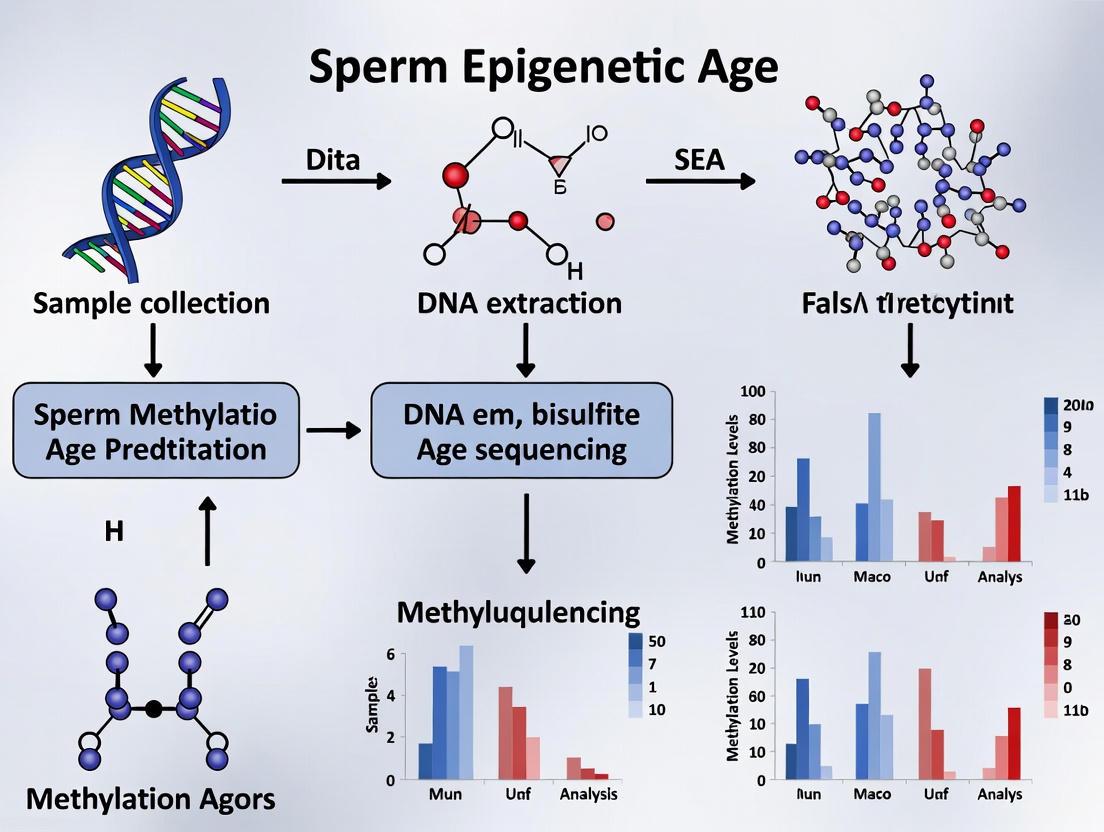
This article provides a comprehensive resource for researchers and drug development professionals on sperm epigenetic age (SEA) calculation.
Sperm Epigenetic Age (SEA): A Comprehensive Guide to Calculation Methods and Clinical Applications
Abstract
This article provides a comprehensive resource for researchers and drug development professionals on sperm epigenetic age (SEA) calculation. It covers foundational principles of age-related DNA methylation changes in sperm, explores established and emerging methodologies from microarray to sequencing-based approaches, addresses critical troubleshooting and optimization challenges, and validates SEA's clinical relevance through associations with fertility outcomes and disease risk. The content synthesizes current research to guide method selection, implementation, and interpretation of SEA as a biomarker for male reproductive health and transgenerational impacts.
The Biological Basis of Sperm Epigenetic Aging: From Molecular Mechanisms to Functional Impact
Sperm epigenetic age (SEA) represents a novel biomarker of male reproductive health that captures the biological, rather than merely chronological, aging of sperm. While chronological age is simply the time elapsed since birth, biological age reflects the functional status of cells and tissues based on cumulative genetic, environmental, and lifestyle factors [1]. The foundation of SEA lies in epigenetic mechanisms, primarily DNA methylation, which undergo predictable changes over time and in response to various exposures. These methylation patterns serve as a molecular clock that can be quantified to assess the biological age of sperm [2].
The clinical significance of SEA stems from its demonstrated ability to predict reproductive outcomes. Research led by Pilsner et al. has shown that advanced SEA is associated with a 17% lower cumulative probability of pregnancy after 12 months of attempting conception [1] [3]. This relationship persists even after accounting for chronological age, suggesting that SEA captures unique biological information relevant to male fecundity. Furthermore, SEA has been linked to lifestyle factors such as smoking, indicating its sensitivity to environmental influences [3].
Unlike conventional semen parameters, which show limited predictive value for reproductive success, SEA offers a molecular perspective on male fertility potential. Traditional measures of semen quality, including sperm count, motility, and morphology, remain poor predictors of pregnancy outcomes in couples not assisted by fertility treatment [4]. SEA thus represents a paradigm shift in male fertility assessment, providing insights that extend beyond what is visible through microscopic analysis alone.
Quantitative Data on Sperm Epigenetic Age
Comparative Analysis of Epigenetic Clocks
Table 1: Characteristics of Different Biological Age Estimation Methods
| Clock Type | Tissue Specificity | Key Markers | Accuracy (MAD/RMSE) | Primary Applications |
|---|---|---|---|---|
| Sperm Epigenetic Clock | Sperm-specific | DNA methylation patterns at multiple CpG sites | Research setting | Predicting time-to-pregnancy, assessing environmental impacts on male fertility |
| Horvath's Clock | Pan-tissue | 353 CpG sites (193 positively, 160 negatively correlated with age) | 3.6 years (MAD) | Multi-tissue aging studies, cancer aging, lifestyle intervention studies |
| Hannum's Clock | Blood-specific | 71 CpG sites from whole blood | 3.9 years (MAD) | Blood-based aging studies, cardiovascular health, immune function |
| Sex Chromosome-Enhanced Model | Blood (whole blood & buffy coat) | 37 X chromosomal + 6 autosomal DNAm markers | RMSE: 2.54 years, MAD: 1.89 years | Forensic applications, aging research |
Table 2: Association Between Sperm Epigenetic Age and Reproductive Outcomes
| Parameter | Association with SEA | Study Cohort | Clinical Significance |
|---|---|---|---|
| Time-to-Pregnancy | 17% lower cumulative probability after 12 months with advanced SEA | 379 couples attempting natural conception | Predictive of fecundability in general population |
| Semen Parameters | No significant association with standard parameters (count, motility, morphology) | LIFE (n=379) and SEEDS (n=192) cohorts | Suggests SEA provides independent information beyond routine semen analysis |
| Sperm Morphology | Significant association with head defects (length, perimeter, pyriform/tapered shapes) | LIFE study (n=379) | Indicates relationship with sperm head morphological factors |
| Smoking Status | Higher epigenetic aging in smokers | Multiple studies | Demonstrates environmental influence on sperm biological age |
| Gestational Length | Shorter gestation among couples achieving pregnancy with advanced SEA | Wayne State University study | Suggests potential impact on pregnancy maintenance |
Key Research Findings
Recent investigations have revealed that SEA demonstrates distinct characteristics compared to other biological age measures. Unlike pan-tissue epigenetic clocks that show consistent aging patterns across multiple tissues, SEA appears to be sperm-specific and influenced by unique testicular microenvironment factors [5]. The association between SEA and sperm head morphological defects, rather than conventional semen parameters, suggests it may reflect different biological processes than those captured by standard fertility assessments [4].
The relationship between chronological age and SEA is not always linear or consistent. While chronological age shows well-documented associations with declining sperm quality, including reduced semen volume, progressive motility, and total motility, along with increased DNA fragmentation index (DFI) [6], SEA can be accelerated or decelerated by non-age factors such as environmental exposures [5] [4]. This divergence underscores the unique information captured by SEA that extends beyond chronological aging alone.
Importantly, research across diverse cohorts has demonstrated that SEA maintains its predictive value for reproductive outcomes even after adjusting for chronological age [1] [3]. This indicates that SEA captures biologically relevant information not encapsulated by chronological age alone, supporting its potential clinical utility as an independent biomarker of male fecundity.
Experimental Protocols for SEA Analysis
Sample Collection and Processing
Semen Sample Collection Protocol:
- Participant Preparation: Instruct male participants to observe 2-3 days of ejaculatory abstinence prior to sample collection. Avoid use of lubricants during collection.
- Collection Method: Collect semen samples via masturbation. Both home collection (with immediate placement on ice and overnight shipping to lab) and clinic collection (with immediate processing after 30-minute liquefaction period) are acceptable methods.
- Initial Processing: For crude semen aliquots, subject samples to density gradient centrifugation. Protocols may vary between one-step (50% density) and two-step (40%/80% density) gradient centrifugation methods.
- Quality Assessment: Perform basic semen analysis including sperm count, motility, morphology, volume, and concentration according to WHO 2010 guidelines.
Sperm DNA Isolation Protocol (Rapid DNA Extraction Method):
- Sperm Preparation: Homogenize sperm with 0.2 mm steel beads in lysis buffer containing guanidine thiocyanate and 50 mM tris(2-carboxyethyl) phosphine (TCEP).
- Incubation: Process at room temperature for 5 minutes. TCEP serves as a stable reducing agent that accommodates sperm-specific DNA packaging with protamines.
- DNA Purification: Use silica-based spin columns for DNA purification. This method consistently yields >90% high-quality DNA without requiring lengthy proteinase K digestions.
- Quality Control: Assess DNA concentration and purity using spectrophotometric methods.
Diagram 1: Experimental workflow for sperm epigenetic age analysis, highlighting key stages from sample collection to computational prediction.
DNA Methylation Analysis
EPIC Infinium Methylation BeadChip Protocol:
- DNA Treatment: Treat extracted sperm DNA with bisulfite conversion using standard EZ DNA Methylation kits.
- Array Processing: Process bisulfite-converted DNA on Infinium MethylationEPIC BeadChip arrays according to manufacturer specifications.
- Scanning: Scan arrays using iScan or similar systems to generate intensity data.
- Data Extraction: Process raw intensity data using minfi package in R for background correction and normalization.
Quality Control Parameters:
- Probe Filtering: Remove probes with:
- Non-significant detection p-values (>0.01)
- Presence of SNPs within probe sequence
- Cross-hybridization potential
- Significant differences between cell types (p<0.05)
- Normalization: Apply preprocessFunnorm normalization to remove technical variation and batch effects between datasets.
- Sample Quality Assessment: Exclude samples that cluster separately with lower median intensity.
SEA Calculation Models
Random Forest Regression Modeling:
- Data Preparation: Compile DNA methylation beta values for age-informative CpG sites identified through previous epigenome-wide association studies.
- Model Training: Utilize random forest regression (RFR) machine learning algorithm to construct age prediction models.
- Validation: Perform cross-validation using root-mean squared error (RMSE) and mean absolute deviation (MAD) metrics.
- Model Application: Apply trained model to new methylation data to generate SEA predictions.
Enhanced Model with Sex Chromosomal Markers:
- Marker Selection: Incorporate sex chromosomal DNAm markers alongside autosomal markers. Key X chromosomal markers include: cg27064949 (DGAT2L6), cg04532200 (PLXNB3), cg01882566 (RPGR), and cg25140188 (intergenic region).
- Model Optimization: Construct reduced models comprising top-performing sex chromosomal probes combined with best-performing autosomal probes.
- Performance Assessment: Validate model performance in independent cohorts to ensure generalizability.
Signaling Pathways in Sperm Epigenetic Aging
mTOR/Blood-Testis Barrier Mechanism
Recent research has identified the mTOR/BTB mechanism as a critical pathway regulating epigenetic aging in sperm. The mechanistic target of rapamycin (mTOR) functions as a central regulator of cellular metabolism and aging, with its activity directly influencing the integrity of the blood-testis barrier (BTB) [5]. This barrier maintains the specialized microenvironment necessary for proper spermatogenesis, and its disruption is associated with accelerated epigenetic aging.
The mTOR pathway consists of two distinct complexes: mTORC1 and mTORC2, which exert opposing effects on sperm epigenetic aging. Increased activity of mTORC1 promotes BTB opening and accelerates epigenetic aging, while increased activity of mTORC2 enhances BTB integrity and promotes sperm epigenome rejuvenation [5]. Environmental stressors, including heat stress and cadmium exposure, appear to modulate epigenetic aging through this pathway, suggesting it serves as a mechanistic link between environmental exposures and sperm biological age.
Diagram 2: mTOR signaling pathway in sperm epigenetic aging, showing opposing effects of mTORC1 and mTORC2 complexes on blood-testis barrier function and epigenetic age outcomes.
Environmental Influences on SEA
Heat Stress Mechanism:
- Experimental Models: Exposure to 31.5°C or 34.5°C heat stress (HS) in mouse models
- Observed Effects: Significant reduction in testis weight (81.2 ± 9.5 mg in control vs. 64.8 ± 10.7 mg at 34.5°C)
- Molecular Pathways: Heat stress impairs blood-testis barrier function via mitochondrial complex-ROS-P38 MAPK axis
- Epigenetic Consequences: Accelerated sperm epigenetic aging through mTOR-dependent mechanisms
Cadmium Toxicity Mechanism:
- Exposure Models: Administration of 2 mg/kg body weight of CdCl₂
- Observed Effects: Reduced testis weight and disrupted blood-testis barrier integrity
- Molecular Pathways: Cadmium induces blood-testis barrier dysfunction through ROS-mediated NLRP3 inflammasome activation and FAK/occludin/ZO-1 complex disruption
- Epigenetic Consequences: Increased sperm epigenetic aging through both mTOR-dependent and independent mechanisms
Research Reagent Solutions
Table 3: Essential Research Reagents for Sperm Epigenetic Age Studies
| Reagent/Category | Specific Examples | Application Purpose | Technical Notes |
|---|---|---|---|
| DNA Methylation Array | Infinium MethylationEPIC BeadChip (850K sites) | Genome-wide methylation profiling | Preferred over 450K for enhanced coverage; compatible with sperm DNA |
| DNA Extraction Reagents | Guanidine thiocyanate, Tris(2-carboxyethyl)phosphine (TCEP) | Sperm DNA isolation | TCEP critical for reducing protamine disulfide bonds; room temperature processing |
| Bisulfite Conversion Kits | EZ DNA Methylation Kit (Zymo Research) | DNA treatment for methylation analysis | Standard conversion protocol applicable to sperm DNA |
| Computational Tools | minfi R package, Random Forest Regression | Data processing and model building | Quality control, normalization, and epigenetic clock application |
| Quality Control Probes | SNP-containing probes, cross-hybridizing probes | Data filtering and quality assessment | Remove technically problematic probes to improve accuracy |
| Sperm Processing Reagents | Density gradient media (40%, 50%, 80%) | Sperm isolation from semen | Various protocols acceptable; document centrifugation conditions |
Discussion and Future Directions
The development of sperm epigenetic aging as a novel biomarker represents a significant advancement in male reproductive health assessment. The consistent association between SEA and time-to-pregnancy across multiple studies suggests its potential clinical utility for predicting couples' reproductive success [1] [3] [4]. Furthermore, the sensitivity of SEA to environmental exposures such as heat stress and cadmium provides a mechanistic link between external factors and male reproductive health outcomes [5].
Current evidence indicates that SEA provides complementary information to conventional semen parameters, as it shows limited association with standard semen characteristics but significant relationships with sperm head morphological defects and reproductive outcomes [4]. This suggests that SEA captures distinct aspects of sperm function that are not assessed through routine semen analysis, potentially reflecting different biological pathways relevant to fertilization competence and early embryonic development.
Future research directions should focus on validating SEA across diverse ethnic populations, as current studies have been conducted largely in Caucasian cohorts [1]. Additionally, longitudinal studies examining the trajectory of SEA in relation to lifestyle interventions, environmental exposures, and clinical outcomes will further elucidate its utility as a biomarker of male reproductive health. The integration of sex chromosomal markers with established autosomal epigenetic clocks presents a promising avenue for enhancing prediction accuracy [7], while single-cell methylation approaches may uncover heterogeneity in epigenetic aging within individual sperm samples.
From a clinical perspective, SEA shows potential for informing treatment decisions in couples experiencing infertility, particularly in cases where male factor infertility is suspected but conventional semen parameters appear normal. As research continues to refine SEA calculation methods and establish standardized thresholds for clinical interpretation, this biomarker may become an valuable tool in the assessment and management of male reproductive health.
Aging induces a profound and multifaceted remodeling of the epigenetic landscape, with DNA methylation alterations representing a core component of this process. The dynamic nature of DNA methylation during aging is characterized by two seemingly contradictory global trends: widespread hypomethylation juxtaposed with localized hypermethylation at specific genomic regions. These changes are not merely consequences of aging but are increasingly recognized as active contributors to age-related physiological decline and disease susceptibility. Within the specific context of male gametes, understanding these patterns is crucial for developing accurate sperm epigenetic age (SEA) calculators, which serve as biomarkers for biological aging in sperm and are associated with male fecundity and offspring health outcomes. This application note delineates the predominant global patterns of age-related DNA methylation changes, provides detailed experimental protocols for their investigation, and contextualizes their significance for research on sperm epigenetic aging.
Global DNA Methylation Patterns in Aging
Extensive research across diverse tissues and species has established that aging is associated with a predominant trend of global genomic hypomethylation, interspersed with site-specific hypermethylation. This paradoxical phenomenon is observed in somatic tissues but exhibits unique characteristics in sperm.
Table 1: Summary of Age-Related DNA Methylation Patterns Across Tissues
| Tissue/Cell Type | Global Trend | Specific Genomic Targets | Functional Consequences |
|---|---|---|---|
| Somatic Tissues (e.g., Blood, Brain) | Genome-wide hypomethylation [8] [9] | Hyper methylation at bivalent chromatin domains, polycomb repressive complex 2 (PRC2) targets, and promoter CpG islands [8] [10] | Genomic instability, reactivation of transposable elements, aberrant immune signaling [11] [8] |
| Sperm | Conflicting Evidence: Some studies report global hypermethylation with age [12], while others identify widespread hypomethylated regions [12]. | Specific hypomethylated regions near genes implicated in neuropsychiatric disorders (e.g., schizophrenia, bipolar) [12]. | Potential impact on offspring disease susceptibility and male fecundity [4] [12] |
The hypomethylation observed in aging somatic tissues preferentially occurs at interspersed repetitive sequences and transposable elements, which are normally silenced by methylation [11] [8]. This age-related loss of methylation can trigger reactivation of these elements, leading to genomic instability and aberrant activation of innate immune signaling pathways, potentially contributing to the chronic, low-grade inflammation characteristic of aging [11]. Concurrently, hypermethylation tends to target CpG island promoters and regions associated with polycomb repressive complex 2 (PRC2), which are involved in developmental gene regulation [8] [10].
In sperm, the patterns are distinct. A longitudinal study of fertile donors found that aging is associated with 139 consistently hypomethylated regions and only 8 hypermethylated regions [12]. Intriguingly, a significant portion of these age-associated hypomethylated regions are located at genes previously linked to schizophrenia and bipolar disorder, disorders with known increased incidence in the offspring of older fathers [12]. Conversely, another analysis using pyrosequencing of LINE-1 elements reported a trend of global hypermethylation in sperm with advancing age [12], highlighting the complexity and context-dependency of these changes.
Experimental Protocols for Assessing Age-Related Methylation
Accurate assessment of DNA methylation patterns requires robust and sensitive methodologies. The following protocols outline a standardized workflow for investigating age-related methylation changes, with specific considerations for sperm DNA.
Protocol 1: Sperm DNA Extraction and Bisulfite Conversion
Principle: High-purity DNA is extracted from sperm cells, which have unique packaging with protamines. The DNA is then treated with bisulfite, which converts unmethylated cytosines to uracils, while methylated cytosines remain unchanged, allowing for sequence-based discrimination.
Workflow Diagram: Sperm DNA Methylation Analysis Workflow
Materials:
- Semen Sample: Collected with informed consent following ethical guidelines.
- Lysis Buffer: Containing guanidine thiocyanate and 50 mM tris(2-carboxyethyl) phosphine (TCEP) as a reducing agent to break protamine disulfide bonds [4].
- Silica-based Spin Columns: For DNA purification (e.g., from Qiagen or other suppliers).
- Bisulfite Conversion Kit: (e.g., EZ DNA Methylation Kit from Zymo Research).
- Nanodrop Spectrophotometer or equivalent.
Step-by-Step Procedure:
- Sperm Isolation: Process fresh or shipped semen samples by density gradient centrifugation (e.g., using 50% or 40%/80% gradients) to isolate sperm cells from seminal plasma [4].
- DNA Extraction:
- DNA Quality Control: Assess DNA concentration and purity using a spectrophotometer (A260/A280 ratio of ~1.8 is acceptable).
- Bisulfite Conversion: Convert 500 ng - 1 µg of DNA using a commercial bisulfite conversion kit. This step deaminates unmethylated cytosines to uracils.
- Incubation: Typically 16-20 hours at a controlled temperature (e.g., 50°C).
- Desulphonation and Purification: As per kit instructions to clean the converted DNA.
Protocol 2: Methylation Profiling Using Microarray and Targeted Sequencing
Principle: Bisulfite-converted DNA is analyzed either genome-wide using microarrays or for specific loci via targeted sequencing to quantify methylation levels at individual CpG sites.
Materials:
- Bisulfite-converted DNA (from Protocol 1).
- Infinium MethylationEPIC BeadChip Array (Illumina) or MethylationEPIC 850K array for genome-wide discovery [13] [14] [4].
- Reagents for Targeted Bisulfite MPS: PCR reagents, primers for amplification of target CpGs, and a MPS platform (e.g., Illumina MiSeq/Novaseq) for forensic/validation studies [13] [14].
- Methylation SNaPshot Assay reagents for capillary electrophoresis-based validation [14].
Step-by-Step Procedure: A. Genome-wide Discovery with Microarray:
- Amplify and Fragment: Amplify bisulfite-converted DNA and enzymatically fragment it.
- Hybridize: Hybridize the fragmented DNA to the Infinium MethylationEPIC BeadChip.
- Single-Base Extension: Perform a single-base extension with fluorescently labeled nucleotides.
- Image and Analyze: Image the BeadChip and process the data using Illumina's software to obtain beta-values (β) representing methylation levels (0 = fully unmethylated, 1 = fully methylated) [13] [14].
B. Targeted Validation with Massively Parallel Sequencing (MPS):
- PCR Amplification: Design primers to amplify genomic regions containing age-informative CpGs (e.g., in genes like FOLH1B, SH2B2, EXOC3). Use PCR conditions optimized for bisulfite-converted DNA.
- Library Preparation: Prepare sequencing libraries from the amplified products.
- Sequencing: Sequence the libraries on an MPS platform.
- Bioinformatic Analysis: Map sequencing reads to the bisulfite-converted reference genome and calculate methylation levels at each targeted CpG site [13].
Table 2: Key Research Reagent Solutions for Sperm Epigenetic Age Studies
| Reagent/Kit | Specific Function | Application Note |
|---|---|---|
| TCEP (Tris(2-carboxyethyl)phosphine) | Reducing agent critical for efficient lysis of protamine-packaged sperm DNA during extraction [4]. | More stable than DTT; enables rapid, room-temperature DNA extraction protocols. |
| Infinium MethylationEPIC BeadChip | Microarray for genome-wide DNA methylation analysis of over 850,000 CpG sites [13] [14]. | Ideal for discovery phase; requires high-quality DNA (>500 ng); less suitable for degraded forensic samples. |
| Targeted Bisulfite MPS Panels | Custom panels for simultaneous analysis of hundreds of age-correlated CpGs via Massively Parallel Sequencing [13] [14]. | Offers high sensitivity and multiplexing capability for validating markers and working with low-quality/quantity DNA. |
| Sperm-Specific AR-CpG Markers | Panels of Age-Related CpG sites specific to sperm, e.g., in genes FOLH1B, TTC7B, NOX4, SH2B2 [13] [14]. | Essential for accurate age estimation from semen, as somatic markers perform poorly. Improve prediction accuracy (MAE ~5 years). |
| Universal Pan-Mammalian Clocks | Mathematical models using conserved CpGs to estimate age across mammalian species and tissues [10]. | Useful for comparative biology studies. Based on highly conserved age-related sites, often near PRC2-binding locations. |
Data Analysis and Interpretation
The analysis of DNA methylation data for age prediction typically employs multiple linear regression or more advanced machine learning algorithms (e.g., random forest, elastic net) on the beta-values of the most age-informative CpG sites [14] [4]. The performance of an epigenetic clock is measured by the Mean Absolute Error (MAE) between predicted and chronological age, often reported as 5-6 years for semen models using a small number of markers [13] [14]. It is critical to use sperm-specific markers, as models trained on somatic tissues like blood show poor accuracy when applied to semen [14].
Pathway Diagram: Functional Impact of Age-Related Hypomethylation
As illustrated, age-related hypomethylation can have systemic consequences. The loss of methylation at repetitive elements can lead to their reactivation and the release of hypomethylated DNA into the cytosol [11]. This misplaced self-DNA acts as a damage-associated molecular pattern (DAMP), activating innate immune sensors like Toll-like receptor 9 (TLR9) and the cGAS-STING pathway, thereby driving chronic inflammation ("inflammaging") [11]. This pathway underscores the broader physiological impact of the methylation changes detailed in this note.
Within the broader research on sperm epigenetic age (SEA) calculation methods, understanding the precise genomic distribution of age-related differentially methylated regions (AgeDMRs) is paramount. These AgeDMRs are not randomly scattered across the genome; they exhibit distinct patterns of enrichment near key regulatory sequences, such as transcription start sites (TSS), and are linked to specific biological functions. Such patterns provide critical insights into the molecular mechanisms driving epigenetic aging in sperm and its potential impact on male fecundity. This application note synthesizes recent findings on the genomic and functional characteristics of AgeDMRs, providing structured data, detailed protocols, and key reagents to facilitate research in this field.
The analysis of AgeDMRs reveals consistent patterns across different tissues and species. The following tables summarize key quantitative findings regarding their genomic distribution and functional enrichment.
Table 1: Genomic Distribution of Age-Associated Methylation Changes
| Study System | Genomic Feature | Finding Related to AgeDMRs | Citation |
|---|---|---|---|
| Rhesus Macaque (Multi-Tissue) | Tissue-Specific DMRs | 69% of tissue-specific DMRs were hypomethylated relative to other tissues. | [15] |
| Rhesus Macaque (Multi-Tissue) | Transcription Start Sites (TSS) & Enhancers | Hypomethylated, tissue-specific DMRs were strongly enriched near TSS and enhancers. | [15] |
| Rhesus Macaque (Blood) | Active Regulatory Regions | Age-associated hypermethylation occurred more frequently in areas of active gene regulation. | [16] |
| Rhesus Macaque (Blood) | Quiescent Regions | Age-associated hypomethylation was enriched in less active genomic regions. | [16] |
| Human Prefrontal Cortex | Housekeeping Genes | Widespread age-associated downregulation of housekeeping genes functioning in ribosomes, transport, and metabolism across cell types. | [17] |
Table 2: Functional Enrichment of Age-Associated Molecular Changes
| System | Omics Level | Enriched Biological Processes/Pathways | Direction of Change | Citation |
|---|---|---|---|---|
| Common Carp Offspring (from aged sperm) | Transcriptomics & Proteomics | Nervous system development, myocardial morphogenesis, cellular responses to stimuli, visual perception, immunity. | Altered | [18] |
| Common Carp Offspring (from aged sperm) | Phenotype | Body length, cardiac performance (heartbeat). | Increased length, reduced heartbeat | [18] |
| Human Prefrontal Cortex | snRNA-seq | Translation, metabolism, homeostasis, ribosomes, intracellular localization, and transport. | Downregulated | [17] |
| Mouse Hippocampal Neurons | 3D Chromatin Interactome | Neural maturation and partial rejuvenation pathways. | Modulated by environment | [19] |
Experimental Protocols for Key Analyses
Protocol: Genome-Wide DNA Methylation Analysis from Sperm
This protocol is adapted from studies investigating sperm epigenetic age and its associations with semen parameters [4].
1. Sperm Sample Collection and Abstinence:
- Collect semen samples via masturbation after a minimum of 2 days of ejaculatory abstinence.
- For clinical cohorts, analyze fresh samples after 30 minutes of liquefaction. For non-clinical cohorts, samples can be shipped overnight on ice.
2. Sperm Isolation via Density Gradient Centrifugation:
- Layer the crude semen sample on a density gradient (e.g., single-step 50% or two-step 40%/80%).
- Centrifuge to separate sperm cells from seminal plasma and other cellular debris.
- Carefully extract the sperm pellet for downstream DNA extraction.
3. Sperm DNA Extraction with Reducing Agent:
- Homogenize sperm cells using 0.2 mm steel beads in a lysis buffer containing guanidine thiocyanate and 50 mM tris(2-carboxyethyl) phosphine (TCEP). TCEP is a stable reducing agent critical for disrupting protamine-based sperm chromatin.
- Incubate the homogenate at room temperature for 5 minutes.
- Purify DNA using commercially available silica-based spin columns. This method avoids lengthy proteinase K digestions and can be performed at room temperature.
4. DNA Methylation Profiling:
- Assess genome-wide methylation using the Infinium Methylation EPIC BeadChip or similar array platforms.
- Process the extracted DNA according to the manufacturer's instructions for bisulfite conversion and array hybridization.
5. Data Processing and AgeDMR Identification:
- Perform quality control on raw data, removing probes with low signal or detection p-values > 0.01.
- Normalize data using appropriate methods (e.g.,
preprocessFunnormin R). - Filter out cross-reactive probes and those containing single nucleotide polymorphisms (SNPs).
- Use statistical packages in R to identify DMRs, applying thresholds for significance (e.g., FDR < 0.05) and magnitude of methylation change (e.g., delta beta > 0.1).
Protocol: Functional Enrichment Analysis of AgeDMRs
1. Genomic Annotation:
- Anonymize the list of significant AgeDMRs with genomic coordinates (e.g., in BED format).
- Use annotation tools like ChIPseeker or HOMER to map DMRs to genomic features (promoters, TSS, enhancers, gene bodies).
2. Gene Ontology and Pathway Analysis:
- Input the list of genes associated with the annotated AgeDMRs into functional enrichment tools such as clusterProfiler, DAVID, or Enrichr.
- Select appropriate databases (e.g., GO Biological Processes, KEGG, Reactome).
- Set significance thresholds (e.g., adjusted p-value < 0.05) to identify over-represented biological pathways.
3. Visualization and Interpretation:
- Generate bar plots, dot plots, or enrichment maps to visualize significantly enriched terms.
- Interpret the results in the context of age-related physiological changes, such as metabolic decline or neural function.
Signaling Pathways and Workflow Visualizations
Workflow for AgeDMR Analysis and Functional Validation
The following diagram outlines the comprehensive workflow from sample collection to the functional validation of AgeDMRs, integrating multi-omics approaches.
AgeDMR Impact on Gene Regulation and Phenotype
This diagram illustrates the hypothesized mechanistic pathway through which AgeDMRs, particularly those near regulatory sites, influence gene expression and downstream phenotypes.
The Scientist's Toolkit: Research Reagent Solutions
Table 3: Essential Reagents and Kits for AgeDMR Research
| Reagent / Kit Name | Function / Application | Key Features / Notes | Citation / Context |
|---|---|---|---|
| Infinium MethylationEPIC BeadChip | Genome-wide DNA methylation profiling. | Covers > 850,000 CpG sites; ideal for human studies. | Used in sperm epigenetic age studies [4]. |
| TCEP (tris(2-carboxyethyl)phosphine) | Reducing agent in sperm DNA extraction lysis buffer. | Efficiently disrupts protamine disulfide bonds; more stable than DTT. | Critical for high-quality sperm DNA isolation [4]. |
| Silica-Based Spin Columns | Purification of DNA after lysis and bisulfite conversion. | Enable room-temperature processing; compatible with TCEP-based lysis. | Part of rapid sperm DNA extraction protocol [4]. |
| Whole-Genome Bisulfite Sequencing (WGBS) | Gold-standard for base-resolution methylome analysis. | Provides comprehensive coverage without being limited to pre-defined CpG sites. | Used in common carp sperm storage study [18]. |
| Computer-Assisted Semen Analysis (CASA) | Objective analysis of sperm motility and morphology. | Provides quantitative parameters (VCL, VAP, etc.) for correlation with SEA. | Used to assess sperm quality parameters [4] [18]. |
| Sperm Chromatin Structural Assay (SCSA) | Measurement of sperm DNA fragmentation. | Quantifies DNA Fragmentation Index (DFI); a key parameter of sperm health. | Used in association studies with SEA [4]. |
Within the context of research on sperm epigenetic age (SEA) calculation, understanding the fundamental biological pathways that govern embryonic development and neurodevelopment is paramount. SEA, a measure of the biological aging of sperm based on epigenetic markers, serves as a critical biomarker for predicting reproductive outcomes and potentially informing the risk of neurodevelopmental disorders in offspring [3]. This application note details the key signaling pathways and provides standardized protocols for their analysis, bridging the gap between paternal epigenetic aging and embryonic developmental processes.
Key Embryonic Signaling Pathways in Neurodevelopment
The intricate process of brain development is guided by highly conserved embryonic signaling pathways. These pathways are active during early embryogenesis and continue to function in the adult brain, modulating neurogenesis, synaptic plasticity, and overall brain homeostasis [20]. Dysregulation of these pathways is implicated in the pathophysiology of a range of neurological disorders. The following pathways are of principal importance.
Wnt/β-Catenin Signaling Pathway
The Wnt/β-catenin pathway is a highly conserved cascade crucial for embryonic patterning, neuronal maturation, axon remodelling, and synaptic formation [20]. In the adult brain, it continues to drive synaptic activity and behavioural plasticity [20]. The pathway is initiated by the binding of Wnt ligands to Frizzled receptors, leading to the stabilization and nuclear translocation of β-catenin. Inside the nucleus, β-catenin partners with T-cell factor/lymphoid enhancer factor (TCF/LEF) transcription factors to activate genes essential for cell proliferation and differentiation.
Sonic Hedgehog (Shh) Signaling Pathway
The Shh pathway is a key regulator of neural tube patterning, ventral forebrain development, and cerebellar neuronal precursor proliferation [20]. In the adult brain, Shh signaling maintains the activity of neural stem cells in the subventricular zone, one of the primary sites of adult neurogenesis [20]. The pathway is triggered by the binding of the Shh ligand to its receptor, Patched-1 (Ptch-1). This interaction relieves the suppression of Smoothened (Smo), a G-protein coupled receptor-like protein, leading to the activation of Gli family zinc finger transcription factors (Gli1, Gli2, Gli3) which then regulate downstream target genes.
Notch Signaling Pathway
The Notch pathway is a juxtracrine signaling system vital for cell-fate decisions, neural stem cell maintenance, and synaptic plasticity [20]. It is activated via ligand-receptor (Delta/Jagged with Notch) interactions between adjacent cells. This binding induces a series of proteolytic cleavages of the Notch receptor, culminating in the release of the Notch Intracellular Domain (NICD). The NICD translocates to the nucleus, forms a complex with the CSL transcription factor, and activates genes such as Hes-1 and Hey, which are negative regulators of neuronal differentiation.
Pathway Cross-Talk and Functional Integration
These developmental pathways do not operate in isolation; they engage in extensive cross-talk to fine-tune neurodevelopmental processes. For instance, Shh has been shown to transactivate the EGF receptor, integrating with growth factor signaling to regulate neural stem cell proliferation [20]. The integration of these signals ensures the precise spatiotemporal control of neurogenesis and brain patterning. Disruption in one pathway can often be compensated or exacerbated by alterations in another, creating a complex network of regulatory interactions that underpin both normal development and disease states.
Quantitative Data on Epigenetic Age Prediction
Epigenetic clocks, based on DNA methylation (DNAm) patterns, have emerged as powerful tools for estimating biological age. The following tables summarize key quantitative data from recent studies on epigenetic age prediction in various biological samples, providing a benchmark for developing sperm-specific epigenetic age models.
Table 1: Performance Metrics of DNA Methylation-Based Age Prediction Models in Various Tissues
| Tissue / Sample Type | Key DNAm Markers (Examples) | Model Performance (MAE/RMSE) | Reference |
|---|---|---|---|
| Sperm (Sperm-Specific) | cg06304190 (TTC7B), cg06979108 (NOX4), cg12837463, novel markers from SH2B2, EXOC3 | MAE: 2.04 - 5.4 years | [14] |
| Whole Blood (Combined Model) | 6 Autosomal probes + 4 X-chromosomal probes (e.g., cg27064949, cg04532200) | RMSE: 2.54 years; MAD: 1.89 years | [7] |
| Semen (Somatic Markers) | Somatic AR-CpG markers | Lower accuracy compared to sperm-specific markers | [14] |
Table 2: Characteristics of Essential Genes in Embryonic Stem Cells and Their Association with Neurodevelopment
| Gene Category | Proportion/Percentage | Associated Biological Processes or Disorders |
|---|---|---|
| Genes essential in mESCs | 29.5% of human genes intolerant to LoF mutations are essential in ESCs | Basic cellular functions (ribosome biogenesis, DNA replication) [21] |
| mESC-essential genes associated with human phenotypes | Most significantly associated with neurodevelopmental disorders | Pathways associated with pluripotent state [21] |
| Gradual-declining essential genes | 18.6% associated with human recessive diseases (vs. 12.5% in fast-declining) | Mitochondrial functions, DNA/protein modifications [21] |
The Scientist's Toolkit: Research Reagent Solutions
Table 3: Essential Research Reagents and Kits for Epigenetic and Neurodevelopmental Studies
| Reagent / Kit Name | Function / Application | Key Features |
|---|---|---|
| Illumina Infinium MethylationEPIC (850K) BeadChip | Genome-wide DNA methylation analysis | Interrogates >850,000 CpG sites; superior coverage for semen/sperm-specific marker discovery [14] |
| DNAm SNaPshot Assay | Targeted DNA methylation quantification | Cost-effective, forensically compatible; ideal for validating specific AR-CpG markers [14] |
| 10x Genomics Single-Cell Multiome ATAC + Gene Expression Kit | Simultaneous profiling of chromatin accessibility and gene expression in single cells | Identifies candidate cis-regulatory elements (cCREs) and links them to gene expression in developing brain [22] |
| CRISPR Knockout Library (e.g., GeCKO, Brunello) | Genome-wide loss-of-function screening | Identifies genes essential for cell survival/proliferation, e.g., in mouse embryonic stem cells (mESCs) [21] |
| minfi R Package | Quality control and normalization of DNA methylation array data | Preprocessing, background correction, and normalization of 450K/850K array data [7] |
Experimental Protocols
Protocol: Genome-Wide Identification of Sperm-Specific Age-Related CpG Markers
Application: This protocol is designed for the discovery and validation of sperm-specific DNA methylation markers for accurate epigenetic age estimation, a cornerstone for SEA calculation methods research [14].
Materials:
- High-quality sperm DNA samples.
- Illumina Infinium MethylationEPIC (850K) BeadChip kit or equivalent.
- Reagents for DNAm SNaPshot assay (Multiplex PCR kit, Shrimp Alkaline Phosphatase, SNaPshot Multiplex Kit).
- Genetic Analyzer (e.g., ABI PRISM 3130).
Procedure:
- Sample Preparation and Genome-Wide Screening:
- Extract genomic DNA from 90+ sperm samples (age range: 22-51 years).
- Process DNA using the Illumina MethylationEPIC BeadChip array following manufacturer's instructions to obtain genome-wide methylation beta values.
- Data Preprocessing and Marker Identification:
- Use the
minfipackage in R for quality control and normalization of the methylation data [7]. - Perform genome-wide association between methylation beta values and donor age to identify candidate sperm-specific age-related CpG (AR-CpG) sites (e.g., with R² > 0.7).
- Use the
- Independent Validation with Targeted Bisulfite Sequencing:
- Select the top candidate AR-CpG markers (e.g., 19 novel markers plus 3 previously reported).
- Design and perform methylation SNaPshot assays on an independent set of 250+ sperm DNA samples.
- Treat DNA with bisulfite, perform multiplex PCR for target regions, and carry out single-base extension with fluorescently labeled ddNTPs.
- Analyze the products on a genetic analyzer to determine methylation levels.
- Model Building and Validation:
- Use the obtained DNAm data from the validation set to construct multiple linear regression (MLR) or machine learning models (e.g., Random Forest Regression) for age prediction.
- Validate model performance on a separate test set of samples, calculating Mean Absolute Error (MAE) and Root-Mean-Squared Error (RMSE). The goal is an MAE of ~2-3 years for sperm [14].
Protocol: Interrogating Developmental Signaling Pathways in Neural Cell Models
Application: This protocol outlines methods to investigate the activity and functional roles of Wnt/β-catenin, Notch, and Shh pathways in neural progenitor cells (NPCs), relevant for studying the impact of paternal factors on neurodevelopment.
Materials:
- Human embryonic stem cells (hESCs) or induced pluripotent stem cells (iPSCs).
- Neural induction media (e.g., containing Noggin, SB431542).
- Pathway-specific agonists (e.g., CHIR99021 for Wnt) and antagonists (e.g., DAPT for Notch).
- Antibodies for key pathway components (e.g., β-catenin, NICD, Gli1).
- qPCR reagents.
Procedure:
- In Vitro Neural Differentiation:
- Differentiate hESCs/iPSCs into NPCs using standard neural induction protocols (e.g., dual SMAD inhibition).
- Maintain NPCs in defined neural expansion media.
- Pathway Modulation and Functional Assays:
- Treat NPCs with pathway-specific modulators at various differentiation stages.
- Proliferation Assay: Assess NPC proliferation using EdU or BrdU incorporation assays after 48-72 hours of pathway modulation.
- Gene Expression Analysis: Extract RNA and perform qPCR to measure the expression of pathway target genes (e.g., AXIN2 for Wnt, HES1 for Notch, GLI1 for Shh).
- Protein-Level Analysis:
- For Wnt/β-catenin: Perform immunofluorescence or western blotting to detect nuclear accumulation of β-catenin.
- For Notch: Detect the cleaved NICD fragment by western blot.
- For Shh: Assess the nuclear localization and levels of Gli transcription factors.
- Phenotypic Readouts:
- Differentiate modulated NPCs into neurons and glia.
- Analyze neuronal morphology, synaptic density, and electrophysiological properties to determine the functional consequences of pathway dysregulation.
The integration of research on sperm epigenetic age with the biology of key embryonic and neurodevelopmental pathways opens new frontiers in reproductive and developmental medicine. The precise experimental protocols and analytical frameworks detailed herein provide researchers with the tools to dissect these complex relationships. Advancing our understanding of how paternal epigenetic aging influences these critical developmental cascades will be instrumental in developing novel diagnostic and therapeutic strategies for improving reproductive outcomes and potentially mitigating the risk of neurodevelopmental disorders in offspring.
The study of epigenetic aging has revealed fundamental differences in how germ cells and somatic cells undergo molecular changes over time. While epigenetic clocks based on DNA methylation (DNAm) patterns can accurately predict chronological age in various somatic tissues, spermatozoa exhibit uniquely regulated methylation landscapes that follow distinct trajectories [23] [13]. This Application Note delineates the contrasting methylation patterns between sperm and somatic cells, provides validated protocols for sperm-specific epigenetic age analysis, and presents computational frameworks for developing sperm-specific epigenetic clocks. Understanding these differential aging mechanisms is crucial for advancing male reproductive health diagnostics, assessing environmental impacts on fertility, and elucidating transgenerational epigenetic inheritance patterns [4] [24].
The foundational difference lies in the biological interpretation of methylation changes: in somatic cells, DNA methylation age (DNAm Age) serves as a biomarker of cellular aging, disease risk, and mortality, whereas sperm epigenetic age (SEA) reflects the cumulative burden of environmental exposures and intrinsic factors on male germ cell quality and reproductive potential [4] [3]. Recent clinical evidence demonstrates that advanced SEA predicts longer time-to-pregnancy and altered offspring neurodevelopmental trajectories, underscoring its clinical relevance beyond chronological age [3] [24].
Comparative Analysis: Fundamental Differences in Methylation Patterns
Divergent Methylation Responses to Aging
Table 1: Contrasting DNA Methylation Patterns in Somatic versus Sperm Cells
| Feature | Somatic Cells | Sperm Cells |
|---|---|---|
| Overall Methylation Level | Variable by tissue type; typically lower in promoter regions [13] | Highly methylated (mean ~86%) [25] |
| Primary Age-Related Trend | Mixed hypermethylation and hypomethylation; tissue-specific patterns [23] | Predominantly hypomethylation (74% of ageDMRs) [24] |
| Functional Genomic Distribution | Enriched in developmental genes, polycomb targets [23] | Enriched in genes related to embryonic development and neurodevelopment [24] |
| Response to Environmental Factors | Moderate; reversible with intervention [23] | Highly sensitive; persistent changes [4] |
| Epigenetic Clock Correlation | Strong with chronological age (R² > 0.9) [26] | Weak with chronological age; better reflects biological fertility status [13] [4] |
| Key Technological Platforms | Illumina MethylationEPIC arrays, bisulfite sequencing [26] [7] | EPIC arrays, RRBS, EM-seq [13] [25] [24] |
Sperm DNA exhibits a uniquely hypermethylated baseline state compared to somatic tissues, with Arctic charr studies reporting mean sperm methylation values of approximately 86% [25]. This elevated baseline undergoes predominantly hypomethylation with advancing age, with recent human sperm analyses identifying that 74% of age-related differentially methylated regions (ageDMRs) lose methylation, while only 26% gain methylation [24]. This contrasts sharply with somatic aging patterns, which typically show more balanced hypermethylation and hypomethylation events across different genomic compartments [23].
The genomic distribution of age-sensitive CpGs also differs substantially. In somatic cells, age-related methylation changes concentrate in bivalent chromatin domains and polycomb target genes, whereas sperm ageDMRs preferentially accumulate in genic regions—particularly near transcription start sites for hypomethylated regions and in gene-distal intergenic regions for hypermethylated regions [24]. Functional enrichment analyses further reveal that genes with sperm ageDMRs are disproportionately involved in embryonic development and neurodevelopmental processes, potentially explaining the association between advanced paternal age and offspring neurocognitive outcomes [24].
Quantitative Age Prediction Performance Metrics
Table 2: Performance Comparison of Epigenetic Age Prediction Models
| Model/Tissue Type | Marker Count | Prediction Error (MAE) | Key Applications |
|---|---|---|---|
| Horvath Multi-Tissue Clock (Somatic) | 353 CpGs | Varies by tissue: 1.5 years (cortex) to 18 years (muscle) [13] | Pan-tissue age estimation, healthspan assessment [26] |
| Sperm Epigenetic Clock (SEA) | 6 CpGs | 5.1 years [13] | Male fertility evaluation, pregnancy success prediction [4] |
| Improved Blood Clock (with X-chromosome) | 37 X + 6 autosomal | 1.89 years [7] | Forensic applications, chronic disease risk [7] |
| Lee Sperm Clock | 3 CpGs | ~5 years [13] | Forensic identification from semen [13] |
| Jenkins Sperm Model | 51 regions | 2.37 years [13] | Research applications with sufficient DNA input [13] |
The predictive performance of epigenetic clocks varies considerably between somatic and sperm cells, reflecting their fundamentally different methylation biology. Sperm-specific clocks demonstrate moderate accuracy with mean absolute errors (MAE) of approximately 5 years in independent validation studies [13]. This contrasts with highly accurate somatic clocks like the Horvath pan-tissue clock, which achieves remarkable precision across most somatic tissues but performs poorly for sperm, significantly underestimating chronological age in male germ cells [13].
Notably, the optimal number of predictive markers differs substantially between cell types. While somatic clocks often utilize hundreds of CpG sites for maximal accuracy, recent sperm clock implementations achieve reasonable predictive power with as few as 6 carefully selected CpGs (SH2B2, EXOC3, IFITM2, GALR2, and FOLH1B) [13]. This marker economy is particularly valuable for forensic applications where DNA quantity and quality are limiting factors [13].
Methodological Framework: Sperm Epigenetic Age Analysis
Sperm Collection and DNA Extraction Protocol
Protocol 1: Sperm DNA Isolation for Methylation Analysis
Principle: Efficient recovery of high-quality DNA from sperm cells, which require specialized lysis conditions due to unique chromatin organization with protamines.
Reagents and Equipment:
- Fresh semen samples or ethanol-fixed sperm aliquots
- Lysis buffer: SSTNE (50 mM Tris base, 300 mM NaCl, 0.2 mM each of EGTA and EDTA, 0.15 mM spermine tetrahydrochloride, 0.28 mM spermidine trihydrochloride; pH 9) with 10% SDS [4] [25]
- Reducing agent: 50 mM tris(2-carboxyethyl) phosphine (TCEP) [4]
- Proteinase K (20 mg/mL) [25]
- RNase A (2 mg/mL) [25]
- Salt precipitation solution: 5 M NaCl [25]
- Isopropanol and 70% ethanol
- Silica-based spin columns (various commercial systems compatible) [4]
- Microtube homogenizer with 0.2 mm steel beads [4]
Procedure:
- Sample Preparation: Centrifuge 5 μL of semen at 13,000 × g for 1 minute. Remove supernatant [25].
- Cell Lysis: Resuspend pellet in 400 μL SSTNE buffer with 10% SDS. Add 10 μL Proteinase K (20 mg/mL) and 50 mM TCEP [4]. Incubate overnight at 55°C with agitation.
- RNA Digestion: Add 5 μL RNase A (2 mg/mL) and incubate at 37°C for 60 minutes [25].
- Protein Precipitation: Add 0.7 volume of 5 M NaCl. Centrifuge at 14,000 × g for 5 minutes. Transfer 400 μL of supernatant to a new microtube [25].
- DNA Precipitation: Add equal volume of isopropanol. Centrifuge at 14,000 × g for 5 minutes to pellet DNA [25].
- DNA Washing: Wash pellet with 70% ethanol. Air dry and resuspend in TE buffer or nuclease-free water [25].
- Quality Assessment: Quantify DNA using fluorometric methods and assess purity via spectrophotometry (A260/A280 ratio >1.8).
Technical Notes:
- The TCEP reduction step is critical for disrupting protamine-DNA complexes in sperm [4].
- For archived samples, ethanol-fixed sperm can be used after rehydration [25].
- This protocol consistently yields >90% high-quality DNA suitable for methylation arrays and bisulfite sequencing [4].
Methylation Profiling and Data Analysis Workflow
Figure 1: Sperm Epigenetic Age Analysis Workflow. The analytical pipeline encompasses wet-lab procedures (blue), profiling platforms (yellow), and computational methods (red) culminating in sperm epigenetic age calculation (green).
Protocol 2: Methylation Profiling and Computational Analysis
Principle: Comprehensive methylation assessment using array or sequencing technologies followed by specialized bioinformatic processing for sperm-specific epigenetic clock construction.
Reagents and Equipment:
- Bisulfite conversion kit or EM-seq library preparation reagents [25] [24]
- Illumina MethylationEPIC BeadChip arrays or sequencing platform [13] [4]
- High-performance computing infrastructure with R/Python environments
- Bioinformatics packages: minfi (R), Bismark, MethylKit [7]
Procedure:
Wet-Lab Component:
- DNA Treatment: Convert 500 ng of extracted sperm DNA using either:
- Methylation Profiling: Process converted DNA using:
Computational Component:
- Quality Control: Assess bisulfite conversion efficiency (>99%), remove cross-hybridizing probes, and filter low-quality signals (detection p-value > 0.01) [7].
- Preprocessing & Normalization: Apply functional normalization (e.g., preprocessFunnorm in minfi) to remove technical variation and batch effects [7].
- AgeDMR Identification: Identify age-correlated differentially methylated regions using:
- Clock Construction: Build prediction models using:
- Model Validation: Evaluate prediction accuracy via cross-validation and independent test sets using mean absolute error (MAE) and root-mean-square error (RMSE) metrics [13] [7].
Technical Notes:
- Sperm-specific clocks require different CpG panels than somatic clocks [13].
- EM-seq provides advantages over bisulfite sequencing including lower DNA input requirements and reduced GC bias [25].
- For forensic applications with limited DNA, targeted approaches focusing on 3-6 optimally predictive CpGs are recommended [13].
The Scientist's Toolkit: Essential Research Reagents
Table 3: Essential Research Reagents for Sperm Epigenetic Age Studies
| Category | Specific Reagents/Assays | Function in SEA Research |
|---|---|---|
| DNA Methylation Profiling | Illumina MethylationEPIC BeadChip [13] [4] | Genome-wide methylation screening at >850,000 CpG sites |
| Reduced Representation Bisulfite Sequencing (RRBS) [24] | Cost-effective targeted bisulfite sequencing | |
| Enzymatic Methyl-seq (EM-seq) [25] | Bisulfite-free methylation library preparation | |
| Bioinformatic Tools | Minfi R package [7] | Quality control, normalization, and preprocessing of array data |
| Random Forest Regression [7] [4] | Machine learning algorithm for epigenetic clock construction | |
| Comethylation Network Analysis [25] | Identifying coordinated methylation modules | |
| Sperm Processing | TCEP (tris(2-carboxyethyl)phosphine) [4] | Reducing agent for sperm-specific chromatin disruption |
| Density gradient centrifugation media [4] | Sperm purification from seminal plasma | |
| Validation Technologies | Targeted bisulfite MPS [13] | High-throughput validation of candidate age-CpGs |
| SNaPshot single base extension [13] | Multiplexed validation of small CpG panels |
Biological Significance and Clinical Applications
The unique methylation aging trajectory in sperm carries significant implications for male reproductive health and offspring outcomes. Unlike somatic aging, sperm epigenetic age (SEA) demonstrates stronger associations with reproductive success than chronological age alone [4] [3]. Clinical studies reveal that men with advanced SEA have a 17% lower cumulative probability of pregnancy within 12 months and experience longer time-to-pregnancy intervals [3].
At the molecular level, SEA-associated methylation changes predominantly affect genes involved in neurodevelopment and embryonic patterning, potentially explaining the established epidemiological links between advanced paternal age and increased offspring risk for neurodevelopmental disorders [24]. Chromosome 19 shows a particularly strong enrichment for sperm ageDMRs, suggesting specialized regulatory functions in the male germline [24].
From a clinical perspective, SEA represents a novel biomarker for male fecundity that complements conventional semen parameters. Importantly, SEA associations with pregnancy outcomes remain significant even after adjusting for standard semen quality metrics, suggesting it captures distinct aspects of male reproductive health [4] [3]. Furthermore, SEA demonstrates sensitivity to environmental exposures, with studies identifying significant associations between urinary phthalate metabolites and accelerated sperm epigenetic aging [4].
The distinct methylation aging trajectories between sperm and somatic cells underscore the fundamental differences in their biological functions and regulatory architectures. While somatic epigenetic clocks primarily reflect decline in cellular function and mortality risk, sperm epigenetic aging encapsulates the cumulative impact of environmental exposures and intrinsic factors on reproductive fitness and potentially offspring development.
Future methodological developments will likely focus on increasing the accuracy and accessibility of sperm epigenetic clocks through optimized minimal CpG panels and improved sequencing technologies that require lower DNA input. The integration of multi-omics approaches, including correlation with sperm histone modifications, non-coding RNA profiles, and metabolic parameters, promises to provide a more comprehensive understanding of male germline aging.
From a clinical perspective, validating SEA against broader reproductive outcomes across diverse populations and establishing standardized analytical protocols will be essential for translating this biomarker into routine andrological assessment and fertility care.
SEA Calculation in Practice: From Microarrays to Targeted Sequencing Technologies
The Illumina Infinium MethylationEPIC (EPIC) BeadChip is a advanced microarray technology designed for high-throughput DNA methylation analysis across the human genome. This platform enables researchers to interrogate methylation states at over 850,000 CpG sites, providing extensive coverage of regulatory regions including promoter areas, enhancers, and non-coding regulatory elements [27]. The significance of this technology in reproductive biology is substantial, particularly for investigating sperm epigenetic age (SEA), an emerging biomarker that reflects biological aging of male gametes and shows promise for assessing male fecundity [28].
The EPIC array represents a significant enhancement over its predecessor, the HumanMethylation450 BeadChip, with expanded content specifically targeting enhancer regions identified by the FANTOM5 and ENCODE projects [27]. This improved coverage is crucial for sperm epigenetics research, as it facilitates the identification of age-associated methylation patterns in regulatory elements that may influence reproductive outcomes. Studies have demonstrated that sperm epigenetic age calculated from EPIC array data associates with time-to-pregnancy and specific sperm morphological parameters, providing insights into male fertility that extend beyond conventional semen analysis [28] [4].
Basic Principles and Probe Design
The Infinium MethylationEPIC BeadChip operates on the principle of bisulfite conversion-based genotyping of targeted CpG sites. The assay utilizes two different probe designs to maximize coverage and efficiency:
- Type I Probes: Utilize two separate probe sequences per CpG site (one for methylated and one for unmethylated CpGs)
- Type II Probes: Employ a single probe sequence per CpG site, requiring half the physical space on the BeadChip [27]
After bisulfite conversion of genomic DNA, which transforms unmethylated cytosines to uracils while leaving methylated cytosines unchanged, the processed DNA is hybridized to the array. Single-base extension of the probes incorporates fluorescently labeled ddNTPs, allowing quantification of methylation states at each targeted CpG site [27].
Comprehensive Platform Specifications
Table 1: Illumina MethylationEPIC BeadChip Specifications
| Parameter | Specification | Relevance to Sperm Epigenetics |
|---|---|---|
| Total CpG Sites | >850,000 | Comprehensive epigenome profiling |
| Coverage of HM450 Sites | >90% | Data compatibility with previous studies |
| Additional CpG Sites | 413,743 | Enhanced regulatory element coverage |
| FANTOM5 Enhancer Coverage | 58% | Improved capture of regulatory regions |
| Sample Throughput | 8 samples per array | Medium-throughput study design |
| DNA Input Requirement | 250-500 ng | Suitable for sperm DNA extraction yields |
| Probe Types | Type I and Type II | Technical consideration for data normalization |
The EPIC array covers over 90% of CpG sites from the earlier HM450 array while adding 413,743 novel CpGs, significantly improving coverage of regulatory elements [27]. This enhanced coverage is particularly valuable for sperm research, as sperm cells exhibit distinct methylation patterns compared to somatic tissues, with pronounced differences in enhancer regions [13].
Experimental Workflow for Sperm DNA Methylation Analysis
Sample Collection and DNA Isolation
The initial phase of the SEA analysis workflow involves specialized procedures for sperm sample handling:
- Semen Collection: Participants provide semen samples after 2-3 days of ejaculatory abstinence. Samples can be collected either at clinic facilities or at home with subsequent overnight shipping on ice [28] [4]
- Sperm Isolation: Density gradient centrifugation is employed to isolate sperm from seminal plasma. For the LIFE study cohort, a one-step 50% density gradient was used, while the SEEDS cohort utilized a two-step gradient (40% and 80%) as part of standardized IVF processing [4]
- DNA Extraction: Sperm DNA requires specialized extraction protocols due to unique packaging with protamines instead of histones. An effective method involves:
- Homogenization with 0.2 mm steel beads
- Lysis with buffer containing guanidine thiocyanate and 50 mM tris(2-carboxyethyl) phosphine (TCEP)
- Purification using silica-based spin columns
- This protocol yields over 90% high-quality DNA and can be completed at room temperature without lengthy proteinase K digestions [4]
Bisulfite Conversion and Array Processing
The following workflow outlines the core experimental procedures for processing sperm DNA samples using the Infinium MethylationEPIC BeadChip:
Diagram 1: Core Experimental Workflow for EPIC BeadChip Analysis
The bisulfite conversion step is critical for successful methylation analysis, as it differentially converts unmethylated cytosines to uracils while leaving methylated cytosines unchanged. Illumina provides both automated and manual workflow checklists for the subsequent steps, which include:
- Whole Genome Amplification: Amplification of bisulfite-converted DNA
- Fragmentation and Precipitation: Processing of amplified DNA for optimal hybridization
- Array Hybridization: Placement of processed samples onto the BeadChip
- Fluorescent Scanning: Imaging of the array to detect methylation signals [29]
Research Reagent Solutions
Table 2: Essential Research Reagents for EPIC BeadChip Analysis
| Reagent/Equipment | Function | Application Notes |
|---|---|---|
| Infinium MethylationEPIC Kit | Core array components | Includes BeadChip and essential reagents |
| Bisulfite Conversion Kit | DNA modification | Critical for methylation detection |
| TCEP (Reducing Agent) | Sperm DNA decondensation | Essential for sperm-specific DNA extraction |
| Guanidine Thiocyanate | Lysis buffer component | DNA purification in sperm protocols |
| Silica-Based Spin Columns | DNA purification | Compatible with sperm DNA extraction |
| Density Gradient Media | Sperm isolation | Separates sperm from seminal plasma |
| BeadArray Scanner | Fluorescent detection | Standard array imaging system |
Data Processing and Analysis for Sperm Epigenetic Age
Quality Control and Preprocessing
Robust quality control procedures are essential for generating reliable SEA estimates:
- Quality Control Steps:
- Removal of samples with low median intensity
- Exclusion of probes with detection p-values > 0.01
- Elimination of cross-hybridizing probes
- Removal of probes containing SNPs that may affect hybridization
- Assessment of bisulfite conversion efficiency [7]
- Normalization: The
preprocessFunnormfunction from theminfipackage is commonly applied to remove technical variation and batch effects [7] - Contamination Checks: Analysis of imprinted genes like DLK1 and H19 to confirm minimal somatic cell contamination in sperm samples [4]
Sperm Epigenetic Age Calculation
The calculation of sperm epigenetic age employs sophisticated machine learning approaches:
- Algorithm Selection: The Super Learner ensemble machine learning technique is frequently applied, incorporating penalized regression methods [28]
- Feature Selection: Age-associated CpG sites are identified through correlation analysis and multivariable linear regression with Bayesian Information Criterion [13]
- Model Validation: Performance is assessed using metrics including Mean Absolute Error (MAE) and Root-Mean-Squared Error (RMSE) through cross-validation [7]
Recent research has identified specific CpG sites with strong age correlations in sperm, including sites in TUBB3 (Pearson's r = 0.77) and EXOC3 (Pearson's r = 0.76), providing valuable biomarkers for SEA calculation [13].
Data Analysis Workflow
The computational workflow for deriving sperm epigenetic age from raw array data involves multiple processing stages:
Diagram 2: Computational Analysis Pipeline for Sperm Epigenetic Age
The beta-value calculation employs the standard formula: β = intensity of methylated signal / (intensity of unmethylated signal + intensity of methylated signal + 100), producing values ranging from 0 (completely unmethylated) to 1 (fully methylated) [27].
Applications in Sperm Epigenetic Age Research
Predictive Performance and Biological Correlations
Sperm epigenetic age models demonstrate significant predictive accuracy and clinical relevance:
Table 3: Performance Metrics of Sperm Epigenetic Age Models
| Study | CpG Sites | Cohort | Prediction Performance | Biological Correlations |
|---|---|---|---|---|
| Lee et al. (2015) | 3 | 12 sperm donors | MAE ~5 years | First minimal epigenetic clock for sperm |
| Jenkins et al. | 51 regions | 329 semen donors | MAE = 2.37 years | Improved accuracy with more regions |
| Current Study [13] | 6 | Independent test set | MAE = 5.1 years | SH2B2, EXOC3, IFITM2, GALR2, FOLH1B |
| LIFE Cohort [28] | Ensemble machine learning | 379 men | Associated with TTP | Correlation with sperm head morphology |
Research has revealed that SEA associates with specific sperm morphological characteristics, showing significant correlations with higher sperm head length and perimeter, increased pyriform and tapered sperm, and lower sperm elongation factor [28]. Notably, SEA does not consistently associate with standard semen parameters like concentration or motility, suggesting it provides complementary information to conventional semen analysis [28] [4].
Mediation Analysis for Reproductive Outcomes
Advanced statistical approaches have illuminated the potential mechanistic role of sperm methylation in reproductive outcomes:
- High-Dimensional Mediation Analysis: This technique has identified specific genes (DEFB126, TPI1P3, PLCH2, and DLGAP2) with age-related sperm differential methylation that account for approximately 64% of the effect of male age on lower fertilization rates [30]
- Pathway Enrichment: Age-associated sperm differentially methylated regions are enriched in biological pathways involved in embryonic development, behavior, and neurodevelopment [30]
- Genomic Distribution: Age-associated DMRs show distinct genomic distributions, with enrichment in promoter regions and CpG shores, and depletion in CpG islands [30]
Troubleshooting and Technical Considerations
Common Technical Challenges
Several technical considerations require attention when implementing EPIC array workflows for sperm research:
- Sample Quality: DNA from forensic semen stains is typically compromised, requiring sensitive analysis methods [13]
- Probe Design Limitations: A single EPIC probe may not always capture methylation variability across distal regulatory elements [27]
- Cell-Type Specificity: Sperm exhibits distinct age-related methylation patterns compared to somatic tissues, necessitating sperm-specific epigenetic clocks [13]
- Multiplexing Limitations: Current targeted DNAm detection technologies have limited multiplexing capacity, constraining the number of CpGs that can be practically analyzed in forensic applications [13]
Methodological Recommendations
Based on current literature, the following practices enhance reproducibility and reliability:
- Implement comprehensive probe filtering to remove cross-hybridizing and polymorphic probes
- Include both technical and biological replicates to assess variability
- Apply appropriate normalization methods that account for the two different probe designs
- Validate findings with alternative technologies when possible, such as targeted bisulfite sequencing [13] [27]
The MethylationEPIC BeadChip provides a valuable balance between comprehensive coverage and practical throughput for sperm epigenetic age research, enabling robust investigation of the relationship between male gamete aging and reproductive outcomes.
Within the evolving field of male fertility research, the calculation of sperm epigenetic age (SEA) has emerged as a significant biomarker for assessing male fecundity. SEA, derived from sperm DNA methylation patterns, has been associated with the time taken to achieve pregnancy, offering insights beyond traditional semen parameters [4]. The accurate profiling of the sperm DNA methylome relies on robust and cost-effective methods. Targeted Bisulfite Sequencing (TBS) represents a powerful approach for the precise interrogation of candidate regions, enabling high-depth, single-base resolution analysis of DNA methylation in a scalable format suitable for validation studies and clinical application [31] [32]. This Application Note details the integration of amplicon and massively parallel sequencing (MPS)-based targeted panels for DNA methylation analysis within the specific context of sperm and SEA research, providing detailed protocols and data analysis workflows.
Technical Background and Principles
DNA methylation, the addition of a methyl group to the 5-carbon position of cytosine in CpG dinucleotides, is a fundamental epigenetic mark that regulates gene expression and genome stability. In sperm, DNA methylation is not only crucial for gametogenesis and genomic imprinting but also serves as a record of biological aging [4]. The principle of bisulfite sequencing hinges on the treatment of DNA with sodium bisulfite, which deaminates unmethylated cytosines to uracils, while methylated cytosines remain unchanged. During subsequent PCR and sequencing, uracils are read as thymines, allowing for the quantitative distinction between methylated and unmethylated cytosines [31] [32].
Targeted bisulfite sequencing overcomes the limitations of genome-wide approaches by focusing sequencing power on specific regions of interest, such as promoters of genes associated with reproductive outcomes or loci used in epigenetic clock models [31]. Two primary enrichment strategies are employed:
- Amplicon-Based Sequencing (PCR Amplicon-Based Deep Bisulfite Sequencing): This method uses target-specific primers to amplify regions of interest from bisulfite-converted DNA. It is ideal for analyzing a defined set of candidate loci across many samples, offering high sensitivity and the ability to work with fragmented DNA [32].
- Hybridization Capture-Based Sequencing (Targeted Methyl-Seq): This approach uses biotinylated probes to hybridize and capture target regions from bisulfite-converted sequencing libraries. It is suitable for targeting larger genomic regions (e.g., hundreds of kilobases) and provides comprehensive coverage with flexibility in panel design [33].
The following workflow diagram illustrates the general steps involved in a targeted bisulfite sequencing approach, from sample preparation to data analysis.
Application in Sperm Epigenetic Age (SEA) Research
Targeted bisulfite sequencing is particularly suited for SEA research, which requires accurate quantification of methylation at specific CpG sites that comprise epigenetic clocks. These clocks are mathematical models that use DNA methylation levels at predetermined CpG sites to estimate biological age [4] [26].
In a clinical cohort study, SEA was calculated using data from the Illumina EPIC methylation array, a genome-wide screening tool. However, for validation and routine clinical application, targeted sequencing offers a more cost-effective and focused solution [4] [34]. Research has shown that while SEA is positively associated with the time-to-pregnancy, it is not significantly correlated with standard semen parameters like concentration or motility. Instead, it shows associations with specific sperm head morphological defects, such as higher head length and perimeter, and the presence of pyriform and tapered sperm [4]. This underscores the value of SEA as an independent biomarker and highlights the need for precise methylation analysis techniques to uncover these subtle but biologically important relationships.
Furthermore, controlling for technical and biological confounding factors is critical. For instance, a method has been developed to estimate the proportion of buccal epithelial cells in swab samples using targeted bisulfite sequencing, which is essential for controlling cellular heterogeneity in methylation studies [35]. Similarly, ensuring sperm DNA purity by confirming the absence of contaminating somatic cells is a critical pre-analytical step in SEA research [36].
Comparative Performance and Quantitative Data
Selecting the appropriate methylation analysis platform depends on the research goals, sample size, and available resources. The table below summarizes a comparison between different methylation analysis methods, based on data from performance evaluations.
Table 1: Comparison of DNA Methylation Analysis Methods
| Method | Resolution & Coverage | Typical Input DNA | Cost & Throughput | Key Applications in SEA Research |
|---|---|---|---|---|
| Whole-Genome Bisulfite Sequencing (WGBS) | Single-base, all ~28 million CpGs [31] [32] | High (≥ 50 ng) [33] | High cost, low throughput; Discovery [31] | Discovery of novel sperm-specific methylated regions |
| Methylation Array (e.g., Illumina EPIC) | Predefined ~850,000 CpG sites [34] | 50 - 500 ng [36] | Moderate cost, high throughput; Screening [32] [34] | Genome-wide association studies (EWAS), initial SEA clock development [4] |
| Targeted Bisulfite Sequencing (Amplicon) | Single-base, user-defined regions (e.g., 12 promoters) [31] | 100 - 500 ng (post-bisulfite) [31] | Low cost, high throughput; Validation & Clinical [31] [32] | Validation of EWAS hits, focused analysis of candidate SEA loci |
| Targeted Bisulfite Sequencing (Hybridization Capture) | Single-base, user-defined regions (e.g., 128 kb panel) [33] | Can be low (e.g., 5 ng cfDNA) [33] | Low cost per target, flexible; Validation & Clinical [33] | Validating larger genomic regions, developing clinical panels |
A 2024 comparative study demonstrated that targeted bisulfite sequencing can reliably reproduce results from the Infinium Methylation EPIC array. The study reported strong sample-wise correlation between the two platforms, particularly in tissue samples, establishing TBS as a dependable and cost-effective option for analyzing larger sample sets [34]. Another evaluation of a hybridization capture-based TBS workflow showed a high correlation (Pearson, r ≥ 0.97) with WGBS methylation profiles across shared target spaces, confirming its reliability for assessing methylation of key targets [33].
Table 2: Key Performance Metrics from Targeted Bisulfite Sequencing Studies
| Study Description | Correlation with Reference Method | Coverage & Specificity | Key Finding for Application |
|---|---|---|---|
| Custom Amplicon Panel (2025) [31] | N/A (Proof-of-concept) | Achieved high sequencing depth for robust DNAm estimates [31] | Scalable and cost-effective for targeted promoter profiling across many samples. |
| QIAseq Targeted Methyl Panel (2025) [34] | Strong correlation with Infinium Array [34] | Coverage depth dependent on input DNA [34] | Suitable for validation of array-based findings and diagnostic assay development. |
| xGen Custom Hyb Panel (Commercial) [33] | r ≥ 0.97 with WGBS [33] | High on-target percentage & mapping efficiency [33] | A reliable, cost-effective method for targeted methylation analysis, even from low-input samples. |
Detailed Experimental Protocols
Protocol 1: Amplicon-Based Targeted Bisulfite Sequencing for Sperm DNA
This protocol is adapted from methods used in preterm birth and psychoneuroendocrinology research, tailored for sperm DNA analysis [31] [32].
5.1.1 Reagents and Equipment
- Purified sperm DNA (see DNA extraction notes below)
- Zymo EZ-96 DNA Methylation Kit (or equivalent)
- High-Fidelity DNA Polymerase (e.g., KAPA HiFi HotStart Uracil+)
- Target-specific primers with universal tails [31]
- Oxford Nanopore or Illumina library preparation kit
- Thermal cycler
- Agarose gel electrophoresis system
- Bioanalyzer/TapeStation
5.1.2 Step-by-Step Procedure
Sperm DNA Extraction and Purity Assessment:
- Extract DNA using a column-based kit (e.g., DNeasy Blood and Tissue) with a protocol modified for sperm, often involving a reducing agent like Tris(2-carboxyethyl)phosphine (TCEP) to break protamine disulfide bonds [4] [36].
- Perform somatic cell lysis and confirm the absence of contaminating somatic cells via a qualitative assay or visual inspection to ensure pure germ cell DNA [36].
Bisulfite Conversion:
Target Amplification (Long/Nested PCR):
- First Round PCR: Amplify bisulfite-converted DNA using gene-specific primers designed with Methyl Primer Express or a similar tool. Avoid primers that bind to regions containing CpG sites or SNPs.
- Cycling Conditions: Initial denaturation: 96°C for 5 min; 40 cycles of: 96°C for 5 s, gene-specific annealing temperature (e.g., 60°C) for 1 min, 72°C for 1 min; final extension: 72°C for 10 min [31].
- Second Round PCR: Use a small volume of the first PCR product as a template. Employ primers that have the gene-specific sequence at the 3' end and universal adapter sequences at the 5' end.
- Cycling Conditions: Similar to the first round, but with an annealing temperature suitable for the universal tails [31].
- First Round PCR: Amplify bisulfite-converted DNA using gene-specific primers designed with Methyl Primer Express or a similar tool. Avoid primers that bind to regions containing CpG sites or SNPs.
Library Preparation and Sequencing:
- Purify the PCR products.
- For Illumina platforms, perform a final limited-cycle PCR to add full adapter sequences with sample barcodes.
- For Nanopore platforms, the universal-tailed amplicons can be directly prepared for sequencing [31].
- Quantify the final library, check the size distribution on a Bioanalyzer, and pool equimolar amounts of barcoded libraries.
- Sequence on an appropriate platform (e.g., Illumina MiSeq, MiniON).
Protocol 2: Hybridization Capture-Based Targeted Bisulfite Sequencing
This protocol is based on commercial solutions, such as the xGen Methyl-Seq workflow, which is optimized for low-input samples [33].
5.2.1 Reagents and Equipment
- xGen Methyl-Seq DNA Library Prep Kit
- xGen Custom Hyb Panel (designed for targets of interest)
- xGen Hyb and Wash Kit
- xGen Universal Blockers
- Magnetic bead-based purification system
- Thermo-mixer
5.2.2 Step-by-Step Procedure
Library Preparation from Bisulfite-Converted DNA:
- Use the xGen Methyl-Seq Kit to convert bisulfite-induced single-stranded DNA fragments directly into sequencing libraries. This "post-bisulfite" library prep maximizes library complexity.
- Input: 1–100 ng of bisulfite-converted DNA.
- The workflow is rapid (~2 hours) and uses template-independent adapter attachment to reduce bias [33].
Hybridization Capture:
- Pool individually barcoded libraries if multiplexing.
- Mix the library with the custom hybridization panel, blockers, and hybridization buffer.
- Hybridize at 65°C for 16 hours to ensure specific probe binding.
- Wash away non-specific fragments using stringent wash conditions.
- Perform a post-capture PCR amplification to enrich the captured library.
Quality Control and Sequencing:
- Quantify the final captured library using qPCR.
- Assess library profile and size (e.g., ~300-500 bp) on a Bioanalyzer.
- Sequence on an Illumina platform (e.g., NextSeq 500) with 2x75 bp or 2x150 bp reads.
The Scientist's Toolkit: Essential Reagents and Materials
Table 3: Key Research Reagent Solutions for Targeted Bisulfite Sequencing
| Item | Function/Description | Example Products/Suppliers |
|---|---|---|
| Bisulfite Conversion Kit | Chemically converts unmethylated cytosines to uracils, the foundational step of the assay. | Zymo EZ DNA Methylation Kit [31] [36], Qiagen EpiTect Bisulfite Kit [34] |
| Target Enrichment Method | Isolates specific genomic regions of interest from the complex background for sequencing. | Amplicon: Target-specific primers [31] [32]Capture: xGen Custom Hyb Panel [33], QIAseq Targeted Methyl Panel [34] |
| NGS Library Prep Kit | Prepares bisulfite-converted DNA for sequencing by adding platform-specific adapters and barcodes. | xGen Methyl-Seq DNA Library Prep Kit [33], Illumina DNA Prep Kit |
| High-Fidelity Polymerase | Amplifies bisulfite-converted DNA (rich in A/T content) with high accuracy and minimal bias. | KAPA HiFi HotStart Uracil+ [33] |
| Methylation-Specific Bioinformatics Tools | Aligns bisulfite-treated reads and quantifies methylation levels at each CpG site. | Bismark, MethylDackel, amplikyzer2 [32] |
Data Analysis Workflow for SEA
The bioinformatic analysis of targeted bisulfite sequencing data involves a multi-step process to transform raw sequencing reads into interpretable methylation data, which can then be applied to calculate SEA.
- Raw Data Processing: Begin with standard quality control of FastQ files using tools like FastQC. Adapter sequences and low-quality bases should be trimmed.
- Alignment: Map the trimmed reads to a bisulfite-converted reference genome using aligners such as Bismark or BWA-meth, which handle the C-to-T conversion.
- Methylation Extraction: Deduplicate aligned reads and extract methylation calls for each cytosine in a CpG context. The output is typically a count of methylated and unmethylated reads per CpG site.
- Differential Methylation Analysis: Compare methylation levels (often expressed as beta values) between sample groups (e.g., high vs. low SEA) using statistical packages like
methylKitorDSS. - SEA Calculation: Input the beta values for the specific panel of CpG sites that constitute a sperm epigenetic clock into the pre-trained algorithm. The model will output the estimated sperm epigenetic age for each sample [4].
Targeted bisulfite sequencing, through both amplicon and hybridization capture approaches, provides a precise, cost-effective, and scalable solution for DNA methylation analysis in sperm epigenetic research. The detailed protocols and performance data outlined in this application note demonstrate its suitability for validating epigenetic biomarkers and advancing the clinical application of sperm epigenetic age as a novel measure of male fecundity and overall health. As the field moves towards more standardized clinical tests, targeted bisulfite sequencing stands as a key enabling technology.
Reduced Representation Bisulfite Sequencing (RRBS/dRRBS) for Genome-Wide Discovery
Reduced Representation Bisulfite Sequencing (RRBS) is an efficient, high-throughput technique for analyzing genome-wide DNA methylation profiles at single-nucleotide level. Developed by Meissner et al. in 2005, this method strategically reduces the genome sequencing requirement to approximately 1% while enriching for CpG-rich regions, including the majority of promoters and other regulatory elements [37]. By combining restriction enzyme digestion with bisulfite sequencing, RRBS provides a cost-effective alternative to whole-genome bisulfite sequencing (WGBS), making it particularly valuable for large-scale epigenetic studies, including the investigation of sperm epigenetic age (SEA) [37] [38].
The fundamental principle underlying RRBS involves the use of methylation-insensitive restriction enzymes to fractionate the genome, selectively enriching for CpG-dense regions before bisulfite treatment and sequencing [37]. This approach enables the coverage of approximately 10-15% of all CpGs in the mammalian genome, with particular strength in capturing CpG islands (≥70%), promoters (≥70%), and gene bodies (≥70%), while covering around 35% of enhancers [38]. For SEA research, where cost-effective profiling of numerous samples is often necessary, RRBS represents an optimal balance between comprehensiveness and practical feasibility.
RRBS Protocol and Workflow
Library Preparation Protocol
The standard RRBS library preparation protocol encompasses several critical steps, each requiring precise execution to ensure high-quality results [37] [39]:
Enzyme Digestion: Genomic DNA (typically 10-300 ng) is digested with MspI, a methylation-insensitive restriction enzyme that cleaves DNA at all CCGG sites regardless of the methylation status of the internal cytosine. This specificity ensures digestion of both methylated and unmethylated regions, with each resulting fragment containing a CpG site at both ends [37] [40]. MspI is particularly suitable for animal tissues as it is insensitive to methylation at the internal CG dinucleotide, thus not introducing bias [40].
End Repair and A-Tailing: The digestion produces DNA fragments with sticky ends that undergo end-repair. This process fills in the 3' terminals, followed by the addition of an extra adenosine nucleotide to both strands using excess dATP. This "A-tailing" creates compatible ends for the subsequent adapter ligation step [37].
Adapter Ligation: Methylated sequence adapters are ligated to the DNA fragments. These adapters contain 5'-methyl-cytosines in place of all cytosines, which protects them from deamination during the bisulfite conversion process. For Illumina sequencing platforms, these adapters facilitate hybridization to the flow cell [37].
Fragment Size Selection: The ligated fragments are separated by gel electrophoresis, and a specific size range (typically 40-220 base pairs) is excised and purified. This size selection enriches for fragments that are most representative of promoter sequences and CpG islands, further enhancing the coverage of functionally relevant regions [37].
Bisulfite Conversion: The purified DNA fragments undergo bisulfite treatment, which deaminates unmethylated cytosines to uracils, while methylated cytosines remain protected from conversion. This critical step enables the discrimination between methylated and unmethylated cytosines during subsequent sequencing [37] [41]. Protocols must ensure thorough denaturation to avoid incomplete conversion of double-stranded DNA, which can be achieved using small fragments, fresh reagents, sufficient denaturing time, or reagents like urea that prevent dsDNA reformation [37].
PCR Amplification and Purification: The bisulfite-converted DNA is amplified using PCR with primers complementary to the methylated adapters. A non-proofreading polymerase must be used, as proofreading enzymes would stall at uracil residues. Following amplification, the PCR products are purified to remove reagents such as unincorporated dNTPs and salts before sequencing [37].
Sequencing and Data Analysis
The final library is sequenced using next-generation sequencing platforms. The unique nature of RRBS data, characterized by non-random base composition and skewed C/T frequencies, requires specialized bioinformatics tools for alignment and methylation calling [37]. Common pipelines utilize software such as Trim Galore for quality and adapter trimming, Bismark, BS Seeker, or BSMAP for alignment to a bisulfite-converted reference genome, and methylKit or BSmooth for identifying differentially methylated sites (DMS) or regions (DMRs) [37] [40] [42].
Workflow Visualization
The following diagram illustrates the complete RRBS experimental workflow:
RRBS Workflow from DNA to Data Analysis
Key Research Reagents and Solutions
Successful RRBS experimentation relies on several critical reagents and tools, each serving a specific function in the workflow:
Table 1: Essential Research Reagents for RRBS
| Reagent/Tool | Function | Application Notes |
|---|---|---|
| MspI Restriction Enzyme | Recognizes and cuts at CCGG sites, enriching CpG-rich regions [37]. | Methylation-insensitive; cuts regardless of internal CG methylation status [40]. |
| Methylated Adapters | Provide universal sequences for PCR and sequencing [37]. | Contain 5'-methyl-cytosines to prevent deamination during bisulfite conversion [37]. |
| Sodium Bisulfite | Chemically converts unmethylated cytosine to uracil [41]. | Critical for distinguishing methylated from unmethylated bases; requires optimized conditions to minimize DNA degradation [37]. |
| Non-Proofreading Polymerase | Amplifies bisulfite-converted DNA [37]. | Essential because proofreading enzymes stall at uracil residues [37]. |
| Bismark | Aligns bisulfite sequencing reads to a reference genome [37] [43]. | A widely used aligner and methylation caller for BS-Seq data [43]. |
| methylKit | Identifies differentially methylated sites and regions [40] [42]. | An R package that performs statistical analysis and visualization of methylation patterns [42]. |
| Improve-RRBS | Corrects methylation calling bias from non-trimmed end-repair cytosines [40]. | A Python package that improves precision; should be implemented in the analysis pipeline [40]. |
Advancements in RRBS for Epigenetic Age Prediction
The application of RRBS in developing epigenetic clocks, including those for sperm, has evolved significantly. Traditional clocks were built on individual CpG sites, but recent research demonstrates limitations in this approach, particularly concerning transferability across datasets due to uneven coverage of key CpGs [44].
Regional-Based Clocks
A 2023 innovation involves designing epigenetic clocks based on the average methylation level across large genomic regions rather than individual CpGs [44]. These Regional Blood Clocks (RegBCs) define regions using either sliding windows (e.g., 5 kb) or density-based clustering of CpGs. This strategy mitigates the impact of low or missing coverage at specific single CpGs in external datasets, a common issue with RRBS [44].
Regional clocks have shown superior performance in mouse models, demonstrating improved correlation with chronological age, lower prediction error, and greater robustness in low-coverage data compared to individual-CpG-based clocks. They also successfully detected expected negative age acceleration in calorie-restricted mice, validating their biological relevance [44]. This regional approach is highly promising for calculating Sperm Epigenetic Age (SEA), as it could provide more stable and reproducible age predictions across different sample processing batches and sequencing runs.
Comparison of Methylation Analysis Techniques
While RRBS is a powerful discovery tool, other targeted methods can be applied for age prediction once key age-associated loci are identified, potentially offering higher throughput and lower cost for validation studies.
Table 2: Comparison of DNA Methylation Analysis Methods
| Method | Resolution & Coverage | Key Advantages | Key Limitations | Suitability for SEA |
|---|---|---|---|---|
| RRBS [37] [38] [41] | Single-base; ~10-15% of CpGs, enriching islands/promoters. | Cost-effective genome-wide discovery; lower sequencing requirement than WGBS; works across species [37] [38]. | Biased sequence selection; misses non-CpG-rich regions; cannot distinguish 5mC from 5hmC [38] [41]. | Ideal for initial discovery phase to identify SEA-associated loci. |
| WGBS [43] [41] | Single-base; all CpGs in the genome. | Comprehensive, unbiased coverage of methylation landscape [41]. | High cost and sequencing depth; complex data analysis [37]. | Gold standard but costly for large-scale SEA studies. |
| Pyrosequencing [45] | Targeted analysis of a few CpGs. | Highly accurate and quantitative; low cost for validating known loci [45]. | Requires prior knowledge of target sites; low multiplexing capability. | Excellent for validating a defined set of SEA CpGs. |
| Barcoded Bisulfite Amplicon Sequencing (BBA-seq) [45] | Single-base; targeted amplicons. | Reveals methylation patterns on individual DNA strands; allows single-read predictions [45]. | Requires prior knowledge of target regions. | Useful for in-depth analysis of co-methylation patterns in key SEA regions. |
| Droplet Digital PCR (ddPCR) [45] | Targeted analysis of a few CpGs. | Absolute quantification without standard curves; reduces PCR bias [45]. | Very low multiplexing capability. | Suitable for absolute quantification of methylation at critical SEA sites. |
The following diagram illustrates the strategic decision process for selecting the appropriate methylation analysis method in a SEA research project:
Method Selection Strategy for SEA Research
Detailed Experimental Methodology for SEA Study
RRBS Library Construction for Sperm DNA
This protocol is adapted from established methodologies [37] [39] with considerations for sperm chromatin:
DNA Extraction and Quality Control: Isolate genomic DNA from sperm samples using a kit designed for sperm cells, which often have highly compacted chromatin. Quantify DNA using fluorometry and assess purity. Input of 100 ng of DNA is standard, but protocols can work with as little as 10 ng [39] [38].
MspI Digestion: Set up the digestion reaction with 100 ng of sperm DNA, MspI enzyme (e.g., 20 units), and the recommended reaction buffer. Incubate at 37°C for 4-6 hours to ensure complete digestion, then heat-inactivate the enzyme.
End-Repair and A-Tailing: Perform this step immediately after digestion in the same tube. Add dCTP, dGTP, and an excess of dATP, along with the appropriate enzymes (e.g., T4 DNA Polymerase and Klenow Fragment). Incubate at 30°C for 30 minutes, then 37°C for 30 minutes [37].
Methylated Adapter Ligation: Add methylated Illumina-compatible adapters to the end-repaired DNA using T4 DNA ligase. Use a molar excess of adapters to the fragmented DNA. Incubate at 22°C for 1 hour.
Size Selection: Purify the ligated DNA and load it onto a non-denaturing polyacrylamide gel. Excise the gel slice containing fragments between 40-220 bp. This is critical for enriching CpG-rich regions. Recover DNA from the gel slice using gel extraction protocols [37].
Bisulfite Conversion: Treat the size-selected DNA with sodium bisulfite using a commercial kit optimized for high conversion efficiency (target ≥99%). Follow the manufacturer's protocol, ensuring complete denaturation of DNA to achieve a high conversion rate. Typically, this involves cycling between high temperatures (e.g., 95°C) and lower incubation temperatures [37] [43].
PCR Amplification: Amplify the converted library using PCR primers complementary to the adapter sequences. Use a non-proofreading, high-fidelity polymerase and limit PCR cycles (e.g., 9-12 cycles) to minimize bias and duplication. Incorporate index sequences for sample multiplexing [39].
Library QC and Sequencing: Purify the final PCR product and quantify using a sensitive method like qPCR. Validate library size distribution using a Bioanalyzer or TapeStation. Sequence on an Illumina platform to a depth of 5-10 million reads per sample, using single-end or paired-end reads of at least 100 bp [43].
Bioinformatic Analysis for Epigenetic Clock Development
The data analysis pipeline for building an SEA clock involves sequential steps, with attention to RRBS-specific issues:
Quality Control and Trimming: Use Trim Galore (with the
—rrbsoption) to remove adapters and low-quality bases. Implement the Improve-RRBS tool to correct for non-trimmed 3' end-repair cytosines, which can cause false positive DMS calls if left untreated [40].Alignment and Methylation Calling: Align trimmed reads to the relevant bisulfite-converted reference genome (e.g., human GRCh38) using Bismark. Deduplicate aligned reads and extract methylation calls for each CpG site, reporting the count of methylated and unmethylated reads per site [37] [43].
Regional Aggregation for Clock Building: Instead of using individual CpGs, define genomic regions using a sliding window (e.g., 5 kb) or density-based clustering. Calculate the average methylation level for each region in each sample, creating a matrix of regional methylation values [44].
Model Training: Using the regional methylation matrix and chronological age of the training samples, train a predictive model (e.g., a linear regression model with LASSO penalty) to identify the most age-predictive regions and their weights [44]. Validate the model's performance on an independent set of samples by calculating the correlation (R²) and median absolute error (MAE) between predicted and chronological age.
Reduced Representation Bisulfite Sequencing remains a cornerstone method for cost-effective, genome-wide DNA methylation analysis, perfectly suited for the discovery phase of sperm epigenetic age research. The ongoing development of more robust analytical strategies, particularly the shift from individual CpGs to regional epigenetic clocks, directly addresses previous limitations in reproducibility and transferability. By integrating the detailed wet-lab protocols and advanced bioinformatic pipelines outlined in this application note—including the use of Improve-RRBS for data correction and regionalization for model building—researchers can leverage RRBS to generate highly accurate, reliable, and biologically meaningful predictors of sperm epigenetic age. This methodology provides a powerful tool for advancing our understanding of male fertility, environmental impacts on reproductive health, and the fundamental role of epigenetics in aging.
Sperm epigenetic age (SEA) calculation represents a significant advancement in male reproductive health and forensic science, enabling the estimation of a man's chronological age based on DNA methylation patterns in sperm cells. The foundation of this technology lies in the identification of age-related CpG (AR-CpG) sites, where DNA methylation levels correlate consistently with age. Unlike somatic cells, sperm cells exhibit unique DNA methylation patterns, necessitating the development of sperm-specific epigenetic clocks [14]. Research has demonstrated that sperm epigenetic age not only correlates with chronological age but also shows associations with reproductive outcomes, including time-to-pregnancy and embryo quality during in vitro fertilization (IVF) treatments [4] [30]. This article comprehensively reviews the evolution of key marker panels for sperm epigenetic age prediction, from initial 3-CpG models to more complex 51-region approaches, and provides detailed experimental protocols for their implementation in research settings.
Evolution of Sperm Epigenetic Age Prediction Models
The development of predictive models for sperm epigenetic age has progressed through several stages, each marked by methodological refinements and increasing complexity. Early approaches adapted principles from somatic epigenetic clocks but faced limitations due to the fundamental differences in methylation patterns between somatic and germ cells [14]. Initial studies using the Illumina Infinium HumanMethylation450 BeadChip array on 12 semen samples identified 106 AR-CpG sites with R² > 0.7, laying the groundwork for the first dedicated semen age estimation model [14]. This pioneering work culminated in a multiple linear regression (MLR) model incorporating three AR-CpG markers: cg06304190 (TTC7B gene), cg06979108 (NOX4/FOLH1B gene), and cg12837463 (LOC401324), which achieved a mean absolute error (MAE) of 5.4 years in validation studies [13] [14].
Subsequent research by the VISAGE Consortium utilized the more comprehensive MethylationEPIC (850K) microarray, which approximately doubles the coverage of the 450K array, leading to the identification of novel age-correlated differentially methylated sites (DMSs) [13] [46]. Their best-performing model incorporated six CpGs from newly identified genes (SH2B2, EXOC3, IFITM2, and GALR2) along with the previously known FOLH1 gene, achieving an MAE of 5.1 years [13] [46]. Despite the increased marker number, this model showed similar accuracy to the earlier 3-CpG approach, highlighting the challenges in improving prediction accuracy for semen samples.
A significant advancement came with the development of the Germ Line Age Calculator by Jenkins et al., which employed a generalized linear model based on 450K data from 329 sperm DNA samples [14]. This model predicted chronological age by leveraging average DNA methylation levels across 51 genomic regions encompassing 264 CpG sites, achieving remarkably high accuracy with MAE = 2.04 years in the training set and MAE = 2.37 years in the test set (R² = 0.89) [14]. However, the practical application of this 51-region model in forensic contexts faces limitations due to increased DNA requirements, financial burden, and complex data analysis compared to traditional methods.
Table: Evolution of Key Sperm Epigenetic Age Prediction Models
| Model | Number of Markers | Key Genes/Regions | Technology | Accuracy (MAE) | Reference |
|---|---|---|---|---|---|
| Lee et al. (2015) | 3 CpGs | TTC7B, NOX4/FOLH1, LOC401324 | 450K array, SNaPshot | 5.4 years | [14] |
| VISAGE Consortium (2021) | 6 CpGs | SH2B2, EXOC3, IFITM2, GALR2, FOLH1 | EPIC array, Targeted MPS | 5.1 years | [13] [46] |
| Jenkins et al. (2018) | 51 regions (264 CpGs) | 51 genomic regions | 450K array | 2.37 years | [14] |
Table: Performance Comparison of Sperm Age Prediction Models in Different Contexts
| Model | Population | Age Range | Correlation (R²) | Limitations |
|---|---|---|---|---|
| 3-CpG Model | Korean males (validation: n=32) | 20-73 years | Not specified | Moderate accuracy (MAE >5 years) |
| 6-CpG Model | European males (test: n=54) | 26-57 years | Not specified | Similar accuracy to 3-CpG model |
| 51-Region Model | 329 sperm donors | 20-70 years | 0.89 | High DNA input, complex analysis |
Detailed Experimental Protocols
Sample Collection and Sperm DNA Isolation
Materials:
- Somatic Cell Lysis Buffer (SCLB): 0.1% SDS, 0.5% Triton X-100 in ddH₂O
- Phosphate-Buffered Saline (PBS)
- Guanidine thiocyanate lysis buffer
- 50 mM tris(2-carboxyethyl) phosphine (TCEP)
- Silica-based spin columns
- Density gradient media (40%, 50%, 80%)
Protocol:
- Collect fresh semen samples after recommended 2-3 days of ejaculatory abstinence.
- Wash samples twice with 1X PBS by centrifugation at 200 × g for 15 minutes at 4°C.
- Inspect samples under a microscope (20X objective) to identify somatic cell contamination levels.
- For somatic cell removal, incubate samples with freshly prepared SCLB for 30 minutes at 4°C.
- Repeat microscopic examination to confirm somatic cell removal. If contamination persists, repeat SCLB treatment.
- Isolate sperm using density gradient centrifugation: layer semen over a two-step gradient (40% and 80%) or one-step 50% gradient, then centrifuge at 300 × g for 20 minutes.
- Extract sperm DNA using a reducing agent-assisted protocol:
- Homogenize sperm with 0.2 mm steel beads in lysis buffer containing guanidine thiocyanate and 50 mM TCEP at room temperature for 5 minutes.
- Purify DNA using silica-based spin columns according to manufacturer's instructions.
- Elute DNA in appropriate buffer and quantify using spectrophotometric or fluorometric methods [47] [4].
DNA Methylation Analysis Using Microarray Technology
Materials:
- Illumina Infinium MethylationEPIC BeadChip Kit or 450K BeadChip Kit
- Bisulfite conversion kit
- Whole Genome Amplification reagents
- Hybridization buffers
- Staining solutions
- BeadChip scanner
Protocol:
- Treat 500 ng of extracted sperm DNA with bisulfite using commercial conversion kits following manufacturer's instructions.
- Assess bisulfite conversion efficiency through control probes before proceeding.
- Perform whole-genome amplification on bisulfite-converted DNA overnight at 37°C.
- Fragment amplified DNA enzymatically and precipitate using isopropanol.
- Resuspend pellet in appropriate hybridization buffer and heat to 95°C for 1 minute.
- Hybridize samples to the BeadChip for 16-24 hours at 48°C while rocking.
- Perform extension and staining steps according to the standard Infinium HD Methylation protocol.
- Wash the BeadChip and image using the iScan or iScanQ system.
- Process intensity data and extract β-values (methylation levels) using GenomeStudio or similar software [13] [48].
Targeted DNA Methylation Analysis Using Bisulfite Sequencing
Materials:
- Bisulfite conversion kit
- PCR reagents and primers for target regions
- Library preparation kit
- Sequencing platform (e.g., Illumina)
Protocol:
- Convert 100-200 ng of sperm DNA using bisulfite treatment as described above.
- Design and validate primers specific for bisulfite-converted DNA for target CpGs.
- Amplify target regions using PCR with the following conditions:
- Initial denaturation: 95°C for 5 minutes
- 35-40 cycles of: 95°C for 30 seconds, primer-specific annealing temperature for 30 seconds, 72°C for 45 seconds
- Final extension: 72°C for 7 minutes
- Purify PCR products using magnetic beads or columns.
- Prepare sequencing libraries using commercial kits with dual indexing to enable multiplexing.
- Validate library quality and quantity using bioanalyzer or similar methods.
- Perform massively parallel sequencing on appropriate platform with sufficient coverage (>1000x per CpG).
- Process sequencing data through bioinformatics pipeline for methylation extraction [13].
Data Analysis and Age Prediction
Materials:
- Bioinformatics software (R, Python)
- Statistical packages (limma, minfi, MethAtAge)
- Computing resources with sufficient memory and processing power
Protocol:
- Preprocess raw methylation data:
- Perform background correction and normalization using appropriate methods (e.g., SWAN, BMIQ).
- Filter out poorly performing probes with detection p-value > 0.01.
- Remove probes containing SNPs or cross-reactive probes.
- For microarray data, convert signal intensities to β-values (0-1 scale) representing methylation levels.
- Apply cell type composition analysis to confirm minimal somatic contamination using established marker sets.
- Input normalized methylation values for target CpGs into prediction models:
- For 3-CpG model: Use multiple linear regression with cg06304190, cg06979108, and cg12837463.
- For 6-CpG model: Apply regression with CpGs from SH2B2, EXOC3, IFITM2, GALR2, and FOLH1.
- For 51-region model: Calculate average methylation across specified regions and input to generalized linear model.
- Calculate predicted age and confidence intervals using model coefficients.
- Validate model performance through cross-validation or independent test sets [13] [14] [49].
Diagram 1: Experimental workflow for sperm epigenetic age prediction, showing key steps from sample collection to age estimation.
The Scientist's Toolkit: Essential Research Reagents and Materials
Table: Essential Research Reagents for Sperm Epigenetic Age Studies
| Category | Specific Product/Kit | Application | Key Considerations |
|---|---|---|---|
| Sperm Isolation | Somatic Cell Lysis Buffer (0.1% SDS, 0.5% Triton X-100) | Selective removal of somatic contaminants | Effectiveness varies by sample; requires microscopic verification |
| Density Gradient Media (40%, 80%) | Sperm purification based on density | Critical for reducing somatic cell contamination | |
| DNA Extraction | Guanidine thiocyanate buffer with TCEP | Sperm DNA extraction with reducing agent | TCEP stable at room temperature; more effective than DTT |
| Silica-based spin columns | DNA purification | Compatible with reducing agent protocol | |
| Bisulfite Conversion | EZ DNA Methylation Kit (Zymo) | Convert unmethylated C to U | Efficiency critical for downstream applications |
| EpiTect Bisulfite Kit (Qiagen) | Convert unmethylated C to U | Includes conversion controls | |
| Methylation Analysis | Infinium MethylationEPIC BeadChip | Genome-wide methylation profiling | Covers >850,000 CpG sites |
| Infinium HumanMethylation450 BeadChip | Genome-wide methylation profiling | Covers ~450,000 CpG sites; cost-effective | |
| SNaPshot Multiplex Kit | Targeted CpG analysis | Lower multiplexing capacity but forensically compatible | |
| Sequencing | Illumina MPS platforms | Targeted bisulfite sequencing | High sensitivity but requires more DNA |
| Pyrosequencing systems | Quantitative methylation analysis | Medium throughput; good for validation | |
| Data Analysis | GenomeStudio Methylation Module | Microarray data processing | Standard for Illumina array analysis |
| R packages (minfi, limma) | Statistical analysis and normalization | Flexible for custom analyses | |
| MethAtAge calculator | Age prediction implementation | Specific to published models |
Critical Methodological Considerations
Addressing Somatic Cell Contamination
Semen samples, particularly from oligozoospermic individuals, frequently contain somatic cell contamination that significantly confounds sperm-specific methylation analyses [47]. Even minimal contamination (below 5%) can substantially alter methylation measurements, as somatic cells exhibit fundamentally different methylation patterns compared to germ cells. A comprehensive approach to address this issue includes:
- Microscopic Examination: Initial screening to detect somatic cells, though this method lacks sensitivity for low-level contamination (<5%).
- Somatic Cell Lysis Buffer (SCLB) Treatment: Incubation with SCLB (0.1% SDS, 0.5% Triton X-100) for 30 minutes at 4°C, followed by centrifugation and microscopic verification of somatic cell removal.
- Molecular Verification: Analysis of established somatic cell markers, such as 9,564 CpG sites identified through 450K array comparisons that show high methylation in blood (>80%) but low methylation in sperm (<20%).
- Data Analysis Adjustment: Application of a 15% cutoff during differential methylation analysis to eliminate potential confounding effects from residual somatic contamination [47].
Technology Selection for Forensic vs. Clinical Applications
The choice of analytical technology significantly impacts the implementation and accuracy of sperm epigenetic age prediction:
Microarray Platforms (450K/EPIC):
- Ideal for marker discovery and model development
- Require substantial DNA input (500 ng)
- Higher cost per sample
- Provide genome-wide coverage for novel marker identification
Targeted Technologies (SNaPshot, MPS):
- Suitable for applied forensic and clinical settings
- Lower DNA requirements compatible with forensic samples
- Higher multiplexing capacity with MPS
- Direct analysis of specific age-correlated CpGs
- Better suited for degraded DNA typical in forensic casework [13] [14]
Model Selection Based on Application Requirements
The choice between different marker panels depends on the specific research or application context:
3-CpG and 6-CpG Models:
- Advantage: Technically feasible with current forensic technologies
- Limitation: Moderate accuracy (MAE ~5 years)
- Application: Forensic investigations where approximate age estimation provides investigative leads
51-Region Model:
- Advantage: High accuracy (MAE ~2.4 years)
- Limitation: Requires microarray technology and substantial DNA input
- Application: Clinical reproductive medicine and research settings [14]
Diagram 2: Decision pathway for selecting appropriate sperm epigenetic age prediction models based on application context and technical constraints.
The field of sperm epigenetic age prediction has evolved significantly from initial 3-CpG models to more comprehensive 51-region approaches, with each marker panel offering distinct advantages and limitations. The 3-CpG and 6-CpG models provide technically feasible solutions compatible with forensic constraints, while the 51-region model offers superior accuracy suitable for clinical applications. Successful implementation requires careful attention to methodological details, particularly regarding somatic cell contamination and technology selection. As research progresses, future developments will likely focus on improving the accuracy of targeted models through the identification of additional sperm-specific AR-CpG markers and technological advances that enable sensitive analysis of more age-correlated DMSs from compromised DNA typical in forensic evidence. The integration of these models into both forensic practice and clinical andrology holds promise for enhanced investigative capabilities and improved male reproductive health assessment.
Ensemble methods represent a powerful paradigm in machine learning that combines multiple base models to produce a single, superior predictive model. The core principle behind ensemble learning is that by aggregating the predictions of several models, the overall result often achieves greater accuracy, robustness, and generalizability than any single constituent model. This approach is particularly valuable in biological age prediction, where complex, multifactorial patterns must be deciphered from high-dimensional data. Research demonstrates that ensemble methods consistently outperform traditional algorithms across various age prediction contexts, from facial image analysis to epigenetic clock development [50] [51].
The fundamental strength of ensemble methods lies in their ability to reduce both variance and bias while mitigating the risk of overfitting. Different ensemble techniques achieve this through distinct mechanisms: bagging (Bootstrap Aggregating) trains multiple instances of the same algorithm on different data subsets, effectively reducing variance; boosting sequentially builds models that correct predecessors' errors, primarily reducing bias; and stacking combines multiple different models through a meta-learner to leverage their diverse strengths. In age prediction tasks, these methods have demonstrated remarkable performance, with gradient boosting achieving up to 67% macro accuracy in multiclass grading and Random Forest achieving 64% in comparable tasks [52].
For sperm epigenetic age (SEA) calculation, ensemble methods offer particular promise due to their capacity to integrate complex, multidimensional epigenetic data from various genomic regions. SEA represents the biological age of sperm cells based on DNA methylation patterns, which has demonstrated associations with male fecundity independent of standard semen parameters [4]. The accurate quantification of SEA requires sophisticated analytical approaches capable of capturing subtle relationships within the sperm methylome, making ensemble methods an ideal computational framework for this emerging biomarker.
Performance Comparison of Ensemble Methods
Quantitative Analysis of Algorithm Performance
Table 1: Performance Metrics of Ensemble Methods for Age Prediction
| Algorithm | Application Context | Performance Metrics | Advantages | Limitations |
|---|---|---|---|---|
| Gradient Boosting | Multiclass grade prediction | 67% macro accuracy [52] | High predictive accuracy, handles mixed data types | Computational intensity, hyperparameter sensitivity |
| Random Forest | Student performance prediction | 64% macro accuracy; 97% precision for C grade prediction [52] | Robust to outliers, feature importance metrics | Limited extrapolation beyond training data range |
| XGBoost | Educational outcome prediction | 60% macro accuracy [52] | Processing speed, regularization prevents overfitting | Complex parameter tuning required |
| Bagging | Multiclass classification | 65% macro accuracy [52] | Variance reduction, parallel training capability | Less bias reduction than boosting |
| Stacking Ensemble | Multimodal education data | AUC = 0.835 [51] | Leverages diverse model strengths, enhanced robustness | Complexity, potential overfitting, computational demand |
| LightGBM | Academic performance prediction | AUC = 0.953, F1 = 0.950 [51] | High efficiency with large datasets, lower memory usage | Possible overfitting on small datasets |
Advanced Ensemble Architectures
Sophisticated ensemble architectures have demonstrated exceptional performance in specialized age prediction applications. The VoVNetV4 architecture, incorporating Regional Single Aggregation (ROSA) modules and adaptive stage feature smoothing, achieved significant MAE reduction of 0.41 compared to ResNet-34 in facial age estimation [53]. When combined with the CORAL ordinal regression framework, this approach enables more precise age categorization essential for applications like gradient-based fall detection systems.
For dental age estimation from panoramic radiographs, deep ensemble approaches based on InceptionV4 architectures have achieved remarkable precision, with test MAE of 3.1 years and R-squared values of 95.5% on a dataset of 12,827 images [54]. These models successfully leverage anatomical information from mandible, maxillary sinus, and vertebrae to maintain accuracy even in edentulous cases, demonstrating the robust feature learning capabilities of properly tuned ensembles.
Experimental Protocols for Ensemble-Based Age Prediction
General Framework for Ensemble Model Development
Protocol 1: Data Preprocessing and Feature Engineering
- Data Collection: Assemble multimodal datasets integrating various data sources relevant to the specific age prediction context (e.g., for SEA: DNA methylation arrays, lifestyle factors, clinical parameters) [4] [36].
- Quality Control: Implement rigorous quality control measures specific to data type. For epigenetic data: remove poorly performing probes, ensure sufficient DNA quantity (>50 ng), confirm purity of cell populations [4] [36].
- Data Balancing: Apply Synthetic Minority Over-sampling Technique (SMOTE) or ADASYN to address class imbalance, particularly crucial for underrepresented age groups [51].
- Feature Selection: Conduct preliminary analysis to identify predictive features (e.g., for SEA: CpG sites, genomic regions with age-correlated methylation) [4].
- Data Partitioning: Split data into training (80%), validation (10%), and holdout test (10%) sets, maintaining consistent age distribution across partitions [54].
Protocol 2: Ensemble Model Training and Validation
- Base Learner Selection: Choose diverse algorithms including Decision Trees, SVM, K-Nearest Neighbors to ensure model diversity [52].
- Hyperparameter Optimization: Implement grid search with cross-validation to optimize parameters for each base learner.
- Ensemble Construction:
- For bagging: Train multiple instances with bootstrapped sampling (Random Forest)
- For boosting: Sequentially build models with emphasis on misclassified cases (XGBoost, LightGBM)
- For stacking: Train meta-learner on base model predictions [51]
- Cross-Validation: Employ 5-fold stratified cross-validation to ensure robust performance estimation [51].
- Model Interpretation: Apply SHapley Additive exPlanations (SHAP) analysis to identify feature importance and ensure biological plausibility [51].
Sperm Epigenetic Age-Specific Protocol
Protocol 3: SEA Calculation Using Ensemble Methods
- Sample Preparation and DNA Extraction:
- Perform somatic cell lysis to eliminate contaminating somatic cells [4] [36]
- Visually confirm absence of somatic cell contamination
- Extract DNA using column-based kits (e.g., Qiagen DNeasy Blood and Tissue) with reducing agents (TCEP) to address protamine packaging [4]
- Verify DNA purity and quantity (minimum 50 ng for methylation array) [36]
DNA Methylation Profiling:
Feature Preprocessing for SEA:
- Filter probes with detection p-value > 0.01
- Remove cross-reactive probes and sex chromosome probes
- Perform quantile normalization to reduce technical variation
- Conduct batch effect correction using ComBat or similar methods
Ensemble Model Implementation for SEA:
- Train on reference dataset with known chronological ages
- Include diverse genomic regions: CpG islands, hypomethylated regions, gene promoters [4]
- Implement sliding window approach (1000 base pairs) to identify differentially methylated regions [4]
- Combine multiple epigenetic clocks through stacking ensemble to improve accuracy
Validation and Bias Assessment:
Diagram 1: Sperm Epigenetic Age Calculation Workflow
The Scientist's Toolkit: Research Reagent Solutions
Table 2: Essential Research Reagents for SEA Ensemble Analysis
| Reagent/Resource | Manufacturer/Provider | Function | Application Notes |
|---|---|---|---|
| EPIC Methylation BeadChip | Illumina | Genome-wide DNA methylation profiling | Covers >850,000 CpG sites; optimized for sperm DNA [4] [36] |
| EZ DNA Methylation Kit | Zymo Research | Bisulfite conversion | Critical for methylation array preparation; includes conversion reagents [4] |
| DNeasy Blood & Tissue Kit | Qiagen | DNA purification from sperm cells | Modified with TCEP reducing agent for sperm-specific protocol [4] |
| TCEP (Tris(2-carboxyethyl)phosphine) | Pierce, Thermo Fisher | Reducing agent for sperm DNA | Breaks disulfide bonds in protamines; stable at room temperature [4] |
| USEQ Software Package | - | Sliding window analysis for regional methylation | Identifies differentially methylated regions; window size 1000bp [4] |
| Minfi R Package | Bioconductor | Preprocessing and normalization of methylation data | SWAN normalization; beta value calculation [4] [36] |
| SMOTE Implementation | Various (imbalanced-learn, etc.) | Data balancing for underrepresented age groups | Critical for handling imbalanced datasets; improves minority class prediction [51] |
| SHAP Python Library | - | Model interpretation and feature importance | Explains ensemble model predictions; identifies key CpG sites [51] |
Advanced Technical Considerations
Addressing Technical Challenges in Ensemble Age Prediction
Data Imbalance and Augmentation Strategies Age prediction datasets frequently suffer from imbalance, particularly for extreme age ranges. This imbalance significantly impacts model performance, as demonstrated by strong negative correlations between age group frequency and MAE (Pearson correlation: -0.63 for 20-39 age group) [54]. Strategic data augmentation techniques can mitigate this issue, with studies showing that tripling dataset size through augmentation reduced MAE from 3.88 to 3.1 years in dental age estimation [54]. For epigenetic data, synthetic sample generation must preserve biological constraints of methylation patterns.
Multi-Modal Data Integration Advanced ensemble frameworks excel at integrating heterogeneous data types. For comprehensive age prediction, consider incorporating:
- Molecular data: DNA methylation arrays, proteomic profiles, transcriptomic data [50]
- Clinical parameters: Standard semen analysis, sperm morphology metrics [4]
- Lifestyle factors: Environmental exposures, supplement use, smoking status [55]
- Image data: Facial features, dental radiographs where applicable [50] [54]
Stacking ensembles are particularly effective for multimodal integration, allowing specialized base models for each data type with a meta-learner that optimally combines their predictions [51].
Diagram 2: Stacking Ensemble Architecture for Multimodal Data
Validation and Interpretation Frameworks
Robust Validation Protocols Given the potential clinical and forensic applications of age prediction models, rigorous validation is essential:
- Temporal validation: Test models on data collected from different time periods
- Geographical validation: Assess performance across diverse populations [50] [54]
- Technical validation: Evaluate robustness to batch effects and platform variations
- Clinical validation: For SEA, assess association with fecundity outcomes and morphological parameters [4]
Interpretability and Biological Plausibility The "black box" nature of complex ensembles necessitates enhanced interpretability:
- SHAP analysis: Quantifies feature importance while handling correlated predictors [51]
- Biological pathway enrichment: Connect important features to known biological processes
- Methylation trajectory analysis: Ensure predicted age correlates with established methylation patterns
For SEA models, validation should include confirmation that important CpG sites reside in genomic regions biologically relevant to aging processes, such as developmental genes, telomere-associated regions, and age-related differential methylation domains.
Ensemble methods represent a transformative approach for age prediction accuracy across diverse biological contexts, including the emerging field of sperm epigenetic age calculation. By leveraging the complementary strengths of multiple algorithms, ensemble frameworks achieve superior performance compared to individual models, with gradient boosting and Random Forest consistently demonstrating excellent predictive capability. The implementation of these methods for SEA calculation requires careful attention to sperm-specific technical considerations, including specialized DNA extraction protocols and appropriate epigenetic clock development. As validation frameworks mature and datasets expand in diversity and size, ensemble-based age prediction promises to deliver increasingly precise, biologically informative, and clinically relevant age estimation tools for both research and applied contexts.
The accurate calculation of sperm epigenetic age (SEA) hinges on the quality of DNA methylation (DNAm) data, which can be compromised by technical artifacts and biological contamination. Sperm samples often contain somatic cell contamination, which introduces distinct DNAm patterns that can confound the accurate measurement of sperm-specific epigenetic signals. Simultaneously, the microarray technology used to profile DNAm exhibits probe-design biases that require specialized normalization. This Application Note details two critical preprocessing protocols—Somatic Cell Decontamination and SWAN normalization—to ensure the generation of high-fidelity data for robust SEA calculation.
SWAN Normalization for Illumina Methylation Arrays
Background and Principle
The Illumina Infinium HumanMethylation450K and EPIC BeadChips utilize two different probe designs (Infinium I and II) to measure DNA methylation at CpG sites. A significant technical challenge is that these two probe types produce different distributions of β-values (the measure of methylation proportion), with Infinium II probes showing a compressed dynamic range compared to Infinium I probes [56]. This technical variation can mask true biological differences and introduce noise into the dataset. Subset-quantile Within Array Normalization (SWAN) is a method developed to mitigate this probe-type bias. SWAN is based on the principle that the methylation distribution of probes with similar underlying CpG content should be comparable [56] [57]. By leveraging this, SWAN creates a normalized distribution within each array, making the Infinium I and II probe measurements more comparable and improving downstream analytical accuracy [56].
SWAN Normalization Protocol
The following protocol is adapted for use in R via the minfi package and is critical for preprocessing data prior to SEA calculation.
Step-by-Step Method:
- Load Data and Install Packages: Install and load the required R packages (
minfi,IlluminaHumanMethylation450kmanifestorIlluminaHumanMethylationEPICmanifest). Read the raw intensity data (IDAT files) into R using theread.metharray.expfunction. - Preprocessing and Quality Control (QC): Perform initial QC checks. Remove poorly performing samples and probes. It is recommended to filter out probes with a detection p-value > 0.01, probes containing single-nucleotide polymorphisms (SNPs), cross-reactive probes, and probes located on the sex chromosomes if not required for a specific sex-chromosome focused model [7] [58].
- Apply SWAN Normalization: Execute the SWAN algorithm using the
preprocessSWANfunction inminfion theRGChannelSetobject. This function:- Identifies a subset of Infinium I and II probes that have one, two, or three underlying CpGs in their probe body.
- Creates a combined quantile distribution from this subset.
- Uses linear interpolation to adjust the intensities of all other probes on the array to this reference distribution, separately for the methylated and unmethylated channels [56].
- Extract Normalized Data: Obtain the normalized methylation β-values or M-values from the SWAN-normalized object for all subsequent analyses, including the application of SEA prediction models.
Table 1: Key R Packages and Functions for SWAN Implementation
| Package/Function | Specific Purpose | Application in SEA Research |
|---|---|---|
minfi R Package |
A comprehensive package for the analysis of Illumina methylation arrays. | Provides the framework for data import, QC, and normalization [56] [58]. |
preprocessSWAN() |
The function that performs the subset-quantile within array normalization. | Critical for removing technical bias between probe types, ensuring accurate β-value estimation for age-informative CpGs [56]. |
IlluminaHumanMethylation450kmanifest / EPICmanifest |
Provides the annotation for the respective Illumina microarray platforms. | Necessary for mapping probe IDs to genomic locations and for probe filtering steps [58]. |
SWAN Workflow Diagram
SWAN Normalization Data Processing Pipeline
Somatic Cell Decontamination in Semen Samples
The Need for Decontamination in SEA Research
Semen is a complex biological fluid containing both sperm cells and somatic cells, such as leukocytes (white blood cells). The DNA methylome of sperm is highly specialized and distinct from that of somatic cells [14]. Research has shown that applying age prediction models based on somatic-cell DNAm patterns to semen samples results in diminished accuracy [14]. Therefore, the presence of somatic DNA in a semen sample acts as a contaminant for sperm-specific epigenetic analysis. Failure to account for this can lead to significant inaccuracies in SEA calculation, as the measured DNAm signal becomes a weighted average of the sperm and somatic signals.
Protocol for Somatic Cell Decontamination
This protocol outlines a physical separation method to isolate pure sperm DNA from a semen sample.
Reagents and Equipment:
- Phosphate-Buffered Saline (PBS)
- Sperm Lysis Buffer (e.g., containing Dithiothreitol (DTT) or Proteinase K)
- Nuclease-Free Water
- Centrifuge and Refrigerated Microcentrifuge
- Vortex Mixer
Step-by-Step Method:
- Sample Preparation and Washing: Dilute the fresh semen sample 1:1 with PBS. Centrifuge the mixture at 500 x g for 10 minutes. Carefully aspirate and discard the supernatant, which contains seminal plasma and soluble components.
- Somatic Cell Lysis (Optional Differential Lysis): Resuspend the cell pellet in a somatic cell lysis buffer (e.g., a buffer designed to lyse nucleated cells but not sperm cells, which have resilient membranes). Incubate on ice for a specified period, then centrifuge. The intact sperm cells will form a pellet, while the lysed somatic cell components will remain in the supernatant, which is discarded.
- Sperm Cell Lysis and DNA Extraction: Lyse the purified sperm cell pellet using a specialized lysis buffer that can break down the robust sperm membrane, often involving DTT and Proteinase K. Follow a standard DNA extraction protocol, such as phenol-chloroform extraction or a commercial column-based kit, to isolate high-molecular-weight sperm DNA.
- DNA Quantification and Quality Assessment: Quantify the purified DNA using a fluorescence-based method (e.g., Qubit) and assess its quality via spectrophotometry (A260/A280 ratio) or gel electrophoresis.
Table 2: Research Reagent Solutions for Sperm DNA Isolation
| Reagent / Kit | Function | Consideration for SEA |
|---|---|---|
| Phosphate-Buffered Saline (PBS) | Diluent and wash buffer to remove seminal plasma. | Prevents premature cell lysis and maintains cell integrity during initial processing. |
| Dithiothreitol (DTT) | Reducing agent that breaks down the disulfide bonds in the sperm protein coat. | Critical for efficient lysis of sperm cells to release DNA for methylation analysis [14]. |
| Proteinase K | Broad-spectrum serine protease that digests proteins. | Used in conjunction with DTT to fully digest proteins and liberate DNA. |
| Phenol-Chloroform | Organic solvent mixture for protein denaturation and removal. | Effective for purifying DNA from complex cell lysates. |
| DNA Methylation Kits (e.g., EZ DNA Methylation Kit) | Designed for the bisulfite conversion of DNA. | Essential subsequent step. Bisulfite conversion is required before profiling on Illumina arrays or with other methylation assays [14] [7]. |
Somatic Cell Decontamination Workflow Diagram
Sperm Cell Purification and DNA Processing Workflow
Integration of Preprocessing Steps for SEA Calculation
The true power of these protocols is realized when they are applied sequentially within a cohesive preprocessing pipeline. The purified sperm DNA obtained from the decontamination protocol is first subjected to bisulfite conversion and then profiled on an Illumina methylation array. The raw data from the array is then processed using the SWAN normalization method. This integrated approach ensures that the DNAm data input into the SEA prediction model is both biologically pure (sperm-specific) and technically robust.
Recent studies have demonstrated that using sperm-specific age-related CpG (AR-CpG) markers, identified from purified sperm samples, leads to a substantial improvement in age estimation accuracy. For instance, one study achieved a mean absolute error (MAE) of only 2.04 years in a training set by leveraging such markers, a significant improvement over models using markers identified from mixed semen samples [14]. Furthermore, emerging research suggests that incorporating carefully selected DNAm markers from the sex chromosomes, in addition to autosomal markers, can further enhance the predictive accuracy of epigenetic age models [7]. The application of SWAN ensures that the data for these diverse markers is of high quality and comparable across samples.
Integrated Preprocessing and Analysis Workflow Diagram
Complete Preprocessing Pipeline for SEA Calculation
Optimizing SEA Assays: Addressing Technical Challenges and Biological Variability
In the field of male reproductive health, the calculation of sperm epigenetic age (SEA) has emerged as a significant biomarker for assessing male fecundity and potential offspring health [28]. SEA measures the biological aging of sperm based on specific DNA methylation patterns, providing insights that chronological age cannot [59]. However, the accuracy of SEA and other sperm epigenetic analyses is critically dependent on sample purity, as somatic cell contamination can severely skew DNA methylation signatures and lead to erroneous conclusions [60]. Sperm DNA methylation patterns are vastly different from those in somatic cells; while most gene promoters in sperm are characteristically hypomethylated, the same regions are typically hypermethylated in somatic cells [60]. Even minimal contamination—below 5% of the sperm number—can significantly alter the perceived methylation landscape, potentially misrepresenting the true epigenetic state of the germline [60]. This technical note details a comprehensive validation protocol using DLK1 methylation analysis to detect and mitigate the effects of somatic DNA contamination in sperm epigenetic studies, with particular emphasis on ensuring accurate SEA calculation.
Background and Significance
The Critical Need for Pure Sperm Samples in Epigenetic Studies
Sperm epigenetic age has demonstrated promising clinical relevance, showing associations with longer time-to-pregnancy and specific sperm morphological defects, such as abnormal head shape [28]. Furthermore, accelerated epigenetic aging in sperm has been observed in men with oligozoospermia, while their blood samples showed no such acceleration, highlighting the potential for tissue-specific aging patterns [61]. These subtle but biologically significant signals can be completely masked or falsely generated by the presence of contaminating somatic cells. The risk of contamination is especially pronounced in oligozoospermic samples, where the relative proportion of somatic cells to sperm is inherently higher [60]. Given that sperm DNA is packaged primarily with protamines instead of histones, it requires specialized processing and reducing agents prior to DNA purification, making standard DNA extraction protocols insufficient for ensuring epigenetic purity [28].
DLK1 as an Epigenetic Marker for Somatic Contamination
The DLK1 (Delta Like Non-Canonical Notch Ligand 1) gene, located on chromosome 14q32.2, is a maternally imprinted and paternally expressed gene [62]. Its key utility in this context stems from its diametrically opposed methylation status in somatic cells versus sperm. In somatic cells, the DLK1 locus is highly methylated, whereas in sperm cells, it is consistently and characteristically hypomethylated [61]. This stark contrast makes the methylation status of DLK1 a powerful and reliable indicator for detecting the presence of somatic cell DNA in sperm samples. Analysis of Infinium Human Methylation array data has confirmed that DLK1, along with thousands of other CpG sites, maintains this differential methylation pattern, making it an ideal sentinel for sample contamination [60].
Materials and Methods
Key Reagents and Equipment
The following table catalogues the essential materials required for the successful implementation of this contamination mitigation protocol.
Table 1: Essential Research Reagents and Equipment for Sperm Purity Validation
| Item Name | Function/Application | Specific Usage Notes |
|---|---|---|
| Somatic Cell Lysis Buffer (SCLB) | Selective lysis of contaminating somatic cells | Freshly prepared with 0.1% SDS, 0.5% Triton X-100 in ddH₂O [60]. |
| Phosphate-Buffered Saline (PBS) | Washing and sample preparation | Used for initial semen sample washes and post-lysis cleaning [60]. |
| DNeasy Kit (Qiagen) or equivalent | Sperm DNA extraction | Requires sperm-specific modifications, including a reducing agent like TCEP [28] [61]. |
| Tris(2-carboxyethyl)phosphine (TCEP) | Reducing agent for sperm chromatin | Superior to DTT; stable at room temperature and used in rapid DNA extraction protocols [28]. |
| Infinium Methylation EPIC/450K BeadChip (Illumina) | Genome-wide DNA methylation analysis | Covers over 850,000 CpG sites, including the informative DLK1 locus [28] [60]. |
| EZ-96 DNA Methylation-Gold Kit (Zymo Research) | Bisulfite conversion of DNA | Critical step for preparing DNA for methylation-specific analysis [61]. |
| Microscope (e.g., Nikon Eclipse Ti-S) | Visual inspection of samples | Used with 20X objective to identify somatic cells before and after lysis [60]. |
Comprehensive Experimental Workflow
The following diagram illustrates the integrated, multi-step workflow designed to ensure sperm sample purity from collection through data analysis.
Figure 1: Integrated workflow for somatic cell contamination mitigation and validation in sperm epigenetic studies.
Detailed Protocol for Somatic Cell Removal and Validation
Sample Preparation and Somatic Cell Lysis
- Initial Wash: Resuspend the fresh semen sample in 1X PBS and centrifuge at 200 × g for 15 minutes at 4°C. Carefully remove the supernatant. Repeat this wash step once more [60].
- Initial Microscopy: Re-suspend the pellet in a small volume of PBS and inspect a droplet under a microscope (e.g., 20X objective) to estimate the initial level of somatic cell contamination and obtain a sperm count.
- Somatic Cell Lysis: Incubate the sample with freshly prepared Somatic Cell Lysis Buffer (SCLB) for 30 minutes on ice or at 4°C [60].
- Post-Lysis Validation: Centrifuge the sample to pellet the cells. Re-suspend in PBS and perform a second microscopic examination to confirm the significant reduction or elimination of somatic cells. If contamination is still visible, the SCLB treatment may be repeated.
Sperm-Specific DNA Extraction
Due to the unique protamine-based packaging of sperm chromatin, standard DNA extraction protocols are inadequate.
- Use a commercial column-based DNA extraction kit (e.g., DNeasy Kit from Qiagen) with a critical modification: incorporate a robust reducing agent into the lysis buffer [28] [61].
- A recommended method involves homogenizing sperm with lysis buffer containing guanidine thiocyanate and 50 mM Tris(2-carboxyethyl)phosphine (TCEP) at room temperature for 5 minutes, followed by binding to silica-based columns [28]. This "rapid DNA extraction" method efficiently reverses protamine cross-links without lengthy Proteinase K digestions.
Validation via DLK1 Methylation Analysis
- Interrogate DLK1 Locus: Process the extracted DNA on a methylation array platform (e.g., Illumina EPIC array) or using a targeted bisulfite sequencing method.
- Calculate Mean Beta Value: Extract the beta values (representing methylation percentage from 0 to 1) for all CpG sites within the DLK1 genomic region.
- Apply Quality Threshold: Calculate the mean beta value across the DLK1 locus. A mean beta value below 0.15 (or <15% methylation) indicates a pure sperm sample with minimal somatic contamination and is acceptable for downstream SEA analysis [61]. Samples exceeding this threshold should be excluded.
Results and Data Interpretation
Establishing a Quantitative Cut-Off for Contamination
The core of this validation protocol is the quantitative assessment of DNA methylation at the DLK1 locus. The established threshold of 15% mean methylation is derived from empirical observations that pure sperm DNA exhibits very low methylation at this locus, typically in the range of 0-10%, while somatic cells show high methylation (>80%) [61] [60]. The following table summarizes the expected methylation values and the interpretation for sample quality control.
Table 2: Interpretation of DLK1 Methylation Analysis for Sperm Sample QC
| Mean DLK1 Beta Value | Interpretation | Recommended Action for SEA Studies |
|---|---|---|
| < 0.15 (15%) | Minimal to no somatic cell contamination detected. | Sample PASSES. Sample is of high purity and suitable for accurate sperm epigenetic age calculation. |
| 0.15 - 0.25 (15% - 25%) | Potential low-level somatic contamination. | Sample FAILS. The level of contamination is sufficient to bias global methylation signals. Exclude from analysis. |
| > 0.25 (25%) | Significant somatic cell contamination. | Sample FAILS. Methylation profile is highly likely to represent a mixture of somatic and sperm epigenomes. Results are unreliable. |
The effectiveness of the SCLB treatment step is visually confirmable via microscopy, which typically shows a significant reduction in somatic cells [60]. However, the molecular DLK1 assay is necessary to detect contamination that is invisible to microscopic inspection.
Impact of Contamination on Sperm Epigenetic Age Calculation
The presence of somatic cell DNA, with its distinct and age-dependent methylation pattern, directly interferes with the sperm-specific algorithms used for SEA calculation. Sperm-specific epigenetic clocks, such as the one developed by Jenkins et al., rely on the unique behavior of certain genomic regions in sperm, which often trend in the opposite direction of somatic regions with age [59]. Contamination can therefore lead to either an over- or under-estimation of the true sperm epigenetic age, obscuring genuine biological associations, such as the link between advanced SEA and oligozoospermia or longer time-to-pregnancy [28] [61].
Application Notes for SEA Research
- Critical for Oligozoospermic Samples: This protocol is non-negotiable for studies involving men with low sperm counts, as their samples are inherently more vulnerable to significant somatic contamination [60].
- Pre-analysis Quality Gate: DLK1 validation should be implemented as a mandatory quality control gate before proceeding with any SEA calculation or differential methylation analysis. This practice ensures the integrity and reproducibility of research findings.
- Biomarker Panel: While DLK1 is a highly reliable single marker, one study identified 9,564 CpG sites with high methylation in blood (>80%) and low methylation in sperm (<20%) [60]. For maximum rigor, especially in whole-genome sequencing studies, a panel of these markers can be used to comprehensively assess contamination.
Accurate determination of sperm epigenetic age is a promising tool for assessing male fecundity and understanding transgenerational health risks. The reliability of this biomarker is entirely contingent upon the purity of the sperm DNA analyzed. The integrated protocol presented here—combining physical somatic cell lysis with molecular validation via DLK1 methylation analysis—provides a robust and essential framework for ensuring data quality. By implementing this standardized quality control procedure, researchers can confidently mitigate the confounding effects of somatic cell contamination, thereby safeguarding the validity of their conclusions in sperm epigenetic research.
Within the burgeoning field of male fertility research, the calculation of sperm epigenetic age (SEA) has emerged as a significant biomarker for assessing male fecundity, demonstrating associations with the time taken to achieve pregnancy independent of chronological age [4]. The integrity of sperm DNA is a foundational pillar for obtaining accurate and reliable SEA measurements. This application note provides a detailed comparison of DNA integrity in fresh versus cryopreserved (archived) semen samples, underscoring the critical implications for SEA research. We summarize quantitative data on cryopreservation-induced damage, present optimized protocols for sperm selection and preservation, and provide essential tools to guide researchers in maintaining the highest sample quality for epigenetic analysis.
Quantitative Impact of Cryopreservation on Sperm DNA Integrity
The process of sperm cryopreservation, while vital for fertility preservation and biobanking, inflicts measurable damage on sperm DNA. This damage can potentially confound subsequent epigenetic analyses, including SEA calculation. The following tables consolidate key quantitative findings from recent studies.
Table 1: Sperm DNA Fragmentation (DFI) Increase Post-Cryopreservation
| Sample Type | Pre-Freeze DFI (%) | Post-Freeze DFI (%) | Cryoprotectant Used | Citation |
|---|---|---|---|---|
| Fertile Donors | Not Reported | Significant Increase | Egg-Yolk + Glycerol | [63] |
| Infertile Patients | Not Reported | Significant Increase (more than fertile) | Sucrose + Glycerol | [63] |
| Normozoospermic (N=32) | 15.31 ± 1.86 | 26.54 ± 3.21 (Conventional Freezing) | Commercial Medium | [64] |
| Normozoospermic (N=32) | 15.31 ± 1.86 | 22.37 ± 2.78 (Vitrification) | Cryoprotectant-Free | [64] |
Table 2: Comparison of Sperm Quality Metrics in Fresh vs. Archived Semen
| Parameter | Fresh Semen | Archived Semen (Post-Thaw) | Notes | Citation |
|---|---|---|---|---|
| Progressive Motility | 39.64 ± 5.96% | Significant Decline | Observed across all cryoprotectants | [63] [64] |
| Vitality | High | Significant Decline | -- | [63] |
| Apoptotic Marker (Caspase-3) | Low | Increased | Indicates activation of cell death pathways | [63] |
| Mean DNA Breakpoints (MDB) | 21.26 ± 2.15 | 35.41 ± 3.67 | Novel metric for molecular-level DNA damage | [64] |
The data consistently show that cryopreservation leads to a significant increase in sperm DNA fragmentation and other markers of cellular damage. Notably, samples from infertile men are more susceptible to cryo-damage than those from fertile donors [63]. While vitrification may offer some protection for DNA integrity compared to conventional slow freezing, as indicated by a lower post-thaw DFI and MDB [64], both methods still cause substantial harm.
Protocols for Sperm Selection and Preservation
To ensure the highest sample quality for SEA research, specific protocols for sperm selection and preservation are critical. The following sections outline two key methodologies.
Protocol: Sperm Selection Using a Cumulus Cell Column (CCC)
This functional sperm selection technique mimics the natural female reproductive tract, isolating sperm with superior genomic integrity [65].
Principle: The CCC acts as a biological filter. Only sperm with high motility, hyperactivated movement, and intact acrosomes can penetrate the cumulus cell layer, similar to the selection process that occurs naturally prior to fertilization.
Materials:
- Micro-hematocrit capillary pipettes (e.g., Sigma-Aldrich)
- Insulin syringe
- Buffered culture medium
- Human Serum Albumin (HSA)
- Fresh cumulus cells (CCs) collected from mature oocytes
Procedure:
- Capillary Preparation: Rinse a 7 cm non-heparinized micro-hematocrit capillary pipette with sterilized water.
- Column Assembly: Connect the pipette to an insulin syringe and load it in three distinct layers:
- Bottom Layer: Approximately 2 cm of sperm medium supplemented with 10% HSA.
- Middle Layer: Approximately 1 cm of freshly collected cumulus cells to form the biological barrier.
- Top Layer: Approximately 4 cm of prepared sperm sample (containing roughly 1 x 10^6 sperm cells).
- Incubation and Migration: Hold the loaded capillary pipette upright in a laminar flow hood for 45 minutes at 37°C. Motile, functionally competent sperm will migrate through the cumulus cell layer.
- Sperm Collection: After incubation, carefully extract the migrated sperm from the bottom of the capillary pipette using a pulled Pasteur pipette.
- Outcome: Sperm selected via this method show a significant reduction in DNA fragmentation (23.36% vs. 37.08% in controls) and produce embryos with accelerated developmental kinetics and higher implantation and live birth rates [65].
Protocol: Cryopreservation with an Optimized Medium
This protocol details the use of a novel, improved cryopreservation medium formulated to better retain sperm DNA integrity post-thaw [66].
Principle: The medium uses a unique combination of penetrating cryoprotectants and antioxidants to minimize osmotic shock and oxidative damage during the freeze-thaw cycle.
Materials:
- Base Medium: NaCl-free carrier medium based on histidine.
- Cryoprotectants: Ethylene glycol, Glycerol, DMSO.
- Supplements: Vitamin C (Ascorbic acid), EDTA, Myo-inositol.
- Control: A commercially available cryopreservation medium.
Procedure:
- Sample Preparation: Obtain fresh semen sample after 2-7 days of sexual abstinence. Allow sample to liquefy.
- Dilution and Mixing: Dilute the semen sample 1:1 with the optimized cryopreservation medium. Mix gently but thoroughly.
- Slow-Programmed Freezing: Load the mixture into cryovials and subject them to a controlled slow-freezing program.
- Storage and Thawing: Store the vials in liquid nitrogen (-196°C). For use, thaw rapidly in a 37°C water bath.
- Post-Thaw Analysis: Assess sperm motility, vitality, and DNA integrity. Studies show sperm frozen in this optimized medium and isolated post-thaw exhibited significantly greater total motility, progressive motility, vitality, and DNA integrity compared to sperm frozen in a widely used commercial product [66].
The Scientist's Toolkit: Essential Research Reagents
Table 3: Key Reagents for Sperm DNA Integrity and SEA Research
| Reagent/Method | Function/Application | Specific Example |
|---|---|---|
| Cumulus Cell Column (CCC) | Functional selection of sperm with low DNA fragmentation and high developmental competence. | Use of patient's own cumulus cells to create a biological filter in a capillary pipette [65]. |
| Optimized Cryopreservation Medium | Enhanced preservation of sperm motility, vitality, and DNA integrity post-thaw. | Histidine-based, NaCl-free medium with ethylene glycol, glycerol, DMSO, Vitamin C, and myo-inositol [66]. |
| Sperm Chromatin Dispersion (SCD) Test | Assessment of sperm DNA fragmentation; intact DNA shows characteristic halo. | Classifying 200 sperm based on halo size; fragmented DNA shows small or no halo [65]. |
| Mean DNA Breakpoints (MDB) Assay | Novel, sensitive quantification of DNA strand breaks at the molecular level. | Uses TdT and strand displacement (SD) probe to detect 3'-OH at break sites; complements DFI [64]. |
| Somatic Cell Lysis Buffer (SCLB) | Critical for sperm epigenetic studies; removes contaminating somatic cells whose different methylome can bias SEA results. | Treatment with buffer containing 0.1% SDS and 0.5% Triton X-100 to lyse somatic cells prior to DNA extraction [47]. |
Methodological Decision Pathway
The choice between using fresh or archived semen, and the subsequent selection and analysis methods, should be guided by a structured workflow to ensure sample quality for accurate SEA calculation.
The integrity of sperm DNA is a paramount concern in the accurate calculation of sperm epigenetic age. While cryopreservation is an indispensable tool, it introduces significant confounders by increasing DNA fragmentation and cellular damage. The application of rigorous pre-processing protocols—such as functional sperm selection via cumulus cell columns and the use of advanced cryopreservation media—can mitigate these effects. Furthermore, the conscientious use of somatic cell lysis and sensitive DNA damage assessment assays is essential for generating pure and reliable epigenetic data. By adhering to these sample quality considerations, researchers can significantly enhance the validity and translational impact of their work in male fertility and epigenetic aging.
Sperm epigenetic age (SEA) has emerged as a promising biomarker for male fecundity, with demonstrated associations with time-to-pregnancy independent of chronological age [4]. However, the field faces significant challenges in reconciling disparate findings across studies, particularly regarding SEA's relationship with standard semen parameters. While some investigations reveal significant associations between advanced SEA and specific sperm morphological defects (e.g., increased head length and perimeter, presence of pyriform and tapered sperm, and lower elongation factor) [4], others report no correlation with conventional parameters like concentration, motility, or morphology [4]. This inter-study variability poses substantial obstacles for clinical translation and biomarker validation, necessitating standardized approaches for SEA calculation and validation.
The complexity of sperm epigenetics further compounds these challenges. Recent investigations have revealed that sperm carry a sophisticated molecular architecture beyond DNA methylation, including various RNA types and epigenetic modifications that can influence embryonic development and potentially contribute to inter-study discrepancies [67]. Furthermore, technical variations in laboratory methodologies, cohort characteristics, and statistical approaches create additional layers of complexity that must be addressed through rigorous standardization and validation frameworks.
Cohort Composition and Clinical Heterogeneity
Fundamental differences in study population characteristics represent a primary source of variability in SEA research. Studies conducted in clinical versus population-based settings enroll participants with fundamentally different fertility statuses and demographic characteristics, potentially influencing SEA associations.
Table 1: Impact of Cohort Characteristics on SEA Associations
| Cohort Characteristic | Clinical Cohort (SEEDS) | Population Cohort (LIFE) | Impact on SEA Associations |
|---|---|---|---|
| Recruitment Setting | Fertility treatment center | General population | Differential selection biases |
| * Fertility Status* | Seeking treatment | Not selected for infertility | Varying ranges of fecundity |
| Sample Size | 192 men | 379 men | Differences in statistical power |
| Semen Parameters Assessed | Basic parameters only | Detailed morphology + DNA integrity | Limited versus comprehensive phenotypic correlation |
Research has demonstrated that SEA shows distinct relationships with semen parameters depending on cohort characteristics. In the LIFE study, a non-clinical cohort, SEA associated with specific sperm morphological defects but not standard parameters, whereas in the SEEDS clinical cohort, no associations with standard semen parameters were observed [4]. This suggests that cohort composition significantly influences detectable associations and underscores the need for careful cohort characterization in SEA studies.
Methodological Variability in Epigenetic Assessment
Technical approaches to sperm epigenetic analysis introduce substantial variability across studies, particularly in DNA processing, methylation assessment, and computational approaches to epigenetic clock construction.
Table 2: Technical Sources of Variability in SEA Assessment
| Methodological Factor | Sources of Variability | Impact on SEA Measurement |
|---|---|---|
| Sperm Processing | Density gradient methods (one-step vs. two-step) [4] | Potential differences in sperm cell populations |
| DNA Extraction | Reducing agents (TCEP vs. DTT), column-based kits [4] | DNA quality and yield variations |
| Methylation Assessment | Microarray (EPIC) vs. sequencing (RRBS) [68] | Coverage differences and technical biases |
| Clock Construction | Algorithm selection, CpG panel composition | Differential SEA estimates and associations |
The implementation of reduced representation bisulfite sequencing (RRBS) for sperm DNA methylation analysis presents specific technical challenges, as the library preparation remains "sensitive and labor-intensive and can be subjected to diverse sources of technical variation" [68]. Recent advancements in automating RRBS library preparation have improved reproducibility, but standardization across laboratories remains limited [68].
Comprehensive Strategies for Marker Validation and Replication
Cohort Design and Participant Characterization
Robust SEA validation requires meticulous cohort design with comprehensive participant characterization to account for potential confounding factors and enable meaningful cross-study comparisons.
Standardized Phenotyping Protocol:
- Basic Demographics: Age, BMI, smoking status, and educational attainment should be collected using standardized questionnaires [4]
- Semen Analysis: Adhere to WHO guidelines with identical abstinence requirements (2-5 days) and perform both manual and computer-assisted semen analysis (CASA) [4]
- Extended Sperm Morphology: Assess head dimensions (length, perimeter), presence of aberrant forms (pyriform, tapered), and elongation factor [4]
- DNA Integrity Metrics: Implement sperm chromatin structural assay (SCSA) for DNA fragmentation index (DFI) and high DNA stainability (HDS) [4]
- Somatic Cell Contamination Check: Employ quality control pipelines comparing DNA methylation signatures to somatic cell patterns, particularly evaluating DLK1 locus methylation [69]
The value of comprehensive phenotyping is exemplified by research demonstrating that while SEA wasn't associated with standard parameters, it showed significant correlations with specific morphological features (sperm head length and perimeter, presence of pyriform and tapered sperm, and elongation factor) that would have been missed with basic semen analysis alone [4].
Laboratory Method Standardization
Technical variability in sperm processing and epigenetic analysis can be minimized through implementation of standardized laboratory protocols across participating sites.
Sperm Processing and DNA Extraction Protocol:
- Somatic Cell Removal:
- Incubate crude semen with somatic cell lysis buffer (e.g., 0.1% SDS, 0.5% Triton X-100 in DPBS)
- Centrifuge at 500× g for 10 minutes and carefully remove supernatant [36]
- Sperm DNA Extraction:
- Homogenize sperm with 0.2 mm steel beads in lysis buffer containing guanidine thiocyanate and 50 mM tris(2-carboxyethyl) phosphine (TCEP)
- Incubate at room temperature for 5 minutes with periodic inversion
- Proceed with silica-based column purification according to manufacturer protocols [4]
- DNA Quality Assessment:
- Measure concentration using fluorometric methods
- Verify purity (A260/280 ratio ~1.8)
- Confirm high molecular weight via agarose gel electrophoresis
Bisulfite Conversion and Methylation Assessment: For RRBS library preparation:
- Digest 100-200 ng of high-quality sperm DNA with MspI restriction enzyme
- Perform end-repair, A-tailing, and adapter ligation using methylated adapters
- Conduct bisulfite conversion using optimized kits (e.g., Zymo EZ DNA Methylation Kit)
- Amplify libraries with PCR using proofreading polymerases
- Validate library quality using Bioanalyzer before sequencing [68]
Automation of library preparation steps using pipetting robots (e.g., Hamilton platforms) can significantly improve reproducibility and reduce technical variability [68].
Bioinformatic and Statistical Harmonization
Computational approaches to SEA calculation must be standardized to enable direct comparison across studies and populations.
Epigenetic Clock Development and Validation Framework:
- Reference-Based Normalization:
- Apply standardized normalization methods (e.g., SWAN for microarray data)
- Implement batch correction using established algorithms (ComBat, SVA)
- Account for cell type composition using reference-based methods [69]
- Clock Construction:
- Utilize machine learning algorithms (elastic net, penalized regression)
- Train on large, diverse populations with comprehensive phenotyping
- Validate in independent cohorts with similar characteristics
- Statistical Validation:
- Assess correlation with chronological age (Pearson's r > 0.85)
- Evaluate predictive accuracy (mean absolute error < 3 years)
- Test associations with relevant outcomes (fecundability, semen parameters) using multivariable regression adjusting for BMI and smoking status [4]
The importance of standardized bioinformatic processing is highlighted by studies demonstrating that specific DNA damage assays (comet versus TUNEL) show differential associations with sperm DNA methylation patterns, with comet assay identifying 3,387 significantly differentially methylated sites compared to only 23 for TUNEL [69]. This suggests that methodological choices in ancillary assays can significantly impact results and interpretations.
Integrated Validation Framework for Clinical Translation
Multi-Cohort Consortia Approach
Establishing collaborative consortia with standardized protocols across multiple sites represents the most robust approach for SEA validation and clinical translation.
Consortium Design Principles:
- Participating Sites: Include both clinical and population-based cohorts across diverse geographical regions
- Core Laboratory: Establish centralized facilities for sperm processing, DNA extraction, and epigenetic analysis
- Data Coordinating Center: Implement standardized data collection, bioinformatic processing, and statistical analysis pipelines
- Steering Committee: Develop consensus protocols and oversee scientific direction
This approach directly addresses challenges identified in studies showing that even sperm with normal parameters according to WHO criteria may harbor molecular dysfunctions, with 37% of normospermic samples showing abnormal Spermatozoa Function Index values [67]. Multi-cohort designs increase power to detect these subtler associations.
Reference Materials and Quality Control
Developing shared reference materials and implementing rigorous quality control measures are essential for technical standardization.
Quality Control Framework:
- Reference Materials:
- Create pooled sperm DNA samples from characterized donors
- Distribute to participating laboratories for inter-laboratory comparison
- Establish expected methylation values for quality control loci
- Quality Metrics:
- Monitor bisulfite conversion efficiency (>99%)
- Assess sequencing/library quality metrics (Q30 scores, alignment rates)
- Verify sample identity through genotype concordance checks
- Batch Effects:
- Randomize samples across processing batches
- Include technical replicates within and between batches
- Implement statistical methods for batch effect correction
The critical importance of quality control is underscored by findings that somatic cell contamination can heavily skew sperm DNA methylation signatures, with 79 of 1,470 samples (5.4%) excluded for likely contamination in a large-scale study [69].
Research Reagent Solutions for SEA Studies
Table 3: Essential Research Reagents for Sperm Epigenetic Age Studies
| Reagent/Category | Specific Examples | Function/Application | Technical Considerations |
|---|---|---|---|
| Sperm Processing | PureSperm gradients (45%/90%) [70], Isolate Sperm Separation Medium [67] | Sperm isolation and purification | Density gradient centrifugation parameters affect cell recovery |
| DNA Extraction | QIAamp DNA Mini Kit [70], DNeasy Blood and Tissue [36] | High-quality DNA isolation | TCEP reduction superior to DTT for sperm chromatin [4] |
| Bisulfite Conversion | EZ DNA Methylation Kit (Zymo) [36] | DNA denaturation and conversion | Efficiency critical for methylation measurement accuracy |
| Methylation Array | Illumina EPIC Methylation BeadChip [4] [69] | Genome-wide methylation profiling | Covers >850,000 CpG sites; requires specific normalization |
| Sequencing | RRBS libraries [68] | Targeted methylation sequencing | Cost-effective; requires automation for reproducibility |
| DNA Damage Assay | Comet Assay Kit [69] | DNA fragmentation measurement | Prefer over TUNEL for methylation correlations [69] |
| Quality Control | DLK1 locus methylation [69] | Somatic contamination detection | Essential QC step for pure sperm populations |
Addressing inter-study variability in sperm epigenetic age research requires coordinated efforts across multiple domains, including cohort design, laboratory methodologies, bioinformatic processing, and statistical analysis. By implementing the standardized protocols and validation strategies outlined in this application note, researchers can enhance reproducibility, facilitate meaningful cross-study comparisons, and accelerate the clinical translation of SEA as a biomarker of male fecundity. The establishment of consortia with shared protocols, reference materials, and quality control measures represents the most promising path forward for validating SEA across diverse populations and clinical contexts.
Sperm Epigenetic Age (SEA) represents a innovative biomarker for assessing the biological aging of male gametes, offering a more nuanced understanding of male fertility than chronological age alone. While chronological age simply tracks time, biological age reflects the functional condition of cells and their aging pace, influenced by genetics, lifestyle, and environmental factors [26]. Research has demonstrated that sperm epigenetic age calculators can predict chronological age with a mean absolute error (MAE) of approximately 2.04 years and a mean absolute percent error (MAPE) of 6.28% in initial models [59]. However, achieving and surpassing the 5-year MAE benchmark requires sophisticated model optimization strategies that integrate advanced computational approaches with refined laboratory methodologies. This application note details these optimization protocols within the broader context of advancing SEA calculation methods for research applications.
Quantitative Landscape of Current Sperm Epigenetic Age Prediction
Current research demonstrates varying performance metrics for epigenetic age prediction across different biological samples and model types. The following table summarizes key quantitative findings from recent studies:
Table 1: Performance Metrics of DNA Methylation Age Prediction Models
| Model/Tissue Type | Mean Absolute Error (MAE) | Root Mean Square Error (RMSE) | R² Value | Citation |
|---|---|---|---|---|
| Sperm-specific model (329 samples, regional level) | 2.04 years | N/R | 0.89 | [59] |
| Sperm technical replicates (10 samples, 6 replicates each) | 2.37 years | N/R | N/R | [59] |
| Combined X chromosomal + 6 autosomal markers (blood/buffy coat) | 1.89 years | 2.54 years | N/R | [7] |
| Standard autosomal-only models (blood) | 2.5-7 years | 3-5 years | N/R | [7] |
Table 2: Age-Related Methylation Changes in Human Sperm
| Methylation Change Type | Genomic Regions | Percentage | Genomic Location Patterns | Functional Enrichment |
|---|---|---|---|---|
| Hypomethylated with age | 1,162 DMRs | 74% | Closer to transcription start sites (median 1,368 bp) | Embryonic and neuronal development [71] [72] |
| Hypermethylated with age | 403 DMRs | 26% | Gene-distal regions (median 17,205 bp) | Less studied |
| Total ageDMRs identified | 1,565 out of 360,264 regions | 0.4% | Chromosome 19 shows twofold enrichment | Neurodevelopmental pathways [24] |
Additional research reveals that SEA demonstrates distinct associations with reproductive outcomes. Notably, SEA shows significant correlation with longer time-to-pregnancy [28] and specific sperm morphological abnormalities including higher sperm head length and perimeter, presence of pyriform and tapered sperm, and lower sperm elongation factor [28]. These findings highlight the biological relevance of SEA beyond mere chronological age prediction.
Experimental Protocols for High-Accuracy SEA Analysis
Sample Collection and Processing Protocol
Materials Required:
- Sterile collection containers
- Refrigerated centrifuge capable of 800-900 × g
- Phosphate-buffered saline (PBS)
- Sperm washing medium
- 50% and 40%/80% density gradient solutions (e.g., PureSperm, SpermGrad)
- Guanidine thiocyanate lysis buffer
- 50 mM tris(2-carboxyethyl) phosphine (TCEP)
- 0.2 mm steel beads for homogenization
- Silica-based spin columns for DNA purification
Protocol:
- Sample Collection: Collect semen samples after 2-3 days of ejaculatory abstinence. Either home collection with immediate placement on ice or clinical collection is acceptable. Home-collected samples should be shipped overnight on ice and processed within 24 hours [28].
Sperm Isolation:
- For non-clinical cohorts (LIFE study): Use one-step centrifugation with 50% density gradient [28].
- For clinical cohorts (SEEDS study): Employ two-step gradient centrifugation (40% and 80%) as part of standardized semen processing prior to IVF treatment [28].
- Centrifuge at 800-900 × g for 20 minutes at room temperature.
- Carefully collect the sperm pellet and wash with PBS or sperm washing medium.
DNA Extraction:
- Homogenize sperm with 0.2 mm steel beads in lysis buffer containing guanidine thiocyanate and 50 mM TCEP at room temperature for 5 minutes [28].
- Use silica-based spin columns for DNA purification according to manufacturer's instructions.
- This rapid DNA extraction method consistently yields >90% high-quality DNA without requiring lengthy proteinase K digestions [28].
DNA Methylation Analysis Using Microarray Technology
Materials Required:
- Illumina Infinium Methylation EPIC BeadChip (850,000 CpG sites)
- Bisulfite conversion reagents
- Standard Illumina hybridization and staining reagents
- BeadChip scanner compatible with Illumina platforms
Protocol:
- DNA Quality Control: Assess DNA concentration and purity using spectrophotometry. Confirm minimal somatic cell contamination through analysis of DLK1 and H19 methylation patterns [28].
Bisulfite Conversion: Convert 500 ng of genomic DNA using the EZ-96 DNA Methylation Kit (Zymo Research) or equivalent, following manufacturer's instructions.
Microarray Processing:
- Process samples according to Illumina's Infinium HD Methylation protocol.
- Amplify bisulfite-converted DNA overnight (20-24 hours) at 37°C.
- Fragment amplified DNA and precipitate.
- Resuspend pellet and hybridize to EPIC BeadChips for 16-24 hours at 48°C.
- Perform extension and staining according to standard protocols.
- Image BeadChips using iScan or comparable scanner system.
Data Extraction:
- Use GenomeStudio Methylation Module or similar software for initial data extraction.
- Export beta-values (ranging from 0 to 1) representing methylation fractions for each CpG site.
Data Preprocessing and Quality Control Protocol
Computational Tools:
- R Studio with minfi package v1.24.0 or higher [7]
- Quality control functions in minfi package
- PreprocessFunnorm for normalization [7]
Protocol:
- Initial Quality Control:
- Remove samples showing lower median intensity that cluster separately from the main dataset.
- Calculate p-detection values for probes and remove those with non-significant p-detection values (>0.01) [7].
- Eliminate probes containing SNP sequences within the sequence or at the single nucleotide extension according to SNP databases.
- Remove cross-hybridizing probes targeting genes or repetitive sequences with pseudogenes or homologous genes.
Normalization:
- Apply preprocessFunnorm normalization to remove unwanted technical variation and batch effects between different datasets [7].
- This step is crucial when combining datasets from multiple sources or processing batches.
Probe Filtering:
- Remove probes not present in all datasets of the same tissue type (e.g., all whole blood or all buffy coat datasets).
- Eliminate probes with statistically significant differences (p < 0.05) between cell types to ensure age-related changes aren't confounded by cell composition differences.
Model Optimization Strategies
Feature Selection and Model Training Protocol
Computational Approach:
- R environment with glmnet package for linear regression [59]
- Random Forest Regression (RFR) machine learning algorithm [7]
- Super Learner ensemble machine learning technique [28]
- 10-fold cross-validation strategy repeated 10 times [59]
Protocol:
- Regional vs. CpG-Level Modeling:
Sex Chromosome Integration:
- Incorporate X chromosomal DNA methylation markers alongside autosomal markers.
- Identify top-performing X chromosomal markers (cg27064949 (DGAT2L6), cg04532200 (PLXNB3), cg01882566 (RPGR), and cg25140188) [7].
- Combine these with the six best-performing autosomal probes to create a reduced feature set.
Model Training:
- Utilize random forest regression with sex-stratified and age-restricted data subsets when appropriate.
- For linear regression approaches, employ glmnet package in R with regional mean beta-values as input features.
- Validate models using independent cohorts not included in training sets.
Table 3: Research Reagent Solutions for SEA Analysis
| Reagent/Kit | Manufacturer | Function in Protocol | Key Features |
|---|---|---|---|
| Infinium Methylation EPIC BeadChip | Illumina | Genome-wide DNA methylation analysis | Covers 850,000+ CpG sites; compatible with formalin-fixed paraffin-embedded samples |
| PureSperm Gradient | Nidacon International | Sperm isolation via density gradient centrifugation | Ready-to-use solution for sperm preparation |
| EZ-96 DNA Methylation Kit | Zymo Research | Bisulfite conversion of genomic DNA | Efficient conversion in 96-well format |
| Tris(2-carboxyethyl)phosphine (TCEP) | Pierce, Thermo Fisher | Reducing agent for sperm DNA extraction | Stable at room temperature; effective reducing agent for sperm protamines |
| QIAamp DNA Mini Kit | Qiagen | DNA purification from sperm samples | Silica-membrane technology for high yield |
Experimental Workflow Visualization
Diagram 1: SEA Analysis Workflow (63 characters)
Diagram 2: Feature Selection Strategy (55 characters)
Optimizing sperm epigenetic age prediction models beyond the 5-year MAE threshold requires a multifaceted approach combining refined laboratory techniques with advanced computational methods. Key strategies include implementing rigorous sperm purification protocols to minimize somatic cell contamination, employing regional methylation analysis rather than single CpG approaches, integrating informative X chromosomal markers with established autosomal probes, and utilizing ensemble machine learning methods with robust cross-validation. The protocols detailed in this application note provide researchers with a comprehensive framework for achieving high-accuracy SEA prediction with MAE consistently below 3 years, enabling more precise assessment of male biological aging and its implications for fertility and offspring health.
Sperm epigenetic age (SEA) represents a biologically significant metric derived from DNA methylation patterns that reflect the molecular aging of male gametes, distinct from chronological age. Unlike chronological age, SEA captures the cumulative impact of environmental exposures, lifestyle factors, and genetic predispositions on sperm quality and function. The calculation and interpretation of SEA, however, present substantial challenges when applied across diverse populations and clinical conditions. Research has demonstrated that SEA exhibits complex relationships with conventional semen parameters, showing significant associations with sperm head morphological defects but not with standard clinical parameters like concentration or motility [4]. This discrepancy underscores the critical need for cohort-specific calibration approaches to ensure accurate risk stratification and clinical interpretation.
The integration of multi-omics technologies has revolutionized our understanding of sperm epigenetics, revealing that molecular changes induced by factors such as sperm storage can have intergenerational consequences [18]. These findings highlight the biological plausibility of SEA as a biomarker while simultaneously emphasizing the necessity of context-specific model adaptation. Cohort-specific calibration ensures that SEA calculation methods maintain predictive accuracy and clinical relevance when applied to populations with differing demographic characteristics, environmental exposures, or clinical presentations. This approach acknowledges the inherent biological variability across populations and enables more precise personalized medicine applications in male fertility assessment and treatment.
Key Concepts and Biological Foundations
Fundamental Principles of Sperm Epigenetic Age
Sperm epigenetic age calculation relies on the identification of specific CpG sites whose methylation status correlates with chronological age while simultaneously capturing deviations indicative of accelerated or decelerated biological aging. These epigenetic markers are distributed across autosomal and sex chromosomes, with recent evidence suggesting that incorporating X chromosomal markers may enhance prediction accuracy [7]. The construction of epigenetic clocks involves sophisticated machine learning algorithms that weight individual CpG contributions to generate a composite biological age estimate. This estimate reflects the functional status of spermatozoa beyond what conventional semen analysis can reveal, providing insights into molecular integrity and potential reproductive outcomes.
The biological basis for SEA stems from the dynamic nature of the sperm epigenome, which proves highly responsive to environmental stressors, lifestyle factors, and pathological conditions. Research has demonstrated that prolonged sperm storage induces significant epigenetic alterations that are heritable and affect offspring development [18]. These findings establish a direct link between sperm epigenetic status and reproductive outcomes, validating the biological significance of SEA as a clinical biomarker. The complex interplay between environmental exposures, epigenetic regulation, and reproductive function underscores the importance of population-specific calibration to account for varying exposure profiles and genetic backgrounds.
- Population Demographics: Age distribution, ethnic composition, and geographic origins introduce significant variability in baseline methylation patterns [4] [7]
- Clinical Status: Fertility status (proven fertility vs. clinical infertility), underlying pathologies, and medication exposures alter epigenetic landscapes
- Environmental Exposures: Differential exposure to endocrine disruptors, heavy metals, and other environmental toxicants produces population-specific epigenetic signatures [4]
- Lifestyle Factors: Variations in smoking prevalence, alcohol consumption, dietary patterns, and occupational exposures across cohorts
- Technical Variability: Differences in sample processing, DNA extraction methods, and methylation quantification platforms introduce technical artifacts
Computational Approaches for Model Calibration
Machine Learning Frameworks for Epigenetic Clock Construction
The development of cohort-specific SEA models leverages supervised machine learning algorithms trained on DNA methylation data from well-characterized reference populations. Random forest regression has emerged as a particularly powerful approach for identifying age-informative CpG sites and modeling non-linear relationships between methylation patterns and biological age [7]. This ensemble method generates multiple decision trees through bootstrap aggregation, effectively capturing complex interactions among epigenetic markers while mitigating overfitting. The variable importance metrics derived from random forest models facilitate the selection of the most predictive CpG sites for inclusion in reduced epigenetic clocks optimized for specific populations.
Alternative machine learning approaches include penalized regression methods like Elastic-Net, which combine L1 and L2 regularization to handle high-dimensional methylation data while performing automated feature selection [73]. Gradient boosting frameworks such as XGBoost and LightGBM offer additional advantages for handling missing data and class imbalance, characteristics frequently encountered in clinical epigenetics research [73]. The optimal algorithm selection depends on cohort-specific characteristics including sample size, methylation data density, and the distribution of chronological age within the reference population.
Table 1: Machine Learning Algorithms for SEA Model Development
| Algorithm | Key Features | Advantages | Limitations |
|---|---|---|---|
| Random Forest Regression | Ensemble decision trees with bootstrap aggregation | Handles non-linear relationships, robust to outliers | Computationally intensive with large feature sets |
| Elastic-Net Regression | Combined L1 (lasso) and L2 (ridge) regularization | Automated feature selection, handles multicollinearity | Assumes linear relationships between features and outcome |
| Gradient Boosting Machines (LightGBM, XGBoost) | Sequential building of weak learners with error correction | High predictive accuracy, handles missing data | Prone to overfitting without careful parameter tuning |
| Support Vector Machines | Maps data to high-dimensional feature space | Effective in high-dimensional spaces, versatile kernels | Limited interpretability, complex parameter optimization |
Calibration Techniques for Diverse Populations
Cohort-specific calibration employs both pre-processing and post-processing strategies to adapt SEA models for target populations. Pre-processing approaches include stratified sampling during model training to ensure adequate representation of demographic subgroups, and transfer learning techniques that leverage knowledge from large reference datasets while fine-tuning on cohort-specific data [7]. Post-processing methods involve scaling the raw SEA estimates using linear transformation based on the distribution characteristics of the target population, effectively aligning the model outputs with observed outcomes.
Bayesian calibration frameworks offer a powerful alternative by incorporating prior knowledge about population characteristics while updating probability distributions based on cohort-specific data. This approach proves particularly valuable when working with small sample sizes, as it formally integrates information from external sources to stabilize estimates. Additionally, quantile matching techniques can calibrate the entire distribution of SEA estimates rather than merely adjusting central tendency, ensuring accurate risk stratification across the full spectrum of epigenetic aging [73].
Experimental Protocols for Method Validation
Protocol 1: Multi-Cohort SEA Model Development and Validation
Objective: To develop and validate a sperm epigenetic age calculation model across diverse clinical and population cohorts.
Materials and Reagents:
- Sperm samples from minimum 500 participants per cohort (clinical infertility, general population, specific exposure groups)
- DNA extraction kit optimized for sperm cells (e.g., Qiagen kits with TCEP reduction)
- DNA bisulfite conversion kit (e.g., EZ DNA Methylation Kit)
- Methylation array platform (Infinium MethylationEPIC v2.0 BeadChip)
- Quality control reagents: spectrophotometer, agarose gel electrophoresis materials
- Computational resources: High-performance computing cluster with R/Python environments
Procedure:
- Sample Collection and Processing: Collect semen samples after 2-7 days of ejaculatory abstinence. Isolate sperm cells using density gradient centrifugation (50% gradient for general population cohorts; two-step 40%/80% gradient for clinical cohorts) [4].
- DNA Extraction and Bisulfite Conversion: Extract genomic DNA using a protocol incorporating tris(2-carboxyethyl)phosphine (TCEP) to reduce protamine disulfide bonds. Treat DNA with bisulfite using optimized conditions to convert unmethylated cytosines to uracils while preserving methylated cytosines.
- Methylation Profiling: Hybridize bisulfite-converted DNA to methylation arrays following manufacturer protocols. Perform quality control checks including bisulfite conversion efficiency, staining intensity, and detection p-values.
- Data Preprocessing: Process raw intensity data using minfi package with functional normalization [7]. Remove poorly performing probes (detection p-value > 0.01), cross-hybridizing probes, and probes containing SNPs. Perform beta-value calculation with background subtraction.
- Model Training: Implement random forest regression with nested 5-fold cross-validation using chronological age as the outcome variable. Apply feature selection to identify the most predictive CpG sites across autosomal and sex chromosomes [7].
- Model Validation: Evaluate model performance in independent validation cohorts using mean absolute error (MAE), root mean square error (RMSE), and correlation coefficients between predicted and chronological age.
Quality Control Considerations:
- Verify minimal somatic cell contamination through analysis of imprinting control regions (H19/IGF2)
- Implement batch correction algorithms to address technical variability
- Assess reproducibility through technical replicates across multiple processing batches
Protocol 2: Cohort-Specific Calibration and Clinical Validation
Objective: To calibrate a pre-existing SEA model for a specific population and validate its clinical utility.
Materials and Reagents:
- Reference SEA model trained on general population
- Target cohort samples (minimum n=200) with comprehensive phenotyping data
- DNA methylation profiling reagents as in Protocol 1
- Clinical data: semen parameters, reproductive outcomes, environmental exposure assessments
- Computational resources for calibration algorithms
Procedure:
- Baseline Assessment: Apply the reference SEA model to the target cohort without modification. Calculate performance metrics (MAE, RMSE) and assess degree of miscalibration using calibration plots.
- Covariate Analysis: Identify sources of systematic bias through analysis of associations between SEA residuals (difference between predicted and chronological age) and demographic/clinical variables.
- Calibration Model Development:
- Linear Calibration: Fit a linear model: SEAcalibrated = α + β × SEAoriginal, where parameters are estimated using robust regression on the target cohort data.
- Nonparametric Calibration: Apply quantile matching to align the distribution of SEA estimates in the target cohort with the distribution in the original training population.
- Algorithm-Specific Retraining: Implement transfer learning by using the reference model as a starting point for additional training on target cohort data with a reduced learning rate.
- Clinical Validation: Assess the calibrated model's association with clinically relevant endpoints including:
- Performance Comparison: Evaluate improvement in model performance by comparing discrimination (AUC), calibration (calibration slope and intercept), and clinical utility (decision curve analysis) before and after calibration.
Interpretation Guidelines:
- Successful calibration should reduce systematic bias while preserving biological signal
- Calibrated models should demonstrate improved correlation with clinical endpoints relevant to the target population
- The magnitude of calibration adjustments should be biologically plausible and justifiable based on cohort characteristics
Analytical Framework and Visualization
Workflow for Cohort-Specific SEA Model Development
The following diagram illustrates the comprehensive workflow for developing and validating cohort-specific sperm epigenetic age models, integrating multi-omics data and machine learning approaches:
Cohort-Specific SEA Model Development Workflow
Analytical Pathways for Biological Validation
The relationship between sperm epigenetic age and functional outcomes involves complex biological pathways that require rigorous validation across multiple molecular levels:
SEA Biological Validation Pathways
Research Reagent Solutions and Technical Materials
Table 2: Essential Research Reagents for SEA Studies
| Category | Specific Product/Kit | Application in SEA Research | Technical Considerations |
|---|---|---|---|
| DNA Extraction | Qiagen DNeasy Blood & Tissue Kit with TCEP reduction | Sperm DNA isolation with protamine disruption | TCEP concentration optimization required for different sample types |
| Bisulfite Conversion | EZ DNA Methylation Kit (Zymo Research) | Conversion of unmethylated cytosines to uracils | Conversion efficiency must exceed 99% for reliable results |
| Methylation Arrays | Infinium MethylationEPIC v2.0 BeadChip | Genome-wide methylation profiling at > 935,000 CpG sites | Includes both autosomal and sex chromosome probes |
| Quality Control | Sperm Chromatin Structural Assay (SCSA) | Assessment of DNA fragmentation index (DFI) | Correlates with epigenetic age acceleration |
| Bioinformatics | minfi R/Bioconductor package | Preprocessing and normalization of methylation data | Functional normalization recommended for cohort studies |
| Cell Separation | PureSperm Density Gradient | Sperm isolation from seminal plasma | Standardized gradients essential for cross-cohort comparisons |
Data Integration and Interpretation Framework
Quantitative Metrics for Model Performance Evaluation
Table 3: Performance Metrics for SEA Model Validation
| Metric Category | Specific Metric | Target Value | Interpretation |
|---|---|---|---|
| Prediction Accuracy | Mean Absolute Error (MAE) | < 3 years | Average deviation from chronological age |
| Root Mean Square Error (RMSE) | < 4 years | Standard deviation of prediction errors | |
| Correlation Coefficient (r) | > 0.90 | Strength of age association | |
| Clinical Validity | Area Under Curve (AUC) for fertility prediction | > 0.70 | Discrimination between fertile/infertile |
| Hazard Ratio for time to pregnancy | > 1.5 per 5-year SEA increase | Association with reproductive outcomes | |
| Cohort Transferability | Calibration slope | 0.8-1.2 | Agreement between predicted and observed values |
| Intercept after calibration | -1 to +1 years | Minimal systematic bias |
Interpretation Guidelines for Clinical and Research Applications
The biological and clinical interpretation of sperm epigenetic age requires careful consideration of context and confounding factors. Accelerated SEA (epigenetic age exceeding chronological age) may indicate increased risk of subfertility, with each 5-year increase in SEA associated with approximately 30% reduction in fecundability [4]. However, this relationship exhibits cohort-specific characteristics, with stronger associations observed in population-based cohorts compared to clinical infertility populations. The association between SEA and sperm morphological parameters, particularly head dimensions and shape abnormalities, suggests specific biological pathways linking epigenetic aging to spermatogenesis disturbances.
The integration of SEA with other molecular markers enhances biological interpretation. Multi-omics studies reveal that sperm epigenetic alterations correlate with transcriptomic and proteomic changes in embryos, potentially mediating paternal age effects on offspring development [18]. These findings support the biological plausibility of SEA as a biomarker of reproductive fitness while highlighting the importance of functional validation across diverse populations. Researchers should interpret SEA values in the context of cohort-specific norms and avoid direct comparison of absolute values across differently calibrated assays.
In the evolving field of male reproductive health, sperm epigenetic age (SEA) has emerged as a significant biomarker for assessing male fecundity and potential offspring health outcomes. The accurate calculation of SEA relies fundamentally on precise measurement of DNA methylation patterns in sperm DNA. Bisulfite conversion stands as the cornerstone technique enabling this analysis by creating sequence-specific differences between methylated and unmethylated cytosines. Within the context of SEA research, where sample integrity is paramount and biological material is often limited, rigorous quality control of the bisulfite conversion process becomes not merely recommended, but essential for generating reliable, reproducible data.
Advanced paternal age is associated with discernible alterations in the sperm epigenome, and these changes can be quantified to estimate biological aging of sperm [74]. These epigenetic signatures show promise as independent biomarkers of sperm quality, correlating with time-to-pregnancy and specific sperm morphological features, even when standard semen parameters appear normal [4]. However, the accurate detection of these often-subtle, age-associated methylation changes hinges entirely on a bisulfite conversion process that is both efficient and minimally destructive to the DNA template. Incomplete conversion or excessive DNA degradation can artificially skew methylation measurements, potentially leading to inaccurate SEA estimates and flawed research conclusions.
Key Parameters for Quantitative Evaluation of Bisulfite Conversion
A comprehensive quality control assessment for bisulfite conversion should evaluate three critical parameters: conversion efficiency, DNA recovery, and the degree of DNA fragmentation. Each parameter provides unique insight into the success of the conversion process and its potential impact on downstream applications like methylation microarrays or sequencing.
Table 1: Key Parameters for Bisulfite Conversion Quality Control
| Parameter | Definition | Impact on Data Quality | Optimal Value/Threshold |
|---|---|---|---|
| Conversion Efficiency | Percentage of unmethylated cytosines successfully converted to uracils | Incomplete conversion causes overestimation of methylation levels [75] | >99.5% [76] [77] |
| DNA Recovery | Percentage of input DNA recovered after conversion | Low recovery reduces library complexity and sequencing depth, especially critical for low-input samples | Varies by kit; ~18-50% reported for various kits [76] |
| DNA Fragmentation | Degree of DNA strand breakage induced by the conversion process | Excessive fragmentation hinders amplification of longer targets and biases library preparation | Assessed via degradation index; lower values indicate less damage [77] |
Systematic evaluations of commercial kits reveal performance variations. One study testing six different bisulfite conversion kits reported conversion efficiencies ranging from 99.61–99.90% for five kits, while one enzymatic method showed lower efficiency around 94% [76]. DNA recovery rates for these kits varied significantly, from 18% to 50% [76]. An independent comparative study between a popular bisulfite kit and an enzymatic conversion kit found that while conversion efficiencies were similar, the bisulfite method caused significantly more DNA fragmentation (degradation index of 14.4 ± 1.2 vs. 3.3 ± 0.4 for enzymatic conversion) [77]. This same study noted a concerning overestimation of DNA recovery by the bisulfite kit (130%) compared to a lower but likely more accurate recovery (40%) for the enzymatic method [77].
Advanced QC Methodologies: From qPCR to Sequencing
Multiplex qPCR Assays: qBiCo and BisQuE
To simultaneously evaluate all key conversion parameters, researchers have developed specialized multiplex quantitative PCR (qPCR) assays. The qBiCo (quantitative Bisulfite Conversion) assay is one such method that targets both single-copy genes and repetitive elements to provide a comprehensive performance snapshot [77]. This 5-plex qPCR assesses:
- Genome-wide conversion efficiency using assays targeting the genomic and converted versions of the LINE-1 repetitive element.
- Converted DNA concentration via an assay targeting the converted version of the single-copy hTERT gene.
- Converted DNA fragmentation by comparing amplification of short versus long converted targets from single-copy genes.
A similar approach, termed BisQuE (Bisulfite Conversion Quality Evaluation), employs cytosine-free PCR primers for two differently sized multicopy regions to generate short (104 bp) and long (238 bp) amplicons from both genomic and bisulfite-converted DNA [76]. This system incorporates probes to detect converted and unconverted templates, enabling calculation of conversion efficiency and recovery, while the differential amplification of short versus long fragments provides a sensitive measure of DNA degradation.
Sequencing-Based Quality Assessment
For laboratories performing next-generation sequencing, quality metrics can be directly derived from the sequencing data itself:
- Background Conversion Rate: The percentage of unconverted cytosines at non-CpG sites serves as a direct measure of conversion efficiency. Ideally, this should be below 0.5% for bisulfite methods [78]. One study noted that enzymatic conversion methods can exhibit significantly higher background signals (>1%) at low DNA inputs [78].
- Library Complexity: Measured by duplicate read rates, this reflects the diversity of the sequencing library, which is heavily influenced by the quantity and quality of DNA available after conversion.
- Coverage Uniformity: Assesses how evenly sequencing reads are distributed across genomic regions, which can be affected by GC bias introduced during conversion and library preparation.
Experimental Protocols for Robust Bisulfite Conversion
Standardized Bisulfite Conversion Protocol
The following protocol, adapted from a long-standing laboratory standard, has proven effective for complete bisulfite conversion of various DNA templates, including sperm DNA [75]:
- DNA Preparation: Digest or shear 50 ng to 2 μg of genomic DNA to fragment it. For sperm DNA, ensure prior removal of protamines using a reducing agent [4].
- Denaturation: Add freshly prepared 3M NaOH to a final concentration of 0.3M. Incubate at 37°C for 15 minutes.
- Sulfonation: Add 10M hydroquinone and 3.6M sodium bisulfite (pH 5.0) to final concentrations of 0.5 mM and 3.1M, respectively. Mix gently and incubate under mineral oil in a thermal cycler with the following program:
- 95°C for 30 seconds
- 50°C for 30-60 minutes (or 55-90 minutes for ultra-mild protocols [78])
- Repeat for 15-20 cycles.
- Desalting and Purification: Use a column- or bead-based purification system to remove salts and bisulfite.
- Desulfonation: Add NaOH to a final concentration of 0.3M and incubate at 37°C for 15 minutes.
- Neutralization and Recovery: Precipitate with ammonium acetate and ethanol, or use a purification column. Elute in TE buffer or nuclease-free water.
Ultra-Mild Bisulfite Conversion for Low-Input Samples
Recent advancements have led to optimized "ultra-mild" bisulfite conversion (UMBS) protocols that significantly reduce DNA damage while maintaining high conversion efficiency. This is particularly valuable for sperm epigenetic studies where sample material may be limited [78]:
- Reagent Formulation: Prepare optimized bisulfite formulation containing 100 μL of 72% ammonium bisulfite and 1 μL of 20 M KOH.
- Reaction Conditions: Incubate at 55°C for 90 minutes in the presence of a DNA protection buffer.
- Purification: Follow standard purification and desulfonation steps.
This UMBS approach has demonstrated superior performance compared to both conventional bisulfite and enzymatic methods, yielding higher library complexity, longer insert sizes, and lower background conversion rates, especially with low-input DNA samples (down to 10 pg) [78].
The Scientist's Toolkit: Essential Reagents and Solutions
Table 2: Essential Research Reagents for Bisulfite-Based Methylation Analysis
| Reagent/Category | Specific Examples | Function and Importance |
|---|---|---|
| Bisulfite Conversion Kits | EZ DNA Methylation-Lightning Kit (Zymo Research), EpiTect Fast DNA Bisulfite Kit (Qiagen), NEBNext Enzymatic Methyl-seq Module | Standardized reagents for efficient cytosine conversion; kit choice balances efficiency, recovery, and fragmentation [76] [77]. |
| DNA Quantitation Tools | Qubit dsDNA HS Assay, qBiCo/BisQuE qPCR Assays | Accurately measure DNA concentration and quality before and after conversion; specialized qPCR assesses conversion efficiency and fragmentation [76] [77]. |
| Sperm DNA Isolation Additives | Tris(2-carboxyethyl)phosphine (TCEP), Dithiothreitol (DTT) | Reducing agents that break sperm-specific protamine disulfide bonds, enabling efficient DNA extraction [4]. |
| Post-Conversion Analysis Platforms | Illumina Infinium MethylationEPIC BeadChip, Targeted Bisulfite Sequencing Panels | Downstream analysis platforms; each has specific input requirements and data output characteristics [34] [36]. |
| PCR Reagents for Converted DNA | Polymerases optimized for bisulfite-converted DNA (e.g., ZymoTaq, EpiMark Hot Start Taq) | Specialized enzymes with high processivity on AT-rich, fragmented bisulfite-converted templates [75]. |
Troubleshooting Common Artifacts and Technical Challenges
Several technical artifacts can compromise bisulfite conversion quality and subsequent methylation quantification:
- Incomplete Conversion: Caused by inadequate denaturation, insufficient bisulfite concentration, or poor penetration of bisulfite into DNA. This leads to false positive methylation signals as unmethylated cytosines remain unconverted [75]. Solution: Include unmethylated control DNA (e.g., lambda DNA) in each conversion batch to monitor efficiency.
- DNA Degradation: The harsh chemical conditions of bisulfite treatment cause DNA fragmentation, reducing yields and compromising amplification of longer targets [76] [77]. Solution: Implement ultra-mild protocols [78] or consider enzymatic conversion methods for particularly sensitive samples.
- Overestimation of DNA Recovery: Fluorometric quantification methods may overestimate recovery of bisulfite-converted DNA due to the changed nucleic acid composition [77]. Solution: Use qPCR-based quantification methods like qBiCo for more accurate recovery measurements.
- PCR Bias in Amplification: Bisulfite-converted DNA has reduced sequence complexity, potentially leading to biased amplification of certain sequences [75]. Solution: Design primers to avoid CpG sites, optimize cycling conditions, and validate equal amplification of methylated and unmethylated alleles.
The accurate quantification of sperm epigenetic age depends fundamentally on robust bisulfite conversion methods coupled with comprehensive quality control measures. As research continues to establish SEA as a biomarker for male fecundity and offspring health outcomes [4] [74] [24], the implementation of standardized protocols and rigorous QC becomes increasingly important for generating reliable, comparable data across studies. By adopting the quantitative evaluation methods, optimized protocols, and troubleshooting approaches outlined in this application note, researchers can significantly enhance the reliability of their sperm DNA methylation analyses and contribute to the advancing field of male reproductive epigenetics with greater confidence in their technical results.
Validating SEA Biomarkers: Clinical Correlations and Comparative Performance Analysis
Sperm epigenetic age (SEA), a biomarker derived from age-related DNA methylation patterns in sperm, represents a promising frontier in male fertility assessment. Unlike chronological age, SEA reflects the biological aging of the germline, potentially offering insights into reproductive outcomes that traditional semen parameters cannot capture. This application note systematically evaluates the clinical validation of SEA as a predictive biomarker for time-to-pregnancy (TTP) and live birth outcomes (LBO) following assisted reproductive technology (ART). The relationship between male reproductive aging and fertility is increasingly recognized, with advanced paternal age associated with declined semen quality, altered sperm DNA methylation patterns, and potential impacts on embryo development and offspring health [48]. While female factors have dominated fertility prediction models, emerging evidence suggests paternal factors contribute significantly to reproductive success. This document provides a comprehensive framework for validating SEA's clinical utility, establishing standardized protocols for its measurement, and interpreting its association with critical reproductive endpoints for researchers, clinicians, and drug development professionals working in reproductive medicine.
Background and Significance
The Male Factor in Infertility and Current Predictive Limitations
Infertility affects approximately 15% of couples globally, with male factors contributing to about 50% of cases [79]. Despite this, current predictive models for ART success predominantly focus on female parameters, including age, anti-Müllerian hormone (AMH) levels, antral follicle count (AFC), and endometrial thickness [80] [79]. The Society for Assisted Reproductive Technology (SART) model and various machine learning approaches have demonstrated utility in predicting live birth outcomes, with advanced models like XGBoost achieving area under the curve (AUC) values of 0.852 in validation studies [80] [81]. However, these models substantially underrepresent male contribution factors, creating a significant gap in comprehensive fertility assessment.
Sperm Epigenetics and Biological Aging
DNA methylation (DNAm) has emerged as a robust molecular marker for estimating chronological age from various biological samples, including blood, saliva, buccal swabs, and semen [82] [83]. The fundamental principle underpinning epigenetic age estimation is that the proportion of 5-methylcytosine at specific CpG sites changes predictably with age. These age-related CpG (AR-CpG) sites can be modeled using regression algorithms to estimate chronological age with mean absolute errors (MAE) of approximately 3-5 years in various tissues [82]. In sperm specifically, DNA methylation patterns undergo unique reprogramming during spermatogenesis, where both global and gene-specific DNAm levels decline with age—a trend distinctly different from that observed in somatic cells [82]. This divergence necessitates the identification and validation of semen-specific AR-CpG markers for accurate SEA calculation.
Table 1: Key Studies on DNA Methylation-Based Age Estimation in Sperm
| Study | Technology | CpG Sites | Population | Performance (MAE) |
|---|---|---|---|---|
| Lee et al. (2015) [82] | Illumina 450K Array | 3 CpGs | 12 Korean men | 4.2-5.4 years |
| Pisarek et al. (2021) [82] | Illumina 850K Array | 6 CpGs | 34 semen samples | 5.1 years |
| Yi et al. (2025) [82] | dRRBS/BSAS | 9 CpGs (RF model) | 119 Chinese men | 3.30 years |
| Jenkins et al. (2020) [48] | Illumina EPIC Array | Previously published model | 96 men | 3.29-3.36 years |
Methodological Approaches for SEA Analysis
Laboratory Techniques for Sperm DNA Methylation Analysis
Accurate SEA measurement requires precise DNA methylation quantification at specific CpG sites while addressing technical challenges unique to sperm samples.
Sample Collection and Processing
Semen samples should be collected after standard recommended abstinence periods and processed within 2 hours of collection. Critical steps include:
- Somatic Cell Removal: Semen samples frequently contain somatic cell contamination (e.g., leukocytes) that exhibit distinct DNA methylation patterns capable of biasing SEA results. Treatment with somatic cell lysis buffer (SCLB: 0.1% SDS, 0.5% Triton X-100 in ddH2O) for 30 minutes at 4°C significantly reduces contamination [47]. Microscopic examination pre- and post-treatment is recommended, though low-level contamination (<5%) may remain undetectable visually.
- DNA Extraction: High-quality DNA should be extracted using established protocols, with quantification via fluorometric methods to ensure sufficient quantity (≥50 ng recommended for most downstream applications) and quality (A260/A280 ratio ~1.8).
Genome-Wide Methylation Profiling
Multiple technological approaches can be employed for sperm DNA methylation analysis:
- Double-Enzyme Reduced Representation Bisulfite Sequencing (dRRBS): This method provides comprehensive genome-wide coverage at lower cost than full bisulfite sequencing, enabling discovery of novel AR-CpG sites beyond those covered by commercial arrays [82].
- Infinium MethylationEPIC BeadChip: This array platform interrogates >850,000 CpG sites and offers a balanced approach for targeted analysis with relatively high throughput [48].
- Bisulfite Amplicon Sequencing (BSAS): Following bisulfite conversion, targeted amplification of specific genomic regions containing AR-CpG sites enables highly quantitative methylation analysis using next-generation sequencing [82].
Computational Approaches for SEA Calculation
SEA derivation from DNA methylation data involves specialized computational pipelines:
- Quality Control and Preprocessing: Raw methylation data requires rigorous quality assessment, including probe filtering (removal of cross-reactive probes, SNPs), normalization (e.g., beta-mixture quantile dilation), and correction for batch effects.
- Feature Selection: Identification of sperm-specific AR-CpG sites is essential, as markers developed for somatic tissues may perform poorly in sperm. Lee et al. initially identified three CpG sites (cg06304190, cg06979108, and cg12837463) specifically predictive in semen [82]. More recent studies using dRRBS have expanded this repertoire, identifying novel sites with stronger age correlations (up to R² = 0.85) [82].
- Model Training: Elastic net regression, random forest, and other machine learning algorithms have been employed to model the relationship between DNA methylation patterns and chronological age. Recent studies report optimized random forest models using 9 CpG sites achieving MAE of 3.30 years (R² = 0.76) in validation cohorts [82].
Clinical Validation Framework
Study Design Considerations
Robust clinical validation of SEA requires carefully designed studies with appropriate populations, controls, and outcome measures.
Cohort Selection
- Target Population: Couples undergoing fertility evaluation or ART treatment, with comprehensive data on both male and female partners.
- Sample Size: Power calculations should guide participant recruitment, with larger samples needed to detect modest effect sizes after multivariate adjustment.
- Inclusion/Exclusion Criteria: Clearly defined criteria regarding previous fertility history, female partner age, ART protocols (fresh vs. frozen embryo transfer), and specific diagnoses (e.g., endometriosis) that may independently affect outcomes [80].
Outcome Measures
Primary and secondary endpoints must be precisely defined:
- Time-to-Pregnancy (TTP): Number of menstrual cycles or months until conception, typically analyzed using survival methods such as Cox proportional hazards models.
- Live Birth Outcome (LBO): Dichotomous outcome defined as delivery of any live infant after ≥20 weeks gestation [80] [79].
- Additional Endpoints: Clinical pregnancy, miscarriage, and embryo quality parameters provide complementary insights.
Statistical Analysis Plan
A pre-specified statistical analysis plan is essential for unbiased validation:
- Primary Analysis: Association between SEA and reproductive outcomes after adjustment for chronological age and critical covariates.
- Multivariate Modeling: Regression models (logistic for LBO, Cox for TTP) should include female age, BMI, infertility diagnosis, ART protocol, and other established prognostic factors [80] [79].
- Model Performance: For classification models (LBO prediction), assess discrimination (AUC-ROC), calibration (Brier score), and clinical utility (decision curve analysis) [81].
- Stratified Analyses: Evaluate whether SEA associations differ across subgroups defined by female age, infertility diagnosis, or ART protocol.
Table 2: Key Covariates for Multivariate Models in SEA Clinical Validation
| Covariate Category | Specific Variables | Measurement Method | Rationale |
|---|---|---|---|
| Male Factors | Chronological age | Self-report/verified | Dissociate biological from chronological aging |
| BMI | Measured height/weight | Potential confounder of epigenetic aging [48] | |
| Semen parameters | WHO guidelines | Traditional male fertility assessment | |
| Female Factors | Age | Self-report/verified | Strongest predictor of ART success [80] [79] |
| Ovarian reserve | AMH, AFC | Independent predictor of oocyte quality/quantity | |
| Endometrial factors | Endometrial thickness | Impacts implantation potential | |
| Treatment Factors | ART protocol | GnRH agonist/antagonist | Affects cycle outcomes [80] |
| Embryo quality | Gardner grading system | Critical mediator of success | |
| Number transferred | Embryology records | Impacts LBO rates |
Integration with Existing Prediction Models
The ultimate clinical utility of SEA lies in its incremental value beyond established prediction tools.
Comparison with SART and Other Models
Machine learning center-specific (MLCS) models have demonstrated superior performance compared to the SART national registry-based model, with one multi-center study showing MLCS models appropriately assigned 23% more patients to LBP ≥50% and 11% more to LBP ≥75% compared to SART predictions [81]. SEA could enhance these models by incorporating paternal biological aging information.
Multimodal Integration Approaches
- Feature Integration: Include SEA as an additional input variable in existing MLCS models alongside traditional predictors.
- Ensemble Methods: Develop separate models for male and female factors, then combine predictions through stacking or weighted averaging.
- Risk Stratification: Use SEA to refine prognosis within strata defined by female age or ovarian reserve.
The Scientist's Toolkit
Table 3: Essential Research Reagent Solutions for SEA Studies
| Category | Specific Product/Technology | Application in SEA Research | Key Considerations |
|---|---|---|---|
| Sample Processing | Somatic Cell Lysis Buffer (0.1% SDS, 0.5% Triton X-100) | Removal of leukocyte contamination from semen samples | Critical for pure sperm epigenetic analysis; effectiveness should be verified microscopically and via somatic methylation markers [47] |
| DLK1 locus methylation analysis | Detection of residual somatic cell contamination | 14 CpG sites highly methylated in somatic cells but unmethylated in sperm; quality control measure [48] | |
| DNA Methylation Analysis | Infinium MethylationEPIC BeadChip (850K) | Genome-wide methylation profiling | Provides broad coverage of ~850,000 CpG sites; enables discovery and validation in same platform [82] [48] |
| dRRBS (double-enzyme Reduced Representation Bisulfite Sequencing) | Discovery of novel sperm-specific AR-CpG sites | Cost-effective comprehensive coverage beyond commercial arrays; identifies previously undetectable age-related sites [82] | |
| Bisulfite Amplicon Sequencing (BSAS) | Targeted validation of candidate AR-CpG sites | High quantitative accuracy for specific genomic regions; compatible with limited DNA input [82] | |
| Bioinformatics | R/Bioconductor packages (minfi, watermelon) | Quality control, normalization, and preprocessing of methylation data | Standardized pipelines reduce analytical variability; essential for reproducible SEA calculation |
| Random Forest/Elastic Net algorithms | Construction of age prediction models from methylation data | Non-linear relationships may capture complex aging signatures; random forest reported superior in recent sperm studies [82] | |
| Validation Tools | 9,564 CpG somatic contamination panel | Quantification of residual somatic DNA in sperm samples | Identified through 450K array comparison of sperm vs. blood; methylation >80% in blood, <20% in sperm [47] |
The clinical validation of sperm epigenetic age represents a paradigm shift in male fertility assessment, potentially addressing significant gaps in current predictive models. While methodological standards for SEA measurement are rapidly evolving, with optimized models now achieving MAE of approximately 3-4 years, compelling evidence linking SEA directly to time-to-pregnancy and live birth outcomes remains an active research frontier. The integration of SEA into multimodal prediction frameworks that incorporate both male and female factors offers the most promising path toward enhanced prognostic accuracy in reproductive medicine. Future validation studies should prioritize large, diverse cohorts with comprehensive phenotyping, standardized SEA measurement protocols, and rigorous assessment of incremental value beyond established predictors. Successfully validating SEA's association with reproductive outcomes would not only advance fertility care but also establish a novel biomarker for assessing environmental impacts on male reproductive health and evaluating interventions aimed at preserving germline integrity.
Sperm epigenetic age (SEA) prediction leverages age-related DNA methylation (DNAm) changes at CpG sites to estimate male germline aging. These models are vital for assessing paternal influences on offspring health and improving assisted reproductive technology (ART) outcomes [72] [84]. This application note compares the accuracy metrics of established SEA calculation methods, detailing experimental protocols and reagent solutions for implementing these assays in research settings.
Performance Comparison of SEA Calculation Methods
Table 1: Accuracy Metrics of Key SEA Prediction Models
| Model Name | CpG Sites | Technology | Cohort | MAE (Years) | R² | Reference |
|---|---|---|---|---|---|---|
| Lee et al. (2015) | 3 (cg06304190, cg06979108, cg12837463) | Methylation SNaPshot | 12 Korean men | 4.2–5.4 | 0.76 | [82] [13] |
| Pisarek et al. (2021) | 6 (SH2B2, EXOC3, IFITM2, GALR2, FOLH1B) | EPIC Array + MPS | 125 men | 5.1 | 0.75 | [13] |
| Yi et al. (2023) | 9 (novel AR-CpGs) | dRRBS + BSAS | 21 Chinese men | 3.30 | 0.76 | [82] |
| Jenkins et al. (2021) | 51 regions | EPIC Array | 329 donors | 2.37 | 0.88 | [13] |
| X-Chromosome Enhanced Model (2025) | 4 X-chromosome + 6 autosomal | 450K Array + RFR | 1,291 blood samples | 1.89 (MAD) | 0.88 | [85] |
Key Insights:
- Model Complexity vs. Accuracy: Models with fewer CpGs (e.g., Lee’s 3-CpG) show higher MAE (~5 years), while multi-CpG models (e.g., Jenkins’ 51-region) achieve MAE <2.5 years [82] [13].
- Technology Impact: Bisulfite sequencing (dRRBS/BSAS) improves accuracy by covering novel AR-CpGs beyond microarray limits [82].
- Sex Chromosome Inclusion: X-chromosome markers (e.g., cg27064949) enhance prediction in blood tissues, though sperm-specific sex chromosomal markers remain underexplored [85].
Experimental Protocols for SEA Workflow
Sample Processing and DNA Extraction
Protocol:
- Semen Collection: Collect fresh semen samples in sterile containers after 2–7 days of abstinence. Assess sperm quality (volume, motility) per WHO guidelines [6].
- Somatic Cell Removal: Use density gradient centrifugation (e.g., PureSperm) to isolate pure sperm cells. Verify purity via DLK1 locus methylation analysis [48].
- DNA Extraction: Extract genomic DNA using Qiagen DNeasy Blood & Tissue Kit. Quantify DNA purity (A260/A280 ≥1.8) and integrity (DNA Integrity Number >7).
DNA Methylation Profiling
Option A: Microarray-Based Epigenome-Wide Screening
- Bisulfite Conversion: Treat 500 ng DNA with EZ DNA Methylation Kit (Zymo Research).
- Array Hybridization: Process samples on Illumina Infinium MethylationEPIC BeadChip (850K CpGs).
- Data Analysis: Use
minfiR package for normalization and β-value calculation [13] [48].
Option B: Sequencing-Based Targeted Validation
- Library Preparation: Amplify target CpGs (e.g., Lee’s 3-CpG panel) via bisulfite PCR.
- Sequencing: Perform bisulfite amplicon sequencing (BSAS) on Illumina MiSeq.
- Variant Calling: Map reads to reference genome (e.g., hg38) and calculate methylation levels with Bismark [82].
Age Prediction Modeling
- Feature Selection: Identify age-correlated CpGs (Pearson’s ( \|r\| > 0.7), ( p < 0.00001 )).
- Model Training: Train random forest regression (RFR) or linear models using
scikit-learn. Optimize hyperparameters via 10-fold cross-validation. - Validation: Calculate MAE and R² in independent cohorts [82] [85].
Figure 1: Workflow for Sperm Epigenetic Age Prediction.
Signaling Pathways in Sperm Epigenetic Aging
Age-associated hyper/hypomethylation occurs in genes regulating neurodevelopment (e.g., TUBB3), metabolism (e.g., ELOVL2), and cell adhesion [72] [18]. These pathways impact offspring health via epigenetic inheritance.
Figure 2: Pathways Linking Sperm Epigenetic Aging to Offspring Health.
Research Reagent Solutions
Table 2: Essential Reagents for SEA Analysis
| Reagent/Tool | Function | Example Product |
|---|---|---|
| DNA Extraction Kit | Isolate high-purity genomic DNA | Qiagen DNeasy Blood & Tissue Kit |
| Bisulfite Conversion Kit | Convert unmethylated cytosine to uracil | Zymo Research EZ DNA Methylation Kit |
| Methylation Array | Genome-wide CpG profiling | Illumina Infinium MethylationEPIC BeadChip |
| Bisulfite Sequencing Kit | Target-specific methylation validation | Illumina MiSeq BSAS Kit |
| PCR Primers | Amplify age-associated CpGs | Custom designs for cg06304190, cg06979108 |
| Analysis Software | Process methylation data | R packages minfi, Bismark |
SEA prediction models show variable accuracy dependent on CpG selection and profiling technology. Sequencing-based approaches (e.g., dRRBS) reduce MAE to ~3 years, while microarray methods offer cost-effective solutions for large cohorts. Standardized protocols and reagent kits are critical for reproducibility. Future work should explore sperm-specific sex chromosome markers and integrate multi-omics data to refine predictive power [82] [85].
Sperm Epigenetic Age (SEA) is an emerging biomarker that reflects biological aging in male gametes based on DNA methylation patterns. This application note details the analysis of age acceleration patterns in oligozoospermia, a condition characterized by low sperm concentration. Research demonstrates that oligozoospermic men exhibit significant epigenetic age acceleration in sperm tissue without corresponding acceleration in somatic tissues, suggesting a tissue-specific aging phenomenon with direct implications for male fertility assessment and treatment strategies [86].
Table 1: Epigenetic Age Acceleration in Oligozoospermia vs. Normozoospermia
| Participant Group | Sample Size (n) | Mean Sperm GLAD Score | P-value | Mean Blood GLAD Equivalent Score | P-value |
|---|---|---|---|---|---|
| Oligozoospermic Men | 10 | 0.078 | 0.03 | -0.027 | 0.20 |
| Normozoospermic Men | 24 | -0.017 | - | 0.048 | - |
GLAD: Germ-line Age Differential [86]
Table 2: Key Epigenetic Clocks and Age Acceleration Metrics
| Epigenetic Clock/Metric | Tissue Applicability | Primary Application | Relevance to Male Fertility |
|---|---|---|---|
| Horvath Clock | Pan-tissue | Biological age estimation | Baseline epigenetic age calculation [86] |
| Jenkins Clock | Sperm-specific | Germline age prediction | Sperm epigenetic age determination [86] |
| DunedinPoAm | Blood | Pace of aging measurement | Infertility association studies [87] |
| Germ-line Age Differential (GLAD) | Sperm | Tissue-specific age acceleration | Quantifying sperm epigenetic age deviation [86] |
Experimental Protocols
Protocol: DNA Methylation Analysis for SEA Determination
Purpose: To quantify sperm epigenetic age and detect age acceleration patterns in oligozoospermic patients.
Materials:
- Pure sperm samples (≥ 1×10^6 cells)
- DNA extraction kit (phenol-chloroform or column-based)
- Bisulfite conversion kit (e.g., EZ-96 DNA Methylation-Lightning MagPrep Kit)
- Illumina Infinium MethylationEPIC BeadChip array (850K sites)
- Microarray scanning system
- Quality control software (RnBeads R package)
Procedure:
- Sample Collection and Preparation: Collect semen samples after 2-7 days of abstinence. Isolate sperm cells through density gradient centrifugation to eliminate somatic cell contamination [86].
- DNA Extraction and Bisulfite Conversion: Extract genomic DNA using standardized protocols. Convert 500ng-1μg DNA using bisulfite treatment to distinguish methylated from unmethylated cytosine residues [87].
- DNA Methylation Profiling: Hybridize bisulfite-converted DNA to Illumina MethylationEPIC array following manufacturer's instructions. This array assesses methylation status at >850,000 CpG sites throughout the genome [86] [87].
- Quality Control and Data Preprocessing:
- Remove cross-hybridizing probes (n=44,210) and probes near single-nucleotide polymorphisms (n=16,117)
- Eliminate probes with detection P-value >0.01 using greedy-cut algorithm
- Normalize data using appropriate algorithms (e.g., BMIQ, SWAN)
- Focus analysis on 770,586 autosomal probes [87]
- Epigenetic Age Calculation: Process methylation data through established epigenetic clock algorithms:
- Apply Jenkins calculator for sperm-specific age estimation
- Calculate Germ-line Age Differential (GLAD) as the residual from regressing epigenetic age on chronological age [86]
- Statistical Analysis: Compare GLAD scores between oligozoospermic and normozoospermic groups using non-paired t-tests. Significance threshold: P<0.05 [86].
Protocol: Tissue-Specific Age Acceleration Analysis
Purpose: To determine whether epigenetic age acceleration is tissue-specific by comparing sperm and blood from the same individuals.
Materials:
- Paired sperm and peripheral blood samples
- DNA extraction and bisulfite conversion materials (as above)
- Illumina MethylationEPIC BeadChip array
- Computational resources for multi-tissue analysis
Procedure:
- Sample Collection: Collect peripheral blood and semen samples simultaneously from the same participants [86].
- Parallel Processing: Process both sample types through identical DNA extraction, bisulfite conversion, and methylation array protocols [86].
- Tissue-Specific Age Calculation:
- Calculate blood epigenetic age using Horvath pan-tissue clock
- Calculate sperm epigenetic age using Jenkins sperm clock
- Compute age acceleration metrics for both tissues [86]
- Comparative Analysis: Statistically compare age acceleration patterns between tissues within and across participant groups [86].
Signaling Pathways and Workflows
Biological Pathways of Sperm Epigenetic Age Acceleration
SEA Analysis Experimental Workflow
The Scientist's Toolkit
Table 3: Essential Research Reagents and Materials
| Item | Function | Specification |
|---|---|---|
| Illumina Infinium MethylationEPIC BeadChip | Genome-wide DNA methylation profiling | Covers >850,000 CpG sites; requires bisulfite-converted DNA [86] [87] |
| Bisulfite Conversion Kit | Converts unmethylated cytosines to uracils while preserving methylated cytosines | EZ-96 DNA Methylation-Lightning MagPrep Kit or equivalent [87] |
| Density Gradient Media | Isolates sperm cells from semen sample | Eliminates somatic cell contamination crucial for pure sperm epigenome analysis [86] |
| RnBeads R Package | Quality control and preprocessing of methylation data | Removes cross-hybridizing and SNP-proximal probes; normalizes data [87] |
| Sperm Epigenetic Clock Algorithm | Calculates sperm-specific epigenetic age | Jenkins calculator; specialized for germline tissue [86] |
| Horvath Pan-Tissue Clock Algorithm | Calculates epigenetic age across tissues | Enables comparison between sperm and blood epigenetic ages [86] |
Application Notes
Quantitative Correlations Between Semen Parameters
Table 1: Correlation coefficients between sperm DNA fragmentation index and conventional semen parameters
| Semen Parameter | Correlation with Sperm DFI | Statistical Significance | Study Sample Size | Citation |
|---|---|---|---|---|
| Abnormal Sperm Tails | Positive correlation (r = 0.491) | P < 0.001 | 5,125 semen reports | [88] |
| Progressive Motility (PR%) | Negative correlation | P < 0.01 | 1,462 infertile patients | [89] |
| Sperm Concentration | Negative correlation | P < 0.01 | 1,462 infertile patients | [89] |
| Sperm Survival Rate | Negative correlation | P < 0.01 | 1,462 infertile patients | [89] |
| Normal Sperm Morphology | No significant correlation | P > 0.05 | 1,462 infertile patients | [89] |
| Seminal Plasma MDA | Positive correlation | P < 0.01 | 1,462 infertile patients | [89] |
| Seminal Plasma TAC | Negative correlation | P < 0.01 | 1,462 infertile patients | [89] |
Key Interpretive Insights
- Sperm Morphology and DFI: Abnormal sperm tails are an independent influencing factor for sperm DNA fragmentation, with a higher number of defective tails associated with an increased risk of abnormal DFI. The area under the curve (AUC) for abnormal tails in predicting DFI was 0.757, indicating good discriminatory ability [88].
- Oxidative Stress Nexus: The strong negative correlation between DFI and Total Antioxidant Capacity (TAC), coupled with a positive correlation with Malondialdehyde (MDA), underscores oxidative stress as a key mechanistic link impairing both DNA integrity and motility [89].
- Clinical Utility: While conventional semen analysis provides foundational data, sperm DFI offers complementary and crucial information on genetic integrity, proving highly valuable in male fertility evaluation, especially in cases of idiopathic infertility [89].
Experimental Protocols
Protocol for Integrated Semen Analysis: Routine Parameters, DFI, and Oxidative Stress
Principle: This protocol provides a standardized workflow for the comprehensive assessment of male fertility potential by simultaneously evaluating conventional semen parameters, sperm DNA integrity, and the associated oxidative stress microenvironment.
Reagents and Equipment:
- Computer-Assisted Semen Analysis (CASA) system
- Flow cytometer (e.g., FACScan, Becton Dickinson)
- Phosphate-Buffered Saline (PBS)
- Acridine orange stain
- Acidic detergent solution (for SCSA)
- Malondialdehyde (MDA) and Total Antioxidant Capacity (TAC) assay kits
- Microcentrifuge
- Microscope with 20x objective or higher
Procedure:
- Semen Collection and Preparation: Collect semen samples after 3-7 days of ejaculatory abstinence via masturbation into a sterile container. Allow samples to liquefy completely at 37°C for 20-30 minutes [90] [89].
- Conventional Semen Analysis: Perform initial analysis according to WHO guidelines using a CASA system. Record semen volume, sperm concentration, progressive motility (PR%), total motility, and sperm viability [88] [89].
- Sperm Morphology Assessment: Prepare smears for morphological examination. Stain slides (e.g., Diff-Quik) and evaluate at least 200 spermatozoa under a light microscope with oil immersion (100x objective). Classify sperm as normal or abnormal, with specific notation of tail defects [88].
- Sperm Chromatin Structure Assay (SCSA) for DFI: a. Dilute a small aliquot of liquefied semen to 1-2 x 10^6 sperm/mL in PBS. b. Treat the diluted sample with a freshly prepared, acidic detergent solution (pH ~1.2) for 30 seconds, which partially denatures DNA at sites of fragmentation. c. Stain with acridine orange solution (6 µg/mL in buffer). d. Analyze immediately using flow cytometry. A minimum of 10,000 events per sample should be acquired. e. Calculate DFI as the ratio of red fluorescence (denatured, fragmented DNA) to total (red + green) fluorescence (native DNA), expressed as a percentage [90] [89].
- Assessment of Oxidative Stress Markers: a. Centrifuge a separate aliquot of semen at 10,000 x g for 10 minutes to separate seminal plasma. b. Aliquot the seminal plasma for immediate analysis or storage at -80°C. c. Quantify MDA concentration, a lipid peroxidation product, using a thiobarbituric acid reactive substances (TBARS) assay kit. d. Quantify TAC using a commercially available colorimetric kit (e.g., based on the reduction of Cu2+ to Cu+). [89]
Calculation and Data Interpretation:
- DFI Categorization: Based on consensus, samples are categorized as: Group I (DFI ≤ 15%, excellent integrity), Group II (15% < DFI < 30%, moderate integrity), and Group III (DFI ≥ 30%, poor integrity) [89].
- Correlation Analysis: Perform statistical analysis (e.g., Spearman's correlation) to determine the relationship between DFI, semen parameters, MDA, and TAC.
Protocol for Investigating Sperm Epigenetic Modifications in Relation to DNA Integrity
Principle: This protocol outlines the steps for analyzing DNA methylation patterns in specific genes from sperm samples, while rigorously controlling for somatic cell contamination, to explore epigenetic correlates of sperm DNA fragmentation.
Reagents and Equipment:
- Somatic Cell Lysis Buffer (SCLB: 0.1% SDS, 0.5% Triton X-100 in nuclease-free water)
- Density gradient media (e.g., Percoll)
- Genomic DNA isolation kit (e.g., Qiagen)
- EZ DNA Methylation-Gold Kit (Zymo Research)
- Sodium bisulfite
- Targeted Next-Generation Sequencing (NGS) platform (e.g., Illumina MiSeq)
- Primers for candidate genes (e.g., H19, SNRPN, MTHFR, DAZL, CREM)
- NanoDrop spectrophotometer
Procedure:
- Sperm Purification and Somatic Cell Depletion: a. Wash semen samples twice with 1X PBS by centrifugation at 200 x g for 15 min at 4°C. b. Inspect a pellet aliquot under a microscope (20X objective) to estimate the level of somatic cell contamination. c. Incubate the sperm pellet with freshly prepared SCLB for 30 minutes at 4°C to lyse residual somatic cells. d. Pellet sperm by centrifugation and re-examine under a microscope to confirm somatic cell removal. Repeat SCLB treatment if necessary [47].
- Genomic DNA Isolation and Bisulfite Conversion: a. Isolate high-purity genomic DNA from the purified sperm pellet using a commercial kit. b. Assess DNA concentration and purity (A260/280 ratio) via spectrophotometry. c. Convert 500 ng of genomic DNA using the EZ DNA Methylation-Gold Kit, which deaminates unmethylated cytosines to uracils, while leaving methylated cytosines unchanged [90].
- Targeted DNA Methylation Analysis: a. Design multiplex PCR primers for CpG-rich regions in the promoters of genes of interest (e.g., H19, SNRPN). b. Amplify bisulfite-converted DNA. Incorporate Illumina sequencing adapters and barcodes during a subsequent PCR step. c. Pool equimolar amounts of amplified products from multiple samples to create a sequencing library. d. Perform high-throughput sequencing on an Illumina MiSeq platform [90].
- Bioinformatic Analysis and Contamination Check: a. Align sequencing reads to reference bisulfite-converted genomes using software like BiQ Analyser HT. b. Calculate methylation percentage for each CpG site as (number of reads with 'C') / (number of reads with 'C' + 'T') * 100. c. Control for Somatic Contamination: Analyze a panel of pre-identified CpG biomarkers (e.g., 9,564 sites known to be hypermethylated in blood (>80%) and hypomethylated in sperm (<20%)) [47]. Apply a strict cut-off (e.g., >15% methylation at these control loci) to exclude samples with potential residual somatic contamination from the final analysis [47].
Data Interpretation:
- Compare methylation patterns (e.g., mean methylation of specific CpG sites or regions) between sperm samples with normal (DFI ≤ 15%) and impaired (DFI > 15%) DNA integrity using appropriate statistical tests (e.g., t-test with Bonferroni correction for multiple comparisons) [90].
Signaling Pathways and Workflows
Sperm Analysis and Epigenetic Investigation Workflow
Oxidative Stress Impact on Sperm Integrity Pathway
The Scientist's Toolkit: Research Reagent Solutions
Table 2: Essential reagents and kits for sperm quality and epigenetic research
| Item Name | Function / Application | Specific Example / Note |
|---|---|---|
| Computer-Assisted Semen Analysis (CASA) System | Automated, objective analysis of sperm concentration, motility, and kinematics. | Essential for standardized assessment per WHO guidelines [88]. |
| Sperm Chromatin Structure Assay (SCSA) Kit | Flow cytometry-based gold standard for quantifying sperm DNA fragmentation index (DFI). | Utilizes acridine orange staining; reports %DFI [90] [89]. |
| Somatic Cell Lysis Buffer (SCLB) | Selective lysis of contaminating leukocytes and other somatic cells in semen samples. | Critical for pure sperm DNA isolation for epigenetic studies [47]. |
| Sodium Bisulfite Conversion Kit | Chemical treatment that converts unmethylated cytosine to uracil for methylation analysis. | EZ DNA Methylation-Gold Kit is a common choice [90]. |
| Targeted Methylation Sequencing Panel | Custom or commercial panels for NGS-based, high-resolution DNA methylation analysis. | Analyzes CpG sites in imprinted (H19, SNRPN) and spermatogenesis-related genes (MTHFR, CREM) [90]. |
| Antioxidant Reagents | Used in research to investigate the role of oxidative stress and potential therapeutic interventions. | Examples: Vitamin C, Vitamin E, N-Acetyl Cysteine (NAC), Coenzyme Q10, Zinc, Selenium [91]. |
| Malondialdehyde (MDA) Assay Kit | Colorimetric quantification of MDA, a key marker of lipid peroxidation and oxidative stress. | Used to correlate oxidative damage with DFI and poor semen parameters [89]. |
| Total Antioxidant Capacity (TAC) Assay Kit | Measures the cumulative antioxidant capacity of seminal plasma. | Reveals negative correlation with sperm DFI [89]. |
- Sperm Epigenetic Age: Introduction to SEA as a biomarker of male reproductive health and environmental impacts.
- Phthalate Exposure: Quantitative analysis of phthalate metabolites and their association with advanced SEA, presented in tables.
- Smoking Impact: Examination of cigarette smoking as a significant risk factor for accelerated sperm epigenetic aging.
- Research Toolkit: Essential reagents, equipment, and computational tools for SEA research, organized in tables.
- Experimental Protocols: Step-by-step methodologies for sperm collection, DNA methylation analysis, and SEA calculation.
- Pathway Diagrams: Visual representations of environmental exposure mechanisms and experimental workflows.
Environmental Influences: Impact of Smoking, Phthalates, and Other Exposures on SEA
Sperm epigenetic age (SEA) represents an emerging biomarker of biological aging in male gametes that reflects the cumulative impact of intrinsic and extrinsic factors on the sperm epigenome. Unlike chronological age, which simply measures time elapsed since birth, SEA captures accelerated aging processes manifested through specific DNA methylation patterns that can diverge significantly from chronological age. The development of sperm-specific epigenetic clocks has enabled researchers to quantify biological aging in sperm, providing novel insights into male reproductive health and potential transgenerational impacts [92] [4]. These epigenetic clocks are constructed using machine learning algorithms that identify specific CpG sites whose methylation status correlates strongly with chronological age, yet can detect deviations indicative of accelerated biological aging [84] [4].
The clinical relevance of SEA extends beyond mere scientific curiosity, as demonstrated by growing evidence linking advanced SEA to impaired reproductive outcomes. Research across both clinical and population-based cohorts has revealed that advanced SEA is associated with longer time-to-pregnancy and shorter gestational age, highlighting the potential significance of sperm biological aging in couple-based fecundity [92] [4]. Interestingly, while SEA shows limited association with standard semen parameters (count, concentration, motility), it demonstrates significant correlations with specific sperm morphological characteristics, particularly defects in sperm head morphology [4]. This suggests that SEA may represent an independent biomarker of sperm quality that complements traditional semen analyses in assessing male reproductive potential.
Environmental Exposures and SEA: Quantitative Analysis
Phthalate Exposure and SEA Acceleration
Phthalates represent a class of endocrine-disrupting chemicals ubiquitously present in our environment through consumer products, medical devices, and food packaging. Their association with advanced sperm epigenetic aging has been demonstrated through rigorous epidemiological studies examining the relationship between urinary phthalate metabolite concentrations and SEA metrics. The Longitudinal Investigation of Fertility and the Environment (LIFE) Study, a population-based cohort of couples attempting conception, has provided compelling evidence linking phthalate exposure to accelerated epigenetic aging in sperm [92].
Table 1: Individual Phthalate Metabolites Associated with Advanced SEA
| Phthalate Metabolite | Parent Compound | Association with SEA | p-value |
|---|---|---|---|
| MiBP | Diisobutyl phthalate (DiBP) | Significant positive association | <0.05 |
| MBP | Dibutyl phthalate (DBP) | Significant positive association | <0.05 |
| MEHHP | DEHP | Significant positive association | <0.05 |
| MEOHP | DEHP | Borderline significant positive association | 0.05 |
| MBzP | Butyl benzyl phthalate (BBzP) | Positive association | <0.05 |
| MMP | Dimethyl phthalate (DMP) | Positive association | <0.05 |
| MCPP | Multiple phthalates | Positive association | <0.05 |
| MCNP | Di-n-nonyl phthalate (DNP) | Positive association | <0.05 |
| MCOCH | Di(2-ethylhexyl) terephthalate (DEHTP) | Positive association | <0.05 |
A multi-cohort meta-analysis published in 2024 strengthened these findings by demonstrating that several phthalate and phthalate alternative metabolites were associated with altered sperm DNA methylation patterns in 697 men from three prospective pregnancy cohorts [93]. This comprehensive analysis identified numerous differentially methylated regions (DMRs) associated with urinary concentrations of MBzP, MiBP, MMP, MCNP, MCPP, MBP, and MCOCH, with the majority showing positive associations between phthalate metabolite concentrations and increased DNA methylation. Importantly, these DMRs were enriched in genes associated with spermatogenesis, hormone response metabolism, and embryonic organ development, suggesting potential mechanisms through which phthalate exposures may influence reproductive outcomes and offspring health [93].
Table 2: Phthalate Mixtures and Their Association with Advanced SEA
| Exposure Model | Key Phthalates in Mixture | Association with SEA | Variance Explained |
|---|---|---|---|
| Weighted Quantile Sum (WQS) Regression | MiBP, MBP, MEHHP | Significant positive association | 16% of SEA variance |
| Bayesian Kernel Machine Regression (BKMR) | MiBP, MBP, MEHHP | Significant positive association | - |
| Single-Phthalate Models | Multiple metabolites | 9 of 11 metabolites showed positive associations | - |
Smoking as a Significant Risk Factor
Cigarette smoking represents a well-established lifestyle factor associated with accelerated sperm epigenetic aging. Multiple independent studies across diverse population groups, including infertile patients, sperm donors, and general population cohorts, have consistently demonstrated that smokers exhibit advanced SEA compared to non-smokers [92]. This association persists after adjustment for potential confounding factors such as age, BMI, and other lifestyle variables, suggesting a direct effect of cigarette smoke constituents on the sperm epigenome. The mechanistic pathways likely involve oxidative stress and inflammatory processes triggered by tobacco-derived toxicants, which can directly interfere with epigenetic programming during spermatogenesis [94].
The impact of smoking on SEA aligns with broader patterns observed in somatic tissues, where tobacco use accelerates epigenetic aging in various cell types. However, the sperm-specific epigenetic clocks appear particularly sensitive to smoking-related insults, possibly due to the high metabolic activity and rapid cell division characteristic of spermatogenesis. This accelerated epigenetic aging in sperm may partially explain the well-documented associations between paternal smoking and adverse reproductive outcomes, including reduced fertilization rates, impaired embryo development, and increased risk of childhood cancers in offspring [94]. The consistency of findings across multiple independent studies underscores the importance of smoking cessation as a critical intervention for men contemplating fatherhood.
The Scientist's Toolkit: Research Reagent Solutions
Table 3: Essential Reagents and Equipment for SEA Research
| Category | Specific Item/Kit | Application in SEA Research |
|---|---|---|
| Sperm Processing | 50% and 40%/80% density gradients | Sperm isolation from seminal plasma |
| DNA Extraction | Guanidine thiocyanate lysis buffer with 50 mM TCEP | Sperm DNA extraction with protamine disruption |
| DNA Methylation Analysis | Illumina EPIC Infinium Methylation BeadChip | Genome-wide DNA methylation profiling |
| DNA Quality Assessment | Sperm Chromatin Structural Assay (SCSA) | DNA fragmentation index (DFI) and high DNA stainability (HDS) measurement |
| Semen Analysis | Computer Assisted Semen Analysis (CASA) systems | Automated assessment of sperm concentration and motility |
| Cryopreservation | Sperm freezing media with cryoprotectants | Long-term storage of sperm samples |
The investigation of environmental influences on sperm epigenetic age requires specialized reagents and methodologies tailored to the unique challenges of sperm epigenetics. Sperm DNA extraction presents particular difficulties due to the highly compacted nature of sperm chromatin, where DNA is primarily packaged with protamines rather than histones. The optimized protocol utilizing tris(2-carboxyethyl) phosphine (TCEP) as a reducing agent in combination with guanidine thiocyanate lysis buffer has been demonstrated to efficiently extract high-quality DNA from sperm cells, achieving consistently over 90% success rates across multiple mammalian species [4]. This method offers significant advantages over traditional approaches by operating at room temperature, eliminating lengthy proteinase K digestions, and utilizing TCEP as a stable reducing agent that can be stored at room temperature.
For DNA methylation analysis, the Illumina EPIC Infinium Methylation BeadChip has emerged as the platform of choice in recent studies, providing comprehensive coverage of over 850,000 CpG sites across the genome [4]. This extensive coverage is particularly valuable for identifying environmentally-responsive genomic regions that may fall outside the scope of earlier array platforms. The sperm-specific epigenetic clocks developed using this platform have demonstrated strong correlations with chronological age while simultaneously capturing age acceleration attributable to environmental exposures [92]. When combined with robust bioinformatic pipelines for preprocessing, normalization, and epigenetic age calculation, this toolkit enables researchers to precisely quantify SEA and investigate its determinants with high accuracy and reproducibility.
Experimental Protocols
Sperm Collection and Processing Protocol
Sample Collection and Initial Processing
- Instruct participants to observe 2-3 days of ejaculatory abstinence before sample collection
- Collect semen samples via masturbation without lubricants
- For clinical settings: Process fresh samples after 30 minutes of liquefaction at room temperature
- For population-based studies: Allow home collection with subsequent overnight shipping on ice
- Record sample volume and perform initial macroscopic assessment
Sperm Isolation Using Density Gradient Centrifugation
- Prepare discontinuous density gradients (50% for single-step or 40%/80% for two-step isolation)
- Carefully layer liquefied semen onto the gradient
- Centrifuge at 300-400 × g for 15-20 minutes
- Carefully aspirate the supernatant without disturbing the sperm pellet
- Wash sperm pellet with appropriate buffer solution (e.g., PBS)
- Resuspend purified sperm in suitable medium for downstream applications
Quality Assessment and Storage
- Assess sperm concentration and motility using computer-assisted semen analysis (CASA)
- Evaluate sperm morphology following WHO 2010 guidelines
- Determine DNA fragmentation index (DFI) and high DNA stainability (HDS) using Sperm Chromatin Structural Assay (SCSA)
- Aliquot samples for immediate processing or cryopreservation
- Store samples at -80°C or in liquid nitrogen for long-term preservation
This standardized protocol ensures consistent sample quality across studies and minimizes technical variability in subsequent epigenetic analyses. The inclusion of detailed quality assessment parameters enables researchers to account for potential confounding effects of semen quality on epigenetic measures [4].
Sperm DNA Extraction and Bisulfite Conversion Protocol
Sperm-Specific DNA Extraction
- Homogenize sperm cells with 0.2 mm steel beads in lysis buffer containing guanidine thiocyanate and 50 mM TCEP
- Incubate at room temperature for 5 minutes with continuous agitation
- Process lysates using silica-based spin columns according to manufacturer's instructions
- Elute DNA in low-EDTA TE buffer or molecular grade water
- Quantify DNA concentration using fluorometric methods
- Assess DNA purity via spectrophotometry (260/280 ratio >1.8)
Bisulfite Conversion
- Utilize commercial bisulfite conversion kits optimized for DNA methylation studies
- Process 500-1000 ng of extracted sperm DNA
- Include unmethylated and methylated DNA controls in each conversion batch
- Ensure conversion efficiency >99% as verified by control probes
- Store converted DNA at -80°C if not proceeding immediately to amplification
This optimized DNA extraction protocol specifically addresses the challenges posed by sperm chromatin structure through the incorporation of TCEP, which effectively reduces protamine disulfide bonds without requiring hazardous chemicals or extended incubation times [4]. The method has been validated across multiple commercial silica-based columns and yields high-quality DNA suitable for subsequent genome-wide methylation analyses.
DNA Methylation Analysis and SEA Calculation Protocol
EPIC Array Processing
- Amplify bisulfite-converted DNA according to Illumina Infinium HD Methylation protocol
- Hybridize amplified DNA to Illumina EPIC Methylation BeadChips
- Stain arrays and image using Illumina iScan or comparable system
- Extract intensity data using GenomeStudio or similar software
- Implement quality control checks including detection p-values (<0.01)
- Exclude samples with poor bisulfite conversion or hybridization efficiency
Bioinformatic Processing
- Preprocess raw intensity data using R packages such as minfi or similar tools
- Perform background correction and dye bias normalization
- Filter probes with detection p-values >0.01 in >5% of samples
- Remove probes targeting X and Y chromosomes for sex-independent analysis
- Exclude cross-reactive probes and those containing SNPs
- Apply beta-value or M-value transformation for statistical analyses
SEA Calculation
- Apply pre-trained sperm-specific epigenetic clock algorithm to methylation data
- Calculate predicted epigenetic age based on weighted methylation values of clock CpGs
- Compute age acceleration residual (SEA acceleration) as residuals from regression of epigenetic age on chronological age
- Categorize participants into SEA groups based on percentile distributions
- Perform statistical analyses adjusting for relevant covariates (BMI, smoking status)
This comprehensive protocol ensures robust and reproducible SEA assessment while accounting for technical variability inherent in array-based methylation analyses. The sperm-specific epigenetic clock has been validated across multiple cohorts and demonstrates strong correlation with chronological age while capturing environmentally-induced age acceleration [92] [4].
Signaling Pathways and Experimental Workflows
Environmental Exposure Impact on SEA Pathway This diagram illustrates the mechanistic pathway through which environmental exposures influence sperm epigenetic age and subsequent reproductive outcomes. The pathway begins with various environmental exposures (phthalates, smoking, other EDCs) which trigger molecular mechanisms including oxidative stress and DNMT dysregulation. These molecular changes directly impact the sperm epigenome through DNA methylation alterations, sncRNA profile changes, and imprinted gene disruption. The cumulative effect of these epigenetic modifications manifests as biological consequences including advanced SEA, declined sperm quality, impaired embryo development, and potential offspring health risks. This comprehensive pathway highlights the sequence of events connecting environmental insults to functional reproductive outcomes through epigenetic mechanisms.
SEA Research Experimental Workflow This workflow diagram outlines the comprehensive experimental pipeline for investigating environmental influences on sperm epigenetic age. The process begins with participant recruitment and proceeds through sample collection, processing, and DNA extraction specifically optimized for sperm cells. The critical phase of DNA methylation analysis utilizing the Illumina EPIC BeadChip platform is followed by sophisticated bioinformatic processing and SEA calculation. A distinctive feature of this workflow is the parallel assessment of environmental exposures, including phthalate measurement via mass spectrometry, smoking status documentation, and covariate collection. These exposure metrics are subsequently integrated with SEA data for multivariate statistical analysis examining associations between environmental factors and sperm epigenetic aging.
The investigation of environmental influences on sperm epigenetic age represents a critical advancement in male reproductive health research. The accumulating evidence demonstrates that environmental exposures, particularly to phthalates and tobacco smoke, are associated with accelerated epigenetic aging in sperm, which in turn correlates with diminished reproductive outcomes and potential implications for offspring health. The development of robust, sperm-specific epigenetic clocks has provided researchers with a valuable tool for quantifying biological aging in male gametes and investigating its environmental determinants. These findings highlight the importance of considering paternal environmental exposures in both clinical fertility assessments and public health initiatives aimed at improving reproductive outcomes.
Future research directions should focus on expanding cohort diversity to include underrepresented populations, elucidating mechanistic pathways linking specific exposures to epigenetic alterations, and developing interventional strategies to mitigate environmental impacts on sperm epigenetic aging. Additionally, longitudinal studies tracking the stability of SEA acceleration over time and its relationship with long-term health outcomes in offspring will be essential for fully understanding the clinical significance of these findings. The integration of SEA assessment into male fertility evaluations may eventually provide a novel biomarker for identifying individuals at risk for reproductive difficulties and informing personalized preconception recommendations. As the field advances, the translation of these research findings into clinical practice has the potential to significantly improve couple-based fertility outcomes and safeguard the health of future generations.
Aging is a complex biological process characterized by progressive functional decline. Epigenetic clocks, which predict biological age based on DNA methylation (DNAm) patterns, have emerged as powerful tools for studying aging [95] [96]. However, recent research highlights that aging does not occur uniformly across all tissues, and epigenetic clocks trained on one tissue type may not accurately predict the age of another [97]. This application note explores the discordance between sperm and blood epigenetic clocks within the broader context of sperm epigenetic age (SEA) calculation methods research. We provide detailed protocols for addressing critical methodological challenges, particularly somatic DNA contamination in sperm samples, which can significantly skew epigenetic age predictions [47].
Background: Tissue-Specificity in Epigenetic Aging
Fundamental Principles of Epigenetic Clocks
Epigenetic clocks are statistical models that use DNA methylation levels at specific CpG sites to predict chronological or biological age. The underlying principle is that DNA methylation patterns change predictably with age in a tissue-specific manner [95] [96]. While early clocks were developed primarily using blood samples [97], recent advancements have revealed substantial variation in aging rates across different tissues.
Table 1: Characteristics of Major Epigenetic Clock Types
| Clock Type | Training Samples | Key Applications | Tissue Specificity Considerations |
|---|---|---|---|
| First-Generation | Blood and multiple tissues | Chronological age prediction | Pan-tissue clocks show variation across tissues [98] |
| Second-Generation | Blood samples primarily | Mortality and disease risk prediction | High accuracy in blood, less reliable in other tissues [97] |
| Cell-Intrinsic | Specific cell types | Isolating cell-intrinsic aging | Minimizes confounding from cell composition changes [98] |
Evidence for Tissue-Specific Aging Rates
Research demonstrates that epigenetic aging occurs at different rates across tissues. A comprehensive analysis of eight DNA methylation clocks across nine human tissue types revealed significant differences in biological age estimates [97]. Tissues such as testis and ovary often appear epigenetically younger, while lung and colon tissues appear older compared to chronological age [97]. This tissue-specific variation is particularly relevant when comparing sperm and blood, as they represent fundamentally different cell types with distinct epigenetic regulation and functions.
Critical Challenge: Somatic Cell Contamination in Sperm Epigenetic Studies
Impact of Contamination on Sperm Epigenetic Age Calculation
Semen samples are frequently contaminated with somatic cells, primarily leukocytes, with contamination levels increasing significantly in oligozoospermic individuals [47]. This contamination poses a substantial challenge for accurate SEA calculation because somatic cells exhibit dramatically different DNA methylation patterns compared to germ cells [47]. Since many genomic regions are hypermethylated in somatic cells but hypomethylated in sperm, even low levels of contamination can artificially inflate DNA methylation measurements, leading to inaccurate and elevated SEA predictions [47].
Quantitative Assessment of Contamination Effects
Table 2: Effects of Somatic Cell Contamination on Sperm DNA Methylation Measurements
| Contamination Level | Impact on Overall DNA Methylation | Potential SEA Prediction Error |
|---|---|---|
| 1-5% somatic cells | Minimal but detectable shift | Moderate overestimation |
| 5-15% somatic cells | Significant alteration at hypermethylated loci | Substantial overestimation |
| >15% somatic cells | Severe distortion of epigenetic profile | Clinically misleading results |
The extent of mismeasurement depends on the specific CpG sites analyzed and the degree of methylation difference between sperm and somatic cells at those sites. For CpG sites with large methylation differences (>80% in blood vs. <20% in sperm), even 5% contamination can significantly alter results [47].
Comprehensive Protocol for Sperm Purification and Quality Control
Somatic Cell Lysis and Sperm Purification
Materials:
- Somatic Cell Lysis Buffer (SCLB): 0.1% SDS, 0.5% Triton X-100 in ddH₂O
- Phosphate-Buffered Saline (PBS)
- Centrifuge capable of 200-500 × g
- Microscope with 20X objective lens
Procedure:
- Initial Wash: Wash fresh semen samples twice with 1X PBS by centrifugation at 200 × g for 15 minutes at 4°C.
- Baseline Assessment: Inspect the pellet under a microscope to identify the level of somatic cell contamination and perform sperm count.
- Somatic Cell Lysis: Incubate samples with freshly prepared SCLB for 30 minutes at 4°C.
- Post-Lysis Assessment: Re-examine samples under a microscope to detect remaining somatic cells and repeat sperm count.
- Iterative Processing: If somatic cells are detected, pellet samples by centrifugation and repeat SCLB treatment until no somatic cells are visible.
- Final Wash: Pellet purified sperm by centrifugation and perform a final PBS wash to obtain a highly pure sperm population.
Validation: Microscopic examination typically shows significant reduction or complete elimination of somatic cells post-treatment [47]. Figure 1 illustrates the purification workflow.
Figure 1. Workflow for somatic cell removal from semen samples.
DNA Methylation-Based Contamination Assessment
Despite effective somatic cell lysis, low-level contamination may persist. We recommend implementing DNA methylation-based quality control using specific CpG markers to detect residual contamination.
Biomarker Identification:
- Compare Infinium Human Methylation 450K BeadChip data between sperm and blood samples
- Identify CpG sites with high methylation in blood (>80%) and low methylation in sperm (<20%)
- Filter out CpG sites that are differentially methylated in infertility conditions to avoid confounding
- Final biomarker panel: 9,564 unique CpG sites suitable for detecting somatic contamination [47]
Quality Control Procedure:
- Process purified sperm samples through standard DNA methylation analysis pipelines
- Calculate methylation levels at the 9,564 contamination biomarker CpGs
- Apply a 15% methylation threshold - samples exceeding this threshold at significant numbers of biomarker CpGs should be excluded from analysis [47]
Computational Adjustment for Sperm Epigenetic Age Calculation
Contamination-Aware Analysis Pipeline
When calculating sperm epigenetic age, we recommend implementing a computational adjustment phase to account for potential residual contamination:
- Data Preprocessing: Normalize methylation data using standardized pipelines (e.g., ssNoob for single-sample normalization) [95]
- Contamination Screening: Apply the 9,564 CpG biomarker panel to estimate contamination levels
- Threshold Application: Exclude samples with >15% methylation at contamination biomarker sites
- SEA Calculation: Compute sperm epigenetic age using appropriate clock algorithms
- Sensitivity Analysis: Compare results with and without potentially contaminated samples
Research Reagent Solutions
Table 3: Essential Research Reagents for Sperm Epigenetic Studies
| Reagent/Category | Specific Examples | Function/Application |
|---|---|---|
| Sperm Purification | Somatic Cell Lysis Buffer (0.1% SDS, 0.5% Triton X-100) | Selective lysis of somatic cells in semen samples [47] |
| DNA Methylation Array | Infinium HumanMethylation450K or EPIC BeadChip | Genome-wide methylation analysis [47] [7] |
| Quality Control Biomarkers | Panel of 9,564 CpG sites | Detection of somatic DNA contamination [47] |
| Normalization Method | ssNoob (single-sample normal-exponential convolution using out-of-band probes) | Normalization for incremental data processing across array generations [95] |
| Analysis Pipeline | minfi package in R | Quality control and preprocessing of methylation data [7] |
Discussion and Future Directions
The discordance between sperm and blood epigenetic clocks underscores the necessity of tissue-specific approaches in epigenetic aging research. The comprehensive protocol outlined here addresses the critical challenge of somatic cell contamination in sperm epigenetic studies, enabling more accurate calculation of sperm epigenetic age.
Future research directions should include:
- Development of sperm-specific epigenetic clocks trained exclusively on purified sperm samples
- Investigation of how SEA correlates with male fertility and reproductive aging
- Exploration of environmental factors that differentially affect epigenetic aging in sperm versus somatic tissues
- Standardization of contamination detection thresholds across research laboratories
As the field advances, rigorous quality control procedures and acknowledgment of tissue-specific aging patterns will be essential for generating reliable, reproducible data in sperm epigenetic research. The protocols presented here provide a foundation for such standardized approaches.
Conclusion
Sperm epigenetic age has emerged as a robust biomarker with significant implications for male fertility assessment and offspring health. Current calculation methods, ranging from cost-effective targeted panels to comprehensive genome-wide approaches, achieve varying levels of accuracy, with the most advanced models now approaching 2-3 year mean absolute error. The validation of SEA associations with clinical outcomes like time-to-pregnancy and its sensitivity to environmental exposures underscores its potential in both clinical and research settings. Future directions should focus on standardizing methodologies across laboratories, expanding validation in diverse populations, elucidating the mechanistic links between SEA and offspring neurodevelopmental outcomes, and integrating SEA assessment into personalized fertility treatments and public health recommendations. As technology advances, particularly in single-cell and multi-omics approaches, SEA calculation is poised to become an indispensable tool in reproductive medicine and environmental health research.
References
- 1. New measure of sperm age may be predictor of pregnancy ... [https://research.wayne.edu/news/new-measure-of-sperm-age-may-be-predictor-of-pregnancy-success-47894]
- 2. Epigenetic Clocks: Beyond Biological Age, Using the Past to ... [https://pmc.ncbi.nlm.nih.gov/articles/PMC12539533/]
- 3. New Sperm-Age Measure May Better Predict Pregnancy ... [https://www.uspharmacist.com/article/dehydroepiandrosterone-10-mg-rapiddissolve-tablets-1]
- 4. Associations between Sperm Epigenetic Age and Semen ... [https://www.mdpi.com/1467-3045/46/2/101]
- 5. Environmental factors accelerate epigenetic aging of ... [https://www.sciencedirect.com/science/article/pii/S2666335X25000680]
- 6. Increasing age in men is negatively associated with sperm ... [https://www.frontiersin.org/journals/aging/articles/10.3389/fragi.2025.1603916/full]
- 7. Improved epigenetic age prediction models by combining sex ... [https://epigeneticsandchromatin.biomedcentral.com/articles/10.1186/s13072-025-00606-5]
- 8. Dynamic DNA Methylation During Aging: A “Prophet” of ... [https://pmc.ncbi.nlm.nih.gov/articles/PMC6387955/]
- 9. Sex-specific variations in global DNA methylation levels ... [https://www.frontiersin.org/journals/genetics/articles/10.3389/fgene.2023.1038529/full]
- 10. Universal DNA methylation age across mammalian tissues [https://www.nature.com/articles/s43587-023-00462-6]
- 11. The impact of age-related hypomethylated DNA on immune ... [https://pmc.ncbi.nlm.nih.gov/articles/PMC9650629/]
- 12. Age-Associated Sperm DNA Methylation Alterations [https://journals.plos.org/plosgenetics/article?id=10.1371/journal.pgen.1004458]
- 13. Epigenetic age prediction in semen – marker selection and ... [https://pmc.ncbi.nlm.nih.gov/articles/PMC8386575/]
- 14. Improved age estimation from semen using sperm-specific ... [https://www.sciencedirect.com/science/article/abs/pii/S1872497323001163]
- 15. Age and early life adversity shape heterogeneity of the ... [https://pmc.ncbi.nlm.nih.gov/articles/PMC12338679/]
- 16. Immune gene regulation is associated with age and ... [https://pmc.ncbi.nlm.nih.gov/articles/PMC11521774/]
- 17. Single-cell transcriptomic and genomic changes in the ... [https://www.nature.com/articles/s41586-025-09435-8]
- 18. Comprehensive multi-omics analysis uncovers potential risks ... [https://pmc.ncbi.nlm.nih.gov/articles/PMC12374335/]
- 19. Age-dependent effect of environmental enrichment on the ... [https://www.sciencedirect.com/science/article/pii/S2211124725009532]
- 20. Molecular mechanisms of developmental pathways in ... [https://pmc.ncbi.nlm.nih.gov/articles/PMC8924757/]
- 21. Genes essential for embryonic stem cells are associated with ... [https://pmc.ncbi.nlm.nih.gov/articles/PMC6836742/]
- 22. Chromatin accessibility during human first-trimester ... [https://www.nature.com/articles/s41586-024-07234-1]
- 23. Investigating Aging and DNA Methylation: A Path to Improving ... [https://pmc.ncbi.nlm.nih.gov/articles/PMC12204039/]
- 24. Age-related methylation changes in the human sperm ... [https://www.aging-us.com/article/204546/text]
- 25. Sperm DNA methylation landscape and its links to male ... [https://www.nature.com/articles/s41437-025-00756-y]
- 26. DNA Methylation Age Calculator in 2025 [https://www.fountainlife.com/blog/epigenetic-age-calculator]
- 27. Critical evaluation of the Illumina MethylationEPIC BeadChip ... [https://genomebiology.biomedcentral.com/articles/10.1186/s13059-016-1066-1]
- 28. Associations between Sperm Epigenetic Age and Semen ... [https://pmc.ncbi.nlm.nih.gov/articles/PMC10887546/]
- 29. Infinium MethylationEPIC BeadChip Documentation [https://support.illumina.com/array/array_kits/infinium-methylationepic-beadchip-kit/documentation.html]
- 30. Sperm DNA methylation mediates the association of male ... [https://www.nature.com/articles/s41598-020-80857-2]
- 31. Cost-effective promoter methylation analysis via target long ... [https://pmc.ncbi.nlm.nih.gov/articles/PMC12309061/]
- 32. A novel tool for the assessment of DNA methylation with ... [https://www.sciencedirect.com/science/article/abs/pii/S0306453020302055]
- 33. Targeted DNA Methylation Sequencing | IDT [https://www.idtdna.com/pages/products/next-generation-sequencing/methods/methyl-seq]
- 34. Comparative Performance of Methylation Array and ... [https://pmc.ncbi.nlm.nih.gov/articles/PMC12589796/]
- 35. Development and validation of a novel cell type estimation ... [https://pubmed.ncbi.nlm.nih.gov/40098449/]
- 36. The impact of zinc and folic acid supplementation on sperm ... [https://pmc.ncbi.nlm.nih.gov/articles/PMC12462768/]
- 37. Reduced representation bisulfite sequencing [https://en.wikipedia.org/wiki/Reduced_representation_bisulfite_sequencing]
- 38. Reduced Representation Bisulfite Sequencing (RRBS) is ... [https://www.zymoresearch.com/blogs/blog/what-is-rrbs?srsltid=AfmBOoq1S7dD1oNRy8MgXHaIgH-oZIguPPKrGVQqhplmLZPBCOQH3qxA]
- 39. Reduced Representation Bisulfite Sequencing (RRBS) [https://pubmed.ncbi.nlm.nih.gov/36173564/]
- 40. Improve-RRBS: a novel tool to correct the 3′ trimming of ... [https://pmc.ncbi.nlm.nih.gov/articles/PMC11154647/]
- 41. Bisulfite Sequencing (BS-Seq)/WGBS [https://www.illumina.com/techniques/sequencing/methylation-sequencing/bisulfite-sequencing.html]
- 42. Profiling genome-wide DNA methylation | Full Text [https://epigeneticsandchromatin.biomedcentral.com/articles/10.1186/s13072-016-0075-3/tables/2]
- 43. Whole-Genome Bisulfite Sequencing Data Standards and ... [https://www.encodeproject.org/data-standards/wgbs/]
- 44. Region‐based epigenetic clock design improves RRBS‐ ... [https://pmc.ncbi.nlm.nih.gov/articles/PMC10410054/]
- 45. Targeted methods for epigenetic age predictions in mice [https://www.nature.com/articles/s41598-020-79509-2]
- 46. Epigenetic age prediction in semen – marker selection and ... [https://www.aging-us.com/article/203399]
- 47. Tackling somatic DNA contamination in sperm epigenetic ... [https://www.frontiersin.org/journals/reproductive-health/articles/10.3389/frph.2025.1506117/full]
- 48. The combined effect of obesity and aging on human sperm ... [https://www.nature.com/articles/s41598-020-71979-8]
- 49. Prediction of biological age and evaluation of genome-wide ... [https://pmc.ncbi.nlm.nih.gov/articles/PMC8495934/]
- 50. Machine learning methods for determining skin age [https://www.sciencedirect.com/science/article/pii/S0965206X2500035X]
- 51. Evaluating ensemble models for fair and interpretable ... [https://www.nature.com/articles/s41598-025-15388-9]
- 52. Ensemble machine learning prediction accuracy: local vs. ... [https://www.frontiersin.org/journals/education/articles/10.3389/feduc.2025.1571133/full]
- 53. Age estimation algorithm based on deep learning and its ... [https://www.aimspress.com/article/doi/10.3934/era.2023251?viewType=HTML]
- 54. Estimation of human age using machine learning on ... [https://www.nature.com/articles/s41598-024-70621-1]
- 55. Chemical and climatic environmental exposures ... [https://www.sciencedirect.com/science/article/pii/S0013935125005985]
- 56. SWAN: Subset-quantile Within Array Normalization for ... [https://genomebiology.biomedcentral.com/articles/10.1186/gb-2012-13-6-r44]
- 57. SWAN: Subset-quantile within array normalization for illumina infinium HumanMethylation450 BeadChips - PubMed [https://pubmed.ncbi.nlm.nih.gov/22703947/]
- 58. An effective processing pipeline for harmonizing DNA ... [https://pmc.ncbi.nlm.nih.gov/articles/PMC8424820/]
- 59. Paternal germ line aging: DNA methylation age prediction ... [https://bmcgenomics.biomedcentral.com/articles/10.1186/s12864-018-5153-4]
- 60. Tackling somatic DNA contamination in sperm epigenetic ... [https://pmc.ncbi.nlm.nih.gov/articles/PMC11835817/]
- 61. Tissue specific age acceleration patterns in the sperm of ... [https://www.frontiersin.org/journals/reproductive-health/articles/10.3389/frph.2022.1043904/full]
- 62. DLK1 Is Associated with Stemness Phenotype in Medullary ... [https://www.mdpi.com/1422-0067/25/22/11924]
- 63. Impact of cryopreservation agents on sperm quality, DNA ... [https://www.nature.com/articles/s41598-025-15456-0]
- 64. The application of mean number of DNA breakpoints in ... [https://www.sciencedirect.com/science/article/abs/pii/S0011224024000920]
- 65. Sperm Selection Using Cumulus Cell Column Improves ... [https://pmc.ncbi.nlm.nih.gov/articles/PMC12631016/]
- 66. Development of an improved medium for the preservation ... [https://pubmed.ncbi.nlm.nih.gov/40442412/]
- 67. The Combined Expression Profiles of Epigenetic ... [https://www.mdpi.com/2073-4425/16/11/1314]
- 68. Reduced Representation Bisulfite Sequencing Library ... [https://pubmed.ncbi.nlm.nih.gov/40202659/]
- 69. The correlation between sperm DNA methylation and ... [https://pmc.ncbi.nlm.nih.gov/articles/PMC11882583/]
- 70. Identifying potential genetic biomarkers for sperm ... [https://www.nature.com/articles/s41598-025-23897-w]
- 71. Age-related methylation changes in the human sperm ... [https://pmc.ncbi.nlm.nih.gov/articles/PMC10042684/]
- 72. Age-associated epigenetic changes in mammalian sperm [https://pmc.ncbi.nlm.nih.gov/articles/PMC9825272/]
- 73. Construction and validation of a risk prediction model for ... [https://www.nature.com/articles/s41598-025-24478-7]
- 74. Sperm epigenetics and aging - PMC [https://pmc.ncbi.nlm.nih.gov/articles/PMC6087840/]
- 75. Identification and resolution of artifacts in bisulfite sequencing [https://www.sciencedirect.com/science/article/abs/pii/S1046202302000609]
- 76. Bisulfite-Converted DNA Quantity Evaluation: A Multiplex ... [https://pmc.ncbi.nlm.nih.gov/articles/PMC7947210/]
- 77. Comparative performance evaluation of bisulfite- and enzyme ... [https://clinicalepigeneticsjournal.biomedcentral.com/articles/10.1186/s13148-025-01855-7]
- 78. Ultra-mild bisulfite outperforms existing methods for 5- ... [https://www.nature.com/articles/s41467-025-66033-y]
- 79. Predictive models for live birth outcomes following fresh ... [https://translational-medicine.biomedcentral.com/articles/10.1186/s12967-025-07045-6]
- 80. Development and validation of a machine learning-based ... [https://pubmed.ncbi.nlm.nih.gov/40986161/]
- 81. Machine learning center-specific models show improved ... [https://www.nature.com/articles/s41467-025-58744-z]
- 82. DNA methylation-based age estimation from semen [https://www.sciencedirect.com/science/article/abs/pii/S1872497324002114]
- 83. Advancing Forensic Human Chronological Age Estimation [https://www.mdpi.com/1422-0067/26/7/3158]
- 84. Frontiers | Introducing artificial intelligence and sperm epigenetics in the fertility clinic: a novel foundation for diagnostics and prediction modelling [https://www.frontiersin.org/journals/reproductive-health/articles/10.3389/frph.2025.1506312/full]
- 85. Improved epigenetic age prediction models by combining ... [https://pmc.ncbi.nlm.nih.gov/articles/PMC12261677/]
- 86. Tissue specific age acceleration patterns in the sperm of ... [https://pubmed.ncbi.nlm.nih.gov/36505395/]
- 87. Associations between epigenetic age acceleration and ... [https://pmc.ncbi.nlm.nih.gov/articles/PMC9433848/]
- 88. Abnormal sperm tails correlate with the sperm DNA ... [https://pubmed.ncbi.nlm.nih.gov/40131680/]
- 89. Correlation analysis of sperm DNA fragmentation index ... [https://www.nature.com/articles/s41598-023-28765-z]
- 90. Sperm DNA integrity status is associated with ... [https://pmc.ncbi.nlm.nih.gov/articles/PMC8417181/]
- 91. Antioxidant Supplementation on Male Fertility—A ... [https://pmc.ncbi.nlm.nih.gov/articles/PMC10135082/]
- 92. Urinary phthalate metabolites and their mixtures are ... [https://www.sciencedirect.com/science/article/abs/pii/S0013935122014426]
- 93. A multi-cohort and meta-analysis of men in preconception ... [https://pubmed.ncbi.nlm.nih.gov/39393261]
- 94. How do lifestyle and environmental factors influence the ... [https://clinicalepigeneticsjournal.biomedcentral.com/articles/10.1186/s13148-025-01815-1]
- 95. Functionally enriched epigenetic clocks reveal tissue- ... [https://pmc.ncbi.nlm.nih.gov/articles/PMC11965555/]
- 96. Advancing Forensic Human Chronological Age Estimation [https://pmc.ncbi.nlm.nih.gov/articles/PMC11988829/]
- 97. DNA Methylation Clocks May Require Tissue-Specific ... [https://www.aging-us.com/news-room/dna-methylation-clocks-may-require-tissue-specific-adjustments-for-accurate-aging-estimates]
- 98. Development of an epigenetic clock resistant to changes in ... [https://www.nature.com/articles/s42003-024-06609-4]