Strategies to Prevent dsRNA Degradation in Hemolymph: Enhancing RNAi Efficacy for Biomedical and Pest Control Applications
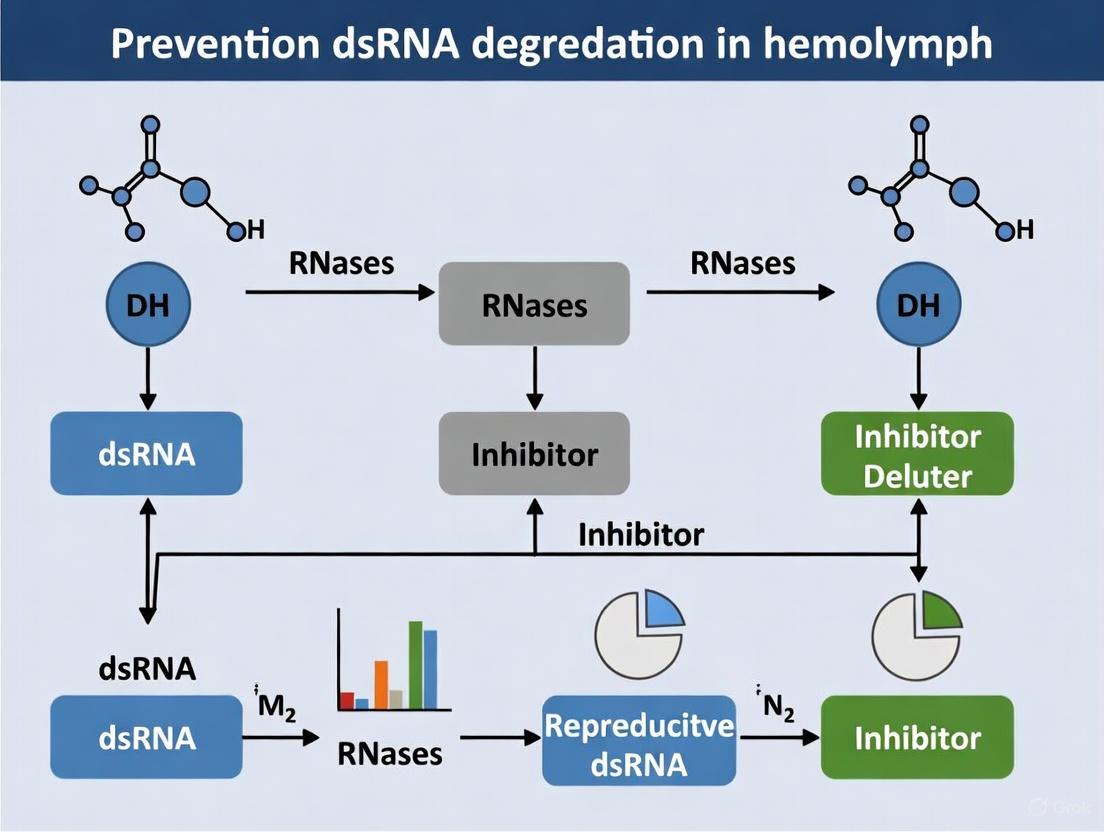
Double-stranded RNA (dsRNA) holds immense potential for therapeutic and pest control applications, but its efficacy is severely limited by rapid degradation in insect hemolymph.
Strategies to Prevent dsRNA Degradation in Hemolymph: Enhancing RNAi Efficacy for Biomedical and Pest Control Applications
Abstract
Double-stranded RNA (dsRNA) holds immense potential for therapeutic and pest control applications, but its efficacy is severely limited by rapid degradation in insect hemolymph. This article provides a comprehensive analysis for researchers and drug development professionals on the mechanisms of dsRNA instability and advanced strategies to counteract it. We explore the foundational role of dsRNases and symbiotic microbiota in hemolymph, evaluate methodological advances in nanocarrier and polymer-based delivery systems, discuss optimization through nuclease inhibition and engineered RNA structures, and present validation frameworks for assessing intervention efficacy. By synthesizing current research, this review aims to accelerate the development of stable RNAi-based technologies for biomedical and agricultural innovation.
Understanding the Hemolymph Barrier: Why dsRNA Degrades in Insect Body Fluids
Troubleshooting Guides and FAQs
FAQ 1: Why is my injected dsRNA failing to induce RNAi in my lepidopteran model, even though the target sequence is specific?
The most probable cause is the rapid degradation of the dsRNA molecule by specific double-stranded ribonucleases (dsRNases) present in the insect's hemolymph and other tissues [1] [2]. The RNAi process relies on intact dsRNA being processed into siRNA inside the cell. When dsRNA is degraded extracellularly before it can be taken up by cells, the RNAi machinery cannot be activated [3].
- Solution: Consider the following steps:
- Confirm Degradation: Incubate your dsRNA with the insect's hemolymph ex vivo and analyze its integrity over time using gel electrophoresis. Rapid degradation, as seen in Ostrinia nubilalis and Plutella xylostella, confirms this issue [2] [4].
- Target dsRNases: Co-deliver dsRNA targeting both your gene of interest and the specific dsRNase genes expressed in the hemolymph (e.g., PxdsRNase1 in diamondback moths or SeRNase2/4 in Spodoptera exigua). This has been shown to significantly increase RNAi efficiency [1] [5] [4].
- Use Nanocarriers: Formulate your dsRNA with nanomaterial-based delivery systems. These can protect dsRNA from nuclease degradation by encapsulating it and have been demonstrated to improve RNAi outcomes in recalcitrant species [1] [6].
FAQ 2: The degradation of dsRNA in the gut is well-known, but is it also a problem in the hemolymph for injection-based experiments?
Yes, absolutely. While the gut environment is a major barrier for oral delivery, the hemolymph (insect blood) presents a significant challenge for injection-based RNAi in Lepidoptera. Multiple studies have demonstrated that dsRNA is highly unstable in lepidopteran hemolymph.
- Evidence: Research on Ostrinia nubilalis showed dsRNA was rapidly degraded when incubated with larval hemolymph, and this degradation was due to enzymatic activity [2]. Similarly, in Plutella xylostella, PxdsRNase1 was found to be primarily expressed in the hemolymph, and its recombinant protein rapidly degraded dsRNA in vitro [4]. In Spodoptera frugiperda, interference with specific dsRNases slowed down the degradation of exogenous dsRNA in the hemolymph [7].
FAQ 3: Is the degradation of dsRNA in hemolymph sequence-specific or size-dependent?
Available evidence indicates that the degradation of dsRNA by lepidopteran hemolymph nucleases is not sequence- or size-dependent. The enzymatic activity appears to degrade dsRNA in a general manner.
- Supporting Data: Characterization of dsRNA stability in the European corn borer (Ostrinia nubilalis) revealed that dsRNA degradation in gut contents and hemolymph "was not size or sequence-dependent" [2]. This suggests the nucleases are non-specific endonucleases that cleave dsRNA molecules regardless of their sequence or length.
Quantitative Data on dsRNA Degradation and dsRNase Expression
Table 1: Instability of dsRNA in Lepidopteran Tissues
| Insect Species | Tissue | Experimental Finding | Reference |
|---|---|---|---|
| Ostrinia nubilalis (European corn borer) | Gut Contents & Hemolymph | dsRNA highly degraded within 10 minutes under physiologically relevant conditions. | [2] |
| Heliothis virescens (Tobacco budworm) | Hemolymph | Degraded dsRNA recovered from hemolymph after injection; no siRNA detected in tissues. | [3] |
| Plutella xylostella (Diamondback moth) | Hemolymph & Gut Fluid | dsRNA completely degraded when incubated in vitro with hemolymph or gut fluid. | [4] |
| Spodoptera frugiperda (Fall armyworm) | Midgut & Hemolymph | Multiple dsRNases with high expression in midgut and old larvae contribute to rapid dsRNA degradation. | [7] |
Table 2: Key dsRNases Identified in Lepidopteran Hemolymph and Tissues
| Insect Species | dsRNase Gene | Primary Site of Expression | Impact on RNAi Efficiency | |
|---|---|---|---|---|
| Plutella xylostella | PxdsRNase1 | Hemolymph | Recombinant protein rapidly degrades dsRNA in vitro; silencing improves RNAi. | [4] |
| Spodoptera exigua | SeRNase2, SeRNase4 | Midgut, Hemolymph | Identified from genome; their activity is a major obstacle to RNAi. | [1] |
| Cnaphalocrocis medinalis (Rice leaffolder) | CmdsRNase2 | Hemolymph (highest in adults) | Co-silencing with CmCHS increased RNAi efficiency from 56.84% to 83.44%. | [5] |
| Spodoptera frugiperda | SfdsRNase1, SfdsRNase3 | Midgut & Hemolymph | Interference reduced dsRNA degradation in hemolymph and midgut. | [7] |
Experimental Protocols for Key Assays
Protocol 1: Ex Vivo dsRNA Stability Assay in Hemolymph
This protocol assesses the stability of your dsRNA in the target insect's hemolymph, adapted from methods used in multiple studies [2] [4].
- Hemolymph Collection: Anesthetize larvae on ice. Carefully puncture a proleg with a fine needle and collect hemolymph using a micropipette. A small crystal of phenylthiourea can be added to the collection tube to prevent melanization.
- Sample Preparation: Centrifuge the fresh hemolymph briefly (e.g., 5000g for 5 min) to remove hemocytes. Use the cell-free supernatant as the "hemolymph" for the assay.
- Incubation: Mix a known quantity of your dsRNA (e.g., 500 ng) with the hemolymph. Include a control where dsRNA is mixed with PBS or a nuclease-free buffer.
- Time-Course: Incubate the mixture at the insect's physiological temperature (e.g., 25-28°C). Remove aliquots at various time points (e.g., 0, 5, 15, 30, 60 minutes).
- Analysis: Stop the reaction by adding an equal volume of STOP solution (e.g., 95% formamide, 10 mM EDTA). Analyze the integrity of the dsRNA using agarose gel electrophoresis. Intact dsRNA will show a clear band, while degradation will appear as smearing or disappearance of the band.
Protocol 2: Enhancing RNAi by Co-silencing dsRNases
This protocol describes a method to improve gene silencing by simultaneously targeting a pest dsRNase, as demonstrated in Cnaphalocrocis medinalis and Plutella xylostella [5] [4].
- dsRNA Synthesis: Synthesize dsRNA for:
- Your target gene of interest (dsTarget).
- The key dsRNase gene expressed in hemolymph (dsdsRNase).
- A control (e.g., dsGFP).
- Experimental Setup: Prepare the following injection or feeding mixtures:
- Group A: dsTarget + dsGFP (control)
- Group B: dsTarget + dsdsRNase
- Delivery: Micro-inject a mixture of dsRNAs (total dose ~1-2 µg/larva) into the hemocoel of the insect. Alternatively, for feeding, apply the dsRNA mixture on diet or coat it on leaves.
- Validation:
- After 48-72 hours, collect hemolymph and other tissues.
- Extract total RNA and synthesize cDNA.
- Use RT-qPCR to measure the transcript levels of both your target gene and the dsRNase gene. Effective co-silencing should result in a significantly greater knockdown of the target gene in Group B compared to Group A.
Signaling Pathways and Experimental Workflows
Diagram Title: dsRNA Degradation Pathway in Lepidopteran Hemolymph and Inhibition Strategies
Diagram Title: Workflow for Characterizing a dsRNase and Testing Solutions
The Scientist's Toolkit: Research Reagent Solutions
Table 3: Essential Reagents and Materials for dsRNA Stability Research
| Reagent / Material | Function / Description | Example Use in Context | |
|---|---|---|---|
| T7/T7 RiboMAX Express RNAi System | High-yield in vitro transcription for dsRNA synthesis. | Generating large quantities of dsRNA for both target genes and dsRNases for injection or feeding assays. | [3] |
| Liposomal Transfection Reagents (e.g., Lipofectamine) | Form lipid nanoparticles to encapsulate dsRNA. | Protecting dsRNA from degradation in hemolymph; enhancing cellular uptake. Referred to as a "novel nanodelivery system". | [1] [7] |
| RNase Inhibitor | Inhibits a broad range of RNases. | Added to samples during RNA extraction and cDNA synthesis to preserve RNA integrity from endogenous nucleases. | [8] |
| SYBR Green qPCR Master Mix | For quantitative real-time PCR (RT-qPCR). | Accurately measuring the transcript levels of target genes and dsRNase genes to quantify RNAi efficiency. | [1] [5] [4] |
| pMD18-T Vector or pESI-Blunt Zero Cloning Kit | TA cloning vector for PCR product cloning. | Cloning the identified dsRNase gene fragments for sequencing and recombinant protein expression. | [5] [4] |
Frequently Asked Questions (FAQs)
What are dsRNases and why are they a problem in RNAi experiments? A: Double-stranded RNA-degrading nucleases (dsRNases) are enzymes that specifically recognize and degrade exogenous double-stranded RNA (dsRNA). They belong to the DNA/RNA non-specific endonuclease (NUC) family and require a divalent ion like magnesium to cleave dsRNA [5]. In the context of RNA interference (RNAi), their activity in the hemolymph and gut of insects rapidly degrades experimentally introduced dsRNA before it can enter the cellular RNAi pathway, thus significantly reducing or completely preventing gene silencing [5] [1] [9]. This is a major factor contributing to the low RNAi efficiency observed in many insects, particularly lepidopterans and hemipterans [1] [9].
How can I confirm that dsRNase activity is causing my failed RNAi experiment? A: Indirect confirmation can be achieved by evaluating the stability of your dsRNA after exposure to hemolymph or tissue extracts. Incubate your target dsRNA with hemolymph in vitro and analyze its integrity using gel electrophoresis. Significant degradation of the dsRNA compared to a control indicates high dsRNase activity [5] [1]. Furthermore, if co-silencing a suspected dsRNase gene along with your target gene significantly improves silencing efficiency, this strongly implicates that specific dsRNase in the initial failure [5].
Are there specific insect orders where dsRNase activity is a greater concern? A: Yes, research indicates pronounced differences in dsRNase activity and overall RNAi efficiency across insect orders. Coleopterans (beetles) generally exhibit robust systemic RNAi, while Lepidopterans (moths and butterflies) and Hemipterans (true bugs) are often highly refractory to dsRNA-induced silencing, partly due to high levels of dsRNase activity in their gut and hemolymph [1] [9]. The expression levels and specific types of dsRNases can vary significantly between these orders [9].
What strategies can I use to protect dsRNA from degradation in hemolymph? A: Several strategies have been developed to overcome dsRNase activity:
- Co-silencing dsRNase genes: Simultaneously target both your gene of interest and the identified dsRNase gene for silencing [5].
- Nanocarrier delivery systems: Complexing dsRNA with nanomaterials (e.g., star polycations) can shield it from nucleases and improve cellular uptake [1].
- Chemical modifications: Using specialized, nuclease-resistant antisense oligonucleotides (ASOs) that are self-delivering (sdASO) can bypass the need for dsRNA and avoid degradation [10].
Troubleshooting Guide
| Problem & Symptoms | Probable Cause | Recommended Solution |
|---|---|---|
| Low or no RNAi efficiency (Target mRNA shows no reduction after dsRNA introduction). | Degradation of dsRNA by dsRNases in hemolymph or midgut before it can enter cells [5] [1]. | - Co-silencing: Design dsRNA targeting both your gene and the specific dsRNase (e.g., CmdsRNase2, SeRNase) [5].- Use nanocarriers: Formulate dsRNA with nanoparticle-based delivery systems to protect it [1]. |
| Inconsistent RNAi results (High variability in silencing between individuals or experimental repeats). | Variable expression levels of dsRNases among individuals or instability of naked dsRNA in hemolymph over time. | - Standardize delivery: Use nanocarrier systems for more consistent dsRNA delivery and protection [1].- Quantify dsRNase expression: Use RT-qPCR to measure dsRNase transcript levels in your experimental subjects and group them accordingly [5] [1]. |
| Failed dsRNA synthesis or recovery (Low yield or degraded dsRNA product before use). | RNase contamination during in vitro transcription or sample handling. | - Ensure RNase-free conditions: Use RNase-free tips, tubes, and water. Wear gloves [8].- Check RNA integrity: Use microfluidic electrophoresis or agarose gel electrophoresis to confirm dsRNA size and quality before use [5] [11]. |
dsRNase Characterization Data
The table below summarizes key characteristics of dsRNases identified from recent studies, highlighting their potential as targets for improving RNAi.
| dsRNase Name | Insect Species (Order) | Key Tissues of Expression | Impact on RNAi & Experimental Evidence |
|---|---|---|---|
| CmdsRNase2 [5] | Cnaphalocrocis medinalis (Lepidoptera) | Hemolymph, throughout developmental stages | Co-silencing CmdsRNase2 and CmCHS increased RNAi efficiency from 56.84% to 83.44% (a 26.60% increase). |
| SeRNase1-4 [1] | Spodoptera exigua (Lepidoptera) | Midgut, Hemolymph, and other tissues | Delivery of dsRNA using a nanocarrier system protected it from SeRNases and significantly improved gene silencing efficiency. |
| BmdsRNase [1] | Bombyx mori (Lepidoptera) | Digestive juice, Midgut | Purified BmdsRNase degrades dsRNA, ssRNA, and DNA, and its activity interferes with the RNAi response. |
Detailed Experimental Protocols
Protocol 1: Enhancing RNAi Efficiency via Co-silencing of Target Gene and dsRNase
This protocol is adapted from a study on the rice leaffolder, Cnaphalocrocis medinalis [5].
1. Identification and Expression Analysis of dsRNase:
- Clone the dsRNase gene from your target insect using RT-PCR with primers designed from transcriptome data.
- Analyze spatiotemporal expression using RT-qPCR across different developmental stages (eggs, larval instars, pupae, adults) and dissected tissues (hemolymph, midgut, fat body, etc.). Normalize expression levels using a stable reference gene (e.g., actin or GAPDH) [5] [1].
2. dsRNA Synthesis:
- Template Preparation: Amplify a 300-500 bp gene-specific fragment for both your target gene (e.g., chitin synthase, CHS) and the identified dsRNase gene from cDNA. Use primers flanked by a T7 RNA polymerase promoter sequence.
- In Vitro Transcription: Synthesize dsRNA using a T7 RiboMAX Express RNAi System or equivalent. Purify the dsRNA and verify its integrity and concentration [5] [1].
3. Experimental Setup and Microinjection:
- Divide insects into three treatment groups:
- Group 1 (Control): Injected with dsRNA targeting an unrelated gene (e.g., GFP) or buffer.
- Group 2 (Target-only): Injected with dsRNA targeting your gene of interest (e.g., dsCHS).
- Group 3 (Co-silencing): Injected with a mixture of dsRNAs targeting both your gene and the dsRNase (e.g., dsCHS + dsdsRNase).
- Perform microinjection of dsRNA (e.g., 0.5-1 µg per insect) into the hemolymph of anesthetized adults or larvae using a fine glass needle and microinjector [12].
4. Efficiency Evaluation:
- After a set period (e.g., 3 days post-injection), collect tissue samples.
- Extract total RNA and synthesize cDNA.
- Evaluate silencing efficiency via RT-qPCR by measuring the mRNA expression levels of your target gene and the dsRNase gene relative to the control group using the 2−ΔΔCT method [5].
Protocol 2: Assessing dsRNA Stability in Hemolymph Using Electrophoresis
This protocol is used to directly visualize and confirm dsRNase activity.
1. Hemolymph Collection:
- Collect hemolymph from the target insect using a capillary glass tube or by carefully amputating a proleg, and immediately dilute it in a suitable buffer (e.g., anticoagulant buffer or PBS). Centrifuge to remove hemocytes if necessary [5].
2. In Vitro Incubation:
- Set up a reaction mixture containing a fixed amount of your purified dsRNA (e.g., 200 ng) and pooled hemolymph.
- Incubate at the insect's physiological temperature (e.g., 26°C) for a time course (e.g., 0, 15, 30, 60 minutes).
- Include a control where dsRNA is incubated in buffer alone.
3. Analysis via Electrophoresis:
- Stop the reaction by adding an equal volume of gel loading dye.
- Load the samples onto an agarose gel (e.g., 1%) or analyze using a microfluidic electrophoresis system (e.g., LabChip GXII) for higher sensitivity [11].
- Visualize the dsRNA bands. A gradual disappearance or smearing of the dsRNA band in the hemolymph-treated sample, but not in the control, indicates degradation by dsRNases [5] [1].
Pathway and Workflow Visualizations
Diagram 1: The Impact of dsRNases on RNAi Efficiency and Enhancement Strategies.
Diagram 2: Experimental Workflow for Co-silencing dsRNase.
The Scientist's Toolkit: Research Reagent Solutions
| Reagent / Material | Function in Experiment | Example & Notes |
|---|---|---|
| T7 RiboMAX Express RNAi System | For high-yield in vitro transcription of dsRNA. | Ensures production of high-quality, concentrated dsRNA for injection or feeding [5]. |
| Microinjection System | For precise delivery of dsRNA into the insect hemolymph. | Essential for bypassing the gut barrier and ensuring a known quantity of dsRNA reaches the hemocoel [12]. |
| Nanocarriers (e.g., Star Polycation) | Forms complexes with dsRNA to protect it from nuclease degradation and enhance cellular uptake. | A key technology for improving RNAi stability and efficiency in recalcitrant species [1]. |
| RNase Inhibitors | Prevents degradation of RNA during sample handling and extraction. | Critical for obtaining high-quality RNA for accurate RT-qPCR analysis [8] [13]. |
| SYTO 61 RNA Stain & PDMA Polymer | Components for microfluidic capillary electrophoresis to analyze RNA integrity and size. | Used in systems like the LabChip GXII for precise assessment of dsRNA quality and degradation [11]. |
| Self-Delivering ASOs (sdASO) | Chemically modified oligonucleotides that do not require transfection and are nuclease-resistant. | An alternative to dsRNA from companies like AUM Biotech; useful in tough-to-transfect systems [10]. |
In the field of RNA interference (RNAi) research, particularly for pest control and therapeutic development, a significant challenge is the rapid degradation of double-stranded RNA (dsRNA) upon introduction into an organism. A key factor contributing to this instability is the presence of extracellular nucleases. Recent research has uncovered that symbiotic bacteria within an organism can be a major source of these dsRNA-degrading enzymes. This technical support article explores the role of these symbiotic bacteria, providing troubleshooting guidance and experimental protocols to help researchers overcome this obstacle in their work with hemolymph and other biological systems.
FAQ: Understanding the Core Challenge
Q1: What are extracellular nucleases and why are they a problem in RNAi research? Extracellular nucleases are enzymes secreted by cells that cleave the phosphodiester bonds of nucleic acids (DNA and RNA) outside the cell membrane [14]. In the context of RNAi, these enzymes, specifically double-stranded ribonucleases (dsRNases), rapidly degrade administered dsRNA before it can enter the target cells and trigger the gene-silencing machinery. This degradation significantly reduces RNAi efficiency, a common problem in lepidopteran insects and other organisms [15].
Q2: How do symbiotic bacteria contribute to dsRNA degradation? Symbiotic bacteria, which live in a mutually beneficial relationship with their host organism, can secrete extracellular nucleases directly into the host's body fluids, such as the gut or hemolymph. A 2025 study on the cotton bollworm (Helicoverpa armigera) identified six distinct Bacillus strains from the larval gut that possess potent dsRNA-degrading activity [16]. These bacteria secrete ribonucleases into the insect's gut fluid, where they directly degrade incoming dsRNA, reducing its accumulation and blocking the RNAi effect.
Q3: Which bacterial species are known to secrete these nucleases? Research has identified several species within the Bacillus genus as active secretors of nucleases. In H. armigera, strains of Bacillus altitudinis and Bacillus cereus were found to secrete extracellular nucleases that degrade dsRNA [16]. The following table summarizes key nuclease-secreting bacteria and their properties:
Table 1: Symbiotic Bacteria Known to Secrete Extracellular Nucleases
| Bacterial Strain | Classification | Key Nuclease Activity | Impact on RNAi |
|---|---|---|---|
| Ba 6 | Bacillus cereus | Secretes Ribonuclease; strong dsRNA degradation [16] | Significantly decreases RNAi efficiency in H. armigera [16] |
| Ba 1, Ba 5 | Bacillus altitudinis | Secretes three types of extracellular nucleases [16] | Reduces dsRNA stability and accumulation [16] |
| Ba 2, Ba 3, Ba 4 | Bacillus cereus | Secretes two types of extracellular nucleases [16] | Contributes to low RNAi sensitivity [16] |
Q4: What is the molecular mechanism behind this process? The secreted nucleases, such as those from the Bacillus Ba 6 strain, function by cleaving the dsRNA molecules into smaller fragments. This enzymatic degradation occurs in the extracellular space (e.g., the gut lumen or hemolymph), preventing the full-length dsRNA from being taken up by the host's cells. Genome analysis of these bacterial strains has identified genes encoding for these extracellular nucleases, which are classified into superfamilies like DNaseNucANucB, EndA, and microbial_RNases [16].
Troubleshooting Guide: Overcoming Bacterial Nuclease Activity
This guide addresses common experimental issues related to microbial nuclease activity.
Table 2: Troubleshooting dsRNA Degradation in Experimental Systems
| Problem | Potential Cause | Solutions & Recommendations |
|---|---|---|
| Low RNAi efficiency | dsRNA degraded by bacterial nucleases in gut/hemolymph [16] | - Suppress nuclease-secreting symbionts with antibiotics (see Protocol 1).- Use liposome-encapsulated dsRNA to protect it [15]. |
| Unexpectedly low dsRNA stability in hemolymph | High levels of dsRNase activity in hemolymph [15] | - Pre-treat the organism to silence host- and bacteria-derived dsRNases.- Use the hemolymph dsRNA degradation assay (see Protocol 2) to quantify stability. |
| Unstable dsRNA during storage or handling | Contamination with environmental RNases | - Use nuclease-free water and labware.- Include RNase inhibitors in storage buffers.- Stabilize samples immediately after collection in dedicated lysis or stabilization buffers [17]. |
| Low RNA yield/purity from samples | Incomplete cell lysis or co-precipitation of inhibitors [17] | - Optimize lysis with mechanical (bead beating) or enzymatic (lysozyme, proteinase K) methods [17].- Use specialized RNA isolation kits for specific sample types (e.g., insects, feces) [17]. |
Key Experimental Protocols
Protocol 1: Assessing the Role of Symbiotic Bacteria in dsRNA DegradationIn Vivo
This protocol is adapted from methods used to study Bacillus in H. armigera [16].
Objective: To determine if symbiotic bacteria in your model organism contribute to dsRNA degradation and reduced RNAi efficacy.
Materials:
- Experimental Organism: (e.g., insect larvae)
- Bacterial Strain: A cultured symbiotic strain (e.g., Bacillus cereus Ba 6).
- dsRNA: Target dsRNA (e.g., dsEGFP).
- LB Broth: For bacterial culture.
- qRT-PCR Kit: For quantifying bacterial abundance and gene expression.
- Fluorescently-labeled dsRNA: (e.g., Cy3-dsEGFP) for tracking.
Method:
- Colonization: Feed the experimental group with food coated in a suspension of the symbiotic bacteria (e.g., Ba 6). Maintain a control group fed with sterile LB broth.
- Verification: After 3 days, sacrifice a subset of colonized individuals. Use qRT-PCR with strain-specific primers to confirm increased bacterial abundance in the gut compared to controls.
- dsRNA Challenge:
- Option A (Fluorescence Tracking): Inject fluorescently-labeled dsRNA (Cy3-dsEGFP) into both colonized and control groups. Monitor fluorescence intensity in the body after 1 and 6 hours. A significant reduction in fluorescence in the colonized group indicates higher dsRNA degradation [16].
- Option B (Functional Knockdown): Inject target-specific dsRNA (e.g., dsCarboxylesterase) into both groups. After a set period, assess the silencing of the target gene via qRT-PCR. Significantly reduced silencing in the colonized group indicates impaired RNAi efficiency [16].
- Analysis: Compare the results between the colonized and control groups to conclude the bacteria's impact.
Protocol 2:In VitroAssay for dsRNA Degradation Activity in Hemolymph or Gut Juice
This protocol is based on assays used in Spodoptera frugiperda and H. armigera research [16] [15].
Objective: To quantify the dsRNA degradation activity present in a biological fluid and characterize the involvement of specific nucleases.
Materials:
- Biological Fluid: Hemolymph or gut juice from your model organism.
- dsRNA Substrate: Target dsRNA (e.g., 200-300 bp).
- Incubation Buffer: A suitable physiological buffer (e.g., PBS).
- Agarose Gel Electrophoresis equipment.
- Liposome Encapsulation Reagent (optional).
Method:
- Collect hemolymph or gut juice. Ensure samples are kept on ice to preserve native enzyme activity.
- Set up reactions: Co-incubate a fixed amount of dsRNA with the diluted biological fluid.
- Incubate: Allow the reaction to proceed at the organism's physiological temperature (e.g., 25-28°C for many insects) for a time course (e.g., 0, 15, 30, 60 minutes).
- Analyze: Stop the reactions and analyze the integrity of the dsRNA using agarose gel electrophoresis. The degradation of dsRNA over time is visualized by the disappearance of the intact dsRNA band.
- Modulation (Optional): To test solutions, pre-treat the organism with dsRNA targeting specific nuclease genes (e.g., sfdsRNase1/3 for hemolymph [15]) or mix the fluid with liposome-encapsulated dsRNA before running the assay. Reduced degradation indicates successful protection.
Visualizing the Mechanism and Workflow
The following diagram illustrates the mechanism by which symbiotic bacteria degrade dsRNA and impair RNAi efficiency.
Diagram 1: Bacterial nuclease activity impairs RNAi.
The experimental workflow for troubleshooting this issue is outlined below.
Diagram 2: Experimental troubleshooting workflow.
The Scientist's Toolkit: Research Reagent Solutions
Table 3: Essential Reagents and Kits for Related Research
| Reagent / Kit | Function / Application | Example Use Case |
|---|---|---|
| DNA/RNA Shield | Sample stabilization; inactivates nucleases to protect nucleic acids at ambient temperature [17]. | Field collection of insect guts or hemolymph for subsequent RNA/DNA analysis. |
| Quick-RNA Tissue/Insect Kit | Specialized RNA isolation from insect samples [17]. | Extracting high-quality RNA from lepidopteran larvae to analyze RNAi pathway gene expression (e.g., Dicer, Ago-2). |
| Liposome Transfection Reagents | Encapsulate and protect dsRNA from nuclease degradation [15]. | Preparing dsRNA for feeding or injection assays to enhance stability and uptake in insects like Spodoptera frugiperda. |
| DNase I (RNase-free) | Remove genomic DNA contamination during RNA purification [17]. | Ensuring RNA samples are free of DNA before sensitive downstream applications like RNA-seq or qRT-PCR. |
| Proteinase K | Enzymatic lysis; digests proteins and enhances cell disruption [17]. | Improving lysis efficiency of tough samples like microbial cells or insects for higher RNA yield. |
RNA interference (RNAi) is a conserved biological process and a powerful biotechnology tool for sequence-specific gene silencing. It functions by degrading messenger RNA (mRNA) molecules, thereby preventing the production of specific proteins [18]. This process is naturally used by cells for gene regulation and defense against viruses, but researchers have harnessed it to study gene function and develop novel pest control strategies [19] [18].
The core RNAi mechanism is triggered by double-stranded RNA (dsRNA). When introduced into a cell, dsRNA is recognized and cleaved by the enzyme Dicer into small fragments of 21-25 nucleotides in length, known as small interfering RNAs (siRNAs) [20] [19]. These siRNAs are then incorporated into the RNA-induced silencing complex (RISC). Within RISC, the siRNA duplex is unwound, and the guide strand binds to the Argonaute protein (typically Ago2), the complex's catalytic core. This guide strand then directs RISC to complementary mRNA sequences, leading to the cleavage and degradation of the target mRNA, effectively silencing the gene [20] [9] [19].
Quantitative Comparison of RNAi Efficiency Across Insect Orders
A consistent finding in entomological research is that RNAi efficiency varies dramatically across different insect orders. This variability is influenced by a complex interplay of biochemical, physiological, and molecular factors.
Table 1: Comparative RNAi Efficiency and Key Limiting Factors Across Major Insect Orders
| Insect Order | Representative Species | General RNAi Efficiency | Primary Limiting Factor(s) | Key Associated Proteins/Molecules |
|---|---|---|---|---|
| Coleoptera | Tribolium castaneum, Leptinotarsa decemlineata | High (Robust, systemic) [9] | Efficient cellular uptake & systemic spread [9] | High dsRBP/SID-1 expression [9] |
| Diptera | Drosophila melanogaster | Moderate [9] | Well-characterized machinery [9] | Canonical R2D2, Loquacious [9] |
| Hemiptera | Myzus persicae, Aphis gossypii | Variable, often low [21] [20] [9] | Low dsRBP expression, nuclease activity [9] | Divergent/Diminished R2D2, Loquacious [9] |
| Lepidoptera | Spodoptera litura, Cnaphalocrocis medinalis | Low (Refractory) [22] [5] | High dsRNase activity, low Dicer-2 expression [22] [5] | CmdsRNase2, Low Dicer-2 [22] [5] |
Table 2: Impact of dsRNA Design Parameters on Silencing Efficacy in Insects
| Design Parameter | Impact on Efficacy | Empirical Findings & Optimization Guidelines |
|---|---|---|
| dsRNA Length | Positively correlated with efficacy up to a point [20] [23] | Optimal Range: >60 bp to several hundred bp. Longer dsRNAs (>60 bp) are more efficiently taken up and generate more siRNAs, enhancing silencing [20] [23]. |
| Target Gene | Critical for observable phenotype [20] | Effective Targets: Essential genes (e.g., v-ATPase, actin, cytoskeleton proteins). Gene function and expression level matter [20]. |
| Sequence Features | Determines siRNA guide strand selection and mRNA binding [23] | Key Features: Thermodynamic asymmetry (weak 5' end on antisense strand), specific nucleotide preferences (e.g., adenine at position 10 in antisense), and moderate GC content (9th-14th nucleotides) improve efficacy [23]. |
| Secondary Structure | Negative correlation with efficacy [23] | Absence of strong secondary structures in the target mRNA region facilitates RISC binding and cleavage [23]. |
Detailed Troubleshooting Guides and FAQs
Frequently Asked Questions (FAQs)
Q1: Why does RNAi work well in beetles like Tribolium castaneum but fails in my experiments with moths or aphids? The differential efficiency is largely due to fundamental molecular and physiological differences. Coleopterans like T. castaneum possess a robust RNAi system supported by high expression of key proteins like double-stranded RNA-binding proteins (dsRBPs) and SID-1-like transporters, which facilitate systemic spread of the silencing signal [9]. In contrast, lepidopterans (moths) and hemipterans (aphids) have elevated levels of dsRNA-degrading nucleases (dsRNases) in their hemolymph and gut, which rapidly destroy the administered dsRNA [5]. Furthermore, they often have lower expression or divergent versions of core RNAi machinery components like Dicer-2 and dsRBPs (R2D2, Loquacious), leading to inefficient processing and systemic propagation of the RNAi signal [9] [22].
Q2: What is the single most critical factor causing low RNAi efficiency in lepidopteran hemolymph, and how can I overcome it? The single most critical factor is the presence of potent dsRNA-degrading nucleases (dsRNases) in the hemolymph [5]. A study on the rice leaffolder, Cnaphalocrocis medinalis, identified and characterized a key nuclease, CmdsRNase2, which is highly expressed in the hemolymph and rapidly degrades injected dsRNA [5]. Solution: Co-deliver dsRNA targeting the pest's essential gene (e.g., chitin synthase, CmCHS) along with dsRNA that silences the dsRNase gene itself. This dual approach has been shown to significantly improve RNAi efficacy. For instance, silencing CmCHS alone achieved 56.84% efficiency, while co-silencing CmCHS and CmdsRNase2 boosted efficiency to 83.44%, an increase of 26.60% [5].
Q3: For a hemipteran pest like Myzus persicae, should I use siRNA or long dsRNA? Research indicates that long dsRNA is generally more effective than siRNA for oral delivery in aphids. Longer dsRNA molecules (>60 bp) are more stable in the gut lumen and are more efficiently taken up by gut epithelial cells via endocytosis [20]. Once inside the cell, a single long dsRNA molecule is processed by Dicer into multiple siRNAs, amplifying the silencing signal. In contrast, delivered siRNAs are more susceptible to degradation and are less efficiently internalized [20]. However, the efficacy can vary greatly between different target genes, as demonstrated by the successful silencing of Eph but not ALY in Myzus persicae using the same methods [21].
Troubleshooting Guide: Addressing dsRNA Degradation in Hemolymph
Problem: Rapid degradation of injected dsRNA in the hemolymph. This is a common issue when working with lepidopteran and hemipteran insects, severely limiting RNAi success.
Symptoms:
- Lack of target gene knockdown confirmed by qRT-PCR.
- Failure to observe a phenotypic effect (e.g., mortality, developmental defect).
- Direct analysis (e.g., gel electrophoresis) shows dsRNA is broken down after injection.
Diagnosis & Verification:
- Identify dsRNases: Search the pest's transcriptome or genome for sequences homologous to known dsRNase genes (e.g., CmdsRNase2 from C. medinalis [5]).
- Expression Profiling: Use qRT-PCR to determine the spatiotemporal expression profile of the identified dsRNase gene. Pay special attention to high expression in the hemolymph [5].
- In Vitro Degradation Assay: Incubate your synthesized dsRNA with the insect's hemolymph (or hemolymph extract) and run it on a gel over a time course (e.g., 0, 15, 30, 60 minutes). Rapid degradation confirms high nuclease activity [22] [5].
Solutions:
- Co-silence the dsRNase Gene: This is the most targeted approach. Design a dsRNA to knock down the pest's dsRNase gene and inject it simultaneously with, or preferably 24-48 hours before, the dsRNA targeting your gene of interest [5].
- Use Chemically Modified dsRNA: Incorporate chemical modifications (e.g., phosphorothioate linkages, 2'-O-methyl groups) into the dsRNA backbone to increase its stability against nuclease degradation. This is widely used in therapeutic siRNA development [19].
- Employ Nanocarrier Delivery Systems: Formulate dsRNA with nanoparticle-based carriers (e.g., chitosan, liposomes). These carriers protect dsRNA from nucleases in the hemolymph and can enhance cellular uptake [20] [9].
Essential Experimental Protocols
Protocol: Evaluating and Overcoming dsRNase Activity in Hemolymph
This protocol is designed to diagnose and mitigate dsRNA degradation in hemolymph, a critical step for successful RNAi in refractory insect orders.
I. Materials and Reagents
- Insects: Target insect species, fifth-instar larvae or adults are typically used.
- Reagents: TRIzol reagent, cDNA synthesis kit, qRT-PCR master mix, nuclease-free water, dsRNA synthesis kit (e.g., MEGAscript T7 Kit), agarose, gel electrophoresis equipment.
- Primers: Gene-specific primers for the target gene and the identified dsRNase gene.
- Equipment: Microinjector, nano-spectrophotometer, real-time PCR system.
II. Step-by-Step Procedure
- dsRNA Synthesis:
- Design primers with T7 promoter sequences for your target gene (e.g., a chitin synthase gene) and the identified dsRNase gene.
- Amplify the template by PCR and synthesize dsRNA using an in vitro transcription kit according to the manufacturer's instructions.
- Purify the dsRNA and confirm its integrity and concentration via agarose gel electrophoresis and spectrophotometry [5].
Confirm dsRNase Activity (In Vitro Degradation Assay):
- Collect hemolymph from the insect (e.g., using a capillary tube or by gentle puncture).
- Incubate a known amount of your target gene dsRNA (e.g., 500 ng) with a diluted hemolymph sample.
- Take aliquots at different time points (e.g., 0, 5, 15, 30, 60 min) and run them on an agarose gel.
- The rapid disappearance of the dsRNA band compared to a control (dsRNA in nuclease-free buffer) confirms high dsRNase activity [5].
Co-silencing Experiment:
- Divide insects into three treatment groups:
- Group 1 (Control): Injected with dsRNA targeting an irrelevant gene (e.g., GFP).
- Group 2 (Target only): Injected with dsRNA targeting your gene of interest (e.g., TargetGene).
- Group 3 (Co-silencing): Injected with a mixture of dsRNAs targeting both dsRNase and TargetGene.
- Use a microinjector to deliver a precise volume (e.g., 0.5 µL) of dsRNA (e.g., 1 µg/µL) into the hemolymph cavity of the insect.
- Maintain the insects under standard conditions post-injection [5].
- Divide insects into three treatment groups:
Efficacy Assessment:
- After 2-3 days, collect insect tissue (e.g., whole body or specific tissue) for RNA extraction.
- Perform qRT-PCR to measure the transcript levels of both the TargetGene and the dsRNase gene.
- Calculate the silencing efficiency (RNAi efficacy) using the 2^(-ΔΔCT) method. A significant increase in TargetGene knockdown in Group 3 compared to Group 2 demonstrates successful mitigation of dsRNase activity [5].
The Scientist's Toolkit: Key Research Reagents
Table 3: Essential Reagents for RNAi Research in Insects with a Focus on Hemolymph Studies
| Reagent / Tool | Function / Application | Example Use Case |
|---|---|---|
| MEGAscript T7 Kit | In vitro synthesis of high-quality, long dsRNA from a DNA template with T7 promoters. | Producing dsRNA for injection or feeding bioassays. Used in multiple cited studies [22] [5]. |
| dsRIP Web Platform | A bioinformatic tool for designing optimized dsRNA sequences based on insect-specific parameters. | Selecting target regions with features that maximize siRNA efficacy and minimize off-target effects in pest species [23]. |
| qRT-PCR Reagents | Quantitative measurement of target gene and dsRNase gene transcript levels to confirm silencing. | Evaluating RNAi efficiency post-experiment. Essential for validating knockdown in co-silencing assays [22] [5]. |
| Nuclease-Free Water & Tubes | Preventing external nuclease contamination that can degrade dsRNA stocks before administration. | Preparing and storing dsRNA solutions to ensure integrity. |
| Chitosan/Lipid Nanoparticles | Nanocarriers that complex with dsRNA to protect it from hemolymph nucleases and enhance cellular uptake. | Formulating dsRNA for spray-induced gene silencing (SIGS) or improving stability in injection experiments [20] [9]. |
| Microinjector | Precision delivery of a defined dose of dsRNA directly into the insect hemolymph. | Bypassing the gut barrier for systemic delivery, crucial for functional validation studies [21] [5]. |
Core Molecular Mechanisms Underlying Differential Efficiency
The variability in RNAi efficiency across insect orders is rooted in differences in their core RNAi machinery and defense mechanisms.
Key Proteins and Pathways:
- Dicer-2: The enzyme that initiates the RNAi pathway by cleaving long dsRNA into siRNAs. Low expression of Dicer-2, as reported in Spodoptera litura, is a major bottleneck, preventing efficient conversion of dsRNA into the active siRNA mediators [22].
- Double-stranded RNA-Binding Proteins (dsRBPs): Proteins like R2D2 and Loquacious are essential cofactors. They bind to dsRNA and siRNAs, stabilizing them and guiding their loading into the RISC complex. The expression level, functional specialization, and domain organization of these dsRBPs vary significantly across orders and correlate with RNAi efficiency. Coleopterans have high expression of functional dsRBPs, while hemipterans exhibit low or tissue-restricted expression [9].
- dsRNA-degrading Nucleases (dsRNases): As highlighted in the troubleshooting section, these enzymes are a primary barrier. They are highly expressed in the gut and hemolymph of lepidopterans and hemipterans, creating a hostile environment for exogenously applied dsRNA [5].
- SID-1-like Transporters: Transmembrane proteins that facilitate the systemic spread of the RNAi signal between cells. Robust systemic RNAi in coleopterans is linked to high expression of these transporters, while their limited function in other orders restricts silencing to localized areas [9].
Troubleshooting Guide: FAQs on dsRNA Degradation in Hemolymph
FAQ 1: Why is my dsRNA degrading rapidly in lepidopteran hemolymph, leading to poor RNAi efficiency?
Rapid degradation of dsRNA in hemolymph is a common challenge, particularly in lepidopteran insects (moths and butterflies). This is primarily due to the presence of potent dsRNA-degrading nucleases (dsRNases) in the hemolymph [5] [24]. Research on the rice leaffolder (Cnaphalocrocis medinalis) and the diamondback moth (Plutella xylostella) has identified specific dsRNases (e.g., CmdsRNase2, PxdsRNase1) that are highly expressed in hemolymph and can rapidly cleave dsRNA [5] [24]. In the European corn borer (Ostrinia nubilalis), dsRNA was found to be highly unstable when incubated in larval hemolymph, with degradation attributed to enzymatic activity [2].
- Solution: Implement a co-RNAi strategy. Simultaneously silence your target gene and the insect's specific dsRNase gene. For example, in C. medinalis, silencing
CmCHSalone achieved 56.84% efficiency, while co-silencing bothCmCHSandCmdsRNase2increased efficiency to 83.44% [5]. Similarly, in P. xylostella, silencingPxdsRNase1(a hemolymph-specific dsRNase) enhanced RNAi efficacy [24].
FAQ 2: How do pH and other environmental conditions influence dsRNA stability in my samples?
Environmental factors significantly impact RNA stability. The intrinsic chemical structure of RNA makes its phosphodiester bonds susceptible to hydrolysis, especially under alkaline conditions (e.g., pH 8.0) which accelerate the reaction [25]. Furthermore, the presence of divalent cations (e.g., Mg²⁺, Ca²⁺) can catalyze RNA hydrolysis [25].
- Solution:
- Control pH: Maintain a slightly acidic to neutral pH during dsRNA storage and experimental preparation to minimize alkaline hydrolysis.
- Use Chelators: Include chelating agents like EDTA in your storage buffers to sequester divalent cations and reduce metal-catalyzed degradation [25].
- Manage Storage Conditions: Store dsRNA and hemolymph samples at low temperatures (-80°C). Studies on bloodstains show RNA degradation rates increase 5-10 fold at 37°C compared to 20°C, and higher relative humidity also accelerates degradation [26].
FAQ 3: What is the difference in dsRNA stability between coleopteran and lepidopteran insects?
A major reason for variable RNAi success across insect orders is differential dsRNA stability. Coleopterans (beetles) generally show high RNAi efficiency and dsRNA stability, while lepidopterans show low efficiency and rapid dsRNA degradation [2] [3].
- Key Evidence: A comparative study found that dsRNA was less stable in the gut contents of the lepidopteran O. nubilalis than in the coleopteran Diabrotica virgifera virgifera (Western corn rootworm) [2]. Furthermore, in another study, degraded dsRNA was recovered from the hemolymph of the lepidopteran Heliothis virescens, whereas intact dsRNA was found in the coleopteran Leptinotarsa decemlineata [3]. The same study noted that lepidopteran cell lines took up dsRNA but failed to process it into siRNAs, a key step in the RNAi pathway [3].
The following table consolidates critical quantitative findings on factors influencing dsRNA stability.
Table 1: Quantified Factors Affecting dsRNA Stability and RNAi Efficiency
| Factor | Experimental System | Key Quantitative Finding | Source |
|---|---|---|---|
| dsRNase Co-silencing | C. medinalis larvae | RNAi efficiency increased from 56.84% to 83.44% (a 26.60% gain) by co-silencing target gene and CmdsRNase2. |
[5] |
| dsRNA Stability | O. nubilalis gut contents | dsRNA was rapidly degraded in gut contents; 500bp and 800bp dsRNAs were undetectable by gel electrophoresis after just 10 minutes. | [2] |
| Temperature | Dried bloodstains (RNA model) | RNA degradation rate increased by a factor of 5-10 when storage temperature rose from 20°C to 37°C. | [26] |
| Ionic Environment | In vitro RNA stability | Divalent cations (Ca²⁺) and transition metal ions act as catalysts for RNA hydrolysis. Mg²⁺ is a required co-factor for many dsRNases. | [5] [25] |
| Enzymatic Specificity | P. xylostella recombinant proteins | Recombinant PxdsRNase1 degraded dsRNA rapidly and completely in vitro, while PxdsRNase3 cleaved it without complete degradation. | [24] |
Essential Experimental Protocol: Assessing dsRNA Stability in Hemolymph
This protocol allows you to directly evaluate the stability of your dsRNA in the hemolymph of your research organism.
Objective: To determine the degradation kinetics of dsRNA when exposed to insect hemolymph under controlled conditions.
Materials & Reagents:
- Purified dsRNA (e.g., target gene or control GFP dsRNA)
- Hemolymph collected from your insect model (ensure collection method minimizes melanization)
- Incubation buffer (e.g., phosphate-buffered saline, PBS)
- Water bath or thermal block
- Gel electrophoresis system (agarose)
- Equipment for RNA quantification (e.g., spectrophotometer)
Methodology:
- Prepare Reaction Mix: In a microcentrifuge tube, combine a known quantity (e.g., 1 µg) of your dsRNA with a volume of raw hemolymph or hemolymph supernatant. Include a control where dsRNA is incubated with buffer alone.
- Incubate: Incubate the reaction mixture at a physiologically relevant temperature (e.g., 25-28°C for many insects) for a time-course (e.g., 0, 5, 15, 30, 60 minutes) [2].
- Terminate Reaction: After each time point, stop the reaction by immediately placing the tube on ice and/or adding a protein denaturant or nuclease inhibitor (e.g., EDTA).
- Analyze Integrity: Analyze the integrity of the dsRNA using agarose gel electrophoresis. A stable dsRNA will show a clear, intact band, while degraded dsRNA will appear as a smeared or absent band [2] [27].
- Quantify (Optional): Use more sensitive techniques like RT-qPCR to quantify the amount of intact dsRNA remaining over time [2].
Experimental Workflow for Assessing dsRNA Stability
The Scientist's Toolkit: Key Research Reagent Solutions
Table 2: Essential Reagents for dsRNA Stability Research
| Reagent / Material | Primary Function in Experimentation | Specific Examples from Literature |
|---|---|---|
| Gene-Specific dsRNAs | To silence target genes and insect dsRNases via co-RNAi. | dsRNAs targeting CmCHS & CmdsRNase2 [5]; dsRNAs for PxdsRNase1, 2, & 3 [24]. |
| Nuclease Inhibition Buffers | To protect dsRNA from degradation during storage and handling. | Use of EDTA to chelate Mg²⁺ [5] [25]. |
| In Vitro Transcription Kits | To synthesize high-quality, defined-length dsRNA probes. | MEGAscript T7 Kit (Ambion) [27] [3]. |
| pH Buffers | To maintain a non-alkaline environment and prevent hydrolysis. | Control of pH to avoid alkaline conditions (pH ~8.0) that accelerate RNA breakdown [25]. |
| Fluorescent or Radiolabels | To track dsRNA uptake, localization, and degradation visually or quantitatively. | Use of 32P-UTP or fluorescein-labeled dsRNA to study uptake and processing in cell lines [3]. |
Advanced Technique: Nuclease Protection Assay (NPA)
For precise quantification and mapping of specific RNAs, a Nuclease Protection Assay (NPA) is highly sensitive.
Principle: A solution hybridization of a single-stranded antisense RNA probe to your target RNA sample. After hybridization, any unhybridized (single-stranded) RNA is digested by nucleases. The remaining "protected" probe:target hybrids are precipitated, separated by denaturing polyacrylamide gel electrophoresis, and visualized, allowing for quantitation [28].
Advantages over Northern Blot:
- Higher Sensitivity: Can detect as little as 5 femtograms of target RNA.
- Tolerant of Partially Degraded RNA: If your RNA sample is slightly degraded, NPAs can still provide reliable data, whereas Northern blot quality is severely compromised.
- Multi-Probe Analysis: Several RNA targets can be assayed simultaneously in the same reaction with probes of different lengths [28].
Advanced Delivery Systems: Nanocarriers and Formulations to Protect dsRNA
A significant obstacle in applying RNA interference (RNAi) for pest control or therapeutic development is the rapid degradation of double-stranded RNA (dsRNA) by dsRNA-specific nucleases (dsRNases) present in the hemolymph and midgut of insects, particularly in lepidopteran species [5] [1]. These dsRNases, such as CmdsRNase2 identified in Cnaphalocrocis medinalis and SeRNases in Spodoptera exigua, are Mg²⁺-dependent endonucleases that recognize and cleave exogenous dsRNA, drastically reducing RNAi efficiency [5] [1]. Nanocarrier platforms—including cationic polymers, liposomes, and peptide-based vehicles—offer a promising solution by encapsulating and protecting dsRNA, facilitating its cellular uptake, and enhancing gene silencing efficacy. This technical support resource is framed within the broader thesis goal of preventing dsRNA degradation in hemolymph research, providing troubleshooting guides and FAQs for researchers and drug development professionals.
Frequently Asked Questions (FAQs)
Q1: Why is dsRNA particularly unstable in lepidopteran hemolymph? The hemolymph of many insects, especially Lepidoptera, contains high levels of dsRNA-degrading nucleases (dsRNases). For example, in the rice leaffolder (Cnaphalocrocis medinalis), CmdsRNase2 is highly expressed in the hemolymph and midgut. This enzyme possesses an Endounuclease_NS domain with active sites that bind Mg²⁺ and dsRNA substrates, enabling it to rapidly degrade exogenous dsRNA before it can enter cells and trigger RNAi [5]. This degradation is a primary defense mechanism that limits the efficacy of RNAi-based applications.
Q2: How do nanocarriers protect dsRNA from degradation by hemolymph nucleases? Nanocarriers form stable complexes with dsRNA through electrostatic interactions, hydrogen bonding, and other intermolecular forces, creating a physical barrier that shields the nucleic acid from dsRNases [1]. For instance, nanoparticles can be engineered to encapsulate dsRNA fully, preventing contact with nucleases in the hemolymph or gut. This protection is crucial for ensuring that a sufficient amount of intact dsRNA reaches the target cells.
Q3: What are the key physicochemical properties of nanocarriers that influence their efficacy? The table below summarizes the critical properties that must be characterized for any nanocarrier formulation, as they directly impact stability, cellular uptake, and overall performance [29].
Table 1: Key Characterization Parameters for Nanocarriers
| Property | Description | Impact on Efficacy | Common Characterization Methods |
|---|---|---|---|
| Particle Size & PDI | Average diameter and polydispersity index (heterogeneity) [29]. | Affects biodistribution, cellular uptake, and stability; ideal size often ≤100 nm for efficient cellular uptake [29] [30]. | Dynamic Light Scattering (DLS), Static Light Scattering, Atomic Force Microscopy (AFM) [29]. |
| Surface Charge (Zeta Potential) | The electrical potential at the particle's slipping plane [29]. | Positive charge promotes cell membrane interaction but can cause toxicity and non-specific protein binding; a near-neutral charge is often desired for in vivo stability [31] [30]. | Electrophoretic Light Scattering [29]. |
| Morphology | The shape and physical structure of the particles (e.g., spherical, cylindrical) [29]. | Influences cellular internalization, circulation half-life, and packing efficiency [29]. | Scanning Electron Microscopy (SEM), Transmission Electron Microscopy (TEM), Atomic Force Microscopy (AFM) [29]. |
| Encapsulation Efficiency | The percentage of dsRNA successfully loaded into the nanocarrier. | Directly determines the dose of active dsRNA delivered; low efficiency leads to poor efficacy and wasted material. | Fluorescence-based assays, HPLC. |
Q4: What are the primary mechanisms of cellular uptake for these nanocarriers? Nanocarriers are typically internalized by cells via endocytosis. Once inside the endosome, the nanocarrier must facilitate the "endosomal escape" of its dsRNA cargo into the cytoplasm, where the RNAi machinery is located. Cationic and ionizable lipids (in liposomes) or polymers can disrupt the endosomal membrane through the "proton sponge" effect or by promoting membrane fusion [31] [30]. Failure to escape the endosome will result in the cargo being degraded in the lysosome [30].
Q5: How can RNAi efficiency be improved in insects with high dsRNase activity? Research demonstrates a dual-strategy is most effective:
- Use protective nanocarriers: As discussed, nanoparticles shield dsRNA from dsRNases [1].
- Co-silence target genes and dsRNase genes: A study on C. medinalis showed that silencing the CmCHS gene alone achieved 56.84% efficiency, while co-silencing both CmCHS and CmdsRNase2 increased RNAi efficiency to 83.44%, an improvement of 26.60% [5]. This approach reduces the nuclease activity in the system, allowing the delivered dsRNA to persist longer.
Troubleshooting Common Experimental Issues
Problem 1: Low RNAi Efficiency despite High dsRNA Loading
- Potential Causes:
- Poor endosomal escape: The nanocarrier is trapped and degraded in the lysosome.
- Nanocarrier instability: The complex may disassemble prematurely, exposing dsRNA to nucleases.
- Rapid clearance: The particles may be opsonized and cleared by the immune system (especially if using highly cationic surfaces in vivo) [31] [29].
- Solutions:
- Incorporate endosomolytic components, such as the helper lipid DOPE in liposomal formulations or polyethylenimine (PEI) in polyplexes, to enhance endosomal escape [31] [30].
- Check the stability of the nanocarrier-dsRNA complex in a simulated hemolymph buffer. Increase the N/P ratio (ratio of nitrogen in the polymer to phosphate in the RNA) for polyplexes, but be mindful of increased toxicity.
- For in vivo applications, consider surface functionalization with polyethyleneglycol (PEG) to create a "stealth" effect and reduce immune recognition [31] [30].
Problem 2: High Cytotoxicity of Nanocarrier Formulation
- Potential Cause: The use of strongly cationic materials (e.g., some cationic lipids or high molecular weight PEI) can disrupt cell membrane integrity [30].
- Solutions:
- Switch to biodegradable or less charged cationic materials. For lipids, use ionizable cationic lipids that are neutral at physiological pH but positively charged in acidic environments (e.g., endosomes) [31] [30].
- For polymers, use lower molecular weight PEI or explore less toxic alternatives like chitosan.
- Optimize the charge ratio of your formulation. A slight positive charge may be sufficient for complexation without causing excessive toxicity.
Problem 3: Inconsistent Batch-to-Batch Results
- Potential Causes: Inadequate control of physicochemical properties during synthesis, leading to high polydispersity (PDI) [29].
- Solutions:
- Standardize the synthesis protocol meticulously (e.g., mixing speed, temperature, solvent removal rate).
- Characterize every batch using DLS for size and PDI and TEM/AFM for morphology. Only proceed with batches that have a PDI < 0.2, indicating a monodisperse population [29].
- Implement a purification step (e.g., dialysis, tangential flow filtration) to remove unencapsulated materials and organic solvents.
Problem 4: dsRNA Degradation during Complexation or Storage
- Potential Causes: Harsh formulation conditions, contamination with RNases, or physical shearing during preparation.
- Solutions:
- Use nuclease-free water and reagents in a sterile environment.
- Avoid vortexing or pipetting complexes vigorously after formation.
- Include stabilizers like trehalose for lyophilization and store the final product at -80°C.
Essential Experimental Protocols
Protocol: Formulating Cationic Liposome-dsRNA Complexes (Lipoplexes)
This protocol is adapted from methods used for in vitro and in vivo nucleic acid delivery [31] [30].
Principle: Cationic lipids spontaneously self-assemble with negatively charged dsRNA via electrostatic interactions, forming complexes that protect dsRNA and promote cellular uptake.
Materials:
- Cationic lipid (e.g., DOTAP, DOTMA)
- Helper lipid (e.g., DOPE, Cholesterol)
- dsRNA solution (in nuclease-free water or buffer)
- Sterile tubes
- Bath sonicator or probe sonicator
- Vortex mixer
Method:
- Liposome Preparation: Dissolve cationic lipid and helper lipid (often at a 1:1 molar ratio) in an organic solvent (e.g., chloroform or ethanol) in a glass vial. Evaporate the solvent under a stream of nitrogen gas to form a thin lipid film. Place the vial under vacuum for several hours to remove any residual solvent.
- Hydration: Hydrate the dried lipid film with nuclease-free water or an appropriate buffer (e.g., HEPES) to a final lipid concentration of 1-10 mM. Vortex the mixture vigorously to suspend the lipids, resulting in a multilamellar vesicle (MLV) suspension.
- Size Reduction: Sonicate the MLV suspension using a bath sonicator or probe sonicator (on ice to prevent overheating) until the solution becomes clear or translucent, indicating the formation of small unilamellar vesicles (SUVs). Alternatively, extrude the suspension through polycarbonate membranes with defined pore sizes (e.g., 100 nm) using a mini-extruder.
- Complex Formation: Dilute the dsRNA in an optimal buffer (often the same used for hydration). Add the dsRNA solution dropwise to an equal volume of the liposome suspension while vortexing. Continue vortexing for 20-30 seconds.
- Incubation: Allow the lipoplexes to form by incubating the mixture at room temperature for 15-30 minutes before use. The resulting complex should be used immediately for best results.
Protocol: Assessing dsRNA Protection from Hemolymph Nucleases
Principle: This gel retardation and degradation assay visually confirms the protective capacity of the nanocarrier against nucleases present in hemolymph.
Materials:
- Prepared nanocarrier-dsRNA complexes
- Fresh or commercially available insect hemolymph (or recombinant dsRNase)
- Nuclease-free buffer
- Agarose gel electrophoresis equipment
- Gel staining dye (e.g., GelRed)
Method:
- Incubation: Incubate naked dsRNA and nanocarrier-complexed dsRNA with hemolymph (diluted 1:10 in buffer) at 25-37°C for a set time (e.g., 0, 15, 30, 60 minutes).
- Release (for complexes): After incubation, add a heparin sulfate solution (or another competitive anion) to dissociate the dsRNA from the nanocarrier. This step is crucial to run the sample on a gel.
- Analysis: Load the samples onto an agarose gel and run electrophoresis. Visualize the dsRNA bands under UV light.
- Interpretation: Intact dsRNA bands in the complexed samples, compared to degraded smears in the naked dsRNA samples, indicate successful protection by the nanocarrier.
Diagram: Experimental workflow for developing and testing dsRNA nanocarriers, from formulation to functional assessment.
The Scientist's Toolkit: Key Research Reagent Solutions
Table 2: Essential Materials for dsRNA Nanocarrier Research
| Reagent / Material | Function / Description | Example Uses |
|---|---|---|
| Cationic Lipids (e.g., DOTAP, DOTMA, ionizable lipids like DLin-MC3-DMA) [31] [30] | Positively charged headgroup interacts with dsRNA; forms the primary structure of liposomes. | Forming the core of lipid-based nanoparticles (LNPs) for dsRNA encapsulation and delivery. |
| Helper Lipids (e.g., DOPE, Cholesterol) [31] [30] | Stabilizes the lipid bilayer; DOPE promotes non-bilayer structures that enhance endosomal escape. | Improving the stability and transfection efficiency of liposomal formulations. |
| PEGylated Lipids (e.g., DMG-PEG, DSPE-PEG) [30] | Polyethylene glycol (PEG) polymer conjugated to a lipid; provides a hydrophilic surface layer. | Reducing particle aggregation, increasing circulation time in vivo, and preventing rapid clearance. |
| Cationic Polymers (e.g., Polyethylenimine (PEI), Chitosan, PLL) [30] | Polymers with protonable amine groups that condense dsRNA into polyplex nanoparticles. | Forming polyplexes; PEI is known for its high buffering capacity ("proton sponge" effect) for endosomal escape. |
| Cell-Penetrating Peptides (CPPs) (e.g., TAT, Penetratin) [32] | Short cationic or amphipathic peptides that facilitate cellular uptake of cargo. | Covalently or non-covalently complexed with dsRNA to form peptiplexes; can be used to functionalize other nanocarriers. |
| dsRNA-specific Nucleases (dsRNases) | Enzymes that degrade dsRNA; can be purified from insect hemolymph or recombinant. | Used in in vitro assays to test the protective efficacy of nanocarrier formulations [5] [1]. |
| Heparin Sulfate | A highly sulfated glycosaminoglycan with strong negative charge. | Used in gel shift assays to dissociate dsRNA from cationic nanocarriers before electrophoresis [1]. |
↑ Core Mechanisms of Protection
Nanomaterials protect dsRNA from nuclease degradation through several key physical and biochemical mechanisms, which are crucial for successful RNAi applications in hemolymph research and pest control.
| Protection Mechanism | Description | Functional Benefit |
|---|---|---|
| Electrostatic Complexation [1] [33] | Positively charged nanocarriers form stable complexes with negatively charged dsRNA backbone. | Prevents nuclease access to the dsRNA molecule. |
| Physical Barrier Formation [34] [35] | The nanomaterial matrix creates a physical shield around the encapsulated dsRNA. | Blocks direct contact with dsRNase enzymes in the hemolymph and gut [24]. |
| Endosomal Escape Facilitation [1] [33] | Nanocarriers promote escape from endosomes after cellular uptake via clathrin-mediated endocytosis. | Prevents lysosomal degradation of dsRNA, increasing intracellular availability. |
| Improved Environmental Stability [36] | Encapsulation protects dsRNA from abiotic factors (e.g., UV light) and microbial degradation in the environment. | Extends the half-life of dsRNA on plant surfaces and in aquatic systems. |
These protective mechanisms are interdependent. The initial physical complexation and barrier formation are the first line of defense, ensuring the dsRNA survives long enough in the extracellular environment to be taken up by cells. Subsequent facilitation of endosomal escape then ensures the dsRNA is released intact within the cytoplasm to load into the RISC complex and execute its gene-silencing function [1] [35].
↑ Quantitative Data on Stability Enhancement
The protective efficacy of nanomaterials is quantitatively demonstrated by increased half-life and RNAi efficiency in both environmental and biological contexts.
Table 1: Enhanced Stability of Encapsulated vs. Naked dsRNA [36]
| Matrix/Environment | Naked dsRNA Half-life (DT₅₀) | Encapsulated dsRNA Half-life (DT₅₀) | Enhancement Factor |
|---|---|---|---|
| Plant Surfaces | Short (minutes to hours) | Increased >2-fold | >2x |
| Aquatic Systems | Short (hours) | Increased >2-fold | >2x |
| Hemolymph (in vitro) | <1 hour [24] | Not specified | Significant (qualitative) |
Table 2: Improvement in RNAi Efficiency via Nanocarriers and dsRNase Knockdown [1] [5] [33]
| Experimental Approach | Target Pest | RNAi Efficiency (Target Gene Knockdown) | Efficiency with Nuclease Inhibition |
|---|---|---|---|
| Nanocarrier-dsRNA Complex | Spodoptera exigua | Low with naked dsRNA | Significantly improved |
| Co-silencing dsRNase & Target Gene | Cnaphalocrocis medinalis | 56.84% (target gene only) | 83.44% (+26.6%) |
↑ Experimental Protocols for Validation
↑ Protocol 1: Assessing dsRNA Stability in Hemolymph
This protocol is used to directly test and visualize the protective effect of a nanomaterial against nucleases present in insect hemolymph [24].
Reagents Needed: Purified dsRNA, nanomaterial carrier, hemolymph from target insect, incubation buffer, gel loading dye, agarose, electrophoresis system, staining dye.
- Complex Formation: Incubate your dsRNA with the selected nanomaterial (e.g., star polycation) at an optimal weight/weight ratio to form a stable complex [1] [33].
- Hemolymph Incubation: Mix the naked dsRNA and the nanomaterial-dsRNA complex separately with fresh insect hemolymph. Include a control of dsRNA in buffer alone.
- Time-Course Sampling: Incubate the mixtures at the insect's physiological temperature (e.g., 25-28°C). Withdraw aliquots from each reaction at defined time points (e.g., 0, 15, 30, 60, 120 minutes).
- Analysis: Terminate the reactions and analyze the integrity of the dsRNA in each sample using standard agarose gel electrophoresis.
- Visualization: Stain the gel with an appropriate nucleic acid stain (e.g., GelRed). The naked dsRNA will show rapid degradation (smearing or complete disappearance), while the nanomaterial-protected dsRNA will remain as an intact band [24].
↑ Protocol 2: Functional RNAi Bioassay in Lepidopteran Larvae
This protocol evaluates the functional outcome of nanomaterial protection by measuring gene silencing efficacy in whole insects [5] [33].
Reagents Needed: Nanomaterial-dsRNA complex (targeting a vital gene), control naked dsRNA, control nanomaterial with non-target dsRNA, artificial diet, insect larvae.
- dsRNA Preparation: Synthesize and purify high-quality dsRNA targeting your gene of interest (e.g., chitin synthase,
PxCht). - Formulation: Formulate the experimental group by complexing the target dsRNA with the nanocarrier. Prepare all necessary controls.
- Delivery: Apply the formulations onto an artificial diet or plant material. For hemolymph-specific studies, microinjection of the complexes directly into the hemolymph can be used [24].
- Insect Exposure: Allow the larvae to feed on the treated diet for a set period (e.g., 24-48 hours).
- Sampling and Analysis: Collect the insects and analyze RNAi efficiency by extracting total RNA from the whole insect or specific tissues like the midgut and hemolymph.
- Quantification: Perform Reverse-Transcription Quantitative PCR (RT-qPCR) to measure the relative expression level of the target mRNA. Normalize using a stable reference gene (e.g.,
EF1αorActin). A significant reduction in target mRNA in the experimental group compared to controls indicates successful RNAi, enhanced by the nanocarrier [5] [33].
↑ The Scientist's Toolkit: Research Reagent Solutions
| Reagent / Material | Function / Application | Key Characteristics |
|---|---|---|
| Star Polycation (SP) [1] [33] | A nanoscale polymeric carrier that binds and protects dsRNA. | Positively charged; forms stable complexes via electrostatic interaction. |
| Lipid Nanoparticles (LNPs) [37] [35] | A delivery system encapsulating dsRNA for cellular uptake. | Biocompatible; promotes endosomal escape. |
| Clay Nanosheets [38] | A carrier that adsorbs dsRNA, shielding it on plant surfaces. | Extends environmental persistence against UV and microbes. |
| Bacterial Minicells [36] | A biological encapsulation system for dsRNA. | Significantly increases environmental half-life (e.g., in water, on leaves). |
| T7 RiboMAX Express Kit | A common commercial system for large-scale dsRNA synthesis. | High-yield in vitro transcription [24]. |
| Agarose Gel Electrophoresis System | Standard method for visualizing dsRNA integrity. | Qualitatively confirms degradation or protection post-incubation [24]. |
↑ Frequently Asked Questions (FAQs) for Troubleshooting
Q1: My nanocarrier-dsRNA complex is still degrading in hemolymph assays. What could be wrong?
- Potential Cause #1: The charge ratio (N/P ratio) between your nanocarrier and dsRNA is suboptimal. An insufficient amount of nanocarrier will not fully complex and protect all dsRNA.
- Solution: Perform a gel retardation assay to determine the optimal weight/weight or charge ratio for complete complexation. Ensure no free dsRNA is detectable.
- Potential Cause #2: The nanocarrier itself is unstable in the ionic environment of the hemolymph, leading to premature release of dsRNA.
- Solution: Consider testing different, more robust nanocarriers (e.g., switching from a polymer to lipid nanoparticles) [37] [35]. Pre-incubating the complex in a simulated hemolymph buffer can help diagnose this issue.
Q2: I see good gene knockdown in the insect midgut but not systemically. Why?
- Explanation: This is a common challenge in Lepidoptera. While nanocarriers protect dsRNA in the gut lumen and facilitate uptake into gut cells, they may not be efficiently designed for trans-epithelial transport into the hemolymph for systemic distribution.
- Solution: Investigate nanocarriers known to promote systemic spread. Alternatively, directly target hemolymph-based dsRNases by including a dsRNA that silences a key dsRNase (e.g.,
PxdsRNase1) [24] in your formulation, or consider direct hemolymph injection for systemic delivery studies.
Q3: How can I confirm that the nanomaterial is facilitating endosomal escape and not just cellular uptake?
- Confirmation Method: Use confocal microscopy with fluorescently labeled dsRNA. If the fluorescence is diffuse throughout the cytoplasm, escape is likely successful. If it is punctate and co-localizes with lysosomal markers (e.g., LAMP1), the dsRNA is trapped and being degraded.
- Alternative Approach: Utilize a functional assay. Design an in vitro cell culture system and transfert a reporter gene (e.g., GFP). Deliver nanomaterial-dsRNA complexes targeting the GFP mRNA. A strong reduction in GFP fluorescence indicates successful cytoplasmic delivery and RISC loading, implying endosomal escape occurred [1] [35].
Q4: The cost of large-scale dsRNA production is prohibitive for my field trials. Are there alternatives?
- Alternative Strategy: Utilize in vivo dsRNA production in recombinant bacteria (e.g., E. coli or HT115 strains engineered to express target dsRNA). The bacteria can be inactivated and used directly as a dsRNA formulation, which can be more cost-effective than in vitro transcription for large volumes [38].
- Nanomaterial Integration: These bacterial-produced dsRNA preparations can still be combined with nanocarriers. For example, you can mix inactivated, dsRNA-producing bacteria with clay nanosheets or other nanomaterials to enhance stability on leaf surfaces [36] [38].
Frequently Asked Questions (FAQs)
Q1: Why is my delivered dsRNA degrading rapidly in lepidopteran hemolymph, leading to poor RNAi efficiency? Rapid degradation is primarily due to the presence of specific double-stranded RNA-degrading enzymes (dsRNases) in the hemolymph and midgut of lepidopteran insects. These dsRNases recognize, bind to, and degrade exogenous dsRNA before it can enter the RNAi pathway. Research on Cnaphalocrocis medinalis (rice leaffolder) and Spodoptera exigua (beet armyworm) has identified multiple dsRNase genes that are highly expressed in the hemolymph, creating a significant barrier to successful RNAi [5] [1].
Q2: What strategies can protect dsRNA from degradation in the hemolymph? The most promising strategy is the use of nanomaterial-based delivery systems. Nanoparticles can complex with dsRNA via electrostatic bonding, hydrogen bonding, and other intermolecular forces, forming a protective complex that shields dsRNA from dsRNase degradation. These nanocarriers also facilitate cellular uptake and can help dsRNA achieve early endosomal escape, avoiding lysosomal degradation [34] [1].
Q3: Besides degradation, what other cellular barriers reduce intracellular dsRNA delivery? Even after cellular uptake, inefficient endosomal escape is a major limitation. Without effective escape mechanisms, dsRNA remains trapped in acidic endosomal compartments and is ultimately targeted for lysosomal degradation, preventing it from reaching the cytoplasm where it needs to interact with the RNAi machinery [39].
Q4: How can I confirm that dsRNA degradation is the primary cause of low RNAi efficiency in my experiment? You can perform a comparative stability assay. Incubate your dsRNA with hemolymph collected from your target insect and analyze the integrity of the dsRNA over time using gel electrophoresis. Rapid degradation compared to a control (dsRNA in nuclease-free buffer) indicates high dsRNase activity. Furthermore, co-silencing the target gene and specific dsRNase genes should significantly improve RNAi efficiency if degradation is the main barrier [5] [3].
Troubleshooting Guide: dsRNA Degradation and Delivery
| Problem | Primary Cause | Recommended Solution | Key Experimental Evidence |
|---|---|---|---|
| Rapid dsRNA degradation in hemolymph | Presence of specific dsRNase enzymes (e.g., CmdsRNase2, SeRNases) [5] [1] | Use nanoparticle carriers (e.g., star polycations) to shield dsRNA [34] [1] | Co-silencing CmCHS and CmdsRNase2 increased RNAi efficiency from 56.84% to 83.44% [5] |
| Inefficient cellular uptake of dsRNA | Lack of or insufficient active transport mechanisms for dsRNA in certain cell types [3] | Utilize carriers that exploit specific endocytosis pathways (e.g., caveolae-mediated) [40] | Lepidopteran cells take up dsRNA but show no siRNA production, suggesting a post-uptake barrier [3] |
| Trapped dsRNA in endosomes; no siRNA detected | Inefficient endosomal escape leads to lysosomal degradation of dsRNA [3] [39] | Employ delivery systems with endosomolytic properties (e.g., fluorinated polymers) [40] [39] | No siRNA band was detected in total RNA from lepidopteran tissues despite dsRNA uptake [3] |
| Variable RNAi efficiency across insect orders | Biological differences in RNAi pathways; coleopterans generally show high efficiency, lepidopterans low efficiency [3] [41] | Always combine dsRNA protection (nanocarriers) with strategies to overcome intracellular barriers (endosomal escape) [34] [1] | Degraded dsRNA recovered from H. virescens (Lepidoptera) hemolymph; intact dsRNA from L. decemlineata (Coleoptera) [3] |
Experimental Protocols for Enhancing dsRNA Stability and Delivery
Protocol 1: Assessing dsRNA Stability in Insect Hemolymph
This protocol is used to directly test the stability of your dsRNA in the hemolymph of your target insect.
- Hemolymph Collection: Collect hemolymph from the target insect (e.g., fifth-instar larvae) using a calibrated capillary glass tube or by carefully puncturing a proleg and collecting the droplets. Immediately dilute the hemolymph in a suitable anticoagulant buffer on ice [5].
- Degradation Assay: Incubate a known quantity of your target dsRNA (e.g., 500 ng) with the collected hemolymph at the insect's physiological temperature (e.g., 26°C).
- Sample Time Points: Remove aliquots of the reaction mixture at various time points (e.g., 0, 15, 30, 60, 120 minutes).
- Analysis: Analyze the aliquots by gel electrophoresis (e.g., 1% agarose gel). The rapid disappearance of the intact dsRNA band over time indicates high dsRNase activity [3].
Protocol 2: Co-silencing Target Genes and dsRNase Genes
This method simultaneously knocks down a vital target gene and a dsRNase gene to enhance overall RNAi efficiency.
- dsRNA Preparation: Synthesize two types of dsRNA: one targeting your gene of interest (e.g., a chitin synthase gene, CHS) and another specifically targeting one or more identified dsRNase genes in your pest species (e.g., CmdsRNase2) [5].
- Insect Treatment: Deliver the dsRNAs to the insects. This can be done by microinjection or, if using a nanocarrier, by feeding.
- Experimental Group 1: dsRNA targeting the gene of interest only.
- Experimental Group 2: A mixture of dsRNA targeting both the gene of interest and the dsRNase gene.
- Efficiency Evaluation: After a set period (e.g., 3 days), assess RNAi efficiency by measuring the mRNA levels of the target gene using RT-qPCR. A significantly higher knockdown in Group 2 demonstrates the role of dsRNase in limiting RNAi efficacy [5].
Research Reagent Solutions
| Reagent / Material | Function in dsRNA Delivery |
|---|---|
| Fluorinated Polyethyleneimine (PFS) [40] | A cationic polymer that enhances cellular uptake and facilitates endosomal escape, protecting mRNA/dsRNA. |
| Star Polycation (SPc) [1] | A nanomaterial used to form complexes with dsRNA, protecting it from dsRNase degradation and improving cellular uptake. |
| Aminoallyl-UTP [3] | Used to generate labeled dsRNA for tracking uptake and intracellular localization in experiments. |
| CypHer5E dye [3] | A pH-sensitive fluorescent dye conjugated to dsRNA; it fluoresces strongly in acidic endosomes, allowing visualization of uptake and trafficking. |
| DNase I (e.g., NEB #M0303) [42] | Critical for removing genomic DNA contamination from RNA preps, ensuring pure dsRNA/siRNA samples for accurate results. |
Experimental Workflow for Enhanced RNAi
The diagram below outlines the logical workflow for designing an experiment to overcome dsRNA degradation and improve intracellular delivery.
Intracellular dsRNA Trafficking and Barriers
The following diagram illustrates the critical pathways and barriers that dsRNA encounters after cellular uptake, highlighting the points where experimental interventions are crucial.
Double-stranded RNA (dsRNA) presents a highly specific tool for gene silencing in research and therapeutic development. However, its application in studies involving insect hemolymph is particularly challenging due to the presence of potent nucleases that rapidly degrade naked dsRNA, significantly reducing RNA interference (RNAi) efficacy [43] [44]. The adoption of nanocarriers to encapsulate and protect dsRNA has emerged as a critical strategy to overcome this biological barrier. The selection of an appropriate nanocarrier—polymer, lipidic, or inorganic—is fundamental to experimental success, as each class offers distinct advantages and limitations in terms of protection, cellular uptake, and biocompatibility.
Quantitative Comparison of Nanocarrier Classes
The following table summarizes the key characteristics of the three primary nanocarrier classes to aid in initial selection.
Table 1: Comparison of Nanocarrier Classes for dsRNA Delivery in Hemolymph Research
| Nanocarrier Class | Protection Efficiency (vs. Naked dsRNA) | Key Advantages | Key Limitations | Representative Materials |
|---|---|---|---|---|
| Polymeric | High (e.g., ~7% fluorescence reduction with CSC post-nuclease vs. 80% for naked dsRNA) [45] | High stability, tunable surface chemistry, controlled release, often biodegradable [46] [47] | Variable cytotoxicity; complex synthesis for some types [48] | Chitosan, Polyethyleneimine (PEI), Star Polycations (SPc), Cell-Penetrating Disulfide Polymers (CPD) [43] [45] [47] |
| Lipidic | Moderate to High | High biocompatibility, fusion with cell membranes, facile encapsulation [49] [47] | Lower stability, potential for dsRNA leakage, sensitivity to serum components | Cationic/Anionic Liposomes (e.g., DOTAP), Lipofectamine, Branched Amphiphilic Peptide Capsules [46] [49] |
| Inorganic | Moderate to High (e.g., LDH clay nanosheets prolong dsRNA activity) [45] | Excellent dsRNA loading, protection from environmental degradation [50] [51] | Poor biodegradability, potential long-term toxicity concerns [48] | Layered Double Hydroxides (LDH), Carbon Quantum Dots (CQD), Gold Nanoparticles, Porous Silica [45] [50] [46] |
Detailed Experimental Protocols
Protocol: Forming Chitosan/dsRNA Polyplexes
This protocol is adapted from methods used to form complexes with high nuclease protection [45].
- Objective: To form stable, positively charged chitosan/dsRNA nanoparticles (polyplexes) for hemolymph delivery.
- Materials:
- Chitosan (low molecular weight, ≥75% deacetylated)
- Acetic acid (1% v/v)
- dsRNA solution (1 µg/µL in nuclease-free water)
- Sodium acetate buffer (0.2 M, pH 5.5)
- Sterile, nuclease-free microcentrifuge tubes
- Procedure:
- Prepare Chitosan Solution: Dissolve chitosan in 1% acetic acid to a final concentration of 1 mg/mL. Stir overnight at room temperature to ensure complete dissolution. Filter sterilize the solution through a 0.22 µm filter.
- Complex Formation: Dilute the required amount of dsRNA in sodium acetate buffer. For a mass ratio of 2:1 (Chitosan:dsRNA), add the chitosan solution drop-wise to the dsRNA solution under vigorous vortexing.
- Incubation: Allow the mixture to incubate at room temperature for 30-60 minutes to facilitate stable polyplex formation.
- Characterization (Critical Step): Verify complete complexation and size using agarose gel retardation assay and dynamic light scattering (DLS), respectively. The polyplexes should not migrate into the gel, confirming full dsRNA binding [45].
Protocol: Assessing dsRNA Protection Efficiency Against Nucleases
This method evaluates the protective capability of your nanocarrier against nucleases present in hemolymph.
- Objective: To quantify the ability of nanocarriers to protect encapsulated dsRNA from degradation by hemolymph nucleases.
- Materials:
- Formulated nanocarrier/dsRNA complex
- Naked dsRNA (control)
- Collected insect hemolymph (diluted 1:10 in a suitable buffer)
- Micrococcal Nuclease (MNase) buffer
- Fluorescence spectrometer or agarose gel electrophoresis equipment
- Procedure:
- Treatment Setup: Incubate equal amounts of nanocarrier/dsRNA and naked dsRNA with diluted hemolymph or a standardized nuclease solution (e.g., MNase) at 37°C for a predetermined time (e.g., 30 minutes).
- Reaction Stop: Halt the nuclease activity by adding an EDTA-containing stop solution.
- Analysis:
- Fluorescence Method: If using fluorescently-labeled dsRNA (e.g., YFP-dsRNA), measure the fluorescence intensity. A significant retention of fluorescence in the nanocarrier sample compared to the naked dsRNA control indicates protection. For example, one study showed CSC-dsRNA had minimal fluorescence reduction after nuclease treatment, while naked dsRNA lost 80% of its intensity [45].
- Gel Electrophoresis: Analyze the samples on an agarose gel. Protected dsRNA will appear as an intact band, while degraded dsRNA will appear as a smeared or absent band.
Troubleshooting Common Experimental Issues
FAQ 1: My nanocarrier/dsRNA complex shows high cytotoxicity in my cell culture model, which is derailing my pre-hemolymph tests. What should I do?
- Problem: High cytotoxicity, often indicated by reduced cell viability.
- Solution:
- Modify the Carrier: Switch to a more biocompatible polymer like Chitosan or a Cell-Penetrating Disulfide Polymer (CPD), which has demonstrated low cytotoxicity and high cell viability in Sf9 cells [43].
- Optimize Formulation Parameters: Reduce the N/P (nitrogen-to-phosphate) ratio or the mass ratio of carrier to dsRNA. High positive surface charge can increase toxicity.
- Introduce PEGylation: Modify the surface of the nanocarrier with polyethylene glycol (PEG) to create a "stealth" effect, reducing non-specific interactions with cell membranes.
FAQ 2: I have confirmed dsRNA encapsulation, but I am not observing the expected gene silencing effect in my hemolymph injection assay. Why?
- Problem: Poor RNAi efficacy despite successful encapsulation.
- Solution:
- Check Intracellular Release: The dsRNA might be trapped in endosomes. Use carriers known to promote endosomal escape, such as those with a "proton sponge" effect (e.g., PEI) or reducible polymers (e.g., CPD with disulfide bonds that break down in the reductive cytosolic environment) [43] [47].
- Verify dsRNA Integrity Post-Release: Re-isolate the dsRNA from the nanocarrier after exposure to hemolymph and check its integrity on a gel. This confirms the protection was effective throughout the experiment.
- Re-assess Target Gene and dsRNA Design: Ensure the target gene is essential and the dsRNA sequence is specific and of sufficient length (typically >200 bp) for efficient processing into siRNAs.
FAQ 3: My nanocarrier/dsRNA complexes are aggregating or precipitating out of solution. How can I improve stability?
- Problem: Physical instability of the formulation.
- Solution:
- Optimize Physicochemical Parameters: Use Dynamic Light Scattering (DLS) to measure the particle size and zeta potential. Aim for a particle size below 300 nm and a zeta potential with a sufficient magnitude (typically > |±20| mV) to ensure electrostatic stability [43] [48].
- Adjust the Complexation Protocol: Ensure you are adding the cationic carrier to the anionic dsRNA (and not vice versa) under rapid mixing. Vary the ionic strength of the buffer.
- Include a Stabilizer: Incorporate stabilizers like trehalose or serum albumin in the formulation buffer to prevent aggregation during storage.
Essential Visual Workflows
dsRNA Degradation Pathway in Hemolymph
This diagram visualizes the primary challenge that nanocarriers are designed to overcome.
Diagram Title: dsRNA Degradation Pathway in Hemolymph
Nanocarrier Protection and Delivery Workflow
This diagram outlines the general mechanism by which nanocarriers enable successful RNAi.
Diagram Title: Nanocarrier Protection and Delivery Workflow
The Scientist's Toolkit: Key Research Reagent Solutions
Table 2: Essential Reagents for Nanocarrier-based dsRNA Delivery Research
| Reagent / Material | Function in Experimental Workflow | Key Considerations for Selection |
|---|---|---|
| Cationic Polymers (e.g., Chitosan, PEI, SPc, CPD) | Electrostatically complex with dsRNA to form protective nanoparticles, enhancing stability and cellular uptake [43] [47]. | Purity, molecular weight, degree of deacetylation (for chitosan), and branching ratio (for PEI) significantly impact complex stability and cytotoxicity. |
| Lipid Transfection Reagents | Form liposomes that encapsulate dsRNA and fuse with cell membranes, facilitating delivery. Useful for in vitro validation [46]. | Optimized for specific cell types. Can be costly for large-scale in vivo applications and may exhibit serum sensitivity. |
| Layered Double Hydroxide (LDH) Nanoclay | Inorganic nanocarrier that binds dsRNA, providing a physical barrier against nuclease degradation and prolonging its activity [45] [50]. | Particle size and surface charge must be controlled. Long-term environmental fate and cellular clearance pathways are areas of active research. |
| Fluorescent Dyes (e.g., Cy3, Cy5) | Label dsRNA or the nanocarrier itself to enable tracking of cellular uptake, biodistribution, and stability using fluorescence microscopy or flow cytometry. | Ensure the dye does not interfere with the RNAi pathway or the complexation chemistry. |
| Micrococcal Nuclease (MNase) | A standard nuclease used in in vitro assays to simulate the dsRNA-degrading environment of hemolymph and quantitatively test nanocarrier protection efficiency [45]. | Use a standardized activity and concentration to allow for comparable results across experiments. |
Frequently Asked Questions (FAQs)
1. What are the primary causes of dsRNA degradation in hemolymph, and how can I prevent it? The primary cause of dsRNA degradation in hemolymph is the presence of double-stranded RNA-degrading nucleases (dsRNases) [5]. These enzymes are Mg2+-dependent endonucleases that can rapidly cleave dsRNA [5]. To prevent this, researchers can:
- Use Nanocarriers: Complex dsRNA with cationic nanoparticles like chitosan/SPc complex (CSC) or chitosan (CS), which have been shown to significantly protect dsRNA from nuclease degradation [44] [45].
- Co-silence dsRNase Genes: Simultaneously target the dsRNA's gene of interest and the insect's dsRNase gene. A 2025 study on Cnaphalocrocis medinalis showed that co-silencing a target gene (CmCHS) and a dsRNase gene (CmdsRNase2) increased RNAi efficiency by 26.60% [5].
- Chemically Modify the RNA: Incorporate chemical modifications such as phosphorothioate backbones or 2'-O-methyl, 2'-O-ethyl, or 2'-fluoro ribose substitutions to enhance nuclease resistance [37].
2. Which nanocarriers are most effective for protecting and delivering dsRNA in insect studies? Research indicates that organic nanoparticles, particularly cationic polymers, are highly effective. The table below summarizes the performance of several nanocarriers based on recent studies:
Table 1: Performance of Selected Nanocarriers for dsRNA Delivery
| Nanocarrier | Key Performance Findings | Reference |
|---|---|---|
| Chitosan/SPc Complex (CSC) | Showed the best protection, with no significant fluorescence reduction after nuclease treatment; enhanced uptake and prolonged protection up to 20 days in plants. [45] | |
| Chitosan (CS) | Effectively enhanced dsRNA uptake by pathogens; proven to improve stability and RNAi efficiency in multiple insect species. [44] [45] | |
| Carbon Quantum Dot (CQD) | Demonstrated a good dsRNA loading capacity and reduced fluorescence degradation by 31% after nuclease treatment. [45] | |
| Cationic Polymers (e.g., PEI, star polycations) | Improved dsRNA stability in the environment and enhanced RNAi efficiency in pests like Aphis gossypii and Chilo supperssalis. [44] | |
| Lipid Nanoparticles (LNPs) | A highly efficient platform for RNA encapsulation and delivery, with optimization of RNA/LNP ratios being critical for transfection efficiency. [52] |
3. How can I improve the cellular uptake of dsRNA in my target organism? Formulating dsRNA with nanoparticle carriers is a proven strategy to enhance uptake. For example, CSC and CS complexes were found to significantly improve the efficiency of dsRNA uptake by the fungal pathogen Rhizoctonia solani [45]. The positive charge of cationic nanocarriers facilitates interaction with and penetration through the negatively charged cell membranes and barriers like the insect gut or peritrophic membrane [44].
4. What are the key considerations when designing a dsRNA sequence for RNAi in insects? When designing dsRNA, consider both efficacy and specificity:
- Target Gene Selection: Choose genes that are essential for the insect's survival, development, or virulence. Genes with higher expression in the target life stage (e.g., fifth-instar larvae) may be more effective targets [5].
- Computational Design: Use established algorithms and online design tools (e.g., BLOCK-iT RNAi Designer) that consider factors like thermodynamic stability, guide strand RISC loading, and the absence of stable secondary structures [37].
- Avoid Off-Target Effects: Perform sequence homology searches (e.g., using BLAST) to ensure the dsRNA sequence is unique to the target gene and minimizes the risk of silencing non-target genes [37].
Troubleshooting Guides
Problem: Low RNA Interference (RNAi) Efficiency
Potential Causes and Solutions:
Cause: Rapid dsRNA Degradation.
- Solution: Formulate dsRNA with protective nanocarriers. Refer to Table 1 for options. For instance, complex your dsRNA with CSC at an optimized mass ratio (e.g., 1:5 dsRNA:CSC) before application [45].
- Solution: If your experimental design allows, consider using chemically modified dsRNA with phosphorothioate bonds or 2'-modified ribose to increase resistance to nucleases [37].
Cause: High dsRNase Activity in Hemolymph.
- Solution: Identify and target the dsRNase gene(s) in your research organism. As demonstrated in C. medinalis, design a second dsRNA to silence the dsRNase2 gene and apply it concurrently with your primary target dsRNA [5].
Cause: Inefficient Cellular Uptake.
- Solution: Use nanoparticle carriers like chitosan or CSC, which have been shown to enhance dsRNA uptake into cells [44] [45].
- Solution: Optimize the formulation parameters. For nanoparticle-based delivery, this includes the mass ratio of dsRNA to carrier, the complex formation protocol (gentle mixing is often superior), and the stability of the final complexes [52].
Cause: Suboptimal dsRNA Design.
- Solution: Re-evaluate your dsRNA sequence using modern bioinformatics tools that employ machine learning models to predict silencing efficiency and minimize off-target effects [37].
Problem: Inconsistent Experimental Results
Potential Causes and Solutions:
Cause: Unstable Nanoparticle-dsRNA Complexes.
- Solution: Standardize your complex preparation method. Use gentle mixing techniques instead of vortexing, and ensure consistent incubation times and buffers. The stability of LNP-RNA complexes has been shown to significantly impact transfection outcomes [52].
- Solution: Always prepare fresh complexes for each experiment and avoid storing them for extended periods.
Cause: Variation in Hemolymph Collection.
- Solution: Follow a standardized hemolymph collection protocol. For example, use a double-tube method to prevent contamination and ensure sample consistency, as described in studies on C. medinalis [5]. Immediately place collected hemolymph on ice and use RNase inhibitors during processing.
The Scientist's Toolkit: Key Research Reagent Solutions
Table 2: Essential Reagents for dsRNA Hemolymph Research
| Reagent/Material | Function | Example Usage |
|---|---|---|
| Cationic Polymers (Chitosan, PEI) | Forms stable complexes with negatively charged dsRNA, protecting it from nucleases and enhancing cellular uptake. [44] [45] | Core component of a nano-formulation to be applied via spraying or injection. |
| Chitosan/SPc Complex (CSC) | A specific, highly effective nanocomplex for dsRNA delivery, offering superior nuclease protection and prolonged activity. [45] | The preferred carrier for enhancing the durability and efficacy of dsRNA in challenging environments. |
| Lipid Nanoparticles (LNPs) | Advanced delivery system that encapsulates RNA, facilitating efficient cellular entry and endosomal escape. [52] | Used for high-efficiency delivery, especially in systems where polymer-based carriers are less effective. |
| Micrococcal Nuclease (MNase) | An enzyme used to experimentally assess the protective efficacy of nanocarriers against dsRNA degradation. [45] | An in vitro assay to compare the nuclease resistance of naked dsRNA versus nanoparticle-formulated dsRNA. |
| RNAlater Solution | A reagent that stabilizes and protects RNA in tissues and cells, preventing degradation during sample storage. [5] | Immediate stabilization of hemolymph samples after collection for subsequent RNA extraction. |
Experimental Workflow and Mechanism Diagrams
The following diagrams outline the core experimental strategy and underlying mechanism for addressing dsRNA degradation.
Diagram 1: Experimental strategy for preventing dsRNA degradation.
Diagram 2: Mechanism of nanocarrier-mediated dsRNA protection and delivery.
Overcoming Degradation Challenges: Nuclease Inhibition and RNA Engineering
Frequently Asked Questions (FAQs)
1. What is the primary cause of rapid dsRNA degradation in lepidopteran hemolymph?
Rapid dsRNA degradation in lepidopteran hemolymph is primarily due to the presence of specific double-stranded RNA-degrading enzymes (dsRNases). Research on the diamondback moth (Plutella xylostella) identified PxdsRNase1 as being predominantly expressed in the hemolymph. In vitro experiments confirmed that its recombinant protein can rapidly and completely degrade dsRNA [24]. This degradation prevents sufficient dsRNA from reaching target cells, thereby reducing RNA interference (RNAi) efficacy.
2. How does dsRNA stability differ between insect orders, and why does it matter for experimental design? Comparative studies show a stark contrast in dsRNA stability between coleopteran (beetle) and lepidopteran (moth/butterfly) insects. In the tobacco budworm (Heliothis virescens, Lepidoptera), injected or fed dsRNA is degraded much faster than in the Colorado potato beetle (Leptinotarsa decemlineata, Coleoptera). This rapid degradation in lepidopterans is a major factor responsible for their reduced RNAi efficiency [3]. This matters profoundly for experimental design, as delivery methods and dsRNA protection strategies that work for coleopterans may fail for lepidopterans.
3. Can I inhibit dsRNases to improve RNAi efficiency in my insect model?
Yes, knocking down dsRNase expression has been successfully demonstrated to enhance RNAi efficacy. In the rice leaffolder (Cnaphalocrocis medinalis), silencing the CmCHS gene alone achieved a 56.84% RNAi efficiency. However, when CmCHS and CmdsRNase2 were co-silenced, the efficiency increased significantly to 83.44% [5]. Similarly, in the diamondback moth, co-silencing target genes along with PxdsRNase1, PxdsRNase2, or PxdsRNase3 led to a significantly higher knockdown of the target gene compared to targeting the gene alone [24].
4. Are there delivery systems that can protect dsRNA from nucleases in the hemolymph? Emerging nanomaterial-based delivery systems show great promise. Nanocarriers can bind and protect dsRNA from dsRNase degradation via electrostatic bonding, hydrogen bonding, and other intermolecular forces. Furthermore, these nanocarriers can facilitate cellular uptake and help dsRNA achieve early endosomal escape, avoiding lysosomal degradation and ensuring more dsRNA is released within the cell to function [33]. Studies using nanomaterials like chitosan quaternary ammonium salt (CQAS) have demonstrated effective uptake and transport of dsRNA in plants, offering a blueprint for similar protective strategies in animal systems [53].
Troubleshooting Guide: dsRNase Degradation
Problem: Poor RNAi efficiency due to extracellular dsRNA degradation.
Step 1: Confirm dsRNase Activity
- Protocol: Incubate your synthesized dsRNA with the insect's hemolymph or gut fluid in vitro.
- Methodology:
- Collect hemolymph from your test insect (e.g., using the double-tube method described for C. medinalis [5]).
- Prepare a reaction mixture containing dsRNA and hemolymph/gut fluid in a suitable buffer.
- Incubate at the insect's physiological temperature (e.g., 25-28°C).
- Take aliquots at various time points (e.g., 0, 15, 30, 60 minutes) and analyze dsRNA integrity using agarose gel electrophoresis.
- Expected Outcome: If dsRNases are active, you will observe a time-dependent degradation of the dsRNA band on the gel, as seen in P. xylostella and H. virescens [24] [3].
Step 2: Identify and Characterize Expressed dsRNases
- Protocol: Identify dsRNase genes expressed in your insect's tissues, particularly the hemolymph.
- Methodology:
- RNA Extraction & cDNA Synthesis: Extract total RNA from dissected tissues (hemolymph, midgut, etc.) using a commercial kit. Synthesize first-strand cDNA [24] [5].
- Gene Identification: Use known dsRNase sequences (e.g.,
BmdsRNasefrom Bombyx mori, GenBank ID: NP_001091744.1) as queries for tBLASTn searches against your insect's genomic or transcriptomic databases to identify homologs [24]. - Cloning: Use gene-specific primers to amplify the full-length cDNA of identified dsRNases, clone them into a plasmid vector, and sequence them [24].
- Expression Profiling: Perform reverse transcription quantitative PCR (RT-qPCR) on cDNA from different tissues and developmental stages to determine where and when your identified dsRNase genes are most highly expressed. Use a stable reference gene (e.g.,
EF1orβ-Actin) for normalization [24] [33].
Step 3: Implement an Inhibition or Evasion Strategy Based on your findings, choose an appropriate strategy from the table below.
| Strategy | Mechanism of Action | Key Research Findings | Considerations |
|---|---|---|---|
| Gene Silencing | Co-delivery of dsRNA targeting both the dsRNase and your gene of interest. | Co-silencing CmdsRNase2 increased RNAi efficiency of a target gene by 26.6% [5]. |
Requires prior sequence knowledge; effect is transient. |
| Nanomaterial Encapsulation | Physically protects dsRNA via electrostatic complexation; enhances cellular uptake. | Protects dsRNA from dsRNase degradation; facilitates endosomal escape [33]. | Nanomaterial biocompatibility and cost must be evaluated. |
| Use of Thermostable RNase Inhibitors | Synthetic small molecules that inhibit RNase activity, stable across a range of temperatures. | A synthetic inhibitor (SEQURNA) maintained functionality after heat, freeze-thaw, and pH stress, improving RNAseq outcomes [54]. | A defined working concentration must be established for each protocol. |
The Scientist's Toolkit: Research Reagent Solutions
| Reagent / Material | Function in dsRNase Research |
|---|---|
| MEGAscript T7 Kit | Standard for in vitro transcription to synthesize high-yield, high-quality dsRNA [3]. |
| Aminoallyl-UTP | Used to produce dsRNA that can be chemically conjugated with fluorescent dyes (e.g., CypHer5E) for tracking uptake and degradation [3]. |
| Synthetic Thermostable RNase Inhibitor (e.g., SEQURNA) | A non-protein-based inhibitor that maintains RNase inhibition across harsh conditions, including high temperatures, improving RNA integrity in sensitive applications [54]. |
| Nanocarriers (e.g., CQAS, ASNP, CQD) | Nanoparticles that bind dsRNA, shielding it from nucleases and facilitating its delivery into cells [53] [33]. |
| RevertAid First Strand cDNA Synthesis Kit | Used to synthesize high-quality cDNA from RNA extracted from insect tissues for subsequent gene expression analysis [5]. |
Experimental Workflow & Pathway Diagrams
Diagram 1: dsRNase Impact on RNAi Pathway
This diagram illustrates how dsRNases in the hemolymph degrade exogenous dsRNA, creating a major bottleneck in the RNAi pathway for many lepidopteran insects.
Diagram 2: Strategic Approaches to Overcome dsRNase Activity
This diagram outlines the three primary strategic approaches researchers can take to overcome the barrier of dsRNase activity.
FAQs: Addressing dsRNA Degradation in Hemolymph
Why is my dsRNA degrading rapidly in lepidopteran hemolymph? Double-stranded RNA (dsRNA) is rapidly degraded in the hemolymph of lepidopteran insects (like Cnaphalocrocis medinalis and Spodoptera exigua) by a specific class of enzymes called dsRNA-degrading nucleases (dsRNases) [5] [1]. These enzymes recognize and digest exogenous dsRNA, significantly reducing its stability and half-life, which is a major barrier to achieving effective RNA interference (RNAi) [5] [1].
How can I improve dsRNA stability for hemolymph-based RNAi experiments? Research indicates two primary strategies to enhance dsRNA stability:
- Co-silencing of dsRNase genes: Simultaneously targeting the pest's dsRNase gene along with your gene of interest can dramatically improve RNAi efficiency. One study showed that this approach increased gene silencing efficiency from 56.84% to 83.44% [5].
- Nanomaterial-based delivery systems: Complexing dsRNA with nanocarriers (e.g., star polycations) can protect it from nuclease degradation. These carriers bind dsRNA and shield it from dsRNases in the hemolymph and gut, facilitating cellular uptake and improving RNAi outcomes [1].
What are the key characteristics of dsRNase enzymes I should be aware of? Insect dsRNases [5]:
- Belong to the DNA/RNA non-specific endonuclease (NUC) family.
- Require a divalent ion like Magnesium (Mg²⁺) for catalytic activity.
- Contain a signal peptide and a conserved Endounuclease_NS domain with specific active, binding, and metal ion sites.
- In the rice leaffolder, dsRNase2 shows the highest expression in the hemolymph and fifth-instar larval stage.
Troubleshooting Guide: dsRNA Degradation
| Symptom | Possible Cause | Solution |
|---|---|---|
| Low or no RNAi effect in hemolymph assays | Rapid degradation of dsRNA by hemolymph-specific dsRNases [5] [1] | - Co-deliver dsRNA targeting the specific dsRNase (e.g., CmdsRNase2, SeRNase).- Use nanocarriers to encapsulate and protect dsRNA [1]. |
| Variable RNAi efficiency across insect life stages | Differential expression of dsRNases during development [5] | - Map the expression profile of target dsRNase across stages.- Administer dsRNA during developmental stages with lower dsRNase expression. |
| Poor dsRNA stability in in vitro hemolymph assays | High nuclease activity in collected hemolymph samples [5] [1] | - Include nuclease inhibitors in the assay buffer.- Pre-treat hemolymph with agents that chelate Mg²⁺ ions. |
Quantitative Data on dsRNase Impact
Table: Expression Levels and RNAi Efficiency of dsRNases in Lepidopterans
| Insect Species | dsRNase Gene | Highest Expression Site | Relative Expression (vs. Other Tissues) | Impact on RNAi Efficiency |
|---|---|---|---|---|
| Cnaphalocrocis medinalis (Rice leaffolder) | CmdsRNase2 | Hemolymph (Adults), 5th-instar Larvae [5] | Not quantified | Co-silencing increased RNAi efficiency from 56.84% to 83.44% (+26.60%) [5] |
| Spodoptera exigua (Beet armyworm) | SeRNase1, SeRNase2, SeRNase3, SeRNase4 | Identified from genome; tissue-specific data implied [1] | Not quantified | Nanocarrier delivery significantly improved RNAi efficiency by protecting dsRNA from SeRNases [1] |
Table: Key Properties of a Characterized dsRNase (CmdsRNase2)
| Property | Description |
|---|---|
| ORF Length | 1,335 bp [5] |
| Amino Acids | 444 [5] |
| Key Domain | Endounuclease_NS [5] |
| Critical Sites | 6 active sites, 1 Mg²⁺ binding site, 3 substrate binding sites [5] |
| Signal Peptide | Present [5] |
Experimental Protocols
Protocol 1: Co-silencing to Enhance RNAi Efficiency in Lepidopterans
This protocol is adapted from methods used in C. medinalis [5].
dsRNA Design and Synthesis:
- Design specific dsRNA fragments (typically 300-500 bp) targeting both your gene of interest (e.g., chitin synthase, CHS) and the identified dsRNase gene (e.g., CmdsRNase2).
- Synthesize dsRNA using in vitro transcription kits. Verify the integrity and concentration via agarose gel electrophoresis.
Insect Injection:
- Anesthetize insects (e.g., fifth-instar larvae) on ice.
- Prepare a mixed dsRNA solution containing both target-gene dsRNA and dsRNase-gene dsRNA. A control group should receive an injection of dsRNA for a non-target gene (e.g., GFP).
- Using a micro-injector, inject a calibrated volume of the dsRNA solution into the hemolymph cavity of the insect.
Efficiency Assessment:
- After a set period (e.g., 3 days), collect hemolymph and tissue samples.
- Extract total RNA and synthesize cDNA.
- Use reverse transcription quantitative PCR (RT-qPCR) to measure the transcript levels of both the target gene and the dsRNase gene, normalizing to a stable reference gene (e.g., β-actin).
- Calculate RNAi efficiency using the 2−ΔΔCT method.
Protocol 2: Assessing dsRNA Stability Using Nanocarriers
This protocol is based on research in S. exigua [1].
Nanocarrier-dsRNA Complex Formation:
- Select an appropriate nanocarrier, such as a Star Polycation (SPC).
- Mix the dsRNA and nanocarrier in a defined ratio to form stable complexes via electrostatic interactions. Optimize the ratio for maximum binding and protection.
In Vitro Degradation Assay:
- Collect fresh hemolymph from the target insect.
- Incubate naked dsRNA and nanocarrier-complexed dsRNA with the hemolymph at the insect's physiological temperature.
- Withdraw aliquots at regular time intervals (e.g., 0, 15, 30, 60, 120 minutes).
Stability Analysis:
- Stop the nuclease reaction in each aliquot using a stop solution (e.g., EDTA to chelate Mg²⁺).
- Analyze the integrity of the recovered dsRNA using agarose gel electrophoresis. The protected dsRNA will show a much slower degradation rate compared to the naked control.
Visualizing the Workflow and Mechanism
Diagram: Experimental Workflow for Enhancing RNAi via dsRNase Silencing
Diagram: Mechanism of dsRNA Degradation and Protective Strategies
The Scientist's Toolkit: Research Reagent Solutions
Table: Essential Reagents for dsRNA Stability Research
| Reagent / Material | Function in Experiment |
|---|---|
| dsRNA (Target & dsRNase) | The active molecule for inducing gene silencing and knocking down nuclease activity [5] [1]. |
| Nanocarriers (e.g., Star Polycation) | Protects dsRNA from degradation by forming complexes, enhances cellular uptake, and improves RNAi efficacy [1]. |
| TRIzol / RNA Extraction Kits | For high-quality total RNA isolation from tissues like hemolymph, a prerequisite for reliable RT-qPCR analysis [5] [1]. |
| RT-qPCR Kits & Primers | To quantitatively measure the knockdown efficiency of both the target gene and the dsRNase gene post-experiment [5] [1]. |
| Mg²⁺ Chelators (e.g., EDTA) | Used in vitro to inhibit dsRNase activity by removing essential co-factor Mg²⁺, validating the enzyme's role in degradation [5]. |
Frequently Asked Questions (FAQs) & Troubleshooting Guides
This technical support center is designed to assist researchers working within the thesis framework of preventing double-stranded RNA (dsRNA) degradation in hemolymph through the modification of symbiotic bacteria.
FAQ 1: Why is my dsRNA degrading rapidly when introduced into the insect model system, and how can the microbiome help?
- Problem: dsRNA is highly unstable in the gut contents and hemolymph of many insects, particularly lepidopterans, leading to failed RNA interference (RNAi) experiments.
- Background: The efficiency of RNAi is highly variable, especially in lepidopteran insects. A key limiting factor is the rapid degradation of dsRNA by nucleases (dsRNases) present in the gut and hemolymph before it can be taken up by cells [24] [2]. Research on the European corn borer (Ostrinia nubilalis) has shown that dsRNA is less stable in its gut contents compared to insects with high RNAi efficiency, and this degradation is due to enzymatic activity that is not size- or sequence-dependent [2].
- Microbiome-Based Solution Strategy: The proposed thesis research aims to manipulate the insect's symbiotic bacteria to reduce the secretion of these dsRNases. This can be achieved by:
- Identifying Symbionts: Characterizing the native microbiome to identify bacterial species that are high secretors of dsRNases.
- Genetic Modification: Using genetic tools to knock out or silence the genes responsible for nuclease secretion in these symbiotic bacteria.
- Microbiome Replacement: Introducing engineered or selected bacterial strains with low nuclease activity to outcompete the high-secreting natives.
FAQ 2: Which specific nucleases should our microbiome manipulation target?
- Problem: Researchers are unsure which nuclease genes to focus on when designing their modification strategies.
- Solution: Target dsRNA-specific nucleases (dsRNases). In the diamondback moth (Plutella xylostella), three key dsRNases have been identified with distinct expression profiles [24]. The table below summarizes their characteristics, which can guide genetic targeting efforts.
| Nuclease Name | Primary Expression Site | Function in dsRNA Degradation |
|---|---|---|
| PxdsRNase1 | Hemolymph [24] | Degrades dsRNA completely and rapidly [24] |
| PxdsRNase2 | Intestinal Tract [24] | Mechanism differs; does not degrade dsRNA directly in vitro [24] |
| PxdsRNase3 | Intestinal Tract [24] | Cleaves dsRNA without complete degradation [24] |
FAQ 3: How can we validate reduced nuclease activity in hemolymph after microbiome manipulation?
- Problem: A reliable protocol is needed to confirm that the manipulation of symbiotic bacteria has successfully reduced nuclease levels in the host hemolymph.
- Experimental Protocol:
- Collect Hemolymph: Collect hemolymph from both control and experimental insect groups (e.g., those with a manipulated microbiome).
- Incubate with dsRNA: Incubate a known quantity of dsRNA (e.g., 500bp) with the collected hemolymph. A common approach is to use 10-20 μL of hemolymph incubated with approximately 100-200 ng of dsRNA in a physiologically relevant buffer [2].
- Analyze Integrity: Analyze dsRNA integrity over time (e.g., at 0, 10, 30, 60-minute intervals) using gel electrophoresis. A faded or absent dsRNA band in the control group compared to a strong, stable band in the experimental group indicates successful reduction of nuclease activity [2].
- Quantify Experiment Success: Use the success of a subsequent RNAi assay (e.g., greater knockdown of a target gene) as the ultimate functional validation [24].
The Scientist's Toolkit: Research Reagent Solutions
The following table details key materials and reagents essential for experiments in this field.
| Item | Function/Benefit |
|---|---|
| MO BIO Powersoil DNA Kit | Standardized DNA extraction from microbial samples, optimized for tough-to-lyse microorganisms via bead beating [55]. |
| Long-read Sequencer (e.g., PromethION) | Enables high-quality metagenomic assembly to discover and characterize novel extrachromosomal elements in the microbiome, like giant plasmids [56]. |
| preNuc Method | A sample preparation method that uses nuclease treatment to reduce host (e.g., human/insect) genomic DNA contamination in saliva or hemolymph samples, enriching for microbial DNA [56]. |
| InoC Gene Marker | A conserved gene marker specific to a novel family of giant extrachromosomal elements ("Inocles"); useful for tracking specific genetic elements in the microbiome [56]. |
Experimental Workflow & Pathway Diagrams
The following diagrams, created using Graphviz, outline the core experimental workflow and the conceptual pathway explored in this research.
Diagram 1: Experimental Workflow for Microbiome-Mediated dsRNA Protection
This diagram visualizes the key stages in a project aimed at reducing hemolymph nuclease activity via microbiome manipulation.
Diagram 2: Proposed Pathway for Reduced dsRNA Degradation
This diagram illustrates the proposed logical pathway through which modifying symbiotic bacteria leads to improved RNAi efficiency in the target insect.
FAQs on dsRNA Degradation in Hemolymph
What are the primary causes of dsRNA degradation in insect hemolymph? The primary cause is the activity of double-stranded RNA-degrading nucleases (dsRNases), which are Mg²⁺-dependent endonucleases present in the hemolymph. For instance, in the rice leaffolder Cnaphalocrocis medinalis, CmdsRNase2 shows the highest expression level in the hemolymph compared to other tissues and is a major factor limiting RNAi efficiency by rapidly degrading introduced dsRNA [5].
How does particle size influence the stability and efficacy of dsRNA in vivo? Particle size is a critical determinant of biodistribution and stability. Nanoparticles smaller than 5 nm are typically filtered out by the kidneys and rapidly cleared, while larger particles (20-100 nm) are more susceptible to uptake by immune cells like macrophages, which can sequester them in healthy tissues and reduce their availability at the target site [57]. Optimizing size within a specific range is therefore essential for prolonging circulation time and enhancing delivery to target tissues.
Why is the surface charge of a delivery nanoparticle important? Surface charge, commonly referred to as zeta potential, significantly influences interactions with biological components. Positively charged particles tend to have non-specific interactions with negatively charged cell membranes and serum proteins, which can lead to aggregation, opsonization, and rapid clearance by the immune system. Shielding the surface charge or formulating particles with a near-neutral zeta potential can help reduce these non-specific interactions and improve stability in biological fluids like hemolymph [57] [58].
What role does binding affinity play in targeted dsRNA delivery? Binding affinity governs the specificity of the interaction between the delivery particle and its target on the cell surface. High-affinity ligands (e.g., specific RNA aptamers or chemical ligands) can enhance the retention of nanoparticles on target cells, facilitating cellular uptake. However, an excessively high affinity can sometimes hinder the release of the cargo or the particle's ability to penetrate deeper into tissues. Therefore, achieving an optimal affinity is crucial for effective target engagement and subsequent gene silencing [57] [59].
Troubleshooting Guides
Problem: Rapid Degradation of dsRNA in Hemolymph Assays
Potential Cause and Solution
- Cause: High enzymatic activity of dsRNases in the hemolymph sample.
- Solution:
- Use Stabilized Reagents: Introduce nuclease inhibitors specific for dsRNases (e.g., EDTA to chelate Mg²⁺) into the hemolymph collection buffer and the dsRNA formulation buffer [5].
- Employ Engineered Nanoparticles: Formulate dsRNA-loaded lipid nanoparticles (LNPs) or polymeric nanoparticles. The physical encapsulation creates a barrier that shields dsRNA from nucleases. Focus on optimizing the LNP's lipid composition and surface properties to enhance physiological stability [58] [34].
- Chemical Modification of dsRNA: Utilize dsRNA synthesized with chemically modified nucleotides, such as 2'-fluorine (2'-F) on pyrimidines, which dramatically increases resistance to nuclease degradation without significantly compromising RNAi activity [57].
Problem: Low RNAi Efficiency Despite Successful dsRNA Delivery
Potential Cause and Solution
- Cause: The formulated dsRNA particles may have suboptimal physicochemical properties (size, charge) leading to poor cellular uptake or endosomal escape.
- Solution:
- Optimize Particle Size: Aim for a nanoparticle size distribution between 10-50 nm to improve tissue penetration and cellular uptake efficiency. Techniques like dynamic light scattering should be used to rigorously characterize the size [57] [20].
- Modulate Surface Charge: If using cationic carriers, ensure the final particle has a slightly positive or neutral zeta potential to minimize non-specific binding. The incorporation of PEGylated lipids (shielding lipids) can help mask a positive surface charge, reduce protein adsorption, and improve stability in biological fluids [58].
- Co-silencing Strategy: A highly effective strategy is to simultaneously target the essential gene of interest and the insect's dsRNase gene. For example, co-silencing CmCHS and CmdsRNase2 in C. medinalis increased RNAi efficiency from 56.84% to 83.44%, a 26.60% improvement [5].
Quantitative Data on Key Parameters
Table 1: Impact of dsRNA Length on Silencing Efficiency in Various Insect Species
| Insect Species | Target Gene | Effective dsRNA Length (bp) | Reported Knockdown/Effect |
|---|---|---|---|
| C. medinalis | CmCHS + CmdsRNase2 | Not Specified | 83.44% RNAi efficiency [5] |
| Leptinotarsa decemlineata (Colorado potato beetle) | Sec23 | 1506 | Successful gene silencing [20] |
| β-actin | 298 | Successful gene silencing [20] | |
| Diabrotica virgifera virgifera (Western corn rootworm) | Snf7 | 240 | Successful gene silencing [20] |
| Helicoverpa armigera (Cotton bollworm) | β-actin | 189 | Successful gene silencing [20] |
Table 2: Effects of Nanoparticle Physicochemical Properties on In Vivo Performance
| Parameter | Optimal Range | Biological Consequence | Rationale |
|---|---|---|---|
| Particle Size | < 5 nm | Rapid renal clearance, short circulation half-life [57] | Kidney filtration threshold |
| 20 - 100 nm | Susceptible to macrophage uptake; can accumulate in non-target tissues [57] | Size range recognized by phagocytic cells | |
| Surface Charge | Highly Positive | Non-specific binding, opsonization, cytotoxicity [57] [58] | Strong electrostatic interaction with serum proteins and cell membranes |
| Neutral/Near-Neutral | Prolonged circulation, reduced immune recognition, improved stability [58] | Minimal non-specific interactions |
Experimental Protocols
Protocol: Assessing dsRNA Degradation in Hemolymph
Objective: To evaluate the stability of naked vs. formulated dsRNA upon exposure to insect hemolymph.
Materials:
- Hemolymph collected from the target insect species (e.g., via the double-tube method for C. medinalis [5]).
- Purified dsRNA (target gene or a fluorescently labeled control).
- Experimental dsRNA formulation (e.g., LNP-dsRNA, polymer-complexed dsRNA).
- Nuclease-free water and buffers.
- Agarose gel electrophoresis equipment.
- Spectrophotometer (e.g., NanoDrop) or fluorescent plate reader.
Method:
- Sample Preparation: Dilute fresh or freshly thawed hemolymph in a physiological buffer. Aliquot into separate tubes.
- Incubation: Add an equal mass of naked dsRNA and formulated dsRNA to the hemolymph aliquots. Include a control where dsRNA is added to buffer without hemolymph.
- Time Course: Incubate the mixtures at the insect's physiological temperature (e.g., 26°C ± 1°C [5]). Withdraw samples at predetermined time points (e.g., 0, 15, 30, 60, 120 minutes).
- Reaction Termination: Stop the degradation reaction by adding an equal volume of STOP solution (e.g., phenol-chloroform or a denaturing gel loading buffer containing EDTA).
- Analysis:
- Electrophoresis: Load the samples on an agarose gel. The integrity of the recovered dsRNA can be visualized.
- Quantification: Use a spectrophotometer to measure the remaining concentration of dsRNA, or if using labeled dsRNA, measure the remaining fluorescence.
Protocol: Validating RNAi Efficiency via Co-silencing
Objective: To significantly enhance gene silencing efficacy by concurrently silencing the target gene and a dsRNase gene.
Materials:
- dsRNA targeting a vital insect gene (e.g., CHS for chitin synthesis).
- dsRNA targeting the insect's specific dsRNase gene (e.g., CmdsRNase2 [5]).
- Appropriate dsRNA delivery method (e.g., microinjection, feeding).
- qRT-PCR equipment for quantifying mRNA levels.
- Materials for phenotypic assessment (e.g., mortality, growth defects).
Method:
- Experimental Groups: Divide insects into at least four groups:
- Group 1: Treated with dsRNA-target (e.g., dsCHS).
- Group 2: Treated with dsRNA-dsRNase (e.g., dsdsRNase).
- Group 3: Treated with a mixture of dsCHS and dsdsRNase.
- Group 4: Control (treated with nuclease-free water or non-target dsRNA).
- Delivery: Deliver the dsRNAs to the insects via the chosen method, ensuring consistent dosage and volume across groups.
- Sampling and Evaluation:
- Molecular Efficacy: After a set period (e.g., 3 days [5]), collect tissue samples. Extract total RNA and synthesize cDNA. Perform qRT-PCR to measure the transcript levels of both the target gene and the dsRNase gene. Calculate the silencing efficiency.
- Phenotypic Efficacy: Monitor and record phenotypic outcomes such as mortality rates, larval growth inhibition, or morphological defects over several days.
Signaling Pathways and Workflows
Diagram: dsRNA Degradation Pathway in Hemolymph
Diagram: Strategies to Prevent dsRNA Degradation
The Scientist's Toolkit: Research Reagent Solutions
Table 3: Essential Reagents for dsRNA Hemolymph Stability Research
| Reagent / Material | Function / Application | Example / Note |
|---|---|---|
| Nuclease Inhibitors | Chelates Mg²⁺ ions required for dsRNase activity, inhibiting degradation in collected hemolymph samples. | EDTA, EGTA [5]. |
| Cationic Lipids | A component of LNPs that complexes with and encapsulates negatively charged dsRNA, protecting it and facilitating cellular uptake. | DLin-MC3-DMA, SM-102 [58] [60]. |
| PEGylated Lipids | "Shielding lipids" used in LNP formulations to create a hydrophilic layer on the particle surface, reducing aggregation and protein adsorption, thereby improving stability and circulation time. | DMG-PEG 2000, DSG-PEG 2000 [58]. |
| 2'-Fluorine Modified Nucleotides | Chemical modification incorporated during dsRNA synthesis that dramatically increases resistance to RNase degradation. | 2'-F Cytidine, 2'-F Uridine [57]. |
| Fluorescent Dyes (e.g., Cyanine) | Label for dsRNA to allow for tracking and quantification of its integrity and cellular uptake without the need for electrophoresis. | Cy3, Cy5; used with a fluorescent plate reader [58]. |
Troubleshooting Guide: FAQs on Preventing dsRNA Degradation
FAQ 1: Why is my dsRNA degrading rapidly in hemolymph-based assays? The primary cause is often degradation by dsRNA-specific nucleases (dsRNases) present in the hemolymph itself. dsRNases are Mg²⁺-dependent endonucleases that act as a key innate defense in insects, breaking down exogenous dsRNA and severely limiting RNAi efficacy [5]. The hemolymph of lepidopteran insects, in particular, has been identified as a site of high dsRNase expression and activity [5].
FAQ 2: How can I improve dsRNA stability and RNAi efficiency in my experiments? A combination approach that protects the dsRNA molecule and simultaneously suppresses the insect's dsRNA degradation machinery is most effective. The core strategies are:
- Use encapsulated dsRNA: Formulations like minicell-encapsulated dsRNA (ME-dsRNA) can more than double the half-life of dsRNA compared to naked dsRNA in various environments [36].
- Co-silence target genes and dsRNases: Simultaneously targeting your gene of interest and the insect's specific dsRNase gene can dramatically increase RNA interference efficiency [5].
- Employ novel delivery polymers: Conjugating dsRNA with cell-penetrating disulfide polymers (CPD) can protect it from nuclease degradation and enhance cellular uptake [61].
FAQ 3: What are the key experimental parameters to optimize for successful dsRNA delivery? Successful transfection or delivery depends on several factors that require optimization for each new cell type or organism [62] [63]:
- Cell Health and Density: Use healthy, frequently passaged cells. A cell density of around 70% at transfection is often ideal, but this requires optimization [63].
- Transfection Method: Consider "reverse transfection," where cells are transfected while in suspension, as it can yield higher efficiency for some cell types than the traditional pre-plating method [62].
- Transfection Reagent and Exposure Time: The choice and amount of transfection agent are critical. Too little reagent is inefficient; too much is cytotoxic. The duration of cell exposure to transfection complexes should be optimized to balance high silencing efficiency with cell viability [62].
- siRNA Quantity and Quality: Use high-quality, RNase-free siRNA. It is recommended to titrate the siRNA (typically 5-100 nM) and use the lowest concentration that gives effective knockdown [63].
Quantitative Data on Strategy Effectiveness
The tables below summarize experimental data from recent studies on enhancing dsRNA stability and RNAi efficacy.
Table 1: Impact of Combination RNAi on Gene Silencing Efficiency
| Insect Species | Target Gene | dsRNase Co-silenced | RNAi Efficiency (Target Only) | RNAi Efficiency (Target + dsRNase) | Efficiency Gain | Reference |
|---|---|---|---|---|---|---|
| Cnaphalocrocis medinalis (Rice leaffolder) | Chitin synthase (CmCHS) | CmdsRNase2 | 56.84% | 83.44% | +26.60% | [5] |
Table 2: Stability of Protected dsRNA Formulations
| dsRNA Formulation | Test Environment | Half-life (DT₅₀) Improvement vs. Naked dsRNA | Key Degradation Factor | Reference |
|---|---|---|---|---|
| Minicell-encapsulated (ME-dsRNA) | Aquatic systems, plant surfaces | >2x increase | Microbial activity (especially fungal) | [36] |
| Cell-penetrating disulfide polymer (CPD/dsRNA) | In vitro with nucleases, insect bioassay | Protected from degradation; gene expression reduced to 37.60%-48.14% | Improved cellular uptake and nuclease resistance | [61] |
Detailed Experimental Protocols
Protocol 1: Evaluating Combination RNAi for Enhanced Efficacy
This protocol is adapted from a study on the rice leaffolder, Cnaphalocrocis medinalis [5].
dsRNA Preparation:
- Design and synthesize dsRNA targeting your gene of interest (e.g., a chitin synthase gene).
- Design and synthesize dsRNA targeting the specific dsRNase gene identified in your research organism (e.g., CmdsRNase2).
Experimental Treatment Groups:
- Group 1 (Control): Inject with buffer or a non-silencing dsRNA.
- Group 2 (Target Gene Knockdown): Inject with dsRNA targeting the gene of interest.
- Group 3 (Combination Knockdown): Co-inject with both the target-specific dsRNA and the dsRNase-specific dsRNA.
Bioassay and Analysis:
- Inject fifth-instar larvae (the stage with highest dsRNase2 expression) in each group.
- Harvest tissue samples at 24, 48, and 72 hours post-injection.
- Use quantitative RT-PCR to measure the mRNA expression levels of both the target gene and the dsRNase gene.
- Calculate RNAi efficiency for the target gene in Group 2 versus Group 3 to quantify the improvement gained from the combination approach.
Protocol 2: Testing CPD-dsRNA Complexes for Delivery
This protocol is based on research in the fall armyworm, Spodoptera frugiperda [61].
Polymer Synthesis and Complex Formation:
- Synthesize the cell-penetrating disulfide polymer (CPD) using a two-step method.
- Mix the CPD with your target dsRNA at an optimal ratio to form stable CPD/dsRNA complexes.
In Vitro Validation:
- Nuclease Protection Assay: Incubate naked dsRNA and CPD/dsRNA complexes with nucleases. Analyze integrity via gel electrophoresis to confirm protection.
- Cellular Uptake: Apply fluorescently labeled CPD/dsRNA complexes to insect cells (e.g., Sf9 cells). Use microscopy to confirm cellular entry within a few hours.
- Cytotoxicity: Perform a cell viability assay (e.g., MTT, ViaCount) to ensure the CPD formulation has low cytotoxicity.
In Vivo Bioassay:
- Feed or inject larvae with CPD/dsRNA complexes targeting an essential gene (e.g., Chitin synthase B).
- Monitor larval mortality, weight, and body length over 72 hours.
- Use qRT-PCR to measure the reduction in target gene expression compared to controls.
dsRNA Degradation and Protection Pathway
The following diagram illustrates the core challenges of dsRNA degradation in hemolymph and the primary combination strategies to overcome it.
The Scientist's Toolkit: Key Research Reagents
Table 3: Essential Reagents for dsRNA Integrity and Delivery Research
| Reagent / Material | Function in Research | Specific Example / Note |
|---|---|---|
| dsRNase-specific dsRNA/siRNA | To co-silence endogenous dsRNA-degrading nucleases in the target organism, thereby increasing the stability of the primary target dsRNA. | Target sequences from identified genes like CmdsRNase2 in lepidopterans [5]. |
| Minicell-encapsulated dsRNA (ME-dsRNA) | A formulation that physically protects dsRNA from environmental nucleases, significantly increasing its persistence on plant surfaces and in aquatic environments [36]. | |
| Cell-penetrating disulfide polymer (CPD) | A synthetic polymer that binds to and protects dsRNA, facilitating its cellular uptake while shielding it from nucleases [61]. | Demonstrates low cytotoxicity and high delivery efficiency in insect cells. |
| RNase-inhibiting Transfection Reagents | Chemical carriers designed to complex with nucleic acids and facilitate their entry into cells while offering some protection. | Reagents specifically validated for siRNA transfection (e.g., siPORT NeoFX) are recommended over DNA-specific reagents [62]. |
| Silencer GAPDH siRNA (Positive Control) | A well-characterized siRNA targeting a common housekeeping gene, used to optimize transfection efficiency and protocol in new cell lines [62]. | |
| Silencer Negative Control siRNA | A non-targeting siRNA that helps identify non-specific changes in gene expression or effects caused by the transfection process itself [62]. | Essential for validating the specificity of your RNAi results. |
Assessing Intervention Efficacy: Validation Methods and Comparative Analysis
Core Principles and Importance of the Assay
Why is measuring dsRNA stability in hemolymph a critical first step? For many researchers working with lepidopteran (moths and butterflies) and other insects, RNA interference (RNAi) experiments often yield frustratingly low efficiency. A primary cause of this failure is the rapid degradation of double-stranded RNA (dsRNA) before it can reach its target cells. Hemolymph, the insect circulatory fluid, contains powerful nucleases that can break down dsRNA in a matter of minutes [64] [2]. An in vitro hemolymph stability assay is therefore an essential, rapid, and cost-effective pre-screen. It allows you to quantify the degradation rate of your dsRNA in the hemolymph of your specific insect model and validate whether instability is a major barrier to your in vivo RNAi success [65] [2]. By identifying the problem at this stage, you can make informed decisions about using protective reagents like nanoparticles or nuclease inhibitors before moving on to more resource-intensive live insect experiments.
The following diagram illustrates the logical workflow that stems from the results of the dsRNA stability assay.
Detailed Experimental Protocol
This section provides a step-by-step methodology for conducting the dsRNA stability assay, based on established protocols from the literature [2] [66].
Materials and Reagents
- Insect Hemolymph: Collect hemolymph from your target insect species (e.g., Ostrinia nubilalis, Hyphantria cunea) via careful bleeding, typically from larvae. Pool hemolymph from multiple individuals to minimize individual variation.
- dsRNA: Prepare target dsRNA and a control (e.g., dsGFP) via in vitro transcription. Common lengths are 300-500 base pairs.
- Buffers: 1X Phosphate-Buffered Saline (PBS), pH 7.4.
- Protein Assay Kit: For normalizing total protein content between samples.
- Quenching Solution: 50 mM EDTA (chelates metal co-factors required by nucleases) [66].
- Equipment: Microcentrifuge, thermomixer or water bath, gel electrophoresis system, or equipment for RT-qPCR.
Step-by-Step Workflow
The entire experimental process, from sample preparation to analysis, is summarized in the workflow below.
1. Hemolymph Collection and Preparation:
- Collect fresh hemolymph into a pre-chilled tube. To prevent melanization, you may add a small volume of anticoagulant buffer (e.g., PBS with phenylthiourea).
- Centrifuge the hemolymph briefly (e.g., 5,000 x g for 5 min at 4°C) to remove hemocytes and debris. Use the clear supernatant for the assay.
2. Protein Normalization:
- Use a protein assay kit (e.g., Bradford assay) to determine the protein concentration of each hemolymph pool.
- Dilute all hemolymph samples with 1X PBS to a standardized protein concentration (e.g., 2-5 µg/µL). This ensures that differences in nuclease activity are not due to varying protein content [2] [66].
3. Reaction Setup:
- In a microcentrifuge tube, combine:
- 2.7 µL of normalized hemolymph extract.
- 1 µg of your target dsRNA (in 1 µL).
- PBS and/or test reagents (e.g., nuclease inhibitors, nanoparticles) to a final volume of 14 µL.
- Include essential control reactions:
- No-Hemolymph Control: dsRNA + PBS only (checks for non-specific degradation).
- Heat-Inactivated Hemolymph Control: dsRNA + hemolymph that has been heat-treated (e.g., 65°C for 10 min) to denature enzymes.
4. Incubation and Quenching:
- Incubate the reaction mixtures at room temperature (approximately 25°C) for a set time course (e.g., 0, 5, 10, 30, 60 minutes) [2].
- Stop the reactions at each time point by adding a quenching solution. Commonly used methods are:
5. Analysis of dsRNA Integrity:
- Agarose Gel Electrophoresis: Run the quenched samples on a standard agarose gel. Intact dsRNA will appear as a sharp, distinct band. Degraded dsRNA will show a smeared ladder or a complete absence of the band [2].
- Quantitative RT-qPCR (Recommended for Precision): This is a more sensitive and quantitative method.
- Convert the remaining intact dsRNA in each quenched sample to cDNA.
- Perform qPCR using primers specific to the dsRNA sequence.
- Use a standard curve of known dsRNA concentrations to convert Cycle Threshold (Ct) values into the exact amount of dsRNA remaining (in nanograms) [66].
Troubleshooting Guide & FAQ
Frequently Asked Questions from Researchers
Q1: My dsRNA is completely degraded within 10 minutes of incubation. What does this mean for my in vivo RNAi plans? This indicates that dsRNA instability in the hemolymph is a very likely cause for poor RNAi efficiency in your insect model [64] [2]. Proceeding directly to in vivo injection or feeding assays with naked dsRNA will probably fail. You should first employ a dsRNA protection strategy, such as formulating your dsRNA with nanocarriers or co-injecting nuclease inhibitors.
Q2: I've used a protective nanocarrier and my dsRNA is stable ex vivo, but I still see no RNAi effect in vivo. Why? This is a common finding, highlighting that dsRNA instability is only one piece of the puzzle. Even if dsRNA is stabilized, other significant barriers can remain, including:
- Poor Cellular Uptake: The stabilized dsRNA may not be efficiently internalized by target cells [3].
- Inefficient Endosomal Escape: Once inside cells via endocytosis, the dsRNA may be trapped in endosomes and degraded instead of being released into the cytoplasm to engage the RNAi machinery [67].
- Inefficient Systemic Spread: The silencing signal may not spread from the site of entry to other tissues [65] [6].
Q3: Are there specific nucleases responsible for this degradation, and can I target them? Yes, enzymes called dsRNA-specific nucleases (dsRNases) are a primary cause. In the fall webworm (Hyphantria cunea), for example, four dsRNases (HcdsRNase1-4) were identified. Knockdown of HcdsRNase3 and HcdsRNase4 significantly enhanced RNAi efficacy in vivo [64]. Identifying and inhibiting such specific nucleases in your target insect is a powerful advanced strategy.
Q4: How does degradation in hemolymph compare to degradation in the gut? Degradation can be rapid in both compartments, but the rate and specific nucleases involved may differ. One study on Hyphantria cunea noted that degradation was "complete within only 10 min" in the hemolymph, and dsRNase genes showed distinct expression patterns in gut tissues versus hemolymph [64]. It is prudent to test stability in both gut content extracts and hemolymph for a comprehensive picture [2].
Quantitative Data from Literature
The following table summarizes key quantitative findings on dsRNA stability from recent research, providing a benchmark for your own results.
Table 1: Experimentally Observed dsRNA Degradation Rates in Insect Hemolymph
| Insect Species | Assay Conditions | Degradation Timeframe | Key Finding | Citation |
|---|---|---|---|---|
| Hyphantria cunea (Fall webworm) | dsRNA incubated in raw hemolymph, ex vivo | Complete within 10 minutes | Rapid degradation attributed to high expression of specific dsRNases (HcdsRNase3 & 4) | [64] |
| Ostrinia nubilalis (European corn borer) | dsRNA incubated in hemolymph extract, ex vivo | Significant degradation within 30 minutes | Degradation was enzymatic and not size- or sequence-dependent | [2] |
Research Reagent Solutions
This table lists reagents that have been empirically tested to protect dsRNA from degradation in hemolymph assays.
Table 2: Reagents for Enhancing dsRNA Stability in Hemolymph
| Reagent / Strategy | Mode of Action | Reported Efficacy | Considerations |
|---|---|---|---|
| Cationic Polymers (e.g., SPc) | Forms a complex with dsRNA via electrostatic interaction, shielding it from nucleases. Can promote cellular uptake and endosomal escape [67]. | Protected dsRNA from RNase A and hemolymph degradation; enabled detection in immune cells for over 3 hours [67]. | Requires optimization of binding ratios. Can be combined with other agents. |
| Chitosan-based Nanoparticles | Forms a biodegradable, non-toxic nanoparticle that encapsulates and protects dsRNA. | Enhanced dsRNA stability in ex vivo incubation experiments with ECB hemolymph and gut contents [65] [66]. | Efficiency of dsRNA incorporation into nanoparticles must be measured. |
| Cationic Liposomes (e.g., Metafectene PRO) | Forms lipoplexes that encapsulate dsRNA, protecting it and enhancing delivery across cell membranes. | Enhanced dsRNA stability in ex vivo incubations with ECB tissues [66]. | Formulation can be complex; may have variable efficacy in vivo. |
| Nuclease Inhibitors (e.g., EDTA, Zn²⁺) | EDTA chelates divalent cations (Mg²⁺, Ca²⁺) required for nuclease activity. Metal ions like Zn²⁺ can inhibit certain nucleases. | EDTA and Zn²⁺ enhanced dsRNA stability in ECB hemolymph and gut content extracts [66]. | Effects may be temporary and specific to nuclease types. High concentrations can be toxic in vivo. |
| dsRNase Gene Knockdown | Silencing the expression of the specific nucleases that degrade dsRNA at the genetic level. | Knockdown of HcdsRNase3 & 4 in H. cunea significantly increased RNAi efficacy via injection [64]. | Requires prior identification of key dsRNase genes and a delivery method for dsRNA/siRNA. |
A major obstacle in RNA interference (RNAi) research, particularly in lepidopteran insects and other challenging species, is the rapid degradation of double-stranded RNA (dsRNA) by nucleases present in the hemolymph and midgut [5] [1]. This degradation significantly reduces the stability and cellular uptake of dsRNA, leading to low gene silencing efficiency and confounding mortality rate assessments in functional genetic studies. This guide provides targeted troubleshooting and methodologies to overcome these barriers, enabling more reliable evaluation of RNAi efficacy.
Troubleshooting Guide: FAQs on dsRNA Degradation and RNAi Efficiency
1. Why is my dsRNA treatment failing to induce significant mortality despite successful target gene expression knockdown?
This common issue often arises from a disconnect between molecular efficacy and phenotypic impact.
- Solution: Ensure you are targeting genes essential for immediate survival, development, or critical physiological functions. Genes involved in fundamental cellular processes, such as the V-ATPase complex, are often reliable targets [68]. Furthermore, a reduction in mRNA may not immediately deplete the existing pool of functional protein; therefore, consider tracking protein levels via Western blot or allowing more time for the phenotypic effect to manifest.
2. Our target gene is successfully silenced via injection, but oral feeding of dsRNA is ineffective. What is the cause?
This typically points to degradation of dsRNA in the insect's digestive system before it can be absorbed.
- Solution: The primary cause is degradation by dsRNA-specific nucleases (dsRNases) in the gut lumen and hemolymph [5] [1]. To confirm this, perform a gel electrophoresis assay to check the integrity of dsRNA recovered from the gut content. Strategies to overcome this include:
3. How can I improve low RNAi efficiency in a insect species known for its robust nuclease activity?
The simultaneous targeting of dsRNase genes alongside your gene of interest is a validated strategy to enhance RNAi efficacy.
- Solution: Implement a co-silencing approach. Research on the rice leaffolder (Cnaphalocrocis medinalis) demonstrated that silencing the
CmCHSgene alone achieved 56.84% efficiency, while co-silencing bothCmCHSand the nuclease geneCmdsRNase2boosted efficiency to 83.44% [5]. Similarly, in the Mediterranean fruit fly, simultaneous targeting of a vital gene and two intestinal nuclease genes significantly increased adult mortality [68].
Quantitative Data on Strategies to Enhance RNAi Efficacy
The following table summarizes experimental data from recent studies on improving RNAi efficiency.
Table 1: Summary of Experimental Strategies to Overcome dsRNA Degradation
| Insect Species | Target Gene | Strategy | Key Quantitative Outcome | Reference |
|---|---|---|---|---|
| Cnaphalocrocis medinalis (Rice leaffolder) | CmCHS (Chitin synthase) |
Co-silencing with nuclease CmdsRNase2 |
RNAi efficiency increased from 56.84% to 83.44% (a 26.60% improvement) [5]. | |
| Ceratitis capitata (Medfly) | CcVha68-1 (V-ATPase) & nucleases CcdsRNase1/2 |
Co-silencing vital gene and two nucleases | Induced 79% mortality in adults within 7 days after a 3-day feeding period [68]. | |
| Spodoptera exigua (Beet armyworm) | Various | Nanocarrier-mediated dsRNA delivery | Protected dsRNA from degradation by SeRNases, significantly improving RNAi efficiency [1]. |
|
| Polistes dominula (Paper wasp) | DRE4, FUSILLI |
Unprotected dsRNA vs. nanoparticle (CQD/lipofectamine) | dsRNA modified gene expression but did not affect mortality, highlighting species-specific challenges [69]. |
Experimental Protocols for Key Assessments
Protocol 1: Assessing dsRNA Stability in Hemolymph In Vitro
This protocol is used to directly quantify the degradation activity of hemolymph nucleases.
- Hemolymph Collection: Extract hemolymph from the test insect using a capillary tube or by carefully amputating a proleg, collecting the hemolymph into a pre-chilled microcentrifuge tube. Centrifuge briefly to remove hemocytes and use the supernatant.
- Incubation Setup: Mix a known quantity (e.g., 500 ng) of your target dsRNA with the prepared hemolymph. Incubate at the insect's physiological temperature (e.g., 26°C) for a set time course (e.g., 0, 15, 30, 60 minutes).
- Analysis: Stop the reaction and run the samples on an agarose gel. Visualize the dsRNA bands with a nucleic acid stain.
- Interpretation: Compare the intensity of the full-length dsRNA band over time. Rapid disappearance of the band indicates high nuclease activity in the hemolymph [1].
Protocol 2: Co-silencing dsRNase and Target Gene for Efficiency Gain
This protocol outlines the combined dsRNA treatment approach.
- dsRNA Preparation: Synthesize dsRNA targeting your gene of interest (e.g., a vital gene like
V-ATPase) and dsRNA targeting one or more identified dsRNase genes (e.g.,dsRNase1,dsRNase2) from the target insect's genome [5] [68]. - Experimental Groups: Divide insects into the following treatment groups:
- Group A: Control (dsRNA for an irrelevant gene, e.g.,
GFP). - Group B: dsRNA for the target vital gene only.
- Group C: dsRNA for the dsRNase gene(s) only.
- Group D: A mixture of dsRNA for the target vital gene and the dsRNase gene(s).
- Group A: Control (dsRNA for an irrelevant gene, e.g.,
- Delivery and Evaluation: Deliver dsRNAs via injection or feeding. Evaluate:
Research Reagent Solutions
Table 2: Essential Reagents for dsRNA Stability and RNAi Efficiency Research
| Reagent / Material | Function in Research | Specific Example / Note |
|---|---|---|
| T7 or SP6 RiboMAX Express Kit | High-yield in vitro transcription for dsRNA synthesis. | Essential for producing large quantities of pure dsRNA for both experimental treatment and control groups. |
| Lipofectamine RNAiMAX | Lipid-based transfection reagent for in vitro cell culture studies. | Useful for preliminary screening of dsRNA efficacy in insect cell lines before whole-insect experiments. |
| Carbon Quantum Dots (CQDs) | Nanoparticle carrier for dsRNA. | Protects dsRNA from degradation and enhances cellular uptake; shown to be an efficient carrier in some species [69]. |
| Chitosan Nanoparticles | Biocompatible nanocarrier for dsRNA encapsulation. | Used to create dsRNA-nanoparticle complexes that are stable in the insect gut environment [1]. |
| TriReagent or Trizol | Simultaneous extraction of RNA, DNA, and protein from a single sample. | Allows correlating mRNA knockdown (RNA level) with protein reduction and phenotypic impact from the same individual. |
| SYBR Green RT-qPCR Kit | Quantitative measurement of target gene mRNA expression levels. | The gold-standard method for precisely quantifying the efficiency of gene silencing post-dsRNA treatment. |
Visualizing the Workflow and dsRNA Degradation Pathway
The following diagrams illustrate the core experimental workflow and the mechanism of dsRNA degradation.
Experimental Workflow for Enhanced RNAi
dsRNA Degradation Pathway by Nucleases
Troubleshooting Guide: Common Experimental Issues
This section addresses frequent challenges encountered when working with nanocarrier systems for dsRNA delivery in hemolymph research.
Problem: Rapid dsRNA Degradation in Hemolymph
- Problem Description: Instability and quick degradation of dsRNA in hemolymph, leading to loss of RNAi efficacy.
- Identification: The problem is confirmed via gel electrophoresis or bioanalyzer profiles showing dsRNA fragmentation after incubation with hemolymph. A control sample of dsRNA in nuclease-free water should remain intact.
- Root Cause: The primary cause is the presence of dsRNA-specific nucleases (dsRNases) in the hemolymph. A study on Cnaphalocrocis medinalis identified CmdsRNase2, which is highly expressed in hemolymph and degrades dsRNA, limiting RNAi efficiency [5].
- Solution:
- Co-delivery with nuclease inhibitors: Consider silencing the dsRNase gene itself. Co-silencing CmCHS and CmdsRNase2 in C. medinalis increased RNAi efficiency from 56.84% to 83.44% [5].
- Optimize Nanocarrier Shielding: Use nanocarriers that provide a complete protective barrier. Cationic polymers or lipids can complex with dsRNA, shielding it from nucleases. Ensure the formulation process results in high encapsulation efficiency.
- Prevention: Always pre-incubate your nanocarrier-dsRNA complexes with hemolymph ex vivo to assess stability before proceeding to costly in vivo experiments.
Problem: Low RNA Interference (RNAi) Efficiency Despite Successful Delivery
- Problem Description: Nanocarriers deliver dsRNA into the organism, but the expected gene silencing phenotype is weak or absent.
- Identification: Quantify target mRNA levels using qRT-PCR. If mRNA levels are not significantly reduced, the issue is with RNAi efficiency, not delivery.
- Root Cause: This can be caused by several factors, including poor endosomal escape of dsRNA/siRNA, inefficient uptake by target cells, or suboptimal dsRNA design [20].
- Solution:
- Enhance Endosomal Escape: Formulate lipid nanoparticles (LNPs) with ionizable lipids that have a pKa optimized for endosomal escape. A pKa range of 6.2-6.6 is often optimal for protein expression upon delivery [70].
- Verify dsRNA Design: Use long dsRNA molecules (>60 bp) as they are often more effective than short ones, generating more siRNAs and improving uptake in some insect species [20].
- Prevention: Include a positive control, such as a fluorescently labeled dsRNA, to track cellular uptake and intracellular localization.
Problem: High Cytotoxicity or Immunogenic Reactions
- Problem Description: The nanocarrier system itself causes significant cell death or triggers an adverse immune response in the model organism.
- Identification: Observe phenotypic changes like tissue necrosis, reduced feeding, or high mortality. At the cellular level, perform viability assays (e.g., MTT).
- Root Cause: Cationic materials can be cytotoxic. Some LNP components, like certain ionizable lipids or PEG-lipids, can trigger innate immune responses, including Complement Activation-Related Pseudoallergy (CARPA) [70].
- Solution:
- Use Degradable Lipids: Switch to ionizable lipids with biodegradable ester linkages in their hydrocarbon chains. These are cleaved by esterases in vivo, dramatically reducing toxicity and improving pharmacokinetics [70].
- Modulate Surface Charge: Aim for a slightly negative or neutral zeta potential to reduce non-specific interactions with cell membranes.
- Prevention: Perform thorough in vitro cytotoxicity screening and hemocompatibility tests before in vivo studies.
Frequently Asked Questions (FAQs)
Q1: What are the key properties of an ideal nanocarrier for dsRNA delivery in hemolymph? An ideal nanocarrier should have:
- High Encapsulation Efficiency: To protect the dsRNA payload.
- Strong Hemolymph Stability: Resistance to dsRNases and other nucleases.
- Efficient Cellular Uptake: Ability to be internalized by target cells.
- Effective Endosomal Escape: To release dsRNA/siRNA into the cytoplasm.
- Low Immunogenicity/Cytotoxicity: Minimal adverse effects on the host.
- Controlled Release Profile: Sustained release of dsRNA to prolong RNAi effect [34].
Q2: How does dsRNA length impact RNAi efficiency, and what length should I use? While the core silencing machinery uses 21-25 nt siRNAs, the delivered dsRNA length is critical. Short dsRNAs (<27 nt) often show limited efficiency compared to longer molecules (>60 nt). Longer dsRNAs generate more siRNAs and can be more readily taken up by insect cells. The optimal length is species-dependent, but a range of 200-500 bp is commonly effective [20].
Q3: My nanoparticle aggregation occurs during formulation or storage. How can I prevent this? Aggregation is often due to surface charge or solvent incompatibility.
- Optimize Stabilizers: Use polyethylene glycol (PEG)-lipids or surfactants like poloxamers to create a steric stabilization barrier.
- Control pH and Ionic Strength: Formulate in low-ionic-strength buffers away from the isoelectric point of the nanoparticles.
- Use Cryoprotectants: For long-term storage, include cryoprotectants like sucrose or trehalose (e.g., 10% sucrose is used in commercial mRNA vaccines) to prevent aggregation during freeze-thaw cycles [70].
Q4: What are the primary biological barriers to dsRNA delivery in insects? The key barriers include:
- The Midgut Lumen: Contains nucleases that degrade naked dsRNA.
- The Midgut Epithelium: A cellular barrier that must be crossed for systemic RNAi.
- Hemolymph: Rich in dsRNases that degrade dsRNA not protected by a nanocarrier [5] [20].
- Cellular Membranes and Endosomal Trapping: The final hurdle for dsRNA/siRNA to reach the RISC complex in the cytoplasm.
Experimental Protocol: Evaluating Nanocarrier Performance in Hemolymph
Objective: To assess the stability and efficacy of nanocarrier-encapsulated dsRNA in hemolymph.
Materials:
- Purified dsRNA (targeting a reporter or essential gene)
- Nanocarrier formulation (e.g., LNP, Chitosan Nanoparticles)
- Hemolymph collected from your target insect species (e.g., C. medinalis)
- Nuclease-free water and buffers
- Agarose gel electrophoresis equipment
- qRT-PCR system for mRNA quantification
- (Optional) Spectrofluorometer for fluorescence-based assays
Methodology:
- Hemolymph Collection: Collect hemolymph from the target insect using a method like the double-tube technique described by Li et al. and Mo et al. [5]. Centrifuge briefly to remove hemocytes if desired, and keep on ice.
- Complex Formation: Complex your dsRNA with the nanocarrier according to your optimized protocol. Include a "naked dsRNA" control.
- Incubation: Incubate the nanocarrier-dsRNA complexes and naked dsRNA control with hemolymph at a physiologically relevant temperature (e.g., 26°C for C. medinalis) [5]. Aliquot samples at different time points (e.g., 0, 15, 30, 60, 120 minutes).
- Stability Analysis:
- Gel Electrophoresis: Run samples on an agarose gel. Intact dsRNA will appear as a clear band, while degradation will show a smear or lower molecular weight fragments.
- Fluorescence Quantification (if using labeled dsRNA): Measure fluorescence after degrading unencapsulated RNA with a nuclease. Retained fluorescence indicates protected, intact dsRNA.
- Efficacy Analysis (In Vivo):
- Inject the pre-incubated samples (from step 3) into the insect.
- After 48-72 hours, extract total RNA from target tissues and perform qRT-PCR to quantify the knockdown of the target mRNA.
The Scientist's Toolkit: Research Reagent Solutions
Table 1: Essential Reagents for dsRNA Nanocarrier Research
| Reagent/Material | Function | Key Considerations |
|---|---|---|
| Ionizable Lipids | Core component of LNPs; encapsulates nucleic acids and facilitates endosomal escape. | Opt for biodegradable lipids with ester linkages (e.g., DLin-MC3-DMA derivatives) to reduce toxicity. pKa should be ~6.2-6.9 [70]. |
| Polyethylene Glycol (PEG)-Lipids | Stabilizes LNPs, reduces aggregation, prolongs circulation time. | Can induce anti-PEG antibodies, causing accelerated blood clearance (ABC) upon repeated dosing [70]. |
| Cationic Polymers (e.g., Chitosan, PEI) | Condenses dsRNA via electrostatic interaction, forming polyplexes. | High molecular weight/branching can increase cytotoxicity. Optimization of the N/P ratio is critical. |
| dsRNase Enzymes | Used in stability assays to challenge nanocarriers and simulate hemolymph conditions. | Recombinant enzymes like CmdsRNase2 can be used for standardized degradation assays [5]. |
| Sucrose/Trehalose | Cryoprotectant for lyophilization and long-term storage of nanocarriers. | Prevents fusion and aggregation of nanoparticles during freezing; 10% sucrose is used in commercial formulations [70]. |
| Fluorescent Dyes (e.g., Cy3, Cy5) | For labeling dsRNA to track cellular uptake, biodistribution, and stability visually or via spectrometry. | Ensure labeling does not interfere with dsRNA's gene-silencing activity. |
Comparative Performance Data of Nanocarrier Systems
Table 2: Summary of Key Nanocarrier Types for dsRNA Delivery
| Nanocarrier Type | Core Composition | Key Advantages | Key Limitations | Reported RNAi Efficacy (Example) |
|---|---|---|---|---|
| Lipid Nanoparticles (LNPs) | Ionizable lipid, phospholipid, cholesterol, PEG-lipid [70]. | High encapsulation efficiency; proven clinical success; tunable for endosomal escape. | Complex manufacturing; potential immunogenicity; requires cold chain storage. | >80% knockdown of CmCHS when co-delivered with dsRNase2 inhibitor [5]. |
| Cationic Polymer Nanoparticles | Chitosan, Polyethylenimine (PEI). | Simple formulation; high stability; low cost. | Can be cytotoxic; lower encapsulation efficiency than LNPs; may aggregate in hemolymph. | Varies widely by polymer and target species; effective for many insect genes [20] [34]. |
| Hybrid Nanosystems | Polymer-lipid blends, lipid-coated inorganic nanoparticles. | Can combine advantages of individual components (e.g., low toxicity of lipids with stability of polymers). | Formulation complexity is increased; batch-to-batch reproducibility can be challenging. | Emerging technology with promising preclinical results for enhanced stability [71] [34]. |
Experimental Workflow and dsRNA Degradation Pathway
The following diagrams illustrate the core challenge of dsRNA degradation and the protective mechanism of nanocarriers.
dsRNA Degradation Pathway in Hemolymph
Nanocarrier Protection Workflow
Frequently Asked Questions (FAQs)
FAQ 1: Why is our dsRNA degrading before it can elicit a strong RNAi response in our lepidopteran models? Double-stranded RNA (dsRNA) is susceptible to degradation by dsRNA-specific nucleases (dsRNases) present in the insect hemolymph and gut. This is a particularly significant challenge in lepidopteran insects, where high levels of dsRNase activity rapidly degrade administered dsRNA before it can be processed by the RNAi machinery [5] [3]. One study directly demonstrated that dsRNA was degraded faster in the hemolymph of the lepidopteran Heliothis virescens compared to the coleopteran Leptinotarsa decemlineata [3].
FAQ 2: How can we improve the stability and efficacy of dsRNA in our experiments? Research points to two primary strategies. First, simultaneously silence the gene of interest and the insect's dsRNase gene. Co-silencing CmCHS and CmdsRNase2 in the rice leaffolder increased RNAi efficiency from 56.84% to 83.44% [5]. Second, formulate dsRNA with nanocarriers. Cationic polymers like chitosan can complex with dsRNA, shielding it from nuclease degradation and improving its stability in the insect gut and hemolymph, thereby enhancing cellular uptake and gene silencing efficiency [72].
FAQ 3: What are the primary biosafety concerns regarding off-target effects in non-target organisms? The main concern is that dsRNA designed for a pest insect could silence homologous genes in beneficial or non-target organisms if they share sufficient sequence complementarity. A critical biosafety assessment involves predicting off-target activity in species that could be exposed in the agroecosystem, including beneficial insects, farm animals, and humans [73] [74]. The environmental persistence of the dsRNA and the susceptibility of the non-target organism to environmental RNAi (eRNAi) are key factors in this risk [73].
FAQ 4: How do we design a controlled experiment to validate the specificity of our dsRNA? Proper experimental design is crucial for controlling for off-target effects. It is recommended to use at least two different, non-overlapping siRNAs or dsRNAs targeting the same gene to ensure the observed phenotype is due to specific silencing of the intended target [75] [76]. Controls should include a negative control dsRNA that does not target any endogenous transcript to account for nonspecific effects caused by the delivery method itself [75].
Troubleshooting Guides
Problem: Low RNAi Efficiency in Lepidopteran Insects
Potential Cause: Rapid degradation of dsRNA by nucleases in the hemolymph and midgut [5] [3].
Solutions:
- Co-silence dsRNase genes: Identify and target dsRNase genes (e.g., CmdsRNase2) specific to your research organism alongside your target gene to protect the integrity of the administered dsRNA [5].
- Utilize Nanocarrier Formulations: Complex dsRNA with nanocarriers to protect it from environmental nucleases.
- Verify dsRNA Integrity: Check the stability of your dsRNA after exposure to hemolymph or gut fluid using gel electrophoresis to confirm degradation as the primary issue [3].
Problem: Suspected Off-Target Effects in Non-Target Organisms
Potential Cause: The dsRNA sequence has sufficient complementarity to silence genes in non-target species [73] [74].
Solutions:
- Conduct rigorous in silico specificity checks: Before synthesis, use bioinformatics tools (e.g., BLAST) to screen the dsRNA sequence against the genomes of non-target organisms that could be exposed. The software Cas-OFFinder has been adapted for this purpose with CRISPR systems and exemplifies the approach [74].
- Follow stable RNAi rules: Use design algorithms to identify potent shRNA/siRNA sequences that are less likely to have off-target activity. Favor sequences where the "seed region" (nucleotides 2-8) has minimal off-target matches [76].
- Perform in vivo bioassays: Test the dsRNA on representative non-target organisms to assess any adverse effects under controlled conditions, as part of a comprehensive ecological risk assessment [73].
Experimental Protocols
Protocol 1: Assessing dsRNA Degradation in Insect Hemolymph
This protocol is used to evaluate the stability of dsRNA in the hemolymph of a target insect, a key factor influencing RNAi efficiency [3].
Key Reagents:
- Radiolabeled or fluorescently labeled dsRNA (e.g., using α-32P UTP or Fluorescein RNA labeling Mix) [3]
- Insect hemolymph (extracted via a method like the double-tube technique) [5]
- DNase I
- PCR purification columns
Methodology:
- Prepare Labeled dsRNA: Synthesize dsRNA in vitro using a T7 transcription kit, incorporating a radioactive or fluorescent label during the reaction. Digest the DNA template with Turbo DNase and purify the dsRNA using a PCR purification column [3].
- Collect Hemolymph: Extract hemolymph from the insect of interest and prepare it for the assay.
- Incubation: Incubate a known quantity of the labeled dsRNA with the hemolymph sample.
- Analysis: After incubation, analyze the samples. For radiolabeled dsRNA, use gel electrophoresis to visually compare the integrity of the dsRNA band between treatments. For fluorescent dsRNA, a scintillation counter can be used to measure degradation products [3].
- Comparison: Compare the degradation rate with a control (e.g., dsRNA incubated in a buffer solution).
Protocol 2: Evaluating RNAi Efficiency via Co-silencing
This protocol outlines a method to enhance RNAi efficacy by targeting both a gene of interest and a dsRNase gene [5].
Key Reagents:
- dsRNA targeting the gene of interest (e.g., CmCHS)
- dsRNA targeting a dsRNase gene (e.g., CmdsRNase2)
- Negative control dsRNA (e.g., targeting GFP)
- cDNA synthesis kit (e.g., RevertAid First Strand cDNA Synthesis Kit)
- qRT-PCR reagents (e.g., SYBR Green kit)
Methodology:
- Experimental Groups: Divide insects into at least three treatment groups:
- Group 1: Treated with dsRNA targeting the gene of interest only.
- Group 2: Treated with a mixture of dsRNAs targeting both the gene of interest and the dsRNase gene.
- Group 3: Treated with negative control dsRNA.
- dsRNA Delivery: Deliver dsRNA via injection or feeding.
- RNA Isolation and cDNA Synthesis: After a set period (e.g., 3 days), extract total RNA from insect tissues. Treat RNA with DNase, then synthesize first-strand cDNA [5].
- qRT-PCR Analysis: Perform quantitative RT-PCR (qRT-PCR) to measure the mRNA levels of the target gene and the dsRNase gene. Use ribosomal protein genes as an endogenous control for normalization [5] [3].
- Efficiency Calculation: Calculate RNAi efficiency by comparing target gene mRNA levels in the experimental groups to the control group. The formula is often based on the 2^−ΔΔCt method [3].
Data Presentation
Table 1: Strategies to Improve dsRNA Stability and Their Mechanisms
| Strategy | Mechanism of Action | Example Reagents/Methods | Key Reference |
|---|---|---|---|
| Co-silencing of dsRNase | Knocks down the expression of nucleases that degrade dsRNA, increasing its half-life. | Target-specific dsRNA (e.g., against CmdsRNase2) | [5] |
| Nanocarrier Formulation | Forms a complex with dsRNA, shielding it from nucleases and improving cellular uptake. | Chitosan, Cationic polymers, Lipofectamine, Peptides | [72] |
| Chemical Modification of dsRNA | Alters the dsRNA backbone to increase resistance to enzymatic degradation. | (Not detailed in search results) | - |
Table 2: Quantitative Comparison of RNAi Efficiency With and Without dsRNase Interference
| Target Gene | dsRNase Co-silencing | RNAi Efficiency | Efficiency Improvement | Reference |
|---|---|---|---|---|
| CmCHS (Chitin synthase in C. medinalis) | No | 56.84% | Baseline | [5] |
| CmCHS (Chitin synthase in C. medinalis) | Yes (with CmdsRNase2) | 83.44% | 26.60% | [5] |
Pathway and Workflow Visualizations
RNAi Pathway and dsRNA Degradation
Experimental Workflow for dsRNA Stability Testing
The Scientist's Toolkit: Research Reagent Solutions
Table 3: Essential Reagents for dsRNA-Mediated Research
| Reagent / Material | Function in Research | Example Use-Case |
|---|---|---|
| T7 In Vitro Transcription Kit | High-yield synthesis of dsRNA molecules for experimental use. | Generating dsRNA for feeding or injection assays in insects [5] [3]. |
| Cationic Polymer Nanocarriers (e.g., Chitosan) | Formulate dsRNA into nanoparticles to protect from degradation and enhance cellular uptake. | Improving dsRNA stability in the lepidopteran gut for effective oral RNAi [72]. |
| Fluorescent RNA Labeling Mix | Tag dsRNA with a fluorescent dye to track its uptake and localization within tissues or cells. | Visualizing dsRNA uptake in insect cell lines or midgut tissue [3]. |
| Silencer Pre-designed siRNAs | Commercially available, guaranteed-to-silence siRNAs for mammalian cell systems. | Conducting RNAi experiments in mammalian cell cultures with high specificity [75]. |
| qRT-PCR Kits and Reagents | Quantitatively measure the knockdown efficiency of the target mRNA following RNAi treatment. | Validating the reduction in transcript levels of the target gene and off-target genes [5] [75]. |
Troubleshooting Guide: Preventing dsRNA Degradation in Hemolymph Research
Frequently Asked Questions
Q1: Why is my delivered dsRNA degrading rapidly in insect hemolymph? Insect hemolymph contains high levels of double-stranded RNA-degrading enzymes (dsRNases) that rapidly break down exogenous dsRNA. Research on Cnaphalocrocis medinalis has identified CmdsRNase2, which is highly expressed in hemolymph and significantly reduces RNA interference (RNAi) efficiency. This enzyme contains an Endounuclease_NS domain with active sites that require Mg²⁺ for degrading dsRNA. [5]
Q2: How can I improve dsRNA stability in hemolymph for field applications? Co-silencing of both target genes and dsRNase genes dramatically improves RNAi efficiency. Simultaneous interference with CmCHS and CmdsRNase2 increased RNAi efficiency from 56.84% to 83.44% - an improvement of 26.60%. Additionally, optimizing storage conditions and using appropriate buffering solutions can enhance dsRNA stability. [5]
Q3: What factors affect RNA stability in biological applications? RNA stability is influenced by multiple factors including temperature, RNA length, concentration, pH, buffering species, divalent cations, and structural features. Longer RNA molecules show reduced stability, while higher concentrations increase stability. The pH of the solution critically affects degradation rates, with alkaline conditions accelerating RNA hydrolysis. [25] [77]
Q4: Does dsRNA formation affect its cellular processing and function? Yes, dsRNA formation leads to preferential nuclear export and enhanced gene expression. dsRNAs have higher capacity and affinity for export receptors compared to single-stranded RNAs. This mechanism explains why many antisense RNAs move to the cytoplasm and can boost gene expression, which is particularly important when cellular expression programs change. [78]
Quantitative Factors Affecting RNA Stability
Table 1: Key Factors Influencing dsRNA Stability in Experimental Conditions
| Factor | Effect on Stability | Optimal Conditions | Experimental Evidence |
|---|---|---|---|
| Temperature | Higher temperatures dramatically increase degradation rate | Store at -80°C for long-term; use cold chains during field application | Activation energy of 31.5 kcal/mol measured for mRNA degradation [77] |
| RNA Length | Longer RNAs are more prone to degradation | Design smaller dsRNA fragments where possible | Negative correlation observed between length and stability [77] |
| Concentration | Higher concentration increases stability | Use concentrated dsRNA preparations for delivery | Demonstrated in stability studies [77] |
| pH Level | Alkaline conditions accelerate hydrolysis | Maintain neutral pH (6.5-7.5) in buffers | Hydroxyl groups attack phosphodiester bonds at pH >7.0 [25] |
| Divalent Cations | Ca²⁺ and transition metals catalyze degradation | Use chelating agents in buffers | Metal ions stabilize transition state and promote catalysis [25] |
| 3' Poly(A) Tail | Short tails (<50 nucleotides) reduce stability | Ensure adequate tail length in synthetic RNA | Affects binding to protective proteins [25] |
Table 2: dsRNase Activity Across Insect Tissues and Developmental Stages
| Parameter | Finding | Impact on RNAi Efficiency |
|---|---|---|
| Highest Expression Tissue | Hemolymph shows highest CmdsRNase2 levels | Direct delivery to hemolymph most challenging [5] |
| Developmental Peak | Fifth-instar larvae have highest expression | Timing of application affects success [5] |
| Enzyme Characteristics | Mg²⁺-dependent with six active sites | Chelating agents may reduce activity [5] |
| Structural Features | Signal peptide and Endounuclease_NS domain | Potential target for specific inhibitors [5] |
| Homology | 66.96% similarity to Ostrinia nubilalis dsRNase2 | Conservation across insect species [5] |
Experimental Protocols for dsRNA Stability Research
Protocol 1: Assessing dsRNA Degradation in Hemolymph
Materials Required:
- Fresh insect hemolymph (extracted using double-tube method)
- Synthetic dsRNA target
- Stop solution (proteinase K or SDS)
- Gel electrophoresis equipment
- Quantitative PCR system
Methodology:
- Extract hemolymph using established double-tube methods to prevent contamination [5]
- Incubate known concentration of dsRNA with hemolymph at field-relevant temperatures
- Remove aliquots at timed intervals (0, 15, 30, 60, 120 minutes)
- Stop reactions using appropriate stop solutions
- Analyze integrity via gel electrophoresis and quantify remaining dsRNA using qPCR
- Compare degradation rates across different insect developmental stages
Protocol 2: Co-silencing Strategy for Enhanced RNAi
Materials Required:
- dsRNA targeting both gene of interest and dsRNase gene
- Delivery system (microinjection or transfection reagent)
- Control dsRNA (non-targeting sequence)
- Quantitative assessment method (RT-qPCR or phenotypic assay)
Methodology:
- Design dsRNA targeting both your gene of interest and identified dsRNase genes
- Deliver combination dsRNA versus target-only dsRNA
- Include appropriate controls (buffer-only and non-targeting dsRNA)
- Assess gene silencing efficiency at 24, 48, and 72 hours post-delivery
- Measure both target gene expression and dsRNase expression levels
- Compare phenotypic outcomes between experimental conditions
Research Reagent Solutions
Table 3: Essential Materials for dsRNA Stability Research
| Reagent/Material | Function | Application Notes |
|---|---|---|
| CmdsRNase2-specific dsRNA | Silencing endogenous dsRNase | Critical for co-silencing strategies [5] |
| Mg²⁺ Chelators | Inhibit metal-dependent nuclease activity | EDTA, EGTA; optimize concentration to avoid toxicity [5] [25] |
| RNase Inhibitors | Protect dsRNA from degradation | Protein-based inhibitors in delivery formulations [25] |
| Stabilizing Buffers | Maintain optimal pH and ionic conditions | Phosphate or HEPES buffers at neutral pH [77] |
| Detection Antibodies | Identify dsRNA formation and localization | J2 antibody specifically recognizes dsRNAs ≥40 bp [78] |
| In Vitro Translation System | Assess functional RNA integrity | Drosophila embryo lysate for activity measurements [79] |
Experimental Workflow Visualization
Experimental Workflow for dsRNA Application
dsRNA Degradation and Protection Mechanism
Conclusion
Preventing dsRNA degradation in hemolymph requires a multifaceted approach that addresses both enzymatic and microbial degradation pathways. The integration of nanocarrier technologies with nuclease inhibition strategies and engineered RNA structures presents the most promising path forward. These approaches collectively enhance dsRNA stability, improve cellular uptake, and maintain biological activity, ultimately increasing RNAi efficacy in recalcitrant insect species. Future research should focus on developing cost-effective, scalable production methods for these delivery systems, optimizing species-specific formulations, and addressing regulatory considerations for clinical and agricultural applications. The convergence of these technologies will enable broader implementation of RNAi-based interventions in biomedical research and sustainable pest management, potentially revolutionizing our approach to gene silencing therapies and species-specific insect control.
References
- 1. Effects of Double-Stranded RNA Degrading Nucleases on ... [https://pmc.ncbi.nlm.nih.gov/articles/PMC11857036/]
- 2. Stability of double-stranded RNA in gut contents and ... [https://www.sciencedirect.com/science/article/abs/pii/S004835752030167X]
- 3. Reduced stability and intracellular transport of dsRNA ... [https://pmc.ncbi.nlm.nih.gov/articles/PMC4962799/]
- 4. Double-Stranded RNA-Degrading Enzymes Reduce the ... [https://www.mdpi.com/2075-4450/12/8/712]
- 5. Identification and characterization of a dsRNA-degrading ... [https://www.nature.com/articles/s41598-025-00888-5]
- 6. Double-Stranded RNA Technology to Control Insect Pests [https://www.frontiersin.org/journals/plant-science/articles/10.3389/fpls.2020.00451/full]
- 7. Multiple dsRNases Involved in Exogenous dsRNA ... [https://www.frontiersin.org/journals/physiology/articles/10.3389/fphys.2022.850022/full]
- 8. Troubleshooting Guide: RNA Extraction for Sequencing [https://rna.cd-genomics.com/resource/troubleshooting-rna-extraction.html]
- 9. Insect double-stranded RNA-binding proteins [https://www.sciencedirect.com/science/article/abs/pii/S0022191025001647]
- 10. Resources - AUM Biotech [https://www.aumbiotech.com/resources]
- 11. Characterizing ssRNA and dsRNA electrophoretic behavior [https://pubs.rsc.org/en/content/articlehtml/2025/an/d5an00381d]
- 12. Protocol for RNA interference in gene expression in adult ... [https://www.sciencedirect.com/science/article/pii/S2666166725002710]
- 13. Protocol for monitoring mRNA translation and degradation ... [https://pmc.ncbi.nlm.nih.gov/articles/PMC12491519/]
- 14. Nucleases: Diversity of Structure, Function and Mechanism [https://pmc.ncbi.nlm.nih.gov/articles/PMC6320257/]
- 15. Multiple dsRNases Involved in Exogenous dsRNA ... [https://pmc.ncbi.nlm.nih.gov/articles/PMC9117646/]
- 16. Bacillus secretes nucleases to degrade dsRNA, thereby ... [https://pmc.ncbi.nlm.nih.gov/articles/PMC12229549/]
- 17. Tips & Tricks For RNA Isolation [https://www.zymoresearch.com/blogs/blog/tips-tricks-for-rna-isolation?srsltid=AfmBOoq18ZqxSh42P1T5CTQC6rPp1APvWkjjbBpYOhflC94nw0NB9z6O]
- 18. RNA interference [https://www.sciencelearn.org.nz/resources/3258-rna-interference]
- 19. RNA interference: Mechanism and applications [https://www.abcam.com/en-us/knowledge-center/dna-and-rna/rna-interference]
- 20. RNAi in Pest Control: Critical Factors Affecting dsRNA ... [https://pmc.ncbi.nlm.nih.gov/articles/PMC12295715/]
- 21. Comparative Analysis of RNAi-Based Methods to Down ... [https://pmc.ncbi.nlm.nih.gov/articles/PMC5127030/]
- 22. Differential RNAi efficacy of siRNA and dsRNA targeting ... [https://www.frontiersin.org/journals/insect-science/articles/10.3389/finsc.2025.1574585/full]
- 23. Optimizing dsRNA sequences for RNAi in pest control and ... [https://bmcbiol.biomedcentral.com/articles/10.1186/s12915-025-02219-6]
- 24. Double-Stranded RNA-Degrading Enzymes Reduce the ... [https://pmc.ncbi.nlm.nih.gov/articles/PMC8396913/]
- 25. RNA Stability: A Review of the Role of Structural Features and ... [https://pmc.ncbi.nlm.nih.gov/articles/PMC11676819/]
- 26. The effect of environmental conditions on the rate of RNA ... [https://www.sciencedirect.com/science/article/abs/pii/S1872497320302283]
- 27. Data of in vitro synthesized dsRNAs on growth and development of... [https://pmc.ncbi.nlm.nih.gov/articles/PMC4865661/]
- 28. The Basics: Nuclease Protection Assays [https://www.thermofisher.com/us/en/home/references/ambion-tech-support/ribonuclease-protection-assays/general-articles/the-basics-what-is-a-nuclease-protection-assay.html]
- 29. Nanocarrier Drug Delivery Systems: Characterization ... [https://pmc.ncbi.nlm.nih.gov/articles/PMC9026217/]
- 30. Nanodelivery of nucleic acids [https://www.nature.com/articles/s43586-022-00104-y]
- 31. Cationic Liposomes as Vectors for Nucleic Acid and ... [https://pmc.ncbi.nlm.nih.gov/articles/PMC8465808/]
- 32. Cell-Penetrating Peptides as Vehicles for Delivery of ... [https://link.springer.com/article/10.1134/S0006297923110111]
- 33. Effects of Double-Stranded RNA Degrading Nucleases on ... [https://www.mdpi.com/2075-4450/16/2/229]
- 34. Nanoparticle-loaded dsRNA delivery system for pesticides [https://www.sciencedirect.com/science/article/pii/S2773237125000590]
- 35. Advances in RNAi-based nanoformulations - RSC Publishing [https://pubs.rsc.org/en/content/articlehtml/2025/na/d5na00044k]
- 36. Stability of naked and encapsulated dsRNA in water ... [https://www.sciencedirect.com/science/article/pii/S0147651325016173]
- 37. RNA Therapeutics: Delivery Problems and Solutions—A Review [https://pmc.ncbi.nlm.nih.gov/articles/PMC12567017/]
- 38. Spray-induced gene silencing for crop protection [https://www.frontiersin.org/journals/plant-science/articles/10.3389/fpls.2025.1527944/full]
- 39. Strategies and mechanisms for endosomal escape of ... [https://www.sciencedirect.com/science/article/pii/S1367593124000826]
- 40. Dual-Mechanism mRNA Delivery via Fluorinated-Sorbitol ... [https://pubmed.ncbi.nlm.nih.gov/39723670/]
- 41. RNAi in Pest Control: Critical Factors Affecting dsRNA ... [https://www.mdpi.com/2075-4450/16/7/737]
- 42. Troubleshooting Guide for RNA Cleanup [https://www.neb.com/en-us/tools-and-resources/troubleshooting-guides/troubleshooting-guide-for-rna-cleanup?srsltid=AfmBOoo08e0keridju0eUR7q4Qxr4tBuwP531DVAu_hgx11xDNDl5mGv]
- 43. Improvement of RNAi efficiency by delivering of dsRNA ... [https://www.sciencedirect.com/science/article/abs/pii/S0022191025001350]
- 44. Advances in nanocarriers to improve the stability of dsRNA in ... [https://pmc.ncbi.nlm.nih.gov/articles/PMC9424858/]
- 45. Nanoparticle carriers enhance RNA stability and uptake ... [https://phytopatholres.biomedcentral.com/articles/10.1186/s42483-023-00157-1]
- 46. Unveiling new frontiers in pest control [https://www.sciencedirect.com/science/article/abs/pii/S0022191025001386]
- 47. The role of polymers in enabling RNAi-based technology ... [https://www.nature.com/articles/s41467-024-53468-y]
- 48. Enhancing dsRNA/siRNA delivery to combat agricultural ... [https://www.sciencedirect.com/science/article/abs/pii/S0141813024078097]
- 49. A nanomaterial for the delivery of dsRNA as a strategy to ... [https://www.sciencedirect.com/science/article/abs/pii/S1385894724024100]
- 50. Recent Progress on Nanocarriers for Topical-Mediated ... [https://pmc.ncbi.nlm.nih.gov/articles/PMC10054734/]
- 51. Nanoparticles and Nanocarriers for Managing Plant Viral ... [https://www.mdpi.com/2223-7747/14/20/3118]
- 52. Enhancing RNA Delivery: Practical insights into NeoLNP ... [https://www.sciencedirect.com/science/article/pii/S104620232500129X]
- 53. Evaluation of the anti-viral efficacy of three different dsRNA ... [https://www.sciencedirect.com/science/article/pii/S0147651323002798]
- 54. Introducing synthetic thermostable RNase inhibitors to ... [https://www.nature.com/articles/s41467-024-52717-4]
- 55. Frequently Asked Questions [https://microbiomeinsights.com/faq/]
- 56. Giant extrachromosomal element “Inocle” potentially ... [https://www.nature.com/articles/s41467-025-62406-5]
- 57. Tuning the size, shape and structure of RNA nanoparticles ... [https://pmc.ncbi.nlm.nih.gov/articles/PMC6908753/]
- 58. Investigating the stability of RNA-lipid nanoparticles in ... [https://www.sciencedirect.com/science/article/pii/S0168365925001683]
- 59. Advances in RNA-based cancer therapeutics: pre-clinical and ... [https://molecular-cancer.biomedcentral.com/articles/10.1186/s12943-025-02463-y]
- 60. Pioneering next-generation mRNA therapeutics through ... [https://www.sciencedirect.com/science/article/abs/pii/S1369702125003608]
- 61. Improvement of RNAi efficiency by delivering of dsRNA ... [https://pubmed.ncbi.nlm.nih.gov/40945706/]
- 62. Optimizing siRNA Transfection for RNAi [https://www.thermofisher.com/us/en/home/references/ambion-tech-support/rnai-sirna/tech-notes/optimizing-sirna-transfection-for-rnai.html]
- 63. 10 tips on how to best optimize siRNA transfection [https://www.ptglab.com/news/blog/10-tips-on-how-to-best-optimize-sirna-transfection/?srsltid=AfmBOorSekrLTU_Hloc-rIsaqSZ9sTOJMOwpTaJH6FpFCt8vTJ0r7mzG]
- 64. RNAi Efficiency through dsRNA Injection Is Enhanced by ... [https://pubmed.ncbi.nlm.nih.gov/35682860/]
- 65. Comparison of strategies for enhancing RNA interference efficiency in Ostrinia nubilalis - PubMed [https://pubmed.ncbi.nlm.nih.gov/33002336/]
- 66. Comparison of strategies for enhancing RNA interference ... [https://pmc.ncbi.nlm.nih.gov/articles/PMC7855606/]
- 67. Visualization of the process of a nanocarrier-mediated gene delivery: stabilization, endocytosis and endosomal escape of genes for intracellular spreading | Journal of Nanobiotechnology | Full Text [https://jnanobiotechnology.biomedcentral.com/articles/10.1186/s12951-022-01336-6]
- 68. Simultaneous Silencing of Gut Nucleases and a Vital Target Gene by... [https://pmc.ncbi.nlm.nih.gov/articles/PMC11432467/]
- 69. for invasive paper wasp management... | PLOS One Gene silencing [https://journals.plos.org/plosone/article?id=10.1371/journal.pone.0279983]
- 70. Optimization of Lipid-Nanoparticle Delivery Systems [https://www.bioprocessintl.com/vaccines/bottlenecks-in-rna-delivery-optimization-of-lipid-nanoparticle-delivery-systems]
- 71. Emerging Nanocarrier Drug Delivery Systems [https://www.sciencedirect.com/journal/asian-journal-of-pharmaceutical-sciences/special-issue/10DVDXLPPS7]
- 72. Advances in nanocarriers to improve the stability of dsRNA ... [https://www.frontiersin.org/journals/bioengineering-and-biotechnology/articles/10.3389/fbioe.2022.974646/full]
- 73. Biosafety research for non-target organism risk assessment ... [https://pmc.ncbi.nlm.nih.gov/articles/PMC4635219/]
- 74. Unintended off-target risks of open-air spraying of genome ... [https://biosafety-info.net/articles/assessment-impacts/ecological/unintended-off-target-risks-of-open-air-spraying-of-genome-editing-machinery-in-the-wild/]
- 75. Getting Started with RNAi [https://www.thermofisher.com/us/en/home/references/ambion-tech-support/rnai-sirna/tech-notes/getting-started-with-rnai.html]
- 76. Stable RNA interference rules for silencing - PMC [https://pmc.ncbi.nlm.nih.gov/articles/PMC4001088/]
- 77. Factors Affecting Stability of RNA – Temperature, Length, ... [https://www.sciencedirect.com/science/article/pii/S0022354923004987]
- 78. dsRNA formation leads to preferential nuclear export and ... [https://www.nature.com/articles/s41586-024-07576-w]
- 79. Targeted mRNA degradation by double-stranded RNA in ... [https://pmc.ncbi.nlm.nih.gov/articles/PMC317199/]