The Gut Microbiome-HPG Axis: Mechanisms, Therapeutic Applications, and Future Directions in Biomedical Research
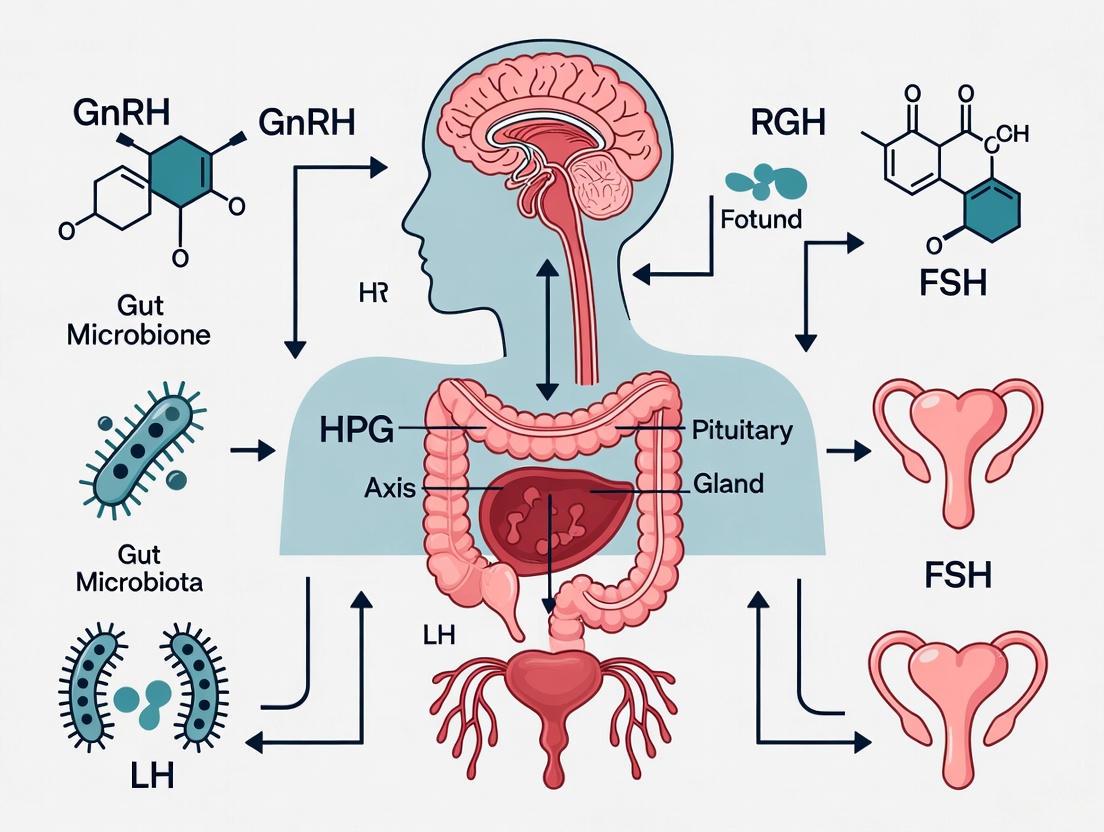
This article synthesizes current research on the bidirectional communication between the gut microbiome and the hypothalamic-pituitary-gonadal (HPG) axis, a critical interface for endocrine regulation.
The Gut Microbiome-HPG Axis: Mechanisms, Therapeutic Applications, and Future Directions in Biomedical Research
Abstract
This article synthesizes current research on the bidirectional communication between the gut microbiome and the hypothalamic-pituitary-gonadal (HPG) axis, a critical interface for endocrine regulation. We explore foundational mechanisms by which gut microbiota and their metabolites influence sex hormone homeostasis, neuroendocrine signaling, and reproductive development. The review further details innovative methodological approaches for investigating this axis, examines the consequences of dysbiosis on reproductive pathologies, and evaluates the translational potential of microbiome-targeted therapies. Aimed at researchers, scientists, and drug development professionals, this analysis provides a comprehensive framework for understanding and leveraging the gut microbiome-HPG axis to advance novel diagnostic and therapeutic strategies in reproductive and endocrine medicine.
Unraveling the Bidirectional Dialogue: Core Mechanisms of the Gut-HPG Axis
The Hypothalamic-Pituitary-Gonadal (HPG) Axis: Core Physiology
The hypothalamic-pituitary-gonadal (HPG) axis is a fundamental neuroendocrine system that regulates development, reproduction, and aging [1]. This axis functions through a tightly coordinated feedback loop beginning with pulsatile secretion of gonadotropin-releasing hormone (GnRH) from the hypothalamus into the hypophyseal portal system [2] [1]. GnRH stimulates the anterior pituitary gland to synthesize and release the gonadotropins luteinizing hormone (LH) and follicle-stimulating hormone (FSH) [2] [1].
These gonadotropins act directly on the gonads: in females, FSH stimulates ovarian follicle growth and maturation, while LH triggers ovulation and corpus luteum formation; in males, FSH initiates and sustains spermatogenesis, and LH controls testicular Leydig cell production of androgens [2]. The gonadal steroids (estrogen, testosterone) and peptides (inhibin) subsequently complete the feedback loop by regulating hypothalamic and pituitary activity [1].
Table 1: Core Components and Functions of the HPG Axis
| Component | Key Secretions | Primary Functions |
|---|---|---|
| Hypothalamus | Gonadotropin-Releasing Hormone (GnRH) | Master regulator; pulsatile release stimulates pituitary [2] [1] |
| Anterior Pituitary | Luteinizing Hormone (LH), Follicle-Stimulating Hormone (FSH) | Stimulates gonadal steroidogenesis and gametogenesis [2] [1] |
| Gonads (Ovaries/Testes) | Estrogen, Testosterone, Progesterone, Inhibin | Sex steroid production; gamete development; negative feedback regulation [2] [1] |
The HPG axis is influenced by various metabolic signals. Leptin and insulin exert stimulatory effects on GnRH secretion, while ghrelin has inhibitory effects, integrating reproductive function with energy status [1]. Kisspeptin, a critical neuropeptide expressed in hypothalamic nuclei, acts as a potent mediator and central processor for various signals to GnRH neurons, essential for puberty onset and reproductive function [1].
The Gut Microbiome as an Emerging Regulator
The human gut microbiome comprises trillions of microorganisms, with the four main phyla being Bacteroidetes, Firmicutes, Proteobacteria, and Actinobacteria [3] [4]. This microbial community is established early in life and is influenced by factors such as delivery mode, breastfeeding, and antibiotic exposure [3] [4]. The composition evolves with age, becoming more complex and stable, and exhibits sexual dimorphism post-puberty, suggesting a bidirectional relationship with host sex hormones [3] [4] [5].
Accumulating evidence positions the gut microbiome as a pivotal regulator of the HPG axis, forming a "gut-microbiome-brain-reproductive axis" [3] [6]. This interaction is mediated through multiple interconnected pathways, including hormone metabolism, immune-inflammatory responses, and neuroendocrine signaling.
Mechanistic Insights into Microbiome-HPG Axis Interactions
The gut microbiota influences reproductive physiology through several key mechanisms:
- The Estrobolome and Hormone Metabolism: The estrobolome is a collection of gut bacterial genes capable of metabolizing estrogen. Bacteria producing the enzyme β-glucuronidase deconjugate estrogens in the gut, allowing their reabsorption into circulation. Dysbiosis can disrupt this process, leading to either estrogen deficiency or hyperestrogenism [6].
- Microbial Metabolites: Short-Chain Fatty Acids (SCFAs): Acetate, propionate, and butyrate are bacterial fermentation products with systemic anti-inflammatory effects. They can influence the HPG axis by modulating the release of GnRH from the hypothalamus, thereby affecting downstream gonadotropin and sex steroid levels [6].
- The Gut-Brain-Reproductive Axis: Gut microbes can produce or influence neurotransmitters like serotonin and γ-aminobutyric acid (GABA), which in turn can affect the pulsatile secretion of GnRH from the hypothalamus, linking gut health directly to neuroendocrine control of fertility [6].
- Immune and Barrier Function: Dysbiosis can compromise intestinal barrier integrity, leading to metabolic endotoxemia. This state of low-grade inflammation, driven by bacterial products like lipopolysaccharides (LPS) entering the bloodstream, is associated with reproductive disorders such as polycystic ovary syndrome (PCOS) and can disrupt folliculogenesis and implantation [6].
Quantitative Evidence: Microbial Signatures in Reproductive Conditions
Clinical studies have identified distinct gut microbial profiles associated with precocious puberty and other reproductive conditions, providing quantitative evidence for the gut-reproductive axis.
Table 2: Gut Microbial Signatures in Human Precocious Puberty Subtypes
| Condition | Key Microbial Shifts | Proposed Functional Consequences |
|---|---|---|
| Central Precocious Puberty (CPP) | ↑ Streptococcus [3] [4]; ↓ Alistipes [3] [4] | Potential biomarker for CPP; Alistipes may have a protective causal effect [3] [4] |
| Obesity-Related Precocious Puberty (OPP) | ↑ Firmicutes/Bacteroidetes ratio; ↓ Bifidobacterium, Anaerostipes; ↑ Klebsiella, Sellimonas, Ruminococcus gnavus group [3] [4] | Altered energy harvest; potential promotion of puberty via SCFA-mediated effects on hormone synthesis and inflammation [3] [4] |
| Idiopathic CPP (ICPP) in Girls | ↑ Alpha diversity; ↑ SCFA-producers (Ruminococcus, Gemmiger, Roseburia, Coprococcus) [3] [4] | Positive correlation between Bacteroides and FSH, and Gemmiger and LH; SCFA-producing species linked to elevated sex hormones [3] [4] |
Experimental Models and Methodologies
Key Experimental Workflow: Fecal Microbiota Transplantation (FMT)
Animal models, particularly gnotobiotic (germ-free) mice, are crucial for establishing causality in gut microbiome research. The following diagram outlines a definitive experimental protocol for investigating the microbiome's causal role in modulating the HPG axis [5].
This methodology demonstrates that the gut microbiome is not merely a passive responder but an active modulator of HPG axis physiology. FMT recipients of gonadectomized donor microbiota showed lower circulating gonadotropin levels compared to recipients of intact-associated microbiota—an effect opposite to that observed in the donors themselves. This proves that the gut microbiome responds to host hormonal status and can subsequently fine-tune the HPG axis's feedback mechanisms [5].
The Scientist's Toolkit: Essential Research Reagents
Table 3: Key Research Reagents and Materials for Investigating the Gut-HPG Axis
| Reagent / Material | Function and Application |
|---|---|
| Gnotobiotic Mouse Models | Germ-free animals provide a sterile canvas for FMT studies to establish causality between microbial communities and host physiology [5]. |
| 16S rRNA Sequencing Reagents | Standardized kits and primers for profiling and comparing gut microbial community structure (e.g., in cecal content) between experimental groups [5]. |
| Hormone Assay Kits | ELISA or RIA kits for quantifying serum levels of LH, FSH, testosterone, and estradiol to assess HPG axis status [5]. |
| SCFA Standards | Chemical standards (Acetate, Propionate, Butyrate) for calibrating mass spectrometry or GC-MS to quantify microbial metabolite production [6]. |
| GnRH Analogs | Pharmacological tools (agonists/antagonists) to experimentally manipulate the HPG axis and observe subsequent changes in the gut microbiome [2] [3]. |
Integrated Signaling Pathways
The complex crosstalk between the gut microbiome and the HPG axis occurs through multiple, interconnected biological pathways. The following diagram synthesizes these primary mechanisms of interaction.
The gut microbiome exerts a profound influence on the host's endocrine system, with the hypothalamic-pituitary-gonadal (HPG) axis representing a critical regulatory pathway governed by microbial activity. This communication occurs primarily through microbial metabolites that serve as key messengers, including short-chain fatty acids (SCFAs), bile acids (BAs), and neurotransmitters. These compounds facilitate a complex bidirectional signaling network between the gastrointestinal tract and reproductive centers, fundamentally linking gut microbial composition to reproductive health and development [7] [8]. The emerging understanding of this gut-microbiota-HPG axis reveals how microbial metabolites can modulate neuroendocrine function, influence pubertal timing, regulate steroidogenesis, and impact overall reproductive fitness [9] [10].
The mechanistic pathways through which these metabolites operate include binding to specific host receptors, modulating systemic and local inflammation, influencing intestinal barrier integrity, and directly altering gene expression in neuroendocrine tissues [8]. SCFAs—primarily acetate, propionate, and butyrate—demonstrate significant effects on the HPG axis through both peripheral and central mechanisms, including regulation of gonadotropin-releasing hormone (GnRH) secretion [9] [10]. Secondary bile acids, microbial transformations of host-derived primary bile acids, have been implicated in processes such as spermatogenesis [11]. Meanwhile, microbially-produced neurotransmitters, including serotonin and GABA, provide a direct neurochemical channel for gut microbes to influence brain function and hormonal secretion [12] [13]. This whitepaper provides a comprehensive technical analysis of these key microbial messengers, their experimental investigation, and their multifaceted roles within the gut-HPG axis.
Short-Chain Fatty Acids (SCFAs): Masters of Metabolic and Endocrine Regulation
Biochemical Properties and Production
Short-chain fatty acids are saturated fatty acids with one to six carbon atoms, primarily produced by microbial fermentation of dietary fibers in the colon. The most abundant SCFAs are acetate (C2), propionate (C3), and butyrate (C4), which typically occur in a molar ratio of approximately 60:20:20 in the human colon [8]. These metabolites are produced by various commensal bacteria, with key SCFA-producers including genera such as Faecalibacterium, Roseburia, Eubacterium, and Bifidobacterium [10]. The production levels are dynamically influenced by dietary composition, particularly the availability of fermentable substrates, with high-fiber diets promoting SCFA synthesis and high-fat/high-sugar diets leading to their reduction [10].
Molecular Mechanisms of Action
SCFAs exert their biological effects through multiple complementary mechanisms. They function as histone deacetylase (HDAC) inhibitors, particularly butyrate, which influences gene expression patterns in host cells [14]. Additionally, SCFAs act as ligands for specific G-protein-coupled receptors (GPCRs), including GPR41 (FFAR3), GPR43 (FFAR2), and GPR109a, which are expressed on various cell types including intestinal epithelial cells, immune cells, and neurons [8]. SCFA receptor activation triggers intracellular signaling cascades that modulate inflammatory responses, hormone secretion, and energy metabolism. Furthermore, SCFAs contribute to maintaining intestinal barrier integrity by enhancing mucus production and strengthening tight junctions, thereby reducing the translocation of pro-inflammatory microbial products into systemic circulation [10] [8].
Impact on the HPG Axis and Experimental Evidence
SCFAs significantly influence the HPG axis at multiple levels. Research has demonstrated that SCFAs can reverse obesity-induced precocious puberty through modulation of hypothalamic signaling pathways. In female rat models of high-fat diet (HFD)-induced early puberty, supplementation with acetate, propionate, butyrate, or their mixture significantly delayed pubertal onset, as indicated by a later first estrous cycle and reduced hypothalamic expression of Kiss1, GPR54, and GnRH mRNA [9]. The proposed mechanism involves SCFA-mediated suppression of the Kiss1-GPR54-PKC-ERK1/2 signaling pathway, ultimately leading to reduced GnRH release and delayed activation of the gonadal axis [9].
Table 1: SCFA Effects on Reproductive Parameters in Experimental Models
| SCFA Type | Experimental Model | Observed Effects on HPG Axis | Proposed Mechanism | Reference |
|---|---|---|---|---|
| Acetate, Propionate, Butyrate (Mixture) | Female rats with HFD-induced precocious puberty | Delayed pubertal onset; later first estrous cycle | Reduced hypothalamic Kiss1, GPR54, and GnRH expression; Kiss1-GPR54-PKC-ERK1/2 pathway | [9] |
| Butyrate | General reproductive health models | Improved ovarian function, menstrual regularity | HDAC inhibition; GPR41/43 activation; reduced hypothalamic inflammation | [14] [10] |
| SCFA-producing bacteria (Roseburia, Faecalibacterium) | Human and animal studies of pubertal timing | Association with normal pubertal timing | Maintenance of gut barrier; reduced systemic inflammation; leptin/insulin sensitivity | [10] |
At the peripheral level, SCFAs influence gonadal function through metabolic and immunomodulatory pathways. They improve insulin sensitivity, which is crucial for proper ovarian function and steroidogenesis [7] [8]. The anti-inflammatory properties of SCFAs help create a favorable environment for reproductive processes by reducing systemic and local inflammation that can disrupt folliculogenesis, implantation, and placental development [8]. Furthermore, SCFAs are implicated in the regulation of steroid hormone metabolism through their influence on the estrobolome—the collection of microbial genes involved in estrogen metabolism [8].
Bile Acids: Microbial Transformers of Endocrine Signaling
Biotransformation and Signaling Pathways
Bile acids are synthesized from cholesterol in the liver as primary bile acids (cholic acid and chenodeoxycholic acid), which are subsequently conjugated to glycine or taurine before biliary secretion. Upon reaching the intestine, gut microbiota extensively modify primary bile acids through deconjugation, dehydroxylation, and epimerization reactions, generating a diverse array of secondary bile acids [11]. Key bacterial enzymes involved in these transformations include bile salt hydrolases (BSH), which are produced by various bacterial genera including Bacteroides, Clostridium, Lactobacillus, Bifidobacterium, and Listeria [11]. The resulting bile acid pool signals through various receptors, including the nuclear receptor farnesoid X receptor (FXR) and the membrane receptor TGR5 (GPBAR1), to regulate metabolic and inflammatory processes.
Role in Reproductive Function and HPG Axis Regulation
Bile acids serve as important signaling molecules in the context of reproductive health. Recent evidence has revealed that gut microbiota-derived secondary bile acids play a crucial role in male spermatogenesis. In a heat stress-induced mouse model, gut dysbiosis impaired spermatogenesis by altering bile acid metabolism, specifically by reducing the abundance of Akkermansia muciniphila, a key bacterium involved in bile acid transformation [11]. Fecal microbiota transplantation from healthy donors or administration of A. muciniphila restored secondary bile acid levels and improved spermatogenic defects, highlighting the gut microbiota-bile acid-testis axis as a critical pathway in male reproduction [11].
Bile acids also influence female reproductive function through their effects on metabolic homeostasis. As potent regulators of glucose and lipid metabolism, bile acids impact energy availability for reproductive processes. Additionally, through their anti-inflammatory actions via FXR and TGR5 signaling, bile acids can modulate ovarian and uterine inflammation that may disrupt normal reproductive function [11]. The interplay between bile acids and steroid hormone metabolism represents another mechanism through which microbial-modified bile acids can influence the HPG axis, though this area requires further investigation.
Neurotransmitters: Direct Neural Channeling of Gut Signals
Microbial Production of Neuroactive Compounds
The gut microbiota represents a significant source of neuroactive molecules, including neurotransmitters, neuromodulators, and their precursors. Key microbially-produced neurotransmitters include serotonin (5-hydroxytryptamine, 5-HT), gamma-aminobutyric acid (GABA), dopamine, norepinephrine, and acetylcholine [12] [13]. Notably, approximately 90% of the body's serotonin is produced in the gut, primarily by enterochromaffin cells whose function is influenced by gut microbes [13]. Various bacterial species can directly produce neurotransmitters; for instance, certain Lactobacillus and Bifidobacterium species produce GABA, Escherichia species produce serotonin, Bacillus species produce norepinephrine and dopamine, and Lactobacillus species produce acetylcholine [12] [13].
Communication Pathways to the HPG Axis
Microbially-derived neurotransmitters influence the HPG axis through multiple communication channels. The primary pathway involves the vagus nerve, which directly connects the gut to central nervous system centers, including those regulating reproductive function [12] [13]. Neurotransmitters produced in the gut can activate vagal afferents, which subsequently modulate neural activity in the hypothalamus, including GnRH pulse generators [12]. Additionally, gut-derived neurotransmitters can influence the HPG axis indirectly through their effects on the hypothalamic-pituitary-adrenal (HPA) axis, which exhibits bidirectional communication with the HPG axis [12] [13]. Chronic stress and HPA axis activation can suppress GnRH pulsatility and gonadal function, creating a pathway through which gut microbiota can influence reproductive function via stress response systems.
Table 2: Microbial Neurotransmitters and Their Potential Effects on Reproduction
| Neurotransmitter | Primary Microbial Producers | Proposed Reproductive Effects | Mechanism of Action |
|---|---|---|---|
| Serotonin (5-HT) | Enterochromaffin cells (microbially modulated), Escherichia species | Mood regulation; potential influence on GnRH pulsatility; uterine contractility | Modulation of hypothalamic circuits; interaction with stress response systems |
| GABA (γ-aminobutyric acid) | Lactobacillus, Bifidobacterium species | Stress reduction; potential modulation of GnRH secretion | Primary CNS inhibitory neurotransmitter; regulates neuronal excitability |
| Dopamine | Bacillus species | Reward, motivation; potential prolactin regulation | Modulation of neuronal circuits upstream of GnRH neurons |
| Norepinephrine | Bacillus species | Stress response; sympathetic regulation of reproduction | Activation of HPA axis; direct effects on gonadal function |
Experimental Methodologies and Technical Approaches
Animal Models and Intervention Studies
Research on microbial metabolites and the HPG axis heavily relies on well-characterized animal models. The high-fat diet (HFD)-induced obesity model in rodents has been extensively used to study the role of gut microbiota in metabolic and reproductive dysfunction [9] [10]. In a typical protocol, rodents are fed a diet containing 45-60% of calories from fat for 8-12 weeks before assessment of pubertal timing or reproductive parameters. To investigate specific microbial metabolites, supplementation studies are conducted where SCFAs (e.g., sodium acetate, sodium propionate, sodium butyrate) are added to drinking water or diet at concentrations typically ranging from 100-200 mM for 4-8 weeks [9]. Germ-free animals provide another powerful model system for investigating microbiota-HPG axis interactions, allowing researchers to study reproductive development and function in the complete absence of microorganisms [12].
For bile acid research, heat stress-induced dysbiosis models have been employed to study the gut-testis axis [11]. In such models, animals are exposed to elevated temperatures (typically 38-40°C) for specified durations to induce gut microbiota alterations and subsequent spermatogenic defects. Interventions include fecal microbiota transplantation from healthy donors or specific pathogen-free (SPF) animals, and administration of specific bacterial species such as Akkermansia muciniphila [11]. Bile acid composition is typically analyzed using high-performance liquid chromatography (HPLC) or mass spectrometry-based techniques from fecal samples, serum, and reproductive tissues [11].
Analytical Techniques for Metabolite Quantification
Accurate quantification of microbial metabolites is essential for understanding their role in HPG axis regulation. SCFA analysis is commonly performed using gas chromatography (GC) with flame ionization detection or mass spectrometry (GC-MS) from fecal samples, serum, or tissue homogenates [9]. Sample preparation typically involves acidification and liquid-liquid extraction with organic solvents such as diethyl ether or ethyl acetate.
Bile acid profiling employs liquid chromatography-tandem mass spectrometry (LC-MS/MS) for sensitive and specific quantification of multiple primary and secondary bile acids simultaneously [11]. Neurotransmitter analysis from gut content, serum, or brain tissue utilizes high-performance liquid chromatography (HPLC) with electrochemical or fluorometric detection, or increasingly, LC-MS/MS for enhanced sensitivity and specificity [12] [13].
Molecular Biology Techniques for Mechanism Elucidation
Elucidation of the molecular mechanisms through which microbial metabolites influence the HPG axis requires a combination of techniques. Gene expression analysis of key reproductive neuropeptides (Kiss1, GNRH, GPR54) and steroidogenic enzymes in hypothalamic and gonadal tissues is typically performed using quantitative real-time PCR (qPCR) or RNA sequencing [9]. Protein levels are assessed via Western blotting or immunohistochemistry [9] [11]. For studying gut barrier function, measurements of circulating lipopolysaccharide (LPS) levels (as an indicator of microbial translocation) and tight junction protein expression (e.g., zonulin-1, occludin) in intestinal tissues are commonly employed [10] [8].
Visualization of Key Signaling Pathways
SCFA Signaling in HPG Axis Regulation
Diagram 1: SCFA Signaling Pathway in HPG Axis Regulation. This diagram illustrates how dietary fiber is fermented by gut microbiota into SCFAs, which then influence the HPG axis through multiple mechanisms including receptor binding (GPR41/43), epigenetic regulation (HDAC inhibition), anti-inflammatory effects (NF-κB suppression), and gut barrier enhancement, ultimately modulating reproductive hormone secretion [9] [10] [8].
Bile Acid and Neurotransmitter Pathways
Diagram 2: Bile Acid and Neurotransmitter Pathways to HPG Axis. This diagram shows two parallel pathways: (1) hepatic primary bile acids are transformed by gut microbiota into secondary bile acids that signal through FXR/TGR5 receptors to influence processes like spermatogenesis; (2) gut microbiota produce neurotransmitters that communicate with the brain via the vagus nerve and HPA axis to modulate GnRH neuronal activity [12] [11] [13].
The Scientist's Toolkit: Essential Research Reagents and Materials
Table 3: Key Research Reagents for Investigating Microbial Metabolites in HPG Axis Research
| Reagent/Material | Function/Application | Example Usage | Technical Notes |
|---|---|---|---|
| Sodium Butyrate, Sodium Acetate, Sodium Propionate | SCFA supplementation studies | In vivo administration to examine effects on pubertal timing, hormone levels | Typically administered in drinking water (100-200 mM) or diet (5% w/w); pH adjustment may be necessary |
| Germ-Free (Axenic) Animals | Studying microbiota-HPG axis interactions | Comparison with conventionally raised animals; microbial transplantation studies | Require specialized isolator facilities; strict protocols to maintain axenic status |
| 16S rRNA Sequencing Reagents | Taxonomic profiling of gut microbiota | Assessing microbial community changes in response to diets, treatments | Primers targeting V3-V4 hypervariable region; standard pipelines (QIIME2, MOTHUR) for analysis |
| Metagenomic Sequencing Kits | Functional potential analysis of microbiome | Identifying microbial genes involved in SCFA production, bile acid transformation | Shotgun sequencing approaches; requires greater sequencing depth than 16S rRNA sequencing |
| GC-MS/LC-MS Systems | Metabolite quantification and identification | Measuring SCFA, bile acid, neurotransmitter levels in feces, serum, tissues | Requires appropriate internal standards (e.g., deuterated analogs for quantification) |
| ELISA/Kits for Hormone Assays | Measuring reproductive hormone levels | Quantifying LH, FSH, testosterone, estradiol in serum/tissue samples | Consider pulsatile secretion patterns in sampling strategy for GnRH-dependent hormones |
| Antibiotic Cocktails (ABX) | Depleting gut microbiota | Establishing causality in microbiota-HPG axis interactions | Broad-spectrum combinations (e.g., ampicillin, neomycin, metronidazole, vancomycin) |
| Fecal Microbiota Transplantation (FMT) Materials | Transferring microbial communities | Testing causal role of specific microbiota phenotypes | Donor screening essential; fresh or frozen preparations; standardized protocols for administration |
| Bile Salt Hydrolase (BSH) Assay Kits | Measuring bacterial BSH activity | Evaluating microbial capacity for bile acid deconjugation | Fluorometric or colorimetric methods; can use specific substrates (e.g., glyco- or tauro-conjugated bile acids) |
| Cell Lines (Neuronal, Intestinal) | In vitro mechanistic studies | Investigating metabolite-receptor interactions, signaling pathways | GT1-7 (GnRH neuronal), SH-SY5Y (neuronal), Caco-2 (intestinal epithelial) cells commonly used |
The evidence summarized in this technical guide unequivocally demonstrates that microbial metabolites—SCFAs, bile acids, and neurotransmitters—function as critical messengers in gut-HPG axis communication. These compounds mediate the influence of gut microbiota on reproductive development, function, and timing through diverse molecular mechanisms involving specific receptor interactions, epigenetic modifications, and systemic immunomodulation [7] [9] [10]. The experimental approaches outlined provide a methodological framework for continued investigation into this rapidly evolving field.
Future research directions should focus on several key areas. First, there is a need to translate findings from animal models to human physiology and pathology, particularly through well-designed clinical studies that account for ethnic, dietary, and lifestyle variability [10]. Second, advanced analytical techniques including multi-omics integration (metagenomics, metabolomics, proteomics) will provide more comprehensive insights into the functional relationships between specific microbial taxa, their metabolic outputs, and host reproductive physiology [10] [8]. Third, the development of targeted interventions—including next-generation probiotics, prebiotics specifically designed to enhance beneficial metabolite production, and potentially fecal microbiota transplantation—holds promise for addressing reproductive disorders linked to gut microbiome dysbiosis [8].
The intricate connections between gut microbial metabolites and the HPG axis underscore the fundamental importance of the gut microbiome as a regulator of reproductive health. As research in this field advances, targeting these microbial metabolites and their signaling pathways may offer novel therapeutic approaches for conditions ranging from precocious puberty to infertility, ultimately expanding our toolkit for managing reproductive disorders through modulation of the gut-reproductive axis.
The estrobolome is defined as the collection of gut microorganisms and their genes capable of metabolizing estrogen and modulating its systemic levels [15] [16]. This emerging concept represents a critical interface between the gut microbiome and the host endocrine system, with profound implications for physiology and disease. Within the broader framework of gut microbiome research on the hypothalamic-pituitary-gonadal (HPG) axis, the estrobolome constitutes a specific biochemical pathway through which gut microbiota directly influence sex hormone homeostasis [6] [17].
Research indicates that the estrobolome functions as a biochemical reactor within the intestinal tract, where microbial genes encode enzymes for specific metabolic functions that transform hormonal inputs into biologically active outputs [15]. This hormonal modulation occurs primarily through the enzymatic processing of estrogen compounds, affecting their bioavailability, reactivity, and eventual excretion. The estrobolome's activity creates a bidirectional relationship between gut microbiota and estrogen levels, whereby gut bacteria regulate estrogen metabolism, and estrogen subsequently influences the composition of the gut microbiota itself [16] [18].
Understanding estrobolome function is particularly relevant for hormone-dependent conditions including breast cancer, polycystic ovary syndrome (PCOS), endometriosis, and other reproductive disorders [15] [6] [19]. Disruptions in estrobolome homeostasis may contribute to disease pathogenesis through altered estrogen exposure, with significant implications for drug development targeting hormone-responsive tissues and conditions.
Biochemical Mechanisms of the Estrobolome
Core Enzymatic Pathways
The estrobolome regulates estrogen homeostasis primarily through the production of microbial enzymes that process estrogen compounds. The most extensively characterized mechanism involves β-glucuronidase enzymes that deconjugate estrogen metabolites [15] [20].
The enterohepatic circulation of estrogens follows a specific pathway: circulating estrogens are conjugated in the liver (reducing reactivity), excreted into bile, and delivered to the small intestine. Rather than being excreted, bacterial β-glucuronidases deconjugate these estrogen compounds into active forms that can be reabsorbed into circulation [15]. This process effectively recycles bioactive estrogens and modulates their systemic availability.
Beyond β-glucuronidases, the estrobolome encompasses additional enzymatic pathways including hydroxysteroid dehydrogenases (HSDs) that interconvert estrone and estradiol, as well as enzymes involved in metabolizing estrogen precursors, metabolites, and phytoestrogens [15]. The collective activity of these enzymes determines the net impact of gut microbiota on host estrogen status.
Key Microbial Taxa
Estrobolome function is distributed across diverse bacterial taxa. Research has identified specific microorganisms associated with estrogen metabolism, including β-glucuronidase-producing bacteria such as Bacteroides, Escherichia coli, and Lactobacillus [20]. Case-control studies in breast cancer have identified Escherichia coli and Roseburia inulinivorans as differentially abundant and functionally relevant between cases and controls [15].
Additional microbial taxa implicated in estrobolome activities include Clostridia species, which demonstrate β-glucuronidase activity, and Bacteroides species, which respond to progesterone exposure [21]. The functional redundancy across taxonomic groups suggests that estrobolome activities are distributed across microbial communities rather than restricted to specific species.
Integration with the Hypothalamic-Pituitary-Gonadal Axis
The estrobolome communicates with the HPG axis through multiple interconnected pathways, forming a gut-microbiota-HPG axis that integrates microbial metabolic function with neuroendocrine regulation [6] [17].
Neuroendocrine Communication Pathways
The gut microbiota influences HPG axis function through neuroendocrine signaling mediated by microbial metabolites including short-chain fatty acids (SCFAs) such as acetate, propionate, and butyrate [6]. These metabolites bind to G-protein-coupled receptors (GPR41, GPR43) expressed on intestinal epithelial cells, immune cells, and hypothalamic tissue, ultimately modulating the release of gonadotropin-releasing hormone (GnRH) [6].
The gut-brain-reproductive axis represents another communication pathway, where gut microorganisms regulate neurotransmitter production (serotonin, GABA) that influences GnRH pulsatility and hypothalamic communication [6]. This neuroendocrine modulation connects gut microbial activity directly to the central regulation of reproductive function.
Immunological and Inflammatory Mediators
Gut microbiota significantly influence systemic inflammation through multiple mechanisms. Dysbiosis can increase intestinal permeability, allowing translocation of microbial products like lipopolysaccharides (LPS) that promote chronic low-grade inflammation [6]. This inflammatory state is characterized by elevated cytokines (TNF-α, IL-6, IL-1β) that can disrupt HPG axis function and impair reproductive processes including folliculogenesis, implantation, and placental development [6] [19].
The estrobolome connects to these inflammatory pathways through the regulation of estrogen levels, which themselves possess immunomodulatory properties. This creates a triangular relationship between gut microbiota, inflammation, and HPG axis function that significantly impacts reproductive health outcomes.
Impact on HPG Axis Function
The integration of estrobolome activity with HPG axis regulation has demonstrable effects on reproductive function. Research indicates that gut microbiome dysbiosis contributes to various reproductive disorders including PCOS, endometriosis, infertility, and pregnancy complications through mechanisms involving immunological dysregulation, systemic inflammation, altered sex hormone metabolism, and HPG axis disturbances [6].
The gut microbiome also influences pubertal timing through modulation of the HPG axis. Specific microbial metabolites including bile acids and tryptophan metabolites can stimulate GnRH release via kisspeptin signaling, potentially influencing the onset of central precocious puberty [21].
Table 1: Microbial Metabolites and Their Effects on the HPG Axis
| Metabolite | Production Pathway | Receptor Targets | HPG Axis Effects |
|---|---|---|---|
| Short-chain fatty acids (SCFAs) | Fiber fermentation | GPR41, GPR43 (FFAR3, FFAR2) | Modulates GnRH release, influences ovarian steroidogenesis |
| Secondary bile acids | Microbial biotransformation | TGR5 | Stimulates GnRH release via kisspeptin signaling |
| Tryptophan metabolites | Microbial metabolism | Aryl hydrocarbon receptor | Affects serotonin synthesis, modulates GnRH secretion |
| Nitric oxide | Microbial secretion | Soluble guanylyl cyclase | Directly stimulates pulsatile GnRH secretion |
Research Methodologies and Experimental Approaches
Analytical Techniques for Estrobolome Characterization
Comprehensive assessment of estrobolome structure and function requires integrated multi-omics approaches. 16S rRNA sequencing provides taxonomic profiling of microbial communities but offers limited functional information [15]. Shotgun metagenomics enables reconstruction of microbial genomes and identification of genes encoding estrogen-metabolizing enzymes, including β-glucuronidases and hydroxysteroid dehydrogenases [15].
Metabolomic analyses of estrogen compounds and their metabolites in serum, urine, and fecal samples provide direct measurement of estrobolome functional output [15]. Advanced methodologies including transcriptomics and proteomics can assess the actual expression of estrobolome genes and enzymes, addressing the critical gap between genetic potential and functional activity [15].
Table 2: Analytical Methods for Estrobolome Research
| Methodology | Application | Key Outputs | Limitations |
|---|---|---|---|
| 16S rRNA sequencing | Microbial community profiling | Taxonomic composition, diversity metrics | Limited functional resolution |
| Shotgun metagenomics | Functional gene cataloging | Gene content, metabolic pathways | Does not measure expression |
| Metabolomics | Estrogen metabolite quantification | Hormone levels, metabolic ratios | Does not identify source microorganisms |
| Transcriptomics | Gene expression analysis | mRNA expression of target genes | Technically challenging for low-abundance targets |
| Proteomics | Enzyme quantification | Protein abundance, post-translational modifications | Complex sample preparation |
Experimental Models and Manipulations
Germ-free mouse models provide a controlled system for investigating estrobolome function through fecal microbiota transplantation from human donors or defined microbial communities [15]. These models enable direct assessment of how specific microbial communities influence estrogen metabolism and HPG axis function.
Bacterial cultivation approaches allow functional characterization of specific estrobolome taxa. Reference strains from culture collections (ATCC, DSM, JCM, NCFB, NCTC) enable standardized investigation of estrogen-metabolizing capabilities [15]. In vitro systems including bioreactors simulating intestinal conditions can assess estrogen transformation by specific bacterial isolates or defined communities [15].
Clinical studies typically employ case-control designs comparing estrobolome characteristics between individuals with hormone-related conditions (breast cancer, PCOS, endometriosis) and healthy controls [15] [6]. These observational studies are complemented by dietary interventions that modulate gut microbiota composition and function to assess effects on estrogen metabolism and HPG axis parameters.
Visualization of Estrobolome Mechanisms and Pathways
Estrobolome Function in Enterohepatic Estrogen Recycling
Gut Microbiota-HPG Axis Signaling Network
Research Reagents and Methodological Toolkit
Table 3: Essential Research Reagents for Estrobolome Studies
| Reagent Category | Specific Examples | Research Applications | Functional Role |
|---|---|---|---|
| Reference Microbial Strains | Bacteroides spp., E. coli, Lactobacillus spp., Clostridia spp. | In vitro characterization of estrogen metabolism | Provide defined systems for studying specific bacterial estrogen-metabolizing capabilities |
| Enzyme Assays | β-glucuronidase activity assays, hydroxysteroid dehydrogenase assays | Functional assessment of estrogen metabolism | Quantify enzymatic activity in bacterial cultures or fecal samples |
| Estrogen Metabolite Standards | Estradiol, estrone, catechol estrogens, estrogen conjugates | Metabolomic analysis calibration | Enable quantification of estrogen compounds in biological samples |
| Sequencing Primers | 16S rRNA primers (V3-V4), shotgun metagenomic libraries | Taxonomic and functional profiling | Characterize microbial community composition and genetic potential |
| Cell Culture Models | Caco-2 cells, HT-29 cells, primary intestinal epithelial cells | Gut barrier function studies | Assess impact of estrobolome metabolites on intestinal permeability |
| Animal Models | Germ-free mice, humanized microbiota mice, ovariectomized rats | In vivo mechanistic studies | Enable controlled investigation of estrobolome function in complex systems |
| Receptor Assays | ERα/ERβ binding assays, GPR30/GPER1 functional assays | Molecular mechanism studies | Characterize interactions between microbial metabolites and host receptors |
Implications for Therapeutic Development
The estrobolome represents a promising therapeutic target for managing hormone-related conditions. Potential intervention strategies include probiotic formulations containing specific estrobolome-modulating bacteria, prebiotic fibers that selectively promote beneficial taxa, and dietary interventions designed to optimize estrobolome function [18].
Pharmacological approaches may target microbial β-glucuronidase activity to modulate systemic estrogen levels. However, current evidence suggests that broader ecological changes in the microbiome may be more influential for carcinogenesis than specific estrobolome mechanisms alone [15]. This highlights the importance of considering the estrobolome within the context of overall microbiome ecology.
Future research directions should focus on clinical translation of estrobolome research, including development of targeted interventions for hormone-related conditions, validation of microbial biomarkers for disease risk assessment, and integration of estrobolome modulation into precision medicine approaches for endocrine and reproductive disorders [15] [6] [18].
The estrobolome represents a critical mechanistic link between gut microbiota and host endocrine function, with particular significance for estrogen homeostasis and HPG axis regulation. Through enzymatic activation of estrogen compounds and production of bioactive metabolites, the estrobolome influences systemic estrogen levels and contributes to the pathophysiology of hormone-related disorders.
Advanced research methodologies including multi-omics approaches and gnotobiotic model systems are elucidating the complex interactions between estrobolome function, HPG axis regulation, and disease states. This growing understanding offers promising avenues for therapeutic intervention targeting the gut microbiome to modulate endocrine function and improve clinical outcomes in hormone-dependent conditions.
Future research should prioritize translational studies validating estrobolome-targeted interventions, with particular attention to the integrated relationship between microbial ecology, endocrine function, and reproductive health across the lifespan.
The hypothalamic-pituitary-gonadal (HPG) axis represents the cornerstone of reproductive physiology, centrally governed by the pulsatile secretion of gonadotropin-releasing hormone (GnRH). Recent research has unveiled a sophisticated bidirectional communication network, the gut-brain-reproductive axis, through which the gut microbiota exerts a profound influence on neuroendocrine function [6]. This axis integrates neurological, endocrine, and immune pathways, allowing gut-derived microbial metabolites and signals to modulate the central circuits controlling GnRH secretion, and consequently, the release of pituitary gonadotropins—luteinizing hormone (LH) and follicle-stimulating hormone (FSH) [6]. Disruption of the gut microbial community, a state known as dysbiosis, has been implicated in the pathogenesis of various reproductive disorders, suggesting that the gut microbiome is a key environmental modifier of reproductive health [6]. This review synthesizes current evidence on the mechanisms by which the gut microbiome modulates GnRH, LH, and FSH secretion, providing a technical guide for researchers and drug development professionals.
Core Neuroendocrine Circuits: GnRH, LH, and FSH Regulation
Fundamentals of the HPG Axis
The HPG axis is a classic neuroendocrine system wherein hypothalamic GnRH neurons release GnRH in a pulsatile manner into the hypophyseal portal system. This pulsatility is critical for its action on the anterior pituitary, where it stimulates the synthesis and secretion of LH and FSH [22]. These gonadotropins then act on the gonads to promote steroidogenesis and gametogenesis. A fundamental principle of HPG axis regulation is sex steroid feedback, where gonadal hormones (e.g., estradiol, testosterone) circulate back to the brain and pituitary to inhibit (negative feedback) or, in a specific context in females, stimulate (positive feedback) GnRH and gonadotropin release [22].
It is crucial to note that GnRH neurons themselves largely lack receptors for sex steroids, indicating that steroid feedback is mediated indirectly through upstream afferent neurons [22]. The differential secretion of LH and FSH observed in various physiological states is modulated by several factors, including GnRH pulse frequency, with lower frequencies favoring FSH biosynthesis, and the interplay of pituitary-derived and peripheral factors such as activins, inhibins, and follistatins [23] [24].
Table 1: Key Regulators of Gonadotropin Secretion
| Regulator | Origin | Primary Action on FSH | Primary Action on LH |
|---|---|---|---|
| GnRH (High Freq) | Hypothalamus | Moderate Stimulation | Strong Stimulation |
| GnRH (Low Freq) | Hypothalamus | Strong Stimulation | Moderate Stimulation |
| Activins | Pituitary / Gonads | Stimulation | Mild Stimulation / None |
| Inhibins | Gonads | Inhibition | Minimal / No Effect |
| Follistatin | Pituitary / Gonads | Inhibition (binds activin) | Minimal / No Effect |
| Estradiol (Low) | Ovaries | Negative Feedback | Negative Feedback |
| Estradiol (High) | Ovaries | Positive Feedback | Positive Feedback (Surge) |
Critical Upstream Regulators: The Role of Kisspeptin
The neuropeptide kisspeptin, encoded by the Kiss1 gene, is a potent stimulator of GnRH neurons and is indispensable for reproductive function. Kisspeptin neurons, which express sex steroid receptors, are considered a primary conduit for sex steroid feedback onto GnRH neurons [22]. In rodents, two primary populations of kisspeptin neurons are critical for this regulation:
- ARCKISS neurons in the arcuate nucleus are implicated in the pulsatile release of GnRH and steroid hormone negative feedback.
- RP3VKISS neurons in the rostral periventricular area are essential for generating the preovulatory GnRH/LH surge in response to rising estradiol levels (positive feedback) [22].
The absolute requirement of kisspeptin signaling for the LH surge is demonstrated by studies showing that its blockade inhibits surge generation [22].
Mechanisms of Gut Microbiome Modulation
The gut microbiota influences the HPG axis through several interconnected mechanistic pathways, primarily involving microbial metabolites, immune signaling, and hormonal regulation.
Metabolic and Neuroendocrine Pathways
Short-chain fatty acids (SCFAs), such as acetate, propionate, and butyrate, are produced by microbial fermentation of dietary fiber. They exert systemic effects by binding to G-protein-coupled receptors (GPCRs) like GPR41 and GPR43, which are expressed on immune cells, intestinal epithelial cells, and in hypothalamic tissue [6] [25]. Through receptor binding and inhibition of histone deacetylases (HDACs), SCFAs can exert anti-inflammatory effects and modulate neuroendocrine function. SCFAs have been shown to influence the release of GnRH from the hypothalamus, thereby affecting the downstream secretion of LH and FSH and influencing menstrual regularity and ovarian function [6].
The gut microbiota also regulates the production of key neurotransmitters, including serotonin and gamma-aminobutyric acid (GABA). A substantial portion of the body's serotonin is synthesized in the gut, and these neurotransmitters can influence the pulsatile secretion of GnRH, linking gut health directly to the central neuroendocrine control of reproduction [13] [6].
Immunological and Inflammatory Pathways
The gut microbiota is fundamental for the development and regulation of both mucosal and systemic immunity. Dysbiosis can compromise intestinal barrier integrity, leading to a condition of metabolic endotoxemia characterized by the translocation of bacterial lipopolysaccharides (LPS) into the systemic circulation [6]. LPS and other microbial products trigger innate immune responses, increasing systemic levels of pro-inflammatory cytokines such as TNF-α and IL-6 [13] [6]. This state of chronic low-grade inflammation can disrupt reproductive function by negatively affecting GnRH secretion, pituitary responsiveness, and direct actions on ovarian steroidogenesis and endometrial receptivity. This inflammatory state is a hallmark of reproductive disorders like polycystic ovary syndrome (PCOS) [6].
Hormonal Regulation: The Estrobolome
The estrobolome is a collection of gut microbiota genes capable of metabolizing estrogen. It primarily functions through bacterial production of the enzyme β-glucuronidase, which deconjugates estrogens in the gut, allowing them to be reabsorbed into the bloodstream [6]. An imbalance in the estrobolome can lead to either deficient estrogen recycling (hypoestrogenism) or excessive reabsorption (hyperestrogenism), contributing to the pathogenesis of estrogen-sensitive conditions such as endometriosis and fibroids, and consequently disrupting the delicate feedback loops of the HPG axis [6].
Table 2: Gut Microbiome Mechanisms Impacting Neuroendocrine Signaling
| Mechanism | Key Microbial Components | Impact on HPG Axis & Hormones |
|---|---|---|
| SCFA Production | Acetate, Propionate, Butyrate | Modulates GnRH release via GPR41/43; exerts anti-inflammatory effects [6]. |
| Neurotransmitter Synthesis | Serotonin, GABA | Influences GnRH neuronal pulsatility and firing activity [13] [6]. |
| Systemic Inflammation | LPS; Pro-inflammatory cytokines (TNF-α, IL-6) | Disrupts GnRH secretion, pituitary function, and ovarian steroidogenesis [13] [6]. |
| Estrogen Metabolism | β-glucuronidase producing bacteria | Alters circulating estrogen levels, disrupting hypothalamic-pituitary feedback [6]. |
| Intestinal Barrier Function | Microbes maintaining mucosal integrity | Prevents leaky gut and subsequent inflammatory cascades that impair reproduction [6]. |
Experimental Models and Methodologies
In Vivo Models for Gut-Brain-Reproductive Axis Research
Germ-Free (GF) Mice: These mice, raised in sterile isolators with no resident microbiota, are a foundational model. Studies involve comparing neuroendocrine parameters (e.g., GnRH/LH pulsatility, steroid hormone levels) in GF mice versus conventionally colonized controls. Subsequent microbial colonization of GF mice allows researchers to identify the specific contributions of defined microbial communities or specific bacterial strains to HPG axis maturation and function [25].
Antibiotic-Treated Mice: Administering non-absorbable or broad-spectrum antibiotics to conventional mice is a common method to induce transient gut dysbiosis. This model allows for the investigation of how microbial depletion in adulthood affects reproductive neuroendocrinology, including the generation of the LH surge and estrous cyclicity [25].
Protocol: Induction of Dysbiosis and LH Surge Measurement in Rodents
- Animal Groups: Randomize adult female rodents (e.g., C57BL/6 mice) into control and antibiotic-treated groups (n ≥ 8/group).
- Dysbiosis Induction: Administer a cocktail of broad-spectrum antibiotics (e.g., ampicillin 1 g/L, vancomycin 0.5 g/L, neomycin 1 g/L, metronidazole 1 g/L) in the drinking water ad libitum for 4-6 weeks. Control group receives sterile water.
- Estrous Cycle Monitoring: Perform daily vaginal cytology to confirm cycle disruption.
- LH Surge Induction: At the end of the antibiotic regimen, ovariectomize all animals. After a recovery period, prime them with a sequential regimen of estradiol benzoate (e.g., 2 μg subcutaneous injection, followed 48 hours later by a higher dose) to mimic the rising E2 levels of the follicular phase and induce a robust LH surge.
- Blood Collection for LH Measurement: On the afternoon of expected positive feedback, perform timed tail-vein or submandibular blood sampling every 1-2 hours over a 6-hour window (e.g., 15:00-21:00).
- Tissue Collection: Euthanize animals and collect trunk blood. Harvest tissues including hypothalamus, pituitary, and colon for subsequent molecular analysis (e.g., qPCR, immunohistochemistry).
- Hormone Assay: Measure LH concentrations in serum samples using a specific and sensitive radioimmunoassay (RIA) or enzyme-linked immunosorbent assay (ELISA).
Molecular and Cellular Techniques
- 16S rRNA Gene Sequencing: Used to characterize the compositional changes in the gut microbiota between control and experimental groups.
- Metabolomics: Liquid chromatography-mass spectrometry (LC-MS) or gas chromatography-mass spectrometry (GC-MS) platforms are employed to quantify microbial-derived metabolites (e.g., SCFAs, bile acids) in serum, feces, and hypothalamic tissue.
- Immunofluorescence/Immunohistochemistry: To assess activation of GnRH and kisspeptin neurons (via c-Fos staining), and localization of immune cell markers and microbial metabolite receptors in brain sections.
- qPCR/Western Blot: To measure gene and protein expression levels of neuropeptides (Kiss1, GnRH), receptors (GPR41, GPR43, TLR4), and inflammatory markers (IL-6, TNF-α) in hypothalamic and pituitary tissue.
Diagram 1: Gut Microbiome Modulation of Neuroendocrine Signaling. This diagram illustrates the primary pathways—metabolic (green), inflammatory (red), and hormonal (blue)—through which the gut microbiota and its metabolites influence the HPG axis, ultimately modulating GnRH and gonadotropin secretion. SCFAs: Short-chain fatty acids; LPS: Lipopolysaccharide; Beta-Gluc: β-glucuronidase; KP: Kisspeptin; RP3V: Rostral Periventricular Nucleus of the 3rd Ventricle.
The Scientist's Toolkit: Research Reagent Solutions
Table 3: Essential Research Reagents for Investigating the Gut-Neuroendocrine Axis
| Reagent / Tool | Function / Target | Example Application |
|---|---|---|
| Broad-Spectrum Antibiotics | Depletes gut microbiota | Induction of experimental dysbiosis in rodent models [25]. |
| Specific Probiotic Strains (e.g., Lactobacillus, Bifidobacterium) | Restores microbial balance | Testing therapeutic interventions to improve reproductive outcomes in dysbiotic models [6]. |
| GPR41/GPR43 Agonists/Antagonists | SCFA Receptors | Pharmacological dissection of SCFA signaling pathways in vitro and in vivo. |
| Kisspeptin Agonists/Antagonists | KISS1R on GnRH neurons | Probing the role of kisspeptin signaling in mediating gut effects on GnRH release [22]. |
| Lipopolysaccharides (LPS) | TLR4 Receptor | Induction of systemic inflammation to study its impact on HPG axis function [6]. |
| ELISA/RIA Kits (LH, FSH, Estradiol) | Hormone Quantification | Measuring circulating levels of gonadotropins and steroids in serum/plasma. |
| Antibodies (c-Fos, Kisspeptin, GnRH, GFAP) | Neuronal / Glial Markers | Immunohistochemical analysis of neuronal activation and circuit morphology. |
The evidence is compelling that the gut microbiome serves as a critical modulator of neuroendocrine signaling, influencing the secretion of GnRH, LH, and FSH through metabolic, immune, and hormonal pathways. The conceptual framework of the gut-immune-brain-reproductive axis provides a more holistic understanding of reproductive physiology and its dysregulation in disease states. Future research should focus on elucidating the precise molecular signals from specific microbial taxa, defining critical windows of developmental programming by the microbiome, and exploring the therapeutic potential of targeted interventions like prebiotics, probiotics, and fecal microbiota transplantation (FMT) for treating reproductive disorders. Integrating microbiome analysis into clinical reproductive medicine holds promise for developing novel diagnostic biomarkers and personalized therapeutic strategies, ultimately advancing drug development for reproductive health.
Diagram 2: Experimental Workflow for Gut-HPG Axis Research. A proposed pipeline for conducting integrated research on the gut microbiome's role in neuroendocrine signaling, combining in vivo models with multi-omics and classical neuroendocrine techniques. GF: Germ-Free; IHC: Immunohistochemistry; WB: Western Blot.
Sexual Dimorphism and Developmental Trajectories of the Gut-HPG Axis
Abstract The gut-microbiome and the hypothalamic-pituitary-gonadal (HPG) axis engage in a complex, bidirectional relationship that is fundamentally shaped by the host's biological sex and developmental stage. This whitepaper synthesizes recent evidence demonstrating that sexual dimorphism in gut microbial communities is driven by the activation of the reproductive axis during puberty and, in turn, influences the axis's feedback mechanisms. Utilizing findings from gnotobiotic models, fecal microbiota transplant (FMT) studies, and hypogonadal organisms, we detail the experimental protocols and mechanistic pathways underpinning this crosstalk. The implications for drug development, particularly for sexually dimorphic diseases, are profound, necessitating a paradigm shift in preclinical research to account for sex, hormonal status, and intestinal niche-specific effects.
Core Concepts and Evidence of a Bidirectional Axis
The gut-HPG axis represents a critical endocrine-microbial interface. The HPG axis, the primary regulator of reproductive function, is no longer viewed in isolation but as part of an integrated system with the gut microbiome. This relationship is bidirectional: while sex hormones shape the microbial landscape, the microbiome itself can modulate the HPG axis's function and feedback loops [5] [26].
The activation of the HPG axis during puberty is a key driver of sexual differentiation in the gut microbiome. Evidence from hypogonadal mouse models (e.g., Gnrh1hpg mice, which lack a functional reproductive axis) confirms that the emergence of sex-specific microbial communities in adulthood is dependent on this activation [27]. Furthermore, the gut microbiome is essential for normal reproductive development, as germ-free mice exhibit impaired reproductive capacity, which can be partially restored through bacterial colonization [5].
Table 1: Key Experimental Evidence for the Gut-HPG Axis
| Experimental Model | Key Intervention/Finding | Outcome on HPG Axis or Microbiome | Citation |
|---|---|---|---|
| Gnotobiotic Mouse FMT | FMT from gonadectomized (GDX) donors to germ-free recipients | Recipients of GDX-microbiota showed lower circulating gonadotropin levels (LH, FSH) and greater testicular weight compared to recipients of intact-microbiota. | [5] |
| Genetic Hypogonadal Mouse | Comparison of wild-type vs. Gnrh1hpg mice (no puberty, no sex steroids) | Hypogonadism altered bacterial composition in an intestinal niche-specific manner (e.g., families: Bacteroidaceae, Eggerthellaceae). Identified reproductive-axis dependent and independent effects on sex differences. | [27] |
| Human & Animal Meta-analysis | Correlation between gut microbiome (GM) composition and Central Precocious Puberty (CPP) | Identified specific bacterial signatures and microbial metabolites (SCFAs) associated with CPP, suggesting GM influences HPG axis activation timing. | [21] |
| Avian Transcriptome Study | Sex-biased gene expression in the HPG axis tissues of rock doves | Reported greater sex-biased differential expression in the pituitary than hypothalamus, with implications for sexually dimorphic reproductive strategies. | [28] |
Detailed Experimental Methodologies
To investigate the gut-HPG axis, researchers employ sophisticated models that allow for the dissection of causality and mechanism. Below are detailed protocols for two pivotal approaches.
Fecal Microbiota Transplant (FMT) in Gnotobiotic Models
This protocol is designed to test the causal effect of a donor's microbiota and hormonal status on a recipient's HPG axis.
Donor Model Preparation:
- Use 8-week-old, conventionally raised male and female mice.
- Apply surgical modifications to create six donor groups:
- Hormonally intact sham controls (INT-M, INT-F).
- Gonadectomized groups (ORX-M: orchiectomized males; OVX-F: ovariectemized females).
- Gonadectomized groups with hormone supplementation (ORX+T-M; OVX+E-F), using subcutaneous pellets designed to release physiologically relevant hormone levels over 8 weeks.
- House donors for 8 weeks post-surgery to allow for microbial community stabilization [5].
Recipient Colonization:
- Use 6-week-old, sex-matched, germ-free mice of the same genetic background as recipients.
- Collect fecal samples from donor groups at 16 weeks of age.
- Prepare a homogenized fecal slurry in anaerobic phosphate-buffered saline.
- Administer the slurry to recipient mice via oral gavage to colonize their guts. Maintain control groups with sham transplants.
- Euthanize recipient mice 4 weeks post-colonization for sample collection [5].
Sample Collection and Analysis:
- Host Physiology: Collect serum to measure gonadotropins (LH, FSH) and gonadal sex hormones (testosterone, estradiol) via ELISA or mass spectrometry. Weigh testes and uteri.
- Microbiome Analysis: Collect cecal content and/or fecal samples. Extract genomic DNA and perform 16S rRNA gene sequencing (e.g., V4 region) on an Illumina MiSeq platform. Analyze data using QIIME 2 or MOTHUR for alpha/beta diversity and differential abundance (e.g., DESeq2, LEfSe).
- Metabolomics: Analyze serum using global untargeted metabolomics via LC-MS to identify microbiome-driven shifts in metabolites [5].
Characterizing Niche-Specific Intestinal Microbiomes
This protocol assesses how sex and the HPG axis influence microbial communities in different intestinal niches, which is missed by fecal sampling alone.
Animal Model:
- Utilize the hypogonadal (Gnrh1hpg/hpg) mouse model and wild-type littermate controls. This genetic model prevents pubertal activation and sex steroid production from embryonic development.
Sample Collection from Intestinal Niches:
- Euthanize adult mice and immediately dissect the intestinal tract.
- Isolate specific sections: duodenum, ileum, cecum, and collect feces.
- For each intestinal section, carefully flush the lumen with sterile PBS to collect luminal content.
- For mucosal samples, scrape the intestinal mucosa after luminal flush.
- Flash-freeze all samples in liquid nitrogen and store at -80°C [27].
DNA Extraction and Sequencing:
- Due to low microbial biomass in small intestine samples (especially mucosa), use a DNA extraction kit optimized for low biomass and include negative controls.
- Amplify the 16S rRNA gene (e.g., V3-V4 region) with universal bacterial primers.
- Sequence on an Illumina platform. Use a high sequencing depth to capture the low-diversity communities of the small intestine.
Bioinformatic and Statistical Analysis:
- Process sequences through a standard pipeline (DADA2 for ASV inference, SILVA database for taxonomy assignment).
- Analyze data separately by intestinal niche (lumen/mucosa, duodenum/ileum/cecum/feces).
- Test for effects of sex, genotype (wild-type vs. hypogonadal), and their interaction on alpha and beta diversity metrics (e.g., PERMANOVA on Weighted UniFrac distances).
- Use differential abundance tools (e.g., ANCOM-BC, MaAsLin2) to identify taxa associated with sex and reproductive status in each niche [27].
Signaling Pathways and Mechanistic Insights
The communication along the gut-HPG axis involves multiple, interconnected pathways mediated by microbial metabolites and host receptors.
Diagram 1: Gut-HPG Axis Signaling Pathways. Microbial metabolites influence the HPG axis via immune activation, enteroendocrine signaling, bile acid metabolism, and the vagus nerve. Sex hormones from the gonads reciprocally shape the gut microbiome, creating a feedback loop. SCFAs: Short-Chain Fatty Acids; GnRH: Gonadotropin-Releasing Hormone; LH: Luteinizing Hormone; FSH: Follicle-Stimulating Hormone.
The mechanistic links, as illustrated in Diagram 1, involve:
- Microbial Metabolites: Short-chain fatty acids (SCFAs) like butyrate can elevate gonadotropin levels [5] [21]. Gut bacteria also deconjugate bile acids, and the resulting secondary bile acids can activate the TGR5 receptor in the hypothalamus, stimulating kisspeptin and subsequent GnRH release to initiate puberty [21].
- Immune Modulation: The microbiome regulates systemic cytokine levels. Pro-inflammatory cytokines can suppress hypothalamic GnRH expression, demonstrating a direct neuroimmune link [5] [26].
- Enzymatic Activity: Gut bacteria express enzymes like β-glucuronidase, which deconjugates estrogens in the enterohepatic circulation, increasing their bioavailability and influencing systemic estrogen levels and HPG feedback [21] [26].
The Scientist's Toolkit: Research Reagent Solutions
Table 2: Essential Research Reagents for Investigating the Gut-HPG Axis
| Reagent / Model | Specific Example | Function & Application in Research |
|---|---|---|
| Gnotobiotic Mouse Models | Germ-free C57BL/6J mice | Provides a sterile, microbiome-free host for FMT studies to establish causality between a defined microbiota and HPG axis phenotypes. |
| Genetic Hypogonadal Models | B6.Cg-Gnrh1hpg/J (JAX:000804) | Allows study of HPG axis effects without surgical intervention; crucial for isolating puberty's role in microbiome sexual differentiation. |
| Hormone Pellet Implants | 17β-Estradiol, Testosterone (e.g., Innovative Research of America) | Provides steady, physiologically relevant hormone replacement in gonadectomized models to control for hormone loss in experiments. |
| 16S rRNA Sequencing Kits | Illumina 16S Metagenomic Sequencing Library Prep | Profiles and compares microbial community composition (bacteria/archaea) from diverse sample types (feces, lumen, mucosa). |
| Metabolomics Services | LC-MS/MS Global Untargeted Metabolomics | Identifies and quantifies shifts in the serum or cecal metabolome (SCFAs, bile acids) driven by microbiome and hormonal status. |
| ELISA Kits | Mouse/Rat LH, FSH, Testosterone, Estradiol ELISA | Precisely quantifies serum levels of key HPG axis hormones to assess axis status in response to microbial manipulations. |
Implications for Drug Development and Future Research
The sexual dimorphism and developmental plasticity of the gut-HPG axis have critical implications for pharmaceutical research and therapeutic development.
- Target Identification: Microbial metabolites (SCFAs, secondary bile acids) and the enzymatic pathways that produce them (e.g., bile salt hydrolases, β-glucuronidase) represent novel therapeutic targets for treating reproductive disorders like central precocious puberty or infertility [21] [26].
- Preclinical Model Optimization: The profound niche-specificity of gut microbiome effects mandates that preclinical studies move beyond fecal sampling to include small intestinal and mucosal communities [27]. Furthermore, the strong sex and hormonal status effects demand the routine inclusion of both sexes and careful consideration of estrous cycle stages in experimental design.
- Personalized Medicine: Therapeutic strategies aimed at modulating the microbiome, such as probiotics or prebiotics, will need to be tailored according to the patient's sex, age, and hormonal status to maximize efficacy [29] [27]. The development of "microbiome-based therapeutics" for sexually dimorphic diseases is a promising frontier [5].
In conclusion, the gut-HPG axis is a dynamic, sexually dimorphic system integral to reproductive health and disease. A comprehensive understanding of its developmental trajectories and underlying mechanisms is essential for the next generation of endocrine and metabolic therapeutics.
From Bench to Biomarker: Research Models and Analytical Frameworks for the Gut-HPG Axis
Gnotobiotic and Germ-Free Mouse Models in Causal Mechanistic Studies
The intricate relationship between the gut microbiome and the hypothalamic-pituitary-gonadal (HPG) axis represents a frontier in endocrine and metabolic research. Within this field, gnotobiotic and germ-free (GF) mouse models have emerged as indispensable tools for moving from correlative observations to causal mechanistic understanding. These controlled models enable researchers to dissect how microbial communities influence the complex feedback loops governing reproduction, development, and sexually dimorphic disease patterns. Germ-free mice are animals completely devoid of all detectable microorganisms, maintained in sterile isolators to prevent accidental colonization [30] [31]. In contrast, gnotobiotic mice (from the Greek "gnotos" meaning known and "bios" meaning life) are GF animals that have been intentionally colonized with one or more known microorganisms [30]. This precision allows researchers to study host-microbe interactions with unprecedented control, providing a critical experimental platform for investigating how the gut microbiome modulates neuroendocrine signaling.
The importance of these models has grown with increasing recognition that the gut microbiome functions as a virtual endocrine organ, capable of regulating systemic hormone homeostasis. Unlike conventional or specific pathogen-free (SPF) mice that harbor complex, undefined microbial communities, gnotobiotic models offer reduced experimental variability and enable precise manipulation of microbial variables [32] [33]. This review comprehensively examines the application, methodology, and translational value of gnotobiotic and GF mouse models for elucidating causal mechanisms in microbiome-HPG axis research, providing technical guidance for researchers pursuing mechanistic studies in this rapidly advancing field.
Model Classification and Standardization
Comparative Analysis of Mouse Model Types
The selection of an appropriate animal model is critical for experimental design in microbiome-endocrine research. The table below summarizes the key characteristics, advantages, and limitations of different mouse models used in gut microbiome studies.
Table 1: Comparison of Mouse Models Used in Microbiome and HPG Axis Research
| Model Type | Microbial Status | Key Characteristics | Advantages | Disadvantages |
|---|---|---|---|---|
| Germ-Free | Completely devoid of all microorganisms [31] | Produced via hysterectomy rederivation; maintained in sterile isolators [30] | Microbial "blank slate"; enables study of complete microbial absence [34] | Requires specialized facilities; developmental abnormalities [31] [33] |
| Gnotobiotic | Colonized with known microorganisms [30] | Includes monocolonized and defined flora models | Controlled reductionist approach; causal mechanisms [32] | Limited complexity; may not reflect full microbial community [32] |
| Humanized Gnotobiotic | Colonized with human fecal microbiota [34] | GF mice transplanted with human donor microbiota | Models human microbial ecosystems; clinically relevant [34] | Human-mouse physiological differences; colonization challenges [34] |
| Specific Pathogen-Free (SPF) | Free of specific pathogens but undefined commensals [30] | Routine health monitoring for defined pathogen list | Standardized for most research; widely available | Unknown microbial variables; inter-facility variability [30] [32] |
| Antibiotic-Treated | Microbiota-depleted via antibiotics [33] | Broad-spectrum antibiotics deplete but don't eliminate microbes | Accessible; no specialized facilities required; applicable to any genotype [33] | Incomplete depletion; off-target drug effects; potential for resistance [34] [33] |
Standardized Gnotobiotic Consortia for Reproducible Research
To address variability in microbial composition across facilities, several standardized gnotobiotic models have been developed. These defined microbial communities offer reproducible systems for investigating microbiome-HPG axis interactions:
GM15 Model: A simplified mouse microbiota composed of 15 strains from 7 of the most prevalent bacterial families in C57BL/6J SPF mice. This model recapitulates extensive functionalities of SPF microbiota and demonstrates increased reproducibility by limiting confounding effects of fluctuating microbiota composition [32].
Oligo-MM12 Model: Comprising 12 defined cultivable mouse commensal bacteria representing major bacterial phyla of the mouse gut. This community is transmissible and stable over consecutive mouse generations and across animal facilities, enabling consistent experimental outcomes [32].
Altered Schaedler Flora (ASF): Developed in the late 1970s, this consortium contains eight defined bacterial strains that protect ex-GF mice from opportunistic pathogen colonization. While valuable, its limited phylogenetic diversity and metabolic capabilities restrict its representation of full SPF microbial functions [32].
These standardized models are particularly valuable for HPG axis research where hormonal fluctuations can interact with microbial composition, as they provide stable baseline conditions for detecting treatment effects and identifying mechanistic pathways.
Methodological Framework: Experimental Approaches and Protocols
Establishment and Maintenance of Germ-Free and Gnotobiotic Colonies
The generation and maintenance of GF mouse colonies requires specialized infrastructure and rigorous protocols. GF mice are typically produced by hysterectomy rederivation, where pregnant dams near term undergo surgical removal of the uterus, which is then transferred to a sterile isolator where the pups are delivered and resuscitated [30] [31]. These founder animals are then maintained in flexible film isolators with strict sterilization protocols for all entering materials, including autoclaved food, water, and bedding [31]. Regular monitoring for contamination is essential, employing a combination of culturing methods, microscopy, serological testing, and molecular techniques including 16S rRNA gene sequencing [31] [33].
The derivation of gnotobiotic mice involves intentional colonization of GF animals with defined microbial communities. For reductionist studies, monocolonization (introduction of a single bacterial strain) allows precise attribution of observed phenotypes to specific microorganisms [31]. For more complex interactions, defined microbiota models use standardized consortia like GM15 or Oligo-MM12 [32]. In HPG axis research specifically, humanized gnotobiotic models have proven valuable, where GF mice are colonized with human fecal microbiota to create a model that more closely approximates human microbial ecosystems [34].
Table 2: Key Methodological Considerations for Gnotobiotic Experiments in HPG Axis Research
| Experimental Parameter | Considerations | Impact on HPG Axis Research |
|---|---|---|
| Donor Selection | Age, sex, geography, diet, health status of donor [34] | Critical for studying puberty, sex differences; donor hormones affect microbial composition [5] [21] |
| Colonization Method | Oral gavage, fecal microbiota transplantation (FMT) [34] | Ensures reproducible microbial exposure; FMT from gonadectomized donors reveals HPG-microbiome feedback [5] |
| Colonization Timing | Pre-pubertal vs. post-pubertal colonization [35] [27] | Determines microbiome influence on sexual maturation; critical for developmental studies [35] [27] |
| Mouse Genetic Background | Strain-specific differences in microbial colonization [34] | Affects hormonal responses; influences sex steroid receptor expression [27] |
| Sample Collection Timeframe | Duration from colonization to assessment [5] | 4-week colonization sufficient for physiological changes in HPG hormones [5] |
Experimental Workflows for HPG Axis Research
The diagram below illustrates a representative experimental workflow for investigating microbiome-HPG axis interactions using gnotobiotic models, specifically highlighting approaches that have successfully demonstrated causal relationships.
Experimental Workflow for Microbiome-HPG Axis Studies
This workflow demonstrates how gnotobiotic approaches can test specific hypotheses about microbiome-HPG interactions. For instance, studies have used fecal microbiota transplantation (FMT) from gonadectomized donors to germ-free recipients, revealing that the gut microbiome not only responds to but also actively modulates HPG axis feedback mechanisms [5]. This reciprocal relationship highlights the value of gnotobiotic models for establishing causality in microbiome-endocrine research.
Signaling Pathways in Microbiome-HPG Axis Communication
Mechanisms of Microbial Influence on Neuroendocrine Function
The gut microbiome communicates with the HPG axis through multiple interconnected pathways, which can be systematically investigated using gnotobiotic models. The following diagram illustrates the primary mechanistic pathways through which gut microbes influence HPG axis function and sex hormone homeostasis.
Mechanisms of Microbiome-HPG Axis Communication
Key Pathway Mechanisms Elucidated Through Gnotobiotic Models
Research using gnotobiotic models has identified several specific mechanisms through which gut microbes influence HPG axis function:
Short-Chain Fatty Acid (SCFA) Signaling: Microbial fermentation products including acetate, propionate, and butyrate can directly influence gonadotropin release. Studies in sheep have demonstrated that SCFA supplementation elevates gonadotropin levels compared to non-supplemented controls [5].
Bile Acid Metabolism: The gut microbiome modifies bile acid composition, which in turn can influence neuroendocrine function. Research has shown that humanized gnotobiotic mice exhibit shifts in conjugated-to-deconjugated bile acid ratios during development, with increased expression of TGR5 receptors in the hypothalamus. TGR5 activation stimulates GnRH release via kisspeptin signaling, potentially influencing pubertal timing [21].
Neurotransmitter Production: Certain gut microbes can produce or influence neurotransmitters including serotonin, dopamine, and nitric oxide, which may directly stimulate pulsatile GnRH secretion and activate the HPG axis [21].
Immune-Mediated Pathways: Microbial components such as lipopolysaccharide (LPS) can suppress GnRH expression, as demonstrated in both rat and sheep models [5]. Conversely, probiotic supplementation with Bacillus licheniformis has been shown to elevate GnRH expression in laying hens, improving reproductive performance [5].
Enzyme-Mediated Hormone Regulation: Gut microbial enzymes, particularly β-glucuronidase, play a crucial role in the enterohepatic circulation of sex hormones by deconjugating estrogen and potentially affecting its bioavailability and physiological impact [21].
These mechanisms collectively demonstrate the multifaceted nature of microbiome-HPG axis communication and highlight how gnotobiotic models enable precise dissection of these complex interactions.
Applications in HPG Axis Research: Key Findings and Case Studies
Pubertal Timing and Sexual Maturation
Gnotobiotic models have provided compelling evidence for the gut microbiome's role in regulating pubertal timing. Research has demonstrated that GF mice exhibit impaired reproductive development, including altered estrous cycles in females and reduced sperm motility in males [5]. Bacterial colonization normalizes some aspects of fertility, including copulation frequency and implantation rates, indicating that the microbiome provides essential signals for proper reproductive function [5].
The relationship between gut health and early puberty onset has been systematically explored through meta-analyses that incorporate both human and gnotobiotic animal studies. These analyses have identified specific bacterial signatures and microbial metabolites, such as short-chain fatty acids, associated with central precocious puberty (CPP) in females [21]. The evidence suggests that gut microbiome alterations may influence activation of the HPG axis, though causality in human populations remains an area of active investigation.
Sex Differences and Hormonal Feedback Mechanisms
Gnotobiotic models have been instrumental in elucidating the bidirectional relationship between sex hormones and the gut microbiome. Studies using the hypogonadal (hpg) mouse model, which carries a mutation in the Gnrh1 gene preventing HPG axis activation, have revealed that the reproductive axis is essential for proper sexual differentiation of the gut microbiome [35] [27]. These studies demonstrate that HPG axis activation during puberty is required for the development of sex-specific microbial communities, with hypogonadal mice showing distinct taxonomic composition and functional potential compared to wild-type controls [35].
Furthermore, elegant FMT experiments have demonstrated that the gut microbiome not only responds to but actively modulates HPG axis feedback mechanisms. When GF mice received microbiota from gonadectomized donors, the recipients showed significantly lower circulating gonadotropin levels compared to recipients of microbiota from intact donors—an effect opposite to the hormonal status of the donors themselves [5]. This finding provides compelling evidence that the gut microbiome can actively regulate HPG axis homeostasis, rather than merely passively responding to hormonal changes.
Regional Specialization of Microbiome-HPG Interactions
Advanced gnotobiotic studies have revealed that the influence of the HPG axis on the gut microbiome exhibits significant regional specialization along the gastrointestinal tract. Comprehensive analysis of luminal and mucosal communities from the duodenum, ileum, and cecum has demonstrated that both sex and reproductive status impact bacterial composition in an intestinal section and niche-specific manner [27]. Hypogonadism has been significantly associated with bacteria from the Bacteroidaceae, Eggerthellaceae, Muribaculaceae, and Rikenellaceae families, which possess genes for bile acid metabolism and mucin degradation [27].
This regional specialization has important methodological implications for HPG axis research. Studies relying exclusively on fecal samples may miss significant sex and hormonal effects present in the small intestine, particularly mucosal environments [27]. The finding that fecal samples do not accurately reflect bacterial diversity in the small intestine underscores the importance of considering intestinal niche when designing studies of microbiome-HPG interactions [27].
Table 3: Essential Research Resources for Gnotobiotic HPG Axis Studies
| Resource Category | Specific Examples | Application in HPG Axis Research |
|---|---|---|
| Mouse Models | Germ-Free C57BL/6J [31]; Hypogonadal (Gnrh1hpg) mice [35] [27]; Humanized gnotobiotic models [34] | Gnrh1hpg model allows study of HPG axis inactivation from development; Humanized models bridge mouse-human translation |
| Standardized Microbial Consortia | GM15 [32]; Oligo-MM12 [32]; Altered Schaedler Flora (ASF) [32] | Defined communities reduce variability; Enable causal attribution in hormone-microbe studies |
| Molecular Reagents | 16S rRNA primers (515F/806R) [35]; DNeasy PowerSoil Pro Kit [35]; ZymoBIOMICS Standards [35] | Essential for microbial community analysis; Verification of germ-free status |
| Hormone Assessment | LH/FSH ELISA; LC-MS/MS for sex steroids [5] | Quantitative measurement of HPG axis hormones; Critical endpoint for microbiome effects |
| Specialized Equipment | Flexible film isolators [31]; Anaerobic chambers [32] | Maintenance of germ-free status; Cultivation of anaerobic gut microbes |
Gnotobiotic and germ-free mouse models have transformed our ability to establish causal mechanisms in microbiome-HPG axis research. These controlled experimental systems have revealed the profound influence of gut microbes on pubertal timing, sexual differentiation, and hormone feedback loops, while also demonstrating how hormonal status shapes microbial communities. The continuing development of standardized gnotobiotic consortia and sophisticated humanized models promises to enhance reproducibility and clinical translatability in this rapidly advancing field.
Future research directions will likely include more complex multi-kingdom models incorporating fungi, viruses, and archaea; temporal studies examining critical windows of microbial exposure during development; and integration of gnotobiotic approaches with emerging technologies such as organoids, single-cell sequencing, and CRISPR-based microbial editing. As these tools evolve, so too will our understanding of the intricate dialogues between our gut microbial inhabitants and the neuroendocrine systems that govern reproduction and development. For researchers investigating microbiome-endocrine interactions, gnotobiotic models remain indispensable for moving beyond correlation to definitive mechanistic understanding.
Fecal Microbiota Transplantation (FMT) Protocols for Functional Validation
Faecal microbiota transplantation (FMT) is an emerging therapeutic intervention that involves transferring gut microbiota from a healthy donor to a recipient with a disease associated with gut dysbiosis. While highly effective for recurrent Clostridioides difficile infection (rCDI), its application is expanding to other gastrointestinal and extra-intestinal conditions, including those linked to disruptions of the hypothalamic-pituitary-gonadal (HPG) axis [36] [37]. The functional validation of FMT products is a critical prerequisite for ensuring both safety and efficacy, particularly in a research context aimed at deciphering complex physiological axes. This guide details standardized protocols for the functional validation of FMT, with specific consideration for its application in gut-brain-gonadal axis research.
The efficacy of FMT depends on a multifaceted validation process that spans the entire workflow, from donor selection to the assessment of clinical outcomes in recipients. A recent scoping review established that validation strategies in the literature are often sparse and divergent, highlighting a pressing need for standardization [36]. The following sections and corresponding diagrams provide a comprehensive framework for researchers to validate FMT protocols rigorously.
FMT Validation Framework: A Three-Domain Model
A robust validation strategy for FMT should be exhaustive, assessing not just the final product but the entire process. A proposed model categorizes this into three core domains: Processing, Content Analysis, and Clinical Effect [36]. The interrelationship of these domains is outlined in the diagram below.
Domain 1: Processing Validation
This initial domain focuses on the preparatory stages of FMT, ensuring that the source material is of high quality and consistently processed.
Donor Selection and Screening
A rigorous, multi-step screening process is essential to minimize the risk of adverse events [37] [38].
- Health Questionnaire: A comprehensive survey covering medical history, travel history, sexual behavior, and antibiotic use within the preceding 3-6 months.
- Clinical Blood and Stool Testing: Blood tests should screen for HIV, Hepatitis A, B, C, and Treponema pallidum. Stool tests should rule out common enteric pathogens, C. difficile, and parasites [37].
- Consideration of Baseline Characteristics: Emerging factors such as donor age, body weight, genetic relatedness to the recipient, and lifestyle are increasingly recognized as potential influencers of FMT success and should be documented [37].
Standardized Processing Protocol
Encapsulated FMT is a patient-friendly formulation that requires precise processing to maintain microbial viability [36].
- Pre-processing: Fresh stool should be processed within a short timeframe (e.g., 2-6 hours of donation) under anaerobic conditions (e.g., in an anaerobic chamber) to preserve oxygen-sensitive obligate anaerobes. The stool is homogenized in a sterile saline or glycerol-based cryoprotectant solution.
- Preservation: The homogenate is filtered to remove particulate matter and can be used fresh or cryopreserved at -80°C with a cryoprotectant like glycerol. Stability studies should validate the shelf-life.
- Encapsulation: For capsule formulations, the filtrate is concentrated and encapsulated in acid-resistant capsules (e.g., hypromellose) to ensure delivery to the intestines. The entire process must be validated for microbial stability and consistency between batches [36].
Domain 2: Content Analysis Validation
This domain involves a rigorous quantitative and qualitative assessment of the FMT product itself.
Microbiota Measures
A combination of culture-dependent and culture-independent methods is required to fully characterize the product.
- Microbial Count and Viability: Total microbial load should be quantified using flow cytometry or quantitative PCR (qPCR). Culture-based methods on various media are used to determine the concentration of viable aerobic and anaerobic bacteria, expressed as colony-forming units (CFU) per gram or mL [36].
- Community Composition: 16S rRNA gene amplicon sequencing is standard for assessing alpha-diversity (richness, evenness) and beta-diversity (community similarity between samples). Metagenomic shotgun sequencing can provide higher taxonomic resolution and functional gene profiling.
Table 1: Key Microbiota Measures for FMT Content Validation
| Validation Covariable | Recommended Method(s) | Target / Output Metrics |
|---|---|---|
| Total Microbial Load | Flow cytometry, qPCR | Cells/mL or gene copies/mL |
| Viability & Cultivability | Aerobic/anaerobic culture on selective media | CFU/mL for key taxa (e.g., Bacteroides, Lactobacillus) |
| Bacterial Diversity | 16S rRNA gene sequencing | Alpha-diversity (Shannon, Chao1 indices), Beta-diversity (PCoA plots) |
| Community Composition | 16S rRNA or metagenomic sequencing | Relative abundance of phyla (e.g., Firmicutes, Bacteroidetes) and key genera |
| Functional Potential | Metagenomic shotgun sequencing | Abundance of KEGG/eggNOG pathways, CAZymes, and specific genes (e.g., for SCFA production) |
Dose Measures
Standardizing the administered dose is critical for reproducibility. The dose is typically defined by the total microbial load (e.g., ≥10^10 - 10^11 viable bacteria per dose for rCDI) and the volume or number of capsules administered [36].
Domain 3: Clinical Effect Validation
Validation culminates in demonstrating that the FMT product successfully engrafts in the recipient and exerts the intended biological and clinical effects.
Engraftment Assessment
Engraftment is the process by which donor-derived microorganisms establish themselves in the recipient's gut. It is a key indicator of FMT success but is not always directly correlated with clinical improvement [37].
- Methodology: Compare the pre- and post-FMT microbiota of the recipient to the donor's microbiota using longitudinal stool sample collection.
- Analysis: Metagenomic sequencing data is analyzed with tools like SourceTracker or DESMAN to estimate the fractional contribution of the donor microbiota to the recipient's post-FMT community. A high donor fraction indicates successful engraftment [37].
Measurement of Clinical and Physiological Outcomes
The ultimate validation is the FMT's impact on the recipient's health and relevant physiological pathways, particularly the HPG axis.
- Primary Clinical Outcomes: These are disease-specific. For rCDI, it is the resolution of diarrhea without recurrence. For HPG-axis-related research, outcomes could include improvements in PCOS symptoms (menstrual regularity, hyperandrogenism) or metabolic parameters [39] [8].
- Mechanistic & HPG-Axis Specific Outcomes: When researching the gut-HPG axis, it is critical to measure downstream physiological and molecular changes.
- Hormone Assays: Use Enzyme-Linked Immunosorbent Assay (ELISA) or Radioimmunoassay (RIA) kits to quantify serum/plasma levels of gonadotropins (LH, FSH) and gonadal steroids (Testosterone, Estradiol, Progesterone) [5].
- Molecular Analyses: Quantify relevant microbial metabolites in recipient serum and stool, such as Short-Chain Fatty Acids (SCFAs) via Gas Chromatography-Mass Spectrometry (GC-MS). Assess inflammatory markers (e.g., IL-6, TNF-α, LPS) using ELISA [5] [39] [8].
Table 2: Key Physiological Outcomes for Validating FMT Impact on the HPG Axis
| Outcome Category | Specific Measures | Analytical Technique |
|---|---|---|
| HPG Axis Hormones | Luteinizing Hormone (LH), Follicle-Stimulating Hormone (FSH) | ELISA, RIA |
| Gonadal Steroids | Testosterone, Estradiol, Progesterone | ELISA, RIA, LC-MS/MS |
| Microbial Metabolites | Short-Chain Fatty Acids (Acetate, Propionate, Butyrate) | GC-MS, LC-MS |
| Inflammatory Status | Lipopolysaccharide (LPS), IL-6, TNF-α | ELISA, LAL assay for LPS |
| Reproductive Phenotype | Ovarian morphology (PCOS models), testicular weight, sperm motility | Histology, gravimetric analysis, CASA system |
The Gut-HPG Axis: Mechanistic Insights and FMT Experimental Design
The gut microbiome influences the HPG axis through several interconnected mechanisms, forming a gut-brain-gonadal loop. Understanding these mechanisms is vital for designing informative FMT validation experiments in this field. The diagram below illustrates the primary signaling pathways involved.
Key Mechanistic Pathways:
- SCFA Signaling: Gut bacteria produce SCFAs that can improve insulin sensitivity and, in preclinical models, directly inhibit ovarian androgen synthesis, thereby ameliorating features of PCOS [39] [8].
- Immuno-inflammatory Pathway: Dysbiosis can increase intestinal permeability, allowing LPS into circulation. This metabolic endotoxemia triggers systemic inflammation, which can disrupt GnRH secretion and gonadal function [8].
- Estrobolome Function: The gut microbiota regulates the enterohepatic circulation of estrogens via the enzyme β-glucuronidase. Dysbiosis can alter estrogen levels, impacting estrogen-sensitive conditions [8].
- Neuroendocrine Modulation: The gut microbiota can produce or influence neurotransmitters (e.g., GABA, serotonin) that affect the pulsatile release of GnRH from the hypothalamus, thus influencing the entire HPG axis [40] [8].
The Scientist's Toolkit: Essential Reagents and Materials
Table 3: Key Research Reagent Solutions for FMT Validation
| Item / Reagent | Function / Application | Example Specifics |
|---|---|---|
| Anaerobic Chamber | Provides an oxygen-free environment for processing stool to preserve obligate anaerobes. | Coy Laboratory Type B Vinyl Chamber |
| Cryoprotectant | Protects microbial cells during freeze-thaw cycles; essential for creating FMT banks. | Glycerol (10-15% final concentration) |
| Acid-Resistant Capsules | Oral delivery of FMT material, protecting the contents from stomach acid. | Hypromellose (HPMC) capsules |
| DNA Extraction Kit | Isolation of high-quality microbial DNA from stool for sequencing. | Qiagen DNeasy PowerSoil Pro Kit |
| 16S rRNA Primers & Reagents | Amplification and sequencing of the bacterial 16S gene for community profiling. | Illumina 16S Metagenomic Sequencing Library Prep (e.g., 515F/806R primers) |
| Selective Culture Media | Enumeration of specific viable bacterial groups (aerobic/anaerobic). | Bacteroides Bile Esculin Agar, MRS Agar for Lactobacilli, etc. |
| ELISA Kits | Quantification of host hormones (LH, FSH, Testosterone) and inflammatory markers (IL-6, TNF-α). | Commercial kits (e.g., R&D Systems, Abcam) |
| SCFA Analysis Standards | Quantification of microbial metabolites in stool and serum. | GC-MS standard mix (Acetate, Propionate, Butyrate, etc.) |
The functional validation of FMT is a multi-dimensional process that requires careful attention to donor selection, processing methodology, comprehensive content analysis, and rigorous assessment of engraftment and clinical/physiological outcomes. For research focused on the gut microbiome's impact on the HPG axis, validation protocols must be extended to include specific hormone assays and mechanistic biomarkers. As the field progresses, standardizing these validation protocols will be paramount for generating reproducible, reliable data and for developing safe and effective microbiome-based therapeutics for endocrine and reproductive disorders.
The gut microbiome has emerged as a critical regulator of human physiology, with particular relevance to endocrine function through its influence on the hypothalamic-pituitary-gonadal (HPG) axis. Advanced multi-omics technologies provide unprecedented capabilities to characterize microbial communities and their functional interactions with host systems. The integration of 16S rRNA sequencing, metagenomics, and metabolomics enables researchers to move beyond correlation to mechanistic understanding of how gut microbes influence hormonal pathways, including those governing pubertal development and reproductive health [41] [3].
Research has demonstrated that gut microbiome dysbiosis is associated with central precocious puberty (CPP), with specific taxonomic alterations including Streptococcus enrichment and Alistipes depletion observed in affected children [42] [3]. The gut microbiota appears to regulate pubertal timing through multiple interconnected mechanisms, including hormone metabolism (particularly estrogen reactivation via microbial β-glucuronidase activity), neuroendocrine signaling pathways involving nitric oxide, and immune-inflammatory responses [3] [8]. These findings position multi-omics approaches as essential tools for unraveling the complex interactions within the gut-brain-reproductive axis.
Core Methodologies and Technical Specifications
16S rRNA Sequencing
16S ribosomal RNA (16S rRNA) sequencing targets hypervariable regions of the bacterial 16S rRNA gene to profile microbial community composition and diversity. This approach provides a cost-effective method for identifying broad taxonomic shifts in microbial populations but offers limited functional information [43] [44].
Table 1: 16S rRNA Sequencing Technical Parameters and Primer Selection
| Parameter | Options | Considerations | Performance Metrics |
|---|---|---|---|
| Target Regions | V1-V2, V3, V4, V1-V3 | V1-V2 & V3 show lower bias; V1-V3 exhibits higher bias [44] | Taxonomic resolution varies by region |
| Sequencing Platforms | MiSeq, IonTorrent, MGIseq-2000, Sequel II, MinION | Short-read platforms (MiSeq, IonTorrent, MGIseq-2000) show lower bias than long-read platforms [44] | Turnaround time: 2-48 hours |
| Bioinformatics Pipelines | QIIME, MOTHUR, Usearch | QIIME used for alpha/beta diversity calculations [42] [43] | Sensitivity: 70-80% depending on method [45] |
| Primer Pairs | 27F-337R (V1-V2), 337F-518R (V3), 518F-800R (V4) | Region selection critically impacts microbial profile accuracy [44] | Bias index calculation recommended |
The experimental workflow begins with DNA extraction from fecal samples using commercial kits such as the DNA E.Z.N.A. Stool DNA Kit, with DNA quality verified via spectrophotometry and gel electrophoresis [43]. The target region is then amplified using region-specific primers, followed by library preparation and sequencing. Bioinformatic processing typically involves quality filtering, clustering of sequences into operational taxonomic units (OTUs) at 97% similarity threshold, and taxonomic classification using reference databases such as Silva [42] [43].
Metagenomics
Shotgun metagenomics sequences all microbial DNA in a sample without targeting specific genes, enabling simultaneous assessment of taxonomic composition and functional potential. This approach provides greater resolution than 16S sequencing and identifies microbial genes encoding metabolic enzymes, antibiotic resistance, and other functional elements [41] [43].
The methodological workflow involves DNA fragmentation followed by library construction using kits such as TruSeq DNA PCR-Free Sample Preparation Kit [42]. Sequencing generates millions of short reads that are processed through quality control, assembly into contigs, and gene prediction. Functional annotation utilizes databases including Kyoto Encyclopedia of Genes and Genomes (KEGG) and Clusters of Orthologous Groups (COG) to identify metabolic pathways and biological processes [43].
Table 2: Metagenomic Sequencing and Analysis Parameters
| Analysis Stage | Methods/Tools | Output | Application Examples |
|---|---|---|---|
| Library Prep | TruSeq DNA PCR-Free Kit, fragmentation | Unbiased genomic libraries | Pathogen detection in clinical samples [41] |
| Sequencing | Illumina, Nanopore, PacBio | Short or long reads | Antimicrobial resistance gene profiling [41] |
| Assembly | MetaSPAdes, MEGAHIT | Contigs, scaffolds | Identification of novel microbial taxa |
| Gene Prediction | Prodigal, MetaGeneMark | Open reading frames (ORFs) | Functional capacity assessment |
| Annotation | KEGG, COG, eggNOG | Metabolic pathways | Microbial pathway enrichment in disease [43] |
| Quantification | HUMAnN2, MetaPhlAn | Taxon abundances | Microbial community shifts in CPP [42] |
Metabolomics
Metabolomics characterizes the small molecule metabolites in biological systems, providing a direct readout of microbial functional activity and host-microbe interactions. This approach is particularly valuable for identifying microbial metabolites that influence host physiology, including short-chain fatty acids (SCFAs), bile acids, and neurotransmitters [39] [43].
The technical workflow typically employs ultra-performance liquid chromatography coupled to quadrupole-time-of-flight mass spectrometry (UPLC-Q-TOF-MS) for comprehensive metabolite profiling [42] [43]. Fecal or blood samples are prepared using methanol/water extraction, followed by chromatographic separation and mass spectrometry analysis in both positive and negative ionization modes. Data processing involves peak detection, alignment, and metabolite identification using reference standards and databases [43].
Integrated Multi-omics Workflows and Data Integration Strategies
Experimental Design Considerations
Effective multi-omics integration requires careful experimental design with appropriate sample sizes, collection protocols, and controls. Studies investigating gut microbiome-HPG axis interactions typically employ matched sample collection (feces, blood, tissue) from both case and control groups [42]. For example, research on central precocious puberty collected 150 samples (91 CPP patients, 59 healthy controls) for simultaneous 16S rRNA sequencing and metabolomic profiling [42].
Longitudinal sampling designs are particularly valuable for capturing dynamic changes in microbial communities and metabolic profiles during pubertal development. Additionally, standardization of sample collection and storage protocols is critical, as variations in these procedures can introduce significant bias in microbiome analysis [44].
Computational Integration Methods
Data integration strategies for multi-omics datasets can be categorized as statistical, correlation-based, or network-based approaches. Correlation networks are widely used to identify relationships between microbial taxa and metabolic features, as demonstrated in studies of inflammatory bowel disease and type 2 diabetes that identified microbiota-metabolite correlations with diagnostic potential [41].
More advanced machine learning approaches enable the development of predictive models for disease classification and biomarker identification. Random forest models have been successfully applied to integrated microbiome and metabolome data, achieving high accuracy (AUC 0.832-1.00) in distinguishing CPP patients from healthy controls [42]. The Boruta algorithm can further refine feature selection by identifying variables with statistically significant importance measures [42].
Visualization and Interpretation
Effective visualization tools are essential for interpreting complex multi-omics datasets. The Cellular Overview in Pathway Tools software enables simultaneous visualization of up to four omics data types on metabolic network diagrams, with different data types represented through distinct visual channels (e.g., reaction arrow color and thickness, metabolite node color and thickness) [46]. This approach facilitates identification of coordinated changes across molecular layers and places findings in the context of known biological pathways.
Applications to HPG Axis Research
Insights into Pubertal Development and Disorders
Multi-omics approaches have revealed specific gut microbiome alterations associated with pubertal disorders. In central precocious puberty (CPP), integrated analysis demonstrates significant changes in microbial composition, with increased Streptococcus abundance and distinct metabolic profiles involving nitric oxide synthesis pathways [42]. Large-scale genetic studies using Mendelian randomization have confirmed associations between CPP and specific microbial taxa, with Alistipes exhibiting protective effects [3].
In obesity-related precocious puberty (OPP), multi-omics profiling reveals characteristic shifts in the Firmicutes/Bacteroidetes ratio and decreased beneficial microbes such as Bifidobacterium, along with increased opportunistic pathogens like Klebsiella [3]. Random forest models have identified Sellimonas and the Ruminococcus gnavus group as potential biomarkers for OPP [3].
Mechanistic Insights into Gut-HPG Axis Communication
Integrated multi-omics studies provide mechanistic insights into how gut microbes influence the HPG axis through several interconnected pathways:
Short-chain fatty acid (SCFA) signaling: Microbial metabolites including acetate, propionate, and butyrate modulate inflammatory responses and influence GnRH secretion through G-protein-coupled receptors (GPR41, GPR43) and histone deacetylase inhibition [39] [8].
Estrogen metabolism: The gut "estrobolome" regulates estrogen recycling through microbial β-glucuronidase activity, influencing systemic estrogen levels and associated reproductive functions [8].
Neuroendocrine modulation: Gut microbes produce neurotransmitters including GABA and serotonin that may influence GnRH pulsatility and hypothalamic function [8].
Immune system mediation: Microbial components such as lipopolysaccharides (LPS) can trigger systemic inflammation that disrupts HPG axis function, particularly in conditions like PCOS [39] [8].
The Scientist's Toolkit: Essential Research Reagents and Platforms
Table 3: Essential Research Reagents and Platforms for Multi-omics HPG Axis Research
| Category | Specific Products/Platforms | Application | Technical Considerations |
|---|---|---|---|
| DNA Extraction Kits | DNA E.Z.N.A. Stool DNA Kit, GenElute Bacterial Genomic DNA Kit | Microbial DNA isolation from fecal samples | Critical standardization point; impacts community representation [43] [44] |
| Quantification Methods | Qubit Fluorometer, Droplet Digital PCR (ddPCR) | Nucleic acid quantification | ddPCR provides absolute quantification for mock communities [44] |
| Sequencing Platforms | Illumina MiSeq, IonTorrent, PacBio Sequel II, Oxford Nanopore | 16S and metagenomic sequencing | Platform selection affects error profiles and read lengths [44] |
| Chromatography-Mass Spectrometry | UPLC-Q-TOF-MS, UHPLC reversed-phase systems | Metabolite separation and detection | Enables polar metabolite detection; multiple ionization modes [42] [43] |
| Bioinformatics Tools | QIIME, MOTHUR, Pathway Tools, Random Forest | Data processing and multi-omics integration | QIIME for diversity analysis; machine learning for classification [42] [46] |
| Reference Databases | Silva, KEGG, COG, HMDB | Taxonomic and functional annotation | KEGG for pathway analysis; Silva for 16S taxonomy [42] [43] |
The integration of 16S rRNA sequencing, metagenomics, and metabolomics provides a powerful framework for investigating the complex interactions between gut microbiota and the HPG axis. These approaches have already identified specific microbial taxa and metabolic pathways associated with pubertal disorders, offering potential biomarkers and therapeutic targets. As multi-omics technologies continue to advance, they will further illuminate the mechanistic basis of gut microbiome-endocrine interactions, ultimately enabling novel interventions for reproductive disorders through targeted microbial modulation.
Network Analysis and Computational Modeling of Microbiome-Host Interactions
The human body hosts complex communities of microorganisms that influence development, physiology, and health [47]. The gastrointestinal tract contains trillions of these microorganisms, collectively known as the gut microbiome, which engage in continuous bidirectional communication with their host [5]. Recent advances in research methodologies have enabled a new systems-level perspective on these microbial collections, revealing their profound influence on numerous physiological processes, including reproductive function [5] [47].
This technical guide explores the sophisticated computational and network analysis approaches used to decipher microbiome-host interactions, with specific focus on their application within the context of gut microbiome effects on the hypothalamic-pituitary-gonadal (HPG) axis. The HPG axis represents a critical neuroendocrine pathway regulating reproductive function through a tightly controlled feedback loop involving gonadotropin-releasing hormone (GnRH), luteinizing hormone (LH), follicle-stimulating hormone (FSH), and gonadal sex hormones [5]. Understanding how the gut microbiome modulates this axis requires integrating multi-omics data, computational modeling, and network-based analyses to reveal the complex mechanisms underlying this cross-talk [48].
Core Concepts and Biological Foundations
The Hypothalamic-Pituitary-Gonadal Axis and Microbial Interference
The hypothalamic-pituitary-gonadal (HPG) axis functions as the primary regulator of reproductive physiology in mammals. This neuroendocrine system operates through a sequential signaling cascade: the hypothalamus releases gonadotropin-releasing hormone (GnRH), which stimulates the anterior pituitary gland to secrete gonadotropins (luteinizing hormone [LH] and follicle-stimulating hormone [FSH]); these hormones then act on the gonads to promote steroidogenesis and gametogenesis [5]. Sex hormones, including estrogen from ovaries and testosterone from testes, subsequently regulate the upstream components of the HPG axis through feedback mechanisms to maintain homeostasis [5].
Emerging evidence indicates that the gut microbiome substantially influences HPG axis function through multiple potential mechanisms. Germ-free (sterile) mouse studies have demonstrated that the absence of gut microbiota impairs reproductive capacity, including disrupted estrous cycles in females, reduced sperm motility in males, and decreased copulation frequency and implantation rates [5]. Furthermore, germ-free mice exhibit lower levels of gonadotropins (both FSH and LH) compared to conventionally raised mice with intact microbiomes [5]. These findings strongly suggest that the gut microbiome plays an essential role in the proper development and function of the reproductive system.
Methodological Framework for Microbiome-Host Research
Investigating microbiome-host interactions requires a multi-faceted methodological approach that spans experimental models, high-throughput technologies, and computational integration:
Experimental Models: Research in this field utilizes both conventionally raised and gnotobiotic (defined microbiota) mouse models to investigate causal relationships. Surgical interventions such as gonadectomy (orchiectomy in males, ovariectomy in females) with or without hormone supplementation allow researchers to manipulate the host's endocrine status and observe subsequent effects on the microbiome [5]. Fecal microbiota transplantation (FMT) from donor mice with altered hormonal status into germ-free recipients serves as a powerful tool to demonstrate the microbiome's capacity to influence host physiology [5].
High-Throughput Technologies: Modern microbiome research employs a suite of omics technologies to characterize microbial communities and their functions. 16S rRNA gene sequencing provides insights into microbial composition and community structure [47]. Shotgun metagenomics enables comprehensive profiling of the collective genetic material within a microbiome sample [47]. Metatranscriptomics, metaproteomics, and metabolomics further reveal the functional activity of microbial communities by measuring gene expression, protein production, and metabolite synthesis, respectively [48].
Computational Integration: The complexity and volume of data generated by these approaches necessitate advanced computational methods for integration and analysis. Genome-scale metabolic models (GEMs) reconstruct the metabolic networks of microorganisms and can predict their metabolic capabilities and interactions [47]. Network-based analyses identify co-occurrence patterns and potential interactions between microbial taxa, helping to elucidate the ecological structure of microbial communities [5] [49]. Multi-omics data integration frameworks aim to combine different layers of biological information (genomic, transcriptomic, proteomic, metabolomic) to build comprehensive models of host-microbiome interactions [48].
Computational Modeling Approaches
Genome-Scale Metabolic Modeling
Genome-scale metabolic models (GEMs) represent a powerful computational framework for predicting the metabolic behavior of microorganisms and microbial communities. These models mathematically reconstruct the complete set of metabolic reactions within an organism based on its genomic annotation, creating a network that links genes to proteins to reactions to metabolites [47].
When applied to microbiome research, GEMs enable researchers to predict the metabolic outputs of microbial communities and their potential effects on host physiology. For instance, the MAMBO (Metabolomic Analysis of Metagenomes using fBa and Optimization) tool incorporates metagenomics data with GEMs to predict distinct metabolomes for different body sites, including the gut [47]. This approach can identify microbial metabolites that may influence host endocrine function, including HPG axis regulation.
Table 1: Computational Modeling Approaches in Microbiome Research
| Modeling Approach | Primary Function | Application in HPG Axis Research |
|---|---|---|
| Genome-Scale Metabolic Models (GEMs) | Predict metabolic capabilities and fluxes of microorganisms from genomic data | Identify microbial metabolites that may modulate sex hormone levels or affect HPG axis function |
| Community Interaction Networks | Model how microbial communities respond to dietary changes or other perturbations | Predict how host diet-induced microbiome changes might indirectly influence HPG axis through metabolic shifts |
| Metagenomic Predictors | Infer metagenomic functional potential from microbiome community structure | Identify enriched or depleted metabolic pathways in microbiomes from hosts with altered HPG axis function |
| Multi-omics Integration | Combine different data types (genomic, transcriptomic, metabolomic) to build comprehensive models | Reveal how microbial genetic capacity, gene expression, and metabolic output collectively influence host endocrine pathways |
Network-Based Analysis of Microbial Communities
Network-based approaches analyze microbial communities as interconnected systems rather than collections of independent taxa. These methods identify co-occurrence or co-exclusion patterns between microbial species, helping to elucidate the ecological structure of microbial communities and identify keystone species that may disproportionately influence community stability and function [5] [49].
In the context of HPG axis research, network analysis has revealed that the gut microbiota composition shifts significantly in response to changes in the HPG axis status. For example, studies have shown that gonadectomy in mice results in significant alterations in gut microbial communities, and these changes can be partially reversed with sex hormone supplementation [5]. Network analyses have further demonstrated that male microbiota appears to have a more concerted response to HPG axis alterations compared to female microbiota [5].
Diagram 1: Bidirectional interactions between the HPG axis and gut microbiome.
Network-based models have proven particularly valuable because they can capture the complex, emergent properties of microbial communities that cannot be predicted by analyzing individual taxa in isolation. Research has demonstrated that network-based models are significantly more predictive of host-microbiome interactions than similar but non-network-based approaches [49]. These models can highlight specific metabolites and metabolic pathways proposed to be associated with microbiome-mediated effects on host physiology, including potential effects on the HPG axis.
Experimental Protocols and Methodologies
Establishing Hormonally-Modified Donor Models
To investigate the gut microbiome's role in mediating HPG axis function, researchers have developed specialized experimental protocols using murine models. The following methodology outlines the key steps for creating donor mice with altered hormonal status and subsequent fecal microbiota transplantation:
Animal Models and Surgical Interventions: Utilize 8-week-old conventionally raised mice as microbiota donors. Implement surgical modifications to create six distinct experimental groups: (1) hormonally intact male sham controls (INT-M); (2) orchiectomized males (ORX-M); (3) orchiectomized males with testosterone supplementation (ORX+T-M); (4) hormonally intact female sham controls (INT-F); (5) ovariectomized females (OVX-F); and (6) ovariectomized females with 17β-estradiol supplementation (OVX+E-F) [5].
Hormone Supplementation Protocol: Administer sex steroid pellets designed to release steady, physiologically relevant levels of hormones over an 8-week period. These pellets serve as positive controls to suppress gonadotropin levels in gonadectomized microbiota donors [5].
Microbiome Donor Preparation: Eight weeks after surgical and hormonal interventions, collect fecal samples from donor mice at age 16 weeks. Verify expected hormonal alterations in donor mice through serum analysis—gonadectomy should significantly increase FSH and LH levels, while sex steroid supplementation should lower these gonadotropin levels compared to gonadectomized-only animals [5].
Table 2: Key Reagents and Research Solutions for Microbiome-HPG Axis Studies
| Reagent/Solution | Function/Application | Example Use in Protocol |
|---|---|---|
| Sex Steroid Pellets (Testosterone, 17β-Estradiol) | Provide sustained, physiologically relevant hormone levels | Supplementation in gonadectomized mice to establish hormone-replaced groups |
| Germ-Free Mice | Recipients for fecal microbiota transplantation; allow determination of microbiome's causal effects | Colonization with donor microbiota to test effects on HPG axis without confounding resident microbiome |
| 16S rRNA Sequencing Reagents | Characterize microbial community composition and structure | Analysis of cecal microbiota in donor and recipient mice to confirm microbial shifts |
| Serum Gonadotropin Assays (LH, FSH) | Quantify circulating levels of key HPG axis hormones | Verification of expected HPG axis alterations in donor mice post-surgery; assessment of HPG axis status in FMT recipients |
| Metabolomic Analysis Platforms | Profile global serum metabolome to identify microbiome-derived metabolites | Identification of metabolic pathways differentially regulated due to sex and received microbiome |
Fecal Microbiota Transplantation and Recipient Assessment
The transplantation of microbiota from hormonally-modified donors to germ-free recipients represents a critical methodology for establishing causal relationships between the microbiome and HPG axis function:
Recipient Preparation and Colonization: Utilize 6-week-old, sex-matched germ-free mice of the same genetic strain as recipients. Colonize these recipients using fecal microbiota transplant (FMT) from the hormonally-modified donor mice. This approach enables researchers to assess the causal effects of gut microbiota on the HPG axis without the confounding influence of the recipients' pre-existing microbiome [5].
Post-Colonization Assessment: Euthanize FMT recipient mice four weeks after colonization—a timeframe previously established as sufficient to detect physiologically relevant changes driven by the gut microbiome. Collect key outcome measures including serum gonadotropins (FSH and LH), gonadal weights (testes or uterus), intragonadal sex hormone levels (testosterone or estradiol), and cecal microbiota composition [5].
Microbiome and Metabolite Analysis: Perform 16S rRNA gene sequencing on cecal samples to assess community-level differences in microbial composition. Conduct global serum metabolomic profiling to identify differentially abundant metabolites. Employ network analyses to identify relationships between bacterial taxa and visualize these interactions through co-occurrence networks and minimum spanning trees [5].
Diagram 2: Experimental workflow for investigating microbiome-HPG axis interactions.
Key Findings and Quantitative Insights
Research integrating network analysis and computational modeling with experimental approaches has yielded significant insights into microbiome-HPG axis interactions:
Microbiome Responses to HPG Axis Alterations
Studies have consistently demonstrated that the gut microbiome responds to changes in HPG axis status. In male and female donor mice, gonadectomy results in significant shifts in gut microbial communities compared to sex-matched intact controls [5]. Furthermore, sex steroid supplementation in gonadectomized animals significantly shifts microbial communities compared to gonadectomized mice without hormone replacement, indicating that sex hormones play a crucial role in shaping the gut microbiota [5].
Network analyses of microbial communities have revealed that male microbiota has a more concerted response to HPG axis alterations compared to female microbiota, suggesting potential sex-specific differences in how the microbiome interacts with the endocrine system [5]. These analyses, which visualize bacterial taxa as nodes and significant relationships as edges, have identified specific microbial co-occurrence patterns associated with different HPG axis states.
Microbiome-Mediated Modulation of HPG Axis Function
Fecal microbiota transplantation experiments have provided compelling evidence for the microbiome's capacity to influence HPG axis function. Recipient mice colonized with microbiota from gonadectomized donors show significantly lower circulating levels of both FSH and LH compared to recipients of intact-associated microbiota—an effect opposite to that observed in the FMT donors themselves [5]. This paradoxical finding suggests the existence of compensatory mechanisms or feedback loops between the microbiome and HPG axis.
Male FMT recipients of gonadectomized-associated microbiota also exhibit significantly greater testicular weight compared to recipients of intact-associated microbiota, despite the lack of statistically significant differences in intratesticular testosterone [5]. In female recipients, while statistical significance was not always achieved, effect size measurements (Cohen's d ranging from 0.58 to 1.07) indicated a strong biological impact of gonadectomized-associated microbiota on HPG axis signaling [5].
Table 3: Quantitative Effects of Gonadectomized-Associated Microbiota on HPG Axis Parameters in FMT Recipients
| Parameter Measured | Sex of FMT Recipients | Effect Size/Difference | Statistical Significance |
|---|---|---|---|
| Serum FSH Levels | Male | Large effect size (Cohen's d = 1.34) | p < 0.05 |
| Serum LH Levels | Male | Large effect size (Cohen's d = 1.81) | p < 0.05 |
| Testicular Weight | Male | Significantly greater | p < 0.05 |
| Intratesticular Testosterone | Male | No statistical difference | Not Significant |
| Serum Gonadotropins | Female | Effect size range: 0.58-1.07 | Not Significant |
| Uterine Weight | Female | Effect size range: 0.58-1.07 | Not Significant |
| Ovarian Estradiol | Female | Effect size range: 0.58-1.07 | Not Significant |
Metabolic Pathways in Microbiome-HPG Axis Communication
Global metabolomic analyses of serum from FMT recipient mice have revealed that multiple metabolically unrelated pathways may be involved in driving differences in serum metabolites due to sex and received microbiome [5]. These findings suggest that the gut microbiome influences the HPG axis through diverse metabolic mechanisms rather than through a single pathway or mechanism.
The identification of these metabolic pathways aligns with research showing that the gut microbiome produces numerous neuroactive and endocrine-active compounds, including short-chain fatty acids (SCFAs) that have been shown to elevate gonadotropin levels in animal models [5]. This metabolic cross-talk represents a promising area for future research into the mechanisms underlying microbiome-HPG axis interactions.
Future Directions and Applications
The integration of network analysis and computational modeling with traditional experimental approaches holds significant promise for advancing our understanding of microbiome-HPG axis interactions. Future research directions include:
Therapeutic Development: A deeper understanding of interactions between the gut microbiota and the neuroendocrine-gonadal system may contribute to developing therapies for sexually dimorphic diseases and reproductive disorders [5]. Microbiome-based interventions could potentially offer novel treatment approaches for conditions ranging from infertility to hormone-sensitive cancers.
Multi-Omics Integration: Future studies should continue to develop more sophisticated methods for integrating multiple layers of omics data (genomic, transcriptomic, proteomic, metabolomic) to build comprehensive models of host-microbiome interactions [48]. Such integration will be essential for understanding the complex mechanisms by which the microbiome influences host physiology.
Advanced Modeling Approaches: Computational models that incorporate both host and microbial metabolism, as well as their interactions, will provide more accurate predictions of how dietary interventions, pharmaceutical treatments, or other perturbations might affect the microbiome-HPG axis relationship [49].
Longitudinal Study Designs: Implementing longitudinal sampling and analysis in both animal models and human studies will help elucidate the temporal dynamics of microbiome-HPG axis interactions, potentially revealing critical windows of susceptibility or intervention opportunities across the lifespan.
As these methodological advances continue to mature, researchers will be better equipped to decipher the complex dialogue between the gut microbiome and the neuroendocrine system, ultimately leading to improved strategies for modulating this axis to treat reproductive disorders and other health conditions influenced by sex hormone homeostasis.
In Vitro Systems for Studying Host-Microbe-Endocrine Cell Interactions
The human gastrointestinal tract hosts a complex ecosystem of trillions of microorganisms that collectively form the gut microbiota. This community plays a vital role in maintaining host homeostasis through diverse mechanisms, including extensive cross-talk with the endocrine system [7]. Research over the past decade has established that the gut microbiome significantly influences the hypothalamic-pituitary-gonadal (HPG) axis, the primary regulator of reproductive development and function [3] [50]. This interaction represents a critical pathway through which gut microbes can modulate sexual maturation, steroid hormone levels, and reproductive health.
The mechanistic basis of the gut microbiota-HPG axis interaction involves multiple interconnected pathways. Gut microbes directly participate in the metabolism and reactivation of steroid hormones, such as estrogen, through enzymatic activities including β-glucuronidase production [3]. They also generate neuroactive metabolites and short-chain fatty acids (SCFAs) that can signal through the gut-brain axis to influence the pulsatile release of gonadotropin-releasing hormone (GnRH) from the hypothalamus [3] [50]. Furthermore, the microbiome modulates immune function and inflammatory responses that subsequently affect endocrine signaling [7]. Clinical evidence supporting these mechanisms includes observations that children with central precocious puberty (CPP) exhibit distinct gut microbiota compositions compared to normal children, characterized by increased Streptococcus and decreased Alistipes abundance [3]. These findings highlight the essential role of host-microbe-endocrine interactions in human physiology and the need for advanced experimental systems to study them.
Anaerobic In Vitro Flow Model: A Paradigm for Host-Microbe Co-Culture
System Design and Oxygen Control Mechanism
Conventional in vitro models face significant challenges in replicating the human gut environment, particularly in maintaining the strict anaerobic conditions required for obligate anaerobic gut bacteria while simultaneously supporting the viability of oxygen-requiring mammalian cells [51]. To address this limitation, a novel anaerobic in vitro flow model has been developed that creates and maintains physiological anaerobic conditions for microbiota growing on living intestinal epithelium under physiological flow conditions [51].
The core innovation of this system is its approach to oxygen control, which eliminates the need for complex gas chambers or nitrogen containers that have limited the accessibility of previous models [51]. The system employs a dual-flow channel (DFC) design constructed from hard, oxygen-impermeable plastic materials, with apical and basolateral channels separated by a thin, porous, transparent polyester membrane that supports intestinal epithelial cell culture [51]. Rather than relying on gas-permeable materials like polydimethylsiloxane (PDMS), the system incorporates an anaerobization unit (AU) for online deoxygenation of media prior to entry into the apical (intestinal luminal) channel [51].
The anaerobization unit exploits the rapid diffusion of oxygen through silicone rubber and the oxygen-scavenging properties of antioxidant liquids [51]. Media destined for the apical channel passes through an ultrathin silicone tube coiled within a container filled with a strong aqueous antioxidant solution, effectively removing dissolved oxygen before the media enters the flow chamber containing the epithelial cells [51]. This design maintains stable oxygen levels below 1% in the apical compartment for several days while preserving the viability of the intestinal epithelium, which receives oxygen via diffusion from the basolateral channel [51].
Table 1: Key Parameters of the Anaerobic In Vitro Flow Model
| Parameter | Specification | Physiological Relevance |
|---|---|---|
| Oxygen level in apical channel | <1% maintained for several days | Mimics anaerobic environment of human colon |
| Flow rates | 120-640 µl/min | Generates physiological shear stress |
| Wall shear stress | 0.1-0.6 dyn/cm² | Approximates intestinal fluid shear conditions |
| Anaerobization unit tubing | Luminal diameter: 0.99 mm; Wall thickness: 0.31 mm; Length: ≥150 cm | Enables efficient oxygen removal at physiological flow rates |
| Compatible cell types | Caco-2 intestinal epithelial cells, primary intestinal epithelium | Models human intestinal barrier |
| Compatible microorganisms | Clostridioides difficile, Bacteroides fragilis, other obligate anaerobes | Represents important gut commensals and pathogens |
Experimental Workflow and Protocol
The following diagram illustrates the experimental workflow for establishing and operating the anaerobic in vitro flow model to study host-microbe-endocrine interactions:
Establishing the Intestinal Epithelium:
- Seed appropriate intestinal epithelial cells (e.g., Caco-2 cells, primary intestinal epithelium) onto the porous polyester membrane of the dual-flow chamber at a density of 1-2×10^5 cells/cm² [51].
- Culture cells under static conditions for 24 hours to allow attachment, then initiate flow in both apical and basolateral channels at 100-200 µl/min for 5-7 days to promote differentiation and formation of a mature epithelial barrier [51].
- Confirm epithelial barrier integrity through transepithelial electrical resistance (TEER) measurements or fluorescent permeability assays before introducing microorganisms [51].
System Operation and Co-culture:
- Prepare the anaerobization unit by coiling ≥150 cm of silicone tubing (0.99 mm luminal diameter, 0.31 mm wall thickness) in a container filled with fresh antioxidant solution [51].
- Connect the anaerobization unit to the apical channel inlet and initiate flow of deoxygenated media at rates between 120-640 µl/min, corresponding to physiological shear stresses of 0.1-0.6 dyn/cm² [51].
- Maintain basolateral flow with oxygenated cell culture media to support epithelial cell viability while apical flow maintains anaerobic conditions [51].
- Inoculate obligate anaerobic bacteria (e.g., Clostridioides difficile, Bacteroides fragilis) into the apical channel at a density of 10^7-10^8 CFU/ml to initiate co-culture [51].
- Monitor oxygen levels in apical effluent to ensure maintenance of <1% oxygen throughout experiments [51].
Investigating Microbiome-Endocrine Interactions: Mechanisms and Methodologies
Key Signaling Pathways in Microbiota-HPG Axis Communication
The gut microbiota influences the HPG axis through multiple interconnected signaling pathways, which can be systematically investigated using the anaerobic in vitro flow model. The following diagram illustrates these primary mechanisms:
Experimental Approaches for Elucidating Microbiome-Endocrine Interactions
Hormone Metabolism and Reactivation Studies:
- Prepare media supplemented with conjugated steroid hormones (e.g., estrogen-glucuronide) and quantify deconjugated hormone levels in effluents using ELISA or mass spectrometry to measure microbial β-glucuronidase activity [3].
- Include specific β-glucuronidase inhibitors (e.g., D-saccharide acid 1,4-lactone) in control conditions to confirm enzyme-mediated effects [3].
- Compare hormone metabolism across different microbial compositions (e.g., Bacteroides vs. Clostridia species) to identify taxa with particular endocrine-modulating capabilities [50].
Short-Chain Fatty Acid Signaling Experiments:
- Quantify SCFA production (acetate, propionate, butyrate) in apical effluents using gas chromatography or HPLC to correlate specific microbial metabolites with endocrine responses [3].
- Apply receptor antagonists for SCFA targets (GPR41, GPR43, GPR109A) to epithelial cells to determine receptor-dependence of observed endocrine effects [50].
- Measure enteroendocrine cell responses (PYY, GLP-1 secretion) to microbial SCFAs using immunoassays on basolateral effluents [50].
Host Cell Response Profiling:
- Assess epithelial barrier function through regular TEER measurements and zonulin-1 immunostaining to evaluate tight junction integrity under different microbial conditions [52].
- Quantify inflammatory cytokine production (IL-6, IL-8, TNF-α) in basolateral effluents using multiplex immunoassays to evaluate immune-endocrine cross-talk [52].
- Analyze gene expression in epithelial cells (GnRH receptor, sex hormone receptors, pattern recognition receptors) via RT-qPCR or RNA-seq after co-culture [3].
Table 2: Analytical Methods for Studying Host-Microbe-Endocrine Interactions
| Analysis Type | Specific Methods | Measurable Parameters |
|---|---|---|
| Microbial Composition | 16S rRNA sequencing, qPCR, fluorescence in situ hybridization | Taxonomic abundance, microbial density, spatial distribution |
| Microbial Function | Metatranscriptomics, metabolomics, enzymatic assays | Gene expression, metabolite production, β-glucuronidase activity |
| Host Cell Response | RNA sequencing, RT-qPCR, multiplex immunoassays | Gene expression, cytokine secretion, hormone production |
| Barrier Function | Transepithelial electrical resistance, fluorescent dextran permeability, immunocytochemistry | Epithelial integrity, tight junction organization |
| Hormone Analysis | ELISA, radioimmunoassay, LC-MS/MS | Steroid hormones, GnRH, LH, FSH, enteroendocrine peptides |
| Metabolite Profiling | GC-MS, LC-MS, NMR spectroscopy | SCFAs, neurotransmitters, bile acids, other microbial metabolites |
The Scientist's Toolkit: Essential Research Reagents and Materials
Table 3: Essential Research Reagents for Host-Microbe-Endocrine Studies
| Reagent Category | Specific Examples | Application and Function |
|---|---|---|
| Intestinal Cell Models | Caco-2 cells, HT-29 cells, primary intestinal organoids | Provide human-relevant intestinal epithelium for co-culture studies |
| Microbial Strains | Bacteroides fragilis, Clostridioides difficile, Lactobacillus spp., Bifidobacterium spp. | Represent commensal and pathogenic gut bacteria with endocrine-modulating capabilities |
| Culture Media | Anaerobic basal media, antioxidant solutions for deoxygenation, oxygenated cell culture media | Support simultaneous viability of mammalian cells and obligate anaerobic bacteria |
| Hormone Substrates | Estrogen-glucuronide conjugates, deuterated steroid standards, GnRH analogs | Track microbial metabolism of hormones and host endocrine responses |
| Inhibitors & Agonists | β-glucuronidase inhibitors, SCFA receptor antagonists, GnRH receptor modulators | Mechanistic studies to elucidate specific pathways in microbiome-endocrine interactions |
| Analysis Kits | TEER measurement systems, multiplex cytokine assays, hormone ELISA kits | Quantify functional readouts of host response and endocrine parameters |
Applications and Experimental Validation
The anaerobic in vitro flow model has been experimentally validated through several key applications demonstrating its utility for studying host-microbe-endocrine interactions. Researchers have successfully maintained co-cultures of intestinal epithelial cells with obligate anaerobic bacteria for up to five days without compromising epithelial viability, enabling extended observation of microbial colonization and host responses [51]. The system has demonstrated particular value for studying the pathogenesis of Clostridioides difficile infection, including the bacterium's persistence following vancomycin treatment, revealing clinically relevant insights into antibiotic failure and recurrence [51].
For endocrine-focused research, the model enables investigation of microbial influences on epithelial barrier function, a critical factor in regulating host exposure to microbial metabolites and antigens that can influence systemic endocrine signaling [52]. The maintenance of physiological oxygen gradients allows for the study of oxygen-sensitive microbial processes involved in hormone metabolism, such as the conversion of glucocorticoids to androgens by specific gut bacteria [50]. Furthermore, the system's compatibility with primary human intestinal cells facilitates donor-specific studies that can explore how individual variations in mucosal physiology influence microbiome-endocrine interactions [51].
When applying this model to HPG axis research specifically, investigators can quantify microbial production of neuroactive metabolites (e.g., GABA, serotonin precursors) that may influence central regulation of reproductive function [3]. The system also enables examination of microbial modulation of enteroendocrine cell signaling, particularly the release of peptides that influence satiety and metabolism, which are increasingly recognized as modulators of pubertal timing [50]. Through integration with downstream endocrine cell culture systems (e.g., hypothalamic neurons, pituitary cells), researchers can create multi-compartment models to study the complete gut-brain-reproductive axis.
Dysbiosis and Disease: Linking Gut Microbiome Disruption to Reproductive Pathologies
Gut Dysbiosis in Polycystic Ovary Syndrome (PCOS) and Endometriosis
The human gut microbiome, often termed the "second genome," is a complex ecosystem comprising over 100 trillion microorganisms that exert profound influence on host physiology beyond the gastrointestinal tract [53]. Recent research has established that gut microbiota functions as a virtual endocrine organ, capable of modulating host hormone metabolism, immune responses, and neuroendocrine signaling pathways [54]. This recognition has unveiled a novel paradigm in understanding the pathogenesis of various endocrine-related disorders, particularly those affecting the female reproductive system. Within this context, the gut microbiota-gonadal axis has emerged as a critical bidirectional communication network, with gut microbes influencing and being influenced by sex hormone homeostasis and hypothalamic-pituitary-gonadal (HPG) axis function [7] [55].
Polycystic ovary syndrome (PCOS) and endometriosis represent two prevalent reproductive disorders with complex, multifactorial etiologies that have been linked to underlying gut dysbiosis. PCOS is the most common endocrine disorder in reproductive-aged women, characterized by hyperandrogenism, ovulatory dysfunction, and polycystic ovarian morphology, with broad implications for metabolic, cardiovascular, and psychological health [56] [54]. Endometriosis is an estrogen-dependent chronic inflammatory condition characterized by the presence of endometrial-like tissue outside the uterine cavity, leading to chronic pelvic pain, infertility, and significantly diminished quality of life [57] [58]. This technical review examines the mechanistic pathways through which gut dysbiosis contributes to the pathogenesis of both conditions within the broader framework of gut microbiome-HPG axis research, providing researchers and drug development professionals with current insights, methodological approaches, and therapeutic implications.
Gut Dysbiosis in PCOS: Microbial Signatures and Metabolic Consequences
Characteristic Microbial Alterations in PCOS
Women with PCOS exhibit distinct gut microbiota profiles characterized by reduced microbial diversity and specific taxonomic alterations that correlate with clinical manifestations of the syndrome. Multiple studies have consistently demonstrated decreased alpha diversity in PCOS patients compared to healthy controls, indicating reduced ecosystem stability and resilience [54] [59]. The table below summarizes key microbial alterations observed in PCOS:
Table 1: Characteristic Gut Microbiota Alterations in PCOS Patients
| Taxonomic Level | Specific Alterations in PCOS | Clinical Correlations |
|---|---|---|
| Phylum Level | ↑ Bacteroidetes to Firmicutes ratio [54] [59] | Associated with metabolic dysfunction |
| Genus Level | ↑ Bacteroides vulgatus, Escherichia, Shigella, Desulfovibrio [60] [54] [59] | Linked to insulin resistance and inflammation |
| Genus Level | ↓ Prevotella, Akkermansia, Bifidobacterium, Lactobacillus [54] [59] | Associated with reduced beneficial metabolites |
| Species Level | ↑ Blautia wexlerae [60] | Correlates with BMI, hirsutism, acanthosis nigricans |
| Species Level | ↓ Faecalibacterium, Alistipes [60] | Associated with hyperandrogenism and insulin resistance |
These microbial alterations are not uniform across all PCOS presentations. Recent evidence suggests that subtype-specific dysbiosis patterns exist, with the phlegm-dampness PCOS subtype (per Traditional Chinese Medicine classification) demonstrating more profound gut dysbiosis and short-chain fatty acid (SCFA) depletion compared to non-phlegm-dampness PCOS [60]. This subtype closely corresponds to the "classic" or metabolically adverse PCOS phenotypes (Rotterdam phenotypes A and B) characterized by obesity, insulin resistance, and hyperandrogenism, highlighting the importance of stratified analyses in PCOS research [60].
Pathophysiological Mechanisms Linking Gut Dysbiosis to PCOS
The gut microbiota influences PCOS pathogenesis through multiple interconnected mechanisms that bridge microbial ecology with host endocrine and metabolic function:
Short-Chain Fatty Acid (SCFA) Depletion: PCOS patients, particularly those with the phlegm-dampness subtype, exhibit significantly reduced fecal levels of butyrate and propionate [60]. SCFAs normally enhance insulin sensitivity, maintain gut barrier integrity, and regulate immune function through G protein-coupled receptor signaling and epigenetic mechanisms. Their depletion contributes to metabolic dysfunction in PCOS [60] [54].
Endotoxin-Mediated Inflammation: Increased abundance of Gram-negative bacteria (e.g., Escherichia/Shigella, Bacteroides) elevates circulating lipopolysaccharides (LPS) through "leaky gut" translocation [54]. LPS binding to Toll-like receptor 4 (TLR4) activates NF-κB signaling, stimulating pro-inflammatory cytokine production (IL-6, TNF-α) that promotes ovarian androgen synthesis by upregulating enzymes like CYP17A1 [54].
Hormone Modulation: Gut microbiota regulates steroid hormone metabolism through bacterial β-glucuronidase activity, which deconjugates estrogens and androgens, increasing their reabsorption and systemic bioavailability [53] [54]. This enzymatic activity influences the enterohepatic circulation of sex hormones, potentially exacerbating hyperandrogenism in PCOS.
Gut-Brain Axis Communication: Gut microbiota and their metabolites (SCFAs) influence neuroendocrine function through the gut-brain axis, potentially modulating HPG axis activity and contributing to neuroendocrine dysregulation in PCOS [53] [54].
The following diagram illustrates the key mechanistic pathways through which gut dysbiosis contributes to PCOS pathogenesis:
Figure 1: Gut Dysbiosis in PCOS Pathogenesis. Key pathways linking microbial alterations to clinical features of PCOS, including lipopolysaccharide (LPS)-mediated inflammation, short-chain fatty acid (SCFA) depletion, and hormonal modulation. IR: insulin resistance; TLR4: Toll-like receptor 4.
Gut Dysbiosis in Endometriosis: Inflammatory and Hormonal Interplay
Microbial Alterations in Endometriosis
Endometriosis patients demonstrate significant shifts in gut microbiota composition characterized by reduced beneficial taxa and increased pro-inflammatory species. The table below summarizes key microbial changes associated with endometriosis:
Table 2: Characteristic Gut Microbiota Alterations in Endometriosis Patients
| Taxonomic Level | Specific Alterations in Endometriosis | Functional Consequences |
|---|---|---|
| Phylum Level | ↑ Firmicutes to Bacteroidetes ratio [53] | Associated with inflammatory state |
| Phylum Level | ↑ Actinobacteria, Cyanobacteria, Saccharibacteria [53] | Linked to disease chronicity |
| Genus Level | ↓ Bifidobacterium, Lactobacillus [57] [58] | Reduced anti-inflammatory capacity |
| Genus Level | ↑ Enterobacteriaceae, Clostridium [57] [58] | Increased inflammation and barrier disruption |
| Metabolite Level | ↓ Acetate, propionate, butyrate (SCFAs) [61] | Impaired gut barrier and immune dysregulation |
These microbial alterations create a pro-inflammatory environment and disrupt estrogen metabolism, both of which are central to endometriosis pathogenesis. Notably, gastrointestinal symptoms are present in nearly all endometriosis patients, with inflammatory bowel disease being four times more common in women with endometriosis compared to the general population [61].
Pathophysiological Mechanisms Linking Gut Dysbiosis to Endometriosis
The gut-endometriosis axis operates through several key mechanisms that integrate microbial ecology with the inflammatory and hormonal drivers of endometriosis:
Systemic Inflammation: Gut dysbiosis compromises intestinal barrier integrity, leading to increased permeability and translocation of bacterial endotoxins (e.g., LPS) into systemic circulation [57] [58]. This triggers NF-κB-mediated production of pro-inflammatory cytokines (IL-6, TNF-α, VEGF) that promote endometriotic lesion growth, vascularization, and pain sensitization [57].
Estrogen Metabolism Dysregulation: Gut microbiota regulates estrogen metabolism through bacterial β-glucuronidase activity, which deconjugates estrogens and increases their reabsorption and systemic bioavailability [57] [58]. Endometriosis patients exhibit elevated systemic estrogen levels that drive the proliferation of ectopic endometrial tissue.
Immune System Dysregulation: Gut dysbiosis in endometriosis is associated with altered mucosal immunity and impaired immune surveillance, allowing for the survival and implantation of refluxed endometrial cells [57] [58].
SCFA Depletion: Reduced levels of protective SCFAs (acetate, propionate, butyrate) impair gut barrier function, further promoting endotoxin translocation and systemic inflammation while reducing anti-inflammatory regulatory T-cell differentiation [57] [61].
The following diagram illustrates the mechanistic pathways linking gut dysbiosis to endometriosis progression:
Figure 2: Gut Dysbiosis in Endometriosis Pathogenesis. Key pathways connecting microbial alterations to endometriosis progression through inflammation, estrogen regulation, and immune modulation. LPS: lipopolysaccharide; SCFA: short-chain fatty acids.
Experimental Models and Methodological Approaches
Key Experimental Protocols in Gut Microbiota Research
Research investigating the gut microbiota-reproductive axis employs standardized methodologies to characterize microbial communities and their functional interactions with host physiology:
Table 3: Core Methodological Approaches for Gut Microbiome-HPG Axis Research
| Method Category | Specific Techniques | Key Applications | Research Reagents/Platforms |
|---|---|---|---|
| Microbiome Profiling | 16S rRNA gene sequencing (V3-V4 hypervariable regions) [60] [57] | Taxonomic classification, α/β-diversity analysis | Illumina MiSeq platform [57], QIIME2 bioinformatics software [57] |
| Metabolomic Analysis | Gas chromatography for SCFA quantification [60] | Butyrate, propionate, acetate measurement | GC systems with FID detection, standard SCFA calibrants [60] |
| Gnotobiotic Models | Fecal microbiota transplantation (FMT) to germ-free mice [55] | Establish causal relationships | Germ-free mouse facilities, FMT protocols [55] |
| Inflammatory Assays | ELISA for cytokines (IL-6, TNF-α), LPS [57] | Quantify systemic inflammation | Commercial ELISA kits (e.g., Jiangsu Meimian) [57] |
| Hormonal Measurements | ELISA for testosterone, estradiol [60] [57] | Assess endocrine parameters | Commercial ELISA kits, radioimmunoassay systems [60] |
Experimental Workflow for Gut Microbiome-HPG Axis Studies
The following diagram outlines a standardized experimental workflow for investigating gut microbiome-HPG axis interactions in reproductive disorders:
Figure 3: Experimental Workflow for Gut-HPG Axis Research. Standardized pipeline from subject recruitment through multi-omics data integration. FMT: fecal microbiota transplantation.
The Scientist's Toolkit: Essential Research Reagents
Table 4: Essential Research Reagents for Gut Microbiome-HPG Axis Investigations
| Reagent Category | Specific Examples | Research Application |
|---|---|---|
| DNA Extraction Kits | QIAamp DNA Stool Mini Kit [57] | High-quality microbial DNA isolation from fecal samples |
| PCR Reagents | 2× Taq Master Mix [57] | Amplification of 16S rRNA gene regions for sequencing |
| Sequencing Platforms | Illumina MiSeq [57] | High-throughput 16S rRNA or metagenomic sequencing |
| Bioinformatics Tools | QIIME2 [57] | Microbiome data processing, diversity analysis, and statistics |
| Cell Culture Models | Enteroid/colonoid systems | Host-microbe interaction studies in simulated gut environment |
| Animal Models | Germ-free mice [55] | FMT studies to establish causal relationships in vivo |
| SCFA Standards | Pure butyrate, propionate, acetate [60] | Metabolite quantification and functional validation experiments |
Therapeutic Implications and Future Directions
Microbiota-Targeted Interventions
The recognition of gut dysbiosis in PCOS and endometriosis has opened new avenues for therapeutic intervention aimed at restoring microbial homeostasis:
Probiotic and Synbiotic Supplementation: Clinical trials demonstrate that specific probiotic strains (particularly Lactobacillus and Bifidobacterium) combined with prebiotics (inulin, FOS) can improve gastrointestinal recovery, reduce systemic inflammation, and ameliorate clinical symptoms in both PCOS and endometriosis patients [53] [57]. In endometriosis patients undergoing laparoscopic surgery, synbiotic supplementation significantly improved postoperative outcomes, reduced systemic inflammation (IL-6, TNF-α, LPS), and enhanced beneficial gut microbiota abundance [57].
Fecal Microbiota Transplantation (FMT): Experimental FMT from healthy donors to PCOS patients or animal models has shown promise in restoring microbial balance and improving metabolic parameters, including insulin sensitivity [53] [54]. However, this approach remains largely experimental for reproductive disorders and requires further validation.
Pharmacological Modulation: Conventional medications used for PCOS and endometriosis, including metformin and hormonal therapies, have been shown to exert microbiota-modulating effects, potentially contributing to their therapeutic mechanisms [7] [53]. Metformin administration alters over 80 bacterial species, increasing Escherichia coli and reducing Intestinibacter populations, though these shifts may contribute to its gastrointestinal side effects [7].
Dietary Interventions: Personalized nutritional approaches that modulate microbial composition offer non-invasive strategies for managing PCOS and endometriosis symptoms. Low FODMAP diets, specific fiber supplementation, and Mediterranean-style diets have shown potential for improving microbial diversity and reducing inflammation [7] [61].
Future Research Directions
Despite significant advances, several challenges and opportunities remain in gut microbiome-HPG axis research:
Mechanistic Elucidation: Most current evidence demonstrates association rather than causation. Future studies should employ gnotobiotic models, multi-omics approaches, and sophisticated in vitro systems to establish precise mechanistic pathways [55] [54].
Intervention Optimization: While microbiota-targeted therapies show promise, optimal strain selection, dosing regimens, and patient stratification approaches require further refinement through randomized controlled trials [53] [54].
Standardization and Reproducibility: Heterogeneity in methodologies, sequencing platforms, and bioinformatic pipelines contributes to inconsistent findings across studies. Development of standardized protocols will enhance reproducibility and cross-study comparisons [60] [54].
Personalized Medicine Approaches: Integration of microbiome profiling with other omics data (genomics, metabolomics) may enable precision medicine strategies that match specific microbial signatures to optimal therapeutic interventions [60] [59].
The gut microbiome represents a promising therapeutic target for addressing the multifactorial pathogenesis of PCOS and endometriosis. As research continues to unravel the complex interactions between gut microbes, host physiology, and the HPG axis, microbiota-targeted interventions are poised to become increasingly integrated into comprehensive treatment strategies for these challenging reproductive disorders.
Microbiome Influences on Pubertal Timing and Central Precocious Puberty
The global incidence of central precocious puberty (CPP) is rising, with marked geographical variations. CPP, which constitutes approximately 90% of all precocious puberty cases, is 10-20 times more common in females than males [21] [3]. This condition involves the premature reactivation of the hypothalamic-pituitary-gonadal (HPG) axis, leading to accelerated gonadal maturation, compromised adult height, and increased long-term risks of metabolic syndrome, hormone-sensitive cancers, and psychosocial challenges [10] [3]. While genetic predispositions and obesity are established risk factors, emerging evidence positions the gut microbiome as a pivotal regulator of pubertal timing through complex bidirectional communication with the neuroendocrine system [21] [10] [5]. This whitepaper synthesizes current evidence on microbial influences on the HPG axis, detailing taxonomic signatures, mechanistic pathways, experimental models, and translational implications for drug development.
Epidemiological and Clinical Landscape of CPP
Central precocious puberty affects 1 in 5,000-10,000 children, with significant geographical disparity. Prevalence ranges from 1:500 in Denmark to 4-7% in urban regions of China [21] [10]. Obesity represents a significant modifiable risk factor, raising CPP likelihood with an adjusted odds ratio (aOR) of 1.78 for girls and 1.68 for boys. Prolonged obesity duration exacerbates this risk [21]. The table below summarizes key epidemiological and clinical features of CPP.
Table 1: Epidemiological and Clinical Features of Central Precocious Puberty (CPP)
| Feature | Description | References |
|---|---|---|
| Definition | Onset of secondary sexual characteristics before age 7.5-8 in girls and 9 in boys, driven by premature HPG axis activation. | [3] |
| Sex Ratio | 10-20 times more common in females than males. | [21] [3] |
| Global Prevalence | Ranges from 1:500 to 1:10,000, with higher rates observed in urbanized areas. | [21] [10] |
| Major Risk Factor | Obesity (aOR: 1.78 for girls, 1.68 for boys); prolonged obesity further increases risk. | [21] |
| Long-Term Sequelae | Short adult stature, metabolic syndrome, psychological distress, increased risk of PCOS and hormone-sensitive cancers. | [10] [3] |
Microbial Taxonomic Signatures in Pubertal Disorders
High-throughput sequencing reveals distinct gut microbial communities in children with CPP compared to normally developing peers. These signatures vary between idiopathic CPP and obesity-associated subtypes, suggesting different etiological pathways.
Table 2: Gut Microbiota Alterations Associated with Pubertal Timing Disorders
| Condition | Taxonomic Shifts (vs. Healthy Controls) | Potential Functional Consequences |
|---|---|---|
| General CPP | • Increased: Streptococcus• Decreased: Alistipes (protective) | • Reduced microbial diversity• Altered bile acid & tryptophan metabolism [3] |
| Obesity-Related Precocious Puberty (OPP) | • Increased: Firmicutes, Klebsiella, Sellimonas, Ruminococcus gnavus group• Decreased: Bacteroidetes, Actinobacteria, Bifidobacterium, Anaerostipes | • Elevated Firmicutes/Bacteroidetes ratio• Impaired SCFA production• Gut barrier dysfunction [3] |
| Idiopathic CPP (ICPP) in Girls | • Increased: Alpha diversity, Ruminococcus, Gemmiger, Roseburia, Coprococcus• Correlation: Bacteroides with FSH; Gemmiger with LH | • Enhanced SCFA production• Correlation with elevated sex hormones [3] |
| Sex & Developmental Differences | Microbiome diverges post-puberty; Testosterone shifts female microbiota to male-like profiles. | • Microbiota-mediated steroid crosstalk• Impact on sexual maturation trajectories [21] [3] |
Mechanisms of Microbiome-HPG Axis Interaction
Core Signaling Pathways
The gut microbiota influences the HPG axis through multiple interconnected mechanisms: (1) microbial metabolite signaling, (2) hormone metabolism and enterohepatic circulation, (3) immune-inflammatory modulation, and (4) neuroendocrine integration [21] [10] [3]. Short-chain fatty acids (SCFAs) like butyrate and acetate, produced through bacterial fermentation of dietary fiber, demonstrate anti-inflammatory effects and can delay pubertal onset by reducing hypothalamic inflammation and microglial activation [10]. Conversely, gut dysbiosis associated with high-fat/high-sugar diets impairs gut barrier integrity, promoting systemic inflammation that accelerates kisspeptin-GnRH signaling [10].
Figure 1: Gut Microbiome Modulates Pubertal Timing via Multiple Pathways. High-fat/high-sugar (HFD/HSU) diets and fiber intake shape the gut microbiome, which in turn produces metabolites that directly signal to the brain or influence systemic inflammation, ultimately affecting the HPG axis and pubertal timing.
Molecular and Cellular Mechanisms
Specific microbial enzymes, particularly β-glucuronidase, play a crucial role in deconjugating estrogen in the gut, increasing its systemic bioavailability and potential feedback on the HPG axis [21] [3]. Bile acid metabolism represents another key pathway; studies show lower ratios of conjugated to deconjugated bile acids and elevated secondary bile acids in postmenarcheal adolescents, with increased hypothalamic TGR5 receptor expression stimulating GnRH release via kisspeptin signaling [21]. Additionally, gut microbes directly secrete neurotransmitters including serotonin, dopamine, and nitric oxide, which can activate the HPG axis and stimulate pulsatile GnRH secretion [21] [3].
Experimental Models and Methodological Approaches
Key Experimental Workflows
Research elucidating the gut microbiota-puberty axis employs integrated workflows combining animal models, microbial manipulation, and multi-omics analyses. Fecal microbiota transplantation (FMT) studies in gnotobiotic mice provide particularly compelling evidence for causal relationships.
Figure 2: Experimental Workflow for Establishing Causality. The FMT approach from hormonally manipulated donor mice to germ-free recipients demonstrates the causal role of the microbiome in regulating the HPG axis.
The Scientist's Toolkit: Research Reagent Solutions
Table 3: Essential Research Reagents and Models for Gut-Puberty Axis Investigation
| Category | Specific Reagent/Model | Research Application |
|---|---|---|
| Animal Models | Germ-free (GF) mice; Conventionally raised (CR) mice with surgical modifications (gonadectomy). | Establish causality; isolate microbiome effects from host genetics. [5] |
| Microbial Manipulation | Fecal Microbiota Transplantation (FMT); Gnotobiotic mice; Specific Probiotic strains (e.g., Bacillus licheniformis). | Test causal effects of microbial communities or specific bacteria. [5] [3] |
| Molecular Reagents | Short-Chain Fatty Acids (SCFAs - butyrate, acetate); Bile Acid Analogs; TGR5 Receptor Agonists/Antagonists; GnRH Analogs. | Mechanistic studies of metabolite-driven signaling pathways. [21] [10] [5] |
| Sequencing & Omics | 16S rRNA Gene Sequencing; Shotgun Metagenomics; Metabolomics (LC-MS). | Taxonomic and functional profiling of microbiome; Measure global metabolome changes. [62] [10] [63] |
| Hormone Assays | ELISA/Kits for LH, FSH, Testosterone, Estradiol. | Quantify HPG axis hormone levels in serum and tissues. [5] |
Analytical Methods for Microbiome Data
Microbiome studies employ diverse analytical approaches, with alpha diversity metrics quantifying within-sample diversity. Key metrics include:
- Richness indices (Chao1, ACE): Estimate total species number [62] [63]
- Phylogenetic diversity (Faith PD): Incorporates evolutionary relationships [62] [63]
- Evenness indices (Shannon, Simpson): Combine richness with abundance distribution [62] [63]
Beta-diversity analyses (Bray-Curtis dissimilarity, UniFrac distance) quantify compositional differences between samples or groups, typically visualized via PCoA ordination [62] [5]. Statistical rigor requires appropriate multiple comparison corrections and careful interpretation of correlation metrics to distinguish causal relationships from associations [62].
Therapeutic Implications and Future Directions
Current evidence supports microbial modulation as a promising therapeutic frontier for pubertal timing disorders. Preclinical studies demonstrate that probiotics, prebiotics, and FMT can delay puberty onset and restore hormonal balance [3]. Dietary interventions, particularly fiber-rich Mediterranean diets, show protective effects against early puberty, while Western high-fat/high-sugar diets consistently associate with accelerated timing through GM-mediated HPGA dysregulation [10]. Future research priorities include validating microbial biomarkers for CPP diagnosis and risk stratification, conducting longitudinal human studies to establish temporal relationships, and developing targeted microbial interventions for clinical management. The growing understanding of microbiome-host interactions opens new avenues for drug development targeting the gut-brain-gonadal axis, potentially offering alternatives to conventional GnRH analog therapy with improved safety and accessibility profiles [3].
Intestinal Permeability, Systemic Inflammation, and Impaired Fertility
The gut-reproductive axis represents a paradigm shift in reproductive medicine, revealing complex bidirectional communication between gastrointestinal health and gonadal function. This review delineates the mechanistic pathways through which increased intestinal permeability, often termed "leaky gut," initiates a cascade of systemic inflammation that impairs fertility via dysregulation of the hypothalamic-pituitary-gonadal (HPG) axis. We explore how compromised intestinal barrier integrity permits translocation of microbial products into systemic circulation, triggering immune activation and chronic low-grade inflammation that disrupts neuroendocrine signaling, gonadal function, and implantation processes. Within the framework of gut microbiome-HPG axis research, this analysis synthesizes current evidence from both animal and human studies, highlighting diagnostic biomarkers, therapeutic targets, and innovative experimental approaches. The clinical implications of these findings underscore the potential of microbiota-targeted interventions for managing reproductive disorders, offering new avenues for drug development in reproductive medicine.
The human gut microbiome constitutes a dynamic ecosystem that profoundly influences host physiology through metabolic, neuroendocrine, and immune pathways. Recent advances have illuminated the critical role of the gut-reproductive axis in maintaining fertility, with intestinal permeability serving as a crucial interface in this cross-talk [6]. The intestinal barrier selectively regulates the passage of nutrients, electrolytes, and water while restricting the translocation of luminal microorganisms, toxins, and antigens. Compromise of this barrier function initiates a pathological sequence involving systemic immune activation and inflammation that can impair reproductive function at multiple levels [64].
Within the research framework exploring the impact of the gut microbiome on the HPG axis, understanding the mechanisms linking intestinal hyperpermeability to fertility challenges has emerged as a priority. The HPG axis orchestrates reproduction through precisely coordinated neuroendocrine signals: hypothalamic gonadotropin-releasing hormone (GnRH) stimulates pituitary secretion of luteinizing hormone (LH) and follicle-stimulating hormone (FSH), which subsequently direct gonadal steroidogenesis and gametogenesis [5]. Disruption at any level of this axis can manifest as impaired fertility.
Mounting evidence indicates that gut microbiome dysbiosis and subsequent barrier dysfunction contribute to various reproductive pathologies, including polycystic ovary syndrome (PCOS), endometriosis, unexplained infertility, and pregnancy complications [6] [65]. This review systematically examines the molecular and cellular pathways connecting intestinal permeability to systemic inflammation and their collective impact on fertility, with particular emphasis on HPG axis modulation. We further synthesize current experimental methodologies and reagent solutions for investigating this interplay, providing researchers with practical tools to advance this emerging field.
Pathophysiological Mechanisms
Intestinal Barrier Dysfunction and Its Causes
The intestinal mucosal barrier comprises mechanical, chemical, immune, and biological components that function cooperatively to maintain gut homeostasis. The mechanical barrier, consisting of intestinal epithelial cells interconnected by tight junction proteins (e.g., zonula occludens-1, claudins, occludin), forms the primary physical barrier against luminal contents [64]. Disruption of these tight junctions represents the fundamental abnormality in increased intestinal permeability.
Multiple factors contribute to compromised barrier integrity:
- Dietary patterns: Western-style diets high in saturated fats and refined carbohydrates but low in fiber reduce microbial diversity and diminish production of barrier-strengthening metabolites like short-chain fatty acids (SCFAs) [66] [17].
- Dysbiosis: Microbial imbalance characterized by reduced beneficial taxa (e.g., Lactobacillus, Bifidobacterium) and expansion of pathobionts disrupts epithelial homeostasis [6] [65].
- Hormonal influences: Fluctuations in estrogen and progesterone, particularly during pregnancy, alter gut motility and barrier function [64].
- Environmental factors: Antibiotics, medications, and stress can impair junctional complex integrity [67].
The diagram below illustrates the primary mechanisms through which intestinal permeability increases and initiates systemic consequences.
Figure 1: Pathway from intestinal barrier dysfunction to impaired fertility. Barrier disruptors compromise tight junction integrity, permitting bacterial product translocation (e.g., LPS) that triggers systemic inflammation and HPG axis disruption, ultimately contributing to infertility.
From Permeability to Systemic Inflammation
Increased intestinal permeability facilitates the translocation of microbial components, particularly lipopolysaccharide (LPS) from Gram-negative bacteria, into the systemic circulation. This process, termed metabolic endotoxemia, triggers pattern recognition receptors (e.g., Toll-like receptors) on immune cells, activating downstream inflammatory cascades [6] [64].
Key inflammatory mediators elevated in this response include:
- Tumor necrosis factor-alpha (TNF-α): Directly impairs tight junction integrity, creating a vicious cycle of further permeability.
- Interleukin-6 (IL-6): Disrupts gonadal steroidogenesis and HPG axis signaling.
- C-reactive protein (CRP): An acute-phase reactant elevated in chronic inflammatory states associated with infertility.
These circulating inflammatory factors induce a state of chronic low-grade inflammation that adversely affects multiple aspects of reproductive function, including folliculogenesis, embryogenesis, implantation, and placental development [6] [64] [65].
HPG Axis Disruption by Inflammatory Mediators
The inflammatory milieu generated by gut-derived signals directly and indirectly impairs HPG axis function through several established mechanisms:
Hypothalamic suppression: Proinflammatory cytokines inhibit GnRH pulsatility by suppressing kisspeptin signaling, a critical regulator of GnRH neurons [5] [21]. This disruption alters the frequency and amplitude of gonadotropin secretion necessary for normal ovarian cyclicity.
Pituitary dysfunction: Inflammatory mediators blunt pituitary responsiveness to GnRH, reducing LH and FSH secretion [5]. This impairment directly affects follicular development and ovulation.
Gonadal effects: TNF-α and IL-6 directly inhibit steroidogenic enzyme activity in ovarian granulosa and theca cells, compromising sex hormone production [6] [65]. Additionally, inflammation induces oxidative stress that damages gamete quality and viability.
End-organ resistance: Inflammation contributes to insulin resistance, which exacerbates hormonal imbalances in conditions like PCOS and further disrupts the HPG axis [6] [65].
The table below summarizes key inflammatory mediators and their specific impacts on reproductive function.
Table 1: Inflammatory Mediators Linking Intestinal Permeability to Impaired Fertility
| Mediator | Source | Reproductive Impact | Associated Conditions |
|---|---|---|---|
| TNF-α | Macrophages, dendritic cells | Suppresses GnRH secretion; inhibits steroidogenesis; impairs implantation | PCOS, endometriosis, unexplained infertility |
| IL-6 | Macrophages, T cells, adipocytes | Reduces gonadotropin sensitivity; alters estrogen metabolism; promotes angiogenesis in lesions | Endometriosis, PCOS, recurrent pregnancy loss |
| LPS | Gram-negative bacteria | Triggers cytokine release; induces oxidative stress in ovarian tissue; disrupts blood-testis barrier | PCOS, male factor infertility, endometriosis |
| CRP | Liver (in response to IL-6) | Marker of systemic inflammation; correlates with poor IVF outcomes | Unexplained infertility, implantation failure |
The Estrobolome Connection
The estrobolome, a collection of gut microbiota capable of metabolizing estrogens, represents a crucial component of the gut-reproductive axis. Gut bacteria expressing β-glucuronidase deconjugate estrogen metabolites, allowing their reabsorption into circulation [6] [65]. Dysbiosis-induced alterations in estrobolome composition can create systemic estrogen imbalances that promote estrogen-dependent conditions such as endometriosis, uterine fibroids, and PCOS [6] [68] [69].
Additionally, gut microbiota regulate circulating estrogen levels that feedback on the HPG axis. The delicate balance between estrogen negative and positive feedback on GnRH secretion depends on appropriate estrogen levels, which intestinal dysbiosis can disrupt [5] [65].
Clinical Evidence in Reproductive Disorders
Polycystic Ovary Syndrome (PCOS)
Research demonstrates that individuals with PCOS exhibit distinct gut microbiota alterations characterized by reduced diversity, increased Firmicutes-to-Bacteroidetes ratio, and decreased abundance of SCFA-producing bacteria [6] [65]. These microbial shifts correlate with increased intestinal permeability, elevated circulating LPS, and chronic inflammation that exacerbates insulin resistance and hyperandrogenism—hallmark features of PCOS.
Animal models provide compelling causal evidence: transferring gut microbiota from PCOS-affected women to mice reproduces the PCOS phenotype, including ovarian dysfunction and metabolic disturbances [65]. The inflammatory milieu in PCOS directly disrupts the HPG axis by increasing pituitary sensitivity to GnRH, promoting excessive LH secretion relative to FSH, which in turn drives ovarian androgen production and follicular arrest [6] [65].
Endometriosis
Endometriosis demonstrates a bidirectional relationship with gut health. Patients with endometriosis exhibit altered gut microbiota profiles, while gut dysbiosis may contribute to disease pathogenesis through several mechanisms [68] [69]:
- Immune dysregulation: Dysbiosis promotes a proinflammatory environment that facilitates the survival and growth of ectopic endometrial tissue.
- Estrogen modulation: Altered estrobolome function increases circulating estrogens that stimulate endometriotic lesion proliferation.
- Barrier compromise: Increased intestinal permeability allows bacterial translocation that may trigger inflammatory responses supporting lesion maintenance.
Studies report specific microbial signatures in endometriosis, including increased abundances of Escherichia/Shigella and Streptococcus, with decreased beneficial Lactobacillus species [68] [69]. These alterations correlate with symptom severity and represent potential diagnostic biomarkers.
Unexplained Infertility and Implantation Failure
Even in the absence of specific reproductive disorders, increased intestinal permeability and systemic inflammation may contribute to unexplained infertility and repeated implantation failure. Inflammatory cytokines directly impair endometrial receptivity by altering the expression of adhesion molecules (e.g., integrins) and disrupting the implantation window [64] [65].
Table 2: Gut Microbiome Alterations in Reproductive Disorders
| Condition | Microbial Shifts | Barrier Integrity | Inflammatory Markers |
|---|---|---|---|
| PCOS | ↑ Firmicutes/Bacteroidetes ratio; ↑ Bacteroides; ↓ Lactobacillus; ↓ SCFA producers | Increased permeability; elevated serum zonulin | ↑ LPS; ↑ TNF-α; ↑ IL-6; ↑ CRP |
| Endometriosis | ↑ Streptococcus; ↑ E. coli; ↑ Shigella; ↓ Lactobacillus | Compromised epithelial barrier; tight junction disruption | ↑ IL-6; ↑ TNF-α; ↑ COX-2 expression |
| Unexplained Infertility | Reduced α-diversity; ↓ Bifidobacterium; ↓ Faecalibacterium | Mild-moderate permeability increase | Mild elevations in CRP and TNF-α |
| Recurrent Pregnancy Loss | ↑ Proinflammatory taxa; ↓ Immunomodulatory taxa | Evidence of barrier dysfunction | ↑ TNF-α; ↑ IL-6; ↑ antiphospholipid antibodies |
Experimental Models and Methodologies
Assessing Intestinal Permeability
Researchers employ several techniques to evaluate intestinal barrier function in experimental models:
In vivo permeability assays: Orally administered sugar probes (e.g., lactulose, mannitol) with different permeability characteristics are measured in urine collection over specified periods. Increased lactulose:mannitol ratio indicates paracellular permeability defects [64].
Serum biomarkers: Zonulin, a regulator of tight junctions, and LPS levels serve as circulating markers of intestinal permeability and bacterial translocation [64].
Ex vivo approaches: Using chamber experiments measure electrical resistance and macromolecular flux across intestinal tissue samples, providing direct assessment of barrier integrity [64].
Histological evaluation: Immunofluorescence staining of tight junction proteins (e.g., ZO-1, occludin) in intestinal biopsies reveals structural alterations in barrier components [64].
Gut Microbiota Manipulation Models
Several established experimental approaches investigate causal relationships between gut microbiota and reproductive outcomes:
Germ-free models: Animals raised in sterile isolators completely lack gut microbiota, enabling assessment of microbial contributions to reproductive development and function. Germ-free females exhibit accelerated ovarian aging and reduced primordial follicle reserves [66].
Fecal microbiota transplantation (FMT): Transfer of gut microbiota from human donors or genetically modified animals to recipient models tests the transmissibility of reproductive phenotypes [5]. For instance, FMT from gonadectomized mice to germ-free recipients alters gonadotropin levels, demonstrating gut microbiota regulation of the HPG axis [5].
Antibiotic-induced dysbiosis: Controlled antibiotic administration creates transient microbial depletion to study consequences for reproductive parameters [66].
Gnotobiotic models: Animals colonized with defined microbial communities allow mechanistic studies of specific bacterial strains or communities on host physiology [5].
The experimental workflow below outlines a comprehensive approach to investigating the gut-reproductive axis.
Figure 2: Experimental workflow for investigating gut-reproductive axis. Studies typically begin with model establishment followed by microbiome interventions, concurrent assessment of permeability and microbial changes, evaluation of inflammatory and HPG axis parameters, and final analysis of reproductive outcomes.
The Scientist's Toolkit: Research Reagent Solutions
Table 3: Essential Research Reagents for Gut-Reproductive Axis Investigations
| Reagent Category | Specific Examples | Research Application |
|---|---|---|
| Permeability Assays | Lactulose/Mannitol test; FITC-dextran; Serum zonulin ELISA | Quantifying intestinal barrier function in vivo |
| Microbial Assessment | 16S rRNA sequencing kits; Metagenomic sequencing; Microbial culture media | Characterizing microbiota composition and function |
| Inflammatory Markers | TNF-α, IL-6, LPS ELISA kits; Multiplex cytokine arrays; CRP assays | Measuring systemic and local inflammatory status |
| Hormonal Assays | GnRH, LH, FSH ELISAs; Mass spectrometry for steroids; Kisspeptin immunoassays | Evaluating HPG axis function at multiple levels |
| Tight Junction Markers | Anti-ZO-1, anti-occludin antibodies; Claudin probes; Immunofluorescence reagents | Assessing intestinal and blood-tissue barrier integrity |
| Animal Models | Germ-free mice; Gnotobiotic systems; Specific pathogen-free colonies | Establishing causal relationships through microbiota manipulation |
Therapeutic Implications and Future Directions
The established connection between intestinal permeability, inflammation, and impaired fertility opens promising therapeutic avenues targeting the gut-reproductive axis:
Microbiome-Targeted Interventions
Probiotics and prebiotics: Specific strains (Lactobacillus, Bifidobacterium) and fibers that enhance beneficial taxa improve gut barrier function and reduce inflammatory tone [67]. Clinical trials demonstrate promising results for probiotic supplementation in improving metabolic parameters in PCOS and pain symptoms in endometriosis [68] [17].
Fecal microbiota transplantation (FMT): While primarily experimental for reproductive disorders, FMT effectively restores microbial diversity and function in other conditions characterized by dysbiosis, suggesting potential applications in refractory reproductive cases [5].
Dietary modifications: Mediterranean-style diets rich in fiber, polyphenols, and anti-inflammatory compounds promote microbial eubiosis and barrier integrity, correlating with improved reproductive outcomes in clinical studies [17].
Barrier-Strengthening Approaches
Short-chain fatty acids (SCFAs): Butyrate, propionate, and acetate supplements enhance tight junction assembly and exert anti-inflammatory effects through G-protein-coupled receptor signaling and histone deacetylase inhibition [6] [66].
Zonulin inhibitors: Compounds like larazotide acetate that modulate tight junction regulation may reduce intestinal permeability in susceptible individuals [64].
Anti-inflammatory Strategies
Omega-3 fatty acids: Eicosapentaenoic acid (EPA) and docosahexaenoic acid (DHA) supplementation reduces inflammatory cytokine production and shows promise for improving endometrial receptivity [64] [17].
Curcumin and resveratrol: These natural polyphenols possess potent anti-inflammatory properties and protect barrier integrity in experimental models [64].
Future research directions should prioritize elucidation of causal mechanisms using gnotobiotic models, validation of non-invasive biomarkers for clinical use, and development of targeted therapeutics that specifically address the gut-reproductive axis. Longitudinal studies examining the impact of microbiome interventions on fertility outcomes will be essential for translating these findings to clinical practice.
The intricate relationship between intestinal permeability, systemic inflammation, and impaired fertility represents a significant advancement in our understanding of reproductive physiology and pathology. Within the research framework of gut microbiome effects on the HPG axis, it is evident that gut barrier integrity serves as a critical gatekeeper for reproductive health. The mechanistic pathways linking increased intestinal permeability to HPG axis disruption involve complex interactions between microbial products, immune activation, endocrine signaling, and direct tissue effects.
For researchers and drug development professionals, this emerging field offers novel diagnostic biomarkers and therapeutic targets for managing reproductive disorders. The experimental approaches and reagent solutions outlined provide practical tools for investigating this interplay further. As we continue to decipher the complex communication along the gut-reproductive axis, microbiome-targeted interventions hold immense promise for revolutionizing the management of infertility and improving reproductive outcomes across diverse patient populations.
The gut microbiome serves as a critical interface between dietary patterns and systemic health, with profound implications for the hypothalamic-pituitary-gonadal (HPG) axis. Compelling evidence demonstrates that Western diets (WD) and Mediterranean diets (MD) exert opposing influences on microbial community structure and function, thereby differentially modulating host physiology, endocrine signaling, and inflammatory status. This whitepaper provides a comprehensive technical analysis of the mechanistic links between these dietary patterns, gut microbiota composition, and their downstream effects, with particular relevance to endocrine research and drug development. Understanding these diet-microbiota-endocrine interactions is paramount for developing novel therapeutic strategies targeting metabolic, reproductive, and inflammatory disorders.
Diet represents the most significant environmental factor shaping the composition and metabolic output of the gut microbiota [70] [71]. The structural and functional profiles of microbial communities, in turn, influence host physiology through multiple signaling pathways, including the production of microbial metabolites, regulation of intestinal barrier integrity, and modulation of immune and endocrine functions [7] [40]. The bidirectional communication between the gut and the HPG axis, often termed the "gut microbiota-gonadal axis," is an emerging field with significant implications for understanding the pathophysiology of metabolic and reproductive disorders [7]. This review delineates the contrasting effects of two predominant dietary patterns—WD and MD—on this complex cross-talk, providing researchers with mechanistic insights and methodological frameworks for further investigation.
Dietary Pattern Composition and Core Characteristics
The WD and MD are characterized by fundamentally different nutritional philosophies, macronutrient sources, and food processing levels. Table 1 provides a quantitative comparison of their core components.
Table 1: Core Compositional Differences Between Western and Mediterranean Diets
| Characteristic | Western Diet (WD) | Mediterranean Diet (MD) |
|---|---|---|
| Primary Carbohydrates | Refined sugars, high-fructose corn syrup, white flour [72] [73] | Whole grains, fruits, vegetables, legumes [74] [75] |
| Primary Fats | Saturated and trans fats (red meat, processed foods, fried foods) [73] [71] | Monounsaturated fats (extra virgin olive oil), ω-3 PUFA (fish, nuts) [74] [75] |
| Primary Proteins | Red and processed meats [73] | Fish, poultry, legumes, nuts [74] [76] |
| Fiber Intake | Low [72] [73] | High [74] [75] |
| Polyphenol & Antioxidant Load | Low [77] | High (fruits, vegetables, olive oil, red wine) [74] [75] |
| Food Processing Level | High (ultra-processed foods, sweeteners) [72] [77] | Low (whole, minimally processed foods) [74] [76] |
| Typical Macronutrient Profile | Carbs: 50-60% (mostly refined); Fat: 30-40% (high SFA); Protein: 10-20% [73] | Lower Carb, Higher Protein/Fat than often assumed [76] |
A recent cross-sectional analysis of individuals adhering to a MD revealed that high adherence is characterized by a lower carbohydrate intake and higher proportions of protein and fat than officially recommended in some guidelines, a profile associated with lower adiposity and inflammation [76]. This underscores the importance of evaluating actual macronutrient intake in dietary studies.
Microbiome Modulation: Eubiosis vs. Dysbiosis
Western Diet-Induced Dysbiosis
The WD consistently promotes a state of gut dysbiosis, which is characterized by several key alterations [70] [72] [71]:
- Reduced Microbial Diversity: WD consumption is linked to decreased α-diversity (the richness and evenness of species within a sample), a marker of ecosystem health and stability [71].
- Phyla-Level Shifts: While the classic Firmicutes/Bacteroidetes ratio is now considered an oversimplified metric, WD reliably induces changes in the relative abundance of specific taxa within these and other phyla [71].
- Blooms of Pathobionts: WD high in saturated fats and simple sugars encourages the expansion of pro-inflammatory, endotoxin-producing bacteria, such as those from the Proteobacteria phylum [70] [71].
- Loss of Beneficial Taxa: WD is associated with a reduction in SCFA-producing bacteria, including Faecalibacterium prausnitzii, Roseburia, and Bifidobacterium, as well as the mucin-degrading Akkermansia muciniphila, which is crucial for gut barrier integrity [71] [75].
The functional consequences of this dysbiosis include impaired SCFA production, increased gut permeability, and metabolic endotoxemia. The translocation of bacterial lipopolysaccharides (LPS) into circulation triggers a state of chronic, low-grade inflammation, a key contributor to insulin resistance and metabolic disease [72] [71].
Mediterranean Diet-Promoted Eubiosis
Conversely, the MD fosters eubiosis, a beneficial and stable microbial community [70] [74] [75]:
- Enhanced Microbial Diversity: High adherence to MD is correlated with increased microbial α-diversity, a feature generally associated with ecosystem resilience and host health [74] [75].
- Enrichment of Beneficial Taxa: MD components selectively promote the growth of SCFA-producing bacteria from genera such as Bifidobacterium, Faecalibacterium, and Roseburia [74] [75].
- Increased SCFA Production: The high fiber content of MD serves as a substrate for microbial fermentation, leading to increased production of acetate, propionate, and butyrate. These SCFAs are pivotal for maintaining colonic health, regulating immunity, and strengthening the gut barrier [70] [75].
- Reduction in Pro-inflammatory Bacteria: MD adherence is associated with lower levels of trimethylamine N-oxide (TMAO), a gut-derived metabolite linked to cardiovascular disease, and a decreased abundance of bacteria like E. coli [74].
Table 2: Key Microbial Taxa and Metabolites Modulated by Western and Mediterranean Diets
| Metric | Western Diet (Dysbiosis) | Mediterranean Diet (Eubiosis) |
|---|---|---|
| Diversity | Decreased α-diversity [71] | Increased α-diversity [74] [75] |
| SCFA Producers | Decreased (Faecalibacterium, Roseburia) [71] | Increased (Faecalibacterium, Roseburia, Bifidobacterium) [74] [75] |
| Protective Species | Decreased (Akkermansia muciniphila) [71] | Increased/Modulated [75] |
| Pro-inflammatory Taxa | Increased (Proteobacteria, some Bacteroides) [70] [71] | Decreased [74] |
| Key Metabolites | Increased TMAO, LPS (Endotoxin) [74] [71] | Increased SCFAs (Butyrate, Propionate, Acetate) [70] [75] |
| Gut Barrier Integrity | Compromaged ("Leaky Gut") [72] | Enhanced [75] |
Mechanistic Pathways to the HPG Axis
The gut microbiota influences the HPG axis through several interconnected mechanistic pathways, which are differentially activated by WD and MD. The following diagram synthesizes these core mechanisms.
Figure 1: Gut Microbiota-Mediated Signaling Pathways from Diet to the HPG Axis. WD-promoted dysbiosis (red) and MD-promoted eubiosis (green) differentially modulate key physiological pathways that converge on HPG axis function.
Systemic and Neuroinflammation
WD-induced dysbiosis increases gut permeability, allowing bacterial endotoxins like LPS to enter the portal circulation, triggering a cascade of pro-inflammatory cytokines (e.g., TNF-α, IL-6) [72] [71]. This systemic inflammation can disrupt the HPG axis at multiple levels, including the hypothalamus and pituitary, potentially suppressing gonadotropin-releasing hormone (GnRH) and luteinizing hormone (LH) pulsatility [7]. Conversely, MD and its associated SCFAs (e.g., butyrate) exhibit potent anti-inflammatory properties, inhibiting NF-κB signaling and promoting the production of anti-inflammatory cytokines like IL-10 [75].
Hormone and Neurotransmitter Metabolism
The gut microbiota actively participates in the metabolism of steroid hormones and precursors [7]. Dysbiosis can alter the enterohepatic circulation of estrogens and androgens, potentially leading to hormonal imbalances. Furthermore, microbial communities produce or influence a range of neurotransmitters and neuromodulators (e.g., GABA, serotonin, dopamine) that can indirectly affect the HPG axis via the vagus nerve and other pathways within the microbiota-gut-brain axis [40].
Intestinal Barrier Function
SCFAs, particularly butyrate, serve as the primary energy source for colonocytes and are crucial for maintaining the integrity of the intestinal epithelium and tight junctions [70] [75]. A robust gut barrier prevents the translocation of immunogenic bacterial components into systemic circulation. The WD, low in fermentable fiber, compromises this barrier ("leaky gut"), while the MD reinforces it [72] [75].
Experimental Models and Research Methodologies
Key Preclinical and Clinical Study Designs
Research in this field relies on a combination of animal models and human studies to establish causality and mechanism.
- Germ-Free (GF) Animal Models: GF mice raised in sterile conditions are fundamental for establishing causal roles of microbiota. Studies show that GF mice are resistant to diet-induced obesity (DIO), and fecal microbiota transplantation (FMT) from WD-fed or obese mice to GF recipients transfers metabolic phenotypes, including increased adiposity [71].
- Fecal Microbiota Transplantation (FMT): This methodology allows researchers to directly test the causative role of a donor's microbiota in a recipient animal, isolating microbial effects from other dietary or genetic factors [71].
- Human Cross-Sectional and Interventional Studies: Large-scale observational studies (e.g., PREDIMED, EPIC) identify associations between dietary patterns, microbiota composition, and health outcomes [74] [77]. Controlled feeding trials, where participants' diets are strictly regulated, provide stronger evidence for dietary impacts on the microbiome.
Detailed Experimental Protocol: Analyzing Diet-Microbiota-HPG Interactions
The following workflow outlines a comprehensive experimental approach to investigate the diet-microbiota-HPG axis.
Figure 2: Experimental Workflow for Diet-Microbiota-HPG Axis Research. The pipeline progresses from human dietary intervention to multi-omics biospecimen analysis and culminates in statistical integration and mechanistic validation in animal models.
Phase 1: Cohort Establishment & Intervention
- Participant Stratification: Recruit participants based on health status (e.g., healthy, obese, with metabolic syndrome). High adherence to MD is typically assessed using the 14-item PREDIMED questionnaire [76]. Exclusion criteria should include use of antibiotics, probiotics, or other medications known to significantly alter gut microbiota within a specified window (e.g., 3 months) prior to the study [7].
- Dietary Intervention: For interventional studies, provide prepared meals adhering to defined WD or MD macronutrient and food group profiles. The WD should be high in saturated fats and refined sugars, while the MD should be high in EVOO, nuts, fish, and fiber [71] [76]. Habitual diet should be tracked using 7-day food records analyzed with dedicated nutritional software (e.g., MetaDieta) [76].
Phase 2: Biospecimen Collection & Analysis
- Sample Collection: Collect fecal samples at baseline and post-intervention, immediately freeze at -80°C for DNA/RNA extraction. Blood samples should be drawn in a fasted state for serum/plasma separation. Assess anthropometric measures (BMI, waist circumference) and body composition (DEXA) [76].
- Microbiome Profiling: Extract microbial DNA and perform either 16S rRNA gene sequencing (for cost-effective community structure analysis) or shotgun metagenomic sequencing (for comprehensive taxonomic and functional gene analysis) [70] [71]. Bioinformatic analysis pipelines (QIIME 2, MOTHUR, MetaPhlAn) are used to determine α- and β-diversity and differential taxa abundance.
- Host Phenotype & Metabolite Analysis: Quantify systemic inflammatory markers (e.g., high-sensitivity C-reactive protein - hsCRP, IL-6) via ELISA or immunoturbidimetric assays [77] [76]. Measure HPG axis hormones (LH, FSH, sex steroids) using LC-MS/MS or high-sensitivity immunoassays. Analyze SCFA levels in fecal or blood samples using Gas Chromatography-Mass Spectrometry (GC-MS) [70].
Phase 3: Data Integration & Validation
- Statistical Integration: Perform multivariate statistical analyses (e.g., PERMANOVA) to test for significant associations between dietary groups and microbial community structures. Construct correlation networks to link specific microbial taxa with host metabolite and hormone levels.
- Mechanistic Validation: Transplant fecal microbiota from human donors (WD vs. MD) into germ-free or conventionalized mice to establish causality of observed phenotypes. Examine gene expression changes in key hypothalamic (e.g., GnRH neurons), pituitary, and gonadal tissues via qPCR or RNA-Seq post-FMT.
The Scientist's Toolkit: Essential Research Reagents & Assays
Table 3: Key Reagents and Methodologies for Investigating Diet-Microbiome-HPG Interactions
| Tool / Reagent | Function / Application | Technical Notes |
|---|---|---|
| PREDIMED Questionnaire | Validated 14-item tool to assess adherence to the Mediterranean diet in human studies [76]. | Score of ≥10 indicates high adherence. Allows for stratification of cohorts. |
| 7-Day Food Record | Detailed assessment of habitual dietary intake and macronutrient composition [76]. | Requires analysis with nutritional software (e.g., MetaDieta) for energy and nutrient calculation. |
| 16S rRNA Gene Sequencing | Profiling microbial community structure and diversity (α- and β-diversity) in fecal samples [70] [71]. | Cost-effective; targets hypervariable regions (e.g., V4). Bioinformatic analysis with QIIME 2 or MOTHUR. |
| Shotgun Metagenomics | Comprehensive analysis of all genetic material in a sample, providing taxonomic and functional insight [71]. | More expensive than 16S, but allows reconstruction of metabolic pathways (e.g., SCFA synthesis). |
| Germ-Free (Gnotobiotic) Mice | In vivo model to establish causality between specific microbiota and host phenotypes [71]. | FMT from human donors into GF mice allows study of human-relevant microbiota in a controlled system. |
| LC-MS/MS | Gold-standard method for quantifying steroid hormones (testosterone, estradiol) and precise metabolomics [7]. | High sensitivity and specificity compared to immunoassays. |
| GC-MS | Measurement of volatile fatty acids, particularly SCFAs (acetate, propionate, butyrate), in fecal or serum samples [70]. | Requires derivatization of samples for accurate quantification. |
| ELISA Kits (hsCRP, IL-6, LPS) | Quantification of systemic inflammatory markers and metabolic endotoxemia [77] [76]. | High-sensitivity CRP (hsCRP) kits are essential for detecting low-grade inflammation. |
The evidence is compelling that the Western and Mediterranean diets exert diametrically opposed effects on the gut microbiota, which subsequently influences systemic physiology and the HPG axis through well-defined mechanisms involving inflammation, barrier function, and endocrine metabolism. The WD promotes a dysbiotic, pro-inflammatory state that is detrimental to metabolic and reproductive health, while the MD fosters a eubiotic, anti-inflammatory, and metabolically beneficial environment.
Future research should focus on:
- Longitudinal and Intervention Studies: Conducting long-term, well-controlled dietary intervention studies with deep multi-omics profiling (metagenomics, metabolomics, proteomics) to capture the dynamics of diet-microbiota-HPG interactions.
- Strain-Level Mechanisms: Moving beyond correlations to identify specific bacterial strains and their molecular products that directly modulate HPG axis function.
- Personalized Nutrition: Exploring how inter-individual variability in baseline microbiota composition affects responses to dietary interventions, paving the way for personalized nutritional therapies for endocrine and metabolic disorders.
Integrating the study of diet, gut microbiota, and endocrine axes provides a powerful, holistic framework for understanding human physiology and developing novel microbiota-targeted therapeutics.
Therapeutic Potential of Probiotics, Prebiotics, and Targeted FMT
The gut microbiome exerts a profound influence on human physiology, extending beyond gastrointestinal health to systemic functions, including the regulation of the hypothalamic-pituitary-gonadal (HPG) axis. This whitepaper provides a technical analysis of three primary microbiota-targeted therapeutic classes—probiotics, prebiotics, and fecal microbiota transplantation (FMT). We detail their mechanisms of action, present summarized quantitative data from clinical and preclinical studies, and provide standardized experimental protocols for evaluating their efficacy, with a specific focus on implications for endocrine and reproductive research. The content is structured to serve researchers and drug development professionals exploring the gut-brain-gonadal axis.
The human gut microbiome functions as a virtual endocrine organ, capable of biotransforming dietary components and host-derived metabolites into signaling molecules that influence distal physiological systems. Bidirectional communication between gut microbiota and the HPG axis is facilitated through neural, endocrine, and immune pathways [7] [17]. Dysbiosis, or an imbalance in this microbial community, is linked to disruptions in steroid hormone homeostasis, inflammatory states, and insulin sensitivity—all critical factors influencing reproductive health [7] [78]. This establishes a compelling rationale for targeting the gut microbiota to modulate the HPG axis. Probiotics, prebiotics, and FMT represent a阶梯 of interventions, from single-strain or defined-substrate approaches to whole-ecosystem restoration, offering diverse strategies for investigative and therapeutic applications.
Probiotics: Mechanisms and Clinical Applications
Probiotics are live microorganisms which, when administered in adequate amounts, confer a health benefit on the host [79]. Their mechanisms are multifaceted and extend directly to HPG axis modulation.
Core Mechanisms of Action
- Immunomodulation: Probiotics interact with immune cells in the gut-associated lymphoid tissue (GALT), promoting the activity of regulatory T-cells and enhancing anti-inflammatory cytokine production (e.g., IL-10) while suppressing pro-inflammatory pathways (e.g., NF-κB) [80]. This systemic reduction in inflammation is critical, as chronic inflammation can impair gonadotropin secretion and ovarian function [17].
- Gut Barrier Fortification: By promoting the production of mucins and tight junction proteins, probiotics enhance intestinal epithelial integrity. This reduces the translocation of lipopolysaccharides (LPS) into circulation, thereby mitigating endotoxin-induced inflammation that can disrupt the HPG axis [80].
- Microbial Metabolite Production: Probiotic strains, particularly lactobacilli and bifidobacteria, are key producers of short-chain fatty acids (SCFAs) like acetate, propionate, and butyrate from dietary fiber fermentation [80]. SCFAs possess anti-inflammatory properties and have been shown to influence gonadal function; for instance, butyrate can regulate progesterone and estradiol secretion in granulosa cells [78].
- Direct Hormonal Modulation: The gut microbiota can directly influence steroid hormone metabolism. Certain species possess enzymes like β-glucuronidase, which deconjugates estrogens, allowing for their reabsorption into the enterohepatic circulation. Probiotics can modulate this "estrobolome," thereby influencing circulating estrogen levels [78]. Furthermore, specific gut bacteria, such as Clostridium scindens, can convert glucocorticoids into androgens, demonstrating a direct pathway for microbial influence on steroidogenesis [78].
Quantitative Clinical Evidence
Table 1: Selected Clinical Evidence for Probiotic Applications in Metabolic and Inflammatory Conditions
| Condition/Area | Probiotic Strain(s) Used | Study Outcomes | Citation |
|---|---|---|---|
| Metabolic Health | Lactobacillus, Bifidobacterium | Improvement in insulin sensitivity, reduction in inflammatory markers. | [79] |
| Immune Function | Various strains including L. rhamnosus | Increased activity of natural killer (NK) cells and anti-inflammatory cytokine production. | [80] |
| Female Reproductive Health | Lactobacillus spp. | Reduction in symptoms of bacterial vaginosis; potential modulation of stress-induced infertility via HPA axis. | [78] |
| Sarcopenia | Multi-strain formulations | Significant improvement in muscle strength and physical function in older adults. | [81] |
Experimental Protocol: Assessing Probiotic Impact on Sex Hormones
Objective: To evaluate the effect of a specific probiotic intervention on serum sex hormone levels and inflammatory markers in a pre-clinical model of polycystic ovary syndrome (PCOS).
Materials:
- Letrozole-induced PCOS rat model (or similar)
- Probiotic strain: e.g., Lactobacillus acidophilus (1 x 10^9 CFU/day)
- Vehicle control: Maltodextrin
- ELISA Kits for 17-β estradiol, progesterone, testosterone, LH, FSH, and TNF-α.
Methodology:
- Induction & Grouping: Induce PCOS in 8-week-old female Sprague-Dawley rats via letrozole administration (1 mg/kg/day, p.o., for 21 days). Confirm PCOS phenotype by vaginal smear cytology and elevated testosterone. Randomize into two groups (n=10/group): Probiotic and Vehicle Control.
- Intervention: Administer probiotic suspension or vehicle via oral gavage daily for 8 weeks.
- Sample Collection: At endpoint, collect blood via cardiac puncture under anesthesia. Centrifuge to obtain serum. Euthanize animals and collect ovarian tissues.
- Analysis:
- Hormonal Assay: Quantify serum 17-β estradiol, progesterone, testosterone, LH, and FSH using commercial ELISA kits per manufacturer protocols.
- Inflammatory Markers: Measure serum TNF-α and IL-6 levels via ELISA.
- Ovarian Histology: Process ovarian tissues for H&E staining to assess cystic follicle count and corpus luteum formation.
- Statistical Analysis: Perform unpaired t-test or Mann-Whitney U test for between-group comparisons. Data presented as mean ± SEM; p < 0.05 considered significant.
Prebiotics: Selective Modulation of the Microbiome
Prebiotics are substrates that are selectively utilized by host microorganisms, conferring a health benefit. They primarily consist of non-digestible carbohydrates (NDCs) like fructooligosaccharides (FOS), galactooligosaccharides (GOS), and inulin [81].
Core Mechanisms of Action
- Selective Stimulation of Beneficial Bacteria: Prebiotics are fermented by desirable gut bacteria, such as Bifidobacterium and Lactobacillus, promoting their growth and metabolic activity. This shifts the overall microbial community structure towards a more beneficial composition [80] [81].
- SCFA Production: The fermentation of prebiotics is a major source of SCFAs, which, as noted, have systemic anti-inflammatory effects and can influence host metabolism and hormone function [80] [78].
- Gut Barrier Enhancement and Immunomodulation: SCFAs, particularly butyrate, serve as the primary energy source for colonocytes, strengthening the gut barrier. Prebiotics also enhance gut immunity by stimulating the production of immunoglobulin A (IgA) and modulating immune cell activity [80] [81].
- Metabolic and Cardiovascular Biomarkers: Prebiotic interventions have been shown to reduce serum levels of trimethylamine N-oxide (TMAO), a gut microbiota-derived metabolite linked to cardiovascular disease, and improve glycemic control in overweight individuals [81].
Quantitative Evidence and Differential Effects
Table 2: Differential Effects of Prebiotic Interventions in Human Trials
| Prebiotic / Focus | Study Population & Design | Key Outcomes | Citation |
|---|---|---|---|
| Inulin (vs. FOS) | 131 Overweight/obese & healthy adults; 15g/day for 4 weeks, RCT. | Inulin reduced post-prandial glucose and fasting insulin in overweight/obese. FOS lowered homocysteine. Modulated gut microbiota (e.g., reduced Ruminococcus). | [81] |
| GOS, FOS, Inulin, Beta-Glucans | 40 RCTs in healthy humans; Systematic Review. | Improved immune markers (↑IgA, ↑NK cell activity). Effects on vaccine response and systemic inflammation were inconsistent. | [81] |
| Prebiotics & Phytochemicals | 41 animal & human studies; Systematic Review & Meta-analysis. | Significantly reduced serum TMAO levels and altered gut microbiota diversity (e.g., increased Akkermansia, Bifidobacterium). | [81] |
Experimental Protocol: Evaluating Prebiotic Efficacy on Gut-Derived Uremic Toxins
Objective: To determine the efficacy of a prebiotic supplement in reducing serum TMAO and inflammatory markers in a clinical population at risk for cardiovascular disease.
Materials:
- Prebiotic Supplement: e.g., Inulin-type fructans (15 g/day)
- Isonitrogenous/isoenergetic placebo (e.g., maltodextrin)
- LC-MS/MS for TMAO quantification
- ELISA Kits for CRP (C-reactive protein) and IL-6.
Methodology:
- Design: Randomized, double-blind, placebo-controlled, parallel-arm trial.
- Participants: Recruit 50 adults with elevated baseline TMAO (>5 µM). Exclude those on antibiotics or probiotics within 4 weeks of study start.
- Intervention: After a 2-week run-in period, randomize participants to receive either 15 g/day of prebiotic or placebo for 8 weeks.
- Sample Collection: Collect fasting blood and stool samples at baseline and post-intervention.
- Blood: Serum isolated for TMAO (LC-MS/MS) and inflammatory marker (ELISA) analysis.
- Stool: Snap-frozen for 16S rRNA gene sequencing to assess microbial composition.
- Statistical Analysis: Perform paired t-tests for within-group changes and ANCOVA for between-group differences, adjusting for baseline values. Correlate changes in specific bacterial taxa with changes in TMAO using Spearman's rank correlation.
Fecal Microbiota Transplantation (FMT): Ecosystem Restoration
FMT involves the transfer of processed fecal material from a healthy, screened donor to a recipient to restore a healthy gut microbial ecosystem. While most established for recurrent Clostridioides difficile infection, its application in metabolic and inflammatory conditions highlights its power [82] [83].
Core Mechanisms and Therapeutic Evolution
- Restoration of Microbial Diversity: FMT directly addresses dysbiosis by reintroducing a diverse consortium of microbes, which helps re-establish colonization resistance against pathogens and restores healthy microbial metabolic functions [82].
- Modulation of Host Metabolism: Studies in obesity and metabolic syndrome have shown that FMT from lean donors can improve insulin sensitivity in recipients, an effect linked to changes in bile acid metabolism and SCFA production [82].
- FDA-Approved Standardized Products: The field has evolved from crude stool preparations to standardized, regulated products. Rebyota (fecal microbiota, live-jslm) and Vowst (fecal microbiota spores, live-brpk) are now approved for preventing recurrent C. difficile infection, demonstrating the clinical viability of microbiota-based therapeutics [83].
- Next-Generation Therapies: Live Biotherapeutic Products (LBPs) are defined consortia of bacteria produced under controlled laboratory conditions, offering a more precise and scalable alternative to donor-dependent FMT [83].
Experimental Protocol: FMT in a Metabolic Syndrome Model
Objective: To investigate the effect of FMT from lean donors on insulin resistance and gonadal hormone profiles in a diet-induced obese mouse model.
Materials:
- Animals: C57BL/6J male mice, divided into Lean Donors (standard chow) and Obese Recipients (high-fat diet, 16 weeks).
- FMT Preparation: Fresh stool collected from lean donors, homogenized in anaerobic PBS, and filtered.
- Procedure Materials: Oral gavage needles.
- Assay Kits: Insulin, testosterone ELISA kits; HOMA-IR calculation.
Methodology:
- Induction & Grouping: Feed recipient mice a high-fat diet for 16 weeks to induce obesity and insulin resistance. Confirm phenotype with glucose tolerance test. Randomize obese recipients into two groups: FMT and Obese Control.
- FMT Administration: For the FMT group, administer 200 µL of prepared fecal slurry via oral gavage every other day for 2 weeks. Obese Control group receives PBS vehicle.
- Monitoring: Monitor body weight and food intake weekly.
- Terminal Analysis: At endpoint, perform:
- Glucose Tolerance Test (GTT) and Insulin Tolerance Test (ITT).
- Serum Collection: Measure insulin and testosterone via ELISA. Calculate HOMA-IR.
- Tissue Collection: Collect cecal content for 16S rRNA sequencing; collect hypothalamus, pituitary, and testes for gene expression analysis (e.g., Gnrh, Fshb, Lhb, androgen receptor).
- Statistical Analysis: Use two-way ANOVA for body weight and tolerance tests, and unpaired t-test for endpoint measures. Correlate microbial shifts with metabolic and hormonal improvements.
Table 3: Key Research Reagents for Microbiota-HPG Axis Investigations
| Reagent / Resource | Function / Application | Examples & Notes |
|---|---|---|
| Probiotic Strains | Direct intervention to modulate host microbiota; study strain-specific effects. | Lactobacillus spp. (e.g., L. acidophilus, L. rhamnosus); Bifidobacterium spp. (e.g., B. longum, B. infantis). Source from reputable culture collections (ATCC, DSMZ). |
| Prebiotic Substrates | Selectively stimulate growth of endogenous beneficial bacteria. | Inulin, Fructooligosaccharides (FOS), Galactooligosaccharides (GOS). Critical for synbiotic studies. |
| Gnotobiotic Animal Models | Establish causal relationships in absence of confounding microbiota. | Germ-free mice; essential for colonizing with defined microbial communities. |
| 16S rRNA Gene Sequencing | Profiling and comparing microbial community composition. | Standard for alpha/beta-diversity analysis. Primers targeting V3-V4 hypervariable region. |
| Shotgun Metagenomics | Functional potential analysis of the entire microbiome. | Reveals microbial genes and metabolic pathways. |
| LC-MS/MS | Quantification of metabolites (e.g., SCFAs, TMAO, hormones). | Gold standard for targeted metabolomics. |
| ELISA Kits | Quantify protein biomarkers (cytokines, hormones). | For measuring TNF-α, IL-6, LPS, estradiol, testosterone, etc. |
| FDA-Approved FMT Products | Standardized materials for clinical translation research. | Rebyota (fecal microbiota, live-jslm); Vowst (fecal microbiota spores, live-brpk) [83]. |
Visualizing Key Pathways and Workflows
The following diagrams, generated using Graphviz DOT language, illustrate the core mechanistic pathways and a standardized experimental workflow.
Gut Microbiome Modulation of the HPG Axis
Experimental Workflow for Probiotic/Prebiotic Studies
Evaluating Evidence and Clinical Translation: From Animal Models to Human Trials
Comparative Analysis of Pre-clinical Rodent Data and Human Observational Studies
The gut microbiome has emerged as a critical regulator of human physiology, with particular significance for the hypothalamic-pituitary-gonadal (HPG) axis. This bidirectional communication system, known as the gut-brain-gonadal axis, represents a complex interface where preclinical rodent models and human observational studies often yield complementary yet distinct insights. Understanding the parallels and divergences between these research approaches is essential for advancing our knowledge of reproductive biology and developing effective therapeutic interventions.
Research demonstrates that the gastrointestinal tract contains trillions of microorganisms that influence host development, physiology, and health [5]. The onset of puberty and sexual maturation, marked by drastic increases in gonadal sex steroid production, coincides with significant shifts in the gut microbiome composition [5]. This relationship forms the foundation for investigating how gut microbial communities influence the HPG axis—the primary regulatory system governing reproduction in mammals.
This review systematically compares findings from preclinical rodent studies and human observational research within the context of gut microbiome-HPG axis interactions. We examine quantitative correlations, methodological approaches, signaling pathways, and translational challenges to provide researchers with a comprehensive framework for evaluating evidence across these complementary domains.
Quantitative Comparison of Rodent and Human Data
Predictive Value of Preclinical Models
Table 1: Correlation between Preclinical Toxicity Findings and Human Clinical Outcomes
| Metric | Rodent Models | Non-Human Primates | Overall Animal Models |
|---|---|---|---|
| Positive Predictive Value (PPV) | 0.65 | 0.69 | 0.65 [84] |
| Negative Predictive Value (NPV) | 0.50 | 0.53 | 0.50 [84] |
| Most Predictive Toxicity Categories | Hematologic, Gastrointestinal | Hematologic, Gastrointestinal | Hematologic, Gastrointestinal [84] |
| Least Predictive Toxicity Categories | Endocrine, Ocular | Endocrine, Ocular | Endocrine, Ocular [84] |
Analysis of 108 oncology drugs demonstrates that animal toxicity studies show limited correlation with human clinical outcomes, with a median positive predictive value of 0.65 and negative predictive value of 0.50 across all animal models [84]. These findings highlight the significant challenges in translating preclinical safety data to human applications, particularly for endocrine and ocular toxicities.
Species-Specific Microbiome and HPG Axis Characteristics
Table 2: Comparative Analysis of Rodent and Human Biological Features
| Characteristic | Mouse/Rat Models | Human Physiology | Research Implications |
|---|---|---|---|
| Genetic Similarity | ~99% gene homology with humans [85] | Reference standard | High similarity with regulatory divergence [86] |
| Metabolic Rate | 7x faster than humans [86] | Baseline reference | Impacts nutrient demand, thermoregulation, ROS production [86] |
| Leukocyte Distribution | 75-90% lymphocytes, 10-25% neutrophils [86] | 50-70% neutrophils, 30-50% lymphocytes [86] | Differential immune responses to interventions |
| Gut Microbiome Sex Differences | Divergence during puberty [21] | Similar divergence patterns [21] | Supports translational potential of sex-specific findings |
| HPG Axis Regulation | Similar feedback mechanisms [5] [87] | Comparable regulatory pathways [88] | Facilitates mechanistic studies |
Despite considerable genetic homology between mice and humans (approximately 99%), significant differences exist in regulatory networks controlling immune function, metabolism, and stress responses [86] [85]. These differences have profound implications for studying gut microbiome-HPG axis interactions, particularly in how microbial metabolites influence neuroendocrine function.
Methodological Approaches
Preclinical Rodent Models
Hormonal Manipulation Studies
The gonadectomy with hormone supplementation model represents a robust approach for investigating gut microbiome-HPG axis interactions. The experimental workflow typically involves:
Surgical Modification: Eight-week-old conventionally raised mice undergo either sham surgery (hormonally intact controls) or gonadectomy (orchiectomy in males, ovariectomy in females) [5].
Hormone Supplementation: Gonadectomized animals receive subcutaneous implants designed to release steady, physiologically relevant levels of testosterone (males) or 17β-estradiol (females) over 8-week periods [5].
Fecal Microbiota Transplantation (FMT): Eight weeks post-surgical intervention, fecal samples are collected from donor mice and used to colonize sex-matched, 6-week-old germ-free recipient mice through FMT [5].
Tissue Collection and Analysis: Four weeks post-colonization, recipient mice are euthanized for collection of serum (gonadotropins), gonads (weight and histology), and cecal content (microbial analysis) [5].
This approach enables researchers to distinguish between direct hormonal effects and microbiome-mediated influences on HPG axis function.
Environmental Exposures and HPG Axis Disruption
Studies investigating environmental disruptors like Di-(2-ethylhexyl) Phthalate (DEHP) employ distinct exposure paradigms:
- Short-term Exposure: 16-day oral administration to assess acute effects [87].
- Long-term Exposure: 32-day oral administration to evaluate chronic impacts [87].
- Endpoint Analysis: LC-MS quantification of DEHP tissue residues, histological assessment of ovarian tissues, hormone profiling via ELISA, and microbial community characterization [87].
These protocols have revealed that DEHP exposure increases GnRH and FSH levels while altering estradiol and progesterone in a exposure-dependent manner, simultaneously shifting gut microbiota composition and reducing pregnancy rates [87].
Human Observational Studies
Human research on gut microbiome-HPG axis interactions employs complementary approaches:
Cross-Sectional Designs: Comparing gut microbiome composition between individuals at different pubertal stages or with specific endocrine conditions [21].
Longitudinal Cohorts: Tracking microbial changes throughout pubertal development using serial sampling [21].
Dietary Interventions: Examining how specific dietary patterns (Western vs. Mediterranean) modulate the gut microbiome and reproductive outcomes [88].
Correlative Analyses: Investigating relationships between specific microbial taxa, their metabolic outputs, and hormonal profiles [88] [21].
Human studies face unique methodological challenges, including confounding factors like diet, medication use, environmental exposures, and genetic variability that must be statistically controlled [88] [67].
Signaling Pathways in Microbiome-HPG Axis Communication
Microbial Metabolite Signaling
The gut microbiome influences HPG axis function through multiple molecular pathways:
Figure 1: Gut Microbiome to HPG Axis Signaling Pathways. The gut microbiome influences HPG axis function through multiple metabolite-mediated pathways, including short-chain fatty acids (SCFAs), bile acids, neurotransmitter secretion, and direct hormone modulation.
Endocrine Disruptor Mechanisms
Environmental chemicals like DEHP interfere with HPG axis function through complex mechanisms involving both direct endocrine disruption and microbiome-mediated pathways:
Figure 2: DEHP Disruption of the Microbe-Gut-HPO Axis. Di-(2-ethylhexyl) Phthalate (DEHP) interferes with reproductive function through both direct effects on hypothalamic astrocytes and ovarian tissues, and indirect effects mediated through gut microbiome alterations.
The Scientist's Toolkit: Essential Research Reagents and Materials
Table 3: Key Research Reagents for Gut Microbiome-HPG Axis Studies
| Reagent/Material | Application | Function | Considerations |
|---|---|---|---|
| Germ-Free Mice | FMT studies | Provide microbiome-naive background for assessing microbial causal effects | Requires specialized facilities; differs from antibiotic-treated models [5] |
| Sex Hormone Pellets | Hormonal manipulation | Provide steady, physiologically relevant hormone levels over extended periods | Dose and release kinetics must be species-appropriate [5] |
| 16S rRNA Sequencing Reagents | Microbial community profiling | Characterize taxonomy and relative abundance of gut microbiota | Limited functional information; often supplemented with metagenomics [5] [21] |
| ELISA Kits for Reproductive Hormones | Hormone quantification | Measure GnRH, FSH, LH, estradiol, progesterone levels | Species-specific assays required for rodent vs. human studies [87] |
| Beta-Glucuronidase Assay Kits | Microbial enzyme activity | Quantify bacterial deconjugation of estrogen metabolites | Links microbial function to hormone bioavailability [21] [87] |
| Short-Chain Fatty Acid Standards | Metabolite analysis | Quantify microbial fermentation products via LC-MS/MS | Key microbial metabolites with neuroendocrine activities [5] [21] |
| DEHP and Other Endocrine Disruptors | Exposure studies | Model environmental influences on gut-HPG axis | Dose selection critical for human relevance [87] |
Discussion and Future Directions
Translational Challenges and Opportunities
The comparative analysis of preclinical rodent data and human observational studies reveals both significant challenges and promising avenues for future research. The limited predictive value of animal toxicity studies for human outcomes (PPV: 0.65; NPV: 0.50) underscores fundamental biological differences between species [84]. These include divergent immune system regulation, metabolic rates, and genomic regulatory networks despite high protein-coding gene similarity [86] [85].
However, emerging evidence suggests that certain aspects of gut microbiome-HPG axis communication may be more conserved. The sexual dimorphism of gut microbiota that emerges during puberty in both rodents and humans represents one such area of translational promise [21]. Similarly, the responsiveness of the HPG axis to microbial metabolites like short-chain fatty acids and bile acids appears to operate through analogous mechanisms across species [5] [21].
Methodological Recommendations
To enhance translational validity in gut microbiome-HPG axis research, we recommend:
Incorporating Preclinical Systematic Reviews: Systematic evaluation of existing animal evidence can reduce research waste and improve experimental design, potentially reducing animal use by 35% as demonstrated at Radboud University [89].
Age-Appropriate Modeling: Carefully matching animal developmental stages to specific pediatric or adult populations, acknowledging that 4-week-old mice are not equivalent to human infants despite superficial similarities [89].
Standardized Reporting: Adherence to PRISMA guidelines and protocol registration for both preclinical and clinical studies to enhance reproducibility and quality [89].
Integrated Multi-Omics Approaches: Combining microbiome sequencing with metabolomic, proteomic, and endocrine profiling to capture the complexity of gut-brain-gonadal communication.
Bidirectional Translation: Using human observational findings to inform preclinical model development and applying mechanistic insights from animal studies to design targeted human interventions.
The comparative analysis of preclinical rodent data and human observational studies reveals a complex landscape of gut microbiome-HPG axis interactions. While significant species differences necessitate cautious interpretation of animal findings, the conserved features of this bidirectional communication system offer promising avenues for therapeutic intervention. By employing rigorous methodological approaches, standardized reporting, and bidirectional translation between bench and bedside, researchers can overcome current limitations and advance our understanding of how gut microbial communities influence reproductive health across the lifespan.
The recognition of the gut–reproductive axis represents a paradigm shift in neuroendocrinology, proposing a bidirectional communication network where the gut microbiome influences the hypothalamic-pituitary-gonadal (HPG) axis [8]. This interaction is mediated through a complex interplay of neuroendocrine, immune, and metabolic pathways [8]. The central challenge in this burgeoning field is robustly assessing causality; while compelling correlations between microbial dysbiosis and HPG axis dysfunction are increasingly documented, establishing whether the microbiome is a driver, a consequence, or a mere bystander in reproductive health and disease requires rigorous experimental dissection [90] [91]. This guide evaluates the strengths and limitations of current evidence, providing a technical framework for researchers and drug development professionals to critically appraise and design causal studies in the gut–HPG axis field.
Mechanistic Foundations of the Gut–HPG Axis
Proposed mechanisms linking the gut microbiota to HPG axis regulation provide the biological plausibility necessary for causal inference. These pathways form a network through which microbial signals can potentially modulate reproductive function.
Table 1: Key Mechanistic Pathways in the Gut–HPG Axis
| Pathway | Key Mediators/Components | Proposed Effect on HPG Axis |
|---|---|---|
| Immunological | Lipopolysaccharides (LPS), cytokines (e.g., IL-6, TNF-α), short-chain fatty acids (SCFAs) [8] [91] | Induces systemic inflammation; can disrupt GnRH pulsatility, ovarian steroidogenesis, and gametogenesis [8]. |
| Neuroendocrine | Vagal nerve afferents, HPA axis, neurotransmitters (GABA, serotonin) [8] [90] | Modulates GnRH neuron activity and secretion patterns, influencing downstream FSH/LH release [8] [91]. |
| Metabolic (Estrobolome) | Microbial β-glucuronidase enzymes, SCFAs (acetate, propionate, butyrate) [8] | Regulates deconjugation and enterohepatic recirculation of sex hormones; dysbiosis can lead to estrogen excess or deficiency [8]. |
| Barrier Integrity | Intestinal epithelial barrier, blood-brain barrier (BBB) [8] [91] | Increased gut permeability ("leaky gut") allows microbial products (e.g., LPS) into circulation, promoting endotoxemia and neuroinflammation [8]. |
The following diagram illustrates the interconnectivity of these primary pathways:
Evaluating Methodological Approaches for Causal Inference
A hierarchy of evidence exists for assessing causality, each with distinct strengths and limitations. The most convincing conclusions are drawn from the convergence of evidence across multiple methodologies.
Table 2: Strengths and Limitations of Key Methodological Approaches
| Methodology | Core Function | Key Strengths | Major Limitations |
|---|---|---|---|
| Germ-Free (GF) Animal Models | Establish necessity of microbiota for normal HPG function. | Provide a "blank slate"; allow for direct comparison with colonized animals; strong evidence for necessity [90]. | Non-physiological state; cannot identify specific causal microbes; results may not translate to humans. |
| Fecal Microbiota Transplantation (FMT) | Transfer phenotype from donor to recipient. | Can demonstrate sufficiency; more physiologically relevant than monocolonization [8]. | Confounding by donor microbiota complexity; difficult to standardize; ethical considerations in humans. |
| Gnotobiotic & Monocolonization Models | Introduce specific microbial strains into GF hosts. | Pinpoint causal effects of specific bacteria; high precision for mechanism [90]. | Oversimplified communities; may not reflect ecological interactions in a diverse gut. |
| Human Observational Studies | Identify correlations between microbiome and HPG markers. | Direct human relevance; can generate hypotheses for large cohorts [8] [91]. | Cannot establish causation; highly confounded (diet, medication, lifestyle). |
| Dietary/Microbiome Interventions | Test effects of microbiome modulation. | Human-relevant; potential for therapeutic translation [8] [91]. | Effects can be indirect; blinding challenges; variable individual response. |
The integration of these approaches into a coherent experimental workflow is key to building a compelling causal argument.
Detailed Experimental Protocols for Key Assays
Protocol: Fecal Microbiota Transplantation (FMT) in Rodent Models of PCOS
This protocol tests the sufficiency of a dysbiotic microbiome to induce HPG-related phenotypes [8].
Donor Selection & Material Preparation:
- Select donor animals (e.g., a validated PCOS model induced by letrozole or DHEA) and healthy controls.
- Collect fresh fecal pellets, homogenize in anaerobic, reduced PBS (0.05% L-cysteine) at 100 mg/mL.
- Centrifuge briefly (800 x g, 1 min) to remove large particulate matter. Use supernatant immediately.
Recipient Preparation & Transplantation:
- Use young, female recipient mice (e.g., C57BL/6) pre-treated with a broad-spectrum antibiotic cocktail in drinking water for 2-3 weeks to deplete endogenous microbiota.
- By oral gavage, administer 200 µL of the fecal supernatant to each recipient mouse for 3 consecutive days.
Phenotypic & Molecular Assessment:
- Monitor estrous cyclicity daily via vaginal cytology for 2-3 cycles post-FMT.
- At endpoint, measure serum hormones (LH, FSH, testosterone) via ELISA.
- Analyze ovarian morphology histologically for cystic follicles and corpora lutea.
- Confirm engraftment via 16S rRNA sequencing of recipient fecal samples.
Protocol: Assessing Microbial Metabolite Effects on GnRH Neuronal Activity
This protocol directly probes the neuroendocrine mechanism by measuring the response of key HPG axis neurons to microbial metabolites [8].
Cell Culture / Ex Vivo Slice Preparation:
- Use a GnRH-secreting neuronal cell line (e.g., GT1-7) or acute hypothalamic brain slices containing the preoptic area from transgenic mice expressing GFP in GnRH neurons.
Metabolite Application:
- Prepare solutions of key microbial metabolites: Short-chain fatty acids (SCFAs: acetate, propionate, butyrate) at physiological concentrations (e.g., 1-100 µM). Include agonists/antagonists for receptors like FFAR2/3 (GPR43/41) to test specificity.
Functional Readouts:
- Calcium Imaging: Load cells/neurons with a fluorescent calcium indicator (e.g., Fura-2 AM). Measure changes in intracellular Ca²⁺ flux, a proxy for neuronal activation, upon metabolite perfusion.
- Electrophysiology: Perform whole-cell patch-clamp recordings in ex vivo slices to measure changes in GnRH neuron firing rate and membrane properties in response to metabolite application.
- Hormone Secretion: For cell lines, measure GnRH release into the culture medium using a radioimmunoassay or ELISA.
The Scientist's Toolkit: Key Research Reagents & Materials
Table 3: Essential Reagents for Gut–HPG Axis Research
| Reagent / Material | Function / Application | Example Use Case |
|---|---|---|
| Germ-Free (Axenic) Rodents | In vivo model to study systems in the complete absence of microbiota. | Benchmarking developmental and functional roles of microbiome on HPG axis maturation and function [90]. |
| 16S rRNA & Shotgun Metagenomic Sequencing Kits | Profiling microbial community composition (16S) and functional potential (shotgun). | Identifying taxonomic and genetic pathway differences in PCOS, endometriosis, or infertility cohorts vs. controls [8] [92]. |
| Gnotobiotic Isolators | Controlled environments for housing and experimenting on GF or defined-flora animals. | Performing monocolonization studies to test the effect of a single bacterial species on reproductive phenotype. |
| SCFAs & Receptor Modulators | Pharmacological tools to probe specific metabolic pathways (e.g., FFAR2/3 agonists/antagonists). | Determining if SCFA effects on GnRH secretion or ovarian steroidogenesis are receptor-mediated [8]. |
| Lipopolysaccharides (LPS) | Potent inflammatory trigger derived from Gram-negative bacterial cell walls. | Modeling the impact of systemic inflammation or metabolic endotoxemia on menstrual cyclicity and fertility [8]. |
| ELISA/Kits for Hormones & Cytokines | Quantifying protein levels in serum, tissue, or culture supernatant (e.g., LH, FSH, Estradiol, TNF-α, IL-6). | Assessing endocrine and inflammatory status in animal models or human subjects following microbiome interventions [8] [91]. |
Synthesis and Future Directions
The current evidence for causality in gut–HPG axis research is a mosaic of compelling, yet incomplete, pieces. The most robust evidence derives from animal models, particularly GF and gnotobiotic studies, which demonstrate that the microbiome is necessary for normal HPG function and that specific communities or molecules can be sufficient to transfer phenotypes [90]. Human data remains largely correlational, though consistent patterns of dysbiosis across disorders like PCOS, infertility, and depression strengthen the plausibility of a connection [8] [91] [92].
The major limitations are the translational gap between animal models and human complexity, and the profound methodological heterogeneity in sequencing, bioinformatics, and experimental design that complicates cross-study comparisons [91]. Furthermore, establishing causality in humans is confounded by genetics, diet, and environmental exposures [90].
Future research must prioritize longitudinal birth cohort studies with deep phenotyping, multi-omics integration (metagenomics, metabolomics, proteomics) to move beyond correlation to mechanism, and well-designed, mechanistic clinical trials of microbiome-targeted interventions [90] [91]. By systematically addressing these challenges, the field can progress from associative observations to definitive causal understanding, paving the way for novel microbiome-based diagnostics and therapeutics for reproductive disorders.
Sex-Specific Responses in HPG Axis Modulation by Gut Microbiota
The hypothalamic-pituitary-gonadal (HPG) axis is the central regulator of reproductive function and sex hormone homeostasis. Emerging research has established that the gut microbiota constitutes a critical, bidirectional interface with this neuroendocrine system. This interaction forms a "gut microbiota-gonadal axis," which significantly influences host physiology and disease susceptibility in a sex-specific manner [7]. A deeper understanding of these interactions is paramount for developing novel therapies for a range of sexually dimorphic diseases, including reproductive disorders, metabolic syndromes, and autoimmune conditions [5] [27]. This whitepaper synthesizes current evidence, detailing the experimental data, mechanisms, and methodologies that define the sex-specific crosstalk between the gut microbiome and the HPG axis.
Core Experimental Evidence and Quantitative Findings
Key studies utilizing animal models, including gonadectomy, fecal microbiota transplant (FMT), and genetic hypogonadal models, have provided causal evidence for the gut microbiome's role in modulating the HPG axis, with responses differing markedly between males and females.
Table 1: Key Hormonal and Phenotypic Outcomes from FMT Studies on the HPG Axis
| Experimental Model / Intervention | Key Findings in Male Subjects | Key Findings in Female Subjects | Citation |
|---|---|---|---|
| FMT from Gonadectomized (ORX/OVX) Donors to Germ-Free Recipients | ↓ Circulating FSH and LH↑ Testicular weightNo significant change in intratesticular testosterone | No statistically significant changes in serum gonadotropins, uterine weight, or ovarian estradiol (though strong biological effect sizes were observed) | [5] |
| Genetic Hypogonadal (hpg) Mouse Model (HPG axis inactivation) | Altered microbial communities; sexual maturation of gut microbiota composition and function depends on HPG axis activation. | Altered microbial communities; HPG axis required for sexual differentiation of gut microbiota, though some sex differences persist independently. | [35] [27] |
| Probiotic Intervention in Obesity-Associated Precocious Puberty Rat Model | N/A (Study focused on females) | Slowed gonadal developmentReduced estradiol (E2), FSH, and LH secretionAttenuated hypothalamic-gonadal axis activity | [93] |
Table 2: Sex-Specific Microbial Taxa and Functional Shifts Linked to the HPG Axis
| Context | Microbial Taxa/Features Increased | Microbial Taxa/Features Decreased | Functional Implications |
|---|---|---|---|
| Central Precocious Puberty (CPP) in Girls | Streptococcus [3] | Alistipes [3] | Potential biomarker for CPP; linked to premature HPG axis activation. |
| Obesity-Associated Precocious Puberty | Firmicutes, Klebsiella, Sellimonas, Ruminococcus gnavus group [3] | Bacteroidetes, Actinobacteria, Bifidobacterium, Anaerostipes [3] | Increased Firmicutes/Bacteroidetes ratio; altered energy metabolism and hormone secretion. |
| HPG Axis Activation (from hpg model) | Bacteroidaceae, Eggerthellaceae, Muribaculaceae, Rikenellaceae (in hypogonadism) [27] | N/S | Enrichment of bacteria with genes for bile acid metabolism and mucin degradation. |
- Bidirectional Communication: The relationship is bidirectional: the HPG axis shapes the gut microbiota, and the microbiota, in turn, regulates HPG axis feedback mechanisms [5].
- Male vs. Female Responses: The male HPG axis and gut microbiota appear to exhibit a more concerted response to hormonal manipulations [5]. However, the female microbiome shows distinct, clinically relevant shifts in conditions like precocious puberty [93] [3].
- Niche-Specific Effects: The influence of sex and the HPG axis on the gut microbiome is not uniform but varies significantly along different sections of the intestine (duodenum, ileum, cecum) and between the lumen and mucosa [27]. This indicates that fecal samples alone may not capture critical sex differences present in the small intestine [27].
Detailed Experimental Protocols
To ensure reproducibility and facilitate further research, below are detailed methodologies for two pivotal approaches in this field.
Protocol 1: Investigating Microbiota-Driven HPG Modulation via FMT
This protocol is designed to test the causal effect of a hormonally altered gut microbiome on a naive host's HPG axis [5].
Donor Model Preparation:
- Animals: Use 8-week-old conventionally raised mice.
- Surgical & Hormonal Interventions: Create the following groups:
- INT-M/INT-F: Hormonally intact sham controls.
- ORX-M/OVX-F: Gonadectomized males/females.
- ORX+T-M/OVX+E-F: Gonadectomized mice supplemented with slow-release, physiologically relevant testosterone or 17β-estradiol pellets.
- Timeline: Maintain interventions for 8 weeks to establish stable, altered microbial communities.
Fecal Microbiota Transplant (FMT):
- Recipient Model: Use 6-week-old, sex-matched germ-free mice of the same genetic background.
- FMT Inoculum: Collect fresh fecal samples from donor groups. Homogenize in sterile anaerobic PBS, then centrifuge to remove large particulates.
- Colonization: Administer the fecal supernatant via oral gavage to recipient mice.
- Control: Recipient control groups should receive FMT from intact (INT-M/INT-F) donors.
Post-FMT Analysis:
- Timeline: Euthanize FMT recipient mice 4 weeks post-colonization.
- Sample Collection:
- Host Physiology: Collect blood for serum analysis of gonadotropins (FSH, LH) and sex hormones (testosterone, estradiol). Weigh gonads and reproductive organs.
- Microbiome Analysis: Collect cecal content for 16S rRNA gene sequencing to confirm microbial engraftment.
- Metabolomics: Analyze serum using global metabolomic profiling.
Protocol 2: Assessing HPG Axis Dependence Using a Genetic Model
This protocol uses the hypogonadal (hpg) mouse model to determine how HPG axis activation during development shapes the gut microbiome [35] [27].
Animal Model:
- Model: Hypogonadal (Gnrh1^(hpg/hpg)) mice and wild-type (WT) controls.
- Genotyping: Breed heterozygous (hpg+/−) mice and genotype offspring to identify homozygous mutant (hpg+/+) and WT (hpg−/−) mice.
- Housing: House mice individually post-weaning (21 days) to prevent coprophagy from confounding microbiome results.
Longitudinal Sampling:
- Timepoints: Collect fecal samples at key developmental stages: pre-puberty (e.g., 3 weeks), during puberty (e.g., 6 weeks), and in adulthood (e.g., 10 weeks).
- Sample Preservation: Immediately freeze samples at −80°C after collection.
Microbiome and Host Analysis:
- DNA Extraction & Sequencing: Extract microbial DNA using a kit (e.g., DNeasy PowerSoil Pro Kit). Amplify the 16S rRNA V4 region with primers 515F/806R and sequence on an Illumina MiSeq platform.
- Bioinformatics: Process sequences using QIIME 2 and the DADA2 pipeline for amplicon sequence variant (ASV) analysis. Assign taxonomy using a reference database (e.g., SILVA).
- Host Phenotyping: For females, track estrous cycle stage via vaginal cytology at time of sampling to account for cyclic hormonal variations.
The Scientist's Toolkit: Essential Research Reagents
Table 3: Key Reagents and Models for Investigating the Gut Microbiota-HPG Axis
| Reagent / Model | Specific Example | Function and Application in Research |
|---|---|---|
| Genetic Mouse Model | Hypogonadal Gnrh1hpg mouse (JAX Stock #000804) | Allows study of HPG axis effects without surgical intervention; ideal for probing developmental and sex chromosome effects on the microbiome [35] [27]. |
| Hormone Pellet | Slow-release testosterone or 17β-estradiol pellet | Provides steady, physiologically relevant hormone supplementation over weeks in gonadectomized models, serving as a positive control [5]. |
| DNA Extraction Kit | DNeasy PowerSoil Pro Kit (Qiagen) | Efficiently lyses microbial cells and purifies high-quality DNA from complex fecal and intestinal samples for downstream sequencing [35]. |
| 16S rRNA Primers | 515F (5'-GTGYCAGCMGCCGCGGTAA-3') and 806R (5'-GGACTACNVGGGTWTCTAAT-3') | Amplifies the V4 hypervariable region for high-throughput sequencing and community analysis [35]. |
| ELISA Kits | Fish-specific FSH, LH, 11-KT, Estradiol kits (e.g., GENLISA) | Enables quantitative measurement of key reproductive hormones in serum or plasma in non-mammalian models [94]. |
| Probiotic Strains | Bacillus licheniformis DSM5749, Bifidobacterium, Limosilactobacillus | Used for interventional studies to modulate gut microbiota and test causal effects on HPG axis function and pubertal timing [5] [93]. |
Signaling Pathways and Workflow Visualizations
Diagram: Gut Microbiota-HPG Axis Bidirectional Signaling
The following diagram illustrates the primary pathways of communication between the gut microbiota and the HPG axis, highlighting mechanisms that lead to sex-specific outcomes.
Bidirectional Signaling Between Gut Microbiota and HPG Axis
Diagram: Experimental Workflow for FMT-Based Investigation
This workflow outlines the core steps for establishing causality using fecal microbiota transplantation.
FMT Workflow to Establish Causality
The evidence for a sex-specific gut microbiota-HPG axis is compelling and has moved beyond correlation to demonstrate causality. The integration of sophisticated models like germ-free recipients of FMT and genetic hypogonadal mice has been instrumental in this progress. Future research must focus on translating these findings from animal models to humans through well-controlled clinical cohorts. Furthermore, exploring the therapeutic potential of targeted probiotics, prebiotics, or even FMT for sex hormone-related disorders represents a promising frontier. For drug development professionals, these insights underscore the necessity of considering sex, hormonal status, and age as critical biological variables in study design, as the gut microbiome is a fundamental, modifiable factor influencing the efficacy and metabolism of therapeutic interventions.
Inter-individual Variability and the Challenge of Personalized Approaches
The human gut microbiome is characterized by its profound inter-individual variability, which presents both challenges and opportunities for personalized medical approaches. While the core functions of the microbiome may be preserved across individuals, the genetic composition of specific bacterial strains can differ significantly between healthy people. A landmark analysis of 11 abundant gut bacterial species revealed that the gene content of strains from the same species differs by an average of 13% between individuals [95]. This variability is not random but is structured in genomic islands, often encoding functions critical for host-microbe interaction, such as polysaccharide utilization loci (PULs) and capsular polysaccharide synthesis (CPS) genes [95]. This intrinsic biological diversity has profound implications for developing targeted interventions that affect broader physiological systems, including the hypothalamic-pituitary-gonadal (HPG) axis.
Quantitative Evidence of Inter-Individual Variation in Gut Microbiome
The extent of inter-individual variation in gut microbiome composition and function has been quantified through multiple large-scale studies. The evidence points to significant differences at genetic, compositional, and metabolic levels.
Table 1: Documented Evidence of Inter-Individual Variability in Gut Microbiome
| Type of Variation | Documented Degree of Variability | Measurement Method | Functional Implications |
|---|---|---|---|
| Bacterial Gene Content | 13% average difference in gene content between individuals for the same species [95] | Metagenomic sequencing of 252 fecal samples from 207 individuals [95] | Differences in digestive capacity, polysaccharide utilization, and capsular synthesis [95] |
| Accessory Gene Pool | 20.94% to 45.16% of genes are accessory (variable) within a species [95] | Pan-genome analysis of 11 abundant gut species [95] | Individual-specific metabolic capabilities not predictable from species identity alone [95] |
| Microbial Metabolites | Intra-individual variation in urine metabolome explained by stool moisture (3.1%) and fecal pH (3%) [96] | LC-MS metabolomics of 1,154 urine samples from 61 adults over 9 days [96] | Association between gut environment and host-microbiota metabolic output [96] |
| Transit Time | Whole-gut transit time varies from 12.4 to 72.3 hours between healthy individuals [96] | Wireless motility capsule (SmartPill) in 50 individuals [96] | Longer transit correlates with increased microbial protein degradation and methane production [96] |
Beyond genetic differences, gut physiology and environmental factors create additional layers of individuality. A 2024 study measuring day-to-day changes in 61 healthy adults found that participant identity explained more than 50% of the variation in quantitative microbiome profiles, urine metabolomes, and fecal metabolomes [96]. The stability of the gut environment itself varied substantially between individuals, with coefficients of intra-individual variation ranging from 0.3-8.1% for fecal pH to 7.6-72.7% for microbial load [96].
Connecting Gut Microbiome Variability to HPG Axis Function
The gut microbiome influences the HPG axis through multiple mechanistic pathways, and inter-individual microbiome differences likely contribute to variations in reproductive endocrine function. Evidence from germ-free animal models demonstrates that the absence of gut microbiota leads to abnormal estrus cycles in females and altered sperm counts with reduced circulating testosterone in males [97]. These effects appear to be mediated through several interconnected mechanisms:
Sex Steroid Homeostasis and Metabolism
The gut microbiota maintains sex steroid homeostasis through enterohepatic circulation. Circulating estrogens and androgens undergo conjugation in the liver and are excreted via biliary action, where they encounter bacterial beta-glucuronidase enzymes capable of deconjugating these compounds [97]. This reactivation allows sex steroids to be reabsorbed back into circulation. The abundance and composition of bacterial species possessing these enzymatic activities varies between individuals, creating a potentially significant source of variation in systemic sex hormone levels.
Direct and Indirect Neuroendocrine Effects
The gut microbiota can influence GnRH secretion through multiple pathways. Microbial metabolites including short-chain fatty acids (SCFAs) such as butyrate can directly stimulate progesterone and estradiol secretion in granulosa cells [97]. Additionally, gut microbes influence the immune system, with certain species modulating cytokine production that can subsequently impact GnRH release [97]. The composition of these microbial communities, and therefore their metabolic output and immunomodulatory effects, differs substantially between individuals.
Impact of Gut Physiology on Microbial Metabolism
Gut physiological parameters that vary between individuals, particularly transit time and luminal pH, create different environments that shape microbial community structure and function. Longer transit times are associated with increased microbial protein degradation and methane production, while faster transit correlates with higher levels of carbohydrate fermentation products [96]. These differences in microbial metabolism may indirectly influence HPG axis function through the production of bioactive metabolites or by altering systemic inflammation.
Diagram 1: Gut Microbiome-HPG Axis Interaction Pathways. This diagram illustrates the multiple pathways through which the gut microbiome, influenced by individually variable environmental factors, can impact hypothalamic-pituitary-gonadal axis function.
Methodologies for Studying Microbiome-HPG Axis Interactions
Investigating the relationship between the variable gut microbiome and HPG axis function requires sophisticated methodological approaches that capture both compositional and functional aspects of the microbiome while accounting for individual physiological differences.
Comprehensive Metabolic and Physiological Profiling
A 2024 observational study established a robust protocol for assessing gut environment and its relationship to microbiome composition and metabolism [96]. The methodology included:
- Wireless Motility Capsules (SmartPill): 50 participants ingested the capsule following a standardized meal to measure whole-gut transit time (WGTT), gastric emptying time (GET), small-bowel transit time (SBT), colonic transit time (CTT), and regional pH throughout the gastrointestinal tract [96].
- Multi-omics Profiling: Untargeted liquid chromatography-mass spectrometry (LC-MS) metabolomics was performed on 1,154 urine samples and 170 fecal samples to obtain comprehensive metabolic profiles [96].
- Microbiome Characterization: 16S rRNA gene sequencing of 362 fecal samples assessed both relative microbiome profiles (RMPs) and quantitative microbiome profiles (QMPs) adjusted for microbial load [96].
- Daily Monitoring: Participants recorded 24-hour dietary records, bowel habits, Bristol Stool Form Scale (BSS) scores, stool frequency, and collected daily urine and fecal samples over 9 consecutive days [96].
Analytical Approaches for Linking Variability to Function
To connect inter-individual variability to functional outcomes, researchers employed several statistical approaches:
- Distance-based Redundancy Analysis (db-RDA): Used to determine how gut environmental factors explain intra-individual fluctuations in microbiome and metabolome profiles, revealing that stool moisture and fecal pH explained 3.5% and 2.5% of gut microbiome variations, respectively [96].
- Permutational Multivariate Analysis of Variance (PERMANOVA): Quantified how much of the variation in QMPs and metabolomes was explained by individual identity versus sampling day [96].
- Spearman Correlation Analysis: Assessed relationships between segmental transit times, gut environmental factors, and microbial metabolites [96].
Diagram 2: Comprehensive Workflow for Assessing Gut Microbiome-Environment Interactions. This experimental workflow outlines the multi-modal approach required to capture the complex relationships between gut physiology, microbiome composition, and metabolic output that underlie inter-individual variability.
The Scientist's Toolkit: Essential Research Reagents and Solutions
Research into the gut microbiome-HPG axis interface requires specialized reagents and tools to adequately capture the complexity of this system while accounting for inter-individual variability.
Table 2: Essential Research Reagents and Solutions for Gut Microbiome-HPG Axis Studies
| Reagent/Tool | Specific Function | Application Notes |
|---|---|---|
| Wireless Motility Capsule (SmartPill) | Measures segmental transit times and pH throughout the gastrointestinal tract [96] | Provides objective measures of gut physiology; requires standardized meal before administration [96] |
| 16S rRNA Gene Sequencing Reagents | Characterizes microbial community composition and structure [96] | Should be paired with quantitative microbiome profiling (QMP) to adjust for microbial load [96] |
| LC-MS Metabolomics Platforms | Untargeted profiling of microbial and host metabolites in urine and feces [96] | Essential for capturing functional output of microbiome; requires collection of multiple samples over time [96] |
| Beta-glucuronidase Activity Assays | Quantifies bacterial enzymatic activity for steroid hormone deconjugation [97] | Critical for measuring microbial capacity to influence sex steroid recycling [97] |
| Germ-Free Animal Models | Allows study of HPG axis function in complete absence of microbiota [97] | Provides baseline for microbiota effects; shows abnormal estrus cycles and altered testosterone [97] |
| Structured Dietary Records (myfood24) | Captures dietary intake variability between individuals [96] | Essential for controlling for dietary influences on microbiome composition [96] |
Implications for Personalized Therapeutic Approaches
The documented inter-individual variability in gut microbiome composition and function has profound implications for developing personalized approaches to managing HPG-axis related conditions.
Challenges in Microbiome-Targeted Interventions
The efficacy of microbiome modulatory interventions depends critically on baseline host characteristics and microbial composition. Studies demonstrate that an individual's baseline microbiota determines their response to dietary interventions, with some microbiomes capable of fermenting pectin to produce SCFAs while others require inulin to achieve the same effect [98]. This variation extends to pharmaceutical interventions, as commonly used drugs including proton pump inhibitors (PPIs), metformin, laxatives, statins, and antidepressants have been shown to modulate gut microbiota composition in highly individual ways [7].
The success of fecal microbiota transplantation (FMT) also illustrates the importance of individual variation. Exogenous species are more likely to successfully engraft when related species are already present in the recipient, following a "like will to like" principle [98]. Furthermore, clinical outcomes in response to FMT appear to be donor-dependent, with one study in ulcerative colitis patients reporting a 39% success rate for one particular donor versus 10% for other donors [98].
Toward Personalized Microbiome Medicine
Actualizing the potential of gut microbiome research for addressing HPG axis-related disorders will require addressing several key challenges:
- Standardized Reporting: Widespread adoption of standardized reporting tools like the STORMS (Strengthening The Organization and Reporting of Microbiome Studies) checklist, which provides a 17-item checklist of minimum reporting requirements for human microbiota studies [99].
- Diverse Participant Recruitment: Studies must include participants from diverse backgrounds, as gut microbiome composition is influenced by diet, age, ancestry, and geographic latitude [98] [7].
- Longitudinal Sampling: Capturing the dynamic nature of the microbiome requires repeated measurements over time, as single timepoint analyses may miss important temporal fluctuations [96].
- Integrated Multi-omics: Combining metagenomic, metabolomic, and clinical data provides a more comprehensive picture of microbiome function than compositional analysis alone [96] [99].
The growing understanding of inter-individual variability in gut microbiome composition and function suggests that future interventions targeting the gut microbiome-HPG axis will need to be highly personalized. Rather than one-size-fits-all approaches, successful strategies will likely need to account for an individual's unique microbial landscape, gut physiology, and genetic background to effectively modulate reproductive endocrine function through microbial intermediaries.
The conceptualization of the gut microbiome as a virtual endocrine organ represents a paradigm shift in physiology [100]. This complex ecosystem of microorganisms exerts profound influence over host systems, not least through its bidirectional communication with the hypothalamic-pituitary-gonadal (HPG) axis. The microbiome produces and regulates a vast array of hormonal compounds, including short-chain fatty acids (SCFAs), neurotransmitters, and bile acids, which reach the circulation and influence distal organ function [100]. Research has firmly established the existence of a "gut microbiota-gonadal axis," where gut microbes promote gonadal function by modulating steroid sex hormone circulation, insulin sensitivity, and immune system activity [7]. This axis represents a promising frontier for therapeutic intervention, particularly for conditions like obesity-associated precocious puberty, where gut flora has been shown to influence pathogenesis by regulating Kisspeptin-1 (Kiss-1) and gonadotropin-releasing hormone (GnRH) expression [93]. The future of biomarker discovery and clinical trial design in this domain must therefore account for this intricate, multi-organ crosstalk.
Biomarker Discovery for Microbiome-HPG Axis Therapeutics
Advanced Single-Cell and Multi-Omic Technologies
The transition from bulk profiling to single-cell omics is transforming biomarker discovery by offering unprecedented resolution into cellular heterogeneity [101]. Unlike bulk approaches that average signals across cell types, single-cell technologies capture distinct cell states, rare subpopulations, and transitional dynamics essential for precision diagnostics in endocrine and reproductive health [101]. The integration of these technologies is critical for decoding the microbiome-HPG interface.
Table 1: Single-Cell and Multi-Omic Platforms for Biomarker Discovery
| Technology Platform | Molecular Target | Application in Microbiome-HPG Research | Example Vendors/Methods |
|---|---|---|---|
| scRNA-seq | Transcriptome | Identifying hormone-responsive cell states and rare endocrine cell types | 10x Genomics, Smart-seq2 |
| scATAC-seq | Chromatin Accessibility | Mapping regulatory landscapes underlying hormonal gene expression | 10x Genomics, SNARE-seq |
| CITE-seq/REAP-seq | Transcriptome + Surface Proteins | Simultaneous mRNA and protein measurement in immune-endocrine cells | 10x Genomics |
| Mass Cytometry (CyTOF) | Multiplexed Proteins | Deep immunophenotyping of hormone-responsive immune cells | Fluidigm |
| Spatial Transcriptomics | Location-specific Gene Expression | Mapping gene expression within tissue architecture (e.g., pituitary, hypothalamus) | 10x Visium, Slide-seq, MERFISH |
| SHARE-seq/SNARE-seq | Multi-modal (RNA + Chromatin) | Integrated mapping of gene regulation in HPG axis tissues | |
| Perturb-seq | Functional Genomics | High-throughput screening of gene function in hormone signaling pathways | CRISPR-based screens |
Extracting clinically actionable biomarkers from these high-dimensional datasets requires sophisticated computational strategies. The process often begins with aggregating single-cell profiles into pseudo-bulk formats to reduce cell-level variability and enhance the detection of consistent signals across patients [101]. Marker gene ranking then follows, using metrics such as cell-type specificity, expression magnitude, association with clinical traits, and cross-cohort reproducibility [101]. Multi-omic integration further strengthens biomarker selection by cross-validating signals across regulatory layers; for instance, integrating scRNA-seq data with chromatin accessibility from scATAC-seq can improve confidence in the biological relevance of a marker related to hormone response [101].
Artificial Intelligence and Bioinformatics
Artificial intelligence (AI), particularly foundation models and stability-driven feature selection, is now enabling the interpretation of complex biological datasets in ways that prioritize robustness and clinical relevance [101]. Machine learning algorithms can integrate data from genomic, proteomic, and imaging sources to identify novel disease markers not apparent through conventional research methods [102]. In the context of the microbiome-HPG axis, AI-driven approaches can decipher non-linear relationships between microbial taxa, their metabolic outputs, and endocrine outcomes, moving beyond simple correlative associations to predictive models of therapeutic response.
Targeted Biomarker Strategies for the Microbiome-HPG Axis
Specific biomarker strategies are emerging directly from research on the gut-gonadal axis. For example, clinical and animal studies have identified that the relative abundance of specific bacterial genera—including Dialister, Bacteroides, Bifidobacterium, Collinsella, and Romboutsia—may be associated with obesity-associated precocious puberty [93]. Beyond taxonomic signatures, functional biomarkers are crucial. These include:
- Microbial Metabolites: SCFAs (acetate, propionate, butyrate) and secondary bile acids that can modulate systemic inflammation and steroid hormone metabolism [100] [103].
- Neuroendocrine Factors: Circulating levels of kisspeptin, which serves as a key integrator of metabolic and gonadal signals in the hypothalamus [93].
- Inflammatory Markers: Cytokines and acute-phase proteins (e.g., C-reactive protein) that reflect the immune-modulating role of the microbiome [104].
Designing Clinical Trials for Microbiome-Targeted Therapies
Unique Considerations for Microbiome-Based Products
Microbiome-based therapies, which often include living organisms like bacterial strains or phages, present unique challenges that necessitate a departure from traditional drug development paradigms [105]. Their inherent complexity lies in the fact that, unlike conventional drugs that are absorbed and distributed systemically, these products may replicate or replace existing microbial populations (engraftment), raising novel questions about long-term effects and safety [105]. They function biologically, proliferating at the site of activity and producing metabolites, making traditional pharmacokinetic endpoints less relevant [105].
Table 2: Key Considerations for Microbiome Clinical Trial Design
| Design Element | Traditional Drug Trial | Microbiome-Targeted Therapy Trial |
|---|---|---|
| Primary Endpoints | Pharmacokinetics (PK), Pharmacodynamics (PD) | Engraftment, metabolite production, ecologic change |
| Early-Phase Subjects | Healthy volunteers | Target patient population |
| Dose Escalation | Multiple dose levels to establish PK/PD | Fewer dose levels; focus on safety of engraftment |
| Placebo Control | Standard in late-phase trials | Critical for efficacy proof in late-phase; may be omitted in early proof-of-concept |
| Safety Monitoring | Standard AEs/SAEs, lab parameters | AEs/SAEs + local tolerability, long-term ecological impact |
| Manufacturing | Defined chemical composition | Complex living biologic, viability, and stability critical |
Endpoint Selection for HPG Axis-Targeted Trials
Efficacy endpoints for microbiome-based products must align with their intended function and site of action [105]. For therapies targeting the HPG axis, endpoints can be stratified:
- Microbiome-Focused Endpoints: Successful engraftment of administered strains, changes in microbial community diversity (α/β-diversity), and increases in the abundance of beneficial taxa (e.g., Bifidobacterium, Lactobacillus) [105] [103].
- Metabolomic Endpoints: Quantifiable changes in the production of microbial metabolites, such as increases in SCFAs (butyrate, propionate) or shifts in bile acid profiles, measured in serum or feces [100] [103].
- Host Physiological Endpoints: For conditions like precocious puberty, this includes timing of vulva opening in animal models, vaginal cytology, and uterine/ovarian indices [93]. In humans, key endpoints are hormone levels (LH, FSH, estradiol, testosterone), timing of Tanner stages, and bone age maturation [93].
- Clinical Symptom Endpoints: Improvement in disease-specific markers, such as reduction in obesity-associated parameters or restoration of regular menstrual cyclicity [105].
Practical and Regulatory Pathways
Financial constraints, particularly for startups, can be addressed with cost-effective, single-cohort trials that combine safety, tolerability, and efficacy assessments to provide crucial proof-of-concept data [105]. Close collaboration with regulatory authorities (FDA, EMA) is essential from an early stage due to the evolving and complex regulatory landscape for live biotherapeutic products (LBPs) [105] [103]. Unlike traditional probiotics considered as foods, LBPs are classified as pharmaceuticals and require rigorous demonstration of safety and efficacy for a specific medical condition [103].
Experimental Models and Protocols for Microbiome-HPG Research
Key In Vivo Models
Animal models remain indispensable for establishing causality within the microbiome-HPG axis. Key validated models include:
- High-Fat Diet (HFD)-Induced Obesity and Precocious Puberty Model: Female Sprague-Dawley (SD) rats are fed a high-fat diet for 8 weeks. Parents with body mass >20% than controls are bred, and female offspring are maintained on the HFD post-weaning. This model recapitulates human obesity-associated precocious puberty, showing advanced vulva opening, increased gonadal index, and elevated LH, FSH, and estradiol levels [93].
- Gut Microbiota Transplantation Model: A powerful method to demonstrate causal effects of human microbiota. Fresh fecal matter from donor cohorts (e.g., healthy girls, girls with obesity, girls with obesity and precocious puberty) is homogenized in saline, filtered, and administered via enema to germ-free or antibiotic-pretreated adolescent SD rats. The recipients are then monitored for pubertal development and HPG axis activation [93].
- Probiotic Intervention Model: To test therapeutic candidates, a combination of probiotics (e.g., Bifidobacterium, Limosilactobacillus, Romboutsia) is administered daily by gavage to model animals, with tracking of pubertal timing and hormonal profiles to assess efficacy [93].
Core Analytical Methodologies
- 16S rRNA Gene Sequencing: Used to profile and compare the gut microbial composition between experimental groups. Fecal DNA is extracted, the 16S rRNA gene (e.g., V3-V4 region) is amplified, and libraries are sequenced on platforms like Illumina MiSeq. Bioinformatic analysis (QIIME 2, MOTHUR) reveals taxonomic shifts and α/β-diversity metrics associated with HPG phenotypes [93].
- Hormone Assays: Serum levels of key hormones (Estradiol (E2), Luteinizing Hormone (LH), Follicle-Stimulating Hormone (FSH)) are quantified using enzyme-linked immunosorbent assays (ELISA) to assess HPG axis activity [93].
- Gene and Protein Expression Analysis: Hypothalamic tissues are analyzed via RT-qPCR and Western blotting to measure mRNA and protein levels of critical neuroendocrine factors such as Kiss-1 and GnRH, providing mechanistic insight [93].
- Histopathological Examination: Ovarian and uterine tissues are collected, fixed, sectioned, and stained with Hematoxylin and Eosin (H&E) for microscopic evaluation of developmental stages and morphological changes [93].
The Scientist's Toolkit: Essential Reagents for Microbiome-HPG Axis Research
Table 3: Key Research Reagents and Their Applications
| Research Reagent / Tool | Function/Application | Example in Microbiome-HPG Research |
|---|---|---|
| High-Fat Diet | Induces obesity and metabolic dysregulation | Modeling obesity-associated precocious puberty in rodents [93] |
| Defined Probiotic Consortia | Therapeutic microbial intervention | Testing efficacy of Bifidobacterium, Limosilactobacillus mixes on pubertal timing [93] |
| ELISA Kits | Quantifies protein/hormone concentrations | Measuring serum E2, LH, FSH, and kisspeptin levels [93] |
| RT-qPCR Assays | Measures gene expression | Quantifying hypothalamic Kiss-1 and GnRH mRNA [93] |
| 16S rRNA Sequencing Kits | Profiles microbial community structure | Comparing gut flora between normal, obese, and precocious puberty cohorts [93] |
| Germ-Free Animals | Provides microbiome-free baseline | Establishing causality via fecal microbiota transplantation (FMT) [40] |
| CORT ELISA/Kits | Measures corticosterone/cortisol | Assessing HPA axis activity, a modulator of the HPG axis [40] |
The path forward for microbiome-targeted therapies impacting the HPG axis hinges on a fully integrated strategy. Discoveries from high-resolution single-cell and multi-omic biomarker platforms must directly inform the selection of endpoints and patient stratification strategies in clinical trials. Conversely, data generated from well-designed clinical trials, particularly those incorporating adaptive designs and precise biomarker monitoring, will refine our understanding of the mechanistic links within the gut-microbiome-HPG axis. As the field progresses beyond proof-of-concept for single conditions like precocious puberty, the principles of robust biomarker validation and ecologically informed trial design will be paramount for realizing the potential of microbiome-based interventions across the spectrum of reproductive health and endocrine disease.
Conclusion
The evidence unequivocally establishes the gut microbiome as a key regulator of the HPG axis, operating through complex, bidirectional communication involving microbial metabolites, immune signaling, and hormonal modulation. Foundational research has delineated core mechanisms, such as the function of the estrobolome and SCFAs, while methodological advances in gnotobiotic models and multi-omics are enabling deeper causal insights. The clear association between gut dysbiosis and reproductive disorders like PCOS, endometriosis, and infertility underscores the axis's clinical relevance. However, a significant gap remains in translating these findings from robust animal data to effective human therapies. Future research must prioritize longitudinal human studies, define sex-specific microbial consortia, and develop standardized, targeted interventions like next-generation probiotics and precision FMT. Mastering the gut-HPG axis holds immense promise for revolutionizing the treatment of reproductive endocrine disorders and advancing precision medicine.
References
- 1. Hypothalamic–pituitary–gonadal axis [https://en.wikipedia.org/wiki/Hypothalamic%E2%80%93pituitary%E2%80%93gonadal_axis]
- 2. The Hypothalamic-Pituitary-Gonadal Axis - NCBI - NIH [https://www.ncbi.nlm.nih.gov/books/NBK13386/]
- 3. Research summary, possible mechanisms and ... [https://www.frontiersin.org/journals/nutrition/articles/10.3389/fnut.2025.1596654/full]
- 4. Research summary, possible mechanisms and perspectives ... [https://pmc.ncbi.nlm.nih.gov/articles/PMC12061974/]
- 5. Gut microbiome-driven regulation of sex hormone homeostasis [https://pmc.ncbi.nlm.nih.gov/articles/PMC11913384/]
- 6. Gut Microbiome Dysbiosis and Its Impact on Reproductive ... [https://pmc.ncbi.nlm.nih.gov/articles/PMC12195147/]
- 7. Gut microbiota-gonadal axis: the impact of ... [https://pmc.ncbi.nlm.nih.gov/articles/PMC10933031/]
- 8. Gut Microbiome Dysbiosis and Its Impact on Reproductive ... [https://www.mdpi.com/2218-1989/15/6/390]
- 9. Gut microbiota and its derived SCFAs regulate the HPGA to ... [https://pubmed.ncbi.nlm.nih.gov/36568086/]
- 10. Dietary modulation of pubertal timing: gut microbiota-derived ... [https://pmc.ncbi.nlm.nih.gov/articles/PMC12518477/]
- 11. Heat stress-induced dysbiosis of the gut microbiota impairs ... [https://www.sciencedirect.com/science/article/pii/S0048969724034521]
- 12. Signalling cognition: the gut microbiota and hypothalamic ... [https://pmc.ncbi.nlm.nih.gov/articles/PMC10316519/]
- 13. Hypothalamus-pituitary-adrenal and gut-brain axes in ... [https://www.frontiersin.org/journals/neuroscience/articles/10.3389/fnins.2025.1541075/full]
- 14. Role of gut microbiota derived short chain fatty acid ... [https://www.sciencedirect.com/science/article/pii/S2666149724000185]
- 15. The estrobolome: Estrogen‐metabolizing pathways of ... [https://pmc.ncbi.nlm.nih.gov/articles/PMC12178105/]
- 16. Estrogen-gut microbiome axis: Physiological and clinical ... [https://pubmed.ncbi.nlm.nih.gov/28778332/]
- 17. A disturbed communication between hypothalamic-pituitary ... [https://translational-medicine.biomedcentral.com/articles/10.1186/s12967-025-06117-x]
- 18. Gut microbiota has the potential to improve health of ... [https://www.frontiersin.org/journals/endocrinology/articles/10.3389/fendo.2025.1562332/full]
- 19. Cannabis and Endometriosis: The Roles of the Gut ... [https://www.mdpi.com/2077-0383/12/22/7071]
- 20. Estrobolome 101: How Your Gut Shapes Estrogen Balance [https://www.tinyhealth.com/blog/estrobolome-101-how-your-gut-shapes-estrogen-balance]
- 21. Too soon to grow: linking gut health to early puberty onset [https://www.nature.com/articles/s41390-025-04594-w]
- 22. Neuroendocrine mechanisms underlying estrogen positive ... [https://www.frontiersin.org/journals/neuroscience/articles/10.3389/fnins.2022.953252/full]
- 23. IV. Hypothalamic Control of Pituitary FSH-Regulatory ... [https://pmc.ncbi.nlm.nih.gov/articles/PMC3386145/]
- 24. The enigma of the gonadotropin-releasing hormone pulse ... [https://www.sciencedirect.com/science/article/pii/S2666334123000296]
- 25. decoding the gut–immune–brain axis in health and disease [https://www.nature.com/articles/s41423-025-01333-3]
- 26. Gut microbiota-gonadal axis: the impact of gut microbiota on reproductive functions - PubMed [https://pubmed.ncbi.nlm.nih.gov/38482009/]
- 27. Genetic hypogonadal mouse model reveals niche-specific ... [https://bsd.biomedcentral.com/articles/10.1186/s13293-023-00564-1]
- 28. Widespread patterns of sexually dimorphic gene ... [https://www.nature.com/articles/srep45125]
- 29. The Role of the Hypothalamic-Pituitary-Gonadal (HPG) Axis in the Development of the Intestinal Microbiome – Ph.D. in Cell and Molecular Biology [https://biology.sdsu.edu/doctoral/cell-molecular/the-role-of-the-hypothalamic-pituitary-gonadal-hpg-axis-in-the-development-of-the-intestinal-microbiome/]
- 30. The difference between 'germ free' and 'specific-pathogen ... [https://www.jax.org/news-and-insights/jax-blog/2013/may/the-difference-between-germ-free-and-specific-pathogen-free-mice]
- 31. What we need to know about the germ-free animal models [https://pmc.ncbi.nlm.nih.gov/articles/PMC10955174/]
- 32. A standardized gnotobiotic mouse model harboring ... [https://www.nature.com/articles/s41467-021-26963-9]
- 33. Mouse Microbiota Models: Comparing Germ-Free Mice ... [https://www.frontiersin.org/journals/physiology/articles/10.3389/fphys.2018.01534/full]
- 34. Of men in mice: the development and application ... [https://www.nature.com/articles/s12276-020-0473-2]
- 35. Genetic hypogonadal (Gnrh1hpg) mouse model uncovers ... [https://pmc.ncbi.nlm.nih.gov/articles/PMC11245025/]
- 36. Validation methods for encapsulated faecal microbiota ... [https://pmc.ncbi.nlm.nih.gov/articles/PMC11806493/]
- 37. Fecal microbiota transplantation: application scenarios ... [https://www.frontiersin.org/journals/microbiology/articles/10.3389/fmicb.2025.1556827/full]
- 38. Review Fecal microbiota transplantation in clinical practice [https://www.sciencedirect.com/science/article/pii/S2949928324000087]
- 39. Gut-ovary axis in polycystic ovary syndrome [https://www.frontiersin.org/journals/endocrinology/articles/10.3389/fendo.2025.1684492/full]
- 40. Signalling cognition: the gut microbiota and hypothalamic ... [https://www.frontiersin.org/journals/endocrinology/articles/10.3389/fendo.2023.1130689/full]
- 41. Gut microbiome metagenomics in clinical practice [https://pmc.ncbi.nlm.nih.gov/articles/PMC12562794/]
- 42. Gut microbiome combined with metabolomics reveals ... [https://pmc.ncbi.nlm.nih.gov/articles/PMC10176710/]
- 43. Integrated 16S rRNA Sequencing, Metagenomics, and ... [https://www.frontiersin.org/journals/microbiology/articles/10.3389/fmicb.2019.03141/full]
- 44. Comparison of 16S rRNA Gene Based Microbial Profiling ... [https://www.frontiersin.org/journals/microbiology/articles/10.3389/fmicb.2021.715500/full]
- 45. A Comparison of Three Different Bioinformatics Analyses ... [https://pmc.ncbi.nlm.nih.gov/articles/PMC6476902/]
- 46. Visual analysis of multi-omics data [https://www.frontiersin.org/journals/bioinformatics/articles/10.3389/fbinf.2024.1395981/full]
- 47. Computational Modeling of the Human Microbiome - PMC [https://pmc.ncbi.nlm.nih.gov/articles/PMC7074762/]
- 48. Integrating multi-omics data to reveal the host-microbiota ... [https://pmc.ncbi.nlm.nih.gov/articles/PMC11901428/]
- 49. Modeling interaction networks between host, diet, and ... [https://www.frontiersin.org/journals/molecular-biosciences/articles/10.3389/fmolb.2022.1059094/full]
- 50. Regulation of endocrine systems by the microbiome [https://www.sciencedirect.com/science/article/abs/pii/S0016648019305398]
- 51. An anaerobic in vitro flow model for studying interactions at ... [https://www.nature.com/articles/s41522-025-00800-z]
- 52. Intestinal in vitro and ex vivo Models to Study Host ... [https://pmc.ncbi.nlm.nih.gov/articles/PMC6240795/]
- 53. 肠道菌群:解锁生殖健康失衡的“隐藏钥匙” [http://ibp.cas.cn/cb/kpbd/202510/t20251022_7995034.html]
- 54. Gut microbiota: a hidden player in polycystic ovary syndrome [https://translational-medicine.biomedcentral.com/articles/10.1186/s12967-025-06315-7]
- 55. Gut microbiome-driven regulation of sex hormone ... [https://pubmed.ncbi.nlm.nih.gov/40071861/]
- 56. Polycystic ovary syndrome in 2025—insights and innovations [https://www.sciencedirect.com/science/article/pii/S0015028225019223]
- 57. Evaluation of microecological therapy in endometriosis ... [https://pmc.ncbi.nlm.nih.gov/articles/PMC12595740/]
- 58. The Role of the Microbiome in Endometriosis [https://pubmed.ncbi.nlm.nih.gov/41082090/]
- 59. Unraveling the gut microbiota's role in PCOS [https://www.frontiersin.org/journals/endocrinology/articles/10.3389/fendo.2025.1529703/full]
- 60. Gut microbiota dysbiosis and short-chain fatty acid depletion ... [https://pmc.ncbi.nlm.nih.gov/articles/PMC12604384/]
- 61. Endometriosis, Digestive Symptoms, and the Microbiome [https://www.biocodexmicrobiotainstitute.com/en/pro/endometriosis-digestive-symptoms-and-microbiome-perspectives-gynaecologist-and-gastroenterologist]
- 62. A guide to human microbiome research: study design ... [https://pmc.ncbi.nlm.nih.gov/articles/PMC7469990/]
- 63. Key features and guidelines for the application of microbial ... [https://www.nature.com/articles/s41598-024-77864-y]
- 64. Mechanisms underlying changes in intestinal permeability ... [https://www.sciencedirect.com/science/article/abs/pii/S0165037825000014]
- 65. The gut microbiota: emerging biomarkers and potential ... [https://www.frontiersin.org/journals/cellular-and-infection-microbiology/articles/10.3389/fcimb.2024.1450310/full]
- 66. From gut to gamete: how the microbiome influences fertility ... [https://pmc.ncbi.nlm.nih.gov/articles/PMC12465865/]
- 67. Gut microbiota-gonadal axis: the impact of ... [https://www.frontiersin.org/journals/immunology/articles/10.3389/fimmu.2024.1346035/full]
- 68. Gut Microbiota and Endometriosis: Exploring the ... [https://pmc.ncbi.nlm.nih.gov/articles/PMC10747908/]
- 69. Broadening horizons: microbiota as a novel biomarker and ... [https://www.frontiersin.org/journals/microbiology/articles/10.3389/fmicb.2025.1521216/full]
- 70. Nutritional Components in Western Diet Versus ... - PMC [https://pmc.ncbi.nlm.nih.gov/articles/PMC7927055/]
- 71. Western diets, gut dysbiosis, and metabolic diseases [https://pmc.ncbi.nlm.nih.gov/articles/PMC5390820/]
- 72. The microbiome-driven impact of western diet in ... [https://www.sciencedirect.com/science/article/pii/S1521691824000489]
- 73. Mediterranean vs. Western Diet | ASFA [https://www.americansportandfitness.com/blogs/fitness-blog/mediterranean-vs-western-diet?srsltid=AfmBOorAsDS7savnvEL69kmLffswtXjsVoXsOVeq0aBGnc4X21oqS66V]
- 74. Influence of Mediterranean Diet on Human Gut Microbiota [https://pmc.ncbi.nlm.nih.gov/articles/PMC7822000/]
- 75. Gut Microbiota Modulation Through Mediterranean Diet ... [https://www.mdpi.com/2072-6643/17/6/948]
- 76. Actual macronutrient composition of the Mediterranean diet ... [https://translational-medicine.biomedcentral.com/articles/10.1186/s12967-025-07109-7]
- 77. Associations Between Mediterranean Diet, Processed ... [https://pmc.ncbi.nlm.nih.gov/articles/PMC12071465/]
- 78. Probiotic-prebiotic therapeutic potential: A new horizon of ... [https://www.sciencedirect.com/science/article/abs/pii/S2213434423000142]
- 79. Research status and development trends of probiotics in ... [https://www.frontiersin.org/journals/nutrition/articles/10.3389/fnut.2025.1650883/full]
- 80. Unveiling the therapeutic symphony of probiotics, prebiotics ... [https://pmc.ncbi.nlm.nih.gov/articles/PMC10881654/]
- 81. What's the Latest in Prebiotic Research? – August 2025 ... [https://prebioticassociation.org/whats-the-latest-in-prebiotic-research-august-2025-edition/]
- 82. Fecal microbiota transplantation and next-generation therapies [https://pmc.ncbi.nlm.nih.gov/articles/PMC11143861/]
- 83. What's New and What's Next in Fecal Microbiota ... [https://pmc.ncbi.nlm.nih.gov/articles/PMC12377394/]
- 84. Pre-clinical animal models are poor predictors of human ... [https://pmc.ncbi.nlm.nih.gov/articles/PMC7652903/]
- 85. Use of rodents as models of human diseases - PMC [https://pmc.ncbi.nlm.nih.gov/articles/PMC3895289/]
- 86. The Applicability of Mouse Models to the Study of Human ... [https://pmc.ncbi.nlm.nih.gov/articles/PMC7121329/]
- 87. Di (2-ethylhexyl) Phthalate decrease pregnancy rate via ... [https://www.nature.com/articles/s41522-025-00742-6]
- 88. A disturbed communication between hypothalamic-pituitary ... [https://pmc.ncbi.nlm.nih.gov/articles/PMC11749209/]
- 89. Value of preclinical systematic reviews and meta-analyses ... [https://www.nature.com/articles/s41390-024-03197-1]
- 90. Harnessing the microbiota-gut–brain axis to prevent and treat ... [https://translational-medicine.biomedcentral.com/articles/10.1186/s12967-025-07279-4]
- 91. The gut–brain axis in depression, anxiety, and schizophrenia [https://mecp.springeropen.com/articles/10.1186/s43045-025-00585-z]
- 92. Gut microbiota: emerging biomarkers and potential ... [https://www.frontiersin.org/journals/microbiology/articles/10.3389/fmicb.2025.1606001/full]
- 93. Gut flora influences the hypothalamic-gonadal axis to ... [https://www.nature.com/articles/s41598-024-80140-8]
- 94. Sex-specific gut microbiome dynamics in Labeo catla [https://www.frontiersin.org/journals/microbiology/articles/10.3389/fmicb.2025.1651975/full]
- 95. Inter-individual differences in the gene content of human gut bacterial species | Genome Biology | Full Text [https://genomebiology.biomedcentral.com/articles/10.1186/s13059-015-0646-9]
- 96. Gut physiology and environment explain variations in human gut microbiome composition and metabolism | Nature Microbiology [https://www.nature.com/articles/s41564-024-01856-x]
- 97. Involving the life inside: The complex interplay between ... [https://www.sciencedirect.com/science/article/abs/pii/S2451965021000818]
- 98. The Need for Personalized Approaches to Microbiome ... [https://pmc.ncbi.nlm.nih.gov/articles/PMC7200995/]
- 99. Grand challenges: Actualizing the potential of the gut ... [https://www.frontiersin.org/journals/microbiomes/articles/10.3389/frmbi.2023.1146827/full]
- 100. Minireview: Gut Microbiota: The Neglected Endocrine Organ [https://pmc.ncbi.nlm.nih.gov/articles/PMC5414803/]
- 101. From single-cell maps to diagnostics: enabling biomarker in... discovery [https://www.academia.edu/3064-9765/2/3/10.20935/AcadMolBioGen7859]
- 102. The Biomarker Revolution in Medicine and Drug Development [https://www.pharmasalmanac.com/articles/the-biomarker-revolution-in-medicine-and-drug-development]
- 103. The Future of Microbiome Therapeutics - PMC - PubMed Central [https://pmc.ncbi.nlm.nih.gov/articles/PMC11802617/]
- 104. and validation: Bridging research and... | Abcam Biomarker discovery [https://www.abcam.com/en-us/knowledge-center/immunology-and-infectious-disease/biomarker-discovery-and-validation]
- 105. Designing Effective Clinical Trials for Microbiome-Based ... [https://www.sgs.com/en-ge/news/2025/01/designing-effective-clinical-trials-for-microbiome-based-products]