Validating Sperm Epigenetic Biomarkers for Live Birth Outcomes: From Discovery to Clinical Application
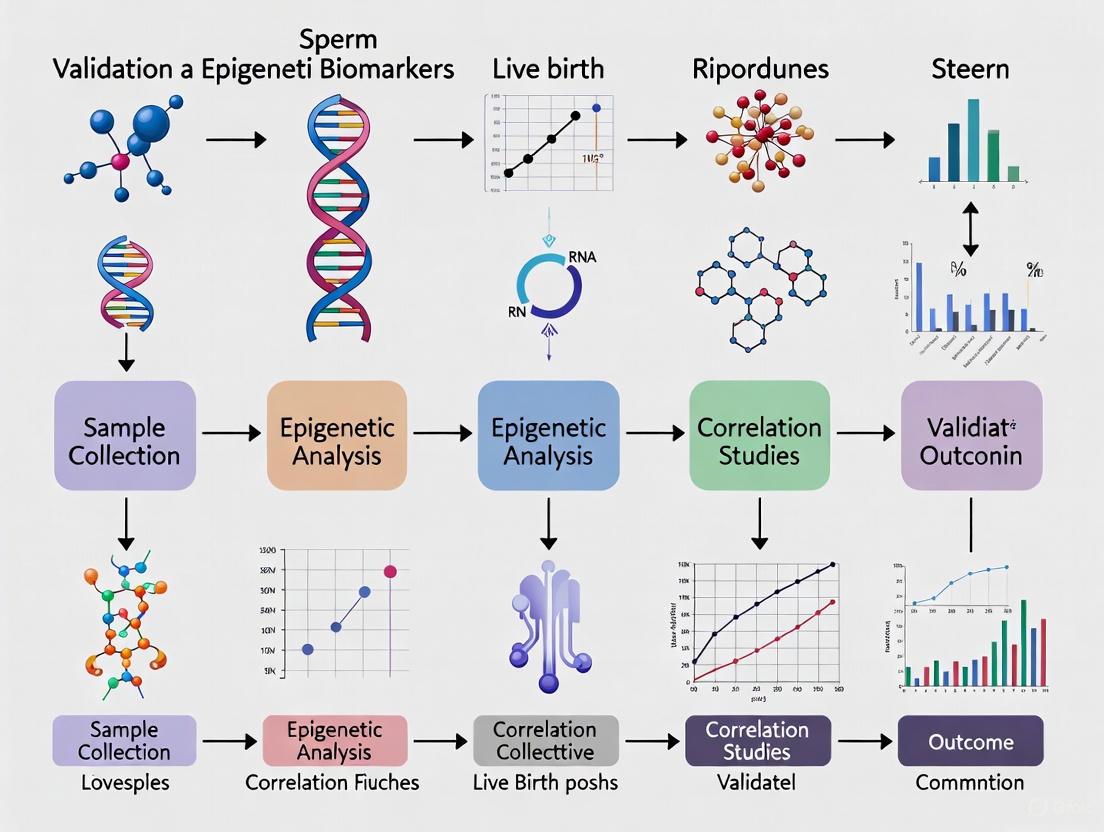
Male factors contribute to nearly half of all infertility cases, yet standard semen analyses remain poor predictors of live birth success.
Validating Sperm Epigenetic Biomarkers for Live Birth Outcomes: From Discovery to Clinical Application
Abstract
Male factors contribute to nearly half of all infertility cases, yet standard semen analyses remain poor predictors of live birth success. This article synthesizes current research on sperm epigenetic biomarkers—including DNA methylation patterns and small non-coding RNAs—for predicting live birth outcomes following both natural conception and assisted reproduction. We explore the foundational biology of these biomarkers, methodological approaches for their detection and validation, strategies for optimizing their predictive power by addressing confounding factors like lifestyle, and comparative analyses of their performance against traditional clinical parameters. For researchers, scientists, and drug development professionals, this review provides a comprehensive framework for advancing epigenetic biomarker validation, with the ultimate goal of integrating these tools into clinical practice to improve infertility diagnosis, treatment selection, and prognostic accuracy for couples.
The Biological Basis of Sperm Epigenetics in Reproduction and Live Birth
Sperm epigenetics represents a critical frontier in understanding male fertility, encompassing molecular mechanisms that regulate gene expression without altering the DNA sequence itself. These epigenetic marks, including DNA methylation, histone modifications, and non-coding RNAs, form a complex regulatory landscape that ensures normal spermatogenesis and embryonic development. The clinical significance of sperm epigenetics is profound, with male factors contributing to 40%-50% of infertility cases worldwide [1]. Beyond fertility status, sperm epigenetic profiles provide crucial biological information about past environmental exposures and potential future health trajectories of offspring, establishing sperm as a valuable biomarker for assessing reproductive potential and developmental outcomes [2].
The validation of sperm epigenetic biomarkers for predicting live birth outcomes represents a paradigm shift from traditional semen analysis, which primarily assesses visual parameters like sperm quantity, shape, and motility. While semen analysis remains the primary diagnostic tool in clinical andrology, its predictive power for fertility outcomes remains limited [3]. Emerging research demonstrates that epigenetic signatures in sperm offer superior prognostic capability for assisted reproductive technologies, enabling more accurate stratification of male fertility potential and personalized treatment approaches [3] [4] [5].
DNA Methylation in Sperm
Molecular Basis and Dynamics
DNA methylation involves the covalent attachment of a methyl group to the 5th carbon of cytosine bases within CpG dinucleotides (5-methylcytosine, 5mC), catalyzed by DNA methyltransferases (DNMTs) [1]. During mammalian development, sperm DNA methylation undergoes dynamic reprogramming waves, beginning with global demethylation in primordial germ cells (PGCs) followed by de novo methylation establishment during prospermatogonial development [1]. This process results in distinct methylation patterns across different stages of spermatogenesis, with differentiating spermatogonia exhibiting higher levels of DNMT3A and DNMT3B compared to undifferentiated spermatogonia [1].
The conservation of DNA methylation patterns between mice and humans underscores its fundamental role in germ cell development. Comparative analyses reveal that hypomethylated regions around gene promoters are highly conserved across developmental stages and species, potentially regulated by Polycomb complexes through ten-eleven translocation proteins [6]. These conserved epigenetic features highlight the evolutionary importance of precise methylation control for successful reproduction.
DNA Methylation as Biomarkers for Male Infertility
Dysregulated DNA methylation patterns strongly correlate with impaired spermatogenesis and male infertility. Clinical studies have identified distinctive differential methylated regions (DMRs) in sperm from idiopathic infertility patients compared to fertile controls [4]. These epigenetic signatures demonstrate significant potential as diagnostic biomarkers, with research showing that aberrant methylation in a panel of 1,233 gene promoters can effectively stratify male fertility potential [3].
The clinical utility of sperm DNA methylation biomarkers extends beyond infertility diagnosis to predicting treatment outcomes. Notably, men classified with "excellent" sperm quality based on methylation profiles (≤3 dysregulated promoters) showed significantly higher live birth rates following intrauterine insemination compared to those with "poor" sperm quality (≥22 dysregulated promoters): 44.8% versus 19.4% [3]. This epigenetic stratification outperforms conventional semen analysis parameters in predicting clinical success, demonstrating the transformative potential of epigenetic biomarkers in reproductive medicine.
Table 1: DNA Methylation Biomarkers and Their Clinical Associations
| Biomarker Category | Specific Targets/Regions | Clinical Association | References |
|---|---|---|---|
| Global Methylation Patterns | Genome-wide DMRs | Idiopathic infertility | [4] |
| Promoter Dysregulation | 1,233 gene promoters | IUI success rates | [3] |
| Therapeutic Response | 56 specific DMRs | FSH treatment responsiveness | [4] |
| Imprinted Genes | DLK1 region | Sperm purity assessment | [3] |
| Evolutionarily Conserved Regions | Hypomethylated promoters | Embryonic development | [6] |
Experimental Protocols for DNA Methylation Analysis
Whole-Genome Bisulfite Sequencing (WGBS)
Principle: This method provides base-resolution methylation data by treating DNA with sodium bisulfite, which converts unmethylated cytosines to uracils (read as thymines during sequencing) while leaving methylated cytosines unchanged [6]. The protocol begins with DNA extraction and quality assessment, followed by bisulfite conversion using commercial kits optimized for complete conversion while minimizing DNA degradation. Libraries are prepared with bisulfite-converted DNA and sequenced using high-throughput platforms, with bioinformatic analysis comparing sequencing results to a reference genome to determine methylation status at each cytosine position.
Key Considerations: WGBS requires high sequencing coverage (typically 20-30x) for accurate methylation quantification, making it computationally intensive. The bisulfite treatment can cause significant DNA fragmentation, potentially leading to information loss in low-input samples. Recent advancements in library preparation protocols have improved conversion efficiency and DNA recovery rates, enhancing data quality [6].
Enzymatic Methyl-Sequencing (EM-seq)
Principle: EM-seq represents a recent innovation that replaces the harsh chemical bisulfite conversion with enzymatic treatments to identify 5mC and 5hmC, using the enzymes TET2 and APOBEC3A to achieve similar discrimination between methylated and unmethylated cytosines [7]. This approach offers significant advantages over WGBS, including reduced DNA damage, lower GC content bias, and requirement for lower sequencing coverage while maintaining high accuracy.
Application in Sperm Analysis: Studies in Arctic charr demonstrated EM-seq's effectiveness for sperm methylome profiling, revealing a mean sperm methylation level of approximately 86% with variations in regulatory regions correlating with sperm quality parameters [7]. The protocol involves DNA extraction, enzymatic treatment with TET2 and APOBEC3A, library preparation, and sequencing, with subsequent bioinformatic analysis to identify differentially methylated regions associated with sperm dysfunction.
Methylated DNA Immunoprecipitation (MeDIP)
Principle: MeDIP utilizes antibodies specific for 5-methylcytosine to immunoprecipitate methylated DNA fragments, providing a cost-effective method for genome-wide methylation analysis that examines approximately 95% of the genome comprising low-density CpG regions [4]. This approach is particularly valuable for identifying large genomic regions with differential methylation patterns associated with clinical conditions.
Clinical Validation: This method has been successfully employed to identify DMR signatures distinguishing fertile from infertile men and predicting responsiveness to follicle-stimulating hormone (FSH) therapy in idiopathic infertility patients [4]. The protocol involves DNA fragmentation, immunoprecipitation with anti-5mC antibodies, library preparation of enriched fragments, and sequencing, followed by peak calling and differential methylation analysis.
Histone Modifications in Sperm
Histone-to-Protamine Transition and Modifications
Spermiogenesis involves a remarkable chromatin reorganization process wherein ~85-95% of histones are replaced by protamines to achieve extreme nuclear compaction [8]. The remaining 5-15% of histones are retained at specific genomic locations, including developmental gene promoters, imprinted gene clusters, and microRNA clusters, carrying distinctive post-translational modifications (PTMs) that convey epigenetic information [8]. This histone replacement follows a carefully orchestrated sequence: somatic histones are first replaced by testis-specific histone variants, followed by transition protein incorporation, and finally protamine deposition in late spermatids.
The process is regulated by various testis-specific histone variants, including H1T, H1T2, HILS1 (linker histones), and TH2A, H2AL2, H2A.B (core histones) [8]. These specialized variants facilitate chromatin reorganization by forming less compact nucleosomal structures, enabling subsequent protamine incorporation. Mouse models demonstrate that defects in these variants cause male infertility with abnormal spermatid elongation, delayed nuclear condensation, and substantially reduced protamine levels, underscoring their essential role in sperm chromatin compaction [8].
Histone Modification Signatures as Clinical Biomarkers
Comprehensive profiling of histone PTMs in human sperm has revealed distinct signatures associated with abnormal semen parameters. Asthenoteratozoospermic samples (abnormal motility, forward progression, and morphology) display significantly decreased H4 acetylation (p = 0.001) along with alterations in H4K20 (p = 0.003) and H3K9 methylation (p < 0.04) compared to normozoospermic samples [9]. Similarly, asthenozoospermic samples (abnormal motility and progression) demonstrate comparable histone modification abnormalities, while teratozoospermic samples with isolated morphology defects appear largely similar to normozoospermic samples [9].
The analytical workflow for histone modification analysis typically involves nano-liquid chromatography-tandem mass spectrometry (nano-LC-MS/MS) following a "bottom-up" proteomics approach. Sperm samples are subjected to acid extraction to isolate histones, followed by chemical derivatization and enzymatic digestion with trypsin. The resulting peptides are separated by nano-LC and analyzed by MS/MS, with data processing using specialized software to identify and quantify PTMs based on mass shifts and fragmentation patterns [9].
Table 2: Histone Modifications Associated with Sperm Abnormalities
| Histone Modification | Normal Function | Alteration in Abnormal Sperm | Clinical Correlation |
|---|---|---|---|
| H4 acetylation | Chromatin relaxation during transition | Significantly decreased | Abnormal motility and morphology [9] |
| H4K20 methylation | Chromatin compaction | Altered methylation patterns | Impaired motility and progression [9] |
| H3K9 methylation | Heterochromatin formation | Aberrant methylation states | Spermatogenesis defects [9] |
| H3K4 methylation | Promoter activation | Altered in retained nucleosomes | Embryonic development regulation [8] |
| H3K27 methylation | Gene repression | Dynamic changes during transition | Proper histone replacement [1] |
Experimental Protocols for Histone Analysis
Histone Extraction and Separation
The protocol begins with sperm purification using density gradient centrifugation to eliminate somatic cell contamination, followed by acid extraction to isolate histone proteins. The extracted histones can be separated by acid-urea-triton (AUT) polyacrylamide gel electrophoresis, which effectively resolves histone variants based on size, charge, and hydrophobicity differences. Specific histone bands are excised, destained, and subjected to in-gel digestion for subsequent mass spectrometric analysis.
Bottom-Up Mass Spectrometry Analysis
This approach involves chemical derivatization of histone samples to preserve labile PTMs during analysis, typically using propionylation to block unmodified and monomethylated lysine residues. Derivatized histones are digested with sequencing-grade trypsin, and the resulting peptides are desalted and concentrated before LC-MS/MS analysis. Nanoflow liquid chromatography coupled to high-resolution tandem mass spectrometry provides the sensitivity and resolution needed to identify and quantify multiple PTMs from limited sperm samples.
Data processing involves database searching against histone sequences, with manual verification of modification sites and quantitative analysis based on extracted ion chromatograms. This comprehensive profiling enables the identification of histone modification signatures characteristic of specific sperm abnormalities, providing potential biomarkers for male infertility diagnosis and prognosis [9].
Non-Coding RNAs in Sperm
Diversity and Functions of Sperm sncRNAs
Sperm contain a diverse population of small non-coding RNAs (sncRNAs) that have emerged as crucial epigenetic regulators with diagnostic potential. Deep sequencing analyses reveal that mature human sperm contain abundant sncRNA species, including tRNA-derived small RNAs (tsRNAs, ~56%), rRNA-derived small RNAs (rsRNAs, ~18%), microRNAs (miRNAs, ~6%), and PIWI-interacting RNAs (piRNAs, ~4%) [5]. These RNA molecules are not random degradation products but are selectively retained during spermatogenesis, suggesting specific functional roles in fertilization and early embryonic development.
Among these sncRNAs, 5'-tRNA halves represent the most abundant tsRNAs in human sperm, accounting for more than 75% of all tsRNAs [5]. These specific tRNA fragments have been shown to regulate translation through various mechanisms, including interference with translation initiation and miRNA-like repression of target transcripts. Importantly, sperm tsRNAs can mediate the transmission of paternal environmental experiences to offspring and influence embryonic gene expression, positioning them as key vectors of intergenerational epigenetic inheritance [5].
sncRNAs as Biomarkers for Sperm Quality and IVF Outcomes
Comprehensive sncRNA profiling has identified specific signatures strongly associated with sperm quality and in vitro fertilization (IVF) outcomes. Research comparing sperm samples from men with high versus low rates of good quality embryos has identified ten differentially expressed tsRNAs and seven differentially expressed rsRNAs that effectively distinguish these groups [5]. Notably, machine learning approaches demonstrate that these sncRNA signatures have excellent prognostic value, with support vector machine classifiers achieving an area under the curve (AUC) of 0.8716 for tsRNAs and 0.8588 for rsRNAs in predicting embryo quality [5].
These sncRNA biomarkers offer significant advantages over conventional semen parameters, as they can identify sperm quality defects even in samples classified as normal by standard semen analysis. Specifically, five tsRNAs (GlyGCC-30-1, GlyGCC-30-2, ThrTGT-38, ThrTGT-39, and GluTTC-23) are significantly downregulated in the low-quality embryo group, while five others (ProAGG-32, ProTGG-32, ProAGG-31, AsnATT-20, and ArgCCG-33) are upregulated [5]. Similarly, among the differentially expressed rsRNAs, only 28S-58 is upregulated in the low-quality group, while the other six are downregulated [5].
Table 3: Non-Coding RNA Biomarkers in Human Sperm
| sncRNA Category | Key Biomarkers | Expression in L-GQE | Predictive Value (AUC) | Biological Significance |
|---|---|---|---|---|
| tsRNAs | GlyGCC-30-1, GlyGCC-30-2 | Downregulated | 0.8716 | Regulation of embryonic gene expression [5] |
| tsRNAs | ProAGG-32, ProTGG-32 | Upregulated | 0.8716 | Translation regulation [5] |
| rsRNAs | 28S-34, 28S-23, 28S-20 | Downregulated | 0.8588 | Environmental sensitivity [5] |
| rsRNAs | 28S-58 | Upregulated | 0.8588 | Unknown function [5] |
| miRNAs | miR-132-3p, miR-191-3p | Downregulated | 0.7022 | Cell development and differentiation [5] |
| miRNAs | miR-101-3p, miR-29a-3p | Upregulated | 0.7022 | Gene regulation in early development [5] |
Experimental Protocols for sncRNA Analysis
Sperm RNA Extraction and Quality Control
The protocol begins with meticulous sperm purification using density gradient centrifugation or swim-up techniques to eliminate somatic cell contamination, which is critical as leukocyte RNA can significantly alter the sncRNA profile. Total RNA is extracted using modified protocols that enrich for small RNAs, incorporating DNase treatment to eliminate genomic DNA contamination. RNA quality and quantity are assessed using capillary electrophoresis systems, with successful extraction typically yielding RNA integrity numbers (RIN) exceeding 7.0.
sncRNA Library Preparation and Sequencing
Library preparation employs specialized kits optimized for small RNA species, incorporating molecular barcodes to enable sample multiplexing. The process includes adapter ligation to RNA ends, reverse transcription, PCR amplification, and size selection to enrich fragments in the 15-40 nucleotide range. Sequencing is performed using high-throughput platforms, generating single-end reads of sufficient length to cover the entire sncRNA population.
Bioinformatic Analysis and Biomarker Validation
Raw sequencing data undergoes quality control, adapter trimming, and size filtering before alignment to reference genomes. Different sncRNA species are annotated using specialized databases, with quantification based on normalized read counts. Differential expression analysis identifies significantly altered sncRNAs between sample groups, followed by machine learning approaches to develop predictive classifiers. Validation typically employs reverse transcription quantitative PCR (RT-qPCR) using specific stem-loop primers for sncRNAs to confirm sequencing results and establish clinical assays [5].
The Scientist's Toolkit: Essential Research Reagents
Table 4: Essential Research Reagents for Sperm Epigenetic Studies
| Reagent Category | Specific Examples | Application | Key Considerations |
|---|---|---|---|
| DNA Methylation Analysis | Bisulfite conversion kits (e.g., EZ DNA Methylation kits) | DNA methylation profiling | Conversion efficiency, DNA damage minimization [6] |
| DNA Methylation Analysis | Anti-5-methylcytosine antibodies | MeDIP experiments | Antibody specificity, immunoprecipitation efficiency [4] |
| DNA Methylation Analysis | EM-seq kits (TET2 + APOBEC3A) | Enzymatic methylation sequencing | Reduced DNA damage, lower GC bias [7] |
| Histone Analysis | Acid extraction reagents (e.g., sulfuric acid) | Histone isolation | Preservation of PTMs, protein recovery [9] |
| Histone Analysis | Trypsin/Lys-C proteases | Histone digestion for MS | Specificity, efficiency for modified residues [9] |
| Histone Analysis | PTM-specific antibodies (e.g., anti-H4ac) | Immunohistochemistry/Western | Specificity validation, cross-reactivity testing [9] [8] |
| RNA Analysis | Small RNA isolation kits | sncRNA enrichment | Recovery efficiency, somatic RNA exclusion [5] |
| RNA Analysis | Small RNA library prep kits | sncRNA sequencing | Adapter ligation efficiency, size selection [5] |
| RNA Analysis | Stem-loop RT primers | miRNA/tsRNA quantification | Specificity, detection sensitivity [5] |
| General Reagents | Density gradient media (e.g., Percoll) | Sperm purification | Somatic cell removal, sperm integrity [9] [5] |
| General Reagents | DNase/RNase inhibitors | Sample processing | RNA/DNA integrity preservation [5] |
Comparative Analysis of Epigenetic Biomarkers
When comparing the three major categories of sperm epigenetic biomarkers, each demonstrates distinct advantages and limitations for clinical application and research utility. DNA methylation biomarkers offer high analytical stability and well-established protocols, with demonstrated predictive value for intrauterine insemination success and therapeutic responsiveness [3] [4]. Histone modification profiles provide unique insights into chromatin organization quality and identify specific abnormalities in sperm nuclear maturation [9] [8]. Non-coding RNA signatures reflect dynamic regulatory potential and show exceptional promise for predicting embryo quality in IVF settings, even in normozoospermic samples [5].
From a technical perspective, DNA methylation analysis benefits from highly standardized genome-wide platforms like the Infinium MethylationEPIC array, which enables reproducible clinical application [3]. Histone modification analysis remains more technically challenging, requiring specialized mass spectrometry expertise, though it provides unparalleled detail about the combinatorial complexity of PTMs [9]. sncRNA profiling offers a balance of technical accessibility and biological insight, with next-generation sequencing providing comprehensive biomarker discovery capabilities [5].
The integration of multiple epigenetic biomarkers represents the most promising approach for comprehensive male fertility assessment. Each category captures different aspects of sperm epigenetic integrity, from the relative stability of DNA methylation patterns to the dynamic regulatory information encoded in sncRNAs. This multi-parameter assessment mirrors the complexity of spermatogenesis and provides a more complete diagnostic picture than any single biomarker category alone.
Sperm epigenetic biomarkers represent a transformative approach to male fertility assessment, offering molecular insights beyond conventional semen analysis. The validation of DNA methylation signatures, histone modification profiles, and non-coding RNA expression patterns for predicting live birth outcomes marks a significant advancement in reproductive medicine. These biomarkers provide objective, quantitative measures of sperm quality that correlate with clinical endpoints, enabling improved patient stratification and personalized treatment strategies.
Future research directions should focus on standardizing epigenetic assays for clinical implementation, establishing validated reference ranges, and developing integrated scoring systems that combine multiple epigenetic parameters. Large-scale prospective studies are needed to confirm the cost-effectiveness of epigenetic biomarker testing in diverse patient populations and clinical scenarios. Furthermore, exploring the reversibility of adverse epigenetic signatures through lifestyle interventions or pharmacological approaches represents a promising avenue for novel fertility treatments. As our understanding of sperm epigenetics continues to evolve, these biomarkers will play an increasingly important role in unraveling the complex relationship between paternal factors, embryonic development, and long-term offspring health.
The validation of epigenetic biomarkers in sperm is revolutionizing our understanding of reproductive success and failure. Historically, male fertility assessment has relied on conventional semen analysis, which provides limited predictive value for live birth outcomes [10]. The emerging field of reproductive epigenetics now demonstrates that sperm epigenetic marks—including DNA methylation patterns, histone modifications, and chromatin structure—serve as critical molecular regulators of embryogenesis, placentation, and ultimately, the probability of achieving a live birth [11] [4]. This guide provides a comparative analysis of how specific epigenetic signatures correlate with key reproductive functions, offering researchers a framework for utilizing these biomarkers in both clinical and research settings.
The paternal epigenetic contribution extends beyond DNA sequence, with sperm delivering a complex epigenetic blueprint that guides embryonic development and placental function [12] [13]. Advanced molecular techniques now enable precise mapping of these epigenetic marks, revealing their profound influence on reproductive success. This objective comparison examines the experimental evidence linking specific epigenetic biomarkers with defined reproductive outcomes, focusing on their validation status and clinical applicability for predicting live birth.
Comparative Analysis of Epigenetic Biomarkers in Reproduction
Table 1: Epigenetic Biomarkers and Their Correlations with Reproductive Outcomes
| Epigenetic Marker Type | Specific Target/Region | Association with Reproductive Function | Strength of Evidence | Predictive Value for Live Birth |
|---|---|---|---|---|
| DNA Methylation-based Clock | Genome-wide CpG sites [10] | Sperm epigenetic aging (SEA); Time-to-pregnancy | FOR=0.83; 95% CI: 0.76-0.90 [10] | 17% lower cumulative pregnancy probability at 12 months with advanced SEA [10] |
| Differential Methylated Regions (DMRs) | 217 infertility-associated DMRs [4] | Idiopathic male infertility | p < 1e-05 [4] | Identifies infertile vs. fertile males with potential for therapeutic monitoring |
| FSH Responsiveness DMRs | 56 treatment-associated DMRs [4] | Responsiveness to FSH therapy | p < 1e-05 [4] | Predicts therapeutic success in infertility patients |
| Chromatin Dynamics | Histone mobility in pronuclei [13] | Embryonic chromatin reorganization | Parental asymmetry established by 8 hpi [13] | Associated with proper zygotic development and transcriptional regulation |
| Placental Development Markers | MASPIN, APC promoter methylation [11] | Trophoblast invasion and placental development | Hypermethylation inhibits EVT migration [11] | Linked to placental pathologies (preeclampsia) affecting live birth |
Table 2: Technological Platforms for Epigenetic Biomarker Analysis
| Analysis Platform | Target Epigenetic Features | Genome Coverage | Application in Reproductive Studies | Limitations |
|---|---|---|---|---|
| Methylated DNA Immunoprecipitation (MeDIP) | Low-density CpG regions [4] | ~95% of genome [4] | Idiopathic infertility signatures, FSH responsiveness [4] | Does not target high-density CpG regions |
| BeadChip Microarray | CpG island methylation [10] | ~1% of genome (CpG islands) [4] | Sperm epigenetic clock development [10] | Limited genome coverage |
| EpiSwitch 3D Genomic Profiling | Chromosome conformation (loops) [14] | Regulatory architecture | Not yet applied to sperm (used for ME/CFS) [14] | Specialized protocol, not widely available |
| zFRAP Analysis | Chromatin dynamics/histone mobility [13] | Global chromatin state | Parental chromatin asymmetry in zygotes [13] | Technically challenging, requires specialized equipment |
Experimental Protocols for Key Reproductive Epigenetic Studies
Sperm Epigenetic Clock Development and Validation
Study Population: The Longitudinal Investigation of Fertility and the Environment (LIFE) Study included 379 male partners of couples discontinuing contraception to become pregnant, recruited from 16 US counties (2005-2009) [10]. Validation was performed in an independent IVF cohort (SEEDS study, n=173) [10].
Methodology: Sperm DNA methylation was assessed using a beadchip array. An ensemble machine learning algorithm predicted chronological age from sperm DNA methylation data. Two approaches were compared: epigenetic clocks derived from individual CpGs (SEACpG) and differentially methylated regions (SEADMR) [10].
Statistical Analysis: Discrete-time proportional hazards models evaluated relationships between sperm epigenetic age (SEA) and time-to-pregnancy (TTP) with adjustment for covariates including male age, smoking, and BMI [10].
Key Findings: The SEACpG clock showed highest predictive performance (r=0.91 between chronological and predicted age). In adjusted models, SEACpG was negatively associated with TTP (fecundability odds ratio FOR=0.83; 95% CI: 0.76, 0.90; P=1.2×10⁻⁵). Advanced SEACpG was also associated with shorter gestational age (-2.13 days; 95% CI: -3.67, -0.59; P=0.007) [10].
Sperm DNA Methylation Biomarkers for Idiopathic Infertility and FSH Responsiveness
Patient Recruitment: Twenty-one patients were enrolled including nine fertile controls and twelve with idiopathic infertility. Exclusion criteria included varicocele, cryptorchidism, chromosomal abnormalities, smoking, recreational drugs, BMI>30, or >21 alcohol units/week [4].
Sample Collection: Sperm samples were collected at enrollment, at start of FSH treatment, and after three months of treatment (150 IU FSH three times per week) [4].
Epigenetic Analysis: DNA was extracted from sperm and fragmented for methylated DNA immunoprecipitation (MeDIP) followed by next-generation sequencing. Bioinformatic analysis identified differential DNA methylated regions (DMRs) comparing fertile versus infertile patients, and responders versus non-responders to FSH therapy [4].
Response Criteria: Patients showing 2-3 fold increase in sperm concentration and/or motility following three-month treatment were classified as responders [4].
Key Findings: The study identified 217 DMRs associated with male idiopathic infertility (p<1e-05) and 56 DMRs associated with FSH therapy responsiveness (p<1e-05), with no overlap between these signatures, suggesting distinct epigenetic biomarkers for disease versus treatment response [4].
Chromatin Dynamics in Early Embryonic Development
Experimental Models: Zygotes were generated by in vitro fertilization (IVF), intracytoplasmic sperm injection (ICSI), parthenogenetic activation, round spermatid injection (ROSI), and delayed ICSI to assess parental contributions to chromatin dynamics [13].
Chromatin Dynamics Measurement: Zygotic fluorescence recovery after photobleaching (zFRAP) was performed to measure histone mobility as an indicator of chromatin dynamics. Measurements were taken at early to mid-zygotic stages (8-12 hours post-insemination) [13].
Pronuclear Manipulation: Enucleation experiments and construction of zygotes with varying pronuclear compositions (1PN-ICSI, 2sp-ICSI) were performed to isolate paternal versus maternal effects [13].
Key Findings: Sperm reduces chromatin dynamics in both parental pronuclei, with this ability acquired during spermiogenesis. The maternal chromatin dynamics enhancement ability is dominant over the paternal repressive effect. Parental competition for maternal factors establishes asymmetric chromatin dynamics, which influences zygotic transcription [13].
Signaling Pathways and Biological Mechanisms
Epigenetic Regulation of Placentation
The diagram below illustrates the key epigenetic mechanisms regulating placental development and their dysregulation in pathological conditions like preeclampsia.
Diagram 1: Epigenetic Regulation of Placental Development. This diagram illustrates how different epigenetic mechanisms regulate key cellular processes in placental development and contribute to both normal placentation and pathological conditions such as preeclampsia and fetal growth restriction [11].
Parental Chromatin Dynamics in Early Embryos
The following diagram depicts the competitive parental interactions that establish asymmetric chromatin dynamics in mammalian zygotes.
Diagram 2: Parental Competition in Establishing Chromatin Dynamics. This diagram illustrates how maternal and paternal factors compete to establish asymmetric chromatin dynamics in zygotes, a process critical for proper embryonic development that can be disrupted by delayed fertilization [13].
The Scientist's Toolkit: Essential Research Reagents and Platforms
Table 3: Essential Research Reagents and Platforms for Reproductive Epigenetics
| Reagent/Platform | Specific Application | Key Function in Research | Representative Use Cases |
|---|---|---|---|
| MeDIP-Seq | Genome-wide DNA methylation analysis | Immunoprecipitation of methylated DNA followed by sequencing | Identification of infertility-associated DMRs [4] |
| EPIC BeadChip Array | Targeted DNA methylation analysis | Simultaneous interrogation of ~850,000 CpG sites | Sperm epigenetic clock development [10] |
| zFRAP Analysis | Chromatin dynamics measurement | Quantifies histone mobility via fluorescence recovery | Parental chromatin asymmetry studies [13] |
| EpiSwitch Platform | 3D genomic architecture mapping | Identifies chromosome conformation changes | Diagnostic biomarker development (concept) [14] |
| FSH Therapeutic | Male infertility treatment | Improves sperm parameters in responsive patients | FSH responsiveness biomarker validation [4] |
The comparative analysis presented in this guide demonstrates the robust relationship between specific epigenetic marks and key reproductive functions. Sperm epigenetic biomarkers, particularly DNA methylation-based clocks and DMR signatures, show significant promise for predicting time-to-pregnancy, live birth outcomes, and therapeutic responsiveness [10] [4]. The mechanistic studies of chromatin dynamics in early embryos further reveal how paternal epigenetic factors directly influence embryonic development [13].
For researchers and drug development professionals, these epigenetic biomarkers offer exciting opportunities to enhance clinical trial design through better patient stratification, develop novel diagnostic tools for male infertility, and create more personalized treatment approaches. The continuing validation of sperm epigenetic biomarkers will undoubtedly accelerate their integration into both reproductive medicine and pharmaceutical development, ultimately improving outcomes for couples seeking to build their families.
Male factors contribute to approximately half of all infertility cases, yet the molecular underpinnings often remain uncharacterized [15] [16]. Beyond conception success, growing epidemiological and clinical evidence indicates that paternal health and physiological status at the time of conception significantly influence early embryonic development, pregnancy maintenance, and the long-term health trajectory of offspring [2] [17]. This review synthesizes current evidence on paternal contributions to infertility and offspring health, with a specific focus on validating sperm epigenetic biomarkers as predictive tools for live birth outcomes. We objectively compare the performance of various molecular biomarkers—epigenetic, genetic, and transcriptomic—in predicting clinical endpoints, providing detailed methodological protocols and analytical frameworks to advance this evolving field.
Comparative Analysis of Sperm Biomarkers in Infertility and Offspring Health
The table below summarizes key biomarker classes associated with male infertility and offspring outcomes, highlighting their clinical potential and validation status.
Table 1: Comparative Analysis of Sperm Biomarkers for Infertility and Offspring Health Prediction
| Biomarker Class | Specific Biomarkers | Association with Infertility | Association with Offspring Health/Development | Clinical Validation Status |
|---|---|---|---|---|
| Epigenetic (DNA Modifications) | Global 5-hmC levels [18] | Positive correlation with serum TIBC (R=0.29, p=0.04) and seminal iron (R=0.30, p=0.04) [18] | Not directly assessed, but established role in embryo gene regulation [16] | Research |
| Sperm DNA Methylation (5mC) [17] | Increased DNA fragmentation and altered methylation with sperm aging [17] | Altered methylation patterns inherited by offspring; affects nervous system, cardiac development [17] | Preclinical | |
| Epigenetic (Sperm RNAs) | hsa-miR-15b-5p, hsa-miR-19a-5p, hsa-miR-20a-5p [19] | Higher expression linked to poor sperm quality and negative β-hCG [19] | Lower expression in G1 embryos; higher expression linked to failed IVF/live birth [19] | Clinical (AUC 0.71-0.76 for pregnancy outcome) [19] |
| Genetic Variants | DNAH2 (p.Lys1414ArgfsTer29), CFAP61 (p.Arg568Trp), FSIP2 (p.Gln5809Ter) [20] | Frameshift/nonsense mutations linked to sperm flagellar defects and asthenoteratozoospermia [20] | Implications for genetic transmission of infertility; specific offspring health risks not detailed | Research |
| Sperm Quality Metrics | DNA Fragmentation Index (DFI) [21] | Increases with male age (p<0.05) [21] | DFI >30% associates with pre-implantation abnormalities, early miscarriage [21] | Clinical |
| Progressive Motility [21] | Declines with advancing male age (p<0.05) [21] | Not directly assessed | Standard Clinical |
Detailed Experimental Protocols for Key Biomarker Assays
Protocol for Quantifying Sperm Global DNA Hydroxymethylation (5-hmC)
Objective: To quantify global levels of 5-hydroxymethylcytosine (5-hmC) in spermatozoa and investigate its correlation with iron biomarkers and cumulative live birth rates (CLBR) [18].
Sample Preparation:
- Semen Collection and Processing: Collect semen samples according to WHO 2021 guidelines [18] [20]. Process using density gradient centrifugation (e.g., 80–40% gradient layers) to isolate motile sperm [18] [16].
- Sperm Pellet Isolation: Wash the purified sperm pellet and centrifuge. Rapidly freeze one aliquot in liquid nitrogen for DNA analysis [18].
- Blood Collection: Collect blood samples to measure serum iron biomarkers (iron, transferrin, TIBC) [18].
DNA Extraction and 5-hmC Quantification:
Statistical Analysis:
- Perform univariate and multivariate regression analyses to assess correlations between iron biomarkers, 5-hmC levels, and CLBR [18].
Protocol for Small RNA Sequencing in Individually Selected Sperm
Objective: To identify and validate small RNAs (miRNAs, piRNAs) in sperm that correlate with quality and pregnancy outcomes [19].
Sperm Sample Categorization and Selection:
- Collect and categorize sperm into groups based on quality (e.g., Good, Intermediate, Poor). Individually select 1,500 sperm per sample using a micromanipulation system [19].
RNA Sequencing and Validation:
- Library Preparation and Sequencing: Perform small RNA sequencing on the selected sperm samples to profile miRNA and piRNA populations [19].
- Reverse Transcription Quantitative PCR (RT-qPCR): Validate the expression levels of candidate miRNAs (e.g., hsa-miR-15b-5p, hsa-miR-19a-5p, hsa-miR-20a-5p) [19].
Data and Statistical Analysis:
- Differential Expression: Identify significantly differentially expressed RNAs between quality groups.
- Correlation with Outcomes: Correlate miRNA expression levels with sperm parameters, embryo quality, β-hCG levels, and live birth.
- Diagnostic Performance: Calculate the Area Under the Curve (AUC) to evaluate the predictive power of miRNAs for pregnancy outcomes [19].
Protocol for Whole-Genome Sequencing in Sperm Dysfunction
Objective: To identify deleterious genetic variants in men with idiopathic sperm dysfunction [20].
Cohort Definition and Sample Purification:
DNA Isolation and Sequencing:
- DNA Extraction: Isolate genomic DNA using a kit (e.g., QIAamp DNA Mini Kit) with protocol modifications for sperm, including DTT and Proteinase K incubation for efficient lysis [20].
- Whole-Genome Sequencing (WGS): Perform WGS on the isolated DNA.
- Variant Validation: Confirm identified variants using Sanger sequencing [20].
Bioinformatic Analysis:
- Variant Calling: Perform comparative analysis to identify a higher burden of variants in SDIG versus NG.
- Pathogenicity Prediction: Use computational tools to classify variants as "Variants of Uncertain Significance" or "Likely Pathogenic" based on their predicted impact on protein structure/function [20].
Signaling Pathways and Conceptual Workflows
Iron Homeostasis and Sperm Epigenetic Regulation
The diagram below illustrates the hypothesized pathway linking paternal iron status to sperm epigenetics and embryo development, integrating findings from recent studies [18] [2] [17].
Figure 1: Pathway from Paternal Iron to Offspring Health. This diagram illustrates the proposed mechanistic link between paternal iron status (via biomarkers like TIBC and seminal iron), its role in fueling TET enzyme activity for epigenetic regulation in sperm (converting 5-mC to 5-hmC), and the subsequent impact on embryonic development and offspring health.
Multi-Omics Workflow for Sperm Biomarker Discovery
The following diagram outlines an integrated multi-omics approach for comprehensive sperm biomarker discovery and validation, as utilized in contemporary studies [20] [17].
Figure 2: Multi-Omics Sperm Biomarker Discovery Workflow. This workflow depicts the process from patient recruitment and rigorous sperm sample preparation through multi-omics profiling, data integration, and computational biomarker identification, culminating in technical and clinical validation against key outcomes like live birth.
The Scientist's Toolkit: Key Research Reagents and Solutions
The following table details essential reagents and kits used in the featured experimental protocols for studying sperm biomarkers.
Table 2: Essential Research Reagents for Sperm Epigenetic and Genetic Analysis
| Reagent/Kits | Specific Example(s) | Function in Protocol |
|---|---|---|
| Sperm Processing Media | PureSperm Gradient (45%-90%) [20]; Cook Sperm Medium [18] | Density gradient centrifugation to isolate motile, morphologically normal sperm and remove somatic cell contamination. |
| DNA Extraction Kits | QIAamp DNA Mini Kit (Qiagen) [20] | Isolation of high-purity genomic DNA from sperm cells; often requires protocol modifications (DTT, Proteinase K) for sperm lysis. |
| DNA Methylation/Hydroxymethylation Analysis | ELISA-based colorimetric assay [18]; Whole-Genome Bisulfite Sequencing (WGBS) [17] | Quantification of global 5-mC/5-hmC levels (ELISA) or genome-wide, single-base resolution mapping of methylation patterns (WGBS). |
| RNA Sequencing & Validation | Small RNA Sequencing Library Prep Kits; RT-qPCR reagents [19] | Profiling of small RNA populations (miRNA, piRNA) and validation of differential expression of candidate biomarkers. |
| Next-Generation Sequencing | Whole-Genome Sequencing (WGS) platforms [20] | Identification of single nucleotide variants (SNVs), insertions/deletions (indels), and structural variants across the entire genome. |
| Sperm DNA Fragmentation Assay | Sperm Chromatin Structure Assay (SCSA) or similar commercial kits [21] | Measurement of DNA Fragmentation Index (DFI), a key biomarker for sperm DNA integrity and prognostic value for embryo development. |
Epigenetic modifications represent dynamic molecular elements that control critical physiological and pathological features, thereby contributing to the natural history of human disease [22]. These modifications can be employed as disease biomarkers, providing valuable information about gene function and explaining differences among patient endophenotypes [22]. Unlike genetic biomarkers, epigenetic biomarkers incorporate information regarding the effects of environment and lifestyle on health and disease, and can monitor the effect of applied therapies [22]. In the specific context of male fertility research, epigenetic biomarkers—particularly DNA methylation patterns and miRNA signatures—are emerging as powerful tools for diagnosing sperm dysfunction, predicting assisted reproductive technology (ART) outcomes, and ultimately forecasting live birth success [19] [23] [24].
The clinical promise of epigenetic biomarkers lies in their stability across various biospecimens, including fresh and frozen tissue, formalin-fixed paraffin-embedded (FFPE) tissue, and body fluids such as plasma, serum, urine, and semen [22]. Furthermore, these biomarkers provide actual bioarchives of the natural history of disease, reflecting accumulated environmental exposures and lifestyle factors that influence health outcomes [22]. This review comprehensively compares the performance of currently investigated epigenetic biomarkers, with a specific focus on their validation for predicting live birth outcomes in fertility research, providing researchers with experimental data and methodological protocols to advance this critical field.
DNA Methylation Biomarkers: From Global Patterns to Targeted Assays
DNA methylation, the addition of methyl groups to cytosine bases in CpG dinucleotides, represents the most extensively studied epigenetic modification for biomarker development due to its relative stability and well-characterized detection methods [25]. In fertility research, DNA methylation patterns in sperm have demonstrated significant potential for assessing male reproductive potential and predicting ART outcomes.
Analytical Technologies for DNA Methylation Analysis
Table 1: Comparison of Major DNA Methylation Analysis Techniques
| Technique | Principle | Sensitivity | Throughput | Primary Applications | Key Advantages |
|---|---|---|---|---|---|
| Bisulfite Pyrosequencing | Bisulfite conversion followed by sequencing-by-synthesis | Moderate | Medium | Targeted analysis of specific genomic regions | Provides quantitative methylation levels at single-base resolution |
| (Q)MSP | Bisulfite conversion followed by methylation-specific PCR | High | High | Clinical validation of known biomarkers | Excellent sensitivity for detecting rare methylated molecules |
| MS-HRM | Melting curve analysis after bisulfite conversion | High | Medium | Screening of epigenetic alterations | Detects methylation differences without needing specific primers |
| Methylation Arrays | Bisulfite conversion followed by hybridation to probes | Moderate | Very High | Genome-wide discovery studies | Comprehensive coverage of predefined CpG sites across genome |
| Whole Genome Bisulfite Sequencing | Bisulfite conversion followed by NGS | High | Very High | Discovery of novel methylation patterns | Provides single-base resolution of entire methylome |
Multiple methods are available to measure differences in DNA methylation, with most assays utilizing bisulfite conversion before methylation analysis [25]. For single gene analysis, the most common assays are (quantitative) methylation-specific PCR ((Q)MSP), bisulfite pyrosequencing, combined bisulfite restriction analysis (COBRA), targeted bisulfite sequencing, and methylation-sensitive high-resolution melting (MS-HRM) [25]. Each method offers distinct advantages depending on the research context. QMSP is a specific and sensitive method that allows accurate quantification, high-throughput testing, and requires only minimal amounts of input DNA [25]. The advantage of bisulfite pyrosequencing is that it provides an absolute level of methylation by determining the ratio of methylated and unmethylated cytosine residues separately [25].
For genome-wide analysis, researchers typically employ methylation arrays preceded by bisulfite conversion (such as EPIC arrays), immunoprecipitation of methylated DNA combined with next-generation sequencing, or genome-wide bisulfite sequencing [25]. Since the introduction of standard arrays allowing genome-wide interrogation of methylation over a decade ago, epigenome-wide association studies (EWAS) have become a popular approach to identify biomarkers for both environmental exposures and disease outcomes [25].
DNA Methylation Biomarkers in Sperm Function
Recent studies have revealed marked differences in DNA methylation between high-quality and low-quality spermatozoa, highlighting distinct epigenetic regulation associated with reproductive competence [23]. Specifically, comparative analysis of sperm with normal nuclear morphology, absence of vacuoles, and well-defined basal structures (score 6) versus those with abnormal morphology (score 0) demonstrated differential methylation patterns that may influence fertilization, embryo development, and pregnancy outcomes [23].
The DNA Damage & Epigenetic Changes Core at various research institutions provides routine measurement of epigenetic DNA marks including 5-methyl-dC, 5-hydroxymethyl-dC, 5-formyl-dC, and N6-methyl-dA, utilizing advanced mass spectrometry techniques like isotope dilution HPLC-ESI-MS/MS on triple quadrupole mass spectrometers or high-resolution MS/MS Orbitrap hybrid mass spectrometers [26]. These sophisticated analytical capabilities are accelerating the discovery and validation of sperm-specific DNA methylation biomarkers.
Diagram 1: DNA Methylation Analysis Workflow for Sperm Biomarker Discovery. This workflow outlines the key steps from sample collection to outcome prediction, highlighting multiple analytical paths for methylation assessment.
miRNA Signatures: Promising Biomarkers for Reproductive Outcomes
MicroRNAs (miRNAs) are small non-coding RNAs that regulate gene expression post-transcriptionally and show differential expression in various tissues with aging and disease phenotypes [24]. Detectable in circulation, extracellular miRNAs reflect (patho)physiological processes and hold exceptional promise as biomarkers for healthy aging, age-related diseases, and reproductive outcomes [24].
miRNA Biomarkers in Sperm Quality and Pregnancy Outcomes
Recent research has identified specific miRNA signatures in sperm that correlate with fertility potential and ART success. A groundbreaking study performing small RNA sequencing in individually selected sperm revealed a diverse RNA landscape, with regulatory RNAs such as miRNAs present at varying levels across sperm of different quality grades [19]. Differential expression analysis identified 16 miRNAs significantly different between high-quality (Group A) and poor-quality (Group C) sperm [19].
Most notably, this research demonstrated that miRNA expression levels strongly associate with pregnancy outcomes, including embryo quality, β-hCG levels, and live birth [19]. Three miRNAs in particular—hsa-miR-15b-5p, hsa-miR-19a-5p, and hsa-miR-20a-5p—were linked to sperm impairments and hormonal markers (β-hCG, FSH, and LH) [19]. Higher expression of these miRNAs was associated with negative β-hCG outcomes and poor IVF prognosis, while lower expression was linked to successful live births [19]. Diagnostic validation showed impressive AUC values of 0.76, 0.71, and 0.74 for hsa-miR-15b-5p, hsa-miR-19a-5p, and hsa-miR-20a-5p, respectively, with a combined model yielding an AUC of 0.75 [19].
Table 2: Experimentally Validated miRNA Biomarkers for Sperm Function and Live Birth Outcomes
| miRNA Biomarker | Expression in Sperm Dysfunction | AUC Value | Association with Live Birth | Biological Functions |
|---|---|---|---|---|
| hsa-miR-15b-5p | Upregulated | 0.76 | Higher expression with failed IVF; Lower with success | Cell cycle regulation, apoptosis |
| hsa-miR-19a-5p | Upregulated | 0.71 | Higher expression with negative β-hCG | Oncogene, stress response |
| hsa-miR-20a-5p | Upregulated | 0.74 | Correlated with successful live birth when downregulated | Angiogenesis, cell survival |
| Combined Model | N/A | 0.75 | Improved prediction of pregnancy outcomes | Integrated biomarker signature |
Methodological Approaches for miRNA Biomarker Research
The comprehensive analysis of miRNA biomarkers requires sophisticated methodological approaches. One population-based cohort study quantified plasma expression levels of 2083 extracellular microRNAs using targeted RNA-sequencing in 2684 participants [24]. Their protocol utilized the HTG EdgeSeq miRNA Whole Transcriptome Assay (WTA), a next-generation sequencing application that measures the expression of 2083 human miRNAs [24]. This technology functions as a targeted probe library preparation, wherein probes are attached to their intended targets before sequencing on platforms such as the Illumina NextSeq 500 [24].
For data processing, sequencing data typically undergoes initial quality control using tools like FastQC, followed by preprocessing with Cutadapt software to discard short reads, apply base quality filtering, and trim adapters [27]. Only reads with a minimum length (typically 16 bp) are selected for further analyses [27]. Subsequently, reads are aligned to the human reference genome using specialized software such as Subread, followed by annotation using small RNA databases like human miRBase [27]. Normalization methods such as variance stabilizing normalization (VST) are then applied, and batch effect correction is implemented to remove unwanted technical variability [27].
Diagram 2: Comprehensive miRNA Biomarker Analysis Pipeline. This workflow illustrates the complete process from sample isolation to predictive model building for fertility assessment.
Integrative Epigenetic Signatures and Functional Indices
Beyond individual biomarkers, research increasingly focuses on integrated epigenetic signatures that combine multiple molecular markers to improve diagnostic and prognostic accuracy. In male fertility research, this approach has led to the development of composite indices that better reflect sperm functional competence.
The Spermatozoa Function Index (SFI)
A prominent example of integrative epigenetic assessment is the Spermatozoa Function Index (SFI), which combines expression levels of three genes involved in mitosis regulation, epigenetic modulation and early embryonic development: AURKA, HDAC4, and CARHSP1 [23]. This innovative approach establishes thresholds of normal and reduced expression for each gene through biostatistical modeling, then combines these expression values with the number of motile spermatozoa to generate a comprehensive functional index [23].
ROC analysis interpretation of SFI values categorizes samples as: SFI > 320 (normal), 290-320 (intermediate), and <290 (low) [23]. Validation across 627 fresh semen samples revealed crucial insights: while 54.5% of samples were classified as normospermic by WHO criteria, only 57% of these normospermic samples displayed normal SFI values, with 37% showing low SFI values [23]. Even among 81 samples with stringent normal criteria (≥50 million/mL, ≥50% total motility, ≥14% normal morphology), only 67.9% displayed normal SFI and 22.2% showed low SFI values [23]. These findings highlight that even sperm with normal parameters may harbor molecular dysfunctions detectable only through epigenetic and gene expression analysis.
Machine Learning Approaches for Epigenetic Biomarker Development
Advanced computational methods are increasingly employed to develop predictive epigenetic biomarkers. Researchers have implemented multiple machine learning models, including regression and classification algorithms, to create epigenetic molecular clocks based on miRNA expression profiles [27]. These approaches typically include regression methods (Elastic Net, AdaBoost, Support Vector Regression, and Lasso) and classification algorithms (Random Forest Classifier, Gradient Boosting Classifier, Support Vector Classification, and k-Nearest Neighbors) [27].
For model development, data is typically structured with one row per sample and one column per miRNA, with chronological age or clinical outcomes included in the final column [27]. The dataset is usually split at an 80/20 ratio into training and testing sets, with hyperparameter optimization performed using grid search with nested cross-validation [27]. Model performance evaluation employs metrics such as mean absolute error, coefficient of determination, and root mean squared error for regression tasks, while classification algorithms are assessed using confusion matrices, accuracy, F1 score, and recall [27].
Research Reagent Solutions for Epigenetic Biomarker Studies
Table 3: Essential Research Reagents and Platforms for Epigenetic Biomarker Investigation
| Reagent/Platform | Specific Product Examples | Primary Application | Key Features |
|---|---|---|---|
| Nucleic Acid Extraction Kits | QIAamp DNA Mini Kit, PureSperm gradients | DNA/RNA isolation from sperm | Efficient recovery from limited samples, removal of contaminants |
| Bisulfite Conversion Kits | EZ DNA Methylation-Gold Kit, Epitect Bisulfite Kits | DNA methylation analysis | High conversion efficiency, minimal DNA degradation |
| Targeted Bisulfite Sequencing | Illumina EPIC Array, HTG EdgeSeq miRNA WTA | Genome-wide methylation/miRNA profiling | Comprehensive coverage, high throughput |
| Library Preparation Kits | Illumina DNA Prep, HTG EdgeSeq miRNA WTA | NGS library construction | Compatibility with degraded/low-input samples |
| Mass Spectrometry Platforms | HPLC-ESI-MS/MS, Orbitrap hybrid MS | DNA adduct and modification quantification | High sensitivity, precise quantification |
| qPCR Assays | Methylation-specific PCR, miRNA assays | Targeted biomarker validation | High sensitivity, cost-effective for screening |
The translation of epigenetic biomarkers from research discoveries to clinically applicable tools requires rigorous validation following established frameworks. Experts recommend adhering to a five-phase framework: (1) preclinical exploratory studies, (2) assessment in noninvasive samples, (3) retrospective longitudinal studies, (4) prospective screening studies, and (5) prospective intervention studies [25]. For all phases, but especially for phases 4 and 5, blinding and randomization are essential to robustly validate biomarkers [25]. Currently, most studies investigating DNA methylation marks as diagnostic tests remain in phases 1 and 2, with only a few analyzing the application of methylation markers in prospective studies [25].
For publication and scientific credibility, leading journals have established specific guidelines for epigenetic biomarker studies. These typically require: (i) a discovery and an independent validation sample (biological replication), (ii) access to raw data according to FAIR principles, (iii) sufficient sample size to detect realistic effect sizes with proper adjustment for multiple testing, and (iv) when using preexisting datasets, inclusion of functional validations or solid discussion on functional implications [25].
The field of epigenetic biomarkers for fertility and live birth outcomes continues to evolve rapidly, with DNA methylation patterns and miRNA signatures demonstrating particular promise for clinical application. As validation studies progress through more advanced translational phases, these epigenetic biomarkers hold significant potential to revolutionize fertility assessment, treatment selection, and prognosis prediction, ultimately improving outcomes for couples struggling with infertility.
Methodological Pipelines for Biomarker Discovery and Clinical Application
The quest to identify reliable biomarkers for predicting live birth outcomes in assisted reproductive technology (ART) has increasingly focused on the epigenetic profile of sperm. While standard semen analysis provides basic information on sperm concentration, motility, and morphology, it offers limited predictive value for ART success. Epigenetic markers, particularly DNA methylation and small non-coding RNAs (sRNAs), have emerged as promising biomarkers that reflect sperm quality and embryonic developmental potential. Research demonstrates that sperm not only delivers paternal DNA but also carries crucial epigenetic information, including DNA methylation patterns and regulatory sRNAs, that can significantly influence fertilization rates, embryo quality, and ultimately live birth outcomes [28] [29].
Investigation into sperm epigenetic biomarkers represents a paradigm shift in male fertility assessment. Chronic infertility has been associated with distinct epigenetic alterations in embryos, including significant methylation changes at 6,609 CpG sites and hypomethylation at key imprinting control regions like KvDMR and MEST in blastocysts from couples with prolonged infertility (≥60 months) compared to fertile controls [30]. Similarly, seminal plasma extracellular vesicles (spEVs) carry non-coding RNA signatures that differ significantly between men who achieve live birth through ART and those who do not [29]. This growing body of evidence underscores the critical importance of advanced sequencing technologies in unraveling the complex epigenetic contributions to reproductive success.
Technology Comparison: Principles and Performance Metrics
DNA Methylation Profiling Technologies
Table 1: Comparison of Major DNA Methylation Detection Technologies
| Technology | Principle | Resolution | DNA Input | Advantages | Limitations |
|---|---|---|---|---|---|
| Whole-Genome Bisulfite Sequencing (WGBS) | Chemical conversion via sodium bisulfite; unmethylated cytosines convert to uracil | Single-base | 100 ng+ [31] | Mature technology, gold standard, comprehensive genome coverage [32] | DNA fragmentation, GC bias, overestimates methylation [33] [31] |
| Enzymatic Methyl Sequencing (EM-seq) | Enzymatic conversion using TET2 and APOBEC; unmethylated cytosines deaminated to uracil | Single-base | Low input (pg-ng) [31] | Minimal DNA damage, better GC-rich region coverage, accurate quantification [33] [31] | Longer protocol (2-4 days), higher cost than WGBS [31] |
| MethylationEPIC Array | BeadChip microarray targeting ~935,000 CpG sites [32] | Pre-defined CpG sites | 500 ng [32] | Cost-effective for large studies, standardized workflow [32] [34] | Limited to pre-designed probes, cannot detect extreme methylation values [31] |
| Oxford Nanopore Technologies (ONT) | Direct detection via electrical signal changes as DNA passes through nanopores | Single-base (long reads) | ~1 μg [32] | No conversion needed, long reads access complex regions, real-time data [32] [31] | High DNA requirement, lower accuracy in some contexts [32] |
Table 2: Performance Comparison of DNA Methylation Technologies
| Technology | CpG Sites Covered | Concordance with WGBS | Library Complexity | Best Application Context |
|---|---|---|---|---|
| WGBS | ~80% of genomic CpGs [32] | Gold standard | Reduced due to bisulfite fragmentation [33] | High-quality DNA samples, reference methylomes |
| EM-seq | More uniform coverage [32] | High (R=0.89) [33] [32] | 25% higher unique reads than PBAT [33] | Low-input samples, FFPE tissue, cfDNA [33] |
| EPIC Array | ~935,000 pre-selected sites [32] [34] | High for covered sites [32] | Not applicable | Large cohort studies, clinical screening |
| ONT | Varies with sequencing depth | Lower agreement with WGBS/EM-seq [32] | Preserves long-range information | Complex genomic regions, structural variants |
Small RNA Sequencing for Sperm Biomarker Discovery
Small RNA sequencing (RNA-seq) enables comprehensive profiling of sperm-borne sRNAs, which include microRNAs (miRNAs), tRNA-derived fragments (tsRNAs), mitochondrial-derived RNAs (mitosRNAs), and Y-RNAs [28]. These sRNAs have demonstrated significant correlations with key ART parameters:
Sperm concentration: 563 sRNAs (1.89%) are upregulated and 640 (2.15%) are downregulated in samples with high (>16 million/mL) versus low (≤16 million/mL) concentration [28]. Specifically, mitosRNAs from mitochondrial tRNA genes (MT-TS1-Ser1, MT-TQ-Glu, MT-TH-His) show positive correlation with sperm concentration, while Y-RNA fragments (RNY4) exhibit negative correlation [28].
Fertilization rate: 34 sRNAs (0.11%) are significantly downregulated in samples with high (≥70%) fertilization rates, with piRNAs (39%), unannotated sRNAs (34%), and tsRNAs (27%) being the most prominent [28].
Embryo quality: 60 sRNAs (0.20%) are upregulated and 104 (0.35%) are downregulated in sperm producing high (≥20%) rates of high-quality embryos [28]. Upregulated sRNAs are predominantly miRNAs (66%), while downregulated sRNAs are mostly rsRNAs (73%) [28].
The predictive power of these biomarkers is substantial, with the top miRNAs for embryo quality showing an area under the ROC curve of >0.8 [28].
Experimental Protocols for Sperm Epigenetic Analysis
Sperm Small RNA Sequencing Protocol
Sample Collection and Processing:
- Collect fresh ejaculates after 2-3 days of abstinence [29]
- Process using a two-step (40% and 80%) gradient fractionation method to isolate sperm and collect seminal plasma [29]
- Store seminal plasma at -80°C until analysis
Extracellular Vesicle and RNA Isolation:
- Thaw seminal plasma and mix with equal volume of PBS
- Centrifuge at 12,000 g for 45 minutes at 4°C to pellet sperm and debris [29]
- Filter supernatant through 0.45 μm syringe and mix with DNA binding buffer (XBP)
- Use Qiagen exoRNAeasy Midi Kit for EV RNA isolation with QIAzol lysis and chloroform phase separation [29]
- Purify RNA using spin columns, wash with 80% ethanol, and elute in nuclease-free water
Library Preparation and Sequencing:
- Perform end repair of isolated RNA using T4 Polynucleotide Kinase [29]
- Prepare libraries using modified SMARTer smRNA-Seq protocol with polyadenylation, cDNA synthesis, and PCR amplification (6 cycles) [29]
- Cleanup with SPRI beads, assess quality using Fragment Analyzer
- Sequence 50-bp single-end reads on Illumina HiSeq 4000 with multiplexing [29]
Bioinformatic Analysis:
- Quality control using FastQC
- Trim adapters and filter low-quality reads (PHRED score <20) using cutadapt [29]
- Align to human transcriptomes following hierarchical order: miRNA > tRNA > piRNA > rRNA > "other" RNA > circRNA > lncRNA using STAR aligner [29]
- Perform differential expression analysis using EdgeR (FDR<0.05) [29]
Low-Input DNA Methylation Analysis Using EM-seq
DNA Extraction and Quality Control:
- Extract DNA from sperm samples using appropriate kits (e.g., DNeasy Blood & Tissue Kit) [32]
- Assess purity using NanoDrop 260/280 and 260/230 ratios
- Quantify using fluorometric methods (e.g., Qubit Fluorometer) [32]
EM-seq Library Preparation:
- Use commercial EM-seq kit (e.g., NEBNext EM-seq from New England Biolabs) [33]
- Oxidation Step: Treat DNA with TET2 enzyme to oxidize 5-methylcytosine (5mC) to 5-carboxylcytosine (5caC) while protecting 5-hydroxymethylcytosine (5hmC) with T4-BGT glucosylation [32] [31]
- Deamination Step: Use APOBEC3A to deaminate unmodified cytosines to uracil while leaving oxidized methylated cytosines unchanged [33] [31]
- Proceed with library construction including adapter ligation and PCR amplification
- The entire process takes 2-4 days [31]
Sequencing and Data Analysis:
- Sequence on Illumina platforms following standard protocols
- Align reads to reference genome using specialized bisulfite-aware aligners (also suitable for EM-seq data)
- Calculate methylation levels at CpG sites as ratio of methylated reads to total reads
- Identify differentially methylated regions using tools like methylKit or RnBeads [35]
Research Reagent Solutions for Sperm Epigenetics
Table 3: Essential Research Reagents for Sperm Epigenetic Studies
| Reagent/Kits | Specific Product Examples | Application Context | Key Performance Metrics |
|---|---|---|---|
| DNA Methylation Kit | NEBNext EM-seq (NEB) [33], EZ-96 DNA Methylation-Gold (Zymo) [33] | Whole-genome methylation profiling | EM-seq: 25% higher unique reads vs. PBAT; high concordance with WGBS (R=0.89) [33] [31] |
| Bisulfite Conversion Kit | EZ DNA Methylation Kit (Zymo) [32] | EPIC array, WGBS | Standard for bisulfite conversion; used in EPIC array studies [32] [34] |
| EV RNA Isolation Kit | exoRNAeasy Midi Kit (Qiagen) [29] | Seminal plasma EV RNA extraction | Effectively isolates ncRNAs from spEVs; identifies circRNAs/piRNAs associated with live birth [29] |
| sRNA Library Prep Kit | SMARTer smRNA-Seq Kit (Clontech) [29] | sRNA sequencing from sperm | Identifies miRNA signatures predictive of embryo quality (AUC>0.8) [28] |
| DNA Extraction Kit | DNeasy Blood & Tissue Kit (Qiagen) [32], Nanobind Tissue Big DNA Kit (Circulomics) [32] | DNA isolation from sperm | Provides high-quality DNA for methylation studies; maintains DNA integrity |
| Methylation Array | Infinium MethylationEPIC v2.0 BeadChip (Illumina) [32] [34] | Large-scale methylation screening | Covers >935,000 CpG sites; used in gestational age clocks [34] |
Integration of Multi-Omics Data for Live Birth Prediction
The integration of DNA methylation and sRNA data provides complementary insights into sperm epigenetic quality. DNA methylation patterns reflect stable epigenetic programming, including at imprinting control regions that are crucial for embryonic development [30]. In contrast, sperm-borne sRNAs represent dynamic regulators that may immediately influence early embryonic gene expression [28]. Research indicates that the prolonged disease state of infertility is associated with an altered methylome in euploid blastocysts, with particular emphasis on genomic imprinting regulation [30].
A multi-modal approach combining both types of epigenetic assessments may provide superior predictive value for live birth outcomes compared to either method alone. Key integrative findings include:
Imprinting stability: Sperm from men with prolonged infertility shows hypomethylation at KvDMR and MEST imprinting control regions, with corresponding decreases in gene expression levels in blastocysts [30].
Mitochondrial function: mitosRNAs from mitochondrial tRNA genes (e.g., MT-TS1-Ser1) show strong positive correlation with sperm concentration (R²=0.208, P≤0.0001) and high predictive value (AUC=0.891) [28].
Embryo quality signatures: Specific miRNA signatures in sperm show significant correlation with high-quality embryo formation and have demonstrated high predictive value (AUC>0.8) [28].
Live birth biomarkers: Seminal plasma extracellular vesicles from men who achieved live birth show distinct ncRNA profiles, with 8 of 10 differentially expressed circRNAs being downregulated in the no live birth group, targeting genes involved in embryo development and birth [29].
The validation of sperm epigenetic biomarkers for live birth outcomes requires careful consideration of technological strengths and limitations. For DNA methylation analysis, EM-seq demonstrates clear advantages for sperm studies due to its ability to handle low-input samples and avoid DNA fragmentation, particularly valuable when sample availability is limited [33] [31]. For larger cohort studies, the EPIC array provides a cost-effective alternative with standardized processing [32] [34]. For sRNA biomarker discovery, small RNA sequencing of both sperm and seminal plasma EVs has revealed promising signatures associated with embryo quality and live birth outcomes [28] [29].
Future research directions should focus on validating these epigenetic biomarkers in larger, diverse populations and developing standardized clinical tests based on the most predictive signatures. The integration of multiple epigenetic modalities, combined with traditional semen parameters and female factors, will likely yield the most accurate predictive models for live birth success following ART.
Machine Learning and Bioinformatic Approaches for Biomarker Signature Identification
Biomarkers are measurable indicators of biological processes, pathological states, or responses to therapeutic interventions, playing a critical role in precision medicine by facilitating accurate diagnosis, risk stratification, disease monitoring, and personalized treatment decisions [36]. In the context of reproductive medicine, this is particularly relevant for conditions like male infertility, where approximately 15% of cases are attributed to idiopathic genetic factors, and 40% of cases related to impaired spermatogenesis have unidentified causes despite extensive diagnostic efforts [37]. Traditional biomarker discovery approaches have predominantly focused on single molecular features, such as individual genes or proteins, but face significant challenges including limited reproducibility, high false-positive rates, inadequate predictive accuracy, and an inability to capture the multifaceted biological networks underlying complex disease mechanisms [36].
The integration of machine learning (ML) and bioinformatic approaches represents a paradigm shift in biomarker discovery, enabling researchers to analyze large, complex multi-omics datasets to identify more reliable and clinically useful biomarkers [36]. These computational techniques have demonstrated remarkable capabilities in analyzing diverse biological data types, including genomics, transcriptomics, proteomics, metabolomics, and epigenomics, allowing for the identification of intricate patterns and interactions among various molecular features that were previously unrecognized [36]. In reproductive medicine, these approaches are increasingly being applied to identify biomarker signatures for conditions such as male infertility and to predict critical outcomes like live birth following assisted reproductive technologies [38] [39] [37].
Computational Frameworks for Biomarker Identification
Machine Learning Pipelines for Biomarker Discovery
Machine learning pipelines for biomarker discovery typically encompass several standardized phases, beginning with data acquisition and preprocessing, followed by feature selection, model training, validation, and interpretation. The initial phase involves gathering high-quality biological data, which may include genomic sequences, epigenetic profiles, protein expressions, or clinical parameters [36]. Preprocessing steps are critical for handling noise, batch effects, and biological heterogeneity that can severely impact model performance [36]. Feature selection algorithms then identify the most predictive variables from often high-dimensional datasets, with methods like LASSO (Least Absolute Shrinkage and Selection Operator) and RFE (Recursive Feature Elimination) being commonly employed to enhance model generalizability and reduce overfitting [38].
The model training phase utilizes various machine learning algorithms, with tree-based ensemble methods demonstrating particular efficacy in biomarker discovery. Studies across reproductive medicine have consistently shown that algorithms like XGBoost (Extreme Gradient Boosting), LightGBM (Light Gradient Boosting Machine), and Random Forest outperform traditional statistical approaches in predictive accuracy [38] [40]. For instance, in predicting live birth outcomes following fresh embryo transfer in patients with endometriosis, XGBoost demonstrated superior performance with an AUC (Area Under the Curve) of 0.852 in the test set, outperforming other models like Support Vector Machines (AUC: 0.807) and Logistic Regression (AUC: 0.805) [38]. Similarly, in predicting blastocyst yield in IVF cycles, machine learning models (LightGBM, XGBoost, SVM) significantly outperformed traditional linear regression (R²: 0.673-0.676 vs. 0.587) [40].
Table 1: Performance Comparison of Machine Learning Algorithms in Reproductive Medicine Studies
| Study Focus | Best Performing Algorithm | Key Performance Metrics | Comparative Algorithms |
|---|---|---|---|
| Live birth prediction in endometriosis [38] | XGBoost | Test set AUC: 0.852 | DT, KNN, LightGBM, LR, NBM, RF, SVM |
| Blastocyst yield prediction in IVF [40] | LightGBM | R²: 0.673-0.676, MAE: 0.793-0.809 | SVM, XGBoost, Linear Regression |
| Predictive biomarker identification in oncology [41] | XGBoost & Random Forest | LOOCV accuracy: 0.7-0.96 | N/A |
The validation phase employs rigorous techniques including k-fold cross-validation, leave-one-out cross-validation (LOOCV), and validation with independent test sets to ensure model robustness and generalizability [38] [41]. The final phase focuses on model interpretation, utilizing techniques like SHAP (SHapley Additive exPlanations) values to elucidate how specific features influence predictions, thereby transforming "black box" models into interpretable tools for biological insight and clinical decision-making [38].
specialized Bioinformatic Approaches
Complementing machine learning pipelines, specialized bioinformatic approaches enable the systematic identification of biomarker signatures from large-scale genomic and epigenomic data. Integrative genomic analysis combines data from multiple platforms including Open Targets Platform, DisGeNet, and GWAS Catalog to identify genes associated with specific conditions [37]. Subsequent protein-protein interaction (PPI) network analysis using databases like STRING and visualization tools like Cytoscape helps identify highly connected hub genes that may serve as potential biomarkers [37]. For male infertility, this approach identified 305 associated genes, with TEX11, SPO11, and SYCP3 emerging as the most promising biomarker candidates due to their central roles in meiosis and spermatogenesis [37].
Network-based approaches incorporating protein intrinsic disorder information have also shown promise in biomarker discovery. The MarkerPredict framework integrates network motifs and protein disorder to identify predictive biomarkers for targeted cancer therapies [41]. This approach leverages the observation that intrinsically disordered proteins (IDPs) are enriched in network triangles and are likely to be cancer biomarkers, with more than 86% of IDPs in three signaling networks being classified as prognostic biomarkers [41]. By combining topological information from signaling networks with protein annotations and using Random Forest and XGBoost classifiers, MarkerPredict achieved LOOCV accuracies of 0.7-0.96 across 32 different models [41].
The following diagram illustrates a generalized computational workflow for biomarker signature identification that integrates both machine learning and bioinformatic approaches:
Diagram 1: Computational Workflow for Biomarker Signature Identification. This diagram illustrates the integrated process of biomarker discovery, from multi-omics data collection through computational analysis to final biomarker signature validation.
Experimental Applications in Sperm Epigenetics and Live Birth Outcomes
Sperm DNA Methylation Biomarkers for Male Infertility
Epigenetic modifications, particularly DNA methylation, have emerged as promising biomarker candidates for male infertility. A groundbreaking study investigated genome-wide alterations in sperm DNA methylation to develop molecular diagnostics for male idiopathic infertility [39]. The research identified a signature of differential DNA methylation regions (DMRs) associated with male idiopathic infertility, utilizing a microarray approach that examined approximately 1% of the genome focused on CpG islands [39]. This approach was subsequently expanded to investigate a more genome-wide scope using low density CpG regions covering about 95% of the genome, offering a more comprehensive epigenetic profile [39].
The experimental protocol for this investigation involved several key stages. Patient recruitment included fertile control groups and idiopathic infertility treatment groups, with strict exclusion criteria to eliminate confounding factors [39]. Semen samples were collected after 2-5 days of sexual abstinence and analyzed according to WHO 2010 guidelines, with hormone profiles dosed following clinical protocols for male infertility [39]. Statistical analysis revealed significant differences in sperm concentration between fertile and infertile groups, with the infertile group showing markedly lower values (95% CI -83, -2.87, p < 0.001) and lower percentage of sperm motility (95% CI [-2.62, 1.58], p < 0.001) [39]. The control group showed lower FSH levels than the infertility group (95% CI [0.20, 0.95], p = 0.005) [39].
A particularly innovative aspect of this research was the identification of epigenetic biomarkers that could predict responsiveness to follicle stimulating hormone (FSH) therapeutic treatment, which is used to restore seminal parameters and reproductive capacity in a subset of male infertility patients [39]. The study identified distinct genome-wide DMRs associated with patients responsive to FSH therapy versus non-responsive individuals, demonstrating the potential of epigenetic biomarkers to guide therapeutic decisions [39]. This approach represents a significant advancement in personalized medicine for male infertility, potentially improving treatment efficacy by identifying patients most likely to benefit from specific interventions.
Predictive Modeling for Live Birth Outcomes
Machine learning approaches have been successfully applied to develop predictive models for live birth outcomes following assisted reproductive technologies. A recent study developed and validated a machine learning-based predictive model for live birth outcomes following fresh embryo transfer in patients with endometriosis [38]. This retrospective cohort study included 1,836 patients with endometriosis who underwent fresh embryo transfer via IVF/ICSI between 2018 and 2023, with participants randomly allocated to training and validation sets using a 70:30 split [38].
The experimental methodology employed LASSO and recursive feature elimination algorithms to screen independent variables, then evaluated eight machine learning models: Decision Tree, K-Nearest Neighbor, Logistic Regression, LightGBM, Naive Bayes Model, Random Forest, Support Vector Machine, and XGBoost [38]. Optimal hyperparameter configurations were determined using a grid search strategy, and model performance was evaluated through ROC curves, calibration curves, decision curve analysis, and Brier score [38]. The XGBoost model demonstrated the best predictive performance and was selected as the final modeling solution [38].
Feature importance analysis combined with SHAP value dependency plots systematically revealed the relative contributions and influence mechanisms of key features on model predictions [38]. The analysis identified eight predictive variables for live birth outcomes: anti-Mullerian hormone (AMH), female age, antral follicle count (AFC), infertility duration, GnRH agonist protocol, revised American Fertility Society (rAFS) stage, normal fertilization number, and number of transferred embryos [38]. This model facilitates timely and precise identification of high-risk factors influencing live birth outcomes, enabling targeted interventions to improve pregnancy outcomes in women with endometriosis [38].
Similarly, for predicting blastocyst yield in IVF cycles, feature importance analysis identified the number of extended culture embryos as the most critical predictor (61.5%), followed by Day 3 embryo-related metrics including mean cell number (10.1%), the proportion of 8-cell embryos (10.0%), the proportion of symmetry (4.4%), and mean fragmentation (2.7%) [40]. Day 2 characteristics, particularly the proportion of 4-cell embryos (7.1%), also contributed substantially, while demographic and treatment-related factors such as female age (2.4%) and the number of 2PN embryos (1.7%) demonstrated relatively lower importance [40].
Table 2: Key Predictive Features for Reproductive Outcomes Across Machine Learning Studies
| Reproductive Outcome | Most Important Predictive Features | Clinical Utility |
|---|---|---|
| Live birth in endometriosis [38] | AMH, female age, AFC, infertility duration, GnRH agonist protocol, rAFS stage, normal fertilization number, transferred embryos | Identifies high-risk factors for targeted interventions |
| Blastocyst yield in IVF [40] | Number of extended culture embryos, mean cell number (D3), proportion of 8-cell embryos (D3), proportion of symmetry (D3) | Guides decisions on extended embryo culture strategies |
| Male infertility & FSH response [39] | Sperm DNA methylation patterns, sperm concentration, motility, FSH levels | Stratifies patients for FSH therapy responsiveness |
Comparative Analysis of Computational Tools and Platforms
Electronic Lab Notebooks and Data Management Solutions
The effective implementation of machine learning and bioinformatic approaches for biomarker discovery requires robust data management infrastructure. Electronic Lab Notebooks (ELNs) have become essential tools for research teams, pharmaceutical companies, and biotech firms to manage, document, and analyze experimental data efficiently [42]. These digital systems replace traditional paper notebooks with secure, searchable, and collaborative platforms that ensure compliance, traceability, and reproducibility of results [42].
When selecting ELN software, organizations should consider multiple factors including usability, compliance with regulatory standards (GLP, FDA 21 CFR Part 11), integration capabilities with laboratory information management systems (LIMS) and electronic medical records (EMR), data security, and scalability [42]. The market offers various specialized solutions tailored to different research contexts. For large pharmaceutical and biotech companies, Benchling and Signals Notebook are particularly suitable due to their scalability and advanced compliance features [42]. Academic institutions often benefit from solutions like LabArchives, Hivebench, and RSpace, which offer affordable and compliant solutions [42]. Small to mid-sized labs may find SciNote, Labstep, and Labfolder more appropriate, providing cost-effective, user-friendly tools, while enterprise labs with complex data management needs may require comprehensive solutions like LabVantage ELN and Labguru that offer integrated management and automation [42].
For flow cytometry data analysis, which is particularly relevant for biomarker validation studies, specialized platforms like CellEngine offer cloud-based cytometry analysis software for high-dimensional data [43]. This SaaS platform features machine learning-based autogating, advanced visualizations, and regulatory compliance, supporting end-to-end analysis of flow, mass, and spectral cytometry data from a web browser [43]. Its supervised autogating capability utilizes machine learning to automatically tailor gates based on a small set of manually gated files, reducing subjectivity and increasing consistency across large datasets [43].
Biomarker Prediction and Validation Software
Specialized computational tools have been developed specifically for predictive biomarker identification. MarkerPredict is one such tool that uses network motifs and protein disorder information to explore their contribution to predictive biomarker discovery [41]. This hypothesis-generating framework integrated literature evidence-based positive and negative training sets of 880 target-interacting protein pairs total with Random Forest and XGBoost machine learning models on three signaling networks [41]. MarkerPredict classified 3,670 target-neighbour pairs with 32 different models achieving a 0.7-0.96 LOOCV accuracy [41].
The tool employs a Biomarker Probability Score (BPS) as a normalized summative rank of the models, which identified 2,084 potential predictive biomarkers to targeted cancer therapeutics, 426 of which were classified as biomarkers by all four calculations [41]. The development of tools like MarkerPredict for predictive biomarker identification demonstrates how computational approaches can significantly impact clinical decision-making in medical specialties including oncology and, by extension, reproductive medicine [41].
The following diagram illustrates the network-based approach used by tools like MarkerPredict for identifying predictive biomarkers:
Diagram 2: Network-Based Framework for Predictive Biomarker Identification. This diagram illustrates the process of identifying predictive biomarkers using network motifs, protein features, and machine learning classification.
Research Reagent Solutions for Biomarker Validation
The implementation of experimental protocols for biomarker discovery and validation requires specific research reagents and technical platforms. The following table details essential materials and tools used in the featured studies, providing researchers with a practical resource for experimental design.
Table 3: Essential Research Reagents and Platforms for Biomarker Studies
| Reagent/Platform | Specific Function | Application Context |
|---|---|---|
| DNA Methylation Microarray Platforms [39] | Genome-wide analysis of CpG island methylation patterns | Identification of epigenetic biomarkers in sperm DNA |
| Flow Cytometry Platforms [43] | High-dimensional analysis of cell surface and intracellular markers | Biomarker validation in clinical trial samples |
| STRING Database [37] | Protein-protein interaction network analysis | Identification of hub genes in male infertility |
| CIViCmine Database [41] | Text-mining database for clinical biomarker annotations | Training and validation of predictive biomarker models |
| Dotmatics ELN [44] | Scientific data management and analysis platform | Integration of biomarker data across biology and chemistry |
| CellEngine [43] | Cloud-based cytometry analysis with ML-based autogating | High-dimensional cytometry data analysis in regulatory-compliant workflows |
| ShinyGO [37] | Web-based gene set analysis toolkit | Gene Ontology and pathway enrichment analysis |
| Cytoscape with CytoHubba [37] | Network visualization and hub gene identification | Identification of significant gene candidates in PPI networks |
The integration of machine learning and bioinformatic approaches has fundamentally transformed biomarker discovery, enabling the identification of complex molecular signatures with clinical utility across diverse medical domains, including reproductive medicine. These computational methodologies have addressed critical limitations of traditional single-feature biomarker approaches by leveraging multi-omics data integration, advanced algorithms, and rigorous validation frameworks [36]. Experimental applications in sperm epigenetics and live birth outcome prediction demonstrate the tangible clinical value of these approaches, from identifying sperm DNA methylation biomarkers for male infertility [39] to developing predictive models for live birth outcomes using algorithms like XGBoost and LightGBM [38] [40].
The continued evolution of computational tools and platforms, including specialized Electronic Lab Notebooks, biomarker prediction software, and data analysis platforms, provides researchers with an expanding toolkit for biomarker discovery and validation [41] [42] [43]. As these technologies mature and incorporate more advanced artificial intelligence capabilities, while maintaining focus on interpretability and clinical validation, they hold tremendous promise for advancing personalized medicine approaches in reproductive health and beyond. Future directions will likely focus on directly linking genomic and epigenomic data to functional outcomes, improving model generalizability across diverse populations, and establishing standardized frameworks for the clinical implementation of computationally-derived biomarker signatures.
This guide objectively compares study designs and their performance for the clinical validation of sperm epigenetic biomarkers, with a specific focus on live birth outcomes research within In Vitro Fertilization (IVF) and Intracytoplasmic Sperm Injection (ICSI) settings.
Comparison of Clinical Study Designs for Biomarker Validation
The table below summarizes the core characteristics, applications, and outputs of different study designs used in clinical validation research.
| Study Design | Core Methodology & Setting | Typical Sample Size & Timeline | Key Measurable Outputs | Primary Application in Biomarker Validation |
|---|---|---|---|---|
| Prospective Cohort | Participants identified and grouped based on exposure (e.g., biomarker level) before outcome occurs. Followed over time in real-world or IVF/ICSI settings. [45] | Varies; e.g., 870 fresh ICSI cycles in a ~2-year retrospective study. [45] | Hazard Ratios (HR), Relative Risk (RR), Absolute Risk, Incidence Rates. [45] | Gold standard for establishing predictive value and temporal sequence for live birth outcomes. |
| Retrospective Cohort | Existing data from medical records are used to group participants based on past exposure and follow up to a recorded outcome. [46] [47] | Varies; e.g., 535 patient cycles analyzed retrospectively. [46] | Odds Ratios (OR), Risk Ratios (RR), with adjustment for confounders. [46] | Efficient for initial biomarker discovery and hypothesis generation using existing biobanks/clinical data. |
| Randomized Controlled Trial (RCT) | Participants randomly assigned to intervention (e.g., treatment based on biomarker) or control group. Highest level of evidence. [46] | Defined by protocol; can be large and multi-center. | Relative Risk Reduction (RRR), Absolute Risk Reduction (ARR), Number Needed to Treat (NNT). | Testing clinical utility of a biomarker-guided intervention strategy. |
| Cross-Sectional | Data on exposure and outcome are collected at a single point in time. [19] | Efficient for initial screening; e.g., 98 males in an initial discovery set. [19] | Prevalence Odds Ratio (POR), correlations. | Assessing biomarker prevalence and initial associations with current infertility status, not predictive value. |
Experimental Protocols for Key Methodologies
The following section details the specific experimental workflows and methodologies cited in recent reproductive medicine research.
Protocol for Sperm Small RNA Sequencing and Biomarker Discovery
This protocol is used to identify and validate small RNA (sRNA) signatures in sperm that correlate with clinical outcomes like embryo quality. [19] [48]
- Sample Collection and Preparation: Semen samples are collected from male partners of couples undergoing IVF/ICSI. Sperm is purified using density gradient centrifugation (e.g., 45%-90% PureSperm) to remove somatic cells and debris. For high-resolution studies, thousands of individual sperm can be selected based on motility and morphology. [19]
- RNA Extraction and Library Preparation: Total RNA, including the small RNA fraction, is isolated from purified sperm samples. Specialized kits are used to enrich for sRNAs (e.g., <200 nucleotides). Sequencing libraries are constructed with adapters ligated to the sRNAs, followed by reverse transcription and amplification. [19]
- Next-Generation Sequencing (NGS) and Bioinformatic Analysis: Libraries are sequenced on a high-throughput platform (e.g., Illumina). Bioinformatic pipelines are used for quality control, adapter trimming, and alignment of sequences to the human genome. sRNAs are categorized into subtypes (microRNAs, tRNA-derived fragments, piRNAs, mitosRNA). [19] [48]
- Differential Expression and Validation: Statistical analyses identify sRNAs differentially expressed between groups (e.g., high vs. low embryo quality). RT-qPCR is used to validate the expression levels of candidate sRNAs (e.g., hsa-miR-15b-5p, hsa-let-7g) in an independent cohort. [19] [48]
- Predictive Model Building and Validation: Machine learning models (e.g., logistic regression) are trained using expression levels of validated sRNAs to predict the outcome of interest. Model performance is evaluated using metrics like the Area Under the Curve (AUC) of the Receiver Operating Characteristic curve. [19] [48]
Protocol for a Retrospective Clinical Prediction Model
This protocol outlines the steps for developing a clinical prediction model using existing IVF/ICSI cycle data, as commonly employed in retrospective cohort studies. [40] [46] [47]
- Patient Selection and Data Collection: Clinical records are reviewed based on predefined inclusion/exclusion criteria (e.g., first IVF/ICSI cycle, specific age range, availability of key data). Relevant clinical parameters (e.g., age, BMI, hormone levels, embryological data) are extracted. [46] [47]
- Data Preprocessing and Feature Selection: The dataset is randomly split into a training set (e.g., 70%) and a testing/validation set (e.g., 30%). Missing data are imputed (e.g., using K-Nearest Neighbors). Feature selection techniques, such as univariate analysis followed by LASSO regression, are applied to identify the most predictive variables. [47]
- Model Training and Hyperparameter Tuning: Multiple machine learning algorithms (e.g., Logistic Regression, XGBoost, LightGBM, Random Forest) are trained on the training set. Hyperparameters are optimized using cross-validation. [40] [47]
- Model Evaluation and Interpretation: The final model's performance is assessed on the held-out test set using metrics like Area Under the ROC Curve (AUROC), precision-recall, and calibration plots. Feature importance is analyzed using methods like SHapley Additive exPlanations (SHAP) to ensure interpretability. [40] [47]
- Model Deployment (Optional): The validated model can be deployed as an interactive web calculator to facilitate clinical use and support individualized decision-making. [47]
Research Reagent Solutions for Sperm Epigenetics
The table below lists key reagents and their functions for research in sperm epigenetics and clinical validation studies.
| Research Reagent / Kit | Primary Function in Experimental Protocol |
|---|---|
| PureSperm Gradient (45%-90%) | Purification of sperm cells from semen samples by density gradient centrifugation, removing somatic cells and debris. [20] |
| QIAamp DNA Mini Kit | Extraction of high-purity genomic DNA from purified sperm cells for whole-genome sequencing (WGS) and genetic variant analysis. [20] |
| Sperm Chromatin Dispersion (SCD) Test Kit | Measurement of sperm DNA fragmentation (SDF), a key functional biomarker of sperm genomic integrity. [45] |
| TRIzol Reagent / miRNeasy Kit | Isolation of high-quality total RNA, including the small RNA fraction, from sperm cells for sequencing and RT-qPCR analysis. [19] |
| SMARTer smRNA Seq Kit | Construction of sequencing libraries specifically optimized for profiling microRNAs and other small RNAs. |
| TaqMan MicroRNA Assays | Sensitive and specific quantification of candidate microRNA biomarkers (e.g., hsa-miR-15b-5p) using RT-qPCR for validation. [19] |
| DNMT/HDAC Activity Assays | Functional assessment of epigenetic enzyme activity (DNA methyltransferases, histone deacetylases) in sperm cell extracts. |
The journey from a research-grade sequencing experiment to a regulated, diagnostic-ready kit is a rigorous process of validation and standardization. This path is particularly critical in the field of male infertility, where a significant number of cases are classified as idiopathic, meaning the underlying cause is unknown [20]. The transition involves moving from discovering potential genetic biomarkers in a research setting to developing an in vitro diagnostic (IVD) device that is analytically and clinically validated for safe and effective use in patient care [49]. An IVD is defined as a clinical test that analyzes biological samples, such as blood, fluid, or tissue, outside the body [49]. These products are classified and regulated as medical devices, with their own specific regulatory pathways [49]. This guide compares the key stages, methodologies, and performance requirements for translating discoveries, such as sperm epigenetic biomarkers for live birth outcomes, into clinically actionable tools.
Research Phase: Discovery and Initial Assay Development
The initial research phase focuses on discovering and initially characterizing potential biomarkers using broad, discovery-oriented tools.
Key Activities and Outputs
- Objective: To identify novel genetic or epigenetic variants associated with a clinical condition, such as sperm dysfunction or live birth outcomes.
- Process: This often involves whole-genome sequencing (WGS) on well-characterized patient cohorts. For example, a recent study compared WGS data from normozoospermic men against men with oligozoospermia, asthenozoospermia, or both [20].
- Output: A list of potential biomarker candidates, such as nonsynonymous missense variants in genes like
DNAJB13,MNS1, andCATSPER1, which are predicted to affect protein structure and function [20].
Comparison of Sequencing Approaches in Research
Table: Research-Grade Sequencing Methods for Biomarker Discovery
| Method | Typical Application | Key Strengths | Inherent Limitations for Diagnostics |
|---|---|---|---|
| Whole-Genome Sequencing (WGS) | Hypothesis-free discovery of variants across the entire genome [20]. | Unbiased, comprehensive coverage of coding, non-coding, and structural variants. | High cost per sample; complex data analysis; generates vast amounts of data of uncertain clinical significance. |
| Whole-Exome Sequencing (WES) | Targeted discovery of variants in protein-coding regions. | More cost-effective than WGS for focusing on exonic regions. | Misses regulatory regions; same challenges with variant interpretation and standardization as WGS. |
| Targeted Panel Sequencing | Focused investigation of a pre-defined set of genes (e.g., a "infertility gene panel"). | Cost-effective for validating known gene-disease associations; simpler data analysis. | Limited to current knowledge; cannot discover novel genes or pathways outside the panel. |
The following diagram illustrates the typical workflow from initial discovery to the confirmation of potential biomarkers in the research phase:
The Scientist's Toolkit: Research Reagent Solutions
Table: Essential Research Reagents for Sequencing-Based Biomarker Discovery
| Reagent / Material | Critical Function | Research-Grade Considerations |
|---|---|---|
| PureSperm Gradient | Purifies sperm samples by removing somatic cells and debris, ensuring analysis of the correct cell type [20]. | Purity is critical for avoiding contamination from somatic DNA; protocols may vary between labs. |
| DNA Extraction Kit (e.g., QIAamp DNA Mini Kit) | Isolates high-quality genomic DNA from purified sperm cells for downstream sequencing [20]. | Yield and purity are key; research kits often allow protocol modifications that are not allowed in validated IVDs. |
| Whole-Genome Sequencing Library Prep Kit | Prepares the isolated DNA for sequencing by fragmenting, adding adapters, and amplifying the library. | Research kits offer flexibility but may introduce biases and have variable performance that affects reproducibility. |
| PCR Reagents for Sanger Sequencing | Validates specific variants identified through NGS in individual samples [20]. | Provides orthogonal confirmation but is low-throughput and not scalable for large clinical studies. |
Transitioning to a Clinical Assay: Analytical and Clinical Validation
The transition from a research finding to a clinical assay requires a "fit-for-purpose" approach, where the level of validation is tailored to the specific context of use [50]. This phase demands a shift in focus from discovery to demonstrating that the assay is reliable, accurate, and clinically meaningful.
Key Concepts in Validation
- Analytical Validation: This establishes that the performance characteristics of the test itself are acceptable. It refers to "the accuracy and reproducibility" of the measurement and involves determining performance characteristics like sensitivity, specificity, and precision [50] [49].
- Clinical Validation: This establishes the association between the test result and the clinical outcome of interest. For a sperm epigenetic biomarker, this would be the ability of the test to predict live birth outcomes [50].
- Context of Use (COU): A precise description of how the biomarker is to be used in drug development or clinical care, which drives the validation requirements [50].
Method-Comparison Studies: A Core Activity
When developing a new assay, it is often compared against an existing method (a reference method). A well-designed method-comparison study is crucial [51] [52].
- Design: The study should include at least 40, and preferably 100, patient samples that cover the entire clinically meaningful measurement range [52]. Samples should be measured simultaneously by both methods, and the experiment should be conducted over multiple days to mimic real-world conditions [51] [52].
- Analysis: It is a common mistake to use only correlation coefficients or t-tests for comparison, as these are inadequate for assessing agreement [52]. The recommended analysis involves:
- Bland-Altman Plot: A graphical method to plot the difference between the two methods against their average. This visually reveals the "bias" (the mean difference) and the "limits of agreement" (bias ± 1.96 standard deviations) [51] [52].
- Regression Analysis: Techniques like Deming or Passing-Bablok regression are more appropriate for determining the relationship between two methods, especially when both are subject to error [52].
The diagram below outlines the key stages and decision points in the validation of a clinical assay, highlighting the iterative nature of this process:
Performance Comparison: Research vs. Diagnostic Assays
Table: Key Performance Characteristics in Research vs. Clinical Assays
| Performance Characteristic | Role in Research Assays | Requirement for Diagnostic-Ready Kits |
|---|---|---|
| Analytical Sensitivity | Often estimated; focus is on detecting the signal. | Rigorously established with a defined limit of detection (LoD) using diluted clinical samples [49]. |
| Analytical Specificity | Assessed against known interferents; may not be exhaustive. | Formally tested for cross-reactivity with common interferents (e.g., homologous sequences, blood contaminants) [49]. |
| Precision (Repeatability & Reproducibility) | May be assessed with a few replicates; not always a primary focus. | Stringently tested across multiple lots, instruments, operators, and days to define the assay's variability [50] [49]. |
| Accuracy / Trueness | Often inferred by comparison to an alternative method or synthetic controls. | Formally demonstrated through a method-comparison study against a reference method or a clinical reference standard [52]. |
| Reportable Range | The dynamic range of the instrument is often used. | The validated measuring interval is defined, and linearity is established across this range using clinical samples [52]. |
Regulatory Pathways for Diagnostic-Ready Kits
In the United States, IVDs are regulated by the FDA and are classified into one of three categories—Class I, II, or III—based on the potential risk to patients and/or users [49]. The risk is largely determined by the consequences of an inaccurate result (e.g., a false positive or false negative) [49].
FDA Classification and Pathways to Market
Table: U.S. Regulatory Pathways for IVD Devices
| Regulatory Pathway | Device Classification & Risk | Key Requirements and Evidence |
|---|---|---|
| 510(k) Premarket Notification | Class I or II (low to moderate risk). The new device must be "substantially equivalent" to a legally marketed predicate device [49]. | Demonstration of analytical performance (bias, imprecision, sensitivity, specificity) compared to the predicate, typically using clinical samples [49]. |
| De Novo Classification | Class I or II devices that are novel and have no predicate. Paves the way for future 510(k) submissions for similar devices [49]. | Requires valid scientific evidence to demonstrate safety and effectiveness, including analytical and clinical data [49]. |
| Premarket Approval (PMA) | Class III (high risk). Required for devices that support critical medical decisions or are used in companion diagnostics [49]. | The most rigorous pathway, requiring extensive evidence from analytical and clinical studies to prove safety and effectiveness [49]. |
Experimental Protocols for Key Validation Studies
Protocol for a Method-Comparison Study
This protocol is adapted from established guidelines for method-comparison studies in clinical laboratory medicine [52].
Sample Selection and Preparation:
- Collect a minimum of 40 unique patient samples, ideally aiming for 100.
- Ensure samples span the entire clinically reportable range of the assay.
- Use leftover, de-identified patient samples after routine testing is complete, under an approved IRB protocol.
Sample Analysis:
- Analyze each sample using both the new (investigational) assay and the established (comparator) method.
- Perform testing in a randomized order to avoid systematic bias.
- Complete the analysis of both methods within the sample's stability period (preferably within 2 hours of each other).
- Conduct testing over at least 5 separate days to account for inter-day variability.
Data Analysis:
- Create a Bland-Altman plot: For each sample pair, calculate the average of the two methods (x-axis) and the difference between them (y-axis). Plot these data points.
- Calculate the mean difference (Bias) and the standard deviation (SD) of the differences.
- Determine the Limits of Agreement: Bias ± 1.96 SD.
- Statistically compare these limits to pre-defined, clinically acceptable criteria based on biological variation or clinical outcome models [52].
Protocol for Analytical Sensitivity (LoD) Verification
Sample Preparation:
- Identify a clinical sample with a known concentration of the target analyte (e.g., a specific genetic variant) that is near the expected LoD.
- Serially dilute this sample in a matrix of negative sample (lacking the analyte) to create concentrations below, at, and above the expected LoD.
Testing Replicates:
- Test each dilution level in a minimum of 20 replicates.
- Perform testing over multiple days and by at least two different operators to capture real-world variability.
Data Analysis and LoD Determination:
- The LoD is the lowest analyte concentration at which ≥95% of the replicates test positive. This is typically determined using a statistical model, such as probit analysis.
The path from a research finding to a diagnostic-ready kit is a structured and evidence-driven journey. It requires a fundamental shift from exploratory analysis to rigorous, fit-for-purpose validation of both analytical performance and clinical utility. For researchers working on sperm epigenetic biomarkers for live birth outcomes, understanding this pipeline—from the initial discovery using WGS to navigating the complexities of method-comparison studies and regulatory submissions—is essential for translating scientific promise into clinical impact. Success depends on interdisciplinary collaboration between researchers, clinical laboratory specialists, and regulatory experts to ensure that new diagnostic tools are not only scientifically sound but also robust, reliable, and safe for patient care.
Addressing Confounders and Optimizing Biomarker Performance
The paradigm of parental influence on offspring health is expanding to include the preconceptual paternal environment. Growing evidence confirms that a father's lifestyle and environmental exposures can induce epigenetic changes in sperm, influencing not only fertility but also early embryo development and the long-term health trajectory of the next generation [2] [53]. The sperm epigenome, comprising DNA methylation, histone modifications, and small non-coding RNAs (sncRNAs), serves as a molecular interface between paternal environmental factors and fetal programming [53]. This review synthesizes current evidence on how specific paternal factors—obesity, smoking, and environmental toxicants—alter key epigenetic biomarkers in sperm. Framed within the critical context of validating these biomarkers for live birth outcomes, we objectively compare the effects of these exposures on seminal epigenetic signatures and their implications for assisted reproductive technology (ART) success and offspring health.
Comparative Analysis of Lifestyle Impacts on Sperm Epigenetic Biomarkers
The variance in sperm epigenetic biomarkers induced by paternal lifestyle is not uniform; different exposures leave distinct molecular signatures. The tables below synthesize quantitative data on how specific factors alter key epigenetic marks.
Table 1: Impact of Paternal Obesity and Diet on Sperm Epigenetic Biomarkers
| Epigenetic Marker | Specific Change | Correlated Functional Outcome | Key References |
|---|---|---|---|
| DNA Methylation | Altered methylation at genes involved in metabolic regulation | Increased risk of metabolic dysfunction (e.g., impaired glucose tolerance) in offspring | [2] [53] |
| sncRNA Profile | Differential expression of sperm miRNAs and piRNAs | Impaired sperm parameters and embryo quality; altered metabolic pathways in offspring | [2] [19] [53] |
| Histone Retention | Disrupted protamine replacement and histone modification patterns | Compromised sperm chromatin compaction and fertilizing ability | [53] |
Table 2: Impact of Paternal Smoking on Sperm Epigenetic Biomarkers
| Epigenetic Marker | Specific Change | Correlated Functional Outcome | Key References |
|---|---|---|---|
| DNA Methylation | Hypermethylation in genes related to anti-oxidation and insulin signaling | Reduced sperm motility and morphology; increased offspring disease risk | [2] [54] [55] |
| sncRNA Profile | Altered sperm miRNA and piRNA expression | Negative association with embryo quality and β-hCG levels; increased childhood cancer risk in offspring | [2] [19] [55] |
| DNA Integrity | Increased sperm DNA fragmentation and aneuploidy | Reduced fertilization rates and increased pregnancy loss | [54] [55] |
Table 3: Impact of Paternal Environmental Exposures on Sperm Epigenetic Biomarkers
| Exposure Type | Epigenetic Alterations | Correlated Functional Outcome | Key References |
|---|---|---|---|
| Endocrine-Disrupting Chemicals (EDCs)(e.g., BPA, Phthalates) | Transgenerational changes in DNA methylation patterns | Increased predisposition to infertility, testicular disorders, obesity, and polycystic ovarian syndrome in female offspring | [2] [54] [53] |
| Advanced Paternal Age | 1,565 age-related differentially methylated regions (DMRs), predominantly hypomethylated | Increased risk of neurodevelopmental disorders (e.g., autism, schizophrenia) and reduced pregnancy success | [56] [57] |
| Air Pollution | Increased sperm DNA fragmentation | General negative impact on sperm quality and male fertility | [54] [58] |
Decoding the Molecular Pathways from Exposure to Offspring
Paternal lifestyle factors disrupt specific molecular pathways in the male germline. The following diagram synthesizes current evidence into a unified view of the mechanisms leading to adverse offspring outcomes.
Diagram 1: Molecular pathways linking paternal exposures to offspring health outcomes via sperm epigenetics. Key mediators include DNA methylation, sncRNAs, and histones. ASD: Autism Spectrum Disorder; DMRs: Differentially Methylated Regions.
Key Experimental Protocols in Sperm Epigenetics
Validating epigenetic biomarkers requires robust, reproducible methodologies. The following section details core experimental protocols used in the field to assess sperm epigenetic marks and their functional consequences.
Sperm Collection and Purification for Epigenetic Analysis
A critical first step involves obtaining a pure sperm population free of somatic cell contamination, which would otherwise confound epigenetic analyses. A standard protocol derived from multiple studies involves:
- Seminal Plasma Removal: Semen samples are collected via masturbation after 2-7 days of sexual abstinence. The sample is allowed to liquefy for 15-30 minutes at 37°C [20] [18].
- Gradient Centrifugation: The liquefied semen is layered over a discontinuous density gradient (e.g., 45% and 90% PureSperm solution) and centrifuged at 500 × g for 20 minutes [20] [18]. This step separates motile, morphologically normal spermatozoa from leukocytes, immature germ cells, and debris.
- Sperm Washing: The resulting pellet is washed twice with a suitable medium (e.g., Ham's F-10 supplemented with serum albumin) and centrifuged at 448-500 × g for 5-10 minutes to remove residual gradient material [20] [18]. The purified sperm pellet is then snap-frozen in liquid nitrogen and stored at -80°C until DNA/RNA extraction.
Assessing Global DNA Hydroxymethylation (5-hmC) via ELISA
The hydroxymmethylation mark 5-hmC, catalyzed by TET enzymes, is emerging as a biomarker for sperm quality and ART outcomes.
- DNA Extraction: Genomic DNA is isolated from purified sperm pellets using commercial kits (e.g., QIAamp DNA Mini Kit), often with modifications to improve yield from highly compacted sperm chromatin, such as extended incubation with DTT and Proteinase K [20] [18].
- Colorimetric Quantification: The global 5-hmC level is measured using a competitive ELISA-like assay. Briefly, 100-200 ng of extracted DNA is bound to a strip-well plate. 5-hmC in the sample competes with an immobilized 5-hmC analog for binding to a specific anti-5-hmC antibody. A secondary antibody conjugated to horseradish peroxidase is added, and a colorimetric reaction is developed upon substrate addition [18].
- Data Analysis: The absorbance is measured, and the global 5-hmC percentage is calculated against a standard curve run in parallel. Studies have reported positive correlations between sperm 5-hmC levels and serum iron markers, as well as cumulative live birth rates after ICSI [18].
Genome-Wide DNA Methylation Profiling Using RRBS
Reduced Representation Bisulfite Sequencing (RRBS) is a cost-effective method for identifying age-related or exposure-associated differential methylation.
- DNA Digestion and Library Prep: Purified sperm DNA is digested with the methylation-insensitive restriction enzyme MspI, which cuts at CCGG sites, enriching for CpG-rich genomic regions [57].
- Bisulfite Conversion and Sequencing: The digested fragments are subjected to bisulfite treatment, which converts unmethylated cytosines to uracils (read as thymines in sequencing), while methylated cytosines remain unchanged. The converted DNA is then amplified and sequenced on a high-throughput platform [57].
- Bioinformatic Analysis: Sequence reads are aligned to a reference genome, and methylation levels are calculated for each CpG site as the percentage of reads reporting a cytosine versus thymine. Differentially Methylated Regions (DMRs) are identified using statistical packages like methylKit or DSS, with adjustments for multiple testing (e.g., FDR < 0.05) [57]. This approach identified 1,565 ageDMRs in sperm, most of which were hypomethylated with advancing age [57].
Small RNA-Sequencing for sncRNA Biomarker Discovery
Small non-coding RNAs (sncRNAs) in sperm, including miRNAs and piRNAs, are sensitive biomarkers for paternal exposure and pregnancy outcome prediction.
- RNA Isolation: Total RNA, including the small RNA fraction, is extracted from purified sperm using TRIzol or column-based kits designed to retain RNAs < 200 nucleotides [19].
- Library Construction and Sequencing: RNA libraries are prepared using kits that specifically capture the 15-50 nt small RNA fraction. Adapters are ligated to the 3' and 5' ends of the RNAs, followed by reverse transcription, PCR amplification, and size selection. The final libraries are sequenced on platforms like Illumina's NextSeq or HiSeq [19].
- Differential Expression Analysis: After quality control and adapter trimming, sequences are aligned to a reference genome and quantified against known miRNA/piRNA databases (e.g., miRBase). Statistical tests are applied to identify sncRNAs significantly differentially expressed between sample groups (e.g., good vs. poor motility). Validated biomarkers like hsa-miR-15b-5p, hsa-miR-19a-5p, and hsa-miR-20a-5p show strong correlation with embryo quality and live birth rates [19].
The workflow for a comprehensive sperm epigenetics study, from sample collection to data integration, is visualized below.
Diagram 2: Integrated workflow for sperm epigenetic biomarker discovery and validation, from sample processing to multi-omics data integration.
The Scientist's Toolkit: Essential Reagents and Research Solutions
Advancing research in paternal epigenetic inheritance relies on a suite of specialized reagents and tools. The following table catalogs essential solutions for conducting this work.
Table 4: Research Reagent Solutions for Sperm Epigenetic Studies
| Research Solution | Specific Product Examples | Critical Function in Workflow |
|---|---|---|
| Sperm Purification Media | PureSperm (40%/80% gradients), SpermMedium (Cook Medical) | Isolate motile, morphologically normal spermatozoa free of somatic cell contamination for pure DNA/RNA yields. |
| Nucleic Acid Extraction Kits | QIAamp DNA Mini Kit (Qiagen), TRIzol LS Reagent | Efficiently extract high-quality, intact DNA and total RNA (including small RNAs) from highly compacted sperm chromatin. |
| Bisulfite Conversion Kits | EZ DNA Methylation-Gold Kit (Zymo Research), EpiTect Fast DNA Bisulfite Kit (Qiagen) | Convert unmethylated cytosines to uracils for downstream methylation analysis by sequencing or PCR. |
| Methylation/Hydroxymethylation Assays | MethylFlash Global DNA Methylation (5-mC) ELISA Kit, Colorimetric 5-hmC ELISA Kit | Provide a robust, quantitative measure of global epigenetic marks for initial screening and correlation with phenotypes. |
| Small RNA-Seq Library Prep Kits | NEBNext Small RNA Library Prep Set for Illumina, QIAseq miRNA Library Kit | Generate sequencing-ready libraries from low-input sperm RNA, specifically enriching for the miRNA/piRNA fraction. |
| Whole Genome Amplification Kits | REPLI-g Single Cell Kit (Qiagen) | Amplify minute quantities of sperm DNA to sufficient mass for multiple downstream assays, including WGS and methylation arrays. |
The collective evidence firmly establishes that paternal lifestyle factors impart distinct and measurable variances in sperm epigenetic biomarkers. The signatures of obesity (altered sncRNAs), smoking (DNA hypermethylation), and EDC exposure (transgenerational methylation changes) are unique yet converge on common adverse outcomes: impaired sperm function, reduced ART success, and increased disease risk in offspring [2] [54] [53]. The validation of biomarkers like 5-hmC, specific miRNAs (e.g., hsa-miR-15b-5p), and ageDMRs against the hard endpoint of cumulative live birth rate represents the frontier of this field [19] [57] [18].
Future research must prioritize large-scale, longitudinal human cohorts that integrate multi-omic epigenetic data with detailed paternal exposure histories and long-term offspring health follow-up. Standardizing epigenetic assays and establishing universal reference ranges will be crucial for translating these biomarkers from research tools into clinical practice. Ultimately, this knowledge empowers the development of preconception interventions for men, leveraging the modifiable nature of the sperm epigenome to improve fertility and safeguard the health of future generations.
The validation of sperm epigenetic biomarkers for predicting live birth outcomes represents a pivotal goal in reproductive medicine. Achieving this requires rigorous analytical frameworks to manage technical variability that can otherwise obscure true biological signals. This guide objectively compares key methodologies for sample purification, whole-genome amplification, and data normalization, providing a structured evaluation based on experimental data to inform robust research design and analysis.
Experimental Workflows for Biomarker Validation
A robust experimental workflow is fundamental for ensuring data quality from sample acquisition to final analysis. The following diagram outlines a generalized workflow for validating sperm epigenetic biomarkers, integrating critical quality control checkpoints for sample purification and data processing to mitigate batch effects.
Diagram 1: Sperm Biomarker Research Workflow. This workflow depicts key stages from sample collection to biomarker validation, highlighting critical technical procedures for purification and data handling [59] [20].
Performance Comparison of Whole Genome Amplification Methods
Whole genome amplification (WGA) is a critical step for enabling multi-omics analyses from limited sperm samples. The performance of different WGA techniques directly impacts downstream data quality and reliability. The following table compares two commonly used WGA methods based on experimental data.
Table 1: Comparison of Whole Genome Amplification Techniques [59]
| Performance Metric | Multiple Displacement Amplification (MDA) | PCR-based OmniPlex |
|---|---|---|
| Amplification Principle | Isothermal amplification with Phi29 polymerase; generates long fragments (up to 100 kb); has proofreading activity. | PCR-based using Taq DNA polymerase; limits fragment lengths to ~3 kb. |
| Genomic Recovery | Better genomic recovery scale. | Lower genomic recovery compared to MDA. |
| Overall Allele Dropout (ADO) Rate | Lower ADO rate. | Higher overall ADO rate. |
| Best Suited For | Applications requiring high fidelity and long fragment reads, such as comprehensive biomarker discovery. | Protocols where speed is prioritized and shorter fragments are acceptable. |
Batch Effect Correction Strategies and Performance
Batch effects are systematic technical variations that can compromise data integrity in large-scale studies. Correction strategies can be applied at different data levels, with the optimal stage depending on the data type and analytical goals. The following diagram and table summarize the findings from benchmarking studies.
Diagram 2: Batch Effect Correction Level Comparison. Evaluation of correction timing in proteomics workflows indicates that applying correction at the protein level is the most robust strategy for large-scale cohort studies [60].
Table 2: Benchmarking Batch-Effect Correction Algorithms (BECAs) and Levels [61] [60]
| Correction Level | Evaluation Context | Top-Performing Algorithms (Findings) | Key Performance Metrics |
|---|---|---|---|
| Precursor/Peptide-Level | Cytometry (cytoNorm vs. cyCombine) [61] | Both cytoNorm and cyCombine reduced batch effect in dimension reduction embeddings and decreased variance in marker expression. | Variance reduction in median marker expression; improved overlay in UMAP plots. |
| Protein-Level | MS-Based Proteomics (7 BECAs) [60] | Ratio-based scaling and MaxLFQ quantification combination demonstrated superior prediction performance in a large-scale T2D cohort. | Coefficient of variation (CV); Matthews correlation coefficient (MCC); Signal-to-Noise Ratio (SNR). |
| General Recommendation | Multi-omics | Protein-level correction was identified as the most robust strategy, particularly when batch effects are confounded with biological groups of interest. | Improved sample clustering in PCA; reduced technical variation in quality control standards. |
Detailed Experimental Protocols
Protocol for Sperm Sample Purification and DNA Isolation
This protocol is adapted from studies involving whole-genome sequencing of sperm samples for infertility research [20].
- Sample Purification: Layer the raw semen sample onto a 45%-90% discontinuous PureSperm gradient. Centrifuge at 500 g for 20 minutes. Carefully aspirate and discard the supernatant. Wash the resultant pellet twice with an appropriate medium, such as Ham-F10 containing serum albumin and antibiotics.
- Sperm Lysis: Resuspend the purified sperm pellet in 100 μL of DPBS (Dulbecco's Phosphate Buffered Saline). Add 100 μL of Buffer X2, containing 20 mM Tris·Cl (pH 8.0), 20 mM EDTA, 200 mM NaCl, 80 mM DTT (freshly added), 4% SDS, and 250 μg/mL Proteinase K (freshly added).
- Incubation: Incubate the lysate mixture at 55 °C for 1 hour, inverting the tube periodically every 15 minutes to ensure efficient lysis.
- DNA Isolation: Add 200 μL of Buffer AL (from the QIAamp DNA Mini Kit) and 200 μL of ethanol (96-100%) to the lysate. Vortex thoroughly and proceed with the remainder of the manufacturer's protocol for DNA purification. Elute the high-molecular-weight DNA in a suitable buffer.
Protocol for Evaluating Batch Effect Correction
This general protocol outlines steps for assessing and correcting for batch effects in omics data, leveraging principles from cytometry and proteomics studies [61] [60].
- Experimental Design: Include technical replicates and, if possible, a repeated measure from the same donor or a universal reference sample across all batches to serve as an internal control for technical variation.
- Data Preprocessing: Perform initial data transformation and cleaning. In cytometry, this may include Arc Sinch scaling and application of quality control gates like PeacoQC [61].
- Batch Effect Diagnosis: Before correction, visually assess the presence of batch effects using dimension reduction techniques such as PCA or UMAP, where batches are colored differently. Look for clustering or "offsets" by batch. Quantify the variance explained by batch factors using tools like Principal Variance Component Analysis (PVCA).
- Application of Correction: Apply chosen BECAs (e.g., cytoNorm, cyCombine, Ratio, ComBat) to the data. It is critical to specify the data level (precursor, peptide, protein) for correction.
- Performance Validation: Evaluate the success of correction by re-examining the dimension reduction plots post-correction. The data from different batches should intermingle more closely. Quantify the reduction in variance attributable to batch factors and the preservation of biological signal using predefined metrics.
Research Reagent Solutions
Table 3: Essential Materials and Research Reagents [59] [20] [62]
| Item | Function/Application | Specific Example/Detail |
|---|---|---|
| PureSperm Gradient | Purification of sperm cells from seminal plasma and removal of somatic cell contamination. | 45%-90% discontinuous density gradient [20]. |
| QIAamp DNA Mini Kit | Isolation of high-purity genomic DNA from purified sperm cells. | Used with a customized lysis buffer containing DTT and Proteinase K for efficient sperm cell lysis [20]. |
| Phi29 Polymerase | Enzyme for Multiple Displacement Amplification (MDA); provides high-fidelity whole-genome amplification from low-input DNA. | Generates long DNA fragments (up to 100 kb) with low error rates due to proofreading activity [59]. |
| Quality Control Standard (QCS) | Monitoring technical variation and evaluating batch-effect correction efficiency in mass spectrometry. | Tissue-mimicking gelatin matrix spiked with a defined molecule like propranolol [62]. |
| Universal Reference Sample | Enables ratio-based normalization across batches in multi-omics studies. | A common sample profiled in every batch to serve as a bridge for cross-batch integration [60]. |
The validation of sperm epigenetic biomarkers represents a transformative frontier in reproductive medicine, offering potential to predict live birth outcomes and guide therapeutic interventions. However, the journey from discovery to clinically applicable biomarkers is fraught with methodological challenges. Two pillars underpin the validity and utility of this research: appropriate statistical power to detect true effects and comprehensive cohort diversity to ensure findings are generalizable across all populations. This guide examines the experimental frameworks, data, and methodological considerations essential for developing robust, clinically meaningful epigenetic biomarkers for male fertility.
The Critical Role of Cohort Diversity in Biomarker Research
The generalizability of biomedical research findings depends critically on the racial and ethnic composition of study cohorts. Significant disparities in biomarker expression and performance across populations highlight the necessity of inclusive recruitment strategies.
Evidence of Racial Disparities in Biomarker Performance
A compelling illustration of racial disparities comes from cancer biomarker research. Studies of collagen features in epithelial cancers using second-harmonic generation (SHG) technology revealed significant differences between Black and White patients in the forward/backward (F/B) ratio, a prognostic indicator for metastasis risk [63]. In estrogen-receptor positive invasive ductal carcinoma, Black patients demonstrated a lower F/B ratio at the tumor-stroma interface, correlating with higher metastasis risk. Conversely, in stage I colorectal adenocarcinoma, Black patients showed a higher F/B ratio in tumor tissue, linked to more aggressive tumor behavior [63]. These findings underscore that biomarkers can perform differently across racial groups, potentially exacerbating health disparities if not properly addressed during development.
Best Practices for Diverse Cohort Recruitment
The Pregnancy Environment and Lifestyle Study (PETALS) provides an exemplary model for diverse cohort recruitment. This longitudinal, multi-racial birth cohort implemented several key strategies [64]:
- Collaboration with integrated healthcare systems serving diverse populations (Kaiser Permanente Northern California, representing 30% of the area population)
- Minimization of barriers to participation through clinic-based data collection during routine medical visits
- Culturally competent research protocols with materials available in multiple languages
- Broad eligibility criteria encompassing women of all races/ethnicities aged 18-45 years
These approaches enabled the establishment of a racially and ethnically diverse biospecimen and data repository that better represents the general population [64].
Epigenetic Biomarkers for Male Infertility: Current Evidence
Epigenetic markers in sperm, particularly DNA methylation patterns, have emerged as promising diagnostic tools for male infertility. The table below summarizes key epigenetic biomarkers from recent studies:
Table 1: Validated Sperm Epigenetic Biomarkers for Male Infertility
| Biomarker Type | Specific Genes/Regions | Diagnostic Performance | Clinical Utility | Study Details |
|---|---|---|---|---|
| DNA Methylation Markers for Idiopathic Infertility | 217 DMRs (p<1e-05) identified through MeDIP sequencing | Genome-wide analysis covering 95% of genome (low CpG density regions) | Distinguishes fertile vs. infertile sperm samples; Signature associated with environmental exposures | 21 patients (9 fertile controls, 12 idiopathic infertility); Exclusion of confounders (varicocele, smoking, chromosomal abnormalities) [4] |
| Imprinted Gene Methylation Panel for Recurrent Pregnancy Loss (RPL) | IGF2-H19 DMR, IG-DMR, ZAC, KvDMR, PEG3 | AUC=0.88; Threshold: 0.61 probability score; Specificity: 90.41%, Sensitivity: 70% | Identifies sperm epigenetic defects in male partners of RPL couples; 40% of RPL samples above threshold vs. 3% of controls | Validation cohort: 38 control and 45 RPL sperm samples; Post-hoc power: 97.8% [65] |
| Spermatozoa Function Index (SFI) - Transcriptomic/Epigenetic Signature | AURKA, HDAC4, CARHSP1 expression combined with motile sperm count | ROC-based categories: SFI>320 (normal), 290-320 (intermediate), <290 (low) | Detects subclinical sperm defects; Only 57% of normospermic samples had normal SFI values | 627 fresh ejaculates from ART center; High-resolution dynamic scoring system (score 0-6) [23] |
Experimental Protocols for Epigenetic Biomarker Validation
DNA Methylation Analysis by Pyrosequencing
The following protocol for sperm DNA methylation analysis has been validated in recurrent pregnancy loss studies [65]:
Sperm Purification and DNA Extraction
- Semen samples collected after 3-5 days of sexual abstinence
- Sperm pellet treated with somatic cell lysis buffer (0.1% SDS, 0.5% Triton X-100) for 6 hours at room temperature to remove somatic cell contamination
- Genomic DNA extraction using commercial purification kits (e.g., HiPurA Sperm Genomic DNA Purification Kit)
Bisulfite Conversion
- DNA treated with bisulfite conversion kit (e.g., MethylCode Bisulfite Conversion Kit) following manufacturer's instructions
- Conversion of unmethylated cytosines to uracils while preserving methylated cytosines
PCR Amplification and Pyrosequencing
- Amplification with primers specific for imprinted gene regions using PyroMark PCR Amplification Kit
- Pyrosequencing on PyroMark Q96 ID system
- Quantification of methylation percentage at individual CpG sites
Experimental Workflow for Sperm DNA Methylation Analysis
Methylated DNA Immunoprecipitation (MeDIP) Sequencing
For genome-wide DNA methylation analysis [4]:
DNA Fragmentation and MeDIP
- Fragment extracted sperm DNA by sonication or enzymatic digestion
- Immunoprecipitation with 5-methylcytosine antibody
- Capture of methylated DNA regions
Next-Generation Sequencing
- Preparation of MeDIP DNA for sequencing
- Next-generation sequencing on appropriate platform
- Bioinformatic analysis for differential methylated regions (DMRs)
Validation and Statistical Analysis
- Confirmatory analysis of identified DMRs by targeted methods
- Multiple logistic regression to develop probability scores
- Receiver Operating Characteristic (ROC) analysis to determine diagnostic thresholds
Statistical Power Considerations in Epigenetic Studies
Components of Power Analysis
A power analysis calculates the minimum sample size needed to detect an effect, comprising four interrelated components [66] [67]:
- Statistical power: The likelihood of detecting an effect when one exists, typically set at 80% or higher
- Sample size: The minimum number of observations needed
- Significance level (α): The maximum risk of rejecting a true null hypothesis, usually set at 5%
- Effect size: The magnitude of the expected difference, often based on prior studies
Power Analysis in Practice
Underpowered studies risk Type II errors (false negatives) where true effects go undetected, wasting research resources and potentially excluding promising biomarkers [67]. The 2023 study on RPL biomarkers demonstrated appropriate power considerations by [65]:
- Achieving 97.8% post-hoc power in validation cohort
- Setting specificity at 90.41% to minimize false positives
- Establishing probability score thresholds (0.61) with high diagnostic accuracy
Components of Statistical Power Analysis
The Scientist's Toolkit: Essential Research Reagents and Solutions
Table 2: Essential Research Reagents for Sperm Epigenetic Studies
| Reagent/Category | Specific Examples | Function/Application | Considerations |
|---|---|---|---|
| Sperm Processing Media | Isolate Sperm Separation Medium (Fujifilm Irvine Scientific), Somatic cell lysis buffer (0.1% SDS, 0.5% Triton X-100) | Density gradient centrifugation, Removal of somatic cell contamination | Maintain sperm viability and integrity during processing; Complete somatic cell removal essential for pure sperm epigenome [65] [23] |
| DNA Methylation Analysis Kits | HiPurA Sperm Genomic DNA Purification Kit, MethylCode Bisulfite Conversion Kit, PyroMark PCR Amplification Kit | DNA extraction, Bisulfite conversion, Amplification of methylated regions | Ensure complete bisulfite conversion; Optimize primer design for bisulfite-converted DNA [65] |
| Epigenetic Analysis Platforms | PyroMark Q96 ID System, MeDIP with next-generation sequencing, Simoa technology for plasma biomarkers | Quantitative methylation analysis, Genome-wide methylation profiling, Ultrasensitive protein detection | Platform selection depends on research question: targeted vs. genome-wide approaches; Validation across platforms enhances reproducibility [65] [68] [4] |
| Statistical Analysis Tools | STATA, GraphPad Prism, G*Power, R packages for epigenetic analysis | Power analysis, Multiple logistic regression, ROC analysis, Data visualization | Pre-specified analysis plans minimize false discovery; Appropriate multiple testing corrections for genome-wide studies [65] [66] |
The development of clinically meaningful sperm epigenetic biomarkers requires meticulous attention to both statistical power and cohort diversity. Studies demonstrating differential biomarker performance across racial groups underscore the necessity of inclusive recruitment strategies that represent the full spectrum of target populations. Simultaneously, appropriate power calculations during study design ensure sufficient sample sizes to detect true effects while minimizing false negatives.
The convergence of robust experimental protocols, diverse cohort recruitment, and rigorous statistical methodology will accelerate the translation of sperm epigenetic biomarkers into clinical tools that equitably serve all populations. As the field advances, maintaining this integrated approach will be essential for delivering on the promise of personalized medicine in reproductive health.
Infertility, declared a disease by the World Health Organization, affects an estimated 100 million couples globally, with male factors contributing to approximately 50% of cases in Western regions [69] [15]. Despite this, prognostic models for assisted reproductive technology (ART) success have historically prioritized female factors, particularly age and ovarian reserve, while employing limited male parameters such as conventional semen analysis [15] [70]. This creates a critical gap in personalized prognosis, as semen parameters alone are relatively poor predictors of reproductive success [10].
The emergence of sperm epigenetics, particularly DNA methylation-based biomarkers, offers a novel dimension for assessing male contribution to fertility outcomes [10] [71] [4]. This review synthesizes current evidence to objectively compare the performance of novel, integrated prognostic models against traditional, female-centric models. We evaluate the incremental predictive value gained by incorporating advanced sperm biomarkers, with a focus on validating their role for predicting live birth outcomes.
Comparative Performance of Prognostic Models
Performance Metrics of Existing IVF Prediction Models
A 2025 systematic review and meta-analysis of 86 prognostic models highlighted the performance gap between established models [72]. Table 1 summarizes the predictive accuracy of key models as reported in the meta-analysis and subsequent validation studies.
Table 1: Performance Comparison of Selected IVF Live Birth Prediction Models
| Model Name | Model Type & Predictors | Reported AUC in Meta-Analysis (95% CI) | AUC in External Validation | Key Limitations |
|---|---|---|---|---|
| McLernon (Post-treatment) | Pre- & post-treatment factors; Female-focused [72] | 0.73 (0.71 - 0.75) | 0.58 | Requires data available only after embryo transfer |
| Templeton | Pre-treatment factors; Female-focused [72] [73] | 0.65 (0.61 - 0.69) | 0.53 - 0.63 | Developed on older data; limited male parameters |
| SART National Model | Pre-treatment; Multicenter, US registry data [69] | N/A | < MLCS models (p<0.05) | Center-agnostic; may lack local calibration |
| Machine Learning Center-Specific (MLCS) | Pre-treatment; Includes local female & basic male factors [69] | N/A | 0.734 (c-IVF model) [74] | Requires center-specific data for training |
| Combined Model (Potential) | Pre-treatment; Female factors + Sperm Epigenetics | N/A | Research Phase | Not yet widely validated; cost and accessibility barriers |
The Superiority of Integrated, Center-Specific Approaches
A head-to-head validation study published in Nature Communications in 2025 demonstrated that Machine Learning Center-Specific (MLCS) models significantly outperformed the US national registry-based SART model [69]. The MLCS models improved the minimization of false positives and negatives and more appropriately assigned over 20% of patients to higher live birth probability categories that the SART model had underestimated [69]. This underscores the dual advantage of integrating local male factor data and using more sophisticated, center-specific modeling techniques.
Experimental Validation of Sperm Epigenetic Biomarkers
Key Assays and Methodologies
The validation of sperm epigenetic biomarkers relies on specific experimental workflows. The following protocols detail the key methodologies used in foundational studies.
Experimental Protocol 1: Sperm Chromatin Structure Assay (SCSA) for DNA Fragmentation Index (DFI)
- Objective: To quantify sperm DNA fragmentation, a key functional parameter.
- Workflow:
- Sample Collection: Collect semen samples after a standard abstinence period of 3-5 days [74].
- Acid Denaturation: Treat a diluted semen aliquot with a mild acid solution to denature DNA at sites of strand breaks.
- Staining: Add acridine orange dye, which fluoresces green when bound to double-stranded DNA and red when bound to single-stranded DNA.
- Flow Cytometry: Analyze 5,000-10,000 sperm events per sample using a flow cytometer.
- Calculation: The DFI is calculated as the ratio of red (fragmented) to total (red + green) fluorescence intensity [74].
- Application in Models: DFI was identified as a significant risk factor (OR = 1.362, 95%CI: 1.274–1.455) for conventional IVF fertilization failure in a 2025 predictive model [74].
Experimental Protocol 2: Genome-Wide Sperm DNA Methylation Analysis via MeDIP-Seq
- Objective: To identify genome-wide differential DNA methylation regions (DMRs) associated with infertility and treatment response.
- Workflow:
- DNA Extraction & Fragmentation: Isolate and sonicate genomic DNA from purified sperm [4].
- Immunoprecipitation: Use a 5-methylcytosine antibody to selectively pull down methylated DNA fragments (Methylated DNA Immunoprecipitation, MeDIP).
- Next-Generation Sequencing (NGS): Prepare and sequence the immunoprecipitated DNA library.
- Bioinformatic Analysis: Map sequences to a reference genome and identify DMRs by comparing cases (e.g., infertile men) to controls (fertile donors) using statistical thresholds (e.g., p < 1e-05) [4].
- Key Findings: This method identified 217 DMRs significantly associated with idiopathic male infertility and a separate set of 56 DMRs associated with responsiveness to FSH therapy, providing distinct epigenetic signatures [4].
The Sperm Epigenetic Clock
A pivotal 2022 study developed a sperm-specific epigenetic clock using an ensemble machine learning algorithm to predict the biological age of sperm from DNA methylation data [10] [75].
Diagram 1: Sperm Epigenetic Clock Workflow and Outcome Associations. The workflow from sperm collection to the calculation of Sperm Epigenetic Age (SEA) and its validated correlations with clinical pregnancy outcomes is shown [10] [75].
In a prospective cohort study of 379 couples, advanced sperm epigenetic aging was significantly associated with a 17% lower cumulative probability of pregnancy at 12 months and a longer time-to-pregnancy (fecundability odds ratio FOR=0.83; 95% CI: 0.76, 0.90) [10]. This biomarker also correlated with shorter gestation and was advanced in smokers, demonstrating its sensitivity to environmental exposures [10] [75].
Pathway to a Combined Couple Prognostic Model
Integrating female factors with novel sperm biomarkers represents the next frontier for prognostic modeling. The logical relationship and data integration points for building such a combined model are outlined below.
Diagram 2: Framework for a Combined Couple Prognostic Model. The model integrates established female and male clinical factors with novel sperm epigenetic biomarkers, which are processed using machine learning to generate a unified prognostic output.
Evidence for the value of this integration is growing. A 2025 study demonstrated that a panel of 1233 variably methylated gene promoters in sperm could significantly differentiate intrauterine insemination (IUI) outcomes. After controlling for female factors, the live birth rate was 44.8% in the "excellent" sperm methylation group versus 19.4% in the "poor" group [71]. This epigenetic measure augmented the predictive ability of semen analysis alone. Furthermore, a single-center model for conventional IVF that incorporated female BMI and male age, TPMC, and DFI achieved an AUC of 0.734, showcasing the performance potential of multi-dimensional models [74].
The Scientist's Toolkit: Key Research Reagents
Table 2: Essential Reagents and Kits for Sperm Epigenetic Biomarker Research
| Reagent / Kit Name | Function / Application | Experimental Context |
|---|---|---|
| Isolate Density Gradient Medium | Preparation of motile sperm fractions from semen for subsequent molecular analysis. | Used in pre-processing for sperm DNA methylation and DFI studies [74]. |
| Sperm Chromatin Structure Assay (SCSA) Kit | Standardized kit for flow cytometric measurement of sperm DNA fragmentation (DFI). | Validated method for assessing a key functional sperm parameter predictive of fertilization [74]. |
| Infinium MethylationEPIC BeadChip | Genome-wide methylation microarray analyzing >850,000 CpG sites from sperm DNA. | Used for sperm epigenetic clock development and age prediction [10]. |
| Methylated DNA Immunoprecipitation (MeDIP) Kit | Antibody-based enrichment of methylated DNA for genome-wide sequencing (MeDIP-Seq). | Employed to discover differential methylation regions in idiopathic infertility [4]. |
| Anti-5-Methylcytosine Antibody | Core component of MeDIP for specific pulldown of methylated DNA fragments. | Essential for the genome-wide DMR discovery protocol [4]. |
| Acridine Orange | Metachromatic dye for distinguishing double-stranded (green) vs. single-stranded (red) DNA. | The fluorescent dye used in the SCSA for DFI calculation [74]. |
The experimental data and model comparisons consolidated in this guide compellingly demonstrate that the future of prognostic modeling in ART lies in the development of integrated, combined models. While female age and ovarian reserve remain paramount, the evidence is clear that their predictive power is substantially augmented by incorporating advanced sperm parameters, particularly epigenetic biomarkers. The transition from female-centric to couple-based prognostics, powered by machine learning and center-specific calibration, represents the most promising pathway to achieving truly personalized counseling, transparent cost-success discussions, and improved live birth outcomes for the millions of couples facing infertility.
Clinical Validation and Comparative Performance Against Standard Diagnostics
The accurate prediction of live birth outcomes is a paramount goal in reproductive medicine, directly influencing clinical decision-making, patient counseling, and treatment personalization. For researchers validating new biomarkers, such as sperm epigenetic markers, understanding the performance metrics of existing prediction models is crucial for benchmarking and contextualizing new findings. Sensitivity, specificity, and the Area Under the Curve (AUC) of the Receiver Operating Characteristic (ROC) curve serve as fundamental metrics for evaluating predictive accuracy, each providing distinct insights into model performance. This guide provides a structured comparison of these metrics across established live birth prediction methodologies, with a specific focus on implications for validating novel sperm epigenetic biomarkers.
Comparative Performance of Predictive Methodologies
Live birth prediction models utilize diverse data types, from traditional clinical parameters to advanced artificial intelligence (AI) and molecular biomarkers. The table below summarizes the documented performance metrics of prominent approaches.
Table 1: Performance Metrics of Live Birth Prediction Models
| Predictive Methodology | Sensitivity | Specificity | AUC | Key Predictors/Variables |
|---|---|---|---|---|
| AI for Embryo Selection [76] | 0.69 (Pooled) | 0.62 (Pooled) | 0.70 (Pooled) | Blastocyst images, morphokinetic parameters |
| Machine Learning (Random Forest) [77] | Not Reported | Not Reported | >0.80 | Female age, embryo grades, number of usable embryos, endometrial thickness |
| Machine Learning (Center-Specific) [78] | Not Reported | Not Reported | Improved over baseline | Patient demographics, ovarian reserve, prior treatment history |
| Epigenetic Clock [79] | Not Reported | Not Reported | 0.652 (alone); 0.692-0.693 (with ovarian reserve) | DNA methylation age acceleration |
| Spermatozoa Function Index (SFI) [23] | Not Reported | Not Reported | High (exact value not provided) | Expression of AURKA, HDAC4, CARHSP1, motile sperm count |
Analysis of Comparative Performance
AI and Machine Learning Models: These approaches generally demonstrate strong predictive power, with AUCs ranging from 0.70 to over 0.80 [76] [77]. AI-based embryo selection tools show a balanced profile, with sensitivity (0.69) exceeding specificity (0.62), indicating a slightly better performance at identifying embryos with implantation potential than at correctly ruling out non-viable ones [76]. Center-specific machine learning models that leverage local patient data have been shown to outperform generalized national registry-based models, particularly in minimizing false positives and false negatives [78].
Molecular and Epigenetic Biomarkers: Epigenetic clocks based on DNA methylation show moderate predictive power (AUC ~0.65) for live birth [79]. While this is lower than top-tier AI models, it's significant because epigenetic age acceleration provides information distinct from and complementary to traditional markers like ovarian reserve. When combined with ovarian reserve markers (AFC or AMH), the AUC improves to approximately 0.69, underscoring the value of integrated models [79]. Similarly, the Spermatozoa Function Index (SFI), which combines gene expression data with motile sperm count, is reported to have high discriminatory power, though specific sensitivity and specificity values are not provided in the reviewed literature [23].
Detailed Experimental Protocols
Understanding the experimental workflows that generated the aforementioned metrics is essential for evaluating their reliability and for designing validation studies for new biomarkers.
AI for Embryo Selection Workflow
Table 2: Key Reagents for Sperm Epigenetic Research
| Research Reagent / Solution | Function in Experimental Protocol |
|---|---|
| Time-lapse Microscopy System | Captures continuous, real-time images of embryo development for morphokinetic analysis [76]. |
| Convolutional Neural Networks (CNNs) | AI architecture used to analyze blastocyst images and identify visual patterns predictive of viability [76]. |
| Annotated Embryo Image Datasets | Large, labeled datasets used to train and validate the AI models on known outcomes [76]. |
The protocol involves a systematic review and meta-analysis of studies where AI tools analyzed embryo images or time-lapse videos [76]. Embryos are cultured and imaged, and their developmental data is fed into AI models, such as Convolutional Neural Networks (CNNs). These models are trained to correlate morphological and morphokinetic features with clinical outcomes like implantation and live birth. The performance metrics (sensitivity, specificity, AUC) are then pooled from multiple validation studies to generate aggregate performance estimates [76].
Epigenetic Clock Validation Protocol
In this prospective observational study, blood samples are collected from women undergoing IVF prior to ovarian stimulation [79]. Genomic DNA is isolated from white blood cells and subjected to bisulfite conversion. Methylation levels at specific CpG sites (e.g., in genes ELOVL2, C1orf132, TRIM59) are analyzed via pyrosequencing. Epigenetic age is calculated using a predefined algorithm, and Epigenetic Age Acceleration (EPA) is derived by regressing epigenetic age on chronological age. The association between EPA and live birth is then tested using logistic regression, with model performance evaluated via ROC-AUC analysis [79].
Sperm Biomarker Development Workflow
Table 3: Reagents for Sperm Molecular Analysis
| Research Reagent / Solution | Function in Experimental Protocol |
|---|---|
| Isolate Sperm Separation Medium | Purifies motile spermatozoa and removes somatic cells/debris via density gradient centrifugation [23]. |
| RT-qPCR Assays | Quantifies expression levels of candidate genes (AURKA, HDAC4, CARHSP1) in sperm samples [23]. |
| Biostatistical Modeling Software | Analyzes expression data to establish normal/reduced expression thresholds and compute composite indices like SFI [23]. |
This protocol focuses on developing a molecular signature for sperm quality [23]. Fresh semen samples are collected and analyzed according to WHO standards. Motile sperm are isolated using a density gradient. The expression levels of candidate genes (AURKA, HDAC4, CARHSP1) are measured using RT-qPCR. For each gene, thresholds for normal versus reduced expression are established using biostatistical modeling. These expression values are then integrated with the number of motile spermatozoa to create a composite Spermatozoa Function Index (SFI). Finally, ROC analysis is used to define SFI cut-off values that correlate with the potential for successful live birth [23].
The Scientist's Toolkit
Table 4: Essential Research Reagents and Solutions
| Category / Item | Specific Example | Function in Live Birth Prediction Research |
|---|---|---|
| DNA Methylation Analysis | Pyrosequencing System [79] | Quantifies methylation levels at specific CpG sites for epigenetic age estimation. |
| Sperm Processing | PureSperm / Isolate Sperm Separation Medium [23] [20] | Purifies motile spermatozoa from semen for genetic/epigenetic analysis. |
| Gene Expression Analysis | RT-qPCR Assays [23] | Measures mRNA levels of candidate biomarker genes in sperm cells. |
| AI/Image Analysis | Convolutional Neural Network (CNN) Software [76] | Analyzes embryo images to predict viability based on morphological features. |
| Data Modeling | R or Python with caret, xgboost, GLMnet packages [80] [77] |
Develops and validates machine learning models for outcome prediction. |
The comparative analysis of predictive performance metrics reveals a landscape where complex machine learning models currently achieve the highest AUCs (>0.80) for live birth prediction by integrating numerous clinical variables [77]. AI-based embryo selection tools provide a balanced performance with a sensitivity of 0.69 and specificity of 0.62 [76]. Meanwhile, emerging molecular biomarkers, like epigenetic clocks and sperm RNA signatures, show more modest but clinically informative performance (AUC ~0.65-0.69) [23] [79]. Critically, these molecular markers often capture unique biological information not reflected in standard parameters. For researchers validating sperm epigenetic biomarkers, this underscores the importance of demonstrating that new markers not only achieve competitive sensitivity, specificity, and AUC values on their own but also provide complementary value to existing models in integrated analyses. The ultimate goal is the development of multi-modal predictors that combine clinical, embryonic, and molecular data to maximize prognostic accuracy and ultimately improve patient outcomes in assisted reproduction.
The accurate prediction of live birth outcomes remains a paramount challenge in assisted reproductive technology (ART). While traditional semen analysis has formed the cornerstone of male fertility assessment for decades, its limitations in predicting ART success are increasingly apparent. In this context, sperm epigenetic biomarkers, particularly DNA methylation-based epigenetic clocks, have emerged as promising novel tools. This comparison guide provides a systematic, evidence-based evaluation of these emerging epigenetic markers against established standard semen parameters and genetic tests. The analysis is framed within the critical context of validating biomarkers for live birth outcomes research, offering reproductive researchers and drug development professionals a objective assessment of each technology's analytical performance, clinical utility, and implementation requirements.
Current evidence suggests that while standard semen parameters reflect basic functional capacity, and genetic tests identify specific abnormalities, epigenetic clocks potentially offer a more comprehensive biological readout that integrates genetic, environmental, and age-related factors. Understanding the relative strengths and limitations of each approach is essential for advancing personalized treatment strategies in reproductive medicine.
Analytical Principles and Biological Basis
The fundamental mechanisms underpinning each class of biomarker differ significantly, reflecting distinct aspects of male reproductive physiology and genetic integrity.
Standard Semen Parameters: These tests evaluate macroscopic and microscopic characteristics of ejaculated semen, including sperm concentration, total count, motility, viability, and morphology. They primarily assess the quantitative and functional aspects of sperm production and maturation. For instance, sperm motility reflects mitochondrial function and structural integrity, while morphology assesses developmental normalcy. However, these parameters offer limited insight into the genetic or epigenetic integrity of the spermatozoon.
Genetic Tests: This category encompasses assays that examine the chromosomal and sequence integrity of the sperm genome. This includes karyotyping for chromosomal abnormalities, Y-chromosome microdeletion analysis, and sperm DNA fragmentation (DFI) tests. The sperm DFI, measured by assays like SCSA or TUNEL, quantifies DNA strand breaks and is considered a robust marker of genetic damage. Research has consistently shown that DFI increases with advancing paternal age and is negatively associated with fertilization potential [21] [81].
Epigenetic Clocks: These are mathematical models that predict chronological or biological age based on DNA methylation (DNAm) levels at specific CpG sites in the genome. In the context of sperm, these clocks utilize tissue-specific methylation patterns that change predictably with age. The underlying principle is that the pattern of 5-methylcytosine deposition at age-related CpG (AR-CpG) sites undergoes systematic modification over time, serving as a molecular recorder of the aging process in male germ cells [82]. The performance of these models relies on the identification of AR-CpG sites with strong age correlations, which can be developed into precise age estimation tools with a mean absolute error (MAE) of approximately 3-5 years in forensic applications [83] [82].
Table 1: Fundamental Characteristics of Male Fertility Biomarker Classes
| Feature | Standard Semen Parameters | Genetic Tests (e.g., Sperm DFI) | Epigenetic Clocks |
|---|---|---|---|
| Primary Analytical Target | Sperm concentration, motility, morphology | DNA integrity, chromosomal structure | DNA methylation patterns at specific CpG sites |
| Biological Process Measured | Spermatogenesis efficiency, sperm function | Genetic and structural integrity of sperm DNA | Epigenetic aging of germ cells |
| Key Measured Outputs | Volume, concentration, motility percentages, morphology (%) | DNA Fragmentation Index (DFI), aneuploidy rates | Methylation percentage at loci like ELOVL2, FHL2, TRIM59 |
| Relationship with Age | Sperm volume, motility decline; DFI increases [21] [81] | DFI increases significantly with age [21] [84] | Methylation changes predict age with high accuracy (MAE: ~3-5 years) [83] [82] |
The following diagram illustrates the core analytical focus and relationship to the biological hierarchy of each biomarker class.
Figure 1: Analytical Focus of Biomarker Classes. Each class interrogates a distinct level of biological organization, from cellular phenotype to genetic and epigenetic regulation.
Performance Metrics and Comparative Data
Quantitative comparisons reveal distinct performance profiles for each biomarker class, particularly regarding their correlation with age and predictive value for clinical outcomes.
Correlation with Chronological Age
The relationship between biomarker readings and male age is a key metric of sensitivity. Standard semen parameters and DNA fragmentation show clear but variable age-associated trends. A comprehensive study of 6,805 Chinese men demonstrated that sperm volume, progressive motility, and total motility significantly decline with advancing age [21] [81]. Concurrently, analysis of 1,253 samples revealed that sperm DFI increases as paternal age advances [21].
In contrast, epigenetic clocks are explicitly designed to predict chronological age and demonstrate superior precision in this specific domain. Studies utilizing genome-wide discovery techniques like double-enzyme reduced representation bisulfite sequencing (dRRBS) have identified novel AR-CpG sites, leading to the development of robust models. For example, a 9-CpG Random Forest model achieved an MAE of 3.30 years (R² = 0.76) for age estimation from semen [82]. Another study focusing on a five-CpG panel (ELOVL2, FHL2, TRIM59, KCNQ1DN, C1orf132) reported a high predictive accuracy for semen, with a MAD of 3.19 years (R² = 0.94) [83].
Table 2: Quantitative Performance Comparison in Relation to Male Age
| Biomarker / Model | Measured Change with Age | Correlation / Accuracy | Sample Size (n) | Reference |
|---|---|---|---|---|
| Sperm Progressive Motility | Significant decline | P < 0.05 | 6,805 | [21] |
| Sperm Total Motility | Significant decline | P < 0.05 | 6,805 | [21] |
| Sperm DNA Fragmentation (DFI) | Significant increase | P < 0.05 | 1,253 | [21] [81] |
| 5-CpG Panel (Forensic) | Predicts age | MAD = 3.19 years, R² = 0.94 | 150 | [83] |
| 9-CpG RF Model (dRRBS) | Predicts age | MAE = 3.30 years, R² = 0.76 | 21 (Discovery) | [82] |
Predictive Value for Assisted Reproductive Outcomes
The critical question for clinical application is the power of each biomarker to predict live birth. Evidence regarding standard semen parameters and DFI is mixed in the context of ART. A study of 1,205 ART cases found that male age and sperm quality did not exhibit a pronounced impact on ART outcomes like cumulative pregnancy, suggesting that the ART process itself may mitigate the functional deficiencies these parameters measure [21]. However, other clinical studies indicate that high sperm DNA fragmentation (nearing 40% after age 50) is linked to lower pregnancy rates and a higher risk of pregnancy loss [84].
Research on epigenetic clocks for predicting ART success is still in its early stages, with the most promising data currently emerging from maternal studies. One investigation in women found that epigenetic age acceleration (EAA) was a significant predictor of live birth, even after adjusting for ovarian reserve markers like antral follicular count (AFC) [79]. This suggests that biological age, as captured by DNA methylation, may provide prognostic information beyond traditional markers. The direct application of sperm-specific epigenetic clocks for forecasting live birth is an urgent area for future validation.
Methodological Workflows and Technical Considerations
The experimental protocols for each biomarker class vary significantly in complexity, time requirement, and required expertise.
Standard Semen Analysis and DNA Fragmentation Index
The workflow for standard analysis is well-established and relatively rapid. It begins with sample collection and liquefaction, followed by manual or computer-assisted analysis (CASA) for concentration, motility, and morphology assessment. The protocol for DFI testing, often using the Sperm Chromatin Structure Assay (SCSA), involves staining sperm with acridine orange and flow cytometric analysis to differentiate between intact and fragmented DNA. The entire process from sample to result for a basic semen analysis can be completed within hours, while DFI testing may require 1-2 days.
Epigenetic Clock Analysis
The workflow for establishing or applying an epigenetic clock is more complex and multi-staged, as visualized below.
Figure 2: Generalized Workflow for Sperm Epigenetic Clock Analysis. The process involves sample processing, bisulfite conversion of DNA, and methylation quantification using various platforms, culminating in computational age prediction.
Detailed Protocol: Bisulfite Pyrosequencing for a 5-CpG Panel [83] [79]
- Sample Collection and DNA Extraction: Collect semen sample. Isolate genomic DNA from sperm cells using a commercial kit (e.g., DNeasy Blood & Tissue Kit, QIAGEN). Quantify DNA fluorometrically.
- Bisulfite Conversion: Treat 500 ng - 1 µg of genomic DNA with sodium bisulfite using a commercial kit (e.g., EZ DNA Methylation-Lightning Kit, Zymo Research). This process converts unmethylated cytosines to uracils, while methylated cytosines remain as cytosines.
- PCR Amplification: Design PCR primers that flank the targeted AR-CpG sites (e.g., in ELOVL2, FHL2, TRIM59, KLF14, C1orf132). Perform PCR amplification on the bisulfite-converted DNA to generate templates for sequencing.
- Pyrosequencing: For each sample, immobilize the single-stranded biotinylated PCR product on streptavidin-coated beads. Load the prepared template into a pyrosequencer. Sequentially dispense nucleotides (dATPαS, dCTP, dGTP, dTTP) into the reaction chamber. The incorporation of a nucleotide by the DNA polymerase releases pyrophosphate, which is converted into a light signal. The resulting pyrogram displays the quantitative methylation level at each CpG site as a percentage.
- Age Calculation: Input the obtained methylation percentages for each CpG site into the pre-defined regression algorithm (e.g., the "Zbieć-Piekarska2" model) to calculate the epigenetic age [79].
Research Reagent Solutions and Essential Materials
Successful implementation of these biomarker assays, particularly epigenetic clocks, requires specific reagents and platforms.
Table 3: Essential Research Materials for Sperm Epigenetic Clock Analysis
| Item | Function / Description | Example Products / Assays |
|---|---|---|
| DNA Extraction Kit | Isolation of high-quality genomic DNA from sperm cells. | DNeasy Blood & Tissue Kit (QIAGEN) |
| Bisulfite Conversion Kit | Chemical treatment of DNA to differentiate methylated and unmethylated cytosines. | EZ DNA Methylation-Lightning Kit (Zymo Research) |
| PCR Reagents | Amplification of bisulfite-converted DNA targeting specific AR-CpG sites. | HotStart Taq Master Mix, specific primer sets for ELOVL2, FHL2, etc. |
| Methylation Quantification Platform | System for precise measurement of methylation percentages. | Pyrosequencing System (Qiagen), Illumina MPS Platforms |
| Validated CpG Panel | A set of age-correlated CpG sites used for model building and prediction. | Custom 5-CpG panel (ELOVL2, FHL2, TRIM59, KLF14, C1orf132) [83] [79] |
| Bioinformatics Software | For data analysis, model building, and epigenetic age calculation. | R packages (brms, tidyverse), proprietary instrument software |
Integrated Discussion and Future Directions
The comparative analysis presented herein indicates a divergent profile of advantages and limitations for each biomarker class. Standard semen parameters provide a rapid, cost-effective functional assessment but lack predictive depth for ART outcomes. Sperm DNA fragmentation serves as a robust indicator of genetic damage and is strongly associated with age and negative pregnancy outcomes like miscarriage, yet its independent predictive value in an ART context can be variable.
Sperm epigenetic clocks represent a paradigm shift, moving from assessing current function to measuring a molecular signature of biological aging. Their most validated application currently lies in precise chronological age estimation [83] [82]. The critical, unresolved question for reproductive medicine is whether this "sperm epigenetic age" is a superior predictor of live birth compared to, or in combination with, chronological age, standard parameters, and DFI. Initial evidence from maternal studies is encouraging, showing that epigenetic age acceleration adds predictive value beyond chronological age and ovarian reserve markers [79]. A direct, head-to-head investigation in a well-defined male cohort undergoing ART is the necessary next step to validate the clinical utility of sperm epigenetic clocks.
Future research must focus on developing and validating epigenetic clocks specifically tuned to reproductive outcomes rather than chronological age. Furthermore, the integration of multiple biomarker classes into a unified predictive model—combining the functional insight of semen analysis, the genetic integrity measure of DFI, and the biological aging metric of epigenetic clocks—holds the greatest promise for truly personalized prognosis and intervention in male infertility.
The validation of molecular biomarkers in independent cohorts is a critical step in translating research findings into clinically useful tools for assisted reproductive technology (ART). This guide objectively compares the emerging evidence for various sperm epigenetic biomarkers, focusing on their validation for predicting ART outcomes, particularly live birth. Despite promising findings, the field faces a significant challenge: a lack of large-scale, multi-center studies validating these biomarkers for the most clinically relevant endpoint—live birth.
Tabulated Comparison of Validated Biomarker Performance
The following tables summarize key performance data from recent studies investigating miRNA panels and other epigenetic biomarkers in ART.
Table 1: Validated Sperm miRNA Panels for Predicting Pregnancy Outcomes
| miRNA | Expression in Poor Prognosis | AUC Value | Outcome Predicted | Sample Size | Citation |
|---|---|---|---|---|---|
| hsa-miR-15b-5p | Higher | 0.76 | Negative β-hCG / Failed Live Birth | 98 males | [19] |
| hsa-miR-19a-5p | Higher | 0.71 | Negative β-hCG / Failed Live Birth | 98 males | [19] |
| hsa-miR-20a-5p | Higher | 0.74 | Negative β-hCG / Failed Live Birth | 98 males | [19] |
| Combined Model (3 miRNAs) | Higher | 0.75 | Negative β-hCG / Failed Live Birth | 98 males | [19] |
Table 2: Other Sperm Epigenetic Biomarkers for Embryo Quality and Fertilization
| Biomarker Type | Specific Marker | Association | Performance (AUC) | Outcome | Citation |
|---|---|---|---|---|---|
| microRNA (miRNA) | hsa-let-7g | Higher in samples producing high-quality embryos | 0.80 | Embryo Quality | [48] |
| Mitochondrial RNA (mitosRNA) | MT-TS1-Ser1 | Upregulated in high sperm concentration | 0.89 | Sperm Concentration | [48] |
| Ribonucleoprotein RNA | Y-RNA | Downregulated in high sperm concentration | 0.85 | Sperm Concentration | [48] |
| Gene Expression Signature | SFI (AURKA, HDAC4, CARHSP1) | Low SFI in 37% of normospermic samples | N/A | Sperm Function | [23] |
Detailed Experimental Protocols
Protocol for Sperm Small RNA Sequencing and miRNA Validation
This protocol is derived from studies that identified and validated miRNA panels associated with IVF outcomes [19] [48].
- Sample Collection and Preparation: Collect semen samples from male partners of couples undergoing infertility treatment. Purify sperm cells using a discontinuous density gradient (e.g., 45% and 90% PureSperm or Isolate medium) via centrifugation to remove somatic cells and debris [20] [23].
- RNA Extraction: Isolate total RNA from purified sperm cells using a miRNeasy kit or equivalent, designed for efficient recovery of small RNA species [19].
- Library Preparation and Sequencing: Prepare sequencing libraries from the RNA extracts using a commercial kit (e.g., QIASeq miRNA UDI Library Kit). Include synthetic miRNAs as internal quality controls. Perform sequencing on an Illumina platform (e.g., NextSeq 500) to generate single-end reads [19] [85].
- Bioinformatic Analysis: Process raw sequencing data (FASTQ files) using a standardized small RNA-seq pipeline (e.g., nf-core/smRNAseq). Map reads to the human genome, quantify expression levels of known miRNAs, and perform differential expression analysis between pre-defined groups (e.g., positive vs. negative pregnancy outcomes) using tools like DESeq2 [19] [85].
- Validation via RT-qPCR: Technically validate the expression levels of candidate miRNAs from the sequencing analysis using Reverse Transcription Quantitative PCR (RT-qPCR) on an independent set of samples [19].
- Machine Learning and Diagnostic Model Building: Use the expression data of the validated miRNAs to build predictive models. Apply feature selection methods to identify the most informative miRNAs. Train various machine learning classifiers (e.g., Logistic Regression, Random Forest) and evaluate model performance using metrics like Area Under the Curve (AUC) via cross-validation [19] [85].
Protocol for Sperm Whole-Genome Sequencing for Variant Discovery
This protocol outlines the steps for identifying genetic variants associated with sperm dysfunction [20].
- DNA Isolation and Quality Control: Extract genomic DNA from purified sperm samples using a commercial kit (e.g., QIAamp DNA Mini Kit). Assess the quality and quantity of the DNA using spectrophotometry [20].
- Whole-Genome Sequencing (WGS): Perform WGS on the prepared DNA libraries on an Illumina platform to achieve sufficient coverage.
- Variant Calling and Annotation: Process the WGS data through a bioinformatic pipeline for variant calling. Annotate the identified variants against reference databases to determine their potential functional impact (e.g., missense, nonsense, frameshift) and population frequency.
- Variant Filtering and Prioritization: Filter variants to focus on those that are rare in the general population and predicted to be damaging by in silico tools. Prioritize variants found in genes with known roles in spermatogenesis, sperm motility, or flagellar structure [20].
- Validation by Sanger Sequencing: Confirm the presence of prioritized variants using Sanger sequencing in the original samples.
Pathway and Workflow Visualizations
miRNA Biogenesis and Function in Sperm
Diagram 1: miRNA biogenesis and function. MiRNAs are transcribed and processed in the nucleus and cytoplasm before being incorporated into the RISC complex, where they regulate gene expression by targeting mRNAs for degradation or translational repression, ultimately influencing sperm function and embryo development [86].
Sperm RNA Biomarker Discovery Workflow
Diagram 2: Sperm biomarker discovery workflow. The process begins with sample collection and proceeds through nucleic acid extraction, sequencing, bioinformatic analysis, and independent validation, culminating in the building of predictive models correlated with clinical ART outcomes [20] [19] [85].
The Scientist's Toolkit: Research Reagent Solutions
Table 3: Essential Reagents and Kits for Sperm Epigenetic Research
| Item | Specific Example | Function in Protocol |
|---|---|---|
| Sperm Separation Medium | PureSperm, Isolate Sperm Separation Medium | Purifies motile sperm and removes somatic cell contamination via density gradient centrifugation [20] [23]. |
| miRNA Extraction Kit | miRNeasy Serum/Advanced Kit | Optimized for simultaneous purification of total RNA and small RNAs (< 200 nt) from biofluids and cells [19] [85]. |
| Small RNA Library Prep Kit | QIASeq miRNA UDI Library Kit | Prepares sequencing libraries specifically from small RNA inputs; includes Unique Dual Indexes (UDIs) to prevent sample cross-talk [85]. |
| DNA Extraction Kit | QIAamp DNA Mini Kit | Isulates high-quality genomic DNA from sperm cells for downstream whole-genome sequencing [20]. |
| Whole-Genome Sequencing Service | Illumina platforms (e.g., NextSeq 500) | Provides high-coverage sequencing of the entire genome for comprehensive variant discovery [20]. |
| Bisulfite Conversion Kit | EZ DNA Methylation Kit | Converts unmethylated cytosines to uracils while leaving methylated cytosines unchanged, enabling methylation analysis [87]. |
| Real-Time PCR System | Platforms from Thermo Fisher, Bio-Rad, Roche | Performs Reverse Transcription Quantitative PCR (RT-qPCR) for validation of candidate biomarkers (miRNAs, genes) [19] [23]. |
Critical Analysis and Research Gaps
The current data demonstrates that sperm-borne miRNAs and other epigenetic marks show significant promise as biomarkers for intermediate ART outcomes like embryo quality and positive pregnancy tests [19] [48]. However, a critical gap remains. As noted in one study, while associations with live birth were observed, the results were "preliminary and based on small numbers, so further research is needed to confirm the clinical significance" [48]. The most robustly validated miRNA panel to date (hsa-miR-15b-5p, -19a-5p, -20a-5p) predicts biochemical pregnancy (β-hCG) and failed live birth, but its validation for positively predicting successful live birth across multiple independent cohorts is still needed [19]. Furthermore, the integration of these male-factor biomarkers with female factors (e.g., endometrial receptivity miRNAs [86]) and lifestyle data using artificial intelligence represents the next frontier for developing truly personalized predictive models in ART [15].
Assisted Reproductive Technology (ART) success rates remain suboptimal, with live birth rates per cycle often below 30%. This analysis evaluates the emerging evidence for epigenetic testing as a biomarker to improve ART efficiency. We synthesize data from clinical studies investigating sperm DNA methylation biomarkers and female epigenetic aging clocks, comparing their predictive power against conventional parameters. Findings indicate that sperm epigenetic dysregulation significantly predicts intrauterine insemination outcomes, with live birth rates of 19.4% versus 44.8% between poor and excellent epigenetic quality groups. Female epigenetic age acceleration shows moderate predictive power for live birth beyond chronological age. Cost-benefit considerations suggest epigenetic biomarkers could reduce repeated cycle failures and guide treatment selection, though clinical implementation requires further validation. This analysis supports strategic investment in epigenetic biomarker development to enhance ART efficiency.
Infertility affects approximately 48 million couples globally, with ART becoming a mainstream solution despite modest success rates [79]. A significant challenge in reproductive medicine is the lack of precise biomarkers to predict treatment outcomes, leading to inefficient resource utilization and emotional burden for patients. While female age and ovarian reserve markers like Anti-Müllerian Hormone (AMH) and antral follicle count (AFC) offer some predictive value, they insufficiently capture oocyte quality and embryonic implantation potential [88]. Similarly, standard semen analysis parameters poorly predict reproductive success, with up to 70% of male infertility cases remaining unexplained [15].
Epigenetic mechanisms, particularly DNA methylation, have emerged as promising biomarkers for biological aging and cellular function beyond chronological age. In reproductive medicine, epigenetic signatures in both male and female gametes may reflect reproductive potential more accurately than conventional parameters [89]. This analysis examines the clinical validity and potential cost-benefit ratio of incorporating epigenetic testing into ART workflows, with particular focus on sperm epigenetic biomarkers for predicting live birth outcomes.
Current ART Success Rates and Limitations
Female Factors and Predictive Limitations
Traditional ovarian reserve biomarkers demonstrate limited predictive accuracy for live birth. While AMH strongly predicts oocyte yield (correlation coefficients 0.70-0.80), its association with live birth is weaker (odds ratio 2.10, 95% CI 1.82-2.41) [88]. Female age remains the dominant prognostic factor, with cumulative live birth rates declining dramatically after age 35 [15]. Even combined female-factor prediction models incorporating ovulation problems, gonadotrophin dose, and implantation issues yield insufficient prediction performance for clinical decision-making [15].
Male Factors and Diagnostic Gaps
Male factors contribute to approximately 50% of infertility cases, yet standard semen analyses remain poor predictors of reproductive success [10]. The diagnostic gap is particularly evident in cases of unexplained male infertility, where routine parameters appear normal despite failed ART attempts. Emerging evidence suggests paternal age independently affects pregnancy success, with men over 30 showing reduced probability of fathering a child regardless of female age [15]. Embryo development rates are also significantly influenced by paternal factors, with embryos from older males demonstrating slower growth [15].
Table 1: Predictive Value of Conventional ART Biomarkers
| Biomarker | Predictive Strength | Clinical Utility | Limitations |
|---|---|---|---|
| Female Age | Strong for ovarian reserve | High, widely used | Doesn't account for biological variability |
| AMH | Strong for oocyte yield (r=0.70-0.80) | Moderate for live birth prediction | Weak association with oocyte quality |
| AFC | Strong for oocyte yield | Moderate for live birth prediction | Operator-dependent, inter-cycle variation |
| Semen Parameters | Weak for pregnancy success | Limited prognostic value | Doesn't capture functional capacity |
| Embryo Morphology | Moderate for implantation | Standard practice | Subjective, poor predictor alone |
Epigenetic Biomarkers in Female Reproduction
Epigenetic Aging Clocks
Epigenetic clocks, mathematical models based on DNA methylation patterns, have demonstrated predictive value for female reproductive outcomes. A prospective study of 379 women undergoing IVF found that epigenetic age acceleration (EPA) – the discrepancy between epigenetic and chronological age – provided predictive value beyond traditional parameters [79]. Women who achieved live birth had significantly lower epigenetic age compared to those who did not (36 ± 5 vs. 39 ± 5 years, p < 0.001), with moderate predictive power (AUC = 0.652) [79].
After adjusting for antral follicular count, epigenetic age remained significantly associated with live birth (adjusted OR = 0.91 per year; p < 0.001), suggesting IVF success is more likely in epigenetically younger women independent of ovarian reserve [79]. This association was particularly strong in women aged 31-35, where epigenetic age and EPA were the best predictors (AUC = 0.637) [79]. Combining epigenetic age with ovarian reserve markers slightly improved predictive accuracy (AUC = 0.692 with AFC, 0.693 with AMH) over chronological age alone (AUC = 0.672) [79].
Ovarian and Endometrial Epigenetic Markers
Beyond aging clocks, specific epigenetic modifications in ovarian tissue and endometrium show promise as biomarkers. In granulosa cells, miR-27a-3p and miR-15a-5p expression correlates with cell dysfunction and poor ovarian response [89]. Global DNA hypomethylation patterns associate with ovarian aging and ART outcomes, while histone modifications including H3K4me3 and H3K27me3 affect genes critical for follicular development [89]. Endometrial receptivity markers, including BCL6 and immune markers, demonstrate epigenetic regulation that may impact implantation success [88].
Sperm Epigenetic Biomarkers for Live Birth Prediction
Sperm Epigenetic Aging
Sperm epigenetic aging (SEA) has emerged as a significant predictor of reproductive outcomes. A population-based prospective cohort study of 379 couples found that SEA was negatively associated with time to pregnancy (fecundability odds ratio = 0.83; 95% CI: 0.76, 0.90; P = 1.2×10⁻⁵), indicating longer time to pregnancy with advanced SEA [10]. Couples with male partners in older SEA categories showed a 17% lower cumulative pregnancy probability at 12 months compared to those with younger SEA [10]. The SEA clock demonstrated high correlation between chronological and predicted age (r = 0.91) and performed well in an independent IVF cohort (r = 0.83) [10].
Sperm DNA Methylation Variability
Beyond aging clocks, sperm DNA methylation patterns at specific gene promoters show strong association with ART outcomes. A retrospective cohort study comparing 43 fertile sperm donors with 1,344 men seeking fertility treatment identified 1,233 gene promoters with methylation variability predictive of reproductive potential [71]. Using this panel, researchers categorized men into poor, average, and excellent sperm epigenetic quality groups.
After controlling for female factors, significant differences emerged in intrauterine insemination outcomes between the poor and excellent groups across a cumulative average of 2-3 cycles: 19.4% versus 51.7% for pregnancy (P = 0.008) and 19.4% versus 44.8% for live birth (P = 0.03) [71]. Notably, live birth outcomes from IVF with intracytoplasmic sperm injection did not differ significantly among groups, suggesting ICSI may overcome high levels of epigenetic instability in sperm [71].
Table 2: Sperm Epigenetic Biomarkers and Association with ART Outcomes
| Epigenetic Parameter | Study Population | Prediction Strength | Clinical Impact |
|---|---|---|---|
| Sperm Epigenetic Age | 379 couples (general population) | FOR=0.83 for time to pregnancy | 17% lower pregnancy probability with advanced aging |
| Methylation Variability (1233 promoters) | 1344 infertility patients vs. 43 fertile donors | Live birth: 19.4% (poor) vs. 44.8% (excellent) | Significant for IUI outcomes, not for IVF with ICSI |
| DNA Methylation Classifiers | 173 IVF cycles | r=0.83 with chronological age | Validated in independent cohort |
Experimental Protocols for Sperm Epigenetic Analysis
Sample Collection and DNA Extraction
Semen samples are collected after a minimal 2-day period of abstinence via masturbation without lubricant. Samples are processed immediately or frozen at -80°C until analysis. DNA is extracted from sperm cells using the DNeasy Blood & Tissue Kit (QIAGEN), with quality assessment via spectrophotometry [79] [10].
DNA Methylation Analysis
Bisulfite conversion is performed using EZ DNA Methylation kits (Zymo Research) following manufacturer protocols. Converted DNA undergoes amplification via PCR, followed by methylation analysis using one of three primary methods:
- Pyrosequencing: Quantitative analysis of methylation at specific CpG sites using the PyroMark system (QIAGEN) [79]
- BeadChip Arrays: Genome-wide methylation analysis using Infinium MethylationEPIC BeadChip (Illumina) covering >850,000 CpG sites [10]
- Targeted Bisulfite Sequencing: High-depth sequencing of specific genomic regions using next-generation sequencing platforms [71]
Bioinformatic Analysis
Raw methylation data undergoes quality control, normalization, and batch effect correction. Epigenetic age calculation uses predefined algorithms (e.g., "Zbieć-Piekarska2" model based on 5 CpG sites) [79]. For sperm epigenetic age, ensemble machine learning algorithms predict chronological age from methylation data, with age acceleration calculated as residuals from regression of epigenetic age on chronological age [10].
Cost-Benefit Analysis of Epigenetic Testing in ART
Current Economic Burden of ART
ART represents a significant financial burden for patients and healthcare systems. The total cost for one cycle with a fresh embryo leading to live birth varies between €4,108 and €12,314 depending on the country [15]. These figures do not include additional costs related to procedure complications, premature delivery, work absence, and psychological support when treatment fails. With failure rates exceeding 50% per cycle, the economic inefficiency of current ART approaches is substantial.
Potential Benefits of Epigenetic Testing
Incorporating epigenetic testing could improve ART efficiency through multiple mechanisms:
- Improved Patient Selection and Stratification: Identifying couples with favorable epigenetic profiles for less invasive treatments like IUI, reserving IVF/ICSI for cases with epigenetic dysfunction
- Reduced Time to Success: Epigenetic biomarkers may decrease the number of cycles needed to achieve live birth by selecting optimal embryos and treatment pathways
- Prevention of Futile Treatments: For couples with severe epigenetic dysfunction in both partners, earlier consideration of alternative options (donor gametes, adoption)
The most significant benefit appears in IUI candidate selection, where live birth rates more than double between poor and excellent sperm epigenetic quality groups (19.4% vs. 44.8%) [71]. This suggests epigenetic testing could prevent 2-3 IUI cycles for couples unlikely to succeed, directing them earlier to more appropriate treatments.
Cost Implications and Market Outlook
The global epigenetics diagnostics market was valued at $15.5 billion in 2024 and is estimated to grow at a CAGR of 16.5% to reach $70.7 billion by 2034 [90]. DNA methylation technologies dominate this landscape, with their value projected to increase from $6.3 billion to $28.5 billion over this period [90]. This growth reflects increasing recognition of epigenetic biomarkers' clinical utility across medical specialties, including reproduction.
While epigenetic testing adds upfront costs to ART workflows, the potential reduction in failed cycles and more targeted treatment selection could yield net savings. A single failed ART cycle costs $10,000-$15,000 without resulting in live birth, while epigenetic testing typically adds $2,000-$4,500 to total costs [91]. Thus, preventing even one failed cycle through better patient selection would offset testing costs.
Table 3: Cost-Benefit Analysis of Epigenetic Testing in ART
| Cost Factor | Current Standard | With Epigenetic Testing | Potential Impact |
|---|---|---|---|
| Testing Costs | $0 (standard semen analysis only) | $2,000-$4,500 | Increased upfront investment |
| Cycle Costs | $10,000-$15,000 per cycle | Similar per cycle | No significant change |
| Cycles to Live Birth | 2-3 cycles for 50% success | Potentially fewer with better selection | Reduced total treatment cost |
| IUI Success Rates | 19.4% (poor prognosis) | 44.8% (good prognosis) | More efficient treatment allocation |
| Psychological Burden | High with repeated failures | Potentially reduced with realistic expectations | Improved patient experience |
The Scientist's Toolkit: Essential Research Reagents and Platforms
Table 4: Key Research Reagents and Platforms for Reproductive Epigenetics
| Product Category | Specific Examples | Application in Reproductive Epigenetics |
|---|---|---|
| DNA Extraction Kits | DNeasy Blood & Tissue Kit (QIAGEN) | Genomic DNA isolation from blood, sperm, follicular fluid |
| Bisulfite Conversion Kits | EZ DNA Methylation Kit (Zymo Research) | Conversion of unmethylated cytosines to uracils for methylation analysis |
| Methylation Arrays | Infinium MethylationEPIC BeadChip (Illumina) | Genome-wide methylation analysis at >850,000 CpG sites |
| Pyrosequencing Systems | PyroMark Q48 System (QIAGEN) | Quantitative methylation analysis at specific CpG sites |
| Next-Generation Sequencers | NovaSeq 6000 (Illumina), Sequel II (PacBio) | Whole genome bisulfite sequencing, targeted methylation analysis |
| Bioinformatics Tools | R packages (minfi, watermelon), Python libraries | Methylation data preprocessing, normalization, epigenetic clock calculation |
Future Directions and Implementation Challenges
Technical Validation and Standardization
Before clinical implementation, sperm epigenetic biomarkers require technical validation across diverse populations and standardization of testing methodologies. Current studies consist primarily of Caucasian participants, necessitating validation in other ethnic groups [10]. Additionally, agreement on optimal technological platforms (targeted vs. genome-wide approaches) and standardization of bioinformatic pipelines will be essential for clinical reproducibility.
Integration with Other Biomarkers and AI
The greatest predictive power will likely come from integrated models combining epigenetic factors with other parameters. As noted in recent research, "prediction accuracy could be significantly increased if the number of selected features becomes higher -but well-thought- and based on scientific knowledge" [15]. Artificial intelligence approaches incorporating epigenetic data with clinical, genetic, and lifestyle factors from both partners represent a promising direction for improving prognostic accuracy.
Ethical Considerations and Clinical Translation
Implementation of epigenetic testing raises ethical considerations regarding incidental findings, data privacy, and potential discrimination. Additionally, appropriate patient counseling will be essential to manage expectations, as epigenetic testing provides probabilistic rather than deterministic predictions. Clinical translation will require development of evidence-based guidelines for test utilization and interpretation in various patient populations.
Epigenetic testing shows significant promise for improving ART efficiency and success rates. Sperm epigenetic biomarkers demonstrate particular value for predicting IUI outcomes, with live birth rates varying more than twofold between favorable and unfavorable epigenetic profiles. Female epigenetic aging clocks provide predictive power beyond chronological age and traditional ovarian reserve markers. Cost-benefit analysis suggests that despite upfront costs, epigenetic testing could yield net economic benefits by reducing failed cycles and directing patients to more appropriate treatments earlier. Future work should focus on validating these biomarkers in diverse populations, standardizing testing methodologies, and developing integrated prediction models that incorporate epigenetic factors alongside conventional parameters. With continued development, epigenetic testing represents a valuable emerging tool for personalizing infertility treatment and improving ART outcomes.
Conclusion
The validation of sperm epigenetic biomarkers represents a paradigm shift in male fertility assessment, moving beyond traditional semen analysis to functional, molecular predictors of live birth. The convergence of evidence confirms that sperm DNA methylation patterns and specific miRNA profiles, such as hsa-miR-15b-5p and hsa-miR-19a-5p, hold significant prognostic value for embryo quality, pregnancy establishment, and ultimate live birth success. Future directions must focus on standardizing assays across multi-center cohorts, developing point-of-care diagnostic platforms, and initiating interventional trials to determine if modulating the sperm epigenome through preconception lifestyle changes can directly improve clinical outcomes. The successful translation of these biomarkers into clinical practice promises to revolutionize andrology, enabling personalized treatment pathways and ultimately improving the chances of a healthy live birth for countless couples.
References
- 1. Epigenetic regulation by DNA methylation, histone ... [https://pmc.ncbi.nlm.nih.gov/articles/PMC12500515/]
- 2. Review reveals how paternal lifestyle shapes sperm ... [https://www.news-medical.net/news/20251017/Review-reveals-how-paternal-lifestyle-shapes-sperm-epigenetics-and-offspring-health.aspx]
- 3. Epigenetic determinants of reproductive potential augment ... [https://pmc.ncbi.nlm.nih.gov/articles/PMC10843460/]
- 4. Sperm DNA Methylation Epimutation Biomarkers for Male ... [https://www.nature.com/articles/s41598-019-52903-1]
- 5. Identification of small non-coding RNAs as sperm quality ... [https://www.nature.com/articles/s41421-019-0087-9]
- 6. Comparative analyses of sperm DNA methylomes among ... [https://pmc.ncbi.nlm.nih.gov/articles/PMC6557555/]
- 7. Sperm DNA methylation landscape and its links to male ... [https://www.nature.com/articles/s41437-025-00756-y]
- 8. Essential Role of Histone Replacement and Modifications ... [https://www.frontiersin.org/journals/genetics/articles/10.3389/fgene.2019.00962/full]
- 9. Histone modification signatures in human sperm distinguish ... [https://pubmed.ncbi.nlm.nih.gov/30397898/]
- 10. Sperm epigenetic clock associates with pregnancy ... [https://pmc.ncbi.nlm.nih.gov/articles/PMC9247414/]
- 11. The Role of Epigenetics in Placental Development and the ... [https://pmc.ncbi.nlm.nih.gov/articles/PMC6600551/]
- 12. Mammalian Sperm Chromatin as a Model for ... [https://pmc.ncbi.nlm.nih.gov/articles/PMC3040494/]
- 13. Parental competition for the regulators of chromatin ... [https://www.nature.com/articles/s42003-022-03623-2]
- 14. New Epigenetic Diagnostic Test For ME/CFS Wows ... But ... [https://www.healthrising.org/blog/2025/10/17/diagnostic-test-me-cfs-epigenetic/]
- 15. Introducing artificial intelligence and sperm epigenetics in ... [https://www.frontiersin.org/journals/reproductive-health/articles/10.3389/frph.2025.1506312/full]
- 16. Sperm epigenetics and sperm RNAs as drivers of male ... [https://pmc.ncbi.nlm.nih.gov/articles/PMC11835981/]
- 17. Comprehensive multi-omics analysis uncovers potential risks ... [https://bmcbiol.biomedcentral.com/articles/10.1186/s12915-025-02379-5]
- 18. Iron biomarkers in men with infertility are associated ... [https://pmc.ncbi.nlm.nih.gov/articles/PMC12323102/]
- 19. Small RNA Sequencing in Individually Selected Sperm [https://www.sciencedirect.com/science/article/pii/S2468054025001118]
- 20. Identifying potential genetic biomarkers for sperm ... [https://www.nature.com/articles/s41598-025-23897-w]
- 21. Increasing age in men is negatively associated with sperm ... [https://www.frontiersin.org/journals/aging/articles/10.3389/fragi.2025.1603916/full]
- 22. Epigenetic biomarkers: Current strategies and future ... [https://pmc.ncbi.nlm.nih.gov/articles/PMC6733278/]
- 23. The Combined Expression Profiles of Epigenetic ... [https://www.mdpi.com/2073-4425/16/11/1314]
- 24. Plasma microRNA signatures of aging and their links to health ... [https://genomemedicine.biomedcentral.com/articles/10.1186/s13073-025-01437-5]
- 25. Clinical promise and applications of epigenetic biomarkers [https://pmc.ncbi.nlm.nih.gov/articles/PMC11682640/]
- 26. DNA Damage & Epigenetic Changes Core [https://med.umn.edu/nsc/cores/dna-damage-and-epigenetic-changes-core]
- 27. A miRNA-based epigenetic molecular clock for biological ... [https://pmc.ncbi.nlm.nih.gov/articles/PMC11144124/]
- 28. Small RNA in sperm–Paternal contributions to human ... [https://pmc.ncbi.nlm.nih.gov/articles/PMC12267487/]
- 29. Non-coding RNAs from seminal plasma extracellular ... [https://www.frontiersin.org/journals/cell-and-developmental-biology/articles/10.3389/fcell.2023.1174211/full]
- 30. The prolonged disease state of infertility is associated with ... [https://www.sciencedirect.com/science/article/pii/S0015028221000613]
- 31. Practical Case Studies for Comparison Between EM-seq ... [https://www.cd-genomics.com/resource-em-seq-comparison-wgbs-pbat-case.html]
- 32. Comparison of current methods for genome-wide DNA ... [https://pmc.ncbi.nlm.nih.gov/articles/PMC12376410/]
- 33. Comprehensive comparison of enzymatic and bisulfite DNA ... [https://pmc.ncbi.nlm.nih.gov/articles/PMC12495756/]
- 34. An EPIC predictor of gestational age and its application to ... [https://pmc.ncbi.nlm.nih.gov/articles/PMC8056641/]
- 35. Genome-wide oxidative bisulfite sequencing identifies sex ... [https://pmc.ncbi.nlm.nih.gov/articles/PMC5989156/]
- 36. Machine Learning in Biomarker Discovery for Precision ... [https://esmed.org/machine-learning-in-biomarker-discovery-for-precision-medicine/]
- 37. Potential biomarker signatures in male infertility: integrative ... [https://jmhg.springeropen.com/articles/10.1186/s43042-024-00512-7]
- 38. Development and validation of a machine learning-based ... [https://pubmed.ncbi.nlm.nih.gov/40986161/]
- 39. Sperm DNA Methylation Epimutation Biomarkers for Male ... [https://pmc.ncbi.nlm.nih.gov/articles/PMC6856367/]
- 40. Development and validation of machine learning models ... [https://www.nature.com/articles/s41598-025-06998-4]
- 41. MarkerPredict: predicting clinically relevant ... [https://www.nature.com/articles/s41540-025-00603-0]
- 42. Top 10 Electronic Lab Notebook (ELN) Tools in 2025 [https://www.scmgalaxy.com/tutorials/top-10-electronic-lab-notebook-eln-tools-in-2025-features-pros-cons-comparison/]
- 43. CellEngine - Biomarker validation Software [https://intuitionlabs.ai/software/preclinical-development/biomarker-validation/cellengine]
- 44. Scientific Data Management & ELN Software Comparison [https://www.dotmatics.com/vs/eln-software-comparison]
- 45. Sperm DNA Fragmentation Impairs Early Embryo ... [https://pmc.ncbi.nlm.nih.gov/articles/PMC12386859/]
- 46. A retrospective study: establishment and validation of the ... [https://pmc.ncbi.nlm.nih.gov/articles/PMC12229836/]
- 47. towards management of IVF/ICSI stages - PMC [https://pmc.ncbi.nlm.nih.gov/articles/PMC12624961/]
- 48. Sperm RNA profiles could identify the best embryos for IVF [https://www.news-medical.net/news/20250721/Sperm-RNA-profiles-could-identify-the-best-embryos-for-IVF.aspx]
- 49. In Vitro Diagnostic (IVD) Devices Complete Guide ... [https://www.greenlight.guru/blog/ivd-devices]
- 50. Fit‐for‐Purpose Biometric Monitoring Technologies [https://pmc.ncbi.nlm.nih.gov/articles/PMC7877826/]
- 51. Design, Analysis and Interpretation of Method-Comparison ... [https://pmc.ncbi.nlm.nih.gov/articles/PMC2944826/]
- 52. Statistical analysis in method comparison studies part one [https://acutecaretesting.org/en/articles/statistical-analysis-in-method-comparison-studies-part-one]
- 53. How do lifestyle and environmental factors influence the ... [https://clinicalepigeneticsjournal.biomedcentral.com/articles/10.1186/s13148-025-01815-1]
- 54. Decrease in Sperm Parameters in the 21st Century: Obesity ... [https://pmc.ncbi.nlm.nih.gov/articles/PMC10890002/]
- 55. Smoke signals in the genome: Epigenetic consequences of ... [https://pmc.ncbi.nlm.nih.gov/articles/PMC12209758/]
- 56. Effects of increased paternal age on sperm quality ... [https://pmc.ncbi.nlm.nih.gov/articles/PMC4455614/]
- 57. Age-related methylation changes in the human sperm ... [https://www.aging-us.com/article/204546/text]
- 58. Outdoor air pollution and sperm quality [https://www.sciencedirect.com/science/article/pii/S001502821662719X]
- 59. Performance comparison of two whole genome amplification ... [https://pmc.ncbi.nlm.nih.gov/articles/PMC6086788/]
- 60. Protein-level batch-effect correction enhances robustness ... [https://www.nature.com/articles/s41467-025-64718-y]
- 61. Batch to the Future: How normalisation tools help reduce ... [https://help.omiq.ai/hc/en-us/articles/40037326944148-Batch-to-the-Future-How-normalisation-tools-help-reduce-batch-effect-in-high-parameter-cytometry]
- 62. Quality Control Standards for Batch Effect Evaluation and ... [https://pmc.ncbi.nlm.nih.gov/articles/PMC12120824/]
- 63. Racial Disparity in Metastasis Biomarker Highlights the ... [https://www.insideprecisionmedicine.com/topics/precision-medicine/racial-disparity-in-metastasis-biomarker-highlights-the-need-for-cohort-diversity/]
- 64. a population-based longitudinal multi-racial birth cohort | BMC ... [https://bmcpregnancychildbirth.biomedcentral.com/articles/10.1186/s12884-017-1301-0]
- 65. DNA methylation biomarkers to identify epigenetically ... [https://pmc.ncbi.nlm.nih.gov/articles/PMC10498810/]
- 66. Power Analysis in Statistics: Sample Size, Significance, ... [https://www.spotfire.com/glossary/what-is-power-analysis]
- 67. Statistical Power and Why It Matters | A Simple Introduction [https://www.scribbr.com/statistics/statistical-power/]
- 68. A Cross-Sectional Study of the HAB-HD Cohort - PMC [https://pmc.ncbi.nlm.nih.gov/articles/PMC9435735/]
- 69. Machine learning center-specific models show improved IVF live birth... [https://www.nature.com/articles/s41467-025-58744-z?error=cookies_not_supported&code=e9fbd54d-6e66-412d-a721-e5d8d480e276]
- 70. Only women’s age and the duration of infertility are the prognostic ... [https://link.springer.com/article/10.1007/s00404-018-5034-8]
- 71. Epigenetic determinants of reproductive potential augment ... [https://www.sciencedirect.com/science/article/pii/S2666335X23000496]
- 72. Clinical prediction models for in outcomes... vitro fertilization [https://pubmed.ncbi.nlm.nih.gov/39983753/]
- 73. | PPT Prognostic models [https://www.slideshare.net/slideshow/prognostic-models/8454745]
- 74. Development of a single-center predictive model for conventional in... [https://ovarianresearch.biomedcentral.com/articles/10.1186/s13048-025-01728-w]
- 75. New measure of sperm age may be predictor of pregnancy ... [https://research.wayne.edu/news/new-measure-of-sperm-age-may-be-predictor-of-pregnancy-success-47894]
- 76. Predicting pregnancy outcomes in IVF cycles: a systematic ... [https://pmc.ncbi.nlm.nih.gov/articles/PMC12476623/]
- 77. Predictive models for live birth outcomes following fresh ... [https://translational-medicine.biomedcentral.com/articles/10.1186/s12967-025-07045-6]
- 78. Machine learning center-specific models show improved ... [https://www.nature.com/articles/s41467-025-58744-z]
- 79. testing an epigenetic clock to forecast in vitro fertilization ... [https://pmc.ncbi.nlm.nih.gov/articles/PMC12257822/]
- 80. A new blood based epigenetic age predictor for ... [https://www.nature.com/articles/s41598-023-29381-7]
- 81. Increasing age in men is negatively associated with sperm ... [https://pubmed.ncbi.nlm.nih.gov/40469622/]
- 82. DNA methylation-based age estimation from semen [https://www.sciencedirect.com/science/article/abs/pii/S1872497324002114]
- 83. A Comparative Analysis of DNA Methylation Markers for ... [https://www.phlox.or.id/index.php/SJFM/article/view/233]
- 84. Male Fertility and the Passage of Time: A Challenge ... [http://www.transresurology.com/article_226181.html]
- 85. Diagnostic Potential of Serum Circulating miRNAs for ... [https://www.mdpi.com/2077-0383/14/14/5154]
- 86. MicroRNA Signatures in Endometrial Receptivity—Unlocking ... [https://pmc.ncbi.nlm.nih.gov/articles/PMC12109305/]
- 87. Distinct maternal DNA methylation associations with ... [https://bmcpregnancychildbirth.biomedcentral.com/articles/10.1186/s12884-025-08037-6]
- 88. Current Status of Ovarian and Endometrial Biomarkers in ... [https://pmc.ncbi.nlm.nih.gov/articles/PMC11242103/]
- 89. Epigenetic Alterations in Ovarian Function and Their ... [https://www.mdpi.com/2227-9059/13/3/730]
- 90. Epigenetics Diagnostics Market Analysis 2025-2034 [https://www.globenewswire.com/news-release/2025/06/17/3100406/28124/en/Epigenetics-Diagnostics-Market-Analysis-2025-2034-Oncology-Led-with-68-7-Share-in-2024-Driven-by-Demand-for-Early-and-Precise-Cancer-Detection-Through-Epigenetic-Markers.html]
- 91. IVF With Genetic Testing (PGT): Benefits and Success Rates [https://www.cnyfertility.com/ivf-with-genetic-testing/]