Whole-Exome Sequencing in POI Cohorts: Unraveling the Genetic Landscape for Clinical Translation and Therapeutic Development
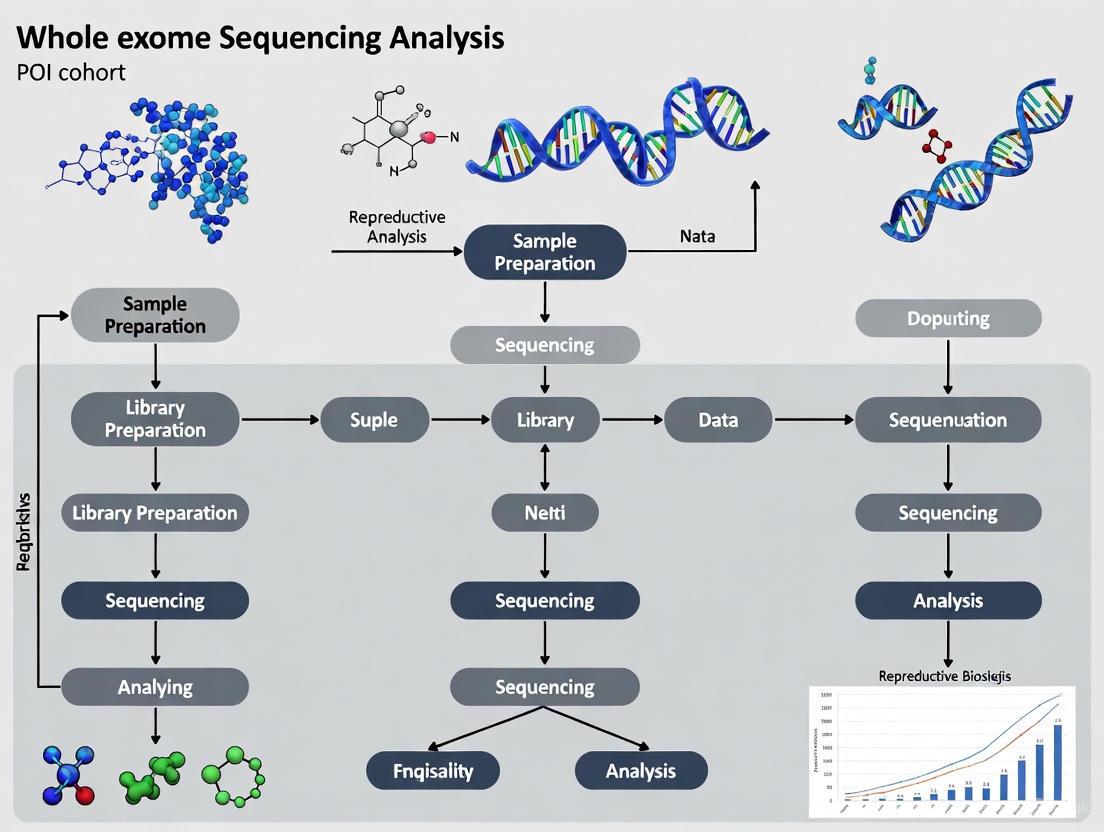
Whole-exome sequencing (WES) has revolutionized the molecular characterization of premature ovarian insufficiency (POI), a major cause of female infertility.
Whole-Exome Sequencing in POI Cohorts: Unraveling the Genetic Landscape for Clinical Translation and Therapeutic Development
Abstract
Whole-exome sequencing (WES) has revolutionized the molecular characterization of premature ovarian insufficiency (POI), a major cause of female infertility. This article synthesizes findings from recent large-scale sequencing studies of POI cohorts, revealing a diagnostic yield of 14-50% and implicating over 100 genes in pathways including meiosis, DNA repair, and folliculogenesis. We explore the methodological frameworks for WES analysis, from cohort design to variant interpretation, and address key challenges in establishing pathogenicity. The review highlights the oligogenic nature of POI, distinct genetic profiles between primary and secondary amenorrhea, and the critical role of functional validation. For researchers and drug development professionals, these advances provide a foundation for improved genetic diagnostics, personalized risk assessment, and targeted therapeutic development.
The Expanding Genetic Architecture of POI: From Single Genes to Complex Networks
Whole exome sequencing (WES) has revolutionized the diagnostic approach for genetically heterogeneous conditions like premature ovarian insufficiency (POI). By sequencing all protein-coding regions of the genome, WES can identify pathogenic variants across known disease genes and novel candidates simultaneously. This application note synthesizes current diagnostic yields from recent POI cohort studies, which report rates ranging from 14% to 50%, and provides detailed experimental protocols for implementing WES in reproductive genetics research [1] [2].
The substantial variation in reported diagnostic yields reflects differences in cohort characteristics, selection criteria, sequencing methodologies, and variant interpretation frameworks. Understanding these variables is crucial for optimizing research design and clinical application in POI investigations.
Diagnostic Yield Landscape in POI
Key Findings from Recent Cohort Studies
Table 1: Diagnostic Yields of WES in POI Cohort Studies
| Study Cohort | Cohort Size | Overall Diagnostic Yield | Yield in Familial Cases | Yield in Sporadic Cases | Key Genes Identified |
|---|---|---|---|---|---|
| Familial POI Cohort [1] | 36 families | 50% (18/36 families) | 50% | N/A | Genes involved in cell division, meiosis, and DNA repair |
| Large POI Cohort [2] | 1,030 patients | 23.5% (242/1030 cases) | N/A | N/A | 59 known POI genes + 20 novel candidates |
| Combined Analysis [2] | 1,030 patients | 18.7% (193/1030 cases) in known genes | N/A | N/A | NR5A1, MCM9, EIF2B2 |
Factors Influencing Diagnostic Yield
Multiple factors contribute to the wide range of diagnostic yields (14%-50%) reported across studies:
- Cohort Characteristics: Familial POI cases demonstrate higher diagnostic yields (50%) compared to unselected cohorts (18.7%-23.5%), suggesting stronger genetic components in familial cases [1] [2].
- Amenorrhea Type: Primary amenorrhea (PA) cases show higher diagnostic yields (25.8%) than secondary amenorrhea (SA) cases (17.8%), with different genetic profiles [2].
- Variant Interpretation: Stringent application of ACMG guidelines affects yield calculations. Studies that functionally reclassify variants of uncertain significance (VUS) report higher diagnostic yields [2].
Table 2: Genetic Findings by Amenorrhea Type in POI (n=1,030) [2]
| Variant Category | Primary Amenorrhea (n=120) | Secondary Amenorrhea (n=910) |
|---|---|---|
| Any P/LP Variant | 25.8% (31/120) | 17.8% (162/910) |
| Monoallelic Variants | 17.5% (21/120) | 14.7% (134/910) |
| Biallelic Variants | 5.8% (7/120) | 1.9% (17/910) |
| Multiple Genes (Multi-het) | 2.5% (3/120) | 1.2% (11/910) |
Experimental Protocols for WES in POI Research
Sample Preparation and Sequencing
Figure 1: WES Experimental Workflow
DNA Extraction and Quality Control
- Source Material: Obtain genomic DNA from peripheral blood using standard spin column-based methods (QIAamp DNA Blood or Tissue Kits) [3]. When blood is unavailable, dried blood spots on filter cards (CentoCard) provide suitable alternatives [4].
- Quality Assessment: Verify DNA integrity via agarose gel electrophoresis and quantify using fluorometric methods (Qubit dsDNA HS Assay). Ensure minimum concentration of 50 ng/μL and total quantity of 1.0-1.5 μg for library preparation [4].
- Storage Conditions: Maintain DNA samples at -20°C for short-term storage or -80°C for long-term preservation in TE buffer (pH 8.0) to prevent degradation.
Library Preparation and Exome Capture
- Library Construction: Fragment genomic DNA by sonication (Covaris S2) to 150-200 bp fragments. Ligate Illumina adapters to generated fragments using commercial library preparation kits (Twist Exome 2.0 Kit) [3].
- Exome Enrichment: Hybridize libraries to biotinylated oligonucleotide baits targeting exonic regions. Use magnetic streptavidin-coated beads to capture target regions. Perform post-capture amplification with 8-10 PCR cycles [2].
- Quality Control: Assess library quality and size distribution using Bioanalyzer DNA High Sensitivity Kit (Agilent Technologies). Verify concentration via qPCR with standards for accurate quantification.
Sequencing Parameters
- Platform Selection: Utilize high-throughput sequencing platforms such as Illumina NovaSeq 6000 or MGI DNBSEQ-G400 [3] [4].
- Sequencing Depth: Sequence to average coverage depth of at least 100x for exonic regions, ensuring >98% of target bases covered at 20x minimum [3] [2].
- Read Configuration: Employ paired-end sequencing (2×150 bp) to improve mapping accuracy and variant detection, particularly for indel identification.
Bioinformatic Analysis Pipeline
Figure 2: Bioinformatic Analysis Pipeline
Data Processing and Variant Calling
- Quality Control: Process raw sequence data through FastQC to assess read quality, adapter contamination, and GC content. Remove low-quality reads and adapters using Trimmomatic or Cutadapt.
- Sequence Alignment: Align clean reads to the human reference genome (GRCh38/hg38) using optimized aligners such as Isaac aligner or BWA-MEM [4]. Generate BAM files with sorted, duplicate-marked alignments.
- Variant Calling: Identify single nucleotide variants (SNVs) and small insertions/deletions (indels) using Starling Small Variant Caller or GATK HaplotypeCaller [4]. Detect copy number variants (CNVs) using Canvas or Manta algorithms [4].
Variant Annotation and Prioritization
- Functional Annotation: Annotate variants using SnpEff and in-house bioinformatics tools with comprehensive databases including dbNSFP, ClinVar, HGMD, and population frequency datasets (gnomAD, ExAC, 1000 Genomes) [3] [4].
- Variant Filtering: Implement stepwise filtration against population databases (MAF < 0.01 in gnomAD). Retain variants with predicted functional impact (missense, nonsense, splice-site, indels) [2].
- Phenotype Integration: Incorporate Human Phenotype Ontology (HPO) terms to prioritize variants in genes compatible with the POI clinical presentation [4]. Use Franklin Genoox or similar platforms for variant prioritization [3].
Variant Interpretation and Validation
Pathogenicity Assessment
- ACMG Guidelines Classification: Classify variants according to ACMG/AMP guidelines as Pathogenic (P), Likely Pathogenic (LP), Variant of Uncertain Significance (VUS), Likely Benign (LB), or Benign (B) [3] [2].
- In Silico Prediction: Apply multiple computational prediction tools including PolyPhen-2, SIFT, MutationTaster, FATHMM, PROVEAN, and CADD to assess variant impact [3] [5].
- Segregation Analysis: Confirm segregation of candidate variants with disease phenotype in available family members using Sanger sequencing.
Functional Validation
- Molecular Dynamics Simulations: For novel missense variants, employ computational approaches including AlphaFold2 for protein structure prediction and GROMACS for molecular dynamics simulations to evaluate protein stability and functional impacts [5].
- Experimental Studies: Implement functional assays based on gene function:
- For DNA repair genes (HFM1, MCM8, MCM9): Assess DNA damage response via γH2AX staining
- For meiotic genes: Evaluate homologous recombination in cultured cells
- For hormonal pathway genes: Measure transcriptional activity via luciferase reporter assays [2]
Biological Pathways in POI Pathogenesis
Figure 3: POI Genetic Pathways
WES studies have identified pathogenic variants across several biological pathways critical for ovarian function:
- Meiosis and DNA Repair: Genes including HFM1, MSH4, MCM8, and MCM9 play crucial roles in meiotic recombination and DNA repair mechanisms. Variants in these genes constitute nearly 50% of genetic findings in POI cohorts [2].
- Mitochondrial Function: Nuclear-encoded mitochondrial genes (AARS2, HARS2, CLPP, POLG) are essential for ovarian energy metabolism and follicular development [2].
- Folliculogenesis and Ovulation: Genes such as NR5A1, FSHR, BMP15, and GDF9 regulate follicle development, growth, and ovulation processes [2].
- Metabolic and Autoimmune Regulation: EIF2B2 mutations impair GDP/GTP exchange activity, while AIRE variants link POI with autoimmune regulation [2].
The Scientist's Toolkit: Research Reagent Solutions
Table 3: Essential Research Reagents for WES in POI Studies
| Reagent/Category | Specific Examples | Function/Application |
|---|---|---|
| DNA Extraction Kits | QIAamp DNA Blood/Tissue Kits (QIAGEN) | High-quality genomic DNA isolation from blood and tissues |
| Library Preparation | Twist Exome 2.0 Kit, Illumina DNA Prep | Fragmentation, adapter ligation, and library amplification |
| Exome Capture | IDT xGen Exome Research Panel, Twist Human Core Exome | Target enrichment of exonic regions |
| Sequencing Platforms | Illumina NovaSeq 6000, MGI DNBSEQ-G400 | High-throughput sequencing |
| Variant Annotation | Franklin Genoox, SnpEff, ANNOVAR | Functional annotation and prioritization of genetic variants |
| In Silico Prediction | PolyPhen-2, SIFT, MutationTaster, CADD | Pathogenicity prediction for missense variants |
| Functional Validation | AlphaFold2, GROMACS, Luciferase Reporter Assays | Assessment of variant impact on protein structure/function |
WES has substantially improved the molecular diagnosis of POI, with diagnostic yields ranging from 14% to 50% depending on cohort characteristics and methodological approaches. The continued identification of novel POI-associated genes through WES expands our understanding of ovarian biology and provides insights for future therapeutic development. Standardized protocols for sequencing, bioinformatic analysis, and variant interpretation are essential for maximizing diagnostic yield and advancing POI research.
Premature Ovarian Insufficiency (POI) is a clinically heterogeneous disorder characterized by the cessation of ovarian function before the age of 40, affecting approximately 1-3.7% of women [6]. It presents with primary or secondary amenorrhea, elevated gonadotropin levels, and low estrogen, significantly impacting fertility and long-term health [6]. The etiological landscape of POI is complex, with genetic factors contributing to 20-25% of cases [6]. Whole Exome Sequencing (WES) has emerged as a transformative diagnostic tool, revealing a broad array of pathogenic variants in about 50% of familial POI cases [1]. This application note details how WES-based cohort studies implicate specific disruptions in meiosis, DNA repair, mitochondrial function, and folliculogenesis, providing a framework for targeted research and therapeutic development.
Table 1: Key Quantitative Findings from WES Studies in POI Cohorts
| Study Parameter | Cohort 1 (n=36 families) [1] | Cohort 2 (n=35 patients) [6] | Primary Methodologies |
|---|---|---|---|
| Overall Diagnostic Yield | 50% (18/36 families) | 55.1% (16/29 patients) | Karyotype, FMR1 screening, SNP array, WES |
| Pathogenic/Likely Pathogenic Variants in Known POI Genes | 12 families | Variants in known genes (e.g., FIGLA, NOBOX) |
WES with targeted analysis |
| Pathogenic Variants in New Candidate Genes | 6 families | Novel variants in genes like FIGNL1 |
WES with candidate gene analysis |
| Variants in Meiosis/Cell Division Genes | 11 families | Information not specified | WES, functional pathway analysis |
| Variants in DNA Repair Genes | 4 families | Information not specified | WES, functional pathway analysis |
| Chromosomal Anomalies (Karyotype) | Information not specified | 8.5% (3/35 patients) | G-banded chromosome analysis |
| FMR1 Premutations | Information not specified | 17% (6/35 patients from 2 families) | PCR-based fragment analysis |
Key Biological Pathways and Mechanisms in POI
Meiosis and DNA Repair Defects
Genomic integrity during gametogenesis is paramount. WES studies reveal that a significant proportion of POI cases stem from pathogenic variants in genes governing meiosis and DNA repair. One study found that most identified variants were in genes involved in cell division and meiosis (n=11) or DNA repair (n=4) [1]. The proper execution of meiosis relies on mechanisms like meiotic recombination, which generates genetic diversity and ensures accurate chromosomal segregation [7]. Errors in these processes, such as nondisjunction where chromatids fail to separate, can lead to genomic imbalances that are often incompatible with viable gametes, directly contributing to ovarian follicle depletion in POI [7]. The "human repairome" – the complete set of scars left on DNA after repair – is a new layer of genomic knowledge, and its patterns can reveal the specific repair pathways active in a cell [8]. Deficiencies in cleansing "dirty ends" (non-canonical DNA termini) are linked to pathologies including neurodegeneration and inflammation, highlighting the critical nature of these repair mechanisms for cellular viability [9].
Mitochondrial Dysfunction
Mitochondria, the cellular powerhouses, are master regulators of cell fate and are critically important for gamete viability [10]. Disruptions in mitochondrial quality control mechanisms—including mitophagy (the removal of damaged mitochondria), biogenesis (the creation of new mitochondria), and dynamics (fusion and fission)—are strongly implicated in impaired spermatogenesis and sperm function, and by extension, are crucial for female gamete formation [10]. Furthermore, the maternal metabolic environment can shape early-life mitochondrial programming in offspring, with studies showing that maternal obesity can induce premature aging in mitochondrial electron transport chain genes in the liver of rat offspring, an effect that exhibits sex-specific differences [10]. Such mitochondrial dysfunction can lead to increased oxidative stress and impaired energy metabolism, creating an unfavorable environment for follicular development and oocyte maturation.
Signaling in Folliculogenesis
Ovarian folliculogenesis is a complex, multi-stage process tightly regulated by various signaling pathways. The Mitogen-Activated Protein Kinase (MAPK) signaling pathway plays a pivotal role in key stages, including primordial follicle formation and activation, dominant follicle selection, cumulus-oocyte complex (COC) expansion, ovulation, and luteinization [11]. This pathway also orchestrates steroidogenesis and regulates ovarian cell death (apoptosis) [11]. Dysregulation of the finely tuned MAPK signaling is a key mechanism implicated in POI pathophysiology, as well as in other ovarian conditions such as polycystic ovary syndrome (PCOS) and ovarian aging [11]. Understanding these signaling networks is essential for developing interventions that can modulate follicular growth and prevent premature follicle loss.
Experimental Protocols for POI Research
Protocol 1: Whole Exome Sequencing and Bioinformatic Analysis in a POI Cohort
Objective: To identify pathogenic genetic variants in patients with POI. Reagents: Patient peripheral blood samples, DNA extraction kits (e.g., QIAamp DNA Blood Mini Kit), WES library preparation kits, sequencing platforms (e.g., Illumina). Procedure:
- Patient Ascertainment & DNA Extraction: Recruit patients meeting the diagnostic criteria for POI (amenorrhea, FSH >25 IU/L). Obtain informed consent. Extract high-molecular-weight genomic DNA from peripheral blood lymphocytes [6].
- Pre-WES Genetic Screening:
- Perform karyotype analysis on at least 20 metaphase cells per patient to identify chromosomal anomalies [6].
- Conduct FMR1 premutation testing using PCR-based fragment analysis to determine CGG repeat number in the FMR1 gene [6].
- (Optional) Perform SNP array analysis (e.g., using Illumina HumanCytoSNP-12 BeadChip) to detect submicroscopic copy number variations (CNVs) [6].
- Whole Exome Sequencing:
- Prepare exome sequencing libraries from patient DNA.
- Sequence on an Illumina platform to achieve sufficient coverage (e.g., >50x mean coverage).
- Bioinformatic Analysis:
- Primary Filtering: Align sequences to a reference genome (e.g., GRCh37/hg19). Use a virtual gene panel of known POI-associated genes (e.g.,
HFM1,MSH5,STAG3,NOBOX,FIGLA) as a first-tier filter [1] [6]. - Secondary Analysis: If no causative variants are found, expand the analysis to the entire exome. Focus on variants in genes involved in biological pathways relevant to POI (meiosis, DNA repair, mitochondrial function, folliculogenesis) [1] [12].
- Variant Interpretation: Filter variants based on population frequency (e.g., exclude variants with minor allele frequency >0.1%), and use prediction tools (SIFT, Polyphen-2) and conservation scores (PhyloP) to assess pathogenicity. Classify variants according to ACMG guidelines [12] [6].
- Primary Filtering: Align sequences to a reference genome (e.g., GRCh37/hg19). Use a virtual gene panel of known POI-associated genes (e.g.,
- Validation: Confirm prioritized variants using Sanger sequencing in the proband and available family members to check for segregation with the disease phenotype [6].
Protocol 2: Functional Validation of a DNA Repair Gene in a Cell Model
Objective: To validate the functional impact of a candidate gene variant identified by WES, using a DNA repair assay. Reagents: Cell line (e.g., HEK293, patient-derived fibroblasts), CRISPR-Cas9 gene editing system, culture media, H₂O₂ or radiomimetic drugs (e.g., Zeocin), antibodies for γH2AX immunofluorescence, microscopy supplies. Procedure:
- Model Generation: Use CRISPR-Cas9 to introduce the candidate POI-associated variant into a control cell line, creating an isogenic mutant model [8].
- Induce DNA Damage: Treat both wild-type and mutant cell lines with a DNA-damaging agent (e.g., 1mM H₂O₂ for 1 hour or an appropriate dose of a radiomimetic drug) to generate DNA double-strand breaks and other lesions [9].
- Monitor Repair Capacity:
- Immunofluorescence Staining: At fixed time points post-treatment (e.g., 0, 1, 4, 8 hours), fix cells and stain for the DNA damage marker γH2AX.
- Quantify Foci: Using fluorescence microscopy, quantify the number of γH2AX foci per nucleus. A slower rate of foci disappearance in mutant cells indicates impaired DNA repair capacity [8].
- Alternative Assay: Employ a "repairome"-inspired assay by generating specific DNA breaks with CRISPR-Cas9 and analyzing the resulting "scar" patterns via sequencing in mutant vs. wild-type cells [8].
- Data Analysis: Compare the kinetics of DNA repair between wild-type and mutant cell lines using statistical tests (e.g., Student's t-test). Persistent DNA damage in the mutant line supports the pathogenicity of the variant.
Protocol 3: Assessing Mitochondrial Function in Ovarian Cells
Objective: To evaluate mitochondrial health and function in a model of ovarian insufficiency. Reagents: Ovarian granulosa cell line or primary cells, Seahorse XF Analyzer reagents, MitoTracker dyes (e.g., MitoTracker Red CMXRos for membrane potential), fluorescent microscope, reagents for ATP and ROS detection. Procedure:
- Cell Culture: Culture ovarian granulosa cells under standard conditions.
- Mitochondrial Respiration: Using a Seahorse XF Analyzer, perform a Mito Stress Test to measure key parameters of mitochondrial function:
- Basal Respiration: The baseline oxygen consumption rate (OCR).
- ATP-Linked Respiration: OCR inhibited by oligomycin.
- Maximal Respiration: OCR induced by FCCP.
- Proton Leak: The non-ATP-linked respiration [10].
- Mitochondrial Membrane Potential (ΔΨm): Stain cells with MitoTracker Red CMXRos. A decrease in fluorescence intensity indicates mitochondrial depolarization, a sign of dysfunction [10].
- Reactive Oxygen Species (ROS) Measurement: Use a fluorescent probe (e.g., MitoSOX) to specifically detect mitochondrial superoxide production. Increased fluorescence indicates oxidative stress [10].
- Data Integration: Correlate deficits in oxidative phosphorylation, loss of membrane potential, and elevated ROS with the genetic or pharmacological perturbation being studied to establish a link to ovarian cell dysfunction.
Pathway Visualization and Logical Workflows
Diagram 1: A logical workflow integrating Whole Exome Sequencing (WES) data with key biological pathways and functional validation to identify and confirm novel POI genes.
Diagram 2: DNA repair pathways in oocyte genomic integrity. Defects in end-processing enzymes like PNKP, APE1, and TDP1 prevent repair of 'dirty ends', leading to genomic instability and POI [1] [9]. DSBs: Double-Strand Breaks.
Diagram 3: Central role of mitochondrial function in ovarian health. Dysfunction in energy production, ROS management, or quality control triggers cell death, leading to follicle loss [10].
The Scientist's Toolkit: Research Reagent Solutions
Table 2: Essential Reagents and Resources for POI Pathway Research
| Reagent / Resource | Function / Application | Example Use in POI Research |
|---|---|---|
| Whole Exome Sequencing Kits (Illumina) | Comprehensive analysis of protein-coding regions to identify pathogenic variants. | Discovery of novel and known genetic variants in POI cohorts [1] [6]. |
| CRISPR-Cas9 Gene Editing Systems | Precise generation of knockout or knock-in mutations in cell or animal models. | Functional validation of candidate POI genes identified by WES [8]. |
| Seahorse XF Analyzer & Kits | Real-time measurement of mitochondrial respiration (OCR) and glycolysis (ECAR). | Profiling mitochondrial dysfunction in ovarian granulosa cells [10]. |
| MitoTracker Probes (e.g., CMXRos) | Fluorescent staining of mitochondria and assessment of membrane potential (ΔΨm). | Visualizing and quantifying mitochondrial health in oocytes or granulosa cells [10]. |
| Phospho-Histone H2A.X (γH2AX) Antibodies | Immunofluorescence marker for DNA double-strand breaks. | Quantifying DNA damage and assessing repair efficiency in cell models [8]. |
| Virtual Gene Panels for WES Analysis | Bioinformatic tool to filter sequencing data against a curated list of relevant genes. | First-tier analysis of WES data focusing on known POI and meiosis/DNA repair genes [1] [12]. |
| Ovarian Granulosa Cell Lines (e.g., KGN, hGL5) | In vitro models to study ovarian cell biology, steroidogenesis, and signaling. | Investigating the impact of genetic variants on folliculogenesis pathways like MAPK signaling [11]. |
Whole exome sequencing (WES) has become a cornerstone in human genetics research, enabling the analysis of all protein-coding regions to identify variants associated with Mendelian disorders, complex diseases, and cancer [13]. The spectrum of detectable genetic variation is broad, encompassing single nucleotide variants (SNVs), copy number variants (CNVs), and structural variations (SVs). Understanding the characteristics, detection methods, and clinical implications of each variant type is crucial for effective analysis of patient cohorts in research and diagnostic settings.
WES delivers high-throughput results at a reasonable price by targeting the approximately 2% of the genome that contains protein-coding sequences, where an estimated 85% of disease-causing mutations are located [13] [14]. This application note provides a comprehensive framework for detecting, annotating, and interpreting SNVs, CNVs, and SVs within WES data, with specific protocols and resources tailored for research on patient cohorts.
Variant Classification and Characteristics
Genetic variants are categorized based on their size, structure, and functional impact. The three principal classes detectable via WES are summarized in Table 1.
Table 1: Classification of Major Genetic Variants Detectable by Whole Exome Sequencing
| Variant Type | Size Range | Key Characteristics | Primary Detection Methods in WES | Known Disease Associations |
|---|---|---|---|---|
| Single Nucleotide Variants (SNVs) | 1 bp | Single base substitution; classified as synonymous, non-synonymous, or stop-gain [15] | Short-read alignment and statistical variant calling [13] | ~85% of known disease-causing mutations; directly affect protein function [16] [14] |
| Copy Number Variants (CNVs) | >50 bp to several Mb | Deletions or duplications of genomic segments; may affect single or multiple exons/genes [17] | Read-depth analysis, paired-end mapping, split-read alignment [17] | Significant contributors to genetic disorders; yield increase of 4.6% in pediatric cohorts [17] |
| Structural Variations (SVs) | >50 bp | Complex rearrangements: inversions, translocations, insertions, and complex combinations [18] | Read-pair, split-read, and read-depth algorithms; improved by long-range information [19] [18] | Associated with diverse conditions including autism, cancer, and rare developmental disorders [18] |
Single Nucleotide Variants (SNVs)
SNVs represent substitutions of a single nucleotide and are predominantly classified by their effect on protein coding. Non-synonymous SNVs (nsSNVs), also known as missense variants, result in an amino acid change and may affect protein folding, binding affinity, expression, or post-translational modification [16]. Computational predictions show that the impact of nsSNVs on protein function reflects sequence homology and structural information [16]. Synonymous SNVs do not change the encoded amino acid but can potentially be pathogenic if they affect regulatory sites, while stop-gain SNVs (nonsense variants) introduce premature termination codons that typically render proteins non-functional [15].
Copy Number Variants (CNVs)
CNVs are deletions or duplications of genomic segments that range from single exons to entire chromosomes. The clinical significance of CNVs is interpreted using an evidence-based scoring framework established by the American College of Medical Genetics and Genomics (ACMG) and the Clinical Genome Resource (ClinGen), which incorporates genomic content, dosage sensitivity, case data, and inheritance patterns [20] [17]. CNV analysis improves diagnostic yield in diverse pediatric cohorts by 4.6%, with findings ranging from exonic deletions to large, unbalanced rearrangements and aneuploidies [17].
Structural Variations (SVs)
SVs constitute a diverse spectrum of genomic alterations beyond simple copy-number changes, including inversions, translocations, insertions, and more complex rearrangements. These variants play significant roles in phenotypic diversity and are associated with various diseases, but their analysis remains challenging due to difficulties in aligning reads and accurately determining the full genomic span affected, particularly when breakpoints occur within repetitive regions [18]. The functional impact of SVs is complex, potentially influencing gene function directly or affecting regulatory regions through long-range interactions [18].
Experimental Protocols for Variant Detection
Whole Exome Sequencing Wet-Lab Protocol
Sample Preparation and Quality Control
- DNA Source: Obtain DNA from freshly frozen tissue, formalin-fixed paraffin-embedded (FFPE) tissue, or liquid biopsies (blood samples). Note that FFPE conservation and storage time can cause DNA fragmentation, challenging genome assembly [13].
- Quality Assessment: Verify DNA quality using fluorometric methods (e.g., Qubit fluorometer) and fragment size distribution analysis (e.g., Bioanalyzer High Sensitivity DNA kit) [21].
- Fragmentation: Fragment DNA to insert size of 350 bp using ultrasonication (e.g., Covaris S220) [21].
Library Preparation and Exome Capture
- Library Preparation: Use library preparation kits (e.g., Illumina TruSeq DNA PCR-Free Library Prep kit) following manufacturer protocols with modifications as needed [21].
- Exome Capture: Employ magnetic bead-based capture methods (e.g., Agilent SureSelect XT Target Enrichment System) where specific probes are hybridized to the sample and pulled out using magnetic beads. This approach is more widespread than microarray-based capture due to its simplicity [13].
- PCR Amplification: Amplify captured libraries to reach sufficient depth of coverage for targeted regions.
Sequencing
- Platform Selection: Utilize Illumina, Ion Torrent, or similar next-generation sequencing platforms.
- Sequencing Parameters: Perform paired-end sequencing (2×150 bases) to ensure adequate coverage for variant detection [21].
- Coverage Depth: Target minimum 100x coverage across the exome to reliably detect both germline and somatic variants.
Bioinformatics Analysis Workflow
The bioinformatics workflow for WES data encompasses multiple steps from raw data processing to variant interpretation, as visualized in Figure 1.
Figure 1: Comprehensive Workflow for WES Data Analysis and Variant Prioritization
Quality Control and Preprocessing
- Raw Data QC: Assess sequence quality using FastQC or similar tools to evaluate base quality distribution, GC content, sequence duplication levels, and adapter contamination [14].
- Preprocessing: Remove adapter sequences and low-quality bases using tools such as Trimmomatic or Cutadapt. Filter reads shorter than 30 bases to ensure alignment quality [21] [14].
Alignment and Processing
- Sequence Alignment: Map processed reads to the human reference genome (e.g., GRCh37/hg19 or GRCh38) using alignment tools such as BWA-MEM or Bowtie2, which implement the Burrows-Wheeler Transform algorithm for efficient short read mapping [21] [14].
- Post-Alignment Processing: Process aligned BAM files to mark PCR duplicates (e.g., using Picard MarkDuplicates), perform indel realignment, and apply base quality score recalibration (BQSR) to improve variant calling accuracy [14].
Variant Calling
Variant calling approaches differ by variant type, as detailed in Table 2.
Table 2: Variant Calling Tools and Methods for Different Variant Types
| Variant Type | Recommended Tools | Key Principles | Performance Considerations |
|---|---|---|---|
| SNVs | GATK, VarScan2, FreeBayes, Strelka, MuTect2 [13] | Statistical evaluation of base information at each locus compared to reference [14] | GATK recommended for germline variants; Strelka and MuTect2 excel in low-frequency variant detection [13] |
| CNVs | NxClinical, CNVkit, ExomeDepth [17] | Comparison of read depth in dedicated segments; detection of deviations from expected coverage [13] | Can detect single-exon to chromosome-level events; may miss small CNVs in low-coverage regions [17] |
| SVs | Manta, DELLY, BreakDancer, SvABA [19] | Identification of discordant read pairs, split reads, and read depth anomalies [19] | Performance varies by SV type; WES detects more deletions and insertions than inversions [19] |
- SNV Calling: Use tools such as GATK, VarScan2, or Strelka to identify single nucleotide changes and small indels. For somatic variant detection in cancer research, employ specialized callers like MuTect2 that compare tumor-normal pairs [13].
- CNV Calling: Apply read-depth based algorithms such as those in NxClinical or CNVkit to identify regions with significant deviations from expected coverage, indicating deletions or duplications [17].
- SV Calling: Utilize tools like Manta or DELLY that leverage discordant read pairs and split reads to identify larger structural rearrangements including inversions and translocations [19].
Variant Annotation and Prioritization
Functional Annotation
- Basic Annotation: Use tools like ANNOVAR to annotate variants with genomic coordinates, functional consequences (e.g., missense, frameshift), and gene information [14].
- Impact Prediction: Apply algorithms such as SIFT and PolyPhen to predict the functional impact of non-synonymous SNVs based on sequence conservation and structural parameters [16].
- Population Frequency: Filter against population databases (e.g., gnomAD, 1000 Genomes) to remove common polymorphisms unlikely to cause rare diseases [14].
Disease Association and Pathogenicity
- Database Integration: Compare variants to clinical databases (e.g., ClinVar, OMIM) to identify known disease-associated mutations [14].
- CNV Interpretation: Apply ACMG/ClinGen guidelines for CNV classification, incorporating evidence such as genomic content, dosage sensitivity, and literature cases [20] [17].
- SV Prioritization: Use specialized tools such as StrVCTVRE, CADD-SV, or AnnotSV to prioritize potentially pathogenic SVs based on functional impact and known disease associations [18].
Cohort Analysis and Trio-Based Filtering
- Inheritance Pattern Analysis: For familial cases, apply inheritance-based filtering (e.g., de novo, recessive, dominant models) to prioritize candidate variants.
- Phenotype Correlation: Use Human Phenotype Ontology (HPO) terms to prioritize variants in genes associated with the patient's clinical features [17].
- Variant Prioritization: Generate a ranked list of candidate pathogenic variants based on functional impact, inheritance pattern, and phenotype match for further validation.
Table 3: Essential Research Reagents and Computational Tools for WES Analysis
| Category | Resource/Tool | Specific Function | Application Context |
|---|---|---|---|
| Wet-Lab Reagents | Agilent SureSelect Clinical Research Exome | Exome capture kit for clinical research | Target enrichment for WES [21] |
| Illumina TruSeq DNA PCR-Free Library Prep | Library preparation without PCR amplification bias | PCR-free WGS or WES library construction [21] | |
| HaloPlex Target Enrichment System | Custom target enrichment for specific gene panels | Targeted sequencing of disease-associated genes [21] | |
| Variant Callers | GATK HaplotypeCaller | Germline SNV and indel discovery | Primary SNV calling in research and clinical settings [13] [14] |
| VarScan2 | Somatic and germline variant detection | Cancer studies with tumor-normal pairs [13] | |
| NxClinical | CNV detection from exome sequencing data | Clinical CNV analysis in diagnostic settings [17] | |
| Manta | Structural variant calling from paired-end sequencing | Comprehensive SV detection in research cohorts [19] | |
| Annotation & Interpretation | ANNOVAR | Functional annotation of genetic variants | Integrating >4,000 public databases for annotation [14] |
| AnnotSV | Knowledge-driven SV annotation and prioritization | ACMG/ClinGen-compliant SV interpretation [18] | |
| StrVCTVRE | Data-driven SV pathogenicity prediction | Machine learning-based SV prioritization (AUC=0.96) [18] | |
| Databases | ClinVar | Public archive of variant-disease relationships | Interpreting clinical significance of variants [14] |
| gnomAD | Catalog of human genetic variation in population scales | Filtering common polymorphisms [18] | |
| DECIPHER | Database of genomic variation and phenotype | CNV interpretation and case comparison [18] |
Comparative Performance of Sequencing Methodologies
The selection of appropriate sequencing methods is critical for optimal variant detection. Table 4 compares the performance of different approaches.
Table 4: Performance Comparison of Sequencing Methods for Variant Detection
| Sequencing Method | Variant Type | Sensitivity | Limitations | Optimal Use Cases |
|---|---|---|---|---|
| Whole Exome Sequencing (WES) | SNVs | High (~99% for common variants) [21] | Restricted to exonic regions; non-uniform coverage | Routine clinical diagnostics; rare disease gene discovery [13] |
| CNVs | Moderate (detects 4.6% additional diagnoses) [17] | May miss small CNVs in low-coverage regions | When combined with SNV analysis for comprehensive testing | |
| SVs | Limited compared to WGS [19] | Poor detection of inversions; breakpoints in repetitive regions | Research settings with complementary technologies | |
| Whole Genome Sequencing (WGS) | All types | Higher for CNVs and SVs [21] [19] | Higher cost; larger data storage requirements | Complex cases with negative WES; noncoding variant discovery |
| Linked-Read Sequencing | SVs | Higher number of SV calls [19] | Dominated by inversion calls; lower clinical relevance | Research applications requiring long-range information |
| Targeted Gene Panels | SNVs | High in targeted regions [21] | Limited to pre-defined genes; cannot discover novel genes | Focused testing for specific disorders |
Discussion
Integrated Analysis of Multiple Variant Types
The comprehensive analysis of SNVs, CNVs, and SVs in WES data significantly improves diagnostic yield and research outcomes. Recent studies demonstrate that CNV analysis alone adds 4.6% to diagnostic yield in pediatric cohorts, with particular value in cases referred from hematology (11.3%), neonatology (10.1%), and dermatology (9.1%) [17]. This integrated approach is especially valuable for detecting compound heterozygosity where a SNV and CNV affect the same gene, explaining cases that would remain unsolved with single-variant-type analysis.
Technological Considerations and Limitations
While WES provides a cost-effective approach for variant detection, several limitations must be considered. WES has restricted ability to detect CNVs and SVs compared to whole genome sequencing, particularly for variants in non-coding regions or with breakpoints in repetitive sequences [13] [19]. Coverage is less uniform than in targeted sequencing, and low coverage in GC-rich regions may lead to false negatives [21]. Additionally, there is no consensus regarding reference datasets and minimal application requirements, complicating cross-study comparisons [13].
Emerging Approaches and Future Directions
The field of variant detection and interpretation is rapidly evolving. Natural language processing (NLP)-based software like CNVisi shows promise in automating CNV interpretation according to ACMG/ClinGen guidelines, achieving 97.7% accuracy in distinguishing pathogenic CNVs and significantly reducing interpretation burden [20]. For SV prioritization, benchmark studies reveal that data-driven tools like StrVCTVRE achieve exceptional performance (AUC=0.96), while knowledge-driven approaches like AnnotSV and ClassifyCNV provide valuable ACMG-compliant frameworks [18].
The maturation of next-generation sequencing is reinforced by FDA-approved methods for cancer screening, detection, and follow-up. WES is on the verge of becoming an affordable and sufficiently evolved technology for everyday clinical use, particularly as bioinformatics pipelines become more standardized and validated [13]. The Galaxy platform has emerged as a leading solution for non-command line-based WES data processing, making comprehensive variant analysis more accessible to researchers without extensive computational backgrounds [13].
Comprehensive analysis of the full spectrum of genetic variants—SNVs, CNVs, and SVs—in whole exome sequencing data is essential for maximizing diagnostic yield and research insights in patient cohort studies. This application note provides detailed protocols and resources for wet-lab procedures, bioinformatics analysis, and variant interpretation tailored to each variant type. By implementing an integrated approach that combines multiple computational methods and follows established guidelines, researchers and clinicians can significantly enhance their ability to identify pathogenic variants underlying human disease.
As sequencing technologies continue to evolve and computational methods improve, the integration of multi-variant analysis in WES will play an increasingly important role in both research and clinical settings. The standardized frameworks and performance metrics provided here offer a foundation for optimizing variant detection and interpretation workflows across diverse applications and patient populations.
Premature ovarian insufficiency (POI) is a significant cause of female infertility, characterized by the loss of ovarian function before age 40. While initially considered primarily a monogenic disorder, emerging evidence from large-scale whole-exome sequencing studies reveals a more complex genetic architecture. This application note explores the evolving understanding of POI pathogenesis from single-gene to multilocus inheritance patterns. We summarize quantitative evidence from recent cohort studies, present experimental protocols for genetic analysis, and visualize key biological pathways. The findings demonstrate that oligogenic inheritance—where variants in multiple genes collectively contribute to disease manifestation—accounts for a substantial proportion of POI cases, providing crucial insights for researchers and drug development professionals working on diagnostic and therapeutic strategies.
Premature ovarian insufficiency affects approximately 3.7% of women before the age of 40, representing a major cause of female infertility [22]. The condition is clinically highly heterogeneous, ranging from ovarian dysgenesis with primary amenorrhea to post-pubertal secondary amenorrhea with elevated serum gonadotropin levels and hypoestrogenism [23]. While genetic factors have long been recognized as important contributors, accounting for 20-25% of cases [24], the conventional model of monogenic inheritance has proven insufficient to explain the majority of cases.
Recent advances in high-throughput sequencing technologies have revolutionized our understanding of POI genetics, enabling systematic exploration of its molecular basis through whole-exome sequencing (WES) and whole-genome sequencing (WGS) approaches [22]. These studies have revealed that POI represents a genetically complex disease where multilocus inheritance—the combined effect of variants in multiple genes—plays a crucial role in disease pathogenesis [23]. This paradigm shift from monogenic to oligogenic models has profound implications for both research methodologies and clinical applications in POI.
Quantitative Evidence for Genetic Architecture in POI
Large-scale genetic studies have progressively elucidated the contribution of both monogenic and oligogenic factors to POI pathogenesis. The table below summarizes key findings from recent major studies that illustrate this genetic landscape.
Table 1: Genetic Contribution to POI from Recent Cohort Studies
| Study Cohort Size | Monogenic Contribution | Oligogenic Contribution | Key Genes Idented | Study Reference |
|---|---|---|---|---|
| 1,030 patients | 18.7% (193/1030) | Additional 4.8% (cumulative 23.5%) | NR5A1, MCM9, EIF2B2, HFM1 | [22] |
| 500 patients | 14.4% (72/500) | 1.8% (9/500) with digenic/multigenic variants | FOXL2, NOBOX, MSH4, MSH5 | [25] |
| 93 patients vs. 465 controls | Not specified | 35.5% (33/93) heterozygous for >1 variant | RAD52, MSH6, TEP1, POLG | [23] |
| 149 patients with early-onset POI | 30.9% heterozygous, 9.4% homozygous | 21.8% polygenic | STAG3, MCM9, PSMC3IP, YTHDC2 | [26] |
| 36 families | 44% (16/36) with molecular diagnoses | 13% (2/16) with multilocus pathogenic variation | IGSF10, MND1, MRPS22, SOHLH1 | [27] |
The data reveal several important patterns. First, the genetic contribution to POI is higher in patients with primary amenorrhea (25.8%) compared to those with secondary amenorrhea (17.8%) [22]. Second, there is significant locus heterogeneity, with most genes contributing to only a small fraction of cases. Third, specific biological pathways are preferentially affected, with genes involved in DNA repair and meiosis representing the largest proportion (48.7%) of detected cases in monogenic inheritance [22].
Table 2: Biological Pathways Implicated in POI Pathogenesis
| Biological Pathway | Representative Genes | Proportion of Cases | Functional Role |
|---|---|---|---|
| Meiosis & DNA Repair | HFM1, SPIDR, BRCA2, MSH4, MSH6, RAD52 | 48.7% (94/193) [22] | Homologous recombination, meiotic progression, DNA damage repair |
| Ovarian Development | NOBOX, FIGLA, FOXL2 | Not specified | Folliculogenesis, ovarian differentiation |
| Mitochondrial Function | AARS2, ACAD9, CLPP, POLG | 22.3% (43/193) [22] | Cellular energy production, oxidative stress response |
| Metabolic Regulation | GALT, EIF2B2 | Not specified | Galactose metabolism, protein translation |
| Immune Regulation | AIRE | Not specified | Autoimmune tolerance |
The oligogenic model is supported by several lines of evidence. In one study of 93 patients, 35.5% of patients with POI were heterozygous for multiple variants compared to only 8.2% of controls (OR: 6.20, 95% CI: 3.60-10.60; P = 1.50 × 10⁻¹⁰) [23]. Furthermore, patients carrying multiple variants tended to have earlier disease onset, suggesting a cumulative deleterious effect on ovarian function [23].
Experimental Protocols for POI Genetic Analysis
Whole Exome Sequencing and Analysis Workflow
Comprehensive genetic analysis of POI requires a systematic approach to variant detection and interpretation. The following protocol outlines the key steps for WES in POI cohorts:
Sample Preparation and Sequencing
- Patient Recruitment: Recruit patients meeting diagnostic criteria for POI: oligomenorrhea or amenorrhea for at least 4 months before 40 years of age and elevated follicle-stimulating hormone (FSH) level >25 IU/L on two occasions >4 weeks apart [22]. Exclude patients with chromosomal abnormalities, autoimmune diseases, ovarian surgery, chemotherapy, or radiotherapy.
- DNA Extraction: Extract genomic DNA from venous blood using standard protocols (e.g., phenol-chloroform extraction or commercial kits) [27].
- Exome Capture and Sequencing: Perform exome capture using platforms such as Nimblegen VCRome2.1 or comparable systems. Sequence on Illumina platforms (NovoSeq 6000 or similar) to generate paired-end reads (e.g., 150 bp) [27] [28].
Variant Calling and Annotation
- Quality Control: Assess raw sequence quality using FastQC. Align reads to reference genome (GRCh37/hg19 or GRCh38/hg38) using aligners like BWA or Bowtie2.
- Variant Calling: Identify single nucleotide variants (SNVs) and insertions/deletions (indels) using variant callers such as ATLAS2 or GATK Best Practices pipeline [27].
- Variant Annotation: Annotate variants using pipelines like Cassandra or ANNOVAR with population frequency databases (gnomAD, 1000 Genomes), in-silico prediction tools (CADD, SIFT, PolyPhen-2), and mutation databases (ClinVar, HGMD) [22] [27].
Variant Filtering and Prioritization
- Frequency Filtering: Remove common variants (minor allele frequency >0.01 in population databases) [22].
- Pathogenicity Prediction: Retain rare (MAF <0.001), predicted deleterious variants (e.g., CADD score >20, loss-of-function variants).
- Gene Prioritization: Focus on known POI genes (e.g., from Genomics England PanelApp) and novel candidates with biological plausibility for ovarian function.
- Segregation Analysis: Confirm candidate variants by Sanger sequencing in patients and available family members to assess segregation with phenotype [27].
Oligogenic Analysis Protocol
For investigating oligogenic inheritance in POI, the following specialized approach is recommended:
- Gene-Burden Analysis: Compare the cumulative burden of rare variants in POI-associated genes between cases and controls using statistical tests like sequence kernel association test (SKAT) or Fisher's exact test [23].
- Variant Combination Analysis: Identify combinations of variants in different genes that co-occur more frequently in patients than expected by chance. Use platforms like ORVAL for predicting pathogenicity of variant combinations [23].
- Functional Interaction Mapping: Analyze protein-protein interaction networks using tools like STRING database and Cytoscape to identify biologically plausible oligogenic interactions [23].
- Phenotype-Genotype Correlation: Assess whether specific variant combinations correlate with clinical severity, such as earlier age at onset or more severe hormonal profiles [25] [23].
Key Signaling Pathways and Biological Mechanisms
POI-associated genes cluster in several key biological pathways essential for ovarian development and function. The diagram below illustrates the major pathways and their interrelationships.
The "Meiotic Processes" pathway encompasses genes essential for proper chromosome pairing, recombination, and segregation during meiosis. Disruption of these processes leads to meiotic arrest and accelerated follicle depletion [22]. The "DNA Damage Repair" pathway includes genes involved in recognizing and repairing DNA lesions, particularly double-strand breaks that occur during meiotic recombination. Deficiencies in these processes trigger oocyte apoptosis and follicle atresia [23].
The "Folliculogenesis" pathway contains genes critical for follicle development, maturation, and ovulation. These include growth factors, transcription factors, and structural components necessary for follicular assembly and growth [25]. The "Mitochondrial Function" pathway comprises genes encoding mitochondrial proteins essential for cellular energy production. Mitochondrial dysfunction in oocytes leads to oxidative stress and impaired oocyte competence [22] [24]. Finally, the "Hormonal Signaling" pathway involves genes mediating response to reproductive hormones, particularly FSH and estrogen, which are crucial for follicular development and maturation [24].
The Scientist's Toolkit: Research Reagent Solutions
Table 3: Essential Research Reagents for POI Genetic Studies
| Reagent/Category | Specific Examples | Function/Application | Notes |
|---|---|---|---|
| Sequencing Platforms | Illumina NovaSeq 6000, Illumina TruSeq Stranded mRNA Library Prep Kit | Whole exome sequencing, transcriptome analysis | Ensure high coverage (>50x for WES); use polyA selection for RNA-seq [28] |
| Variant Calling Pipelines | GATK Best Practices, Mercury pipeline, ATLAS2 | Identification of SNVs and indels from sequencing data | Include quality control metrics: mapping quality, base quality, coverage depth [27] |
| Variant Annotation Tools | ANNOVAR, VEP (Variant Effect Predictor), CADD | Functional annotation of genetic variants | CADD score >20 indicates deleteriousness; integrate multiple prediction algorithms [22] |
| Population Databases | gnomAD, 1000 Genomes Project, in-house control databases | Filtering of common polymorphisms | Use MAF threshold <0.01 for rare variants; consider population-specific frequencies [22] [27] |
| Functional Validation Assays | Luciferase reporter assays, CRISPR/Cas9 genome editing, in vitro fertilization techniques | Confirming variant pathogenicity and functional impact | For example, luciferase assay confirmed p.R349G in FOXL2 impaired transcriptional repression [25] |
| Oligogenic Analysis Platforms | ORVAL, VarCoPP, Digenic Effect predictor | Predicting pathogenicity of variant combinations | ORVAL platform confirmed pathogenicity of RAD52 and MSH6 combination [23] |
Discussion and Future Perspectives
The recognition of oligogenic inheritance in POI represents a paradigm shift in our understanding of the disease's genetic architecture. This model helps explain several previously puzzling observations, including the extensive phenotypic variability among patients with mutations in the same gene, the high proportion of sporadic cases despite evidence for genetic causation, and the incomplete penetrance often observed in familial cases [23].
From a clinical perspective, these findings support the implementation of comprehensive genetic testing that extends beyond established POI genes to include broader panels encompassing DNA repair, meiotic, and mitochondrial pathways [29]. The oligogenic model also suggests that genetic counseling should consider the potential cumulative effects of multiple variants, particularly in cases with severe or early-onset phenotypes [26].
For drug development, the pathway-based understanding of POI pathogenesis reveals potential therapeutic targets. For instance, genes involved in DNA damage response such as RAD52 and MSH6 represent potential targets for small molecules that might enhance DNA repair capacity in oocytes [23]. Similarly, the involvement of mitochondrial pathways suggests that antioxidants or mitochondrial enhancers might have therapeutic potential in specific genetic subgroups [24].
Future research directions should include larger collaborative studies to increase statistical power for identifying additional oligogenic combinations, functional studies to validate the mechanistic interactions between genes in proposed oligogenic networks, and longitudinal studies to determine how specific variant combinations influence disease progression and treatment response.
The evidence from recent large-scale genetic studies firmly establishes that POI follows not only monogenic but also oligogenic inheritance patterns, with multilocus pathogenesis accounting for a significant proportion of cases. This expanded understanding of POI genetics has profound implications for research methodologies, clinical diagnostics, and therapeutic development. Researchers should adopt analytical approaches that specifically account for the potential of variant combinations in different genes to collectively contribute to disease pathogenesis. The integration of these oligogenic models into both research and clinical practice will ultimately enhance our ability to diagnose, counsel, and develop targeted interventions for women with this complex and heterogeneous condition.
Premature ovarian insufficiency (POI) is a clinically heterogeneous disorder characterized by the loss of ovarian function before age 40, affecting approximately 1-3.7% of women and representing a major cause of female infertility [30] [2]. Establishing the molecular etiology of POI has proven challenging due to its remarkable genetic heterogeneity, with pathogenic variants in over 100 genes implicated in its pathogenesis through various inheritance patterns including autosomal recessive, autosomal dominant, and oligogenic/polygenic modes [31] [2]. Whole exome sequencing (WES) has emerged as a powerful approach for unraveling this complexity, enabling simultaneous analysis of all protein-coding regions where approximately 85% of disease-causing mutations are located [14].
This application note examines the current landscape of POI genetic research, focusing specifically on the balance between pathogenic variants in established POI genes and the discovery of novel candidate genes. We present quantitative findings from recent large-scale cohort studies, detailed experimental methodologies for WES-based gene discovery, and practical tools for implementing these approaches in research settings. The insights provided are particularly relevant for researchers, clinical scientists, and drug development professionals working to advance molecular diagnostics and targeted therapies for ovarian insufficiency.
Current Genetic Landscape of POI
Diagnostic Yield from Known POI Genes
Recent large-scale WES studies have substantially clarified the contribution of known POI genes to disease etiology. A 2023 study of 1,030 POI patients identified pathogenic or likely pathogenic (P/LP) variants in 59 known POI-causative genes in 18.7% of cases (193/1030) [2]. Similarly, a 2025 study focusing on early-onset POI (<25 years) found that 63.6% (75/118) of sporadic cases carried variants in established POI genes [31]. The distribution of these variants shows distinct patterns, with the majority (80.3%) being monoallelic (single heterozygous), while biallelic variants account for 12.4% and multiple P/LP variants in different genes (multi-het) explain 7.3% of cases with genetic findings [2].
Table 1: Genetic Findings in POI Cohorts from Recent WES Studies
| Study Cohort | Cohort Size | PA:SA Ratio | Overall Diagnostic Yield | Monoallelic Variants | Biallelic Variants | Multi-het Variants | Key Contributor Genes |
|---|---|---|---|---|---|---|---|
| General POI Cohort [2] | 1,030 | 120:910 | 18.7% (193/1030) | 80.3% (155/193) | 12.4% (24/193) | 7.3% (14/193) | NR5A1, MCM9, EIF2B2 |
| Early-onset POI [31] | 149 | 31 familial, 118 sporadic | Familial: 64.7% (11/17); Sporadic: 63.6% (75/118) | 30.9% heterozygous | 9.4% homozygous | 21.8% polygenic | STAG3, MCM9, PSMC3IP, YTHDC2, ZSWIM7 |
| Combined Approach Cohort [30] | 28 | 4:24 | 57.1% (16/28) | 28.6% (8/28) SNVs/indels | 3.6% (1/28) CNVs | 25% (7/28) VUS | FIGLA, PMM2, TWNK |
Distinct Genetic Architecture Between Clinical Subtypes
The genetic basis of POI differs significantly between clinical subtypes, particularly when comparing primary amenorrhea (PA) and secondary amenorrhea (SA). Patients with PA show a substantially higher contribution of P/LP variants (25.8%) compared to those with SA (17.8%) [2]. This difference is particularly pronounced for biallelic and multi-het variants, which are more frequent in PA (5.8% and 2.5%, respectively) than in SA (1.9% and 1.2%, respectively), suggesting that cumulative effects of genetic defects influence clinical severity [2]. Specific genes also demonstrate subtype preferences, with FSHR variants more prominent in PA (4.2% in PA vs. 0.2% in SA), while pathogenic variants in AIRE, BLM, and SPIDR were observed exclusively in SA patients in one large cohort [2].
Gene ontology analysis reveals that genes implicated in meiosis or homologous recombination repair account for the largest proportion (48.7%) of detected cases with known genetic causes, followed by genes responsible for mitochondrial function, metabolism, and autoimmune regulation (collectively 22.3%) [2]. This functional distribution highlights the diverse biological processes essential for ovarian development and maintenance.
Experimental Protocols for Gene Discovery
Tiered Variant Classification Framework
A hierarchical approach to variant classification enables systematic assessment of potential pathogenicity while accounting for existing evidence levels for gene-disease relationships in POI [31]. The following tiered framework has been successfully applied in recent studies:
Category 1: Variants in established POI genes from curated databases such as Genomics England Primary Ovarian Insufficiency PanelApp (69 genes) [31]. These variants represent the highest level of evidence and should be prioritized in clinical reporting.
Category 2: Variants in other POI-associated genes (355 genes) or Category 1 variants following unexpected inheritance patterns [31]. This category includes genes with moderate evidence from literature but not yet fully established.
Category 3: Homozygous variants in novel candidate POI genes without established disease associations [31]. These represent discovery-phase findings requiring functional validation.
Table 2: Research Reagent Solutions for WES in POI Studies
| Reagent Category | Specific Products | Function/Application | Key Considerations |
|---|---|---|---|
| DNA Extraction | QIAamp DNA Blood Midi Kits (Qiagen) [31], QIAsymphony DNA midi kits [30] | High-quality DNA extraction from whole blood | Ensure DNA integrity for library preparation; assess fragmentation |
| Exome Capture | SureSelect XT-HS (Agilent) [30], Custom capture designs (163 genes) [30] | Target enrichment of exonic regions | Custom panels can focus on known POI genes; standardized kits offer broader discovery potential |
| Library Preparation | TruSeq DNA PCR-Free (Illumina) [32], Nextera Flex [32] | Sequencing library construction | PCR-free methods reduce duplicates; consider DNA input requirements (1-250ng) [32] |
| Sequencing Platforms | Illumina NovaSeq, HiSeq [32], NextSeq 550 (Illumina) [30] | High-throughput sequencing | Platform choice affects read length, coverage, and cost; cross-platform validation enhances reliability [32] |
| Variant Callers | GATK [14], SAMtools [14], FreeBayes [14], VarScan2 [13] | Identification of SNVs and indels | Combination of callers improves sensitivity; GATK recommended for germline variants [14] |
| Annotation Tools | ANNOVAR [14], Alissa Interpret (Agilent) [30] | Functional annotation of variants | Integrates ~4,000 databases including dbSNP, gnomAD, ClinVar [14] |
Integrated WES Bioinformatics Workflow
A robust bioinformatics pipeline is essential for accurate variant detection and interpretation. The following protocol outlines key steps for WES data analysis in POI research:
Step 1: Quality Control and Preprocessing
- Assess raw sequencing data quality using FastQC or NGS QC Toolkit to evaluate base quality distribution, GC content, sequence duplication levels, and over-represented sequences [14].
- Perform adapter trimming and quality filtering using tools such as Trimmomatic or Cutadapt to remove low-quality bases and technical sequences [14].
- Requirement: Minimum sequencing depth of 50-100x for reliable variant calling, with 1500x total coverage recommended for establishing high-confidence reference call sets [32].
Step 2: Alignment and Processing
- Align processed reads to a reference genome (GRCh37/38) using BWA-MEM or Bowtie2, which implement Burrows-Wheeler Transform for efficient mapping [14].
- Process aligned BAM files to mark PCR duplicates (Picard MarkDuplicates), perform indel realignment, and apply base quality score recalibration (GATK BaseRecalibrator) [14].
- Note: Biological replicates significantly improve calling precision and reduce artifacts compared to computational replicates alone [32].
Step 3: Variant Calling and Annotation
- Call germline variants using GATK HaplotypeCaller or FreeBayes for SNVs and small indels [14]. For somatic variant detection in associated tumors, use MuTect2 or VarScan2 [13].
- Annotate variants with functional predictions using ANNOVAR or similar tools, incorporating population frequency (gnomAD), pathogenicity predictions (CADD, PolyPhen), and clinical databases (ClinVar, OMIM) [14].
- Filter variants based on quality metrics, population frequency (MAF < 0.01 for rare variants), and predicted functional impact [2].
Step 4: Prioritization and Validation
- Prioritize variants based on the tiered classification framework, focusing on protein-truncating variants and conserved missense changes in genes relevant to ovarian biology [31].
- Confirm compound heterozygous or biallelic variants through T-clone sequencing or 10x Genomics linked-read approaches to establish phase [2].
- Functionally validate uncertain significance variants through experimental assays, such as measuring GDP/GTP exchange activity for EIF2B2 variants or DNA repair proficiency for homologous recombination genes [2].
WES Data Analysis Workflow
Novel Gene Discovery and Association Analyses
Statistical Approaches for Gene Discovery
Case-control association analyses have proven powerful for identifying novel POI-associated genes beyond known causative genes. In a large-scale study comparing 1,030 POI cases with 5,000 controls, 20 novel POI-associated genes demonstrated a significantly higher burden of loss-of-function variants [2]. These genes span multiple biological processes essential for ovarian function:
- Gonadogenesis: LGR4, PRDM1
- Meiosis: CPEB1, KASH5, MCMDC2, MEIOSIN, NUP43, RFWD3, SHOC1, SLX4, STRA8
- Folliculogenesis and Ovulation: ALOX12, BMP6, H1-8, HMMR, HSD17B1, MST1R, PPM1B, ZAR1, ZP3
When combined with findings from known POI genes, these novel associations bring the total contribution of pathogenic and likely pathogenic variants to 23.5% (242/1030) of POI cases [2]. This demonstrates the value of large cohort sizes and appropriate control groups for robust gene discovery.
Functional Validation of Novel Candidates
Following statistical association, functional validation is crucial for establishing novel gene-disease relationships. Recent studies have employed multiple approaches:
Upgrading VUS through Functional Studies: In one study, 75 variants of uncertain significance from seven POI genes involved in homologous recombination repair and folliculogenesis were experimentally validated, with 55 confirmed as deleterious and 38 upgraded to likely pathogenic [2]. This highlights the importance of functional evidence in variant interpretation.
Pathway Analysis: Novel candidate genes can be grouped by biological pathways to identify enriched processes. Recent findings indicate significant enrichment in meiotic processes, follicle development, and mitochondrial function, providing insights into potential therapeutic targets [31] [2].
Gene Discovery and Validation Pipeline
The integration of WES in POI research has substantially advanced our understanding of the genetic architecture underlying this heterogeneous disorder. The systematic application of tiered variant classification frameworks and robust bioinformatics pipelines has enabled both improved diagnostic yield from known genes and discovery of novel biological pathways. Current evidence indicates that known POI genes explain approximately 18.7-23.5% of cases, with novel candidate genes continuing to expand this landscape [31] [2].
Future efforts should focus on several key areas: First, functional characterization of novel candidate genes is essential to establish their roles in ovarian biology and validate disease mechanisms. Second, integration of multi-omics approaches, including transcriptomics and epigenomics, may reveal regulatory mechanisms contributing to POI pathogenesis. Third, larger diverse cohorts are needed to improve the generalizability of findings and address currently limited ethnic representation in genetic studies. Finally, translation of genetic findings into clinical practice requires standardized variant interpretation guidelines and functional validation pipelines to ensure accurate diagnosis and genetic counseling for patients and their families.
These advances will continue to bridge the gap between gene discovery and clinical application, ultimately improving diagnostic precision, enabling targeted therapeutic development, and providing personalized risk assessment for women with or at risk for premature ovarian insufficiency.
Best Practices in WES Analysis: From Cohort Design to Clinical Reporting
Within the context of whole exome sequencing (WES) analysis for Premature Ovarian Insufficiency (POI) cohorts, rigorous cohort selection is a critical prerequisite for generating meaningful and interpretable genetic data. POI is a highly heterogeneous reproductive disorder in both its etiology and clinical presentation, a characteristic that complicates the identification of causative genes [33]. The core challenge lies in distinguishing genuine pathogenic variants from background noise, a process that is profoundly influenced by the structure of the study population. This document outlines application notes and detailed protocols for optimizing cohort selection by strategically leveraging familial and sporadic cases and implementing phenotypic stratification. These strategies are designed to enhance statistical power, address genetic heterogeneity, and facilitate the discovery of novel pathogenic mechanisms in POI.
Theoretical Foundations and Definitions
Familial vs. Sporadic Cases
- Familial Cases: Characterized by multiple affected individuals within a family, suggesting a inherited genetic component. These cases are highly valuable for identifying rare, highly penetrant variants through segregation analysis. In POI, familial cases often suggest monogenic or oligogenic inheritance modes [33] [34].
- Sporadic Cases: Defined by a single affected individual in a family with no known family history. Their etiology can be complex, involving de novo mutations, recessive inherited variants, multifactorial causes, or environmental factors. Notably, reduced penetrance and variable expressivity in known genes can also result in sporadic presentations [35].
Phenotypic Stratification
Phenotypic stratification is the process of subdividing a cohort into more biologically homogeneous subgroups based on specific clinical features, biomarker levels, or other measurable traits. This approach helps to reduce heterogeneity, increasing the likelihood that individuals within a subgroup share a common underlying pathophysiology [36]. In genetic studies, this can powerfully increase the signal-to-noise ratio for association detection.
Population Stratification
Population stratification is a confounder in genetic association studies that occurs when cases and controls are drawn from subpopulations with differing genetic backgrounds and allele frequencies. This can lead to spurious associations—false positives where a marker appears associated with the disease simply because it is more common in the ancestral population of the cases, not because it is causally related to the disease [37]. For example, a classic study in Pima Indians showed a spurious association between a genetic variant and diabetes that disappeared when ancestry was accounted for [37].
Methods to Control for Population Stratification:
- Ethnic Matching: Carefully matching cases and controls based on self-reported ethnicity or, more stringently, grandparental origin [37].
- Principal Component Analysis (PCA): Using genome-wide data to calculate principal components that reflect genetic ancestry. These components can be included as covariates in statistical analyses to adjust for population substructure [37].
- Genomic Control: A method that uses the genome-wide distribution of test statistics to estimate an inflation factor (λ) caused by population structure and adjusts the test statistics accordingly [37].
- Family-Based Study Designs: Using family-based controls (e.g., parents or siblings) is considered largely immune to population stratification because the genetic background is shared [37].
Application Notes: Strategic Cohort Selection for POI WES
Rationale for Combining Familial and Sporadic Cases
A combined strategy leverages the unique advantages of both familial and sporadic cases. Focusing solely on large multiplex families may identify variants that are rare and specific to those pedigrees but miss important contributors to the broader disease population. Conversely, studying only sporadic cases requires very large sample sizes to achieve significance for de novo or recessive variants and is more susceptible to confounding. Integrating both allows for:
- Cross-Validation: Variants identified in familial cases can be screened for in a sporadic cohort to assess their broader contribution.
- Mode-of-Inheritance Exploration: Observing the same gene mutated in both dominant familial and de novo sporadic cases provides strong evidence for its pathogenicity.
- Elucidating Genetic Architecture: This approach can reveal the spectrum of inheritance, from highly penetrant familial mutations to oligogenic and de novo contributors, as highlighted in recent POI genetic studies [33].
A Tiered Stratification Framework for POI
A systematic, tiered framework for stratifying a POI cohort, inspired by approaches in other complex neurological disorders like Alzheimer's disease, ensures a logical and comprehensive analysis [36]. The workflow moves from the broadest genetic categories to increasingly refined phenotypic subgroups.
The following diagram illustrates this logical workflow for cohort selection and analysis:
Experimental Protocols
Protocol: Defining and Ascertaining Familial and Sporadic Cases
Objective: To consistently classify POI patients as familial or sporadic for cohort assembly.
Materials:
- Standardized family history questionnaire.
- Pedigree drawing software.
- Established diagnostic criteria for POI (e.g., ESHRE Guideline).
Procedure:
- Clinical Diagnosis: Confirm POI diagnosis in the proband according to standard criteria (e.g., amenorrhea for ≥4 months and elevated FSH >25 IU/L in a woman under 40).
- Family History Interview:
- Systematically interview the proband regarding first-, second-, and third-degree relatives.
- Inquire specifically about history of amenorrhea, early menopause (<45 years), infertility, and other associated features (e.g., sensorineural hearing loss, autoimmune conditions).
- Classification:
- Familial Case: Define as a proband with at least one first- or second-degree relative who also meets diagnostic criteria for POI or has experienced confirmed early menopause.
- Sporadic Case: Define as a proband with no known family history of POI, early menopause, or related infertility disorders after thorough investigation.
- Documentation: Construct a three-generation pedigree for each proband.
Protocol: Principal Component Analysis (PCA) for Stratification Control
Objective: To detect and correct for population stratification within the assembled POI cohort and control subjects.
Materials:
- Genotype data from the WES cohort (cases and controls) and from reference populations (e.g., 1000 Genomes Project).
- Software: PLINK, GCTA, or EIGENSOFT.
Procedure:
- Data Pruning: Prune the variant call set from WES to retain a set of independent, common (MAF >5%) single nucleotide polymorphisms (SNPs) that are not in linkage disequilibrium.
- Merge with Reference Data: Merge the study cohort genotypes with data from diverse reference populations.
- Run PCA: Execute the PCA algorithm to generate principal components (PCs) that represent major axes of genetic variation.
- Visualize and Identify Outliers: Plot the first few PCs (e.g., PC1 vs. PC2). Individuals clustering outside the main study population (e.g., with different ancestral origins) should be flagged as outliers.
- Incorporate as Covariates: In downstream association tests, include the top principal components (as determined by scree plot) as covariates to adjust for residual population structure [37].
Protocol: Phenotypic Stratification Based on Clinical Features
Objective: To subdivide the POI cohort into clinically homogeneous subgroups for targeted genetic analysis.
Materials:
- Annotated clinical database for the cohort.
- Laboratory results (karyotype, autoantibody panels).
- Pelvic ultrasound reports.
Procedure:
- Data Collection: Assemble a standardized dataset for each patient, including:
- Type of amenorrhea (primary or secondary).
- Age of onset.
- Associated clinical features (e.g., autoimmune disease, hearing loss, ataxia).
- Karyotype result.
- Autoantibody status (e.g., adrenal, thyroid).
- Ultrasound data (ovarian volume, antral follicle count).
- Stratification: Create non-overlapping subgroups based on key characteristics. The table below summarizes major stratification axes and their genetic implications for POI research.
Table 1: Key Phenotypic Stratification Axes in POI Research
| Stratification Axis | Subgroups | Rationale and Genetic Implications |
|---|---|---|
| Familial History | Familial | Suggests strong genetic component; ideal for identifying highly-penetrant variants via segregation analysis [34]. |
| Sporadic | Etiology may involve de novo, recessive, or multifactorial causes; larger cohorts needed [35]. | |
| Type of Amenorrhea | Primary Amenorrhea | Suggests a early defect in ovarian development; often associated with chromosomal abnormalities or genes involved in ovarian formation. |
| Secondary Amenorrhea | Suggests ovarian failure post-puberty; may be linked to genes involved in follicle maintenance and function [34]. | |
| Karyotype | Normal (46,XX) | Focus on single-gene etiologies. The primary target for WES. |
| Abnormal (e.g., Turner mosaic, Xq deletions) | These are often the cause of POI; analysis may focus on modifier genes or exclude these from WES of "idiopathic" POI. | |
| Associated Features | Isolated POI | Genetic analysis focuses purely on ovarian function genes. |
| Syndromic POI (e.g., with hearing loss, autoimmunity) | Suggests specific gene sets (e.g., FOXL2 for BPES, AIRE for APS-1). |
The Scientist's Toolkit: Research Reagent Solutions
The following table details essential materials and tools for implementing the described cohort selection and analysis strategies.
Table 2: Essential Research Reagents and Tools for POI WES Cohort Studies
| Item | Function/Application | Examples/Notes |
|---|---|---|
| Whole Exome Sequencing Kit | Target enrichment and sequencing of all protein-coding regions of the genome. | Kits from Illumina (Nextera), Agilent (SureSelect), or IDT. Provides the primary genetic data for variant discovery. |
| Pedigree Drawing Software | Visualization of family structures and inheritance patterns. | Progeny Clinical, Cyrillic. Essential for classifying familial vs. sporadic cases and documenting segregation. |
| Principal Component Analysis (PCA) Software | Control for population stratification in genetic association analyses. | PLINK, EIGENSOFT. Uses genome-wide data to correct for ancestry-based confounding [37]. |
| Variant Annotation & Filtering Database | Prioritizes potentially pathogenic variants from millions of WES variants. | ANNOVAR, SnpEff, VEP. Integrates population frequency (gnomAD), in silico prediction scores, and functional data. |
| Sanger Sequencing Reagents | Validation of putative pathogenic variants identified by WES. | PCR reagents, BigDye Terminators. Confirms variant presence and performs segregation analysis in families. |
| Standardized Clinical Questionnaire | Collection of consistent phenotypic data for stratification. | Custom-designed forms capturing menopausal history, associated symptoms, and family history. |
Data Presentation and Analysis Guidelines
Summarizing Cohort Characteristics
All cohort characteristics, including the results of familial/sporadic classification and phenotypic stratification, should be presented in a summary table. This provides a clear overview of the study population's composition and is essential for interpreting subsequent genetic findings.
Table 3: Template for Presenting Cohort Characteristics in a POI WES Study
| Cohort Characteristic | Overall Cohort (N= ) | Familial Subcohort (N= ) | Sporadic Subcohort (N= ) |
|---|---|---|---|
| Total Number of Cases | |||
| Age at Diagnosis (y), Mean ± SD | |||
| Family History, n (%) | N/A | N/A | |
| Type of Amenorrhea, n (%) | |||
| - Primary | |||
| - Secondary | |||
| Karyotype, n (%) | |||
| - 46,XX | |||
| - Abnormal | |||
| Associated Features, n (%) | |||
| - Autoimmune | |||
| - Syndromic |
Analysis Workflow for Stratified Cohorts
The final analytical step involves performing genetic association analyses within the defined subgroups. The following diagram outlines the core bioinformatics workflow for variant discovery and validation in a stratified POI cohort.
Application Note: Enhancing Diagnostic Yield in Genetically Heterogeneous Conditions
Clinical Context and Rationale
The diagnostic evaluation of genetically heterogeneous conditions such as intellectual disability (ID) and premature ovarian insufficiency (POI) presents significant challenges for clinicians and researchers. These disorders exhibit remarkable etiological diversity, encompassing chromosomal abnormalities, single-gene disorders, and complex multigenic contributions. Next-generation sequencing technologies, particularly whole exome sequencing (WES), have revolutionized diagnostic capabilities, yet the optimal integration of traditional cytogenetic methods with advanced sequencing approaches remains crucial for maximizing diagnostic yield. This application note outlines a validated diagnostic workflow that systematically combines karyotype analysis, FMR1 testing, and WES to address this complexity within research cohorts, with specific application to POI investigations [38] [33].
The epidemiological characteristics of POI suggest its occurrence involves a combination of genetic and environmental factors. Recent studies using WES in large-scale POI cohorts have uncovered a complex genetic architecture that includes monogenic and oligogenic inheritance modes, emphasizing the difficulties in genetic diagnosis, especially for isolated cases. A structured, sequential testing approach helps overcome these challenges by ensuring comprehensive coverage of potential genetic etiologies while maintaining resource efficiency [33].
Performance Metrics and Diagnostic Outcomes
Table 1: Comparative Diagnostic Yields of Genetic Testing Modalities in Neurodevelopmental Disorders [38]
| Testing Modality | Primary Diagnostic Targets | Reported Diagnostic Yield | Key Strengths |
|---|---|---|---|
| Karyotype Analysis | Chromosomal numerical and structural abnormalities | ~5-10% (context-dependent) | Detects balanced rearrangements, aneuploidy |
| FMR1 CGG Repeat Analysis | FMR1 premutation (55-200 repeats) and full mutation (>200 repeats) | 1-5% in males with ID | Gold standard for Fragile X syndrome diagnosis |
| Chromosomal Microarray (CMA) | Copy number variants (CNVs) | ~20% for neurodevelopmental disorders | Genome-wide detection of microdeletions/duplications |
| Clinical Exome Sequencing (CES) | Pathogenic variants in known disease-associated genes | ~35-50% collectively for neurodevelopmental disorders | Targeted approach with optimized coverage |
| Whole Exome Sequencing (WES) | Coding variants across entire exome | ~35-50% collectively for neurodevelopmental disorders | Hypothesis-free approach, novel gene discovery |
The stepwise diagnostic approach begins with karyotyping and FMR1 testing to identify common, easily detectable causes before proceeding to more comprehensive and costly sequencing technologies. This sequential strategy is particularly valuable in resource-constrained settings and ensures that technologically straightforward diagnoses are not overlooked in pursuit of more complex genetic explanations. In POI research, this integrated approach enables researchers to capture the full spectrum of genetic contributions, from chromosomal abnormalities to single-gene disorders [38] [33].
Experimental Protocols
Specimen Collection and Quality Control
Patient Enrollment and Inclusion Criteria
- Diagnostic Confirmation: Patients must receive formal diagnosis of POI by reproductive endocrinologist according to established criteria (amenorrhea or oligomenorrhea before age 40 with elevated FSH >25 IU/L on two occasions) [33].
- Genetic Counseling: All participants undergo pre-test genetic counseling by certified clinical geneticist with detailed discussion of potential outcomes and limitations [38].
- Informed Consent: Written informed consent obtained from all participants or legal guardians, specifically addressing storage and future research use of genetic data [38].
Sample Collection Protocol
- Collect 3-5 mL peripheral venous blood in EDTA tubes for DNA extraction
- Process samples within 24 hours of collection
- Extract genomic DNA using validated commercial kits (e.g., QIAamp DNA Blood Maxi Kit)
- Assess DNA quality and quantity using spectrophotometry (A260/A280 ratio 1.8-2.0) and fluorometry
- Aliquot DNA for multiple testing procedures and store at -80°C [38]
Tier 1: Cytogenetic Analysis and FMR1 Testing
Karyotype Analysis by G-Banding
- Lymphocyte Culture: Inoculate 0.5-1.0 mL whole blood into chromosome medium containing phytohemagglutinin
- Cell Harvesting: Harvest lymphocytes after 72-hour culture using colcemid arrest and hypotonic treatment
- Slide Preparation: Fix cells in 3:1 methanol:acetic acid and prepare metaphase spreads on clean glass slides
- G-Banding: Treat slides with trypsin followed by Giemsa staining
- Microscopy and Analysis: Score minimum of 20 metaphase spreads at 400-550 band resolution
- Documentation: Image and karyotype according to International System for Human Cytogenetic Nomenclature (ISCN) guidelines [38]
FMR1 CGG Repeat Expansion Analysis
- PCR Amplification: Perform triplet repeat primed PCR (TP-PCR) using validated commercial kits
- Fragment Analysis: Separate amplification products by capillary electrophoresis
- Interpretation Criteria:
- Normal: 5-44 CGG repeats
- Intermediate/Gray Zone: 45-54 repeats
- Premutation: 55-200 repeats
- Full Mutation: >200 repeats (typically detected by Southern blot if PCR fails)
- Southern Blot Confirmation: For male patients with suspected full mutations or when PCR results are ambiguous [38]
Tier 2: Next-Generation Sequencing Approaches
Library Preparation and Whole Exome Sequencing
- Library Construction: Fragment 50-100ng genomic DNA and prepare sequencing libraries using Illumina-compatible kits
- Exome Capture: Hybridize libraries to biotinylated oligonucleotide baits (e.g., Illumina Nexome, IDT xGen Exome Research Panel)
- Quality Control: Validate library size distribution and concentration using Bioanalyzer or TapeStation
- Sequencing: Pool libraries and sequence on Illumina platform (NovaSeq 6000) to achieve minimum 100x mean coverage with >95% of target bases covered at 20x [38]
Bioinformatic Analysis Pipeline
Table 2: Bioinformatic Processing Steps for WES Data [38]
| Processing Step | Tools and Software | Key Parameters | Quality Metrics |
|---|---|---|---|
| Base Calling and Demultiplexing | Illumina bcl2fastq | --barcode-mismatches 1 | Q-score ≥30 for >75% bases |
| Read Alignment | BWA-MEM | Seed length: 19, Mismatch penalty: 4 | Mapping efficiency >95% |
| Duplicate Marking | GATK MarkDuplicates | REMOVE_DUPLICATES=false | Duplicate rate <20% |
| Variant Calling | GATK HaplotypeCaller | --min-base-quality-score 20 | Ti/Tv ratio ~2.0-3.1 |
| Variant Annotation | ANNOVAR, SnpEff | Population frequency filters | Functional prediction scores |
| CNV Detection | ExomeDepth, CODEX | Minimum read depth: 20 | Validation rate >80% |
Variant Interpretation and Validation
Variant Classification Framework
- Variant Filtering: Implement stepwise filtering against population databases (gnomAD, 1000 Genomes) with frequency threshold <0.1% for rare variants
- Inheritance Pattern Assessment: Apply autosomal dominant, autosomal recessive, X-linked filtering models based on family history
- Pathogenicity Assessment: Classify variants according to ACMG/AMP and ClinGen guidelines using five-tier system (Pathogenic, Likely Pathogenic, Variant of Uncertain Significance, Likely Benign, Benign) [38]
Segregation Analysis and Functional Validation
- Family Studies: Perform targeted Sanger sequencing in available first-degree relatives for candidate variants
- Orthogonal Validation: Confirm all reportable variants using independent method (Sanger sequencing, MLPA for CNVs)
- Phenotypic Correlation: Match variant findings with clinical presentation through genotype-phenotype databases (ClinVar, OMIM) [38]
Integrated Diagnostic Workflow
Integrated Diagnostic Pathway for POI Genetic Evaluation
The Scientist's Toolkit: Research Reagent Solutions
Table 3: Essential Research Reagents and Materials for Integrated Genetic Testing [38]
| Reagent/Material | Specific Product Examples | Application in Protocol | Critical Quality Parameters |
|---|---|---|---|
| DNA Extraction Kits | QIAamp DNA Blood Maxi Kit (Qiagen), Gentra Puregene | High-quality genomic DNA extraction from whole blood | A260/A280 ratio: 1.8-2.0; DNA integrity number >7.0 |
| Karyotyping Media | Chromosome Kit P (Euroclone), Gibco RPMI 1640 | Lymphocyte culture for metaphase chromosome preparation | Consistent mitotic index; minimal background debris |
| FMR1 Testing Kits | AmplideX PCR/CE FMR1 Kit (Asuragen) | CGG repeat expansion analysis by triplet-primed PCR | Detection of full mutations to >800 CGG repeats |
| WES Library Prep Kits | Illumina DNA Prep with Exome 2.5 Plus | Library preparation for whole exome sequencing | Insert size: 200-300bp; concentration >10nM |
| Exome Capture Panels | IDT xGen Exome Research Panel v2 | Target enrichment for coding regions | Coverage uniformity >80%; on-target rate >65% |
| Sequencing Reagents | Illumina NovaSeq 6000 S4 Reagents | High-throughput sequencing | Cluster density: 200-300K/mm²; Q30 >75% |
| Variant Annotation Tools | ANNOVAR, SnpEff, VEP | Functional annotation of genetic variants | Compatibility with latest genome builds (GRCh38) |
Data Analysis and Interpretation Framework
Multidimensional Phenotypic Profiling
The integration of multidimensional phenotypic data represents a crucial advancement in genotype-phenotype correlation for complex conditions like POI. This approach applies semi-quantitative scoring across multiple clinical domains followed by Z-score normalization and hierarchical clustering analysis (HCA). By converting qualitative clinical observations into standardized quantitative matrices, multidimensional analysis enables systematic mapping of genotype-phenotype correlations and identification of phenotypic clusters reflecting shared molecular pathways [38].
Table 4: Phenotypic Domains for Multidimensional Scoring in POI [38]
| Clinical Domain | Scoring Parameters | Quantitative Measures | Z-score Calculation |
|---|---|---|---|
| Age at Onset | Premature vs. early-onset | Years before age 40 | Standard deviations from mean |
| Associated Features | Neurological, skeletal, autoimmune | Number of affected systems | Composite severity score |
| Family History | Segregation pattern | First-degree relatives affected | Inheritance strength score |
| Hormonal Profile | FSH, LH, AMH levels | Multiple measurements over time | Hormonal severity index |
| Imaging Findings | Ovarian volume, follicle count | Ultrasound parameters | Structural abnormality score |
| Dysmorphic Features | Specific morphological traits | Presence/absence with weighting | Phenotypic specificity score |
Genotype-Phenotype Cluster Analysis
The application of hierarchical cluster analysis to phenotypic Z-scores enables identification of biologically distinct patient subgroups with coherent genotype-phenotype relationships. In intellectual disability research, this approach has revealed three major biological groups: (1) severe multisystem neurodevelopmental disorders dominated by transcriptional and RNA-processing genes; (2) intermediate epileptic and metabolic forms associated with ion-channel and excitability-related genes; and (3) milder or focal neurodevelopmental phenotypes involving myelination and signaling-related genes. Similar clustering approaches can be adapted for POI cohorts to elucidate distinct molecular subgroups [38].
Genotype-Phenotype Integration Workflow
Implementation Considerations for POI Cohort Research
Quality Assurance and Technical Validation
- Batch Effects Monitoring: Implement principal component analysis to detect technical artifacts across sequencing batches
- Positive Controls: Include reference samples with known variants in each sequencing run
- Cross-platform Validation: Confirm a subset of variants using orthogonal methods (Sanger sequencing, MLPA)
- Blinded Re-analysis: Periodically re-process raw data to assess interpretation consistency [38]
Data Management and Re-analysis Strategy
The complex genetic architecture of POI, including monogenic and oligogenic inheritance modes, necessitates periodic re-analysis of WES data as knowledge evolves. Establish a systematic re-analysis protocol every 12-18 months incorporating:
- Updated variant databases and literature
- Improved bioinformatic algorithms
- Novel gene-disease associations
- Deep phenotypic data from expanding cohorts [33]
This integrated diagnostic workflow provides a comprehensive framework for genetic investigation of POI cohorts, systematically combining established cytogenetic methods with cutting-edge sequencing technologies. The structured approach maximizes diagnostic yield while enabling discovery of novel genetic determinants, ultimately advancing our understanding of the complex pathophysiology underlying premature ovarian insufficiency.
Within premature ovarian insufficiency (POI) research, whole exome sequencing (WES) has revealed extensive genetic heterogeneity, with pathogenic variants across numerous genes contributing to the condition. Establishing a robust variant filtering pipeline is therefore paramount for distinguishing true pathogenic variants from the vast background of benign polymorphisms. This protocol details a comprehensive framework for variant prioritization in a POI research cohort, focusing on three critical pillars: minor allele frequency (MAF) thresholds to filter common polymorphisms, analysis of inheritance patterns to prioritize segregating variants, and strategic use of pathogenicity prediction tools for functional assessment. The following sections provide detailed methodologies, data-driven parameters, and practical tools to enhance diagnostic yield in POI genetic studies.
Establishing Minor Allele Frequency (MAF) Thresholds
The initial step in variant filtering involves applying MAF thresholds to exclude common polymorphisms unlikely to cause rare conditions like POI. The selection of an appropriate MAF cutoff is guided by disease prevalence and should be consistently applied across control population databases.
Table 1: Standard MAF Thresholds and Population Databases for POI Filtering
| Component | Recommended Parameter | Application Note |
|---|---|---|
| MAF Threshold | < 0.01 (1%) | Standard for filtering common variants [2] [39]. |
| Primary Database | gnomAD | Genome Aggregation Database; most comprehensive [2]. |
| Supplementary Databases | 1000 Genomes, ESP6500, dbSNP | Used for additional frequency confirmation [39]. |
| In-house Controls | Cohort-specific | A local cohort of 5,000 individuals was used in a large-scale POI study to improve filtering [2]. |
The application of a MAF < 0.01 filter in a large POI cohort of 1,030 patients successfully isolated rare variants for downstream analysis, which was crucial for identifying novel candidate genes [2]. It is critical to use multiple population databases to account for varying allele frequencies across different ethnicities.
Analyzing Inheritance Patterns and Pedigree Data
Leveraging inheritance patterns within family pedigrees dramatically reduces the genomic search space for causal variants. This approach is particularly effective for identifying rare familial variants that segregate with the POI phenotype [40].
Table 2: Inheritance Patterns and Diagnostic Yields in POI
| Inheritance Pattern | Variant Segregation | Reported Diagnostic Yield | Key POI Genes |
|---|---|---|---|
| Autosomal Dominant | Single heterozygous variant in affected parent/child | Common in familial cases [40] | BNC1 [39], NR5A1 [2] |
| Autosomal Recessive | Biallelic variants (homozygous or compound heterozygous) | Higher in Primary Amenorrhea (PA) [2] | EIF2B2, HFM1, DNAH6 [39] |
| De Novo | Novel variant in proband, absent in parents | Identified via trio-WES [41] | Various developmental disorder genes |
| X-Linked | Variant on X chromosome | Less common in POI | - |
Pedigree sequencing confirmed compound heterozygosity in patients for genes like HFM1 and DNAH6, where each parent was a heterozygous carrier for a different variant [39]. Furthermore, genotype-phenotype correlations reveal that a more severe clinical presentation, such as primary amenorrhea (PA), is associated with a higher frequency of biallelic and multi-het pathogenic variants compared to secondary amenorrhea (SA) [2].
Pathogenicity Prediction and In Silico Tools
Following inheritance-based filtering, in silico prediction tools are indispensable for prioritizing variants based on their predicted functional impact. A performance assessment of 28 prediction methods revealed that tools incorporating allele frequency, conservation, and other prediction scores as features—such as MetaRNN and ClinPred—demonstrated the highest predictive power for rare variants [42].
Table 3: Performance of Select Pathogenicity Prediction Tools
| Tool | Key Features | Strengths | Considerations |
|---|---|---|---|
| MetaRNN | Incorporates conservation, other scores, and AFs [42] | High predictive power for rare variants [42] | - |
| ClinPred | Incorporates AFs and other features [42] | High predictive power for rare variants [42] | - |
| popEVE | Combines evolutionary and population data; proteome-wide calibration [41] | Distinguishes variant severity; minimal ancestry bias [41] | Emerging tool |
| CADD | Integrates multiple annotations | PHRED-like score; widely used (e.g., >20 used as cutoff) [2] | - |
For novel variants not present in clinical databases like ClinVar, a consensus approach using multiple tools (e.g., Polyphen-2, SIFT, MutationTaster, CADD) is recommended. Pathogenic variants in POI genes often have CADD scores > 20 [2] [39]. The emerging tool popEVE shows promise for quantifying variant severity and identifying causal variants even without parental sequencing data, which is particularly useful for singleton cases [41].
Integrated Variant Filtering Workflow for POI
The following diagram illustrates the logical flow of the integrated variant filtering pipeline, from raw variants to a prioritized shortlist for validation.
Integrated Variant Filtering Workflow for POI Research
This workflow, when applied to a POI cohort, can achieve a diagnostic yield of approximately 18.7% using known genes alone, with an additional ~5% contribution from novel candidate genes identified through case-control association studies [2]. In familial POI cases, WES can identify a likely genetic etiology in up to 50% of families [1].
Table 4: Key Research Reagents and Computational Tools
| Item Name | Function/Application | Example/Source |
|---|---|---|
| Exome Capture Kit | Target enrichment for WES | Standard clinical exome kits (e.g., IDT xGen, Illumina) |
| Population Databases | Filtering common polymorphisms | gnomAD, 1000 Genomes, ESP6500, dbSNP [2] [39] |
| Variant Annotation | Functional consequence prediction | ENSEMBL VEP [43] |
| Pathogenicity Predictors | In silico variant effect prediction | MetaRNN, ClinPred, CADD, popEVE [42] [41] |
| Clinical Databases | Pathogenicity evidence curation | ClinVar [42] [44] |
| ACMG Guideline Framework | Standardized variant classification | CharGer tool for automated ACMG classification in cancer [44] |
Experimental Protocol: WES Analysis in a POI Cohort
Sample Preparation and Sequencing
- Cohort Definition: Recruit patients meeting the ESHRE diagnostic criteria for POI: amenorrhea for ≥4 months before age 40 and elevated FSH >25 IU/L on two occasions >4 weeks apart. Exclude individuals with chromosomal abnormalities, autoimmune diseases, or iatrogenic causes [2].
- DNA Extraction & Quality Control: Extract high-molecular-weight DNA from peripheral blood. Confirm DNA integrity and quantity using spectrophotometry (e.g., Nanodrop) and fluorometry (e.g., Qubit).
- Whole Exome Sequencing: Perform library preparation using a commercial exome capture kit. Sequence on an Illumina platform to achieve a minimum mean coverage of 80-100x across the exome.
Bioinformatic Processing and Variant Calling
- Sequence Alignment: Align raw sequencing reads (FASTQ) to the human reference genome (GRCh38) using a validated aligner (e.g., BWA-MEM).
- Variant Calling: Call single nucleotide variants (SNVs) and small indels using a standardized pipeline (e.g., GATK best practices). Merge calls from multiple callers for comprehensive sensitivity [44].
- Variant Annotation: Annotate variants using a tool like ENSEMBL VEP with databases for functional consequence, population frequency (gnomAD, 1000G), and in silico predictions (CADD, SIFT, PolyPhen-2) [43].
Variant Filtering and Prioritization
This is the core application of the pipeline described in previous sections.
- Frequency-Based Filter: Retain variants with a MAF < 0.01 in all sub-populations of gnomAD and other population databases [2] [39].
- Inheritance-Based Filter: For familial cases, apply the appropriate model from Table 2. For dominant models, require the variant to be present in all affected family members and absent in unaffected ones where data exists [40] [39]. For recessive models, confirm biallelic status.
- Pathogenicity Filter:
- Gene-Level Evidence: Prioritize variants occurring in known POI-causative genes (e.g.,
NR5A1,MCM9,EIF2B2) [2]. For novel genes, use case-control burden testing to establish association [2].
Validation and Reporting
- Experimental Validation: Confirm all prioritized candidate variants and their segregation in the family using Sanger sequencing.
- ACMG Classification: Classify the pathogenicity of validated variants according to ACMG-AMP guidelines [44] [2]. For variants of uncertain significance (VUS), consider functional assays to provide PS3 evidence for potential reclassification [2].
- Data Sharing: Annotate and report finalized pathogenic/likely pathogenic variants in clinical databases such as ClinVar to contribute to community knowledge.
The diagnostic odyssey for women with premature ovarian insufficiency (POI) is often marked by uncertainty, with a significant genetic etiology suspected in a majority of cases. Recent data indicate a POI prevalence of 3.5%, higher than previously thought, underscoring the critical need for precise genetic diagnosis [45]. Within the context of whole exome sequencing (WES) analysis of POI cohorts, researchers are faced with the formidable task of sifting through thousands of genomic variants to identify the few with true pathological significance. The 2015 American College of Medical Genetics and Genomics and Association for Molecular Pathology (ACMG/AMP) guidelines provide a foundational framework for this variant interpretation, standardizing classification into a five-tier system: Pathogenic, Likely Pathogenic, Variant of Uncertain Significance (VUS), Likely Benign, and Benign [46] [47].
However, the broad scope of these guidelines necessitates specification for accurate application to specific genes and diseases. The process of developing gene- and disease-specific specifications is undertaken by ClinGen's Variant Curation Expert Panels (VCEPs), which include experts in clinical and molecular genetics, epidemiology, functional assays, and variant interpretation [48] [46]. For POI research, implementing a tailored variant classification system is not merely an academic exercise; it is a prerequisite for generating meaningful data from WES cohorts, enabling the transition from genetic observation to validated pathological mechanisms and potential therapeutic targets.
Materials and Methods: A Framework for POI-Specific Implementation
Core ACMG/AMP Framework and Quantitative Refinements
The ACMG/AMP guidelines define 28 criteria, each assigned a direction (Benign or Pathogenic) and a level of strength (Stand-Alone, Very Strong, Strong, Moderate, or Supporting) [46] [47]. The original combining rules operate on a met/not met basis, but the ClinGen Sequence Variant Interpretation (SVI) working group has established a quantitative Bayesian framework to refine this process. This framework assigns likelihood ratios to different evidence strengths, transforming variant interpretation into a more statistically robust process [46].
Table: Bayesian Strength Levels for ACMG/AMP Pathogenic Evidence
| Evidence Strength | Odds of Pathogenicity | Posterior Probability (Approx.) |
|---|---|---|
| Supporting (PP) | 2.08:1 | 68% |
| Moderate (PM) | 4.33:1 | 81% |
| Strong (PS) | 18.7:1 | 95% |
| Very Strong (PVS) | 350:1 | >99% |
This quantitative approach allows for more nuanced application of evidence. For instance, if a functional assay for a POI-associated gene demonstrates that 90% of variants with damaging calls are truly pathogenic, this would align best with a Moderate (PM) strength level, as it matches the ~81% accuracy threshold for that level, rather than the ~95% required for a Strong (PS) level [46].
The Specification Process for POI Genes
Creating POI-specific guidelines involves a systematic review of each ACMG/AMP code to determine its relevance and appropriate application for genes in the POI spectrum. The general process, as demonstrated by expert panels for other hereditary conditions like those for PALB2 and ATM, involves [48]:
- Expert Panel Assembly: Convening a multidisciplinary team with expertise in POI, clinical genetics, and variant interpretation.
- Criteria Evaluation: Critically assessing each of the 28 ACMG/AMP codes for their applicability to POI-associated genes (e.g.,
BMP15,FMRI,NR5A1). - Pilot Vetting: Testing the proposed specifications against a diverse set of well-characterized pilot variants to validate the rules.
- Finalization: Refining and finalizing the specifications based on pilot results, which typically involves advising against, limiting, or tailoring certain codes.
For example, a key specification involves the population frequency criterion (BA1/BS1). The threshold for considering a variant "too common" for a rare disease like POI must be calculated based on the disease prevalence, genetic heterogeneity, and mode of inheritance, rather than using a generic threshold [46].
Machine Learning for Enhanced VUS Prioritization
The high rate of VUS classifications remains a major challenge in clinical genomics. To address this, machine learning (ML) approaches that leverage ACMG/AMP guidelines have been developed. These methods use the ACMG/AMP evidence levels as features to train classifiers, such as Penalized Logistic Regression, on large datasets of known pathogenic and benign variants [47]. The output is a probabilistic pathogenicity score that can help prioritize VUS variants within a POI WES cohort for further functional validation or segregation analysis, effectively addressing the issue of sparse or conflicting data that often leads to VUS classifications [47].
Key Protocols for Variant Curation in a POI Cohort
Protocol 1: Population Frequency Filtering and Assessment
Purpose: To identify and filter out variants that are too common in the general population to be causative for POI. Procedure:
- Dataset Selection: Annotate all variants from the WES cohort against the Genome Aggregation Database (gnomAD), which is the largest publicly available dataset of allele frequencies [46].
- Apply Gene-Specific Threshold (BS1): Calculate a gene-specific allele frequency threshold. For a rare, autosomal dominant POI gene, this threshold is typically well below 0.1% (0.001). Variants with an allele frequency above this threshold in any population should receive supporting evidence for benignity (BS1).
- Apply Stand-Alone Criterion (BA1): Apply the stand-alone benign criterion (BA1) to any variant with an allele frequency greater than 0.05 (5%) in any general continental population dataset containing at least 2,000 observed alleles, unless a gene-specific modification exists [46].
- Consider Filtering Allele Frequency (FAF): For more conservative filtering, use the Filtering Allele Frequency (FAF) annotation in gnomAD, which represents a lower-bound estimate of the true allele frequency, helping to avoid errors from population substructures [46].
Protocol 2: In Silico and Predictive Data Integration
Purpose: To systematically assess the potential functional impact of missense and splice region variants. Procedure:
- Computational Evidence (PP3/BP4): For each variant, run a suite of in silico prediction tools covering conservation (e.g., GERP++, PhyloP), missense effect (e.g., SIFT, PolyPhen-2), and splice alteration (e.g., SpliceAI, MaxEntScan).
- Evidence Strength Assignment: If the vast majority of computational evidence consistently predicts a damaging effect, apply the PP3 (supporting pathogenic) criterion. If the predictions are consistently benign, apply the BP4 (supporting benign) criterion. Do not apply both for the same variant.
- Functional Assay Evidence (PS3/BS3): For variants in genes with well-validated functional assays (e.g., a luciferase assay for a transcription factor like
NR5A1), collate the experimental data. If the assay results are definitive and show a clear loss-of-function, apply the PS3 (strong pathogenic) criterion. If the results show no detectable impact on protein function, apply the BS3 (strong benign) criterion. The strength of this evidence must be calibrated to the validated accuracy of the specific assay [46].
Protocol 3: Case-Level Data and Phenotype Assessment
Purpose: To incorporate patient phenotype and segregation data as evidence for variant classification. Procedure:
- Phenotype Consistency (PP4): For each candidate variant, evaluate the patient's clinical presentation for consistency with the known POI phenotype and any extra-gonadal features associated with the gene (e.g., neurological symptoms for
FMRIpremutation). Strong phenotypic match can be counted as PP4 (supporting pathogenic) evidence. - Segregation Data (PP1): In familial cases, perform segregation analysis. Co-segregation of the variant with the POI phenotype in multiple affected family members provides powerful evidence. The strength of PP1 depends on the number of meioses and affected individuals; multiple observations can elevate it from supporting to moderate or strong evidence.
- De Novo Assessment (PS2): In sporadic cases where parental testing confirms a de novo occurrence of the variant, apply the PS2 (strong pathogenic) criterion, provided paternity/maternity is confirmed and the phenotype is highly specific [46].
Diagram 1: Variant Interpretation Workflow for a POI WES Cohort. The process involves sequential evidence evaluation leading to a final classification.
Results and Data Analysis: Implementing the Tiered System
Expected Outcomes from a Structured Approach
Implementing a specified ACMG/AMP framework in a POI WES study leads to more consistent and reproducible variant classifications. As demonstrated by the HBOP VCEP for PALB2, using gene-specific specifications can resolve a significant portion of variants with conflicting interpretations in public databases. In their work, 84% (31/37) of pilot variants had concordant classifications, and several ClinVar VUS/conflicting variants were resolved through refined code combinations and population frequency cutoffs [48].
Table: Example ACMG/AMP Evidence Application for a Hypothetical POI-Associated Variant
| Variant & Context | ACMG/AMP Criterion | Application Rationale | Evidence Strength |
|---|---|---|---|
| NR5A1 p.Arg92Trp(De novo in a POI patient) | PS2 | Confirmed de novo occurrence in a patient with a well-defined phenotype. | Strong (Pathogenic) |
| PM1 | Located in a well-established, critical functional domain (e.g., DNA-binding domain). | Moderate (Pathogenic) | |
| PP3 | Multiple lines of computational evidence (SIFT, PolyPhen-2, CADD) predict a deleterious effect. | Supporting (Pathogenic) | |
| PM2 | Absent from population controls in gnomAD, or allele frequency below the set threshold. | Supporting (Pathogenic) | |
| Final Classification | 1 Strong (PS2) + 1 Moderate (PM1) + 2 Supporting (PP3, PM2) = Likely Pathogenic |
Successfully curating variants for a POI study requires leveraging a suite of public databases and analytical tools.
Table: Key Research Reagent Solutions for POI Variant Curation
| Resource Name | Type | Primary Function in POI Research |
|---|---|---|
| Genome Aggregation Database (gnomAD) | Population Database | Provides allele frequency data across diverse populations to apply BA1/BS1 criteria [46]. |
| ClinVar | Variant Database | Public archive of reported variants and their clinical significance, useful for initial assessment and identifying conflicts [48] [49]. |
| Clinical Genome Resource (ClinGen) | Expert Curation Portal | Provides gene-disease validity, pathogenicity specifications, and curated allele registry for many genes [50] [51]. |
| Variant Effect Predictor (VEP) | Annotation Tool | Functional consequence prediction and in silico score integration (e.g., SIFT, PolyPhen-2) for PP3/BP4 assessment. |
| SpliceAI | In Silico Predictor | Accurately predicts splice-altering variants to support PP3/BP4 and inform RNA studies [47]. |
| CADD | In Silico Predictor | Integrates multiple annotations into a single C-score to prioritize potentially deleterious variants [47]. |
| PubMed / OMIM | Literature Resources | Critical for gathering published functional data (PS3/BS3) and establishing phenotype-genotype correlations (PP4). |
Discussion: Clinical and Research Implications
Clinical Translation and Reporting
The ultimate output of this tiered classification system is a curated list of pathogenic and likely pathogenic variants with direct clinical implications. For POI, this genetic information can inform personalized management plans, including monitoring for associated co-morbidities like bone density loss and cardiovascular health issues [45]. Furthermore, the identification of a definitive genetic cause can end the diagnostic odyssey for patients and facilitate family member screening and reproductive counseling.
It is also critical to be aware of the ACMG Secondary Findings (SF) list (v3.3), which includes genes like BRCA1, BRCA2, and TP53 [52] [51]. When performing WES for a POI cohort, researchers and clinicians have an ethical responsibility to evaluate and consider reporting pathogenic variants in these SF genes if they are identified, as they have implications for conditions beyond POI [52] [49] [51].
Limitations and Future Directions
A primary limitation in POI variant interpretation is the paucity of well-validated functional assays for many genes, making the application of the PS3 and BS3 criteria challenging [45]. Furthermore, the quantitative Bayesian framework, while powerful, relies on accurate prior probabilities and calibrated likelihood ratios, which are still being refined for many genes.
Future efforts should focus on:
- Developing high-throughput functional assays for POI gene variants.
- Establishing large, multi-ethnic POI patient registries to improve segregation data and population frequency calculations.
- Further integrating machine learning models that are specifically trained on reproductive disease genes to improve VUS resolution [47].
Diagram 2: Clinical and Research Impact of a POI Genetic Diagnosis. A definitive genetic finding informs patient management and fuels further research.
In conclusion, the rigorous implementation of specified ACMG/AMP guidelines within a POI WES research cohort is paramount for generating clinically actionable data, resolving VUS, and advancing our understanding of the genetic architecture of this complex condition. This structured approach ensures that research findings are robust, reproducible, and directly translatable to improved patient care.
The identification of genetic variants through whole exome sequencing (WES) in cohorts such as those with Primary Ovarian Insufficiency (POI) represents merely the initial phase of discovery [53] [34]. The subsequent and more critical step is the functional validation of these variants to establish a causative link with the disease phenotype. This document provides detailed application notes and protocols for a tiered functional validation strategy, progressing from computationally efficient in silico analyses to complex ex vivo and in vivo models. The overarching goal is to equip researchers with a structured framework to confirm the pathogenicity of variants identified in a POI WES cohort, thereby bridging the gap between genetic association and biological mechanism.
A Tiered Validation Strategy
A comprehensive functional validation strategy employs a phased approach, beginning with rapid, high-throughput methods and advancing toward more physiologically relevant models based on preliminary results and research objectives. The schematic below illustrates this integrated workflow.
In Silico Prediction and Prioritization
In silico tools are indispensable for triaging the voluminous variants generated from WES. They provide a rapid, cost-effective means to predict potential functional impact.
Application Notes
In silico methods leverage artificial intelligence and large-scale biological data to predict drug-target interactions (DTI) and protein-ligand binding affinities, which is crucial for understanding the functional consequences of missense variants in a POI context [54] [55]. These computational approaches can mitigate the high costs and low success rates of traditional drug development by efficiently using the growing amount of available genomic and chemical data [54]. For a POI cohort, this involves predicting whether a variant disrupts protein function, stability, or interaction with key partners.
Protocol: Computational Prediction of Variant Pathogenicity
Objective: To prioritize candidate pathogenic variants from a POI WES dataset for downstream functional testing.
Materials & Reagents:
- Hardware: High-performance computing cluster or workstation.
- Software: Python/R environment with bioinformatics libraries (e.g., Biopython).
- Input Data: Annotated VCF file from the POI WES cohort.
Method:
- Data Pre-processing: Filter the annotated VCF file to retain rare variants (e.g., population frequency <0.01% in gnomAD) that are exonic or splice-affecting.
- Pathogenicity Prediction: Submit the variant list to a suite of prediction algorithms:
- SIFT: Predicts whether an amino acid substitution affects protein function.
- PolyPhen-2: Classifies variants as probably damaging, possibly damaging, or benign.
- CADD: Integrates multiple annotations into a single C-score.
- Constraint Metric Integration: Cross-reference variants with gene constraint scores (e.g., pLI from gnomAD). Prioritize variants in genes intolerant to loss-of-function mutations.
- Prioritization Scoring: Assign a composite score to each variant based on the consensus of in silico tools and constraint metrics. Variants with high scores proceed to ex vivo validation.
Table 1: Key In Silico Tools for Variant Prioritization
| Tool Name | Methodology | Output | Interpretation |
|---|---|---|---|
| SIFT | Sequence homology-based | Score (0-1) | Score <0.05 = Deleterious |
| PolyPhen-2 | Machine learning-based | HumVar, HumDiv | Probably/Possibly Damaging, Benign |
| CADD | Integration of 63 features | C-score (1-99) | Higher score = More deleterious (e.g., >20) |
| REVEL | Ensemble of pathogenicity predictors | Score (0-1) | Higher score = Greater likelihood of pathogenicity |
Ex Vivo Functional Assays
Ex vivo models, such as patient-derived tissue slices or organoids, offer a powerful intermediate step, preserving the native tissue architecture and cellular heterogeneity.
Application Notes
Functional ex vivo assays have been successfully developed to predict tumor response to chemotherapeutics, such as the REMIT (REplication MITosis) assay for breast cancer sensitivity to paclitaxel and eribulin [56]. Similar principles can be adapted to study cellular phenotypes in POI-relevant tissues. The REMIT assay, for instance, does not measure direct cell killing but instead quantifies the ratio of replicating cells (EdU-positive) to cells in mitosis (phospho-Histone H3-positive) as a proxy for mitotic blockage, achieving a 90% correlation with in vivo response [56]. Likewise, assays on head and neck cancer tissue slices have successfully discriminated between radiation-sensitive and -resistant tumors by measuring proliferation, apoptosis, and DNA damage foci [57].
Protocol: REMIT Assay for Cellular Phenotyping
Objective: To assess the functional impact of a genetic variant on cell cycle progression and proliferation in an ex vivo tissue model.
Materials & Reagents:
- Tissue: Patient-derived tissue slices (e.g., from PDX models or donated organ tissue cultured ex vivo [57] [58]).
- Equipment: Vibratome (e.g., Leica VT 1200S), orbital shaker in incubator, fluorescent microscope.
- Reagents: Culture media (e.g., advanced DMEM/F-12), EdU, anti-phospho-Histone H3 (pH3) antibody, Click-iT EdU imaging kit, TUNEL assay kit, secondary antibodies.
Method:
- Tissue Slice Preparation: Using a vibratome, prepare 300 μm thick slices from fresh or preserved tissue under semi-sterile conditions [57].
- Ex Vivo Culture: Culture slices in specialized media supplemented with growth factors (e.g., EGF, bFGF) on an orbital shaker at 60 rpm, 37°C, and 5% CO₂.
- Experimental Treatment: Depending on the gene function, treat slices with relevant pharmacological agents (e.g., a DNA damaging agent for a DNA repair gene) or a vehicle control for 24-72 hours.
- Pulse-Labelling: Add 30 μmol/L EdU to the culture media 2 hours before fixation to label replicating cells.
- Fixation and Staining: Fix slices in formalin and embed in paraffin. Perform immunohistochemistry/immunofluorescence for pH3 (mitosis marker) and visualize EdU incorporation using the Click-iT kit.
- Image Acquisition and Quantification: Image multiple fields per slice. Quantify the number of EdU-positive and pH3-positive cells using image analysis software (e.g., ImageJ).
- Data Analysis: Calculate the EdU/pH3 ratio for treated and untreated samples. A significant decrease in the ratio in test samples compared to wild-type controls indicates a defect in cell cycle progression, suggestive of a pathogenic phenotype [56].
Table 2: Key Reagents for Ex Vivo and In Vivo Functional Validation
| Research Reagent | Function | Application in Validation |
|---|---|---|
| EdU (5-ethynyl-2'-deoxyuridine) | Thymidine analogue for labeling replicating DNA | Pulse-chase assays to measure cell proliferation [56] [57] |
| Phospho-Histone H3 (pH3) Antibody | Marker of cells in mitosis (M phase) | Quantifying mitotic arrest in REMIT and similar assays [56] |
| TUNEL Assay Kit | Detects DNA fragmentation in apoptotic cells | Measuring apoptosis induction after treatment or due to pathogenic stress [56] [57] |
| Organoid Culture Media | Defined cocktail of growth factors to sustain stem cells | Generating and maintaining 3D patient-derived organoids for testing |
Animal Models for In Vivo Validation
In vivo models remain the gold standard for validating gene function within the context of an intact biological system, despite a regulatory shift toward non-animal methods for specific drug safety tests [59].
Application Notes
Patient-derived xenograft (PDX) models, where human tumor tissue is transplanted into immunodeficient mice, are a cornerstone for validating ex vivo findings. The response of these models to treatment in vivo serves as a critical benchmark for functional assays [56]. However, the field is undergoing a paradigm shift. Regulatory agencies like the FDA are actively promoting New Approach Methodologies (NAMs) to reduce, refine, or replace animal testing [59] [60]. This underscores the importance of the tiered strategy, where robust in silico and ex vivo data can potentially support drug development with fewer animal studies.
Protocol: Validation Using Patient-Derived Xenograft Models
Objective: To confirm that a variant- or gene-specific phenotype observed in silico and ex vivo translates to a whole-organism context.
Materials & Reagents:
- Animals: Immunodeficient mice (e.g., NSG strains).
- Cells/Tissue: Patient-derived cells or tissue fragments harboring the variant of interest.
- Equipment: Small animal imaging system, calipers.
Method:
- Xenograft Establishment: Subcutaneously implant patient-derived tissue fragments or cell lines into the flanks of immunodeficient mice.
- Tumor Monitoring: Allow tumors to engraft and grow. Monitor tumor volume regularly using calipers.
- Experimental Intervention: Once tumors reach a predetermined volume, randomize mice into control and treatment groups. The treatment should be mechanistically linked to the gene's function (e.g., PARP inhibitor for a homologous recombination gene).
- Endpoint Analysis: Monitor tumor growth inhibition (TGI) over time. At the endpoint, harvest tumors for further histological and molecular analysis (e.g., IHC, Western blot) to correlate efficacy with the intended molecular target.
- Data Integration: Compare the in vivo TGI data with the results from the ex vivo REMIT or similar assays to validate the predictive power of the faster, pre-clinical model [56].
The following diagram summarizes the logical decision-making process for transitioning a candidate variant through the validation pipeline.
Integration with POI Cohort Research
For a POI WES cohort, this validation framework is applied after genetic analysis has identified rare, predicted-damaging variants in genes relevant to ovarian development and function, such as those involved in meiosis, DNA repair, and follicle maturation [53] [34]. The functional data generated through these protocols provides the mechanistic evidence required to move beyond genetic association and confidently assign pathogenicity to specific variants, ultimately improving diagnostic yield and understanding of disease etiology.
Overcoming Analytical Challenges: Variant Interpretation and Complex Inheritance
The widespread adoption of whole exome sequencing (WES) in research and clinical diagnostics has significantly improved the molecular characterization of premature ovarian insufficiency (POI). However, this powerful technology invariably identifies numerous Variants of Uncertain Significance (VUS)—genetic alterations whose association with disease phenotype remains unestablished. VUS represent a substantial interpretive challenge, as they complicate clinical decision-making and can lead to patient anxiety, unnecessary interventions, and increased healthcare costs [61].
In the context of POI research, VUS are frequently encountered findings. A 2022 study utilizing WES in familial POI cases identified a likely molecular etiology in 50% of families, implying that VUS or unexplained findings accounted for the remainder [1]. Similarly, a 2023 large-scale WES study of 1,030 POI patients found pathogenic or likely pathogenic variants in known POI-causative genes in only 18.7% of cases, leaving a significant diagnostic gap [2]. The high prevalence of VUS is partly attributable to the limited diversity in genomic datasets, which leads to a higher VUS rate for individuals of non-European ancestry [61].
Resolving VUS is therefore critical for advancing POI research and clinical care. Two cornerstone approaches for variant classification are functional assays, which directly test the molecular consequences of a variant, and segregation analysis, which tracks variant co-inheritance with disease in families. This application note provides detailed protocols for implementing these methods within a POI research framework.
Functional Assays for VUS Resolution
Principles and Applications
Functional assays experimentally interrogate the impact of a genetic variant on specific molecular functions of the encoded protein. They provide direct evidence of pathogenicity that can be leveraged for VUS classification, often fulfilling the PS3 criterion for pathogenicity according to ACMG/AMP guidelines. Well-validated functional assays can significantly reduce the VUS burden; in one study of BRCA1 variants, functional analysis resolved approximately 87% of VUS in the protein's C-terminal region [62].
For POI research, functional assays can be designed to test genes involved in key biological processes such as meiosis, folliculogenesis, and hormone signaling—pathways frequently implicated in POI pathogenesis [2].
Protocol: Transcriptional Activation Assay for BRCA1 BRCT Domain Variants
This protocol details a validated functional assay for evaluating VUS in the BRCT domains of BRCA1, a region critical for transcriptional activation. The methodology can be adapted for other transcription factors implicated in POI.
- Objective: To determine the impact of BRCA1 BRCT domain missense variants on transcriptional activation function.
- Principle: A recombinant plasmid expressing the BRCA1 C-terminal region (amino acids 1,396–1,863) fused to the GAL4 DNA-binding domain is co-transfected into mammalian cells with a reporter plasmid containing a GAL4-binding site upstream of a luciferase gene. Variants that impair transcriptional activation function result in reduced luciferase activity.
Materials and Reagents
Table 1: Key Research Reagent Solutions for Transcriptional Activation Assay
| Reagent/Resource | Function and Specification |
|---|---|
| pBIND-BRCA1 Plasmid | Expression vector encoding BRCA1 (aa 1396-1863) fused to GAL4 DNA-binding domain. |
| pG5-Luc Reporter Plasmid | Reporter plasmid with five GAL4 binding sites upstream of a firefly luciferase gene. |
| Control Plasmids | • Positive Control: pBIND-BRCA1 wild-type.• Negative Control: pBIND-BRCA1-M1775R (known pathogenic variant). |
| Cell Line | Mammalian cells suitable for transfection (e.g., HEK293T). |
| Transfection Reagent | Lipid-based or chemical transfection reagent (e.g., Lipofectamine). |
| Luciferase Assay System | Commercial kit for measuring firefly luciferase activity. |
| Dual-Luciferase Assay System | Optional; includes reagents for measuring a co-transfected Renilla luciferase control for normalization. |
Experimental Workflow
The following diagram illustrates the key steps in the functional assay workflow:
Step-by-Step Procedure:
Construct Generation:
- Site-directed mutagenesis is performed on the wild-type pBIND-BRCA1 plasmid to generate all VUS constructs.
- All constructs are verified by Sanger sequencing.
Cell Culture and Transfection:
- Seed HEK293T cells in 24-well plates to achieve 70-90% confluency at transfection.
- For each transfection, prepare a DNA mixture containing:
- 100 ng of pBIND-BRCA1 (test variant, wild-type, or negative control)
- 100 ng of pG5-Luc reporter plasmid
- 10 ng of pRL-CMV (Renilla luciferase control plasmid for normalization)
- Transfect cells using the recommended protocol for your transfection reagent. Perform each transfection in triplicate.
Post-Transfection Incubation:
- Incubate cells for 48 hours at 37°C with 5% CO₂ to allow for gene expression and protein function.
Luciferase Assay:
- Lyse cells using Passive Lysis Buffer.
- Transfer lysates to a luminometer plate.
- Program the luminometer to inject the Luciferase Assay Reagent and measure firefly luminescence, followed by injection of the Stop & Glo Reagent to measure Renilla luminescence.
Data Analysis:
- For each well, calculate the ratio of Firefly Luminescence / Renilla Luminescence.
- Normalize the average ratio for each test variant to the average ratio of the wild-type control, which is set at 100%.
- Variants with significantly reduced activity (e.g., <20% of wild-type) are considered functionally impaired. The negative control M1775R typically shows <10% activity.
Data Interpretation and Integration
- Validation: The assay's performance should be validated using known pathogenic and benign variants. The referenced BRCA1 assay demonstrated 100% sensitivity and 100% specificity in a cross-validation exercise [62].
- Classification: Results can be incorporated into a Bayesian model like VarCall to calculate a posterior probability of pathogenicity. A proposed classification scheme is:
- fClass 1 (Non-pathogenic): PrDel <0.001
- fClass 2 (Likely Non-pathogenic): 0.001
- fClass 3 (Uncertain): 0.05
- fClass 4 (Likely Pathogenic): 0.95
- fClass 5 (Pathogenic): PrDel >0.99 [62]
Segregation Analysis for VUS Resolution
Principles and Applications
Segregation analysis determines whether a specific genetic variant co-inherits with the disease phenotype within a family. According to established variant interpretation guidelines, the lack of segregation of a variant with disease provides strong evidence for a benign classification, while segregation with disease provides supporting evidence for pathogenicity [61]. The strength of this evidence increases with the number of affected individuals and families studied.
In POI research, this is particularly powerful in large families with multiple affected individuals, allowing researchers to track whether the VUS is present in all affected members and absent in unaffected ones.
Protocol: Segregation Analysis in Familial POI Cases
- Objective: To determine if a VUS segregates with the POI phenotype within a family.
- Principle: Genotype available family members for the VUS and analyze the co-occurrence of the variant genotype with the disease phenotype.
Materials and Reagents
Table 2: Key Research Reagent Solutions for Segregation Analysis
| Reagent/Resource | Function and Specification |
|---|---|
| DNA Samples | High-quality DNA from index case and available family members (affected and unaffected). |
| PCR Reagents | Primers flanking the VUS, DNA polymerase, dNTPs, buffer. |
| Sanger Sequencing Kit | Reagents for cycle sequencing and purification of PCR products. |
| Genotyping Platform | Alternative platform (e.g., qPCR, microarray) for efficient variant screening in families. |
Experimental Workflow
The following diagram outlines the process of designing and executing a segregation study:
Step-by-Step Procedure:
Pedigree Construction and Family Selection:
- Construct a detailed pedigree of the familial POI case, identifying all individuals with POI (primary or secondary amenorrhea with elevated FSH) and their unaffected female relatives (over age 40 with normal ovarian function).
- Prioritize families with multiple affected individuals across generations for maximum informativeness.
Sample Collection and DNA Extraction:
- Collect appropriate biological samples (blood, saliva) from all available family members, both affected and unaffected.
- Extract high-quality genomic DNA and quantify it.
Genotyping the VUS:
- Primary Method (Sanger Sequencing): Design primers to amplify the genomic region containing the VUS. Perform PCR amplification and Sanger sequence the products. Analyze chromatograms to determine the genotype (homozygous reference, heterozygous, or homozygous alternate) for each family member.
- Alternative Method (qPCR Genotyping): For a known single-nucleotide VUS, a TaqMan-based qPCR assay can be designed for more rapid screening of multiple family members.
Data Integration and Analysis:
- Create a table correlating the phenotype (POI affected vs. unaffected) with the genotype (VUS present vs. absent) for each family member.
- Analyze the segregation pattern. For a dominant model, the VUS should be present in all affected individuals and not present in unaffected individuals (with exceptions for age-dependent penetrance). For a recessive model, look for homozygous VUS in affected individuals and heterozygous or wild-type genotypes in unaffected carriers.
Statistical Analysis (Optional):
- For large pedigrees, a LOD score (logarithm of the odds) can be calculated to statistically evaluate the linkage between the VUS and the disease phenotype. An approximate LOD score can be calculated as log10 [(Likelihood of data if θ=0) / (Likelihood of data if θ=0.5)], where θ is the recombination fraction.
Data Interpretation and Integration
- Evidence for Pathogenicity: Observation of the variant in all affected family members and its absence in unequivocally unaffected members provides Supporting (PP1) or Strong (PP1_Strong) evidence for pathogenicity, depending on the number of meioses observed.
- Evidence against Pathogenicity: Observation of the variant in clearly unaffected individuals (e.g., a post-menopausal female with normal reproductive history) provides evidence against pathogenicity (BS4).
- Caveats: Incomplete penetrance and age-dependent onset, common in some genetic forms of POI, can complicate segregation analysis. A putative pathogenic variant may be found in a pre-symptomatic young individual mistakenly classified as unaffected.
Integration into a POI Research Workflow
For a comprehensive VUS resolution strategy in a POI WES cohort, functional assays and segregation analysis should be integrated into a structured pipeline. The following workflow visualizes how these methods fit into the broader research context, from initial discovery to final classification.
Implementation Strategy
- VUS Prioritization: In a resource-limited setting, prioritize VUS for functional studies based on: 1) Recurrence in the POI cohort; 2) Location in a functional domain of a known POI gene (e.g., BRCT domain, DNA-binding domain); 3) In silico prediction scores (CADD, SIFT, PolyPhen-2); and 4) Availability of family members for segregation studies [61] [2].
- Evidence Synthesis: Combine evidence from all sources—population frequency, computational predictions, functional data, and segregation data—using established frameworks like the ACMG/AMP guidelines to reach a final classification of Pathogenic, Likely Pathogenic, Benign, Likely Benign, or retaining VUS status.
- Data Sharing: Contribute finalized classifications to public databases such as ClinVar. This collective effort is essential for reducing the global VUS burden and is a key factor in the optimistic prediction that many VUS in coding regions may be resolved by 2030 [63].
Functional assays and segregation analysis are two robust, complementary methods for resolving VUS identified in POI WES studies. Implementing these protocols enables researchers to transform uninformative VUS into definitive classifications, thereby increasing the diagnostic yield of genetic studies and deepening our understanding of the molecular basis of premature ovarian insufficiency. This systematic approach to VUS resolution is fundamental to advancing the field toward personalized medicine for reproductive disorders.
The analysis of whole-exome sequencing (WES) data in Premature Ovarian Insufficiency (POI) cohorts has traditionally focused on identifying monogenic causes. However, it is increasingly recognized that oligogenic inheritance—where variants in a small number of genes act together to cause disease—accounts for a significant proportion of otherwise unexplained cases. Statistical approaches for detecting these multi-gene effects are essential for explaining the missing heritability in POI and other complex disorders. This Application Note details rigorous methodologies for oligogenic burden testing and variant combination identification, providing a framework for implementation within WES-based POI research.
The Oligogenic Challenge in POI: A 2022 study of familial POI cases utilizing WES revealed a likely molecular etiology in 50% of families, with findings suggesting a broad array of pathogenic variants [1]. Furthermore, a 2023 large-scale WES study of 1,030 POI patients found that 23.5% of cases could be explained by pathogenic variants in known or novel POI-associated genes, with 7.3% of patients with positive findings carrying multiple pathogenic variants in different genes (multi-het), a hallmark of potential oligogenic inheritance [2]. This evidence underscores the critical need for systematic oligogenic analysis in POI cohorts.
Statistical Frameworks for Oligogenic Burden Testing
Affected Sibship Burden Test
For studies where DNA is primarily available from affected individuals, such as previously collected linkage cohorts, a robust burden test leveraging Identity-by-Descent (IBD) sharing provides a powerful solution [64].
Core Principle: The method tests whether affected sibling pairs carry more copies of rare variants on haplotypes they share IBD compared to haplotypes they do not share. Under the null hypothesis, the number of rare variant copies should be independent of IBD sharing.
Model and Hypothesis: The test regresses the total number of rare variant copies (or a weighted sum), ( T{ij} ), for a sibling pair ( i ) in family ( j ), on their IBD sharing, ( Z{ij} ), for the region. The model is: [ E[T{ij} | Z{ij}] = 4\mu0 + 2\delta Z{ij} ] The primary null hypothesis is ( H0: \delta = 0 ), tested against the one-sided alternative ( HA: \delta > 0 ), anticipating that rare risk variants will be enriched on IBD-shared segments [64].
Table 1: Key Components of the Affected Sibship Burden Test
| Component | Description | Application Notes |
|---|---|---|
| Input Data | WES or exome-chip data from affected sibships; IBD estimates for pairs. | IBD can be estimated from sequence data or common SNPs on exome chips if not pre-existing. |
| Variant Set (R) | Polymorphic rare variant sites in a gene/region (e.g., MAF < 0.01 or 0.05). | Site-specific weights (e.g., based on MAF or function) can be incorporated into ( T_{ij} ). |
| Test Statistic | Estimating-equation model solved for ( \delta ). | Provides analytic p-values, enabling genome-wide scalability. |
| Key Strength | Robust to population stratification. | Does not require genotype data from unaffected relatives. |
Protocol: Implementing the Affected Sibship Test
Step 1: Data Preparation and IBD Estimation
- Genotype Data: Process VCF files from your POI cohort. Ensure accurate variant calling and annotation.
- Phenotype Data: Identify affected siblings within families.
- IBD Estimation: Use software like MERLIN to estimate pairwise IBD sharing (( Z_{ij} )) for affected siblings across the genome. If IBD data is unavailable from prior linkage studies, estimate it directly from the WES/common SNP data.
Step 2: Define Genetic Units and Variants
- Region Definition: Define the units for testing (e.g., individual genes, pathways, or genomic bins).
- Variant Filtering: Within each unit, filter for rare variants based on a predetermined Minor Allele Frequency (MAF) threshold (e.g., ≤1%) using control population databases.
Step 3: Calculate Burden and Fit Model
- Compute ( T{ij} ): For each sibling pair and genetic unit, calculate ( T{ij} ), the total number of rare variant copies. Optionally, apply weights to variants.
- Solve Estimating Equations: Fit the model using Equation 4 from the original publication [64] to test the significance of ( \delta ).
Step 4: Multiple Testing Correction Apply appropriate multiple testing correction (e.g., Bonferroni, FDR) to the p-values obtained from all tested genetic units.
Identifying Specific Variant Combinations
While burden tests evaluate the aggregate effect of variants in a gene set, identifying specific combinations of variants in different genes is crucial for pinpointing oligogenic mechanisms. The RareComb framework addresses this challenge [65].
Core Principle: RareComb uses combinatorial analysis and statistical inference to exhaustively search for specific combinations of rare, deleterious variants that co-occur more frequently in cases than controls, indicating a non-additive, interactive effect [65].
Methodology: The framework operates on a sparse Boolean matrix of individuals by mutated genes. It proceeds in two key steps:
- Combination Enumeration: The Apriori algorithm from data mining is applied independently in case and control groups to list all variant combinations (pairs, triplets, etc.) that meet a minimum frequency threshold.
- Statistical Evaluation: For each qualifying combination, the observed frequency of co-mutation is compared to the frequency expected under the assumption of independent assortment. Binomial tests are used to quantify the significance of the deviation in cases and controls separately. Combinations significantly enriched in cases but not controls are reported, with effect sizes (Cohen's d) and statistical power calculated for prioritization [65].
Protocol: Oligogenic Combination Analysis with RareComb
Step 1: Input Data Generation
- Create a Boolean
n × pmatrix, wherenis the number of individuals in your POI cohort andpis the number of genes. - For each individual, a gene is marked as
1if it carries a rare (e.g., MAF ≤1%), predicted-deleterious variant, and0otherwise. This requires comprehensive variant annotation and filtering.
Step 2: Parameter Setting and Execution
- Define Cases and Controls: Within your POI cohort, define phenotypic subgroups. For example, cases could be probands with severe POI and controls could be unaffected siblings or probands with a milder form of the disorder.
- Set Frequency Threshold: Define the minimum number of cases in which a combination must be observed (e.g., 5 probands) to be considered for analysis.
- Run RareComb: Execute the algorithm to enumerate and evaluate combinations (e.g., pairs and triplets of genes).
Step 3: Validation and Interpretation
- Prioritize Combinations: Focus on combinations with significant p-values (after multiple-testing correction), high effect sizes, and adequate statistical power.
- Cross-Cohort Validation: If an independent cohort is available, test whether carriers of the significant gene combinations exhibit more severe related phenotypes (e.g., earlier age of amenorrhea onset) [65].
- Biological Validation: Investigate whether the genes in the significant combinations are involved in related biological pathways (e.g., meiosis, folliculogenesis) [65] [2].
The Scientist's Toolkit: Research Reagent Solutions
Table 2: Essential Resources for Oligogenic Analysis in WES Studies
| Resource / Tool | Function in Oligogenic Analysis | Application Context |
|---|---|---|
| OLIDA Database | A curated knowledgebase of reported oligogenic variant combinations with confidence scores [66]. | Used as a benchmark dataset and for validating novel combinations identified in a POI cohort. |
| VarCoPP2.0 | A machine learning classifier that predicts the pathogenicity of digenic variant combinations [67]. | Can be used to filter and assess the potential pathogenicity of candidate variant pairs from WES data. |
| Hop (High-throughput oligogenic prioritizer) | A prioritization tool that integrates VarCoPP2.0 pathogenicity predictions with disease-relevance scores from a knowledge graph [67]. | Ranks all possible variant combinations from a patient's WES data based on their likelihood to explain the observed phenotype. |
| Apriori Algorithm | A classic data mining algorithm for efficiently finding frequent itemsets in a Boolean matrix [65]. | The core engine in tools like RareComb for enumerating all co-occurring mutated genes above a frequency threshold. |
| MERLIN | Software for pedigree-based genetic analysis, including accurate IBD estimation from dense SNP data [64]. | Essential for preparing the IBD sharing data required for the affected sibship burden test. |
Workflow Visualization
The following diagram illustrates the integrated workflow for oligogenic analysis in a POI WES cohort, combining the burden testing and specific combination approaches detailed in this note.
Integrating the statistical approaches outlined in this document—burden testing for aggregate effects and combinatorial analysis for specific interactions—into the WES analysis pipeline for POI research is no longer optional but necessary. These methods provide a structured pathway to uncover the oligogenic architecture of the disorder, moving beyond the limitations of a purely monogenic perspective. The implementation of these protocols will lead to a more complete understanding of POI etiology, improve diagnostic yields, and ultimately inform better genetic counseling and therapeutic strategies for affected individuals.
Amenorrhea, the absence of menstrual periods, presents as either primary (PA) or secondary (SA) forms with distinct clinical definitions and etiological profiles. Primary amenorrhea is defined as the failure to reach menarche by age 15 in the presence of normal secondary sexual characteristics, or by age 13 in the absence of secondary sexual characteristics [68] [69] [70]. In contrast, secondary amenorrhea refers to the cessation of previously regular menses for ≥3 months or irregular menses for ≥6 months in women with previously established menstrual function [71] [69]. The pathophysiology of amenorrhea involves disruptions at any level of the hypothalamic-pituitary-ovarian (HPO) axis or outflow tract, with genetic factors contributing significantly to both forms, particularly in cases of primary ovarian insufficiency (POI) [72] [27] [45].
Within research contexts—particularly whole exome sequencing (WES) studies of POI cohorts—precise phenotypic classification is paramount for establishing meaningful genotype-phenotype correlations. POI itself, characterized by hypergonadotropic hypogonadism before age 40, can manifest with either primary or secondary amenorrhea, suggesting potential genetic and pathophysiological distinctions [27] [45]. This application note provides a structured framework for differentiating these conditions in research settings and details complementary experimental protocols.
Clinical and Etiological Differentiation
The differential diagnosis for PA and SA reveals overlapping yet distinct etiological spectra, with implications for genetic investigation strategies. Table 1 summarizes the primary etiological categories and their frequency.
Table 1: Comparative Etiologies of Primary and Secondary Amenorrhea
| Etiological Category | Primary Amenorrhea | Secondary Amenorrhea |
|---|---|---|
| Gonadal Dysfunction/POI | 30-50% [68] [73] [74] | ~10% or less [71] |
| • Turner Syndrome (45,X0) | Common (27.3% of abnormal karyotypes) [73] | Less common |
| • Pure Gonadal Dysgenesis (46,XX/XY) | Present [68] | Rare |
| Anatomic/Outflow Tract | 10-21.8% [68] [73] | Rare (except Asherman's) [71] |
| • Müllerian Agenesis (MRKH) | 10-15% of cases [68] | Not applicable |
| • Complete Androgen Insensitivity (CAIS) | Present (46,XY karyotype) [68] [73] | Not applicable |
| • Asherman Syndrome | Not applicable | Present [71] |
| Hypothalamic/Pituitary | 5-27.8% [73] [74] | Common [71] |
| • Functional Hypothalamic Amenorrhea | Less common [68] | One of the most common causes [71] |
| • Constitutional Delay | 14% of cases [68] | Not applicable |
| PCOS & Hyperandrogenism | Less common [75] | One of the most common causes [71] |
The diagnostic pathway for a patient presenting with amenorrhea begins with a careful clinical assessment. The following flowchart outlines the key decision points based on the presence of secondary sexual characteristics and initial biochemical findings.
Genetic Correlations in Primary Ovarian Insufficiency
POI represents a primary ovarian defect characterized by elevated FSH levels (>25 IU/L) and amenorrhea before age 40 [45]. It is a clinically and genetically heterogeneous disorder, with a reported prevalence of approximately 3.5% [45]. WES studies of POI cohorts have been instrumental in elucidating the genetic architecture of the condition, revealing several key patterns:
Heritability and Locus Heterogeneity: Up to 30% of non-syndromic POI cases have a family history, suggesting a strong genetic component [27]. WES studies demonstrate significant locus heterogeneity, with pathogenic variants identified across numerous genes involved in diverse ovarian functions, including meiotic recombination, folliculogenesis, and hypothalamic development [27].
Inheritance Patterns and Multilocus Variation: While single-gene mutations with Mendelian inheritance (autosomal recessive, autosomal dominant, X-linked) are identified, evidence suggests a potential for oligogenic inheritance in POI, where variants at more than one locus contribute to the phenotype [27]. One WES cohort study identified potentially pathogenic variants at more than one locus in 13% of families [27].
Cytogenetic Abnormalities: Chromosomal abnormalities are a well-established cause of POI, particularly in PA. Turner syndrome (45,X) and its mosaics (e.g., 45,X/46,XX) are classic examples [68] [73]. Structural X-chromosome abnormalities (e.g., deletions, isochromosomes) are also frequent. The presence of a Y chromosome in a phenotypically female individual (e.g., in Swyer syndrome, 46,XY) requires gonadectomy due to the high risk of gonadoblastoma [73].
Table 2: Select Genes Implicated in POI Identified via Exome Sequencing
| Gene | Reported Function in Ovarian Biology | Phenotypic Association | Citation |
|---|---|---|---|
| BMP15 | Oocyte factor, follicular development | PA/SA, Hypergonadotropic hypogonadism | [72] |
| FIGLA | Transcriptional regulator of oocyte genes | POI, Oocyte depletion | [27] |
| NOBOX | Oocyte-specific transcription factor | POI, Ovarian dysgenesis | [27] |
| SOHLH1 | Spermatogenesis and oogenesis specific factor | POI, Non-syndromic | [27] |
| MND1 | Meiotic homologous recombination | POI, Ovarian failure | [27] |
| IGSF10 | Putative role in hypothalamic development | POI, Hypogonadotropic Hypogonadism | [27] |
Experimental Protocols for Genetic Analysis
Whole Exome Sequencing (WES) for POI Cohort Analysis
Principle: This protocol leverages high-throughput sequencing to identify coding variants in a POI cohort, facilitating the discovery of novel candidate genes and oligogenic interactions [27].
Workflow: The process from sample collection to data analysis involves multiple quality-controlled steps, as visualized below.
Detailed Procedure:
Cohort Phenotyping and DNA Extraction:
- Select patients based on stringent POI criteria: amenorrhea (primary or secondary) before age 40 with elevated FSH >25 IU/L on at least one occasion [45]. Exclude patients with known chromosomal abnormalities (e.g., 45,X) or iatrogenic causes.
- Collect peripheral blood samples in EDTA tubes. Extract high-molecular-weight genomic DNA using commercially available kits (e.g., QIAamp DNA Blood Maxi Kit) [72]. Quantify DNA using fluorometry and assess quality via agarose gel electrophoresis or similar methods.
Exome Capture and Sequencing:
- Fragment genomic DNA (e.g., 50-100ng) via sonication or enzymatic digestion.
- Perform library preparation, including end-repair, adapter ligation, and PCR amplification.
- Hybridize the library to a biotinylated oligonucleotide bait library (e.g., NimbleGen VCRome2.1 or comparable) targeting the human exome. Capture bound fragments using streptavidin-coated magnetic beads [27].
- Amplify the captured library and validate its quality (e.g., Bioanalyzer). Sequence on a high-throughput platform (e.g., Illumina NovaSeq) to achieve a minimum coverage of 80-100x, with >95% of target bases covered at ≥20x [72] [27].
Bioinformatic Analysis:
- Alignment and Processing: Use pipelines (e.g., Mercury, Sentieon) for quality control (FastQC), adapter trimming (Trimmomatic), and alignment of reads to the human reference genome (GRCh38) (BWA-MEM) [72] [27].
- Variant Calling: Call single nucleotide variants (SNVs) and small insertions/deletions (indels) using tools like GATK HaplotypeCaller or DeepVariant [72] [27]. Perform annotation of variants against databases like dbSNP, gnomAD, OMIM, and ClinVar.
Variant Filtration and Prioritization:
- Filter variants based on:
- Quality: Read depth (DP>10), genotype quality (GQ>20).
- Population Frequency: Minor Allele Frequency (MAF) <0.001 in population databases (e.g., gnomAD) [27].
- Predicted Impact: Prioritize loss-of-function (stop-gain, frameshift, splice-site), and damaging missense variants (predicted by tools like SIFT, PolyPhen-2).
- Gene Constraint: Consider genes intolerant to variation (pLI score).
- Gene Function: Focus on genes expressed in the ovary, hypothalamus, or pituitary, or with known roles in reproductive biology.
- For research on oligogenic inheritance, re-analyze data at lower stringency to identify potential contributing variants at secondary loci [27].
- Filter variants based on:
Validation and Segregation:
Complementary Cytogenetic and Molecular Cytogenetic Analyses
Principle: Karyotyping and Chromosomal Microarray (CMA) detect chromosomal numerical/structural abnormalities and copy number variations (CNVs) that WES may miss, providing a comprehensive genetic overview [72] [73].
Procedure:
Karyotyping (G-banding):
- Establish peripheral blood lymphocyte cultures in RPMI-1640 medium supplemented with phytohemagglutinin (PHA) and fetal bovine serum for 72 hours [72] [73].
- Arrest cells in metaphase using colchicine. Treat with a hypotonic solution (KCl) and fix with Carnoy's fixative (3:1 methanol:glacial acetic acid).
- Prepare slides, perform GTG-banding, and analyze a minimum of 20-30 metaphase spreads at a 400-550 band resolution. Examine 50-100 cells if mosaicism is suspected. Report karyotypes according to ISCN 2020 [72] [73].
Chromosomal Microarray (CMA):
- Use a high-density array (e.g., Affymetrix CytoScan 750K) for CNV and SNP analysis. Digest genomic DNA with a restriction enzyme (e.g., NspI), ligate to adaptors, and perform PCR amplification [72].
- Fragment, label, and hybridize the product to the array. Scan the array and analyze data using dedicated software (e.g., Chromosome Analysis Suite). Call CNVs based on log2 ratio thresholds and SNP genotyping [72].
The Scientist's Toolkit: Key Research Reagents
Table 3: Essential Reagents for Amenorrhea Genetic Research
| Reagent / Solution | Specific Example | Research Function |
|---|---|---|
| Nucleic Acid Extraction Kit | QIAamp DNA Blood Maxi Kit (QIAGEN) | High-yield genomic DNA isolation from whole blood for WES and CMA. |
| Exome Capture Platform | NimbleGen VCRome2.1 | Targeted enrichment of the human exome prior to sequencing. |
| NGS Library Prep Kit | Illumina DNA Prep Kit | Preparation of sequencing-ready libraries from genomic DNA. |
| Cytogenetic Culture Media | RPMI-1640 with PHA & FBS | Culture medium for stimulating peripheral lymphocyte division for karyotyping. |
| CMA Platform | Affymetrix CytoScan 750K Array | Genome-wide detection of CNVs and regions of absence of heterozygosity (AOH). |
| FISH Probes | CEP X/Y (Vysis) | Confirmation of sex chromosome complement and identification of marker/ring chromosomes. |
| Variant Annotation Database | ANNOVAR, Ensembl VEP | Functional annotation of genetic variants identified from WES data. |
| Gene Match Tool | GeneMatcher | A platform to connect researchers worldwide who have found variants in the same novel candidate gene [27]. |
Precise phenotypic stratification of primary versus secondary amenorrhea is a critical prerequisite for meaningful genetic analysis in POI research. WES has proven to be a powerful tool for uncovering the extensive locus heterogeneity and complex genetic underpinnings of these conditions. Integrating WES with complementary cytogenetic methods and functional studies in well-phenotyped cohorts will continue to refine our understanding of phenotype-genotype correlations, paving the way for improved diagnostic capabilities and personalized therapeutic strategies.
Handling Population-Specific Variants and Consanguinity in Cohort Analysis
Whole exome sequencing (WES) has become a cornerstone of cohort analysis in genetics research, providing a cost-effective method for investigating protein-coding regions of the genome, which harbor an estimated 85% of known disease-related variants [76]. The application of WES is particularly valuable in populations with high rates of consanguinity, where marriage between blood relatives can increase the prevalence of autosomal recessive disorders due to the expression of rare recessive alleles [77]. Understanding and properly handling the unique genetic architecture of these populations is essential for accurate data interpretation in both research and clinical settings, particularly for drug development professionals seeking to identify therapeutic targets and develop precision medicine approaches.
Consanguineous marriages are common in many parts of the world, particularly in the Middle East and among diaspora communities. Research from Qatar demonstrates a consanguinity rate of approximately 54%, with first-cousin marriages accounting for 26.7% of all marriages in the population [77]. Similarly, the Born in Bradford cohort study in the UK reported that 59.3% of women of Pakistani heritage were blood relatives of their baby's father [78]. These familial patterns have significant implications for genetic disease prevalence, as demonstrated by a study of 599 Qatari families which found that consanguineous marriages had a significantly higher risk of autosomal recessive disorders compared to non-consanguineous marriages (OR = 1.72; 95% CI: 1.10, 2.71; p = .02) [77].
Table 1: Consanguinity Rates and Associated Genetic Risks in Different Populations
| Population | Consanguinity Rate | Most Common Relationship | Increased Genetic Risk |
|---|---|---|---|
| Qatari [77] | 54% | First cousins (26.7%) | Autosomal recessive disorders (OR=1.72) |
| Pakistani heritage (Bradford, 2007-2010) [78] | 59.3% | First cousins | Congenital anomalies, recessive disorders |
| Pakistani heritage (Bradford, 2016-2019) [79] | 46.3% | First cousins (27.0%) | Recessive genetic disorders |
Recent evidence suggests these patterns may be changing over time. Data from two cohort studies in Bradford, UK, conducted between 2007-2010 and 2016-2019, revealed a substantial decrease in consanguineous unions in women of Pakistani heritage, with the proportion of women who were first cousins with the father of their baby falling from 39.3% to 27.0% [79]. This reduction was most marked in women born in the UK, those with higher education levels, and younger women under age 25. Despite this trend, consanguinity remains an important factor in genetic studies of many populations worldwide.
Key Challenges in Analysis
Population-Specific Genetic Variation
Large-scale sequencing studies have revealed that different populations harbor distinct genetic variants, which has profound implications for cohort analysis and disease gene discovery. The Rotterdam Study cohort, which performed whole-exome sequencing on 2,628 participants, demonstrated that next-generation sequencing datasets yield a large degree of population-specific variants not captured by other available large sequencing efforts such as ExAC, ESP, 1000G, UK10K, GoNL, and DECODE [80]. This population-specific variation means that analysis tools and reference databases developed primarily from European ancestry populations may have limited utility when studying other population groups.
Population-specific genetic variation is particularly relevant when studying cohorts with high levels of consanguinity, as these populations often have distinctive allele frequency spectra and an increased burden of rare homozygous variants. The genetic isolation resulting from consanguineous practices can lead to the emergence of population-specific pathogenic variants that are rare or absent in other groups. This genetic distinctiveness presents both challenges and opportunities for researchers: while it complicates the use of standard reference panels, it can also facilitate the identification of novel disease-gene relationships through homozygosity mapping and other specialized approaches.
Interpretation of Variants in Consanguineous Populations
The analysis of genetic data from consanguineous populations requires special consideration of the increased rate of autozygosity - genomic regions that are identical by descent due to inheritance from a common ancestor. In these populations, there is an elevated probability of homozygous genotypes for rare recessive variants, which can lead to the expression of single-gene disorders with a recessive mode of inheritance [78]. This genetic phenomenon increases the power to detect recessive associations but also necessitates specialized statistical approaches that account for the distinctive inheritance patterns.
The clinical interpretation of variants in consanguineous populations presents unique challenges for several reasons. First, the increased rate of rare homozygous variants means that distinguishing between benign rare homozygotes and pathogenic mutations requires particular care. Second, the possibility of multiple recessive conditions within the same family or population can complicate phenotype-genotype correlations. Third, established variant pathogenicity databases may have limited representation of variants specific to understudied populations with high consanguinity rates, potentially leading to misinterpretation of population-specific variants of uncertain significance.
Methodological Approaches
Cohort Design and Recruitment
Effective study of population-specific variants and consanguinity requires thoughtful cohort design and recruitment strategies. Research should prioritize including adequate representation from populations of interest, with careful attention to capturing the spectrum of genetic diversity within these groups. The Yale-Penn study of opioid dependence, which included 2,102 individuals of European ancestry and 1,790 of African ancestry, demonstrates the value of multi-ancestry designs for comprehensive variant discovery [81]. Recruitment should be structured to enable both within-family and population-based analyses when working with consanguineous populations.
Phenotypic characterization is particularly important when studying consanguineous populations, as accurate and detailed phenotyping can help distinguish between different recessive conditions that may be present in the same family or community. The Born in Bradford study exemplifies the value of comprehensive phenotyping, combining genetic data with detailed health and social information to understand the multifaceted implications of consanguinity [79] [78]. Collecting extended pedigree information is also crucial, as it enables reconstruction of familial relationships and facilitates more powerful genetic analyses such as homozygosity mapping.
Table 2: Key Considerations for Cohort Design in Populations with Consanguinity
| Aspect | Considerations | Recommended Approach |
|---|---|---|
| Recruitment | Representing diverse familial relationships within population | Include both consanguineous and non-consanguineous families for comparison |
| Phenotyping | Detailed clinical characterization to distinguish between similar recessive disorders | Comprehensive health assessments, medical record review, standardized diagnostic criteria |
| Data Collection | Accurate recording of familial relationships | Detailed pedigree construction, relationship verification through genetic data |
| Sample Size | Adequate power to detect recessive associations | Larger sample sizes than needed for dominant variant discovery in outbred populations |
Whole Exome Sequencing and Quality Control
Whole exome sequencing provides a cost-effective approach for capturing protein-coding regions, which harbor the majority of known disease-causing mutations. The basic principle of WES involves DNA capture and enrichment using DNA or RNA probes specific to exon regions, typically through liquid-phase hybrid capture technology, followed by high-throughput sequencing and bioinformatic analysis [82]. Compared to whole genome sequencing (WGS), WES offers advantages in cost-effectiveness, data management, and sequencing depth, making it particularly suitable for large cohort studies [82].
Quality control for WES in consanguineous populations requires special attention to several factors. The Yale-Penn opioid dependence study implemented rigorous QC metrics, including excluding samples with mean sequencing depth <20, mean genotype quality score <55, total missingness rate >10%, or extreme values for transition/transversion ratio, number of called variants, number of singletons, heterozygous/homozygous ratio, and insertion/deletion ratio [81]. In consanguineous populations, the expected increase in homozygous variants means that particular attention should be paid to metrics of homozygosity and runs of homozygosity, which can also serve as quality indicators.
Specialized Analytical Methods
The analysis of WES data from consanguineous populations requires specialized statistical genetic approaches that account for their unique genetic architecture. Gene-based collapsing tests, which aggregate multiple rare variants within a gene, have shown particular utility for detecting associations with complex traits. In the Yale-Penn study of opioid dependence, gene-based collapsing tests identified several genes (SLC22A10, TMCO3, FAM90A1, DHX58, CHRND, GLDN, PLAT, H1-4, COL3A1, GPHB5, and QPCTL) with significant associations largely attributable to rare variants and driven by the burden of predicted loss-of-function and missense variants [81].
Homozygosity mapping is a particularly powerful technique in consanguineous populations, leveraging the increased autozygosity to identify regions likely to harbor recessive disease variants. This approach involves scanning the genome for extended regions of homozygosity that are shared among affected individuals but not unaffected relatives or population controls. Additional methods include:
- Identity-by-descent (IBD) mapping: Detecting genomic segments shared from common ancestors
- Runs of homozygosity (ROH) analysis: Identifying long continuous homozygous segments
- Autozygosity mapping: Combining information from multiple affected relatives to pinpoint recessive disease loci
For single-variant association analysis in the context of population-specific variants, the Yale-Penn study employed SAIGE-GENE+, which corrects for age, sex, sequencing batch, and principal components, with a minor allele count threshold of ≥5 [81]. Rare variant principal components derived from variants with 5 ≤ MAC < 40 can be added as additional covariates to account for population stratification specific to rare variation [81].
Experimental Protocols
Whole Exome Sequencing Protocol
The following protocol outlines the standard workflow for whole exome sequencing, with specific considerations for studying populations with consanguinity:
Sample Preparation
- Extract genomic DNA from appropriate biological samples (whole blood, PBMCs, freshly frozen tissues, FFPE samples, etc.)
- Quantify DNA using fluorometric methods and assess quality via gel electrophoresis or similar methods
- Fragment DNA to appropriate size (200-300bp) through physical methods (sonication, shearing) or enzymatic processes
Library Preparation
- Repair ends of fragmented DNA fragments and phosphorylate 5' ends
- Adenylate 3' ends to facilitate adapter ligation
- Ligate platform-specific adapters to DNA fragments
- Amplify library using limited-cycle PCR to generate sufficient material for capture
Exome Capture and Enrichment
- Hybridize library with biotinylated oligonucleotide probes targeting exonic regions
- Common kits include Agilent SureSelect, IDT xGEN Exome Panel, or Illumina Nextera Rapid Capture
- Capture hybridized fragments using streptavidin-coated magnetic beads
- Wash to remove non-specifically bound fragments
- Elute captured library from beads
Sequencing
- Perform cluster generation on appropriate sequencing platform (Illumina, Ion Torrent, etc.)
- Conduct sequencing with sufficient depth (recommended minimum 100x mean coverage)
- Include control samples to monitor technical performance across batches
Special Considerations for Consanguineous Populations
- Process family members together in same batches to minimize batch effects
- Include both affected and unaffected family members when available
- Consider oversampling consanguineous families to increase power for recessive variant discovery
Variant Calling and Annotation Protocol
Data Processing and Quality Control
- Perform initial quality assessment using FastQC or similar tools
- Trim adapter sequences and low-quality bases using Trimmomatic, Cutadapt, or similar
- Align reads to reference genome using BWA-MEM or similar aligner
- Process aligned BAM files: mark duplicates, perform base quality recalibration
- Generate coverage metrics and assess sample quality
Variant Calling
- Call single nucleotide variants (SNVs) and insertions/deletions (Indels) using GATK HaplotypeCaller or similar tool
- For somatic variant detection in cancer studies, use MuTect2, VarScan2, Strelka, or other specialized callers
- Perform joint genotyping across all samples to improve variant quality
- Apply variant quality score recalibration (VQSR) or hard filters to remove low-quality variants
Variant Annotation and Prioritization
- Annotate variants using ANNOVAR, VEP, or similar tools with population frequency databases (gnomAD, ESP, etc.)
- Predict functional consequences using CADD, REVEL, SIFT, PolyPhen-2
- For consanguineous populations, specifically annotate:
- Homozygous and compound heterozygous variants
- Variants in runs of homozygosity
- Shared haplotypes among affected individuals
- Prioritize variants based on frequency, predicted impact, segregation with phenotype, and functional evidence
Table 3: Key Analytical Tools for WES in Consanguineous Populations
| Tool Category | Specific Tools | Application in Consanguineous Populations |
|---|---|---|
| Variant Callers | GATK, FreeBayes, VarScan2 | Detection of SNVs and Indels with high sensitivity for homozygous variants |
| Variant Annotation | ANNOVAR, VEP | Functional prediction and database annotation |
| Runs of Homozygosity | PLINK, GARFIELD, BCFtools | Identification of autozygous regions indicative of recent consanguinity |
| Gene-Based Tests | SAIGE-GENE+, SKAT-O, Burden tests | Association testing for rare variant aggregates |
| Variant Prioritization | Exomiser, PhenoRank | Integration of phenotypic similarity for candidate variant ranking |
Specialized Analysis for Consanguinity
Runs of Homozygosity (ROH) Analysis
- Identify regions of extended homozygosity using sliding window approaches
- Apply population-specific thresholds for ROH detection
- Compare ROH patterns between affected and unaffected individuals
- Correlate ROH burden with disease status or quantitative traits
Autozygosity Mapping
- Identify homozygous regions shared among affected individuals
- Prioritize genes within overlapping autozygous regions
- Calculate logarithm of the odds (LOD) scores for linkage in families
- Integrate with variant data to identify putative causal mutations
Identity-By-Descent (IBD) Segment Detection
- Detect genomic segments shared identical by descent from recent common ancestors
- Estimate relatedness coefficients between individuals
- Identify segments shared among affected individuals more frequently than expected
- Use IBD sharing to refine disease loci in complex pedigrees
Research Reagent Solutions
Table 4: Essential Research Reagents and Kits for WES in Cohort Studies
| Reagent/Kits | Vendor Examples | Key Features | Application Notes |
|---|---|---|---|
| Exome Capture Kits | Agilent SureSelect, Illumina Nextera, IDT xGEN | Target regions: 39-64 Mb, Input DNA: 50-1000 ng | Agilent SureSelect provides comprehensive coverage; IDT xGEN offers cost efficiency |
| Library Prep Kits | Illumina DNA Prep, KAPA HyperPrep | Compatibility with FFPE samples, low DNA input requirements | Optimize for degraded samples from archival collections |
| Sequencing Platforms | Illumina NovaSeq, Illumina HiSeq, Ion Torrent | High throughput, read lengths 75-300 bp, accuracy >99.9% | NovaSeq suitable for large cohort studies; consider read length for complex regions |
| Enrichment Methods | Liquid-phase hybrid capture, Array-based capture | Probe length: 60-120 mer, magnetic bead binding | Liquid-phase capture more common due to simplicity and efficiency [13] |
| DNA Extraction Kits | QIAamp DNA Blood, DNeasy Blood & Tissue | High molecular weight DNA, compatibility with multiple sample types | Ensure sufficient DNA quality and quantity for optimal library preparation |
Applications in Drug Development
Whole exome sequencing of cohorts with population-specific variants and consanguinity offers significant opportunities for drug development. The identification of natural knockouts - individuals with complete loss-of-function mutations in specific genes - can provide valuable insights into gene function and potential therapeutic targets. For example, the imputation of exome sequence variants into population-based studies has revealed associations between low-frequency coding variants and blood cell traits, highlighting potential targets for hematological disorders [83].
In precision medicine, WES enables the alignment of treatments with an individual's genetic mutations [76]. By identifying genetic mutations that can be targeted by specific treatments, WES facilitates more precise and effective treatment strategies. This approach is particularly valuable in oncology, where WES can identify tumor-specific mutations that may respond to targeted therapies, and in rare genetic disorders common in consanguineous populations, where understanding the specific genetic defect can guide therapy selection.
WES also plays a critical role in evaluating treatment response in clinical research. By monitoring changes in an individual's genetic profile over time, clinicians can assess the efficacy of particular treatments and determine whether therapeutic outcomes are being achieved or if modifications to the treatment plan are necessary [76]. This application is especially relevant in cancer treatment, where tumor evolution under therapeutic pressure can lead to treatment resistance.
The pharmaceutical industry can leverage WES data from consanguineous populations to identify novel drug targets, particularly for recessive disorders that are enriched in these populations. The increased homozygosity for rare variants facilitates gene discovery, potentially revealing new biological pathways amenable to therapeutic intervention. Additionally, understanding population-specific pharmacogenetic variants can inform clinical trial design and drug safety profiles across diverse populations.
The analysis of population-specific variants and consanguinity in cohort studies requires specialized methodological approaches that account for the unique genetic architecture of these populations. Key considerations include appropriate cohort design, rigorous quality control measures, and specialized analytical methods such as homozygosity mapping and gene-based collapsing tests. Proper handling of these factors enables researchers to overcome the challenges and leverage the opportunities presented by consanguineous populations for gene discovery and therapeutic development.
As sequencing technologies continue to advance and costs decrease, the application of WES in consanguineous populations will likely expand, offering new insights into human genetics and disease mechanisms. Future directions include the integration of multi-omics data, the development of population-specific reference databases, and the implementation of more sophisticated statistical methods for detecting recessive associations. These advances will further enhance our ability to translate genetic discoveries from consanguineous populations into improved human health.
Integrating CNV Detection with WES Data for Comprehensive Genetic Assessment
Whole exome sequencing (WES) has proven to be a powerful tool for characterizing the genetic underpinnings of rare diseases, including Premature Ovarian Insufficiency (POI) [2]. While initially valued for detecting single nucleotide variants (SNVs), technological and algorithmic advances now enable the ancillary detection of copy number variants (CNVs) from the same WES dataset [84]. This integrated approach is critical for POI research, as CNVs contribute significantly to the genetic heterogeneity of the condition, and a comprehensive genetic assessment can illuminate previously unresolved cases [2]. The ability to simultaneously detect SNVs and CNVs from a single platform minimizes costs, reduces turnaround time, and provides a more holistic view of a patient's genetic landscape, which is essential for both diagnosis and understanding disease biology [84] [85]. This protocol details the methodology for integrating CNV detection into standard WES analysis, with a specific focus on applications within a POI research cohort.
CNV Caller Performance and Selection
Selecting an appropriate CNV calling algorithm is paramount for reliable detection. Benchmarking studies have evaluated the performance of various tools, revealing significant differences in their capabilities. The following table summarizes key performance metrics from recent evaluations to guide researchers in their selection.
Table 1: Performance Metrics of Germline CNV Detection Methods from WES Data
| Method | Algorithm Type | Precision (%) | Recall/Sensitivity (%) | Key Strengths | Key Limitations |
|---|---|---|---|---|---|
| ECOLE [86] | Deep Learning (Transformer) | 68.7 | 49.6 | High performance on expert-curated data; can be fine-tuned for specific applications. | Complex model; requires fine-tuning for optimal performance. |
| ExomeDepth [84] | Read-Depth (Hidden Markov Model) | High (Study-specific) | High (Study-specific) | Effectively increased diagnostic yield in a rare disease cohort; well-validated. | Performance depends on a correlated set of reference samples. |
| ClinCNV [85] | Read-Depth (CBS & HMM) | 88.5 (Overall PPV) | High (Study-specific) | High positive predictive value in a large clinical cohort; reliable for clinical applications. | Lower consistency for small duplications (73.9%). |
| DRAGEN v4.2 (HS Mode) [87] | Integrated (Multiple Signals) | 77 (Post-filtering) | 100 (On gene panel) | Very high sensitivity; suitable for clinical testing when paired with orthogonal confirmation. | Requires custom filtering to achieve high precision; benchmarking was on WGS. |
| iCNV [88] | Integrated (Multi-Platform) | N/A | N/A | Can integrate WES with SNP-array data; utilizes allele-specific reads. | Performance metrics not benchmarked in sourced results. |
For POI research, ExomeDepth has been successfully implemented to identify causative CNVs, increasing the diagnostic yield of WES from 50.7% to 55% in one rare disease cohort [84]. Furthermore, clinical exome sequencing (CES) using the ClinCNV algorithm demonstrated an overall positive predictive value of 88.5% for CNV detection, showing complete consistency in detecting large CNVs [85]. The emerging deep learning method ECOLE shows particular promise, with significant improvements in precision and recall compared to other methods, and can be adapted via transfer learning to specific datasets, such as a POI cohort [86].
Experimental Protocol for CNV Detection and Validation in a POI Cohort
This section provides a detailed, step-by-step protocol for detecting and validating CNVs from WES data, designed for use in a POI research setting.
Sample Preparation and WES
- DNA Extraction: Extract genomic DNA from approved sample sources (e.g., peripheral blood, chorionic villi, amniotic fluid) using standard procedures. Ensure DNA quality and quantity meet sequencing standards [85].
- Library Preparation and Exome Capture: Prepare sequencing libraries using a clinical exome capture kit, such as the custom-designed Medical Exome kit covering ~4,000 morbid genes [85] or the VCRome2.1 platform [27]. Perform exome capture using microarray-based or magnetic-bead-based methods [13].
- Sequencing: Sequence the captured libraries on an Illumina platform (e.g., HiSeq, NextSeq 500) to generate paired-end reads (e.g., 2 × 150 bp) [84] [85]. Aim for a mean depth of coverage >50×, with >97% of regions covered at 20× [84].
Bioinformatic Processing and CNV Calling
- Quality Control and Alignment:
- CNV Calling with ExomeDepth:
- Utilize the
ExomeDepthR package (v1.1.15) as the primary CNV caller [84]. - Reference Set Construction: For each test sample, select a correlated set of 5-10 reference samples from the same sequencing batch. The correlation should be >0.97 for robust results [84].
- CNV Calling: Run
ExomeDepthusing the Binary Alignment Map (BAM) files from the test and reference samples. The algorithm compares the depth of coverage between the test and reference sets to call CNVs [84]. - Initial Filtering: Filter initial calls using a Bayes Factor (BF) threshold of <10 and observed/expected read ratios of >0.8 for deletions and <1.1 for duplications [84].
- Utilize the
- Annotation and Prioritization:
- Anocate the filtered CNVs using
AnnotSV[85]. - Prioritize CNVs based on:
- Anocate the filtered CNVs using
Validation of CNV Calls
Orthogonal validation is critical for confirming CNVs detected by WES. The strategy should be based on the size and type of the CNV.
Table 2: Orthogonal Validation Methods for WES-Detected CNVs
| CNV Type | Recommended Validation Method(s) | Criteria for Consistency |
|---|---|---|
| Large CNVs (>100 kb deletion, >500 kb duplication) | Chromosomal Microarray (CMA) or CNV-seq [85] | >50% overlap between the CNV calls from CES and the validation method [85]. |
| Small CNVs (≤100 kb deletion, ≤500 kb duplication) | PCR-based methods (MLPA, qPCR, Gap-PCR, Sanger sequencing) [85] | MLPA/qPCR: Consistent copy number change.Gap-PCR/Sanger: Amplification of a fragment with the expected length or identification of a breakpoint [85]. |
The Scientist's Toolkit: Essential Research Reagents and Materials
Table 3: Key Reagent Solutions for WES-Based CNV Analysis
| Item | Function/Description | Example Products/Catalogs |
|---|---|---|
| Exome Capture Kit | Enriches for protein-coding regions of the genome for sequencing. | Twist Human Core Exome Kit [84], IDT xGen Exome Research v2 [84], Custom Medical Exome Kit (e.g., AmCare Genomic Lab) [85] |
| CNV Calling Software | Bioinformatics tool to identify copy number variations from sequencing depth data. | ExomeDepth R package [84], ClinCNV [85], ECOLE [86] |
| Validation Kits (MLPA) | Multiplex PCR-based method to validate specific exon-level deletions/duplications. | MRC-Holland MLPA Probemix (e.g., P102-D1 HBB, P034/035-B1 DMD) [85] |
| CMA Platform | Microarray technology for genome-wide validation of large CNVs. | Affymetrix CytoScan 750K array [85] |
| Annotation Database | Curated resource for interpreting the clinical significance of genetic variants. | Online Mendelian Inheritance in Man (OMIM), ClinVar, ClinGen [84] |
Workflow and Analytical Diagrams
The following diagram illustrates the integrated workflow for WES-based CNV detection and analysis in a POI cohort, from sample preparation to genetic diagnosis.
Diagram 1: Integrated CNV Detection Workflow for POI Research.
The analytical logic for interpreting CNV data within the context of POI is summarized below.
Diagram 2: Analytical Pipeline for CNV Interpretation in POI.
Translating Genetic Findings: Functional Studies and Clinical Applications
Premature Ovarian Insufficiency (POI) is a clinically heterogeneous disorder characterized by the loss of ovarian function before age 40, affecting approximately 1% of women of childbearing age worldwide [89] [90]. The genetic etiology of POI is highly complex, with pathogenic variants identified in over 100 genes involved in diverse biological processes including meiosis, DNA repair, folliculogenesis, and hormonal signaling [89] [90]. Whole exome sequencing (WES) of patient cohorts has emerged as a powerful approach for identifying novel candidate genes and elucidating the oligogenic inheritance pattern frequently observed in this condition [89] [91].
Integrative research strategies combining WES with functional validation in model organisms have proven particularly effective for confirming gene pathogenicity and unraveling disease mechanisms [89] [92] [91]. This application note details standardized protocols for utilizing Drosophila, mouse, and human cell models in POI research, with emphasis on experimental workflows for functional validation of candidate genes identified through WES analysis.
Model Organism Applications in POI Research
Table 1: Comparative Analysis of Model Organisms in POI Research
| Model System | Key Advantages | Common Applications | Limitations | Examples in POI Research |
|---|---|---|---|---|
| Drosophila melanogaster | - 75% human disease gene homologs [92]- Rapid generation time- Powerful genetic tools- Low maintenance costs | - Initial gene validation [89] [91]- Genetic interaction studies- High-throughput drug screening [92] | - Limited organ complexity- Evolutionary distance from mammals | - MOV10 (armitage) and DMRT3 (dmrt93B) validation [89]- AK2, CDC27, CFTR, CTBP2, KMT2C, MTCH2 functional assessment [91] |
| Mouse Models | - Closer physiological similarity to humans- Complex reproductive system- Genetic manipulation possible | - In-depth mechanistic studies- Therapeutic testing- Systemic physiology assessment | - Higher costs and longer timelines- Ethical considerations- Species-specific differences [93] | - Study of meiosis, folliculogenesis [91]- Humanized models for immunotherapy testing [94] |
| Human Cell Models | - Direct human genetic background- Patient-specific variants- Drug response profiling | - Disease modeling with patient cells [93]- Drug toxicity and efficacy screening [93]- Personalized therapeutic approaches | - Limited tissue architecture- Challenges in long-term culture- Technical complexity | - Intestinal enteroids/organoids for host-pathogen interactions [93]- Liver-on-chip hepatotoxicity prediction [93] |
Whole Exome Sequencing Analysis Workflow for POI Cohort Studies
The following diagram illustrates the comprehensive workflow for integrating WES analysis with model organism validation in POI research:
Figure 1: Integrated Workflow for WES Analysis and Functional Validation in POI Research
WES Variant Prioritization Protocol
Objective: Identify high-probability pathogenic variants from POI cohort WES data.
Materials:
- WES data from POI patients (VCF format)
- Population frequency databases (gnomAD, IGSR)
- Functional prediction tools (REVEL, CADD)
- OpenCGA platform for genomic analysis
Methodology:
- Quality Control: Filter variants using GATK parameters (genotype quality >90, allele depth >20) [91]
- Variant Annotation: Annotate with population frequency and functional prediction scores
- Variant Filtering:
- Statistical Enrichment: Perform Fisher exact test to identify variants significantly enriched in POI cohort vs. controls (FDR <0.05) [89] [91]
- Burden Testing: Apply gene-based burden analysis using Rvtest tool to identify genes with significant variant accumulation [89] [91]
Expected Outcomes: Prioritized list of candidate genes with rare, predicted deleterious variants significantly associated with POI phenotype.
Drosophila Functional Validation Protocols
Drosophila Fertility Assessment Workflow
The following diagram outlines the key steps for validating POI candidate genes using Drosophila models:
Figure 2: Drosophila Functional Validation Workflow for POI Candidate Genes
Drosophila Fertility and Ovarian Function Assay
Objective: Evaluate the impact of candidate gene perturbation on Drosophila reproductive capacity.
Materials:
- Drosophila lines with RNAi knockdown or mutation in candidate gene orthologs
- Balancer chromosomes for stock maintenance
- Standard Drosophila food medium
- Dissection microscope and tools
- Ovarian fixation and staining solutions
- Confocal microscope for high-resolution imaging
Methodology:
- Ortholog Identification: Identify Drosophila orthologs of human POI candidate genes using DIOPT or DRSC integrative ortholog prediction tools [89]
- Strain Generation:
- Utilize available RNAi lines from public stock centers (Bloomington Drosophila Stock Center)
- Generate mutant alleles using CRISPR/Cas9 for genes without existing tools
- Maintain stocks at appropriate temperatures (18-25°C) with standard cornmeal diet
- Fertility Assessment:
- Cross 5-7 day old virgin female flies with appropriate males (n=20 per genotype)
- Allow egg laying for 24-hour periods on apple juice agar plates
- Quantify total egg production over 5 consecutive days
- Calculate larval hatching rates after 48 hours incubation at 25°C
- Ovarian Morphology Analysis:
- Dissect ovaries from 3-5 day old mated females in PBS
- Fix in 4% paraformaldehyde for 20 minutes
- Stain with DAPI (1:1000) for nuclear visualization and Phalloidin for actin labeling
- Mount in VECTASHIELD antifade medium
- Image using confocal microscopy (20X and 40X objectives)
- Ovariole Quantification:
- Count total ovariole number per ovary under dissection microscope
- Compare with control strains (average ~16-20 ovarioles per ovary in wildtype)
- Assess egg chamber development and staging abnormalities
Expected Results: Significant reduction in egg production, larval hatching rates, and/or ovariole number in experimental compared to control groups indicates conserved role in fertility. MOV10 (armitage) and DMRT3 (dmrt93B) ortholog mutants demonstrated complete sterility or significantly reduced fertility, validating their role in ovarian function [89].
Table 2: Drosophila Functional Validation Outcomes for POI Candidate Genes
| Gene Category | Gene Examples | Drosophila Phenotype | Biological Process | Reference |
|---|---|---|---|---|
| Novel Candidates | AK2, CDC27, CFTR, CTBP2, KMT2C, MTCH2 | Reduced fertility, ovarian morphology defects | Mitochondrial function, cell cycle regulation, chromatin modification, membrane transport | [91] |
| Meiotic Genes | MOV10 (armitage), HFM1 | Complete sterility, meiotic defects | piRNA pathway, DNA repair, meiotic recombination | [89] [90] |
| Conserved Regulatory Factors | DMRT3 (dmrt93B) | Reduced ovariole number, oogenesis defects | Transcriptional regulation, gonad development | [89] |
Mouse Model Applications in POI Research
Mouse Model Generation and Characterization
Objective: Develop and characterize mouse models for in-depth functional analysis of POI candidate genes.
Materials:
- CRISPR/Cas9 system for gene editing
- Conditional knockout mice (Cre-loxP system)
- Tissue collection supplies (fixatives, embedding materials)
- Hormone assay kits (FSH, E2, AMH)
- Histology equipment and reagents
- Ultrasound imaging system for ovarian monitoring
Methodology:
- Model Generation:
- Create constitutive knockout models for essential ovarian genes using CRISPR/Cas9
- Develop tissue-specific conditional knockouts using Cre drivers (e.g., Amhr2-Cre for ovarian somatic cells)
- Validate gene disruption at DNA, RNA, and protein levels
- Reproductive Phenotyping:
- Monitor vaginal opening as puberty indicator
- Perform daily vaginal cytology for estrous cycle staging over 3-4 weeks
- Assess fertility by continuous mating (1 female:1 male) for 6 months
- Record litter size, inter-litter intervals, and total pups per female
- Ovarian Function Assessment:
- Collect ovaries at specific ages (e.g., 2, 4, 6 months) for morphological analysis
- Perform serial sectioning and follicle counting (primordial, primary, secondary, antral)
- Measure serum FSH, E2, and AMH levels at euthanasia
- Analyze ovarian gene expression by RNA-seq or qRT-PCR
- Humanized Mouse Models:
- Transplant human cord blood CD34+ hematopoietic stem cells into young NSG-SGM3 mice [94]
- Engraft patient-derived cells for orthotopic tumor modeling where applicable
- Monitor human immune cell reconstitution by flow cytometry
Expected Results: POI mouse models typically exhibit reduced fertility, elevated FSH, decreased AMH, disrupted estrous cycles, and accelerated follicle depletion. Humanized models enable evaluation of human-specific therapeutic responses [94].
Human Stem Cell-Derived Models
Organoid-Based Disease Modeling
Objective: Establish human cell-based models to study POI pathogenesis and therapeutic interventions.
Materials:
- Patient-derived induced pluripotent stem cells (iPSCs)
- Organoid culture media and matrices (Matrigel, BME)
- Differentiation factors (BMP4, FGF2, WNT agonists/antagonists)
- Flow cytometry antibodies for germ cell markers (VASA, DAZL)
- Microphysiological culture systems (organ-on-chip)
Methodology:
- iPSC Generation:
- Reprogram patient fibroblasts or peripheral blood mononuclear cells using non-integrating methods
- Characterize pluripotency markers (OCT4, NANOG, SOX2) and trilineage differentiation potential
- Ovarian Cell Differentiation:
- Adapt established protocols for germ cell differentiation from iPSCs
- Monitor expression of primordial germ cell markers (BLIMP1, TFAP2C, STELLA)
- Induce further maturation to oogonia-like cells (express DAZL, VASA)
- Organoid Culture:
- Embed differentiating cells in Matrigel droplets for 3D culture
- Supplement with ovarian somatic cell signaling factors
- Maintain cultures for up to 3 months with periodic assessment of marker expression
- Drug Screening Applications:
- Test candidate compounds for follicle-protective effects
- Assess toxicity using ATP-based viability assays
- Monitor steroid hormone production (estradiol, progesterone)
Expected Results: Patient-derived organoids recapitulate aspects of ovarian physiology and enable personalized drug testing. Successfully used for toxicity prediction and therapeutic efficacy assessment [93].
Research Reagent Solutions
Table 3: Essential Research Reagents for POI Model Organism Studies
| Reagent Category | Specific Examples | Application | Key Features | Sources |
|---|---|---|---|---|
| Sequencing & Analysis | WES platforms, OpenCGA, REVEL, CADD | Variant identification and prioritization | Rare variant filtering, functional prediction | [89] [91] |
| Drosophila Resources | RNAi lines, mutant collections, balancer chromosomes | Gene function assessment | Tissue-specific knockdown, lethal allele maintenance | Bloomington Drosophila Stock Center [92] |
| Mouse Models | CRISPR/Cas9, Cre-loxP strains, NSG-SGM3 mice | In vivo functional analysis | Conditional knockout, human immune system reconstitution | Jackson Laboratory [95] [94] |
| Cell Culture Tools | iPSC lines, organoid media, Matrigel, growth factors | Human cell-based modeling | Patient-specific variants, 3D architecture | ATCC, commercial suppliers [93] |
| Analytical Antibodies | Flow cytometry panels, immunohistochemistry antibodies | Cell type identification and characterization | Cell surface markers, intracellular proteins | BD Biosciences, BioLegend [94] |
The integration of whole exome sequencing with functional validation in model organisms provides a powerful framework for elucidating the genetic architecture of Premature Ovarian Insufficiency. Drosophila offers unparalleled advantages for rapid initial screening and mechanistic studies, while mouse models enable investigation of complex physiological processes in a mammalian system. Emerging human cell-based models present exciting opportunities for patient-specific therapeutic testing. The standardized protocols outlined in this application note provide a roadmap for researchers to systematically validate POI candidate genes across complementary model systems, accelerating the translation of genetic discoveries into clinical applications.
In the context of whole exome sequencing (WES) analysis for premature ovarian insufficiency (POI) cohort research, case-control association studies provide a powerful framework for identifying novel genes contributing to the condition. These studies compare the genetic makeup of individuals with a disease (cases) to those without (controls) to pinpoint variations associated with disease susceptibility [96]. For familial POI research, this approach has proven highly successful, with WES revealing a broad array of pathogenic or likely pathogenic variants in 50% of families studied [1]. Establishing robust statistical significance for novel gene associations is paramount, as it ensures that identified relationships are not merely due to chance but reflect true biological involvement in POI pathogenesis. This protocol outlines comprehensive methodologies for designing, executing, and interpreting case-control association studies within POI WES research, with particular emphasis on rigorous statistical evaluation.
Methodological Foundation of Case-Control Studies
Core Design Principles
Case-control studies are observational investigations where participants are selected based on their outcome status [97]. The fundamental design involves comparing cases (individuals with the disease or outcome of interest) with controls (individuals without the outcome) regarding their prior exposure to risk factors or, in genetic studies, the frequency of genetic variants [97]. This retrospective approach is particularly advantageous for studying rare conditions like POI, as it allows researchers to efficiently investigate potential genetic causes without needing to follow large cohorts prospectively for extended periods [96].
In the context of POI research, cases are typically defined as women presenting with hypergonadotropic hypogonadism before age 40, characterized by amenorrhea (primary or secondary) and elevated follicle-stimulating hormone levels [1]. The investigator should define cases as specifically as possible, including all diagnostic criteria to ensure homogeneity within the case group [97]. Controls should be selected from the same 'study base' as the cases—individuals who would have been identified as cases if they had developed POI [97]. Appropriate control selection is critical for minimizing confounding and ensuring the validity of association findings.
Advantages and Limitations in POI Research
Table 1: Advantages and Limitations of Case-Control Design for POI Genetic Studies
| Advantages | Limitations |
|---|---|
| Efficient for studying rare conditions like POI [96] | Prone to recall bias if using retrospective exposure data [96] |
| Allows simultaneous investigation of multiple genetic risk factors [96] | Not suitable for evaluating diagnostic tests [96] |
| Requires less time than prospective studies since outcome has already occurred [97] | Challenges in selecting appropriate control group [96] |
| Useful as initial studies to establish association [96] | Cannot establish incidence or absolute risk [97] |
| Can answer questions that could not be answered through other study designs [96] | May be problematic for studying rare exposures [97] |
For POI research specifically, the case-control design enables the investigation of multiple genetic variants simultaneously through WES, making it particularly valuable given the genetic heterogeneity observed in this condition [1]. The design also facilitates the study of gene-gene and gene-environment interactions, though researchers must carefully address potential confounding through appropriate study design and statistical adjustment.
Whole Exome Sequencing in POI Research
Whole exome sequencing is a genomic technique that targets the protein-coding regions of the genome (exons), which represent approximately 1-2% of the entire genome but harbor the majority of known disease-causing mutations [82]. This technology provides a cost-effective alternative to whole-genome sequencing while focusing on genomic regions most likely to contain functionally relevant variants [82]. The exome includes not only protein-coding exons but also sequences of microRNA or lncRNA, providing comprehensive coverage of functionally significant genomic regions [82].
In POI research, WES has demonstrated remarkable utility, with one study identifying pathogenic or likely pathogenic variants in 50% of familial POI cases [1]. Most identified variants were located in genes involved in critical biological processes such as cell division, meiosis, and DNA repair, highlighting the power of this approach for elucidating novel molecular pathways in POI pathogenesis [1].
Experimental Workflow
The following diagram illustrates the comprehensive workflow for WES in case-control association studies for POI research:
WES Case-Control Analysis Workflow
Key Research Reagents and Platforms
Table 2: Essential Research Reagents and Platforms for WES in POI Studies
| Category | Specific Examples | Function and Application |
|---|---|---|
| Exome Capture Kits | Agilent SureSelect, IDT xGEN Exome Panel, Illumina Nextera Rapid Capture, Roche NimbleGen SeqCap EZ [82] | Selective enrichment of exonic regions through hybridization with target-specific probes |
| Sequencing Platforms | Illumina HiSeq/MiSeq, Ion Torrent, PacBio SMRT, Oxford Nanopore [82] | High-throughput sequencing of captured exonic regions; platforms differ in read length, accuracy, and throughput |
| Variant Callers | MuTect2, VarScan2, FreeBayes, Strelka, GATK [13] | Bioinformatics tools for identifying single nucleotide variants and small insertions/deletions from sequencing data |
| Reference Genomes | GRCh38 (hg38), GRCh37 (hg19) | Standardized genomic sequences for aligning sequencing reads and determining variant positions |
| Variant Annotation Tools | ANNOVAR, SnpEff, VEP | Functional prediction of identified variants including consequence, population frequency, and pathogenicity |
Establishing Statistical Significance
Hypothesis Testing Framework
Statistical significance testing in genetic association studies follows a formal procedure for assessing whether an observed association between a genetic variant and a phenotype is unlikely to occur by chance alone [98]. This process begins with the formulation of two competing hypotheses:
- Null Hypothesis (H₀): There is no true association between the genetic variant and POI status. Any observed association is due to random sampling variability.
- Alternative Hypothesis (H₁): There is a true association between the genetic variant and POI status.
The statistical analysis aims to evaluate the evidence against the null hypothesis in favor of the alternative hypothesis [98]. In the context of POI WES studies, this typically involves comparing allele or genotype frequencies between cases and controls for each variant across the exome.
P-Values and Significance Thresholds
The p-value quantifies the probability of obtaining results at least as extreme as the observed results, assuming the null hypothesis is true [98]. In most genetic association studies, a conventional significance threshold (alpha level) of 0.05 is used, meaning that results with p-values below this threshold are considered statistically significant [98].
For genome-wide studies involving multiple testing, such as WES where millions of variants are tested simultaneously, a much more stringent significance threshold is required to control the false positive rate. The standard genome-wide significance threshold is 5 × 10⁻⁸, which accounts for the massive number of statistical tests performed [99]. However, for candidate gene studies focusing on a limited set of pre-specified genes, less stringent thresholds may be appropriate.
Multiple Testing Corrections
In WES-based case-control studies, the challenge of multiple testing is profound due to the evaluation of hundreds of thousands to millions of genetic variants. Failure to account for multiple testing can lead to a high rate of false positive findings. Several methods are available to address this issue:
- Bonferroni Correction: The significance threshold is divided by the number of tests performed. This conservative approach controls the family-wise error rate but may be overly stringent for correlated tests in genetic studies.
- False Discovery Rate (FDR): Controls the expected proportion of false positives among significant findings, offering a less stringent alternative to family-wise error rate control.
- Hierarchical Procedures: Methods like those implemented in the hierGWAS package provide P-values for assessing significance of single SNPs or groups of SNPs while controlling for the family-wise error rate [99].
The following diagram illustrates the logical framework for establishing statistical significance in genetic association studies:
Statistical Significance Determination Framework
Advanced Statistical Approaches
Traditional single-variant association tests have limitations in detecting variants with small effect sizes or in the presence of high correlation between variants [99]. Advanced statistical methods have been developed to address these challenges:
Multivariable Generalized Linear Models: These models analyze all SNPs simultaneously in a multiple regression framework, testing whether a SNP carries additional information about the phenotype beyond that available from all other SNPs [99]. This approach helps rule out spurious correlations that can arise in marginal analyses.
Penalized Regression Methods: Techniques such as Lasso and Ridge regression constrain the magnitude of regression coefficients to handle high-dimensional data where the number of predictors exceeds the number of observations [99].
Mixed Models: Approaches like Genome-wide Complex Trait Analysis (GCTA) incorporate genetic relatedness matrices as random effects to account for population structure and relatedness among individuals [99].
Protocol Application Notes
Sample Size Considerations
Adequate sample size is critical for achieving sufficient statistical power in case-control association studies. For POI research, where effect sizes of individual variants may be modest, large sample sizes are often necessary. Collaboration through consortia can facilitate the accumulation of sufficient cases for well-powered analyses. When sample sizes are limited, focusing on extreme phenotypes or familial cases can enhance power to detect genetic associations.
Quality Control Measures
Rigorous quality control is essential at both the wet lab and computational stages of WES studies:
- Sample QC: Assess DNA quality and quantity; exclude samples with low call rates, contamination, or outliers in heterozygosity rates.
- Variant QC: Filter variants based on call rate, Hardy-Weinberg equilibrium in controls, and technical artifacts.
- Population Stratification: Use principal component analysis or genetic ancestry markers to identify and adjust for population structure that can create spurious associations.
Replication and Validation
Initial findings from a case-control association study should be replicated in an independent sample to confirm genuine associations. For novel gene discoveries in POI, functional validation through in vitro or in vivo experiments provides crucial biological evidence supporting the association. This multi-stage approach strengthens confidence in the findings and establishes a more compelling case for the involvement of novel genes in POI pathogenesis.
Interpretation and Reporting
When reporting statistical significance in genetic association studies, researchers should provide exact p-values rather than threshold-based statements (e.g., p<0.05) [100]. Additionally, effect sizes (odds ratios) and confidence intervals should always be reported alongside p-values to convey the magnitude and precision of the estimated association [100] [98]. This practice facilitates appropriate interpretation of both statistical and practical significance of the findings.
The application of high-throughput genomic technologies, particularly whole exome sequencing (WES), has revolutionized our understanding of the genetic architecture underlying premature ovarian insufficiency (POI). Recent large-scale WES studies have identified pathogenic or likely pathogenic variants in known POI-causative genes in approximately 18.7% of cases, with an additional 4.8% contribution from novel candidate genes, bringing the total explained genetic etiology to 23.5% [2]. This expanding genetic knowledge provides a critical foundation for developing targeted fertility preservation strategies for women with genetic conditions that predispose to infertility or require specialized reproductive planning to avoid transmission of monogenic disorders.
The integration of WES into reproductive endocrine practice enables a paradigm shift from reactive to proactive management of fertility in genetically at-risk individuals. By identifying pathogenic variants in genes involved in meiotic processes, homologous recombination repair, and folliculogenesis before the onset of overt ovarian failure, clinicians can now offer timely fertility preservation counseling and interventions [1] [2]. This application note details comprehensive protocols for leveraging WES-derived genetic information to guide fertility preservation and preimplantation genetic testing for at-risk patients.
Whole Exome Sequencing in POI: Analytical Framework and Diagnostic Yield
WES Workflow and Technical Considerations
Whole exome sequencing enables comprehensive analysis of all protein-coding regions, which comprise approximately 1% of the genome yet harbor approximately 85% of known disease-causing mutations [101]. The standard WES workflow encompasses several critical stages:
Sample Preparation: DNA extraction from appropriate biological sources (whole blood, freshly frozen tissue, or FFPE samples) followed by fragmentation via physical or enzymatic methods to achieve fragments of 100-200 bp suitable for Illumina sequencing [101] [13].
Library Preparation: End repair, A-tailing, and adapter ligation to create sequencing-ready libraries. Multiplexing through barcoded adapters enables pooling of multiple samples, significantly reducing cost and processing time [101].
Target Enrichment: Capture of exonic regions using array-based or solution-based hybridization methods with biotinylated RNA or DNA probes. Common commercial kits include Agilent SureSelect, IDT xGEN Exome Panel, and Illumina Nextera Rapid Capture, with genomic coverages ranging from 39 Mb to 64 Mb [82].
Sequencing: High-throughput sequencing using next-generation sequencing platforms, predominantly Illumina-based systems, with recommended sequencing depths of >100x for optimal variant detection [82].
Data Analysis: A multi-step bioinformatic pipeline involving quality control, read alignment to a reference genome, variant calling, and annotation to identify potentially pathogenic variants [13].
Genetic Landscape Revealed by WES in POI
Recent WES studies in large POI cohorts have substantially expanded our understanding of the genetic architecture of this condition. A 2023 study of 1,030 POI patients revealed distinct genetic patterns:
Table 1: Diagnostic Yield of WES in POI Cohorts
| Genetic Category | Number of Genes | Contribution to POI | Key Functional Pathways | Representative Genes |
|---|---|---|---|---|
| Known POI genes | 59 | 18.7% (193/1030 cases) | Meiosis/HR repair, mitochondrial function, metabolic regulation | NR5A1, MCM9, HFM1, SPIDR, BRCA2 |
| Novel POI-associated genes | 20 | 4.8% (49/1030 cases) | Gonadogenesis, meiosis, folliculogenesis | LGR4, CPEB1, ALOX12, ZP3 |
| Total explained genetic etiology | 79 | 23.5% (242/1030 cases) | Multiple ovarian development and function pathways |
The genetic etiology differs significantly between clinical presentations. Patients with primary amenorrhea show a higher contribution of genetic factors (25.8%) compared to those with secondary amenorrhea (17.8%), with a considerably higher frequency of biallelic and multiple heterozygous pathogenic variants in primary amenorrhea cases [2]. Genes implicated in meiosis and homologous recombination repair account for the largest proportion (48.7%) of detected cases, highlighting the crucial role of genomic integrity maintenance in ovarian reserve maintenance [2].
Figure 1: Integrated Diagnostic Pipeline from WES to Fertility Preservation Planning
Fertility Preservation Strategies for Genetically At-Risk Women
Oocyte Cryopreservation: Technical Protocols and Considerations
Elective oocyte cryopreservation represents a cornerstone fertility preservation strategy for women with genetic predispositions to POI or those requiring preimplantation genetic testing for monogenic disorders (PGT-M). The vitrification technique has demonstrated high survival rates post-warming and reproductive efficacy comparable to fresh oocytes in terms of fertilization, implantation, and live birth rates [102].
Ovarian Stimulation Protocol:
- Baseline Assessment: Transvaginal ultrasound for antral follicle count and serum assessment of FSH, LH, and estradiol on cycle day 2-3
- Stimulation Regimen: Typically 8-14 days of gonadotropin administration (150-300 IU/day) using recombinant FSH or hMG
- Ovarian Response Monitoring: Serial ultrasound and hormonal monitoring to adjust gonadotropin doses and determine trigger timing
- Final Oocyte Maturation: Trigger with hCG or GnRH agonist when ≥3 follicles reach 17-18mm diameter
- Oocyte Retrieval: Transvaginal ultrasound-guided follicular aspiration 36 hours post-trigger
Vitrification Protocol:
- Preparation: Exposure to equilibration solution (7.5% ethylene glycol + 7.5% DMSO) for 10-15 minutes
- Cryoprotection: Transfer to vitrification solution (15% ethylene glycol + 15% DMSO + 0.5M sucrose) for 45-60 seconds
- Loading: Placement of 2-3 oocytes on specialized cryodevices
- Cooling: Immediate plunging into liquid nitrogen (-196°C) for storage
Optimal Timing for Cryopreservation: The effectiveness of oocyte cryopreservation is strongly age-dependent, with optimal outcomes when performed before age 35-36. Success rates decline significantly with advancing maternal age due to the age-related decrease in oocyte quality and increase in aneuploidy rates [102].
Preimplantation Genetic Testing for Monogenic Disorders (PGT-M)
For women with identified pathogenic variants in POI-associated genes or other serious genetic conditions, PGT-M enables selection of embryos without the familial mutation. The process involves:
Table 2: PGT-M Indication Categories and Examples
| Category | Description | Condition Examples | PGT-M Recommendation |
|---|---|---|---|
| Childhood-onset, severe conditions | Lethal or severe conditions lacking effective treatment | Tay-Sachs disease, sickle cell disease, spinal muscular atrophy | Strongly recommended |
| Serious adult-onset conditions | Conditions with significant morbidity and limited interventions | Hereditary breast/ovarian cancer (BRCA1/2), Huntington disease | Generally supported |
| Mild conditions/limited risk reduction | Low penetrance, mild, or treatable conditions | Hereditary hemochromatosis, factor V Leiden thrombophilia | Utility questionable |
| Not recommended | Minimal or no clinical utility | Autosomal recessive carrier status without manifestations, variants of uncertain significance | Not recommended |
The PGT-M process requires careful coordination between reproductive endocrinologists, genetic counselors, and specialized laboratories. Key technical steps include:
- Probe Design and Validation: Development of patient-specific fluorescent probes targeting the familial variant and linked polymorphic markers
- Embryo Biopsy: Trophectoderm biopsy at blastocyst stage (day 5-6) to remove 5-10 cells for genetic analysis
- Whole Genome Amplification: Amplification of genomic DNA from biopsied cells
- Mutation Analysis: Application of methodologies such as PCR-based linkage analysis, SNP arrays, or next-generation sequencing to determine mutation status
- Embryo Transfer: Selection and transfer of euploid embryos unaffected by the familial mutation
In PGT-M cycles, the number of oocytes/embryons needed is substantially higher than in conventional IVF. Studies indicate a median of 27 inseminated oocytes is required to obtain 2 unaffected, euploid embryos, with the proportion of non-transferable embryos after PGT-M ranging from 25% to 81% depending on the inheritance pattern and parental genotypes [102].
Research Reagent Solutions for WES and Fertility Studies
Table 3: Essential Research Reagents for WES and Reproductive Applications
| Reagent/Category | Specific Examples | Application/Function | Technical Considerations |
|---|---|---|---|
| Exome Capture Kits | Agilent SureSelect, Illumina Nextera Rapid Capture, IDT xGEN Exome | Target enrichment of exonic regions | Varying genomic coverages (39-64 Mb); different DNA input requirements (50-1000 ng) |
| Library Prep Kits | Illumina DNA Prep | Fragment end repair, A-tailing, adapter ligation | Compatibility with downstream sequencing platforms |
| Variant Callers | MuTect2, VarScan2, FreeBayes, Strelka | Identification of SNVs and Indels from sequencing data | Differing performance in low-coverage vs. high-coverage data; somatic vs. germline detection |
| Oocyte Vitrification Kits | Irvine Scientific Vit Kit-Freeze | Cryopreservation of mature oocytes | Combination of permeating and non-permeating cryoprotectants |
| Embryo Culture Media | Continuous single Culture | In vitro embryo development to blastocyst stage | Sequential or single-step formulations supporting pre- and post-compaction stages |
| Gonadotropins | Recombinant FSH, hMG | Ovarian stimulation for multiple follicle development | Dosing individualized based on ovarian reserve testing |
Integrated Clinical Protocol: From Genetic Diagnosis to Fertility Preservation
Comprehensive Patient Assessment and Counseling
The integration of WES results into clinical fertility management requires a structured approach:
Figure 2: Clinical Decision Pathway for Fertility Preservation Based on WES Findings
Pre-Test Counseling Elements:
- Discussion of WES limitations, including variants of uncertain significance and the approximately 23.5% diagnostic yield in POI
- Potential identification of secondary findings and implications for health management
- Psychological impact of genetic diagnosis and reproductive implications
Post-Test Counseling for Positive Findings:
- Interpretation of variant pathogenicity and associated phenotypic spectrum
- Discussion of ovarian insufficiency risk timeline and optimal fertility preservation window
- Review of reproductive options, including PGT-M for autosomal dominant or X-linked conditions
- Consideration of associated health implications for syndromic forms of POI
SWOT Analysis of Fertility Preservation in Genetic Disorders
A systematic analysis of strengths, weaknesses, opportunities, and threats provides a framework for evaluating fertility preservation in women with genetic conditions:
Strengths:
- Enhanced reproductive autonomy through proactive fertility management
- Overall maternal and fetal safety of oocyte vitrification techniques
- High effectiveness when performed at <35 years of age
- Ethical permissibility based on reproductive autonomy principles [102]
Weaknesses:
- Significant financial costs, often not covered by insurance
- Minimal but real risks of ovarian hyperstimulation syndrome (OHSS) from controlled ovarian stimulation
- Physical and emotional burden of fertility preservation procedures
- Variable success rates dependent on age and ovarian reserve [102]
Opportunities:
- Potential for high utilization rates of cryopreserved oocytes in women with genetic conditions
- Minimization of need for donor eggs, which carry higher obstetrical risks
- Integration of fertility preservation counseling into standard care for all patients with genetic conditions
- Parallels to established fertility preservation pathways in oncology patients [102]
Threats:
- Potential psychological distress for women who cannot attempt pregnancy or do so before fertility decline
- Unknown long-term health risks for children conceived from vitrified oocytes (though current data is reassuring)
- Ethical concerns regarding PGT-M for conditions with variable penetrance or adult onset
- Equity issues in access to expensive reproductive technologies [102]
The integration of whole exome sequencing into reproductive medicine has transformed our approach to fertility preservation for women with genetic conditions. The identification of pathogenic variants in POI-associated genes before overt ovarian failure enables timely intervention through oocyte cryopreservation, while PGT-M provides options for preventing transmission of serious monogenic disorders. As WES technologies continue to evolve with decreasing costs and improved bioinformatic analysis, their implementation in clinical reproductive practice will expand, offering new opportunities for personalized fertility management. Future directions include the development of more targeted interventions based on specific molecular pathways and continued ethical deliberation regarding the application of these technologies for conditions of varying severity.
Application Note
Whole exome sequencing (WES) has become a first-tier genetic test in clinical diagnostics, significantly improving the identification of genetic variants linked to diseases [103]. This application note details a framework for analyzing conserved versus population-specific genetic mechanisms within a premature ovarian insufficiency (POI) research cohort. Understanding these dynamics is critical, as genetic etiology can be identified in approximately 50% of familial POI cases through WES [1] [34]. These variants are frequently located in genes involved in fundamental biological processes such as cell division, meiosis, and DNA repair [1]. A key challenge in cross-ethnic research is the equitable application of genetic technologies; empirical evidence from diverse pediatric and prenatal cohorts demonstrates that diagnostic yield from ES is not associated with genetic ancestry, supporting its equitable use across all ancestral populations [104].
Key Quantitative Findings from Large-Scale Genomic Studies
The following table summarizes diagnostic yields and key findings from major genomic studies relevant to cross-ethnic comparative analysis.
Table 1: Diagnostic Yields and Key Findings from Genomic Studies
| Study Cohort / Focus | Cohort Size | Overall Diagnostic Yield | Key Correlating Factors | Relevance to POI & Conserved Mechanisms |
|---|---|---|---|---|
| Ethnically Diverse Rare Disorders [105] | 18,994 patients | 31.8% | Early age-of-onset (38.2% yield), Consanguinity (45.6% yield), Trio/duo analysis (41.3% yield) | Supports cohort design targeting early-onset cases and using trio sequencing. |
| Familial POI Cohort [1] [34] | 36 families | 50.0% | Pathogenic variants in meiosis/DNA repair genes. | Provides a direct benchmark for POI research and target gene categories. |
| Diverse Pediatric/Prenatal Cohort [104] | 845 cases | No reduction in yield associated with non-European ancestry. | Autosomal recessive homozygous inheritance increased in Middle Eastern/South Asian ancestry. | Confirms utility of WES across ancestries; highlights inheritance pattern differences. |
| Cross-Ancestry Genetic Effect Sizes [106] | 8,003 mixed-ancestry individuals | N/A (Methodological focus) | High correlation (0.98 ± 0.07) of effect sizes for 47/53 traits between African and European ancestries in the UK. | Suggests underlying genetic architectures for many traits are largely conserved. |
The Scientist's Toolkit: Key Research Reagent Solutions
The selection of an exome enrichment kit is a critical determinant of data quality. The following table compares the performance of several contemporary solutions.
Table 2: Comparative Analysis of Whole Exome Sequencing Enrichment Kits
| Enrichment Kit | Target Size (Mb) | Key Performance Characteristics | Recommended Application |
|---|---|---|---|
| Agilent SureSelect v8 [103] | 35.13 | High recall rate in variant calling, well-established protocol. | Standard for clinical diagnostics; ideal for benchmarking. |
| Roche KAPA HyperExome [103] | 35.55 | Most uniform coverage (lowest fold-80 score). | Studies requiring exceptional coverage homogeneity. |
| Nanodigmbio NEXome Plus v1 [103] | 35.17 | Highest precision, fewest false positives, fewer off-target reads. | Cost-sensitive large-scale studies where specificity is paramount. |
| Vazyme VAHTS Core Exome [103] | 34.13 | Performance comparable to leading kits, cost-effective. | A robust and budget-conscious alternative for research. |
| Twist & Agilent (Canine Model) [107] | Varies | SSXT (O/N) kit showed highest variant detection (130,506 vs 48,302 for Twist). | A consideration for comparative genomics and model organism studies. |
Experimental Protocols
Protocol 1: Whole Exome Sequencing for a Multi-Ethnic POI Cohort
Objective: To uniformly process DNA samples from a diverse POI cohort to identify pathogenic variants and compare allele frequencies and effect sizes across populations.
Materials:
- DNA Samples: Ensure high molecular weight DNA from probands and parents (trio design is preferred).
- Library Prep Kit: MGI Universal DNA Library Prep Set or equivalent [103].
- Exome Enrichment Kit: Agilent SureSelect v8, Roche KAPA HyperExome, or equivalent (see Table 2).
- Sequencing Platform: DNBSEQ-G400 or equivalent for 100x minimum coverage [103].
Methodology:
- Library Preparation & Enrichment:
- Fragment genomic DNA using a Covaris sonicator to a peak of 250 bp [103].
- Prepare libraries using the MGI Universal DNA Library Prep Set, following manufacturer's instructions.
- Perform quality control on libraries using a Bioanalyzer System and quantify with Qubit Flex [103].
- Enrich libraries using the selected exome capture probes (e.g., Agilent v8), following the respective hybridization protocol [103].
Sequencing:
- Sequence the enriched library pools on the DNBSEQ-G400 platform in paired-end 100 bp mode to achieve a minimum of 100x average coverage depth [103].
Bioinformatic Processing:
- Quality Control: Assess raw FastQ files using FastQC v0.11.9 [103].
- Trimming & Alignment: Trim reads with BBDuk and align to the GRCh38.p14 reference genome using
bwa-mem2[103]. - Data Refinement: Sort and mark duplicates in BAM files using SAMtools and Picard [103].
- Variant Calling: Call variants using
bcftools mpileupand refine calls with DeepVariant v1.5.0. Normalize VCF files usingvt normalize[103].
Workflow Diagram:
Protocol 2: Analysis of Conserved and Population-Specific Variants
Objective: To distinguish genetic mechanisms and variant effects that are conserved across ethnic populations from those that are population-specific.
Materials:
- Processed VCF Files: From Protocol 1.
- Population Databases: gnomAD, 1000 Genomes.
- Functional Prediction Tools: ANNOVAR, VEP.
- Statistical Software: R, PLINK.
Methodology:
- Variant Annotation and Filtering:
- Annotate VCF files with population allele frequencies from gnomAD and functional consequences using ANNOVAR or VEP.
- Filter variants based on quality, inheritance model (e.g., de novo, recessive), and predicted pathogenicity.
Population Genetic Analysis:
- Ancestry Determination: Estimate global genetic ancestry proportions (African, European, East Asian, etc.) from the ES data using principal component analysis (PCA) to ensure population structure is accounted for [104].
- Allele Frequency Comparison: Compare the frequencies of prioritized variants and their carrier rates across the different ancestral groups within the cohort and against public databases.
Assessing Effect Size Conservation:
- For variants associated with POI-related quantitative traits (e.g., hormone levels), apply methods like ANCHOR [106] or similar cross-population statistical models.
- These models estimate the correlation of genetic effect sizes between different ancestry segments within admixed individuals or between distinct populations, testing the null hypothesis that effect sizes are perfectly correlated (ρ = 1) [106].
Analysis Logic Diagram:
The fundamental objective of pharmaceutical research is to develop safe and effective medicines for treating diseases and disorders, an endeavor that hinges on understanding how drugs interact with complex biological macromolecules [108]. Modern drug development has evolved beyond targeting only proteins to encompass genes, their RNA transcripts, and entire signaling pathways [108] [109]. Within the context of premature ovarian insufficiency (POI), whole exome sequencing (WES) studies have revealed that approximately 50% of familial cases harbor pathogenic or likely pathogenic variants, with most identified variants located in genes involved in critical processes such as cell division, meiosis, and DNA repair [1] [34]. This genetic landscape presents both a challenge and an opportunity for therapeutic development.
Pathway analysis provides the crucial framework for translating these genetic findings into actionable therapeutic strategies. By mapping identified genetic variants onto biological pathways, researchers can prioritize drug targets that address the underlying pathophysiology of POI rather than just individual gene defects. The integration of multiomics data has become increasingly important in this process, with resources like HCDT 2.0 now providing comprehensive drug-gene, drug-RNA, and drug-pathway interactions to facilitate target identification [109]. This approach is particularly valuable for complex conditions like POI, where multiple genetic contributors often interact within specific biological networks to influence disease manifestation and progression.
Table 1: Key Databases for Drug Target Identification
| Database Name | Primary Focus | Interaction Types | Key Features |
|---|---|---|---|
| HCDT 2.0 | Highly confident drug-target interactions | Drug-gene, drug-RNA, drug-pathway | Experimentally validated interactions; includes negative DTIs [109] |
| BindingDB | Binding affinities | Drug-gene | 353,167 interaction records; focus on measured binding affinities [109] |
| DSigDB | Drug signatures | Drug-gene | 23,325 interactions; focus on drug repurposing [109] |
| GtoPdb | Pharmacological targets | Drug-gene | 14,605 curated interactions; detailed target pharmacology [109] |
| PharmGKB | Pharmacogenomics | Drug-gene, drug-pathway | 4,831 interactions; clinical relevance focus [109] |
| TTD | Therapeutic targets | Drug-gene, drug-pathway | 530,553 interactions; disease-specific targeting [109] |
Protocol: From Genetic Variants to Therapeutic Targets in POI
Whole Exome Sequencing Data Generation and Variant Prioritization
Purpose: To identify pathogenic genetic variants in POI cohorts through comprehensive whole exome sequencing and bioinformatic analysis.
Materials and Reagents:
- Illumina NovaSeq 6000 sequencing system or equivalent
- Agilent SureSelect Human All Exon V7 kit or similar exome capture platform
- TRIzol reagent for RNA extraction and quality control
- EDTA-blood collection tubes for sample acquisition
Procedure:
- Subject Recruitment and Ethical Compliance: Recruit familial POI cases with appropriate informed consent. The referenced study included 36 index cases across different families, with 52 relatives available for segregation analysis [1] [34].
- DNA Extraction and Quality Control: Extract genomic DNA from peripheral blood samples using standardized protocols. Assess DNA quality using spectrophotometry (A260/A280 ratio 1.8-2.0) and confirm integrity via agarose gel electrophoresis.
- Library Preparation and Exome Capture: Fragment DNA to 150-200bp using ultrasonication. Prepare sequencing libraries with platform-specific adapters. Perform exome capture using the SureSelect system according to manufacturer's specifications.
- Next-Generation Sequencing: Sequence libraries on the Illumina platform to achieve minimum 100x coverage across >95% of target regions. Use 150bp paired-end reads for optimal coverage.
- Bioinformatic Analysis Pipeline:
- Perform quality control using FastQC and trim adapters with Trimmomatic
- Align sequences to the reference genome (GRCh38) using BWA-MEM
- Perform variant calling with GATK HaplotypeCaller following best practices
- Annotate variants using ANNOVAR with population frequency (gnomAD, 1000 Genomes), in silico prediction tools (SIFT, PolyPhen-2), and disease databases (ClinVar, OMIM)
- Variant Filtering and Prioritization:
- Remove variants with population frequency >0.1% in control databases
- Retain protein-altering variants (nonsense, missense, splice-site, indels)
- Prioritize variants in genes with known POI associations or plausible biological relevance to ovarian function
- Validate segregation in affected and unaffected family members
Table 2: Key Research Reagent Solutions for POI Target Identification
| Reagent/Resource | Function | Application in POI Research |
|---|---|---|
| SureSelect Human All Exon V7 | Target enrichment for exome sequencing | Captures coding regions of genes implicated in POI [1] |
| Illumina Sequencing Platforms | High-throughput DNA sequencing | Generates variant data from POI cohorts [1] [34] |
| HGNC Database | Gene nomenclature standardization | Ensures consistent gene naming in POI genetic studies [109] |
| Drug-Target Interaction Databases | Identifying existing drug-target relationships | Reveals repurposing opportunities for POI treatment [109] |
| Pathway Databases (KEGG, Reactome) | Biological pathway mapping | Contextualizes POI genes within biological processes [109] |
Pathway-Centric Target Prioritization and Validation
Purpose: To map POI-associated genetic variants onto biological pathways and identify the most promising therapeutic targets.
Materials and Reagents:
- HCDT 2.0 database or equivalent drug-target resource
- Pathway analysis software (IPA, Metascape, or Enrichr)
- Cell culture reagents for functional validation (appropriate cell lines, culture media)
- qPCR reagents for expression analysis
Procedure:
- Gene Set Compilation: Create a comprehensive list of genes harboring pathogenic variants identified through WES. Include both established POI genes and novel candidates.
- Pathway Enrichment Analysis:
- Input the gene list into pathway analysis tools (IPA, Metascape)
- Select settings for over-representation analysis using Fisher's exact test
- Apply multiple testing correction (Benjamini-Hochberg FDR <0.05)
- Prioritize pathways with strong statistical significance and biological plausibility
- Drug-Target Network Analysis:
- Query HCDT 2.0 and complementary databases for existing drugs targeting prioritized pathways [109]
- Construct drug-target networks using Cytoscape to visualize relationships
- Identify druggable targets within pathways using established druggability criteria
- Experimental Validation:
- In Vitro Modeling: Create knockout cell models using CRISPR/Cas9 for top candidate genes
- Transcriptomic Analysis: Perform RNA-seq on mutant cells to assess pathway perturbations
- Rescue Experiments: Test candidate compounds for their ability to reverse phenotypic defects in mutant models
- Target Prioritization Scoring: Develop a quantitative scoring system that incorporates genetic evidence (segregation, burden), biological plausibility (pathway centrality), and practical considerations (druggability, safety profile).
Diagram 1: From WES to target identification workflow for POI.
Data Integration and Analysis Framework
The Quartet Model for POI Target Identification
Modern drug discovery employs multidimensional frameworks to understand complex relationships between drugs, their target classes, therapeutic areas, and diseases [108]. For POI research, this "quartet model" can be specifically adapted:
Drug Modality Dimension: Determine appropriate therapeutic modalities for POI targets, including small molecules, biologics, or emerging RNA-targeting approaches. Small-molecule drugs with low molecular weights (approximately 900 Daltons) offer distinctive advantages in terms of target affinity and selectivity, pharmacokinetic properties, costs, and patient compliance [108].
Target Class Dimension: POI targets predominantly fall into several key protein families. Analysis of FDA-approved drugs shows that major protein families include G protein-coupled receptors (GPCRs), ion channels, kinases, enzymes, and nuclear receptors [108]. In the specific context of POI, WES studies reveal enrichment for genes involved in DNA repair and meiotic pathways [1].
Therapeutic Area Dimension: Position POI within the broader landscape of reproductive endocrinology and orphan diseases. Orphan-designated therapies have become a significant portion of new drug approvals, with 40% of 2023 FDA approvals targeting rare diseases [108], suggesting potential regulatory pathways for POI therapeutics.
Disease Mechanism Dimension: Categorize POI subtypes by underlying molecular mechanisms rather than just clinical presentation. This enables precision medicine approaches where specific therapeutic strategies are matched to distinct pathogenetic pathways.
Target Druggability Assessment and Regulatory Strategy
Target Druggability Evaluation:
- Apply established criteria including binding site characteristics, tissue expression patterns, and tractability for specific therapeutic modalities
- Leverage structural information when available (crystal structures, AlphaFold models)
- Consider potential for repurposing existing drugs with known safety profiles
Regulatory Pathway Planning:
- Orphan drug designation provides significant development incentives for conditions like POI
- Expedited review pathways (Fast Track, Breakthrough Therapy) may be available for promising POI treatments addressing unmet needs [108]
- The FDA's expedited programs have demonstrated impact, with 73% of 2018 approvals utilizing these pathways [108]
Diagram 2: POI pathway-to-drug network mapping.
The integration of whole exome sequencing data from POI cohorts with comprehensive pathway analysis creates a powerful framework for therapeutic target identification. This approach moves beyond single-gene associations to address the complex network pathophysiology underlying POI. The continued expansion of drug-target databases like HCDT 2.0, which now includes not only drug-gene interactions but also drug-RNA mappings and drug-pathway relationships, provides an increasingly sophisticated toolkit for researchers [109].
Future developments in POI therapeutics will likely leverage emerging modalities including RNA-targeted therapies and gene-based treatments, particularly as our understanding of the functional consequences of POI-associated genetic variants improves. The high diagnostic yield of 50% from WES in familial POI cases provides a substantial foundation for these therapeutic development efforts [1] [34]. Additionally, the growing research interest in noncoding RNAs and their roles in disease mechanisms opens new avenues for therapeutic intervention in POI [109].
The genetic etiologic diagnosis in POI enables multiple clinical applications beyond direct therapeutic development, including genetic counseling, anticipated pregnancy planning, and fertility preservation decisions [1]. As our understanding of the molecular pathways in POI deepens, the prospects for targeted interventions that preserve ovarian function and address the underlying pathophysiology continue to improve.
Conclusion
Whole-exome sequencing has fundamentally advanced our understanding of POI pathogenesis, transforming it from a poorly understood condition to a genetically characterized disorder with expanding diagnostic capabilities. The integration of WES into clinical practice enables molecular diagnosis in approximately 23.5% of cases, with higher yields in familial and early-onset forms. Future directions must focus on functional characterization of novel genes, development of targeted therapies based on disrupted pathways, and implementation of polygenic risk scores for personalized management. For the research and pharmaceutical communities, these genetic insights create unprecedented opportunities for developing mechanism-based interventions, from in vitro activation techniques to small molecule therapies that target specific molecular pathways disrupted in POI. The continued expansion of international consortia and multi-omics integration will be crucial for unraveling the remaining genetic causes and translating these findings into improved patient outcomes.
References
- 1. Whole exome sequencing in a cohort of familial premature ... [https://pubmed.ncbi.nlm.nih.gov/35115167/]
- 2. Landscape of pathogenic mutations in premature ovarian ... [https://www.nature.com/articles/s41591-022-02194-3]
- 3. Diagnostic performance of chromosomal microarray and ... [https://pmc.ncbi.nlm.nih.gov/articles/PMC12502490/]
- 4. 1007 index cases from a clinically heterogeneous cohort [https://www.nature.com/articles/s41431-020-00713-9]
- 5. In-depth analysis of cystic fibrosis cases caused by CFTR ... [https://www.frontiersin.org/journals/pediatrics/articles/10.3389/fped.2025.1574919/full]
- 6. Whole-exome sequencing reveals new potential genes ... [https://pmc.ncbi.nlm.nih.gov/articles/PMC8995228/]
- 7. Genetics, Meiosis - StatPearls - NCBI Bookshelf - NIH [https://www.ncbi.nlm.nih.gov/sites/books/NBK482462/]
- 8. Felipe Cortés: 'Understanding the mechanisms of DNA ... [https://www.cnio.es/en/news/felipe-cortes-understanding-the-mechanisms-of-dna-repair-has-very-relevant-direct-implications-for-health/]
- 9. Dirty Ends: Formation, Repair, and Biological Relevance of ... [https://pmc.ncbi.nlm.nih.gov/articles/PMC12564780/]
- 10. Beyond Powerhouses: Roles of Mitochondria, from ... [https://pmc.ncbi.nlm.nih.gov/articles/PMC12561622/]
- 11. The roles of MAPK signaling pathway in ovarian ... [https://pubmed.ncbi.nlm.nih.gov/40660328/]
- 12. Whole exome sequencing of suspected mitochondrial patients ... [https://pmc.ncbi.nlm.nih.gov/articles/PMC4432107/]
- 13. Comprehensive Outline of Whole Exome Sequencing Data ... [https://pmc.ncbi.nlm.nih.gov/articles/PMC6895801/]
- 14. Bioinformatics Workflow of Whole Exome Sequencing [https://www.cd-genomics.com/bioinformatics-workflow-of-whole-exome-sequencing.html]
- 15. Single nucleotide variants — Knowledge Hub [https://www.genomicseducation.hee.nhs.uk/genotes/knowledge-hub/single-nucleotide-variants/]
- 16. Single nucleotide variations: Biological impact and theoretical ... [https://pmc.ncbi.nlm.nih.gov/articles/PMC4253807/]
- 17. Copy number variant analysis improves diagnostic yield in ... [https://www.nature.com/articles/s41525-025-00478-4]
- 18. Systematic assessment of structural variant annotation ... [https://www.life-science-alliance.org/content/8/3/e202402949]
- 19. Comparison of Structural and Short Variants Detected by ... [https://pmc.ncbi.nlm.nih.gov/articles/PMC7999337/]
- 20. Application and clinical utility assessment of natural language ... [https://translational-medicine.biomedcentral.com/articles/10.1186/s12967-025-07063-4]
- 21. A comparative study of single nucleotide variant detection ... [https://pmc.ncbi.nlm.nih.gov/articles/PMC7521702/]
- 22. Landscape of pathogenic mutations in premature ovarian ... [https://pmc.ncbi.nlm.nih.gov/articles/PMC9941050/]
- 23. Oligogenic basis of premature ovarian insufficiency [https://ovarianresearch.biomedcentral.com/articles/10.1186/s13048-024-01351-1]
- 24. Genetic insights into the complexity of premature ovarian ... [https://rbej.biomedcentral.com/articles/10.1186/s12958-024-01254-2]
- 25. Next-generation sequencing of 500 POI patients identified ... [https://pubmed.ncbi.nlm.nih.gov/36793102/]
- 26. A tiered approach to exome sequencing analysis in early- ... [https://pubmed.ncbi.nlm.nih.gov/39999035/]
- 27. Exome Sequencing of a Primary Ovarian Insufficiency Cohort ... [https://pmc.ncbi.nlm.nih.gov/articles/PMC6563799/]
- 28. Transcriptomic profile of premature ovarian insufficiency ... [https://www.frontiersin.org/journals/cell-and-developmental-biology/articles/10.3389/fcell.2024.1370772/full]
- 29. Genetic landscape of a large cohort of Primary Ovarian ... [https://www.sciencedirect.com/science/article/pii/S2352396422004285]
- 30. Genetics Investigation of Idiopathic Premature Ovarian ... [https://pmc.ncbi.nlm.nih.gov/articles/PMC11942377/]
- 31. A Tiered Approach to Exome Sequencing Analysis in Early ... [https://pmc.ncbi.nlm.nih.gov/articles/PMC12527457/]
- 32. Whole genome and exome sequencing reference datasets ... [https://www.nature.com/articles/s41597-021-01077-5]
- 33. Epidemiology, Genetic Etiology, and Intervention of ... [https://www.endocrine.org/journals/endocrine-reviews/epidemiology-genetic-etiology-and-intervention-of-poi]
- 34. Whole exome sequencing in a cohort of familial premature ... [https://www.sciencedirect.com/science/article/pii/S0015028221023165]
- 35. Genetic and phenotypic heterogeneity in sporadic and familial forms of paroxysmal dyskinesia - PubMed [https://pubmed.ncbi.nlm.nih.gov/22752065/]
- 36. A Framework for Patient Stratification in Clinical Trials for Alzheimer’s Disease [https://www.heraldopenaccess.us/openaccess/a-framework-for-patient-stratification-in-clinical-trials-for-alzheimer-s-disease]
- 37. Population Stratification - an overview | ScienceDirect Topics [https://www.sciencedirect.com/topics/medicine-and-dentistry/population-stratification]
- 38. Genotype–Phenotype Insights in a Vietnamese Cohort [https://www.mdpi.com/2075-4418/15/22/2821]
- 39. Whole-exome sequencing in patients with premature ovarian ... [https://ovarianresearch.biomedcentral.com/articles/10.1186/s13048-020-00716-6]
- 40. Increasing pathogenic germline variant diagnosis rates in ... [https://pmc.ncbi.nlm.nih.gov/articles/PMC12374290/]
- 41. Proteome-wide model for human disease genetics [https://www.nature.com/articles/s41588-025-02400-1]
- 42. Assessing the performance of 28 pathogenicity prediction ... [https://pmc.ncbi.nlm.nih.gov/articles/PMC12235850/]
- 43. Computational Prediction of the Pathogenic Status ... [https://www.frontiersin.org/journals/genetics/articles/10.3389/fgene.2021.805656/full]
- 44. Pathogenic germline variants in 10,389 adult cancers - PMC [https://pmc.ncbi.nlm.nih.gov/articles/PMC5949147/]
- 45. Evidence-based guideline: Premature Ovarian Insufficiency [https://www.asrm.org/practice-guidance/practice-committee-documents/evidence-based-guideline-premature-ovarian-insufficiency--2024/]
- 46. Overview of specifications to the ACMG/AMP variant ... [https://pmc.ncbi.nlm.nih.gov/articles/PMC6885382/]
- 47. A machine learning approach based on ACMG/AMP ... [https://www.nature.com/articles/s41598-022-06547-3]
- 48. Specifications of the ACMG/AMP variant curation guidelines ... [https://pubmed.ncbi.nlm.nih.gov/40967221/]
- 49. ACMG Recommendations for Reporting of Secondary ... - NCBI [https://www.ncbi.nlm.nih.gov/clinvar/docs/acmg/]
- 50. Sequence Variant Interpretation [https://clinicalgenome.org/working-groups/sequence-variant-interpretation/]
- 51. ACMG SF Genes [https://search.clinicalgenome.org/kb/genes/acmgsf]
- 52. ACMG SF v3.3 list for reporting of secondary findings in ... [https://pubmed.ncbi.nlm.nih.gov/40568962/]
- 53. A Tiered Approach to Exome Sequencing Analysis in Early ... [https://pubmed.ncbi.nlm.nih.gov/39999035/?utm_source=FeedFetcher&utm_medium=rss&utm_campaign=None&utm_content=1zG2_xdOOC5VXA_B186mg2wRG5Vierx2syPXCcCUdmU3UrJgnK&fc=None&ff=20250226154446&v=2.18.0.post9+e462414]
- 54. In silico methods for drug-target interaction prediction - PMC [https://pmc.ncbi.nlm.nih.gov/articles/PMC12570315/]
- 55. Computational methodology for drug discovery [https://www.nature.com/collections/dhcgiaigac]
- 56. Development and validation of a functional ex vivo ... [https://www.nature.com/articles/s41523-025-00734-x]
- 57. Ex Vivo Functional Assay for Evaluating Treatment ... [https://pmc.ncbi.nlm.nih.gov/articles/PMC9856585/]
- 58. Beyond Animals: Revolutionizing Drug Discovery with Human ... [https://wyss.harvard.edu/news/beyond-animals-revolutionizing-drug-discovery-with-human-relevant-models/]
- 59. FDA Announces Plan to Phase Out Animal Testing ... [https://www.fda.gov/news-events/press-announcements/fda-announces-plan-phase-out-animal-testing-requirement-monoclonal-antibodies-and-other-drugs]
- 60. New Approach Methodologies: What Clinical Pharmacologists ... [https://pmc.ncbi.nlm.nih.gov/articles/PMC12404678/]
- 61. The challenge of genetic variants of uncertain clinical ... [https://pmc.ncbi.nlm.nih.gov/articles/PMC10555957/]
- 62. Functional assays provide a robust tool for the clinical ... [https://www.nature.com/articles/npjgenmed20161]
- 63. Will variants of uncertain significance still exist in 2030? [https://www.sciencedirect.com/science/article/pii/S0002929723004007]
- 64. A Statistical Approach for Rare-Variant Association Testing ... [https://pmc.ncbi.nlm.nih.gov/articles/PMC4385187/]
- 65. A general framework for identifying oligogenic ... [https://pmc.ncbi.nlm.nih.gov/articles/PMC9104696/]
- 66. Scaling up oligogenic diseases research with OLIDA [https://pmc.ncbi.nlm.nih.gov/articles/PMC9216476/]
- 67. Prioritization of oligogenic variant combinations in whole ... [https://pmc.ncbi.nlm.nih.gov/articles/PMC11037482/]
- 68. Primary Amenorrhea - StatPearls - NCBI Bookshelf - NIH [https://www.ncbi.nlm.nih.gov/books/NBK554469/]
- 69. Amenorrhea: A Systematic Approach to Diagnosis and Management | AAFP [https://www.aafp.org/pubs/afp/issues/2019/0701/p39.html]
- 70. Amenorrhea: An Approach to Diagnosis and Management [https://www.aafp.org/pubs/afp/issues/2013/0601/p781.html]
- 71. Secondary Amenorrhea - StatPearls - NCBI Bookshelf [https://www.ncbi.nlm.nih.gov/books/NBK431055/]
- 72. Identification of genetic variants in patients with primary and secondary amenorrhea - PMC [https://pmc.ncbi.nlm.nih.gov/articles/PMC12199654/]
- 73. Cytogenetic evaluation of primary amenorrhea: a study of 100 ... [https://jmhg.springeropen.com/articles/10.1186/s43042-022-00364-z]
- 74. Primary Amenorrhea in Adolescents: Approach to ... [https://www.mdpi.com/2673-396X/4/3/38]
- 75. Primary Amenorrhea and Differences of Sex Development - PMC [https://pmc.ncbi.nlm.nih.gov/articles/PMC11145579/]
- 76. Pros of Whole Exome Sequencing in precision therapeutics [https://sourcebioscience.com/what-advantages-whole-exome-sequencing-bring-precision-therapeutics/]
- 77. Effects of consanguinity in a cohort of subjects with certain ... [https://pmc.ncbi.nlm.nih.gov/articles/PMC6978246/]
- 78. Potential social, economic and general health benefits of ... [https://borninbradford.nhs.uk/our-impacts/publications/potential-social-economic-general-health-benefits-consanguineous-marriage-results-born-bradford-cohort-study/]
- 79. Changes in prevalence and patterns of consanguinity ... [https://pubmed.ncbi.nlm.nih.gov/39931108/]
- 80. Population-specific genetic variation in large sequencing ... [https://www.nature.com/articles/ejhg2017110]
- 81. Whole-exome sequencing study of opioid dependence ... [https://www.nature.com/articles/s41398-025-03578-y]
- 82. Principles and Workflow of Whole Exome Sequencing [https://www.cd-genomics.com/resourse-principles-and-workflow-of-whole-exome-sequencing.html]
- 83. Imputation of Exome Sequence Variants into Population ... [https://pmc.ncbi.nlm.nih.gov/articles/PMC3487117/]
- 84. Germline CNV Detection through Whole-Exome ... [https://pmc.ncbi.nlm.nih.gov/articles/PMC10379589/]
- 85. High positive predictive value of CNVs detected by clinical ... [https://translational-medicine.biomedcentral.com/articles/10.1186/s12967-024-05468-1]
- 86. ECOLE: Learning to call copy number variants on whole ... [https://www.nature.com/articles/s41467-023-44116-y]
- 87. Benchmarking of germline copy number variant callers ... [https://pmc.ncbi.nlm.nih.gov/articles/PMC12005901/]
- 88. Integrative DNA copy number detection and genotyping from ... [https://www.lisanwanglab.org/publications/integrative-dna-copy-number-detection-and-genotyping-from-sequencing-and-array-based-platforms/]
- 89. Targeted whole exome sequencing and Drosophila modelling ... [https://pmc.ncbi.nlm.nih.gov/articles/PMC8523209/]
- 90. Whole-exome sequencing in patients with premature ... [https://pmc.ncbi.nlm.nih.gov/articles/PMC7510158/]
- 91. Whole-exome sequencing and Drosophila modelling reveal ... [https://rbej.biomedcentral.com/articles/10.1186/s12958-024-01325-4]
- 92. The power of Drosophila in modeling human disease ... [https://pmc.ncbi.nlm.nih.gov/articles/PMC8990083/]
- 93. Current and potential future applications of human stem ... [https://pmc.ncbi.nlm.nih.gov/articles/PMC7324189/]
- 94. A humanized orthotopic mouse for preclinical evaluation of... model [https://pmc.ncbi.nlm.nih.gov/articles/PMC10587429/]
- 95. sciencedirect.com/topics/pharmacology-toxicology-and-pharmaceutical... [https://www.sciencedirect.com/topics/pharmacology-toxicology-and-pharmaceutical-science/mouse-model]
- 96. Study Design 101: Case Control Study [https://guides.himmelfarb.gwu.edu/studydesign101/case-control-study]
- 97. Methodology Series Module 2: Case-control Studies - PMC [https://pmc.ncbi.nlm.nih.gov/articles/PMC4817437/]
- 98. An Easy Introduction to Statistical Significance (With ... [https://www.scribbr.com/statistics/statistical-significance/]
- 99. Assessing statistical significance in multivariable genome ... [https://pmc.ncbi.nlm.nih.gov/articles/PMC4920127/]
- 100. On reporting and interpreting statistical significance and p ... [https://pmc.ncbi.nlm.nih.gov/articles/PMC8005799/]
- 101. Exome Sequencing 101: Part 1 - Library Preparation [https://www.twistbioscience.com/blog/science/exome-sequencing-101-part-1-library-preparation]
- 102. Fertility Preservation as an Option for Women with Genetic ... [https://pmc.ncbi.nlm.nih.gov/articles/PMC10381289/]
- 103. Agilent, Roche, Vazyme and Nanodigmbio | BMC Genomics [https://bmcgenomics.biomedcentral.com/articles/10.1186/s12864-024-11196-z]
- 104. Genetic ancestry and diagnostic yield of exome sequencing in ... [https://pmc.ncbi.nlm.nih.gov/articles/PMC10764913/]
- 105. Exome sequencing of 18994 ethnically diverse patients ... [https://www.nature.com/articles/s41525-024-00455-3]
- 106. Fine-scale population structure and widespread ... [https://www.nature.com/articles/s41588-024-02035-8]
- 107. Comparative analysis of whole exome sequencing kits for ... [https://pubmed.ncbi.nlm.nih.gov/39495750/]
- 108. A map of molecular drug targets and therapeutics for the ... [https://www.sciencedirect.com/science/article/abs/pii/S0163725825001573]
- 109. HCDT 2.0: A Highly Confident Drug-Target Database for ... [https://www.nature.com/articles/s41597-025-04981-2]